window.__IS_SSR__=true
window.__INITIAL_STATE__={
"attachmentsReducer": {
"audio_0": {
"type": "attachments",
"id": "audio_0",
"imgSizes": {
"kqedFullSize": {
"file": "https://ww2.kqed.org/news/wp-content/themes/KQED-unified/img/audio_bgs/background0.jpg"
}
}
},
"audio_1": {
"type": "attachments",
"id": "audio_1",
"imgSizes": {
"kqedFullSize": {
"file": "https://ww2.kqed.org/news/wp-content/themes/KQED-unified/img/audio_bgs/background1.jpg"
}
}
},
"audio_2": {
"type": "attachments",
"id": "audio_2",
"imgSizes": {
"kqedFullSize": {
"file": "https://ww2.kqed.org/news/wp-content/themes/KQED-unified/img/audio_bgs/background2.jpg"
}
}
},
"audio_3": {
"type": "attachments",
"id": "audio_3",
"imgSizes": {
"kqedFullSize": {
"file": "https://ww2.kqed.org/news/wp-content/themes/KQED-unified/img/audio_bgs/background3.jpg"
}
}
},
"audio_4": {
"type": "attachments",
"id": "audio_4",
"imgSizes": {
"kqedFullSize": {
"file": "https://ww2.kqed.org/news/wp-content/themes/KQED-unified/img/audio_bgs/background4.jpg"
}
}
},
"placeholder": {
"type": "attachments",
"id": "placeholder",
"imgSizes": {
"thumbnail": {
"file": "https://cdn.kqed.org/wp-content/uploads/2024/12/KQED-Default-Image-816638274-2000x1333-1-160x107.jpg",
"width": 160,
"height": 107,
"mimeType": "image/jpeg"
},
"medium": {
"file": "https://cdn.kqed.org/wp-content/uploads/2024/12/KQED-Default-Image-816638274-2000x1333-1-800x533.jpg",
"width": 800,
"height": 533,
"mimeType": "image/jpeg"
},
"medium_large": {
"file": "https://cdn.kqed.org/wp-content/uploads/2024/12/KQED-Default-Image-816638274-2000x1333-1-768x512.jpg",
"width": 768,
"height": 512,
"mimeType": "image/jpeg"
},
"large": {
"file": "https://cdn.kqed.org/wp-content/uploads/2024/12/KQED-Default-Image-816638274-2000x1333-1-1020x680.jpg",
"width": 1020,
"height": 680,
"mimeType": "image/jpeg"
},
"1536x1536": {
"file": "https://cdn.kqed.org/wp-content/uploads/2024/12/KQED-Default-Image-816638274-2000x1333-1-1536x1024.jpg",
"width": 1536,
"height": 1024,
"mimeType": "image/jpeg"
},
"fd-lrg": {
"file": "https://cdn.kqed.org/wp-content/uploads/2024/12/KQED-Default-Image-816638274-2000x1333-1-1536x1024.jpg",
"width": 1536,
"height": 1024,
"mimeType": "image/jpeg"
},
"fd-med": {
"file": "https://cdn.kqed.org/wp-content/uploads/2024/12/KQED-Default-Image-816638274-2000x1333-1-1020x680.jpg",
"width": 1020,
"height": 680,
"mimeType": "image/jpeg"
},
"fd-sm": {
"file": "https://cdn.kqed.org/wp-content/uploads/2024/12/KQED-Default-Image-816638274-2000x1333-1-800x533.jpg",
"width": 800,
"height": 533,
"mimeType": "image/jpeg"
},
"post-thumbnail": {
"file": "https://cdn.kqed.org/wp-content/uploads/2024/12/KQED-Default-Image-816638274-2000x1333-1-672x372.jpg",
"width": 672,
"height": 372,
"mimeType": "image/jpeg"
},
"twentyfourteen-full-width": {
"file": "https://cdn.kqed.org/wp-content/uploads/2024/12/KQED-Default-Image-816638274-2000x1333-1-1038x576.jpg",
"width": 1038,
"height": 576,
"mimeType": "image/jpeg"
},
"xxsmall": {
"file": "https://cdn.kqed.org/wp-content/uploads/2024/12/KQED-Default-Image-816638274-2000x1333-1-160x107.jpg",
"width": 160,
"height": 107,
"mimeType": "image/jpeg"
},
"xsmall": {
"file": "https://cdn.kqed.org/wp-content/uploads/2024/12/KQED-Default-Image-816638274-2000x1333-1-672x372.jpg",
"width": 672,
"height": 372,
"mimeType": "image/jpeg"
},
"small": {
"file": "https://cdn.kqed.org/wp-content/uploads/2024/12/KQED-Default-Image-816638274-2000x1333-1-672x372.jpg",
"width": 672,
"height": 372,
"mimeType": "image/jpeg"
},
"xlarge": {
"file": "https://cdn.kqed.org/wp-content/uploads/2024/12/KQED-Default-Image-816638274-2000x1333-1-1020x680.jpg",
"width": 1020,
"height": 680,
"mimeType": "image/jpeg"
},
"full-width": {
"file": "https://cdn.kqed.org/wp-content/uploads/2024/12/KQED-Default-Image-816638274-2000x1333-1-1920x1280.jpg",
"width": 1920,
"height": 1280,
"mimeType": "image/jpeg"
},
"guest-author-32": {
"file": "https://cdn.kqed.org/wp-content/uploads/2025/01/KQED-Default-Image-816638274-1333x1333-1-160x160.jpg",
"width": 32,
"height": 32,
"mimeType": "image/jpeg"
},
"guest-author-50": {
"file": "https://cdn.kqed.org/wp-content/uploads/2025/01/KQED-Default-Image-816638274-1333x1333-1-160x160.jpg",
"width": 50,
"height": 50,
"mimeType": "image/jpeg"
},
"guest-author-64": {
"file": "https://cdn.kqed.org/wp-content/uploads/2025/01/KQED-Default-Image-816638274-1333x1333-1-160x160.jpg",
"width": 64,
"height": 64,
"mimeType": "image/jpeg"
},
"guest-author-96": {
"file": "https://cdn.kqed.org/wp-content/uploads/2025/01/KQED-Default-Image-816638274-1333x1333-1-160x160.jpg",
"width": 96,
"height": 96,
"mimeType": "image/jpeg"
},
"guest-author-128": {
"file": "https://cdn.kqed.org/wp-content/uploads/2025/01/KQED-Default-Image-816638274-1333x1333-1-160x160.jpg",
"width": 128,
"height": 128,
"mimeType": "image/jpeg"
},
"detail": {
"file": "https://cdn.kqed.org/wp-content/uploads/2025/01/KQED-Default-Image-816638274-1333x1333-1-160x160.jpg",
"width": 160,
"height": 160,
"mimeType": "image/jpeg"
},
"kqedFullSize": {
"file": "https://cdn.kqed.org/wp-content/uploads/2024/12/KQED-Default-Image-816638274-2000x1333-1.jpg",
"width": 2000,
"height": 1333
}
}
},
"news_12040294": {
"type": "attachments",
"id": "news_12040294",
"meta": {
"index": "attachments_1716263798",
"site": "news",
"id": "12040294",
"found": true
},
"title": "Martinez Refining Company in Martinez on Feb. 3, 2025.",
"publishDate": 1747329510,
"status": "inherit",
"parent": 0,
"modified": 1747329541,
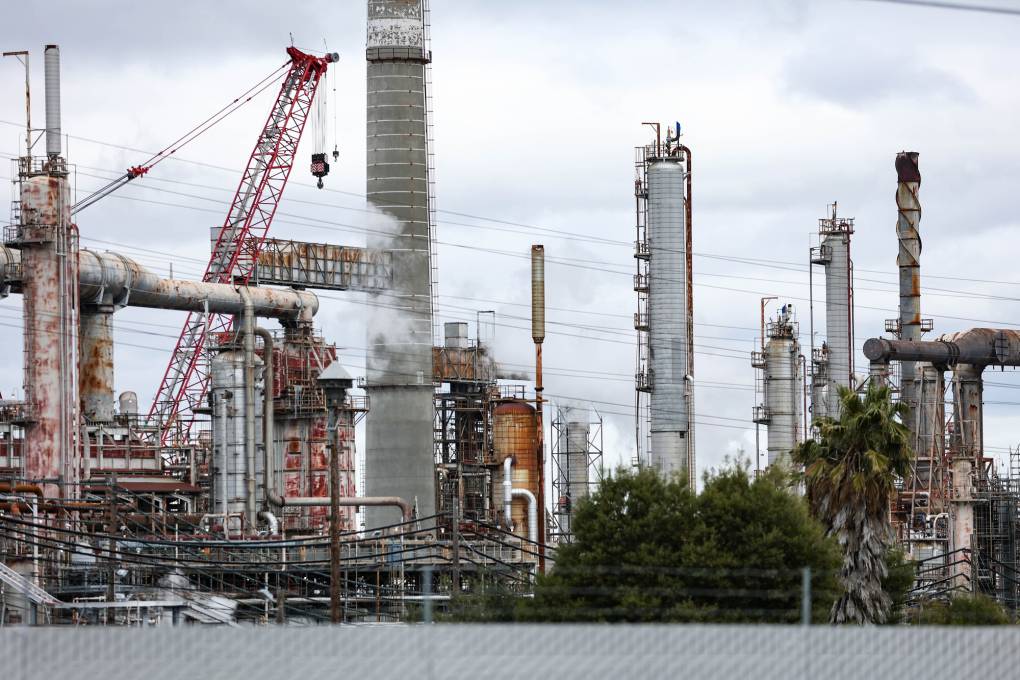
"caption": "Martinez Refining Company in Martinez on Feb. 3, 2025. Gov. Gavin Newsom proposed an extension of the state’s landmark climate program in his budget, with big implications for high-speed rail. ",
"credit": "Gina Castro/KQED",
"altTag": null,
"description": null,
"imgSizes": {
"medium": {
"file": "https://cdn.kqed.org/wp-content/uploads/sites/10/2025/05/20250203_MartinezRefineryFolo_GC-26_qed-800x533.jpg",
"width": 800,
"height": 533,
"mimeType": "image/jpeg"
},
"large": {
"file": "https://cdn.kqed.org/wp-content/uploads/sites/10/2025/05/20250203_MartinezRefineryFolo_GC-26_qed-1020x680.jpg",
"width": 1020,
"height": 680,
"mimeType": "image/jpeg"
},
"thumbnail": {
"file": "https://cdn.kqed.org/wp-content/uploads/sites/10/2025/05/20250203_MartinezRefineryFolo_GC-26_qed-160x107.jpg",
"width": 160,
"height": 107,
"mimeType": "image/jpeg"
},
"1536x1536": {
"file": "https://cdn.kqed.org/wp-content/uploads/sites/10/2025/05/20250203_MartinezRefineryFolo_GC-26_qed-1536x1024.jpg",
"width": 1536,
"height": 1024,
"mimeType": "image/jpeg"
},
"post-thumbnail": {
"file": "https://cdn.kqed.org/wp-content/uploads/sites/10/2025/05/20250203_MartinezRefineryFolo_GC-26_qed-672x372.jpg",
"width": 672,
"height": 372,
"mimeType": "image/jpeg"
},
"twentyfourteen-full-width": {
"file": "https://cdn.kqed.org/wp-content/uploads/sites/10/2025/05/20250203_MartinezRefineryFolo_GC-26_qed-1038x576.jpg",
"width": 1038,
"height": 576,
"mimeType": "image/jpeg"
},
"full-width": {
"file": "https://cdn.kqed.org/wp-content/uploads/sites/10/2025/05/20250203_MartinezRefineryFolo_GC-26_qed-1920x1280.jpg",
"width": 1920,
"height": 1280,
"mimeType": "image/jpeg"
},
"kqedFullSize": {
"file": "https://cdn.kqed.org/wp-content/uploads/sites/10/2025/05/20250203_MartinezRefineryFolo_GC-26_qed.jpg",
"width": 2000,
"height": 1333
}
},
"isLoading": false,
"fetchFailed": false
},
"news_12040571": {
"type": "attachments",
"id": "news_12040571",
"meta": {
"index": "attachments_1716263798",
"site": "news",
"id": "12040571",
"found": true
},
"title": "240204-Storm-08-BL_qed",
"publishDate": 1747426333,
"status": "inherit",
"parent": 12040528,
"modified": 1747431592,
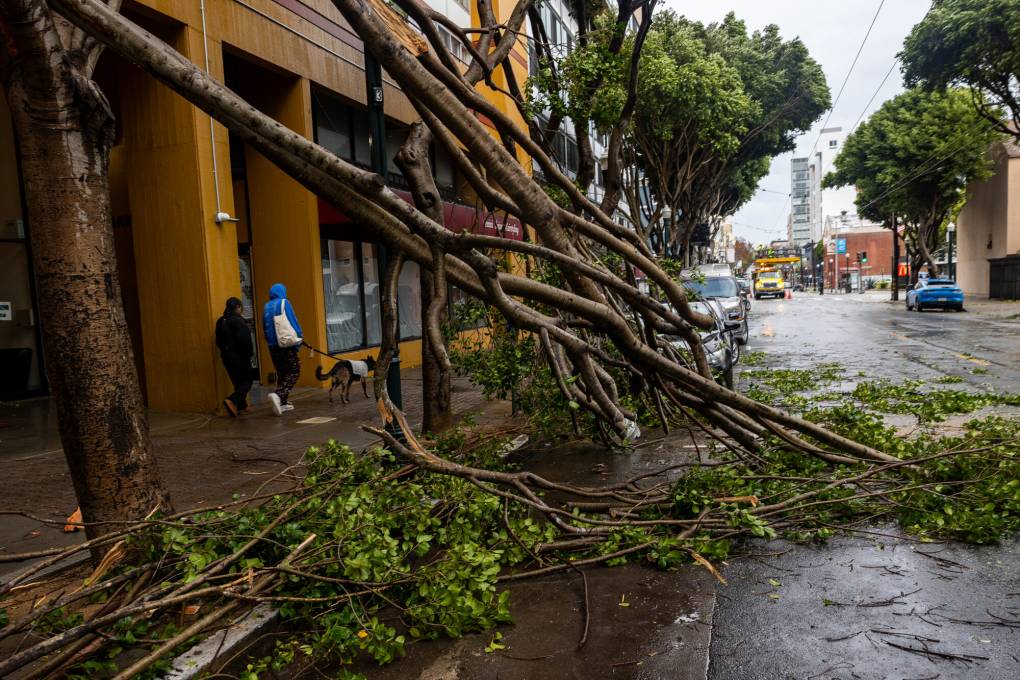
"caption": "A fallen tree closes Fillmore Street between Golden Gate Avenue and McAllister Street during a storm in San Francisco on Feb. 4, 2024.",
"credit": "Beth LaBerge/KQED",
"altTag": null,
"description": null,
"imgSizes": {
"medium": {
"file": "https://cdn.kqed.org/wp-content/uploads/sites/10/2025/05/240204-Storm-08-BL_qed-800x533.jpg",
"width": 800,
"height": 533,
"mimeType": "image/jpeg"
},
"large": {
"file": "https://cdn.kqed.org/wp-content/uploads/sites/10/2025/05/240204-Storm-08-BL_qed-1020x680.jpg",
"width": 1020,
"height": 680,
"mimeType": "image/jpeg"
},
"thumbnail": {
"file": "https://cdn.kqed.org/wp-content/uploads/sites/10/2025/05/240204-Storm-08-BL_qed-160x107.jpg",
"width": 160,
"height": 107,
"mimeType": "image/jpeg"
},
"1536x1536": {
"file": "https://cdn.kqed.org/wp-content/uploads/sites/10/2025/05/240204-Storm-08-BL_qed-1536x1024.jpg",
"width": 1536,
"height": 1024,
"mimeType": "image/jpeg"
},
"post-thumbnail": {
"file": "https://cdn.kqed.org/wp-content/uploads/sites/10/2025/05/240204-Storm-08-BL_qed-672x372.jpg",
"width": 672,
"height": 372,
"mimeType": "image/jpeg"
},
"twentyfourteen-full-width": {
"file": "https://cdn.kqed.org/wp-content/uploads/sites/10/2025/05/240204-Storm-08-BL_qed-1038x576.jpg",
"width": 1038,
"height": 576,
"mimeType": "image/jpeg"
},
"full-width": {
"file": "https://cdn.kqed.org/wp-content/uploads/sites/10/2025/05/240204-Storm-08-BL_qed-1920x1280.jpg",
"width": 1920,
"height": 1280,
"mimeType": "image/jpeg"
},
"kqedFullSize": {
"file": "https://cdn.kqed.org/wp-content/uploads/sites/10/2025/05/240204-Storm-08-BL_qed.jpg",
"width": 2000,
"height": 1333
}
},
"isLoading": false,
"fetchFailed": false
},
"news_11864276": {
"type": "attachments",
"id": "news_11864276",
"meta": {
"index": "attachments_1716263798",
"site": "news",
"id": "11864276",
"found": true
},
"title": "SuisunMarshMain",
"publishDate": 1615494107,
"status": "inherit",
"parent": 11863789,
"modified": 1747182337,
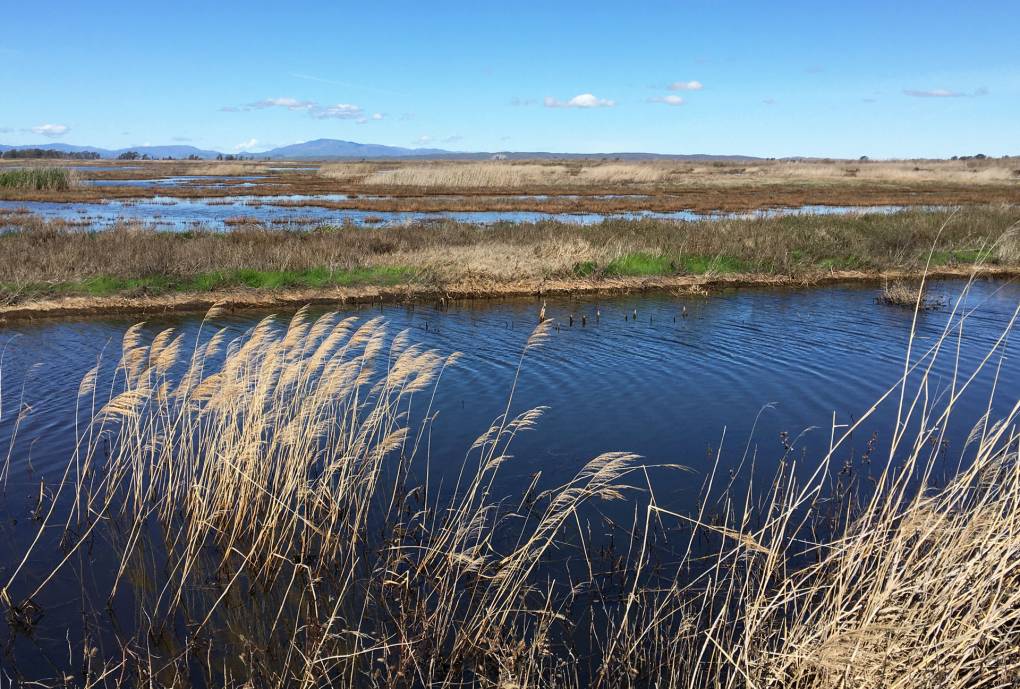
"caption": "Suisun Marsh is home to hundreds of species of birds, fish, amphibians and mammals. Local officials and environmental groups oppose a project allowing exploratory natural gas drilling in the marsh.",
"credit": "Alice Woelfle/KQED",
"altTag": "Grasses blow in the breeze above marsh waters at Suisun Marsh on a clear day.",
"description": "Suisun Marsh is home to hundreds of species of birds, fish, amphibians and mammals. Local officials and environmental groups are opposing a project that would allow exploratory natural gas drilling in the marsh.",
"imgSizes": {
"medium": {
"file": "https://cdn.kqed.org/wp-content/uploads/sites/10/2021/03/SuisunMarshMain-800x540.jpg",
"width": 800,
"height": 540,
"mimeType": "image/jpeg"
},
"large": {
"file": "https://cdn.kqed.org/wp-content/uploads/sites/10/2021/03/SuisunMarshMain-1020x689.jpg",
"width": 1020,
"height": 689,
"mimeType": "image/jpeg"
},
"thumbnail": {
"file": "https://cdn.kqed.org/wp-content/uploads/sites/10/2021/03/SuisunMarshMain-160x108.jpg",
"width": 160,
"height": 108,
"mimeType": "image/jpeg"
},
"1536x1536": {
"file": "https://cdn.kqed.org/wp-content/uploads/sites/10/2021/03/SuisunMarshMain-1536x1038.jpg",
"width": 1536,
"height": 1038,
"mimeType": "image/jpeg"
},
"post-thumbnail": {
"file": "https://cdn.kqed.org/wp-content/uploads/sites/10/2021/03/SuisunMarshMain-672x372.jpg",
"width": 672,
"height": 372,
"mimeType": "image/jpeg"
},
"twentyfourteen-full-width": {
"file": "https://cdn.kqed.org/wp-content/uploads/sites/10/2021/03/SuisunMarshMain-1038x576.jpg",
"width": 1038,
"height": 576,
"mimeType": "image/jpeg"
},
"kqedFullSize": {
"file": "https://cdn.kqed.org/wp-content/uploads/sites/10/2021/03/SuisunMarshMain.jpg",
"width": 1920,
"height": 1297
}
},
"isLoading": false,
"fetchFailed": false
},
"news_11951887": {
"type": "attachments",
"id": "news_11951887",
"meta": {
"index": "attachments_1716263798",
"site": "news",
"id": "11951887",
"found": true
},
"parent": 11951866,
"imgSizes": {
"twentyfourteen-full-width": {
"file": "https://ww2.kqed.org/app/uploads/sites/10/2023/06/RS32605_ElectricCars_AW_10-qut-1038x576.jpg",
"width": 1038,
"mimeType": "image/jpeg",
"height": 576
},
"thumbnail": {
"file": "https://ww2.kqed.org/app/uploads/sites/10/2023/06/RS32605_ElectricCars_AW_10-qut-160x107.jpg",
"width": 160,
"mimeType": "image/jpeg",
"height": 107
},
"post-thumbnail": {
"file": "https://ww2.kqed.org/app/uploads/sites/10/2023/06/RS32605_ElectricCars_AW_10-qut-672x372.jpg",
"width": 672,
"mimeType": "image/jpeg",
"height": 372
},
"kqedFullSize": {
"file": "https://ww2.kqed.org/app/uploads/sites/10/2023/06/RS32605_ElectricCars_AW_10-qut.jpg",
"width": 1920,
"height": 1280
},
"large": {
"file": "https://ww2.kqed.org/app/uploads/sites/10/2023/06/RS32605_ElectricCars_AW_10-qut-1020x680.jpg",
"width": 1020,
"mimeType": "image/jpeg",
"height": 680
},
"1536x1536": {
"file": "https://ww2.kqed.org/app/uploads/sites/10/2023/06/RS32605_ElectricCars_AW_10-qut-1536x1024.jpg",
"width": 1536,
"mimeType": "image/jpeg",
"height": 1024
},
"medium": {
"file": "https://ww2.kqed.org/app/uploads/sites/10/2023/06/RS32605_ElectricCars_AW_10-qut-800x533.jpg",
"width": 800,
"mimeType": "image/jpeg",
"height": 533
}
},
"publishDate": 1685573972,
"modified": 1685576249,
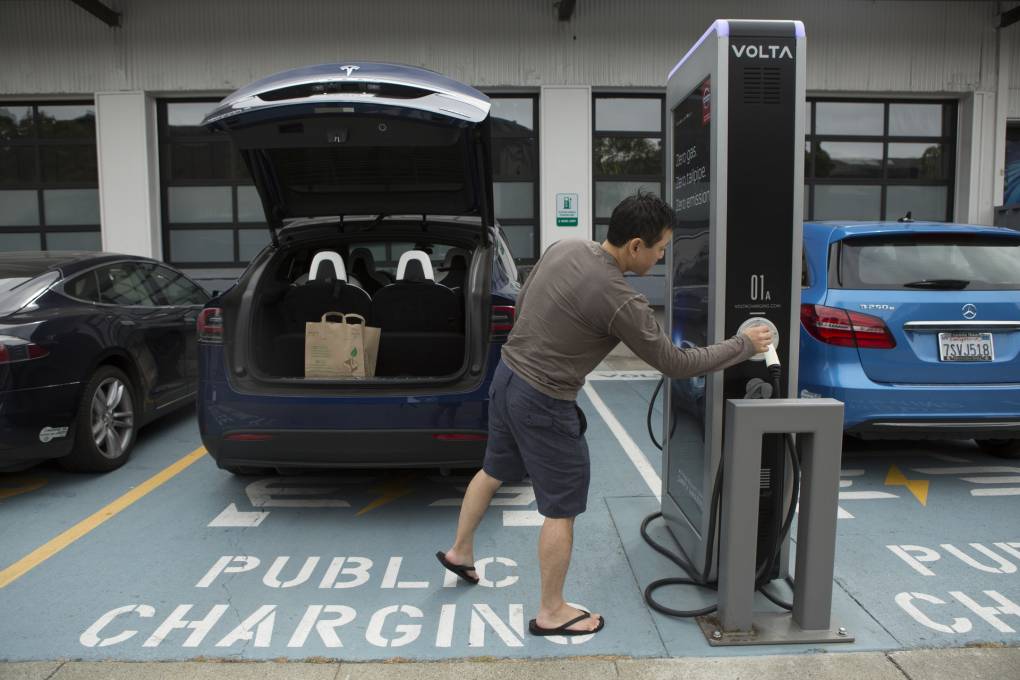
"caption": "A public charging station for electric vehicles in the Potrero neighborhood of San Francisco.",
"description": null,
"title": "RS32605_ElectricCars_AW_10-qut",
"credit": "Anne Wernikoff/KQED",
"status": "inherit",
"altTag": null,
"isLoading": false,
"fetchFailed": false
},
"news_12037126": {
"type": "attachments",
"id": "news_12037126",
"meta": {
"index": "attachments_1716263798",
"site": "news",
"id": "12037126",
"found": true
},
"title": "The burnt remains of St. Marks Church.Altadena.CA",
"publishDate": 1745350823,
"status": "inherit",
"parent": 0,
"modified": 1745351316,
"caption": "The burnt remains of St. Marks Church.\nAltadena on April 20, 2025.",
"credit": "Mette Lampcov for KQED",
"altTag": null,
"description": null,
"imgSizes": {
"medium": {
"file": "https://cdn.kqed.org/wp-content/uploads/sites/10/2025/04/METTE.LAMPCOV.CHURCH.BELL-22-KQED-800x534.jpg",
"width": 800,
"height": 534,
"mimeType": "image/jpeg"
},
"large": {
"file": "https://cdn.kqed.org/wp-content/uploads/sites/10/2025/04/METTE.LAMPCOV.CHURCH.BELL-22-KQED-1020x680.jpg",
"width": 1020,
"height": 680,
"mimeType": "image/jpeg"
},
"thumbnail": {
"file": "https://cdn.kqed.org/wp-content/uploads/sites/10/2025/04/METTE.LAMPCOV.CHURCH.BELL-22-KQED-160x107.jpg",
"width": 160,
"height": 107,
"mimeType": "image/jpeg"
},
"1536x1536": {
"file": "https://cdn.kqed.org/wp-content/uploads/sites/10/2025/04/METTE.LAMPCOV.CHURCH.BELL-22-KQED-1536x1025.jpg",
"width": 1536,
"height": 1025,
"mimeType": "image/jpeg"
},
"post-thumbnail": {
"file": "https://cdn.kqed.org/wp-content/uploads/sites/10/2025/04/METTE.LAMPCOV.CHURCH.BELL-22-KQED-672x372.jpg",
"width": 672,
"height": 372,
"mimeType": "image/jpeg"
},
"twentyfourteen-full-width": {
"file": "https://cdn.kqed.org/wp-content/uploads/sites/10/2025/04/METTE.LAMPCOV.CHURCH.BELL-22-KQED-1038x576.jpg",
"width": 1038,
"height": 576,
"mimeType": "image/jpeg"
},
"full-width": {
"file": "https://cdn.kqed.org/wp-content/uploads/sites/10/2025/04/METTE.LAMPCOV.CHURCH.BELL-22-KQED-1920x1281.jpg",
"width": 1920,
"height": 1281,
"mimeType": "image/jpeg"
},
"kqedFullSize": {
"file": "https://cdn.kqed.org/wp-content/uploads/sites/10/2025/04/METTE.LAMPCOV.CHURCH.BELL-22-KQED.jpg",
"width": 2000,
"height": 1334
}
},
"isLoading": false,
"fetchFailed": false
},
"news_12036403": {
"type": "attachments",
"id": "news_12036403",
"meta": {
"index": "attachments_1716263798",
"site": "news",
"id": "12036403",
"found": true
},
"title": "Trucks leave the Port of Oakland on Sept. 28, 2023.",
"publishDate": 1744909907,
"status": "inherit",
"parent": 12036199,
"modified": 1744910003,
"caption": "Trucks leave the Port of Oakland on Sept. 28, 2023.",
"credit": "Martin do Nascimento/KQED",
"altTag": null,
"description": null,
"imgSizes": {
"medium": {
"file": "https://cdn.kqed.org/wp-content/uploads/sites/10/2025/04/230928-EAGLE-ROCK-SETTLE-MD-09_qed-800x533.jpg",
"width": 800,
"height": 533,
"mimeType": "image/jpeg"
},
"large": {
"file": "https://cdn.kqed.org/wp-content/uploads/sites/10/2025/04/230928-EAGLE-ROCK-SETTLE-MD-09_qed-1020x680.jpg",
"width": 1020,
"height": 680,
"mimeType": "image/jpeg"
},
"thumbnail": {
"file": "https://cdn.kqed.org/wp-content/uploads/sites/10/2025/04/230928-EAGLE-ROCK-SETTLE-MD-09_qed-160x107.jpg",
"width": 160,
"height": 107,
"mimeType": "image/jpeg"
},
"1536x1536": {
"file": "https://cdn.kqed.org/wp-content/uploads/sites/10/2025/04/230928-EAGLE-ROCK-SETTLE-MD-09_qed-1536x1024.jpg",
"width": 1536,
"height": 1024,
"mimeType": "image/jpeg"
},
"post-thumbnail": {
"file": "https://cdn.kqed.org/wp-content/uploads/sites/10/2025/04/230928-EAGLE-ROCK-SETTLE-MD-09_qed-672x372.jpg",
"width": 672,
"height": 372,
"mimeType": "image/jpeg"
},
"twentyfourteen-full-width": {
"file": "https://cdn.kqed.org/wp-content/uploads/sites/10/2025/04/230928-EAGLE-ROCK-SETTLE-MD-09_qed-1038x576.jpg",
"width": 1038,
"height": 576,
"mimeType": "image/jpeg"
},
"full-width": {
"file": "https://cdn.kqed.org/wp-content/uploads/sites/10/2025/04/230928-EAGLE-ROCK-SETTLE-MD-09_qed-1920x1280.jpg",
"width": 1920,
"height": 1280,
"mimeType": "image/jpeg"
},
"kqedFullSize": {
"file": "https://cdn.kqed.org/wp-content/uploads/sites/10/2025/04/230928-EAGLE-ROCK-SETTLE-MD-09_qed.jpg",
"width": 2000,
"height": 1333
}
},
"isLoading": false,
"fetchFailed": false
},
"news_11861743": {
"type": "attachments",
"id": "news_11861743",
"meta": {
"index": "attachments_1716263798",
"site": "news",
"id": "11861743",
"found": true
},
"title": "RS1901_Chevron_Vapor_Cloud_010",
"publishDate": 1614118776,
"status": "inherit",
"parent": 11861741,
"modified": 1745279510,
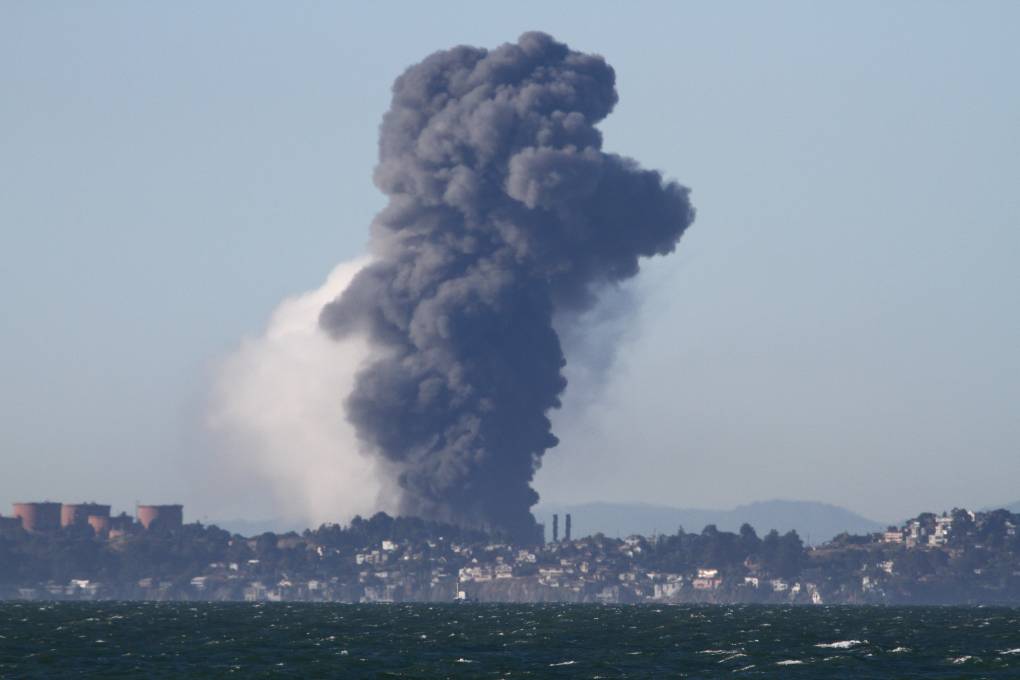
"caption": "A cracked pipe at Chevron’s oil refinery in Richmond, California, released a flammable white vapor that quickly ignited, sending a large cloud of black smoke across surrounding communities on August 6, 2012. The eruption led to stricter state safety rules for refineries, but now state officials are considering rolling back some of those provisions.",
"credit": "Courtesy of U.S. Chemical Safety Board",
"altTag": null,
"description": null,
"imgSizes": {
"medium": {
"file": "https://cdn.kqed.org/wp-content/uploads/sites/10/2021/02/RS1901_Chevron_Vapor_Cloud_010-800x533.jpeg",
"width": 800,
"height": 533,
"mimeType": "image/jpeg"
},
"large": {
"file": "https://cdn.kqed.org/wp-content/uploads/sites/10/2021/02/RS1901_Chevron_Vapor_Cloud_010-1020x680.jpeg",
"width": 1020,
"height": 680,
"mimeType": "image/jpeg"
},
"thumbnail": {
"file": "https://cdn.kqed.org/wp-content/uploads/sites/10/2021/02/RS1901_Chevron_Vapor_Cloud_010-160x107.jpeg",
"width": 160,
"height": 107,
"mimeType": "image/jpeg"
},
"1536x1536": {
"file": "https://cdn.kqed.org/wp-content/uploads/sites/10/2021/02/RS1901_Chevron_Vapor_Cloud_010-1536x1024.jpeg",
"width": 1536,
"height": 1024,
"mimeType": "image/jpeg"
},
"2048x2048": {
"file": "https://cdn.kqed.org/wp-content/uploads/sites/10/2021/02/RS1901_Chevron_Vapor_Cloud_010-2048x1365.jpeg",
"width": 2048,
"height": 1365,
"mimeType": "image/jpeg"
},
"post-thumbnail": {
"file": "https://cdn.kqed.org/wp-content/uploads/sites/10/2021/02/RS1901_Chevron_Vapor_Cloud_010-672x372.jpeg",
"width": 672,
"height": 372,
"mimeType": "image/jpeg"
},
"twentyfourteen-full-width": {
"file": "https://cdn.kqed.org/wp-content/uploads/sites/10/2021/02/RS1901_Chevron_Vapor_Cloud_010-1038x576.jpeg",
"width": 1038,
"height": 576,
"mimeType": "image/jpeg"
},
"full-width": {
"file": "https://cdn.kqed.org/wp-content/uploads/sites/10/2021/02/RS1901_Chevron_Vapor_Cloud_010-1920x1280.jpeg",
"width": 1920,
"height": 1280,
"mimeType": "image/jpeg"
},
"apple_news_ca_landscape_12_9": {
"file": "https://cdn.kqed.org/wp-content/uploads/sites/10/2021/02/RS1901_Chevron_Vapor_Cloud_010-1832x1374.jpeg",
"width": 1832,
"height": 1374,
"mimeType": "image/jpeg"
},
"apple_news_ca_landscape_9_7": {
"file": "https://cdn.kqed.org/wp-content/uploads/sites/10/2021/02/RS1901_Chevron_Vapor_Cloud_010-1376x1032.jpeg",
"width": 1376,
"height": 1032,
"mimeType": "image/jpeg"
},
"apple_news_ca_landscape_5_5": {
"file": "https://cdn.kqed.org/wp-content/uploads/sites/10/2021/02/RS1901_Chevron_Vapor_Cloud_010-1044x783.jpeg",
"width": 1044,
"height": 783,
"mimeType": "image/jpeg"
},
"apple_news_ca_landscape_4_7": {
"file": "https://cdn.kqed.org/wp-content/uploads/sites/10/2021/02/RS1901_Chevron_Vapor_Cloud_010-632x474.jpeg",
"width": 632,
"height": 474,
"mimeType": "image/jpeg"
},
"apple_news_ca_landscape_4_0": {
"file": "https://cdn.kqed.org/wp-content/uploads/sites/10/2021/02/RS1901_Chevron_Vapor_Cloud_010-536x402.jpeg",
"width": 536,
"height": 402,
"mimeType": "image/jpeg"
},
"apple_news_ca_portrait_12_9": {
"file": "https://cdn.kqed.org/wp-content/uploads/sites/10/2021/02/RS1901_Chevron_Vapor_Cloud_010-1122x1496.jpeg",
"width": 1122,
"height": 1496,
"mimeType": "image/jpeg"
},
"apple_news_ca_portrait_9_7": {
"file": "https://cdn.kqed.org/wp-content/uploads/sites/10/2021/02/RS1901_Chevron_Vapor_Cloud_010-840x1120.jpeg",
"width": 840,
"height": 1120,
"mimeType": "image/jpeg"
},
"apple_news_ca_portrait_5_5": {
"file": "https://cdn.kqed.org/wp-content/uploads/sites/10/2021/02/RS1901_Chevron_Vapor_Cloud_010-687x916.jpeg",
"width": 687,
"height": 916,
"mimeType": "image/jpeg"
},
"apple_news_ca_portrait_4_7": {
"file": "https://cdn.kqed.org/wp-content/uploads/sites/10/2021/02/RS1901_Chevron_Vapor_Cloud_010-414x552.jpeg",
"width": 414,
"height": 552,
"mimeType": "image/jpeg"
},
"apple_news_ca_portrait_4_0": {
"file": "https://cdn.kqed.org/wp-content/uploads/sites/10/2021/02/RS1901_Chevron_Vapor_Cloud_010-354x472.jpeg",
"width": 354,
"height": 472,
"mimeType": "image/jpeg"
},
"apple_news_ca_square_12_9": {
"file": "https://cdn.kqed.org/wp-content/uploads/sites/10/2021/02/RS1901_Chevron_Vapor_Cloud_010-1472x1472.jpeg",
"width": 1472,
"height": 1472,
"mimeType": "image/jpeg"
},
"apple_news_ca_square_9_7": {
"file": "https://cdn.kqed.org/wp-content/uploads/sites/10/2021/02/RS1901_Chevron_Vapor_Cloud_010-1104x1104.jpeg",
"width": 1104,
"height": 1104,
"mimeType": "image/jpeg"
},
"apple_news_ca_square_5_5": {
"file": "https://cdn.kqed.org/wp-content/uploads/sites/10/2021/02/RS1901_Chevron_Vapor_Cloud_010-912x912.jpeg",
"width": 912,
"height": 912,
"mimeType": "image/jpeg"
},
"apple_news_ca_square_4_7": {
"file": "https://cdn.kqed.org/wp-content/uploads/sites/10/2021/02/RS1901_Chevron_Vapor_Cloud_010-550x550.jpeg",
"width": 550,
"height": 550,
"mimeType": "image/jpeg"
},
"apple_news_ca_square_4_0": {
"file": "https://cdn.kqed.org/wp-content/uploads/sites/10/2021/02/RS1901_Chevron_Vapor_Cloud_010-470x470.jpeg",
"width": 470,
"height": 470,
"mimeType": "image/jpeg"
},
"kqedFullSize": {
"file": "https://cdn.kqed.org/wp-content/uploads/sites/10/2021/02/RS1901_Chevron_Vapor_Cloud_010-scaled-e1745279433555.jpeg",
"width": 2000,
"height": 1334
}
},
"isLoading": false,
"fetchFailed": false
},
"news_12036066": {
"type": "attachments",
"id": "news_12036066",
"meta": {
"index": "attachments_1716263798",
"site": "news",
"id": "12036066",
"found": true
},
"title": "California Medicaid",
"publishDate": 1744746796,
"status": "inherit",
"parent": 12036063,
"modified": 1749663522,
"caption": "Gov. Gavin Newsom discusses his revised 2024-25 state budget during a news conference in Sacramento, California, on May 10, 2024. ",
"credit": "Rich Pedroncelli/AP Photo",
"altTag": null,
"description": null,
"imgSizes": {
"medium": {
"file": "https://cdn.kqed.org/wp-content/uploads/sites/10/2025/04/GavinNewsom1AP-800x533.jpg",
"width": 800,
"height": 533,
"mimeType": "image/jpeg"
},
"large": {
"file": "https://cdn.kqed.org/wp-content/uploads/sites/10/2025/04/GavinNewsom1AP-1020x680.jpg",
"width": 1020,
"height": 680,
"mimeType": "image/jpeg"
},
"thumbnail": {
"file": "https://cdn.kqed.org/wp-content/uploads/sites/10/2025/04/GavinNewsom1AP-160x107.jpg",
"width": 160,
"height": 107,
"mimeType": "image/jpeg"
},
"1536x1536": {
"file": "https://cdn.kqed.org/wp-content/uploads/sites/10/2025/04/GavinNewsom1AP-1536x1024.jpg",
"width": 1536,
"height": 1024,
"mimeType": "image/jpeg"
},
"post-thumbnail": {
"file": "https://cdn.kqed.org/wp-content/uploads/sites/10/2025/04/GavinNewsom1AP-672x372.jpg",
"width": 672,
"height": 372,
"mimeType": "image/jpeg"
},
"twentyfourteen-full-width": {
"file": "https://cdn.kqed.org/wp-content/uploads/sites/10/2025/04/GavinNewsom1AP-1038x576.jpg",
"width": 1038,
"height": 576,
"mimeType": "image/jpeg"
},
"full-width": {
"file": "https://cdn.kqed.org/wp-content/uploads/sites/10/2025/04/GavinNewsom1AP-1920x1280.jpg",
"width": 1920,
"height": 1280,
"mimeType": "image/jpeg"
},
"kqedFullSize": {
"file": "https://cdn.kqed.org/wp-content/uploads/sites/10/2025/04/GavinNewsom1AP.jpg",
"width": 2000,
"height": 1333
}
},
"isLoading": false,
"fetchFailed": false
},
"news_12035557": {
"type": "attachments",
"id": "news_12035557",
"meta": {
"index": "attachments_1716263798",
"site": "news",
"id": "12035557",
"found": true
},
"title": "SantaBarbaraOilPlatform",
"publishDate": 1744328578,
"status": "inherit",
"parent": 12035274,
"modified": 1744328616,
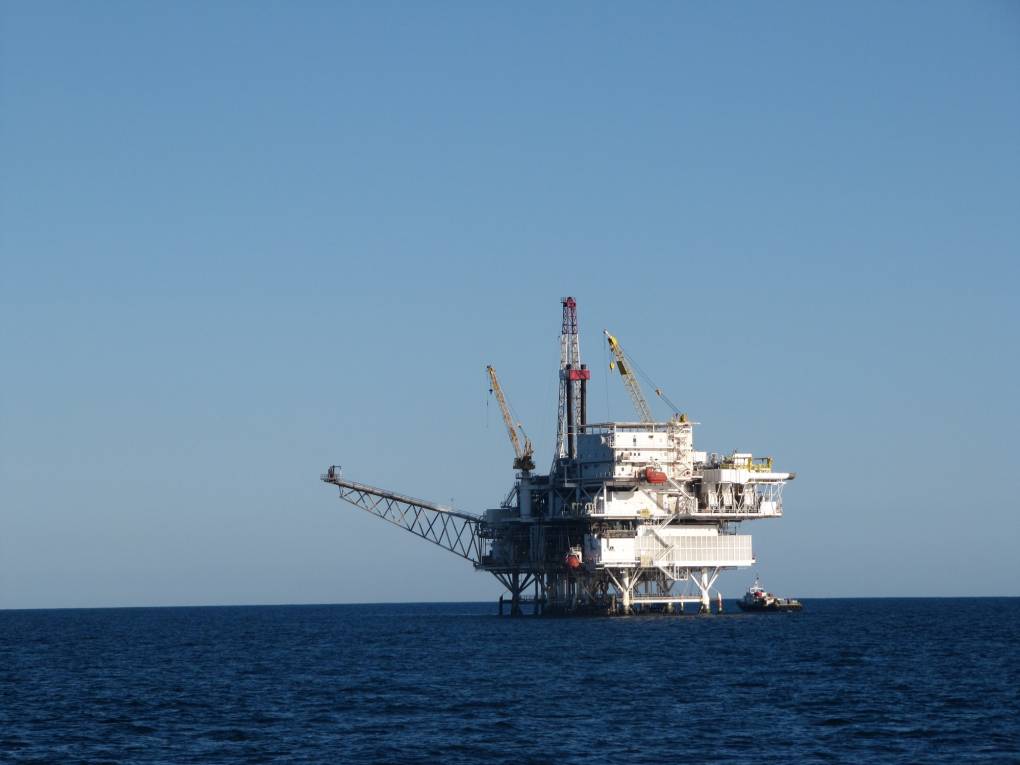
"caption": "An oil platform near Santa Barbara on March 11, 2010.",
"credit": "Molly Samuel/KQED",
"altTag": null,
"description": null,
"imgSizes": {
"medium": {
"file": "https://cdn.kqed.org/wp-content/uploads/sites/10/2025/04/SantaBarbaraOilPlatform-800x600.jpg",
"width": 800,
"height": 600,
"mimeType": "image/jpeg"
},
"large": {
"file": "https://cdn.kqed.org/wp-content/uploads/sites/10/2025/04/SantaBarbaraOilPlatform-1020x765.jpg",
"width": 1020,
"height": 765,
"mimeType": "image/jpeg"
},
"thumbnail": {
"file": "https://cdn.kqed.org/wp-content/uploads/sites/10/2025/04/SantaBarbaraOilPlatform-160x120.jpg",
"width": 160,
"height": 120,
"mimeType": "image/jpeg"
},
"1536x1536": {
"file": "https://cdn.kqed.org/wp-content/uploads/sites/10/2025/04/SantaBarbaraOilPlatform-1536x1152.jpg",
"width": 1536,
"height": 1152,
"mimeType": "image/jpeg"
},
"post-thumbnail": {
"file": "https://cdn.kqed.org/wp-content/uploads/sites/10/2025/04/SantaBarbaraOilPlatform-672x372.jpg",
"width": 672,
"height": 372,
"mimeType": "image/jpeg"
},
"twentyfourteen-full-width": {
"file": "https://cdn.kqed.org/wp-content/uploads/sites/10/2025/04/SantaBarbaraOilPlatform-1038x576.jpg",
"width": 1038,
"height": 576,
"mimeType": "image/jpeg"
},
"full-width": {
"file": "https://cdn.kqed.org/wp-content/uploads/sites/10/2025/04/SantaBarbaraOilPlatform-1920x1440.jpg",
"width": 1920,
"height": 1440,
"mimeType": "image/jpeg"
},
"kqedFullSize": {
"file": "https://cdn.kqed.org/wp-content/uploads/sites/10/2025/04/SantaBarbaraOilPlatform.jpg",
"width": 2000,
"height": 1500
}
},
"isLoading": false,
"fetchFailed": false
},
"news_12034871": {
"type": "attachments",
"id": "news_12034871",
"meta": {
"index": "attachments_1716263798",
"site": "news",
"id": "12034871",
"found": true
},
"title": "250408-CAL TECH TESTING-113-ZS-KQED",
"publishDate": 1744131826,
"status": "inherit",
"parent": 0,
"modified": 1744306420,
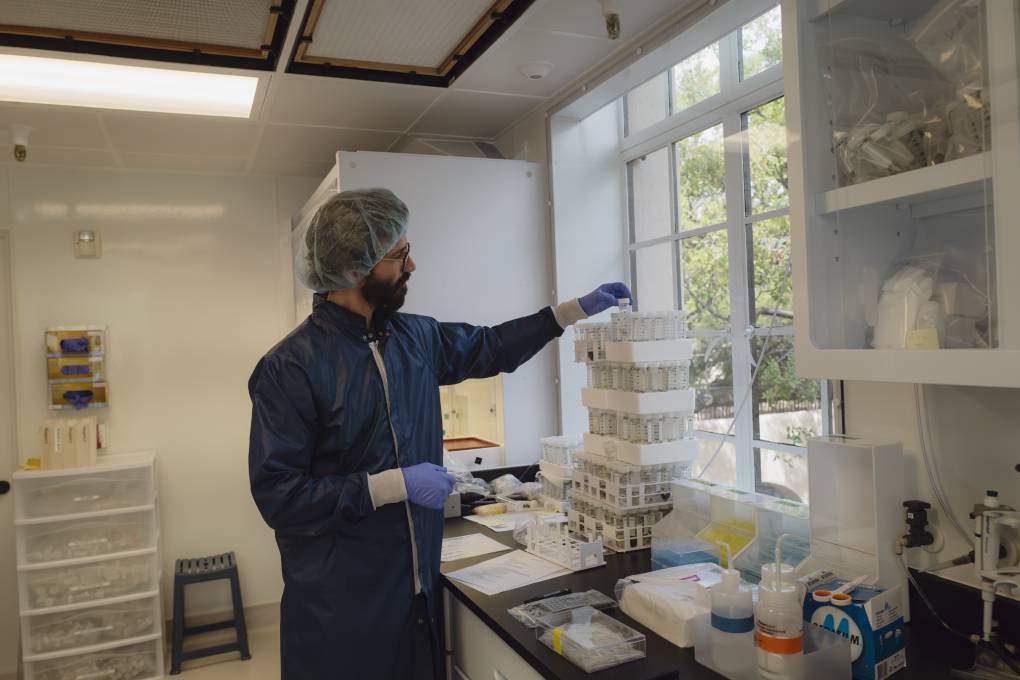
"caption": "Professor François Tissot has collected dozens of samples from the Eaton Fire in Altadena for his research on understanding the potential harms of living amid environmental contamination.",
"credit": "Zaydee Sanchez for KQED",
"altTag": null,
"description": null,
"imgSizes": {
"medium": {
"file": "https://cdn.kqed.org/wp-content/uploads/sites/10/2025/04/250408-CAL-TECH-TESTING-113-ZS-KQED-800x533.jpg",
"width": 800,
"height": 533,
"mimeType": "image/jpeg"
},
"large": {
"file": "https://cdn.kqed.org/wp-content/uploads/sites/10/2025/04/250408-CAL-TECH-TESTING-113-ZS-KQED-1020x680.jpg",
"width": 1020,
"height": 680,
"mimeType": "image/jpeg"
},
"thumbnail": {
"file": "https://cdn.kqed.org/wp-content/uploads/sites/10/2025/04/250408-CAL-TECH-TESTING-113-ZS-KQED-160x107.jpg",
"width": 160,
"height": 107,
"mimeType": "image/jpeg"
},
"1536x1536": {
"file": "https://cdn.kqed.org/wp-content/uploads/sites/10/2025/04/250408-CAL-TECH-TESTING-113-ZS-KQED-1536x1024.jpg",
"width": 1536,
"height": 1024,
"mimeType": "image/jpeg"
},
"post-thumbnail": {
"file": "https://cdn.kqed.org/wp-content/uploads/sites/10/2025/04/250408-CAL-TECH-TESTING-113-ZS-KQED-672x372.jpg",
"width": 672,
"height": 372,
"mimeType": "image/jpeg"
},
"twentyfourteen-full-width": {
"file": "https://cdn.kqed.org/wp-content/uploads/sites/10/2025/04/250408-CAL-TECH-TESTING-113-ZS-KQED-1038x576.jpg",
"width": 1038,
"height": 576,
"mimeType": "image/jpeg"
},
"full-width": {
"file": "https://cdn.kqed.org/wp-content/uploads/sites/10/2025/04/250408-CAL-TECH-TESTING-113-ZS-KQED-1920x1280.jpg",
"width": 1920,
"height": 1280,
"mimeType": "image/jpeg"
},
"kqedFullSize": {
"file": "https://cdn.kqed.org/wp-content/uploads/sites/10/2025/04/250408-CAL-TECH-TESTING-113-ZS-KQED.jpg",
"width": 2000,
"height": 1333
}
},
"isLoading": false,
"fetchFailed": false
},
"news_12035246": {
"type": "attachments",
"id": "news_12035246",
"meta": {
"index": "attachments_1716263798",
"site": "news",
"id": "12035246",
"found": true
},
"title": "emeryvillewhale0408_1",
"publishDate": 1744234294,
"status": "inherit",
"parent": 12035182,
"modified": 1744244145,
"caption": "An Alameda County firefighter hoses down a juvenile minke whale as it sits beached on the shores of Emeryville on Tuesday, April 8, 2025.",
"credit": "Jessica Christian/San Francisco Chronicle via Getty Images",
"altTag": null,
"description": null,
"imgSizes": {
"medium": {
"file": "https://cdn.kqed.org/wp-content/uploads/sites/10/2025/04/EmeryvilleWhaleDeathGetty-800x533.jpg",
"width": 800,
"height": 533,
"mimeType": "image/jpeg"
},
"large": {
"file": "https://cdn.kqed.org/wp-content/uploads/sites/10/2025/04/EmeryvilleWhaleDeathGetty-1020x680.jpg",
"width": 1020,
"height": 680,
"mimeType": "image/jpeg"
},
"thumbnail": {
"file": "https://cdn.kqed.org/wp-content/uploads/sites/10/2025/04/EmeryvilleWhaleDeathGetty-160x107.jpg",
"width": 160,
"height": 107,
"mimeType": "image/jpeg"
},
"1536x1536": {
"file": "https://cdn.kqed.org/wp-content/uploads/sites/10/2025/04/EmeryvilleWhaleDeathGetty-1536x1024.jpg",
"width": 1536,
"height": 1024,
"mimeType": "image/jpeg"
},
"post-thumbnail": {
"file": "https://cdn.kqed.org/wp-content/uploads/sites/10/2025/04/EmeryvilleWhaleDeathGetty-672x372.jpg",
"width": 672,
"height": 372,
"mimeType": "image/jpeg"
},
"twentyfourteen-full-width": {
"file": "https://cdn.kqed.org/wp-content/uploads/sites/10/2025/04/EmeryvilleWhaleDeathGetty-1038x576.jpg",
"width": 1038,
"height": 576,
"mimeType": "image/jpeg"
},
"full-width": {
"file": "https://cdn.kqed.org/wp-content/uploads/sites/10/2025/04/EmeryvilleWhaleDeathGetty-1920x1280.jpg",
"width": 1920,
"height": 1280,
"mimeType": "image/jpeg"
},
"kqedFullSize": {
"file": "https://cdn.kqed.org/wp-content/uploads/sites/10/2025/04/EmeryvilleWhaleDeathGetty.jpg",
"width": 2000,
"height": 1333
}
},
"isLoading": false,
"fetchFailed": false
}
},
"audioPlayerReducer": {
"postId": "stream_live",
"isPaused": true,
"isPlaying": false,
"pfsActive": false,
"pledgeModalIsOpen": true,
"playerDrawerIsOpen": false,
"liveAudioPlayStartedAt": 0,
"liveAudioPlayContext": ""
},
"authorsReducer": {
"byline_news_12038756": {
"type": "authors",
"id": "byline_news_12038756",
"meta": {
"override": true
},
"slug": "byline_news_12038756",
"name": "Steven Cuevas, Sonya Geiss",
"isLoading": false
},
"byline_news_12036965": {
"type": "authors",
"id": "byline_news_12036965",
"meta": {
"override": true
},
"slug": "byline_news_12036965",
"name": "\u003ca href=\"https://publichealthwatch.org/author/jimmorris/\" target=\"_blank\" rel=\"noopener noreferrer\"> Jim Morris \u003c/a> and \u003ca href=\"https://publichealthwatch.org/author/mollypeterson/\" target=\"_blank\" rel=\"noopener noreferrer\"> Molly Peterson\u003c/a>, Public Health Watch ",
"isLoading": false
},
"gmarzorati": {
"type": "authors",
"id": "227",
"meta": {
"index": "authors_1716337520",
"id": "227",
"found": true
},
"name": "Guy Marzorati",
"firstName": "Guy",
"lastName": "Marzorati",
"slug": "gmarzorati",
"email": "gmarzorati@KQED.org",
"display_author_email": true,
"staff_mastheads": [
"news"
],
"title": "Correspondent",
"bio": "Guy Marzorati is a correspondent on KQED's California Politics and Government Desk, based in San Jose. A graduate of Santa Clara University, Guy joined KQED in 2013. He reports on state and local politics and produces KQED's digital voter guide.",
"avatar": "https://secure.gravatar.com/avatar/e7038b8dbfd55b104369b76b1cd0b9de?s=600&d=blank&r=g",
"twitter": "guymarzorati",
"facebook": null,
"instagram": null,
"linkedin": null,
"sites": [
{
"site": "",
"roles": [
"editor"
]
},
{
"site": "news",
"roles": [
"editor"
]
},
{
"site": "science",
"roles": [
"editor"
]
},
{
"site": "forum",
"roles": [
"editor"
]
},
{
"site": "elections",
"roles": [
"editor"
]
},
{
"site": "liveblog",
"roles": [
"editor"
]
}
],
"headData": {
"title": "Guy Marzorati | KQED",
"description": "Correspondent",
"ogImgSrc": "https://secure.gravatar.com/avatar/e7038b8dbfd55b104369b76b1cd0b9de?s=600&d=blank&r=g",
"twImgSrc": "https://secure.gravatar.com/avatar/e7038b8dbfd55b104369b76b1cd0b9de?s=600&d=blank&r=g"
},
"isLoading": false,
"link": "/author/gmarzorati"
},
"matthewgreen": {
"type": "authors",
"id": "1263",
"meta": {
"index": "authors_1716337520",
"id": "1263",
"found": true
},
"name": "Matthew Green",
"firstName": "Matthew",
"lastName": "Green",
"slug": "matthewgreen",
"email": "mgreen@kqed.org",
"display_author_email": false,
"staff_mastheads": [],
"title": "KQED Editor/Reporter",
"bio": "Matthew Green is a digital media producer for KQED News. He previously produced \u003ca href=\"http://www.kqed.org/lowdown\">The Lowdown\u003c/a>, KQED’s multimedia news education blog. Matthew's written for numerous Bay Area publications, including the Oakland Tribune and San Francisco Chronicle. He also taught journalism classes at Fremont High School in East Oakland.\r\n\r\nEmail: mgreen@kqed.org; Twitter: @MGreenKQED",
"avatar": "https://secure.gravatar.com/avatar/3bf498d1267ca02c8494f33d8cfc575e?s=600&d=blank&r=g",
"twitter": "MGreenKQED",
"facebook": null,
"instagram": null,
"linkedin": null,
"sites": [
{
"site": "news",
"roles": []
},
{
"site": "lowdown",
"roles": []
},
{
"site": "science",
"roles": []
},
{
"site": "education",
"roles": []
},
{
"site": "quest",
"roles": []
},
{
"site": "liveblog",
"roles": []
}
],
"headData": {
"title": "Matthew Green | KQED",
"description": "KQED Editor/Reporter",
"ogImgSrc": "https://secure.gravatar.com/avatar/3bf498d1267ca02c8494f33d8cfc575e?s=600&d=blank&r=g",
"twImgSrc": "https://secure.gravatar.com/avatar/3bf498d1267ca02c8494f33d8cfc575e?s=600&d=blank&r=g"
},
"isLoading": false,
"link": "/author/matthewgreen"
},
"lklivans": {
"type": "authors",
"id": "8648",
"meta": {
"index": "authors_1716337520",
"id": "8648",
"found": true
},
"name": "Laura Klivans",
"firstName": "Laura",
"lastName": "Klivans",
"slug": "lklivans",
"email": "lklivans@kqed.org",
"display_author_email": true,
"staff_mastheads": [
"news",
"science"
],
"title": "Reporter",
"bio": "Laura Klivans is an award-winning science reporter for KQED News, where she covers climate change with an eye on both groundbreaking progress and gaps in action. She is the former host of KQED's blockbuster video series about tiny, amazing animals, \u003cem>Deep Look\u003c/em>. Her work reaches national audiences through NPR, \u003cem>Here & Now, \u003c/em>PRI, and other major outlets. \r\n\r\nLaura’s won five Northern California Area Emmy Awards for Deep Look and First Place in the Greater Bay Area Journalism Awards for a podcast exploring how one Oakland neighborhood teamed up to reduce planet-heating pollution.\r\n\r\nBeyond her reporting, she hosts and moderates events. In the past, she taught audio storytelling at the UC Berkeley Graduate School of Journalism, led international education programs, worked with immigrants and refugees along the Thai-Burmese border, taught high schoolers sex ed, and was an actress. \r\n\r\nShe's a former UC Berkeley Human Rights Fellow, USC Center for Health Journalism's California Fellow and Coro Fellow in Public Affairs. Laura has a master’s in journalism from UC Berkeley, a master’s in education from Harvard, and an undergraduate degree from Northwestern University.\r\n\r\nShe loves trying to riddle the meaning out of vanity license plates.",
"avatar": "https://secure.gravatar.com/avatar/2d2ecd1550a494cc10ad4a503406965585902124739e775a9b3817eebf1d88be?s=600&d=blank&r=g",
"twitter": "lauraklivans",
"bluesky": null,
"facebook": null,
"instagram": null,
"linkedin": null,
"sites": [
{
"site": "news",
"roles": [
"editor"
]
},
{
"site": "stateofhealth",
"roles": [
"contributor",
"editor"
]
},
{
"site": "science",
"roles": [
"editor"
]
},
{
"site": "forum",
"roles": [
"editor"
]
}
],
"headData": {
"title": "Laura Klivans | KQED",
"description": "Reporter",
"ogImgSrc": "https://secure.gravatar.com/avatar/2d2ecd1550a494cc10ad4a503406965585902124739e775a9b3817eebf1d88be?s=600&d=blank&r=g",
"twImgSrc": "https://secure.gravatar.com/avatar/2d2ecd1550a494cc10ad4a503406965585902124739e775a9b3817eebf1d88be?s=600&d=blank&r=g"
},
"isLoading": false,
"link": "/author/lklivans"
},
"cchamplin": {
"type": "authors",
"id": "11408",
"meta": {
"index": "authors_1716337520",
"id": "11408",
"found": true
},
"name": "Caroline Champlin",
"firstName": null,
"lastName": null,
"slug": "cchamplin",
"email": "cchamplin@kqed.org",
"display_author_email": false,
"staff_mastheads": [],
"title": null,
"bio": null,
"avatar": "https://secure.gravatar.com/avatar/78d8654d3fedda8393a51d63c1042215?s=600&d=blank&r=g",
"twitter": null,
"facebook": null,
"instagram": null,
"linkedin": null,
"sites": [
{
"site": "news",
"roles": [
"author",
"edit_others_posts"
]
}
],
"headData": {
"title": "Caroline Champlin | KQED",
"description": null,
"ogImgSrc": "https://secure.gravatar.com/avatar/78d8654d3fedda8393a51d63c1042215?s=600&d=blank&r=g",
"twImgSrc": "https://secure.gravatar.com/avatar/78d8654d3fedda8393a51d63c1042215?s=600&d=blank&r=g"
},
"isLoading": false,
"link": "/author/cchamplin"
},
"kmizuguchi": {
"type": "authors",
"id": "11739",
"meta": {
"index": "authors_1716337520",
"id": "11739",
"found": true
},
"name": "Keith Mizuguchi",
"firstName": "Keith",
"lastName": "Mizuguchi",
"slug": "kmizuguchi",
"email": "kmizuguchi@kqed.org",
"display_author_email": false,
"staff_mastheads": [],
"title": "KQED Contributor",
"bio": null,
"avatar": "https://secure.gravatar.com/avatar/64d8a7de0723d4099b9fe4e915136103febcc20809abce228ee4415bcb237023?s=600&d=blank&r=g",
"twitter": null,
"bluesky": null,
"facebook": null,
"instagram": null,
"linkedin": null,
"sites": [
{
"site": "news",
"roles": [
"editor"
]
},
{
"site": "science",
"roles": [
"editor"
]
}
],
"headData": {
"title": "Keith Mizuguchi | KQED",
"description": "KQED Contributor",
"ogImgSrc": "https://secure.gravatar.com/avatar/64d8a7de0723d4099b9fe4e915136103febcc20809abce228ee4415bcb237023?s=600&d=blank&r=g",
"twImgSrc": "https://secure.gravatar.com/avatar/64d8a7de0723d4099b9fe4e915136103febcc20809abce228ee4415bcb237023?s=600&d=blank&r=g"
},
"isLoading": false,
"link": "/author/kmizuguchi"
},
"eromero": {
"type": "authors",
"id": "11746",
"meta": {
"index": "authors_1716337520",
"id": "11746",
"found": true
},
"name": "Ezra David Romero",
"firstName": "Ezra David",
"lastName": "Romero",
"slug": "eromero",
"email": "eromero@kqed.org",
"display_author_email": true,
"staff_mastheads": [
"news",
"science"
],
"title": "Climate Reporter",
"bio": "Ezra David Romero is a climate reporter for KQED News. He covers the absence and excess of water in the Bay Area — think sea level rise, flooding and drought. For nearly a decade he’s covered how warming temperatures are altering the lives of Californians. He’s reported on farmers worried their pistachio trees aren’t getting enough sleep, families desperate for water, scientists studying dying giant sequoias, and alongside firefighters containing wildfires. His work has appeared on local stations across California and nationally on public radio shows like Morning Edition, Here and Now, All Things Considered and Science Friday. ",
"avatar": "https://secure.gravatar.com/avatar/c76404d287c10ed40224227551ac36e24352c7306f106632caf6fead76f8801f?s=600&d=blank&r=g",
"twitter": "ezraromero",
"bluesky": null,
"facebook": null,
"instagram": null,
"linkedin": null,
"sites": [
{
"site": "arts",
"roles": [
"editor"
]
},
{
"site": "news",
"roles": [
"editor"
]
},
{
"site": "science",
"roles": [
"editor"
]
},
{
"site": "liveblog",
"roles": [
"author"
]
}
],
"headData": {
"title": "Ezra David Romero | KQED",
"description": "Climate Reporter",
"ogImgSrc": "https://secure.gravatar.com/avatar/c76404d287c10ed40224227551ac36e24352c7306f106632caf6fead76f8801f?s=600&d=blank&r=g",
"twImgSrc": "https://secure.gravatar.com/avatar/c76404d287c10ed40224227551ac36e24352c7306f106632caf6fead76f8801f?s=600&d=blank&r=g"
},
"isLoading": false,
"link": "/author/eromero"
}
},
"pagesReducer": {
"news_tag_climate-change": {
"type": "terms",
"id": "news_255",
"meta": {
"index": "terms_1716263798",
"site": "news",
"id": "255",
"score": 7.9464717
},
"featImg": null,
"name": "climate change",
"description": null,
"taxonomy": "tag",
"headData": {
"twImgId": null,
"twTitle": null,
"ogTitle": null,
"ogImgId": null,
"twDescription": null,
"description": null,
"title": "climate change Archives | KQED News",
"ogDescription": null
},
"ttid": 263,
"slug": "climate-change",
"isLoading": false,
"title": "climate change",
"pageMeta": {
"site": "news",
"WpPageTemplate": "page-topic-editorial",
"currentPage": 7
},
"blocks": [
{
"blockName": "kqed/post-list",
"attrs": {
"layout": "cardArticle2",
"query": "posts/news?tag=climate-change",
"seeMore": false,
"paginated": true,
"page": 7
}
},
{
"blockName": "kqed/ad"
}
]
}
},
"pfsSessionReducer": {},
"postsReducer": {
"stream_live": {
"type": "live",
"id": "stream_live",
"audioUrl": "https://streams.kqed.org/kqedradio",
"title": "Live Stream",
"excerpt": "Live Stream information currently unavailable.",
"link": "/radio",
"featImg": "",
"label": {
"name": "KQED Live",
"link": "/"
}
},
"stream_kqedNewscast": {
"type": "posts",
"id": "stream_kqedNewscast",
"audioUrl": "https://www.kqed.org/.stream/anon/radio/RDnews/newscast.mp3?_=1",
"title": "KQED Newscast",
"featImg": "",
"label": {
"name": "88.5 FM",
"link": "/"
}
},
"news_12041217": {
"type": "posts",
"id": "news_12041217",
"meta": {
"index": "posts_1716263798",
"site": "news",
"id": "12041217",
"score": null,
"sort": [
1747928486000
]
},
"guestAuthors": [],
"slug": "cap-and-trade-debate-includes-controversial-proposals",
"title": "Cap And Trade Debate Includes Controversial Proposals",
"publishDate": 1747928486,
"format": "audio",
"headTitle": "Cap And Trade Debate Includes Controversial Proposals | KQED",
"labelTerm": {},
"content": "\u003cp>\u003cb>Here are the morning’s top stories on Thursday, May 22, 2025…\u003c/b>\u003c/p>\n\u003cul>\n\u003cli style=\"font-weight: 400\">\u003cspan style=\"font-weight: 400\">Governor Gavin Newsom \u003c/span>\u003ca href=\"https://www.kqed.org/news/12040286/how-california-cap-and-trade-works-and-how-newsom-wants-to-change-it\">\u003cspan style=\"font-weight: 400\">is proposing an extension \u003c/span>\u003c/a>\u003cspan style=\"font-weight: 400\">of the state’s landmark climate program known as cap-and-trade. The program limits greenhouse gas emissions and raises money from polluters. And the governor has some controversial ideas for how to spend that money. \u003c/span>\u003c/li>\n\u003cli>The US senate \u003ca href=\"https://apnews.com/article/senate-california-emissions-rules-594bc59eb383df4439e9322f67170a11\">is moving ahead\u003c/a> with plans to block California’s electric vehicle mandate. Late Wednesday night, Republicans sidestepped the filibuster and voted using a simple majority to clear a path to revoke California’s unique clean air rules.\u003c/li>\n\u003c/ul>\n\u003ch2 class=\"routes-Site-routes-Post-Title-__Title__title\">\u003ca href=\"https://www.kqed.org/news/12040286/how-california-cap-and-trade-works-and-how-newsom-wants-to-change-it\">\u003cstrong>How California Cap-And-Trade Works — And How Newsom Wants To Change It\u003c/strong>\u003c/a>\u003c/h2>\n\u003cp>Gov. Gavin Newsom’s proposal to reauthorize California’s \u003ca href=\"https://www.kqed.org/news/12036063/california-doubles-down-key-emissions-program-after-trump-calls-radical\">cap-and-trade\u003c/a> program has kicked off high-stakes negotiations over the state’s landmark climate initiative.\u003c/p>\n\u003cp>Cap-and-trade, which Newsom proposed renaming Cap-and-Invest last week, limits greenhouse gas emissions and raises billions of dollars annually through auctions where companies buy credits that allow them to pollute. But the system has come under fire, from both President Donald Trump — who targeted the program in \u003ca href=\"https://www.whitehouse.gov/presidential-actions/2025/04/protecting-american-energy-from-state-overreach/\">an executive order\u003c/a> last month — as well as progressives who argue it hasn’t been strict enough on oil and gas companies.\u003c/p>\n\u003cp>Extending cap-and-trade, which sunsets in 2030, raises key questions for state leaders: Should money raised from the program pay for environmentally-friendly projects or help Californians manage the \u003ca href=\"https://www.kqed.org/news/12023129/how-climate-change-complicating-california-democrats-affordability-agenda\">mounting costs\u003c/a> of climate change? Will key decisions about the emissions cap be made by state lawmakers, many of whom are just learning the intricacies of the program, or by unelected state regulators with deeper expertise?\u003c/p>\n\u003cp>Newsom is not advocating for any major alterations to the design of the program as he seeks to extend cap-and-trade to 2045. A Newsom spokesperson said he “is focused on the program’s stability in an increasingly uncertain world.” Newsom is seeking to change where cap-and-trade revenues are spent. The governor is proposing to set aside $1.5 billion — it could grow to $1.9 billion by the 2029–30 fiscal year — from the GGRF to pay for Cal Fire, which Newsom billed as a way to direct money paid by carbon polluters toward fighting fires made more powerful by climate change.\u003c/p>\n\u003ch2 class=\"Page-headline\">\u003ca href=\"https://apnews.com/article/senate-california-emissions-rules-594bc59eb383df4439e9322f67170a11\">\u003cstrong>Senate Clears Way To Block Clean Air Standards In California\u003c/strong>\u003c/a>\u003c/h2>\n\u003cp>Senate Republicans on Wednesday voted to establish a new precedent that will allow them to roll back \u003cspan class=\"LinkEnhancement\">\u003ca class=\"Link AnClick-LinkEnhancement\" href=\"https://apnews.com/article/senate-california-electric-cars-emissions-newsom-b6b70e190aade5fe6c4f965fbeedd6ba\" data-gtm-enhancement-style=\"LinkEnhancementA\">vehicle emission standards in California\u003c/a>\u003c/span>, including a rule phasing out the sale of new gas-powered cars by 2035.\u003c/p>\n\u003cp>[ad fullwidth]\u003c/p>\n\u003cp>The winding series of Senate procedural votes that went late into the evening could have profound implications for California’s longstanding efforts to reduce air pollution. It also established a new, narrow exception to the Senate filibuster even as Republicans have insisted that they won’t try to change Senate rules.\u003c/p>\n\u003cp>At issue are the three California rules — phasing out gas-powered cars, cutting tailpipe emissions from medium- and heavy-duty vehicles and curbing smog-forming nitrogen oxide pollution from trucks. Republicans say the phase out of gas-powered cars, along with the other rules, is costly for consumers and manufacturers, puts pressure on the nation’s energy grid and has become a de facto nationwide electric vehicle mandate. Democrats charge that Republicans are acting at the behest of the oil and gas industry and say that California should be able to set its own standards after obtaining waivers from the Environmental Protection Agency.\u003c/p>\n\u003cp>\u003c/p>\n\u003cp> \u003c/p>\n\n",
"blocks": [],
"excerpt": "Governor Newsom is proposing an extension of the state's landmark climate program.",
"status": "publish",
"parent": 0,
"modified": 1747928486,
"stats": {
"hasAudio": false,
"hasVideo": false,
"hasChartOrMap": false,
"iframeSrcs": [],
"hasGoogleForm": false,
"hasGallery": false,
"hasHearkenModule": false,
"hasPolis": false,
"paragraphCount": 10,
"wordCount": 613
},
"headData": {
"title": "Cap And Trade Debate Includes Controversial Proposals | KQED",
"description": "Governor Newsom is proposing an extension of the state's landmark climate program.",
"ogTitle": "",
"ogDescription": "",
"ogImgId": "",
"twTitle": "",
"twDescription": "",
"twImgId": "",
"schema": {
"@context": "https://schema.org",
"@type": "NewsArticle",
"headline": "Cap And Trade Debate Includes Controversial Proposals",
"datePublished": "2025-05-22T08:41:26-07:00",
"dateModified": "2025-05-22T08:41:26-07:00",
"image": "https://cdn.kqed.org/wp-content/uploads/2020/02/KQED-OG-Image@1x.png",
"isAccessibleForFree": "True",
"publisher": {
"@type": "NewsMediaOrganization",
"@id": "https://www.kqed.org/#organization",
"name": "KQED",
"logo": "https://cdn.kqed.org/wp-content/uploads/2020/02/KQED-OG-Image@1x.png",
"url": "https://www.kqed.org",
"sameAs": [
"https://www.facebook.com/KQED",
"https://twitter.com/KQED",
"https://www.instagram.com/kqed/",
"https://www.tiktok.com/@kqedofficial",
"https://www.linkedin.com/company/kqed",
"https://www.youtube.com/channel/UCeC0IOo7i1P_61zVUWbJ4nw"
]
}
}
},
"source": "The California Report",
"sourceUrl": "https://www.kqed.org/news/tag/tcrarchive/",
"audioUrl": "https://www.podtrac.com/pts/redirect.mp3/chrt.fm/track/G6C7C3/traffic.megaphone.fm/KQINC2731640050.mp3?updated=1747920944",
"sticky": false,
"nprStoryId": "kqed-12041217",
"templateType": "standard",
"featuredImageType": "standard",
"excludeFromSiteSearch": "Include",
"articleAge": "0",
"path": "/news/12041217/cap-and-trade-debate-includes-controversial-proposals",
"audioTrackLength": null,
"parsedContent": [
{
"type": "contentString",
"content": "\u003cdiv class=\"post-body\">\u003cp>\u003cp>\u003cb>Here are the morning’s top stories on Thursday, May 22, 2025…\u003c/b>\u003c/p>\n\u003cul>\n\u003cli style=\"font-weight: 400\">\u003cspan style=\"font-weight: 400\">Governor Gavin Newsom \u003c/span>\u003ca href=\"https://www.kqed.org/news/12040286/how-california-cap-and-trade-works-and-how-newsom-wants-to-change-it\">\u003cspan style=\"font-weight: 400\">is proposing an extension \u003c/span>\u003c/a>\u003cspan style=\"font-weight: 400\">of the state’s landmark climate program known as cap-and-trade. The program limits greenhouse gas emissions and raises money from polluters. And the governor has some controversial ideas for how to spend that money. \u003c/span>\u003c/li>\n\u003cli>The US senate \u003ca href=\"https://apnews.com/article/senate-california-emissions-rules-594bc59eb383df4439e9322f67170a11\">is moving ahead\u003c/a> with plans to block California’s electric vehicle mandate. Late Wednesday night, Republicans sidestepped the filibuster and voted using a simple majority to clear a path to revoke California’s unique clean air rules.\u003c/li>\n\u003c/ul>\n\u003ch2 class=\"routes-Site-routes-Post-Title-__Title__title\">\u003ca href=\"https://www.kqed.org/news/12040286/how-california-cap-and-trade-works-and-how-newsom-wants-to-change-it\">\u003cstrong>How California Cap-And-Trade Works — And How Newsom Wants To Change It\u003c/strong>\u003c/a>\u003c/h2>\n\u003cp>Gov. Gavin Newsom’s proposal to reauthorize California’s \u003ca href=\"https://www.kqed.org/news/12036063/california-doubles-down-key-emissions-program-after-trump-calls-radical\">cap-and-trade\u003c/a> program has kicked off high-stakes negotiations over the state’s landmark climate initiative.\u003c/p>\n\u003cp>Cap-and-trade, which Newsom proposed renaming Cap-and-Invest last week, limits greenhouse gas emissions and raises billions of dollars annually through auctions where companies buy credits that allow them to pollute. But the system has come under fire, from both President Donald Trump — who targeted the program in \u003ca href=\"https://www.whitehouse.gov/presidential-actions/2025/04/protecting-american-energy-from-state-overreach/\">an executive order\u003c/a> last month — as well as progressives who argue it hasn’t been strict enough on oil and gas companies.\u003c/p>\n\u003cp>Extending cap-and-trade, which sunsets in 2030, raises key questions for state leaders: Should money raised from the program pay for environmentally-friendly projects or help Californians manage the \u003ca href=\"https://www.kqed.org/news/12023129/how-climate-change-complicating-california-democrats-affordability-agenda\">mounting costs\u003c/a> of climate change? Will key decisions about the emissions cap be made by state lawmakers, many of whom are just learning the intricacies of the program, or by unelected state regulators with deeper expertise?\u003c/p>\n\u003cp>Newsom is not advocating for any major alterations to the design of the program as he seeks to extend cap-and-trade to 2045. A Newsom spokesperson said he “is focused on the program’s stability in an increasingly uncertain world.” Newsom is seeking to change where cap-and-trade revenues are spent. The governor is proposing to set aside $1.5 billion — it could grow to $1.9 billion by the 2029–30 fiscal year — from the GGRF to pay for Cal Fire, which Newsom billed as a way to direct money paid by carbon polluters toward fighting fires made more powerful by climate change.\u003c/p>\n\u003ch2 class=\"Page-headline\">\u003ca href=\"https://apnews.com/article/senate-california-emissions-rules-594bc59eb383df4439e9322f67170a11\">\u003cstrong>Senate Clears Way To Block Clean Air Standards In California\u003c/strong>\u003c/a>\u003c/h2>\n\u003cp>Senate Republicans on Wednesday voted to establish a new precedent that will allow them to roll back \u003cspan class=\"LinkEnhancement\">\u003ca class=\"Link AnClick-LinkEnhancement\" href=\"https://apnews.com/article/senate-california-electric-cars-emissions-newsom-b6b70e190aade5fe6c4f965fbeedd6ba\" data-gtm-enhancement-style=\"LinkEnhancementA\">vehicle emission standards in California\u003c/a>\u003c/span>, including a rule phasing out the sale of new gas-powered cars by 2035.\u003c/p>\n\u003cp>\u003c/p>\u003c/div>",
"attributes": {
"named": {},
"numeric": []
}
},
{
"type": "component",
"content": "",
"name": "ad",
"attributes": {
"named": {
"label": "fullwidth"
},
"numeric": [
"fullwidth"
]
}
},
{
"type": "contentString",
"content": "\u003cdiv class=\"post-body\">\u003cp>\u003c/p>\n\u003cp>The winding series of Senate procedural votes that went late into the evening could have profound implications for California’s longstanding efforts to reduce air pollution. It also established a new, narrow exception to the Senate filibuster even as Republicans have insisted that they won’t try to change Senate rules.\u003c/p>\n\u003cp>At issue are the three California rules — phasing out gas-powered cars, cutting tailpipe emissions from medium- and heavy-duty vehicles and curbing smog-forming nitrogen oxide pollution from trucks. Republicans say the phase out of gas-powered cars, along with the other rules, is costly for consumers and manufacturers, puts pressure on the nation’s energy grid and has become a de facto nationwide electric vehicle mandate. Democrats charge that Republicans are acting at the behest of the oil and gas industry and say that California should be able to set its own standards after obtaining waivers from the Environmental Protection Agency.\u003c/p>\n\u003cp>\u003c/p>\n\u003cp> \u003c/p>\n\n\u003c/div>\u003c/p>",
"attributes": {
"named": {},
"numeric": []
}
}
],
"link": "/news/12041217/cap-and-trade-debate-includes-controversial-proposals",
"authors": [
"11739"
],
"programs": [
"news_72"
],
"categories": [
"news_33520",
"news_34018"
],
"tags": [
"news_782",
"news_35478",
"news_255",
"news_35477",
"news_21998",
"news_21268"
],
"featImg": "news_12040294",
"label": "source_news_12041217"
},
"news_12040286": {
"type": "posts",
"id": "news_12040286",
"meta": {
"index": "posts_1716263798",
"site": "news",
"id": "12040286",
"score": null,
"sort": [
1747670457000
]
},
"guestAuthors": [],
"slug": "how-california-cap-and-trade-works-and-how-newsom-wants-to-change-it",
"title": "How California Cap-and-Trade Works — and How Newsom Wants to Change It",
"publishDate": 1747670457,
"format": "standard",
"headTitle": "How California Cap-and-Trade Works — and How Newsom Wants to Change It | KQED",
"labelTerm": {
"site": "news"
},
"content": "\u003cp>Gov. Gavin Newsom’s proposal to reauthorize California’s \u003ca href=\"https://www.kqed.org/news/12036063/california-doubles-down-key-emissions-program-after-trump-calls-radical\">cap-and-trade\u003c/a> program has kicked off high-stakes negotiations over the state’s landmark climate initiative.\u003c/p>\n\u003cp>Cap-and-trade, which Newsom proposed renaming Cap-and-Invest last week, limits greenhouse gas emissions and raises billions of dollars annually through auctions where companies buy credits that allow them to pollute. But the system has come under fire, from both President Donald Trump — who targeted the program in \u003ca href=\"https://www.whitehouse.gov/presidential-actions/2025/04/protecting-american-energy-from-state-overreach/\">an executive order\u003c/a> last month — as well as progressives who argue it hasn’t been strict enough on oil and gas companies.\u003c/p>\n\u003cp>Extending cap-and-trade, which sunsets in 2030, raises key questions for state leaders: Should money raised from the program pay for environmentally-friendly projects or help Californians manage the \u003ca href=\"https://www.kqed.org/news/12023129/how-climate-change-complicating-california-democrats-affordability-agenda\">mounting costs\u003c/a> of climate change? Will key decisions about the emissions cap be made by state lawmakers, many of whom are just learning the intricacies of the program, or by unelected state regulators with deeper expertise?\u003c/p>\n\u003cp>And how can the state balance global climate leadership by improving the air and water quality in communities located near major sources of pollution?\u003c/p>\n\u003cp>Here’s a primer on the program and what’s at stake:\u003c/p>\n\u003cp>[ad fullwidth]\u003c/p>\n\u003ch2>\u003cstrong>How does cap-and-trade work? \u003c/strong>\u003c/h2>\n\u003cp>About three-quarters of California’s greenhouse gas emissions come from sources covered under cap-and-trade, including oil refineries, steel and paper factories, electricity generators and cement plants.\u003c/p>\n\u003cp>Every year, the California Air Resources Board sets a limit on carbon emissions for polluters. This “cap” decreases annually, helping the state meet its ambitious greenhouse gas reduction goal of lowering emissions to \u003ca href=\"https://www.gov.ca.gov/2022/11/16/california-releases-worlds-first-plan-to-achieve-net-zero-carbon-pollution/\">40% below 1990 levels by 2030 and 85% below 1990 levels\u003c/a> by 2045.\u003c/p>\n\u003cp>[aside postID=news_12023129 hero='https://cdn.kqed.org/wp-content/uploads/sites/10/2025/01/240116-OaklandHillsHouseFire-30-1020x680.jpg']\u003c/p>\n\u003cp>CARB then issues a number of tickets to pollute, known as allowances, equal to the cap. A little less than half of the allowances, around 46%, are sold to companies at auctions held four times a year. Roughly 37% are given to utilities such as PG&E, which are required to sell the allowances at auction and return most of the proceeds to ratepayers.\u003c/p>\n\u003cp>Finally, about 15% are given to companies for free to help them comply with the law and prevent them from going out of business or leaving the state.\u003c/p>\n\u003cp>Businesses can reduce emissions, use allowances to legally pollute or, in limited cases, pay for an emission-reduction project known as an “offset,” such as paying forest owners not to cut down trees.\u003c/p>\n\u003ch2>\u003cstrong>Where does the money raised through cap-and-trade go? \u003c/strong>\u003c/h2>\n\u003cp>Revenue from the quarterly auctions goes to the state’s Greenhouse Gas Reduction Fund, or GGRF. Since its inception, cap-and-trade has brought $31.4 billion to the GGRF.\u003c/p>\n\u003cp>As the cap on emissions declines over time, allowance prices are expected to rise, adding more money to the fund. The Legislative Analyst’s Office estimates that the total value of allowances from 2030 to 2045 could reach $260 billion.\u003c/p>\n\u003cp>The single largest recipient is California’s high-speed rail program, which receives 25% of the revenue.\u003c/p>\n\u003cp>Another 20% is spent on building affordable housing near transit and 15% funds local transit. The remaining 40% pays for a variety of programs, including providing safe drinking water and forest management.\u003c/p>\n\u003cp>Then, there are the free allowances that utilities are required to auction off. Most of the proceeds pay for the California Climate Credit, a twice-annual credit on ratepayers’ bills — $58.23 for PG&E customers this April and October.\u003c/p>\n\u003cfigure id=\"attachment_12040663\" class=\"wp-caption aligncenter\" style=\"max-width: 1024px\">\u003cimg loading=\"lazy\" decoding=\"async\" class=\"size-full wp-image-12040663\" src=\"https://cdn.kqed.org/wp-content/uploads/sites/10/2025/05/GettyImages-2198598573.jpg\" alt=\"\" width=\"1024\" height=\"683\" srcset=\"https://cdn.kqed.org/wp-content/uploads/sites/10/2025/05/GettyImages-2198598573.jpg 1024w, https://cdn.kqed.org/wp-content/uploads/sites/10/2025/05/GettyImages-2198598573-800x534.jpg 800w, https://cdn.kqed.org/wp-content/uploads/sites/10/2025/05/GettyImages-2198598573-1020x680.jpg 1020w, https://cdn.kqed.org/wp-content/uploads/sites/10/2025/05/GettyImages-2198598573-160x107.jpg 160w\" sizes=\"auto, (max-width: 1024px) 100vw, 1024px\">\u003cfigcaption class=\"wp-caption-text\">An aerial image shows construction workers building the Hanford Viaduct over Highway 198 and past agricultural fields as part of the California High Speed Rail (CAHSR) transit project in Hanford, California, on Feb. 12, 2025. The Hanford Viaduct is the largest high-speed rail structure in the Central Valley over 6,000 feet long. \u003ccite>(Patrick T. Fallon/AFP via Getty Images)\u003c/cite>\u003c/figcaption>\u003c/figure>\n\u003ch2>\u003cstrong>Does cap-and-trade regulate local air pollution? \u003c/strong>\u003c/h2>\n\u003cp>Not directly. The program allows businesses to decide how and, crucially, where to reduce carbon emissions.\u003c/p>\n\u003cp>\u003ca href=\"https://leginfo.legislature.ca.gov/faces/billNavClient.xhtml?bill_id=201720180AB617\">Assembly Bill 617\u003c/a>, which passed as part of the last cap-and-trade authorization in 2017, gave air regulators and residents new tools to reduce the release of particulate matter and air toxins in impacted communities such as West Oakland and Richmond.[aside postID=news_12040042 hero='https://cdn.kqed.org/wp-content/uploads/sites/10/2025/05/20241204-BART-JY-002_qed-1020x680.jpg']In a letter written last month to legislative leaders, a coalition of environmental justice organizations said AB 617 had not delivered on promised improvements.\u003c/p>\n\u003cp>“Design flaws and lack of clarity in the legislation means that environmental justice communities are still waiting for the air pollution reductions they were promised,” the groups wrote. “The Legislature should strengthen AB 617 by improving accountability, community voice and funding, as well as the statewide pollution controls required in the program.”\u003c/p>\n\u003ch2>\u003cstrong>What changes is Gov. Newsom proposing to cap-and-trade? \u003c/strong>\u003c/h2>\n\u003cp>Newsom is not advocating for any major alterations to the design of the program as he seeks to extend cap-and-trade to 2045. A Newsom spokesperson said he “is focused on the program’s stability in an increasingly uncertain world.”\u003c/p>\n\u003cp>Newsom is seeking to change where cap-and-trade revenues are spent.\u003c/p>\n\u003cp>The governor is proposing to set aside $1.5 billion — it could grow to $1.9 billion by the 2029–30 fiscal year — from the GGRF to pay for Cal Fire, which Newsom billed Wednesday as a way to direct money paid by carbon polluters toward fighting fires made more powerful by climate change.\u003c/p>\n\u003cp>“We think it’s more appropriate that the impacts related to the burning of fossil fuels — those impacts that come through the cap-and-trade program that are intended to be mitigated — that those impacts are having a direct result on the investments we need to make,” he said.\u003c/p>\n\u003cp>Lawmakers on Thursday expressed some skepticism over the idea of paying for state firefighting with fluctuating auction revenue. But far sharper opposition could come in response to Newsom’s doubling down on his commitment to the construction of a high-speed rail line.[aside postID=news_12040025 hero='https://cdn.kqed.org/wp-content/uploads/sites/10/2025/05/GavinNewsom2025AP2-1020x680.jpg']While not officially in his budget plan, Newsom said last week he would ask the Legislature to set aside $1 billion each year from the GGRF for high-speed rail, allowing project planners to borrow against a fixed appropriation.\u003c/p>\n\u003cp>In a Thursday budget hearing, Assemblymember Cottie Petrie-Norris (D-Irvine) said the High-Speed Rail Authority would need to show a plan to move the beleaguered project forward before receiving a guaranteed cash flow from the GGRF.\u003c/p>\n\u003cp>“I don’t think you are going to get … the Legislature just writing you a blank check because [the High-Speed Rail Authority] tells us, ‘Don’t worry, trust us, this time it’s different,’” she added.\u003c/p>\n\u003ch2>\u003cstrong>How do state legislators want to see the program changed? \u003c/strong>\u003c/h2>\n\u003cp>Lawmakers haven’t yet released plans for a reauthorization of cap-and-trade.\u003c/p>\n\u003cp>Some support Newsom’s “clean” authorization proposal that grants CARB flexibility. Others want to write changes into law, as questions over the program’s price ceiling and free allowances will have trickle-down effects for gas and electricity prices.\u003c/p>\n\u003cp>“Certainly over my last decade in the Assembly, we’ve heard some frustration with the Air Resources Board, that the Legislature has not very much input except at times when we were reauthorizing,” Assemblymember Jacqui Irwin, D-Thousand Oaks, said. “This is a program that is going to be with us for the next 15 to 20 years, and I think it’s really important to take a deep look and make sure the Legislature has input.”\u003c/p>\n\u003cp>On the spending side, lawmakers have discussed a handful of ideas to use cap-and-trade revenue to put more money back into the pockets of Californians.\u003c/p>\n\u003cp>That could include using auction proceeds to increase the Climate Credit on utility bills, upgrade utility equipment to reduce wildfire risk — a major driver of electricity rates — or provide subsidies for homeowners insurance, which have risen due to wildfires.\u003c/p>\n\u003cp>“There is not enough money to do high-speed rail, to do transmission infrastructure upgrades, to pay for wildfire costs, to pay for insurance reform, to do all of the big ideas I hear out there,” said University of Pennsylvania senior fellow Danny Cullenward, at a Senate hearing earlier this month.\u003c/p>\n\u003cp>[ad floatright]\u003c/p>\n",
"blocks": [],
"excerpt": "Gov. Gavin Newsom proposed extending the state’s landmark climate program in his budget. It has big implications for high-speed rail. ",
"status": "publish",
"parent": 0,
"modified": 1748452396,
"stats": {
"hasAudio": false,
"hasVideo": false,
"hasChartOrMap": false,
"iframeSrcs": [],
"hasGoogleForm": false,
"hasGallery": false,
"hasHearkenModule": false,
"hasPolis": false,
"paragraphCount": 34,
"wordCount": 1484
},
"headData": {
"title": "How California Cap-and-Trade Works — and How Newsom Wants to Change It | KQED",
"description": "Gov. Gavin Newsom proposed extending the state’s landmark climate program in his budget. It has big implications for high-speed rail. ",
"ogTitle": "",
"ogDescription": "",
"ogImgId": "",
"twTitle": "",
"twDescription": "",
"twImgId": "",
"schema": {
"@context": "https://schema.org",
"@type": "NewsArticle",
"headline": "How California Cap-and-Trade Works — and How Newsom Wants to Change It",
"datePublished": "2025-05-19T09:00:57-07:00",
"dateModified": "2025-05-28T10:13:16-07:00",
"image": "https://cdn.kqed.org/wp-content/uploads/2020/02/KQED-OG-Image@1x.png",
"isAccessibleForFree": "True",
"publisher": {
"@type": "NewsMediaOrganization",
"@id": "https://www.kqed.org/#organization",
"name": "KQED",
"logo": "https://cdn.kqed.org/wp-content/uploads/2020/02/KQED-OG-Image@1x.png",
"url": "https://www.kqed.org",
"sameAs": [
"https://www.facebook.com/KQED",
"https://twitter.com/KQED",
"https://www.instagram.com/kqed/",
"https://www.tiktok.com/@kqedofficial",
"https://www.linkedin.com/company/kqed",
"https://www.youtube.com/channel/UCeC0IOo7i1P_61zVUWbJ4nw"
]
}
}
},
"audioUrl": "https://traffic.omny.fm/d/clips/0af137ef-751e-4b19-a055-aaef00d2d578/ffca7e9f-6831-41c5-bcaf-aaef00f5a073/c51b847b-3f1e-47d9-9a95-b2e50104c747/audio.mp3",
"sticky": false,
"nprStoryId": "kqed-12040286",
"templateType": "standard",
"featuredImageType": "standard",
"excludeFromSiteSearch": "Include",
"articleAge": "0",
"path": "/news/12040286/how-california-cap-and-trade-works-and-how-newsom-wants-to-change-it",
"audioTrackLength": null,
"parsedContent": [
{
"type": "contentString",
"content": "\u003cdiv class=\"post-body\">\u003cp>\u003cp>Gov. Gavin Newsom’s proposal to reauthorize California’s \u003ca href=\"https://www.kqed.org/news/12036063/california-doubles-down-key-emissions-program-after-trump-calls-radical\">cap-and-trade\u003c/a> program has kicked off high-stakes negotiations over the state’s landmark climate initiative.\u003c/p>\n\u003cp>Cap-and-trade, which Newsom proposed renaming Cap-and-Invest last week, limits greenhouse gas emissions and raises billions of dollars annually through auctions where companies buy credits that allow them to pollute. But the system has come under fire, from both President Donald Trump — who targeted the program in \u003ca href=\"https://www.whitehouse.gov/presidential-actions/2025/04/protecting-american-energy-from-state-overreach/\">an executive order\u003c/a> last month — as well as progressives who argue it hasn’t been strict enough on oil and gas companies.\u003c/p>\n\u003cp>Extending cap-and-trade, which sunsets in 2030, raises key questions for state leaders: Should money raised from the program pay for environmentally-friendly projects or help Californians manage the \u003ca href=\"https://www.kqed.org/news/12023129/how-climate-change-complicating-california-democrats-affordability-agenda\">mounting costs\u003c/a> of climate change? Will key decisions about the emissions cap be made by state lawmakers, many of whom are just learning the intricacies of the program, or by unelected state regulators with deeper expertise?\u003c/p>\n\u003cp>And how can the state balance global climate leadership by improving the air and water quality in communities located near major sources of pollution?\u003c/p>\n\u003cp>Here’s a primer on the program and what’s at stake:\u003c/p>\n\u003cp>\u003c/p>\u003c/div>",
"attributes": {
"named": {},
"numeric": []
}
},
{
"type": "component",
"content": "",
"name": "ad",
"attributes": {
"named": {
"label": "fullwidth"
},
"numeric": [
"fullwidth"
]
}
},
{
"type": "contentString",
"content": "\u003cdiv class=\"post-body\">\u003cp>\u003c/p>\n\u003ch2>\u003cstrong>How does cap-and-trade work? \u003c/strong>\u003c/h2>\n\u003cp>About three-quarters of California’s greenhouse gas emissions come from sources covered under cap-and-trade, including oil refineries, steel and paper factories, electricity generators and cement plants.\u003c/p>\n\u003cp>Every year, the California Air Resources Board sets a limit on carbon emissions for polluters. This “cap” decreases annually, helping the state meet its ambitious greenhouse gas reduction goal of lowering emissions to \u003ca href=\"https://www.gov.ca.gov/2022/11/16/california-releases-worlds-first-plan-to-achieve-net-zero-carbon-pollution/\">40% below 1990 levels by 2030 and 85% below 1990 levels\u003c/a> by 2045.\u003c/p>\n\u003cp>\u003c/p>\u003c/div>",
"attributes": {
"named": {},
"numeric": []
}
},
{
"type": "component",
"content": "",
"name": "aside",
"attributes": {
"named": {
"postid": "news_12023129",
"hero": "https://cdn.kqed.org/wp-content/uploads/sites/10/2025/01/240116-OaklandHillsHouseFire-30-1020x680.jpg",
"label": ""
},
"numeric": []
}
},
{
"type": "contentString",
"content": "\u003cdiv class=\"post-body\">\u003cp>\u003c/p>\n\u003cp>CARB then issues a number of tickets to pollute, known as allowances, equal to the cap. A little less than half of the allowances, around 46%, are sold to companies at auctions held four times a year. Roughly 37% are given to utilities such as PG&E, which are required to sell the allowances at auction and return most of the proceeds to ratepayers.\u003c/p>\n\u003cp>Finally, about 15% are given to companies for free to help them comply with the law and prevent them from going out of business or leaving the state.\u003c/p>\n\u003cp>Businesses can reduce emissions, use allowances to legally pollute or, in limited cases, pay for an emission-reduction project known as an “offset,” such as paying forest owners not to cut down trees.\u003c/p>\n\u003ch2>\u003cstrong>Where does the money raised through cap-and-trade go? \u003c/strong>\u003c/h2>\n\u003cp>Revenue from the quarterly auctions goes to the state’s Greenhouse Gas Reduction Fund, or GGRF. Since its inception, cap-and-trade has brought $31.4 billion to the GGRF.\u003c/p>\n\u003cp>As the cap on emissions declines over time, allowance prices are expected to rise, adding more money to the fund. The Legislative Analyst’s Office estimates that the total value of allowances from 2030 to 2045 could reach $260 billion.\u003c/p>\n\u003cp>The single largest recipient is California’s high-speed rail program, which receives 25% of the revenue.\u003c/p>\n\u003cp>Another 20% is spent on building affordable housing near transit and 15% funds local transit. The remaining 40% pays for a variety of programs, including providing safe drinking water and forest management.\u003c/p>\n\u003cp>Then, there are the free allowances that utilities are required to auction off. Most of the proceeds pay for the California Climate Credit, a twice-annual credit on ratepayers’ bills — $58.23 for PG&E customers this April and October.\u003c/p>\n\u003cfigure id=\"attachment_12040663\" class=\"wp-caption aligncenter\" style=\"max-width: 1024px\">\u003cimg loading=\"lazy\" decoding=\"async\" class=\"size-full wp-image-12040663\" src=\"https://cdn.kqed.org/wp-content/uploads/sites/10/2025/05/GettyImages-2198598573.jpg\" alt=\"\" width=\"1024\" height=\"683\" srcset=\"https://cdn.kqed.org/wp-content/uploads/sites/10/2025/05/GettyImages-2198598573.jpg 1024w, https://cdn.kqed.org/wp-content/uploads/sites/10/2025/05/GettyImages-2198598573-800x534.jpg 800w, https://cdn.kqed.org/wp-content/uploads/sites/10/2025/05/GettyImages-2198598573-1020x680.jpg 1020w, https://cdn.kqed.org/wp-content/uploads/sites/10/2025/05/GettyImages-2198598573-160x107.jpg 160w\" sizes=\"auto, (max-width: 1024px) 100vw, 1024px\">\u003cfigcaption class=\"wp-caption-text\">An aerial image shows construction workers building the Hanford Viaduct over Highway 198 and past agricultural fields as part of the California High Speed Rail (CAHSR) transit project in Hanford, California, on Feb. 12, 2025. The Hanford Viaduct is the largest high-speed rail structure in the Central Valley over 6,000 feet long. \u003ccite>(Patrick T. Fallon/AFP via Getty Images)\u003c/cite>\u003c/figcaption>\u003c/figure>\n\u003ch2>\u003cstrong>Does cap-and-trade regulate local air pollution? \u003c/strong>\u003c/h2>\n\u003cp>Not directly. The program allows businesses to decide how and, crucially, where to reduce carbon emissions.\u003c/p>\n\u003cp>\u003ca href=\"https://leginfo.legislature.ca.gov/faces/billNavClient.xhtml?bill_id=201720180AB617\">Assembly Bill 617\u003c/a>, which passed as part of the last cap-and-trade authorization in 2017, gave air regulators and residents new tools to reduce the release of particulate matter and air toxins in impacted communities such as West Oakland and Richmond.\u003c/p>\u003c/div>",
"attributes": {
"named": {},
"numeric": []
}
},
{
"type": "component",
"content": "",
"name": "aside",
"attributes": {
"named": {
"postid": "news_12040042",
"hero": "https://cdn.kqed.org/wp-content/uploads/sites/10/2025/05/20241204-BART-JY-002_qed-1020x680.jpg",
"label": ""
},
"numeric": []
}
},
{
"type": "contentString",
"content": "\u003cdiv class=\"post-body\">\u003cp>In a letter written last month to legislative leaders, a coalition of environmental justice organizations said AB 617 had not delivered on promised improvements.\u003c/p>\n\u003cp>“Design flaws and lack of clarity in the legislation means that environmental justice communities are still waiting for the air pollution reductions they were promised,” the groups wrote. “The Legislature should strengthen AB 617 by improving accountability, community voice and funding, as well as the statewide pollution controls required in the program.”\u003c/p>\n\u003ch2>\u003cstrong>What changes is Gov. Newsom proposing to cap-and-trade? \u003c/strong>\u003c/h2>\n\u003cp>Newsom is not advocating for any major alterations to the design of the program as he seeks to extend cap-and-trade to 2045. A Newsom spokesperson said he “is focused on the program’s stability in an increasingly uncertain world.”\u003c/p>\n\u003cp>Newsom is seeking to change where cap-and-trade revenues are spent.\u003c/p>\n\u003cp>The governor is proposing to set aside $1.5 billion — it could grow to $1.9 billion by the 2029–30 fiscal year — from the GGRF to pay for Cal Fire, which Newsom billed Wednesday as a way to direct money paid by carbon polluters toward fighting fires made more powerful by climate change.\u003c/p>\n\u003cp>“We think it’s more appropriate that the impacts related to the burning of fossil fuels — those impacts that come through the cap-and-trade program that are intended to be mitigated — that those impacts are having a direct result on the investments we need to make,” he said.\u003c/p>\n\u003cp>Lawmakers on Thursday expressed some skepticism over the idea of paying for state firefighting with fluctuating auction revenue. But far sharper opposition could come in response to Newsom’s doubling down on his commitment to the construction of a high-speed rail line.\u003c/p>\u003c/div>",
"attributes": {
"named": {},
"numeric": []
}
},
{
"type": "component",
"content": "",
"name": "aside",
"attributes": {
"named": {
"postid": "news_12040025",
"hero": "https://cdn.kqed.org/wp-content/uploads/sites/10/2025/05/GavinNewsom2025AP2-1020x680.jpg",
"label": ""
},
"numeric": []
}
},
{
"type": "contentString",
"content": "\u003cdiv class=\"post-body\">\u003cp>While not officially in his budget plan, Newsom said last week he would ask the Legislature to set aside $1 billion each year from the GGRF for high-speed rail, allowing project planners to borrow against a fixed appropriation.\u003c/p>\n\u003cp>In a Thursday budget hearing, Assemblymember Cottie Petrie-Norris (D-Irvine) said the High-Speed Rail Authority would need to show a plan to move the beleaguered project forward before receiving a guaranteed cash flow from the GGRF.\u003c/p>\n\u003cp>“I don’t think you are going to get … the Legislature just writing you a blank check because [the High-Speed Rail Authority] tells us, ‘Don’t worry, trust us, this time it’s different,’” she added.\u003c/p>\n\u003ch2>\u003cstrong>How do state legislators want to see the program changed? \u003c/strong>\u003c/h2>\n\u003cp>Lawmakers haven’t yet released plans for a reauthorization of cap-and-trade.\u003c/p>\n\u003cp>Some support Newsom’s “clean” authorization proposal that grants CARB flexibility. Others want to write changes into law, as questions over the program’s price ceiling and free allowances will have trickle-down effects for gas and electricity prices.\u003c/p>\n\u003cp>“Certainly over my last decade in the Assembly, we’ve heard some frustration with the Air Resources Board, that the Legislature has not very much input except at times when we were reauthorizing,” Assemblymember Jacqui Irwin, D-Thousand Oaks, said. “This is a program that is going to be with us for the next 15 to 20 years, and I think it’s really important to take a deep look and make sure the Legislature has input.”\u003c/p>\n\u003cp>On the spending side, lawmakers have discussed a handful of ideas to use cap-and-trade revenue to put more money back into the pockets of Californians.\u003c/p>\n\u003cp>That could include using auction proceeds to increase the Climate Credit on utility bills, upgrade utility equipment to reduce wildfire risk — a major driver of electricity rates — or provide subsidies for homeowners insurance, which have risen due to wildfires.\u003c/p>\n\u003cp>“There is not enough money to do high-speed rail, to do transmission infrastructure upgrades, to pay for wildfire costs, to pay for insurance reform, to do all of the big ideas I hear out there,” said University of Pennsylvania senior fellow Danny Cullenward, at a Senate hearing earlier this month.\u003c/p>\n\u003cp>\u003c/p>\u003c/div>",
"attributes": {
"named": {},
"numeric": []
}
},
{
"type": "component",
"content": "",
"name": "ad",
"attributes": {
"named": {
"label": "floatright"
},
"numeric": [
"floatright"
]
}
},
{
"type": "contentString",
"content": "\u003cdiv class=\"post-body\">\u003cp>\u003c/p>\n\u003c/div>\u003c/p>",
"attributes": {
"named": {},
"numeric": []
}
}
],
"link": "/news/12040286/how-california-cap-and-trade-works-and-how-newsom-wants-to-change-it",
"authors": [
"227"
],
"categories": [
"news_31795",
"news_8",
"news_13"
],
"tags": [
"news_782",
"news_19204",
"news_255",
"news_1323",
"news_34377",
"news_16",
"news_17968"
],
"featImg": "news_12040294",
"label": "news"
},
"news_12040528": {
"type": "posts",
"id": "news_12040528",
"meta": {
"index": "posts_1716263798",
"site": "news",
"id": "12040528",
"score": null,
"sort": [
1747431197000
]
},
"guestAuthors": [],
"slug": "bay-area-in-store-windy-weekend",
"title": "The Bay Area Is in Store for a Windy Weekend",
"publishDate": 1747431197,
"format": "standard",
"headTitle": "The Bay Area Is in Store for a Windy Weekend | KQED",
"labelTerm": {
"site": "news"
},
"content": "\u003cp>This might be a good weekend to finally dust off that kite.\u003c/p>\n\u003cp>A cooler \u003ca href=\"https://www.kqed.org/news/tag/weather\">weather\u003c/a> system out of the Pacific Northwest is expected to ratchet up winds and pull down temperatures in much of the Bay Area starting Friday afternoon, with Saturday gusts topping 30 mph at lower elevations and approaching 50 mph on some ridgelines.\u003c/p>\n\u003cp>The winds are likely to ease Saturday night but will pick back up again Sunday afternoon into early Monday, with major gusts largely confined to higher elevations, according to \u003ca href=\"https://www.kqed.org/news/tag/national-weather-service\">National Weather Service\u003c/a> meteorologist Roger Gass.\u003c/p>\n\u003cp>[ad fullwidth]\u003c/p>\n\u003cp>High temperatures on Saturday will be in the mid- to upper-50s along the immediate coastline and mid-70s farther inland, with overnight lows in the upper-40s to lower-50s, Gass said. Temperatures are expected to increase slightly on Sunday, with mostly clear skies expected throughout the weekend.\u003c/p>\n\u003cp>In most of the Bay Area, this weekend’s stronger winds shouldn’t be too much of a cause for concern about significant wildfire danger, Gass said.\u003c/p>\n\u003cfigure id=\"attachment_12040544\" class=\"wp-caption aligncenter\" style=\"max-width: 2000px\">\u003cimg loading=\"lazy\" decoding=\"async\" class=\"size-full wp-image-12040544\" src=\"https://cdn.kqed.org/wp-content/uploads/sites/10/2025/05/240204-Storm-11-BL_qed.jpg\" alt=\"\" width=\"2000\" height=\"1333\" srcset=\"https://cdn.kqed.org/wp-content/uploads/sites/10/2025/05/240204-Storm-11-BL_qed.jpg 2000w, https://cdn.kqed.org/wp-content/uploads/sites/10/2025/05/240204-Storm-11-BL_qed-800x533.jpg 800w, https://cdn.kqed.org/wp-content/uploads/sites/10/2025/05/240204-Storm-11-BL_qed-1020x680.jpg 1020w, https://cdn.kqed.org/wp-content/uploads/sites/10/2025/05/240204-Storm-11-BL_qed-160x107.jpg 160w, https://cdn.kqed.org/wp-content/uploads/sites/10/2025/05/240204-Storm-11-BL_qed-1536x1024.jpg 1536w, https://cdn.kqed.org/wp-content/uploads/sites/10/2025/05/240204-Storm-11-BL_qed-1920x1280.jpg 1920w\" sizes=\"auto, (max-width: 2000px) 100vw, 2000px\">\u003cfigcaption class=\"wp-caption-text\">A group of tourists walks through Alamo Square Park during a storm in San Francisco on Feb. 4, 2024. \u003ccite>(Beth LaBerge.KQED)\u003c/cite>\u003c/figcaption>\u003c/figure>\n\u003cp>“I wouldn’t anticipate any red flag warnings or anything like that,” he said. “The most we would issue would be a wind advisory, but we’re still several days out from that.”\u003c/p>\n\u003cp>That same system, however, prompted the NWS to issue a \u003ca href=\"https://forecast.weather.gov/showsigwx.php?warnzone=CAZ016&warncounty=CAC101&firewxzone=CAZ216&local_place1=8%20Miles%20NW%20Tierra%20Buena%20CA&product1=Fire+Weather+Watch&lat=39.25&lon=-121.7505\">Fire Weather Watch\u003c/a> from Sunday morning through Monday evening for a large swath of the Central Valley, stretching from Redding to Modesto. It includes much of Solano County, where grasses have already started to dry out and are at heightened risk for rapid fire spread, amid strong winds and dry air.\u003c/p>\n\u003cp>PG&E said it is not planning any public safety power shut-offs this weekend, but noted that its meteorology team is forecasting “an elevated risk for wildfires for portions of PG&E’s service area this weekend and early next week.”\u003c/p>\n\u003cp>The utility is enabling what it calls “enhanced powerline safety settings” on more than 600 electric circuits, which can automatically cut power within a tenth of a second to lines hit by a falling tree branch, for example.[aside postID=science_1996746 hero='https://ww2.kqed.org/app/uploads/sites/35/2021/03/RS48091_GettyImages-507138914-qut-1020x686.jpg']This weekend’s winds are not the first since the end of the rainy season, Gass noted.\u003c/p>\n\u003cp>“This isn’t anything too significant,” he said. “But it will continue to dry the fuels out.”\u003c/p>\n\u003cp>Despite a mostly dry January, precipitation levels throughout the region this year were only slightly below average, with the notable exception of the South Bay, where rainfall in many areas was less than 70% of normal, Gass said.\u003c/p>\n\u003cp>That said, the windy weekend ahead should serve as a reminder that the region is entering its annual period of heightened fire risk, said Robert Foxworthy, a Cal Fire information officer.\u003c/p>\n\u003cp>“We’re starting to get to those times where we want the public to be aware and folks to know those conditions are increasing, and be ready and be safe when you’re operating out in those areas,” he said. We’re starting to see an increase in fire behavior and fire activity, or at least a concern of that in Northern California.”\u003c/p>\n\u003cp>But Foxworthy is resistant to declaring an official start of fire season.\u003c/p>\n\u003cp>“We’ve already had a lot of fires this year,” he said, noting that \u003ca href=\"https://www.fire.ca.gov/our-impact/statistics\">more than 63,000 acres\u003c/a> have burned across the state since January. “So I wouldn’t say it’s ‘the start of the fire season.’ Because we have the ability to have fires all the time throughout the year.”\u003c/p>\n\u003cp>\u003c/p>\n",
"blocks": [],
"excerpt": "Though wind gusts could hit 50 mph on some ridgelines, fire danger is not expected to be a major concern for the Bay Area. However, much of the Central Valley will face heightened risk. ",
"status": "publish",
"parent": 0,
"modified": 1747432763,
"stats": {
"hasAudio": false,
"hasVideo": false,
"hasChartOrMap": false,
"iframeSrcs": [],
"hasGoogleForm": false,
"hasGallery": false,
"hasHearkenModule": false,
"hasPolis": false,
"paragraphCount": 17,
"wordCount": 651
},
"headData": {
"title": "The Bay Area Is in Store for a Windy Weekend | KQED",
"description": "Though wind gusts could hit 50 mph on some ridgelines, fire danger is not expected to be a major concern for the Bay Area. However, much of the Central Valley will face heightened risk. ",
"ogTitle": "",
"ogDescription": "",
"ogImgId": "",
"twTitle": "",
"twDescription": "",
"twImgId": "",
"schema": {
"@context": "https://schema.org",
"@type": "NewsArticle",
"headline": "The Bay Area Is in Store for a Windy Weekend",
"datePublished": "2025-05-16T14:33:17-07:00",
"dateModified": "2025-05-16T14:59:23-07:00",
"image": "https://cdn.kqed.org/wp-content/uploads/2020/02/KQED-OG-Image@1x.png",
"isAccessibleForFree": "True",
"publisher": {
"@type": "NewsMediaOrganization",
"@id": "https://www.kqed.org/#organization",
"name": "KQED",
"logo": "https://cdn.kqed.org/wp-content/uploads/2020/02/KQED-OG-Image@1x.png",
"url": "https://www.kqed.org",
"sameAs": [
"https://www.facebook.com/KQED",
"https://twitter.com/KQED",
"https://www.instagram.com/kqed/",
"https://www.tiktok.com/@kqedofficial",
"https://www.linkedin.com/company/kqed",
"https://www.youtube.com/channel/UCeC0IOo7i1P_61zVUWbJ4nw"
]
}
}
},
"sticky": false,
"nprStoryId": "kqed-12040528",
"templateType": "standard",
"featuredImageType": "standard",
"excludeFromSiteSearch": "Include",
"articleAge": "0",
"path": "/news/12040528/bay-area-in-store-windy-weekend",
"audioTrackLength": null,
"parsedContent": [
{
"type": "contentString",
"content": "\u003cdiv class=\"post-body\">\u003cp>\u003cp>This might be a good weekend to finally dust off that kite.\u003c/p>\n\u003cp>A cooler \u003ca href=\"https://www.kqed.org/news/tag/weather\">weather\u003c/a> system out of the Pacific Northwest is expected to ratchet up winds and pull down temperatures in much of the Bay Area starting Friday afternoon, with Saturday gusts topping 30 mph at lower elevations and approaching 50 mph on some ridgelines.\u003c/p>\n\u003cp>The winds are likely to ease Saturday night but will pick back up again Sunday afternoon into early Monday, with major gusts largely confined to higher elevations, according to \u003ca href=\"https://www.kqed.org/news/tag/national-weather-service\">National Weather Service\u003c/a> meteorologist Roger Gass.\u003c/p>\n\u003cp>\u003c/p>\u003c/div>",
"attributes": {
"named": {},
"numeric": []
}
},
{
"type": "component",
"content": "",
"name": "ad",
"attributes": {
"named": {
"label": "fullwidth"
},
"numeric": [
"fullwidth"
]
}
},
{
"type": "contentString",
"content": "\u003cdiv class=\"post-body\">\u003cp>\u003c/p>\n\u003cp>High temperatures on Saturday will be in the mid- to upper-50s along the immediate coastline and mid-70s farther inland, with overnight lows in the upper-40s to lower-50s, Gass said. Temperatures are expected to increase slightly on Sunday, with mostly clear skies expected throughout the weekend.\u003c/p>\n\u003cp>In most of the Bay Area, this weekend’s stronger winds shouldn’t be too much of a cause for concern about significant wildfire danger, Gass said.\u003c/p>\n\u003cfigure id=\"attachment_12040544\" class=\"wp-caption aligncenter\" style=\"max-width: 2000px\">\u003cimg loading=\"lazy\" decoding=\"async\" class=\"size-full wp-image-12040544\" src=\"https://cdn.kqed.org/wp-content/uploads/sites/10/2025/05/240204-Storm-11-BL_qed.jpg\" alt=\"\" width=\"2000\" height=\"1333\" srcset=\"https://cdn.kqed.org/wp-content/uploads/sites/10/2025/05/240204-Storm-11-BL_qed.jpg 2000w, https://cdn.kqed.org/wp-content/uploads/sites/10/2025/05/240204-Storm-11-BL_qed-800x533.jpg 800w, https://cdn.kqed.org/wp-content/uploads/sites/10/2025/05/240204-Storm-11-BL_qed-1020x680.jpg 1020w, https://cdn.kqed.org/wp-content/uploads/sites/10/2025/05/240204-Storm-11-BL_qed-160x107.jpg 160w, https://cdn.kqed.org/wp-content/uploads/sites/10/2025/05/240204-Storm-11-BL_qed-1536x1024.jpg 1536w, https://cdn.kqed.org/wp-content/uploads/sites/10/2025/05/240204-Storm-11-BL_qed-1920x1280.jpg 1920w\" sizes=\"auto, (max-width: 2000px) 100vw, 2000px\">\u003cfigcaption class=\"wp-caption-text\">A group of tourists walks through Alamo Square Park during a storm in San Francisco on Feb. 4, 2024. \u003ccite>(Beth LaBerge.KQED)\u003c/cite>\u003c/figcaption>\u003c/figure>\n\u003cp>“I wouldn’t anticipate any red flag warnings or anything like that,” he said. “The most we would issue would be a wind advisory, but we’re still several days out from that.”\u003c/p>\n\u003cp>That same system, however, prompted the NWS to issue a \u003ca href=\"https://forecast.weather.gov/showsigwx.php?warnzone=CAZ016&warncounty=CAC101&firewxzone=CAZ216&local_place1=8%20Miles%20NW%20Tierra%20Buena%20CA&product1=Fire+Weather+Watch&lat=39.25&lon=-121.7505\">Fire Weather Watch\u003c/a> from Sunday morning through Monday evening for a large swath of the Central Valley, stretching from Redding to Modesto. It includes much of Solano County, where grasses have already started to dry out and are at heightened risk for rapid fire spread, amid strong winds and dry air.\u003c/p>\n\u003cp>PG&E said it is not planning any public safety power shut-offs this weekend, but noted that its meteorology team is forecasting “an elevated risk for wildfires for portions of PG&E’s service area this weekend and early next week.”\u003c/p>\n\u003cp>The utility is enabling what it calls “enhanced powerline safety settings” on more than 600 electric circuits, which can automatically cut power within a tenth of a second to lines hit by a falling tree branch, for example.\u003c/p>\u003c/div>",
"attributes": {
"named": {},
"numeric": []
}
},
{
"type": "component",
"content": "",
"name": "aside",
"attributes": {
"named": {
"postid": "science_1996746",
"hero": "https://ww2.kqed.org/app/uploads/sites/35/2021/03/RS48091_GettyImages-507138914-qut-1020x686.jpg",
"label": ""
},
"numeric": []
}
},
{
"type": "contentString",
"content": "\u003cdiv class=\"post-body\">\u003cp>This weekend’s winds are not the first since the end of the rainy season, Gass noted.\u003c/p>\n\u003cp>“This isn’t anything too significant,” he said. “But it will continue to dry the fuels out.”\u003c/p>\n\u003cp>Despite a mostly dry January, precipitation levels throughout the region this year were only slightly below average, with the notable exception of the South Bay, where rainfall in many areas was less than 70% of normal, Gass said.\u003c/p>\n\u003cp>That said, the windy weekend ahead should serve as a reminder that the region is entering its annual period of heightened fire risk, said Robert Foxworthy, a Cal Fire information officer.\u003c/p>\n\u003cp>“We’re starting to get to those times where we want the public to be aware and folks to know those conditions are increasing, and be ready and be safe when you’re operating out in those areas,” he said. We’re starting to see an increase in fire behavior and fire activity, or at least a concern of that in Northern California.”\u003c/p>\n\u003cp>But Foxworthy is resistant to declaring an official start of fire season.\u003c/p>\n\u003cp>“We’ve already had a lot of fires this year,” he said, noting that \u003ca href=\"https://www.fire.ca.gov/our-impact/statistics\">more than 63,000 acres\u003c/a> have burned across the state since January. “So I wouldn’t say it’s ‘the start of the fire season.’ Because we have the ability to have fires all the time throughout the year.”\u003c/p>\n\u003cp>\u003c/p>\n\u003c/div>\u003c/p>",
"attributes": {
"named": {},
"numeric": []
}
}
],
"link": "/news/12040528/bay-area-in-store-windy-weekend",
"authors": [
"1263"
],
"categories": [
"news_31795",
"news_34165",
"news_8"
],
"tags": [
"news_18538",
"news_19204",
"news_255",
"news_1775",
"news_4463"
],
"featImg": "news_12040571",
"label": "news"
},
"news_12039891": {
"type": "posts",
"id": "news_12039891",
"meta": {
"index": "posts_1716263798",
"site": "news",
"id": "12039891",
"score": null,
"sort": [
1747227631000
]
},
"guestAuthors": [],
"slug": "bay-area-environmental-justice-projects-in-limbo-after-federal-funding-is-canceled",
"title": "Bay Area Environmental Justice Projects in Limbo After Federal Funding Is Canceled",
"publishDate": 1747227631,
"format": "standard",
"headTitle": "Bay Area Environmental Justice Projects in Limbo After Federal Funding Is Canceled | KQED",
"labelTerm": {
"site": "news"
},
"content": "\u003cp>Bay Area nonprofits, counties and cities with \u003ca href=\"https://www.kqed.org/news/12032873/hundreds-rally-sf-support-epa-trump-cuts-climate-funds\">environmental justice\u003c/a> projects are searching for new funding after the Trump administration terminated the grants that funded their work in the last two weeks.\u003c/p>\n\u003cp>At least three nonprofits, Contra Costa County and the city of San José received emails from the administration, primarily from the U.S. Environmental Protection Agency, stating “the objectives of the award are no longer consistent with EPA funding priorities.” The grant terminations came as the administration has sought to eliminate any focus on environmental justice at the EPA.\u003c/p>\n\u003cp>The grant recipients had planned to establish a bike-share program in East San José, provide food to low-income families in Vallejo, purchase air purifiers for families with asthmatic children along the peninsula, enable San Rafael residents to prepare their neighborhoods for flooding and create a resilience hub with a 24/7 emergency shelter and plant trees in North Richmond.\u003c/p>\n\u003cp>Now, staff from each city, county and nonprofit are figuring out how to accomplish their goals without help from the federal government.\u003c/p>\n\u003cp>[ad fullwidth]\u003c/p>\n\u003cp>EPA Administrator Lee Zeldin has said that environmental justice has been used as an “excuse to fund left-wing activists instead of actually spending those dollars to directly remediate environmental issues for those communities.”\u003c/p>\n\u003cp>In February, EPA officials said the agency would terminate $20 billion in climate grants issued by the Biden administration. Among the billions of dollars in funding on the chopping block by the agency in recent months were 63 grants representing nearly $260 million for projects and organizations across California, according to \u003ca href=\"https://www.kqed.org/science/1996483/never-before-seen-documents-reveal-epa-canceled-63-grants-across-california\">a KQED analysis\u003c/a> of a list compiled by a group of Democratic senators. Many of the groups received a final termination email in the past two weeks.\u003c/p>\n\u003ch2>‘We’re hoping that our communities will back us up’\u003c/h2>\n\u003cfigure id=\"attachment_12031672\" class=\"wp-caption aligncenter\" style=\"max-width: 2000px\">\u003ca href=\"https://cdn.kqed.org/wp-content/uploads/sites/10/2025/03/019_EastPaloAlto_SeaLevelRise_03292021_qed.jpg\">\u003cimg loading=\"lazy\" decoding=\"async\" class=\"size-full wp-image-12031672\" src=\"https://cdn.kqed.org/wp-content/uploads/sites/10/2025/03/019_EastPaloAlto_SeaLevelRise_03292021_qed.jpg\" alt=\"\" width=\"2000\" height=\"1333\" srcset=\"https://cdn.kqed.org/wp-content/uploads/sites/10/2025/03/019_EastPaloAlto_SeaLevelRise_03292021_qed.jpg 2000w, https://cdn.kqed.org/wp-content/uploads/sites/10/2025/03/019_EastPaloAlto_SeaLevelRise_03292021_qed-800x533.jpg 800w, https://cdn.kqed.org/wp-content/uploads/sites/10/2025/03/019_EastPaloAlto_SeaLevelRise_03292021_qed-1020x680.jpg 1020w, https://cdn.kqed.org/wp-content/uploads/sites/10/2025/03/019_EastPaloAlto_SeaLevelRise_03292021_qed-160x107.jpg 160w, https://cdn.kqed.org/wp-content/uploads/sites/10/2025/03/019_EastPaloAlto_SeaLevelRise_03292021_qed-1536x1024.jpg 1536w, https://cdn.kqed.org/wp-content/uploads/sites/10/2025/03/019_EastPaloAlto_SeaLevelRise_03292021_qed-1920x1280.jpg 1920w\" sizes=\"auto, (max-width: 2000px) 100vw, 2000px\">\u003c/a>\u003cfigcaption class=\"wp-caption-text\">Climate Resilient Communities executive director Violet Wulf-Saena at Cooley Landing Park in East Palo Alto on March 29, 2021. \u003ccite>(Beth LaBerge/KQED)\u003c/cite>\u003c/figcaption>\u003c/figure>\n\u003cp>Climate Resilient Communities, based in East Palo Alto, planned to buy in-home air purifiers with its $500,000 EPA grant to help families whose children have asthma. The nonprofit also lost a $100,000 National Science Foundation grant meant to complete the final year of a five-year study engaging 320 households to understand how they respond to climate hazards.\u003c/p>\n\u003cp>Violet Wulf-Saena, the group’s executive director, said the nonprofit has enough funds to keep operating for about three months. She hopes to raise $5 million to fill the gap and fund its next fiscal year, beginning in July, and plans to hold a fundraiser to match a $300,000 gift from a private foundation.\u003c/p>\n\u003cp>“If we’re able to fundraise, we’re going to distribute air purifiers to families,” Wulf-Saena said. “I’m trying to keep my team together. We’re all vulnerable.”\u003c/p>\n\u003cp>She is optimistic that private funders or state grants, potentially through a\u003ca href=\"https://www.kqed.org/news/12012256/californias-10-billion-climate-bond-ahead-with-a-strong-lead\"> $10 billion climate bond\u003c/a> passed by California voters in November, will help keep her nonprofit afloat.\u003c/p>\n\u003cp>“We’re hoping that our communities will back us up,” Wulf-Saena said of her 15-person organization. “I’m going to find a way to ride through it, and with all the effort that went into building up the work that we do now, it will be reckless of me to give up easily.”\u003c/p>\n\u003cp>[aside postID=science_1996746 hero='https://ww2.kqed.org/app/uploads/sites/35/2021/03/RS48091_GettyImages-507138914-qut-1020x686.jpg']\u003c/p>\n\u003cp>Last week, the EPA also terminated a nearly $500,000 grant for the Canal Alliance, a San Rafael nonprofit that planned to use the money to recruit residents to create a plan for the Canal neighborhood to adapt to the effects of climate change, as well as long-standing issues like a lack of transportation and housing.\u003c/p>\n\u003cp>“The Canal community is at the front lines of sea level rise,” said Aaron Burnett, director of policy and civic engagement at the Canal Alliance. “It’s the most prone to flooding as a result of sea level rise in any community in the entire Bay Area.”\u003c/p>\n\u003cp>Burnett said the nonprofit plans to continue the work and is looking for new funding.\u003c/p>\n\u003cp>“At the end of the day, it presents a very significant and immediate harm to our ability to ensure that we can have a holistic and successful process,” he said. “But in the long term, the Canal Alliance is in a position where we can make it work regardless of the funding. “\u003c/p>\n\u003cp>However, other EPA grantees are still unsure about the status of their grants. In March, the West Oakland Environmental Indicators Project received a termination letter from the EPA for a $500,000 grant to study air quality.\u003c/p>\n\u003cp>“We have been locked out of the invoicing system since then and have not been paid for outstanding work as a result,” said Jess Sand, the group’s director of content and digital programs. “We have had no communication from the EPA in response to our inquiries.”\u003c/p>\n\u003cp>The group also has a $90,000 service contract for analyzing local air quality that’s in limbo. Sand said the EPA reduced it “without our consent,” and while the organization’s EPA contract manager said “it is being canceled,” it has not yet received a termination notice.\u003c/p>\n\u003ch2>‘We’re exploring legal options’\u003c/h2>\n\u003cfigure id=\"attachment_11283357\" class=\"wp-caption aligncenter\" style=\"max-width: 1024px\">\u003ca href=\"https://cdn.kqed.org/wp-content/uploads/sites/10/2017/01/GettyImages-81708081-1.jpg\">\u003cimg loading=\"lazy\" decoding=\"async\" class=\"size-full wp-image-11283357\" src=\"https://cdn.kqed.org/wp-content/uploads/sites/10/2017/01/GettyImages-81708081-1.jpg\" alt=\"The view of the Richmond-San Rafael bridge is partially obscured by hazy smoke-filled air in June 2008, when Northern California suffered from numerous wildfires.\" width=\"1024\" height=\"683\" srcset=\"https://cdn.kqed.org/wp-content/uploads/sites/10/2017/01/GettyImages-81708081-1.jpg 1024w, https://cdn.kqed.org/wp-content/uploads/sites/10/2017/01/GettyImages-81708081-1-160x107.jpg 160w, https://cdn.kqed.org/wp-content/uploads/sites/10/2017/01/GettyImages-81708081-1-800x534.jpg 800w, https://cdn.kqed.org/wp-content/uploads/sites/10/2017/01/GettyImages-81708081-1-1020x680.jpg 1020w, https://cdn.kqed.org/wp-content/uploads/sites/10/2017/01/GettyImages-81708081-1-960x640.jpg 960w, https://cdn.kqed.org/wp-content/uploads/sites/10/2017/01/GettyImages-81708081-1-240x160.jpg 240w, https://cdn.kqed.org/wp-content/uploads/sites/10/2017/01/GettyImages-81708081-1-375x250.jpg 375w, https://cdn.kqed.org/wp-content/uploads/sites/10/2017/01/GettyImages-81708081-1-520x347.jpg 520w\" sizes=\"auto, (max-width: 1024px) 100vw, 1024px\">\u003c/a>\u003cfigcaption class=\"wp-caption-text\">The view of the Richmond-San Rafael bridge is partially obscured by hazy smoke-filled air in June 2008, when Northern California suffered from numerous wildfires. \u003ccite>(Justin Sullivan/Getty Images)\u003c/cite>\u003c/figcaption>\u003c/figure>\n\u003cp>San José lost a million-dollar EPA grant to extend its electric bike-share program from the city’s downtown into the community of East San José. The funds would have established up to a dozen bike docking stations in the community.\u003c/p>\n\u003cp>“We want to be able to provide better transportation options to our community residents, especially those who are car insecure or don’t have a car at all,” said Daniela Castañeda, the city’s clean mobility and community engagement lead. “This forces us to reevaluate how we do that.”\u003c/p>\n\u003cp>Castañeda said the city will not dip into other funds for the project, and the loss of the grant means “we’re not going to go as deep into East San José as we had originally hoped.”\u003c/p>\n\u003cp>The administration also defunded two projects in Contra Costa and Solano counties. The Food Bank of Contra Costa and Solano lost a $150,000 EPA grant for grocery rescue in Vallejo. Caitlin Sly, president and CEO of the food bank, said she initially found out the grant was at risk in the news media, and then last week, the EPA cut the funding.\u003c/p>\n\u003cp>“We could have a lot of impact, both to reduce food waste and to feed our hungry neighbors,” she said.\u003c/p>\n\u003cp>[aside postID=science_1996728 hero='https://cdn.kqed.org/wp-content/uploads/sites/35/2025/05/SanFranciscoSinkingGetty-1020x680.jpg']\u003c/p>\n\u003cp>Also, Sly said the Federal Emergency Management Agency indefinitely paused a $160,000 grant to fund its schools and senior programs. She said the United States Department of Agriculture also chose not to renew a grant to purchase fresh produce. In addition, 11 truckloads of USDA food were recently canceled “without warning,” which would have provided 250,000 meals.\u003c/p>\n\u003cp>“There will likely be less food rescued and less food going into the hands of the people that need it most,” she said.\u003c/p>\n\u003cp>The EPA also dropped a more than $19 million grant for Contra Costa County. The county planned to use the funds to bolster the community of North Richmond by making homes energy efficient, removing asphalt, planting trees, establishing a resiliency center, creating a community farm and other initiatives.\u003c/p>\n\u003cp>“This is one of those cases where the EPA is robbing the community of a benefit that it deserves,” said county supervisor John Gioia, whose district includes Richmond. “This community, which is adjacent to a chemical plant and oil refinery, is in need of this type of investment.”\u003c/p>\n\u003cp>While at least one court case ruled that certain EPA \u003ca href=\"https://insideclimatenews.org/news/01052025/trump-epa-funding-cuts-target-disadvantaged-communities/#:~:text=Now%2C%20the%20grantees'%20lawsuit%20to,a%20giveaway%2C%E2%80%9D%20Wilson%20said.\">grant cancellations violate federal law\u003c/a>, the Bay Area groups still lost funding.\u003c/p>\n\u003cp>“We’re exploring legal options, but in the meantime, we are robbed of the money,” Gioia said. “Unfortunately, all we can do is pursue this in court and hope that if there is a future administration, things will change.”\u003c/p>\n\u003cp>[ad floatright]\u003c/p>\n",
"blocks": [],
"excerpt": "Bay Area nonprofits, counties and cities are exploring funding alternatives after the Trump administration recently axed grants focused on environmental justice and climate adaptation.\r\n",
"status": "publish",
"parent": 0,
"modified": 1747183854,
"stats": {
"hasAudio": false,
"hasVideo": false,
"hasChartOrMap": false,
"iframeSrcs": [],
"hasGoogleForm": false,
"hasGallery": false,
"hasHearkenModule": false,
"hasPolis": false,
"paragraphCount": 33,
"wordCount": 1456
},
"headData": {
"title": "Bay Area Environmental Justice Projects in Limbo After Federal Funding Is Canceled | KQED",
"description": "Bay Area nonprofits, counties and cities are exploring funding alternatives after the Trump administration recently axed grants focused on environmental justice and climate adaptation.\r\n",
"ogTitle": "",
"ogDescription": "",
"ogImgId": "",
"twTitle": "",
"twDescription": "",
"twImgId": "",
"schema": {
"@context": "https://schema.org",
"@type": "NewsArticle",
"headline": "Bay Area Environmental Justice Projects in Limbo After Federal Funding Is Canceled",
"datePublished": "2025-05-14T06:00:31-07:00",
"dateModified": "2025-05-13T17:50:54-07:00",
"image": "https://cdn.kqed.org/wp-content/uploads/2020/02/KQED-OG-Image@1x.png",
"isAccessibleForFree": "True",
"publisher": {
"@type": "NewsMediaOrganization",
"@id": "https://www.kqed.org/#organization",
"name": "KQED",
"logo": "https://cdn.kqed.org/wp-content/uploads/2020/02/KQED-OG-Image@1x.png",
"url": "https://www.kqed.org",
"sameAs": [
"https://www.facebook.com/KQED",
"https://twitter.com/KQED",
"https://www.instagram.com/kqed/",
"https://www.tiktok.com/@kqedofficial",
"https://www.linkedin.com/company/kqed",
"https://www.youtube.com/channel/UCeC0IOo7i1P_61zVUWbJ4nw"
]
}
}
},
"sticky": false,
"templateType": "standard",
"featuredImageType": "standard",
"excludeFromSiteSearch": "Include",
"articleAge": "0",
"path": "/news/12039891/bay-area-environmental-justice-projects-in-limbo-after-federal-funding-is-canceled",
"audioTrackLength": null,
"parsedContent": [
{
"type": "contentString",
"content": "\u003cdiv class=\"post-body\">\u003cp>\u003cp>Bay Area nonprofits, counties and cities with \u003ca href=\"https://www.kqed.org/news/12032873/hundreds-rally-sf-support-epa-trump-cuts-climate-funds\">environmental justice\u003c/a> projects are searching for new funding after the Trump administration terminated the grants that funded their work in the last two weeks.\u003c/p>\n\u003cp>At least three nonprofits, Contra Costa County and the city of San José received emails from the administration, primarily from the U.S. Environmental Protection Agency, stating “the objectives of the award are no longer consistent with EPA funding priorities.” The grant terminations came as the administration has sought to eliminate any focus on environmental justice at the EPA.\u003c/p>\n\u003cp>The grant recipients had planned to establish a bike-share program in East San José, provide food to low-income families in Vallejo, purchase air purifiers for families with asthmatic children along the peninsula, enable San Rafael residents to prepare their neighborhoods for flooding and create a resilience hub with a 24/7 emergency shelter and plant trees in North Richmond.\u003c/p>\n\u003cp>Now, staff from each city, county and nonprofit are figuring out how to accomplish their goals without help from the federal government.\u003c/p>\n\u003cp>\u003c/p>\u003c/div>",
"attributes": {
"named": {},
"numeric": []
}
},
{
"type": "component",
"content": "",
"name": "ad",
"attributes": {
"named": {
"label": "fullwidth"
},
"numeric": [
"fullwidth"
]
}
},
{
"type": "contentString",
"content": "\u003cdiv class=\"post-body\">\u003cp>\u003c/p>\n\u003cp>EPA Administrator Lee Zeldin has said that environmental justice has been used as an “excuse to fund left-wing activists instead of actually spending those dollars to directly remediate environmental issues for those communities.”\u003c/p>\n\u003cp>In February, EPA officials said the agency would terminate $20 billion in climate grants issued by the Biden administration. Among the billions of dollars in funding on the chopping block by the agency in recent months were 63 grants representing nearly $260 million for projects and organizations across California, according to \u003ca href=\"https://www.kqed.org/science/1996483/never-before-seen-documents-reveal-epa-canceled-63-grants-across-california\">a KQED analysis\u003c/a> of a list compiled by a group of Democratic senators. Many of the groups received a final termination email in the past two weeks.\u003c/p>\n\u003ch2>‘We’re hoping that our communities will back us up’\u003c/h2>\n\u003cfigure id=\"attachment_12031672\" class=\"wp-caption aligncenter\" style=\"max-width: 2000px\">\u003ca href=\"https://cdn.kqed.org/wp-content/uploads/sites/10/2025/03/019_EastPaloAlto_SeaLevelRise_03292021_qed.jpg\">\u003cimg loading=\"lazy\" decoding=\"async\" class=\"size-full wp-image-12031672\" src=\"https://cdn.kqed.org/wp-content/uploads/sites/10/2025/03/019_EastPaloAlto_SeaLevelRise_03292021_qed.jpg\" alt=\"\" width=\"2000\" height=\"1333\" srcset=\"https://cdn.kqed.org/wp-content/uploads/sites/10/2025/03/019_EastPaloAlto_SeaLevelRise_03292021_qed.jpg 2000w, https://cdn.kqed.org/wp-content/uploads/sites/10/2025/03/019_EastPaloAlto_SeaLevelRise_03292021_qed-800x533.jpg 800w, https://cdn.kqed.org/wp-content/uploads/sites/10/2025/03/019_EastPaloAlto_SeaLevelRise_03292021_qed-1020x680.jpg 1020w, https://cdn.kqed.org/wp-content/uploads/sites/10/2025/03/019_EastPaloAlto_SeaLevelRise_03292021_qed-160x107.jpg 160w, https://cdn.kqed.org/wp-content/uploads/sites/10/2025/03/019_EastPaloAlto_SeaLevelRise_03292021_qed-1536x1024.jpg 1536w, https://cdn.kqed.org/wp-content/uploads/sites/10/2025/03/019_EastPaloAlto_SeaLevelRise_03292021_qed-1920x1280.jpg 1920w\" sizes=\"auto, (max-width: 2000px) 100vw, 2000px\">\u003c/a>\u003cfigcaption class=\"wp-caption-text\">Climate Resilient Communities executive director Violet Wulf-Saena at Cooley Landing Park in East Palo Alto on March 29, 2021. \u003ccite>(Beth LaBerge/KQED)\u003c/cite>\u003c/figcaption>\u003c/figure>\n\u003cp>Climate Resilient Communities, based in East Palo Alto, planned to buy in-home air purifiers with its $500,000 EPA grant to help families whose children have asthma. The nonprofit also lost a $100,000 National Science Foundation grant meant to complete the final year of a five-year study engaging 320 households to understand how they respond to climate hazards.\u003c/p>\n\u003cp>Violet Wulf-Saena, the group’s executive director, said the nonprofit has enough funds to keep operating for about three months. She hopes to raise $5 million to fill the gap and fund its next fiscal year, beginning in July, and plans to hold a fundraiser to match a $300,000 gift from a private foundation.\u003c/p>\n\u003cp>“If we’re able to fundraise, we’re going to distribute air purifiers to families,” Wulf-Saena said. “I’m trying to keep my team together. We’re all vulnerable.”\u003c/p>\n\u003cp>She is optimistic that private funders or state grants, potentially through a\u003ca href=\"https://www.kqed.org/news/12012256/californias-10-billion-climate-bond-ahead-with-a-strong-lead\"> $10 billion climate bond\u003c/a> passed by California voters in November, will help keep her nonprofit afloat.\u003c/p>\n\u003cp>“We’re hoping that our communities will back us up,” Wulf-Saena said of her 15-person organization. “I’m going to find a way to ride through it, and with all the effort that went into building up the work that we do now, it will be reckless of me to give up easily.”\u003c/p>\n\u003cp>\u003c/p>\u003c/div>",
"attributes": {
"named": {},
"numeric": []
}
},
{
"type": "component",
"content": "",
"name": "aside",
"attributes": {
"named": {
"postid": "science_1996746",
"hero": "https://ww2.kqed.org/app/uploads/sites/35/2021/03/RS48091_GettyImages-507138914-qut-1020x686.jpg",
"label": ""
},
"numeric": []
}
},
{
"type": "contentString",
"content": "\u003cdiv class=\"post-body\">\u003cp>\u003c/p>\n\u003cp>Last week, the EPA also terminated a nearly $500,000 grant for the Canal Alliance, a San Rafael nonprofit that planned to use the money to recruit residents to create a plan for the Canal neighborhood to adapt to the effects of climate change, as well as long-standing issues like a lack of transportation and housing.\u003c/p>\n\u003cp>“The Canal community is at the front lines of sea level rise,” said Aaron Burnett, director of policy and civic engagement at the Canal Alliance. “It’s the most prone to flooding as a result of sea level rise in any community in the entire Bay Area.”\u003c/p>\n\u003cp>Burnett said the nonprofit plans to continue the work and is looking for new funding.\u003c/p>\n\u003cp>“At the end of the day, it presents a very significant and immediate harm to our ability to ensure that we can have a holistic and successful process,” he said. “But in the long term, the Canal Alliance is in a position where we can make it work regardless of the funding. “\u003c/p>\n\u003cp>However, other EPA grantees are still unsure about the status of their grants. In March, the West Oakland Environmental Indicators Project received a termination letter from the EPA for a $500,000 grant to study air quality.\u003c/p>\n\u003cp>“We have been locked out of the invoicing system since then and have not been paid for outstanding work as a result,” said Jess Sand, the group’s director of content and digital programs. “We have had no communication from the EPA in response to our inquiries.”\u003c/p>\n\u003cp>The group also has a $90,000 service contract for analyzing local air quality that’s in limbo. Sand said the EPA reduced it “without our consent,” and while the organization’s EPA contract manager said “it is being canceled,” it has not yet received a termination notice.\u003c/p>\n\u003ch2>‘We’re exploring legal options’\u003c/h2>\n\u003cfigure id=\"attachment_11283357\" class=\"wp-caption aligncenter\" style=\"max-width: 1024px\">\u003ca href=\"https://cdn.kqed.org/wp-content/uploads/sites/10/2017/01/GettyImages-81708081-1.jpg\">\u003cimg loading=\"lazy\" decoding=\"async\" class=\"size-full wp-image-11283357\" src=\"https://cdn.kqed.org/wp-content/uploads/sites/10/2017/01/GettyImages-81708081-1.jpg\" alt=\"The view of the Richmond-San Rafael bridge is partially obscured by hazy smoke-filled air in June 2008, when Northern California suffered from numerous wildfires.\" width=\"1024\" height=\"683\" srcset=\"https://cdn.kqed.org/wp-content/uploads/sites/10/2017/01/GettyImages-81708081-1.jpg 1024w, https://cdn.kqed.org/wp-content/uploads/sites/10/2017/01/GettyImages-81708081-1-160x107.jpg 160w, https://cdn.kqed.org/wp-content/uploads/sites/10/2017/01/GettyImages-81708081-1-800x534.jpg 800w, https://cdn.kqed.org/wp-content/uploads/sites/10/2017/01/GettyImages-81708081-1-1020x680.jpg 1020w, https://cdn.kqed.org/wp-content/uploads/sites/10/2017/01/GettyImages-81708081-1-960x640.jpg 960w, https://cdn.kqed.org/wp-content/uploads/sites/10/2017/01/GettyImages-81708081-1-240x160.jpg 240w, https://cdn.kqed.org/wp-content/uploads/sites/10/2017/01/GettyImages-81708081-1-375x250.jpg 375w, https://cdn.kqed.org/wp-content/uploads/sites/10/2017/01/GettyImages-81708081-1-520x347.jpg 520w\" sizes=\"auto, (max-width: 1024px) 100vw, 1024px\">\u003c/a>\u003cfigcaption class=\"wp-caption-text\">The view of the Richmond-San Rafael bridge is partially obscured by hazy smoke-filled air in June 2008, when Northern California suffered from numerous wildfires. \u003ccite>(Justin Sullivan/Getty Images)\u003c/cite>\u003c/figcaption>\u003c/figure>\n\u003cp>San José lost a million-dollar EPA grant to extend its electric bike-share program from the city’s downtown into the community of East San José. The funds would have established up to a dozen bike docking stations in the community.\u003c/p>\n\u003cp>“We want to be able to provide better transportation options to our community residents, especially those who are car insecure or don’t have a car at all,” said Daniela Castañeda, the city’s clean mobility and community engagement lead. “This forces us to reevaluate how we do that.”\u003c/p>\n\u003cp>Castañeda said the city will not dip into other funds for the project, and the loss of the grant means “we’re not going to go as deep into East San José as we had originally hoped.”\u003c/p>\n\u003cp>The administration also defunded two projects in Contra Costa and Solano counties. The Food Bank of Contra Costa and Solano lost a $150,000 EPA grant for grocery rescue in Vallejo. Caitlin Sly, president and CEO of the food bank, said she initially found out the grant was at risk in the news media, and then last week, the EPA cut the funding.\u003c/p>\n\u003cp>“We could have a lot of impact, both to reduce food waste and to feed our hungry neighbors,” she said.\u003c/p>\n\u003cp>\u003c/p>\u003c/div>",
"attributes": {
"named": {},
"numeric": []
}
},
{
"type": "component",
"content": "",
"name": "aside",
"attributes": {
"named": {
"postid": "science_1996728",
"hero": "https://cdn.kqed.org/wp-content/uploads/sites/35/2025/05/SanFranciscoSinkingGetty-1020x680.jpg",
"label": ""
},
"numeric": []
}
},
{
"type": "contentString",
"content": "\u003cdiv class=\"post-body\">\u003cp>\u003c/p>\n\u003cp>Also, Sly said the Federal Emergency Management Agency indefinitely paused a $160,000 grant to fund its schools and senior programs. She said the United States Department of Agriculture also chose not to renew a grant to purchase fresh produce. In addition, 11 truckloads of USDA food were recently canceled “without warning,” which would have provided 250,000 meals.\u003c/p>\n\u003cp>“There will likely be less food rescued and less food going into the hands of the people that need it most,” she said.\u003c/p>\n\u003cp>The EPA also dropped a more than $19 million grant for Contra Costa County. The county planned to use the funds to bolster the community of North Richmond by making homes energy efficient, removing asphalt, planting trees, establishing a resiliency center, creating a community farm and other initiatives.\u003c/p>\n\u003cp>“This is one of those cases where the EPA is robbing the community of a benefit that it deserves,” said county supervisor John Gioia, whose district includes Richmond. “This community, which is adjacent to a chemical plant and oil refinery, is in need of this type of investment.”\u003c/p>\n\u003cp>While at least one court case ruled that certain EPA \u003ca href=\"https://insideclimatenews.org/news/01052025/trump-epa-funding-cuts-target-disadvantaged-communities/#:~:text=Now%2C%20the%20grantees'%20lawsuit%20to,a%20giveaway%2C%E2%80%9D%20Wilson%20said.\">grant cancellations violate federal law\u003c/a>, the Bay Area groups still lost funding.\u003c/p>\n\u003cp>“We’re exploring legal options, but in the meantime, we are robbed of the money,” Gioia said. “Unfortunately, all we can do is pursue this in court and hope that if there is a future administration, things will change.”\u003c/p>\n\u003cp>\u003c/p>\u003c/div>",
"attributes": {
"named": {},
"numeric": []
}
},
{
"type": "component",
"content": "",
"name": "ad",
"attributes": {
"named": {
"label": "floatright"
},
"numeric": [
"floatright"
]
}
},
{
"type": "contentString",
"content": "\u003cdiv class=\"post-body\">\u003cp>\u003c/p>\n\u003c/div>\u003c/p>",
"attributes": {
"named": {},
"numeric": []
}
}
],
"link": "/news/12039891/bay-area-environmental-justice-projects-in-limbo-after-federal-funding-is-canceled",
"authors": [
"11746"
],
"categories": [
"news_31795",
"news_8",
"news_356"
],
"tags": [
"news_1386",
"news_19204",
"news_255",
"news_21506",
"news_28199",
"news_3187"
],
"featImg": "news_11864276",
"label": "news"
},
"news_12039494": {
"type": "posts",
"id": "news_12039494",
"meta": {
"index": "posts_1716263798",
"site": "news",
"id": "12039494",
"score": null,
"sort": [
1747060246000
]
},
"guestAuthors": [],
"slug": "senate-weighs-repeal-of-california-clean-air-rules-raising-stakes-for-ev-market-and-public-health",
"title": "Senate Weighs Repeal of California Clean Air Rules, Raising Stakes for EV Market and Public Health",
"publishDate": 1747060246,
"format": "standard",
"headTitle": "Senate Weighs Repeal of California Clean Air Rules, Raising Stakes for EV Market and Public Health | KQED",
"labelTerm": {
"site": "news"
},
"content": "\u003cp>The U.S. Senate is weighing whether to roll back \u003ca href=\"https://www.kqed.org/science/1995370/federal-government-approves-californias-ban-on-the-sale-of-new-gas-cars-by-2035\">California’s long-standing authority to set its own air quality standards\u003c/a>. The congressional move wades into murky legal waters, with potential impacts in the Bay Area ranging from increased air pollution to fewer choices when buying a new car.\u003c/p>\n\u003cp>The three rules in question regulate cars, trucks and buses, pushing them to pollute less. The most buzzworthy is a ban on the sale of new gas-powered cars in the state by 2035, which President Donald Trump vehemently opposes. The other two aim to reduce pollution from heavy duty trucks and buses, and require truck makers to start selling more electric vehicles.\u003c/p>\n\u003cp>Earlier this month, the House of Representatives voted to rescind the Environmental Protection Agency’s approvals of the rules.\u003c/p>\n\u003cp>[ad fullwidth]\u003c/p>\n\u003cp>In a surprise to many environmentalists, the vote did not fall strictly along party lines: 35 House Democrats joined Republicans in supporting the repeal of California’s rules. Democrats who opposed the state’s policies cited concerns about the affordability and practicality of electric vehicles, while environmentalists questioned the potential influence of oil and gas lobbying on the vote.\u003c/p>\n\u003cp>As the Senate takes up California’s clean air rules, it remains unclear whether Congress has the authority to intervene — or whether California would comply with any decision lawmakers make.\u003c/p>\n\u003cp>The majority of \u003ca href=\"https://ww2.arb.ca.gov/ghg-inventory-graphs\">California’s\u003c/a> planet-warming emissions come from transportation — the same is true \u003ca href=\"https://www.epa.gov/ghgemissions/sources-greenhouse-gas-emissions\">nationwide\u003c/a>.\u003c/p>\n\u003cp>California has been regulating its own vehicle pollution since the \u003ca href=\"https://ww2.arb.ca.gov/about/history#:~:text=In%201966%20California%20established%20the,Air%20Resources%20Board%20was%20established.\">1960s\u003c/a>, before the Clean Air Act was signed into law in 1970. Due to the state’s historically horrendous air pollution, California was granted authority to set its own emissions standards, as long as they were stricter than federal rules. The state rules would then require approval from the EPA through “waivers” for the final stamp.\u003c/p>\n\u003cp>Other states can voluntarily adopt California’s rules, which a handful have done.\u003c/p>\n\u003cp>[aside postID=news_12037646 hero='https://cdn.kqed.org/wp-content/uploads/sites/10/2025/04/230928-EAGLE-ROCK-SETTLE-MD-09_qed-1020x680.jpg']\u003c/p>\n\u003cp>Congress invoked the Congressional Review Act, which allows lawmakers to undo recent regulations with a simple majority vote.\u003c/p>\n\u003cp>But the Senate Parliamentarian, who serves as Congress’s referee, and the Government Accountability Office, an independent agency overseeing the government, say California’s clean air waivers are outside their jurisdiction.\u003c/p>\n\u003cp>California’s Air Resources Board, which wrote the rules, insists Congress doesn’t have the power to take away their oversight.\u003c/p>\n\u003cp>“The vote does not change CARB’s authority,” CARB spokesperson David Clegern wrote in a statement. “CARB will continue its mission to protect the public health of Californians impacted by harmful air pollution,” he wrote in response to a question about whether the agency will continue to enforce its rules.\u003c/p>\n\u003cp>Regardless of how the Senate votes, will the state’s rules be enforced? And what will this mean for the Bay Area in the years ahead? We put the question to experts.\u003c/p>\n\u003ch2>\u003cstrong>Uncertainty for vehicle manufacturers\u003c/strong>\u003c/h2>\n\u003cp>The opposing positions of the national and state government create unpredictability for the companies that make vehicles.\u003c/p>\n\u003cp>“That creates uncertainty for industry and could help ensure that we’re burning more fossil fuel and more gas guzzlers can be produced in the meantime,” said Ethan Elkind, director of the climate program at the UC Berkeley School of Law.\u003c/p>\n\u003cp>Brian Maas, president of the California New Car Dealers Association, is not taking a stance on Congress’s actions, but he has been advocating for a pause on California’s clean vehicle regulations.\u003c/p>\n\u003cp>“Ninety-five percent of the manufacturers aren’t going to be able to comply when the mandate kicks in for the 2026 model year, which is happening this summer,” Maas said.\u003c/p>\n\u003cp>He said that as the rules get enforced, some of which require a certain percentage of vehicle sales to be zero-emission, dealers will limit the amount of gas cars and trucks they sell so they comply with regulations, making fewer gas vehicles available.\u003c/p>\n\u003cp>The fallout would likely impact the range of cars available for purchase at car dealerships: both gas and electric.\u003c/p>\n\u003cp>If California’s rules are repealed, Elkind said automakers that are not committed to electric vehicles may abandon those models. “So that means that we’ll have less choice, fewer options for electric models,” he said. And potentially higher costs.\u003c/p>\n\u003cp>On the other hand, if the rules are enforced, there will be “disruptions in the number and type of internal combustion engine vehicles that will be available for purchase,” Maas said.\u003c/p>\n\u003cp>The problem, according to Maas, is that while Californians purchase far more electric vehicles than residents of other states, demand isn’t growing at the same pace as what is required of sales of electric-vehicles written into California’s regulations, which slowly ratchets up the percentage of zero-emission vehicles that must be sold annually, starting with 35% in 2026.\u003c/p>\n\u003cfigure id=\"attachment_12037648\" class=\"wp-caption aligncenter\" style=\"max-width: 2000px\">\u003cimg loading=\"lazy\" decoding=\"async\" class=\"size-full wp-image-12037648\" src=\"https://cdn.kqed.org/wp-content/uploads/sites/10/2025/04/CaliforniaDieselGetty.jpg\" alt=\"\" width=\"2000\" height=\"1268\" srcset=\"https://cdn.kqed.org/wp-content/uploads/sites/10/2025/04/CaliforniaDieselGetty.jpg 2000w, https://cdn.kqed.org/wp-content/uploads/sites/10/2025/04/CaliforniaDieselGetty-800x507.jpg 800w, https://cdn.kqed.org/wp-content/uploads/sites/10/2025/04/CaliforniaDieselGetty-1020x647.jpg 1020w, https://cdn.kqed.org/wp-content/uploads/sites/10/2025/04/CaliforniaDieselGetty-160x101.jpg 160w, https://cdn.kqed.org/wp-content/uploads/sites/10/2025/04/CaliforniaDieselGetty-1536x974.jpg 1536w, https://cdn.kqed.org/wp-content/uploads/sites/10/2025/04/CaliforniaDieselGetty-1920x1217.jpg 1920w\" sizes=\"auto, (max-width: 2000px) 100vw, 2000px\">\u003cfigcaption class=\"wp-caption-text\">A diesel truck moves along a freeway on March 31, 2023, in Oakland. \u003ccite>(Justin Sullivan/Getty Images)\u003c/cite>\u003c/figcaption>\u003c/figure>\n\u003ch2>\u003cstrong>Unhealthy air for overburdened communities\u003c/strong>\u003c/h2>\n\u003cp>The longer it takes for rules reducing air pollution to go into effect, the longer communities will be breathing polluted air. East and West Oakland and Richmond are exposed to air pollution due to highways, ports and manufacturing.\u003c/p>\n\u003cp>“The impact is going to be felt by the low-income disadvantaged communities and communities of color,” said Roman Partida-Lopez, senior legal counsel at equity organization The Greenlining Institute. “We have an opportunity to continue to push on ensuring that we’re creating a healthier, more equitable future for our communities and by denying these waivers, we’re doing the opposite.”\u003c/p>\n\u003cp>One of the state’s rules addresses reducing pollution from diesel engines, which “produce a public health impact that’s 10 times greater than what gasoline engines produce,” said Ray Minjares, program director for heavy-duty vehicles at the International Council on Clean Transportation, an independent research organization.\u003c/p>\n\u003cp>He continued: “Diesel engines emit far higher levels of dangerous particulate matter, and other nitrogen oxide pollutants that are what contributes to heart disease, stroke, lung cancer, childhood asthma.”\u003c/p>\n\u003ch2>\u003cstrong>Higher public transit costs\u003c/strong>\u003c/h2>\n\u003cp>California has \u003ca href=\"https://ww2.arb.ca.gov/resources/fact-sheets/innovative-clean-transit-ict-regulation-fact-sheet\">a rule\u003c/a> requiring all public transit agencies to transition to zero-emission buses, with all new bus purchases mandated to be zero-emission by 2029; that rule is not one being considered for repeal. \u003ca href=\"https://ww2.arb.ca.gov/our-work/programs/advanced-clean-trucks\">One\u003c/a> of California’s clean air act rules that Congress is discussing impacts production of large electric vehicles, including buses.\u003c/p>\n\u003cp>The rule “actually increases the choices these transit bus fleets have, and it puts downward pressure on the prices that they would pay,” Minjares said. Without it, public transit agencies would have fewer and more expensive electric bus options, which could translate to higher public transit fees, he said.\u003c/p>\n\u003ch2>\u003cstrong>Delayed deployment of electric trucks\u003c/strong>\u003c/h2>\n\u003cp>Minjares and Elkind expressed concern that rolling back California’s rules would significantly slow the development of electric trucks, especially heavy-duty, long-haul models. While some electric passenger vehicles are nearly the same upfront price as gas cars — and likely will reach that point in the coming years — large trucks still need investment to become viable, they said.\u003c/p>\n\u003cp>“That market is very much in its infancy, whereas the light-duty market is much farther ahead, so we’d really be throttling the progress on clean trucks, and almost half of our smog is from trucks, from a diesel engine,” said Elkind.\u003c/p>\n\u003cp>Given the size of California’s market, delays in developing affordable, clean trucks would affect the entire U.S. and slow the nationwide transition to zero-emission trucks.\u003c/p>\n\u003cp>[ad floatright]\u003c/p>\n",
"blocks": [],
"excerpt": "As Congress weighs curbing California’s authority to regulate vehicle pollution, we asked how it would affect Bay Area residents.",
"status": "publish",
"parent": 0,
"modified": 1746842082,
"stats": {
"hasAudio": false,
"hasVideo": false,
"hasChartOrMap": false,
"iframeSrcs": [],
"hasGoogleForm": false,
"hasGallery": false,
"hasHearkenModule": false,
"hasPolis": false,
"paragraphCount": 34,
"wordCount": 1320
},
"headData": {
"title": "Senate Weighs Repeal of California Clean Air Rules, Raising Stakes for EV Market and Public Health | KQED",
"description": "As Congress weighs curbing California’s authority to regulate vehicle pollution, we asked how it would affect Bay Area residents.",
"ogTitle": "",
"ogDescription": "",
"ogImgId": "",
"twTitle": "",
"twDescription": "",
"twImgId": "",
"schema": {
"@context": "https://schema.org",
"@type": "NewsArticle",
"headline": "Senate Weighs Repeal of California Clean Air Rules, Raising Stakes for EV Market and Public Health",
"datePublished": "2025-05-12T07:30:46-07:00",
"dateModified": "2025-05-09T18:54:42-07:00",
"image": "https://cdn.kqed.org/wp-content/uploads/2020/02/KQED-OG-Image@1x.png",
"isAccessibleForFree": "True",
"publisher": {
"@type": "NewsMediaOrganization",
"@id": "https://www.kqed.org/#organization",
"name": "KQED",
"logo": "https://cdn.kqed.org/wp-content/uploads/2020/02/KQED-OG-Image@1x.png",
"url": "https://www.kqed.org",
"sameAs": [
"https://www.facebook.com/KQED",
"https://twitter.com/KQED",
"https://www.instagram.com/kqed/",
"https://www.tiktok.com/@kqedofficial",
"https://www.linkedin.com/company/kqed",
"https://www.youtube.com/channel/UCeC0IOo7i1P_61zVUWbJ4nw"
]
}
}
},
"sticky": false,
"templateType": "standard",
"featuredImageType": "standard",
"excludeFromSiteSearch": "Include",
"articleAge": "0",
"path": "/news/12039494/senate-weighs-repeal-of-california-clean-air-rules-raising-stakes-for-ev-market-and-public-health",
"audioTrackLength": null,
"parsedContent": [
{
"type": "contentString",
"content": "\u003cdiv class=\"post-body\">\u003cp>\u003cp>The U.S. Senate is weighing whether to roll back \u003ca href=\"https://www.kqed.org/science/1995370/federal-government-approves-californias-ban-on-the-sale-of-new-gas-cars-by-2035\">California’s long-standing authority to set its own air quality standards\u003c/a>. The congressional move wades into murky legal waters, with potential impacts in the Bay Area ranging from increased air pollution to fewer choices when buying a new car.\u003c/p>\n\u003cp>The three rules in question regulate cars, trucks and buses, pushing them to pollute less. The most buzzworthy is a ban on the sale of new gas-powered cars in the state by 2035, which President Donald Trump vehemently opposes. The other two aim to reduce pollution from heavy duty trucks and buses, and require truck makers to start selling more electric vehicles.\u003c/p>\n\u003cp>Earlier this month, the House of Representatives voted to rescind the Environmental Protection Agency’s approvals of the rules.\u003c/p>\n\u003cp>\u003c/p>\u003c/div>",
"attributes": {
"named": {},
"numeric": []
}
},
{
"type": "component",
"content": "",
"name": "ad",
"attributes": {
"named": {
"label": "fullwidth"
},
"numeric": [
"fullwidth"
]
}
},
{
"type": "contentString",
"content": "\u003cdiv class=\"post-body\">\u003cp>\u003c/p>\n\u003cp>In a surprise to many environmentalists, the vote did not fall strictly along party lines: 35 House Democrats joined Republicans in supporting the repeal of California’s rules. Democrats who opposed the state’s policies cited concerns about the affordability and practicality of electric vehicles, while environmentalists questioned the potential influence of oil and gas lobbying on the vote.\u003c/p>\n\u003cp>As the Senate takes up California’s clean air rules, it remains unclear whether Congress has the authority to intervene — or whether California would comply with any decision lawmakers make.\u003c/p>\n\u003cp>The majority of \u003ca href=\"https://ww2.arb.ca.gov/ghg-inventory-graphs\">California’s\u003c/a> planet-warming emissions come from transportation — the same is true \u003ca href=\"https://www.epa.gov/ghgemissions/sources-greenhouse-gas-emissions\">nationwide\u003c/a>.\u003c/p>\n\u003cp>California has been regulating its own vehicle pollution since the \u003ca href=\"https://ww2.arb.ca.gov/about/history#:~:text=In%201966%20California%20established%20the,Air%20Resources%20Board%20was%20established.\">1960s\u003c/a>, before the Clean Air Act was signed into law in 1970. Due to the state’s historically horrendous air pollution, California was granted authority to set its own emissions standards, as long as they were stricter than federal rules. The state rules would then require approval from the EPA through “waivers” for the final stamp.\u003c/p>\n\u003cp>Other states can voluntarily adopt California’s rules, which a handful have done.\u003c/p>\n\u003cp>\u003c/p>\u003c/div>",
"attributes": {
"named": {},
"numeric": []
}
},
{
"type": "component",
"content": "",
"name": "aside",
"attributes": {
"named": {
"postid": "news_12037646",
"hero": "https://cdn.kqed.org/wp-content/uploads/sites/10/2025/04/230928-EAGLE-ROCK-SETTLE-MD-09_qed-1020x680.jpg",
"label": ""
},
"numeric": []
}
},
{
"type": "contentString",
"content": "\u003cdiv class=\"post-body\">\u003cp>\u003c/p>\n\u003cp>Congress invoked the Congressional Review Act, which allows lawmakers to undo recent regulations with a simple majority vote.\u003c/p>\n\u003cp>But the Senate Parliamentarian, who serves as Congress’s referee, and the Government Accountability Office, an independent agency overseeing the government, say California’s clean air waivers are outside their jurisdiction.\u003c/p>\n\u003cp>California’s Air Resources Board, which wrote the rules, insists Congress doesn’t have the power to take away their oversight.\u003c/p>\n\u003cp>“The vote does not change CARB’s authority,” CARB spokesperson David Clegern wrote in a statement. “CARB will continue its mission to protect the public health of Californians impacted by harmful air pollution,” he wrote in response to a question about whether the agency will continue to enforce its rules.\u003c/p>\n\u003cp>Regardless of how the Senate votes, will the state’s rules be enforced? And what will this mean for the Bay Area in the years ahead? We put the question to experts.\u003c/p>\n\u003ch2>\u003cstrong>Uncertainty for vehicle manufacturers\u003c/strong>\u003c/h2>\n\u003cp>The opposing positions of the national and state government create unpredictability for the companies that make vehicles.\u003c/p>\n\u003cp>“That creates uncertainty for industry and could help ensure that we’re burning more fossil fuel and more gas guzzlers can be produced in the meantime,” said Ethan Elkind, director of the climate program at the UC Berkeley School of Law.\u003c/p>\n\u003cp>Brian Maas, president of the California New Car Dealers Association, is not taking a stance on Congress’s actions, but he has been advocating for a pause on California’s clean vehicle regulations.\u003c/p>\n\u003cp>“Ninety-five percent of the manufacturers aren’t going to be able to comply when the mandate kicks in for the 2026 model year, which is happening this summer,” Maas said.\u003c/p>\n\u003cp>He said that as the rules get enforced, some of which require a certain percentage of vehicle sales to be zero-emission, dealers will limit the amount of gas cars and trucks they sell so they comply with regulations, making fewer gas vehicles available.\u003c/p>\n\u003cp>The fallout would likely impact the range of cars available for purchase at car dealerships: both gas and electric.\u003c/p>\n\u003cp>If California’s rules are repealed, Elkind said automakers that are not committed to electric vehicles may abandon those models. “So that means that we’ll have less choice, fewer options for electric models,” he said. And potentially higher costs.\u003c/p>\n\u003cp>On the other hand, if the rules are enforced, there will be “disruptions in the number and type of internal combustion engine vehicles that will be available for purchase,” Maas said.\u003c/p>\n\u003cp>The problem, according to Maas, is that while Californians purchase far more electric vehicles than residents of other states, demand isn’t growing at the same pace as what is required of sales of electric-vehicles written into California’s regulations, which slowly ratchets up the percentage of zero-emission vehicles that must be sold annually, starting with 35% in 2026.\u003c/p>\n\u003cfigure id=\"attachment_12037648\" class=\"wp-caption aligncenter\" style=\"max-width: 2000px\">\u003cimg loading=\"lazy\" decoding=\"async\" class=\"size-full wp-image-12037648\" src=\"https://cdn.kqed.org/wp-content/uploads/sites/10/2025/04/CaliforniaDieselGetty.jpg\" alt=\"\" width=\"2000\" height=\"1268\" srcset=\"https://cdn.kqed.org/wp-content/uploads/sites/10/2025/04/CaliforniaDieselGetty.jpg 2000w, https://cdn.kqed.org/wp-content/uploads/sites/10/2025/04/CaliforniaDieselGetty-800x507.jpg 800w, https://cdn.kqed.org/wp-content/uploads/sites/10/2025/04/CaliforniaDieselGetty-1020x647.jpg 1020w, https://cdn.kqed.org/wp-content/uploads/sites/10/2025/04/CaliforniaDieselGetty-160x101.jpg 160w, https://cdn.kqed.org/wp-content/uploads/sites/10/2025/04/CaliforniaDieselGetty-1536x974.jpg 1536w, https://cdn.kqed.org/wp-content/uploads/sites/10/2025/04/CaliforniaDieselGetty-1920x1217.jpg 1920w\" sizes=\"auto, (max-width: 2000px) 100vw, 2000px\">\u003cfigcaption class=\"wp-caption-text\">A diesel truck moves along a freeway on March 31, 2023, in Oakland. \u003ccite>(Justin Sullivan/Getty Images)\u003c/cite>\u003c/figcaption>\u003c/figure>\n\u003ch2>\u003cstrong>Unhealthy air for overburdened communities\u003c/strong>\u003c/h2>\n\u003cp>The longer it takes for rules reducing air pollution to go into effect, the longer communities will be breathing polluted air. East and West Oakland and Richmond are exposed to air pollution due to highways, ports and manufacturing.\u003c/p>\n\u003cp>“The impact is going to be felt by the low-income disadvantaged communities and communities of color,” said Roman Partida-Lopez, senior legal counsel at equity organization The Greenlining Institute. “We have an opportunity to continue to push on ensuring that we’re creating a healthier, more equitable future for our communities and by denying these waivers, we’re doing the opposite.”\u003c/p>\n\u003cp>One of the state’s rules addresses reducing pollution from diesel engines, which “produce a public health impact that’s 10 times greater than what gasoline engines produce,” said Ray Minjares, program director for heavy-duty vehicles at the International Council on Clean Transportation, an independent research organization.\u003c/p>\n\u003cp>He continued: “Diesel engines emit far higher levels of dangerous particulate matter, and other nitrogen oxide pollutants that are what contributes to heart disease, stroke, lung cancer, childhood asthma.”\u003c/p>\n\u003ch2>\u003cstrong>Higher public transit costs\u003c/strong>\u003c/h2>\n\u003cp>California has \u003ca href=\"https://ww2.arb.ca.gov/resources/fact-sheets/innovative-clean-transit-ict-regulation-fact-sheet\">a rule\u003c/a> requiring all public transit agencies to transition to zero-emission buses, with all new bus purchases mandated to be zero-emission by 2029; that rule is not one being considered for repeal. \u003ca href=\"https://ww2.arb.ca.gov/our-work/programs/advanced-clean-trucks\">One\u003c/a> of California’s clean air act rules that Congress is discussing impacts production of large electric vehicles, including buses.\u003c/p>\n\u003cp>The rule “actually increases the choices these transit bus fleets have, and it puts downward pressure on the prices that they would pay,” Minjares said. Without it, public transit agencies would have fewer and more expensive electric bus options, which could translate to higher public transit fees, he said.\u003c/p>\n\u003ch2>\u003cstrong>Delayed deployment of electric trucks\u003c/strong>\u003c/h2>\n\u003cp>Minjares and Elkind expressed concern that rolling back California’s rules would significantly slow the development of electric trucks, especially heavy-duty, long-haul models. While some electric passenger vehicles are nearly the same upfront price as gas cars — and likely will reach that point in the coming years — large trucks still need investment to become viable, they said.\u003c/p>\n\u003cp>“That market is very much in its infancy, whereas the light-duty market is much farther ahead, so we’d really be throttling the progress on clean trucks, and almost half of our smog is from trucks, from a diesel engine,” said Elkind.\u003c/p>\n\u003cp>Given the size of California’s market, delays in developing affordable, clean trucks would affect the entire U.S. and slow the nationwide transition to zero-emission trucks.\u003c/p>\n\u003cp>\u003c/p>\u003c/div>",
"attributes": {
"named": {},
"numeric": []
}
},
{
"type": "component",
"content": "",
"name": "ad",
"attributes": {
"named": {
"label": "floatright"
},
"numeric": [
"floatright"
]
}
},
{
"type": "contentString",
"content": "\u003cdiv class=\"post-body\">\u003cp>\u003c/p>\n\u003c/div>\u003c/p>",
"attributes": {
"named": {},
"numeric": []
}
}
],
"link": "/news/12039494/senate-weighs-repeal-of-california-clean-air-rules-raising-stakes-for-ev-market-and-public-health",
"authors": [
"8648"
],
"categories": [
"news_31795",
"news_8",
"news_356"
],
"tags": [
"news_2036",
"news_1386",
"news_19204",
"news_255",
"news_21348",
"news_28199",
"news_34054",
"news_579",
"news_3187",
"news_35055"
],
"featImg": "news_11951887",
"label": "news"
},
"news_12038756": {
"type": "posts",
"id": "news_12038756",
"meta": {
"index": "posts_1716263798",
"site": "news",
"id": "12038756",
"score": null,
"sort": [
1746720050000
]
},
"guestAuthors": [],
"slug": "an-historic-altadena-church-lost-to-the-eaton-fire-begins-the-long-journey-to-resurrection",
"title": "An Historic Altadena Church, Lost to the Eaton Fire, Begins the Long Journey to Resurrection",
"publishDate": 1746720050,
"format": "standard",
"headTitle": "An Historic Altadena Church, Lost to the Eaton Fire, Begins the Long Journey to Resurrection | KQED",
"labelTerm": {
"term": 26731,
"site": "news"
},
"content": "\u003cp>Parishioner Bob Schaper knew what he was looking for had to be there somewhere in Saint Mark’s Episcopal Church in \u003ca href=\"https://www.kqed.org/news/12033286/in-fire-scarred-altadena-these-residents-refused-to-leave\">Altadena \u003c/a>— although there wasn’t much that remained.\u003c/p>\n\u003cp>“That is what’s left,” Schaper said, as he pointed to a blackened entryway that, since the devastating \u003ca href=\"https://www.kqed.org/news/tag/eaton-fire\">Eaton Fire\u003c/a>, now opened to a charred field of destruction. “The church burned down through the floors to the subsequent [kindergarten] school rooms below. Organ, pews, the beams, roof — everything is just gone, simply gone.”\u003c/p>\n\u003cp>An elementary school serving some 300 students, renovated just a few years ago, was also immolated, along with a two-story suite of parish offices and a day care center. But none of the destruction deterred Schaper from his mission. Without telling a soul, he zipped up a hazmat suit, slipped on a mask, laced up some heavy boots and got to work.\u003c/p>\n\u003cp>[ad fullwidth]\u003c/p>\n\u003cp>“I was in there with full gear, a sledgehammer and saws, cutting away pipe and chicken wire and finally through a hole about as big as a dinner plate. I look [through it] and there’s the words: ‘To the Glory of God,’” he said.\u003c/p>\n\u003cp>“And it’s just like, oh! There’s the bell!”\u003c/p>\n\u003cp>The church’s brass bell was a gift from the family of Dean Howe, a young parishioner who died from cancer at age 15. For nearly 60 years, it rang out at the start of Sunday services.\u003c/p>\n\u003cfigure id=\"attachment_12037127\" class=\"wp-caption aligncenter\" style=\"max-width: 2000px\">\u003ca href=\"https://cdn.kqed.org/wp-content/uploads/sites/10/2025/04/METTE.LAMPCOV.CHURCH.BELL-24-KQED.jpg\">\u003cimg loading=\"lazy\" decoding=\"async\" class=\"size-full wp-image-12037127\" src=\"https://cdn.kqed.org/wp-content/uploads/sites/10/2025/04/METTE.LAMPCOV.CHURCH.BELL-24-KQED.jpg\" alt=\"\" width=\"2000\" height=\"1334\" srcset=\"https://cdn.kqed.org/wp-content/uploads/sites/10/2025/04/METTE.LAMPCOV.CHURCH.BELL-24-KQED.jpg 2000w, https://cdn.kqed.org/wp-content/uploads/sites/10/2025/04/METTE.LAMPCOV.CHURCH.BELL-24-KQED-800x534.jpg 800w, https://cdn.kqed.org/wp-content/uploads/sites/10/2025/04/METTE.LAMPCOV.CHURCH.BELL-24-KQED-1020x680.jpg 1020w, https://cdn.kqed.org/wp-content/uploads/sites/10/2025/04/METTE.LAMPCOV.CHURCH.BELL-24-KQED-160x107.jpg 160w, https://cdn.kqed.org/wp-content/uploads/sites/10/2025/04/METTE.LAMPCOV.CHURCH.BELL-24-KQED-1536x1025.jpg 1536w, https://cdn.kqed.org/wp-content/uploads/sites/10/2025/04/METTE.LAMPCOV.CHURCH.BELL-24-KQED-1920x1281.jpg 1920w\" sizes=\"auto, (max-width: 2000px) 100vw, 2000px\">\u003c/a>\u003cfigcaption class=\"wp-caption-text\">The burnt remains of Saint Mark’s Church, in Altadena, on April 20, 2025. \u003ccite>(Mette Lampcov for KQED)\u003c/cite>\u003c/figcaption>\u003c/figure>\n\u003cp>For Matt Wright, another parishioner who helped lift the bell from the ashes, its discovery signaled hope for the church’s uncertain future.\u003c/p>\n\u003cp>“The bell will make its return when Saint Mark’s makes its return to Altadena Drive,” Wright said. “The bell will be a centerpiece of the new church sanctuary.”\u003c/p>\n\u003cp>By the second Sunday after the fire, Pastor Carri Grindon was leading the Saint Mark’s congregation at its new temporary home at Saint Barnabas Episcopal Church in the Eagle Rock neighborhood of Los Angeles — a roughly 20-minute drive from the Altadena campus.\u003c/p>\n\u003cp>She’s still processing the loss while making sure that everyone in the church community, many if not most of whom either lost homes or were temporarily displaced, is OK.\u003c/p>\n\u003cp>[aside postID=news_12033286 hero='https://cdn.kqed.org/wp-content/uploads/sites/10/2025/03/20250312_Stay-Behinds_JB_00010-1020x680.jpg']\u003c/p>\n\u003cp>“I’ve just been in this mode of, do the next thing, just take care of the next person, just plan the next gathering,” she said, speaking on the porch of the Saint Barnabas parish house.\u003c/p>\n\u003cp>A parishioner shared a video of the church engulfed in flames, while the Eaton Fire continued its furious march across the expanse of this tight-knit foothill community. Altadena is known for its hardiness and a wild, feral spirit. But this was too much. Grindon refused to believe her eyes until she arrived on site.\u003c/p>\n\u003cp>“There was something about standing on the site,” she said. “A church is a particular kind of loss because it [represents] all of these big moments in people’s lives. It’s unimaginable to not be able to be there again.”\u003c/p>\n\u003cp>Altadena lost more than a dozen places of worship in the Eaton Fire, including large campuses like Saint Mark’s and Altadena United Methodist, and storefront churches like Abounding Faith Ministries. Most have publicly expressed determination to rebuild.\u003c/p>\n\u003cp>But if rebuilding a home is challenging, rebuilding a faith community and its sanctuary is even harder, involving shared commitment, fundraising and a re-evaluation of priorities — all while maintaining a community that’s been scattered like embers blown by Santa Ana winds.\u003c/p>\n\u003cfigure id=\"attachment_12037122\" class=\"wp-caption aligncenter\" style=\"max-width: 2000px\">\u003ca href=\"https://cdn.kqed.org/wp-content/uploads/sites/10/2025/04/METTE.LAMPCOV.CHURCH.BELL-14-KQED.jpg\">\u003cimg loading=\"lazy\" decoding=\"async\" class=\"size-full wp-image-12037122\" src=\"https://cdn.kqed.org/wp-content/uploads/sites/10/2025/04/METTE.LAMPCOV.CHURCH.BELL-14-KQED.jpg\" alt=\"\" width=\"2000\" height=\"1334\" srcset=\"https://cdn.kqed.org/wp-content/uploads/sites/10/2025/04/METTE.LAMPCOV.CHURCH.BELL-14-KQED.jpg 2000w, https://cdn.kqed.org/wp-content/uploads/sites/10/2025/04/METTE.LAMPCOV.CHURCH.BELL-14-KQED-800x534.jpg 800w, https://cdn.kqed.org/wp-content/uploads/sites/10/2025/04/METTE.LAMPCOV.CHURCH.BELL-14-KQED-1020x680.jpg 1020w, https://cdn.kqed.org/wp-content/uploads/sites/10/2025/04/METTE.LAMPCOV.CHURCH.BELL-14-KQED-160x107.jpg 160w, https://cdn.kqed.org/wp-content/uploads/sites/10/2025/04/METTE.LAMPCOV.CHURCH.BELL-14-KQED-1536x1025.jpg 1536w, https://cdn.kqed.org/wp-content/uploads/sites/10/2025/04/METTE.LAMPCOV.CHURCH.BELL-14-KQED-1920x1281.jpg 1920w\" sizes=\"auto, (max-width: 2000px) 100vw, 2000px\">\u003c/a>\u003cfigcaption class=\"wp-caption-text\">The Saint Mark’s Episcopal Church of Altadena prepares to hold Easter services in their temporary home at Saint Barnabas Episcopal Church in Los Angeles on April 20, 2025. \u003ccite>(Mette Lampcov for KQED)\u003c/cite>\u003c/figcaption>\u003c/figure>\n\u003cp>Charlie Cutler has seen it before, as president of ChurchWest, which provides property and other insurance to ministries across California, Nevada and Arizona, including two other churches destroyed in the Eaton Fire. One of those churches — the Altadena Community Church, another historic sanctuary and school — was directly across the street from Saint Mark’s.\u003c/p>\n\u003cp>“We work with over 4,000 ministries in California, and we have at least one church that is a total loss every year,” he said. “And every single time the church says we want to rebuild.”\u003c/p>\n\u003cp>One of the Altadena churches that ChurchWest covered\u003c/p>\n\u003cp>But wanting to rebuild and actually doing it are very different things, he cautioned. Cutler said that before any blueprints are drawn up or any concrete is poured, each church community should ask itself some difficult questions. Is rebuilding really the best idea? Or even possible?\u003c/p>\n\u003cp>[aside postID=news_12035344 hero='https://cdn.kqed.org/wp-content/uploads/sites/10/2025/04/250408-CAL-TECH-TESTING-113-ZS-KQED-1020x680.jpg']\u003c/p>\n\u003cp>He pointed to a ChurchWest client that lost its sanctuary in the 2018 Camp Fire, which largely destroyed the Northern California town of Paradise. For that church, survival meant not rebuilding at all.\u003c/p>\n\u003cp>“Because there’s no people, because all the people have been displaced, and the members of the congregation had gone to Chico or moved out of the area completely, they saw a decline in attendance,” Cutler said.\u003c/p>\n\u003cp>“Meanwhile, there was a church down the street with similar beliefs and (the churches) consolidated,” he continued. “I think they created a very healthy church — they are now one congregation that’s come together.”\u003c/p>\n\u003cp>The congregation of Saint Mark’s Episcopal is a vibrant mix of ages, income levels and ethnicities. That’s helped by having an elementary school and kindergarten, which attracts young families and new parents.\u003c/p>\n\u003cp>On April 4, some 300 Saint Mark’s Elementary school kids sang the R&B classic “Stand by Me” for hundreds of parents, school officials and elected leaders at a ribbon-cutting ceremony for its new, temporary teaching space at EF Academy private school in Pasadena.\u003c/p>\n\u003cfigure id=\"attachment_12037119\" class=\"wp-caption aligncenter\" style=\"max-width: 2000px\">\u003cimg loading=\"lazy\" decoding=\"async\" class=\"size-full wp-image-12037119\" src=\"https://cdn.kqed.org/wp-content/uploads/sites/10/2025/04/METTE.LAMPCOV.CHURCH.BELL-6-KQED.jpg\" alt=\"\" width=\"2000\" height=\"1334\" srcset=\"https://cdn.kqed.org/wp-content/uploads/sites/10/2025/04/METTE.LAMPCOV.CHURCH.BELL-6-KQED.jpg 2000w, https://cdn.kqed.org/wp-content/uploads/sites/10/2025/04/METTE.LAMPCOV.CHURCH.BELL-6-KQED-800x534.jpg 800w, https://cdn.kqed.org/wp-content/uploads/sites/10/2025/04/METTE.LAMPCOV.CHURCH.BELL-6-KQED-1020x680.jpg 1020w, https://cdn.kqed.org/wp-content/uploads/sites/10/2025/04/METTE.LAMPCOV.CHURCH.BELL-6-KQED-160x107.jpg 160w, https://cdn.kqed.org/wp-content/uploads/sites/10/2025/04/METTE.LAMPCOV.CHURCH.BELL-6-KQED-1536x1025.jpg 1536w, https://cdn.kqed.org/wp-content/uploads/sites/10/2025/04/METTE.LAMPCOV.CHURCH.BELL-6-KQED-1920x1281.jpg 1920w\" sizes=\"auto, (max-width: 2000px) 100vw, 2000px\">\u003cfigcaption class=\"wp-caption-text\">Pastor Grindon holds Easter services for the congregation of St. Marks Episcopal Church of Altadena in their temporary home at St. Barnabas Episcopal Church in Los Angeles on April 20, 2025. \u003ccite>(Mette Lampcov for KQED)\u003c/cite>\u003c/figcaption>\u003c/figure>\n\u003cp>The new, “Saint Mark’s Village” offers over 2-dozen classrooms, administrative offices, and plenty of outdoor space on the Academy’s 16 acres — all at no cost to Saint Mark’s.\u003c/p>\n\u003cp>Even with such generosity, Pastor Grindon recognizes the immense challenges that lie ahead. Yes, the insurance money is in the bank. But even with that, she estimates a roughly $20 million shortfall and a rebuilding master plan that could span over two decades.\u003c/p>\n\u003cp>“We didn’t have the perfect campus,” Grindon said. “It’s beloved, but now that it’s gone, what would we do differently? We know that it’ll cost a lot to rebuild the church and school, and those costs are only going to go up. But we want to get back there.”\u003c/p>\n\u003cp>Grindon envisions a 20-year reconstruction and a roughly $20 million shortfall. She imagines fundraising over time, in phases. “There’s no way that we, just in a straight capital campaign within the community, are we going to get there,” she said, “unless some major angels show up.”\u003c/p>\n\u003cp>[aside postID=news_12034277 hero='https://cdn.kqed.org/wp-content/uploads/sites/10/2025/04/20250328_Zorthian-Ranch_SK_17-1020x680.jpg']\u003c/p>\n\u003cp>Schaper, who located Saint Mark’s church bell, said that the arduous process of rebuilding should not consume the spirit of the people who still fill the pews every Sunday at its temporary location in Los Angeles.\u003c/p>\n\u003cp>“We’re at church now, we’re doing church now,” Schaper said. “Saint Mark’s is going to continue to be a church.”\u003c/p>\n\u003cp>Now, in his retirement years, Schaper doesn’t know if he’ll be around when the new Saint Mark’s rises again. But it’s not something he’s given much thought to, choosing instead to focus on the hard work of keeping his church family’s head up, day by day.\u003c/p>\n\u003cp>“We must protect and keep our arms around the people themselves. We must maintain that as number one and then put a building around that,” he said. “We have to keep going because this is going to take longer than anyone thinks.”\u003c/p>\n\u003cfigure id=\"attachment_12039470\" class=\"wp-caption aligncenter\" style=\"max-width: 2000px\">\u003cimg loading=\"lazy\" decoding=\"async\" class=\"wp-image-12039470 size-full\" src=\"https://cdn.kqed.org/wp-content/uploads/sites/10/2025/05/METTE.LAMPCOV.CHURCH.BELL-DIPTYCH-KQED.jpg\" alt=\"\" width=\"2000\" height=\"672\" srcset=\"https://cdn.kqed.org/wp-content/uploads/sites/10/2025/05/METTE.LAMPCOV.CHURCH.BELL-DIPTYCH-KQED.jpg 2000w, https://cdn.kqed.org/wp-content/uploads/sites/10/2025/05/METTE.LAMPCOV.CHURCH.BELL-DIPTYCH-KQED-800x269.jpg 800w, https://cdn.kqed.org/wp-content/uploads/sites/10/2025/05/METTE.LAMPCOV.CHURCH.BELL-DIPTYCH-KQED-1020x343.jpg 1020w, https://cdn.kqed.org/wp-content/uploads/sites/10/2025/05/METTE.LAMPCOV.CHURCH.BELL-DIPTYCH-KQED-160x54.jpg 160w, https://cdn.kqed.org/wp-content/uploads/sites/10/2025/05/METTE.LAMPCOV.CHURCH.BELL-DIPTYCH-KQED-1536x516.jpg 1536w, https://cdn.kqed.org/wp-content/uploads/sites/10/2025/05/METTE.LAMPCOV.CHURCH.BELL-DIPTYCH-KQED-1920x645.jpg 1920w\" sizes=\"auto, (max-width: 2000px) 100vw, 2000px\">\u003cfigcaption class=\"wp-caption-text\">Children from the St. Marks Episcopal Church of Altadena congregation hunt for Easter eggs at their temporary home at St. Barnabas Episcopal Church in Los Angeles on April 20, 2025.\u003c/figcaption>\u003c/figure>\n\u003cp>When Schaper uncovered the church’s bronze bell, three other parishioners helped him dislodge it. Once free, they attached it to a pair of iron bars to carefully carry it from the ruins, “like Cleopatra” in her chair, parishioner Tom Horner said.\u003c/p>\n\u003cp>After the bell was carefully washed, the crew lifted it once more. Then, they rang it, for the first time since January 5, the Sunday before the Eaton Fire took almost everything.\u003c/p>\n\u003cp>[ad floatright]\u003c/p>\n",
"blocks": [],
"excerpt": "A church community in Los Angeles County discovers what it means to rebuild after this year’s wildfires. ",
"status": "publish",
"parent": 0,
"modified": 1746792820,
"stats": {
"hasAudio": false,
"hasVideo": false,
"hasChartOrMap": false,
"iframeSrcs": [],
"hasGoogleForm": false,
"hasGallery": false,
"hasHearkenModule": false,
"hasPolis": false,
"paragraphCount": 39,
"wordCount": 1595
},
"headData": {
"title": "An Historic Altadena Church, Lost to the Eaton Fire, Begins the Long Journey to Resurrection | KQED",
"description": "A church community in Los Angeles County discovers what it means to rebuild after this year’s wildfires. ",
"ogTitle": "",
"ogDescription": "",
"ogImgId": "",
"twTitle": "",
"twDescription": "",
"twImgId": "",
"schema": {
"@context": "https://schema.org",
"@type": "NewsArticle",
"headline": "An Historic Altadena Church, Lost to the Eaton Fire, Begins the Long Journey to Resurrection",
"datePublished": "2025-05-08T09:00:50-07:00",
"dateModified": "2025-05-09T05:13:40-07:00",
"image": "https://cdn.kqed.org/wp-content/uploads/2020/02/KQED-OG-Image@1x.png",
"isAccessibleForFree": "True",
"publisher": {
"@type": "NewsMediaOrganization",
"@id": "https://www.kqed.org/#organization",
"name": "KQED",
"logo": "https://cdn.kqed.org/wp-content/uploads/2020/02/KQED-OG-Image@1x.png",
"url": "https://www.kqed.org",
"sameAs": [
"https://www.facebook.com/KQED",
"https://twitter.com/KQED",
"https://www.instagram.com/kqed/",
"https://www.tiktok.com/@kqedofficial",
"https://www.linkedin.com/company/kqed",
"https://www.youtube.com/channel/UCeC0IOo7i1P_61zVUWbJ4nw"
]
}
}
},
"audioUrl": "https://traffic.omny.fm/d/clips/0af137ef-751e-4b19-a055-aaef00d2d578/ffca7e9f-6831-41c5-bcaf-aaef00f5a073/292f79ab-a434-4b90-b625-b2d501653f04/audio.mp3",
"sticky": false,
"nprByline": "Steven Cuevas, Sonya Geiss",
"nprStoryId": "kqed-12038756",
"templateType": "standard",
"featuredImageType": "standard",
"excludeFromSiteSearch": "Include",
"showOnAuthorArchivePages": "No",
"articleAge": "0",
"path": "/news/12038756/an-historic-altadena-church-lost-to-the-eaton-fire-begins-the-long-journey-to-resurrection",
"audioTrackLength": null,
"parsedContent": [
{
"type": "contentString",
"content": "\u003cdiv class=\"post-body\">\u003cp>\u003cp>Parishioner Bob Schaper knew what he was looking for had to be there somewhere in Saint Mark’s Episcopal Church in \u003ca href=\"https://www.kqed.org/news/12033286/in-fire-scarred-altadena-these-residents-refused-to-leave\">Altadena \u003c/a>— although there wasn’t much that remained.\u003c/p>\n\u003cp>“That is what’s left,” Schaper said, as he pointed to a blackened entryway that, since the devastating \u003ca href=\"https://www.kqed.org/news/tag/eaton-fire\">Eaton Fire\u003c/a>, now opened to a charred field of destruction. “The church burned down through the floors to the subsequent [kindergarten] school rooms below. Organ, pews, the beams, roof — everything is just gone, simply gone.”\u003c/p>\n\u003cp>An elementary school serving some 300 students, renovated just a few years ago, was also immolated, along with a two-story suite of parish offices and a day care center. But none of the destruction deterred Schaper from his mission. Without telling a soul, he zipped up a hazmat suit, slipped on a mask, laced up some heavy boots and got to work.\u003c/p>\n\u003cp>\u003c/p>\u003c/div>",
"attributes": {
"named": {},
"numeric": []
}
},
{
"type": "component",
"content": "",
"name": "ad",
"attributes": {
"named": {
"label": "fullwidth"
},
"numeric": [
"fullwidth"
]
}
},
{
"type": "contentString",
"content": "\u003cdiv class=\"post-body\">\u003cp>\u003c/p>\n\u003cp>“I was in there with full gear, a sledgehammer and saws, cutting away pipe and chicken wire and finally through a hole about as big as a dinner plate. I look [through it] and there’s the words: ‘To the Glory of God,’” he said.\u003c/p>\n\u003cp>“And it’s just like, oh! There’s the bell!”\u003c/p>\n\u003cp>The church’s brass bell was a gift from the family of Dean Howe, a young parishioner who died from cancer at age 15. For nearly 60 years, it rang out at the start of Sunday services.\u003c/p>\n\u003cfigure id=\"attachment_12037127\" class=\"wp-caption aligncenter\" style=\"max-width: 2000px\">\u003ca href=\"https://cdn.kqed.org/wp-content/uploads/sites/10/2025/04/METTE.LAMPCOV.CHURCH.BELL-24-KQED.jpg\">\u003cimg loading=\"lazy\" decoding=\"async\" class=\"size-full wp-image-12037127\" src=\"https://cdn.kqed.org/wp-content/uploads/sites/10/2025/04/METTE.LAMPCOV.CHURCH.BELL-24-KQED.jpg\" alt=\"\" width=\"2000\" height=\"1334\" srcset=\"https://cdn.kqed.org/wp-content/uploads/sites/10/2025/04/METTE.LAMPCOV.CHURCH.BELL-24-KQED.jpg 2000w, https://cdn.kqed.org/wp-content/uploads/sites/10/2025/04/METTE.LAMPCOV.CHURCH.BELL-24-KQED-800x534.jpg 800w, https://cdn.kqed.org/wp-content/uploads/sites/10/2025/04/METTE.LAMPCOV.CHURCH.BELL-24-KQED-1020x680.jpg 1020w, https://cdn.kqed.org/wp-content/uploads/sites/10/2025/04/METTE.LAMPCOV.CHURCH.BELL-24-KQED-160x107.jpg 160w, https://cdn.kqed.org/wp-content/uploads/sites/10/2025/04/METTE.LAMPCOV.CHURCH.BELL-24-KQED-1536x1025.jpg 1536w, https://cdn.kqed.org/wp-content/uploads/sites/10/2025/04/METTE.LAMPCOV.CHURCH.BELL-24-KQED-1920x1281.jpg 1920w\" sizes=\"auto, (max-width: 2000px) 100vw, 2000px\">\u003c/a>\u003cfigcaption class=\"wp-caption-text\">The burnt remains of Saint Mark’s Church, in Altadena, on April 20, 2025. \u003ccite>(Mette Lampcov for KQED)\u003c/cite>\u003c/figcaption>\u003c/figure>\n\u003cp>For Matt Wright, another parishioner who helped lift the bell from the ashes, its discovery signaled hope for the church’s uncertain future.\u003c/p>\n\u003cp>“The bell will make its return when Saint Mark’s makes its return to Altadena Drive,” Wright said. “The bell will be a centerpiece of the new church sanctuary.”\u003c/p>\n\u003cp>By the second Sunday after the fire, Pastor Carri Grindon was leading the Saint Mark’s congregation at its new temporary home at Saint Barnabas Episcopal Church in the Eagle Rock neighborhood of Los Angeles — a roughly 20-minute drive from the Altadena campus.\u003c/p>\n\u003cp>She’s still processing the loss while making sure that everyone in the church community, many if not most of whom either lost homes or were temporarily displaced, is OK.\u003c/p>\n\u003cp>\u003c/p>\u003c/div>",
"attributes": {
"named": {},
"numeric": []
}
},
{
"type": "component",
"content": "",
"name": "aside",
"attributes": {
"named": {
"postid": "news_12033286",
"hero": "https://cdn.kqed.org/wp-content/uploads/sites/10/2025/03/20250312_Stay-Behinds_JB_00010-1020x680.jpg",
"label": ""
},
"numeric": []
}
},
{
"type": "contentString",
"content": "\u003cdiv class=\"post-body\">\u003cp>\u003c/p>\n\u003cp>“I’ve just been in this mode of, do the next thing, just take care of the next person, just plan the next gathering,” she said, speaking on the porch of the Saint Barnabas parish house.\u003c/p>\n\u003cp>A parishioner shared a video of the church engulfed in flames, while the Eaton Fire continued its furious march across the expanse of this tight-knit foothill community. Altadena is known for its hardiness and a wild, feral spirit. But this was too much. Grindon refused to believe her eyes until she arrived on site.\u003c/p>\n\u003cp>“There was something about standing on the site,” she said. “A church is a particular kind of loss because it [represents] all of these big moments in people’s lives. It’s unimaginable to not be able to be there again.”\u003c/p>\n\u003cp>Altadena lost more than a dozen places of worship in the Eaton Fire, including large campuses like Saint Mark’s and Altadena United Methodist, and storefront churches like Abounding Faith Ministries. Most have publicly expressed determination to rebuild.\u003c/p>\n\u003cp>But if rebuilding a home is challenging, rebuilding a faith community and its sanctuary is even harder, involving shared commitment, fundraising and a re-evaluation of priorities — all while maintaining a community that’s been scattered like embers blown by Santa Ana winds.\u003c/p>\n\u003cfigure id=\"attachment_12037122\" class=\"wp-caption aligncenter\" style=\"max-width: 2000px\">\u003ca href=\"https://cdn.kqed.org/wp-content/uploads/sites/10/2025/04/METTE.LAMPCOV.CHURCH.BELL-14-KQED.jpg\">\u003cimg loading=\"lazy\" decoding=\"async\" class=\"size-full wp-image-12037122\" src=\"https://cdn.kqed.org/wp-content/uploads/sites/10/2025/04/METTE.LAMPCOV.CHURCH.BELL-14-KQED.jpg\" alt=\"\" width=\"2000\" height=\"1334\" srcset=\"https://cdn.kqed.org/wp-content/uploads/sites/10/2025/04/METTE.LAMPCOV.CHURCH.BELL-14-KQED.jpg 2000w, https://cdn.kqed.org/wp-content/uploads/sites/10/2025/04/METTE.LAMPCOV.CHURCH.BELL-14-KQED-800x534.jpg 800w, https://cdn.kqed.org/wp-content/uploads/sites/10/2025/04/METTE.LAMPCOV.CHURCH.BELL-14-KQED-1020x680.jpg 1020w, https://cdn.kqed.org/wp-content/uploads/sites/10/2025/04/METTE.LAMPCOV.CHURCH.BELL-14-KQED-160x107.jpg 160w, https://cdn.kqed.org/wp-content/uploads/sites/10/2025/04/METTE.LAMPCOV.CHURCH.BELL-14-KQED-1536x1025.jpg 1536w, https://cdn.kqed.org/wp-content/uploads/sites/10/2025/04/METTE.LAMPCOV.CHURCH.BELL-14-KQED-1920x1281.jpg 1920w\" sizes=\"auto, (max-width: 2000px) 100vw, 2000px\">\u003c/a>\u003cfigcaption class=\"wp-caption-text\">The Saint Mark’s Episcopal Church of Altadena prepares to hold Easter services in their temporary home at Saint Barnabas Episcopal Church in Los Angeles on April 20, 2025. \u003ccite>(Mette Lampcov for KQED)\u003c/cite>\u003c/figcaption>\u003c/figure>\n\u003cp>Charlie Cutler has seen it before, as president of ChurchWest, which provides property and other insurance to ministries across California, Nevada and Arizona, including two other churches destroyed in the Eaton Fire. One of those churches — the Altadena Community Church, another historic sanctuary and school — was directly across the street from Saint Mark’s.\u003c/p>\n\u003cp>“We work with over 4,000 ministries in California, and we have at least one church that is a total loss every year,” he said. “And every single time the church says we want to rebuild.”\u003c/p>\n\u003cp>One of the Altadena churches that ChurchWest covered\u003c/p>\n\u003cp>But wanting to rebuild and actually doing it are very different things, he cautioned. Cutler said that before any blueprints are drawn up or any concrete is poured, each church community should ask itself some difficult questions. Is rebuilding really the best idea? Or even possible?\u003c/p>\n\u003cp>\u003c/p>\u003c/div>",
"attributes": {
"named": {},
"numeric": []
}
},
{
"type": "component",
"content": "",
"name": "aside",
"attributes": {
"named": {
"postid": "news_12035344",
"hero": "https://cdn.kqed.org/wp-content/uploads/sites/10/2025/04/250408-CAL-TECH-TESTING-113-ZS-KQED-1020x680.jpg",
"label": ""
},
"numeric": []
}
},
{
"type": "contentString",
"content": "\u003cdiv class=\"post-body\">\u003cp>\u003c/p>\n\u003cp>He pointed to a ChurchWest client that lost its sanctuary in the 2018 Camp Fire, which largely destroyed the Northern California town of Paradise. For that church, survival meant not rebuilding at all.\u003c/p>\n\u003cp>“Because there’s no people, because all the people have been displaced, and the members of the congregation had gone to Chico or moved out of the area completely, they saw a decline in attendance,” Cutler said.\u003c/p>\n\u003cp>“Meanwhile, there was a church down the street with similar beliefs and (the churches) consolidated,” he continued. “I think they created a very healthy church — they are now one congregation that’s come together.”\u003c/p>\n\u003cp>The congregation of Saint Mark’s Episcopal is a vibrant mix of ages, income levels and ethnicities. That’s helped by having an elementary school and kindergarten, which attracts young families and new parents.\u003c/p>\n\u003cp>On April 4, some 300 Saint Mark’s Elementary school kids sang the R&B classic “Stand by Me” for hundreds of parents, school officials and elected leaders at a ribbon-cutting ceremony for its new, temporary teaching space at EF Academy private school in Pasadena.\u003c/p>\n\u003cfigure id=\"attachment_12037119\" class=\"wp-caption aligncenter\" style=\"max-width: 2000px\">\u003cimg loading=\"lazy\" decoding=\"async\" class=\"size-full wp-image-12037119\" src=\"https://cdn.kqed.org/wp-content/uploads/sites/10/2025/04/METTE.LAMPCOV.CHURCH.BELL-6-KQED.jpg\" alt=\"\" width=\"2000\" height=\"1334\" srcset=\"https://cdn.kqed.org/wp-content/uploads/sites/10/2025/04/METTE.LAMPCOV.CHURCH.BELL-6-KQED.jpg 2000w, https://cdn.kqed.org/wp-content/uploads/sites/10/2025/04/METTE.LAMPCOV.CHURCH.BELL-6-KQED-800x534.jpg 800w, https://cdn.kqed.org/wp-content/uploads/sites/10/2025/04/METTE.LAMPCOV.CHURCH.BELL-6-KQED-1020x680.jpg 1020w, https://cdn.kqed.org/wp-content/uploads/sites/10/2025/04/METTE.LAMPCOV.CHURCH.BELL-6-KQED-160x107.jpg 160w, https://cdn.kqed.org/wp-content/uploads/sites/10/2025/04/METTE.LAMPCOV.CHURCH.BELL-6-KQED-1536x1025.jpg 1536w, https://cdn.kqed.org/wp-content/uploads/sites/10/2025/04/METTE.LAMPCOV.CHURCH.BELL-6-KQED-1920x1281.jpg 1920w\" sizes=\"auto, (max-width: 2000px) 100vw, 2000px\">\u003cfigcaption class=\"wp-caption-text\">Pastor Grindon holds Easter services for the congregation of St. Marks Episcopal Church of Altadena in their temporary home at St. Barnabas Episcopal Church in Los Angeles on April 20, 2025. \u003ccite>(Mette Lampcov for KQED)\u003c/cite>\u003c/figcaption>\u003c/figure>\n\u003cp>The new, “Saint Mark’s Village” offers over 2-dozen classrooms, administrative offices, and plenty of outdoor space on the Academy’s 16 acres — all at no cost to Saint Mark’s.\u003c/p>\n\u003cp>Even with such generosity, Pastor Grindon recognizes the immense challenges that lie ahead. Yes, the insurance money is in the bank. But even with that, she estimates a roughly $20 million shortfall and a rebuilding master plan that could span over two decades.\u003c/p>\n\u003cp>“We didn’t have the perfect campus,” Grindon said. “It’s beloved, but now that it’s gone, what would we do differently? We know that it’ll cost a lot to rebuild the church and school, and those costs are only going to go up. But we want to get back there.”\u003c/p>\n\u003cp>Grindon envisions a 20-year reconstruction and a roughly $20 million shortfall. She imagines fundraising over time, in phases. “There’s no way that we, just in a straight capital campaign within the community, are we going to get there,” she said, “unless some major angels show up.”\u003c/p>\n\u003cp>\u003c/p>\u003c/div>",
"attributes": {
"named": {},
"numeric": []
}
},
{
"type": "component",
"content": "",
"name": "aside",
"attributes": {
"named": {
"postid": "news_12034277",
"hero": "https://cdn.kqed.org/wp-content/uploads/sites/10/2025/04/20250328_Zorthian-Ranch_SK_17-1020x680.jpg",
"label": ""
},
"numeric": []
}
},
{
"type": "contentString",
"content": "\u003cdiv class=\"post-body\">\u003cp>\u003c/p>\n\u003cp>Schaper, who located Saint Mark’s church bell, said that the arduous process of rebuilding should not consume the spirit of the people who still fill the pews every Sunday at its temporary location in Los Angeles.\u003c/p>\n\u003cp>“We’re at church now, we’re doing church now,” Schaper said. “Saint Mark’s is going to continue to be a church.”\u003c/p>\n\u003cp>Now, in his retirement years, Schaper doesn’t know if he’ll be around when the new Saint Mark’s rises again. But it’s not something he’s given much thought to, choosing instead to focus on the hard work of keeping his church family’s head up, day by day.\u003c/p>\n\u003cp>“We must protect and keep our arms around the people themselves. We must maintain that as number one and then put a building around that,” he said. “We have to keep going because this is going to take longer than anyone thinks.”\u003c/p>\n\u003cfigure id=\"attachment_12039470\" class=\"wp-caption aligncenter\" style=\"max-width: 2000px\">\u003cimg loading=\"lazy\" decoding=\"async\" class=\"wp-image-12039470 size-full\" src=\"https://cdn.kqed.org/wp-content/uploads/sites/10/2025/05/METTE.LAMPCOV.CHURCH.BELL-DIPTYCH-KQED.jpg\" alt=\"\" width=\"2000\" height=\"672\" srcset=\"https://cdn.kqed.org/wp-content/uploads/sites/10/2025/05/METTE.LAMPCOV.CHURCH.BELL-DIPTYCH-KQED.jpg 2000w, https://cdn.kqed.org/wp-content/uploads/sites/10/2025/05/METTE.LAMPCOV.CHURCH.BELL-DIPTYCH-KQED-800x269.jpg 800w, https://cdn.kqed.org/wp-content/uploads/sites/10/2025/05/METTE.LAMPCOV.CHURCH.BELL-DIPTYCH-KQED-1020x343.jpg 1020w, https://cdn.kqed.org/wp-content/uploads/sites/10/2025/05/METTE.LAMPCOV.CHURCH.BELL-DIPTYCH-KQED-160x54.jpg 160w, https://cdn.kqed.org/wp-content/uploads/sites/10/2025/05/METTE.LAMPCOV.CHURCH.BELL-DIPTYCH-KQED-1536x516.jpg 1536w, https://cdn.kqed.org/wp-content/uploads/sites/10/2025/05/METTE.LAMPCOV.CHURCH.BELL-DIPTYCH-KQED-1920x645.jpg 1920w\" sizes=\"auto, (max-width: 2000px) 100vw, 2000px\">\u003cfigcaption class=\"wp-caption-text\">Children from the St. Marks Episcopal Church of Altadena congregation hunt for Easter eggs at their temporary home at St. Barnabas Episcopal Church in Los Angeles on April 20, 2025.\u003c/figcaption>\u003c/figure>\n\u003cp>When Schaper uncovered the church’s bronze bell, three other parishioners helped him dislodge it. Once free, they attached it to a pair of iron bars to carefully carry it from the ruins, “like Cleopatra” in her chair, parishioner Tom Horner said.\u003c/p>\n\u003cp>After the bell was carefully washed, the crew lifted it once more. Then, they rang it, for the first time since January 5, the Sunday before the Eaton Fire took almost everything.\u003c/p>\n\u003cp>\u003c/p>\u003c/div>",
"attributes": {
"named": {},
"numeric": []
}
},
{
"type": "component",
"content": "",
"name": "ad",
"attributes": {
"named": {
"label": "floatright"
},
"numeric": [
"floatright"
]
}
},
{
"type": "contentString",
"content": "\u003cdiv class=\"post-body\">\u003cp>\u003c/p>\n\u003c/div>\u003c/p>",
"attributes": {
"named": {},
"numeric": []
}
}
],
"link": "/news/12038756/an-historic-altadena-church-lost-to-the-eaton-fire-begins-the-long-journey-to-resurrection",
"authors": [
"byline_news_12038756"
],
"programs": [
"news_72",
"news_26731"
],
"categories": [
"news_31795",
"news_19906",
"news_8"
],
"tags": [
"news_18538",
"news_21641",
"news_19204",
"news_255",
"news_34878",
"news_20023",
"news_27626",
"news_4",
"news_21238",
"news_17996",
"news_2672",
"news_856",
"news_4463"
],
"featImg": "news_12037126",
"label": "news_26731"
},
"news_12037646": {
"type": "posts",
"id": "news_12037646",
"meta": {
"index": "posts_1716263798",
"site": "news",
"id": "12037646",
"score": null,
"sort": [
1746104455000
]
},
"guestAuthors": [],
"slug": "california-regulators-move-roll-back-parts-controversial-clean-truck-rule",
"title": "California Regulators Move to Roll Back Parts of Controversial Clean Truck Rule",
"publishDate": 1746104455,
"format": "standard",
"headTitle": "California Regulators Move to Roll Back Parts of Controversial Clean Truck Rule | KQED",
"labelTerm": {
"site": "news"
},
"content": "\u003cp>California plans to erase parts of a rule created to clean up the state’s dirty air from \u003ca href=\"https://www.kqed.org/news/12032217/caltrans-launches-long-awaited-study-on-i-580-truck-ban-and-pollution-impact\">truck pollution\u003c/a>. The action comes in response to a lawsuit from the California Trucking Association and strong headwinds from the Trump administration.\u003c/p>\n\u003cp>The \u003ca href=\"https://ww2.arb.ca.gov/our-work/programs/advanced-clean-fleets\">Advanced Clean Fleet rule\u003c/a>, adopted in 2023, would have phased out diesel trucks used by large companies, state and local governments, as well as ports and railroad yards. It would have eliminated new gas-fueled truck sales by 2036 and mandated that large trucking fleets go electric or hydrogen-powered by 2042.\u003c/p>\n\u003cp>In response to the trade group’s lawsuit, the California Air Resources Board plans to propose repealing parts of the rule that applies to trucks serving ports, rail yards and large companies this year. California’s requirements that state and local governments increasingly move towards all-electric vehicles — and that all new truck sales be electric by 2036 — will remain, so long as the federal government approves that policy.\u003c/p>\n\u003cp>[ad fullwidth]\u003c/p>\n\u003cp>The state adopted the clean truck regulation during the Biden administration, but did not get the necessary green light from the EPA before the Trump Administration took office this year. State officials withdrew their request for federal approval in January, meaning the state was largely unable to enforce the truck rules.\u003c/p>\n\u003cp>CARB confirmed the legal updates to KQED and a spokeswoman wrote that the agency “remains committed to protecting public health using new and alternative approaches,” in an email.\u003c/p>\n\u003cp>“We’re pleased to have reached agreement with the Air Resources Board on this stipulation,” Eric Sauer, head of the California Trucking Association, wrote in an email.\u003c/p>\n\u003cfigure id=\"attachment_11930567\" class=\"wp-caption aligncenter\" style=\"max-width: 2560px\">\u003cimg loading=\"lazy\" decoding=\"async\" class=\"size-full wp-image-11930567\" src=\"https://cdn.kqed.org/wp-content/uploads/sites/10/2022/10/GettyImages-1396887368-scaled.jpg\" alt=\"\" width=\"2560\" height=\"1440\" srcset=\"https://cdn.kqed.org/wp-content/uploads/sites/10/2022/10/GettyImages-1396887368-scaled.jpg 2560w, https://cdn.kqed.org/wp-content/uploads/sites/10/2022/10/GettyImages-1396887368-800x450.jpg 800w, https://cdn.kqed.org/wp-content/uploads/sites/10/2022/10/GettyImages-1396887368-1020x574.jpg 1020w, https://cdn.kqed.org/wp-content/uploads/sites/10/2022/10/GettyImages-1396887368-160x90.jpg 160w, https://cdn.kqed.org/wp-content/uploads/sites/10/2022/10/GettyImages-1396887368-1536x864.jpg 1536w, https://cdn.kqed.org/wp-content/uploads/sites/10/2022/10/GettyImages-1396887368-2048x1152.jpg 2048w, https://cdn.kqed.org/wp-content/uploads/sites/10/2022/10/GettyImages-1396887368-1920x1080.jpg 1920w\" sizes=\"auto, (max-width: 2560px) 100vw, 2560px\">\u003cfigcaption class=\"wp-caption-text\">Close-up of a hydrogen fuel cell truck driving on a road. According to the California Air Resources Board, heavy-duty fossil-fuel trucks spew 70% of the state’s smog-forming gases and 80% of carcinogenic diesel pollutants. \u003ccite>(Aranga87/Getty Images)\u003c/cite>\u003c/figcaption>\u003c/figure>\n\u003cp>Sam Wilson, who works on clean transportation at the Union of Concerned Scientists, called the move “disappointing,” but “more of an administrative action than anything else.”\u003c/p>\n\u003cp>“The repeal of Advanced Clean Fleets has nothing to do with the rule’s real-world viability, but rather the political climate we find ourselves in today,” Wilson said.\u003c/p>\n\u003cp>While the rule would have accelerated the state’s transition to clean vehicles, Wilson is “confident that commercial vehicle electrification will continue, although at a slower pace.” The state can use other incentives to spur electric truck adoption, like requiring warehouses to track pollution and reduce it through electric heavy-duty vehicles, he added.\u003c/p>\n\u003cp>The court order between CARB and the California Trucking Association noted that the state will not require that new truck sales must be electric by 2036 without the approval of the federal government.[aside postID=news_12036063 hero='https://cdn.kqed.org/wp-content/uploads/sites/10/2025/04/GavinNewsom1AP-1020x680.jpg']Wilson viewed the mention of the 2036 goal positively — a sign CARB officials were not abandoning the idea.\u003c/p>\n\u003cp>Should the state officially remove the entire rule from California’s regulatory code, it would need to entirely rewrite a new version and relaunch a lengthy regulatory process to pursue similar actions in the future.\u003c/p>\n\u003cp>CARB is also resolving litigation from trade groups representing railroads, which would have limited idling times and retired older locomotives, among other things. The \u003ca href=\"https://ww2.arb.ca.gov/our-work/programs/reducing-rail-emissions-california/locomotive-fact-sheets\">rule\u003c/a> was aimed at reducing pollution from diesel-powered trains, but it also failed to receive EPA approval.\u003c/p>\n\u003cp>The majority of planet-warming emissions produced by the \u003ca href=\"https://www.epa.gov/ghgemissions/sources-greenhouse-gas-emissions\">U.S.\u003c/a> come from transportation, and the same is true for \u003ca href=\"https://ww2.arb.ca.gov/ghg-inventory-graphs\">California\u003c/a>.\u003c/p>\n\u003cp>California was the first state to regulate tailpipe emissions in the \u003ca href=\"https://ww2.arb.ca.gov/about/history#:~:text=In%201966%20California%20established%20the,Air%20Resources%20Board%20was%20established.\">1960s\u003c/a>, as it struggled to bring harmful air pollution under control.\u003c/p>\n\u003cp>President Richard Nixon signed the Clean Air Act into law in 1970, giving the EPA the authority to regulate air pollution from cars. The law bars states from enacting their own regulations, except California, given its unique air pollution problems.\u003c/p>\n\u003cfigure id=\"attachment_11880116\" class=\"wp-caption aligncenter\" style=\"max-width: 1920px\">\u003cimg loading=\"lazy\" decoding=\"async\" class=\"size-full wp-image-11880116\" src=\"https://cdn.kqed.org/wp-content/uploads/sites/10/2021/07/trucks-I880.jpg\" alt=\"Cars and trucks fill the lanes on I-80 near Berkeley on June 28, 2021. A ban against heavy trucks on I-580, another freeway running through Oakland, pushes most diesel truck traffic onto I-880.\" width=\"1920\" height=\"1280\" srcset=\"https://cdn.kqed.org/wp-content/uploads/sites/10/2021/07/trucks-I880.jpg 1920w, https://cdn.kqed.org/wp-content/uploads/sites/10/2021/07/trucks-I880-800x533.jpg 800w, https://cdn.kqed.org/wp-content/uploads/sites/10/2021/07/trucks-I880-1020x680.jpg 1020w, https://cdn.kqed.org/wp-content/uploads/sites/10/2021/07/trucks-I880-160x107.jpg 160w, https://cdn.kqed.org/wp-content/uploads/sites/10/2021/07/trucks-I880-1536x1024.jpg 1536w\" sizes=\"auto, (max-width: 1920px) 100vw, 1920px\">\u003cfigcaption class=\"wp-caption-text\">Cars and trucks fill the lanes on I-80 near Berkeley on June 28, 2021. A ban against heavy trucks on I-580, another freeway running through Oakland, pushes most diesel truck traffic onto I-880. \u003ccite>(Joyce Tsai/KQED)\u003c/cite>\u003c/figcaption>\u003c/figure>\n\u003cp>California’s standards must be at least as strict as federal law and are considered necessary “to meet compelling and extraordinary conditions.” While other states can’t set their own standards, they can adopt California’s.\u003c/p>\n\u003cp>The EPA has granted California waivers for decades, with only one of its requests being initially denied in 2008 by the George W. Bush administration, then later granted by the Obama administration.\u003c/p>\n\u003cp>Trump’s EPA first revoked California’s waiver for tailpipe emissions in his first term, but California sued in response. That lawsuit became moot when Biden took office and reinstated the waiver.\u003c/p>\n\u003cp>In the final months of the Biden administration, the EPA approved two of California’s waivers, a ban on the sale of new gas-powered cars by 2035 and a regulation setting stricter emissions standards for heavy-duty trucks. However, the agency did not approve a handful of other waivers, including some applying to heavy-duty trucks and trains, before administrations changed.\u003c/p>\n\u003cp>\u003c/p>\n",
"blocks": [],
"excerpt": "The state withdrew the regulation from federal review in January as Trump was unlikely to support it. Now, California is moving to repeal parts of the directive from the state code. ",
"status": "publish",
"parent": 0,
"modified": 1746105359,
"stats": {
"hasAudio": false,
"hasVideo": false,
"hasChartOrMap": false,
"iframeSrcs": [],
"hasGoogleForm": false,
"hasGallery": false,
"hasHearkenModule": false,
"hasPolis": false,
"paragraphCount": 21,
"wordCount": 882
},
"headData": {
"title": "California Regulators Move to Roll Back Parts of Controversial Clean Truck Rule | KQED",
"description": "The state withdrew the regulation from federal review in January as Trump was unlikely to support it. Now, California is moving to repeal parts of the directive from the state code. ",
"ogTitle": "",
"ogDescription": "",
"ogImgId": "",
"twTitle": "",
"twDescription": "",
"twImgId": "",
"schema": {
"@context": "https://schema.org",
"@type": "NewsArticle",
"headline": "California Regulators Move to Roll Back Parts of Controversial Clean Truck Rule",
"datePublished": "2025-05-01T06:00:55-07:00",
"dateModified": "2025-05-01T06:15:59-07:00",
"image": "https://cdn.kqed.org/wp-content/uploads/2020/02/KQED-OG-Image@1x.png",
"isAccessibleForFree": "True",
"publisher": {
"@type": "NewsMediaOrganization",
"@id": "https://www.kqed.org/#organization",
"name": "KQED",
"logo": "https://cdn.kqed.org/wp-content/uploads/2020/02/KQED-OG-Image@1x.png",
"url": "https://www.kqed.org",
"sameAs": [
"https://www.facebook.com/KQED",
"https://twitter.com/KQED",
"https://www.instagram.com/kqed/",
"https://www.tiktok.com/@kqedofficial",
"https://www.linkedin.com/company/kqed",
"https://www.youtube.com/channel/UCeC0IOo7i1P_61zVUWbJ4nw"
]
}
}
},
"sticky": false,
"nprStoryId": "kqed-12037646",
"templateType": "standard",
"featuredImageType": "standard",
"excludeFromSiteSearch": "Include",
"articleAge": "0",
"path": "/news/12037646/california-regulators-move-roll-back-parts-controversial-clean-truck-rule",
"audioTrackLength": null,
"parsedContent": [
{
"type": "contentString",
"content": "\u003cdiv class=\"post-body\">\u003cp>\u003cp>California plans to erase parts of a rule created to clean up the state’s dirty air from \u003ca href=\"https://www.kqed.org/news/12032217/caltrans-launches-long-awaited-study-on-i-580-truck-ban-and-pollution-impact\">truck pollution\u003c/a>. The action comes in response to a lawsuit from the California Trucking Association and strong headwinds from the Trump administration.\u003c/p>\n\u003cp>The \u003ca href=\"https://ww2.arb.ca.gov/our-work/programs/advanced-clean-fleets\">Advanced Clean Fleet rule\u003c/a>, adopted in 2023, would have phased out diesel trucks used by large companies, state and local governments, as well as ports and railroad yards. It would have eliminated new gas-fueled truck sales by 2036 and mandated that large trucking fleets go electric or hydrogen-powered by 2042.\u003c/p>\n\u003cp>In response to the trade group’s lawsuit, the California Air Resources Board plans to propose repealing parts of the rule that applies to trucks serving ports, rail yards and large companies this year. California’s requirements that state and local governments increasingly move towards all-electric vehicles — and that all new truck sales be electric by 2036 — will remain, so long as the federal government approves that policy.\u003c/p>\n\u003cp>\u003c/p>\u003c/div>",
"attributes": {
"named": {},
"numeric": []
}
},
{
"type": "component",
"content": "",
"name": "ad",
"attributes": {
"named": {
"label": "fullwidth"
},
"numeric": [
"fullwidth"
]
}
},
{
"type": "contentString",
"content": "\u003cdiv class=\"post-body\">\u003cp>\u003c/p>\n\u003cp>The state adopted the clean truck regulation during the Biden administration, but did not get the necessary green light from the EPA before the Trump Administration took office this year. State officials withdrew their request for federal approval in January, meaning the state was largely unable to enforce the truck rules.\u003c/p>\n\u003cp>CARB confirmed the legal updates to KQED and a spokeswoman wrote that the agency “remains committed to protecting public health using new and alternative approaches,” in an email.\u003c/p>\n\u003cp>“We’re pleased to have reached agreement with the Air Resources Board on this stipulation,” Eric Sauer, head of the California Trucking Association, wrote in an email.\u003c/p>\n\u003cfigure id=\"attachment_11930567\" class=\"wp-caption aligncenter\" style=\"max-width: 2560px\">\u003cimg loading=\"lazy\" decoding=\"async\" class=\"size-full wp-image-11930567\" src=\"https://cdn.kqed.org/wp-content/uploads/sites/10/2022/10/GettyImages-1396887368-scaled.jpg\" alt=\"\" width=\"2560\" height=\"1440\" srcset=\"https://cdn.kqed.org/wp-content/uploads/sites/10/2022/10/GettyImages-1396887368-scaled.jpg 2560w, https://cdn.kqed.org/wp-content/uploads/sites/10/2022/10/GettyImages-1396887368-800x450.jpg 800w, https://cdn.kqed.org/wp-content/uploads/sites/10/2022/10/GettyImages-1396887368-1020x574.jpg 1020w, https://cdn.kqed.org/wp-content/uploads/sites/10/2022/10/GettyImages-1396887368-160x90.jpg 160w, https://cdn.kqed.org/wp-content/uploads/sites/10/2022/10/GettyImages-1396887368-1536x864.jpg 1536w, https://cdn.kqed.org/wp-content/uploads/sites/10/2022/10/GettyImages-1396887368-2048x1152.jpg 2048w, https://cdn.kqed.org/wp-content/uploads/sites/10/2022/10/GettyImages-1396887368-1920x1080.jpg 1920w\" sizes=\"auto, (max-width: 2560px) 100vw, 2560px\">\u003cfigcaption class=\"wp-caption-text\">Close-up of a hydrogen fuel cell truck driving on a road. According to the California Air Resources Board, heavy-duty fossil-fuel trucks spew 70% of the state’s smog-forming gases and 80% of carcinogenic diesel pollutants. \u003ccite>(Aranga87/Getty Images)\u003c/cite>\u003c/figcaption>\u003c/figure>\n\u003cp>Sam Wilson, who works on clean transportation at the Union of Concerned Scientists, called the move “disappointing,” but “more of an administrative action than anything else.”\u003c/p>\n\u003cp>“The repeal of Advanced Clean Fleets has nothing to do with the rule’s real-world viability, but rather the political climate we find ourselves in today,” Wilson said.\u003c/p>\n\u003cp>While the rule would have accelerated the state’s transition to clean vehicles, Wilson is “confident that commercial vehicle electrification will continue, although at a slower pace.” The state can use other incentives to spur electric truck adoption, like requiring warehouses to track pollution and reduce it through electric heavy-duty vehicles, he added.\u003c/p>\n\u003cp>The court order between CARB and the California Trucking Association noted that the state will not require that new truck sales must be electric by 2036 without the approval of the federal government.\u003c/p>\u003c/div>",
"attributes": {
"named": {},
"numeric": []
}
},
{
"type": "component",
"content": "",
"name": "aside",
"attributes": {
"named": {
"postid": "news_12036063",
"hero": "https://cdn.kqed.org/wp-content/uploads/sites/10/2025/04/GavinNewsom1AP-1020x680.jpg",
"label": ""
},
"numeric": []
}
},
{
"type": "contentString",
"content": "\u003cdiv class=\"post-body\">\u003cp>Wilson viewed the mention of the 2036 goal positively — a sign CARB officials were not abandoning the idea.\u003c/p>\n\u003cp>Should the state officially remove the entire rule from California’s regulatory code, it would need to entirely rewrite a new version and relaunch a lengthy regulatory process to pursue similar actions in the future.\u003c/p>\n\u003cp>CARB is also resolving litigation from trade groups representing railroads, which would have limited idling times and retired older locomotives, among other things. The \u003ca href=\"https://ww2.arb.ca.gov/our-work/programs/reducing-rail-emissions-california/locomotive-fact-sheets\">rule\u003c/a> was aimed at reducing pollution from diesel-powered trains, but it also failed to receive EPA approval.\u003c/p>\n\u003cp>The majority of planet-warming emissions produced by the \u003ca href=\"https://www.epa.gov/ghgemissions/sources-greenhouse-gas-emissions\">U.S.\u003c/a> come from transportation, and the same is true for \u003ca href=\"https://ww2.arb.ca.gov/ghg-inventory-graphs\">California\u003c/a>.\u003c/p>\n\u003cp>California was the first state to regulate tailpipe emissions in the \u003ca href=\"https://ww2.arb.ca.gov/about/history#:~:text=In%201966%20California%20established%20the,Air%20Resources%20Board%20was%20established.\">1960s\u003c/a>, as it struggled to bring harmful air pollution under control.\u003c/p>\n\u003cp>President Richard Nixon signed the Clean Air Act into law in 1970, giving the EPA the authority to regulate air pollution from cars. The law bars states from enacting their own regulations, except California, given its unique air pollution problems.\u003c/p>\n\u003cfigure id=\"attachment_11880116\" class=\"wp-caption aligncenter\" style=\"max-width: 1920px\">\u003cimg loading=\"lazy\" decoding=\"async\" class=\"size-full wp-image-11880116\" src=\"https://cdn.kqed.org/wp-content/uploads/sites/10/2021/07/trucks-I880.jpg\" alt=\"Cars and trucks fill the lanes on I-80 near Berkeley on June 28, 2021. A ban against heavy trucks on I-580, another freeway running through Oakland, pushes most diesel truck traffic onto I-880.\" width=\"1920\" height=\"1280\" srcset=\"https://cdn.kqed.org/wp-content/uploads/sites/10/2021/07/trucks-I880.jpg 1920w, https://cdn.kqed.org/wp-content/uploads/sites/10/2021/07/trucks-I880-800x533.jpg 800w, https://cdn.kqed.org/wp-content/uploads/sites/10/2021/07/trucks-I880-1020x680.jpg 1020w, https://cdn.kqed.org/wp-content/uploads/sites/10/2021/07/trucks-I880-160x107.jpg 160w, https://cdn.kqed.org/wp-content/uploads/sites/10/2021/07/trucks-I880-1536x1024.jpg 1536w\" sizes=\"auto, (max-width: 1920px) 100vw, 1920px\">\u003cfigcaption class=\"wp-caption-text\">Cars and trucks fill the lanes on I-80 near Berkeley on June 28, 2021. A ban against heavy trucks on I-580, another freeway running through Oakland, pushes most diesel truck traffic onto I-880. \u003ccite>(Joyce Tsai/KQED)\u003c/cite>\u003c/figcaption>\u003c/figure>\n\u003cp>California’s standards must be at least as strict as federal law and are considered necessary “to meet compelling and extraordinary conditions.” While other states can’t set their own standards, they can adopt California’s.\u003c/p>\n\u003cp>The EPA has granted California waivers for decades, with only one of its requests being initially denied in 2008 by the George W. Bush administration, then later granted by the Obama administration.\u003c/p>\n\u003cp>Trump’s EPA first revoked California’s waiver for tailpipe emissions in his first term, but California sued in response. That lawsuit became moot when Biden took office and reinstated the waiver.\u003c/p>\n\u003cp>In the final months of the Biden administration, the EPA approved two of California’s waivers, a ban on the sale of new gas-powered cars by 2035 and a regulation setting stricter emissions standards for heavy-duty trucks. However, the agency did not approve a handful of other waivers, including some applying to heavy-duty trucks and trains, before administrations changed.\u003c/p>\n\u003cp>\u003c/p>\n\u003c/div>\u003c/p>",
"attributes": {
"named": {},
"numeric": []
}
}
],
"link": "/news/12037646/california-regulators-move-roll-back-parts-controversial-clean-truck-rule",
"authors": [
"8648"
],
"categories": [
"news_31795",
"news_34165",
"news_19906",
"news_8",
"news_356"
],
"tags": [
"news_2036",
"news_2928",
"news_18538",
"news_21349",
"news_255",
"news_1323",
"news_31830",
"news_20466",
"news_28199",
"news_16",
"news_17968",
"news_3187"
],
"featImg": "news_12036403",
"label": "news"
},
"news_12036965": {
"type": "posts",
"id": "news_12036965",
"meta": {
"index": "posts_1716263798",
"site": "news",
"id": "12036965",
"score": null,
"sort": [
1745323252000
]
},
"guestAuthors": [],
"slug": "secret-deal-california-would-weaken-regulations-oil-refineries",
"title": "‘Secret Deal’ in California Would Weaken Regulations for Oil Refineries",
"publishDate": 1745323252,
"format": "standard",
"headTitle": "‘Secret Deal’ in California Would Weaken Regulations for Oil Refineries | KQED",
"labelTerm": {
"site": "news"
},
"content": "\u003cp>\u003cem>This \u003ca href=\"https://publichealthwatch.org/2025/04/22/secret-deal-in-california-would-weaken-regulations-for-oil-refineries/\">article\u003c/a> was originally published by \u003c/em>\u003ca href=\"https://publichealthwatch.org/\">\u003cem>Public Health Watch\u003c/em>\u003c/a>\u003cem>, a nonprofit investigative news organization.\u003c/em>\u003c/p>\n\u003cp>On Aug. 6, 2012, a corroded, eight-inch pipe at Chevron’s oil refinery in \u003ca href=\"https://www.kqed.org/news/tag/richmond\">Richmond\u003c/a> cracked open, sending a white cloud hundreds of feet into the air. The cloud quickly engulfed the 19 refinery firefighters, managers and other workers who had been trying to fix what had been a small leak in the pipe.\u003c/p>\n\u003cp>Some of them went to ground, unable to see past their hands; most ran or crawled out of the way. Then the vapor ignited, trapping a firefighter in a truck. He, too, ran out, through what eyewitnesses called a wall of flame.\u003c/p>\n\u003cp>That was just the beginning. \u003ca href=\"https://www.kqed.org/news/73746/new-photos-chevron-refinery-fire-and-its-aftermath\">The fire burned for hours\u003c/a>; the smoke choked the Bay Area for days. Fifteen thousand people sought medical care for breathing problems and exposure to the toxic plume; hospitals admitted 20, including one refinery worker.\u003c/p>\n\u003cp>[ad fullwidth]\u003c/p>\n\u003cp>U.S. Chemical Safety Board investigators \u003ca href=\"https://www.csb.gov/assets/1/17/chevron_final_investigation_report_2015-01-28.pdf?15397\">concluded\u003c/a> that the fire could have been prevented if Chevron had heeded its own inspectors’ pleas to replace the decaying pipe, and if federal and California regulations had mandated better safety practices. Then-Gov. Jerry Brown convened a working group of 13 state agencies and departments to appraise the safety of California’s refineries, clustered in the Bay Area and Los Angeles.\u003c/p>\n\u003cp>The safety measures rolled out over the next five years were among the strongest in the nation, giving workers unprecedented power to halt operations they felt were unsafe. Other rules were designed to protect communities near refineries from accidental chemical releases.\u003c/p>\n\u003cfigure id=\"attachment_12037033\" class=\"wp-caption aligncenter\" style=\"max-width: 1586px\">\u003cimg loading=\"lazy\" decoding=\"async\" class=\"wp-image-12037033 size-full\" src=\"https://cdn.kqed.org/wp-content/uploads/sites/10/2025/04/PHOTO-2-Chevron-RUPTURED-PIPELINE-CSB.png\" alt=\"\" width=\"1586\" height=\"1084\" srcset=\"https://cdn.kqed.org/wp-content/uploads/sites/10/2025/04/PHOTO-2-Chevron-RUPTURED-PIPELINE-CSB.png 1586w, https://cdn.kqed.org/wp-content/uploads/sites/10/2025/04/PHOTO-2-Chevron-RUPTURED-PIPELINE-CSB-800x547.png 800w, https://cdn.kqed.org/wp-content/uploads/sites/10/2025/04/PHOTO-2-Chevron-RUPTURED-PIPELINE-CSB-1020x697.png 1020w, https://cdn.kqed.org/wp-content/uploads/sites/10/2025/04/PHOTO-2-Chevron-RUPTURED-PIPELINE-CSB-160x109.png 160w, https://cdn.kqed.org/wp-content/uploads/sites/10/2025/04/PHOTO-2-Chevron-RUPTURED-PIPELINE-CSB-1536x1050.png 1536w\" sizes=\"auto, (max-width: 1586px) 100vw, 1586px\">\u003cfigcaption class=\"wp-caption-text\">The Aug. 6, 2012, fire at the Chevron oil refinery in Richmond, California, began near the rupture of this 8-inch pipe, shown in this photo included in the U.S. Chemical Safety Board’s final investigative report. \u003ccite>(Courtesy of U.S. Chemical Safety Board)\u003c/cite>\u003c/figcaption>\u003c/figure>\n\u003cp>Now, more than 12 years after the Chevron fire, regulators are poised to weaken two key regulations that had been challenged in court by the Western States Petroleum Association, or WSPA, a trade association that lobbies heavily in California. A settlement of two lawsuits reached behind closed doors in September calls for easing some of those rules.\u003c/p>\n\u003cp>Union leaders and community advocates — who were excluded from the settlement negotiations — say the proposed changes would put workers and the public at greater risk.\u003c/p>\n\u003cp>“To be looking at the possibility of rolling back these regulations is dangerous and alarming for our communities,” said Marie Choi, communications director for the Asian Pacific Environmental Network, or APEN, a watchdog group. “We can’t let industry write the rules.”\u003c/p>\n\u003cp>\u003c!-- iframe plugin v.4.3 wordpress.org/plugins/iframe/ -->\u003cbr>\n\u003ciframe loading=\"lazy\" src=\"https://www.google.com/maps/d/u/1/embed?mid=1IWp_ArXOUH-HGhBlVqnqw8n3IFJPXAs&ehbc=2E312F&noprof=1\" width=\"675\" height=\"500\" scrolling=\"yes\" class=\"iframe-class\" frameborder=\"0\">\u003c/iframe>\u003c/p>\n\u003cp>The California Environmental Protection Agency, known as CalEPA, set a Tuesday deadline to \u003ca href=\"https://calepa.ca.gov/wp-content/uploads/2025/03/Final-CalARP-Notice-of-Proposed-Rulemaking.pdf\">accept public comment\u003c/a> on proposed changes to its accidental release program. The agency will make an internal decision afterward on whether to accept the changes.\u003c/p>\n\u003cp>At the same time, the state’s Occupational Safety and Health Standards Board, part of the Department of Industrial Relations, or DIR, is independently considering changes to safety rules affecting workers. A decision by the board may not come until 2026.\u003c/p>\n\u003cp>CalEPA said that the revisions are needed to provide clarity and consistency in applying the rules.[aside postID=news_12036242 hero='https://cdn.kqed.org/wp-content/uploads/sites/10/2025/03/ValeroBenicia-1020x765.jpg']“Petroleum refineries have stated that certain terms and provisions of the [accidental release program] regulations are vague and confusing, making it difficult for them to comply,” the agency wrote in a statement accompanying the proposed amendments.\u003c/p>\n\u003cp>In a statement to \u003cem>Public Health Watch\u003c/em>, a spokeswoman for DIR wrote that the agency and CalEPA “remain committed to protecting refinery workers and ensuring refinery operations meet all safety and environmental standards.”\u003c/p>\n\u003cp>California Attorney General Rob Bonta, whose office represented the state in the two lawsuits, responded to requests for comment from \u003cem>Public Health Watch\u003c/em> by referring the questions to the affected agencies. WSPA did not respond to requests for comment.\u003c/p>\n\u003cp>The moves have left environmental and labor advocates questioning the transparency of the negotiations. Lawyers for the Steelworkers were asked to sign off on the settlement of the lawsuit last September. They refused.\u003c/p>\n\u003cp>“At the end of the day, our biggest thing was that we were left out of a process in which we had the right to participate,” said Mike Smith, who heads the Steelworkers’ National Oil Bargaining Program in Pittsburgh and was a union staff representative for six years at Local 5 in Martinez.\u003c/p>\n\u003cp>“We don’t understand how this happened,” said Julia May, a senior scientist with Communities for a Better Environment, an advocacy group that helped craft the original process safety management rule. “We’ve had a bad history of [refinery] accidents in California due to cutting corners on maintenance, due to not listening to the workers.”\u003c/p>\n\u003cp>\u003cem>Read the full story at \u003c/em>\u003ca href=\"https://publichealthwatch.org/\">\u003cem>Public Health Watch\u003c/em>\u003c/a>\u003cem>.\u003c/em>\u003c/p>\n\u003cp>\u003c/p>\n",
"blocks": [],
"excerpt": "More than 12 years after the Chevron fire in Richmond, regulators are poised to weaken two key regulations that had been challenged in court by the Western States Petroleum Association.",
"status": "publish",
"parent": 0,
"modified": 1745341579,
"stats": {
"hasAudio": false,
"hasVideo": false,
"hasChartOrMap": true,
"iframeSrcs": [
"https://www.google.com/maps/d/u/1/embed"
],
"hasGoogleForm": false,
"hasGallery": false,
"hasHearkenModule": false,
"hasPolis": false,
"paragraphCount": 21,
"wordCount": 826
},
"headData": {
"title": "‘Secret Deal’ in California Would Weaken Regulations for Oil Refineries | KQED",
"description": "More than 12 years after the Chevron fire in Richmond, regulators are poised to weaken two key regulations that had been challenged in court by the Western States Petroleum Association.",
"ogTitle": "",
"ogDescription": "",
"ogImgId": "",
"twTitle": "",
"twDescription": "",
"twImgId": "",
"schema": {
"@context": "https://schema.org",
"@type": "NewsArticle",
"headline": "‘Secret Deal’ in California Would Weaken Regulations for Oil Refineries",
"datePublished": "2025-04-22T05:00:52-07:00",
"dateModified": "2025-04-22T10:06:19-07:00",
"image": "https://cdn.kqed.org/wp-content/uploads/2020/02/KQED-OG-Image@1x.png",
"isAccessibleForFree": "True",
"publisher": {
"@type": "NewsMediaOrganization",
"@id": "https://www.kqed.org/#organization",
"name": "KQED",
"logo": "https://cdn.kqed.org/wp-content/uploads/2020/02/KQED-OG-Image@1x.png",
"url": "https://www.kqed.org",
"sameAs": [
"https://www.facebook.com/KQED",
"https://twitter.com/KQED",
"https://www.instagram.com/kqed/",
"https://www.tiktok.com/@kqedofficial",
"https://www.linkedin.com/company/kqed",
"https://www.youtube.com/channel/UCeC0IOo7i1P_61zVUWbJ4nw"
]
}
}
},
"sticky": false,
"nprByline": "\u003ca href=\"https://publichealthwatch.org/author/jimmorris/\" target=\"_blank\" rel=\"noopener noreferrer\"> Jim Morris \u003c/a> and \u003ca href=\"https://publichealthwatch.org/author/mollypeterson/\" target=\"_blank\" rel=\"noopener noreferrer\"> Molly Peterson\u003c/a>, Public Health Watch ",
"nprStoryId": "kqed-12036965",
"templateType": "standard",
"featuredImageType": "standard",
"excludeFromSiteSearch": "Include",
"showOnAuthorArchivePages": "No",
"articleAge": "0",
"path": "/news/12036965/secret-deal-california-would-weaken-regulations-oil-refineries",
"audioTrackLength": null,
"parsedContent": [
{
"type": "contentString",
"content": "\u003cdiv class=\"post-body\">\u003cp>\u003cp>\u003cem>This \u003ca href=\"https://publichealthwatch.org/2025/04/22/secret-deal-in-california-would-weaken-regulations-for-oil-refineries/\">article\u003c/a> was originally published by \u003c/em>\u003ca href=\"https://publichealthwatch.org/\">\u003cem>Public Health Watch\u003c/em>\u003c/a>\u003cem>, a nonprofit investigative news organization.\u003c/em>\u003c/p>\n\u003cp>On Aug. 6, 2012, a corroded, eight-inch pipe at Chevron’s oil refinery in \u003ca href=\"https://www.kqed.org/news/tag/richmond\">Richmond\u003c/a> cracked open, sending a white cloud hundreds of feet into the air. The cloud quickly engulfed the 19 refinery firefighters, managers and other workers who had been trying to fix what had been a small leak in the pipe.\u003c/p>\n\u003cp>Some of them went to ground, unable to see past their hands; most ran or crawled out of the way. Then the vapor ignited, trapping a firefighter in a truck. He, too, ran out, through what eyewitnesses called a wall of flame.\u003c/p>\n\u003cp>That was just the beginning. \u003ca href=\"https://www.kqed.org/news/73746/new-photos-chevron-refinery-fire-and-its-aftermath\">The fire burned for hours\u003c/a>; the smoke choked the Bay Area for days. Fifteen thousand people sought medical care for breathing problems and exposure to the toxic plume; hospitals admitted 20, including one refinery worker.\u003c/p>\n\u003cp>\u003c/p>\u003c/div>",
"attributes": {
"named": {},
"numeric": []
}
},
{
"type": "component",
"content": "",
"name": "ad",
"attributes": {
"named": {
"label": "fullwidth"
},
"numeric": [
"fullwidth"
]
}
},
{
"type": "contentString",
"content": "\u003cdiv class=\"post-body\">\u003cp>\u003c/p>\n\u003cp>U.S. Chemical Safety Board investigators \u003ca href=\"https://www.csb.gov/assets/1/17/chevron_final_investigation_report_2015-01-28.pdf?15397\">concluded\u003c/a> that the fire could have been prevented if Chevron had heeded its own inspectors’ pleas to replace the decaying pipe, and if federal and California regulations had mandated better safety practices. Then-Gov. Jerry Brown convened a working group of 13 state agencies and departments to appraise the safety of California’s refineries, clustered in the Bay Area and Los Angeles.\u003c/p>\n\u003cp>The safety measures rolled out over the next five years were among the strongest in the nation, giving workers unprecedented power to halt operations they felt were unsafe. Other rules were designed to protect communities near refineries from accidental chemical releases.\u003c/p>\n\u003cfigure id=\"attachment_12037033\" class=\"wp-caption aligncenter\" style=\"max-width: 1586px\">\u003cimg loading=\"lazy\" decoding=\"async\" class=\"wp-image-12037033 size-full\" src=\"https://cdn.kqed.org/wp-content/uploads/sites/10/2025/04/PHOTO-2-Chevron-RUPTURED-PIPELINE-CSB.png\" alt=\"\" width=\"1586\" height=\"1084\" srcset=\"https://cdn.kqed.org/wp-content/uploads/sites/10/2025/04/PHOTO-2-Chevron-RUPTURED-PIPELINE-CSB.png 1586w, https://cdn.kqed.org/wp-content/uploads/sites/10/2025/04/PHOTO-2-Chevron-RUPTURED-PIPELINE-CSB-800x547.png 800w, https://cdn.kqed.org/wp-content/uploads/sites/10/2025/04/PHOTO-2-Chevron-RUPTURED-PIPELINE-CSB-1020x697.png 1020w, https://cdn.kqed.org/wp-content/uploads/sites/10/2025/04/PHOTO-2-Chevron-RUPTURED-PIPELINE-CSB-160x109.png 160w, https://cdn.kqed.org/wp-content/uploads/sites/10/2025/04/PHOTO-2-Chevron-RUPTURED-PIPELINE-CSB-1536x1050.png 1536w\" sizes=\"auto, (max-width: 1586px) 100vw, 1586px\">\u003cfigcaption class=\"wp-caption-text\">The Aug. 6, 2012, fire at the Chevron oil refinery in Richmond, California, began near the rupture of this 8-inch pipe, shown in this photo included in the U.S. Chemical Safety Board’s final investigative report. \u003ccite>(Courtesy of U.S. Chemical Safety Board)\u003c/cite>\u003c/figcaption>\u003c/figure>\n\u003cp>Now, more than 12 years after the Chevron fire, regulators are poised to weaken two key regulations that had been challenged in court by the Western States Petroleum Association, or WSPA, a trade association that lobbies heavily in California. A settlement of two lawsuits reached behind closed doors in September calls for easing some of those rules.\u003c/p>\n\u003cp>Union leaders and community advocates — who were excluded from the settlement negotiations — say the proposed changes would put workers and the public at greater risk.\u003c/p>\n\u003cp>“To be looking at the possibility of rolling back these regulations is dangerous and alarming for our communities,” said Marie Choi, communications director for the Asian Pacific Environmental Network, or APEN, a watchdog group. “We can’t let industry write the rules.”\u003c/p>\n\u003cp>\u003c!-- iframe plugin v.4.3 wordpress.org/plugins/iframe/ -->\u003cbr>\n\u003ciframe loading=\"lazy\" src=\"https://www.google.com/maps/d/u/1/embed?mid=1IWp_ArXOUH-HGhBlVqnqw8n3IFJPXAs&ehbc=2E312F&noprof=1\" width=\"675\" height=\"500\" scrolling=\"yes\" class=\"iframe-class\" frameborder=\"0\">\u003c/iframe>\u003c/p>\n\u003cp>The California Environmental Protection Agency, known as CalEPA, set a Tuesday deadline to \u003ca href=\"https://calepa.ca.gov/wp-content/uploads/2025/03/Final-CalARP-Notice-of-Proposed-Rulemaking.pdf\">accept public comment\u003c/a> on proposed changes to its accidental release program. The agency will make an internal decision afterward on whether to accept the changes.\u003c/p>\n\u003cp>At the same time, the state’s Occupational Safety and Health Standards Board, part of the Department of Industrial Relations, or DIR, is independently considering changes to safety rules affecting workers. A decision by the board may not come until 2026.\u003c/p>\n\u003cp>CalEPA said that the revisions are needed to provide clarity and consistency in applying the rules.\u003c/p>\u003c/div>",
"attributes": {
"named": {},
"numeric": []
}
},
{
"type": "component",
"content": "",
"name": "aside",
"attributes": {
"named": {
"postid": "news_12036242",
"hero": "https://cdn.kqed.org/wp-content/uploads/sites/10/2025/03/ValeroBenicia-1020x765.jpg",
"label": ""
},
"numeric": []
}
},
{
"type": "contentString",
"content": "\u003cdiv class=\"post-body\">\u003cp>“Petroleum refineries have stated that certain terms and provisions of the [accidental release program] regulations are vague and confusing, making it difficult for them to comply,” the agency wrote in a statement accompanying the proposed amendments.\u003c/p>\n\u003cp>In a statement to \u003cem>Public Health Watch\u003c/em>, a spokeswoman for DIR wrote that the agency and CalEPA “remain committed to protecting refinery workers and ensuring refinery operations meet all safety and environmental standards.”\u003c/p>\n\u003cp>California Attorney General Rob Bonta, whose office represented the state in the two lawsuits, responded to requests for comment from \u003cem>Public Health Watch\u003c/em> by referring the questions to the affected agencies. WSPA did not respond to requests for comment.\u003c/p>\n\u003cp>The moves have left environmental and labor advocates questioning the transparency of the negotiations. Lawyers for the Steelworkers were asked to sign off on the settlement of the lawsuit last September. They refused.\u003c/p>\n\u003cp>“At the end of the day, our biggest thing was that we were left out of a process in which we had the right to participate,” said Mike Smith, who heads the Steelworkers’ National Oil Bargaining Program in Pittsburgh and was a union staff representative for six years at Local 5 in Martinez.\u003c/p>\n\u003cp>“We don’t understand how this happened,” said Julia May, a senior scientist with Communities for a Better Environment, an advocacy group that helped craft the original process safety management rule. “We’ve had a bad history of [refinery] accidents in California due to cutting corners on maintenance, due to not listening to the workers.”\u003c/p>\n\u003cp>\u003cem>Read the full story at \u003c/em>\u003ca href=\"https://publichealthwatch.org/\">\u003cem>Public Health Watch\u003c/em>\u003c/a>\u003cem>.\u003c/em>\u003c/p>\n\u003cp>\u003c/p>\n\u003c/div>\u003c/p>",
"attributes": {
"named": {},
"numeric": []
}
}
],
"link": "/news/12036965/secret-deal-california-would-weaken-regulations-oil-refineries",
"authors": [
"byline_news_12036965"
],
"categories": [
"news_31795",
"news_457",
"news_8"
],
"tags": [
"news_20389",
"news_18538",
"news_424",
"news_2918",
"news_4223",
"news_29152",
"news_255",
"news_20023",
"news_31830",
"news_27626",
"news_18543",
"news_20455",
"news_21107",
"news_19960",
"news_26179",
"news_3674"
],
"featImg": "news_11861743",
"label": "news"
},
"news_12036063": {
"type": "posts",
"id": "news_12036063",
"meta": {
"index": "posts_1716263798",
"site": "news",
"id": "12036063",
"score": null,
"sort": [
1744840834000
]
},
"guestAuthors": [],
"slug": "california-doubles-down-key-emissions-program-after-trump-calls-radical",
"title": "California Doubles Down on Key Emissions Program After Trump Calls It ‘Radical’",
"publishDate": 1744840834,
"format": "standard",
"headTitle": "California Doubles Down on Key Emissions Program After Trump Calls It ‘Radical’ | KQED",
"labelTerm": {
"site": "news"
},
"content": "\u003cp>Gov. Gavin Newsom and state legislators are seeking to extend California’s cap-and-trade program, a \u003ca href=\"https://www.kqed.org/news/12023129/how-climate-change-complicating-california-democrats-affordability-agenda\">landmark policy for reducing planet-warming pollution\u003c/a> that has found itself in President Trump’s sights.\u003c/p>\n\u003cp>Cap-and-trade sets limits on emissions from high polluters such as power plants, oil refineries and large factories. Those that exceed the limits must buy an allowance, like a permit to emit more carbon dioxide, or an offset, which is a greenhouse-gas reducing project.\u003c/p>\n\u003cp>Under the program administered by the California Air Resources Board, the total emissions cap declines each year along with the number of allowances. It is currently set to expire in 2030.\u003c/p>\n\u003cp>[ad fullwidth]\u003c/p>\n\u003cp>Newsom, State Senate President Pro Tem Mike McGuire, D-Healdsburg, and Assembly Speaker Robert Rivas, D-Salinas, said Tuesday that they would work to extend cap-and-trade \u003ca href=\"https://www.kqed.org/news/12020419/5-big-priorities-california-lawmakers-aim-to-tackle-in-2025\">this legislative year\u003c/a>.\u003c/p>\n\u003cp>“It’s generated significant results \u003ca href=\"https://www.kqed.org/news/11573588/california-lawmakers-approve-plan-to-extend-cap-and-trade-system\">over the last decade\u003c/a>,” McGuire said. “$14 billion has been invested, reducing energy bills for Californians.”\u003c/p>\n\u003cp>McGuire also said the program has added hundreds of thousands of jobs in clean energy and energy efficiency, and funded wildfire mitigation projects, housing near transit, and investments in energy solutions like battery storage.\u003c/p>\n\u003cfigure id=\"attachment_11987416\" class=\"wp-caption aligncenter\" style=\"max-width: 2000px\">\u003cimg loading=\"lazy\" decoding=\"async\" class=\"size-full wp-image-11987416\" src=\"https://cdn.kqed.org/wp-content/uploads/sites/10/2024/05/AP24143737390177-scaled-e1744840511309.jpg\" alt=\"\" width=\"2000\" height=\"1418\">\u003cfigcaption class=\"wp-caption-text\">California state Senator Mike McGuire (D-Healdsburg, right) talks to reporters at the Capitol in Sacramento on Aug. 28, 2023. \u003ccite>(Rich Pedroncelli/AP Photo)\u003c/cite>\u003c/figcaption>\u003c/figure>\n\u003cp>Last week, Trump issued \u003ca href=\"https://www.whitehouse.gov/presidential-actions/2025/04/protecting-american-energy-from-state-overreach/\">an executive order\u003c/a> specifically calling out the program as one that “punishes carbon use.” It directs Attorney General Pam Bondi to evaluate whether state and local climate laws violate the Constitution or federal authority.\u003c/p>\n\u003cp>In the order, he wrote that California’s caps on carbon dioxide pollution are “impossible … all but forcing businesses to pay large sums to ‘trade’ carbon credits to meet California’s radical requirements.”\u003c/p>\n\u003cp>Barbara Haya, director of the Berkeley Carbon Trading Project at UC Berkeley, views Newsom’s announcement as a signal he’s boldly defending \u003ca href=\"https://www.kqed.org/news/12017635/californias-emissions-cuts-accelerating-report-finds\">state climate efforts\u003c/a>.[aside postID=news_12036242 hero='https://cdn.kqed.org/wp-content/uploads/sites/10/2025/03/ValeroBenicia-1020x765.jpg']“I was thrilled to hear Governor Newsom double down on California’s climate policy,” said Haya, who focuses on carbon trading and offsets and has followed the state’s cap-and-trade program for years. “California leadership couldn’t be more important given what’s going on in D.C.”\u003c/p>\n\u003cp>“We have this narrow window of time to rein in emissions globally, and it’s simply unconscionable for the federal government to give away our future to short-term profits of the fossil fuel industry,” Haya said.\u003c/p>\n\u003cp>Haya hopes that the new iteration of cap-and-trade puts a price on carbon and reforms the offset program.\u003c/p>\n\u003cp>Stakeholders in the cap-and-trade program had hoped it would get extended, said Meredith Fowlie, an economist and professor at UC Berkeley who studies energy markets and climate change.\u003c/p>\n\u003cp>“The uncertainty around the future of the cap and trade program past 2030 has been causing uncertainty in the market,” Fowlie said. For years, “we have been trying to underscore the importance of having this reauthorization conversation because there’s lots of market participants holding on to permits, making investment decisions that depend on the future of the cap and trade program.”\u003c/p>\n\u003cp>Newsom and his colleagues said they will release details of their proposal in the coming weeks.\u003c/p>\n\u003cp>\u003c/p>\n",
"blocks": [],
"excerpt": "Gov. Gavin Newsom and state lawmakers want to extend California’s cap-and-trade program, they said after President Trump took aim at it in an executive order.",
"status": "publish",
"parent": 0,
"modified": 1744841567,
"stats": {
"hasAudio": false,
"hasVideo": false,
"hasChartOrMap": false,
"iframeSrcs": [],
"hasGoogleForm": false,
"hasGallery": false,
"hasHearkenModule": false,
"hasPolis": false,
"paragraphCount": 16,
"wordCount": 586
},
"headData": {
"title": "California Doubles Down on Key Emissions Program After Trump Calls It ‘Radical’ | KQED",
"description": "Gov. Gavin Newsom and state lawmakers want to extend California’s cap-and-trade program, they said after President Trump took aim at it in an executive order.",
"ogTitle": "",
"ogDescription": "",
"ogImgId": "",
"twTitle": "",
"twDescription": "",
"twImgId": "",
"schema": {
"@context": "https://schema.org",
"@type": "NewsArticle",
"headline": "California Doubles Down on Key Emissions Program After Trump Calls It ‘Radical’",
"datePublished": "2025-04-16T15:00:34-07:00",
"dateModified": "2025-04-16T15:12:47-07:00",
"image": "https://cdn.kqed.org/wp-content/uploads/2020/02/KQED-OG-Image@1x.png",
"isAccessibleForFree": "True",
"publisher": {
"@type": "NewsMediaOrganization",
"@id": "https://www.kqed.org/#organization",
"name": "KQED",
"logo": "https://cdn.kqed.org/wp-content/uploads/2020/02/KQED-OG-Image@1x.png",
"url": "https://www.kqed.org",
"sameAs": [
"https://www.facebook.com/KQED",
"https://twitter.com/KQED",
"https://www.instagram.com/kqed/",
"https://www.tiktok.com/@kqedofficial",
"https://www.linkedin.com/company/kqed",
"https://www.youtube.com/channel/UCeC0IOo7i1P_61zVUWbJ4nw"
]
}
}
},
"sticky": false,
"nprStoryId": "kqed-12036063",
"templateType": "standard",
"featuredImageType": "standard",
"excludeFromSiteSearch": "Include",
"articleAge": "0",
"path": "/news/12036063/california-doubles-down-key-emissions-program-after-trump-calls-radical",
"audioTrackLength": null,
"parsedContent": [
{
"type": "contentString",
"content": "\u003cdiv class=\"post-body\">\u003cp>\u003cp>Gov. Gavin Newsom and state legislators are seeking to extend California’s cap-and-trade program, a \u003ca href=\"https://www.kqed.org/news/12023129/how-climate-change-complicating-california-democrats-affordability-agenda\">landmark policy for reducing planet-warming pollution\u003c/a> that has found itself in President Trump’s sights.\u003c/p>\n\u003cp>Cap-and-trade sets limits on emissions from high polluters such as power plants, oil refineries and large factories. Those that exceed the limits must buy an allowance, like a permit to emit more carbon dioxide, or an offset, which is a greenhouse-gas reducing project.\u003c/p>\n\u003cp>Under the program administered by the California Air Resources Board, the total emissions cap declines each year along with the number of allowances. It is currently set to expire in 2030.\u003c/p>\n\u003cp>\u003c/p>\u003c/div>",
"attributes": {
"named": {},
"numeric": []
}
},
{
"type": "component",
"content": "",
"name": "ad",
"attributes": {
"named": {
"label": "fullwidth"
},
"numeric": [
"fullwidth"
]
}
},
{
"type": "contentString",
"content": "\u003cdiv class=\"post-body\">\u003cp>\u003c/p>\n\u003cp>Newsom, State Senate President Pro Tem Mike McGuire, D-Healdsburg, and Assembly Speaker Robert Rivas, D-Salinas, said Tuesday that they would work to extend cap-and-trade \u003ca href=\"https://www.kqed.org/news/12020419/5-big-priorities-california-lawmakers-aim-to-tackle-in-2025\">this legislative year\u003c/a>.\u003c/p>\n\u003cp>“It’s generated significant results \u003ca href=\"https://www.kqed.org/news/11573588/california-lawmakers-approve-plan-to-extend-cap-and-trade-system\">over the last decade\u003c/a>,” McGuire said. “$14 billion has been invested, reducing energy bills for Californians.”\u003c/p>\n\u003cp>McGuire also said the program has added hundreds of thousands of jobs in clean energy and energy efficiency, and funded wildfire mitigation projects, housing near transit, and investments in energy solutions like battery storage.\u003c/p>\n\u003cfigure id=\"attachment_11987416\" class=\"wp-caption aligncenter\" style=\"max-width: 2000px\">\u003cimg loading=\"lazy\" decoding=\"async\" class=\"size-full wp-image-11987416\" src=\"https://cdn.kqed.org/wp-content/uploads/sites/10/2024/05/AP24143737390177-scaled-e1744840511309.jpg\" alt=\"\" width=\"2000\" height=\"1418\">\u003cfigcaption class=\"wp-caption-text\">California state Senator Mike McGuire (D-Healdsburg, right) talks to reporters at the Capitol in Sacramento on Aug. 28, 2023. \u003ccite>(Rich Pedroncelli/AP Photo)\u003c/cite>\u003c/figcaption>\u003c/figure>\n\u003cp>Last week, Trump issued \u003ca href=\"https://www.whitehouse.gov/presidential-actions/2025/04/protecting-american-energy-from-state-overreach/\">an executive order\u003c/a> specifically calling out the program as one that “punishes carbon use.” It directs Attorney General Pam Bondi to evaluate whether state and local climate laws violate the Constitution or federal authority.\u003c/p>\n\u003cp>In the order, he wrote that California’s caps on carbon dioxide pollution are “impossible … all but forcing businesses to pay large sums to ‘trade’ carbon credits to meet California’s radical requirements.”\u003c/p>\n\u003cp>Barbara Haya, director of the Berkeley Carbon Trading Project at UC Berkeley, views Newsom’s announcement as a signal he’s boldly defending \u003ca href=\"https://www.kqed.org/news/12017635/californias-emissions-cuts-accelerating-report-finds\">state climate efforts\u003c/a>.\u003c/p>\u003c/div>",
"attributes": {
"named": {},
"numeric": []
}
},
{
"type": "component",
"content": "",
"name": "aside",
"attributes": {
"named": {
"postid": "news_12036242",
"hero": "https://cdn.kqed.org/wp-content/uploads/sites/10/2025/03/ValeroBenicia-1020x765.jpg",
"label": ""
},
"numeric": []
}
},
{
"type": "contentString",
"content": "\u003cdiv class=\"post-body\">\u003cp>“I was thrilled to hear Governor Newsom double down on California’s climate policy,” said Haya, who focuses on carbon trading and offsets and has followed the state’s cap-and-trade program for years. “California leadership couldn’t be more important given what’s going on in D.C.”\u003c/p>\n\u003cp>“We have this narrow window of time to rein in emissions globally, and it’s simply unconscionable for the federal government to give away our future to short-term profits of the fossil fuel industry,” Haya said.\u003c/p>\n\u003cp>Haya hopes that the new iteration of cap-and-trade puts a price on carbon and reforms the offset program.\u003c/p>\n\u003cp>Stakeholders in the cap-and-trade program had hoped it would get extended, said Meredith Fowlie, an economist and professor at UC Berkeley who studies energy markets and climate change.\u003c/p>\n\u003cp>“The uncertainty around the future of the cap and trade program past 2030 has been causing uncertainty in the market,” Fowlie said. For years, “we have been trying to underscore the importance of having this reauthorization conversation because there’s lots of market participants holding on to permits, making investment decisions that depend on the future of the cap and trade program.”\u003c/p>\n\u003cp>Newsom and his colleagues said they will release details of their proposal in the coming weeks.\u003c/p>\n\u003cp>\u003c/p>\n\u003c/div>\u003c/p>",
"attributes": {
"named": {},
"numeric": []
}
}
],
"link": "/news/12036063/california-doubles-down-key-emissions-program-after-trump-calls-radical",
"authors": [
"8648"
],
"categories": [
"news_31795",
"news_8",
"news_13"
],
"tags": [
"news_2036",
"news_18538",
"news_782",
"news_23716",
"news_19204",
"news_255",
"news_1323",
"news_21973",
"news_31830",
"news_20466",
"news_34377",
"news_28199",
"news_16",
"news_21107",
"news_17968"
],
"featImg": "news_12036066",
"label": "news"
},
"news_12035274": {
"type": "posts",
"id": "news_12035274",
"meta": {
"index": "posts_1716263798",
"site": "news",
"id": "12035274",
"score": null,
"sort": [
1744384814000
]
},
"guestAuthors": [],
"slug": "the-future-of-oil-drilling-off-californias-coast-could-be-at-stake-in-a-hearing-today",
"title": "California Just Protected Its Coast by Fining a Texas Oil Company $18 Million",
"publishDate": 1744384814,
"format": "standard",
"headTitle": "California Just Protected Its Coast by Fining a Texas Oil Company $18 Million | KQED",
"labelTerm": {
"site": "news"
},
"content": "\u003cp>\u003cem>Updated 4:28 p.m. Thursday\u003c/em>\u003c/p>\n\u003cp>The \u003ca href=\"https://www.kqed.org/news/12000709/push-to-build-more-homes-on-california-coast-stifled-after-lawmakers-derail-housing-bills\">California Coastal Commission\u003c/a> voted Thursday to fine a Texas-based oil company $18.2 million for what officials say is unpermitted construction on a dormant offshore drilling operation, a landmark decision that could affect future coastal oil projects in the state.\u003c/p>\n\u003cp>“If you want to go out and try to supersede the people of the state of California, we’re going to stand up for ourselves,” said Justin Cummings, chair of the commission. “I believe this action will demonstrate to folks that we take these matters extremely seriously.”\u003c/p>\n\u003cp>At issue is oil company Sable Offshore’s intent to resurrect oil production off the Gaviota Coast on the so-called Santa Ynez Unit, nearly a decade after \u003ca href=\"https://www.kqed.org/news/10532669/crews-struggle-to-clean-up-oil-spill-near-santa-barbara\">a section of corroded pipe ruptured\u003c/a> there, spilling more than 100,000 gallons of oil in the waters off Santa Barbara County.\u003c/p>\n\u003cp>[ad fullwidth]\u003c/p>\n\u003cp>Over the past year, Sable began restoring the pipelines responsible for the 2015 spill — which occurred under different ownership — over demands from the Coastal Commission to halt construction.\u003c/p>\n\u003cp>The area where the company would eventually pump oil once again is within federal waters. However, to get the oil back onshore, the company must send it through a pipeline jutting through state waters and onto land, which is why the commission is involved.\u003c/p>\n\u003cp>In \u003ca href=\"https://documents.coastal.ca.gov/reports/2025/4/Th8.1-Th8.3/Th8.1-Th8.3-4-2025-report.pdf\">a report\u003c/a> issued ahead of Thursday’s hearing in Santa Barbara, the commission staff recommended a $14.9 million administrative penalty against Sable, a cease and desist order to halt construction activity until the company complies with permitting laws and a restoration order to remedy negative environmental impacts from the work.\u003c/p>\n\u003cfigure id=\"attachment_10536991\" class=\"wp-caption aligncenter\" style=\"max-width: 1920px\">\u003cimg loading=\"lazy\" decoding=\"async\" class=\"size-full wp-image-10536991\" src=\"https://cdn.kqed.org/wp-content/uploads/sites/10/2015/05/4740295661-e1432675744436.jpg\" alt=\"Oil surrounds the feet of local resident Morgan Miller as he patrols the beach for oiled wildlife on May 19, 2015. north of Goleta, California.\" width=\"1920\" height=\"1281\">\u003cfigcaption class=\"wp-caption-text\">Oil surrounds the feet of a resident as he patrols the beach for oiled wildlife on May 19, 2015, north of Goleta, California. \u003ccite>(David McNew/Getty Images)\u003c/cite>\u003c/figcaption>\u003c/figure>\n\u003cp>At the hearing, the commission passed all staff recommendations but raised the fine to the maximum amount. If the company aligns itself with its permitting process, it will reduce the fine back to the original amount.\u003c/p>\n\u003cp>“Sable’s refusal to comply is a refusal to follow the law; their refusal, in a very real sense, is a subversion of the will of the people of the state of California,” said Commissioner Meagan Harmon, who represents the south central coast.\u003c/p>\n\u003cp>“I don’t think anyone wants to stop repairs that are going to keep us safe, but they have to be done in the right way,” she added.\u003c/p>\n\u003cp>At Thursday’s hearing in Santa Barbara, opponents to the staff findings were given the first opportunity to address the commission. A number of people and Sable staff defended the company’s reputation, bringing “well-paying jobs” to the region and described the commission’s decision as unnecessary jurisdictional overreach.\u003c/p>\n\u003cp>“How much of our taxpayer dollars are going to be continued to be wasted by the commission staff fighting the very local agencies that they delegated jurisdiction to?” said Trent Fontenot with Sable. “This continuing power grab must stop and stop wasting taxpayer money.”\u003c/p>\n\u003cfigure id=\"attachment_10543893\" class=\"wp-caption aligncenter\" style=\"max-width: 1920px\">\u003cimg loading=\"lazy\" decoding=\"async\" class=\"size-full wp-image-10543893\" src=\"https://cdn.kqed.org/wp-content/uploads/sites/10/2015/05/refugio-clean-up-2-boats.jpg\" alt=\"\" width=\"1920\" height=\"1281\" srcset=\"https://cdn.kqed.org/wp-content/uploads/sites/10/2015/05/refugio-clean-up-2-boats.jpg 1920w, https://cdn.kqed.org/wp-content/uploads/sites/10/2015/05/refugio-clean-up-2-boats-400x267.jpg 400w, https://cdn.kqed.org/wp-content/uploads/sites/10/2015/05/refugio-clean-up-2-boats-800x534.jpg 800w, https://cdn.kqed.org/wp-content/uploads/sites/10/2015/05/refugio-clean-up-2-boats-1440x961.jpg 1440w, https://cdn.kqed.org/wp-content/uploads/sites/10/2015/05/refugio-clean-up-2-boats-1180x787.jpg 1180w, https://cdn.kqed.org/wp-content/uploads/sites/10/2015/05/refugio-clean-up-2-boats-960x641.jpg 960w\" sizes=\"auto, (max-width: 1920px) 100vw, 1920px\">\u003cfigcaption class=\"wp-caption-text\">Coast Guard crews working on Santa Barbara oil spill near Refugio State Beach on May 19, 2015. \u003ccite>(Courtesy of U.S. Coast Guard Chief Petty Officer David Mosely)\u003c/cite>\u003c/figcaption>\u003c/figure>\n\u003cp>Hannah Beth-Jackson, former state senator for the Santa Barbara area who witnessed the 2015 oil spill, urged the commission to punish Sable for its “arrogance” to continue work without commission permission.\u003c/p>\n\u003cp>“This pipeline is significantly corroded,” she said. “All of these efforts that we’ve heard about remind me of the expression that you can’t put lipstick on a pig. This pipeline is a problem.”\u003c/p>\n\u003cp>Dozens of supporters of the commission’s decision packed the hearing, including students from Santa Barbara Middle School. Ninth grader Gus Larsen called Sable’s willingness to “gamble another huge oil spill disgusting.”\u003c/p>\n\u003cp>“Don’t just think about the money,” he said. “Think about the fish, the animals and think about the children, who might never get to see the beauty of Santa Barbara. Think about us.”\u003c/p>\n\u003cp>Sable officials said in a statement that the company is “dedicated to restarting project operations in a safe and efficient manner.” They added that “no California business should be forced to go through a protracted and arbitrary permitting process when it already has valid permits for the work it performed.”\u003c/p>\n\u003ch2>\u003cstrong>‘They’ll only stop if a court makes them’\u003c/strong>\u003c/h2>\n\u003cp>During an overflowing town hall to discuss the pipeline construction in mid-March, Cassidy Teufel, deputy director of the Coastal Commission, said the work is “very problematic” and occurred during bird nesting season as well as the breeding season for federally endangered species like steelhead salmon.\u003c/p>\n\u003cp>The commission alleged Sable started the work without its approval, refused to apply for a coastal development permit and ignored demands to stop its work — including two cease and desist orders in November and February.\u003c/p>\n\u003cp>“This is the first time in the agency’s history that we have had a party blatantly ignore a cease and desist order like this and refuse to submit a permanent application,” Teufel said. “Sable’s representatives have told us they’ll only stop if a court makes them.”\u003c/p>\n\u003cp>[aside postID=news_12014622 hero='https://cdn.kqed.org/wp-content/uploads/sites/10/2024/11/TrumpOilGasRegulationsAP-1020x680.jpg']\u003c/p>\n\u003cp>Teufel said the commission is working with the California attorney general’s office “to move in that direction.” He said the situation is complicated because the Santa Barbara County Planning Department’s position is that the “work is covered by a permit issued nearly 40 years ago,” though the commission disputes that claim.\u003c/p>\n\u003cp>Hundreds of people crowded the town hall, including at least one celebrity.\u003c/p>\n\u003cp>“I can smell a rat, and this project is a rat,” Santa Barbara resident and actor Julia Louis-Dreyfus said at the town hall. “If I violated a stop-work order on my own property, I would get arrested. But these guys from Texas get a pass?”\u003c/p>\n\u003cp>In its March 28 report, the \u003ca href=\"https://documents.coastal.ca.gov/reports/2025/4/Th8.1-Th8.3/Th8.1-Th8.3-4-2025-report.pdf\" target=\"_blank\" rel=\"noopener\">commission staff alleges (PDF)\u003c/a> that the company’s onshore and offshore activities violate the California Coastal Act and “have adversely impacted, and continue to adversely impact, coastal resources.”\u003c/p>\n\u003cp>In a letter sent Friday to the commission and posted on the company’s \u003ca href=\"https://sablecaliforniaenergy.com/coastalcommission/\">website,\u003c/a> Sable officials said they “vehemently” disagree with the commission’s report.\u003c/p>\n\u003cp>“Work on these existing facilities is substantially identical to work that has taken place here for the past 30 years, without a need for new Coastal Act authorizations,” Steve Rusch, vice president of environmental and governmental affairs, said in a \u003ca href=\"https://sableoffshore.com/news/news-details/2025/Sable-Offshore-Corp--Statement-on-Response-to-California-Coastal-Commission-/default.aspx\">statement\u003c/a>. “Commission staff continues to exaggerate the project’s impacts.”\u003c/p>\n\u003ch2>\u003cstrong>‘No one is above the law’\u003c/strong>\u003c/h2>\n\u003cp>For many along the Central Coast, the 2015 spill had worrying parallels to another offshore oil disaster nearly five decades earlier. That 1969 \u003ca href=\"https://www.kqed.org/news/11721584/how-californias-worst-oil-spill-turned-beaches-black-and-the-nation-green\">Santa Barbara oil spill\u003c/a> helped to ignite the modern environmental movement — leading to the first Earth Day — and create the \u003ca href=\"https://www.coastal.ca.gov/coastalvoices/IntroductionToCoastalAct.pdf\" target=\"_blank\" rel=\"noopener\">California Coastal Act (PDF)\u003c/a>.\u003c/p>\n\u003cp>Scientists and environmentalists say they worry that resurrecting oil production could result in another spill that harms life and livelihoods on the coast.\u003c/p>\n\u003cfigure id=\"attachment_10551819\" class=\"wp-caption aligncenter\" style=\"max-width: 1920px\">\u003cimg loading=\"lazy\" decoding=\"async\" class=\"size-full wp-image-10551819\" src=\"https://cdn.kqed.org/wp-content/uploads/sites/10/2015/06/GettyImages-475023982-e1433514086177.jpg\" alt=\"A surfer ignored a warning to stay out of the water in Manhattan Beach last week as much of coastline near Los Angeles was closed amid continuing cleanup efforts to remove an unidentified tarlike substance that began washing ashore after an oil spill near Santa Barbara.\" width=\"1920\" height=\"1186\">\u003cfigcaption class=\"wp-caption-text\">A surfer ignored a warning to stay out of the water in Manhattan Beach on June 5, 2015, as much of the coastline near Los Angeles was closed amid continuing cleanup efforts to remove an unidentified tarlike substance that began washing ashore after an oil spill near Santa Barbara. \u003ccite>(Frederic J. Brown/AFP-Getty Images)\u003c/cite>\u003c/figcaption>\u003c/figure>\n\u003cp>Linda Krop, chief counsel for the Environmental Defense Center, would like the state to take swift enforcement action against Sable to send a message that “no one is above the law.” She insists any movement on the project must include environmental review and formal public input.\u003c/p>\n\u003cp>“If Sable is allowed to violate the law and these orders, what message does that send to every other business in California?” Krop said. “If restarted, this would be the largest oil project in California and the biggest threat to the California coast.”\u003c/p>\n\u003cp>Dave Valentine, professor of microbiology and geochemistry at UC Santa Barbara\u003cem>, \u003c/em>said there have been four significant oil spills in the region over the last seven decades and that renewing the oil wells could establish production for nearly a century near critical habitats and beloved beaches.\u003c/p>\n\u003cp>“It’s not an ideal situation, especially if something goes wrong,” Valentine said. “The idea that production is going to resume and suddenly there’s going to be large volumes of oil flowing through this pipeline again is very concerning.”\u003c/p>\n\u003cp>Thursday’s vote could also have implications for the Coastal Commission’s authority over the state’s coastline at a time when the Trump administration is planning to \u003ca href=\"https://www.whitehouse.gov/presidential-actions/2025/01/unleashing-american-energy/\">open federal waters to more oil and gas production\u003c/a>.\u003c/p>\n\u003cp>“How well the Coastal Commission is able to push back and control the coastline in the interest of California is going to be important,” said Ronald Tjeerdema, an environmental toxicologist at UC Davis who has studied oil spills for more than three decades.\u003c/p>\n\u003cp>“If the commission can’t and the feds just sort of run over them, then that’s going to set a precedent that will impact California in the future and probably other coastal states where they’re looking to drill.”\u003c/p>\n\u003cp>[ad floatright]\u003c/p>\n",
"blocks": [],
"excerpt": "The California Coastal Commission on Thursday voted to fine a Texas-based oil company $18 million for allegedly restarting oil production off the Santa Barbara coast after a catastrophic 2015 spill. ",
"status": "publish",
"parent": 0,
"modified": 1744391320,
"stats": {
"hasAudio": false,
"hasVideo": false,
"hasChartOrMap": false,
"iframeSrcs": [],
"hasGoogleForm": false,
"hasGallery": false,
"hasHearkenModule": false,
"hasPolis": false,
"paragraphCount": 38,
"wordCount": 1624
},
"headData": {
"title": "California Just Protected Its Coast by Fining a Texas Oil Company $18 Million | KQED",
"description": "The California Coastal Commission on Thursday voted to fine a Texas-based oil company $18 million for allegedly restarting oil production off the Santa Barbara coast after a catastrophic 2015 spill. ",
"ogTitle": "",
"ogDescription": "",
"ogImgId": "",
"twTitle": "",
"twDescription": "",
"twImgId": "",
"schema": {
"@context": "https://schema.org",
"@type": "NewsArticle",
"headline": "California Just Protected Its Coast by Fining a Texas Oil Company $18 Million",
"datePublished": "2025-04-11T08:20:14-07:00",
"dateModified": "2025-04-11T10:08:40-07:00",
"image": "https://cdn.kqed.org/wp-content/uploads/2020/02/KQED-OG-Image@1x.png",
"isAccessibleForFree": "True",
"publisher": {
"@type": "NewsMediaOrganization",
"@id": "https://www.kqed.org/#organization",
"name": "KQED",
"logo": "https://cdn.kqed.org/wp-content/uploads/2020/02/KQED-OG-Image@1x.png",
"url": "https://www.kqed.org",
"sameAs": [
"https://www.facebook.com/KQED",
"https://twitter.com/KQED",
"https://www.instagram.com/kqed/",
"https://www.tiktok.com/@kqedofficial",
"https://www.linkedin.com/company/kqed",
"https://www.youtube.com/channel/UCeC0IOo7i1P_61zVUWbJ4nw"
]
}
}
},
"sticky": false,
"nprStoryId": "kqed-12035274",
"templateType": "standard",
"featuredImageType": "standard",
"excludeFromSiteSearch": "Include",
"articleAge": "0",
"path": "/news/12035274/the-future-of-oil-drilling-off-californias-coast-could-be-at-stake-in-a-hearing-today",
"audioTrackLength": null,
"parsedContent": [
{
"type": "contentString",
"content": "\u003cdiv class=\"post-body\">\u003cp>\u003cp>\u003cem>Updated 4:28 p.m. Thursday\u003c/em>\u003c/p>\n\u003cp>The \u003ca href=\"https://www.kqed.org/news/12000709/push-to-build-more-homes-on-california-coast-stifled-after-lawmakers-derail-housing-bills\">California Coastal Commission\u003c/a> voted Thursday to fine a Texas-based oil company $18.2 million for what officials say is unpermitted construction on a dormant offshore drilling operation, a landmark decision that could affect future coastal oil projects in the state.\u003c/p>\n\u003cp>“If you want to go out and try to supersede the people of the state of California, we’re going to stand up for ourselves,” said Justin Cummings, chair of the commission. “I believe this action will demonstrate to folks that we take these matters extremely seriously.”\u003c/p>\n\u003cp>At issue is oil company Sable Offshore’s intent to resurrect oil production off the Gaviota Coast on the so-called Santa Ynez Unit, nearly a decade after \u003ca href=\"https://www.kqed.org/news/10532669/crews-struggle-to-clean-up-oil-spill-near-santa-barbara\">a section of corroded pipe ruptured\u003c/a> there, spilling more than 100,000 gallons of oil in the waters off Santa Barbara County.\u003c/p>\n\u003cp>\u003c/p>\u003c/div>",
"attributes": {
"named": {},
"numeric": []
}
},
{
"type": "component",
"content": "",
"name": "ad",
"attributes": {
"named": {
"label": "fullwidth"
},
"numeric": [
"fullwidth"
]
}
},
{
"type": "contentString",
"content": "\u003cdiv class=\"post-body\">\u003cp>\u003c/p>\n\u003cp>Over the past year, Sable began restoring the pipelines responsible for the 2015 spill — which occurred under different ownership — over demands from the Coastal Commission to halt construction.\u003c/p>\n\u003cp>The area where the company would eventually pump oil once again is within federal waters. However, to get the oil back onshore, the company must send it through a pipeline jutting through state waters and onto land, which is why the commission is involved.\u003c/p>\n\u003cp>In \u003ca href=\"https://documents.coastal.ca.gov/reports/2025/4/Th8.1-Th8.3/Th8.1-Th8.3-4-2025-report.pdf\">a report\u003c/a> issued ahead of Thursday’s hearing in Santa Barbara, the commission staff recommended a $14.9 million administrative penalty against Sable, a cease and desist order to halt construction activity until the company complies with permitting laws and a restoration order to remedy negative environmental impacts from the work.\u003c/p>\n\u003cfigure id=\"attachment_10536991\" class=\"wp-caption aligncenter\" style=\"max-width: 1920px\">\u003cimg loading=\"lazy\" decoding=\"async\" class=\"size-full wp-image-10536991\" src=\"https://cdn.kqed.org/wp-content/uploads/sites/10/2015/05/4740295661-e1432675744436.jpg\" alt=\"Oil surrounds the feet of local resident Morgan Miller as he patrols the beach for oiled wildlife on May 19, 2015. north of Goleta, California.\" width=\"1920\" height=\"1281\">\u003cfigcaption class=\"wp-caption-text\">Oil surrounds the feet of a resident as he patrols the beach for oiled wildlife on May 19, 2015, north of Goleta, California. \u003ccite>(David McNew/Getty Images)\u003c/cite>\u003c/figcaption>\u003c/figure>\n\u003cp>At the hearing, the commission passed all staff recommendations but raised the fine to the maximum amount. If the company aligns itself with its permitting process, it will reduce the fine back to the original amount.\u003c/p>\n\u003cp>“Sable’s refusal to comply is a refusal to follow the law; their refusal, in a very real sense, is a subversion of the will of the people of the state of California,” said Commissioner Meagan Harmon, who represents the south central coast.\u003c/p>\n\u003cp>“I don’t think anyone wants to stop repairs that are going to keep us safe, but they have to be done in the right way,” she added.\u003c/p>\n\u003cp>At Thursday’s hearing in Santa Barbara, opponents to the staff findings were given the first opportunity to address the commission. A number of people and Sable staff defended the company’s reputation, bringing “well-paying jobs” to the region and described the commission’s decision as unnecessary jurisdictional overreach.\u003c/p>\n\u003cp>“How much of our taxpayer dollars are going to be continued to be wasted by the commission staff fighting the very local agencies that they delegated jurisdiction to?” said Trent Fontenot with Sable. “This continuing power grab must stop and stop wasting taxpayer money.”\u003c/p>\n\u003cfigure id=\"attachment_10543893\" class=\"wp-caption aligncenter\" style=\"max-width: 1920px\">\u003cimg loading=\"lazy\" decoding=\"async\" class=\"size-full wp-image-10543893\" src=\"https://cdn.kqed.org/wp-content/uploads/sites/10/2015/05/refugio-clean-up-2-boats.jpg\" alt=\"\" width=\"1920\" height=\"1281\" srcset=\"https://cdn.kqed.org/wp-content/uploads/sites/10/2015/05/refugio-clean-up-2-boats.jpg 1920w, https://cdn.kqed.org/wp-content/uploads/sites/10/2015/05/refugio-clean-up-2-boats-400x267.jpg 400w, https://cdn.kqed.org/wp-content/uploads/sites/10/2015/05/refugio-clean-up-2-boats-800x534.jpg 800w, https://cdn.kqed.org/wp-content/uploads/sites/10/2015/05/refugio-clean-up-2-boats-1440x961.jpg 1440w, https://cdn.kqed.org/wp-content/uploads/sites/10/2015/05/refugio-clean-up-2-boats-1180x787.jpg 1180w, https://cdn.kqed.org/wp-content/uploads/sites/10/2015/05/refugio-clean-up-2-boats-960x641.jpg 960w\" sizes=\"auto, (max-width: 1920px) 100vw, 1920px\">\u003cfigcaption class=\"wp-caption-text\">Coast Guard crews working on Santa Barbara oil spill near Refugio State Beach on May 19, 2015. \u003ccite>(Courtesy of U.S. Coast Guard Chief Petty Officer David Mosely)\u003c/cite>\u003c/figcaption>\u003c/figure>\n\u003cp>Hannah Beth-Jackson, former state senator for the Santa Barbara area who witnessed the 2015 oil spill, urged the commission to punish Sable for its “arrogance” to continue work without commission permission.\u003c/p>\n\u003cp>“This pipeline is significantly corroded,” she said. “All of these efforts that we’ve heard about remind me of the expression that you can’t put lipstick on a pig. This pipeline is a problem.”\u003c/p>\n\u003cp>Dozens of supporters of the commission’s decision packed the hearing, including students from Santa Barbara Middle School. Ninth grader Gus Larsen called Sable’s willingness to “gamble another huge oil spill disgusting.”\u003c/p>\n\u003cp>“Don’t just think about the money,” he said. “Think about the fish, the animals and think about the children, who might never get to see the beauty of Santa Barbara. Think about us.”\u003c/p>\n\u003cp>Sable officials said in a statement that the company is “dedicated to restarting project operations in a safe and efficient manner.” They added that “no California business should be forced to go through a protracted and arbitrary permitting process when it already has valid permits for the work it performed.”\u003c/p>\n\u003ch2>\u003cstrong>‘They’ll only stop if a court makes them’\u003c/strong>\u003c/h2>\n\u003cp>During an overflowing town hall to discuss the pipeline construction in mid-March, Cassidy Teufel, deputy director of the Coastal Commission, said the work is “very problematic” and occurred during bird nesting season as well as the breeding season for federally endangered species like steelhead salmon.\u003c/p>\n\u003cp>The commission alleged Sable started the work without its approval, refused to apply for a coastal development permit and ignored demands to stop its work — including two cease and desist orders in November and February.\u003c/p>\n\u003cp>“This is the first time in the agency’s history that we have had a party blatantly ignore a cease and desist order like this and refuse to submit a permanent application,” Teufel said. “Sable’s representatives have told us they’ll only stop if a court makes them.”\u003c/p>\n\u003cp>\u003c/p>\u003c/div>",
"attributes": {
"named": {},
"numeric": []
}
},
{
"type": "component",
"content": "",
"name": "aside",
"attributes": {
"named": {
"postid": "news_12014622",
"hero": "https://cdn.kqed.org/wp-content/uploads/sites/10/2024/11/TrumpOilGasRegulationsAP-1020x680.jpg",
"label": ""
},
"numeric": []
}
},
{
"type": "contentString",
"content": "\u003cdiv class=\"post-body\">\u003cp>\u003c/p>\n\u003cp>Teufel said the commission is working with the California attorney general’s office “to move in that direction.” He said the situation is complicated because the Santa Barbara County Planning Department’s position is that the “work is covered by a permit issued nearly 40 years ago,” though the commission disputes that claim.\u003c/p>\n\u003cp>Hundreds of people crowded the town hall, including at least one celebrity.\u003c/p>\n\u003cp>“I can smell a rat, and this project is a rat,” Santa Barbara resident and actor Julia Louis-Dreyfus said at the town hall. “If I violated a stop-work order on my own property, I would get arrested. But these guys from Texas get a pass?”\u003c/p>\n\u003cp>In its March 28 report, the \u003ca href=\"https://documents.coastal.ca.gov/reports/2025/4/Th8.1-Th8.3/Th8.1-Th8.3-4-2025-report.pdf\" target=\"_blank\" rel=\"noopener\">commission staff alleges (PDF)\u003c/a> that the company’s onshore and offshore activities violate the California Coastal Act and “have adversely impacted, and continue to adversely impact, coastal resources.”\u003c/p>\n\u003cp>In a letter sent Friday to the commission and posted on the company’s \u003ca href=\"https://sablecaliforniaenergy.com/coastalcommission/\">website,\u003c/a> Sable officials said they “vehemently” disagree with the commission’s report.\u003c/p>\n\u003cp>“Work on these existing facilities is substantially identical to work that has taken place here for the past 30 years, without a need for new Coastal Act authorizations,” Steve Rusch, vice president of environmental and governmental affairs, said in a \u003ca href=\"https://sableoffshore.com/news/news-details/2025/Sable-Offshore-Corp--Statement-on-Response-to-California-Coastal-Commission-/default.aspx\">statement\u003c/a>. “Commission staff continues to exaggerate the project’s impacts.”\u003c/p>\n\u003ch2>\u003cstrong>‘No one is above the law’\u003c/strong>\u003c/h2>\n\u003cp>For many along the Central Coast, the 2015 spill had worrying parallels to another offshore oil disaster nearly five decades earlier. That 1969 \u003ca href=\"https://www.kqed.org/news/11721584/how-californias-worst-oil-spill-turned-beaches-black-and-the-nation-green\">Santa Barbara oil spill\u003c/a> helped to ignite the modern environmental movement — leading to the first Earth Day — and create the \u003ca href=\"https://www.coastal.ca.gov/coastalvoices/IntroductionToCoastalAct.pdf\" target=\"_blank\" rel=\"noopener\">California Coastal Act (PDF)\u003c/a>.\u003c/p>\n\u003cp>Scientists and environmentalists say they worry that resurrecting oil production could result in another spill that harms life and livelihoods on the coast.\u003c/p>\n\u003cfigure id=\"attachment_10551819\" class=\"wp-caption aligncenter\" style=\"max-width: 1920px\">\u003cimg loading=\"lazy\" decoding=\"async\" class=\"size-full wp-image-10551819\" src=\"https://cdn.kqed.org/wp-content/uploads/sites/10/2015/06/GettyImages-475023982-e1433514086177.jpg\" alt=\"A surfer ignored a warning to stay out of the water in Manhattan Beach last week as much of coastline near Los Angeles was closed amid continuing cleanup efforts to remove an unidentified tarlike substance that began washing ashore after an oil spill near Santa Barbara.\" width=\"1920\" height=\"1186\">\u003cfigcaption class=\"wp-caption-text\">A surfer ignored a warning to stay out of the water in Manhattan Beach on June 5, 2015, as much of the coastline near Los Angeles was closed amid continuing cleanup efforts to remove an unidentified tarlike substance that began washing ashore after an oil spill near Santa Barbara. \u003ccite>(Frederic J. Brown/AFP-Getty Images)\u003c/cite>\u003c/figcaption>\u003c/figure>\n\u003cp>Linda Krop, chief counsel for the Environmental Defense Center, would like the state to take swift enforcement action against Sable to send a message that “no one is above the law.” She insists any movement on the project must include environmental review and formal public input.\u003c/p>\n\u003cp>“If Sable is allowed to violate the law and these orders, what message does that send to every other business in California?” Krop said. “If restarted, this would be the largest oil project in California and the biggest threat to the California coast.”\u003c/p>\n\u003cp>Dave Valentine, professor of microbiology and geochemistry at UC Santa Barbara\u003cem>, \u003c/em>said there have been four significant oil spills in the region over the last seven decades and that renewing the oil wells could establish production for nearly a century near critical habitats and beloved beaches.\u003c/p>\n\u003cp>“It’s not an ideal situation, especially if something goes wrong,” Valentine said. “The idea that production is going to resume and suddenly there’s going to be large volumes of oil flowing through this pipeline again is very concerning.”\u003c/p>\n\u003cp>Thursday’s vote could also have implications for the Coastal Commission’s authority over the state’s coastline at a time when the Trump administration is planning to \u003ca href=\"https://www.whitehouse.gov/presidential-actions/2025/01/unleashing-american-energy/\">open federal waters to more oil and gas production\u003c/a>.\u003c/p>\n\u003cp>“How well the Coastal Commission is able to push back and control the coastline in the interest of California is going to be important,” said Ronald Tjeerdema, an environmental toxicologist at UC Davis who has studied oil spills for more than three decades.\u003c/p>\n\u003cp>“If the commission can’t and the feds just sort of run over them, then that’s going to set a precedent that will impact California in the future and probably other coastal states where they’re looking to drill.”\u003c/p>\n\u003cp>\u003c/p>\u003c/div>",
"attributes": {
"named": {},
"numeric": []
}
},
{
"type": "component",
"content": "",
"name": "ad",
"attributes": {
"named": {
"label": "floatright"
},
"numeric": [
"floatright"
]
}
},
{
"type": "contentString",
"content": "\u003cdiv class=\"post-body\">\u003cp>\u003c/p>\n\u003c/div>\u003c/p>",
"attributes": {
"named": {},
"numeric": []
}
}
],
"link": "/news/12035274/the-future-of-oil-drilling-off-californias-coast-could-be-at-stake-in-a-hearing-today",
"authors": [
"11746"
],
"categories": [
"news_31795",
"news_34165",
"news_8",
"news_356"
],
"tags": [
"news_18538",
"news_28708",
"news_19204",
"news_255",
"news_28199",
"news_22317",
"news_17781"
],
"featImg": "news_12035557",
"label": "news"
},
"news_12035344": {
"type": "posts",
"id": "news_12035344",
"meta": {
"index": "posts_1716263798",
"site": "news",
"id": "12035344",
"score": null,
"sort": [
1744369230000
]
},
"guestAuthors": [],
"slug": "the-eaton-fire-hit-caltech-scientists-close-to-home-now-theyre-studying-the-toxic-aftermath",
"title": "The Eaton Fire Hit Caltech Scientists Close to Home. Now, They’re Studying the Toxic Aftermath",
"publishDate": 1744369230,
"format": "standard",
"headTitle": "The Eaton Fire Hit Caltech Scientists Close to Home. Now, They’re Studying the Toxic Aftermath | KQED",
"labelTerm": {
"term": 26731,
"site": "news"
},
"content": "\u003cp>As a geochemistry professor at Caltech in \u003ca href=\"https://www.kqed.org/news/12021777/reporters-notebook\">Pasadena\u003c/a>, Francois Tissot normally spends his time studying rocks formed at the beginning of the universe. But ever since \u003ca href=\"https://www.kqed.org/wildfires\">wildfires \u003c/a>tore through \u003ca href=\"https://www.kqed.org/news/tag/los-angeles-county\">Los Angeles\u003c/a> in January, burning thousands of homes, the Big Bang has taken a back seat in the professor’s life.\u003c/p>\n\u003cp>Tissot, an \u003ca href=\"https://www.kqed.org/news/12033286/in-fire-scarred-altadena-these-residents-refused-to-leave\">Altadena \u003c/a>resident, has dedicated much of his lab’s resources to studying the toxic aftermath of the Eaton fire. He’s spent the last few months testing the ash that blanketed surviving homes for harmful contaminants like lead, cadmium, and arsenic.\u003c/p>\n\u003cp>“We have all the equipment. We have all the expertise. We’re right there,” Tissot said. “If we didn’t do it, it would be criminal.”\u003c/p>\n\u003cp>[ad fullwidth]\u003c/p>\n\u003cp>A team of graduate students, led by Tissot, has visited the homes of over 50 people who volunteered to have their properties tested. The scientists swab surfaces with wet wipes and bring samples back to the lab for analysis. All the work is done in an ultra-clean room to ensure accuracy. It even requires a uniform: lab coat, hairnet and Crocs.\u003c/p>\n\u003cp>Dust from each sample gets dissolved in a vial and sucked up through a machine called a mass spectrometer, which spits out data on a spreadsheet. \u003ca href=\"https://scienceexchange.caltech.edu/topics/sustainability/ask-expert-sustainability/ask-expert-fires/francois-tissot-lead-water-soil-ash-eaton-fire/lead-dust-ash-water-eaton-fire-francois-tissot\">The results are a wake-up call.\u003c/a>\u003c/p>\n\u003cfigure id=\"attachment_12034870\" class=\"wp-caption aligncenter\" style=\"max-width: 2000px\">\u003ca href=\"https://cdn.kqed.org/wp-content/uploads/sites/10/2025/04/250408-CAL-TECH-TESTING-104-ZS-KQED.jpg\">\u003cimg loading=\"lazy\" decoding=\"async\" class=\"size-full wp-image-12034870\" src=\"https://cdn.kqed.org/wp-content/uploads/sites/10/2025/04/250408-CAL-TECH-TESTING-104-ZS-KQED.jpg\" alt=\"\" width=\"2000\" height=\"1333\" srcset=\"https://cdn.kqed.org/wp-content/uploads/sites/10/2025/04/250408-CAL-TECH-TESTING-104-ZS-KQED.jpg 2000w, https://cdn.kqed.org/wp-content/uploads/sites/10/2025/04/250408-CAL-TECH-TESTING-104-ZS-KQED-800x533.jpg 800w, https://cdn.kqed.org/wp-content/uploads/sites/10/2025/04/250408-CAL-TECH-TESTING-104-ZS-KQED-1020x680.jpg 1020w, https://cdn.kqed.org/wp-content/uploads/sites/10/2025/04/250408-CAL-TECH-TESTING-104-ZS-KQED-160x107.jpg 160w, https://cdn.kqed.org/wp-content/uploads/sites/10/2025/04/250408-CAL-TECH-TESTING-104-ZS-KQED-1536x1024.jpg 1536w, https://cdn.kqed.org/wp-content/uploads/sites/10/2025/04/250408-CAL-TECH-TESTING-104-ZS-KQED-1920x1280.jpg 1920w\" sizes=\"auto, (max-width: 2000px) 100vw, 2000px\">\u003c/a>\u003cfigcaption class=\"wp-caption-text\">Professor Francois Tissot holds samples taken from debris left by the Eaton Fire in Altadena, Calif., which are now being studied for the potential risks of living amid environmental contamination. Zaydee Sanchez for KQED \u003ccite>(Zaydee Sanchez for KQED)\u003c/cite>\u003c/figcaption>\u003c/figure>\n\u003cp>“The answer is there’s a lot of lead everywhere,” Tissot said.\u003c/p>\n\u003cp>Inside more than half of the homes tested, lead was detected at levels over the limits set by the Environmental Protection Agency. One home even had 30 times the limit. According to the Centers for Disease Control, there’s no safe level of lead exposure for children, and even small amounts can directly hinder children’s brain development.\u003c/p>\n\u003cp>The results from Caltech’s study are personally disturbing for Tissot—his own home was one of the first tested by the lab. It survived the fire, while the rest of his block was leveled. Since January, Francois has thrown himself into this project and is treating his house like any other testing site.\u003c/p>\n\u003cp>“Being in the house without having to do anything is so depressing,” Tissot said. “This project gives a sense of purpose.”\u003c/p>\n\u003ch2>Contamination close to home\u003c/h2>\n\u003cp>Tissot and his family have lived in faculty housing near campus since they evacuated during the Eaton fire in January. Outside his house in Altadena, Christmas lights are still up, and there’s a rotting box of subscription produce on the doorstep. It was eerily quiet as we drove down his empty street in March.\u003c/p>\n\u003cp>[aside postID=news_12034277 hero='https://cdn.kqed.org/wp-content/uploads/sites/10/2025/04/20250328_Zorthian-Ranch_SK_17-1020x680.jpg']\u003c/p>\n\u003cp>“It’s like two parallel worlds,” Tissots said, taking in the sight of his mid-century home. “I can remember exactly how it used to look and everything. Every time I visit, it’s like overprinting a nice memory with an image of devastation.”\u003c/p>\n\u003cp>At first glance, the house seemed okay, but closer inspection revealed the extent of the damage. What used to be astroturf is now a bubbly black puddle of plastic. The walls of the house cracked, plastic window frames melted, and the roof got so hot it dripped molten tar into the attic.\u003c/p>\n\u003cp>“So clearly the house has sustained a very intense thermal event. It went through hell,” Tissot said.\u003c/p>\n\u003cp>To add insult to injury, the place has been looted. But that’s actually the least of Tissot’s problems because, based on the tests conducted in his lab, the house is chemically compromised. Every room contains lead that is over the EPA limit. His youngest daughter’s room is especially bad.\u003c/p>\n\u003cp>“There is no cleaning her stuffed animals. There is no getting her clothes back,” Tissot said. “That room is completely contaminated.”\u003c/p>\n\u003cp>On top of the lead testing project and his usual geochemistry research, Francois is spending almost every day on the phone with his home insurance, struggling to get professional remediation services and follow-up lead testing covered. He’s been told that once cleaning is complete, it means the house is clean—no follow-up testing necessary.\u003c/p>\n\u003cfigure id=\"attachment_12034874\" class=\"wp-caption aligncenter\" style=\"max-width: 2000px\">\u003ca href=\"https://cdn.kqed.org/wp-content/uploads/sites/10/2025/04/250408-CAL-TECH-TESTING-144-ZS-KQED.jpg\">\u003cimg loading=\"lazy\" decoding=\"async\" class=\"size-full wp-image-12034874\" src=\"https://cdn.kqed.org/wp-content/uploads/sites/10/2025/04/250408-CAL-TECH-TESTING-144-ZS-KQED.jpg\" alt=\"\" width=\"2000\" height=\"1333\" srcset=\"https://cdn.kqed.org/wp-content/uploads/sites/10/2025/04/250408-CAL-TECH-TESTING-144-ZS-KQED.jpg 2000w, https://cdn.kqed.org/wp-content/uploads/sites/10/2025/04/250408-CAL-TECH-TESTING-144-ZS-KQED-800x533.jpg 800w, https://cdn.kqed.org/wp-content/uploads/sites/10/2025/04/250408-CAL-TECH-TESTING-144-ZS-KQED-1020x680.jpg 1020w, https://cdn.kqed.org/wp-content/uploads/sites/10/2025/04/250408-CAL-TECH-TESTING-144-ZS-KQED-160x107.jpg 160w, https://cdn.kqed.org/wp-content/uploads/sites/10/2025/04/250408-CAL-TECH-TESTING-144-ZS-KQED-1536x1024.jpg 1536w, https://cdn.kqed.org/wp-content/uploads/sites/10/2025/04/250408-CAL-TECH-TESTING-144-ZS-KQED-1920x1280.jpg 1920w\" sizes=\"auto, (max-width: 2000px) 100vw, 2000px\">\u003c/a>\u003cfigcaption class=\"wp-caption-text\">A board outlining the research project led by Professor Francois Tissot, in collaboration with graduate student Merrit McDowell, is displayed inside Tissot’s office at the California Institute of Technology in Pasadena, California, on April 4, 2025. Zaydee Sanchez for KQED \u003ccite>(Zaydee Sanchez for KQED)\u003c/cite>\u003c/figcaption>\u003c/figure>\n\u003cp>“As a scientist, that’s not sufficient,” Tissot said. “I’m not going to put my kids back in a house that they haven’t demonstrated is fully clean.”\u003c/p>\n\u003cp>Despite the ongoing frustration with his insurance, Tissot is committed to staying in Altadena, the place he’s called home for the last six years. He was drawn to the area because it reminded him of the French countryside where he grew up.\u003c/p>\n\u003cp>“You get bobcats and coyotes. There’s something very primal to being connected to nature that way, which I greatly enjoy,” he said.\u003c/p>\n\u003cp>If his home isn’t proven to be lead-free, Tissot said he is willing to demolish and rebuild.\u003c/p>\n\u003ch2>The results are in\u003c/h2>\n\u003cp>The map of homes tested by Caltech is a collection of red, orange, and yellow squares, representing homes with elevated levels of lead, and green squares, with minimal levels of the element.\u003c/p>\n\u003cp>Stephanie Chan’s house in Glendale — a 20-minute drive from the burn scar in Altadena — is an orange square. She has a four-year-old daughter and isn’t thrilled by the results, which indicated high levels of lead are present all over the house.\u003c/p>\n\u003cfigure id=\"attachment_12035420\" class=\"wp-caption aligncenter\" style=\"max-width: 2000px\">\u003ca href=\"https://cdn.kqed.org/wp-content/uploads/sites/10/2025/04/Lead-concentration-1-scaled-e1744312755484.jpg\">\u003cimg loading=\"lazy\" decoding=\"async\" class=\"size-full wp-image-12035420\" src=\"https://cdn.kqed.org/wp-content/uploads/sites/10/2025/04/Lead-concentration-1-scaled-e1744312755484.jpg\" alt=\"\" width=\"2000\" height=\"1430\">\u003c/a>\u003cfigcaption class=\"wp-caption-text\">In Altadena and Pasadena, Caltech scientists found a dangerous blanket of lead on most indoor surfaces that had been left undisturbed since the Eaton Fire in January. \u003ccite>(Courtesy of Caltech)\u003c/cite>\u003c/figcaption>\u003c/figure>\n\u003cp>“I’m more worried because I thought everything was okay,” Chan said. “But there hasn’t been any kind of guidance.”\u003c/p>\n\u003cp>Tissot met up with Chan to talk through the best course of action. According to the professor, because the extent of lead detected inside is less than in some other houses — and, under the EPA limit — Chan may be able to clean surfaces with a wet wipe rather than pay for professional remediation. \u003c/p>\n\u003cfigure id=\"attachment_12035423\" class=\"wp-caption aligncenter\" style=\"max-width: 2000px\">\u003ca href=\"https://cdn.kqed.org/wp-content/uploads/sites/10/2025/04/Lead-concentration-2-e1744312836350.png\">\u003cimg loading=\"lazy\" decoding=\"async\" class=\"size-full wp-image-12035423\" src=\"https://cdn.kqed.org/wp-content/uploads/sites/10/2025/04/Lead-concentration-2-e1744312836350.png\" alt=\"\" width=\"2000\" height=\"1389\">\u003c/a>\u003cfigcaption class=\"wp-caption-text\">Caltech scientists swabbed patio furniture, kid’s toys and tool sheds to determine the amount of lead coating outdoor surfaces in the Los Angeles area after the Eaton Fire. \u003ccite>(Courtesy of Caltech)\u003c/cite>\u003c/figcaption>\u003c/figure>\n\u003cp>But, Tissot admits, administering this kind of advice is outside of his expertise. So, he’s sharing his testing with Pasadena and L.A. County Departments of Public Health so they can issue official recommendations for addressing this invisible chemical danger.\u003c/p>\n\u003cp>In response to Caltech’s results, a spokesperson for the City of Pasadena shared a statement:\u003c/p>\n\u003cp>“These independent data collection efforts offer important pieces of the puzzle, valuable to the overall assessment of environmental conditions in Pasadena and throughout the region. We are tracking these studies closely and issuing relevant public health guidance when needed.”\u003c/p>\n\u003cp>They linked to a guide on “\u003ca href=\"https://www.cityofpasadena.net/eaton-fire/#returning-home-faqs\">Returning Home After a Fire\u003c/a>” and recommend that homeowners consult a remediation professional to determine individualized guidance. The L.A. County Department of Public Health directs residents to \u003ca href=\"http://publichealth.lacounty.gov/media/Wildfire/\">their own post-wildfire safety guide.\u003c/a>\u003c/p>\n\u003ch2>Altadena residents are mapping a “Toxic Soup”\u003c/h2>\n\u003cp>Scientists aren’t the only ones keeping tabs on lead in the community. A coalition of Altadena residents called Eaton Fire Residents United (EFRU) has published their own map visualizing the results of commercially conducted contaminant tests, some paid for by people’s insurance.\u003c/p>\n\u003cp>Altadena resident and data scientist Nicole Maccalla developed the map. She’s collaborating with Tissot to incorporate Caltech’s data and highlight the common theme between their findings.\u003c/p>\n\u003cp>“The story is there is widespread contamination, and it goes well beyond the burn zone, way further than just Pasadena,” Maccalla said. “I don’t think the public knows that.”\u003c/p>\n\u003cp>\u003c!-- iframe plugin v.4.3 wordpress.org/plugins/iframe/ -->\u003cbr>\n\u003ciframe loading=\"lazy\" src=\"https://www.google.com/maps/d/embed?mid=16rCPm17KBRKnxRTX37hf5DBeY7yy9Vw&ehbc=2E312F\" width=\"640\" height=\"480\" scrolling=\"yes\" class=\"iframe-class\" frameborder=\"0\">\u003c/iframe>\u003c/p>\n\u003cp>Every day, new residents are emailing EFRU to share their own testing results for the map. That’s keeping Maccalla busy, on top of dealing with her own house in Altadena, which is currently unliveable, a situation shared by many members of the group.\u003c/p>\n\u003cp>“I’m behind on everything in life right now,” Maccalla said. “We’re all juggling multiple things, plus trying to take care of our displaced families.”\u003c/p>\n\u003cp>[aside postID=news_12033286 hero='https://cdn.kqed.org/wp-content/uploads/sites/10/2025/03/20250312_Stay-Behinds_JB_00010-1020x680.jpg']\u003c/p>\n\u003cp>She’s proud of the community engagement represented by the project but is disappointed in what she feels is a lack of government response.\u003c/p>\n\u003cp>“This is not our day job,” Maccalla said. “I think it’s ridiculous that it’s not the public health department or the county or the state or insurance companies sharing information.”\u003c/p>\n\u003cp>Maccalla would like to see public health officials going door-to-door to ensure everyone is safe from toxic chemicals, including lead as well as other hazards, like asbestos. According to Maccalla, elders and non-English speakers are particularly vulnerable.\u003c/p>\n\u003cp>“Not everybody even knows you need to clean or what cleaning entails. We won’t know if cleaning works unless we test,” Maccalla said. “Why is this on individual residents? Why are we going to let our community sit under a toxic soup?”\u003c/p>\n\u003cp>The EFRU map is set to be updated on a weekly basis as more results come in.\u003c/p>\n\u003cfigure id=\"attachment_12034875\" class=\"wp-caption aligncenter\" style=\"max-width: 2000px\">\u003ca href=\"https://cdn.kqed.org/wp-content/uploads/sites/10/2025/04/250408-CAL-TECH-TESTING-149-ZS-KQED.jpg\">\u003cimg loading=\"lazy\" decoding=\"async\" class=\"size-full wp-image-12034875\" src=\"https://cdn.kqed.org/wp-content/uploads/sites/10/2025/04/250408-CAL-TECH-TESTING-149-ZS-KQED.jpg\" alt=\"\" width=\"2000\" height=\"1333\" srcset=\"https://cdn.kqed.org/wp-content/uploads/sites/10/2025/04/250408-CAL-TECH-TESTING-149-ZS-KQED.jpg 2000w, https://cdn.kqed.org/wp-content/uploads/sites/10/2025/04/250408-CAL-TECH-TESTING-149-ZS-KQED-800x533.jpg 800w, https://cdn.kqed.org/wp-content/uploads/sites/10/2025/04/250408-CAL-TECH-TESTING-149-ZS-KQED-1020x680.jpg 1020w, https://cdn.kqed.org/wp-content/uploads/sites/10/2025/04/250408-CAL-TECH-TESTING-149-ZS-KQED-160x107.jpg 160w, https://cdn.kqed.org/wp-content/uploads/sites/10/2025/04/250408-CAL-TECH-TESTING-149-ZS-KQED-1536x1024.jpg 1536w, https://cdn.kqed.org/wp-content/uploads/sites/10/2025/04/250408-CAL-TECH-TESTING-149-ZS-KQED-1920x1280.jpg 1920w\" sizes=\"auto, (max-width: 2000px) 100vw, 2000px\">\u003c/a>\u003cfigcaption class=\"wp-caption-text\">Postdoctoral researcher Theo Tacali works inside the Mass Spec Room, analyzing data from the project he leads at the California Institute of Technology in Pasadena, California, on April 4, 2025. Zaydee Sanchez for KQED \u003ccite>(Zaydee Sanchez for KQED)\u003c/cite>\u003c/figcaption>\u003c/figure>\n\u003cp>Caltech received over 400 requests from volunteers hoping to have their properties tested by the school. Tissot is still fielding regular emails from people asking for his help. While the Caltech study is at capacity, other universities, \u003ca href=\"https://publicexchange.usc.edu/la-wildfire-soil-testing/\">including USC\u003c/a>, are also collecting contamination samples. The L.A. County Department of Public Health is publishing the \u003ca href=\"http://publichealth.lacounty.gov/media/wildfire/post_fire_assessment_plan.htm\">results from these institutions’ efforts\u003c/a>.\u003c/p>\n\u003cp>At some point, Tissot’s team plans to retest the same 50 homes included in his study – once debris removal is complete – to track the extent of contamination over time. He’s prepared to spend the next several years studying and publicizing the results, no matter how uncomfortable they may be.\u003c/p>\n\u003cp>“Science is forcing yourself to always reevaluate what you think you know,” Tissot said. “I hope the data that we produce will be looked at very closely by the city, the state, and the appropriate response will be built from that.”\u003c/p>\n\u003cp>[ad floatright]\u003c/p>\n",
"blocks": [],
"excerpt": "In the aftermath of the Eaton Fire that raged across Los Angeles County in January, Caltech scientists came together as a community to support their colleagues and ask critical environmental research questions.",
"status": "publish",
"parent": 0,
"modified": 1744398341,
"stats": {
"hasAudio": false,
"hasVideo": false,
"hasChartOrMap": true,
"iframeSrcs": [
"https://www.google.com/maps/d/embed"
],
"hasGoogleForm": false,
"hasGallery": false,
"hasHearkenModule": false,
"hasPolis": false,
"paragraphCount": 46,
"wordCount": 1888
},
"headData": {
"title": "The Eaton Fire Hit Caltech Scientists Close to Home. Now, They’re Studying the Toxic Aftermath | KQED",
"description": "In the aftermath of the Eaton Fire that raged across Los Angeles County in January, Caltech scientists came together as a community to support their colleagues and ask critical environmental research questions.",
"ogTitle": "",
"ogDescription": "",
"ogImgId": "",
"twTitle": "",
"twDescription": "",
"twImgId": "",
"schema": {
"@context": "https://schema.org",
"@type": "NewsArticle",
"headline": "The Eaton Fire Hit Caltech Scientists Close to Home. Now, They’re Studying the Toxic Aftermath",
"datePublished": "2025-04-11T04:00:30-07:00",
"dateModified": "2025-04-11T12:05:41-07:00",
"image": "https://cdn.kqed.org/wp-content/uploads/2020/02/KQED-OG-Image@1x.png",
"isAccessibleForFree": "True",
"publisher": {
"@type": "NewsMediaOrganization",
"@id": "https://www.kqed.org/#organization",
"name": "KQED",
"logo": "https://cdn.kqed.org/wp-content/uploads/2020/02/KQED-OG-Image@1x.png",
"url": "https://www.kqed.org",
"sameAs": [
"https://www.facebook.com/KQED",
"https://twitter.com/KQED",
"https://www.instagram.com/kqed/",
"https://www.tiktok.com/@kqedofficial",
"https://www.linkedin.com/company/kqed",
"https://www.youtube.com/channel/UCeC0IOo7i1P_61zVUWbJ4nw"
]
}
}
},
"audioUrl": "https://traffic.omny.fm/d/clips/0af137ef-751e-4b19-a055-aaef00d2d578/ffca7e9f-6831-41c5-bcaf-aaef00f5a073/86283e23-5b80-4198-9bb1-b2b901735c4a/audio.mp3",
"sticky": false,
"nprStoryId": "kqed-12035344",
"templateType": "standard",
"featuredImageType": "standard",
"excludeFromSiteSearch": "Include",
"showOnAuthorArchivePages": "No",
"articleAge": "0",
"path": "/news/12035344/the-eaton-fire-hit-caltech-scientists-close-to-home-now-theyre-studying-the-toxic-aftermath",
"audioTrackLength": null,
"parsedContent": [
{
"type": "contentString",
"content": "\u003cdiv class=\"post-body\">\u003cp>\u003cp>As a geochemistry professor at Caltech in \u003ca href=\"https://www.kqed.org/news/12021777/reporters-notebook\">Pasadena\u003c/a>, Francois Tissot normally spends his time studying rocks formed at the beginning of the universe. But ever since \u003ca href=\"https://www.kqed.org/wildfires\">wildfires \u003c/a>tore through \u003ca href=\"https://www.kqed.org/news/tag/los-angeles-county\">Los Angeles\u003c/a> in January, burning thousands of homes, the Big Bang has taken a back seat in the professor’s life.\u003c/p>\n\u003cp>Tissot, an \u003ca href=\"https://www.kqed.org/news/12033286/in-fire-scarred-altadena-these-residents-refused-to-leave\">Altadena \u003c/a>resident, has dedicated much of his lab’s resources to studying the toxic aftermath of the Eaton fire. He’s spent the last few months testing the ash that blanketed surviving homes for harmful contaminants like lead, cadmium, and arsenic.\u003c/p>\n\u003cp>“We have all the equipment. We have all the expertise. We’re right there,” Tissot said. “If we didn’t do it, it would be criminal.”\u003c/p>\n\u003cp>\u003c/p>\u003c/div>",
"attributes": {
"named": {},
"numeric": []
}
},
{
"type": "component",
"content": "",
"name": "ad",
"attributes": {
"named": {
"label": "fullwidth"
},
"numeric": [
"fullwidth"
]
}
},
{
"type": "contentString",
"content": "\u003cdiv class=\"post-body\">\u003cp>\u003c/p>\n\u003cp>A team of graduate students, led by Tissot, has visited the homes of over 50 people who volunteered to have their properties tested. The scientists swab surfaces with wet wipes and bring samples back to the lab for analysis. All the work is done in an ultra-clean room to ensure accuracy. It even requires a uniform: lab coat, hairnet and Crocs.\u003c/p>\n\u003cp>Dust from each sample gets dissolved in a vial and sucked up through a machine called a mass spectrometer, which spits out data on a spreadsheet. \u003ca href=\"https://scienceexchange.caltech.edu/topics/sustainability/ask-expert-sustainability/ask-expert-fires/francois-tissot-lead-water-soil-ash-eaton-fire/lead-dust-ash-water-eaton-fire-francois-tissot\">The results are a wake-up call.\u003c/a>\u003c/p>\n\u003cfigure id=\"attachment_12034870\" class=\"wp-caption aligncenter\" style=\"max-width: 2000px\">\u003ca href=\"https://cdn.kqed.org/wp-content/uploads/sites/10/2025/04/250408-CAL-TECH-TESTING-104-ZS-KQED.jpg\">\u003cimg loading=\"lazy\" decoding=\"async\" class=\"size-full wp-image-12034870\" src=\"https://cdn.kqed.org/wp-content/uploads/sites/10/2025/04/250408-CAL-TECH-TESTING-104-ZS-KQED.jpg\" alt=\"\" width=\"2000\" height=\"1333\" srcset=\"https://cdn.kqed.org/wp-content/uploads/sites/10/2025/04/250408-CAL-TECH-TESTING-104-ZS-KQED.jpg 2000w, https://cdn.kqed.org/wp-content/uploads/sites/10/2025/04/250408-CAL-TECH-TESTING-104-ZS-KQED-800x533.jpg 800w, https://cdn.kqed.org/wp-content/uploads/sites/10/2025/04/250408-CAL-TECH-TESTING-104-ZS-KQED-1020x680.jpg 1020w, https://cdn.kqed.org/wp-content/uploads/sites/10/2025/04/250408-CAL-TECH-TESTING-104-ZS-KQED-160x107.jpg 160w, https://cdn.kqed.org/wp-content/uploads/sites/10/2025/04/250408-CAL-TECH-TESTING-104-ZS-KQED-1536x1024.jpg 1536w, https://cdn.kqed.org/wp-content/uploads/sites/10/2025/04/250408-CAL-TECH-TESTING-104-ZS-KQED-1920x1280.jpg 1920w\" sizes=\"auto, (max-width: 2000px) 100vw, 2000px\">\u003c/a>\u003cfigcaption class=\"wp-caption-text\">Professor Francois Tissot holds samples taken from debris left by the Eaton Fire in Altadena, Calif., which are now being studied for the potential risks of living amid environmental contamination. Zaydee Sanchez for KQED \u003ccite>(Zaydee Sanchez for KQED)\u003c/cite>\u003c/figcaption>\u003c/figure>\n\u003cp>“The answer is there’s a lot of lead everywhere,” Tissot said.\u003c/p>\n\u003cp>Inside more than half of the homes tested, lead was detected at levels over the limits set by the Environmental Protection Agency. One home even had 30 times the limit. According to the Centers for Disease Control, there’s no safe level of lead exposure for children, and even small amounts can directly hinder children’s brain development.\u003c/p>\n\u003cp>The results from Caltech’s study are personally disturbing for Tissot—his own home was one of the first tested by the lab. It survived the fire, while the rest of his block was leveled. Since January, Francois has thrown himself into this project and is treating his house like any other testing site.\u003c/p>\n\u003cp>“Being in the house without having to do anything is so depressing,” Tissot said. “This project gives a sense of purpose.”\u003c/p>\n\u003ch2>Contamination close to home\u003c/h2>\n\u003cp>Tissot and his family have lived in faculty housing near campus since they evacuated during the Eaton fire in January. Outside his house in Altadena, Christmas lights are still up, and there’s a rotting box of subscription produce on the doorstep. It was eerily quiet as we drove down his empty street in March.\u003c/p>\n\u003cp>\u003c/p>\u003c/div>",
"attributes": {
"named": {},
"numeric": []
}
},
{
"type": "component",
"content": "",
"name": "aside",
"attributes": {
"named": {
"postid": "news_12034277",
"hero": "https://cdn.kqed.org/wp-content/uploads/sites/10/2025/04/20250328_Zorthian-Ranch_SK_17-1020x680.jpg",
"label": ""
},
"numeric": []
}
},
{
"type": "contentString",
"content": "\u003cdiv class=\"post-body\">\u003cp>\u003c/p>\n\u003cp>“It’s like two parallel worlds,” Tissots said, taking in the sight of his mid-century home. “I can remember exactly how it used to look and everything. Every time I visit, it’s like overprinting a nice memory with an image of devastation.”\u003c/p>\n\u003cp>At first glance, the house seemed okay, but closer inspection revealed the extent of the damage. What used to be astroturf is now a bubbly black puddle of plastic. The walls of the house cracked, plastic window frames melted, and the roof got so hot it dripped molten tar into the attic.\u003c/p>\n\u003cp>“So clearly the house has sustained a very intense thermal event. It went through hell,” Tissot said.\u003c/p>\n\u003cp>To add insult to injury, the place has been looted. But that’s actually the least of Tissot’s problems because, based on the tests conducted in his lab, the house is chemically compromised. Every room contains lead that is over the EPA limit. His youngest daughter’s room is especially bad.\u003c/p>\n\u003cp>“There is no cleaning her stuffed animals. There is no getting her clothes back,” Tissot said. “That room is completely contaminated.”\u003c/p>\n\u003cp>On top of the lead testing project and his usual geochemistry research, Francois is spending almost every day on the phone with his home insurance, struggling to get professional remediation services and follow-up lead testing covered. He’s been told that once cleaning is complete, it means the house is clean—no follow-up testing necessary.\u003c/p>\n\u003cfigure id=\"attachment_12034874\" class=\"wp-caption aligncenter\" style=\"max-width: 2000px\">\u003ca href=\"https://cdn.kqed.org/wp-content/uploads/sites/10/2025/04/250408-CAL-TECH-TESTING-144-ZS-KQED.jpg\">\u003cimg loading=\"lazy\" decoding=\"async\" class=\"size-full wp-image-12034874\" src=\"https://cdn.kqed.org/wp-content/uploads/sites/10/2025/04/250408-CAL-TECH-TESTING-144-ZS-KQED.jpg\" alt=\"\" width=\"2000\" height=\"1333\" srcset=\"https://cdn.kqed.org/wp-content/uploads/sites/10/2025/04/250408-CAL-TECH-TESTING-144-ZS-KQED.jpg 2000w, https://cdn.kqed.org/wp-content/uploads/sites/10/2025/04/250408-CAL-TECH-TESTING-144-ZS-KQED-800x533.jpg 800w, https://cdn.kqed.org/wp-content/uploads/sites/10/2025/04/250408-CAL-TECH-TESTING-144-ZS-KQED-1020x680.jpg 1020w, https://cdn.kqed.org/wp-content/uploads/sites/10/2025/04/250408-CAL-TECH-TESTING-144-ZS-KQED-160x107.jpg 160w, https://cdn.kqed.org/wp-content/uploads/sites/10/2025/04/250408-CAL-TECH-TESTING-144-ZS-KQED-1536x1024.jpg 1536w, https://cdn.kqed.org/wp-content/uploads/sites/10/2025/04/250408-CAL-TECH-TESTING-144-ZS-KQED-1920x1280.jpg 1920w\" sizes=\"auto, (max-width: 2000px) 100vw, 2000px\">\u003c/a>\u003cfigcaption class=\"wp-caption-text\">A board outlining the research project led by Professor Francois Tissot, in collaboration with graduate student Merrit McDowell, is displayed inside Tissot’s office at the California Institute of Technology in Pasadena, California, on April 4, 2025. Zaydee Sanchez for KQED \u003ccite>(Zaydee Sanchez for KQED)\u003c/cite>\u003c/figcaption>\u003c/figure>\n\u003cp>“As a scientist, that’s not sufficient,” Tissot said. “I’m not going to put my kids back in a house that they haven’t demonstrated is fully clean.”\u003c/p>\n\u003cp>Despite the ongoing frustration with his insurance, Tissot is committed to staying in Altadena, the place he’s called home for the last six years. He was drawn to the area because it reminded him of the French countryside where he grew up.\u003c/p>\n\u003cp>“You get bobcats and coyotes. There’s something very primal to being connected to nature that way, which I greatly enjoy,” he said.\u003c/p>\n\u003cp>If his home isn’t proven to be lead-free, Tissot said he is willing to demolish and rebuild.\u003c/p>\n\u003ch2>The results are in\u003c/h2>\n\u003cp>The map of homes tested by Caltech is a collection of red, orange, and yellow squares, representing homes with elevated levels of lead, and green squares, with minimal levels of the element.\u003c/p>\n\u003cp>Stephanie Chan’s house in Glendale — a 20-minute drive from the burn scar in Altadena — is an orange square. She has a four-year-old daughter and isn’t thrilled by the results, which indicated high levels of lead are present all over the house.\u003c/p>\n\u003cfigure id=\"attachment_12035420\" class=\"wp-caption aligncenter\" style=\"max-width: 2000px\">\u003ca href=\"https://cdn.kqed.org/wp-content/uploads/sites/10/2025/04/Lead-concentration-1-scaled-e1744312755484.jpg\">\u003cimg loading=\"lazy\" decoding=\"async\" class=\"size-full wp-image-12035420\" src=\"https://cdn.kqed.org/wp-content/uploads/sites/10/2025/04/Lead-concentration-1-scaled-e1744312755484.jpg\" alt=\"\" width=\"2000\" height=\"1430\">\u003c/a>\u003cfigcaption class=\"wp-caption-text\">In Altadena and Pasadena, Caltech scientists found a dangerous blanket of lead on most indoor surfaces that had been left undisturbed since the Eaton Fire in January. \u003ccite>(Courtesy of Caltech)\u003c/cite>\u003c/figcaption>\u003c/figure>\n\u003cp>“I’m more worried because I thought everything was okay,” Chan said. “But there hasn’t been any kind of guidance.”\u003c/p>\n\u003cp>Tissot met up with Chan to talk through the best course of action. According to the professor, because the extent of lead detected inside is less than in some other houses — and, under the EPA limit — Chan may be able to clean surfaces with a wet wipe rather than pay for professional remediation. \u003c/p>\n\u003cfigure id=\"attachment_12035423\" class=\"wp-caption aligncenter\" style=\"max-width: 2000px\">\u003ca href=\"https://cdn.kqed.org/wp-content/uploads/sites/10/2025/04/Lead-concentration-2-e1744312836350.png\">\u003cimg loading=\"lazy\" decoding=\"async\" class=\"size-full wp-image-12035423\" src=\"https://cdn.kqed.org/wp-content/uploads/sites/10/2025/04/Lead-concentration-2-e1744312836350.png\" alt=\"\" width=\"2000\" height=\"1389\">\u003c/a>\u003cfigcaption class=\"wp-caption-text\">Caltech scientists swabbed patio furniture, kid’s toys and tool sheds to determine the amount of lead coating outdoor surfaces in the Los Angeles area after the Eaton Fire. \u003ccite>(Courtesy of Caltech)\u003c/cite>\u003c/figcaption>\u003c/figure>\n\u003cp>But, Tissot admits, administering this kind of advice is outside of his expertise. So, he’s sharing his testing with Pasadena and L.A. County Departments of Public Health so they can issue official recommendations for addressing this invisible chemical danger.\u003c/p>\n\u003cp>In response to Caltech’s results, a spokesperson for the City of Pasadena shared a statement:\u003c/p>\n\u003cp>“These independent data collection efforts offer important pieces of the puzzle, valuable to the overall assessment of environmental conditions in Pasadena and throughout the region. We are tracking these studies closely and issuing relevant public health guidance when needed.”\u003c/p>\n\u003cp>They linked to a guide on “\u003ca href=\"https://www.cityofpasadena.net/eaton-fire/#returning-home-faqs\">Returning Home After a Fire\u003c/a>” and recommend that homeowners consult a remediation professional to determine individualized guidance. The L.A. County Department of Public Health directs residents to \u003ca href=\"http://publichealth.lacounty.gov/media/Wildfire/\">their own post-wildfire safety guide.\u003c/a>\u003c/p>\n\u003ch2>Altadena residents are mapping a “Toxic Soup”\u003c/h2>\n\u003cp>Scientists aren’t the only ones keeping tabs on lead in the community. A coalition of Altadena residents called Eaton Fire Residents United (EFRU) has published their own map visualizing the results of commercially conducted contaminant tests, some paid for by people’s insurance.\u003c/p>\n\u003cp>Altadena resident and data scientist Nicole Maccalla developed the map. She’s collaborating with Tissot to incorporate Caltech’s data and highlight the common theme between their findings.\u003c/p>\n\u003cp>“The story is there is widespread contamination, and it goes well beyond the burn zone, way further than just Pasadena,” Maccalla said. “I don’t think the public knows that.”\u003c/p>\n\u003cp>\u003c!-- iframe plugin v.4.3 wordpress.org/plugins/iframe/ -->\u003cbr>\n\u003ciframe loading=\"lazy\" src=\"https://www.google.com/maps/d/embed?mid=16rCPm17KBRKnxRTX37hf5DBeY7yy9Vw&ehbc=2E312F\" width=\"640\" height=\"480\" scrolling=\"yes\" class=\"iframe-class\" frameborder=\"0\">\u003c/iframe>\u003c/p>\n\u003cp>Every day, new residents are emailing EFRU to share their own testing results for the map. That’s keeping Maccalla busy, on top of dealing with her own house in Altadena, which is currently unliveable, a situation shared by many members of the group.\u003c/p>\n\u003cp>“I’m behind on everything in life right now,” Maccalla said. “We’re all juggling multiple things, plus trying to take care of our displaced families.”\u003c/p>\n\u003cp>\u003c/p>\u003c/div>",
"attributes": {
"named": {},
"numeric": []
}
},
{
"type": "component",
"content": "",
"name": "aside",
"attributes": {
"named": {
"postid": "news_12033286",
"hero": "https://cdn.kqed.org/wp-content/uploads/sites/10/2025/03/20250312_Stay-Behinds_JB_00010-1020x680.jpg",
"label": ""
},
"numeric": []
}
},
{
"type": "contentString",
"content": "\u003cdiv class=\"post-body\">\u003cp>\u003c/p>\n\u003cp>She’s proud of the community engagement represented by the project but is disappointed in what she feels is a lack of government response.\u003c/p>\n\u003cp>“This is not our day job,” Maccalla said. “I think it’s ridiculous that it’s not the public health department or the county or the state or insurance companies sharing information.”\u003c/p>\n\u003cp>Maccalla would like to see public health officials going door-to-door to ensure everyone is safe from toxic chemicals, including lead as well as other hazards, like asbestos. According to Maccalla, elders and non-English speakers are particularly vulnerable.\u003c/p>\n\u003cp>“Not everybody even knows you need to clean or what cleaning entails. We won’t know if cleaning works unless we test,” Maccalla said. “Why is this on individual residents? Why are we going to let our community sit under a toxic soup?”\u003c/p>\n\u003cp>The EFRU map is set to be updated on a weekly basis as more results come in.\u003c/p>\n\u003cfigure id=\"attachment_12034875\" class=\"wp-caption aligncenter\" style=\"max-width: 2000px\">\u003ca href=\"https://cdn.kqed.org/wp-content/uploads/sites/10/2025/04/250408-CAL-TECH-TESTING-149-ZS-KQED.jpg\">\u003cimg loading=\"lazy\" decoding=\"async\" class=\"size-full wp-image-12034875\" src=\"https://cdn.kqed.org/wp-content/uploads/sites/10/2025/04/250408-CAL-TECH-TESTING-149-ZS-KQED.jpg\" alt=\"\" width=\"2000\" height=\"1333\" srcset=\"https://cdn.kqed.org/wp-content/uploads/sites/10/2025/04/250408-CAL-TECH-TESTING-149-ZS-KQED.jpg 2000w, https://cdn.kqed.org/wp-content/uploads/sites/10/2025/04/250408-CAL-TECH-TESTING-149-ZS-KQED-800x533.jpg 800w, https://cdn.kqed.org/wp-content/uploads/sites/10/2025/04/250408-CAL-TECH-TESTING-149-ZS-KQED-1020x680.jpg 1020w, https://cdn.kqed.org/wp-content/uploads/sites/10/2025/04/250408-CAL-TECH-TESTING-149-ZS-KQED-160x107.jpg 160w, https://cdn.kqed.org/wp-content/uploads/sites/10/2025/04/250408-CAL-TECH-TESTING-149-ZS-KQED-1536x1024.jpg 1536w, https://cdn.kqed.org/wp-content/uploads/sites/10/2025/04/250408-CAL-TECH-TESTING-149-ZS-KQED-1920x1280.jpg 1920w\" sizes=\"auto, (max-width: 2000px) 100vw, 2000px\">\u003c/a>\u003cfigcaption class=\"wp-caption-text\">Postdoctoral researcher Theo Tacali works inside the Mass Spec Room, analyzing data from the project he leads at the California Institute of Technology in Pasadena, California, on April 4, 2025. Zaydee Sanchez for KQED \u003ccite>(Zaydee Sanchez for KQED)\u003c/cite>\u003c/figcaption>\u003c/figure>\n\u003cp>Caltech received over 400 requests from volunteers hoping to have their properties tested by the school. Tissot is still fielding regular emails from people asking for his help. While the Caltech study is at capacity, other universities, \u003ca href=\"https://publicexchange.usc.edu/la-wildfire-soil-testing/\">including USC\u003c/a>, are also collecting contamination samples. The L.A. County Department of Public Health is publishing the \u003ca href=\"http://publichealth.lacounty.gov/media/wildfire/post_fire_assessment_plan.htm\">results from these institutions’ efforts\u003c/a>.\u003c/p>\n\u003cp>At some point, Tissot’s team plans to retest the same 50 homes included in his study – once debris removal is complete – to track the extent of contamination over time. He’s prepared to spend the next several years studying and publicizing the results, no matter how uncomfortable they may be.\u003c/p>\n\u003cp>“Science is forcing yourself to always reevaluate what you think you know,” Tissot said. “I hope the data that we produce will be looked at very closely by the city, the state, and the appropriate response will be built from that.”\u003c/p>\n\u003cp>\u003c/p>\u003c/div>",
"attributes": {
"named": {},
"numeric": []
}
},
{
"type": "component",
"content": "",
"name": "ad",
"attributes": {
"named": {
"label": "floatright"
},
"numeric": [
"floatright"
]
}
},
{
"type": "contentString",
"content": "\u003cdiv class=\"post-body\">\u003cp>\u003c/p>\n\u003c/div>\u003c/p>",
"attributes": {
"named": {},
"numeric": []
}
}
],
"link": "/news/12035344/the-eaton-fire-hit-caltech-scientists-close-to-home-now-theyre-studying-the-toxic-aftermath",
"authors": [
"11408"
],
"programs": [
"news_72",
"news_26731"
],
"categories": [
"news_8",
"news_356",
"news_34018"
],
"tags": [
"news_18538",
"news_19204",
"news_255",
"news_34878",
"news_27626",
"news_4",
"news_17996",
"news_2672",
"news_3187",
"news_20851",
"news_30162",
"news_4463"
],
"featImg": "news_12034871",
"label": "news_26731"
},
"news_12035182": {
"type": "posts",
"id": "news_12035182",
"meta": {
"index": "posts_1716263798",
"site": "news",
"id": "12035182",
"score": null,
"sort": [
1744290030000
]
},
"guestAuthors": [],
"slug": "4-whales-have-died-in-the-bay-area-in-less-than-2-weeks",
"title": "4 Whales Have Died in the Bay Area in Less Than 2 Weeks. What's Going on?",
"publishDate": 1744290030,
"format": "standard",
"headTitle": "4 Whales Have Died in the Bay Area in Less Than 2 Weeks. What’s Going on? | KQED",
"labelTerm": {
"site": "news"
},
"content": "\u003cp>A rarely spotted juvenile minke whale that stranded itself on a mudflat in the San Francisco Bay near Emeryville was euthanized on Tuesday, marking the fourth whale death in the area in less than two weeks.\u003c/p>\n\u003cp>“Our teams have made the difficult decision to humanely euthanize this animal to relieve its suffering,” said Giancarlo Rulli, a spokesperson with the Marine Mammal Center in Sausalito. He noted that the whale had beached itself on several different occasions in recent days and was found almost completely out of the water, suffering from severe sunburns and struggling to breathe.\u003c/p>\n\u003cp>“If we can relieve an animal of its suffering, from an animal welfare point of view, we take that with incredible sincerity,” he said.\u003c/p>\n\u003cp>[ad fullwidth]\u003c/p>\n\u003cp>The 20-foot-long whale — only the fifth documented minke whale sighting in the bay since 2009 — was seen stranded on Monday afternoon. The incoming tide helped it move to deeper waters on Tuesday morning, but it got stuck in the mud again, within 20 feet from shore, later in the day.\u003c/p>\n\u003cp>Alameda County firefighters laid down wooden planks in the mud to reach the animal but were unable to rescue it.\u003c/p>\n\u003cp>Rulli said the center planned to conduct a necropsy — or animal autopsy — to try to determine why the animal was “showcasing these symptoms and behavioral patterns that are just very abnormal for a live, fully healthy functioning whale.” Results will take several weeks, he said.\u003c/p>\n\u003cfigure id=\"attachment_12035247\" class=\"wp-caption aligncenter\" style=\"max-width: 2000px\">\u003cimg loading=\"lazy\" decoding=\"async\" class=\"size-full wp-image-12035247\" src=\"https://cdn.kqed.org/wp-content/uploads/sites/10/2025/04/WhaleDeath.jpg\" alt=\"\" width=\"2000\" height=\"1500\" srcset=\"https://cdn.kqed.org/wp-content/uploads/sites/10/2025/04/WhaleDeath.jpg 2000w, https://cdn.kqed.org/wp-content/uploads/sites/10/2025/04/WhaleDeath-800x600.jpg 800w, https://cdn.kqed.org/wp-content/uploads/sites/10/2025/04/WhaleDeath-1020x765.jpg 1020w, https://cdn.kqed.org/wp-content/uploads/sites/10/2025/04/WhaleDeath-160x120.jpg 160w, https://cdn.kqed.org/wp-content/uploads/sites/10/2025/04/WhaleDeath-1536x1152.jpg 1536w, https://cdn.kqed.org/wp-content/uploads/sites/10/2025/04/WhaleDeath-1920x1440.jpg 1920w\" sizes=\"auto, (max-width: 2000px) 100vw, 2000px\">\u003cfigcaption class=\"wp-caption-text\">Scientists prepare to humanely euthanize a stranded juvenile minke whale in Emeryville after efforts to save it proved unsuccessful. \u003ccite>(Courtesy of Sean Hathorn)\u003c/cite>\u003c/figcaption>\u003c/figure>\n\u003cp>It’s been a rough couple of weeks for whales in the Bay Area.\u003c/p>\n\u003cp>Three dead gray whales were discovered in different locations in and around the bay last week, including an emaciated “subadult” female seen near Alcatraz on April 1 and another floating east of Angel Island State Park the following day. A third was spotted on Friday, off San Francisco’s Fort Point Rock Beach, in the shadow of the Golden Gate Bridge.\u003c/p>\n\u003cp>It’s unclear what killed the gray whales, Rulli said, noting that two were found in relatively good shape. The third, however, had six fractured vertebrae, suggesting it had been struck by a vessel, he said.\u003c/p>\n\u003cp>“To have four dead whales in a week and a half is very high,” Rulli said, noting that the center hasn’t responded to a high-mortality event like this since April 2021, when \u003ca href=\"https://www.washingtonpost.com/science/2021/04/11/whales-sf-bay-beaches/\">four gray whales were found dead\u003c/a> in the Bay Area in the span of eight days. “It’s extremely difficult.”\u003c/p>\n\u003cp>But he cautioned against drawing correlations between the gray whale and minke whale fatalities.\u003c/p>\n\u003cp>[aside postID=news_12002077 hero='https://cdn.kqed.org/wp-content/uploads/sites/10/2024/08/WhaleSightings2-1020x680.jpg']\u003c/p>\n\u003cp>“These are two very different species,” he said. “The going theory is that … the factors involved are suspected to be quite different.”\u003c/p>\n\u003cp>Whereas sightings of minke whales are exceedingly rare in the Bay Area, gray whales have, in recent years, become an increasingly common presence between late February and May, using the calm waters of the bay as a resting stop during their vast annual northern migration.\u003c/p>\n\u003cp>Some ferry services and commercial vessels have even adjusted their routes to avoid hitting the whales, Rulli said.\u003c/p>\n\u003cp>Another minke whale was \u003ca href=\"https://www.latimes.com/california/story/2025-04-06/minke-whale-trapped-long-beach-harbor-dies-officials-say\">found dead on Sunday\u003c/a> in Long Beach Harbor in Southern California, where an algal bloom is producing a surge in domoic acid. The naturally occurring marine neurotoxin, which can induce lethargy and erratic behavior, recently \u003ca href=\"https://www.latimes.com/california/story/2025-03-24/domoic-acid-sea-lions-dolphins-stranded-southern-california-coast\">poisoned more than 100 sea lions and dozens of dolphins\u003c/a> in that region and may have played a role in the whale’s demise.\u003c/p>\n\u003cp>Rulli said that while the minke whale his organization euthanized on Tuesday would be tested for the neurotoxin, there’s so far been little presence of it in the waters off the coast of Central and Northern California.\u003cbr>\n\u003ci>\u003c/i>\u003c/p>\n\u003cp>\u003ci>KQED’s Katherine Monahan contributed reporting.\u003c/i>\u003c/p>\n\u003cp>\u003c/p>\n",
"blocks": [],
"excerpt": "A rarely spotted juvenile minke whale that stranded itself near Emeryville was euthanized on Tuesday, days after three gray whales were found dead in the area. Experts say it’s unlikely the two species’ deaths were related. ",
"status": "publish",
"parent": 0,
"modified": 1744301113,
"stats": {
"hasAudio": false,
"hasVideo": false,
"hasChartOrMap": false,
"iframeSrcs": [],
"hasGoogleForm": false,
"hasGallery": false,
"hasHearkenModule": false,
"hasPolis": false,
"paragraphCount": 20,
"wordCount": 680
},
"headData": {
"title": "4 Whales Have Died in the Bay Area in Less Than 2 Weeks. What's Going on? | KQED",
"description": "A rarely spotted juvenile minke whale that stranded itself near Emeryville was euthanized on Tuesday, days after three gray whales were found dead in the area. Experts say it’s unlikely the two species’ deaths were related. ",
"ogTitle": "",
"ogDescription": "",
"ogImgId": "",
"twTitle": "",
"twDescription": "",
"twImgId": "",
"schema": {
"@context": "https://schema.org",
"@type": "NewsArticle",
"headline": "4 Whales Have Died in the Bay Area in Less Than 2 Weeks. What's Going on?",
"datePublished": "2025-04-10T06:00:30-07:00",
"dateModified": "2025-04-10T09:05:13-07:00",
"image": "https://cdn.kqed.org/wp-content/uploads/2020/02/KQED-OG-Image@1x.png",
"isAccessibleForFree": "True",
"publisher": {
"@type": "NewsMediaOrganization",
"@id": "https://www.kqed.org/#organization",
"name": "KQED",
"logo": "https://cdn.kqed.org/wp-content/uploads/2020/02/KQED-OG-Image@1x.png",
"url": "https://www.kqed.org",
"sameAs": [
"https://www.facebook.com/KQED",
"https://twitter.com/KQED",
"https://www.instagram.com/kqed/",
"https://www.tiktok.com/@kqedofficial",
"https://www.linkedin.com/company/kqed",
"https://www.youtube.com/channel/UCeC0IOo7i1P_61zVUWbJ4nw"
]
}
}
},
"sticky": false,
"nprStoryId": "kqed-12035182",
"templateType": "standard",
"featuredImageType": "standard",
"excludeFromSiteSearch": "Include",
"articleAge": "0",
"path": "/news/12035182/4-whales-have-died-in-the-bay-area-in-less-than-2-weeks",
"audioTrackLength": null,
"parsedContent": [
{
"type": "contentString",
"content": "\u003cdiv class=\"post-body\">\u003cp>\u003cp>A rarely spotted juvenile minke whale that stranded itself on a mudflat in the San Francisco Bay near Emeryville was euthanized on Tuesday, marking the fourth whale death in the area in less than two weeks.\u003c/p>\n\u003cp>“Our teams have made the difficult decision to humanely euthanize this animal to relieve its suffering,” said Giancarlo Rulli, a spokesperson with the Marine Mammal Center in Sausalito. He noted that the whale had beached itself on several different occasions in recent days and was found almost completely out of the water, suffering from severe sunburns and struggling to breathe.\u003c/p>\n\u003cp>“If we can relieve an animal of its suffering, from an animal welfare point of view, we take that with incredible sincerity,” he said.\u003c/p>\n\u003cp>\u003c/p>\u003c/div>",
"attributes": {
"named": {},
"numeric": []
}
},
{
"type": "component",
"content": "",
"name": "ad",
"attributes": {
"named": {
"label": "fullwidth"
},
"numeric": [
"fullwidth"
]
}
},
{
"type": "contentString",
"content": "\u003cdiv class=\"post-body\">\u003cp>\u003c/p>\n\u003cp>The 20-foot-long whale — only the fifth documented minke whale sighting in the bay since 2009 — was seen stranded on Monday afternoon. The incoming tide helped it move to deeper waters on Tuesday morning, but it got stuck in the mud again, within 20 feet from shore, later in the day.\u003c/p>\n\u003cp>Alameda County firefighters laid down wooden planks in the mud to reach the animal but were unable to rescue it.\u003c/p>\n\u003cp>Rulli said the center planned to conduct a necropsy — or animal autopsy — to try to determine why the animal was “showcasing these symptoms and behavioral patterns that are just very abnormal for a live, fully healthy functioning whale.” Results will take several weeks, he said.\u003c/p>\n\u003cfigure id=\"attachment_12035247\" class=\"wp-caption aligncenter\" style=\"max-width: 2000px\">\u003cimg loading=\"lazy\" decoding=\"async\" class=\"size-full wp-image-12035247\" src=\"https://cdn.kqed.org/wp-content/uploads/sites/10/2025/04/WhaleDeath.jpg\" alt=\"\" width=\"2000\" height=\"1500\" srcset=\"https://cdn.kqed.org/wp-content/uploads/sites/10/2025/04/WhaleDeath.jpg 2000w, https://cdn.kqed.org/wp-content/uploads/sites/10/2025/04/WhaleDeath-800x600.jpg 800w, https://cdn.kqed.org/wp-content/uploads/sites/10/2025/04/WhaleDeath-1020x765.jpg 1020w, https://cdn.kqed.org/wp-content/uploads/sites/10/2025/04/WhaleDeath-160x120.jpg 160w, https://cdn.kqed.org/wp-content/uploads/sites/10/2025/04/WhaleDeath-1536x1152.jpg 1536w, https://cdn.kqed.org/wp-content/uploads/sites/10/2025/04/WhaleDeath-1920x1440.jpg 1920w\" sizes=\"auto, (max-width: 2000px) 100vw, 2000px\">\u003cfigcaption class=\"wp-caption-text\">Scientists prepare to humanely euthanize a stranded juvenile minke whale in Emeryville after efforts to save it proved unsuccessful. \u003ccite>(Courtesy of Sean Hathorn)\u003c/cite>\u003c/figcaption>\u003c/figure>\n\u003cp>It’s been a rough couple of weeks for whales in the Bay Area.\u003c/p>\n\u003cp>Three dead gray whales were discovered in different locations in and around the bay last week, including an emaciated “subadult” female seen near Alcatraz on April 1 and another floating east of Angel Island State Park the following day. A third was spotted on Friday, off San Francisco’s Fort Point Rock Beach, in the shadow of the Golden Gate Bridge.\u003c/p>\n\u003cp>It’s unclear what killed the gray whales, Rulli said, noting that two were found in relatively good shape. The third, however, had six fractured vertebrae, suggesting it had been struck by a vessel, he said.\u003c/p>\n\u003cp>“To have four dead whales in a week and a half is very high,” Rulli said, noting that the center hasn’t responded to a high-mortality event like this since April 2021, when \u003ca href=\"https://www.washingtonpost.com/science/2021/04/11/whales-sf-bay-beaches/\">four gray whales were found dead\u003c/a> in the Bay Area in the span of eight days. “It’s extremely difficult.”\u003c/p>\n\u003cp>But he cautioned against drawing correlations between the gray whale and minke whale fatalities.\u003c/p>\n\u003cp>\u003c/p>\u003c/div>",
"attributes": {
"named": {},
"numeric": []
}
},
{
"type": "component",
"content": "",
"name": "aside",
"attributes": {
"named": {
"postid": "news_12002077",
"hero": "https://cdn.kqed.org/wp-content/uploads/sites/10/2024/08/WhaleSightings2-1020x680.jpg",
"label": ""
},
"numeric": []
}
},
{
"type": "contentString",
"content": "\u003cdiv class=\"post-body\">\u003cp>\u003c/p>\n\u003cp>“These are two very different species,” he said. “The going theory is that … the factors involved are suspected to be quite different.”\u003c/p>\n\u003cp>Whereas sightings of minke whales are exceedingly rare in the Bay Area, gray whales have, in recent years, become an increasingly common presence between late February and May, using the calm waters of the bay as a resting stop during their vast annual northern migration.\u003c/p>\n\u003cp>Some ferry services and commercial vessels have even adjusted their routes to avoid hitting the whales, Rulli said.\u003c/p>\n\u003cp>Another minke whale was \u003ca href=\"https://www.latimes.com/california/story/2025-04-06/minke-whale-trapped-long-beach-harbor-dies-officials-say\">found dead on Sunday\u003c/a> in Long Beach Harbor in Southern California, where an algal bloom is producing a surge in domoic acid. The naturally occurring marine neurotoxin, which can induce lethargy and erratic behavior, recently \u003ca href=\"https://www.latimes.com/california/story/2025-03-24/domoic-acid-sea-lions-dolphins-stranded-southern-california-coast\">poisoned more than 100 sea lions and dozens of dolphins\u003c/a> in that region and may have played a role in the whale’s demise.\u003c/p>\n\u003cp>Rulli said that while the minke whale his organization euthanized on Tuesday would be tested for the neurotoxin, there’s so far been little presence of it in the waters off the coast of Central and Northern California.\u003cbr>\n\u003ci>\u003c/i>\u003c/p>\n\u003cp>\u003ci>KQED’s Katherine Monahan contributed reporting.\u003c/i>\u003c/p>\n\u003cp>\u003c/p>\n\u003c/div>\u003c/p>",
"attributes": {
"named": {},
"numeric": []
}
}
],
"link": "/news/12035182/4-whales-have-died-in-the-bay-area-in-less-than-2-weeks",
"authors": [
"1263"
],
"categories": [
"news_34165",
"news_8",
"news_356"
],
"tags": [
"news_18132",
"news_1386",
"news_34076",
"news_19204",
"news_255",
"news_18352",
"news_460",
"news_28199",
"news_21950",
"news_22531",
"news_3187",
"news_841",
"news_1421"
],
"featImg": "news_12035246",
"label": "news"
}
},
"podcastsReducer": {
"isFetching": false,
"fetchFailed": false,
"hasFetched": false,
"podcasts": {}
},
"radioProgramsReducer": {
"isFetching": false,
"fetchFailed": false,
"hasFetched": false,
"radioPrograms": {}
},
"radioSearchSegmentsReducer": {},
"programsReducer": {
"all-things-considered": {
"id": "all-things-considered",
"title": "All Things Considered",
"info": "Every weekday, \u003cem>All Things Considered\u003c/em> hosts Robert Siegel, Audie Cornish, Ari Shapiro, and Kelly McEvers present the program's trademark mix of news, interviews, commentaries, reviews, and offbeat features. Michel Martin hosts on the weekends.",
"airtime": "MON-FRI 1pm-2pm, 4:30pm-6:30pm\u003cbr />SAT-SUN 5pm-6pm",
"imageSrc": "https://cdn.kqed.org/wp-content/uploads/2024/04/All-Things-Considered-Podcast-Tile-360x360-1.jpg",
"officialWebsiteLink": "https://www.npr.org/programs/all-things-considered/",
"meta": {
"site": "news",
"source": "npr"
},
"link": "/radio/program/all-things-considered"
},
"american-suburb-podcast": {
"id": "american-suburb-podcast",
"title": "American Suburb: The Podcast",
"tagline": "The flip side of gentrification, told through one town",
"info": "Gentrification is changing cities across America, forcing people from neighborhoods they have long called home. Call them the displaced. Now those priced out of the Bay Area are looking for a better life in an unlikely place. American Suburb follows this migration to one California town along the Delta, 45 miles from San Francisco. But is this once sleepy suburb ready for them?",
"imageSrc": "https://cdn.kqed.org/wp-content/uploads/2024/04/American-Suburb-Podcast-Tile-703x703-1.jpg",
"officialWebsiteLink": "/news/series/american-suburb-podcast",
"meta": {
"site": "news",
"source": "kqed",
"order": 19
},
"link": "/news/series/american-suburb-podcast/",
"subscribe": {
"npr": "https://rpb3r.app.goo.gl/RBrW",
"apple": "https://itunes.apple.com/WebObjects/MZStore.woa/wa/viewPodcast?mt=2&id=1287748328",
"tuneIn": "https://tunein.com/radio/American-Suburb-p1086805/",
"rss": "https://ww2.kqed.org/news/series/american-suburb-podcast/feed/podcast",
"google": "https://podcasts.google.com/feed/aHR0cHM6Ly9mZWVkcy5tZWdhcGhvbmUuZm0vS1FJTkMzMDExODgxNjA5"
}
},
"baycurious": {
"id": "baycurious",
"title": "Bay Curious",
"tagline": "Exploring the Bay Area, one question at a time",
"info": "KQED’s new podcast, Bay Curious, gets to the bottom of the mysteries — both profound and peculiar — that give the Bay Area its unique identity. And we’ll do it with your help! You ask the questions. You decide what Bay Curious investigates. And you join us on the journey to find the answers.",
"imageSrc": "https://cdn.kqed.org/wp-content/uploads/2024/04/Bay-Curious-Podcast-Tile-703x703-1.jpg",
"imageAlt": "KQED Bay Curious",
"officialWebsiteLink": "/news/series/baycurious",
"meta": {
"site": "news",
"source": "kqed",
"order": 3
},
"link": "/podcasts/baycurious",
"subscribe": {
"apple": "https://podcasts.apple.com/us/podcast/bay-curious/id1172473406",
"npr": "https://www.npr.org/podcasts/500557090/bay-curious",
"rss": "https://ww2.kqed.org/news/category/bay-curious-podcast/feed/podcast",
"amazon": "https://music.amazon.com/podcasts/9a90d476-aa04-455d-9a4c-0871ed6216d4/bay-curious",
"stitcher": "https://www.stitcher.com/podcast/kqed/bay-curious",
"spotify": "https://open.spotify.com/show/6O76IdmhixfijmhTZLIJ8k"
}
},
"bbc-world-service": {
"id": "bbc-world-service",
"title": "BBC World Service",
"info": "The day's top stories from BBC News compiled twice daily in the week, once at weekends.",
"airtime": "MON-FRI 9pm-10pm, TUE-FRI 1am-2am",
"imageSrc": "https://cdn.kqed.org/wp-content/uploads/2024/04/BBC-World-Service-Podcast-Tile-360x360-1.jpg",
"officialWebsiteLink": "https://www.bbc.co.uk/sounds/play/live:bbc_world_service",
"meta": {
"site": "news",
"source": "BBC World Service"
},
"link": "/radio/program/bbc-world-service",
"subscribe": {
"apple": "https://itunes.apple.com/us/podcast/global-news-podcast/id135067274?mt=2",
"tuneIn": "https://tunein.com/radio/BBC-World-Service-p455581/",
"rss": "https://podcasts.files.bbci.co.uk/p02nq0gn.rss"
}
},
"californiareport": {
"id": "californiareport",
"title": "The California Report",
"tagline": "California, day by day",
"info": "KQED’s statewide radio news program providing daily coverage of issues, trends and public policy decisions.",
"imageSrc": "https://cdn.kqed.org/wp-content/uploads/2024/04/The-California-Report-Podcast-Tile-703x703-1.jpg",
"imageAlt": "KQED The California Report",
"officialWebsiteLink": "/californiareport",
"meta": {
"site": "news",
"source": "kqed",
"order": 8
},
"link": "/californiareport",
"subscribe": {
"apple": "https://podcasts.apple.com/us/podcast/kqeds-the-california-report/id79681292",
"amazon": "https://music.amazon.com/podcasts/26099305-72af-4542-9dde-ac1807fe36d5/kqed-s-the-california-report",
"npr": "https://www.npr.org/podcasts/432285393/the-california-report",
"stitcher": "https://www.stitcher.com/podcast/kqedfm-kqeds-the-california-report-podcast-8838",
"rss": "https://ww2.kqed.org/news/tag/tcram/feed/podcast"
}
},
"californiareportmagazine": {
"id": "californiareportmagazine",
"title": "The California Report Magazine",
"tagline": "Your state, your stories",
"info": "Every week, The California Report Magazine takes you on a road trip for the ears: to visit the places and meet the people who make California unique. The in-depth storytelling podcast from the California Report.",
"airtime": "FRI 4:30pm-5pm, 6:30pm-7pm, 11pm-11:30pm",
"imageSrc": "https://cdn.kqed.org/wp-content/uploads/2024/04/The-California-Report-Magazine-Podcast-Tile-703x703-1.jpg",
"imageAlt": "KQED The California Report Magazine",
"officialWebsiteLink": "/californiareportmagazine",
"meta": {
"site": "news",
"source": "kqed",
"order": 10
},
"link": "/californiareportmagazine",
"subscribe": {
"apple": "https://podcasts.apple.com/us/podcast/the-california-report-magazine/id1314750545",
"google": "https://podcasts.google.com/feed/aHR0cHM6Ly9mZWVkcy5tZWdhcGhvbmUuZm0vS1FJTkM3NjkwNjk1OTAz",
"npr": "https://www.npr.org/podcasts/564733126/the-california-report-magazine",
"stitcher": "https://www.stitcher.com/podcast/kqed/the-california-report-magazine",
"rss": "https://ww2.kqed.org/news/tag/tcrmag/feed/podcast"
}
},
"city-arts": {
"id": "city-arts",
"title": "City Arts & Lectures",
"info": "A one-hour radio program to hear celebrated writers, artists and thinkers address contemporary ideas and values, often discussing the creative process. Please note: tapes or transcripts are not available",
"imageSrc": "https://ww2.kqed.org/radio/wp-content/uploads/sites/50/2018/05/cityartsandlecture-300x300.jpg",
"officialWebsiteLink": "https://www.cityarts.net/",
"airtime": "SUN 1pm-2pm, TUE 10pm, WED 1am",
"meta": {
"site": "news",
"source": "City Arts & Lectures"
},
"link": "https://www.cityarts.net",
"subscribe": {
"tuneIn": "https://tunein.com/radio/City-Arts-and-Lectures-p692/",
"rss": "https://www.cityarts.net/feed/"
}
},
"closealltabs": {
"id": "closealltabs",
"title": "Close All Tabs",
"tagline": "Your irreverent guide to the trends redefining our world",
"info": "Close All Tabs breaks down how digital culture shapes our world through thoughtful insights and irreverent humor.",
"imageSrc": "https://cdn.kqed.org/wp-content/uploads/2025/02/CAT_2_Tile-scaled.jpg",
"imageAlt": "KQED Close All Tabs",
"officialWebsiteLink": "/podcasts/closealltabs",
"meta": {
"site": "news",
"source": "kqed",
"order": 1
},
"link": "/podcasts/closealltabs",
"subscribe": {
"apple": "https://podcasts.apple.com/us/podcast/close-all-tabs/id214663465",
"rss": "https://feeds.megaphone.fm/KQINC6993880386",
"amazon": "https://music.amazon.com/podcasts/92d9d4ac-67a3-4eed-b10a-fb45d45b1ef2/close-all-tabs",
"spotify": "https://open.spotify.com/show/6LAJFHnGK1pYXYzv6SIol6?si=deb0cae19813417c"
}
},
"code-switch-life-kit": {
"id": "code-switch-life-kit",
"title": "Code Switch / Life Kit",
"info": "\u003cem>Code Switch\u003c/em>, which listeners will hear in the first part of the hour, has fearless and much-needed conversations about race. Hosted by journalists of color, the show tackles the subject of race head-on, exploring how it impacts every part of society — from politics and pop culture to history, sports and more.\u003cbr />\u003cbr />\u003cem>Life Kit\u003c/em>, which will be in the second part of the hour, guides you through spaces and feelings no one prepares you for — from finances to mental health, from workplace microaggressions to imposter syndrome, from relationships to parenting. The show features experts with real world experience and shares their knowledge. Because everyone needs a little help being human.\u003cbr />\u003cbr />\u003ca href=\"https://www.npr.org/podcasts/510312/codeswitch\">\u003cem>Code Switch\u003c/em> offical site and podcast\u003c/a>\u003cbr />\u003ca href=\"https://www.npr.org/lifekit\">\u003cem>Life Kit\u003c/em> offical site and podcast\u003c/a>\u003cbr />",
"airtime": "SUN 9pm-10pm",
"imageSrc": "https://cdn.kqed.org/wp-content/uploads/2024/04/Code-Switch-Life-Kit-Podcast-Tile-360x360-1.jpg",
"meta": {
"site": "radio",
"source": "npr"
},
"link": "/radio/program/code-switch-life-kit",
"subscribe": {
"apple": "https://podcasts.apple.com/podcast/1112190608?mt=2&at=11l79Y&ct=nprdirectory",
"google": "https://podcasts.google.com/feed/aHR0cHM6Ly93d3cubnByLm9yZy9yc3MvcG9kY2FzdC5waHA_aWQ9NTEwMzEy",
"spotify": "https://open.spotify.com/show/3bExJ9JQpkwNhoHvaIIuyV",
"rss": "https://feeds.npr.org/510312/podcast.xml"
}
},
"commonwealth-club": {
"id": "commonwealth-club",
"title": "Commonwealth Club of California Podcast",
"info": "The Commonwealth Club of California is the nation's oldest and largest public affairs forum. As a non-partisan forum, The Club brings to the public airwaves diverse viewpoints on important topics. The Club's weekly radio broadcast - the oldest in the U.S., dating back to 1924 - is carried across the nation on public radio stations and is now podcasting. Our website archive features audio of our recent programs, as well as selected speeches from our long and distinguished history. This podcast feed is usually updated twice a week and is always un-edited.",
"airtime": "THU 10pm, FRI 1am",
"imageSrc": "https://cdn.kqed.org/wp-content/uploads/2024/04/Commonwealth-Club-Podcast-Tile-360x360-1.jpg",
"officialWebsiteLink": "https://www.commonwealthclub.org/podcasts",
"meta": {
"site": "news",
"source": "Commonwealth Club of California"
},
"link": "/radio/program/commonwealth-club",
"subscribe": {
"apple": "https://itunes.apple.com/us/podcast/commonwealth-club-of-california-podcast/id976334034?mt=2",
"google": "https://podcasts.google.com/feed/aHR0cDovL3d3dy5jb21tb253ZWFsdGhjbHViLm9yZy9hdWRpby9wb2RjYXN0L3dlZWtseS54bWw",
"tuneIn": "https://tunein.com/radio/Commonwealth-Club-of-California-p1060/"
}
},
"forum": {
"id": "forum",
"title": "Forum",
"tagline": "The conversation starts here",
"info": "KQED’s live call-in program discussing local, state, national and international issues, as well as in-depth interviews.",
"airtime": "MON-FRI 9am-11am, 10pm-11pm",
"imageSrc": "https://cdn.kqed.org/wp-content/uploads/2024/04/Forum-Podcast-Tile-703x703-1.jpg",
"imageAlt": "KQED Forum with Mina Kim and Alexis Madrigal",
"officialWebsiteLink": "/forum",
"meta": {
"site": "news",
"source": "kqed",
"order": 9
},
"link": "/forum",
"subscribe": {
"apple": "https://podcasts.apple.com/us/podcast/kqeds-forum/id73329719",
"google": "https://podcasts.google.com/feed/aHR0cHM6Ly9mZWVkcy5tZWdhcGhvbmUuZm0vS1FJTkM5NTU3MzgxNjMz",
"npr": "https://www.npr.org/podcasts/432307980/forum",
"stitcher": "https://www.stitcher.com/podcast/kqedfm-kqeds-forum-podcast",
"rss": "https://feeds.megaphone.fm/KQINC9557381633"
}
},
"freakonomics-radio": {
"id": "freakonomics-radio",
"title": "Freakonomics Radio",
"info": "Freakonomics Radio is a one-hour award-winning podcast and public-radio project hosted by Stephen Dubner, with co-author Steve Levitt as a regular guest. It is produced in partnership with WNYC.",
"imageSrc": "https://ww2.kqed.org/news/wp-content/uploads/sites/10/2018/05/freakonomicsRadio.png",
"officialWebsiteLink": "http://freakonomics.com/",
"airtime": "SUN 1am-2am, SAT 3pm-4pm",
"meta": {
"site": "radio",
"source": "WNYC"
},
"link": "/radio/program/freakonomics-radio",
"subscribe": {
"npr": "https://rpb3r.app.goo.gl/4s8b",
"apple": "https://itunes.apple.com/us/podcast/freakonomics-radio/id354668519",
"tuneIn": "https://tunein.com/podcasts/WNYC-Podcasts/Freakonomics-Radio-p272293/",
"rss": "https://feeds.feedburner.com/freakonomicsradio"
}
},
"fresh-air": {
"id": "fresh-air",
"title": "Fresh Air",
"info": "Hosted by Terry Gross, \u003cem>Fresh Air from WHYY\u003c/em> is the Peabody Award-winning weekday magazine of contemporary arts and issues. One of public radio's most popular programs, Fresh Air features intimate conversations with today's biggest luminaries.",
"airtime": "MON-FRI 7pm-8pm",
"imageSrc": "https://cdn.kqed.org/wp-content/uploads/2024/04/Fresh-Air-Podcast-Tile-360x360-1.jpg",
"officialWebsiteLink": "https://www.npr.org/programs/fresh-air/",
"meta": {
"site": "radio",
"source": "npr"
},
"link": "/radio/program/fresh-air",
"subscribe": {
"npr": "https://rpb3r.app.goo.gl/4s8b",
"apple": "https://itunes.apple.com/WebObjects/MZStore.woa/wa/viewPodcast?s=143441&mt=2&id=214089682&at=11l79Y&ct=nprdirectory",
"tuneIn": "https://tunein.com/radio/Fresh-Air-p17/",
"rss": "https://feeds.npr.org/381444908/podcast.xml"
}
},
"here-and-now": {
"id": "here-and-now",
"title": "Here & Now",
"info": "A live production of NPR and WBUR Boston, in collaboration with stations across the country, Here & Now reflects the fluid world of news as it's happening in the middle of the day, with timely, in-depth news, interviews and conversation. Hosted by Robin Young, Jeremy Hobson and Tonya Mosley.",
"airtime": "MON-THU 11am-12pm",
"imageSrc": "https://cdn.kqed.org/wp-content/uploads/2024/04/Here-And-Now-Podcast-Tile-360x360-1.jpg",
"officialWebsiteLink": "http://www.wbur.org/hereandnow",
"meta": {
"site": "news",
"source": "npr"
},
"link": "/radio/program/here-and-now",
"subsdcribe": {
"apple": "https://itunes.apple.com/WebObjects/MZStore.woa/wa/viewPodcast?mt=2&id=426698661",
"tuneIn": "https://tunein.com/radio/Here--Now-p211/",
"rss": "https://feeds.npr.org/510051/podcast.xml"
}
},
"hidden-brain": {
"id": "hidden-brain",
"title": "Hidden Brain",
"info": "Shankar Vedantam uses science and storytelling to reveal the unconscious patterns that drive human behavior, shape our choices and direct our relationships.",
"imageSrc": "https://ww2.kqed.org/radio/wp-content/uploads/sites/50/2018/05/hiddenbrain.jpg",
"officialWebsiteLink": "https://www.npr.org/series/423302056/hidden-brain",
"airtime": "SUN 7pm-8pm",
"meta": {
"site": "news",
"source": "NPR"
},
"link": "/radio/program/hidden-brain",
"subscribe": {
"apple": "https://itunes.apple.com/us/podcast/hidden-brain/id1028908750?mt=2",
"tuneIn": "https://tunein.com/podcasts/Science-Podcasts/Hidden-Brain-p787503/",
"rss": "https://feeds.npr.org/510308/podcast.xml"
}
},
"how-i-built-this": {
"id": "how-i-built-this",
"title": "How I Built This with Guy Raz",
"info": "Guy Raz dives into the stories behind some of the world's best known companies. How I Built This weaves a narrative journey about innovators, entrepreneurs and idealists—and the movements they built.",
"imageSrc": "https://ww2.kqed.org/news/wp-content/uploads/sites/10/2018/05/howIBuiltThis.png",
"officialWebsiteLink": "https://www.npr.org/podcasts/510313/how-i-built-this",
"airtime": "SUN 7:30pm-8pm",
"meta": {
"site": "news",
"source": "npr"
},
"link": "/radio/program/how-i-built-this",
"subscribe": {
"npr": "https://rpb3r.app.goo.gl/3zxy",
"apple": "https://itunes.apple.com/us/podcast/how-i-built-this-with-guy-raz/id1150510297?mt=2",
"tuneIn": "https://tunein.com/podcasts/Arts--Culture-Podcasts/How-I-Built-This-p910896/",
"rss": "https://feeds.npr.org/510313/podcast.xml"
}
},
"hyphenacion": {
"id": "hyphenacion",
"title": "Hyphenación",
"tagline": "Where conversation and cultura meet",
"info": "What kind of no sabo word is Hyphenación? For us, it’s about living within a hyphenation. Like being a third-gen Mexican-American from the Texas border now living that Bay Area Chicano life. Like Xorje! Each week we bring together a couple of hyphenated Latinos to talk all about personal life choices: family, careers, relationships, belonging … everything is on the table. ",
"imageSrc": "https://cdn.kqed.org/wp-content/uploads/2025/03/Hyphenacion_FinalAssets_PodcastTile.png",
"imageAlt": "KQED Hyphenación",
"officialWebsiteLink": "/podcasts/hyphenacion",
"meta": {
"site": "news",
"source": "kqed",
"order": 15
},
"link": "/podcasts/hyphenacion",
"subscribe": {
"apple": "https://podcasts.apple.com/us/podcast/hyphenaci%C3%B3n/id1191591838",
"spotify": "https://open.spotify.com/show/2p3Fifq96nw9BPcmFdIq0o?si=39209f7b25774f38",
"youtube": "https://www.youtube.com/c/kqedarts",
"amazon": "https://music.amazon.com/podcasts/6c3dd23c-93fb-4aab-97ba-1725fa6315f1/hyphenaci%C3%B3n",
"rss": "https://feeds.megaphone.fm/KQINC2275451163"
}
},
"jerrybrown": {
"id": "jerrybrown",
"title": "The Political Mind of Jerry Brown",
"tagline": "Lessons from a lifetime in politics",
"info": "The Political Mind of Jerry Brown brings listeners the wisdom of the former Governor, Mayor, and presidential candidate. Scott Shafer interviewed Brown for more than 40 hours, covering the former governor's life and half-century in the political game – and Brown has some lessons he'd like to share. ",
"imageSrc": "https://cdn.kqed.org/wp-content/uploads/2024/04/The-Political-Mind-of-Jerry-Brown-Podcast-Tile-703x703-1.jpg",
"imageAlt": "KQED The Political Mind of Jerry Brown",
"officialWebsiteLink": "/podcasts/jerrybrown",
"meta": {
"site": "news",
"source": "kqed",
"order": 18
},
"link": "/podcasts/jerrybrown",
"subscribe": {
"npr": "https://www.npr.org/podcasts/790253322/the-political-mind-of-jerry-brown",
"apple": "https://itunes.apple.com/us/podcast/id1492194549",
"rss": "https://ww2.kqed.org/news/series/jerrybrown/feed/podcast/",
"tuneIn": "http://tun.in/pjGcK",
"stitcher": "https://www.stitcher.com/podcast/kqed/the-political-mind-of-jerry-brown",
"spotify": "https://open.spotify.com/show/54C1dmuyFyKMFttY6X2j6r?si=K8SgRCoISNK6ZbjpXrX5-w",
"amazon": "https://music.amazon.com/podcasts/44420f75-3b0e-4301-ab3b-16da6b09e543/the-political-mind-of-jerry-brown"
}
},
"latino-usa": {
"id": "latino-usa",
"title": "Latino USA",
"airtime": "MON 1am-2am, SUN 6pm-7pm",
"info": "Latino USA, the radio journal of news and culture, is the only national, English-language radio program produced from a Latino perspective.",
"imageSrc": "https://ww2.kqed.org/radio/wp-content/uploads/sites/50/2018/04/latinoUsa.jpg",
"officialWebsiteLink": "http://latinousa.org/",
"meta": {
"site": "news",
"source": "npr"
},
"link": "/radio/program/latino-usa",
"subscribe": {
"npr": "https://rpb3r.app.goo.gl/xtTd",
"apple": "https://itunes.apple.com/WebObjects/MZStore.woa/wa/viewPodcast?s=143441&mt=2&id=79681317&at=11l79Y&ct=nprdirectory",
"tuneIn": "https://tunein.com/radio/Latino-USA-p621/",
"rss": "https://feeds.npr.org/510016/podcast.xml"
}
},
"marketplace": {
"id": "marketplace",
"title": "Marketplace",
"info": "Our flagship program, helmed by Kai Ryssdal, examines what the day in money delivered, through stories, conversations, newsworthy numbers and more. Updated Monday through Friday at about 3:30 p.m. PT.",
"airtime": "MON-FRI 4pm-4:30pm, MON-WED 6:30pm-7pm",
"imageSrc": "https://cdn.kqed.org/wp-content/uploads/2024/04/Marketplace-Podcast-Tile-360x360-1.jpg",
"officialWebsiteLink": "https://www.marketplace.org/",
"meta": {
"site": "news",
"source": "American Public Media"
},
"link": "/radio/program/marketplace",
"subscribe": {
"apple": "https://itunes.apple.com/WebObjects/MZStore.woa/wa/viewPodcast?s=143441&mt=2&id=201853034&at=11l79Y&ct=nprdirectory",
"tuneIn": "https://tunein.com/radio/APM-Marketplace-p88/",
"rss": "https://feeds.publicradio.org/public_feeds/marketplace-pm/rss/rss"
}
},
"masters-of-scale": {
"id": "masters-of-scale",
"title": "Masters of Scale",
"info": "Masters of Scale is an original podcast in which LinkedIn co-founder and Greylock Partner Reid Hoffman sets out to describe and prove theories that explain how great entrepreneurs take their companies from zero to a gazillion in ingenious fashion.",
"airtime": "Every other Wednesday June 12 through October 16 at 8pm (repeats Thursdays at 2am)",
"imageSrc": "https://cdn.kqed.org/wp-content/uploads/2024/04/Masters-of-Scale-Podcast-Tile-360x360-1.jpg",
"officialWebsiteLink": "https://mastersofscale.com/",
"meta": {
"site": "radio",
"source": "WaitWhat"
},
"link": "/radio/program/masters-of-scale",
"subscribe": {
"apple": "http://mastersofscale.app.link/",
"rss": "https://rss.art19.com/masters-of-scale"
}
},
"mindshift": {
"id": "mindshift",
"title": "MindShift",
"tagline": "A podcast about the future of learning and how we raise our kids",
"info": "The MindShift podcast explores the innovations in education that are shaping how kids learn. Hosts Ki Sung and Katrina Schwartz introduce listeners to educators, researchers, parents and students who are developing effective ways to improve how kids learn. We cover topics like how fed-up administrators are developing surprising tactics to deal with classroom disruptions; how listening to podcasts are helping kids develop reading skills; the consequences of overparenting; and why interdisciplinary learning can engage students on all ends of the traditional achievement spectrum. This podcast is part of the MindShift education site, a division of KQED News. KQED is an NPR/PBS member station based in San Francisco. You can also visit the MindShift website for episodes and supplemental blog posts or tweet us \u003ca href=\"https://twitter.com/MindShiftKQED\">@MindShiftKQED\u003c/a> or visit us at \u003ca href=\"/mindshift\">MindShift.KQED.org\u003c/a>",
"imageSrc": "https://cdn.kqed.org/wp-content/uploads/2024/04/Mindshift-Podcast-Tile-703x703-1.jpg",
"imageAlt": "KQED MindShift: How We Will Learn",
"officialWebsiteLink": "/mindshift/",
"meta": {
"site": "news",
"source": "kqed",
"order": 12
},
"link": "/podcasts/mindshift",
"subscribe": {
"apple": "https://podcasts.apple.com/us/podcast/mindshift-podcast/id1078765985",
"google": "https://podcasts.google.com/feed/aHR0cHM6Ly9mZWVkcy5tZWdhcGhvbmUuZm0vS1FJTkM1NzY0NjAwNDI5",
"npr": "https://www.npr.org/podcasts/464615685/mind-shift-podcast",
"stitcher": "https://www.stitcher.com/podcast/kqed/stories-teachers-share",
"spotify": "https://open.spotify.com/show/0MxSpNYZKNprFLCl7eEtyx"
}
},
"morning-edition": {
"id": "morning-edition",
"title": "Morning Edition",
"info": "\u003cem>Morning Edition\u003c/em> takes listeners around the country and the world with multi-faceted stories and commentaries every weekday. Hosts Steve Inskeep, David Greene and Rachel Martin bring you the latest breaking news and features to prepare you for the day.",
"airtime": "MON-FRI 3am-9am",
"imageSrc": "https://cdn.kqed.org/wp-content/uploads/2024/04/Morning-Edition-Podcast-Tile-360x360-1.jpg",
"officialWebsiteLink": "https://www.npr.org/programs/morning-edition/",
"meta": {
"site": "news",
"source": "npr"
},
"link": "/radio/program/morning-edition"
},
"onourwatch": {
"id": "onourwatch",
"title": "On Our Watch",
"tagline": "Deeply-reported investigative journalism",
"info": "For decades, the process for how police police themselves has been inconsistent – if not opaque. In some states, like California, these proceedings were completely hidden. After a new police transparency law unsealed scores of internal affairs files, our reporters set out to examine these cases and the shadow world of police discipline. On Our Watch brings listeners into the rooms where officers are questioned and witnesses are interrogated to find out who this system is really protecting. Is it the officers, or the public they've sworn to serve?",
"imageSrc": "https://cdn.kqed.org/wp-content/uploads/2024/04/On-Our-Watch-Podcast-Tile-703x703-1.jpg",
"imageAlt": "On Our Watch from NPR and KQED",
"officialWebsiteLink": "/podcasts/onourwatch",
"meta": {
"site": "news",
"source": "kqed",
"order": 11
},
"link": "/podcasts/onourwatch",
"subscribe": {
"apple": "https://podcasts.apple.com/podcast/id1567098962",
"google": "https://podcasts.google.com/feed/aHR0cHM6Ly9mZWVkcy5ucHIub3JnLzUxMDM2MC9wb2RjYXN0LnhtbD9zYz1nb29nbGVwb2RjYXN0cw",
"npr": "https://rpb3r.app.goo.gl/onourwatch",
"spotify": "https://open.spotify.com/show/0OLWoyizopu6tY1XiuX70x",
"tuneIn": "https://tunein.com/radio/On-Our-Watch-p1436229/",
"stitcher": "https://www.stitcher.com/show/on-our-watch",
"rss": "https://feeds.npr.org/510360/podcast.xml"
}
},
"on-the-media": {
"id": "on-the-media",
"title": "On The Media",
"info": "Our weekly podcast explores how the media 'sausage' is made, casts an incisive eye on fluctuations in the marketplace of ideas, and examines threats to the freedom of information and expression in America and abroad. For one hour a week, the show tries to lift the veil from the process of \"making media,\" especially news media, because it's through that lens that we see the world and the world sees us",
"airtime": "SUN 2pm-3pm, MON 12am-1am",
"imageSrc": "https://ww2.kqed.org/radio/wp-content/uploads/sites/50/2018/04/onTheMedia.png",
"officialWebsiteLink": "https://www.wnycstudios.org/shows/otm",
"meta": {
"site": "news",
"source": "wnyc"
},
"link": "/radio/program/on-the-media",
"subscribe": {
"apple": "https://itunes.apple.com/us/podcast/on-the-media/id73330715?mt=2",
"tuneIn": "https://tunein.com/radio/On-the-Media-p69/",
"rss": "http://feeds.wnyc.org/onthemedia"
}
},
"pbs-newshour": {
"id": "pbs-newshour",
"title": "PBS NewsHour",
"info": "Analysis, background reports and updates from the PBS NewsHour putting today's news in context.",
"airtime": "MON-FRI 3pm-4pm",
"imageSrc": "https://cdn.kqed.org/wp-content/uploads/2024/04/PBS-News-Hour-Podcast-Tile-360x360-1.jpg",
"officialWebsiteLink": "https://www.pbs.org/newshour/",
"meta": {
"site": "news",
"source": "pbs"
},
"link": "/radio/program/pbs-newshour",
"subscribe": {
"apple": "https://itunes.apple.com/us/podcast/pbs-newshour-full-show/id394432287?mt=2",
"tuneIn": "https://tunein.com/radio/PBS-NewsHour---Full-Show-p425698/",
"rss": "https://www.pbs.org/newshour/feeds/rss/podcasts/show"
}
},
"perspectives": {
"id": "perspectives",
"title": "Perspectives",
"tagline": "KQED's series of daily listener commentaries since 1991",
"info": "KQED's series of daily listener commentaries since 1991.",
"imageSrc": "https://cdn.kqed.org/wp-content/uploads/2025/01/Perspectives_Tile_Final.jpg",
"imageAlt": "KQED Perspectives",
"officialWebsiteLink": "/perspectives/",
"meta": {
"site": "radio",
"source": "kqed",
"order": 14
},
"link": "/perspectives",
"subscribe": {
"apple": "https://podcasts.apple.com/us/podcast/id73801135",
"npr": "https://www.npr.org/podcasts/432309616/perspectives",
"rss": "https://ww2.kqed.org/perspectives/category/perspectives/feed/",
"google": "https://podcasts.google.com/feed/aHR0cHM6Ly93dzIua3FlZC5vcmcvcGVyc3BlY3RpdmVzL2NhdGVnb3J5L3BlcnNwZWN0aXZlcy9mZWVkLw"
}
},
"planet-money": {
"id": "planet-money",
"title": "Planet Money",
"info": "The economy explained. Imagine you could call up a friend and say, Meet me at the bar and tell me what's going on with the economy. Now imagine that's actually a fun evening.",
"airtime": "SUN 3pm-4pm",
"imageSrc": "https://ww2.kqed.org/radio/wp-content/uploads/sites/50/2018/04/planetmoney.jpg",
"officialWebsiteLink": "https://www.npr.org/sections/money/",
"meta": {
"site": "news",
"source": "npr"
},
"link": "/radio/program/planet-money",
"subscribe": {
"npr": "https://rpb3r.app.goo.gl/M4f5",
"apple": "https://itunes.apple.com/us/podcast/planet-money/id290783428?mt=2",
"tuneIn": "https://tunein.com/podcasts/Business--Economics-Podcasts/Planet-Money-p164680/",
"rss": "https://feeds.npr.org/510289/podcast.xml"
}
},
"politicalbreakdown": {
"id": "politicalbreakdown",
"title": "Political Breakdown",
"tagline": "Politics from a personal perspective",
"info": "Political Breakdown is a new series that explores the political intersection of California and the nation. Each week hosts Scott Shafer and Marisa Lagos are joined with a new special guest to unpack politics -- with personality — and offer an insider’s glimpse at how politics happens.",
"airtime": "THU 6:30pm-7pm",
"imageSrc": "https://cdn.kqed.org/wp-content/uploads/2024/04/Political-Breakdown-2024-Podcast-Tile-703x703-1.jpg",
"imageAlt": "KQED Political Breakdown",
"officialWebsiteLink": "/podcasts/politicalbreakdown",
"meta": {
"site": "radio",
"source": "kqed",
"order": 5
},
"link": "/podcasts/politicalbreakdown",
"subscribe": {
"apple": "https://podcasts.apple.com/us/podcast/political-breakdown/id1327641087",
"amazon": "https://music.amazon.com/podcasts/e0c2d153-ad36-4c8d-901d-f1da6a724824/political-breakdown",
"npr": "https://www.npr.org/podcasts/572155894/political-breakdown",
"stitcher": "https://www.stitcher.com/podcast/kqed/political-breakdown",
"spotify": "https://open.spotify.com/show/07RVyIjIdk2WDuVehvBMoN",
"rss": "https://ww2.kqed.org/news/tag/political-breakdown/feed/podcast"
}
},
"possible": {
"id": "possible",
"title": "Possible",
"info": "Possible is hosted by entrepreneur Reid Hoffman and writer Aria Finger. Together in Possible, Hoffman and Finger lead enlightening discussions about building a brighter collective future. The show features interviews with visionary guests like Trevor Noah, Sam Altman and Janette Sadik-Khan. Possible paints an optimistic portrait of the world we can create through science, policy, business, art and our shared humanity. It asks: What if everything goes right for once? How can we get there? Each episode also includes a short fiction story generated by advanced AI GPT-4, serving as a thought-provoking springboard to speculate how humanity could leverage technology for good.",
"airtime": "SUN 2pm",
"imageSrc": "https://cdn.kqed.org/wp-content/uploads/2024/04/Possible-Podcast-Tile-360x360-1.jpg",
"officialWebsiteLink": "https://www.possible.fm/",
"meta": {
"site": "news",
"source": "Possible"
},
"link": "/radio/program/possible",
"subscribe": {
"apple": "https://podcasts.apple.com/us/podcast/possible/id1677184070",
"spotify": "https://open.spotify.com/show/730YpdUSNlMyPQwNnyjp4k"
}
},
"pri-the-world": {
"id": "pri-the-world",
"title": "PRI's The World: Latest Edition",
"info": "Each weekday, host Marco Werman and his team of producers bring you the world's most interesting stories in an hour of radio that reminds us just how small our planet really is.",
"airtime": "MON-FRI 2pm-3pm",
"imageSrc": "https://cdn.kqed.org/wp-content/uploads/2024/04/The-World-Podcast-Tile-360x360-1.jpg",
"officialWebsiteLink": "https://www.pri.org/programs/the-world",
"meta": {
"site": "news",
"source": "PRI"
},
"link": "/radio/program/pri-the-world",
"subscribe": {
"apple": "https://itunes.apple.com/us/podcast/pris-the-world-latest-edition/id278196007?mt=2",
"tuneIn": "https://tunein.com/podcasts/News--Politics-Podcasts/PRIs-The-World-p24/",
"rss": "http://feeds.feedburner.com/pri/theworld"
}
},
"radiolab": {
"id": "radiolab",
"title": "Radiolab",
"info": "A two-time Peabody Award-winner, Radiolab is an investigation told through sounds and stories, and centered around one big idea. In the Radiolab world, information sounds like music and science and culture collide. Hosted by Jad Abumrad and Robert Krulwich, the show is designed for listeners who demand skepticism, but appreciate wonder. WNYC Studios is the producer of other leading podcasts including Freakonomics Radio, Death, Sex & Money, On the Media and many more.",
"airtime": "SUN 12am-1am, SAT 2pm-3pm",
"imageSrc": "https://ww2.kqed.org/radio/wp-content/uploads/sites/50/2018/04/radiolab1400.png",
"officialWebsiteLink": "https://www.wnycstudios.org/shows/radiolab/",
"meta": {
"site": "science",
"source": "WNYC"
},
"link": "/radio/program/radiolab",
"subscribe": {
"apple": "https://itunes.apple.com/us/podcast/radiolab/id152249110?mt=2",
"tuneIn": "https://tunein.com/radio/RadioLab-p68032/",
"rss": "https://feeds.wnyc.org/radiolab"
}
},
"reveal": {
"id": "reveal",
"title": "Reveal",
"info": "Created by The Center for Investigative Reporting and PRX, Reveal is public radios first one-hour weekly radio show and podcast dedicated to investigative reporting. Credible, fact based and without a partisan agenda, Reveal combines the power and artistry of driveway moment storytelling with data-rich reporting on critically important issues. The result is stories that inform and inspire, arming our listeners with information to right injustices, hold the powerful accountable and improve lives.Reveal is hosted by Al Letson and showcases the award-winning work of CIR and newsrooms large and small across the nation. In a radio and podcast market crowded with choices, Reveal focuses on important and often surprising stories that illuminate the world for our listeners.",
"airtime": "SAT 4pm-5pm",
"imageSrc": "https://ww2.kqed.org/radio/wp-content/uploads/sites/50/2018/04/reveal300px.png",
"officialWebsiteLink": "https://www.revealnews.org/episodes/",
"meta": {
"site": "news",
"source": "npr"
},
"link": "/radio/program/reveal",
"subscribe": {
"apple": "https://itunes.apple.com/us/podcast/reveal/id886009669",
"tuneIn": "https://tunein.com/radio/Reveal-p679597/",
"rss": "http://feeds.revealradio.org/revealpodcast"
}
},
"rightnowish": {
"id": "rightnowish",
"title": "Rightnowish",
"tagline": "Art is where you find it",
"info": "Rightnowish digs into life in the Bay Area right now… ish. Journalist Pendarvis Harshaw takes us to galleries painted on the sides of liquor stores in West Oakland. We'll dance in warehouses in the Bayview, make smoothies with kids in South Berkeley, and listen to classical music in a 1984 Cutlass Supreme in Richmond. Every week, Pen talks to movers and shakers about how the Bay Area shapes what they create, and how they shape the place we call home.",
"imageSrc": "https://cdn.kqed.org/wp-content/uploads/2024/04/Rightnowish-Podcast-Tile-500x500-1.jpg",
"imageAlt": "KQED Rightnowish with Pendarvis Harshaw",
"officialWebsiteLink": "/podcasts/rightnowish",
"meta": {
"site": "arts",
"source": "kqed",
"order": 16
},
"link": "/podcasts/rightnowish",
"subscribe": {
"npr": "https://www.npr.org/podcasts/721590300/rightnowish",
"rss": "https://ww2.kqed.org/arts/programs/rightnowish/feed/podcast",
"apple": "https://podcasts.apple.com/us/podcast/rightnowish/id1482187648",
"stitcher": "https://www.stitcher.com/podcast/kqed/rightnowish",
"google": "https://podcasts.google.com/feed/aHR0cHM6Ly9mZWVkcy5tZWdhcGhvbmUuZm0vS1FJTkMxMjU5MTY3NDc4",
"spotify": "https://open.spotify.com/show/7kEJuafTzTVan7B78ttz1I"
}
},
"science-friday": {
"id": "science-friday",
"title": "Science Friday",
"info": "Science Friday is a weekly science talk show, broadcast live over public radio stations nationwide. Each week, the show focuses on science topics that are in the news and tries to bring an educated, balanced discussion to bear on the scientific issues at hand. Panels of expert guests join host Ira Flatow, a veteran science journalist, to discuss science and to take questions from listeners during the call-in portion of the program.",
"airtime": "FRI 11am-1pm",
"imageSrc": "https://cdn.kqed.org/wp-content/uploads/2024/04/Science-Friday-Podcast-Tile-360x360-1.jpg",
"officialWebsiteLink": "https://www.wnycstudios.org/shows/science-friday",
"meta": {
"site": "news",
"source": "npr"
},
"link": "/radio/program/science-friday",
"subscribe": {
"apple": "https://itunes.apple.com/WebObjects/MZStore.woa/wa/viewPodcast?s=143441&mt=2&id=73329284&at=11l79Y&ct=nprdirectory",
"tuneIn": "https://tunein.com/radio/Science-Friday-p394/",
"rss": "http://feeds.wnyc.org/science-friday"
}
},
"snap-judgment": {
"id": "snap-judgment",
"title": "Snap Judgment",
"tagline": "Real stories with killer beats",
"info": "The Snap Judgment radio show and podcast mixes real stories with killer beats to produce cinematic, dramatic radio. Snap's musical brand of storytelling dares listeners to see the world through the eyes of another. This is storytelling... with a BEAT!! Snap first aired on public radio stations nationwide in July 2010. Today, Snap Judgment airs on over 450 public radio stations and is brought to the airwaves by KQED & PRX.",
"airtime": "SAT 1pm-2pm, 9pm-10pm",
"imageSrc": "https://cdn.kqed.org/wp-content/uploads/2024/05/Snap-Judgment-Podcast-Tile-703x703-1.jpg",
"imageAlt": "KQED Snap Judgment",
"officialWebsiteLink": "https://snapjudgment.org",
"meta": {
"site": "arts",
"source": "kqed",
"order": 4
},
"link": "https://snapjudgment.org",
"subscribe": {
"apple": "https://podcasts.apple.com/us/podcast/snap-judgment/id283657561",
"npr": "https://www.npr.org/podcasts/449018144/snap-judgment",
"stitcher": "https://www.pandora.com/podcast/snap-judgment/PC:241?source=stitcher-sunset",
"spotify": "https://open.spotify.com/show/3Cct7ZWmxHNAtLgBTqjC5v",
"rss": "https://snap.feed.snapjudgment.org/"
}
},
"soldout": {
"id": "soldout",
"title": "SOLD OUT: Rethinking Housing in America",
"tagline": "A new future for housing",
"info": "Sold Out: Rethinking Housing in America",
"imageSrc": "https://cdn.kqed.org/wp-content/uploads/2024/04/Sold-Out-Podcast-Tile-703x703-1.jpg",
"imageAlt": "KQED Sold Out: Rethinking Housing in America",
"officialWebsiteLink": "/podcasts/soldout",
"meta": {
"site": "news",
"source": "kqed",
"order": 13
},
"link": "/podcasts/soldout",
"subscribe": {
"npr": "https://www.npr.org/podcasts/911586047/s-o-l-d-o-u-t-a-new-future-for-housing",
"apple": "https://podcasts.apple.com/us/podcast/introducing-sold-out-rethinking-housing-in-america/id1531354937",
"rss": "https://feeds.megaphone.fm/soldout",
"spotify": "https://open.spotify.com/show/38dTBSk2ISFoPiyYNoKn1X",
"stitcher": "https://www.stitcher.com/podcast/kqed/sold-out-rethinking-housing-in-america",
"tunein": "https://tunein.com/radio/SOLD-OUT-Rethinking-Housing-in-America-p1365871/"
}
},
"spooked": {
"id": "spooked",
"title": "Spooked",
"tagline": "True-life supernatural stories",
"info": "",
"imageSrc": "https://cdn.kqed.org/wp-content/uploads/2024/10/Spooked-Podcast-Tile-703x703-1.jpg",
"imageAlt": "KQED Spooked",
"officialWebsiteLink": "https://spookedpodcast.org/",
"meta": {
"site": "news",
"source": "kqed",
"order": 7
},
"link": "https://spookedpodcast.org/",
"subscribe": {
"apple": "https://podcasts.apple.com/us/podcast/spooked/id1279361017",
"npr": "https://www.npr.org/podcasts/549547848/snap-judgment-presents-spooked",
"spotify": "https://open.spotify.com/show/76571Rfl3m7PLJQZKQIGCT",
"rss": "https://feeds.simplecast.com/TBotaapn"
}
},
"tech-nation": {
"id": "tech-nation",
"title": "Tech Nation Radio Podcast",
"info": "Tech Nation is a weekly public radio program, hosted by Dr. Moira Gunn. Founded in 1993, it has grown from a simple interview show to a multi-faceted production, featuring conversations with noted technology and science leaders, and a weekly science and technology-related commentary.",
"airtime": "FRI 10pm",
"imageSrc": "https://cdn.kqed.org/wp-content/uploads/2024/04/Tech-Nation-Radio-Podcast-Tile-360x360-1.jpg",
"officialWebsiteLink": "http://technation.podomatic.com/",
"meta": {
"site": "science",
"source": "Tech Nation Media"
},
"link": "/radio/program/tech-nation",
"subscribe": {
"rss": "https://technation.podomatic.com/rss2.xml"
}
},
"ted-radio-hour": {
"id": "ted-radio-hour",
"title": "TED Radio Hour",
"info": "The TED Radio Hour is a journey through fascinating ideas, astonishing inventions, fresh approaches to old problems, and new ways to think and create.",
"airtime": "SUN 3pm-4pm, SAT 10pm-11pm",
"imageSrc": "https://ww2.kqed.org/radio/wp-content/uploads/sites/50/2018/04/tedRadioHour.jpg",
"officialWebsiteLink": "https://www.npr.org/programs/ted-radio-hour/?showDate=2018-06-22",
"meta": {
"site": "news",
"source": "npr"
},
"link": "/radio/program/ted-radio-hour",
"subscribe": {
"npr": "https://rpb3r.app.goo.gl/8vsS",
"apple": "https://itunes.apple.com/WebObjects/MZStore.woa/wa/viewPodcast?s=143441&mt=2&id=523121474&at=11l79Y&ct=nprdirectory",
"tuneIn": "https://tunein.com/radio/TED-Radio-Hour-p418021/",
"rss": "https://feeds.npr.org/510298/podcast.xml"
}
},
"thebay": {
"id": "thebay",
"title": "The Bay",
"tagline": "Local news to keep you rooted",
"info": "Host Devin Katayama walks you through the biggest story of the day with reporters and newsmakers.",
"imageSrc": "https://cdn.kqed.org/wp-content/uploads/2024/04/The-Bay-Podcast-Tile-703x703-1.jpg",
"imageAlt": "KQED The Bay",
"officialWebsiteLink": "/podcasts/thebay",
"meta": {
"site": "radio",
"source": "kqed",
"order": 2
},
"link": "/podcasts/thebay",
"subscribe": {
"apple": "https://podcasts.apple.com/us/podcast/the-bay/id1350043452",
"amazon": "https://music.amazon.com/podcasts/d800ea4c-7a2c-42f2-b861-edaf78a5db0b/the-bay",
"npr": "https://www.npr.org/podcasts/586725995/the-bay",
"stitcher": "https://www.stitcher.com/podcast/kqed/the-bay",
"spotify": "https://open.spotify.com/show/4BIKBKIujizLHlIlBNaAqQ",
"rss": "https://feeds.megaphone.fm/KQINC8259786327"
}
},
"thelatest": {
"id": "thelatest",
"title": "The Latest",
"tagline": "Trusted local news in real time",
"info": "",
"imageSrc": "https://cdn.kqed.org/wp-content/uploads/2025/05/The-Latest-2025-Podcast-Tile-703x703-1.jpg",
"imageAlt": "KQED The Latest",
"officialWebsiteLink": "/thelatest",
"meta": {
"site": "news",
"source": "kqed",
"order": 6
},
"link": "/thelatest",
"subscribe": {
"apple": "https://podcasts.apple.com/us/podcast/the-latest-from-kqed/id1197721799",
"npr": "https://www.npr.org/podcasts/1257949365/the-latest-from-k-q-e-d",
"spotify": "https://open.spotify.com/show/5KIIXMgM9GTi5AepwOYvIZ?si=bd3053fec7244dba",
"rss": "https://feeds.megaphone.fm/KQINC9137121918"
}
},
"theleap": {
"id": "theleap",
"title": "The Leap",
"tagline": "What if you closed your eyes, and jumped?",
"info": "Stories about people making dramatic, risky changes, told by award-winning public radio reporter Judy Campbell.",
"imageSrc": "https://cdn.kqed.org/wp-content/uploads/2024/04/The-Leap-Podcast-Tile-703x703-1.jpg",
"imageAlt": "KQED The Leap",
"officialWebsiteLink": "/podcasts/theleap",
"meta": {
"site": "news",
"source": "kqed",
"order": 17
},
"link": "/podcasts/theleap",
"subscribe": {
"apple": "https://podcasts.apple.com/us/podcast/the-leap/id1046668171",
"npr": "https://www.npr.org/podcasts/447248267/the-leap",
"stitcher": "https://www.stitcher.com/podcast/kqed/the-leap",
"spotify": "https://open.spotify.com/show/3sSlVHHzU0ytLwuGs1SD1U",
"rss": "https://ww2.kqed.org/news/programs/the-leap/feed/podcast"
}
},
"the-moth-radio-hour": {
"id": "the-moth-radio-hour",
"title": "The Moth Radio Hour",
"info": "Since its launch in 1997, The Moth has presented thousands of true stories, told live and without notes, to standing-room-only crowds worldwide. Moth storytellers stand alone, under a spotlight, with only a microphone and a roomful of strangers. The storyteller and the audience embark on a high-wire act of shared experience which is both terrifying and exhilarating. Since 2008, The Moth podcast has featured many of our favorite stories told live on Moth stages around the country. For information on all of our programs and live events, visit themoth.org.",
"airtime": "SAT 8pm-9pm and SUN 11am-12pm",
"imageSrc": "https://ww2.kqed.org/radio/wp-content/uploads/sites/50/2018/04/theMoth.jpg",
"officialWebsiteLink": "https://themoth.org/",
"meta": {
"site": "arts",
"source": "prx"
},
"link": "/radio/program/the-moth-radio-hour",
"subscribe": {
"apple": "https://itunes.apple.com/us/podcast/the-moth-podcast/id275699983?mt=2",
"tuneIn": "https://tunein.com/radio/The-Moth-p273888/",
"rss": "http://feeds.themoth.org/themothpodcast"
}
},
"the-new-yorker-radio-hour": {
"id": "the-new-yorker-radio-hour",
"title": "The New Yorker Radio Hour",
"info": "The New Yorker Radio Hour is a weekly program presented by the magazine's editor, David Remnick, and produced by WNYC Studios and The New Yorker. Each episode features a diverse mix of interviews, profiles, storytelling, and an occasional burst of humor inspired by the magazine, and shaped by its writers, artists, and editors. This isn't a radio version of a magazine, but something all its own, reflecting the rich possibilities of audio storytelling and conversation. Theme music for the show was composed and performed by Merrill Garbus of tUnE-YArDs.",
"airtime": "SAT 10am-11am",
"imageSrc": "https://cdn.kqed.org/wp-content/uploads/2024/04/The-New-Yorker-Podcast-Tile-360x360-1.jpg",
"officialWebsiteLink": "https://www.wnycstudios.org/shows/tnyradiohour",
"meta": {
"site": "arts",
"source": "WNYC"
},
"link": "/radio/program/the-new-yorker-radio-hour",
"subscribe": {
"apple": "https://itunes.apple.com/us/podcast/id1050430296",
"tuneIn": "https://tunein.com/podcasts/WNYC-Podcasts/New-Yorker-Radio-Hour-p803804/",
"rss": "https://feeds.feedburner.com/newyorkerradiohour"
}
},
"the-sam-sanders-show": {
"id": "the-sam-sanders-show",
"title": "The Sam Sanders Show",
"info": "One of public radio's most dynamic voices, Sam Sanders helped launch The NPR Politics Podcast and hosted NPR's hit show It's Been A Minute. Now, the award-winning host returns with something brand new, The Sam Sanders Show. Every week, Sam Sanders and friends dig into the culture that shapes our lives: what's driving the biggest trends, how artists really think, and even the memes you can't stop scrolling past. Sam is beloved for his way of unpacking the world and bringing you up close to fresh currents and engaging conversations. The Sam Sanders Show is smart, funny and always a good time.",
"airtime": "FRI 12-1pm AND SAT 11am-12pm",
"imageSrc": "https://cdn.kqed.org/wp-content/uploads/2025/11/The-Sam-Sanders-Show-Podcast-Tile-400x400-1.jpg",
"officialWebsiteLink": "https://www.kcrw.com/shows/the-sam-sanders-show/latest",
"meta": {
"site": "arts",
"source": "KCRW"
},
"link": "https://www.kcrw.com/shows/the-sam-sanders-show/latest",
"subscribe": {
"rss": "https://feed.cdnstream1.com/zjb/feed/download/ac/28/59/ac28594c-e1d0-4231-8728-61865cdc80e8.xml"
}
},
"the-splendid-table": {
"id": "the-splendid-table",
"title": "The Splendid Table",
"info": "\u003cem>The Splendid Table\u003c/em> hosts our nation's conversations about cooking, sustainability and food culture.",
"imageSrc": "https://cdn.kqed.org/wp-content/uploads/2024/04/The-Splendid-Table-Podcast-Tile-360x360-1.jpg",
"officialWebsiteLink": "https://www.splendidtable.org/",
"airtime": "SUN 10-11 pm",
"meta": {
"site": "radio",
"source": "npr"
},
"link": "/radio/program/the-splendid-table"
},
"this-american-life": {
"id": "this-american-life",
"title": "This American Life",
"info": "This American Life is a weekly public radio show, heard by 2.2 million people on more than 500 stations. Another 2.5 million people download the weekly podcast. It is hosted by Ira Glass, produced in collaboration with Chicago Public Media, delivered to stations by PRX The Public Radio Exchange, and has won all of the major broadcasting awards.",
"airtime": "SAT 12pm-1pm, 7pm-8pm",
"imageSrc": "https://ww2.kqed.org/radio/wp-content/uploads/sites/50/2018/04/thisAmericanLife.png",
"officialWebsiteLink": "https://www.thisamericanlife.org/",
"meta": {
"site": "news",
"source": "wbez"
},
"link": "/radio/program/this-american-life",
"subscribe": {
"apple": "https://itunes.apple.com/WebObjects/MZStore.woa/wa/viewPodcast?s=143441&mt=2&id=201671138&at=11l79Y&ct=nprdirectory",
"rss": "https://www.thisamericanlife.org/podcast/rss.xml"
}
},
"tinydeskradio": {
"id": "tinydeskradio",
"title": "Tiny Desk Radio",
"info": "We're bringing the best of Tiny Desk to the airwaves, only on public radio.",
"airtime": "SUN 8pm and SAT 9pm",
"imageSrc": "https://cdn.kqed.org/wp-content/uploads/2025/04/300x300-For-Member-Station-Logo-Tiny-Desk-Radio-@2x.png",
"officialWebsiteLink": "https://www.npr.org/series/g-s1-52030/tiny-desk-radio",
"meta": {
"site": "news",
"source": "npr"
},
"link": "/radio/program/tinydeskradio",
"subscribe": {
"rss": "https://feeds.npr.org/g-s1-52030/rss.xml"
}
},
"wait-wait-dont-tell-me": {
"id": "wait-wait-dont-tell-me",
"title": "Wait Wait... Don't Tell Me!",
"info": "Peter Sagal and Bill Kurtis host the weekly NPR News quiz show alongside some of the best and brightest news and entertainment personalities.",
"airtime": "SUN 10am-11am, SAT 11am-12pm, SAT 6pm-7pm",
"imageSrc": "https://cdn.kqed.org/wp-content/uploads/2024/04/Wait-Wait-Podcast-Tile-300x300-1.jpg",
"officialWebsiteLink": "https://www.npr.org/programs/wait-wait-dont-tell-me/",
"meta": {
"site": "news",
"source": "npr"
},
"link": "/radio/program/wait-wait-dont-tell-me",
"subscribe": {
"npr": "https://rpb3r.app.goo.gl/Xogv",
"apple": "https://itunes.apple.com/WebObjects/MZStore.woa/wa/viewPodcast?s=143441&mt=2&id=121493804&at=11l79Y&ct=nprdirectory",
"tuneIn": "https://tunein.com/radio/Wait-Wait-Dont-Tell-Me-p46/",
"rss": "https://feeds.npr.org/344098539/podcast.xml"
}
},
"weekend-edition-saturday": {
"id": "weekend-edition-saturday",
"title": "Weekend Edition Saturday",
"info": "Weekend Edition Saturday wraps up the week's news and offers a mix of analysis and features on a wide range of topics, including arts, sports, entertainment, and human interest stories. The two-hour program is hosted by NPR's Peabody Award-winning Scott Simon.",
"airtime": "SAT 5am-10am",
"imageSrc": "https://cdn.kqed.org/wp-content/uploads/2024/04/Weekend-Edition-Podcast-Tile-360x360-1.jpg",
"officialWebsiteLink": "https://www.npr.org/programs/weekend-edition-saturday/",
"meta": {
"site": "news",
"source": "npr"
},
"link": "/radio/program/weekend-edition-saturday"
},
"weekend-edition-sunday": {
"id": "weekend-edition-sunday",
"title": "Weekend Edition Sunday",
"info": "Weekend Edition Sunday features interviews with newsmakers, artists, scientists, politicians, musicians, writers, theologians and historians. The program has covered news events from Nelson Mandela's 1990 release from a South African prison to the capture of Saddam Hussein.",
"airtime": "SUN 5am-10am",
"imageSrc": "https://cdn.kqed.org/wp-content/uploads/2024/04/Weekend-Edition-Podcast-Tile-360x360-1.jpg",
"officialWebsiteLink": "https://www.npr.org/programs/weekend-edition-sunday/",
"meta": {
"site": "news",
"source": "npr"
},
"link": "/radio/program/weekend-edition-sunday"
}
},
"racesReducer": {},
"racesGenElectionReducer": {},
"racesGenElection2026Reducer": {},
"radioSchedulesReducer": {},
"listsReducer": {
"posts/news?tag=climate-change": {
"isFetching": false,
"latestQuery": {
"from": 72,
"size": 12
},
"vitalsOnly": false,
"totalRequested": 12,
"isLoading": false,
"isLoadingMore": true,
"total": {
"value": 578,
"relation": "eq"
},
"items": [
"news_12041217",
"news_12040286",
"news_12040528",
"news_12039891",
"news_12039494",
"news_12038756",
"news_12037646",
"news_12036965",
"news_12036063",
"news_12035274",
"news_12035344",
"news_12035182"
],
"complete": true
}
},
"recallGuideReducer": {
"intros": {},
"policy": {},
"candidates": {}
},
"savedArticleReducer": {
"articles": [],
"status": {}
},
"newslettersReducer": {
"isFetching": false,
"fetchFailed": false,
"hasFetched": false,
"newsletters": {},
"isSubscribing": false,
"isUnsubscribing": false,
"subscribedNewsletters": {}
},
"termsReducer": {
"about": {
"name": "About",
"type": "terms",
"id": "about",
"slug": "about",
"link": "/about",
"taxonomy": "site"
},
"arts": {
"name": "Arts & Culture",
"grouping": [
"arts",
"pop",
"trulyca"
],
"description": "KQED Arts provides daily in-depth coverage of the Bay Area's music, art, film, performing arts, literature and arts news, as well as cultural commentary and criticism.",
"type": "terms",
"id": "arts",
"slug": "arts",
"link": "/arts",
"taxonomy": "site"
},
"artschool": {
"name": "Art School",
"parent": "arts",
"type": "terms",
"id": "artschool",
"slug": "artschool",
"link": "/artschool",
"taxonomy": "site"
},
"bayareabites": {
"name": "KQED food",
"grouping": [
"food",
"bayareabites",
"checkplease"
],
"parent": "food",
"type": "terms",
"id": "bayareabites",
"slug": "bayareabites",
"link": "/food",
"taxonomy": "site"
},
"bayareahiphop": {
"name": "Bay Area Hiphop",
"type": "terms",
"id": "bayareahiphop",
"slug": "bayareahiphop",
"link": "/bayareahiphop",
"taxonomy": "site"
},
"campaign21": {
"name": "Campaign 21",
"type": "terms",
"id": "campaign21",
"slug": "campaign21",
"link": "/campaign21",
"taxonomy": "site"
},
"careers": {
"name": "Careers",
"type": "terms",
"id": "careers",
"slug": "careers",
"link": "/careers",
"taxonomy": "site"
},
"checkplease": {
"name": "KQED food",
"grouping": [
"food",
"bayareabites",
"checkplease"
],
"parent": "food",
"type": "terms",
"id": "checkplease",
"slug": "checkplease",
"link": "/food",
"taxonomy": "site"
},
"education": {
"name": "Education",
"grouping": [
"education"
],
"type": "terms",
"id": "education",
"slug": "education",
"link": "/education",
"taxonomy": "site"
},
"elections": {
"name": "Elections",
"type": "terms",
"id": "elections",
"slug": "elections",
"link": "/elections",
"taxonomy": "site"
},
"events": {
"name": "Events",
"type": "terms",
"id": "events",
"slug": "events",
"link": "/events",
"taxonomy": "site"
},
"event": {
"name": "Event",
"alias": "events",
"type": "terms",
"id": "event",
"slug": "event",
"link": "/event",
"taxonomy": "site"
},
"filmschoolshorts": {
"name": "Film School Shorts",
"type": "terms",
"id": "filmschoolshorts",
"slug": "filmschoolshorts",
"link": "/filmschoolshorts",
"taxonomy": "site"
},
"food": {
"name": "KQED food",
"grouping": [
"food",
"bayareabites",
"checkplease"
],
"type": "terms",
"id": "food",
"slug": "food",
"link": "/food",
"taxonomy": "site"
},
"forum": {
"name": "Forum",
"relatedContentQuery": "posts/forum?",
"parent": "news",
"type": "terms",
"id": "forum",
"slug": "forum",
"link": "/forum",
"taxonomy": "site"
},
"futureofyou": {
"name": "Future of You",
"grouping": [
"science",
"futureofyou"
],
"parent": "science",
"type": "terms",
"id": "futureofyou",
"slug": "futureofyou",
"link": "/futureofyou",
"taxonomy": "site"
},
"jpepinheart": {
"name": "KQED food",
"relatedContentQuery": "posts/food,bayareabites,checkplease",
"parent": "food",
"type": "terms",
"id": "jpepinheart",
"slug": "jpepinheart",
"link": "/food",
"taxonomy": "site"
},
"liveblog": {
"name": "Live Blog",
"type": "terms",
"id": "liveblog",
"slug": "liveblog",
"link": "/liveblog",
"taxonomy": "site"
},
"livetv": {
"name": "Live TV",
"parent": "tv",
"type": "terms",
"id": "livetv",
"slug": "livetv",
"link": "/livetv",
"taxonomy": "site"
},
"lowdown": {
"name": "The Lowdown",
"relatedContentQuery": "posts/lowdown?",
"parent": "news",
"type": "terms",
"id": "lowdown",
"slug": "lowdown",
"link": "/lowdown",
"taxonomy": "site"
},
"mindshift": {
"name": "Mindshift",
"parent": "news",
"description": "MindShift explores the future of education by highlighting the innovative – and sometimes counterintuitive – ways educators and parents are helping all children succeed.",
"type": "terms",
"id": "mindshift",
"slug": "mindshift",
"link": "/mindshift",
"taxonomy": "site"
},
"news": {
"name": "News",
"grouping": [
"news",
"forum"
],
"type": "terms",
"id": "news",
"slug": "news",
"link": "/news",
"taxonomy": "site"
},
"newsletters": {
"name": "newsletters",
"type": "terms",
"id": "newsletters",
"slug": "newsletters",
"link": "/newsletters",
"taxonomy": "site"
},
"perspectives": {
"name": "Perspectives",
"parent": "radio",
"type": "terms",
"id": "perspectives",
"slug": "perspectives",
"link": "/perspectives",
"taxonomy": "site"
},
"podcasts": {
"name": "Podcasts",
"type": "terms",
"id": "podcasts",
"slug": "podcasts",
"link": "/podcasts",
"taxonomy": "site"
},
"pop": {
"name": "Pop",
"parent": "arts",
"type": "terms",
"id": "pop",
"slug": "pop",
"link": "/pop",
"taxonomy": "site"
},
"pressroom": {
"name": "Pressroom",
"type": "terms",
"id": "pressroom",
"slug": "pressroom",
"link": "/pressroom",
"taxonomy": "site"
},
"quest": {
"name": "Quest",
"parent": "science",
"type": "terms",
"id": "quest",
"slug": "quest",
"link": "/quest",
"taxonomy": "site"
},
"radio": {
"name": "Radio",
"grouping": [
"forum",
"perspectives"
],
"description": "Listen to KQED Public Radio – home of Forum and The California Report – on 88.5 FM in San Francisco, 89.3 FM in Sacramento, 88.3 FM in Santa Rosa and 88.1 FM in Martinez.",
"type": "terms",
"id": "radio",
"slug": "radio",
"link": "/radio",
"taxonomy": "site"
},
"root": {
"name": "KQED",
"image": "https://ww2.kqed.org/app/uploads/2020/02/KQED-OG-Image@1x.png",
"imageWidth": 1200,
"imageHeight": 630,
"headData": {
"title": "KQED | News, Radio, Podcasts, TV | Public Media for Northern California",
"description": "KQED provides public radio, television, and independent reporting on issues that matter to the Bay Area. We’re the NPR and PBS member station for Northern California."
},
"type": "terms",
"id": "root",
"slug": "root",
"link": "/root",
"taxonomy": "site"
},
"science": {
"name": "Science",
"grouping": [
"science",
"futureofyou"
],
"description": "KQED Science brings you award-winning science and environment coverage from the Bay Area and beyond.",
"type": "terms",
"id": "science",
"slug": "science",
"link": "/science",
"taxonomy": "site"
},
"stateofhealth": {
"name": "State of Health",
"parent": "science",
"type": "terms",
"id": "stateofhealth",
"slug": "stateofhealth",
"link": "/stateofhealth",
"taxonomy": "site"
},
"support": {
"name": "Support",
"type": "terms",
"id": "support",
"slug": "support",
"link": "/support",
"taxonomy": "site"
},
"thedolist": {
"name": "The Do List",
"parent": "arts",
"type": "terms",
"id": "thedolist",
"slug": "thedolist",
"link": "/thedolist",
"taxonomy": "site"
},
"trulyca": {
"name": "Truly CA",
"grouping": [
"arts",
"pop",
"trulyca"
],
"parent": "arts",
"type": "terms",
"id": "trulyca",
"slug": "trulyca",
"link": "/trulyca",
"taxonomy": "site"
},
"tv": {
"name": "TV",
"type": "terms",
"id": "tv",
"slug": "tv",
"link": "/tv",
"taxonomy": "site"
},
"voterguide": {
"name": "Voter Guide",
"parent": "elections",
"alias": "elections",
"type": "terms",
"id": "voterguide",
"slug": "voterguide",
"link": "/voterguide",
"taxonomy": "site"
},
"guiaelectoral": {
"name": "Guia Electoral",
"parent": "elections",
"alias": "elections",
"type": "terms",
"id": "guiaelectoral",
"slug": "guiaelectoral",
"link": "/guiaelectoral",
"taxonomy": "site"
},
"news_tag_climate-change": {
"isLoading": true
},
"news_255": {
"type": "terms",
"id": "news_255",
"meta": {
"index": "terms_1716263798",
"site": "news",
"id": "255",
"found": true
},
"relationships": {},
"featImg": null,
"name": "climate change",
"description": null,
"taxonomy": "tag",
"headData": {
"twImgId": null,
"twTitle": null,
"ogTitle": null,
"ogImgId": null,
"twDescription": null,
"description": null,
"title": "climate change Archives | KQED News",
"ogDescription": null
},
"ttid": 263,
"slug": "climate-change",
"isLoading": false,
"link": "/news/tag/climate-change"
},
"source_news_12041217": {
"type": "terms",
"id": "source_news_12041217",
"meta": {
"override": true
},
"name": "The California Report",
"link": "https://www.kqed.org/news/tag/tcrarchive/",
"isLoading": false
},
"news_72": {
"type": "terms",
"id": "news_72",
"meta": {
"index": "terms_1716263798",
"site": "news",
"id": "72",
"found": true
},
"relationships": {},
"featImg": "https://ww2.kqed.org/app/uploads/sites/10/2014/10/TCR-2-Logo-Web-Banners-03.png",
"name": "The California Report",
"description": null,
"taxonomy": "program",
"headData": {
"twImgId": null,
"twTitle": null,
"ogTitle": null,
"ogImgId": null,
"twDescription": null,
"description": null,
"title": "The California Report Archives | KQED News",
"ogDescription": null
},
"ttid": 6969,
"slug": "the-california-report",
"isLoading": false,
"link": "/news/program/the-california-report"
},
"news_33520": {
"type": "terms",
"id": "news_33520",
"meta": {
"index": "terms_1716263798",
"site": "news",
"id": "33520",
"found": true
},
"relationships": {},
"featImg": null,
"name": "Podcast",
"description": null,
"taxonomy": "category",
"headData": {
"twImgId": null,
"twTitle": null,
"ogTitle": null,
"ogImgId": null,
"twDescription": null,
"description": null,
"title": "Podcast Archives | KQED News",
"ogDescription": null
},
"ttid": 33537,
"slug": "podcast",
"isLoading": false,
"link": "/news/category/podcast"
},
"news_34018": {
"type": "terms",
"id": "news_34018",
"meta": {
"index": "terms_1716263798",
"site": "news",
"id": "34018",
"found": true
},
"relationships": {},
"featImg": null,
"name": "tcr",
"description": null,
"taxonomy": "category",
"headData": {
"twImgId": null,
"twTitle": null,
"ogTitle": null,
"ogImgId": null,
"twDescription": null,
"description": null,
"title": "tcr Archives | KQED News",
"ogDescription": null
},
"ttid": 34035,
"slug": "tcr",
"isLoading": false,
"link": "/news/category/tcr"
},
"news_782": {
"type": "terms",
"id": "news_782",
"meta": {
"index": "terms_1716263798",
"site": "news",
"id": "782",
"found": true
},
"relationships": {},
"featImg": null,
"name": "cap and trade",
"description": null,
"taxonomy": "tag",
"headData": {
"twImgId": null,
"twTitle": null,
"ogTitle": null,
"ogImgId": null,
"twDescription": null,
"description": null,
"title": "cap and trade Archives | KQED News",
"ogDescription": null
},
"ttid": 791,
"slug": "cap-and-trade",
"isLoading": false,
"link": "/news/tag/cap-and-trade"
},
"news_35478": {
"type": "terms",
"id": "news_35478",
"meta": {
"index": "terms_1716263798",
"site": "news",
"id": "35478",
"found": true
},
"relationships": {},
"name": "clean air",
"slug": "clean-air",
"taxonomy": "tag",
"description": null,
"featImg": null,
"headData": {
"title": "clean air | KQED News",
"description": null,
"ogTitle": null,
"ogDescription": null,
"ogImgId": null,
"twTitle": null,
"twDescription": null,
"twImgId": null
},
"ttid": 35495,
"isLoading": false,
"link": "/news/tag/clean-air"
},
"news_35477": {
"type": "terms",
"id": "news_35477",
"meta": {
"index": "terms_1716263798",
"site": "news",
"id": "35477",
"found": true
},
"relationships": {},
"name": "electric vehicle",
"slug": "electric-vehicle",
"taxonomy": "tag",
"description": null,
"featImg": null,
"headData": {
"title": "electric vehicle | KQED News",
"description": null,
"ogTitle": null,
"ogDescription": null,
"ogImgId": null,
"twTitle": null,
"twDescription": null,
"twImgId": null
},
"ttid": 35494,
"isLoading": false,
"link": "/news/tag/electric-vehicle"
},
"news_21998": {
"type": "terms",
"id": "news_21998",
"meta": {
"index": "terms_1716263798",
"site": "news",
"id": "21998",
"found": true
},
"relationships": {},
"featImg": null,
"name": "TCRAM",
"description": null,
"taxonomy": "tag",
"headData": {
"twImgId": null,
"twTitle": null,
"ogTitle": null,
"ogImgId": null,
"twDescription": null,
"description": null,
"title": "TCRAM Archives | KQED News",
"ogDescription": null
},
"ttid": 22015,
"slug": "tcram",
"isLoading": false,
"link": "/news/tag/tcram"
},
"news_21268": {
"type": "terms",
"id": "news_21268",
"meta": {
"index": "terms_1716263798",
"site": "news",
"id": "21268",
"found": true
},
"relationships": {},
"featImg": null,
"name": "tcrarchive",
"description": null,
"taxonomy": "tag",
"headData": {
"twImgId": null,
"twTitle": null,
"ogTitle": null,
"ogImgId": null,
"twDescription": null,
"description": null,
"title": "tcrarchive Archives | KQED News",
"ogDescription": null
},
"ttid": 21285,
"slug": "tcrarchive",
"isLoading": false,
"link": "/news/tag/tcrarchive"
},
"news_31795": {
"type": "terms",
"id": "news_31795",
"meta": {
"index": "terms_1716263798",
"site": "news",
"id": "31795",
"found": true
},
"relationships": {},
"featImg": null,
"name": "California",
"description": null,
"taxonomy": "category",
"headData": {
"twImgId": null,
"twTitle": null,
"ogTitle": null,
"ogImgId": null,
"twDescription": null,
"description": null,
"title": "California Archives | KQED News",
"ogDescription": null
},
"ttid": 31812,
"slug": "california",
"isLoading": false,
"link": "/news/category/california"
},
"news_8": {
"type": "terms",
"id": "news_8",
"meta": {
"index": "terms_1716263798",
"site": "news",
"id": "8",
"found": true
},
"relationships": {},
"featImg": null,
"name": "News",
"description": null,
"taxonomy": "category",
"headData": {
"twImgId": null,
"twTitle": null,
"ogTitle": null,
"ogImgId": null,
"twDescription": null,
"description": null,
"title": "News Archives | KQED News",
"ogDescription": null
},
"ttid": 8,
"slug": "news",
"isLoading": false,
"link": "/news/category/news"
},
"news_13": {
"type": "terms",
"id": "news_13",
"meta": {
"index": "terms_1716263798",
"site": "news",
"id": "13",
"found": true
},
"relationships": {},
"name": "Politics",
"slug": "politics",
"taxonomy": "category",
"description": null,
"featImg": null,
"headData": {
"title": "Politics | KQED News",
"description": null,
"ogTitle": null,
"ogDescription": null,
"ogImgId": null,
"twTitle": null,
"twDescription": null,
"twImgId": null
},
"ttid": 13,
"isLoading": false,
"link": "/news/category/politics"
},
"news_19204": {
"type": "terms",
"id": "news_19204",
"meta": {
"index": "terms_1716263798",
"site": "news",
"id": "19204",
"found": true
},
"relationships": {},
"featImg": null,
"name": "climate",
"description": null,
"taxonomy": "tag",
"headData": {
"twImgId": null,
"twTitle": null,
"ogTitle": null,
"ogImgId": null,
"twDescription": null,
"description": null,
"title": "climate Archives | KQED News",
"ogDescription": null
},
"ttid": 19221,
"slug": "climate",
"isLoading": false,
"link": "/news/tag/climate"
},
"news_1323": {
"type": "terms",
"id": "news_1323",
"meta": {
"index": "terms_1716263798",
"site": "news",
"id": "1323",
"found": true
},
"relationships": {},
"featImg": null,
"name": "Donald Trump",
"description": null,
"taxonomy": "tag",
"headData": {
"twImgId": null,
"twTitle": null,
"ogTitle": null,
"ogImgId": null,
"twDescription": null,
"description": null,
"title": "Donald Trump Archives | KQED News",
"ogDescription": null
},
"ttid": 1335,
"slug": "donald-trump",
"isLoading": false,
"link": "/news/tag/donald-trump"
},
"news_34377": {
"type": "terms",
"id": "news_34377",
"meta": {
"index": "terms_1716263798",
"site": "news",
"id": "34377",
"found": true
},
"relationships": {},
"name": "featured-politics",
"slug": "featured-politics",
"taxonomy": "tag",
"description": null,
"featImg": null,
"headData": {
"title": "featured-politics Archives | KQED News",
"description": null,
"ogTitle": null,
"ogDescription": null,
"ogImgId": null,
"twTitle": null,
"twDescription": null,
"twImgId": null
},
"ttid": 34394,
"isLoading": false,
"link": "/news/tag/featured-politics"
},
"news_16": {
"type": "terms",
"id": "news_16",
"meta": {
"index": "terms_1716263798",
"site": "news",
"id": "16",
"found": true
},
"relationships": {},
"featImg": null,
"name": "Gavin Newsom",
"description": null,
"taxonomy": "tag",
"headData": {
"twImgId": null,
"twTitle": null,
"ogTitle": null,
"ogImgId": null,
"twDescription": null,
"description": null,
"title": "Gavin Newsom Archives | KQED News",
"ogDescription": null
},
"ttid": 16,
"slug": "gavin-newsom",
"isLoading": false,
"link": "/news/tag/gavin-newsom"
},
"news_17968": {
"type": "terms",
"id": "news_17968",
"meta": {
"index": "terms_1716263798",
"site": "news",
"id": "17968",
"found": true
},
"relationships": {},
"name": "Politics",
"slug": "politics",
"taxonomy": "tag",
"description": null,
"featImg": null,
"headData": {
"title": "Politics | KQED News",
"description": null,
"ogTitle": null,
"ogDescription": null,
"ogImgId": null,
"twTitle": null,
"twDescription": null,
"twImgId": null
},
"ttid": 18002,
"isLoading": false,
"link": "/news/tag/politics"
},
"news_33738": {
"type": "terms",
"id": "news_33738",
"meta": {
"index": "terms_1716263798",
"site": "news",
"id": "33738",
"found": true
},
"relationships": {},
"featImg": null,
"name": "California",
"description": null,
"taxonomy": "interest",
"headData": {
"twImgId": null,
"twTitle": null,
"ogTitle": null,
"ogImgId": null,
"twDescription": null,
"description": null,
"title": "California Archives | KQED News",
"ogDescription": null
},
"ttid": 33755,
"slug": "california",
"isLoading": false,
"link": "/news/interest/california"
},
"news_33734": {
"type": "terms",
"id": "news_33734",
"meta": {
"index": "terms_1716263798",
"site": "news",
"id": "33734",
"found": true
},
"relationships": {},
"featImg": null,
"name": "Local Politics",
"description": null,
"taxonomy": "interest",
"headData": {
"twImgId": null,
"twTitle": null,
"ogTitle": null,
"ogImgId": null,
"twDescription": null,
"description": null,
"title": "Local Politics Archives | KQED News",
"ogDescription": null
},
"ttid": 33751,
"slug": "local-politics",
"isLoading": false,
"link": "/news/interest/local-politics"
},
"news_33733": {
"type": "terms",
"id": "news_33733",
"meta": {
"index": "terms_1716263798",
"site": "news",
"id": "33733",
"found": true
},
"relationships": {},
"featImg": null,
"name": "News",
"description": null,
"taxonomy": "interest",
"headData": {
"twImgId": null,
"twTitle": null,
"ogTitle": null,
"ogImgId": null,
"twDescription": null,
"description": null,
"title": "News Archives | KQED News",
"ogDescription": null
},
"ttid": 33750,
"slug": "news",
"isLoading": false,
"link": "/news/interest/news"
},
"news_34165": {
"type": "terms",
"id": "news_34165",
"meta": {
"index": "terms_1716263798",
"site": "news",
"id": "34165",
"found": true
},
"relationships": {},
"name": "Climate",
"slug": "climate",
"taxonomy": "category",
"description": null,
"featImg": null,
"headData": {
"title": "Climate Archives | KQED News",
"description": null,
"ogTitle": null,
"ogDescription": null,
"ogImgId": null,
"twTitle": null,
"twDescription": null,
"twImgId": null
},
"ttid": 34182,
"isLoading": false,
"link": "/news/category/climate"
},
"news_18538": {
"type": "terms",
"id": "news_18538",
"meta": {
"index": "terms_1716263798",
"site": "news",
"id": "18538",
"found": true
},
"relationships": {},
"featImg": null,
"name": "California",
"description": null,
"taxonomy": "tag",
"headData": {
"twImgId": null,
"twTitle": null,
"ogTitle": null,
"ogImgId": null,
"twDescription": null,
"description": null,
"title": "California Archives | KQED News",
"ogDescription": null
},
"ttid": 31,
"slug": "california",
"isLoading": false,
"link": "/news/tag/california"
},
"news_1775": {
"type": "terms",
"id": "news_1775",
"meta": {
"index": "terms_1716263798",
"site": "news",
"id": "1775",
"found": true
},
"relationships": {},
"featImg": null,
"name": "housing",
"description": null,
"taxonomy": "tag",
"headData": {
"twImgId": null,
"twTitle": null,
"ogTitle": null,
"ogImgId": null,
"twDescription": null,
"description": null,
"title": "housing Archives | KQED News",
"ogDescription": null
},
"ttid": 1790,
"slug": "housing",
"isLoading": false,
"link": "/news/tag/housing"
},
"news_4463": {
"type": "terms",
"id": "news_4463",
"meta": {
"index": "terms_1716263798",
"site": "news",
"id": "4463",
"found": true
},
"relationships": {},
"featImg": null,
"name": "wildfires",
"description": null,
"taxonomy": "tag",
"headData": {
"twImgId": null,
"twTitle": null,
"ogTitle": null,
"ogImgId": null,
"twDescription": null,
"description": null,
"title": "wildfires Archives | KQED News",
"ogDescription": null
},
"ttid": 4482,
"slug": "wildfires",
"isLoading": false,
"link": "/news/tag/wildfires"
},
"news_33750": {
"type": "terms",
"id": "news_33750",
"meta": {
"index": "terms_1716263798",
"site": "news",
"id": "33750",
"found": true
},
"relationships": {},
"featImg": null,
"name": "Climate",
"description": null,
"taxonomy": "interest",
"headData": {
"twImgId": null,
"twTitle": null,
"ogTitle": null,
"ogImgId": null,
"twDescription": null,
"description": null,
"title": "Climate Archives | KQED News",
"ogDescription": null
},
"ttid": 33767,
"slug": "climate",
"isLoading": false,
"link": "/news/interest/climate"
},
"news_356": {
"type": "terms",
"id": "news_356",
"meta": {
"index": "terms_1716263798",
"site": "news",
"id": "356",
"found": true
},
"relationships": {},
"featImg": null,
"name": "Science",
"description": null,
"taxonomy": "category",
"headData": {
"twImgId": null,
"twTitle": null,
"ogTitle": null,
"ogImgId": null,
"twDescription": null,
"description": null,
"title": "Science Archives | KQED News",
"ogDescription": null
},
"ttid": 364,
"slug": "science",
"isLoading": false,
"link": "/news/category/science"
},
"news_1386": {
"type": "terms",
"id": "news_1386",
"meta": {
"index": "terms_1716263798",
"site": "news",
"id": "1386",
"found": true
},
"relationships": {},
"featImg": null,
"name": "Bay Area",
"description": null,
"taxonomy": "tag",
"headData": {
"twImgId": null,
"twTitle": null,
"ogTitle": null,
"ogImgId": null,
"twDescription": null,
"description": null,
"title": "Bay Area Archives | KQED News",
"ogDescription": null
},
"ttid": 1398,
"slug": "bay-area",
"isLoading": false,
"link": "/news/tag/bay-area"
},
"news_21506": {
"type": "terms",
"id": "news_21506",
"meta": {
"index": "terms_1716263798",
"site": "news",
"id": "21506",
"found": true
},
"relationships": {},
"featImg": null,
"name": "Environmental Protection Agency",
"description": null,
"taxonomy": "tag",
"headData": {
"twImgId": null,
"twTitle": null,
"ogTitle": null,
"ogImgId": null,
"twDescription": null,
"description": null,
"title": "Environmental Protection Agency Archives | KQED News",
"ogDescription": null
},
"ttid": 21523,
"slug": "environmental-protection-agency",
"isLoading": false,
"link": "/news/tag/environmental-protection-agency"
},
"news_28199": {
"type": "terms",
"id": "news_28199",
"meta": {
"index": "terms_1716263798",
"site": "news",
"id": "28199",
"found": true
},
"relationships": {},
"featImg": null,
"name": "featured-science",
"description": null,
"taxonomy": "tag",
"headData": {
"twImgId": null,
"twTitle": null,
"ogTitle": null,
"ogImgId": null,
"twDescription": null,
"description": null,
"title": "featured-science Archives | KQED News",
"ogDescription": null
},
"ttid": 28216,
"slug": "featured-science",
"isLoading": false,
"link": "/news/tag/featured-science"
},
"news_3187": {
"type": "terms",
"id": "news_3187",
"meta": {
"index": "terms_1716263798",
"site": "news",
"id": "3187",
"found": true
},
"relationships": {},
"featImg": null,
"name": "science",
"description": null,
"taxonomy": "tag",
"headData": {
"twImgId": null,
"twTitle": null,
"ogTitle": null,
"ogImgId": null,
"twDescription": null,
"description": null,
"title": "science Archives | KQED News",
"ogDescription": null
},
"ttid": 3205,
"slug": "science-2",
"isLoading": false,
"link": "/news/tag/science-2"
},
"news_33737": {
"type": "terms",
"id": "news_33737",
"meta": {
"index": "terms_1716263798",
"site": "news",
"id": "33737",
"found": true
},
"relationships": {},
"featImg": null,
"name": "Science",
"description": null,
"taxonomy": "interest",
"headData": {
"twImgId": null,
"twTitle": null,
"ogTitle": null,
"ogImgId": null,
"twDescription": null,
"description": null,
"title": "Science Archives | KQED News",
"ogDescription": null
},
"ttid": 33754,
"slug": "science",
"isLoading": false,
"link": "/news/interest/science"
},
"news_2036": {
"type": "terms",
"id": "news_2036",
"meta": {
"index": "terms_1716263798",
"site": "news",
"id": "2036",
"found": true
},
"relationships": {},
"featImg": null,
"name": "air pollution",
"description": null,
"taxonomy": "tag",
"headData": {
"twImgId": null,
"twTitle": null,
"ogTitle": null,
"ogImgId": null,
"twDescription": null,
"description": null,
"title": "air pollution Archives | KQED News",
"ogDescription": null
},
"ttid": 2051,
"slug": "air-pollution",
"isLoading": false,
"link": "/news/tag/air-pollution"
},
"news_21348": {
"type": "terms",
"id": "news_21348",
"meta": {
"index": "terms_1716263798",
"site": "news",
"id": "21348",
"found": true
},
"relationships": {},
"featImg": null,
"name": "electric vehicles;",
"description": null,
"taxonomy": "tag",
"headData": {
"twImgId": null,
"twTitle": null,
"ogTitle": null,
"ogImgId": null,
"twDescription": null,
"description": null,
"title": "electric vehicles; Archives | KQED News",
"ogDescription": null
},
"ttid": 21365,
"slug": "electric-vehicles",
"isLoading": false,
"link": "/news/tag/electric-vehicles"
},
"news_34054": {
"type": "terms",
"id": "news_34054",
"meta": {
"index": "terms_1716263798",
"site": "news",
"id": "34054",
"found": true
},
"relationships": {},
"featImg": null,
"name": "oakland",
"description": null,
"taxonomy": "tag",
"headData": {
"twImgId": null,
"twTitle": null,
"ogTitle": null,
"ogImgId": null,
"twDescription": null,
"description": null,
"title": "oakland Archives | KQED News",
"ogDescription": null
},
"ttid": 34071,
"slug": "oakland",
"isLoading": false,
"link": "/news/tag/oakland"
},
"news_579": {
"type": "terms",
"id": "news_579",
"meta": {
"index": "terms_1716263798",
"site": "news",
"id": "579",
"found": true
},
"relationships": {},
"featImg": null,
"name": "Richmond",
"description": null,
"taxonomy": "tag",
"headData": {
"twImgId": null,
"twTitle": null,
"ogTitle": null,
"ogImgId": null,
"twDescription": null,
"description": null,
"title": "Richmond Archives | KQED News",
"ogDescription": null
},
"ttid": 2717,
"slug": "richmond",
"isLoading": false,
"link": "/news/tag/richmond"
},
"news_35055": {
"type": "terms",
"id": "news_35055",
"meta": {
"index": "terms_1716263798",
"site": "news",
"id": "35055",
"found": true
},
"relationships": {},
"name": "zero emission vehicles",
"slug": "zero-emission-vehicles",
"taxonomy": "tag",
"description": null,
"featImg": null,
"headData": {
"title": "zero emission vehicles | KQED News",
"description": null,
"ogTitle": null,
"ogDescription": null,
"ogImgId": null,
"twTitle": null,
"twDescription": null,
"twImgId": null
},
"ttid": 35072,
"isLoading": false,
"link": "/news/tag/zero-emission-vehicles"
},
"news_26731": {
"type": "terms",
"id": "news_26731",
"meta": {
"index": "terms_1716263798",
"site": "news",
"id": "26731",
"found": true
},
"relationships": {},
"featImg": null,
"name": "The California Report Magazine",
"description": null,
"taxonomy": "program",
"headData": {
"twImgId": null,
"twTitle": null,
"ogTitle": null,
"ogImgId": null,
"twDescription": null,
"description": null,
"title": "The California Report Magazine Archives | KQED News",
"ogDescription": null
},
"ttid": 26748,
"slug": "the-california-report-magazine",
"isLoading": false,
"link": "/news/program/the-california-report-magazine"
},
"news_19906": {
"type": "terms",
"id": "news_19906",
"meta": {
"index": "terms_1716263798",
"site": "news",
"id": "19906",
"found": true
},
"relationships": {},
"featImg": null,
"name": "Environment",
"description": null,
"taxonomy": "category",
"headData": {
"twImgId": null,
"twTitle": null,
"ogTitle": null,
"ogImgId": null,
"twDescription": null,
"description": null,
"title": "Environment Archives | KQED News",
"ogDescription": null
},
"ttid": 19923,
"slug": "environment",
"isLoading": false,
"link": "/news/category/environment"
},
"news_21641": {
"type": "terms",
"id": "news_21641",
"meta": {
"index": "terms_1716263798",
"site": "news",
"id": "21641",
"found": true
},
"relationships": {},
"featImg": null,
"name": "churches",
"description": null,
"taxonomy": "tag",
"headData": {
"twImgId": null,
"twTitle": null,
"ogTitle": null,
"ogImgId": null,
"twDescription": null,
"description": null,
"title": "churches Archives | KQED News",
"ogDescription": null
},
"ttid": 21658,
"slug": "churches",
"isLoading": false,
"link": "/news/tag/churches"
},
"news_34878": {
"type": "terms",
"id": "news_34878",
"meta": {
"index": "terms_1716263798",
"site": "news",
"id": "34878",
"found": true
},
"relationships": {},
"name": "Eaton Fire",
"slug": "eaton-fire",
"taxonomy": "tag",
"description": null,
"featImg": null,
"headData": {
"title": "Eaton Fire | KQED News",
"description": null,
"ogTitle": null,
"ogDescription": null,
"ogImgId": null,
"twTitle": null,
"twDescription": null,
"twImgId": null
},
"ttid": 34895,
"isLoading": false,
"link": "/news/tag/eaton-fire"
},
"news_20023": {
"type": "terms",
"id": "news_20023",
"meta": {
"index": "terms_1716263798",
"site": "news",
"id": "20023",
"found": true
},
"relationships": {},
"featImg": null,
"name": "environment",
"description": null,
"taxonomy": "tag",
"headData": {
"twImgId": null,
"twTitle": null,
"ogTitle": null,
"ogImgId": null,
"twDescription": null,
"description": null,
"title": "environment Archives | KQED News",
"ogDescription": null
},
"ttid": 20040,
"slug": "environment",
"isLoading": false,
"link": "/news/tag/environment"
},
"news_27626": {
"type": "terms",
"id": "news_27626",
"meta": {
"index": "terms_1716263798",
"site": "news",
"id": "27626",
"found": true
},
"relationships": {},
"featImg": null,
"name": "featured-news",
"description": null,
"taxonomy": "tag",
"headData": {
"twImgId": null,
"twTitle": null,
"ogTitle": null,
"ogImgId": null,
"twDescription": null,
"description": null,
"title": "featured-news Archives | KQED News",
"ogDescription": null
},
"ttid": 27643,
"slug": "featured-news",
"isLoading": false,
"link": "/news/tag/featured-news"
},
"news_4": {
"type": "terms",
"id": "news_4",
"meta": {
"index": "terms_1716263798",
"site": "news",
"id": "4",
"found": true
},
"relationships": {},
"featImg": null,
"name": "los angeles",
"description": null,
"taxonomy": "tag",
"headData": {
"twImgId": null,
"twTitle": null,
"ogTitle": null,
"ogImgId": null,
"twDescription": null,
"description": null,
"title": "los angeles Archives | KQED News",
"ogDescription": null
},
"ttid": 4,
"slug": "los-angeles",
"isLoading": false,
"link": "/news/tag/los-angeles"
},
"news_21238": {
"type": "terms",
"id": "news_21238",
"meta": {
"index": "terms_1716263798",
"site": "news",
"id": "21238",
"found": true
},
"relationships": {},
"featImg": null,
"name": "Los Angeles County",
"description": null,
"taxonomy": "tag",
"headData": {
"twImgId": null,
"twTitle": null,
"ogTitle": null,
"ogImgId": null,
"twDescription": null,
"description": null,
"title": "Los Angeles County Archives | KQED News",
"ogDescription": null
},
"ttid": 21255,
"slug": "los-angeles-county",
"isLoading": false,
"link": "/news/tag/los-angeles-county"
},
"news_17996": {
"type": "terms",
"id": "news_17996",
"meta": {
"index": "terms_1716263798",
"site": "news",
"id": "17996",
"found": true
},
"relationships": {},
"featImg": null,
"name": "News",
"description": null,
"taxonomy": "tag",
"headData": {
"twImgId": null,
"twTitle": null,
"ogTitle": null,
"ogImgId": null,
"twDescription": null,
"description": null,
"title": "News Archives | KQED News",
"ogDescription": null
},
"ttid": 18030,
"slug": "news",
"isLoading": false,
"link": "/news/tag/news"
},
"news_2672": {
"type": "terms",
"id": "news_2672",
"meta": {
"index": "terms_1716263798",
"site": "news",
"id": "2672",
"found": true
},
"relationships": {},
"featImg": null,
"name": "Photography",
"description": "Witness the Bay Area through captivating images and compelling narratives. Explore the latest visually-driven storytelling by KQED and immerse yourself in the heart of our community.",
"taxonomy": "tag",
"headData": {
"twImgId": null,
"twTitle": null,
"ogTitle": null,
"ogImgId": null,
"twDescription": null,
"description": "Witness the Bay Area through captivating images and compelling narratives. Explore the latest visually-driven storytelling by KQED and immerse yourself in the heart of our community.",
"title": "Photography Archives | KQED News",
"ogDescription": null
},
"ttid": 2689,
"slug": "photography",
"isLoading": false,
"link": "/news/tag/photography"
},
"news_856": {
"type": "terms",
"id": "news_856",
"meta": {
"index": "terms_1716263798",
"site": "news",
"id": "856",
"found": true
},
"relationships": {},
"featImg": null,
"name": "Religion",
"description": null,
"taxonomy": "tag",
"headData": {
"twImgId": null,
"twTitle": null,
"ogTitle": null,
"ogImgId": null,
"twDescription": null,
"description": null,
"title": "Religion Archives | KQED News",
"ogDescription": null
},
"ttid": 866,
"slug": "religion",
"isLoading": false,
"link": "/news/tag/religion"
},
"news_2928": {
"type": "terms",
"id": "news_2928",
"meta": {
"index": "terms_1716263798",
"site": "news",
"id": "2928",
"found": true
},
"relationships": {},
"featImg": null,
"name": "air quality",
"description": null,
"taxonomy": "tag",
"headData": {
"twImgId": null,
"twTitle": null,
"ogTitle": null,
"ogImgId": null,
"twDescription": null,
"description": null,
"title": "air quality Archives | KQED News",
"ogDescription": null
},
"ttid": 2946,
"slug": "air-quality",
"isLoading": false,
"link": "/news/tag/air-quality"
},
"news_21349": {
"type": "terms",
"id": "news_21349",
"meta": {
"index": "terms_1716263798",
"site": "news",
"id": "21349",
"found": true
},
"relationships": {},
"featImg": null,
"name": "clean energy",
"description": null,
"taxonomy": "tag",
"headData": {
"twImgId": null,
"twTitle": null,
"ogTitle": null,
"ogImgId": null,
"twDescription": null,
"description": null,
"title": "clean energy Archives | KQED News",
"ogDescription": null
},
"ttid": 21366,
"slug": "clean-energy",
"isLoading": false,
"link": "/news/tag/clean-energy"
},
"news_31830": {
"type": "terms",
"id": "news_31830",
"meta": {
"index": "terms_1716263798",
"site": "news",
"id": "31830",
"found": true
},
"relationships": {},
"featImg": null,
"name": "environmental pollution",
"description": null,
"taxonomy": "tag",
"headData": {
"twImgId": null,
"twTitle": null,
"ogTitle": null,
"ogImgId": null,
"twDescription": null,
"description": null,
"title": "environmental pollution Archives | KQED News",
"ogDescription": null
},
"ttid": 31847,
"slug": "environmental-pollution",
"isLoading": false,
"link": "/news/tag/environmental-pollution"
},
"news_20466": {
"type": "terms",
"id": "news_20466",
"meta": {
"index": "terms_1716263798",
"site": "news",
"id": "20466",
"found": true
},
"relationships": {},
"featImg": null,
"name": "Executive Order",
"description": null,
"taxonomy": "tag",
"headData": {
"twImgId": null,
"twTitle": null,
"ogTitle": null,
"ogImgId": null,
"twDescription": null,
"description": null,
"title": "Executive Order Archives | KQED News",
"ogDescription": null
},
"ttid": 20483,
"slug": "executive-order",
"isLoading": false,
"link": "/news/tag/executive-order"
},
"news_457": {
"type": "terms",
"id": "news_457",
"meta": {
"index": "terms_1716263798",
"site": "news",
"id": "457",
"found": true
},
"relationships": {},
"featImg": null,
"name": "Health",
"description": null,
"taxonomy": "category",
"headData": {
"twImgId": null,
"twTitle": null,
"ogTitle": null,
"ogImgId": null,
"twDescription": null,
"description": null,
"title": "Health Archives | KQED News",
"ogDescription": null
},
"ttid": 16998,
"slug": "health",
"isLoading": false,
"link": "/news/category/health"
},
"news_20389": {
"type": "terms",
"id": "news_20389",
"meta": {
"index": "terms_1716263798",
"site": "news",
"id": "20389",
"found": true
},
"relationships": {},
"featImg": null,
"name": "Bay Area refineries",
"description": null,
"taxonomy": "tag",
"headData": {
"twImgId": null,
"twTitle": null,
"ogTitle": null,
"ogImgId": null,
"twDescription": null,
"description": null,
"title": "Bay Area refineries Archives | KQED News",
"ogDescription": null
},
"ttid": 20406,
"slug": "bay-area-refineries",
"isLoading": false,
"link": "/news/tag/bay-area-refineries"
},
"news_424": {
"type": "terms",
"id": "news_424",
"meta": {
"index": "terms_1716263798",
"site": "news",
"id": "424",
"found": true
},
"relationships": {},
"featImg": null,
"name": "Chevron",
"description": null,
"taxonomy": "tag",
"headData": {
"twImgId": null,
"twTitle": null,
"ogTitle": null,
"ogImgId": null,
"twDescription": null,
"description": null,
"title": "Chevron Archives | KQED News",
"ogDescription": null
},
"ttid": 433,
"slug": "chevron",
"isLoading": false,
"link": "/news/tag/chevron"
},
"news_2918": {
"type": "terms",
"id": "news_2918",
"meta": {
"index": "terms_1716263798",
"site": "news",
"id": "2918",
"found": true
},
"relationships": {},
"featImg": null,
"name": "Chevron fire",
"description": null,
"taxonomy": "tag",
"headData": {
"twImgId": null,
"twTitle": null,
"ogTitle": null,
"ogImgId": null,
"twDescription": null,
"description": null,
"title": "Chevron fire Archives | KQED News",
"ogDescription": null
},
"ttid": 2936,
"slug": "chevron-fire",
"isLoading": false,
"link": "/news/tag/chevron-fire"
},
"news_4223": {
"type": "terms",
"id": "news_4223",
"meta": {
"index": "terms_1716263798",
"site": "news",
"id": "4223",
"found": true
},
"relationships": {},
"featImg": null,
"name": "Chevron refinery",
"description": null,
"taxonomy": "tag",
"headData": {
"twImgId": null,
"twTitle": null,
"ogTitle": null,
"ogImgId": null,
"twDescription": null,
"description": null,
"title": "Chevron refinery Archives | KQED News",
"ogDescription": null
},
"ttid": 4242,
"slug": "chevron-refinery",
"isLoading": false,
"link": "/news/tag/chevron-refinery"
},
"news_29152": {
"type": "terms",
"id": "news_29152",
"meta": {
"index": "terms_1716263798",
"site": "news",
"id": "29152",
"found": true
},
"relationships": {},
"featImg": null,
"name": "Chevron Richmond refinery",
"description": null,
"taxonomy": "tag",
"headData": {
"twImgId": null,
"twTitle": null,
"ogTitle": null,
"ogImgId": null,
"twDescription": null,
"description": null,
"title": "Chevron Richmond refinery Archives | KQED News",
"ogDescription": null
},
"ttid": 29169,
"slug": "chevron-richmond-refinery",
"isLoading": false,
"link": "/news/tag/chevron-richmond-refinery"
},
"news_18543": {
"type": "terms",
"id": "news_18543",
"meta": {
"index": "terms_1716263798",
"site": "news",
"id": "18543",
"found": true
},
"relationships": {},
"featImg": null,
"name": "Health",
"description": null,
"taxonomy": "tag",
"headData": {
"twImgId": null,
"twTitle": null,
"ogTitle": null,
"ogImgId": null,
"twDescription": null,
"description": null,
"title": "Health Archives | KQED News",
"ogDescription": null
},
"ttid": 466,
"slug": "health",
"isLoading": false,
"link": "/news/tag/health"
},
"news_20455": {
"type": "terms",
"id": "news_20455",
"meta": {
"index": "terms_1716263798",
"site": "news",
"id": "20455",
"found": true
},
"relationships": {},
"featImg": null,
"name": "Martinez Refinery",
"description": null,
"taxonomy": "tag",
"headData": {
"twImgId": null,
"twTitle": null,
"ogTitle": null,
"ogImgId": null,
"twDescription": null,
"description": null,
"title": "Martinez Refinery Archives | KQED News",
"ogDescription": null
},
"ttid": 20472,
"slug": "martinez-refinery",
"isLoading": false,
"link": "/news/tag/martinez-refinery"
},
"news_21107": {
"type": "terms",
"id": "news_21107",
"meta": {
"index": "terms_1716263798",
"site": "news",
"id": "21107",
"found": true
},
"relationships": {},
"featImg": null,
"name": "oil refineries",
"description": null,
"taxonomy": "tag",
"headData": {
"twImgId": null,
"twTitle": null,
"ogTitle": null,
"ogImgId": null,
"twDescription": null,
"description": null,
"title": "oil refineries Archives | KQED News",
"ogDescription": null
},
"ttid": 21124,
"slug": "oil-refineries",
"isLoading": false,
"link": "/news/tag/oil-refineries"
},
"news_19960": {
"type": "terms",
"id": "news_19960",
"meta": {
"index": "terms_1716263798",
"site": "news",
"id": "19960",
"found": true
},
"relationships": {},
"featImg": null,
"name": "public health",
"description": null,
"taxonomy": "tag",
"headData": {
"twImgId": null,
"twTitle": null,
"ogTitle": null,
"ogImgId": null,
"twDescription": null,
"description": null,
"title": "public health Archives | KQED News",
"ogDescription": null
},
"ttid": 19977,
"slug": "public-health",
"isLoading": false,
"link": "/news/tag/public-health"
},
"news_26179": {
"type": "terms",
"id": "news_26179",
"meta": {
"index": "terms_1716263798",
"site": "news",
"id": "26179",
"found": true
},
"relationships": {},
"featImg": null,
"name": "refineries",
"description": null,
"taxonomy": "tag",
"headData": {
"twImgId": null,
"twTitle": null,
"ogTitle": null,
"ogImgId": null,
"twDescription": null,
"description": null,
"title": "refineries Archives | KQED News",
"ogDescription": null
},
"ttid": 26196,
"slug": "refineries",
"isLoading": false,
"link": "/news/tag/refineries"
},
"news_3674": {
"type": "terms",
"id": "news_3674",
"meta": {
"index": "terms_1716263798",
"site": "news",
"id": "3674",
"found": true
},
"relationships": {},
"featImg": null,
"name": "Rob Bonta",
"description": null,
"taxonomy": "tag",
"headData": {
"twImgId": null,
"twTitle": null,
"ogTitle": null,
"ogImgId": null,
"twDescription": null,
"description": null,
"title": "Rob Bonta Archives | KQED News",
"ogDescription": null
},
"ttid": 3692,
"slug": "rob-bonta",
"isLoading": false,
"link": "/news/tag/rob-bonta"
},
"news_33747": {
"type": "terms",
"id": "news_33747",
"meta": {
"index": "terms_1716263798",
"site": "news",
"id": "33747",
"found": true
},
"relationships": {},
"featImg": null,
"name": "Health",
"description": null,
"taxonomy": "interest",
"headData": {
"twImgId": null,
"twTitle": null,
"ogTitle": null,
"ogImgId": null,
"twDescription": null,
"description": null,
"title": "Health Archives | KQED News",
"ogDescription": null
},
"ttid": 33764,
"slug": "health",
"isLoading": false,
"link": "/news/interest/health"
},
"news_23716": {
"type": "terms",
"id": "news_23716",
"meta": {
"index": "terms_1716263798",
"site": "news",
"id": "23716",
"found": true
},
"relationships": {},
"featImg": null,
"name": "carbon emissions",
"description": null,
"taxonomy": "tag",
"headData": {
"twImgId": null,
"twTitle": null,
"ogTitle": null,
"ogImgId": null,
"twDescription": null,
"description": null,
"title": "carbon emissions Archives | KQED News",
"ogDescription": null
},
"ttid": 23733,
"slug": "carbon-emissions",
"isLoading": false,
"link": "/news/tag/carbon-emissions"
},
"news_21973": {
"type": "terms",
"id": "news_21973",
"meta": {
"index": "terms_1716263798",
"site": "news",
"id": "21973",
"found": true
},
"relationships": {},
"featImg": null,
"name": "energy",
"description": null,
"taxonomy": "tag",
"headData": {
"twImgId": null,
"twTitle": null,
"ogTitle": null,
"ogImgId": null,
"twDescription": null,
"description": null,
"title": "energy Archives | KQED News",
"ogDescription": null
},
"ttid": 21990,
"slug": "energy",
"isLoading": false,
"link": "/news/tag/energy"
},
"news_28708": {
"type": "terms",
"id": "news_28708",
"meta": {
"index": "terms_1716263798",
"site": "news",
"id": "28708",
"found": true
},
"relationships": {},
"featImg": null,
"name": "california oil",
"description": null,
"taxonomy": "tag",
"headData": {
"twImgId": null,
"twTitle": null,
"ogTitle": null,
"ogImgId": null,
"twDescription": null,
"description": null,
"title": "california oil Archives | KQED News",
"ogDescription": null
},
"ttid": 28725,
"slug": "california-oil",
"isLoading": false,
"link": "/news/tag/california-oil"
},
"news_22317": {
"type": "terms",
"id": "news_22317",
"meta": {
"index": "terms_1716263798",
"site": "news",
"id": "22317",
"found": true
},
"relationships": {},
"featImg": null,
"name": "offshore oil",
"description": null,
"taxonomy": "tag",
"headData": {
"twImgId": null,
"twTitle": null,
"ogTitle": null,
"ogImgId": null,
"twDescription": null,
"description": null,
"title": "offshore oil Archives | KQED News",
"ogDescription": null
},
"ttid": 22334,
"slug": "offshore-oil",
"isLoading": false,
"link": "/news/tag/offshore-oil"
},
"news_17781": {
"type": "terms",
"id": "news_17781",
"meta": {
"index": "terms_1716263798",
"site": "news",
"id": "17781",
"found": true
},
"relationships": {},
"featImg": null,
"name": "oil drilling",
"description": null,
"taxonomy": "tag",
"headData": {
"twImgId": null,
"twTitle": null,
"ogTitle": null,
"ogImgId": null,
"twDescription": null,
"description": null,
"title": "oil drilling Archives | KQED News",
"ogDescription": null
},
"ttid": 17815,
"slug": "oil-drilling",
"isLoading": false,
"link": "/news/tag/oil-drilling"
},
"news_20851": {
"type": "terms",
"id": "news_20851",
"meta": {
"index": "terms_1716263798",
"site": "news",
"id": "20851",
"found": true
},
"relationships": {},
"featImg": null,
"name": "The California Report",
"description": null,
"taxonomy": "tag",
"headData": {
"twImgId": null,
"twTitle": null,
"ogTitle": null,
"ogImgId": null,
"twDescription": null,
"description": null,
"title": "The California Report Archives | KQED News",
"ogDescription": null
},
"ttid": 20868,
"slug": "the-california-report",
"isLoading": false,
"link": "/news/tag/the-california-report"
},
"news_30162": {
"type": "terms",
"id": "news_30162",
"meta": {
"index": "terms_1716263798",
"site": "news",
"id": "30162",
"found": true
},
"relationships": {},
"featImg": null,
"name": "The California Report Magazine",
"description": null,
"taxonomy": "tag",
"headData": {
"twImgId": null,
"twTitle": null,
"ogTitle": null,
"ogImgId": null,
"twDescription": null,
"description": null,
"title": "The California Report Magazine Archives | KQED News",
"ogDescription": null
},
"ttid": 30179,
"slug": "the-california-report-magazine",
"isLoading": false,
"link": "/news/tag/the-california-report-magazine"
},
"news_18132": {
"type": "terms",
"id": "news_18132",
"meta": {
"index": "terms_1716263798",
"site": "news",
"id": "18132",
"found": true
},
"relationships": {},
"featImg": null,
"name": "animals",
"description": null,
"taxonomy": "tag",
"headData": {
"twImgId": null,
"twTitle": null,
"ogTitle": null,
"ogImgId": null,
"twDescription": null,
"description": null,
"title": "animals Archives | KQED News",
"ogDescription": null
},
"ttid": 18166,
"slug": "animals",
"isLoading": false,
"link": "/news/tag/animals"
},
"news_34076": {
"type": "terms",
"id": "news_34076",
"meta": {
"index": "terms_1716263798",
"site": "news",
"id": "34076",
"found": true
},
"relationships": {},
"featImg": null,
"name": "California coast",
"description": null,
"taxonomy": "tag",
"headData": {
"twImgId": null,
"twTitle": null,
"ogTitle": null,
"ogImgId": null,
"twDescription": null,
"description": null,
"title": "California coast Archives | KQED News",
"ogDescription": null
},
"ttid": 34093,
"slug": "california-coast",
"isLoading": false,
"link": "/news/tag/california-coast"
},
"news_18352": {
"type": "terms",
"id": "news_18352",
"meta": {
"index": "terms_1716263798",
"site": "news",
"id": "18352",
"found": true
},
"relationships": {},
"featImg": null,
"name": "East Bay",
"description": null,
"taxonomy": "tag",
"headData": {
"twImgId": null,
"twTitle": null,
"ogTitle": null,
"ogImgId": null,
"twDescription": null,
"description": null,
"title": "East Bay Archives | KQED News",
"ogDescription": null
},
"ttid": 18386,
"slug": "east-bay",
"isLoading": false,
"link": "/news/tag/east-bay"
},
"news_460": {
"type": "terms",
"id": "news_460",
"meta": {
"index": "terms_1716263798",
"site": "news",
"id": "460",
"found": true
},
"relationships": {},
"featImg": null,
"name": "Emeryville",
"description": null,
"taxonomy": "tag",
"headData": {
"twImgId": null,
"twTitle": null,
"ogTitle": null,
"ogImgId": null,
"twDescription": null,
"description": null,
"title": "Emeryville Archives | KQED News",
"ogDescription": null
},
"ttid": 469,
"slug": "emeryville",
"isLoading": false,
"link": "/news/tag/emeryville"
},
"news_21950": {
"type": "terms",
"id": "news_21950",
"meta": {
"index": "terms_1716263798",
"site": "news",
"id": "21950",
"found": true
},
"relationships": {},
"featImg": null,
"name": "nature",
"description": null,
"taxonomy": "tag",
"headData": {
"twImgId": null,
"twTitle": null,
"ogTitle": null,
"ogImgId": null,
"twDescription": null,
"description": null,
"title": "nature Archives | KQED News",
"ogDescription": null
},
"ttid": 21967,
"slug": "nature",
"isLoading": false,
"link": "/news/tag/nature"
},
"news_22531": {
"type": "terms",
"id": "news_22531",
"meta": {
"index": "terms_1716263798",
"site": "news",
"id": "22531",
"found": true
},
"relationships": {},
"featImg": null,
"name": "oceans",
"description": null,
"taxonomy": "tag",
"headData": {
"twImgId": null,
"twTitle": null,
"ogTitle": null,
"ogImgId": null,
"twDescription": null,
"description": null,
"title": "oceans Archives | KQED News",
"ogDescription": null
},
"ttid": 22548,
"slug": "oceans",
"isLoading": false,
"link": "/news/tag/oceans"
},
"news_841": {
"type": "terms",
"id": "news_841",
"meta": {
"index": "terms_1716263798",
"site": "news",
"id": "841",
"found": true
},
"relationships": {},
"featImg": null,
"name": "whales",
"description": null,
"taxonomy": "tag",
"headData": {
"twImgId": null,
"twTitle": null,
"ogTitle": null,
"ogImgId": null,
"twDescription": null,
"description": null,
"title": "whales Archives | KQED News",
"ogDescription": null
},
"ttid": 851,
"slug": "whales",
"isLoading": false,
"link": "/news/tag/whales"
},
"news_1421": {
"type": "terms",
"id": "news_1421",
"meta": {
"index": "terms_1716263798",
"site": "news",
"id": "1421",
"found": true
},
"relationships": {},
"featImg": null,
"name": "wildlife",
"description": null,
"taxonomy": "tag",
"headData": {
"twImgId": null,
"twTitle": null,
"ogTitle": null,
"ogImgId": null,
"twDescription": null,
"description": null,
"title": "wildlife Archives | KQED News",
"ogDescription": null
},
"ttid": 1433,
"slug": "wildlife",
"isLoading": false,
"link": "/news/tag/wildlife"
},
"news_33741": {
"type": "terms",
"id": "news_33741",
"meta": {
"index": "terms_1716263798",
"site": "news",
"id": "33741",
"found": true
},
"relationships": {},
"featImg": null,
"name": "East Bay",
"description": null,
"taxonomy": "interest",
"headData": {
"twImgId": null,
"twTitle": null,
"ogTitle": null,
"ogImgId": null,
"twDescription": null,
"description": null,
"title": "East Bay Archives | KQED News",
"ogDescription": null
},
"ttid": 33758,
"slug": "east-bay",
"isLoading": false,
"link": "/news/interest/east-bay"
}
},
"userPermissionsReducer": {
"wpLoggedIn": false
},
"eventsReducer": {},
"fssReducer": {},
"tvDailyScheduleReducer": {},
"tvWeeklyScheduleReducer": {},
"tvPrimetimeScheduleReducer": {},
"tvMonthlyScheduleReducer": {},
"userAccountReducer": {
"user": {
"email": null,
"emailStatus": "EMAIL_UNVALIDATED",
"loggedStatus": "LOGGED_OUT",
"loggingChecked": false,
"articles": [],
"firstName": null,
"lastName": null,
"phoneNumber": null,
"fetchingMembership": false,
"membershipError": false,
"memberships": [
{
"id": null,
"startDate": null,
"firstName": null,
"lastName": null,
"familyNumber": null,
"memberNumber": null,
"memberSince": null,
"expirationDate": null,
"pfsEligible": false,
"isSustaining": false,
"membershipLevel": "Prospect",
"membershipStatus": "Non Member",
"lastGiftDate": null,
"renewalDate": null,
"lastDonationAmount": null
}
]
},
"authModal": {
"isOpen": false,
"view": "LANDING_VIEW"
},
"error": null
},
"youthMediaReducer": {},
"checkPleaseReducer": {
"filterData": {
"region": {
"key": "Restaurant Region",
"filters": [
"Any Region"
]
},
"cuisine": {
"key": "Restaurant Cuisine",
"filters": [
"Any Cuisine"
]
}
},
"restaurantDataById": {},
"restaurantIdsSorted": [],
"error": null
},
"userAgentReducer": {
"userAgent": "Mozilla/5.0 AppleWebKit/537.36 (KHTML, like Gecko; compatible; ClaudeBot/1.0; +claudebot@anthropic.com)",
"isBot": true
},
"requestOutcomesReducer": {
"notFound": []
}
}