window.__IS_SSR__=true
window.__INITIAL_STATE__={
"attachmentsReducer": {
"audio_0": {
"type": "attachments",
"id": "audio_0",
"imgSizes": {
"kqedFullSize": {
"file": "https://ww2.kqed.org/news/wp-content/themes/KQED-unified/img/audio_bgs/background0.jpg"
}
}
},
"audio_1": {
"type": "attachments",
"id": "audio_1",
"imgSizes": {
"kqedFullSize": {
"file": "https://ww2.kqed.org/news/wp-content/themes/KQED-unified/img/audio_bgs/background1.jpg"
}
}
},
"audio_2": {
"type": "attachments",
"id": "audio_2",
"imgSizes": {
"kqedFullSize": {
"file": "https://ww2.kqed.org/news/wp-content/themes/KQED-unified/img/audio_bgs/background2.jpg"
}
}
},
"audio_3": {
"type": "attachments",
"id": "audio_3",
"imgSizes": {
"kqedFullSize": {
"file": "https://ww2.kqed.org/news/wp-content/themes/KQED-unified/img/audio_bgs/background3.jpg"
}
}
},
"audio_4": {
"type": "attachments",
"id": "audio_4",
"imgSizes": {
"kqedFullSize": {
"file": "https://ww2.kqed.org/news/wp-content/themes/KQED-unified/img/audio_bgs/background4.jpg"
}
}
},
"placeholder": {
"type": "attachments",
"id": "placeholder",
"imgSizes": {
"thumbnail": {
"file": "https://cdn.kqed.org/wp-content/uploads/2024/12/KQED-Default-Image-816638274-2000x1333-1-160x107.jpg",
"width": 160,
"height": 107,
"mimeType": "image/jpeg"
},
"medium": {
"file": "https://cdn.kqed.org/wp-content/uploads/2024/12/KQED-Default-Image-816638274-2000x1333-1-800x533.jpg",
"width": 800,
"height": 533,
"mimeType": "image/jpeg"
},
"medium_large": {
"file": "https://cdn.kqed.org/wp-content/uploads/2024/12/KQED-Default-Image-816638274-2000x1333-1-768x512.jpg",
"width": 768,
"height": 512,
"mimeType": "image/jpeg"
},
"large": {
"file": "https://cdn.kqed.org/wp-content/uploads/2024/12/KQED-Default-Image-816638274-2000x1333-1-1020x680.jpg",
"width": 1020,
"height": 680,
"mimeType": "image/jpeg"
},
"1536x1536": {
"file": "https://cdn.kqed.org/wp-content/uploads/2024/12/KQED-Default-Image-816638274-2000x1333-1-1536x1024.jpg",
"width": 1536,
"height": 1024,
"mimeType": "image/jpeg"
},
"fd-lrg": {
"file": "https://cdn.kqed.org/wp-content/uploads/2024/12/KQED-Default-Image-816638274-2000x1333-1-1536x1024.jpg",
"width": 1536,
"height": 1024,
"mimeType": "image/jpeg"
},
"fd-med": {
"file": "https://cdn.kqed.org/wp-content/uploads/2024/12/KQED-Default-Image-816638274-2000x1333-1-1020x680.jpg",
"width": 1020,
"height": 680,
"mimeType": "image/jpeg"
},
"fd-sm": {
"file": "https://cdn.kqed.org/wp-content/uploads/2024/12/KQED-Default-Image-816638274-2000x1333-1-800x533.jpg",
"width": 800,
"height": 533,
"mimeType": "image/jpeg"
},
"post-thumbnail": {
"file": "https://cdn.kqed.org/wp-content/uploads/2024/12/KQED-Default-Image-816638274-2000x1333-1-672x372.jpg",
"width": 672,
"height": 372,
"mimeType": "image/jpeg"
},
"twentyfourteen-full-width": {
"file": "https://cdn.kqed.org/wp-content/uploads/2024/12/KQED-Default-Image-816638274-2000x1333-1-1038x576.jpg",
"width": 1038,
"height": 576,
"mimeType": "image/jpeg"
},
"xxsmall": {
"file": "https://cdn.kqed.org/wp-content/uploads/2024/12/KQED-Default-Image-816638274-2000x1333-1-160x107.jpg",
"width": 160,
"height": 107,
"mimeType": "image/jpeg"
},
"xsmall": {
"file": "https://cdn.kqed.org/wp-content/uploads/2024/12/KQED-Default-Image-816638274-2000x1333-1-672x372.jpg",
"width": 672,
"height": 372,
"mimeType": "image/jpeg"
},
"small": {
"file": "https://cdn.kqed.org/wp-content/uploads/2024/12/KQED-Default-Image-816638274-2000x1333-1-672x372.jpg",
"width": 672,
"height": 372,
"mimeType": "image/jpeg"
},
"xlarge": {
"file": "https://cdn.kqed.org/wp-content/uploads/2024/12/KQED-Default-Image-816638274-2000x1333-1-1020x680.jpg",
"width": 1020,
"height": 680,
"mimeType": "image/jpeg"
},
"full-width": {
"file": "https://cdn.kqed.org/wp-content/uploads/2024/12/KQED-Default-Image-816638274-2000x1333-1-1920x1280.jpg",
"width": 1920,
"height": 1280,
"mimeType": "image/jpeg"
},
"guest-author-32": {
"file": "https://cdn.kqed.org/wp-content/uploads/2025/01/KQED-Default-Image-816638274-1333x1333-1-160x160.jpg",
"width": 32,
"height": 32,
"mimeType": "image/jpeg"
},
"guest-author-50": {
"file": "https://cdn.kqed.org/wp-content/uploads/2025/01/KQED-Default-Image-816638274-1333x1333-1-160x160.jpg",
"width": 50,
"height": 50,
"mimeType": "image/jpeg"
},
"guest-author-64": {
"file": "https://cdn.kqed.org/wp-content/uploads/2025/01/KQED-Default-Image-816638274-1333x1333-1-160x160.jpg",
"width": 64,
"height": 64,
"mimeType": "image/jpeg"
},
"guest-author-96": {
"file": "https://cdn.kqed.org/wp-content/uploads/2025/01/KQED-Default-Image-816638274-1333x1333-1-160x160.jpg",
"width": 96,
"height": 96,
"mimeType": "image/jpeg"
},
"guest-author-128": {
"file": "https://cdn.kqed.org/wp-content/uploads/2025/01/KQED-Default-Image-816638274-1333x1333-1-160x160.jpg",
"width": 128,
"height": 128,
"mimeType": "image/jpeg"
},
"detail": {
"file": "https://cdn.kqed.org/wp-content/uploads/2025/01/KQED-Default-Image-816638274-1333x1333-1-160x160.jpg",
"width": 160,
"height": 160,
"mimeType": "image/jpeg"
},
"kqedFullSize": {
"file": "https://cdn.kqed.org/wp-content/uploads/2024/12/KQED-Default-Image-816638274-2000x1333-1.jpg",
"width": 2000,
"height": 1333
}
}
},
"news_12035957": {
"type": "attachments",
"id": "news_12035957",
"meta": {
"index": "attachments_1716263798",
"site": "news",
"id": "12035957",
"found": true
},
"title": "250414-HEAD START WORKER LAID OFF-MD-07-KQED",
"publishDate": 1744669509,
"status": "inherit",
"parent": 12035966,
"modified": 1744741715,
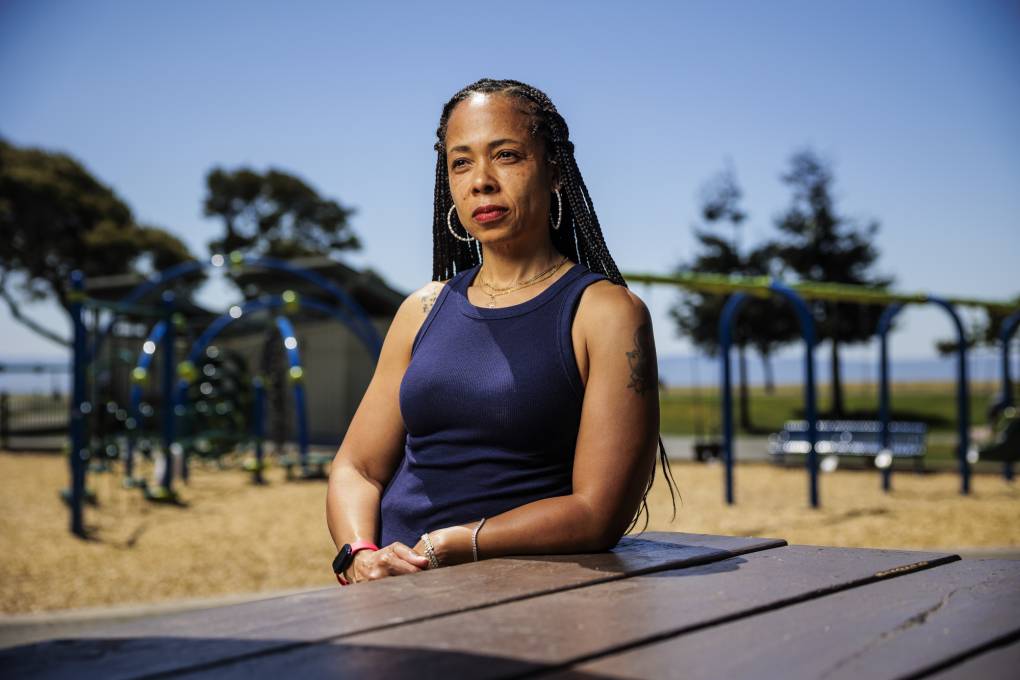
"caption": "Birdie Winrow in San Leandro on April 14, 2025.",
"credit": "Martin do Nascimento/KQED",
"altTag": null,
"description": null,
"imgSizes": {
"medium": {
"file": "https://cdn.kqed.org/wp-content/uploads/sites/10/2025/04/250414-HEAD-START-WORKER-LAID-OFF-MD-07-KQED-800x533.jpg",
"width": 800,
"height": 533,
"mimeType": "image/jpeg"
},
"large": {
"file": "https://cdn.kqed.org/wp-content/uploads/sites/10/2025/04/250414-HEAD-START-WORKER-LAID-OFF-MD-07-KQED-1020x680.jpg",
"width": 1020,
"height": 680,
"mimeType": "image/jpeg"
},
"thumbnail": {
"file": "https://cdn.kqed.org/wp-content/uploads/sites/10/2025/04/250414-HEAD-START-WORKER-LAID-OFF-MD-07-KQED-160x107.jpg",
"width": 160,
"height": 107,
"mimeType": "image/jpeg"
},
"1536x1536": {
"file": "https://cdn.kqed.org/wp-content/uploads/sites/10/2025/04/250414-HEAD-START-WORKER-LAID-OFF-MD-07-KQED-1536x1024.jpg",
"width": 1536,
"height": 1024,
"mimeType": "image/jpeg"
},
"post-thumbnail": {
"file": "https://cdn.kqed.org/wp-content/uploads/sites/10/2025/04/250414-HEAD-START-WORKER-LAID-OFF-MD-07-KQED-672x372.jpg",
"width": 672,
"height": 372,
"mimeType": "image/jpeg"
},
"twentyfourteen-full-width": {
"file": "https://cdn.kqed.org/wp-content/uploads/sites/10/2025/04/250414-HEAD-START-WORKER-LAID-OFF-MD-07-KQED-1038x576.jpg",
"width": 1038,
"height": 576,
"mimeType": "image/jpeg"
},
"full-width": {
"file": "https://cdn.kqed.org/wp-content/uploads/sites/10/2025/04/250414-HEAD-START-WORKER-LAID-OFF-MD-07-KQED-1920x1280.jpg",
"width": 1920,
"height": 1280,
"mimeType": "image/jpeg"
},
"kqedFullSize": {
"file": "https://cdn.kqed.org/wp-content/uploads/sites/10/2025/04/250414-HEAD-START-WORKER-LAID-OFF-MD-07-KQED.jpg",
"width": 2000,
"height": 1333
}
},
"isLoading": false,
"fetchFailed": false
},
"news_12035947": {
"type": "attachments",
"id": "news_12035947",
"meta": {
"index": "attachments_1716263798",
"site": "news",
"id": "12035947",
"found": true
},
"title": "Birdie Winrow in San Leandro on April 14, 2025.",
"publishDate": 1744667393,
"status": "inherit",
"parent": 0,
"modified": 1744667407,
"caption": "Birdie Winrow in San Leandro on April 14, 2025.",
"credit": "Martin do Nascimento/KQED",
"altTag": null,
"description": null,
"imgSizes": {
"medium": {
"file": "https://cdn.kqed.org/wp-content/uploads/sites/10/2025/04/250414-HEAD-START-WORKER-LAID-OFF-MD-01-KQED-800x533.jpg",
"width": 800,
"height": 533,
"mimeType": "image/jpeg"
},
"large": {
"file": "https://cdn.kqed.org/wp-content/uploads/sites/10/2025/04/250414-HEAD-START-WORKER-LAID-OFF-MD-01-KQED-1020x680.jpg",
"width": 1020,
"height": 680,
"mimeType": "image/jpeg"
},
"thumbnail": {
"file": "https://cdn.kqed.org/wp-content/uploads/sites/10/2025/04/250414-HEAD-START-WORKER-LAID-OFF-MD-01-KQED-160x107.jpg",
"width": 160,
"height": 107,
"mimeType": "image/jpeg"
},
"1536x1536": {
"file": "https://cdn.kqed.org/wp-content/uploads/sites/10/2025/04/250414-HEAD-START-WORKER-LAID-OFF-MD-01-KQED-1536x1024.jpg",
"width": 1536,
"height": 1024,
"mimeType": "image/jpeg"
},
"post-thumbnail": {
"file": "https://cdn.kqed.org/wp-content/uploads/sites/10/2025/04/250414-HEAD-START-WORKER-LAID-OFF-MD-01-KQED-672x372.jpg",
"width": 672,
"height": 372,
"mimeType": "image/jpeg"
},
"twentyfourteen-full-width": {
"file": "https://cdn.kqed.org/wp-content/uploads/sites/10/2025/04/250414-HEAD-START-WORKER-LAID-OFF-MD-01-KQED-1038x576.jpg",
"width": 1038,
"height": 576,
"mimeType": "image/jpeg"
},
"full-width": {
"file": "https://cdn.kqed.org/wp-content/uploads/sites/10/2025/04/250414-HEAD-START-WORKER-LAID-OFF-MD-01-KQED-1920x1280.jpg",
"width": 1920,
"height": 1280,
"mimeType": "image/jpeg"
},
"kqedFullSize": {
"file": "https://cdn.kqed.org/wp-content/uploads/sites/10/2025/04/250414-HEAD-START-WORKER-LAID-OFF-MD-01-KQED.jpg",
"width": 2000,
"height": 1333
}
},
"isLoading": false,
"fetchFailed": false
},
"news_12030546": {
"type": "attachments",
"id": "news_12030546",
"meta": {
"index": "attachments_1716263798",
"site": "news",
"id": "12030546",
"found": true
},
"title": "20250307_ALAMEDACHILDCARE_GC-16-KQED",
"publishDate": 1741613336,
"status": "inherit",
"parent": 12030561,
"modified": 1742323618,
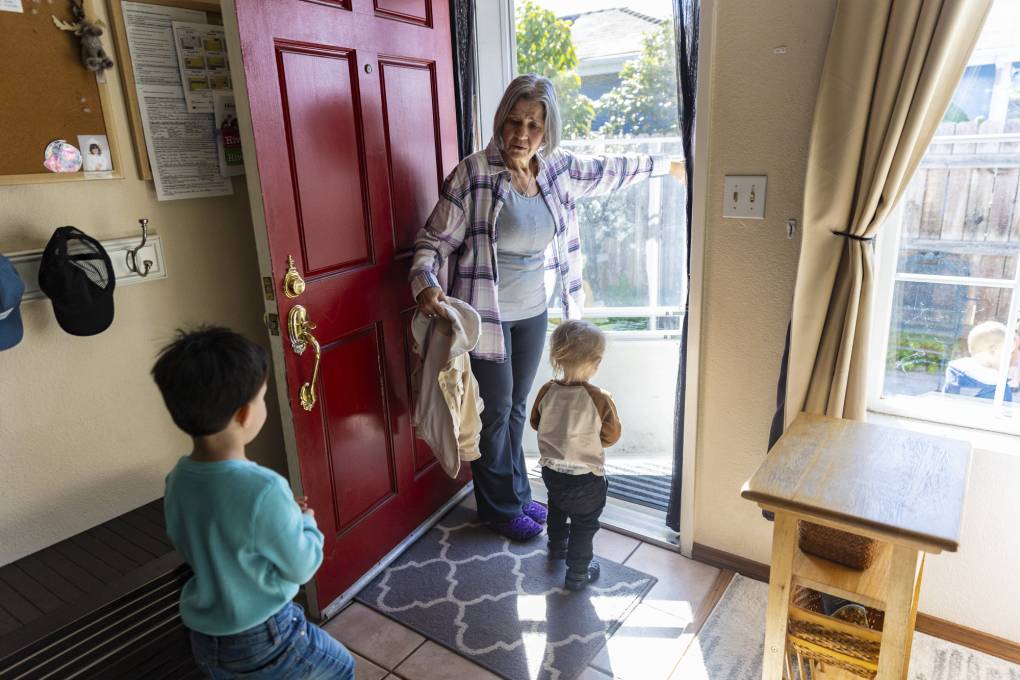
"caption": "Lisa Zarodney talks to Ryden, 1, Kane, 2, and Hudson, 3, at her home in Livermore, where she runs a child care operation, on March 7, 2025.",
"credit": "Gina Castro/KQED",
"altTag": null,
"description": null,
"imgSizes": {
"medium": {
"file": "https://cdn.kqed.org/wp-content/uploads/sites/10/2025/03/20250307_ALAMEDACHILDCARE_GC-16-KQED-800x533.jpg",
"width": 800,
"height": 533,
"mimeType": "image/jpeg"
},
"large": {
"file": "https://cdn.kqed.org/wp-content/uploads/sites/10/2025/03/20250307_ALAMEDACHILDCARE_GC-16-KQED-1020x680.jpg",
"width": 1020,
"height": 680,
"mimeType": "image/jpeg"
},
"thumbnail": {
"file": "https://cdn.kqed.org/wp-content/uploads/sites/10/2025/03/20250307_ALAMEDACHILDCARE_GC-16-KQED-160x107.jpg",
"width": 160,
"height": 107,
"mimeType": "image/jpeg"
},
"1536x1536": {
"file": "https://cdn.kqed.org/wp-content/uploads/sites/10/2025/03/20250307_ALAMEDACHILDCARE_GC-16-KQED-1536x1024.jpg",
"width": 1536,
"height": 1024,
"mimeType": "image/jpeg"
},
"post-thumbnail": {
"file": "https://cdn.kqed.org/wp-content/uploads/sites/10/2025/03/20250307_ALAMEDACHILDCARE_GC-16-KQED-672x372.jpg",
"width": 672,
"height": 372,
"mimeType": "image/jpeg"
},
"twentyfourteen-full-width": {
"file": "https://cdn.kqed.org/wp-content/uploads/sites/10/2025/03/20250307_ALAMEDACHILDCARE_GC-16-KQED-1038x576.jpg",
"width": 1038,
"height": 576,
"mimeType": "image/jpeg"
},
"full-width": {
"file": "https://cdn.kqed.org/wp-content/uploads/sites/10/2025/03/20250307_ALAMEDACHILDCARE_GC-16-KQED-1920x1280.jpg",
"width": 1920,
"height": 1280,
"mimeType": "image/jpeg"
},
"kqedFullSize": {
"file": "https://cdn.kqed.org/wp-content/uploads/sites/10/2025/03/20250307_ALAMEDACHILDCARE_GC-16-KQED.jpg",
"width": 2000,
"height": 1333
}
},
"isLoading": false,
"fetchFailed": false
},
"news_12030542": {
"type": "attachments",
"id": "news_12030542",
"meta": {
"index": "attachments_1716263798",
"site": "news",
"id": "12030542",
"found": true
},
"title": "20250307_ALAMEDACHILDCARE_GC-2-KQED",
"publishDate": 1741613314,
"status": "inherit",
"parent": 0,
"modified": 1741613404,
"caption": "Lisa Zarodney lets Hudson, 3, and Ryden, 1, out to play at her home in Livermore, where she runs a childcare operation, on March 7, 2025.",
"credit": "Gina Castro/KQED",
"altTag": null,
"description": null,
"imgSizes": {
"medium": {
"file": "https://cdn.kqed.org/wp-content/uploads/sites/10/2025/03/20250307_ALAMEDACHILDCARE_GC-2-KQED-800x533.jpg",
"width": 800,
"height": 533,
"mimeType": "image/jpeg"
},
"large": {
"file": "https://cdn.kqed.org/wp-content/uploads/sites/10/2025/03/20250307_ALAMEDACHILDCARE_GC-2-KQED-1020x680.jpg",
"width": 1020,
"height": 680,
"mimeType": "image/jpeg"
},
"thumbnail": {
"file": "https://cdn.kqed.org/wp-content/uploads/sites/10/2025/03/20250307_ALAMEDACHILDCARE_GC-2-KQED-160x107.jpg",
"width": 160,
"height": 107,
"mimeType": "image/jpeg"
},
"1536x1536": {
"file": "https://cdn.kqed.org/wp-content/uploads/sites/10/2025/03/20250307_ALAMEDACHILDCARE_GC-2-KQED-1536x1024.jpg",
"width": 1536,
"height": 1024,
"mimeType": "image/jpeg"
},
"post-thumbnail": {
"file": "https://cdn.kqed.org/wp-content/uploads/sites/10/2025/03/20250307_ALAMEDACHILDCARE_GC-2-KQED-672x372.jpg",
"width": 672,
"height": 372,
"mimeType": "image/jpeg"
},
"twentyfourteen-full-width": {
"file": "https://cdn.kqed.org/wp-content/uploads/sites/10/2025/03/20250307_ALAMEDACHILDCARE_GC-2-KQED-1038x576.jpg",
"width": 1038,
"height": 576,
"mimeType": "image/jpeg"
},
"full-width": {
"file": "https://cdn.kqed.org/wp-content/uploads/sites/10/2025/03/20250307_ALAMEDACHILDCARE_GC-2-KQED-1920x1280.jpg",
"width": 1920,
"height": 1280,
"mimeType": "image/jpeg"
},
"kqedFullSize": {
"file": "https://cdn.kqed.org/wp-content/uploads/sites/10/2025/03/20250307_ALAMEDACHILDCARE_GC-2-KQED.jpg",
"width": 2000,
"height": 1333
}
},
"isLoading": false,
"fetchFailed": false
},
"news_12025675": {
"type": "attachments",
"id": "news_12025675",
"meta": {
"index": "attachments_1716263798",
"site": "news",
"id": "12025675",
"found": true
},
"title": "20250204_Post-Fire-Child-Care_DMB_00647",
"publishDate": 1738710972,
"status": "inherit",
"parent": 0,
"modified": 1738882012,
"caption": "Joshua plays on 'woodchip mountain' at Fulton Community School & Farm, a preschool in Santa Rosa, Sonoma County, on Tuesday, Feb. 4, 2025. The school reopened after the 2017 Tubbs fire with the support of city policies that prioritized adding more child care spaces.",
"credit": "David M. Barreda/KQED",
"altTag": null,
"description": null,
"imgSizes": {
"medium": {
"file": "https://cdn.kqed.org/wp-content/uploads/sites/10/2025/02/20250204_Post-Fire-Child-Care_DMB_00647-800x533.jpg",
"width": 800,
"height": 533,
"mimeType": "image/jpeg"
},
"large": {
"file": "https://cdn.kqed.org/wp-content/uploads/sites/10/2025/02/20250204_Post-Fire-Child-Care_DMB_00647-1020x680.jpg",
"width": 1020,
"height": 680,
"mimeType": "image/jpeg"
},
"thumbnail": {
"file": "https://cdn.kqed.org/wp-content/uploads/sites/10/2025/02/20250204_Post-Fire-Child-Care_DMB_00647-160x107.jpg",
"width": 160,
"height": 107,
"mimeType": "image/jpeg"
},
"1536x1536": {
"file": "https://cdn.kqed.org/wp-content/uploads/sites/10/2025/02/20250204_Post-Fire-Child-Care_DMB_00647-1536x1024.jpg",
"width": 1536,
"height": 1024,
"mimeType": "image/jpeg"
},
"post-thumbnail": {
"file": "https://cdn.kqed.org/wp-content/uploads/sites/10/2025/02/20250204_Post-Fire-Child-Care_DMB_00647-672x372.jpg",
"width": 672,
"height": 372,
"mimeType": "image/jpeg"
},
"twentyfourteen-full-width": {
"file": "https://cdn.kqed.org/wp-content/uploads/sites/10/2025/02/20250204_Post-Fire-Child-Care_DMB_00647-1038x576.jpg",
"width": 1038,
"height": 576,
"mimeType": "image/jpeg"
},
"full-width": {
"file": "https://cdn.kqed.org/wp-content/uploads/sites/10/2025/02/20250204_Post-Fire-Child-Care_DMB_00647-1920x1280.jpg",
"width": 1920,
"height": 1280,
"mimeType": "image/jpeg"
},
"kqedFullSize": {
"file": "https://cdn.kqed.org/wp-content/uploads/sites/10/2025/02/20250204_Post-Fire-Child-Care_DMB_00647.jpg",
"width": 2000,
"height": 1333
}
},
"isLoading": false,
"fetchFailed": false
},
"news_12017807": {
"type": "attachments",
"id": "news_12017807",
"meta": {
"index": "attachments_1716263798",
"site": "news",
"id": "12017807",
"found": true
},
"title": "20241211-ChildcareFireSafety-JY-009",
"publishDate": 1733960207,
"status": "inherit",
"parent": 0,
"modified": 1733962148,
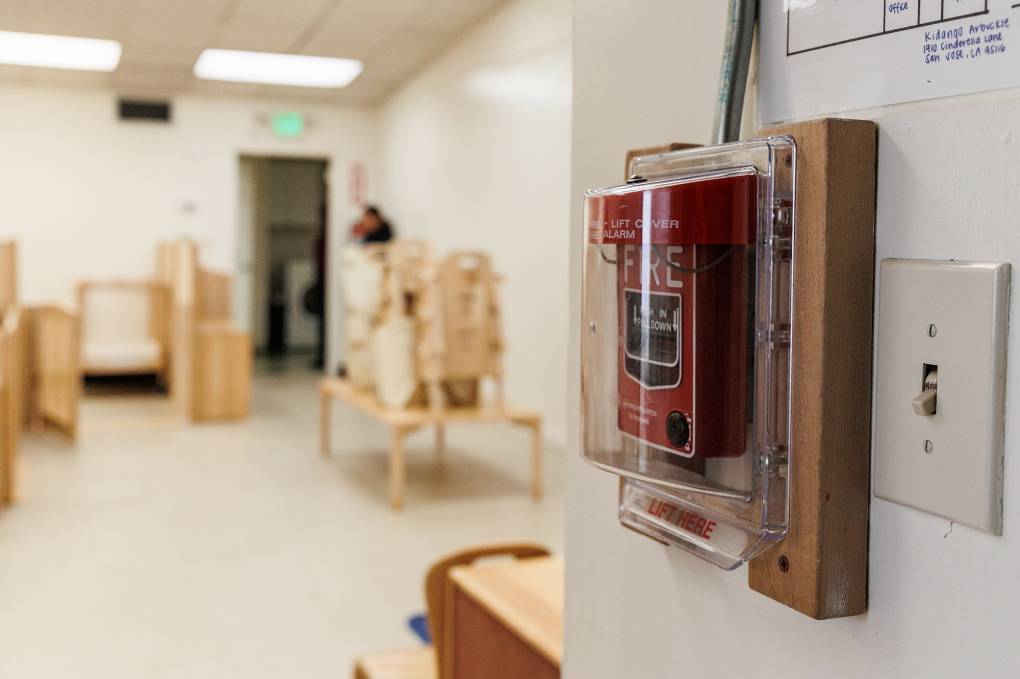
"caption": "The fire alarm is seen in the infant room at Kidango Eary Care & Education in San José on Wednesday, Dec. 11, 2024. New state fire codes and regulations have delayed openings for infant and toddler care centers such as Kidango.",
"credit": "Juliana Yamada/KQED",
"altTag": null,
"description": null,
"imgSizes": {
"medium": {
"file": "https://cdn.kqed.org/wp-content/uploads/sites/10/2024/12/20241211-ChildcareFireSafety-JY-009-800x533.jpg",
"width": 800,
"height": 533,
"mimeType": "image/jpeg"
},
"large": {
"file": "https://cdn.kqed.org/wp-content/uploads/sites/10/2024/12/20241211-ChildcareFireSafety-JY-009-1020x679.jpg",
"width": 1020,
"height": 679,
"mimeType": "image/jpeg"
},
"thumbnail": {
"file": "https://cdn.kqed.org/wp-content/uploads/sites/10/2024/12/20241211-ChildcareFireSafety-JY-009-160x107.jpg",
"width": 160,
"height": 107,
"mimeType": "image/jpeg"
},
"1536x1536": {
"file": "https://cdn.kqed.org/wp-content/uploads/sites/10/2024/12/20241211-ChildcareFireSafety-JY-009-1536x1023.jpg",
"width": 1536,
"height": 1023,
"mimeType": "image/jpeg"
},
"post-thumbnail": {
"file": "https://cdn.kqed.org/wp-content/uploads/sites/10/2024/12/20241211-ChildcareFireSafety-JY-009-672x372.jpg",
"width": 672,
"height": 372,
"mimeType": "image/jpeg"
},
"twentyfourteen-full-width": {
"file": "https://cdn.kqed.org/wp-content/uploads/sites/10/2024/12/20241211-ChildcareFireSafety-JY-009-1038x576.jpg",
"width": 1038,
"height": 576,
"mimeType": "image/jpeg"
},
"full-width": {
"file": "https://cdn.kqed.org/wp-content/uploads/sites/10/2024/12/20241211-ChildcareFireSafety-JY-009-1920x1279.jpg",
"width": 1920,
"height": 1279,
"mimeType": "image/jpeg"
},
"kqedFullSize": {
"file": "https://cdn.kqed.org/wp-content/uploads/sites/10/2024/12/20241211-ChildcareFireSafety-JY-009.jpg",
"width": 2000,
"height": 1332
}
},
"isLoading": false,
"fetchFailed": false
},
"news_11830907": {
"type": "attachments",
"id": "news_11830907",
"meta": {
"index": "attachments_1716263798",
"site": "news",
"id": "11830907",
"found": true
},
"parent": 11830774,
"imgSizes": {
"apple_news_ca_landscape_5_5": {
"file": "https://ww2.kqed.org/app/uploads/sites/10/2020/07/Child-Care-Generic-1044x783.jpg",
"width": 1044,
"mimeType": "image/jpeg",
"height": 783
},
"apple_news_ca_square_4_0": {
"file": "https://ww2.kqed.org/app/uploads/sites/10/2020/07/Child-Care-Generic-470x470.jpg",
"width": 470,
"mimeType": "image/jpeg",
"height": 470
},
"twentyfourteen-full-width": {
"file": "https://ww2.kqed.org/app/uploads/sites/10/2020/07/Child-Care-Generic-1038x576.jpg",
"width": 1038,
"mimeType": "image/jpeg",
"height": 576
},
"thumbnail": {
"file": "https://ww2.kqed.org/app/uploads/sites/10/2020/07/Child-Care-Generic-160x107.jpg",
"width": 160,
"mimeType": "image/jpeg",
"height": 107
},
"post-thumbnail": {
"file": "https://ww2.kqed.org/app/uploads/sites/10/2020/07/Child-Care-Generic-672x372.jpg",
"width": 672,
"mimeType": "image/jpeg",
"height": 372
},
"kqedFullSize": {
"file": "https://ww2.kqed.org/app/uploads/sites/10/2020/07/Child-Care-Generic.jpg",
"width": 1920,
"height": 1280
},
"apple_news_ca_landscape_4_7": {
"file": "https://ww2.kqed.org/app/uploads/sites/10/2020/07/Child-Care-Generic-632x474.jpg",
"width": 632,
"mimeType": "image/jpeg",
"height": 474
},
"large": {
"file": "https://ww2.kqed.org/app/uploads/sites/10/2020/07/Child-Care-Generic-1020x680.jpg",
"width": 1020,
"mimeType": "image/jpeg",
"height": 680
},
"apple_news_ca_landscape_4_0": {
"file": "https://ww2.kqed.org/app/uploads/sites/10/2020/07/Child-Care-Generic-536x402.jpg",
"width": 536,
"mimeType": "image/jpeg",
"height": 402
},
"apple_news_ca_portrait_12_9": {
"file": "https://ww2.kqed.org/app/uploads/sites/10/2020/07/Child-Care-Generic-1122x1280.jpg",
"width": 1122,
"mimeType": "image/jpeg",
"height": 1280
},
"medium": {
"file": "https://ww2.kqed.org/app/uploads/sites/10/2020/07/Child-Care-Generic-800x533.jpg",
"width": 800,
"mimeType": "image/jpeg",
"height": 533
},
"apple_news_ca_portrait_4_0": {
"file": "https://ww2.kqed.org/app/uploads/sites/10/2020/07/Child-Care-Generic-354x472.jpg",
"width": 354,
"mimeType": "image/jpeg",
"height": 472
},
"apple_news_ca_portrait_9_7": {
"file": "https://ww2.kqed.org/app/uploads/sites/10/2020/07/Child-Care-Generic-840x1120.jpg",
"width": 840,
"mimeType": "image/jpeg",
"height": 1120
},
"apple_news_ca_landscape_12_9": {
"file": "https://ww2.kqed.org/app/uploads/sites/10/2020/07/Child-Care-Generic-1832x1280.jpg",
"width": 1832,
"mimeType": "image/jpeg",
"height": 1280
},
"apple_news_ca_square_9_7": {
"file": "https://ww2.kqed.org/app/uploads/sites/10/2020/07/Child-Care-Generic-1104x1104.jpg",
"width": 1104,
"mimeType": "image/jpeg",
"height": 1104
},
"1536x1536": {
"file": "https://ww2.kqed.org/app/uploads/sites/10/2020/07/Child-Care-Generic-1536x1024.jpg",
"width": 1536,
"mimeType": "image/jpeg",
"height": 1024
},
"apple_news_ca_portrait_4_7": {
"file": "https://ww2.kqed.org/app/uploads/sites/10/2020/07/Child-Care-Generic-414x552.jpg",
"width": 414,
"mimeType": "image/jpeg",
"height": 552
},
"apple_news_ca_square_12_9": {
"file": "https://ww2.kqed.org/app/uploads/sites/10/2020/07/Child-Care-Generic-1472x1280.jpg",
"width": 1472,
"mimeType": "image/jpeg",
"height": 1280
},
"apple_news_ca_portrait_5_5": {
"file": "https://ww2.kqed.org/app/uploads/sites/10/2020/07/Child-Care-Generic-687x916.jpg",
"width": 687,
"mimeType": "image/jpeg",
"height": 916
},
"apple_news_ca_square_4_7": {
"file": "https://ww2.kqed.org/app/uploads/sites/10/2020/07/Child-Care-Generic-550x550.jpg",
"width": 550,
"mimeType": "image/jpeg",
"height": 550
},
"apple_news_ca_landscape_9_7": {
"file": "https://ww2.kqed.org/app/uploads/sites/10/2020/07/Child-Care-Generic-1376x1032.jpg",
"width": 1376,
"mimeType": "image/jpeg",
"height": 1032
},
"apple_news_ca_square_5_5": {
"file": "https://ww2.kqed.org/app/uploads/sites/10/2020/07/Child-Care-Generic-912x912.jpg",
"width": 912,
"mimeType": "image/jpeg",
"height": 912
}
},
"publishDate": 1595979553,
"modified": 1595979801,
"caption": "The vote was made possible after Gov. Gavin Newsom signed a bill last fall allowing family child care providers who are paid by the state, and who serve low-income families, to unionize.",
"description": "The vote was made possible after Gov. Gavin Newsom signed a bill last fall allowing family child care providers who are paid by the state, and who serve low-income families, to unionize.",
"title": "Child-Care-Generic",
"credit": "Getty Images",
"status": "inherit",
"isLoading": false,
"fetchFailed": false
},
"news_12001661": {
"type": "attachments",
"id": "news_12001661",
"meta": {
"index": "attachments_1716263798",
"site": "news",
"id": "12001661",
"found": true
},
"title": "040324-CA-Supreme-Court-CASC-CM-01 copy",
"publishDate": 1724443987,
"status": "inherit",
"parent": 12001659,
"modified": 1724445396,
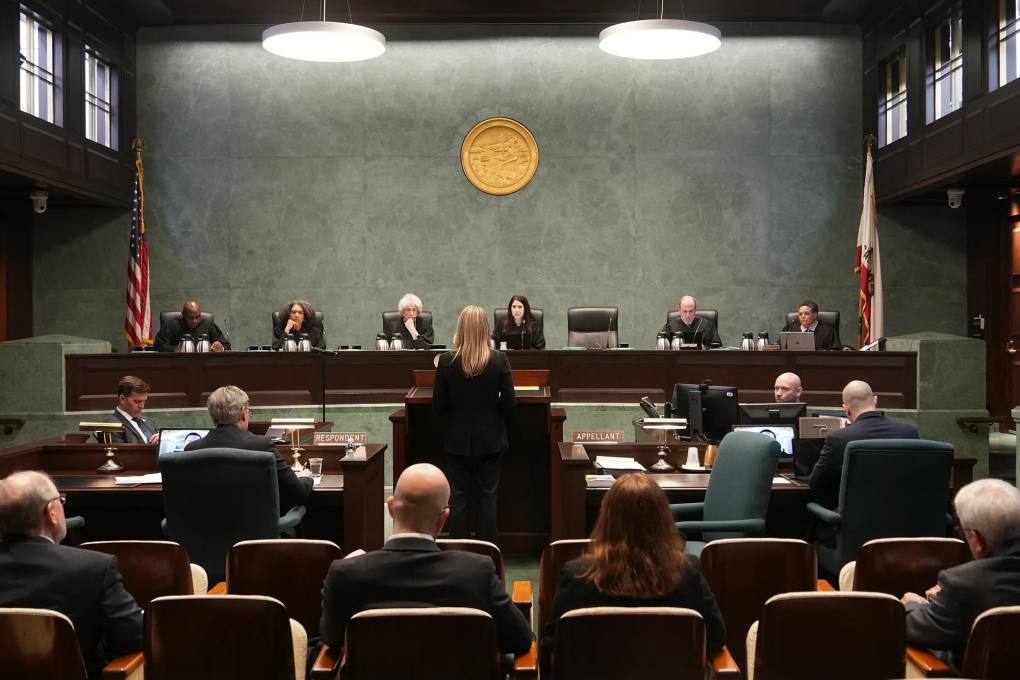
"caption": "The California Supreme Court, in a new ruling, stressed that social workers must investigate claims of Native American ancestry under the Indian Child Welfare Act in foster care cases.",
"credit": "Damian Dovarganes/AP Photo",
"altTag": null,
"description": null,
"imgSizes": {
"medium": {
"file": "https://cdn.kqed.org/wp-content/uploads/sites/10/2024/08/040324-CA-Supreme-Court-CASC-CM-01-copy-800x533.jpg",
"width": 800,
"height": 533,
"mimeType": "image/jpeg"
},
"large": {
"file": "https://cdn.kqed.org/wp-content/uploads/sites/10/2024/08/040324-CA-Supreme-Court-CASC-CM-01-copy-1020x680.jpg",
"width": 1020,
"height": 680,
"mimeType": "image/jpeg"
},
"thumbnail": {
"file": "https://cdn.kqed.org/wp-content/uploads/sites/10/2024/08/040324-CA-Supreme-Court-CASC-CM-01-copy-160x107.jpg",
"width": 160,
"height": 107,
"mimeType": "image/jpeg"
},
"1536x1536": {
"file": "https://cdn.kqed.org/wp-content/uploads/sites/10/2024/08/040324-CA-Supreme-Court-CASC-CM-01-copy-1536x1024.jpg",
"width": 1536,
"height": 1024,
"mimeType": "image/jpeg"
},
"post-thumbnail": {
"file": "https://cdn.kqed.org/wp-content/uploads/sites/10/2024/08/040324-CA-Supreme-Court-CASC-CM-01-copy-672x372.jpg",
"width": 672,
"height": 372,
"mimeType": "image/jpeg"
},
"twentyfourteen-full-width": {
"file": "https://cdn.kqed.org/wp-content/uploads/sites/10/2024/08/040324-CA-Supreme-Court-CASC-CM-01-copy-1038x576.jpg",
"width": 1038,
"height": 576,
"mimeType": "image/jpeg"
},
"full-width": {
"file": "https://cdn.kqed.org/wp-content/uploads/sites/10/2024/08/040324-CA-Supreme-Court-CASC-CM-01-copy-1920x1280.jpg",
"width": 1920,
"height": 1280,
"mimeType": "image/jpeg"
},
"kqedFullSize": {
"file": "https://cdn.kqed.org/wp-content/uploads/sites/10/2024/08/040324-CA-Supreme-Court-CASC-CM-01-copy.jpg",
"width": 2000,
"height": 1333
}
},
"isLoading": false,
"fetchFailed": false
},
"news_11997144": {
"type": "attachments",
"id": "news_11997144",
"meta": {
"index": "attachments_1716263798",
"site": "news",
"id": "11997144",
"found": true
},
"title": "Miriam Bernal leads her transitional kindergarten class toward a restroom",
"publishDate": 1721846250,
"status": "inherit",
"parent": 11997115,
"modified": 1721954125,
"caption": "A teacher leads a transitional kindergarten class toward a restroom at Germain Academy for Academic Achievement on Monday, Aug. 14, 2023, in Chatsworth, Los Angeles County. ",
"credit": "Brian van der Brug/Los Angeles Times via Getty Images",
"altTag": null,
"description": null,
"imgSizes": {
"medium": {
"file": "https://cdn.kqed.org/wp-content/uploads/sites/10/2024/07/GettyImages-1599631146-800x516.jpg",
"width": 800,
"height": 516,
"mimeType": "image/jpeg"
},
"large": {
"file": "https://cdn.kqed.org/wp-content/uploads/sites/10/2024/07/GettyImages-1599631146-1020x657.jpg",
"width": 1020,
"height": 657,
"mimeType": "image/jpeg"
},
"thumbnail": {
"file": "https://cdn.kqed.org/wp-content/uploads/sites/10/2024/07/GettyImages-1599631146-160x103.jpg",
"width": 160,
"height": 103,
"mimeType": "image/jpeg"
},
"post-thumbnail": {
"file": "https://cdn.kqed.org/wp-content/uploads/sites/10/2024/07/GettyImages-1599631146-672x372.jpg",
"width": 672,
"height": 372,
"mimeType": "image/jpeg"
},
"twentyfourteen-full-width": {
"file": "https://cdn.kqed.org/wp-content/uploads/sites/10/2024/07/GettyImages-1599631146-1024x576.jpg",
"width": 1024,
"height": 576,
"mimeType": "image/jpeg"
},
"kqedFullSize": {
"file": "https://cdn.kqed.org/wp-content/uploads/sites/10/2024/07/GettyImages-1599631146.jpg",
"width": 1024,
"height": 660
}
},
"isLoading": false,
"fetchFailed": false
},
"news_11988519": {
"type": "attachments",
"id": "news_11988519",
"meta": {
"index": "attachments_1716263798",
"site": "news",
"id": "11988519",
"found": true
},
"title": "003_KQED_EachOneTeachOneChildCare_04262023_qut",
"publishDate": 1717196067,
"status": "inherit",
"parent": 11988490,
"modified": 1717201894,
"caption": "San Francisco already subsidizes child care costs for low-income families. The new plan would allocate more funding so that families earning up to 150% of the Area Median Income or about $224,800 would also qualify for the subsidies.\n ",
"credit": "Beth LaBerge/KQED",
"altTag": "A woman is sitting on the floor showing an open book to a child.",
"description": null,
"imgSizes": {
"medium": {
"file": "https://cdn.kqed.org/wp-content/uploads/sites/10/2024/05/003_KQED_EachOneTeachOneChildCare_04262023_qut-800x533.jpg",
"width": 800,
"height": 533,
"mimeType": "image/jpeg"
},
"large": {
"file": "https://cdn.kqed.org/wp-content/uploads/sites/10/2024/05/003_KQED_EachOneTeachOneChildCare_04262023_qut-1020x680.jpg",
"width": 1020,
"height": 680,
"mimeType": "image/jpeg"
},
"thumbnail": {
"file": "https://cdn.kqed.org/wp-content/uploads/sites/10/2024/05/003_KQED_EachOneTeachOneChildCare_04262023_qut-160x107.jpg",
"width": 160,
"height": 107,
"mimeType": "image/jpeg"
},
"1536x1536": {
"file": "https://cdn.kqed.org/wp-content/uploads/sites/10/2024/05/003_KQED_EachOneTeachOneChildCare_04262023_qut-1536x1024.jpg",
"width": 1536,
"height": 1024,
"mimeType": "image/jpeg"
},
"post-thumbnail": {
"file": "https://cdn.kqed.org/wp-content/uploads/sites/10/2024/05/003_KQED_EachOneTeachOneChildCare_04262023_qut-672x372.jpg",
"width": 672,
"height": 372,
"mimeType": "image/jpeg"
},
"twentyfourteen-full-width": {
"file": "https://cdn.kqed.org/wp-content/uploads/sites/10/2024/05/003_KQED_EachOneTeachOneChildCare_04262023_qut-1038x576.jpg",
"width": 1038,
"height": 576,
"mimeType": "image/jpeg"
},
"kqedFullSize": {
"file": "https://cdn.kqed.org/wp-content/uploads/sites/10/2024/05/003_KQED_EachOneTeachOneChildCare_04262023_qut.jpg",
"width": 1920,
"height": 1280
}
},
"isLoading": false,
"fetchFailed": false
},
"news_11984193": {
"type": "attachments",
"id": "news_11984193",
"meta": {
"index": "attachments_1716263798",
"site": "news",
"id": "11984193",
"found": true
},
"parent": 11984169,
"imgSizes": {
"twentyfourteen-full-width": {
"file": "https://cdn.kqed.org/wp-content/uploads/sites/10/2024/04/73076353-1038x576.jpg",
"width": 1038,
"mimeType": "image/jpeg",
"height": 576
},
"thumbnail": {
"file": "https://cdn.kqed.org/wp-content/uploads/sites/10/2024/04/73076353-160x107.jpg",
"width": 160,
"mimeType": "image/jpeg",
"height": 107
},
"post-thumbnail": {
"file": "https://cdn.kqed.org/wp-content/uploads/sites/10/2024/04/73076353-672x372.jpg",
"width": 672,
"mimeType": "image/jpeg",
"height": 372
},
"kqedFullSize": {
"file": "https://cdn.kqed.org/wp-content/uploads/sites/10/2024/04/73076353.jpg",
"width": 1920,
"height": 1280
},
"large": {
"file": "https://cdn.kqed.org/wp-content/uploads/sites/10/2024/04/73076353-1020x680.jpg",
"width": 1020,
"mimeType": "image/jpeg",
"height": 680
},
"1536x1536": {
"file": "https://cdn.kqed.org/wp-content/uploads/sites/10/2024/04/73076353-1536x1024.jpg",
"width": 1536,
"mimeType": "image/jpeg",
"height": 1024
},
"medium": {
"file": "https://cdn.kqed.org/wp-content/uploads/sites/10/2024/04/73076353-800x533.jpg",
"width": 800,
"mimeType": "image/jpeg",
"height": 533
}
},
"publishDate": 1714162850,
"modified": 1714164270,
"caption": "A section of the California seal hangs on the front of the State of California Earl Warren Building on Jan. 22, 2007, in San Francisco, California.",
"description": null,
"title": "Supreme Court Rejects California Sentencing Law",
"credit": "Justin Sullivan/Getty Images",
"status": "inherit",
"altTag": null,
"isLoading": false,
"fetchFailed": false
},
"news_11983592": {
"type": "attachments",
"id": "news_11983592",
"meta": {
"index": "attachments_1716263798",
"site": "news",
"id": "11983592",
"found": true
},
"parent": 11983586,
"imgSizes": {
"twentyfourteen-full-width": {
"file": "https://cdn.kqed.org/wp-content/uploads/sites/10/2024/04/AP23346812592016-1038x576.jpg",
"width": 1038,
"mimeType": "image/jpeg",
"height": 576
},
"thumbnail": {
"file": "https://cdn.kqed.org/wp-content/uploads/sites/10/2024/04/AP23346812592016-160x106.jpg",
"width": 160,
"mimeType": "image/jpeg",
"height": 106
},
"post-thumbnail": {
"file": "https://cdn.kqed.org/wp-content/uploads/sites/10/2024/04/AP23346812592016-672x372.jpg",
"width": 672,
"mimeType": "image/jpeg",
"height": 372
},
"kqedFullSize": {
"file": "https://cdn.kqed.org/wp-content/uploads/sites/10/2024/04/AP23346812592016-scaled.jpg",
"width": 2560,
"height": 1694
},
"2048x2048": {
"file": "https://cdn.kqed.org/wp-content/uploads/sites/10/2024/04/AP23346812592016-2048x1355.jpg",
"width": 2048,
"mimeType": "image/jpeg",
"height": 1355
},
"large": {
"file": "https://cdn.kqed.org/wp-content/uploads/sites/10/2024/04/AP23346812592016-1020x675.jpg",
"width": 1020,
"mimeType": "image/jpeg",
"height": 675
},
"1536x1536": {
"file": "https://cdn.kqed.org/wp-content/uploads/sites/10/2024/04/AP23346812592016-1536x1016.jpg",
"width": 1536,
"mimeType": "image/jpeg",
"height": 1016
},
"full-width": {
"file": "https://cdn.kqed.org/wp-content/uploads/sites/10/2024/04/AP23346812592016-1920x1270.jpg",
"width": 1920,
"mimeType": "image/jpeg",
"height": 1270
},
"medium": {
"file": "https://cdn.kqed.org/wp-content/uploads/sites/10/2024/04/AP23346812592016-800x529.jpg",
"width": 800,
"mimeType": "image/jpeg",
"height": 529
}
},
"publishDate": 1713639215,
"modified": 1713639487,
"caption": "Scott Quinn and his 4-year-old son, Ethan, work on coloring books in a bed in Concord, Contra Costa County, on Nov. 1, 2023. Ethan's parents are among those who have opted for a private day care instead of a free 'transitional kindergarten.' Quinn said he has been discouraged to see Ethan — one of the oldest kids in his day care class — pick up the behavior of kids who are several years younger than him. 'In retrospect, it would have been better to send him to school to be around kids his age and older,' he said.",
"description": null,
"title": "Education Universal Preschool",
"credit": "Jae C. Hong/AP Photo",
"status": "inherit",
"altTag": "A man lies in bed reading a book while his young son sits next to him listening.",
"isLoading": false,
"fetchFailed": false
}
},
"audioPlayerReducer": {
"postId": "stream_live",
"isPaused": true,
"isPlaying": false,
"pfsActive": false,
"pledgeModalIsOpen": true,
"playerDrawerIsOpen": false,
"liveAudioPlayStartedAt": 0,
"liveAudioPlayContext": ""
},
"authorsReducer": {
"byline_news_12001659": {
"type": "authors",
"id": "byline_news_12001659",
"meta": {
"override": true
},
"slug": "byline_news_12001659",
"name": "\u003ca href=\"https://calmatters.org/author/shaanth-nanguneri/\">Shaanth Nanguneri\u003c/a>, CalMatters",
"isLoading": false
},
"byline_news_11983586": {
"type": "authors",
"id": "byline_news_11983586",
"meta": {
"override": true
},
"slug": "byline_news_11983586",
"name": "Cheyanne Mumphrey\u003cbr>Associated Press",
"isLoading": false
},
"ecruzguevarra": {
"type": "authors",
"id": "8654",
"meta": {
"index": "authors_1716337520",
"id": "8654",
"found": true
},
"name": "Ericka Cruz Guevarra",
"firstName": "Ericka",
"lastName": "Cruz Guevarra",
"slug": "ecruzguevarra",
"email": "ecruzguevarra@kqed.org",
"display_author_email": true,
"staff_mastheads": [
"news"
],
"title": "Producer, The Bay Podcast",
"bio": "Ericka Cruz Guevarra is host of \u003ca href=\"https://www.kqed.org/podcasts/thebay\">\u003cem>The Bay\u003c/em>\u003c/a> podcast at KQED. Before host, she was the show’s producer. Her work in that capacity includes a three-part reported series on policing in Vallejo, which won a 2020 excellence in journalism award from the Society of Professional Journalists. Ericka has worked as a breaking news reporter at Oregon Public Broadcasting, helped produce the Code Switch podcast, and was KQED’s inaugural Raul Ramirez Diversity Fund intern. She’s also an alumna of NPR’s Next Generation Radio program. Send her an email if you have strong feelings about whether Fairfield and Suisun City are the Bay. Ericka is represented by SAG-AFTRA.",
"avatar": "https://secure.gravatar.com/avatar/accefc1de4bafc7e234b69bcb9b6f6536c130fd84709bc3069ef11a78787e1bb?s=600&d=blank&r=g",
"twitter": "NotoriousECG",
"bluesky": null,
"facebook": null,
"instagram": null,
"linkedin": null,
"sites": [
{
"site": "arts",
"roles": [
"subscriber"
]
},
{
"site": "news",
"roles": [
"editor",
"manage_categories"
]
},
{
"site": "futureofyou",
"roles": [
"subscriber"
]
},
{
"site": "stateofhealth",
"roles": [
"subscriber"
]
},
{
"site": "science",
"roles": [
"editor"
]
},
{
"site": "forum",
"roles": [
"subscriber"
]
}
],
"headData": {
"title": "Ericka Cruz Guevarra | KQED",
"description": "Producer, The Bay Podcast",
"ogImgSrc": "https://secure.gravatar.com/avatar/accefc1de4bafc7e234b69bcb9b6f6536c130fd84709bc3069ef11a78787e1bb?s=600&d=blank&r=g",
"twImgSrc": "https://secure.gravatar.com/avatar/accefc1de4bafc7e234b69bcb9b6f6536c130fd84709bc3069ef11a78787e1bb?s=600&d=blank&r=g"
},
"isLoading": false,
"link": "/author/ecruzguevarra"
},
"amontecillo": {
"type": "authors",
"id": "11649",
"meta": {
"index": "authors_1716337520",
"id": "11649",
"found": true
},
"name": "Alan Montecillo",
"firstName": "Alan",
"lastName": "Montecillo",
"slug": "amontecillo",
"email": "amontecillo@kqed.org",
"display_author_email": false,
"staff_mastheads": [
"news"
],
"title": "KQED Contributor",
"bio": "Alan Montecillo is the senior editor of \u003cem>\u003ca href=\"http://kqed.org/thebay\">The Bay\u003c/a>, \u003c/em> KQED's local news podcast. Before moving to the Bay Area, he worked as a senior talk show producer for WILL in Champaign-Urbana, Illinois and at Oregon Public Broadcasting in Portland, Oregon. He has won journalism awards from the Society of Professional Journalists Northern California, the Public Media Journalists Association, The Signal Awards, and has also received a regional Edward R. Murrow award. Alan is a Filipino American from Hong Kong and a graduate of Reed College.",
"avatar": "https://secure.gravatar.com/avatar/268f53a2066899ea9efdd8a5900218b17c822d9862cbc9326cccec53ef41d349?s=600&d=blank&r=g",
"twitter": "alanmontecillo",
"bluesky": null,
"facebook": null,
"instagram": null,
"linkedin": null,
"sites": [
{
"site": "",
"roles": [
"editor"
]
},
{
"site": "news",
"roles": [
"editor",
"manage_categories"
]
}
],
"headData": {
"title": "Alan Montecillo | KQED",
"description": "KQED Contributor",
"ogImgSrc": "https://secure.gravatar.com/avatar/268f53a2066899ea9efdd8a5900218b17c822d9862cbc9326cccec53ef41d349?s=600&d=blank&r=g",
"twImgSrc": "https://secure.gravatar.com/avatar/268f53a2066899ea9efdd8a5900218b17c822d9862cbc9326cccec53ef41d349?s=600&d=blank&r=g"
},
"isLoading": false,
"link": "/author/amontecillo"
},
"btorres": {
"type": "authors",
"id": "11666",
"meta": {
"index": "authors_1716337520",
"id": "11666",
"found": true
},
"name": "Blanca Torres",
"firstName": "Blanca",
"lastName": "Torres",
"slug": "btorres",
"email": "btorres@kqed.org",
"display_author_email": true,
"staff_mastheads": [
"news"
],
"title": "Producer, Forum",
"bio": "Blanca Torres brings sharp news judgement and keen sense of lively conversation to her work as producer for Forum. She loves producing shows that leave listeners feeling like they heard distinctive voices, learned something new and gained a fresh perspective.\r\n\r\nShe joined KQED in January of 2020 after 16 years of working as a newspaper reporter most recently at the \u003cem>San Francisco Business Times,\u003c/em> where she wrote about real estate and economic development. Before that, she covered a variety of beats including crime, education, retail, workplace, the economy, consumer issues, and small business for the \u003cem>Contra Costa Times, Baltimore Sun\u003c/em> and\u003cem> The Seattle Times\u003c/em>. In addition to reporting, she worked as an editorial writer and columnist for the \u003cem>Seattle Times\u003c/em>. From 2017 to 2020, Blanca won a total of ten awards from the National Association of Real Estate Editors and won first place for land use reporting from the California News Publishers Association two years in a row. She is also a member and former board member for the National Association of Hispanic Journalists.\r\n\r\nA native of the Pacific Northwest, Blanca earned her bachelor's degree from Vanderbilt University in Nashville and a master's in fine arts in creative writing at Mills College. She lives in the East Bay with her family.",
"avatar": "https://secure.gravatar.com/avatar/50b49d19b14a1eed34f26ebf4681152cdd81574ed21851100871ccd29e578cdc?s=600&d=blank&r=g",
"twitter": "@blancawrites",
"bluesky": null,
"facebook": null,
"instagram": null,
"linkedin": null,
"sites": [
{
"site": "arts",
"roles": [
"editor"
]
},
{
"site": "news",
"roles": [
"editor"
]
},
{
"site": "forum",
"roles": [
"editor"
]
}
],
"headData": {
"title": "Blanca Torres | KQED",
"description": "Producer, Forum",
"ogImgSrc": "https://secure.gravatar.com/avatar/50b49d19b14a1eed34f26ebf4681152cdd81574ed21851100871ccd29e578cdc?s=600&d=blank&r=g",
"twImgSrc": "https://secure.gravatar.com/avatar/50b49d19b14a1eed34f26ebf4681152cdd81574ed21851100871ccd29e578cdc?s=600&d=blank&r=g"
},
"isLoading": false,
"link": "/author/btorres"
},
"daisynguyen": {
"type": "authors",
"id": "11829",
"meta": {
"index": "authors_1716337520",
"id": "11829",
"found": true
},
"name": "Daisy Nguyen",
"firstName": "Daisy",
"lastName": "Nguyen",
"slug": "daisynguyen",
"email": "daisynguyen@kqed.org",
"display_author_email": true,
"staff_mastheads": [
"news"
],
"title": "KQED Contributor",
"bio": "I have covered early childhood education and child care for KQED since 2022. I focus on policies aimed at increasing access to early care and education and how they shape individual lives. I've been a journalist for more than two decades, with most of that time devoted to covering breaking news throughout California for The Associated Press. I grew up in San Francisco and studied at UC Davis and Columbia University's Graduate School of Journalism. I live in Oakland with my husband and two kids.",
"avatar": "https://secure.gravatar.com/avatar/2da2127c27f7143b53ebd419800fd55f?s=600&d=blank&r=g",
"twitter": null,
"facebook": null,
"instagram": null,
"linkedin": "https://www.linkedin.com/in/daisynguyen/",
"sites": [
{
"site": "news",
"roles": [
"author"
]
},
{
"site": "liveblog",
"roles": [
"author"
]
}
],
"headData": {
"title": "Daisy Nguyen | KQED",
"description": "KQED Contributor",
"ogImgSrc": "https://secure.gravatar.com/avatar/2da2127c27f7143b53ebd419800fd55f?s=600&d=blank&r=g",
"twImgSrc": "https://secure.gravatar.com/avatar/2da2127c27f7143b53ebd419800fd55f?s=600&d=blank&r=g"
},
"isLoading": false,
"link": "/author/daisynguyen"
},
"mvelasquez": {
"type": "authors",
"id": "11939",
"meta": {
"index": "authors_1716337520",
"id": "11939",
"found": true
},
"name": "Mel Velasquez",
"firstName": "Mel",
"lastName": "Velasquez",
"slug": "mvelasquez",
"email": "mvelasquez@kqed.org",
"display_author_email": false,
"staff_mastheads": [],
"title": "KQED Contributor",
"bio": null,
"avatar": "https://secure.gravatar.com/avatar/409094312d56fab09fef4251e949ffa6?s=600&d=blank&r=g",
"twitter": null,
"facebook": null,
"instagram": null,
"linkedin": "www.linkedin.com/in/melanievelasquezz",
"sites": [
{
"site": "news",
"roles": [
"editor"
]
}
],
"headData": {
"title": "Mel Velasquez | KQED",
"description": "KQED Contributor",
"ogImgSrc": "https://secure.gravatar.com/avatar/409094312d56fab09fef4251e949ffa6?s=600&d=blank&r=g",
"twImgSrc": "https://secure.gravatar.com/avatar/409094312d56fab09fef4251e949ffa6?s=600&d=blank&r=g"
},
"isLoading": false,
"link": "/author/mvelasquez"
}
},
"pagesReducer": {
"news_tag_child-care": {
"type": "terms",
"id": "news_20754",
"meta": {
"index": "terms_1716263798",
"site": "news",
"id": "20754",
"score": 9.893822
},
"featImg": null,
"name": "child care",
"description": null,
"taxonomy": "tag",
"headData": {
"twImgId": null,
"twTitle": null,
"ogTitle": null,
"ogImgId": null,
"twDescription": null,
"description": null,
"title": "child care Archives | KQED News",
"ogDescription": null
},
"ttid": 20771,
"slug": "child-care",
"isLoading": false,
"title": "child care",
"pageMeta": {
"site": "news",
"WpPageTemplate": "page-topic-editorial",
"currentPage": 4
},
"blocks": [
{
"blockName": "kqed/post-list",
"attrs": {
"layout": "cardArticle2",
"query": "posts/news?tag=child-care",
"seeMore": false,
"paginated": true,
"page": 4
}
},
{
"blockName": "kqed/ad"
}
]
}
},
"pfsSessionReducer": {},
"postsReducer": {
"stream_live": {
"type": "live",
"id": "stream_live",
"audioUrl": "https://streams.kqed.org/kqedradio",
"title": "Live Stream",
"excerpt": "Live Stream information currently unavailable.",
"link": "/radio",
"featImg": "",
"label": {
"name": "KQED Live",
"link": "/"
}
},
"stream_kqedNewscast": {
"type": "posts",
"id": "stream_kqedNewscast",
"audioUrl": "https://www.kqed.org/.stream/anon/radio/RDnews/newscast.mp3?_=1",
"title": "KQED Newscast",
"featImg": "",
"label": {
"name": "88.5 FM",
"link": "/"
}
},
"news_12037453": {
"type": "posts",
"id": "news_12037453",
"meta": {
"index": "posts_1716263798",
"site": "news",
"id": "12037453",
"score": null,
"sort": [
1745834405000
]
},
"guestAuthors": [],
"slug": "head-start-changed-her-life-now-shes-watching-the-program-get-slashed",
"title": "Head Start Changed Her Life. Now She’s Watching the Program Get Slashed",
"publishDate": 1745834405,
"format": "audio",
"headTitle": "Head Start Changed Her Life. Now She’s Watching the Program Get Slashed | KQED",
"labelTerm": {},
"content": "\u003cp>Head Start was founded 60 years ago to help America’s poorest families break the cycle of poverty. Now, it’s one of many federal programs that the Trump administration wants to reduce or cut altogether.\u003c/p>\n\u003cp>KQED’s Daisy Nguyen tells the story of one federal employee in the Bay Area who was laid off from Head Start — and how the program changed her life.\u003c/p>\n\u003cp>\u003c!-- iframe plugin v.4.3 wordpress.org/plugins/iframe/ -->\u003cbr>\n\u003ciframe loading=\"lazy\" frameborder=\"0\" height=\"200\" scrolling=\"no\" src=\"https://playlist.megaphone.fm?e=KQINC4825482944&light=true\" width=\"100%\" class=\"iframe-class\">\u003c/iframe>\u003c/p>\n\u003cp>\u003cem>\u003ci>Some members of the KQED podcast team are represented by The Screen Actors Guild, American Federation of Television and Radio Artists. San Francisco Northern California Local.\u003c/i>\u003c/em>\u003c/p>\n\u003cp>\u003cem>This is a computer-generated transcript. While our team has reviewed it, there may be errors.\u003c/em>\u003c/p>\n\u003cp>[ad fullwidth]\u003c/p>\n\u003cp>\u003cb>Daisy Nguyen: \u003c/b>\u003cem>[00:02:25] \u003c/em>Birdie Winrow is a laid-off federal worker. She lives in the East Bay. I was introduced to Birdie because I’ve been covering a number of problems for Head Start since President Trump took office. And she wanted to talk to me about the impact of losing a job that she was really excited to have and just her concerns about the ongoing threats to a program that has really changed her life.\u003c/p>\n\u003cp>\u003cb>Birdie Winrow: \u003c/b>\u003cem>[00:02:50] \u003c/em>I’ve always been very passionate about Head Start.\u003c/p>\n\u003cp>\u003cb>Daisy Nguyen: \u003c/b>\u003cem>[00:02:53] \u003c/em>She was working at Head Start’s regional office in San Francisco.\u003c/p>\n\u003cp>\u003cb>Birdie Winrow: \u003c/b>\u003cem>[00:02:58] \u003c/em>I’ve done the work from the program perspective, but I wanted to learn more because I wanted it to serve more if that makes sense from a holistic perspective.\u003c/p>\n\u003cp>\u003cb>Daisy Nguyen: \u003c/b>\u003cem>[00:03:05] \u003c/em>She started not too long ago, back in January, so she was considered a probationary worker.\u003c/p>\n\u003cp>\u003cb>Birdie Winrow: \u003c/b>\u003cem>[00:03:11] \u003c/em>But it was a Thursday, I was watching the news, and I heard that probationary workers were being let go. And I’m like, oh, I’m a probationary worker. And so I was kind of concerned about it at the time.\u003c/p>\n\u003cp>\u003cb>Daisy Nguyen: \u003c/b>\u003cem>[00:03:23] \u003c/em>And then she abruptly lost her job beginning of April when the Department of Health and Human Services decided to close the office in which she worked at as part of its effort to downsize the government.\u003c/p>\n\u003cp>\u003cb>Ericka Cruz Guevarra: \u003c/b>\u003cem>[00:03:40] \u003c/em>What was Bertie’s reaction at the time to her being laid off?\u003c/p>\n\u003cp>\u003cb>Daisy Nguyen: \u003c/b>\u003cem>[00:03:46] \u003c/em>She was disappointed.\u003c/p>\n\u003cp>\u003cb>Birdie Winrow: \u003c/b>\u003cem>[00:03:49] \u003c/em>There are a lot of hearts that are broken right now.\u003c/p>\n\u003cp>\u003cb>Daisy Nguyen: \u003c/b>\u003cem>[00:03:51] \u003c/em>This was a job she had long wanted to have. She was really trying to make an impact. And she was also on the verge of buying a house.\u003c/p>\n\u003cp>\u003cb>Birdie Winrow: \u003c/b>\u003cem>[00:04:03] \u003c/em>My appraisal was going to happen. And soon as I got a message that, you know, it may be me, I pulled out of the contract in that same moment.\u003c/p>\n\u003cp>\u003cb>Daisy Nguyen: \u003c/b>\u003cem>[00:04:16] \u003c/em>The seller was even willing to sell it to her below asking price and she had to walk away from the deal\u003c/p>\n\u003cp>\u003cb>Birdie Winrow: \u003c/b>\u003cem>[00:04:23] \u003c/em>It took me three years just to get to this point to buy a house. I was really sad about it, but yeah.\u003c/p>\n\u003cp>\u003cb>Ericka Cruz Guevarra: \u003c/b>\u003cem>[00:04:33] \u003c/em>That’s devastating, Daisy. I mean, this is a program that Bertie herself has relied on. I mean tell me a little bit more about this program Head Start. What is it exactly?\u003c/p>\n\u003cp>\u003cb>Daisy Nguyen: \u003c/b>\u003cem>[00:04:46] \u003c/em>It was founded 60 years ago to help America’s poorest families break the cycle of poverty by caring for the kids while also helping their parents do better. Head Start is appropriated by Congress, but it’s run by local schools and nonprofits. So in California, Head Start grant recipients serve more than 80,000 low-income kids, and those recipients receive about a billion and a half dollars. I think most people think of Head Start as like a preschool early education program, but advocates and people who’ve experienced it say it’s more than just a preschool program. It provides meals for the kids, health screenings, and it supports parents in many different ways depending on where you are, like if you’re in a rural area, there’s a program call it Migrant Head Start program that serves. You know, seasonal workers. There’s early head start, which is for babies, infants to three-year-olds. There’s home visit programs where parents of newborns receive visitors into their home to get just advice on caregiving.\u003c/p>\n\u003cp>\u003cb>Ericka Cruz Guevarra: \u003c/b>\u003cem>[00:06:08] \u003c/em>And it turns out that Birdie, who was recently laid off from Head Start, also benefited from Headstart herself. What was Birdie’s experience with Head Start back in the day?\u003c/p>\n\u003cp>\u003cb>Daisy Nguyen: \u003c/b>\u003cem>[00:06:19] \u003c/em>Yeah, she told me that she was a 19 year old mom of two living in San Francisco. She was relying on public assistance to get by.\u003c/p>\n\u003cp>\u003cb>Birdie Winrow: \u003c/b>\u003cem>[00:06:31] \u003c/em>I want to be self-sufficient and but the only way I could do that is I had to put my babies in care\u003c/p>\n\u003cp>\u003cb>Daisy Nguyen: \u003c/b>\u003cem>[00:06:37] \u003c/em>She didn’t know anything about Head Start when she started that, because she told me she was raised by her grandmother. She never went to daycare. And so Head Start’s two-generation approach to uplifting families was just really eye-opening for her.\u003c/p>\n\u003cp>\u003cb>Birdie Winrow: \u003c/b>\u003cem>[00:06:52] \u003c/em>So a young mom with two kids, I wanted them to go to school so that I can go to work. And so that was my intention because I wanted to do more with myself.\u003c/p>\n\u003cp>\u003cb>Daisy Nguyen: \u003c/b>\u003cem>[00:07:02] \u003c/em>When she went to enroll her son in a Head Start program in the Bayview, Hunters Point neighborhood. Someone at Head Start told her that her son had to undergo a dental exam as part of the enrollment process.\u003c/p>\n\u003cp>\u003cb>Birdie Winrow: \u003c/b>\u003cem>[00:07:17] \u003c/em>And so for my teenage mind, I was like, he had to go to a dentist. Like, I don’t even brush his teeth every day.\u003c/p>\n\u003cp>\u003cb>Daisy Nguyen: \u003c/b>\u003cem>[00:07:24] \u003c/em>And that really was surprising for her because up to that point, she had never brought him to the dentist.\u003c/p>\n\u003cp>\u003cb>Birdie Winrow: \u003c/b>\u003cem>[00:07:31] \u003c/em>I took him to Western Dental, it was in the Mission District. We were there all day. But nonetheless, that was my beginning of loving Head Start.\u003c/p>\n\u003cp>\u003cb>Daisy Nguyen: \u003c/b>\u003cem>[00:07:42] \u003c/em>That moment was just sort of a light bulb moment for her. It made her become more aware of healthy child development. And it made her step up her parenting skills. Her three-year-old son at the time got child care. And she was able to go find work. And that was sort of the beginning of her journey. She was able pursue a career in social work and early childhood education. She kept on working while earning her college degrees. And then About 15 years ago she went back to Head Start to work in various jobs at Head Start, starting with being a toddler teacher and moving her way up to becoming a manager.\u003c/p>\n\u003cp>\u003cb>Ericka Cruz Guevarra: \u003c/b>\u003cem>[00:08:25] \u003c/em>Yeah, it sounds like this personal history with the program is really what drove her to kind of give back. \u003cem> [00:08:31]\u003c/em>\u003cem>[6.2]\u003c/em>\u003c/p>\n\u003cp>\u003cb>Daisy Nguyen: \u003c/b>\u003cem>[00:08:32] \u003c/em>Yeah, exactly. She was very passionate about that.\u003c/p>\n\u003cp>\u003cb>Birdie Winrow: \u003c/b>\u003cem>[00:08:37] \u003c/em>My grandchildren have all been through either Early Head Start and Head Start or Early Head Start. My family has all touched it in some form or fashion. If you truly use the resources and the tools that Head Start provides, you can be any\u003c/p>\n\u003cp>\u003cb>Ericka Cruz Guevarra: \u003c/b>\u003cem>[00:09:03] \u003c/em>Coming up, how the Trump administration’s layoffs are affecting Head Start, and why advocates fear there could be even more to come. Stay with us.\u003c/p>\n\u003cp>\u003cb>Ericka Cruz Guevarra: \u003c/b>\u003cem>[00:10:06] \u003c/em>Well, Daisy, going back to these layoffs happening at Head Start, there have been two rounds of layoffs so far that have affected this program, the latest happening on April 1st, which is when Birdie got laid off. What kind of impact have these layoff had on the program so far?\u003c/p>\n\u003cp>\u003cb>Daisy Nguyen: \u003c/b>\u003cem>[00:10:26] \u003c/em>Where Birdie worked she was among a staff of at least 15 people, maybe 18. They were serving as regional contacts for hit start programs throughout California, Arizona, Nevada, Hawaii, and the Outer Pacific. So without this staff, these programs in these states, they don’t really know who to turn to if they have a question or if they need their grants renewed. Or if they need someone just to approve spending for things like replacing a playground or a child care center that was destroyed by a wildfire. I heard that example for one program in Altadena. Oh, wow. They’ve been told by the Department of Health and Human Services that they could go to some portal and submit questions, and those questions will be monitored by someone in the central office in Washington. I think it’s just causing a slowdown. And it’s hindering these local programs’ ability to conduct business.\u003c/p>\n\u003cp>\u003cb>Ericka Cruz Guevarra: \u003c/b>\u003cem>[00:11:36] \u003c/em>I mean, this might not be the last of these layoffs. What is the fear, I guess, moving forward here?\u003c/p>\n\u003cp>\u003cb>Daisy Nguyen: \u003c/b>\u003cem>[00:11:46] \u003c/em>There’s been widespread reporting that the White House wants to completely defund the program in the next budget. There’s a draft budget proposal that calls for eliminating Head Start. Project 2025 has called for doing that. And the main architect of that conservative policy blueprint is now the director of the White House Office of Management and Budget. The conservative thinkers behind this policy say that the federal government shouldn’t be involved in child care programming. So, you know, it’s sparking a lot of concern because Head Start has such an important presence in California. In fact, the state receives $1.5 billion in Head Start funds to serve these low-income families. And in California, I was told about 75% of Head Start grant recipients lend state funding for preschool and child care with Head Start funding just so they can run their programs. So if you were to take away the federal funds Like these programs may have to like cut staff or shorten their days. So that’s gonna be a problem for a lot of working parents because, you know, having their child in full care, full-time care is what enables them to go to work.\u003c/p>\n\u003cp>\u003cb>Ericka Cruz Guevarra: \u003c/b>\u003cem>[00:13:11] \u003c/em>Coming back to Birdie here, Daisy, I mean, it sounds like her life has been incredibly affected by losing her job. I mean she couldn’t buy this home that she was really excited to buy. I mean what is she up to now?\u003c/p>\n\u003cp>\u003cb>Daisy Nguyen: \u003c/b>\u003cem>[00:13:25] \u003c/em>So she’s taking some time to take care of herself. She’s spending time with her grandkids and she’s trying to figure out her next step.\u003c/p>\n\u003cp>\u003cb>Birdie Winrow: \u003c/b>\u003cem>[00:13:32] \u003c/em>I want to make sure that my glass is full so that I can continue to pour.\u003c/p>\n\u003cp>\u003cb>Daisy Nguyen: \u003c/b>\u003cem>[00:13:37] \u003c/em>She also is continuing to teach at community colleges. And she’s just telling me that she’s trying to figure out how to advocate for Head Start.\u003c/p>\n\u003cp>\u003cb>Birdie Winrow: \u003c/b>\u003cem>[00:13:50] \u003c/em>I’m a living example of why Head Start matters and why Head start is important. Not only because I worked there, but a lot of times Head Start people continue. So they start off maybe as a child or they may start off as a parent, but in the end they give.\u003c/p>\n\u003cp>\u003cb>Daisy Nguyen: \u003c/b>\u003cem>[00:14:12] \u003c/em>Six of her grandkids have gone through Head Start II, and she just wonders, like, what’s gonna happen to the kids who come behind them? Like, will they get the same benefits?\u003c/p>\n\u003cp>\u003cb>Birdie Winrow: \u003c/b>\u003cem>[00:14:22] \u003c/em>About those 16 children in that classroom and them having a place to come to, to sleep, to eat, to rest, to be, that’s my concern.\u003c/p>\n\u003cp>\u003cb>Ericka Cruz Guevarra: \u003c/b>\u003cem>[00:14:41] \u003c/em>Well, Daisy, thank you so much for sharing your reporting with us. I appreciate it.\u003c/p>\n\u003cp>[ad floatright]\u003c/p>\n\u003cp>\u003cb>Daisy Nguyen: \u003c/b>\u003cem>[00:14:45] \u003c/em>Thank you.\u003c/p>\n\n",
"blocks": [],
"excerpt": "KQED’s Daisy Nguyen tells the story of one federal employee in the Bay Area who was laid off from Head Start — and how the program changed her life.",
"status": "publish",
"parent": 0,
"modified": 1745870701,
"stats": {
"hasAudio": true,
"hasVideo": false,
"hasChartOrMap": false,
"iframeSrcs": [],
"hasGoogleForm": false,
"hasGallery": false,
"hasHearkenModule": false,
"hasPolis": false,
"paragraphCount": 50,
"wordCount": 2118
},
"headData": {
"title": "Head Start Changed Her Life. Now She’s Watching the Program Get Slashed | KQED",
"description": "KQED’s Daisy Nguyen tells the story of one federal employee in the Bay Area who was laid off from Head Start — and how the program changed her life.",
"ogTitle": "",
"ogDescription": "",
"ogImgId": "",
"twTitle": "",
"twDescription": "",
"twImgId": "",
"schema": {
"@context": "https://schema.org",
"@type": "NewsArticle",
"headline": "Head Start Changed Her Life. Now She’s Watching the Program Get Slashed",
"datePublished": "2025-04-28T03:00:05-07:00",
"dateModified": "2025-04-28T13:05:01-07:00",
"image": "https://cdn.kqed.org/wp-content/uploads/2020/02/KQED-OG-Image@1x.png",
"isAccessibleForFree": "True",
"publisher": {
"@type": "NewsMediaOrganization",
"@id": "https://www.kqed.org/#organization",
"name": "KQED",
"logo": "https://cdn.kqed.org/wp-content/uploads/2020/02/KQED-OG-Image@1x.png",
"url": "https://www.kqed.org",
"sameAs": [
"https://www.facebook.com/KQED",
"https://twitter.com/KQED",
"https://www.instagram.com/kqed/",
"https://www.tiktok.com/@kqedofficial",
"https://www.linkedin.com/company/kqed",
"https://www.youtube.com/channel/UCeC0IOo7i1P_61zVUWbJ4nw"
]
}
}
},
"source": "The Bay",
"sourceUrl": "https://www.kqed.org/podcasts/thebay",
"audioUrl": "https://www.podtrac.com/pts/redirect.mp3/chrt.fm/track/G6C7C3/traffic.megaphone.fm/KQINC4825482944.mp3?updated=1745795308",
"sticky": false,
"nprStoryId": "kqed-12037453",
"templateType": "standard",
"featuredImageType": "standard",
"excludeFromSiteSearch": "Include",
"articleAge": "0",
"path": "/news/12037453/head-start-changed-her-life-now-shes-watching-the-program-get-slashed",
"audioTrackLength": null,
"parsedContent": [
{
"type": "contentString",
"content": "\u003cdiv class=\"post-body\">\u003cp>\u003cp>Head Start was founded 60 years ago to help America’s poorest families break the cycle of poverty. Now, it’s one of many federal programs that the Trump administration wants to reduce or cut altogether.\u003c/p>\n\u003cp>KQED’s Daisy Nguyen tells the story of one federal employee in the Bay Area who was laid off from Head Start — and how the program changed her life.\u003c/p>\n\u003cp>\u003c!-- iframe plugin v.4.3 wordpress.org/plugins/iframe/ -->\u003cbr>\n\u003ciframe loading=\"lazy\" frameborder=\"0\" height=\"200\" scrolling=\"no\" src=\"https://playlist.megaphone.fm?e=KQINC4825482944&light=true\" width=\"100%\" class=\"iframe-class\">\u003c/iframe>\u003c/p>\n\u003cp>\u003cem>\u003ci>Some members of the KQED podcast team are represented by The Screen Actors Guild, American Federation of Television and Radio Artists. San Francisco Northern California Local.\u003c/i>\u003c/em>\u003c/p>\n\u003cp>\u003cem>This is a computer-generated transcript. While our team has reviewed it, there may be errors.\u003c/em>\u003c/p>\n\u003cp>\u003c/p>\u003c/div>",
"attributes": {
"named": {},
"numeric": []
}
},
{
"type": "component",
"content": "",
"name": "ad",
"attributes": {
"named": {
"label": "fullwidth"
},
"numeric": [
"fullwidth"
]
}
},
{
"type": "contentString",
"content": "\u003cdiv class=\"post-body\">\u003cp>\u003c/p>\n\u003cp>\u003cb>Daisy Nguyen: \u003c/b>\u003cem>[00:02:25] \u003c/em>Birdie Winrow is a laid-off federal worker. She lives in the East Bay. I was introduced to Birdie because I’ve been covering a number of problems for Head Start since President Trump took office. And she wanted to talk to me about the impact of losing a job that she was really excited to have and just her concerns about the ongoing threats to a program that has really changed her life.\u003c/p>\n\u003cp>\u003cb>Birdie Winrow: \u003c/b>\u003cem>[00:02:50] \u003c/em>I’ve always been very passionate about Head Start.\u003c/p>\n\u003cp>\u003cb>Daisy Nguyen: \u003c/b>\u003cem>[00:02:53] \u003c/em>She was working at Head Start’s regional office in San Francisco.\u003c/p>\n\u003cp>\u003cb>Birdie Winrow: \u003c/b>\u003cem>[00:02:58] \u003c/em>I’ve done the work from the program perspective, but I wanted to learn more because I wanted it to serve more if that makes sense from a holistic perspective.\u003c/p>\n\u003cp>\u003cb>Daisy Nguyen: \u003c/b>\u003cem>[00:03:05] \u003c/em>She started not too long ago, back in January, so she was considered a probationary worker.\u003c/p>\n\u003cp>\u003cb>Birdie Winrow: \u003c/b>\u003cem>[00:03:11] \u003c/em>But it was a Thursday, I was watching the news, and I heard that probationary workers were being let go. And I’m like, oh, I’m a probationary worker. And so I was kind of concerned about it at the time.\u003c/p>\n\u003cp>\u003cb>Daisy Nguyen: \u003c/b>\u003cem>[00:03:23] \u003c/em>And then she abruptly lost her job beginning of April when the Department of Health and Human Services decided to close the office in which she worked at as part of its effort to downsize the government.\u003c/p>\n\u003cp>\u003cb>Ericka Cruz Guevarra: \u003c/b>\u003cem>[00:03:40] \u003c/em>What was Bertie’s reaction at the time to her being laid off?\u003c/p>\n\u003cp>\u003cb>Daisy Nguyen: \u003c/b>\u003cem>[00:03:46] \u003c/em>She was disappointed.\u003c/p>\n\u003cp>\u003cb>Birdie Winrow: \u003c/b>\u003cem>[00:03:49] \u003c/em>There are a lot of hearts that are broken right now.\u003c/p>\n\u003cp>\u003cb>Daisy Nguyen: \u003c/b>\u003cem>[00:03:51] \u003c/em>This was a job she had long wanted to have. She was really trying to make an impact. And she was also on the verge of buying a house.\u003c/p>\n\u003cp>\u003cb>Birdie Winrow: \u003c/b>\u003cem>[00:04:03] \u003c/em>My appraisal was going to happen. And soon as I got a message that, you know, it may be me, I pulled out of the contract in that same moment.\u003c/p>\n\u003cp>\u003cb>Daisy Nguyen: \u003c/b>\u003cem>[00:04:16] \u003c/em>The seller was even willing to sell it to her below asking price and she had to walk away from the deal\u003c/p>\n\u003cp>\u003cb>Birdie Winrow: \u003c/b>\u003cem>[00:04:23] \u003c/em>It took me three years just to get to this point to buy a house. I was really sad about it, but yeah.\u003c/p>\n\u003cp>\u003cb>Ericka Cruz Guevarra: \u003c/b>\u003cem>[00:04:33] \u003c/em>That’s devastating, Daisy. I mean, this is a program that Bertie herself has relied on. I mean tell me a little bit more about this program Head Start. What is it exactly?\u003c/p>\n\u003cp>\u003cb>Daisy Nguyen: \u003c/b>\u003cem>[00:04:46] \u003c/em>It was founded 60 years ago to help America’s poorest families break the cycle of poverty by caring for the kids while also helping their parents do better. Head Start is appropriated by Congress, but it’s run by local schools and nonprofits. So in California, Head Start grant recipients serve more than 80,000 low-income kids, and those recipients receive about a billion and a half dollars. I think most people think of Head Start as like a preschool early education program, but advocates and people who’ve experienced it say it’s more than just a preschool program. It provides meals for the kids, health screenings, and it supports parents in many different ways depending on where you are, like if you’re in a rural area, there’s a program call it Migrant Head Start program that serves. You know, seasonal workers. There’s early head start, which is for babies, infants to three-year-olds. There’s home visit programs where parents of newborns receive visitors into their home to get just advice on caregiving.\u003c/p>\n\u003cp>\u003cb>Ericka Cruz Guevarra: \u003c/b>\u003cem>[00:06:08] \u003c/em>And it turns out that Birdie, who was recently laid off from Head Start, also benefited from Headstart herself. What was Birdie’s experience with Head Start back in the day?\u003c/p>\n\u003cp>\u003cb>Daisy Nguyen: \u003c/b>\u003cem>[00:06:19] \u003c/em>Yeah, she told me that she was a 19 year old mom of two living in San Francisco. She was relying on public assistance to get by.\u003c/p>\n\u003cp>\u003cb>Birdie Winrow: \u003c/b>\u003cem>[00:06:31] \u003c/em>I want to be self-sufficient and but the only way I could do that is I had to put my babies in care\u003c/p>\n\u003cp>\u003cb>Daisy Nguyen: \u003c/b>\u003cem>[00:06:37] \u003c/em>She didn’t know anything about Head Start when she started that, because she told me she was raised by her grandmother. She never went to daycare. And so Head Start’s two-generation approach to uplifting families was just really eye-opening for her.\u003c/p>\n\u003cp>\u003cb>Birdie Winrow: \u003c/b>\u003cem>[00:06:52] \u003c/em>So a young mom with two kids, I wanted them to go to school so that I can go to work. And so that was my intention because I wanted to do more with myself.\u003c/p>\n\u003cp>\u003cb>Daisy Nguyen: \u003c/b>\u003cem>[00:07:02] \u003c/em>When she went to enroll her son in a Head Start program in the Bayview, Hunters Point neighborhood. Someone at Head Start told her that her son had to undergo a dental exam as part of the enrollment process.\u003c/p>\n\u003cp>\u003cb>Birdie Winrow: \u003c/b>\u003cem>[00:07:17] \u003c/em>And so for my teenage mind, I was like, he had to go to a dentist. Like, I don’t even brush his teeth every day.\u003c/p>\n\u003cp>\u003cb>Daisy Nguyen: \u003c/b>\u003cem>[00:07:24] \u003c/em>And that really was surprising for her because up to that point, she had never brought him to the dentist.\u003c/p>\n\u003cp>\u003cb>Birdie Winrow: \u003c/b>\u003cem>[00:07:31] \u003c/em>I took him to Western Dental, it was in the Mission District. We were there all day. But nonetheless, that was my beginning of loving Head Start.\u003c/p>\n\u003cp>\u003cb>Daisy Nguyen: \u003c/b>\u003cem>[00:07:42] \u003c/em>That moment was just sort of a light bulb moment for her. It made her become more aware of healthy child development. And it made her step up her parenting skills. Her three-year-old son at the time got child care. And she was able to go find work. And that was sort of the beginning of her journey. She was able pursue a career in social work and early childhood education. She kept on working while earning her college degrees. And then About 15 years ago she went back to Head Start to work in various jobs at Head Start, starting with being a toddler teacher and moving her way up to becoming a manager.\u003c/p>\n\u003cp>\u003cb>Ericka Cruz Guevarra: \u003c/b>\u003cem>[00:08:25] \u003c/em>Yeah, it sounds like this personal history with the program is really what drove her to kind of give back. \u003cem> [00:08:31]\u003c/em>\u003cem>[6.2]\u003c/em>\u003c/p>\n\u003cp>\u003cb>Daisy Nguyen: \u003c/b>\u003cem>[00:08:32] \u003c/em>Yeah, exactly. She was very passionate about that.\u003c/p>\n\u003cp>\u003cb>Birdie Winrow: \u003c/b>\u003cem>[00:08:37] \u003c/em>My grandchildren have all been through either Early Head Start and Head Start or Early Head Start. My family has all touched it in some form or fashion. If you truly use the resources and the tools that Head Start provides, you can be any\u003c/p>\n\u003cp>\u003cb>Ericka Cruz Guevarra: \u003c/b>\u003cem>[00:09:03] \u003c/em>Coming up, how the Trump administration’s layoffs are affecting Head Start, and why advocates fear there could be even more to come. Stay with us.\u003c/p>\n\u003cp>\u003cb>Ericka Cruz Guevarra: \u003c/b>\u003cem>[00:10:06] \u003c/em>Well, Daisy, going back to these layoffs happening at Head Start, there have been two rounds of layoffs so far that have affected this program, the latest happening on April 1st, which is when Birdie got laid off. What kind of impact have these layoff had on the program so far?\u003c/p>\n\u003cp>\u003cb>Daisy Nguyen: \u003c/b>\u003cem>[00:10:26] \u003c/em>Where Birdie worked she was among a staff of at least 15 people, maybe 18. They were serving as regional contacts for hit start programs throughout California, Arizona, Nevada, Hawaii, and the Outer Pacific. So without this staff, these programs in these states, they don’t really know who to turn to if they have a question or if they need their grants renewed. Or if they need someone just to approve spending for things like replacing a playground or a child care center that was destroyed by a wildfire. I heard that example for one program in Altadena. Oh, wow. They’ve been told by the Department of Health and Human Services that they could go to some portal and submit questions, and those questions will be monitored by someone in the central office in Washington. I think it’s just causing a slowdown. And it’s hindering these local programs’ ability to conduct business.\u003c/p>\n\u003cp>\u003cb>Ericka Cruz Guevarra: \u003c/b>\u003cem>[00:11:36] \u003c/em>I mean, this might not be the last of these layoffs. What is the fear, I guess, moving forward here?\u003c/p>\n\u003cp>\u003cb>Daisy Nguyen: \u003c/b>\u003cem>[00:11:46] \u003c/em>There’s been widespread reporting that the White House wants to completely defund the program in the next budget. There’s a draft budget proposal that calls for eliminating Head Start. Project 2025 has called for doing that. And the main architect of that conservative policy blueprint is now the director of the White House Office of Management and Budget. The conservative thinkers behind this policy say that the federal government shouldn’t be involved in child care programming. So, you know, it’s sparking a lot of concern because Head Start has such an important presence in California. In fact, the state receives $1.5 billion in Head Start funds to serve these low-income families. And in California, I was told about 75% of Head Start grant recipients lend state funding for preschool and child care with Head Start funding just so they can run their programs. So if you were to take away the federal funds Like these programs may have to like cut staff or shorten their days. So that’s gonna be a problem for a lot of working parents because, you know, having their child in full care, full-time care is what enables them to go to work.\u003c/p>\n\u003cp>\u003cb>Ericka Cruz Guevarra: \u003c/b>\u003cem>[00:13:11] \u003c/em>Coming back to Birdie here, Daisy, I mean, it sounds like her life has been incredibly affected by losing her job. I mean she couldn’t buy this home that she was really excited to buy. I mean what is she up to now?\u003c/p>\n\u003cp>\u003cb>Daisy Nguyen: \u003c/b>\u003cem>[00:13:25] \u003c/em>So she’s taking some time to take care of herself. She’s spending time with her grandkids and she’s trying to figure out her next step.\u003c/p>\n\u003cp>\u003cb>Birdie Winrow: \u003c/b>\u003cem>[00:13:32] \u003c/em>I want to make sure that my glass is full so that I can continue to pour.\u003c/p>\n\u003cp>\u003cb>Daisy Nguyen: \u003c/b>\u003cem>[00:13:37] \u003c/em>She also is continuing to teach at community colleges. And she’s just telling me that she’s trying to figure out how to advocate for Head Start.\u003c/p>\n\u003cp>\u003cb>Birdie Winrow: \u003c/b>\u003cem>[00:13:50] \u003c/em>I’m a living example of why Head Start matters and why Head start is important. Not only because I worked there, but a lot of times Head Start people continue. So they start off maybe as a child or they may start off as a parent, but in the end they give.\u003c/p>\n\u003cp>\u003cb>Daisy Nguyen: \u003c/b>\u003cem>[00:14:12] \u003c/em>Six of her grandkids have gone through Head Start II, and she just wonders, like, what’s gonna happen to the kids who come behind them? Like, will they get the same benefits?\u003c/p>\n\u003cp>\u003cb>Birdie Winrow: \u003c/b>\u003cem>[00:14:22] \u003c/em>About those 16 children in that classroom and them having a place to come to, to sleep, to eat, to rest, to be, that’s my concern.\u003c/p>\n\u003cp>\u003cb>Ericka Cruz Guevarra: \u003c/b>\u003cem>[00:14:41] \u003c/em>Well, Daisy, thank you so much for sharing your reporting with us. I appreciate it.\u003c/p>\n\u003cp>\u003c/p>\u003c/div>",
"attributes": {
"named": {},
"numeric": []
}
},
{
"type": "component",
"content": "",
"name": "ad",
"attributes": {
"named": {
"label": "floatright"
},
"numeric": [
"floatright"
]
}
},
{
"type": "contentString",
"content": "\u003cdiv class=\"post-body\">\u003cp>\u003c/p>\n\u003cp>\u003cb>Daisy Nguyen: \u003c/b>\u003cem>[00:14:45] \u003c/em>Thank you.\u003c/p>\n\n\u003c/div>\u003c/p>",
"attributes": {
"named": {},
"numeric": []
}
}
],
"link": "/news/12037453/head-start-changed-her-life-now-shes-watching-the-program-get-slashed",
"authors": [
"8654",
"11829",
"11939",
"11649"
],
"categories": [
"news_8"
],
"tags": [
"news_20754",
"news_22569",
"news_23556",
"news_1323",
"news_33388",
"news_1585",
"news_38",
"news_22598"
],
"featImg": "news_12035957",
"label": "source_news_12037453"
},
"news_12035966": {
"type": "posts",
"id": "news_12035966",
"meta": {
"index": "posts_1716263798",
"site": "news",
"id": "12035966",
"score": null,
"sort": [
1744812016000
]
},
"guestAuthors": [],
"slug": "i-know-the-power-of-head-start-laid-off-worker-fears-for-programs-future",
"title": "‘I Know the Power of Head Start’: Laid-Off Worker Fears for the Program’s Future",
"publishDate": 1744812016,
"format": "standard",
"headTitle": "‘I Know the Power of Head Start’: Laid-Off Worker Fears for the Program’s Future | KQED",
"labelTerm": {
"site": "news"
},
"content": "\u003cp>Birdie Winrow was on the verge of buying a home when the \u003ca href=\"https://www.kqed.org/news/tag/donald-trump\">Trump\u003c/a> administration began firing federal workers as part of its push to downsize the government.\u003c/p>\n\u003cp>Winrow, 48, had only been working at the Office of \u003ca href=\"https://www.kqed.org/news/tag/head-start\">Head Start\u003c/a>’s regional office in San Francisco for a month. Although she was spared in the first round of cuts, she sensed that more were on the way, prompting her to walk away from what she described as a sweet deal. The owner was willing to sell her the house in the East Bay city of Antioch below the asking price.\u003c/p>\n\u003cp>“I had been saving for three years to get to this point to buy a house, and so I was really sad about it,” she said.\u003c/p>\n\u003cp>[ad fullwidth]\u003c/p>\n\u003cp>It was a devastating loss for Winrow. The house would’ve been a dream realized through hard work, and with the help of Head Start.\u003c/p>\n\u003cp>She first heard about the federal program nearly 30 years ago, when she was a 19-year-old mom raising two kids in San Francisco. She relied on government assistance programs to get by but was ready to get off welfare and move on with her life. So she enrolled her 3-year-old son at a Head Start center in the Bayview-Hunter’s Point neighborhood so she could look for a job.\u003c/p>\n\u003cfigure id=\"attachment_12035957\" class=\"wp-caption aligncenter\" style=\"max-width: 2000px\">\u003cimg loading=\"lazy\" decoding=\"async\" class=\"size-full wp-image-12035957\" src=\"https://cdn.kqed.org/wp-content/uploads/sites/10/2025/04/250414-HEAD-START-WORKER-LAID-OFF-MD-07-KQED.jpg\" alt=\"\" width=\"2000\" height=\"1333\" srcset=\"https://cdn.kqed.org/wp-content/uploads/sites/10/2025/04/250414-HEAD-START-WORKER-LAID-OFF-MD-07-KQED.jpg 2000w, https://cdn.kqed.org/wp-content/uploads/sites/10/2025/04/250414-HEAD-START-WORKER-LAID-OFF-MD-07-KQED-800x533.jpg 800w, https://cdn.kqed.org/wp-content/uploads/sites/10/2025/04/250414-HEAD-START-WORKER-LAID-OFF-MD-07-KQED-1020x680.jpg 1020w, https://cdn.kqed.org/wp-content/uploads/sites/10/2025/04/250414-HEAD-START-WORKER-LAID-OFF-MD-07-KQED-160x107.jpg 160w, https://cdn.kqed.org/wp-content/uploads/sites/10/2025/04/250414-HEAD-START-WORKER-LAID-OFF-MD-07-KQED-1536x1024.jpg 1536w, https://cdn.kqed.org/wp-content/uploads/sites/10/2025/04/250414-HEAD-START-WORKER-LAID-OFF-MD-07-KQED-1920x1280.jpg 1920w\" sizes=\"auto, (max-width: 2000px) 100vw, 2000px\">\u003cfigcaption class=\"wp-caption-text\">Birdie Winrow in San Leandro on April 14, 2025. \u003ccite>(Martin do Nascimento/KQED)\u003c/cite>\u003c/figcaption>\u003c/figure>\n\u003cp>A worker at the Head Start center told Winrow her son had to undergo a dental exam as part of the enrollment process. That prompted Winrow to take her son to his first dental checkup and to improve her parenting skills.\u003c/p>\n\u003cp>“That was a really profound moment in my teenage mom life to say, ‘Oh, I need to actually brush my baby’s teeth every day, and I have to take him to the dentist,’” she said. “That was my beginning of loving Head Start.”\u003c/p>\n\u003cp>Child care enabled her to pursue work at the San Francisco school district and a drug rehab center. She went on to have two more children, earned college and graduate degrees in human services and human development and established a career in social work and early childhood education.[aside postID=news_12027906 hero='https://cdn.kqed.org/wp-content/uploads/sites/10/2025/02/250213-HEADSTARTFUNDINGINTERRUPTION-03-BL-KQED-1020x680.jpg']She also came back to Head Start to work in various roles, from teacher to manager of several programs in the East Bay.\u003c/p>\n\u003cp>She said her story is proof that Head Start works.\u003c/p>\n\u003cp>The federal program was founded 60 years ago to help America’s poorest families break the cycle of poverty by delivering meals, developmental screenings, and an early education for children from birth to 5 years old while helping their parents pursue financial security.\u003c/p>\n\u003cp>\u003cstrong>“\u003c/strong>I know the power of Head Start because I used the tools that Head Start gave me to be who I am today and have all of these opportunities that I’ve had,” she said.\u003c/p>\n\u003cp>Winrow said she took the job at the regional office because she wanted to make a bigger impact by serving as a federal liaison to local Head Start programs in California, Arizona, Nevada, Hawaii and U.S. territories in the Pacific.\u003c/p>\n\u003cp>But on April 1, she abruptly lost her job when the Department of Health and Human Services shuttered half of its regional offices.\u003c/p>\n\u003cfigure id=\"attachment_12036030\" class=\"wp-caption aligncenter\" style=\"max-width: 2000px\">\u003cimg loading=\"lazy\" decoding=\"async\" class=\"size-full wp-image-12036030\" src=\"https://cdn.kqed.org/wp-content/uploads/sites/10/2025/04/250213-HeadStartFundingInterruption-14-BL_qed.jpg\" alt=\"\" width=\"2000\" height=\"1333\" srcset=\"https://cdn.kqed.org/wp-content/uploads/sites/10/2025/04/250213-HeadStartFundingInterruption-14-BL_qed.jpg 2000w, https://cdn.kqed.org/wp-content/uploads/sites/10/2025/04/250213-HeadStartFundingInterruption-14-BL_qed-800x533.jpg 800w, https://cdn.kqed.org/wp-content/uploads/sites/10/2025/04/250213-HeadStartFundingInterruption-14-BL_qed-1020x680.jpg 1020w, https://cdn.kqed.org/wp-content/uploads/sites/10/2025/04/250213-HeadStartFundingInterruption-14-BL_qed-160x107.jpg 160w, https://cdn.kqed.org/wp-content/uploads/sites/10/2025/04/250213-HeadStartFundingInterruption-14-BL_qed-1536x1024.jpg 1536w, https://cdn.kqed.org/wp-content/uploads/sites/10/2025/04/250213-HeadStartFundingInterruption-14-BL_qed-1920x1280.jpg 1920w\" sizes=\"auto, (max-width: 2000px) 100vw, 2000px\">\u003cfigcaption class=\"wp-caption-text\">Children ride bicycles in the playground at a Head Start program in American Canyon, California, on Feb. 13, 2025. \u003ccite>(Beth LaBerge/KQED)\u003c/cite>\u003c/figcaption>\u003c/figure>\n\u003cp>Laurie Todd-Smith, deputy assistant secretary for Early Childhood Development at HHS, told Head Start providers by email that the government was consolidating 10 regional offices into five to save taxpayers’ money and that the move “will serve multiple goals without impacting critical services.”\u003c/p>\n\u003cp>However, Head Start providers, some of whom \u003ca href=\"https://www.kqed.org/news/12027906/local-head-start-program-scrambles-to-keep-supporting-kids-amid-trumps-funding-freezes\">had problems accessing their funding after Trump took office\u003c/a>, are worried the elimination of the regional offices will delay the release of funds and hinder their ability to serve children and families.\u003c/p>\n\u003cp>“That’s very worrisome, in particular to our small nonprofits who by law, cannot keep a lot of cash on hand and by their nature, don’t have a cash flow,” said Ed Condon, executive director of the Region 9 Head Start Association, which represents 160 agencies serving more than 130,000 Head Start children and families in the western U.S.\u003c/p>\n\u003cp>These nonprofits risk not being able to pay their staff or rent on time, he said.\u003c/p>\n\u003cfigure id=\"attachment_12036037\" class=\"wp-caption aligncenter\" style=\"max-width: 2000px\">\u003cimg loading=\"lazy\" decoding=\"async\" class=\"size-full wp-image-12036037\" src=\"https://cdn.kqed.org/wp-content/uploads/sites/10/2025/04/20240524_MobileHeadStart-50_qed.jpg\" alt=\"\" width=\"2000\" height=\"1333\" srcset=\"https://cdn.kqed.org/wp-content/uploads/sites/10/2025/04/20240524_MobileHeadStart-50_qed.jpg 2000w, https://cdn.kqed.org/wp-content/uploads/sites/10/2025/04/20240524_MobileHeadStart-50_qed-800x533.jpg 800w, https://cdn.kqed.org/wp-content/uploads/sites/10/2025/04/20240524_MobileHeadStart-50_qed-1020x680.jpg 1020w, https://cdn.kqed.org/wp-content/uploads/sites/10/2025/04/20240524_MobileHeadStart-50_qed-160x107.jpg 160w, https://cdn.kqed.org/wp-content/uploads/sites/10/2025/04/20240524_MobileHeadStart-50_qed-1536x1024.jpg 1536w, https://cdn.kqed.org/wp-content/uploads/sites/10/2025/04/20240524_MobileHeadStart-50_qed-1920x1280.jpg 1920w\" sizes=\"auto, (max-width: 2000px) 100vw, 2000px\">\u003cfigcaption class=\"wp-caption-text\">The Oakland Head Start mobile classroom at Lincoln Square Park in Oakland on Friday, May 24, 2024. Last year, the city of Oakland introduced its “Ready, Set, Go” vehicle, an RV converted into a Head Start classroom, which travels to homeless shelters, providing educational and social services to families experiencing housing instability. \u003ccite>(Gina Castro/KQED)\u003c/cite>\u003c/figcaption>\u003c/figure>\n\u003cp>Firing workers at these regional offices eliminates expertise that took decades to build up, he said.\u003c/p>\n\u003cp>Head Start providers have yet to receive a transition plan laying out who they should turn to for support. The email sent by Todd-Smith instructed them to submit urgent questions to an online system that the Office of Head Start staff would monitor.\u003c/p>\n\u003cp>In all, staffing at the Administration of Children and Families, which oversees Head Start and other childcare and child welfare programs, dropped by 40% in just three months, according to a memo by former ACF staffers.\u003c/p>\n\u003cp>They’re concerned the cuts are part of a bigger plan to get rid of Head Start, as outlined in Project 2025, a conservative policy blueprint led by Russel Vought, who Trump appointed to run the White House Office of Management and Budget.[aside postID=news_12031853 hero='https://cdn.kqed.org/wp-content/uploads/sites/10/2025/03/20250307_ALAMEDACHILDCARE_GC-16-KQED-1020x680.jpg']At the San Francisco regional office, Winrow reviewed grant applications to ensure local agencies were meeting Head Start’s quality standards.\u003c/p>\n\u003cp>She said her experiences at Head Start helped her understand the importance of targeting funds to serve the most vulnerable families, whether they’re experiencing homelessness or have a child with developmental delays.\u003c/p>\n\u003cp>“Federal workers are needed because they are directly connected to the recipients who serve our low-income families,” she said.\u003c/p>\n\u003cp>Besides the personal loss of her job and the home she hoped to buy, Winrow is concerned the latest cuts will weaken a program that has done so much for her and her family.\u003c/p>\n\u003cp>Six of her grandkids have gone through Head Start too.\u003c/p>\n\u003cp>She wonders if the children who come behind them will get the same benefits.\u003c/p>\n\u003cp>“I’m a living example of why Head Start matters and why Head Start is important — not only because I worked there, but a lot of times Head Start people … start off maybe as a child or they may start off as a parent, but in the end they give back,” she said.\u003c/p>\n\u003cp>[ad floatright]\u003c/p>\n",
"blocks": [],
"excerpt": "Head Start programs worry that the closure of a federal office in San Francisco could create delays in getting funding requests approved — and weaken their support system.",
"status": "publish",
"parent": 0,
"modified": 1745254903,
"stats": {
"hasAudio": false,
"hasVideo": false,
"hasChartOrMap": false,
"iframeSrcs": [],
"hasGoogleForm": false,
"hasGallery": false,
"hasHearkenModule": false,
"hasPolis": false,
"paragraphCount": 29,
"wordCount": 1188
},
"headData": {
"title": "‘I Know the Power of Head Start’: Laid-Off Worker Fears for the Program’s Future | KQED",
"description": "Head Start programs worry that the closure of a federal office in San Francisco could create delays in getting funding requests approved — and weaken their support system.",
"ogTitle": "",
"ogDescription": "",
"ogImgId": "",
"twTitle": "",
"twDescription": "",
"twImgId": "",
"schema": {
"@context": "https://schema.org",
"@type": "NewsArticle",
"headline": "‘I Know the Power of Head Start’: Laid-Off Worker Fears for the Program’s Future",
"datePublished": "2025-04-16T07:00:16-07:00",
"dateModified": "2025-04-21T10:01:43-07:00",
"image": "https://cdn.kqed.org/wp-content/uploads/2020/02/KQED-OG-Image@1x.png",
"isAccessibleForFree": "True",
"publisher": {
"@type": "NewsMediaOrganization",
"@id": "https://www.kqed.org/#organization",
"name": "KQED",
"logo": "https://cdn.kqed.org/wp-content/uploads/2020/02/KQED-OG-Image@1x.png",
"url": "https://www.kqed.org",
"sameAs": [
"https://www.facebook.com/KQED",
"https://twitter.com/KQED",
"https://www.instagram.com/kqed/",
"https://www.tiktok.com/@kqedofficial",
"https://www.linkedin.com/company/kqed",
"https://www.youtube.com/channel/UCeC0IOo7i1P_61zVUWbJ4nw"
]
}
}
},
"audioUrl": "https://traffic.omny.fm/d/clips/0af137ef-751e-4b19-a055-aaef00d2d578/ffca7e9f-6831-41c5-bcaf-aaef00f5a073/b6f0daab-f2d2-4d4f-8f1f-b2c601037e4b/audio.mp3",
"sticky": false,
"nprStoryId": "kqed-12035966",
"templateType": "standard",
"featuredImageType": "standard",
"excludeFromSiteSearch": "Include",
"articleAge": "0",
"path": "/news/12035966/i-know-the-power-of-head-start-laid-off-worker-fears-for-programs-future",
"audioTrackLength": null,
"parsedContent": [
{
"type": "contentString",
"content": "\u003cdiv class=\"post-body\">\u003cp>\u003cp>Birdie Winrow was on the verge of buying a home when the \u003ca href=\"https://www.kqed.org/news/tag/donald-trump\">Trump\u003c/a> administration began firing federal workers as part of its push to downsize the government.\u003c/p>\n\u003cp>Winrow, 48, had only been working at the Office of \u003ca href=\"https://www.kqed.org/news/tag/head-start\">Head Start\u003c/a>’s regional office in San Francisco for a month. Although she was spared in the first round of cuts, she sensed that more were on the way, prompting her to walk away from what she described as a sweet deal. The owner was willing to sell her the house in the East Bay city of Antioch below the asking price.\u003c/p>\n\u003cp>“I had been saving for three years to get to this point to buy a house, and so I was really sad about it,” she said.\u003c/p>\n\u003cp>\u003c/p>\u003c/div>",
"attributes": {
"named": {},
"numeric": []
}
},
{
"type": "component",
"content": "",
"name": "ad",
"attributes": {
"named": {
"label": "fullwidth"
},
"numeric": [
"fullwidth"
]
}
},
{
"type": "contentString",
"content": "\u003cdiv class=\"post-body\">\u003cp>\u003c/p>\n\u003cp>It was a devastating loss for Winrow. The house would’ve been a dream realized through hard work, and with the help of Head Start.\u003c/p>\n\u003cp>She first heard about the federal program nearly 30 years ago, when she was a 19-year-old mom raising two kids in San Francisco. She relied on government assistance programs to get by but was ready to get off welfare and move on with her life. So she enrolled her 3-year-old son at a Head Start center in the Bayview-Hunter’s Point neighborhood so she could look for a job.\u003c/p>\n\u003cfigure id=\"attachment_12035957\" class=\"wp-caption aligncenter\" style=\"max-width: 2000px\">\u003cimg loading=\"lazy\" decoding=\"async\" class=\"size-full wp-image-12035957\" src=\"https://cdn.kqed.org/wp-content/uploads/sites/10/2025/04/250414-HEAD-START-WORKER-LAID-OFF-MD-07-KQED.jpg\" alt=\"\" width=\"2000\" height=\"1333\" srcset=\"https://cdn.kqed.org/wp-content/uploads/sites/10/2025/04/250414-HEAD-START-WORKER-LAID-OFF-MD-07-KQED.jpg 2000w, https://cdn.kqed.org/wp-content/uploads/sites/10/2025/04/250414-HEAD-START-WORKER-LAID-OFF-MD-07-KQED-800x533.jpg 800w, https://cdn.kqed.org/wp-content/uploads/sites/10/2025/04/250414-HEAD-START-WORKER-LAID-OFF-MD-07-KQED-1020x680.jpg 1020w, https://cdn.kqed.org/wp-content/uploads/sites/10/2025/04/250414-HEAD-START-WORKER-LAID-OFF-MD-07-KQED-160x107.jpg 160w, https://cdn.kqed.org/wp-content/uploads/sites/10/2025/04/250414-HEAD-START-WORKER-LAID-OFF-MD-07-KQED-1536x1024.jpg 1536w, https://cdn.kqed.org/wp-content/uploads/sites/10/2025/04/250414-HEAD-START-WORKER-LAID-OFF-MD-07-KQED-1920x1280.jpg 1920w\" sizes=\"auto, (max-width: 2000px) 100vw, 2000px\">\u003cfigcaption class=\"wp-caption-text\">Birdie Winrow in San Leandro on April 14, 2025. \u003ccite>(Martin do Nascimento/KQED)\u003c/cite>\u003c/figcaption>\u003c/figure>\n\u003cp>A worker at the Head Start center told Winrow her son had to undergo a dental exam as part of the enrollment process. That prompted Winrow to take her son to his first dental checkup and to improve her parenting skills.\u003c/p>\n\u003cp>“That was a really profound moment in my teenage mom life to say, ‘Oh, I need to actually brush my baby’s teeth every day, and I have to take him to the dentist,’” she said. “That was my beginning of loving Head Start.”\u003c/p>\n\u003cp>Child care enabled her to pursue work at the San Francisco school district and a drug rehab center. She went on to have two more children, earned college and graduate degrees in human services and human development and established a career in social work and early childhood education.\u003c/p>\u003c/div>",
"attributes": {
"named": {},
"numeric": []
}
},
{
"type": "component",
"content": "",
"name": "aside",
"attributes": {
"named": {
"postid": "news_12027906",
"hero": "https://cdn.kqed.org/wp-content/uploads/sites/10/2025/02/250213-HEADSTARTFUNDINGINTERRUPTION-03-BL-KQED-1020x680.jpg",
"label": ""
},
"numeric": []
}
},
{
"type": "contentString",
"content": "\u003cdiv class=\"post-body\">\u003cp>She also came back to Head Start to work in various roles, from teacher to manager of several programs in the East Bay.\u003c/p>\n\u003cp>She said her story is proof that Head Start works.\u003c/p>\n\u003cp>The federal program was founded 60 years ago to help America’s poorest families break the cycle of poverty by delivering meals, developmental screenings, and an early education for children from birth to 5 years old while helping their parents pursue financial security.\u003c/p>\n\u003cp>\u003cstrong>“\u003c/strong>I know the power of Head Start because I used the tools that Head Start gave me to be who I am today and have all of these opportunities that I’ve had,” she said.\u003c/p>\n\u003cp>Winrow said she took the job at the regional office because she wanted to make a bigger impact by serving as a federal liaison to local Head Start programs in California, Arizona, Nevada, Hawaii and U.S. territories in the Pacific.\u003c/p>\n\u003cp>But on April 1, she abruptly lost her job when the Department of Health and Human Services shuttered half of its regional offices.\u003c/p>\n\u003cfigure id=\"attachment_12036030\" class=\"wp-caption aligncenter\" style=\"max-width: 2000px\">\u003cimg loading=\"lazy\" decoding=\"async\" class=\"size-full wp-image-12036030\" src=\"https://cdn.kqed.org/wp-content/uploads/sites/10/2025/04/250213-HeadStartFundingInterruption-14-BL_qed.jpg\" alt=\"\" width=\"2000\" height=\"1333\" srcset=\"https://cdn.kqed.org/wp-content/uploads/sites/10/2025/04/250213-HeadStartFundingInterruption-14-BL_qed.jpg 2000w, https://cdn.kqed.org/wp-content/uploads/sites/10/2025/04/250213-HeadStartFundingInterruption-14-BL_qed-800x533.jpg 800w, https://cdn.kqed.org/wp-content/uploads/sites/10/2025/04/250213-HeadStartFundingInterruption-14-BL_qed-1020x680.jpg 1020w, https://cdn.kqed.org/wp-content/uploads/sites/10/2025/04/250213-HeadStartFundingInterruption-14-BL_qed-160x107.jpg 160w, https://cdn.kqed.org/wp-content/uploads/sites/10/2025/04/250213-HeadStartFundingInterruption-14-BL_qed-1536x1024.jpg 1536w, https://cdn.kqed.org/wp-content/uploads/sites/10/2025/04/250213-HeadStartFundingInterruption-14-BL_qed-1920x1280.jpg 1920w\" sizes=\"auto, (max-width: 2000px) 100vw, 2000px\">\u003cfigcaption class=\"wp-caption-text\">Children ride bicycles in the playground at a Head Start program in American Canyon, California, on Feb. 13, 2025. \u003ccite>(Beth LaBerge/KQED)\u003c/cite>\u003c/figcaption>\u003c/figure>\n\u003cp>Laurie Todd-Smith, deputy assistant secretary for Early Childhood Development at HHS, told Head Start providers by email that the government was consolidating 10 regional offices into five to save taxpayers’ money and that the move “will serve multiple goals without impacting critical services.”\u003c/p>\n\u003cp>However, Head Start providers, some of whom \u003ca href=\"https://www.kqed.org/news/12027906/local-head-start-program-scrambles-to-keep-supporting-kids-amid-trumps-funding-freezes\">had problems accessing their funding after Trump took office\u003c/a>, are worried the elimination of the regional offices will delay the release of funds and hinder their ability to serve children and families.\u003c/p>\n\u003cp>“That’s very worrisome, in particular to our small nonprofits who by law, cannot keep a lot of cash on hand and by their nature, don’t have a cash flow,” said Ed Condon, executive director of the Region 9 Head Start Association, which represents 160 agencies serving more than 130,000 Head Start children and families in the western U.S.\u003c/p>\n\u003cp>These nonprofits risk not being able to pay their staff or rent on time, he said.\u003c/p>\n\u003cfigure id=\"attachment_12036037\" class=\"wp-caption aligncenter\" style=\"max-width: 2000px\">\u003cimg loading=\"lazy\" decoding=\"async\" class=\"size-full wp-image-12036037\" src=\"https://cdn.kqed.org/wp-content/uploads/sites/10/2025/04/20240524_MobileHeadStart-50_qed.jpg\" alt=\"\" width=\"2000\" height=\"1333\" srcset=\"https://cdn.kqed.org/wp-content/uploads/sites/10/2025/04/20240524_MobileHeadStart-50_qed.jpg 2000w, https://cdn.kqed.org/wp-content/uploads/sites/10/2025/04/20240524_MobileHeadStart-50_qed-800x533.jpg 800w, https://cdn.kqed.org/wp-content/uploads/sites/10/2025/04/20240524_MobileHeadStart-50_qed-1020x680.jpg 1020w, https://cdn.kqed.org/wp-content/uploads/sites/10/2025/04/20240524_MobileHeadStart-50_qed-160x107.jpg 160w, https://cdn.kqed.org/wp-content/uploads/sites/10/2025/04/20240524_MobileHeadStart-50_qed-1536x1024.jpg 1536w, https://cdn.kqed.org/wp-content/uploads/sites/10/2025/04/20240524_MobileHeadStart-50_qed-1920x1280.jpg 1920w\" sizes=\"auto, (max-width: 2000px) 100vw, 2000px\">\u003cfigcaption class=\"wp-caption-text\">The Oakland Head Start mobile classroom at Lincoln Square Park in Oakland on Friday, May 24, 2024. Last year, the city of Oakland introduced its “Ready, Set, Go” vehicle, an RV converted into a Head Start classroom, which travels to homeless shelters, providing educational and social services to families experiencing housing instability. \u003ccite>(Gina Castro/KQED)\u003c/cite>\u003c/figcaption>\u003c/figure>\n\u003cp>Firing workers at these regional offices eliminates expertise that took decades to build up, he said.\u003c/p>\n\u003cp>Head Start providers have yet to receive a transition plan laying out who they should turn to for support. The email sent by Todd-Smith instructed them to submit urgent questions to an online system that the Office of Head Start staff would monitor.\u003c/p>\n\u003cp>In all, staffing at the Administration of Children and Families, which oversees Head Start and other childcare and child welfare programs, dropped by 40% in just three months, according to a memo by former ACF staffers.\u003c/p>\n\u003cp>They’re concerned the cuts are part of a bigger plan to get rid of Head Start, as outlined in Project 2025, a conservative policy blueprint led by Russel Vought, who Trump appointed to run the White House Office of Management and Budget.\u003c/p>\u003c/div>",
"attributes": {
"named": {},
"numeric": []
}
},
{
"type": "component",
"content": "",
"name": "aside",
"attributes": {
"named": {
"postid": "news_12031853",
"hero": "https://cdn.kqed.org/wp-content/uploads/sites/10/2025/03/20250307_ALAMEDACHILDCARE_GC-16-KQED-1020x680.jpg",
"label": ""
},
"numeric": []
}
},
{
"type": "contentString",
"content": "\u003cdiv class=\"post-body\">\u003cp>At the San Francisco regional office, Winrow reviewed grant applications to ensure local agencies were meeting Head Start’s quality standards.\u003c/p>\n\u003cp>She said her experiences at Head Start helped her understand the importance of targeting funds to serve the most vulnerable families, whether they’re experiencing homelessness or have a child with developmental delays.\u003c/p>\n\u003cp>“Federal workers are needed because they are directly connected to the recipients who serve our low-income families,” she said.\u003c/p>\n\u003cp>Besides the personal loss of her job and the home she hoped to buy, Winrow is concerned the latest cuts will weaken a program that has done so much for her and her family.\u003c/p>\n\u003cp>Six of her grandkids have gone through Head Start too.\u003c/p>\n\u003cp>She wonders if the children who come behind them will get the same benefits.\u003c/p>\n\u003cp>“I’m a living example of why Head Start matters and why Head Start is important — not only because I worked there, but a lot of times Head Start people … start off maybe as a child or they may start off as a parent, but in the end they give back,” she said.\u003c/p>\n\u003cp>\u003c/p>\u003c/div>",
"attributes": {
"named": {},
"numeric": []
}
},
{
"type": "component",
"content": "",
"name": "ad",
"attributes": {
"named": {
"label": "floatright"
},
"numeric": [
"floatright"
]
}
},
{
"type": "contentString",
"content": "\u003cdiv class=\"post-body\">\u003cp>\u003c/p>\n\u003c/div>\u003c/p>",
"attributes": {
"named": {},
"numeric": []
}
}
],
"link": "/news/12035966/i-know-the-power-of-head-start-laid-off-worker-fears-for-programs-future",
"authors": [
"11829"
],
"categories": [
"news_34551",
"news_8",
"news_13"
],
"tags": [
"news_18538",
"news_20754",
"news_29886",
"news_1323",
"news_32102",
"news_32928",
"news_20013",
"news_20466",
"news_27626",
"news_33388",
"news_19904"
],
"featImg": "news_12035947",
"label": "news"
},
"news_12031853": {
"type": "posts",
"id": "news_12031853",
"meta": {
"index": "posts_1716263798",
"site": "news",
"id": "12031853",
"score": null,
"sort": [
1742335171000
]
},
"guestAuthors": [],
"slug": "fearing-legal-threats-alameda-county-supervisors-delay-spending-child-care-funds",
"title": "Fearing Legal Threats, Alameda County Supervisors Delay Spending Child Care Funds",
"publishDate": 1742335171,
"format": "standard",
"headTitle": "Fearing Legal Threats, Alameda County Supervisors Delay Spending Child Care Funds | KQED",
"labelTerm": {
"site": "news"
},
"content": "\u003cp>Alameda County supervisors agreed Tuesday to delay spending some of the $500 million collected from a sales tax measure to support child care providers in order to avoid a potential lawsuit.\u003c/p>\n\u003cp>Providers who are still recovering financially from the pandemic thought they were close to getting some financial relief last month when the supervisors \u003ca href=\"https://www.kqed.org/news/12030561/alameda-county-child-care-providers-wait-anxiously-long-held-relief-funds\">approved spending the first batch of Measure C funds\u003c/a> to support them. However, a lawyer for the Alameda County Taxpayers’ Association threatened to sue the board if it released the funds before vetting a longer-term spending plan for Measure C.\u003c/p>\n\u003cp>Kristin Spanos, the CEO of First 5 Alameda County, which is administering the funds, urged the supervisors to hold onto the money until the agency can present a 5-year plan and budget for Measure C in June.\u003c/p>\n\u003cp>[ad fullwidth]\u003c/p>\n\u003cp>“Such a delay would be minimal compared to the potential delay that could arise from the litigation,” Spanos told the board.\u003c/p>\n\u003cp>She said once the plan is approved, First 5 “will do everything within our powers to disperse the funds as soon as possible.”\u003c/p>\n\u003cp>About a dozen early educators who called into the meeting noted that voters had approved the tax five years ago to improve access to child care and kids’ health care and that \u003ca href=\"https://www.kqed.org/news/11984169/state-court-upholds-alameda-county-tax-measure-yielding-hundreds-of-millions-for-child-care\">a court ruling from a year ago should have settled\u003c/a> the legal fight over the validity of Measure C.[aside postID=news_12030561 hero='https://cdn.kqed.org/wp-content/uploads/sites/10/2025/03/20250307_ALAMEDACHILDCARE_GC-2-KQED-1020x680.jpg']“It really is a disgrace to hold this money up when we have worked so hard to fight for it,” said Nancy Harvey, a family child care provider in West Oakland who helped organize the campaign for the measure. “We’re doing a disservice to all the families and all the children here in our county.”\u003c/p>\n\u003cp>Carolyn Carpenter, who also cares for young kids at her home in Oakland, called for immediate relief funds to keep providers in business.\u003c/p>\n\u003cp>“Waiting ’til June is going to close more doors of more [early education] programs,” she said.\u003c/p>\n\u003cp>Supervisor Nate Miley said he recognized the providers’ desperate need for cash (small family child care providers who serve lower-income families can each qualify for $40,000 in relief grants), but he didn’t want to risk sparking a lawsuit that could tie up county resources.\u003c/p>\n\u003cp>“We want to move forward; we’re just finding ourselves between a rock and a hard spot at this point,” he said.\u003c/p>\n\u003cp>\u003c/p>\n",
"blocks": [],
"excerpt": "A plan to spend the $500 million to improve access to child care and kids' health care could come in June.",
"status": "publish",
"parent": 0,
"modified": 1742336312,
"stats": {
"hasAudio": false,
"hasVideo": false,
"hasChartOrMap": false,
"iframeSrcs": [],
"hasGoogleForm": false,
"hasGallery": false,
"hasHearkenModule": false,
"hasPolis": false,
"paragraphCount": 12,
"wordCount": 433
},
"headData": {
"title": "Fearing Legal Threats, Alameda County Supervisors Delay Spending Child Care Funds | KQED",
"description": "A plan to spend the $500 million to improve access to child care and kids' health care could come in June.",
"ogTitle": "",
"ogDescription": "",
"ogImgId": "",
"twTitle": "",
"twDescription": "",
"twImgId": "",
"schema": {
"@context": "https://schema.org",
"@type": "NewsArticle",
"headline": "Fearing Legal Threats, Alameda County Supervisors Delay Spending Child Care Funds",
"datePublished": "2025-03-18T14:59:31-07:00",
"dateModified": "2025-03-18T15:18:32-07:00",
"image": "https://cdn.kqed.org/wp-content/uploads/2020/02/KQED-OG-Image@1x.png",
"isAccessibleForFree": "True",
"publisher": {
"@type": "NewsMediaOrganization",
"@id": "https://www.kqed.org/#organization",
"name": "KQED",
"logo": "https://cdn.kqed.org/wp-content/uploads/2020/02/KQED-OG-Image@1x.png",
"url": "https://www.kqed.org",
"sameAs": [
"https://www.facebook.com/KQED",
"https://twitter.com/KQED",
"https://www.instagram.com/kqed/",
"https://www.tiktok.com/@kqedofficial",
"https://www.linkedin.com/company/kqed",
"https://www.youtube.com/channel/UCeC0IOo7i1P_61zVUWbJ4nw"
]
}
}
},
"sticky": false,
"nprStoryId": "kqed-12031853",
"templateType": "standard",
"featuredImageType": "standard",
"excludeFromSiteSearch": "Include",
"articleAge": "0",
"path": "/news/12031853/fearing-legal-threats-alameda-county-supervisors-delay-spending-child-care-funds",
"audioTrackLength": null,
"parsedContent": [
{
"type": "contentString",
"content": "\u003cdiv class=\"post-body\">\u003cp>\u003cp>Alameda County supervisors agreed Tuesday to delay spending some of the $500 million collected from a sales tax measure to support child care providers in order to avoid a potential lawsuit.\u003c/p>\n\u003cp>Providers who are still recovering financially from the pandemic thought they were close to getting some financial relief last month when the supervisors \u003ca href=\"https://www.kqed.org/news/12030561/alameda-county-child-care-providers-wait-anxiously-long-held-relief-funds\">approved spending the first batch of Measure C funds\u003c/a> to support them. However, a lawyer for the Alameda County Taxpayers’ Association threatened to sue the board if it released the funds before vetting a longer-term spending plan for Measure C.\u003c/p>\n\u003cp>Kristin Spanos, the CEO of First 5 Alameda County, which is administering the funds, urged the supervisors to hold onto the money until the agency can present a 5-year plan and budget for Measure C in June.\u003c/p>\n\u003cp>\u003c/p>\u003c/div>",
"attributes": {
"named": {},
"numeric": []
}
},
{
"type": "component",
"content": "",
"name": "ad",
"attributes": {
"named": {
"label": "fullwidth"
},
"numeric": [
"fullwidth"
]
}
},
{
"type": "contentString",
"content": "\u003cdiv class=\"post-body\">\u003cp>\u003c/p>\n\u003cp>“Such a delay would be minimal compared to the potential delay that could arise from the litigation,” Spanos told the board.\u003c/p>\n\u003cp>She said once the plan is approved, First 5 “will do everything within our powers to disperse the funds as soon as possible.”\u003c/p>\n\u003cp>About a dozen early educators who called into the meeting noted that voters had approved the tax five years ago to improve access to child care and kids’ health care and that \u003ca href=\"https://www.kqed.org/news/11984169/state-court-upholds-alameda-county-tax-measure-yielding-hundreds-of-millions-for-child-care\">a court ruling from a year ago should have settled\u003c/a> the legal fight over the validity of Measure C.\u003c/p>\u003c/div>",
"attributes": {
"named": {},
"numeric": []
}
},
{
"type": "component",
"content": "",
"name": "aside",
"attributes": {
"named": {
"postid": "news_12030561",
"hero": "https://cdn.kqed.org/wp-content/uploads/sites/10/2025/03/20250307_ALAMEDACHILDCARE_GC-2-KQED-1020x680.jpg",
"label": ""
},
"numeric": []
}
},
{
"type": "contentString",
"content": "\u003cdiv class=\"post-body\">\u003cp>“It really is a disgrace to hold this money up when we have worked so hard to fight for it,” said Nancy Harvey, a family child care provider in West Oakland who helped organize the campaign for the measure. “We’re doing a disservice to all the families and all the children here in our county.”\u003c/p>\n\u003cp>Carolyn Carpenter, who also cares for young kids at her home in Oakland, called for immediate relief funds to keep providers in business.\u003c/p>\n\u003cp>“Waiting ’til June is going to close more doors of more [early education] programs,” she said.\u003c/p>\n\u003cp>Supervisor Nate Miley said he recognized the providers’ desperate need for cash (small family child care providers who serve lower-income families can each qualify for $40,000 in relief grants), but he didn’t want to risk sparking a lawsuit that could tie up county resources.\u003c/p>\n\u003cp>“We want to move forward; we’re just finding ourselves between a rock and a hard spot at this point,” he said.\u003c/p>\n\u003cp>\u003c/p>\n\u003c/div>\u003c/p>",
"attributes": {
"named": {},
"numeric": []
}
}
],
"link": "/news/12031853/fearing-legal-threats-alameda-county-supervisors-delay-spending-child-care-funds",
"authors": [
"11829"
],
"categories": [
"news_31795",
"news_18540",
"news_8"
],
"tags": [
"news_25647",
"news_260",
"news_18538",
"news_20754",
"news_32768",
"news_25966",
"news_32102",
"news_32928",
"news_20013"
],
"featImg": "news_12030546",
"label": "news"
},
"news_12030561": {
"type": "posts",
"id": "news_12030561",
"meta": {
"index": "posts_1716263798",
"site": "news",
"id": "12030561",
"score": null,
"sort": [
1741701620000
]
},
"guestAuthors": [],
"slug": "alameda-county-child-care-providers-wait-anxiously-long-held-relief-funds",
"title": "Alameda County Child Care Providers Wait Anxiously for Long-Held Relief Funds",
"publishDate": 1741701620,
"format": "standard",
"headTitle": "Alameda County Child Care Providers Wait Anxiously for Long-Held Relief Funds | KQED",
"labelTerm": {
"site": "news"
},
"content": "\u003cp>Since 2021, Alameda County has collected roughly $500 million in sales tax revenue to improve access to child care and pediatric health care for lower-income families.\u003c/p>\n\u003cp>But not a single dollar has been spent.\u003c/p>\n\u003cp>\u003ca href=\"https://www.first5alameda.org/our-work/strategies-initiatives/the-childrens-health-child-care-initiative-for-alameda-county/\">Voters approved\u003c/a> a half-cent sales tax increase in March 2020 to help address a growing shortage of child care, but a legal challenge by the Alameda County Taxpayers’ Association tied up the funds until last year when\u003ca href=\"https://www.kqed.org/news/11984169/state-court-upholds-alameda-county-tax-measure-yielding-hundreds-of-millions-for-child-care\"> the state Supreme Court upheld the measure\u003c/a>.\u003c/p>\n\u003cp>[ad fullwidth]\u003c/p>\n\u003cp>Frustrated child care providers were hoping county officials would release the first batch of funds after approving spending $165.8 million in emergency funding so they could finally apply for thousands of dollars in relief grants. However, the money appears to be caught up in another legal fight by the taxpayers’ group.\u003c/p>\n\u003cp>“If this doesn’t pass, I don’t even know that I will open by the end of the year,” said Lisa Zarodney, who has provided child care out of her home in Livermore for 27 years.\u003c/p>\n\u003cfigure id=\"attachment_12030546\" class=\"wp-caption aligncenter\" style=\"max-width: 2000px\">\u003cimg loading=\"lazy\" decoding=\"async\" class=\"size-full wp-image-12030546\" src=\"https://cdn.kqed.org/wp-content/uploads/sites/10/2025/03/20250307_ALAMEDACHILDCARE_GC-16-KQED.jpg\" alt=\"\" width=\"2000\" height=\"1333\" srcset=\"https://cdn.kqed.org/wp-content/uploads/sites/10/2025/03/20250307_ALAMEDACHILDCARE_GC-16-KQED.jpg 2000w, https://cdn.kqed.org/wp-content/uploads/sites/10/2025/03/20250307_ALAMEDACHILDCARE_GC-16-KQED-800x533.jpg 800w, https://cdn.kqed.org/wp-content/uploads/sites/10/2025/03/20250307_ALAMEDACHILDCARE_GC-16-KQED-1020x680.jpg 1020w, https://cdn.kqed.org/wp-content/uploads/sites/10/2025/03/20250307_ALAMEDACHILDCARE_GC-16-KQED-160x107.jpg 160w, https://cdn.kqed.org/wp-content/uploads/sites/10/2025/03/20250307_ALAMEDACHILDCARE_GC-16-KQED-1536x1024.jpg 1536w, https://cdn.kqed.org/wp-content/uploads/sites/10/2025/03/20250307_ALAMEDACHILDCARE_GC-16-KQED-1920x1280.jpg 1920w\" sizes=\"auto, (max-width: 2000px) 100vw, 2000px\">\u003cfigcaption class=\"wp-caption-text\">Lisa Zarodney talks to Ryden, 1, Kane, 2, and Hudson, 3, at her home in Livermore, where she runs a childcare operation, on March 7, 2025. \u003ccite>(Gina Castro/KQED)\u003c/cite>\u003c/figcaption>\u003c/figure>\n\u003cp>Zarodney said she has always operated her small business on thin margins and didn’t have much of a financial cushion when the pandemic hit and fewer kids came to her home. She received $5000 in federal pandemic recovery aid, she said, but rising costs for food, electricity and other expenses have only deepened her financial troubles.\u003c/p>\n\u003cp>When temperatures rise in Livermore, and she turns on the air conditioning to keep the kids cool, for example, her electricity bill almost doubles to $600 per month.\u003c/p>\n\u003cp>“You can’t do this business for the money because it’s not a profitable business,” she said. “You have to do it for the love of children, and that’s the whole reason why I do it, to give children and families the help that they need.”\u003c/p>\n\u003cfigure id=\"attachment_12030543\" class=\"wp-caption aligncenter\" style=\"max-width: 2000px\">\u003cimg loading=\"lazy\" decoding=\"async\" class=\"size-full wp-image-12030543\" src=\"https://cdn.kqed.org/wp-content/uploads/sites/10/2025/03/20250307_ALAMEDACHILDCARE_GC-4-KQED.jpg\" alt=\"\" width=\"2000\" height=\"1333\" srcset=\"https://cdn.kqed.org/wp-content/uploads/sites/10/2025/03/20250307_ALAMEDACHILDCARE_GC-4-KQED.jpg 2000w, https://cdn.kqed.org/wp-content/uploads/sites/10/2025/03/20250307_ALAMEDACHILDCARE_GC-4-KQED-800x533.jpg 800w, https://cdn.kqed.org/wp-content/uploads/sites/10/2025/03/20250307_ALAMEDACHILDCARE_GC-4-KQED-1020x680.jpg 1020w, https://cdn.kqed.org/wp-content/uploads/sites/10/2025/03/20250307_ALAMEDACHILDCARE_GC-4-KQED-160x107.jpg 160w, https://cdn.kqed.org/wp-content/uploads/sites/10/2025/03/20250307_ALAMEDACHILDCARE_GC-4-KQED-1536x1024.jpg 1536w, https://cdn.kqed.org/wp-content/uploads/sites/10/2025/03/20250307_ALAMEDACHILDCARE_GC-4-KQED-1920x1280.jpg 1920w\" sizes=\"auto, (max-width: 2000px) 100vw, 2000px\">\u003cfigcaption class=\"wp-caption-text\">Lisa Zarodney speaks to Hudson, 3, at her home in Livermore, where she runs a childcare operation, on March 7, 2025. \u003ccite>(Gina Castro/KQED)\u003c/cite>\u003c/figcaption>\u003c/figure>\n\u003cp>After paying off her bills last month, Zarodney said she had just $200 to cover her own food and other expenses. She’s been drawing from her late husband’s retirement savings to get by, but she said the high taxes and penalties on those withdrawals are unsustainable.\u003c/p>\n\u003cp>Last month, the county Board of Supervisors tentatively approved spending\u003ca href=\"https://www.acgov.org/board/bos_calendar/documents/DocsAgendaReg_02_25_25/HEALTH%20CARE%20SERVICES/Set%20Matter%20Calendar/First%205%20Alameda%20County_383009.pdf\"> some of the Measure C funds\u003c/a> to prop up the county’s early childhood education and care system. Small family child care providers who serve low-income families, like Zarodney, can each qualify for $40,000 in relief grants.\u003c/p>\n\u003cp>A category of caregivers, known as license-exempt Friends, Family and Neighbors, can qualify for $4,000 grants.\u003c/p>\n\u003cfigure id=\"attachment_12030549\" class=\"wp-caption aligncenter\" style=\"max-width: 2000px\">\u003cimg loading=\"lazy\" decoding=\"async\" class=\"size-full wp-image-12030549\" src=\"https://cdn.kqed.org/wp-content/uploads/sites/10/2025/03/20250307_ALAMEDACHILDCARE_GC-31-KQED.jpg\" alt=\"\" width=\"2000\" height=\"1333\" srcset=\"https://cdn.kqed.org/wp-content/uploads/sites/10/2025/03/20250307_ALAMEDACHILDCARE_GC-31-KQED.jpg 2000w, https://cdn.kqed.org/wp-content/uploads/sites/10/2025/03/20250307_ALAMEDACHILDCARE_GC-31-KQED-800x533.jpg 800w, https://cdn.kqed.org/wp-content/uploads/sites/10/2025/03/20250307_ALAMEDACHILDCARE_GC-31-KQED-1020x680.jpg 1020w, https://cdn.kqed.org/wp-content/uploads/sites/10/2025/03/20250307_ALAMEDACHILDCARE_GC-31-KQED-160x107.jpg 160w, https://cdn.kqed.org/wp-content/uploads/sites/10/2025/03/20250307_ALAMEDACHILDCARE_GC-31-KQED-1536x1024.jpg 1536w, https://cdn.kqed.org/wp-content/uploads/sites/10/2025/03/20250307_ALAMEDACHILDCARE_GC-31-KQED-1920x1280.jpg 1920w\" sizes=\"auto, (max-width: 2000px) 100vw, 2000px\">\u003cfigcaption class=\"wp-caption-text\">Gretchen Hernandez poses for a photo at her home in Oakland on March 7, 2025. Hernandez has taken time off of her warehouse job to care for her 2-year-old granddaughter with special needs, Ava. \u003ccite>(Gina Castro/KQED)\u003c/cite>\u003c/figcaption>\u003c/figure>\n\u003cp>That could help Gretchen Hernandez, who has taken time off her job at a warehouse to look after her 2-year-old granddaughter at her home in Oakland. Hernandez said she’s been living off her savings while she cares for the toddler, who requires one-on-one care because she was born with a rare form of Down syndrome.\u003c/p>\n\u003cp>“I have six months left of money, and that’s it, so I have to go back to work because I have no choice,” Hernandez said.\u003c/p>\n\u003cp>But it’s unclear exactly when caregivers can apply for the grants.\u003c/p>\n\u003cp>A lawyer for the taxpayer’s group told the supervisors at the Feb. 25 meeting that by rule, they couldn’t release the emergency funds without approving a 5-year spending plan for Measure C, which is still in the works.\u003c/p>\n\u003cfigure id=\"attachment_12030550\" class=\"wp-caption aligncenter\" style=\"max-width: 2000px\">\u003cimg loading=\"lazy\" decoding=\"async\" class=\"size-full wp-image-12030550\" src=\"https://cdn.kqed.org/wp-content/uploads/sites/10/2025/03/20250307_ALAMEDACHILDCARE_GC-32-KQED.jpg\" alt=\"\" width=\"2000\" height=\"1333\" srcset=\"https://cdn.kqed.org/wp-content/uploads/sites/10/2025/03/20250307_ALAMEDACHILDCARE_GC-32-KQED.jpg 2000w, https://cdn.kqed.org/wp-content/uploads/sites/10/2025/03/20250307_ALAMEDACHILDCARE_GC-32-KQED-800x533.jpg 800w, https://cdn.kqed.org/wp-content/uploads/sites/10/2025/03/20250307_ALAMEDACHILDCARE_GC-32-KQED-1020x680.jpg 1020w, https://cdn.kqed.org/wp-content/uploads/sites/10/2025/03/20250307_ALAMEDACHILDCARE_GC-32-KQED-160x107.jpg 160w, https://cdn.kqed.org/wp-content/uploads/sites/10/2025/03/20250307_ALAMEDACHILDCARE_GC-32-KQED-1536x1024.jpg 1536w, https://cdn.kqed.org/wp-content/uploads/sites/10/2025/03/20250307_ALAMEDACHILDCARE_GC-32-KQED-1920x1280.jpg 1920w\" sizes=\"auto, (max-width: 2000px) 100vw, 2000px\">\u003cfigcaption class=\"wp-caption-text\">A photo of Gretchen Hernandez’s granddaughter, Ava, and communication cards posted on the refrigerator at her home in Oakland on March 7, 2025. \u003ccite>(Gina Castro/KQED)\u003c/cite>\u003c/figcaption>\u003c/figure>\n\u003cp>“Voters were promised a 5-year plan and budget before expenditure of funds,” attorney Jason Bezis said. “It’s like placing the proverbial cart in front of the horse.”\u003c/p>\n\u003cp>He also said a proposal by First 5 Alameda County to spend 15% of the emergency funds to administer the money was “exorbitantly high.”\u003c/p>\n\u003cp>County supervisors tentatively approved the emergency fund as the first phase of the 5-year spending plan but will decide when to distribute the money pending a legal review by the county Counsel Donna Ziegler.\u003c/p>\n\u003cp>[aside postID=news_12028709 hero='https://cdn.kqed.org/wp-content/uploads/sites/10/2025/02/20250224_Mills-Children-School_DMB_00007-1020x680.jpg']\u003c/p>\n\u003cp>Ziegler told the board she would offer her opinion at its next meeting on Tuesday, but the topic does not appear on the agenda. Voicemail messages to the counsel have not been returned.\u003c/p>\n\u003cp>“This is an opportunity to transform the child care ecosystem in Alameda County,” said Mary Hekl, CEO of Hively, a referral agency with offices in Pleasanton, Livermore, Oakland, Fremont and San Leandro.\u003c/p>\n\u003cp>The emergency funds would include $1.5 million in grants for agencies like Hekl’s to help income-eligible families enroll in state-subsidized child care programs and to train the workforce.\u003c/p>\n\u003cp>She said her agency has maxed out the state funding it received this budget year for child care vouchers, but about 1,000 income-eligible families are still on its waitlist for subsidized child care. With more funding from Measure C, she said her agency can refer more families to licensed providers like Zarodney.\u003c/p>\n\u003cp>“I think this is what people voted for in the first place, so a lot more people can have access to child care.”\u003c/p>\n\u003cp>Zarodney said the longer she has to wait for funding, the harder it will be.\u003c/p>\n\u003cp>“If you don’t see a light at the end of the tunnel, or you see it and it gets turned off, it’s very discouraging, it’s really hard to try and keep going,” she said.\u003c/p>\n\u003cp>\u003c/p>\n",
"blocks": [],
"excerpt": "County officials approved spending nearly $166 million to help child care providers who are at risk of closing their businesses, but the money appears caught in another legal fight by a taxpayer’s group.",
"status": "publish",
"parent": 0,
"modified": 1742238649,
"stats": {
"hasAudio": false,
"hasVideo": false,
"hasChartOrMap": false,
"iframeSrcs": [],
"hasGoogleForm": false,
"hasGallery": false,
"hasHearkenModule": false,
"hasPolis": false,
"paragraphCount": 28,
"wordCount": 1053
},
"headData": {
"title": "Alameda County Child Care Providers Wait Anxiously for Long-Held Relief Funds | KQED",
"description": "County officials approved spending nearly $166 million to help child care providers who are at risk of closing their businesses, but the money appears caught in another legal fight by a taxpayer’s group.",
"ogTitle": "",
"ogDescription": "",
"ogImgId": "",
"twTitle": "",
"twDescription": "",
"twImgId": "",
"schema": {
"@context": "https://schema.org",
"@type": "NewsArticle",
"headline": "Alameda County Child Care Providers Wait Anxiously for Long-Held Relief Funds",
"datePublished": "2025-03-11T07:00:20-07:00",
"dateModified": "2025-03-17T12:10:49-07:00",
"image": "https://cdn.kqed.org/wp-content/uploads/2020/02/KQED-OG-Image@1x.png",
"isAccessibleForFree": "True",
"publisher": {
"@type": "NewsMediaOrganization",
"@id": "https://www.kqed.org/#organization",
"name": "KQED",
"logo": "https://cdn.kqed.org/wp-content/uploads/2020/02/KQED-OG-Image@1x.png",
"url": "https://www.kqed.org",
"sameAs": [
"https://www.facebook.com/KQED",
"https://twitter.com/KQED",
"https://www.instagram.com/kqed/",
"https://www.tiktok.com/@kqedofficial",
"https://www.linkedin.com/company/kqed",
"https://www.youtube.com/channel/UCeC0IOo7i1P_61zVUWbJ4nw"
]
}
}
},
"audioUrl": "https://traffic.omny.fm/d/clips/0af137ef-751e-4b19-a055-aaef00d2d578/ffca7e9f-6831-41c5-bcaf-aaef00f5a073/d744981e-b1ea-45b7-bed3-b2a3010c11b5/audio.mp3",
"sticky": false,
"nprStoryId": "kqed-12030561",
"templateType": "standard",
"featuredImageType": "standard",
"excludeFromSiteSearch": "Include",
"articleAge": "0",
"path": "/news/12030561/alameda-county-child-care-providers-wait-anxiously-long-held-relief-funds",
"audioTrackLength": null,
"parsedContent": [
{
"type": "contentString",
"content": "\u003cdiv class=\"post-body\">\u003cp>\u003cp>Since 2021, Alameda County has collected roughly $500 million in sales tax revenue to improve access to child care and pediatric health care for lower-income families.\u003c/p>\n\u003cp>But not a single dollar has been spent.\u003c/p>\n\u003cp>\u003ca href=\"https://www.first5alameda.org/our-work/strategies-initiatives/the-childrens-health-child-care-initiative-for-alameda-county/\">Voters approved\u003c/a> a half-cent sales tax increase in March 2020 to help address a growing shortage of child care, but a legal challenge by the Alameda County Taxpayers’ Association tied up the funds until last year when\u003ca href=\"https://www.kqed.org/news/11984169/state-court-upholds-alameda-county-tax-measure-yielding-hundreds-of-millions-for-child-care\"> the state Supreme Court upheld the measure\u003c/a>.\u003c/p>\n\u003cp>\u003c/p>\u003c/div>",
"attributes": {
"named": {},
"numeric": []
}
},
{
"type": "component",
"content": "",
"name": "ad",
"attributes": {
"named": {
"label": "fullwidth"
},
"numeric": [
"fullwidth"
]
}
},
{
"type": "contentString",
"content": "\u003cdiv class=\"post-body\">\u003cp>\u003c/p>\n\u003cp>Frustrated child care providers were hoping county officials would release the first batch of funds after approving spending $165.8 million in emergency funding so they could finally apply for thousands of dollars in relief grants. However, the money appears to be caught up in another legal fight by the taxpayers’ group.\u003c/p>\n\u003cp>“If this doesn’t pass, I don’t even know that I will open by the end of the year,” said Lisa Zarodney, who has provided child care out of her home in Livermore for 27 years.\u003c/p>\n\u003cfigure id=\"attachment_12030546\" class=\"wp-caption aligncenter\" style=\"max-width: 2000px\">\u003cimg loading=\"lazy\" decoding=\"async\" class=\"size-full wp-image-12030546\" src=\"https://cdn.kqed.org/wp-content/uploads/sites/10/2025/03/20250307_ALAMEDACHILDCARE_GC-16-KQED.jpg\" alt=\"\" width=\"2000\" height=\"1333\" srcset=\"https://cdn.kqed.org/wp-content/uploads/sites/10/2025/03/20250307_ALAMEDACHILDCARE_GC-16-KQED.jpg 2000w, https://cdn.kqed.org/wp-content/uploads/sites/10/2025/03/20250307_ALAMEDACHILDCARE_GC-16-KQED-800x533.jpg 800w, https://cdn.kqed.org/wp-content/uploads/sites/10/2025/03/20250307_ALAMEDACHILDCARE_GC-16-KQED-1020x680.jpg 1020w, https://cdn.kqed.org/wp-content/uploads/sites/10/2025/03/20250307_ALAMEDACHILDCARE_GC-16-KQED-160x107.jpg 160w, https://cdn.kqed.org/wp-content/uploads/sites/10/2025/03/20250307_ALAMEDACHILDCARE_GC-16-KQED-1536x1024.jpg 1536w, https://cdn.kqed.org/wp-content/uploads/sites/10/2025/03/20250307_ALAMEDACHILDCARE_GC-16-KQED-1920x1280.jpg 1920w\" sizes=\"auto, (max-width: 2000px) 100vw, 2000px\">\u003cfigcaption class=\"wp-caption-text\">Lisa Zarodney talks to Ryden, 1, Kane, 2, and Hudson, 3, at her home in Livermore, where she runs a childcare operation, on March 7, 2025. \u003ccite>(Gina Castro/KQED)\u003c/cite>\u003c/figcaption>\u003c/figure>\n\u003cp>Zarodney said she has always operated her small business on thin margins and didn’t have much of a financial cushion when the pandemic hit and fewer kids came to her home. She received $5000 in federal pandemic recovery aid, she said, but rising costs for food, electricity and other expenses have only deepened her financial troubles.\u003c/p>\n\u003cp>When temperatures rise in Livermore, and she turns on the air conditioning to keep the kids cool, for example, her electricity bill almost doubles to $600 per month.\u003c/p>\n\u003cp>“You can’t do this business for the money because it’s not a profitable business,” she said. “You have to do it for the love of children, and that’s the whole reason why I do it, to give children and families the help that they need.”\u003c/p>\n\u003cfigure id=\"attachment_12030543\" class=\"wp-caption aligncenter\" style=\"max-width: 2000px\">\u003cimg loading=\"lazy\" decoding=\"async\" class=\"size-full wp-image-12030543\" src=\"https://cdn.kqed.org/wp-content/uploads/sites/10/2025/03/20250307_ALAMEDACHILDCARE_GC-4-KQED.jpg\" alt=\"\" width=\"2000\" height=\"1333\" srcset=\"https://cdn.kqed.org/wp-content/uploads/sites/10/2025/03/20250307_ALAMEDACHILDCARE_GC-4-KQED.jpg 2000w, https://cdn.kqed.org/wp-content/uploads/sites/10/2025/03/20250307_ALAMEDACHILDCARE_GC-4-KQED-800x533.jpg 800w, https://cdn.kqed.org/wp-content/uploads/sites/10/2025/03/20250307_ALAMEDACHILDCARE_GC-4-KQED-1020x680.jpg 1020w, https://cdn.kqed.org/wp-content/uploads/sites/10/2025/03/20250307_ALAMEDACHILDCARE_GC-4-KQED-160x107.jpg 160w, https://cdn.kqed.org/wp-content/uploads/sites/10/2025/03/20250307_ALAMEDACHILDCARE_GC-4-KQED-1536x1024.jpg 1536w, https://cdn.kqed.org/wp-content/uploads/sites/10/2025/03/20250307_ALAMEDACHILDCARE_GC-4-KQED-1920x1280.jpg 1920w\" sizes=\"auto, (max-width: 2000px) 100vw, 2000px\">\u003cfigcaption class=\"wp-caption-text\">Lisa Zarodney speaks to Hudson, 3, at her home in Livermore, where she runs a childcare operation, on March 7, 2025. \u003ccite>(Gina Castro/KQED)\u003c/cite>\u003c/figcaption>\u003c/figure>\n\u003cp>After paying off her bills last month, Zarodney said she had just $200 to cover her own food and other expenses. She’s been drawing from her late husband’s retirement savings to get by, but she said the high taxes and penalties on those withdrawals are unsustainable.\u003c/p>\n\u003cp>Last month, the county Board of Supervisors tentatively approved spending\u003ca href=\"https://www.acgov.org/board/bos_calendar/documents/DocsAgendaReg_02_25_25/HEALTH%20CARE%20SERVICES/Set%20Matter%20Calendar/First%205%20Alameda%20County_383009.pdf\"> some of the Measure C funds\u003c/a> to prop up the county’s early childhood education and care system. Small family child care providers who serve low-income families, like Zarodney, can each qualify for $40,000 in relief grants.\u003c/p>\n\u003cp>A category of caregivers, known as license-exempt Friends, Family and Neighbors, can qualify for $4,000 grants.\u003c/p>\n\u003cfigure id=\"attachment_12030549\" class=\"wp-caption aligncenter\" style=\"max-width: 2000px\">\u003cimg loading=\"lazy\" decoding=\"async\" class=\"size-full wp-image-12030549\" src=\"https://cdn.kqed.org/wp-content/uploads/sites/10/2025/03/20250307_ALAMEDACHILDCARE_GC-31-KQED.jpg\" alt=\"\" width=\"2000\" height=\"1333\" srcset=\"https://cdn.kqed.org/wp-content/uploads/sites/10/2025/03/20250307_ALAMEDACHILDCARE_GC-31-KQED.jpg 2000w, https://cdn.kqed.org/wp-content/uploads/sites/10/2025/03/20250307_ALAMEDACHILDCARE_GC-31-KQED-800x533.jpg 800w, https://cdn.kqed.org/wp-content/uploads/sites/10/2025/03/20250307_ALAMEDACHILDCARE_GC-31-KQED-1020x680.jpg 1020w, https://cdn.kqed.org/wp-content/uploads/sites/10/2025/03/20250307_ALAMEDACHILDCARE_GC-31-KQED-160x107.jpg 160w, https://cdn.kqed.org/wp-content/uploads/sites/10/2025/03/20250307_ALAMEDACHILDCARE_GC-31-KQED-1536x1024.jpg 1536w, https://cdn.kqed.org/wp-content/uploads/sites/10/2025/03/20250307_ALAMEDACHILDCARE_GC-31-KQED-1920x1280.jpg 1920w\" sizes=\"auto, (max-width: 2000px) 100vw, 2000px\">\u003cfigcaption class=\"wp-caption-text\">Gretchen Hernandez poses for a photo at her home in Oakland on March 7, 2025. Hernandez has taken time off of her warehouse job to care for her 2-year-old granddaughter with special needs, Ava. \u003ccite>(Gina Castro/KQED)\u003c/cite>\u003c/figcaption>\u003c/figure>\n\u003cp>That could help Gretchen Hernandez, who has taken time off her job at a warehouse to look after her 2-year-old granddaughter at her home in Oakland. Hernandez said she’s been living off her savings while she cares for the toddler, who requires one-on-one care because she was born with a rare form of Down syndrome.\u003c/p>\n\u003cp>“I have six months left of money, and that’s it, so I have to go back to work because I have no choice,” Hernandez said.\u003c/p>\n\u003cp>But it’s unclear exactly when caregivers can apply for the grants.\u003c/p>\n\u003cp>A lawyer for the taxpayer’s group told the supervisors at the Feb. 25 meeting that by rule, they couldn’t release the emergency funds without approving a 5-year spending plan for Measure C, which is still in the works.\u003c/p>\n\u003cfigure id=\"attachment_12030550\" class=\"wp-caption aligncenter\" style=\"max-width: 2000px\">\u003cimg loading=\"lazy\" decoding=\"async\" class=\"size-full wp-image-12030550\" src=\"https://cdn.kqed.org/wp-content/uploads/sites/10/2025/03/20250307_ALAMEDACHILDCARE_GC-32-KQED.jpg\" alt=\"\" width=\"2000\" height=\"1333\" srcset=\"https://cdn.kqed.org/wp-content/uploads/sites/10/2025/03/20250307_ALAMEDACHILDCARE_GC-32-KQED.jpg 2000w, https://cdn.kqed.org/wp-content/uploads/sites/10/2025/03/20250307_ALAMEDACHILDCARE_GC-32-KQED-800x533.jpg 800w, https://cdn.kqed.org/wp-content/uploads/sites/10/2025/03/20250307_ALAMEDACHILDCARE_GC-32-KQED-1020x680.jpg 1020w, https://cdn.kqed.org/wp-content/uploads/sites/10/2025/03/20250307_ALAMEDACHILDCARE_GC-32-KQED-160x107.jpg 160w, https://cdn.kqed.org/wp-content/uploads/sites/10/2025/03/20250307_ALAMEDACHILDCARE_GC-32-KQED-1536x1024.jpg 1536w, https://cdn.kqed.org/wp-content/uploads/sites/10/2025/03/20250307_ALAMEDACHILDCARE_GC-32-KQED-1920x1280.jpg 1920w\" sizes=\"auto, (max-width: 2000px) 100vw, 2000px\">\u003cfigcaption class=\"wp-caption-text\">A photo of Gretchen Hernandez’s granddaughter, Ava, and communication cards posted on the refrigerator at her home in Oakland on March 7, 2025. \u003ccite>(Gina Castro/KQED)\u003c/cite>\u003c/figcaption>\u003c/figure>\n\u003cp>“Voters were promised a 5-year plan and budget before expenditure of funds,” attorney Jason Bezis said. “It’s like placing the proverbial cart in front of the horse.”\u003c/p>\n\u003cp>He also said a proposal by First 5 Alameda County to spend 15% of the emergency funds to administer the money was “exorbitantly high.”\u003c/p>\n\u003cp>County supervisors tentatively approved the emergency fund as the first phase of the 5-year spending plan but will decide when to distribute the money pending a legal review by the county Counsel Donna Ziegler.\u003c/p>\n\u003cp>\u003c/p>\u003c/div>",
"attributes": {
"named": {},
"numeric": []
}
},
{
"type": "component",
"content": "",
"name": "aside",
"attributes": {
"named": {
"postid": "news_12028709",
"hero": "https://cdn.kqed.org/wp-content/uploads/sites/10/2025/02/20250224_Mills-Children-School_DMB_00007-1020x680.jpg",
"label": ""
},
"numeric": []
}
},
{
"type": "contentString",
"content": "\u003cdiv class=\"post-body\">\u003cp>\u003c/p>\n\u003cp>Ziegler told the board she would offer her opinion at its next meeting on Tuesday, but the topic does not appear on the agenda. Voicemail messages to the counsel have not been returned.\u003c/p>\n\u003cp>“This is an opportunity to transform the child care ecosystem in Alameda County,” said Mary Hekl, CEO of Hively, a referral agency with offices in Pleasanton, Livermore, Oakland, Fremont and San Leandro.\u003c/p>\n\u003cp>The emergency funds would include $1.5 million in grants for agencies like Hekl’s to help income-eligible families enroll in state-subsidized child care programs and to train the workforce.\u003c/p>\n\u003cp>She said her agency has maxed out the state funding it received this budget year for child care vouchers, but about 1,000 income-eligible families are still on its waitlist for subsidized child care. With more funding from Measure C, she said her agency can refer more families to licensed providers like Zarodney.\u003c/p>\n\u003cp>“I think this is what people voted for in the first place, so a lot more people can have access to child care.”\u003c/p>\n\u003cp>Zarodney said the longer she has to wait for funding, the harder it will be.\u003c/p>\n\u003cp>“If you don’t see a light at the end of the tunnel, or you see it and it gets turned off, it’s very discouraging, it’s really hard to try and keep going,” she said.\u003c/p>\n\u003cp>\u003c/p>\n\u003c/div>\u003c/p>",
"attributes": {
"named": {},
"numeric": []
}
}
],
"link": "/news/12030561/alameda-county-child-care-providers-wait-anxiously-long-held-relief-funds",
"authors": [
"11829"
],
"categories": [
"news_31795",
"news_18540",
"news_8"
],
"tags": [
"news_25647",
"news_18848",
"news_260",
"news_1386",
"news_32887",
"news_20754",
"news_25966",
"news_32102",
"news_32928"
],
"featImg": "news_12030542",
"label": "news"
},
"news_12026039": {
"type": "posts",
"id": "news_12026039",
"meta": {
"index": "posts_1716263798",
"site": "news",
"id": "12026039",
"score": null,
"sort": [
1738929601000
]
},
"guestAuthors": [],
"slug": "from-sonoma-to-los-angeles-wildfires-hit-child-care-industry-hard",
"title": "From Sonoma to Los Angeles, Wildfires Hit Child Care Industry Hard",
"publishDate": 1738929601,
"format": "image",
"headTitle": "From Sonoma to Los Angeles, Wildfires Hit Child Care Industry Hard | KQED",
"labelTerm": {
"site": "news"
},
"content": "\u003cp>After the 2017 Tubbs wildfire destroyed the Santa Rosa preschool Renee Whitlock-Hemsouvanh had opened three years earlier, she felt desperate and hopeless and uncertain of the school’s future.\u003c/p>\n\u003cp>Many of the school’s families had also lost their homes, and she didn’t think she could recuperate enough insurance money to rebuild.\u003c/p>\n\u003cp>“There was just a lot of disbelief because whoever thinks that you’re going to lose everything, like it’s just gonna burn to the ground?” she said.\u003c/p>\n\u003cp>She eventually reestablished her preschool at another site, but the recovery took years. Lately, Whitlock-Hemsouvanh finds herself playing the role of wildfire survivor, giving advice to early educators in Los Angeles County figuring out how to move forward after last month’s devastating wildfires.\u003c/p>\n\u003cfigure id=\"attachment_12025677\" class=\"wp-caption aligncenter\" style=\"max-width: 2000px\">\u003ca href=\"https://cdn.kqed.org/wp-content/uploads/sites/10/2025/02/20250204_Post-Fire-Child-Care_DMB_01420.jpg\">\u003cimg loading=\"lazy\" decoding=\"async\" class=\"size-full wp-image-12025677\" src=\"https://cdn.kqed.org/wp-content/uploads/sites/10/2025/02/20250204_Post-Fire-Child-Care_DMB_01420.jpg\" alt=\"\" width=\"2000\" height=\"1333\" srcset=\"https://cdn.kqed.org/wp-content/uploads/sites/10/2025/02/20250204_Post-Fire-Child-Care_DMB_01420.jpg 2000w, https://cdn.kqed.org/wp-content/uploads/sites/10/2025/02/20250204_Post-Fire-Child-Care_DMB_01420-800x533.jpg 800w, https://cdn.kqed.org/wp-content/uploads/sites/10/2025/02/20250204_Post-Fire-Child-Care_DMB_01420-1020x680.jpg 1020w, https://cdn.kqed.org/wp-content/uploads/sites/10/2025/02/20250204_Post-Fire-Child-Care_DMB_01420-160x107.jpg 160w, https://cdn.kqed.org/wp-content/uploads/sites/10/2025/02/20250204_Post-Fire-Child-Care_DMB_01420-1536x1024.jpg 1536w, https://cdn.kqed.org/wp-content/uploads/sites/10/2025/02/20250204_Post-Fire-Child-Care_DMB_01420-1920x1280.jpg 1920w\" sizes=\"auto, (max-width: 2000px) 100vw, 2000px\">\u003c/a>\u003cfigcaption class=\"wp-caption-text\">Kauai, a preschool student, puts on dry socks after coming in from outdoor play at Fulton Community School & Farm. \u003ccite>(David M. Barreda/KQED)\u003c/cite>\u003c/figcaption>\u003c/figure>\n\u003cp>Forty licensed centers or homes that provide child care in Altadena and Pacific Palisades were destroyed, and about 240 others remain closed because of smoke damage or lack of power and water, according to the California Department of Social Services.\u003c/p>\n\u003cp>Family child care providers who lost their homes also lost their livelihoods. A coalition of childcare advocates, along with state and local agencies, are helping providers prepare for reopening and displaced families find child care wherever they land.\u003c/p>\n\u003cp>“A lot of folks are just getting to the point where they’ve been able to see what’s left, if anything is left, and starting to make plans for their next steps,” said Donna Sneeringer, chief strategy officer for Child Care Resource Center, based in L.A.’s San Fernando Valley.\u003c/p>\n\u003cfigure id=\"attachment_12025682\" class=\"wp-caption aligncenter\" style=\"max-width: 2000px\">\u003ca href=\"https://cdn.kqed.org/wp-content/uploads/sites/10/2025/02/20250204_Post-Fire-Child-Care_DMB_02636.jpg\">\u003cimg loading=\"lazy\" decoding=\"async\" class=\"size-full wp-image-12025682\" src=\"https://cdn.kqed.org/wp-content/uploads/sites/10/2025/02/20250204_Post-Fire-Child-Care_DMB_02636.jpg\" alt=\"\" width=\"2000\" height=\"1333\" srcset=\"https://cdn.kqed.org/wp-content/uploads/sites/10/2025/02/20250204_Post-Fire-Child-Care_DMB_02636.jpg 2000w, https://cdn.kqed.org/wp-content/uploads/sites/10/2025/02/20250204_Post-Fire-Child-Care_DMB_02636-800x533.jpg 800w, https://cdn.kqed.org/wp-content/uploads/sites/10/2025/02/20250204_Post-Fire-Child-Care_DMB_02636-1020x680.jpg 1020w, https://cdn.kqed.org/wp-content/uploads/sites/10/2025/02/20250204_Post-Fire-Child-Care_DMB_02636-160x107.jpg 160w, https://cdn.kqed.org/wp-content/uploads/sites/10/2025/02/20250204_Post-Fire-Child-Care_DMB_02636-1536x1024.jpg 1536w, https://cdn.kqed.org/wp-content/uploads/sites/10/2025/02/20250204_Post-Fire-Child-Care_DMB_02636-1920x1280.jpg 1920w\" sizes=\"auto, (max-width: 2000px) 100vw, 2000px\">\u003c/a>\u003cfigcaption class=\"wp-caption-text\">Renee Whitlock-Hemsouvanh is the director of Fulton Community School & Farm in Santa Rosa. \u003ccite>(David M. Barreda/KQED)\u003c/cite>\u003c/figcaption>\u003c/figure>\n\u003cp>Whitlock-Hemsouvanh advises program directors like Alana Levitt, whose preschool sustained smoke damage in the Palisades fire, how to mitigate that damage, how to deep clean playgrounds and how to support families whose lives were upended by the fires.\u003c/p>\n\u003cp>Levitt, director of Kehillat Israel’s Early Childhood Center, said enrollment had been cut in half because families scattered to other parts of California or even other states.\u003c/p>\n\u003cp>She temporarily moved to another preschool building in nearby Santa Monica that had space for the remaining children.\u003c/p>\n\u003cp>“We acted fast because the lesson that we learned from COVID is that we have to adapt really quickly,” Levitt said.\u003c/p>\n\u003cfigure id=\"attachment_12025683\" class=\"wp-caption aligncenter\" style=\"max-width: 2000px\">\u003ca href=\"https://cdn.kqed.org/wp-content/uploads/sites/10/2025/02/20250204_Post-Fire-Child-Care_DMB_02693.jpg\">\u003cimg loading=\"lazy\" decoding=\"async\" class=\"size-full wp-image-12025683\" src=\"https://cdn.kqed.org/wp-content/uploads/sites/10/2025/02/20250204_Post-Fire-Child-Care_DMB_02693.jpg\" alt=\"\" width=\"2000\" height=\"1333\" srcset=\"https://cdn.kqed.org/wp-content/uploads/sites/10/2025/02/20250204_Post-Fire-Child-Care_DMB_02693.jpg 2000w, https://cdn.kqed.org/wp-content/uploads/sites/10/2025/02/20250204_Post-Fire-Child-Care_DMB_02693-800x533.jpg 800w, https://cdn.kqed.org/wp-content/uploads/sites/10/2025/02/20250204_Post-Fire-Child-Care_DMB_02693-1020x680.jpg 1020w, https://cdn.kqed.org/wp-content/uploads/sites/10/2025/02/20250204_Post-Fire-Child-Care_DMB_02693-160x107.jpg 160w, https://cdn.kqed.org/wp-content/uploads/sites/10/2025/02/20250204_Post-Fire-Child-Care_DMB_02693-1536x1024.jpg 1536w, https://cdn.kqed.org/wp-content/uploads/sites/10/2025/02/20250204_Post-Fire-Child-Care_DMB_02693-1920x1280.jpg 1920w\" sizes=\"auto, (max-width: 2000px) 100vw, 2000px\">\u003c/a>\u003cfigcaption class=\"wp-caption-text\">Fulton Community School & Farm in Santa Rosa was once a Lutheran church. \u003ccite>(David M. Barreda/KQED)\u003c/cite>\u003c/figcaption>\u003c/figure>\n\u003cp>She was able to do that because the state is granting\u003ca href=\"https://url.us.m.mimecastprotect.com/s/meTVCkRozNIr6xKjTkCyTGeHqZ?domain=cdss.ca.gov\"> licensed child care providers some flexibility\u003c/a> in where they can relocate and how many children they can admit so they can continue their work in the aftermath of a disaster. Los Angeles Mayor Karen Bass also issued \u003ca href=\"https://mayor.lacity.gov/sites/g/files/wph2066/files/2025-02/EO%204%20-%20Emergency%20Executive%20Order%20-%20Temporary%20School%20and%20Child%20Care%20Facility%20Use.pdf\">an executive order\u003c/a> this week to speed up the process of opening new child care facilities in the city.\u003c/p>\n\u003cp>Levitt’s experience parallels what Whitlock-Hemsouvanh went through seven years ago. Two weeks after the Tubbs fire killed 22 people and destroyed 4,600 homes — the most destructive in state history at the time — her preschool moved to a temporary site and relied on donated books and supplies. Parents pitched in to spruce up the classrooms and outdoor play area.\u003c/p>\n\u003cp>She then caught a break when the city of Santa Rosa decided to lease a former church on city-owned land at a fair market value.\u003c/p>\n\u003cfigure id=\"attachment_12026087\" class=\"wp-caption aligncenter\" style=\"max-width: 2000px\">\u003ca href=\"https://cdn.kqed.org/wp-content/uploads/sites/10/2025/02/20250204_Post-Fire-Child-Care_DMB_02015_duo.jpg\">\u003cimg loading=\"lazy\" decoding=\"async\" class=\"wp-image-12026087 size-full\" src=\"https://cdn.kqed.org/wp-content/uploads/sites/10/2025/02/20250204_Post-Fire-Child-Care_DMB_02015_duo.jpg\" alt=\"\" width=\"2000\" height=\"660\" srcset=\"https://cdn.kqed.org/wp-content/uploads/sites/10/2025/02/20250204_Post-Fire-Child-Care_DMB_02015_duo.jpg 2000w, https://cdn.kqed.org/wp-content/uploads/sites/10/2025/02/20250204_Post-Fire-Child-Care_DMB_02015_duo-800x264.jpg 800w, https://cdn.kqed.org/wp-content/uploads/sites/10/2025/02/20250204_Post-Fire-Child-Care_DMB_02015_duo-1020x337.jpg 1020w, https://cdn.kqed.org/wp-content/uploads/sites/10/2025/02/20250204_Post-Fire-Child-Care_DMB_02015_duo-160x53.jpg 160w, https://cdn.kqed.org/wp-content/uploads/sites/10/2025/02/20250204_Post-Fire-Child-Care_DMB_02015_duo-1536x507.jpg 1536w, https://cdn.kqed.org/wp-content/uploads/sites/10/2025/02/20250204_Post-Fire-Child-Care_DMB_02015_duo-1920x634.jpg 1920w\" sizes=\"auto, (max-width: 2000px) 100vw, 2000px\">\u003c/a>\u003cfigcaption class=\"wp-caption-text\">Preschooler Joshua plays with a set of toys and (right) changes socks with the direction of his teacher, Yuka Morris, at Fulton Community School & Farm. \u003ccite>(David M. Barreda/KQED)\u003c/cite>\u003c/figcaption>\u003c/figure>\n\u003cp>\u003ca href=\"https://www.pressdemocrat.com/article/news/santa-rosa-to-lease-former-church-to-day-care-company-that-lost-facility-in/\">City officials chose the preschool over other proposals to\u003c/a> convert the property into transitional housing or a hospice facility after deciding to make affordable child care a priority.\u003c/p>\n\u003cp>In all, Sonoma County \u003ca href=\"https://upstreaminvestments.org/Microsites/Upstream%20Investments/Documents/READY/READY-Annual-Report-23-24.pdf\">lost 450 child care slots to the 2017 fires and\u003c/a> about 50% of its remaining licensed child care capacity after the COVID-19 pandemic gutted the early education workforce, according to a county report.\u003c/p>\n\u003cp>Experts say that because the sector already struggles with low profit margins, any additional costs brought on by events like the Sonoma and Los Angeles fires can destabilize providers and lead to closures.\u003c/p>\n\u003cp>[ad fullwidth]\u003c/p>\n\u003cp>“There’s already this lack of quality, accessible child care and when you add in an extreme weather event or natural disaster, it just kind of multiplies and exacerbates those existing problems,” said Ariel Ford, senior vice president of program impact at Child Care Aware of America, which offers \u003ca href=\"https://www.childcareaware.org/our-issues/crisis-and-disaster-resources/\">emergency preparedness, response and recovery tips\u003c/a> to its national network of child care resource organizations.\u003c/p>\n\u003cp>Child care is often an afterthought following a disaster, Ford said, “even though the parents are scrambling to find [it] because when you have little ones, you can’t do the work of recovery while you also have a baby on your hip.”\u003c/p>\n\u003cfigure id=\"attachment_12025681\" class=\"wp-caption aligncenter\" style=\"max-width: 2000px\">\u003ca href=\"https://cdn.kqed.org/wp-content/uploads/sites/10/2025/02/20250204_Post-Fire-Child-Care_DMB_02536.jpg\">\u003cimg loading=\"lazy\" decoding=\"async\" class=\"size-full wp-image-12025681\" src=\"https://cdn.kqed.org/wp-content/uploads/sites/10/2025/02/20250204_Post-Fire-Child-Care_DMB_02536.jpg\" alt=\"\" width=\"2000\" height=\"1333\" srcset=\"https://cdn.kqed.org/wp-content/uploads/sites/10/2025/02/20250204_Post-Fire-Child-Care_DMB_02536.jpg 2000w, https://cdn.kqed.org/wp-content/uploads/sites/10/2025/02/20250204_Post-Fire-Child-Care_DMB_02536-800x533.jpg 800w, https://cdn.kqed.org/wp-content/uploads/sites/10/2025/02/20250204_Post-Fire-Child-Care_DMB_02536-1020x680.jpg 1020w, https://cdn.kqed.org/wp-content/uploads/sites/10/2025/02/20250204_Post-Fire-Child-Care_DMB_02536-160x107.jpg 160w, https://cdn.kqed.org/wp-content/uploads/sites/10/2025/02/20250204_Post-Fire-Child-Care_DMB_02536-1536x1024.jpg 1536w, https://cdn.kqed.org/wp-content/uploads/sites/10/2025/02/20250204_Post-Fire-Child-Care_DMB_02536-1920x1280.jpg 1920w\" sizes=\"auto, (max-width: 2000px) 100vw, 2000px\">\u003c/a>\u003cfigcaption class=\"wp-caption-text\">Sally Soundara prepares lunch for the students at Fulton Community School & Farm. Soundara was on staff at the Mark West Community Preschool before fire destroyed it. \u003ccite>(David M. Barreda/KQED)\u003c/cite>\u003c/figcaption>\u003c/figure>\n\u003cp>For Whitlock-Hemsouvanh, community support was instrumental in helping her recover from her loss.\u003c/p>\n\u003cp>Changes in zoning regulations and reductions in red tape allowed her to reestablish her business. She abandoned plans to rebuild the burned preschool and used money raised for that project to convert the church into a spacious preschool named \u003ca href=\"https://fultoncommunityschool.com/\">Fulton Community School & Farm\u003c/a>. Contributions from United Way Wine Country and First 5 Sonoma County helped cover the $100,000 cost of installing a fire sprinkler system to bring it up to licensing standards.\u003c/p>\n\u003cfigure id=\"attachment_12025674\" class=\"wp-caption aligncenter\" style=\"max-width: 2000px\">\u003ca href=\"https://cdn.kqed.org/wp-content/uploads/sites/10/2025/02/20250204_Post-Fire-Child-Care_DMB_00170.jpg\">\u003cimg loading=\"lazy\" decoding=\"async\" class=\"size-full wp-image-12025674\" src=\"https://cdn.kqed.org/wp-content/uploads/sites/10/2025/02/20250204_Post-Fire-Child-Care_DMB_00170.jpg\" alt=\"\" width=\"2000\" height=\"1333\" srcset=\"https://cdn.kqed.org/wp-content/uploads/sites/10/2025/02/20250204_Post-Fire-Child-Care_DMB_00170.jpg 2000w, https://cdn.kqed.org/wp-content/uploads/sites/10/2025/02/20250204_Post-Fire-Child-Care_DMB_00170-800x533.jpg 800w, https://cdn.kqed.org/wp-content/uploads/sites/10/2025/02/20250204_Post-Fire-Child-Care_DMB_00170-1020x680.jpg 1020w, https://cdn.kqed.org/wp-content/uploads/sites/10/2025/02/20250204_Post-Fire-Child-Care_DMB_00170-160x107.jpg 160w, https://cdn.kqed.org/wp-content/uploads/sites/10/2025/02/20250204_Post-Fire-Child-Care_DMB_00170-1536x1024.jpg 1536w, https://cdn.kqed.org/wp-content/uploads/sites/10/2025/02/20250204_Post-Fire-Child-Care_DMB_00170-1920x1280.jpg 1920w\" sizes=\"auto, (max-width: 2000px) 100vw, 2000px\">\u003c/a>\u003cfigcaption class=\"wp-caption-text\">Children play on ‘woodchip mountain’ at Fulton Community School & Farm. \u003ccite>(David M. Barreda/KQED)\u003c/cite>\u003c/figcaption>\u003c/figure>\n\u003cp>However, a day after moving into the building in March 2020, the state ordered shutdowns to slow the spread of the coronavirus.\u003c/p>\n\u003cp>“It was a wild time, and we stayed closed for two months,” she said.[aside label=\"Related Stories\" postID=\"news_12021661,news_12024321,forum_2010101908557\"]When it reopened, the preschool operated at a lower capacity as children and teachers gradually returned to in-person learning. But after seven years of turmoil, enrollment has increased, staffing has stabilized, and she has paid off debts associated with losing her preschool to the fires.\u003c/p>\n\u003cp>The new building is on three acres of land, giving kids plenty of room to play outside, grow the food they eat and feed goats and chickens in the garden.\u003c/p>\n\u003cp>“From that time in 2017 until now has been nothing but change and recovery, and I think that it is this year finally that we’re seeing the light at the end of the tunnel,” Whitlock-Hemsouvanh said.\u003c/p>\n\u003cp>She encourages early educators to strengthen relationships in their community as they seek the help that they need. She also thinks a growing awareness of the child care crisis led voters in November to pass \u003ca href=\"https://www.kqed.org/news/12014476/3-local-measures-in-california-boosting-funding-for-kids-programs-on-verge-of-victory\">a quarter-cent sales tax\u003c/a> to raise about $30 million annually to fund child care and mental health services for young kids. She sees the funding as part of the long-term recovery.\u003c/p>\n\u003cp>\u003cstrong>“\u003c/strong>There’s a lot more people looking at this early childhood time as a profound time in life and seeing it as valuable and worthy of investment,” she said. “I’m just hoping that that kind of momentum continues in our community. And I realize it’s not that way everywhere, but in Sonoma County and in Santa Rosa, it feels like we’re really being seen.”\u003c/p>\n\u003cp>[ad floatright]\u003c/p>\n",
"blocks": [],
"excerpt": "Nearly 300 child care facilities remain closed a month after the wildfires swept through Los Angeles County, upending tens of thousands of lives. Early educators there are looking to Sonoma County for lessons on how to recover.",
"status": "publish",
"parent": 0,
"modified": 1739470335,
"stats": {
"hasAudio": false,
"hasVideo": false,
"hasChartOrMap": false,
"iframeSrcs": [],
"hasGoogleForm": false,
"hasGallery": false,
"hasHearkenModule": false,
"hasPolis": false,
"paragraphCount": 29,
"wordCount": 1284
},
"headData": {
"title": "From Sonoma to Los Angeles, Wildfires Hit Child Care Industry Hard | KQED",
"description": "Nearly 300 child care facilities remain closed a month after the wildfires swept through Los Angeles County, upending tens of thousands of lives. Early educators there are looking to Sonoma County for lessons on how to recover.",
"ogTitle": "",
"ogDescription": "",
"ogImgId": "",
"twTitle": "",
"twDescription": "",
"twImgId": "",
"schema": {
"@context": "https://schema.org",
"@type": "NewsArticle",
"headline": "From Sonoma to Los Angeles, Wildfires Hit Child Care Industry Hard",
"datePublished": "2025-02-07T04:00:01-08:00",
"dateModified": "2025-02-13T10:12:15-08:00",
"image": "https://cdn.kqed.org/wp-content/uploads/2020/02/KQED-OG-Image@1x.png",
"isAccessibleForFree": "True",
"publisher": {
"@type": "NewsMediaOrganization",
"@id": "https://www.kqed.org/#organization",
"name": "KQED",
"logo": "https://cdn.kqed.org/wp-content/uploads/2020/02/KQED-OG-Image@1x.png",
"url": "https://www.kqed.org",
"sameAs": [
"https://www.facebook.com/KQED",
"https://twitter.com/KQED",
"https://www.instagram.com/kqed/",
"https://www.tiktok.com/@kqedofficial",
"https://www.linkedin.com/company/kqed",
"https://www.youtube.com/channel/UCeC0IOo7i1P_61zVUWbJ4nw"
]
}
}
},
"audioUrl": "https://traffic.omny.fm/d/clips/0af137ef-751e-4b19-a055-aaef00d2d578/ffca7e9f-6831-41c5-bcaf-aaef00f5a073/952e6342-9063-4b6d-abc4-b2820115651a/audio.mp3",
"sticky": false,
"nprStoryId": "kqed-12026039",
"excludeFromSiteSearch": "Include",
"articleAge": "0",
"path": "/news/12026039/from-sonoma-to-los-angeles-wildfires-hit-child-care-industry-hard",
"audioTrackLength": null,
"parsedContent": [
{
"type": "contentString",
"content": "\u003cdiv class=\"post-body\">\u003cp>\u003cp>After the 2017 Tubbs wildfire destroyed the Santa Rosa preschool Renee Whitlock-Hemsouvanh had opened three years earlier, she felt desperate and hopeless and uncertain of the school’s future.\u003c/p>\n\u003cp>Many of the school’s families had also lost their homes, and she didn’t think she could recuperate enough insurance money to rebuild.\u003c/p>\n\u003cp>“There was just a lot of disbelief because whoever thinks that you’re going to lose everything, like it’s just gonna burn to the ground?” she said.\u003c/p>\n\u003cp>She eventually reestablished her preschool at another site, but the recovery took years. Lately, Whitlock-Hemsouvanh finds herself playing the role of wildfire survivor, giving advice to early educators in Los Angeles County figuring out how to move forward after last month’s devastating wildfires.\u003c/p>\n\u003cfigure id=\"attachment_12025677\" class=\"wp-caption aligncenter\" style=\"max-width: 2000px\">\u003ca href=\"https://cdn.kqed.org/wp-content/uploads/sites/10/2025/02/20250204_Post-Fire-Child-Care_DMB_01420.jpg\">\u003cimg loading=\"lazy\" decoding=\"async\" class=\"size-full wp-image-12025677\" src=\"https://cdn.kqed.org/wp-content/uploads/sites/10/2025/02/20250204_Post-Fire-Child-Care_DMB_01420.jpg\" alt=\"\" width=\"2000\" height=\"1333\" srcset=\"https://cdn.kqed.org/wp-content/uploads/sites/10/2025/02/20250204_Post-Fire-Child-Care_DMB_01420.jpg 2000w, https://cdn.kqed.org/wp-content/uploads/sites/10/2025/02/20250204_Post-Fire-Child-Care_DMB_01420-800x533.jpg 800w, https://cdn.kqed.org/wp-content/uploads/sites/10/2025/02/20250204_Post-Fire-Child-Care_DMB_01420-1020x680.jpg 1020w, https://cdn.kqed.org/wp-content/uploads/sites/10/2025/02/20250204_Post-Fire-Child-Care_DMB_01420-160x107.jpg 160w, https://cdn.kqed.org/wp-content/uploads/sites/10/2025/02/20250204_Post-Fire-Child-Care_DMB_01420-1536x1024.jpg 1536w, https://cdn.kqed.org/wp-content/uploads/sites/10/2025/02/20250204_Post-Fire-Child-Care_DMB_01420-1920x1280.jpg 1920w\" sizes=\"auto, (max-width: 2000px) 100vw, 2000px\">\u003c/a>\u003cfigcaption class=\"wp-caption-text\">Kauai, a preschool student, puts on dry socks after coming in from outdoor play at Fulton Community School & Farm. \u003ccite>(David M. Barreda/KQED)\u003c/cite>\u003c/figcaption>\u003c/figure>\n\u003cp>Forty licensed centers or homes that provide child care in Altadena and Pacific Palisades were destroyed, and about 240 others remain closed because of smoke damage or lack of power and water, according to the California Department of Social Services.\u003c/p>\n\u003cp>Family child care providers who lost their homes also lost their livelihoods. A coalition of childcare advocates, along with state and local agencies, are helping providers prepare for reopening and displaced families find child care wherever they land.\u003c/p>\n\u003cp>“A lot of folks are just getting to the point where they’ve been able to see what’s left, if anything is left, and starting to make plans for their next steps,” said Donna Sneeringer, chief strategy officer for Child Care Resource Center, based in L.A.’s San Fernando Valley.\u003c/p>\n\u003cfigure id=\"attachment_12025682\" class=\"wp-caption aligncenter\" style=\"max-width: 2000px\">\u003ca href=\"https://cdn.kqed.org/wp-content/uploads/sites/10/2025/02/20250204_Post-Fire-Child-Care_DMB_02636.jpg\">\u003cimg loading=\"lazy\" decoding=\"async\" class=\"size-full wp-image-12025682\" src=\"https://cdn.kqed.org/wp-content/uploads/sites/10/2025/02/20250204_Post-Fire-Child-Care_DMB_02636.jpg\" alt=\"\" width=\"2000\" height=\"1333\" srcset=\"https://cdn.kqed.org/wp-content/uploads/sites/10/2025/02/20250204_Post-Fire-Child-Care_DMB_02636.jpg 2000w, https://cdn.kqed.org/wp-content/uploads/sites/10/2025/02/20250204_Post-Fire-Child-Care_DMB_02636-800x533.jpg 800w, https://cdn.kqed.org/wp-content/uploads/sites/10/2025/02/20250204_Post-Fire-Child-Care_DMB_02636-1020x680.jpg 1020w, https://cdn.kqed.org/wp-content/uploads/sites/10/2025/02/20250204_Post-Fire-Child-Care_DMB_02636-160x107.jpg 160w, https://cdn.kqed.org/wp-content/uploads/sites/10/2025/02/20250204_Post-Fire-Child-Care_DMB_02636-1536x1024.jpg 1536w, https://cdn.kqed.org/wp-content/uploads/sites/10/2025/02/20250204_Post-Fire-Child-Care_DMB_02636-1920x1280.jpg 1920w\" sizes=\"auto, (max-width: 2000px) 100vw, 2000px\">\u003c/a>\u003cfigcaption class=\"wp-caption-text\">Renee Whitlock-Hemsouvanh is the director of Fulton Community School & Farm in Santa Rosa. \u003ccite>(David M. Barreda/KQED)\u003c/cite>\u003c/figcaption>\u003c/figure>\n\u003cp>Whitlock-Hemsouvanh advises program directors like Alana Levitt, whose preschool sustained smoke damage in the Palisades fire, how to mitigate that damage, how to deep clean playgrounds and how to support families whose lives were upended by the fires.\u003c/p>\n\u003cp>Levitt, director of Kehillat Israel’s Early Childhood Center, said enrollment had been cut in half because families scattered to other parts of California or even other states.\u003c/p>\n\u003cp>She temporarily moved to another preschool building in nearby Santa Monica that had space for the remaining children.\u003c/p>\n\u003cp>“We acted fast because the lesson that we learned from COVID is that we have to adapt really quickly,” Levitt said.\u003c/p>\n\u003cfigure id=\"attachment_12025683\" class=\"wp-caption aligncenter\" style=\"max-width: 2000px\">\u003ca href=\"https://cdn.kqed.org/wp-content/uploads/sites/10/2025/02/20250204_Post-Fire-Child-Care_DMB_02693.jpg\">\u003cimg loading=\"lazy\" decoding=\"async\" class=\"size-full wp-image-12025683\" src=\"https://cdn.kqed.org/wp-content/uploads/sites/10/2025/02/20250204_Post-Fire-Child-Care_DMB_02693.jpg\" alt=\"\" width=\"2000\" height=\"1333\" srcset=\"https://cdn.kqed.org/wp-content/uploads/sites/10/2025/02/20250204_Post-Fire-Child-Care_DMB_02693.jpg 2000w, https://cdn.kqed.org/wp-content/uploads/sites/10/2025/02/20250204_Post-Fire-Child-Care_DMB_02693-800x533.jpg 800w, https://cdn.kqed.org/wp-content/uploads/sites/10/2025/02/20250204_Post-Fire-Child-Care_DMB_02693-1020x680.jpg 1020w, https://cdn.kqed.org/wp-content/uploads/sites/10/2025/02/20250204_Post-Fire-Child-Care_DMB_02693-160x107.jpg 160w, https://cdn.kqed.org/wp-content/uploads/sites/10/2025/02/20250204_Post-Fire-Child-Care_DMB_02693-1536x1024.jpg 1536w, https://cdn.kqed.org/wp-content/uploads/sites/10/2025/02/20250204_Post-Fire-Child-Care_DMB_02693-1920x1280.jpg 1920w\" sizes=\"auto, (max-width: 2000px) 100vw, 2000px\">\u003c/a>\u003cfigcaption class=\"wp-caption-text\">Fulton Community School & Farm in Santa Rosa was once a Lutheran church. \u003ccite>(David M. Barreda/KQED)\u003c/cite>\u003c/figcaption>\u003c/figure>\n\u003cp>She was able to do that because the state is granting\u003ca href=\"https://url.us.m.mimecastprotect.com/s/meTVCkRozNIr6xKjTkCyTGeHqZ?domain=cdss.ca.gov\"> licensed child care providers some flexibility\u003c/a> in where they can relocate and how many children they can admit so they can continue their work in the aftermath of a disaster. Los Angeles Mayor Karen Bass also issued \u003ca href=\"https://mayor.lacity.gov/sites/g/files/wph2066/files/2025-02/EO%204%20-%20Emergency%20Executive%20Order%20-%20Temporary%20School%20and%20Child%20Care%20Facility%20Use.pdf\">an executive order\u003c/a> this week to speed up the process of opening new child care facilities in the city.\u003c/p>\n\u003cp>Levitt’s experience parallels what Whitlock-Hemsouvanh went through seven years ago. Two weeks after the Tubbs fire killed 22 people and destroyed 4,600 homes — the most destructive in state history at the time — her preschool moved to a temporary site and relied on donated books and supplies. Parents pitched in to spruce up the classrooms and outdoor play area.\u003c/p>\n\u003cp>She then caught a break when the city of Santa Rosa decided to lease a former church on city-owned land at a fair market value.\u003c/p>\n\u003cfigure id=\"attachment_12026087\" class=\"wp-caption aligncenter\" style=\"max-width: 2000px\">\u003ca href=\"https://cdn.kqed.org/wp-content/uploads/sites/10/2025/02/20250204_Post-Fire-Child-Care_DMB_02015_duo.jpg\">\u003cimg loading=\"lazy\" decoding=\"async\" class=\"wp-image-12026087 size-full\" src=\"https://cdn.kqed.org/wp-content/uploads/sites/10/2025/02/20250204_Post-Fire-Child-Care_DMB_02015_duo.jpg\" alt=\"\" width=\"2000\" height=\"660\" srcset=\"https://cdn.kqed.org/wp-content/uploads/sites/10/2025/02/20250204_Post-Fire-Child-Care_DMB_02015_duo.jpg 2000w, https://cdn.kqed.org/wp-content/uploads/sites/10/2025/02/20250204_Post-Fire-Child-Care_DMB_02015_duo-800x264.jpg 800w, https://cdn.kqed.org/wp-content/uploads/sites/10/2025/02/20250204_Post-Fire-Child-Care_DMB_02015_duo-1020x337.jpg 1020w, https://cdn.kqed.org/wp-content/uploads/sites/10/2025/02/20250204_Post-Fire-Child-Care_DMB_02015_duo-160x53.jpg 160w, https://cdn.kqed.org/wp-content/uploads/sites/10/2025/02/20250204_Post-Fire-Child-Care_DMB_02015_duo-1536x507.jpg 1536w, https://cdn.kqed.org/wp-content/uploads/sites/10/2025/02/20250204_Post-Fire-Child-Care_DMB_02015_duo-1920x634.jpg 1920w\" sizes=\"auto, (max-width: 2000px) 100vw, 2000px\">\u003c/a>\u003cfigcaption class=\"wp-caption-text\">Preschooler Joshua plays with a set of toys and (right) changes socks with the direction of his teacher, Yuka Morris, at Fulton Community School & Farm. \u003ccite>(David M. Barreda/KQED)\u003c/cite>\u003c/figcaption>\u003c/figure>\n\u003cp>\u003ca href=\"https://www.pressdemocrat.com/article/news/santa-rosa-to-lease-former-church-to-day-care-company-that-lost-facility-in/\">City officials chose the preschool over other proposals to\u003c/a> convert the property into transitional housing or a hospice facility after deciding to make affordable child care a priority.\u003c/p>\n\u003cp>In all, Sonoma County \u003ca href=\"https://upstreaminvestments.org/Microsites/Upstream%20Investments/Documents/READY/READY-Annual-Report-23-24.pdf\">lost 450 child care slots to the 2017 fires and\u003c/a> about 50% of its remaining licensed child care capacity after the COVID-19 pandemic gutted the early education workforce, according to a county report.\u003c/p>\n\u003cp>Experts say that because the sector already struggles with low profit margins, any additional costs brought on by events like the Sonoma and Los Angeles fires can destabilize providers and lead to closures.\u003c/p>\n\u003cp>\u003c/p>\u003c/div>",
"attributes": {
"named": {},
"numeric": []
}
},
{
"type": "component",
"content": "",
"name": "ad",
"attributes": {
"named": {
"label": "fullwidth"
},
"numeric": [
"fullwidth"
]
}
},
{
"type": "contentString",
"content": "\u003cdiv class=\"post-body\">\u003cp>\u003c/p>\n\u003cp>“There’s already this lack of quality, accessible child care and when you add in an extreme weather event or natural disaster, it just kind of multiplies and exacerbates those existing problems,” said Ariel Ford, senior vice president of program impact at Child Care Aware of America, which offers \u003ca href=\"https://www.childcareaware.org/our-issues/crisis-and-disaster-resources/\">emergency preparedness, response and recovery tips\u003c/a> to its national network of child care resource organizations.\u003c/p>\n\u003cp>Child care is often an afterthought following a disaster, Ford said, “even though the parents are scrambling to find [it] because when you have little ones, you can’t do the work of recovery while you also have a baby on your hip.”\u003c/p>\n\u003cfigure id=\"attachment_12025681\" class=\"wp-caption aligncenter\" style=\"max-width: 2000px\">\u003ca href=\"https://cdn.kqed.org/wp-content/uploads/sites/10/2025/02/20250204_Post-Fire-Child-Care_DMB_02536.jpg\">\u003cimg loading=\"lazy\" decoding=\"async\" class=\"size-full wp-image-12025681\" src=\"https://cdn.kqed.org/wp-content/uploads/sites/10/2025/02/20250204_Post-Fire-Child-Care_DMB_02536.jpg\" alt=\"\" width=\"2000\" height=\"1333\" srcset=\"https://cdn.kqed.org/wp-content/uploads/sites/10/2025/02/20250204_Post-Fire-Child-Care_DMB_02536.jpg 2000w, https://cdn.kqed.org/wp-content/uploads/sites/10/2025/02/20250204_Post-Fire-Child-Care_DMB_02536-800x533.jpg 800w, https://cdn.kqed.org/wp-content/uploads/sites/10/2025/02/20250204_Post-Fire-Child-Care_DMB_02536-1020x680.jpg 1020w, https://cdn.kqed.org/wp-content/uploads/sites/10/2025/02/20250204_Post-Fire-Child-Care_DMB_02536-160x107.jpg 160w, https://cdn.kqed.org/wp-content/uploads/sites/10/2025/02/20250204_Post-Fire-Child-Care_DMB_02536-1536x1024.jpg 1536w, https://cdn.kqed.org/wp-content/uploads/sites/10/2025/02/20250204_Post-Fire-Child-Care_DMB_02536-1920x1280.jpg 1920w\" sizes=\"auto, (max-width: 2000px) 100vw, 2000px\">\u003c/a>\u003cfigcaption class=\"wp-caption-text\">Sally Soundara prepares lunch for the students at Fulton Community School & Farm. Soundara was on staff at the Mark West Community Preschool before fire destroyed it. \u003ccite>(David M. Barreda/KQED)\u003c/cite>\u003c/figcaption>\u003c/figure>\n\u003cp>For Whitlock-Hemsouvanh, community support was instrumental in helping her recover from her loss.\u003c/p>\n\u003cp>Changes in zoning regulations and reductions in red tape allowed her to reestablish her business. She abandoned plans to rebuild the burned preschool and used money raised for that project to convert the church into a spacious preschool named \u003ca href=\"https://fultoncommunityschool.com/\">Fulton Community School & Farm\u003c/a>. Contributions from United Way Wine Country and First 5 Sonoma County helped cover the $100,000 cost of installing a fire sprinkler system to bring it up to licensing standards.\u003c/p>\n\u003cfigure id=\"attachment_12025674\" class=\"wp-caption aligncenter\" style=\"max-width: 2000px\">\u003ca href=\"https://cdn.kqed.org/wp-content/uploads/sites/10/2025/02/20250204_Post-Fire-Child-Care_DMB_00170.jpg\">\u003cimg loading=\"lazy\" decoding=\"async\" class=\"size-full wp-image-12025674\" src=\"https://cdn.kqed.org/wp-content/uploads/sites/10/2025/02/20250204_Post-Fire-Child-Care_DMB_00170.jpg\" alt=\"\" width=\"2000\" height=\"1333\" srcset=\"https://cdn.kqed.org/wp-content/uploads/sites/10/2025/02/20250204_Post-Fire-Child-Care_DMB_00170.jpg 2000w, https://cdn.kqed.org/wp-content/uploads/sites/10/2025/02/20250204_Post-Fire-Child-Care_DMB_00170-800x533.jpg 800w, https://cdn.kqed.org/wp-content/uploads/sites/10/2025/02/20250204_Post-Fire-Child-Care_DMB_00170-1020x680.jpg 1020w, https://cdn.kqed.org/wp-content/uploads/sites/10/2025/02/20250204_Post-Fire-Child-Care_DMB_00170-160x107.jpg 160w, https://cdn.kqed.org/wp-content/uploads/sites/10/2025/02/20250204_Post-Fire-Child-Care_DMB_00170-1536x1024.jpg 1536w, https://cdn.kqed.org/wp-content/uploads/sites/10/2025/02/20250204_Post-Fire-Child-Care_DMB_00170-1920x1280.jpg 1920w\" sizes=\"auto, (max-width: 2000px) 100vw, 2000px\">\u003c/a>\u003cfigcaption class=\"wp-caption-text\">Children play on ‘woodchip mountain’ at Fulton Community School & Farm. \u003ccite>(David M. Barreda/KQED)\u003c/cite>\u003c/figcaption>\u003c/figure>\n\u003cp>However, a day after moving into the building in March 2020, the state ordered shutdowns to slow the spread of the coronavirus.\u003c/p>\n\u003cp>“It was a wild time, and we stayed closed for two months,” she said.\u003c/p>\u003c/div>",
"attributes": {
"named": {},
"numeric": []
}
},
{
"type": "component",
"content": "",
"name": "aside",
"attributes": {
"named": {
"label": "Related Stories ",
"postid": "news_12021661,news_12024321,forum_2010101908557"
},
"numeric": []
}
},
{
"type": "contentString",
"content": "\u003cdiv class=\"post-body\">\u003cp>When it reopened, the preschool operated at a lower capacity as children and teachers gradually returned to in-person learning. But after seven years of turmoil, enrollment has increased, staffing has stabilized, and she has paid off debts associated with losing her preschool to the fires.\u003c/p>\n\u003cp>The new building is on three acres of land, giving kids plenty of room to play outside, grow the food they eat and feed goats and chickens in the garden.\u003c/p>\n\u003cp>“From that time in 2017 until now has been nothing but change and recovery, and I think that it is this year finally that we’re seeing the light at the end of the tunnel,” Whitlock-Hemsouvanh said.\u003c/p>\n\u003cp>She encourages early educators to strengthen relationships in their community as they seek the help that they need. She also thinks a growing awareness of the child care crisis led voters in November to pass \u003ca href=\"https://www.kqed.org/news/12014476/3-local-measures-in-california-boosting-funding-for-kids-programs-on-verge-of-victory\">a quarter-cent sales tax\u003c/a> to raise about $30 million annually to fund child care and mental health services for young kids. She sees the funding as part of the long-term recovery.\u003c/p>\n\u003cp>\u003cstrong>“\u003c/strong>There’s a lot more people looking at this early childhood time as a profound time in life and seeing it as valuable and worthy of investment,” she said. “I’m just hoping that that kind of momentum continues in our community. And I realize it’s not that way everywhere, but in Sonoma County and in Santa Rosa, it feels like we’re really being seen.”\u003c/p>\n\u003cp>\u003c/p>\u003c/div>",
"attributes": {
"named": {},
"numeric": []
}
},
{
"type": "component",
"content": "",
"name": "ad",
"attributes": {
"named": {
"label": "floatright"
},
"numeric": [
"floatright"
]
}
},
{
"type": "contentString",
"content": "\u003cdiv class=\"post-body\">\u003cp>\u003c/p>\n\u003c/div>\u003c/p>",
"attributes": {
"named": {},
"numeric": []
}
}
],
"link": "/news/12026039/from-sonoma-to-los-angeles-wildfires-hit-child-care-industry-hard",
"authors": [
"11829"
],
"categories": [
"news_31795",
"news_34165",
"news_18540",
"news_19906",
"news_8"
],
"tags": [
"news_20754",
"news_25966",
"news_19204",
"news_32102",
"news_32928",
"news_20013",
"news_27626",
"news_34868",
"news_4981",
"news_21998",
"news_21760",
"news_4463"
],
"featImg": "news_12025675",
"label": "news"
},
"news_12017819": {
"type": "posts",
"id": "news_12017819",
"meta": {
"index": "posts_1716263798",
"site": "news",
"id": "12017819",
"score": null,
"sort": [
1734022819000
]
},
"guestAuthors": [],
"slug": "huge-lack-of-communication-how-a-building-code-update-disrupted-child-care-centers-in-california",
"title": "'Huge Lack of Communication': How a Building Code Update Disrupted Child Care Centers in California",
"publishDate": 1734022819,
"format": "standard",
"headTitle": "‘Huge Lack of Communication’: How a Building Code Update Disrupted Child Care Centers in California | KQED",
"labelTerm": {
"site": "news"
},
"content": "\u003cp>The renovations are done. Diaper changing tables and cribs are in place. Teachers are hired.\u003c/p>\n\u003cp>Dozens of preschools and child care centers across California are just waiting for the licenses they need to care for infants and toddlers, but a change in state fire regulations has disrupted their operations and forced them to turn away or delay enrolling thousands of children.\u003c/p>\n\u003cp>“We already have a shortage of infant and toddler care. This just exasperates it,” said Stacey Scarborough, director of an Early Head Start program for Venice Family Clinic, a health care and social service organization in Los Angeles.\u003c/p>\n\u003cp>[ad fullwidth]\u003c/p>\n\u003cp>She said her agency had almost finished converting the ground floor of a homeless family shelter into an Early Head Start center when she heard about \u003ca href=\"https://codes.iccsafe.org/s/CABC2022P1/chapter-3-occupancy-classification-and-use/CABC2022P1-Ch03-Sec305.2\">an updated state building code\u003c/a>, limiting five babies and toddlers per classroom unless the child care facility has a sprinkler system, fire walls and other fire safety equipment.\u003c/p>\n\u003cp>Architects and contractors didn’t know they had to install sprinklers, which meant Scarborough would need to spend more time and money to make the upgrade — or lower enrollment and staff and risk losing her federal grant.\u003c/p>\n\u003cp>“It hits everything,” she said.\u003c/p>\n\u003cp>The regulation went into effect in 2023, but a lack of communication by state regulators left child care centers in the dark. They found out about it earlier this year when they applied for licenses to care for children under 3 and failed to obtain fire clearance. The rule change comes at a time when many child care centers are seeking to serve more younger kids as they lose 3- and 4-year-olds to California’s expansion of transitional kindergarten and other public preschool programs.\u003c/p>\n\u003cp>To reconfigure their operations, centers have to meet a different set of health and safety regulations for infant and toddler care, including adhering to a strict ratio of one adult for up to four children. Scarborough planned on grouping eight infants and toddlers in a classroom with two teachers. She said the new building code limiting a classroom to five didn’t align with licensing rules.\u003c/p>\n\u003cp>“It was kind of a random number that didn’t make sense because we’re already set up for eight,” Scarborough said.\u003c/p>\n\u003cp>State fire officials said the updated building code conforms to international standards and that it makes sense to place strict limits on the number of infants and toddlers allowed in a room because they can’t evacuate on their own during an emergency.\u003c/p>\n\u003cp>“They’re non-ambulatory, as we call them, and so we add extra levels of safety precautions to add more time,” Fire Marshal Daniel Berlant told KQED.\u003c/p>\n\u003cp>Berlant acknowledged a “huge lack of communication of the rollout of the code.” The rule applies to new facilities, he said, but many local fire inspectors assumed that child care centers applying for a new license also had to comply with it.\u003c/p>\n\u003cp>\u003cstrong>“\u003c/strong>While the fire code explicitly states that these requirements are not retroactive — they’re only for new facilities — many [child care centers] were going and getting this new license type and they were selecting the boxes, saying they’re a new license,” he said. “They \u003cem>were\u003c/em> a new license, but they weren’t a new facility. And so that created a lot of confusion with local fire marshals.”\u003c/p>\n\u003cfigure id=\"attachment_12017806\" class=\"wp-caption aligncenter\" style=\"max-width: 2000px\">\u003cimg loading=\"lazy\" decoding=\"async\" class=\"size-full wp-image-12017806\" src=\"https://cdn.kqed.org/wp-content/uploads/sites/10/2024/12/20241211-ChildcareFireSafety-JY-006.jpg\" alt=\"\" width=\"2000\" height=\"1332\" srcset=\"https://cdn.kqed.org/wp-content/uploads/sites/10/2024/12/20241211-ChildcareFireSafety-JY-006.jpg 2000w, https://cdn.kqed.org/wp-content/uploads/sites/10/2024/12/20241211-ChildcareFireSafety-JY-006-800x533.jpg 800w, https://cdn.kqed.org/wp-content/uploads/sites/10/2024/12/20241211-ChildcareFireSafety-JY-006-1020x679.jpg 1020w, https://cdn.kqed.org/wp-content/uploads/sites/10/2024/12/20241211-ChildcareFireSafety-JY-006-160x107.jpg 160w, https://cdn.kqed.org/wp-content/uploads/sites/10/2024/12/20241211-ChildcareFireSafety-JY-006-1536x1023.jpg 1536w, https://cdn.kqed.org/wp-content/uploads/sites/10/2024/12/20241211-ChildcareFireSafety-JY-006-1920x1279.jpg 1920w\" sizes=\"auto, (max-width: 2000px) 100vw, 2000px\">\u003cfigcaption class=\"wp-caption-text\">The toddler room at Kidango Eary Care & Education in San José on Wednesday, Dec. 11, 2024. \u003ccite>(Juliana Yamada/KQED)\u003c/cite>\u003c/figcaption>\u003c/figure>\n\u003cp>Advocates pushed back against the updated code and criticized regulators for failing to consult with them.\u003c/p>\n\u003cp>“We operate in terms of ratios. So as long as we have enough adults per kiddo, we can get those kiddos out of the building,” said Melanee Cottril, executive director of Head Start California.\u003c/p>\n\u003cp>Centers are required to have cribs on wheels so they can evacuate babies during emergencies, she added.\u003c/p>\n\u003cp>Her association, along with several other child care organizations, surveyed 320 providers across the state in August and 34% said they responded to the code change by closing newly renovated classrooms, reducing slots for infants and toddlers or seeking estimates for fire sprinklers so they could salvage their plans. The survey estimated that more than 2,250 infants and toddlers lost or could lose access to center-based care.\u003c/p>\n\u003cp>Under pressure from child care advocates, lawmakers passed a bill in September that gives providers a break until the Office of the State Fire Marshal and the California Department of Social Services, which oversees child care licensing, come up with new occupancy standards for child care centers.\u003c/p>\n\u003cp>Both departments \u003ca href=\"https://www.cdss.ca.gov/Portals/9/CCLD/PINs/2024/CCP/PIN%2024-13.1%20AB%20176.pdf\">issued notices about the change (PDF)\u003c/a>, but \u003ca href=\"https://34c031f8-c9fd-4018-8c5a-4159cdff6b0d-cdn-endpoint.azureedge.net/-/media/osfm-website/resources/information-bulletins/2024-bulletins/november-2024/24012-child-care-centers--occupancy-classification-and-use-updated.pdf?rev=01a30f5a765847adad2f7ba670f3ddd6&hash=7F053EC54844BBD6D5909F850D11C21B\">the news\u003c/a> is still trickling to local fire inspectors.\u003c/p>\n\u003cp>Last week, a child care provider reached out to a Sacramento Metropolitan Fire District inspector to clarify the rules and was told by email that if she wanted to open an infant care room in her preschool, the whole building would need fire sprinklers.\u003c/p>\n\u003cp>Another provider in Sacramento said she had enough indoor and outdoor space to enroll more infants and toddlers but canceled her plans when she got a $1 million estimate to add sprinklers and other plumbing to increase water pressure.\u003c/p>\n\u003cp>“Child care is a low-margin business. None of us are in this to make money, and trying to dig your way out of a million-dollar upfront debt was a deal-breaker for us,” said Francesca Winn, co-owner of Acorn to Oak nursery and preschool.\u003c/p>\n\u003cp>She said roughly 1,000 families are on her waitlist for child care, and she’s disappointed she couldn’t help more of them.[aside label=\"Related Stories\" postID=\"news_12016440,news_12009791,news_12014476\"]Margarita Saucedo, the director of program development for Kidango, a subsidized child care provider in the South Bay and East Bay, said a fire inspector refused to come to a center she tried to re-license for infant care in San José until fire sprinklers were installed.\u003c/p>\n\u003cp>She said the work would have cost about $150,000 and would have forced the closure of other classrooms at the center for several months.\u003c/p>\n\u003cp>“We would have a period of time where families would not have child care. What do we do for all these families?” Saucedo said.\u003c/p>\n\u003cp>Saucedo said that after lawmakers granted providers a reprieve, she received fire clearance but is still awaiting approval from state licensing regulators before she can open classrooms to infants and toddlers.\u003c/p>\n\u003cp>Scarborough was also awaiting final approvals from licensing to open the Early Head Start classroom at the family shelter.\u003c/p>\n\u003cp>Berlant said starting next year, his office, along with the California Department of Social Services, will consult with child care facility operators, local fire officials and other stakeholders as they develop a new building code. He said it will also be important to set standards for existing facilities that can’t “do all those costly retrofits” and figure out how to “provide additional support or programs to help new facilities meet these codes.”\u003c/p>\n\u003cp>“We recognize that access to child care is critical, as is the safety of our children and our workers … but in particular in child care facilities where children are not able to evacuate on their own,” Berlant said.\u003c/p>\n\u003cp>[ad floatright]\u003c/p>\n",
"blocks": [],
"excerpt": "A change in California’s fire regulations is setting some child care centers back, delaying their plans to open classrooms and enroll thousands of infants and toddlers. ",
"status": "publish",
"parent": 0,
"modified": 1734023159,
"stats": {
"hasAudio": false,
"hasVideo": false,
"hasChartOrMap": false,
"iframeSrcs": [],
"hasGoogleForm": false,
"hasGallery": false,
"hasHearkenModule": false,
"hasPolis": false,
"paragraphCount": 31,
"wordCount": 1238
},
"headData": {
"title": "'Huge Lack of Communication': How a Building Code Update Disrupted Child Care Centers in California | KQED",
"description": "A change in California’s fire regulations is setting some child care centers back, delaying their plans to open classrooms and enroll thousands of infants and toddlers. ",
"ogTitle": "",
"ogDescription": "",
"ogImgId": "",
"twTitle": "",
"twDescription": "",
"twImgId": "",
"schema": {
"@context": "https://schema.org",
"@type": "NewsArticle",
"headline": "'Huge Lack of Communication': How a Building Code Update Disrupted Child Care Centers in California",
"datePublished": "2024-12-12T09:00:19-08:00",
"dateModified": "2024-12-12T09:05:59-08:00",
"image": "https://cdn.kqed.org/wp-content/uploads/2020/02/KQED-OG-Image@1x.png",
"isAccessibleForFree": "True",
"publisher": {
"@type": "NewsMediaOrganization",
"@id": "https://www.kqed.org/#organization",
"name": "KQED",
"logo": "https://cdn.kqed.org/wp-content/uploads/2020/02/KQED-OG-Image@1x.png",
"url": "https://www.kqed.org",
"sameAs": [
"https://www.facebook.com/KQED",
"https://twitter.com/KQED",
"https://www.instagram.com/kqed/",
"https://www.tiktok.com/@kqedofficial",
"https://www.linkedin.com/company/kqed",
"https://www.youtube.com/channel/UCeC0IOo7i1P_61zVUWbJ4nw"
]
}
}
},
"sticky": false,
"nprStoryId": "kqed-12017819",
"excludeFromSiteSearch": "Include",
"articleAge": "0",
"path": "/news/12017819/huge-lack-of-communication-how-a-building-code-update-disrupted-child-care-centers-in-california",
"audioTrackLength": null,
"parsedContent": [
{
"type": "contentString",
"content": "\u003cdiv class=\"post-body\">\u003cp>\u003cp>The renovations are done. Diaper changing tables and cribs are in place. Teachers are hired.\u003c/p>\n\u003cp>Dozens of preschools and child care centers across California are just waiting for the licenses they need to care for infants and toddlers, but a change in state fire regulations has disrupted their operations and forced them to turn away or delay enrolling thousands of children.\u003c/p>\n\u003cp>“We already have a shortage of infant and toddler care. This just exasperates it,” said Stacey Scarborough, director of an Early Head Start program for Venice Family Clinic, a health care and social service organization in Los Angeles.\u003c/p>\n\u003cp>\u003c/p>\u003c/div>",
"attributes": {
"named": {},
"numeric": []
}
},
{
"type": "component",
"content": "",
"name": "ad",
"attributes": {
"named": {
"label": "fullwidth"
},
"numeric": [
"fullwidth"
]
}
},
{
"type": "contentString",
"content": "\u003cdiv class=\"post-body\">\u003cp>\u003c/p>\n\u003cp>She said her agency had almost finished converting the ground floor of a homeless family shelter into an Early Head Start center when she heard about \u003ca href=\"https://codes.iccsafe.org/s/CABC2022P1/chapter-3-occupancy-classification-and-use/CABC2022P1-Ch03-Sec305.2\">an updated state building code\u003c/a>, limiting five babies and toddlers per classroom unless the child care facility has a sprinkler system, fire walls and other fire safety equipment.\u003c/p>\n\u003cp>Architects and contractors didn’t know they had to install sprinklers, which meant Scarborough would need to spend more time and money to make the upgrade — or lower enrollment and staff and risk losing her federal grant.\u003c/p>\n\u003cp>“It hits everything,” she said.\u003c/p>\n\u003cp>The regulation went into effect in 2023, but a lack of communication by state regulators left child care centers in the dark. They found out about it earlier this year when they applied for licenses to care for children under 3 and failed to obtain fire clearance. The rule change comes at a time when many child care centers are seeking to serve more younger kids as they lose 3- and 4-year-olds to California’s expansion of transitional kindergarten and other public preschool programs.\u003c/p>\n\u003cp>To reconfigure their operations, centers have to meet a different set of health and safety regulations for infant and toddler care, including adhering to a strict ratio of one adult for up to four children. Scarborough planned on grouping eight infants and toddlers in a classroom with two teachers. She said the new building code limiting a classroom to five didn’t align with licensing rules.\u003c/p>\n\u003cp>“It was kind of a random number that didn’t make sense because we’re already set up for eight,” Scarborough said.\u003c/p>\n\u003cp>State fire officials said the updated building code conforms to international standards and that it makes sense to place strict limits on the number of infants and toddlers allowed in a room because they can’t evacuate on their own during an emergency.\u003c/p>\n\u003cp>“They’re non-ambulatory, as we call them, and so we add extra levels of safety precautions to add more time,” Fire Marshal Daniel Berlant told KQED.\u003c/p>\n\u003cp>Berlant acknowledged a “huge lack of communication of the rollout of the code.” The rule applies to new facilities, he said, but many local fire inspectors assumed that child care centers applying for a new license also had to comply with it.\u003c/p>\n\u003cp>\u003cstrong>“\u003c/strong>While the fire code explicitly states that these requirements are not retroactive — they’re only for new facilities — many [child care centers] were going and getting this new license type and they were selecting the boxes, saying they’re a new license,” he said. “They \u003cem>were\u003c/em> a new license, but they weren’t a new facility. And so that created a lot of confusion with local fire marshals.”\u003c/p>\n\u003cfigure id=\"attachment_12017806\" class=\"wp-caption aligncenter\" style=\"max-width: 2000px\">\u003cimg loading=\"lazy\" decoding=\"async\" class=\"size-full wp-image-12017806\" src=\"https://cdn.kqed.org/wp-content/uploads/sites/10/2024/12/20241211-ChildcareFireSafety-JY-006.jpg\" alt=\"\" width=\"2000\" height=\"1332\" srcset=\"https://cdn.kqed.org/wp-content/uploads/sites/10/2024/12/20241211-ChildcareFireSafety-JY-006.jpg 2000w, https://cdn.kqed.org/wp-content/uploads/sites/10/2024/12/20241211-ChildcareFireSafety-JY-006-800x533.jpg 800w, https://cdn.kqed.org/wp-content/uploads/sites/10/2024/12/20241211-ChildcareFireSafety-JY-006-1020x679.jpg 1020w, https://cdn.kqed.org/wp-content/uploads/sites/10/2024/12/20241211-ChildcareFireSafety-JY-006-160x107.jpg 160w, https://cdn.kqed.org/wp-content/uploads/sites/10/2024/12/20241211-ChildcareFireSafety-JY-006-1536x1023.jpg 1536w, https://cdn.kqed.org/wp-content/uploads/sites/10/2024/12/20241211-ChildcareFireSafety-JY-006-1920x1279.jpg 1920w\" sizes=\"auto, (max-width: 2000px) 100vw, 2000px\">\u003cfigcaption class=\"wp-caption-text\">The toddler room at Kidango Eary Care & Education in San José on Wednesday, Dec. 11, 2024. \u003ccite>(Juliana Yamada/KQED)\u003c/cite>\u003c/figcaption>\u003c/figure>\n\u003cp>Advocates pushed back against the updated code and criticized regulators for failing to consult with them.\u003c/p>\n\u003cp>“We operate in terms of ratios. So as long as we have enough adults per kiddo, we can get those kiddos out of the building,” said Melanee Cottril, executive director of Head Start California.\u003c/p>\n\u003cp>Centers are required to have cribs on wheels so they can evacuate babies during emergencies, she added.\u003c/p>\n\u003cp>Her association, along with several other child care organizations, surveyed 320 providers across the state in August and 34% said they responded to the code change by closing newly renovated classrooms, reducing slots for infants and toddlers or seeking estimates for fire sprinklers so they could salvage their plans. The survey estimated that more than 2,250 infants and toddlers lost or could lose access to center-based care.\u003c/p>\n\u003cp>Under pressure from child care advocates, lawmakers passed a bill in September that gives providers a break until the Office of the State Fire Marshal and the California Department of Social Services, which oversees child care licensing, come up with new occupancy standards for child care centers.\u003c/p>\n\u003cp>Both departments \u003ca href=\"https://www.cdss.ca.gov/Portals/9/CCLD/PINs/2024/CCP/PIN%2024-13.1%20AB%20176.pdf\">issued notices about the change (PDF)\u003c/a>, but \u003ca href=\"https://34c031f8-c9fd-4018-8c5a-4159cdff6b0d-cdn-endpoint.azureedge.net/-/media/osfm-website/resources/information-bulletins/2024-bulletins/november-2024/24012-child-care-centers--occupancy-classification-and-use-updated.pdf?rev=01a30f5a765847adad2f7ba670f3ddd6&hash=7F053EC54844BBD6D5909F850D11C21B\">the news\u003c/a> is still trickling to local fire inspectors.\u003c/p>\n\u003cp>Last week, a child care provider reached out to a Sacramento Metropolitan Fire District inspector to clarify the rules and was told by email that if she wanted to open an infant care room in her preschool, the whole building would need fire sprinklers.\u003c/p>\n\u003cp>Another provider in Sacramento said she had enough indoor and outdoor space to enroll more infants and toddlers but canceled her plans when she got a $1 million estimate to add sprinklers and other plumbing to increase water pressure.\u003c/p>\n\u003cp>“Child care is a low-margin business. None of us are in this to make money, and trying to dig your way out of a million-dollar upfront debt was a deal-breaker for us,” said Francesca Winn, co-owner of Acorn to Oak nursery and preschool.\u003c/p>\n\u003cp>She said roughly 1,000 families are on her waitlist for child care, and she’s disappointed she couldn’t help more of them.\u003c/p>\u003c/div>",
"attributes": {
"named": {},
"numeric": []
}
},
{
"type": "component",
"content": "",
"name": "aside",
"attributes": {
"named": {
"label": "Related Stories ",
"postid": "news_12016440,news_12009791,news_12014476"
},
"numeric": []
}
},
{
"type": "contentString",
"content": "\u003cdiv class=\"post-body\">\u003cp>Margarita Saucedo, the director of program development for Kidango, a subsidized child care provider in the South Bay and East Bay, said a fire inspector refused to come to a center she tried to re-license for infant care in San José until fire sprinklers were installed.\u003c/p>\n\u003cp>She said the work would have cost about $150,000 and would have forced the closure of other classrooms at the center for several months.\u003c/p>\n\u003cp>“We would have a period of time where families would not have child care. What do we do for all these families?” Saucedo said.\u003c/p>\n\u003cp>Saucedo said that after lawmakers granted providers a reprieve, she received fire clearance but is still awaiting approval from state licensing regulators before she can open classrooms to infants and toddlers.\u003c/p>\n\u003cp>Scarborough was also awaiting final approvals from licensing to open the Early Head Start classroom at the family shelter.\u003c/p>\n\u003cp>Berlant said starting next year, his office, along with the California Department of Social Services, will consult with child care facility operators, local fire officials and other stakeholders as they develop a new building code. He said it will also be important to set standards for existing facilities that can’t “do all those costly retrofits” and figure out how to “provide additional support or programs to help new facilities meet these codes.”\u003c/p>\n\u003cp>“We recognize that access to child care is critical, as is the safety of our children and our workers … but in particular in child care facilities where children are not able to evacuate on their own,” Berlant said.\u003c/p>\n\u003cp>\u003c/p>\u003c/div>",
"attributes": {
"named": {},
"numeric": []
}
},
{
"type": "component",
"content": "",
"name": "ad",
"attributes": {
"named": {
"label": "floatright"
},
"numeric": [
"floatright"
]
}
},
{
"type": "contentString",
"content": "\u003cdiv class=\"post-body\">\u003cp>\u003c/p>\n\u003c/div>\u003c/p>",
"attributes": {
"named": {},
"numeric": []
}
}
],
"link": "/news/12017819/huge-lack-of-communication-how-a-building-code-update-disrupted-child-care-centers-in-california",
"authors": [
"11829"
],
"categories": [
"news_31795",
"news_18540",
"news_8"
],
"tags": [
"news_20754",
"news_32102",
"news_20013",
"news_27626",
"news_21998"
],
"featImg": "news_12017807",
"label": "news"
},
"news_12002796": {
"type": "posts",
"id": "news_12002796",
"meta": {
"index": "posts_1716263798",
"site": "news",
"id": "12002796",
"score": null,
"sort": [
1725444059000
]
},
"guestAuthors": [],
"slug": "child-care-relief-could-finally-be-coming-in-alameda-county",
"title": "Child Care Relief Is Finally Coming to Alameda County",
"publishDate": 1725444059,
"format": "audio",
"headTitle": "Child Care Relief Is Finally Coming to Alameda County | KQED",
"labelTerm": {},
"content": "\u003cp class=\"p1\">\u003ca href=\"#episode-transcript\">\u003ci>View the full episode transcript.\u003c/i>\u003c/a>\u003c/p>\n\u003cp>\u003cspan style=\"font-weight: 400\">It’s been 4 years since \u003c/span>\u003cspan style=\"font-weight: 400\">Alameda County voters passed Measure C, a sales tax measure aimed at increasing access to social services for low-income families. \u003c/span>\u003c/p>\n\u003cp>\u003cspan style=\"font-weight: 400\">After years of legal battles, the county can finally use the money it has been collecting, and advocates hope it will provide relief to families struggling with child care costs.\u003c/span>\u003c/p>\n\u003cdiv class=\"card card--enclosed grey\">\n\u003cp id=\"embed-code\" class=\"inconsolata\">\n\u003c!-- iframe plugin v.4.3 wordpress.org/plugins/iframe/ -->\u003cbr>\n\u003ciframe loading=\"lazy\" frameborder=\"0\" height=\"200\" scrolling=\"no\" src=\"https://playlist.megaphone.fm/?e=KQINC7385334883&light=true\" width=\"100%\" class=\"iframe-class\">\u003c/iframe>\n\u003c/p>\n\u003cp>\u003cstrong>Links:\u003c/strong>\u003c/p>\n\u003cul>\n\u003cli>\u003ca href=\"https://www.eltimpano.org/economics/as-state-cuts-loom-a-court-ruling-provides-a-lifeline-for-child-care-access-in-alameda-county/\" target=\"_blank\" rel=\"noopener noreferrer\">As state cuts loom, a court ruling provides a lifeline for child care access in Alameda County\u003c/a>\u003c/li>\n\u003c/ul>\n\u003ch2 id=\"episode-transcript\">Episode Transcript\u003c/h2>\n\u003cp>\u003ci>This is a computer-generated transcript. While our team has reviewed it, there may be errors.\u003c/i>\u003c/p>\n\u003cp>\u003cstrong>Ericka Cruz Guevarra: \u003c/strong>I’m Ericka Cruz Guevarra and welcome to the Bay. Local news to keep you rooted. Some much needed relief is coming for parents in Alameda County who are struggling to pay for child care. Earlier this year, a state Supreme Court judge ruled that Measure C, a county sales tax aimed at increasing access to social services for low income families could finally go forward.\u003c/p>\n\u003cp>\u003cstrong>Erica Hellerstein: \u003c/strong>In some ways, it’s kind of a drop in the bucket, but in other ways people will say, yes, it’s a drop in the bucket, but it’s a very significant drop in the bucket.\u003c/p>\n\u003cp>\u003cstrong>Ericka Cruz Guevarra: \u003c/strong>In Alameda County, the cost of child care has increased by 64% in the past decade. And advocates hope that money from Measure C can help. Today, how help could finally be on the way for Alameda County parents.\u003c/p>\n\u003cp>\u003cstrong>Erica Hellerstein: \u003c/strong>Karina is a single mom. She lives in Oakland. She has a three year old.\u003c/p>\n\u003cp>\u003cstrong>Ericka Cruz Guevarra: \u003c/strong>Erica Hellerstein is a senior labor and economics reporter for El Team Pono, a Spanish language news organization covering issues affecting Latino and Mayan immigrant communities in the Bay Area.\u003c/p>\n\u003cp>\u003cstrong>Erica Hellerstein: \u003c/strong>She’s 24 years old and she’s from Guatemala. And she speaks mom, which is a language spoken by indigenous communities in parts of Mexico and Guatemala. So I actually spoke to her through a translator. She works 6 a.m. to 6 p.m.. She sells fruit. She’s a fruit vendor. And as a single mom, she’s she’s grappling with this scenario.\u003c/p>\n\u003cp>\u003cstrong>Erica Hellerstein: \u003c/strong>You know, how do I pay for care and also make a living? A lot of people turn to informal childcare providers so they might not go to a child care center, but they turn to networks of people in their community. Family, friends. Friends of friends, that kind of thing, who provide care. So she’s found someone, but she doesn’t have support to pay for that.\u003c/p>\n\u003cp>\u003cstrong>Ericka Cruz Guevarra: \u003c/strong>How much is Karina spending on child care?\u003c/p>\n\u003cp>\u003cstrong>Erica Hellerstein: \u003c/strong>She’s spending a lot. So basically through the fruit selling that she’s doing, she’s earning not much. She’s earning $300 weekly. She’s spending $35 a day for child care. And so when all is said and done, she is not left with much money because she’s spending that five days a week. She only has $125 to support her family and herself on a weekly basis. So, of course, this is Oakland. That’s not much money. So, yeah, she’s really, really financially insecure.\u003c/p>\n\u003cp>\u003cstrong>Ericka Cruz Guevarra: \u003c/strong>So, I mean, Crean is the exact kind of person in Alameda County that this measure and Measure C, which we’re talking about today, is supposed to help. What exactly is Measure C and what was the thinking behind it?\u003c/p>\n\u003cp>\u003cstrong>Erica Hellerstein: \u003c/strong>Measure C is a half percent sales tax. And it would expand access to subsidized child care, which is available either as a voucher, so you get a voucher to go to daycare and use that money there, or you get a spot in a licensed or child care center that has special spots for subsidies.\u003c/p>\n\u003cp>\u003cstrong>Erica Hellerstein: \u003c/strong>And currently, there’s a huge gulf between the number of families that are eligible or the kids that are eligible for a subsidy and the number of subsidies available to low income families. The most recent data available from 2021 said there’s almost 7000 kids that are currently on the waiting list for a subsidy and that there’s a 90% unmet need.\u003c/p>\n\u003cp>\u003cstrong>Erica Hellerstein: \u003c/strong>So the people who are eligible don’t have access. So Measure C is really intended to address that, and it’s expected to raise about $150 million annually and infuse it into this system for 20 years.\u003c/p>\n\u003cp>\u003cstrong>Ericka Cruz Guevarra: \u003c/strong>So Measure C is trying to close this gap of the need for child care, it sounds like in Alameda County who is pushing for this?\u003c/p>\n\u003cp>\u003cstrong>Erica Hellerstein: \u003c/strong>So people have been talking about this for a long time. This was really driven by this very grassroots coalition of activists and advocates. And they created this organization called Parent Voices. It’s a statewide organization, but they have a very powerful Oakland chapter.\u003c/p>\n\u003cp>\u003cstrong>Erica Hellerstein: \u003c/strong>And the Oakland chapter really pushed for Measure C, They were absolutely a driving force behind this gathering signatures and just really pushing for this, not just as a legislative matter, but to be something that people are really talking about.\u003c/p>\n\u003cp>\u003cstrong>Ericka Cruz Guevarra: \u003c/strong>It does strike me. This measure passed in 2020, right? Yes. But why hasn’t anyone been reaping the benefits of it yet?\u003c/p>\n\u003cp>\u003cstrong>Erica Hellerstein: \u003c/strong>Well, this measure did pass in 2020, but the reason we’re talking about it today really is because for years it was held up in court. The measure was challenged by the Alameda County Taxpayers Association, and it’s been going through the, you know, back and forth of the courts ever since.\u003c/p>\n\u003cp>\u003cstrong>Erica Hellerstein: \u003c/strong>You know, the sales tax, the money from that did start to be collected. But during this time of back and forth in the court system, it was held in escrow, all those funds. In April, the California Supreme Court basically upheld Measure C said this.\u003c/p>\n\u003cp>\u003cstrong>Erica Hellerstein: \u003c/strong>You know, we’re we’re done here. We’re done having this back and forth and measures he can go into effect, which meant all of these funds that that had been collected and held in escrow finally could be put out into the world to support families. So there has been this very long wait.\u003c/p>\n\u003cp>\u003cstrong>Ericka Cruz Guevarra: \u003c/strong>Yeah. So now this money is hopefully going to be rolling out soon. What could this mean for parents? What are all the different ways that this money could be used?\u003c/p>\n\u003cp>\u003cstrong>Erica Hellerstein: \u003c/strong>I think the primary thing relevant to what we’re talking about is just that subsidy expansion. So if you meet these income eligibility limits, these thresholds that maybe instead of waiting on, you know, going to agencies across the county and trying to figure out, can I get a spot, can I not being put on all these different waiting lists, maybe waiting for years. I talked to one woman in the North Bay.\u003c/p>\n\u003cp>\u003cstrong>Erica Hellerstein: \u003c/strong>She was on a waiting list for a subsidy for ten years for her kid. So by the time, you know, it was all said and done, her kid went from 2 to 12. She didn’t need it anymore. Right. But during that time, she dropped out of school to care for her kid full time.\u003c/p>\n\u003cp>\u003cstrong>Erica Hellerstein: \u003c/strong>She really put her career on hold. So I think she’s an example of somebody who, if the funds could get there sooner, maybe she wouldn’t have to redirect her whole trajectory around this issue.\u003c/p>\n\u003cp>\u003cstrong>Erica Hellerstein: \u003c/strong>Another part of Measure C that I neglected to mention is it would also use some of those funds to increase the the pay for child care providers. It’s a aging workforce largely made up of women of color, and they don’t earn a lot of money. I think they currently earn around $15 an hour in Alameda County, roughly. You know, they’re struggling themselves to keep up with all these rising costs we’re talking about.\u003c/p>\n\u003cp>\u003cstrong>Erica Hellerstein: \u003c/strong>I’ve asked this question like to the agency that’s administering this like. What’s next when her family’s going to see this money? When is someone like Karina going to get the support? And it’s still kind of a you know, we can’t really answer that. We’re still figuring out.\u003c/p>\n\u003cp>\u003cstrong>Erica Hellerstein: \u003c/strong>They’re currently conducting surveys across the county to try to, you know, understand the sort of picture and the need better. And so there’s a lot of steps that need to be taken. And I think in the coming months, we’ll see a clear picture of what this plan will look like and hopefully a timeline.\u003c/p>\n\u003cp>\u003cstrong>Ericka Cruz Guevarra: \u003c/strong>So a lot of work.\u003c/p>\n\u003cp>\u003cstrong>Erica Hellerstein: \u003c/strong>Lots of work.\u003c/p>\n\u003cp>\u003cstrong>Ericka Cruz Guevarra: \u003c/strong>Work still needs to be done before people see money in their pockets. But I mean, Erica, how big of a deal do you think this is? Like how big of a dent do you think you can make in this problem? We were talking about at the beginning of child care costs in Alameda County.\u003c/p>\n\u003cp>\u003cstrong>Erica Hellerstein: \u003c/strong>You know, in some ways it’s kind of a drop in the bucket, right? But in other ways, people will say, yes, it’s a drop in the bucket, but it’s a very significant drop in the bucket. I think the agency administering this said, you know, they expect around 100,000 families to benefit from this over the next few years.\u003c/p>\n\u003cp>\u003cstrong>Erica Hellerstein: \u003c/strong>So that’s not nothing. But there is this massive need across the state. The estimate is that there’s something like 2 million families across California that are eligible for subsidies and they’re not getting them.\u003c/p>\n\u003cp>\u003cstrong>Erica Hellerstein: \u003c/strong>I think what Alameda County actually represents as creative local policymaking to address an issue, one of the organizers really pushing for measures, he said, you know, we’ve actually heard from people in other counties in California who want to replicate what we just did. So they’re also recognizing that they’re not getting enough from the state.\u003c/p>\n\u003cp>\u003cstrong>Ericka Cruz Guevarra: \u003c/strong>What challenges are ahead for the implementation of Measure C? It sounds like it’s going to take a while to really know when or how soon parents are going to see this money. But what challenges are ahead for the county and really rolling this out.\u003c/p>\n\u003cp>\u003cstrong>Erica Hellerstein: \u003c/strong>I wish I knew the answer to what it would look like because even as I was discussing child care needs with, you know, with families and having interviews with folks and we were discussing stuff and then Measure C comes up, we’re talking about policy. They asked me a bunch of questions.\u003c/p>\n\u003cp>\u003cstrong>Erica Hellerstein: \u003c/strong>I’m like, I don’t know the answer to that. So I think, you know, the the primary thing is just figuring out what this is going to look like. You know, I think another question that I think Kareena story in some way encapsulates as well is some of the people who are most in need of this, you know, low income single parents, homeless families as well, or families who are currently struggling to find housing security and families.\u003c/p>\n\u003cp>\u003cstrong>Erica Hellerstein: \u003c/strong>Speakers, non-English speakers, Yeah, families who are disconnected altogether from social services, which does describe Karina. She had no idea that she could get support, that there is support, you know, making sure that this support gets to the people most in need will be a challenge as well.\u003c/p>\n\u003cp>\u003cstrong>Ericka Cruz Guevarra: \u003c/strong>Well, Erica, thank you so much for joining us and sharing your reporting with us. I appreciate it.\u003c/p>\n\u003cp>\u003cstrong>Erica Hellerstein: \u003c/strong>Thanks so much for having me.\u003c/p>\n\u003cp>\u003cstrong>Ericka Cruz Guevarra: \u003c/strong>That was Erica Hellerstein, a senior Labor and economics reporter for LTI Pinole, a Spanish language news organization covering issues affecting Latino and Mayan immigrant communities in the Bay Area. We’re going to leave you a link to Erica’s story on Measure C for Latin Bono in our shownotes.\u003c/p>\n\u003cp>\u003cstrong>Ericka Cruz Guevarra: \u003c/strong>This 26 minute conversation with Erica was cut down and edited by senior editor Alan Montecillo. It was produced and scored by me. The Bay is a production of listeners supported KQED in San Francisco. I’m Ericka Cruz Guevarra. Thanks for listening. Peace.\u003c/p>\n\u003c/div>\n\u003cp>[ad fullwidth]\u003c/p>\u003cp>[ad floatright]\u003c/p>\n",
"blocks": [],
"excerpt": "It’s been 4 years since Alameda County voters passed Measure C, a sales tax measure aimed at increasing access to social services for low-income families. ",
"status": "publish",
"parent": 0,
"modified": 1729891331,
"stats": {
"hasAudio": true,
"hasVideo": false,
"hasChartOrMap": false,
"iframeSrcs": [],
"hasGoogleForm": false,
"hasGallery": false,
"hasHearkenModule": false,
"hasPolis": false,
"paragraphCount": 47,
"wordCount": 2153
},
"headData": {
"title": "Child Care Relief Is Finally Coming to Alameda County | KQED",
"description": "It’s been 4 years since Alameda County voters passed Measure C, a sales tax measure aimed at increasing access to social services for low-income families. ",
"ogTitle": "",
"ogDescription": "",
"ogImgId": "",
"twTitle": "",
"twDescription": "",
"twImgId": "",
"schema": {
"@context": "https://schema.org",
"@type": "NewsArticle",
"headline": "Child Care Relief Is Finally Coming to Alameda County",
"datePublished": "2024-09-04T03:00:59-07:00",
"dateModified": "2024-10-25T14:22:11-07:00",
"image": "https://cdn.kqed.org/wp-content/uploads/2020/02/KQED-OG-Image@1x.png",
"isAccessibleForFree": "True",
"publisher": {
"@type": "NewsMediaOrganization",
"@id": "https://www.kqed.org/#organization",
"name": "KQED",
"logo": "https://cdn.kqed.org/wp-content/uploads/2020/02/KQED-OG-Image@1x.png",
"url": "https://www.kqed.org",
"sameAs": [
"https://www.facebook.com/KQED",
"https://twitter.com/KQED",
"https://www.instagram.com/kqed/",
"https://www.tiktok.com/@kqedofficial",
"https://www.linkedin.com/company/kqed",
"https://www.youtube.com/channel/UCeC0IOo7i1P_61zVUWbJ4nw"
]
}
}
},
"source": "The Bay",
"sourceUrl": "https://www.kqed.org/podcasts/thebay",
"audioUrl": "https://www.podtrac.com/pts/redirect.mp3/chrt.fm/track/G6C7C3/traffic.megaphone.fm/KQINC7385334883.mp3?updated=1725385692",
"sticky": false,
"nprStoryId": "kqed-12002796",
"excludeFromSiteSearch": "Include",
"articleAge": "0",
"path": "/news/12002796/child-care-relief-could-finally-be-coming-in-alameda-county",
"audioTrackLength": null,
"parsedContent": [
{
"type": "contentString",
"content": "\u003cdiv class=\"post-body\">\u003cp>\u003cp class=\"p1\">\u003ca href=\"#episode-transcript\">\u003ci>View the full episode transcript.\u003c/i>\u003c/a>\u003c/p>\n\u003cp>\u003cspan style=\"font-weight: 400\">It’s been 4 years since \u003c/span>\u003cspan style=\"font-weight: 400\">Alameda County voters passed Measure C, a sales tax measure aimed at increasing access to social services for low-income families. \u003c/span>\u003c/p>\n\u003cp>\u003cspan style=\"font-weight: 400\">After years of legal battles, the county can finally use the money it has been collecting, and advocates hope it will provide relief to families struggling with child care costs.\u003c/span>\u003c/p>\n\u003cdiv class=\"card card--enclosed grey\">\n\u003cp id=\"embed-code\" class=\"inconsolata\">\n\u003c!-- iframe plugin v.4.3 wordpress.org/plugins/iframe/ -->\u003cbr>\n\u003ciframe loading=\"lazy\" frameborder=\"0\" height=\"200\" scrolling=\"no\" src=\"https://playlist.megaphone.fm/?e=KQINC7385334883&light=true\" width=\"100%\" class=\"iframe-class\">\u003c/iframe>\n\u003c/p>\n\u003cp>\u003cstrong>Links:\u003c/strong>\u003c/p>\n\u003cul>\n\u003cli>\u003ca href=\"https://www.eltimpano.org/economics/as-state-cuts-loom-a-court-ruling-provides-a-lifeline-for-child-care-access-in-alameda-county/\" target=\"_blank\" rel=\"noopener noreferrer\">As state cuts loom, a court ruling provides a lifeline for child care access in Alameda County\u003c/a>\u003c/li>\n\u003c/ul>\u003c/div>",
"attributes": {
"named": {},
"numeric": []
}
},
{
"type": "contentString",
"content": "\u003cdiv class=\"post-content post-body\">\u003ch2 id=\"episode-transcript\">Episode Transcript\u003c/h2>\n\u003cp>\u003ci>This is a computer-generated transcript. While our team has reviewed it, there may be errors.\u003c/i>\u003c/p>\n\u003cp>\u003cstrong>Ericka Cruz Guevarra: \u003c/strong>I’m Ericka Cruz Guevarra and welcome to the Bay. Local news to keep you rooted. Some much needed relief is coming for parents in Alameda County who are struggling to pay for child care. Earlier this year, a state Supreme Court judge ruled that Measure C, a county sales tax aimed at increasing access to social services for low income families could finally go forward.\u003c/p>\n\u003cp>\u003cstrong>Erica Hellerstein: \u003c/strong>In some ways, it’s kind of a drop in the bucket, but in other ways people will say, yes, it’s a drop in the bucket, but it’s a very significant drop in the bucket.\u003c/p>\n\u003cp>\u003cstrong>Ericka Cruz Guevarra: \u003c/strong>In Alameda County, the cost of child care has increased by 64% in the past decade. And advocates hope that money from Measure C can help. Today, how help could finally be on the way for Alameda County parents.\u003c/p>\n\u003cp>\u003cstrong>Erica Hellerstein: \u003c/strong>Karina is a single mom. She lives in Oakland. She has a three year old.\u003c/p>\n\u003cp>\u003cstrong>Ericka Cruz Guevarra: \u003c/strong>Erica Hellerstein is a senior labor and economics reporter for El Team Pono, a Spanish language news organization covering issues affecting Latino and Mayan immigrant communities in the Bay Area.\u003c/p>\n\u003cp>\u003cstrong>Erica Hellerstein: \u003c/strong>She’s 24 years old and she’s from Guatemala. And she speaks mom, which is a language spoken by indigenous communities in parts of Mexico and Guatemala. So I actually spoke to her through a translator. She works 6 a.m. to 6 p.m.. She sells fruit. She’s a fruit vendor. And as a single mom, she’s she’s grappling with this scenario.\u003c/p>\n\u003cp>\u003cstrong>Erica Hellerstein: \u003c/strong>You know, how do I pay for care and also make a living? A lot of people turn to informal childcare providers so they might not go to a child care center, but they turn to networks of people in their community. Family, friends. Friends of friends, that kind of thing, who provide care. So she’s found someone, but she doesn’t have support to pay for that.\u003c/p>\n\u003cp>\u003cstrong>Ericka Cruz Guevarra: \u003c/strong>How much is Karina spending on child care?\u003c/p>\n\u003cp>\u003cstrong>Erica Hellerstein: \u003c/strong>She’s spending a lot. So basically through the fruit selling that she’s doing, she’s earning not much. She’s earning $300 weekly. She’s spending $35 a day for child care. And so when all is said and done, she is not left with much money because she’s spending that five days a week. She only has $125 to support her family and herself on a weekly basis. So, of course, this is Oakland. That’s not much money. So, yeah, she’s really, really financially insecure.\u003c/p>\n\u003cp>\u003cstrong>Ericka Cruz Guevarra: \u003c/strong>So, I mean, Crean is the exact kind of person in Alameda County that this measure and Measure C, which we’re talking about today, is supposed to help. What exactly is Measure C and what was the thinking behind it?\u003c/p>\n\u003cp>\u003cstrong>Erica Hellerstein: \u003c/strong>Measure C is a half percent sales tax. And it would expand access to subsidized child care, which is available either as a voucher, so you get a voucher to go to daycare and use that money there, or you get a spot in a licensed or child care center that has special spots for subsidies.\u003c/p>\n\u003cp>\u003cstrong>Erica Hellerstein: \u003c/strong>And currently, there’s a huge gulf between the number of families that are eligible or the kids that are eligible for a subsidy and the number of subsidies available to low income families. The most recent data available from 2021 said there’s almost 7000 kids that are currently on the waiting list for a subsidy and that there’s a 90% unmet need.\u003c/p>\n\u003cp>\u003cstrong>Erica Hellerstein: \u003c/strong>So the people who are eligible don’t have access. So Measure C is really intended to address that, and it’s expected to raise about $150 million annually and infuse it into this system for 20 years.\u003c/p>\n\u003cp>\u003cstrong>Ericka Cruz Guevarra: \u003c/strong>So Measure C is trying to close this gap of the need for child care, it sounds like in Alameda County who is pushing for this?\u003c/p>\n\u003cp>\u003cstrong>Erica Hellerstein: \u003c/strong>So people have been talking about this for a long time. This was really driven by this very grassroots coalition of activists and advocates. And they created this organization called Parent Voices. It’s a statewide organization, but they have a very powerful Oakland chapter.\u003c/p>\n\u003cp>\u003cstrong>Erica Hellerstein: \u003c/strong>And the Oakland chapter really pushed for Measure C, They were absolutely a driving force behind this gathering signatures and just really pushing for this, not just as a legislative matter, but to be something that people are really talking about.\u003c/p>\n\u003cp>\u003cstrong>Ericka Cruz Guevarra: \u003c/strong>It does strike me. This measure passed in 2020, right? Yes. But why hasn’t anyone been reaping the benefits of it yet?\u003c/p>\n\u003cp>\u003cstrong>Erica Hellerstein: \u003c/strong>Well, this measure did pass in 2020, but the reason we’re talking about it today really is because for years it was held up in court. The measure was challenged by the Alameda County Taxpayers Association, and it’s been going through the, you know, back and forth of the courts ever since.\u003c/p>\n\u003cp>\u003cstrong>Erica Hellerstein: \u003c/strong>You know, the sales tax, the money from that did start to be collected. But during this time of back and forth in the court system, it was held in escrow, all those funds. In April, the California Supreme Court basically upheld Measure C said this.\u003c/p>\n\u003cp>\u003cstrong>Erica Hellerstein: \u003c/strong>You know, we’re we’re done here. We’re done having this back and forth and measures he can go into effect, which meant all of these funds that that had been collected and held in escrow finally could be put out into the world to support families. So there has been this very long wait.\u003c/p>\n\u003cp>\u003cstrong>Ericka Cruz Guevarra: \u003c/strong>Yeah. So now this money is hopefully going to be rolling out soon. What could this mean for parents? What are all the different ways that this money could be used?\u003c/p>\n\u003cp>\u003cstrong>Erica Hellerstein: \u003c/strong>I think the primary thing relevant to what we’re talking about is just that subsidy expansion. So if you meet these income eligibility limits, these thresholds that maybe instead of waiting on, you know, going to agencies across the county and trying to figure out, can I get a spot, can I not being put on all these different waiting lists, maybe waiting for years. I talked to one woman in the North Bay.\u003c/p>\n\u003cp>\u003cstrong>Erica Hellerstein: \u003c/strong>She was on a waiting list for a subsidy for ten years for her kid. So by the time, you know, it was all said and done, her kid went from 2 to 12. She didn’t need it anymore. Right. But during that time, she dropped out of school to care for her kid full time.\u003c/p>\n\u003cp>\u003cstrong>Erica Hellerstein: \u003c/strong>She really put her career on hold. So I think she’s an example of somebody who, if the funds could get there sooner, maybe she wouldn’t have to redirect her whole trajectory around this issue.\u003c/p>\n\u003cp>\u003cstrong>Erica Hellerstein: \u003c/strong>Another part of Measure C that I neglected to mention is it would also use some of those funds to increase the the pay for child care providers. It’s a aging workforce largely made up of women of color, and they don’t earn a lot of money. I think they currently earn around $15 an hour in Alameda County, roughly. You know, they’re struggling themselves to keep up with all these rising costs we’re talking about.\u003c/p>\n\u003cp>\u003cstrong>Erica Hellerstein: \u003c/strong>I’ve asked this question like to the agency that’s administering this like. What’s next when her family’s going to see this money? When is someone like Karina going to get the support? And it’s still kind of a you know, we can’t really answer that. We’re still figuring out.\u003c/p>\n\u003cp>\u003cstrong>Erica Hellerstein: \u003c/strong>They’re currently conducting surveys across the county to try to, you know, understand the sort of picture and the need better. And so there’s a lot of steps that need to be taken. And I think in the coming months, we’ll see a clear picture of what this plan will look like and hopefully a timeline.\u003c/p>\n\u003cp>\u003cstrong>Ericka Cruz Guevarra: \u003c/strong>So a lot of work.\u003c/p>\n\u003cp>\u003cstrong>Erica Hellerstein: \u003c/strong>Lots of work.\u003c/p>\n\u003cp>\u003cstrong>Ericka Cruz Guevarra: \u003c/strong>Work still needs to be done before people see money in their pockets. But I mean, Erica, how big of a deal do you think this is? Like how big of a dent do you think you can make in this problem? We were talking about at the beginning of child care costs in Alameda County.\u003c/p>\n\u003cp>\u003cstrong>Erica Hellerstein: \u003c/strong>You know, in some ways it’s kind of a drop in the bucket, right? But in other ways, people will say, yes, it’s a drop in the bucket, but it’s a very significant drop in the bucket. I think the agency administering this said, you know, they expect around 100,000 families to benefit from this over the next few years.\u003c/p>\n\u003cp>\u003cstrong>Erica Hellerstein: \u003c/strong>So that’s not nothing. But there is this massive need across the state. The estimate is that there’s something like 2 million families across California that are eligible for subsidies and they’re not getting them.\u003c/p>\n\u003cp>\u003cstrong>Erica Hellerstein: \u003c/strong>I think what Alameda County actually represents as creative local policymaking to address an issue, one of the organizers really pushing for measures, he said, you know, we’ve actually heard from people in other counties in California who want to replicate what we just did. So they’re also recognizing that they’re not getting enough from the state.\u003c/p>\n\u003cp>\u003cstrong>Ericka Cruz Guevarra: \u003c/strong>What challenges are ahead for the implementation of Measure C? It sounds like it’s going to take a while to really know when or how soon parents are going to see this money. But what challenges are ahead for the county and really rolling this out.\u003c/p>\n\u003cp>\u003cstrong>Erica Hellerstein: \u003c/strong>I wish I knew the answer to what it would look like because even as I was discussing child care needs with, you know, with families and having interviews with folks and we were discussing stuff and then Measure C comes up, we’re talking about policy. They asked me a bunch of questions.\u003c/p>\n\u003cp>\u003cstrong>Erica Hellerstein: \u003c/strong>I’m like, I don’t know the answer to that. So I think, you know, the the primary thing is just figuring out what this is going to look like. You know, I think another question that I think Kareena story in some way encapsulates as well is some of the people who are most in need of this, you know, low income single parents, homeless families as well, or families who are currently struggling to find housing security and families.\u003c/p>\n\u003cp>\u003cstrong>Erica Hellerstein: \u003c/strong>Speakers, non-English speakers, Yeah, families who are disconnected altogether from social services, which does describe Karina. She had no idea that she could get support, that there is support, you know, making sure that this support gets to the people most in need will be a challenge as well.\u003c/p>\n\u003cp>\u003cstrong>Ericka Cruz Guevarra: \u003c/strong>Well, Erica, thank you so much for joining us and sharing your reporting with us. I appreciate it.\u003c/p>\n\u003cp>\u003cstrong>Erica Hellerstein: \u003c/strong>Thanks so much for having me.\u003c/p>\n\u003cp>\u003cstrong>Ericka Cruz Guevarra: \u003c/strong>That was Erica Hellerstein, a senior Labor and economics reporter for LTI Pinole, a Spanish language news organization covering issues affecting Latino and Mayan immigrant communities in the Bay Area. We’re going to leave you a link to Erica’s story on Measure C for Latin Bono in our shownotes.\u003c/p>\n\u003cp>\u003cstrong>Ericka Cruz Guevarra: \u003c/strong>This 26 minute conversation with Erica was cut down and edited by senior editor Alan Montecillo. It was produced and scored by me. The Bay is a production of listeners supported KQED in San Francisco. I’m Ericka Cruz Guevarra. Thanks for listening. Peace.\u003c/p>\n\u003c/div>\n\u003cp>\u003c/p>\u003cp>\u003c/p>\n\u003c/div>"
}
],
"link": "/news/12002796/child-care-relief-could-finally-be-coming-in-alameda-county",
"authors": [
"8654",
"11649"
],
"programs": [
"news_28779"
],
"categories": [
"news_8",
"news_33520"
],
"tags": [
"news_260",
"news_20754",
"news_33812",
"news_23314",
"news_22598"
],
"featImg": "news_11830907",
"label": "source_news_12002796"
},
"news_12001659": {
"type": "posts",
"id": "news_12001659",
"meta": {
"index": "posts_1716263798",
"site": "news",
"id": "12001659",
"score": null,
"sort": [
1724596227000
]
},
"guestAuthors": [],
"slug": "california-law-helps-tribes-keep-kids-out-of-foster-care-a-new-court-ruling-strengthens-their-hand",
"title": "California Law Helps Tribes Keep Kids Out of Foster Care. A New Court Ruling Strengthens Their Hand",
"publishDate": 1724596227,
"format": "standard",
"headTitle": "California Law Helps Tribes Keep Kids Out of Foster Care. A New Court Ruling Strengthens Their Hand | KQED",
"labelTerm": {
"term": 18481,
"site": "news"
},
"content": "\u003cp>For nearly a century, California and other states forced Native American youth into boarding schools, aiming to erase their cultural practices while separating children from their parents and placing them in a foster system that often left them without any ties to their communities.\u003c/p>\n\u003cp>It was only in the late 1970s that the federal government passed a law to protect families from separation, ensuring that child welfare agencies inquire about Native ancestry and work to keep tribes, relatives and communities together. Decades later, contested cases continue to appear regularly before California courts, where state protections are stronger than federal law.\u003c/p>\n\u003cp>The \u003ca href=\"https://calmatters.org/tag/california-supreme-court/\">California Supreme Court\u003c/a> on Monday reinforced those rules in a new decision, stressing that \u003ca href=\"https://www.courts.ca.gov/opinions/documents/S275578.PDF\">child welfare agencies must investigate (PDF)\u003c/a> whether children have Native American ancestry before placing them in foster care. It’s a decision that could strengthen tribes’ hand in disputes over separating families by compelling social workers to go a step further before removing a child.\u003c/p>\n\u003cp>Incidentally, the case turned on parents who do not claim to have any tribal affiliations or Native ancestry.\u003c/p>\n\u003cp>[ad fullwidth]\u003c/p>\n\u003cp>The Los Angeles Department of Children and Family Services in 2019 accused two children’s parents of substance abuse and domestic violence, eventually getting their custody terminated in court. Their mother, Angelica A., has not indicated in court documents that she is Native American, but she appealed the decision on the grounds that officials did not complete a proper inquiry into her children’s heritage. Her last name is not listed in the ruling.\u003c/p>\n\u003cp>By a 5–2 majority, the justices agreed with the mother, calling into question not just this family’s case but nearly two dozen other cases involving child custody and California courts. They gave little weight to concerns over whether an additional review would make a difference in the actual placement of the children.\u003c/p>\n\u003cp>“The department’s inquiry extended no further than mother and father, both of whom have long-standing issues with substance use disorder, even though their parents, siblings, and father’s cousin were readily available and had been interviewed by the department,” Justice Kelli Evans wrote in the majority opinion.\u003c/p>\n\u003cp>The justices reversed a juvenile court’s decision to terminate the parents’ rights on the condition that the agency conduct an “adequate inquiry, supported by record documentation.”\u003c/p>\n\u003cp>Shiara Davila-Morales, a spokesperson for the Los Angeles Department of Children and Family Services, said the department could not comment in time for publication.\u003c/p>\n\u003ch2>Indian Child Welfare Act recently upheld\u003c/h2>\n\u003cp>The issue of child custody and Native Americans has \u003ca href=\"https://imprintnews.org/child-welfare-2/nations-first-family-separation-policy-indian-child-welfare-act/32431\">long been a point of painful history\u003c/a> in the United States. In June 2023, the U.S. Supreme Court \u003ca href=\"https://www.americanbar.org/groups/crsj/publications/human_rights_magazine_home/native-american-issues/haaland-v-brackeen/#:~:text=Brackeen%20and%2C%20in%20a%207,people%20in%20the%20United%20States.\">upheld the 1978 Indian Child Welfare Act,\u003c/a> which regulates the removal and out-of-home placement of Native children. A July 2024 report from the U.S. Department of the Interior found that \u003ca href=\"https://www.washingtonpost.com/investigations/2024/07/30/indian-boarding-schools-native-americans/#:~:text=More%20than%20900%20Native%20American%20children%20died%20while%20being%20forced,children%20and%20destroy%20their%20culture.\">over 900 children died nationwide\u003c/a> in forced boarding schools from 1819 to 1969.\u003c/p>\n\u003cp>In California, over half of Native American youth in California’s foster care system end up in non-relative and non-Native households, a number that has remained relatively steady in the past decade, according to state \u003ca href=\"https://ccwip.berkeley.edu/childwelfare/reports/4E/MTSG/r/fcp/l\">data analyzed by researchers at UC Berkeley.\u003c/a> Tribes have long argued they have a necessary stake in ensuring the well-being of Native youth and that social workers must make good-faith attempts to inquire about ancestry.\u003c/p>\n\u003cp>“Ironically, such (an) inquiry could take only a few days to complete — which is significantly faster than the nearly two years that this appeal was litigated,” wrote Michelle Castagne, executive director of the California Tribal Families Coalition, in a statement. “The court’s decision recognizes the vital role that tribes have in the lives of tribal children and families.”\u003c/p>\n\u003ch2>Dissent emphasizes children’s ‘instability’\u003c/h2>\n\u003cp>The two dissenting justices blasted the majority for taking a “formulaic approach” that “needlessly condemns these children and others like them to more uncertainty, more instability and more trauma.” The two children were taken into the care of their paternal grandparents, according to the ruling, who are ready to formally adopt them.\u003c/p>\n\u003cp>They wrote that the children would have been better off by resolving the case quickly.\u003c/p>\n\u003cp>[aside label=\"Related Stories\" postID=\"mindshift_64338,news_11985946,news_11985946\"]\u003c/p>\n\u003cp>“Nonetheless, because the department failed to ask additional family members about the children’s ancestry, my colleagues invoke a rule of automatic conditional reversal that is wholly inconsistent with the way in which California courts have assessed state law error for almost seven decades,” Justice Joshua Groban wrote in the dissent.\u003c/p>\n\u003cp>John L. Dodd, an attorney representing the mother, said those concerns are overblown. For far too long, he said, social workers have been making inadequate inquiries about Native ancestry. It’s an often unintentional omission, he said, because investigators are juggling delicate family dynamics involving substance abuse or mental health.\u003c/p>\n\u003cp>Though the family he represented did not indicate having any Native ancestry, he said the case matters because it sends a message to child welfare agencies that they can’t ignore state and federal regulations.\u003c/p>\n\u003cp>“All the social worker has to do is ask three or four questions when the social worker is doing a report,” he told CalMatters. “So the parade of horribles that the dissent is concerned about is not going to occur because now everybody knows that you can’t just risk it.”\u003c/p>\n\u003cp>The children at the center of the case are now 8 and 6 years old, according to the decision, and for the four years it has lasted, they have been in their grandparent’s custody. California is home to around 350,000 Native American youth under 18, according to the \u003ca href=\"https://first5center.org/\">First 5 Center for Children’s policy\u003c/a>.\u003c/p>\n\u003cp>\u003c/p>\n",
"blocks": [],
"excerpt": "California child welfare agencies must investigate claims of Native American ancestry before separating a family, the California Supreme Court stressed in a new ruling that affects several contested cases.",
"status": "publish",
"parent": 0,
"modified": 1724446600,
"stats": {
"hasAudio": false,
"hasVideo": false,
"hasChartOrMap": false,
"iframeSrcs": [],
"hasGoogleForm": false,
"hasGallery": false,
"hasHearkenModule": false,
"hasPolis": false,
"paragraphCount": 22,
"wordCount": 997
},
"headData": {
"title": "California Law Helps Tribes Keep Kids Out of Foster Care. A New Court Ruling Strengthens Their Hand | KQED",
"description": "California child welfare agencies must investigate claims of Native American ancestry before separating a family, the California Supreme Court stressed in a new ruling that affects several contested cases.",
"ogTitle": "",
"ogDescription": "",
"ogImgId": "",
"twTitle": "",
"twDescription": "",
"twImgId": "",
"schema": {
"@context": "https://schema.org",
"@type": "NewsArticle",
"headline": "California Law Helps Tribes Keep Kids Out of Foster Care. A New Court Ruling Strengthens Their Hand",
"datePublished": "2024-08-25T07:30:27-07:00",
"dateModified": "2024-08-23T13:56:40-07:00",
"image": "https://cdn.kqed.org/wp-content/uploads/2020/02/KQED-OG-Image@1x.png",
"isAccessibleForFree": "True",
"publisher": {
"@type": "NewsMediaOrganization",
"@id": "https://www.kqed.org/#organization",
"name": "KQED",
"logo": "https://cdn.kqed.org/wp-content/uploads/2020/02/KQED-OG-Image@1x.png",
"url": "https://www.kqed.org",
"sameAs": [
"https://www.facebook.com/KQED",
"https://twitter.com/KQED",
"https://www.instagram.com/kqed/",
"https://www.tiktok.com/@kqedofficial",
"https://www.linkedin.com/company/kqed",
"https://www.youtube.com/channel/UCeC0IOo7i1P_61zVUWbJ4nw"
]
}
}
},
"sticky": false,
"nprByline": "\u003ca href=\"https://calmatters.org/author/shaanth-nanguneri/\">Shaanth Nanguneri\u003c/a>, CalMatters",
"excludeFromSiteSearch": "Include",
"showOnAuthorArchivePages": "No",
"articleAge": "0",
"path": "/news/12001659/california-law-helps-tribes-keep-kids-out-of-foster-care-a-new-court-ruling-strengthens-their-hand",
"audioTrackLength": null,
"parsedContent": [
{
"type": "contentString",
"content": "\u003cdiv class=\"post-body\">\u003cp>\u003cp>For nearly a century, California and other states forced Native American youth into boarding schools, aiming to erase their cultural practices while separating children from their parents and placing them in a foster system that often left them without any ties to their communities.\u003c/p>\n\u003cp>It was only in the late 1970s that the federal government passed a law to protect families from separation, ensuring that child welfare agencies inquire about Native ancestry and work to keep tribes, relatives and communities together. Decades later, contested cases continue to appear regularly before California courts, where state protections are stronger than federal law.\u003c/p>\n\u003cp>The \u003ca href=\"https://calmatters.org/tag/california-supreme-court/\">California Supreme Court\u003c/a> on Monday reinforced those rules in a new decision, stressing that \u003ca href=\"https://www.courts.ca.gov/opinions/documents/S275578.PDF\">child welfare agencies must investigate (PDF)\u003c/a> whether children have Native American ancestry before placing them in foster care. It’s a decision that could strengthen tribes’ hand in disputes over separating families by compelling social workers to go a step further before removing a child.\u003c/p>\n\u003cp>Incidentally, the case turned on parents who do not claim to have any tribal affiliations or Native ancestry.\u003c/p>\n\u003cp>\u003c/p>\u003c/div>",
"attributes": {
"named": {},
"numeric": []
}
},
{
"type": "component",
"content": "",
"name": "ad",
"attributes": {
"named": {
"label": "fullwidth"
},
"numeric": [
"fullwidth"
]
}
},
{
"type": "contentString",
"content": "\u003cdiv class=\"post-body\">\u003cp>\u003c/p>\n\u003cp>The Los Angeles Department of Children and Family Services in 2019 accused two children’s parents of substance abuse and domestic violence, eventually getting their custody terminated in court. Their mother, Angelica A., has not indicated in court documents that she is Native American, but she appealed the decision on the grounds that officials did not complete a proper inquiry into her children’s heritage. Her last name is not listed in the ruling.\u003c/p>\n\u003cp>By a 5–2 majority, the justices agreed with the mother, calling into question not just this family’s case but nearly two dozen other cases involving child custody and California courts. They gave little weight to concerns over whether an additional review would make a difference in the actual placement of the children.\u003c/p>\n\u003cp>“The department’s inquiry extended no further than mother and father, both of whom have long-standing issues with substance use disorder, even though their parents, siblings, and father’s cousin were readily available and had been interviewed by the department,” Justice Kelli Evans wrote in the majority opinion.\u003c/p>\n\u003cp>The justices reversed a juvenile court’s decision to terminate the parents’ rights on the condition that the agency conduct an “adequate inquiry, supported by record documentation.”\u003c/p>\n\u003cp>Shiara Davila-Morales, a spokesperson for the Los Angeles Department of Children and Family Services, said the department could not comment in time for publication.\u003c/p>\n\u003ch2>Indian Child Welfare Act recently upheld\u003c/h2>\n\u003cp>The issue of child custody and Native Americans has \u003ca href=\"https://imprintnews.org/child-welfare-2/nations-first-family-separation-policy-indian-child-welfare-act/32431\">long been a point of painful history\u003c/a> in the United States. In June 2023, the U.S. Supreme Court \u003ca href=\"https://www.americanbar.org/groups/crsj/publications/human_rights_magazine_home/native-american-issues/haaland-v-brackeen/#:~:text=Brackeen%20and%2C%20in%20a%207,people%20in%20the%20United%20States.\">upheld the 1978 Indian Child Welfare Act,\u003c/a> which regulates the removal and out-of-home placement of Native children. A July 2024 report from the U.S. Department of the Interior found that \u003ca href=\"https://www.washingtonpost.com/investigations/2024/07/30/indian-boarding-schools-native-americans/#:~:text=More%20than%20900%20Native%20American%20children%20died%20while%20being%20forced,children%20and%20destroy%20their%20culture.\">over 900 children died nationwide\u003c/a> in forced boarding schools from 1819 to 1969.\u003c/p>\n\u003cp>In California, over half of Native American youth in California’s foster care system end up in non-relative and non-Native households, a number that has remained relatively steady in the past decade, according to state \u003ca href=\"https://ccwip.berkeley.edu/childwelfare/reports/4E/MTSG/r/fcp/l\">data analyzed by researchers at UC Berkeley.\u003c/a> Tribes have long argued they have a necessary stake in ensuring the well-being of Native youth and that social workers must make good-faith attempts to inquire about ancestry.\u003c/p>\n\u003cp>“Ironically, such (an) inquiry could take only a few days to complete — which is significantly faster than the nearly two years that this appeal was litigated,” wrote Michelle Castagne, executive director of the California Tribal Families Coalition, in a statement. “The court’s decision recognizes the vital role that tribes have in the lives of tribal children and families.”\u003c/p>\n\u003ch2>Dissent emphasizes children’s ‘instability’\u003c/h2>\n\u003cp>The two dissenting justices blasted the majority for taking a “formulaic approach” that “needlessly condemns these children and others like them to more uncertainty, more instability and more trauma.” The two children were taken into the care of their paternal grandparents, according to the ruling, who are ready to formally adopt them.\u003c/p>\n\u003cp>They wrote that the children would have been better off by resolving the case quickly.\u003c/p>\n\u003cp>\u003c/p>\u003c/div>",
"attributes": {
"named": {},
"numeric": []
}
},
{
"type": "component",
"content": "",
"name": "aside",
"attributes": {
"named": {
"label": "Related Stories ",
"postid": "mindshift_64338,news_11985946,news_11985946"
},
"numeric": []
}
},
{
"type": "contentString",
"content": "\u003cdiv class=\"post-body\">\u003cp>\u003c/p>\n\u003cp>“Nonetheless, because the department failed to ask additional family members about the children’s ancestry, my colleagues invoke a rule of automatic conditional reversal that is wholly inconsistent with the way in which California courts have assessed state law error for almost seven decades,” Justice Joshua Groban wrote in the dissent.\u003c/p>\n\u003cp>John L. Dodd, an attorney representing the mother, said those concerns are overblown. For far too long, he said, social workers have been making inadequate inquiries about Native ancestry. It’s an often unintentional omission, he said, because investigators are juggling delicate family dynamics involving substance abuse or mental health.\u003c/p>\n\u003cp>Though the family he represented did not indicate having any Native ancestry, he said the case matters because it sends a message to child welfare agencies that they can’t ignore state and federal regulations.\u003c/p>\n\u003cp>“All the social worker has to do is ask three or four questions when the social worker is doing a report,” he told CalMatters. “So the parade of horribles that the dissent is concerned about is not going to occur because now everybody knows that you can’t just risk it.”\u003c/p>\n\u003cp>The children at the center of the case are now 8 and 6 years old, according to the decision, and for the four years it has lasted, they have been in their grandparent’s custody. California is home to around 350,000 Native American youth under 18, according to the \u003ca href=\"https://first5center.org/\">First 5 Center for Children’s policy\u003c/a>.\u003c/p>\n\u003cp>\u003c/p>\n\u003c/div>\u003c/p>",
"attributes": {
"named": {},
"numeric": []
}
}
],
"link": "/news/12001659/california-law-helps-tribes-keep-kids-out-of-foster-care-a-new-court-ruling-strengthens-their-hand",
"authors": [
"byline_news_12001659"
],
"categories": [
"news_6188",
"news_8"
],
"tags": [
"news_29755",
"news_20754",
"news_27626",
"news_21512"
],
"affiliates": [
"news_18481"
],
"featImg": "news_12001661",
"label": "news_18481"
},
"news_11997115": {
"type": "posts",
"id": "news_11997115",
"meta": {
"index": "posts_1716263798",
"site": "news",
"id": "11997115",
"score": null,
"sort": [
1721991631000
]
},
"guestAuthors": [],
"slug": "uc-berkeley-report-finds-enrollment-in-californias-public-preschool-programs-hasnt-recovered-from-pandemic",
"title": "UC Berkeley Report Finds Enrollment in California's Public Preschool Programs Hasn't Recovered From Pandemic",
"publishDate": 1721991631,
"format": "standard",
"headTitle": "UC Berkeley Report Finds Enrollment in California’s Public Preschool Programs Hasn’t Recovered From Pandemic | KQED",
"labelTerm": {
"site": "news"
},
"content": "\u003cp>Since 2021, the federal and state governments have boosted spending on child care and early education by more than $5 billion to help California’s youngest kids recover from COVID-19 pandemic shutdowns.\u003c/p>\n\u003cp>However, many families have not responded with the same level of enthusiasm, according to \u003ca href=\"https://drive.google.com/file/d/1XAP_2Jm3Uv4m0zbqy4Tk59b2yxM3k3Y9/view\">an analysis of state data (PDF)\u003c/a> published Wednesday by researchers at the UC Berkeley School of Education. While enrollment in transitional kindergarten \u003ca href=\"https://www.cde.ca.gov/nr/ne/yr24/yr24rel30.asp\">has significantly grown\u003c/a> in the last three years as the state admits more 4-year-olds into the new grade, demand for other programs that serve this age group, such as Head Start and the California State Preschool Program, has been relatively flat, according to the new findings.\u003c/p>\n\u003cp>The data show that overall enrollment in public preschool has not returned to pre-pandemic levels, according to Bruce Fuller, who led the analysis.\u003c/p>\n\u003cp>[ad fullwidth]\u003c/p>\n\u003cp>“We just have made very little progress since 2019,” said Fuller, an education and public policy professor at UC Berkeley.\u003c/p>\n\u003cp>Early childhood education in California has long been a patchwork of government-run preschools, private and nonprofit centers, and family child care sites that are run out of providers’ homes. The state typically pays for children from the lowest-income homes. An example is vouchers that give parents the option of putting their kids in a center or at home, under the care of a provider, family member or friend.\u003c/p>\n\u003cp>When lawmakers signed off on a $2.7 billion plan to make transitional kindergarten, or TK, available to all 4-year-olds by the 2025–26 school year, experts warned it would take away students and teachers from other early childhood education programs, including private preschools because it’s free and offers teachers better pay and benefits.\u003c/p>\n\u003cp>The state responded to that concern by expanding the California State Preschool Program and widening access to that program for 3- and 4-year-olds from lower-income households. The state focuses on this population because \u003ca href=\"https://www.acf.hhs.gov/sites/default/files/documents/opre/%232023-226%20Benefits%20from%20ECE%20Highlight%20508.pdf\">research shows (PDF)\u003c/a> that kids from lower-income households gain more academic and social skills and benefit more from two years of participating in a high-quality preschool program than kids from more affluent households.\u003c/p>\n\u003cp>\u003cimg loading=\"lazy\" decoding=\"async\" class=\"alignnone size-full wp-image-11997124\" src=\"https://cdn.kqed.org/wp-content/uploads/sites/10/2024/07/Image-7-24-24-at-11.01%E2%80%AFAM-scaled-e1721844340937.jpg\" alt=\"\" width=\"1280\" height=\"1339\" srcset=\"https://cdn.kqed.org/wp-content/uploads/sites/10/2024/07/Image-7-24-24-at-11.01 AM-scaled-e1721844340937.jpg 1280w, https://cdn.kqed.org/wp-content/uploads/sites/10/2024/07/Image-7-24-24-at-11.01 AM-scaled-e1721844340937-800x837.jpg 800w, https://cdn.kqed.org/wp-content/uploads/sites/10/2024/07/Image-7-24-24-at-11.01 AM-scaled-e1721844340937-1020x1067.jpg 1020w, https://cdn.kqed.org/wp-content/uploads/sites/10/2024/07/Image-7-24-24-at-11.01 AM-scaled-e1721844340937-160x167.jpg 160w\" sizes=\"(max-width: 1280px) 100vw, 1280px\">\u003c/p>\n\u003cp>But Fuller said these policies contradict each other and add more confusion to what he calls a “crazy quilt of programs that’s hard for parents to understand.”\u003c/p>\n\u003cp>Fuller points to a 20% jump in vouchers between 2021 and 2023, indicating a growing preference for child care arrangements that offer parents more choice and flexibility but discourage them from signing up for preschool.\u003c/p>\n\u003cp>Child care advocates say the popularity of vouchers points to a greater need for child care that matches families’ individual needs, whether during irregular hours for those who work weekend or night shifts or in a setting that aligns with their cultural or linguistic preferences.\u003c/p>\n\u003cp>“Just because you build (a preschool program), people will not come,” said Linda Asato, executive director of the nonprofit California Child Care Resource & Referral Network. “It may not make sense for families. When setting that goal of universal TK, it can’t be done in a vacuum because it may not be what everyone wants.”\u003c/p>\n\u003cp>Meanwhile, a pandemic-era “hold harmless” policy, which guarantees a certain level of funding regardless of the number of children enrolled, may have had an unintended consequence for California State Preschool programs.\u003c/p>\n\u003cp>“During COVID, those programs continued to get the same budget they had in 2019,” Fuller said. “Initially, that was sensible because you didn’t want to start laying off staff and closing down preschools, but it also doesn’t create an incentive to move towards [enrolling 3-year-olds] because why not have smaller classes, and maybe bump up your salary a little bit?”\u003c/p>\n\u003cp>\u003cimg loading=\"lazy\" decoding=\"async\" class=\"alignnone size-full wp-image-11997130\" src=\"https://cdn.kqed.org/wp-content/uploads/sites/10/2024/07/Image-7-24-24-at-11.09%E2%80%AFAM-scaled-e1721844707499.jpg\" alt=\"\" width=\"1591\" height=\"1326\" srcset=\"https://cdn.kqed.org/wp-content/uploads/sites/10/2024/07/Image-7-24-24-at-11.09 AM-scaled-e1721844707499.jpg 1591w, https://cdn.kqed.org/wp-content/uploads/sites/10/2024/07/Image-7-24-24-at-11.09 AM-scaled-e1721844707499-800x667.jpg 800w, https://cdn.kqed.org/wp-content/uploads/sites/10/2024/07/Image-7-24-24-at-11.09 AM-scaled-e1721844707499-1020x850.jpg 1020w, https://cdn.kqed.org/wp-content/uploads/sites/10/2024/07/Image-7-24-24-at-11.09 AM-scaled-e1721844707499-160x133.jpg 160w, https://cdn.kqed.org/wp-content/uploads/sites/10/2024/07/Image-7-24-24-at-11.09 AM-scaled-e1721844707499-1536x1280.jpg 1536w\" sizes=\"(max-width: 1591px) 100vw, 1591px\">\u003c/p>\n\u003cp>As a result, $713 million in unspent California State Preschool Program funding was returned to the state coffers, according to a \u003ca href=\"https://ebudget.ca.gov/2024-25/pdf/Enacted/BudgetSummary/K-12Education.pdf\">summary of the 2024–25 state budget (PDF)\u003c/a>.\u003c/p>\n\u003cp>Al Muratsuchi, who chairs the state Assembly’s education committee, acknowledges the expansion of TK is disrupting other programs and that more work needs to be done to inform parents about their options and ensure there are enough workers and facilities to provide a high-quality early childhood education for all kids.\u003c/p>\n\u003cp>“We are in a transitional period,” said Muratsuchi, a Democrat from Torrance.\u003c/p>\n\u003cp>The analysis also identified zip codes that are populated with young kids but don’t have few, if any, public preschool programs. They include parts of the Central Valley and Central Coast, plus fast-growing working-class suburbs like Antioch and Livermore in the Bay Area. Fuller said these communities lack the “civic infrastructure,” like community-based organizations or school districts, to bid for state funding for a preschool program.\u003c/p>\n\u003cp>He hopes the analysis will compel state officials to target funding on families that have almost no preschool options in their community and simplify the child care and early education system for parents.\u003c/p>\n\u003cp>Muratsuchi thinks one possible solution is to further invest in community schools that provide a variety of social support services for students and their families on campus, and those services could include childcare and preschool programs.\u003c/p>\n\u003cp>“We need to continue to build upon this community school model and take advantage of the existing public school infrastructure,” he said.\u003c/p>\n\u003cp>\u003c/p>\n",
"blocks": [],
"excerpt": "The new analysis state data into three public preschool programs comes despite a $5 billion boost in spending on early education in California.",
"status": "publish",
"parent": 0,
"modified": 1726598086,
"stats": {
"hasAudio": false,
"hasVideo": false,
"hasChartOrMap": false,
"iframeSrcs": [],
"hasGoogleForm": false,
"hasGallery": false,
"hasHearkenModule": false,
"hasPolis": false,
"paragraphCount": 24,
"wordCount": 907
},
"headData": {
"title": "UC Berkeley Report Finds Enrollment in California's Public Preschool Programs Hasn't Recovered From Pandemic | KQED",
"description": "The new analysis state data into three public preschool programs comes despite a $5 billion boost in spending on early education in California.",
"ogTitle": "",
"ogDescription": "",
"ogImgId": "",
"twTitle": "",
"twDescription": "",
"twImgId": "",
"socialDescription": "The new analysis state data into three public preschool programs comes despite a $5 billion boost in spending on early education in California.",
"schema": {
"@context": "https://schema.org",
"@type": "NewsArticle",
"headline": "UC Berkeley Report Finds Enrollment in California's Public Preschool Programs Hasn't Recovered From Pandemic",
"datePublished": "2024-07-26T04:00:31-07:00",
"dateModified": "2024-09-17T11:34:46-07:00",
"image": "https://cdn.kqed.org/wp-content/uploads/2020/02/KQED-OG-Image@1x.png",
"isAccessibleForFree": "True",
"publisher": {
"@type": "NewsMediaOrganization",
"@id": "https://www.kqed.org/#organization",
"name": "KQED",
"logo": "https://cdn.kqed.org/wp-content/uploads/2020/02/KQED-OG-Image@1x.png",
"url": "https://www.kqed.org",
"sameAs": [
"https://www.facebook.com/KQED",
"https://twitter.com/KQED",
"https://www.instagram.com/kqed/",
"https://www.tiktok.com/@kqedofficial",
"https://www.linkedin.com/company/kqed",
"https://www.youtube.com/channel/UCeC0IOo7i1P_61zVUWbJ4nw"
]
}
}
},
"audioUrl": "https://traffic.omny.fm/d/clips/0af137ef-751e-4b19-a055-aaef00d2d578/ffca7e9f-6831-41c5-bcaf-aaef00f5a073/cfdfcf92-89cb-4ecf-b349-b1bc011dd09e/audio.mp3",
"sticky": false,
"nprStoryId": "kqed-11997115",
"templateType": "standard",
"featuredImageType": "standard",
"excludeFromSiteSearch": "Include",
"articleAge": "0",
"path": "/news/11997115/uc-berkeley-report-finds-enrollment-in-californias-public-preschool-programs-hasnt-recovered-from-pandemic",
"audioTrackLength": null,
"parsedContent": [
{
"type": "contentString",
"content": "\u003cdiv class=\"post-body\">\u003cp>\u003cp>Since 2021, the federal and state governments have boosted spending on child care and early education by more than $5 billion to help California’s youngest kids recover from COVID-19 pandemic shutdowns.\u003c/p>\n\u003cp>However, many families have not responded with the same level of enthusiasm, according to \u003ca href=\"https://drive.google.com/file/d/1XAP_2Jm3Uv4m0zbqy4Tk59b2yxM3k3Y9/view\">an analysis of state data (PDF)\u003c/a> published Wednesday by researchers at the UC Berkeley School of Education. While enrollment in transitional kindergarten \u003ca href=\"https://www.cde.ca.gov/nr/ne/yr24/yr24rel30.asp\">has significantly grown\u003c/a> in the last three years as the state admits more 4-year-olds into the new grade, demand for other programs that serve this age group, such as Head Start and the California State Preschool Program, has been relatively flat, according to the new findings.\u003c/p>\n\u003cp>The data show that overall enrollment in public preschool has not returned to pre-pandemic levels, according to Bruce Fuller, who led the analysis.\u003c/p>\n\u003cp>\u003c/p>\u003c/div>",
"attributes": {
"named": {},
"numeric": []
}
},
{
"type": "component",
"content": "",
"name": "ad",
"attributes": {
"named": {
"label": "fullwidth"
},
"numeric": [
"fullwidth"
]
}
},
{
"type": "contentString",
"content": "\u003cdiv class=\"post-body\">\u003cp>\u003c/p>\n\u003cp>“We just have made very little progress since 2019,” said Fuller, an education and public policy professor at UC Berkeley.\u003c/p>\n\u003cp>Early childhood education in California has long been a patchwork of government-run preschools, private and nonprofit centers, and family child care sites that are run out of providers’ homes. The state typically pays for children from the lowest-income homes. An example is vouchers that give parents the option of putting their kids in a center or at home, under the care of a provider, family member or friend.\u003c/p>\n\u003cp>When lawmakers signed off on a $2.7 billion plan to make transitional kindergarten, or TK, available to all 4-year-olds by the 2025–26 school year, experts warned it would take away students and teachers from other early childhood education programs, including private preschools because it’s free and offers teachers better pay and benefits.\u003c/p>\n\u003cp>The state responded to that concern by expanding the California State Preschool Program and widening access to that program for 3- and 4-year-olds from lower-income households. The state focuses on this population because \u003ca href=\"https://www.acf.hhs.gov/sites/default/files/documents/opre/%232023-226%20Benefits%20from%20ECE%20Highlight%20508.pdf\">research shows (PDF)\u003c/a> that kids from lower-income households gain more academic and social skills and benefit more from two years of participating in a high-quality preschool program than kids from more affluent households.\u003c/p>\n\u003cp>\u003cimg loading=\"lazy\" decoding=\"async\" class=\"alignnone size-full wp-image-11997124\" src=\"https://cdn.kqed.org/wp-content/uploads/sites/10/2024/07/Image-7-24-24-at-11.01%E2%80%AFAM-scaled-e1721844340937.jpg\" alt=\"\" width=\"1280\" height=\"1339\" srcset=\"https://cdn.kqed.org/wp-content/uploads/sites/10/2024/07/Image-7-24-24-at-11.01 AM-scaled-e1721844340937.jpg 1280w, https://cdn.kqed.org/wp-content/uploads/sites/10/2024/07/Image-7-24-24-at-11.01 AM-scaled-e1721844340937-800x837.jpg 800w, https://cdn.kqed.org/wp-content/uploads/sites/10/2024/07/Image-7-24-24-at-11.01 AM-scaled-e1721844340937-1020x1067.jpg 1020w, https://cdn.kqed.org/wp-content/uploads/sites/10/2024/07/Image-7-24-24-at-11.01 AM-scaled-e1721844340937-160x167.jpg 160w\" sizes=\"(max-width: 1280px) 100vw, 1280px\">\u003c/p>\n\u003cp>But Fuller said these policies contradict each other and add more confusion to what he calls a “crazy quilt of programs that’s hard for parents to understand.”\u003c/p>\n\u003cp>Fuller points to a 20% jump in vouchers between 2021 and 2023, indicating a growing preference for child care arrangements that offer parents more choice and flexibility but discourage them from signing up for preschool.\u003c/p>\n\u003cp>Child care advocates say the popularity of vouchers points to a greater need for child care that matches families’ individual needs, whether during irregular hours for those who work weekend or night shifts or in a setting that aligns with their cultural or linguistic preferences.\u003c/p>\n\u003cp>“Just because you build (a preschool program), people will not come,” said Linda Asato, executive director of the nonprofit California Child Care Resource & Referral Network. “It may not make sense for families. When setting that goal of universal TK, it can’t be done in a vacuum because it may not be what everyone wants.”\u003c/p>\n\u003cp>Meanwhile, a pandemic-era “hold harmless” policy, which guarantees a certain level of funding regardless of the number of children enrolled, may have had an unintended consequence for California State Preschool programs.\u003c/p>\n\u003cp>“During COVID, those programs continued to get the same budget they had in 2019,” Fuller said. “Initially, that was sensible because you didn’t want to start laying off staff and closing down preschools, but it also doesn’t create an incentive to move towards [enrolling 3-year-olds] because why not have smaller classes, and maybe bump up your salary a little bit?”\u003c/p>\n\u003cp>\u003cimg loading=\"lazy\" decoding=\"async\" class=\"alignnone size-full wp-image-11997130\" src=\"https://cdn.kqed.org/wp-content/uploads/sites/10/2024/07/Image-7-24-24-at-11.09%E2%80%AFAM-scaled-e1721844707499.jpg\" alt=\"\" width=\"1591\" height=\"1326\" srcset=\"https://cdn.kqed.org/wp-content/uploads/sites/10/2024/07/Image-7-24-24-at-11.09 AM-scaled-e1721844707499.jpg 1591w, https://cdn.kqed.org/wp-content/uploads/sites/10/2024/07/Image-7-24-24-at-11.09 AM-scaled-e1721844707499-800x667.jpg 800w, https://cdn.kqed.org/wp-content/uploads/sites/10/2024/07/Image-7-24-24-at-11.09 AM-scaled-e1721844707499-1020x850.jpg 1020w, https://cdn.kqed.org/wp-content/uploads/sites/10/2024/07/Image-7-24-24-at-11.09 AM-scaled-e1721844707499-160x133.jpg 160w, https://cdn.kqed.org/wp-content/uploads/sites/10/2024/07/Image-7-24-24-at-11.09 AM-scaled-e1721844707499-1536x1280.jpg 1536w\" sizes=\"(max-width: 1591px) 100vw, 1591px\">\u003c/p>\n\u003cp>As a result, $713 million in unspent California State Preschool Program funding was returned to the state coffers, according to a \u003ca href=\"https://ebudget.ca.gov/2024-25/pdf/Enacted/BudgetSummary/K-12Education.pdf\">summary of the 2024–25 state budget (PDF)\u003c/a>.\u003c/p>\n\u003cp>Al Muratsuchi, who chairs the state Assembly’s education committee, acknowledges the expansion of TK is disrupting other programs and that more work needs to be done to inform parents about their options and ensure there are enough workers and facilities to provide a high-quality early childhood education for all kids.\u003c/p>\n\u003cp>“We are in a transitional period,” said Muratsuchi, a Democrat from Torrance.\u003c/p>\n\u003cp>The analysis also identified zip codes that are populated with young kids but don’t have few, if any, public preschool programs. They include parts of the Central Valley and Central Coast, plus fast-growing working-class suburbs like Antioch and Livermore in the Bay Area. Fuller said these communities lack the “civic infrastructure,” like community-based organizations or school districts, to bid for state funding for a preschool program.\u003c/p>\n\u003cp>He hopes the analysis will compel state officials to target funding on families that have almost no preschool options in their community and simplify the child care and early education system for parents.\u003c/p>\n\u003cp>Muratsuchi thinks one possible solution is to further invest in community schools that provide a variety of social support services for students and their families on campus, and those services could include childcare and preschool programs.\u003c/p>\n\u003cp>“We need to continue to build upon this community school model and take advantage of the existing public school infrastructure,” he said.\u003c/p>\n\u003cp>\u003c/p>\n\u003c/div>\u003c/p>",
"attributes": {
"named": {},
"numeric": []
}
}
],
"link": "/news/11997115/uc-berkeley-report-finds-enrollment-in-californias-public-preschool-programs-hasnt-recovered-from-pandemic",
"authors": [
"11829"
],
"categories": [
"news_18540",
"news_8"
],
"tags": [
"news_30911",
"news_20754",
"news_32102"
],
"featImg": "news_11997144",
"label": "news"
},
"news_11988490": {
"type": "posts",
"id": "news_11988490",
"meta": {
"index": "posts_1716263798",
"site": "news",
"id": "11988490",
"score": null,
"sort": [
1717199478000
]
},
"guestAuthors": [],
"slug": "under-sf-mayors-plan-more-middle-income-families-would-qualify-for-subsidized-child-care",
"title": "Under SF Mayor's Plan, More Middle-Income Families Would Qualify for Subsidized Child Care",
"publishDate": 1717199478,
"format": "standard",
"headTitle": "Under SF Mayor’s Plan, More Middle-Income Families Would Qualify for Subsidized Child Care | KQED",
"labelTerm": {
"site": "news"
},
"content": "\u003cp>San Francisco Mayor London Breed plans to expand child care subsidies for middle-income families in San Francisco and create a program for evening and weekend child care.\u003c/p>\n\u003cp>The city will invest about $60 million per year for the next two years from \u003ca href=\"https://www.kqed.org/news/11948690/business-tax-provides-crucial-funding-for-early-childhood-education-and-care-in-san-francisco\">Proposition C\u003c/a>, a commercial rent tax that voters approved in 2018 to fund child care services in San Francisco.\u003c/p>\n\u003cp>“The promise of Baby Prop. C is to build out a truly universal early care and education system in San Francisco,” said Supervisor Myrna Melgar, who worked with the mayor to create the Department of Early Childhood.\u003c/p>\n\u003cp>The department already spends about $180 million per year in Proposition C funding to subsidize child care costs for low-income families, build or renovate child care centers, and attract and train child care workers.\u003c/p>\n\u003cp>“San Francisco is committed to supporting our families and children by providing a strong foundation for early childhood services,” Breed said in a statement.\u003c/p>\n\u003cp>[ad fullwidth]\u003c/p>\n\u003cp>Under Breed’s new plans, the city would allocate more funding to increase child care subsidies to families earning up to 150% of the Area Median Income or about $224,800 for a family of four. Currently, eligibility is capped at 110% of AMI.\u003c/p>\n\u003cp>It would also create a pilot program for evening and weekend child care to help meet the needs of parents who work in fields like health care, retail and building security.\u003c/p>\n\u003cp>“These are far long, long, long-awaited services even before Baby Prop. C came into the scene,” Ingrid Mezquita, executive director of the Department of Early Childhood, told KQED. “There are many families who have nonstandard hours.”\u003c/p>\n\u003cp>In total, the additional money Breed wants to spend would subsidize care for an additional 6,500 kids, for a total of about 25,000.[aside label=\"Related Stories\" tag=\"child-care\"]San Francisco began collecting Proposition C taxes in 2018 after the measure was passed but was not able to spend it until a lawsuit challenging it was cleared up in 2021.\u003c/p>\n\u003cp>The boost in spending on early child care comes as other city departments and services are being cut to balance the city’s 2024–26 budget, and the mayor is campaigning for reelection in the fall.\u003c/p>\n\u003cp>Breed will submit her proposed budget to the Board of Supervisors for review and approval in early June.\u003c/p>\n\u003cp>Mark Farrell, who is running against Breed in November, also announced a child care spending plan this week.\u003c/p>\n\u003cp>He said his plan would allocate $400 million of Proposition C funding to subsidize care for 13,000 children in San Francisco. Farrell called for many of the same improvements that Breed has also touted, such as increasing the pipeline of child care workers, increasing locations for child care, and making preschool available to all kids.\u003c/p>\n\u003cp>Some of Farrell’s ideas include turning vacant spaces owned by the San Francisco Unified District and vacant commercial office space into child care centers.\u003c/p>\n\u003cp>\u003c/p>\n\u003cp>“Child care is too expensive and too hard to find,” Farrell said in a statement. “The status quo forces many parents, particularly mothers, to choose between their careers and caring for their children.”\u003c/p>\n\n",
"blocks": [],
"excerpt": "Mayor London Breed's plan would also create a pilot program for evening and weekend child care for parents working in fields like health care, retail and building security.",
"status": "publish",
"parent": 0,
"modified": 1722986762,
"stats": {
"hasAudio": false,
"hasVideo": false,
"hasChartOrMap": false,
"iframeSrcs": [],
"hasGoogleForm": false,
"hasGallery": false,
"hasHearkenModule": false,
"hasPolis": false,
"paragraphCount": 17,
"wordCount": 537
},
"headData": {
"title": "Under SF Mayor's Plan, More Middle-Income Families Would Qualify for Subsidized Child Care | KQED",
"description": "Mayor London Breed's plan would also create a pilot program for evening and weekend child care for parents working in fields like health care, retail and building security.",
"ogTitle": "",
"ogDescription": "",
"ogImgId": "",
"twTitle": "",
"twDescription": "",
"twImgId": "",
"schema": {
"@context": "https://schema.org",
"@type": "NewsArticle",
"headline": "Under SF Mayor's Plan, More Middle-Income Families Would Qualify for Subsidized Child Care",
"datePublished": "2024-05-31T16:51:18-07:00",
"dateModified": "2024-08-06T16:26:02-07:00",
"image": "https://cdn.kqed.org/wp-content/uploads/2020/02/KQED-OG-Image@1x.png",
"isAccessibleForFree": "True",
"publisher": {
"@type": "NewsMediaOrganization",
"@id": "https://www.kqed.org/#organization",
"name": "KQED",
"logo": "https://cdn.kqed.org/wp-content/uploads/2020/02/KQED-OG-Image@1x.png",
"url": "https://www.kqed.org",
"sameAs": [
"https://www.facebook.com/KQED",
"https://twitter.com/KQED",
"https://www.instagram.com/kqed/",
"https://www.tiktok.com/@kqedofficial",
"https://www.linkedin.com/company/kqed",
"https://www.youtube.com/channel/UCeC0IOo7i1P_61zVUWbJ4nw"
]
}
}
},
"sticky": false,
"nprStoryId": "kqed-11988490",
"excludeFromSiteSearch": "Include",
"articleAge": "0",
"path": "/news/11988490/under-sf-mayors-plan-more-middle-income-families-would-qualify-for-subsidized-child-care",
"audioTrackLength": null,
"parsedContent": [
{
"type": "contentString",
"content": "\u003cdiv class=\"post-body\">\u003cp>\u003cp>San Francisco Mayor London Breed plans to expand child care subsidies for middle-income families in San Francisco and create a program for evening and weekend child care.\u003c/p>\n\u003cp>The city will invest about $60 million per year for the next two years from \u003ca href=\"https://www.kqed.org/news/11948690/business-tax-provides-crucial-funding-for-early-childhood-education-and-care-in-san-francisco\">Proposition C\u003c/a>, a commercial rent tax that voters approved in 2018 to fund child care services in San Francisco.\u003c/p>\n\u003cp>“The promise of Baby Prop. C is to build out a truly universal early care and education system in San Francisco,” said Supervisor Myrna Melgar, who worked with the mayor to create the Department of Early Childhood.\u003c/p>\n\u003cp>The department already spends about $180 million per year in Proposition C funding to subsidize child care costs for low-income families, build or renovate child care centers, and attract and train child care workers.\u003c/p>\n\u003cp>“San Francisco is committed to supporting our families and children by providing a strong foundation for early childhood services,” Breed said in a statement.\u003c/p>\n\u003cp>\u003c/p>\u003c/div>",
"attributes": {
"named": {},
"numeric": []
}
},
{
"type": "component",
"content": "",
"name": "ad",
"attributes": {
"named": {
"label": "fullwidth"
},
"numeric": [
"fullwidth"
]
}
},
{
"type": "contentString",
"content": "\u003cdiv class=\"post-body\">\u003cp>\u003c/p>\n\u003cp>Under Breed’s new plans, the city would allocate more funding to increase child care subsidies to families earning up to 150% of the Area Median Income or about $224,800 for a family of four. Currently, eligibility is capped at 110% of AMI.\u003c/p>\n\u003cp>It would also create a pilot program for evening and weekend child care to help meet the needs of parents who work in fields like health care, retail and building security.\u003c/p>\n\u003cp>“These are far long, long, long-awaited services even before Baby Prop. C came into the scene,” Ingrid Mezquita, executive director of the Department of Early Childhood, told KQED. “There are many families who have nonstandard hours.”\u003c/p>\n\u003cp>In total, the additional money Breed wants to spend would subsidize care for an additional 6,500 kids, for a total of about 25,000.\u003c/p>\u003c/div>",
"attributes": {
"named": {},
"numeric": []
}
},
{
"type": "component",
"content": "",
"name": "aside",
"attributes": {
"named": {
"label": "Related Stories ",
"tag": "child-care"
},
"numeric": []
}
},
{
"type": "contentString",
"content": "\u003cdiv class=\"post-body\">\u003cp>San Francisco began collecting Proposition C taxes in 2018 after the measure was passed but was not able to spend it until a lawsuit challenging it was cleared up in 2021.\u003c/p>\n\u003cp>The boost in spending on early child care comes as other city departments and services are being cut to balance the city’s 2024–26 budget, and the mayor is campaigning for reelection in the fall.\u003c/p>\n\u003cp>Breed will submit her proposed budget to the Board of Supervisors for review and approval in early June.\u003c/p>\n\u003cp>Mark Farrell, who is running against Breed in November, also announced a child care spending plan this week.\u003c/p>\n\u003cp>He said his plan would allocate $400 million of Proposition C funding to subsidize care for 13,000 children in San Francisco. Farrell called for many of the same improvements that Breed has also touted, such as increasing the pipeline of child care workers, increasing locations for child care, and making preschool available to all kids.\u003c/p>\n\u003cp>Some of Farrell’s ideas include turning vacant spaces owned by the San Francisco Unified District and vacant commercial office space into child care centers.\u003c/p>\n\u003cp>\u003c/p>\n\u003cp>“Child care is too expensive and too hard to find,” Farrell said in a statement. “The status quo forces many parents, particularly mothers, to choose between their careers and caring for their children.”\u003c/p>\n\n\u003c/div>\u003c/p>",
"attributes": {
"named": {},
"numeric": []
}
}
],
"link": "/news/11988490/under-sf-mayors-plan-more-middle-income-families-would-qualify-for-subsidized-child-care",
"authors": [
"11666"
],
"categories": [
"news_8"
],
"tags": [
"news_25647",
"news_20754",
"news_32768",
"news_25966",
"news_27626",
"news_6931",
"news_38"
],
"featImg": "news_11988519",
"label": "news"
},
"news_11984169": {
"type": "posts",
"id": "news_11984169",
"meta": {
"index": "posts_1716263798",
"site": "news",
"id": "11984169",
"score": null,
"sort": [
1714164766000
]
},
"guestAuthors": [],
"slug": "state-court-upholds-alameda-county-tax-measure-yielding-hundreds-of-millions-for-child-care",
"title": "State Court Upholds Alameda County Tax Measure Yielding Hundreds of Millions for Child Care",
"publishDate": 1714164766,
"format": "standard",
"headTitle": "State Court Upholds Alameda County Tax Measure Yielding Hundreds of Millions for Child Care | KQED",
"labelTerm": {
"site": "news"
},
"content": "\u003cp>After four years of legal debate, California’s highest court upheld an Alameda County sales tax measure to increase access to child care and pediatric health care for lower-income families.\u003c/p>\n\u003cp>This ruling makes Alameda County the latest Bay Area local government to increase a tax to fund early childhood education and care. San Francisco began implementing Baby Proposition C about two years ago after a legal challenge to the commercial tax initiative was resolved in court.\u003c/p>\n\u003cp>On Wednesday, the state Supreme Court \u003ca href=\"https://appellatecases.courtinfo.ca.gov/search/case/dockets.cfm?dist=1&doc_id=2410200&doc_no=A166404&request_token=NiIwLSEnXkw7W1BZSyMtTE9IMEw6UVxfJSM%2BVzpSMCAgCg%3D%3D\">denied a petition\u003c/a> to review a lower court’s ruling that Measure C is legitimate, thus making that decision final. That will allow the county to spend hundreds of millions of dollars collected from the 0.5% sales tax since July 2021. The funds have been held in escrow pending a taxpayer group’s legal challenge to the measure.\u003c/p>\n\u003cp>The ruling “validates the will of Alameda County voters to fund early education and ensure child care is accessible to all families, and that the labor of child care providers is honored and respected,” Clarissa Doutherd, executive director of the advocacy group Parent Voices Oakland.\u003c/p>\n\u003cp>“We are thrilled for the initial funding that will lift up children and families throughout the county who have had to suffer through delays that would have helped address growing poverty, under-resourced child care facilities, and severe pediatric needs,” she said.\u003c/p>\n\u003cp>[ad fullwidth]\u003c/p>\n\u003cp>The measure was passed by 64% of voters in March 2020, but the Alameda County Taxpayers Association argued\u003ca href=\"https://www.mercurynews.com/2022/07/07/alameda-countys-measure-c-for-child-care-funding-scores-a-legal-win-but-money-cant-flow-yet/\"> that state law requires 66%, or two-thirds vote, to pass\u003c/a> for local governments to raise taxes for a specific purpose. The group contends that elected officials, including the late county supervisor Wilma Chan, initiated the measure.\u003c/p>\n\u003cp>The county countered that the measure was put on the ballot after enough signatures were gathered to support it. For that reason, only a simple majority is needed for a citizen initiative.\u003c/p>\n\u003cp>Doutherd’s effort to put the measure before voters was the \u003ca href=\"https://www.clarissasbattle.com/\">subject of a documentary called “Clarissa’s Battle.”\u003c/a> Her struggle as a single mother trying to maintain work as a bookkeeper and pay for preschool for her son led to her advocacy for affordable early childhood education.[aside label='Related Coverage' tag='early-childhood']“What this means for me is that in my lifetime, I will see a huge transformation through this initiative that will make sure that parents at least will have an easier time and not know the panic and the fear and the pain of not being able to support themselves and go to work or go to school or even just know that their children are in a safe, nurturing environment,” she said.\u003c/p>\n\u003cp>\u003ca href=\"https://first5alameda.org/files/Appendix%20C-%20Local%20Child%20Care%20Ballot%20Measures.pdf\">When it was first proposed,\u003c/a> officials estimated the tax would raise about $150 million a year over 20 years to add more subsidized child care slots, increase early educators’ pay to at least $15 per hour (with annual adjustments for inflation) and offer free or low-cost pediatric health care.\u003c/p>\n\u003cp>First 5 Alameda County, which will administer the child care fund, also plans to use the money to fund training and professional development classes for providers to raise the quality of early education programs. The effort mirrors an ongoing effort in San Francisco to \u003ca href=\"https://www.kqed.org/news/11948690/business-tax-provides-crucial-funding-for-early-childhood-education-and-care-in-san-francisco\">use revenue from a commercial rent tax \u003c/a>to better compensate early educators and lower child care costs.\u003c/p>\n\u003cp>“The impact of this investment on Alameda County’s children, families and [early childhood education] workforce is not just transformative; it’s imperative for the health of our communities,” Kristin Spanos, CEO of First 5 Alameda County, said in a statement.\u003c/p>\n\u003cp>She said 21 licensed child care centers and 270 in-home family child care businesses in the county closed permanently between 2019 and 2021.\u003c/p>\n\u003cp>“The COVID-19 pandemic exposed and deepened the vulnerabilities of our already fragile, underfunded and fragmented system of licensed care,” Spanos said. “Funding from Measure C is a significant milestone in our journey toward creating an equity-centered early childhood system of care.”\u003c/p>\n\u003cp>A citizen oversight committee will oversee spending from the pediatric health care fund.\u003c/p>\n\u003cp>\u003c/p>\n",
"blocks": [],
"excerpt": "After a long legal battle, the ruling makes Alameda County the latest Bay Area local government to increase a tax to fund early childhood education and care.",
"status": "publish",
"parent": 0,
"modified": 1721146590,
"stats": {
"hasAudio": false,
"hasVideo": false,
"hasChartOrMap": false,
"iframeSrcs": [],
"hasGoogleForm": false,
"hasGallery": false,
"hasHearkenModule": false,
"hasPolis": false,
"paragraphCount": 16,
"wordCount": 699
},
"headData": {
"title": "State Court Upholds Alameda County Tax Measure Yielding Hundreds of Millions for Child Care | KQED",
"description": "After a long legal battle, the ruling makes Alameda County the latest Bay Area local government to increase a tax to fund early childhood education and care.",
"ogTitle": "",
"ogDescription": "",
"ogImgId": "",
"twTitle": "",
"twDescription": "",
"twImgId": "",
"schema": {
"@context": "https://schema.org",
"@type": "NewsArticle",
"headline": "State Court Upholds Alameda County Tax Measure Yielding Hundreds of Millions for Child Care",
"datePublished": "2024-04-26T13:52:46-07:00",
"dateModified": "2024-07-16T09:16:30-07:00",
"image": "https://cdn.kqed.org/wp-content/uploads/2020/02/KQED-OG-Image@1x.png",
"isAccessibleForFree": "True",
"publisher": {
"@type": "NewsMediaOrganization",
"@id": "https://www.kqed.org/#organization",
"name": "KQED",
"logo": "https://cdn.kqed.org/wp-content/uploads/2020/02/KQED-OG-Image@1x.png",
"url": "https://www.kqed.org",
"sameAs": [
"https://www.facebook.com/KQED",
"https://twitter.com/KQED",
"https://www.instagram.com/kqed/",
"https://www.tiktok.com/@kqedofficial",
"https://www.linkedin.com/company/kqed",
"https://www.youtube.com/channel/UCeC0IOo7i1P_61zVUWbJ4nw"
]
}
}
},
"sticky": false,
"excludeFromSiteSearch": "Include",
"articleAge": "0",
"path": "/news/11984169/state-court-upholds-alameda-county-tax-measure-yielding-hundreds-of-millions-for-child-care",
"audioTrackLength": null,
"parsedContent": [
{
"type": "contentString",
"content": "\u003cdiv class=\"post-body\">\u003cp>\u003cp>After four years of legal debate, California’s highest court upheld an Alameda County sales tax measure to increase access to child care and pediatric health care for lower-income families.\u003c/p>\n\u003cp>This ruling makes Alameda County the latest Bay Area local government to increase a tax to fund early childhood education and care. San Francisco began implementing Baby Proposition C about two years ago after a legal challenge to the commercial tax initiative was resolved in court.\u003c/p>\n\u003cp>On Wednesday, the state Supreme Court \u003ca href=\"https://appellatecases.courtinfo.ca.gov/search/case/dockets.cfm?dist=1&doc_id=2410200&doc_no=A166404&request_token=NiIwLSEnXkw7W1BZSyMtTE9IMEw6UVxfJSM%2BVzpSMCAgCg%3D%3D\">denied a petition\u003c/a> to review a lower court’s ruling that Measure C is legitimate, thus making that decision final. That will allow the county to spend hundreds of millions of dollars collected from the 0.5% sales tax since July 2021. The funds have been held in escrow pending a taxpayer group’s legal challenge to the measure.\u003c/p>\n\u003cp>The ruling “validates the will of Alameda County voters to fund early education and ensure child care is accessible to all families, and that the labor of child care providers is honored and respected,” Clarissa Doutherd, executive director of the advocacy group Parent Voices Oakland.\u003c/p>\n\u003cp>“We are thrilled for the initial funding that will lift up children and families throughout the county who have had to suffer through delays that would have helped address growing poverty, under-resourced child care facilities, and severe pediatric needs,” she said.\u003c/p>\n\u003cp>\u003c/p>\u003c/div>",
"attributes": {
"named": {},
"numeric": []
}
},
{
"type": "component",
"content": "",
"name": "ad",
"attributes": {
"named": {
"label": "fullwidth"
},
"numeric": [
"fullwidth"
]
}
},
{
"type": "contentString",
"content": "\u003cdiv class=\"post-body\">\u003cp>\u003c/p>\n\u003cp>The measure was passed by 64% of voters in March 2020, but the Alameda County Taxpayers Association argued\u003ca href=\"https://www.mercurynews.com/2022/07/07/alameda-countys-measure-c-for-child-care-funding-scores-a-legal-win-but-money-cant-flow-yet/\"> that state law requires 66%, or two-thirds vote, to pass\u003c/a> for local governments to raise taxes for a specific purpose. The group contends that elected officials, including the late county supervisor Wilma Chan, initiated the measure.\u003c/p>\n\u003cp>The county countered that the measure was put on the ballot after enough signatures were gathered to support it. For that reason, only a simple majority is needed for a citizen initiative.\u003c/p>\n\u003cp>Doutherd’s effort to put the measure before voters was the \u003ca href=\"https://www.clarissasbattle.com/\">subject of a documentary called “Clarissa’s Battle.”\u003c/a> Her struggle as a single mother trying to maintain work as a bookkeeper and pay for preschool for her son led to her advocacy for affordable early childhood education.\u003c/p>\u003c/div>",
"attributes": {
"named": {},
"numeric": []
}
},
{
"type": "component",
"content": "",
"name": "aside",
"attributes": {
"named": {
"label": "Related Coverage ",
"tag": "early-childhood"
},
"numeric": []
}
},
{
"type": "contentString",
"content": "\u003cdiv class=\"post-body\">\u003cp>“What this means for me is that in my lifetime, I will see a huge transformation through this initiative that will make sure that parents at least will have an easier time and not know the panic and the fear and the pain of not being able to support themselves and go to work or go to school or even just know that their children are in a safe, nurturing environment,” she said.\u003c/p>\n\u003cp>\u003ca href=\"https://first5alameda.org/files/Appendix%20C-%20Local%20Child%20Care%20Ballot%20Measures.pdf\">When it was first proposed,\u003c/a> officials estimated the tax would raise about $150 million a year over 20 years to add more subsidized child care slots, increase early educators’ pay to at least $15 per hour (with annual adjustments for inflation) and offer free or low-cost pediatric health care.\u003c/p>\n\u003cp>First 5 Alameda County, which will administer the child care fund, also plans to use the money to fund training and professional development classes for providers to raise the quality of early education programs. The effort mirrors an ongoing effort in San Francisco to \u003ca href=\"https://www.kqed.org/news/11948690/business-tax-provides-crucial-funding-for-early-childhood-education-and-care-in-san-francisco\">use revenue from a commercial rent tax \u003c/a>to better compensate early educators and lower child care costs.\u003c/p>\n\u003cp>“The impact of this investment on Alameda County’s children, families and [early childhood education] workforce is not just transformative; it’s imperative for the health of our communities,” Kristin Spanos, CEO of First 5 Alameda County, said in a statement.\u003c/p>\n\u003cp>She said 21 licensed child care centers and 270 in-home family child care businesses in the county closed permanently between 2019 and 2021.\u003c/p>\n\u003cp>“The COVID-19 pandemic exposed and deepened the vulnerabilities of our already fragile, underfunded and fragmented system of licensed care,” Spanos said. “Funding from Measure C is a significant milestone in our journey toward creating an equity-centered early childhood system of care.”\u003c/p>\n\u003cp>A citizen oversight committee will oversee spending from the pediatric health care fund.\u003c/p>\n\u003cp>\u003c/p>\n\u003c/div>\u003c/p>",
"attributes": {
"named": {},
"numeric": []
}
}
],
"link": "/news/11984169/state-court-upholds-alameda-county-tax-measure-yielding-hundreds-of-millions-for-child-care",
"authors": [
"11829"
],
"categories": [
"news_8"
],
"tags": [
"news_260",
"news_20754",
"news_32102",
"news_32928",
"news_27626"
],
"featImg": "news_11984193",
"label": "news"
},
"news_11983586": {
"type": "posts",
"id": "news_11983586",
"meta": {
"index": "posts_1716263798",
"site": "news",
"id": "11983586",
"score": null,
"sort": [
1713640589000
]
},
"guestAuthors": [],
"slug": "despite-californias-investments-in-public-preschool-challenges-around-child-care-continue",
"title": "Despite California's Investments in Public Preschool, Child Care Challenges Continue",
"publishDate": 1713640589,
"format": "standard",
"headTitle": "Despite California’s Investments in Public Preschool, Child Care Challenges Continue | KQED",
"labelTerm": {
"site": "news"
},
"content": "\u003cp>A year before I-Ting Quinn’s son was old enough for kindergarten, she and her husband had the option to enroll him in “transitional kindergarten,” a program offered for free by California elementary schools for some 4-year-olds.\u003c/p>\n\u003cp>Instead, they kept their son, Ethan, in a private day care center in Concord, Contra Costa County, at a cost of $400 a week.\u003c/p>\n\u003cp>Transitional kindergarten’s academic emphasis was appealing, but Ethan would have been in a half-day program, and options for after-school child care were limited. And for two parents with hectic work schedules in the hospitality industry, there was the convenience of having Ethan and his younger brother at the same day care, with a single stop for morning drop-off and evening pickup.\u003c/p>\n\u003cp>“Ethan is navigating changes at home with a new younger brother and then possibly a new school where he is the youngest,” Quinn said. “That doesn’t even include the concerns around drop-off and pickups, including transportation to and from his class to after-school care at a different location. It is just a lot to consider.”\u003c/p>\n\u003cp>Investments that California and other states have made in public preschool have helped many parents through a \u003ca href=\"https://apnews.com/article/daycare-child-care-democrats-congress-2919cf689423f62d90e28f7f40de2f39\">child care crisis\u003c/a>, in which quality options for early learners are often scarce and unaffordable. But many parents say the programs don’t work for their families. Even when Pre–K lasts the whole school day, working parents struggle to find child care before 9 a.m. and after 3 p.m.\u003c/p>\n\u003cp>No state has a more ambitious plan for universal preschool than California, which plans to extend eligibility for transitional kindergarten to all 4-year-olds by fall 2025 as part of a $2.7 billion, four-year expansion. The idea is to provide a two-year kindergarten program to prepare children earlier for the rigors of elementary school.\u003c/p>\n\u003cp>[ad fullwidth]\u003c/p>\n\u003cp>Enrollment in the optional program has grown more slowly than projected. Gov. Gavin Newsom, a Democrat, had estimated about 120,000 students would enroll last year; however, the average daily attendance was around 91,000 students.\u003c/p>\n\u003cp>Through December of this school year, the average daily attendance was about 125,000 students, said Sara Cortez, a policy analyst for the California Legislative Analyst’s Office.\u003c/p>\n\u003cp>Coming out of the COVID-19 pandemic, some families \u003ca href=\"https://apnews.com/article/kindergarten-school-registration-homeschool-f6a0c3a8f97f8d6cf616f201f68c04fe\">no longer see the same value\u003c/a> in traditional kindergarten. Some are just as happy with programs that don’t have an academic component. School days requiring midday pickups also can sway families toward private day cares, \u003ca href=\"https://apnews.com/article/head-start-preschool-child-care-teacher-pay-256a66cc4df8a331a2d0badcba7f72e8\">Head Start programs\u003c/a> and other alternatives offering full-day care.\u003c/p>\n\u003cp>Some schools hosting transitional kindergarten offer child care before or after instruction, but not all.\u003c/p>\n\u003cp>“If your school doesn’t offer those wraparound child care services at the beginning or end of school days, then staying in child care may be the only option parents have,” said Deborah Stipek, a former dean of the Graduate School of Education at Stanford University, who has advocated for equitable access to early childhood education in California.\u003c/p>\n\u003cp>States including Iowa, Michigan, New Jersey and Washington have provided early learning options similar to transitional kindergarten, and there is evidence of the program’s benefits.\u003c/p>\n\u003cp>In California, where the programs are taught by educators with the same credential requirements as kindergarten teachers, a five-year study found their students \u003ca href=\"https://www.air.org/project/study-californias-transitional-kindergarten-program\">entered kindergarten\u003c/a> with stronger mathematics and literacy skills. In Michigan, where the transitional kindergarten program is not offered statewide, the programs have been linked to \u003ca href=\"https://edworkingpapers.com/ai24-920\">increases in third-grade test scores\u003c/a> in math and English. A California study, however, found \u003ca href=\"https://www.ppic.org/publication/assessing-transitional-kindergartens-impact-on-elementary-school-trajectories/\">no such test score increase\u003c/a> by third or fourth grade.\u003c/p>\n\u003cp>“Kids are getting the opportunity to become familiar with the school environment before they start kindergarten,” said Anna Shapiro, a policy researcher at RAND who has studied early childhood program effectiveness for about a decade and analyzed the TK program in Michigan.\u003c/p>\n\u003cp>Another benefit to transitional kindergarten is that it’s free.\u003c/p>\n\u003cp>María Maldonado, who has seven children and works at a deli in Los Angeles, sends her 4-year-old daughter, Audrey, to transitional kindergarten at Para Los Niños Charter Elementary School. Her daughter likes it so much, Maldonado said she would happily pay even if it wasn’t free.\u003c/p>\n\u003cp>The program includes after-school care, so Audrey remains at the school from 7 a.m. until 6 p.m. Audrey is learning to read and can count to 35, and asks to stay at the school longer when her parents arrive well before pickup time, her mother said.\u003c/p>\n\u003cp>Maldonado only wishes she had heard about the program sooner for her other children. She said she was sold on the school after visiting and speaking to the teachers.\u003c/p>\n\u003cp>“Academically, they have to learn everything they’re taught. But if the atmosphere is good, that’s a combination that will keep kids happy. As a result, this girl loves going to school,” she said.\u003c/p>\n\u003cp>As of this school year, California’s transitional kindergarten was open only to 4-year-old children who turn 5 by early April. The cutoff will widen to include more kids this fall in a graduated expansion.\u003c/p>\n\u003cp>For Ethan’s parents, the emphasis on play-based learning at his day care center, run by KinderCare, was an important factor in their decision to keep him there, in addition to the all-day care.\u003c/p>\n\u003cp>“There are families who choose to stay with us because we have full-time, full-year care,” said Margot Gould, senior manager of government relations for KinderCare, which operates in 40 states.\u003c/p>\n\u003cp>Ethan’s father, Scott Quinn, recalls thinking, “How bad can it be?” when they opted out of transitional kindergarten. But he has been discouraged to see Ethan — one of the oldest kids in his day care class — pick up the behavior of kids who are several years younger than him.\u003c/p>\n\u003cp>“In retrospect, it would have been better to send him to school to be around kids his age and older,” he said.\u003c/p>\n\u003cp>[aside label=\"Related Stories\" postID=\"news_11983016,news_11979071,news_11982934\"]I-Ting Quinn said she also has feelings of regret as she sees Ethan outgrow some of his previous needs, including a midday nap. The couple considered enrolling him in TK midway through the school year, but ultimately decided it would cause too much stress in managing the logistics of their work schedules.\u003c/p>\n\u003cp>Raising Ethan was her first exposure to the fragmented landscape of early education, and she said she wishes she started considering the options even before she was pregnant.\u003c/p>\n\u003cp>“That’s easier said than done,” she said. The Quinns are planning to move to Connecticut this year to be closer to family and are looking into kindergarten options for Ethan. “We are for sure enrolling him in a public kindergarten. Not only is he ready, but we are.”\u003c/p>\n\u003cp>\u003cem>The Associated Press’ education coverage receives financial support from multiple private foundations. AP is solely responsible for all content. Find AP’s \u003ca href=\"https://www.ap.org/about/standards-for-working-with-outside-groups/\">standards\u003c/a> for working with philanthropies, a list of supporters and funded coverage areas at \u003ca href=\"https://www.ap.org/discover/Supporting-AP\">AP.org\u003c/a>.\u003c/em>\u003c/p>\n\u003cp>[ad floatright]\u003c/p>\n",
"blocks": [],
"excerpt": "Investments in public preschool have helped many parents through a child care crisis, but some parents say the programs don't work for them.",
"status": "publish",
"parent": 0,
"modified": 1726598153,
"stats": {
"hasAudio": false,
"hasVideo": false,
"hasChartOrMap": false,
"iframeSrcs": [],
"hasGoogleForm": false,
"hasGallery": false,
"hasHearkenModule": false,
"hasPolis": false,
"paragraphCount": 30,
"wordCount": 1238
},
"headData": {
"title": "Despite California's Investments in Public Preschool, Child Care Challenges Continue | KQED",
"description": "Investments in public preschool have helped many parents through a child care crisis, but some parents say the programs don't work for them.",
"ogTitle": "",
"ogDescription": "",
"ogImgId": "",
"twTitle": "",
"twDescription": "",
"twImgId": "",
"schema": {
"@context": "https://schema.org",
"@type": "NewsArticle",
"headline": "Despite California's Investments in Public Preschool, Child Care Challenges Continue",
"datePublished": "2024-04-20T12:16:29-07:00",
"dateModified": "2024-09-17T11:35:53-07:00",
"image": "https://cdn.kqed.org/wp-content/uploads/2020/02/KQED-OG-Image@1x.png",
"isAccessibleForFree": "True",
"publisher": {
"@type": "NewsMediaOrganization",
"@id": "https://www.kqed.org/#organization",
"name": "KQED",
"logo": "https://cdn.kqed.org/wp-content/uploads/2020/02/KQED-OG-Image@1x.png",
"url": "https://www.kqed.org",
"sameAs": [
"https://www.facebook.com/KQED",
"https://twitter.com/KQED",
"https://www.instagram.com/kqed/",
"https://www.tiktok.com/@kqedofficial",
"https://www.linkedin.com/company/kqed",
"https://www.youtube.com/channel/UCeC0IOo7i1P_61zVUWbJ4nw"
]
}
}
},
"sticky": false,
"nprByline": "Cheyanne Mumphrey\u003cbr>Associated Press",
"excludeFromSiteSearch": "Include",
"showOnAuthorArchivePages": "No",
"articleAge": "0",
"path": "/news/11983586/despite-californias-investments-in-public-preschool-challenges-around-child-care-continue",
"audioTrackLength": null,
"parsedContent": [
{
"type": "contentString",
"content": "\u003cdiv class=\"post-body\">\u003cp>\u003cp>A year before I-Ting Quinn’s son was old enough for kindergarten, she and her husband had the option to enroll him in “transitional kindergarten,” a program offered for free by California elementary schools for some 4-year-olds.\u003c/p>\n\u003cp>Instead, they kept their son, Ethan, in a private day care center in Concord, Contra Costa County, at a cost of $400 a week.\u003c/p>\n\u003cp>Transitional kindergarten’s academic emphasis was appealing, but Ethan would have been in a half-day program, and options for after-school child care were limited. And for two parents with hectic work schedules in the hospitality industry, there was the convenience of having Ethan and his younger brother at the same day care, with a single stop for morning drop-off and evening pickup.\u003c/p>\n\u003cp>“Ethan is navigating changes at home with a new younger brother and then possibly a new school where he is the youngest,” Quinn said. “That doesn’t even include the concerns around drop-off and pickups, including transportation to and from his class to after-school care at a different location. It is just a lot to consider.”\u003c/p>\n\u003cp>Investments that California and other states have made in public preschool have helped many parents through a \u003ca href=\"https://apnews.com/article/daycare-child-care-democrats-congress-2919cf689423f62d90e28f7f40de2f39\">child care crisis\u003c/a>, in which quality options for early learners are often scarce and unaffordable. But many parents say the programs don’t work for their families. Even when Pre–K lasts the whole school day, working parents struggle to find child care before 9 a.m. and after 3 p.m.\u003c/p>\n\u003cp>No state has a more ambitious plan for universal preschool than California, which plans to extend eligibility for transitional kindergarten to all 4-year-olds by fall 2025 as part of a $2.7 billion, four-year expansion. The idea is to provide a two-year kindergarten program to prepare children earlier for the rigors of elementary school.\u003c/p>\n\u003cp>\u003c/p>\u003c/div>",
"attributes": {
"named": {},
"numeric": []
}
},
{
"type": "component",
"content": "",
"name": "ad",
"attributes": {
"named": {
"label": "fullwidth"
},
"numeric": [
"fullwidth"
]
}
},
{
"type": "contentString",
"content": "\u003cdiv class=\"post-body\">\u003cp>\u003c/p>\n\u003cp>Enrollment in the optional program has grown more slowly than projected. Gov. Gavin Newsom, a Democrat, had estimated about 120,000 students would enroll last year; however, the average daily attendance was around 91,000 students.\u003c/p>\n\u003cp>Through December of this school year, the average daily attendance was about 125,000 students, said Sara Cortez, a policy analyst for the California Legislative Analyst’s Office.\u003c/p>\n\u003cp>Coming out of the COVID-19 pandemic, some families \u003ca href=\"https://apnews.com/article/kindergarten-school-registration-homeschool-f6a0c3a8f97f8d6cf616f201f68c04fe\">no longer see the same value\u003c/a> in traditional kindergarten. Some are just as happy with programs that don’t have an academic component. School days requiring midday pickups also can sway families toward private day cares, \u003ca href=\"https://apnews.com/article/head-start-preschool-child-care-teacher-pay-256a66cc4df8a331a2d0badcba7f72e8\">Head Start programs\u003c/a> and other alternatives offering full-day care.\u003c/p>\n\u003cp>Some schools hosting transitional kindergarten offer child care before or after instruction, but not all.\u003c/p>\n\u003cp>“If your school doesn’t offer those wraparound child care services at the beginning or end of school days, then staying in child care may be the only option parents have,” said Deborah Stipek, a former dean of the Graduate School of Education at Stanford University, who has advocated for equitable access to early childhood education in California.\u003c/p>\n\u003cp>States including Iowa, Michigan, New Jersey and Washington have provided early learning options similar to transitional kindergarten, and there is evidence of the program’s benefits.\u003c/p>\n\u003cp>In California, where the programs are taught by educators with the same credential requirements as kindergarten teachers, a five-year study found their students \u003ca href=\"https://www.air.org/project/study-californias-transitional-kindergarten-program\">entered kindergarten\u003c/a> with stronger mathematics and literacy skills. In Michigan, where the transitional kindergarten program is not offered statewide, the programs have been linked to \u003ca href=\"https://edworkingpapers.com/ai24-920\">increases in third-grade test scores\u003c/a> in math and English. A California study, however, found \u003ca href=\"https://www.ppic.org/publication/assessing-transitional-kindergartens-impact-on-elementary-school-trajectories/\">no such test score increase\u003c/a> by third or fourth grade.\u003c/p>\n\u003cp>“Kids are getting the opportunity to become familiar with the school environment before they start kindergarten,” said Anna Shapiro, a policy researcher at RAND who has studied early childhood program effectiveness for about a decade and analyzed the TK program in Michigan.\u003c/p>\n\u003cp>Another benefit to transitional kindergarten is that it’s free.\u003c/p>\n\u003cp>María Maldonado, who has seven children and works at a deli in Los Angeles, sends her 4-year-old daughter, Audrey, to transitional kindergarten at Para Los Niños Charter Elementary School. Her daughter likes it so much, Maldonado said she would happily pay even if it wasn’t free.\u003c/p>\n\u003cp>The program includes after-school care, so Audrey remains at the school from 7 a.m. until 6 p.m. Audrey is learning to read and can count to 35, and asks to stay at the school longer when her parents arrive well before pickup time, her mother said.\u003c/p>\n\u003cp>Maldonado only wishes she had heard about the program sooner for her other children. She said she was sold on the school after visiting and speaking to the teachers.\u003c/p>\n\u003cp>“Academically, they have to learn everything they’re taught. But if the atmosphere is good, that’s a combination that will keep kids happy. As a result, this girl loves going to school,” she said.\u003c/p>\n\u003cp>As of this school year, California’s transitional kindergarten was open only to 4-year-old children who turn 5 by early April. The cutoff will widen to include more kids this fall in a graduated expansion.\u003c/p>\n\u003cp>For Ethan’s parents, the emphasis on play-based learning at his day care center, run by KinderCare, was an important factor in their decision to keep him there, in addition to the all-day care.\u003c/p>\n\u003cp>“There are families who choose to stay with us because we have full-time, full-year care,” said Margot Gould, senior manager of government relations for KinderCare, which operates in 40 states.\u003c/p>\n\u003cp>Ethan’s father, Scott Quinn, recalls thinking, “How bad can it be?” when they opted out of transitional kindergarten. But he has been discouraged to see Ethan — one of the oldest kids in his day care class — pick up the behavior of kids who are several years younger than him.\u003c/p>\n\u003cp>“In retrospect, it would have been better to send him to school to be around kids his age and older,” he said.\u003c/p>\n\u003cp>\u003c/p>\u003c/div>",
"attributes": {
"named": {},
"numeric": []
}
},
{
"type": "component",
"content": "",
"name": "aside",
"attributes": {
"named": {
"label": "Related Stories ",
"postid": "news_11983016,news_11979071,news_11982934"
},
"numeric": []
}
},
{
"type": "contentString",
"content": "\u003cdiv class=\"post-body\">\u003cp>I-Ting Quinn said she also has feelings of regret as she sees Ethan outgrow some of his previous needs, including a midday nap. The couple considered enrolling him in TK midway through the school year, but ultimately decided it would cause too much stress in managing the logistics of their work schedules.\u003c/p>\n\u003cp>Raising Ethan was her first exposure to the fragmented landscape of early education, and she said she wishes she started considering the options even before she was pregnant.\u003c/p>\n\u003cp>“That’s easier said than done,” she said. The Quinns are planning to move to Connecticut this year to be closer to family and are looking into kindergarten options for Ethan. “We are for sure enrolling him in a public kindergarten. Not only is he ready, but we are.”\u003c/p>\n\u003cp>\u003cem>The Associated Press’ education coverage receives financial support from multiple private foundations. AP is solely responsible for all content. Find AP’s \u003ca href=\"https://www.ap.org/about/standards-for-working-with-outside-groups/\">standards\u003c/a> for working with philanthropies, a list of supporters and funded coverage areas at \u003ca href=\"https://www.ap.org/discover/Supporting-AP\">AP.org\u003c/a>.\u003c/em>\u003c/p>\n\u003cp>\u003c/p>\u003c/div>",
"attributes": {
"named": {},
"numeric": []
}
},
{
"type": "component",
"content": "",
"name": "ad",
"attributes": {
"named": {
"label": "floatright"
},
"numeric": [
"floatright"
]
}
},
{
"type": "contentString",
"content": "\u003cdiv class=\"post-body\">\u003cp>\u003c/p>\n\u003c/div>\u003c/p>",
"attributes": {
"named": {},
"numeric": []
}
}
],
"link": "/news/11983586/despite-californias-investments-in-public-preschool-challenges-around-child-care-continue",
"authors": [
"byline_news_11983586"
],
"categories": [
"news_8"
],
"tags": [
"news_20754",
"news_32102",
"news_20013",
"news_22350",
"news_17763"
],
"featImg": "news_11983592",
"label": "news"
}
},
"podcastsReducer": {
"isFetching": false,
"fetchFailed": false,
"hasFetched": false,
"podcasts": {}
},
"radioProgramsReducer": {
"isFetching": false,
"fetchFailed": false,
"hasFetched": false,
"radioPrograms": {}
},
"radioSearchSegmentsReducer": {},
"programsReducer": {
"all-things-considered": {
"id": "all-things-considered",
"title": "All Things Considered",
"info": "Every weekday, \u003cem>All Things Considered\u003c/em> hosts Robert Siegel, Audie Cornish, Ari Shapiro, and Kelly McEvers present the program's trademark mix of news, interviews, commentaries, reviews, and offbeat features. Michel Martin hosts on the weekends.",
"airtime": "MON-FRI 1pm-2pm, 4:30pm-6:30pm\u003cbr />SAT-SUN 5pm-6pm",
"imageSrc": "https://cdn.kqed.org/wp-content/uploads/2024/04/All-Things-Considered-Podcast-Tile-360x360-1.jpg",
"officialWebsiteLink": "https://www.npr.org/programs/all-things-considered/",
"meta": {
"site": "news",
"source": "npr"
},
"link": "/radio/program/all-things-considered"
},
"american-suburb-podcast": {
"id": "american-suburb-podcast",
"title": "American Suburb: The Podcast",
"tagline": "The flip side of gentrification, told through one town",
"info": "Gentrification is changing cities across America, forcing people from neighborhoods they have long called home. Call them the displaced. Now those priced out of the Bay Area are looking for a better life in an unlikely place. American Suburb follows this migration to one California town along the Delta, 45 miles from San Francisco. But is this once sleepy suburb ready for them?",
"imageSrc": "https://cdn.kqed.org/wp-content/uploads/2024/04/American-Suburb-Podcast-Tile-703x703-1.jpg",
"officialWebsiteLink": "/news/series/american-suburb-podcast",
"meta": {
"site": "news",
"source": "kqed",
"order": 19
},
"link": "/news/series/american-suburb-podcast/",
"subscribe": {
"npr": "https://rpb3r.app.goo.gl/RBrW",
"apple": "https://itunes.apple.com/WebObjects/MZStore.woa/wa/viewPodcast?mt=2&id=1287748328",
"tuneIn": "https://tunein.com/radio/American-Suburb-p1086805/",
"rss": "https://ww2.kqed.org/news/series/american-suburb-podcast/feed/podcast",
"google": "https://podcasts.google.com/feed/aHR0cHM6Ly9mZWVkcy5tZWdhcGhvbmUuZm0vS1FJTkMzMDExODgxNjA5"
}
},
"baycurious": {
"id": "baycurious",
"title": "Bay Curious",
"tagline": "Exploring the Bay Area, one question at a time",
"info": "KQED’s new podcast, Bay Curious, gets to the bottom of the mysteries — both profound and peculiar — that give the Bay Area its unique identity. And we’ll do it with your help! You ask the questions. You decide what Bay Curious investigates. And you join us on the journey to find the answers.",
"imageSrc": "https://cdn.kqed.org/wp-content/uploads/2024/04/Bay-Curious-Podcast-Tile-703x703-1.jpg",
"imageAlt": "KQED Bay Curious",
"officialWebsiteLink": "/news/series/baycurious",
"meta": {
"site": "news",
"source": "kqed",
"order": 3
},
"link": "/podcasts/baycurious",
"subscribe": {
"apple": "https://podcasts.apple.com/us/podcast/bay-curious/id1172473406",
"npr": "https://www.npr.org/podcasts/500557090/bay-curious",
"rss": "https://ww2.kqed.org/news/category/bay-curious-podcast/feed/podcast",
"amazon": "https://music.amazon.com/podcasts/9a90d476-aa04-455d-9a4c-0871ed6216d4/bay-curious",
"stitcher": "https://www.stitcher.com/podcast/kqed/bay-curious",
"spotify": "https://open.spotify.com/show/6O76IdmhixfijmhTZLIJ8k"
}
},
"bbc-world-service": {
"id": "bbc-world-service",
"title": "BBC World Service",
"info": "The day's top stories from BBC News compiled twice daily in the week, once at weekends.",
"airtime": "MON-FRI 9pm-10pm, TUE-FRI 1am-2am",
"imageSrc": "https://cdn.kqed.org/wp-content/uploads/2024/04/BBC-World-Service-Podcast-Tile-360x360-1.jpg",
"officialWebsiteLink": "https://www.bbc.co.uk/sounds/play/live:bbc_world_service",
"meta": {
"site": "news",
"source": "BBC World Service"
},
"link": "/radio/program/bbc-world-service",
"subscribe": {
"apple": "https://itunes.apple.com/us/podcast/global-news-podcast/id135067274?mt=2",
"tuneIn": "https://tunein.com/radio/BBC-World-Service-p455581/",
"rss": "https://podcasts.files.bbci.co.uk/p02nq0gn.rss"
}
},
"californiareport": {
"id": "californiareport",
"title": "The California Report",
"tagline": "California, day by day",
"info": "KQED’s statewide radio news program providing daily coverage of issues, trends and public policy decisions.",
"imageSrc": "https://cdn.kqed.org/wp-content/uploads/2024/04/The-California-Report-Podcast-Tile-703x703-1.jpg",
"imageAlt": "KQED The California Report",
"officialWebsiteLink": "/californiareport",
"meta": {
"site": "news",
"source": "kqed",
"order": 8
},
"link": "/californiareport",
"subscribe": {
"apple": "https://podcasts.apple.com/us/podcast/kqeds-the-california-report/id79681292",
"amazon": "https://music.amazon.com/podcasts/26099305-72af-4542-9dde-ac1807fe36d5/kqed-s-the-california-report",
"npr": "https://www.npr.org/podcasts/432285393/the-california-report",
"stitcher": "https://www.stitcher.com/podcast/kqedfm-kqeds-the-california-report-podcast-8838",
"rss": "https://ww2.kqed.org/news/tag/tcram/feed/podcast"
}
},
"californiareportmagazine": {
"id": "californiareportmagazine",
"title": "The California Report Magazine",
"tagline": "Your state, your stories",
"info": "Every week, The California Report Magazine takes you on a road trip for the ears: to visit the places and meet the people who make California unique. The in-depth storytelling podcast from the California Report.",
"airtime": "FRI 4:30pm-5pm, 6:30pm-7pm, 11pm-11:30pm",
"imageSrc": "https://cdn.kqed.org/wp-content/uploads/2024/04/The-California-Report-Magazine-Podcast-Tile-703x703-1.jpg",
"imageAlt": "KQED The California Report Magazine",
"officialWebsiteLink": "/californiareportmagazine",
"meta": {
"site": "news",
"source": "kqed",
"order": 10
},
"link": "/californiareportmagazine",
"subscribe": {
"apple": "https://podcasts.apple.com/us/podcast/the-california-report-magazine/id1314750545",
"google": "https://podcasts.google.com/feed/aHR0cHM6Ly9mZWVkcy5tZWdhcGhvbmUuZm0vS1FJTkM3NjkwNjk1OTAz",
"npr": "https://www.npr.org/podcasts/564733126/the-california-report-magazine",
"stitcher": "https://www.stitcher.com/podcast/kqed/the-california-report-magazine",
"rss": "https://ww2.kqed.org/news/tag/tcrmag/feed/podcast"
}
},
"city-arts": {
"id": "city-arts",
"title": "City Arts & Lectures",
"info": "A one-hour radio program to hear celebrated writers, artists and thinkers address contemporary ideas and values, often discussing the creative process. Please note: tapes or transcripts are not available",
"imageSrc": "https://ww2.kqed.org/radio/wp-content/uploads/sites/50/2018/05/cityartsandlecture-300x300.jpg",
"officialWebsiteLink": "https://www.cityarts.net/",
"airtime": "SUN 1pm-2pm, TUE 10pm, WED 1am",
"meta": {
"site": "news",
"source": "City Arts & Lectures"
},
"link": "https://www.cityarts.net",
"subscribe": {
"tuneIn": "https://tunein.com/radio/City-Arts-and-Lectures-p692/",
"rss": "https://www.cityarts.net/feed/"
}
},
"closealltabs": {
"id": "closealltabs",
"title": "Close All Tabs",
"tagline": "Your irreverent guide to the trends redefining our world",
"info": "Close All Tabs breaks down how digital culture shapes our world through thoughtful insights and irreverent humor.",
"imageSrc": "https://cdn.kqed.org/wp-content/uploads/2025/02/CAT_2_Tile-scaled.jpg",
"imageAlt": "KQED Close All Tabs",
"officialWebsiteLink": "/podcasts/closealltabs",
"meta": {
"site": "news",
"source": "kqed",
"order": 1
},
"link": "/podcasts/closealltabs",
"subscribe": {
"apple": "https://podcasts.apple.com/us/podcast/close-all-tabs/id214663465",
"rss": "https://feeds.megaphone.fm/KQINC6993880386",
"amazon": "https://music.amazon.com/podcasts/92d9d4ac-67a3-4eed-b10a-fb45d45b1ef2/close-all-tabs",
"spotify": "https://open.spotify.com/show/6LAJFHnGK1pYXYzv6SIol6?si=deb0cae19813417c"
}
},
"code-switch-life-kit": {
"id": "code-switch-life-kit",
"title": "Code Switch / Life Kit",
"info": "\u003cem>Code Switch\u003c/em>, which listeners will hear in the first part of the hour, has fearless and much-needed conversations about race. Hosted by journalists of color, the show tackles the subject of race head-on, exploring how it impacts every part of society — from politics and pop culture to history, sports and more.\u003cbr />\u003cbr />\u003cem>Life Kit\u003c/em>, which will be in the second part of the hour, guides you through spaces and feelings no one prepares you for — from finances to mental health, from workplace microaggressions to imposter syndrome, from relationships to parenting. The show features experts with real world experience and shares their knowledge. Because everyone needs a little help being human.\u003cbr />\u003cbr />\u003ca href=\"https://www.npr.org/podcasts/510312/codeswitch\">\u003cem>Code Switch\u003c/em> offical site and podcast\u003c/a>\u003cbr />\u003ca href=\"https://www.npr.org/lifekit\">\u003cem>Life Kit\u003c/em> offical site and podcast\u003c/a>\u003cbr />",
"airtime": "SUN 9pm-10pm",
"imageSrc": "https://cdn.kqed.org/wp-content/uploads/2024/04/Code-Switch-Life-Kit-Podcast-Tile-360x360-1.jpg",
"meta": {
"site": "radio",
"source": "npr"
},
"link": "/radio/program/code-switch-life-kit",
"subscribe": {
"apple": "https://podcasts.apple.com/podcast/1112190608?mt=2&at=11l79Y&ct=nprdirectory",
"google": "https://podcasts.google.com/feed/aHR0cHM6Ly93d3cubnByLm9yZy9yc3MvcG9kY2FzdC5waHA_aWQ9NTEwMzEy",
"spotify": "https://open.spotify.com/show/3bExJ9JQpkwNhoHvaIIuyV",
"rss": "https://feeds.npr.org/510312/podcast.xml"
}
},
"commonwealth-club": {
"id": "commonwealth-club",
"title": "Commonwealth Club of California Podcast",
"info": "The Commonwealth Club of California is the nation's oldest and largest public affairs forum. As a non-partisan forum, The Club brings to the public airwaves diverse viewpoints on important topics. The Club's weekly radio broadcast - the oldest in the U.S., dating back to 1924 - is carried across the nation on public radio stations and is now podcasting. Our website archive features audio of our recent programs, as well as selected speeches from our long and distinguished history. This podcast feed is usually updated twice a week and is always un-edited.",
"airtime": "THU 10pm, FRI 1am",
"imageSrc": "https://cdn.kqed.org/wp-content/uploads/2024/04/Commonwealth-Club-Podcast-Tile-360x360-1.jpg",
"officialWebsiteLink": "https://www.commonwealthclub.org/podcasts",
"meta": {
"site": "news",
"source": "Commonwealth Club of California"
},
"link": "/radio/program/commonwealth-club",
"subscribe": {
"apple": "https://itunes.apple.com/us/podcast/commonwealth-club-of-california-podcast/id976334034?mt=2",
"google": "https://podcasts.google.com/feed/aHR0cDovL3d3dy5jb21tb253ZWFsdGhjbHViLm9yZy9hdWRpby9wb2RjYXN0L3dlZWtseS54bWw",
"tuneIn": "https://tunein.com/radio/Commonwealth-Club-of-California-p1060/"
}
},
"forum": {
"id": "forum",
"title": "Forum",
"tagline": "The conversation starts here",
"info": "KQED’s live call-in program discussing local, state, national and international issues, as well as in-depth interviews.",
"airtime": "MON-FRI 9am-11am, 10pm-11pm",
"imageSrc": "https://cdn.kqed.org/wp-content/uploads/2024/04/Forum-Podcast-Tile-703x703-1.jpg",
"imageAlt": "KQED Forum with Mina Kim and Alexis Madrigal",
"officialWebsiteLink": "/forum",
"meta": {
"site": "news",
"source": "kqed",
"order": 9
},
"link": "/forum",
"subscribe": {
"apple": "https://podcasts.apple.com/us/podcast/kqeds-forum/id73329719",
"google": "https://podcasts.google.com/feed/aHR0cHM6Ly9mZWVkcy5tZWdhcGhvbmUuZm0vS1FJTkM5NTU3MzgxNjMz",
"npr": "https://www.npr.org/podcasts/432307980/forum",
"stitcher": "https://www.stitcher.com/podcast/kqedfm-kqeds-forum-podcast",
"rss": "https://feeds.megaphone.fm/KQINC9557381633"
}
},
"freakonomics-radio": {
"id": "freakonomics-radio",
"title": "Freakonomics Radio",
"info": "Freakonomics Radio is a one-hour award-winning podcast and public-radio project hosted by Stephen Dubner, with co-author Steve Levitt as a regular guest. It is produced in partnership with WNYC.",
"imageSrc": "https://ww2.kqed.org/news/wp-content/uploads/sites/10/2018/05/freakonomicsRadio.png",
"officialWebsiteLink": "http://freakonomics.com/",
"airtime": "SUN 1am-2am, SAT 3pm-4pm",
"meta": {
"site": "radio",
"source": "WNYC"
},
"link": "/radio/program/freakonomics-radio",
"subscribe": {
"npr": "https://rpb3r.app.goo.gl/4s8b",
"apple": "https://itunes.apple.com/us/podcast/freakonomics-radio/id354668519",
"tuneIn": "https://tunein.com/podcasts/WNYC-Podcasts/Freakonomics-Radio-p272293/",
"rss": "https://feeds.feedburner.com/freakonomicsradio"
}
},
"fresh-air": {
"id": "fresh-air",
"title": "Fresh Air",
"info": "Hosted by Terry Gross, \u003cem>Fresh Air from WHYY\u003c/em> is the Peabody Award-winning weekday magazine of contemporary arts and issues. One of public radio's most popular programs, Fresh Air features intimate conversations with today's biggest luminaries.",
"airtime": "MON-FRI 7pm-8pm",
"imageSrc": "https://cdn.kqed.org/wp-content/uploads/2024/04/Fresh-Air-Podcast-Tile-360x360-1.jpg",
"officialWebsiteLink": "https://www.npr.org/programs/fresh-air/",
"meta": {
"site": "radio",
"source": "npr"
},
"link": "/radio/program/fresh-air",
"subscribe": {
"npr": "https://rpb3r.app.goo.gl/4s8b",
"apple": "https://itunes.apple.com/WebObjects/MZStore.woa/wa/viewPodcast?s=143441&mt=2&id=214089682&at=11l79Y&ct=nprdirectory",
"tuneIn": "https://tunein.com/radio/Fresh-Air-p17/",
"rss": "https://feeds.npr.org/381444908/podcast.xml"
}
},
"here-and-now": {
"id": "here-and-now",
"title": "Here & Now",
"info": "A live production of NPR and WBUR Boston, in collaboration with stations across the country, Here & Now reflects the fluid world of news as it's happening in the middle of the day, with timely, in-depth news, interviews and conversation. Hosted by Robin Young, Jeremy Hobson and Tonya Mosley.",
"airtime": "MON-THU 11am-12pm",
"imageSrc": "https://cdn.kqed.org/wp-content/uploads/2024/04/Here-And-Now-Podcast-Tile-360x360-1.jpg",
"officialWebsiteLink": "http://www.wbur.org/hereandnow",
"meta": {
"site": "news",
"source": "npr"
},
"link": "/radio/program/here-and-now",
"subsdcribe": {
"apple": "https://itunes.apple.com/WebObjects/MZStore.woa/wa/viewPodcast?mt=2&id=426698661",
"tuneIn": "https://tunein.com/radio/Here--Now-p211/",
"rss": "https://feeds.npr.org/510051/podcast.xml"
}
},
"hidden-brain": {
"id": "hidden-brain",
"title": "Hidden Brain",
"info": "Shankar Vedantam uses science and storytelling to reveal the unconscious patterns that drive human behavior, shape our choices and direct our relationships.",
"imageSrc": "https://ww2.kqed.org/radio/wp-content/uploads/sites/50/2018/05/hiddenbrain.jpg",
"officialWebsiteLink": "https://www.npr.org/series/423302056/hidden-brain",
"airtime": "SUN 7pm-8pm",
"meta": {
"site": "news",
"source": "NPR"
},
"link": "/radio/program/hidden-brain",
"subscribe": {
"apple": "https://itunes.apple.com/us/podcast/hidden-brain/id1028908750?mt=2",
"tuneIn": "https://tunein.com/podcasts/Science-Podcasts/Hidden-Brain-p787503/",
"rss": "https://feeds.npr.org/510308/podcast.xml"
}
},
"how-i-built-this": {
"id": "how-i-built-this",
"title": "How I Built This with Guy Raz",
"info": "Guy Raz dives into the stories behind some of the world's best known companies. How I Built This weaves a narrative journey about innovators, entrepreneurs and idealists—and the movements they built.",
"imageSrc": "https://ww2.kqed.org/news/wp-content/uploads/sites/10/2018/05/howIBuiltThis.png",
"officialWebsiteLink": "https://www.npr.org/podcasts/510313/how-i-built-this",
"airtime": "SUN 7:30pm-8pm",
"meta": {
"site": "news",
"source": "npr"
},
"link": "/radio/program/how-i-built-this",
"subscribe": {
"npr": "https://rpb3r.app.goo.gl/3zxy",
"apple": "https://itunes.apple.com/us/podcast/how-i-built-this-with-guy-raz/id1150510297?mt=2",
"tuneIn": "https://tunein.com/podcasts/Arts--Culture-Podcasts/How-I-Built-This-p910896/",
"rss": "https://feeds.npr.org/510313/podcast.xml"
}
},
"hyphenacion": {
"id": "hyphenacion",
"title": "Hyphenación",
"tagline": "Where conversation and cultura meet",
"info": "What kind of no sabo word is Hyphenación? For us, it’s about living within a hyphenation. Like being a third-gen Mexican-American from the Texas border now living that Bay Area Chicano life. Like Xorje! Each week we bring together a couple of hyphenated Latinos to talk all about personal life choices: family, careers, relationships, belonging … everything is on the table. ",
"imageSrc": "https://cdn.kqed.org/wp-content/uploads/2025/03/Hyphenacion_FinalAssets_PodcastTile.png",
"imageAlt": "KQED Hyphenación",
"officialWebsiteLink": "/podcasts/hyphenacion",
"meta": {
"site": "news",
"source": "kqed",
"order": 15
},
"link": "/podcasts/hyphenacion",
"subscribe": {
"apple": "https://podcasts.apple.com/us/podcast/hyphenaci%C3%B3n/id1191591838",
"spotify": "https://open.spotify.com/show/2p3Fifq96nw9BPcmFdIq0o?si=39209f7b25774f38",
"youtube": "https://www.youtube.com/c/kqedarts",
"amazon": "https://music.amazon.com/podcasts/6c3dd23c-93fb-4aab-97ba-1725fa6315f1/hyphenaci%C3%B3n",
"rss": "https://feeds.megaphone.fm/KQINC2275451163"
}
},
"jerrybrown": {
"id": "jerrybrown",
"title": "The Political Mind of Jerry Brown",
"tagline": "Lessons from a lifetime in politics",
"info": "The Political Mind of Jerry Brown brings listeners the wisdom of the former Governor, Mayor, and presidential candidate. Scott Shafer interviewed Brown for more than 40 hours, covering the former governor's life and half-century in the political game – and Brown has some lessons he'd like to share. ",
"imageSrc": "https://cdn.kqed.org/wp-content/uploads/2024/04/The-Political-Mind-of-Jerry-Brown-Podcast-Tile-703x703-1.jpg",
"imageAlt": "KQED The Political Mind of Jerry Brown",
"officialWebsiteLink": "/podcasts/jerrybrown",
"meta": {
"site": "news",
"source": "kqed",
"order": 18
},
"link": "/podcasts/jerrybrown",
"subscribe": {
"npr": "https://www.npr.org/podcasts/790253322/the-political-mind-of-jerry-brown",
"apple": "https://itunes.apple.com/us/podcast/id1492194549",
"rss": "https://ww2.kqed.org/news/series/jerrybrown/feed/podcast/",
"tuneIn": "http://tun.in/pjGcK",
"stitcher": "https://www.stitcher.com/podcast/kqed/the-political-mind-of-jerry-brown",
"spotify": "https://open.spotify.com/show/54C1dmuyFyKMFttY6X2j6r?si=K8SgRCoISNK6ZbjpXrX5-w",
"amazon": "https://music.amazon.com/podcasts/44420f75-3b0e-4301-ab3b-16da6b09e543/the-political-mind-of-jerry-brown"
}
},
"latino-usa": {
"id": "latino-usa",
"title": "Latino USA",
"airtime": "MON 1am-2am, SUN 6pm-7pm",
"info": "Latino USA, the radio journal of news and culture, is the only national, English-language radio program produced from a Latino perspective.",
"imageSrc": "https://ww2.kqed.org/radio/wp-content/uploads/sites/50/2018/04/latinoUsa.jpg",
"officialWebsiteLink": "http://latinousa.org/",
"meta": {
"site": "news",
"source": "npr"
},
"link": "/radio/program/latino-usa",
"subscribe": {
"npr": "https://rpb3r.app.goo.gl/xtTd",
"apple": "https://itunes.apple.com/WebObjects/MZStore.woa/wa/viewPodcast?s=143441&mt=2&id=79681317&at=11l79Y&ct=nprdirectory",
"tuneIn": "https://tunein.com/radio/Latino-USA-p621/",
"rss": "https://feeds.npr.org/510016/podcast.xml"
}
},
"marketplace": {
"id": "marketplace",
"title": "Marketplace",
"info": "Our flagship program, helmed by Kai Ryssdal, examines what the day in money delivered, through stories, conversations, newsworthy numbers and more. Updated Monday through Friday at about 3:30 p.m. PT.",
"airtime": "MON-FRI 4pm-4:30pm, MON-WED 6:30pm-7pm",
"imageSrc": "https://cdn.kqed.org/wp-content/uploads/2024/04/Marketplace-Podcast-Tile-360x360-1.jpg",
"officialWebsiteLink": "https://www.marketplace.org/",
"meta": {
"site": "news",
"source": "American Public Media"
},
"link": "/radio/program/marketplace",
"subscribe": {
"apple": "https://itunes.apple.com/WebObjects/MZStore.woa/wa/viewPodcast?s=143441&mt=2&id=201853034&at=11l79Y&ct=nprdirectory",
"tuneIn": "https://tunein.com/radio/APM-Marketplace-p88/",
"rss": "https://feeds.publicradio.org/public_feeds/marketplace-pm/rss/rss"
}
},
"masters-of-scale": {
"id": "masters-of-scale",
"title": "Masters of Scale",
"info": "Masters of Scale is an original podcast in which LinkedIn co-founder and Greylock Partner Reid Hoffman sets out to describe and prove theories that explain how great entrepreneurs take their companies from zero to a gazillion in ingenious fashion.",
"airtime": "Every other Wednesday June 12 through October 16 at 8pm (repeats Thursdays at 2am)",
"imageSrc": "https://cdn.kqed.org/wp-content/uploads/2024/04/Masters-of-Scale-Podcast-Tile-360x360-1.jpg",
"officialWebsiteLink": "https://mastersofscale.com/",
"meta": {
"site": "radio",
"source": "WaitWhat"
},
"link": "/radio/program/masters-of-scale",
"subscribe": {
"apple": "http://mastersofscale.app.link/",
"rss": "https://rss.art19.com/masters-of-scale"
}
},
"mindshift": {
"id": "mindshift",
"title": "MindShift",
"tagline": "A podcast about the future of learning and how we raise our kids",
"info": "The MindShift podcast explores the innovations in education that are shaping how kids learn. Hosts Ki Sung and Katrina Schwartz introduce listeners to educators, researchers, parents and students who are developing effective ways to improve how kids learn. We cover topics like how fed-up administrators are developing surprising tactics to deal with classroom disruptions; how listening to podcasts are helping kids develop reading skills; the consequences of overparenting; and why interdisciplinary learning can engage students on all ends of the traditional achievement spectrum. This podcast is part of the MindShift education site, a division of KQED News. KQED is an NPR/PBS member station based in San Francisco. You can also visit the MindShift website for episodes and supplemental blog posts or tweet us \u003ca href=\"https://twitter.com/MindShiftKQED\">@MindShiftKQED\u003c/a> or visit us at \u003ca href=\"/mindshift\">MindShift.KQED.org\u003c/a>",
"imageSrc": "https://cdn.kqed.org/wp-content/uploads/2024/04/Mindshift-Podcast-Tile-703x703-1.jpg",
"imageAlt": "KQED MindShift: How We Will Learn",
"officialWebsiteLink": "/mindshift/",
"meta": {
"site": "news",
"source": "kqed",
"order": 12
},
"link": "/podcasts/mindshift",
"subscribe": {
"apple": "https://podcasts.apple.com/us/podcast/mindshift-podcast/id1078765985",
"google": "https://podcasts.google.com/feed/aHR0cHM6Ly9mZWVkcy5tZWdhcGhvbmUuZm0vS1FJTkM1NzY0NjAwNDI5",
"npr": "https://www.npr.org/podcasts/464615685/mind-shift-podcast",
"stitcher": "https://www.stitcher.com/podcast/kqed/stories-teachers-share",
"spotify": "https://open.spotify.com/show/0MxSpNYZKNprFLCl7eEtyx"
}
},
"morning-edition": {
"id": "morning-edition",
"title": "Morning Edition",
"info": "\u003cem>Morning Edition\u003c/em> takes listeners around the country and the world with multi-faceted stories and commentaries every weekday. Hosts Steve Inskeep, David Greene and Rachel Martin bring you the latest breaking news and features to prepare you for the day.",
"airtime": "MON-FRI 3am-9am",
"imageSrc": "https://cdn.kqed.org/wp-content/uploads/2024/04/Morning-Edition-Podcast-Tile-360x360-1.jpg",
"officialWebsiteLink": "https://www.npr.org/programs/morning-edition/",
"meta": {
"site": "news",
"source": "npr"
},
"link": "/radio/program/morning-edition"
},
"onourwatch": {
"id": "onourwatch",
"title": "On Our Watch",
"tagline": "Deeply-reported investigative journalism",
"info": "For decades, the process for how police police themselves has been inconsistent – if not opaque. In some states, like California, these proceedings were completely hidden. After a new police transparency law unsealed scores of internal affairs files, our reporters set out to examine these cases and the shadow world of police discipline. On Our Watch brings listeners into the rooms where officers are questioned and witnesses are interrogated to find out who this system is really protecting. Is it the officers, or the public they've sworn to serve?",
"imageSrc": "https://cdn.kqed.org/wp-content/uploads/2024/04/On-Our-Watch-Podcast-Tile-703x703-1.jpg",
"imageAlt": "On Our Watch from NPR and KQED",
"officialWebsiteLink": "/podcasts/onourwatch",
"meta": {
"site": "news",
"source": "kqed",
"order": 11
},
"link": "/podcasts/onourwatch",
"subscribe": {
"apple": "https://podcasts.apple.com/podcast/id1567098962",
"google": "https://podcasts.google.com/feed/aHR0cHM6Ly9mZWVkcy5ucHIub3JnLzUxMDM2MC9wb2RjYXN0LnhtbD9zYz1nb29nbGVwb2RjYXN0cw",
"npr": "https://rpb3r.app.goo.gl/onourwatch",
"spotify": "https://open.spotify.com/show/0OLWoyizopu6tY1XiuX70x",
"tuneIn": "https://tunein.com/radio/On-Our-Watch-p1436229/",
"stitcher": "https://www.stitcher.com/show/on-our-watch",
"rss": "https://feeds.npr.org/510360/podcast.xml"
}
},
"on-the-media": {
"id": "on-the-media",
"title": "On The Media",
"info": "Our weekly podcast explores how the media 'sausage' is made, casts an incisive eye on fluctuations in the marketplace of ideas, and examines threats to the freedom of information and expression in America and abroad. For one hour a week, the show tries to lift the veil from the process of \"making media,\" especially news media, because it's through that lens that we see the world and the world sees us",
"airtime": "SUN 2pm-3pm, MON 12am-1am",
"imageSrc": "https://ww2.kqed.org/radio/wp-content/uploads/sites/50/2018/04/onTheMedia.png",
"officialWebsiteLink": "https://www.wnycstudios.org/shows/otm",
"meta": {
"site": "news",
"source": "wnyc"
},
"link": "/radio/program/on-the-media",
"subscribe": {
"apple": "https://itunes.apple.com/us/podcast/on-the-media/id73330715?mt=2",
"tuneIn": "https://tunein.com/radio/On-the-Media-p69/",
"rss": "http://feeds.wnyc.org/onthemedia"
}
},
"pbs-newshour": {
"id": "pbs-newshour",
"title": "PBS NewsHour",
"info": "Analysis, background reports and updates from the PBS NewsHour putting today's news in context.",
"airtime": "MON-FRI 3pm-4pm",
"imageSrc": "https://cdn.kqed.org/wp-content/uploads/2024/04/PBS-News-Hour-Podcast-Tile-360x360-1.jpg",
"officialWebsiteLink": "https://www.pbs.org/newshour/",
"meta": {
"site": "news",
"source": "pbs"
},
"link": "/radio/program/pbs-newshour",
"subscribe": {
"apple": "https://itunes.apple.com/us/podcast/pbs-newshour-full-show/id394432287?mt=2",
"tuneIn": "https://tunein.com/radio/PBS-NewsHour---Full-Show-p425698/",
"rss": "https://www.pbs.org/newshour/feeds/rss/podcasts/show"
}
},
"perspectives": {
"id": "perspectives",
"title": "Perspectives",
"tagline": "KQED's series of daily listener commentaries since 1991",
"info": "KQED's series of daily listener commentaries since 1991.",
"imageSrc": "https://cdn.kqed.org/wp-content/uploads/2025/01/Perspectives_Tile_Final.jpg",
"imageAlt": "KQED Perspectives",
"officialWebsiteLink": "/perspectives/",
"meta": {
"site": "radio",
"source": "kqed",
"order": 14
},
"link": "/perspectives",
"subscribe": {
"apple": "https://podcasts.apple.com/us/podcast/id73801135",
"npr": "https://www.npr.org/podcasts/432309616/perspectives",
"rss": "https://ww2.kqed.org/perspectives/category/perspectives/feed/",
"google": "https://podcasts.google.com/feed/aHR0cHM6Ly93dzIua3FlZC5vcmcvcGVyc3BlY3RpdmVzL2NhdGVnb3J5L3BlcnNwZWN0aXZlcy9mZWVkLw"
}
},
"planet-money": {
"id": "planet-money",
"title": "Planet Money",
"info": "The economy explained. Imagine you could call up a friend and say, Meet me at the bar and tell me what's going on with the economy. Now imagine that's actually a fun evening.",
"airtime": "SUN 3pm-4pm",
"imageSrc": "https://ww2.kqed.org/radio/wp-content/uploads/sites/50/2018/04/planetmoney.jpg",
"officialWebsiteLink": "https://www.npr.org/sections/money/",
"meta": {
"site": "news",
"source": "npr"
},
"link": "/radio/program/planet-money",
"subscribe": {
"npr": "https://rpb3r.app.goo.gl/M4f5",
"apple": "https://itunes.apple.com/us/podcast/planet-money/id290783428?mt=2",
"tuneIn": "https://tunein.com/podcasts/Business--Economics-Podcasts/Planet-Money-p164680/",
"rss": "https://feeds.npr.org/510289/podcast.xml"
}
},
"politicalbreakdown": {
"id": "politicalbreakdown",
"title": "Political Breakdown",
"tagline": "Politics from a personal perspective",
"info": "Political Breakdown is a new series that explores the political intersection of California and the nation. Each week hosts Scott Shafer and Marisa Lagos are joined with a new special guest to unpack politics -- with personality — and offer an insider’s glimpse at how politics happens.",
"airtime": "THU 6:30pm-7pm",
"imageSrc": "https://cdn.kqed.org/wp-content/uploads/2024/04/Political-Breakdown-2024-Podcast-Tile-703x703-1.jpg",
"imageAlt": "KQED Political Breakdown",
"officialWebsiteLink": "/podcasts/politicalbreakdown",
"meta": {
"site": "radio",
"source": "kqed",
"order": 5
},
"link": "/podcasts/politicalbreakdown",
"subscribe": {
"apple": "https://podcasts.apple.com/us/podcast/political-breakdown/id1327641087",
"amazon": "https://music.amazon.com/podcasts/e0c2d153-ad36-4c8d-901d-f1da6a724824/political-breakdown",
"npr": "https://www.npr.org/podcasts/572155894/political-breakdown",
"stitcher": "https://www.stitcher.com/podcast/kqed/political-breakdown",
"spotify": "https://open.spotify.com/show/07RVyIjIdk2WDuVehvBMoN",
"rss": "https://ww2.kqed.org/news/tag/political-breakdown/feed/podcast"
}
},
"possible": {
"id": "possible",
"title": "Possible",
"info": "Possible is hosted by entrepreneur Reid Hoffman and writer Aria Finger. Together in Possible, Hoffman and Finger lead enlightening discussions about building a brighter collective future. The show features interviews with visionary guests like Trevor Noah, Sam Altman and Janette Sadik-Khan. Possible paints an optimistic portrait of the world we can create through science, policy, business, art and our shared humanity. It asks: What if everything goes right for once? How can we get there? Each episode also includes a short fiction story generated by advanced AI GPT-4, serving as a thought-provoking springboard to speculate how humanity could leverage technology for good.",
"airtime": "SUN 2pm",
"imageSrc": "https://cdn.kqed.org/wp-content/uploads/2024/04/Possible-Podcast-Tile-360x360-1.jpg",
"officialWebsiteLink": "https://www.possible.fm/",
"meta": {
"site": "news",
"source": "Possible"
},
"link": "/radio/program/possible",
"subscribe": {
"apple": "https://podcasts.apple.com/us/podcast/possible/id1677184070",
"spotify": "https://open.spotify.com/show/730YpdUSNlMyPQwNnyjp4k"
}
},
"pri-the-world": {
"id": "pri-the-world",
"title": "PRI's The World: Latest Edition",
"info": "Each weekday, host Marco Werman and his team of producers bring you the world's most interesting stories in an hour of radio that reminds us just how small our planet really is.",
"airtime": "MON-FRI 2pm-3pm",
"imageSrc": "https://cdn.kqed.org/wp-content/uploads/2024/04/The-World-Podcast-Tile-360x360-1.jpg",
"officialWebsiteLink": "https://www.pri.org/programs/the-world",
"meta": {
"site": "news",
"source": "PRI"
},
"link": "/radio/program/pri-the-world",
"subscribe": {
"apple": "https://itunes.apple.com/us/podcast/pris-the-world-latest-edition/id278196007?mt=2",
"tuneIn": "https://tunein.com/podcasts/News--Politics-Podcasts/PRIs-The-World-p24/",
"rss": "http://feeds.feedburner.com/pri/theworld"
}
},
"radiolab": {
"id": "radiolab",
"title": "Radiolab",
"info": "A two-time Peabody Award-winner, Radiolab is an investigation told through sounds and stories, and centered around one big idea. In the Radiolab world, information sounds like music and science and culture collide. Hosted by Jad Abumrad and Robert Krulwich, the show is designed for listeners who demand skepticism, but appreciate wonder. WNYC Studios is the producer of other leading podcasts including Freakonomics Radio, Death, Sex & Money, On the Media and many more.",
"airtime": "SUN 12am-1am, SAT 2pm-3pm",
"imageSrc": "https://ww2.kqed.org/radio/wp-content/uploads/sites/50/2018/04/radiolab1400.png",
"officialWebsiteLink": "https://www.wnycstudios.org/shows/radiolab/",
"meta": {
"site": "science",
"source": "WNYC"
},
"link": "/radio/program/radiolab",
"subscribe": {
"apple": "https://itunes.apple.com/us/podcast/radiolab/id152249110?mt=2",
"tuneIn": "https://tunein.com/radio/RadioLab-p68032/",
"rss": "https://feeds.wnyc.org/radiolab"
}
},
"reveal": {
"id": "reveal",
"title": "Reveal",
"info": "Created by The Center for Investigative Reporting and PRX, Reveal is public radios first one-hour weekly radio show and podcast dedicated to investigative reporting. Credible, fact based and without a partisan agenda, Reveal combines the power and artistry of driveway moment storytelling with data-rich reporting on critically important issues. The result is stories that inform and inspire, arming our listeners with information to right injustices, hold the powerful accountable and improve lives.Reveal is hosted by Al Letson and showcases the award-winning work of CIR and newsrooms large and small across the nation. In a radio and podcast market crowded with choices, Reveal focuses on important and often surprising stories that illuminate the world for our listeners.",
"airtime": "SAT 4pm-5pm",
"imageSrc": "https://ww2.kqed.org/radio/wp-content/uploads/sites/50/2018/04/reveal300px.png",
"officialWebsiteLink": "https://www.revealnews.org/episodes/",
"meta": {
"site": "news",
"source": "npr"
},
"link": "/radio/program/reveal",
"subscribe": {
"apple": "https://itunes.apple.com/us/podcast/reveal/id886009669",
"tuneIn": "https://tunein.com/radio/Reveal-p679597/",
"rss": "http://feeds.revealradio.org/revealpodcast"
}
},
"rightnowish": {
"id": "rightnowish",
"title": "Rightnowish",
"tagline": "Art is where you find it",
"info": "Rightnowish digs into life in the Bay Area right now… ish. Journalist Pendarvis Harshaw takes us to galleries painted on the sides of liquor stores in West Oakland. We'll dance in warehouses in the Bayview, make smoothies with kids in South Berkeley, and listen to classical music in a 1984 Cutlass Supreme in Richmond. Every week, Pen talks to movers and shakers about how the Bay Area shapes what they create, and how they shape the place we call home.",
"imageSrc": "https://cdn.kqed.org/wp-content/uploads/2024/04/Rightnowish-Podcast-Tile-500x500-1.jpg",
"imageAlt": "KQED Rightnowish with Pendarvis Harshaw",
"officialWebsiteLink": "/podcasts/rightnowish",
"meta": {
"site": "arts",
"source": "kqed",
"order": 16
},
"link": "/podcasts/rightnowish",
"subscribe": {
"npr": "https://www.npr.org/podcasts/721590300/rightnowish",
"rss": "https://ww2.kqed.org/arts/programs/rightnowish/feed/podcast",
"apple": "https://podcasts.apple.com/us/podcast/rightnowish/id1482187648",
"stitcher": "https://www.stitcher.com/podcast/kqed/rightnowish",
"google": "https://podcasts.google.com/feed/aHR0cHM6Ly9mZWVkcy5tZWdhcGhvbmUuZm0vS1FJTkMxMjU5MTY3NDc4",
"spotify": "https://open.spotify.com/show/7kEJuafTzTVan7B78ttz1I"
}
},
"science-friday": {
"id": "science-friday",
"title": "Science Friday",
"info": "Science Friday is a weekly science talk show, broadcast live over public radio stations nationwide. Each week, the show focuses on science topics that are in the news and tries to bring an educated, balanced discussion to bear on the scientific issues at hand. Panels of expert guests join host Ira Flatow, a veteran science journalist, to discuss science and to take questions from listeners during the call-in portion of the program.",
"airtime": "FRI 11am-1pm",
"imageSrc": "https://cdn.kqed.org/wp-content/uploads/2024/04/Science-Friday-Podcast-Tile-360x360-1.jpg",
"officialWebsiteLink": "https://www.wnycstudios.org/shows/science-friday",
"meta": {
"site": "news",
"source": "npr"
},
"link": "/radio/program/science-friday",
"subscribe": {
"apple": "https://itunes.apple.com/WebObjects/MZStore.woa/wa/viewPodcast?s=143441&mt=2&id=73329284&at=11l79Y&ct=nprdirectory",
"tuneIn": "https://tunein.com/radio/Science-Friday-p394/",
"rss": "http://feeds.wnyc.org/science-friday"
}
},
"snap-judgment": {
"id": "snap-judgment",
"title": "Snap Judgment",
"tagline": "Real stories with killer beats",
"info": "The Snap Judgment radio show and podcast mixes real stories with killer beats to produce cinematic, dramatic radio. Snap's musical brand of storytelling dares listeners to see the world through the eyes of another. This is storytelling... with a BEAT!! Snap first aired on public radio stations nationwide in July 2010. Today, Snap Judgment airs on over 450 public radio stations and is brought to the airwaves by KQED & PRX.",
"airtime": "SAT 1pm-2pm, 9pm-10pm",
"imageSrc": "https://cdn.kqed.org/wp-content/uploads/2024/05/Snap-Judgment-Podcast-Tile-703x703-1.jpg",
"imageAlt": "KQED Snap Judgment",
"officialWebsiteLink": "https://snapjudgment.org",
"meta": {
"site": "arts",
"source": "kqed",
"order": 4
},
"link": "https://snapjudgment.org",
"subscribe": {
"apple": "https://podcasts.apple.com/us/podcast/snap-judgment/id283657561",
"npr": "https://www.npr.org/podcasts/449018144/snap-judgment",
"stitcher": "https://www.pandora.com/podcast/snap-judgment/PC:241?source=stitcher-sunset",
"spotify": "https://open.spotify.com/show/3Cct7ZWmxHNAtLgBTqjC5v",
"rss": "https://snap.feed.snapjudgment.org/"
}
},
"soldout": {
"id": "soldout",
"title": "SOLD OUT: Rethinking Housing in America",
"tagline": "A new future for housing",
"info": "Sold Out: Rethinking Housing in America",
"imageSrc": "https://cdn.kqed.org/wp-content/uploads/2024/04/Sold-Out-Podcast-Tile-703x703-1.jpg",
"imageAlt": "KQED Sold Out: Rethinking Housing in America",
"officialWebsiteLink": "/podcasts/soldout",
"meta": {
"site": "news",
"source": "kqed",
"order": 13
},
"link": "/podcasts/soldout",
"subscribe": {
"npr": "https://www.npr.org/podcasts/911586047/s-o-l-d-o-u-t-a-new-future-for-housing",
"apple": "https://podcasts.apple.com/us/podcast/introducing-sold-out-rethinking-housing-in-america/id1531354937",
"rss": "https://feeds.megaphone.fm/soldout",
"spotify": "https://open.spotify.com/show/38dTBSk2ISFoPiyYNoKn1X",
"stitcher": "https://www.stitcher.com/podcast/kqed/sold-out-rethinking-housing-in-america",
"tunein": "https://tunein.com/radio/SOLD-OUT-Rethinking-Housing-in-America-p1365871/"
}
},
"spooked": {
"id": "spooked",
"title": "Spooked",
"tagline": "True-life supernatural stories",
"info": "",
"imageSrc": "https://cdn.kqed.org/wp-content/uploads/2024/10/Spooked-Podcast-Tile-703x703-1.jpg",
"imageAlt": "KQED Spooked",
"officialWebsiteLink": "https://spookedpodcast.org/",
"meta": {
"site": "news",
"source": "kqed",
"order": 7
},
"link": "https://spookedpodcast.org/",
"subscribe": {
"apple": "https://podcasts.apple.com/us/podcast/spooked/id1279361017",
"npr": "https://www.npr.org/podcasts/549547848/snap-judgment-presents-spooked",
"spotify": "https://open.spotify.com/show/76571Rfl3m7PLJQZKQIGCT",
"rss": "https://feeds.simplecast.com/TBotaapn"
}
},
"tech-nation": {
"id": "tech-nation",
"title": "Tech Nation Radio Podcast",
"info": "Tech Nation is a weekly public radio program, hosted by Dr. Moira Gunn. Founded in 1993, it has grown from a simple interview show to a multi-faceted production, featuring conversations with noted technology and science leaders, and a weekly science and technology-related commentary.",
"airtime": "FRI 10pm",
"imageSrc": "https://cdn.kqed.org/wp-content/uploads/2024/04/Tech-Nation-Radio-Podcast-Tile-360x360-1.jpg",
"officialWebsiteLink": "http://technation.podomatic.com/",
"meta": {
"site": "science",
"source": "Tech Nation Media"
},
"link": "/radio/program/tech-nation",
"subscribe": {
"rss": "https://technation.podomatic.com/rss2.xml"
}
},
"ted-radio-hour": {
"id": "ted-radio-hour",
"title": "TED Radio Hour",
"info": "The TED Radio Hour is a journey through fascinating ideas, astonishing inventions, fresh approaches to old problems, and new ways to think and create.",
"airtime": "SUN 3pm-4pm, SAT 10pm-11pm",
"imageSrc": "https://ww2.kqed.org/radio/wp-content/uploads/sites/50/2018/04/tedRadioHour.jpg",
"officialWebsiteLink": "https://www.npr.org/programs/ted-radio-hour/?showDate=2018-06-22",
"meta": {
"site": "news",
"source": "npr"
},
"link": "/radio/program/ted-radio-hour",
"subscribe": {
"npr": "https://rpb3r.app.goo.gl/8vsS",
"apple": "https://itunes.apple.com/WebObjects/MZStore.woa/wa/viewPodcast?s=143441&mt=2&id=523121474&at=11l79Y&ct=nprdirectory",
"tuneIn": "https://tunein.com/radio/TED-Radio-Hour-p418021/",
"rss": "https://feeds.npr.org/510298/podcast.xml"
}
},
"thebay": {
"id": "thebay",
"title": "The Bay",
"tagline": "Local news to keep you rooted",
"info": "Host Devin Katayama walks you through the biggest story of the day with reporters and newsmakers.",
"imageSrc": "https://cdn.kqed.org/wp-content/uploads/2024/04/The-Bay-Podcast-Tile-703x703-1.jpg",
"imageAlt": "KQED The Bay",
"officialWebsiteLink": "/podcasts/thebay",
"meta": {
"site": "radio",
"source": "kqed",
"order": 2
},
"link": "/podcasts/thebay",
"subscribe": {
"apple": "https://podcasts.apple.com/us/podcast/the-bay/id1350043452",
"amazon": "https://music.amazon.com/podcasts/d800ea4c-7a2c-42f2-b861-edaf78a5db0b/the-bay",
"npr": "https://www.npr.org/podcasts/586725995/the-bay",
"stitcher": "https://www.stitcher.com/podcast/kqed/the-bay",
"spotify": "https://open.spotify.com/show/4BIKBKIujizLHlIlBNaAqQ",
"rss": "https://feeds.megaphone.fm/KQINC8259786327"
}
},
"thelatest": {
"id": "thelatest",
"title": "The Latest",
"tagline": "Trusted local news in real time",
"info": "",
"imageSrc": "https://cdn.kqed.org/wp-content/uploads/2025/05/The-Latest-2025-Podcast-Tile-703x703-1.jpg",
"imageAlt": "KQED The Latest",
"officialWebsiteLink": "/thelatest",
"meta": {
"site": "news",
"source": "kqed",
"order": 6
},
"link": "/thelatest",
"subscribe": {
"apple": "https://podcasts.apple.com/us/podcast/the-latest-from-kqed/id1197721799",
"npr": "https://www.npr.org/podcasts/1257949365/the-latest-from-k-q-e-d",
"spotify": "https://open.spotify.com/show/5KIIXMgM9GTi5AepwOYvIZ?si=bd3053fec7244dba",
"rss": "https://feeds.megaphone.fm/KQINC9137121918"
}
},
"theleap": {
"id": "theleap",
"title": "The Leap",
"tagline": "What if you closed your eyes, and jumped?",
"info": "Stories about people making dramatic, risky changes, told by award-winning public radio reporter Judy Campbell.",
"imageSrc": "https://cdn.kqed.org/wp-content/uploads/2024/04/The-Leap-Podcast-Tile-703x703-1.jpg",
"imageAlt": "KQED The Leap",
"officialWebsiteLink": "/podcasts/theleap",
"meta": {
"site": "news",
"source": "kqed",
"order": 17
},
"link": "/podcasts/theleap",
"subscribe": {
"apple": "https://podcasts.apple.com/us/podcast/the-leap/id1046668171",
"npr": "https://www.npr.org/podcasts/447248267/the-leap",
"stitcher": "https://www.stitcher.com/podcast/kqed/the-leap",
"spotify": "https://open.spotify.com/show/3sSlVHHzU0ytLwuGs1SD1U",
"rss": "https://ww2.kqed.org/news/programs/the-leap/feed/podcast"
}
},
"the-moth-radio-hour": {
"id": "the-moth-radio-hour",
"title": "The Moth Radio Hour",
"info": "Since its launch in 1997, The Moth has presented thousands of true stories, told live and without notes, to standing-room-only crowds worldwide. Moth storytellers stand alone, under a spotlight, with only a microphone and a roomful of strangers. The storyteller and the audience embark on a high-wire act of shared experience which is both terrifying and exhilarating. Since 2008, The Moth podcast has featured many of our favorite stories told live on Moth stages around the country. For information on all of our programs and live events, visit themoth.org.",
"airtime": "SAT 8pm-9pm and SUN 11am-12pm",
"imageSrc": "https://ww2.kqed.org/radio/wp-content/uploads/sites/50/2018/04/theMoth.jpg",
"officialWebsiteLink": "https://themoth.org/",
"meta": {
"site": "arts",
"source": "prx"
},
"link": "/radio/program/the-moth-radio-hour",
"subscribe": {
"apple": "https://itunes.apple.com/us/podcast/the-moth-podcast/id275699983?mt=2",
"tuneIn": "https://tunein.com/radio/The-Moth-p273888/",
"rss": "http://feeds.themoth.org/themothpodcast"
}
},
"the-new-yorker-radio-hour": {
"id": "the-new-yorker-radio-hour",
"title": "The New Yorker Radio Hour",
"info": "The New Yorker Radio Hour is a weekly program presented by the magazine's editor, David Remnick, and produced by WNYC Studios and The New Yorker. Each episode features a diverse mix of interviews, profiles, storytelling, and an occasional burst of humor inspired by the magazine, and shaped by its writers, artists, and editors. This isn't a radio version of a magazine, but something all its own, reflecting the rich possibilities of audio storytelling and conversation. Theme music for the show was composed and performed by Merrill Garbus of tUnE-YArDs.",
"airtime": "SAT 10am-11am",
"imageSrc": "https://cdn.kqed.org/wp-content/uploads/2024/04/The-New-Yorker-Podcast-Tile-360x360-1.jpg",
"officialWebsiteLink": "https://www.wnycstudios.org/shows/tnyradiohour",
"meta": {
"site": "arts",
"source": "WNYC"
},
"link": "/radio/program/the-new-yorker-radio-hour",
"subscribe": {
"apple": "https://itunes.apple.com/us/podcast/id1050430296",
"tuneIn": "https://tunein.com/podcasts/WNYC-Podcasts/New-Yorker-Radio-Hour-p803804/",
"rss": "https://feeds.feedburner.com/newyorkerradiohour"
}
},
"the-sam-sanders-show": {
"id": "the-sam-sanders-show",
"title": "The Sam Sanders Show",
"info": "One of public radio's most dynamic voices, Sam Sanders helped launch The NPR Politics Podcast and hosted NPR's hit show It's Been A Minute. Now, the award-winning host returns with something brand new, The Sam Sanders Show. Every week, Sam Sanders and friends dig into the culture that shapes our lives: what's driving the biggest trends, how artists really think, and even the memes you can't stop scrolling past. Sam is beloved for his way of unpacking the world and bringing you up close to fresh currents and engaging conversations. The Sam Sanders Show is smart, funny and always a good time.",
"airtime": "FRI 12-1pm AND SAT 11am-12pm",
"imageSrc": "https://cdn.kqed.org/wp-content/uploads/2025/11/The-Sam-Sanders-Show-Podcast-Tile-400x400-1.jpg",
"officialWebsiteLink": "https://www.kcrw.com/shows/the-sam-sanders-show/latest",
"meta": {
"site": "arts",
"source": "KCRW"
},
"link": "https://www.kcrw.com/shows/the-sam-sanders-show/latest",
"subscribe": {
"rss": "https://feed.cdnstream1.com/zjb/feed/download/ac/28/59/ac28594c-e1d0-4231-8728-61865cdc80e8.xml"
}
},
"the-splendid-table": {
"id": "the-splendid-table",
"title": "The Splendid Table",
"info": "\u003cem>The Splendid Table\u003c/em> hosts our nation's conversations about cooking, sustainability and food culture.",
"imageSrc": "https://cdn.kqed.org/wp-content/uploads/2024/04/The-Splendid-Table-Podcast-Tile-360x360-1.jpg",
"officialWebsiteLink": "https://www.splendidtable.org/",
"airtime": "SUN 10-11 pm",
"meta": {
"site": "radio",
"source": "npr"
},
"link": "/radio/program/the-splendid-table"
},
"this-american-life": {
"id": "this-american-life",
"title": "This American Life",
"info": "This American Life is a weekly public radio show, heard by 2.2 million people on more than 500 stations. Another 2.5 million people download the weekly podcast. It is hosted by Ira Glass, produced in collaboration with Chicago Public Media, delivered to stations by PRX The Public Radio Exchange, and has won all of the major broadcasting awards.",
"airtime": "SAT 12pm-1pm, 7pm-8pm",
"imageSrc": "https://ww2.kqed.org/radio/wp-content/uploads/sites/50/2018/04/thisAmericanLife.png",
"officialWebsiteLink": "https://www.thisamericanlife.org/",
"meta": {
"site": "news",
"source": "wbez"
},
"link": "/radio/program/this-american-life",
"subscribe": {
"apple": "https://itunes.apple.com/WebObjects/MZStore.woa/wa/viewPodcast?s=143441&mt=2&id=201671138&at=11l79Y&ct=nprdirectory",
"rss": "https://www.thisamericanlife.org/podcast/rss.xml"
}
},
"tinydeskradio": {
"id": "tinydeskradio",
"title": "Tiny Desk Radio",
"info": "We're bringing the best of Tiny Desk to the airwaves, only on public radio.",
"airtime": "SUN 8pm and SAT 9pm",
"imageSrc": "https://cdn.kqed.org/wp-content/uploads/2025/04/300x300-For-Member-Station-Logo-Tiny-Desk-Radio-@2x.png",
"officialWebsiteLink": "https://www.npr.org/series/g-s1-52030/tiny-desk-radio",
"meta": {
"site": "news",
"source": "npr"
},
"link": "/radio/program/tinydeskradio",
"subscribe": {
"rss": "https://feeds.npr.org/g-s1-52030/rss.xml"
}
},
"wait-wait-dont-tell-me": {
"id": "wait-wait-dont-tell-me",
"title": "Wait Wait... Don't Tell Me!",
"info": "Peter Sagal and Bill Kurtis host the weekly NPR News quiz show alongside some of the best and brightest news and entertainment personalities.",
"airtime": "SUN 10am-11am, SAT 11am-12pm, SAT 6pm-7pm",
"imageSrc": "https://cdn.kqed.org/wp-content/uploads/2024/04/Wait-Wait-Podcast-Tile-300x300-1.jpg",
"officialWebsiteLink": "https://www.npr.org/programs/wait-wait-dont-tell-me/",
"meta": {
"site": "news",
"source": "npr"
},
"link": "/radio/program/wait-wait-dont-tell-me",
"subscribe": {
"npr": "https://rpb3r.app.goo.gl/Xogv",
"apple": "https://itunes.apple.com/WebObjects/MZStore.woa/wa/viewPodcast?s=143441&mt=2&id=121493804&at=11l79Y&ct=nprdirectory",
"tuneIn": "https://tunein.com/radio/Wait-Wait-Dont-Tell-Me-p46/",
"rss": "https://feeds.npr.org/344098539/podcast.xml"
}
},
"weekend-edition-saturday": {
"id": "weekend-edition-saturday",
"title": "Weekend Edition Saturday",
"info": "Weekend Edition Saturday wraps up the week's news and offers a mix of analysis and features on a wide range of topics, including arts, sports, entertainment, and human interest stories. The two-hour program is hosted by NPR's Peabody Award-winning Scott Simon.",
"airtime": "SAT 5am-10am",
"imageSrc": "https://cdn.kqed.org/wp-content/uploads/2024/04/Weekend-Edition-Podcast-Tile-360x360-1.jpg",
"officialWebsiteLink": "https://www.npr.org/programs/weekend-edition-saturday/",
"meta": {
"site": "news",
"source": "npr"
},
"link": "/radio/program/weekend-edition-saturday"
},
"weekend-edition-sunday": {
"id": "weekend-edition-sunday",
"title": "Weekend Edition Sunday",
"info": "Weekend Edition Sunday features interviews with newsmakers, artists, scientists, politicians, musicians, writers, theologians and historians. The program has covered news events from Nelson Mandela's 1990 release from a South African prison to the capture of Saddam Hussein.",
"airtime": "SUN 5am-10am",
"imageSrc": "https://cdn.kqed.org/wp-content/uploads/2024/04/Weekend-Edition-Podcast-Tile-360x360-1.jpg",
"officialWebsiteLink": "https://www.npr.org/programs/weekend-edition-sunday/",
"meta": {
"site": "news",
"source": "npr"
},
"link": "/radio/program/weekend-edition-sunday"
}
},
"racesReducer": {},
"racesGenElectionReducer": {},
"racesGenElection2026Reducer": {},
"racesGenElection2026PresidentialReducer": {},
"radioSchedulesReducer": {},
"listsReducer": {
"posts/news?tag=child-care": {
"isFetching": false,
"latestQuery": {
"from": 36,
"size": 12
},
"vitalsOnly": false,
"totalRequested": 12,
"isLoading": false,
"isLoadingMore": true,
"total": {
"value": 85,
"relation": "eq"
},
"items": [
"news_12037453",
"news_12035966",
"news_12031853",
"news_12030561",
"news_12026039",
"news_12017819",
"news_12002796",
"news_12001659",
"news_11997115",
"news_11988490",
"news_11984169",
"news_11983586"
],
"complete": true
}
},
"recallGuideReducer": {
"intros": {},
"policy": {},
"candidates": {}
},
"savedArticleReducer": {
"articles": [],
"status": {}
},
"newslettersReducer": {
"isFetching": false,
"fetchFailed": false,
"hasFetched": false,
"newsletters": {},
"isSubscribing": false,
"isUnsubscribing": false,
"subscribedNewsletters": {}
},
"termsReducer": {
"about": {
"name": "About",
"type": "terms",
"id": "about",
"slug": "about",
"link": "/about",
"taxonomy": "site"
},
"arts": {
"name": "Arts & Culture",
"grouping": [
"arts",
"pop",
"trulyca"
],
"description": "KQED Arts provides daily in-depth coverage of the Bay Area's music, art, film, performing arts, literature and arts news, as well as cultural commentary and criticism.",
"type": "terms",
"id": "arts",
"slug": "arts",
"link": "/arts",
"taxonomy": "site"
},
"artschool": {
"name": "Art School",
"parent": "arts",
"type": "terms",
"id": "artschool",
"slug": "artschool",
"link": "/artschool",
"taxonomy": "site"
},
"bayareabites": {
"name": "KQED food",
"grouping": [
"food",
"bayareabites",
"checkplease"
],
"parent": "food",
"type": "terms",
"id": "bayareabites",
"slug": "bayareabites",
"link": "/food",
"taxonomy": "site"
},
"bayareahiphop": {
"name": "Bay Area Hiphop",
"type": "terms",
"id": "bayareahiphop",
"slug": "bayareahiphop",
"link": "/bayareahiphop",
"taxonomy": "site"
},
"campaign21": {
"name": "Campaign 21",
"type": "terms",
"id": "campaign21",
"slug": "campaign21",
"link": "/campaign21",
"taxonomy": "site"
},
"careers": {
"name": "Careers",
"type": "terms",
"id": "careers",
"slug": "careers",
"link": "/careers",
"taxonomy": "site"
},
"checkplease": {
"name": "KQED food",
"grouping": [
"food",
"bayareabites",
"checkplease"
],
"parent": "food",
"type": "terms",
"id": "checkplease",
"slug": "checkplease",
"link": "/food",
"taxonomy": "site"
},
"education": {
"name": "Education",
"grouping": [
"education"
],
"type": "terms",
"id": "education",
"slug": "education",
"link": "/education",
"taxonomy": "site"
},
"elections": {
"name": "Elections",
"type": "terms",
"id": "elections",
"slug": "elections",
"link": "/elections",
"taxonomy": "site"
},
"events": {
"name": "Events",
"type": "terms",
"id": "events",
"slug": "events",
"link": "/events",
"taxonomy": "site"
},
"event": {
"name": "Event",
"alias": "events",
"type": "terms",
"id": "event",
"slug": "event",
"link": "/event",
"taxonomy": "site"
},
"filmschoolshorts": {
"name": "Film School Shorts",
"type": "terms",
"id": "filmschoolshorts",
"slug": "filmschoolshorts",
"link": "/filmschoolshorts",
"taxonomy": "site"
},
"food": {
"name": "KQED food",
"grouping": [
"food",
"bayareabites",
"checkplease"
],
"type": "terms",
"id": "food",
"slug": "food",
"link": "/food",
"taxonomy": "site"
},
"forum": {
"name": "Forum",
"relatedContentQuery": "posts/forum?",
"parent": "news",
"type": "terms",
"id": "forum",
"slug": "forum",
"link": "/forum",
"taxonomy": "site"
},
"futureofyou": {
"name": "Future of You",
"grouping": [
"science",
"futureofyou"
],
"parent": "science",
"type": "terms",
"id": "futureofyou",
"slug": "futureofyou",
"link": "/futureofyou",
"taxonomy": "site"
},
"jpepinheart": {
"name": "KQED food",
"relatedContentQuery": "posts/food,bayareabites,checkplease",
"parent": "food",
"type": "terms",
"id": "jpepinheart",
"slug": "jpepinheart",
"link": "/food",
"taxonomy": "site"
},
"liveblog": {
"name": "Live Blog",
"type": "terms",
"id": "liveblog",
"slug": "liveblog",
"link": "/liveblog",
"taxonomy": "site"
},
"livetv": {
"name": "Live TV",
"parent": "tv",
"type": "terms",
"id": "livetv",
"slug": "livetv",
"link": "/livetv",
"taxonomy": "site"
},
"lowdown": {
"name": "The Lowdown",
"relatedContentQuery": "posts/lowdown?",
"parent": "news",
"type": "terms",
"id": "lowdown",
"slug": "lowdown",
"link": "/lowdown",
"taxonomy": "site"
},
"mindshift": {
"name": "Mindshift",
"parent": "news",
"description": "MindShift explores the future of education by highlighting the innovative – and sometimes counterintuitive – ways educators and parents are helping all children succeed.",
"type": "terms",
"id": "mindshift",
"slug": "mindshift",
"link": "/mindshift",
"taxonomy": "site"
},
"news": {
"name": "News",
"grouping": [
"news",
"forum"
],
"type": "terms",
"id": "news",
"slug": "news",
"link": "/news",
"taxonomy": "site"
},
"newsletters": {
"name": "newsletters",
"type": "terms",
"id": "newsletters",
"slug": "newsletters",
"link": "/newsletters",
"taxonomy": "site"
},
"perspectives": {
"name": "Perspectives",
"parent": "radio",
"type": "terms",
"id": "perspectives",
"slug": "perspectives",
"link": "/perspectives",
"taxonomy": "site"
},
"podcasts": {
"name": "Podcasts",
"type": "terms",
"id": "podcasts",
"slug": "podcasts",
"link": "/podcasts",
"taxonomy": "site"
},
"pop": {
"name": "Pop",
"parent": "arts",
"type": "terms",
"id": "pop",
"slug": "pop",
"link": "/pop",
"taxonomy": "site"
},
"pressroom": {
"name": "Pressroom",
"type": "terms",
"id": "pressroom",
"slug": "pressroom",
"link": "/pressroom",
"taxonomy": "site"
},
"quest": {
"name": "Quest",
"parent": "science",
"type": "terms",
"id": "quest",
"slug": "quest",
"link": "/quest",
"taxonomy": "site"
},
"radio": {
"name": "Radio",
"grouping": [
"forum",
"perspectives"
],
"description": "Listen to KQED Public Radio – home of Forum and The California Report – on 88.5 FM in San Francisco, 89.3 FM in Sacramento, 88.3 FM in Santa Rosa and 88.1 FM in Martinez.",
"type": "terms",
"id": "radio",
"slug": "radio",
"link": "/radio",
"taxonomy": "site"
},
"root": {
"name": "KQED",
"image": "https://ww2.kqed.org/app/uploads/2020/02/KQED-OG-Image@1x.png",
"imageWidth": 1200,
"imageHeight": 630,
"headData": {
"title": "KQED | News, Radio, Podcasts, TV | Public Media for Northern California",
"description": "KQED provides public radio, television, and independent reporting on issues that matter to the Bay Area. We’re the NPR and PBS member station for Northern California."
},
"type": "terms",
"id": "root",
"slug": "root",
"link": "/root",
"taxonomy": "site"
},
"science": {
"name": "Science",
"grouping": [
"science",
"futureofyou"
],
"description": "KQED Science brings you award-winning science and environment coverage from the Bay Area and beyond.",
"type": "terms",
"id": "science",
"slug": "science",
"link": "/science",
"taxonomy": "site"
},
"stateofhealth": {
"name": "State of Health",
"parent": "science",
"type": "terms",
"id": "stateofhealth",
"slug": "stateofhealth",
"link": "/stateofhealth",
"taxonomy": "site"
},
"support": {
"name": "Support",
"type": "terms",
"id": "support",
"slug": "support",
"link": "/support",
"taxonomy": "site"
},
"thedolist": {
"name": "The Do List",
"parent": "arts",
"type": "terms",
"id": "thedolist",
"slug": "thedolist",
"link": "/thedolist",
"taxonomy": "site"
},
"trulyca": {
"name": "Truly CA",
"grouping": [
"arts",
"pop",
"trulyca"
],
"parent": "arts",
"type": "terms",
"id": "trulyca",
"slug": "trulyca",
"link": "/trulyca",
"taxonomy": "site"
},
"tv": {
"name": "TV",
"type": "terms",
"id": "tv",
"slug": "tv",
"link": "/tv",
"taxonomy": "site"
},
"voterguide": {
"name": "Voter Guide",
"parent": "elections",
"alias": "elections",
"type": "terms",
"id": "voterguide",
"slug": "voterguide",
"link": "/voterguide",
"taxonomy": "site"
},
"guiaelectoral": {
"name": "Guia Electoral",
"parent": "elections",
"alias": "elections",
"type": "terms",
"id": "guiaelectoral",
"slug": "guiaelectoral",
"link": "/guiaelectoral",
"taxonomy": "site"
},
"news_tag_child-care": {
"isLoading": true
},
"news_20754": {
"type": "terms",
"id": "news_20754",
"meta": {
"index": "terms_1716263798",
"site": "news",
"id": "20754",
"found": true
},
"relationships": {},
"featImg": null,
"name": "child care",
"description": null,
"taxonomy": "tag",
"headData": {
"twImgId": null,
"twTitle": null,
"ogTitle": null,
"ogImgId": null,
"twDescription": null,
"description": null,
"title": "child care Archives | KQED News",
"ogDescription": null
},
"ttid": 20771,
"slug": "child-care",
"isLoading": false,
"link": "/news/tag/child-care"
},
"source_news_12037453": {
"type": "terms",
"id": "source_news_12037453",
"meta": {
"override": true
},
"name": "The Bay",
"link": "https://www.kqed.org/podcasts/thebay",
"isLoading": false
},
"source_news_12002796": {
"type": "terms",
"id": "source_news_12002796",
"meta": {
"override": true
},
"name": "The Bay",
"link": "https://www.kqed.org/podcasts/thebay",
"isLoading": false
},
"news_8": {
"type": "terms",
"id": "news_8",
"meta": {
"index": "terms_1716263798",
"site": "news",
"id": "8",
"found": true
},
"relationships": {},
"featImg": null,
"name": "News",
"description": null,
"taxonomy": "category",
"headData": {
"twImgId": null,
"twTitle": null,
"ogTitle": null,
"ogImgId": null,
"twDescription": null,
"description": null,
"title": "News Archives | KQED News",
"ogDescription": null
},
"ttid": 8,
"slug": "news",
"isLoading": false,
"link": "/news/category/news"
},
"news_22569": {
"type": "terms",
"id": "news_22569",
"meta": {
"index": "terms_1716263798",
"site": "news",
"id": "22569",
"found": true
},
"relationships": {},
"featImg": null,
"name": "childhood poverty",
"description": null,
"taxonomy": "tag",
"headData": {
"twImgId": null,
"twTitle": null,
"ogTitle": null,
"ogImgId": null,
"twDescription": null,
"description": null,
"title": "childhood poverty Archives | KQED News",
"ogDescription": null
},
"ttid": 22586,
"slug": "childhood-poverty",
"isLoading": false,
"link": "/news/tag/childhood-poverty"
},
"news_23556": {
"type": "terms",
"id": "news_23556",
"meta": {
"index": "terms_1716263798",
"site": "news",
"id": "23556",
"found": true
},
"relationships": {},
"featImg": null,
"name": "Department of Health and Human Services",
"description": null,
"taxonomy": "tag",
"headData": {
"twImgId": null,
"twTitle": null,
"ogTitle": null,
"ogImgId": null,
"twDescription": null,
"description": null,
"title": "Department of Health and Human Services Archives | KQED News",
"ogDescription": null
},
"ttid": 23573,
"slug": "department-of-health-and-human-services",
"isLoading": false,
"link": "/news/tag/department-of-health-and-human-services"
},
"news_1323": {
"type": "terms",
"id": "news_1323",
"meta": {
"index": "terms_1716263798",
"site": "news",
"id": "1323",
"found": true
},
"relationships": {},
"featImg": null,
"name": "Donald Trump",
"description": null,
"taxonomy": "tag",
"headData": {
"twImgId": null,
"twTitle": null,
"ogTitle": null,
"ogImgId": null,
"twDescription": null,
"description": null,
"title": "Donald Trump Archives | KQED News",
"ogDescription": null
},
"ttid": 1335,
"slug": "donald-trump",
"isLoading": false,
"link": "/news/tag/donald-trump"
},
"news_33388": {
"type": "terms",
"id": "news_33388",
"meta": {
"index": "terms_1716263798",
"site": "news",
"id": "33388",
"found": true
},
"relationships": {},
"featImg": null,
"name": "Head Start",
"description": null,
"taxonomy": "tag",
"headData": {
"twImgId": null,
"twTitle": null,
"ogTitle": null,
"ogImgId": null,
"twDescription": null,
"description": null,
"title": "Head Start Archives | KQED News",
"ogDescription": null
},
"ttid": 33405,
"slug": "head-start",
"isLoading": false,
"link": "/news/tag/head-start"
},
"news_1585": {
"type": "terms",
"id": "news_1585",
"meta": {
"index": "terms_1716263798",
"site": "news",
"id": "1585",
"found": true
},
"relationships": {},
"featImg": null,
"name": "poverty",
"description": null,
"taxonomy": "tag",
"headData": {
"twImgId": null,
"twTitle": null,
"ogTitle": null,
"ogImgId": null,
"twDescription": null,
"description": null,
"title": "poverty Archives | KQED News",
"ogDescription": null
},
"ttid": 1597,
"slug": "poverty",
"isLoading": false,
"link": "/news/tag/poverty"
},
"news_38": {
"type": "terms",
"id": "news_38",
"meta": {
"index": "terms_1716263798",
"site": "news",
"id": "38",
"found": true
},
"relationships": {},
"featImg": null,
"name": "San Francisco",
"description": null,
"taxonomy": "tag",
"headData": {
"twImgId": null,
"twTitle": null,
"ogTitle": null,
"ogImgId": null,
"twDescription": null,
"description": null,
"title": "San Francisco Archives | KQED News",
"ogDescription": null
},
"ttid": 58,
"slug": "san-francisco",
"isLoading": false,
"link": "/news/tag/san-francisco"
},
"news_22598": {
"type": "terms",
"id": "news_22598",
"meta": {
"index": "terms_1716263798",
"site": "news",
"id": "22598",
"found": true
},
"relationships": {},
"featImg": null,
"name": "The Bay",
"description": "\u003cimg class=\"alignnone size-medium wp-image-11638190\" src=\"https://ww2.kqed.org/news/wp-content/uploads/sites/10/2018/02/TheBay_1200x6301.png\" alt=\"\" />\r\n\u003cbr/>\r\n\r\nEvery good story starts local. So that’s where we start. \u003ci>The Bay\u003c/i> is storytelling for daily news. KQED host Devin Katayama talks with reporters to help us make sense of what’s happening in the Bay Area. One story. One conversation. One idea.\r\n\r\n\u003cstrong>Subscribe to The Bay:\u003c/strong>\r\n\r\n\u003ca href=\"https://itunes.apple.com/us/podcast/the-bay/id1350043452?mt=2\">\u003cimg src=\"https://ww2.kqed.org/news/wp-content/uploads/sites/10/2018/01/Listen_on_Apple_Podcasts_sRGB_US-e1515635079510.png\" />\u003c/a>",
"taxonomy": "tag",
"headData": {
"twImgId": null,
"twTitle": null,
"ogTitle": null,
"ogImgId": null,
"twDescription": null,
"description": "Every good story starts local. So that’s where we start. The Bay is storytelling for daily news. KQED host Devin Katayama talks with reporters to help us make sense of what’s happening in the Bay Area. One story. One conversation. One idea. Subscribe to The Bay:",
"title": "The Bay Archives | KQED News",
"ogDescription": null
},
"ttid": 22615,
"slug": "the-bay",
"isLoading": false,
"link": "/news/tag/the-bay"
},
"news_34551": {
"type": "terms",
"id": "news_34551",
"meta": {
"index": "terms_1716263798",
"site": "news",
"id": "34551",
"found": true
},
"relationships": {},
"name": "Labor",
"slug": "labor",
"taxonomy": "category",
"description": "We examine worker safety, workplace regulation, employment trends and union organizing.",
"featImg": null,
"headData": {
"title": "Labor | KQED News",
"description": "We examine worker safety, workplace regulation, employment trends and union organizing.",
"ogTitle": null,
"ogDescription": null,
"ogImgId": null,
"twTitle": null,
"twDescription": null,
"twImgId": null
},
"ttid": 34568,
"isLoading": false,
"link": "/news/category/labor"
},
"news_13": {
"type": "terms",
"id": "news_13",
"meta": {
"index": "terms_1716263798",
"site": "news",
"id": "13",
"found": true
},
"relationships": {},
"name": "Politics",
"slug": "politics",
"taxonomy": "category",
"description": null,
"featImg": null,
"headData": {
"title": "Politics | KQED News",
"description": null,
"ogTitle": null,
"ogDescription": null,
"ogImgId": null,
"twTitle": null,
"twDescription": null,
"twImgId": null
},
"ttid": 13,
"isLoading": false,
"link": "/news/category/politics"
},
"news_18538": {
"type": "terms",
"id": "news_18538",
"meta": {
"index": "terms_1716263798",
"site": "news",
"id": "18538",
"found": true
},
"relationships": {},
"featImg": null,
"name": "California",
"description": null,
"taxonomy": "tag",
"headData": {
"twImgId": null,
"twTitle": null,
"ogTitle": null,
"ogImgId": null,
"twDescription": null,
"description": null,
"title": "California Archives | KQED News",
"ogDescription": null
},
"ttid": 31,
"slug": "california",
"isLoading": false,
"link": "/news/tag/california"
},
"news_29886": {
"type": "terms",
"id": "news_29886",
"meta": {
"index": "terms_1716263798",
"site": "news",
"id": "29886",
"found": true
},
"relationships": {},
"featImg": null,
"name": "children's health",
"description": null,
"taxonomy": "tag",
"headData": {
"twImgId": null,
"twTitle": null,
"ogTitle": null,
"ogImgId": null,
"twDescription": null,
"description": null,
"title": "children's health Archives | KQED News",
"ogDescription": null
},
"ttid": 29903,
"slug": "childrens-health",
"isLoading": false,
"link": "/news/tag/childrens-health"
},
"news_32102": {
"type": "terms",
"id": "news_32102",
"meta": {
"index": "terms_1716263798",
"site": "news",
"id": "32102",
"found": true
},
"relationships": {},
"featImg": null,
"name": "early childhood education and care",
"description": null,
"taxonomy": "tag",
"headData": {
"twImgId": null,
"twTitle": null,
"ogTitle": null,
"ogImgId": null,
"twDescription": null,
"description": null,
"title": "early childhood education and care Archives | KQED News",
"ogDescription": null
},
"ttid": 32119,
"slug": "early-childhood-education-and-care",
"isLoading": false,
"link": "/news/tag/early-childhood-education-and-care"
},
"news_32928": {
"type": "terms",
"id": "news_32928",
"meta": {
"index": "terms_1716263798",
"site": "news",
"id": "32928",
"found": true
},
"relationships": {},
"featImg": null,
"name": "early childhood services",
"description": null,
"taxonomy": "tag",
"headData": {
"twImgId": null,
"twTitle": null,
"ogTitle": null,
"ogImgId": null,
"twDescription": null,
"description": null,
"title": "early childhood services Archives | KQED News",
"ogDescription": null
},
"ttid": 32945,
"slug": "early-childhood-services",
"isLoading": false,
"link": "/news/tag/early-childhood-services"
},
"news_20013": {
"type": "terms",
"id": "news_20013",
"meta": {
"index": "terms_1716263798",
"site": "news",
"id": "20013",
"found": true
},
"relationships": {},
"featImg": null,
"name": "education",
"description": null,
"taxonomy": "tag",
"headData": {
"twImgId": null,
"twTitle": null,
"ogTitle": null,
"ogImgId": null,
"twDescription": null,
"description": null,
"title": "education Archives | KQED News",
"ogDescription": null
},
"ttid": 20030,
"slug": "education",
"isLoading": false,
"link": "/news/tag/education"
},
"news_20466": {
"type": "terms",
"id": "news_20466",
"meta": {
"index": "terms_1716263798",
"site": "news",
"id": "20466",
"found": true
},
"relationships": {},
"featImg": null,
"name": "Executive Order",
"description": null,
"taxonomy": "tag",
"headData": {
"twImgId": null,
"twTitle": null,
"ogTitle": null,
"ogImgId": null,
"twDescription": null,
"description": null,
"title": "Executive Order Archives | KQED News",
"ogDescription": null
},
"ttid": 20483,
"slug": "executive-order",
"isLoading": false,
"link": "/news/tag/executive-order"
},
"news_27626": {
"type": "terms",
"id": "news_27626",
"meta": {
"index": "terms_1716263798",
"site": "news",
"id": "27626",
"found": true
},
"relationships": {},
"featImg": null,
"name": "featured-news",
"description": null,
"taxonomy": "tag",
"headData": {
"twImgId": null,
"twTitle": null,
"ogTitle": null,
"ogImgId": null,
"twDescription": null,
"description": null,
"title": "featured-news Archives | KQED News",
"ogDescription": null
},
"ttid": 27643,
"slug": "featured-news",
"isLoading": false,
"link": "/news/tag/featured-news"
},
"news_19904": {
"type": "terms",
"id": "news_19904",
"meta": {
"index": "terms_1716263798",
"site": "news",
"id": "19904",
"found": true
},
"relationships": {},
"name": "Labor",
"slug": "labor",
"taxonomy": "tag",
"description": null,
"featImg": null,
"headData": {
"title": "Labor | KQED News",
"description": null,
"ogTitle": null,
"ogDescription": null,
"ogImgId": null,
"twTitle": null,
"twDescription": null,
"twImgId": null
},
"ttid": 19921,
"isLoading": false,
"link": "/news/tag/labor"
},
"news_33738": {
"type": "terms",
"id": "news_33738",
"meta": {
"index": "terms_1716263798",
"site": "news",
"id": "33738",
"found": true
},
"relationships": {},
"featImg": null,
"name": "California",
"description": null,
"taxonomy": "interest",
"headData": {
"twImgId": null,
"twTitle": null,
"ogTitle": null,
"ogImgId": null,
"twDescription": null,
"description": null,
"title": "California Archives | KQED News",
"ogDescription": null
},
"ttid": 33755,
"slug": "california",
"isLoading": false,
"link": "/news/interest/california"
},
"news_33746": {
"type": "terms",
"id": "news_33746",
"meta": {
"index": "terms_1716263798",
"site": "news",
"id": "33746",
"found": true
},
"relationships": {},
"featImg": null,
"name": "Education",
"description": null,
"taxonomy": "interest",
"headData": {
"twImgId": null,
"twTitle": null,
"ogTitle": null,
"ogImgId": null,
"twDescription": null,
"description": null,
"title": "Education Archives | KQED News",
"ogDescription": null
},
"ttid": 33763,
"slug": "education",
"isLoading": false,
"link": "/news/interest/education"
},
"news_33733": {
"type": "terms",
"id": "news_33733",
"meta": {
"index": "terms_1716263798",
"site": "news",
"id": "33733",
"found": true
},
"relationships": {},
"featImg": null,
"name": "News",
"description": null,
"taxonomy": "interest",
"headData": {
"twImgId": null,
"twTitle": null,
"ogTitle": null,
"ogImgId": null,
"twDescription": null,
"description": null,
"title": "News Archives | KQED News",
"ogDescription": null
},
"ttid": 33750,
"slug": "news",
"isLoading": false,
"link": "/news/interest/news"
},
"news_31795": {
"type": "terms",
"id": "news_31795",
"meta": {
"index": "terms_1716263798",
"site": "news",
"id": "31795",
"found": true
},
"relationships": {},
"featImg": null,
"name": "California",
"description": null,
"taxonomy": "category",
"headData": {
"twImgId": null,
"twTitle": null,
"ogTitle": null,
"ogImgId": null,
"twDescription": null,
"description": null,
"title": "California Archives | KQED News",
"ogDescription": null
},
"ttid": 31812,
"slug": "california",
"isLoading": false,
"link": "/news/category/california"
},
"news_18540": {
"type": "terms",
"id": "news_18540",
"meta": {
"index": "terms_1716263798",
"site": "news",
"id": "18540",
"found": true
},
"relationships": {},
"featImg": null,
"name": "Education",
"description": null,
"taxonomy": "category",
"headData": {
"twImgId": null,
"twTitle": null,
"ogTitle": null,
"ogImgId": null,
"twDescription": null,
"description": null,
"title": "Education Archives | KQED News",
"ogDescription": null
},
"ttid": 2595,
"slug": "education",
"isLoading": false,
"link": "/news/category/education"
},
"news_25647": {
"type": "terms",
"id": "news_25647",
"meta": {
"index": "terms_1716263798",
"site": "news",
"id": "25647",
"found": true
},
"relationships": {},
"name": "affordable child care",
"slug": "affordable-child-care",
"taxonomy": "tag",
"description": null,
"featImg": null,
"headData": {
"title": "affordable child care | KQED News",
"description": null,
"ogTitle": null,
"ogDescription": null,
"ogImgId": null,
"twTitle": null,
"twDescription": null,
"twImgId": null,
"metaRobotsNoIndex": "noindex"
},
"ttid": 25664,
"isLoading": false,
"link": "/news/tag/affordable-child-care"
},
"news_260": {
"type": "terms",
"id": "news_260",
"meta": {
"index": "terms_1716263798",
"site": "news",
"id": "260",
"found": true
},
"relationships": {},
"featImg": null,
"name": "Alameda County",
"description": null,
"taxonomy": "tag",
"headData": {
"twImgId": null,
"twTitle": null,
"ogTitle": null,
"ogImgId": null,
"twDescription": null,
"description": null,
"title": "Alameda County Archives | KQED News",
"ogDescription": null
},
"ttid": 268,
"slug": "alameda-county",
"isLoading": false,
"link": "/news/tag/alameda-county"
},
"news_32768": {
"type": "terms",
"id": "news_32768",
"meta": {
"index": "terms_1716263798",
"site": "news",
"id": "32768",
"found": true
},
"relationships": {},
"featImg": null,
"name": "child care centers",
"description": null,
"taxonomy": "tag",
"headData": {
"twImgId": null,
"twTitle": null,
"ogTitle": null,
"ogImgId": null,
"twDescription": null,
"description": null,
"title": "child care centers Archives | KQED News",
"ogDescription": null
},
"ttid": 32785,
"slug": "child-care-centers",
"isLoading": false,
"link": "/news/tag/child-care-centers"
},
"news_25966": {
"type": "terms",
"id": "news_25966",
"meta": {
"index": "terms_1716263798",
"site": "news",
"id": "25966",
"found": true
},
"relationships": {},
"featImg": null,
"name": "child care providers",
"description": null,
"taxonomy": "tag",
"headData": {
"twImgId": null,
"twTitle": null,
"ogTitle": null,
"ogImgId": null,
"twDescription": null,
"description": null,
"title": "child care providers Archives | KQED News",
"ogDescription": null
},
"ttid": 25983,
"slug": "child-care-providers",
"isLoading": false,
"link": "/news/tag/child-care-providers"
},
"news_18848": {
"type": "terms",
"id": "news_18848",
"meta": {
"index": "terms_1716263798",
"site": "news",
"id": "18848",
"found": true
},
"relationships": {},
"featImg": null,
"name": "Alameda",
"description": null,
"taxonomy": "tag",
"headData": {
"twImgId": null,
"twTitle": null,
"ogTitle": null,
"ogImgId": null,
"twDescription": null,
"description": null,
"title": "Alameda Archives | KQED News",
"ogDescription": null
},
"ttid": 18865,
"slug": "alameda",
"isLoading": false,
"link": "/news/tag/alameda"
},
"news_1386": {
"type": "terms",
"id": "news_1386",
"meta": {
"index": "terms_1716263798",
"site": "news",
"id": "1386",
"found": true
},
"relationships": {},
"featImg": null,
"name": "Bay Area",
"description": null,
"taxonomy": "tag",
"headData": {
"twImgId": null,
"twTitle": null,
"ogTitle": null,
"ogImgId": null,
"twDescription": null,
"description": null,
"title": "Bay Area Archives | KQED News",
"ogDescription": null
},
"ttid": 1398,
"slug": "bay-area",
"isLoading": false,
"link": "/news/tag/bay-area"
},
"news_32887": {
"type": "terms",
"id": "news_32887",
"meta": {
"index": "terms_1716263798",
"site": "news",
"id": "32887",
"found": true
},
"relationships": {},
"featImg": null,
"name": "California child care workers",
"description": null,
"taxonomy": "tag",
"headData": {
"twImgId": null,
"twTitle": null,
"ogTitle": null,
"ogImgId": null,
"twDescription": null,
"description": null,
"title": "California child care workers Archives | KQED News",
"ogDescription": null
},
"ttid": 32904,
"slug": "california-child-care-workers",
"isLoading": false,
"link": "/news/tag/california-child-care-workers"
},
"news_33741": {
"type": "terms",
"id": "news_33741",
"meta": {
"index": "terms_1716263798",
"site": "news",
"id": "33741",
"found": true
},
"relationships": {},
"featImg": null,
"name": "East Bay",
"description": null,
"taxonomy": "interest",
"headData": {
"twImgId": null,
"twTitle": null,
"ogTitle": null,
"ogImgId": null,
"twDescription": null,
"description": null,
"title": "East Bay Archives | KQED News",
"ogDescription": null
},
"ttid": 33758,
"slug": "east-bay",
"isLoading": false,
"link": "/news/interest/east-bay"
},
"news_34165": {
"type": "terms",
"id": "news_34165",
"meta": {
"index": "terms_1716263798",
"site": "news",
"id": "34165",
"found": true
},
"relationships": {},
"name": "Climate",
"slug": "climate",
"taxonomy": "category",
"description": null,
"featImg": null,
"headData": {
"title": "Climate Archives | KQED News",
"description": null,
"ogTitle": null,
"ogDescription": null,
"ogImgId": null,
"twTitle": null,
"twDescription": null,
"twImgId": null
},
"ttid": 34182,
"isLoading": false,
"link": "/news/category/climate"
},
"news_19906": {
"type": "terms",
"id": "news_19906",
"meta": {
"index": "terms_1716263798",
"site": "news",
"id": "19906",
"found": true
},
"relationships": {},
"featImg": null,
"name": "Environment",
"description": null,
"taxonomy": "category",
"headData": {
"twImgId": null,
"twTitle": null,
"ogTitle": null,
"ogImgId": null,
"twDescription": null,
"description": null,
"title": "Environment Archives | KQED News",
"ogDescription": null
},
"ttid": 19923,
"slug": "environment",
"isLoading": false,
"link": "/news/category/environment"
},
"news_19204": {
"type": "terms",
"id": "news_19204",
"meta": {
"index": "terms_1716263798",
"site": "news",
"id": "19204",
"found": true
},
"relationships": {},
"featImg": null,
"name": "climate",
"description": null,
"taxonomy": "tag",
"headData": {
"twImgId": null,
"twTitle": null,
"ogTitle": null,
"ogImgId": null,
"twDescription": null,
"description": null,
"title": "climate Archives | KQED News",
"ogDescription": null
},
"ttid": 19221,
"slug": "climate",
"isLoading": false,
"link": "/news/tag/climate"
},
"news_34868": {
"type": "terms",
"id": "news_34868",
"meta": {
"index": "terms_1716263798",
"site": "news",
"id": "34868",
"found": true
},
"relationships": {},
"name": "los angeles fires",
"slug": "los-angeles-fires",
"taxonomy": "tag",
"description": null,
"featImg": null,
"headData": {
"title": "los angeles fires | KQED News",
"description": null,
"ogTitle": null,
"ogDescription": null,
"ogImgId": null,
"twTitle": null,
"twDescription": null,
"twImgId": null
},
"ttid": 34885,
"isLoading": false,
"link": "/news/tag/los-angeles-fires"
},
"news_4981": {
"type": "terms",
"id": "news_4981",
"meta": {
"index": "terms_1716263798",
"site": "news",
"id": "4981",
"found": true
},
"relationships": {},
"featImg": null,
"name": "Sonoma County",
"description": null,
"taxonomy": "tag",
"headData": {
"twImgId": null,
"twTitle": null,
"ogTitle": null,
"ogImgId": null,
"twDescription": null,
"description": null,
"title": "Sonoma County Archives | KQED News",
"ogDescription": null
},
"ttid": 5000,
"slug": "sonoma-county",
"isLoading": false,
"link": "/news/tag/sonoma-county"
},
"news_21998": {
"type": "terms",
"id": "news_21998",
"meta": {
"index": "terms_1716263798",
"site": "news",
"id": "21998",
"found": true
},
"relationships": {},
"featImg": null,
"name": "TCRAM",
"description": null,
"taxonomy": "tag",
"headData": {
"twImgId": null,
"twTitle": null,
"ogTitle": null,
"ogImgId": null,
"twDescription": null,
"description": null,
"title": "TCRAM Archives | KQED News",
"ogDescription": null
},
"ttid": 22015,
"slug": "tcram",
"isLoading": false,
"link": "/news/tag/tcram"
},
"news_21760": {
"type": "terms",
"id": "news_21760",
"meta": {
"index": "terms_1716263798",
"site": "news",
"id": "21760",
"found": true
},
"relationships": {},
"featImg": null,
"name": "Tubbs Fire",
"description": null,
"taxonomy": "tag",
"headData": {
"twImgId": null,
"twTitle": null,
"ogTitle": null,
"ogImgId": null,
"twDescription": null,
"description": null,
"title": "Tubbs Fire Archives | KQED News",
"ogDescription": null
},
"ttid": 21777,
"slug": "tubbs-fire",
"isLoading": false,
"link": "/news/tag/tubbs-fire"
},
"news_4463": {
"type": "terms",
"id": "news_4463",
"meta": {
"index": "terms_1716263798",
"site": "news",
"id": "4463",
"found": true
},
"relationships": {},
"featImg": null,
"name": "wildfires",
"description": null,
"taxonomy": "tag",
"headData": {
"twImgId": null,
"twTitle": null,
"ogTitle": null,
"ogImgId": null,
"twDescription": null,
"description": null,
"title": "wildfires Archives | KQED News",
"ogDescription": null
},
"ttid": 4482,
"slug": "wildfires",
"isLoading": false,
"link": "/news/tag/wildfires"
},
"news_33750": {
"type": "terms",
"id": "news_33750",
"meta": {
"index": "terms_1716263798",
"site": "news",
"id": "33750",
"found": true
},
"relationships": {},
"featImg": null,
"name": "Climate",
"description": null,
"taxonomy": "interest",
"headData": {
"twImgId": null,
"twTitle": null,
"ogTitle": null,
"ogImgId": null,
"twDescription": null,
"description": null,
"title": "Climate Archives | KQED News",
"ogDescription": null
},
"ttid": 33767,
"slug": "climate",
"isLoading": false,
"link": "/news/interest/climate"
},
"news_28779": {
"type": "terms",
"id": "news_28779",
"meta": {
"index": "terms_1716263798",
"site": "news",
"id": "28779",
"found": true
},
"relationships": {},
"featImg": null,
"name": "The Bay",
"description": null,
"taxonomy": "program",
"headData": {
"twImgId": null,
"twTitle": null,
"ogTitle": null,
"ogImgId": null,
"twDescription": null,
"description": "The Bay is a daily news and culture program from KQED that covers the latest headlines, trends, and stories that matter to the Bay Area.",
"title": "The Bay Area Archives | KQED",
"ogDescription": null
},
"ttid": 28796,
"slug": "the-bay",
"isLoading": false,
"link": "/news/program/the-bay"
},
"news_33520": {
"type": "terms",
"id": "news_33520",
"meta": {
"index": "terms_1716263798",
"site": "news",
"id": "33520",
"found": true
},
"relationships": {},
"featImg": null,
"name": "Podcast",
"description": null,
"taxonomy": "category",
"headData": {
"twImgId": null,
"twTitle": null,
"ogTitle": null,
"ogImgId": null,
"twDescription": null,
"description": null,
"title": "Podcast Archives | KQED News",
"ogDescription": null
},
"ttid": 33537,
"slug": "podcast",
"isLoading": false,
"link": "/news/category/podcast"
},
"news_33812": {
"type": "terms",
"id": "news_33812",
"meta": {
"index": "terms_1716263798",
"site": "news",
"id": "33812",
"found": true
},
"relationships": {},
"featImg": null,
"name": "Interests",
"description": null,
"taxonomy": "tag",
"headData": {
"twImgId": null,
"twTitle": null,
"ogTitle": null,
"ogImgId": null,
"twDescription": null,
"description": null,
"title": "Interests Archives | KQED News",
"ogDescription": null
},
"ttid": 33829,
"slug": "interests",
"isLoading": false,
"link": "/news/tag/interests"
},
"news_23314": {
"type": "terms",
"id": "news_23314",
"meta": {
"index": "terms_1716263798",
"site": "news",
"id": "23314",
"found": true
},
"relationships": {},
"featImg": null,
"name": "Measure C",
"description": null,
"taxonomy": "tag",
"headData": {
"twImgId": null,
"twTitle": null,
"ogTitle": null,
"ogImgId": null,
"twDescription": null,
"description": null,
"title": "Measure C Archives | KQED News",
"ogDescription": null
},
"ttid": 23331,
"slug": "measure-c",
"isLoading": false,
"link": "/news/tag/measure-c"
},
"news_6188": {
"type": "terms",
"id": "news_6188",
"meta": {
"index": "terms_1716263798",
"site": "news",
"id": "6188",
"found": true
},
"relationships": {},
"featImg": null,
"name": "Law and Justice",
"description": null,
"taxonomy": "category",
"headData": {
"twImgId": null,
"twTitle": null,
"ogTitle": null,
"ogImgId": null,
"twDescription": null,
"description": null,
"title": "Law and Justice Archives | KQED News",
"ogDescription": null
},
"ttid": 6212,
"slug": "law-and-justice",
"isLoading": false,
"link": "/news/category/law-and-justice"
},
"news_29755": {
"type": "terms",
"id": "news_29755",
"meta": {
"index": "terms_1716263798",
"site": "news",
"id": "29755",
"found": true
},
"relationships": {},
"featImg": null,
"name": "American indian",
"description": null,
"taxonomy": "tag",
"headData": {
"twImgId": null,
"twTitle": null,
"ogTitle": null,
"ogImgId": null,
"twDescription": null,
"description": null,
"title": "American indian Archives | KQED News",
"ogDescription": null
},
"ttid": 29772,
"slug": "american-indian",
"isLoading": false,
"link": "/news/tag/american-indian"
},
"news_21512": {
"type": "terms",
"id": "news_21512",
"meta": {
"index": "terms_1716263798",
"site": "news",
"id": "21512",
"found": true
},
"relationships": {},
"featImg": null,
"name": "Native American",
"description": null,
"taxonomy": "tag",
"headData": {
"twImgId": null,
"twTitle": null,
"ogTitle": null,
"ogImgId": null,
"twDescription": null,
"description": null,
"title": "Native American Archives | KQED News",
"ogDescription": null
},
"ttid": 21529,
"slug": "native-american",
"isLoading": false,
"link": "/news/tag/native-american"
},
"news_18481": {
"type": "terms",
"id": "news_18481",
"meta": {
"index": "terms_1716263798",
"site": "news",
"id": "18481",
"found": true
},
"relationships": {},
"featImg": null,
"name": "CALmatters",
"description": null,
"taxonomy": "affiliate",
"headData": {
"twImgId": null,
"twTitle": null,
"ogTitle": null,
"ogImgId": null,
"twDescription": null,
"description": null,
"title": "CALmatters Archives | KQED Arts",
"ogDescription": null
},
"ttid": 18515,
"slug": "calmatters",
"isLoading": false,
"link": "/news/affiliate/calmatters"
},
"news_33745": {
"type": "terms",
"id": "news_33745",
"meta": {
"index": "terms_1716263798",
"site": "news",
"id": "33745",
"found": true
},
"relationships": {},
"featImg": null,
"name": "Criminal Justice",
"description": null,
"taxonomy": "interest",
"headData": {
"twImgId": null,
"twTitle": null,
"ogTitle": null,
"ogImgId": null,
"twDescription": null,
"description": null,
"title": "Criminal Justice Archives | KQED News",
"ogDescription": null
},
"ttid": 33762,
"slug": "criminal-justice",
"isLoading": false,
"link": "/news/interest/criminal-justice"
},
"news_30911": {
"type": "terms",
"id": "news_30911",
"meta": {
"index": "terms_1716263798",
"site": "news",
"id": "30911",
"found": true
},
"relationships": {},
"featImg": null,
"name": "california schools",
"description": null,
"taxonomy": "tag",
"headData": {
"twImgId": null,
"twTitle": null,
"ogTitle": null,
"ogImgId": null,
"twDescription": null,
"description": null,
"title": "california schools Archives | KQED News",
"ogDescription": null
},
"ttid": 30928,
"slug": "california-schools",
"isLoading": false,
"link": "/news/tag/california-schools"
},
"news_6931": {
"type": "terms",
"id": "news_6931",
"meta": {
"index": "terms_1716263798",
"site": "news",
"id": "6931",
"found": true
},
"relationships": {},
"featImg": null,
"name": "London Breed",
"description": null,
"taxonomy": "tag",
"headData": {
"twImgId": null,
"twTitle": null,
"ogTitle": null,
"ogImgId": null,
"twDescription": null,
"description": null,
"title": "London Breed Archives | KQED News",
"ogDescription": null
},
"ttid": 6955,
"slug": "london-breed",
"isLoading": false,
"link": "/news/tag/london-breed"
},
"news_22350": {
"type": "terms",
"id": "news_22350",
"meta": {
"index": "terms_1716263798",
"site": "news",
"id": "22350",
"found": true
},
"relationships": {},
"featImg": null,
"name": "kindergarten",
"description": null,
"taxonomy": "tag",
"headData": {
"twImgId": null,
"twTitle": null,
"ogTitle": null,
"ogImgId": null,
"twDescription": null,
"description": null,
"title": "kindergarten Archives | KQED News",
"ogDescription": null
},
"ttid": 22367,
"slug": "kindergarten",
"isLoading": false,
"link": "/news/tag/kindergarten"
},
"news_17763": {
"type": "terms",
"id": "news_17763",
"meta": {
"index": "terms_1716263798",
"site": "news",
"id": "17763",
"found": true
},
"relationships": {},
"featImg": null,
"name": "preschool",
"description": null,
"taxonomy": "tag",
"headData": {
"twImgId": null,
"twTitle": null,
"ogTitle": null,
"ogImgId": null,
"twDescription": null,
"description": null,
"title": "preschool Archives | KQED News",
"ogDescription": null
},
"ttid": 17797,
"slug": "preschool",
"isLoading": false,
"link": "/news/tag/preschool"
}
},
"userPermissionsReducer": {
"wpLoggedIn": false
},
"eventsReducer": {},
"fssReducer": {},
"tvDailyScheduleReducer": {},
"tvWeeklyScheduleReducer": {},
"tvPrimetimeScheduleReducer": {},
"tvMonthlyScheduleReducer": {},
"userAccountReducer": {
"user": {
"email": null,
"emailStatus": "EMAIL_UNVALIDATED",
"loggedStatus": "LOGGED_OUT",
"loggingChecked": false,
"articles": [],
"firstName": null,
"lastName": null,
"phoneNumber": null,
"fetchingMembership": false,
"membershipError": false,
"memberships": [
{
"id": null,
"startDate": null,
"firstName": null,
"lastName": null,
"familyNumber": null,
"memberNumber": null,
"memberSince": null,
"expirationDate": null,
"pfsEligible": false,
"isSustaining": false,
"membershipLevel": "Prospect",
"membershipStatus": "Non Member",
"lastGiftDate": null,
"renewalDate": null,
"lastDonationAmount": null
}
]
},
"authModal": {
"isOpen": false,
"view": "LANDING_VIEW"
},
"error": null
},
"youthMediaReducer": {},
"checkPleaseReducer": {
"filterData": {
"region": {
"key": "Restaurant Region",
"filters": [
"Any Region"
]
},
"cuisine": {
"key": "Restaurant Cuisine",
"filters": [
"Any Cuisine"
]
}
},
"restaurantDataById": {},
"restaurantIdsSorted": [],
"error": null
},
"userAgentReducer": {
"userAgent": "Mozilla/5.0 AppleWebKit/537.36 (KHTML, like Gecko; compatible; ClaudeBot/1.0; +claudebot@anthropic.com)",
"isBot": true
},
"requestOutcomesReducer": {
"notFound": []
}
}