window.__IS_SSR__=true
window.__INITIAL_STATE__={
"attachmentsReducer": {
"audio_0": {
"type": "attachments",
"id": "audio_0",
"imgSizes": {
"kqedFullSize": {
"file": "https://ww2.kqed.org/news/wp-content/themes/KQED-unified/img/audio_bgs/background0.jpg"
}
}
},
"audio_1": {
"type": "attachments",
"id": "audio_1",
"imgSizes": {
"kqedFullSize": {
"file": "https://ww2.kqed.org/news/wp-content/themes/KQED-unified/img/audio_bgs/background1.jpg"
}
}
},
"audio_2": {
"type": "attachments",
"id": "audio_2",
"imgSizes": {
"kqedFullSize": {
"file": "https://ww2.kqed.org/news/wp-content/themes/KQED-unified/img/audio_bgs/background2.jpg"
}
}
},
"audio_3": {
"type": "attachments",
"id": "audio_3",
"imgSizes": {
"kqedFullSize": {
"file": "https://ww2.kqed.org/news/wp-content/themes/KQED-unified/img/audio_bgs/background3.jpg"
}
}
},
"audio_4": {
"type": "attachments",
"id": "audio_4",
"imgSizes": {
"kqedFullSize": {
"file": "https://ww2.kqed.org/news/wp-content/themes/KQED-unified/img/audio_bgs/background4.jpg"
}
}
},
"placeholder": {
"type": "attachments",
"id": "placeholder",
"imgSizes": {
"thumbnail": {
"file": "https://cdn.kqed.org/wp-content/uploads/2024/12/KQED-Default-Image-816638274-2000x1333-1-160x107.jpg",
"width": 160,
"height": 107,
"mimeType": "image/jpeg"
},
"medium": {
"file": "https://cdn.kqed.org/wp-content/uploads/2024/12/KQED-Default-Image-816638274-2000x1333-1-800x533.jpg",
"width": 800,
"height": 533,
"mimeType": "image/jpeg"
},
"medium_large": {
"file": "https://cdn.kqed.org/wp-content/uploads/2024/12/KQED-Default-Image-816638274-2000x1333-1-768x512.jpg",
"width": 768,
"height": 512,
"mimeType": "image/jpeg"
},
"large": {
"file": "https://cdn.kqed.org/wp-content/uploads/2024/12/KQED-Default-Image-816638274-2000x1333-1-1020x680.jpg",
"width": 1020,
"height": 680,
"mimeType": "image/jpeg"
},
"1536x1536": {
"file": "https://cdn.kqed.org/wp-content/uploads/2024/12/KQED-Default-Image-816638274-2000x1333-1-1536x1024.jpg",
"width": 1536,
"height": 1024,
"mimeType": "image/jpeg"
},
"fd-lrg": {
"file": "https://cdn.kqed.org/wp-content/uploads/2024/12/KQED-Default-Image-816638274-2000x1333-1-1536x1024.jpg",
"width": 1536,
"height": 1024,
"mimeType": "image/jpeg"
},
"fd-med": {
"file": "https://cdn.kqed.org/wp-content/uploads/2024/12/KQED-Default-Image-816638274-2000x1333-1-1020x680.jpg",
"width": 1020,
"height": 680,
"mimeType": "image/jpeg"
},
"fd-sm": {
"file": "https://cdn.kqed.org/wp-content/uploads/2024/12/KQED-Default-Image-816638274-2000x1333-1-800x533.jpg",
"width": 800,
"height": 533,
"mimeType": "image/jpeg"
},
"post-thumbnail": {
"file": "https://cdn.kqed.org/wp-content/uploads/2024/12/KQED-Default-Image-816638274-2000x1333-1-672x372.jpg",
"width": 672,
"height": 372,
"mimeType": "image/jpeg"
},
"twentyfourteen-full-width": {
"file": "https://cdn.kqed.org/wp-content/uploads/2024/12/KQED-Default-Image-816638274-2000x1333-1-1038x576.jpg",
"width": 1038,
"height": 576,
"mimeType": "image/jpeg"
},
"xxsmall": {
"file": "https://cdn.kqed.org/wp-content/uploads/2024/12/KQED-Default-Image-816638274-2000x1333-1-160x107.jpg",
"width": 160,
"height": 107,
"mimeType": "image/jpeg"
},
"xsmall": {
"file": "https://cdn.kqed.org/wp-content/uploads/2024/12/KQED-Default-Image-816638274-2000x1333-1-672x372.jpg",
"width": 672,
"height": 372,
"mimeType": "image/jpeg"
},
"small": {
"file": "https://cdn.kqed.org/wp-content/uploads/2024/12/KQED-Default-Image-816638274-2000x1333-1-672x372.jpg",
"width": 672,
"height": 372,
"mimeType": "image/jpeg"
},
"xlarge": {
"file": "https://cdn.kqed.org/wp-content/uploads/2024/12/KQED-Default-Image-816638274-2000x1333-1-1020x680.jpg",
"width": 1020,
"height": 680,
"mimeType": "image/jpeg"
},
"full-width": {
"file": "https://cdn.kqed.org/wp-content/uploads/2024/12/KQED-Default-Image-816638274-2000x1333-1-1920x1280.jpg",
"width": 1920,
"height": 1280,
"mimeType": "image/jpeg"
},
"guest-author-32": {
"file": "https://cdn.kqed.org/wp-content/uploads/2025/01/KQED-Default-Image-816638274-1333x1333-1-160x160.jpg",
"width": 32,
"height": 32,
"mimeType": "image/jpeg"
},
"guest-author-50": {
"file": "https://cdn.kqed.org/wp-content/uploads/2025/01/KQED-Default-Image-816638274-1333x1333-1-160x160.jpg",
"width": 50,
"height": 50,
"mimeType": "image/jpeg"
},
"guest-author-64": {
"file": "https://cdn.kqed.org/wp-content/uploads/2025/01/KQED-Default-Image-816638274-1333x1333-1-160x160.jpg",
"width": 64,
"height": 64,
"mimeType": "image/jpeg"
},
"guest-author-96": {
"file": "https://cdn.kqed.org/wp-content/uploads/2025/01/KQED-Default-Image-816638274-1333x1333-1-160x160.jpg",
"width": 96,
"height": 96,
"mimeType": "image/jpeg"
},
"guest-author-128": {
"file": "https://cdn.kqed.org/wp-content/uploads/2025/01/KQED-Default-Image-816638274-1333x1333-1-160x160.jpg",
"width": 128,
"height": 128,
"mimeType": "image/jpeg"
},
"detail": {
"file": "https://cdn.kqed.org/wp-content/uploads/2025/01/KQED-Default-Image-816638274-1333x1333-1-160x160.jpg",
"width": 160,
"height": 160,
"mimeType": "image/jpeg"
},
"kqedFullSize": {
"file": "https://cdn.kqed.org/wp-content/uploads/2024/12/KQED-Default-Image-816638274-2000x1333-1.jpg",
"width": 2000,
"height": 1333
}
}
},
"news_11739563": {
"type": "attachments",
"id": "news_11739563",
"meta": {
"index": "attachments_1716263798",
"site": "news",
"id": "11739563",
"found": true
},
"parent": 11739560,
"imgSizes": {
"apple_news_ca_landscape_5_5": {
"file": "https://ww2.kqed.org/app/uploads/sites/10/2019/04/Charter-mageddon-PHOTO-1044x783.jpg",
"width": 1044,
"mimeType": "image/jpeg",
"height": 783
},
"apple_news_ca_square_4_0": {
"file": "https://ww2.kqed.org/app/uploads/sites/10/2019/04/Charter-mageddon-PHOTO-470x470.jpg",
"width": 470,
"mimeType": "image/jpeg",
"height": 470
},
"twentyfourteen-full-width": {
"file": "https://ww2.kqed.org/app/uploads/sites/10/2019/04/Charter-mageddon-PHOTO-1038x576.jpg",
"width": 1038,
"mimeType": "image/jpeg",
"height": 576
},
"thumbnail": {
"file": "https://ww2.kqed.org/app/uploads/sites/10/2019/04/Charter-mageddon-PHOTO-160x102.jpg",
"width": 160,
"mimeType": "image/jpeg",
"height": 102
},
"post-thumbnail": {
"file": "https://ww2.kqed.org/app/uploads/sites/10/2019/04/Charter-mageddon-PHOTO-672x372.jpg",
"width": 672,
"mimeType": "image/jpeg",
"height": 372
},
"kqedFullSize": {
"file": "https://ww2.kqed.org/app/uploads/sites/10/2019/04/Charter-mageddon-PHOTO.jpg",
"width": 1280,
"height": 812
},
"apple_news_ca_landscape_4_7": {
"file": "https://ww2.kqed.org/app/uploads/sites/10/2019/04/Charter-mageddon-PHOTO-632x474.jpg",
"width": 632,
"mimeType": "image/jpeg",
"height": 474
},
"large": {
"file": "https://ww2.kqed.org/app/uploads/sites/10/2019/04/Charter-mageddon-PHOTO-1020x647.jpg",
"width": 1020,
"mimeType": "image/jpeg",
"height": 647
},
"complete_open_graph": {
"file": "https://ww2.kqed.org/app/uploads/sites/10/2019/04/Charter-mageddon-PHOTO-1200x761.jpg",
"width": 1200,
"mimeType": "image/jpeg",
"height": 761
},
"guest-author-50": {
"file": "https://ww2.kqed.org/app/uploads/sites/10/2019/04/Charter-mageddon-PHOTO-50x50.jpg",
"width": 50,
"mimeType": "image/jpeg",
"height": 50
},
"guest-author-96": {
"file": "https://ww2.kqed.org/app/uploads/sites/10/2019/04/Charter-mageddon-PHOTO-96x96.jpg",
"width": 96,
"mimeType": "image/jpeg",
"height": 96
},
"apple_news_ca_landscape_4_0": {
"file": "https://ww2.kqed.org/app/uploads/sites/10/2019/04/Charter-mageddon-PHOTO-536x402.jpg",
"width": 536,
"mimeType": "image/jpeg",
"height": 402
},
"apple_news_ca_portrait_12_9": {
"file": "https://ww2.kqed.org/app/uploads/sites/10/2019/04/Charter-mageddon-PHOTO-1122x812.jpg",
"width": 1122,
"mimeType": "image/jpeg",
"height": 812
},
"medium": {
"file": "https://ww2.kqed.org/app/uploads/sites/10/2019/04/Charter-mageddon-PHOTO-800x508.jpg",
"width": 800,
"mimeType": "image/jpeg",
"height": 508
},
"guest-author-64": {
"file": "https://ww2.kqed.org/app/uploads/sites/10/2019/04/Charter-mageddon-PHOTO-64x64.jpg",
"width": 64,
"mimeType": "image/jpeg",
"height": 64
},
"guest-author-32": {
"file": "https://ww2.kqed.org/app/uploads/sites/10/2019/04/Charter-mageddon-PHOTO-32x32.jpg",
"width": 32,
"mimeType": "image/jpeg",
"height": 32
},
"apple_news_ca_portrait_4_0": {
"file": "https://ww2.kqed.org/app/uploads/sites/10/2019/04/Charter-mageddon-PHOTO-354x472.jpg",
"width": 354,
"mimeType": "image/jpeg",
"height": 472
},
"apple_news_ca_portrait_9_7": {
"file": "https://ww2.kqed.org/app/uploads/sites/10/2019/04/Charter-mageddon-PHOTO-840x812.jpg",
"width": 840,
"mimeType": "image/jpeg",
"height": 812
},
"apple_news_ca_square_9_7": {
"file": "https://ww2.kqed.org/app/uploads/sites/10/2019/04/Charter-mageddon-PHOTO-1104x812.jpg",
"width": 1104,
"mimeType": "image/jpeg",
"height": 812
},
"apple_news_ca_portrait_4_7": {
"file": "https://ww2.kqed.org/app/uploads/sites/10/2019/04/Charter-mageddon-PHOTO-414x552.jpg",
"width": 414,
"mimeType": "image/jpeg",
"height": 552
},
"apple_news_ca_portrait_5_5": {
"file": "https://ww2.kqed.org/app/uploads/sites/10/2019/04/Charter-mageddon-PHOTO-687x812.jpg",
"width": 687,
"mimeType": "image/jpeg",
"height": 812
},
"apple_news_ca_square_4_7": {
"file": "https://ww2.kqed.org/app/uploads/sites/10/2019/04/Charter-mageddon-PHOTO-550x550.jpg",
"width": 550,
"mimeType": "image/jpeg",
"height": 550
},
"guest-author-128": {
"file": "https://ww2.kqed.org/app/uploads/sites/10/2019/04/Charter-mageddon-PHOTO-128x128.jpg",
"width": 128,
"mimeType": "image/jpeg",
"height": 128
},
"apple_news_ca_square_5_5": {
"file": "https://ww2.kqed.org/app/uploads/sites/10/2019/04/Charter-mageddon-PHOTO-912x812.jpg",
"width": 912,
"mimeType": "image/jpeg",
"height": 812
}
},
"publishDate": 1555028907,
"modified": 1555029039,
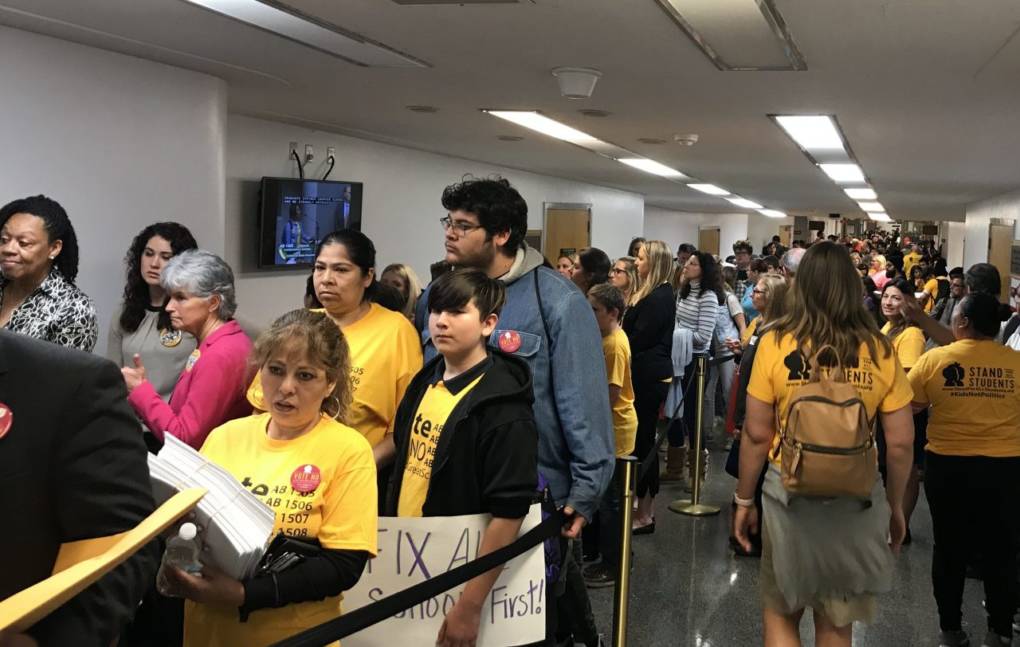
"caption": "Charter school advocates and members of teachers unions rally at the Capitol on April 10, 2019, as state lawmakers consider dramatic charter school regulations. ",
"description": null,
"title": "Charter-mageddon PHOTO",
"credit": "Dan Morain/CALmatters",
"status": "inherit",
"isLoading": false,
"fetchFailed": false
},
"news_11738664": {
"type": "attachments",
"id": "news_11738664",
"meta": {
"index": "attachments_1716263798",
"site": "news",
"id": "11738664",
"found": true
},
"parent": 11738660,
"imgSizes": {
"apple_news_ca_square_4_0": {
"file": "https://ww2.kqed.org/app/uploads/sites/10/2019/04/Assembly2019_007-1000x667-470x470.jpg",
"width": 470,
"mimeType": "image/jpeg",
"height": 470
},
"twentyfourteen-full-width": {
"file": "https://ww2.kqed.org/app/uploads/sites/10/2019/04/Assembly2019_007-1000x667-1000x576.jpg",
"width": 1000,
"mimeType": "image/jpeg",
"height": 576
},
"thumbnail": {
"file": "https://ww2.kqed.org/app/uploads/sites/10/2019/04/Assembly2019_007-1000x667-160x107.jpg",
"width": 160,
"mimeType": "image/jpeg",
"height": 107
},
"post-thumbnail": {
"file": "https://ww2.kqed.org/app/uploads/sites/10/2019/04/Assembly2019_007-1000x667-672x372.jpg",
"width": 672,
"mimeType": "image/jpeg",
"height": 372
},
"kqedFullSize": {
"file": "https://ww2.kqed.org/app/uploads/sites/10/2019/04/Assembly2019_007-1000x667.jpg",
"width": 1000,
"height": 667
},
"apple_news_ca_landscape_4_7": {
"file": "https://ww2.kqed.org/app/uploads/sites/10/2019/04/Assembly2019_007-1000x667-632x474.jpg",
"width": 632,
"mimeType": "image/jpeg",
"height": 474
},
"guest-author-50": {
"file": "https://ww2.kqed.org/app/uploads/sites/10/2019/04/Assembly2019_007-1000x667-50x50.jpg",
"width": 50,
"mimeType": "image/jpeg",
"height": 50
},
"guest-author-96": {
"file": "https://ww2.kqed.org/app/uploads/sites/10/2019/04/Assembly2019_007-1000x667-96x96.jpg",
"width": 96,
"mimeType": "image/jpeg",
"height": 96
},
"apple_news_ca_landscape_4_0": {
"file": "https://ww2.kqed.org/app/uploads/sites/10/2019/04/Assembly2019_007-1000x667-536x402.jpg",
"width": 536,
"mimeType": "image/jpeg",
"height": 402
},
"medium": {
"file": "https://ww2.kqed.org/app/uploads/sites/10/2019/04/Assembly2019_007-1000x667-800x534.jpg",
"width": 800,
"mimeType": "image/jpeg",
"height": 534
},
"guest-author-64": {
"file": "https://ww2.kqed.org/app/uploads/sites/10/2019/04/Assembly2019_007-1000x667-64x64.jpg",
"width": 64,
"mimeType": "image/jpeg",
"height": 64
},
"guest-author-32": {
"file": "https://ww2.kqed.org/app/uploads/sites/10/2019/04/Assembly2019_007-1000x667-32x32.jpg",
"width": 32,
"mimeType": "image/jpeg",
"height": 32
},
"apple_news_ca_portrait_4_0": {
"file": "https://ww2.kqed.org/app/uploads/sites/10/2019/04/Assembly2019_007-1000x667-354x472.jpg",
"width": 354,
"mimeType": "image/jpeg",
"height": 472
},
"apple_news_ca_portrait_9_7": {
"file": "https://ww2.kqed.org/app/uploads/sites/10/2019/04/Assembly2019_007-1000x667-840x667.jpg",
"width": 840,
"mimeType": "image/jpeg",
"height": 667
},
"apple_news_ca_portrait_4_7": {
"file": "https://ww2.kqed.org/app/uploads/sites/10/2019/04/Assembly2019_007-1000x667-414x552.jpg",
"width": 414,
"mimeType": "image/jpeg",
"height": 552
},
"apple_news_ca_portrait_5_5": {
"file": "https://ww2.kqed.org/app/uploads/sites/10/2019/04/Assembly2019_007-1000x667-687x667.jpg",
"width": 687,
"mimeType": "image/jpeg",
"height": 667
},
"apple_news_ca_square_4_7": {
"file": "https://ww2.kqed.org/app/uploads/sites/10/2019/04/Assembly2019_007-1000x667-550x550.jpg",
"width": 550,
"mimeType": "image/jpeg",
"height": 550
},
"guest-author-128": {
"file": "https://ww2.kqed.org/app/uploads/sites/10/2019/04/Assembly2019_007-1000x667-128x128.jpg",
"width": 128,
"mimeType": "image/jpeg",
"height": 128
},
"apple_news_ca_square_5_5": {
"file": "https://ww2.kqed.org/app/uploads/sites/10/2019/04/Assembly2019_007-1000x667-912x667.jpg",
"width": 912,
"mimeType": "image/jpeg",
"height": 667
}
},
"publishDate": 1554761647,
"modified": 1554854949,
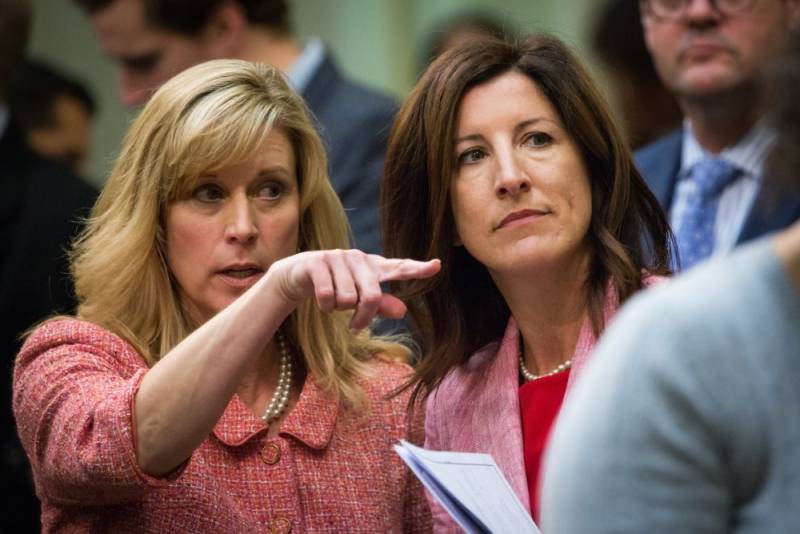
"caption": "A bill restricting charter schools, authored by Assemblywoman Christy Smith, left, D-Santa Clarita, stems from her experience as a school board member in Santa Clarita. With Smith is Assemblywoman Cottie Petrie-Norris, D-Laguna Beach.",
"description": null,
"title": "Assembly2019_007-1000x667",
"credit": "Max Whittaker/CALmatters",
"status": "inherit",
"isLoading": false,
"fetchFailed": false
},
"news_11669239": {
"type": "attachments",
"id": "news_11669239",
"meta": {
"index": "attachments_1716263798",
"site": "news",
"id": "11669239",
"found": true
},
"parent": 11669212,
"imgSizes": {
"small": {
"file": "https://ww2.kqed.org/app/uploads/sites/10/2018/05/RS16367_iStock_000042365418_Full-520x347.jpg",
"width": 520,
"mimeType": "image/jpeg",
"height": 347
},
"twentyfourteen-full-width": {
"file": "https://ww2.kqed.org/app/uploads/sites/10/2018/05/RS16367_iStock_000042365418_Full-1038x576.jpg",
"width": 1038,
"mimeType": "image/jpeg",
"height": 576
},
"thumbnail": {
"file": "https://ww2.kqed.org/app/uploads/sites/10/2018/05/RS16367_iStock_000042365418_Full-160x107.jpg",
"width": 160,
"mimeType": "image/jpeg",
"height": 107
},
"fd-sm": {
"file": "https://ww2.kqed.org/app/uploads/sites/10/2018/05/RS16367_iStock_000042365418_Full-960x640.jpg",
"width": 960,
"mimeType": "image/jpeg",
"height": 640
},
"post-thumbnail": {
"file": "https://ww2.kqed.org/app/uploads/sites/10/2018/05/RS16367_iStock_000042365418_Full-672x372.jpg",
"width": 672,
"mimeType": "image/jpeg",
"height": 372
},
"xsmall": {
"file": "https://ww2.kqed.org/app/uploads/sites/10/2018/05/RS16367_iStock_000042365418_Full-375x250.jpg",
"width": 375,
"mimeType": "image/jpeg",
"height": 250
},
"kqedFullSize": {
"file": "https://ww2.kqed.org/app/uploads/sites/10/2018/05/RS16367_iStock_000042365418_Full-e1551219671911.jpg",
"width": 1920,
"height": 1280
},
"large": {
"file": "https://ww2.kqed.org/app/uploads/sites/10/2018/05/RS16367_iStock_000042365418_Full-1020x680.jpg",
"width": 1020,
"mimeType": "image/jpeg",
"height": 680
},
"xlarge": {
"file": "https://ww2.kqed.org/app/uploads/sites/10/2018/05/RS16367_iStock_000042365418_Full-1180x787.jpg",
"width": 1180,
"mimeType": "image/jpeg",
"height": 787
},
"complete_open_graph": {
"file": "https://ww2.kqed.org/app/uploads/sites/10/2018/05/RS16367_iStock_000042365418_Full-1200x800.jpg",
"width": 1200,
"mimeType": "image/jpeg",
"height": 800
},
"guest-author-50": {
"file": "https://ww2.kqed.org/app/uploads/sites/10/2018/05/RS16367_iStock_000042365418_Full-50x50.jpg",
"width": 50,
"mimeType": "image/jpeg",
"height": 50
},
"guest-author-96": {
"file": "https://ww2.kqed.org/app/uploads/sites/10/2018/05/RS16367_iStock_000042365418_Full-96x96.jpg",
"width": 96,
"mimeType": "image/jpeg",
"height": 96
},
"medium": {
"file": "https://ww2.kqed.org/app/uploads/sites/10/2018/05/RS16367_iStock_000042365418_Full-800x533.jpg",
"width": 800,
"mimeType": "image/jpeg",
"height": 533
},
"guest-author-64": {
"file": "https://ww2.kqed.org/app/uploads/sites/10/2018/05/RS16367_iStock_000042365418_Full-64x64.jpg",
"width": 64,
"mimeType": "image/jpeg",
"height": 64
},
"guest-author-32": {
"file": "https://ww2.kqed.org/app/uploads/sites/10/2018/05/RS16367_iStock_000042365418_Full-32x32.jpg",
"width": 32,
"mimeType": "image/jpeg",
"height": 32
},
"fd-lrg": {
"file": "https://ww2.kqed.org/app/uploads/sites/10/2018/05/RS16367_iStock_000042365418_Full-1920x1280.jpg",
"width": 1920,
"mimeType": "image/jpeg",
"height": 1280
},
"fd-med": {
"file": "https://ww2.kqed.org/app/uploads/sites/10/2018/05/RS16367_iStock_000042365418_Full-1180x787.jpg",
"width": 1180,
"mimeType": "image/jpeg",
"height": 787
},
"full-width": {
"file": "https://ww2.kqed.org/app/uploads/sites/10/2018/05/RS16367_iStock_000042365418_Full-1920x1280.jpg",
"width": 1920,
"mimeType": "image/jpeg",
"height": 1280
},
"detail": {
"file": "https://ww2.kqed.org/app/uploads/sites/10/2018/05/RS16367_iStock_000042365418_Full-150x150.jpg",
"width": 150,
"mimeType": "image/jpeg",
"height": 150
},
"guest-author-128": {
"file": "https://ww2.kqed.org/app/uploads/sites/10/2018/05/RS16367_iStock_000042365418_Full-128x128.jpg",
"width": 128,
"mimeType": "image/jpeg",
"height": 128
},
"xxsmall": {
"file": "https://ww2.kqed.org/app/uploads/sites/10/2018/05/RS16367_iStock_000042365418_Full-240x160.jpg",
"width": 240,
"mimeType": "image/jpeg",
"height": 160
}
},
"publishDate": 1526680252,
"modified": 1551219804,
"caption": "New legislation could significantly limit the expansion of charter schools in California. ",
"description": "Teacher and students in a classroom.",
"title": "Teacher and students in a classroom.",
"credit": "Getty Images",
"status": "inherit",
"isLoading": false,
"fetchFailed": false
},
"news_11462825": {
"type": "attachments",
"id": "news_11462825",
"meta": {
"index": "attachments_1716263798",
"site": "news",
"id": "11462825",
"found": true
},
"parent": 11461330,
"imgSizes": {
"small": {
"file": "https://ww2.kqed.org/app/uploads/sites/10/2017/05/RS25386_Stokes-5-qut-2-520x347.jpg",
"width": 520,
"mimeType": "image/jpeg",
"height": 347
},
"twentyfourteen-full-width": {
"file": "https://ww2.kqed.org/app/uploads/sites/10/2017/05/RS25386_Stokes-5-qut-2-1038x576.jpg",
"width": 1038,
"mimeType": "image/jpeg",
"height": 576
},
"thumbnail": {
"file": "https://ww2.kqed.org/app/uploads/sites/10/2017/05/RS25386_Stokes-5-qut-2-160x107.jpg",
"width": 160,
"mimeType": "image/jpeg",
"height": 107
},
"fd-sm": {
"file": "https://ww2.kqed.org/app/uploads/sites/10/2017/05/RS25386_Stokes-5-qut-2-960x640.jpg",
"width": 960,
"mimeType": "image/jpeg",
"height": 640
},
"post-thumbnail": {
"file": "https://ww2.kqed.org/app/uploads/sites/10/2017/05/RS25386_Stokes-5-qut-2-672x372.jpg",
"width": 672,
"mimeType": "image/jpeg",
"height": 372
},
"xsmall": {
"file": "https://ww2.kqed.org/app/uploads/sites/10/2017/05/RS25386_Stokes-5-qut-2-375x250.jpg",
"width": 375,
"mimeType": "image/jpeg",
"height": 250
},
"kqedFullSize": {
"file": "https://ww2.kqed.org/app/uploads/sites/10/2017/05/RS25386_Stokes-5-qut-2.jpg",
"width": 1920,
"height": 1280
},
"large": {
"file": "https://ww2.kqed.org/app/uploads/sites/10/2017/05/RS25386_Stokes-5-qut-2-1020x680.jpg",
"width": 1020,
"mimeType": "image/jpeg",
"height": 680
},
"xlarge": {
"file": "https://ww2.kqed.org/app/uploads/sites/10/2017/05/RS25386_Stokes-5-qut-2-1180x787.jpg",
"width": 1180,
"mimeType": "image/jpeg",
"height": 787
},
"guest-author-50": {
"file": "https://ww2.kqed.org/app/uploads/sites/10/2017/05/RS25386_Stokes-5-qut-2-50x50.jpg",
"width": 50,
"mimeType": "image/jpeg",
"height": 50
},
"guest-author-96": {
"file": "https://ww2.kqed.org/app/uploads/sites/10/2017/05/RS25386_Stokes-5-qut-2-96x96.jpg",
"width": 96,
"mimeType": "image/jpeg",
"height": 96
},
"medium": {
"file": "https://ww2.kqed.org/app/uploads/sites/10/2017/05/RS25386_Stokes-5-qut-2-800x533.jpg",
"width": 800,
"mimeType": "image/jpeg",
"height": 533
},
"guest-author-64": {
"file": "https://ww2.kqed.org/app/uploads/sites/10/2017/05/RS25386_Stokes-5-qut-2-64x64.jpg",
"width": 64,
"mimeType": "image/jpeg",
"height": 64
},
"guest-author-32": {
"file": "https://ww2.kqed.org/app/uploads/sites/10/2017/05/RS25386_Stokes-5-qut-2-32x32.jpg",
"width": 32,
"mimeType": "image/jpeg",
"height": 32
},
"fd-lrg": {
"file": "https://ww2.kqed.org/app/uploads/sites/10/2017/05/RS25386_Stokes-5-qut-2-1920x1280.jpg",
"width": 1920,
"mimeType": "image/jpeg",
"height": 1280
},
"fd-med": {
"file": "https://ww2.kqed.org/app/uploads/sites/10/2017/05/RS25386_Stokes-5-qut-2-1180x787.jpg",
"width": 1180,
"mimeType": "image/jpeg",
"height": 787
},
"full-width": {
"file": "https://ww2.kqed.org/app/uploads/sites/10/2017/05/RS25386_Stokes-5-qut-2-1920x1280.jpg",
"width": 1920,
"mimeType": "image/jpeg",
"height": 1280
},
"detail": {
"file": "https://ww2.kqed.org/app/uploads/sites/10/2017/05/RS25386_Stokes-5-qut-2-150x150.jpg",
"width": 150,
"mimeType": "image/jpeg",
"height": 150
},
"guest-author-128": {
"file": "https://ww2.kqed.org/app/uploads/sites/10/2017/05/RS25386_Stokes-5-qut-2-128x128.jpg",
"width": 128,
"mimeType": "image/jpeg",
"height": 128
},
"xxsmall": {
"file": "https://ww2.kqed.org/app/uploads/sites/10/2017/05/RS25386_Stokes-5-qut-2-240x160.jpg",
"width": 240,
"mimeType": "image/jpeg",
"height": 160
}
},
"publishDate": 1495034220,
"modified": 1551986468,
"caption": "Ánimo Florence-Firestone Middle School in South Los Angeles is operated by Green Dot Public Schools, the leading independent charter school operator in L.A. The organization would be eligible for more federal funding under President Trump's proposed education budget.",
"description": null,
"title": "RS25386_Stokes-5-qut",
"credit": "Kyle Stokes/KPCC",
"status": "inherit",
"isLoading": false,
"fetchFailed": false
},
"news_11728846": {
"type": "attachments",
"id": "news_11728846",
"meta": {
"index": "attachments_1716263798",
"site": "news",
"id": "11728846",
"found": true
},
"parent": 11728844,
"imgSizes": {
"twentyfourteen-full-width": {
"file": "https://ww2.kqed.org/app/uploads/sites/10/2019/02/IMG_2812-1038x576.jpeg",
"width": 1038,
"mimeType": "image/jpeg",
"height": 576
},
"thumbnail": {
"file": "https://ww2.kqed.org/app/uploads/sites/10/2019/02/IMG_2812-160x120.jpeg",
"width": 160,
"mimeType": "image/jpeg",
"height": 120
},
"post-thumbnail": {
"file": "https://ww2.kqed.org/app/uploads/sites/10/2019/02/IMG_2812-672x372.jpeg",
"width": 672,
"mimeType": "image/jpeg",
"height": 372
},
"kqedFullSize": {
"file": "https://ww2.kqed.org/app/uploads/sites/10/2019/02/IMG_2812-e1551135049521.jpeg",
"width": 1920,
"height": 1440
},
"large": {
"file": "https://ww2.kqed.org/app/uploads/sites/10/2019/02/IMG_2812-1020x765.jpeg",
"width": 1020,
"mimeType": "image/jpeg",
"height": 765
},
"complete_open_graph": {
"file": "https://ww2.kqed.org/app/uploads/sites/10/2019/02/IMG_2812-1200x900.jpeg",
"width": 1200,
"mimeType": "image/jpeg",
"height": 900
},
"guest-author-50": {
"file": "https://ww2.kqed.org/app/uploads/sites/10/2019/02/IMG_2812-50x50.jpeg",
"width": 50,
"mimeType": "image/jpeg",
"height": 50
},
"guest-author-96": {
"file": "https://ww2.kqed.org/app/uploads/sites/10/2019/02/IMG_2812-96x96.jpeg",
"width": 96,
"mimeType": "image/jpeg",
"height": 96
},
"medium": {
"file": "https://ww2.kqed.org/app/uploads/sites/10/2019/02/IMG_2812-800x600.jpeg",
"width": 800,
"mimeType": "image/jpeg",
"height": 600
},
"guest-author-64": {
"file": "https://ww2.kqed.org/app/uploads/sites/10/2019/02/IMG_2812-64x64.jpeg",
"width": 64,
"mimeType": "image/jpeg",
"height": 64
},
"guest-author-32": {
"file": "https://ww2.kqed.org/app/uploads/sites/10/2019/02/IMG_2812-32x32.jpeg",
"width": 32,
"mimeType": "image/jpeg",
"height": 32
},
"full-width": {
"file": "https://ww2.kqed.org/app/uploads/sites/10/2019/02/IMG_2812-1920x1440.jpeg",
"width": 1920,
"mimeType": "image/jpeg",
"height": 1440
},
"detail": {
"file": "https://ww2.kqed.org/app/uploads/sites/10/2019/02/IMG_2812-150x150.jpeg",
"width": 150,
"mimeType": "image/jpeg",
"height": 150
},
"guest-author-128": {
"file": "https://ww2.kqed.org/app/uploads/sites/10/2019/02/IMG_2812-128x128.jpeg",
"width": 128,
"mimeType": "image/jpeg",
"height": 128
}
},
"publishDate": 1551135020,
"modified": 1551245644,
"caption": "A group of Oakland charter school teachers called in sick on Friday to join the districtwide teachers strike, saying they struggle with similar challenges. From left to right: Nelda Kerr, Casey McAlduff, Richard Rizzo, Joaquin Solis, Nicole Solis, Marley Leary, Travis Coleman, Christina Clemens.",
"description": null,
"title": "IMG_2812",
"credit": "Courtesy of Nicole Solis",
"status": "inherit",
"isLoading": false,
"fetchFailed": false
},
"news_11724952": {
"type": "attachments",
"id": "news_11724952",
"meta": {
"index": "attachments_1716263798",
"site": "news",
"id": "11724952",
"found": true
},
"parent": 11724763,
"imgSizes": {
"twentyfourteen-full-width": {
"file": "https://ww2.kqed.org/app/uploads/sites/10/2019/02/616_MARQUEE-1038x576.jpg",
"width": 1038,
"mimeType": "image/jpeg",
"height": 576
},
"thumbnail": {
"file": "https://ww2.kqed.org/app/uploads/sites/10/2019/02/616_MARQUEE-160x90.jpg",
"width": 160,
"mimeType": "image/jpeg",
"height": 90
},
"post-thumbnail": {
"file": "https://ww2.kqed.org/app/uploads/sites/10/2019/02/616_MARQUEE-672x372.jpg",
"width": 672,
"mimeType": "image/jpeg",
"height": 372
},
"kqedFullSize": {
"file": "https://ww2.kqed.org/app/uploads/sites/10/2019/02/616_MARQUEE.jpg",
"width": 1280,
"height": 720
},
"large": {
"file": "https://ww2.kqed.org/app/uploads/sites/10/2019/02/616_MARQUEE-1020x574.jpg",
"width": 1020,
"mimeType": "image/jpeg",
"height": 574
},
"complete_open_graph": {
"file": "https://ww2.kqed.org/app/uploads/sites/10/2019/02/616_MARQUEE-1200x675.jpg",
"width": 1200,
"mimeType": "image/jpeg",
"height": 675
},
"guest-author-50": {
"file": "https://ww2.kqed.org/app/uploads/sites/10/2019/02/616_MARQUEE-50x50.jpg",
"width": 50,
"mimeType": "image/jpeg",
"height": 50
},
"guest-author-96": {
"file": "https://ww2.kqed.org/app/uploads/sites/10/2019/02/616_MARQUEE-96x96.jpg",
"width": 96,
"mimeType": "image/jpeg",
"height": 96
},
"medium": {
"file": "https://ww2.kqed.org/app/uploads/sites/10/2019/02/616_MARQUEE-800x450.jpg",
"width": 800,
"mimeType": "image/jpeg",
"height": 450
},
"guest-author-64": {
"file": "https://ww2.kqed.org/app/uploads/sites/10/2019/02/616_MARQUEE-64x64.jpg",
"width": 64,
"mimeType": "image/jpeg",
"height": 64
},
"guest-author-32": {
"file": "https://ww2.kqed.org/app/uploads/sites/10/2019/02/616_MARQUEE-32x32.jpg",
"width": 32,
"mimeType": "image/jpeg",
"height": 32
},
"detail": {
"file": "https://ww2.kqed.org/app/uploads/sites/10/2019/02/616_MARQUEE-150x150.jpg",
"width": 150,
"mimeType": "image/jpeg",
"height": 150
},
"guest-author-128": {
"file": "https://ww2.kqed.org/app/uploads/sites/10/2019/02/616_MARQUEE-128x128.jpg",
"width": 128,
"mimeType": "image/jpeg",
"height": 128
}
},
"publishDate": 1549674056,
"modified": 1549674056,
"caption": null,
"description": null,
"title": "616_MARQUEE",
"credit": null,
"status": "inherit",
"isLoading": false,
"fetchFailed": false
},
"news_11000224": {
"type": "attachments",
"id": "news_11000224",
"meta": {
"index": "attachments_1716263798",
"site": "news",
"id": "11000224",
"found": true
},
"parent": 0,
"imgSizes": {
"twentyfourteen-full-width": {
"file": "https://ww2.kqed.org/app/uploads/sites/10/2016/06/npr_rocketship_pg_06_slide-864fd352a6bcd6cec9a344c40eead69bbcbea2ac-1-1038x576.jpg",
"width": 1038,
"mimeType": "image/jpeg",
"height": 576
},
"thumbnail": {
"file": "https://ww2.kqed.org/app/uploads/sites/10/2016/06/npr_rocketship_pg_06_slide-864fd352a6bcd6cec9a344c40eead69bbcbea2ac-1-400x267.jpg",
"width": 400,
"mimeType": "image/jpeg",
"height": 267
},
"fd-sm": {
"file": "https://ww2.kqed.org/app/uploads/sites/10/2016/06/npr_rocketship_pg_06_slide-864fd352a6bcd6cec9a344c40eead69bbcbea2ac-1-960x640.jpg",
"width": 960,
"mimeType": "image/jpeg",
"height": 640
},
"post-thumbnail": {
"file": "https://ww2.kqed.org/app/uploads/sites/10/2016/06/npr_rocketship_pg_06_slide-864fd352a6bcd6cec9a344c40eead69bbcbea2ac-1-672x372.jpg",
"width": 672,
"mimeType": "image/jpeg",
"height": 372
},
"kqedFullSize": {
"file": "https://ww2.kqed.org/app/uploads/sites/10/2016/06/npr_rocketship_pg_06_slide-864fd352a6bcd6cec9a344c40eead69bbcbea2ac-1-e1466885312240.jpg",
"width": 1920,
"height": 1280
},
"large": {
"file": "https://ww2.kqed.org/app/uploads/sites/10/2016/06/npr_rocketship_pg_06_slide-864fd352a6bcd6cec9a344c40eead69bbcbea2ac-1-1920x1280.jpg",
"width": 1920,
"mimeType": "image/jpeg",
"height": 1280
},
"guest-author-50": {
"file": "https://ww2.kqed.org/app/uploads/sites/10/2016/06/npr_rocketship_pg_06_slide-864fd352a6bcd6cec9a344c40eead69bbcbea2ac-1-50x50.jpg",
"width": 50,
"mimeType": "image/jpeg",
"height": 50
},
"guest-author-96": {
"file": "https://ww2.kqed.org/app/uploads/sites/10/2016/06/npr_rocketship_pg_06_slide-864fd352a6bcd6cec9a344c40eead69bbcbea2ac-1-96x96.jpg",
"width": 96,
"mimeType": "image/jpeg",
"height": 96
},
"medium": {
"file": "https://ww2.kqed.org/app/uploads/sites/10/2016/06/npr_rocketship_pg_06_slide-864fd352a6bcd6cec9a344c40eead69bbcbea2ac-1-800x533.jpg",
"width": 800,
"mimeType": "image/jpeg",
"height": 533
},
"guest-author-64": {
"file": "https://ww2.kqed.org/app/uploads/sites/10/2016/06/npr_rocketship_pg_06_slide-864fd352a6bcd6cec9a344c40eead69bbcbea2ac-1-64x64.jpg",
"width": 64,
"mimeType": "image/jpeg",
"height": 64
},
"guest-author-32": {
"file": "https://ww2.kqed.org/app/uploads/sites/10/2016/06/npr_rocketship_pg_06_slide-864fd352a6bcd6cec9a344c40eead69bbcbea2ac-1-32x32.jpg",
"width": 32,
"mimeType": "image/jpeg",
"height": 32
},
"jmtc-small-thumb": {
"file": "https://ww2.kqed.org/app/uploads/sites/10/2016/06/npr_rocketship_pg_06_slide-864fd352a6bcd6cec9a344c40eead69bbcbea2ac-1-280x150.jpg",
"width": 280,
"mimeType": "image/jpeg",
"height": 150
},
"fd-lrg": {
"file": "https://ww2.kqed.org/app/uploads/sites/10/2016/06/npr_rocketship_pg_06_slide-864fd352a6bcd6cec9a344c40eead69bbcbea2ac-1-1920x1280.jpg",
"width": 1920,
"mimeType": "image/jpeg",
"height": 1280
},
"fd-med": {
"file": "https://ww2.kqed.org/app/uploads/sites/10/2016/06/npr_rocketship_pg_06_slide-864fd352a6bcd6cec9a344c40eead69bbcbea2ac-1-1180x787.jpg",
"width": 1180,
"mimeType": "image/jpeg",
"height": 787
},
"detail": {
"file": "https://ww2.kqed.org/app/uploads/sites/10/2016/06/npr_rocketship_pg_06_slide-864fd352a6bcd6cec9a344c40eead69bbcbea2ac-1-150x150.jpg",
"width": 150,
"mimeType": "image/jpeg",
"height": 150
},
"guest-author-128": {
"file": "https://ww2.kqed.org/app/uploads/sites/10/2016/06/npr_rocketship_pg_06_slide-864fd352a6bcd6cec9a344c40eead69bbcbea2ac-1-128x128.jpg",
"width": 128,
"mimeType": "image/jpeg",
"height": 128
}
},
"publishDate": 1466811804,
"modified": 1546119443,
"caption": "Students at Fuerza Community Prep, part of Rocketship Public Schools charter schools, cheer during their daily morning assembly in San Jose.",
"description": "Students at Fuerza Community Prep, part of Rocketship Public Schools charter schools, cheer during their daily morning assembly in San Jose.",
"title": "Students at Fuerza Community Prep, part of Rocketship Education charter schools, cheer during their daily morning assembly in San Jose, Calif.",
"credit": "Preston Gannaway/NPR",
"status": "inherit",
"isLoading": false,
"fetchFailed": false
},
"news_11711538": {
"type": "attachments",
"id": "news_11711538",
"meta": {
"index": "attachments_1716263798",
"site": "news",
"id": "11711538",
"found": true
},
"parent": 11711449,
"imgSizes": {
"twentyfourteen-full-width": {
"file": "https://ww2.kqed.org/app/uploads/sites/10/2018/12/IMG_3937-e1544562436612-1038x576.jpg",
"width": 1038,
"mimeType": "image/jpeg",
"height": 576
},
"thumbnail": {
"file": "https://ww2.kqed.org/app/uploads/sites/10/2018/12/IMG_3937-e1544562436612-160x120.jpg",
"width": 160,
"mimeType": "image/jpeg",
"height": 120
},
"post-thumbnail": {
"file": "https://ww2.kqed.org/app/uploads/sites/10/2018/12/IMG_3937-e1544562436612-672x372.jpg",
"width": 672,
"mimeType": "image/jpeg",
"height": 372
},
"kqedFullSize": {
"file": "https://ww2.kqed.org/app/uploads/sites/10/2018/12/IMG_3937-e1544562436612.jpg",
"width": 1920,
"height": 1440
},
"large": {
"file": "https://ww2.kqed.org/app/uploads/sites/10/2018/12/IMG_3937-e1544562436612-1020x765.jpg",
"width": 1020,
"mimeType": "image/jpeg",
"height": 765
},
"complete_open_graph": {
"file": "https://ww2.kqed.org/app/uploads/sites/10/2018/12/IMG_3937-e1544562436612-1200x900.jpg",
"width": 1200,
"mimeType": "image/jpeg",
"height": 900
},
"guest-author-50": {
"file": "https://ww2.kqed.org/app/uploads/sites/10/2018/12/IMG_3937-e1544562436612-50x50.jpg",
"width": 50,
"mimeType": "image/jpeg",
"height": 50
},
"guest-author-96": {
"file": "https://ww2.kqed.org/app/uploads/sites/10/2018/12/IMG_3937-e1544562436612-96x96.jpg",
"width": 96,
"mimeType": "image/jpeg",
"height": 96
},
"medium": {
"file": "https://ww2.kqed.org/app/uploads/sites/10/2018/12/IMG_3937-e1544562436612-800x600.jpg",
"width": 800,
"mimeType": "image/jpeg",
"height": 600
},
"guest-author-64": {
"file": "https://ww2.kqed.org/app/uploads/sites/10/2018/12/IMG_3937-e1544562436612-64x64.jpg",
"width": 64,
"mimeType": "image/jpeg",
"height": 64
},
"guest-author-32": {
"file": "https://ww2.kqed.org/app/uploads/sites/10/2018/12/IMG_3937-e1544562436612-32x32.jpg",
"width": 32,
"mimeType": "image/jpeg",
"height": 32
},
"full-width": {
"file": "https://ww2.kqed.org/app/uploads/sites/10/2018/12/IMG_3937-e1544562436612-1920x1440.jpg",
"width": 1920,
"mimeType": "image/jpeg",
"height": 1440
},
"detail": {
"file": "https://ww2.kqed.org/app/uploads/sites/10/2018/12/IMG_3937-e1544562436612-150x150.jpg",
"width": 150,
"mimeType": "image/jpeg",
"height": 150
},
"guest-author-128": {
"file": "https://ww2.kqed.org/app/uploads/sites/10/2018/12/IMG_3937-e1544562436612-128x128.jpg",
"width": 128,
"mimeType": "image/jpeg",
"height": 128
}
},
"publishDate": 1544499408,
"modified": 1544562427,
"caption": "Oakland Reach founder Lakisha Young talks with parents about their enrollment options earlier this fall. ",
"description": "Oakland Reach founder Lakisha Young talks with parents about their enrollment options earlier this fall. ",
"title": "IMG_3937",
"credit": "Julia McEvoy/KQED News",
"status": "inherit",
"isLoading": false,
"fetchFailed": false
},
"news_11705504": {
"type": "attachments",
"id": "news_11705504",
"meta": {
"index": "attachments_1716263798",
"site": "news",
"id": "11705504",
"found": true
},
"parent": 11705385,
"imgSizes": {
"small": {
"file": "https://ww2.kqed.org/app/uploads/sites/10/2018/11/worried-supporters-520x390.jpeg",
"width": 520,
"mimeType": "image/jpeg",
"height": 390
},
"twentyfourteen-full-width": {
"file": "https://ww2.kqed.org/app/uploads/sites/10/2018/11/worried-supporters-1038x576.jpeg",
"width": 1038,
"mimeType": "image/jpeg",
"height": 576
},
"thumbnail": {
"file": "https://ww2.kqed.org/app/uploads/sites/10/2018/11/worried-supporters-160x120.jpeg",
"width": 160,
"mimeType": "image/jpeg",
"height": 120
},
"fd-sm": {
"file": "https://ww2.kqed.org/app/uploads/sites/10/2018/11/worried-supporters-960x720.jpeg",
"width": 960,
"mimeType": "image/jpeg",
"height": 720
},
"post-thumbnail": {
"file": "https://ww2.kqed.org/app/uploads/sites/10/2018/11/worried-supporters-672x372.jpeg",
"width": 672,
"mimeType": "image/jpeg",
"height": 372
},
"xsmall": {
"file": "https://ww2.kqed.org/app/uploads/sites/10/2018/11/worried-supporters-375x281.jpeg",
"width": 375,
"mimeType": "image/jpeg",
"height": 281
},
"kqedFullSize": {
"file": "https://ww2.kqed.org/app/uploads/sites/10/2018/11/worried-supporters.jpeg",
"width": 4032,
"height": 3024
},
"large": {
"file": "https://ww2.kqed.org/app/uploads/sites/10/2018/11/worried-supporters-1020x765.jpeg",
"width": 1020,
"mimeType": "image/jpeg",
"height": 765
},
"xlarge": {
"file": "https://ww2.kqed.org/app/uploads/sites/10/2018/11/worried-supporters-1180x885.jpeg",
"width": 1180,
"mimeType": "image/jpeg",
"height": 885
},
"complete_open_graph": {
"file": "https://ww2.kqed.org/app/uploads/sites/10/2018/11/worried-supporters-1200x900.jpeg",
"width": 1200,
"mimeType": "image/jpeg",
"height": 900
},
"guest-author-50": {
"file": "https://ww2.kqed.org/app/uploads/sites/10/2018/11/worried-supporters-50x50.jpeg",
"width": 50,
"mimeType": "image/jpeg",
"height": 50
},
"guest-author-96": {
"file": "https://ww2.kqed.org/app/uploads/sites/10/2018/11/worried-supporters-96x96.jpeg",
"width": 96,
"mimeType": "image/jpeg",
"height": 96
},
"medium": {
"file": "https://ww2.kqed.org/app/uploads/sites/10/2018/11/worried-supporters-800x600.jpeg",
"width": 800,
"mimeType": "image/jpeg",
"height": 600
},
"guest-author-64": {
"file": "https://ww2.kqed.org/app/uploads/sites/10/2018/11/worried-supporters-64x64.jpeg",
"width": 64,
"mimeType": "image/jpeg",
"height": 64
},
"guest-author-32": {
"file": "https://ww2.kqed.org/app/uploads/sites/10/2018/11/worried-supporters-32x32.jpeg",
"width": 32,
"mimeType": "image/jpeg",
"height": 32
},
"fd-lrg": {
"file": "https://ww2.kqed.org/app/uploads/sites/10/2018/11/worried-supporters-1920x1440.jpeg",
"width": 1920,
"mimeType": "image/jpeg",
"height": 1440
},
"fd-med": {
"file": "https://ww2.kqed.org/app/uploads/sites/10/2018/11/worried-supporters-1180x885.jpeg",
"width": 1180,
"mimeType": "image/jpeg",
"height": 885
},
"full-width": {
"file": "https://ww2.kqed.org/app/uploads/sites/10/2018/11/worried-supporters-1920x1440.jpeg",
"width": 1920,
"mimeType": "image/jpeg",
"height": 1440
},
"detail": {
"file": "https://ww2.kqed.org/app/uploads/sites/10/2018/11/worried-supporters-150x150.jpeg",
"width": 150,
"mimeType": "image/jpeg",
"height": 150
},
"guest-author-128": {
"file": "https://ww2.kqed.org/app/uploads/sites/10/2018/11/worried-supporters-128x128.jpeg",
"width": 128,
"mimeType": "image/jpeg",
"height": 128
},
"xxsmall": {
"file": "https://ww2.kqed.org/app/uploads/sites/10/2018/11/worried-supporters-240x180.jpeg",
"width": 240,
"mimeType": "image/jpeg",
"height": 180
}
},
"publishDate": 1541825511,
"modified": 1541826159,
"caption": "Oakland charter school supporters awaiting school board's decision on their renewal petitions.",
"description": "oust school board meeting Nov 6, 2018 charter renewal",
"title": "worried supporters",
"credit": "Julia McEvoy/KQED",
"status": "inherit",
"isLoading": false,
"fetchFailed": false
},
"news_11661983": {
"type": "attachments",
"id": "news_11661983",
"meta": {
"index": "attachments_1716263798",
"site": "news",
"id": "11661983",
"found": true
},
"parent": 11661975,
"imgSizes": {
"small": {
"file": "https://ww2.kqed.org/app/uploads/sites/10/2018/04/RS30439_GettyImages-693098844-qut-520x348.jpg",
"width": 520,
"mimeType": "image/jpeg",
"height": 348
},
"twentyfourteen-full-width": {
"file": "https://ww2.kqed.org/app/uploads/sites/10/2018/04/RS30439_GettyImages-693098844-qut-1038x576.jpg",
"width": 1038,
"mimeType": "image/jpeg",
"height": 576
},
"thumbnail": {
"file": "https://ww2.kqed.org/app/uploads/sites/10/2018/04/RS30439_GettyImages-693098844-qut-160x107.jpg",
"width": 160,
"mimeType": "image/jpeg",
"height": 107
},
"fd-sm": {
"file": "https://ww2.kqed.org/app/uploads/sites/10/2018/04/RS30439_GettyImages-693098844-qut-960x643.jpg",
"width": 960,
"mimeType": "image/jpeg",
"height": 643
},
"post-thumbnail": {
"file": "https://ww2.kqed.org/app/uploads/sites/10/2018/04/RS30439_GettyImages-693098844-qut-672x372.jpg",
"width": 672,
"mimeType": "image/jpeg",
"height": 372
},
"xsmall": {
"file": "https://ww2.kqed.org/app/uploads/sites/10/2018/04/RS30439_GettyImages-693098844-qut-375x251.jpg",
"width": 375,
"mimeType": "image/jpeg",
"height": 251
},
"kqedFullSize": {
"file": "https://ww2.kqed.org/app/uploads/sites/10/2018/04/RS30439_GettyImages-693098844-qut.jpg",
"width": 1920,
"height": 1286
},
"large": {
"file": "https://ww2.kqed.org/app/uploads/sites/10/2018/04/RS30439_GettyImages-693098844-qut-1020x683.jpg",
"width": 1020,
"mimeType": "image/jpeg",
"height": 683
},
"xlarge": {
"file": "https://ww2.kqed.org/app/uploads/sites/10/2018/04/RS30439_GettyImages-693098844-qut-1180x790.jpg",
"width": 1180,
"mimeType": "image/jpeg",
"height": 790
},
"complete_open_graph": {
"file": "https://ww2.kqed.org/app/uploads/sites/10/2018/04/RS30439_GettyImages-693098844-qut-1200x804.jpg",
"width": 1200,
"mimeType": "image/jpeg",
"height": 804
},
"guest-author-50": {
"file": "https://ww2.kqed.org/app/uploads/sites/10/2018/04/RS30439_GettyImages-693098844-qut-50x50.jpg",
"width": 50,
"mimeType": "image/jpeg",
"height": 50
},
"guest-author-96": {
"file": "https://ww2.kqed.org/app/uploads/sites/10/2018/04/RS30439_GettyImages-693098844-qut-96x96.jpg",
"width": 96,
"mimeType": "image/jpeg",
"height": 96
},
"medium": {
"file": "https://ww2.kqed.org/app/uploads/sites/10/2018/04/RS30439_GettyImages-693098844-qut-800x536.jpg",
"width": 800,
"mimeType": "image/jpeg",
"height": 536
},
"guest-author-64": {
"file": "https://ww2.kqed.org/app/uploads/sites/10/2018/04/RS30439_GettyImages-693098844-qut-64x64.jpg",
"width": 64,
"mimeType": "image/jpeg",
"height": 64
},
"guest-author-32": {
"file": "https://ww2.kqed.org/app/uploads/sites/10/2018/04/RS30439_GettyImages-693098844-qut-32x32.jpg",
"width": 32,
"mimeType": "image/jpeg",
"height": 32
},
"fd-lrg": {
"file": "https://ww2.kqed.org/app/uploads/sites/10/2018/04/RS30439_GettyImages-693098844-qut-1920x1286.jpg",
"width": 1920,
"mimeType": "image/jpeg",
"height": 1286
},
"fd-med": {
"file": "https://ww2.kqed.org/app/uploads/sites/10/2018/04/RS30439_GettyImages-693098844-qut-1180x790.jpg",
"width": 1180,
"mimeType": "image/jpeg",
"height": 790
},
"full-width": {
"file": "https://ww2.kqed.org/app/uploads/sites/10/2018/04/RS30439_GettyImages-693098844-qut-1920x1286.jpg",
"width": 1920,
"mimeType": "image/jpeg",
"height": 1286
},
"detail": {
"file": "https://ww2.kqed.org/app/uploads/sites/10/2018/04/RS30439_GettyImages-693098844-qut-150x150.jpg",
"width": 150,
"mimeType": "image/jpeg",
"height": 150
},
"guest-author-128": {
"file": "https://ww2.kqed.org/app/uploads/sites/10/2018/04/RS30439_GettyImages-693098844-qut-128x128.jpg",
"width": 128,
"mimeType": "image/jpeg",
"height": 128
},
"xxsmall": {
"file": "https://ww2.kqed.org/app/uploads/sites/10/2018/04/RS30439_GettyImages-693098844-qut-240x161.jpg",
"width": 240,
"mimeType": "image/jpeg",
"height": 161
}
},
"publishDate": 1523645106,
"modified": 1523655157,
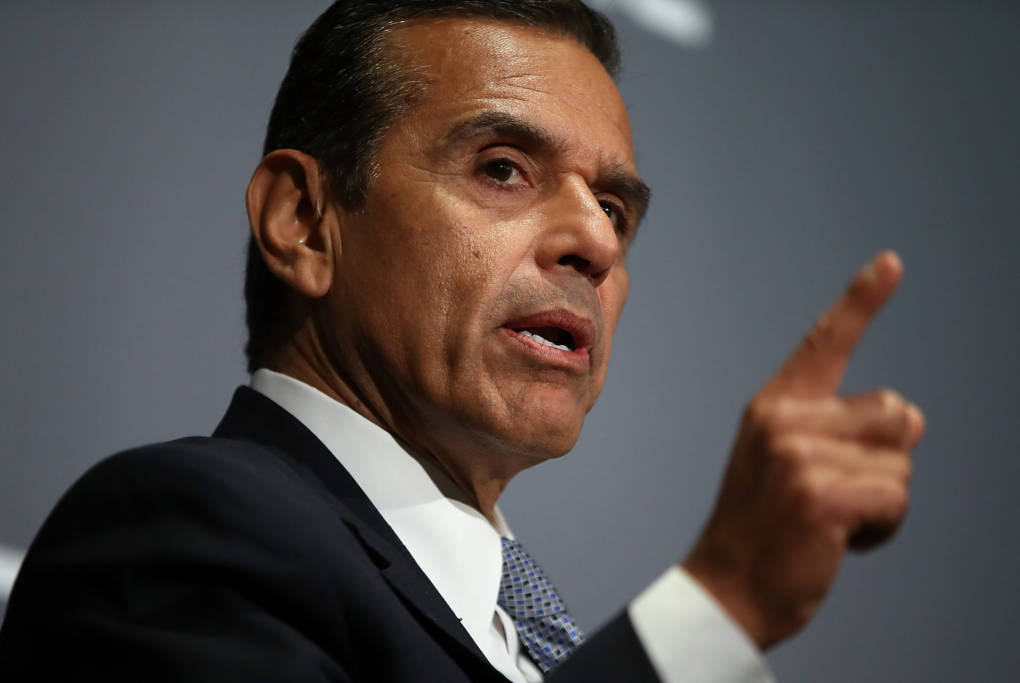
"caption": "California Democratic gubernatorial candidate and former Los Angeles Mayor Antonio Villaraigosa speaks in conversation as part of the Public Policy Institute of California (PPIC) 2017 Speaker Series on California's Future on June 6, 2017, in San Francisco.",
"description": "California Democratic gubernatorial candidate and former Los Angeles Mayor Antonio Villaraigosa speaks in conversation as part of the Public Policy Institute of California (PPIC) 2017 Speaker Series on California's Future on June 6, 2017 in San Francisco.",
"title": "Gubernatorial Candidate Antonio Villaraigosa Speaks About Improving Education In California",
"credit": "Justin Sullivan/Getty Images",
"status": "inherit",
"isLoading": false,
"fetchFailed": false
}
},
"audioPlayerReducer": {
"postId": "stream_live",
"isPaused": true,
"isPlaying": false,
"pfsActive": false,
"pledgeModalIsOpen": true,
"playerDrawerIsOpen": false,
"liveAudioPlayStartedAt": 0,
"liveAudioPlayContext": ""
},
"authorsReducer": {
"byline_news_11739560": {
"type": "authors",
"id": "byline_news_11739560",
"meta": {
"override": true
},
"slug": "byline_news_11739560",
"name": "\u003ca href=\"https://calmatters.org/articles/author/ricardo-cano/\">Ricardo Cano\u003c/a>",
"isLoading": false
},
"byline_news_11738660": {
"type": "authors",
"id": "byline_news_11738660",
"meta": {
"override": true
},
"slug": "byline_news_11738660",
"name": "Ricardo Cano",
"isLoading": false
},
"byline_news_11731298": {
"type": "authors",
"id": "byline_news_11731298",
"meta": {
"override": true
},
"slug": "byline_news_11731298",
"name": "\u003ca href=\"https://calmatters.org/articles/author/ricardo-cano/\">Ricardo Cano\u003c/a>",
"isLoading": false
},
"byline_news_11729091": {
"type": "authors",
"id": "byline_news_11729091",
"meta": {
"override": true
},
"slug": "byline_news_11729091",
"name": "\u003ca href=\"https://edsource.org/author/jfensterwald\">John Fensterwald\u003c/a>",
"isLoading": false
},
"byline_news_11669212": {
"type": "authors",
"id": "byline_news_11669212",
"meta": {
"override": true
},
"slug": "byline_news_11669212",
"name": "\u003ca href=\"https://calmatters.org/articles/author/laurel-rosenhall/\" target=\"_blank\">Laurel Rosenhall\u003c/a>",
"isLoading": false
},
"jmcevoy": {
"type": "authors",
"id": "231",
"meta": {
"index": "authors_1716337520",
"id": "231",
"found": true
},
"name": "Julia McEvoy",
"firstName": "Julia",
"lastName": "McEvoy",
"slug": "jmcevoy",
"email": "jmcevoy@KQED.org",
"display_author_email": true,
"staff_mastheads": [
"news"
],
"title": "KQED Senior Editor",
"bio": "Julia McEvoy is KQED's Senior Editor, Education Equity.\r\n\r\nJulia heads KQED’s education coverage examining inequities students face in Bay Area and California schools, and reports on what it will take to educate the next generation.\r\n\r\nJulia's editorial work has received a Peabody Award, a Casey Medal for Coverage of Children and Families, several Edward R. Murrow awards, as well as awards from the Public Radio News Directors Inc. and the Society for Professional Journalists.",
"avatar": "https://secure.gravatar.com/avatar/aec3ce21abe02b302fd33638abd56a22?s=600&d=blank&r=g",
"twitter": "juliamcevoy1",
"facebook": null,
"instagram": null,
"linkedin": null,
"sites": [
{
"site": "news",
"roles": []
},
{
"site": "stateofhealth",
"roles": [
"author"
]
}
],
"headData": {
"title": "Julia McEvoy | KQED",
"description": "KQED Senior Editor",
"ogImgSrc": "https://secure.gravatar.com/avatar/aec3ce21abe02b302fd33638abd56a22?s=600&d=blank&r=g",
"twImgSrc": "https://secure.gravatar.com/avatar/aec3ce21abe02b302fd33638abd56a22?s=600&d=blank&r=g"
},
"isLoading": false,
"link": "/author/jmcevoy"
},
"kqed": {
"type": "authors",
"id": "236",
"meta": {
"index": "authors_1716337520",
"id": "236",
"found": true
},
"name": "KQED News Staff",
"firstName": "KQED News Staff",
"lastName": null,
"slug": "kqed",
"email": "faq@kqed.org",
"display_author_email": false,
"staff_mastheads": [],
"title": null,
"bio": null,
"avatar": "https://secure.gravatar.com/avatar/ef0e801a68c4c54afa9180db14084167?s=600&d=blank&r=g",
"twitter": null,
"facebook": null,
"instagram": null,
"linkedin": null,
"sites": [
{
"site": "arts",
"roles": [
"contributor"
]
},
{
"site": "news",
"roles": [
"editor"
]
},
{
"site": "futureofyou",
"roles": [
"author"
]
}
],
"headData": {
"title": "KQED News Staff | KQED",
"description": null,
"ogImgSrc": "https://secure.gravatar.com/avatar/ef0e801a68c4c54afa9180db14084167?s=600&d=blank&r=g",
"twImgSrc": "https://secure.gravatar.com/avatar/ef0e801a68c4c54afa9180db14084167?s=600&d=blank&r=g"
},
"isLoading": false,
"link": "/author/kqed"
},
"matthewgreen": {
"type": "authors",
"id": "1263",
"meta": {
"index": "authors_1716337520",
"id": "1263",
"found": true
},
"name": "Matthew Green",
"firstName": "Matthew",
"lastName": "Green",
"slug": "matthewgreen",
"email": "mgreen@kqed.org",
"display_author_email": false,
"staff_mastheads": [],
"title": "KQED Editor/Reporter",
"bio": "Matthew Green is a digital media producer for KQED News. He previously produced \u003ca href=\"http://www.kqed.org/lowdown\">The Lowdown\u003c/a>, KQED’s multimedia news education blog. Matthew's written for numerous Bay Area publications, including the Oakland Tribune and San Francisco Chronicle. He also taught journalism classes at Fremont High School in East Oakland.\r\n\r\nEmail: mgreen@kqed.org; Twitter: @MGreenKQED",
"avatar": "https://secure.gravatar.com/avatar/3bf498d1267ca02c8494f33d8cfc575e?s=600&d=blank&r=g",
"twitter": "MGreenKQED",
"facebook": null,
"instagram": null,
"linkedin": null,
"sites": [
{
"site": "news",
"roles": []
},
{
"site": "lowdown",
"roles": []
},
{
"site": "science",
"roles": []
},
{
"site": "education",
"roles": []
},
{
"site": "quest",
"roles": []
},
{
"site": "liveblog",
"roles": []
}
],
"headData": {
"title": "Matthew Green | KQED",
"description": "KQED Editor/Reporter",
"ogImgSrc": "https://secure.gravatar.com/avatar/3bf498d1267ca02c8494f33d8cfc575e?s=600&d=blank&r=g",
"twImgSrc": "https://secure.gravatar.com/avatar/3bf498d1267ca02c8494f33d8cfc575e?s=600&d=blank&r=g"
},
"isLoading": false,
"link": "/author/matthewgreen"
},
"mlagos": {
"type": "authors",
"id": "3239",
"meta": {
"index": "authors_1716337520",
"id": "3239",
"found": true
},
"name": "Marisa Lagos",
"firstName": "Marisa",
"lastName": "Lagos",
"slug": "mlagos",
"email": "mlagos@kqed.org",
"display_author_email": false,
"staff_mastheads": [
"news"
],
"title": "KQED Contributor",
"bio": "Marisa Lagos is a correspondent for KQED’s California Politics and Government Desk and co-hosts the award-winning show and podcast, Political Breakdown. At KQED, Lagos also conducts reporting, analysis and investigations into state, local and national politics for radio, TV, online and onstage. In 2022, she and co-host, Scott Shafer, moderated the only gubernatorial debate in California. In 2020, the \u003ci>Washington Post\u003c/i> named her one of the top political journalists in California; she was nominated for a Peabody and won several other awards for her work investigating the 2017 California wildfires. She has worked at the \u003ci>San Francisco Chronicle\u003c/i>, \u003ci>San Francisco Examiner\u003c/i> and \u003ci>Los Angeles Times\u003c/i>. A UC Santa Barbara graduate, she lives in San Francisco with her two sons and husband.",
"avatar": "https://secure.gravatar.com/avatar/a261a0d3696fc066871ef96b85b5e7d2?s=600&d=blank&r=g",
"twitter": "@mlagos",
"facebook": null,
"instagram": null,
"linkedin": null,
"sites": [
{
"site": "arts",
"roles": [
"author"
]
},
{
"site": "news",
"roles": [
"editor"
]
},
{
"site": "science",
"roles": [
"editor"
]
},
{
"site": "forum",
"roles": [
"author"
]
},
{
"site": "liveblog",
"roles": [
"author"
]
}
],
"headData": {
"title": "Marisa Lagos | KQED",
"description": "KQED Contributor",
"ogImgSrc": "https://secure.gravatar.com/avatar/a261a0d3696fc066871ef96b85b5e7d2?s=600&d=blank&r=g",
"twImgSrc": "https://secure.gravatar.com/avatar/a261a0d3696fc066871ef96b85b5e7d2?s=600&d=blank&r=g"
},
"isLoading": false,
"link": "/author/mlagos"
},
"cveltman": {
"type": "authors",
"id": "8608",
"meta": {
"index": "authors_1716337520",
"id": "8608",
"found": true
},
"name": "Chloe Veltman",
"firstName": "Chloe",
"lastName": "Veltman",
"slug": "cveltman",
"email": "cveltman@kqed.org",
"display_author_email": true,
"staff_mastheads": [],
"title": "Arts and Culture Reporter",
"bio": "Chloe Veltman is a former arts and culture reporter for KQED. Prior to joining the organization, she launched and led the arts bureau at Colorado Public Radio, served as the Bay Area's culture columnist for the New York Times, and was the founder, host and executive producer of VoiceBox, a national award-winning weekly podcast/radio show and live events series all about the human voice. Chloe is the recipient of numerous prizes, grants and fellowships including a Webby Award for her work on interactive storytelling, both the John S Knight Journalism Fellowship and Humanities Center Fellowship at Stanford University, the Sundance Arts Writing Fellowship and a Library of Congress Research Fellowship. She is the author of the book \"On Acting\" and has appeared as a guest lecturer at Yale University and the San Francisco Conservatory of Music among other institutions. She holds a BA in english literature from King's College, Cambridge, and a Masters in Dramaturgy from the Central School of Speech and Drama/Harvard Institute for Advanced Theater Training.\r\n\u003ca href=\"https://www.chloeveltman.com\">www.chloeveltman.com\u003c/a>",
"avatar": "https://secure.gravatar.com/avatar/55403394b00a1ddab683952c2eb2cf85?s=600&d=blank&r=g",
"twitter": "chloeveltman",
"facebook": null,
"instagram": null,
"linkedin": null,
"sites": [
{
"site": "arts",
"roles": []
},
{
"site": "news",
"roles": [
"author"
]
},
{
"site": "pop",
"roles": [
"editor"
]
},
{
"site": "science",
"roles": []
}
],
"headData": {
"title": "Chloe Veltman | KQED",
"description": "Arts and Culture Reporter",
"ogImgSrc": "https://secure.gravatar.com/avatar/55403394b00a1ddab683952c2eb2cf85?s=600&d=blank&r=g",
"twImgSrc": "https://secure.gravatar.com/avatar/55403394b00a1ddab683952c2eb2cf85?s=600&d=blank&r=g"
},
"isLoading": false,
"link": "/author/cveltman"
}
},
"pagesReducer": {
"news_tag_charter-schools": {
"type": "terms",
"id": "news_19655",
"meta": {
"index": "terms_1716263798",
"site": "news",
"id": "19655",
"score": 9.892363
},
"featImg": null,
"name": "charter schools",
"description": null,
"taxonomy": "tag",
"headData": {
"twImgId": null,
"twTitle": null,
"ogTitle": null,
"ogImgId": null,
"twDescription": null,
"description": null,
"title": "charter schools Archives | KQED News",
"ogDescription": null
},
"ttid": 19672,
"slug": "charter-schools",
"isLoading": false,
"title": "charter schools",
"pageMeta": {
"site": "news",
"WpPageTemplate": "page-topic-editorial",
"currentPage": 2
},
"blocks": [
{
"blockName": "kqed/post-list",
"attrs": {
"layout": "cardArticle2",
"query": "posts/news?tag=charter-schools",
"seeMore": false,
"paginated": true,
"page": 2
}
},
{
"blockName": "kqed/ad"
}
]
}
},
"pfsSessionReducer": {},
"postsReducer": {
"stream_live": {
"type": "live",
"id": "stream_live",
"audioUrl": "https://streams.kqed.org/kqedradio",
"title": "Live Stream",
"excerpt": "Live Stream information currently unavailable.",
"link": "/radio",
"featImg": "",
"label": {
"name": "KQED Live",
"link": "/"
}
},
"stream_kqedNewscast": {
"type": "posts",
"id": "stream_kqedNewscast",
"audioUrl": "https://www.kqed.org/.stream/anon/radio/RDnews/newscast.mp3?_=1",
"title": "KQED Newscast",
"featImg": "",
"label": {
"name": "88.5 FM",
"link": "/"
}
},
"news_11739560": {
"type": "posts",
"id": "news_11739560",
"meta": {
"index": "posts_1716263798",
"site": "news",
"id": "11739560",
"score": null,
"sort": [
1555074007000
]
},
"guestAuthors": [],
"slug": "charter-mageddon-state-lawmakers-advance-raft-of-union-backed-charter-school-restrictions",
"title": "Charter-mageddon: State Lawmakers Advance Raft of Union-Backed Charter School Restrictions",
"publishDate": 1555074007,
"format": "standard",
"headTitle": "Charter-mageddon: State Lawmakers Advance Raft of Union-Backed Charter School Restrictions | KQED",
"labelTerm": {},
"content": "\u003cp>As charter school advocates rallied en masse and California’s teachers unions flexed their political muscle, a cluster of bills that would dramatically curb the growth of charters in the state cleared the Assembly Education Committee on Wednesday.\u003c/p>\n\u003cp>The votes were the first in what is figuring to be a lengthy, high-stakes battle between two of the state’s most powerful education interests.\u003c/p>\n\u003cp>[aside label=\"Charter Schools\" tag=\"charter-schools\"]\u003c/p>\n\u003cp>That the legislative panel passed Assembly Bills \u003ca href=\"https://leginfo.legislature.ca.gov/faces/billNavClient.xhtml?bill_id=201920200AB1505\" target=\"_blank\" rel=\"noopener\">1505\u003c/a>, \u003ca href=\"https://leginfo.legislature.ca.gov/faces/billNavClient.xhtml?bill_id=201920200AB1506\" target=\"_blank\" rel=\"noopener\">1506\u003c/a> and \u003ca href=\"https://leginfo.legislature.ca.gov/faces/billNavClient.xhtml?bill_id=201920200AB1507\" target=\"_blank\" rel=\"noopener\">1507 \u003c/a>on Wednesday wasn’t surprising — the authors of the trio of bills, sponsored by the California Teachers Association, made up two-thirds of the panel, which is chaired by Patrick O’Donnell, a longtime public school teacher and\u003ca href=\"https://edsource.org/2014/teacher-to-chair-education-committee/70934\" target=\"_blank\" rel=\"noopener\"> former member \u003c/a>of the CTA’s policymaking assembly.\u003c/p>\n\u003cp>But the hearing, which featured more than five hours of impassioned debate and testimony from hundreds of people, offered a glimpse of just how consequential the charter proposals are to teachers unions and charter advocates.\u003c/p>\n\u003cp>While the two sides have battled for decades — typically to a draw — the political momentum has shifted this year in favor of organized labor.\u003c/p>\n\u003cp>A recent wave of high-profile teacher strikes in Los Angeles and Oakland put the spotlight on unions’ claim that the growth of charter schools, which are mostly nonunion, has financially stressed traditional public schools, siphoning enrollment and public funding.\u003c/p>\n\u003cp>And following the strikes, Gov. Gavin Newsom, who won office with the support of organized labor, signed fast-tracked legislation requiring charter schools to follow the same open-meeting and conflict of interest laws that school districts must adhere to. The new law and other charter restrictions had previously been vetoed by Gov. Jerry Brown.\u003c/p>\n\u003cp>The three bills heard Wednesday aim to make the most significant changes to California’s charter school law in the nearly three decades since its inception. Depending on the viewpoint, the bills either make long-overdue and necessary reforms to how charters are overseen, or mark the beginning of the end for the state’s charter schools.\u003c/p>\n\u003cp>O’Donnell, a Democrat from Long Beach who authored AB 1505, said his bill “returns local control to school boards.” He stressed that the bill put would not close any existing charter schools. “If you’re a good charter operator, there is nothing for you to worry about in this bill.”\u003c/p>\n\u003cp>He added, “Some charter schools have exploited every loophole in the law, and this bill begins to close those loopholes.”\u003c/p>\n\u003cp>Charter advocates had a different take.\u003c/p>\n\u003cp>“Today, we could not be more clear: This package of bills is poison, and we will not go quietly,” Myrna Castrejón, the president and CEO of the California Charter Schools Association, told a crowd of supporters before the bill hearings.\u003c/p>\n\u003cp>Combined, the bills would give local school districts the sole power to authorize charter schools, create state and local caps on the number of charters allowed to operate and put strict limits on charter school locations.\u003c/p>\n\u003cp>A fourth bill sponsored by the state teachers’ union, \u003ca href=\"https://leginfo.legislature.ca.gov/faces/billNavClient.xhtml?bill_id=201920200SB756\" target=\"_blank\" rel=\"noopener\">SB 756\u003c/a>, was not heard by the committee Wednesday, but calls for a five-year moratorium on charters unless the Legislature passes specific reforms by 2020.\u003c/p>\n\u003cp>The latest legislative battle over charter schools comes as Newsom has directed state schools superintendent Tony Thurmond to lead a panel to study the financial impact charter schools have on school districts, with recommendations due by July 1.\u003c/p>\n\u003cp>Assemblywoman Shirley Weber, a Democrat from San Diego, cited this ongoing study as her reason for not voting in support or against any of the three charter bills on Wednesday.\u003c/p>\n\u003cp>“There’s no question that after 26 years, there’s a need for a serious discussion about charters in California,” Weber said. But, she added, “I can’t support [the bills] until I get more information.”\u003c/p>\n\u003cp>Assemblyman Kevin McCarty, D-Sacramento, the author of AB 1506, which would cap the number of charters, noted that previous charter legislation battles have drawn out through the end of session, and that “we’ll be going at it, as we know, until the end of summer, end of August, early September.”\u003c/p>\n\u003cp>“The report that the governor and the [state superintendent] are working on will be out within a couple of months and allow us to take a look at their findings and recommendations and potentially bridge them into the proposals that we have here,” he added.\u003c/p>\n\u003cp>As Wednesday’s hearings unfurled, the scene at the Capitol was raucous. A line of hundreds of teachers, parents, students, administrators clad in red (in support of teachers unions) and yellow (supporting charters) snaked outside the packed Assembly hearing room where legislators debated the bills. Opponents outnumbered those in support.\u003c/p>\n\u003cp>Earlier in the day, the charter advocates and unions held dueling press conferences, and charter proponents rallied and chanted outside a union event.\u003c/p>\n\u003cp>Tammy Stanton, CEO of Camino Nuevo Charter Academy in Los Angeles, arrived at the Capitol at 10 a.m. to secure one of the limited seats to the 1:30 p.m. hearing.\u003c/p>\n\u003cp>“This bill package threatens our existence,” Stanton said. “It repeals our right of due process and allows a school district to close us down if they cannot manage their own fiscal house.”\u003c/p>\n\u003cp>Steve McDougall, president of the Salinas Valley Federation of Teachers, said he had left Salinas at 4 a.m. to testify at the hearings.\u003c/p>\n\u003cp>While unions and charter advocates have feuded for years, McDougall said Newsom could potentially shift the scales after years of legislative gridlock.\u003c/p>\n\u003cp>“He’s our hope, that he will sign bills such as 1505, 1506 and 1507 and move forward and let everybody play by the same rules,” McDougall said outside the Assembly hearing room. “It’s public money, public funds. Everybody should be playing by the same rules.”\u003c/p>\n\u003cp>\u003cem>CALmatters.org is a nonprofit, nonpartisan media venture explaining California policies and politics.\u003c/em>\u003c/p>\n\u003cp>[ad fullwidth]\u003c/p>\n\u003cp>\u003c/p>\n",
"blocks": [],
"excerpt": "The trio of bills, which easily advanced out of the Assembly Education Committee, would likely curb the growth and influence of charter schools in California. ",
"status": "publish",
"parent": 0,
"modified": 1721120754,
"stats": {
"hasAudio": false,
"hasVideo": false,
"hasChartOrMap": false,
"iframeSrcs": [],
"hasGoogleForm": false,
"hasGallery": false,
"hasHearkenModule": false,
"hasPolis": false,
"paragraphCount": 30,
"wordCount": 1029
},
"headData": {
"title": "Charter-mageddon: State Lawmakers Advance Raft of Union-Backed Charter School Restrictions | KQED",
"description": "The trio of bills, which easily advanced out of the Assembly Education Committee, would likely curb the growth and influence of charter schools in California. ",
"ogTitle": "",
"ogDescription": "",
"ogImgId": "",
"twTitle": "",
"twDescription": "",
"twImgId": "",
"schema": {
"@context": "https://schema.org",
"@type": "NewsArticle",
"headline": "Charter-mageddon: State Lawmakers Advance Raft of Union-Backed Charter School Restrictions",
"datePublished": "2019-04-12T06:00:07-07:00",
"dateModified": "2024-07-16T02:05:54-07:00",
"image": "https://cdn.kqed.org/wp-content/uploads/2020/02/KQED-OG-Image@1x.png",
"isAccessibleForFree": "True",
"publisher": {
"@type": "NewsMediaOrganization",
"@id": "https://www.kqed.org/#organization",
"name": "KQED",
"logo": "https://cdn.kqed.org/wp-content/uploads/2020/02/KQED-OG-Image@1x.png",
"url": "https://www.kqed.org",
"sameAs": [
"https://www.facebook.com/KQED",
"https://twitter.com/KQED",
"https://www.instagram.com/kqed/",
"https://www.tiktok.com/@kqedofficial",
"https://www.linkedin.com/company/kqed",
"https://www.youtube.com/channel/UCeC0IOo7i1P_61zVUWbJ4nw"
]
}
}
},
"source": "CALmatters",
"sourceUrl": "https://calmatters.org/",
"sticky": false,
"nprByline": "\u003ca href=\"https://calmatters.org/articles/author/ricardo-cano/\">Ricardo Cano\u003c/a>",
"path": "/news/11739560/charter-mageddon-state-lawmakers-advance-raft-of-union-backed-charter-school-restrictions",
"audioTrackLength": null,
"parsedContent": [
{
"type": "contentString",
"content": "\u003cdiv class=\"post-body\">\u003cp>\u003cp>As charter school advocates rallied en masse and California’s teachers unions flexed their political muscle, a cluster of bills that would dramatically curb the growth of charters in the state cleared the Assembly Education Committee on Wednesday.\u003c/p>\n\u003cp>The votes were the first in what is figuring to be a lengthy, high-stakes battle between two of the state’s most powerful education interests.\u003c/p>\n\u003cp>\u003c/p>\u003c/div>",
"attributes": {
"named": {},
"numeric": []
}
},
{
"type": "component",
"content": "",
"name": "aside",
"attributes": {
"named": {
"label": "Charter Schools ",
"tag": "charter-schools"
},
"numeric": []
}
},
{
"type": "contentString",
"content": "\u003cdiv class=\"post-body\">\u003cp>\u003c/p>\n\u003cp>That the legislative panel passed Assembly Bills \u003ca href=\"https://leginfo.legislature.ca.gov/faces/billNavClient.xhtml?bill_id=201920200AB1505\" target=\"_blank\" rel=\"noopener\">1505\u003c/a>, \u003ca href=\"https://leginfo.legislature.ca.gov/faces/billNavClient.xhtml?bill_id=201920200AB1506\" target=\"_blank\" rel=\"noopener\">1506\u003c/a> and \u003ca href=\"https://leginfo.legislature.ca.gov/faces/billNavClient.xhtml?bill_id=201920200AB1507\" target=\"_blank\" rel=\"noopener\">1507 \u003c/a>on Wednesday wasn’t surprising — the authors of the trio of bills, sponsored by the California Teachers Association, made up two-thirds of the panel, which is chaired by Patrick O’Donnell, a longtime public school teacher and\u003ca href=\"https://edsource.org/2014/teacher-to-chair-education-committee/70934\" target=\"_blank\" rel=\"noopener\"> former member \u003c/a>of the CTA’s policymaking assembly.\u003c/p>\n\u003cp>But the hearing, which featured more than five hours of impassioned debate and testimony from hundreds of people, offered a glimpse of just how consequential the charter proposals are to teachers unions and charter advocates.\u003c/p>\n\u003cp>While the two sides have battled for decades — typically to a draw — the political momentum has shifted this year in favor of organized labor.\u003c/p>\n\u003cp>A recent wave of high-profile teacher strikes in Los Angeles and Oakland put the spotlight on unions’ claim that the growth of charter schools, which are mostly nonunion, has financially stressed traditional public schools, siphoning enrollment and public funding.\u003c/p>\n\u003cp>And following the strikes, Gov. Gavin Newsom, who won office with the support of organized labor, signed fast-tracked legislation requiring charter schools to follow the same open-meeting and conflict of interest laws that school districts must adhere to. The new law and other charter restrictions had previously been vetoed by Gov. Jerry Brown.\u003c/p>\n\u003cp>The three bills heard Wednesday aim to make the most significant changes to California’s charter school law in the nearly three decades since its inception. Depending on the viewpoint, the bills either make long-overdue and necessary reforms to how charters are overseen, or mark the beginning of the end for the state’s charter schools.\u003c/p>\n\u003cp>O’Donnell, a Democrat from Long Beach who authored AB 1505, said his bill “returns local control to school boards.” He stressed that the bill put would not close any existing charter schools. “If you’re a good charter operator, there is nothing for you to worry about in this bill.”\u003c/p>\n\u003cp>He added, “Some charter schools have exploited every loophole in the law, and this bill begins to close those loopholes.”\u003c/p>\n\u003cp>Charter advocates had a different take.\u003c/p>\n\u003cp>“Today, we could not be more clear: This package of bills is poison, and we will not go quietly,” Myrna Castrejón, the president and CEO of the California Charter Schools Association, told a crowd of supporters before the bill hearings.\u003c/p>\n\u003cp>Combined, the bills would give local school districts the sole power to authorize charter schools, create state and local caps on the number of charters allowed to operate and put strict limits on charter school locations.\u003c/p>\n\u003cp>A fourth bill sponsored by the state teachers’ union, \u003ca href=\"https://leginfo.legislature.ca.gov/faces/billNavClient.xhtml?bill_id=201920200SB756\" target=\"_blank\" rel=\"noopener\">SB 756\u003c/a>, was not heard by the committee Wednesday, but calls for a five-year moratorium on charters unless the Legislature passes specific reforms by 2020.\u003c/p>\n\u003cp>The latest legislative battle over charter schools comes as Newsom has directed state schools superintendent Tony Thurmond to lead a panel to study the financial impact charter schools have on school districts, with recommendations due by July 1.\u003c/p>\n\u003cp>Assemblywoman Shirley Weber, a Democrat from San Diego, cited this ongoing study as her reason for not voting in support or against any of the three charter bills on Wednesday.\u003c/p>\n\u003cp>“There’s no question that after 26 years, there’s a need for a serious discussion about charters in California,” Weber said. But, she added, “I can’t support [the bills] until I get more information.”\u003c/p>\n\u003cp>Assemblyman Kevin McCarty, D-Sacramento, the author of AB 1506, which would cap the number of charters, noted that previous charter legislation battles have drawn out through the end of session, and that “we’ll be going at it, as we know, until the end of summer, end of August, early September.”\u003c/p>\n\u003cp>“The report that the governor and the [state superintendent] are working on will be out within a couple of months and allow us to take a look at their findings and recommendations and potentially bridge them into the proposals that we have here,” he added.\u003c/p>\n\u003cp>As Wednesday’s hearings unfurled, the scene at the Capitol was raucous. A line of hundreds of teachers, parents, students, administrators clad in red (in support of teachers unions) and yellow (supporting charters) snaked outside the packed Assembly hearing room where legislators debated the bills. Opponents outnumbered those in support.\u003c/p>\n\u003cp>Earlier in the day, the charter advocates and unions held dueling press conferences, and charter proponents rallied and chanted outside a union event.\u003c/p>\n\u003cp>Tammy Stanton, CEO of Camino Nuevo Charter Academy in Los Angeles, arrived at the Capitol at 10 a.m. to secure one of the limited seats to the 1:30 p.m. hearing.\u003c/p>\n\u003cp>“This bill package threatens our existence,” Stanton said. “It repeals our right of due process and allows a school district to close us down if they cannot manage their own fiscal house.”\u003c/p>\n\u003cp>Steve McDougall, president of the Salinas Valley Federation of Teachers, said he had left Salinas at 4 a.m. to testify at the hearings.\u003c/p>\n\u003cp>While unions and charter advocates have feuded for years, McDougall said Newsom could potentially shift the scales after years of legislative gridlock.\u003c/p>\n\u003cp>“He’s our hope, that he will sign bills such as 1505, 1506 and 1507 and move forward and let everybody play by the same rules,” McDougall said outside the Assembly hearing room. “It’s public money, public funds. Everybody should be playing by the same rules.”\u003c/p>\n\u003cp>\u003cem>CALmatters.org is a nonprofit, nonpartisan media venture explaining California policies and politics.\u003c/em>\u003c/p>\n\u003cp>\u003c/p>\u003c/div>",
"attributes": {
"named": {},
"numeric": []
}
},
{
"type": "component",
"content": "",
"name": "ad",
"attributes": {
"named": {
"label": "fullwidth"
},
"numeric": [
"fullwidth"
]
}
},
{
"type": "contentString",
"content": "\u003cdiv class=\"post-body\">\u003cp>\u003c/p>\n\u003cp>\u003c/p>\n\u003c/div>\u003c/p>",
"attributes": {
"named": {},
"numeric": []
}
}
],
"link": "/news/11739560/charter-mageddon-state-lawmakers-advance-raft-of-union-backed-charter-school-restrictions",
"authors": [
"byline_news_11739560"
],
"programs": [
"news_72"
],
"categories": [
"news_18540",
"news_8",
"news_13"
],
"tags": [
"news_25439",
"news_19655",
"news_19542",
"news_794"
],
"featImg": "news_11739563",
"label": "source_news_11739560"
},
"news_11738660": {
"type": "posts",
"id": "news_11738660",
"meta": {
"index": "posts_1716263798",
"site": "news",
"id": "11738660",
"score": null,
"sort": [
1554901230000
]
},
"guestAuthors": [],
"slug": "how-the-actions-of-a-tiny-california-school-district-sparked-calls-for-a-statewide-charter-crackdown",
"title": "How the Actions of a Tiny California School District Sparked Calls for a Statewide Charter Crackdown",
"publishDate": 1554901230,
"format": "standard",
"headTitle": "How the Actions of a Tiny California School District Sparked Calls for a Statewide Charter Crackdown | KQED",
"labelTerm": {},
"content": "\u003cp>One was a charter school operator desperate for authorization after years of rejection by multiple school districts. The other was a tiny district in Southern California’s rural high desert, hemorrhaging students, facing insolvency and in dire need of revenue.\u003c/p>\n\u003cp>[aside label=\"Charter Schools\" tag=\"charter-schools\"]\u003c/p>\n\u003cp>The Albert Einstein Academy of Letters, Arts and Sciences charter school, part of a larger charter network of the same name, and the Acton-Agua Dulce Unified School District at the northern edge of Los Angeles County answered each other’s prayers in 2013 when they partnered. In a novel use of California’s charter school rules, the district approved the elementary school’s charter and agreed to oversee it, even though the school was located about 20 miles west of Acton-Agua Dulce’s geographical boundary, within another district that had previously rejected the charter.\u003c/p>\n\u003cp>In return, Acton-Agua Dulce collected oversight fees of 3.5 percent of the school’s revenue, a formula that officials quickly replicated with more charter authorizations. By the 2015-16 school year, the district had approved and was collecting fees from a growing stable of charters, netting an additional $1.9 million in revenue.\u003c/p>\n\u003cp>The Albert Einstein elementary school program was ultimately shut down in 2018 because of concerns with its financial model and sustainability, \u003ca href=\"https://signalscv.com/2019/03/former-newhall-superintendent-seeks-charter-school-reform-2/\" target=\"_blank\" rel=\"noopener\">the Santa Clarita Valley Signal reported\u003c/a>.\u003c/p>\n\u003cp>But this creative arrangement between district and charter became the kindling for a prolonged legislative and legal battle over reforms to California’s system for authorizing charter schools.\u003c/p>\n\u003cp>Citing claims that the district and the charter network improperly gamed the system, Democratic lawmakers are now redoubling efforts to tighten the rules and better prevent small, financially-strapped districts like Acton-Agua Dulce \u003ca href=\"https://calmatters.org/articles/audit-school-districts-reap-millions-oking-far-flung-charters/\" target=\"_blank\" rel=\"noopener\">from boosting their budgets\u003c/a> by offering authorization and oversight to charter schools dozens, or even hundreds of miles from their supposed minders.\u003c/p>\n\u003cp>The issue strikes close to home for the legislator behind this year’s proposal to clamp down on so-called “far-flung charters.” Democratic Assemblywoman Christy Smith of Santa Clarita sat on the board of the Newhall School District, where the Einstein charter school her district had rejected was located. Adding insult to injury, the school sat directly across from the district’s administration building.\u003c/p>\n\u003cp>Smith is the sponsor of \u003ca href=\"https://leginfo.legislature.ca.gov/faces/billNavClient.xhtml?bill_id=201920200AB1507\" target=\"_blank\" rel=\"noopener\">Assembly Bill 1507,\u003c/a> which would prevent charters from being located outside the jurisdiction of the district granting the charter. It’s one of several regulation proposals being \u003ca href=\"https://aedn.assembly.ca.gov/hearings\" target=\"_blank\" rel=\"noopener\">considered on Wednesday\u003c/a> by the state Assembly Education Committee that form the battle lines of \u003ca href=\"https://calmatters.org/articles/charter-schools-california-legislation-politics-newsom-teachers-california/\" target=\"_blank\" rel=\"noopener\">this year’s faceoff\u003c/a> between charter advocates and teachers’ unions. Other measures would cap the total number of charter schools allowed to operate statewide and limit the ability of charters to appeal district petition denials to county and state authorizers.\u003c/p>\n\u003cp>In past sessions, the longstanding rivalry between those two politically powerful forces has typically ended more or less in a draw.\u003c/p>\n\u003cp>But this year, the political calculus has shifted. Both the governor and the state’s top school administrator were elected with strong backing from teachers’ unions, which blame declining enrollment and funding, in part, on competition from the publicly funded, independently operated charters that are mostly staffed by non-union teachers. Already, Gov. Gavin Newsom has signed a fast-tracked law that requires charters to follow the same open meeting and conflict of interest laws as traditional schools in the public school system.\u003c/p>\n\u003ch2>‘Nothing added up’\u003c/h2>\n\u003cp>Between 2010 and 2014, six school districts — Newhall, Saugus Union, Ventura Unified, Los Angeles Unified, Moorpark Unified and Conejo Valley Unified — and the Los Angeles and Ventura County education offices each denied Einstein’s charter petition appeals, according to a Los Angeles county report, legislative testimony and local media reports. One district, Saugus Union, denied four separate petitions from the school.\u003c/p>\n\u003cp>In their rejections, the districts and counties raised similar concerns over the school’s financial viability and lack of specifics on how it planned to educate specific student groups, such as special needs students and English language learners.\u003c/p>\n\u003cp>“We took a look at the finances — again, four different times — and nothing added up,” said Joan Lucid, a retired superintendent of the Saugus Union School District.\u003c/p>\n\u003cp>“We kept being told, ‘Well, we’re going to have a grant from someone. Someone’s going to give us some money. We’re thinking we’ll have this or we’ll have that.’ And when we actually did an analysis of the figures that were there, nothing added up.”\u003c/p>\n\u003cp>Rabbi Mark Blazer, the founder of the Einstein charter network, downplayed the financial concerns raised by school districts in their charter application denials, and said he felt school districts in the Santa Clarita Valley were innately hostile toward charters.\u003c/p>\n\u003cp>This tension, he said, is why he believes charter authorizations should be handled primarily at the state level, not through local school districts.\u003c/p>\n\u003cp>“If we had one authorization, if there was a statewide authorization, we would’ve been fine,” Blazer said.\u003c/p>\n\u003cp>Then in 2013, the Albert Einstein charter school network discovered Acton-Agua Dulce, a district where enrollment had been declining so inexorably for so long that, in one five-year stretch after the 2008 recession, one elementary school had lost more than half its student body. In a decade, overall enrollment had fallen by more than 40 percent, from 1,849 to 1,080 students.\u003c/p>\n\u003cp>Blazer said he saw “a cooperative district” that “was willing to work with us.”\u003c/p>\n\u003cp>Then-superintendent Brent Woodard had proposed a plan that called for Acton to “approve approximately 24 high quality, diverse charter schools” by summer 2016 as a way to bring in more students, according to a presentation to the school board. The district expected to earn more than $1.2 million in revenue as part of its multiyear plan.\u003c/p>\n\u003cp>Under the Charter Schools Act of 1992, a governing school board can approve a location in another district if no suitable site is available in the chartering district.\u003c/p>\n\u003cp>Shortly after the new Einstein school opened, the Newhall school district \u003ca href=\"https://www.documentcloud.org/documents/1353279-first-amended-petition-for-writ-of-mandate-and.html\">sued\u003c/a> the Acton-Agua Dulce district and the charter school they oversaw.\u003c/p>\n\u003cp>At that point, the role of charter school authorizer was fairly new territory for Acton-Agua Dulce. Up until 2012, the district had never authorized a charter school. But within three years, it had about twice as many students in charter schools than it did in non-charters.\u003c/p>\n\u003cp>\u003c!-- iframe plugin v.4.3 wordpress.org/plugins/iframe/ -->\u003cbr>\n\u003ciframe loading=\"lazy\" title=\"Explosive Charter Growth in Acton-Agua Dulce\" aria-label=\"Interactive line chart\" id=\"datawrapper-chart-MWIMp\" src=\"//datawrapper.dwcdn.net/MWIMp/2/\" scrolling=\"no\" frameborder=\"0\" style=\"width: 0; min-width: 100% !important;\" height=\"386\" width=\"100%\" class=\"iframe-class\">\u003c/iframe>\u003c/p>\n\u003ch2>‘They’re doing it for the money!’\u003c/h2>\n\u003cp>School boards and district officials pushing for tighter restrictions on charter locations contend that they have the responsibility for — and thus should have the ultimate authority over — the learning programs offered by public schools within their boundaries. Newhall alleged that Acton’s authorization had usurped its local control.\u003c/p>\n\u003cp>“You have locally elected school board members who were supposedly making the determination for educational programs inside their district, and then some other district decides what’s best for that district,” said Marc Winger, a former Newhall superintendent who served when Smith sat on the school board.\u003c/p>\n\u003cp>“They’re 20 miles away, they know nothing about it, and on top of that, we have proof that they’re doing it for money.”\u003c/p>\n\u003cp>Outrage mounted as more and more Acton charters popped up in communities outside its boundaries. Santa Clarita Valley school officials went to Sacramento and began lobbying. Meanwhile, other school districts also went to court over other far-flung charters: Suits were filed by Pasadena Unified and Los Angeles Unified, where Acton approved another charter school in the San Fernando Valley. And San Diego Unified sued the tiny, rural Alpine Union School District for authorizing another Albert Einstein charter within its boundaries.\u003c/p>\n\u003cp>Commenting in a \u003ca href=\"https://scvnews.com/2014/05/19/albert-einstein-academy-refuses-saugus-districts-space-offer/\">May 2014 Santa Clarita Valley Signal article\u003c/a> about Albert Einstein Academy, Assemblywoman Smith, then a Newhall trustee, accused Acton of “engaging in pay-to-play practices,” called the Einstein authorization a “rubber stamp” and called on the state “to put an end to these abusive practices and waste.”\u003c/p>\n\u003cp>“Am I opposed to this type of bad actor in the charter business? Absolutely!” Smith wrote.\u003c/p>\n\u003cp>Newhall eventually won its suit, and\u003ca href=\"https://leginfo.legislature.ca.gov/faces/billStatusClient.xhtml?bill_id=201320140SB1263\"> Senate Bill 1263,\u003c/a> which would have required permission from the host districts for a remote authorization, passed both the state Senate and Assembly, but was vetoed by then-Gov. Jerry Brown.\u003c/p>\n\u003cp>Brown, who had been a strong proponent of charter schools while he was mayor of Oakland, and helped start two in the city, expressed concerns that the bill’s language might uproot existing charters. Yet in his \u003ca href=\"https://leginfo.legislature.ca.gov/faces/billStatusClient.xhtml?bill_id=201320140SB1263\">veto message\u003c/a>, he acknowledged that “some districts and charter schools have gone against the spirit of the law and the exemption has instead become the rule.”\u003c/p>\n\u003cp>By early 2017, Brent Woodard, the superintendent who oversaw Acton’s rapid charter growth, had left the district, citing “\u003ca href=\"https://signalscv.com/2016/12/acton-agua-dulce-unified-superintendent-announces-resignation/\">multifarious reasons\u003c/a>,” the Santa Clarita Valley Signal reported.\u003c/p>\n\u003cp>Then, in November 2017, the California State Auditor released a \u003ca href=\"https://www.bsa.ca.gov/pdfs/reports/2016-141.pdf\">yearlong report,\u003c/a> at the request of the Legislature, that detailed school districts’ financial incentive to approve charter schools outside of their boundaries.\u003c/p>\n\u003cp>Specifically, the audit noted that the district approved charter applications — including one for the Einstein school in Agua Dulce — that did not have the required number of signatures from prospective parents and teachers meant to gauge community support and demand.\u003c/p>\n\u003cp>The state’s audit also found that the Einstein school “consistently failed to meet the district’s minimum (financial) reserve requirement,” putting it at risk for closure.\u003c/p>\n\u003cp>By then, Action had authorized some 15 charter schools, including three other Albert Einstein Academy schools — one based in Agua Dulce, and two others in Valencia and Beverly Hills, 50 miles southwest of the district.\u003c/p>\n\u003cp>Currently, more than 14,000 charter school students are enrolled in the district, many of them in non-classroom based programs. Less than one-tenth of Acton’s total enrollment is in its traditional public school classrooms, and its charter enrollment total trails only San Diego and Los Angeles, the state’s two largest school districts.\u003c/p>\n\u003cp>California’s directory of public schools shows that Acton has approved 27 separate charter schools since 2012, including some that appeared never to have actually operated before they closed.\u003c/p>\n\u003ch2>State or local control?\u003c/h2>\n\u003cp>By June 2018, all charter schools in California affiliated with Einstein charter school network \u003ca href=\"https://signalscv.com/2018/04/einstein-academy-announces-its-relinquishing-charter/\">had closed\u003c/a> as the district “began to question publicly in discussions with the board their financial status,” said Lawrence King, Acton’s new superintendent.\u003c/p>\n\u003cp>Or, as Winger, the former Newhall superintendent put it, “The financial problems that we predicted (in 2010) came true.”\u003c/p>\n\u003cp>Today, King describes the district’s approach to charters as “the farthest thing from a rubber stamp or a financial motivation.” Though he acknowledges that the district oversees a large number of charter schools, he points out that the district has not authorized a new charter since October 2017.\u003c/p>\n\u003ch2>‘Districts abused this loophole’\u003c/h2>\n\u003cp>It is unknown exactly how many of the state’s 1,300-plus charter schools are based outside of their authorizing district’s boundaries. State auditors in a 2017 report that investigated the Acton-Agua Dulce district noted it was next to impossible to tally a count of far-flung charter schools, in part because the state does not require charter schools to list all of the locations of their classrooms.\u003c/p>\n\u003cp>Nonetheless, state auditors identified at least 165 charter schools across California that appeared to be operating outside their authorizing district in 2016-17. Many are in small school districts. A recent \u003ca href=\"https://calmatters.org/articles/california-charter-school-data-enrollment-cost-teachers-unions/\">CALmatters analysis\u003c/a> of charter school growth in California found that nearly one-fifth of the state’s 630,000 charter students came from schools authorized by districts that had fewer than 1,500 kids in their traditional public schools.\u003c/p>\n\u003cp>Smith’s office declined to grant an interview to discuss her proposed legislation, but in a statement, she said her bill “continues to address charter transparency goals that have been set forth by Governor Newsom and the Legislature.”\u003c/p>\n\u003cp>The bill, she added, “restores the right of individual districts to have oversight of schools located within their boundaries. In my tenure as a school board member, neighboring districts abused this loophole and authorization privilege and families were impacted because of this.”\u003c/p>\n\u003cp>The original version of this article \u003ca href=\"https://calmatters.org/articles/charter-schools-california-far-flung-loophole-acton-newhall/\" target=\"_blank\" rel=\"noopener\">appears on the CALmatters site\u003c/a>.\u003c/p>\n\u003cp>\u003ca href=\"http://CALMATTERS.ORG\">\u003cem>CALmatters.org\u003c/em>\u003c/a>\u003cem> is a nonprofit, nonpartisan media venture explaining California policies and politics. \u003c/em>\u003c/p>\n\u003cp>[ad fullwidth]\u003c/p>\n\u003cp>[ad floatright]\u003c/p>\n",
"blocks": [],
"excerpt": "The win-win partnership between a struggling charter school network and a rural school district in Los Angeles County touched off a call for statewide legislative reform.",
"status": "publish",
"parent": 0,
"modified": 1721118978,
"stats": {
"hasAudio": false,
"hasVideo": false,
"hasChartOrMap": true,
"iframeSrcs": [
"//datawrapper.dwcdn.net/MWIMp/2/"
],
"hasGoogleForm": false,
"hasGallery": false,
"hasHearkenModule": false,
"hasPolis": false,
"paragraphCount": 51,
"wordCount": 2155
},
"headData": {
"title": "How the Actions of a Tiny California School District Sparked Calls for a Statewide Charter Crackdown | KQED",
"description": "The win-win partnership between a struggling charter school network and a rural school district in Los Angeles County touched off a call for statewide legislative reform.",
"ogTitle": "",
"ogDescription": "",
"ogImgId": "",
"twTitle": "",
"twDescription": "",
"twImgId": "",
"schema": {
"@context": "https://schema.org",
"@type": "NewsArticle",
"headline": "How the Actions of a Tiny California School District Sparked Calls for a Statewide Charter Crackdown",
"datePublished": "2019-04-10T06:00:30-07:00",
"dateModified": "2024-07-16T01:36:18-07:00",
"image": "https://cdn.kqed.org/wp-content/uploads/2020/02/KQED-OG-Image@1x.png",
"isAccessibleForFree": "True",
"publisher": {
"@type": "NewsMediaOrganization",
"@id": "https://www.kqed.org/#organization",
"name": "KQED",
"logo": "https://cdn.kqed.org/wp-content/uploads/2020/02/KQED-OG-Image@1x.png",
"url": "https://www.kqed.org",
"sameAs": [
"https://www.facebook.com/KQED",
"https://twitter.com/KQED",
"https://www.instagram.com/kqed/",
"https://www.tiktok.com/@kqedofficial",
"https://www.linkedin.com/company/kqed",
"https://www.youtube.com/channel/UCeC0IOo7i1P_61zVUWbJ4nw"
]
}
}
},
"source": "CALmatters",
"sourceUrl": "https://www.calmatters.org",
"sticky": false,
"nprByline": "Ricardo Cano",
"path": "/news/11738660/how-the-actions-of-a-tiny-california-school-district-sparked-calls-for-a-statewide-charter-crackdown",
"audioTrackLength": null,
"parsedContent": [
{
"type": "contentString",
"content": "\u003cdiv class=\"post-body\">\u003cp>\u003cp>One was a charter school operator desperate for authorization after years of rejection by multiple school districts. The other was a tiny district in Southern California’s rural high desert, hemorrhaging students, facing insolvency and in dire need of revenue.\u003c/p>\n\u003cp>\u003c/p>\u003c/div>",
"attributes": {
"named": {},
"numeric": []
}
},
{
"type": "component",
"content": "",
"name": "aside",
"attributes": {
"named": {
"label": "Charter Schools ",
"tag": "charter-schools"
},
"numeric": []
}
},
{
"type": "contentString",
"content": "\u003cdiv class=\"post-body\">\u003cp>\u003c/p>\n\u003cp>The Albert Einstein Academy of Letters, Arts and Sciences charter school, part of a larger charter network of the same name, and the Acton-Agua Dulce Unified School District at the northern edge of Los Angeles County answered each other’s prayers in 2013 when they partnered. In a novel use of California’s charter school rules, the district approved the elementary school’s charter and agreed to oversee it, even though the school was located about 20 miles west of Acton-Agua Dulce’s geographical boundary, within another district that had previously rejected the charter.\u003c/p>\n\u003cp>In return, Acton-Agua Dulce collected oversight fees of 3.5 percent of the school’s revenue, a formula that officials quickly replicated with more charter authorizations. By the 2015-16 school year, the district had approved and was collecting fees from a growing stable of charters, netting an additional $1.9 million in revenue.\u003c/p>\n\u003cp>The Albert Einstein elementary school program was ultimately shut down in 2018 because of concerns with its financial model and sustainability, \u003ca href=\"https://signalscv.com/2019/03/former-newhall-superintendent-seeks-charter-school-reform-2/\" target=\"_blank\" rel=\"noopener\">the Santa Clarita Valley Signal reported\u003c/a>.\u003c/p>\n\u003cp>But this creative arrangement between district and charter became the kindling for a prolonged legislative and legal battle over reforms to California’s system for authorizing charter schools.\u003c/p>\n\u003cp>Citing claims that the district and the charter network improperly gamed the system, Democratic lawmakers are now redoubling efforts to tighten the rules and better prevent small, financially-strapped districts like Acton-Agua Dulce \u003ca href=\"https://calmatters.org/articles/audit-school-districts-reap-millions-oking-far-flung-charters/\" target=\"_blank\" rel=\"noopener\">from boosting their budgets\u003c/a> by offering authorization and oversight to charter schools dozens, or even hundreds of miles from their supposed minders.\u003c/p>\n\u003cp>The issue strikes close to home for the legislator behind this year’s proposal to clamp down on so-called “far-flung charters.” Democratic Assemblywoman Christy Smith of Santa Clarita sat on the board of the Newhall School District, where the Einstein charter school her district had rejected was located. Adding insult to injury, the school sat directly across from the district’s administration building.\u003c/p>\n\u003cp>Smith is the sponsor of \u003ca href=\"https://leginfo.legislature.ca.gov/faces/billNavClient.xhtml?bill_id=201920200AB1507\" target=\"_blank\" rel=\"noopener\">Assembly Bill 1507,\u003c/a> which would prevent charters from being located outside the jurisdiction of the district granting the charter. It’s one of several regulation proposals being \u003ca href=\"https://aedn.assembly.ca.gov/hearings\" target=\"_blank\" rel=\"noopener\">considered on Wednesday\u003c/a> by the state Assembly Education Committee that form the battle lines of \u003ca href=\"https://calmatters.org/articles/charter-schools-california-legislation-politics-newsom-teachers-california/\" target=\"_blank\" rel=\"noopener\">this year’s faceoff\u003c/a> between charter advocates and teachers’ unions. Other measures would cap the total number of charter schools allowed to operate statewide and limit the ability of charters to appeal district petition denials to county and state authorizers.\u003c/p>\n\u003cp>In past sessions, the longstanding rivalry between those two politically powerful forces has typically ended more or less in a draw.\u003c/p>\n\u003cp>But this year, the political calculus has shifted. Both the governor and the state’s top school administrator were elected with strong backing from teachers’ unions, which blame declining enrollment and funding, in part, on competition from the publicly funded, independently operated charters that are mostly staffed by non-union teachers. Already, Gov. Gavin Newsom has signed a fast-tracked law that requires charters to follow the same open meeting and conflict of interest laws as traditional schools in the public school system.\u003c/p>\n\u003ch2>‘Nothing added up’\u003c/h2>\n\u003cp>Between 2010 and 2014, six school districts — Newhall, Saugus Union, Ventura Unified, Los Angeles Unified, Moorpark Unified and Conejo Valley Unified — and the Los Angeles and Ventura County education offices each denied Einstein’s charter petition appeals, according to a Los Angeles county report, legislative testimony and local media reports. One district, Saugus Union, denied four separate petitions from the school.\u003c/p>\n\u003cp>In their rejections, the districts and counties raised similar concerns over the school’s financial viability and lack of specifics on how it planned to educate specific student groups, such as special needs students and English language learners.\u003c/p>\n\u003cp>“We took a look at the finances — again, four different times — and nothing added up,” said Joan Lucid, a retired superintendent of the Saugus Union School District.\u003c/p>\n\u003cp>“We kept being told, ‘Well, we’re going to have a grant from someone. Someone’s going to give us some money. We’re thinking we’ll have this or we’ll have that.’ And when we actually did an analysis of the figures that were there, nothing added up.”\u003c/p>\n\u003cp>Rabbi Mark Blazer, the founder of the Einstein charter network, downplayed the financial concerns raised by school districts in their charter application denials, and said he felt school districts in the Santa Clarita Valley were innately hostile toward charters.\u003c/p>\n\u003cp>This tension, he said, is why he believes charter authorizations should be handled primarily at the state level, not through local school districts.\u003c/p>\n\u003cp>“If we had one authorization, if there was a statewide authorization, we would’ve been fine,” Blazer said.\u003c/p>\n\u003cp>Then in 2013, the Albert Einstein charter school network discovered Acton-Agua Dulce, a district where enrollment had been declining so inexorably for so long that, in one five-year stretch after the 2008 recession, one elementary school had lost more than half its student body. In a decade, overall enrollment had fallen by more than 40 percent, from 1,849 to 1,080 students.\u003c/p>\n\u003cp>Blazer said he saw “a cooperative district” that “was willing to work with us.”\u003c/p>\n\u003cp>Then-superintendent Brent Woodard had proposed a plan that called for Acton to “approve approximately 24 high quality, diverse charter schools” by summer 2016 as a way to bring in more students, according to a presentation to the school board. The district expected to earn more than $1.2 million in revenue as part of its multiyear plan.\u003c/p>\n\u003cp>Under the Charter Schools Act of 1992, a governing school board can approve a location in another district if no suitable site is available in the chartering district.\u003c/p>\n\u003cp>Shortly after the new Einstein school opened, the Newhall school district \u003ca href=\"https://www.documentcloud.org/documents/1353279-first-amended-petition-for-writ-of-mandate-and.html\">sued\u003c/a> the Acton-Agua Dulce district and the charter school they oversaw.\u003c/p>\n\u003cp>At that point, the role of charter school authorizer was fairly new territory for Acton-Agua Dulce. Up until 2012, the district had never authorized a charter school. But within three years, it had about twice as many students in charter schools than it did in non-charters.\u003c/p>\n\u003cp>\u003c!-- iframe plugin v.4.3 wordpress.org/plugins/iframe/ -->\u003cbr>\n\u003ciframe loading=\"lazy\" title=\"Explosive Charter Growth in Acton-Agua Dulce\" aria-label=\"Interactive line chart\" id=\"datawrapper-chart-MWIMp\" src=\"//datawrapper.dwcdn.net/MWIMp/2/\" scrolling=\"no\" frameborder=\"0\" style=\"width: 0; min-width: 100% !important;\" height=\"386\" width=\"100%\" class=\"iframe-class\">\u003c/iframe>\u003c/p>\n\u003ch2>‘They’re doing it for the money!’\u003c/h2>\n\u003cp>School boards and district officials pushing for tighter restrictions on charter locations contend that they have the responsibility for — and thus should have the ultimate authority over — the learning programs offered by public schools within their boundaries. Newhall alleged that Acton’s authorization had usurped its local control.\u003c/p>\n\u003cp>“You have locally elected school board members who were supposedly making the determination for educational programs inside their district, and then some other district decides what’s best for that district,” said Marc Winger, a former Newhall superintendent who served when Smith sat on the school board.\u003c/p>\n\u003cp>“They’re 20 miles away, they know nothing about it, and on top of that, we have proof that they’re doing it for money.”\u003c/p>\n\u003cp>Outrage mounted as more and more Acton charters popped up in communities outside its boundaries. Santa Clarita Valley school officials went to Sacramento and began lobbying. Meanwhile, other school districts also went to court over other far-flung charters: Suits were filed by Pasadena Unified and Los Angeles Unified, where Acton approved another charter school in the San Fernando Valley. And San Diego Unified sued the tiny, rural Alpine Union School District for authorizing another Albert Einstein charter within its boundaries.\u003c/p>\n\u003cp>Commenting in a \u003ca href=\"https://scvnews.com/2014/05/19/albert-einstein-academy-refuses-saugus-districts-space-offer/\">May 2014 Santa Clarita Valley Signal article\u003c/a> about Albert Einstein Academy, Assemblywoman Smith, then a Newhall trustee, accused Acton of “engaging in pay-to-play practices,” called the Einstein authorization a “rubber stamp” and called on the state “to put an end to these abusive practices and waste.”\u003c/p>\n\u003cp>“Am I opposed to this type of bad actor in the charter business? Absolutely!” Smith wrote.\u003c/p>\n\u003cp>Newhall eventually won its suit, and\u003ca href=\"https://leginfo.legislature.ca.gov/faces/billStatusClient.xhtml?bill_id=201320140SB1263\"> Senate Bill 1263,\u003c/a> which would have required permission from the host districts for a remote authorization, passed both the state Senate and Assembly, but was vetoed by then-Gov. Jerry Brown.\u003c/p>\n\u003cp>Brown, who had been a strong proponent of charter schools while he was mayor of Oakland, and helped start two in the city, expressed concerns that the bill’s language might uproot existing charters. Yet in his \u003ca href=\"https://leginfo.legislature.ca.gov/faces/billStatusClient.xhtml?bill_id=201320140SB1263\">veto message\u003c/a>, he acknowledged that “some districts and charter schools have gone against the spirit of the law and the exemption has instead become the rule.”\u003c/p>\n\u003cp>By early 2017, Brent Woodard, the superintendent who oversaw Acton’s rapid charter growth, had left the district, citing “\u003ca href=\"https://signalscv.com/2016/12/acton-agua-dulce-unified-superintendent-announces-resignation/\">multifarious reasons\u003c/a>,” the Santa Clarita Valley Signal reported.\u003c/p>\n\u003cp>Then, in November 2017, the California State Auditor released a \u003ca href=\"https://www.bsa.ca.gov/pdfs/reports/2016-141.pdf\">yearlong report,\u003c/a> at the request of the Legislature, that detailed school districts’ financial incentive to approve charter schools outside of their boundaries.\u003c/p>\n\u003cp>Specifically, the audit noted that the district approved charter applications — including one for the Einstein school in Agua Dulce — that did not have the required number of signatures from prospective parents and teachers meant to gauge community support and demand.\u003c/p>\n\u003cp>The state’s audit also found that the Einstein school “consistently failed to meet the district’s minimum (financial) reserve requirement,” putting it at risk for closure.\u003c/p>\n\u003cp>By then, Action had authorized some 15 charter schools, including three other Albert Einstein Academy schools — one based in Agua Dulce, and two others in Valencia and Beverly Hills, 50 miles southwest of the district.\u003c/p>\n\u003cp>Currently, more than 14,000 charter school students are enrolled in the district, many of them in non-classroom based programs. Less than one-tenth of Acton’s total enrollment is in its traditional public school classrooms, and its charter enrollment total trails only San Diego and Los Angeles, the state’s two largest school districts.\u003c/p>\n\u003cp>California’s directory of public schools shows that Acton has approved 27 separate charter schools since 2012, including some that appeared never to have actually operated before they closed.\u003c/p>\n\u003ch2>State or local control?\u003c/h2>\n\u003cp>By June 2018, all charter schools in California affiliated with Einstein charter school network \u003ca href=\"https://signalscv.com/2018/04/einstein-academy-announces-its-relinquishing-charter/\">had closed\u003c/a> as the district “began to question publicly in discussions with the board their financial status,” said Lawrence King, Acton’s new superintendent.\u003c/p>\n\u003cp>Or, as Winger, the former Newhall superintendent put it, “The financial problems that we predicted (in 2010) came true.”\u003c/p>\n\u003cp>Today, King describes the district’s approach to charters as “the farthest thing from a rubber stamp or a financial motivation.” Though he acknowledges that the district oversees a large number of charter schools, he points out that the district has not authorized a new charter since October 2017.\u003c/p>\n\u003ch2>‘Districts abused this loophole’\u003c/h2>\n\u003cp>It is unknown exactly how many of the state’s 1,300-plus charter schools are based outside of their authorizing district’s boundaries. State auditors in a 2017 report that investigated the Acton-Agua Dulce district noted it was next to impossible to tally a count of far-flung charter schools, in part because the state does not require charter schools to list all of the locations of their classrooms.\u003c/p>\n\u003cp>Nonetheless, state auditors identified at least 165 charter schools across California that appeared to be operating outside their authorizing district in 2016-17. Many are in small school districts. A recent \u003ca href=\"https://calmatters.org/articles/california-charter-school-data-enrollment-cost-teachers-unions/\">CALmatters analysis\u003c/a> of charter school growth in California found that nearly one-fifth of the state’s 630,000 charter students came from schools authorized by districts that had fewer than 1,500 kids in their traditional public schools.\u003c/p>\n\u003cp>Smith’s office declined to grant an interview to discuss her proposed legislation, but in a statement, she said her bill “continues to address charter transparency goals that have been set forth by Governor Newsom and the Legislature.”\u003c/p>\n\u003cp>The bill, she added, “restores the right of individual districts to have oversight of schools located within their boundaries. In my tenure as a school board member, neighboring districts abused this loophole and authorization privilege and families were impacted because of this.”\u003c/p>\n\u003cp>The original version of this article \u003ca href=\"https://calmatters.org/articles/charter-schools-california-far-flung-loophole-acton-newhall/\" target=\"_blank\" rel=\"noopener\">appears on the CALmatters site\u003c/a>.\u003c/p>\n\u003cp>\u003ca href=\"http://CALMATTERS.ORG\">\u003cem>CALmatters.org\u003c/em>\u003c/a>\u003cem> is a nonprofit, nonpartisan media venture explaining California policies and politics. \u003c/em>\u003c/p>\n\u003cp>\u003c/p>\u003c/div>",
"attributes": {
"named": {},
"numeric": []
}
},
{
"type": "component",
"content": "",
"name": "ad",
"attributes": {
"named": {
"label": "fullwidth"
},
"numeric": [
"fullwidth"
]
}
},
{
"type": "contentString",
"content": "\u003cdiv class=\"post-body\">\u003cp>\u003c/p>\n\u003cp>\u003c/p>\u003c/div>",
"attributes": {
"named": {},
"numeric": []
}
},
{
"type": "component",
"content": "",
"name": "ad",
"attributes": {
"named": {
"label": "floatright"
},
"numeric": [
"floatright"
]
}
},
{
"type": "contentString",
"content": "\u003cdiv class=\"post-body\">\u003cp>\u003c/p>\n\u003c/div>\u003c/p>",
"attributes": {
"named": {},
"numeric": []
}
}
],
"link": "/news/11738660/how-the-actions-of-a-tiny-california-school-district-sparked-calls-for-a-statewide-charter-crackdown",
"authors": [
"byline_news_11738660"
],
"categories": [
"news_18540",
"news_8"
],
"tags": [
"news_19655",
"news_20013",
"news_17041"
],
"featImg": "news_11738664",
"label": "source_news_11738660"
},
"news_11729643": {
"type": "posts",
"id": "news_11729643",
"meta": {
"index": "posts_1716263798",
"site": "news",
"id": "11729643",
"score": null,
"sort": [
1553086807000
]
},
"guestAuthors": [],
"slug": "how-charter-schools-became-such-a-big-player-in-californias-education-system",
"title": "How Charter Schools Became Such a Big Player in California's Education System",
"publishDate": 1553086807,
"format": "audio",
"headTitle": "How Charter Schools Became Such a Big Player in California’s Education System | KQED",
"labelTerm": {
"term": 72,
"site": "news"
},
"content": "\u003cp>In the recent school walkouts in Oakland and Los Angeles, striking teachers and their unions took particular aim at charter schools, accusing them of stripping traditional public schools of crucial resources.\u003c/p>\n\u003cp>Both cities have higher concentrations of students enrolled in charters than nearly anywhere else in California. And in the deals that ultimately ended the two labor disputes, each district agreed to consider moratoriums on new charters.\u003c/p>\n\u003cp>Oakland’s school board, which hasn’t approved any new charters in several years, is expected to vote this week on whether to officially suspend the approval process.\u003c/p>\n\u003cp>For the last two decades, Oakland has been a veritable charter boomtown: There are now \u003ca href=\"https://www.ousdcharters.net/charters-authorized-in-oakland.html\">45 charter schools\u003c/a> attended by about 30 percent of the city’s K-12 students, up from 13 charters in 2003. Largely as a result, the district lost about 17,000 students in those 16 years.\u003c/p>\n\u003cp>The first charter school in Oakland, and one of the first in the California, opened in 1993 in the Fruitvale neighborhood, just a year after the state Legislature gave charters the green light. Oakland’s public school system had long struggled academically and financially, and with residents eager for better educational options for their children, the city became fertile ground for new charters to take root.\u003c/p>\n\u003cp>[ad fullwidth]\u003c/p>\n\u003cp>Fueled by a large influx of outside funding from wealthy donors and a succession of charter-friendly district superintendents and city and state officials, new charter schools in Oakland proliferated, particularly in the decade after 2000, when the number of charter schools in the city more than tripled.\u003c/p>\n\u003cp> \u003c/p>\n\u003cfigure id=\"attachment_11732119\" class=\"wp-caption alignnone\" style=\"max-width: 600px\">\u003ca href=\"https://ww2.kqed.org/news/wp-content/uploads/sites/10/2019/03/enrollment_-_oakland_schools-final.gif\">\u003cimg loading=\"lazy\" decoding=\"async\" class=\"wp-image-11732119\" src=\"https://ww2.kqed.org/news/wp-content/uploads/sites/10/2019/03/enrollment_-_oakland_schools-final.gif\" alt=\"https://docs.google.com/document/d/18der2D2inCn9SpWtnc1MbGB_mLCDjIwbwATf1qtKz8E/edit\" width=\"600\" height=\"450\">\u003c/a>\u003cfigcaption class=\"wp-caption-text\">Graphic: A steady decrease in public school enrollment is matched by a similar steady increase in charter school enrollment. \u003ccite>(Elena Lacey/KQED)\u003c/cite>\u003c/figcaption>\u003c/figure>\n\u003cp> \u003c/p>\n\u003cp>\u003c!-- iframe plugin v.4.3 wordpress.org/plugins/iframe/ -->\u003cbr>\n\u003ciframe loading=\"lazy\" src=\"https://e.infogram.com/9e6db336-6bf3-410c-a22b-8b125f6dc07d?src=embed\" title=\"Copy: Oakland Small Schools\" width=\"800\" height=\"750\" scrolling=\"no\" frameborder=\"0\" style=\"border:none;\" allowfullscreen=\"allowfullscreen\" class=\"iframe-class\">\u003c/iframe>\u003c/p>\n\u003cp>And while certainly not the sole cause of Oakland Unified’s perennial budget woes, the rise of charters is a factor that has undeniably contributed to the district’s fiscal distress. Because OUSD receives per-pupil state funding, having fewer students means a lot less money for the district, even as its school building and administrative costs remain roughly the same. The Los Angeles and Oakland teachers unions frequently cite a 2018 report by the left-leaning Bay Area policy center, In The Public Interest, estimating that charter growth cost \u003cu>\u003ca href=\"http://www.inthepublicinterest.org/wp-content/uploads/ITPI_LAUSDCharters_PolicyBrief_May2016.pdf\">L.A. Unified \u003c/a>\u003c/u>more than $508 million in 2014-15 and \u003cu>\u003ca href=\"https://www.inthepublicinterest.org/report-the-cost-of-charter-schools-for-public-school-districts/\">Oakland Unified \u003c/a>\u003c/u>$57 million in 2016-17.\u003c/p>\n\u003cp>Charter school advocates, though, are quick to dismiss the report as blatantly biased, noting that IPI is affiliated with the Partnership for Working Families, whose funders include organized labor. They say that charters are being unfairly scapegoated, and argue that these schools fill a dire need for educational alternatives in many underserved communities, where traditional public schools have largely failed to provide students with the quality education they deserve. Charter schools offer parents and students more choices, which they contend is an inherently good thing.\u003c/p>\n\u003cp>Supporters also argue that charters offer a more innovative, customized approach to learning for many students, particularly those in low-income communities, who might otherwise fall through the cracks in traditional public schools. Charters, they say, provide greater academic and financial autonomy and have more direct accountability to the communities they serve.\u003c/p>\n\u003cp>After two decades of rapid, largely unchecked growth throughout the state, charter schools are now a flashpoint in the debate over the fate of public education in California.\u003c/p>\n\u003cp>As part of his pledge to bring “long overdue” transparency and accountability measures to California’s charter schools, Gov. Gavin Newsom signed \u003ca href=\"https://leginfo.legislature.ca.gov/faces/billNavClient.xhtml?bill_id=201920200SB126\">new legislation\u003c/a> in early March, requiring them to adhere to the same conflict-of-interest and open-meeting rules as their traditional counterparts.\u003c/p>\n\u003cp>The move marks a departure from the lighter-touch approach taken by his charter school-friendly predecessor, Gov. Jerry Brown, who twice vetoed similar legislation — and as mayor of Oakland, \u003ca href=\"https://edsource.org/2019/until-the-end-gov-brown-opposes-more-data-collection-and-charter-school-regulation/606684\">helped launch two charter schools\u003c/a>.\u003c/p>\n\u003cp>SB 126 is just the first of a \u003ca href=\"https://www.kqed.org/news/11731298/common-sense-regulations-or-an-extended-middle-finger-how-far-will-california-go-on-charter-schools\">cascade of new bills\u003c/a> introduced by lawmakers that would subject the state’s more than 1,300 charter schools to an increased level of scrutiny and cap their growth statewide.\u003c/p>\n\u003cp>So let’s take a step back. What exactly are charter schools? And how did they establish such a strong and controversial foothold within California’s education system?\u003c/p>\n\u003ch2>The basic gist\u003c/h2>\n\u003cp>Charter schools are publicly funded but privately run K-12 schools that are tuition-free. They are considered part of the public school system, although not subject to some of the rules and oversight of traditional schools.\u003c/p>\n\u003cp>Each of California’s roughly 1,300 charter schools has its own specific goals and operating procedures as laid out in an original proposal (“charter”) that’s been approved by the school district, or the county or state board of education.\u003c/p>\n\u003cp>Many charter schools in California are run independently and got their start through grassroots community organizing efforts. A significant number, though, are overseen by large groups, known as charter management organizations, which operate multiple schools and often receive hefty funding from affluent charter boosters.\u003c/p>\n\u003cp>Some of the larger, more well-known of these organizations have expanded to other states, including \u003ca href=\"http://www.kipp.org/\">Knowledge is Power Program (KIPP)\u003c/a>, \u003ca href=\"http://aspirepublicschools.org/\">Aspire Public Schools\u003c/a> and \u003ca href=\"https://greendot.org/\">Green Dot Public Schools\u003c/a>.\u003c/p>\n\u003cp>While conventional public schools generally serve students who live within specific geographic zones, most charters are known as “schools of choice,” meaning that anyone can attend, regardless of home address.\u003c/p>\n\u003cp>The majority of charter teachers — \u003ca href=\"http://blogs.edweek.org/edweek/teacherbeat/2018/12/nations_first_charter_school_strike_ended.html\" target=\"_blank\" rel=\"noopener\">upward of 90 percent\u003c/a> — don’t belong to a union. Teachers can technically vote to join one, and some have, including the roughly 600 teachers and counselors at Green Dot Schools, who are part of \u003ca href=\"https://www.amuanimo.org/\">Asociación de Maestros Unidos\u003c/a>, a California Teachers Association/National Education Association affiliate.\u003c/p>\n\u003cp>Until recently, California’s charter schools could be run by both nonprofit and for-profit organizations, as they are in many other states around the country. That changed \u003ca href=\"https://leginfo.legislature.ca.gov/faces/billCompareClient.xhtml?bill_id=201720180AB406\" target=\"_blank\" rel=\"noopener\">under a 2018 state law\u003c/a>, which banned new for-profit charters. Prior to the law’s enactment, \u003ca href=\"https://www.washingtonpost.com/education/2018/09/18/california-gov-brown-signs-bill-banning-for-profit-charter-schools-will-it-really-do-that/?utm_term=.3ff28d863045\" target=\"_blank\" rel=\"noopener\">five for-profit groups operated roughly 35 schools\u003c/a> statewide. The law, which takes effect July 1, allows schools currently run or managed by for-profit companies to remain open as long as they switch to nonprofit management when their charters are up for renewal.\u003c/p>\n\u003ch2>When did charter schools start in California … and why?\u003c/h2>\n\u003cp>In 1992 the state Legislature passed the\u003ca href=\"http://www.dhcs.ca.gov/provgovpart/Documents/sb_1448_bill_chaptered.pdf\"> Charter Schools Act (SB 1448)\u003c/a>, making California the second state in the nation (after Minnesota) to allow public charters. The law’s stated intent was to “provide opportunities for teachers, parents, pupils, and community members to establish and maintain schools that operate independently from the existing school district structure.”\u003c/p>\n\u003cp>The initial law limited the total number of charters in the state to 100, and no more than 10 per school district (except Los Angeles, which was allowed 20) — a cap soon scrapped by subsequent legislation. Funding would “follow the student” after leaving a traditional public school. In 1993, \u003ca href=\"https://scclc.net/\">San Carlos Charter Learning Center\u003c/a>, an elementary school in San Mateo County, became the first charter school in the state.\u003c/p>\n\u003cp>Charter schools in California got a more solid footing after \u003ca href=\"https://www.cde.ca.gov/sp/cs/as/proposition39.asp\">voters passed Proposition 39 in 2000\u003c/a>, requiring school districts to make facilities available to charter schools that serve students who live within the district.\u003c/p>\n\u003cp>Since then, their numbers have skyrocketed, with steady, rapid growth across the state, which has only recently begun to slow.\u003c/p>\n\u003cp>\u003c!-- iframe plugin v.4.3 wordpress.org/plugins/iframe/ -->\u003cbr>\n\u003ciframe loading=\"lazy\" title=\"”Chart:\" aria-describedby=\"”Only\" id=\"”datawrapper-chart-WYs07″\" src=\"%E2%80%9D//datawrapper.dwcdn.net/WYs07/6/%E2%80%9D\" scrolling=\"”no”\" frameborder=\"”0″\" style=\"”width:\" height=\"”332″>\" width=\"100%\" class=\"iframe-class\">\u003c/iframe>\u003cbr>\n\n\u003c/p>\u003cp>With more than 600,000 students in the state’s roughly 1,300 charters schools – about 10 percent of all public school students statewide – California leads the nation in both the number of charters and the number of students attending them (although states like Arizona, Florida and Utah have higher percentages).\u003c/p>\n\u003cp>They’re often started in traditionally low-income school districts, as smaller, locally controlled alternatives to underperforming neighborhood schools. Los Angeles and the Bay Area, particularly Oakland, have some of the highest concentrations.\u003c/p>\n\u003cp>\u003c!-- iframe plugin v.4.3 wordpress.org/plugins/iframe/ -->\u003cbr>\n\u003ciframe loading=\"lazy\" title=\"”Map:\" aria-describedby=\"”The\" id=\"”datawrapper-chart-bPbYB”\" src=\"%E2%80%9D//datawrapper.dwcdn.net/bPbYB/8/%E2%80%9D\" scrolling=\"”no”\" frameborder=\"”0″\" style=\"”width:\" height=\"”400″>\" width=\"100%\" class=\"iframe-class\">\u003c/iframe>\u003cbr>\n\n\u003c/p>\u003cp>As recently as the mid-1970s, California’s public school system was regarded as among the best in the nation, and the state, not coincidentally, also had one of the nation’s highest per-pupil spending rates. Then, largely as a result of a series of statewide tax measures — namely Proposition 13 — funding quickly slowed to a trickle, and in many districts across the state, the quality of public schools followed suit. Today, California \u003ca href=\"https://www.politifact.com/california/statements/2018/jan/17/delaine-eastin/does-california-rank-41st-student-spending-no-1-pr/\">ranks a dismal 41st nationally \u003c/a>in per-pupil public school spending.\u003c/p>\n\u003ch2>Who are some big supporters and opponents?\u003c/h2>\n\u003cp>Despite the generally friendly reception charter schools have received in California over the last two decades, particularly by key state leaders like Gov. Jerry Brown and his predecessor, Arnold Schwarzenegger, they’ve also faced strong resistance from the \u003ca href=\"https://www.cta.org/\">California Teachers Association\u003c/a> and the local district-level unions it represents. The CTA has consistently lobbied lawmakers to limit their growth and require greater accountability, an effort that seems to now be bearing fruit.\u003c/p>\n\u003cp>Interestingly, one of the earliest boosters of the concept of charter schools was Albert Shanker, president of the American Federation of Teachers, who \u003ca href=\"https://reuther.wayne.edu/files/64.43.pdf\" target=\"_blank\" rel=\"noopener\">in the late 1980s\u003c/a> promoted the idea of creating experimental schools that would be better equipped to accommodate students who had failed in their traditional schools. Just five years later, however, \u003ca href=\"https://www.washingtonpost.com/opinions/charter-schools-are-leading-to-an-unhealthy-divide-in-american-education/2018/06/22/73430df8-7016-11e8-afd5-778aca903bbe_story.html?utm_term=.f3de9ff27b0c\" target=\"_blank\" rel=\"noopener\">he publicly renounced the idea\u003c/a>, arguing that it had been adopted by anti-union businesses seeking profits. “Vouchers, charter schools, for-profit management schemes are all quick fixes that won’t fix anything,” \u003ca title=\"books.google.com\" href=\"https://books.google.com/books?id=dxsFuYUCKcoC&lpg=PA314&ots=pkEjpi111m&dq=vouchers%2C%20charter%20schools%2C%20for-profit%20management%20schemes%20are%20all%20quick%20fixes%20that%20won%E2%80%99t%20fix%20anything&pg=PA314#v=onepage&q=vouchers,%20charter%20schools,%20for-profit%20management%20schemes%20are%20all%20quick%20fixes%20that%20won%E2%80%99t%20fix%20anything&f=false\">he wrote\u003c/a>.\u003c/p>\n\u003cp>Pushing back against stricter regulations is the\u003ca href=\"https://www.ccsa.org/\"> California Charter Schools Association\u003c/a>, which represents most of the state’s charters.\u003c/p>\n\u003cp>“Not for a second will I apologize for the growth of charters that are meeting the needs of parents and are contributing to lifting up our brown and black kids, our disadvantaged students and providing them a lifeline of opportunity for greater success in our great state,” Myrna Castrejón, president of CCSA, \u003ca href=\"https://calmatters.org/articles/california-charter-school-data-enrollment-cost-teachers-unions/\" target=\"_blank\" rel=\"noopener\">told CALmatters\u003c/a>.\u003c/p>\n\u003cp>The charter school sector is also commonly criticized for receiving large amounts of funding from corporate philanthropies like the Walton Family Foundation and the Gates Foundation, which have both poured millions into charter organizations across the country and strongly influenced education policy in a number of states, including California.\u003c/p>\n\u003cp>A \u003ca href=\"https://apnews.com/92dc914dd97c487a9b9aa4b006909a8c\" target=\"_blank\" rel=\"noopener\">2018 Associated Press investigation\u003c/a> found that philanthropists and their private foundations and charities have given almost half a billion dollars to state-level charter support organizations since 2006. California’s charter industry has been a major recipient of that funding, with donors contributing more than $100 million to the CCSA alone, according to the AP, money that the group has used to start up new schools throughout the state as well as lobby for charter-friendly legislation and push pro-charter candidates in local and statewide elections.\u003c/p>\n\u003ch2>Do charters have to follow the same rules as traditional schools, and how do they line up academically?\u003c/h2>\n\u003cp>Charters are largely unbeholden to school boards and school districts and most don’t have to a negotiate with teachers unions. They also generally have a lot more flexibility in terms of hiring, fundraising and allocating resources.\u003c/p>\n\u003cp>But they still do have to follow some of the same state and federal academic requirements. Students in charters, for instance, have to take the same \u003ca href=\"https://www.cde.ca.gov/sp/cs/re/qandasec6mar04.asp\" target=\"_blank\" rel=\"noopener\">statewide standardized tests\u003c/a> as those in traditional public schools based on Common Core State Standards. And similar to traditional California public schools, charters are required to be nonpartisan in all aspects of their operations, including academic programming, admissions and employment. They can’t charge tuition or discriminate against any student on the basis of gender, ethnicity, country of origin or disability.\u003c/p>\n\u003cp>Charter critics, however, argue that oversight is often lax in many charter schools, and some deliberately attract higher-performing students. That position was supported by \u003ca href=\"http://bit.ly/2rKinzE\">a 2017 study\u003c/a> of charter schools in Oakland, which found that charters there tend to enroll students who are more academically prepared than students who attend district-run schools, \u003ca href=\"https://edsource.org/2017/oakland-charters-more-likely-to-enroll-higher-performing-students-than-district-schools/583582\">giving those schools an edge\u003c/a> when compared academically. The study also found that while charters in Oakland receive less public funding than do district schools, they serve a much lower percentage of students with disabilities.\u003c/p>\n\u003cp>Even so, there’s little evidence suggesting that charter schools, on average, have higher academic performance rates than traditional public schools. Much depends on the individual school and district.\u003c/p>\n\u003ch2>How do you start a charter?\u003c/h2>\n\u003cp>Anyone — a parent, teacher, student, educational organization, etc. — can create and circulate a charter petition to start a new charter school or convert a traditional school. As detailed in\u003ca href=\"https://leginfo.legislature.ca.gov/faces/codes_displayText.xhtml?lawCode=EDC&division=4.&title=2.&part=26.8.&chapter=2.&article=\"> California’s Education Code\u003c/a>, the petition must include a description of the school’s structure and student performance expectations, as well as an outline of the operational and management procedures.\u003c/p>\n\u003cp>The petition needs to be signed by either the equivalent of half the number of teachers expected to work at the school during its first year or by the parents or guardians of half the number of students expected to enroll.\u003c/p>\n\u003cp>School boards are expected to approve charters in their district unless it can be clearly demonstrated that the plan is educationally unsound. The fiscal impact of the charter can’t be considered in the decision — one of the rules that some legislators are now trying to upend.\u003c/p>\n\u003cp>If a local district denies a charter, petitioners can appeal to the county board of education and eventually to the State Board of Education.\u003c/p>\n\u003cp>Charter schools are approved for up to five years, with subsequent five-year renewals. Charters can be revoked if financial mismanagement occurs, or if the school fails to adhere to the terms of the original charter.\u003c/p>\n\u003cp>[ad floatright]\u003c/p>\n\u003cp>\u003cem>Correction: An earlier version of this story incorrectly stated that students in California charter schools have to take the California High School Exit Exam and that charters are ranked based on the statewide Academic Performance Index. Both of those measures have since been phased out for all schools in California. Charter school and traditional public school students must now participate in the \u003ca href=\"https://www.cde.ca.gov/ta/tg/sa/\" target=\"_blank\" rel=\"noopener\">Smarter Balanced Assessment System\u003c/a> based on Common Core State Standards.\u003c/em>\u003c/p>\n\n",
"blocks": [],
"excerpt": "After years of largely unrestricted growth throughout the state, charter schools are facing a higher level of scrutiny. Here's a look at how they gained such a strong foothold in California. ",
"status": "publish",
"parent": 0,
"modified": 1721120046,
"stats": {
"hasAudio": false,
"hasVideo": false,
"hasChartOrMap": true,
"iframeSrcs": [
"https://e.infogram.com/9e6db336-6bf3-410c-a22b-8b125f6dc07d",
"%E2%80%9D//datawrapper.dwcdn.net/WYs07/6/%E2%80%9D",
"%E2%80%9D//datawrapper.dwcdn.net/bPbYB/8/%E2%80%9D"
],
"hasGoogleForm": false,
"hasGallery": false,
"hasHearkenModule": false,
"hasPolis": false,
"paragraphCount": 49,
"wordCount": 2387
},
"headData": {
"title": "How Charter Schools Became Such a Big Player in California's Education System | KQED",
"description": "After years of largely unrestricted growth throughout the state, charter schools are facing a higher level of scrutiny. Here's a look at how they gained such a strong foothold in California. ",
"ogTitle": "",
"ogDescription": "",
"ogImgId": "",
"twTitle": "",
"twDescription": "",
"twImgId": "",
"schema": {
"@context": "https://schema.org",
"@type": "NewsArticle",
"headline": "How Charter Schools Became Such a Big Player in California's Education System",
"datePublished": "2019-03-20T06:00:07-07:00",
"dateModified": "2024-07-16T01:54:06-07:00",
"image": "https://cdn.kqed.org/wp-content/uploads/2020/02/KQED-OG-Image@1x.png",
"isAccessibleForFree": "True",
"publisher": {
"@type": "NewsMediaOrganization",
"@id": "https://www.kqed.org/#organization",
"name": "KQED",
"logo": "https://cdn.kqed.org/wp-content/uploads/2020/02/KQED-OG-Image@1x.png",
"url": "https://www.kqed.org",
"sameAs": [
"https://www.facebook.com/KQED",
"https://twitter.com/KQED",
"https://www.instagram.com/kqed/",
"https://www.tiktok.com/@kqedofficial",
"https://www.linkedin.com/company/kqed",
"https://www.youtube.com/channel/UCeC0IOo7i1P_61zVUWbJ4nw"
]
}
}
},
"audioUrl": "https://www.kqed.org/.stream/anon/radio/RDnews/2019/03/RancanoOUSDCharterSchools.mp3",
"sticky": false,
"audioTrackLength": 187,
"path": "/news/11729643/how-charter-schools-became-such-a-big-player-in-californias-education-system",
"parsedContent": [
{
"type": "contentString",
"content": "\u003cdiv class=\"post-body\">\u003cp>\u003cp>In the recent school walkouts in Oakland and Los Angeles, striking teachers and their unions took particular aim at charter schools, accusing them of stripping traditional public schools of crucial resources.\u003c/p>\n\u003cp>Both cities have higher concentrations of students enrolled in charters than nearly anywhere else in California. And in the deals that ultimately ended the two labor disputes, each district agreed to consider moratoriums on new charters.\u003c/p>\n\u003cp>Oakland’s school board, which hasn’t approved any new charters in several years, is expected to vote this week on whether to officially suspend the approval process.\u003c/p>\n\u003cp>For the last two decades, Oakland has been a veritable charter boomtown: There are now \u003ca href=\"https://www.ousdcharters.net/charters-authorized-in-oakland.html\">45 charter schools\u003c/a> attended by about 30 percent of the city’s K-12 students, up from 13 charters in 2003. Largely as a result, the district lost about 17,000 students in those 16 years.\u003c/p>\n\u003cp>The first charter school in Oakland, and one of the first in the California, opened in 1993 in the Fruitvale neighborhood, just a year after the state Legislature gave charters the green light. Oakland’s public school system had long struggled academically and financially, and with residents eager for better educational options for their children, the city became fertile ground for new charters to take root.\u003c/p>\n\u003cp>\u003c/p>\u003c/div>",
"attributes": {
"named": {},
"numeric": []
}
},
{
"type": "component",
"content": "",
"name": "ad",
"attributes": {
"named": {
"label": "fullwidth"
},
"numeric": [
"fullwidth"
]
}
},
{
"type": "contentString",
"content": "\u003cdiv class=\"post-body\">\u003cp>\u003c/p>\n\u003cp>Fueled by a large influx of outside funding from wealthy donors and a succession of charter-friendly district superintendents and city and state officials, new charter schools in Oakland proliferated, particularly in the decade after 2000, when the number of charter schools in the city more than tripled.\u003c/p>\n\u003cp> \u003c/p>\n\u003cfigure id=\"attachment_11732119\" class=\"wp-caption alignnone\" style=\"max-width: 600px\">\u003ca href=\"https://ww2.kqed.org/news/wp-content/uploads/sites/10/2019/03/enrollment_-_oakland_schools-final.gif\">\u003cimg loading=\"lazy\" decoding=\"async\" class=\"wp-image-11732119\" src=\"https://ww2.kqed.org/news/wp-content/uploads/sites/10/2019/03/enrollment_-_oakland_schools-final.gif\" alt=\"https://docs.google.com/document/d/18der2D2inCn9SpWtnc1MbGB_mLCDjIwbwATf1qtKz8E/edit\" width=\"600\" height=\"450\">\u003c/a>\u003cfigcaption class=\"wp-caption-text\">Graphic: A steady decrease in public school enrollment is matched by a similar steady increase in charter school enrollment. \u003ccite>(Elena Lacey/KQED)\u003c/cite>\u003c/figcaption>\u003c/figure>\n\u003cp> \u003c/p>\n\u003cp>\u003c!-- iframe plugin v.4.3 wordpress.org/plugins/iframe/ -->\u003cbr>\n\u003ciframe loading=\"lazy\" src=\"https://e.infogram.com/9e6db336-6bf3-410c-a22b-8b125f6dc07d?src=embed\" title=\"Copy: Oakland Small Schools\" width=\"800\" height=\"750\" scrolling=\"no\" frameborder=\"0\" style=\"border:none;\" allowfullscreen=\"allowfullscreen\" class=\"iframe-class\">\u003c/iframe>\u003c/p>\n\u003cp>And while certainly not the sole cause of Oakland Unified’s perennial budget woes, the rise of charters is a factor that has undeniably contributed to the district’s fiscal distress. Because OUSD receives per-pupil state funding, having fewer students means a lot less money for the district, even as its school building and administrative costs remain roughly the same. The Los Angeles and Oakland teachers unions frequently cite a 2018 report by the left-leaning Bay Area policy center, In The Public Interest, estimating that charter growth cost \u003cu>\u003ca href=\"http://www.inthepublicinterest.org/wp-content/uploads/ITPI_LAUSDCharters_PolicyBrief_May2016.pdf\">L.A. Unified \u003c/a>\u003c/u>more than $508 million in 2014-15 and \u003cu>\u003ca href=\"https://www.inthepublicinterest.org/report-the-cost-of-charter-schools-for-public-school-districts/\">Oakland Unified \u003c/a>\u003c/u>$57 million in 2016-17.\u003c/p>\n\u003cp>Charter school advocates, though, are quick to dismiss the report as blatantly biased, noting that IPI is affiliated with the Partnership for Working Families, whose funders include organized labor. They say that charters are being unfairly scapegoated, and argue that these schools fill a dire need for educational alternatives in many underserved communities, where traditional public schools have largely failed to provide students with the quality education they deserve. Charter schools offer parents and students more choices, which they contend is an inherently good thing.\u003c/p>\n\u003cp>Supporters also argue that charters offer a more innovative, customized approach to learning for many students, particularly those in low-income communities, who might otherwise fall through the cracks in traditional public schools. Charters, they say, provide greater academic and financial autonomy and have more direct accountability to the communities they serve.\u003c/p>\n\u003cp>After two decades of rapid, largely unchecked growth throughout the state, charter schools are now a flashpoint in the debate over the fate of public education in California.\u003c/p>\n\u003cp>As part of his pledge to bring “long overdue” transparency and accountability measures to California’s charter schools, Gov. Gavin Newsom signed \u003ca href=\"https://leginfo.legislature.ca.gov/faces/billNavClient.xhtml?bill_id=201920200SB126\">new legislation\u003c/a> in early March, requiring them to adhere to the same conflict-of-interest and open-meeting rules as their traditional counterparts.\u003c/p>\n\u003cp>The move marks a departure from the lighter-touch approach taken by his charter school-friendly predecessor, Gov. Jerry Brown, who twice vetoed similar legislation — and as mayor of Oakland, \u003ca href=\"https://edsource.org/2019/until-the-end-gov-brown-opposes-more-data-collection-and-charter-school-regulation/606684\">helped launch two charter schools\u003c/a>.\u003c/p>\n\u003cp>SB 126 is just the first of a \u003ca href=\"https://www.kqed.org/news/11731298/common-sense-regulations-or-an-extended-middle-finger-how-far-will-california-go-on-charter-schools\">cascade of new bills\u003c/a> introduced by lawmakers that would subject the state’s more than 1,300 charter schools to an increased level of scrutiny and cap their growth statewide.\u003c/p>\n\u003cp>So let’s take a step back. What exactly are charter schools? And how did they establish such a strong and controversial foothold within California’s education system?\u003c/p>\n\u003ch2>The basic gist\u003c/h2>\n\u003cp>Charter schools are publicly funded but privately run K-12 schools that are tuition-free. They are considered part of the public school system, although not subject to some of the rules and oversight of traditional schools.\u003c/p>\n\u003cp>Each of California’s roughly 1,300 charter schools has its own specific goals and operating procedures as laid out in an original proposal (“charter”) that’s been approved by the school district, or the county or state board of education.\u003c/p>\n\u003cp>Many charter schools in California are run independently and got their start through grassroots community organizing efforts. A significant number, though, are overseen by large groups, known as charter management organizations, which operate multiple schools and often receive hefty funding from affluent charter boosters.\u003c/p>\n\u003cp>Some of the larger, more well-known of these organizations have expanded to other states, including \u003ca href=\"http://www.kipp.org/\">Knowledge is Power Program (KIPP)\u003c/a>, \u003ca href=\"http://aspirepublicschools.org/\">Aspire Public Schools\u003c/a> and \u003ca href=\"https://greendot.org/\">Green Dot Public Schools\u003c/a>.\u003c/p>\n\u003cp>While conventional public schools generally serve students who live within specific geographic zones, most charters are known as “schools of choice,” meaning that anyone can attend, regardless of home address.\u003c/p>\n\u003cp>The majority of charter teachers — \u003ca href=\"http://blogs.edweek.org/edweek/teacherbeat/2018/12/nations_first_charter_school_strike_ended.html\" target=\"_blank\" rel=\"noopener\">upward of 90 percent\u003c/a> — don’t belong to a union. Teachers can technically vote to join one, and some have, including the roughly 600 teachers and counselors at Green Dot Schools, who are part of \u003ca href=\"https://www.amuanimo.org/\">Asociación de Maestros Unidos\u003c/a>, a California Teachers Association/National Education Association affiliate.\u003c/p>\n\u003cp>Until recently, California’s charter schools could be run by both nonprofit and for-profit organizations, as they are in many other states around the country. That changed \u003ca href=\"https://leginfo.legislature.ca.gov/faces/billCompareClient.xhtml?bill_id=201720180AB406\" target=\"_blank\" rel=\"noopener\">under a 2018 state law\u003c/a>, which banned new for-profit charters. Prior to the law’s enactment, \u003ca href=\"https://www.washingtonpost.com/education/2018/09/18/california-gov-brown-signs-bill-banning-for-profit-charter-schools-will-it-really-do-that/?utm_term=.3ff28d863045\" target=\"_blank\" rel=\"noopener\">five for-profit groups operated roughly 35 schools\u003c/a> statewide. The law, which takes effect July 1, allows schools currently run or managed by for-profit companies to remain open as long as they switch to nonprofit management when their charters are up for renewal.\u003c/p>\n\u003ch2>When did charter schools start in California … and why?\u003c/h2>\n\u003cp>In 1992 the state Legislature passed the\u003ca href=\"http://www.dhcs.ca.gov/provgovpart/Documents/sb_1448_bill_chaptered.pdf\"> Charter Schools Act (SB 1448)\u003c/a>, making California the second state in the nation (after Minnesota) to allow public charters. The law’s stated intent was to “provide opportunities for teachers, parents, pupils, and community members to establish and maintain schools that operate independently from the existing school district structure.”\u003c/p>\n\u003cp>The initial law limited the total number of charters in the state to 100, and no more than 10 per school district (except Los Angeles, which was allowed 20) — a cap soon scrapped by subsequent legislation. Funding would “follow the student” after leaving a traditional public school. In 1993, \u003ca href=\"https://scclc.net/\">San Carlos Charter Learning Center\u003c/a>, an elementary school in San Mateo County, became the first charter school in the state.\u003c/p>\n\u003cp>Charter schools in California got a more solid footing after \u003ca href=\"https://www.cde.ca.gov/sp/cs/as/proposition39.asp\">voters passed Proposition 39 in 2000\u003c/a>, requiring school districts to make facilities available to charter schools that serve students who live within the district.\u003c/p>\n\u003cp>Since then, their numbers have skyrocketed, with steady, rapid growth across the state, which has only recently begun to slow.\u003c/p>\n\u003cp>\u003c!-- iframe plugin v.4.3 wordpress.org/plugins/iframe/ -->\u003cbr>\n\u003ciframe loading=\"lazy\" title=\"”Chart:\" aria-describedby=\"”Only\" id=\"”datawrapper-chart-WYs07″\" src=\"%E2%80%9D//datawrapper.dwcdn.net/WYs07/6/%E2%80%9D\" scrolling=\"”no”\" frameborder=\"”0″\" style=\"”width:\" height=\"”332″>\" width=\"100%\" class=\"iframe-class\">\u003c/iframe>\u003cbr>\n\n\u003c/p>\u003cp>With more than 600,000 students in the state’s roughly 1,300 charters schools – about 10 percent of all public school students statewide – California leads the nation in both the number of charters and the number of students attending them (although states like Arizona, Florida and Utah have higher percentages).\u003c/p>\n\u003cp>They’re often started in traditionally low-income school districts, as smaller, locally controlled alternatives to underperforming neighborhood schools. Los Angeles and the Bay Area, particularly Oakland, have some of the highest concentrations.\u003c/p>\n\u003cp>\u003c!-- iframe plugin v.4.3 wordpress.org/plugins/iframe/ -->\u003cbr>\n\u003ciframe loading=\"lazy\" title=\"”Map:\" aria-describedby=\"”The\" id=\"”datawrapper-chart-bPbYB”\" src=\"%E2%80%9D//datawrapper.dwcdn.net/bPbYB/8/%E2%80%9D\" scrolling=\"”no”\" frameborder=\"”0″\" style=\"”width:\" height=\"”400″>\" width=\"100%\" class=\"iframe-class\">\u003c/iframe>\u003cbr>\n\n\u003c/p>\u003cp>As recently as the mid-1970s, California’s public school system was regarded as among the best in the nation, and the state, not coincidentally, also had one of the nation’s highest per-pupil spending rates. Then, largely as a result of a series of statewide tax measures — namely Proposition 13 — funding quickly slowed to a trickle, and in many districts across the state, the quality of public schools followed suit. Today, California \u003ca href=\"https://www.politifact.com/california/statements/2018/jan/17/delaine-eastin/does-california-rank-41st-student-spending-no-1-pr/\">ranks a dismal 41st nationally \u003c/a>in per-pupil public school spending.\u003c/p>\n\u003ch2>Who are some big supporters and opponents?\u003c/h2>\n\u003cp>Despite the generally friendly reception charter schools have received in California over the last two decades, particularly by key state leaders like Gov. Jerry Brown and his predecessor, Arnold Schwarzenegger, they’ve also faced strong resistance from the \u003ca href=\"https://www.cta.org/\">California Teachers Association\u003c/a> and the local district-level unions it represents. The CTA has consistently lobbied lawmakers to limit their growth and require greater accountability, an effort that seems to now be bearing fruit.\u003c/p>\n\u003cp>Interestingly, one of the earliest boosters of the concept of charter schools was Albert Shanker, president of the American Federation of Teachers, who \u003ca href=\"https://reuther.wayne.edu/files/64.43.pdf\" target=\"_blank\" rel=\"noopener\">in the late 1980s\u003c/a> promoted the idea of creating experimental schools that would be better equipped to accommodate students who had failed in their traditional schools. Just five years later, however, \u003ca href=\"https://www.washingtonpost.com/opinions/charter-schools-are-leading-to-an-unhealthy-divide-in-american-education/2018/06/22/73430df8-7016-11e8-afd5-778aca903bbe_story.html?utm_term=.f3de9ff27b0c\" target=\"_blank\" rel=\"noopener\">he publicly renounced the idea\u003c/a>, arguing that it had been adopted by anti-union businesses seeking profits. “Vouchers, charter schools, for-profit management schemes are all quick fixes that won’t fix anything,” \u003ca title=\"books.google.com\" href=\"https://books.google.com/books?id=dxsFuYUCKcoC&lpg=PA314&ots=pkEjpi111m&dq=vouchers%2C%20charter%20schools%2C%20for-profit%20management%20schemes%20are%20all%20quick%20fixes%20that%20won%E2%80%99t%20fix%20anything&pg=PA314#v=onepage&q=vouchers,%20charter%20schools,%20for-profit%20management%20schemes%20are%20all%20quick%20fixes%20that%20won%E2%80%99t%20fix%20anything&f=false\">he wrote\u003c/a>.\u003c/p>\n\u003cp>Pushing back against stricter regulations is the\u003ca href=\"https://www.ccsa.org/\"> California Charter Schools Association\u003c/a>, which represents most of the state’s charters.\u003c/p>\n\u003cp>“Not for a second will I apologize for the growth of charters that are meeting the needs of parents and are contributing to lifting up our brown and black kids, our disadvantaged students and providing them a lifeline of opportunity for greater success in our great state,” Myrna Castrejón, president of CCSA, \u003ca href=\"https://calmatters.org/articles/california-charter-school-data-enrollment-cost-teachers-unions/\" target=\"_blank\" rel=\"noopener\">told CALmatters\u003c/a>.\u003c/p>\n\u003cp>The charter school sector is also commonly criticized for receiving large amounts of funding from corporate philanthropies like the Walton Family Foundation and the Gates Foundation, which have both poured millions into charter organizations across the country and strongly influenced education policy in a number of states, including California.\u003c/p>\n\u003cp>A \u003ca href=\"https://apnews.com/92dc914dd97c487a9b9aa4b006909a8c\" target=\"_blank\" rel=\"noopener\">2018 Associated Press investigation\u003c/a> found that philanthropists and their private foundations and charities have given almost half a billion dollars to state-level charter support organizations since 2006. California’s charter industry has been a major recipient of that funding, with donors contributing more than $100 million to the CCSA alone, according to the AP, money that the group has used to start up new schools throughout the state as well as lobby for charter-friendly legislation and push pro-charter candidates in local and statewide elections.\u003c/p>\n\u003ch2>Do charters have to follow the same rules as traditional schools, and how do they line up academically?\u003c/h2>\n\u003cp>Charters are largely unbeholden to school boards and school districts and most don’t have to a negotiate with teachers unions. They also generally have a lot more flexibility in terms of hiring, fundraising and allocating resources.\u003c/p>\n\u003cp>But they still do have to follow some of the same state and federal academic requirements. Students in charters, for instance, have to take the same \u003ca href=\"https://www.cde.ca.gov/sp/cs/re/qandasec6mar04.asp\" target=\"_blank\" rel=\"noopener\">statewide standardized tests\u003c/a> as those in traditional public schools based on Common Core State Standards. And similar to traditional California public schools, charters are required to be nonpartisan in all aspects of their operations, including academic programming, admissions and employment. They can’t charge tuition or discriminate against any student on the basis of gender, ethnicity, country of origin or disability.\u003c/p>\n\u003cp>Charter critics, however, argue that oversight is often lax in many charter schools, and some deliberately attract higher-performing students. That position was supported by \u003ca href=\"http://bit.ly/2rKinzE\">a 2017 study\u003c/a> of charter schools in Oakland, which found that charters there tend to enroll students who are more academically prepared than students who attend district-run schools, \u003ca href=\"https://edsource.org/2017/oakland-charters-more-likely-to-enroll-higher-performing-students-than-district-schools/583582\">giving those schools an edge\u003c/a> when compared academically. The study also found that while charters in Oakland receive less public funding than do district schools, they serve a much lower percentage of students with disabilities.\u003c/p>\n\u003cp>Even so, there’s little evidence suggesting that charter schools, on average, have higher academic performance rates than traditional public schools. Much depends on the individual school and district.\u003c/p>\n\u003ch2>How do you start a charter?\u003c/h2>\n\u003cp>Anyone — a parent, teacher, student, educational organization, etc. — can create and circulate a charter petition to start a new charter school or convert a traditional school. As detailed in\u003ca href=\"https://leginfo.legislature.ca.gov/faces/codes_displayText.xhtml?lawCode=EDC&division=4.&title=2.&part=26.8.&chapter=2.&article=\"> California’s Education Code\u003c/a>, the petition must include a description of the school’s structure and student performance expectations, as well as an outline of the operational and management procedures.\u003c/p>\n\u003cp>The petition needs to be signed by either the equivalent of half the number of teachers expected to work at the school during its first year or by the parents or guardians of half the number of students expected to enroll.\u003c/p>\n\u003cp>School boards are expected to approve charters in their district unless it can be clearly demonstrated that the plan is educationally unsound. The fiscal impact of the charter can’t be considered in the decision — one of the rules that some legislators are now trying to upend.\u003c/p>\n\u003cp>If a local district denies a charter, petitioners can appeal to the county board of education and eventually to the State Board of Education.\u003c/p>\n\u003cp>Charter schools are approved for up to five years, with subsequent five-year renewals. Charters can be revoked if financial mismanagement occurs, or if the school fails to adhere to the terms of the original charter.\u003c/p>\n\u003cp>\u003c/p>\u003c/div>",
"attributes": {
"named": {},
"numeric": []
}
},
{
"type": "component",
"content": "",
"name": "ad",
"attributes": {
"named": {
"label": "floatright"
},
"numeric": [
"floatright"
]
}
},
{
"type": "contentString",
"content": "\u003cdiv class=\"post-body\">\u003cp>\u003c/p>\n\u003cp>\u003cem>Correction: An earlier version of this story incorrectly stated that students in California charter schools have to take the California High School Exit Exam and that charters are ranked based on the statewide Academic Performance Index. Both of those measures have since been phased out for all schools in California. Charter school and traditional public school students must now participate in the \u003ca href=\"https://www.cde.ca.gov/ta/tg/sa/\" target=\"_blank\" rel=\"noopener\">Smarter Balanced Assessment System\u003c/a> based on Common Core State Standards.\u003c/em>\u003c/p>\n\n\u003c/div>\u003c/p>",
"attributes": {
"named": {},
"numeric": []
}
}
],
"link": "/news/11729643/how-charter-schools-became-such-a-big-player-in-californias-education-system",
"authors": [
"1263"
],
"programs": [
"news_72"
],
"categories": [
"news_18540",
"news_8",
"news_13"
],
"tags": [
"news_18538",
"news_19655",
"news_19542",
"news_3366",
"news_25011",
"news_25073",
"news_17041"
],
"featImg": "news_11669239",
"label": "news_72"
},
"news_11731298": {
"type": "posts",
"id": "news_11731298",
"meta": {
"index": "posts_1716263798",
"site": "news",
"id": "11731298",
"score": null,
"sort": [
1551986550000
]
},
"parent": 0,
"labelTerm": {},
"blocks": [],
"publishDate": 1551986550,
"format": "standard",
"disqusTitle": "'Common Sense Regulations' or 'An Extended Middle Finger' — How Far Will California Go on Charter Schools?",
"title": "'Common Sense Regulations' or 'An Extended Middle Finger' — How Far Will California Go on Charter Schools?",
"headTitle": "CALmatters | KQED News",
"content": "\u003cp>With new fast-tracked transparency rules for charter schools in California, Gov. Gavin Newsom has fulfilled a \u003ca href=\"https://calmatters.org/articles/newsom-charter-transparency-amid-la-strike/\" target=\"_blank\" rel=\"noopener\">January pledge\u003c/a> to bring “long overdue” accountability measures to this growing sector of publicly funded schools.\u003c/p>\n\u003cp>But the \u003ca href=\"http://leginfo.legislature.ca.gov/faces/billNavClient.xhtml?bill_id=201920200SB126\" target=\"_blank\" rel=\"noopener\">open meeting and disclosure law\u003c/a> Newsom signed Tuesday, which requires charter schools to abide by the same conflict of interest and open meeting rules as traditional district schools — rules that Gov. Jerry Brown quashed several times — may turn out to be the least controversial part of state lawmakers’ push for tighter charter school regulations.\u003c/p>\n\u003cp>Several bills, introduced as teachers strikes have amplified the issue, would impose far more consequential and politically loaded restrictions on the state’s 1,300-plus charter schools, which are publicly-funded, privately-managed schools that operate outside of the control of school districts and have mostly non-union teaching staff.\u003c/p>\n\u003cp>Among them:\u003c/p>\n\u003cul>\n\u003cli>A cap on charter schools at their current level.\u003c/li>\n\u003cli>Strict limits on charter school locations and the appeal of charters denied by local school districts.\u003c/li>\n\u003cli>New rules that would let districts deny a charter based, at least in part, on the potential financial impact on traditional public schools.\u003c/li>\n\u003c/ul>\n\u003cp>Assembly Bills \u003ca href=\"https://leginfo.legislature.ca.gov/faces/billNavClient.xhtml?bill_id=201920200AB1505\" target=\"_blank\" rel=\"noopener\">1505\u003c/a>, \u003ca href=\"https://leginfo.legislature.ca.gov/faces/billNavClient.xhtml?bill_id=201920200AB1506\" target=\"_blank\" rel=\"noopener\">1506\u003c/a>, \u003ca href=\"https://leginfo.legislature.ca.gov/faces/billNavClient.xhtml?bill_id=201920200AB1507\" target=\"_blank\" rel=\"noopener\">1507\u003c/a> and \u003ca href=\"https://leginfo.legislature.ca.gov/faces/billNavClient.xhtml?bill_id=201920200AB1508\" target=\"_blank\" rel=\"noopener\">1508 \u003c/a>would curb the growth of California’s charter schools, which educate about 10 percent of the state’s 6.2 million public-school students. Legislators pushing the proposals say they are long-needed revisions to laws that have gone mostly unchanged for decades.\u003c/p>\n\u003cp>[ad fullwidth]\u003c/p>\n\u003cp>But unlike \u003ca href=\"https://leginfo.legislature.ca.gov/faces/billNavClient.xhtml?bill_id=201920200SB126\" target=\"_blank\" rel=\"noopener\">Senate Bill 126\u003c/a>, which Newsom signed Tuesday, and which received little opposition from charter school advocates, the forthcoming proposals can expect vigorous and organized pushback.\u003c/p>\n\u003cp>“These are the policy equivalent of an extended middle finger,” said Eric Premack, executive director and founder of the Sacramento-based Charter Schools Development Center. “This is not the type of legislation that is designed to engender constructive discussion.”\u003c/p>\n\u003cp>Teachers unions, however, are welcoming the legislation with open arms.\u003c/p>\n\u003cp>“It’s been a long time coming,” Alex Caputo-Pearl, president of United Teachers Los Angeles, said of the proposed bills, which he called “common-sense regulations.”\u003c/p>\n\u003cp>“The massive community support that was seen in both the L.A. and Oakland teachers’ strikes showed that parents and communities and the public are willing to fight for the sustainability of public schools,” Caputo-Pearl added. The “most important” bill of the bunch, he said, would place caps on the number of new charter schools that can be created.\u003c/p>\n\u003cp>Newsom was noncommittal about the upcoming charter proposals at a Tuesday signing ceremony for SB 126. But the governor also said that he was “exhausted” by the intense, polarizing debates surrounding the role of charter schools in California and was “hopeful, but not naive” about the prospects for consensus.\u003c/p>\n\u003cp>“I want to make sure that I’m a conduit to a package that can be broadly supported,” he said. “The goal over the next few months is to work to address a number of these vexing issues that frankly need to be addressed. It’s long overdue to have these conversations.”\u003c/p>\n\u003cp>The governor emphasized that he’s already asked state Superintendent of Public Instruction Tony Thurmond to commission a report studying the financial impact of charter school growth on districts’ budgets.\u003c/p>\n\u003cp>\u003c!-- iframe plugin v.4.3 wordpress.org/plugins/iframe/ -->\u003cbr>\n\u003ciframe title=\"Map: Map: Where Are Students Attending Charter Schools?\" aria-describedby=\"The majority of California's charter school student population is concentrated in Los Angeles, San Diego and Bay Area counties. Hover through the counties on each map for more information on their charter school growth.\" id=\"datawrapper-chart-bPbYB\" src=\"//datawrapper.dwcdn.net/bPbYB/8/\" scrolling=\"no\" frameborder=\"0\" style=\"width: 0; min-width: 100% !important;\" height=\"400\" width=\"100%\" class=\"iframe-class\">\u003c/iframe>\u003c/p>\n\u003cp>But some lawmakers signaled they might not be willing to wait for the completion of Thurmond’s study, which is expected to be presented in July.\u003c/p>\n\u003cp>Assemblyman Patrick O’Donnell, a Democrat from Long Beach and chair of the Assembly Education Committee, is part of the group of legislators pushing for further regulations on charters. O’Donnell said he would consider the Thurmond-led panel’s recommendations, but did not plan to wait for the report’s completion to advance the bills.\u003c/p>\n\u003cp>“I’m not going to kick the can down the road, which has been done so many times in Sacramento, and wait and hope that some committee that someone has put together comes up with wise recommendations. I’m going to act,” O’Donnell told CALmatters. “This is the year where I’ve seen the largest push and the most fervor and a sense of urgency (to address this issue).”\u003c/p>\n\u003cp>Assemblyman Kevin Kiley of Rocklin, the education committee vice chair and sole Republican, said the proposed bills are “all very bad ideas – each and every one.”\u003c/p>\n\u003cp>“This is just fundamentally an issue of educational equity,” Kiley said. “And I think the debate over these bills is going to be a chance to see who in the Legislature cares about providing every child in California access to a great education and who has other priorities.”\u003c/p>\n\u003cp>The new political landscape follows a prolong period during which California’s powerful teachers unions and the charter school movement often \u003ca href=\"https://calmatters.org/articles/education-foes-fight-draw-sacramento/\" target=\"_blank\" rel=\"noopener\">fought for influence \u003c/a>in Sacramento as \u003ca href=\"https://calmatters.org/articles/california-charter-school-data-enrollment-cost-teachers-unions/\" target=\"_blank\" rel=\"noopener\">charter enrollment exploded\u003c/a> throughout the state. The charter school movement often found support from moderate Democrats, Republicans and Brown, who started two charter schools when he was mayor of Oakland; teachers unions, meanwhile, have largely counted on the support of progressive Democrats, who have more consistently defended traditional public schools.\u003c/p>\n\u003cp>The 2018 elections, however, upended part of that political calculus. Unions and billionaire school reform advocates pumped tens of millions of dollars into the primary and general election campaigns, with Newsom and Thurmond—labor-backed candidates—emerging as the victors.\u003c/p>\n\u003cp>High-profile teacher strikes, both nationally and in California, have further inflamed the debate over charters, which advocates have typically presented as an antidote to low-performing public schools in low-income areas, and unions have framed as a drain on funding and resources for traditional public schools.\u003c/p>\n\u003cp>John Rogers, professor of education at UCLA, said the 2018 election “sent a signal to Democratic legislators that there is a change afoot in the way the broader public, in particular Democratic voters, are thinking about charters.”\u003c/p>\n\u003cp>The two deals that resolved the strikes in Los Angeles and Oakland included commitments from both local school boards to consider enacting a moratorium on the growth of charter schools while their budget impacts could be more carefully scrutinized.\u003c/p>\n\u003cp>Soon after the Los Angeles Unified school board passed its resolution, Newsom asked Thurmond to lead a panel, despite concerns among charter advocates that the strike rhetoric unfairly scapegoated charters. Both districts have seen a huge growth in charter schools in the last 20 years, although their financial turmoil stems from numerous factors, including rising employee pension and health care costs and declining enrollment.\u003c/p>\n\u003cp>Myrna Castrejón, president and CEO of the California Charter Schools Association, joined Newsom in his bill-signing ceremony Tuesday. Though the association took a neutral stance on SB 126, Castrejón called the legislation “a balanced and comprehensive resolution” and touted Newsom’s leadership.\u003c/p>\n\u003cp>Castrejón said the proposed charter regulation bills soon to be debated were “terrible policy,” but expressed hope that Newsom could guide those conversations toward consensus.\u003c/p>\n\u003cp>“With the leadership of our new governor and partners willing to come to the table and have serious conversations and solve serious problems, we’re hopeful that that spirit can carry us through to a better conversation about this package of bills that in the end would damage California’s students,” Castrejón said.\u003c/p>\n\u003cp>[ad floatright]\u003c/p>\n\u003cp>\u003cem>CALmatters.org\u003c/em>\u003cem> is a nonprofit, nonpartisan media venture explaining California policies and politics.\u003c/em>\u003c/p>\n\n",
"disqusIdentifier": "11731298 https://ww2.kqed.org/news/?p=11731298",
"disqusUrl": "https://ww2.kqed.org/news/2019/03/07/common-sense-regulations-or-an-extended-middle-finger-how-far-will-california-go-on-charter-schools/",
"stats": {
"hasVideo": false,
"hasChartOrMap": false,
"hasAudio": false,
"hasPolis": false,
"wordCount": 1292,
"hasGoogleForm": false,
"hasGallery": false,
"hasHearkenModule": false,
"iframeSrcs": [],
"paragraphCount": 31
},
"modified": 1551997202,
"excerpt": "The transparency mandate signed into law Tuesday is just the first in a flurry of bills aimed at curbing California charter schools.",
"headData": {
"twImgId": "",
"twTitle": "",
"ogTitle": "",
"ogImgId": "",
"twDescription": "",
"description": "The transparency mandate signed into law Tuesday is just the first in a flurry of bills aimed at curbing California charter schools.",
"title": "'Common Sense Regulations' or 'An Extended Middle Finger' — How Far Will California Go on Charter Schools? | KQED",
"ogDescription": "",
"schema": {
"@context": "https://schema.org",
"@type": "NewsArticle",
"headline": "'Common Sense Regulations' or 'An Extended Middle Finger' — How Far Will California Go on Charter Schools?",
"datePublished": "2019-03-07T11:22:30-08:00",
"dateModified": "2019-03-07T14:20:02-08:00",
"image": "https://cdn.kqed.org/wp-content/uploads/2020/02/KQED-OG-Image@1x.png",
"isAccessibleForFree": "True",
"publisher": {
"@type": "NewsMediaOrganization",
"@id": "https://www.kqed.org/#organization",
"name": "KQED",
"logo": "https://cdn.kqed.org/wp-content/uploads/2020/02/KQED-OG-Image@1x.png",
"url": "https://www.kqed.org",
"sameAs": [
"https://www.facebook.com/KQED",
"https://twitter.com/KQED",
"https://www.instagram.com/kqed/",
"https://www.tiktok.com/@kqedofficial",
"https://www.linkedin.com/company/kqed",
"https://www.youtube.com/channel/UCeC0IOo7i1P_61zVUWbJ4nw"
]
}
}
},
"guestAuthors": [],
"slug": "common-sense-regulations-or-an-extended-middle-finger-how-far-will-california-go-on-charter-schools",
"status": "publish",
"sourceUrl": "https://calmatters.org/",
"nprByline": "\u003ca href=\"https://calmatters.org/articles/author/ricardo-cano/\">Ricardo Cano\u003c/a>",
"source": "CALmatters",
"path": "/news/11731298/common-sense-regulations-or-an-extended-middle-finger-how-far-will-california-go-on-charter-schools",
"audioTrackLength": null,
"parsedContent": [
{
"type": "contentString",
"content": "\u003cdiv class=\"post-body\">\u003cp>\u003cp>With new fast-tracked transparency rules for charter schools in California, Gov. Gavin Newsom has fulfilled a \u003ca href=\"https://calmatters.org/articles/newsom-charter-transparency-amid-la-strike/\" target=\"_blank\" rel=\"noopener\">January pledge\u003c/a> to bring “long overdue” accountability measures to this growing sector of publicly funded schools.\u003c/p>\n\u003cp>But the \u003ca href=\"http://leginfo.legislature.ca.gov/faces/billNavClient.xhtml?bill_id=201920200SB126\" target=\"_blank\" rel=\"noopener\">open meeting and disclosure law\u003c/a> Newsom signed Tuesday, which requires charter schools to abide by the same conflict of interest and open meeting rules as traditional district schools — rules that Gov. Jerry Brown quashed several times — may turn out to be the least controversial part of state lawmakers’ push for tighter charter school regulations.\u003c/p>\n\u003cp>Several bills, introduced as teachers strikes have amplified the issue, would impose far more consequential and politically loaded restrictions on the state’s 1,300-plus charter schools, which are publicly-funded, privately-managed schools that operate outside of the control of school districts and have mostly non-union teaching staff.\u003c/p>\n\u003cp>Among them:\u003c/p>\n\u003cul>\n\u003cli>A cap on charter schools at their current level.\u003c/li>\n\u003cli>Strict limits on charter school locations and the appeal of charters denied by local school districts.\u003c/li>\n\u003cli>New rules that would let districts deny a charter based, at least in part, on the potential financial impact on traditional public schools.\u003c/li>\n\u003c/ul>\n\u003cp>Assembly Bills \u003ca href=\"https://leginfo.legislature.ca.gov/faces/billNavClient.xhtml?bill_id=201920200AB1505\" target=\"_blank\" rel=\"noopener\">1505\u003c/a>, \u003ca href=\"https://leginfo.legislature.ca.gov/faces/billNavClient.xhtml?bill_id=201920200AB1506\" target=\"_blank\" rel=\"noopener\">1506\u003c/a>, \u003ca href=\"https://leginfo.legislature.ca.gov/faces/billNavClient.xhtml?bill_id=201920200AB1507\" target=\"_blank\" rel=\"noopener\">1507\u003c/a> and \u003ca href=\"https://leginfo.legislature.ca.gov/faces/billNavClient.xhtml?bill_id=201920200AB1508\" target=\"_blank\" rel=\"noopener\">1508 \u003c/a>would curb the growth of California’s charter schools, which educate about 10 percent of the state’s 6.2 million public-school students. Legislators pushing the proposals say they are long-needed revisions to laws that have gone mostly unchanged for decades.\u003c/p>\n\u003cp>\u003c/p>\u003c/div>",
"attributes": {
"named": {},
"numeric": []
}
},
{
"type": "component",
"content": "",
"name": "ad",
"attributes": {
"named": {
"label": "fullwidth"
},
"numeric": [
"fullwidth"
]
}
},
{
"type": "contentString",
"content": "\u003cdiv class=\"post-body\">\u003cp>\u003c/p>\n\u003cp>But unlike \u003ca href=\"https://leginfo.legislature.ca.gov/faces/billNavClient.xhtml?bill_id=201920200SB126\" target=\"_blank\" rel=\"noopener\">Senate Bill 126\u003c/a>, which Newsom signed Tuesday, and which received little opposition from charter school advocates, the forthcoming proposals can expect vigorous and organized pushback.\u003c/p>\n\u003cp>“These are the policy equivalent of an extended middle finger,” said Eric Premack, executive director and founder of the Sacramento-based Charter Schools Development Center. “This is not the type of legislation that is designed to engender constructive discussion.”\u003c/p>\n\u003cp>Teachers unions, however, are welcoming the legislation with open arms.\u003c/p>\n\u003cp>“It’s been a long time coming,” Alex Caputo-Pearl, president of United Teachers Los Angeles, said of the proposed bills, which he called “common-sense regulations.”\u003c/p>\n\u003cp>“The massive community support that was seen in both the L.A. and Oakland teachers’ strikes showed that parents and communities and the public are willing to fight for the sustainability of public schools,” Caputo-Pearl added. The “most important” bill of the bunch, he said, would place caps on the number of new charter schools that can be created.\u003c/p>\n\u003cp>Newsom was noncommittal about the upcoming charter proposals at a Tuesday signing ceremony for SB 126. But the governor also said that he was “exhausted” by the intense, polarizing debates surrounding the role of charter schools in California and was “hopeful, but not naive” about the prospects for consensus.\u003c/p>\n\u003cp>“I want to make sure that I’m a conduit to a package that can be broadly supported,” he said. “The goal over the next few months is to work to address a number of these vexing issues that frankly need to be addressed. It’s long overdue to have these conversations.”\u003c/p>\n\u003cp>The governor emphasized that he’s already asked state Superintendent of Public Instruction Tony Thurmond to commission a report studying the financial impact of charter school growth on districts’ budgets.\u003c/p>\n\u003cp>\u003c!-- iframe plugin v.4.3 wordpress.org/plugins/iframe/ -->\u003cbr>\n\u003ciframe title=\"Map: Map: Where Are Students Attending Charter Schools?\" aria-describedby=\"The majority of California's charter school student population is concentrated in Los Angeles, San Diego and Bay Area counties. Hover through the counties on each map for more information on their charter school growth.\" id=\"datawrapper-chart-bPbYB\" src=\"//datawrapper.dwcdn.net/bPbYB/8/\" scrolling=\"no\" frameborder=\"0\" style=\"width: 0; min-width: 100% !important;\" height=\"400\" width=\"100%\" class=\"iframe-class\">\u003c/iframe>\u003c/p>\n\u003cp>But some lawmakers signaled they might not be willing to wait for the completion of Thurmond’s study, which is expected to be presented in July.\u003c/p>\n\u003cp>Assemblyman Patrick O’Donnell, a Democrat from Long Beach and chair of the Assembly Education Committee, is part of the group of legislators pushing for further regulations on charters. O’Donnell said he would consider the Thurmond-led panel’s recommendations, but did not plan to wait for the report’s completion to advance the bills.\u003c/p>\n\u003cp>“I’m not going to kick the can down the road, which has been done so many times in Sacramento, and wait and hope that some committee that someone has put together comes up with wise recommendations. I’m going to act,” O’Donnell told CALmatters. “This is the year where I’ve seen the largest push and the most fervor and a sense of urgency (to address this issue).”\u003c/p>\n\u003cp>Assemblyman Kevin Kiley of Rocklin, the education committee vice chair and sole Republican, said the proposed bills are “all very bad ideas – each and every one.”\u003c/p>\n\u003cp>“This is just fundamentally an issue of educational equity,” Kiley said. “And I think the debate over these bills is going to be a chance to see who in the Legislature cares about providing every child in California access to a great education and who has other priorities.”\u003c/p>\n\u003cp>The new political landscape follows a prolong period during which California’s powerful teachers unions and the charter school movement often \u003ca href=\"https://calmatters.org/articles/education-foes-fight-draw-sacramento/\" target=\"_blank\" rel=\"noopener\">fought for influence \u003c/a>in Sacramento as \u003ca href=\"https://calmatters.org/articles/california-charter-school-data-enrollment-cost-teachers-unions/\" target=\"_blank\" rel=\"noopener\">charter enrollment exploded\u003c/a> throughout the state. The charter school movement often found support from moderate Democrats, Republicans and Brown, who started two charter schools when he was mayor of Oakland; teachers unions, meanwhile, have largely counted on the support of progressive Democrats, who have more consistently defended traditional public schools.\u003c/p>\n\u003cp>The 2018 elections, however, upended part of that political calculus. Unions and billionaire school reform advocates pumped tens of millions of dollars into the primary and general election campaigns, with Newsom and Thurmond—labor-backed candidates—emerging as the victors.\u003c/p>\n\u003cp>High-profile teacher strikes, both nationally and in California, have further inflamed the debate over charters, which advocates have typically presented as an antidote to low-performing public schools in low-income areas, and unions have framed as a drain on funding and resources for traditional public schools.\u003c/p>\n\u003cp>John Rogers, professor of education at UCLA, said the 2018 election “sent a signal to Democratic legislators that there is a change afoot in the way the broader public, in particular Democratic voters, are thinking about charters.”\u003c/p>\n\u003cp>The two deals that resolved the strikes in Los Angeles and Oakland included commitments from both local school boards to consider enacting a moratorium on the growth of charter schools while their budget impacts could be more carefully scrutinized.\u003c/p>\n\u003cp>Soon after the Los Angeles Unified school board passed its resolution, Newsom asked Thurmond to lead a panel, despite concerns among charter advocates that the strike rhetoric unfairly scapegoated charters. Both districts have seen a huge growth in charter schools in the last 20 years, although their financial turmoil stems from numerous factors, including rising employee pension and health care costs and declining enrollment.\u003c/p>\n\u003cp>Myrna Castrejón, president and CEO of the California Charter Schools Association, joined Newsom in his bill-signing ceremony Tuesday. Though the association took a neutral stance on SB 126, Castrejón called the legislation “a balanced and comprehensive resolution” and touted Newsom’s leadership.\u003c/p>\n\u003cp>Castrejón said the proposed charter regulation bills soon to be debated were “terrible policy,” but expressed hope that Newsom could guide those conversations toward consensus.\u003c/p>\n\u003cp>“With the leadership of our new governor and partners willing to come to the table and have serious conversations and solve serious problems, we’re hopeful that that spirit can carry us through to a better conversation about this package of bills that in the end would damage California’s students,” Castrejón said.\u003c/p>\n\u003cp>\u003c/p>\u003c/div>",
"attributes": {
"named": {},
"numeric": []
}
},
{
"type": "component",
"content": "",
"name": "ad",
"attributes": {
"named": {
"label": "floatright"
},
"numeric": [
"floatright"
]
}
},
{
"type": "contentString",
"content": "\u003cdiv class=\"post-body\">\u003cp>\u003c/p>\n\u003cp>\u003cem>CALmatters.org\u003c/em>\u003cem> is a nonprofit, nonpartisan media venture explaining California policies and politics.\u003c/em>\u003c/p>\n\n\u003c/div>\u003c/p>",
"attributes": {
"named": {},
"numeric": []
}
}
],
"link": "/news/11731298/common-sense-regulations-or-an-extended-middle-finger-how-far-will-california-go-on-charter-schools",
"authors": [
"byline_news_11731298"
],
"categories": [
"news_18540",
"news_8",
"news_13"
],
"tags": [
"news_19655"
],
"affiliates": [
"news_18481"
],
"featImg": "news_11462825",
"label": "source_news_11731298"
},
"news_11728844": {
"type": "posts",
"id": "news_11728844",
"meta": {
"index": "posts_1716263798",
"site": "news",
"id": "11728844",
"score": null,
"sort": [
1551276024000
]
},
"parent": 0,
"labelTerm": {
"site": "news"
},
"blocks": [],
"publishDate": 1551276024,
"format": "audio",
"disqusTitle": "Despite Tensions, Some Oakland Charter School Teachers Join Picket Line in Solidarity",
"title": "Despite Tensions, Some Oakland Charter School Teachers Join Picket Line in Solidarity",
"headTitle": "KQED News",
"content": "\u003cp>It's a sentiment heard loudly and clearly on the picket lines of striking teachers throughout Oakland and in the organizing playbook of their union: charter schools are bad news for Oakland's teachers and students.\u003c/p>\n\u003cp>[aside hero=\"https://ww2.kqed.org/news/wp-content/uploads/sites/10/2019/02/RS35361_image3-qut-1200x900.jpg\" label=\"Oakland Schools: Put to the Test\" link1=\"https://www.kqed.org/oaklandschools,Follow our coverage of the strikes, closures, and more.\"]\u003c/p>\n\u003cp>\"If the school district really can’t afford to keep the lights on in its own buildings, why has our board been complicit in rampant charter school growth ... and also awarding them sweetheart leases on formerly public buildings?\" wrote Oakland Education Association president Keith Brown in a \u003ca href=\"https://www.sfchronicle.com/opinion/openforum/article/Why-Oakland-teachers-are-going-to-strike-13629050.php\" target=\"_blank\" rel=\"noopener\">recent San Francisco Chronicle opinion article\u003c/a>.\u003c/p>\n\u003cp>Yet, as Oakland's districtwide teachers strike stretches into its fifth day, with no end in sight, a number of charter school teachers, who are not on strike, are joining the picket lines in solidarity and making the case that they face many of the same problems and challenges.\u003c/p>\n\u003cp>Among them is Nicole Solis, a teacher at an East Oakland charter school, who asked that her school not be named because of ongoing labor negotiations. She and five other colleagues have called in sick for multiple days to join teachers on the picket lines.\u003c/p>\n\u003cp>[ad fullwidth]\u003c/p>\n\u003cp>Solis says her school was founded by a group of parents in the community — not by outside millionaires, as the union often claims — who wanted to create a decent educational option for their kids.\u003c/p>\n\u003cp>She is one of 20 teachers in her charter's union and says that, much like district teachers, they are also overworked and underpaid, and pushing for raises and more classroom resources.\u003c/p>\n\u003cp>\"The things that OUSD teachers are fighting for are things that we're also fighting for within the charter school community,\" Solis said, who has joined district teachers for every day of their strike, so far. \"And I really think the only way we're going to solve this is by coming together as teachers.\"\u003c/p>\n\u003cp>Charter schools have exploded in Oakland in the last two decades. There were less than 10 of them in the city 20 years ago, attended by just over 1,000 students. Last year, more than 16,000 students \u003ca href=\"https://www.ousdcharters.net/charters-authorized-in-oakland.html\" target=\"_blank\" rel=\"noopener\">attended 34 charter schools\u003c/a>, one of the highest rates of any school district in California.\u003c/p>\n\u003cp>In that same time period, enrollment in district-run schools dropped sharply, by \u003ca href=\"https://dashboards.ousd.org/views/Enrollment/Snapshot?:embed=y&:showShareOptions=true&:display_count=no&:showVizHome=no&:render=false#7\">a whopping 45 percent\u003c/a>. The roughly 17,000 students that left the district took with them critical per-pupil funding, greatly exacerbating the district's already tenuous financial situation.\u003c/p>\n\u003cp>\u003ca href=\"https://www.inthepublicinterest.org/report-the-cost-of-charter-schools-for-public-school-districts/\" target=\"_blank\" rel=\"noopener\">One 2018 analysis by the policy group In the Public Interest \u003c/a>found that charter schools diverted more than $57 million per year from Oakland Unified, amounting to roughly $1,500 less in funding for each student in the district.\u003c/p>\n\u003cp>These criticisms were echoed repeatedly during last Friday's teachers rally in DeFremery Park in West Oakland, when one speaker after another railed against Oakland's charter schools and the corporate outside interests they say are behind them.\u003c/p>\n\u003cp>After the rally, teachers marched down Adeline Street to demonstrate in front of the offices of \u003ca href=\"https://gopublicschools.org/\" target=\"_blank\" rel=\"noopener\">Go Public Schools\u003c/a>, an organization that has been supportive of charter school growth and school choice in Oakland.\u003c/p>\n\u003cp>But many families in some of Oakland's most underserved communities say charters are sometimes the only viable alternatives to the low-performing district schools their children would otherwise have to attend.\u003c/p>\n\u003cp>And charter school teachers, like Solis, say it's unfair and misguided to single them out. Reactions to her presence on the picket line have been mixed, she says.\u003c/p>\n\u003cp>\"We've had all kinds of reactions, everything from 'Thank you so much. Solidarity. Can I take a picture?' to also being yelled at, taunted, saying,'This is not for you, get out of here charter school teacher,\"' she said.\u003c/p>\n\u003cp>Nelda Kerr, who teaches with Solis, also called in sick on Thursday, Friday and Monday to join striking district teachers. She said she's fighting for pretty much the same things as they are.\u003c/p>\n\u003cp>\u003c/p>\n\u003cp>\"Oakland Unified School District teachers are fighting for a raise in pay, smaller class sizes and an increase in services to students,\" she said. \"That is the exact thing that I need for my students, that I need from my own salary to be sustainable.\"\u003c/p>\n\n",
"disqusIdentifier": "11728844 https://ww2.kqed.org/news/?p=11728844",
"disqusUrl": "https://ww2.kqed.org/news/2019/02/27/despite-obvious-tensions-some-oakland-charter-school-teachers-join-picket-line-in-solidarity/",
"stats": {
"hasVideo": false,
"hasChartOrMap": false,
"hasAudio": false,
"hasPolis": false,
"wordCount": 738,
"hasGoogleForm": false,
"hasGallery": false,
"hasHearkenModule": false,
"iframeSrcs": [],
"paragraphCount": 20
},
"modified": 1551297108,
"excerpt": "Some charter school teachers in Oakland say they face many of the same challenges as district teachers. ",
"headData": {
"twImgId": "",
"twTitle": "",
"ogTitle": "",
"ogImgId": "",
"twDescription": "",
"description": "Some charter school teachers in Oakland say they face many of the same challenges as district teachers. ",
"title": "Despite Tensions, Some Oakland Charter School Teachers Join Picket Line in Solidarity | KQED",
"ogDescription": "",
"schema": {
"@context": "https://schema.org",
"@type": "NewsArticle",
"headline": "Despite Tensions, Some Oakland Charter School Teachers Join Picket Line in Solidarity",
"datePublished": "2019-02-27T06:00:24-08:00",
"dateModified": "2019-02-27T11:51:48-08:00",
"image": "https://cdn.kqed.org/wp-content/uploads/2020/02/KQED-OG-Image@1x.png",
"isAccessibleForFree": "True",
"publisher": {
"@type": "NewsMediaOrganization",
"@id": "https://www.kqed.org/#organization",
"name": "KQED",
"logo": "https://cdn.kqed.org/wp-content/uploads/2020/02/KQED-OG-Image@1x.png",
"url": "https://www.kqed.org",
"sameAs": [
"https://www.facebook.com/KQED",
"https://twitter.com/KQED",
"https://www.instagram.com/kqed/",
"https://www.tiktok.com/@kqedofficial",
"https://www.linkedin.com/company/kqed",
"https://www.youtube.com/channel/UCeC0IOo7i1P_61zVUWbJ4nw"
]
}
}
},
"guestAuthors": [],
"slug": "despite-obvious-tensions-some-oakland-charter-school-teachers-join-picket-line-in-solidarity",
"status": "publish",
"audioUrl": "https://www.kqed.org/.stream/anon/radio/RDnews/2019/02/McEvoyCharterSchoolTeacherSpot.mp3",
"audioTrackLength": 105,
"path": "/news/11728844/despite-obvious-tensions-some-oakland-charter-school-teachers-join-picket-line-in-solidarity",
"parsedContent": [
{
"type": "contentString",
"content": "\u003cdiv class=\"post-body\">\u003cp>\u003cp>It's a sentiment heard loudly and clearly on the picket lines of striking teachers throughout Oakland and in the organizing playbook of their union: charter schools are bad news for Oakland's teachers and students.\u003c/p>\n\u003cp>\u003c/p>\u003c/div>",
"attributes": {
"named": {},
"numeric": []
}
},
{
"type": "component",
"content": "",
"name": "aside",
"attributes": {
"named": {
"hero": "https://ww2.kqed.org/news/wp-content/uploads/sites/10/2019/02/RS35361_image3-qut-1200x900.jpg",
"label": "Oakland Schools: Put to the Test ",
"link1": "https://www.kqed.org/oaklandschools,Follow our coverage of the strikes, closures, and more."
},
"numeric": []
}
},
{
"type": "contentString",
"content": "\u003cdiv class=\"post-body\">\u003cp>\u003c/p>\n\u003cp>\"If the school district really can’t afford to keep the lights on in its own buildings, why has our board been complicit in rampant charter school growth ... and also awarding them sweetheart leases on formerly public buildings?\" wrote Oakland Education Association president Keith Brown in a \u003ca href=\"https://www.sfchronicle.com/opinion/openforum/article/Why-Oakland-teachers-are-going-to-strike-13629050.php\" target=\"_blank\" rel=\"noopener\">recent San Francisco Chronicle opinion article\u003c/a>.\u003c/p>\n\u003cp>Yet, as Oakland's districtwide teachers strike stretches into its fifth day, with no end in sight, a number of charter school teachers, who are not on strike, are joining the picket lines in solidarity and making the case that they face many of the same problems and challenges.\u003c/p>\n\u003cp>Among them is Nicole Solis, a teacher at an East Oakland charter school, who asked that her school not be named because of ongoing labor negotiations. She and five other colleagues have called in sick for multiple days to join teachers on the picket lines.\u003c/p>\n\u003cp>\u003c/p>\u003c/div>",
"attributes": {
"named": {},
"numeric": []
}
},
{
"type": "component",
"content": "",
"name": "ad",
"attributes": {
"named": {
"label": "fullwidth"
},
"numeric": [
"fullwidth"
]
}
},
{
"type": "contentString",
"content": "\u003cdiv class=\"post-body\">\u003cp>\u003c/p>\n\u003cp>Solis says her school was founded by a group of parents in the community — not by outside millionaires, as the union often claims — who wanted to create a decent educational option for their kids.\u003c/p>\n\u003cp>She is one of 20 teachers in her charter's union and says that, much like district teachers, they are also overworked and underpaid, and pushing for raises and more classroom resources.\u003c/p>\n\u003cp>\"The things that OUSD teachers are fighting for are things that we're also fighting for within the charter school community,\" Solis said, who has joined district teachers for every day of their strike, so far. \"And I really think the only way we're going to solve this is by coming together as teachers.\"\u003c/p>\n\u003cp>Charter schools have exploded in Oakland in the last two decades. There were less than 10 of them in the city 20 years ago, attended by just over 1,000 students. Last year, more than 16,000 students \u003ca href=\"https://www.ousdcharters.net/charters-authorized-in-oakland.html\" target=\"_blank\" rel=\"noopener\">attended 34 charter schools\u003c/a>, one of the highest rates of any school district in California.\u003c/p>\n\u003cp>In that same time period, enrollment in district-run schools dropped sharply, by \u003ca href=\"https://dashboards.ousd.org/views/Enrollment/Snapshot?:embed=y&:showShareOptions=true&:display_count=no&:showVizHome=no&:render=false#7\">a whopping 45 percent\u003c/a>. The roughly 17,000 students that left the district took with them critical per-pupil funding, greatly exacerbating the district's already tenuous financial situation.\u003c/p>\n\u003cp>\u003ca href=\"https://www.inthepublicinterest.org/report-the-cost-of-charter-schools-for-public-school-districts/\" target=\"_blank\" rel=\"noopener\">One 2018 analysis by the policy group In the Public Interest \u003c/a>found that charter schools diverted more than $57 million per year from Oakland Unified, amounting to roughly $1,500 less in funding for each student in the district.\u003c/p>\n\u003cp>These criticisms were echoed repeatedly during last Friday's teachers rally in DeFremery Park in West Oakland, when one speaker after another railed against Oakland's charter schools and the corporate outside interests they say are behind them.\u003c/p>\n\u003cp>After the rally, teachers marched down Adeline Street to demonstrate in front of the offices of \u003ca href=\"https://gopublicschools.org/\" target=\"_blank\" rel=\"noopener\">Go Public Schools\u003c/a>, an organization that has been supportive of charter school growth and school choice in Oakland.\u003c/p>\n\u003cp>But many families in some of Oakland's most underserved communities say charters are sometimes the only viable alternatives to the low-performing district schools their children would otherwise have to attend.\u003c/p>\n\u003cp>And charter school teachers, like Solis, say it's unfair and misguided to single them out. Reactions to her presence on the picket line have been mixed, she says.\u003c/p>\n\u003cp>\"We've had all kinds of reactions, everything from 'Thank you so much. Solidarity. Can I take a picture?' to also being yelled at, taunted, saying,'This is not for you, get out of here charter school teacher,\"' she said.\u003c/p>\n\u003cp>Nelda Kerr, who teaches with Solis, also called in sick on Thursday, Friday and Monday to join striking district teachers. She said she's fighting for pretty much the same things as they are.\u003c/p>\n\u003cp>\u003c/p>\n\u003cp>\"Oakland Unified School District teachers are fighting for a raise in pay, smaller class sizes and an increase in services to students,\" she said. \"That is the exact thing that I need for my students, that I need from my own salary to be sustainable.\"\u003c/p>\n\n\u003c/div>\u003c/p>",
"attributes": {
"named": {},
"numeric": []
}
}
],
"link": "/news/11728844/despite-obvious-tensions-some-oakland-charter-school-teachers-join-picket-line-in-solidarity",
"authors": [
"231",
"1263"
],
"categories": [
"news_8"
],
"tags": [
"news_19655",
"news_24880",
"news_25073",
"news_24807"
],
"featImg": "news_11728846",
"label": "news"
},
"news_11729091": {
"type": "posts",
"id": "news_11729091",
"meta": {
"index": "posts_1716263798",
"site": "news",
"id": "11729091",
"score": null,
"sort": [
1551221248000
]
},
"guestAuthors": [],
"slug": "proposed-package-of-bills-would-likely-curb-growth-of-charter-schools-in-california",
"title": "Proposed Package of Bills Would Increase Oversight, Curb Growth of California Charter Schools",
"publishDate": 1551221248,
"format": "audio",
"headTitle": "Proposed Package of Bills Would Increase Oversight, Curb Growth of California Charter Schools | KQED",
"labelTerm": {},
"content": "\u003cp>A package of four bills introduced by a group of state legislators on Monday would ramp up restrictions on charter schools in California and likely curb their growth.\u003c/p>\n\u003cp>Two of the bills would place an unspecified cap on charter school growth and enable school districts to more closely consider the financial impacts of new charters when deciding whether or not to approve them. Another bill would prevent charters that are rejected by local districts from appealing their applications to the county or state. A fourth would block charter schools that can’t find facilities in their authorizing district from moving into schools in an adjoining district.\u003c/p>\n\u003cp>Assemblyman Patrick O’Donnell, D-Long Beach, who chairs the Education Committee and introduced two of the bills, said the legislation would collectively “provide school districts the ability to make responsible and informed decisions regarding authorization and renewal of charter schools, which are critical for student success and taxpayer accountability,”\u003c/p>\n\u003cp>The California Teachers Association, which endorsed the new bills in a \u003ca href=\"https://www.cta.org/About-CTA/News-Room/Press-Releases/2019/02/02252019.aspx\" target=\"_blank\" rel=\"noopener\">press release\u003c/a> Monday, said the legislation was also backed by a number of local teachers and school employees unions, and the California chapter of the NAACP.\u003c/p>\n\u003cp>The bills coincide with an ongoing districtwide teachers strike in Oakland, which is now in its fourth day. District teachers and their union are blaming charter school growth for weakening the district’s financial strength.\u003c/p>\n\u003cp>[ad fullwidth]\u003c/p>\n\u003cp>Not surprisingly, news of the legislation was not received warmly by many charter school supporters. Eric Premack, head of the nonprofit Charter Schools Development Center in Sacramento, called the bills a “full-frontal” assault and “scorched earth” approach to charter schools.\u003c/p>\n\u003cp>Charter schools are publicly funded schools that have greater flexibility in hiring, curriculum and other aspects of their operations. Unlike traditional public schools run by elected school boards, charter schools in California are nonprofit organizations with self-appointed boards, although most have been approved by local or county school districts.\u003c/p>\n\u003cp>[aside hero=\"https://ww2.kqed.org/news/wp-content/uploads/sites/10/2019/02/RS35361_image3-qut-1200x900.jpg\" label=\"Oakland Schools: Put to the Test\" link1=\"https://www.kqed.org/oaklandschools,Follow our coverage of the strikes, closures, and more.\"]\u003c/p>\n\u003cp>Another bill, \u003ca href=\"https://leginfo.legislature.ca.gov/faces/billNavClient.xhtml?bill_id=201920200SB126\" target=\"_blank\" rel=\"noopener\">Senate Bill 126\u003c/a>, that would require charter schools to comply with the state’s open meeting, public records and conflict of interest laws, passed overwhelmingly in the state Senate last week and, is scheduled to be heard in O’Donnell’s Education Committee on Tuesday.\u003c/p>\n\u003cp>Many charter schools already adhere to these rules, but the new legislation would make enforcement universal. Gov. Gavin Newsom, who campaigned for more charter school transparency, encouraged the bill’s quick passage.\u003c/p>\n\u003cp>If all the bills on the table are approved as written, said Premack, the charter school advocate, it could effectively bring charter growth to a standstill or only allow for charter schools that serve “dropouts and students who are difficult to serve.”\u003c/p>\n\u003cp>With 1,323 charter schools — double what it was a decade ago — California has by far the largest number of charter schools of any state. The 600,000 students who attend them make up 10 percent of California’s students and one-fifth of the nation’s charter school population.\u003c/p>\n\u003cp>But the departure of Gov. Jerry Brown, who thrice vetoed charter transparency bills like SB 126, and for years staunchly protected the state’s charter school law, has created opportunities for the CTA and other charter school opponents to seek new restrictions. The CTA has capitalized on the strikes in Los Angeles Unified and Oakland Unified, which have the largest percentages of students in charter schools in the state, to press the case that charter schools are placing serious financial strain on districts.\u003c/p>\n\u003cp>The CTA has escalated its rhetoric against charter schools over the past year in campaign ads and on its website \u003ca href=\"https://www.cta.org/en/Issues-and-Action/Charter-Schools/Kids-not-Profits.aspx\" target=\"_blank\" rel=\"noopener\">Kids Not Profits\u003c/a>.\u003c/p>\n\u003cp>“It is clear that Californians want significant changes in the decades-old laws governing charter schools that have allowed corporate charter schools to divert millions away from our neighborhood public schools [and] allowed for waste, fraud and abuse of taxpayer dollars at the expense of our students,” said California Teachers Association President Eric Heins.\u003c/p>\n\u003cp>In response, Carlos Marquez, senior vice president of government affairs for the California Charter Schools Association, said, “CTA’s extreme policy proposals undermine the unified case we must all make to fairly and adequately fund all of California’s public schools. Instead, they’re choosing to pit public school families against one another. California’s charter public schools will remain focused on sponsoring legislation that will support all public schools and our most vulnerable students.”\u003c/p>\n\u003cp>In introducing the bills now, O’Donnell and the co-authors may be moving ahead of State Superintendent of Public Instruction Tony Thurmond, who Newsom has asked to create a panel of experts to look at the financial effect and other impacts of charter schools. Newsom was responding to the Los Angeles Unified school board’s request for a moratorium on new charters in Los Angeles while the state considers changes to the state charter law. The panel is slated to recommend its changes by July 1.\u003c/p>\n\u003cp>\u003c/p>\n\u003cp>\u003cem>Staff writer Diana Lambert contributed to this story, which was \u003ca href=\"https://edsource.org/2019/proposed-legislation-would-substantially-curb-growth-of-california-charter-schools/609087\" target=\"_blank\" rel=\"noopener\">originally published by EdSource\u003c/a>.\u003c/em>\u003c/p>\n\n",
"blocks": [],
"excerpt": "The proposed bills would, among other regulations, cap the number of new charters and allow more consideration of the fiscal impact they have on school districts.\r\n",
"status": "publish",
"parent": 0,
"modified": 1721119681,
"stats": {
"hasAudio": false,
"hasVideo": false,
"hasChartOrMap": false,
"iframeSrcs": [],
"hasGoogleForm": false,
"hasGallery": false,
"hasHearkenModule": false,
"hasPolis": false,
"paragraphCount": 20,
"wordCount": 901
},
"headData": {
"title": "Proposed Package of Bills Would Increase Oversight, Curb Growth of California Charter Schools | KQED",
"description": "The proposed bills would, among other regulations, cap the number of new charters and allow more consideration of the fiscal impact they have on school districts.\r\n",
"ogTitle": "",
"ogDescription": "",
"ogImgId": "",
"twTitle": "",
"twDescription": "",
"twImgId": "",
"schema": {
"@context": "https://schema.org",
"@type": "NewsArticle",
"headline": "Proposed Package of Bills Would Increase Oversight, Curb Growth of California Charter Schools",
"datePublished": "2019-02-26T14:47:28-08:00",
"dateModified": "2024-07-16T01:48:01-07:00",
"image": "https://cdn.kqed.org/wp-content/uploads/2020/02/KQED-OG-Image@1x.png",
"isAccessibleForFree": "True",
"publisher": {
"@type": "NewsMediaOrganization",
"@id": "https://www.kqed.org/#organization",
"name": "KQED",
"logo": "https://cdn.kqed.org/wp-content/uploads/2020/02/KQED-OG-Image@1x.png",
"url": "https://www.kqed.org",
"sameAs": [
"https://www.facebook.com/KQED",
"https://twitter.com/KQED",
"https://www.instagram.com/kqed/",
"https://www.tiktok.com/@kqedofficial",
"https://www.linkedin.com/company/kqed",
"https://www.youtube.com/channel/UCeC0IOo7i1P_61zVUWbJ4nw"
]
}
}
},
"source": "EdSource",
"sourceUrl": "https://edsource.org/",
"audioUrl": "https://www.kqed.org/.stream/anon/radio/tcr/2019/02/JamaliFensterwald2way.mp3",
"sticky": false,
"nprByline": "\u003ca href=\"https://edsource.org/author/jfensterwald\">John Fensterwald\u003c/a>",
"audioTrackLength": 148,
"path": "/news/11729091/proposed-package-of-bills-would-likely-curb-growth-of-charter-schools-in-california",
"parsedContent": [
{
"type": "contentString",
"content": "\u003cdiv class=\"post-body\">\u003cp>\u003cp>A package of four bills introduced by a group of state legislators on Monday would ramp up restrictions on charter schools in California and likely curb their growth.\u003c/p>\n\u003cp>Two of the bills would place an unspecified cap on charter school growth and enable school districts to more closely consider the financial impacts of new charters when deciding whether or not to approve them. Another bill would prevent charters that are rejected by local districts from appealing their applications to the county or state. A fourth would block charter schools that can’t find facilities in their authorizing district from moving into schools in an adjoining district.\u003c/p>\n\u003cp>Assemblyman Patrick O’Donnell, D-Long Beach, who chairs the Education Committee and introduced two of the bills, said the legislation would collectively “provide school districts the ability to make responsible and informed decisions regarding authorization and renewal of charter schools, which are critical for student success and taxpayer accountability,”\u003c/p>\n\u003cp>The California Teachers Association, which endorsed the new bills in a \u003ca href=\"https://www.cta.org/About-CTA/News-Room/Press-Releases/2019/02/02252019.aspx\" target=\"_blank\" rel=\"noopener\">press release\u003c/a> Monday, said the legislation was also backed by a number of local teachers and school employees unions, and the California chapter of the NAACP.\u003c/p>\n\u003cp>The bills coincide with an ongoing districtwide teachers strike in Oakland, which is now in its fourth day. District teachers and their union are blaming charter school growth for weakening the district’s financial strength.\u003c/p>\n\u003cp>\u003c/p>\u003c/div>",
"attributes": {
"named": {},
"numeric": []
}
},
{
"type": "component",
"content": "",
"name": "ad",
"attributes": {
"named": {
"label": "fullwidth"
},
"numeric": [
"fullwidth"
]
}
},
{
"type": "contentString",
"content": "\u003cdiv class=\"post-body\">\u003cp>\u003c/p>\n\u003cp>Not surprisingly, news of the legislation was not received warmly by many charter school supporters. Eric Premack, head of the nonprofit Charter Schools Development Center in Sacramento, called the bills a “full-frontal” assault and “scorched earth” approach to charter schools.\u003c/p>\n\u003cp>Charter schools are publicly funded schools that have greater flexibility in hiring, curriculum and other aspects of their operations. Unlike traditional public schools run by elected school boards, charter schools in California are nonprofit organizations with self-appointed boards, although most have been approved by local or county school districts.\u003c/p>\n\u003cp>\u003c/p>\u003c/div>",
"attributes": {
"named": {},
"numeric": []
}
},
{
"type": "component",
"content": "",
"name": "aside",
"attributes": {
"named": {
"hero": "https://ww2.kqed.org/news/wp-content/uploads/sites/10/2019/02/RS35361_image3-qut-1200x900.jpg",
"label": "Oakland Schools: Put to the Test ",
"link1": "https://www.kqed.org/oaklandschools,Follow our coverage of the strikes, closures, and more."
},
"numeric": []
}
},
{
"type": "contentString",
"content": "\u003cdiv class=\"post-body\">\u003cp>\u003c/p>\n\u003cp>Another bill, \u003ca href=\"https://leginfo.legislature.ca.gov/faces/billNavClient.xhtml?bill_id=201920200SB126\" target=\"_blank\" rel=\"noopener\">Senate Bill 126\u003c/a>, that would require charter schools to comply with the state’s open meeting, public records and conflict of interest laws, passed overwhelmingly in the state Senate last week and, is scheduled to be heard in O’Donnell’s Education Committee on Tuesday.\u003c/p>\n\u003cp>Many charter schools already adhere to these rules, but the new legislation would make enforcement universal. Gov. Gavin Newsom, who campaigned for more charter school transparency, encouraged the bill’s quick passage.\u003c/p>\n\u003cp>If all the bills on the table are approved as written, said Premack, the charter school advocate, it could effectively bring charter growth to a standstill or only allow for charter schools that serve “dropouts and students who are difficult to serve.”\u003c/p>\n\u003cp>With 1,323 charter schools — double what it was a decade ago — California has by far the largest number of charter schools of any state. The 600,000 students who attend them make up 10 percent of California’s students and one-fifth of the nation’s charter school population.\u003c/p>\n\u003cp>But the departure of Gov. Jerry Brown, who thrice vetoed charter transparency bills like SB 126, and for years staunchly protected the state’s charter school law, has created opportunities for the CTA and other charter school opponents to seek new restrictions. The CTA has capitalized on the strikes in Los Angeles Unified and Oakland Unified, which have the largest percentages of students in charter schools in the state, to press the case that charter schools are placing serious financial strain on districts.\u003c/p>\n\u003cp>The CTA has escalated its rhetoric against charter schools over the past year in campaign ads and on its website \u003ca href=\"https://www.cta.org/en/Issues-and-Action/Charter-Schools/Kids-not-Profits.aspx\" target=\"_blank\" rel=\"noopener\">Kids Not Profits\u003c/a>.\u003c/p>\n\u003cp>“It is clear that Californians want significant changes in the decades-old laws governing charter schools that have allowed corporate charter schools to divert millions away from our neighborhood public schools [and] allowed for waste, fraud and abuse of taxpayer dollars at the expense of our students,” said California Teachers Association President Eric Heins.\u003c/p>\n\u003cp>In response, Carlos Marquez, senior vice president of government affairs for the California Charter Schools Association, said, “CTA’s extreme policy proposals undermine the unified case we must all make to fairly and adequately fund all of California’s public schools. Instead, they’re choosing to pit public school families against one another. California’s charter public schools will remain focused on sponsoring legislation that will support all public schools and our most vulnerable students.”\u003c/p>\n\u003cp>In introducing the bills now, O’Donnell and the co-authors may be moving ahead of State Superintendent of Public Instruction Tony Thurmond, who Newsom has asked to create a panel of experts to look at the financial effect and other impacts of charter schools. Newsom was responding to the Los Angeles Unified school board’s request for a moratorium on new charters in Los Angeles while the state considers changes to the state charter law. The panel is slated to recommend its changes by July 1.\u003c/p>\n\u003cp>\u003c/p>\n\u003cp>\u003cem>Staff writer Diana Lambert contributed to this story, which was \u003ca href=\"https://edsource.org/2019/proposed-legislation-would-substantially-curb-growth-of-california-charter-schools/609087\" target=\"_blank\" rel=\"noopener\">originally published by EdSource\u003c/a>.\u003c/em>\u003c/p>\n\n\u003c/div>\u003c/p>",
"attributes": {
"named": {},
"numeric": []
}
}
],
"link": "/news/11729091/proposed-package-of-bills-would-likely-curb-growth-of-charter-schools-in-california",
"authors": [
"byline_news_11729091"
],
"programs": [
"news_72"
],
"categories": [
"news_18540",
"news_8"
],
"tags": [
"news_19655",
"news_19904",
"news_24807"
],
"featImg": "news_11669239",
"label": "source_news_11729091"
},
"news_11724763": {
"type": "posts",
"id": "news_11724763",
"meta": {
"index": "posts_1716263798",
"site": "news",
"id": "11724763",
"score": null,
"sort": [
1549676967000
]
},
"guestAuthors": [],
"slug": "congressman-adam-schiff-oakland-teachers-remembering-port-chicago",
"title": "Congressman Adam Schiff, Oakland Teachers, Remembering Port Chicago",
"publishDate": 1549676967,
"format": "video",
"headTitle": "Congressman Adam Schiff, Oakland Teachers, Remembering Port Chicago | KQED",
"labelTerm": {
"term": 7052,
"site": "news"
},
"content": "\u003cp>\u003cb>Congressman Adam Schiff\u003cbr>\n\u003c/b>\u003cspan style=\"font-weight: 400\">On Thursday, President Trump lashed out at House Intelligence Committee Chairman Adam Schiff, who had announced he would launch a broad investigation that goes beyond Russia to probe the president’s finances. The exchange came just days after the State of the Union address where Trump warned Congress against “ridiculous partisan investigations.”\u003c/span>\u003c/p>\n\u003cp>\u003cspan style=\"font-weight: 400\">We hear from U.S. Rep. Adam Schiff (D-CA) about the new investigations and other developments from Capitol Hill, including the “Green New Deal” legislation unveiled this week to tackle climate change. \u003c/span>\u003c/p>\n\u003cp>\u003cb>Oakland Teachers\u003cbr>\n\u003c/b>\u003cspan style=\"font-weight: 400\">This week, Oakland teachers voted overwhelmingly to authorize a strike that could take place later this month. They want a 12 percent pay raise over three years and reduced class sizes. The Oakland Unified School District, which faces a projected $30 million budget deficit this year, is offering a much smaller raise – 5 percent over three years. Meanwhile, Gov. Gavin Newsom has directed the state’s superintendent of education to look into how charter schools affect finances of school districts. \u003c/span>\u003c/p>\n\u003cp>\u003cb>Guests:\u003c/b>\u003c/p>\n\u003cul>\n\u003cli style=\"font-weight: 400\">\u003cspan style=\"font-weight: 400\">Janelle Scott, associate professor, UC Berkeley Graduate School of Education\u003c/span>\u003c/li>\n\u003cli style=\"font-weight: 400\">\u003cspan style=\"font-weight: 400\">Vanessa\u003c/span>\u003cspan style=\"font-weight: 400\"> Rancaño,\u003c/span>\u003cspan style=\"font-weight: 400\"> education reporter, KQED News\u003c/span>\u003c/li>\n\u003c/ul>\n\u003cp>\u003cb>Remembering Port Chicago\u003cbr>\n\u003c/b>In 1944, a huge explosion ripped through the pier at the Port Chicago Naval Magazine in Concord, killing 202 African-American soldiers who had been ordered to load live munitions onto a cargo ship. Weeks later, a group of African-American soldiers refused to load munitions at another nearby naval station, fearing for their safety. The 50 sailors were tried for mutiny and found guilty. Seventy-five years later, the Treasure Island Museum is displaying an exhibit about the Port Chicago disaster and how it laid bare racial injustice in the military and sparked a drive to desegregate it.\u003c/p>\n\u003cp>[ad fullwidth]\u003c/p>\n\u003cp>\u003c/p>\n\u003cp>\u003cb>Guests: \u003c/b>\u003c/p>\n\u003cul>\n\u003cli style=\"font-weight: 400\">\u003cspan style=\"font-weight: 400\">Walt Bilofsky, president, Treasure Island Museum\u003c/span>\u003c/li>\n\u003cli style=\"font-weight: 400\">\u003cspan style=\"font-weight: 400\">Mary Wardell-Ghirarduzzi, chief diversity officer, University of San Francisco\u003c/span>\u003c/li>\n\u003c/ul>\n\n",
"blocks": [],
"excerpt": "75 years later, the Treasure Island Museum is displaying an exhibit about the Port Chicago disaster and how it laid bare racial injustice in the military and sparked a drive to desegregate it.",
"status": "publish",
"parent": 0,
"modified": 1727475785,
"stats": {
"hasAudio": false,
"hasVideo": false,
"hasChartOrMap": false,
"iframeSrcs": [],
"hasGoogleForm": false,
"hasGallery": false,
"hasHearkenModule": false,
"hasPolis": false,
"paragraphCount": 8,
"wordCount": 318
},
"headData": {
"title": "Congressman Adam Schiff, Oakland Teachers, Remembering Port Chicago | KQED",
"description": "75 years later, the Treasure Island Museum is displaying an exhibit about the Port Chicago disaster and how it laid bare racial injustice in the military and sparked a drive to desegregate it.",
"ogTitle": "",
"ogDescription": "",
"ogImgId": "",
"twTitle": "",
"twDescription": "",
"twImgId": "",
"schema": {
"@context": "https://schema.org",
"@type": "NewsArticle",
"headline": "Congressman Adam Schiff, Oakland Teachers, Remembering Port Chicago",
"datePublished": "2019-02-08T17:49:27-08:00",
"dateModified": "2024-09-27T15:23:05-07:00",
"image": "https://cdn.kqed.org/wp-content/uploads/2020/02/KQED-OG-Image@1x.png",
"isAccessibleForFree": "True",
"publisher": {
"@type": "NewsMediaOrganization",
"@id": "https://www.kqed.org/#organization",
"name": "KQED",
"logo": "https://cdn.kqed.org/wp-content/uploads/2020/02/KQED-OG-Image@1x.png",
"url": "https://www.kqed.org",
"sameAs": [
"https://www.facebook.com/KQED",
"https://twitter.com/KQED",
"https://www.instagram.com/kqed/",
"https://www.tiktok.com/@kqedofficial",
"https://www.linkedin.com/company/kqed",
"https://www.youtube.com/channel/UCeC0IOo7i1P_61zVUWbJ4nw"
]
}
}
},
"videoEmbed": "https://youtu.be/rHHiGu_S_v0",
"sticky": false,
"path": "/news/11724763/congressman-adam-schiff-oakland-teachers-remembering-port-chicago",
"audioTrackLength": null,
"parsedContent": [
{
"type": "contentString",
"content": "\u003cdiv class=\"post-body\">\u003cp>\u003cp>\u003cb>Congressman Adam Schiff\u003cbr>\n\u003c/b>\u003cspan style=\"font-weight: 400\">On Thursday, President Trump lashed out at House Intelligence Committee Chairman Adam Schiff, who had announced he would launch a broad investigation that goes beyond Russia to probe the president’s finances. The exchange came just days after the State of the Union address where Trump warned Congress against “ridiculous partisan investigations.”\u003c/span>\u003c/p>\n\u003cp>\u003cspan style=\"font-weight: 400\">We hear from U.S. Rep. Adam Schiff (D-CA) about the new investigations and other developments from Capitol Hill, including the “Green New Deal” legislation unveiled this week to tackle climate change. \u003c/span>\u003c/p>\n\u003cp>\u003cb>Oakland Teachers\u003cbr>\n\u003c/b>\u003cspan style=\"font-weight: 400\">This week, Oakland teachers voted overwhelmingly to authorize a strike that could take place later this month. They want a 12 percent pay raise over three years and reduced class sizes. The Oakland Unified School District, which faces a projected $30 million budget deficit this year, is offering a much smaller raise – 5 percent over three years. Meanwhile, Gov. Gavin Newsom has directed the state’s superintendent of education to look into how charter schools affect finances of school districts. \u003c/span>\u003c/p>\n\u003cp>\u003cb>Guests:\u003c/b>\u003c/p>\n\u003cul>\n\u003cli style=\"font-weight: 400\">\u003cspan style=\"font-weight: 400\">Janelle Scott, associate professor, UC Berkeley Graduate School of Education\u003c/span>\u003c/li>\n\u003cli style=\"font-weight: 400\">\u003cspan style=\"font-weight: 400\">Vanessa\u003c/span>\u003cspan style=\"font-weight: 400\"> Rancaño,\u003c/span>\u003cspan style=\"font-weight: 400\"> education reporter, KQED News\u003c/span>\u003c/li>\n\u003c/ul>\n\u003cp>\u003cb>Remembering Port Chicago\u003cbr>\n\u003c/b>In 1944, a huge explosion ripped through the pier at the Port Chicago Naval Magazine in Concord, killing 202 African-American soldiers who had been ordered to load live munitions onto a cargo ship. Weeks later, a group of African-American soldiers refused to load munitions at another nearby naval station, fearing for their safety. The 50 sailors were tried for mutiny and found guilty. Seventy-five years later, the Treasure Island Museum is displaying an exhibit about the Port Chicago disaster and how it laid bare racial injustice in the military and sparked a drive to desegregate it.\u003c/p>\n\u003cp>\u003c/p>\u003c/div>",
"attributes": {
"named": {},
"numeric": []
}
},
{
"type": "component",
"content": "",
"name": "ad",
"attributes": {
"named": {
"label": "fullwidth"
},
"numeric": [
"fullwidth"
]
}
},
{
"type": "contentString",
"content": "\u003cdiv class=\"post-body\">\u003cp>\u003c/p>\n\u003cp>\u003c/p>\n\u003cp>\u003cb>Guests: \u003c/b>\u003c/p>\n\u003cul>\n\u003cli style=\"font-weight: 400\">\u003cspan style=\"font-weight: 400\">Walt Bilofsky, president, Treasure Island Museum\u003c/span>\u003c/li>\n\u003cli style=\"font-weight: 400\">\u003cspan style=\"font-weight: 400\">Mary Wardell-Ghirarduzzi, chief diversity officer, University of San Francisco\u003c/span>\u003c/li>\n\u003c/ul>\n\n\u003c/div>\u003c/p>",
"attributes": {
"named": {},
"numeric": []
}
}
],
"link": "/news/11724763/congressman-adam-schiff-oakland-teachers-remembering-port-chicago",
"authors": [
"236"
],
"programs": [
"news_7052"
],
"categories": [
"news_223",
"news_18540",
"news_1169",
"news_6188",
"news_8",
"news_13"
],
"tags": [
"news_20716",
"news_19655",
"news_1323",
"news_20013",
"news_16",
"news_20297",
"news_19177",
"news_3202",
"news_1826",
"news_3366",
"news_6624",
"news_21120",
"news_24949"
],
"featImg": "news_11724952",
"label": "news_7052"
},
"news_11715137": {
"type": "posts",
"id": "news_11715137",
"meta": {
"index": "posts_1716263798",
"site": "news",
"id": "11715137",
"score": null,
"sort": [
1546159856000
]
},
"parent": 0,
"labelTerm": {
"site": "news"
},
"blocks": [],
"publishDate": 1546159856,
"format": "audio",
"disqusTitle": "California Attorney General Calls for More Charter School Transparency",
"title": "California Attorney General Calls for More Charter School Transparency",
"headTitle": "KQED News",
"content": "\u003cp>A legal opinion from the \u003ca href=\"https://oag.ca.gov/home\" target=\"_blank\" rel=\"noopener\">office of the California Attorney General\u003c/a> saying the state’s charter schools should be subject to the same transparency laws as regular public schools is getting a mixed response.\u003c/p>\n\u003cp>Attorney General Xavier Becerra's \u003ca href=\"https://oag.ca.gov/system/files/opinions/pdfs/11-201.pdf\" target=\"_blank\" rel=\"noopener\">non-binding legal opinion\u003c/a> finds that California charter schools should have open meetings and make their financials available to public scrutiny.\u003c/p>\n\u003cp>\"It's likely to be persuasive to some of the legislators who will be considering potential legislation on issues of conflict of interest and transparency around charter school governance,\" said \u003ca href=\"https://www.csba.org\" target=\"_blank\" rel=\"noopener\">California School Boards Association\u003c/a> spokesman Troy Flint. \"A mantra of the charter school movement is that charter schools are public schools. And if that's the case, then they should be subject to the same laws.\"\u003c/p>\n\u003cp>In a statement, Brittany Chord Parmley, spokesperson for the \u003ca href=\"http://www.ccsa.org/\" target=\"_blank\" rel=\"noopener\">California Charter Schools Association\u003c/a>, said the vast majority of charter schools in California already comply with these laws.\u003c/p>\n\u003cp>\"The California Charter Schools Association has supported charter schools operating in transparent manner consistent with these laws and has been actively engaged in legislative discussions over these issues,\" Parmley said. \"However, we are concerned that a wholesale application of these laws to charter schools will harm the clear intent of the Charter Schools Act by preventing teachers from serving on their governing boards and allowing board members at charter schools to provide financial support or other resources which could be of great benefit to schools.\"\u003c/p>\n\u003cp>[ad fullwidth]\u003c/p>\n\u003cp>California has the highest number of charter schools of any U.S. state. It also has more students attending charter schools than anywhere else. According to data from the \u003ca href=\"https://csba.org/-/media/CSBA/Files/GovernanceResources/Reports/201809CharterSchoolTFReport.ashx?la=en&rev=1c67d2c92b694007bac5a7ec50128aae\" target=\"_blank\" rel=\"noopener\">California School Boards Association\u003c/a>, there are nearly 1,300 California charter schools serving around 630,000 students. That's around 10 percent of all K-12 public school students.\u003c/p>\n\u003cp>But despite the fact that charter schools receive public tax dollars, they do not currently have to adhere to requests for information or throw open the doors to their meetings. California's \u003ca href=\"https://www2.ed.gov/programs/statecharter/calistateapp.pdf\" target=\"_blank\" rel=\"noopener\">Charter Schools Act\u003c/a> of 1992 provides schools with a high degree of autonomy and operational flexibility, exempting them from many of the laws governing school districts.\u003c/p>\n\u003cp>Despite numerous reports in recent years of financial mismanagement and conflicts of interest, California governors previously vetoed several attempts to make charter schools more accountable.\u003c/p>\n\u003cp>\u003c/p>\n\u003cp>For example, Assembly \u003ca href=\"http://leginfo.legislature.ca.gov/faces/billHistoryClient.xhtml?bill_id=201720180AB276\" target=\"_blank\" rel=\"noopener\">Bill 276\u003c/a>, which would have required charter school boards and charter management organizations to adhere to such legislation as the Brown Act (which guarantees the public's right to attend and participate in meetings of local legislative bodies) and the California Public Records Act (allowing the public inspection of governmental records upon request) died on the senate floor at the end of November.\u003c/p>\n\n",
"disqusIdentifier": "11715137 https://ww2.kqed.org/news/?p=11715137",
"disqusUrl": "https://ww2.kqed.org/news/2018/12/30/california-attorney-general-calls-for-more-charter-school-transparency/",
"stats": {
"hasVideo": false,
"hasChartOrMap": false,
"hasAudio": false,
"hasPolis": false,
"wordCount": 454,
"hasGoogleForm": false,
"hasGallery": false,
"hasHearkenModule": false,
"iframeSrcs": [],
"paragraphCount": 11
},
"modified": 1546475834,
"excerpt": "Becerra weighed-in on whether the state’s charter schools should be subject to the same transparency laws as regular public schools.",
"headData": {
"twImgId": "",
"twTitle": "",
"ogTitle": "",
"ogImgId": "",
"twDescription": "",
"description": "Becerra weighed-in on whether the state’s charter schools should be subject to the same transparency laws as regular public schools.",
"title": "California Attorney General Calls for More Charter School Transparency | KQED",
"ogDescription": "",
"schema": {
"@context": "https://schema.org",
"@type": "NewsArticle",
"headline": "California Attorney General Calls for More Charter School Transparency",
"datePublished": "2018-12-30T00:50:56-08:00",
"dateModified": "2019-01-02T16:37:14-08:00",
"image": "https://cdn.kqed.org/wp-content/uploads/2020/02/KQED-OG-Image@1x.png",
"isAccessibleForFree": "True",
"publisher": {
"@type": "NewsMediaOrganization",
"@id": "https://www.kqed.org/#organization",
"name": "KQED",
"logo": "https://cdn.kqed.org/wp-content/uploads/2020/02/KQED-OG-Image@1x.png",
"url": "https://www.kqed.org",
"sameAs": [
"https://www.facebook.com/KQED",
"https://twitter.com/KQED",
"https://www.instagram.com/kqed/",
"https://www.tiktok.com/@kqedofficial",
"https://www.linkedin.com/company/kqed",
"https://www.youtube.com/channel/UCeC0IOo7i1P_61zVUWbJ4nw"
]
}
}
},
"guestAuthors": [],
"slug": "california-attorney-general-calls-for-more-charter-school-transparency",
"status": "publish",
"audioUrl": "https://www.kqed.org/.stream/anon/radio/RDnews/2018/12/VeltmanAGCharterDecision.mp3",
"audioTrackLength": 77,
"path": "/news/11715137/california-attorney-general-calls-for-more-charter-school-transparency",
"audioDuration": 84000,
"parsedContent": [
{
"type": "contentString",
"content": "\u003cdiv class=\"post-body\">\u003cp>\u003cp>A legal opinion from the \u003ca href=\"https://oag.ca.gov/home\" target=\"_blank\" rel=\"noopener\">office of the California Attorney General\u003c/a> saying the state’s charter schools should be subject to the same transparency laws as regular public schools is getting a mixed response.\u003c/p>\n\u003cp>Attorney General Xavier Becerra's \u003ca href=\"https://oag.ca.gov/system/files/opinions/pdfs/11-201.pdf\" target=\"_blank\" rel=\"noopener\">non-binding legal opinion\u003c/a> finds that California charter schools should have open meetings and make their financials available to public scrutiny.\u003c/p>\n\u003cp>\"It's likely to be persuasive to some of the legislators who will be considering potential legislation on issues of conflict of interest and transparency around charter school governance,\" said \u003ca href=\"https://www.csba.org\" target=\"_blank\" rel=\"noopener\">California School Boards Association\u003c/a> spokesman Troy Flint. \"A mantra of the charter school movement is that charter schools are public schools. And if that's the case, then they should be subject to the same laws.\"\u003c/p>\n\u003cp>In a statement, Brittany Chord Parmley, spokesperson for the \u003ca href=\"http://www.ccsa.org/\" target=\"_blank\" rel=\"noopener\">California Charter Schools Association\u003c/a>, said the vast majority of charter schools in California already comply with these laws.\u003c/p>\n\u003cp>\"The California Charter Schools Association has supported charter schools operating in transparent manner consistent with these laws and has been actively engaged in legislative discussions over these issues,\" Parmley said. \"However, we are concerned that a wholesale application of these laws to charter schools will harm the clear intent of the Charter Schools Act by preventing teachers from serving on their governing boards and allowing board members at charter schools to provide financial support or other resources which could be of great benefit to schools.\"\u003c/p>\n\u003cp>\u003c/p>\u003c/div>",
"attributes": {
"named": {},
"numeric": []
}
},
{
"type": "component",
"content": "",
"name": "ad",
"attributes": {
"named": {
"label": "fullwidth"
},
"numeric": [
"fullwidth"
]
}
},
{
"type": "contentString",
"content": "\u003cdiv class=\"post-body\">\u003cp>\u003c/p>\n\u003cp>California has the highest number of charter schools of any U.S. state. It also has more students attending charter schools than anywhere else. According to data from the \u003ca href=\"https://csba.org/-/media/CSBA/Files/GovernanceResources/Reports/201809CharterSchoolTFReport.ashx?la=en&rev=1c67d2c92b694007bac5a7ec50128aae\" target=\"_blank\" rel=\"noopener\">California School Boards Association\u003c/a>, there are nearly 1,300 California charter schools serving around 630,000 students. That's around 10 percent of all K-12 public school students.\u003c/p>\n\u003cp>But despite the fact that charter schools receive public tax dollars, they do not currently have to adhere to requests for information or throw open the doors to their meetings. California's \u003ca href=\"https://www2.ed.gov/programs/statecharter/calistateapp.pdf\" target=\"_blank\" rel=\"noopener\">Charter Schools Act\u003c/a> of 1992 provides schools with a high degree of autonomy and operational flexibility, exempting them from many of the laws governing school districts.\u003c/p>\n\u003cp>Despite numerous reports in recent years of financial mismanagement and conflicts of interest, California governors previously vetoed several attempts to make charter schools more accountable.\u003c/p>\n\u003cp>\u003c/p>\n\u003cp>For example, Assembly \u003ca href=\"http://leginfo.legislature.ca.gov/faces/billHistoryClient.xhtml?bill_id=201720180AB276\" target=\"_blank\" rel=\"noopener\">Bill 276\u003c/a>, which would have required charter school boards and charter management organizations to adhere to such legislation as the Brown Act (which guarantees the public's right to attend and participate in meetings of local legislative bodies) and the California Public Records Act (allowing the public inspection of governmental records upon request) died on the senate floor at the end of November.\u003c/p>\n\n\u003c/div>\u003c/p>",
"attributes": {
"named": {},
"numeric": []
}
}
],
"link": "/news/11715137/california-attorney-general-calls-for-more-charter-school-transparency",
"authors": [
"8608"
],
"categories": [
"news_18540",
"news_8",
"news_13"
],
"tags": [
"news_19655",
"news_20378"
],
"featImg": "news_11000224",
"label": "news"
},
"news_11711449": {
"type": "posts",
"id": "news_11711449",
"meta": {
"index": "posts_1716263798",
"site": "news",
"id": "11711449",
"score": null,
"sort": [
1544566384000
]
},
"parent": 0,
"labelTerm": {
"site": "news"
},
"blocks": [],
"publishDate": 1544566384,
"format": "audio",
"disqusTitle": "As Potential Closures Loom, Oakland Parents Want ‘Opportunity Ticket’ to Access Better Schools",
"title": "As Potential Closures Loom, Oakland Parents Want ‘Opportunity Ticket’ to Access Better Schools",
"headTitle": "KQED News",
"content": "\u003cp>A group of Oakland parents plan to go before the school board on Wednesday to lobby for what they are calling an opportunity ticket. The move comes in response to the Oakland Unified School District's \u003ca href=\"https://www.kqed.org/news/11711497/with-oakland-schools-on-the-chopping-block-community-looks-to-organize\" target=\"_blank\" rel=\"noopener\">looming plans\u003c/a> to close or merge schools to help stabilize its budget problems, long-term.\u003c/p>\n\u003cp>The idea, expected to be introduced by board member Jumoke Hinton Hodge, would amend current enrollment policy to create a priority \"ticket\" for parents whose children are in schools that the district will be closing or merging in its consolidation plans due out early next year.\u003c/p>\n\u003caside class=\"pullquote alignright\">'The opportunity ticket is about finally saying ... if schools close ... the families who are going to be most negatively impacted and who are most often left behind, that those families actually have an opportunity and a pathway to a higher, better-quality option.'\u003ccite>Lakisha Young, Oakland Reach\u003c/cite>\u003c/aside>\n\u003cp>District enrollment has continued to decline, and district officials say they can’t keep all 87 schools open. Their initial analysis projects five years from now there will be more than 10,000 empty seats. The district’s early estimate is that it needs 24 fewer schools.\u003c/p>\n\u003cp>A group of African-American and Latino parents wants a guarantee from the District that if it closes or merges their local school, affected students will be able to attend any district school they want, something that could potentially help desegregate some of the district’s most elite public schools located largely in wealthier neighborhoods.\u003c/p>\n\u003cp>Lakisha Young heads the group, called \u003ca href=\"https://www.kqed.org/news/11700592/black-parents-say-its-up-to-them-to-fix-unequal-oakland-schools\">Oakland Reach\u003c/a>, which is behind the idea.\u003c/p>\n\u003cp>[ad fullwidth]\u003c/p>\n\u003cp>\"For so long in this city, there has been a large group of parents whose children have attended low-performing schools that even if they've had dreams for their children to go to college, those schools are not preparing them from college,\" said Young.\u003c/p>\n\u003cp>\"The opportunity ticket is about finally saying whatever the system does if schools close, merge, consolidate — whatever the word of the week is — the families who are going to be most negatively impacted and who are most often left behind, that those families actually have an opportunity and a pathway to a higher, better-quality option,\" said Young.\u003c/p>\n\u003caside class=\"alignright\">\n\u003ch3>\u003ca href=\"https://www.kqed.org/news/11711497/with-oakland-schools-on-the-chopping-block-community-looks-to-organize\">With Oakland Schools on the Chopping Block, Community Looks to Organize\u003c/a>\u003c/h3>\n\u003cfigure>\u003ca href=\"https://www.kqed.org/news/11711497/with-oakland-schools-on-the-chopping-block-community-looks-to-organize\">\u003cimg src=\"https://ww2.kqed.org/news/wp-content/uploads/sites/10/2018/12/IMG_0862-e1544493600107-1180x806.jpg\" alt=\"\">\u003c/a>\u003c/figure>\n\u003c/aside>\n\u003cp>OUSD head of enrollment Charles Wilson said he has been at the table with his charter school counterpart, Luis Rodriguez from \u003ca href=\"https://enrolloak.org/whoweare/\">Enroll Oakland\u003c/a>, to consider revisions to the city-wide portfolio of schools that might allow for something like an opportunity ticket.\u003c/p>\n\u003cp>Wilson said they are trying to take into account current and future charters so they are less in competition with district-run schools. The district currently has no say over which students charters choose to admit. Though required by law to provide a free, public education to all students who apply, critics say charters cherry-pick better students because parents savvy enough to seek better educational opportunities for their kids are considered a self-selecting group who are more engaged and have the skills to navigate the system. Oakland charters typically enroll higher performing students and also \u003ca href=\"https://edsource.org/2017/oakland-charters-more-likely-to-enroll-higher-performing-students-than-district-schools/583582\">admit fewer students with disabilities\u003c/a>, compared with the rest of district-run schools.\u003c/p>\n\u003cp>\"This is a dynamic time,\" said Wilson. \"We should at least interrogate the idea of an opportunity ticket. Kids currently not being served by their home schools should have access to quality schools. The organizers have gotten a pretty darn diverse group together.\"\u003c/p>\n\u003cp>While it has not taken a formal position yet, two members of a group called \u003ca href=\"https://www.equityalliesforousd.org/\">Equity Allies\u003c/a> will be speaking in support of some of the core ideas behind the opportunity ticket at Wednesday's board meeting.\u003c/p>\n\u003cp>The group's members includes middle- and upper-middle class parents whose kids often attend the top schools in the district, where few slots are ever available to non-neighborhood children.\u003c/p>\n\u003caside class=\"alignright\">\n\u003ch3>\u003ca href=\"https://www.kqed.org/news/11703765/parents-in-oaklands-worst-schools-want-out-see-open-enrollment-as-their-chance\">Parents in Oakland's Worst Schools Want Out, See Open Enrollment as Their Chance\u003c/a>\u003c/h3>\n\u003cfigure>\u003ca href=\"https://www.kqed.org/news/11703765/parents-in-oaklands-worst-schools-want-out-see-open-enrollment-as-their-chance\">\u003cimg src=\"https://ww2.kqed.org/news/wp-content/uploads/sites/10/2018/11/Lakisha-Young-e1541535688680-1180x938.jpg\" alt=\"\">\u003c/a>\u003c/figure>\n\u003c/aside>\n\u003cp>Equity Allies parents have been finding ways to share revenue raised by their local PTAs with schools that don’t have as many resources, as they try and look for ways to address inequities in the current system and their own schools.\u003c/p>\n\u003cp>Member Nilofer Ahsan, mother of a student at Edna Brewer Middle School, says if parents are serious about creating more equitable schools in Oakland, this opportunity ticket idea is a way to start. But she predicts some parents who have spent large sums of money to buy into an enrollment area with top schools may resist the idea that a child with an opportunity ticket could potentially displace a neighborhood child.\u003c/p>\n\u003cp>\"I would say I'm for the opportunity ticket. And yes, I think all hell will break loose. Like all hell broke loose when Crocker tried to change its boundaries,\" said Ahsan, referring to \u003ca href=\"https://www.kqed.org/news/11061802/oakland-prides-itself-on-being-diverse-until-it-comes-time-to-send-kids-to-school\">Crocker Highlands Elementary\u003c/a>.\u003c/p>\n\u003cp>\"That's the type of hell that, you know, these are the conversations we need to have. They are deep, they are painful. It's very difficult,\" Ahsan said. \"But those are the conversations we need to have if there's going to be any change. And then I think that larger step is making sure that there are really good schools that are a real draw for all, spread around the city.\"\u003c/p>\n\u003cp>School district spokesman John Sasaki said the district is currently looking at ways to ensure that students who attend a school that is closed or merged have an opportunity to go to a higher-performing school near them. But the idea of a priority \"ticket\" to any school in the district is not part of those discussions.\u003c/p>\n\u003caside class=\"alignright\">\n\u003ch3>\u003ca href=\"https://www.kqed.org/news/11061802/oakland-prides-itself-on-being-diverse-until-it-comes-time-to-send-kids-to-school\">Oakland Prides Itself on Being Diverse - Until It Comes Time to Send Kids to School\u003c/a>\u003c/h3>\n\u003cfigure>\u003ca href=\"https://www.kqed.org/news/11061802/oakland-prides-itself-on-being-diverse-until-it-comes-time-to-send-kids-to-school\">\u003cimg src=\"https://ww2.kqed.org/wp-content/uploads/sites/10/2016/08/MarinaandCelia1920-1920x1280.jpg\" alt=\"\">\u003c/a>\u003c/figure>\n\u003c/aside>\n\u003cp>Concerns over how charters would play into this potential reallocation of students is raising concerns. This past summer, the district recently passed a two-page resolution called Community of Schools, supported by Go Public Schools among others, which directs the superintendent to unite charters and district-run schools more tightly under one umbrella.\u003c/p>\n\u003cp>Board member Shanthi Gonzales said she supports the idea of an opportunity ticket only if the choice is within district-run schools, not charters.\u003c/p>\n\u003cp>\"Part of the reason we have to close schools is because of the declining enrollment situation, which is mostly due to the large number of charter schools in Oakland,\" said Gonzales. \"So it doesn’t make sense for us to facilitate the exit of students for charter schools. That will only lead to the closure of additional schools.\"\u003c/p>\n\u003cp>Oakland Reach has been assisted by an organization called \u003ca href=\"https://gopublicschoolsoakland.org/2016/04/about-our-funding/\">Go Public Schools\u003c/a> that's funded in part by some of the country’s \u003ca href=\"https://www.usnews.com/news/best-states/washington/articles/2018-07-16/ap-analysis-billionaires-fuel-powerful-state-charter-groups\">largest charter supporters such as the Walton Foundation\u003c/a>.\u003c/p>\n\u003cp>Oakland Reach has vigorously defended its right to use any support it can get to help educate parents in failing district schools about their right to try and enroll in better schools, including charters. Young said her group just wants access to a quality school, be it charter or district run. She says there are no strings attached to anyone and she bristles at the idea that her group is beholden to any outside operators.\u003c/p>\n\u003cp>\"The idea of people pulling our strings is insulting. We're not holding anybody else’s water. It's patronizing to say we are not smart enough to choose the best schools for our kids,\" said Young. \u003ci>\"\u003c/i>I'm looking forward to bringing folks to the table and figuring out how to be thoughtful about this. But I've got a lot of fight in me and the Oakland Reach has a lot of fight in it. Because we don't have anything to lose.\"\u003c/p>\n\u003cp>[ad floatright]\u003c/p>\n\u003cp>\u003cem>This article has been updated to clarify charter schools’ admission policies.\u003c/em>\u003c/p>\n\n",
"disqusIdentifier": "11711449 https://ww2.kqed.org/news/?p=11711449",
"disqusUrl": "https://ww2.kqed.org/news/2018/12/11/as-potential-closures-loom-oakland-parents-want-opportunity-ticket-to-access-better-schools/",
"stats": {
"hasVideo": false,
"hasChartOrMap": false,
"hasAudio": false,
"hasPolis": false,
"wordCount": 1301,
"hasGoogleForm": false,
"hasGallery": false,
"hasHearkenModule": false,
"iframeSrcs": [],
"paragraphCount": 26
},
"modified": 1549914989,
"excerpt": " Parents in some of the district’s worst performing schools want priority admission to top schools. ",
"headData": {
"twImgId": "",
"twTitle": "",
"ogTitle": "",
"ogImgId": "",
"twDescription": "",
"description": " Parents in some of the district’s worst performing schools want priority admission to top schools. ",
"title": "As Potential Closures Loom, Oakland Parents Want ‘Opportunity Ticket’ to Access Better Schools | KQED",
"ogDescription": "",
"schema": {
"@context": "https://schema.org",
"@type": "NewsArticle",
"headline": "As Potential Closures Loom, Oakland Parents Want ‘Opportunity Ticket’ to Access Better Schools",
"datePublished": "2018-12-11T14:13:04-08:00",
"dateModified": "2019-02-11T11:56:29-08:00",
"image": "https://cdn.kqed.org/wp-content/uploads/2020/02/KQED-OG-Image@1x.png",
"isAccessibleForFree": "True",
"publisher": {
"@type": "NewsMediaOrganization",
"@id": "https://www.kqed.org/#organization",
"name": "KQED",
"logo": "https://cdn.kqed.org/wp-content/uploads/2020/02/KQED-OG-Image@1x.png",
"url": "https://www.kqed.org",
"sameAs": [
"https://www.facebook.com/KQED",
"https://twitter.com/KQED",
"https://www.instagram.com/kqed/",
"https://www.tiktok.com/@kqedofficial",
"https://www.linkedin.com/company/kqed",
"https://www.youtube.com/channel/UCeC0IOo7i1P_61zVUWbJ4nw"
]
}
}
},
"guestAuthors": [],
"slug": "as-potential-closures-loom-oakland-parents-want-opportunity-ticket-to-access-better-schools",
"status": "publish",
"audioUrl": "https://www.kqed.org/.stream/anon/radio/RDnews/2018/12/McEvoy2wayOpportunityTicket.mp3",
"audioTrackLength": 273,
"path": "/news/11711449/as-potential-closures-loom-oakland-parents-want-opportunity-ticket-to-access-better-schools",
"audioDuration": 259000,
"parsedContent": [
{
"type": "contentString",
"content": "\u003cdiv class=\"post-body\">\u003cp>\u003cp>A group of Oakland parents plan to go before the school board on Wednesday to lobby for what they are calling an opportunity ticket. The move comes in response to the Oakland Unified School District's \u003ca href=\"https://www.kqed.org/news/11711497/with-oakland-schools-on-the-chopping-block-community-looks-to-organize\" target=\"_blank\" rel=\"noopener\">looming plans\u003c/a> to close or merge schools to help stabilize its budget problems, long-term.\u003c/p>\n\u003cp>The idea, expected to be introduced by board member Jumoke Hinton Hodge, would amend current enrollment policy to create a priority \"ticket\" for parents whose children are in schools that the district will be closing or merging in its consolidation plans due out early next year.\u003c/p>\n\u003caside class=\"pullquote alignright\">'The opportunity ticket is about finally saying ... if schools close ... the families who are going to be most negatively impacted and who are most often left behind, that those families actually have an opportunity and a pathway to a higher, better-quality option.'\u003ccite>Lakisha Young, Oakland Reach\u003c/cite>\u003c/aside>\n\u003cp>District enrollment has continued to decline, and district officials say they can’t keep all 87 schools open. Their initial analysis projects five years from now there will be more than 10,000 empty seats. The district’s early estimate is that it needs 24 fewer schools.\u003c/p>\n\u003cp>A group of African-American and Latino parents wants a guarantee from the District that if it closes or merges their local school, affected students will be able to attend any district school they want, something that could potentially help desegregate some of the district’s most elite public schools located largely in wealthier neighborhoods.\u003c/p>\n\u003cp>Lakisha Young heads the group, called \u003ca href=\"https://www.kqed.org/news/11700592/black-parents-say-its-up-to-them-to-fix-unequal-oakland-schools\">Oakland Reach\u003c/a>, which is behind the idea.\u003c/p>\n\u003cp>\u003c/p>\u003c/div>",
"attributes": {
"named": {},
"numeric": []
}
},
{
"type": "component",
"content": "",
"name": "ad",
"attributes": {
"named": {
"label": "fullwidth"
},
"numeric": [
"fullwidth"
]
}
},
{
"type": "contentString",
"content": "\u003cdiv class=\"post-body\">\u003cp>\u003c/p>\n\u003cp>\"For so long in this city, there has been a large group of parents whose children have attended low-performing schools that even if they've had dreams for their children to go to college, those schools are not preparing them from college,\" said Young.\u003c/p>\n\u003cp>\"The opportunity ticket is about finally saying whatever the system does if schools close, merge, consolidate — whatever the word of the week is — the families who are going to be most negatively impacted and who are most often left behind, that those families actually have an opportunity and a pathway to a higher, better-quality option,\" said Young.\u003c/p>\n\u003caside class=\"alignright\">\n\u003ch3>\u003ca href=\"https://www.kqed.org/news/11711497/with-oakland-schools-on-the-chopping-block-community-looks-to-organize\">With Oakland Schools on the Chopping Block, Community Looks to Organize\u003c/a>\u003c/h3>\n\u003cfigure>\u003ca href=\"https://www.kqed.org/news/11711497/with-oakland-schools-on-the-chopping-block-community-looks-to-organize\">\u003cimg src=\"https://ww2.kqed.org/news/wp-content/uploads/sites/10/2018/12/IMG_0862-e1544493600107-1180x806.jpg\" alt=\"\">\u003c/a>\u003c/figure>\n\u003c/aside>\n\u003cp>OUSD head of enrollment Charles Wilson said he has been at the table with his charter school counterpart, Luis Rodriguez from \u003ca href=\"https://enrolloak.org/whoweare/\">Enroll Oakland\u003c/a>, to consider revisions to the city-wide portfolio of schools that might allow for something like an opportunity ticket.\u003c/p>\n\u003cp>Wilson said they are trying to take into account current and future charters so they are less in competition with district-run schools. The district currently has no say over which students charters choose to admit. Though required by law to provide a free, public education to all students who apply, critics say charters cherry-pick better students because parents savvy enough to seek better educational opportunities for their kids are considered a self-selecting group who are more engaged and have the skills to navigate the system. Oakland charters typically enroll higher performing students and also \u003ca href=\"https://edsource.org/2017/oakland-charters-more-likely-to-enroll-higher-performing-students-than-district-schools/583582\">admit fewer students with disabilities\u003c/a>, compared with the rest of district-run schools.\u003c/p>\n\u003cp>\"This is a dynamic time,\" said Wilson. \"We should at least interrogate the idea of an opportunity ticket. Kids currently not being served by their home schools should have access to quality schools. The organizers have gotten a pretty darn diverse group together.\"\u003c/p>\n\u003cp>While it has not taken a formal position yet, two members of a group called \u003ca href=\"https://www.equityalliesforousd.org/\">Equity Allies\u003c/a> will be speaking in support of some of the core ideas behind the opportunity ticket at Wednesday's board meeting.\u003c/p>\n\u003cp>The group's members includes middle- and upper-middle class parents whose kids often attend the top schools in the district, where few slots are ever available to non-neighborhood children.\u003c/p>\n\u003caside class=\"alignright\">\n\u003ch3>\u003ca href=\"https://www.kqed.org/news/11703765/parents-in-oaklands-worst-schools-want-out-see-open-enrollment-as-their-chance\">Parents in Oakland's Worst Schools Want Out, See Open Enrollment as Their Chance\u003c/a>\u003c/h3>\n\u003cfigure>\u003ca href=\"https://www.kqed.org/news/11703765/parents-in-oaklands-worst-schools-want-out-see-open-enrollment-as-their-chance\">\u003cimg src=\"https://ww2.kqed.org/news/wp-content/uploads/sites/10/2018/11/Lakisha-Young-e1541535688680-1180x938.jpg\" alt=\"\">\u003c/a>\u003c/figure>\n\u003c/aside>\n\u003cp>Equity Allies parents have been finding ways to share revenue raised by their local PTAs with schools that don’t have as many resources, as they try and look for ways to address inequities in the current system and their own schools.\u003c/p>\n\u003cp>Member Nilofer Ahsan, mother of a student at Edna Brewer Middle School, says if parents are serious about creating more equitable schools in Oakland, this opportunity ticket idea is a way to start. But she predicts some parents who have spent large sums of money to buy into an enrollment area with top schools may resist the idea that a child with an opportunity ticket could potentially displace a neighborhood child.\u003c/p>\n\u003cp>\"I would say I'm for the opportunity ticket. And yes, I think all hell will break loose. Like all hell broke loose when Crocker tried to change its boundaries,\" said Ahsan, referring to \u003ca href=\"https://www.kqed.org/news/11061802/oakland-prides-itself-on-being-diverse-until-it-comes-time-to-send-kids-to-school\">Crocker Highlands Elementary\u003c/a>.\u003c/p>\n\u003cp>\"That's the type of hell that, you know, these are the conversations we need to have. They are deep, they are painful. It's very difficult,\" Ahsan said. \"But those are the conversations we need to have if there's going to be any change. And then I think that larger step is making sure that there are really good schools that are a real draw for all, spread around the city.\"\u003c/p>\n\u003cp>School district spokesman John Sasaki said the district is currently looking at ways to ensure that students who attend a school that is closed or merged have an opportunity to go to a higher-performing school near them. But the idea of a priority \"ticket\" to any school in the district is not part of those discussions.\u003c/p>\n\u003caside class=\"alignright\">\n\u003ch3>\u003ca href=\"https://www.kqed.org/news/11061802/oakland-prides-itself-on-being-diverse-until-it-comes-time-to-send-kids-to-school\">Oakland Prides Itself on Being Diverse - Until It Comes Time to Send Kids to School\u003c/a>\u003c/h3>\n\u003cfigure>\u003ca href=\"https://www.kqed.org/news/11061802/oakland-prides-itself-on-being-diverse-until-it-comes-time-to-send-kids-to-school\">\u003cimg src=\"https://ww2.kqed.org/wp-content/uploads/sites/10/2016/08/MarinaandCelia1920-1920x1280.jpg\" alt=\"\">\u003c/a>\u003c/figure>\n\u003c/aside>\n\u003cp>Concerns over how charters would play into this potential reallocation of students is raising concerns. This past summer, the district recently passed a two-page resolution called Community of Schools, supported by Go Public Schools among others, which directs the superintendent to unite charters and district-run schools more tightly under one umbrella.\u003c/p>\n\u003cp>Board member Shanthi Gonzales said she supports the idea of an opportunity ticket only if the choice is within district-run schools, not charters.\u003c/p>\n\u003cp>\"Part of the reason we have to close schools is because of the declining enrollment situation, which is mostly due to the large number of charter schools in Oakland,\" said Gonzales. \"So it doesn’t make sense for us to facilitate the exit of students for charter schools. That will only lead to the closure of additional schools.\"\u003c/p>\n\u003cp>Oakland Reach has been assisted by an organization called \u003ca href=\"https://gopublicschoolsoakland.org/2016/04/about-our-funding/\">Go Public Schools\u003c/a> that's funded in part by some of the country’s \u003ca href=\"https://www.usnews.com/news/best-states/washington/articles/2018-07-16/ap-analysis-billionaires-fuel-powerful-state-charter-groups\">largest charter supporters such as the Walton Foundation\u003c/a>.\u003c/p>\n\u003cp>Oakland Reach has vigorously defended its right to use any support it can get to help educate parents in failing district schools about their right to try and enroll in better schools, including charters. Young said her group just wants access to a quality school, be it charter or district run. She says there are no strings attached to anyone and she bristles at the idea that her group is beholden to any outside operators.\u003c/p>\n\u003cp>\"The idea of people pulling our strings is insulting. We're not holding anybody else’s water. It's patronizing to say we are not smart enough to choose the best schools for our kids,\" said Young. \u003ci>\"\u003c/i>I'm looking forward to bringing folks to the table and figuring out how to be thoughtful about this. But I've got a lot of fight in me and the Oakland Reach has a lot of fight in it. Because we don't have anything to lose.\"\u003c/p>\n\u003cp>\u003c/p>\u003c/div>",
"attributes": {
"named": {},
"numeric": []
}
},
{
"type": "component",
"content": "",
"name": "ad",
"attributes": {
"named": {
"label": "floatright"
},
"numeric": [
"floatright"
]
}
},
{
"type": "contentString",
"content": "\u003cdiv class=\"post-body\">\u003cp>\u003c/p>\n\u003cp>\u003cem>This article has been updated to clarify charter schools’ admission policies.\u003c/em>\u003c/p>\n\n\u003c/div>\u003c/p>",
"attributes": {
"named": {},
"numeric": []
}
}
],
"link": "/news/11711449/as-potential-closures-loom-oakland-parents-want-opportunity-ticket-to-access-better-schools",
"authors": [
"231"
],
"categories": [
"news_18540",
"news_8",
"news_13"
],
"tags": [
"news_19655",
"news_24471",
"news_3202",
"news_1826",
"news_3366",
"news_24880"
],
"featImg": "news_11711538",
"label": "news"
},
"news_11705385": {
"type": "posts",
"id": "news_11705385",
"meta": {
"index": "posts_1716263798",
"site": "news",
"id": "11705385",
"score": null,
"sort": [
1541872946000
]
},
"parent": 0,
"labelTerm": {
"site": "news"
},
"blocks": [],
"publishDate": 1541872946,
"format": "audio",
"disqusTitle": "Oakland Charter to Appeal School Board Decision Denying its Renewal",
"title": "Oakland Charter to Appeal School Board Decision Denying its Renewal",
"headTitle": "KQED News",
"content": "\u003cp>Every five years, Oakland charters come before the school board to defend their record and ask for board approval to continue operating. This week one of the four up for renewal, Epic Middle School located in the city's Fruitvale neighborhood, received a rare \"no\" vote, in what may signal a tougher approach to charters as the district responds to state pressures to close and consolidate district schools to economize.\u003c/p>\n\u003cp>Parents, teachers and students who came to support their charter renewal Wednesday night heard the Board of Education of the Oakland Unified School District drill down on how well their schools are doing with issues such as chronic absenteeism, teacher turnover and the number of special education students served, among other data points. Grounds to deny a charter include determining it is underperforming comparison schools serving a similar student body.\u003c/p>\n\u003cp>Education for Change CEO Hae-Sin Kim Thomas said Epic will appeal the board's non-renewal decision to officials at the Alameda County Board of Education. Should it be denied there, it can appeal to the state board.\u003c/p>\n\u003cp>\"We had some stumbles with the school, but in the last year and half we have outperformed comparison schools,\" said Thomas, who oversees a seven-school charter network. \"We have chosen not to renew a charter when we recognize it's not working. This is not the case with Epic. We are making progress. We just need more time.\"\u003c/p>\n\u003cfigure id=\"attachment_11705510\" class=\"wp-caption alignnone\" style=\"max-width: 800px\">\u003ca href=\"https://ww2.kqed.org/news/wp-content/uploads/sites/10/2018/11/Epic-princial-and-student-e1541828419198.jpeg\">\u003cimg src=\"https://ww2.kqed.org/news/wp-content/uploads/sites/10/2018/11/Epic-princial-and-student-800x600.jpeg\" alt=\"\" width=\"800\" height=\"600\" class=\"size-medium wp-image-11705510\">\u003c/a>\u003cfigcaption class=\"wp-caption-text\">Epic Middle School principal Michael McCaffrey talks to parents and students after the \"no\" vote. \u003ccite>(Julia McEvoy/KQED News)\u003c/cite>\u003c/figcaption>\u003c/figure>\n\u003cp>Many believe the state's 26-year-old charter law is out of date. Outgoing state schools superintendent Tom Torlakson has appointed an action committee to recommend updates to the newly elected state superintendent. As of Friday, Marshall Tuck, backed by charter supporters, had a slim lead over Tony Thurmond, backed by teachers unions, with ballots still being counted. Gov.-elect Gavin Newsom, also elected with the support of teachers unions, may bring a different approach toward charters.\u003c/p>\n\u003cp>[ad fullwidth]\u003c/p>\n\u003cp>Board member Shanthi Gonzales predicted that if Epic appeals all the way to the state, it may find a different political welcome. \"When they go to the state board they're going to be facing a different group of people appointed by a different governor. So we'll see, we'll see what happens if they appeal all the way to the state.\"\u003c/p>\n\u003cp>The Oakland district is struggling to get its fiscal house in order, and has laid out a plan that includes reducing the number of schools overall in the district. Gonzales said when it comes to evaluating charters, she has a higher bar now.\u003c/p>\n\u003cp>\"We have embarked on a process, a very hard process, of looking at our schools. Where do we have quality and how do we expand access to that quality? And how do we divest ourselves of schools that are not providing that quality? And our charter portfolio should be subjected to that same kind of scrutiny.”\u003c/p>\n\u003cp>\u003ca href=\"https://www.kqed.org/news/11703765/parents-in-oaklands-worst-schools-want-out-see-open-enrollment-as-their-chance\" rel=\"noopener\" target=\"_blank\">Parent activist Lakisha Young\u003c/a> said the board should not be taking away choices for parents who are looking for ways out of their \u003ca href=\"https://www.kqed.org/news/11700592/black-parents-say-its-up-to-them-to-fix-unequal-oakland-schools\" rel=\"noopener\" target=\"_blank\">underperforming neighborhood district-run schools\u003c/a>. Many of the charters up for renewal this week were showing just 20 percent of students meeting or exceeding state standards. But Young said even that is better than some neighborhood schools in East and West Oakland, such as Lafayette Elementary, with zero percent meeting standards in reading.\u003c/p>\n\u003cp>\"We are debating scraps! We are talking about 20 percent proficiency,\" said Young. \"But for some of us that is our best option. So you can't take something away when you don’t have something better to offer.\"\u003c/p>\n\u003cp>Young added, \"Where do those families go? They don’t have better options. Until you can figure out how to move this whole system towards quality, you’re not in a position not to renew \u003cem>any\u003c/em> school.\"\u003c/p>\n\u003cp>\u003c/p>\n\u003cp>The board will review three more charters up for renewal next week.\u003c/p>\n\n",
"disqusIdentifier": "11705385 https://ww2.kqed.org/news/?p=11705385",
"disqusUrl": "https://ww2.kqed.org/news/2018/11/10/oakland-charter-to-appeal-school-board-decision-denying-its-renewal/",
"stats": {
"hasVideo": false,
"hasChartOrMap": false,
"hasAudio": false,
"hasPolis": false,
"wordCount": 667,
"hasGoogleForm": false,
"hasGallery": false,
"hasHearkenModule": false,
"iframeSrcs": [],
"paragraphCount": 14
},
"modified": 1549915031,
"excerpt": "Epic Middle School received a rare \"no\" vote, in what may signal a tougher approach to charters. ",
"headData": {
"twImgId": "",
"twTitle": "",
"ogTitle": "",
"ogImgId": "",
"twDescription": "",
"description": "Epic Middle School received a rare "no" vote, in what may signal a tougher approach to charters. ",
"title": "Oakland Charter to Appeal School Board Decision Denying its Renewal | KQED",
"ogDescription": "",
"schema": {
"@context": "https://schema.org",
"@type": "NewsArticle",
"headline": "Oakland Charter to Appeal School Board Decision Denying its Renewal",
"datePublished": "2018-11-10T10:02:26-08:00",
"dateModified": "2019-02-11T11:57:11-08:00",
"image": "https://cdn.kqed.org/wp-content/uploads/2020/02/KQED-OG-Image@1x.png",
"isAccessibleForFree": "True",
"publisher": {
"@type": "NewsMediaOrganization",
"@id": "https://www.kqed.org/#organization",
"name": "KQED",
"logo": "https://cdn.kqed.org/wp-content/uploads/2020/02/KQED-OG-Image@1x.png",
"url": "https://www.kqed.org",
"sameAs": [
"https://www.facebook.com/KQED",
"https://twitter.com/KQED",
"https://www.instagram.com/kqed/",
"https://www.tiktok.com/@kqedofficial",
"https://www.linkedin.com/company/kqed",
"https://www.youtube.com/channel/UCeC0IOo7i1P_61zVUWbJ4nw"
]
}
}
},
"guestAuthors": [],
"slug": "oakland-charter-to-appeal-school-board-decision-denying-its-renewal",
"status": "publish",
"audioUrl": "https://www.kqed.org/.stream/anon/radio/RDnews/2018/11/McEvoyOaklandCharterSchool.mp3",
"audioTrackLength": 143,
"path": "/news/11705385/oakland-charter-to-appeal-school-board-decision-denying-its-renewal",
"audioDuration": 129000,
"parsedContent": [
{
"type": "contentString",
"content": "\u003cdiv class=\"post-body\">\u003cp>\u003cp>Every five years, Oakland charters come before the school board to defend their record and ask for board approval to continue operating. This week one of the four up for renewal, Epic Middle School located in the city's Fruitvale neighborhood, received a rare \"no\" vote, in what may signal a tougher approach to charters as the district responds to state pressures to close and consolidate district schools to economize.\u003c/p>\n\u003cp>Parents, teachers and students who came to support their charter renewal Wednesday night heard the Board of Education of the Oakland Unified School District drill down on how well their schools are doing with issues such as chronic absenteeism, teacher turnover and the number of special education students served, among other data points. Grounds to deny a charter include determining it is underperforming comparison schools serving a similar student body.\u003c/p>\n\u003cp>Education for Change CEO Hae-Sin Kim Thomas said Epic will appeal the board's non-renewal decision to officials at the Alameda County Board of Education. Should it be denied there, it can appeal to the state board.\u003c/p>\n\u003cp>\"We had some stumbles with the school, but in the last year and half we have outperformed comparison schools,\" said Thomas, who oversees a seven-school charter network. \"We have chosen not to renew a charter when we recognize it's not working. This is not the case with Epic. We are making progress. We just need more time.\"\u003c/p>\n\u003cfigure id=\"attachment_11705510\" class=\"wp-caption alignnone\" style=\"max-width: 800px\">\u003ca href=\"https://ww2.kqed.org/news/wp-content/uploads/sites/10/2018/11/Epic-princial-and-student-e1541828419198.jpeg\">\u003cimg src=\"https://ww2.kqed.org/news/wp-content/uploads/sites/10/2018/11/Epic-princial-and-student-800x600.jpeg\" alt=\"\" width=\"800\" height=\"600\" class=\"size-medium wp-image-11705510\">\u003c/a>\u003cfigcaption class=\"wp-caption-text\">Epic Middle School principal Michael McCaffrey talks to parents and students after the \"no\" vote. \u003ccite>(Julia McEvoy/KQED News)\u003c/cite>\u003c/figcaption>\u003c/figure>\n\u003cp>Many believe the state's 26-year-old charter law is out of date. Outgoing state schools superintendent Tom Torlakson has appointed an action committee to recommend updates to the newly elected state superintendent. As of Friday, Marshall Tuck, backed by charter supporters, had a slim lead over Tony Thurmond, backed by teachers unions, with ballots still being counted. Gov.-elect Gavin Newsom, also elected with the support of teachers unions, may bring a different approach toward charters.\u003c/p>\n\u003cp>\u003c/p>\u003c/div>",
"attributes": {
"named": {},
"numeric": []
}
},
{
"type": "component",
"content": "",
"name": "ad",
"attributes": {
"named": {
"label": "fullwidth"
},
"numeric": [
"fullwidth"
]
}
},
{
"type": "contentString",
"content": "\u003cdiv class=\"post-body\">\u003cp>\u003c/p>\n\u003cp>Board member Shanthi Gonzales predicted that if Epic appeals all the way to the state, it may find a different political welcome. \"When they go to the state board they're going to be facing a different group of people appointed by a different governor. So we'll see, we'll see what happens if they appeal all the way to the state.\"\u003c/p>\n\u003cp>The Oakland district is struggling to get its fiscal house in order, and has laid out a plan that includes reducing the number of schools overall in the district. Gonzales said when it comes to evaluating charters, she has a higher bar now.\u003c/p>\n\u003cp>\"We have embarked on a process, a very hard process, of looking at our schools. Where do we have quality and how do we expand access to that quality? And how do we divest ourselves of schools that are not providing that quality? And our charter portfolio should be subjected to that same kind of scrutiny.”\u003c/p>\n\u003cp>\u003ca href=\"https://www.kqed.org/news/11703765/parents-in-oaklands-worst-schools-want-out-see-open-enrollment-as-their-chance\" rel=\"noopener\" target=\"_blank\">Parent activist Lakisha Young\u003c/a> said the board should not be taking away choices for parents who are looking for ways out of their \u003ca href=\"https://www.kqed.org/news/11700592/black-parents-say-its-up-to-them-to-fix-unequal-oakland-schools\" rel=\"noopener\" target=\"_blank\">underperforming neighborhood district-run schools\u003c/a>. Many of the charters up for renewal this week were showing just 20 percent of students meeting or exceeding state standards. But Young said even that is better than some neighborhood schools in East and West Oakland, such as Lafayette Elementary, with zero percent meeting standards in reading.\u003c/p>\n\u003cp>\"We are debating scraps! We are talking about 20 percent proficiency,\" said Young. \"But for some of us that is our best option. So you can't take something away when you don’t have something better to offer.\"\u003c/p>\n\u003cp>Young added, \"Where do those families go? They don’t have better options. Until you can figure out how to move this whole system towards quality, you’re not in a position not to renew \u003cem>any\u003c/em> school.\"\u003c/p>\n\u003cp>\u003c/p>\n\u003cp>The board will review three more charters up for renewal next week.\u003c/p>\n\n\u003c/div>\u003c/p>",
"attributes": {
"named": {},
"numeric": []
}
}
],
"link": "/news/11705385/oakland-charter-to-appeal-school-board-decision-denying-its-renewal",
"authors": [
"231"
],
"categories": [
"news_18540",
"news_8"
],
"tags": [
"news_19655",
"news_24471",
"news_4281",
"news_1826",
"news_3366"
],
"featImg": "news_11705504",
"label": "news"
},
"news_11669212": {
"type": "posts",
"id": "news_11669212",
"meta": {
"index": "posts_1716263798",
"site": "news",
"id": "11669212",
"score": null,
"sort": [
1526680415000
]
},
"parent": 0,
"labelTerm": {},
"blocks": [],
"publishDate": 1526680415,
"format": "standard",
"disqusTitle": "Charter School Fight Amps Up Race for California Governor",
"title": "Charter School Fight Amps Up Race for California Governor",
"headTitle": "The California Report | KQED News",
"content": "\u003cp>They are Democrats and Republicans. They are residents of California, New York and Arkansas. They have made fortunes in technology, real estate, retail and media.\u003c/p>\n\u003cp>What do these billionaires have in common? They aim to shake up public education by promoting charters — schools that receive taxpayer funds but are not required to follow all the rules that govern traditional schools. And their newest goal is to try to elect California’s next governor.\u003c/p>\n\u003cp>Several wealthy business leaders have poured millions of dollars into a campaign backing Antonio Villaraigosa, a Democrat and former mayor of Los Angeles. Their spending, which follows similar efforts in key \u003ca href=\"https://calmatters.org/articles/education-advocates-fight-over-shades-of-democrat-in-june-election/\">legislative\u003c/a> and \u003ca href=\"https://calmatters.org/articles/californias-next-election-will-tug-war-education/\">school board\u003c/a> races, has made the California governor’s race the latest front in a long-standing war.\u003c/p>\n\u003cp>Charter advocates see teachers unions as caring more about working conditions for teachers than learning outcomes for kids. Union leaders see charters, most of which hire \u003ca href=\"https://www.scribd.com/document/371065071/Unionized-Charter-Schools-2016-17?irgwc=1&content=27795&campaign=VigLink&ad_group=1925902&keyword=ft500noi&source=impactradius&medium=affiliate\">non-union\u003c/a> teachers, as threats to their livelihoods. But the two sides also clash more broadly over how to improve public education.\u003c/p>\n\u003cp>It’s an urgent question in California, where \u003ca href=\"https://www.cde.ca.gov/nr/ne/yr17/yr17rel67a.asp\">less than half\u003c/a> of students meet standards in reading and math, and performance by children from poor families is \u003ca href=\"https://calmatters.org/articles/californias-poor-students-rank-next-to-last-on-national-test/\">almost the worst\u003c/a> in the nation.\u003c/p>\n\u003cp>[ad fullwidth]\u003c/p>\n\u003cp>Today ads by the charter group are beaming Villaraigosa’s smiling face onto TVs and into mailboxes, while \u003ca href=\"https://www.youtube.com/watch?v=YCagrWqUhd4\">radio commercials\u003c/a> by the rival teachers union criticize “out-of-state billionaires ... trying to buy our politicians.”\u003c/p>\n\u003cp>The big-money battle has injected serious competition in the race leading up to the June 5 primary, from which only two of 27 candidates for governor will advance to the November general election. The front-runner, Democratic Lt. Gov. Gavin Newsom, earned the state teachers union’s endorsement after \u003ca href=\"http://www.sacbee.com/news/politics-government/capitol-alert/article201651204.html\">telling\u003c/a> it in a \u003ca href=\"https://calmatters.org/articles/secrets-and-seals-of-approval-in-the-california-governors-race/\">questionnaire\u003c/a> that he does not want to increase the number of charter schools in California. (His spokesman said Newsom wants to pause new charter approvals until there’s agreement on conflict-of-interest rules.)\u003c/p>\n\u003cp>Charter school supporters may be an effective counterbalance to the prevailing influence public employee unions have long exerted on Democratic politics. But the tycoons’ spending also points to the outsized sway personal wealth can have on elections.\u003c/p>\n\u003cp>\u003c!-- iframe plugin v.4.3 wordpress.org/plugins/iframe/ -->\u003cbr>\n\u003ciframe src=\"https://e.infogram.com/e0e84afc-b718-4651-9324-3418ae7585f9?src=embed\" title=\"charter school donors\" width=\"600\" height=\"700\" scrolling=\"no\" frameborder=\"0\" style=\"border:none;\" allowfullscreen=\"allowfullscreen\" class=\"iframe-class\">\u003c/iframe>\u003c/p>\n\u003cp>“I think it’s a problem for Villaraigosa,” said Pedro Noguera, an education professor at the University of California, Los Angeles. “Getting too much money from one sector starts to raise some questions about who you are going to be beholden to. And I say that as someone who likes (Villaraigosa).”\u003c/p>\n\u003cp>He watched Villaraigosa spar with the Los Angeles teachers union when, as mayor, he took control over several low-performing schools. Some of those schools have since shown what Noguera called “extraordinary improvement” in graduation rates, safety and parent satisfaction.\u003c/p>\n\u003cp>To improve education statewide, Noguera said, the next governor will have to thread the needle on charter schools—cracking down on those that misuse public funds while spreading methods from successful charters to other schools.\u003c/p>\n\u003cp>The governor can play a critical role in setting education policy by signing and vetoing legislation that impacts California’s 10,000 public schools, enacting an annual budget that pays for educating more than 6 million students, and appointing members to the state board of education.\u003c/p>\n\u003cp>Unions behind Newsom have set up campaign funds to support him, to date raising $1 million from the California Teachers Association and more than $3 million from other labor groups.\u003c/p>\n\u003cp>The California Charter Schools Association Advocates, which is running the independent expenditure \u003ca href=\"https://www.familiesandteachers.org/\">campaign\u003c/a> supporting Villaraigosa, has raised $17 million so far. That includes $7 million from Netflix CEO Reed Hastings; $2.5 million from former housing developer Eli Broad; and $2 million each from investment firm manager William Oberndorf and former New York City mayor Michael Bloomberg.\u003c/p>\n\u003cp>What’s their motivation?\u003c/p>\n\u003cp>“My wife Edye and I are graduates of Detroit Public Schools,” Eli Broad told CALmatters in an email. “I attended a public university and was the first in my family to go to college. I couldn’t have gotten there without my incredible public school teachers. Edye and I have dedicated ourselves to philanthropy for 20 years because we want to help public schools like the ones we attended.”\u003c/p>\n\u003cp>“These folks stand to gain nothing except for their own satisfaction that they are working to help the kids of California get a materially better public education,” said Gary Borden, executive director of the charter association’s political arm.\u003c/p>\n\u003cp>The group cites Villaraigosa’s record as mayor and as Assembly speaker, where in 1998 he helped negotiate a \u003ca href=\"http://articles.latimes.com/1998/apr/29/news/mn-44260\">key agreement\u003c/a> allowing charters to expand but forcing them to hire credentialed teachers.\u003c/p>\n\u003cp>https://www.youtube.com/watch?v=kjB3NTzBGvQ\u003c/p>\n\u003cp>Villaraigosa entered politics as a union organizer, and became mayor with significant help from labor. Then he began criticizing the teachers union as the major obstacle to improving education, and turned to wealthy donors, including Broad, to fund his vision for public schools. Broad said Villaraigosa “did things no one else had the courage or capability to do.”\u003c/p>\n\u003cp>“He sold out,” countered Arlene Inouye, secretary of United Teachers of Los Angeles, “and has been on the other side in terms of what’s best for education.”\u003c/p>\n\u003cp>Los Angeles now has more than 200 charter schools where teachers are not represented by the union, according to Inouye. She said they work longer days and school years than union teachers, and some are required to leave their cellphones on until 7 p.m. to take phone calls from parents.\u003c/p>\n\u003cp>“They can put any requirements they want on these teachers,” she said.\u003c/p>\n\u003cp>Villaraigosa said union rules hurt the education of needy students by favoring teachers with more seniority and allowing them to decide what subjects they wanted to teach.\u003c/p>\n\u003cp>“In high school you could say. ‘I want to teach algebra,’ even if that's not your strength. In my schools, I changed that,” he said in an interview with CALmatters. “I want somebody who can teach algebra. That's not a radical notion. That's not an anti-union notion.”\u003c/p>\n\u003cp>Newsom said Villaraigosa has been too harsh on teachers and is now “being rewarded” for it by donors.\u003c/p>\n\u003cp>https://www.youtube.com/watch?v=mCjOWgrkS\u003c/p>\n\u003cp>“I appreciate what charters promote in terms of innovation,” he said. “But I also believe in transparency and accountability.”\u003c/p>\n\u003cp>Just 10 percent of California students attend charter schools, but supporters and opponents alike believe the movement has the potential to impact public education more broadly.\u003c/p>\n\u003cp>Unions see charters as a threat to traditional schools, pulling away students and funding while being allowed to skirt some employment and governance rules school districts must follow.\u003c/p>\n\u003cp>“They want to be able to cherry-pick students,” said Claudia Briggs, spokeswoman for the California Teachers Association. “They want to do away with educator rights and they are anti-union.”\u003c/p>\n\u003cp>Charter supporters see their schools as an additional choice for parents, frequently offering specialized programs and less bureaucracy. In their view, charters create competition in the public system that could help all schools improve.\u003c/p>\n\u003cp>“It’s a ripple effect,” said Borden, of the charter school group.\u003c/p>\n\u003cp>The vast majority of California’s 1,275 charter schools are run by nonprofits. But 34 charters in the state are run by for-profit companies, according to a \u003ca href=\"http://leginfo.legislature.ca.gov/faces/billTextClient.xhtml?bill_id=201720180AB406\">legislative analysis\u003c/a>. Investigations have shown that some of them \u003ca href=\"https://calmatters.org/articles/california-bills-aim-crack-profit-charter-schools/\">reap millions\u003c/a> of taxpayer dollars while providing a shoddy education.\u003c/p>\n\u003cp>Teacher unions and charter advocates have both proposed bills to crack down on for-profit charters, but they stalled in the Legislature with the two sides unable to agree on the same solution. It was one of several debates last year in which charter advocates and teacher unions \u003ca href=\"https://calmatters.org/articles/education-foes-fight-draw-sacramento/\">killed\u003c/a> each others’ agendas, leaving plenty of education policy for the next governor to tackle.\u003c/p>\n\u003cp>Key questions include whether charters should be required to follow a \u003ca href=\"https://edsource.org/2016/brown-vetoes-bill-requiring-charters-to-comply-with-conflict-of-interest-open-records-laws-cta-ccsa/570087\">conflict-of-interest law\u003c/a> that school boards must follow (as unions would like) and whether charter schools will be allowed to expand their reach (as charter advocates would like).\u003c/p>\n\u003cp>[ad floatright]\u003c/p>\n\u003cp>\u003ca href=\"https://calmatters.org/\">\u003cem>CALmatters.org\u003c/em>\u003c/a>\u003cem> is a nonprofit, nonpartisan media venture explaining California’s policies and politics. \u003c/em>\u003cem>CALmatters education reporter Jessica Calefati contributed to this report.\u003c/em>\u003c/p>\n\n",
"disqusIdentifier": "11669212 https://ww2.kqed.org/news/?p=11669212",
"disqusUrl": "https://ww2.kqed.org/news/2018/05/18/charter-school-fight-amps-up-race-for-california-governor/",
"stats": {
"hasVideo": true,
"hasChartOrMap": false,
"hasAudio": false,
"hasPolis": false,
"wordCount": 1415,
"hasGoogleForm": false,
"hasGallery": false,
"hasHearkenModule": false,
"iframeSrcs": [],
"paragraphCount": 38
},
"modified": 1527192875,
"excerpt": "Several wealthy business leaders have poured millions of dollars into a campaign backing Antonio Villaraigosa, a charter-friendly candidate.",
"headData": {
"twImgId": "",
"twTitle": "",
"ogTitle": "",
"ogImgId": "",
"twDescription": "",
"description": "Several wealthy business leaders have poured millions of dollars into a campaign backing Antonio Villaraigosa, a charter-friendly candidate.",
"title": "Charter School Fight Amps Up Race for California Governor | KQED",
"ogDescription": "",
"schema": {
"@context": "https://schema.org",
"@type": "NewsArticle",
"headline": "Charter School Fight Amps Up Race for California Governor",
"datePublished": "2018-05-18T14:53:35-07:00",
"dateModified": "2018-05-24T13:14:35-07:00",
"image": "https://cdn.kqed.org/wp-content/uploads/2020/02/KQED-OG-Image@1x.png",
"isAccessibleForFree": "True",
"publisher": {
"@type": "NewsMediaOrganization",
"@id": "https://www.kqed.org/#organization",
"name": "KQED",
"logo": "https://cdn.kqed.org/wp-content/uploads/2020/02/KQED-OG-Image@1x.png",
"url": "https://www.kqed.org",
"sameAs": [
"https://www.facebook.com/KQED",
"https://twitter.com/KQED",
"https://www.instagram.com/kqed/",
"https://www.tiktok.com/@kqedofficial",
"https://www.linkedin.com/company/kqed",
"https://www.youtube.com/channel/UCeC0IOo7i1P_61zVUWbJ4nw"
]
}
}
},
"guestAuthors": [],
"slug": "charter-school-fight-amps-up-race-for-california-governor",
"status": "publish",
"nprByline": "\u003ca href=\"https://calmatters.org/articles/author/laurel-rosenhall/\" target=\"_blank\">Laurel Rosenhall\u003c/a>",
"source": "CALmatters",
"path": "/news/11669212/charter-school-fight-amps-up-race-for-california-governor",
"audioTrackLength": null,
"parsedContent": [
{
"type": "contentString",
"content": "\u003cdiv class=\"post-body\">\u003cp>\u003cp>They are Democrats and Republicans. They are residents of California, New York and Arkansas. They have made fortunes in technology, real estate, retail and media.\u003c/p>\n\u003cp>What do these billionaires have in common? They aim to shake up public education by promoting charters — schools that receive taxpayer funds but are not required to follow all the rules that govern traditional schools. And their newest goal is to try to elect California’s next governor.\u003c/p>\n\u003cp>Several wealthy business leaders have poured millions of dollars into a campaign backing Antonio Villaraigosa, a Democrat and former mayor of Los Angeles. Their spending, which follows similar efforts in key \u003ca href=\"https://calmatters.org/articles/education-advocates-fight-over-shades-of-democrat-in-june-election/\">legislative\u003c/a> and \u003ca href=\"https://calmatters.org/articles/californias-next-election-will-tug-war-education/\">school board\u003c/a> races, has made the California governor’s race the latest front in a long-standing war.\u003c/p>\n\u003cp>Charter advocates see teachers unions as caring more about working conditions for teachers than learning outcomes for kids. Union leaders see charters, most of which hire \u003ca href=\"https://www.scribd.com/document/371065071/Unionized-Charter-Schools-2016-17?irgwc=1&content=27795&campaign=VigLink&ad_group=1925902&keyword=ft500noi&source=impactradius&medium=affiliate\">non-union\u003c/a> teachers, as threats to their livelihoods. But the two sides also clash more broadly over how to improve public education.\u003c/p>\n\u003cp>It’s an urgent question in California, where \u003ca href=\"https://www.cde.ca.gov/nr/ne/yr17/yr17rel67a.asp\">less than half\u003c/a> of students meet standards in reading and math, and performance by children from poor families is \u003ca href=\"https://calmatters.org/articles/californias-poor-students-rank-next-to-last-on-national-test/\">almost the worst\u003c/a> in the nation.\u003c/p>\n\u003cp>\u003c/p>\u003c/div>",
"attributes": {
"named": {},
"numeric": []
}
},
{
"type": "component",
"content": "",
"name": "ad",
"attributes": {
"named": {
"label": "fullwidth"
},
"numeric": [
"fullwidth"
]
}
},
{
"type": "contentString",
"content": "\u003cdiv class=\"post-body\">\u003cp>\u003c/p>\n\u003cp>Today ads by the charter group are beaming Villaraigosa’s smiling face onto TVs and into mailboxes, while \u003ca href=\"https://www.youtube.com/watch?v=YCagrWqUhd4\">radio commercials\u003c/a> by the rival teachers union criticize “out-of-state billionaires ... trying to buy our politicians.”\u003c/p>\n\u003cp>The big-money battle has injected serious competition in the race leading up to the June 5 primary, from which only two of 27 candidates for governor will advance to the November general election. The front-runner, Democratic Lt. Gov. Gavin Newsom, earned the state teachers union’s endorsement after \u003ca href=\"http://www.sacbee.com/news/politics-government/capitol-alert/article201651204.html\">telling\u003c/a> it in a \u003ca href=\"https://calmatters.org/articles/secrets-and-seals-of-approval-in-the-california-governors-race/\">questionnaire\u003c/a> that he does not want to increase the number of charter schools in California. (His spokesman said Newsom wants to pause new charter approvals until there’s agreement on conflict-of-interest rules.)\u003c/p>\n\u003cp>Charter school supporters may be an effective counterbalance to the prevailing influence public employee unions have long exerted on Democratic politics. But the tycoons’ spending also points to the outsized sway personal wealth can have on elections.\u003c/p>\n\u003cp>\u003c!-- iframe plugin v.4.3 wordpress.org/plugins/iframe/ -->\u003cbr>\n\u003ciframe src=\"https://e.infogram.com/e0e84afc-b718-4651-9324-3418ae7585f9?src=embed\" title=\"charter school donors\" width=\"600\" height=\"700\" scrolling=\"no\" frameborder=\"0\" style=\"border:none;\" allowfullscreen=\"allowfullscreen\" class=\"iframe-class\">\u003c/iframe>\u003c/p>\n\u003cp>“I think it’s a problem for Villaraigosa,” said Pedro Noguera, an education professor at the University of California, Los Angeles. “Getting too much money from one sector starts to raise some questions about who you are going to be beholden to. And I say that as someone who likes (Villaraigosa).”\u003c/p>\n\u003cp>He watched Villaraigosa spar with the Los Angeles teachers union when, as mayor, he took control over several low-performing schools. Some of those schools have since shown what Noguera called “extraordinary improvement” in graduation rates, safety and parent satisfaction.\u003c/p>\n\u003cp>To improve education statewide, Noguera said, the next governor will have to thread the needle on charter schools—cracking down on those that misuse public funds while spreading methods from successful charters to other schools.\u003c/p>\n\u003cp>The governor can play a critical role in setting education policy by signing and vetoing legislation that impacts California’s 10,000 public schools, enacting an annual budget that pays for educating more than 6 million students, and appointing members to the state board of education.\u003c/p>\n\u003cp>Unions behind Newsom have set up campaign funds to support him, to date raising $1 million from the California Teachers Association and more than $3 million from other labor groups.\u003c/p>\n\u003cp>The California Charter Schools Association Advocates, which is running the independent expenditure \u003ca href=\"https://www.familiesandteachers.org/\">campaign\u003c/a> supporting Villaraigosa, has raised $17 million so far. That includes $7 million from Netflix CEO Reed Hastings; $2.5 million from former housing developer Eli Broad; and $2 million each from investment firm manager William Oberndorf and former New York City mayor Michael Bloomberg.\u003c/p>\n\u003cp>What’s their motivation?\u003c/p>\n\u003cp>“My wife Edye and I are graduates of Detroit Public Schools,” Eli Broad told CALmatters in an email. “I attended a public university and was the first in my family to go to college. I couldn’t have gotten there without my incredible public school teachers. Edye and I have dedicated ourselves to philanthropy for 20 years because we want to help public schools like the ones we attended.”\u003c/p>\n\u003cp>“These folks stand to gain nothing except for their own satisfaction that they are working to help the kids of California get a materially better public education,” said Gary Borden, executive director of the charter association’s political arm.\u003c/p>\n\u003cp>The group cites Villaraigosa’s record as mayor and as Assembly speaker, where in 1998 he helped negotiate a \u003ca href=\"http://articles.latimes.com/1998/apr/29/news/mn-44260\">key agreement\u003c/a> allowing charters to expand but forcing them to hire credentialed teachers.\u003c/p>\u003c/p>\u003cp>\u003cspan class='utils-parseShortcode-shortcodes-__youtubeShortcode__embedYoutube'>\n \u003cspan class='utils-parseShortcode-shortcodes-__youtubeShortcode__embedYoutubeInside'>\n \u003ciframe\n loading='lazy'\n class='utils-parseShortcode-shortcodes-__youtubeShortcode__youtubePlayer'\n type='text/html'\n src='//www.youtube.com/embed/kjB3NTzBGvQ'\n title='//www.youtube.com/embed/kjB3NTzBGvQ'\n allowfullscreen='true'\n style='border:0;'>\u003c/iframe>\n \u003c/span>\n \u003c/span>\u003c/p>\u003cp>\u003cp>Villaraigosa entered politics as a union organizer, and became mayor with significant help from labor. Then he began criticizing the teachers union as the major obstacle to improving education, and turned to wealthy donors, including Broad, to fund his vision for public schools. Broad said Villaraigosa “did things no one else had the courage or capability to do.”\u003c/p>\n\u003cp>“He sold out,” countered Arlene Inouye, secretary of United Teachers of Los Angeles, “and has been on the other side in terms of what’s best for education.”\u003c/p>\n\u003cp>Los Angeles now has more than 200 charter schools where teachers are not represented by the union, according to Inouye. She said they work longer days and school years than union teachers, and some are required to leave their cellphones on until 7 p.m. to take phone calls from parents.\u003c/p>\n\u003cp>“They can put any requirements they want on these teachers,” she said.\u003c/p>\n\u003cp>Villaraigosa said union rules hurt the education of needy students by favoring teachers with more seniority and allowing them to decide what subjects they wanted to teach.\u003c/p>\n\u003cp>“In high school you could say. ‘I want to teach algebra,’ even if that's not your strength. In my schools, I changed that,” he said in an interview with CALmatters. “I want somebody who can teach algebra. That's not a radical notion. That's not an anti-union notion.”\u003c/p>\n\u003cp>Newsom said Villaraigosa has been too harsh on teachers and is now “being rewarded” for it by donors.\u003c/p>\u003c/p>\u003cp>\u003cspan class='utils-parseShortcode-shortcodes-__youtubeShortcode__embedYoutube'>\n \u003cspan class='utils-parseShortcode-shortcodes-__youtubeShortcode__embedYoutubeInside'>\n \u003ciframe\n loading='lazy'\n class='utils-parseShortcode-shortcodes-__youtubeShortcode__youtubePlayer'\n type='text/html'\n src='//www.youtube.com/embed/mCjOWgrkS'\n title='//www.youtube.com/embed/mCjOWgrkS'\n allowfullscreen='true'\n style='border:0;'>\u003c/iframe>\n \u003c/span>\n \u003c/span>\u003c/p>\u003cp>\u003cp>“I appreciate what charters promote in terms of innovation,” he said. “But I also believe in transparency and accountability.”\u003c/p>\n\u003cp>Just 10 percent of California students attend charter schools, but supporters and opponents alike believe the movement has the potential to impact public education more broadly.\u003c/p>\n\u003cp>Unions see charters as a threat to traditional schools, pulling away students and funding while being allowed to skirt some employment and governance rules school districts must follow.\u003c/p>\n\u003cp>“They want to be able to cherry-pick students,” said Claudia Briggs, spokeswoman for the California Teachers Association. “They want to do away with educator rights and they are anti-union.”\u003c/p>\n\u003cp>Charter supporters see their schools as an additional choice for parents, frequently offering specialized programs and less bureaucracy. In their view, charters create competition in the public system that could help all schools improve.\u003c/p>\n\u003cp>“It’s a ripple effect,” said Borden, of the charter school group.\u003c/p>\n\u003cp>The vast majority of California’s 1,275 charter schools are run by nonprofits. But 34 charters in the state are run by for-profit companies, according to a \u003ca href=\"http://leginfo.legislature.ca.gov/faces/billTextClient.xhtml?bill_id=201720180AB406\">legislative analysis\u003c/a>. Investigations have shown that some of them \u003ca href=\"https://calmatters.org/articles/california-bills-aim-crack-profit-charter-schools/\">reap millions\u003c/a> of taxpayer dollars while providing a shoddy education.\u003c/p>\n\u003cp>Teacher unions and charter advocates have both proposed bills to crack down on for-profit charters, but they stalled in the Legislature with the two sides unable to agree on the same solution. It was one of several debates last year in which charter advocates and teacher unions \u003ca href=\"https://calmatters.org/articles/education-foes-fight-draw-sacramento/\">killed\u003c/a> each others’ agendas, leaving plenty of education policy for the next governor to tackle.\u003c/p>\n\u003cp>Key questions include whether charters should be required to follow a \u003ca href=\"https://edsource.org/2016/brown-vetoes-bill-requiring-charters-to-comply-with-conflict-of-interest-open-records-laws-cta-ccsa/570087\">conflict-of-interest law\u003c/a> that school boards must follow (as unions would like) and whether charter schools will be allowed to expand their reach (as charter advocates would like).\u003c/p>\n\u003cp>\u003c/p>\u003c/div>",
"attributes": {
"named": {},
"numeric": []
}
},
{
"type": "component",
"content": "",
"name": "ad",
"attributes": {
"named": {
"label": "floatright"
},
"numeric": [
"floatright"
]
}
},
{
"type": "contentString",
"content": "\u003cdiv class=\"post-body\">\u003cp>\u003c/p>\n\u003cp>\u003ca href=\"https://calmatters.org/\">\u003cem>CALmatters.org\u003c/em>\u003c/a>\u003cem> is a nonprofit, nonpartisan media venture explaining California’s policies and politics. \u003c/em>\u003cem>CALmatters education reporter Jessica Calefati contributed to this report.\u003c/em>\u003c/p>\n\n\u003c/div>\u003c/p>",
"attributes": {
"named": {},
"numeric": []
}
}
],
"link": "/news/11669212/charter-school-fight-amps-up-race-for-california-governor",
"authors": [
"byline_news_11669212"
],
"programs": [
"news_6944",
"news_72"
],
"categories": [
"news_18540",
"news_8",
"news_13"
],
"tags": [
"news_17627",
"news_19655",
"news_20191",
"news_23202"
],
"affiliates": [
"news_18481"
],
"featImg": "news_11669239",
"label": "source_news_11669212"
},
"news_11661975": {
"type": "posts",
"id": "news_11661975",
"meta": {
"index": "posts_1716263798",
"site": "news",
"id": "11661975",
"score": null,
"sort": [
1523651494000
]
},
"guestAuthors": [],
"slug": "charter-schools-supporters-seek-to-prop-up-villaraigosa-in-governors-race",
"title": "Charter Schools Supporters Seek to Prop Up Villaraigosa in Governor's Race",
"publishDate": 1523651494,
"format": "standard",
"headTitle": "Charter Schools Supporters Seek to Prop Up Villaraigosa in Governor’s Race | KQED",
"labelTerm": {
"term": 72,
"site": "news"
},
"content": "\u003cp>\u003ci>Marisa Lagos and Scott Shafer are the hosts of \u003c/i>\u003ca href=\"https://ww2.kqed.org/news/tag/political-breakdown/\">Political Breakdown\u003c/a>\u003ci>, a new weekly podcast and radio program on California politics. Subscribe on \u003ca href=\"https://itunes.apple.com/us/podcast/political-breakdown/id1327641087?mt=2\">Apple Podcasts\u003c/a>. \u003c/i>\u003c/p>\n\u003cp>With less than two months left before California’s June primary election — where voters will decide which two candidates for governor advance to the November ballot — supporters of former Los Angeles Mayor Antonio Villaraigosa are \u003ca href=\"http://cal-access.sos.ca.gov/Campaign/Committees/Detail.aspx?id=1404354&view=late1\">pouring millions of dollars into an independent expenditure campaign\u003c/a> in an attempt to get the Democrat one of the two top spots.\u003c/p>\n\u003cp>Two wealthy charter school supporters — Netflix CEO Reed Hastings and Los Angeles philanthropist and developer Eli Broad — made hefty donations to a campaign account sponsored by the California Charter Schools Association Advocates. Hastings put in $7 million Wednesday, while Broad threw in another $1.5 million on Thursday.\u003c/p>\n\u003cp>The donations to the Families & Teachers for Antonio Villaraigosa for Governor 2018 committee come as several \u003ca href=\"http://www.ppic.org/wp-content/uploads/s-418mbs.pdf\">polls\u003c/a> show Villaraigosa slipping to third, behind Republican businessman John Cox. Lt. Gov. Gavin Newsom, a Democrat, has retained a steady lead in those surveys.\u003c/p>\n\u003cp>Villaraigosa is also a Democrat, but \u003ca href=\"http://www.latimes.com/politics/la-pol-ca-villaraigosa-labor-20170925-story.html\">clashed with some public employee unions as mayor, particularly the teachers union\u003c/a>, a fight that continued after he left office in 2013. He has been a strong supporter of charter schools.\u003c/p>\n\u003cp>[ad fullwidth]\u003c/p>\n\u003cp>In a written statement, Gary Borden, executive director of California Charter Schools Association Advocates, didn’t mention any of Villaraigosa’s competitors.\u003c/p>\n\u003cp>“Antonio Villaraigosa will be a governor for all Californians, keeping the American dream possible in California with good schools, safe neighborhoods, affordable healthcare, and opportunities for everyone to succeed,” Borden said.\u003c/p>\n\u003cp>But last month, the association’s president \u003ca href=\"https://edsource.org/2018/while-criticizing-newsom-california-charter-schools-association-endorses-villaraigosa-for-governor/595340\">took a swipe at Newsom\u003c/a> as he announced the group’s endorsement of Villaraigosa. In a speech, Jed Wallace said the former San Francisco mayor would “inflict major harm on our schools and claim to be our friend.”\u003c/p>\n\u003cp>Newsom already \u003ca href=\"https://edsource.org/2017/california-teachers-union-endorses-newsom-for-governor-thurmond-for-state-superintendent/589218\">won the endorsement\u003c/a> of the powerful and well-funded union that represents most public school educators in the state, the California Teachers Association. They are often among the biggest political contributors in the state.\u003c/p>\n\u003cp>The campaign account that Hastings and Broad gave to this week is an independent expenditure committee, meaning it is barred from coordinating with Villaraigosa’s campaign.\u003c/p>\n\u003cp>In a statement, campaign spokesman Luis Vizcaino said, “Mayor Villaraigosa’s focus is how we unite Californians to lift more families into the middle class — and keep them there. This campaign isn’t going to be distracted from that mission by outside efforts for us, or against us.”\u003c/p>\n\u003cp>But Newsom’s campaign spokesman, Nathan Click, had harsh words for Villaraigosa.\u003c/p>\n\u003cp>“Antonio’s campaign has been circling the drain for months,” said Click in a written statement. “No amount of money can hide how Antonio sold out his constituents to the highest bidder — from making millions by shilling for Herbalife as they preyed on Latino and low-income Californians to his advocacy on behalf of his payday lender and bail bondsmen donors.”\u003c/p>\n\u003cp>\u003c/p>\n\u003cp>The major candidates for governor will face off on May 8 in San Jose at a debate with KQED and other media organizations.\u003c/p>\n\n",
"blocks": [],
"excerpt": "Two billionaires put millions of dollars behind Antonio Villaraigosa's bid for governor this week. ",
"status": "publish",
"parent": 0,
"modified": 1721147801,
"stats": {
"hasAudio": false,
"hasVideo": false,
"hasChartOrMap": false,
"iframeSrcs": [],
"hasGoogleForm": false,
"hasGallery": false,
"hasHearkenModule": false,
"hasPolis": false,
"paragraphCount": 16,
"wordCount": 546
},
"headData": {
"title": "Charter Schools Supporters Seek to Prop Up Villaraigosa in Governor's Race | KQED",
"description": "Two billionaires put millions of dollars behind Antonio Villaraigosa's bid for governor this week. ",
"ogTitle": "",
"ogDescription": "",
"ogImgId": "",
"twTitle": "",
"twDescription": "",
"twImgId": "",
"schema": {
"@context": "https://schema.org",
"@type": "NewsArticle",
"headline": "Charter Schools Supporters Seek to Prop Up Villaraigosa in Governor's Race",
"datePublished": "2018-04-13T13:31:34-07:00",
"dateModified": "2024-07-16T09:36:41-07:00",
"image": "https://cdn.kqed.org/wp-content/uploads/2020/02/KQED-OG-Image@1x.png",
"isAccessibleForFree": "True",
"publisher": {
"@type": "NewsMediaOrganization",
"@id": "https://www.kqed.org/#organization",
"name": "KQED",
"logo": "https://cdn.kqed.org/wp-content/uploads/2020/02/KQED-OG-Image@1x.png",
"url": "https://www.kqed.org",
"sameAs": [
"https://www.facebook.com/KQED",
"https://twitter.com/KQED",
"https://www.instagram.com/kqed/",
"https://www.tiktok.com/@kqedofficial",
"https://www.linkedin.com/company/kqed",
"https://www.youtube.com/channel/UCeC0IOo7i1P_61zVUWbJ4nw"
]
}
}
},
"sticky": false,
"path": "/news/11661975/charter-schools-supporters-seek-to-prop-up-villaraigosa-in-governors-race",
"audioTrackLength": null,
"parsedContent": [
{
"type": "contentString",
"content": "\u003cdiv class=\"post-body\">\u003cp>\u003cp>\u003ci>Marisa Lagos and Scott Shafer are the hosts of \u003c/i>\u003ca href=\"https://ww2.kqed.org/news/tag/political-breakdown/\">Political Breakdown\u003c/a>\u003ci>, a new weekly podcast and radio program on California politics. Subscribe on \u003ca href=\"https://itunes.apple.com/us/podcast/political-breakdown/id1327641087?mt=2\">Apple Podcasts\u003c/a>. \u003c/i>\u003c/p>\n\u003cp>With less than two months left before California’s June primary election — where voters will decide which two candidates for governor advance to the November ballot — supporters of former Los Angeles Mayor Antonio Villaraigosa are \u003ca href=\"http://cal-access.sos.ca.gov/Campaign/Committees/Detail.aspx?id=1404354&view=late1\">pouring millions of dollars into an independent expenditure campaign\u003c/a> in an attempt to get the Democrat one of the two top spots.\u003c/p>\n\u003cp>Two wealthy charter school supporters — Netflix CEO Reed Hastings and Los Angeles philanthropist and developer Eli Broad — made hefty donations to a campaign account sponsored by the California Charter Schools Association Advocates. Hastings put in $7 million Wednesday, while Broad threw in another $1.5 million on Thursday.\u003c/p>\n\u003cp>The donations to the Families & Teachers for Antonio Villaraigosa for Governor 2018 committee come as several \u003ca href=\"http://www.ppic.org/wp-content/uploads/s-418mbs.pdf\">polls\u003c/a> show Villaraigosa slipping to third, behind Republican businessman John Cox. Lt. Gov. Gavin Newsom, a Democrat, has retained a steady lead in those surveys.\u003c/p>\n\u003cp>Villaraigosa is also a Democrat, but \u003ca href=\"http://www.latimes.com/politics/la-pol-ca-villaraigosa-labor-20170925-story.html\">clashed with some public employee unions as mayor, particularly the teachers union\u003c/a>, a fight that continued after he left office in 2013. He has been a strong supporter of charter schools.\u003c/p>\n\u003cp>\u003c/p>\u003c/div>",
"attributes": {
"named": {},
"numeric": []
}
},
{
"type": "component",
"content": "",
"name": "ad",
"attributes": {
"named": {
"label": "fullwidth"
},
"numeric": [
"fullwidth"
]
}
},
{
"type": "contentString",
"content": "\u003cdiv class=\"post-body\">\u003cp>\u003c/p>\n\u003cp>In a written statement, Gary Borden, executive director of California Charter Schools Association Advocates, didn’t mention any of Villaraigosa’s competitors.\u003c/p>\n\u003cp>“Antonio Villaraigosa will be a governor for all Californians, keeping the American dream possible in California with good schools, safe neighborhoods, affordable healthcare, and opportunities for everyone to succeed,” Borden said.\u003c/p>\n\u003cp>But last month, the association’s president \u003ca href=\"https://edsource.org/2018/while-criticizing-newsom-california-charter-schools-association-endorses-villaraigosa-for-governor/595340\">took a swipe at Newsom\u003c/a> as he announced the group’s endorsement of Villaraigosa. In a speech, Jed Wallace said the former San Francisco mayor would “inflict major harm on our schools and claim to be our friend.”\u003c/p>\n\u003cp>Newsom already \u003ca href=\"https://edsource.org/2017/california-teachers-union-endorses-newsom-for-governor-thurmond-for-state-superintendent/589218\">won the endorsement\u003c/a> of the powerful and well-funded union that represents most public school educators in the state, the California Teachers Association. They are often among the biggest political contributors in the state.\u003c/p>\n\u003cp>The campaign account that Hastings and Broad gave to this week is an independent expenditure committee, meaning it is barred from coordinating with Villaraigosa’s campaign.\u003c/p>\n\u003cp>In a statement, campaign spokesman Luis Vizcaino said, “Mayor Villaraigosa’s focus is how we unite Californians to lift more families into the middle class — and keep them there. This campaign isn’t going to be distracted from that mission by outside efforts for us, or against us.”\u003c/p>\n\u003cp>But Newsom’s campaign spokesman, Nathan Click, had harsh words for Villaraigosa.\u003c/p>\n\u003cp>“Antonio’s campaign has been circling the drain for months,” said Click in a written statement. “No amount of money can hide how Antonio sold out his constituents to the highest bidder — from making millions by shilling for Herbalife as they preyed on Latino and low-income Californians to his advocacy on behalf of his payday lender and bail bondsmen donors.”\u003c/p>\n\u003cp>\u003c/p>\n\u003cp>The major candidates for governor will face off on May 8 in San Jose at a debate with KQED and other media organizations.\u003c/p>\n\n\u003c/div>\u003c/p>",
"attributes": {
"named": {},
"numeric": []
}
}
],
"link": "/news/11661975/charter-schools-supporters-seek-to-prop-up-villaraigosa-in-governors-race",
"authors": [
"3239"
],
"programs": [
"news_72"
],
"categories": [
"news_18540",
"news_8",
"news_13"
],
"tags": [
"news_17627",
"news_19655",
"news_20191",
"news_16",
"news_23202",
"news_20737"
],
"featImg": "news_11661983",
"label": "news_72"
}
},
"podcastsReducer": {
"isFetching": false,
"fetchFailed": false,
"hasFetched": false,
"podcasts": {}
},
"radioProgramsReducer": {
"isFetching": false,
"fetchFailed": false,
"hasFetched": false,
"radioPrograms": {}
},
"radioSearchSegmentsReducer": {},
"programsReducer": {
"all-things-considered": {
"id": "all-things-considered",
"title": "All Things Considered",
"info": "Every weekday, \u003cem>All Things Considered\u003c/em> hosts Robert Siegel, Audie Cornish, Ari Shapiro, and Kelly McEvers present the program's trademark mix of news, interviews, commentaries, reviews, and offbeat features. Michel Martin hosts on the weekends.",
"airtime": "MON-FRI 1pm-2pm, 4:30pm-6:30pm\u003cbr />SAT-SUN 5pm-6pm",
"imageSrc": "https://cdn.kqed.org/wp-content/uploads/2024/04/All-Things-Considered-Podcast-Tile-360x360-1.jpg",
"officialWebsiteLink": "https://www.npr.org/programs/all-things-considered/",
"meta": {
"site": "news",
"source": "npr"
},
"link": "/radio/program/all-things-considered"
},
"american-suburb-podcast": {
"id": "american-suburb-podcast",
"title": "American Suburb: The Podcast",
"tagline": "The flip side of gentrification, told through one town",
"info": "Gentrification is changing cities across America, forcing people from neighborhoods they have long called home. Call them the displaced. Now those priced out of the Bay Area are looking for a better life in an unlikely place. American Suburb follows this migration to one California town along the Delta, 45 miles from San Francisco. But is this once sleepy suburb ready for them?",
"imageSrc": "https://cdn.kqed.org/wp-content/uploads/2024/04/American-Suburb-Podcast-Tile-703x703-1.jpg",
"officialWebsiteLink": "/news/series/american-suburb-podcast",
"meta": {
"site": "news",
"source": "kqed",
"order": 19
},
"link": "/news/series/american-suburb-podcast/",
"subscribe": {
"npr": "https://rpb3r.app.goo.gl/RBrW",
"apple": "https://itunes.apple.com/WebObjects/MZStore.woa/wa/viewPodcast?mt=2&id=1287748328",
"tuneIn": "https://tunein.com/radio/American-Suburb-p1086805/",
"rss": "https://ww2.kqed.org/news/series/american-suburb-podcast/feed/podcast",
"google": "https://podcasts.google.com/feed/aHR0cHM6Ly9mZWVkcy5tZWdhcGhvbmUuZm0vS1FJTkMzMDExODgxNjA5"
}
},
"baycurious": {
"id": "baycurious",
"title": "Bay Curious",
"tagline": "Exploring the Bay Area, one question at a time",
"info": "KQED’s new podcast, Bay Curious, gets to the bottom of the mysteries — both profound and peculiar — that give the Bay Area its unique identity. And we’ll do it with your help! You ask the questions. You decide what Bay Curious investigates. And you join us on the journey to find the answers.",
"imageSrc": "https://cdn.kqed.org/wp-content/uploads/2024/04/Bay-Curious-Podcast-Tile-703x703-1.jpg",
"imageAlt": "KQED Bay Curious",
"officialWebsiteLink": "/news/series/baycurious",
"meta": {
"site": "news",
"source": "kqed",
"order": 3
},
"link": "/podcasts/baycurious",
"subscribe": {
"apple": "https://podcasts.apple.com/us/podcast/bay-curious/id1172473406",
"npr": "https://www.npr.org/podcasts/500557090/bay-curious",
"rss": "https://ww2.kqed.org/news/category/bay-curious-podcast/feed/podcast",
"amazon": "https://music.amazon.com/podcasts/9a90d476-aa04-455d-9a4c-0871ed6216d4/bay-curious",
"stitcher": "https://www.stitcher.com/podcast/kqed/bay-curious",
"spotify": "https://open.spotify.com/show/6O76IdmhixfijmhTZLIJ8k"
}
},
"bbc-world-service": {
"id": "bbc-world-service",
"title": "BBC World Service",
"info": "The day's top stories from BBC News compiled twice daily in the week, once at weekends.",
"airtime": "MON-FRI 9pm-10pm, TUE-FRI 1am-2am",
"imageSrc": "https://cdn.kqed.org/wp-content/uploads/2024/04/BBC-World-Service-Podcast-Tile-360x360-1.jpg",
"officialWebsiteLink": "https://www.bbc.co.uk/sounds/play/live:bbc_world_service",
"meta": {
"site": "news",
"source": "BBC World Service"
},
"link": "/radio/program/bbc-world-service",
"subscribe": {
"apple": "https://itunes.apple.com/us/podcast/global-news-podcast/id135067274?mt=2",
"tuneIn": "https://tunein.com/radio/BBC-World-Service-p455581/",
"rss": "https://podcasts.files.bbci.co.uk/p02nq0gn.rss"
}
},
"californiareport": {
"id": "californiareport",
"title": "The California Report",
"tagline": "California, day by day",
"info": "KQED’s statewide radio news program providing daily coverage of issues, trends and public policy decisions.",
"imageSrc": "https://cdn.kqed.org/wp-content/uploads/2024/04/The-California-Report-Podcast-Tile-703x703-1.jpg",
"imageAlt": "KQED The California Report",
"officialWebsiteLink": "/californiareport",
"meta": {
"site": "news",
"source": "kqed",
"order": 8
},
"link": "/californiareport",
"subscribe": {
"apple": "https://podcasts.apple.com/us/podcast/kqeds-the-california-report/id79681292",
"amazon": "https://music.amazon.com/podcasts/26099305-72af-4542-9dde-ac1807fe36d5/kqed-s-the-california-report",
"npr": "https://www.npr.org/podcasts/432285393/the-california-report",
"stitcher": "https://www.stitcher.com/podcast/kqedfm-kqeds-the-california-report-podcast-8838",
"rss": "https://ww2.kqed.org/news/tag/tcram/feed/podcast"
}
},
"californiareportmagazine": {
"id": "californiareportmagazine",
"title": "The California Report Magazine",
"tagline": "Your state, your stories",
"info": "Every week, The California Report Magazine takes you on a road trip for the ears: to visit the places and meet the people who make California unique. The in-depth storytelling podcast from the California Report.",
"airtime": "FRI 4:30pm-5pm, 6:30pm-7pm, 11pm-11:30pm",
"imageSrc": "https://cdn.kqed.org/wp-content/uploads/2024/04/The-California-Report-Magazine-Podcast-Tile-703x703-1.jpg",
"imageAlt": "KQED The California Report Magazine",
"officialWebsiteLink": "/californiareportmagazine",
"meta": {
"site": "news",
"source": "kqed",
"order": 10
},
"link": "/californiareportmagazine",
"subscribe": {
"apple": "https://podcasts.apple.com/us/podcast/the-california-report-magazine/id1314750545",
"google": "https://podcasts.google.com/feed/aHR0cHM6Ly9mZWVkcy5tZWdhcGhvbmUuZm0vS1FJTkM3NjkwNjk1OTAz",
"npr": "https://www.npr.org/podcasts/564733126/the-california-report-magazine",
"stitcher": "https://www.stitcher.com/podcast/kqed/the-california-report-magazine",
"rss": "https://ww2.kqed.org/news/tag/tcrmag/feed/podcast"
}
},
"city-arts": {
"id": "city-arts",
"title": "City Arts & Lectures",
"info": "A one-hour radio program to hear celebrated writers, artists and thinkers address contemporary ideas and values, often discussing the creative process. Please note: tapes or transcripts are not available",
"imageSrc": "https://ww2.kqed.org/radio/wp-content/uploads/sites/50/2018/05/cityartsandlecture-300x300.jpg",
"officialWebsiteLink": "https://www.cityarts.net/",
"airtime": "SUN 1pm-2pm, TUE 10pm, WED 1am",
"meta": {
"site": "news",
"source": "City Arts & Lectures"
},
"link": "https://www.cityarts.net",
"subscribe": {
"tuneIn": "https://tunein.com/radio/City-Arts-and-Lectures-p692/",
"rss": "https://www.cityarts.net/feed/"
}
},
"closealltabs": {
"id": "closealltabs",
"title": "Close All Tabs",
"tagline": "Your irreverent guide to the trends redefining our world",
"info": "Close All Tabs breaks down how digital culture shapes our world through thoughtful insights and irreverent humor.",
"imageSrc": "https://cdn.kqed.org/wp-content/uploads/2025/02/CAT_2_Tile-scaled.jpg",
"imageAlt": "KQED Close All Tabs",
"officialWebsiteLink": "/podcasts/closealltabs",
"meta": {
"site": "news",
"source": "kqed",
"order": 1
},
"link": "/podcasts/closealltabs",
"subscribe": {
"apple": "https://podcasts.apple.com/us/podcast/close-all-tabs/id214663465",
"rss": "https://feeds.megaphone.fm/KQINC6993880386",
"amazon": "https://music.amazon.com/podcasts/92d9d4ac-67a3-4eed-b10a-fb45d45b1ef2/close-all-tabs",
"spotify": "https://open.spotify.com/show/6LAJFHnGK1pYXYzv6SIol6?si=deb0cae19813417c"
}
},
"code-switch-life-kit": {
"id": "code-switch-life-kit",
"title": "Code Switch / Life Kit",
"info": "\u003cem>Code Switch\u003c/em>, which listeners will hear in the first part of the hour, has fearless and much-needed conversations about race. Hosted by journalists of color, the show tackles the subject of race head-on, exploring how it impacts every part of society — from politics and pop culture to history, sports and more.\u003cbr />\u003cbr />\u003cem>Life Kit\u003c/em>, which will be in the second part of the hour, guides you through spaces and feelings no one prepares you for — from finances to mental health, from workplace microaggressions to imposter syndrome, from relationships to parenting. The show features experts with real world experience and shares their knowledge. Because everyone needs a little help being human.\u003cbr />\u003cbr />\u003ca href=\"https://www.npr.org/podcasts/510312/codeswitch\">\u003cem>Code Switch\u003c/em> offical site and podcast\u003c/a>\u003cbr />\u003ca href=\"https://www.npr.org/lifekit\">\u003cem>Life Kit\u003c/em> offical site and podcast\u003c/a>\u003cbr />",
"airtime": "SUN 9pm-10pm",
"imageSrc": "https://cdn.kqed.org/wp-content/uploads/2024/04/Code-Switch-Life-Kit-Podcast-Tile-360x360-1.jpg",
"meta": {
"site": "radio",
"source": "npr"
},
"link": "/radio/program/code-switch-life-kit",
"subscribe": {
"apple": "https://podcasts.apple.com/podcast/1112190608?mt=2&at=11l79Y&ct=nprdirectory",
"google": "https://podcasts.google.com/feed/aHR0cHM6Ly93d3cubnByLm9yZy9yc3MvcG9kY2FzdC5waHA_aWQ9NTEwMzEy",
"spotify": "https://open.spotify.com/show/3bExJ9JQpkwNhoHvaIIuyV",
"rss": "https://feeds.npr.org/510312/podcast.xml"
}
},
"commonwealth-club": {
"id": "commonwealth-club",
"title": "Commonwealth Club of California Podcast",
"info": "The Commonwealth Club of California is the nation's oldest and largest public affairs forum. As a non-partisan forum, The Club brings to the public airwaves diverse viewpoints on important topics. The Club's weekly radio broadcast - the oldest in the U.S., dating back to 1924 - is carried across the nation on public radio stations and is now podcasting. Our website archive features audio of our recent programs, as well as selected speeches from our long and distinguished history. This podcast feed is usually updated twice a week and is always un-edited.",
"airtime": "THU 10pm, FRI 1am",
"imageSrc": "https://cdn.kqed.org/wp-content/uploads/2024/04/Commonwealth-Club-Podcast-Tile-360x360-1.jpg",
"officialWebsiteLink": "https://www.commonwealthclub.org/podcasts",
"meta": {
"site": "news",
"source": "Commonwealth Club of California"
},
"link": "/radio/program/commonwealth-club",
"subscribe": {
"apple": "https://itunes.apple.com/us/podcast/commonwealth-club-of-california-podcast/id976334034?mt=2",
"google": "https://podcasts.google.com/feed/aHR0cDovL3d3dy5jb21tb253ZWFsdGhjbHViLm9yZy9hdWRpby9wb2RjYXN0L3dlZWtseS54bWw",
"tuneIn": "https://tunein.com/radio/Commonwealth-Club-of-California-p1060/"
}
},
"forum": {
"id": "forum",
"title": "Forum",
"tagline": "The conversation starts here",
"info": "KQED’s live call-in program discussing local, state, national and international issues, as well as in-depth interviews.",
"airtime": "MON-FRI 9am-11am, 10pm-11pm",
"imageSrc": "https://cdn.kqed.org/wp-content/uploads/2024/04/Forum-Podcast-Tile-703x703-1.jpg",
"imageAlt": "KQED Forum with Mina Kim and Alexis Madrigal",
"officialWebsiteLink": "/forum",
"meta": {
"site": "news",
"source": "kqed",
"order": 9
},
"link": "/forum",
"subscribe": {
"apple": "https://podcasts.apple.com/us/podcast/kqeds-forum/id73329719",
"google": "https://podcasts.google.com/feed/aHR0cHM6Ly9mZWVkcy5tZWdhcGhvbmUuZm0vS1FJTkM5NTU3MzgxNjMz",
"npr": "https://www.npr.org/podcasts/432307980/forum",
"stitcher": "https://www.stitcher.com/podcast/kqedfm-kqeds-forum-podcast",
"rss": "https://feeds.megaphone.fm/KQINC9557381633"
}
},
"freakonomics-radio": {
"id": "freakonomics-radio",
"title": "Freakonomics Radio",
"info": "Freakonomics Radio is a one-hour award-winning podcast and public-radio project hosted by Stephen Dubner, with co-author Steve Levitt as a regular guest. It is produced in partnership with WNYC.",
"imageSrc": "https://ww2.kqed.org/news/wp-content/uploads/sites/10/2018/05/freakonomicsRadio.png",
"officialWebsiteLink": "http://freakonomics.com/",
"airtime": "SUN 1am-2am, SAT 3pm-4pm",
"meta": {
"site": "radio",
"source": "WNYC"
},
"link": "/radio/program/freakonomics-radio",
"subscribe": {
"npr": "https://rpb3r.app.goo.gl/4s8b",
"apple": "https://itunes.apple.com/us/podcast/freakonomics-radio/id354668519",
"tuneIn": "https://tunein.com/podcasts/WNYC-Podcasts/Freakonomics-Radio-p272293/",
"rss": "https://feeds.feedburner.com/freakonomicsradio"
}
},
"fresh-air": {
"id": "fresh-air",
"title": "Fresh Air",
"info": "Hosted by Terry Gross, \u003cem>Fresh Air from WHYY\u003c/em> is the Peabody Award-winning weekday magazine of contemporary arts and issues. One of public radio's most popular programs, Fresh Air features intimate conversations with today's biggest luminaries.",
"airtime": "MON-FRI 7pm-8pm",
"imageSrc": "https://cdn.kqed.org/wp-content/uploads/2024/04/Fresh-Air-Podcast-Tile-360x360-1.jpg",
"officialWebsiteLink": "https://www.npr.org/programs/fresh-air/",
"meta": {
"site": "radio",
"source": "npr"
},
"link": "/radio/program/fresh-air",
"subscribe": {
"npr": "https://rpb3r.app.goo.gl/4s8b",
"apple": "https://itunes.apple.com/WebObjects/MZStore.woa/wa/viewPodcast?s=143441&mt=2&id=214089682&at=11l79Y&ct=nprdirectory",
"tuneIn": "https://tunein.com/radio/Fresh-Air-p17/",
"rss": "https://feeds.npr.org/381444908/podcast.xml"
}
},
"here-and-now": {
"id": "here-and-now",
"title": "Here & Now",
"info": "A live production of NPR and WBUR Boston, in collaboration with stations across the country, Here & Now reflects the fluid world of news as it's happening in the middle of the day, with timely, in-depth news, interviews and conversation. Hosted by Robin Young, Jeremy Hobson and Tonya Mosley.",
"airtime": "MON-THU 11am-12pm",
"imageSrc": "https://cdn.kqed.org/wp-content/uploads/2024/04/Here-And-Now-Podcast-Tile-360x360-1.jpg",
"officialWebsiteLink": "http://www.wbur.org/hereandnow",
"meta": {
"site": "news",
"source": "npr"
},
"link": "/radio/program/here-and-now",
"subsdcribe": {
"apple": "https://itunes.apple.com/WebObjects/MZStore.woa/wa/viewPodcast?mt=2&id=426698661",
"tuneIn": "https://tunein.com/radio/Here--Now-p211/",
"rss": "https://feeds.npr.org/510051/podcast.xml"
}
},
"hidden-brain": {
"id": "hidden-brain",
"title": "Hidden Brain",
"info": "Shankar Vedantam uses science and storytelling to reveal the unconscious patterns that drive human behavior, shape our choices and direct our relationships.",
"imageSrc": "https://ww2.kqed.org/radio/wp-content/uploads/sites/50/2018/05/hiddenbrain.jpg",
"officialWebsiteLink": "https://www.npr.org/series/423302056/hidden-brain",
"airtime": "SUN 7pm-8pm",
"meta": {
"site": "news",
"source": "NPR"
},
"link": "/radio/program/hidden-brain",
"subscribe": {
"apple": "https://itunes.apple.com/us/podcast/hidden-brain/id1028908750?mt=2",
"tuneIn": "https://tunein.com/podcasts/Science-Podcasts/Hidden-Brain-p787503/",
"rss": "https://feeds.npr.org/510308/podcast.xml"
}
},
"how-i-built-this": {
"id": "how-i-built-this",
"title": "How I Built This with Guy Raz",
"info": "Guy Raz dives into the stories behind some of the world's best known companies. How I Built This weaves a narrative journey about innovators, entrepreneurs and idealists—and the movements they built.",
"imageSrc": "https://ww2.kqed.org/news/wp-content/uploads/sites/10/2018/05/howIBuiltThis.png",
"officialWebsiteLink": "https://www.npr.org/podcasts/510313/how-i-built-this",
"airtime": "SUN 7:30pm-8pm",
"meta": {
"site": "news",
"source": "npr"
},
"link": "/radio/program/how-i-built-this",
"subscribe": {
"npr": "https://rpb3r.app.goo.gl/3zxy",
"apple": "https://itunes.apple.com/us/podcast/how-i-built-this-with-guy-raz/id1150510297?mt=2",
"tuneIn": "https://tunein.com/podcasts/Arts--Culture-Podcasts/How-I-Built-This-p910896/",
"rss": "https://feeds.npr.org/510313/podcast.xml"
}
},
"hyphenacion": {
"id": "hyphenacion",
"title": "Hyphenación",
"tagline": "Where conversation and cultura meet",
"info": "What kind of no sabo word is Hyphenación? For us, it’s about living within a hyphenation. Like being a third-gen Mexican-American from the Texas border now living that Bay Area Chicano life. Like Xorje! Each week we bring together a couple of hyphenated Latinos to talk all about personal life choices: family, careers, relationships, belonging … everything is on the table. ",
"imageSrc": "https://cdn.kqed.org/wp-content/uploads/2025/03/Hyphenacion_FinalAssets_PodcastTile.png",
"imageAlt": "KQED Hyphenación",
"officialWebsiteLink": "/podcasts/hyphenacion",
"meta": {
"site": "news",
"source": "kqed",
"order": 15
},
"link": "/podcasts/hyphenacion",
"subscribe": {
"apple": "https://podcasts.apple.com/us/podcast/hyphenaci%C3%B3n/id1191591838",
"spotify": "https://open.spotify.com/show/2p3Fifq96nw9BPcmFdIq0o?si=39209f7b25774f38",
"youtube": "https://www.youtube.com/c/kqedarts",
"amazon": "https://music.amazon.com/podcasts/6c3dd23c-93fb-4aab-97ba-1725fa6315f1/hyphenaci%C3%B3n",
"rss": "https://feeds.megaphone.fm/KQINC2275451163"
}
},
"jerrybrown": {
"id": "jerrybrown",
"title": "The Political Mind of Jerry Brown",
"tagline": "Lessons from a lifetime in politics",
"info": "The Political Mind of Jerry Brown brings listeners the wisdom of the former Governor, Mayor, and presidential candidate. Scott Shafer interviewed Brown for more than 40 hours, covering the former governor's life and half-century in the political game – and Brown has some lessons he'd like to share. ",
"imageSrc": "https://cdn.kqed.org/wp-content/uploads/2024/04/The-Political-Mind-of-Jerry-Brown-Podcast-Tile-703x703-1.jpg",
"imageAlt": "KQED The Political Mind of Jerry Brown",
"officialWebsiteLink": "/podcasts/jerrybrown",
"meta": {
"site": "news",
"source": "kqed",
"order": 18
},
"link": "/podcasts/jerrybrown",
"subscribe": {
"npr": "https://www.npr.org/podcasts/790253322/the-political-mind-of-jerry-brown",
"apple": "https://itunes.apple.com/us/podcast/id1492194549",
"rss": "https://ww2.kqed.org/news/series/jerrybrown/feed/podcast/",
"tuneIn": "http://tun.in/pjGcK",
"stitcher": "https://www.stitcher.com/podcast/kqed/the-political-mind-of-jerry-brown",
"spotify": "https://open.spotify.com/show/54C1dmuyFyKMFttY6X2j6r?si=K8SgRCoISNK6ZbjpXrX5-w",
"amazon": "https://music.amazon.com/podcasts/44420f75-3b0e-4301-ab3b-16da6b09e543/the-political-mind-of-jerry-brown"
}
},
"latino-usa": {
"id": "latino-usa",
"title": "Latino USA",
"airtime": "MON 1am-2am, SUN 6pm-7pm",
"info": "Latino USA, the radio journal of news and culture, is the only national, English-language radio program produced from a Latino perspective.",
"imageSrc": "https://ww2.kqed.org/radio/wp-content/uploads/sites/50/2018/04/latinoUsa.jpg",
"officialWebsiteLink": "http://latinousa.org/",
"meta": {
"site": "news",
"source": "npr"
},
"link": "/radio/program/latino-usa",
"subscribe": {
"npr": "https://rpb3r.app.goo.gl/xtTd",
"apple": "https://itunes.apple.com/WebObjects/MZStore.woa/wa/viewPodcast?s=143441&mt=2&id=79681317&at=11l79Y&ct=nprdirectory",
"tuneIn": "https://tunein.com/radio/Latino-USA-p621/",
"rss": "https://feeds.npr.org/510016/podcast.xml"
}
},
"marketplace": {
"id": "marketplace",
"title": "Marketplace",
"info": "Our flagship program, helmed by Kai Ryssdal, examines what the day in money delivered, through stories, conversations, newsworthy numbers and more. Updated Monday through Friday at about 3:30 p.m. PT.",
"airtime": "MON-FRI 4pm-4:30pm, MON-WED 6:30pm-7pm",
"imageSrc": "https://cdn.kqed.org/wp-content/uploads/2024/04/Marketplace-Podcast-Tile-360x360-1.jpg",
"officialWebsiteLink": "https://www.marketplace.org/",
"meta": {
"site": "news",
"source": "American Public Media"
},
"link": "/radio/program/marketplace",
"subscribe": {
"apple": "https://itunes.apple.com/WebObjects/MZStore.woa/wa/viewPodcast?s=143441&mt=2&id=201853034&at=11l79Y&ct=nprdirectory",
"tuneIn": "https://tunein.com/radio/APM-Marketplace-p88/",
"rss": "https://feeds.publicradio.org/public_feeds/marketplace-pm/rss/rss"
}
},
"masters-of-scale": {
"id": "masters-of-scale",
"title": "Masters of Scale",
"info": "Masters of Scale is an original podcast in which LinkedIn co-founder and Greylock Partner Reid Hoffman sets out to describe and prove theories that explain how great entrepreneurs take their companies from zero to a gazillion in ingenious fashion.",
"airtime": "Every other Wednesday June 12 through October 16 at 8pm (repeats Thursdays at 2am)",
"imageSrc": "https://cdn.kqed.org/wp-content/uploads/2024/04/Masters-of-Scale-Podcast-Tile-360x360-1.jpg",
"officialWebsiteLink": "https://mastersofscale.com/",
"meta": {
"site": "radio",
"source": "WaitWhat"
},
"link": "/radio/program/masters-of-scale",
"subscribe": {
"apple": "http://mastersofscale.app.link/",
"rss": "https://rss.art19.com/masters-of-scale"
}
},
"mindshift": {
"id": "mindshift",
"title": "MindShift",
"tagline": "A podcast about the future of learning and how we raise our kids",
"info": "The MindShift podcast explores the innovations in education that are shaping how kids learn. Hosts Ki Sung and Katrina Schwartz introduce listeners to educators, researchers, parents and students who are developing effective ways to improve how kids learn. We cover topics like how fed-up administrators are developing surprising tactics to deal with classroom disruptions; how listening to podcasts are helping kids develop reading skills; the consequences of overparenting; and why interdisciplinary learning can engage students on all ends of the traditional achievement spectrum. This podcast is part of the MindShift education site, a division of KQED News. KQED is an NPR/PBS member station based in San Francisco. You can also visit the MindShift website for episodes and supplemental blog posts or tweet us \u003ca href=\"https://twitter.com/MindShiftKQED\">@MindShiftKQED\u003c/a> or visit us at \u003ca href=\"/mindshift\">MindShift.KQED.org\u003c/a>",
"imageSrc": "https://cdn.kqed.org/wp-content/uploads/2024/04/Mindshift-Podcast-Tile-703x703-1.jpg",
"imageAlt": "KQED MindShift: How We Will Learn",
"officialWebsiteLink": "/mindshift/",
"meta": {
"site": "news",
"source": "kqed",
"order": 12
},
"link": "/podcasts/mindshift",
"subscribe": {
"apple": "https://podcasts.apple.com/us/podcast/mindshift-podcast/id1078765985",
"google": "https://podcasts.google.com/feed/aHR0cHM6Ly9mZWVkcy5tZWdhcGhvbmUuZm0vS1FJTkM1NzY0NjAwNDI5",
"npr": "https://www.npr.org/podcasts/464615685/mind-shift-podcast",
"stitcher": "https://www.stitcher.com/podcast/kqed/stories-teachers-share",
"spotify": "https://open.spotify.com/show/0MxSpNYZKNprFLCl7eEtyx"
}
},
"morning-edition": {
"id": "morning-edition",
"title": "Morning Edition",
"info": "\u003cem>Morning Edition\u003c/em> takes listeners around the country and the world with multi-faceted stories and commentaries every weekday. Hosts Steve Inskeep, David Greene and Rachel Martin bring you the latest breaking news and features to prepare you for the day.",
"airtime": "MON-FRI 3am-9am",
"imageSrc": "https://cdn.kqed.org/wp-content/uploads/2024/04/Morning-Edition-Podcast-Tile-360x360-1.jpg",
"officialWebsiteLink": "https://www.npr.org/programs/morning-edition/",
"meta": {
"site": "news",
"source": "npr"
},
"link": "/radio/program/morning-edition"
},
"onourwatch": {
"id": "onourwatch",
"title": "On Our Watch",
"tagline": "Deeply-reported investigative journalism",
"info": "For decades, the process for how police police themselves has been inconsistent – if not opaque. In some states, like California, these proceedings were completely hidden. After a new police transparency law unsealed scores of internal affairs files, our reporters set out to examine these cases and the shadow world of police discipline. On Our Watch brings listeners into the rooms where officers are questioned and witnesses are interrogated to find out who this system is really protecting. Is it the officers, or the public they've sworn to serve?",
"imageSrc": "https://cdn.kqed.org/wp-content/uploads/2024/04/On-Our-Watch-Podcast-Tile-703x703-1.jpg",
"imageAlt": "On Our Watch from NPR and KQED",
"officialWebsiteLink": "/podcasts/onourwatch",
"meta": {
"site": "news",
"source": "kqed",
"order": 11
},
"link": "/podcasts/onourwatch",
"subscribe": {
"apple": "https://podcasts.apple.com/podcast/id1567098962",
"google": "https://podcasts.google.com/feed/aHR0cHM6Ly9mZWVkcy5ucHIub3JnLzUxMDM2MC9wb2RjYXN0LnhtbD9zYz1nb29nbGVwb2RjYXN0cw",
"npr": "https://rpb3r.app.goo.gl/onourwatch",
"spotify": "https://open.spotify.com/show/0OLWoyizopu6tY1XiuX70x",
"tuneIn": "https://tunein.com/radio/On-Our-Watch-p1436229/",
"stitcher": "https://www.stitcher.com/show/on-our-watch",
"rss": "https://feeds.npr.org/510360/podcast.xml"
}
},
"on-the-media": {
"id": "on-the-media",
"title": "On The Media",
"info": "Our weekly podcast explores how the media 'sausage' is made, casts an incisive eye on fluctuations in the marketplace of ideas, and examines threats to the freedom of information and expression in America and abroad. For one hour a week, the show tries to lift the veil from the process of \"making media,\" especially news media, because it's through that lens that we see the world and the world sees us",
"airtime": "SUN 2pm-3pm, MON 12am-1am",
"imageSrc": "https://ww2.kqed.org/radio/wp-content/uploads/sites/50/2018/04/onTheMedia.png",
"officialWebsiteLink": "https://www.wnycstudios.org/shows/otm",
"meta": {
"site": "news",
"source": "wnyc"
},
"link": "/radio/program/on-the-media",
"subscribe": {
"apple": "https://itunes.apple.com/us/podcast/on-the-media/id73330715?mt=2",
"tuneIn": "https://tunein.com/radio/On-the-Media-p69/",
"rss": "http://feeds.wnyc.org/onthemedia"
}
},
"pbs-newshour": {
"id": "pbs-newshour",
"title": "PBS NewsHour",
"info": "Analysis, background reports and updates from the PBS NewsHour putting today's news in context.",
"airtime": "MON-FRI 3pm-4pm",
"imageSrc": "https://cdn.kqed.org/wp-content/uploads/2024/04/PBS-News-Hour-Podcast-Tile-360x360-1.jpg",
"officialWebsiteLink": "https://www.pbs.org/newshour/",
"meta": {
"site": "news",
"source": "pbs"
},
"link": "/radio/program/pbs-newshour",
"subscribe": {
"apple": "https://itunes.apple.com/us/podcast/pbs-newshour-full-show/id394432287?mt=2",
"tuneIn": "https://tunein.com/radio/PBS-NewsHour---Full-Show-p425698/",
"rss": "https://www.pbs.org/newshour/feeds/rss/podcasts/show"
}
},
"perspectives": {
"id": "perspectives",
"title": "Perspectives",
"tagline": "KQED's series of daily listener commentaries since 1991",
"info": "KQED's series of daily listener commentaries since 1991.",
"imageSrc": "https://cdn.kqed.org/wp-content/uploads/2025/01/Perspectives_Tile_Final.jpg",
"imageAlt": "KQED Perspectives",
"officialWebsiteLink": "/perspectives/",
"meta": {
"site": "radio",
"source": "kqed",
"order": 14
},
"link": "/perspectives",
"subscribe": {
"apple": "https://podcasts.apple.com/us/podcast/id73801135",
"npr": "https://www.npr.org/podcasts/432309616/perspectives",
"rss": "https://ww2.kqed.org/perspectives/category/perspectives/feed/",
"google": "https://podcasts.google.com/feed/aHR0cHM6Ly93dzIua3FlZC5vcmcvcGVyc3BlY3RpdmVzL2NhdGVnb3J5L3BlcnNwZWN0aXZlcy9mZWVkLw"
}
},
"planet-money": {
"id": "planet-money",
"title": "Planet Money",
"info": "The economy explained. Imagine you could call up a friend and say, Meet me at the bar and tell me what's going on with the economy. Now imagine that's actually a fun evening.",
"airtime": "SUN 3pm-4pm",
"imageSrc": "https://ww2.kqed.org/radio/wp-content/uploads/sites/50/2018/04/planetmoney.jpg",
"officialWebsiteLink": "https://www.npr.org/sections/money/",
"meta": {
"site": "news",
"source": "npr"
},
"link": "/radio/program/planet-money",
"subscribe": {
"npr": "https://rpb3r.app.goo.gl/M4f5",
"apple": "https://itunes.apple.com/us/podcast/planet-money/id290783428?mt=2",
"tuneIn": "https://tunein.com/podcasts/Business--Economics-Podcasts/Planet-Money-p164680/",
"rss": "https://feeds.npr.org/510289/podcast.xml"
}
},
"politicalbreakdown": {
"id": "politicalbreakdown",
"title": "Political Breakdown",
"tagline": "Politics from a personal perspective",
"info": "Political Breakdown is a new series that explores the political intersection of California and the nation. Each week hosts Scott Shafer and Marisa Lagos are joined with a new special guest to unpack politics -- with personality — and offer an insider’s glimpse at how politics happens.",
"airtime": "THU 6:30pm-7pm",
"imageSrc": "https://cdn.kqed.org/wp-content/uploads/2024/04/Political-Breakdown-2024-Podcast-Tile-703x703-1.jpg",
"imageAlt": "KQED Political Breakdown",
"officialWebsiteLink": "/podcasts/politicalbreakdown",
"meta": {
"site": "radio",
"source": "kqed",
"order": 5
},
"link": "/podcasts/politicalbreakdown",
"subscribe": {
"apple": "https://podcasts.apple.com/us/podcast/political-breakdown/id1327641087",
"amazon": "https://music.amazon.com/podcasts/e0c2d153-ad36-4c8d-901d-f1da6a724824/political-breakdown",
"npr": "https://www.npr.org/podcasts/572155894/political-breakdown",
"stitcher": "https://www.stitcher.com/podcast/kqed/political-breakdown",
"spotify": "https://open.spotify.com/show/07RVyIjIdk2WDuVehvBMoN",
"rss": "https://ww2.kqed.org/news/tag/political-breakdown/feed/podcast"
}
},
"possible": {
"id": "possible",
"title": "Possible",
"info": "Possible is hosted by entrepreneur Reid Hoffman and writer Aria Finger. Together in Possible, Hoffman and Finger lead enlightening discussions about building a brighter collective future. The show features interviews with visionary guests like Trevor Noah, Sam Altman and Janette Sadik-Khan. Possible paints an optimistic portrait of the world we can create through science, policy, business, art and our shared humanity. It asks: What if everything goes right for once? How can we get there? Each episode also includes a short fiction story generated by advanced AI GPT-4, serving as a thought-provoking springboard to speculate how humanity could leverage technology for good.",
"airtime": "SUN 2pm",
"imageSrc": "https://cdn.kqed.org/wp-content/uploads/2024/04/Possible-Podcast-Tile-360x360-1.jpg",
"officialWebsiteLink": "https://www.possible.fm/",
"meta": {
"site": "news",
"source": "Possible"
},
"link": "/radio/program/possible",
"subscribe": {
"apple": "https://podcasts.apple.com/us/podcast/possible/id1677184070",
"spotify": "https://open.spotify.com/show/730YpdUSNlMyPQwNnyjp4k"
}
},
"pri-the-world": {
"id": "pri-the-world",
"title": "PRI's The World: Latest Edition",
"info": "Each weekday, host Marco Werman and his team of producers bring you the world's most interesting stories in an hour of radio that reminds us just how small our planet really is.",
"airtime": "MON-FRI 2pm-3pm",
"imageSrc": "https://cdn.kqed.org/wp-content/uploads/2024/04/The-World-Podcast-Tile-360x360-1.jpg",
"officialWebsiteLink": "https://www.pri.org/programs/the-world",
"meta": {
"site": "news",
"source": "PRI"
},
"link": "/radio/program/pri-the-world",
"subscribe": {
"apple": "https://itunes.apple.com/us/podcast/pris-the-world-latest-edition/id278196007?mt=2",
"tuneIn": "https://tunein.com/podcasts/News--Politics-Podcasts/PRIs-The-World-p24/",
"rss": "http://feeds.feedburner.com/pri/theworld"
}
},
"radiolab": {
"id": "radiolab",
"title": "Radiolab",
"info": "A two-time Peabody Award-winner, Radiolab is an investigation told through sounds and stories, and centered around one big idea. In the Radiolab world, information sounds like music and science and culture collide. Hosted by Jad Abumrad and Robert Krulwich, the show is designed for listeners who demand skepticism, but appreciate wonder. WNYC Studios is the producer of other leading podcasts including Freakonomics Radio, Death, Sex & Money, On the Media and many more.",
"airtime": "SUN 12am-1am, SAT 2pm-3pm",
"imageSrc": "https://ww2.kqed.org/radio/wp-content/uploads/sites/50/2018/04/radiolab1400.png",
"officialWebsiteLink": "https://www.wnycstudios.org/shows/radiolab/",
"meta": {
"site": "science",
"source": "WNYC"
},
"link": "/radio/program/radiolab",
"subscribe": {
"apple": "https://itunes.apple.com/us/podcast/radiolab/id152249110?mt=2",
"tuneIn": "https://tunein.com/radio/RadioLab-p68032/",
"rss": "https://feeds.wnyc.org/radiolab"
}
},
"reveal": {
"id": "reveal",
"title": "Reveal",
"info": "Created by The Center for Investigative Reporting and PRX, Reveal is public radios first one-hour weekly radio show and podcast dedicated to investigative reporting. Credible, fact based and without a partisan agenda, Reveal combines the power and artistry of driveway moment storytelling with data-rich reporting on critically important issues. The result is stories that inform and inspire, arming our listeners with information to right injustices, hold the powerful accountable and improve lives.Reveal is hosted by Al Letson and showcases the award-winning work of CIR and newsrooms large and small across the nation. In a radio and podcast market crowded with choices, Reveal focuses on important and often surprising stories that illuminate the world for our listeners.",
"airtime": "SAT 4pm-5pm",
"imageSrc": "https://ww2.kqed.org/radio/wp-content/uploads/sites/50/2018/04/reveal300px.png",
"officialWebsiteLink": "https://www.revealnews.org/episodes/",
"meta": {
"site": "news",
"source": "npr"
},
"link": "/radio/program/reveal",
"subscribe": {
"apple": "https://itunes.apple.com/us/podcast/reveal/id886009669",
"tuneIn": "https://tunein.com/radio/Reveal-p679597/",
"rss": "http://feeds.revealradio.org/revealpodcast"
}
},
"rightnowish": {
"id": "rightnowish",
"title": "Rightnowish",
"tagline": "Art is where you find it",
"info": "Rightnowish digs into life in the Bay Area right now… ish. Journalist Pendarvis Harshaw takes us to galleries painted on the sides of liquor stores in West Oakland. We'll dance in warehouses in the Bayview, make smoothies with kids in South Berkeley, and listen to classical music in a 1984 Cutlass Supreme in Richmond. Every week, Pen talks to movers and shakers about how the Bay Area shapes what they create, and how they shape the place we call home.",
"imageSrc": "https://cdn.kqed.org/wp-content/uploads/2024/04/Rightnowish-Podcast-Tile-500x500-1.jpg",
"imageAlt": "KQED Rightnowish with Pendarvis Harshaw",
"officialWebsiteLink": "/podcasts/rightnowish",
"meta": {
"site": "arts",
"source": "kqed",
"order": 16
},
"link": "/podcasts/rightnowish",
"subscribe": {
"npr": "https://www.npr.org/podcasts/721590300/rightnowish",
"rss": "https://ww2.kqed.org/arts/programs/rightnowish/feed/podcast",
"apple": "https://podcasts.apple.com/us/podcast/rightnowish/id1482187648",
"stitcher": "https://www.stitcher.com/podcast/kqed/rightnowish",
"google": "https://podcasts.google.com/feed/aHR0cHM6Ly9mZWVkcy5tZWdhcGhvbmUuZm0vS1FJTkMxMjU5MTY3NDc4",
"spotify": "https://open.spotify.com/show/7kEJuafTzTVan7B78ttz1I"
}
},
"science-friday": {
"id": "science-friday",
"title": "Science Friday",
"info": "Science Friday is a weekly science talk show, broadcast live over public radio stations nationwide. Each week, the show focuses on science topics that are in the news and tries to bring an educated, balanced discussion to bear on the scientific issues at hand. Panels of expert guests join host Ira Flatow, a veteran science journalist, to discuss science and to take questions from listeners during the call-in portion of the program.",
"airtime": "FRI 11am-1pm",
"imageSrc": "https://cdn.kqed.org/wp-content/uploads/2024/04/Science-Friday-Podcast-Tile-360x360-1.jpg",
"officialWebsiteLink": "https://www.wnycstudios.org/shows/science-friday",
"meta": {
"site": "news",
"source": "npr"
},
"link": "/radio/program/science-friday",
"subscribe": {
"apple": "https://itunes.apple.com/WebObjects/MZStore.woa/wa/viewPodcast?s=143441&mt=2&id=73329284&at=11l79Y&ct=nprdirectory",
"tuneIn": "https://tunein.com/radio/Science-Friday-p394/",
"rss": "http://feeds.wnyc.org/science-friday"
}
},
"snap-judgment": {
"id": "snap-judgment",
"title": "Snap Judgment",
"tagline": "Real stories with killer beats",
"info": "The Snap Judgment radio show and podcast mixes real stories with killer beats to produce cinematic, dramatic radio. Snap's musical brand of storytelling dares listeners to see the world through the eyes of another. This is storytelling... with a BEAT!! Snap first aired on public radio stations nationwide in July 2010. Today, Snap Judgment airs on over 450 public radio stations and is brought to the airwaves by KQED & PRX.",
"airtime": "SAT 1pm-2pm, 9pm-10pm",
"imageSrc": "https://cdn.kqed.org/wp-content/uploads/2024/05/Snap-Judgment-Podcast-Tile-703x703-1.jpg",
"imageAlt": "KQED Snap Judgment",
"officialWebsiteLink": "https://snapjudgment.org",
"meta": {
"site": "arts",
"source": "kqed",
"order": 4
},
"link": "https://snapjudgment.org",
"subscribe": {
"apple": "https://podcasts.apple.com/us/podcast/snap-judgment/id283657561",
"npr": "https://www.npr.org/podcasts/449018144/snap-judgment",
"stitcher": "https://www.pandora.com/podcast/snap-judgment/PC:241?source=stitcher-sunset",
"spotify": "https://open.spotify.com/show/3Cct7ZWmxHNAtLgBTqjC5v",
"rss": "https://snap.feed.snapjudgment.org/"
}
},
"soldout": {
"id": "soldout",
"title": "SOLD OUT: Rethinking Housing in America",
"tagline": "A new future for housing",
"info": "Sold Out: Rethinking Housing in America",
"imageSrc": "https://cdn.kqed.org/wp-content/uploads/2024/04/Sold-Out-Podcast-Tile-703x703-1.jpg",
"imageAlt": "KQED Sold Out: Rethinking Housing in America",
"officialWebsiteLink": "/podcasts/soldout",
"meta": {
"site": "news",
"source": "kqed",
"order": 13
},
"link": "/podcasts/soldout",
"subscribe": {
"npr": "https://www.npr.org/podcasts/911586047/s-o-l-d-o-u-t-a-new-future-for-housing",
"apple": "https://podcasts.apple.com/us/podcast/introducing-sold-out-rethinking-housing-in-america/id1531354937",
"rss": "https://feeds.megaphone.fm/soldout",
"spotify": "https://open.spotify.com/show/38dTBSk2ISFoPiyYNoKn1X",
"stitcher": "https://www.stitcher.com/podcast/kqed/sold-out-rethinking-housing-in-america",
"tunein": "https://tunein.com/radio/SOLD-OUT-Rethinking-Housing-in-America-p1365871/"
}
},
"spooked": {
"id": "spooked",
"title": "Spooked",
"tagline": "True-life supernatural stories",
"info": "",
"imageSrc": "https://cdn.kqed.org/wp-content/uploads/2024/10/Spooked-Podcast-Tile-703x703-1.jpg",
"imageAlt": "KQED Spooked",
"officialWebsiteLink": "https://spookedpodcast.org/",
"meta": {
"site": "news",
"source": "kqed",
"order": 7
},
"link": "https://spookedpodcast.org/",
"subscribe": {
"apple": "https://podcasts.apple.com/us/podcast/spooked/id1279361017",
"npr": "https://www.npr.org/podcasts/549547848/snap-judgment-presents-spooked",
"spotify": "https://open.spotify.com/show/76571Rfl3m7PLJQZKQIGCT",
"rss": "https://feeds.simplecast.com/TBotaapn"
}
},
"tech-nation": {
"id": "tech-nation",
"title": "Tech Nation Radio Podcast",
"info": "Tech Nation is a weekly public radio program, hosted by Dr. Moira Gunn. Founded in 1993, it has grown from a simple interview show to a multi-faceted production, featuring conversations with noted technology and science leaders, and a weekly science and technology-related commentary.",
"airtime": "FRI 10pm",
"imageSrc": "https://cdn.kqed.org/wp-content/uploads/2024/04/Tech-Nation-Radio-Podcast-Tile-360x360-1.jpg",
"officialWebsiteLink": "http://technation.podomatic.com/",
"meta": {
"site": "science",
"source": "Tech Nation Media"
},
"link": "/radio/program/tech-nation",
"subscribe": {
"rss": "https://technation.podomatic.com/rss2.xml"
}
},
"ted-radio-hour": {
"id": "ted-radio-hour",
"title": "TED Radio Hour",
"info": "The TED Radio Hour is a journey through fascinating ideas, astonishing inventions, fresh approaches to old problems, and new ways to think and create.",
"airtime": "SUN 3pm-4pm, SAT 10pm-11pm",
"imageSrc": "https://ww2.kqed.org/radio/wp-content/uploads/sites/50/2018/04/tedRadioHour.jpg",
"officialWebsiteLink": "https://www.npr.org/programs/ted-radio-hour/?showDate=2018-06-22",
"meta": {
"site": "news",
"source": "npr"
},
"link": "/radio/program/ted-radio-hour",
"subscribe": {
"npr": "https://rpb3r.app.goo.gl/8vsS",
"apple": "https://itunes.apple.com/WebObjects/MZStore.woa/wa/viewPodcast?s=143441&mt=2&id=523121474&at=11l79Y&ct=nprdirectory",
"tuneIn": "https://tunein.com/radio/TED-Radio-Hour-p418021/",
"rss": "https://feeds.npr.org/510298/podcast.xml"
}
},
"thebay": {
"id": "thebay",
"title": "The Bay",
"tagline": "Local news to keep you rooted",
"info": "Host Devin Katayama walks you through the biggest story of the day with reporters and newsmakers.",
"imageSrc": "https://cdn.kqed.org/wp-content/uploads/2024/04/The-Bay-Podcast-Tile-703x703-1.jpg",
"imageAlt": "KQED The Bay",
"officialWebsiteLink": "/podcasts/thebay",
"meta": {
"site": "radio",
"source": "kqed",
"order": 2
},
"link": "/podcasts/thebay",
"subscribe": {
"apple": "https://podcasts.apple.com/us/podcast/the-bay/id1350043452",
"amazon": "https://music.amazon.com/podcasts/d800ea4c-7a2c-42f2-b861-edaf78a5db0b/the-bay",
"npr": "https://www.npr.org/podcasts/586725995/the-bay",
"stitcher": "https://www.stitcher.com/podcast/kqed/the-bay",
"spotify": "https://open.spotify.com/show/4BIKBKIujizLHlIlBNaAqQ",
"rss": "https://feeds.megaphone.fm/KQINC8259786327"
}
},
"thelatest": {
"id": "thelatest",
"title": "The Latest",
"tagline": "Trusted local news in real time",
"info": "",
"imageSrc": "https://cdn.kqed.org/wp-content/uploads/2025/05/The-Latest-2025-Podcast-Tile-703x703-1.jpg",
"imageAlt": "KQED The Latest",
"officialWebsiteLink": "/thelatest",
"meta": {
"site": "news",
"source": "kqed",
"order": 6
},
"link": "/thelatest",
"subscribe": {
"apple": "https://podcasts.apple.com/us/podcast/the-latest-from-kqed/id1197721799",
"npr": "https://www.npr.org/podcasts/1257949365/the-latest-from-k-q-e-d",
"spotify": "https://open.spotify.com/show/5KIIXMgM9GTi5AepwOYvIZ?si=bd3053fec7244dba",
"rss": "https://feeds.megaphone.fm/KQINC9137121918"
}
},
"theleap": {
"id": "theleap",
"title": "The Leap",
"tagline": "What if you closed your eyes, and jumped?",
"info": "Stories about people making dramatic, risky changes, told by award-winning public radio reporter Judy Campbell.",
"imageSrc": "https://cdn.kqed.org/wp-content/uploads/2024/04/The-Leap-Podcast-Tile-703x703-1.jpg",
"imageAlt": "KQED The Leap",
"officialWebsiteLink": "/podcasts/theleap",
"meta": {
"site": "news",
"source": "kqed",
"order": 17
},
"link": "/podcasts/theleap",
"subscribe": {
"apple": "https://podcasts.apple.com/us/podcast/the-leap/id1046668171",
"npr": "https://www.npr.org/podcasts/447248267/the-leap",
"stitcher": "https://www.stitcher.com/podcast/kqed/the-leap",
"spotify": "https://open.spotify.com/show/3sSlVHHzU0ytLwuGs1SD1U",
"rss": "https://ww2.kqed.org/news/programs/the-leap/feed/podcast"
}
},
"the-moth-radio-hour": {
"id": "the-moth-radio-hour",
"title": "The Moth Radio Hour",
"info": "Since its launch in 1997, The Moth has presented thousands of true stories, told live and without notes, to standing-room-only crowds worldwide. Moth storytellers stand alone, under a spotlight, with only a microphone and a roomful of strangers. The storyteller and the audience embark on a high-wire act of shared experience which is both terrifying and exhilarating. Since 2008, The Moth podcast has featured many of our favorite stories told live on Moth stages around the country. For information on all of our programs and live events, visit themoth.org.",
"airtime": "SAT 8pm-9pm and SUN 11am-12pm",
"imageSrc": "https://ww2.kqed.org/radio/wp-content/uploads/sites/50/2018/04/theMoth.jpg",
"officialWebsiteLink": "https://themoth.org/",
"meta": {
"site": "arts",
"source": "prx"
},
"link": "/radio/program/the-moth-radio-hour",
"subscribe": {
"apple": "https://itunes.apple.com/us/podcast/the-moth-podcast/id275699983?mt=2",
"tuneIn": "https://tunein.com/radio/The-Moth-p273888/",
"rss": "http://feeds.themoth.org/themothpodcast"
}
},
"the-new-yorker-radio-hour": {
"id": "the-new-yorker-radio-hour",
"title": "The New Yorker Radio Hour",
"info": "The New Yorker Radio Hour is a weekly program presented by the magazine's editor, David Remnick, and produced by WNYC Studios and The New Yorker. Each episode features a diverse mix of interviews, profiles, storytelling, and an occasional burst of humor inspired by the magazine, and shaped by its writers, artists, and editors. This isn't a radio version of a magazine, but something all its own, reflecting the rich possibilities of audio storytelling and conversation. Theme music for the show was composed and performed by Merrill Garbus of tUnE-YArDs.",
"airtime": "SAT 10am-11am",
"imageSrc": "https://cdn.kqed.org/wp-content/uploads/2024/04/The-New-Yorker-Podcast-Tile-360x360-1.jpg",
"officialWebsiteLink": "https://www.wnycstudios.org/shows/tnyradiohour",
"meta": {
"site": "arts",
"source": "WNYC"
},
"link": "/radio/program/the-new-yorker-radio-hour",
"subscribe": {
"apple": "https://itunes.apple.com/us/podcast/id1050430296",
"tuneIn": "https://tunein.com/podcasts/WNYC-Podcasts/New-Yorker-Radio-Hour-p803804/",
"rss": "https://feeds.feedburner.com/newyorkerradiohour"
}
},
"the-sam-sanders-show": {
"id": "the-sam-sanders-show",
"title": "The Sam Sanders Show",
"info": "One of public radio's most dynamic voices, Sam Sanders helped launch The NPR Politics Podcast and hosted NPR's hit show It's Been A Minute. Now, the award-winning host returns with something brand new, The Sam Sanders Show. Every week, Sam Sanders and friends dig into the culture that shapes our lives: what's driving the biggest trends, how artists really think, and even the memes you can't stop scrolling past. Sam is beloved for his way of unpacking the world and bringing you up close to fresh currents and engaging conversations. The Sam Sanders Show is smart, funny and always a good time.",
"airtime": "FRI 12-1pm AND SAT 11am-12pm",
"imageSrc": "https://cdn.kqed.org/wp-content/uploads/2025/11/The-Sam-Sanders-Show-Podcast-Tile-400x400-1.jpg",
"officialWebsiteLink": "https://www.kcrw.com/shows/the-sam-sanders-show/latest",
"meta": {
"site": "arts",
"source": "KCRW"
},
"link": "https://www.kcrw.com/shows/the-sam-sanders-show/latest",
"subscribe": {
"rss": "https://feed.cdnstream1.com/zjb/feed/download/ac/28/59/ac28594c-e1d0-4231-8728-61865cdc80e8.xml"
}
},
"the-splendid-table": {
"id": "the-splendid-table",
"title": "The Splendid Table",
"info": "\u003cem>The Splendid Table\u003c/em> hosts our nation's conversations about cooking, sustainability and food culture.",
"imageSrc": "https://cdn.kqed.org/wp-content/uploads/2024/04/The-Splendid-Table-Podcast-Tile-360x360-1.jpg",
"officialWebsiteLink": "https://www.splendidtable.org/",
"airtime": "SUN 10-11 pm",
"meta": {
"site": "radio",
"source": "npr"
},
"link": "/radio/program/the-splendid-table"
},
"this-american-life": {
"id": "this-american-life",
"title": "This American Life",
"info": "This American Life is a weekly public radio show, heard by 2.2 million people on more than 500 stations. Another 2.5 million people download the weekly podcast. It is hosted by Ira Glass, produced in collaboration with Chicago Public Media, delivered to stations by PRX The Public Radio Exchange, and has won all of the major broadcasting awards.",
"airtime": "SAT 12pm-1pm, 7pm-8pm",
"imageSrc": "https://ww2.kqed.org/radio/wp-content/uploads/sites/50/2018/04/thisAmericanLife.png",
"officialWebsiteLink": "https://www.thisamericanlife.org/",
"meta": {
"site": "news",
"source": "wbez"
},
"link": "/radio/program/this-american-life",
"subscribe": {
"apple": "https://itunes.apple.com/WebObjects/MZStore.woa/wa/viewPodcast?s=143441&mt=2&id=201671138&at=11l79Y&ct=nprdirectory",
"rss": "https://www.thisamericanlife.org/podcast/rss.xml"
}
},
"tinydeskradio": {
"id": "tinydeskradio",
"title": "Tiny Desk Radio",
"info": "We're bringing the best of Tiny Desk to the airwaves, only on public radio.",
"airtime": "SUN 8pm and SAT 9pm",
"imageSrc": "https://cdn.kqed.org/wp-content/uploads/2025/04/300x300-For-Member-Station-Logo-Tiny-Desk-Radio-@2x.png",
"officialWebsiteLink": "https://www.npr.org/series/g-s1-52030/tiny-desk-radio",
"meta": {
"site": "news",
"source": "npr"
},
"link": "/radio/program/tinydeskradio",
"subscribe": {
"rss": "https://feeds.npr.org/g-s1-52030/rss.xml"
}
},
"wait-wait-dont-tell-me": {
"id": "wait-wait-dont-tell-me",
"title": "Wait Wait... Don't Tell Me!",
"info": "Peter Sagal and Bill Kurtis host the weekly NPR News quiz show alongside some of the best and brightest news and entertainment personalities.",
"airtime": "SUN 10am-11am, SAT 11am-12pm, SAT 6pm-7pm",
"imageSrc": "https://cdn.kqed.org/wp-content/uploads/2024/04/Wait-Wait-Podcast-Tile-300x300-1.jpg",
"officialWebsiteLink": "https://www.npr.org/programs/wait-wait-dont-tell-me/",
"meta": {
"site": "news",
"source": "npr"
},
"link": "/radio/program/wait-wait-dont-tell-me",
"subscribe": {
"npr": "https://rpb3r.app.goo.gl/Xogv",
"apple": "https://itunes.apple.com/WebObjects/MZStore.woa/wa/viewPodcast?s=143441&mt=2&id=121493804&at=11l79Y&ct=nprdirectory",
"tuneIn": "https://tunein.com/radio/Wait-Wait-Dont-Tell-Me-p46/",
"rss": "https://feeds.npr.org/344098539/podcast.xml"
}
},
"weekend-edition-saturday": {
"id": "weekend-edition-saturday",
"title": "Weekend Edition Saturday",
"info": "Weekend Edition Saturday wraps up the week's news and offers a mix of analysis and features on a wide range of topics, including arts, sports, entertainment, and human interest stories. The two-hour program is hosted by NPR's Peabody Award-winning Scott Simon.",
"airtime": "SAT 5am-10am",
"imageSrc": "https://cdn.kqed.org/wp-content/uploads/2024/04/Weekend-Edition-Podcast-Tile-360x360-1.jpg",
"officialWebsiteLink": "https://www.npr.org/programs/weekend-edition-saturday/",
"meta": {
"site": "news",
"source": "npr"
},
"link": "/radio/program/weekend-edition-saturday"
},
"weekend-edition-sunday": {
"id": "weekend-edition-sunday",
"title": "Weekend Edition Sunday",
"info": "Weekend Edition Sunday features interviews with newsmakers, artists, scientists, politicians, musicians, writers, theologians and historians. The program has covered news events from Nelson Mandela's 1990 release from a South African prison to the capture of Saddam Hussein.",
"airtime": "SUN 5am-10am",
"imageSrc": "https://cdn.kqed.org/wp-content/uploads/2024/04/Weekend-Edition-Podcast-Tile-360x360-1.jpg",
"officialWebsiteLink": "https://www.npr.org/programs/weekend-edition-sunday/",
"meta": {
"site": "news",
"source": "npr"
},
"link": "/radio/program/weekend-edition-sunday"
}
},
"racesReducer": {},
"racesGenElectionReducer": {},
"racesGenElection2026Reducer": {},
"radioSchedulesReducer": {},
"listsReducer": {
"posts/news?tag=charter-schools": {
"isFetching": false,
"latestQuery": {
"from": 12,
"size": 12
},
"vitalsOnly": false,
"totalRequested": 12,
"isLoading": false,
"isLoadingMore": true,
"total": {
"value": 31,
"relation": "eq"
},
"items": [
"news_11739560",
"news_11738660",
"news_11729643",
"news_11731298",
"news_11728844",
"news_11729091",
"news_11724763",
"news_11715137",
"news_11711449",
"news_11705385",
"news_11669212",
"news_11661975"
],
"complete": true
}
},
"recallGuideReducer": {
"intros": {},
"policy": {},
"candidates": {}
},
"savedArticleReducer": {
"articles": [],
"status": {}
},
"newslettersReducer": {
"isFetching": false,
"fetchFailed": false,
"hasFetched": false,
"newsletters": {},
"isSubscribing": false,
"isUnsubscribing": false,
"subscribedNewsletters": {}
},
"termsReducer": {
"about": {
"name": "About",
"type": "terms",
"id": "about",
"slug": "about",
"link": "/about",
"taxonomy": "site"
},
"arts": {
"name": "Arts & Culture",
"grouping": [
"arts",
"pop",
"trulyca"
],
"description": "KQED Arts provides daily in-depth coverage of the Bay Area's music, art, film, performing arts, literature and arts news, as well as cultural commentary and criticism.",
"type": "terms",
"id": "arts",
"slug": "arts",
"link": "/arts",
"taxonomy": "site"
},
"artschool": {
"name": "Art School",
"parent": "arts",
"type": "terms",
"id": "artschool",
"slug": "artschool",
"link": "/artschool",
"taxonomy": "site"
},
"bayareabites": {
"name": "KQED food",
"grouping": [
"food",
"bayareabites",
"checkplease"
],
"parent": "food",
"type": "terms",
"id": "bayareabites",
"slug": "bayareabites",
"link": "/food",
"taxonomy": "site"
},
"bayareahiphop": {
"name": "Bay Area Hiphop",
"type": "terms",
"id": "bayareahiphop",
"slug": "bayareahiphop",
"link": "/bayareahiphop",
"taxonomy": "site"
},
"campaign21": {
"name": "Campaign 21",
"type": "terms",
"id": "campaign21",
"slug": "campaign21",
"link": "/campaign21",
"taxonomy": "site"
},
"careers": {
"name": "Careers",
"type": "terms",
"id": "careers",
"slug": "careers",
"link": "/careers",
"taxonomy": "site"
},
"checkplease": {
"name": "KQED food",
"grouping": [
"food",
"bayareabites",
"checkplease"
],
"parent": "food",
"type": "terms",
"id": "checkplease",
"slug": "checkplease",
"link": "/food",
"taxonomy": "site"
},
"education": {
"name": "Education",
"grouping": [
"education"
],
"type": "terms",
"id": "education",
"slug": "education",
"link": "/education",
"taxonomy": "site"
},
"elections": {
"name": "Elections",
"type": "terms",
"id": "elections",
"slug": "elections",
"link": "/elections",
"taxonomy": "site"
},
"events": {
"name": "Events",
"type": "terms",
"id": "events",
"slug": "events",
"link": "/events",
"taxonomy": "site"
},
"event": {
"name": "Event",
"alias": "events",
"type": "terms",
"id": "event",
"slug": "event",
"link": "/event",
"taxonomy": "site"
},
"filmschoolshorts": {
"name": "Film School Shorts",
"type": "terms",
"id": "filmschoolshorts",
"slug": "filmschoolshorts",
"link": "/filmschoolshorts",
"taxonomy": "site"
},
"food": {
"name": "KQED food",
"grouping": [
"food",
"bayareabites",
"checkplease"
],
"type": "terms",
"id": "food",
"slug": "food",
"link": "/food",
"taxonomy": "site"
},
"forum": {
"name": "Forum",
"relatedContentQuery": "posts/forum?",
"parent": "news",
"type": "terms",
"id": "forum",
"slug": "forum",
"link": "/forum",
"taxonomy": "site"
},
"futureofyou": {
"name": "Future of You",
"grouping": [
"science",
"futureofyou"
],
"parent": "science",
"type": "terms",
"id": "futureofyou",
"slug": "futureofyou",
"link": "/futureofyou",
"taxonomy": "site"
},
"jpepinheart": {
"name": "KQED food",
"relatedContentQuery": "posts/food,bayareabites,checkplease",
"parent": "food",
"type": "terms",
"id": "jpepinheart",
"slug": "jpepinheart",
"link": "/food",
"taxonomy": "site"
},
"liveblog": {
"name": "Live Blog",
"type": "terms",
"id": "liveblog",
"slug": "liveblog",
"link": "/liveblog",
"taxonomy": "site"
},
"livetv": {
"name": "Live TV",
"parent": "tv",
"type": "terms",
"id": "livetv",
"slug": "livetv",
"link": "/livetv",
"taxonomy": "site"
},
"lowdown": {
"name": "The Lowdown",
"relatedContentQuery": "posts/lowdown?",
"parent": "news",
"type": "terms",
"id": "lowdown",
"slug": "lowdown",
"link": "/lowdown",
"taxonomy": "site"
},
"mindshift": {
"name": "Mindshift",
"parent": "news",
"description": "MindShift explores the future of education by highlighting the innovative – and sometimes counterintuitive – ways educators and parents are helping all children succeed.",
"type": "terms",
"id": "mindshift",
"slug": "mindshift",
"link": "/mindshift",
"taxonomy": "site"
},
"news": {
"name": "News",
"grouping": [
"news",
"forum"
],
"type": "terms",
"id": "news",
"slug": "news",
"link": "/news",
"taxonomy": "site"
},
"newsletters": {
"name": "newsletters",
"type": "terms",
"id": "newsletters",
"slug": "newsletters",
"link": "/newsletters",
"taxonomy": "site"
},
"perspectives": {
"name": "Perspectives",
"parent": "radio",
"type": "terms",
"id": "perspectives",
"slug": "perspectives",
"link": "/perspectives",
"taxonomy": "site"
},
"podcasts": {
"name": "Podcasts",
"type": "terms",
"id": "podcasts",
"slug": "podcasts",
"link": "/podcasts",
"taxonomy": "site"
},
"pop": {
"name": "Pop",
"parent": "arts",
"type": "terms",
"id": "pop",
"slug": "pop",
"link": "/pop",
"taxonomy": "site"
},
"pressroom": {
"name": "Pressroom",
"type": "terms",
"id": "pressroom",
"slug": "pressroom",
"link": "/pressroom",
"taxonomy": "site"
},
"quest": {
"name": "Quest",
"parent": "science",
"type": "terms",
"id": "quest",
"slug": "quest",
"link": "/quest",
"taxonomy": "site"
},
"radio": {
"name": "Radio",
"grouping": [
"forum",
"perspectives"
],
"description": "Listen to KQED Public Radio – home of Forum and The California Report – on 88.5 FM in San Francisco, 89.3 FM in Sacramento, 88.3 FM in Santa Rosa and 88.1 FM in Martinez.",
"type": "terms",
"id": "radio",
"slug": "radio",
"link": "/radio",
"taxonomy": "site"
},
"root": {
"name": "KQED",
"image": "https://ww2.kqed.org/app/uploads/2020/02/KQED-OG-Image@1x.png",
"imageWidth": 1200,
"imageHeight": 630,
"headData": {
"title": "KQED | News, Radio, Podcasts, TV | Public Media for Northern California",
"description": "KQED provides public radio, television, and independent reporting on issues that matter to the Bay Area. We’re the NPR and PBS member station for Northern California."
},
"type": "terms",
"id": "root",
"slug": "root",
"link": "/root",
"taxonomy": "site"
},
"science": {
"name": "Science",
"grouping": [
"science",
"futureofyou"
],
"description": "KQED Science brings you award-winning science and environment coverage from the Bay Area and beyond.",
"type": "terms",
"id": "science",
"slug": "science",
"link": "/science",
"taxonomy": "site"
},
"stateofhealth": {
"name": "State of Health",
"parent": "science",
"type": "terms",
"id": "stateofhealth",
"slug": "stateofhealth",
"link": "/stateofhealth",
"taxonomy": "site"
},
"support": {
"name": "Support",
"type": "terms",
"id": "support",
"slug": "support",
"link": "/support",
"taxonomy": "site"
},
"thedolist": {
"name": "The Do List",
"parent": "arts",
"type": "terms",
"id": "thedolist",
"slug": "thedolist",
"link": "/thedolist",
"taxonomy": "site"
},
"trulyca": {
"name": "Truly CA",
"grouping": [
"arts",
"pop",
"trulyca"
],
"parent": "arts",
"type": "terms",
"id": "trulyca",
"slug": "trulyca",
"link": "/trulyca",
"taxonomy": "site"
},
"tv": {
"name": "TV",
"type": "terms",
"id": "tv",
"slug": "tv",
"link": "/tv",
"taxonomy": "site"
},
"voterguide": {
"name": "Voter Guide",
"parent": "elections",
"alias": "elections",
"type": "terms",
"id": "voterguide",
"slug": "voterguide",
"link": "/voterguide",
"taxonomy": "site"
},
"guiaelectoral": {
"name": "Guia Electoral",
"parent": "elections",
"alias": "elections",
"type": "terms",
"id": "guiaelectoral",
"slug": "guiaelectoral",
"link": "/guiaelectoral",
"taxonomy": "site"
},
"news_tag_charter-schools": {
"isLoading": true
},
"news_19655": {
"type": "terms",
"id": "news_19655",
"meta": {
"index": "terms_1716263798",
"site": "news",
"id": "19655",
"found": true
},
"relationships": {},
"featImg": null,
"name": "charter schools",
"description": null,
"taxonomy": "tag",
"headData": {
"twImgId": null,
"twTitle": null,
"ogTitle": null,
"ogImgId": null,
"twDescription": null,
"description": null,
"title": "charter schools Archives | KQED News",
"ogDescription": null
},
"ttid": 19672,
"slug": "charter-schools",
"isLoading": false,
"link": "/news/tag/charter-schools"
},
"source_news_11739560": {
"type": "terms",
"id": "source_news_11739560",
"meta": {
"override": true
},
"name": "CALmatters",
"link": "https://calmatters.org/",
"isLoading": false
},
"source_news_11738660": {
"type": "terms",
"id": "source_news_11738660",
"meta": {
"override": true
},
"name": "CALmatters",
"link": "https://www.calmatters.org",
"isLoading": false
},
"source_news_11731298": {
"type": "terms",
"id": "source_news_11731298",
"meta": {
"override": true
},
"name": "CALmatters",
"link": "https://calmatters.org/",
"isLoading": false
},
"source_news_11729091": {
"type": "terms",
"id": "source_news_11729091",
"meta": {
"override": true
},
"name": "EdSource",
"link": "https://edsource.org/",
"isLoading": false
},
"source_news_11669212": {
"type": "terms",
"id": "source_news_11669212",
"meta": {
"override": true
},
"name": "CALmatters",
"isLoading": false
},
"news_72": {
"type": "terms",
"id": "news_72",
"meta": {
"index": "terms_1716263798",
"site": "news",
"id": "72",
"found": true
},
"relationships": {},
"featImg": "https://ww2.kqed.org/app/uploads/sites/10/2014/10/TCR-2-Logo-Web-Banners-03.png",
"name": "The California Report",
"description": null,
"taxonomy": "program",
"headData": {
"twImgId": null,
"twTitle": null,
"ogTitle": null,
"ogImgId": null,
"twDescription": null,
"description": null,
"title": "The California Report Archives | KQED News",
"ogDescription": null
},
"ttid": 6969,
"slug": "the-california-report",
"isLoading": false,
"link": "/news/program/the-california-report"
},
"news_18540": {
"type": "terms",
"id": "news_18540",
"meta": {
"index": "terms_1716263798",
"site": "news",
"id": "18540",
"found": true
},
"relationships": {},
"featImg": null,
"name": "Education",
"description": null,
"taxonomy": "category",
"headData": {
"twImgId": null,
"twTitle": null,
"ogTitle": null,
"ogImgId": null,
"twDescription": null,
"description": null,
"title": "Education Archives | KQED News",
"ogDescription": null
},
"ttid": 2595,
"slug": "education",
"isLoading": false,
"link": "/news/category/education"
},
"news_8": {
"type": "terms",
"id": "news_8",
"meta": {
"index": "terms_1716263798",
"site": "news",
"id": "8",
"found": true
},
"relationships": {},
"featImg": null,
"name": "News",
"description": null,
"taxonomy": "category",
"headData": {
"twImgId": null,
"twTitle": null,
"ogTitle": null,
"ogImgId": null,
"twDescription": null,
"description": null,
"title": "News Archives | KQED News",
"ogDescription": null
},
"ttid": 8,
"slug": "news",
"isLoading": false,
"link": "/news/category/news"
},
"news_13": {
"type": "terms",
"id": "news_13",
"meta": {
"index": "terms_1716263798",
"site": "news",
"id": "13",
"found": true
},
"relationships": {},
"name": "Politics",
"slug": "politics",
"taxonomy": "category",
"description": null,
"featImg": null,
"headData": {
"title": "Politics | KQED News",
"description": null,
"ogTitle": null,
"ogDescription": null,
"ogImgId": null,
"twTitle": null,
"twDescription": null,
"twImgId": null
},
"ttid": 13,
"isLoading": false,
"link": "/news/category/politics"
},
"news_25439": {
"type": "terms",
"id": "news_25439",
"meta": {
"index": "terms_1716263798",
"site": "news",
"id": "25439",
"found": true
},
"relationships": {},
"name": "Assemblyman Patrick O'Donnell",
"slug": "assemblyman-patrick-odonnell",
"taxonomy": "tag",
"description": null,
"featImg": null,
"headData": {
"title": "Assemblyman Patrick O'Donnell | KQED News",
"description": null,
"ogTitle": null,
"ogDescription": null,
"ogImgId": null,
"twTitle": null,
"twDescription": null,
"twImgId": null,
"metaRobotsNoIndex": "noindex"
},
"ttid": 25456,
"isLoading": false,
"link": "/news/tag/assemblyman-patrick-odonnell"
},
"news_19542": {
"type": "terms",
"id": "news_19542",
"meta": {
"index": "terms_1716263798",
"site": "news",
"id": "19542",
"found": true
},
"relationships": {},
"featImg": null,
"name": "featured",
"description": null,
"taxonomy": "tag",
"headData": {
"twImgId": null,
"twTitle": null,
"ogTitle": null,
"ogImgId": null,
"twDescription": null,
"description": null,
"title": "featured Archives | KQED News",
"ogDescription": null
},
"ttid": 19559,
"slug": "featured",
"isLoading": false,
"link": "/news/tag/featured"
},
"news_794": {
"type": "terms",
"id": "news_794",
"meta": {
"index": "terms_1716263798",
"site": "news",
"id": "794",
"found": true
},
"relationships": {},
"name": "Unions",
"slug": "unions",
"taxonomy": "tag",
"description": null,
"featImg": null,
"headData": {
"title": "Unions | KQED News",
"description": null,
"ogTitle": null,
"ogDescription": null,
"ogImgId": null,
"twTitle": null,
"twDescription": null,
"twImgId": null
},
"ttid": 804,
"isLoading": false,
"link": "/news/tag/unions"
},
"news_20013": {
"type": "terms",
"id": "news_20013",
"meta": {
"index": "terms_1716263798",
"site": "news",
"id": "20013",
"found": true
},
"relationships": {},
"featImg": null,
"name": "education",
"description": null,
"taxonomy": "tag",
"headData": {
"twImgId": null,
"twTitle": null,
"ogTitle": null,
"ogImgId": null,
"twDescription": null,
"description": null,
"title": "education Archives | KQED News",
"ogDescription": null
},
"ttid": 20030,
"slug": "education",
"isLoading": false,
"link": "/news/tag/education"
},
"news_17041": {
"type": "terms",
"id": "news_17041",
"meta": {
"index": "terms_1716263798",
"site": "news",
"id": "17041",
"found": true
},
"relationships": {},
"featImg": null,
"name": "the-california-report-featured",
"description": null,
"taxonomy": "tag",
"headData": {
"twImgId": null,
"twTitle": null,
"ogTitle": null,
"ogImgId": null,
"twDescription": null,
"description": null,
"title": "the-california-report-featured Archives | KQED News",
"ogDescription": null
},
"ttid": 17067,
"slug": "the-california-report-featured",
"isLoading": false,
"link": "/news/tag/the-california-report-featured"
},
"news_18538": {
"type": "terms",
"id": "news_18538",
"meta": {
"index": "terms_1716263798",
"site": "news",
"id": "18538",
"found": true
},
"relationships": {},
"featImg": null,
"name": "California",
"description": null,
"taxonomy": "tag",
"headData": {
"twImgId": null,
"twTitle": null,
"ogTitle": null,
"ogImgId": null,
"twDescription": null,
"description": null,
"title": "California Archives | KQED News",
"ogDescription": null
},
"ttid": 31,
"slug": "california",
"isLoading": false,
"link": "/news/tag/california"
},
"news_3366": {
"type": "terms",
"id": "news_3366",
"meta": {
"index": "terms_1716263798",
"site": "news",
"id": "3366",
"found": true
},
"relationships": {},
"featImg": null,
"name": "OUSD",
"description": null,
"taxonomy": "tag",
"headData": {
"twImgId": null,
"twTitle": null,
"ogTitle": null,
"ogImgId": null,
"twDescription": null,
"description": null,
"title": "OUSD Archives | KQED News",
"ogDescription": null
},
"ttid": 3384,
"slug": "ousd",
"isLoading": false,
"link": "/news/tag/ousd"
},
"news_25011": {
"type": "terms",
"id": "news_25011",
"meta": {
"index": "terms_1716263798",
"site": "news",
"id": "25011",
"found": true
},
"relationships": {},
"featImg": null,
"name": "ousd-qa",
"description": null,
"taxonomy": "tag",
"headData": {
"twImgId": null,
"twTitle": null,
"ogTitle": null,
"ogImgId": null,
"twDescription": null,
"description": null,
"title": "ousd-qa Archives | KQED News",
"ogDescription": null
},
"ttid": 25028,
"slug": "ousd-qa",
"isLoading": false,
"link": "/news/tag/ousd-qa"
},
"news_25073": {
"type": "terms",
"id": "news_25073",
"meta": {
"index": "terms_1716263798",
"site": "news",
"id": "25073",
"found": true
},
"relationships": {},
"featImg": null,
"name": "ousd-strike",
"description": null,
"taxonomy": "tag",
"headData": {
"twImgId": null,
"twTitle": null,
"ogTitle": null,
"ogImgId": null,
"twDescription": null,
"description": null,
"title": "ousd-strike Archives | KQED News",
"ogDescription": null
},
"ttid": 25090,
"slug": "ousd-strike",
"isLoading": false,
"link": "/news/tag/ousd-strike"
},
"news_18481": {
"type": "terms",
"id": "news_18481",
"meta": {
"index": "terms_1716263798",
"site": "news",
"id": "18481",
"found": true
},
"relationships": {},
"featImg": null,
"name": "CALmatters",
"description": null,
"taxonomy": "affiliate",
"headData": {
"twImgId": null,
"twTitle": null,
"ogTitle": null,
"ogImgId": null,
"twDescription": null,
"description": null,
"title": "CALmatters Archives | KQED Arts",
"ogDescription": null
},
"ttid": 18515,
"slug": "calmatters",
"isLoading": false,
"link": "/news/affiliate/calmatters"
},
"news_24880": {
"type": "terms",
"id": "news_24880",
"meta": {
"index": "terms_1716263798",
"site": "news",
"id": "24880",
"found": true
},
"relationships": {},
"featImg": null,
"name": "ousd-news",
"description": null,
"taxonomy": "tag",
"headData": {
"twImgId": null,
"twTitle": null,
"ogTitle": null,
"ogImgId": null,
"twDescription": null,
"description": null,
"title": "ousd-news Archives | KQED News",
"ogDescription": null
},
"ttid": 24897,
"slug": "ousd-news",
"isLoading": false,
"link": "/news/tag/ousd-news"
},
"news_24807": {
"type": "terms",
"id": "news_24807",
"meta": {
"index": "terms_1716263798",
"site": "news",
"id": "24807",
"found": true
},
"relationships": {},
"featImg": null,
"name": "teachers strike",
"description": null,
"taxonomy": "tag",
"headData": {
"twImgId": null,
"twTitle": null,
"ogTitle": null,
"ogImgId": null,
"twDescription": null,
"description": null,
"title": "teachers strike Archives | KQED News",
"ogDescription": null
},
"ttid": 24824,
"slug": "teachers-strike",
"isLoading": false,
"link": "/news/tag/teachers-strike"
},
"news_19904": {
"type": "terms",
"id": "news_19904",
"meta": {
"index": "terms_1716263798",
"site": "news",
"id": "19904",
"found": true
},
"relationships": {},
"name": "Labor",
"slug": "labor",
"taxonomy": "tag",
"description": null,
"featImg": null,
"headData": {
"title": "Labor | KQED News",
"description": null,
"ogTitle": null,
"ogDescription": null,
"ogImgId": null,
"twTitle": null,
"twDescription": null,
"twImgId": null
},
"ttid": 19921,
"isLoading": false,
"link": "/news/tag/labor"
},
"news_7052": {
"type": "terms",
"id": "news_7052",
"meta": {
"index": "terms_1716263798",
"site": "news",
"id": "7052",
"found": true
},
"relationships": {
"ogImgId": {
"data": {
"type": "attachments",
"id": "news_117396"
}
}
},
"featImg": "https://ww2.kqed.org/app/uploads/sites/10/2014/10/KQED-Newsroom-Logo-Web-Banners-051.png",
"name": "KQED Newsroom",
"description": null,
"taxonomy": "program",
"headData": {
"twImgId": null,
"twTitle": null,
"ogTitle": "KQED Newsroom",
"ogImgId": "news_117396",
"twDescription": null,
"description": "KQED Newsroom airs every Friday on KQED-9",
"title": "KQED Newsroom | KQED Arts",
"ogDescription": "KQED Newsroom is our weekly show highlighting the issues that matter most to the people of Northern California."
},
"ttid": 7078,
"slug": "kqed-newsroom",
"isLoading": false,
"link": "/news/program/kqed-newsroom"
},
"news_223": {
"type": "terms",
"id": "news_223",
"meta": {
"index": "terms_1716263798",
"site": "news",
"id": "223",
"found": true
},
"relationships": {},
"featImg": null,
"name": "Arts and Culture",
"description": null,
"taxonomy": "category",
"headData": {
"twImgId": null,
"twTitle": null,
"ogTitle": null,
"ogImgId": null,
"twDescription": null,
"description": null,
"title": "Arts and Culture Archives | KQED News",
"ogDescription": null
},
"ttid": 231,
"slug": "arts-and-culture",
"isLoading": false,
"link": "/news/category/arts-and-culture"
},
"news_1169": {
"type": "terms",
"id": "news_1169",
"meta": {
"index": "terms_1716263798",
"site": "news",
"id": "1169",
"found": true
},
"relationships": {},
"featImg": null,
"name": "Immigration",
"description": null,
"taxonomy": "category",
"headData": {
"twImgId": null,
"twTitle": null,
"ogTitle": null,
"ogImgId": null,
"twDescription": null,
"description": null,
"title": "Immigration Archives | KQED News",
"ogDescription": null
},
"ttid": 1180,
"slug": "immigration",
"isLoading": false,
"link": "/news/category/immigration"
},
"news_6188": {
"type": "terms",
"id": "news_6188",
"meta": {
"index": "terms_1716263798",
"site": "news",
"id": "6188",
"found": true
},
"relationships": {},
"featImg": null,
"name": "Law and Justice",
"description": null,
"taxonomy": "category",
"headData": {
"twImgId": null,
"twTitle": null,
"ogTitle": null,
"ogImgId": null,
"twDescription": null,
"description": null,
"title": "Law and Justice Archives | KQED News",
"ogDescription": null
},
"ttid": 6212,
"slug": "law-and-justice",
"isLoading": false,
"link": "/news/category/law-and-justice"
},
"news_20716": {
"type": "terms",
"id": "news_20716",
"meta": {
"index": "terms_1716263798",
"site": "news",
"id": "20716",
"found": true
},
"relationships": {},
"featImg": null,
"name": "Adam Schiff",
"description": null,
"taxonomy": "tag",
"headData": {
"twImgId": null,
"twTitle": null,
"ogTitle": null,
"ogImgId": null,
"twDescription": null,
"description": null,
"title": "Adam Schiff Archives | KQED News",
"ogDescription": null
},
"ttid": 20733,
"slug": "adam-schiff",
"isLoading": false,
"link": "/news/tag/adam-schiff"
},
"news_1323": {
"type": "terms",
"id": "news_1323",
"meta": {
"index": "terms_1716263798",
"site": "news",
"id": "1323",
"found": true
},
"relationships": {},
"featImg": null,
"name": "Donald Trump",
"description": null,
"taxonomy": "tag",
"headData": {
"twImgId": null,
"twTitle": null,
"ogTitle": null,
"ogImgId": null,
"twDescription": null,
"description": null,
"title": "Donald Trump Archives | KQED News",
"ogDescription": null
},
"ttid": 1335,
"slug": "donald-trump",
"isLoading": false,
"link": "/news/tag/donald-trump"
},
"news_16": {
"type": "terms",
"id": "news_16",
"meta": {
"index": "terms_1716263798",
"site": "news",
"id": "16",
"found": true
},
"relationships": {},
"featImg": null,
"name": "Gavin Newsom",
"description": null,
"taxonomy": "tag",
"headData": {
"twImgId": null,
"twTitle": null,
"ogTitle": null,
"ogImgId": null,
"twDescription": null,
"description": null,
"title": "Gavin Newsom Archives | KQED News",
"ogDescription": null
},
"ttid": 16,
"slug": "gavin-newsom",
"isLoading": false,
"link": "/news/tag/gavin-newsom"
},
"news_20297": {
"type": "terms",
"id": "news_20297",
"meta": {
"index": "terms_1716263798",
"site": "news",
"id": "20297",
"found": true
},
"relationships": {},
"featImg": "https://ww2.kqed.org/app/uploads/sites/10/2014/10/KQED-Newsroom-Logo-Web-Banners-051.png",
"name": "KQED Newsroom Full Episodes",
"description": null,
"taxonomy": "tag",
"headData": {
"twImgId": null,
"twTitle": null,
"ogTitle": null,
"ogImgId": null,
"twDescription": null,
"description": null,
"title": "KQED Newsroom Full Episodes Archives | KQED News",
"ogDescription": null
},
"ttid": 20314,
"slug": "kqed-newsroom-episode",
"isLoading": false,
"link": "/news/tag/kqed-newsroom-episode"
},
"news_19177": {
"type": "terms",
"id": "news_19177",
"meta": {
"index": "terms_1716263798",
"site": "news",
"id": "19177",
"found": true
},
"relationships": {},
"featImg": null,
"name": "kqed-newsroom-featured",
"description": null,
"taxonomy": "tag",
"headData": {
"twImgId": null,
"twTitle": null,
"ogTitle": null,
"ogImgId": null,
"twDescription": null,
"description": null,
"title": "kqed-newsroom-featured Archives | KQED News",
"ogDescription": null
},
"ttid": 19194,
"slug": "kqed-newsroom-featured",
"isLoading": false,
"link": "/news/tag/kqed-newsroom-featured"
},
"news_3202": {
"type": "terms",
"id": "news_3202",
"meta": {
"index": "terms_1716263798",
"site": "news",
"id": "3202",
"found": true
},
"relationships": {},
"featImg": null,
"name": "Oakland schools",
"description": null,
"taxonomy": "tag",
"headData": {
"twImgId": null,
"twTitle": null,
"ogTitle": null,
"ogImgId": null,
"twDescription": null,
"description": null,
"title": "Oakland schools Archives | KQED News",
"ogDescription": null
},
"ttid": 3220,
"slug": "oakland-schools",
"isLoading": false,
"link": "/news/tag/oakland-schools"
},
"news_1826": {
"type": "terms",
"id": "news_1826",
"meta": {
"index": "terms_1716263798",
"site": "news",
"id": "1826",
"found": true
},
"relationships": {},
"featImg": null,
"name": "Oakland Unified School District",
"description": null,
"taxonomy": "tag",
"headData": {
"twImgId": null,
"twTitle": null,
"ogTitle": null,
"ogImgId": null,
"twDescription": null,
"description": null,
"title": "Oakland Unified School District Archives | KQED News",
"ogDescription": null
},
"ttid": 1841,
"slug": "oakland-unified-school-district",
"isLoading": false,
"link": "/news/tag/oakland-unified-school-district"
},
"news_6624": {
"type": "terms",
"id": "news_6624",
"meta": {
"index": "terms_1716263798",
"site": "news",
"id": "6624",
"found": true
},
"relationships": {},
"name": "Port Chicago",
"slug": "port-chicago",
"taxonomy": "tag",
"description": null,
"featImg": null,
"headData": {
"title": "Port Chicago | KQED News",
"description": null,
"ogTitle": null,
"ogDescription": null,
"ogImgId": null,
"twTitle": null,
"twDescription": null,
"twImgId": null,
"metaRobotsNoIndex": "noindex"
},
"ttid": 6648,
"isLoading": false,
"link": "/news/tag/port-chicago"
},
"news_21120": {
"type": "terms",
"id": "news_21120",
"meta": {
"index": "terms_1716263798",
"site": "news",
"id": "21120",
"found": true
},
"relationships": {},
"featImg": null,
"name": "Russia investigation",
"description": null,
"taxonomy": "tag",
"headData": {
"twImgId": null,
"twTitle": null,
"ogTitle": null,
"ogImgId": null,
"twDescription": null,
"description": null,
"title": "Russia investigation Archives | KQED News",
"ogDescription": null
},
"ttid": 21137,
"slug": "russia-investigation",
"isLoading": false,
"link": "/news/tag/russia-investigation"
},
"news_24949": {
"type": "terms",
"id": "news_24949",
"meta": {
"index": "terms_1716263798",
"site": "news",
"id": "24949",
"found": true
},
"relationships": {},
"featImg": null,
"name": "teacher strike",
"description": null,
"taxonomy": "tag",
"headData": {
"twImgId": null,
"twTitle": null,
"ogTitle": null,
"ogImgId": null,
"twDescription": null,
"description": null,
"title": "teacher strike Archives | KQED News",
"ogDescription": null
},
"ttid": 24966,
"slug": "teacher-strike",
"isLoading": false,
"link": "/news/tag/teacher-strike"
},
"news_20378": {
"type": "terms",
"id": "news_20378",
"meta": {
"index": "terms_1716263798",
"site": "news",
"id": "20378",
"found": true
},
"relationships": {},
"featImg": null,
"name": "Xavier Becerra",
"description": null,
"taxonomy": "tag",
"headData": {
"twImgId": null,
"twTitle": null,
"ogTitle": null,
"ogImgId": null,
"twDescription": null,
"description": null,
"title": "Xavier Becerra Archives | KQED News",
"ogDescription": null
},
"ttid": 20395,
"slug": "xavier-becerra",
"isLoading": false,
"link": "/news/tag/xavier-becerra"
},
"news_24471": {
"type": "terms",
"id": "news_24471",
"meta": {
"index": "terms_1716263798",
"site": "news",
"id": "24471",
"found": true
},
"relationships": {},
"featImg": null,
"name": "Oakland Reach",
"description": null,
"taxonomy": "tag",
"headData": {
"twImgId": null,
"twTitle": null,
"ogTitle": null,
"ogImgId": null,
"twDescription": null,
"description": null,
"title": "Oakland Reach Archives | KQED News",
"ogDescription": null
},
"ttid": 24488,
"slug": "oakland-reach",
"isLoading": false,
"link": "/news/tag/oakland-reach"
},
"news_4281": {
"type": "terms",
"id": "news_4281",
"meta": {
"index": "terms_1716263798",
"site": "news",
"id": "4281",
"found": true
},
"relationships": {},
"featImg": null,
"name": "Oakland School Board",
"description": null,
"taxonomy": "tag",
"headData": {
"twImgId": null,
"twTitle": null,
"ogTitle": null,
"ogImgId": null,
"twDescription": null,
"description": null,
"title": "Oakland School Board Archives | KQED News",
"ogDescription": null
},
"ttid": 4300,
"slug": "oakland-school-board",
"isLoading": false,
"link": "/news/tag/oakland-school-board"
},
"news_6944": {
"type": "terms",
"id": "news_6944",
"meta": {
"index": "terms_1716263798",
"site": "news",
"id": "6944",
"found": true
},
"relationships": {},
"featImg": "https://ww2.kqed.org/app/uploads/sites/10/2014/10/News-Fix-Logo-Web-Banners-04.png",
"name": "News Fix",
"description": null,
"taxonomy": "program",
"headData": {
"twImgId": null,
"twTitle": null,
"ogTitle": null,
"ogImgId": null,
"twDescription": null,
"description": "The News Fix is a daily news podcast from KQED that breaks down the latest headlines and provides in-depth analysis of the stories that matter to the Bay Area.",
"title": "News Fix - Daily Dose of Bay Area News | KQED",
"ogDescription": null
},
"ttid": 6968,
"slug": "news-fix",
"isLoading": false,
"link": "/news/program/news-fix"
},
"news_17627": {
"type": "terms",
"id": "news_17627",
"meta": {
"index": "terms_1716263798",
"site": "news",
"id": "17627",
"found": true
},
"relationships": {},
"featImg": null,
"name": "Antonio Villaraigosa",
"description": null,
"taxonomy": "tag",
"headData": {
"twImgId": null,
"twTitle": null,
"ogTitle": null,
"ogImgId": null,
"twDescription": null,
"description": null,
"title": "Antonio Villaraigosa Archives | KQED News",
"ogDescription": null
},
"ttid": 17661,
"slug": "antonio-villaraigosa",
"isLoading": false,
"link": "/news/tag/antonio-villaraigosa"
},
"news_20191": {
"type": "terms",
"id": "news_20191",
"meta": {
"index": "terms_1716263798",
"site": "news",
"id": "20191",
"found": true
},
"relationships": {},
"featImg": null,
"name": "election 2018",
"description": null,
"taxonomy": "tag",
"headData": {
"twImgId": null,
"twTitle": null,
"ogTitle": null,
"ogImgId": null,
"twDescription": null,
"description": null,
"title": "election 2018 Archives | KQED News",
"ogDescription": null
},
"ttid": 20208,
"slug": "election-2018",
"isLoading": false,
"link": "/news/tag/election-2018"
},
"news_23202": {
"type": "terms",
"id": "news_23202",
"meta": {
"index": "terms_1716263798",
"site": "news",
"id": "23202",
"found": true
},
"relationships": {},
"featImg": null,
"name": "Governor 2018",
"description": null,
"taxonomy": "tag",
"headData": {
"twImgId": null,
"twTitle": null,
"ogTitle": null,
"ogImgId": null,
"twDescription": null,
"description": null,
"title": "Governor 2018 Archives | KQED News",
"ogDescription": null
},
"ttid": 23219,
"slug": "governor-2018",
"isLoading": false,
"link": "/news/tag/governor-2018"
},
"news_20737": {
"type": "terms",
"id": "news_20737",
"meta": {
"index": "terms_1716263798",
"site": "news",
"id": "20737",
"found": true
},
"relationships": {},
"featImg": null,
"name": "john cox",
"description": null,
"taxonomy": "tag",
"headData": {
"twImgId": null,
"twTitle": null,
"ogTitle": null,
"ogImgId": null,
"twDescription": null,
"description": null,
"title": "john cox Archives | KQED News",
"ogDescription": null
},
"ttid": 20754,
"slug": "john-cox",
"isLoading": false,
"link": "/news/tag/john-cox"
}
},
"userPermissionsReducer": {
"wpLoggedIn": false
},
"eventsReducer": {},
"fssReducer": {},
"tvDailyScheduleReducer": {},
"tvWeeklyScheduleReducer": {},
"tvPrimetimeScheduleReducer": {},
"tvMonthlyScheduleReducer": {},
"userAccountReducer": {
"user": {
"email": null,
"emailStatus": "EMAIL_UNVALIDATED",
"loggedStatus": "LOGGED_OUT",
"loggingChecked": false,
"articles": [],
"firstName": null,
"lastName": null,
"phoneNumber": null,
"fetchingMembership": false,
"membershipError": false,
"memberships": [
{
"id": null,
"startDate": null,
"firstName": null,
"lastName": null,
"familyNumber": null,
"memberNumber": null,
"memberSince": null,
"expirationDate": null,
"pfsEligible": false,
"isSustaining": false,
"membershipLevel": "Prospect",
"membershipStatus": "Non Member",
"lastGiftDate": null,
"renewalDate": null,
"lastDonationAmount": null
}
]
},
"authModal": {
"isOpen": false,
"view": "LANDING_VIEW"
},
"error": null
},
"youthMediaReducer": {},
"checkPleaseReducer": {
"filterData": {
"region": {
"key": "Restaurant Region",
"filters": [
"Any Region"
]
},
"cuisine": {
"key": "Restaurant Cuisine",
"filters": [
"Any Cuisine"
]
}
},
"restaurantDataById": {},
"restaurantIdsSorted": [],
"error": null
},
"userAgentReducer": {
"userAgent": "Mozilla/5.0 AppleWebKit/537.36 (KHTML, like Gecko; compatible; ClaudeBot/1.0; +claudebot@anthropic.com)",
"isBot": true
},
"requestOutcomesReducer": {
"notFound": []
}
}