window.__IS_SSR__=true
window.__INITIAL_STATE__={
"attachmentsReducer": {
"audio_0": {
"type": "attachments",
"id": "audio_0",
"imgSizes": {
"kqedFullSize": {
"file": "https://ww2.kqed.org/news/wp-content/themes/KQED-unified/img/audio_bgs/background0.jpg"
}
}
},
"audio_1": {
"type": "attachments",
"id": "audio_1",
"imgSizes": {
"kqedFullSize": {
"file": "https://ww2.kqed.org/news/wp-content/themes/KQED-unified/img/audio_bgs/background1.jpg"
}
}
},
"audio_2": {
"type": "attachments",
"id": "audio_2",
"imgSizes": {
"kqedFullSize": {
"file": "https://ww2.kqed.org/news/wp-content/themes/KQED-unified/img/audio_bgs/background2.jpg"
}
}
},
"audio_3": {
"type": "attachments",
"id": "audio_3",
"imgSizes": {
"kqedFullSize": {
"file": "https://ww2.kqed.org/news/wp-content/themes/KQED-unified/img/audio_bgs/background3.jpg"
}
}
},
"audio_4": {
"type": "attachments",
"id": "audio_4",
"imgSizes": {
"kqedFullSize": {
"file": "https://ww2.kqed.org/news/wp-content/themes/KQED-unified/img/audio_bgs/background4.jpg"
}
}
},
"placeholder": {
"type": "attachments",
"id": "placeholder",
"imgSizes": {
"thumbnail": {
"file": "https://cdn.kqed.org/wp-content/uploads/2024/12/KQED-Default-Image-816638274-2000x1333-1-160x107.jpg",
"width": 160,
"height": 107,
"mimeType": "image/jpeg"
},
"medium": {
"file": "https://cdn.kqed.org/wp-content/uploads/2024/12/KQED-Default-Image-816638274-2000x1333-1-800x533.jpg",
"width": 800,
"height": 533,
"mimeType": "image/jpeg"
},
"medium_large": {
"file": "https://cdn.kqed.org/wp-content/uploads/2024/12/KQED-Default-Image-816638274-2000x1333-1-768x512.jpg",
"width": 768,
"height": 512,
"mimeType": "image/jpeg"
},
"large": {
"file": "https://cdn.kqed.org/wp-content/uploads/2024/12/KQED-Default-Image-816638274-2000x1333-1-1020x680.jpg",
"width": 1020,
"height": 680,
"mimeType": "image/jpeg"
},
"1536x1536": {
"file": "https://cdn.kqed.org/wp-content/uploads/2024/12/KQED-Default-Image-816638274-2000x1333-1-1536x1024.jpg",
"width": 1536,
"height": 1024,
"mimeType": "image/jpeg"
},
"fd-lrg": {
"file": "https://cdn.kqed.org/wp-content/uploads/2024/12/KQED-Default-Image-816638274-2000x1333-1-1536x1024.jpg",
"width": 1536,
"height": 1024,
"mimeType": "image/jpeg"
},
"fd-med": {
"file": "https://cdn.kqed.org/wp-content/uploads/2024/12/KQED-Default-Image-816638274-2000x1333-1-1020x680.jpg",
"width": 1020,
"height": 680,
"mimeType": "image/jpeg"
},
"fd-sm": {
"file": "https://cdn.kqed.org/wp-content/uploads/2024/12/KQED-Default-Image-816638274-2000x1333-1-800x533.jpg",
"width": 800,
"height": 533,
"mimeType": "image/jpeg"
},
"post-thumbnail": {
"file": "https://cdn.kqed.org/wp-content/uploads/2024/12/KQED-Default-Image-816638274-2000x1333-1-672x372.jpg",
"width": 672,
"height": 372,
"mimeType": "image/jpeg"
},
"twentyfourteen-full-width": {
"file": "https://cdn.kqed.org/wp-content/uploads/2024/12/KQED-Default-Image-816638274-2000x1333-1-1038x576.jpg",
"width": 1038,
"height": 576,
"mimeType": "image/jpeg"
},
"xxsmall": {
"file": "https://cdn.kqed.org/wp-content/uploads/2024/12/KQED-Default-Image-816638274-2000x1333-1-160x107.jpg",
"width": 160,
"height": 107,
"mimeType": "image/jpeg"
},
"xsmall": {
"file": "https://cdn.kqed.org/wp-content/uploads/2024/12/KQED-Default-Image-816638274-2000x1333-1-672x372.jpg",
"width": 672,
"height": 372,
"mimeType": "image/jpeg"
},
"small": {
"file": "https://cdn.kqed.org/wp-content/uploads/2024/12/KQED-Default-Image-816638274-2000x1333-1-672x372.jpg",
"width": 672,
"height": 372,
"mimeType": "image/jpeg"
},
"xlarge": {
"file": "https://cdn.kqed.org/wp-content/uploads/2024/12/KQED-Default-Image-816638274-2000x1333-1-1020x680.jpg",
"width": 1020,
"height": 680,
"mimeType": "image/jpeg"
},
"full-width": {
"file": "https://cdn.kqed.org/wp-content/uploads/2024/12/KQED-Default-Image-816638274-2000x1333-1-1920x1280.jpg",
"width": 1920,
"height": 1280,
"mimeType": "image/jpeg"
},
"guest-author-32": {
"file": "https://cdn.kqed.org/wp-content/uploads/2025/01/KQED-Default-Image-816638274-1333x1333-1-160x160.jpg",
"width": 32,
"height": 32,
"mimeType": "image/jpeg"
},
"guest-author-50": {
"file": "https://cdn.kqed.org/wp-content/uploads/2025/01/KQED-Default-Image-816638274-1333x1333-1-160x160.jpg",
"width": 50,
"height": 50,
"mimeType": "image/jpeg"
},
"guest-author-64": {
"file": "https://cdn.kqed.org/wp-content/uploads/2025/01/KQED-Default-Image-816638274-1333x1333-1-160x160.jpg",
"width": 64,
"height": 64,
"mimeType": "image/jpeg"
},
"guest-author-96": {
"file": "https://cdn.kqed.org/wp-content/uploads/2025/01/KQED-Default-Image-816638274-1333x1333-1-160x160.jpg",
"width": 96,
"height": 96,
"mimeType": "image/jpeg"
},
"guest-author-128": {
"file": "https://cdn.kqed.org/wp-content/uploads/2025/01/KQED-Default-Image-816638274-1333x1333-1-160x160.jpg",
"width": 128,
"height": 128,
"mimeType": "image/jpeg"
},
"detail": {
"file": "https://cdn.kqed.org/wp-content/uploads/2025/01/KQED-Default-Image-816638274-1333x1333-1-160x160.jpg",
"width": 160,
"height": 160,
"mimeType": "image/jpeg"
},
"kqedFullSize": {
"file": "https://cdn.kqed.org/wp-content/uploads/2024/12/KQED-Default-Image-816638274-2000x1333-1.jpg",
"width": 2000,
"height": 1333
}
}
},
"news_11710465": {
"type": "attachments",
"id": "news_11710465",
"meta": {
"index": "attachments_1716263798",
"site": "news",
"id": "11710465",
"found": true
},
"parent": 11710513,
"imgSizes": {
"twentyfourteen-full-width": {
"file": "https://ww2.kqed.org/app/uploads/sites/10/2018/12/Camp-Fire-aerials_1204-9-1038x576.jpg",
"width": 1038,
"mimeType": "image/jpeg",
"height": 576
},
"thumbnail": {
"file": "https://ww2.kqed.org/app/uploads/sites/10/2018/12/Camp-Fire-aerials_1204-9-160x107.jpg",
"width": 160,
"mimeType": "image/jpeg",
"height": 107
},
"post-thumbnail": {
"file": "https://ww2.kqed.org/app/uploads/sites/10/2018/12/Camp-Fire-aerials_1204-9-672x372.jpg",
"width": 672,
"mimeType": "image/jpeg",
"height": 372
},
"kqedFullSize": {
"file": "https://ww2.kqed.org/app/uploads/sites/10/2018/12/Camp-Fire-aerials_1204-9.jpg",
"width": 1620,
"height": 1080
},
"large": {
"file": "https://ww2.kqed.org/app/uploads/sites/10/2018/12/Camp-Fire-aerials_1204-9-1020x680.jpg",
"width": 1020,
"mimeType": "image/jpeg",
"height": 680
},
"complete_open_graph": {
"file": "https://ww2.kqed.org/app/uploads/sites/10/2018/12/Camp-Fire-aerials_1204-9-1200x800.jpg",
"width": 1200,
"mimeType": "image/jpeg",
"height": 800
},
"guest-author-50": {
"file": "https://ww2.kqed.org/app/uploads/sites/10/2018/12/Camp-Fire-aerials_1204-9-50x50.jpg",
"width": 50,
"mimeType": "image/jpeg",
"height": 50
},
"guest-author-96": {
"file": "https://ww2.kqed.org/app/uploads/sites/10/2018/12/Camp-Fire-aerials_1204-9-96x96.jpg",
"width": 96,
"mimeType": "image/jpeg",
"height": 96
},
"medium": {
"file": "https://ww2.kqed.org/app/uploads/sites/10/2018/12/Camp-Fire-aerials_1204-9-800x533.jpg",
"width": 800,
"mimeType": "image/jpeg",
"height": 533
},
"guest-author-64": {
"file": "https://ww2.kqed.org/app/uploads/sites/10/2018/12/Camp-Fire-aerials_1204-9-64x64.jpg",
"width": 64,
"mimeType": "image/jpeg",
"height": 64
},
"guest-author-32": {
"file": "https://ww2.kqed.org/app/uploads/sites/10/2018/12/Camp-Fire-aerials_1204-9-32x32.jpg",
"width": 32,
"mimeType": "image/jpeg",
"height": 32
},
"detail": {
"file": "https://ww2.kqed.org/app/uploads/sites/10/2018/12/Camp-Fire-aerials_1204-9-150x150.jpg",
"width": 150,
"mimeType": "image/jpeg",
"height": 150
},
"guest-author-128": {
"file": "https://ww2.kqed.org/app/uploads/sites/10/2018/12/Camp-Fire-aerials_1204-9-128x128.jpg",
"width": 128,
"mimeType": "image/jpeg",
"height": 128
}
},
"publishDate": 1544116584,
"modified": 1544573863,
"caption": "The Feather River Health Center (lower right) stands next to the remnants of the Village Square residential neighborhood in the southern end of Paradise.",
"description": "The Feather River Health Center (lower right) stands next to the the remnants of the Village Square residential neighborhood in the southern end of Paradise.",
"title": "Camp Fire aerials_1204-9",
"credit": "Adam Grossberg/KQED",
"status": "inherit",
"isLoading": false,
"fetchFailed": false
},
"news_11711600": {
"type": "attachments",
"id": "news_11711600",
"meta": {
"index": "attachments_1716263798",
"site": "news",
"id": "11711600",
"found": true
},
"parent": 11711342,
"imgSizes": {
"twentyfourteen-full-width": {
"file": "https://ww2.kqed.org/app/uploads/sites/10/2018/12/GettyImages-1059759124-e1544554267200-1038x576.jpg",
"width": 1038,
"mimeType": "image/jpeg",
"height": 576
},
"thumbnail": {
"file": "https://ww2.kqed.org/app/uploads/sites/10/2018/12/GettyImages-1059759124-e1544554267200-160x107.jpg",
"width": 160,
"mimeType": "image/jpeg",
"height": 107
},
"post-thumbnail": {
"file": "https://ww2.kqed.org/app/uploads/sites/10/2018/12/GettyImages-1059759124-e1544554267200-672x372.jpg",
"width": 672,
"mimeType": "image/jpeg",
"height": 372
},
"kqedFullSize": {
"file": "https://ww2.kqed.org/app/uploads/sites/10/2018/12/GettyImages-1059759124-e1544554267200.jpg",
"width": 1920,
"height": 1280
},
"large": {
"file": "https://ww2.kqed.org/app/uploads/sites/10/2018/12/GettyImages-1059759124-e1544554267200-1020x680.jpg",
"width": 1020,
"mimeType": "image/jpeg",
"height": 680
},
"complete_open_graph": {
"file": "https://ww2.kqed.org/app/uploads/sites/10/2018/12/GettyImages-1059759124-e1544554267200-1200x800.jpg",
"width": 1200,
"mimeType": "image/jpeg",
"height": 800
},
"guest-author-50": {
"file": "https://ww2.kqed.org/app/uploads/sites/10/2018/12/GettyImages-1059759124-e1544554267200-50x50.jpg",
"width": 50,
"mimeType": "image/jpeg",
"height": 50
},
"guest-author-96": {
"file": "https://ww2.kqed.org/app/uploads/sites/10/2018/12/GettyImages-1059759124-e1544554267200-96x96.jpg",
"width": 96,
"mimeType": "image/jpeg",
"height": 96
},
"medium": {
"file": "https://ww2.kqed.org/app/uploads/sites/10/2018/12/GettyImages-1059759124-e1544554267200-800x533.jpg",
"width": 800,
"mimeType": "image/jpeg",
"height": 533
},
"guest-author-64": {
"file": "https://ww2.kqed.org/app/uploads/sites/10/2018/12/GettyImages-1059759124-e1544554267200-64x64.jpg",
"width": 64,
"mimeType": "image/jpeg",
"height": 64
},
"guest-author-32": {
"file": "https://ww2.kqed.org/app/uploads/sites/10/2018/12/GettyImages-1059759124-e1544554267200-32x32.jpg",
"width": 32,
"mimeType": "image/jpeg",
"height": 32
},
"full-width": {
"file": "https://ww2.kqed.org/app/uploads/sites/10/2018/12/GettyImages-1059759124-e1544554267200-1920x1280.jpg",
"width": 1920,
"mimeType": "image/jpeg",
"height": 1280
},
"detail": {
"file": "https://ww2.kqed.org/app/uploads/sites/10/2018/12/GettyImages-1059759124-e1544554267200-150x150.jpg",
"width": 150,
"mimeType": "image/jpeg",
"height": 150
},
"guest-author-128": {
"file": "https://ww2.kqed.org/app/uploads/sites/10/2018/12/GettyImages-1059759124-e1544554267200-128x128.jpg",
"width": 128,
"mimeType": "image/jpeg",
"height": 128
}
},
"publishDate": 1544554090,
"modified": 1544569771,
"caption": "Smoke rises beyond a PG&E high-voltage power line in Butte County on Nov. 9, the day after the start of the Camp Fire. Both Cal Fire and a federal judge are looking into the utility's possible role in starting the blaze, the deadliest and most destructive wildfire in California history.",
"description": "Smoke rises beyond a PG&E high-voltage power line in Butte County on Nov. 9, the day after the start of the Camp Fire. Both Cal Fire and a federal judge are looking into the utility's possible role in starting the blaze, the deadliest and most destructive wildfire in California history.",
"title": "Camp Fire-PG&E",
"credit": "Justin Sullivan/Getty Images",
"status": "inherit",
"isLoading": false,
"fetchFailed": false
},
"news_11711367": {
"type": "attachments",
"id": "news_11711367",
"meta": {
"index": "attachments_1716263798",
"site": "news",
"id": "11711367",
"found": true
},
"parent": 11711358,
"imgSizes": {
"twentyfourteen-full-width": {
"file": "https://ww2.kqed.org/app/uploads/sites/10/2018/12/evacuation_121018_final-1038x576.jpg",
"width": 1038,
"mimeType": "image/jpeg",
"height": 576
},
"thumbnail": {
"file": "https://ww2.kqed.org/app/uploads/sites/10/2018/12/evacuation_121018_final-160x106.jpg",
"width": 160,
"mimeType": "image/jpeg",
"height": 106
},
"post-thumbnail": {
"file": "https://ww2.kqed.org/app/uploads/sites/10/2018/12/evacuation_121018_final-672x372.jpg",
"width": 672,
"mimeType": "image/jpeg",
"height": 372
},
"kqedFullSize": {
"file": "https://ww2.kqed.org/app/uploads/sites/10/2018/12/evacuation_121018_final.jpg",
"width": 1920,
"height": 1274
},
"large": {
"file": "https://ww2.kqed.org/app/uploads/sites/10/2018/12/evacuation_121018_final-1020x677.jpg",
"width": 1020,
"mimeType": "image/jpeg",
"height": 677
},
"complete_open_graph": {
"file": "https://ww2.kqed.org/app/uploads/sites/10/2018/12/evacuation_121018_final-1200x796.jpg",
"width": 1200,
"mimeType": "image/jpeg",
"height": 796
},
"guest-author-50": {
"file": "https://ww2.kqed.org/app/uploads/sites/10/2018/12/evacuation_121018_final-50x50.jpg",
"width": 50,
"mimeType": "image/jpeg",
"height": 50
},
"guest-author-96": {
"file": "https://ww2.kqed.org/app/uploads/sites/10/2018/12/evacuation_121018_final-96x96.jpg",
"width": 96,
"mimeType": "image/jpeg",
"height": 96
},
"medium": {
"file": "https://ww2.kqed.org/app/uploads/sites/10/2018/12/evacuation_121018_final-800x531.jpg",
"width": 800,
"mimeType": "image/jpeg",
"height": 531
},
"guest-author-64": {
"file": "https://ww2.kqed.org/app/uploads/sites/10/2018/12/evacuation_121018_final-64x64.jpg",
"width": 64,
"mimeType": "image/jpeg",
"height": 64
},
"guest-author-32": {
"file": "https://ww2.kqed.org/app/uploads/sites/10/2018/12/evacuation_121018_final-32x32.jpg",
"width": 32,
"mimeType": "image/jpeg",
"height": 32
},
"full-width": {
"file": "https://ww2.kqed.org/app/uploads/sites/10/2018/12/evacuation_121018_final-1920x1274.jpg",
"width": 1920,
"mimeType": "image/jpeg",
"height": 1274
},
"detail": {
"file": "https://ww2.kqed.org/app/uploads/sites/10/2018/12/evacuation_121018_final-150x150.jpg",
"width": 150,
"mimeType": "image/jpeg",
"height": 150
},
"guest-author-128": {
"file": "https://ww2.kqed.org/app/uploads/sites/10/2018/12/evacuation_121018_final-128x128.jpg",
"width": 128,
"mimeType": "image/jpeg",
"height": 128
}
},
"publishDate": 1544482836,
"modified": 1544482857,
"caption": null,
"description": null,
"title": "evacuation_121018_final",
"credit": null,
"status": "inherit",
"isLoading": false,
"fetchFailed": false
},
"news_11705093": {
"type": "attachments",
"id": "news_11705093",
"meta": {
"index": "attachments_1716263798",
"site": "news",
"id": "11705093",
"found": true
},
"parent": 11704917,
"imgSizes": {
"small": {
"file": "https://ww2.kqed.org/app/uploads/sites/10/2018/11/GettyImages-1059345696-520x345.jpg",
"width": 520,
"mimeType": "image/jpeg",
"height": 345
},
"twentyfourteen-full-width": {
"file": "https://ww2.kqed.org/app/uploads/sites/10/2018/11/GettyImages-1059345696-1038x576.jpg",
"width": 1038,
"mimeType": "image/jpeg",
"height": 576
},
"thumbnail": {
"file": "https://ww2.kqed.org/app/uploads/sites/10/2018/11/GettyImages-1059345696-160x106.jpg",
"width": 160,
"mimeType": "image/jpeg",
"height": 106
},
"fd-sm": {
"file": "https://ww2.kqed.org/app/uploads/sites/10/2018/11/GettyImages-1059345696-960x637.jpg",
"width": 960,
"mimeType": "image/jpeg",
"height": 637
},
"post-thumbnail": {
"file": "https://ww2.kqed.org/app/uploads/sites/10/2018/11/GettyImages-1059345696-672x372.jpg",
"width": 672,
"mimeType": "image/jpeg",
"height": 372
},
"xsmall": {
"file": "https://ww2.kqed.org/app/uploads/sites/10/2018/11/GettyImages-1059345696-375x249.jpg",
"width": 375,
"mimeType": "image/jpeg",
"height": 249
},
"kqedFullSize": {
"file": "https://ww2.kqed.org/app/uploads/sites/10/2018/11/GettyImages-1059345696-e1541723853239.jpg",
"width": 1920,
"height": 1273
},
"large": {
"file": "https://ww2.kqed.org/app/uploads/sites/10/2018/11/GettyImages-1059345696-1020x676.jpg",
"width": 1020,
"mimeType": "image/jpeg",
"height": 676
},
"xlarge": {
"file": "https://ww2.kqed.org/app/uploads/sites/10/2018/11/GettyImages-1059345696-1180x782.jpg",
"width": 1180,
"mimeType": "image/jpeg",
"height": 782
},
"complete_open_graph": {
"file": "https://ww2.kqed.org/app/uploads/sites/10/2018/11/GettyImages-1059345696-1200x796.jpg",
"width": 1200,
"mimeType": "image/jpeg",
"height": 796
},
"guest-author-50": {
"file": "https://ww2.kqed.org/app/uploads/sites/10/2018/11/GettyImages-1059345696-50x50.jpg",
"width": 50,
"mimeType": "image/jpeg",
"height": 50
},
"guest-author-96": {
"file": "https://ww2.kqed.org/app/uploads/sites/10/2018/11/GettyImages-1059345696-96x96.jpg",
"width": 96,
"mimeType": "image/jpeg",
"height": 96
},
"medium": {
"file": "https://ww2.kqed.org/app/uploads/sites/10/2018/11/GettyImages-1059345696-800x530.jpg",
"width": 800,
"mimeType": "image/jpeg",
"height": 530
},
"guest-author-64": {
"file": "https://ww2.kqed.org/app/uploads/sites/10/2018/11/GettyImages-1059345696-64x64.jpg",
"width": 64,
"mimeType": "image/jpeg",
"height": 64
},
"guest-author-32": {
"file": "https://ww2.kqed.org/app/uploads/sites/10/2018/11/GettyImages-1059345696-32x32.jpg",
"width": 32,
"mimeType": "image/jpeg",
"height": 32
},
"fd-lrg": {
"file": "https://ww2.kqed.org/app/uploads/sites/10/2018/11/GettyImages-1059345696-1920x1273.jpg",
"width": 1920,
"mimeType": "image/jpeg",
"height": 1273
},
"fd-med": {
"file": "https://ww2.kqed.org/app/uploads/sites/10/2018/11/GettyImages-1059345696-1180x782.jpg",
"width": 1180,
"mimeType": "image/jpeg",
"height": 782
},
"full-width": {
"file": "https://ww2.kqed.org/app/uploads/sites/10/2018/11/GettyImages-1059345696-1920x1273.jpg",
"width": 1920,
"mimeType": "image/jpeg",
"height": 1273
},
"detail": {
"file": "https://ww2.kqed.org/app/uploads/sites/10/2018/11/GettyImages-1059345696-150x150.jpg",
"width": 150,
"mimeType": "image/jpeg",
"height": 150
},
"guest-author-128": {
"file": "https://ww2.kqed.org/app/uploads/sites/10/2018/11/GettyImages-1059345696-128x128.jpg",
"width": 128,
"mimeType": "image/jpeg",
"height": 128
},
"xxsmall": {
"file": "https://ww2.kqed.org/app/uploads/sites/10/2018/11/GettyImages-1059345696-240x159.jpg",
"width": 240,
"mimeType": "image/jpeg",
"height": 159
}
},
"publishDate": 1541723772,
"modified": 1544395308,
"caption": "A home burns during the Camp Fire in Paradise, California on Nov. 8, 2018.",
"description": "A home burns during the Camp Fire in Paradise, California on Nov. 8, 2018.",
"title": "US-FIRE-WEATHER",
"credit": "Josh Edelson/AFP/Getty Images",
"status": "inherit",
"isLoading": false,
"fetchFailed": false
},
"news_11711164": {
"type": "attachments",
"id": "news_11711164",
"meta": {
"index": "attachments_1716263798",
"site": "news",
"id": "11711164",
"found": true
},
"parent": 11711149,
"imgSizes": {
"twentyfourteen-full-width": {
"file": "https://ww2.kqed.org/app/uploads/sites/10/2018/12/RS34395_IMG_0670-qut-1038x576.jpg",
"width": 1038,
"mimeType": "image/jpeg",
"height": 576
},
"thumbnail": {
"file": "https://ww2.kqed.org/app/uploads/sites/10/2018/12/RS34395_IMG_0670-qut-160x120.jpg",
"width": 160,
"mimeType": "image/jpeg",
"height": 120
},
"post-thumbnail": {
"file": "https://ww2.kqed.org/app/uploads/sites/10/2018/12/RS34395_IMG_0670-qut-672x372.jpg",
"width": 672,
"mimeType": "image/jpeg",
"height": 372
},
"kqedFullSize": {
"file": "https://ww2.kqed.org/app/uploads/sites/10/2018/12/RS34395_IMG_0670-qut.jpg",
"width": 1920,
"height": 1440
},
"large": {
"file": "https://ww2.kqed.org/app/uploads/sites/10/2018/12/RS34395_IMG_0670-qut-1020x765.jpg",
"width": 1020,
"mimeType": "image/jpeg",
"height": 765
},
"complete_open_graph": {
"file": "https://ww2.kqed.org/app/uploads/sites/10/2018/12/RS34395_IMG_0670-qut-1200x900.jpg",
"width": 1200,
"mimeType": "image/jpeg",
"height": 900
},
"guest-author-50": {
"file": "https://ww2.kqed.org/app/uploads/sites/10/2018/12/RS34395_IMG_0670-qut-50x50.jpg",
"width": 50,
"mimeType": "image/jpeg",
"height": 50
},
"guest-author-96": {
"file": "https://ww2.kqed.org/app/uploads/sites/10/2018/12/RS34395_IMG_0670-qut-96x96.jpg",
"width": 96,
"mimeType": "image/jpeg",
"height": 96
},
"medium": {
"file": "https://ww2.kqed.org/app/uploads/sites/10/2018/12/RS34395_IMG_0670-qut-800x600.jpg",
"width": 800,
"mimeType": "image/jpeg",
"height": 600
},
"guest-author-64": {
"file": "https://ww2.kqed.org/app/uploads/sites/10/2018/12/RS34395_IMG_0670-qut-64x64.jpg",
"width": 64,
"mimeType": "image/jpeg",
"height": 64
},
"guest-author-32": {
"file": "https://ww2.kqed.org/app/uploads/sites/10/2018/12/RS34395_IMG_0670-qut-32x32.jpg",
"width": 32,
"mimeType": "image/jpeg",
"height": 32
},
"full-width": {
"file": "https://ww2.kqed.org/app/uploads/sites/10/2018/12/RS34395_IMG_0670-qut-1920x1440.jpg",
"width": 1920,
"mimeType": "image/jpeg",
"height": 1440
},
"detail": {
"file": "https://ww2.kqed.org/app/uploads/sites/10/2018/12/RS34395_IMG_0670-qut-150x150.jpg",
"width": 150,
"mimeType": "image/jpeg",
"height": 150
},
"guest-author-128": {
"file": "https://ww2.kqed.org/app/uploads/sites/10/2018/12/RS34395_IMG_0670-qut-128x128.jpg",
"width": 128,
"mimeType": "image/jpeg",
"height": 128
}
},
"publishDate": 1544381221,
"modified": 1544384322,
"caption": "EPA workers use a radiation detector and multi-gas meter to search for hazardous waste in a mobile home destroyed by the Camp Fire.",
"description": "EPA workers use a radiation detector and multi-gas meter to search for hazardous waste in a mobile home destroyed by the Camp Fire.",
"title": "RS34395_IMG_0670-qut",
"credit": "Sonja Hutson/KQED",
"status": "inherit",
"isLoading": false,
"fetchFailed": false
},
"news_11710940": {
"type": "attachments",
"id": "news_11710940",
"meta": {
"index": "attachments_1716263798",
"site": "news",
"id": "11710940",
"found": true
},
"parent": 11710767,
"imgSizes": {
"twentyfourteen-full-width": {
"file": "https://ww2.kqed.org/app/uploads/sites/10/2018/12/MeltedSign-1038x576.jpg",
"width": 1038,
"mimeType": "image/jpeg",
"height": 576
},
"thumbnail": {
"file": "https://ww2.kqed.org/app/uploads/sites/10/2018/12/MeltedSign-160x107.jpg",
"width": 160,
"mimeType": "image/jpeg",
"height": 107
},
"post-thumbnail": {
"file": "https://ww2.kqed.org/app/uploads/sites/10/2018/12/MeltedSign-672x372.jpg",
"width": 672,
"mimeType": "image/jpeg",
"height": 372
},
"kqedFullSize": {
"file": "https://ww2.kqed.org/app/uploads/sites/10/2018/12/MeltedSign.jpg",
"width": 1920,
"height": 1280
},
"large": {
"file": "https://ww2.kqed.org/app/uploads/sites/10/2018/12/MeltedSign-1020x680.jpg",
"width": 1020,
"mimeType": "image/jpeg",
"height": 680
},
"complete_open_graph": {
"file": "https://ww2.kqed.org/app/uploads/sites/10/2018/12/MeltedSign-1200x800.jpg",
"width": 1200,
"mimeType": "image/jpeg",
"height": 800
},
"guest-author-50": {
"file": "https://ww2.kqed.org/app/uploads/sites/10/2018/12/MeltedSign-50x50.jpg",
"width": 50,
"mimeType": "image/jpeg",
"height": 50
},
"guest-author-96": {
"file": "https://ww2.kqed.org/app/uploads/sites/10/2018/12/MeltedSign-96x96.jpg",
"width": 96,
"mimeType": "image/jpeg",
"height": 96
},
"medium": {
"file": "https://ww2.kqed.org/app/uploads/sites/10/2018/12/MeltedSign-800x533.jpg",
"width": 800,
"mimeType": "image/jpeg",
"height": 533
},
"guest-author-64": {
"file": "https://ww2.kqed.org/app/uploads/sites/10/2018/12/MeltedSign-64x64.jpg",
"width": 64,
"mimeType": "image/jpeg",
"height": 64
},
"guest-author-32": {
"file": "https://ww2.kqed.org/app/uploads/sites/10/2018/12/MeltedSign-32x32.jpg",
"width": 32,
"mimeType": "image/jpeg",
"height": 32
},
"full-width": {
"file": "https://ww2.kqed.org/app/uploads/sites/10/2018/12/MeltedSign-1920x1280.jpg",
"width": 1920,
"mimeType": "image/jpeg",
"height": 1280
},
"detail": {
"file": "https://ww2.kqed.org/app/uploads/sites/10/2018/12/MeltedSign-150x150.jpg",
"width": 150,
"mimeType": "image/jpeg",
"height": 150
},
"guest-author-128": {
"file": "https://ww2.kqed.org/app/uploads/sites/10/2018/12/MeltedSign-128x128.jpg",
"width": 128,
"mimeType": "image/jpeg",
"height": 128
}
},
"publishDate": 1544223313,
"modified": 1544232774,
"caption": "A melted sign for Kalico Kitchen, a local restaurant in Paradise, on Nov. 13, 2018.",
"description": "A melted sign for Kalico Kitchen, a local restaurant in Paradise, on November 13, 2018.",
"title": "MeltedSign",
"credit": "Anne Wernikoff/KQED",
"status": "inherit",
"isLoading": false,
"fetchFailed": false
},
"news_11710641": {
"type": "attachments",
"id": "news_11710641",
"meta": {
"index": "attachments_1716263798",
"site": "news",
"id": "11710641",
"found": true
},
"parent": 11710539,
"imgSizes": {
"twentyfourteen-full-width": {
"file": "https://ww2.kqed.org/app/uploads/sites/10/2018/12/Honea2-1038x576.jpg",
"width": 1038,
"mimeType": "image/jpeg",
"height": 576
},
"thumbnail": {
"file": "https://ww2.kqed.org/app/uploads/sites/10/2018/12/Honea2-160x106.jpg",
"width": 160,
"mimeType": "image/jpeg",
"height": 106
},
"post-thumbnail": {
"file": "https://ww2.kqed.org/app/uploads/sites/10/2018/12/Honea2-672x372.jpg",
"width": 672,
"mimeType": "image/jpeg",
"height": 372
},
"kqedFullSize": {
"file": "https://ww2.kqed.org/app/uploads/sites/10/2018/12/Honea2.jpg",
"width": 1086,
"height": 720
},
"large": {
"file": "https://ww2.kqed.org/app/uploads/sites/10/2018/12/Honea2-1020x676.jpg",
"width": 1020,
"mimeType": "image/jpeg",
"height": 676
},
"guest-author-50": {
"file": "https://ww2.kqed.org/app/uploads/sites/10/2018/12/Honea2-50x50.jpg",
"width": 50,
"mimeType": "image/jpeg",
"height": 50
},
"guest-author-96": {
"file": "https://ww2.kqed.org/app/uploads/sites/10/2018/12/Honea2-96x96.jpg",
"width": 96,
"mimeType": "image/jpeg",
"height": 96
},
"medium": {
"file": "https://ww2.kqed.org/app/uploads/sites/10/2018/12/Honea2-800x530.jpg",
"width": 800,
"mimeType": "image/jpeg",
"height": 530
},
"guest-author-64": {
"file": "https://ww2.kqed.org/app/uploads/sites/10/2018/12/Honea2-64x64.jpg",
"width": 64,
"mimeType": "image/jpeg",
"height": 64
},
"detail": {
"file": "https://ww2.kqed.org/app/uploads/sites/10/2018/12/Honea2-150x150.jpg",
"width": 150,
"mimeType": "image/jpeg",
"height": 150
},
"guest-author-32": {
"file": "https://ww2.kqed.org/app/uploads/sites/10/2018/12/Honea2-32x32.jpg",
"width": 32,
"mimeType": "image/jpeg",
"height": 32
},
"guest-author-128": {
"file": "https://ww2.kqed.org/app/uploads/sites/10/2018/12/Honea2-128x128.jpg",
"width": 128,
"mimeType": "image/jpeg",
"height": 128
}
},
"publishDate": 1544142765,
"modified": 1544142781,
"caption": "Butte County Sheriff Kory Honea.",
"description": "Butte County Sheriff Kory Honea.",
"title": "Honea2",
"credit": "Mercury News/YouTube",
"status": "inherit",
"isLoading": false,
"fetchFailed": false
},
"news_11710557": {
"type": "attachments",
"id": "news_11710557",
"meta": {
"index": "attachments_1716263798",
"site": "news",
"id": "11710557",
"found": true
},
"parent": 11710513,
"imgSizes": {
"twentyfourteen-full-width": {
"file": "https://ww2.kqed.org/app/uploads/sites/10/2018/12/Camp-Fire-aerials_1204-17_1920-1038x576.jpg",
"width": 1038,
"mimeType": "image/jpeg",
"height": 576
},
"thumbnail": {
"file": "https://ww2.kqed.org/app/uploads/sites/10/2018/12/Camp-Fire-aerials_1204-17_1920-160x107.jpg",
"width": 160,
"mimeType": "image/jpeg",
"height": 107
},
"post-thumbnail": {
"file": "https://ww2.kqed.org/app/uploads/sites/10/2018/12/Camp-Fire-aerials_1204-17_1920-672x372.jpg",
"width": 672,
"mimeType": "image/jpeg",
"height": 372
},
"kqedFullSize": {
"file": "https://ww2.kqed.org/app/uploads/sites/10/2018/12/Camp-Fire-aerials_1204-17_1920.jpg",
"width": 1920,
"height": 1280
},
"large": {
"file": "https://ww2.kqed.org/app/uploads/sites/10/2018/12/Camp-Fire-aerials_1204-17_1920-1020x680.jpg",
"width": 1020,
"mimeType": "image/jpeg",
"height": 680
},
"complete_open_graph": {
"file": "https://ww2.kqed.org/app/uploads/sites/10/2018/12/Camp-Fire-aerials_1204-17_1920-1200x800.jpg",
"width": 1200,
"mimeType": "image/jpeg",
"height": 800
},
"guest-author-50": {
"file": "https://ww2.kqed.org/app/uploads/sites/10/2018/12/Camp-Fire-aerials_1204-17_1920-50x50.jpg",
"width": 50,
"mimeType": "image/jpeg",
"height": 50
},
"guest-author-96": {
"file": "https://ww2.kqed.org/app/uploads/sites/10/2018/12/Camp-Fire-aerials_1204-17_1920-96x96.jpg",
"width": 96,
"mimeType": "image/jpeg",
"height": 96
},
"medium": {
"file": "https://ww2.kqed.org/app/uploads/sites/10/2018/12/Camp-Fire-aerials_1204-17_1920-800x533.jpg",
"width": 800,
"mimeType": "image/jpeg",
"height": 533
},
"guest-author-64": {
"file": "https://ww2.kqed.org/app/uploads/sites/10/2018/12/Camp-Fire-aerials_1204-17_1920-64x64.jpg",
"width": 64,
"mimeType": "image/jpeg",
"height": 64
},
"guest-author-32": {
"file": "https://ww2.kqed.org/app/uploads/sites/10/2018/12/Camp-Fire-aerials_1204-17_1920-32x32.jpg",
"width": 32,
"mimeType": "image/jpeg",
"height": 32
},
"full-width": {
"file": "https://ww2.kqed.org/app/uploads/sites/10/2018/12/Camp-Fire-aerials_1204-17_1920-1920x1280.jpg",
"width": 1920,
"mimeType": "image/jpeg",
"height": 1280
},
"detail": {
"file": "https://ww2.kqed.org/app/uploads/sites/10/2018/12/Camp-Fire-aerials_1204-17_1920-150x150.jpg",
"width": 150,
"mimeType": "image/jpeg",
"height": 150
},
"guest-author-128": {
"file": "https://ww2.kqed.org/app/uploads/sites/10/2018/12/Camp-Fire-aerials_1204-17_1920-128x128.jpg",
"width": 128,
"mimeType": "image/jpeg",
"height": 128
}
},
"publishDate": 1544134404,
"modified": 1544134438,
"caption": "A residential neighborhood in Paradise, one month after the Camp Fire ripped through town.",
"description": null,
"title": "Camp Fire aerials_1204-17_1920",
"credit": "Adam Grossberg/KQED",
"status": "inherit",
"isLoading": false,
"fetchFailed": false
},
"news_11710617": {
"type": "attachments",
"id": "news_11710617",
"meta": {
"index": "attachments_1716263798",
"site": "news",
"id": "11710617",
"found": true
},
"parent": 11710608,
"imgSizes": {
"twentyfourteen-full-width": {
"file": "https://ww2.kqed.org/app/uploads/sites/10/2018/12/gotthis_120618_final-1038x576.jpg",
"width": 1038,
"mimeType": "image/jpeg",
"height": 576
},
"thumbnail": {
"file": "https://ww2.kqed.org/app/uploads/sites/10/2018/12/gotthis_120618_final-160x104.jpg",
"width": 160,
"mimeType": "image/jpeg",
"height": 104
},
"post-thumbnail": {
"file": "https://ww2.kqed.org/app/uploads/sites/10/2018/12/gotthis_120618_final-672x372.jpg",
"width": 672,
"mimeType": "image/jpeg",
"height": 372
},
"kqedFullSize": {
"file": "https://ww2.kqed.org/app/uploads/sites/10/2018/12/gotthis_120618_final.jpg",
"width": 1920,
"height": 1251
},
"large": {
"file": "https://ww2.kqed.org/app/uploads/sites/10/2018/12/gotthis_120618_final-1020x665.jpg",
"width": 1020,
"mimeType": "image/jpeg",
"height": 665
},
"complete_open_graph": {
"file": "https://ww2.kqed.org/app/uploads/sites/10/2018/12/gotthis_120618_final-1200x782.jpg",
"width": 1200,
"mimeType": "image/jpeg",
"height": 782
},
"guest-author-50": {
"file": "https://ww2.kqed.org/app/uploads/sites/10/2018/12/gotthis_120618_final-50x50.jpg",
"width": 50,
"mimeType": "image/jpeg",
"height": 50
},
"guest-author-96": {
"file": "https://ww2.kqed.org/app/uploads/sites/10/2018/12/gotthis_120618_final-96x96.jpg",
"width": 96,
"mimeType": "image/jpeg",
"height": 96
},
"medium": {
"file": "https://ww2.kqed.org/app/uploads/sites/10/2018/12/gotthis_120618_final-800x521.jpg",
"width": 800,
"mimeType": "image/jpeg",
"height": 521
},
"guest-author-64": {
"file": "https://ww2.kqed.org/app/uploads/sites/10/2018/12/gotthis_120618_final-64x64.jpg",
"width": 64,
"mimeType": "image/jpeg",
"height": 64
},
"guest-author-32": {
"file": "https://ww2.kqed.org/app/uploads/sites/10/2018/12/gotthis_120618_final-32x32.jpg",
"width": 32,
"mimeType": "image/jpeg",
"height": 32
},
"full-width": {
"file": "https://ww2.kqed.org/app/uploads/sites/10/2018/12/gotthis_120618_final-1920x1251.jpg",
"width": 1920,
"mimeType": "image/jpeg",
"height": 1251
},
"detail": {
"file": "https://ww2.kqed.org/app/uploads/sites/10/2018/12/gotthis_120618_final-150x150.jpg",
"width": 150,
"mimeType": "image/jpeg",
"height": 150
},
"guest-author-128": {
"file": "https://ww2.kqed.org/app/uploads/sites/10/2018/12/gotthis_120618_final-128x128.jpg",
"width": 128,
"mimeType": "image/jpeg",
"height": 128
}
},
"publishDate": 1544141458,
"modified": 1544141473,
"caption": null,
"description": null,
"title": "gotthis_120618_final",
"credit": null,
"status": "inherit",
"isLoading": false,
"fetchFailed": false
},
"news_11710475": {
"type": "attachments",
"id": "news_11710475",
"meta": {
"index": "attachments_1716263798",
"site": "news",
"id": "11710475",
"found": true
},
"parent": 11710331,
"imgSizes": {
"twentyfourteen-full-width": {
"file": "https://ww2.kqed.org/app/uploads/sites/10/2018/12/RS33883_IMG_1259-qut-1038x576.jpg",
"width": 1038,
"mimeType": "image/jpeg",
"height": 576
},
"thumbnail": {
"file": "https://ww2.kqed.org/app/uploads/sites/10/2018/12/RS33883_IMG_1259-qut-160x107.jpg",
"width": 160,
"mimeType": "image/jpeg",
"height": 107
},
"post-thumbnail": {
"file": "https://ww2.kqed.org/app/uploads/sites/10/2018/12/RS33883_IMG_1259-qut-672x372.jpg",
"width": 672,
"mimeType": "image/jpeg",
"height": 372
},
"kqedFullSize": {
"file": "https://ww2.kqed.org/app/uploads/sites/10/2018/12/RS33883_IMG_1259-qut.jpg",
"width": 1920,
"height": 1280
},
"large": {
"file": "https://ww2.kqed.org/app/uploads/sites/10/2018/12/RS33883_IMG_1259-qut-1020x680.jpg",
"width": 1020,
"mimeType": "image/jpeg",
"height": 680
},
"complete_open_graph": {
"file": "https://ww2.kqed.org/app/uploads/sites/10/2018/12/RS33883_IMG_1259-qut-1200x800.jpg",
"width": 1200,
"mimeType": "image/jpeg",
"height": 800
},
"guest-author-50": {
"file": "https://ww2.kqed.org/app/uploads/sites/10/2018/12/RS33883_IMG_1259-qut-50x50.jpg",
"width": 50,
"mimeType": "image/jpeg",
"height": 50
},
"guest-author-96": {
"file": "https://ww2.kqed.org/app/uploads/sites/10/2018/12/RS33883_IMG_1259-qut-96x96.jpg",
"width": 96,
"mimeType": "image/jpeg",
"height": 96
},
"medium": {
"file": "https://ww2.kqed.org/app/uploads/sites/10/2018/12/RS33883_IMG_1259-qut-800x533.jpg",
"width": 800,
"mimeType": "image/jpeg",
"height": 533
},
"guest-author-64": {
"file": "https://ww2.kqed.org/app/uploads/sites/10/2018/12/RS33883_IMG_1259-qut-64x64.jpg",
"width": 64,
"mimeType": "image/jpeg",
"height": 64
},
"guest-author-32": {
"file": "https://ww2.kqed.org/app/uploads/sites/10/2018/12/RS33883_IMG_1259-qut-32x32.jpg",
"width": 32,
"mimeType": "image/jpeg",
"height": 32
},
"full-width": {
"file": "https://ww2.kqed.org/app/uploads/sites/10/2018/12/RS33883_IMG_1259-qut-1920x1280.jpg",
"width": 1920,
"mimeType": "image/jpeg",
"height": 1280
},
"detail": {
"file": "https://ww2.kqed.org/app/uploads/sites/10/2018/12/RS33883_IMG_1259-qut-150x150.jpg",
"width": 150,
"mimeType": "image/jpeg",
"height": 150
},
"guest-author-128": {
"file": "https://ww2.kqed.org/app/uploads/sites/10/2018/12/RS33883_IMG_1259-qut-128x128.jpg",
"width": 128,
"mimeType": "image/jpeg",
"height": 128
}
},
"publishDate": 1544117973,
"modified": 1544118038,
"caption": "The debris left behind by the Camp Fire in Butte County will take a year to clean up. ",
"description": "The debris left behind by the Camp Fire in Butte County will take a year to clean up. ",
"title": "RS33883_IMG_1259-qut",
"credit": "Danielle Venton/KQED",
"status": "inherit",
"isLoading": false,
"fetchFailed": false
},
"news_11710368": {
"type": "attachments",
"id": "news_11710368",
"meta": {
"index": "attachments_1716263798",
"site": "news",
"id": "11710368",
"found": true
},
"parent": 11710128,
"imgSizes": {
"twentyfourteen-full-width": {
"file": "https://ww2.kqed.org/app/uploads/sites/10/2018/12/GettyImages-1064113664-e1544056674666-1038x576.jpg",
"width": 1038,
"mimeType": "image/jpeg",
"height": 576
},
"thumbnail": {
"file": "https://ww2.kqed.org/app/uploads/sites/10/2018/12/GettyImages-1064113664-e1544056674666-160x105.jpg",
"width": 160,
"mimeType": "image/jpeg",
"height": 105
},
"post-thumbnail": {
"file": "https://ww2.kqed.org/app/uploads/sites/10/2018/12/GettyImages-1064113664-e1544056674666-672x372.jpg",
"width": 672,
"mimeType": "image/jpeg",
"height": 372
},
"kqedFullSize": {
"file": "https://ww2.kqed.org/app/uploads/sites/10/2018/12/GettyImages-1064113664-e1544056674666.jpg",
"width": 1920,
"height": 1264
},
"large": {
"file": "https://ww2.kqed.org/app/uploads/sites/10/2018/12/GettyImages-1064113664-e1544056674666-1020x672.jpg",
"width": 1020,
"mimeType": "image/jpeg",
"height": 672
},
"complete_open_graph": {
"file": "https://ww2.kqed.org/app/uploads/sites/10/2018/12/GettyImages-1064113664-e1544056674666-1200x790.jpg",
"width": 1200,
"mimeType": "image/jpeg",
"height": 790
},
"guest-author-50": {
"file": "https://ww2.kqed.org/app/uploads/sites/10/2018/12/GettyImages-1064113664-e1544056674666-50x50.jpg",
"width": 50,
"mimeType": "image/jpeg",
"height": 50
},
"guest-author-96": {
"file": "https://ww2.kqed.org/app/uploads/sites/10/2018/12/GettyImages-1064113664-e1544056674666-96x96.jpg",
"width": 96,
"mimeType": "image/jpeg",
"height": 96
},
"medium": {
"file": "https://ww2.kqed.org/app/uploads/sites/10/2018/12/GettyImages-1064113664-e1544056674666-800x527.jpg",
"width": 800,
"mimeType": "image/jpeg",
"height": 527
},
"guest-author-64": {
"file": "https://ww2.kqed.org/app/uploads/sites/10/2018/12/GettyImages-1064113664-e1544056674666-64x64.jpg",
"width": 64,
"mimeType": "image/jpeg",
"height": 64
},
"guest-author-32": {
"file": "https://ww2.kqed.org/app/uploads/sites/10/2018/12/GettyImages-1064113664-e1544056674666-32x32.jpg",
"width": 32,
"mimeType": "image/jpeg",
"height": 32
},
"full-width": {
"file": "https://ww2.kqed.org/app/uploads/sites/10/2018/12/GettyImages-1064113664-e1544056674666-1920x1264.jpg",
"width": 1920,
"mimeType": "image/jpeg",
"height": 1264
},
"detail": {
"file": "https://ww2.kqed.org/app/uploads/sites/10/2018/12/GettyImages-1064113664-e1544056674666-150x150.jpg",
"width": 150,
"mimeType": "image/jpeg",
"height": 150
},
"guest-author-128": {
"file": "https://ww2.kqed.org/app/uploads/sites/10/2018/12/GettyImages-1064113664-e1544056674666-128x128.jpg",
"width": 128,
"mimeType": "image/jpeg",
"height": 128
}
},
"publishDate": 1544056580,
"modified": 1544058367,
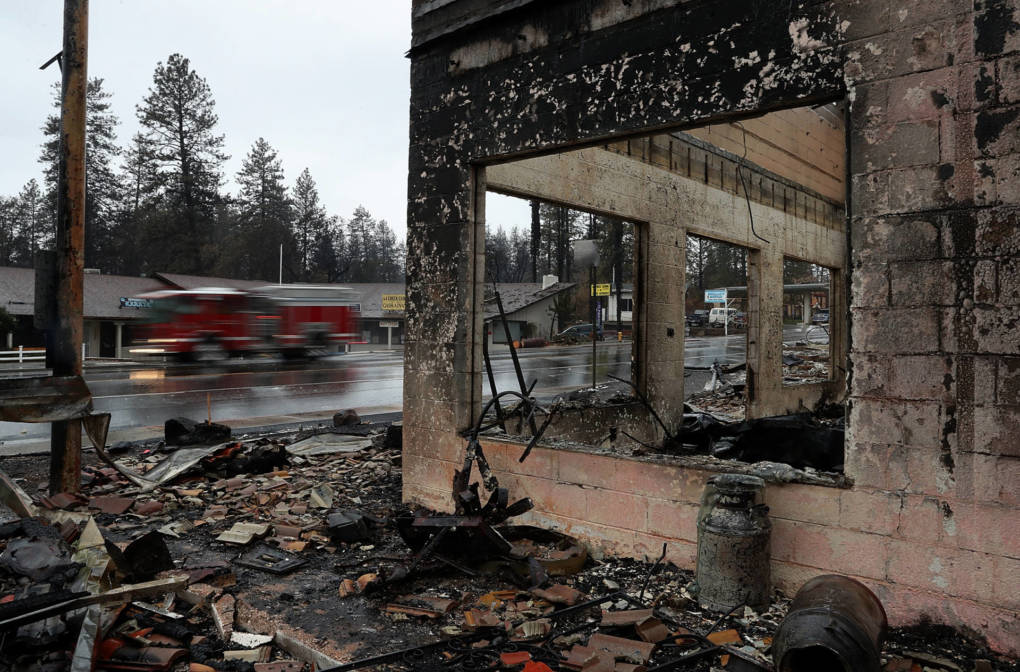
"caption": "A fire truck drives by a business that was destroyed by the Camp Fire in Paradise.",
"description": "A fire truck drives by a business that was destroyed by the Camp Fire in Paradise.",
"title": "Paradise, California Continues Recovery Efforts From The Devastating Camp Fire",
"credit": "Justin Sullivan/Getty Images",
"status": "inherit",
"isLoading": false,
"fetchFailed": false
},
"news_11710212": {
"type": "attachments",
"id": "news_11710212",
"meta": {
"index": "attachments_1716263798",
"site": "news",
"id": "11710212",
"found": true
},
"parent": 11710154,
"imgSizes": {
"twentyfourteen-full-width": {
"file": "https://ww2.kqed.org/app/uploads/sites/10/2018/12/GettyImages-1059401448-e1544043691925-1038x576.jpg",
"width": 1038,
"mimeType": "image/jpeg",
"height": 576
},
"thumbnail": {
"file": "https://ww2.kqed.org/app/uploads/sites/10/2018/12/GettyImages-1059401448-e1544043691925-160x107.jpg",
"width": 160,
"mimeType": "image/jpeg",
"height": 107
},
"post-thumbnail": {
"file": "https://ww2.kqed.org/app/uploads/sites/10/2018/12/GettyImages-1059401448-e1544043691925-672x372.jpg",
"width": 672,
"mimeType": "image/jpeg",
"height": 372
},
"kqedFullSize": {
"file": "https://ww2.kqed.org/app/uploads/sites/10/2018/12/GettyImages-1059401448-e1544043691925.jpg",
"width": 1920,
"height": 1278
},
"large": {
"file": "https://ww2.kqed.org/app/uploads/sites/10/2018/12/GettyImages-1059401448-e1544043691925-1020x679.jpg",
"width": 1020,
"mimeType": "image/jpeg",
"height": 679
},
"complete_open_graph": {
"file": "https://ww2.kqed.org/app/uploads/sites/10/2018/12/GettyImages-1059401448-e1544043691925-1200x799.jpg",
"width": 1200,
"mimeType": "image/jpeg",
"height": 799
},
"guest-author-50": {
"file": "https://ww2.kqed.org/app/uploads/sites/10/2018/12/GettyImages-1059401448-e1544043691925-50x50.jpg",
"width": 50,
"mimeType": "image/jpeg",
"height": 50
},
"guest-author-96": {
"file": "https://ww2.kqed.org/app/uploads/sites/10/2018/12/GettyImages-1059401448-e1544043691925-96x96.jpg",
"width": 96,
"mimeType": "image/jpeg",
"height": 96
},
"medium": {
"file": "https://ww2.kqed.org/app/uploads/sites/10/2018/12/GettyImages-1059401448-e1544043691925-800x533.jpg",
"width": 800,
"mimeType": "image/jpeg",
"height": 533
},
"guest-author-64": {
"file": "https://ww2.kqed.org/app/uploads/sites/10/2018/12/GettyImages-1059401448-e1544043691925-64x64.jpg",
"width": 64,
"mimeType": "image/jpeg",
"height": 64
},
"guest-author-32": {
"file": "https://ww2.kqed.org/app/uploads/sites/10/2018/12/GettyImages-1059401448-e1544043691925-32x32.jpg",
"width": 32,
"mimeType": "image/jpeg",
"height": 32
},
"full-width": {
"file": "https://ww2.kqed.org/app/uploads/sites/10/2018/12/GettyImages-1059401448-e1544043691925-1920x1278.jpg",
"width": 1920,
"mimeType": "image/jpeg",
"height": 1278
},
"detail": {
"file": "https://ww2.kqed.org/app/uploads/sites/10/2018/12/GettyImages-1059401448-e1544043691925-150x150.jpg",
"width": 150,
"mimeType": "image/jpeg",
"height": 150
},
"guest-author-128": {
"file": "https://ww2.kqed.org/app/uploads/sites/10/2018/12/GettyImages-1059401448-e1544043691925-128x128.jpg",
"width": 128,
"mimeType": "image/jpeg",
"height": 128
}
},
"publishDate": 1544043636,
"modified": 1544052129,
"caption": "The Feather River Hospital burns down during the Camp Fire in Paradise, California, on Nov. 8, 2018.",
"description": null,
"title": "US-FIRE-WEATHER",
"credit": "Josh Edelson/AFP/Getty Images",
"status": "inherit",
"isLoading": false,
"fetchFailed": false
}
},
"audioPlayerReducer": {
"postId": "stream_live",
"isPaused": true,
"isPlaying": false,
"pfsActive": false,
"pledgeModalIsOpen": true,
"playerDrawerIsOpen": false,
"liveAudioPlayStartedAt": 0,
"liveAudioPlayContext": ""
},
"authorsReducer": {
"dclyde": {
"type": "authors",
"id": "104",
"meta": {
"index": "authors_1716337520",
"id": "104",
"found": true
},
"name": "Don Clyde",
"firstName": "Don",
"lastName": "Clyde",
"slug": "dclyde",
"email": "dclyde@kqed.org",
"display_author_email": false,
"staff_mastheads": [],
"title": "KQED Contributor",
"bio": "Don Clyde is an online producer, reporter and copy editor for KQED News. Before venturing into journalism, he worked as a medical device engineer and scientist for nearly a decade after earning a degree in physics from UC Berkeley. He loves travel, reading, living in Oakland, and most importantly, a good walk. Email him at dclyde@kqed.org or follow him @clydedon.",
"avatar": "https://secure.gravatar.com/avatar/decd3e640c3eedbd0a574275aebb2d19?s=600&d=blank&r=g",
"twitter": "clydedon",
"facebook": null,
"instagram": null,
"linkedin": null,
"sites": [
{
"site": "artschool",
"roles": [
"editor"
]
},
{
"site": "news",
"roles": [
"administrator"
]
},
{
"site": "futureofyou",
"roles": [
"editor"
]
},
{
"site": "about",
"roles": [
"editor"
]
},
{
"site": "mindshift",
"roles": [
"contributor"
]
},
{
"site": "bayareabites",
"roles": [
"contributor"
]
},
{
"site": "lowdown",
"roles": [
"editor"
]
},
{
"site": "stateofhealth",
"roles": [
"administrator"
]
},
{
"site": "spark",
"roles": [
"administrator"
]
},
{
"site": "trulyca",
"roles": [
"administrator"
]
},
{
"site": "imagemakers",
"roles": [
"administrator"
]
},
{
"site": "science",
"roles": []
},
{
"site": "education",
"roles": [
"editor"
]
},
{
"site": "quest",
"roles": [
"subscriber"
]
},
{
"site": "checkplease",
"roles": [
"subscriber"
]
},
{
"site": "forum",
"roles": [
"editor"
]
},
{
"site": "perspectives",
"roles": [
"editor"
]
}
],
"headData": {
"title": "Don Clyde | KQED",
"description": "KQED Contributor",
"ogImgSrc": "https://secure.gravatar.com/avatar/decd3e640c3eedbd0a574275aebb2d19?s=600&d=blank&r=g",
"twImgSrc": "https://secure.gravatar.com/avatar/decd3e640c3eedbd0a574275aebb2d19?s=600&d=blank&r=g"
},
"isLoading": false,
"link": "/author/dclyde"
},
"agrossberg": {
"type": "authors",
"id": "188",
"meta": {
"index": "authors_1716337520",
"id": "188",
"found": true
},
"name": "Adam Grossberg",
"firstName": "Adam",
"lastName": "Grossberg",
"slug": "agrossberg",
"email": "agrossberg@KQED.org",
"display_author_email": false,
"staff_mastheads": [],
"title": "KQED Contributor",
"bio": "Adam Grossberg is a former video producer at KQED News. Prior to coming to KQED, he produced videos for PBS, The New York Times, Current TV and The Center for Investigative Reporting. His work has received an Excellence in Journalism award from the Society of Professional Journalists, a regional Murrow award and two Northern California Emmy awards. He is a graduate of the UC Berkeley Graduate School of Journalism.",
"avatar": "https://secure.gravatar.com/avatar/8e96dbdaaf98f5959a2c778289e0f9b5?s=600&d=blank&r=g",
"twitter": null,
"facebook": null,
"instagram": null,
"linkedin": null,
"sites": [
{
"site": "arts",
"roles": [
"contributor"
]
},
{
"site": "news",
"roles": [
"subscriber"
]
},
{
"site": "stateofhealth",
"roles": [
"editor"
]
},
{
"site": "science",
"roles": [
"editor"
]
}
],
"headData": {
"title": "Adam Grossberg | KQED",
"description": "KQED Contributor",
"ogImgSrc": "https://secure.gravatar.com/avatar/8e96dbdaaf98f5959a2c778289e0f9b5?s=600&d=blank&r=g",
"twImgSrc": "https://secure.gravatar.com/avatar/8e96dbdaaf98f5959a2c778289e0f9b5?s=600&d=blank&r=g"
},
"isLoading": false,
"link": "/author/agrossberg"
},
"danbrekke": {
"type": "authors",
"id": "222",
"meta": {
"index": "authors_1716337520",
"id": "222",
"found": true
},
"name": "Dan Brekke",
"firstName": "Dan",
"lastName": "Brekke",
"slug": "danbrekke",
"email": "dbrekke@kqed.org",
"display_author_email": true,
"staff_mastheads": [
"news",
"science"
],
"title": "KQED Editor and Reporter",
"bio": "Dan Brekke is a reporter and editor for KQED News, responsible for coverage of topics ranging from California water issues to the Bay Area's transportation challenges. In a newsroom career that began in Chicago in 1972, Dan has worked for \u003cem>The San Francisco Examiner,\u003c/em> Wired and TechTV and has been published in The New York Times, The New York Times Magazine, Business 2.0, Salon and elsewhere.\r\n\r\nSince joining KQED in 2007, Dan has reported, edited and produced both radio and online features and breaking news pieces. He has shared as both editor and reporter in four Society of Professional Journalists Norcal Excellence in Journalism awards and one Edward R. Murrow regional award. He was chosen for a spring 2017 residency at the Mesa Refuge to advance his research on California salmon.\r\n\r\nEmail Dan at: \u003ca href=\"mailto:dbrekke@kqed.org\">dbrekke@kqed.org\u003c/a>\r\n\r\n\u003cstrong>Twitter:\u003c/strong> \u003ca href=\"https://twitter.com/danbrekke\" rel=\"noopener noreferrer\">twitter.com/danbrekke\u003c/a>\r\n\u003cstrong>Facebook:\u003c/strong> \u003ca href=\"https://www.facebook.com/danbrekke\" rel=\"noopener noreferrer\">www.facebook.com/danbrekke\u003c/a>\r\n\u003cstrong>LinkedIn:\u003c/strong> \u003ca href=\"https://www.linkedin.com/in/danbrekke\" rel=\"noopener noreferrer\">www.linkedin.com/in/danbrekke\u003c/a>",
"avatar": "https://secure.gravatar.com/avatar/c8126230345efca3f7aa89b1a402be45?s=600&d=mm&r=g",
"twitter": "danbrekke",
"facebook": null,
"instagram": "https://www.instagram.com/dan.brekke/",
"linkedin": "https://www.linkedin.com/in/danbrekke/",
"sites": [
{
"site": "news",
"roles": [
"administrator",
"create_posts"
]
},
{
"site": "stateofhealth",
"roles": [
"editor"
]
},
{
"site": "science",
"roles": [
"editor"
]
},
{
"site": "quest",
"roles": [
"contributor"
]
},
{
"site": "food",
"roles": [
"contributor"
]
},
{
"site": "forum",
"roles": [
"contributor"
]
},
{
"site": "liveblog",
"roles": [
"editor"
]
}
],
"headData": {
"title": "Dan Brekke | KQED",
"description": "KQED Editor and Reporter",
"ogImgSrc": "https://secure.gravatar.com/avatar/c8126230345efca3f7aa89b1a402be45?s=600&d=mm&r=g",
"twImgSrc": "https://secure.gravatar.com/avatar/c8126230345efca3f7aa89b1a402be45?s=600&d=mm&r=g"
},
"isLoading": false,
"link": "/author/danbrekke"
},
"markfiore": {
"type": "authors",
"id": "3236",
"meta": {
"index": "authors_1716337520",
"id": "3236",
"found": true
},
"name": "Mark Fiore",
"firstName": "Mark",
"lastName": "Fiore",
"slug": "markfiore",
"email": "mark@markfiore.com",
"display_author_email": false,
"staff_mastheads": [
"news"
],
"title": "KQED News Cartoonist",
"bio": "\u003ca href=\"http://www.MarkFiore.com\">MarkFiore.com\u003c/a> | \u003ca href=\"https://twitter.com/markfiore\">Follow on Twitter\u003c/a> | \u003ca href=\"https://www.facebook.com/pages/Mark-Fiore-Animated-Political-Cartoons/94451707396?ref=bookmarks\">Facebook\u003c/a> | \u003ca href=\"mailto:mark@markfiore.com\">email\u003c/a>\r\n\r\nPulitzer Prize-winner, Mark Fiore, who the Wall Street Journal has called “the undisputed guru of the form,” creates animated political cartoons in San Francisco, where his work has been featured regularly on the San Francisco Chronicle’s web site, SFGate.com. His work has appeared on Newsweek.com, Slate.com, CBSNews.com, MotherJones.com, DailyKos.com and NPR’s web site. Fiore’s political animation has appeared on CNN, Frontline, Bill Moyers Journal, Salon.com and cable and broadcast outlets across the globe.\r\n\r\nBeginning his professional life by drawing traditional political cartoons for newspapers, Fiore’s work appeared in publications ranging from the Washington Post to the Los Angeles Times. In the late 1990s, he began to experiment with animating political cartoons and, after a short stint at the San Jose Mercury News as their staff cartoonist, Fiore devoted all his energies to animation.\r\nGrowing up in California, Fiore also spent a good portion of his life in the backwoods of Idaho. It was this combination that shaped him politically. Mark majored in political science at Colorado College, where, in a perfect send-off for a cartoonist, he received his diploma in 1991 as commencement speaker Dick Cheney smiled approvingly.\r\nMark Fiore was awarded the Pulitzer Prize for political cartooning in 2010, a Robert F. Kennedy Journalism Award in 2004 and has twice received an Online Journalism Award for commentary from the Online News Association (2002, 2008). Fiore has received two awards for his work in new media from the National Cartoonists Society (2001, 2002), and in 2006 received The James Madison Freedom of Information Award from The Society of Professional Journalists.",
"avatar": "https://secure.gravatar.com/avatar/fc4e2a612b15b67bad0c6f0e1db4ca9b?s=600&d=blank&r=g",
"twitter": "MarkFiore",
"facebook": null,
"instagram": "https://www.instagram.com/markfiore/?hl=en",
"linkedin": null,
"sites": [
{
"site": "arts",
"roles": [
"contributor"
]
},
{
"site": "news",
"roles": [
"editor"
]
},
{
"site": "futureofyou",
"roles": [
"editor"
]
},
{
"site": "science",
"roles": [
"editor"
]
}
],
"headData": {
"title": "Mark Fiore | KQED",
"description": "KQED News Cartoonist",
"ogImgSrc": "https://secure.gravatar.com/avatar/fc4e2a612b15b67bad0c6f0e1db4ca9b?s=600&d=blank&r=g",
"twImgSrc": "https://secure.gravatar.com/avatar/fc4e2a612b15b67bad0c6f0e1db4ca9b?s=600&d=blank&r=g"
},
"isLoading": false,
"link": "/author/markfiore"
},
"mlagos": {
"type": "authors",
"id": "3239",
"meta": {
"index": "authors_1716337520",
"id": "3239",
"found": true
},
"name": "Marisa Lagos",
"firstName": "Marisa",
"lastName": "Lagos",
"slug": "mlagos",
"email": "mlagos@kqed.org",
"display_author_email": false,
"staff_mastheads": [
"news"
],
"title": "KQED Contributor",
"bio": "Marisa Lagos is a correspondent for KQED’s California Politics and Government Desk and co-hosts the award-winning show and podcast, Political Breakdown. At KQED, Lagos also conducts reporting, analysis and investigations into state, local and national politics for radio, TV, online and onstage. In 2022, she and co-host, Scott Shafer, moderated the only gubernatorial debate in California. In 2020, the \u003ci>Washington Post\u003c/i> named her one of the top political journalists in California; she was nominated for a Peabody and won several other awards for her work investigating the 2017 California wildfires. She has worked at the \u003ci>San Francisco Chronicle\u003c/i>, \u003ci>San Francisco Examiner\u003c/i> and \u003ci>Los Angeles Times\u003c/i>. A UC Santa Barbara graduate, she lives in San Francisco with her two sons and husband.",
"avatar": "https://secure.gravatar.com/avatar/a261a0d3696fc066871ef96b85b5e7d2?s=600&d=blank&r=g",
"twitter": "@mlagos",
"facebook": null,
"instagram": null,
"linkedin": null,
"sites": [
{
"site": "arts",
"roles": [
"author"
]
},
{
"site": "news",
"roles": [
"editor"
]
},
{
"site": "science",
"roles": [
"editor"
]
},
{
"site": "forum",
"roles": [
"author"
]
},
{
"site": "liveblog",
"roles": [
"author"
]
}
],
"headData": {
"title": "Marisa Lagos | KQED",
"description": "KQED Contributor",
"ogImgSrc": "https://secure.gravatar.com/avatar/a261a0d3696fc066871ef96b85b5e7d2?s=600&d=blank&r=g",
"twImgSrc": "https://secure.gravatar.com/avatar/a261a0d3696fc066871ef96b85b5e7d2?s=600&d=blank&r=g"
},
"isLoading": false,
"link": "/author/mlagos"
},
"slewis": {
"type": "authors",
"id": "8676",
"meta": {
"index": "authors_1716337520",
"id": "8676",
"found": true
},
"name": "Sukey Lewis",
"firstName": "Sukey",
"lastName": "Lewis",
"slug": "slewis",
"email": "slewis@kqed.org",
"display_author_email": true,
"staff_mastheads": [
"news"
],
"title": "KQED Contributor",
"bio": "Sukey Lewis is a criminal justice reporter and host of \u003cem>On Our Watch\u003c/em>, a new podcast from NPR and KQED about the shadow world of police discipline. In 2018, she co-founded the California Reporting Project, a coalition of newsrooms across the state focused on obtaining previously sealed internal affairs records from law enforcement. In addition to her reporting on police accountability, Sukey has investigated the bail bonds industry, California's wildfires and the high cost of prison phone calls. Sukey earned a master's degree in journalism from the University of California at Berkeley. Send news tips to slewis@kqed.org.",
"avatar": "https://secure.gravatar.com/avatar/03fd6b21024f99d8b0a1966654586de7?s=600&d=blank&r=g",
"twitter": "SukeyLewis",
"facebook": null,
"instagram": null,
"linkedin": null,
"sites": [
{
"site": "news",
"roles": [
"author",
"edit_others_posts"
]
}
],
"headData": {
"title": "Sukey Lewis | KQED",
"description": "KQED Contributor",
"ogImgSrc": "https://secure.gravatar.com/avatar/03fd6b21024f99d8b0a1966654586de7?s=600&d=blank&r=g",
"twImgSrc": "https://secure.gravatar.com/avatar/03fd6b21024f99d8b0a1966654586de7?s=600&d=blank&r=g"
},
"isLoading": false,
"link": "/author/slewis"
},
"shutson": {
"type": "authors",
"id": "11216",
"meta": {
"index": "authors_1716337520",
"id": "11216",
"found": true
},
"name": "Sonja Hutson",
"firstName": "Sonja",
"lastName": "Hutson",
"slug": "shutson",
"email": "shutson@kqed.org",
"display_author_email": false,
"staff_mastheads": [],
"title": "KQED Contributor",
"bio": "Sonja Hutson is a former reporter for KQED's Silicon Valley desk and weekend newscasts. She primarily covers tech and housing. Sonja is a Bay Area native and now lives in San Francisco. When she's not working, you can find her camping, skiing, scuba diving, and struggling with the New York Times Crossword. Email: \u003ca href=\"mailto:shutson@kqed.org\">shutson@kqed.org. \u003c/a>Twitter: \u003ca href=\"https://twitter.com/SonjaHutson\">@SonjaHutson\u003c/a>",
"avatar": "https://secure.gravatar.com/avatar/7537c5e36818614e599b6c0f41d72b7a?s=600&d=blank&r=g",
"twitter": "SonjaHutson",
"facebook": null,
"instagram": null,
"linkedin": null,
"sites": [
{
"site": "arts",
"roles": [
"author"
]
},
{
"site": "news",
"roles": [
"subscriber"
]
}
],
"headData": {
"title": "Sonja Hutson | KQED",
"description": "KQED Contributor",
"ogImgSrc": "https://secure.gravatar.com/avatar/7537c5e36818614e599b6c0f41d72b7a?s=600&d=blank&r=g",
"twImgSrc": "https://secure.gravatar.com/avatar/7537c5e36818614e599b6c0f41d72b7a?s=600&d=blank&r=g"
},
"isLoading": false,
"link": "/author/shutson"
},
"jeremysiegel": {
"type": "authors",
"id": "11258",
"meta": {
"index": "authors_1716337520",
"id": "11258",
"found": true
},
"name": "Jeremy Siegel",
"firstName": "Jeremy",
"lastName": "Siegel",
"slug": "jeremysiegel",
"email": "jsiegel@kqed.org",
"display_author_email": false,
"staff_mastheads": [],
"title": "KQED Contributor",
"bio": "Jeremy Siegel is is the weekend afternoon news anchor for KQED. His reporting can be heard on KQED News, Morning Edition, All Things Considered and The California Report. Jeremy's coverage of the Camp Fire in Butte County won the 2019 Society of Professional Journalists, Northern California Chapter, Excellence in Journalism Award for Breaking News. Jeremy grew up in Cincinnati, Ohio, and graduated from UC Berkeley.",
"avatar": "https://secure.gravatar.com/avatar/3921a64ceb9ed5d0ba47d9ae9782f1ab?s=600&d=blank&r=g",
"twitter": "jersiegel",
"facebook": null,
"instagram": null,
"linkedin": null,
"sites": [
{
"site": "arts",
"roles": []
},
{
"site": "news",
"roles": [
"subscriber"
]
},
{
"site": "science",
"roles": []
}
],
"headData": {
"title": "Jeremy Siegel | KQED",
"description": "KQED Contributor",
"ogImgSrc": "https://secure.gravatar.com/avatar/3921a64ceb9ed5d0ba47d9ae9782f1ab?s=600&d=blank&r=g",
"twImgSrc": "https://secure.gravatar.com/avatar/3921a64ceb9ed5d0ba47d9ae9782f1ab?s=600&d=blank&r=g"
},
"isLoading": false,
"link": "/author/jeremysiegel"
},
"mwiley": {
"type": "authors",
"id": "11526",
"meta": {
"index": "authors_1716337520",
"id": "11526",
"found": true
},
"name": "Michelle Wiley",
"firstName": "Michelle",
"lastName": "Wiley",
"slug": "mwiley",
"email": "mwiley@KQED.org",
"display_author_email": true,
"staff_mastheads": [],
"title": null,
"bio": "Michelle Wiley was the senior editor of weekends.",
"avatar": "https://secure.gravatar.com/avatar/3b897d82a09e8587e8e73fa69fbcc635?s=600&d=blank&r=g",
"twitter": "michelleewiley",
"facebook": null,
"instagram": null,
"linkedin": null,
"sites": [
{
"site": "",
"roles": [
"editor"
]
},
{
"site": "arts",
"roles": [
"editor"
]
},
{
"site": "news",
"roles": [
"subscriber"
]
},
{
"site": "lowdown",
"roles": [
"editor"
]
},
{
"site": "science",
"roles": [
"editor"
]
},
{
"site": "podcasts",
"roles": [
"editor"
]
}
],
"headData": {
"title": "Michelle Wiley | KQED",
"description": null,
"ogImgSrc": "https://secure.gravatar.com/avatar/3b897d82a09e8587e8e73fa69fbcc635?s=600&d=blank&r=g",
"twImgSrc": "https://secure.gravatar.com/avatar/3b897d82a09e8587e8e73fa69fbcc635?s=600&d=blank&r=g"
},
"isLoading": false,
"link": "/author/mwiley"
},
"ljamali": {
"type": "authors",
"id": "11552",
"meta": {
"index": "authors_1716337520",
"id": "11552",
"found": true
},
"name": "Lily Jamali",
"firstName": "Lily",
"lastName": "Jamali",
"slug": "ljamali",
"email": "ljamali@kqed.org",
"display_author_email": false,
"staff_mastheads": [],
"title": "KQED Contributor",
"bio": "Lily was the former co-host of the daily morning show, The California Report.",
"avatar": "https://secure.gravatar.com/avatar/dbf7b30d159e697731046a10d25a9e29?s=600&d=blank&r=g",
"twitter": "lilyjamali",
"facebook": null,
"instagram": null,
"linkedin": null,
"sites": [
{
"site": "news",
"roles": [
"create_posts",
"subscriber"
]
},
{
"site": "forum",
"roles": [
"editor"
]
}
],
"headData": {
"title": "Lily Jamali | KQED",
"description": "KQED Contributor",
"ogImgSrc": "https://secure.gravatar.com/avatar/dbf7b30d159e697731046a10d25a9e29?s=600&d=blank&r=g",
"twImgSrc": "https://secure.gravatar.com/avatar/dbf7b30d159e697731046a10d25a9e29?s=600&d=blank&r=g"
},
"isLoading": false,
"link": "/author/ljamali"
}
},
"pagesReducer": {
"news_tag_camp-fire": {
"type": "terms",
"id": "news_24483",
"meta": {
"index": "terms_1716263798",
"site": "news",
"id": "24483",
"score": 9.30474
},
"featImg": null,
"name": "Camp Fire",
"description": null,
"taxonomy": "tag",
"headData": {
"twImgId": null,
"twTitle": null,
"ogTitle": null,
"ogImgId": null,
"twDescription": null,
"description": null,
"title": "Camp Fire Archives | KQED News",
"ogDescription": null
},
"ttid": 24500,
"slug": "camp-fire",
"isLoading": false,
"title": "Camp Fire",
"pageMeta": {
"site": "news",
"WpPageTemplate": "page-topic-editorial",
"currentPage": 12
},
"blocks": [
{
"blockName": "kqed/post-list",
"attrs": {
"layout": "cardArticle2",
"query": "posts/news?tag=camp-fire",
"seeMore": false,
"paginated": true,
"page": 12
}
},
{
"blockName": "kqed/ad"
}
]
}
},
"pfsSessionReducer": {},
"postsReducer": {
"stream_live": {
"type": "live",
"id": "stream_live",
"audioUrl": "https://streams.kqed.org/kqedradio",
"title": "Live Stream",
"excerpt": "Live Stream information currently unavailable.",
"link": "/radio",
"featImg": "",
"label": {
"name": "KQED Live",
"link": "/"
}
},
"stream_kqedNewscast": {
"type": "posts",
"id": "stream_kqedNewscast",
"audioUrl": "https://www.kqed.org/.stream/anon/radio/RDnews/newscast.mp3?_=1",
"title": "KQED Newscast",
"featImg": "",
"label": {
"name": "88.5 FM",
"link": "/"
}
},
"news_11711632": {
"type": "posts",
"id": "news_11711632",
"meta": {
"index": "posts_1716263798",
"site": "news",
"id": "11711632",
"score": null,
"sort": [
1544575321000
]
},
"parent": 0,
"labelTerm": {
"site": "news",
"term": 72
},
"blocks": [],
"publishDate": 1544575321,
"format": "audio",
"disqusTitle": "Pair of Bills Introduced to Aid Long-Term Recovery Efforts in Butte County Following Camp Fire",
"title": "Pair of Bills Introduced to Aid Long-Term Recovery Efforts in Butte County Following Camp Fire",
"headTitle": "The California Report | KQED News",
"content": "\u003cp>Republican Assemblyman James Gallagher, who represents areas affected by the deadly \u003ca href=\"https://www.kqed.org/news/11705243/california-wildfires-what-you-need-to-know\" rel=\"noopener\" target=\"_blank\">Camp Fire\u003c/a> in Butte County, introduced a pair of bills last week to aid in disaster recovery.\u003c/p>\n\u003cp>\u003ca href=\"http://leginfo.legislature.ca.gov/faces/billTextClient.xhtml?bill_id=201920200AB41\" target=\"_blank\" rel=\"noopener\">Assembly Bill 41\u003c/a> seeks to increase the state's share to cover the local costs of removing debris from the thousands of residences and hundreds of businesses destroyed. \u003ca href=\"http://leginfo.legislature.ca.gov/faces/billTextClient.xhtml?bill_id=201920200AB42\" target=\"_blank\" rel=\"noopener\">Assembly Bill 42\u003c/a> would provide funding to replace sources of local tax revenue lost in the blaze.\u003c/p>\n\u003cp>\"AB 41, first of all, seeks to cover the costs — the local share cost of debris removal. And it's designed to help locals because there's going to be a huge effort needed to clear out all the different household waste — obviously, the ash and the burned-out materials from these communities,\" Gallagher said. \"And it's just it's going to be very costly to deal not only with the removal but then also ensuring that those things are treated properly and disposed of properly. And so we want to ensure that we help the locals with that cost and that ultimately we're able to do that as quickly as possible as well, so that people can begin the process of rebuilding infrastructure, rebuilding homes and businesses.\"\u003c/p>\n\u003cp>Property taxes were due Monday, but now property values need to be re-evaluated for the thousands who lost their homes. Gallagher said AB 42 is designed to help Butte County deal with the thinner tax base.\u003c/p>\n\u003cp>\"AB 42 is really geared at tax stabilization,\" he said. \"So if you could imagine for a moment that the city or town that you live in is completely gone and completely wiped out. It's going to be many years before people rebuild, let alone start going to the grocery stores and going out to restaurants. All those things are gone. So imagine the entire community and those facilities and the places that you normally go being completely gone. Well, because nobody is doing that, there's no tax base, for instance, for the town of Paradise.\"\u003c/p>\n\u003cp>[ad fullwidth]\u003c/p>\n\u003cp>Cal Fire says the Camp Fire, the most destructive wildfire in modern state history, destroyed at least 18,793 structures, including 13,972 residences and 528 commercial buildings, primarily in and around Paradise, a town of 27,000 in the foothills east of Chico. The conflagration was the deadliest fire in California history, killing at least 85.\u003c/p>\n\u003cp>\"AB 42 then would provide a backfill of the revenues for local governments and schools and water districts — local utilities that help support the towns that have been wiped out and ensure that they are funded so that they can carry out all the functions that they're going to need to carry out in the recovery,\" Gallagher said.\u003c/p>\n\u003cp>He said he hoped AB 42 could provide relief for at least three years. Gallagher said some emergency money could be freed up through AB 42, but that he would probably seek reallocation of money in the existing 2018-2019 budget.\u003c/p>\n\u003cp>\"We're looking to all those different areas,\" Gallagher said. \"It's not unprecedented. For instance, last year with the fires that were experienced in Sonoma County there was backfilling of tax revenues lost there. There was also money supplied to help with the rebuild of public infrastructure and covering the local costs of that effort as well. So it's not that this has never been done before. We have had disasters where there's been a backfill of revenues for the local communities.\"\u003c/p>\n\u003cp>Gallagher said he feels optimistic AB 42 will pass.\u003c/p>\n\u003cp>\"We have already gotten some good support from colleagues that are saying they want to help with this rebuild and relief effort,\" he said. \"It's obviously going to have to go through the process — both legislative and budget process. But yeah, I believe that the state is going to be there to help support these north state communities in rebuilding and coming back from this devastating fire.\"\u003c/p>\n\u003cp>\u003c/p>\n\u003cp>Rep. Brian Dahle, R-Bieber, and state Sen. Jim Nielsen, R-Tehama, are principal co-authors of both bills.\u003c/p>\n\n",
"disqusIdentifier": "11711632 https://ww2.kqed.org/news/?p=11711632",
"disqusUrl": "https://ww2.kqed.org/news/2018/12/11/pair-of-bills-introduced-to-aid-long-term-recovery-efforts-in-butte-county-following-camp-fire/",
"stats": {
"hasVideo": false,
"hasChartOrMap": false,
"hasAudio": false,
"hasPolis": false,
"wordCount": 682,
"hasGoogleForm": false,
"hasGallery": false,
"hasHearkenModule": false,
"iframeSrcs": [],
"paragraphCount": 14
},
"modified": 1544576380,
"excerpt": "AB 41 seeks to increase the state's share to cover the local costs of removing debris from the thousands of residences and hundreds of businesses destroyed. AB 42 would provide funding to replace local tax revenue lost in the blaze.",
"headData": {
"twImgId": "",
"twTitle": "",
"ogTitle": "",
"ogImgId": "",
"twDescription": "",
"description": "AB 41 seeks to increase the state's share to cover the local costs of removing debris from the thousands of residences and hundreds of businesses destroyed. AB 42 would provide funding to replace local tax revenue lost in the blaze.",
"title": "Pair of Bills Introduced to Aid Long-Term Recovery Efforts in Butte County Following Camp Fire | KQED",
"ogDescription": "",
"schema": {
"@context": "https://schema.org",
"@type": "NewsArticle",
"headline": "Pair of Bills Introduced to Aid Long-Term Recovery Efforts in Butte County Following Camp Fire",
"datePublished": "2018-12-11T16:42:01-08:00",
"dateModified": "2018-12-11T16:59:40-08:00",
"image": "https://cdn.kqed.org/wp-content/uploads/2020/02/KQED-OG-Image@1x.png",
"isAccessibleForFree": "True",
"publisher": {
"@type": "NewsMediaOrganization",
"@id": "https://www.kqed.org/#organization",
"name": "KQED",
"logo": "https://cdn.kqed.org/wp-content/uploads/2020/02/KQED-OG-Image@1x.png",
"url": "https://www.kqed.org",
"sameAs": [
"https://www.facebook.com/KQED",
"https://twitter.com/KQED",
"https://www.instagram.com/kqed/",
"https://www.tiktok.com/@kqedofficial",
"https://www.linkedin.com/company/kqed",
"https://www.youtube.com/channel/UCeC0IOo7i1P_61zVUWbJ4nw"
]
}
}
},
"guestAuthors": [],
"slug": "pair-of-bills-introduced-to-aid-long-term-recovery-efforts-in-butte-county-following-camp-fire",
"status": "publish",
"audioUrl": "https://www.kqed.org/.stream/anon/radio/tcr/2018/12/TCRAM20181211JamaliGallagher2way.mp3",
"audioTrackLength": 142,
"path": "/news/11711632/pair-of-bills-introduced-to-aid-long-term-recovery-efforts-in-butte-county-following-camp-fire",
"audioDuration": 144000,
"parsedContent": [
{
"type": "contentString",
"content": "\u003cdiv class=\"post-body\">\u003cp>\u003cp>Republican Assemblyman James Gallagher, who represents areas affected by the deadly \u003ca href=\"https://www.kqed.org/news/11705243/california-wildfires-what-you-need-to-know\" rel=\"noopener\" target=\"_blank\">Camp Fire\u003c/a> in Butte County, introduced a pair of bills last week to aid in disaster recovery.\u003c/p>\n\u003cp>\u003ca href=\"http://leginfo.legislature.ca.gov/faces/billTextClient.xhtml?bill_id=201920200AB41\" target=\"_blank\" rel=\"noopener\">Assembly Bill 41\u003c/a> seeks to increase the state's share to cover the local costs of removing debris from the thousands of residences and hundreds of businesses destroyed. \u003ca href=\"http://leginfo.legislature.ca.gov/faces/billTextClient.xhtml?bill_id=201920200AB42\" target=\"_blank\" rel=\"noopener\">Assembly Bill 42\u003c/a> would provide funding to replace sources of local tax revenue lost in the blaze.\u003c/p>\n\u003cp>\"AB 41, first of all, seeks to cover the costs — the local share cost of debris removal. And it's designed to help locals because there's going to be a huge effort needed to clear out all the different household waste — obviously, the ash and the burned-out materials from these communities,\" Gallagher said. \"And it's just it's going to be very costly to deal not only with the removal but then also ensuring that those things are treated properly and disposed of properly. And so we want to ensure that we help the locals with that cost and that ultimately we're able to do that as quickly as possible as well, so that people can begin the process of rebuilding infrastructure, rebuilding homes and businesses.\"\u003c/p>\n\u003cp>Property taxes were due Monday, but now property values need to be re-evaluated for the thousands who lost their homes. Gallagher said AB 42 is designed to help Butte County deal with the thinner tax base.\u003c/p>\n\u003cp>\"AB 42 is really geared at tax stabilization,\" he said. \"So if you could imagine for a moment that the city or town that you live in is completely gone and completely wiped out. It's going to be many years before people rebuild, let alone start going to the grocery stores and going out to restaurants. All those things are gone. So imagine the entire community and those facilities and the places that you normally go being completely gone. Well, because nobody is doing that, there's no tax base, for instance, for the town of Paradise.\"\u003c/p>\n\u003cp>\u003c/p>\u003c/div>",
"attributes": {
"named": {},
"numeric": []
}
},
{
"type": "component",
"content": "",
"name": "ad",
"attributes": {
"named": {
"label": "fullwidth"
},
"numeric": [
"fullwidth"
]
}
},
{
"type": "contentString",
"content": "\u003cdiv class=\"post-body\">\u003cp>\u003c/p>\n\u003cp>Cal Fire says the Camp Fire, the most destructive wildfire in modern state history, destroyed at least 18,793 structures, including 13,972 residences and 528 commercial buildings, primarily in and around Paradise, a town of 27,000 in the foothills east of Chico. The conflagration was the deadliest fire in California history, killing at least 85.\u003c/p>\n\u003cp>\"AB 42 then would provide a backfill of the revenues for local governments and schools and water districts — local utilities that help support the towns that have been wiped out and ensure that they are funded so that they can carry out all the functions that they're going to need to carry out in the recovery,\" Gallagher said.\u003c/p>\n\u003cp>He said he hoped AB 42 could provide relief for at least three years. Gallagher said some emergency money could be freed up through AB 42, but that he would probably seek reallocation of money in the existing 2018-2019 budget.\u003c/p>\n\u003cp>\"We're looking to all those different areas,\" Gallagher said. \"It's not unprecedented. For instance, last year with the fires that were experienced in Sonoma County there was backfilling of tax revenues lost there. There was also money supplied to help with the rebuild of public infrastructure and covering the local costs of that effort as well. So it's not that this has never been done before. We have had disasters where there's been a backfill of revenues for the local communities.\"\u003c/p>\n\u003cp>Gallagher said he feels optimistic AB 42 will pass.\u003c/p>\n\u003cp>\"We have already gotten some good support from colleagues that are saying they want to help with this rebuild and relief effort,\" he said. \"It's obviously going to have to go through the process — both legislative and budget process. But yeah, I believe that the state is going to be there to help support these north state communities in rebuilding and coming back from this devastating fire.\"\u003c/p>\n\u003cp>\u003c/p>\n\u003cp>Rep. Brian Dahle, R-Bieber, and state Sen. Jim Nielsen, R-Tehama, are principal co-authors of both bills.\u003c/p>\n\n\u003c/div>\u003c/p>",
"attributes": {
"named": {},
"numeric": []
}
}
],
"link": "/news/11711632/pair-of-bills-introduced-to-aid-long-term-recovery-efforts-in-butte-county-following-camp-fire",
"authors": [
"104",
"11552"
],
"programs": [
"news_72"
],
"categories": [
"news_19906",
"news_8"
],
"tags": [
"news_24483",
"news_22753",
"news_4463"
],
"featImg": "news_11710465",
"label": "news_72"
},
"news_11711342": {
"type": "posts",
"id": "news_11711342",
"meta": {
"index": "posts_1716263798",
"site": "news",
"id": "11711342",
"score": null,
"sort": [
1544564340000
]
},
"parent": 0,
"labelTerm": {
"site": "news",
"term": 72
},
"blocks": [],
"publishDate": 1544564340,
"format": "audio",
"disqusTitle": "PG&E May Have Dodged Probation Violation by Striking Deal With Butte County",
"title": "PG&E May Have Dodged Probation Violation by Striking Deal With Butte County",
"headTitle": "The California Report | KQED News",
"content": "\u003cp>Butte County's top prosecutor says PG&E settled a criminal allegation arising from a 2017 fire near Paradise in part because the company wanted to avoid charges that could violate its probation in the 2010 San Bruno pipeline explosion case.\u003c/p>\n\u003cp>The new details about what led to the settlement come amid intense scrutiny into PG&E's electrical infrastructure in the county in the wake of the deadliest and most destructive wildfire in California history.\u003c/p>\n\u003cp>Butte County District Attorney Mike Ramsey and the utility announced in early October — just weeks before the \u003ca href=\"https://www.kqed.org/news/11705243/california-wildfires-what-you-need-to-know\" rel=\"noopener\" target=\"_blank\">Camp Fire\u003c/a> destroyed most of Paradise and killed 85 county residents — that they had reached \u003ca href=\"http://s1.q4cdn.com/880135780/files/doc_downloads/2018/wildfire/10/Butte-County-District-Attorney-and-PG-E-Settlement-Agreement-Press-Release.pdf\" target=\"_blank\" rel=\"noopener\">a $1.5 million settlement\u003c/a> arising from the Honey Fire.\u003c/p>\n\u003cp>That blaze burned an estimated 75 to 150 acres and briefly threatened the foothills town during the October 2017 Northern California fire siege that killed 44 people in Sonoma, Mendocino, Napa and Yuba counties.\u003c/p>\n\u003cp>Cal Fire investigators \u003ca href=\"https://calfire.ca.gov/communications/downloads/newsreleases/2018/2017_WildfireSiege_Cause%20v2%20AB%20(002).pdf\" target=\"_blank\" rel=\"noopener\">blamed\u003c/a> the Honey Fire on an oak branch that fell on a PG&E power line. The fire agency also said it found evidence the company violated \u003ca href=\"http://leginfo.legislature.ca.gov/faces/codes_displaySection.xhtml?sectionNum=4293.&lawCode=PRC\" target=\"_blank\" rel=\"noopener\">a provision of state law\u003c/a> requiring adequate clearance between electrical lines and surrounding vegetation and referred the case to Ramsey’s office.\u003c/p>\n\u003cp>\"Cal Fire’s investigation showed this was the result of an overhanging rotten branch that should have been cleared,\" Ramsey said in an interview Friday. \"It came down, touched the wires, caused the fire.\"\u003c/p>\n\u003cp>[ad fullwidth]\u003c/p>\n\u003cp>PG&E's legal exposure in the case seemed modest. The blaze burned no structures, and no one was killed or injured. The violation it was accused of was a misdemeanor, and Ramsey says a conviction or guilty plea would have meant a fine of just $1,000.\u003c/p>\n\u003cp>But he says that when it became clear to PG&E that his office planned to press charges, the company wanted to talk \"about something other than a criminal filing.\"\u003c/p>\n\u003caside class=\"pullquote alignright\">'It was fairly clear that they were concerned about their federal felony probation. And ... a criminal conviction in Butte County, even on a misdemeanor, would violate that probation.'\u003ccite>Mike Ramsey, Butte County district attorney\u003c/cite>\u003c/aside>\n\u003cp>Those conversations led to \u003ca href=\"https://assets.documentcloud.org/documents/5513720/Butte-County-District-Attorney-and-PG-E.pdf\" target=\"_blank\" rel=\"noopener\">the company's agreement\u003c/a> to pay $1.5 million to hire a pair of two-person fire safety teams and buy the vehicles and equipment they'll need over the next four years to inspect PG&E's power lines in Butte County's backcountry.\u003c/p>\n\u003cp>\"Our settlement was in lieu of a criminal prosecution,\" Ramsey said.\u003c/p>\n\u003cp>\"We felt it was a criminal case, but a case that was a thousand-dollar fine. PG&E offered to pay basically $1.5 million to do the greater good of hiring Cal Fire/Butte County inspectors, to inspect their lines to prevent future fires. We felt that was a much better outcome for the citizens of Butte.\"\u003c/p>\n\u003cp>As part of the settlement, PG&E admitted no wrongdoing or liability for the Honey Fire.\u003c/p>\n\u003cp>At the time the agreement was announced, Sumeet Singh, vice president of the company's Community Wildfire Safety Program, said: \"Years of drought, extreme heat and 129 million dead trees require that we continuously adapt to keep our communities safe. We appreciate the partnership with the Butte County Fire Department to complete this important safety work.”\u003c/p>\n\u003cp>PG&E on Tuesday declined further comment on the settlement.\u003c/p>\n\u003cp>Ramsey said PG&E was also motivated by something else in pursuing the agreement: avoiding a charge that could violate the terms of probation imposed after its post-San Bruno conviction for breaking federal pipeline safety laws.\u003c/p>\n\u003cp>In 2016, a federal jury in San Francisco found the company guilty of five violations of safety regulations that occurred before \u003ca href=\"https://www.kqed.org/news/10667274/five-years-after-deadly-san-bruno-explosion-are-we-safer\" target=\"_blank\" rel=\"noopener\">the Sept. 9, 2010, San Bruno blast\u003c/a>. The explosion, caused by a ruptured 30-inch natural gas pipeline, killed eight, injured 58 and destroyed dozens of homes.\u003c/p>\n\u003cp>Under the sentence handed down in January 2017 by U.S. District Judge Thelton Henderson, the company was fined $3 million and ordered to run $3 million in advertising to publicize its conviction and punishment. The utility was also required to have its employees -- even top executives -- perform a total of 10,000 hours of community service.\u003c/p>\n\u003cp>Henderson's conditions also included five years of probation, a period during which, according to sentencing documents, \"PG&E shall not commit another federal, state, or local crime.\"\u003c/p>\n\u003cp>In approaching Butte County about the Honey Fire charges, Ramsey said the company's lawyers \"first tried to convince us that we didn’t have the evidence to do a criminal filing. We got past that fairly quickly. Then (the company) was asking, ‘Isn’t there ... something that could be done to put this off?’ We insisted that no, we weren’t going to do that.\"\u003c/p>\n\u003cp>At that point, Ramsey said, the company's deeper interest emerged.\u003c/p>\n\u003cp>\"It was fairly clear that they were concerned about their federal felony probation. And a filing in Butte County, and a criminal conviction in Butte County, even on a misdemeanor, would violate that probation,\" Ramsey said.\u003c/p>\n\u003caside class=\"alignright\">\n\u003ch3>\u003ca href=\"https://www.kqed.org/news/11705306/pge-transmission-line-may-be-tied-to-disastrous-butte-county-fire\">PG&E Transmission Line May Be Tied to Disastrous Butte County Fire\u003c/a>\u003c/h3>\n\u003cfigure>\u003ca href=\"https://www.kqed.org/news/11705306/pge-transmission-line-may-be-tied-to-disastrous-butte-county-fire\">\u003cimg src=\"https://ww2.kqed.org/news/wp-content/uploads/sites/10/2018/11/GettyImages-1059345654-1038x576.jpg\" alt=\"\">\u003c/a>\u003c/figure>\n\u003c/aside>\n\u003cp>PG&E has faced scrutiny over the safety of its electrical power system in the aftermath of the 2017 fire siege. Cal Fire investigators have found the that the company's equipment was involved in starting at least 16 of last year's fires.\u003c/p>\n\u003cp>That scrutiny has intensified since the start of the Camp Fire on Nov. 8. \u003ca href=\"https://www.kqed.org/news/11705306/pge-transmission-line-may-be-tied-to-disastrous-butte-county-fire\" target=\"_blank\" rel=\"noopener\">The company reported\u003c/a> that it experienced an outage on a high-voltage line at about the same time and place where the catastrophic blaze began.\u003c/p>\n\u003cp>Judge William Alsup, who took over the utility's probation in the San Bruno case from the now-retired Henderson, late last month ordered the company, federal prosecutors and a court-appointed monitor \"to provide an accurate and complete statement of the role, if any, of PG&E in causing and reporting the recent Camp Fire in Butte County and all other wildfires in California\" since it was sentenced in early 2017.\u003c/p>\n\u003cp>Alsup further asked the parties whether the probation requirement that the utility refrain from \"further federal, state, or local crimes might be implicated were any wildfire started by reckless operation or maintenance of PG&E power lines.\"\u003c/p>\n\u003cp>The judge also invited the office of California Attorney General Xavier Becerra to weigh in on whether \"reckless operation or maintenance\" of PG&E electrical lines would violate state law.\u003c/p>\n\u003cp>Answers to those queries are due by Dec. 31.\u003c/p>\n\u003cp>[ad floatright]\u003c/p>\n",
"disqusIdentifier": "11711342 https://ww2.kqed.org/news/?p=11711342",
"disqusUrl": "https://ww2.kqed.org/news/2018/12/11/pge-may-have-dodged-probation-violation-by-striking-deal-with-butte-county/",
"stats": {
"hasVideo": false,
"hasChartOrMap": false,
"hasAudio": false,
"hasPolis": false,
"wordCount": 1106,
"hasGoogleForm": false,
"hasGallery": false,
"hasHearkenModule": false,
"iframeSrcs": [],
"paragraphCount": 29
},
"modified": 1544579402,
"excerpt": "District attorney negotiated $1.5 million settlement with PG&E to enhance fire safety in Butte County. The agreement allowed the utility to avoid a possible probation violation in San Bruno pipeline case.",
"headData": {
"twImgId": "",
"twTitle": "",
"ogTitle": "",
"ogImgId": "",
"twDescription": "",
"description": "District attorney negotiated $1.5 million settlement with PG&E to enhance fire safety in Butte County. The agreement allowed the utility to avoid a possible probation violation in San Bruno pipeline case.",
"title": "PG&E May Have Dodged Probation Violation by Striking Deal With Butte County | KQED",
"ogDescription": "",
"schema": {
"@context": "https://schema.org",
"@type": "NewsArticle",
"headline": "PG&E May Have Dodged Probation Violation by Striking Deal With Butte County",
"datePublished": "2018-12-11T13:39:00-08:00",
"dateModified": "2018-12-11T17:50:02-08:00",
"image": "https://cdn.kqed.org/wp-content/uploads/2020/02/KQED-OG-Image@1x.png",
"isAccessibleForFree": "True",
"publisher": {
"@type": "NewsMediaOrganization",
"@id": "https://www.kqed.org/#organization",
"name": "KQED",
"logo": "https://cdn.kqed.org/wp-content/uploads/2020/02/KQED-OG-Image@1x.png",
"url": "https://www.kqed.org",
"sameAs": [
"https://www.facebook.com/KQED",
"https://twitter.com/KQED",
"https://www.instagram.com/kqed/",
"https://www.tiktok.com/@kqedofficial",
"https://www.linkedin.com/company/kqed",
"https://www.youtube.com/channel/UCeC0IOo7i1P_61zVUWbJ4nw"
]
}
}
},
"guestAuthors": [],
"slug": "pge-may-have-dodged-probation-violation-by-striking-deal-with-butte-county",
"status": "publish",
"audioUrl": "https://www.kqed.org/.stream/anon/radio/RDnews/2018/12/Brekke2wayCampFireLawsuits.mp3",
"audioTrackLength": 245,
"path": "/news/11711342/pge-may-have-dodged-probation-violation-by-striking-deal-with-butte-county",
"audioDuration": 232000,
"parsedContent": [
{
"type": "contentString",
"content": "\u003cdiv class=\"post-body\">\u003cp>\u003cp>Butte County's top prosecutor says PG&E settled a criminal allegation arising from a 2017 fire near Paradise in part because the company wanted to avoid charges that could violate its probation in the 2010 San Bruno pipeline explosion case.\u003c/p>\n\u003cp>The new details about what led to the settlement come amid intense scrutiny into PG&E's electrical infrastructure in the county in the wake of the deadliest and most destructive wildfire in California history.\u003c/p>\n\u003cp>Butte County District Attorney Mike Ramsey and the utility announced in early October — just weeks before the \u003ca href=\"https://www.kqed.org/news/11705243/california-wildfires-what-you-need-to-know\" rel=\"noopener\" target=\"_blank\">Camp Fire\u003c/a> destroyed most of Paradise and killed 85 county residents — that they had reached \u003ca href=\"http://s1.q4cdn.com/880135780/files/doc_downloads/2018/wildfire/10/Butte-County-District-Attorney-and-PG-E-Settlement-Agreement-Press-Release.pdf\" target=\"_blank\" rel=\"noopener\">a $1.5 million settlement\u003c/a> arising from the Honey Fire.\u003c/p>\n\u003cp>That blaze burned an estimated 75 to 150 acres and briefly threatened the foothills town during the October 2017 Northern California fire siege that killed 44 people in Sonoma, Mendocino, Napa and Yuba counties.\u003c/p>\n\u003cp>Cal Fire investigators \u003ca href=\"https://calfire.ca.gov/communications/downloads/newsreleases/2018/2017_WildfireSiege_Cause%20v2%20AB%20(002).pdf\" target=\"_blank\" rel=\"noopener\">blamed\u003c/a> the Honey Fire on an oak branch that fell on a PG&E power line. The fire agency also said it found evidence the company violated \u003ca href=\"http://leginfo.legislature.ca.gov/faces/codes_displaySection.xhtml?sectionNum=4293.&lawCode=PRC\" target=\"_blank\" rel=\"noopener\">a provision of state law\u003c/a> requiring adequate clearance between electrical lines and surrounding vegetation and referred the case to Ramsey’s office.\u003c/p>\n\u003cp>\"Cal Fire’s investigation showed this was the result of an overhanging rotten branch that should have been cleared,\" Ramsey said in an interview Friday. \"It came down, touched the wires, caused the fire.\"\u003c/p>\n\u003cp>\u003c/p>\u003c/div>",
"attributes": {
"named": {},
"numeric": []
}
},
{
"type": "component",
"content": "",
"name": "ad",
"attributes": {
"named": {
"label": "fullwidth"
},
"numeric": [
"fullwidth"
]
}
},
{
"type": "contentString",
"content": "\u003cdiv class=\"post-body\">\u003cp>\u003c/p>\n\u003cp>PG&E's legal exposure in the case seemed modest. The blaze burned no structures, and no one was killed or injured. The violation it was accused of was a misdemeanor, and Ramsey says a conviction or guilty plea would have meant a fine of just $1,000.\u003c/p>\n\u003cp>But he says that when it became clear to PG&E that his office planned to press charges, the company wanted to talk \"about something other than a criminal filing.\"\u003c/p>\n\u003caside class=\"pullquote alignright\">'It was fairly clear that they were concerned about their federal felony probation. And ... a criminal conviction in Butte County, even on a misdemeanor, would violate that probation.'\u003ccite>Mike Ramsey, Butte County district attorney\u003c/cite>\u003c/aside>\n\u003cp>Those conversations led to \u003ca href=\"https://assets.documentcloud.org/documents/5513720/Butte-County-District-Attorney-and-PG-E.pdf\" target=\"_blank\" rel=\"noopener\">the company's agreement\u003c/a> to pay $1.5 million to hire a pair of two-person fire safety teams and buy the vehicles and equipment they'll need over the next four years to inspect PG&E's power lines in Butte County's backcountry.\u003c/p>\n\u003cp>\"Our settlement was in lieu of a criminal prosecution,\" Ramsey said.\u003c/p>\n\u003cp>\"We felt it was a criminal case, but a case that was a thousand-dollar fine. PG&E offered to pay basically $1.5 million to do the greater good of hiring Cal Fire/Butte County inspectors, to inspect their lines to prevent future fires. We felt that was a much better outcome for the citizens of Butte.\"\u003c/p>\n\u003cp>As part of the settlement, PG&E admitted no wrongdoing or liability for the Honey Fire.\u003c/p>\n\u003cp>At the time the agreement was announced, Sumeet Singh, vice president of the company's Community Wildfire Safety Program, said: \"Years of drought, extreme heat and 129 million dead trees require that we continuously adapt to keep our communities safe. We appreciate the partnership with the Butte County Fire Department to complete this important safety work.”\u003c/p>\n\u003cp>PG&E on Tuesday declined further comment on the settlement.\u003c/p>\n\u003cp>Ramsey said PG&E was also motivated by something else in pursuing the agreement: avoiding a charge that could violate the terms of probation imposed after its post-San Bruno conviction for breaking federal pipeline safety laws.\u003c/p>\n\u003cp>In 2016, a federal jury in San Francisco found the company guilty of five violations of safety regulations that occurred before \u003ca href=\"https://www.kqed.org/news/10667274/five-years-after-deadly-san-bruno-explosion-are-we-safer\" target=\"_blank\" rel=\"noopener\">the Sept. 9, 2010, San Bruno blast\u003c/a>. The explosion, caused by a ruptured 30-inch natural gas pipeline, killed eight, injured 58 and destroyed dozens of homes.\u003c/p>\n\u003cp>Under the sentence handed down in January 2017 by U.S. District Judge Thelton Henderson, the company was fined $3 million and ordered to run $3 million in advertising to publicize its conviction and punishment. The utility was also required to have its employees -- even top executives -- perform a total of 10,000 hours of community service.\u003c/p>\n\u003cp>Henderson's conditions also included five years of probation, a period during which, according to sentencing documents, \"PG&E shall not commit another federal, state, or local crime.\"\u003c/p>\n\u003cp>In approaching Butte County about the Honey Fire charges, Ramsey said the company's lawyers \"first tried to convince us that we didn’t have the evidence to do a criminal filing. We got past that fairly quickly. Then (the company) was asking, ‘Isn’t there ... something that could be done to put this off?’ We insisted that no, we weren’t going to do that.\"\u003c/p>\n\u003cp>At that point, Ramsey said, the company's deeper interest emerged.\u003c/p>\n\u003cp>\"It was fairly clear that they were concerned about their federal felony probation. And a filing in Butte County, and a criminal conviction in Butte County, even on a misdemeanor, would violate that probation,\" Ramsey said.\u003c/p>\n\u003caside class=\"alignright\">\n\u003ch3>\u003ca href=\"https://www.kqed.org/news/11705306/pge-transmission-line-may-be-tied-to-disastrous-butte-county-fire\">PG&E Transmission Line May Be Tied to Disastrous Butte County Fire\u003c/a>\u003c/h3>\n\u003cfigure>\u003ca href=\"https://www.kqed.org/news/11705306/pge-transmission-line-may-be-tied-to-disastrous-butte-county-fire\">\u003cimg src=\"https://ww2.kqed.org/news/wp-content/uploads/sites/10/2018/11/GettyImages-1059345654-1038x576.jpg\" alt=\"\">\u003c/a>\u003c/figure>\n\u003c/aside>\n\u003cp>PG&E has faced scrutiny over the safety of its electrical power system in the aftermath of the 2017 fire siege. Cal Fire investigators have found the that the company's equipment was involved in starting at least 16 of last year's fires.\u003c/p>\n\u003cp>That scrutiny has intensified since the start of the Camp Fire on Nov. 8. \u003ca href=\"https://www.kqed.org/news/11705306/pge-transmission-line-may-be-tied-to-disastrous-butte-county-fire\" target=\"_blank\" rel=\"noopener\">The company reported\u003c/a> that it experienced an outage on a high-voltage line at about the same time and place where the catastrophic blaze began.\u003c/p>\n\u003cp>Judge William Alsup, who took over the utility's probation in the San Bruno case from the now-retired Henderson, late last month ordered the company, federal prosecutors and a court-appointed monitor \"to provide an accurate and complete statement of the role, if any, of PG&E in causing and reporting the recent Camp Fire in Butte County and all other wildfires in California\" since it was sentenced in early 2017.\u003c/p>\n\u003cp>Alsup further asked the parties whether the probation requirement that the utility refrain from \"further federal, state, or local crimes might be implicated were any wildfire started by reckless operation or maintenance of PG&E power lines.\"\u003c/p>\n\u003cp>The judge also invited the office of California Attorney General Xavier Becerra to weigh in on whether \"reckless operation or maintenance\" of PG&E electrical lines would violate state law.\u003c/p>\n\u003cp>Answers to those queries are due by Dec. 31.\u003c/p>\n\u003cp>\u003c/p>\u003c/div>",
"attributes": {
"named": {},
"numeric": []
}
},
{
"type": "component",
"content": "",
"name": "ad",
"attributes": {
"named": {
"label": "floatright"
},
"numeric": [
"floatright"
]
}
},
{
"type": "contentString",
"content": "\u003cdiv class=\"post-body\">\u003cp>\u003c/p>\n\u003c/div>\u003c/p>",
"attributes": {
"named": {},
"numeric": []
}
}
],
"link": "/news/11711342/pge-may-have-dodged-probation-violation-by-striking-deal-with-butte-county",
"authors": [
"222",
"11552"
],
"programs": [
"news_72"
],
"categories": [
"news_19906",
"news_6188",
"news_8",
"news_356"
],
"tags": [
"news_22754",
"news_24483",
"news_19542",
"news_140",
"news_17041",
"news_4463"
],
"featImg": "news_11711600",
"label": "news_72"
},
"news_11711358": {
"type": "posts",
"id": "news_11711358",
"meta": {
"index": "posts_1716263798",
"site": "news",
"id": "11711358",
"score": null,
"sort": [
1544483604000
]
},
"guestAuthors": [],
"slug": "emergency-alerts-under-scrutiny",
"title": "Emergency Alerts Under Scrutiny",
"publishDate": 1544483604,
"format": "standard",
"headTitle": "Emergency Alerts Under Scrutiny | KQED",
"labelTerm": {
"term": 18515,
"site": "news"
},
"content": "\u003cp>Butte County Sheriff Kory Honea \u003ca href=\"https://www.kqed.org/news/11710539/its-been-a-blur-butte-county-sheriff-looks-back-on-camp-fire-one-month-later\" target=\"_blank\" rel=\"noopener\">told KQED\u003c/a> that “this fire was outrunning us in terms of our ability to notify people.”\u003c/p>\n\u003cp>Following the Camp Fire, the deadliest and most destructive in modern California history, Butte County will \u003ca href=\"http://bit.ly/fiorealertsystem\" target=\"_blank\" rel=\"noopener\">reassess its emergency alert system\u003c/a>.\u003c/p>\n\u003cp>Similar to last year’s North Bay fires, many people fled the fire because they saw red skies overhead and flames approaching their homes.\u003c/p>\n\u003cp>[ad fullwidth]\u003c/p>\u003cp>\u003c/p>\n",
"blocks": [],
"excerpt": "After the Camp Fire, Butte County will reassess its emergency alert system. 'This fire was outrunning us in terms of our ability to notify people,' said Butte County Sheriff Kory Honea.",
"status": "publish",
"parent": 0,
"modified": 1722638519,
"stats": {
"hasAudio": false,
"hasVideo": false,
"hasChartOrMap": false,
"iframeSrcs": [],
"hasGoogleForm": false,
"hasGallery": false,
"hasHearkenModule": false,
"hasPolis": false,
"paragraphCount": 5,
"wordCount": 71
},
"headData": {
"title": "Emergency Alerts Under Scrutiny | KQED",
"description": "After the Camp Fire, Butte County will reassess its emergency alert system. 'This fire was outrunning us in terms of our ability to notify people,' said Butte County Sheriff Kory Honea.",
"ogTitle": "",
"ogDescription": "",
"ogImgId": "",
"twTitle": "",
"twDescription": "",
"twImgId": "",
"schema": {
"@context": "https://schema.org",
"@type": "NewsArticle",
"headline": "Emergency Alerts Under Scrutiny",
"datePublished": "2018-12-10T15:13:24-08:00",
"dateModified": "2024-08-02T15:41:59-07:00",
"image": "https://cdn.kqed.org/wp-content/uploads/2020/02/KQED-OG-Image@1x.png",
"isAccessibleForFree": "True",
"publisher": {
"@type": "NewsMediaOrganization",
"@id": "https://www.kqed.org/#organization",
"name": "KQED",
"logo": "https://cdn.kqed.org/wp-content/uploads/2020/02/KQED-OG-Image@1x.png",
"url": "https://www.kqed.org",
"sameAs": [
"https://www.facebook.com/KQED",
"https://twitter.com/KQED",
"https://www.instagram.com/kqed/",
"https://www.tiktok.com/@kqedofficial",
"https://www.linkedin.com/company/kqed",
"https://www.youtube.com/channel/UCeC0IOo7i1P_61zVUWbJ4nw"
]
}
}
},
"sticky": false,
"path": "/news/11711358/emergency-alerts-under-scrutiny",
"audioTrackLength": null,
"parsedContent": [
{
"type": "contentString",
"content": "\u003cdiv class=\"post-body\">\u003cp>\u003cp>Butte County Sheriff Kory Honea \u003ca href=\"https://www.kqed.org/news/11710539/its-been-a-blur-butte-county-sheriff-looks-back-on-camp-fire-one-month-later\" target=\"_blank\" rel=\"noopener\">told KQED\u003c/a> that “this fire was outrunning us in terms of our ability to notify people.”\u003c/p>\n\u003cp>Following the Camp Fire, the deadliest and most destructive in modern California history, Butte County will \u003ca href=\"http://bit.ly/fiorealertsystem\" target=\"_blank\" rel=\"noopener\">reassess its emergency alert system\u003c/a>.\u003c/p>\n\u003cp>Similar to last year’s North Bay fires, many people fled the fire because they saw red skies overhead and flames approaching their homes.\u003c/p>\n\u003cp>\u003c/p>\u003c/div>",
"attributes": {
"named": {},
"numeric": []
}
},
{
"type": "component",
"content": "",
"name": "ad",
"attributes": {
"named": {
"label": "fullwidth"
},
"numeric": [
"fullwidth"
]
}
},
{
"type": "contentString",
"content": "\u003cdiv class=\"post-body\">\u003cp>\u003c/p>\u003cp>\u003c/p>\n\u003c/div>\u003c/p>",
"attributes": {
"named": {},
"numeric": []
}
}
],
"link": "/news/11711358/emergency-alerts-under-scrutiny",
"authors": [
"3236"
],
"series": [
"news_18515"
],
"categories": [
"news_19906",
"news_6266",
"news_8"
],
"tags": [
"news_22754",
"news_24483",
"news_24504",
"news_20534",
"news_20949",
"news_22753",
"news_4463"
],
"featImg": "news_11711367",
"label": "news_18515"
},
"news_11711175": {
"type": "posts",
"id": "news_11711175",
"meta": {
"index": "posts_1716263798",
"site": "news",
"id": "11711175",
"score": null,
"sort": [
1544428889000
]
},
"guestAuthors": [],
"slug": "butte-county-to-reassess-emergency-alert-system-in-aftermath-of-camp-fire",
"title": "Butte County to Reassess Emergency Alert System in Aftermath of Camp Fire",
"publishDate": 1544428889,
"format": "standard",
"headTitle": "Butte County to Reassess Emergency Alert System in Aftermath of Camp Fire | KQED",
"labelTerm": {
"term": 72,
"site": "news"
},
"content": "\u003cp>Christina Hixson remembers seeing flames from her home in Paradise on the morning of Nov. 8. It was the Camp Fire, which had ignited earlier that morning in the nearby unincorporated community of Pulga.\u003c/p>\n\u003cp>“There was no evacuation notice,” said Hixson, who said she didn’t get any warnings from officials. “We just knew it was time to go.”\u003c/p>\n\u003cp>For Caroline Bolin from the neighboring town of Magalia, that’s a familiar refrain. “The only reason why I knew [about the fire] is because the sun was blood red and so was the sky,” she said.\u003c/p>\n\u003cp>The fire destroyed nearly 14,000 homes and killed at least 85 people in Butte County, making it the deadliest and most destructive wildfire in modern California history — despite the fact that the county had an emergency alert system and an evacuation plan that had been tested.\u003c/p>\n\u003caside class=\"alignright\">\n\u003ch3>\u003ca href=\"https://www.kqed.org/news/11710539/its-been-a-blur-butte-county-sheriff-looks-back-on-camp-fire-one-month-later\" target=\"_blank\" rel=\"noopener\">‘It’s Been a Blur’: Butte County Sheriff Looks Back on Camp Fire One Month Later\u003c/a>\u003c/h3>\n\u003cfigure>\u003ca href=\"https://www.kqed.org/news/11710539/its-been-a-blur-butte-county-sheriff-looks-back-on-camp-fire-one-month-later\" target=\"_blank\" rel=\"noopener\">\u003cimg decoding=\"async\" src=\"https://ww2.kqed.org/news/wp-content/uploads/sites/10/2018/12/Honea2-800x530.jpg\" alt=\"\">\u003c/a>\u003c/figure>\n\u003c/aside>\n\u003cp>“This fire was outrunning us in terms of our ability to notify people and get evacuations done before we really even understood we were in a race,” said Butte County Sheriff Kory Honea in an \u003ca href=\"https://www.kqed.org/news/11710539/its-been-a-blur-butte-county-sheriff-looks-back-on-camp-fire-one-month-later\" target=\"_blank\" rel=\"noopener\">interview with KQED\u003c/a>.\u003c/p>\n\u003cp>Honea said the county used an emergency mass notification system and had a staged evacuation plan based on zones that people lived in, but his department had never seen a fire of this speed or magnitude before, which made the emergency response difficult.\u003c/p>\n\u003cp>The county used a system called codeRED to send out emergency alerts. It’s an opt-in system, meaning residents only receive evacuation alerts on their cell phones if they’ve signed up for the service.\u003cbr>\n[ad fullwidth]\u003cbr>\nSo while some people were notified about the fire, others in evacuation zones were not, meaning many of them did not start to evacuate until it was clear to everyone in town that it was time to flee.\u003c/p>\n\u003cp>Sandra Peltola of Magalia says she ended up caught in gridlocked traffic. “People [were] acting crazy, and driving erratically, putting other people in danger,” she said. “It got crazy.”\u003c/p>\n\u003cp>CodeRED isn’t the only wireless notification system that can be used in emergency situations. There is an alert system already in use in multiple California counties where notifications can be sent to cell phones regardless of whether residents have opted-in.\u003c/p>\n\u003cp>It’s called \u003ca href=\"https://www.kqed.org/news/11647045/pointing-to-north-bay-fires-fcc-votes-for-improved-wireless-alerts\" target=\"_blank\" rel=\"noopener\">Wireless Emergency Alert\u003c/a> (WEA), and the system acts like a geotargeted Amber Alert. These types of alerts were used in Santa Barbara and Ventura counties during last year’s wildfires and mudslides, according to Kelly Huston, deputy director of crisis communications for the California Governor’s Office of Emergency Services (Cal OES).\u003c/p>\n\u003caside class=\"alignright\">\n\u003ch3>\u003ca href=\"https://www.kqed.org/news/11654667/map-where-the-north-bay-fires-burned-and-who-was-called-to-evacuate\" target=\"_blank\" rel=\"noopener\">MAP: Where the North Bay Fires Burned and Who Was Called to Evacuate\u003c/a>\u003c/h3>\n\u003cfigure>\u003ca href=\"https://www.kqed.org/news/11654667/map-where-the-north-bay-fires-burned-and-who-was-called-to-evacuate\" target=\"_blank\" rel=\"noopener\">\u003cimg decoding=\"async\" src=\"https://ww2.kqed.org/news/wp-content/uploads/sites/10/2018/03/MapFeaturedImg.jpg\" alt=\"\">\u003c/a>\u003c/figure>\n\u003c/aside>\n\u003cp>“We now have direct access to the public through these technologies,” Huston said. “It’s really trying to figure out how do we do it in the most effective way, without missing large populations who need to get an emergency alert.”\u003c/p>\n\u003cp>Huston said WEA can miss large populations, for instance, if cell towers go down or if there’s no service in an area.\u003c/p>\n\u003cp>Similar concerns over emergency alert systems were raised following the North Bay Fires last year. Sonoma County’s failure to effectively alert residents was called out by both \u003ca href=\"https://www.kqed.org/news/11652293/report-as-wildfires-raced-through-sonoma-warnings-were-slowed-by-confusion-poor-coordination\" target=\"_blank\" rel=\"noopener\">state and internal reports\u003c/a>, and this fall, the county tested \u003ca href=\"https://www.kqed.org/news/11697205/sonoma-county-emergency-alert-systems-not-sufficient-report-finds\" target=\"_blank\" rel=\"noopener\">several alert systems\u003c/a> including WEA, which the county did not use during the fires.\u003c/p>\n\u003cp>In the aftermath of the Camp Fire, Butte County Sheriff Honea acknowledges that his department will be looking for ways to improve its emergency alert procedures and considering changes to its alert system. But, according to Honea, no system is perfect.\u003c/p>\n\u003cp>“I don’t want people to have a false sense of security or false belief that there is a perfect solution to every situation and that you can guarantee with 100 percent certainty that one particular system is going to work every time,” he said.\u003c/p>\n\u003cp>There will be a lot of lessons to learn from the blaze, Honea said. And he hopes officials will get a chance to sit down soon and analyze their emergency response.\u003c/p>\n\u003cp>But right now, local leaders are dealing with immediate issues, like finding \u003ca href=\"https://www.kqed.org/news/11710767/after-camp-fire-rebuilding-homes-is-hard-enough-jobs-and-businesses-are-harder\" target=\"_blank\" rel=\"noopener\">work and homes\u003c/a> for thousands of Camp Fire refugees. Figuring out how to do it better in the next fire may have to wait until the community has more fully recovered.\u003c/p>\n\u003cp>\u003cem>KQED’s Michelle Wiley and Sonja Hutson contributed reporting to this story.\u003c/em>\u003c/p>\n\u003cp>\u003c/p>\n",
"blocks": [],
"excerpt": "The county used an emergency alert system that only notified residents who had opted-in to receive the alerts.",
"status": "publish",
"parent": 0,
"modified": 1721153570,
"stats": {
"hasAudio": false,
"hasVideo": false,
"hasChartOrMap": false,
"iframeSrcs": [],
"hasGoogleForm": false,
"hasGallery": false,
"hasHearkenModule": false,
"hasPolis": false,
"paragraphCount": 19,
"wordCount": 781
},
"headData": {
"title": "Butte County to Reassess Emergency Alert System in Aftermath of Camp Fire | KQED",
"description": "The county used an emergency alert system that only notified residents who had opted-in to receive the alerts.",
"ogTitle": "",
"ogDescription": "",
"ogImgId": "",
"twTitle": "",
"twDescription": "",
"twImgId": "",
"schema": {
"@context": "https://schema.org",
"@type": "NewsArticle",
"headline": "Butte County to Reassess Emergency Alert System in Aftermath of Camp Fire",
"datePublished": "2018-12-10T00:01:29-08:00",
"dateModified": "2024-07-16T11:12:50-07:00",
"image": "https://cdn.kqed.org/wp-content/uploads/2020/02/KQED-OG-Image@1x.png",
"isAccessibleForFree": "True",
"publisher": {
"@type": "NewsMediaOrganization",
"@id": "https://www.kqed.org/#organization",
"name": "KQED",
"logo": "https://cdn.kqed.org/wp-content/uploads/2020/02/KQED-OG-Image@1x.png",
"url": "https://www.kqed.org",
"sameAs": [
"https://www.facebook.com/KQED",
"https://twitter.com/KQED",
"https://www.instagram.com/kqed/",
"https://www.tiktok.com/@kqedofficial",
"https://www.linkedin.com/company/kqed",
"https://www.youtube.com/channel/UCeC0IOo7i1P_61zVUWbJ4nw"
]
}
}
},
"sticky": false,
"path": "/news/11711175/butte-county-to-reassess-emergency-alert-system-in-aftermath-of-camp-fire",
"audioTrackLength": null,
"parsedContent": [
{
"type": "contentString",
"content": "\u003cdiv class=\"post-body\">\u003cp>\u003cp>Christina Hixson remembers seeing flames from her home in Paradise on the morning of Nov. 8. It was the Camp Fire, which had ignited earlier that morning in the nearby unincorporated community of Pulga.\u003c/p>\n\u003cp>“There was no evacuation notice,” said Hixson, who said she didn’t get any warnings from officials. “We just knew it was time to go.”\u003c/p>\n\u003cp>For Caroline Bolin from the neighboring town of Magalia, that’s a familiar refrain. “The only reason why I knew [about the fire] is because the sun was blood red and so was the sky,” she said.\u003c/p>\n\u003cp>The fire destroyed nearly 14,000 homes and killed at least 85 people in Butte County, making it the deadliest and most destructive wildfire in modern California history — despite the fact that the county had an emergency alert system and an evacuation plan that had been tested.\u003c/p>\n\u003caside class=\"alignright\">\n\u003ch3>\u003ca href=\"https://www.kqed.org/news/11710539/its-been-a-blur-butte-county-sheriff-looks-back-on-camp-fire-one-month-later\" target=\"_blank\" rel=\"noopener\">‘It’s Been a Blur’: Butte County Sheriff Looks Back on Camp Fire One Month Later\u003c/a>\u003c/h3>\n\u003cfigure>\u003ca href=\"https://www.kqed.org/news/11710539/its-been-a-blur-butte-county-sheriff-looks-back-on-camp-fire-one-month-later\" target=\"_blank\" rel=\"noopener\">\u003cimg decoding=\"async\" src=\"https://ww2.kqed.org/news/wp-content/uploads/sites/10/2018/12/Honea2-800x530.jpg\" alt=\"\">\u003c/a>\u003c/figure>\n\u003c/aside>\n\u003cp>“This fire was outrunning us in terms of our ability to notify people and get evacuations done before we really even understood we were in a race,” said Butte County Sheriff Kory Honea in an \u003ca href=\"https://www.kqed.org/news/11710539/its-been-a-blur-butte-county-sheriff-looks-back-on-camp-fire-one-month-later\" target=\"_blank\" rel=\"noopener\">interview with KQED\u003c/a>.\u003c/p>\n\u003cp>Honea said the county used an emergency mass notification system and had a staged evacuation plan based on zones that people lived in, but his department had never seen a fire of this speed or magnitude before, which made the emergency response difficult.\u003c/p>\n\u003cp>The county used a system called codeRED to send out emergency alerts. It’s an opt-in system, meaning residents only receive evacuation alerts on their cell phones if they’ve signed up for the service.\u003cbr>\n\u003c/p>\u003c/div>",
"attributes": {
"named": {},
"numeric": []
}
},
{
"type": "component",
"content": "",
"name": "ad",
"attributes": {
"named": {
"label": "fullwidth"
},
"numeric": [
"fullwidth"
]
}
},
{
"type": "contentString",
"content": "\u003cdiv class=\"post-body\">\u003cp>\u003cbr>\nSo while some people were notified about the fire, others in evacuation zones were not, meaning many of them did not start to evacuate until it was clear to everyone in town that it was time to flee.\u003c/p>\n\u003cp>Sandra Peltola of Magalia says she ended up caught in gridlocked traffic. “People [were] acting crazy, and driving erratically, putting other people in danger,” she said. “It got crazy.”\u003c/p>\n\u003cp>CodeRED isn’t the only wireless notification system that can be used in emergency situations. There is an alert system already in use in multiple California counties where notifications can be sent to cell phones regardless of whether residents have opted-in.\u003c/p>\n\u003cp>It’s called \u003ca href=\"https://www.kqed.org/news/11647045/pointing-to-north-bay-fires-fcc-votes-for-improved-wireless-alerts\" target=\"_blank\" rel=\"noopener\">Wireless Emergency Alert\u003c/a> (WEA), and the system acts like a geotargeted Amber Alert. These types of alerts were used in Santa Barbara and Ventura counties during last year’s wildfires and mudslides, according to Kelly Huston, deputy director of crisis communications for the California Governor’s Office of Emergency Services (Cal OES).\u003c/p>\n\u003caside class=\"alignright\">\n\u003ch3>\u003ca href=\"https://www.kqed.org/news/11654667/map-where-the-north-bay-fires-burned-and-who-was-called-to-evacuate\" target=\"_blank\" rel=\"noopener\">MAP: Where the North Bay Fires Burned and Who Was Called to Evacuate\u003c/a>\u003c/h3>\n\u003cfigure>\u003ca href=\"https://www.kqed.org/news/11654667/map-where-the-north-bay-fires-burned-and-who-was-called-to-evacuate\" target=\"_blank\" rel=\"noopener\">\u003cimg decoding=\"async\" src=\"https://ww2.kqed.org/news/wp-content/uploads/sites/10/2018/03/MapFeaturedImg.jpg\" alt=\"\">\u003c/a>\u003c/figure>\n\u003c/aside>\n\u003cp>“We now have direct access to the public through these technologies,” Huston said. “It’s really trying to figure out how do we do it in the most effective way, without missing large populations who need to get an emergency alert.”\u003c/p>\n\u003cp>Huston said WEA can miss large populations, for instance, if cell towers go down or if there’s no service in an area.\u003c/p>\n\u003cp>Similar concerns over emergency alert systems were raised following the North Bay Fires last year. Sonoma County’s failure to effectively alert residents was called out by both \u003ca href=\"https://www.kqed.org/news/11652293/report-as-wildfires-raced-through-sonoma-warnings-were-slowed-by-confusion-poor-coordination\" target=\"_blank\" rel=\"noopener\">state and internal reports\u003c/a>, and this fall, the county tested \u003ca href=\"https://www.kqed.org/news/11697205/sonoma-county-emergency-alert-systems-not-sufficient-report-finds\" target=\"_blank\" rel=\"noopener\">several alert systems\u003c/a> including WEA, which the county did not use during the fires.\u003c/p>\n\u003cp>In the aftermath of the Camp Fire, Butte County Sheriff Honea acknowledges that his department will be looking for ways to improve its emergency alert procedures and considering changes to its alert system. But, according to Honea, no system is perfect.\u003c/p>\n\u003cp>“I don’t want people to have a false sense of security or false belief that there is a perfect solution to every situation and that you can guarantee with 100 percent certainty that one particular system is going to work every time,” he said.\u003c/p>\n\u003cp>There will be a lot of lessons to learn from the blaze, Honea said. And he hopes officials will get a chance to sit down soon and analyze their emergency response.\u003c/p>\n\u003cp>But right now, local leaders are dealing with immediate issues, like finding \u003ca href=\"https://www.kqed.org/news/11710767/after-camp-fire-rebuilding-homes-is-hard-enough-jobs-and-businesses-are-harder\" target=\"_blank\" rel=\"noopener\">work and homes\u003c/a> for thousands of Camp Fire refugees. Figuring out how to do it better in the next fire may have to wait until the community has more fully recovered.\u003c/p>\n\u003cp>\u003cem>KQED’s Michelle Wiley and Sonja Hutson contributed reporting to this story.\u003c/em>\u003c/p>\n\u003cp>\u003c/p>\n\u003c/div>\u003c/p>",
"attributes": {
"named": {},
"numeric": []
}
}
],
"link": "/news/11711175/butte-county-to-reassess-emergency-alert-system-in-aftermath-of-camp-fire",
"authors": [
"11258"
],
"programs": [
"news_72"
],
"categories": [
"news_19906",
"news_8"
],
"tags": [
"news_22754",
"news_24483",
"news_24504",
"news_19542",
"news_17041",
"news_4463"
],
"featImg": "news_11705093",
"label": "news_72"
},
"news_11711149": {
"type": "posts",
"id": "news_11711149",
"meta": {
"index": "posts_1716263798",
"site": "news",
"id": "11711149",
"score": null,
"sort": [
1544390177000
]
},
"guestAuthors": [],
"slug": "there-is-so-much-devastation-inside-the-early-days-of-the-camp-fire-cleanup",
"title": "'There Is So Much Devastation': Inside the Early Days of the Camp Fire Cleanup",
"publishDate": 1544390177,
"format": "image",
"headTitle": "‘There Is So Much Devastation’: Inside the Early Days of the Camp Fire Cleanup | KQED",
"labelTerm": {
"term": 72,
"site": "news"
},
"content": "\u003cp>Cleanup crews have begun to remove hazardous waste from the roughly 18,000 buildings destroyed in the Camp Fire, which ignited in Butte County more than a month ago.\u003c/p>\n\u003cp>It’s the first step in the \u003ca href=\"https://www.kqed.org/news/11710331/state-launches-biggest-wildfire-cleanup-job-in-history-again\" rel=\"noopener\" target=\"_blank\">massive cleanup\u003c/a>, which is expected to take more than a year to complete. Debris removal is being overseen by CalRecycle, a department within the California Environmental Protection Agency, which is expected to start hauling away more than 8 million tons of ash, contaminated soil, concrete and metal in January.\u003c/p>\n\u003cp>But first, hazmat teams from the U.S. Environmental Protection Agency have to clear hazardous items including propane tanks and batteries. One such team — suited up in white Tyvek suits, hardhats and respirators — went to work on a mobile home park outside of Paradise on Saturday.\u003c/p>\n\u003cp>https://twitter.com/SonjaHutson/status/1071838509617410048\u003c/p>\n\u003cp>The first step in the process is for the workers to walk through the debris and identify hazardous materials, like medical devices, or anything with asbestos or radiation. Because they are working with piles of rubble, the workers use specialized equipment to detect the dangerous materials, like a multi-gas meter that checks for fumes from household products or a radiation meter.\u003c/p>\n\u003cp>[ad fullwidth]\u003c/p>\n\u003cp>“There are traditional household items that may have a small rad[iation] force in them, and because there’s a lot of retired folks up here, there may be medical equipment that had rad forces in them, so that is one reason why we’re using that to scan the properties,” said Steve Calanog, the EPA’s incident commander for the waste removal project.\u003c/p>\n\u003cp>The meter clicks consistently as Calanog holds it, but there’s no radiation danger at this burned down mobile home.\u003c/p>\n\u003cfigure id=\"attachment_11711165\" class=\"wp-caption aligncenter\" style=\"max-width: 800px\">\u003cimg loading=\"lazy\" decoding=\"async\" class=\"wp-image-11711165 size-medium\" src=\"https://ww2.kqed.org/news/wp-content/uploads/sites/10/2018/12/RS34396_Image-from-iOS-4-qut-800x600.jpg\" alt=\"An EPA worker crawls into the remnants of a mobile home burned by the Camp Fire to look for hazardous material to remove. \" width=\"800\" height=\"600\" srcset=\"https://cdn.kqed.org/wp-content/uploads/sites/10/2018/12/RS34396_Image-from-iOS-4-qut-800x600.jpg 800w, https://cdn.kqed.org/wp-content/uploads/sites/10/2018/12/RS34396_Image-from-iOS-4-qut-160x120.jpg 160w, https://cdn.kqed.org/wp-content/uploads/sites/10/2018/12/RS34396_Image-from-iOS-4-qut-1020x765.jpg 1020w, https://cdn.kqed.org/wp-content/uploads/sites/10/2018/12/RS34396_Image-from-iOS-4-qut-1200x900.jpg 1200w, https://cdn.kqed.org/wp-content/uploads/sites/10/2018/12/RS34396_Image-from-iOS-4-qut.jpg 1920w\" sizes=\"(max-width: 800px) 100vw, 800px\">\u003cfigcaption class=\"wp-caption-text\">An EPA worker crawls into the remnants of a mobile home burned by the Camp Fire to look for hazardous material to remove. \u003ccite>(Sonja Hutson/KQED)\u003c/cite>\u003c/figcaption>\u003c/figure>\n\u003cp>“We’re safe,” Calanog said. “It would start clicking very quickly if there were something to be concerned [about].”\u003c/p>\n\u003cp>But as the workers continue searching the mobile home, they find asbestos. They mark the dangerous object with pink spray paint, and because it contains asbestos, it will get wrapped in thick plastic and then be removed from the property.\u003c/p>\n\u003cp>It’s a long and arduous process.\u003c/p>\n\u003cp>“What’s unique about this disaster is that there is so much devastation,” Calanog said. “It’s bigger than any event that any of us have been on.”\u003c/p>\n\u003cfigure id=\"attachment_11711166\" class=\"wp-caption aligncenter\" style=\"max-width: 800px\">\u003cimg loading=\"lazy\" decoding=\"async\" class=\"wp-image-11711166 size-medium\" src=\"https://ww2.kqed.org/news/wp-content/uploads/sites/10/2018/12/RS34397_Image-from-iOS-5-qut-800x600.jpg\" alt=\"Some of the hazardous waste removed from this mobile home park includes propane tanks and batteries.\" width=\"800\" height=\"600\" srcset=\"https://cdn.kqed.org/wp-content/uploads/sites/10/2018/12/RS34397_Image-from-iOS-5-qut-800x600.jpg 800w, https://cdn.kqed.org/wp-content/uploads/sites/10/2018/12/RS34397_Image-from-iOS-5-qut-160x120.jpg 160w, https://cdn.kqed.org/wp-content/uploads/sites/10/2018/12/RS34397_Image-from-iOS-5-qut-1020x765.jpg 1020w, https://cdn.kqed.org/wp-content/uploads/sites/10/2018/12/RS34397_Image-from-iOS-5-qut-1200x900.jpg 1200w, https://cdn.kqed.org/wp-content/uploads/sites/10/2018/12/RS34397_Image-from-iOS-5-qut.jpg 1920w\" sizes=\"(max-width: 800px) 100vw, 800px\">\u003cfigcaption class=\"wp-caption-text\">Some of the hazardous waste removed from this mobile home park includes propane tanks and batteries. \u003ccite>(Sonja Hutson/KQED)\u003c/cite>\u003c/figcaption>\u003c/figure>\n\u003cp>After the crew has finished with the mobile home park, the debris will get taken to a nearby staging area. When there’s enough waste to fill a shipping container, trucks will drive it to specialized disposal sites hundreds of miles away.\u003c/p>\n\u003cp>\u003c/p>\n\u003cp>And they’ll do this over and over again until the cleanup is complete, which according to the Governor’s Office of Emergency Services, should be in about four months.\u003c/p>\n\n",
"blocks": [],
"excerpt": "Federal cleanup crews will spend months sifting through the rubble of the roughly 18,000 buildings destroyed by the Camp Fire to identify hazardous materials.",
"status": "publish",
"parent": 0,
"modified": 1722632770,
"stats": {
"hasAudio": false,
"hasVideo": false,
"hasChartOrMap": false,
"iframeSrcs": [],
"hasGoogleForm": false,
"hasGallery": false,
"hasHearkenModule": false,
"hasPolis": false,
"paragraphCount": 14,
"wordCount": 520
},
"headData": {
"title": "'There Is So Much Devastation': Inside the Early Days of the Camp Fire Cleanup | KQED",
"description": "Federal cleanup crews will spend months sifting through the rubble of the roughly 18,000 buildings destroyed by the Camp Fire to identify hazardous materials.",
"ogTitle": "",
"ogDescription": "",
"ogImgId": "",
"twTitle": "",
"twDescription": "",
"twImgId": "",
"schema": {
"@context": "https://schema.org",
"@type": "NewsArticle",
"headline": "'There Is So Much Devastation': Inside the Early Days of the Camp Fire Cleanup",
"datePublished": "2018-12-09T13:16:17-08:00",
"dateModified": "2024-08-02T14:06:10-07:00",
"image": "https://cdn.kqed.org/wp-content/uploads/2020/02/KQED-OG-Image@1x.png",
"isAccessibleForFree": "True",
"publisher": {
"@type": "NewsMediaOrganization",
"@id": "https://www.kqed.org/#organization",
"name": "KQED",
"logo": "https://cdn.kqed.org/wp-content/uploads/2020/02/KQED-OG-Image@1x.png",
"url": "https://www.kqed.org",
"sameAs": [
"https://www.facebook.com/KQED",
"https://twitter.com/KQED",
"https://www.instagram.com/kqed/",
"https://www.tiktok.com/@kqedofficial",
"https://www.linkedin.com/company/kqed",
"https://www.youtube.com/channel/UCeC0IOo7i1P_61zVUWbJ4nw"
]
}
}
},
"sticky": false,
"audioTrackLength": 135,
"path": "/news/11711149/there-is-so-much-devastation-inside-the-early-days-of-the-camp-fire-cleanup",
"audioUrl": "https://www.kqed.org/.stream/anon/radio/RDnews/2018/12/CampFireCleanup.mp3",
"audioDuration": 121000,
"parsedContent": [
{
"type": "contentString",
"content": "\u003cdiv class=\"post-body\">\u003cp>\u003cp>Cleanup crews have begun to remove hazardous waste from the roughly 18,000 buildings destroyed in the Camp Fire, which ignited in Butte County more than a month ago.\u003c/p>\n\u003cp>It’s the first step in the \u003ca href=\"https://www.kqed.org/news/11710331/state-launches-biggest-wildfire-cleanup-job-in-history-again\" rel=\"noopener\" target=\"_blank\">massive cleanup\u003c/a>, which is expected to take more than a year to complete. Debris removal is being overseen by CalRecycle, a department within the California Environmental Protection Agency, which is expected to start hauling away more than 8 million tons of ash, contaminated soil, concrete and metal in January.\u003c/p>\n\u003cp>But first, hazmat teams from the U.S. Environmental Protection Agency have to clear hazardous items including propane tanks and batteries. One such team — suited up in white Tyvek suits, hardhats and respirators — went to work on a mobile home park outside of Paradise on Saturday.\u003c/p>\u003c/p>\u003c/div>",
"attributes": {
"named": {},
"numeric": []
}
},
{
"type": "component",
"content": "",
"name": "singleTwitterStatus",
"attributes": {
"named": {
"id": "1071838509617410048"
},
"numeric": []
}
},
{
"type": "contentString",
"content": "\u003cdiv class=\"post-body\">\u003cp>\n\u003cp>The first step in the process is for the workers to walk through the debris and identify hazardous materials, like medical devices, or anything with asbestos or radiation. Because they are working with piles of rubble, the workers use specialized equipment to detect the dangerous materials, like a multi-gas meter that checks for fumes from household products or a radiation meter.\u003c/p>\n\u003cp>\u003c/p>\u003c/div>",
"attributes": {
"named": {},
"numeric": []
}
},
{
"type": "component",
"content": "",
"name": "ad",
"attributes": {
"named": {
"label": "fullwidth"
},
"numeric": [
"fullwidth"
]
}
},
{
"type": "contentString",
"content": "\u003cdiv class=\"post-body\">\u003cp>\u003c/p>\n\u003cp>“There are traditional household items that may have a small rad[iation] force in them, and because there’s a lot of retired folks up here, there may be medical equipment that had rad forces in them, so that is one reason why we’re using that to scan the properties,” said Steve Calanog, the EPA’s incident commander for the waste removal project.\u003c/p>\n\u003cp>The meter clicks consistently as Calanog holds it, but there’s no radiation danger at this burned down mobile home.\u003c/p>\n\u003cfigure id=\"attachment_11711165\" class=\"wp-caption aligncenter\" style=\"max-width: 800px\">\u003cimg loading=\"lazy\" decoding=\"async\" class=\"wp-image-11711165 size-medium\" src=\"https://ww2.kqed.org/news/wp-content/uploads/sites/10/2018/12/RS34396_Image-from-iOS-4-qut-800x600.jpg\" alt=\"An EPA worker crawls into the remnants of a mobile home burned by the Camp Fire to look for hazardous material to remove. \" width=\"800\" height=\"600\" srcset=\"https://cdn.kqed.org/wp-content/uploads/sites/10/2018/12/RS34396_Image-from-iOS-4-qut-800x600.jpg 800w, https://cdn.kqed.org/wp-content/uploads/sites/10/2018/12/RS34396_Image-from-iOS-4-qut-160x120.jpg 160w, https://cdn.kqed.org/wp-content/uploads/sites/10/2018/12/RS34396_Image-from-iOS-4-qut-1020x765.jpg 1020w, https://cdn.kqed.org/wp-content/uploads/sites/10/2018/12/RS34396_Image-from-iOS-4-qut-1200x900.jpg 1200w, https://cdn.kqed.org/wp-content/uploads/sites/10/2018/12/RS34396_Image-from-iOS-4-qut.jpg 1920w\" sizes=\"(max-width: 800px) 100vw, 800px\">\u003cfigcaption class=\"wp-caption-text\">An EPA worker crawls into the remnants of a mobile home burned by the Camp Fire to look for hazardous material to remove. \u003ccite>(Sonja Hutson/KQED)\u003c/cite>\u003c/figcaption>\u003c/figure>\n\u003cp>“We’re safe,” Calanog said. “It would start clicking very quickly if there were something to be concerned [about].”\u003c/p>\n\u003cp>But as the workers continue searching the mobile home, they find asbestos. They mark the dangerous object with pink spray paint, and because it contains asbestos, it will get wrapped in thick plastic and then be removed from the property.\u003c/p>\n\u003cp>It’s a long and arduous process.\u003c/p>\n\u003cp>“What’s unique about this disaster is that there is so much devastation,” Calanog said. “It’s bigger than any event that any of us have been on.”\u003c/p>\n\u003cfigure id=\"attachment_11711166\" class=\"wp-caption aligncenter\" style=\"max-width: 800px\">\u003cimg loading=\"lazy\" decoding=\"async\" class=\"wp-image-11711166 size-medium\" src=\"https://ww2.kqed.org/news/wp-content/uploads/sites/10/2018/12/RS34397_Image-from-iOS-5-qut-800x600.jpg\" alt=\"Some of the hazardous waste removed from this mobile home park includes propane tanks and batteries.\" width=\"800\" height=\"600\" srcset=\"https://cdn.kqed.org/wp-content/uploads/sites/10/2018/12/RS34397_Image-from-iOS-5-qut-800x600.jpg 800w, https://cdn.kqed.org/wp-content/uploads/sites/10/2018/12/RS34397_Image-from-iOS-5-qut-160x120.jpg 160w, https://cdn.kqed.org/wp-content/uploads/sites/10/2018/12/RS34397_Image-from-iOS-5-qut-1020x765.jpg 1020w, https://cdn.kqed.org/wp-content/uploads/sites/10/2018/12/RS34397_Image-from-iOS-5-qut-1200x900.jpg 1200w, https://cdn.kqed.org/wp-content/uploads/sites/10/2018/12/RS34397_Image-from-iOS-5-qut.jpg 1920w\" sizes=\"(max-width: 800px) 100vw, 800px\">\u003cfigcaption class=\"wp-caption-text\">Some of the hazardous waste removed from this mobile home park includes propane tanks and batteries. \u003ccite>(Sonja Hutson/KQED)\u003c/cite>\u003c/figcaption>\u003c/figure>\n\u003cp>After the crew has finished with the mobile home park, the debris will get taken to a nearby staging area. When there’s enough waste to fill a shipping container, trucks will drive it to specialized disposal sites hundreds of miles away.\u003c/p>\n\u003cp>\u003c/p>\n\u003cp>And they’ll do this over and over again until the cleanup is complete, which according to the Governor’s Office of Emergency Services, should be in about four months.\u003c/p>\n\n\u003c/div>\u003c/p>",
"attributes": {
"named": {},
"numeric": []
}
}
],
"link": "/news/11711149/there-is-so-much-devastation-inside-the-early-days-of-the-camp-fire-cleanup",
"authors": [
"11216"
],
"programs": [
"news_72"
],
"categories": [
"news_19906",
"news_8",
"news_356"
],
"tags": [
"news_24483",
"news_4463"
],
"featImg": "news_11711164",
"label": "news_72"
},
"news_11710767": {
"type": "posts",
"id": "news_11710767",
"meta": {
"index": "posts_1716263798",
"site": "news",
"id": "11710767",
"score": null,
"sort": [
1544224424000
]
},
"guestAuthors": [],
"slug": "after-camp-fire-rebuilding-homes-is-hard-enough-jobs-and-businesses-are-harder",
"title": "After Camp Fire, Rebuilding Homes Is Hard Enough. Jobs and Businesses Are Harder",
"publishDate": 1544224424,
"format": "audio",
"headTitle": "After Camp Fire, Rebuilding Homes Is Hard Enough. Jobs and Businesses Are Harder | KQED",
"labelTerm": {
"term": 72,
"site": "news"
},
"content": "\u003cp>The \u003ca href=\"https://www.kqed.org/news/11705243/california-wildfires-what-you-need-to-know\" target=\"_blank\" rel=\"noopener\">Camp Fire\u003c/a> — the deadliest and most destructive blaze in modern California history — destroyed nearly 14,000 homes in Butte County, primarily in and around Paradise.\u003c/p>\n\u003cp>But businesses large and small were also destroyed. One day before the one-month anniversary of the fire’s ignition, more than 2,000 people have filed unemployment claims in the fire zone.\u003c/p>\n\u003cp>HollieAnne Vrbeta and her husband, Michael, are two of them. They lost their home in the fire, and their jobs as well.\u003c/p>\n\u003caside class=\"pullquote alignright\">‘The scope is bigger than just a house or a business … it’s the entire town. The economic flow is gone.’\u003ccite>Michael Vrbeta\u003c/cite>\u003c/aside>\n\u003cp>“Everything is just so uncertain,” HollieAnne said. “It kind of makes me nervous that I don’t know anything at all. Any plan at all for the future.”\u003c/p>\n\u003cp>HollieAnne worked as a nurse at the Feather River Hospital. Paradise’s only hospital was badly damaged in the Camp Fire and \u003ca href=\"https://www.kqed.org/news/11710154/ravaged-by-camp-fire-paradises-only-hospital-wont-reopen-until-2020\" target=\"_blank\" rel=\"noopener\">won’t reopen until 2020\u003c/a>.\u003c/p>\n\u003cp>“The hospital has given us a little bit of severance pay, but we’re essentially all looking for new jobs,” HollieAnne said.\u003c/p>\n\u003cp>“Right now if you’re not going anywhere or if you’re not wanting to leave the area, there’s a huge surplus of nurses now looking for jobs at just two little hospitals [in Butte County]. So I don’t know. It’s going to be an interesting application process.”\u003c/p>\n\u003cp>[ad fullwidth]\u003c/p>\n\u003cp>Michael Vrbeta owned a dental lab. It burned to the ground.\u003c/p>\n\u003cp>“Even if I were to rebuild tomorrow or, say, move to Chico and open up a place in Chico tomorrow, all my clients are burned out,” Michael said. “So yeah, the scope is bigger than just a house or a business burned in a town. It’s the entire town. The economic flow is gone.”\u003c/p>\n\u003cp>https://twitter.com/SonjaHutson/status/1063115197336846336\u003c/p>\n\u003cp>While business owners are eligible for unemployment because the Camp Fire is a declared disaster, it is harder for them to get back on their feet.\u003c/p>\n\u003cp>“If you are … a worker that can go outside of this area or maybe into another community close by and get another job, that’s amazing. But rebuilding a business and employing people, having other people count on you, that’s something that might need some support,” said Casey Hatcher, Butte County’s economic development manager.\u003c/p>\n\u003caside class=\"alignright\">\n\u003ch3>\u003ca href=\"https://www.kqed.org/news/11710154/ravaged-by-camp-fire-paradises-only-hospital-wont-reopen-until-2020\">Ravaged by Camp Fire, Paradise’s Only Hospital Won’t Reopen Until 2020\u003c/a>\u003c/h3>\n\u003cfigure>\u003ca href=\"https://www.kqed.org/news/11710154/ravaged-by-camp-fire-paradises-only-hospital-wont-reopen-until-2020\">\u003cimg decoding=\"async\" src=\"https://ww2.kqed.org/news/wp-content/uploads/sites/10/2018/12/GettyImages-1059401448-1180x785.jpg\" alt=\"\">\u003c/a>\u003c/figure>\n\u003c/aside>\n\u003cp>She said her office is trying to help small businesses reopen and stay in the county.\u003c/p>\n\u003cp>“We recognize that a lot of the residents are still [living] locally, although certainly many of them are evacuated outside of the area, outside of the county,” Hatcher said.\u003c/p>\n\u003cp>“But a lot of them are here, so it’s finding those unique opportunities for those businesses to serve the residents that are displaced. But we have a whole bunch of workers that are going to be in that area as we go through this recovery process. And that’s a market in itself.”\u003c/p>\n\u003cp>But that may not be enough for the Vrbetas.\u003c/p>\n\u003cp>Even if they are able to put Michael’s business back together and find HollieAnne a new nursing job near Chico, housing availability is tight and they’re not sure they can find another rental in the county.\u003c/p>\n\u003cp>\u003c/p>\n",
"blocks": [],
"excerpt": "Business owners can get unemployment after a disaster, but it’s going to be tough for them to recover. 'The scope is bigger than just a house or a business ... it's the entire town. The economic flow is gone,’ said one business owner.",
"status": "publish",
"parent": 0,
"modified": 1722632785,
"stats": {
"hasAudio": false,
"hasVideo": false,
"hasChartOrMap": false,
"iframeSrcs": [],
"hasGoogleForm": false,
"hasGallery": false,
"hasHearkenModule": false,
"hasPolis": false,
"paragraphCount": 18,
"wordCount": 592
},
"headData": {
"title": "After Camp Fire, Rebuilding Homes Is Hard Enough. Jobs and Businesses Are Harder | KQED",
"description": "Business owners can get unemployment after a disaster, but it’s going to be tough for them to recover. 'The scope is bigger than just a house or a business ... it's the entire town. The economic flow is gone,’ said one business owner.",
"ogTitle": "",
"ogDescription": "",
"ogImgId": "",
"twTitle": "",
"twDescription": "",
"twImgId": "",
"schema": {
"@context": "https://schema.org",
"@type": "NewsArticle",
"headline": "After Camp Fire, Rebuilding Homes Is Hard Enough. Jobs and Businesses Are Harder",
"datePublished": "2018-12-07T15:13:44-08:00",
"dateModified": "2024-08-02T14:06:25-07:00",
"image": "https://cdn.kqed.org/wp-content/uploads/2020/02/KQED-OG-Image@1x.png",
"isAccessibleForFree": "True",
"publisher": {
"@type": "NewsMediaOrganization",
"@id": "https://www.kqed.org/#organization",
"name": "KQED",
"logo": "https://cdn.kqed.org/wp-content/uploads/2020/02/KQED-OG-Image@1x.png",
"url": "https://www.kqed.org",
"sameAs": [
"https://www.facebook.com/KQED",
"https://twitter.com/KQED",
"https://www.instagram.com/kqed/",
"https://www.tiktok.com/@kqedofficial",
"https://www.linkedin.com/company/kqed",
"https://www.youtube.com/channel/UCeC0IOo7i1P_61zVUWbJ4nw"
]
}
}
},
"audioUrl": "https://www.kqed.org/.stream/anon/radio/RDnews/2018/12/HutsonParadiseBizRecovery.mp3",
"sticky": false,
"audioTrackLength": 165,
"path": "/news/11710767/after-camp-fire-rebuilding-homes-is-hard-enough-jobs-and-businesses-are-harder",
"audioDuration": 152000,
"parsedContent": [
{
"type": "contentString",
"content": "\u003cdiv class=\"post-body\">\u003cp>\u003cp>The \u003ca href=\"https://www.kqed.org/news/11705243/california-wildfires-what-you-need-to-know\" target=\"_blank\" rel=\"noopener\">Camp Fire\u003c/a> — the deadliest and most destructive blaze in modern California history — destroyed nearly 14,000 homes in Butte County, primarily in and around Paradise.\u003c/p>\n\u003cp>But businesses large and small were also destroyed. One day before the one-month anniversary of the fire’s ignition, more than 2,000 people have filed unemployment claims in the fire zone.\u003c/p>\n\u003cp>HollieAnne Vrbeta and her husband, Michael, are two of them. They lost their home in the fire, and their jobs as well.\u003c/p>\n\u003caside class=\"pullquote alignright\">‘The scope is bigger than just a house or a business … it’s the entire town. The economic flow is gone.’\u003ccite>Michael Vrbeta\u003c/cite>\u003c/aside>\n\u003cp>“Everything is just so uncertain,” HollieAnne said. “It kind of makes me nervous that I don’t know anything at all. Any plan at all for the future.”\u003c/p>\n\u003cp>HollieAnne worked as a nurse at the Feather River Hospital. Paradise’s only hospital was badly damaged in the Camp Fire and \u003ca href=\"https://www.kqed.org/news/11710154/ravaged-by-camp-fire-paradises-only-hospital-wont-reopen-until-2020\" target=\"_blank\" rel=\"noopener\">won’t reopen until 2020\u003c/a>.\u003c/p>\n\u003cp>“The hospital has given us a little bit of severance pay, but we’re essentially all looking for new jobs,” HollieAnne said.\u003c/p>\n\u003cp>“Right now if you’re not going anywhere or if you’re not wanting to leave the area, there’s a huge surplus of nurses now looking for jobs at just two little hospitals [in Butte County]. So I don’t know. It’s going to be an interesting application process.”\u003c/p>\n\u003cp>\u003c/p>\u003c/div>",
"attributes": {
"named": {},
"numeric": []
}
},
{
"type": "component",
"content": "",
"name": "ad",
"attributes": {
"named": {
"label": "fullwidth"
},
"numeric": [
"fullwidth"
]
}
},
{
"type": "contentString",
"content": "\u003cdiv class=\"post-body\">\u003cp>\u003c/p>\n\u003cp>Michael Vrbeta owned a dental lab. It burned to the ground.\u003c/p>\n\u003cp>“Even if I were to rebuild tomorrow or, say, move to Chico and open up a place in Chico tomorrow, all my clients are burned out,” Michael said. “So yeah, the scope is bigger than just a house or a business burned in a town. It’s the entire town. The economic flow is gone.”\u003c/p>\u003c/p>\u003c/div>",
"attributes": {
"named": {},
"numeric": []
}
},
{
"type": "component",
"content": "",
"name": "singleTwitterStatus",
"attributes": {
"named": {
"id": "1063115197336846336"
},
"numeric": []
}
},
{
"type": "contentString",
"content": "\u003cdiv class=\"post-body\">\u003cp>\n\u003cp>While business owners are eligible for unemployment because the Camp Fire is a declared disaster, it is harder for them to get back on their feet.\u003c/p>\n\u003cp>“If you are … a worker that can go outside of this area or maybe into another community close by and get another job, that’s amazing. But rebuilding a business and employing people, having other people count on you, that’s something that might need some support,” said Casey Hatcher, Butte County’s economic development manager.\u003c/p>\n\u003caside class=\"alignright\">\n\u003ch3>\u003ca href=\"https://www.kqed.org/news/11710154/ravaged-by-camp-fire-paradises-only-hospital-wont-reopen-until-2020\">Ravaged by Camp Fire, Paradise’s Only Hospital Won’t Reopen Until 2020\u003c/a>\u003c/h3>\n\u003cfigure>\u003ca href=\"https://www.kqed.org/news/11710154/ravaged-by-camp-fire-paradises-only-hospital-wont-reopen-until-2020\">\u003cimg decoding=\"async\" src=\"https://ww2.kqed.org/news/wp-content/uploads/sites/10/2018/12/GettyImages-1059401448-1180x785.jpg\" alt=\"\">\u003c/a>\u003c/figure>\n\u003c/aside>\n\u003cp>She said her office is trying to help small businesses reopen and stay in the county.\u003c/p>\n\u003cp>“We recognize that a lot of the residents are still [living] locally, although certainly many of them are evacuated outside of the area, outside of the county,” Hatcher said.\u003c/p>\n\u003cp>“But a lot of them are here, so it’s finding those unique opportunities for those businesses to serve the residents that are displaced. But we have a whole bunch of workers that are going to be in that area as we go through this recovery process. And that’s a market in itself.”\u003c/p>\n\u003cp>But that may not be enough for the Vrbetas.\u003c/p>\n\u003cp>Even if they are able to put Michael’s business back together and find HollieAnne a new nursing job near Chico, housing availability is tight and they’re not sure they can find another rental in the county.\u003c/p>\n\u003cp>\u003c/p>\n\u003c/div>\u003c/p>",
"attributes": {
"named": {},
"numeric": []
}
}
],
"link": "/news/11710767/after-camp-fire-rebuilding-homes-is-hard-enough-jobs-and-businesses-are-harder",
"authors": [
"11216"
],
"programs": [
"news_72"
],
"categories": [
"news_1758",
"news_19906",
"news_6266",
"news_8"
],
"tags": [
"news_24483",
"news_18545",
"news_22753",
"news_17041",
"news_631",
"news_4463"
],
"featImg": "news_11710940",
"label": "news_72"
},
"news_11710539": {
"type": "posts",
"id": "news_11710539",
"meta": {
"index": "posts_1716263798",
"site": "news",
"id": "11710539",
"score": null,
"sort": [
1544169668000
]
},
"parent": 0,
"labelTerm": {
"site": "news",
"term": 72
},
"blocks": [],
"publishDate": 1544169668,
"format": "audio",
"disqusTitle": "'It's Been a Blur': Butte County Sheriff Looks Back on Camp Fire One Month Later",
"title": "'It's Been a Blur': Butte County Sheriff Looks Back on Camp Fire One Month Later",
"headTitle": "The California Report | KQED News",
"content": "\u003cp>It's been four weeks since the deadliest and most destructive blaze in modern California history swept through parts of Butte County, killing at least 85 people and destroying nearly 14,000 homes. \u003c/p>\n\u003cp>For many victims of the \u003ca href=\"https://www.kqed.org/news/11705243/california-wildfires-what-you-need-to-know\" rel=\"noopener\" target=\"_blank\">Camp Fire\u003c/a>, the past month has been endless: days spent in shelters, tents, hotels and trailers; hours spent waiting in line to sign up for assistance from the Federal Emergency Management Agency at an abandoned Sears building at the Chico mall; evenings spent online waiting for updates from local officials on the death toll and the number of people still missing.\u003c/p>\n\u003cp>For Butte County Sheriff Kory Honea, those 28 days have been different — an odd combination of unending and fleeting. \u003c/p>\n\u003caside class=\"pullquote alignright\">'This fire was outrunning us in terms of our ability to notify people and get evacuations done before we even really understood we were in a race.'\u003ccite>Sheriff Kory Honea\u003c/cite>\u003c/aside>\n\u003cp>\"It's been a blur, honestly,\" he said in an interview with KQED at the Sheriff's office in Oroville, 20-some miles from the town of Paradise, which was almost entirely destroyed by the blaze. \"I can't really even believe it's been four weeks.\"\u003c/p>\n\u003cp>Since the fire hit, Sheriff Honea has become a sort of local rockstar. He's been the voice of emergency response, the person residents saw every evening on TV in the aftermath of the blaze, giving updates on evacuations and fatalities — and later, updates on the search for human remains.\u003c/p>\n\u003cp>[ad fullwidth]\u003c/p>\n\u003cp>Butte County residents see him as the top cop who's always there. When new evacuations were ordered due to flooding, well after the Camp Fire was already contained, Honea was out on the street with first responders working to rescue people who were stranded in their cars. There's even been a \u003ca href=\"https://abc7news.com/society/memes-make-butte-county-sheriff-internet-sensation/4723104/\" target=\"_blank\" rel=\"noopener\">number of memes\u003c/a> posted online to honor the sheriff's work, some of them comparing him to Chuck Norris.\u003c/p>\n\u003cp>As for time with his family? \u003c/p>\n\u003cp>\"Not much,\" he said. \"But I'm not complaining about that. My job is to respond to these things and to hopefully provide leadership to my community.\" Honea said he hasn't taken a day off since the blaze ignited, and he's looking forward to when he can spend time with his wife and daughter.\u003c/p>\n\u003caside class=\"alignright\">\n\u003ch3>\u003ca href=\"https://www.kqed.org/news/11710513/what-the-blaze-left-behind-an-aerial-view-of-the-camp-fire-one-month-later\">What the Blaze Left Behind: An Aerial View of the Camp Fire, One Month Later\u003c/a>\u003c/h3>\n\u003cfigure>\u003ca href=\"https://www.kqed.org/news/11710513/what-the-blaze-left-behind-an-aerial-view-of-the-camp-fire-one-month-later\">\u003cimg src=\"https://ww2.kqed.org/news/wp-content/uploads/sites/10/2018/12/Camp-Fire-aerials_1204-1-1200x800.jpg\" alt=\"\">\u003c/a>\u003c/figure>\n\u003c/aside>\n\u003cp>When discussing the first few hours of the Camp Fire and his agency's response to it, Sheriff Honea speaks with surprise and awe of the pace at which the blaze grew. Butte County had dealt with fires in the area previously, and, according to Honea, firefighters \"were generally able to catch them.\" \u003c/p>\n\u003cp>But this blaze was different. It charred 20,000 acres in less than 14 hours, quickly spreading from a rural part of the county into Paradise and surrounding areas.\u003c/p>\n\u003cp>Many residents said they received no warnings of the blaze, something Butte County officials have come under scrutiny about. In terms of wireless emergency alerts, the county uses something called codeRED, which is an opt-in system, meaning you only receive evacuation alerts on your cell phone if you've signed up for the service. In addition to codeRED, the Sheriff's department uses social media and media partners to spread the word, Honea said.\u003c/p>\n\u003cp>In the aftermath of the blaze, the sheriff said his agency is looking at finding different systems for emergency alerts, but he also said the size and speed of the blaze made it difficult to get everyone out of the area effectively, regardless of the notification system used.\u003c/p>\n\u003cfigure id=\"attachment_11710713\" class=\"wp-caption aligncenter\" style=\"max-width: 800px\">\u003cimg src=\"https://ww2.kqed.org/news/wp-content/uploads/sites/10/2018/12/KoryHonea-800x563.jpg\" alt=\"Butte County Sheriff Kory Honea at his desk.\" width=\"800\" height=\"563\" class=\"size-medium wp-image-11710713\" srcset=\"https://ww2.kqed.org/app/uploads/sites/10/2018/12/KoryHonea-800x563.jpg 800w, https://ww2.kqed.org/app/uploads/sites/10/2018/12/KoryHonea-160x113.jpg 160w, https://ww2.kqed.org/app/uploads/sites/10/2018/12/KoryHonea-1020x717.jpg 1020w, https://ww2.kqed.org/app/uploads/sites/10/2018/12/KoryHonea-1200x844.jpg 1200w, https://ww2.kqed.org/app/uploads/sites/10/2018/12/KoryHonea.jpg 1920w\" sizes=\"(max-width: 800px) 100vw, 800px\">\u003cfigcaption class=\"wp-caption-text\">Butte County Sheriff Kory Honea at his desk. \u003ccite>(Jeremy Siegel/KQED)\u003c/cite>\u003c/figcaption>\u003c/figure>\n\u003cp>\"This fire was outrunning us in terms of our ability to notify people and get evacuations done before we even really understood we were in a race,\" he said. \"I think that you have to understand with regard to this particular fire, it moved so rapidly that it outpaced the resources and it outpaced, in many cases, the plans that worked very well under normal circumstances.\"\u003c/p>\n\u003cp>As for lessons to be learned from Butte County's response to the Camp Fire, Honea said there are going to be a lot. And he's blunt about the fact that the county might have fallen short in some ways.\u003c/p>\n\u003caside class=\"alignright\">\n\u003ch3>\u003ca href=\"https://www.kqed.org/news/11710331/state-launches-biggest-wildfire-cleanup-job-in-history-again\">State Launches Biggest Wildfire Cleanup Job in History ... Again\u003c/a>\u003c/h3>\n\u003cfigure>\u003ca href=\"https://www.kqed.org/news/11710331/state-launches-biggest-wildfire-cleanup-job-in-history-again\">\u003cimg src=\"https://ww2.kqed.org/news/wp-content/uploads/sites/10/2018/12/GettyImages-1070764782-1180x792.jpg\" alt=\"\">\u003c/a>\u003c/figure>\n\u003c/aside>\n\u003cp>\"It was an overwhelming and chaotic situation that ultimately I think we'll learn a lot of lessons from, and will help other communities,\" he said.\u003c/p>\n\u003cp>But it'll take some time before the Sheriff's Department and other county officials are able to go back and analyze their response to the tragedy. Once all the evacuation orders are lifted and people have been able to return to the burn scar, Honea hopes they'll be able to sit down and look at what can be learned. \u003c/p>\n\u003cp>\"I think we're still wrapping our minds around this entire event,\" he said.\u003c/p>\n\u003cp>And that means wrapping their minds around the destruction the blaze caused, something Honea is still wrestling with. Paradise is almost gone, as are parts of Magalia and Concow. Dozens of people are dead. \"I think \u003cb>\u003c/b>it weighs weighs on me the fact that we lost anybody,\" he said.\u003c/p>\n\u003cp>But, like much of the community, Sheriff Honea is optimistic that Paradise will rise from the ashes, noting, however, that that will come down to the community and town leaders. \u003c/p>\n\u003cp>\"Ultimately, I do believe that Paradise will rebuild,\" he said, adding that a new Paradise would have to be different than it once was.\u003c/p>\n\u003cp>\u003c/p>\n\u003cp>\"My hope and desire is that it changes in positive ways going forward and we get to a point where it's a safe community, it's a healthy community and it's a happy community. We've got a long road ahead of us though.\"\u003c/p>\n\n",
"disqusIdentifier": "11710539 https://ww2.kqed.org/news/?p=11710539",
"disqusUrl": "https://ww2.kqed.org/news/2018/12/07/its-been-a-blur-butte-county-sheriff-looks-back-on-camp-fire-one-month-later/",
"stats": {
"hasVideo": false,
"hasChartOrMap": false,
"hasAudio": false,
"hasPolis": false,
"wordCount": 983,
"hasGoogleForm": false,
"hasGallery": false,
"hasHearkenModule": false,
"iframeSrcs": [],
"paragraphCount": 23
},
"modified": 1544149813,
"excerpt": "Reflecting on the fire’s first few hours and his agency's response, Sheriff Kory Honea speaks with surprise and awe at the blaze's speed. Butte County had dealt with fires before, but this was different.",
"headData": {
"twImgId": "",
"twTitle": "",
"ogTitle": "",
"ogImgId": "",
"twDescription": "",
"description": "Reflecting on the fire’s first few hours and his agency's response, Sheriff Kory Honea speaks with surprise and awe at the blaze's speed. Butte County had dealt with fires before, but this was different.",
"title": "'It's Been a Blur': Butte County Sheriff Looks Back on Camp Fire One Month Later | KQED",
"ogDescription": "",
"schema": {
"@context": "https://schema.org",
"@type": "NewsArticle",
"headline": "'It's Been a Blur': Butte County Sheriff Looks Back on Camp Fire One Month Later",
"datePublished": "2018-12-07T00:01:08-08:00",
"dateModified": "2018-12-06T18:30:13-08:00",
"image": "https://cdn.kqed.org/wp-content/uploads/2020/02/KQED-OG-Image@1x.png",
"isAccessibleForFree": "True",
"publisher": {
"@type": "NewsMediaOrganization",
"@id": "https://www.kqed.org/#organization",
"name": "KQED",
"logo": "https://cdn.kqed.org/wp-content/uploads/2020/02/KQED-OG-Image@1x.png",
"url": "https://www.kqed.org",
"sameAs": [
"https://www.facebook.com/KQED",
"https://twitter.com/KQED",
"https://www.instagram.com/kqed/",
"https://www.tiktok.com/@kqedofficial",
"https://www.linkedin.com/company/kqed",
"https://www.youtube.com/channel/UCeC0IOo7i1P_61zVUWbJ4nw"
]
}
}
},
"guestAuthors": [],
"slug": "its-been-a-blur-butte-county-sheriff-looks-back-on-camp-fire-one-month-later",
"status": "publish",
"audioUrl": "https://www.kqed.org/.stream/anon/radio/RDnews/2018/12/SiegelButteCoSheriff2way.mp3",
"audioTrackLength": 244,
"path": "/news/11710539/its-been-a-blur-butte-county-sheriff-looks-back-on-camp-fire-one-month-later",
"audioDuration": 231000,
"parsedContent": [
{
"type": "contentString",
"content": "\u003cdiv class=\"post-body\">\u003cp>\u003cp>It's been four weeks since the deadliest and most destructive blaze in modern California history swept through parts of Butte County, killing at least 85 people and destroying nearly 14,000 homes. \u003c/p>\n\u003cp>For many victims of the \u003ca href=\"https://www.kqed.org/news/11705243/california-wildfires-what-you-need-to-know\" rel=\"noopener\" target=\"_blank\">Camp Fire\u003c/a>, the past month has been endless: days spent in shelters, tents, hotels and trailers; hours spent waiting in line to sign up for assistance from the Federal Emergency Management Agency at an abandoned Sears building at the Chico mall; evenings spent online waiting for updates from local officials on the death toll and the number of people still missing.\u003c/p>\n\u003cp>For Butte County Sheriff Kory Honea, those 28 days have been different — an odd combination of unending and fleeting. \u003c/p>\n\u003caside class=\"pullquote alignright\">'This fire was outrunning us in terms of our ability to notify people and get evacuations done before we even really understood we were in a race.'\u003ccite>Sheriff Kory Honea\u003c/cite>\u003c/aside>\n\u003cp>\"It's been a blur, honestly,\" he said in an interview with KQED at the Sheriff's office in Oroville, 20-some miles from the town of Paradise, which was almost entirely destroyed by the blaze. \"I can't really even believe it's been four weeks.\"\u003c/p>\n\u003cp>Since the fire hit, Sheriff Honea has become a sort of local rockstar. He's been the voice of emergency response, the person residents saw every evening on TV in the aftermath of the blaze, giving updates on evacuations and fatalities — and later, updates on the search for human remains.\u003c/p>\n\u003cp>\u003c/p>\u003c/div>",
"attributes": {
"named": {},
"numeric": []
}
},
{
"type": "component",
"content": "",
"name": "ad",
"attributes": {
"named": {
"label": "fullwidth"
},
"numeric": [
"fullwidth"
]
}
},
{
"type": "contentString",
"content": "\u003cdiv class=\"post-body\">\u003cp>\u003c/p>\n\u003cp>Butte County residents see him as the top cop who's always there. When new evacuations were ordered due to flooding, well after the Camp Fire was already contained, Honea was out on the street with first responders working to rescue people who were stranded in their cars. There's even been a \u003ca href=\"https://abc7news.com/society/memes-make-butte-county-sheriff-internet-sensation/4723104/\" target=\"_blank\" rel=\"noopener\">number of memes\u003c/a> posted online to honor the sheriff's work, some of them comparing him to Chuck Norris.\u003c/p>\n\u003cp>As for time with his family? \u003c/p>\n\u003cp>\"Not much,\" he said. \"But I'm not complaining about that. My job is to respond to these things and to hopefully provide leadership to my community.\" Honea said he hasn't taken a day off since the blaze ignited, and he's looking forward to when he can spend time with his wife and daughter.\u003c/p>\n\u003caside class=\"alignright\">\n\u003ch3>\u003ca href=\"https://www.kqed.org/news/11710513/what-the-blaze-left-behind-an-aerial-view-of-the-camp-fire-one-month-later\">What the Blaze Left Behind: An Aerial View of the Camp Fire, One Month Later\u003c/a>\u003c/h3>\n\u003cfigure>\u003ca href=\"https://www.kqed.org/news/11710513/what-the-blaze-left-behind-an-aerial-view-of-the-camp-fire-one-month-later\">\u003cimg src=\"https://ww2.kqed.org/news/wp-content/uploads/sites/10/2018/12/Camp-Fire-aerials_1204-1-1200x800.jpg\" alt=\"\">\u003c/a>\u003c/figure>\n\u003c/aside>\n\u003cp>When discussing the first few hours of the Camp Fire and his agency's response to it, Sheriff Honea speaks with surprise and awe of the pace at which the blaze grew. Butte County had dealt with fires in the area previously, and, according to Honea, firefighters \"were generally able to catch them.\" \u003c/p>\n\u003cp>But this blaze was different. It charred 20,000 acres in less than 14 hours, quickly spreading from a rural part of the county into Paradise and surrounding areas.\u003c/p>\n\u003cp>Many residents said they received no warnings of the blaze, something Butte County officials have come under scrutiny about. In terms of wireless emergency alerts, the county uses something called codeRED, which is an opt-in system, meaning you only receive evacuation alerts on your cell phone if you've signed up for the service. In addition to codeRED, the Sheriff's department uses social media and media partners to spread the word, Honea said.\u003c/p>\n\u003cp>In the aftermath of the blaze, the sheriff said his agency is looking at finding different systems for emergency alerts, but he also said the size and speed of the blaze made it difficult to get everyone out of the area effectively, regardless of the notification system used.\u003c/p>\n\u003cfigure id=\"attachment_11710713\" class=\"wp-caption aligncenter\" style=\"max-width: 800px\">\u003cimg src=\"https://ww2.kqed.org/news/wp-content/uploads/sites/10/2018/12/KoryHonea-800x563.jpg\" alt=\"Butte County Sheriff Kory Honea at his desk.\" width=\"800\" height=\"563\" class=\"size-medium wp-image-11710713\" srcset=\"https://ww2.kqed.org/app/uploads/sites/10/2018/12/KoryHonea-800x563.jpg 800w, https://ww2.kqed.org/app/uploads/sites/10/2018/12/KoryHonea-160x113.jpg 160w, https://ww2.kqed.org/app/uploads/sites/10/2018/12/KoryHonea-1020x717.jpg 1020w, https://ww2.kqed.org/app/uploads/sites/10/2018/12/KoryHonea-1200x844.jpg 1200w, https://ww2.kqed.org/app/uploads/sites/10/2018/12/KoryHonea.jpg 1920w\" sizes=\"(max-width: 800px) 100vw, 800px\">\u003cfigcaption class=\"wp-caption-text\">Butte County Sheriff Kory Honea at his desk. \u003ccite>(Jeremy Siegel/KQED)\u003c/cite>\u003c/figcaption>\u003c/figure>\n\u003cp>\"This fire was outrunning us in terms of our ability to notify people and get evacuations done before we even really understood we were in a race,\" he said. \"I think that you have to understand with regard to this particular fire, it moved so rapidly that it outpaced the resources and it outpaced, in many cases, the plans that worked very well under normal circumstances.\"\u003c/p>\n\u003cp>As for lessons to be learned from Butte County's response to the Camp Fire, Honea said there are going to be a lot. And he's blunt about the fact that the county might have fallen short in some ways.\u003c/p>\n\u003caside class=\"alignright\">\n\u003ch3>\u003ca href=\"https://www.kqed.org/news/11710331/state-launches-biggest-wildfire-cleanup-job-in-history-again\">State Launches Biggest Wildfire Cleanup Job in History ... Again\u003c/a>\u003c/h3>\n\u003cfigure>\u003ca href=\"https://www.kqed.org/news/11710331/state-launches-biggest-wildfire-cleanup-job-in-history-again\">\u003cimg src=\"https://ww2.kqed.org/news/wp-content/uploads/sites/10/2018/12/GettyImages-1070764782-1180x792.jpg\" alt=\"\">\u003c/a>\u003c/figure>\n\u003c/aside>\n\u003cp>\"It was an overwhelming and chaotic situation that ultimately I think we'll learn a lot of lessons from, and will help other communities,\" he said.\u003c/p>\n\u003cp>But it'll take some time before the Sheriff's Department and other county officials are able to go back and analyze their response to the tragedy. Once all the evacuation orders are lifted and people have been able to return to the burn scar, Honea hopes they'll be able to sit down and look at what can be learned. \u003c/p>\n\u003cp>\"I think we're still wrapping our minds around this entire event,\" he said.\u003c/p>\n\u003cp>And that means wrapping their minds around the destruction the blaze caused, something Honea is still wrestling with. Paradise is almost gone, as are parts of Magalia and Concow. Dozens of people are dead. \"I think \u003cb>\u003c/b>it weighs weighs on me the fact that we lost anybody,\" he said.\u003c/p>\n\u003cp>But, like much of the community, Sheriff Honea is optimistic that Paradise will rise from the ashes, noting, however, that that will come down to the community and town leaders. \u003c/p>\n\u003cp>\"Ultimately, I do believe that Paradise will rebuild,\" he said, adding that a new Paradise would have to be different than it once was.\u003c/p>\n\u003cp>\u003c/p>\n\u003cp>\"My hope and desire is that it changes in positive ways going forward and we get to a point where it's a safe community, it's a healthy community and it's a happy community. We've got a long road ahead of us though.\"\u003c/p>\n\n\u003c/div>\u003c/p>",
"attributes": {
"named": {},
"numeric": []
}
}
],
"link": "/news/11710539/its-been-a-blur-butte-county-sheriff-looks-back-on-camp-fire-one-month-later",
"authors": [
"11258"
],
"programs": [
"news_72"
],
"categories": [
"news_19906",
"news_6188",
"news_8"
],
"tags": [
"news_22754",
"news_24483",
"news_19542",
"news_22753",
"news_17041",
"news_4463"
],
"featImg": "news_11710641",
"label": "news_72"
},
"news_11710513": {
"type": "posts",
"id": "news_11710513",
"meta": {
"index": "posts_1716263798",
"site": "news",
"id": "11710513",
"score": null,
"sort": [
1544144455000
]
},
"parent": 0,
"labelTerm": {
"site": "news",
"term": 72
},
"blocks": [],
"publishDate": 1544144455,
"format": "image",
"disqusTitle": "What the Blaze Left Behind: An Aerial View of the Camp Fire, One Month Later",
"title": "What the Blaze Left Behind: An Aerial View of the Camp Fire, One Month Later",
"headTitle": "The California Report | KQED News",
"content": "\u003cp>It's been almost a month since the Camp Fire devastated the town of Paradise and surrounding area. The blaze killed at least 85 people and forced nearly 50,000 residents to evacuate. Some have been \u003ca href=\"https://www.kqed.org/news/11710160/nearly-a-month-after-camp-fire-some-paradise-residents-can-finally-go-home\" target=\"_blank\" rel=\"noopener\">able to return and survey the damage for the first time\u003c/a> only this week.\u003c/p>\n\u003cp>Earlier this week, we had the chance to ride in a helicopter and survey the burn area, a landscape of ravaged neighborhoods and fleets of service trucks. One month later, the fire's devastation is still on prominent display.\u003c/p>\n\u003cfigure id=\"attachment_11710560\" class=\"wp-caption aligncenter\" style=\"max-width: 800px\">\u003cimg class=\"size-medium wp-image-11710560\" src=\"https://ww2.kqed.org/news/wp-content/uploads/sites/10/2018/12/Camp-Fire-aerials_1204-18_1920-800x533.jpg\" alt=\"camp fire aerial\" width=\"800\" height=\"533\" srcset=\"https://ww2.kqed.org/app/uploads/sites/10/2018/12/Camp-Fire-aerials_1204-18_1920-800x533.jpg 800w, https://ww2.kqed.org/app/uploads/sites/10/2018/12/Camp-Fire-aerials_1204-18_1920-160x107.jpg 160w, https://ww2.kqed.org/app/uploads/sites/10/2018/12/Camp-Fire-aerials_1204-18_1920-1020x680.jpg 1020w, https://ww2.kqed.org/app/uploads/sites/10/2018/12/Camp-Fire-aerials_1204-18_1920-1200x800.jpg 1200w, https://ww2.kqed.org/app/uploads/sites/10/2018/12/Camp-Fire-aerials_1204-18_1920.jpg 1920w\" sizes=\"(max-width: 800px) 100vw, 800px\">\u003cfigcaption class=\"wp-caption-text\">A residential neighborhood in Paradise about one month after the Camp Fire started.. \u003ccite>(Adam Grossberg/KQED)\u003c/cite>\u003c/figcaption>\u003c/figure>\n\u003cfigure id=\"attachment_11710462\" class=\"wp-caption aligncenter\" style=\"max-width: 800px\">\u003cimg class=\"size-medium wp-image-11710462\" src=\"https://ww2.kqed.org/news/wp-content/uploads/sites/10/2018/12/Camp-Fire-aerials_1204-6-800x533.jpg\" alt=\"camp fire aerial\" width=\"800\" height=\"533\" srcset=\"https://ww2.kqed.org/app/uploads/sites/10/2018/12/Camp-Fire-aerials_1204-6-800x533.jpg 800w, https://ww2.kqed.org/app/uploads/sites/10/2018/12/Camp-Fire-aerials_1204-6-160x107.jpg 160w, https://ww2.kqed.org/app/uploads/sites/10/2018/12/Camp-Fire-aerials_1204-6-1020x680.jpg 1020w, https://ww2.kqed.org/app/uploads/sites/10/2018/12/Camp-Fire-aerials_1204-6-1200x800.jpg 1200w, https://ww2.kqed.org/app/uploads/sites/10/2018/12/Camp-Fire-aerials_1204-6.jpg 1620w\" sizes=\"(max-width: 800px) 100vw, 800px\">\u003cfigcaption class=\"wp-caption-text\">What remains of the Apple Tree Village Mobile Home Park in Paradise. \u003ccite>(Adam Grossberg/KQED)\u003c/cite>\u003c/figcaption>\u003c/figure>\n\u003cfigure id=\"attachment_11710465\" class=\"wp-caption aligncenter\" style=\"max-width: 800px\">\u003cimg class=\"wp-image-11710465 size-medium\" src=\"https://ww2.kqed.org/news/wp-content/uploads/sites/10/2018/12/Camp-Fire-aerials_1204-9-800x533.jpg\" alt=\"camp fire aerial\" width=\"800\" height=\"533\" srcset=\"https://ww2.kqed.org/app/uploads/sites/10/2018/12/Camp-Fire-aerials_1204-9-800x533.jpg 800w, https://ww2.kqed.org/app/uploads/sites/10/2018/12/Camp-Fire-aerials_1204-9-160x107.jpg 160w, https://ww2.kqed.org/app/uploads/sites/10/2018/12/Camp-Fire-aerials_1204-9-1020x680.jpg 1020w, https://ww2.kqed.org/app/uploads/sites/10/2018/12/Camp-Fire-aerials_1204-9-1200x800.jpg 1200w, https://ww2.kqed.org/app/uploads/sites/10/2018/12/Camp-Fire-aerials_1204-9.jpg 1620w\" sizes=\"(max-width: 800px) 100vw, 800px\">\u003cfigcaption class=\"wp-caption-text\">The Feather River Health Center (lower right) stands next to the the remnants of the Village Square residential neighborhood on the southern end of Paradise. \u003ccite>(Adam Grossberg/KQED)\u003c/cite>\u003c/figcaption>\u003c/figure>\n\u003cfigure id=\"attachment_11710457\" class=\"wp-caption aligncenter\" style=\"max-width: 800px\">\u003cimg class=\"wp-image-11710457 size-medium\" src=\"https://ww2.kqed.org/news/wp-content/uploads/sites/10/2018/12/Camp-Fire-aerials_1204-1-800x533.jpg\" alt=\"camp fire aerial\" width=\"800\" height=\"533\" srcset=\"https://ww2.kqed.org/app/uploads/sites/10/2018/12/Camp-Fire-aerials_1204-1-800x533.jpg 800w, https://ww2.kqed.org/app/uploads/sites/10/2018/12/Camp-Fire-aerials_1204-1-160x107.jpg 160w, https://ww2.kqed.org/app/uploads/sites/10/2018/12/Camp-Fire-aerials_1204-1-1020x680.jpg 1020w, https://ww2.kqed.org/app/uploads/sites/10/2018/12/Camp-Fire-aerials_1204-1-1200x800.jpg 1200w, https://ww2.kqed.org/app/uploads/sites/10/2018/12/Camp-Fire-aerials_1204-1.jpg 1620w\" sizes=\"(max-width: 800px) 100vw, 800px\">\u003cfigcaption class=\"wp-caption-text\">Outside of Paradise, the fire's path of destruction stops just short of a home that appears to have been spared. \u003ccite>(Adam Grossberg/KQED)\u003c/cite>\u003c/figcaption>\u003c/figure>\n\u003cfigure id=\"attachment_11710469\" class=\"wp-caption aligncenter\" style=\"max-width: 800px\">\u003cimg class=\"wp-image-11710469 size-medium\" src=\"https://ww2.kqed.org/news/wp-content/uploads/sites/10/2018/12/Camp-Fire-aerials_1204-13_1920-800x533.jpg\" alt=\"camp fire aerial\" width=\"800\" height=\"533\" srcset=\"https://ww2.kqed.org/app/uploads/sites/10/2018/12/Camp-Fire-aerials_1204-13_1920-800x533.jpg 800w, https://ww2.kqed.org/app/uploads/sites/10/2018/12/Camp-Fire-aerials_1204-13_1920-160x107.jpg 160w, https://ww2.kqed.org/app/uploads/sites/10/2018/12/Camp-Fire-aerials_1204-13_1920-1020x680.jpg 1020w, https://ww2.kqed.org/app/uploads/sites/10/2018/12/Camp-Fire-aerials_1204-13_1920-1200x800.jpg 1200w, https://ww2.kqed.org/app/uploads/sites/10/2018/12/Camp-Fire-aerials_1204-13_1920.jpg 1920w\" sizes=\"(max-width: 800px) 100vw, 800px\">\u003cfigcaption class=\"wp-caption-text\">A cul-de-sac on Chris Court on the north end of Paradise shows the seeming randomness of the fire's destruction. To the left is the Ridgewood Mobile Home Park. \u003ccite>(Adam Grossberg/KQED)\u003c/cite>\u003c/figcaption>\u003c/figure>\n\u003cfigure id=\"attachment_11710461\" class=\"wp-caption aligncenter\" style=\"max-width: 800px\">\u003cimg class=\"wp-image-11710461 size-medium\" src=\"https://ww2.kqed.org/news/wp-content/uploads/sites/10/2018/12/Camp-Fire-aerials_1204-5-800x533.jpg\" alt=\"camp fire aerial\" width=\"800\" height=\"533\" srcset=\"https://ww2.kqed.org/app/uploads/sites/10/2018/12/Camp-Fire-aerials_1204-5-800x533.jpg 800w, https://ww2.kqed.org/app/uploads/sites/10/2018/12/Camp-Fire-aerials_1204-5-160x107.jpg 160w, https://ww2.kqed.org/app/uploads/sites/10/2018/12/Camp-Fire-aerials_1204-5-1020x680.jpg 1020w, https://ww2.kqed.org/app/uploads/sites/10/2018/12/Camp-Fire-aerials_1204-5-1200x800.jpg 1200w, https://ww2.kqed.org/app/uploads/sites/10/2018/12/Camp-Fire-aerials_1204-5.jpg 1620w\" sizes=\"(max-width: 800px) 100vw, 800px\">\u003cfigcaption class=\"wp-caption-text\">A home outside Paradise that was left standing. \u003ccite>(Adam Grossberg/KQED)\u003c/cite>\u003c/figcaption>\u003c/figure>\n\u003cfigure id=\"attachment_11710460\" class=\"wp-caption aligncenter\" style=\"max-width: 800px\">\u003cimg class=\"wp-image-11710460 size-medium\" src=\"https://ww2.kqed.org/news/wp-content/uploads/sites/10/2018/12/Camp-Fire-aerials_1204-4-800x533.jpg\" alt=\"camp fire aerial\" width=\"800\" height=\"533\" srcset=\"https://ww2.kqed.org/app/uploads/sites/10/2018/12/Camp-Fire-aerials_1204-4-800x533.jpg 800w, https://ww2.kqed.org/app/uploads/sites/10/2018/12/Camp-Fire-aerials_1204-4-160x107.jpg 160w, https://ww2.kqed.org/app/uploads/sites/10/2018/12/Camp-Fire-aerials_1204-4-1020x680.jpg 1020w, https://ww2.kqed.org/app/uploads/sites/10/2018/12/Camp-Fire-aerials_1204-4-1200x800.jpg 1200w, https://ww2.kqed.org/app/uploads/sites/10/2018/12/Camp-Fire-aerials_1204-4-1180x787.jpg 1180w, https://ww2.kqed.org/app/uploads/sites/10/2018/12/Camp-Fire-aerials_1204-4-960x640.jpg 960w, https://ww2.kqed.org/app/uploads/sites/10/2018/12/Camp-Fire-aerials_1204-4-240x160.jpg 240w, https://ww2.kqed.org/app/uploads/sites/10/2018/12/Camp-Fire-aerials_1204-4-375x250.jpg 375w, https://ww2.kqed.org/app/uploads/sites/10/2018/12/Camp-Fire-aerials_1204-4-520x347.jpg 520w, https://ww2.kqed.org/app/uploads/sites/10/2018/12/Camp-Fire-aerials_1204-4.jpg 1620w\" sizes=\"(max-width: 800px) 100vw, 800px\">\u003cfigcaption class=\"wp-caption-text\">Transmission lines snake through the Feather River Canyon a few miles southwest of the fire's point of origin. \u003ccite>(Adam Grossberg/KQED)\u003c/cite>\u003c/figcaption>\u003c/figure>\n\u003cfigure id=\"attachment_11710466\" class=\"wp-caption aligncenter\" style=\"max-width: 800px\">\u003cimg class=\"wp-image-11710466 size-medium\" src=\"https://ww2.kqed.org/news/wp-content/uploads/sites/10/2018/12/Camp-Fire-aerials_1204-10-800x533.jpg\" alt=\"camp fire aerial\" width=\"800\" height=\"533\" srcset=\"https://ww2.kqed.org/app/uploads/sites/10/2018/12/Camp-Fire-aerials_1204-10-800x533.jpg 800w, https://ww2.kqed.org/app/uploads/sites/10/2018/12/Camp-Fire-aerials_1204-10-160x107.jpg 160w, https://ww2.kqed.org/app/uploads/sites/10/2018/12/Camp-Fire-aerials_1204-10-1020x680.jpg 1020w, https://ww2.kqed.org/app/uploads/sites/10/2018/12/Camp-Fire-aerials_1204-10-1200x800.jpg 1200w, https://ww2.kqed.org/app/uploads/sites/10/2018/12/Camp-Fire-aerials_1204-10.jpg 1620w\" sizes=\"(max-width: 800px) 100vw, 800px\">\u003cfigcaption class=\"wp-caption-text\">South of town, the Paradise airport is bustling with activity, as support vehicles continue recovery efforts. \u003ccite>(Adam Grossberg/KQED)\u003c/cite>\u003c/figcaption>\u003c/figure>\n\u003cfigure id=\"attachment_11710556\" class=\"wp-caption aligncenter\" style=\"max-width: 800px\">\u003cimg class=\"size-medium wp-image-11710556\" src=\"https://ww2.kqed.org/news/wp-content/uploads/sites/10/2018/12/Camp-Fire-aerials_1204-16_1920-800x533.jpg\" alt=\"camp fire\" width=\"800\" height=\"533\" srcset=\"https://ww2.kqed.org/app/uploads/sites/10/2018/12/Camp-Fire-aerials_1204-16_1920-800x533.jpg 800w, https://ww2.kqed.org/app/uploads/sites/10/2018/12/Camp-Fire-aerials_1204-16_1920-160x107.jpg 160w, https://ww2.kqed.org/app/uploads/sites/10/2018/12/Camp-Fire-aerials_1204-16_1920-1020x680.jpg 1020w, https://ww2.kqed.org/app/uploads/sites/10/2018/12/Camp-Fire-aerials_1204-16_1920-1200x800.jpg 1200w, https://ww2.kqed.org/app/uploads/sites/10/2018/12/Camp-Fire-aerials_1204-16_1920.jpg 1920w\" sizes=\"(max-width: 800px) 100vw, 800px\">\u003cfigcaption class=\"wp-caption-text\">Burned-out marijuana growing operations, a common sight in areas surrounding Paradise. \u003ccite>(Adam Grossberg/KQED)\u003c/cite>\u003c/figcaption>\u003c/figure>\n\u003cfigure id=\"attachment_11710458\" class=\"wp-caption aligncenter\" style=\"max-width: 800px\">\u003cimg class=\"wp-image-11710458 size-medium\" src=\"https://ww2.kqed.org/news/wp-content/uploads/sites/10/2018/12/Camp-Fire-aerials_1204-2-800x533.jpg\" alt=\"camp fire aerial\" width=\"800\" height=\"533\" srcset=\"https://ww2.kqed.org/app/uploads/sites/10/2018/12/Camp-Fire-aerials_1204-2-800x533.jpg 800w, https://ww2.kqed.org/app/uploads/sites/10/2018/12/Camp-Fire-aerials_1204-2-160x107.jpg 160w, https://ww2.kqed.org/app/uploads/sites/10/2018/12/Camp-Fire-aerials_1204-2-1020x680.jpg 1020w, https://ww2.kqed.org/app/uploads/sites/10/2018/12/Camp-Fire-aerials_1204-2-1200x800.jpg 1200w, https://ww2.kqed.org/app/uploads/sites/10/2018/12/Camp-Fire-aerials_1204-2.jpg 1620w\" sizes=\"(max-width: 800px) 100vw, 800px\">\u003cfigcaption class=\"wp-caption-text\">Charred earth on the west side of Paradise, evidence of the fire's intense heat. \u003ccite>(Adam Grossberg/KQED)\u003c/cite>\u003c/figcaption>\u003c/figure>\n\u003cfigure id=\"attachment_11710471\" class=\"wp-caption aligncenter\" style=\"max-width: 800px\">\u003cimg class=\"wp-image-11710471 size-medium\" src=\"https://ww2.kqed.org/news/wp-content/uploads/sites/10/2018/12/Camp-Fire-aerials_1204-11_1920-800x533.jpg\" alt=\"camp fire aerials\" width=\"800\" height=\"533\" srcset=\"https://ww2.kqed.org/app/uploads/sites/10/2018/12/Camp-Fire-aerials_1204-11_1920-800x533.jpg 800w, https://ww2.kqed.org/app/uploads/sites/10/2018/12/Camp-Fire-aerials_1204-11_1920-160x107.jpg 160w, https://ww2.kqed.org/app/uploads/sites/10/2018/12/Camp-Fire-aerials_1204-11_1920-1020x680.jpg 1020w, https://ww2.kqed.org/app/uploads/sites/10/2018/12/Camp-Fire-aerials_1204-11_1920-1200x800.jpg 1200w, https://ww2.kqed.org/app/uploads/sites/10/2018/12/Camp-Fire-aerials_1204-11_1920.jpg 1620w\" sizes=\"(max-width: 800px) 100vw, 800px\">\u003cfigcaption class=\"wp-caption-text\">A Kmart shopping center on Clark Road in Paradise, now being used as a PG&E staging area. \u003ccite>(Adam Grossberg/KQED)\u003c/cite>\u003c/figcaption>\u003c/figure>\n\u003cfigure id=\"attachment_11710565\" class=\"wp-caption aligncenter\" style=\"max-width: 800px\">\u003cimg class=\"size-medium wp-image-11710565\" src=\"https://ww2.kqed.org/news/wp-content/uploads/sites/10/2018/12/Camp-Fire-aerials_1204-19_1920-800x533.jpg\" alt=\"camp fire aerial\" width=\"800\" height=\"533\" srcset=\"https://ww2.kqed.org/app/uploads/sites/10/2018/12/Camp-Fire-aerials_1204-19_1920-800x533.jpg 800w, https://ww2.kqed.org/app/uploads/sites/10/2018/12/Camp-Fire-aerials_1204-19_1920-160x107.jpg 160w, https://ww2.kqed.org/app/uploads/sites/10/2018/12/Camp-Fire-aerials_1204-19_1920-1020x680.jpg 1020w, https://ww2.kqed.org/app/uploads/sites/10/2018/12/Camp-Fire-aerials_1204-19_1920-1200x800.jpg 1200w, https://ww2.kqed.org/app/uploads/sites/10/2018/12/Camp-Fire-aerials_1204-19_1920.jpg 1920w\" sizes=\"(max-width: 800px) 100vw, 800px\">\u003cfigcaption class=\"wp-caption-text\">Pentz Road in Paradise. Ponderosa Elementary School can be seen at the top left. \u003ccite>(Adam Grossberg/KQED)\u003c/cite>\u003c/figcaption>\u003c/figure>\n\u003cfigure id=\"attachment_11710515\" class=\"wp-caption aligncenter\" style=\"max-width: 800px\">\u003cimg class=\"size-medium wp-image-11710515\" src=\"https://ww2.kqed.org/news/wp-content/uploads/sites/10/2018/12/Camp-Fire-aerials_1204-14_1920-800x533.jpg\" alt=\"camp fire aerials\" width=\"800\" height=\"533\" srcset=\"https://ww2.kqed.org/app/uploads/sites/10/2018/12/Camp-Fire-aerials_1204-14_1920-800x533.jpg 800w, https://ww2.kqed.org/app/uploads/sites/10/2018/12/Camp-Fire-aerials_1204-14_1920-160x107.jpg 160w, https://ww2.kqed.org/app/uploads/sites/10/2018/12/Camp-Fire-aerials_1204-14_1920-1020x680.jpg 1020w, https://ww2.kqed.org/app/uploads/sites/10/2018/12/Camp-Fire-aerials_1204-14_1920-1200x800.jpg 1200w, https://ww2.kqed.org/app/uploads/sites/10/2018/12/Camp-Fire-aerials_1204-14_1920.jpg 1920w\" sizes=\"(max-width: 800px) 100vw, 800px\">\u003cfigcaption class=\"wp-caption-text\">A hillside west of the town of Paradise illustrates the fire's intense heat and path. \u003ccite>(Adam Grossberg/KQED)\u003c/cite>\u003c/figcaption>\u003c/figure>\n\u003cp>[ad fullwidth]\u003c/p>\u003cp>\u003c/p>\n",
"disqusIdentifier": "11710513 https://ww2.kqed.org/news/?p=11710513",
"disqusUrl": "https://ww2.kqed.org/news/2018/12/06/what-the-blaze-left-behind-an-aerial-view-of-the-camp-fire-one-month-later/",
"stats": {
"hasVideo": false,
"hasChartOrMap": false,
"hasAudio": false,
"hasPolis": false,
"wordCount": 354,
"hasGoogleForm": false,
"hasGallery": false,
"hasHearkenModule": false,
"iframeSrcs": [],
"paragraphCount": 4
},
"modified": 1544146577,
"excerpt": "Fleets of PG&E vehicles, ravaged neighborhoods and the random selection of a raging wildfire.",
"headData": {
"twImgId": "",
"twTitle": "",
"ogTitle": "",
"ogImgId": "",
"twDescription": "",
"description": "Fleets of PG&E vehicles, ravaged neighborhoods and the random selection of a raging wildfire.",
"title": "What the Blaze Left Behind: An Aerial View of the Camp Fire, One Month Later | KQED",
"ogDescription": "",
"schema": {
"@context": "https://schema.org",
"@type": "NewsArticle",
"headline": "What the Blaze Left Behind: An Aerial View of the Camp Fire, One Month Later",
"datePublished": "2018-12-06T17:00:55-08:00",
"dateModified": "2018-12-06T17:36:17-08:00",
"image": "https://cdn.kqed.org/wp-content/uploads/2020/02/KQED-OG-Image@1x.png",
"isAccessibleForFree": "True",
"publisher": {
"@type": "NewsMediaOrganization",
"@id": "https://www.kqed.org/#organization",
"name": "KQED",
"logo": "https://cdn.kqed.org/wp-content/uploads/2020/02/KQED-OG-Image@1x.png",
"url": "https://www.kqed.org",
"sameAs": [
"https://www.facebook.com/KQED",
"https://twitter.com/KQED",
"https://www.instagram.com/kqed/",
"https://www.tiktok.com/@kqedofficial",
"https://www.linkedin.com/company/kqed",
"https://www.youtube.com/channel/UCeC0IOo7i1P_61zVUWbJ4nw"
]
}
}
},
"guestAuthors": [],
"slug": "what-the-blaze-left-behind-an-aerial-view-of-the-camp-fire-one-month-later",
"status": "publish",
"path": "/news/11710513/what-the-blaze-left-behind-an-aerial-view-of-the-camp-fire-one-month-later",
"audioTrackLength": null,
"parsedContent": [
{
"type": "contentString",
"content": "\u003cdiv class=\"post-body\">\u003cp>\u003cp>It's been almost a month since the Camp Fire devastated the town of Paradise and surrounding area. The blaze killed at least 85 people and forced nearly 50,000 residents to evacuate. Some have been \u003ca href=\"https://www.kqed.org/news/11710160/nearly-a-month-after-camp-fire-some-paradise-residents-can-finally-go-home\" target=\"_blank\" rel=\"noopener\">able to return and survey the damage for the first time\u003c/a> only this week.\u003c/p>\n\u003cp>Earlier this week, we had the chance to ride in a helicopter and survey the burn area, a landscape of ravaged neighborhoods and fleets of service trucks. One month later, the fire's devastation is still on prominent display.\u003c/p>\n\u003cfigure id=\"attachment_11710560\" class=\"wp-caption aligncenter\" style=\"max-width: 800px\">\u003cimg class=\"size-medium wp-image-11710560\" src=\"https://ww2.kqed.org/news/wp-content/uploads/sites/10/2018/12/Camp-Fire-aerials_1204-18_1920-800x533.jpg\" alt=\"camp fire aerial\" width=\"800\" height=\"533\" srcset=\"https://ww2.kqed.org/app/uploads/sites/10/2018/12/Camp-Fire-aerials_1204-18_1920-800x533.jpg 800w, https://ww2.kqed.org/app/uploads/sites/10/2018/12/Camp-Fire-aerials_1204-18_1920-160x107.jpg 160w, https://ww2.kqed.org/app/uploads/sites/10/2018/12/Camp-Fire-aerials_1204-18_1920-1020x680.jpg 1020w, https://ww2.kqed.org/app/uploads/sites/10/2018/12/Camp-Fire-aerials_1204-18_1920-1200x800.jpg 1200w, https://ww2.kqed.org/app/uploads/sites/10/2018/12/Camp-Fire-aerials_1204-18_1920.jpg 1920w\" sizes=\"(max-width: 800px) 100vw, 800px\">\u003cfigcaption class=\"wp-caption-text\">A residential neighborhood in Paradise about one month after the Camp Fire started.. \u003ccite>(Adam Grossberg/KQED)\u003c/cite>\u003c/figcaption>\u003c/figure>\n\u003cfigure id=\"attachment_11710462\" class=\"wp-caption aligncenter\" style=\"max-width: 800px\">\u003cimg class=\"size-medium wp-image-11710462\" src=\"https://ww2.kqed.org/news/wp-content/uploads/sites/10/2018/12/Camp-Fire-aerials_1204-6-800x533.jpg\" alt=\"camp fire aerial\" width=\"800\" height=\"533\" srcset=\"https://ww2.kqed.org/app/uploads/sites/10/2018/12/Camp-Fire-aerials_1204-6-800x533.jpg 800w, https://ww2.kqed.org/app/uploads/sites/10/2018/12/Camp-Fire-aerials_1204-6-160x107.jpg 160w, https://ww2.kqed.org/app/uploads/sites/10/2018/12/Camp-Fire-aerials_1204-6-1020x680.jpg 1020w, https://ww2.kqed.org/app/uploads/sites/10/2018/12/Camp-Fire-aerials_1204-6-1200x800.jpg 1200w, https://ww2.kqed.org/app/uploads/sites/10/2018/12/Camp-Fire-aerials_1204-6.jpg 1620w\" sizes=\"(max-width: 800px) 100vw, 800px\">\u003cfigcaption class=\"wp-caption-text\">What remains of the Apple Tree Village Mobile Home Park in Paradise. \u003ccite>(Adam Grossberg/KQED)\u003c/cite>\u003c/figcaption>\u003c/figure>\n\u003cfigure id=\"attachment_11710465\" class=\"wp-caption aligncenter\" style=\"max-width: 800px\">\u003cimg class=\"wp-image-11710465 size-medium\" src=\"https://ww2.kqed.org/news/wp-content/uploads/sites/10/2018/12/Camp-Fire-aerials_1204-9-800x533.jpg\" alt=\"camp fire aerial\" width=\"800\" height=\"533\" srcset=\"https://ww2.kqed.org/app/uploads/sites/10/2018/12/Camp-Fire-aerials_1204-9-800x533.jpg 800w, https://ww2.kqed.org/app/uploads/sites/10/2018/12/Camp-Fire-aerials_1204-9-160x107.jpg 160w, https://ww2.kqed.org/app/uploads/sites/10/2018/12/Camp-Fire-aerials_1204-9-1020x680.jpg 1020w, https://ww2.kqed.org/app/uploads/sites/10/2018/12/Camp-Fire-aerials_1204-9-1200x800.jpg 1200w, https://ww2.kqed.org/app/uploads/sites/10/2018/12/Camp-Fire-aerials_1204-9.jpg 1620w\" sizes=\"(max-width: 800px) 100vw, 800px\">\u003cfigcaption class=\"wp-caption-text\">The Feather River Health Center (lower right) stands next to the the remnants of the Village Square residential neighborhood on the southern end of Paradise. \u003ccite>(Adam Grossberg/KQED)\u003c/cite>\u003c/figcaption>\u003c/figure>\n\u003cfigure id=\"attachment_11710457\" class=\"wp-caption aligncenter\" style=\"max-width: 800px\">\u003cimg class=\"wp-image-11710457 size-medium\" src=\"https://ww2.kqed.org/news/wp-content/uploads/sites/10/2018/12/Camp-Fire-aerials_1204-1-800x533.jpg\" alt=\"camp fire aerial\" width=\"800\" height=\"533\" srcset=\"https://ww2.kqed.org/app/uploads/sites/10/2018/12/Camp-Fire-aerials_1204-1-800x533.jpg 800w, https://ww2.kqed.org/app/uploads/sites/10/2018/12/Camp-Fire-aerials_1204-1-160x107.jpg 160w, https://ww2.kqed.org/app/uploads/sites/10/2018/12/Camp-Fire-aerials_1204-1-1020x680.jpg 1020w, https://ww2.kqed.org/app/uploads/sites/10/2018/12/Camp-Fire-aerials_1204-1-1200x800.jpg 1200w, https://ww2.kqed.org/app/uploads/sites/10/2018/12/Camp-Fire-aerials_1204-1.jpg 1620w\" sizes=\"(max-width: 800px) 100vw, 800px\">\u003cfigcaption class=\"wp-caption-text\">Outside of Paradise, the fire's path of destruction stops just short of a home that appears to have been spared. \u003ccite>(Adam Grossberg/KQED)\u003c/cite>\u003c/figcaption>\u003c/figure>\n\u003cfigure id=\"attachment_11710469\" class=\"wp-caption aligncenter\" style=\"max-width: 800px\">\u003cimg class=\"wp-image-11710469 size-medium\" src=\"https://ww2.kqed.org/news/wp-content/uploads/sites/10/2018/12/Camp-Fire-aerials_1204-13_1920-800x533.jpg\" alt=\"camp fire aerial\" width=\"800\" height=\"533\" srcset=\"https://ww2.kqed.org/app/uploads/sites/10/2018/12/Camp-Fire-aerials_1204-13_1920-800x533.jpg 800w, https://ww2.kqed.org/app/uploads/sites/10/2018/12/Camp-Fire-aerials_1204-13_1920-160x107.jpg 160w, https://ww2.kqed.org/app/uploads/sites/10/2018/12/Camp-Fire-aerials_1204-13_1920-1020x680.jpg 1020w, https://ww2.kqed.org/app/uploads/sites/10/2018/12/Camp-Fire-aerials_1204-13_1920-1200x800.jpg 1200w, https://ww2.kqed.org/app/uploads/sites/10/2018/12/Camp-Fire-aerials_1204-13_1920.jpg 1920w\" sizes=\"(max-width: 800px) 100vw, 800px\">\u003cfigcaption class=\"wp-caption-text\">A cul-de-sac on Chris Court on the north end of Paradise shows the seeming randomness of the fire's destruction. To the left is the Ridgewood Mobile Home Park. \u003ccite>(Adam Grossberg/KQED)\u003c/cite>\u003c/figcaption>\u003c/figure>\n\u003cfigure id=\"attachment_11710461\" class=\"wp-caption aligncenter\" style=\"max-width: 800px\">\u003cimg class=\"wp-image-11710461 size-medium\" src=\"https://ww2.kqed.org/news/wp-content/uploads/sites/10/2018/12/Camp-Fire-aerials_1204-5-800x533.jpg\" alt=\"camp fire aerial\" width=\"800\" height=\"533\" srcset=\"https://ww2.kqed.org/app/uploads/sites/10/2018/12/Camp-Fire-aerials_1204-5-800x533.jpg 800w, https://ww2.kqed.org/app/uploads/sites/10/2018/12/Camp-Fire-aerials_1204-5-160x107.jpg 160w, https://ww2.kqed.org/app/uploads/sites/10/2018/12/Camp-Fire-aerials_1204-5-1020x680.jpg 1020w, https://ww2.kqed.org/app/uploads/sites/10/2018/12/Camp-Fire-aerials_1204-5-1200x800.jpg 1200w, https://ww2.kqed.org/app/uploads/sites/10/2018/12/Camp-Fire-aerials_1204-5.jpg 1620w\" sizes=\"(max-width: 800px) 100vw, 800px\">\u003cfigcaption class=\"wp-caption-text\">A home outside Paradise that was left standing. \u003ccite>(Adam Grossberg/KQED)\u003c/cite>\u003c/figcaption>\u003c/figure>\n\u003cfigure id=\"attachment_11710460\" class=\"wp-caption aligncenter\" style=\"max-width: 800px\">\u003cimg class=\"wp-image-11710460 size-medium\" src=\"https://ww2.kqed.org/news/wp-content/uploads/sites/10/2018/12/Camp-Fire-aerials_1204-4-800x533.jpg\" alt=\"camp fire aerial\" width=\"800\" height=\"533\" srcset=\"https://ww2.kqed.org/app/uploads/sites/10/2018/12/Camp-Fire-aerials_1204-4-800x533.jpg 800w, https://ww2.kqed.org/app/uploads/sites/10/2018/12/Camp-Fire-aerials_1204-4-160x107.jpg 160w, https://ww2.kqed.org/app/uploads/sites/10/2018/12/Camp-Fire-aerials_1204-4-1020x680.jpg 1020w, https://ww2.kqed.org/app/uploads/sites/10/2018/12/Camp-Fire-aerials_1204-4-1200x800.jpg 1200w, https://ww2.kqed.org/app/uploads/sites/10/2018/12/Camp-Fire-aerials_1204-4-1180x787.jpg 1180w, https://ww2.kqed.org/app/uploads/sites/10/2018/12/Camp-Fire-aerials_1204-4-960x640.jpg 960w, https://ww2.kqed.org/app/uploads/sites/10/2018/12/Camp-Fire-aerials_1204-4-240x160.jpg 240w, https://ww2.kqed.org/app/uploads/sites/10/2018/12/Camp-Fire-aerials_1204-4-375x250.jpg 375w, https://ww2.kqed.org/app/uploads/sites/10/2018/12/Camp-Fire-aerials_1204-4-520x347.jpg 520w, https://ww2.kqed.org/app/uploads/sites/10/2018/12/Camp-Fire-aerials_1204-4.jpg 1620w\" sizes=\"(max-width: 800px) 100vw, 800px\">\u003cfigcaption class=\"wp-caption-text\">Transmission lines snake through the Feather River Canyon a few miles southwest of the fire's point of origin. \u003ccite>(Adam Grossberg/KQED)\u003c/cite>\u003c/figcaption>\u003c/figure>\n\u003cfigure id=\"attachment_11710466\" class=\"wp-caption aligncenter\" style=\"max-width: 800px\">\u003cimg class=\"wp-image-11710466 size-medium\" src=\"https://ww2.kqed.org/news/wp-content/uploads/sites/10/2018/12/Camp-Fire-aerials_1204-10-800x533.jpg\" alt=\"camp fire aerial\" width=\"800\" height=\"533\" srcset=\"https://ww2.kqed.org/app/uploads/sites/10/2018/12/Camp-Fire-aerials_1204-10-800x533.jpg 800w, https://ww2.kqed.org/app/uploads/sites/10/2018/12/Camp-Fire-aerials_1204-10-160x107.jpg 160w, https://ww2.kqed.org/app/uploads/sites/10/2018/12/Camp-Fire-aerials_1204-10-1020x680.jpg 1020w, https://ww2.kqed.org/app/uploads/sites/10/2018/12/Camp-Fire-aerials_1204-10-1200x800.jpg 1200w, https://ww2.kqed.org/app/uploads/sites/10/2018/12/Camp-Fire-aerials_1204-10.jpg 1620w\" sizes=\"(max-width: 800px) 100vw, 800px\">\u003cfigcaption class=\"wp-caption-text\">South of town, the Paradise airport is bustling with activity, as support vehicles continue recovery efforts. \u003ccite>(Adam Grossberg/KQED)\u003c/cite>\u003c/figcaption>\u003c/figure>\n\u003cfigure id=\"attachment_11710556\" class=\"wp-caption aligncenter\" style=\"max-width: 800px\">\u003cimg class=\"size-medium wp-image-11710556\" src=\"https://ww2.kqed.org/news/wp-content/uploads/sites/10/2018/12/Camp-Fire-aerials_1204-16_1920-800x533.jpg\" alt=\"camp fire\" width=\"800\" height=\"533\" srcset=\"https://ww2.kqed.org/app/uploads/sites/10/2018/12/Camp-Fire-aerials_1204-16_1920-800x533.jpg 800w, https://ww2.kqed.org/app/uploads/sites/10/2018/12/Camp-Fire-aerials_1204-16_1920-160x107.jpg 160w, https://ww2.kqed.org/app/uploads/sites/10/2018/12/Camp-Fire-aerials_1204-16_1920-1020x680.jpg 1020w, https://ww2.kqed.org/app/uploads/sites/10/2018/12/Camp-Fire-aerials_1204-16_1920-1200x800.jpg 1200w, https://ww2.kqed.org/app/uploads/sites/10/2018/12/Camp-Fire-aerials_1204-16_1920.jpg 1920w\" sizes=\"(max-width: 800px) 100vw, 800px\">\u003cfigcaption class=\"wp-caption-text\">Burned-out marijuana growing operations, a common sight in areas surrounding Paradise. \u003ccite>(Adam Grossberg/KQED)\u003c/cite>\u003c/figcaption>\u003c/figure>\n\u003cfigure id=\"attachment_11710458\" class=\"wp-caption aligncenter\" style=\"max-width: 800px\">\u003cimg class=\"wp-image-11710458 size-medium\" src=\"https://ww2.kqed.org/news/wp-content/uploads/sites/10/2018/12/Camp-Fire-aerials_1204-2-800x533.jpg\" alt=\"camp fire aerial\" width=\"800\" height=\"533\" srcset=\"https://ww2.kqed.org/app/uploads/sites/10/2018/12/Camp-Fire-aerials_1204-2-800x533.jpg 800w, https://ww2.kqed.org/app/uploads/sites/10/2018/12/Camp-Fire-aerials_1204-2-160x107.jpg 160w, https://ww2.kqed.org/app/uploads/sites/10/2018/12/Camp-Fire-aerials_1204-2-1020x680.jpg 1020w, https://ww2.kqed.org/app/uploads/sites/10/2018/12/Camp-Fire-aerials_1204-2-1200x800.jpg 1200w, https://ww2.kqed.org/app/uploads/sites/10/2018/12/Camp-Fire-aerials_1204-2.jpg 1620w\" sizes=\"(max-width: 800px) 100vw, 800px\">\u003cfigcaption class=\"wp-caption-text\">Charred earth on the west side of Paradise, evidence of the fire's intense heat. \u003ccite>(Adam Grossberg/KQED)\u003c/cite>\u003c/figcaption>\u003c/figure>\n\u003cfigure id=\"attachment_11710471\" class=\"wp-caption aligncenter\" style=\"max-width: 800px\">\u003cimg class=\"wp-image-11710471 size-medium\" src=\"https://ww2.kqed.org/news/wp-content/uploads/sites/10/2018/12/Camp-Fire-aerials_1204-11_1920-800x533.jpg\" alt=\"camp fire aerials\" width=\"800\" height=\"533\" srcset=\"https://ww2.kqed.org/app/uploads/sites/10/2018/12/Camp-Fire-aerials_1204-11_1920-800x533.jpg 800w, https://ww2.kqed.org/app/uploads/sites/10/2018/12/Camp-Fire-aerials_1204-11_1920-160x107.jpg 160w, https://ww2.kqed.org/app/uploads/sites/10/2018/12/Camp-Fire-aerials_1204-11_1920-1020x680.jpg 1020w, https://ww2.kqed.org/app/uploads/sites/10/2018/12/Camp-Fire-aerials_1204-11_1920-1200x800.jpg 1200w, https://ww2.kqed.org/app/uploads/sites/10/2018/12/Camp-Fire-aerials_1204-11_1920.jpg 1620w\" sizes=\"(max-width: 800px) 100vw, 800px\">\u003cfigcaption class=\"wp-caption-text\">A Kmart shopping center on Clark Road in Paradise, now being used as a PG&E staging area. \u003ccite>(Adam Grossberg/KQED)\u003c/cite>\u003c/figcaption>\u003c/figure>\n\u003cfigure id=\"attachment_11710565\" class=\"wp-caption aligncenter\" style=\"max-width: 800px\">\u003cimg class=\"size-medium wp-image-11710565\" src=\"https://ww2.kqed.org/news/wp-content/uploads/sites/10/2018/12/Camp-Fire-aerials_1204-19_1920-800x533.jpg\" alt=\"camp fire aerial\" width=\"800\" height=\"533\" srcset=\"https://ww2.kqed.org/app/uploads/sites/10/2018/12/Camp-Fire-aerials_1204-19_1920-800x533.jpg 800w, https://ww2.kqed.org/app/uploads/sites/10/2018/12/Camp-Fire-aerials_1204-19_1920-160x107.jpg 160w, https://ww2.kqed.org/app/uploads/sites/10/2018/12/Camp-Fire-aerials_1204-19_1920-1020x680.jpg 1020w, https://ww2.kqed.org/app/uploads/sites/10/2018/12/Camp-Fire-aerials_1204-19_1920-1200x800.jpg 1200w, https://ww2.kqed.org/app/uploads/sites/10/2018/12/Camp-Fire-aerials_1204-19_1920.jpg 1920w\" sizes=\"(max-width: 800px) 100vw, 800px\">\u003cfigcaption class=\"wp-caption-text\">Pentz Road in Paradise. Ponderosa Elementary School can be seen at the top left. \u003ccite>(Adam Grossberg/KQED)\u003c/cite>\u003c/figcaption>\u003c/figure>\n\u003cfigure id=\"attachment_11710515\" class=\"wp-caption aligncenter\" style=\"max-width: 800px\">\u003cimg class=\"size-medium wp-image-11710515\" src=\"https://ww2.kqed.org/news/wp-content/uploads/sites/10/2018/12/Camp-Fire-aerials_1204-14_1920-800x533.jpg\" alt=\"camp fire aerials\" width=\"800\" height=\"533\" srcset=\"https://ww2.kqed.org/app/uploads/sites/10/2018/12/Camp-Fire-aerials_1204-14_1920-800x533.jpg 800w, https://ww2.kqed.org/app/uploads/sites/10/2018/12/Camp-Fire-aerials_1204-14_1920-160x107.jpg 160w, https://ww2.kqed.org/app/uploads/sites/10/2018/12/Camp-Fire-aerials_1204-14_1920-1020x680.jpg 1020w, https://ww2.kqed.org/app/uploads/sites/10/2018/12/Camp-Fire-aerials_1204-14_1920-1200x800.jpg 1200w, https://ww2.kqed.org/app/uploads/sites/10/2018/12/Camp-Fire-aerials_1204-14_1920.jpg 1920w\" sizes=\"(max-width: 800px) 100vw, 800px\">\u003cfigcaption class=\"wp-caption-text\">A hillside west of the town of Paradise illustrates the fire's intense heat and path. \u003ccite>(Adam Grossberg/KQED)\u003c/cite>\u003c/figcaption>\u003c/figure>\n\u003cp>\u003c/p>\u003c/div>",
"attributes": {
"named": {},
"numeric": []
}
},
{
"type": "component",
"content": "",
"name": "ad",
"attributes": {
"named": {
"label": "fullwidth"
},
"numeric": [
"fullwidth"
]
}
},
{
"type": "contentString",
"content": "\u003cdiv class=\"post-body\">\u003cp>\u003c/p>\u003cp>\u003c/p>\n\u003c/div>\u003c/p>",
"attributes": {
"named": {},
"numeric": []
}
}
],
"link": "/news/11710513/what-the-blaze-left-behind-an-aerial-view-of-the-camp-fire-one-month-later",
"authors": [
"188"
],
"programs": [
"news_72"
],
"categories": [
"news_19906",
"news_8"
],
"tags": [
"news_24483",
"news_22753",
"news_130",
"news_17041",
"news_4463"
],
"featImg": "news_11710557",
"label": "news_72"
},
"news_11710608": {
"type": "posts",
"id": "news_11710608",
"meta": {
"index": "posts_1716263798",
"site": "news",
"id": "11710608",
"score": null,
"sort": [
1544142340000
]
},
"guestAuthors": [],
"slug": "the-camp-fire-cleanup-begins",
"title": "The Camp Fire Cleanup Begins",
"publishDate": 1544142340,
"format": "standard",
"headTitle": "The Camp Fire Cleanup Begins | KQED",
"labelTerm": {
"term": 72,
"site": "news"
},
"content": "\u003cp>After criticizing federal mismanagement of last year’s North Bay fire cleanup, \u003ca href=\"http://bit.ly/fioredebrisagain\" target=\"_blank\" rel=\"noopener\">California will be in charge of debris removal\u003c/a> for the Camp Fire.\u003c/p>\n\u003cp>The U.S. Army Corps of Engineers faced \u003ca href=\"https://www.kqed.org/news/11681280/cleaning-up-inside-the-wildfire-debris-removal-job-that-cost-taxpayers-1-3-billion\" target=\"_blank\" rel=\"noopener\">extensive criticism\u003c/a> for how it managed the $1.3 billion cleanup following the North Bay fires of 2017.\u003c/p>\n\u003cp>Property owners complained of damage caused by debris removal contractors while the state had to pay to repair hundreds of lots that were over-excavated.\u003c/p>\n\u003cp>[ad fullwidth]\u003c/p>\u003cp>\u003c/p>\n",
"blocks": [],
"excerpt": " After criticizing federal mismanagement of last year's North Bay fires cleanup, the state will be in charge of debris removal for the Camp Fire.",
"status": "publish",
"parent": 0,
"modified": 1722638525,
"stats": {
"hasAudio": false,
"hasVideo": false,
"hasChartOrMap": false,
"iframeSrcs": [],
"hasGoogleForm": false,
"hasGallery": false,
"hasHearkenModule": false,
"hasPolis": false,
"paragraphCount": 5,
"wordCount": 78
},
"headData": {
"title": "The Camp Fire Cleanup Begins | KQED",
"description": " After criticizing federal mismanagement of last year's North Bay fires cleanup, the state will be in charge of debris removal for the Camp Fire.",
"ogTitle": "",
"ogDescription": "",
"ogImgId": "",
"twTitle": "",
"twDescription": "",
"twImgId": "",
"schema": {
"@context": "https://schema.org",
"@type": "NewsArticle",
"headline": "The Camp Fire Cleanup Begins",
"datePublished": "2018-12-06T16:25:40-08:00",
"dateModified": "2024-08-02T15:42:05-07:00",
"image": "https://cdn.kqed.org/wp-content/uploads/2020/02/KQED-OG-Image@1x.png",
"isAccessibleForFree": "True",
"publisher": {
"@type": "NewsMediaOrganization",
"@id": "https://www.kqed.org/#organization",
"name": "KQED",
"logo": "https://cdn.kqed.org/wp-content/uploads/2020/02/KQED-OG-Image@1x.png",
"url": "https://www.kqed.org",
"sameAs": [
"https://www.facebook.com/KQED",
"https://twitter.com/KQED",
"https://www.instagram.com/kqed/",
"https://www.tiktok.com/@kqedofficial",
"https://www.linkedin.com/company/kqed",
"https://www.youtube.com/channel/UCeC0IOo7i1P_61zVUWbJ4nw"
]
}
}
},
"sticky": false,
"path": "/news/11710608/the-camp-fire-cleanup-begins",
"audioTrackLength": null,
"parsedContent": [
{
"type": "contentString",
"content": "\u003cdiv class=\"post-body\">\u003cp>\u003cp>After criticizing federal mismanagement of last year’s North Bay fire cleanup, \u003ca href=\"http://bit.ly/fioredebrisagain\" target=\"_blank\" rel=\"noopener\">California will be in charge of debris removal\u003c/a> for the Camp Fire.\u003c/p>\n\u003cp>The U.S. Army Corps of Engineers faced \u003ca href=\"https://www.kqed.org/news/11681280/cleaning-up-inside-the-wildfire-debris-removal-job-that-cost-taxpayers-1-3-billion\" target=\"_blank\" rel=\"noopener\">extensive criticism\u003c/a> for how it managed the $1.3 billion cleanup following the North Bay fires of 2017.\u003c/p>\n\u003cp>Property owners complained of damage caused by debris removal contractors while the state had to pay to repair hundreds of lots that were over-excavated.\u003c/p>\n\u003cp>\u003c/p>\u003c/div>",
"attributes": {
"named": {},
"numeric": []
}
},
{
"type": "component",
"content": "",
"name": "ad",
"attributes": {
"named": {
"label": "fullwidth"
},
"numeric": [
"fullwidth"
]
}
},
{
"type": "contentString",
"content": "\u003cdiv class=\"post-body\">\u003cp>\u003c/p>\u003cp>\u003c/p>\n\u003c/div>\u003c/p>",
"attributes": {
"named": {},
"numeric": []
}
}
],
"link": "/news/11710608/the-camp-fire-cleanup-begins",
"authors": [
"3236"
],
"programs": [
"news_72"
],
"series": [
"news_18515"
],
"categories": [
"news_19906",
"news_6266",
"news_8"
],
"tags": [
"news_21890",
"news_24483",
"news_20023",
"news_20949",
"news_4463"
],
"featImg": "news_11710617",
"label": "news_72"
},
"news_11710331": {
"type": "posts",
"id": "news_11710331",
"meta": {
"index": "posts_1716263798",
"site": "news",
"id": "11710331",
"score": null,
"sort": [
1544130539000
]
},
"guestAuthors": [],
"slug": "state-launches-biggest-wildfire-cleanup-job-in-history-again",
"title": "State Launches Biggest Wildfire Cleanup Job in History … Again",
"publishDate": 1544130539,
"format": "image",
"headTitle": "State Launches Biggest Wildfire Cleanup Job in History … Again | KQED",
"labelTerm": {
"term": 72,
"site": "news"
},
"content": "\u003cp>This week, hazmat teams began the first phase of cleanup following the destructive \u003ca href=\"https://www.kqed.org/news/11705243/california-wildfires-what-you-need-to-know\" target=\"_blank\" rel=\"noopener\">Camp Fire\u003c/a> — removing hazardous waste like asbestos and propane tanks from burn areas in Butte County. Officials say this step will take about four months to fully complete.\u003c/p>\n\u003cp>The second phase of the program — hauling away more than 8 million tons of ash, contaminated soil, concrete and metal — is expected to begin in January and take about a year, according to Mark Ghilarducci, director of the Governor’s Office of Emergency Services (Cal OES).\u003c/p>\n\u003cp>“It will take a herculean effort to be able to effectively, safely and rapidly get all the debris out of the area,” Ghilarducci told residents at a Wednesday community meeting.\u003c/p>\n\u003cp>The removal of more than 18,000 burned-down structures, including nearly 14,000 residences and more than 500 commercial buildings, is the biggest wildfire cleanup job the state has ever undertaken, dwarfing the \u003ca href=\"https://www.kqed.org/science/1919995/the-big-sort-what-to-do-with-two-million-tons-of-fire-debris\">cleanup\u003c/a> from the 2017 North Bay firestorm.\u003c/p>\n\u003cp>“When we were all said and done with that operation, we removed enough debris to make two Golden Gate Bridges, if you could imagine,” Ghilarducci said. “In this case we are at least four times as much debris.”\u003c/p>\n\u003cp>[ad fullwidth]\u003c/p>\n\u003cp>Despite its scope, the state is not turning control of the project over to the federal government, which faced \u003ca href=\"https://www.kqed.org/news/11688776/in-scathing-letter-state-criticizes-army-corps-poor-oversight-in-north-bay-wildfire-cleanup\">criticism over mismanagement\u003c/a> of its contractors during the \u003ca href=\"https://www.kqed.org/news/11681280/cleaning-up-inside-the-wildfire-debris-removal-job-that-cost-taxpayers-1-3-billion\">North Bay cleanup\u003c/a>.\u003c/p>\n\u003cp>The state wanted more control and closer oversight of the project this time, said Eric Lamoureux, Cal OES’s Camp Fire recovery lead.\u003c/p>\n\u003cp>“If we see that a contractor is not cleaning the site appropriately, we can immediately correct their actions on-site so that it doesn’t magnify and become a problem that must be dealt with later,” Lamoureux said.\u003c/p>\n\u003cp>Following the North Bay fire cleanup, homeowners complained of property damage done by U.S. Army Corps of Engineers contractors. The state ended up stepping in to repair hundreds of lots that were over-excavated. Lamoureux sought to reassure homeowners about the process this time around.\u003c/p>\n\u003caside class=\"alignright\">\n\u003ch3>\u003ca href=\"https://www.kqed.org/news/11681280/cleaning-up-inside-the-wildfire-debris-removal-job-that-cost-taxpayers-1-3-billion\">Inside the North Bay Wildfire Debris Removal Job That Cost Taxpayers $1.3 Billion\u003c/a>\u003c/h3>\n\u003cfigure>\u003ca href=\"https://www.kqed.org/news/11681280/cleaning-up-inside-the-wildfire-debris-removal-job-that-cost-taxpayers-1-3-billion\">\u003cimg decoding=\"async\" src=\"https://ww2.kqed.org/news/wp-content/uploads/sites/10/2019/07/fire_debris_featured_fin005-1038x576.jpg\" alt=\"\">\u003c/a>\u003c/figure>\n\u003c/aside>\n\u003cp>“What we will not be doing is creating swimming pool-size holes in your yard,” Lamoureux said. “We will simply be removing the contaminated soil that needs to be removed and nothing more.”\u003c/p>\n\u003cp>CalRecycle, a department within the California Environmental Protection Agency, will oversee the Camp Fire debris removal project. Lamoureux said the state’s landfill and recycling agency now has more than a decade of experience with fire cleanup. But this project comes with its own unique challenges.\u003c/p>\n\u003cp>“There’s limited routes in and out,” Ghilarducci said. “We will have thousands of trucks that will be moving debris up and down the highway.”\u003c/p>\n\u003cp>Most of the ash and debris will get trucked to landfills south of Butte County because the local landfill doesn’t have the capacity, according to Lamoureux. The concrete and metal will go by rail to Utah and Nevada for recycling, he said.\u003c/p>\n\u003cp>Lamoureax said the state still doesn’t know how much the project is projected to cost. CalRecycle will be seeking bids for the job in the coming weeks. Cal OES also encouraged local contractors in Butte County to \u003ca href=\"https://www.calrecycle.ca.gov/Disaster/Wildfires/\">contact\u003c/a> CalRecycle about opportunities to participate in the project. Debris removal is scheduled to begin in earnest on Jan. 14, 2019.\u003c/p>\n\u003cp>\u003c/p>\n\u003cp>At least 85 were killed in the Camp Fire, making it the deadliest wildfire in modern California history. Cal Fire currently estimates the fire has destroyed 18,793 structures, including 13,972 single residences, primarily in and around Paradise, a town of 27,000 in the foothills east of Chico. That makes the Camp Fire the most destructive fire in terms of structures destroyed in recorded state history, surpassing last year’s Tubbs Fire, which destroyed 5,636 structures and killed 22 people.\u003c/p>\n\n",
"blocks": [],
"excerpt": "State contractors will have to haul away the equivalent material of about eight Golden Gate Bridges.",
"status": "publish",
"parent": 0,
"modified": 1722638527,
"stats": {
"hasAudio": false,
"hasVideo": false,
"hasChartOrMap": false,
"iframeSrcs": [],
"hasGoogleForm": false,
"hasGallery": false,
"hasHearkenModule": false,
"hasPolis": false,
"paragraphCount": 17,
"wordCount": 665
},
"headData": {
"title": "State Launches Biggest Wildfire Cleanup Job in History … Again | KQED",
"description": "State contractors will have to haul away the equivalent material of about eight Golden Gate Bridges.",
"ogTitle": "",
"ogDescription": "",
"ogImgId": "",
"twTitle": "",
"twDescription": "",
"twImgId": "",
"schema": {
"@context": "https://schema.org",
"@type": "NewsArticle",
"headline": "State Launches Biggest Wildfire Cleanup Job in History … Again",
"datePublished": "2018-12-06T13:08:59-08:00",
"dateModified": "2024-08-02T15:42:07-07:00",
"image": "https://cdn.kqed.org/wp-content/uploads/2020/02/KQED-OG-Image@1x.png",
"isAccessibleForFree": "True",
"publisher": {
"@type": "NewsMediaOrganization",
"@id": "https://www.kqed.org/#organization",
"name": "KQED",
"logo": "https://cdn.kqed.org/wp-content/uploads/2020/02/KQED-OG-Image@1x.png",
"url": "https://www.kqed.org",
"sameAs": [
"https://www.facebook.com/KQED",
"https://twitter.com/KQED",
"https://www.instagram.com/kqed/",
"https://www.tiktok.com/@kqedofficial",
"https://www.linkedin.com/company/kqed",
"https://www.youtube.com/channel/UCeC0IOo7i1P_61zVUWbJ4nw"
]
}
}
},
"audioUrl": "https://www.kqed.org/.stream/anon/radio/tcr/2018/12/LewisDebrisCleanup.mp3",
"sticky": false,
"audioTrackLength": 80,
"path": "/news/11710331/state-launches-biggest-wildfire-cleanup-job-in-history-again",
"parsedContent": [
{
"type": "contentString",
"content": "\u003cdiv class=\"post-body\">\u003cp>\u003cp>This week, hazmat teams began the first phase of cleanup following the destructive \u003ca href=\"https://www.kqed.org/news/11705243/california-wildfires-what-you-need-to-know\" target=\"_blank\" rel=\"noopener\">Camp Fire\u003c/a> — removing hazardous waste like asbestos and propane tanks from burn areas in Butte County. Officials say this step will take about four months to fully complete.\u003c/p>\n\u003cp>The second phase of the program — hauling away more than 8 million tons of ash, contaminated soil, concrete and metal — is expected to begin in January and take about a year, according to Mark Ghilarducci, director of the Governor’s Office of Emergency Services (Cal OES).\u003c/p>\n\u003cp>“It will take a herculean effort to be able to effectively, safely and rapidly get all the debris out of the area,” Ghilarducci told residents at a Wednesday community meeting.\u003c/p>\n\u003cp>The removal of more than 18,000 burned-down structures, including nearly 14,000 residences and more than 500 commercial buildings, is the biggest wildfire cleanup job the state has ever undertaken, dwarfing the \u003ca href=\"https://www.kqed.org/science/1919995/the-big-sort-what-to-do-with-two-million-tons-of-fire-debris\">cleanup\u003c/a> from the 2017 North Bay firestorm.\u003c/p>\n\u003cp>“When we were all said and done with that operation, we removed enough debris to make two Golden Gate Bridges, if you could imagine,” Ghilarducci said. “In this case we are at least four times as much debris.”\u003c/p>\n\u003cp>\u003c/p>\u003c/div>",
"attributes": {
"named": {},
"numeric": []
}
},
{
"type": "component",
"content": "",
"name": "ad",
"attributes": {
"named": {
"label": "fullwidth"
},
"numeric": [
"fullwidth"
]
}
},
{
"type": "contentString",
"content": "\u003cdiv class=\"post-body\">\u003cp>\u003c/p>\n\u003cp>Despite its scope, the state is not turning control of the project over to the federal government, which faced \u003ca href=\"https://www.kqed.org/news/11688776/in-scathing-letter-state-criticizes-army-corps-poor-oversight-in-north-bay-wildfire-cleanup\">criticism over mismanagement\u003c/a> of its contractors during the \u003ca href=\"https://www.kqed.org/news/11681280/cleaning-up-inside-the-wildfire-debris-removal-job-that-cost-taxpayers-1-3-billion\">North Bay cleanup\u003c/a>.\u003c/p>\n\u003cp>The state wanted more control and closer oversight of the project this time, said Eric Lamoureux, Cal OES’s Camp Fire recovery lead.\u003c/p>\n\u003cp>“If we see that a contractor is not cleaning the site appropriately, we can immediately correct their actions on-site so that it doesn’t magnify and become a problem that must be dealt with later,” Lamoureux said.\u003c/p>\n\u003cp>Following the North Bay fire cleanup, homeowners complained of property damage done by U.S. Army Corps of Engineers contractors. The state ended up stepping in to repair hundreds of lots that were over-excavated. Lamoureux sought to reassure homeowners about the process this time around.\u003c/p>\n\u003caside class=\"alignright\">\n\u003ch3>\u003ca href=\"https://www.kqed.org/news/11681280/cleaning-up-inside-the-wildfire-debris-removal-job-that-cost-taxpayers-1-3-billion\">Inside the North Bay Wildfire Debris Removal Job That Cost Taxpayers $1.3 Billion\u003c/a>\u003c/h3>\n\u003cfigure>\u003ca href=\"https://www.kqed.org/news/11681280/cleaning-up-inside-the-wildfire-debris-removal-job-that-cost-taxpayers-1-3-billion\">\u003cimg decoding=\"async\" src=\"https://ww2.kqed.org/news/wp-content/uploads/sites/10/2019/07/fire_debris_featured_fin005-1038x576.jpg\" alt=\"\">\u003c/a>\u003c/figure>\n\u003c/aside>\n\u003cp>“What we will not be doing is creating swimming pool-size holes in your yard,” Lamoureux said. “We will simply be removing the contaminated soil that needs to be removed and nothing more.”\u003c/p>\n\u003cp>CalRecycle, a department within the California Environmental Protection Agency, will oversee the Camp Fire debris removal project. Lamoureux said the state’s landfill and recycling agency now has more than a decade of experience with fire cleanup. But this project comes with its own unique challenges.\u003c/p>\n\u003cp>“There’s limited routes in and out,” Ghilarducci said. “We will have thousands of trucks that will be moving debris up and down the highway.”\u003c/p>\n\u003cp>Most of the ash and debris will get trucked to landfills south of Butte County because the local landfill doesn’t have the capacity, according to Lamoureux. The concrete and metal will go by rail to Utah and Nevada for recycling, he said.\u003c/p>\n\u003cp>Lamoureax said the state still doesn’t know how much the project is projected to cost. CalRecycle will be seeking bids for the job in the coming weeks. Cal OES also encouraged local contractors in Butte County to \u003ca href=\"https://www.calrecycle.ca.gov/Disaster/Wildfires/\">contact\u003c/a> CalRecycle about opportunities to participate in the project. Debris removal is scheduled to begin in earnest on Jan. 14, 2019.\u003c/p>\n\u003cp>\u003c/p>\n\u003cp>At least 85 were killed in the Camp Fire, making it the deadliest wildfire in modern California history. Cal Fire currently estimates the fire has destroyed 18,793 structures, including 13,972 single residences, primarily in and around Paradise, a town of 27,000 in the foothills east of Chico. That makes the Camp Fire the most destructive fire in terms of structures destroyed in recorded state history, surpassing last year’s Tubbs Fire, which destroyed 5,636 structures and killed 22 people.\u003c/p>\n\n\u003c/div>\u003c/p>",
"attributes": {
"named": {},
"numeric": []
}
}
],
"link": "/news/11710331/state-launches-biggest-wildfire-cleanup-job-in-history-again",
"authors": [
"8676"
],
"programs": [
"news_72"
],
"categories": [
"news_19906",
"news_8",
"news_356"
],
"tags": [
"news_22754",
"news_24483",
"news_20023",
"news_19542",
"news_22753",
"news_17041",
"news_4463"
],
"featImg": "news_11710475",
"label": "news_72"
},
"news_11710128": {
"type": "posts",
"id": "news_11710128",
"meta": {
"index": "posts_1716263798",
"site": "news",
"id": "11710128",
"score": null,
"sort": [
1544059579000
]
},
"guestAuthors": [],
"slug": "with-wildfire-crisis-hanging-over-capitol-lawmakers-start-rolling-out-proposals",
"title": "With Wildfire Crisis Hanging Over Capitol, Lawmakers Start Rolling Out Proposals",
"publishDate": 1544059579,
"format": "image",
"headTitle": "With Wildfire Crisis Hanging Over Capitol, Lawmakers Start Rolling Out Proposals | KQED",
"labelTerm": {
"term": 72,
"site": "news"
},
"content": "\u003cp>Lawmakers introduced bills this week to improve emergency alerts and create a council tasked with wide-ranging responsibilities around preparing California for fires — the first of what seems \u003ca href=\"https://www.kqed.org/news/11709053/lawmakers-after-yet-more-wildfires-what-now-for-pge\">likely to be a series of 2019 proposals tackling the state’s wildfire crisis\u003c/a>.\u003c/p>\n\u003cp>One of the proposals — a \u003ca href=\"http://leginfo.legislature.ca.gov/faces/billNavClient.xhtml?bill_id=201920200AB38\">wide-ranging bill by Assemblyman Jim Wood\u003c/a> whose district stretches from Santa Rosa north to the Oregon border — would create new building standards for construction in high fire hazard zones, and create a state fund to help homeowners finance fire safety improvements.\u003c/p>\n\u003caside class=\"pullquote alignright\">‘It goes back to that old adage — an ounce of prevention is worth a pound of cure. We haven’t focused on prevention enough.’\u003ccite>Assemblyman Jim Wood\u003c/cite>\u003c/aside>\n\u003cp>The proposals come just three months after Wood and other lawmakers wrapped up weeks of hearings on the state’s wildfire policies, which resulted in a \u003ca href=\"https://www.kqed.org/news/11689873/california-legislature-passes-major-reforms-to-wildfire-law\">package of bills\u003c/a> signed by Gov. Jerry Brown. But before many of those laws could even take effect, California was hit by two devastating fires, including \u003ca href=\"https://www.kqed.org/news/11705243/california-wildfires-what-you-need-to-know\">the most destructive and deadly blaze in state history\u003c/a>.\u003c/p>\n\u003cp>“I imagine there will be a pretty big emphasis on this, and there should be,” Wood said, noting that his bill is aimed at preventing and limiting fires. “It goes back to that old adage — an ounce of prevention is worth a pound of cure. We haven’t focused on prevention enough.”\u003c/p>\n\u003cp>But lawmakers are also grappling with how to respond to blazes once they break out.\u003c/p>\n\u003cp>On Tuesday, the one year anniversary of the devastating Thomas Fire in her Santa Barbara district, Sen. Hannah Beth Jackson introduced \u003ca href=\"http://leginfo.legislature.ca.gov/faces/billNavClient.xhtml?bill_id=201920200SB46\">a bill that would make it easier\u003c/a> for local governments and colleges to obtain contact information for their residents for the purpose of issuing emergency alerts.\u003c/p>\n\u003caside class=\"alignright\">\n\u003ch3>\u003ca href=\"https://www.kqed.org/news/11709037/cpuc-orders-pge-to-implement-safety-improvements-amid-stormy-meeting\">CPUC Orders PG&E to Implement Safety Improvements Amid Stormy Meeting\u003c/a>\u003c/h3>\n\u003cfigure>\u003ca href=\"https://www.kqed.org/news/11709037/cpuc-orders-pge-to-implement-safety-improvements-amid-stormy-meeting\">\u003cimg decoding=\"async\" src=\"https://ww2.kqed.org/news/wp-content/uploads/sites/10/2018/11/RS33930_111318_AW_CampFire_17-qut-1180x787.jpg\" alt=\"\" />\u003c/a>\u003c/figure>\n\u003c/aside>\n\u003cp>Senate Bill 46 would build on another law Jackson authored, which takes effect in January and gives county governments access to resident’s contact information.\u003c/p>\n\u003cp>The first bill allowed counties to access utility bills to get that contact information. SB 46 not only gives cities, universities and colleges access to the information as well, but also allows government agencies to access wireless company records to get that information.\u003c/p>\n\u003cp>Jackson said she’s trying to tackle a problem that has arisen in every major fire in the past year: Most California residents \u003ca href=\"https://www.kqed.org/news/11644154/north-bay-fires-what-took-authorities-so-long-to-warn-people\">have not signed up for emergency alert systems\u003c/a> offered by their local government.\u003c/p>\n\u003cp>“So rather than have people opt-in to the system — we’ve discovered that people just don’t — we are going opt them in. They will have a right to opt out … but we will try to automatically get them into a system, so that they get these emergency alerts in real time,” she said.\u003c/p>\n\u003cp>Jackson’s bill would also let social service agencies give counties, cities and colleges information about people who are elderly or have disabilities, “so that we know who the people are that require the most support and assistance in being able to escape,” Jackson said.\u003c/p>\n\u003cfigure id=\"attachment_11710371\" class=\"wp-caption aligncenter\" style=\"max-width: 1920px\">\u003ca href=\"https://ww2.kqed.org/news/wp-content/uploads/sites/10/2018/12/GettyImages-1070764782-1.jpg\">\u003cimg loading=\"lazy\" decoding=\"async\" class=\"wp-image-11710371 size-full\" src=\"https://ww2.kqed.org/news/wp-content/uploads/sites/10/2018/12/GettyImages-1070764782-1-e1544057494409.jpg\" alt=\"\" width=\"1920\" height=\"1289\" srcset=\"https://cdn.kqed.org/wp-content/uploads/sites/10/2018/12/GettyImages-1070764782-1-e1544057494409.jpg 1920w, https://cdn.kqed.org/wp-content/uploads/sites/10/2018/12/GettyImages-1070764782-1-e1544057494409-160x107.jpg 160w, https://cdn.kqed.org/wp-content/uploads/sites/10/2018/12/GettyImages-1070764782-1-e1544057494409-800x537.jpg 800w, https://cdn.kqed.org/wp-content/uploads/sites/10/2018/12/GettyImages-1070764782-1-e1544057494409-1020x685.jpg 1020w, https://cdn.kqed.org/wp-content/uploads/sites/10/2018/12/GettyImages-1070764782-1-e1544057494409-1200x806.jpg 1200w\" sizes=\"(max-width: 1920px) 100vw, 1920px\" />\u003c/a>\u003cfigcaption class=\"wp-caption-text\">A search and rescue crew member searches for human remains at a mobile home park that was destroyed by the Camp Fire on November 21, 2018 in Paradise, California. Senate Bill 46 would let social service agencies give counties, cities and colleges information about people who need extra assistance in order to escape from future fires, such as those who are elderly or have disabilities. \u003ccite>(Justin Sullivan/Getty Images)\u003c/cite>\u003c/figcaption>\u003c/figure>\n\u003cp>Assemblyman Wood’s North Bay district was also scarred by fire in 2017. The bill he introduced Monday goes well beyond emergency alerts, and would create a new body to oversee how communities plan for wildfires and how they respond once fires break out.\u003c/p>\n\u003cp>The Community Fire Preparedness Council created under Assembly Bill 38 would be responsible for reviewing local wildfire plans, developing best practices for alerts and evacuations and organizing fire drills.\u003c/p>\n\u003cp>“If we establish a council like this, it makes pretty clear that this is a big, big statewide priority — and that sends a very strong message,” Wood said. \u003c/p>\n\u003cp>“It becomes the umbrella organization for local community fire preparedness councils … California is an extremely diverse state, and having a council that can be helpful with resources and overarching policies, and then giving regional and community fire councils the ability to have flexibility to do what’s best in their communities is big part of why it’s structured this way.”\u003c/p>\n\u003cp>The council would also be tasked with tackling one of the most intransigent issues of the wildfire debate: How to encourage or even require more fire-resistant buildings throughout the state.\u003c/p>\n\u003cp>Wood wants to create a new revolving loan fund that would offer no- or low-interest loans for homeowners to replace or install “fire-hardening” features. Wood said that would include things like fire-resistant roofing.\u003c/p>\n\u003caside class=\"alignright\">\n\u003ch3>\u003ca href=\"https://www.kqed.org/news/11710160/nearly-a-month-after-camp-fire-some-paradise-residents-can-finally-go-home\">Nearly a Month After Camp Fire, Some Paradise Residents Can Finally Go Home\u003c/a>\u003c/h3>\n\u003cfigure>\u003ca href=\"https://www.kqed.org/news/11710160/nearly-a-month-after-camp-fire-some-paradise-residents-can-finally-go-home\">\u003cimg decoding=\"async\" src=\"https://ww2.kqed.org/news/wp-content/uploads/sites/10/2018/12/EvacueeDog-1180x776.jpg\" alt=\"\" />\u003c/a>\u003c/figure>\n\u003c/aside>\n\u003cp>Additionally, AB 38 would require the state Community Fire Preparedness Council to develop a list of construction features that must be retrofitted, or built into new construction in high fire severity zones. These features, once approved, would be required for all homes and commercial buildings starting Jan. 1, 2024.\u003c/p>\n\u003cp>Wood acknowledged that the state telling local communities or residents how or where to build could anger some Californians.\u003c/p>\n\u003cp>But, he said, “I think the time is right to have these discussions.”\u003c/p>\n\u003cp>“It’s not without controversy. People own land and want to do with it what they deem fit, but I also believe you have a responsibility as a landowner to make sure you protect your neighbors,” he said.\u003c/p>\n\u003cp>Lawmakers will likely be faced with a number of tough choices over fire prevention, preparedness and response in 2019. Thousands of Butte County residents remain homeless in the aftermath of the Camp Fire, which killed at least 85 people and destroyed more than 18,000 buildings.\u003c/p>\n\u003cp>Some of the discussion will be around more immediate relief for the survivors of the Camp Fire and Woolsey Fire, which killed three people and burned more than 1,500 structures in Ventura and Los Angeles Counties.\u003c/p>\n\u003cp>For example, Assemblyman Jim Gallagher, who represents portions of Butte County, introduced two bills this week aimed at putting more state funds towards helping recovery in the communities impacted by the Camp Fire.\u003c/p>\n\u003cp>But lawmakers will also have to tackle more controversial questions around wildfire liability and the \u003ca href=\"https://www.kqed.org/news/11706641/californias-chief-regulator-calls-for-review-of-pges-structure\">future of the state’s utilities\u003c/a>.\u003c/p>\n",
"blocks": [],
"excerpt": "California lawmakers unveiled the first 2019 legislation dealing with wildfires this week, with more sure to come. ",
"status": "publish",
"parent": 0,
"modified": 1722632796,
"stats": {
"hasAudio": false,
"hasVideo": false,
"hasChartOrMap": false,
"iframeSrcs": [],
"hasGoogleForm": false,
"hasGallery": false,
"hasHearkenModule": false,
"hasPolis": false,
"paragraphCount": 25,
"wordCount": 1118
},
"headData": {
"title": "With Wildfire Crisis Hanging Over Capitol, Lawmakers Start Rolling Out Proposals | KQED",
"description": "California lawmakers unveiled the first 2019 legislation dealing with wildfires this week, with more sure to come. ",
"ogTitle": "",
"ogDescription": "",
"ogImgId": "",
"twTitle": "",
"twDescription": "",
"twImgId": "",
"schema": {
"@context": "https://schema.org",
"@type": "NewsArticle",
"headline": "With Wildfire Crisis Hanging Over Capitol, Lawmakers Start Rolling Out Proposals",
"datePublished": "2018-12-05T17:26:19-08:00",
"dateModified": "2024-08-02T14:06:36-07:00",
"image": "https://cdn.kqed.org/wp-content/uploads/2020/02/KQED-OG-Image@1x.png",
"isAccessibleForFree": "True",
"publisher": {
"@type": "NewsMediaOrganization",
"@id": "https://www.kqed.org/#organization",
"name": "KQED",
"logo": "https://cdn.kqed.org/wp-content/uploads/2020/02/KQED-OG-Image@1x.png",
"url": "https://www.kqed.org",
"sameAs": [
"https://www.facebook.com/KQED",
"https://twitter.com/KQED",
"https://www.instagram.com/kqed/",
"https://www.tiktok.com/@kqedofficial",
"https://www.linkedin.com/company/kqed",
"https://www.youtube.com/channel/UCeC0IOo7i1P_61zVUWbJ4nw"
]
}
}
},
"audioUrl": "https://www.kqed.org/.stream/anon/radio/RDnews/2018/12/Lagos2wayWildfireBills.mp3",
"sticky": false,
"audioTrackLength": 245,
"path": "/news/11710128/with-wildfire-crisis-hanging-over-capitol-lawmakers-start-rolling-out-proposals",
"parsedContent": [
{
"type": "contentString",
"content": "\u003cdiv class=\"post-body\">\u003cp>\u003cp>Lawmakers introduced bills this week to improve emergency alerts and create a council tasked with wide-ranging responsibilities around preparing California for fires — the first of what seems \u003ca href=\"https://www.kqed.org/news/11709053/lawmakers-after-yet-more-wildfires-what-now-for-pge\">likely to be a series of 2019 proposals tackling the state’s wildfire crisis\u003c/a>.\u003c/p>\n\u003cp>One of the proposals — a \u003ca href=\"http://leginfo.legislature.ca.gov/faces/billNavClient.xhtml?bill_id=201920200AB38\">wide-ranging bill by Assemblyman Jim Wood\u003c/a> whose district stretches from Santa Rosa north to the Oregon border — would create new building standards for construction in high fire hazard zones, and create a state fund to help homeowners finance fire safety improvements.\u003c/p>\n\u003caside class=\"pullquote alignright\">‘It goes back to that old adage — an ounce of prevention is worth a pound of cure. We haven’t focused on prevention enough.’\u003ccite>Assemblyman Jim Wood\u003c/cite>\u003c/aside>\n\u003cp>The proposals come just three months after Wood and other lawmakers wrapped up weeks of hearings on the state’s wildfire policies, which resulted in a \u003ca href=\"https://www.kqed.org/news/11689873/california-legislature-passes-major-reforms-to-wildfire-law\">package of bills\u003c/a> signed by Gov. Jerry Brown. But before many of those laws could even take effect, California was hit by two devastating fires, including \u003ca href=\"https://www.kqed.org/news/11705243/california-wildfires-what-you-need-to-know\">the most destructive and deadly blaze in state history\u003c/a>.\u003c/p>\n\u003cp>“I imagine there will be a pretty big emphasis on this, and there should be,” Wood said, noting that his bill is aimed at preventing and limiting fires. “It goes back to that old adage — an ounce of prevention is worth a pound of cure. We haven’t focused on prevention enough.”\u003c/p>\n\u003cp>But lawmakers are also grappling with how to respond to blazes once they break out.\u003c/p>\n\u003cp>On Tuesday, the one year anniversary of the devastating Thomas Fire in her Santa Barbara district, Sen. Hannah Beth Jackson introduced \u003ca href=\"http://leginfo.legislature.ca.gov/faces/billNavClient.xhtml?bill_id=201920200SB46\">a bill that would make it easier\u003c/a> for local governments and colleges to obtain contact information for their residents for the purpose of issuing emergency alerts.\u003c/p>\n\u003caside class=\"alignright\">\n\u003ch3>\u003ca href=\"https://www.kqed.org/news/11709037/cpuc-orders-pge-to-implement-safety-improvements-amid-stormy-meeting\">CPUC Orders PG&E to Implement Safety Improvements Amid Stormy Meeting\u003c/a>\u003c/h3>\n\u003cfigure>\u003ca href=\"https://www.kqed.org/news/11709037/cpuc-orders-pge-to-implement-safety-improvements-amid-stormy-meeting\">\u003cimg decoding=\"async\" src=\"https://ww2.kqed.org/news/wp-content/uploads/sites/10/2018/11/RS33930_111318_AW_CampFire_17-qut-1180x787.jpg\" alt=\"\" />\u003c/a>\u003c/figure>\n\u003c/aside>\n\u003cp>Senate Bill 46 would build on another law Jackson authored, which takes effect in January and gives county governments access to resident’s contact information.\u003c/p>\n\u003cp>The first bill allowed counties to access utility bills to get that contact information. SB 46 not only gives cities, universities and colleges access to the information as well, but also allows government agencies to access wireless company records to get that information.\u003c/p>\n\u003cp>Jackson said she’s trying to tackle a problem that has arisen in every major fire in the past year: Most California residents \u003ca href=\"https://www.kqed.org/news/11644154/north-bay-fires-what-took-authorities-so-long-to-warn-people\">have not signed up for emergency alert systems\u003c/a> offered by their local government.\u003c/p>\n\u003cp>“So rather than have people opt-in to the system — we’ve discovered that people just don’t — we are going opt them in. They will have a right to opt out … but we will try to automatically get them into a system, so that they get these emergency alerts in real time,” she said.\u003c/p>\n\u003cp>Jackson’s bill would also let social service agencies give counties, cities and colleges information about people who are elderly or have disabilities, “so that we know who the people are that require the most support and assistance in being able to escape,” Jackson said.\u003c/p>\n\u003cfigure id=\"attachment_11710371\" class=\"wp-caption aligncenter\" style=\"max-width: 1920px\">\u003ca href=\"https://ww2.kqed.org/news/wp-content/uploads/sites/10/2018/12/GettyImages-1070764782-1.jpg\">\u003cimg loading=\"lazy\" decoding=\"async\" class=\"wp-image-11710371 size-full\" src=\"https://ww2.kqed.org/news/wp-content/uploads/sites/10/2018/12/GettyImages-1070764782-1-e1544057494409.jpg\" alt=\"\" width=\"1920\" height=\"1289\" srcset=\"https://cdn.kqed.org/wp-content/uploads/sites/10/2018/12/GettyImages-1070764782-1-e1544057494409.jpg 1920w, https://cdn.kqed.org/wp-content/uploads/sites/10/2018/12/GettyImages-1070764782-1-e1544057494409-160x107.jpg 160w, https://cdn.kqed.org/wp-content/uploads/sites/10/2018/12/GettyImages-1070764782-1-e1544057494409-800x537.jpg 800w, https://cdn.kqed.org/wp-content/uploads/sites/10/2018/12/GettyImages-1070764782-1-e1544057494409-1020x685.jpg 1020w, https://cdn.kqed.org/wp-content/uploads/sites/10/2018/12/GettyImages-1070764782-1-e1544057494409-1200x806.jpg 1200w\" sizes=\"(max-width: 1920px) 100vw, 1920px\" />\u003c/a>\u003cfigcaption class=\"wp-caption-text\">A search and rescue crew member searches for human remains at a mobile home park that was destroyed by the Camp Fire on November 21, 2018 in Paradise, California. Senate Bill 46 would let social service agencies give counties, cities and colleges information about people who need extra assistance in order to escape from future fires, such as those who are elderly or have disabilities. \u003ccite>(Justin Sullivan/Getty Images)\u003c/cite>\u003c/figcaption>\u003c/figure>\n\u003cp>Assemblyman Wood’s North Bay district was also scarred by fire in 2017. The bill he introduced Monday goes well beyond emergency alerts, and would create a new body to oversee how communities plan for wildfires and how they respond once fires break out.\u003c/p>\n\u003cp>The Community Fire Preparedness Council created under Assembly Bill 38 would be responsible for reviewing local wildfire plans, developing best practices for alerts and evacuations and organizing fire drills.\u003c/p>\n\u003cp>“If we establish a council like this, it makes pretty clear that this is a big, big statewide priority — and that sends a very strong message,” Wood said. \u003c/p>\n\u003cp>“It becomes the umbrella organization for local community fire preparedness councils … California is an extremely diverse state, and having a council that can be helpful with resources and overarching policies, and then giving regional and community fire councils the ability to have flexibility to do what’s best in their communities is big part of why it’s structured this way.”\u003c/p>\n\u003cp>The council would also be tasked with tackling one of the most intransigent issues of the wildfire debate: How to encourage or even require more fire-resistant buildings throughout the state.\u003c/p>\n\u003cp>Wood wants to create a new revolving loan fund that would offer no- or low-interest loans for homeowners to replace or install “fire-hardening” features. Wood said that would include things like fire-resistant roofing.\u003c/p>\n\u003caside class=\"alignright\">\n\u003ch3>\u003ca href=\"https://www.kqed.org/news/11710160/nearly-a-month-after-camp-fire-some-paradise-residents-can-finally-go-home\">Nearly a Month After Camp Fire, Some Paradise Residents Can Finally Go Home\u003c/a>\u003c/h3>\n\u003cfigure>\u003ca href=\"https://www.kqed.org/news/11710160/nearly-a-month-after-camp-fire-some-paradise-residents-can-finally-go-home\">\u003cimg decoding=\"async\" src=\"https://ww2.kqed.org/news/wp-content/uploads/sites/10/2018/12/EvacueeDog-1180x776.jpg\" alt=\"\" />\u003c/a>\u003c/figure>\n\u003c/aside>\n\u003cp>Additionally, AB 38 would require the state Community Fire Preparedness Council to develop a list of construction features that must be retrofitted, or built into new construction in high fire severity zones. These features, once approved, would be required for all homes and commercial buildings starting Jan. 1, 2024.\u003c/p>\n\u003cp>Wood acknowledged that the state telling local communities or residents how or where to build could anger some Californians.\u003c/p>\n\u003cp>But, he said, “I think the time is right to have these discussions.”\u003c/p>\n\u003cp>“It’s not without controversy. People own land and want to do with it what they deem fit, but I also believe you have a responsibility as a landowner to make sure you protect your neighbors,” he said.\u003c/p>\n\u003cp>Lawmakers will likely be faced with a number of tough choices over fire prevention, preparedness and response in 2019. Thousands of Butte County residents remain homeless in the aftermath of the Camp Fire, which killed at least 85 people and destroyed more than 18,000 buildings.\u003c/p>\n\u003cp>Some of the discussion will be around more immediate relief for the survivors of the Camp Fire and Woolsey Fire, which killed three people and burned more than 1,500 structures in Ventura and Los Angeles Counties.\u003c/p>\n\u003cp>For example, Assemblyman Jim Gallagher, who represents portions of Butte County, introduced two bills this week aimed at putting more state funds towards helping recovery in the communities impacted by the Camp Fire.\u003c/p>\n\u003cp>But lawmakers will also have to tackle more controversial questions around wildfire liability and the \u003ca href=\"https://www.kqed.org/news/11706641/californias-chief-regulator-calls-for-review-of-pges-structure\">future of the state’s utilities\u003c/a>.\u003c/p>\n\u003c/div>\u003c/p>",
"attributes": {
"named": {},
"numeric": []
}
}
],
"link": "/news/11710128/with-wildfire-crisis-hanging-over-capitol-lawmakers-start-rolling-out-proposals",
"authors": [
"3239"
],
"programs": [
"news_72"
],
"categories": [
"news_19906",
"news_8",
"news_13",
"news_356"
],
"tags": [
"news_2704",
"news_24483",
"news_212",
"news_2960",
"news_17968",
"news_17041",
"news_22132",
"news_4463",
"news_24487"
],
"featImg": "news_11710368",
"label": "news_72"
},
"news_11710154": {
"type": "posts",
"id": "news_11710154",
"meta": {
"index": "posts_1716263798",
"site": "news",
"id": "11710154",
"score": null,
"sort": [
1544051182000
]
},
"parent": 0,
"labelTerm": {
"site": "news",
"term": 72
},
"blocks": [],
"publishDate": 1544051182,
"format": "audio",
"disqusTitle": "Ravaged by Camp Fire, Paradise's Only Hospital Won't Reopen Until 2020",
"title": "Ravaged by Camp Fire, Paradise's Only Hospital Won't Reopen Until 2020",
"headTitle": "The California Report | KQED News",
"content": "\u003cp>Outside the Neighborhood Church in Chico, staff from the \u003ca href=\"https://www.adventisthealth.org/feather-river/pages/default.aspx\" target=\"_blank\" rel=\"noopener\">Adventist Health Feather River Hospital\u003c/a> anxiously awaited news Wednesday of what would happen to the hospital and clinics, which had some facilities significantly damaged in the \u003ca href=\"https://www.kqed.org/news/11705243/california-wildfires-what-you-need-to-know\">deadly Camp Fire\u003c/a>.\u003c/p>\n\u003cfigure id=\"attachment_11710214\" class=\"wp-caption alignright\" style=\"max-width: 1920px\">\u003ca href=\"https://ww2.kqed.org/news/wp-content/uploads/sites/10/2018/12/IMG_2429-e1544045067907.jpeg\">\u003cimg class=\"wp-image-11710214 size-full\" src=\"https://ww2.kqed.org/news/wp-content/uploads/sites/10/2018/12/IMG_2429-e1544045067907.jpeg\" alt=\"\" width=\"1920\" height=\"2560\">\u003c/a>\u003cfigcaption class=\"wp-caption-text\">Staff from the Adventist Health Feather River Hospital wait on Dec. 5, 2018, to find out the future plans for the hospital and clinics damaged in the Camp Fire. \u003ccite>(Michelle Wiley/KQED)\u003c/cite>\u003c/figcaption>\u003c/figure>\n\u003cp>Brian Estebrook, a physician assistant at Adventist Health, said he's ready to get back to work.\u003c/p>\n\u003cp>\"It's been three weeks,\" he said. \"Three weeks too long.\"\u003c/p>\n\u003cp>During the meeting with executives, the staff got their answer. The hospital will reopen, but not until 2020.\u003c/p>\n\u003cp>\"A hospital's not just four walls. It has a lot of infrastructure,\" said Adventist Health CEO Scott Reiner. \"In this case, the fire really did a lot of damage to the core infrastructure. Heating, air conditioning, and then when you lose power for a certain period of time, you have other issues that can happen related to mold and so forth.\"\u003c/p>\n\u003cp>Adventist Health plans to continue paying their employees' salaries until Feb. 5 and provide health care benefits through May.\u003c/p>\n\u003cp>They're also trying to find job opportunities at other Adventist Health locations for the now unemployed staff members.\u003c/p>\n\u003cp>\"We have a big footprint on the West Coast,\" said Reiner. \"So we're trying to match specific capabilities for them in one of our hospitals.\"\u003c/p>\n\u003caside class=\"alignright\">\n\u003ch3>\u003ca href=\"https://www.kqed.org/news/11709831/thousands-of-butte-county-students-return-to-school\">Thousands of Butte County Students Return to School\u003c/a>\u003c/h3>\n\u003cfigure>\u003ca href=\"https://www.kqed.org/news/11709831/thousands-of-butte-county-students-return-to-school\">\u003cimg src=\"https://ww2.kqed.org/news/wp-content/uploads/sites/10/2018/12/IMG_5622-1180x885.jpg\" alt=\"\">\u003c/a>\u003c/figure>\n\u003c/aside>\n\u003cp>But for some, that may require relocating to places they don't want to go.\u003c/p>\n\u003cp>\"At this point, the full-time they have for me is in L.A.,\" said respiratory therapist Amanda Lindemuth-McLoughlin. \"And I moved here to get away from L.A.\"\u003c/p>\n\u003cp>In the meantime, the Feather River Health Center clinic is \u003ca href=\"https://www.adventisthealth.org/feather-river/pages/campfireupdate.aspx\">expected to reopen\u003c/a> in the coming weeks.\u003c/p>\n\u003cp>[ad fullwidth]\u003c/p>\n\u003cp>\u003c/p>\n",
"disqusIdentifier": "11710154 https://ww2.kqed.org/news/?p=11710154",
"disqusUrl": "https://ww2.kqed.org/news/2018/12/05/ravaged-by-camp-fire-paradises-only-hospital-wont-reopen-until-2020/",
"stats": {
"hasVideo": false,
"hasChartOrMap": false,
"hasAudio": false,
"hasPolis": false,
"wordCount": 314,
"hasGoogleForm": false,
"hasGallery": false,
"hasHearkenModule": false,
"iframeSrcs": [],
"paragraphCount": 13
},
"modified": 1544052759,
"excerpt": "Brian Estebrook, a physician assistant, says he's ready to get back to work. ‘It's been three weeks,’ he says. ‘Three weeks too long.’\r\n",
"headData": {
"twImgId": "",
"twTitle": "",
"ogTitle": "",
"ogImgId": "",
"twDescription": "",
"description": "Brian Estebrook, a physician assistant, says he's ready to get back to work. ‘It's been three weeks,’ he says. ‘Three weeks too long.’\r\n",
"title": "Ravaged by Camp Fire, Paradise's Only Hospital Won't Reopen Until 2020 | KQED",
"ogDescription": "",
"schema": {
"@context": "https://schema.org",
"@type": "NewsArticle",
"headline": "Ravaged by Camp Fire, Paradise's Only Hospital Won't Reopen Until 2020",
"datePublished": "2018-12-05T15:06:22-08:00",
"dateModified": "2018-12-05T15:32:39-08:00",
"image": "https://cdn.kqed.org/wp-content/uploads/2020/02/KQED-OG-Image@1x.png",
"isAccessibleForFree": "True",
"publisher": {
"@type": "NewsMediaOrganization",
"@id": "https://www.kqed.org/#organization",
"name": "KQED",
"logo": "https://cdn.kqed.org/wp-content/uploads/2020/02/KQED-OG-Image@1x.png",
"url": "https://www.kqed.org",
"sameAs": [
"https://www.facebook.com/KQED",
"https://twitter.com/KQED",
"https://www.instagram.com/kqed/",
"https://www.tiktok.com/@kqedofficial",
"https://www.linkedin.com/company/kqed",
"https://www.youtube.com/channel/UCeC0IOo7i1P_61zVUWbJ4nw"
]
}
}
},
"guestAuthors": [],
"slug": "ravaged-by-camp-fire-paradises-only-hospital-wont-reopen-until-2020",
"status": "publish",
"audioUrl": "https://www.kqed.org/.stream/anon/radio/tcr/2018/12/TCRAM20181205WileyParadiseHospital.mp3",
"audioTrackLength": 102,
"path": "/news/11710154/ravaged-by-camp-fire-paradises-only-hospital-wont-reopen-until-2020",
"audioDuration": 101000,
"parsedContent": [
{
"type": "contentString",
"content": "\u003cdiv class=\"post-body\">\u003cp>\u003cp>Outside the Neighborhood Church in Chico, staff from the \u003ca href=\"https://www.adventisthealth.org/feather-river/pages/default.aspx\" target=\"_blank\" rel=\"noopener\">Adventist Health Feather River Hospital\u003c/a> anxiously awaited news Wednesday of what would happen to the hospital and clinics, which had some facilities significantly damaged in the \u003ca href=\"https://www.kqed.org/news/11705243/california-wildfires-what-you-need-to-know\">deadly Camp Fire\u003c/a>.\u003c/p>\n\u003cfigure id=\"attachment_11710214\" class=\"wp-caption alignright\" style=\"max-width: 1920px\">\u003ca href=\"https://ww2.kqed.org/news/wp-content/uploads/sites/10/2018/12/IMG_2429-e1544045067907.jpeg\">\u003cimg class=\"wp-image-11710214 size-full\" src=\"https://ww2.kqed.org/news/wp-content/uploads/sites/10/2018/12/IMG_2429-e1544045067907.jpeg\" alt=\"\" width=\"1920\" height=\"2560\">\u003c/a>\u003cfigcaption class=\"wp-caption-text\">Staff from the Adventist Health Feather River Hospital wait on Dec. 5, 2018, to find out the future plans for the hospital and clinics damaged in the Camp Fire. \u003ccite>(Michelle Wiley/KQED)\u003c/cite>\u003c/figcaption>\u003c/figure>\n\u003cp>Brian Estebrook, a physician assistant at Adventist Health, said he's ready to get back to work.\u003c/p>\n\u003cp>\"It's been three weeks,\" he said. \"Three weeks too long.\"\u003c/p>\n\u003cp>During the meeting with executives, the staff got their answer. The hospital will reopen, but not until 2020.\u003c/p>\n\u003cp>\"A hospital's not just four walls. It has a lot of infrastructure,\" said Adventist Health CEO Scott Reiner. \"In this case, the fire really did a lot of damage to the core infrastructure. Heating, air conditioning, and then when you lose power for a certain period of time, you have other issues that can happen related to mold and so forth.\"\u003c/p>\n\u003cp>Adventist Health plans to continue paying their employees' salaries until Feb. 5 and provide health care benefits through May.\u003c/p>\n\u003cp>They're also trying to find job opportunities at other Adventist Health locations for the now unemployed staff members.\u003c/p>\n\u003cp>\"We have a big footprint on the West Coast,\" said Reiner. \"So we're trying to match specific capabilities for them in one of our hospitals.\"\u003c/p>\n\u003caside class=\"alignright\">\n\u003ch3>\u003ca href=\"https://www.kqed.org/news/11709831/thousands-of-butte-county-students-return-to-school\">Thousands of Butte County Students Return to School\u003c/a>\u003c/h3>\n\u003cfigure>\u003ca href=\"https://www.kqed.org/news/11709831/thousands-of-butte-county-students-return-to-school\">\u003cimg src=\"https://ww2.kqed.org/news/wp-content/uploads/sites/10/2018/12/IMG_5622-1180x885.jpg\" alt=\"\">\u003c/a>\u003c/figure>\n\u003c/aside>\n\u003cp>But for some, that may require relocating to places they don't want to go.\u003c/p>\n\u003cp>\"At this point, the full-time they have for me is in L.A.,\" said respiratory therapist Amanda Lindemuth-McLoughlin. \"And I moved here to get away from L.A.\"\u003c/p>\n\u003cp>In the meantime, the Feather River Health Center clinic is \u003ca href=\"https://www.adventisthealth.org/feather-river/pages/campfireupdate.aspx\">expected to reopen\u003c/a> in the coming weeks.\u003c/p>\n\u003cp>\u003c/p>\u003c/div>",
"attributes": {
"named": {},
"numeric": []
}
},
{
"type": "component",
"content": "",
"name": "ad",
"attributes": {
"named": {
"label": "fullwidth"
},
"numeric": [
"fullwidth"
]
}
},
{
"type": "contentString",
"content": "\u003cdiv class=\"post-body\">\u003cp>\u003c/p>\n\u003cp>\u003c/p>\n\u003c/div>\u003c/p>",
"attributes": {
"named": {},
"numeric": []
}
}
],
"link": "/news/11710154/ravaged-by-camp-fire-paradises-only-hospital-wont-reopen-until-2020",
"authors": [
"11526"
],
"programs": [
"news_72"
],
"categories": [
"news_19906",
"news_457",
"news_8"
],
"tags": [
"news_24483",
"news_22753",
"news_4463"
],
"featImg": "news_11710212",
"label": "news_72"
}
},
"podcastsReducer": {
"isFetching": false,
"fetchFailed": false,
"hasFetched": false,
"podcasts": {}
},
"radioProgramsReducer": {
"isFetching": false,
"fetchFailed": false,
"hasFetched": false,
"radioPrograms": {}
},
"radioSearchSegmentsReducer": {},
"programsReducer": {
"all-things-considered": {
"id": "all-things-considered",
"title": "All Things Considered",
"info": "Every weekday, \u003cem>All Things Considered\u003c/em> hosts Robert Siegel, Audie Cornish, Ari Shapiro, and Kelly McEvers present the program's trademark mix of news, interviews, commentaries, reviews, and offbeat features. Michel Martin hosts on the weekends.",
"airtime": "MON-FRI 1pm-2pm, 4:30pm-6:30pm\u003cbr />SAT-SUN 5pm-6pm",
"imageSrc": "https://cdn.kqed.org/wp-content/uploads/2024/04/All-Things-Considered-Podcast-Tile-360x360-1.jpg",
"officialWebsiteLink": "https://www.npr.org/programs/all-things-considered/",
"meta": {
"site": "news",
"source": "npr"
},
"link": "/radio/program/all-things-considered"
},
"american-suburb-podcast": {
"id": "american-suburb-podcast",
"title": "American Suburb: The Podcast",
"tagline": "The flip side of gentrification, told through one town",
"info": "Gentrification is changing cities across America, forcing people from neighborhoods they have long called home. Call them the displaced. Now those priced out of the Bay Area are looking for a better life in an unlikely place. American Suburb follows this migration to one California town along the Delta, 45 miles from San Francisco. But is this once sleepy suburb ready for them?",
"imageSrc": "https://cdn.kqed.org/wp-content/uploads/2024/04/American-Suburb-Podcast-Tile-703x703-1.jpg",
"officialWebsiteLink": "/news/series/american-suburb-podcast",
"meta": {
"site": "news",
"source": "kqed",
"order": 19
},
"link": "/news/series/american-suburb-podcast/",
"subscribe": {
"npr": "https://rpb3r.app.goo.gl/RBrW",
"apple": "https://itunes.apple.com/WebObjects/MZStore.woa/wa/viewPodcast?mt=2&id=1287748328",
"tuneIn": "https://tunein.com/radio/American-Suburb-p1086805/",
"rss": "https://ww2.kqed.org/news/series/american-suburb-podcast/feed/podcast",
"google": "https://podcasts.google.com/feed/aHR0cHM6Ly9mZWVkcy5tZWdhcGhvbmUuZm0vS1FJTkMzMDExODgxNjA5"
}
},
"baycurious": {
"id": "baycurious",
"title": "Bay Curious",
"tagline": "Exploring the Bay Area, one question at a time",
"info": "KQED’s new podcast, Bay Curious, gets to the bottom of the mysteries — both profound and peculiar — that give the Bay Area its unique identity. And we’ll do it with your help! You ask the questions. You decide what Bay Curious investigates. And you join us on the journey to find the answers.",
"imageSrc": "https://cdn.kqed.org/wp-content/uploads/2024/04/Bay-Curious-Podcast-Tile-703x703-1.jpg",
"imageAlt": "KQED Bay Curious",
"officialWebsiteLink": "/news/series/baycurious",
"meta": {
"site": "news",
"source": "kqed",
"order": 3
},
"link": "/podcasts/baycurious",
"subscribe": {
"apple": "https://podcasts.apple.com/us/podcast/bay-curious/id1172473406",
"npr": "https://www.npr.org/podcasts/500557090/bay-curious",
"rss": "https://ww2.kqed.org/news/category/bay-curious-podcast/feed/podcast",
"amazon": "https://music.amazon.com/podcasts/9a90d476-aa04-455d-9a4c-0871ed6216d4/bay-curious",
"stitcher": "https://www.stitcher.com/podcast/kqed/bay-curious",
"spotify": "https://open.spotify.com/show/6O76IdmhixfijmhTZLIJ8k"
}
},
"bbc-world-service": {
"id": "bbc-world-service",
"title": "BBC World Service",
"info": "The day's top stories from BBC News compiled twice daily in the week, once at weekends.",
"airtime": "MON-FRI 9pm-10pm, TUE-FRI 1am-2am",
"imageSrc": "https://cdn.kqed.org/wp-content/uploads/2024/04/BBC-World-Service-Podcast-Tile-360x360-1.jpg",
"officialWebsiteLink": "https://www.bbc.co.uk/sounds/play/live:bbc_world_service",
"meta": {
"site": "news",
"source": "BBC World Service"
},
"link": "/radio/program/bbc-world-service",
"subscribe": {
"apple": "https://itunes.apple.com/us/podcast/global-news-podcast/id135067274?mt=2",
"tuneIn": "https://tunein.com/radio/BBC-World-Service-p455581/",
"rss": "https://podcasts.files.bbci.co.uk/p02nq0gn.rss"
}
},
"californiareport": {
"id": "californiareport",
"title": "The California Report",
"tagline": "California, day by day",
"info": "KQED’s statewide radio news program providing daily coverage of issues, trends and public policy decisions.",
"imageSrc": "https://cdn.kqed.org/wp-content/uploads/2024/04/The-California-Report-Podcast-Tile-703x703-1.jpg",
"imageAlt": "KQED The California Report",
"officialWebsiteLink": "/californiareport",
"meta": {
"site": "news",
"source": "kqed",
"order": 8
},
"link": "/californiareport",
"subscribe": {
"apple": "https://podcasts.apple.com/us/podcast/kqeds-the-california-report/id79681292",
"amazon": "https://music.amazon.com/podcasts/26099305-72af-4542-9dde-ac1807fe36d5/kqed-s-the-california-report",
"npr": "https://www.npr.org/podcasts/432285393/the-california-report",
"stitcher": "https://www.stitcher.com/podcast/kqedfm-kqeds-the-california-report-podcast-8838",
"rss": "https://ww2.kqed.org/news/tag/tcram/feed/podcast"
}
},
"californiareportmagazine": {
"id": "californiareportmagazine",
"title": "The California Report Magazine",
"tagline": "Your state, your stories",
"info": "Every week, The California Report Magazine takes you on a road trip for the ears: to visit the places and meet the people who make California unique. The in-depth storytelling podcast from the California Report.",
"airtime": "FRI 4:30pm-5pm, 6:30pm-7pm, 11pm-11:30pm",
"imageSrc": "https://cdn.kqed.org/wp-content/uploads/2024/04/The-California-Report-Magazine-Podcast-Tile-703x703-1.jpg",
"imageAlt": "KQED The California Report Magazine",
"officialWebsiteLink": "/californiareportmagazine",
"meta": {
"site": "news",
"source": "kqed",
"order": 10
},
"link": "/californiareportmagazine",
"subscribe": {
"apple": "https://podcasts.apple.com/us/podcast/the-california-report-magazine/id1314750545",
"google": "https://podcasts.google.com/feed/aHR0cHM6Ly9mZWVkcy5tZWdhcGhvbmUuZm0vS1FJTkM3NjkwNjk1OTAz",
"npr": "https://www.npr.org/podcasts/564733126/the-california-report-magazine",
"stitcher": "https://www.stitcher.com/podcast/kqed/the-california-report-magazine",
"rss": "https://ww2.kqed.org/news/tag/tcrmag/feed/podcast"
}
},
"city-arts": {
"id": "city-arts",
"title": "City Arts & Lectures",
"info": "A one-hour radio program to hear celebrated writers, artists and thinkers address contemporary ideas and values, often discussing the creative process. Please note: tapes or transcripts are not available",
"imageSrc": "https://ww2.kqed.org/radio/wp-content/uploads/sites/50/2018/05/cityartsandlecture-300x300.jpg",
"officialWebsiteLink": "https://www.cityarts.net/",
"airtime": "SUN 1pm-2pm, TUE 10pm, WED 1am",
"meta": {
"site": "news",
"source": "City Arts & Lectures"
},
"link": "https://www.cityarts.net",
"subscribe": {
"tuneIn": "https://tunein.com/radio/City-Arts-and-Lectures-p692/",
"rss": "https://www.cityarts.net/feed/"
}
},
"closealltabs": {
"id": "closealltabs",
"title": "Close All Tabs",
"tagline": "Your irreverent guide to the trends redefining our world",
"info": "Close All Tabs breaks down how digital culture shapes our world through thoughtful insights and irreverent humor.",
"imageSrc": "https://cdn.kqed.org/wp-content/uploads/2025/02/CAT_2_Tile-scaled.jpg",
"imageAlt": "KQED Close All Tabs",
"officialWebsiteLink": "/podcasts/closealltabs",
"meta": {
"site": "news",
"source": "kqed",
"order": 1
},
"link": "/podcasts/closealltabs",
"subscribe": {
"apple": "https://podcasts.apple.com/us/podcast/close-all-tabs/id214663465",
"rss": "https://feeds.megaphone.fm/KQINC6993880386",
"amazon": "https://music.amazon.com/podcasts/92d9d4ac-67a3-4eed-b10a-fb45d45b1ef2/close-all-tabs",
"spotify": "https://open.spotify.com/show/6LAJFHnGK1pYXYzv6SIol6?si=deb0cae19813417c"
}
},
"code-switch-life-kit": {
"id": "code-switch-life-kit",
"title": "Code Switch / Life Kit",
"info": "\u003cem>Code Switch\u003c/em>, which listeners will hear in the first part of the hour, has fearless and much-needed conversations about race. Hosted by journalists of color, the show tackles the subject of race head-on, exploring how it impacts every part of society — from politics and pop culture to history, sports and more.\u003cbr />\u003cbr />\u003cem>Life Kit\u003c/em>, which will be in the second part of the hour, guides you through spaces and feelings no one prepares you for — from finances to mental health, from workplace microaggressions to imposter syndrome, from relationships to parenting. The show features experts with real world experience and shares their knowledge. Because everyone needs a little help being human.\u003cbr />\u003cbr />\u003ca href=\"https://www.npr.org/podcasts/510312/codeswitch\">\u003cem>Code Switch\u003c/em> offical site and podcast\u003c/a>\u003cbr />\u003ca href=\"https://www.npr.org/lifekit\">\u003cem>Life Kit\u003c/em> offical site and podcast\u003c/a>\u003cbr />",
"airtime": "SUN 9pm-10pm",
"imageSrc": "https://cdn.kqed.org/wp-content/uploads/2024/04/Code-Switch-Life-Kit-Podcast-Tile-360x360-1.jpg",
"meta": {
"site": "radio",
"source": "npr"
},
"link": "/radio/program/code-switch-life-kit",
"subscribe": {
"apple": "https://podcasts.apple.com/podcast/1112190608?mt=2&at=11l79Y&ct=nprdirectory",
"google": "https://podcasts.google.com/feed/aHR0cHM6Ly93d3cubnByLm9yZy9yc3MvcG9kY2FzdC5waHA_aWQ9NTEwMzEy",
"spotify": "https://open.spotify.com/show/3bExJ9JQpkwNhoHvaIIuyV",
"rss": "https://feeds.npr.org/510312/podcast.xml"
}
},
"commonwealth-club": {
"id": "commonwealth-club",
"title": "Commonwealth Club of California Podcast",
"info": "The Commonwealth Club of California is the nation's oldest and largest public affairs forum. As a non-partisan forum, The Club brings to the public airwaves diverse viewpoints on important topics. The Club's weekly radio broadcast - the oldest in the U.S., dating back to 1924 - is carried across the nation on public radio stations and is now podcasting. Our website archive features audio of our recent programs, as well as selected speeches from our long and distinguished history. This podcast feed is usually updated twice a week and is always un-edited.",
"airtime": "THU 10pm, FRI 1am",
"imageSrc": "https://cdn.kqed.org/wp-content/uploads/2024/04/Commonwealth-Club-Podcast-Tile-360x360-1.jpg",
"officialWebsiteLink": "https://www.commonwealthclub.org/podcasts",
"meta": {
"site": "news",
"source": "Commonwealth Club of California"
},
"link": "/radio/program/commonwealth-club",
"subscribe": {
"apple": "https://itunes.apple.com/us/podcast/commonwealth-club-of-california-podcast/id976334034?mt=2",
"google": "https://podcasts.google.com/feed/aHR0cDovL3d3dy5jb21tb253ZWFsdGhjbHViLm9yZy9hdWRpby9wb2RjYXN0L3dlZWtseS54bWw",
"tuneIn": "https://tunein.com/radio/Commonwealth-Club-of-California-p1060/"
}
},
"forum": {
"id": "forum",
"title": "Forum",
"tagline": "The conversation starts here",
"info": "KQED’s live call-in program discussing local, state, national and international issues, as well as in-depth interviews.",
"airtime": "MON-FRI 9am-11am, 10pm-11pm",
"imageSrc": "https://cdn.kqed.org/wp-content/uploads/2024/04/Forum-Podcast-Tile-703x703-1.jpg",
"imageAlt": "KQED Forum with Mina Kim and Alexis Madrigal",
"officialWebsiteLink": "/forum",
"meta": {
"site": "news",
"source": "kqed",
"order": 9
},
"link": "/forum",
"subscribe": {
"apple": "https://podcasts.apple.com/us/podcast/kqeds-forum/id73329719",
"google": "https://podcasts.google.com/feed/aHR0cHM6Ly9mZWVkcy5tZWdhcGhvbmUuZm0vS1FJTkM5NTU3MzgxNjMz",
"npr": "https://www.npr.org/podcasts/432307980/forum",
"stitcher": "https://www.stitcher.com/podcast/kqedfm-kqeds-forum-podcast",
"rss": "https://feeds.megaphone.fm/KQINC9557381633"
}
},
"freakonomics-radio": {
"id": "freakonomics-radio",
"title": "Freakonomics Radio",
"info": "Freakonomics Radio is a one-hour award-winning podcast and public-radio project hosted by Stephen Dubner, with co-author Steve Levitt as a regular guest. It is produced in partnership with WNYC.",
"imageSrc": "https://ww2.kqed.org/news/wp-content/uploads/sites/10/2018/05/freakonomicsRadio.png",
"officialWebsiteLink": "http://freakonomics.com/",
"airtime": "SUN 1am-2am, SAT 3pm-4pm",
"meta": {
"site": "radio",
"source": "WNYC"
},
"link": "/radio/program/freakonomics-radio",
"subscribe": {
"npr": "https://rpb3r.app.goo.gl/4s8b",
"apple": "https://itunes.apple.com/us/podcast/freakonomics-radio/id354668519",
"tuneIn": "https://tunein.com/podcasts/WNYC-Podcasts/Freakonomics-Radio-p272293/",
"rss": "https://feeds.feedburner.com/freakonomicsradio"
}
},
"fresh-air": {
"id": "fresh-air",
"title": "Fresh Air",
"info": "Hosted by Terry Gross, \u003cem>Fresh Air from WHYY\u003c/em> is the Peabody Award-winning weekday magazine of contemporary arts and issues. One of public radio's most popular programs, Fresh Air features intimate conversations with today's biggest luminaries.",
"airtime": "MON-FRI 7pm-8pm",
"imageSrc": "https://cdn.kqed.org/wp-content/uploads/2024/04/Fresh-Air-Podcast-Tile-360x360-1.jpg",
"officialWebsiteLink": "https://www.npr.org/programs/fresh-air/",
"meta": {
"site": "radio",
"source": "npr"
},
"link": "/radio/program/fresh-air",
"subscribe": {
"npr": "https://rpb3r.app.goo.gl/4s8b",
"apple": "https://itunes.apple.com/WebObjects/MZStore.woa/wa/viewPodcast?s=143441&mt=2&id=214089682&at=11l79Y&ct=nprdirectory",
"tuneIn": "https://tunein.com/radio/Fresh-Air-p17/",
"rss": "https://feeds.npr.org/381444908/podcast.xml"
}
},
"here-and-now": {
"id": "here-and-now",
"title": "Here & Now",
"info": "A live production of NPR and WBUR Boston, in collaboration with stations across the country, Here & Now reflects the fluid world of news as it's happening in the middle of the day, with timely, in-depth news, interviews and conversation. Hosted by Robin Young, Jeremy Hobson and Tonya Mosley.",
"airtime": "MON-THU 11am-12pm",
"imageSrc": "https://cdn.kqed.org/wp-content/uploads/2024/04/Here-And-Now-Podcast-Tile-360x360-1.jpg",
"officialWebsiteLink": "http://www.wbur.org/hereandnow",
"meta": {
"site": "news",
"source": "npr"
},
"link": "/radio/program/here-and-now",
"subsdcribe": {
"apple": "https://itunes.apple.com/WebObjects/MZStore.woa/wa/viewPodcast?mt=2&id=426698661",
"tuneIn": "https://tunein.com/radio/Here--Now-p211/",
"rss": "https://feeds.npr.org/510051/podcast.xml"
}
},
"hidden-brain": {
"id": "hidden-brain",
"title": "Hidden Brain",
"info": "Shankar Vedantam uses science and storytelling to reveal the unconscious patterns that drive human behavior, shape our choices and direct our relationships.",
"imageSrc": "https://ww2.kqed.org/radio/wp-content/uploads/sites/50/2018/05/hiddenbrain.jpg",
"officialWebsiteLink": "https://www.npr.org/series/423302056/hidden-brain",
"airtime": "SUN 7pm-8pm",
"meta": {
"site": "news",
"source": "NPR"
},
"link": "/radio/program/hidden-brain",
"subscribe": {
"apple": "https://itunes.apple.com/us/podcast/hidden-brain/id1028908750?mt=2",
"tuneIn": "https://tunein.com/podcasts/Science-Podcasts/Hidden-Brain-p787503/",
"rss": "https://feeds.npr.org/510308/podcast.xml"
}
},
"how-i-built-this": {
"id": "how-i-built-this",
"title": "How I Built This with Guy Raz",
"info": "Guy Raz dives into the stories behind some of the world's best known companies. How I Built This weaves a narrative journey about innovators, entrepreneurs and idealists—and the movements they built.",
"imageSrc": "https://ww2.kqed.org/news/wp-content/uploads/sites/10/2018/05/howIBuiltThis.png",
"officialWebsiteLink": "https://www.npr.org/podcasts/510313/how-i-built-this",
"airtime": "SUN 7:30pm-8pm",
"meta": {
"site": "news",
"source": "npr"
},
"link": "/radio/program/how-i-built-this",
"subscribe": {
"npr": "https://rpb3r.app.goo.gl/3zxy",
"apple": "https://itunes.apple.com/us/podcast/how-i-built-this-with-guy-raz/id1150510297?mt=2",
"tuneIn": "https://tunein.com/podcasts/Arts--Culture-Podcasts/How-I-Built-This-p910896/",
"rss": "https://feeds.npr.org/510313/podcast.xml"
}
},
"hyphenacion": {
"id": "hyphenacion",
"title": "Hyphenación",
"tagline": "Where conversation and cultura meet",
"info": "What kind of no sabo word is Hyphenación? For us, it’s about living within a hyphenation. Like being a third-gen Mexican-American from the Texas border now living that Bay Area Chicano life. Like Xorje! Each week we bring together a couple of hyphenated Latinos to talk all about personal life choices: family, careers, relationships, belonging … everything is on the table. ",
"imageSrc": "https://cdn.kqed.org/wp-content/uploads/2025/03/Hyphenacion_FinalAssets_PodcastTile.png",
"imageAlt": "KQED Hyphenación",
"officialWebsiteLink": "/podcasts/hyphenacion",
"meta": {
"site": "news",
"source": "kqed",
"order": 15
},
"link": "/podcasts/hyphenacion",
"subscribe": {
"apple": "https://podcasts.apple.com/us/podcast/hyphenaci%C3%B3n/id1191591838",
"spotify": "https://open.spotify.com/show/2p3Fifq96nw9BPcmFdIq0o?si=39209f7b25774f38",
"youtube": "https://www.youtube.com/c/kqedarts",
"amazon": "https://music.amazon.com/podcasts/6c3dd23c-93fb-4aab-97ba-1725fa6315f1/hyphenaci%C3%B3n",
"rss": "https://feeds.megaphone.fm/KQINC2275451163"
}
},
"jerrybrown": {
"id": "jerrybrown",
"title": "The Political Mind of Jerry Brown",
"tagline": "Lessons from a lifetime in politics",
"info": "The Political Mind of Jerry Brown brings listeners the wisdom of the former Governor, Mayor, and presidential candidate. Scott Shafer interviewed Brown for more than 40 hours, covering the former governor's life and half-century in the political game – and Brown has some lessons he'd like to share. ",
"imageSrc": "https://cdn.kqed.org/wp-content/uploads/2024/04/The-Political-Mind-of-Jerry-Brown-Podcast-Tile-703x703-1.jpg",
"imageAlt": "KQED The Political Mind of Jerry Brown",
"officialWebsiteLink": "/podcasts/jerrybrown",
"meta": {
"site": "news",
"source": "kqed",
"order": 18
},
"link": "/podcasts/jerrybrown",
"subscribe": {
"npr": "https://www.npr.org/podcasts/790253322/the-political-mind-of-jerry-brown",
"apple": "https://itunes.apple.com/us/podcast/id1492194549",
"rss": "https://ww2.kqed.org/news/series/jerrybrown/feed/podcast/",
"tuneIn": "http://tun.in/pjGcK",
"stitcher": "https://www.stitcher.com/podcast/kqed/the-political-mind-of-jerry-brown",
"spotify": "https://open.spotify.com/show/54C1dmuyFyKMFttY6X2j6r?si=K8SgRCoISNK6ZbjpXrX5-w",
"amazon": "https://music.amazon.com/podcasts/44420f75-3b0e-4301-ab3b-16da6b09e543/the-political-mind-of-jerry-brown"
}
},
"latino-usa": {
"id": "latino-usa",
"title": "Latino USA",
"airtime": "MON 1am-2am, SUN 6pm-7pm",
"info": "Latino USA, the radio journal of news and culture, is the only national, English-language radio program produced from a Latino perspective.",
"imageSrc": "https://ww2.kqed.org/radio/wp-content/uploads/sites/50/2018/04/latinoUsa.jpg",
"officialWebsiteLink": "http://latinousa.org/",
"meta": {
"site": "news",
"source": "npr"
},
"link": "/radio/program/latino-usa",
"subscribe": {
"npr": "https://rpb3r.app.goo.gl/xtTd",
"apple": "https://itunes.apple.com/WebObjects/MZStore.woa/wa/viewPodcast?s=143441&mt=2&id=79681317&at=11l79Y&ct=nprdirectory",
"tuneIn": "https://tunein.com/radio/Latino-USA-p621/",
"rss": "https://feeds.npr.org/510016/podcast.xml"
}
},
"marketplace": {
"id": "marketplace",
"title": "Marketplace",
"info": "Our flagship program, helmed by Kai Ryssdal, examines what the day in money delivered, through stories, conversations, newsworthy numbers and more. Updated Monday through Friday at about 3:30 p.m. PT.",
"airtime": "MON-FRI 4pm-4:30pm, MON-WED 6:30pm-7pm",
"imageSrc": "https://cdn.kqed.org/wp-content/uploads/2024/04/Marketplace-Podcast-Tile-360x360-1.jpg",
"officialWebsiteLink": "https://www.marketplace.org/",
"meta": {
"site": "news",
"source": "American Public Media"
},
"link": "/radio/program/marketplace",
"subscribe": {
"apple": "https://itunes.apple.com/WebObjects/MZStore.woa/wa/viewPodcast?s=143441&mt=2&id=201853034&at=11l79Y&ct=nprdirectory",
"tuneIn": "https://tunein.com/radio/APM-Marketplace-p88/",
"rss": "https://feeds.publicradio.org/public_feeds/marketplace-pm/rss/rss"
}
},
"masters-of-scale": {
"id": "masters-of-scale",
"title": "Masters of Scale",
"info": "Masters of Scale is an original podcast in which LinkedIn co-founder and Greylock Partner Reid Hoffman sets out to describe and prove theories that explain how great entrepreneurs take their companies from zero to a gazillion in ingenious fashion.",
"airtime": "Every other Wednesday June 12 through October 16 at 8pm (repeats Thursdays at 2am)",
"imageSrc": "https://cdn.kqed.org/wp-content/uploads/2024/04/Masters-of-Scale-Podcast-Tile-360x360-1.jpg",
"officialWebsiteLink": "https://mastersofscale.com/",
"meta": {
"site": "radio",
"source": "WaitWhat"
},
"link": "/radio/program/masters-of-scale",
"subscribe": {
"apple": "http://mastersofscale.app.link/",
"rss": "https://rss.art19.com/masters-of-scale"
}
},
"mindshift": {
"id": "mindshift",
"title": "MindShift",
"tagline": "A podcast about the future of learning and how we raise our kids",
"info": "The MindShift podcast explores the innovations in education that are shaping how kids learn. Hosts Ki Sung and Katrina Schwartz introduce listeners to educators, researchers, parents and students who are developing effective ways to improve how kids learn. We cover topics like how fed-up administrators are developing surprising tactics to deal with classroom disruptions; how listening to podcasts are helping kids develop reading skills; the consequences of overparenting; and why interdisciplinary learning can engage students on all ends of the traditional achievement spectrum. This podcast is part of the MindShift education site, a division of KQED News. KQED is an NPR/PBS member station based in San Francisco. You can also visit the MindShift website for episodes and supplemental blog posts or tweet us \u003ca href=\"https://twitter.com/MindShiftKQED\">@MindShiftKQED\u003c/a> or visit us at \u003ca href=\"/mindshift\">MindShift.KQED.org\u003c/a>",
"imageSrc": "https://cdn.kqed.org/wp-content/uploads/2024/04/Mindshift-Podcast-Tile-703x703-1.jpg",
"imageAlt": "KQED MindShift: How We Will Learn",
"officialWebsiteLink": "/mindshift/",
"meta": {
"site": "news",
"source": "kqed",
"order": 12
},
"link": "/podcasts/mindshift",
"subscribe": {
"apple": "https://podcasts.apple.com/us/podcast/mindshift-podcast/id1078765985",
"google": "https://podcasts.google.com/feed/aHR0cHM6Ly9mZWVkcy5tZWdhcGhvbmUuZm0vS1FJTkM1NzY0NjAwNDI5",
"npr": "https://www.npr.org/podcasts/464615685/mind-shift-podcast",
"stitcher": "https://www.stitcher.com/podcast/kqed/stories-teachers-share",
"spotify": "https://open.spotify.com/show/0MxSpNYZKNprFLCl7eEtyx"
}
},
"morning-edition": {
"id": "morning-edition",
"title": "Morning Edition",
"info": "\u003cem>Morning Edition\u003c/em> takes listeners around the country and the world with multi-faceted stories and commentaries every weekday. Hosts Steve Inskeep, David Greene and Rachel Martin bring you the latest breaking news and features to prepare you for the day.",
"airtime": "MON-FRI 3am-9am",
"imageSrc": "https://cdn.kqed.org/wp-content/uploads/2024/04/Morning-Edition-Podcast-Tile-360x360-1.jpg",
"officialWebsiteLink": "https://www.npr.org/programs/morning-edition/",
"meta": {
"site": "news",
"source": "npr"
},
"link": "/radio/program/morning-edition"
},
"onourwatch": {
"id": "onourwatch",
"title": "On Our Watch",
"tagline": "Deeply-reported investigative journalism",
"info": "For decades, the process for how police police themselves has been inconsistent – if not opaque. In some states, like California, these proceedings were completely hidden. After a new police transparency law unsealed scores of internal affairs files, our reporters set out to examine these cases and the shadow world of police discipline. On Our Watch brings listeners into the rooms where officers are questioned and witnesses are interrogated to find out who this system is really protecting. Is it the officers, or the public they've sworn to serve?",
"imageSrc": "https://cdn.kqed.org/wp-content/uploads/2024/04/On-Our-Watch-Podcast-Tile-703x703-1.jpg",
"imageAlt": "On Our Watch from NPR and KQED",
"officialWebsiteLink": "/podcasts/onourwatch",
"meta": {
"site": "news",
"source": "kqed",
"order": 11
},
"link": "/podcasts/onourwatch",
"subscribe": {
"apple": "https://podcasts.apple.com/podcast/id1567098962",
"google": "https://podcasts.google.com/feed/aHR0cHM6Ly9mZWVkcy5ucHIub3JnLzUxMDM2MC9wb2RjYXN0LnhtbD9zYz1nb29nbGVwb2RjYXN0cw",
"npr": "https://rpb3r.app.goo.gl/onourwatch",
"spotify": "https://open.spotify.com/show/0OLWoyizopu6tY1XiuX70x",
"tuneIn": "https://tunein.com/radio/On-Our-Watch-p1436229/",
"stitcher": "https://www.stitcher.com/show/on-our-watch",
"rss": "https://feeds.npr.org/510360/podcast.xml"
}
},
"on-the-media": {
"id": "on-the-media",
"title": "On The Media",
"info": "Our weekly podcast explores how the media 'sausage' is made, casts an incisive eye on fluctuations in the marketplace of ideas, and examines threats to the freedom of information and expression in America and abroad. For one hour a week, the show tries to lift the veil from the process of \"making media,\" especially news media, because it's through that lens that we see the world and the world sees us",
"airtime": "SUN 2pm-3pm, MON 12am-1am",
"imageSrc": "https://ww2.kqed.org/radio/wp-content/uploads/sites/50/2018/04/onTheMedia.png",
"officialWebsiteLink": "https://www.wnycstudios.org/shows/otm",
"meta": {
"site": "news",
"source": "wnyc"
},
"link": "/radio/program/on-the-media",
"subscribe": {
"apple": "https://itunes.apple.com/us/podcast/on-the-media/id73330715?mt=2",
"tuneIn": "https://tunein.com/radio/On-the-Media-p69/",
"rss": "http://feeds.wnyc.org/onthemedia"
}
},
"pbs-newshour": {
"id": "pbs-newshour",
"title": "PBS NewsHour",
"info": "Analysis, background reports and updates from the PBS NewsHour putting today's news in context.",
"airtime": "MON-FRI 3pm-4pm",
"imageSrc": "https://cdn.kqed.org/wp-content/uploads/2024/04/PBS-News-Hour-Podcast-Tile-360x360-1.jpg",
"officialWebsiteLink": "https://www.pbs.org/newshour/",
"meta": {
"site": "news",
"source": "pbs"
},
"link": "/radio/program/pbs-newshour",
"subscribe": {
"apple": "https://itunes.apple.com/us/podcast/pbs-newshour-full-show/id394432287?mt=2",
"tuneIn": "https://tunein.com/radio/PBS-NewsHour---Full-Show-p425698/",
"rss": "https://www.pbs.org/newshour/feeds/rss/podcasts/show"
}
},
"perspectives": {
"id": "perspectives",
"title": "Perspectives",
"tagline": "KQED's series of daily listener commentaries since 1991",
"info": "KQED's series of daily listener commentaries since 1991.",
"imageSrc": "https://cdn.kqed.org/wp-content/uploads/2025/01/Perspectives_Tile_Final.jpg",
"imageAlt": "KQED Perspectives",
"officialWebsiteLink": "/perspectives/",
"meta": {
"site": "radio",
"source": "kqed",
"order": 14
},
"link": "/perspectives",
"subscribe": {
"apple": "https://podcasts.apple.com/us/podcast/id73801135",
"npr": "https://www.npr.org/podcasts/432309616/perspectives",
"rss": "https://ww2.kqed.org/perspectives/category/perspectives/feed/",
"google": "https://podcasts.google.com/feed/aHR0cHM6Ly93dzIua3FlZC5vcmcvcGVyc3BlY3RpdmVzL2NhdGVnb3J5L3BlcnNwZWN0aXZlcy9mZWVkLw"
}
},
"planet-money": {
"id": "planet-money",
"title": "Planet Money",
"info": "The economy explained. Imagine you could call up a friend and say, Meet me at the bar and tell me what's going on with the economy. Now imagine that's actually a fun evening.",
"airtime": "SUN 3pm-4pm",
"imageSrc": "https://ww2.kqed.org/radio/wp-content/uploads/sites/50/2018/04/planetmoney.jpg",
"officialWebsiteLink": "https://www.npr.org/sections/money/",
"meta": {
"site": "news",
"source": "npr"
},
"link": "/radio/program/planet-money",
"subscribe": {
"npr": "https://rpb3r.app.goo.gl/M4f5",
"apple": "https://itunes.apple.com/us/podcast/planet-money/id290783428?mt=2",
"tuneIn": "https://tunein.com/podcasts/Business--Economics-Podcasts/Planet-Money-p164680/",
"rss": "https://feeds.npr.org/510289/podcast.xml"
}
},
"politicalbreakdown": {
"id": "politicalbreakdown",
"title": "Political Breakdown",
"tagline": "Politics from a personal perspective",
"info": "Political Breakdown is a new series that explores the political intersection of California and the nation. Each week hosts Scott Shafer and Marisa Lagos are joined with a new special guest to unpack politics -- with personality — and offer an insider’s glimpse at how politics happens.",
"airtime": "THU 6:30pm-7pm",
"imageSrc": "https://cdn.kqed.org/wp-content/uploads/2024/04/Political-Breakdown-2024-Podcast-Tile-703x703-1.jpg",
"imageAlt": "KQED Political Breakdown",
"officialWebsiteLink": "/podcasts/politicalbreakdown",
"meta": {
"site": "radio",
"source": "kqed",
"order": 5
},
"link": "/podcasts/politicalbreakdown",
"subscribe": {
"apple": "https://podcasts.apple.com/us/podcast/political-breakdown/id1327641087",
"amazon": "https://music.amazon.com/podcasts/e0c2d153-ad36-4c8d-901d-f1da6a724824/political-breakdown",
"npr": "https://www.npr.org/podcasts/572155894/political-breakdown",
"stitcher": "https://www.stitcher.com/podcast/kqed/political-breakdown",
"spotify": "https://open.spotify.com/show/07RVyIjIdk2WDuVehvBMoN",
"rss": "https://ww2.kqed.org/news/tag/political-breakdown/feed/podcast"
}
},
"possible": {
"id": "possible",
"title": "Possible",
"info": "Possible is hosted by entrepreneur Reid Hoffman and writer Aria Finger. Together in Possible, Hoffman and Finger lead enlightening discussions about building a brighter collective future. The show features interviews with visionary guests like Trevor Noah, Sam Altman and Janette Sadik-Khan. Possible paints an optimistic portrait of the world we can create through science, policy, business, art and our shared humanity. It asks: What if everything goes right for once? How can we get there? Each episode also includes a short fiction story generated by advanced AI GPT-4, serving as a thought-provoking springboard to speculate how humanity could leverage technology for good.",
"airtime": "SUN 2pm",
"imageSrc": "https://cdn.kqed.org/wp-content/uploads/2024/04/Possible-Podcast-Tile-360x360-1.jpg",
"officialWebsiteLink": "https://www.possible.fm/",
"meta": {
"site": "news",
"source": "Possible"
},
"link": "/radio/program/possible",
"subscribe": {
"apple": "https://podcasts.apple.com/us/podcast/possible/id1677184070",
"spotify": "https://open.spotify.com/show/730YpdUSNlMyPQwNnyjp4k"
}
},
"pri-the-world": {
"id": "pri-the-world",
"title": "PRI's The World: Latest Edition",
"info": "Each weekday, host Marco Werman and his team of producers bring you the world's most interesting stories in an hour of radio that reminds us just how small our planet really is.",
"airtime": "MON-FRI 2pm-3pm",
"imageSrc": "https://cdn.kqed.org/wp-content/uploads/2024/04/The-World-Podcast-Tile-360x360-1.jpg",
"officialWebsiteLink": "https://www.pri.org/programs/the-world",
"meta": {
"site": "news",
"source": "PRI"
},
"link": "/radio/program/pri-the-world",
"subscribe": {
"apple": "https://itunes.apple.com/us/podcast/pris-the-world-latest-edition/id278196007?mt=2",
"tuneIn": "https://tunein.com/podcasts/News--Politics-Podcasts/PRIs-The-World-p24/",
"rss": "http://feeds.feedburner.com/pri/theworld"
}
},
"radiolab": {
"id": "radiolab",
"title": "Radiolab",
"info": "A two-time Peabody Award-winner, Radiolab is an investigation told through sounds and stories, and centered around one big idea. In the Radiolab world, information sounds like music and science and culture collide. Hosted by Jad Abumrad and Robert Krulwich, the show is designed for listeners who demand skepticism, but appreciate wonder. WNYC Studios is the producer of other leading podcasts including Freakonomics Radio, Death, Sex & Money, On the Media and many more.",
"airtime": "SUN 12am-1am, SAT 2pm-3pm",
"imageSrc": "https://ww2.kqed.org/radio/wp-content/uploads/sites/50/2018/04/radiolab1400.png",
"officialWebsiteLink": "https://www.wnycstudios.org/shows/radiolab/",
"meta": {
"site": "science",
"source": "WNYC"
},
"link": "/radio/program/radiolab",
"subscribe": {
"apple": "https://itunes.apple.com/us/podcast/radiolab/id152249110?mt=2",
"tuneIn": "https://tunein.com/radio/RadioLab-p68032/",
"rss": "https://feeds.wnyc.org/radiolab"
}
},
"reveal": {
"id": "reveal",
"title": "Reveal",
"info": "Created by The Center for Investigative Reporting and PRX, Reveal is public radios first one-hour weekly radio show and podcast dedicated to investigative reporting. Credible, fact based and without a partisan agenda, Reveal combines the power and artistry of driveway moment storytelling with data-rich reporting on critically important issues. The result is stories that inform and inspire, arming our listeners with information to right injustices, hold the powerful accountable and improve lives.Reveal is hosted by Al Letson and showcases the award-winning work of CIR and newsrooms large and small across the nation. In a radio and podcast market crowded with choices, Reveal focuses on important and often surprising stories that illuminate the world for our listeners.",
"airtime": "SAT 4pm-5pm",
"imageSrc": "https://ww2.kqed.org/radio/wp-content/uploads/sites/50/2018/04/reveal300px.png",
"officialWebsiteLink": "https://www.revealnews.org/episodes/",
"meta": {
"site": "news",
"source": "npr"
},
"link": "/radio/program/reveal",
"subscribe": {
"apple": "https://itunes.apple.com/us/podcast/reveal/id886009669",
"tuneIn": "https://tunein.com/radio/Reveal-p679597/",
"rss": "http://feeds.revealradio.org/revealpodcast"
}
},
"rightnowish": {
"id": "rightnowish",
"title": "Rightnowish",
"tagline": "Art is where you find it",
"info": "Rightnowish digs into life in the Bay Area right now… ish. Journalist Pendarvis Harshaw takes us to galleries painted on the sides of liquor stores in West Oakland. We'll dance in warehouses in the Bayview, make smoothies with kids in South Berkeley, and listen to classical music in a 1984 Cutlass Supreme in Richmond. Every week, Pen talks to movers and shakers about how the Bay Area shapes what they create, and how they shape the place we call home.",
"imageSrc": "https://cdn.kqed.org/wp-content/uploads/2024/04/Rightnowish-Podcast-Tile-500x500-1.jpg",
"imageAlt": "KQED Rightnowish with Pendarvis Harshaw",
"officialWebsiteLink": "/podcasts/rightnowish",
"meta": {
"site": "arts",
"source": "kqed",
"order": 16
},
"link": "/podcasts/rightnowish",
"subscribe": {
"npr": "https://www.npr.org/podcasts/721590300/rightnowish",
"rss": "https://ww2.kqed.org/arts/programs/rightnowish/feed/podcast",
"apple": "https://podcasts.apple.com/us/podcast/rightnowish/id1482187648",
"stitcher": "https://www.stitcher.com/podcast/kqed/rightnowish",
"google": "https://podcasts.google.com/feed/aHR0cHM6Ly9mZWVkcy5tZWdhcGhvbmUuZm0vS1FJTkMxMjU5MTY3NDc4",
"spotify": "https://open.spotify.com/show/7kEJuafTzTVan7B78ttz1I"
}
},
"science-friday": {
"id": "science-friday",
"title": "Science Friday",
"info": "Science Friday is a weekly science talk show, broadcast live over public radio stations nationwide. Each week, the show focuses on science topics that are in the news and tries to bring an educated, balanced discussion to bear on the scientific issues at hand. Panels of expert guests join host Ira Flatow, a veteran science journalist, to discuss science and to take questions from listeners during the call-in portion of the program.",
"airtime": "FRI 11am-1pm",
"imageSrc": "https://cdn.kqed.org/wp-content/uploads/2024/04/Science-Friday-Podcast-Tile-360x360-1.jpg",
"officialWebsiteLink": "https://www.wnycstudios.org/shows/science-friday",
"meta": {
"site": "news",
"source": "npr"
},
"link": "/radio/program/science-friday",
"subscribe": {
"apple": "https://itunes.apple.com/WebObjects/MZStore.woa/wa/viewPodcast?s=143441&mt=2&id=73329284&at=11l79Y&ct=nprdirectory",
"tuneIn": "https://tunein.com/radio/Science-Friday-p394/",
"rss": "http://feeds.wnyc.org/science-friday"
}
},
"snap-judgment": {
"id": "snap-judgment",
"title": "Snap Judgment",
"tagline": "Real stories with killer beats",
"info": "The Snap Judgment radio show and podcast mixes real stories with killer beats to produce cinematic, dramatic radio. Snap's musical brand of storytelling dares listeners to see the world through the eyes of another. This is storytelling... with a BEAT!! Snap first aired on public radio stations nationwide in July 2010. Today, Snap Judgment airs on over 450 public radio stations and is brought to the airwaves by KQED & PRX.",
"airtime": "SAT 1pm-2pm, 9pm-10pm",
"imageSrc": "https://cdn.kqed.org/wp-content/uploads/2024/05/Snap-Judgment-Podcast-Tile-703x703-1.jpg",
"imageAlt": "KQED Snap Judgment",
"officialWebsiteLink": "https://snapjudgment.org",
"meta": {
"site": "arts",
"source": "kqed",
"order": 4
},
"link": "https://snapjudgment.org",
"subscribe": {
"apple": "https://podcasts.apple.com/us/podcast/snap-judgment/id283657561",
"npr": "https://www.npr.org/podcasts/449018144/snap-judgment",
"stitcher": "https://www.pandora.com/podcast/snap-judgment/PC:241?source=stitcher-sunset",
"spotify": "https://open.spotify.com/show/3Cct7ZWmxHNAtLgBTqjC5v",
"rss": "https://snap.feed.snapjudgment.org/"
}
},
"soldout": {
"id": "soldout",
"title": "SOLD OUT: Rethinking Housing in America",
"tagline": "A new future for housing",
"info": "Sold Out: Rethinking Housing in America",
"imageSrc": "https://cdn.kqed.org/wp-content/uploads/2024/04/Sold-Out-Podcast-Tile-703x703-1.jpg",
"imageAlt": "KQED Sold Out: Rethinking Housing in America",
"officialWebsiteLink": "/podcasts/soldout",
"meta": {
"site": "news",
"source": "kqed",
"order": 13
},
"link": "/podcasts/soldout",
"subscribe": {
"npr": "https://www.npr.org/podcasts/911586047/s-o-l-d-o-u-t-a-new-future-for-housing",
"apple": "https://podcasts.apple.com/us/podcast/introducing-sold-out-rethinking-housing-in-america/id1531354937",
"rss": "https://feeds.megaphone.fm/soldout",
"spotify": "https://open.spotify.com/show/38dTBSk2ISFoPiyYNoKn1X",
"stitcher": "https://www.stitcher.com/podcast/kqed/sold-out-rethinking-housing-in-america",
"tunein": "https://tunein.com/radio/SOLD-OUT-Rethinking-Housing-in-America-p1365871/"
}
},
"spooked": {
"id": "spooked",
"title": "Spooked",
"tagline": "True-life supernatural stories",
"info": "",
"imageSrc": "https://cdn.kqed.org/wp-content/uploads/2024/10/Spooked-Podcast-Tile-703x703-1.jpg",
"imageAlt": "KQED Spooked",
"officialWebsiteLink": "https://spookedpodcast.org/",
"meta": {
"site": "news",
"source": "kqed",
"order": 7
},
"link": "https://spookedpodcast.org/",
"subscribe": {
"apple": "https://podcasts.apple.com/us/podcast/spooked/id1279361017",
"npr": "https://www.npr.org/podcasts/549547848/snap-judgment-presents-spooked",
"spotify": "https://open.spotify.com/show/76571Rfl3m7PLJQZKQIGCT",
"rss": "https://feeds.simplecast.com/TBotaapn"
}
},
"tech-nation": {
"id": "tech-nation",
"title": "Tech Nation Radio Podcast",
"info": "Tech Nation is a weekly public radio program, hosted by Dr. Moira Gunn. Founded in 1993, it has grown from a simple interview show to a multi-faceted production, featuring conversations with noted technology and science leaders, and a weekly science and technology-related commentary.",
"airtime": "FRI 10pm",
"imageSrc": "https://cdn.kqed.org/wp-content/uploads/2024/04/Tech-Nation-Radio-Podcast-Tile-360x360-1.jpg",
"officialWebsiteLink": "http://technation.podomatic.com/",
"meta": {
"site": "science",
"source": "Tech Nation Media"
},
"link": "/radio/program/tech-nation",
"subscribe": {
"rss": "https://technation.podomatic.com/rss2.xml"
}
},
"ted-radio-hour": {
"id": "ted-radio-hour",
"title": "TED Radio Hour",
"info": "The TED Radio Hour is a journey through fascinating ideas, astonishing inventions, fresh approaches to old problems, and new ways to think and create.",
"airtime": "SUN 3pm-4pm, SAT 10pm-11pm",
"imageSrc": "https://ww2.kqed.org/radio/wp-content/uploads/sites/50/2018/04/tedRadioHour.jpg",
"officialWebsiteLink": "https://www.npr.org/programs/ted-radio-hour/?showDate=2018-06-22",
"meta": {
"site": "news",
"source": "npr"
},
"link": "/radio/program/ted-radio-hour",
"subscribe": {
"npr": "https://rpb3r.app.goo.gl/8vsS",
"apple": "https://itunes.apple.com/WebObjects/MZStore.woa/wa/viewPodcast?s=143441&mt=2&id=523121474&at=11l79Y&ct=nprdirectory",
"tuneIn": "https://tunein.com/radio/TED-Radio-Hour-p418021/",
"rss": "https://feeds.npr.org/510298/podcast.xml"
}
},
"thebay": {
"id": "thebay",
"title": "The Bay",
"tagline": "Local news to keep you rooted",
"info": "Host Devin Katayama walks you through the biggest story of the day with reporters and newsmakers.",
"imageSrc": "https://cdn.kqed.org/wp-content/uploads/2024/04/The-Bay-Podcast-Tile-703x703-1.jpg",
"imageAlt": "KQED The Bay",
"officialWebsiteLink": "/podcasts/thebay",
"meta": {
"site": "radio",
"source": "kqed",
"order": 2
},
"link": "/podcasts/thebay",
"subscribe": {
"apple": "https://podcasts.apple.com/us/podcast/the-bay/id1350043452",
"amazon": "https://music.amazon.com/podcasts/d800ea4c-7a2c-42f2-b861-edaf78a5db0b/the-bay",
"npr": "https://www.npr.org/podcasts/586725995/the-bay",
"stitcher": "https://www.stitcher.com/podcast/kqed/the-bay",
"spotify": "https://open.spotify.com/show/4BIKBKIujizLHlIlBNaAqQ",
"rss": "https://feeds.megaphone.fm/KQINC8259786327"
}
},
"thelatest": {
"id": "thelatest",
"title": "The Latest",
"tagline": "Trusted local news in real time",
"info": "",
"imageSrc": "https://cdn.kqed.org/wp-content/uploads/2025/05/The-Latest-2025-Podcast-Tile-703x703-1.jpg",
"imageAlt": "KQED The Latest",
"officialWebsiteLink": "/thelatest",
"meta": {
"site": "news",
"source": "kqed",
"order": 6
},
"link": "/thelatest",
"subscribe": {
"apple": "https://podcasts.apple.com/us/podcast/the-latest-from-kqed/id1197721799",
"npr": "https://www.npr.org/podcasts/1257949365/the-latest-from-k-q-e-d",
"spotify": "https://open.spotify.com/show/5KIIXMgM9GTi5AepwOYvIZ?si=bd3053fec7244dba",
"rss": "https://feeds.megaphone.fm/KQINC9137121918"
}
},
"theleap": {
"id": "theleap",
"title": "The Leap",
"tagline": "What if you closed your eyes, and jumped?",
"info": "Stories about people making dramatic, risky changes, told by award-winning public radio reporter Judy Campbell.",
"imageSrc": "https://cdn.kqed.org/wp-content/uploads/2024/04/The-Leap-Podcast-Tile-703x703-1.jpg",
"imageAlt": "KQED The Leap",
"officialWebsiteLink": "/podcasts/theleap",
"meta": {
"site": "news",
"source": "kqed",
"order": 17
},
"link": "/podcasts/theleap",
"subscribe": {
"apple": "https://podcasts.apple.com/us/podcast/the-leap/id1046668171",
"npr": "https://www.npr.org/podcasts/447248267/the-leap",
"stitcher": "https://www.stitcher.com/podcast/kqed/the-leap",
"spotify": "https://open.spotify.com/show/3sSlVHHzU0ytLwuGs1SD1U",
"rss": "https://ww2.kqed.org/news/programs/the-leap/feed/podcast"
}
},
"the-moth-radio-hour": {
"id": "the-moth-radio-hour",
"title": "The Moth Radio Hour",
"info": "Since its launch in 1997, The Moth has presented thousands of true stories, told live and without notes, to standing-room-only crowds worldwide. Moth storytellers stand alone, under a spotlight, with only a microphone and a roomful of strangers. The storyteller and the audience embark on a high-wire act of shared experience which is both terrifying and exhilarating. Since 2008, The Moth podcast has featured many of our favorite stories told live on Moth stages around the country. For information on all of our programs and live events, visit themoth.org.",
"airtime": "SAT 8pm-9pm and SUN 11am-12pm",
"imageSrc": "https://ww2.kqed.org/radio/wp-content/uploads/sites/50/2018/04/theMoth.jpg",
"officialWebsiteLink": "https://themoth.org/",
"meta": {
"site": "arts",
"source": "prx"
},
"link": "/radio/program/the-moth-radio-hour",
"subscribe": {
"apple": "https://itunes.apple.com/us/podcast/the-moth-podcast/id275699983?mt=2",
"tuneIn": "https://tunein.com/radio/The-Moth-p273888/",
"rss": "http://feeds.themoth.org/themothpodcast"
}
},
"the-new-yorker-radio-hour": {
"id": "the-new-yorker-radio-hour",
"title": "The New Yorker Radio Hour",
"info": "The New Yorker Radio Hour is a weekly program presented by the magazine's editor, David Remnick, and produced by WNYC Studios and The New Yorker. Each episode features a diverse mix of interviews, profiles, storytelling, and an occasional burst of humor inspired by the magazine, and shaped by its writers, artists, and editors. This isn't a radio version of a magazine, but something all its own, reflecting the rich possibilities of audio storytelling and conversation. Theme music for the show was composed and performed by Merrill Garbus of tUnE-YArDs.",
"airtime": "SAT 10am-11am",
"imageSrc": "https://cdn.kqed.org/wp-content/uploads/2024/04/The-New-Yorker-Podcast-Tile-360x360-1.jpg",
"officialWebsiteLink": "https://www.wnycstudios.org/shows/tnyradiohour",
"meta": {
"site": "arts",
"source": "WNYC"
},
"link": "/radio/program/the-new-yorker-radio-hour",
"subscribe": {
"apple": "https://itunes.apple.com/us/podcast/id1050430296",
"tuneIn": "https://tunein.com/podcasts/WNYC-Podcasts/New-Yorker-Radio-Hour-p803804/",
"rss": "https://feeds.feedburner.com/newyorkerradiohour"
}
},
"the-sam-sanders-show": {
"id": "the-sam-sanders-show",
"title": "The Sam Sanders Show",
"info": "One of public radio's most dynamic voices, Sam Sanders helped launch The NPR Politics Podcast and hosted NPR's hit show It's Been A Minute. Now, the award-winning host returns with something brand new, The Sam Sanders Show. Every week, Sam Sanders and friends dig into the culture that shapes our lives: what's driving the biggest trends, how artists really think, and even the memes you can't stop scrolling past. Sam is beloved for his way of unpacking the world and bringing you up close to fresh currents and engaging conversations. The Sam Sanders Show is smart, funny and always a good time.",
"airtime": "FRI 12-1pm AND SAT 11am-12pm",
"imageSrc": "https://cdn.kqed.org/wp-content/uploads/2025/11/The-Sam-Sanders-Show-Podcast-Tile-400x400-1.jpg",
"officialWebsiteLink": "https://www.kcrw.com/shows/the-sam-sanders-show/latest",
"meta": {
"site": "arts",
"source": "KCRW"
},
"link": "https://www.kcrw.com/shows/the-sam-sanders-show/latest",
"subscribe": {
"rss": "https://feed.cdnstream1.com/zjb/feed/download/ac/28/59/ac28594c-e1d0-4231-8728-61865cdc80e8.xml"
}
},
"the-splendid-table": {
"id": "the-splendid-table",
"title": "The Splendid Table",
"info": "\u003cem>The Splendid Table\u003c/em> hosts our nation's conversations about cooking, sustainability and food culture.",
"imageSrc": "https://cdn.kqed.org/wp-content/uploads/2024/04/The-Splendid-Table-Podcast-Tile-360x360-1.jpg",
"officialWebsiteLink": "https://www.splendidtable.org/",
"airtime": "SUN 10-11 pm",
"meta": {
"site": "radio",
"source": "npr"
},
"link": "/radio/program/the-splendid-table"
},
"this-american-life": {
"id": "this-american-life",
"title": "This American Life",
"info": "This American Life is a weekly public radio show, heard by 2.2 million people on more than 500 stations. Another 2.5 million people download the weekly podcast. It is hosted by Ira Glass, produced in collaboration with Chicago Public Media, delivered to stations by PRX The Public Radio Exchange, and has won all of the major broadcasting awards.",
"airtime": "SAT 12pm-1pm, 7pm-8pm",
"imageSrc": "https://ww2.kqed.org/radio/wp-content/uploads/sites/50/2018/04/thisAmericanLife.png",
"officialWebsiteLink": "https://www.thisamericanlife.org/",
"meta": {
"site": "news",
"source": "wbez"
},
"link": "/radio/program/this-american-life",
"subscribe": {
"apple": "https://itunes.apple.com/WebObjects/MZStore.woa/wa/viewPodcast?s=143441&mt=2&id=201671138&at=11l79Y&ct=nprdirectory",
"rss": "https://www.thisamericanlife.org/podcast/rss.xml"
}
},
"tinydeskradio": {
"id": "tinydeskradio",
"title": "Tiny Desk Radio",
"info": "We're bringing the best of Tiny Desk to the airwaves, only on public radio.",
"airtime": "SUN 8pm and SAT 9pm",
"imageSrc": "https://cdn.kqed.org/wp-content/uploads/2025/04/300x300-For-Member-Station-Logo-Tiny-Desk-Radio-@2x.png",
"officialWebsiteLink": "https://www.npr.org/series/g-s1-52030/tiny-desk-radio",
"meta": {
"site": "news",
"source": "npr"
},
"link": "/radio/program/tinydeskradio",
"subscribe": {
"rss": "https://feeds.npr.org/g-s1-52030/rss.xml"
}
},
"wait-wait-dont-tell-me": {
"id": "wait-wait-dont-tell-me",
"title": "Wait Wait... Don't Tell Me!",
"info": "Peter Sagal and Bill Kurtis host the weekly NPR News quiz show alongside some of the best and brightest news and entertainment personalities.",
"airtime": "SUN 10am-11am, SAT 11am-12pm, SAT 6pm-7pm",
"imageSrc": "https://cdn.kqed.org/wp-content/uploads/2024/04/Wait-Wait-Podcast-Tile-300x300-1.jpg",
"officialWebsiteLink": "https://www.npr.org/programs/wait-wait-dont-tell-me/",
"meta": {
"site": "news",
"source": "npr"
},
"link": "/radio/program/wait-wait-dont-tell-me",
"subscribe": {
"npr": "https://rpb3r.app.goo.gl/Xogv",
"apple": "https://itunes.apple.com/WebObjects/MZStore.woa/wa/viewPodcast?s=143441&mt=2&id=121493804&at=11l79Y&ct=nprdirectory",
"tuneIn": "https://tunein.com/radio/Wait-Wait-Dont-Tell-Me-p46/",
"rss": "https://feeds.npr.org/344098539/podcast.xml"
}
},
"weekend-edition-saturday": {
"id": "weekend-edition-saturday",
"title": "Weekend Edition Saturday",
"info": "Weekend Edition Saturday wraps up the week's news and offers a mix of analysis and features on a wide range of topics, including arts, sports, entertainment, and human interest stories. The two-hour program is hosted by NPR's Peabody Award-winning Scott Simon.",
"airtime": "SAT 5am-10am",
"imageSrc": "https://cdn.kqed.org/wp-content/uploads/2024/04/Weekend-Edition-Podcast-Tile-360x360-1.jpg",
"officialWebsiteLink": "https://www.npr.org/programs/weekend-edition-saturday/",
"meta": {
"site": "news",
"source": "npr"
},
"link": "/radio/program/weekend-edition-saturday"
},
"weekend-edition-sunday": {
"id": "weekend-edition-sunday",
"title": "Weekend Edition Sunday",
"info": "Weekend Edition Sunday features interviews with newsmakers, artists, scientists, politicians, musicians, writers, theologians and historians. The program has covered news events from Nelson Mandela's 1990 release from a South African prison to the capture of Saddam Hussein.",
"airtime": "SUN 5am-10am",
"imageSrc": "https://cdn.kqed.org/wp-content/uploads/2024/04/Weekend-Edition-Podcast-Tile-360x360-1.jpg",
"officialWebsiteLink": "https://www.npr.org/programs/weekend-edition-sunday/",
"meta": {
"site": "news",
"source": "npr"
},
"link": "/radio/program/weekend-edition-sunday"
}
},
"racesReducer": {},
"racesGenElectionReducer": {},
"racesGenElection2026Reducer": {},
"radioSchedulesReducer": {},
"listsReducer": {
"posts/news?tag=camp-fire": {
"isFetching": false,
"latestQuery": {
"from": 132,
"size": 12
},
"vitalsOnly": false,
"totalRequested": 12,
"isLoading": false,
"isLoadingMore": true,
"total": {
"value": 208,
"relation": "eq"
},
"items": [
"news_11711632",
"news_11711342",
"news_11711358",
"news_11711175",
"news_11711149",
"news_11710767",
"news_11710539",
"news_11710513",
"news_11710608",
"news_11710331",
"news_11710128",
"news_11710154"
],
"complete": true
}
},
"recallGuideReducer": {
"intros": {},
"policy": {},
"candidates": {}
},
"savedArticleReducer": {
"articles": [],
"status": {}
},
"newslettersReducer": {
"isFetching": false,
"fetchFailed": false,
"hasFetched": false,
"newsletters": {},
"isSubscribing": false,
"isUnsubscribing": false,
"subscribedNewsletters": {}
},
"termsReducer": {
"about": {
"name": "About",
"type": "terms",
"id": "about",
"slug": "about",
"link": "/about",
"taxonomy": "site"
},
"arts": {
"name": "Arts & Culture",
"grouping": [
"arts",
"pop",
"trulyca"
],
"description": "KQED Arts provides daily in-depth coverage of the Bay Area's music, art, film, performing arts, literature and arts news, as well as cultural commentary and criticism.",
"type": "terms",
"id": "arts",
"slug": "arts",
"link": "/arts",
"taxonomy": "site"
},
"artschool": {
"name": "Art School",
"parent": "arts",
"type": "terms",
"id": "artschool",
"slug": "artschool",
"link": "/artschool",
"taxonomy": "site"
},
"bayareabites": {
"name": "KQED food",
"grouping": [
"food",
"bayareabites",
"checkplease"
],
"parent": "food",
"type": "terms",
"id": "bayareabites",
"slug": "bayareabites",
"link": "/food",
"taxonomy": "site"
},
"bayareahiphop": {
"name": "Bay Area Hiphop",
"type": "terms",
"id": "bayareahiphop",
"slug": "bayareahiphop",
"link": "/bayareahiphop",
"taxonomy": "site"
},
"campaign21": {
"name": "Campaign 21",
"type": "terms",
"id": "campaign21",
"slug": "campaign21",
"link": "/campaign21",
"taxonomy": "site"
},
"careers": {
"name": "Careers",
"type": "terms",
"id": "careers",
"slug": "careers",
"link": "/careers",
"taxonomy": "site"
},
"checkplease": {
"name": "KQED food",
"grouping": [
"food",
"bayareabites",
"checkplease"
],
"parent": "food",
"type": "terms",
"id": "checkplease",
"slug": "checkplease",
"link": "/food",
"taxonomy": "site"
},
"education": {
"name": "Education",
"grouping": [
"education"
],
"type": "terms",
"id": "education",
"slug": "education",
"link": "/education",
"taxonomy": "site"
},
"elections": {
"name": "Elections",
"type": "terms",
"id": "elections",
"slug": "elections",
"link": "/elections",
"taxonomy": "site"
},
"events": {
"name": "Events",
"type": "terms",
"id": "events",
"slug": "events",
"link": "/events",
"taxonomy": "site"
},
"event": {
"name": "Event",
"alias": "events",
"type": "terms",
"id": "event",
"slug": "event",
"link": "/event",
"taxonomy": "site"
},
"filmschoolshorts": {
"name": "Film School Shorts",
"type": "terms",
"id": "filmschoolshorts",
"slug": "filmschoolshorts",
"link": "/filmschoolshorts",
"taxonomy": "site"
},
"food": {
"name": "KQED food",
"grouping": [
"food",
"bayareabites",
"checkplease"
],
"type": "terms",
"id": "food",
"slug": "food",
"link": "/food",
"taxonomy": "site"
},
"forum": {
"name": "Forum",
"relatedContentQuery": "posts/forum?",
"parent": "news",
"type": "terms",
"id": "forum",
"slug": "forum",
"link": "/forum",
"taxonomy": "site"
},
"futureofyou": {
"name": "Future of You",
"grouping": [
"science",
"futureofyou"
],
"parent": "science",
"type": "terms",
"id": "futureofyou",
"slug": "futureofyou",
"link": "/futureofyou",
"taxonomy": "site"
},
"jpepinheart": {
"name": "KQED food",
"relatedContentQuery": "posts/food,bayareabites,checkplease",
"parent": "food",
"type": "terms",
"id": "jpepinheart",
"slug": "jpepinheart",
"link": "/food",
"taxonomy": "site"
},
"liveblog": {
"name": "Live Blog",
"type": "terms",
"id": "liveblog",
"slug": "liveblog",
"link": "/liveblog",
"taxonomy": "site"
},
"livetv": {
"name": "Live TV",
"parent": "tv",
"type": "terms",
"id": "livetv",
"slug": "livetv",
"link": "/livetv",
"taxonomy": "site"
},
"lowdown": {
"name": "The Lowdown",
"relatedContentQuery": "posts/lowdown?",
"parent": "news",
"type": "terms",
"id": "lowdown",
"slug": "lowdown",
"link": "/lowdown",
"taxonomy": "site"
},
"mindshift": {
"name": "Mindshift",
"parent": "news",
"description": "MindShift explores the future of education by highlighting the innovative – and sometimes counterintuitive – ways educators and parents are helping all children succeed.",
"type": "terms",
"id": "mindshift",
"slug": "mindshift",
"link": "/mindshift",
"taxonomy": "site"
},
"news": {
"name": "News",
"grouping": [
"news",
"forum"
],
"type": "terms",
"id": "news",
"slug": "news",
"link": "/news",
"taxonomy": "site"
},
"newsletters": {
"name": "newsletters",
"type": "terms",
"id": "newsletters",
"slug": "newsletters",
"link": "/newsletters",
"taxonomy": "site"
},
"perspectives": {
"name": "Perspectives",
"parent": "radio",
"type": "terms",
"id": "perspectives",
"slug": "perspectives",
"link": "/perspectives",
"taxonomy": "site"
},
"podcasts": {
"name": "Podcasts",
"type": "terms",
"id": "podcasts",
"slug": "podcasts",
"link": "/podcasts",
"taxonomy": "site"
},
"pop": {
"name": "Pop",
"parent": "arts",
"type": "terms",
"id": "pop",
"slug": "pop",
"link": "/pop",
"taxonomy": "site"
},
"pressroom": {
"name": "Pressroom",
"type": "terms",
"id": "pressroom",
"slug": "pressroom",
"link": "/pressroom",
"taxonomy": "site"
},
"quest": {
"name": "Quest",
"parent": "science",
"type": "terms",
"id": "quest",
"slug": "quest",
"link": "/quest",
"taxonomy": "site"
},
"radio": {
"name": "Radio",
"grouping": [
"forum",
"perspectives"
],
"description": "Listen to KQED Public Radio – home of Forum and The California Report – on 88.5 FM in San Francisco, 89.3 FM in Sacramento, 88.3 FM in Santa Rosa and 88.1 FM in Martinez.",
"type": "terms",
"id": "radio",
"slug": "radio",
"link": "/radio",
"taxonomy": "site"
},
"root": {
"name": "KQED",
"image": "https://ww2.kqed.org/app/uploads/2020/02/KQED-OG-Image@1x.png",
"imageWidth": 1200,
"imageHeight": 630,
"headData": {
"title": "KQED | News, Radio, Podcasts, TV | Public Media for Northern California",
"description": "KQED provides public radio, television, and independent reporting on issues that matter to the Bay Area. We’re the NPR and PBS member station for Northern California."
},
"type": "terms",
"id": "root",
"slug": "root",
"link": "/root",
"taxonomy": "site"
},
"science": {
"name": "Science",
"grouping": [
"science",
"futureofyou"
],
"description": "KQED Science brings you award-winning science and environment coverage from the Bay Area and beyond.",
"type": "terms",
"id": "science",
"slug": "science",
"link": "/science",
"taxonomy": "site"
},
"stateofhealth": {
"name": "State of Health",
"parent": "science",
"type": "terms",
"id": "stateofhealth",
"slug": "stateofhealth",
"link": "/stateofhealth",
"taxonomy": "site"
},
"support": {
"name": "Support",
"type": "terms",
"id": "support",
"slug": "support",
"link": "/support",
"taxonomy": "site"
},
"thedolist": {
"name": "The Do List",
"parent": "arts",
"type": "terms",
"id": "thedolist",
"slug": "thedolist",
"link": "/thedolist",
"taxonomy": "site"
},
"trulyca": {
"name": "Truly CA",
"grouping": [
"arts",
"pop",
"trulyca"
],
"parent": "arts",
"type": "terms",
"id": "trulyca",
"slug": "trulyca",
"link": "/trulyca",
"taxonomy": "site"
},
"tv": {
"name": "TV",
"type": "terms",
"id": "tv",
"slug": "tv",
"link": "/tv",
"taxonomy": "site"
},
"voterguide": {
"name": "Voter Guide",
"parent": "elections",
"alias": "elections",
"type": "terms",
"id": "voterguide",
"slug": "voterguide",
"link": "/voterguide",
"taxonomy": "site"
},
"guiaelectoral": {
"name": "Guia Electoral",
"parent": "elections",
"alias": "elections",
"type": "terms",
"id": "guiaelectoral",
"slug": "guiaelectoral",
"link": "/guiaelectoral",
"taxonomy": "site"
},
"news_tag_camp-fire": {
"isLoading": true
},
"news_24483": {
"type": "terms",
"id": "news_24483",
"meta": {
"index": "terms_1716263798",
"site": "news",
"id": "24483",
"found": true
},
"relationships": {},
"featImg": null,
"name": "Camp Fire",
"description": null,
"taxonomy": "tag",
"headData": {
"twImgId": null,
"twTitle": null,
"ogTitle": null,
"ogImgId": null,
"twDescription": null,
"description": null,
"title": "Camp Fire Archives | KQED News",
"ogDescription": null
},
"ttid": 24500,
"slug": "camp-fire",
"isLoading": false,
"link": "/news/tag/camp-fire"
},
"news_72": {
"type": "terms",
"id": "news_72",
"meta": {
"index": "terms_1716263798",
"site": "news",
"id": "72",
"found": true
},
"relationships": {},
"featImg": "https://ww2.kqed.org/app/uploads/sites/10/2014/10/TCR-2-Logo-Web-Banners-03.png",
"name": "The California Report",
"description": null,
"taxonomy": "program",
"headData": {
"twImgId": null,
"twTitle": null,
"ogTitle": null,
"ogImgId": null,
"twDescription": null,
"description": null,
"title": "The California Report Archives | KQED News",
"ogDescription": null
},
"ttid": 6969,
"slug": "the-california-report",
"isLoading": false,
"link": "/news/program/the-california-report"
},
"news_19906": {
"type": "terms",
"id": "news_19906",
"meta": {
"index": "terms_1716263798",
"site": "news",
"id": "19906",
"found": true
},
"relationships": {},
"featImg": null,
"name": "Environment",
"description": null,
"taxonomy": "category",
"headData": {
"twImgId": null,
"twTitle": null,
"ogTitle": null,
"ogImgId": null,
"twDescription": null,
"description": null,
"title": "Environment Archives | KQED News",
"ogDescription": null
},
"ttid": 19923,
"slug": "environment",
"isLoading": false,
"link": "/news/category/environment"
},
"news_8": {
"type": "terms",
"id": "news_8",
"meta": {
"index": "terms_1716263798",
"site": "news",
"id": "8",
"found": true
},
"relationships": {},
"featImg": null,
"name": "News",
"description": null,
"taxonomy": "category",
"headData": {
"twImgId": null,
"twTitle": null,
"ogTitle": null,
"ogImgId": null,
"twDescription": null,
"description": null,
"title": "News Archives | KQED News",
"ogDescription": null
},
"ttid": 8,
"slug": "news",
"isLoading": false,
"link": "/news/category/news"
},
"news_22753": {
"type": "terms",
"id": "news_22753",
"meta": {
"index": "terms_1716263798",
"site": "news",
"id": "22753",
"found": true
},
"relationships": {},
"featImg": null,
"name": "Paradise",
"description": null,
"taxonomy": "tag",
"headData": {
"twImgId": null,
"twTitle": null,
"ogTitle": null,
"ogImgId": null,
"twDescription": null,
"description": null,
"title": "Paradise Archives | KQED News",
"ogDescription": null
},
"ttid": 22770,
"slug": "paradise",
"isLoading": false,
"link": "/news/tag/paradise"
},
"news_4463": {
"type": "terms",
"id": "news_4463",
"meta": {
"index": "terms_1716263798",
"site": "news",
"id": "4463",
"found": true
},
"relationships": {},
"featImg": null,
"name": "wildfires",
"description": null,
"taxonomy": "tag",
"headData": {
"twImgId": null,
"twTitle": null,
"ogTitle": null,
"ogImgId": null,
"twDescription": null,
"description": null,
"title": "wildfires Archives | KQED News",
"ogDescription": null
},
"ttid": 4482,
"slug": "wildfires",
"isLoading": false,
"link": "/news/tag/wildfires"
},
"news_6188": {
"type": "terms",
"id": "news_6188",
"meta": {
"index": "terms_1716263798",
"site": "news",
"id": "6188",
"found": true
},
"relationships": {},
"featImg": null,
"name": "Law and Justice",
"description": null,
"taxonomy": "category",
"headData": {
"twImgId": null,
"twTitle": null,
"ogTitle": null,
"ogImgId": null,
"twDescription": null,
"description": null,
"title": "Law and Justice Archives | KQED News",
"ogDescription": null
},
"ttid": 6212,
"slug": "law-and-justice",
"isLoading": false,
"link": "/news/category/law-and-justice"
},
"news_356": {
"type": "terms",
"id": "news_356",
"meta": {
"index": "terms_1716263798",
"site": "news",
"id": "356",
"found": true
},
"relationships": {},
"featImg": null,
"name": "Science",
"description": null,
"taxonomy": "category",
"headData": {
"twImgId": null,
"twTitle": null,
"ogTitle": null,
"ogImgId": null,
"twDescription": null,
"description": null,
"title": "Science Archives | KQED News",
"ogDescription": null
},
"ttid": 364,
"slug": "science",
"isLoading": false,
"link": "/news/category/science"
},
"news_22754": {
"type": "terms",
"id": "news_22754",
"meta": {
"index": "terms_1716263798",
"site": "news",
"id": "22754",
"found": true
},
"relationships": {},
"featImg": null,
"name": "Butte County",
"description": null,
"taxonomy": "tag",
"headData": {
"twImgId": null,
"twTitle": null,
"ogTitle": null,
"ogImgId": null,
"twDescription": null,
"description": null,
"title": "Butte County Archives | KQED News",
"ogDescription": null
},
"ttid": 22771,
"slug": "butte-county",
"isLoading": false,
"link": "/news/tag/butte-county"
},
"news_19542": {
"type": "terms",
"id": "news_19542",
"meta": {
"index": "terms_1716263798",
"site": "news",
"id": "19542",
"found": true
},
"relationships": {},
"featImg": null,
"name": "featured",
"description": null,
"taxonomy": "tag",
"headData": {
"twImgId": null,
"twTitle": null,
"ogTitle": null,
"ogImgId": null,
"twDescription": null,
"description": null,
"title": "featured Archives | KQED News",
"ogDescription": null
},
"ttid": 19559,
"slug": "featured",
"isLoading": false,
"link": "/news/tag/featured"
},
"news_140": {
"type": "terms",
"id": "news_140",
"meta": {
"index": "terms_1716263798",
"site": "news",
"id": "140",
"found": true
},
"relationships": {},
"featImg": null,
"name": "PG&E",
"description": null,
"taxonomy": "tag",
"headData": {
"twImgId": null,
"twTitle": null,
"ogTitle": null,
"ogImgId": null,
"twDescription": null,
"description": null,
"title": "PG&E Archives | KQED News",
"ogDescription": null
},
"ttid": 144,
"slug": "pge",
"isLoading": false,
"link": "/news/tag/pge"
},
"news_17041": {
"type": "terms",
"id": "news_17041",
"meta": {
"index": "terms_1716263798",
"site": "news",
"id": "17041",
"found": true
},
"relationships": {},
"featImg": null,
"name": "the-california-report-featured",
"description": null,
"taxonomy": "tag",
"headData": {
"twImgId": null,
"twTitle": null,
"ogTitle": null,
"ogImgId": null,
"twDescription": null,
"description": null,
"title": "the-california-report-featured Archives | KQED News",
"ogDescription": null
},
"ttid": 17067,
"slug": "the-california-report-featured",
"isLoading": false,
"link": "/news/tag/the-california-report-featured"
},
"news_18515": {
"type": "terms",
"id": "news_18515",
"meta": {
"index": "terms_1716263798",
"site": "news",
"id": "18515",
"found": true
},
"relationships": {},
"featImg": "https://ww2.kqed.org/app/uploads/sites/10/2015/09/DrawnBayHeader.jpg",
"name": "Mark Fiore: Drawn to the Bay",
"description": "\"Mark Fiore: Drawn to the Bay\" is a look at the Bay Area through the eyes of a longtime local cartoonist. Sometimes current, sometimes quirky, always interesting and engaging, you can find Drawn to the Bay here and on KQED’s Facebook, Twitter and Instagram feeds Monday through Friday. Mark Fiore is a Pulitzer Prize-winning political animator and cartoonist who hatched in California before the Intertubes were even invented.\r\n",
"taxonomy": "series",
"headData": {
"twImgId": null,
"twTitle": null,
"ogTitle": null,
"ogImgId": null,
"twDescription": null,
"description": "\"Mark Fiore: Drawn to the Bay\" is a look at the Bay Area through the eyes of a longtime local cartoonist. Sometimes current, sometimes quirky, always interesting and engaging, you can find Drawn to the Bay here and on KQED’s Facebook, Twitter and Instagram feeds Monday through Friday. Mark Fiore is a Pulitzer Prize-winning political animator and cartoonist who hatched in California before the Intertubes were even invented.",
"title": "Mark Fiore: Drawn to the Bay Archives | KQED News",
"ogDescription": null
},
"ttid": 18549,
"slug": "mark-fiore-drawn-to-the-bay",
"isLoading": false,
"link": "/news/series/mark-fiore-drawn-to-the-bay"
},
"news_6266": {
"type": "terms",
"id": "news_6266",
"meta": {
"index": "terms_1716263798",
"site": "news",
"id": "6266",
"found": true
},
"relationships": {},
"featImg": null,
"name": "Housing",
"description": null,
"taxonomy": "category",
"headData": {
"twImgId": null,
"twTitle": null,
"ogTitle": null,
"ogImgId": null,
"twDescription": null,
"description": null,
"title": "Housing Archives | KQED News",
"ogDescription": null
},
"ttid": 6290,
"slug": "housing",
"isLoading": false,
"link": "/news/category/housing"
},
"news_24504": {
"type": "terms",
"id": "news_24504",
"meta": {
"index": "terms_1716263798",
"site": "news",
"id": "24504",
"found": true
},
"relationships": {},
"featImg": null,
"name": "emergency alerts",
"description": null,
"taxonomy": "tag",
"headData": {
"twImgId": null,
"twTitle": null,
"ogTitle": null,
"ogImgId": null,
"twDescription": null,
"description": null,
"title": "emergency alerts Archives | KQED News",
"ogDescription": null
},
"ttid": 24521,
"slug": "emergency-alerts",
"isLoading": false,
"link": "/news/tag/emergency-alerts"
},
"news_20534": {
"type": "terms",
"id": "news_20534",
"meta": {
"index": "terms_1716263798",
"site": "news",
"id": "20534",
"found": true
},
"relationships": {},
"featImg": null,
"name": "evacuations",
"description": null,
"taxonomy": "tag",
"headData": {
"twImgId": null,
"twTitle": null,
"ogTitle": null,
"ogImgId": null,
"twDescription": null,
"description": null,
"title": "evacuations Archives | KQED News",
"ogDescription": null
},
"ttid": 20551,
"slug": "evacuations",
"isLoading": false,
"link": "/news/tag/evacuations"
},
"news_20949": {
"type": "terms",
"id": "news_20949",
"meta": {
"index": "terms_1716263798",
"site": "news",
"id": "20949",
"found": true
},
"relationships": {},
"featImg": null,
"name": "mark-fiore-drawn-to-the-bay-featured",
"description": null,
"taxonomy": "tag",
"headData": {
"twImgId": null,
"twTitle": null,
"ogTitle": null,
"ogImgId": null,
"twDescription": null,
"description": null,
"title": "mark-fiore-drawn-to-the-bay-featured Archives | KQED News",
"ogDescription": null
},
"ttid": 20966,
"slug": "mark-fiore-drawn-to-the-bay-featured",
"isLoading": false,
"link": "/news/tag/mark-fiore-drawn-to-the-bay-featured"
},
"news_1758": {
"type": "terms",
"id": "news_1758",
"meta": {
"index": "terms_1716263798",
"site": "news",
"id": "1758",
"found": true
},
"relationships": {},
"featImg": null,
"name": "Economy",
"description": null,
"taxonomy": "category",
"headData": {
"twImgId": null,
"twTitle": null,
"ogTitle": null,
"ogImgId": null,
"twDescription": null,
"description": "Full coverage of the economy",
"title": "Economy Archives | KQED News",
"ogDescription": null
},
"ttid": 2648,
"slug": "economy",
"isLoading": false,
"link": "/news/category/economy"
},
"news_18545": {
"type": "terms",
"id": "news_18545",
"meta": {
"index": "terms_1716263798",
"site": "news",
"id": "18545",
"found": true
},
"relationships": {},
"featImg": null,
"name": "Economy",
"description": null,
"taxonomy": "tag",
"headData": {
"twImgId": null,
"twTitle": null,
"ogTitle": null,
"ogImgId": null,
"twDescription": null,
"description": null,
"title": "Economy Archives | KQED News",
"ogDescription": null
},
"ttid": 1771,
"slug": "economy",
"isLoading": false,
"link": "/news/tag/economy"
},
"news_631": {
"type": "terms",
"id": "news_631",
"meta": {
"index": "terms_1716263798",
"site": "news",
"id": "631",
"found": true
},
"relationships": {},
"featImg": null,
"name": "unemployment",
"description": null,
"taxonomy": "tag",
"headData": {
"twImgId": null,
"twTitle": null,
"ogTitle": null,
"ogImgId": null,
"twDescription": null,
"description": null,
"title": "unemployment Archives | KQED News",
"ogDescription": null
},
"ttid": 640,
"slug": "unemployment",
"isLoading": false,
"link": "/news/tag/unemployment"
},
"news_21890": {
"type": "terms",
"id": "news_21890",
"meta": {
"index": "terms_1716263798",
"site": "news",
"id": "21890",
"found": true
},
"relationships": {},
"name": "Army Corps of Engineers",
"slug": "army-corps-of-engineers",
"taxonomy": "tag",
"description": null,
"featImg": null,
"headData": {
"title": "Army Corps of Engineers | KQED News",
"description": null,
"ogTitle": null,
"ogDescription": null,
"ogImgId": null,
"twTitle": null,
"twDescription": null,
"twImgId": null,
"metaRobotsNoIndex": "noindex"
},
"ttid": 21907,
"isLoading": false,
"link": "/news/tag/army-corps-of-engineers"
},
"news_20023": {
"type": "terms",
"id": "news_20023",
"meta": {
"index": "terms_1716263798",
"site": "news",
"id": "20023",
"found": true
},
"relationships": {},
"featImg": null,
"name": "environment",
"description": null,
"taxonomy": "tag",
"headData": {
"twImgId": null,
"twTitle": null,
"ogTitle": null,
"ogImgId": null,
"twDescription": null,
"description": null,
"title": "environment Archives | KQED News",
"ogDescription": null
},
"ttid": 20040,
"slug": "environment",
"isLoading": false,
"link": "/news/tag/environment"
},
"news_13": {
"type": "terms",
"id": "news_13",
"meta": {
"index": "terms_1716263798",
"site": "news",
"id": "13",
"found": true
},
"relationships": {},
"name": "Politics",
"slug": "politics",
"taxonomy": "category",
"description": null,
"featImg": null,
"headData": {
"title": "Politics | KQED News",
"description": null,
"ogTitle": null,
"ogDescription": null,
"ogImgId": null,
"twTitle": null,
"twDescription": null,
"twImgId": null
},
"ttid": 13,
"isLoading": false,
"link": "/news/category/politics"
},
"news_2704": {
"type": "terms",
"id": "news_2704",
"meta": {
"index": "terms_1716263798",
"site": "news",
"id": "2704",
"found": true
},
"relationships": {},
"featImg": null,
"name": "California Legislature",
"description": null,
"taxonomy": "tag",
"headData": {
"twImgId": null,
"twTitle": null,
"ogTitle": null,
"ogImgId": null,
"twDescription": null,
"description": null,
"title": "California Legislature Archives | KQED News",
"ogDescription": null
},
"ttid": 2722,
"slug": "california-legislature",
"isLoading": false,
"link": "/news/tag/california-legislature"
},
"news_212": {
"type": "terms",
"id": "news_212",
"meta": {
"index": "terms_1716263798",
"site": "news",
"id": "212",
"found": true
},
"relationships": {},
"featImg": null,
"name": "Fire",
"description": null,
"taxonomy": "tag",
"headData": {
"twImgId": null,
"twTitle": null,
"ogTitle": null,
"ogImgId": null,
"twDescription": null,
"description": null,
"title": "Fire Archives | KQED News",
"ogDescription": null
},
"ttid": 220,
"slug": "fire",
"isLoading": false,
"link": "/news/tag/fire"
},
"news_2960": {
"type": "terms",
"id": "news_2960",
"meta": {
"index": "terms_1716263798",
"site": "news",
"id": "2960",
"found": true
},
"relationships": {},
"featImg": null,
"name": "legislation",
"description": null,
"taxonomy": "tag",
"headData": {
"twImgId": null,
"twTitle": null,
"ogTitle": null,
"ogImgId": null,
"twDescription": null,
"description": null,
"title": "legislation Archives | KQED News",
"ogDescription": null
},
"ttid": 2978,
"slug": "legislation",
"isLoading": false,
"link": "/news/tag/legislation"
},
"news_17968": {
"type": "terms",
"id": "news_17968",
"meta": {
"index": "terms_1716263798",
"site": "news",
"id": "17968",
"found": true
},
"relationships": {},
"name": "Politics",
"slug": "politics",
"taxonomy": "tag",
"description": null,
"featImg": null,
"headData": {
"title": "Politics | KQED News",
"description": null,
"ogTitle": null,
"ogDescription": null,
"ogImgId": null,
"twTitle": null,
"twDescription": null,
"twImgId": null
},
"ttid": 18002,
"isLoading": false,
"link": "/news/tag/politics"
},
"news_22132": {
"type": "terms",
"id": "news_22132",
"meta": {
"index": "terms_1716263798",
"site": "news",
"id": "22132",
"found": true
},
"relationships": {},
"featImg": null,
"name": "Thomas Fire",
"description": null,
"taxonomy": "tag",
"headData": {
"twImgId": null,
"twTitle": null,
"ogTitle": null,
"ogImgId": null,
"twDescription": null,
"description": null,
"title": "Thomas Fire Archives | KQED News",
"ogDescription": null
},
"ttid": 22149,
"slug": "thomas-fire",
"isLoading": false,
"link": "/news/tag/thomas-fire"
},
"news_24487": {
"type": "terms",
"id": "news_24487",
"meta": {
"index": "terms_1716263798",
"site": "news",
"id": "24487",
"found": true
},
"relationships": {},
"featImg": null,
"name": "Woolsey Fire",
"description": null,
"taxonomy": "tag",
"headData": {
"twImgId": null,
"twTitle": null,
"ogTitle": null,
"ogImgId": null,
"twDescription": null,
"description": null,
"title": "Woolsey Fire Archives | KQED News",
"ogDescription": null
},
"ttid": 24504,
"slug": "woolsey-fire",
"isLoading": false,
"link": "/news/tag/woolsey-fire"
},
"news_457": {
"type": "terms",
"id": "news_457",
"meta": {
"index": "terms_1716263798",
"site": "news",
"id": "457",
"found": true
},
"relationships": {},
"featImg": null,
"name": "Health",
"description": null,
"taxonomy": "category",
"headData": {
"twImgId": null,
"twTitle": null,
"ogTitle": null,
"ogImgId": null,
"twDescription": null,
"description": null,
"title": "Health Archives | KQED News",
"ogDescription": null
},
"ttid": 16998,
"slug": "health",
"isLoading": false,
"link": "/news/category/health"
}
},
"userPermissionsReducer": {
"wpLoggedIn": false
},
"eventsReducer": {},
"fssReducer": {},
"tvDailyScheduleReducer": {},
"tvWeeklyScheduleReducer": {},
"tvPrimetimeScheduleReducer": {},
"tvMonthlyScheduleReducer": {},
"userAccountReducer": {
"user": {
"email": null,
"emailStatus": "EMAIL_UNVALIDATED",
"loggedStatus": "LOGGED_OUT",
"loggingChecked": false,
"articles": [],
"firstName": null,
"lastName": null,
"phoneNumber": null,
"fetchingMembership": false,
"membershipError": false,
"memberships": [
{
"id": null,
"startDate": null,
"firstName": null,
"lastName": null,
"familyNumber": null,
"memberNumber": null,
"memberSince": null,
"expirationDate": null,
"pfsEligible": false,
"isSustaining": false,
"membershipLevel": "Prospect",
"membershipStatus": "Non Member",
"lastGiftDate": null,
"renewalDate": null,
"lastDonationAmount": null
}
]
},
"authModal": {
"isOpen": false,
"view": "LANDING_VIEW"
},
"error": null
},
"youthMediaReducer": {},
"checkPleaseReducer": {
"filterData": {
"region": {
"key": "Restaurant Region",
"filters": [
"Any Region"
]
},
"cuisine": {
"key": "Restaurant Cuisine",
"filters": [
"Any Cuisine"
]
}
},
"restaurantDataById": {},
"restaurantIdsSorted": [],
"error": null
},
"userAgentReducer": {
"userAgent": "Mozilla/5.0 AppleWebKit/537.36 (KHTML, like Gecko; compatible; ClaudeBot/1.0; +claudebot@anthropic.com)",
"isBot": true
},
"requestOutcomesReducer": {
"notFound": []
}
}