window.__IS_SSR__=true
window.__INITIAL_STATE__={
"attachmentsReducer": {
"audio_0": {
"type": "attachments",
"id": "audio_0",
"imgSizes": {
"kqedFullSize": {
"file": "https://ww2.kqed.org/news/wp-content/themes/KQED-unified/img/audio_bgs/background0.jpg"
}
}
},
"audio_1": {
"type": "attachments",
"id": "audio_1",
"imgSizes": {
"kqedFullSize": {
"file": "https://ww2.kqed.org/news/wp-content/themes/KQED-unified/img/audio_bgs/background1.jpg"
}
}
},
"audio_2": {
"type": "attachments",
"id": "audio_2",
"imgSizes": {
"kqedFullSize": {
"file": "https://ww2.kqed.org/news/wp-content/themes/KQED-unified/img/audio_bgs/background2.jpg"
}
}
},
"audio_3": {
"type": "attachments",
"id": "audio_3",
"imgSizes": {
"kqedFullSize": {
"file": "https://ww2.kqed.org/news/wp-content/themes/KQED-unified/img/audio_bgs/background3.jpg"
}
}
},
"audio_4": {
"type": "attachments",
"id": "audio_4",
"imgSizes": {
"kqedFullSize": {
"file": "https://ww2.kqed.org/news/wp-content/themes/KQED-unified/img/audio_bgs/background4.jpg"
}
}
},
"placeholder": {
"type": "attachments",
"id": "placeholder",
"imgSizes": {
"thumbnail": {
"file": "https://cdn.kqed.org/wp-content/uploads/2024/12/KQED-Default-Image-816638274-2000x1333-1-160x107.jpg",
"width": 160,
"height": 107,
"mimeType": "image/jpeg"
},
"medium": {
"file": "https://cdn.kqed.org/wp-content/uploads/2024/12/KQED-Default-Image-816638274-2000x1333-1-800x533.jpg",
"width": 800,
"height": 533,
"mimeType": "image/jpeg"
},
"medium_large": {
"file": "https://cdn.kqed.org/wp-content/uploads/2024/12/KQED-Default-Image-816638274-2000x1333-1-768x512.jpg",
"width": 768,
"height": 512,
"mimeType": "image/jpeg"
},
"large": {
"file": "https://cdn.kqed.org/wp-content/uploads/2024/12/KQED-Default-Image-816638274-2000x1333-1-1020x680.jpg",
"width": 1020,
"height": 680,
"mimeType": "image/jpeg"
},
"1536x1536": {
"file": "https://cdn.kqed.org/wp-content/uploads/2024/12/KQED-Default-Image-816638274-2000x1333-1-1536x1024.jpg",
"width": 1536,
"height": 1024,
"mimeType": "image/jpeg"
},
"fd-lrg": {
"file": "https://cdn.kqed.org/wp-content/uploads/2024/12/KQED-Default-Image-816638274-2000x1333-1-1536x1024.jpg",
"width": 1536,
"height": 1024,
"mimeType": "image/jpeg"
},
"fd-med": {
"file": "https://cdn.kqed.org/wp-content/uploads/2024/12/KQED-Default-Image-816638274-2000x1333-1-1020x680.jpg",
"width": 1020,
"height": 680,
"mimeType": "image/jpeg"
},
"fd-sm": {
"file": "https://cdn.kqed.org/wp-content/uploads/2024/12/KQED-Default-Image-816638274-2000x1333-1-800x533.jpg",
"width": 800,
"height": 533,
"mimeType": "image/jpeg"
},
"post-thumbnail": {
"file": "https://cdn.kqed.org/wp-content/uploads/2024/12/KQED-Default-Image-816638274-2000x1333-1-672x372.jpg",
"width": 672,
"height": 372,
"mimeType": "image/jpeg"
},
"twentyfourteen-full-width": {
"file": "https://cdn.kqed.org/wp-content/uploads/2024/12/KQED-Default-Image-816638274-2000x1333-1-1038x576.jpg",
"width": 1038,
"height": 576,
"mimeType": "image/jpeg"
},
"xxsmall": {
"file": "https://cdn.kqed.org/wp-content/uploads/2024/12/KQED-Default-Image-816638274-2000x1333-1-160x107.jpg",
"width": 160,
"height": 107,
"mimeType": "image/jpeg"
},
"xsmall": {
"file": "https://cdn.kqed.org/wp-content/uploads/2024/12/KQED-Default-Image-816638274-2000x1333-1-672x372.jpg",
"width": 672,
"height": 372,
"mimeType": "image/jpeg"
},
"small": {
"file": "https://cdn.kqed.org/wp-content/uploads/2024/12/KQED-Default-Image-816638274-2000x1333-1-672x372.jpg",
"width": 672,
"height": 372,
"mimeType": "image/jpeg"
},
"xlarge": {
"file": "https://cdn.kqed.org/wp-content/uploads/2024/12/KQED-Default-Image-816638274-2000x1333-1-1020x680.jpg",
"width": 1020,
"height": 680,
"mimeType": "image/jpeg"
},
"full-width": {
"file": "https://cdn.kqed.org/wp-content/uploads/2024/12/KQED-Default-Image-816638274-2000x1333-1-1920x1280.jpg",
"width": 1920,
"height": 1280,
"mimeType": "image/jpeg"
},
"guest-author-32": {
"file": "https://cdn.kqed.org/wp-content/uploads/2025/01/KQED-Default-Image-816638274-1333x1333-1-160x160.jpg",
"width": 32,
"height": 32,
"mimeType": "image/jpeg"
},
"guest-author-50": {
"file": "https://cdn.kqed.org/wp-content/uploads/2025/01/KQED-Default-Image-816638274-1333x1333-1-160x160.jpg",
"width": 50,
"height": 50,
"mimeType": "image/jpeg"
},
"guest-author-64": {
"file": "https://cdn.kqed.org/wp-content/uploads/2025/01/KQED-Default-Image-816638274-1333x1333-1-160x160.jpg",
"width": 64,
"height": 64,
"mimeType": "image/jpeg"
},
"guest-author-96": {
"file": "https://cdn.kqed.org/wp-content/uploads/2025/01/KQED-Default-Image-816638274-1333x1333-1-160x160.jpg",
"width": 96,
"height": 96,
"mimeType": "image/jpeg"
},
"guest-author-128": {
"file": "https://cdn.kqed.org/wp-content/uploads/2025/01/KQED-Default-Image-816638274-1333x1333-1-160x160.jpg",
"width": 128,
"height": 128,
"mimeType": "image/jpeg"
},
"detail": {
"file": "https://cdn.kqed.org/wp-content/uploads/2025/01/KQED-Default-Image-816638274-1333x1333-1-160x160.jpg",
"width": 160,
"height": 160,
"mimeType": "image/jpeg"
},
"kqedFullSize": {
"file": "https://cdn.kqed.org/wp-content/uploads/2024/12/KQED-Default-Image-816638274-2000x1333-1.jpg",
"width": 2000,
"height": 1333
}
}
},
"news_12058269": {
"type": "attachments",
"id": "news_12058269",
"meta": {
"index": "attachments_1716263798",
"site": "news",
"id": "12058269",
"found": true
},
"title": "The Capitol building stands behind caution tape",
"publishDate": 1759351853,
"status": "inherit",
"parent": 12058260,
"modified": 1759351892,
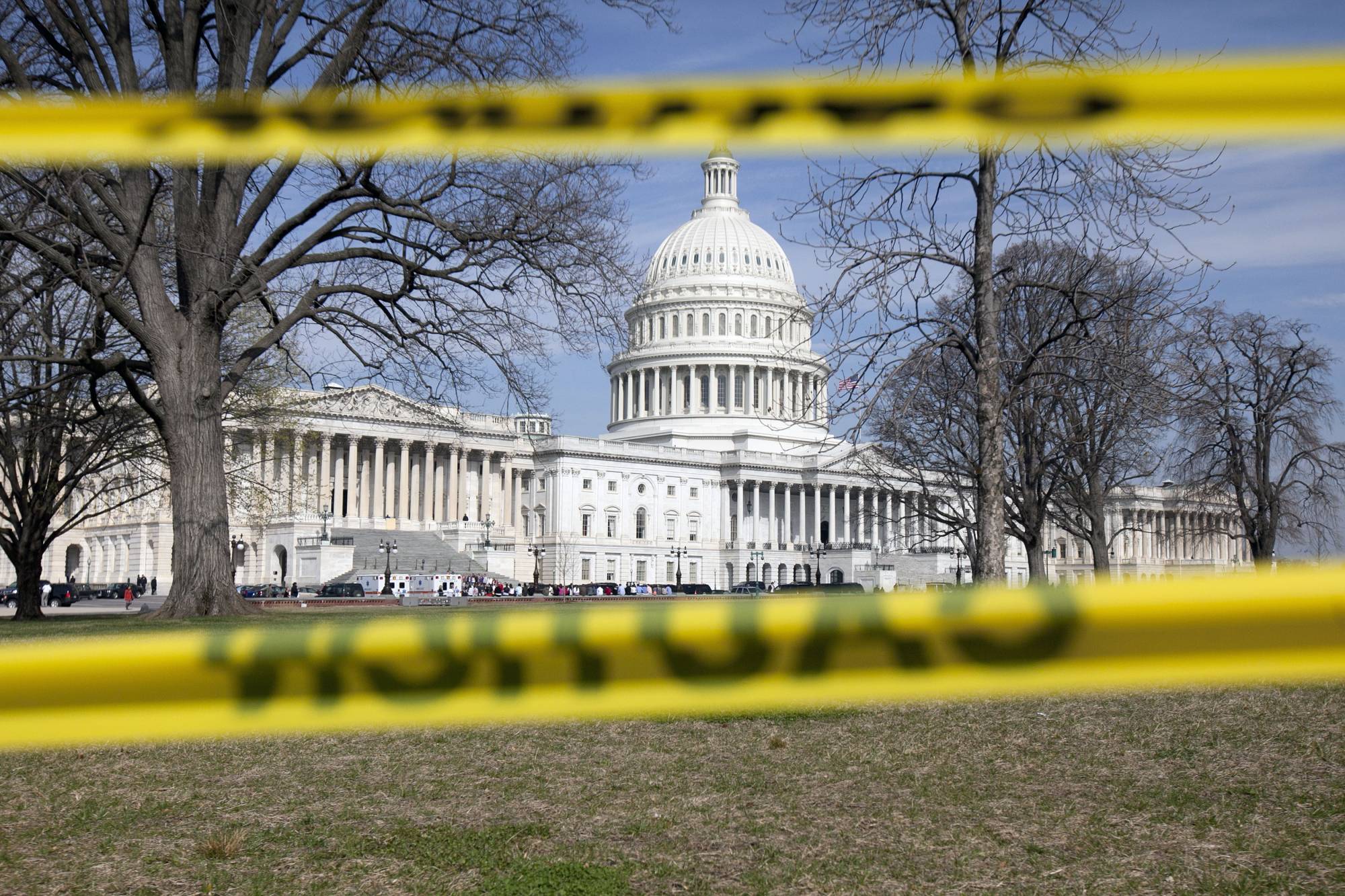
"caption": "The Capitol building stands behind caution tape at a construction site in Washington, D.C.",
"credit": "Andrew Harrer/Bloomberg",
"altTag": null,
"description": null,
"imgSizes": {
"medium": {
"file": "https://cdn.kqed.org/wp-content/uploads/sites/10/2025/10/GettyImages-903911876-2000x1333.jpg",
"width": 2000,
"height": 1333,
"mimeType": "image/jpeg"
},
"large": {
"file": "https://cdn.kqed.org/wp-content/uploads/sites/10/2025/10/GettyImages-903911876-2000x1333.jpg",
"width": 2000,
"height": 1333,
"mimeType": "image/jpeg"
},
"thumbnail": {
"file": "https://cdn.kqed.org/wp-content/uploads/sites/10/2025/10/GettyImages-903911876-160x107.jpg",
"width": 160,
"height": 107,
"mimeType": "image/jpeg"
},
"1536x1536": {
"file": "https://cdn.kqed.org/wp-content/uploads/sites/10/2025/10/GettyImages-903911876-1536x1024.jpg",
"width": 1536,
"height": 1024,
"mimeType": "image/jpeg"
},
"2048x2048": {
"file": "https://cdn.kqed.org/wp-content/uploads/sites/10/2025/10/GettyImages-903911876-2048x1365.jpg",
"width": 2048,
"height": 1365,
"mimeType": "image/jpeg"
},
"post-thumbnail": {
"file": "https://cdn.kqed.org/wp-content/uploads/sites/10/2025/10/GettyImages-903911876-672x372.jpg",
"width": 672,
"height": 372,
"mimeType": "image/jpeg"
},
"twentyfourteen-full-width": {
"file": "https://cdn.kqed.org/wp-content/uploads/sites/10/2025/10/GettyImages-903911876-1038x576.jpg",
"width": 1038,
"height": 576,
"mimeType": "image/jpeg"
},
"full-width": {
"file": "https://cdn.kqed.org/wp-content/uploads/sites/10/2025/10/GettyImages-903911876-2000x1333.jpg",
"width": 2000,
"height": 1333,
"mimeType": "image/jpeg"
},
"kqedFullSize": {
"file": "https://cdn.kqed.org/wp-content/uploads/sites/10/2025/10/GettyImages-903911876-scaled.jpg",
"width": 2560,
"height": 1706
}
},
"isLoading": false,
"fetchFailed": false
},
"news_12054336": {
"type": "attachments",
"id": "news_12054336",
"meta": {
"index": "attachments_1716263798",
"site": "news",
"id": "12054336",
"found": true
},
"title": "250831-CREATIVEMUTUALAID00140_TV-KQED",
"publishDate": 1756830735,
"status": "inherit",
"parent": 12058091,
"modified": 1759254619,
"caption": "Joe Mitchell (left) and Sara Rubenstein (right) pose for a portrait at their tabling session for Creative Mutual Aid at the Conservatory of Flowers in San Francisco on Aug. 31, 2025. Creative Mutual Aid, a group of Sara Rubenstein and Joe Mitchell, aims to bring mutual aid to San Francisco parks whether it’s through free trinkets, or providing household items.",
"credit": "Tâm Vũ/KQED",
"altTag": null,
"description": null,
"imgSizes": {
"thumbnail": {
"file": "https://cdn.kqed.org/wp-content/uploads/sites/10/2025/09/250831-CREATIVEMUTUALAID00140_TV-KQED-160x107.jpg",
"width": 160,
"height": 107,
"mimeType": "image/jpeg"
},
"1536x1536": {
"file": "https://cdn.kqed.org/wp-content/uploads/sites/10/2025/09/250831-CREATIVEMUTUALAID00140_TV-KQED-1536x1024.jpg",
"width": 1536,
"height": 1024,
"mimeType": "image/jpeg"
},
"post-thumbnail": {
"file": "https://cdn.kqed.org/wp-content/uploads/sites/10/2025/09/250831-CREATIVEMUTUALAID00140_TV-KQED-672x372.jpg",
"width": 672,
"height": 372,
"mimeType": "image/jpeg"
},
"twentyfourteen-full-width": {
"file": "https://cdn.kqed.org/wp-content/uploads/sites/10/2025/09/250831-CREATIVEMUTUALAID00140_TV-KQED-1038x576.jpg",
"width": 1038,
"height": 576,
"mimeType": "image/jpeg"
},
"kqedFullSize": {
"file": "https://cdn.kqed.org/wp-content/uploads/sites/10/2025/09/250831-CREATIVEMUTUALAID00140_TV-KQED.jpg",
"width": 2000,
"height": 1333
}
},
"isLoading": false,
"fetchFailed": false
},
"news_12055583": {
"type": "attachments",
"id": "news_12055583",
"meta": {
"index": "attachments_1716263798",
"site": "news",
"id": "12055583",
"found": true
},
"title": "Clean Air Vehicle",
"publishDate": 1757610953,
"status": "inherit",
"parent": 12055568,
"modified": 1757611147,
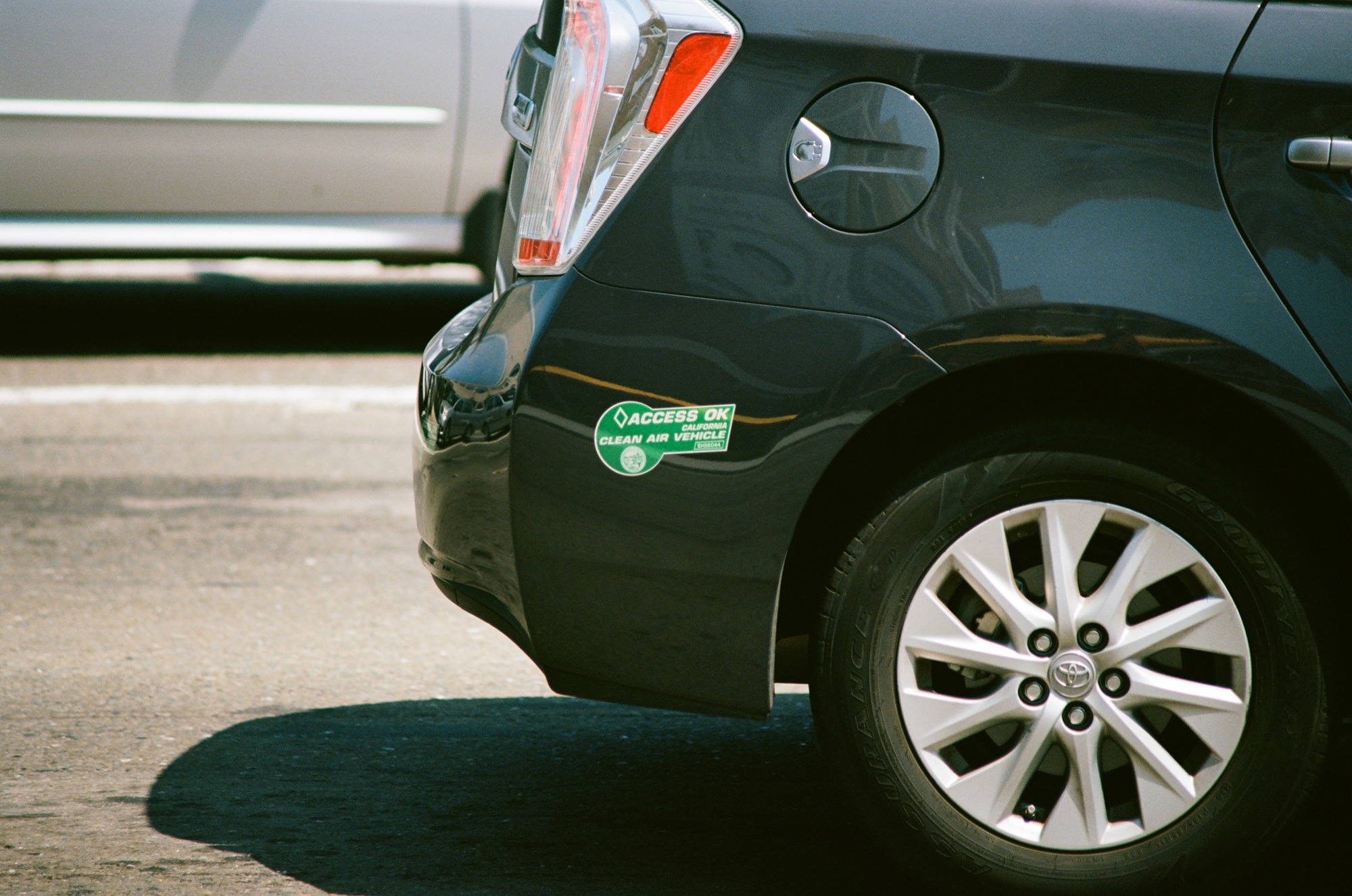
"caption": "A close-up of an 'Access OK – California Clean Air Vehicle' decal on the bumper of a black Toyota Prius, indicating the car is permitted to use carpool lanes, in Silicon Valley in San José, California, on Aug. 17, 2017.",
"credit": "Smith Collection/Gado/Getty Images",
"altTag": null,
"description": null,
"imgSizes": {
"thumbnail": {
"file": "https://cdn.kqed.org/wp-content/uploads/sites/10/2025/09/CleanAirVehicleDecalGetty-160x106.jpg",
"width": 160,
"height": 106,
"mimeType": "image/jpeg"
},
"1536x1536": {
"file": "https://cdn.kqed.org/wp-content/uploads/sites/10/2025/09/CleanAirVehicleDecalGetty-1536x1018.jpg",
"width": 1536,
"height": 1018,
"mimeType": "image/jpeg"
},
"post-thumbnail": {
"file": "https://cdn.kqed.org/wp-content/uploads/sites/10/2025/09/CleanAirVehicleDecalGetty-672x372.jpg",
"width": 672,
"height": 372,
"mimeType": "image/jpeg"
},
"twentyfourteen-full-width": {
"file": "https://cdn.kqed.org/wp-content/uploads/sites/10/2025/09/CleanAirVehicleDecalGetty-1038x576.jpg",
"width": 1038,
"height": 576,
"mimeType": "image/jpeg"
},
"kqedFullSize": {
"file": "https://cdn.kqed.org/wp-content/uploads/sites/10/2025/09/CleanAirVehicleDecalGetty.jpg",
"width": 2000,
"height": 1326
}
},
"isLoading": false,
"fetchFailed": false
},
"news_12058018": {
"type": "attachments",
"id": "news_12058018",
"meta": {
"index": "attachments_1716263798",
"site": "news",
"id": "12058018",
"found": true
},
"title": "Hope and Bounce2",
"publishDate": 1759176017,
"status": "inherit",
"parent": 12058007,
"modified": 1759176212,
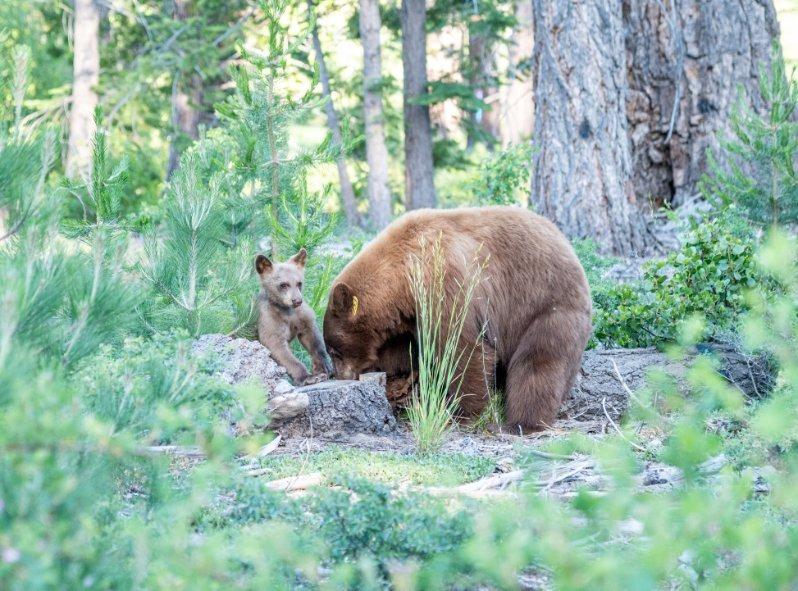
"caption": "Hope and Bounce foraging for food in the wild in Lake Tahoe in June 2025.",
"credit": "Courtesy of John Bryden/The BEAR League",
"altTag": null,
"description": null,
"imgSizes": {
"thumbnail": {
"file": "https://cdn.kqed.org/wp-content/uploads/sites/10/2025/09/Hope-and-Bounce2-160x118.jpg",
"width": 160,
"height": 118,
"mimeType": "image/jpeg"
},
"post-thumbnail": {
"file": "https://cdn.kqed.org/wp-content/uploads/sites/10/2025/09/Hope-and-Bounce2-672x372.jpg",
"width": 672,
"height": 372,
"mimeType": "image/jpeg"
},
"twentyfourteen-full-width": {
"file": "https://cdn.kqed.org/wp-content/uploads/sites/10/2025/09/Hope-and-Bounce2-798x576.jpg",
"width": 798,
"height": 576,
"mimeType": "image/jpeg"
},
"kqedFullSize": {
"file": "https://cdn.kqed.org/wp-content/uploads/sites/10/2025/09/Hope-and-Bounce2.jpg",
"width": 798,
"height": 591
}
},
"isLoading": false,
"fetchFailed": false
},
"news_12058063": {
"type": "attachments",
"id": "news_12058063",
"meta": {
"index": "attachments_1716263798",
"site": "news",
"id": "12058063",
"found": true
},
"title": "Calif. Democratic convention",
"publishDate": 1759189030,
"status": "inherit",
"parent": 12058028,
"modified": 1759189079,
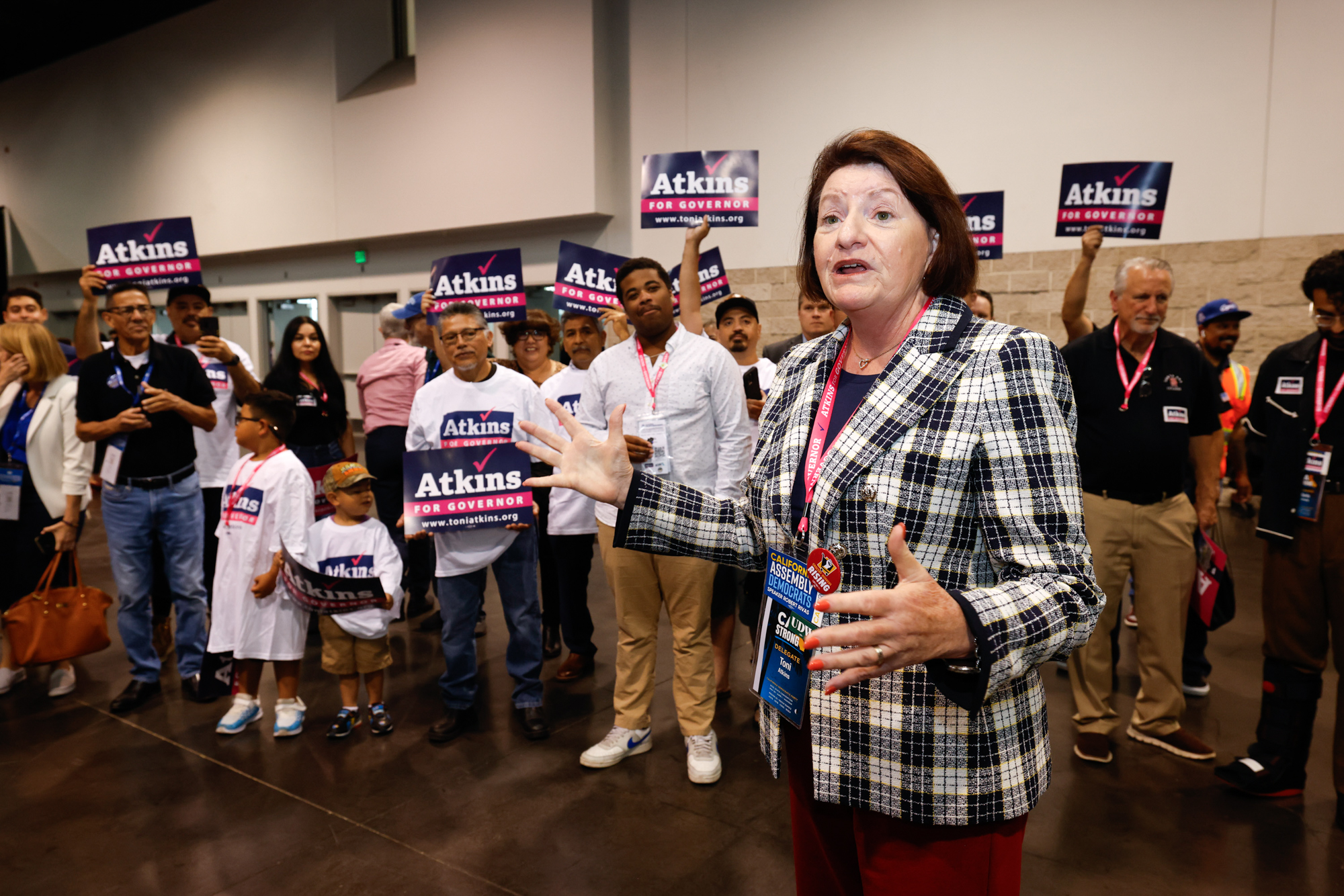
"caption": "Toni Atkins speaks to supporters at the California Democratic convention at the Anaheim Convention Center on May 31, 2025 in Los Angeles.",
"credit": "Carlin Stiehl / Los Angeles Times via Getty Images",
"altTag": null,
"description": null,
"imgSizes": {
"thumbnail": {
"file": "https://cdn.kqed.org/wp-content/uploads/sites/10/2025/09/GETTYIMAGES-2217377508-KQED-160x107.jpg",
"width": 160,
"height": 107,
"mimeType": "image/jpeg"
},
"1536x1536": {
"file": "https://cdn.kqed.org/wp-content/uploads/sites/10/2025/09/GETTYIMAGES-2217377508-KQED-1536x1025.jpg",
"width": 1536,
"height": 1025,
"mimeType": "image/jpeg"
},
"post-thumbnail": {
"file": "https://cdn.kqed.org/wp-content/uploads/sites/10/2025/09/GETTYIMAGES-2217377508-KQED-672x372.jpg",
"width": 672,
"height": 372,
"mimeType": "image/jpeg"
},
"twentyfourteen-full-width": {
"file": "https://cdn.kqed.org/wp-content/uploads/sites/10/2025/09/GETTYIMAGES-2217377508-KQED-1038x576.jpg",
"width": 1038,
"height": 576,
"mimeType": "image/jpeg"
},
"kqedFullSize": {
"file": "https://cdn.kqed.org/wp-content/uploads/sites/10/2025/09/GETTYIMAGES-2217377508-KQED.jpg",
"width": 2000,
"height": 1334
}
},
"isLoading": false,
"fetchFailed": false
},
"news_12051438": {
"type": "attachments",
"id": "news_12051438",
"meta": {
"index": "attachments_1716263798",
"site": "news",
"id": "12051438",
"found": true
},
"title": "GavinNewsomAISF2",
"publishDate": 1754670252,
"status": "inherit",
"parent": 12051433,
"modified": 1754670418,
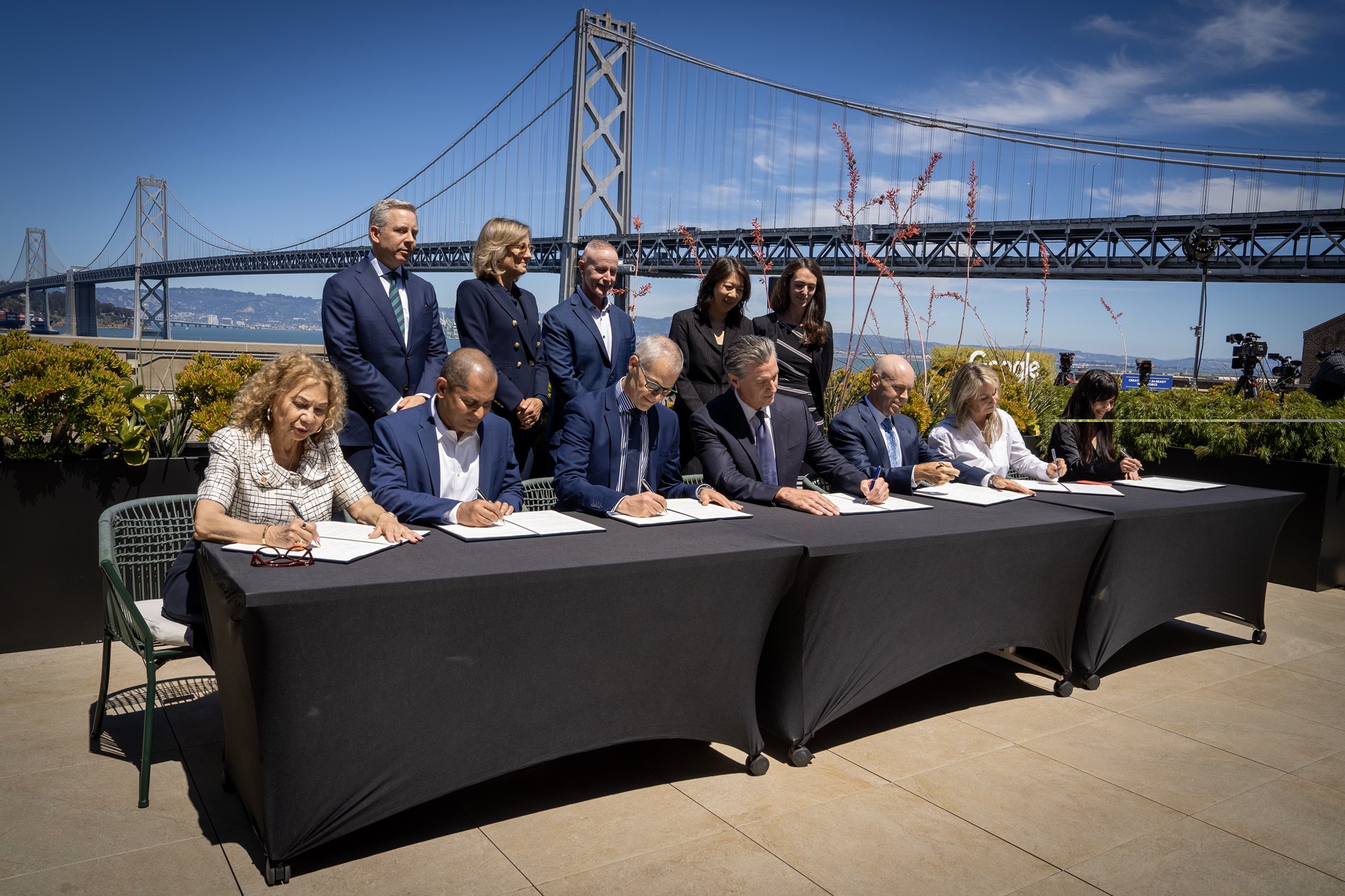
"caption": "On the rooftop of Google’s San Francisco Embarcadero offices on Aug. 7, 2025, Gov. Gavin Newsom announced a major statewide partnership with Google, Microsoft, IBM and Adobe to expand generative AI education — including training programs, certifications, and internships — across California’s high schools, community colleges and Cal State universities.",
"credit": "Courtesy of the Office of the Governor",
"altTag": null,
"description": null,
"imgSizes": {
"thumbnail": {
"file": "https://cdn.kqed.org/wp-content/uploads/sites/10/2025/08/GavinNewsomAISF2-160x107.jpg",
"width": 160,
"height": 107,
"mimeType": "image/jpeg"
},
"1536x1536": {
"file": "https://cdn.kqed.org/wp-content/uploads/sites/10/2025/08/GavinNewsomAISF2-1536x1024.jpg",
"width": 1536,
"height": 1024,
"mimeType": "image/jpeg"
},
"post-thumbnail": {
"file": "https://cdn.kqed.org/wp-content/uploads/sites/10/2025/08/GavinNewsomAISF2-672x372.jpg",
"width": 672,
"height": 372,
"mimeType": "image/jpeg"
},
"twentyfourteen-full-width": {
"file": "https://cdn.kqed.org/wp-content/uploads/sites/10/2025/08/GavinNewsomAISF2-1038x576.jpg",
"width": 1038,
"height": 576,
"mimeType": "image/jpeg"
},
"kqedFullSize": {
"file": "https://cdn.kqed.org/wp-content/uploads/sites/10/2025/08/GavinNewsomAISF2.jpg",
"width": 2000,
"height": 1333
}
},
"isLoading": false,
"fetchFailed": false
},
"news_12057957": {
"type": "attachments",
"id": "news_12057957",
"meta": {
"index": "attachments_1716263798",
"site": "news",
"id": "12057957",
"found": true
},
"title": "Rockies Giants Baseball",
"publishDate": 1759165287,
"status": "inherit",
"parent": 12057956,
"modified": 1759165308,
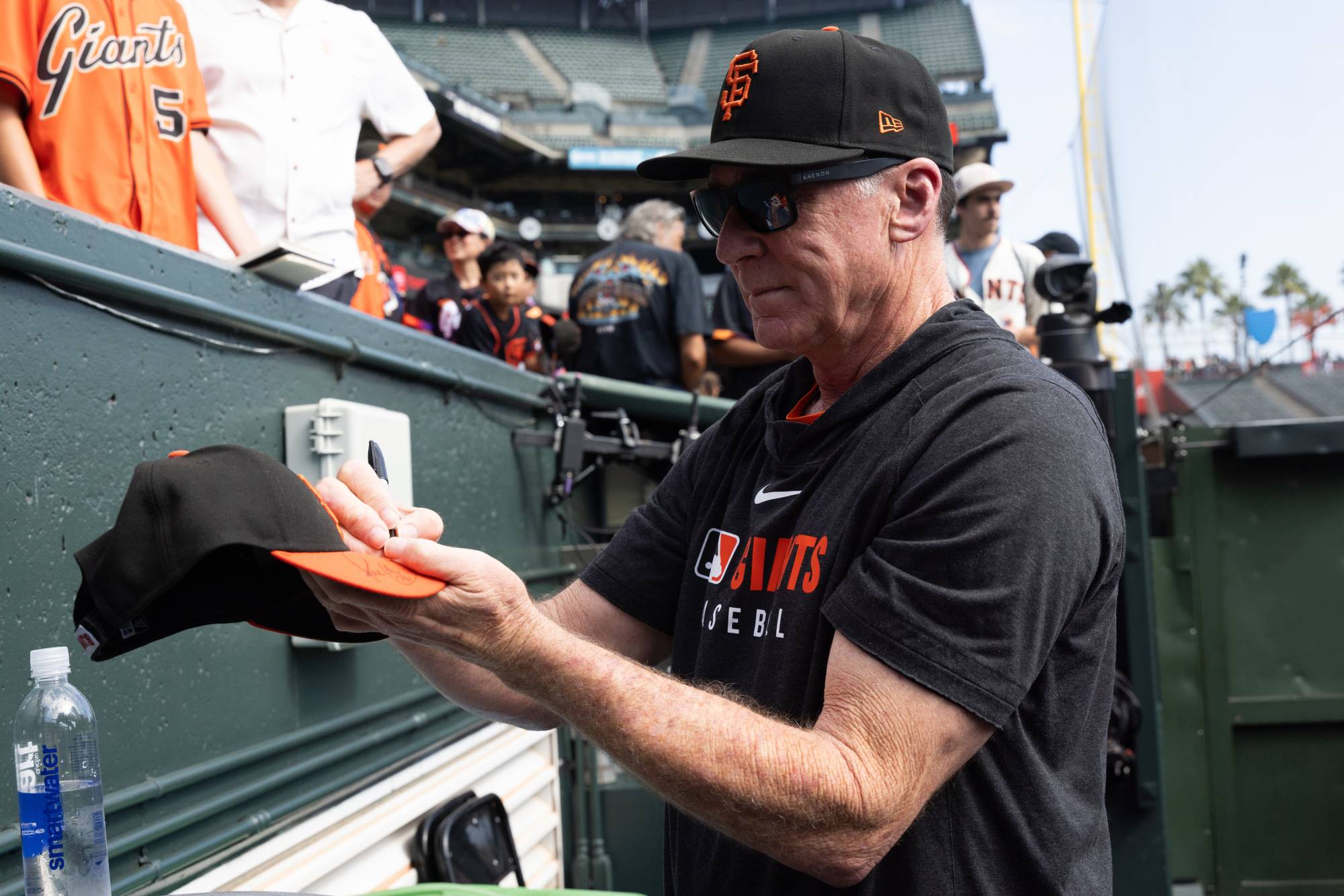
"caption": "San Francisco Giants manager Bob Melvin gives out autographs before an MLB baseball game against the Colorado Rockies, Saturday, Sept. 27, 2025, in San Francisco. ",
"credit": "Carlos Avila Gonzalez/San Francisco Chronicle via AP",
"altTag": null,
"description": null,
"imgSizes": {
"medium": {
"file": "https://cdn.kqed.org/wp-content/uploads/sites/10/2025/09/AP25270699858184-2000x1334.jpg",
"width": 2000,
"height": 1334,
"mimeType": "image/jpeg"
},
"large": {
"file": "https://cdn.kqed.org/wp-content/uploads/sites/10/2025/09/AP25270699858184-2000x1334.jpg",
"width": 2000,
"height": 1334,
"mimeType": "image/jpeg"
},
"thumbnail": {
"file": "https://cdn.kqed.org/wp-content/uploads/sites/10/2025/09/AP25270699858184-160x107.jpg",
"width": 160,
"height": 107,
"mimeType": "image/jpeg"
},
"1536x1536": {
"file": "https://cdn.kqed.org/wp-content/uploads/sites/10/2025/09/AP25270699858184-1536x1025.jpg",
"width": 1536,
"height": 1025,
"mimeType": "image/jpeg"
},
"2048x2048": {
"file": "https://cdn.kqed.org/wp-content/uploads/sites/10/2025/09/AP25270699858184-2048x1366.jpg",
"width": 2048,
"height": 1366,
"mimeType": "image/jpeg"
},
"post-thumbnail": {
"file": "https://cdn.kqed.org/wp-content/uploads/sites/10/2025/09/AP25270699858184-672x372.jpg",
"width": 672,
"height": 372,
"mimeType": "image/jpeg"
},
"twentyfourteen-full-width": {
"file": "https://cdn.kqed.org/wp-content/uploads/sites/10/2025/09/AP25270699858184-1038x576.jpg",
"width": 1038,
"height": 576,
"mimeType": "image/jpeg"
},
"full-width": {
"file": "https://cdn.kqed.org/wp-content/uploads/sites/10/2025/09/AP25270699858184-2000x1334.jpg",
"width": 2000,
"height": 1334,
"mimeType": "image/jpeg"
},
"kqedFullSize": {
"file": "https://cdn.kqed.org/wp-content/uploads/sites/10/2025/09/AP25270699858184-scaled.jpg",
"width": 2560,
"height": 1708
}
},
"isLoading": false,
"fetchFailed": false
},
"news_12057729": {
"type": "attachments",
"id": "news_12057729",
"meta": {
"index": "attachments_1716263798",
"site": "news",
"id": "12057729",
"found": true
},
"title": "ATinyPlot_1600x836",
"publishDate": 1758901862,
"status": "inherit",
"parent": 12057726,
"modified": 1758901862,
"caption": null,
"credit": null,
"altTag": null,
"description": null,
"imgSizes": {
"thumbnail": {
"file": "https://cdn.kqed.org/wp-content/uploads/sites/10/2025/09/ATinyPlot_1600x836-160x84.jpg",
"width": 160,
"height": 84,
"mimeType": "image/jpeg"
},
"1536x1536": {
"file": "https://cdn.kqed.org/wp-content/uploads/sites/10/2025/09/ATinyPlot_1600x836-1536x803.jpg",
"width": 1536,
"height": 803,
"mimeType": "image/jpeg"
},
"post-thumbnail": {
"file": "https://cdn.kqed.org/wp-content/uploads/sites/10/2025/09/ATinyPlot_1600x836-672x372.jpg",
"width": 672,
"height": 372,
"mimeType": "image/jpeg"
},
"twentyfourteen-full-width": {
"file": "https://cdn.kqed.org/wp-content/uploads/sites/10/2025/09/ATinyPlot_1600x836-1038x576.jpg",
"width": 1038,
"height": 576,
"mimeType": "image/jpeg"
},
"kqedFullSize": {
"file": "https://cdn.kqed.org/wp-content/uploads/sites/10/2025/09/ATinyPlot_1600x836.jpg",
"width": 1600,
"height": 836
}
},
"isLoading": false,
"fetchFailed": false
},
"news_12057246": {
"type": "attachments",
"id": "news_12057246",
"meta": {
"index": "attachments_1716263798",
"site": "news",
"id": "12057246",
"found": true
},
"title": "250922-KIRKVIGIL00438_TV-KQED",
"publishDate": 1758648837,
"status": "inherit",
"parent": 0,
"modified": 1758649093,
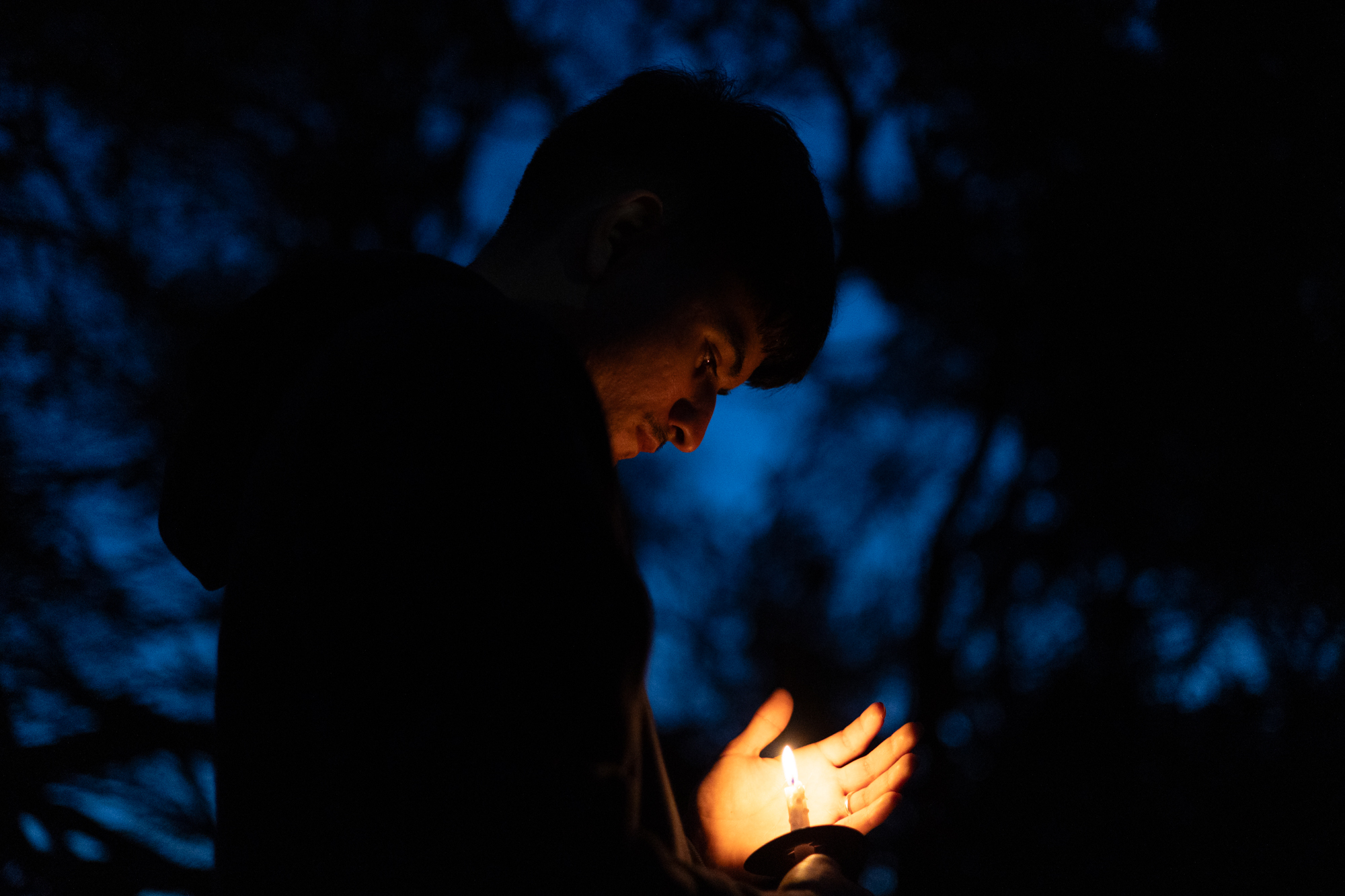
"caption": "Luis Viramontes, a Santa Rosa Junior College student, holds a candlelight at a vigil for Charlie Kirk hosted by the San Francisco State University chapter of Turning Point USA at Fort Funston in San Francisco on Sept. 22, 2025. The San Francisco State University Chapter of Turning Point USA hosts a vigil for Charlie Kirk who was shot and killed on Sept. 10, 2025.",
"credit": "Tâm Vũ/KQED",
"altTag": null,
"description": null,
"imgSizes": {
"thumbnail": {
"file": "https://cdn.kqed.org/wp-content/uploads/sites/10/2025/09/250922-KIRKVIGIL00438_TV-KQED-160x107.jpg",
"width": 160,
"height": 107,
"mimeType": "image/jpeg"
},
"1536x1536": {
"file": "https://cdn.kqed.org/wp-content/uploads/sites/10/2025/09/250922-KIRKVIGIL00438_TV-KQED-1536x1024.jpg",
"width": 1536,
"height": 1024,
"mimeType": "image/jpeg"
},
"post-thumbnail": {
"file": "https://cdn.kqed.org/wp-content/uploads/sites/10/2025/09/250922-KIRKVIGIL00438_TV-KQED-672x372.jpg",
"width": 672,
"height": 372,
"mimeType": "image/jpeg"
},
"twentyfourteen-full-width": {
"file": "https://cdn.kqed.org/wp-content/uploads/sites/10/2025/09/250922-KIRKVIGIL00438_TV-KQED-1038x576.jpg",
"width": 1038,
"height": 576,
"mimeType": "image/jpeg"
},
"kqedFullSize": {
"file": "https://cdn.kqed.org/wp-content/uploads/sites/10/2025/09/250922-KIRKVIGIL00438_TV-KQED.jpg",
"width": 2000,
"height": 1333
}
},
"isLoading": false,
"fetchFailed": false
},
"news_11965489": {
"type": "attachments",
"id": "news_11965489",
"meta": {
"index": "attachments_1716263798",
"site": "news",
"id": "11965489",
"found": true
},
"parent": 0,
"imgSizes": {
"twentyfourteen-full-width": {
"file": "https://ww2.kqed.org/app/uploads/sites/10/2023/10/231024-Belva-Davis-Getty-CAG-KQED-1038x576.jpg",
"width": 1038,
"mimeType": "image/jpeg",
"height": 576
},
"thumbnail": {
"file": "https://ww2.kqed.org/app/uploads/sites/10/2023/10/231024-Belva-Davis-Getty-CAG-KQED-160x105.jpg",
"width": 160,
"mimeType": "image/jpeg",
"height": 105
},
"post-thumbnail": {
"file": "https://ww2.kqed.org/app/uploads/sites/10/2023/10/231024-Belva-Davis-Getty-CAG-KQED-672x372.jpg",
"width": 672,
"mimeType": "image/jpeg",
"height": 372
},
"kqedFullSize": {
"file": "https://ww2.kqed.org/app/uploads/sites/10/2023/10/231024-Belva-Davis-Getty-CAG-KQED.jpg",
"width": 2000,
"height": 1316
},
"large": {
"file": "https://ww2.kqed.org/app/uploads/sites/10/2023/10/231024-Belva-Davis-Getty-CAG-KQED-1020x671.jpg",
"width": 1020,
"mimeType": "image/jpeg",
"height": 671
},
"1536x1536": {
"file": "https://ww2.kqed.org/app/uploads/sites/10/2023/10/231024-Belva-Davis-Getty-CAG-KQED-1536x1011.jpg",
"width": 1536,
"mimeType": "image/jpeg",
"height": 1011
},
"full-width": {
"file": "https://ww2.kqed.org/app/uploads/sites/10/2023/10/231024-Belva-Davis-Getty-CAG-KQED-1920x1263.jpg",
"width": 1920,
"mimeType": "image/jpeg",
"height": 1263
},
"medium": {
"file": "https://ww2.kqed.org/app/uploads/sites/10/2023/10/231024-Belva-Davis-Getty-CAG-KQED-800x526.jpg",
"width": 800,
"mimeType": "image/jpeg",
"height": 526
}
},
"publishDate": 1698191387,
"modified": 1698264052,
"caption": "Belva Davis, a legend of Bay Area journalism and the first Black woman to be hired as a TV journalist on the West Coast, pictured speaking at an event in San Francisco in 2010.",
"description": null,
"title": "Mistress of Ceremonies, Belva Davis, addresses the audience during an event celebrating the life and work of Quentin Easter, founding executive director of the Lorraine Hansberry Theatre who passed away recently.The theater community came together at the",
"credit": "Carlos Avila Gonzalez/The San Francisco Chronicle via Getty Images",
"status": "inherit",
"altTag": "A person with long hair speaks into a set of microphones in a dark room.",
"isLoading": false,
"fetchFailed": false
},
"news_12057283": {
"type": "attachments",
"id": "news_12057283",
"meta": {
"index": "attachments_1716263798",
"site": "news",
"id": "12057283",
"found": true
},
"title": "calmatters_091825_Fresno-Courthouse_LV_10",
"publishDate": 1758654977,
"status": "inherit",
"parent": 12057278,
"modified": 1758655019,
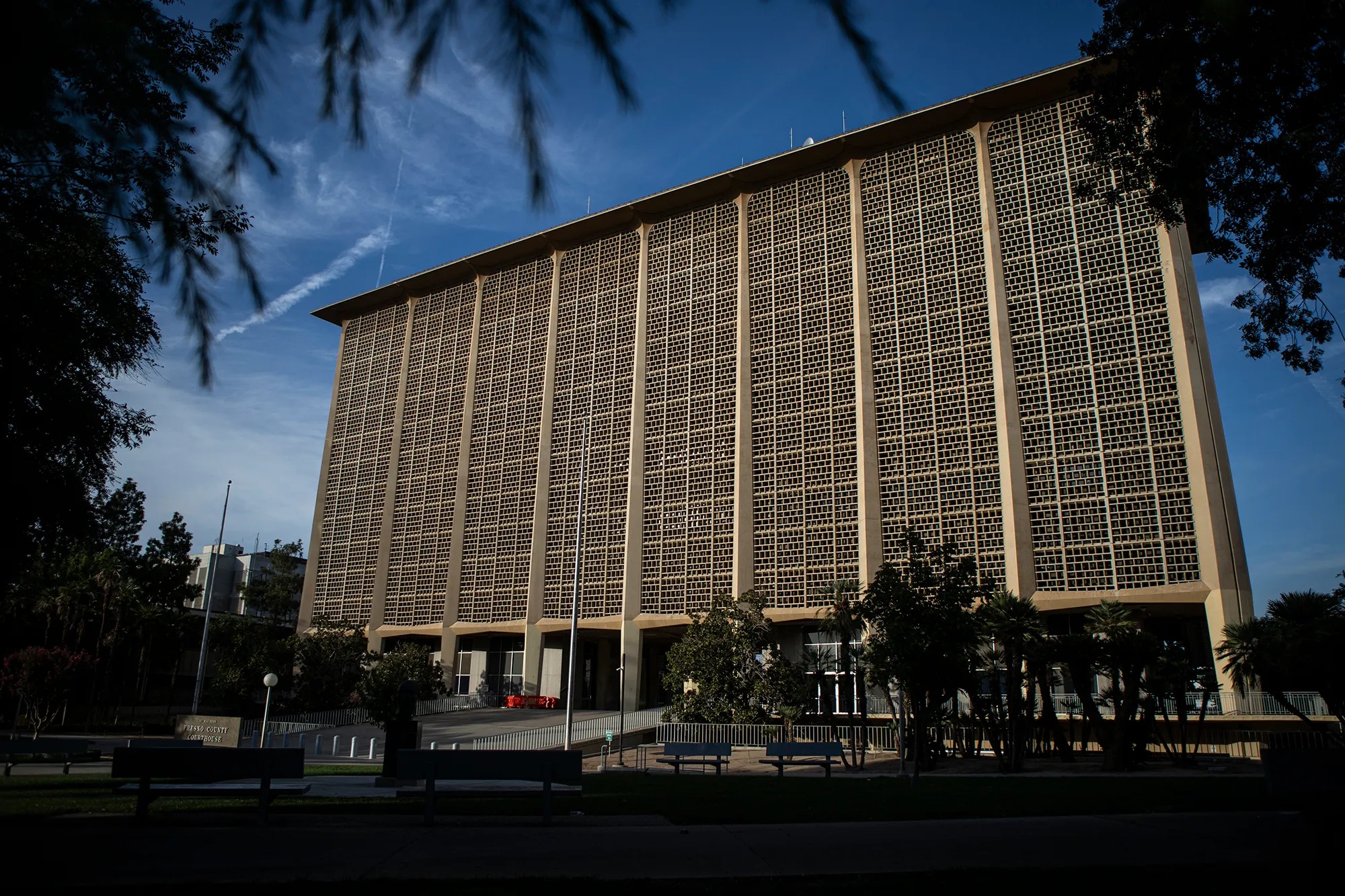
"caption": "The Fresno County Courthouse on Sept. 17, 2025.",
"credit": "Larry Valenzuela, CalMatters/CatchLight Local",
"altTag": null,
"description": null,
"imgSizes": {
"thumbnail": {
"file": "https://cdn.kqed.org/wp-content/uploads/sites/10/2025/09/calmatters_091825_Fresno-Courthouse_LV_10-160x107.jpg",
"width": 160,
"height": 107,
"mimeType": "image/jpeg"
},
"1536x1536": {
"file": "https://cdn.kqed.org/wp-content/uploads/sites/10/2025/09/calmatters_091825_Fresno-Courthouse_LV_10-1536x1024.jpg",
"width": 1536,
"height": 1024,
"mimeType": "image/jpeg"
},
"post-thumbnail": {
"file": "https://cdn.kqed.org/wp-content/uploads/sites/10/2025/09/calmatters_091825_Fresno-Courthouse_LV_10-672x372.jpg",
"width": 672,
"height": 372,
"mimeType": "image/jpeg"
},
"twentyfourteen-full-width": {
"file": "https://cdn.kqed.org/wp-content/uploads/sites/10/2025/09/calmatters_091825_Fresno-Courthouse_LV_10-1038x576.jpg",
"width": 1038,
"height": 576,
"mimeType": "image/jpeg"
},
"kqedFullSize": {
"file": "https://cdn.kqed.org/wp-content/uploads/sites/10/2025/09/calmatters_091825_Fresno-Courthouse_LV_10.jpg",
"width": 2000,
"height": 1333
}
},
"isLoading": false,
"fetchFailed": false
},
"news_12055604": {
"type": "attachments",
"id": "news_12055604",
"meta": {
"index": "attachments_1716263798",
"site": "news",
"id": "12055604",
"found": true
},
"title": "250909-UCBINCARCERATED-01-BL-KQED",
"publishDate": 1757613109,
"status": "inherit",
"parent": 0,
"modified": 1757613199,
"caption": "Shani Shay (right), director of Incarceration to College, works with Laney College student Bryan Minero at the program’s offices on the UC Berkeley campus on Sept. 9, 2025. The initiative supports system-impacted youth in accessing higher education.",
"credit": "Beth LaBerge/KQED",
"altTag": null,
"description": null,
"imgSizes": {
"thumbnail": {
"file": "https://cdn.kqed.org/wp-content/uploads/sites/10/2025/09/250909-UCBINCARCERATED-01-BL-KQED-160x107.jpg",
"width": 160,
"height": 107,
"mimeType": "image/jpeg"
},
"1536x1536": {
"file": "https://cdn.kqed.org/wp-content/uploads/sites/10/2025/09/250909-UCBINCARCERATED-01-BL-KQED-1536x1024.jpg",
"width": 1536,
"height": 1024,
"mimeType": "image/jpeg"
},
"post-thumbnail": {
"file": "https://cdn.kqed.org/wp-content/uploads/sites/10/2025/09/250909-UCBINCARCERATED-01-BL-KQED-672x372.jpg",
"width": 672,
"height": 372,
"mimeType": "image/jpeg"
},
"twentyfourteen-full-width": {
"file": "https://cdn.kqed.org/wp-content/uploads/sites/10/2025/09/250909-UCBINCARCERATED-01-BL-KQED-1038x576.jpg",
"width": 1038,
"height": 576,
"mimeType": "image/jpeg"
},
"kqedFullSize": {
"file": "https://cdn.kqed.org/wp-content/uploads/sites/10/2025/09/250909-UCBINCARCERATED-01-BL-KQED.jpg",
"width": 2000,
"height": 1333
}
},
"isLoading": false,
"fetchFailed": false
}
},
"audioPlayerReducer": {
"postId": "stream_live",
"isPaused": true,
"isPlaying": false,
"pfsActive": false,
"pledgeModalIsOpen": true,
"playerDrawerIsOpen": false,
"liveAudioPlayStartedAt": 0,
"liveAudioPlayContext": ""
},
"authorsReducer": {
"byline_news_12058091": {
"type": "authors",
"id": "byline_news_12058091",
"meta": {
"override": true
},
"slug": "byline_news_12058091",
"name": "Hussain Khan",
"isLoading": false
},
"byline_news_12057956": {
"type": "authors",
"id": "byline_news_12057956",
"meta": {
"override": true
},
"slug": "byline_news_12057956",
"name": "Janie McCauley, The Associated Press",
"isLoading": false
},
"byline_news_12057278": {
"type": "authors",
"id": "byline_news_12057278",
"meta": {
"override": true
},
"slug": "byline_news_12057278",
"name": "Nigel Duara, CalMatters",
"isLoading": false
},
"gmarzorati": {
"type": "authors",
"id": "227",
"meta": {
"index": "authors_1716337520",
"id": "227",
"found": true
},
"name": "Guy Marzorati",
"firstName": "Guy",
"lastName": "Marzorati",
"slug": "gmarzorati",
"email": "gmarzorati@KQED.org",
"display_author_email": true,
"staff_mastheads": [
"news"
],
"title": "Correspondent",
"bio": "Guy Marzorati is a correspondent on KQED's California Politics and Government Desk, based in San Jose. A graduate of Santa Clara University, Guy joined KQED in 2013. He reports on state and local politics and produces KQED's digital voter guide.",
"avatar": "https://secure.gravatar.com/avatar/e7038b8dbfd55b104369b76b1cd0b9de?s=600&d=blank&r=g",
"twitter": "guymarzorati",
"facebook": null,
"instagram": null,
"linkedin": null,
"sites": [
{
"site": "",
"roles": [
"editor"
]
},
{
"site": "news",
"roles": [
"editor"
]
},
{
"site": "science",
"roles": [
"editor"
]
},
{
"site": "forum",
"roles": [
"editor"
]
},
{
"site": "elections",
"roles": [
"editor"
]
},
{
"site": "liveblog",
"roles": [
"editor"
]
}
],
"headData": {
"title": "Guy Marzorati | KQED",
"description": "Correspondent",
"ogImgSrc": "https://secure.gravatar.com/avatar/e7038b8dbfd55b104369b76b1cd0b9de?s=600&d=blank&r=g",
"twImgSrc": "https://secure.gravatar.com/avatar/e7038b8dbfd55b104369b76b1cd0b9de?s=600&d=blank&r=g"
},
"isLoading": false,
"link": "/author/gmarzorati"
},
"kqed": {
"type": "authors",
"id": "236",
"meta": {
"index": "authors_1716337520",
"id": "236",
"found": true
},
"name": "KQED News Staff",
"firstName": "KQED News Staff",
"lastName": null,
"slug": "kqed",
"email": "faq@kqed.org",
"display_author_email": false,
"staff_mastheads": [],
"title": null,
"bio": null,
"avatar": "https://secure.gravatar.com/avatar/ef0e801a68c4c54afa9180db14084167?s=600&d=blank&r=g",
"twitter": null,
"facebook": null,
"instagram": null,
"linkedin": null,
"sites": [
{
"site": "arts",
"roles": [
"contributor"
]
},
{
"site": "news",
"roles": [
"editor"
]
},
{
"site": "futureofyou",
"roles": [
"author"
]
}
],
"headData": {
"title": "KQED News Staff | KQED",
"description": null,
"ogImgSrc": "https://secure.gravatar.com/avatar/ef0e801a68c4c54afa9180db14084167?s=600&d=blank&r=g",
"twImgSrc": "https://secure.gravatar.com/avatar/ef0e801a68c4c54afa9180db14084167?s=600&d=blank&r=g"
},
"isLoading": false,
"link": "/author/kqed"
},
"rachael-myrow": {
"type": "authors",
"id": "251",
"meta": {
"index": "authors_1716337520",
"id": "251",
"found": true
},
"name": "Rachael Myrow",
"firstName": "Rachael",
"lastName": "Myrow",
"slug": "rachael-myrow",
"email": "rmyrow@kqed.org",
"display_author_email": true,
"staff_mastheads": [
"news"
],
"title": "Senior Editor of KQED's Silicon Valley News Desk",
"bio": "• I write and edit stories about how Silicon Valley power and policies shape everyday life in California. I’m also passionate about making Bay Area history and culture more accessible to a broad public. • I’ve been a journalist for most of my life, starting in high school with The Franklin Press in Los Angeles, where I grew up. While earning my first degree in English at UC Berkeley, I got my start in public radio at KALX-FM. After completing a second degree in journalism at Cal, I landed my first professional job at Marketplace, then moved on to KPCC (now LAist), and then KQED, where I hosted The California Report for more than seven years. • My reporting has appeared on NPR, The World, WBUR’s \u003ci>Here & Now\u003c/i>, and the BBC. I also guest host for KQED’s \u003ci>Forum\u003c/i>, as well as the Commonwealth Club in San Francisco. • I speak periodically on media, democracy and technology issues, and do voiceover work for documentaries and educational video projects. • Outside of the studio, you'll find me hiking Bay Area trails and whipping up Insta-ready meals in my kitchen. • I do not accept gifts, money, or favors from anyone connected to my reporting, I don't pay people for information, and I do not support or donate to political causes. • I strive to treat the people I report on with fairness, honesty, and respect. I also recognize there are often multiple sides to a story and work to verify information through multiple sources and documentation. If I get something wrong, I correct it.",
"avatar": "https://secure.gravatar.com/avatar/87bf8cb5874e045cdff430523a6d48b1?s=600&d=blank&r=g",
"twitter": "rachaelmyrow",
"facebook": null,
"instagram": null,
"linkedin": "https://www.linkedin.com/in/rachaelmyrow/",
"sites": [
{
"site": "arts",
"roles": [
"administrator"
]
},
{
"site": "news",
"roles": [
"edit_others_posts",
"editor"
]
},
{
"site": "futureofyou",
"roles": [
"editor"
]
},
{
"site": "bayareabites",
"roles": [
"editor"
]
},
{
"site": "stateofhealth",
"roles": [
"editor"
]
},
{
"site": "science",
"roles": [
"editor"
]
},
{
"site": "food",
"roles": [
"editor"
]
},
{
"site": "forum",
"roles": [
"editor"
]
},
{
"site": "liveblog",
"roles": [
"author"
]
}
],
"headData": {
"title": "Rachael Myrow | KQED",
"description": "Senior Editor of KQED's Silicon Valley News Desk",
"ogImgSrc": "https://secure.gravatar.com/avatar/87bf8cb5874e045cdff430523a6d48b1?s=600&d=blank&r=g",
"twImgSrc": "https://secure.gravatar.com/avatar/87bf8cb5874e045cdff430523a6d48b1?s=600&d=blank&r=g"
},
"isLoading": false,
"link": "/author/rachael-myrow"
},
"scottshafer": {
"type": "authors",
"id": "255",
"meta": {
"index": "authors_1716337520",
"id": "255",
"found": true
},
"name": "Scott Shafer",
"firstName": "Scott",
"lastName": "Shafer",
"slug": "scottshafer",
"email": "sshafer@kqed.org",
"display_author_email": false,
"staff_mastheads": [
"news"
],
"title": "KQED Contributor",
"bio": "Scott Shafer is a senior editor with the KQED Politics and Government desk. He is co-host of Political Breakdown, the award-winning radio show and podcast with a personal take on the world of politics. Scott came to KQED in 1998 to host the statewide\u003cem> California Report\u003c/em>. Prior to that he had extended stints in politics and government\u003cem>.\u003c/em> He uses that inside experience at KQED in his, reporting, hosting and analysis for the politics desk. Scott collaborated \u003cem>Political Breakdown a\u003c/em>nd on \u003cem>The Political Mind of Jerry Brown, \u003c/em>an eight-part series about the life and extraordinary political career of the former governor. For fun, he plays water polo with the San Francisco Tsunami.",
"avatar": "https://secure.gravatar.com/avatar/a62ebae45b79d7aed1a39a0e3bf68104?s=600&d=blank&r=g",
"twitter": "scottshafer",
"bluesky": null,
"facebook": null,
"instagram": null,
"linkedin": null,
"sites": [
{
"site": "news",
"roles": [
"editor"
]
},
{
"site": "stateofhealth",
"roles": [
"author"
]
},
{
"site": "science",
"roles": [
"author"
]
},
{
"site": "forum",
"roles": [
"subscriber"
]
},
{
"site": "liveblog",
"roles": [
"author"
]
}
],
"headData": {
"title": "Scott Shafer | KQED",
"description": "KQED Contributor",
"ogImgSrc": "https://secure.gravatar.com/avatar/a62ebae45b79d7aed1a39a0e3bf68104?s=600&d=blank&r=g",
"twImgSrc": "https://secure.gravatar.com/avatar/a62ebae45b79d7aed1a39a0e3bf68104?s=600&d=blank&r=g"
},
"isLoading": false,
"link": "/author/scottshafer"
},
"shossaini": {
"type": "authors",
"id": "3214",
"meta": {
"index": "authors_1716337520",
"id": "3214",
"found": true
},
"name": "Sara Hossaini",
"firstName": "Sara",
"lastName": "Hossaini",
"slug": "shossaini",
"email": "shossaini@kqed.org",
"display_author_email": true,
"staff_mastheads": [
"news"
],
"title": "KQED Reporter",
"bio": "Sara Hossaini came to general assignment reporting at KQED in 2013 after two winters reporting at Wyoming Public Radio. She holds a bachelor's degree in broadcast journalism from the University of Nebraska-Lincoln. Her radio romance began after a bitter breakup with documentary film (Ok, maybe it's still complicated). Her first simultaneous jobs in San Francisco were as Associate Producer on a PBS film series through the Center for Asian American Media and as a butler. She likes to trot, plot and make things with her hands.",
"avatar": "https://secure.gravatar.com/avatar/060e9f56b9554e17942e89f413242774?s=600&d=blank&r=g",
"twitter": "mshossaini",
"facebook": null,
"instagram": null,
"linkedin": null,
"sites": [
{
"site": "news",
"roles": [
"author"
]
},
{
"site": "stateofhealth",
"roles": [
"author"
]
}
],
"headData": {
"title": "Sara Hossaini | KQED",
"description": "KQED Reporter",
"ogImgSrc": "https://secure.gravatar.com/avatar/060e9f56b9554e17942e89f413242774?s=600&d=blank&r=g",
"twImgSrc": "https://secure.gravatar.com/avatar/060e9f56b9554e17942e89f413242774?s=600&d=blank&r=g"
},
"isLoading": false,
"link": "/author/shossaini"
},
"ccabreralomeli": {
"type": "authors",
"id": "11708",
"meta": {
"index": "authors_1716337520",
"id": "11708",
"found": true
},
"name": "Carlos Cabrera-Lomelí",
"firstName": "Carlos",
"lastName": "Cabrera-Lomelí",
"slug": "ccabreralomeli",
"email": "ccabreralomeli@KQED.org",
"display_author_email": true,
"staff_mastheads": [
"news"
],
"title": "Community Reporter",
"bio": "Carlos Cabrera-Lomelí is a community reporter with KQED's digital engagement team. He also reports and co-produces for KQED's bilingual news hub KQED en Español. He grew up in San Francisco's Mission District and has previously worked with Univision, 48 Hills and REFORMA in Mexico City.",
"avatar": "https://secure.gravatar.com/avatar/c309be9665e484f887b818c89e273ecc673004f426f36b24d00a4d813a2e0518?s=600&d=blank&r=g",
"twitter": "@LomeliCabrera",
"bluesky": null,
"facebook": null,
"instagram": null,
"linkedin": null,
"sites": [
{
"site": "arts",
"roles": [
"editor"
]
},
{
"site": "news",
"roles": [
"editor"
]
},
{
"site": "about",
"roles": [
"editor"
]
},
{
"site": "science",
"roles": [
"editor"
]
},
{
"site": "perspectives",
"roles": [
"editor"
]
},
{
"site": "elections",
"roles": [
"editor"
]
},
{
"site": "liveblog",
"roles": [
"contributor"
]
}
],
"headData": {
"title": "Carlos Cabrera-Lomelí | KQED",
"description": "Community Reporter",
"ogImgSrc": "https://secure.gravatar.com/avatar/c309be9665e484f887b818c89e273ecc673004f426f36b24d00a4d813a2e0518?s=600&d=blank&r=g",
"twImgSrc": "https://secure.gravatar.com/avatar/c309be9665e484f887b818c89e273ecc673004f426f36b24d00a4d813a2e0518?s=600&d=blank&r=g"
},
"isLoading": false,
"link": "/author/ccabreralomeli"
},
"adahlstromeckman": {
"type": "authors",
"id": "11785",
"meta": {
"index": "authors_1716337520",
"id": "11785",
"found": true
},
"name": "Azul Dahlstrom-Eckman",
"firstName": "Azul",
"lastName": "Dahlstrom-Eckman",
"slug": "adahlstromeckman",
"email": "adahlstrom-eckman@kqed.org",
"display_author_email": true,
"staff_mastheads": [],
"title": "Reporter",
"bio": "Azul is a reporter for KQED focusing on transportation and features. He joined KQED in 2021 as an alumna of KALW's Audio Academy radio journalism training program.",
"avatar": "https://secure.gravatar.com/avatar/9cb750298435add7815a777f55bf1f46845c1386bb8452555c60a7b820b5aba3?s=600&d=blank&r=g",
"twitter": "@zuliemann",
"bluesky": "@azul415.bsky.social",
"facebook": null,
"instagram": null,
"linkedin": null,
"sites": [
{
"site": "arts",
"roles": [
"editor"
]
},
{
"site": "news",
"roles": [
"editor"
]
},
{
"site": "science",
"roles": [
"editor"
]
},
{
"site": "liveblog",
"roles": [
"author"
]
}
],
"headData": {
"title": "Azul Dahlstrom-Eckman | KQED",
"description": "Reporter",
"ogImgSrc": "https://secure.gravatar.com/avatar/9cb750298435add7815a777f55bf1f46845c1386bb8452555c60a7b820b5aba3?s=600&d=blank&r=g",
"twImgSrc": "https://secure.gravatar.com/avatar/9cb750298435add7815a777f55bf1f46845c1386bb8452555c60a7b820b5aba3?s=600&d=blank&r=g"
},
"isLoading": false,
"link": "/author/adahlstromeckman"
},
"nkhan": {
"type": "authors",
"id": "11867",
"meta": {
"index": "authors_1716337520",
"id": "11867",
"found": true
},
"name": "Nisa Khan",
"firstName": "Nisa",
"lastName": "Khan",
"slug": "nkhan",
"email": "nkhan@kqed.org",
"display_author_email": false,
"staff_mastheads": [],
"title": "KQED Contributor",
"bio": "Nisa Khan is a reporter for KQED's Audience News Desk. She was formerly a data reporter at Michigan Radio. She earned a Bachelor of Science in Information from the University of Michigan and a Master of Arts in Communication from Stanford University.",
"avatar": "https://secure.gravatar.com/avatar/a3bf1efcfbe7658d13a434cc54d0b2e3?s=600&d=blank&r=g",
"twitter": "mnisakhan",
"bluesky": null,
"facebook": null,
"instagram": null,
"linkedin": null,
"sites": [
{
"site": "arts",
"roles": [
"editor"
]
},
{
"site": "news",
"roles": [
"editor"
]
},
{
"site": "science",
"roles": [
"editor",
"author"
]
},
{
"site": "forum",
"roles": [
"editor"
]
},
{
"site": "liveblog",
"roles": [
"contributor"
]
}
],
"headData": {
"title": "Nisa Khan | KQED",
"description": "KQED Contributor",
"ogImgSrc": "https://secure.gravatar.com/avatar/a3bf1efcfbe7658d13a434cc54d0b2e3?s=600&d=blank&r=g",
"twImgSrc": "https://secure.gravatar.com/avatar/a3bf1efcfbe7658d13a434cc54d0b2e3?s=600&d=blank&r=g"
},
"isLoading": false,
"link": "/author/nkhan"
},
"kdebenedetti": {
"type": "authors",
"id": "11913",
"meta": {
"index": "authors_1716337520",
"id": "11913",
"found": true
},
"name": "Katie DeBenedetti",
"firstName": "Katie",
"lastName": "DeBenedetti",
"slug": "kdebenedetti",
"email": "kdebenedetti@kqed.org",
"display_author_email": false,
"staff_mastheads": [
"news",
"science"
],
"title": "KQED Contributor",
"bio": "Katie DeBenedetti is a digital reporter covering daily news for the Express Desk. Prior to joining KQED as a culture reporting intern in January 2024, she covered education and city government for the Napa Valley Register.",
"avatar": "https://secure.gravatar.com/avatar/6e31073cb8f7e4214ab03f42771d0f45?s=600&d=blank&r=g",
"twitter": null,
"facebook": null,
"instagram": null,
"linkedin": null,
"sites": [
{
"site": "news",
"roles": [
"author"
]
},
{
"site": "science",
"roles": [
"author"
]
},
{
"site": "liveblog",
"roles": [
"author"
]
}
],
"headData": {
"title": "Katie DeBenedetti | KQED",
"description": "KQED Contributor",
"ogImgSrc": "https://secure.gravatar.com/avatar/6e31073cb8f7e4214ab03f42771d0f45?s=600&d=blank&r=g",
"twImgSrc": "https://secure.gravatar.com/avatar/6e31073cb8f7e4214ab03f42771d0f45?s=600&d=blank&r=g"
},
"isLoading": false,
"link": "/author/kdebenedetti"
}
},
"pagesReducer": {
"news_tag_california": {
"type": "terms",
"id": "news_18538",
"meta": {
"index": "terms_1716263798",
"site": "news",
"id": "18538",
"score": 6.8456693
},
"featImg": null,
"name": "California",
"description": null,
"taxonomy": "tag",
"headData": {
"twImgId": null,
"twTitle": null,
"ogTitle": null,
"ogImgId": null,
"twDescription": null,
"description": null,
"title": "California Archives | KQED News",
"ogDescription": null
},
"ttid": 31,
"slug": "california",
"isLoading": false,
"title": "California",
"pageMeta": {
"site": "news",
"WpPageTemplate": "page-topic-editorial",
"currentPage": 54
},
"blocks": [
{
"blockName": "kqed/post-list",
"attrs": {
"layout": "cardArticle2",
"query": "posts/news?tag=california",
"seeMore": false,
"paginated": true,
"page": 54
}
},
{
"blockName": "kqed/ad"
}
]
}
},
"pfsSessionReducer": {},
"postsReducer": {
"stream_live": {
"type": "live",
"id": "stream_live",
"audioUrl": "https://streams.kqed.org/kqedradio",
"title": "Live Stream",
"excerpt": "Live Stream information currently unavailable.",
"link": "/radio",
"featImg": "",
"label": {
"name": "KQED Live",
"link": "/"
}
},
"stream_kqedNewscast": {
"type": "posts",
"id": "stream_kqedNewscast",
"audioUrl": "https://www.kqed.org/.stream/anon/radio/RDnews/newscast.mp3?_=1",
"title": "KQED Newscast",
"featImg": "",
"label": {
"name": "88.5 FM",
"link": "/"
}
},
"news_12058260": {
"type": "posts",
"id": "news_12058260",
"meta": {
"index": "posts_1716263798",
"site": "news",
"id": "12058260",
"score": null,
"sort": [
1759352156000
]
},
"guestAuthors": [],
"slug": "will-my-social-security-be-affected-by-the-government-shutdown",
"title": "Will My Social Security Be Affected by the Government Shutdown?",
"publishDate": 1759352156,
"format": "standard",
"headTitle": "Will My Social Security Be Affected by the Government Shutdown? | KQED",
"labelTerm": {
"site": "news"
},
"content": "\u003cp>The federal government has \u003ca href=\"https://www.kqed.org/news/12057777/\">officially shut down\u003c/a> after Congress failed to pass a \u003ca href=\"https://www.kqed.org/news/tag/government-shutdown\">stopgap funding bill\u003c/a> by Tuesday’s deadline.\u003c/p>\n\u003cp>And one big concern from residents across the Bay Area: “Will the government shutdown stop my Social Security benefits?”\u003c/p>\n\u003cp>The short answer: No, your \u003ca href=\"https://apnews.com/article/government-shutdown-chuck-schumer-20e54a0f5e4fee909d0f9ea2c07c15e1\">social security payments\u003c/a> should still go out and they \u003ca href=\"https://blog.ssa.gov/what-the-federal-government-shutdown-means-to-you/\">should still be on time\u003c/a>.\u003c/p>\n\u003cp>[ad fullwidth]\u003c/p>\n\u003cp>A spokesperson for the Social Security Administration confirmed Wednesday in an email to KQED: Following their \u003ca href=\"https://www.ssa.gov/agency/shutdown/materials/contingency-plan-09-24-25.pdf\">September contingency plan\u003c/a>, “Social Security beneficiaries would continue receiving their Social Security, Social Security Disability Insurance, and SSI payments.”\u003c/p>\n\u003cp>Almost 6.8 million people in California \u003ca href=\"https://www.ssa.gov/deposit/GIS/data/Reports/T2StateSum.htm\">receive Social Security payments\u003c/a>. But unlike social security, some other kinds of benefits and social services will be disrupted during this shutdown — especially if it’s a long one. Read on to learn more about how benefits operate during a government shutdown, and what to watch out for when it comes to receiving your payments.\u003c/p>\n\u003ch2>To be absolutely clear: My Social Security payments will continue during the shutdown?\u003c/h2>\n\u003cp>Yes, your social security payments — including retirement, disability and survivor benefits — will continue to go out.\u003c/p>\n\u003cp>This is because Social Security is funded by “\u003ca href=\"https://fiscaldata.treasury.gov/americas-finance-guide/federal-spending/#the-difference-between-mandatory-discretionary-and-supplemental-spending\">mandatory spending\u003c/a>” — meaning it’s not tied to the kind of \u003ca href=\"https://www.nytimes.com/2025/10/01/business/government-shutdown-social-security-trump.html\">annual budget negotiations by Congress\u003c/a> that have resulted in this shutdown. Social Security’s funding is already authorized by the Social Security Act, and therefore secured by law.\u003c/p>\n\u003cfigure id=\"attachment_12035251\" class=\"wp-caption aligncenter\" style=\"max-width: 1600px\">\u003ca href=\"https://cdn.kqed.org/wp-content/uploads/sites/10/2025/04/npr.brightspotcdn-copy-8.jpg\">\u003cimg loading=\"lazy\" decoding=\"async\" class=\"size-full wp-image-12035251\" src=\"https://cdn.kqed.org/wp-content/uploads/sites/10/2025/04/npr.brightspotcdn-copy-8.jpg\" alt=\"\" width=\"1600\" height=\"1067\" srcset=\"https://cdn.kqed.org/wp-content/uploads/sites/10/2025/04/npr.brightspotcdn-copy-8.jpg 1600w, https://cdn.kqed.org/wp-content/uploads/sites/10/2025/04/npr.brightspotcdn-copy-8-800x534.jpg 800w, https://cdn.kqed.org/wp-content/uploads/sites/10/2025/04/npr.brightspotcdn-copy-8-1020x680.jpg 1020w, https://cdn.kqed.org/wp-content/uploads/sites/10/2025/04/npr.brightspotcdn-copy-8-160x107.jpg 160w, https://cdn.kqed.org/wp-content/uploads/sites/10/2025/04/npr.brightspotcdn-copy-8-1536x1024.jpg 1536w\" sizes=\"auto, (max-width: 1600px) 100vw, 1600px\">\u003c/a>\u003cfigcaption class=\"wp-caption-text\">A closed entrance to the Social Security Administration headquarters sits empty in Woodlawn, Md., on March 20, 2025. \u003ccite>(Wesley Lapointe/The Washington Post via Getty Images)\u003c/cite>\u003c/figcaption>\u003c/figure>\n\u003cp>An exception to this is Supplemental Security Income, which is funded through these annual Congressional budget votes. However, experts have \u003ca href=\"https://www.nytimes.com/2025/10/01/business/government-shutdown-social-security-trump.html\">told the \u003cem>New York Times\u003c/em>\u003c/a> that SSI payments are available through December.\u003c/p>\n\u003cp>Something else to know: Completely unrelated to the shutdown, on Tuesday the federal government began to \u003ca href=\"https://apnews.com/article/government-paper-checks-social-security-33cc5d4a6739e537ac4204718720277b\">phase out paper checks\u003c/a> for most government programs, including Social Security, in favor of direct deposits. If the recipient does not have a bank account, they will receive a Direct Express card or — if no other options are available — they can still request a paper check. Nearly 34,000 Californians still rely on \u003ca href=\"https://www.ssa.gov/deposit/GIS/data/Reports/T2StateSum.htm\">check payments\u003c/a>.\u003c/p>\n\u003ch2>Will my local Social Security Administration office be open during the shutdown?\u003c/h2>\n\u003cp>Yes: Social Security Administration offices in the Bay Area will still be open during the government shutdown. You can find your local office on Social Security’s \u003ca href=\"https://www.ssa.gov/locator/?URL=%2Fapps6z%2FFOLO%2Ffo001.jsp\">website\u003c/a>.\u003c/p>\n\u003cp>While services at these offices will be reduced, you’ll still be able to receive the following services there:\u003c/p>\n\u003cul>\n\u003cli>Apply for benefits\u003c/li>\n\u003cli>Request an appeal\u003c/li>\n\u003cli>Change your address or direct deposit information\u003c/li>\n\u003cli>Report a death\u003c/li>\n\u003cli>Verify or change your citizenship status\u003c/li>\n\u003cli>Replace a lost or missing Social Security payment\u003c/li>\n\u003cli>Obtain a critical payment\u003c/li>\n\u003cli>Change a representative payee\u003c/li>\n\u003cli>Make a change in your living arrangement or income (SSI recipients only), and\u003c/li>\n\u003cli>Obtain a new or replacement Social Security card.\u003c/li>\n\u003c/ul>\n\u003ch2>What Social Security-related services will be affected during the shutdown?\u003c/h2>\n\u003cp>According to the Social Security Administration’s \u003ca href=\"https://www.ssa.gov/agency/shutdown/materials/contingency-plan-09-24-25.pdf\">shutdown plan\u003c/a>, almost 12% of the agency’s staff will be furloughed — that is, not working — during the shutdown. Services that will be disrupted include:\u003c/p>\n\u003cul>\n\u003cli>Benefit verifications\u003c/li>\n\u003cli>Earnings record corrections and updates unrelated to the adjudication of benefits\u003c/li>\n\u003cli>Payee accountings\u003c/li>\n\u003cli>Freedom of Information Act (FOIA) requests\u003c/li>\n\u003cli>IT enhancement activities, public relations and training\u003c/li>\n\u003cli>Replacement Medicare cards\u003c/li>\n\u003cli>Overpayments processing\u003c/li>\n\u003c/ul>\n\u003cp>If the shutdown were to continue, another disruption would be to SSA’s ability to calculate cost-of-living adjustment. According to \u003ca href=\"https://www.nytimes.com/2025/10/01/business/government-shutdown-social-security-trump.html\">the New York Times\u003c/a>, this measurement adjusts payments for price inflation, and SSA is unable to do this without the Bureau of Labor Statistics, which is ceasing operations during the shutdown.[aside postID=news_12058137 hero='https://cdn.kqed.org/wp-content/uploads/sites/10/2025/09/250912-TrumpsSignageOrder-36-BL_qed.jpg']\u003c/p>\n\u003ch2>What other benefits could be in jeopardy from a shutdown?\u003c/h2>\n\u003cp>The longer the shutdown continues, the more programs could be at risk.\u003c/p>\n\u003cp>The last U.S. federal government shutdown, during the first Trump administration in 2018, was also the longest in history at 35 days. According to officials working for Congressman Mark DeSaulnier (D-10), 5 million Californians who are beneficiaries of the Supplemental Nutrition Assistance Program (SNAP) could eventually lose access to their funds if another shutdown of this length occurs.\u003c/p>\n\u003cp>Advocates at the Food Research and Action Center say that SNAP recipients should \u003ca href=\"https://frac.org/blog/how-will-government-shutdown-affect-snap-benefits\">still receive their October payments\u003c/a>, but expressed concern about the timeliness of payments after that.\u003c/p>\n\u003cp>The Special Supplemental Nutrition Program for Women, Infants, and Children (WIC) — another nutrition program geared toward women, infants and children, which serves more than 972,400 Californians — could also \u003ca href=\"https://www.nwica.org/press-releases/National-WIC-Association-Emphasizes-WIC-Has-Funds-to-Remain-Open-Temporarily-in-Government-Shutdown-Urges-Congressional-Action\">potentially be impacted\u003c/a> by a longer shutdown.\u003c/p>\n\u003cp>\u003cem>This story contains reporting by KQED’s \u003ca href=\"https://www.kqed.org/author/abandlamudi\">Adhiti Bandlamudi\u003c/a> and \u003ca href=\"https://www.kqed.org/author/carlysevern\">Carly Severn\u003c/a>.\u003c/em>\u003c/p>\n\u003cp>\u003c/p>\n",
"blocks": [],
"excerpt": "Wednesday’s government shutdown won’t impact your social security benefits — but other benefits could be affected. ",
"status": "publish",
"parent": 0,
"modified": 1761760716,
"stats": {
"hasAudio": false,
"hasVideo": false,
"hasChartOrMap": false,
"iframeSrcs": [],
"hasGoogleForm": false,
"hasGallery": false,
"hasHearkenModule": false,
"hasPolis": false,
"paragraphCount": 20,
"wordCount": 813
},
"headData": {
"title": "Will My Social Security Be Affected by the Government Shutdown? | KQED",
"description": "Wednesday’s government shutdown won’t impact your social security benefits — but other benefits could be affected. ",
"ogTitle": "",
"ogDescription": "",
"ogImgId": "",
"twTitle": "",
"twDescription": "",
"twImgId": "",
"schema": {
"@context": "https://schema.org",
"@type": "NewsArticle",
"headline": "Will My Social Security Be Affected by the Government Shutdown?",
"datePublished": "2025-10-01T13:55:56-07:00",
"dateModified": "2025-10-29T10:58:36-07:00",
"image": "https://cdn.kqed.org/wp-content/uploads/2020/02/KQED-OG-Image@1x.png",
"isAccessibleForFree": "True",
"publisher": {
"@type": "NewsMediaOrganization",
"@id": "https://www.kqed.org/#organization",
"name": "KQED",
"logo": "https://cdn.kqed.org/wp-content/uploads/2020/02/KQED-OG-Image@1x.png",
"url": "https://www.kqed.org",
"sameAs": [
"https://www.facebook.com/KQED",
"https://twitter.com/KQED",
"https://www.instagram.com/kqed/",
"https://www.tiktok.com/@kqedofficial",
"https://www.linkedin.com/company/kqed",
"https://www.youtube.com/channel/UCeC0IOo7i1P_61zVUWbJ4nw"
]
}
}
},
"primaryCategory": {
"termId": 8,
"slug": "news",
"name": "News"
},
"sticky": false,
"nprStoryId": "kqed-12058260",
"templateType": "standard",
"featuredImageType": "standard",
"excludeFromSiteSearch": "Include",
"articleAge": "0",
"path": "/news/12058260/will-my-social-security-be-affected-by-the-government-shutdown",
"audioTrackLength": null,
"parsedContent": [
{
"type": "contentString",
"content": "\u003cdiv class=\"post-body\">\u003cp>\u003cp>The federal government has \u003ca href=\"https://www.kqed.org/news/12057777/\">officially shut down\u003c/a> after Congress failed to pass a \u003ca href=\"https://www.kqed.org/news/tag/government-shutdown\">stopgap funding bill\u003c/a> by Tuesday’s deadline.\u003c/p>\n\u003cp>And one big concern from residents across the Bay Area: “Will the government shutdown stop my Social Security benefits?”\u003c/p>\n\u003cp>The short answer: No, your \u003ca href=\"https://apnews.com/article/government-shutdown-chuck-schumer-20e54a0f5e4fee909d0f9ea2c07c15e1\">social security payments\u003c/a> should still go out and they \u003ca href=\"https://blog.ssa.gov/what-the-federal-government-shutdown-means-to-you/\">should still be on time\u003c/a>.\u003c/p>\n\u003cp>\u003c/p>\u003c/div>",
"attributes": {
"named": {},
"numeric": []
}
},
{
"type": "component",
"content": "",
"name": "ad",
"attributes": {
"named": {
"label": "fullwidth"
},
"numeric": [
"fullwidth"
]
}
},
{
"type": "contentString",
"content": "\u003cdiv class=\"post-body\">\u003cp>\u003c/p>\n\u003cp>A spokesperson for the Social Security Administration confirmed Wednesday in an email to KQED: Following their \u003ca href=\"https://www.ssa.gov/agency/shutdown/materials/contingency-plan-09-24-25.pdf\">September contingency plan\u003c/a>, “Social Security beneficiaries would continue receiving their Social Security, Social Security Disability Insurance, and SSI payments.”\u003c/p>\n\u003cp>Almost 6.8 million people in California \u003ca href=\"https://www.ssa.gov/deposit/GIS/data/Reports/T2StateSum.htm\">receive Social Security payments\u003c/a>. But unlike social security, some other kinds of benefits and social services will be disrupted during this shutdown — especially if it’s a long one. Read on to learn more about how benefits operate during a government shutdown, and what to watch out for when it comes to receiving your payments.\u003c/p>\n\u003ch2>To be absolutely clear: My Social Security payments will continue during the shutdown?\u003c/h2>\n\u003cp>Yes, your social security payments — including retirement, disability and survivor benefits — will continue to go out.\u003c/p>\n\u003cp>This is because Social Security is funded by “\u003ca href=\"https://fiscaldata.treasury.gov/americas-finance-guide/federal-spending/#the-difference-between-mandatory-discretionary-and-supplemental-spending\">mandatory spending\u003c/a>” — meaning it’s not tied to the kind of \u003ca href=\"https://www.nytimes.com/2025/10/01/business/government-shutdown-social-security-trump.html\">annual budget negotiations by Congress\u003c/a> that have resulted in this shutdown. Social Security’s funding is already authorized by the Social Security Act, and therefore secured by law.\u003c/p>\n\u003cfigure id=\"attachment_12035251\" class=\"wp-caption aligncenter\" style=\"max-width: 1600px\">\u003ca href=\"https://cdn.kqed.org/wp-content/uploads/sites/10/2025/04/npr.brightspotcdn-copy-8.jpg\">\u003cimg loading=\"lazy\" decoding=\"async\" class=\"size-full wp-image-12035251\" src=\"https://cdn.kqed.org/wp-content/uploads/sites/10/2025/04/npr.brightspotcdn-copy-8.jpg\" alt=\"\" width=\"1600\" height=\"1067\" srcset=\"https://cdn.kqed.org/wp-content/uploads/sites/10/2025/04/npr.brightspotcdn-copy-8.jpg 1600w, https://cdn.kqed.org/wp-content/uploads/sites/10/2025/04/npr.brightspotcdn-copy-8-800x534.jpg 800w, https://cdn.kqed.org/wp-content/uploads/sites/10/2025/04/npr.brightspotcdn-copy-8-1020x680.jpg 1020w, https://cdn.kqed.org/wp-content/uploads/sites/10/2025/04/npr.brightspotcdn-copy-8-160x107.jpg 160w, https://cdn.kqed.org/wp-content/uploads/sites/10/2025/04/npr.brightspotcdn-copy-8-1536x1024.jpg 1536w\" sizes=\"auto, (max-width: 1600px) 100vw, 1600px\">\u003c/a>\u003cfigcaption class=\"wp-caption-text\">A closed entrance to the Social Security Administration headquarters sits empty in Woodlawn, Md., on March 20, 2025. \u003ccite>(Wesley Lapointe/The Washington Post via Getty Images)\u003c/cite>\u003c/figcaption>\u003c/figure>\n\u003cp>An exception to this is Supplemental Security Income, which is funded through these annual Congressional budget votes. However, experts have \u003ca href=\"https://www.nytimes.com/2025/10/01/business/government-shutdown-social-security-trump.html\">told the \u003cem>New York Times\u003c/em>\u003c/a> that SSI payments are available through December.\u003c/p>\n\u003cp>Something else to know: Completely unrelated to the shutdown, on Tuesday the federal government began to \u003ca href=\"https://apnews.com/article/government-paper-checks-social-security-33cc5d4a6739e537ac4204718720277b\">phase out paper checks\u003c/a> for most government programs, including Social Security, in favor of direct deposits. If the recipient does not have a bank account, they will receive a Direct Express card or — if no other options are available — they can still request a paper check. Nearly 34,000 Californians still rely on \u003ca href=\"https://www.ssa.gov/deposit/GIS/data/Reports/T2StateSum.htm\">check payments\u003c/a>.\u003c/p>\n\u003ch2>Will my local Social Security Administration office be open during the shutdown?\u003c/h2>\n\u003cp>Yes: Social Security Administration offices in the Bay Area will still be open during the government shutdown. You can find your local office on Social Security’s \u003ca href=\"https://www.ssa.gov/locator/?URL=%2Fapps6z%2FFOLO%2Ffo001.jsp\">website\u003c/a>.\u003c/p>\n\u003cp>While services at these offices will be reduced, you’ll still be able to receive the following services there:\u003c/p>\n\u003cul>\n\u003cli>Apply for benefits\u003c/li>\n\u003cli>Request an appeal\u003c/li>\n\u003cli>Change your address or direct deposit information\u003c/li>\n\u003cli>Report a death\u003c/li>\n\u003cli>Verify or change your citizenship status\u003c/li>\n\u003cli>Replace a lost or missing Social Security payment\u003c/li>\n\u003cli>Obtain a critical payment\u003c/li>\n\u003cli>Change a representative payee\u003c/li>\n\u003cli>Make a change in your living arrangement or income (SSI recipients only), and\u003c/li>\n\u003cli>Obtain a new or replacement Social Security card.\u003c/li>\n\u003c/ul>\n\u003ch2>What Social Security-related services will be affected during the shutdown?\u003c/h2>\n\u003cp>According to the Social Security Administration’s \u003ca href=\"https://www.ssa.gov/agency/shutdown/materials/contingency-plan-09-24-25.pdf\">shutdown plan\u003c/a>, almost 12% of the agency’s staff will be furloughed — that is, not working — during the shutdown. Services that will be disrupted include:\u003c/p>\n\u003cul>\n\u003cli>Benefit verifications\u003c/li>\n\u003cli>Earnings record corrections and updates unrelated to the adjudication of benefits\u003c/li>\n\u003cli>Payee accountings\u003c/li>\n\u003cli>Freedom of Information Act (FOIA) requests\u003c/li>\n\u003cli>IT enhancement activities, public relations and training\u003c/li>\n\u003cli>Replacement Medicare cards\u003c/li>\n\u003cli>Overpayments processing\u003c/li>\n\u003c/ul>\n\u003cp>If the shutdown were to continue, another disruption would be to SSA’s ability to calculate cost-of-living adjustment. According to \u003ca href=\"https://www.nytimes.com/2025/10/01/business/government-shutdown-social-security-trump.html\">the New York Times\u003c/a>, this measurement adjusts payments for price inflation, and SSA is unable to do this without the Bureau of Labor Statistics, which is ceasing operations during the shutdown.\u003c/p>\u003c/div>",
"attributes": {
"named": {},
"numeric": []
}
},
{
"type": "component",
"content": "",
"name": "aside",
"attributes": {
"named": {
"postid": "news_12058137",
"hero": "https://cdn.kqed.org/wp-content/uploads/sites/10/2025/09/250912-TrumpsSignageOrder-36-BL_qed.jpg",
"label": ""
},
"numeric": []
}
},
{
"type": "contentString",
"content": "\u003cdiv class=\"post-body\">\u003cp>\u003c/p>\n\u003ch2>What other benefits could be in jeopardy from a shutdown?\u003c/h2>\n\u003cp>The longer the shutdown continues, the more programs could be at risk.\u003c/p>\n\u003cp>The last U.S. federal government shutdown, during the first Trump administration in 2018, was also the longest in history at 35 days. According to officials working for Congressman Mark DeSaulnier (D-10), 5 million Californians who are beneficiaries of the Supplemental Nutrition Assistance Program (SNAP) could eventually lose access to their funds if another shutdown of this length occurs.\u003c/p>\n\u003cp>Advocates at the Food Research and Action Center say that SNAP recipients should \u003ca href=\"https://frac.org/blog/how-will-government-shutdown-affect-snap-benefits\">still receive their October payments\u003c/a>, but expressed concern about the timeliness of payments after that.\u003c/p>\n\u003cp>The Special Supplemental Nutrition Program for Women, Infants, and Children (WIC) — another nutrition program geared toward women, infants and children, which serves more than 972,400 Californians — could also \u003ca href=\"https://www.nwica.org/press-releases/National-WIC-Association-Emphasizes-WIC-Has-Funds-to-Remain-Open-Temporarily-in-Government-Shutdown-Urges-Congressional-Action\">potentially be impacted\u003c/a> by a longer shutdown.\u003c/p>\n\u003cp>\u003cem>This story contains reporting by KQED’s \u003ca href=\"https://www.kqed.org/author/abandlamudi\">Adhiti Bandlamudi\u003c/a> and \u003ca href=\"https://www.kqed.org/author/carlysevern\">Carly Severn\u003c/a>.\u003c/em>\u003c/p>\n\u003cp>\u003c/p>\n\u003c/div>\u003c/p>",
"attributes": {
"named": {},
"numeric": []
}
}
],
"link": "/news/12058260/will-my-social-security-be-affected-by-the-government-shutdown",
"authors": [
"11867"
],
"categories": [
"news_8"
],
"tags": [
"news_32707",
"news_36020",
"news_18538",
"news_1323",
"news_1204"
],
"featImg": "news_12058269",
"label": "news"
},
"news_12058091": {
"type": "posts",
"id": "news_12058091",
"meta": {
"index": "posts_1716263798",
"site": "news",
"id": "12058091",
"score": null,
"sort": [
1759256527000
]
},
"guestAuthors": [],
"slug": "need-community-support-dial-mystery-to-reach-san-franciscos-creative-mutual-aid-hotline",
"title": "Need Community Support? Dial 'MYSTERY' to Reach San Francisco’s Creative Mutual Aid Hotline",
"publishDate": 1759256527,
"format": "standard",
"headTitle": "Need Community Support? Dial ‘MYSTERY’ to Reach San Francisco’s Creative Mutual Aid Hotline | KQED",
"labelTerm": {
"term": 26731,
"site": "news"
},
"content": "\u003cp>On a Sunday in San Francisco’s Castro neighborhood, a prize wheel promising zany items invited passersby to try their luck.\u003c/p>\n\u003cp>Out on an afternoon walk, Matt Melnicki took a spin. The wheel landed on a picture of a skull and crossbones surrounded by jelly beans, meaning he had to eat a mystery flavor.\u003c/p>\n\u003cp>Melnicki guessed a red jelly bean was either cappuccino or liver and onion. He took a bite and grimaced.\u003c/p>\n\u003cp>[ad fullwidth]\u003c/p>\n\u003cp>“It … doesn’t taste like coffee,” Melnicki said, laughing.\u003c/p>\n\u003cp>The wheel of fortune and a host of other activities, including whimsical petitions — “Abolish the raven vs. crow distinction” and art supplies for drawing on strangers’ faces, seemed fantastically varied, but fit the name of the station’s organizers: Creative Mutual Aid.\u003c/p>\n\u003cfigure id=\"attachment_12054341\" class=\"wp-caption aligncenter\" style=\"max-width: 2000px\">\u003ca href=\"https://cdn.kqed.org/wp-content/uploads/sites/10/2025/09/250831-CREATIVEMUTUALAID00490_TV-KQED.jpg\">\u003cimg loading=\"lazy\" decoding=\"async\" class=\"size-full wp-image-12054341\" src=\"https://cdn.kqed.org/wp-content/uploads/sites/10/2025/09/250831-CREATIVEMUTUALAID00490_TV-KQED.jpg\" alt=\"\" width=\"2000\" height=\"1333\" srcset=\"https://cdn.kqed.org/wp-content/uploads/sites/10/2025/09/250831-CREATIVEMUTUALAID00490_TV-KQED.jpg 2000w, https://cdn.kqed.org/wp-content/uploads/sites/10/2025/09/250831-CREATIVEMUTUALAID00490_TV-KQED-160x107.jpg 160w, https://cdn.kqed.org/wp-content/uploads/sites/10/2025/09/250831-CREATIVEMUTUALAID00490_TV-KQED-1536x1024.jpg 1536w\" sizes=\"auto, (max-width: 2000px) 100vw, 2000px\">\u003c/a>\u003cfigcaption class=\"wp-caption-text\">Joe Mitchell (left) sits with his friend at a Creative Mutual Aid tabling session at the Conservatory of Flowers in San Francisco on Aug. 31, 2025. Creative Mutual Aid, a group of Sara Rubenstein and Joe Mitchell, aims to bring mutual aid to San Francisco parks, whether it’s through free trinkets or providing household items. \u003ccite>(Tâm Vũ/KQED)\u003c/cite>\u003c/figcaption>\u003c/figure>\n\u003cp>Mutual aid, an idea that gained traction during the pandemic, is defined broadly as people caring for one another by building “new social relations that are more survivable” than those traditionally provided (or not) by the government, according to some researchers.\u003c/p>\n\u003cp>Conventional examples of mutual aid include online crowdfunding to help people cover emergency bills or neighbors sharing food or skills with one another.\u003c/p>\n\u003cp>San Francisco’s Creative Mutual Aid, a volunteer-led collective, also provides this kind of grassroots support to the community. At their pop-ups, there’s a “Free Mall” — usually a blanket laid out with donated items, such as canned food, used books and clothes. They also provide free fentanyl test strips in a heart-shaped tin.[aside postID=news_12055649 hero='https://cdn.kqed.org/wp-content/uploads/sites/10/2025/09/250905-JackieKeliiaa-01-BL_qed.jpg']“You can give something to someone who’s spending, you know, more nights under the stars than they’d like to,” said Joe Mitchell, an organizer with Creative Mutual Aid. “Give them some toilet paper, give somebody some water.”\u003c/p>\n\u003cp>Or, dial their hotline at 252-697-8379 (“MYSTERY”). You’ll hear Sara Rubenstein’s voice saying, “You’ve reached the gifts request hotline. Please make your request, and our links in the chain will fulfill it,” — with the “links” being their community of volunteers.\u003c/p>\n\u003cp>These requests run from the artistic to the absurd, Rubenstein, another organizer, said. One early request was for a painting of a sunset, fulfilled by a community member who created a watercolor for the caller. Someone once requested a blueprint for a time machine. Another there requested a scented bar of soap — an item Rubenstein calls “small acts of care.”\u003c/p>\n\u003cp>“It can be anything as deep as something helping somebody out of a really depressed state, or it can be something funny — like the other day we got a request for unusual Rice Krispies treats,” Rubenstein said.\u003c/p>\n\u003cp>Once someone texted the line and asked for some words of wisdom. Rubenstein texted back a passage from Herman Hesse’s novel Steppenwolf.\u003c/p>\n\u003cp>“Thus, like a precious, fleeting foam over the sea of sufferings arise all those works of art in which a single individual lives himself for an hour or so high above his personal destiny that his happiness shines like a star … .”\u003c/p>\n\u003cfigure id=\"attachment_12054334\" class=\"wp-caption aligncenter\" style=\"max-width: 2000px\">\u003ca href=\"https://cdn.kqed.org/wp-content/uploads/sites/10/2025/09/250831-CREATIVEMUTUALAID00048_TV-KQED.jpg\">\u003cimg loading=\"lazy\" decoding=\"async\" class=\"size-full wp-image-12054334\" src=\"https://cdn.kqed.org/wp-content/uploads/sites/10/2025/09/250831-CREATIVEMUTUALAID00048_TV-KQED.jpg\" alt=\"\" width=\"2000\" height=\"1333\" srcset=\"https://cdn.kqed.org/wp-content/uploads/sites/10/2025/09/250831-CREATIVEMUTUALAID00048_TV-KQED.jpg 2000w, https://cdn.kqed.org/wp-content/uploads/sites/10/2025/09/250831-CREATIVEMUTUALAID00048_TV-KQED-160x107.jpg 160w, https://cdn.kqed.org/wp-content/uploads/sites/10/2025/09/250831-CREATIVEMUTUALAID00048_TV-KQED-1536x1024.jpg 1536w\" sizes=\"auto, (max-width: 2000px) 100vw, 2000px\">\u003c/a>\u003cfigcaption class=\"wp-caption-text\">A wagon houses Creative Mutual Aid’s, “Free Mall” full of trinkets, condoms, and fentanyl testing strips at the Conservatory of Flowers in San Francisco on Aug. 31, 2025. Creative Mutual Aid, a group of Sara Rubenstein and Joe Mitchell, aims to bring mutual aid to San Francisco parks, whether it’s through free trinkets or providing household items. \u003ccite>(Tâm Vũ/KQED)\u003c/cite>\u003c/figcaption>\u003c/figure>\n\u003cp>The response: “Beautiful. I feel my precious fleeting foams arising already.”\u003c/p>\n\u003cp>Creative Mutual Aid launched informally around last spring. Rubenstein had recently made the switch from a career as a preschool educator to working at a nonprofit, and she missed the creativity and playfulness of working with children.\u003c/p>\n\u003cp>“I was trying to figure out how to engage with the public in a way that was natural to me and was my giving self,” she said.\u003c/p>\n\u003cp>One day, she and Mitchell decided to set up a table of art supplies in Golden Gate Park. At first, only children showed up, but they soon dragged adults along with them.\u003c/p>\n\u003cp>Rubenstein and Mitchell started doing the pop-ups nearly every week, on Sundays from noon to 6 p.m. at public parks in San Francisco.[aside postID=news_12052092 hero='https://cdn.kqed.org/wp-content/uploads/sites/10/2025/07/250716-SFFixItClinic-25-BL_qed.jpg']The collective mainly does art, but they mentioned needs that might not be met by governments or nonprofits, citing examples like raising money for rent to prevent sudden eviction, or paying emergency medical bills.\u003c/p>\n\u003cp>They try to address serious and immediate needs, too. Rubenstein remembered a man named Stanley who approached her on the street. She said he needed a dress shirt and shoes for a job interview he had coming up, and a mobility scooter. Through the Creative Mutual Aid network, they were able to crowdsource what he needed.\u003c/p>\n\u003cp>“Except for the scooter,” Rubenstein said, undeterred. “That’s still on the list!”\u003c/p>\n\u003cp>As a part of the group’s theatrical flair, Mitchell wears chainmail on his head during tabling, and Rubenstein has some wrapped around her hands. Mitchell thinks the attire is an appropriate metaphor for what the group tries to provide, connecting the medieval-themed accessories to the current political atmosphere.\u003c/p>\n\u003cp>“I mean, let’s face it. These are dark ages. And we want to be a light,” Mitchell said. “ Neighbors have to be around for each other, supporting each other — without needing anything in return.”\u003c/p>\n\u003cp>The group is supported through donations, volunteers and self-funding. While most interactions are positive, some aren’t, and there are times when hardly anyone shows up at all.\u003c/p>\n\u003cp>The Sunday in the Castro was particularly slow. Toward the end of their shift, a man named Teddy stopped by with his partner, David, spun the wheel and got a temporary tattoo of a skull from Rubenstein.\u003c/p>\n\u003cfigure id=\"attachment_12054338\" class=\"wp-caption aligncenter\" style=\"max-width: 2000px\">\u003ca href=\"https://cdn.kqed.org/wp-content/uploads/sites/10/2025/09/250831-CREATIVEMUTUALAID00374_TV-KQED.jpg\">\u003cimg loading=\"lazy\" decoding=\"async\" class=\"size-full wp-image-12054338\" src=\"https://cdn.kqed.org/wp-content/uploads/sites/10/2025/09/250831-CREATIVEMUTUALAID00374_TV-KQED.jpg\" alt=\"\" width=\"2000\" height=\"1333\" srcset=\"https://cdn.kqed.org/wp-content/uploads/sites/10/2025/09/250831-CREATIVEMUTUALAID00374_TV-KQED.jpg 2000w, https://cdn.kqed.org/wp-content/uploads/sites/10/2025/09/250831-CREATIVEMUTUALAID00374_TV-KQED-160x107.jpg 160w, https://cdn.kqed.org/wp-content/uploads/sites/10/2025/09/250831-CREATIVEMUTUALAID00374_TV-KQED-1536x1024.jpg 1536w\" sizes=\"auto, (max-width: 2000px) 100vw, 2000px\">\u003c/a>\u003cfigcaption class=\"wp-caption-text\">Sara Rubenstein makes bubbles at the Conservatory of Flowers in San Francisco on Aug. 31, 2025. Creative Mutual Aid, a group of Sara Rubenstein and Joe Mitchell, aims to bring mutual aid to San Francisco parks whether it’s through free trinkets, or providing household items. \u003ccite>(Tâm Vũ/KQED)\u003c/cite>\u003c/figcaption>\u003c/figure>\n\u003cp>Before he left, she rummaged under the table and found a bookmark with a teddy bear design to give him. The gratitude was evident in Teddy’s voice and eyes.\u003c/p>\n\u003cp>“Thank you so much. I really appreciate you,” he said. “And you’re our neighbors, yeah?”\u003c/p>\n\u003cp>Interactions like that, for Rubenstein, are what make the group’s efforts worthwhile.\u003c/p>\n\u003cp>“The idea of being part of a beautiful experience for somebody in this destabilized world is a joy and a sacred honor to me.”\u003c/p>\n\u003cp>[ad floatright]\u003c/p>\n",
"blocks": [],
"excerpt": "A San Francisco arts collective is reimagining solidarity, one wacky request at a time. ",
"status": "publish",
"parent": 0,
"modified": 1759257151,
"stats": {
"hasAudio": false,
"hasVideo": false,
"hasChartOrMap": false,
"iframeSrcs": [],
"hasGoogleForm": false,
"hasGallery": false,
"hasHearkenModule": false,
"hasPolis": false,
"paragraphCount": 30,
"wordCount": 1257
},
"headData": {
"title": "Need Community Support? Dial 'MYSTERY' to Reach San Francisco’s Creative Mutual Aid Hotline | KQED",
"description": "A San Francisco arts collective is reimagining solidarity, one wacky request at a time. ",
"ogTitle": "",
"ogDescription": "",
"ogImgId": "",
"twTitle": "",
"twDescription": "",
"twImgId": "",
"schema": {
"@context": "https://schema.org",
"@type": "NewsArticle",
"headline": "Need Community Support? Dial 'MYSTERY' to Reach San Francisco’s Creative Mutual Aid Hotline",
"datePublished": "2025-09-30T11:22:07-07:00",
"dateModified": "2025-09-30T11:32:31-07:00",
"image": "https://cdn.kqed.org/wp-content/uploads/2020/02/KQED-OG-Image@1x.png",
"isAccessibleForFree": "True",
"publisher": {
"@type": "NewsMediaOrganization",
"@id": "https://www.kqed.org/#organization",
"name": "KQED",
"logo": "https://cdn.kqed.org/wp-content/uploads/2020/02/KQED-OG-Image@1x.png",
"url": "https://www.kqed.org",
"sameAs": [
"https://www.facebook.com/KQED",
"https://twitter.com/KQED",
"https://www.instagram.com/kqed/",
"https://www.tiktok.com/@kqedofficial",
"https://www.linkedin.com/company/kqed",
"https://www.youtube.com/channel/UCeC0IOo7i1P_61zVUWbJ4nw"
]
}
}
},
"primaryCategory": {
"termId": 33520,
"slug": "podcast",
"name": "Podcast"
},
"audioUrl": "https://traffic.omny.fm/d/clips/0af137ef-751e-4b19-a055-aaef00d2d578/ffca7e9f-6831-41c5-bcaf-aaef00f5a073/ca889afb-c285-4440-8507-b368010ebcc6/audio.mp3",
"sticky": false,
"nprByline": "Hussain Khan",
"nprStoryId": "kqed-12058091",
"templateType": "standard",
"featuredImageType": "standard",
"excludeFromSiteSearch": "Include",
"showOnAuthorArchivePages": "No",
"articleAge": "0",
"path": "/news/12058091/need-community-support-dial-mystery-to-reach-san-franciscos-creative-mutual-aid-hotline",
"audioTrackLength": null,
"parsedContent": [
{
"type": "contentString",
"content": "\u003cdiv class=\"post-body\">\u003cp>\u003cp>On a Sunday in San Francisco’s Castro neighborhood, a prize wheel promising zany items invited passersby to try their luck.\u003c/p>\n\u003cp>Out on an afternoon walk, Matt Melnicki took a spin. The wheel landed on a picture of a skull and crossbones surrounded by jelly beans, meaning he had to eat a mystery flavor.\u003c/p>\n\u003cp>Melnicki guessed a red jelly bean was either cappuccino or liver and onion. He took a bite and grimaced.\u003c/p>\n\u003cp>\u003c/p>\u003c/div>",
"attributes": {
"named": {},
"numeric": []
}
},
{
"type": "component",
"content": "",
"name": "ad",
"attributes": {
"named": {
"label": "fullwidth"
},
"numeric": [
"fullwidth"
]
}
},
{
"type": "contentString",
"content": "\u003cdiv class=\"post-body\">\u003cp>\u003c/p>\n\u003cp>“It … doesn’t taste like coffee,” Melnicki said, laughing.\u003c/p>\n\u003cp>The wheel of fortune and a host of other activities, including whimsical petitions — “Abolish the raven vs. crow distinction” and art supplies for drawing on strangers’ faces, seemed fantastically varied, but fit the name of the station’s organizers: Creative Mutual Aid.\u003c/p>\n\u003cfigure id=\"attachment_12054341\" class=\"wp-caption aligncenter\" style=\"max-width: 2000px\">\u003ca href=\"https://cdn.kqed.org/wp-content/uploads/sites/10/2025/09/250831-CREATIVEMUTUALAID00490_TV-KQED.jpg\">\u003cimg loading=\"lazy\" decoding=\"async\" class=\"size-full wp-image-12054341\" src=\"https://cdn.kqed.org/wp-content/uploads/sites/10/2025/09/250831-CREATIVEMUTUALAID00490_TV-KQED.jpg\" alt=\"\" width=\"2000\" height=\"1333\" srcset=\"https://cdn.kqed.org/wp-content/uploads/sites/10/2025/09/250831-CREATIVEMUTUALAID00490_TV-KQED.jpg 2000w, https://cdn.kqed.org/wp-content/uploads/sites/10/2025/09/250831-CREATIVEMUTUALAID00490_TV-KQED-160x107.jpg 160w, https://cdn.kqed.org/wp-content/uploads/sites/10/2025/09/250831-CREATIVEMUTUALAID00490_TV-KQED-1536x1024.jpg 1536w\" sizes=\"auto, (max-width: 2000px) 100vw, 2000px\">\u003c/a>\u003cfigcaption class=\"wp-caption-text\">Joe Mitchell (left) sits with his friend at a Creative Mutual Aid tabling session at the Conservatory of Flowers in San Francisco on Aug. 31, 2025. Creative Mutual Aid, a group of Sara Rubenstein and Joe Mitchell, aims to bring mutual aid to San Francisco parks, whether it’s through free trinkets or providing household items. \u003ccite>(Tâm Vũ/KQED)\u003c/cite>\u003c/figcaption>\u003c/figure>\n\u003cp>Mutual aid, an idea that gained traction during the pandemic, is defined broadly as people caring for one another by building “new social relations that are more survivable” than those traditionally provided (or not) by the government, according to some researchers.\u003c/p>\n\u003cp>Conventional examples of mutual aid include online crowdfunding to help people cover emergency bills or neighbors sharing food or skills with one another.\u003c/p>\n\u003cp>San Francisco’s Creative Mutual Aid, a volunteer-led collective, also provides this kind of grassroots support to the community. At their pop-ups, there’s a “Free Mall” — usually a blanket laid out with donated items, such as canned food, used books and clothes. They also provide free fentanyl test strips in a heart-shaped tin.\u003c/p>\u003c/div>",
"attributes": {
"named": {},
"numeric": []
}
},
{
"type": "component",
"content": "",
"name": "aside",
"attributes": {
"named": {
"postid": "news_12055649",
"hero": "https://cdn.kqed.org/wp-content/uploads/sites/10/2025/09/250905-JackieKeliiaa-01-BL_qed.jpg",
"label": ""
},
"numeric": []
}
},
{
"type": "contentString",
"content": "\u003cdiv class=\"post-body\">\u003cp>“You can give something to someone who’s spending, you know, more nights under the stars than they’d like to,” said Joe Mitchell, an organizer with Creative Mutual Aid. “Give them some toilet paper, give somebody some water.”\u003c/p>\n\u003cp>Or, dial their hotline at 252-697-8379 (“MYSTERY”). You’ll hear Sara Rubenstein’s voice saying, “You’ve reached the gifts request hotline. Please make your request, and our links in the chain will fulfill it,” — with the “links” being their community of volunteers.\u003c/p>\n\u003cp>These requests run from the artistic to the absurd, Rubenstein, another organizer, said. One early request was for a painting of a sunset, fulfilled by a community member who created a watercolor for the caller. Someone once requested a blueprint for a time machine. Another there requested a scented bar of soap — an item Rubenstein calls “small acts of care.”\u003c/p>\n\u003cp>“It can be anything as deep as something helping somebody out of a really depressed state, or it can be something funny — like the other day we got a request for unusual Rice Krispies treats,” Rubenstein said.\u003c/p>\n\u003cp>Once someone texted the line and asked for some words of wisdom. Rubenstein texted back a passage from Herman Hesse’s novel Steppenwolf.\u003c/p>\n\u003cp>“Thus, like a precious, fleeting foam over the sea of sufferings arise all those works of art in which a single individual lives himself for an hour or so high above his personal destiny that his happiness shines like a star … .”\u003c/p>\n\u003cfigure id=\"attachment_12054334\" class=\"wp-caption aligncenter\" style=\"max-width: 2000px\">\u003ca href=\"https://cdn.kqed.org/wp-content/uploads/sites/10/2025/09/250831-CREATIVEMUTUALAID00048_TV-KQED.jpg\">\u003cimg loading=\"lazy\" decoding=\"async\" class=\"size-full wp-image-12054334\" src=\"https://cdn.kqed.org/wp-content/uploads/sites/10/2025/09/250831-CREATIVEMUTUALAID00048_TV-KQED.jpg\" alt=\"\" width=\"2000\" height=\"1333\" srcset=\"https://cdn.kqed.org/wp-content/uploads/sites/10/2025/09/250831-CREATIVEMUTUALAID00048_TV-KQED.jpg 2000w, https://cdn.kqed.org/wp-content/uploads/sites/10/2025/09/250831-CREATIVEMUTUALAID00048_TV-KQED-160x107.jpg 160w, https://cdn.kqed.org/wp-content/uploads/sites/10/2025/09/250831-CREATIVEMUTUALAID00048_TV-KQED-1536x1024.jpg 1536w\" sizes=\"auto, (max-width: 2000px) 100vw, 2000px\">\u003c/a>\u003cfigcaption class=\"wp-caption-text\">A wagon houses Creative Mutual Aid’s, “Free Mall” full of trinkets, condoms, and fentanyl testing strips at the Conservatory of Flowers in San Francisco on Aug. 31, 2025. Creative Mutual Aid, a group of Sara Rubenstein and Joe Mitchell, aims to bring mutual aid to San Francisco parks, whether it’s through free trinkets or providing household items. \u003ccite>(Tâm Vũ/KQED)\u003c/cite>\u003c/figcaption>\u003c/figure>\n\u003cp>The response: “Beautiful. I feel my precious fleeting foams arising already.”\u003c/p>\n\u003cp>Creative Mutual Aid launched informally around last spring. Rubenstein had recently made the switch from a career as a preschool educator to working at a nonprofit, and she missed the creativity and playfulness of working with children.\u003c/p>\n\u003cp>“I was trying to figure out how to engage with the public in a way that was natural to me and was my giving self,” she said.\u003c/p>\n\u003cp>One day, she and Mitchell decided to set up a table of art supplies in Golden Gate Park. At first, only children showed up, but they soon dragged adults along with them.\u003c/p>\n\u003cp>Rubenstein and Mitchell started doing the pop-ups nearly every week, on Sundays from noon to 6 p.m. at public parks in San Francisco.\u003c/p>\u003c/div>",
"attributes": {
"named": {},
"numeric": []
}
},
{
"type": "component",
"content": "",
"name": "aside",
"attributes": {
"named": {
"postid": "news_12052092",
"hero": "https://cdn.kqed.org/wp-content/uploads/sites/10/2025/07/250716-SFFixItClinic-25-BL_qed.jpg",
"label": ""
},
"numeric": []
}
},
{
"type": "contentString",
"content": "\u003cdiv class=\"post-body\">\u003cp>The collective mainly does art, but they mentioned needs that might not be met by governments or nonprofits, citing examples like raising money for rent to prevent sudden eviction, or paying emergency medical bills.\u003c/p>\n\u003cp>They try to address serious and immediate needs, too. Rubenstein remembered a man named Stanley who approached her on the street. She said he needed a dress shirt and shoes for a job interview he had coming up, and a mobility scooter. Through the Creative Mutual Aid network, they were able to crowdsource what he needed.\u003c/p>\n\u003cp>“Except for the scooter,” Rubenstein said, undeterred. “That’s still on the list!”\u003c/p>\n\u003cp>As a part of the group’s theatrical flair, Mitchell wears chainmail on his head during tabling, and Rubenstein has some wrapped around her hands. Mitchell thinks the attire is an appropriate metaphor for what the group tries to provide, connecting the medieval-themed accessories to the current political atmosphere.\u003c/p>\n\u003cp>“I mean, let’s face it. These are dark ages. And we want to be a light,” Mitchell said. “ Neighbors have to be around for each other, supporting each other — without needing anything in return.”\u003c/p>\n\u003cp>The group is supported through donations, volunteers and self-funding. While most interactions are positive, some aren’t, and there are times when hardly anyone shows up at all.\u003c/p>\n\u003cp>The Sunday in the Castro was particularly slow. Toward the end of their shift, a man named Teddy stopped by with his partner, David, spun the wheel and got a temporary tattoo of a skull from Rubenstein.\u003c/p>\n\u003cfigure id=\"attachment_12054338\" class=\"wp-caption aligncenter\" style=\"max-width: 2000px\">\u003ca href=\"https://cdn.kqed.org/wp-content/uploads/sites/10/2025/09/250831-CREATIVEMUTUALAID00374_TV-KQED.jpg\">\u003cimg loading=\"lazy\" decoding=\"async\" class=\"size-full wp-image-12054338\" src=\"https://cdn.kqed.org/wp-content/uploads/sites/10/2025/09/250831-CREATIVEMUTUALAID00374_TV-KQED.jpg\" alt=\"\" width=\"2000\" height=\"1333\" srcset=\"https://cdn.kqed.org/wp-content/uploads/sites/10/2025/09/250831-CREATIVEMUTUALAID00374_TV-KQED.jpg 2000w, https://cdn.kqed.org/wp-content/uploads/sites/10/2025/09/250831-CREATIVEMUTUALAID00374_TV-KQED-160x107.jpg 160w, https://cdn.kqed.org/wp-content/uploads/sites/10/2025/09/250831-CREATIVEMUTUALAID00374_TV-KQED-1536x1024.jpg 1536w\" sizes=\"auto, (max-width: 2000px) 100vw, 2000px\">\u003c/a>\u003cfigcaption class=\"wp-caption-text\">Sara Rubenstein makes bubbles at the Conservatory of Flowers in San Francisco on Aug. 31, 2025. Creative Mutual Aid, a group of Sara Rubenstein and Joe Mitchell, aims to bring mutual aid to San Francisco parks whether it’s through free trinkets, or providing household items. \u003ccite>(Tâm Vũ/KQED)\u003c/cite>\u003c/figcaption>\u003c/figure>\n\u003cp>Before he left, she rummaged under the table and found a bookmark with a teddy bear design to give him. The gratitude was evident in Teddy’s voice and eyes.\u003c/p>\n\u003cp>“Thank you so much. I really appreciate you,” he said. “And you’re our neighbors, yeah?”\u003c/p>\n\u003cp>Interactions like that, for Rubenstein, are what make the group’s efforts worthwhile.\u003c/p>\n\u003cp>“The idea of being part of a beautiful experience for somebody in this destabilized world is a joy and a sacred honor to me.”\u003c/p>\n\u003cp>\u003c/p>\u003c/div>",
"attributes": {
"named": {},
"numeric": []
}
},
{
"type": "component",
"content": "",
"name": "ad",
"attributes": {
"named": {
"label": "floatright"
},
"numeric": [
"floatright"
]
}
},
{
"type": "contentString",
"content": "\u003cdiv class=\"post-body\">\u003cp>\u003c/p>\n\u003c/div>\u003c/p>",
"attributes": {
"named": {},
"numeric": []
}
}
],
"link": "/news/12058091/need-community-support-dial-mystery-to-reach-san-franciscos-creative-mutual-aid-hotline",
"authors": [
"byline_news_12058091"
],
"programs": [
"news_26731"
],
"categories": [
"news_223",
"news_31795",
"news_8",
"news_33520"
],
"tags": [
"news_18538",
"news_22960",
"news_27626",
"news_28508",
"news_38"
],
"featImg": "news_12054336",
"label": "news_26731"
},
"news_12055568": {
"type": "posts",
"id": "news_12055568",
"meta": {
"index": "posts_1716263798",
"site": "news",
"id": "12055568",
"score": null,
"sort": [
1759249507000
]
},
"guestAuthors": [],
"slug": "california-carpool-sticker-clean-air-program-cav-decal-ca-hybrid-ev-vehicle",
"title": "Hybrid and EV Drivers: Your Solo Carpool Lane Access Ends Wednesday. What Now?",
"publishDate": 1759249507,
"format": "standard",
"headTitle": "Hybrid and EV Drivers: Your Solo Carpool Lane Access Ends Wednesday. What Now? | KQED",
"labelTerm": {
"site": "news"
},
"content": "\u003cp>For more than two decades, \u003ca href=\"https://www.kqed.org/news/tag/california\">California’s\u003c/a> Clean Air Vehicle Decal Program has allowed certain hybrid, electric and hydrogen-powered cars to use the carpool lane — even when they didn’t meet the passenger minimum that other cars are subject to.\u003c/p>\n\u003cp>On Wednesday, \u003ca href=\"https://ww2.arb.ca.gov/end-californias-clean-air-vehicle-decal-program\">CAV comes to an end\u003c/a>, and drivers who would have otherwise qualified for the program will no longer be able to use the HOV lane if driving without passengers, regardless of whether they have a valid clean-air sticker on their vehicle.\u003c/p>\n\u003cp>However, the California Highway Patrol has confirmed to KQED that drivers will have a 60-day grace period beginning Oct. 1, “during which drivers with a valid clean-air decal will not be cited for driving alone in the carpool lane.” But CHP added that officers could still pull over drivers during this period for a variety of reasons.\u003c/p>\n\u003cp>After Nov. 30 — once 60 days have passed — CHP confirmed that driving without passengers in the carpool lane will result in a citation.\u003c/p>\n\u003ch2>\u003cstrong>Why is the CAV Decal Program ending?\u003c/strong>\u003c/h2>\n\u003cp>California officials originally launched CAV in 1999 to encourage drivers to buy low-emission vehicles. But Congress \u003ca href=\"https://www.reuters.com/sustainability/climate-energy/us-ending-electric-vehicle-carpool-lane-access-program-2025-09-10/\">did not approve\u003c/a> an extension of CAV to enable the program to keep running. “The state needs approval to operate [the program] on federal roadways throughout the state,” said Lindsay Buckley, director of communications of the California Air Resources Board.\u003c/p>\n\u003cul>\n\u003cli>\u003cstrong>Jump straight to: \u003ca href=\"#HowcanIkeepusingthecarpoollane\">How can I keep using the carpool lane?\u003c/a>\u003c/strong>\u003c/li>\n\u003c/ul>\n\u003cp>“We’re really disappointed in the federal government’s inaction,” added Buckley. “It’s a really smart, cost-effective thing that has played an important role here in driving adoption of clean air vehicles and making Californians aware that these vehicles even exist.”\u003c/p>\n\u003cp>According to \u003ca href=\"https://ww2.arb.ca.gov/end-californias-clean-air-vehicle-decal-program\">state data\u003c/a>, this change will affect around half a million vehicles that currently have the CAV sticker. If you’re one of them, keep reading for what you need to know.\u003c/p>\n\u003cfigure id=\"attachment_32945\" class=\"wp-caption aligncenter\" style=\"max-width: 1948px\">\u003cimg loading=\"lazy\" decoding=\"async\" class=\"wp-image-32945 size-full\" src=\"https://cdn.kqed.org/wp-content/uploads/sites/10/2011/07/hybrid.jpg\" alt=\"\" width=\"1948\" height=\"1504\">\u003cfigcaption class=\"wp-caption-text\">A Toyota Prius with a California ‘clean air vehicle’ sticker drives in the carpool lane on Highway 101 on May 6, 2011, in San Rafael, California. \u003ccite>(Justin Sullivan/Getty Images)\u003c/cite>\u003c/figcaption>\u003c/figure>\n\u003ch2>I have a CAV decal. What will happen on Oct. 1?\u003c/h2>\n\u003cp>Sept. 30 is the last day the CAV program will exist in its current form. State officials previously told KQED that after that date, folks driving solo in the HOV lane could receive a citation from CHP. And misusing the carpool lane could cost you a fine of at least $490.\u003c/p>\n\u003cp>But CHP recently updated KQED that drivers will have a 60-day grace period starting Oct. 1 where the law enforcement agency will be educating residents about this change. During this 60-day window, however, CHP could still pull over a car with a decal, if officers believe there’s something else the driver is doing wrong.\u003c/p>\n\u003cp>(\u003ca href=\"https://ww2.arb.ca.gov/end-californias-clean-air-vehicle-decal-program\">You don’t have to remove your decal \u003c/a>if you don’t want to.)\u003c/p>\n\u003cp>[ad fullwidth]\u003c/p>\n\u003ch2>Does this impact all CAV decal colors?\u003c/h2>\n\u003cp>In the past, the California Department of Motor Vehicles would send out decals with different colors depending on the year. Different colors have different expiration dates: Yellow and green decals, for example, will expire on Sept. 30.\u003c/p>\n\u003cp>As of Aug. 30, even if you’ve just purchased the newest EV on the market, \u003ca href=\"https://ww2.arb.ca.gov/resources/fact-sheets/clean-air-vehicle-decal\">you can no longer order a new CAV decal.\u003c/a>\u003c/p>\n\u003ch2>\u003ca id=\"HowcanIkeepusingthecarpoollane\">\u003c/a>What can I do if I want to keep using the carpool lane?\u003c/h2>\n\u003cp>\u003cstrong>Carpool with more people\u003c/strong>\u003c/p>\n\u003cp>Different highways have different regulations for how many people need to be inside a vehicle in order to use the carpool lane legally. On most routes, you need at least two people in the vehicle — including the driver — to enter the HOV lane during peak commute hours. But you need \u003ca href=\"https://dot.ca.gov/programs/traffic-operations/hov\">at least three people\u003c/a> when driving I-80 (including the Bay Bridge) and I-880 in the Bay Area.\u003c/p>\n\u003cp>\u003cstrong>Consider public transit …\u003c/strong>\u003c/p>\n\u003cp>As frustrating as it might feel if you’re one of those people who purchased an EV primarily \u003cem>for \u003c/em>the carpool access, you may have to explore new commute options outside of your car.[aside postID=news_12055461 hero='https://cdn.kqed.org/wp-content/uploads/sites/10/2025/09/250509-BeniciaRefinery-31-BL_qed.jpg']“Folks might want to consider public transit as an alternative due to the additional travel time that they may face out of the carpool lane,” Buckley said.\u003c/p>\n\u003cp>If you haven’t ridden BART or AC Transit across the Bay in a while, keep in mind that both agencies \u003ca href=\"https://www.kqed.org/news/12051362/bart-and-ac-transits-new-schedules-and-changes-start-this-week-check-if-your-routes-affected\">updated their schedules and routes in August\u003c/a>.\u003c/p>\n\u003cp>\u003cstrong>… or look into casual carpool \u003c/strong>\u003c/p>\n\u003cp>Another option for folks commuting from the East Bay to San Francisco is the region’s \u003ca href=\"https://www.kqed.org/news/12052422/the-relaunch-of-casual-carpool\">reactivated casual carpool initiative\u003c/a>. Organized informally by riders, two passengers join a driver to form a 3-person carpool. Paused during the pandemic, community members have set up \u003ca href=\"https://511.org/carpool/casual\">more than 20 casual carpool pick-up locations\u003c/a>.\u003c/p>\n\u003cp>\u003cstrong>See if you qualify for an Express Lanes discount\u003c/strong>\u003c/p>\n\u003cp>If you are looking for other ways to save time but also money when commuting across the Bay Bridge, \u003ca href=\"https://www.kqed.org/news/11972997/drive-in-the-i-880-express-lanes-you-may-qualify-for-a-cheaper-tollbooth-fee\">you may qualify for Express Lanes START\u003c/a>. This discount program offers drivers who make below a certain income a discount of at least 50% on their tolls when using the I-880 Express Lanes.\u003c/p>\n\u003ch2>How effective was the CAV Decal Program?\u003c/h2>\n\u003cp>Since CAV was first created, more than a million Californians have received a decal for their car. Multiple academic studies — most of them from the 2010s — show that the initiative succeeded in convincing drivers to switch over to low-emission vehicles. A \u003ca href=\"https://escholarship.org/uc/item/7hw5899j\">2014 UC Davis study\u003c/a> found that 54% of Prius drivers in the nine-county Bay Area said that they chose to purchase a hybrid vehicle primarily for access to the HOV lane. In Los Angeles, that number was 64%.\u003c/p>\n\u003cp>Low-emission vehicles are now everywhere in the state’s highways: per federal data, roughly one in three electric vehicles in the country are registered in the Golden State. Researchers at the University of Southern California in 2023 found that zip codes with a higher percentage of EVs also saw \u003ca href=\"http://keck.usc.edu/news/study-links-adoption-of-electric-vehicles-with-less-air-pollution-and-improved-health/\">lower concentration\u003c/a> in the air of nitrogen dioxide — a pollutant that causes certain respiratory diseases.\u003c/p>\n\u003cp>It’s still unclear whether any long-term impacts on the state’s air quality can be attributed to the CAV program or other factors. The 2023 USC study also found that zip codes with more EVs were also much wealthier than those with fewer low-emission cars.\u003c/p>\n\u003cp>[ad fullwidth]\u003c/p>\n\u003cp>[ad floatright]\u003c/p>\n",
"blocks": [],
"excerpt": "California’s Clean Air Vehicle Decal Program will no longer be in effect starting Wednesday, Oct. 1. Here’s what to know about carpool access if you drive an electric or hybrid vehicle.",
"status": "publish",
"parent": 0,
"modified": 1759505900,
"stats": {
"hasAudio": false,
"hasVideo": false,
"hasChartOrMap": false,
"iframeSrcs": [],
"hasGoogleForm": false,
"hasGallery": false,
"hasHearkenModule": false,
"hasPolis": false,
"paragraphCount": 27,
"wordCount": 1113
},
"headData": {
"title": "Hybrid and EV Drivers: Your Solo Carpool Lane Access Ends Wednesday. What Now? | KQED",
"description": "California’s Clean Air Vehicle Decal Program will no longer be in effect starting Wednesday, Oct. 1. Here’s what to know about carpool access if you drive an electric or hybrid vehicle.",
"ogTitle": "",
"ogDescription": "",
"ogImgId": "",
"twTitle": "",
"twDescription": "",
"twImgId": "",
"schema": {
"@context": "https://schema.org",
"@type": "NewsArticle",
"headline": "Hybrid and EV Drivers: Your Solo Carpool Lane Access Ends Wednesday. What Now?",
"datePublished": "2025-09-30T09:25:07-07:00",
"dateModified": "2025-10-03T08:38:20-07:00",
"image": "https://cdn.kqed.org/wp-content/uploads/2020/02/KQED-OG-Image@1x.png",
"isAccessibleForFree": "True",
"publisher": {
"@type": "NewsMediaOrganization",
"@id": "https://www.kqed.org/#organization",
"name": "KQED",
"logo": "https://cdn.kqed.org/wp-content/uploads/2020/02/KQED-OG-Image@1x.png",
"url": "https://www.kqed.org",
"sameAs": [
"https://www.facebook.com/KQED",
"https://twitter.com/KQED",
"https://www.instagram.com/kqed/",
"https://www.tiktok.com/@kqedofficial",
"https://www.linkedin.com/company/kqed",
"https://www.youtube.com/channel/UCeC0IOo7i1P_61zVUWbJ4nw"
]
}
}
},
"primaryCategory": {
"termId": 34165,
"slug": "climate",
"name": "Climate"
},
"audioUrl": "https://traffic.omny.fm/d/clips/0af137ef-751e-4b19-a055-aaef00d2d578/ffca7e9f-6831-41c5-bcaf-aaef00f5a073/3d602587-0ae8-4c0c-b1d8-b36201129da6/audio.mp3",
"sticky": false,
"WpOldSlug": "drive-a-hybrid-or-ev-your-solo-carpool-lane-access-ends-this-month",
"nprStoryId": "kqed-12055568",
"templateType": "standard",
"featuredImageType": "standard",
"excludeFromSiteSearch": "Include",
"articleAge": "0",
"path": "/news/12055568/california-carpool-sticker-clean-air-program-cav-decal-ca-hybrid-ev-vehicle",
"audioTrackLength": null,
"parsedContent": [
{
"type": "contentString",
"content": "\u003cdiv class=\"post-body\">\u003cp>\u003cp>For more than two decades, \u003ca href=\"https://www.kqed.org/news/tag/california\">California’s\u003c/a> Clean Air Vehicle Decal Program has allowed certain hybrid, electric and hydrogen-powered cars to use the carpool lane — even when they didn’t meet the passenger minimum that other cars are subject to.\u003c/p>\n\u003cp>On Wednesday, \u003ca href=\"https://ww2.arb.ca.gov/end-californias-clean-air-vehicle-decal-program\">CAV comes to an end\u003c/a>, and drivers who would have otherwise qualified for the program will no longer be able to use the HOV lane if driving without passengers, regardless of whether they have a valid clean-air sticker on their vehicle.\u003c/p>\n\u003cp>However, the California Highway Patrol has confirmed to KQED that drivers will have a 60-day grace period beginning Oct. 1, “during which drivers with a valid clean-air decal will not be cited for driving alone in the carpool lane.” But CHP added that officers could still pull over drivers during this period for a variety of reasons.\u003c/p>\n\u003cp>After Nov. 30 — once 60 days have passed — CHP confirmed that driving without passengers in the carpool lane will result in a citation.\u003c/p>\n\u003ch2>\u003cstrong>Why is the CAV Decal Program ending?\u003c/strong>\u003c/h2>\n\u003cp>California officials originally launched CAV in 1999 to encourage drivers to buy low-emission vehicles. But Congress \u003ca href=\"https://www.reuters.com/sustainability/climate-energy/us-ending-electric-vehicle-carpool-lane-access-program-2025-09-10/\">did not approve\u003c/a> an extension of CAV to enable the program to keep running. “The state needs approval to operate [the program] on federal roadways throughout the state,” said Lindsay Buckley, director of communications of the California Air Resources Board.\u003c/p>\n\u003cul>\n\u003cli>\u003cstrong>Jump straight to: \u003ca href=\"#HowcanIkeepusingthecarpoollane\">How can I keep using the carpool lane?\u003c/a>\u003c/strong>\u003c/li>\n\u003c/ul>\n\u003cp>“We’re really disappointed in the federal government’s inaction,” added Buckley. “It’s a really smart, cost-effective thing that has played an important role here in driving adoption of clean air vehicles and making Californians aware that these vehicles even exist.”\u003c/p>\n\u003cp>According to \u003ca href=\"https://ww2.arb.ca.gov/end-californias-clean-air-vehicle-decal-program\">state data\u003c/a>, this change will affect around half a million vehicles that currently have the CAV sticker. If you’re one of them, keep reading for what you need to know.\u003c/p>\n\u003cfigure id=\"attachment_32945\" class=\"wp-caption aligncenter\" style=\"max-width: 1948px\">\u003cimg loading=\"lazy\" decoding=\"async\" class=\"wp-image-32945 size-full\" src=\"https://cdn.kqed.org/wp-content/uploads/sites/10/2011/07/hybrid.jpg\" alt=\"\" width=\"1948\" height=\"1504\">\u003cfigcaption class=\"wp-caption-text\">A Toyota Prius with a California ‘clean air vehicle’ sticker drives in the carpool lane on Highway 101 on May 6, 2011, in San Rafael, California. \u003ccite>(Justin Sullivan/Getty Images)\u003c/cite>\u003c/figcaption>\u003c/figure>\n\u003ch2>I have a CAV decal. What will happen on Oct. 1?\u003c/h2>\n\u003cp>Sept. 30 is the last day the CAV program will exist in its current form. State officials previously told KQED that after that date, folks driving solo in the HOV lane could receive a citation from CHP. And misusing the carpool lane could cost you a fine of at least $490.\u003c/p>\n\u003cp>But CHP recently updated KQED that drivers will have a 60-day grace period starting Oct. 1 where the law enforcement agency will be educating residents about this change. During this 60-day window, however, CHP could still pull over a car with a decal, if officers believe there’s something else the driver is doing wrong.\u003c/p>\n\u003cp>(\u003ca href=\"https://ww2.arb.ca.gov/end-californias-clean-air-vehicle-decal-program\">You don’t have to remove your decal \u003c/a>if you don’t want to.)\u003c/p>\n\u003cp>\u003c/p>\u003c/div>",
"attributes": {
"named": {},
"numeric": []
}
},
{
"type": "component",
"content": "",
"name": "ad",
"attributes": {
"named": {
"label": "fullwidth"
},
"numeric": [
"fullwidth"
]
}
},
{
"type": "contentString",
"content": "\u003cdiv class=\"post-body\">\u003cp>\u003c/p>\n\u003ch2>Does this impact all CAV decal colors?\u003c/h2>\n\u003cp>In the past, the California Department of Motor Vehicles would send out decals with different colors depending on the year. Different colors have different expiration dates: Yellow and green decals, for example, will expire on Sept. 30.\u003c/p>\n\u003cp>As of Aug. 30, even if you’ve just purchased the newest EV on the market, \u003ca href=\"https://ww2.arb.ca.gov/resources/fact-sheets/clean-air-vehicle-decal\">you can no longer order a new CAV decal.\u003c/a>\u003c/p>\n\u003ch2>\u003ca id=\"HowcanIkeepusingthecarpoollane\">\u003c/a>What can I do if I want to keep using the carpool lane?\u003c/h2>\n\u003cp>\u003cstrong>Carpool with more people\u003c/strong>\u003c/p>\n\u003cp>Different highways have different regulations for how many people need to be inside a vehicle in order to use the carpool lane legally. On most routes, you need at least two people in the vehicle — including the driver — to enter the HOV lane during peak commute hours. But you need \u003ca href=\"https://dot.ca.gov/programs/traffic-operations/hov\">at least three people\u003c/a> when driving I-80 (including the Bay Bridge) and I-880 in the Bay Area.\u003c/p>\n\u003cp>\u003cstrong>Consider public transit …\u003c/strong>\u003c/p>\n\u003cp>As frustrating as it might feel if you’re one of those people who purchased an EV primarily \u003cem>for \u003c/em>the carpool access, you may have to explore new commute options outside of your car.\u003c/p>\u003c/div>",
"attributes": {
"named": {},
"numeric": []
}
},
{
"type": "component",
"content": "",
"name": "aside",
"attributes": {
"named": {
"postid": "news_12055461",
"hero": "https://cdn.kqed.org/wp-content/uploads/sites/10/2025/09/250509-BeniciaRefinery-31-BL_qed.jpg",
"label": ""
},
"numeric": []
}
},
{
"type": "contentString",
"content": "\u003cdiv class=\"post-body\">\u003cp>“Folks might want to consider public transit as an alternative due to the additional travel time that they may face out of the carpool lane,” Buckley said.\u003c/p>\n\u003cp>If you haven’t ridden BART or AC Transit across the Bay in a while, keep in mind that both agencies \u003ca href=\"https://www.kqed.org/news/12051362/bart-and-ac-transits-new-schedules-and-changes-start-this-week-check-if-your-routes-affected\">updated their schedules and routes in August\u003c/a>.\u003c/p>\n\u003cp>\u003cstrong>… or look into casual carpool \u003c/strong>\u003c/p>\n\u003cp>Another option for folks commuting from the East Bay to San Francisco is the region’s \u003ca href=\"https://www.kqed.org/news/12052422/the-relaunch-of-casual-carpool\">reactivated casual carpool initiative\u003c/a>. Organized informally by riders, two passengers join a driver to form a 3-person carpool. Paused during the pandemic, community members have set up \u003ca href=\"https://511.org/carpool/casual\">more than 20 casual carpool pick-up locations\u003c/a>.\u003c/p>\n\u003cp>\u003cstrong>See if you qualify for an Express Lanes discount\u003c/strong>\u003c/p>\n\u003cp>If you are looking for other ways to save time but also money when commuting across the Bay Bridge, \u003ca href=\"https://www.kqed.org/news/11972997/drive-in-the-i-880-express-lanes-you-may-qualify-for-a-cheaper-tollbooth-fee\">you may qualify for Express Lanes START\u003c/a>. This discount program offers drivers who make below a certain income a discount of at least 50% on their tolls when using the I-880 Express Lanes.\u003c/p>\n\u003ch2>How effective was the CAV Decal Program?\u003c/h2>\n\u003cp>Since CAV was first created, more than a million Californians have received a decal for their car. Multiple academic studies — most of them from the 2010s — show that the initiative succeeded in convincing drivers to switch over to low-emission vehicles. A \u003ca href=\"https://escholarship.org/uc/item/7hw5899j\">2014 UC Davis study\u003c/a> found that 54% of Prius drivers in the nine-county Bay Area said that they chose to purchase a hybrid vehicle primarily for access to the HOV lane. In Los Angeles, that number was 64%.\u003c/p>\n\u003cp>Low-emission vehicles are now everywhere in the state’s highways: per federal data, roughly one in three electric vehicles in the country are registered in the Golden State. Researchers at the University of Southern California in 2023 found that zip codes with a higher percentage of EVs also saw \u003ca href=\"http://keck.usc.edu/news/study-links-adoption-of-electric-vehicles-with-less-air-pollution-and-improved-health/\">lower concentration\u003c/a> in the air of nitrogen dioxide — a pollutant that causes certain respiratory diseases.\u003c/p>\n\u003cp>It’s still unclear whether any long-term impacts on the state’s air quality can be attributed to the CAV program or other factors. The 2023 USC study also found that zip codes with more EVs were also much wealthier than those with fewer low-emission cars.\u003c/p>\n\u003cp>\u003c/p>\u003c/div>",
"attributes": {
"named": {},
"numeric": []
}
},
{
"type": "component",
"content": "",
"name": "ad",
"attributes": {
"named": {
"label": "fullwidth"
},
"numeric": [
"fullwidth"
]
}
},
{
"type": "contentString",
"content": "\u003cdiv class=\"post-body\">\u003cp>\u003c/p>\n\u003cp>\u003c/p>\u003c/div>",
"attributes": {
"named": {},
"numeric": []
}
},
{
"type": "component",
"content": "",
"name": "ad",
"attributes": {
"named": {
"label": "floatright"
},
"numeric": [
"floatright"
]
}
},
{
"type": "contentString",
"content": "\u003cdiv class=\"post-body\">\u003cp>\u003c/p>\n\u003c/div>\u003c/p>",
"attributes": {
"named": {},
"numeric": []
}
}
],
"link": "/news/12055568/california-carpool-sticker-clean-air-program-cav-decal-ca-hybrid-ev-vehicle",
"authors": [
"11708"
],
"categories": [
"news_31795",
"news_34165",
"news_34168",
"news_457",
"news_28250",
"news_8"
],
"tags": [
"news_2036",
"news_32707",
"news_18538",
"news_23716",
"news_35478",
"news_19204",
"news_21348",
"news_20023",
"news_31830",
"news_2920",
"news_35568"
],
"featImg": "news_12055583",
"label": "news"
},
"news_12058007": {
"type": "posts",
"id": "news_12058007",
"meta": {
"index": "posts_1716263798",
"site": "news",
"id": "12058007",
"score": null,
"sort": [
1759237249000
]
},
"guestAuthors": [],
"slug": "in-lake-tahoe-a-mother-bears-break-ins-have-her-at-risk-of-being-killed",
"title": "In Lake Tahoe, a Mother Bear’s Break-ins Have Her at Risk of Being Killed",
"publishDate": 1759237249,
"format": "standard",
"headTitle": "In Lake Tahoe, a Mother Bear’s Break-ins Have Her at Risk of Being Killed | KQED",
"labelTerm": {
"site": "news"
},
"content": "\u003cp>Hope has earned a reputation for what could be called urban foraging — rummaging through South \u003ca href=\"https://www.kqed.org/news/tag/lake-tahoe\">Lake Tahoe\u003c/a> cabins and, more recently, a preschool for food to feed herself and her young cub.\u003c/p>\n\u003cp>While the repeated break-ins have proved an effective way for the 5-year-old black bear to find a delicious meal, they’ve also earned her a spot on the California Department of Fish and Wildlife’s “conflict bear” list, making her vulnerable to euthanasia.\u003c/p>\n\u003cp>Wildlife advocates in the Tahoe area are fighting to stop CDFW from killing Hope, which they say won’t stop the break-ins but would leave her cub, Bounce, an orphan — and other hungry bears more likely to meet the same fate.\u003c/p>\n\u003cp>[ad fullwidth]\u003c/p>\n\u003cp>“Hope should not be singled out as the most notorious, incorrigible break-in bear. Other mother [bears] are all doing the same thing,” said Ann Bryant, the executive director of the BEAR League, a nonprofit that aims to protect bears in the Tahoe region. “So our concern is once they kill her, then are they just going to move on to the next family?”\u003c/p>\n\u003cp>While Hope has lived in South Lake Tahoe for about five years, the BEAR League has been keeping a closer eye on her and Bounce since the spring, when they emerged from hibernation hungry and making repeated unwelcome visits to homes.\u003c/p>\n\u003cfigure id=\"attachment_12058048\" class=\"wp-caption aligncenter\" style=\"max-width: 1080px\">\u003ca href=\"https://cdn.kqed.org/wp-content/uploads/sites/10/2025/09/BEar-League.jpg\">\u003cimg loading=\"lazy\" decoding=\"async\" class=\"size-full wp-image-12058048\" src=\"https://cdn.kqed.org/wp-content/uploads/sites/10/2025/09/BEar-League.jpg\" alt=\"\" width=\"1080\" height=\"810\" srcset=\"https://cdn.kqed.org/wp-content/uploads/sites/10/2025/09/BEar-League.jpg 1080w, https://cdn.kqed.org/wp-content/uploads/sites/10/2025/09/BEar-League-160x120.jpg 160w\" sizes=\"auto, (max-width: 1080px) 100vw, 1080px\">\u003c/a>\u003cfigcaption class=\"wp-caption-text\">A BEAR League protest in September 2025 to stop the California Department of Fish and Wildlife from trapping Hope and Bounce, two black bears. \u003ccite>(Courtesy of the BEAR League)\u003c/cite>\u003c/figcaption>\u003c/figure>\n\u003cp>Two weeks ago, staffers at a \u003ca href=\"https://www.tahoedailytribune.com/news/bear-753-chased-out-of-preschool/\">South Lake Tahoe preschool\u003c/a> arrived on a Monday morning to find Hope and Bounce inside, intensifying fears that they could pose threats to people in the Tahoe Keys neighborhood.\u003c/p>\n\u003cp>But as Hope’s case illustrates, such run-ins — which are becoming increasingly common in the Tahoe area — pose a threat to the bears, too.\u003c/p>\n\u003cp>Peter Tira, a CDFW spokesperson, said Hope is different from many bears in that she breaks into homes repeatedly and is teaching her cub to do the same.\u003c/p>\n\u003cp>That’s gotten her deemed a “conflict bear,” a CDFW designation that means she could be subject to long-term captivity, relocation or death if she comes in contact with staff.\u003c/p>\n\u003cp>But Bryant said bears like Hope aren’t born with an instinct to enter buildings and rummage through homes. In the Tahoe region, they’ve been conditioned to do so by tourists and others who don’t protect their homes from bears, despite taking over their natural habitat.[aside postID=news_12018132 hero='https://cdn.kqed.org/wp-content/uploads/sites/10/2024/12/BlackBearTahoeGetty-1020x680.jpg']“When a window’s open and [Hope] smells a pie inside on the counter, she’s going to go in and get it,” Bryant said.\u003c/p>\n\u003cp>Bears are intelligent; when they’re repeatedly lured toward people’s homes by wafts of food, they learn that humans’ kitchens are a good place to find their next meal.\u003c/p>\n\u003cp>They think, “This is an easy way to make a living,” Bryant said.\u003c/p>\n\u003cp>Bryant said most of Hope’s break-ins, especially her early ones, were “soft entries,” using non-destructive means like an open window or unlocked door to get in.\u003c/p>\n\u003cp>At Step by Step Early Learning Center, the preschool Hope broke into, Tira said he believes employees might have left a door to the building unlocked or open over the weekend.\u003c/p>\n\u003cp>Often, though, after a bear makes a soft entry and gets its first taste or two of human food, it can get more aggressive. Hope has broken into multiple homes by smashing windows, according to Bryant.\u003c/p>\n\u003cp>Tira said that’s made her “a very serious public safety situation.”\u003c/p>\n\u003cfigure id=\"attachment_12058051\" class=\"wp-caption aligncenter\" style=\"max-width: 640px\">\u003ca href=\"https://cdn.kqed.org/wp-content/uploads/sites/10/2025/09/hope-bounce-aug23.jpg\">\u003cimg loading=\"lazy\" decoding=\"async\" class=\"size-full wp-image-12058051\" src=\"https://cdn.kqed.org/wp-content/uploads/sites/10/2025/09/hope-bounce-aug23.jpg\" alt=\"\" width=\"640\" height=\"427\" srcset=\"https://cdn.kqed.org/wp-content/uploads/sites/10/2025/09/hope-bounce-aug23.jpg 640w, https://cdn.kqed.org/wp-content/uploads/sites/10/2025/09/hope-bounce-aug23-160x107.jpg 160w\" sizes=\"auto, (max-width: 640px) 100vw, 640px\">\u003c/a>\u003cfigcaption class=\"wp-caption-text\">Hope and Bounce in Lake Tahoe on Aug. 23, 2025. \u003ccite>(Courtesy of the BEAR League)\u003c/cite>\u003c/figcaption>\u003c/figure>\n\u003cp>“Mother bears are incredibly protective of their cubs,” he said. “Let’s say these two bears enter a home and there’s elderly people there or children or somebody inadvertently gets in the way of the mother cub. There’s all sorts of scenarios that could play out that we don’t want to see happen.”\u003c/p>\n\u003cp>Bryant said killing Hope isn’t going to neutralize that threat.\u003c/p>\n\u003cp>“They’ll see after she’s dead, if they succeed: ‘Uh-oh, here’s another break in, and it sure wasn’t Hope,’” Bryant said. “The way to resolve this is not just to kill and kill and kill until there’s no bears left.”\u003c/p>\n\u003cp>She believes that CDFW should focus more on highlighting the conditions that contribute to bear break-ins, and \u003ca href=\"https://www.kqed.org/news/12002429/california-camping-tahoe-yosemite-bears-safety-what-to-do-bear-spray\">teaching people how to prevent them\u003c/a>.\u003c/p>\n\u003cp>“We need them to help us tell people that if you don’t want bears in your building, in your home or in your preschool or in your church or wherever, close and lock the windows and doors,” Bryant said, adding that trash should be secured in bear-proof containers, which are abundant around public beaches and rental properties, and food shouldn’t be left in cars or outdoors.\u003c/p>\n\u003cp>Homeowners can also have bear wires set up around their property that are effective at keeping the animals away.\u003c/p>\n\u003cp>Bryant said bear safety education is especially important now, as more people buy second homes in Tahoe and rent during the off-season thanks to the rise in remote work during COVID-19.\u003c/p>\n\u003cp>While break-ins have always happened, they became more common as out-of-towners moved in, unaware of the precautions necessary when sharing a habitat with more wild animals.[aside postID=news_12057419 hero='https://cdn.kqed.org/wp-content/uploads/sites/10/2025/08/250604-HikingSFBluffs-03-BL_qed.jpg']“The mistakes they made during that time, until they got with the program and started to research and ask questions … really trained a lot of bears on the tricks of getting into homes and getting into refrigerators,” Bryant said.\u003c/p>\n\u003cp>In 2021, the Caldor and Tamarack fires that burned tens of thousands of acres of Tahoe’s backcountry also forced more bears to move into developed parts of the region. Many have stayed because of the easier access to food they found there.\u003c/p>\n\u003cp>“That was the big turning point,” she said.\u003c/p>\n\u003cp>Although CDFW has year-round educational programming, Tira said the agency is also responsible for many priorities throughout the state of California, and doesn’t have the staffing to focus on changing local ordinances or zoning that could decrease the frequency of bear break-ins.\u003c/p>\n\u003cp>As for Hope, he said the department is not actively searching for her to kill her. If Hope is killed, Bryant said Bounce would be placed in a rehabilitation center.\u003c/p>\n\u003cp>For the past three weeks, groups of volunteers have been watching Hope daily, scurrying her away from neighborhoods and trying to keep her out of trouble.\u003c/p>\n\u003cp>Bryant said they’re hoping to get a message through to state officials: “The citizens and the residents don’t want her to die. We think it’s deplorable and there are other options.”\u003c/p>\n\u003cp>[ad floatright]\u003c/p>\n",
"blocks": [],
"excerpt": "Advocates are fighting to stop California wildlife officials from euthanizing a black bear who officials say has been breaking into homes for food — and teaching her cub to do the same.",
"status": "publish",
"parent": 0,
"modified": 1759188165,
"stats": {
"hasAudio": false,
"hasVideo": false,
"hasChartOrMap": false,
"iframeSrcs": [],
"hasGoogleForm": false,
"hasGallery": false,
"hasHearkenModule": false,
"hasPolis": false,
"paragraphCount": 32,
"wordCount": 1236
},
"headData": {
"title": "In Lake Tahoe, a Mother Bear’s Break-ins Have Her at Risk of Being Killed | KQED",
"description": "Advocates are fighting to stop California wildlife officials from euthanizing a black bear who officials say has been breaking into homes for food — and teaching her cub to do the same.",
"ogTitle": "",
"ogDescription": "",
"ogImgId": "",
"twTitle": "",
"twDescription": "",
"twImgId": "",
"schema": {
"@context": "https://schema.org",
"@type": "NewsArticle",
"headline": "In Lake Tahoe, a Mother Bear’s Break-ins Have Her at Risk of Being Killed",
"datePublished": "2025-09-30T06:00:49-07:00",
"dateModified": "2025-09-29T16:22:45-07:00",
"image": "https://cdn.kqed.org/wp-content/uploads/2020/02/KQED-OG-Image@1x.png",
"isAccessibleForFree": "True",
"publisher": {
"@type": "NewsMediaOrganization",
"@id": "https://www.kqed.org/#organization",
"name": "KQED",
"logo": "https://cdn.kqed.org/wp-content/uploads/2020/02/KQED-OG-Image@1x.png",
"url": "https://www.kqed.org",
"sameAs": [
"https://www.facebook.com/KQED",
"https://twitter.com/KQED",
"https://www.instagram.com/kqed/",
"https://www.tiktok.com/@kqedofficial",
"https://www.linkedin.com/company/kqed",
"https://www.youtube.com/channel/UCeC0IOo7i1P_61zVUWbJ4nw"
]
}
}
},
"primaryCategory": {
"termId": 19906,
"slug": "environment",
"name": "Environment"
},
"sticky": false,
"templateType": "standard",
"featuredImageType": "standard",
"excludeFromSiteSearch": "Include",
"articleAge": "0",
"path": "/news/12058007/in-lake-tahoe-a-mother-bears-break-ins-have-her-at-risk-of-being-killed",
"audioTrackLength": null,
"parsedContent": [
{
"type": "contentString",
"content": "\u003cdiv class=\"post-body\">\u003cp>\u003cp>Hope has earned a reputation for what could be called urban foraging — rummaging through South \u003ca href=\"https://www.kqed.org/news/tag/lake-tahoe\">Lake Tahoe\u003c/a> cabins and, more recently, a preschool for food to feed herself and her young cub.\u003c/p>\n\u003cp>While the repeated break-ins have proved an effective way for the 5-year-old black bear to find a delicious meal, they’ve also earned her a spot on the California Department of Fish and Wildlife’s “conflict bear” list, making her vulnerable to euthanasia.\u003c/p>\n\u003cp>Wildlife advocates in the Tahoe area are fighting to stop CDFW from killing Hope, which they say won’t stop the break-ins but would leave her cub, Bounce, an orphan — and other hungry bears more likely to meet the same fate.\u003c/p>\n\u003cp>\u003c/p>\u003c/div>",
"attributes": {
"named": {},
"numeric": []
}
},
{
"type": "component",
"content": "",
"name": "ad",
"attributes": {
"named": {
"label": "fullwidth"
},
"numeric": [
"fullwidth"
]
}
},
{
"type": "contentString",
"content": "\u003cdiv class=\"post-body\">\u003cp>\u003c/p>\n\u003cp>“Hope should not be singled out as the most notorious, incorrigible break-in bear. Other mother [bears] are all doing the same thing,” said Ann Bryant, the executive director of the BEAR League, a nonprofit that aims to protect bears in the Tahoe region. “So our concern is once they kill her, then are they just going to move on to the next family?”\u003c/p>\n\u003cp>While Hope has lived in South Lake Tahoe for about five years, the BEAR League has been keeping a closer eye on her and Bounce since the spring, when they emerged from hibernation hungry and making repeated unwelcome visits to homes.\u003c/p>\n\u003cfigure id=\"attachment_12058048\" class=\"wp-caption aligncenter\" style=\"max-width: 1080px\">\u003ca href=\"https://cdn.kqed.org/wp-content/uploads/sites/10/2025/09/BEar-League.jpg\">\u003cimg loading=\"lazy\" decoding=\"async\" class=\"size-full wp-image-12058048\" src=\"https://cdn.kqed.org/wp-content/uploads/sites/10/2025/09/BEar-League.jpg\" alt=\"\" width=\"1080\" height=\"810\" srcset=\"https://cdn.kqed.org/wp-content/uploads/sites/10/2025/09/BEar-League.jpg 1080w, https://cdn.kqed.org/wp-content/uploads/sites/10/2025/09/BEar-League-160x120.jpg 160w\" sizes=\"auto, (max-width: 1080px) 100vw, 1080px\">\u003c/a>\u003cfigcaption class=\"wp-caption-text\">A BEAR League protest in September 2025 to stop the California Department of Fish and Wildlife from trapping Hope and Bounce, two black bears. \u003ccite>(Courtesy of the BEAR League)\u003c/cite>\u003c/figcaption>\u003c/figure>\n\u003cp>Two weeks ago, staffers at a \u003ca href=\"https://www.tahoedailytribune.com/news/bear-753-chased-out-of-preschool/\">South Lake Tahoe preschool\u003c/a> arrived on a Monday morning to find Hope and Bounce inside, intensifying fears that they could pose threats to people in the Tahoe Keys neighborhood.\u003c/p>\n\u003cp>But as Hope’s case illustrates, such run-ins — which are becoming increasingly common in the Tahoe area — pose a threat to the bears, too.\u003c/p>\n\u003cp>Peter Tira, a CDFW spokesperson, said Hope is different from many bears in that she breaks into homes repeatedly and is teaching her cub to do the same.\u003c/p>\n\u003cp>That’s gotten her deemed a “conflict bear,” a CDFW designation that means she could be subject to long-term captivity, relocation or death if she comes in contact with staff.\u003c/p>\n\u003cp>But Bryant said bears like Hope aren’t born with an instinct to enter buildings and rummage through homes. In the Tahoe region, they’ve been conditioned to do so by tourists and others who don’t protect their homes from bears, despite taking over their natural habitat.\u003c/p>\u003c/div>",
"attributes": {
"named": {},
"numeric": []
}
},
{
"type": "component",
"content": "",
"name": "aside",
"attributes": {
"named": {
"postid": "news_12018132",
"hero": "https://cdn.kqed.org/wp-content/uploads/sites/10/2024/12/BlackBearTahoeGetty-1020x680.jpg",
"label": ""
},
"numeric": []
}
},
{
"type": "contentString",
"content": "\u003cdiv class=\"post-body\">\u003cp>“When a window’s open and [Hope] smells a pie inside on the counter, she’s going to go in and get it,” Bryant said.\u003c/p>\n\u003cp>Bears are intelligent; when they’re repeatedly lured toward people’s homes by wafts of food, they learn that humans’ kitchens are a good place to find their next meal.\u003c/p>\n\u003cp>They think, “This is an easy way to make a living,” Bryant said.\u003c/p>\n\u003cp>Bryant said most of Hope’s break-ins, especially her early ones, were “soft entries,” using non-destructive means like an open window or unlocked door to get in.\u003c/p>\n\u003cp>At Step by Step Early Learning Center, the preschool Hope broke into, Tira said he believes employees might have left a door to the building unlocked or open over the weekend.\u003c/p>\n\u003cp>Often, though, after a bear makes a soft entry and gets its first taste or two of human food, it can get more aggressive. Hope has broken into multiple homes by smashing windows, according to Bryant.\u003c/p>\n\u003cp>Tira said that’s made her “a very serious public safety situation.”\u003c/p>\n\u003cfigure id=\"attachment_12058051\" class=\"wp-caption aligncenter\" style=\"max-width: 640px\">\u003ca href=\"https://cdn.kqed.org/wp-content/uploads/sites/10/2025/09/hope-bounce-aug23.jpg\">\u003cimg loading=\"lazy\" decoding=\"async\" class=\"size-full wp-image-12058051\" src=\"https://cdn.kqed.org/wp-content/uploads/sites/10/2025/09/hope-bounce-aug23.jpg\" alt=\"\" width=\"640\" height=\"427\" srcset=\"https://cdn.kqed.org/wp-content/uploads/sites/10/2025/09/hope-bounce-aug23.jpg 640w, https://cdn.kqed.org/wp-content/uploads/sites/10/2025/09/hope-bounce-aug23-160x107.jpg 160w\" sizes=\"auto, (max-width: 640px) 100vw, 640px\">\u003c/a>\u003cfigcaption class=\"wp-caption-text\">Hope and Bounce in Lake Tahoe on Aug. 23, 2025. \u003ccite>(Courtesy of the BEAR League)\u003c/cite>\u003c/figcaption>\u003c/figure>\n\u003cp>“Mother bears are incredibly protective of their cubs,” he said. “Let’s say these two bears enter a home and there’s elderly people there or children or somebody inadvertently gets in the way of the mother cub. There’s all sorts of scenarios that could play out that we don’t want to see happen.”\u003c/p>\n\u003cp>Bryant said killing Hope isn’t going to neutralize that threat.\u003c/p>\n\u003cp>“They’ll see after she’s dead, if they succeed: ‘Uh-oh, here’s another break in, and it sure wasn’t Hope,’” Bryant said. “The way to resolve this is not just to kill and kill and kill until there’s no bears left.”\u003c/p>\n\u003cp>She believes that CDFW should focus more on highlighting the conditions that contribute to bear break-ins, and \u003ca href=\"https://www.kqed.org/news/12002429/california-camping-tahoe-yosemite-bears-safety-what-to-do-bear-spray\">teaching people how to prevent them\u003c/a>.\u003c/p>\n\u003cp>“We need them to help us tell people that if you don’t want bears in your building, in your home or in your preschool or in your church or wherever, close and lock the windows and doors,” Bryant said, adding that trash should be secured in bear-proof containers, which are abundant around public beaches and rental properties, and food shouldn’t be left in cars or outdoors.\u003c/p>\n\u003cp>Homeowners can also have bear wires set up around their property that are effective at keeping the animals away.\u003c/p>\n\u003cp>Bryant said bear safety education is especially important now, as more people buy second homes in Tahoe and rent during the off-season thanks to the rise in remote work during COVID-19.\u003c/p>\n\u003cp>While break-ins have always happened, they became more common as out-of-towners moved in, unaware of the precautions necessary when sharing a habitat with more wild animals.\u003c/p>\u003c/div>",
"attributes": {
"named": {},
"numeric": []
}
},
{
"type": "component",
"content": "",
"name": "aside",
"attributes": {
"named": {
"postid": "news_12057419",
"hero": "https://cdn.kqed.org/wp-content/uploads/sites/10/2025/08/250604-HikingSFBluffs-03-BL_qed.jpg",
"label": ""
},
"numeric": []
}
},
{
"type": "contentString",
"content": "\u003cdiv class=\"post-body\">\u003cp>“The mistakes they made during that time, until they got with the program and started to research and ask questions … really trained a lot of bears on the tricks of getting into homes and getting into refrigerators,” Bryant said.\u003c/p>\n\u003cp>In 2021, the Caldor and Tamarack fires that burned tens of thousands of acres of Tahoe’s backcountry also forced more bears to move into developed parts of the region. Many have stayed because of the easier access to food they found there.\u003c/p>\n\u003cp>“That was the big turning point,” she said.\u003c/p>\n\u003cp>Although CDFW has year-round educational programming, Tira said the agency is also responsible for many priorities throughout the state of California, and doesn’t have the staffing to focus on changing local ordinances or zoning that could decrease the frequency of bear break-ins.\u003c/p>\n\u003cp>As for Hope, he said the department is not actively searching for her to kill her. If Hope is killed, Bryant said Bounce would be placed in a rehabilitation center.\u003c/p>\n\u003cp>For the past three weeks, groups of volunteers have been watching Hope daily, scurrying her away from neighborhoods and trying to keep her out of trouble.\u003c/p>\n\u003cp>Bryant said they’re hoping to get a message through to state officials: “The citizens and the residents don’t want her to die. We think it’s deplorable and there are other options.”\u003c/p>\n\u003cp>\u003c/p>\u003c/div>",
"attributes": {
"named": {},
"numeric": []
}
},
{
"type": "component",
"content": "",
"name": "ad",
"attributes": {
"named": {
"label": "floatright"
},
"numeric": [
"floatright"
]
}
},
{
"type": "contentString",
"content": "\u003cdiv class=\"post-body\">\u003cp>\u003c/p>\n\u003c/div>\u003c/p>",
"attributes": {
"named": {},
"numeric": []
}
}
],
"link": "/news/12058007/in-lake-tahoe-a-mother-bears-break-ins-have-her-at-risk-of-being-killed",
"authors": [
"11913"
],
"categories": [
"news_31795",
"news_19906",
"news_8"
],
"tags": [
"news_19757",
"news_18538",
"news_19204",
"news_20023",
"news_27626",
"news_1430",
"news_21950",
"news_1421"
],
"featImg": "news_12058018",
"label": "news"
},
"news_12058028": {
"type": "posts",
"id": "news_12058028",
"meta": {
"index": "posts_1716263798",
"site": "news",
"id": "12058028",
"score": null,
"sort": [
1759188111000
]
},
"guestAuthors": [],
"slug": "toni-atkins-drops-out-california-governors-race-ahead-of-2026-primary",
"title": "Toni Atkins Drops Out of California Governor’s Race Ahead of 2026 Primary",
"publishDate": 1759188111,
"format": "standard",
"headTitle": "Toni Atkins Drops Out of California Governor’s Race Ahead of 2026 Primary | KQED",
"labelTerm": {
"site": "news"
},
"content": "\u003cp>Toni Atkins, the \u003ca href=\"https://www.kqed.org/news/11972317/senate-president-pro-tem-toni-atkins-on-why-its-time-for-a-woman-governor\">former speaker of the California Assembly\u003c/a> and president pro tem of the state Senate, ended her campaign for governor Monday.\u003c/p>\n\u003cp>Atkins, a San Diego Democrat, entered the race with \u003ca href=\"https://www.kqed.org/news/11656891/5-things-to-know-about-toni-atkins-californias-next-senate-leader\">years of Capitol experience\u003c/a> and fundraising prowess, but admitted in a letter to supporters that “there is simply no viable path forward to victory.” Her move further solidifies the crowded field of candidates vying for the state’s top job in 2026.\u003c/p>\n\u003cp>“From my time on the San Diego City Council and as Acting Mayor, to serving as Speaker of the Assembly, and later leading the State Senate, we’ve gotten a lot done,” Atkins wrote. “My intention was to build on that progress, to bring real solutions from day one, and to do good work for the people.”\u003c/p>\n\u003cp>[ad fullwidth]\u003c/p>\n\u003cp>“That’s why it’s with such a heavy heart that I’m stepping aside today as a candidate for governor,” she added.\u003c/p>\n\u003cp>Atkins launched her campaign in early 2024, hoping her prolific legislative career and humble roots would appeal to Democrats searching for fixes to the state’s most intractable problems, such as housing affordability. But she struggled to gain traction in a governor’s race consumed by a focus on national politics.\u003c/p>\n\u003cfigure id=\"attachment_11980990\" class=\"wp-caption aligncenter\" style=\"max-width: 2000px\">\u003ca href=\"https://cdn.kqed.org/wp-content/uploads/sites/10/2024/03/022924_Newsom-Prop-1_KC_CM_21.jpg\">\u003cimg loading=\"lazy\" decoding=\"async\" class=\"size-full wp-image-11980990\" src=\"https://cdn.kqed.org/wp-content/uploads/sites/10/2024/03/022924_Newsom-Prop-1_KC_CM_21.jpg\" alt=\"A white man in a business suit with his hands up by a podium stands next to two other men.\" width=\"2000\" height=\"1333\" srcset=\"https://cdn.kqed.org/wp-content/uploads/sites/10/2024/03/022924_Newsom-Prop-1_KC_CM_21.jpg 2000w, https://cdn.kqed.org/wp-content/uploads/sites/10/2024/03/022924_Newsom-Prop-1_KC_CM_21-800x533.jpg 800w, https://cdn.kqed.org/wp-content/uploads/sites/10/2024/03/022924_Newsom-Prop-1_KC_CM_21-1020x680.jpg 1020w, https://cdn.kqed.org/wp-content/uploads/sites/10/2024/03/022924_Newsom-Prop-1_KC_CM_21-160x107.jpg 160w, https://cdn.kqed.org/wp-content/uploads/sites/10/2024/03/022924_Newsom-Prop-1_KC_CM_21-1536x1024.jpg 1536w, https://cdn.kqed.org/wp-content/uploads/sites/10/2024/03/022924_Newsom-Prop-1_KC_CM_21-1920x1280.jpg 1920w\" sizes=\"auto, (max-width: 2000px) 100vw, 2000px\">\u003c/a>\u003cfigcaption class=\"wp-caption-text\">Senate President Pro Tem Toni Atkins stands with Gov. Gavin Newsom, along with Attorney General Rob Bonta, during a press conference in San Diego on Feb. 29, 2024. \u003ccite>(Kristian Carreon/CalMatters)\u003c/cite>\u003c/figcaption>\u003c/figure>\n\u003cp>Born in rural Virginia to a seamstress and a coal miner, Atkins \u003ca href=\"https://www.kqed.org/news/11692120/state-senate-president-toni-atkins-on-her-appalachian-roots-san-diegos-political-culture-and-leadership-in-the-metoo-era\">told\u003c/a> KQED’s Political Breakdown in 2018 that her early childhood home had no bathroom — just an outhouse.\u003c/p>\n\u003cp>“We had no running water,” she recalled. “My mom cooked on a wood stove.”\u003c/p>\n\u003cp>Atkins moved to California in the 1980s and was elected to two terms on the San Diego City Council. After two years as Assembly speaker, she became the first woman and first LGBTQ person to serve as Senate president pro tem when she ascended to the post in 2018.\u003c/p>\n\u003cp>During her six years as leader of the Senate, Atkins wrote bills to ease housing construction, ban state travel to states with anti-LGBT policies and enshrine abortion protections in the constitution — a measure that won wide approval from California voters.\u003c/p>\n\u003cp>In her campaign for governor, Atkins built up a hefty financial warchest of over $4 million. Her support of pro-housing bills in the Legislature won her the early support of the state’s carpenters union and San Francisco state Sen. Scott Wiener.[aside postID=news_12052104 hero='https://cdn.kqed.org/wp-content/uploads/sites/10/2025/05/GETTYIMAGES-2212828202-KQED-1020x676.jpg']“I’m really sad that Toni dropped out, she’s fantastic. She’s a really great, smart, thoughtful leader for California and it would have been great to see her as governor,” Wiener told KQED. “But I understand you have to make assessments about the state of the campaign.”\u003c/p>\n\u003cp>In the months since former Vice President Kamala Harris \u003ca href=\"https://www.kqed.org/news/12050425/kamala-harris-wont-run-for-governor-opening-up-the-field\">passed on the race\u003c/a>, many of the leading Democrats running for governor — including former Congresswoman Katie Porter and former Attorney General Xavier Becerra — have \u003ca href=\"https://www.kqed.org/news/12054200/top-challengers-for-californias-gubernatorial-race\">escalated their promises\u003c/a> to spearhead a resistance to President Donald Trump if elected.\u003c/p>\n\u003cp>By contrast, Atkins ran on a platform of pragmatism and hoped to connect with residents of small towns and cities through a statewide listening tour. But her significant clout in the Capitol failed to gain her recognition among the wider electorate.\u003c/p>\n\u003cp>An \u003ca href=\"https://escholarship.org/uc/item/0ph594n5\">August survey\u003c/a> from the Berkeley Institute for Governmental Studies found Atkins near the bottom of the field, with just 1% of registered voters naming her as their first choice for governor.\u003c/p>\n\u003cp>Atkins’ departure from the race is the latest shakeup ahead of the June 2026 primary. Lt. Gov. Eleni Kounalakis \u003ca href=\"https://www.kqed.org/forum/2010101910873/california-governors-race-shifts-as-harris-kounalakis-say-theyre-not-running\">bowed out\u003c/a> of the race this summer to pursue a run for treasurer. And just last week Ian Calderon, a former Assembly member who was the first millennial elected to the Legislature, announced he is entering the race.\u003c/p>\n\u003cp>\u003cem>KQED’s \u003c/em>\u003ca href=\"https://www.kqed.org/author/mlagos\">\u003cem>Marisa Lagos\u003c/em>\u003c/a>\u003cem> contributed to this report. \u003c/em>\u003c/p>\n\u003cp>\u003c/p>\n",
"blocks": [],
"excerpt": "The San Diego Democrat and state Senate leader ended her bid after struggling to gain traction in a crowded field. ",
"status": "publish",
"parent": 0,
"modified": 1759189220,
"stats": {
"hasAudio": false,
"hasVideo": false,
"hasChartOrMap": false,
"iframeSrcs": [],
"hasGoogleForm": false,
"hasGallery": false,
"hasHearkenModule": false,
"hasPolis": false,
"paragraphCount": 17,
"wordCount": 703
},
"headData": {
"title": "Toni Atkins Drops Out of California Governor’s Race Ahead of 2026 Primary | KQED",
"description": "The San Diego Democrat and state Senate leader ended her bid after struggling to gain traction in a crowded field. ",
"ogTitle": "",
"ogDescription": "",
"ogImgId": "",
"twTitle": "",
"twDescription": "",
"twImgId": "",
"schema": {
"@context": "https://schema.org",
"@type": "NewsArticle",
"headline": "Toni Atkins Drops Out of California Governor’s Race Ahead of 2026 Primary",
"datePublished": "2025-09-29T16:21:51-07:00",
"dateModified": "2025-09-29T16:40:20-07:00",
"image": "https://cdn.kqed.org/wp-content/uploads/2020/02/KQED-OG-Image@1x.png",
"isAccessibleForFree": "True",
"publisher": {
"@type": "NewsMediaOrganization",
"@id": "https://www.kqed.org/#organization",
"name": "KQED",
"logo": "https://cdn.kqed.org/wp-content/uploads/2020/02/KQED-OG-Image@1x.png",
"url": "https://www.kqed.org",
"sameAs": [
"https://www.facebook.com/KQED",
"https://twitter.com/KQED",
"https://www.instagram.com/kqed/",
"https://www.tiktok.com/@kqedofficial",
"https://www.linkedin.com/company/kqed",
"https://www.youtube.com/channel/UCeC0IOo7i1P_61zVUWbJ4nw"
]
}
}
},
"primaryCategory": {
"termId": 13,
"slug": "politics",
"name": "Politics"
},
"sticky": false,
"nprStoryId": "kqed-12058028",
"templateType": "standard",
"featuredImageType": "standard",
"excludeFromSiteSearch": "Include",
"articleAge": "0",
"path": "/news/12058028/toni-atkins-drops-out-california-governors-race-ahead-of-2026-primary",
"audioTrackLength": null,
"parsedContent": [
{
"type": "contentString",
"content": "\u003cdiv class=\"post-body\">\u003cp>\u003cp>Toni Atkins, the \u003ca href=\"https://www.kqed.org/news/11972317/senate-president-pro-tem-toni-atkins-on-why-its-time-for-a-woman-governor\">former speaker of the California Assembly\u003c/a> and president pro tem of the state Senate, ended her campaign for governor Monday.\u003c/p>\n\u003cp>Atkins, a San Diego Democrat, entered the race with \u003ca href=\"https://www.kqed.org/news/11656891/5-things-to-know-about-toni-atkins-californias-next-senate-leader\">years of Capitol experience\u003c/a> and fundraising prowess, but admitted in a letter to supporters that “there is simply no viable path forward to victory.” Her move further solidifies the crowded field of candidates vying for the state’s top job in 2026.\u003c/p>\n\u003cp>“From my time on the San Diego City Council and as Acting Mayor, to serving as Speaker of the Assembly, and later leading the State Senate, we’ve gotten a lot done,” Atkins wrote. “My intention was to build on that progress, to bring real solutions from day one, and to do good work for the people.”\u003c/p>\n\u003cp>\u003c/p>\u003c/div>",
"attributes": {
"named": {},
"numeric": []
}
},
{
"type": "component",
"content": "",
"name": "ad",
"attributes": {
"named": {
"label": "fullwidth"
},
"numeric": [
"fullwidth"
]
}
},
{
"type": "contentString",
"content": "\u003cdiv class=\"post-body\">\u003cp>\u003c/p>\n\u003cp>“That’s why it’s with such a heavy heart that I’m stepping aside today as a candidate for governor,” she added.\u003c/p>\n\u003cp>Atkins launched her campaign in early 2024, hoping her prolific legislative career and humble roots would appeal to Democrats searching for fixes to the state’s most intractable problems, such as housing affordability. But she struggled to gain traction in a governor’s race consumed by a focus on national politics.\u003c/p>\n\u003cfigure id=\"attachment_11980990\" class=\"wp-caption aligncenter\" style=\"max-width: 2000px\">\u003ca href=\"https://cdn.kqed.org/wp-content/uploads/sites/10/2024/03/022924_Newsom-Prop-1_KC_CM_21.jpg\">\u003cimg loading=\"lazy\" decoding=\"async\" class=\"size-full wp-image-11980990\" src=\"https://cdn.kqed.org/wp-content/uploads/sites/10/2024/03/022924_Newsom-Prop-1_KC_CM_21.jpg\" alt=\"A white man in a business suit with his hands up by a podium stands next to two other men.\" width=\"2000\" height=\"1333\" srcset=\"https://cdn.kqed.org/wp-content/uploads/sites/10/2024/03/022924_Newsom-Prop-1_KC_CM_21.jpg 2000w, https://cdn.kqed.org/wp-content/uploads/sites/10/2024/03/022924_Newsom-Prop-1_KC_CM_21-800x533.jpg 800w, https://cdn.kqed.org/wp-content/uploads/sites/10/2024/03/022924_Newsom-Prop-1_KC_CM_21-1020x680.jpg 1020w, https://cdn.kqed.org/wp-content/uploads/sites/10/2024/03/022924_Newsom-Prop-1_KC_CM_21-160x107.jpg 160w, https://cdn.kqed.org/wp-content/uploads/sites/10/2024/03/022924_Newsom-Prop-1_KC_CM_21-1536x1024.jpg 1536w, https://cdn.kqed.org/wp-content/uploads/sites/10/2024/03/022924_Newsom-Prop-1_KC_CM_21-1920x1280.jpg 1920w\" sizes=\"auto, (max-width: 2000px) 100vw, 2000px\">\u003c/a>\u003cfigcaption class=\"wp-caption-text\">Senate President Pro Tem Toni Atkins stands with Gov. Gavin Newsom, along with Attorney General Rob Bonta, during a press conference in San Diego on Feb. 29, 2024. \u003ccite>(Kristian Carreon/CalMatters)\u003c/cite>\u003c/figcaption>\u003c/figure>\n\u003cp>Born in rural Virginia to a seamstress and a coal miner, Atkins \u003ca href=\"https://www.kqed.org/news/11692120/state-senate-president-toni-atkins-on-her-appalachian-roots-san-diegos-political-culture-and-leadership-in-the-metoo-era\">told\u003c/a> KQED’s Political Breakdown in 2018 that her early childhood home had no bathroom — just an outhouse.\u003c/p>\n\u003cp>“We had no running water,” she recalled. “My mom cooked on a wood stove.”\u003c/p>\n\u003cp>Atkins moved to California in the 1980s and was elected to two terms on the San Diego City Council. After two years as Assembly speaker, she became the first woman and first LGBTQ person to serve as Senate president pro tem when she ascended to the post in 2018.\u003c/p>\n\u003cp>During her six years as leader of the Senate, Atkins wrote bills to ease housing construction, ban state travel to states with anti-LGBT policies and enshrine abortion protections in the constitution — a measure that won wide approval from California voters.\u003c/p>\n\u003cp>In her campaign for governor, Atkins built up a hefty financial warchest of over $4 million. Her support of pro-housing bills in the Legislature won her the early support of the state’s carpenters union and San Francisco state Sen. Scott Wiener.\u003c/p>\u003c/div>",
"attributes": {
"named": {},
"numeric": []
}
},
{
"type": "component",
"content": "",
"name": "aside",
"attributes": {
"named": {
"postid": "news_12052104",
"hero": "https://cdn.kqed.org/wp-content/uploads/sites/10/2025/05/GETTYIMAGES-2212828202-KQED-1020x676.jpg",
"label": ""
},
"numeric": []
}
},
{
"type": "contentString",
"content": "\u003cdiv class=\"post-body\">\u003cp>“I’m really sad that Toni dropped out, she’s fantastic. She’s a really great, smart, thoughtful leader for California and it would have been great to see her as governor,” Wiener told KQED. “But I understand you have to make assessments about the state of the campaign.”\u003c/p>\n\u003cp>In the months since former Vice President Kamala Harris \u003ca href=\"https://www.kqed.org/news/12050425/kamala-harris-wont-run-for-governor-opening-up-the-field\">passed on the race\u003c/a>, many of the leading Democrats running for governor — including former Congresswoman Katie Porter and former Attorney General Xavier Becerra — have \u003ca href=\"https://www.kqed.org/news/12054200/top-challengers-for-californias-gubernatorial-race\">escalated their promises\u003c/a> to spearhead a resistance to President Donald Trump if elected.\u003c/p>\n\u003cp>By contrast, Atkins ran on a platform of pragmatism and hoped to connect with residents of small towns and cities through a statewide listening tour. But her significant clout in the Capitol failed to gain her recognition among the wider electorate.\u003c/p>\n\u003cp>An \u003ca href=\"https://escholarship.org/uc/item/0ph594n5\">August survey\u003c/a> from the Berkeley Institute for Governmental Studies found Atkins near the bottom of the field, with just 1% of registered voters naming her as their first choice for governor.\u003c/p>\n\u003cp>Atkins’ departure from the race is the latest shakeup ahead of the June 2026 primary. Lt. Gov. Eleni Kounalakis \u003ca href=\"https://www.kqed.org/forum/2010101910873/california-governors-race-shifts-as-harris-kounalakis-say-theyre-not-running\">bowed out\u003c/a> of the race this summer to pursue a run for treasurer. And just last week Ian Calderon, a former Assembly member who was the first millennial elected to the Legislature, announced he is entering the race.\u003c/p>\n\u003cp>\u003cem>KQED’s \u003c/em>\u003ca href=\"https://www.kqed.org/author/mlagos\">\u003cem>Marisa Lagos\u003c/em>\u003c/a>\u003cem> contributed to this report. \u003c/em>\u003c/p>\n\u003cp>\u003c/p>\n\u003c/div>\u003c/p>",
"attributes": {
"named": {},
"numeric": []
}
}
],
"link": "/news/12058028/toni-atkins-drops-out-california-governors-race-ahead-of-2026-primary",
"authors": [
"227"
],
"categories": [
"news_31795",
"news_28250",
"news_8",
"news_13"
],
"tags": [
"news_35700",
"news_1386",
"news_18538",
"news_27626",
"news_34377",
"news_17968",
"news_386",
"news_4486"
],
"featImg": "news_12058063",
"label": "news"
},
"news_12058013": {
"type": "posts",
"id": "news_12058013",
"meta": {
"index": "posts_1716263798",
"site": "news",
"id": "12058013",
"score": null,
"sort": [
1759183178000
]
},
"guestAuthors": [],
"slug": "newsom-signs-california-ai-transparency-bill-tailored-to-meet-tech-industry-tastes",
"title": "Newsom Signs California AI Transparency Bill Tailored to Meet Tech Industry Tastes",
"publishDate": 1759183178,
"format": "standard",
"headTitle": "Newsom Signs California AI Transparency Bill Tailored to Meet Tech Industry Tastes | KQED",
"labelTerm": {
"site": "news"
},
"content": "\u003cp>Gov. Gavin Newsom today \u003ca href=\"https://www.gov.ca.gov/2025/09/29/governor-newsom-signs-sb-53-advancing-californias-world-leading-artificial-intelligence-industry/\">signed\u003c/a> into law\u003ca href=\"https://leginfo.legislature.ca.gov/faces/billNavClient.xhtml?bill_id=202520260SB53\"> Senate Bill 53\u003c/a>, which would require large model developers like Anthropic and Open AI to be transparent about safety measures they put in place to prevent catastrophic events. The legislation would also create CalCompute, a public cloud infrastructure that expands access to AI resources for researchers, startups and public institutions.\u003c/p>\n\u003cp>In announcing his decision, Newsom wrote, “California has proven that we can establish regulations to protect our communities while also ensuring that the growing AI industry continues to thrive. This legislation strikes that balance.”\u003c/p>\n\u003cp>Senator Scott Wiener (D-San Francisco) authored the bill, after his original effort became target No. 1 for Silicon Valley lobbyists\u003ca href=\"https://www.kqed.org/news/12007323/can-california-still-lead-on-ai-regulation-following-newsoms-veto-of-ai-safety-bill\"> last legislative session\u003c/a> and died on Newsom’s desk. That bill spooked high-profile California politicians, including\u003ca href=\"https://www.kqed.org/news/12002254/california-bill-to-regulate-catastrophic-effects-of-ai-heads-to-newsoms-desk\"> Nancy Pelosi,\u003c/a> nervous about getting on the wrong side of Big Tech. In last year’s veto message for SB 1047, Newsom announced a working group on AI, which helped lay the groundwork for \u003ca href=\"https://www.kqed.org/news/12020857/california-lawmaker-ready-revive-fight-regulating-ai\">SB 53\u003c/a>.\u003c/p>\n\u003cp>[ad fullwidth]\u003c/p>\n\u003cp>“With a technology as transformative as AI, we have a responsibility to support that innovation while putting in place commonsense guardrails to understand and reduce risk,” \u003ca href=\"https://sd11.senate.ca.gov/news/governor-newsom-signs-senator-wieners-landmark-ai-law-set-commonsense-guardrails-boost\">wrote\u003c/a> Wiener. “I’m grateful to the Governor for his leadership in convening the Joint California AI Policy Working Group, working with us to refine the legislation, and now signing it into law.”\u003c/p>\n\u003cp>The working group issued its\u003ca href=\"https://www.gov.ca.gov/wp-content/uploads/2025/06/June-17-2025-%E2%80%93-The-California-Report-on-Frontier-AI-Policy.pdf\"> report\u003c/a> in June, calling on lawmakers to pass transparency requirements and whistleblower protections, declaring that California has the “responsibility” to ensure the safety of generative artificial intelligence software, “so that their benefit to society can be realized.”\u003c/p>\n\u003cfigure id=\"attachment_12058035\" class=\"wp-caption aligncenter\" style=\"max-width: 2560px\">\u003ca href=\"https://cdn.kqed.org/wp-content/uploads/sites/10/2025/09/GettyImages-2159671948-scaled.jpg\">\u003cimg loading=\"lazy\" decoding=\"async\" class=\"size-full wp-image-12058035\" src=\"https://cdn.kqed.org/wp-content/uploads/sites/10/2025/09/GettyImages-2159671948-scaled.jpg\" alt=\"\" width=\"2560\" height=\"1707\" srcset=\"https://cdn.kqed.org/wp-content/uploads/sites/10/2025/09/GettyImages-2159671948-scaled.jpg 2560w, https://cdn.kqed.org/wp-content/uploads/sites/10/2025/09/GettyImages-2159671948-2000x1333.jpg 2000w, https://cdn.kqed.org/wp-content/uploads/sites/10/2025/09/GettyImages-2159671948-160x107.jpg 160w, https://cdn.kqed.org/wp-content/uploads/sites/10/2025/09/GettyImages-2159671948-1536x1024.jpg 1536w, https://cdn.kqed.org/wp-content/uploads/sites/10/2025/09/GettyImages-2159671948-2048x1365.jpg 2048w\" sizes=\"auto, (max-width: 2560px) 100vw, 2560px\">\u003c/a>\u003cfigcaption class=\"wp-caption-text\">Close-up of phone screen displaying Anthropic Claude, a Large Language Model (LLM) powered generative artificial intelligence chatbot, in Lafayette, California, June 27, 2024. \u003ccite>(Photo by Smith Collection/Gado/Getty Images)\u003c/cite>\u003c/figcaption>\u003c/figure>\n\u003cp>The report noted that AI systems have been observed finding loopholes that allow them to behave in ways their programmers did not intend. Also, that competitive pressures are undermining safety, and policy intervention is needed to prevent a race to the bottom.\u003c/p>\n\u003cp>Anthropic, which makes the chatbot Claude, was the first major AI developer to endorse SB 53, having offered more cautious support for SB 1047. “We’re proud to have worked with Senator Wiener to help bring industry to the table and develop practical safeguards that create real accountability for how powerful AI systems are developed and deployed, which will in turn keep everyone safer as the rapid acceleration of AI capabilities continues,” wrote Jack Clark, co-founder and head of policy for Anthropic.[aside postID=news_12052617 hero='https://cdn.kqed.org/wp-content/uploads/sites/10/2025/08/GETTYIMAGES-2228237489-KQED.jpg']Federal lawmakers on both sides of the aisle have historically taken a relatively\u003ca href=\"https://www.kqed.org/news/11905230/do-federal-lawmakers-have-the-stomach-to-rein-in-big-tech\"> light touch\u003c/a> toward regulating the technology industry. Despite high-drama hearings about troubling trends in social media and now AI, few bills make it out of their respective committees, let alone to a floor vote. “While federal standards remain essential to avoid a patchwork of state regulations, California has created a strong framework that balances public safety with continued innovation,” Clark added.\u003c/p>\n\u003cp>This time around, other AI developers got behind Wiener’s effort. “Meta supports balanced AI regulation and the California Frontier AI law is a positive step in that direction,” a spokesperson for Meta wrote in a statement.\u003c/p>\n\u003cp>Earlier this year, a coalition of more than 20 tech and youth safety advocacy organizations\u003ca href=\"https://encodeai.org/wp-content/uploads/2025/09/SB-53-Coalition-Letter-9_24_2025.pdf\"> sent a letter\u003c/a> to Gov. Newsom in support of SB 53. “If basic guardrails like this had existed at the inception of social media, our children could be living in a safer, healthier world,” the letter said.\u003c/p>\n\u003cp>“We are incredibly proud to have worked with Senator Wiener and Governor Newsom on this AI safety legislation,” wrote Sneha Revanur, founder of Encode AI, a youth-led nonprofit that pushes for responsible AI through policy. The group was one of the primary drivers behind that coalition. “Frontier AI models have immense potential but without proper oversight, they can create real risks and harms. California has shown it’s possible to lead on AI safety without stifling progress.”\u003c/p>\n\u003cp>The bill was opposed by business and industry representatives, including the California Chamber of Commerce, TechNet and Silicon Valley Leadership Group and TechNet.\u003c/p>\n\u003cp>“It’s vital that we strengthen California’s role as the global leader in AI and the epicenter of innovation. SVLG is committed to advocating for policies that seek to responsibly scale this transformative technology at this pivotal juncture and to unleash a new wave of innovation and growth,” Ahmad Thomas, CEO of Silicon Valley Leadership Group, wrote in a statement. “We will continue to work with the Governor and leaders in the Legislature to ensure that new laws and regulations don’t impose undue burdens on the most innovative companies in the world.”\u003c/p>\n\u003cp> \u003c/p>\n\u003cp>\u003c/p>\n",
"blocks": [],
"excerpt": "Gov. Gavin Newsom signed State Senator Scott Wiener’s SB 53, which aims to put safety guardrails on AI development while not squashing the growing AI industry. ",
"status": "publish",
"parent": 0,
"modified": 1759246357,
"stats": {
"hasAudio": false,
"hasVideo": false,
"hasChartOrMap": false,
"iframeSrcs": [],
"hasGoogleForm": false,
"hasGallery": false,
"hasHearkenModule": false,
"hasPolis": false,
"paragraphCount": 14,
"wordCount": 838
},
"headData": {
"title": "Newsom Signs California AI Transparency Bill Tailored to Meet Tech Industry Tastes | KQED",
"description": "Gov. Gavin Newsom signed State Senator Scott Wiener’s SB 53, which aims to put safety guardrails on AI development while not squashing the growing AI industry. ",
"ogTitle": "",
"ogDescription": "",
"ogImgId": "",
"twTitle": "",
"twDescription": "",
"twImgId": "",
"schema": {
"@context": "https://schema.org",
"@type": "NewsArticle",
"headline": "Newsom Signs California AI Transparency Bill Tailored to Meet Tech Industry Tastes",
"datePublished": "2025-09-29T14:59:38-07:00",
"dateModified": "2025-09-30T08:32:37-07:00",
"image": "https://cdn.kqed.org/wp-content/uploads/2020/02/KQED-OG-Image@1x.png",
"isAccessibleForFree": "True",
"publisher": {
"@type": "NewsMediaOrganization",
"@id": "https://www.kqed.org/#organization",
"name": "KQED",
"logo": "https://cdn.kqed.org/wp-content/uploads/2020/02/KQED-OG-Image@1x.png",
"url": "https://www.kqed.org",
"sameAs": [
"https://www.facebook.com/KQED",
"https://twitter.com/KQED",
"https://www.instagram.com/kqed/",
"https://www.tiktok.com/@kqedofficial",
"https://www.linkedin.com/company/kqed",
"https://www.youtube.com/channel/UCeC0IOo7i1P_61zVUWbJ4nw"
]
}
}
},
"primaryCategory": {
"termId": 8,
"slug": "news",
"name": "News"
},
"sticky": false,
"nprStoryId": "kqed-12058013",
"templateType": "standard",
"featuredImageType": "standard",
"excludeFromSiteSearch": "Include",
"articleAge": "0",
"path": "/news/12058013/newsom-signs-california-ai-transparency-bill-tailored-to-meet-tech-industry-tastes",
"audioTrackLength": null,
"parsedContent": [
{
"type": "contentString",
"content": "\u003cdiv class=\"post-body\">\u003cp>\u003cp>Gov. Gavin Newsom today \u003ca href=\"https://www.gov.ca.gov/2025/09/29/governor-newsom-signs-sb-53-advancing-californias-world-leading-artificial-intelligence-industry/\">signed\u003c/a> into law\u003ca href=\"https://leginfo.legislature.ca.gov/faces/billNavClient.xhtml?bill_id=202520260SB53\"> Senate Bill 53\u003c/a>, which would require large model developers like Anthropic and Open AI to be transparent about safety measures they put in place to prevent catastrophic events. The legislation would also create CalCompute, a public cloud infrastructure that expands access to AI resources for researchers, startups and public institutions.\u003c/p>\n\u003cp>In announcing his decision, Newsom wrote, “California has proven that we can establish regulations to protect our communities while also ensuring that the growing AI industry continues to thrive. This legislation strikes that balance.”\u003c/p>\n\u003cp>Senator Scott Wiener (D-San Francisco) authored the bill, after his original effort became target No. 1 for Silicon Valley lobbyists\u003ca href=\"https://www.kqed.org/news/12007323/can-california-still-lead-on-ai-regulation-following-newsoms-veto-of-ai-safety-bill\"> last legislative session\u003c/a> and died on Newsom’s desk. That bill spooked high-profile California politicians, including\u003ca href=\"https://www.kqed.org/news/12002254/california-bill-to-regulate-catastrophic-effects-of-ai-heads-to-newsoms-desk\"> Nancy Pelosi,\u003c/a> nervous about getting on the wrong side of Big Tech. In last year’s veto message for SB 1047, Newsom announced a working group on AI, which helped lay the groundwork for \u003ca href=\"https://www.kqed.org/news/12020857/california-lawmaker-ready-revive-fight-regulating-ai\">SB 53\u003c/a>.\u003c/p>\n\u003cp>\u003c/p>\u003c/div>",
"attributes": {
"named": {},
"numeric": []
}
},
{
"type": "component",
"content": "",
"name": "ad",
"attributes": {
"named": {
"label": "fullwidth"
},
"numeric": [
"fullwidth"
]
}
},
{
"type": "contentString",
"content": "\u003cdiv class=\"post-body\">\u003cp>\u003c/p>\n\u003cp>“With a technology as transformative as AI, we have a responsibility to support that innovation while putting in place commonsense guardrails to understand and reduce risk,” \u003ca href=\"https://sd11.senate.ca.gov/news/governor-newsom-signs-senator-wieners-landmark-ai-law-set-commonsense-guardrails-boost\">wrote\u003c/a> Wiener. “I’m grateful to the Governor for his leadership in convening the Joint California AI Policy Working Group, working with us to refine the legislation, and now signing it into law.”\u003c/p>\n\u003cp>The working group issued its\u003ca href=\"https://www.gov.ca.gov/wp-content/uploads/2025/06/June-17-2025-%E2%80%93-The-California-Report-on-Frontier-AI-Policy.pdf\"> report\u003c/a> in June, calling on lawmakers to pass transparency requirements and whistleblower protections, declaring that California has the “responsibility” to ensure the safety of generative artificial intelligence software, “so that their benefit to society can be realized.”\u003c/p>\n\u003cfigure id=\"attachment_12058035\" class=\"wp-caption aligncenter\" style=\"max-width: 2560px\">\u003ca href=\"https://cdn.kqed.org/wp-content/uploads/sites/10/2025/09/GettyImages-2159671948-scaled.jpg\">\u003cimg loading=\"lazy\" decoding=\"async\" class=\"size-full wp-image-12058035\" src=\"https://cdn.kqed.org/wp-content/uploads/sites/10/2025/09/GettyImages-2159671948-scaled.jpg\" alt=\"\" width=\"2560\" height=\"1707\" srcset=\"https://cdn.kqed.org/wp-content/uploads/sites/10/2025/09/GettyImages-2159671948-scaled.jpg 2560w, https://cdn.kqed.org/wp-content/uploads/sites/10/2025/09/GettyImages-2159671948-2000x1333.jpg 2000w, https://cdn.kqed.org/wp-content/uploads/sites/10/2025/09/GettyImages-2159671948-160x107.jpg 160w, https://cdn.kqed.org/wp-content/uploads/sites/10/2025/09/GettyImages-2159671948-1536x1024.jpg 1536w, https://cdn.kqed.org/wp-content/uploads/sites/10/2025/09/GettyImages-2159671948-2048x1365.jpg 2048w\" sizes=\"auto, (max-width: 2560px) 100vw, 2560px\">\u003c/a>\u003cfigcaption class=\"wp-caption-text\">Close-up of phone screen displaying Anthropic Claude, a Large Language Model (LLM) powered generative artificial intelligence chatbot, in Lafayette, California, June 27, 2024. \u003ccite>(Photo by Smith Collection/Gado/Getty Images)\u003c/cite>\u003c/figcaption>\u003c/figure>\n\u003cp>The report noted that AI systems have been observed finding loopholes that allow them to behave in ways their programmers did not intend. Also, that competitive pressures are undermining safety, and policy intervention is needed to prevent a race to the bottom.\u003c/p>\n\u003cp>Anthropic, which makes the chatbot Claude, was the first major AI developer to endorse SB 53, having offered more cautious support for SB 1047. “We’re proud to have worked with Senator Wiener to help bring industry to the table and develop practical safeguards that create real accountability for how powerful AI systems are developed and deployed, which will in turn keep everyone safer as the rapid acceleration of AI capabilities continues,” wrote Jack Clark, co-founder and head of policy for Anthropic.\u003c/p>\u003c/div>",
"attributes": {
"named": {},
"numeric": []
}
},
{
"type": "component",
"content": "",
"name": "aside",
"attributes": {
"named": {
"postid": "news_12052617",
"hero": "https://cdn.kqed.org/wp-content/uploads/sites/10/2025/08/GETTYIMAGES-2228237489-KQED.jpg",
"label": ""
},
"numeric": []
}
},
{
"type": "contentString",
"content": "\u003cdiv class=\"post-body\">\u003cp>Federal lawmakers on both sides of the aisle have historically taken a relatively\u003ca href=\"https://www.kqed.org/news/11905230/do-federal-lawmakers-have-the-stomach-to-rein-in-big-tech\"> light touch\u003c/a> toward regulating the technology industry. Despite high-drama hearings about troubling trends in social media and now AI, few bills make it out of their respective committees, let alone to a floor vote. “While federal standards remain essential to avoid a patchwork of state regulations, California has created a strong framework that balances public safety with continued innovation,” Clark added.\u003c/p>\n\u003cp>This time around, other AI developers got behind Wiener’s effort. “Meta supports balanced AI regulation and the California Frontier AI law is a positive step in that direction,” a spokesperson for Meta wrote in a statement.\u003c/p>\n\u003cp>Earlier this year, a coalition of more than 20 tech and youth safety advocacy organizations\u003ca href=\"https://encodeai.org/wp-content/uploads/2025/09/SB-53-Coalition-Letter-9_24_2025.pdf\"> sent a letter\u003c/a> to Gov. Newsom in support of SB 53. “If basic guardrails like this had existed at the inception of social media, our children could be living in a safer, healthier world,” the letter said.\u003c/p>\n\u003cp>“We are incredibly proud to have worked with Senator Wiener and Governor Newsom on this AI safety legislation,” wrote Sneha Revanur, founder of Encode AI, a youth-led nonprofit that pushes for responsible AI through policy. The group was one of the primary drivers behind that coalition. “Frontier AI models have immense potential but without proper oversight, they can create real risks and harms. California has shown it’s possible to lead on AI safety without stifling progress.”\u003c/p>\n\u003cp>The bill was opposed by business and industry representatives, including the California Chamber of Commerce, TechNet and Silicon Valley Leadership Group and TechNet.\u003c/p>\n\u003cp>“It’s vital that we strengthen California’s role as the global leader in AI and the epicenter of innovation. SVLG is committed to advocating for policies that seek to responsibly scale this transformative technology at this pivotal juncture and to unleash a new wave of innovation and growth,” Ahmad Thomas, CEO of Silicon Valley Leadership Group, wrote in a statement. “We will continue to work with the Governor and leaders in the Legislature to ensure that new laws and regulations don’t impose undue burdens on the most innovative companies in the world.”\u003c/p>\n\u003cp> \u003c/p>\n\u003cp>\u003c/p>\n\u003c/div>\u003c/p>",
"attributes": {
"named": {},
"numeric": []
}
}
],
"link": "/news/12058013/newsom-signs-california-ai-transparency-bill-tailored-to-meet-tech-industry-tastes",
"authors": [
"251"
],
"categories": [
"news_31795",
"news_28250",
"news_8",
"news_13",
"news_248"
],
"tags": [
"news_25184",
"news_32664",
"news_34755",
"news_18538",
"news_22307",
"news_32668",
"news_27626",
"news_16",
"news_34586",
"news_1631"
],
"featImg": "news_12051438",
"label": "news"
},
"news_12057956": {
"type": "posts",
"id": "news_12057956",
"meta": {
"index": "posts_1716263798",
"site": "news",
"id": "12057956",
"score": null,
"sort": [
1759165720000
]
},
"guestAuthors": [],
"slug": "giants-fire-veteran-manager-bob-melvin-after-2-years",
"title": "Giants Fire Veteran Manager Bob Melvin After 2 Years",
"publishDate": 1759165720,
"format": "standard",
"headTitle": "Giants Fire Veteran Manager Bob Melvin After 2 Years | KQED",
"labelTerm": {
"site": "news"
},
"content": "\u003cp>Manager Bob Melvin was fired Monday by \u003ca href=\"https://www.kqed.org/news/tag/san-francisco-giants\">the San Francisco Giants\u003c/a> after the club missed the playoffs for a fourth straight season.\u003c/p>\n\u003cp>Giants President of Baseball Operations \u003ca href=\"https://www.kqed.org/news/tag/buster-posey\">Buster Posey\u003c/a> announced the decision Monday. Posey had shown his confidence in Melvin by exercising the veteran manager’s contract option for the 2026 season on July 1.\u003c/p>\n\u003cp>But, after Sunday’s 4–0 victory against Colorado to conclude his second season, Melvin said he had received no assurances about managing in 2026.\u003c/p>\n\u003cp>“It is what it is,” he said. “We’ll see what the next day brings.”\u003c/p>\n\u003cp>[ad fullwidth]\u003c/p>\n\u003cp>The Giants finished 81–81 for one more victory than in Melvin’s first year. They haven’t reached the postseason since winning the NL West with a franchise-record 107 victories to edge the rival Dodgers by one game in 2021 under then-skipper Gabe Kapler.[aside postID=news_12057075 hero='https://cdn.kqed.org/wp-content/uploads/sites/10/2024/06/240604-OAKLAND-BALLERS-AC-05-KQED-1020x680.jpg']“After meeting with ownership, I met with Bob today to inform him of my decision,” Posey said in a statement. “On behalf of the organization, I want to express my appreciation to Bob for his dedication, professionalism and class. I wish him all the best. After careful evaluation, we determined that making a change in leadership was in the best interest of the team. The last couple of months have been both disappointing and frustrating for all of us, and we did not perform up to our standards. We now turn our focus to identifying a new leader to guide us forward.”\u003c/p>\n\u003cp>Players offered support for Melvin as the season ended.\u003c/p>\n\u003cp>“You know how I feel about BoMel, I loved him. He’s been my manager for I guess seven years,” said third baseman Matt Chapman, who also played for Melvin with Oakland. “I feel extremely grateful that I get to play for him and he’s the same guy every day. He’s been steady for us, he’s always honest with the players, he has our back. He’s done the best with what we’ve given him. The players, a lot of us, didn’t play to probably our capabilities.”\u003c/p>\n\u003cp>The 63-year-old Melvin left the San Diego Padres \u003ca href=\"https://apnews.com/article/bob-melvin-giants-padres-hired-manager-d9c861b54aef09b7e30814f0e54cec8b\">to return home to the Bay Area\u003c/a> and manage the Giants last year for the job he always dreamed of doing as a former catcher with the organization. This is his 22nd year as a major league manager.\u003c/p>\n\u003cp>Melvin has a 1,678–1,588 career regular-season managerial record. A three-time Manager of the Year who has won the award in both leagues, he has eight postseason appearances while guiding Arizona, Seattle, Oakland, San Diego and the Giants.\u003c/p>\n\u003cp>San Francisco finished 80–82 in Melvin’s first season last year after he replaced Kapler, who was fired with three days remaining in the 2023 season.[aside postID=news_12056563 hero='https://cdn.kqed.org/wp-content/uploads/sites/10/2025/09/250917-VALKYRIESPLAYOFFS-14-BL_QED-KQED.jpg']Melvin is a native of nearby Palo Alto. He attended UC Berkeley and played for his hometown Giants from 1986–88.\u003c/p>\n\u003cp>\u003ca href=\"https://apnews.com/article/bob-melvin-giants-padres-hired-manager-d9c861b54aef09b7e30814f0e54cec8b\">This has been his dream job\u003c/a>, one he thought about in each visit to Oracle Park as a visiting manager.\u003c/p>\n\u003cp>His players realized their skipper’s passion for being in a place that means so much to him.\u003c/p>\n\u003cp>While several Giants — including All-Star Logan Webb — said they don’t expect Posey to be satisfied with this disappointing year, that didn’t necessarily mean they expected a managerial change.\u003c/p>\n\u003cp>“He’s done a great job,” Webb said after Sunday’s start. “I know I said some things last time that I think got misconstrued. It had nothing to do with BoMel. He’s amazing at what he does. I think at the end of the day, it comes down to us being able to play better as players, and I think everyone in here will say the exact same thing. BoMel’s a great leader of men. It’s been amazing. I think BoMel is great.”\u003c/p>\n\u003cp>\u003c/p>\n",
"blocks": [],
"excerpt": "Manager Bob Melvin has been fired by the San Francisco Giants after the club missed the playoffs for a fourth straight season. ",
"status": "publish",
"parent": 0,
"modified": 1759169547,
"stats": {
"hasAudio": false,
"hasVideo": false,
"hasChartOrMap": false,
"iframeSrcs": [],
"hasGoogleForm": false,
"hasGallery": false,
"hasHearkenModule": false,
"hasPolis": false,
"paragraphCount": 16,
"wordCount": 730
},
"headData": {
"title": "Giants Fire Veteran Manager Bob Melvin After 2 Years | KQED",
"description": "Manager Bob Melvin has been fired by the San Francisco Giants after the club missed the playoffs for a fourth straight season. ",
"ogTitle": "",
"ogDescription": "",
"ogImgId": "",
"twTitle": "",
"twDescription": "",
"twImgId": "",
"schema": {
"@context": "https://schema.org",
"@type": "NewsArticle",
"headline": "Giants Fire Veteran Manager Bob Melvin After 2 Years",
"datePublished": "2025-09-29T10:08:40-07:00",
"dateModified": "2025-09-29T11:12:27-07:00",
"image": "https://cdn.kqed.org/wp-content/uploads/2020/02/KQED-OG-Image@1x.png",
"isAccessibleForFree": "True",
"publisher": {
"@type": "NewsMediaOrganization",
"@id": "https://www.kqed.org/#organization",
"name": "KQED",
"logo": "https://cdn.kqed.org/wp-content/uploads/2020/02/KQED-OG-Image@1x.png",
"url": "https://www.kqed.org",
"sameAs": [
"https://www.facebook.com/KQED",
"https://twitter.com/KQED",
"https://www.instagram.com/kqed/",
"https://www.tiktok.com/@kqedofficial",
"https://www.linkedin.com/company/kqed",
"https://www.youtube.com/channel/UCeC0IOo7i1P_61zVUWbJ4nw"
]
}
}
},
"primaryCategory": {
"termId": 10,
"slug": "sports",
"name": "Sports"
},
"sticky": false,
"nprByline": "Janie McCauley, The Associated Press",
"nprStoryId": "kqed-12057956",
"templateType": "standard",
"featuredImageType": "standard",
"excludeFromSiteSearch": "Include",
"showOnAuthorArchivePages": "No",
"articleAge": "0",
"path": "/news/12057956/giants-fire-veteran-manager-bob-melvin-after-2-years",
"audioTrackLength": null,
"parsedContent": [
{
"type": "contentString",
"content": "\u003cdiv class=\"post-body\">\u003cp>\u003cp>Manager Bob Melvin was fired Monday by \u003ca href=\"https://www.kqed.org/news/tag/san-francisco-giants\">the San Francisco Giants\u003c/a> after the club missed the playoffs for a fourth straight season.\u003c/p>\n\u003cp>Giants President of Baseball Operations \u003ca href=\"https://www.kqed.org/news/tag/buster-posey\">Buster Posey\u003c/a> announced the decision Monday. Posey had shown his confidence in Melvin by exercising the veteran manager’s contract option for the 2026 season on July 1.\u003c/p>\n\u003cp>But, after Sunday’s 4–0 victory against Colorado to conclude his second season, Melvin said he had received no assurances about managing in 2026.\u003c/p>\n\u003cp>“It is what it is,” he said. “We’ll see what the next day brings.”\u003c/p>\n\u003cp>\u003c/p>\u003c/div>",
"attributes": {
"named": {},
"numeric": []
}
},
{
"type": "component",
"content": "",
"name": "ad",
"attributes": {
"named": {
"label": "fullwidth"
},
"numeric": [
"fullwidth"
]
}
},
{
"type": "contentString",
"content": "\u003cdiv class=\"post-body\">\u003cp>\u003c/p>\n\u003cp>The Giants finished 81–81 for one more victory than in Melvin’s first year. They haven’t reached the postseason since winning the NL West with a franchise-record 107 victories to edge the rival Dodgers by one game in 2021 under then-skipper Gabe Kapler.\u003c/p>\u003c/div>",
"attributes": {
"named": {},
"numeric": []
}
},
{
"type": "component",
"content": "",
"name": "aside",
"attributes": {
"named": {
"postid": "news_12057075",
"hero": "https://cdn.kqed.org/wp-content/uploads/sites/10/2024/06/240604-OAKLAND-BALLERS-AC-05-KQED-1020x680.jpg",
"label": ""
},
"numeric": []
}
},
{
"type": "contentString",
"content": "\u003cdiv class=\"post-body\">\u003cp>“After meeting with ownership, I met with Bob today to inform him of my decision,” Posey said in a statement. “On behalf of the organization, I want to express my appreciation to Bob for his dedication, professionalism and class. I wish him all the best. After careful evaluation, we determined that making a change in leadership was in the best interest of the team. The last couple of months have been both disappointing and frustrating for all of us, and we did not perform up to our standards. We now turn our focus to identifying a new leader to guide us forward.”\u003c/p>\n\u003cp>Players offered support for Melvin as the season ended.\u003c/p>\n\u003cp>“You know how I feel about BoMel, I loved him. He’s been my manager for I guess seven years,” said third baseman Matt Chapman, who also played for Melvin with Oakland. “I feel extremely grateful that I get to play for him and he’s the same guy every day. He’s been steady for us, he’s always honest with the players, he has our back. He’s done the best with what we’ve given him. The players, a lot of us, didn’t play to probably our capabilities.”\u003c/p>\n\u003cp>The 63-year-old Melvin left the San Diego Padres \u003ca href=\"https://apnews.com/article/bob-melvin-giants-padres-hired-manager-d9c861b54aef09b7e30814f0e54cec8b\">to return home to the Bay Area\u003c/a> and manage the Giants last year for the job he always dreamed of doing as a former catcher with the organization. This is his 22nd year as a major league manager.\u003c/p>\n\u003cp>Melvin has a 1,678–1,588 career regular-season managerial record. A three-time Manager of the Year who has won the award in both leagues, he has eight postseason appearances while guiding Arizona, Seattle, Oakland, San Diego and the Giants.\u003c/p>\n\u003cp>San Francisco finished 80–82 in Melvin’s first season last year after he replaced Kapler, who was fired with three days remaining in the 2023 season.\u003c/p>\u003c/div>",
"attributes": {
"named": {},
"numeric": []
}
},
{
"type": "component",
"content": "",
"name": "aside",
"attributes": {
"named": {
"postid": "news_12056563",
"hero": "https://cdn.kqed.org/wp-content/uploads/sites/10/2025/09/250917-VALKYRIESPLAYOFFS-14-BL_QED-KQED.jpg",
"label": ""
},
"numeric": []
}
},
{
"type": "contentString",
"content": "\u003cdiv class=\"post-body\">\u003cp>Melvin is a native of nearby Palo Alto. He attended UC Berkeley and played for his hometown Giants from 1986–88.\u003c/p>\n\u003cp>\u003ca href=\"https://apnews.com/article/bob-melvin-giants-padres-hired-manager-d9c861b54aef09b7e30814f0e54cec8b\">This has been his dream job\u003c/a>, one he thought about in each visit to Oracle Park as a visiting manager.\u003c/p>\n\u003cp>His players realized their skipper’s passion for being in a place that means so much to him.\u003c/p>\n\u003cp>While several Giants — including All-Star Logan Webb — said they don’t expect Posey to be satisfied with this disappointing year, that didn’t necessarily mean they expected a managerial change.\u003c/p>\n\u003cp>“He’s done a great job,” Webb said after Sunday’s start. “I know I said some things last time that I think got misconstrued. It had nothing to do with BoMel. He’s amazing at what he does. I think at the end of the day, it comes down to us being able to play better as players, and I think everyone in here will say the exact same thing. BoMel’s a great leader of men. It’s been amazing. I think BoMel is great.”\u003c/p>\n\u003cp>\u003c/p>\n\u003c/div>\u003c/p>",
"attributes": {
"named": {},
"numeric": []
}
}
],
"link": "/news/12057956/giants-fire-veteran-manager-bob-melvin-after-2-years",
"authors": [
"byline_news_12057956"
],
"categories": [
"news_31795",
"news_28250",
"news_8",
"news_10"
],
"tags": [
"news_18203",
"news_18538",
"news_4694",
"news_17996",
"news_38",
"news_17152",
"news_34078"
],
"featImg": "news_12057957",
"label": "news"
},
"news_12057726": {
"type": "posts",
"id": "news_12057726",
"meta": {
"index": "posts_1716263798",
"site": "news",
"id": "12057726",
"score": null,
"sort": [
1758901973000
]
},
"guestAuthors": [],
"slug": "a-tiny-plot-new-podcast-follows-an-unhoused-community-in-oakland-fighting-for-self-determination",
"title": "A Tiny Plot: New Podcast Follows an Unhoused Community in Oakland Fighting for Self-Determination",
"publishDate": 1758901973,
"format": "standard",
"headTitle": "A Tiny Plot: New Podcast Follows an Unhoused Community in Oakland Fighting for Self-Determination | KQED",
"labelTerm": {},
"content": "\u003cp>\u003cem>\u003ca href=\"http://itunes.apple.com/us/podcast/the-california-report-magazine/id1314750545?mt=2\" target=\"_blank\" rel=\"noopener noreferrer\">Listen to this and more in-depth storytelling by subscribing to The California Report Magazine podcast.\u003c/a>\u003c/em>\u003c/p>\n\u003cdiv class=\"routes-Site-routes-Post-SinglePost-__SinglePost__mpost_Title\">\n\u003cp>\u003cspan style=\"font-weight: 400\">Today we’re bringing you an excerpt from the first episode of a new podcast called \u003c/span>\u003ca href=\"https://snapjudgment.org/a-tiny-plot/\">\u003ci>\u003cspan style=\"font-weight: 400\">A Tiny Plot\u003c/span>\u003c/i>\u003c/a>\u003cspan style=\"font-weight: 400\">, from our friends at KQED’s Snap Studios. About one third of our nation’s homeless population is here in California – with close to 6,000 people on the streets each night in Oakland alone. Producer Shaina Shealy spent more than a year following a group of unhoused people at Union Point Park in Oakland as they fought for a radical idea: their own encampment where they could set their own rules. If their idea worked, the people of Union Point believed they could create a model that would help other homeless people across the state.\u003c/span>\u003c/p>\n\u003cp>[ad fullwidth]\u003c/p>\n\u003c/div>\n\u003cp>\u003c/p>\n",
"blocks": [],
"excerpt": "Producer Shaina Shealy spent more than a year following a group of unhoused people at Union Point Park in Oakland as they fought for a radical idea: their own encampment where they could set their own rules.",
"status": "publish",
"parent": 0,
"modified": 1758904657,
"stats": {
"hasAudio": false,
"hasVideo": false,
"hasChartOrMap": false,
"iframeSrcs": [],
"hasGoogleForm": false,
"hasGallery": false,
"hasHearkenModule": false,
"hasPolis": false,
"paragraphCount": 4,
"wordCount": 137
},
"headData": {
"title": "A Tiny Plot: New Podcast Follows an Unhoused Community in Oakland Fighting for Self-Determination | KQED",
"description": "Producer Shaina Shealy spent more than a year following a group of unhoused people at Union Point Park in Oakland as they fought for a radical idea: their own encampment where they could set their own rules.",
"ogTitle": "",
"ogDescription": "",
"ogImgId": "",
"twTitle": "",
"twDescription": "",
"twImgId": "",
"schema": {
"@context": "https://schema.org",
"@type": "NewsArticle",
"headline": "A Tiny Plot: New Podcast Follows an Unhoused Community in Oakland Fighting for Self-Determination",
"datePublished": "2025-09-26T08:52:53-07:00",
"dateModified": "2025-09-26T09:37:37-07:00",
"image": "https://cdn.kqed.org/wp-content/uploads/2020/02/KQED-OG-Image@1x.png",
"isAccessibleForFree": "True",
"publisher": {
"@type": "NewsMediaOrganization",
"@id": "https://www.kqed.org/#organization",
"name": "KQED",
"logo": "https://cdn.kqed.org/wp-content/uploads/2020/02/KQED-OG-Image@1x.png",
"url": "https://www.kqed.org",
"sameAs": [
"https://www.facebook.com/KQED",
"https://twitter.com/KQED",
"https://www.instagram.com/kqed/",
"https://www.tiktok.com/@kqedofficial",
"https://www.linkedin.com/company/kqed",
"https://www.youtube.com/channel/UCeC0IOo7i1P_61zVUWbJ4nw"
]
}
}
},
"primaryCategory": {
"termId": 31795,
"slug": "california",
"name": "California"
},
"source": "The California Report Magazine",
"sourceUrl": "https://www.kqed.org/news/tag/tcrmag/ ",
"audioUrl": "https://www.podtrac.com/pts/redirect.mp3/chrt.fm/track/G6C7C3/traffic.megaphone.fm/KQINC9042468901.mp3",
"sticky": false,
"templateType": "standard",
"featuredImageType": "standard",
"excludeFromSiteSearch": "Include",
"articleAge": "0",
"path": "/news/12057726/a-tiny-plot-new-podcast-follows-an-unhoused-community-in-oakland-fighting-for-self-determination",
"audioTrackLength": null,
"parsedContent": [
{
"type": "contentString",
"content": "\u003cdiv class=\"post-body\">\u003cp>\u003cp>\u003cem>\u003ca href=\"http://itunes.apple.com/us/podcast/the-california-report-magazine/id1314750545?mt=2\" target=\"_blank\" rel=\"noopener noreferrer\">Listen to this and more in-depth storytelling by subscribing to The California Report Magazine podcast.\u003c/a>\u003c/em>\u003c/p>\n\u003cdiv class=\"routes-Site-routes-Post-SinglePost-__SinglePost__mpost_Title\">\n\u003cp>\u003cspan style=\"font-weight: 400\">Today we’re bringing you an excerpt from the first episode of a new podcast called \u003c/span>\u003ca href=\"https://snapjudgment.org/a-tiny-plot/\">\u003ci>\u003cspan style=\"font-weight: 400\">A Tiny Plot\u003c/span>\u003c/i>\u003c/a>\u003cspan style=\"font-weight: 400\">, from our friends at KQED’s Snap Studios. About one third of our nation’s homeless population is here in California – with close to 6,000 people on the streets each night in Oakland alone. Producer Shaina Shealy spent more than a year following a group of unhoused people at Union Point Park in Oakland as they fought for a radical idea: their own encampment where they could set their own rules. If their idea worked, the people of Union Point believed they could create a model that would help other homeless people across the state.\u003c/span>\u003c/p>\n\u003cp>\u003c/p>\u003c/div>",
"attributes": {
"named": {},
"numeric": []
}
},
{
"type": "component",
"content": "",
"name": "ad",
"attributes": {
"named": {
"label": "fullwidth"
},
"numeric": [
"fullwidth"
]
}
},
{
"type": "contentString",
"content": "\u003cdiv class=\"post-body\">\u003cp>\u003c/p>\n\u003c/div>\n\u003cp>\u003c/p>\n\u003c/div>\u003c/p>",
"attributes": {
"named": {},
"numeric": []
}
}
],
"link": "/news/12057726/a-tiny-plot-new-podcast-follows-an-unhoused-community-in-oakland-fighting-for-self-determination",
"authors": [
"236"
],
"programs": [
"news_72",
"news_26731"
],
"categories": [
"news_31795",
"news_33520"
],
"tags": [
"news_18538",
"news_4020",
"news_29607"
],
"featImg": "news_12057729",
"label": "source_news_12057726"
},
"news_12055641": {
"type": "posts",
"id": "news_12055641",
"meta": {
"index": "posts_1716263798",
"site": "news",
"id": "12055641",
"score": null,
"sort": [
1758805259000
]
},
"guestAuthors": [],
"slug": "after-kirks-death-trump-targets-critics-in-expanding-free-speech-fight",
"title": "After Kirk’s Death, Trump Targets Critics in Expanding Free Speech Fight",
"publishDate": 1758805259,
"format": "standard",
"headTitle": "After Kirk’s Death, Trump Targets Critics in Expanding Free Speech Fight | KQED",
"labelTerm": {
"site": "news"
},
"content": "\u003cp>Four months \u003ca href=\"https://www.kqed.org/news/12056113/charlie-kirks-assassination-and-the-rise-of-political-violence\">before he was assassinated\u003c/a> at Utah Valley University on Sept. 10, Charlie Kirk staged one of his trademark “American Comeback” tour stops at San Francisco State University.\u003c/p>\n\u003cp>Under a white tent, with a stack of MAGA hats at his side and a raucous student crowd in front of him, the scene looked eerily like the one where he would later be killed. The video of that day, \u003ca href=\"https://www.youtube.com/watch?v=oH4BhA2UY08\">posted on YouTube\u003c/a>, is titled “Charlie Kirk & Riley Gaines Take on Freaky San Francisco.” In it, Kirk sipped tea from a Peet’s Coffee cup as he debated students. He folded his arms and looked down as he listened to each new question.\u003c/p>\n\u003cp>In response to a question about why America is so politically divided, Kirk said, “The left is the one dividing this country,” adding, “We heal this country by defeating the left.”\u003c/p>\n\u003cp>[ad fullwidth]\u003c/p>\n\u003cp>In the days since Kirk’s killing, President Donald Trump and his administration have seized on the moment to justify a broader crackdown on political dissent. Trump officials have launched investigations, pressured universities to hand over student information and promised to target what they call a left-wing domestic terror network — raising fears that the free speech movement Kirk claimed to defend is now being undermined in his name.\u003c/p>\n\u003cp>“ I think they’re seeing an opportunity here to do something they’ve wanted to do for quite some time, which is silence criticisms of their movement, get rid of some of their political enemies and send a chilling effect that silences critics or potential protesters,” said Nolan Higdon, a political and media analyst at UC Santa Cruz. He pointed in a \u003ca href=\"https://nolanhigdon.substack.com/p/charlie-kirks-death\">blog post\u003c/a> to the recent firing of MSNBC pundit Matthew Dowd and a Florida reporter for their observations while covering Kirk’s killing.\u003c/p>\n\u003cfigure id=\"attachment_12057240\" class=\"wp-caption aligncenter\" style=\"max-width: 2000px\">\u003cimg loading=\"lazy\" decoding=\"async\" class=\"size-full wp-image-12057240\" src=\"https://cdn.kqed.org/wp-content/uploads/sites/10/2025/09/250922-KIRKVIGIL00001_TV-KQED.jpg\" alt=\"\" width=\"2000\" height=\"1333\" srcset=\"https://cdn.kqed.org/wp-content/uploads/sites/10/2025/09/250922-KIRKVIGIL00001_TV-KQED.jpg 2000w, https://cdn.kqed.org/wp-content/uploads/sites/10/2025/09/250922-KIRKVIGIL00001_TV-KQED-160x107.jpg 160w, https://cdn.kqed.org/wp-content/uploads/sites/10/2025/09/250922-KIRKVIGIL00001_TV-KQED-1536x1024.jpg 1536w\" sizes=\"auto, (max-width: 2000px) 100vw, 2000px\">\u003cfigcaption class=\"wp-caption-text\">Flowers surround a framed photo of Charlie Kirk at a vigil hosted by the San Francisco State University chapter of Turning Point USA at Fort Funston in San Francisco on Sept. 22, 2025. The San Francisco State University Chapter of Turning Point USA hosts a vigil for Charlie Kirk, who was shot and killed on Sept. 10, 2025. \u003ccite>(Tâm Vũ/KQED)\u003c/cite>\u003c/figcaption>\u003c/figure>\n\u003cp>ABC pulled comedian Jimmy Kimmel’s show last week after a Sept. 15 monologue, following FCC Chair Brendan Carr’s podcast comments that called Kimmel’s remarks as “the sickest conduct possible” and warned the network could face regulatory consequences.\u003c/p>\n\u003cp>Kimmel, who returned Tuesday night, had said that Trump’s supporters were eager to characterize Kirk’s accused assassin “as anything other than one of them.”[aside postID=news_12055470 hero='https://cdn.kqed.org/wp-content/uploads/sites/10/2025/09/CharlieKirkAP2.jpg']On Tuesday, Kimmel said “it was never my intention to make light of the murder of a young man” and used most of his monologue to accuse the Trump administration of attacking the First Amendment. Trump has also called for the termination of late-night hosts Jimmy Fallon and Seth Meyers.\u003c/p>\n\u003cp>“Our government cannot be allowed to control what we do and do not say on television, and we have to stand up for it,” Kimmel said.\u003c/p>\n\u003cp>Kirk rose to national prominence as the co-founder of Turning Point USA, a nonprofit organization that promotes conservative values on high school and college campuses, in 2012. TPUSA, which created a website identifying college instructors it claimed discriminated against conservative students, expanded beyond campus activism to become a major engine for Trump’s 2024 campaign, using its nationwide network of student chapters to energize young conservatives.\u003c/p>\n\u003cp>A popular podcaster, Kirk used social media and his college campus events to argue that free speech was under attack at American universities because of liberal bias among students and faculty. Although Kirk’s campus events were billed as forums for respectful debate, they often devolved into name-calling and shouting matches. In 2023, he called San Francisco State an “island of totalitarianism.”\u003c/p>\n\u003cp>https://www.youtube.com/watch?v=oH4BhA2UY08\u003c/p>\n\u003cp>Speaking at a memorial service for Kirk in Glendale, Arizona, on Sunday, Trump pledged to defend free speech “at all costs.”\u003c/p>\n\u003cp>“The tradition of reason and open debate that Charlie practiced is not a pillar of our democracy; in many ways, it’s the basis of our entire society,” Trump said to an audience of tens of thousands of people.\u003c/p>\n\u003cp>But Trump has made a cottage industry of suing U.S. media outlets over coverage he deems unfavorable. In December 2024, ABC News contributed $15 million to Trump’s planned presidential library as part of a settlement in a defamation case. The lawsuit stemmed from anchor George Stephanopoulos’ inaccurate on-air claim that Trump had been found civilly liable for raping writer E. Jean Carroll. Trump was found liable for sexual abuse and defamation.\u003c/p>\n\u003cp>In July, Paramount, the parent company of CBS, agreed to donate $16 million to Trump’s presidential library to settle a lawsuit over coverage on CBS’s \u003cem>60 Minutes\u003c/em>. Last Friday, a federal judge dismissed a $15 billion defamation lawsuit against \u003cem>The New York Times\u003c/em>.\u003c/p>\n\u003cfigure id=\"attachment_12057242\" class=\"wp-caption aligncenter\" style=\"max-width: 2000px\">\u003cimg loading=\"lazy\" decoding=\"async\" class=\"size-full wp-image-12057242\" src=\"https://cdn.kqed.org/wp-content/uploads/sites/10/2025/09/250922-KIRKVIGIL00085_TV-KQED.jpg\" alt=\"\" width=\"2000\" height=\"1333\" srcset=\"https://cdn.kqed.org/wp-content/uploads/sites/10/2025/09/250922-KIRKVIGIL00085_TV-KQED.jpg 2000w, https://cdn.kqed.org/wp-content/uploads/sites/10/2025/09/250922-KIRKVIGIL00085_TV-KQED-160x107.jpg 160w, https://cdn.kqed.org/wp-content/uploads/sites/10/2025/09/250922-KIRKVIGIL00085_TV-KQED-1536x1024.jpg 1536w\" sizes=\"auto, (max-width: 2000px) 100vw, 2000px\">\u003cfigcaption class=\"wp-caption-text\">Takumi Sugawara, center, president of the San Francisco State University chapter of Turning Point USA, leads a prayer with his fellow members before starting a vigil for Charlie Kirk at Fort Funston in San Francisco on Sept. 22, 2025. The San Francisco State University Chapter of Turning Point USA hosts a vigil for Charlie Kirk, who was shot and killed on Sept. 10, 2025. \u003ccite>(Tâm Vũ/KQED)\u003c/cite>\u003c/figcaption>\u003c/figure>\n\u003cp>UC Berkeley, where Kirk spoke in 2022 and had reportedly planned to return later this year, is one target of a sprawling antisemitism investigation launched by the Trump administration earlier this year.\u003c/p>\n\u003cp>Just two days after Kirk’s death, on Sept. 12, the university announced it had turned over\u003ca href=\"https://www.kqed.org/news/12055827/uc-berkeley-gives-trump-administration-160-names-in-antisemitism-investigation\"> information of more than 160 students and faculty\u003c/a> to administration officials after a request by the Department of Education’s Office for Civil Rights. The investigation largely centers on \u003ca href=\"https://www.kqed.org/news/11986306/uc-berkeley-encampment-is-packing-up-for-merced-heres-what-admin-agreed-to\">pro-Palestinian protests\u003c/a> that erupted on university campuses following the Hamas-led attack on Israel on Oct. 7, 2023, and the ongoing retaliation by Israel that has followed.\u003c/p>\n\u003cp>UC Berkeley’s decision to cooperate with the investigation has rattled some on campus, who say the school — long celebrated as the \u003ca href=\"https://www.kqed.org/news/12032030/uc-berkeley-faculty-rally-to-defend-free-speech-and-protest-cuts\">birthplace of the free speech movement\u003c/a> — is failing to defend its own students and faculty.\u003c/p>\n\u003cfigure id=\"attachment_12057243\" class=\"wp-caption aligncenter\" style=\"max-width: 2000px\">\u003cimg loading=\"lazy\" decoding=\"async\" class=\"size-full wp-image-12057243\" src=\"https://cdn.kqed.org/wp-content/uploads/sites/10/2025/09/250922-KIRKVIGIL00109_TV-KQED.jpg\" alt=\"\" width=\"2000\" height=\"1333\" srcset=\"https://cdn.kqed.org/wp-content/uploads/sites/10/2025/09/250922-KIRKVIGIL00109_TV-KQED.jpg 2000w, https://cdn.kqed.org/wp-content/uploads/sites/10/2025/09/250922-KIRKVIGIL00109_TV-KQED-160x107.jpg 160w, https://cdn.kqed.org/wp-content/uploads/sites/10/2025/09/250922-KIRKVIGIL00109_TV-KQED-1536x1024.jpg 1536w\" sizes=\"auto, (max-width: 2000px) 100vw, 2000px\">\u003cfigcaption class=\"wp-caption-text\">Attendees listen to opening remarks at a vigil for Charlie Kirk hosted by the San Francisco State University chapter of Turning Point USA at Fort Funston in San Francisco on Sept. 22, 2025. The San Francisco State University Chapter of Turning Point USA hosts a vigil for Charlie Kirk, who was shot and killed on Sept. 10, 2025. \u003ccite>(Tâm Vũ/KQED)\u003c/cite>\u003c/figcaption>\u003c/figure>\n\u003cp>“The administration has not been honest with its own community, and it has broken trust with the community … knowing full well that the consequences [of forwarding these names] could be deportation, harassment, detention, loss of employment, limitations imposed on passports, congressional hearings, vilification, abduction,” said Judith Butler, a distinguished professor in UC Berkeley’s graduate school. “All of these things have happened to students at other universities.”\u003c/p>\n\u003cp>By debating students and posting the clips online, Kirk helped swell the ranks of the Republican Party and turn Turning Point USA into a kingmaker in the American conservative movement. California — and the Bay Area in particular — proved especially useful foils.\u003c/p>\n\u003cp>“This is also a guy who was trying to make money off the internet. He knew his audience was MAGA folks, and one of the biggest villains of that movement is the state of California, whether it be Nancy Pelosi, Gavin Newsom and his lockdowns, or the ‘blue-haired liberals’ they make fun of,” Higdon said. “So coming out here and recording videos that make you look intellectually superior to California’s college youth plays really well with that audience.\u003c/p>\n\u003cp>“I don’t think it’s surprising that Kirk would choose California as a location for that.”\u003c/p>\n\u003cfigure id=\"attachment_12057245\" class=\"wp-caption aligncenter\" style=\"max-width: 2000px\">\u003cimg loading=\"lazy\" decoding=\"async\" class=\"size-full wp-image-12057245\" src=\"https://cdn.kqed.org/wp-content/uploads/sites/10/2025/09/250922-KIRKVIGIL00429_TV-KQED.jpg\" alt=\"\" width=\"2000\" height=\"1333\" srcset=\"https://cdn.kqed.org/wp-content/uploads/sites/10/2025/09/250922-KIRKVIGIL00429_TV-KQED.jpg 2000w, https://cdn.kqed.org/wp-content/uploads/sites/10/2025/09/250922-KIRKVIGIL00429_TV-KQED-160x107.jpg 160w, https://cdn.kqed.org/wp-content/uploads/sites/10/2025/09/250922-KIRKVIGIL00429_TV-KQED-1536x1024.jpg 1536w\" sizes=\"auto, (max-width: 2000px) 100vw, 2000px\">\u003cfigcaption class=\"wp-caption-text\">Jan Kulisek (center), a Concord resident, holds a candlelight at a vigil for Charlie Kirk hosted by the San Francisco State University chapter of Turning Point USA at Fort Funston in San Francisco on Sept. 22, 2025. The San Francisco State University Chapter of Turning Point USA hosts a vigil for Charlie Kirk, who was shot and killed on Sept. 10, 2025. \u003ccite>(Tâm Vũ/KQED)\u003c/cite>\u003c/figcaption>\u003c/figure>\n\u003cp>Takumi Sugawara, president of the San Francisco State University chapter of Turning Point USA, said it still “doesn’t feel real” that Kirk is dead.\u003c/p>\n\u003cp>“He was so relevant to my life. I listened to his podcast, I tuned into his show like every morning,” Sugawara said, adding that he joined Turning Point USA because he wanted to promote free speech on campus. “ I wanted to foster this environment where people can agree to disagree, but still call each other fellow Americans and fellow free speech lovers.”\u003c/p>\n\u003cp>He said he opposed ABC’s decision to suspend \u003cem>Jimmy Kimmel Live\u003c/em> over comments Kimmel made in a monologue following Kirk’s death.\u003c/p>\n\u003cfigure id=\"attachment_12057244\" class=\"wp-caption aligncenter\" style=\"max-width: 2000px\">\u003cimg loading=\"lazy\" decoding=\"async\" class=\"size-full wp-image-12057244\" src=\"https://cdn.kqed.org/wp-content/uploads/sites/10/2025/09/250922-KIRKVIGIL00296_TV-KQED.jpg\" alt=\"\" width=\"2000\" height=\"1333\" srcset=\"https://cdn.kqed.org/wp-content/uploads/sites/10/2025/09/250922-KIRKVIGIL00296_TV-KQED.jpg 2000w, https://cdn.kqed.org/wp-content/uploads/sites/10/2025/09/250922-KIRKVIGIL00296_TV-KQED-160x107.jpg 160w, https://cdn.kqed.org/wp-content/uploads/sites/10/2025/09/250922-KIRKVIGIL00296_TV-KQED-1536x1024.jpg 1536w\" sizes=\"auto, (max-width: 2000px) 100vw, 2000px\">\u003cfigcaption class=\"wp-caption-text\">An attendee grabs a candlelight at a vigil for Charlie Kirk hosted by the San Francisco State University chapter of Turning Point USA at Fort Funston in San Francisco on Sept. 22, 2025. The San Francisco State University Chapter of Turning Point USA hosts a vigil for Charlie Kirk, who was shot and killed on Sept. 10, 2025. \u003ccite>(Tâm Vũ/KQED)\u003c/cite>\u003c/figcaption>\u003c/figure>\n\u003cp>“ As long as you’re not inciting violence or directly threatening someone, all speeches are protected,” Sugawara said, adding that he has seen an increased interest from people wanting to join SFSU’s TPUSA chapter meetings. “I truly believe that as long as I have the right to speak my mind, you get to do the same.”\u003c/p>\n\u003cp>On Tuesday, during an emotional opening monologue, Kimmel urged his audience to speak out against the Trump administration. Trump criticized the network’s decision to reinstate Kimmel, saying it amounted to an illegal campaign contribution to the Democrats, and threatened legal action against ABC and its parent company, Disney.\u003c/p>\n\u003cp>“This show is not important,” Kimmel said. “What is important is that we get to live in a country that allows us to have a show like this.”\u003c/p>\n\u003cp>\u003cem>KQED’s \u003c/em>\u003ca href=\"https://www.kqed.org/author/bkrans\">\u003cem>Brian Krans\u003c/em>\u003c/a>\u003cem> and \u003c/em>\u003ca href=\"https://www.kqed.org/author/emanoukian\">\u003cem>Elize Manoukian\u003c/em>\u003c/a>\u003cem> contributed to this report\u003c/em>.\u003c/p>\n\u003cp>[ad floatright]\u003c/p>\n",
"blocks": [],
"excerpt": "Following Charlie Kirk’s assassination, President Trump and his administration have intensified efforts to suppress dissent, threatening legal action against media figures, universities and individuals critical of the conservative activist, raising concerns over First Amendment rights.",
"status": "publish",
"parent": 0,
"modified": 1762537512,
"stats": {
"hasAudio": false,
"hasVideo": true,
"hasChartOrMap": false,
"iframeSrcs": [],
"hasGoogleForm": false,
"hasGallery": false,
"hasHearkenModule": false,
"hasPolis": false,
"paragraphCount": 30,
"wordCount": 1801
},
"headData": {
"title": "After Kirk’s Death, Trump Targets Critics in Expanding Free Speech Fight | KQED",
"description": "Following Charlie Kirk’s assassination, President Trump and his administration have intensified efforts to suppress dissent, threatening legal action against media figures, universities and individuals critical of the conservative activist, raising concerns over First Amendment rights.",
"ogTitle": "",
"ogDescription": "",
"ogImgId": "",
"twTitle": "",
"twDescription": "",
"twImgId": "",
"schema": {
"@context": "https://schema.org",
"@type": "NewsArticle",
"headline": "After Kirk’s Death, Trump Targets Critics in Expanding Free Speech Fight",
"datePublished": "2025-09-25T06:00:59-07:00",
"dateModified": "2025-11-07T09:45:12-08:00",
"image": "https://cdn.kqed.org/wp-content/uploads/2020/02/KQED-OG-Image@1x.png",
"isAccessibleForFree": "True",
"publisher": {
"@type": "NewsMediaOrganization",
"@id": "https://www.kqed.org/#organization",
"name": "KQED",
"logo": "https://cdn.kqed.org/wp-content/uploads/2020/02/KQED-OG-Image@1x.png",
"url": "https://www.kqed.org",
"sameAs": [
"https://www.facebook.com/KQED",
"https://twitter.com/KQED",
"https://www.instagram.com/kqed/",
"https://www.tiktok.com/@kqedofficial",
"https://www.linkedin.com/company/kqed",
"https://www.youtube.com/channel/UCeC0IOo7i1P_61zVUWbJ4nw"
]
}
}
},
"primaryCategory": {
"termId": 13,
"slug": "politics",
"name": "Politics"
},
"sticky": false,
"nprStoryId": "kqed-12055641",
"templateType": "standard",
"featuredImageType": "standard",
"excludeFromSiteSearch": "Include",
"articleAge": "0",
"path": "/news/12055641/after-kirks-death-trump-targets-critics-in-expanding-free-speech-fight",
"audioTrackLength": null,
"parsedContent": [
{
"type": "contentString",
"content": "\u003cdiv class=\"post-body\">\u003cp>\u003cp>Four months \u003ca href=\"https://www.kqed.org/news/12056113/charlie-kirks-assassination-and-the-rise-of-political-violence\">before he was assassinated\u003c/a> at Utah Valley University on Sept. 10, Charlie Kirk staged one of his trademark “American Comeback” tour stops at San Francisco State University.\u003c/p>\n\u003cp>Under a white tent, with a stack of MAGA hats at his side and a raucous student crowd in front of him, the scene looked eerily like the one where he would later be killed. The video of that day, \u003ca href=\"https://www.youtube.com/watch?v=oH4BhA2UY08\">posted on YouTube\u003c/a>, is titled “Charlie Kirk & Riley Gaines Take on Freaky San Francisco.” In it, Kirk sipped tea from a Peet’s Coffee cup as he debated students. He folded his arms and looked down as he listened to each new question.\u003c/p>\n\u003cp>In response to a question about why America is so politically divided, Kirk said, “The left is the one dividing this country,” adding, “We heal this country by defeating the left.”\u003c/p>\n\u003cp>\u003c/p>\u003c/div>",
"attributes": {
"named": {},
"numeric": []
}
},
{
"type": "component",
"content": "",
"name": "ad",
"attributes": {
"named": {
"label": "fullwidth"
},
"numeric": [
"fullwidth"
]
}
},
{
"type": "contentString",
"content": "\u003cdiv class=\"post-body\">\u003cp>\u003c/p>\n\u003cp>In the days since Kirk’s killing, President Donald Trump and his administration have seized on the moment to justify a broader crackdown on political dissent. Trump officials have launched investigations, pressured universities to hand over student information and promised to target what they call a left-wing domestic terror network — raising fears that the free speech movement Kirk claimed to defend is now being undermined in his name.\u003c/p>\n\u003cp>“ I think they’re seeing an opportunity here to do something they’ve wanted to do for quite some time, which is silence criticisms of their movement, get rid of some of their political enemies and send a chilling effect that silences critics or potential protesters,” said Nolan Higdon, a political and media analyst at UC Santa Cruz. He pointed in a \u003ca href=\"https://nolanhigdon.substack.com/p/charlie-kirks-death\">blog post\u003c/a> to the recent firing of MSNBC pundit Matthew Dowd and a Florida reporter for their observations while covering Kirk’s killing.\u003c/p>\n\u003cfigure id=\"attachment_12057240\" class=\"wp-caption aligncenter\" style=\"max-width: 2000px\">\u003cimg loading=\"lazy\" decoding=\"async\" class=\"size-full wp-image-12057240\" src=\"https://cdn.kqed.org/wp-content/uploads/sites/10/2025/09/250922-KIRKVIGIL00001_TV-KQED.jpg\" alt=\"\" width=\"2000\" height=\"1333\" srcset=\"https://cdn.kqed.org/wp-content/uploads/sites/10/2025/09/250922-KIRKVIGIL00001_TV-KQED.jpg 2000w, https://cdn.kqed.org/wp-content/uploads/sites/10/2025/09/250922-KIRKVIGIL00001_TV-KQED-160x107.jpg 160w, https://cdn.kqed.org/wp-content/uploads/sites/10/2025/09/250922-KIRKVIGIL00001_TV-KQED-1536x1024.jpg 1536w\" sizes=\"auto, (max-width: 2000px) 100vw, 2000px\">\u003cfigcaption class=\"wp-caption-text\">Flowers surround a framed photo of Charlie Kirk at a vigil hosted by the San Francisco State University chapter of Turning Point USA at Fort Funston in San Francisco on Sept. 22, 2025. The San Francisco State University Chapter of Turning Point USA hosts a vigil for Charlie Kirk, who was shot and killed on Sept. 10, 2025. \u003ccite>(Tâm Vũ/KQED)\u003c/cite>\u003c/figcaption>\u003c/figure>\n\u003cp>ABC pulled comedian Jimmy Kimmel’s show last week after a Sept. 15 monologue, following FCC Chair Brendan Carr’s podcast comments that called Kimmel’s remarks as “the sickest conduct possible” and warned the network could face regulatory consequences.\u003c/p>\n\u003cp>Kimmel, who returned Tuesday night, had said that Trump’s supporters were eager to characterize Kirk’s accused assassin “as anything other than one of them.”\u003c/p>\u003c/div>",
"attributes": {
"named": {},
"numeric": []
}
},
{
"type": "component",
"content": "",
"name": "aside",
"attributes": {
"named": {
"postid": "news_12055470",
"hero": "https://cdn.kqed.org/wp-content/uploads/sites/10/2025/09/CharlieKirkAP2.jpg",
"label": ""
},
"numeric": []
}
},
{
"type": "contentString",
"content": "\u003cdiv class=\"post-body\">\u003cp>On Tuesday, Kimmel said “it was never my intention to make light of the murder of a young man” and used most of his monologue to accuse the Trump administration of attacking the First Amendment. Trump has also called for the termination of late-night hosts Jimmy Fallon and Seth Meyers.\u003c/p>\n\u003cp>“Our government cannot be allowed to control what we do and do not say on television, and we have to stand up for it,” Kimmel said.\u003c/p>\n\u003cp>Kirk rose to national prominence as the co-founder of Turning Point USA, a nonprofit organization that promotes conservative values on high school and college campuses, in 2012. TPUSA, which created a website identifying college instructors it claimed discriminated against conservative students, expanded beyond campus activism to become a major engine for Trump’s 2024 campaign, using its nationwide network of student chapters to energize young conservatives.\u003c/p>\n\u003cp>A popular podcaster, Kirk used social media and his college campus events to argue that free speech was under attack at American universities because of liberal bias among students and faculty. Although Kirk’s campus events were billed as forums for respectful debate, they often devolved into name-calling and shouting matches. In 2023, he called San Francisco State an “island of totalitarianism.”\u003c/p>\u003c/p>\u003cp>\u003cspan class='utils-parseShortcode-shortcodes-__youtubeShortcode__embedYoutube'>\n \u003cspan class='utils-parseShortcode-shortcodes-__youtubeShortcode__embedYoutubeInside'>\n \u003ciframe\n loading='lazy'\n class='utils-parseShortcode-shortcodes-__youtubeShortcode__youtubePlayer'\n type='text/html'\n src='//www.youtube.com/embed/oH4BhA2UY08'\n title='//www.youtube.com/embed/oH4BhA2UY08'\n allowfullscreen='true'\n style='border:0;'>\u003c/iframe>\n \u003c/span>\n \u003c/span>\u003c/p>\u003cp>\u003cp>Speaking at a memorial service for Kirk in Glendale, Arizona, on Sunday, Trump pledged to defend free speech “at all costs.”\u003c/p>\n\u003cp>“The tradition of reason and open debate that Charlie practiced is not a pillar of our democracy; in many ways, it’s the basis of our entire society,” Trump said to an audience of tens of thousands of people.\u003c/p>\n\u003cp>But Trump has made a cottage industry of suing U.S. media outlets over coverage he deems unfavorable. In December 2024, ABC News contributed $15 million to Trump’s planned presidential library as part of a settlement in a defamation case. The lawsuit stemmed from anchor George Stephanopoulos’ inaccurate on-air claim that Trump had been found civilly liable for raping writer E. Jean Carroll. Trump was found liable for sexual abuse and defamation.\u003c/p>\n\u003cp>In July, Paramount, the parent company of CBS, agreed to donate $16 million to Trump’s presidential library to settle a lawsuit over coverage on CBS’s \u003cem>60 Minutes\u003c/em>. Last Friday, a federal judge dismissed a $15 billion defamation lawsuit against \u003cem>The New York Times\u003c/em>.\u003c/p>\n\u003cfigure id=\"attachment_12057242\" class=\"wp-caption aligncenter\" style=\"max-width: 2000px\">\u003cimg loading=\"lazy\" decoding=\"async\" class=\"size-full wp-image-12057242\" src=\"https://cdn.kqed.org/wp-content/uploads/sites/10/2025/09/250922-KIRKVIGIL00085_TV-KQED.jpg\" alt=\"\" width=\"2000\" height=\"1333\" srcset=\"https://cdn.kqed.org/wp-content/uploads/sites/10/2025/09/250922-KIRKVIGIL00085_TV-KQED.jpg 2000w, https://cdn.kqed.org/wp-content/uploads/sites/10/2025/09/250922-KIRKVIGIL00085_TV-KQED-160x107.jpg 160w, https://cdn.kqed.org/wp-content/uploads/sites/10/2025/09/250922-KIRKVIGIL00085_TV-KQED-1536x1024.jpg 1536w\" sizes=\"auto, (max-width: 2000px) 100vw, 2000px\">\u003cfigcaption class=\"wp-caption-text\">Takumi Sugawara, center, president of the San Francisco State University chapter of Turning Point USA, leads a prayer with his fellow members before starting a vigil for Charlie Kirk at Fort Funston in San Francisco on Sept. 22, 2025. The San Francisco State University Chapter of Turning Point USA hosts a vigil for Charlie Kirk, who was shot and killed on Sept. 10, 2025. \u003ccite>(Tâm Vũ/KQED)\u003c/cite>\u003c/figcaption>\u003c/figure>\n\u003cp>UC Berkeley, where Kirk spoke in 2022 and had reportedly planned to return later this year, is one target of a sprawling antisemitism investigation launched by the Trump administration earlier this year.\u003c/p>\n\u003cp>Just two days after Kirk’s death, on Sept. 12, the university announced it had turned over\u003ca href=\"https://www.kqed.org/news/12055827/uc-berkeley-gives-trump-administration-160-names-in-antisemitism-investigation\"> information of more than 160 students and faculty\u003c/a> to administration officials after a request by the Department of Education’s Office for Civil Rights. The investigation largely centers on \u003ca href=\"https://www.kqed.org/news/11986306/uc-berkeley-encampment-is-packing-up-for-merced-heres-what-admin-agreed-to\">pro-Palestinian protests\u003c/a> that erupted on university campuses following the Hamas-led attack on Israel on Oct. 7, 2023, and the ongoing retaliation by Israel that has followed.\u003c/p>\n\u003cp>UC Berkeley’s decision to cooperate with the investigation has rattled some on campus, who say the school — long celebrated as the \u003ca href=\"https://www.kqed.org/news/12032030/uc-berkeley-faculty-rally-to-defend-free-speech-and-protest-cuts\">birthplace of the free speech movement\u003c/a> — is failing to defend its own students and faculty.\u003c/p>\n\u003cfigure id=\"attachment_12057243\" class=\"wp-caption aligncenter\" style=\"max-width: 2000px\">\u003cimg loading=\"lazy\" decoding=\"async\" class=\"size-full wp-image-12057243\" src=\"https://cdn.kqed.org/wp-content/uploads/sites/10/2025/09/250922-KIRKVIGIL00109_TV-KQED.jpg\" alt=\"\" width=\"2000\" height=\"1333\" srcset=\"https://cdn.kqed.org/wp-content/uploads/sites/10/2025/09/250922-KIRKVIGIL00109_TV-KQED.jpg 2000w, https://cdn.kqed.org/wp-content/uploads/sites/10/2025/09/250922-KIRKVIGIL00109_TV-KQED-160x107.jpg 160w, https://cdn.kqed.org/wp-content/uploads/sites/10/2025/09/250922-KIRKVIGIL00109_TV-KQED-1536x1024.jpg 1536w\" sizes=\"auto, (max-width: 2000px) 100vw, 2000px\">\u003cfigcaption class=\"wp-caption-text\">Attendees listen to opening remarks at a vigil for Charlie Kirk hosted by the San Francisco State University chapter of Turning Point USA at Fort Funston in San Francisco on Sept. 22, 2025. The San Francisco State University Chapter of Turning Point USA hosts a vigil for Charlie Kirk, who was shot and killed on Sept. 10, 2025. \u003ccite>(Tâm Vũ/KQED)\u003c/cite>\u003c/figcaption>\u003c/figure>\n\u003cp>“The administration has not been honest with its own community, and it has broken trust with the community … knowing full well that the consequences [of forwarding these names] could be deportation, harassment, detention, loss of employment, limitations imposed on passports, congressional hearings, vilification, abduction,” said Judith Butler, a distinguished professor in UC Berkeley’s graduate school. “All of these things have happened to students at other universities.”\u003c/p>\n\u003cp>By debating students and posting the clips online, Kirk helped swell the ranks of the Republican Party and turn Turning Point USA into a kingmaker in the American conservative movement. California — and the Bay Area in particular — proved especially useful foils.\u003c/p>\n\u003cp>“This is also a guy who was trying to make money off the internet. He knew his audience was MAGA folks, and one of the biggest villains of that movement is the state of California, whether it be Nancy Pelosi, Gavin Newsom and his lockdowns, or the ‘blue-haired liberals’ they make fun of,” Higdon said. “So coming out here and recording videos that make you look intellectually superior to California’s college youth plays really well with that audience.\u003c/p>\n\u003cp>“I don’t think it’s surprising that Kirk would choose California as a location for that.”\u003c/p>\n\u003cfigure id=\"attachment_12057245\" class=\"wp-caption aligncenter\" style=\"max-width: 2000px\">\u003cimg loading=\"lazy\" decoding=\"async\" class=\"size-full wp-image-12057245\" src=\"https://cdn.kqed.org/wp-content/uploads/sites/10/2025/09/250922-KIRKVIGIL00429_TV-KQED.jpg\" alt=\"\" width=\"2000\" height=\"1333\" srcset=\"https://cdn.kqed.org/wp-content/uploads/sites/10/2025/09/250922-KIRKVIGIL00429_TV-KQED.jpg 2000w, https://cdn.kqed.org/wp-content/uploads/sites/10/2025/09/250922-KIRKVIGIL00429_TV-KQED-160x107.jpg 160w, https://cdn.kqed.org/wp-content/uploads/sites/10/2025/09/250922-KIRKVIGIL00429_TV-KQED-1536x1024.jpg 1536w\" sizes=\"auto, (max-width: 2000px) 100vw, 2000px\">\u003cfigcaption class=\"wp-caption-text\">Jan Kulisek (center), a Concord resident, holds a candlelight at a vigil for Charlie Kirk hosted by the San Francisco State University chapter of Turning Point USA at Fort Funston in San Francisco on Sept. 22, 2025. The San Francisco State University Chapter of Turning Point USA hosts a vigil for Charlie Kirk, who was shot and killed on Sept. 10, 2025. \u003ccite>(Tâm Vũ/KQED)\u003c/cite>\u003c/figcaption>\u003c/figure>\n\u003cp>Takumi Sugawara, president of the San Francisco State University chapter of Turning Point USA, said it still “doesn’t feel real” that Kirk is dead.\u003c/p>\n\u003cp>“He was so relevant to my life. I listened to his podcast, I tuned into his show like every morning,” Sugawara said, adding that he joined Turning Point USA because he wanted to promote free speech on campus. “ I wanted to foster this environment where people can agree to disagree, but still call each other fellow Americans and fellow free speech lovers.”\u003c/p>\n\u003cp>He said he opposed ABC’s decision to suspend \u003cem>Jimmy Kimmel Live\u003c/em> over comments Kimmel made in a monologue following Kirk’s death.\u003c/p>\n\u003cfigure id=\"attachment_12057244\" class=\"wp-caption aligncenter\" style=\"max-width: 2000px\">\u003cimg loading=\"lazy\" decoding=\"async\" class=\"size-full wp-image-12057244\" src=\"https://cdn.kqed.org/wp-content/uploads/sites/10/2025/09/250922-KIRKVIGIL00296_TV-KQED.jpg\" alt=\"\" width=\"2000\" height=\"1333\" srcset=\"https://cdn.kqed.org/wp-content/uploads/sites/10/2025/09/250922-KIRKVIGIL00296_TV-KQED.jpg 2000w, https://cdn.kqed.org/wp-content/uploads/sites/10/2025/09/250922-KIRKVIGIL00296_TV-KQED-160x107.jpg 160w, https://cdn.kqed.org/wp-content/uploads/sites/10/2025/09/250922-KIRKVIGIL00296_TV-KQED-1536x1024.jpg 1536w\" sizes=\"auto, (max-width: 2000px) 100vw, 2000px\">\u003cfigcaption class=\"wp-caption-text\">An attendee grabs a candlelight at a vigil for Charlie Kirk hosted by the San Francisco State University chapter of Turning Point USA at Fort Funston in San Francisco on Sept. 22, 2025. The San Francisco State University Chapter of Turning Point USA hosts a vigil for Charlie Kirk, who was shot and killed on Sept. 10, 2025. \u003ccite>(Tâm Vũ/KQED)\u003c/cite>\u003c/figcaption>\u003c/figure>\n\u003cp>“ As long as you’re not inciting violence or directly threatening someone, all speeches are protected,” Sugawara said, adding that he has seen an increased interest from people wanting to join SFSU’s TPUSA chapter meetings. “I truly believe that as long as I have the right to speak my mind, you get to do the same.”\u003c/p>\n\u003cp>On Tuesday, during an emotional opening monologue, Kimmel urged his audience to speak out against the Trump administration. Trump criticized the network’s decision to reinstate Kimmel, saying it amounted to an illegal campaign contribution to the Democrats, and threatened legal action against ABC and its parent company, Disney.\u003c/p>\n\u003cp>“This show is not important,” Kimmel said. “What is important is that we get to live in a country that allows us to have a show like this.”\u003c/p>\n\u003cp>\u003cem>KQED’s \u003c/em>\u003ca href=\"https://www.kqed.org/author/bkrans\">\u003cem>Brian Krans\u003c/em>\u003c/a>\u003cem> and \u003c/em>\u003ca href=\"https://www.kqed.org/author/emanoukian\">\u003cem>Elize Manoukian\u003c/em>\u003c/a>\u003cem> contributed to this report\u003c/em>.\u003c/p>\n\u003cp>\u003c/p>\u003c/div>",
"attributes": {
"named": {},
"numeric": []
}
},
{
"type": "component",
"content": "",
"name": "ad",
"attributes": {
"named": {
"label": "floatright"
},
"numeric": [
"floatright"
]
}
},
{
"type": "contentString",
"content": "\u003cdiv class=\"post-body\">\u003cp>\u003c/p>\n\u003c/div>\u003c/p>",
"attributes": {
"named": {},
"numeric": []
}
}
],
"link": "/news/12055641/after-kirks-death-trump-targets-critics-in-expanding-free-speech-fight",
"authors": [
"11785"
],
"categories": [
"news_31795",
"news_34167",
"news_18540",
"news_28250",
"news_8",
"news_13"
],
"tags": [
"news_1386",
"news_18538",
"news_33638",
"news_3976",
"news_35881",
"news_17725",
"news_1323",
"news_20013",
"news_27626",
"news_34377",
"news_17968",
"news_386",
"news_38",
"news_2200",
"news_697"
],
"featImg": "news_12057246",
"label": "news"
},
"news_11962918": {
"type": "posts",
"id": "news_11962918",
"meta": {
"index": "posts_1716263798",
"site": "news",
"id": "11962918",
"score": null,
"sort": [
1758763503000
]
},
"guestAuthors": [],
"slug": "groundbreaking-journalist-belva-davis-dies-at-92",
"title": "Groundbreaking Journalist Belva Davis Dies at 92",
"publishDate": 1758763503,
"format": "standard",
"headTitle": "Groundbreaking Journalist Belva Davis Dies at 92 | KQED",
"labelTerm": {
"site": "news"
},
"content": "\u003cp>Belva Davis, an Emmy Award-winning journalist who broke the color barrier in Bay Area radio and television in the 1960s, died Wednesday. She was 92.\u003c/p>\n\u003cp>Davis was the first Black woman to be hired as a television journalist on the West Coast when she took a position with KPIX-TV, the CBS affiliate in San Francisco, in 1966. She remained on the air for nearly five decades at KPIX, KRON and KQED. Davis rose to prominence during an era of pervasive sexism, racism and discrimination.\u003c/p>\n\u003cp>[pullquote size=\"medium\" align=\"right\" citation=\"Pam Moore, former KRON TV anchor\"]‘She is a legend and she was a mentor, a friend, a mom… You don’t work in California and journalism as a person of color and not know about Belva Davis.’[/pullquote]“Her legitimacy as an excellent reporter, her integrity, her professional accomplishments and her personal attributes made her the sort of person that everyone aspired to become,” said Mary Bitterman, who served as KQED’s CEO from 1993 to 2002.\u003c/p>\n\u003cp>“Her reputation as a journalist, reporter and anchor was always highly respected, noted for its fairness and for putting stories into context,” Bitterman noted.\u003c/p>\n\u003cp>Davis was hired by KQED TV in 1977 and continued working there until her retirement in 2012. Among the programs she hosted were KQED Newsroom and This Week in Northern California. She was known as much for her personal kindness and warmth as she was for her deep knowledge of journalism, Bay Area communities and politics.\u003c/p>\n\u003cp>“She is a legend and she was a mentor, a friend, a mom – you know, all of those things. And I just loved her,” said former KRON TV anchor Pam Moore, who met Davis early in her own career. “Certainly you don’t work in California and journalism as a person of color and not know about Belva Davis.”\u003c/p>\n\u003cfigure id=\"attachment_11963630\" class=\"wp-caption aligncenter\" style=\"max-width: 1615px\">\u003cimg loading=\"lazy\" decoding=\"async\" class=\"size-full wp-image-11963630\" src=\"https://ww2.kqed.org/app/uploads/sites/10/2023/10/27_Belva-Davis_TWINC-KQED.jpg\" alt='A person leans on a desk in a TV studio with the words \"This Week in Northern California\" written on the wall behind them.' width=\"1615\" height=\"2000\" srcset=\"https://cdn.kqed.org/wp-content/uploads/sites/10/2023/10/27_Belva-Davis_TWINC-KQED.jpg 1615w, https://cdn.kqed.org/wp-content/uploads/sites/10/2023/10/27_Belva-Davis_TWINC-KQED-800x991.jpg 800w, https://cdn.kqed.org/wp-content/uploads/sites/10/2023/10/27_Belva-Davis_TWINC-KQED-1020x1263.jpg 1020w, https://cdn.kqed.org/wp-content/uploads/sites/10/2023/10/27_Belva-Davis_TWINC-KQED-160x198.jpg 160w, https://cdn.kqed.org/wp-content/uploads/sites/10/2023/10/27_Belva-Davis_TWINC-KQED-1240x1536.jpg 1240w\" sizes=\"auto, (max-width: 1615px) 100vw, 1615px\">\u003cfigcaption class=\"wp-caption-text\">Belva Davis on the set of KQED’s ‘This Week in Northern California.’ \u003ccite>(KQED archives)\u003c/cite>\u003c/figcaption>\u003c/figure>\n\u003cp>Without any formal training, Davis broke into an industry with steep obstacles for Black women. Being hired for media jobs outside community-focused radio stations and newspapers, which aimed their programming and news coverage at predominantly Black audiences, was almost unheard of.\u003c/p>\n\u003cp>Working for radio station KDIA in 1964, Davis covered the Republican National Convention at San Francisco’s Cow Palace, where conservative Barry Goldwater was nominated for president. As one of the few journalists of color at the convention, Davis endured extraordinary abuse and discrimination.\u003c/p>\n\u003cp>[ad fullwidth]\u003c/p>\n\u003cp>During an interview at Google in 2011, Davis recalled the treatment she and others, including her radio news director, Louis Freeman, received that week, such as being denied press passes.\u003c/p>\n\u003cp>“We were in the rafters, sitting quietly, trying to make sure nobody found us,” she recalled. When Davis and Freeman were discovered, convention attendees yelled, “‘What are you [N-word] doing in here anyway?’,” Davis recalled. “We were driven out of that hall as people threw debris at my news director and I.”\u003c/p>\n\u003cp>The incident, \u003ca href=\"https://msmagazine.com/2020/08/24/republican-national-convention-conventional-ignorance-belva-daviss-confrontation-with-violent-racism-at-the-1964-rnc/\">which Davis also wrote about in her 2011 memoir, \u003cem>Never in My Wildest Dreams: A Black Woman’s Life in Journalism\u003c/em>\u003c/a>, shook but did not deter her. In fact, it deepened her resolve to stick with journalism to tell the stories of Black communities and others overlooked by mainstream media.\u003c/p>\n\u003cp>“Journalists were beginning to bring the stories of Black Americans out of the shadows … and into the light of day,” Davis wrote of her thoughts following the RNC incident. “They were reporting on the cross burnings and water hosings, the beatings and lynchings, in vivid details that the public could no longer ignore. I wanted to be one of them.”\u003c/p>\n\u003cp>“She confronted prejudice, confronted every possible barrier, and yet became the journalist who was most trusted and most believed,” former \u003cem>San Francisco Chronicle\u003c/em> and Politico journalist Carla Marinucci said.\u003c/p>\n\u003cp>“She had to put up with being thrown out of press conferences, being called names, being called ethnic slurs. She never let any of that deter her,” Marinucci said.\u003c/p>\n\u003cfigure id=\"attachment_11965647\" class=\"wp-caption aligncenter\" style=\"max-width: 1421px\">\u003cimg loading=\"lazy\" decoding=\"async\" class=\"size-full wp-image-11965647\" src=\"https://ww2.kqed.org/app/uploads/sites/10/2023/10/231025-BELVA-DAVIS-KAMALA-HARRIS-DM-KQED.jpg\" alt='Two people sit at a table talking to each other in front of a TV screen with the words \"This Week in Northern California\" written on it.' width=\"1421\" height=\"945\" srcset=\"https://cdn.kqed.org/wp-content/uploads/sites/10/2023/10/231025-BELVA-DAVIS-KAMALA-HARRIS-DM-KQED.jpg 1421w, https://cdn.kqed.org/wp-content/uploads/sites/10/2023/10/231025-BELVA-DAVIS-KAMALA-HARRIS-DM-KQED-800x532.jpg 800w, https://cdn.kqed.org/wp-content/uploads/sites/10/2023/10/231025-BELVA-DAVIS-KAMALA-HARRIS-DM-KQED-1020x678.jpg 1020w, https://cdn.kqed.org/wp-content/uploads/sites/10/2023/10/231025-BELVA-DAVIS-KAMALA-HARRIS-DM-KQED-160x106.jpg 160w\" sizes=\"auto, (max-width: 1421px) 100vw, 1421px\">\u003cfigcaption class=\"wp-caption-text\">Belva Davis (right) interviews Kamala Harris on This Week in Northern California in 2012. \u003ccite>(David Marks/KQED)\u003c/cite>\u003c/figcaption>\u003c/figure>\n\u003cp>Even as she was the focus of abuse at the RNC, Davis realized that television journalism was where she wanted to be.\u003c/p>\n\u003cp>“It was a bad, terrible incident, but it inspired me to do something that I might not have ever done had that been a pleasant, ordinary, normal convention,” Davis said years later.\u003c/p>\n\u003cp>Two years after that GOP convention, Davis was hired by KPIX TV, becoming the first Black woman to be hired as a full-time journalist on Bay Area television. It was just another step on a journey that began many miles from the Bay Area.\u003c/p>\n\u003cfigure id=\"attachment_11965469\" class=\"wp-caption aligncenter\" style=\"max-width: 1920px\">\u003cimg loading=\"lazy\" decoding=\"async\" class=\"size-full wp-image-11965469\" src=\"https://ww2.kqed.org/app/uploads/sites/10/2030/09/231003-BELVA-DAVIS-Romaine.jpg\" alt=\"A young Black woman smiles at the camera.\" width=\"1920\" height=\"2412\" srcset=\"https://cdn.kqed.org/wp-content/uploads/sites/10/2030/09/231003-BELVA-DAVIS-Romaine.jpg 1920w, https://cdn.kqed.org/wp-content/uploads/sites/10/2030/09/231003-BELVA-DAVIS-Romaine-800x1005.jpg 800w, https://cdn.kqed.org/wp-content/uploads/sites/10/2030/09/231003-BELVA-DAVIS-Romaine-1020x1281.jpg 1020w, https://cdn.kqed.org/wp-content/uploads/sites/10/2030/09/231003-BELVA-DAVIS-Romaine-160x201.jpg 160w, https://cdn.kqed.org/wp-content/uploads/sites/10/2030/09/231003-BELVA-DAVIS-Romaine-1223x1536.jpg 1223w, https://cdn.kqed.org/wp-content/uploads/sites/10/2030/09/231003-BELVA-DAVIS-Romaine-1630x2048.jpg 1630w\" sizes=\"auto, (max-width: 1920px) 100vw, 1920px\">\u003cfigcaption class=\"wp-caption-text\">A young Belva Davis’s first foray into journalism began as a freelancer for Jet Magazine in 1957. \u003ccite>(ROMAINE/KQED archives)\u003c/cite>\u003c/figcaption>\u003c/figure>\n\u003cp>Born Belvagene Melton in 1932 in Monroe, Louisiana, she was the oldest of four children. In the early 1940s, she and her family moved west to Oakland, where she attended public schools. She graduated from Berkeley High School in 1951, becoming the first in her family to get a high school diploma. Although she was accepted to San Francisco State University, she did not attend because her family could not afford the tuition.\u003c/p>\n\u003cp>Her first foray into the world of journalism came in 1957 when she wrote articles as a freelancer for Jet magazine. For the next few years, she wrote for other publications, such as the Sun-Reporter, which covered issues of particular interest to Black communities in the Bay Area.\u003c/p>\n\u003cp>“You know, neither one of us had gone to journalism school,” recalled retired news anchor Barbara Rodgers, who worked with Davis at KPIX. “And in fact, in her case, she always sort of felt she didn’t have everything she needed because she didn’t get to go to college … And I would tell her, you got your J-school education by doing it – the same way I got mine.”\u003c/p>\n\u003cp>Rodgers met Davis in 1979 when she moved to San Francisco from Rochester, New York, where she’d worked in local television. Friends told her to look Davis up when she came to town. Davis was known for hosting parties for the holidays, often inviting people new to the Bay Area who didn’t have a circle of friends.\u003c/p>\n\u003cp>“I went to her house for my first Thanksgiving dinner and almost every Thanksgiving after that, because Belva would put together every year this really eclectic group of people who were just so interesting,” Rodgers recalled.\u003c/p>\n\u003cp>“She was so gracious… She just took me under her wing anytime I had a question or needed some advice. So she became my San Francisco mom.”\u003c/p>\n\u003cp>In fact, Rodgers said, Davis helped pave the way for her and many women who followed her in Bay Area journalism.\u003c/p>\n\u003cp>“I say that Belva kicked open the door, but left her shoe in it,” Rodgers said. “She wanted to prop it open for all the rest of us and really encouraged us.”\u003c/p>\n\u003cp>But first she had to get in the door herself. Davis recalled being turned away by one Bay Area television news director who told her, “We’re not hiring any Negresses.”\u003c/p>\n\u003cp>“That may not sound like a harmful word, but even as a young woman starting out in the business world, that was something that was very hurtful,” she said years later on KQED’s Forum.\u003c/p>\n\u003cp>“It helped me in my resolve to demonstrate that I could do whatever they were doing in that station as well as anybody.”\u003c/p>\n\u003cp>Early in her career at KRON TV, Davis was assigned the title “urban affairs specialist,” but she soon burnished her credentials covering political stories more broadly.\u003c/p>\n\u003cfigure id=\"attachment_11963229\" class=\"wp-caption aligncenter\" style=\"max-width: 2000px\">\u003cimg loading=\"lazy\" decoding=\"async\" class=\"size-full wp-image-11963229\" src=\"https://ww2.kqed.org/app/uploads/sites/10/2023/10/231003-BELVA-DAVIS-04-KQED.jpg\" alt=\"A group of people sit around a large table in a TV studio.\" width=\"2000\" height=\"1296\" srcset=\"https://cdn.kqed.org/wp-content/uploads/sites/10/2023/10/231003-BELVA-DAVIS-04-KQED.jpg 2000w, https://cdn.kqed.org/wp-content/uploads/sites/10/2023/10/231003-BELVA-DAVIS-04-KQED-800x518.jpg 800w, https://cdn.kqed.org/wp-content/uploads/sites/10/2023/10/231003-BELVA-DAVIS-04-KQED-1020x661.jpg 1020w, https://cdn.kqed.org/wp-content/uploads/sites/10/2023/10/231003-BELVA-DAVIS-04-KQED-160x104.jpg 160w, https://cdn.kqed.org/wp-content/uploads/sites/10/2023/10/231003-BELVA-DAVIS-04-KQED-1536x995.jpg 1536w, https://cdn.kqed.org/wp-content/uploads/sites/10/2023/10/231003-BELVA-DAVIS-04-KQED-1920x1244.jpg 1920w\" sizes=\"auto, (max-width: 2000px) 100vw, 2000px\">\u003cfigcaption class=\"wp-caption-text\">Belva Davis leads a roundtable discussion during a 1993 broadcast of KQED’s ‘This Week in Northern California.’ Panelists include Anthony Moor of KRON-TV (far left) and Phil Matier of The San Francisco Chronicle (second from left). \u003ccite>(KQED archives)\u003c/cite>\u003c/figcaption>\u003c/figure>\n\u003cp>At KQED, Davis hosted several TV news-oriented programs that often focused on public affairs and politics. Over the years, she covered some of the most important stories and issues, including the deaths of hundreds of people at the Jonestown cult compound in Guyana, the assassinations of San Francisco Mayor George Moscone and openly gay Supervisor Harvey Milk, and the AIDS crisis, as well as many local, state and national elections. She interviewed some of the most iconic newsmakers, including Muhammad Ali, Coretta Scott King and Fidel Castro, among many others. She also reported early on about deadly use of force by local police.\u003c/p>\n\u003cp>Marinucci, a frequent guest on This Week in Northern California, called Davis “the gold standard for a generation of journalists.”\u003c/p>\n\u003cp>“Belva Davis was a trailblazer like no other. She was a pioneer as an African American woman, but also a mentor to so many of us all throughout the Bay Area and throughout the nation,” Marinucci said.\u003c/p>\n\u003cfigure id=\"attachment_11965466\" class=\"wp-caption aligncenter\" style=\"max-width: 1920px\">\u003cimg loading=\"lazy\" decoding=\"async\" class=\"size-full wp-image-11965466\" src=\"https://ww2.kqed.org/app/uploads/sites/10/2030/09/231003-BELVA-DAVIS-Roszak.jpg\" alt=\"Black and white photo showing a Black woman and white man having a discussion looking at prepared sheets of paper with an old-style CRT television in the background\" width=\"1920\" height=\"1247\" srcset=\"https://cdn.kqed.org/wp-content/uploads/sites/10/2030/09/231003-BELVA-DAVIS-Roszak.jpg 1920w, https://cdn.kqed.org/wp-content/uploads/sites/10/2030/09/231003-BELVA-DAVIS-Roszak-800x520.jpg 800w, https://cdn.kqed.org/wp-content/uploads/sites/10/2030/09/231003-BELVA-DAVIS-Roszak-1020x662.jpg 1020w, https://cdn.kqed.org/wp-content/uploads/sites/10/2030/09/231003-BELVA-DAVIS-Roszak-160x104.jpg 160w, https://cdn.kqed.org/wp-content/uploads/sites/10/2030/09/231003-BELVA-DAVIS-Roszak-1536x998.jpg 1536w\" sizes=\"auto, (max-width: 1920px) 100vw, 1920px\">\u003cfigcaption class=\"wp-caption-text\">Belva Davis and producer John Roszak behind the scenes of a 1993 broadcast of KQED’s ‘This Week in Northern California.’ \u003ccite>(KQED archives)\u003c/cite>\u003c/figcaption>\u003c/figure>\n\u003cp>Davis was also very active with her union, including a stint as vice president of the American Federation of Television and Radio Artists. In addition to the eight Emmy Awards she won from the San Francisco/Northern California chapter, Davis received lifetime achievement awards from the National Association of Black Journalists and American Women in Radio and Television.\u003c/p>\n\u003cp>She was often called upon to serve on boards and commissions in the Bay Area. Former San Francisco Mayor Willie Brown tapped Davis to help head fundraising efforts for the city’s Museum of the African Diaspora, which opened in 2005.\u003c/p>\n\u003cp>Davis’ oft-repeated motto was, “Don’t be afraid of the space between your dreams and reality. If you dream it, you can make it so.”\u003c/p>\n\u003cp>Reflecting on Davis’ professional and personal life, KQED’s Bitterman said, “Belva was always a gentle woman and a strong woman with high standards. And I think her influence will be felt for many years to come … we shall not soon see her like again.”\u003c/p>\n\u003cp>Davis is survived by her second husband, Bill Moore; two children from her first marriage, Darolyn Davis and Steven Davis; and a granddaughter, Sterling Davis.\u003c/p>\n\u003cp>[ad floatright]\u003c/p>\n",
"blocks": [],
"excerpt": "Davis, a legend of Bay Area journalism, was the first Black woman to be hired as a TV journalist on the West Coast.",
"status": "publish",
"parent": 0,
"modified": 1758823506,
"stats": {
"hasAudio": false,
"hasVideo": false,
"hasChartOrMap": false,
"iframeSrcs": [],
"hasGoogleForm": false,
"hasGallery": false,
"hasHearkenModule": false,
"hasPolis": false,
"paragraphCount": 39,
"wordCount": 1794
},
"headData": {
"title": "Groundbreaking Journalist Belva Davis Dies at 92 | KQED",
"description": "Davis, a legend of Bay Area journalism, was the first Black woman to be hired as a TV journalist on the West Coast.",
"ogTitle": "",
"ogDescription": "",
"ogImgId": "",
"twTitle": "",
"twDescription": "",
"twImgId": "",
"schema": {
"@context": "https://schema.org",
"@type": "NewsArticle",
"headline": "Groundbreaking Journalist Belva Davis Dies at 92",
"datePublished": "2025-09-24T18:25:03-07:00",
"dateModified": "2025-09-25T11:05:06-07:00",
"image": "https://cdn.kqed.org/wp-content/uploads/2020/02/KQED-OG-Image@1x.png",
"isAccessibleForFree": "True",
"publisher": {
"@type": "NewsMediaOrganization",
"@id": "https://www.kqed.org/#organization",
"name": "KQED",
"logo": "https://cdn.kqed.org/wp-content/uploads/2020/02/KQED-OG-Image@1x.png",
"url": "https://www.kqed.org",
"sameAs": [
"https://www.facebook.com/KQED",
"https://twitter.com/KQED",
"https://www.instagram.com/kqed/",
"https://www.tiktok.com/@kqedofficial",
"https://www.linkedin.com/company/kqed",
"https://www.youtube.com/channel/UCeC0IOo7i1P_61zVUWbJ4nw"
]
}
}
},
"primaryCategory": {
"termId": 8,
"slug": "news",
"name": "News"
},
"sticky": false,
"templateType": "standard",
"featuredImageType": "standard",
"excludeFromSiteSearch": "Include",
"articleAge": "0",
"path": "/news/11962918/groundbreaking-journalist-belva-davis-dies-at-92",
"audioTrackLength": null,
"parsedContent": [
{
"type": "contentString",
"content": "\u003cdiv class=\"post-body\">\u003cp>\u003cp>Belva Davis, an Emmy Award-winning journalist who broke the color barrier in Bay Area radio and television in the 1960s, died Wednesday. She was 92.\u003c/p>\n\u003cp>Davis was the first Black woman to be hired as a television journalist on the West Coast when she took a position with KPIX-TV, the CBS affiliate in San Francisco, in 1966. She remained on the air for nearly five decades at KPIX, KRON and KQED. Davis rose to prominence during an era of pervasive sexism, racism and discrimination.\u003c/p>\n\u003cp>\u003c/p>\u003c/div>",
"attributes": {
"named": {},
"numeric": []
}
},
{
"type": "component",
"content": "‘She is a legend and she was a mentor, a friend, a mom… You don’t work in California and journalism as a person of color and not know about Belva Davis.’",
"name": "pullquote",
"attributes": {
"named": {
"size": "medium",
"align": "right",
"citation": "Pam Moore, former KRON TV anchor",
"label": ""
},
"numeric": []
}
},
{
"type": "contentString",
"content": "\u003cdiv class=\"post-body\">\u003cp>“Her legitimacy as an excellent reporter, her integrity, her professional accomplishments and her personal attributes made her the sort of person that everyone aspired to become,” said Mary Bitterman, who served as KQED’s CEO from 1993 to 2002.\u003c/p>\n\u003cp>“Her reputation as a journalist, reporter and anchor was always highly respected, noted for its fairness and for putting stories into context,” Bitterman noted.\u003c/p>\n\u003cp>Davis was hired by KQED TV in 1977 and continued working there until her retirement in 2012. Among the programs she hosted were KQED Newsroom and This Week in Northern California. She was known as much for her personal kindness and warmth as she was for her deep knowledge of journalism, Bay Area communities and politics.\u003c/p>\n\u003cp>“She is a legend and she was a mentor, a friend, a mom – you know, all of those things. And I just loved her,” said former KRON TV anchor Pam Moore, who met Davis early in her own career. “Certainly you don’t work in California and journalism as a person of color and not know about Belva Davis.”\u003c/p>\n\u003cfigure id=\"attachment_11963630\" class=\"wp-caption aligncenter\" style=\"max-width: 1615px\">\u003cimg loading=\"lazy\" decoding=\"async\" class=\"size-full wp-image-11963630\" src=\"https://ww2.kqed.org/app/uploads/sites/10/2023/10/27_Belva-Davis_TWINC-KQED.jpg\" alt='A person leans on a desk in a TV studio with the words \"This Week in Northern California\" written on the wall behind them.' width=\"1615\" height=\"2000\" srcset=\"https://cdn.kqed.org/wp-content/uploads/sites/10/2023/10/27_Belva-Davis_TWINC-KQED.jpg 1615w, https://cdn.kqed.org/wp-content/uploads/sites/10/2023/10/27_Belva-Davis_TWINC-KQED-800x991.jpg 800w, https://cdn.kqed.org/wp-content/uploads/sites/10/2023/10/27_Belva-Davis_TWINC-KQED-1020x1263.jpg 1020w, https://cdn.kqed.org/wp-content/uploads/sites/10/2023/10/27_Belva-Davis_TWINC-KQED-160x198.jpg 160w, https://cdn.kqed.org/wp-content/uploads/sites/10/2023/10/27_Belva-Davis_TWINC-KQED-1240x1536.jpg 1240w\" sizes=\"auto, (max-width: 1615px) 100vw, 1615px\">\u003cfigcaption class=\"wp-caption-text\">Belva Davis on the set of KQED’s ‘This Week in Northern California.’ \u003ccite>(KQED archives)\u003c/cite>\u003c/figcaption>\u003c/figure>\n\u003cp>Without any formal training, Davis broke into an industry with steep obstacles for Black women. Being hired for media jobs outside community-focused radio stations and newspapers, which aimed their programming and news coverage at predominantly Black audiences, was almost unheard of.\u003c/p>\n\u003cp>Working for radio station KDIA in 1964, Davis covered the Republican National Convention at San Francisco’s Cow Palace, where conservative Barry Goldwater was nominated for president. As one of the few journalists of color at the convention, Davis endured extraordinary abuse and discrimination.\u003c/p>\n\u003cp>\u003c/p>\u003c/div>",
"attributes": {
"named": {},
"numeric": []
}
},
{
"type": "component",
"content": "",
"name": "ad",
"attributes": {
"named": {
"label": "fullwidth"
},
"numeric": [
"fullwidth"
]
}
},
{
"type": "contentString",
"content": "\u003cdiv class=\"post-body\">\u003cp>\u003c/p>\n\u003cp>During an interview at Google in 2011, Davis recalled the treatment she and others, including her radio news director, Louis Freeman, received that week, such as being denied press passes.\u003c/p>\n\u003cp>“We were in the rafters, sitting quietly, trying to make sure nobody found us,” she recalled. When Davis and Freeman were discovered, convention attendees yelled, “‘What are you [N-word] doing in here anyway?’,” Davis recalled. “We were driven out of that hall as people threw debris at my news director and I.”\u003c/p>\n\u003cp>The incident, \u003ca href=\"https://msmagazine.com/2020/08/24/republican-national-convention-conventional-ignorance-belva-daviss-confrontation-with-violent-racism-at-the-1964-rnc/\">which Davis also wrote about in her 2011 memoir, \u003cem>Never in My Wildest Dreams: A Black Woman’s Life in Journalism\u003c/em>\u003c/a>, shook but did not deter her. In fact, it deepened her resolve to stick with journalism to tell the stories of Black communities and others overlooked by mainstream media.\u003c/p>\n\u003cp>“Journalists were beginning to bring the stories of Black Americans out of the shadows … and into the light of day,” Davis wrote of her thoughts following the RNC incident. “They were reporting on the cross burnings and water hosings, the beatings and lynchings, in vivid details that the public could no longer ignore. I wanted to be one of them.”\u003c/p>\n\u003cp>“She confronted prejudice, confronted every possible barrier, and yet became the journalist who was most trusted and most believed,” former \u003cem>San Francisco Chronicle\u003c/em> and Politico journalist Carla Marinucci said.\u003c/p>\n\u003cp>“She had to put up with being thrown out of press conferences, being called names, being called ethnic slurs. She never let any of that deter her,” Marinucci said.\u003c/p>\n\u003cfigure id=\"attachment_11965647\" class=\"wp-caption aligncenter\" style=\"max-width: 1421px\">\u003cimg loading=\"lazy\" decoding=\"async\" class=\"size-full wp-image-11965647\" src=\"https://ww2.kqed.org/app/uploads/sites/10/2023/10/231025-BELVA-DAVIS-KAMALA-HARRIS-DM-KQED.jpg\" alt='Two people sit at a table talking to each other in front of a TV screen with the words \"This Week in Northern California\" written on it.' width=\"1421\" height=\"945\" srcset=\"https://cdn.kqed.org/wp-content/uploads/sites/10/2023/10/231025-BELVA-DAVIS-KAMALA-HARRIS-DM-KQED.jpg 1421w, https://cdn.kqed.org/wp-content/uploads/sites/10/2023/10/231025-BELVA-DAVIS-KAMALA-HARRIS-DM-KQED-800x532.jpg 800w, https://cdn.kqed.org/wp-content/uploads/sites/10/2023/10/231025-BELVA-DAVIS-KAMALA-HARRIS-DM-KQED-1020x678.jpg 1020w, https://cdn.kqed.org/wp-content/uploads/sites/10/2023/10/231025-BELVA-DAVIS-KAMALA-HARRIS-DM-KQED-160x106.jpg 160w\" sizes=\"auto, (max-width: 1421px) 100vw, 1421px\">\u003cfigcaption class=\"wp-caption-text\">Belva Davis (right) interviews Kamala Harris on This Week in Northern California in 2012. \u003ccite>(David Marks/KQED)\u003c/cite>\u003c/figcaption>\u003c/figure>\n\u003cp>Even as she was the focus of abuse at the RNC, Davis realized that television journalism was where she wanted to be.\u003c/p>\n\u003cp>“It was a bad, terrible incident, but it inspired me to do something that I might not have ever done had that been a pleasant, ordinary, normal convention,” Davis said years later.\u003c/p>\n\u003cp>Two years after that GOP convention, Davis was hired by KPIX TV, becoming the first Black woman to be hired as a full-time journalist on Bay Area television. It was just another step on a journey that began many miles from the Bay Area.\u003c/p>\n\u003cfigure id=\"attachment_11965469\" class=\"wp-caption aligncenter\" style=\"max-width: 1920px\">\u003cimg loading=\"lazy\" decoding=\"async\" class=\"size-full wp-image-11965469\" src=\"https://ww2.kqed.org/app/uploads/sites/10/2030/09/231003-BELVA-DAVIS-Romaine.jpg\" alt=\"A young Black woman smiles at the camera.\" width=\"1920\" height=\"2412\" srcset=\"https://cdn.kqed.org/wp-content/uploads/sites/10/2030/09/231003-BELVA-DAVIS-Romaine.jpg 1920w, https://cdn.kqed.org/wp-content/uploads/sites/10/2030/09/231003-BELVA-DAVIS-Romaine-800x1005.jpg 800w, https://cdn.kqed.org/wp-content/uploads/sites/10/2030/09/231003-BELVA-DAVIS-Romaine-1020x1281.jpg 1020w, https://cdn.kqed.org/wp-content/uploads/sites/10/2030/09/231003-BELVA-DAVIS-Romaine-160x201.jpg 160w, https://cdn.kqed.org/wp-content/uploads/sites/10/2030/09/231003-BELVA-DAVIS-Romaine-1223x1536.jpg 1223w, https://cdn.kqed.org/wp-content/uploads/sites/10/2030/09/231003-BELVA-DAVIS-Romaine-1630x2048.jpg 1630w\" sizes=\"auto, (max-width: 1920px) 100vw, 1920px\">\u003cfigcaption class=\"wp-caption-text\">A young Belva Davis’s first foray into journalism began as a freelancer for Jet Magazine in 1957. \u003ccite>(ROMAINE/KQED archives)\u003c/cite>\u003c/figcaption>\u003c/figure>\n\u003cp>Born Belvagene Melton in 1932 in Monroe, Louisiana, she was the oldest of four children. In the early 1940s, she and her family moved west to Oakland, where she attended public schools. She graduated from Berkeley High School in 1951, becoming the first in her family to get a high school diploma. Although she was accepted to San Francisco State University, she did not attend because her family could not afford the tuition.\u003c/p>\n\u003cp>Her first foray into the world of journalism came in 1957 when she wrote articles as a freelancer for Jet magazine. For the next few years, she wrote for other publications, such as the Sun-Reporter, which covered issues of particular interest to Black communities in the Bay Area.\u003c/p>\n\u003cp>“You know, neither one of us had gone to journalism school,” recalled retired news anchor Barbara Rodgers, who worked with Davis at KPIX. “And in fact, in her case, she always sort of felt she didn’t have everything she needed because she didn’t get to go to college … And I would tell her, you got your J-school education by doing it – the same way I got mine.”\u003c/p>\n\u003cp>Rodgers met Davis in 1979 when she moved to San Francisco from Rochester, New York, where she’d worked in local television. Friends told her to look Davis up when she came to town. Davis was known for hosting parties for the holidays, often inviting people new to the Bay Area who didn’t have a circle of friends.\u003c/p>\n\u003cp>“I went to her house for my first Thanksgiving dinner and almost every Thanksgiving after that, because Belva would put together every year this really eclectic group of people who were just so interesting,” Rodgers recalled.\u003c/p>\n\u003cp>“She was so gracious… She just took me under her wing anytime I had a question or needed some advice. So she became my San Francisco mom.”\u003c/p>\n\u003cp>In fact, Rodgers said, Davis helped pave the way for her and many women who followed her in Bay Area journalism.\u003c/p>\n\u003cp>“I say that Belva kicked open the door, but left her shoe in it,” Rodgers said. “She wanted to prop it open for all the rest of us and really encouraged us.”\u003c/p>\n\u003cp>But first she had to get in the door herself. Davis recalled being turned away by one Bay Area television news director who told her, “We’re not hiring any Negresses.”\u003c/p>\n\u003cp>“That may not sound like a harmful word, but even as a young woman starting out in the business world, that was something that was very hurtful,” she said years later on KQED’s Forum.\u003c/p>\n\u003cp>“It helped me in my resolve to demonstrate that I could do whatever they were doing in that station as well as anybody.”\u003c/p>\n\u003cp>Early in her career at KRON TV, Davis was assigned the title “urban affairs specialist,” but she soon burnished her credentials covering political stories more broadly.\u003c/p>\n\u003cfigure id=\"attachment_11963229\" class=\"wp-caption aligncenter\" style=\"max-width: 2000px\">\u003cimg loading=\"lazy\" decoding=\"async\" class=\"size-full wp-image-11963229\" src=\"https://ww2.kqed.org/app/uploads/sites/10/2023/10/231003-BELVA-DAVIS-04-KQED.jpg\" alt=\"A group of people sit around a large table in a TV studio.\" width=\"2000\" height=\"1296\" srcset=\"https://cdn.kqed.org/wp-content/uploads/sites/10/2023/10/231003-BELVA-DAVIS-04-KQED.jpg 2000w, https://cdn.kqed.org/wp-content/uploads/sites/10/2023/10/231003-BELVA-DAVIS-04-KQED-800x518.jpg 800w, https://cdn.kqed.org/wp-content/uploads/sites/10/2023/10/231003-BELVA-DAVIS-04-KQED-1020x661.jpg 1020w, https://cdn.kqed.org/wp-content/uploads/sites/10/2023/10/231003-BELVA-DAVIS-04-KQED-160x104.jpg 160w, https://cdn.kqed.org/wp-content/uploads/sites/10/2023/10/231003-BELVA-DAVIS-04-KQED-1536x995.jpg 1536w, https://cdn.kqed.org/wp-content/uploads/sites/10/2023/10/231003-BELVA-DAVIS-04-KQED-1920x1244.jpg 1920w\" sizes=\"auto, (max-width: 2000px) 100vw, 2000px\">\u003cfigcaption class=\"wp-caption-text\">Belva Davis leads a roundtable discussion during a 1993 broadcast of KQED’s ‘This Week in Northern California.’ Panelists include Anthony Moor of KRON-TV (far left) and Phil Matier of The San Francisco Chronicle (second from left). \u003ccite>(KQED archives)\u003c/cite>\u003c/figcaption>\u003c/figure>\n\u003cp>At KQED, Davis hosted several TV news-oriented programs that often focused on public affairs and politics. Over the years, she covered some of the most important stories and issues, including the deaths of hundreds of people at the Jonestown cult compound in Guyana, the assassinations of San Francisco Mayor George Moscone and openly gay Supervisor Harvey Milk, and the AIDS crisis, as well as many local, state and national elections. She interviewed some of the most iconic newsmakers, including Muhammad Ali, Coretta Scott King and Fidel Castro, among many others. She also reported early on about deadly use of force by local police.\u003c/p>\n\u003cp>Marinucci, a frequent guest on This Week in Northern California, called Davis “the gold standard for a generation of journalists.”\u003c/p>\n\u003cp>“Belva Davis was a trailblazer like no other. She was a pioneer as an African American woman, but also a mentor to so many of us all throughout the Bay Area and throughout the nation,” Marinucci said.\u003c/p>\n\u003cfigure id=\"attachment_11965466\" class=\"wp-caption aligncenter\" style=\"max-width: 1920px\">\u003cimg loading=\"lazy\" decoding=\"async\" class=\"size-full wp-image-11965466\" src=\"https://ww2.kqed.org/app/uploads/sites/10/2030/09/231003-BELVA-DAVIS-Roszak.jpg\" alt=\"Black and white photo showing a Black woman and white man having a discussion looking at prepared sheets of paper with an old-style CRT television in the background\" width=\"1920\" height=\"1247\" srcset=\"https://cdn.kqed.org/wp-content/uploads/sites/10/2030/09/231003-BELVA-DAVIS-Roszak.jpg 1920w, https://cdn.kqed.org/wp-content/uploads/sites/10/2030/09/231003-BELVA-DAVIS-Roszak-800x520.jpg 800w, https://cdn.kqed.org/wp-content/uploads/sites/10/2030/09/231003-BELVA-DAVIS-Roszak-1020x662.jpg 1020w, https://cdn.kqed.org/wp-content/uploads/sites/10/2030/09/231003-BELVA-DAVIS-Roszak-160x104.jpg 160w, https://cdn.kqed.org/wp-content/uploads/sites/10/2030/09/231003-BELVA-DAVIS-Roszak-1536x998.jpg 1536w\" sizes=\"auto, (max-width: 1920px) 100vw, 1920px\">\u003cfigcaption class=\"wp-caption-text\">Belva Davis and producer John Roszak behind the scenes of a 1993 broadcast of KQED’s ‘This Week in Northern California.’ \u003ccite>(KQED archives)\u003c/cite>\u003c/figcaption>\u003c/figure>\n\u003cp>Davis was also very active with her union, including a stint as vice president of the American Federation of Television and Radio Artists. In addition to the eight Emmy Awards she won from the San Francisco/Northern California chapter, Davis received lifetime achievement awards from the National Association of Black Journalists and American Women in Radio and Television.\u003c/p>\n\u003cp>She was often called upon to serve on boards and commissions in the Bay Area. Former San Francisco Mayor Willie Brown tapped Davis to help head fundraising efforts for the city’s Museum of the African Diaspora, which opened in 2005.\u003c/p>\n\u003cp>Davis’ oft-repeated motto was, “Don’t be afraid of the space between your dreams and reality. If you dream it, you can make it so.”\u003c/p>\n\u003cp>Reflecting on Davis’ professional and personal life, KQED’s Bitterman said, “Belva was always a gentle woman and a strong woman with high standards. And I think her influence will be felt for many years to come … we shall not soon see her like again.”\u003c/p>\n\u003cp>Davis is survived by her second husband, Bill Moore; two children from her first marriage, Darolyn Davis and Steven Davis; and a granddaughter, Sterling Davis.\u003c/p>\n\u003cp>\u003c/p>\u003c/div>",
"attributes": {
"named": {},
"numeric": []
}
},
{
"type": "component",
"content": "",
"name": "ad",
"attributes": {
"named": {
"label": "floatright"
},
"numeric": [
"floatright"
]
}
},
{
"type": "contentString",
"content": "\u003cdiv class=\"post-body\">\u003cp>\u003c/p>\n\u003c/div>\u003c/p>",
"attributes": {
"named": {},
"numeric": []
}
}
],
"link": "/news/11962918/groundbreaking-journalist-belva-davis-dies-at-92",
"authors": [
"255"
],
"categories": [
"news_31795",
"news_8",
"news_13"
],
"tags": [
"news_1698",
"news_18538",
"news_27626",
"news_22012",
"news_17968",
"news_38"
],
"featImg": "news_11965489",
"label": "news"
},
"news_12057278": {
"type": "posts",
"id": "news_12057278",
"meta": {
"index": "posts_1716263798",
"site": "news",
"id": "12057278",
"score": null,
"sort": [
1758733252000
]
},
"guestAuthors": [],
"slug": "california-law-forbids-ice-from-making-arrests-at-courthouses-officers-are-showing-up-anyway",
"title": "California Law Forbids ICE From Making Arrests at Courthouses. Officers are Showing Up Anyway",
"publishDate": 1758733252,
"format": "standard",
"headTitle": "California Law Forbids ICE From Making Arrests at Courthouses. Officers are Showing Up Anyway | KQED",
"labelTerm": {},
"content": "\u003cp>\u003cem>This story was originally published by \u003ca href=\"https://calmatters.org/\">CalMatters\u003c/a>. \u003ca href=\"https://calmatters.org/subscribe-to-calmatters/\">Sign up\u003c/a> for their newsletters.\u003c/em>\u003c/p>\n\u003cp>Jennifer isn’t saying her brother is a saint. Far from it. He was convicted of domestic violence last year and entered a one-year intervention program. He graduated on July 23 in a \u003ca href=\"https://www.kqed.org/news/tag/fresno\">Fresno\u003c/a> County courtroom, where a judge told him he had done a good job.\u003c/p>\n\u003cp>Minutes later, while leaving the courthouse, five men and one woman in plain clothes approached him.\u003c/p>\n\u003cp>“Someone came up to him, got in his face and said his name,” said Jennifer, who did not want CalMatters to use her last name because she was concerned about immigration enforcement agents targeting other relatives. “And they grabbed him, and I tried to get between them.”\u003c/p>\n\u003cp>[ad fullwidth]\u003c/p>\n\u003cp>Her brother, who is undocumented, didn’t provide them with an identification.\u003c/p>\n\u003cp>“They shoved him in this car, which was a plain, beat-up van,” Jennifer said. “Then one of them asked if they should wait for ‘the other guy,’ and a different person said ‘we’re good with this one,’ like he was just part of their quota that day.”\u003c/p>\n\u003cp>Her brother is already back in Mexico.\u003c/p>\n\u003cfigure id=\"attachment_11658200\" class=\"wp-caption aligncenter\" style=\"max-width: 1920px\">\u003cimg loading=\"lazy\" decoding=\"async\" class=\"wp-image-11658200 size-full\" src=\"https://cdn.kqed.org/wp-content/uploads/sites/10/2018/03/RS24379_GettyImages-492659304-qut.jpg\" alt=\"A man is detained by Immigration and Customs Enforcement (ICE), agents early on October 14, 2015 in Los Angeles, California.\" width=\"1920\" height=\"1280\" srcset=\"https://cdn.kqed.org/wp-content/uploads/sites/10/2018/03/RS24379_GettyImages-492659304-qut.jpg 1920w, https://cdn.kqed.org/wp-content/uploads/sites/10/2018/03/RS24379_GettyImages-492659304-qut-160x107.jpg 160w, https://cdn.kqed.org/wp-content/uploads/sites/10/2018/03/RS24379_GettyImages-492659304-qut-800x533.jpg 800w, https://cdn.kqed.org/wp-content/uploads/sites/10/2018/03/RS24379_GettyImages-492659304-qut-1020x680.jpg 1020w, https://cdn.kqed.org/wp-content/uploads/sites/10/2018/03/RS24379_GettyImages-492659304-qut-1180x787.jpg 1180w, https://cdn.kqed.org/wp-content/uploads/sites/10/2018/03/RS24379_GettyImages-492659304-qut-960x640.jpg 960w, https://cdn.kqed.org/wp-content/uploads/sites/10/2018/03/RS24379_GettyImages-492659304-qut-240x160.jpg 240w, https://cdn.kqed.org/wp-content/uploads/sites/10/2018/03/RS24379_GettyImages-492659304-qut-375x250.jpg 375w, https://cdn.kqed.org/wp-content/uploads/sites/10/2018/03/RS24379_GettyImages-492659304-qut-520x347.jpg 520w\" sizes=\"auto, (max-width: 1920px) 100vw, 1920px\">\u003cfigcaption class=\"wp-caption-text\">A man is detained by Immigration and Customs Enforcement (ICE) agents early on Oct. 14, 2015, in Los Angeles, California. \u003ccite>(John Moore/Getty Images)\u003c/cite>\u003c/figcaption>\u003c/figure>\n\u003cp>Social media is awash with videos of federal agents making arrests at immigration court hearings, which are on federal property, inside federal courthouses.\u003c/p>\n\u003cp>What’s different about the detention of Jennifer’s brother is that it took place on the grounds of a state courthouse. Local media have reported the detention of at least two dozen other people on the grounds of California court buildings in \u003ca href=\"https://www.modbee.com/news/local/article311886762.html\">Stanislaus\u003c/a>, \u003ca href=\"https://www.sacbee.com/news/politics-government/capitol-alert/article311556058.html\">Glenn\u003c/a>, \u003ca href=\"https://www.cbsnews.com/losangeles/news/la-county-judge-denounces-ice-arrest-outside-downtown-courthouse/\">Los Angeles\u003c/a> and Fresno counties, and \u003ca href=\"https://www.npr.org/2025/08/08/nx-s1-5496530/legal-experts-ice-criminal-courts-a-slower-path-to-justice\">NPR reports\u003c/a> federal immigration detentions in state courthouses across the country, from the Chicago suburbs to a county south of Boston.\u003c/p>\n\u003cp>During the last Trump administration, California Democrats were so concerned about ICE making arrests at superior court buildings and potentially discouraging witnesses from testifying that they \u003ca href=\"https://leginfo.legislature.ca.gov/faces/billTextClient.xhtml?bill_id=201920200AB668\">passed a law to forbid that kind of enforcement\u003c/a>.[aside postID=news_12055651 hero='https://cdn.kqed.org/wp-content/uploads/sites/10/2025/04/TravisAirForceBaseGetty3-1020x603.jpg']Picking people up at a courthouse can have a “potential chilling effect” on witnesses, victims and even suspects who are afraid to show up for court, California Supreme Court Chief Justice Patricia Guerrero \u003ca href=\"https://newsroom.courts.ca.gov/news/california-chief-justice-issues-statement-immigration-enforcement-california-courthouses\">said earlier this summer.\u003c/a>\u003c/p>\n\u003cp>“Making courthouses a focus of immigration enforcement hinders, rather than helps, the administration of justice by deterring witnesses and victims from coming forward and discouraging individuals from asserting their rights,” Guerrero said.\u003c/p>\n\u003cp>By waiting outside the courthouse, immigration agents appear to be complying with California law, though it’s unclear whether the word “courthouse” in the law includes the grounds outside the courthouse. Attorney General Rob Bonta’s office wouldn’t provide what it a spokesperson called “legal analysis” of those actions when CalMatters asked about them.\u003c/p>\n\u003cp>But at least one immigration enforcement action was a clear violation of state law.\u003c/p>\n\u003cp>In Butte County, immigration enforcement agents conducted an operation inside the county’s Oroville courthouse on July 28. State law forbids civil arrests “in a courthouse while attending a court proceeding or having legal business in the courthouse.”\u003c/p>\n\u003cfigure id=\"attachment_12056765\" class=\"wp-caption aligncenter\" style=\"max-width: 2000px\">\u003cimg loading=\"lazy\" decoding=\"async\" class=\"wp-image-12056765 size-full\" src=\"https://cdn.kqed.org/wp-content/uploads/sites/10/2025/09/250715-ImmigrationCourtProtests-16-BL_qed.jpg\" alt=\"\" width=\"2000\" height=\"1333\" srcset=\"https://cdn.kqed.org/wp-content/uploads/sites/10/2025/09/250715-ImmigrationCourtProtests-16-BL_qed.jpg 2000w, https://cdn.kqed.org/wp-content/uploads/sites/10/2025/09/250715-ImmigrationCourtProtests-16-BL_qed-160x107.jpg 160w, https://cdn.kqed.org/wp-content/uploads/sites/10/2025/09/250715-ImmigrationCourtProtests-16-BL_qed-1536x1024.jpg 1536w\" sizes=\"auto, (max-width: 2000px) 100vw, 2000px\">\u003cfigcaption class=\"wp-caption-text\">Supporters rally outside the U.S. District Court in San Francisco on July 15, 2025, calling on ICE to release a person ahead of a preliminary injunction hearing. \u003ccite>(Beth LaBerge/KQED)\u003c/cite>\u003c/figcaption>\u003c/figure>\n\u003cp>“As far as the court is aware, ICE had not conducted enforcement actions inside one of its courthouses prior to Monday, July 28th,” Butte County Superior Court executive officer Sharif Elmallah said in a statement.\u003c/p>\n\u003cp>“The court is concerned by the potential chilling effect and other potential adverse impacts on participation in the legal system that may occur due to these enforcement actions being conducted in and around courthouses.”\u003c/p>\n\u003cp>As with the \u003ca href=\"https://calmatters.org/justice/2025/09/newsom-new-immigration-laws/\">package of bills\u003c/a> Gov. Gavin Newsom signed Saturday meant to keep immigration enforcement agents out of schools and hospitals, it’s unclear what California law enforcement can actually do to enforce the law forbidding immigration agents from making arrests inside courthouses.\u003c/p>\n\u003cp>The state Justice Department’s \u003ca href=\"https://oag.ca.gov/immigrant#resources\">guidance to state courthouses\u003c/a> provides some latitude to immigration enforcement agents. They may make arrests inside a courthouse if the case involves a national security threat, someone’s life is in danger, evidence is in danger or agents are in “hot pursuit.”\u003c/p>\n\u003cp>Failing all of that, under California law, immigration agents can enter a courthouse to detain someone whom they believe poses a danger to public safety if they can’t find an alternate location and they have the approval of a federal immigration enforcement supervisor.\u003c/p>\n\u003ch2>ICE defends courthouse arrests\u003c/h2>\n\u003cp>Jennifer believes immigration agents ran her brother’s name through their own database when it was posted on the Fresno County Superior Court’s public online court docket, then waited for him to appear.\u003c/p>\n\u003cp>In response to questions from CalMatters, U.S. Immigration and Customs Enforcement responded with a July quote from a Department of Homeland Security spokesperson, which asserted the agency’s right to make arrests of “a lawbreaker where you find them.” The spokesperson also said the arrests are safer for immigration agents, since the people they’re arresting have been through security.\u003c/p>\n\u003cfigure id=\"attachment_12046907\" class=\"wp-caption aligncenter\" style=\"max-width: 2560px\">\u003cimg loading=\"lazy\" decoding=\"async\" class=\"wp-image-12046907 size-full\" src=\"https://cdn.kqed.org/wp-content/uploads/sites/10/2025/07/IMG_1067.jpg\" alt=\"\" width=\"2560\" height=\"1920\" srcset=\"https://cdn.kqed.org/wp-content/uploads/sites/10/2025/07/IMG_1067.jpg 2560w, https://cdn.kqed.org/wp-content/uploads/sites/10/2025/07/IMG_1067-2000x1500.jpg 2000w, https://cdn.kqed.org/wp-content/uploads/sites/10/2025/07/IMG_1067-160x120.jpg 160w, https://cdn.kqed.org/wp-content/uploads/sites/10/2025/07/IMG_1067-1536x1152.jpg 1536w, https://cdn.kqed.org/wp-content/uploads/sites/10/2025/07/IMG_1067-2048x1536.jpg 2048w\" sizes=\"auto, (max-width: 2560px) 100vw, 2560px\">\u003cfigcaption class=\"wp-caption-text\">ICE presence in immigration courts. \u003ccite>(Anna Vignet/KQED)\u003c/cite>\u003c/figcaption>\u003c/figure>\n\u003cp>Policies on courthouse arrests have seesawed through Democratic and Republican administrations.\u003c/p>\n\u003cp>The Obama administration in 2011 \u003ca href=\"https://www.ice.gov/doclib/ero-outreach/pdf/10029.2-policy.pdf\">designated schools, hospitals and religious buildings\u003c/a> as “sensitive locations” where immigration agents need permission to operate. ICE at the time said the list of sensitive locations was longer than those three types of places and urged agents to get permission from higher-ups before making arrests at any organization assisting “victims of crime.”\u003c/p>\n\u003cp>Trump undid that policy in 2018 with a directive instructing ICE agents to make arrests at state and local courthouses. They proceeded to do so, \u003ca href=\"https://apnews.com/56303dd4fea7b23d9375c1400d997364\">even in California\u003c/a>. In 2021, the Biden administration \u003ca href=\"https://www.dhs.gov/archive/news/2021/04/27/dhs-announces-new-guidance-limit-ice-and-cbp-civil-enforcement-actions-or-near\">reversed that guidance\u003c/a>, putting courthouses mostly off-limits. In May, Wired reported that the new Trump administration went even further than its 2018 directive, \u003ca href=\"https://www.wired.com/story/ice-quietly-scales-back-rules-for-courthouse-raids/\">explicitly removing instructions\u003c/a> to agents that they should respect local laws that would prevent them from arresting people.\u003c/p>\n\u003ch2>Are immigrants avoiding court?\u003c/h2>\n\u003cp>Jennifer said word has already gotten out among the immigrant community in Fresno to stop attending court. Family members even tried to discourage her brother from appearing on the day he was detained.\u003c/p>\n\u003cp>“In general, people are just avoiding going to the courthouse, even after meeting with groups who inform them that there’s consequences to not showing up,” said Nora Zaragoza-Yáñez, a program manager for the Valley Watch Network, an immigrant rights group.\u003c/p>\n\u003cfigure id=\"attachment_12043437\" class=\"wp-caption aligncenter\" style=\"max-width: 2000px\">\u003cimg loading=\"lazy\" decoding=\"async\" class=\"wp-image-12043437 size-full\" src=\"https://cdn.kqed.org/wp-content/uploads/sites/10/2025/06/250609-SEIUPROTESTS-22-BL-KQED.jpg\" alt=\"\" width=\"2000\" height=\"1333\" srcset=\"https://cdn.kqed.org/wp-content/uploads/sites/10/2025/06/250609-SEIUPROTESTS-22-BL-KQED.jpg 2000w, https://cdn.kqed.org/wp-content/uploads/sites/10/2025/06/250609-SEIUPROTESTS-22-BL-KQED-160x107.jpg 160w, https://cdn.kqed.org/wp-content/uploads/sites/10/2025/06/250609-SEIUPROTESTS-22-BL-KQED-1536x1024.jpg 1536w\" sizes=\"auto, (max-width: 2000px) 100vw, 2000px\">\u003cfigcaption class=\"wp-caption-text\">Demonstrators rally outside the California State Building in San Francisco on June 9, 2025. \u003ccite>(Beth LaBerge/KQED)\u003c/cite>\u003c/figcaption>\u003c/figure>\n\u003cp>A Fresno County Superior Court spokesperson said the court hasn’t seen a change in the number of people appearing, but noted that in a county of 1 million people, such shifts among a relatively small population would be hard to notice.\u003c/p>\n\u003cp>The state Department of Justice said it’s aware of the courthouse arrests. As a former member of the Assembly, Bonta, now the state attorney general, was a co-author of the law that was meant to deter immigration enforcement at California courthouses.\u003c/p>\n\u003cp>“We are very concerned with the Trump administration’s actions, which make our communities less safe by deterring victims or witnesses of crimes from coming forward out of fear of getting caught up in the President’s mass deportation dragnet,” the California Department of Justice said in an unsigned statement to CalMatters.\u003c/p>\n\u003cp>\u003cem>This article was \u003ca href=\"https://calmatters.org/justice/2025/09/ice-courthouse-arrests/\">originally published on CalMatters\u003c/a> and was republished under the \u003ca href=\"https://creativecommons.org/licenses/by-nc-nd/4.0/\">Creative Commons Attribution-NonCommercial-NoDerivatives\u003c/a> license.\u003c/em>\u003c/p>\n\u003cp>[ad floatright]\u003c/p>\n",
"blocks": [],
"excerpt": "A California law bans immigration enforcement at courthouses. ICE under the Trump administration is detaining people there, anyway, arguing it’s a safe place to apprehend someone.",
"status": "publish",
"parent": 0,
"modified": 1758733557,
"stats": {
"hasAudio": false,
"hasVideo": false,
"hasChartOrMap": false,
"iframeSrcs": [],
"hasGoogleForm": false,
"hasGallery": false,
"hasHearkenModule": false,
"hasPolis": false,
"paragraphCount": 32,
"wordCount": 1343
},
"headData": {
"title": "California Law Forbids ICE From Making Arrests at Courthouses. Officers are Showing Up Anyway | KQED",
"description": "A California law bans immigration enforcement at courthouses. ICE under the Trump administration is detaining people there, anyway, arguing it’s a safe place to apprehend someone.",
"ogTitle": "",
"ogDescription": "",
"ogImgId": "",
"twTitle": "",
"twDescription": "",
"twImgId": "",
"schema": {
"@context": "https://schema.org",
"@type": "NewsArticle",
"headline": "California Law Forbids ICE From Making Arrests at Courthouses. Officers are Showing Up Anyway",
"datePublished": "2025-09-24T10:00:52-07:00",
"dateModified": "2025-09-24T10:05:57-07:00",
"image": "https://cdn.kqed.org/wp-content/uploads/2020/02/KQED-OG-Image@1x.png",
"isAccessibleForFree": "True",
"publisher": {
"@type": "NewsMediaOrganization",
"@id": "https://www.kqed.org/#organization",
"name": "KQED",
"logo": "https://cdn.kqed.org/wp-content/uploads/2020/02/KQED-OG-Image@1x.png",
"url": "https://www.kqed.org",
"sameAs": [
"https://www.facebook.com/KQED",
"https://twitter.com/KQED",
"https://www.instagram.com/kqed/",
"https://www.tiktok.com/@kqedofficial",
"https://www.linkedin.com/company/kqed",
"https://www.youtube.com/channel/UCeC0IOo7i1P_61zVUWbJ4nw"
]
}
}
},
"primaryCategory": {
"termId": 1169,
"slug": "immigration",
"name": "Immigration"
},
"source": "CalMatters",
"sourceUrl": "http://calmatters.org",
"sticky": false,
"nprByline": "Nigel Duara, CalMatters",
"nprStoryId": "kqed-12057278",
"templateType": "standard",
"featuredImageType": "standard",
"excludeFromSiteSearch": "Include",
"showOnAuthorArchivePages": "No",
"articleAge": "0",
"path": "/news/12057278/california-law-forbids-ice-from-making-arrests-at-courthouses-officers-are-showing-up-anyway",
"audioTrackLength": null,
"parsedContent": [
{
"type": "contentString",
"content": "\u003cdiv class=\"post-body\">\u003cp>\u003cp>\u003cem>This story was originally published by \u003ca href=\"https://calmatters.org/\">CalMatters\u003c/a>. \u003ca href=\"https://calmatters.org/subscribe-to-calmatters/\">Sign up\u003c/a> for their newsletters.\u003c/em>\u003c/p>\n\u003cp>Jennifer isn’t saying her brother is a saint. Far from it. He was convicted of domestic violence last year and entered a one-year intervention program. He graduated on July 23 in a \u003ca href=\"https://www.kqed.org/news/tag/fresno\">Fresno\u003c/a> County courtroom, where a judge told him he had done a good job.\u003c/p>\n\u003cp>Minutes later, while leaving the courthouse, five men and one woman in plain clothes approached him.\u003c/p>\n\u003cp>“Someone came up to him, got in his face and said his name,” said Jennifer, who did not want CalMatters to use her last name because she was concerned about immigration enforcement agents targeting other relatives. “And they grabbed him, and I tried to get between them.”\u003c/p>\n\u003cp>\u003c/p>\u003c/div>",
"attributes": {
"named": {},
"numeric": []
}
},
{
"type": "component",
"content": "",
"name": "ad",
"attributes": {
"named": {
"label": "fullwidth"
},
"numeric": [
"fullwidth"
]
}
},
{
"type": "contentString",
"content": "\u003cdiv class=\"post-body\">\u003cp>\u003c/p>\n\u003cp>Her brother, who is undocumented, didn’t provide them with an identification.\u003c/p>\n\u003cp>“They shoved him in this car, which was a plain, beat-up van,” Jennifer said. “Then one of them asked if they should wait for ‘the other guy,’ and a different person said ‘we’re good with this one,’ like he was just part of their quota that day.”\u003c/p>\n\u003cp>Her brother is already back in Mexico.\u003c/p>\n\u003cfigure id=\"attachment_11658200\" class=\"wp-caption aligncenter\" style=\"max-width: 1920px\">\u003cimg loading=\"lazy\" decoding=\"async\" class=\"wp-image-11658200 size-full\" src=\"https://cdn.kqed.org/wp-content/uploads/sites/10/2018/03/RS24379_GettyImages-492659304-qut.jpg\" alt=\"A man is detained by Immigration and Customs Enforcement (ICE), agents early on October 14, 2015 in Los Angeles, California.\" width=\"1920\" height=\"1280\" srcset=\"https://cdn.kqed.org/wp-content/uploads/sites/10/2018/03/RS24379_GettyImages-492659304-qut.jpg 1920w, https://cdn.kqed.org/wp-content/uploads/sites/10/2018/03/RS24379_GettyImages-492659304-qut-160x107.jpg 160w, https://cdn.kqed.org/wp-content/uploads/sites/10/2018/03/RS24379_GettyImages-492659304-qut-800x533.jpg 800w, https://cdn.kqed.org/wp-content/uploads/sites/10/2018/03/RS24379_GettyImages-492659304-qut-1020x680.jpg 1020w, https://cdn.kqed.org/wp-content/uploads/sites/10/2018/03/RS24379_GettyImages-492659304-qut-1180x787.jpg 1180w, https://cdn.kqed.org/wp-content/uploads/sites/10/2018/03/RS24379_GettyImages-492659304-qut-960x640.jpg 960w, https://cdn.kqed.org/wp-content/uploads/sites/10/2018/03/RS24379_GettyImages-492659304-qut-240x160.jpg 240w, https://cdn.kqed.org/wp-content/uploads/sites/10/2018/03/RS24379_GettyImages-492659304-qut-375x250.jpg 375w, https://cdn.kqed.org/wp-content/uploads/sites/10/2018/03/RS24379_GettyImages-492659304-qut-520x347.jpg 520w\" sizes=\"auto, (max-width: 1920px) 100vw, 1920px\">\u003cfigcaption class=\"wp-caption-text\">A man is detained by Immigration and Customs Enforcement (ICE) agents early on Oct. 14, 2015, in Los Angeles, California. \u003ccite>(John Moore/Getty Images)\u003c/cite>\u003c/figcaption>\u003c/figure>\n\u003cp>Social media is awash with videos of federal agents making arrests at immigration court hearings, which are on federal property, inside federal courthouses.\u003c/p>\n\u003cp>What’s different about the detention of Jennifer’s brother is that it took place on the grounds of a state courthouse. Local media have reported the detention of at least two dozen other people on the grounds of California court buildings in \u003ca href=\"https://www.modbee.com/news/local/article311886762.html\">Stanislaus\u003c/a>, \u003ca href=\"https://www.sacbee.com/news/politics-government/capitol-alert/article311556058.html\">Glenn\u003c/a>, \u003ca href=\"https://www.cbsnews.com/losangeles/news/la-county-judge-denounces-ice-arrest-outside-downtown-courthouse/\">Los Angeles\u003c/a> and Fresno counties, and \u003ca href=\"https://www.npr.org/2025/08/08/nx-s1-5496530/legal-experts-ice-criminal-courts-a-slower-path-to-justice\">NPR reports\u003c/a> federal immigration detentions in state courthouses across the country, from the Chicago suburbs to a county south of Boston.\u003c/p>\n\u003cp>During the last Trump administration, California Democrats were so concerned about ICE making arrests at superior court buildings and potentially discouraging witnesses from testifying that they \u003ca href=\"https://leginfo.legislature.ca.gov/faces/billTextClient.xhtml?bill_id=201920200AB668\">passed a law to forbid that kind of enforcement\u003c/a>.\u003c/p>\u003c/div>",
"attributes": {
"named": {},
"numeric": []
}
},
{
"type": "component",
"content": "",
"name": "aside",
"attributes": {
"named": {
"postid": "news_12055651",
"hero": "https://cdn.kqed.org/wp-content/uploads/sites/10/2025/04/TravisAirForceBaseGetty3-1020x603.jpg",
"label": ""
},
"numeric": []
}
},
{
"type": "contentString",
"content": "\u003cdiv class=\"post-body\">\u003cp>Picking people up at a courthouse can have a “potential chilling effect” on witnesses, victims and even suspects who are afraid to show up for court, California Supreme Court Chief Justice Patricia Guerrero \u003ca href=\"https://newsroom.courts.ca.gov/news/california-chief-justice-issues-statement-immigration-enforcement-california-courthouses\">said earlier this summer.\u003c/a>\u003c/p>\n\u003cp>“Making courthouses a focus of immigration enforcement hinders, rather than helps, the administration of justice by deterring witnesses and victims from coming forward and discouraging individuals from asserting their rights,” Guerrero said.\u003c/p>\n\u003cp>By waiting outside the courthouse, immigration agents appear to be complying with California law, though it’s unclear whether the word “courthouse” in the law includes the grounds outside the courthouse. Attorney General Rob Bonta’s office wouldn’t provide what it a spokesperson called “legal analysis” of those actions when CalMatters asked about them.\u003c/p>\n\u003cp>But at least one immigration enforcement action was a clear violation of state law.\u003c/p>\n\u003cp>In Butte County, immigration enforcement agents conducted an operation inside the county’s Oroville courthouse on July 28. State law forbids civil arrests “in a courthouse while attending a court proceeding or having legal business in the courthouse.”\u003c/p>\n\u003cfigure id=\"attachment_12056765\" class=\"wp-caption aligncenter\" style=\"max-width: 2000px\">\u003cimg loading=\"lazy\" decoding=\"async\" class=\"wp-image-12056765 size-full\" src=\"https://cdn.kqed.org/wp-content/uploads/sites/10/2025/09/250715-ImmigrationCourtProtests-16-BL_qed.jpg\" alt=\"\" width=\"2000\" height=\"1333\" srcset=\"https://cdn.kqed.org/wp-content/uploads/sites/10/2025/09/250715-ImmigrationCourtProtests-16-BL_qed.jpg 2000w, https://cdn.kqed.org/wp-content/uploads/sites/10/2025/09/250715-ImmigrationCourtProtests-16-BL_qed-160x107.jpg 160w, https://cdn.kqed.org/wp-content/uploads/sites/10/2025/09/250715-ImmigrationCourtProtests-16-BL_qed-1536x1024.jpg 1536w\" sizes=\"auto, (max-width: 2000px) 100vw, 2000px\">\u003cfigcaption class=\"wp-caption-text\">Supporters rally outside the U.S. District Court in San Francisco on July 15, 2025, calling on ICE to release a person ahead of a preliminary injunction hearing. \u003ccite>(Beth LaBerge/KQED)\u003c/cite>\u003c/figcaption>\u003c/figure>\n\u003cp>“As far as the court is aware, ICE had not conducted enforcement actions inside one of its courthouses prior to Monday, July 28th,” Butte County Superior Court executive officer Sharif Elmallah said in a statement.\u003c/p>\n\u003cp>“The court is concerned by the potential chilling effect and other potential adverse impacts on participation in the legal system that may occur due to these enforcement actions being conducted in and around courthouses.”\u003c/p>\n\u003cp>As with the \u003ca href=\"https://calmatters.org/justice/2025/09/newsom-new-immigration-laws/\">package of bills\u003c/a> Gov. Gavin Newsom signed Saturday meant to keep immigration enforcement agents out of schools and hospitals, it’s unclear what California law enforcement can actually do to enforce the law forbidding immigration agents from making arrests inside courthouses.\u003c/p>\n\u003cp>The state Justice Department’s \u003ca href=\"https://oag.ca.gov/immigrant#resources\">guidance to state courthouses\u003c/a> provides some latitude to immigration enforcement agents. They may make arrests inside a courthouse if the case involves a national security threat, someone’s life is in danger, evidence is in danger or agents are in “hot pursuit.”\u003c/p>\n\u003cp>Failing all of that, under California law, immigration agents can enter a courthouse to detain someone whom they believe poses a danger to public safety if they can’t find an alternate location and they have the approval of a federal immigration enforcement supervisor.\u003c/p>\n\u003ch2>ICE defends courthouse arrests\u003c/h2>\n\u003cp>Jennifer believes immigration agents ran her brother’s name through their own database when it was posted on the Fresno County Superior Court’s public online court docket, then waited for him to appear.\u003c/p>\n\u003cp>In response to questions from CalMatters, U.S. Immigration and Customs Enforcement responded with a July quote from a Department of Homeland Security spokesperson, which asserted the agency’s right to make arrests of “a lawbreaker where you find them.” The spokesperson also said the arrests are safer for immigration agents, since the people they’re arresting have been through security.\u003c/p>\n\u003cfigure id=\"attachment_12046907\" class=\"wp-caption aligncenter\" style=\"max-width: 2560px\">\u003cimg loading=\"lazy\" decoding=\"async\" class=\"wp-image-12046907 size-full\" src=\"https://cdn.kqed.org/wp-content/uploads/sites/10/2025/07/IMG_1067.jpg\" alt=\"\" width=\"2560\" height=\"1920\" srcset=\"https://cdn.kqed.org/wp-content/uploads/sites/10/2025/07/IMG_1067.jpg 2560w, https://cdn.kqed.org/wp-content/uploads/sites/10/2025/07/IMG_1067-2000x1500.jpg 2000w, https://cdn.kqed.org/wp-content/uploads/sites/10/2025/07/IMG_1067-160x120.jpg 160w, https://cdn.kqed.org/wp-content/uploads/sites/10/2025/07/IMG_1067-1536x1152.jpg 1536w, https://cdn.kqed.org/wp-content/uploads/sites/10/2025/07/IMG_1067-2048x1536.jpg 2048w\" sizes=\"auto, (max-width: 2560px) 100vw, 2560px\">\u003cfigcaption class=\"wp-caption-text\">ICE presence in immigration courts. \u003ccite>(Anna Vignet/KQED)\u003c/cite>\u003c/figcaption>\u003c/figure>\n\u003cp>Policies on courthouse arrests have seesawed through Democratic and Republican administrations.\u003c/p>\n\u003cp>The Obama administration in 2011 \u003ca href=\"https://www.ice.gov/doclib/ero-outreach/pdf/10029.2-policy.pdf\">designated schools, hospitals and religious buildings\u003c/a> as “sensitive locations” where immigration agents need permission to operate. ICE at the time said the list of sensitive locations was longer than those three types of places and urged agents to get permission from higher-ups before making arrests at any organization assisting “victims of crime.”\u003c/p>\n\u003cp>Trump undid that policy in 2018 with a directive instructing ICE agents to make arrests at state and local courthouses. They proceeded to do so, \u003ca href=\"https://apnews.com/56303dd4fea7b23d9375c1400d997364\">even in California\u003c/a>. In 2021, the Biden administration \u003ca href=\"https://www.dhs.gov/archive/news/2021/04/27/dhs-announces-new-guidance-limit-ice-and-cbp-civil-enforcement-actions-or-near\">reversed that guidance\u003c/a>, putting courthouses mostly off-limits. In May, Wired reported that the new Trump administration went even further than its 2018 directive, \u003ca href=\"https://www.wired.com/story/ice-quietly-scales-back-rules-for-courthouse-raids/\">explicitly removing instructions\u003c/a> to agents that they should respect local laws that would prevent them from arresting people.\u003c/p>\n\u003ch2>Are immigrants avoiding court?\u003c/h2>\n\u003cp>Jennifer said word has already gotten out among the immigrant community in Fresno to stop attending court. Family members even tried to discourage her brother from appearing on the day he was detained.\u003c/p>\n\u003cp>“In general, people are just avoiding going to the courthouse, even after meeting with groups who inform them that there’s consequences to not showing up,” said Nora Zaragoza-Yáñez, a program manager for the Valley Watch Network, an immigrant rights group.\u003c/p>\n\u003cfigure id=\"attachment_12043437\" class=\"wp-caption aligncenter\" style=\"max-width: 2000px\">\u003cimg loading=\"lazy\" decoding=\"async\" class=\"wp-image-12043437 size-full\" src=\"https://cdn.kqed.org/wp-content/uploads/sites/10/2025/06/250609-SEIUPROTESTS-22-BL-KQED.jpg\" alt=\"\" width=\"2000\" height=\"1333\" srcset=\"https://cdn.kqed.org/wp-content/uploads/sites/10/2025/06/250609-SEIUPROTESTS-22-BL-KQED.jpg 2000w, https://cdn.kqed.org/wp-content/uploads/sites/10/2025/06/250609-SEIUPROTESTS-22-BL-KQED-160x107.jpg 160w, https://cdn.kqed.org/wp-content/uploads/sites/10/2025/06/250609-SEIUPROTESTS-22-BL-KQED-1536x1024.jpg 1536w\" sizes=\"auto, (max-width: 2000px) 100vw, 2000px\">\u003cfigcaption class=\"wp-caption-text\">Demonstrators rally outside the California State Building in San Francisco on June 9, 2025. \u003ccite>(Beth LaBerge/KQED)\u003c/cite>\u003c/figcaption>\u003c/figure>\n\u003cp>A Fresno County Superior Court spokesperson said the court hasn’t seen a change in the number of people appearing, but noted that in a county of 1 million people, such shifts among a relatively small population would be hard to notice.\u003c/p>\n\u003cp>The state Department of Justice said it’s aware of the courthouse arrests. As a former member of the Assembly, Bonta, now the state attorney general, was a co-author of the law that was meant to deter immigration enforcement at California courthouses.\u003c/p>\n\u003cp>“We are very concerned with the Trump administration’s actions, which make our communities less safe by deterring victims or witnesses of crimes from coming forward out of fear of getting caught up in the President’s mass deportation dragnet,” the California Department of Justice said in an unsigned statement to CalMatters.\u003c/p>\n\u003cp>\u003cem>This article was \u003ca href=\"https://calmatters.org/justice/2025/09/ice-courthouse-arrests/\">originally published on CalMatters\u003c/a> and was republished under the \u003ca href=\"https://creativecommons.org/licenses/by-nc-nd/4.0/\">Creative Commons Attribution-NonCommercial-NoDerivatives\u003c/a> license.\u003c/em>\u003c/p>\n\u003cp>\u003c/p>\u003c/div>",
"attributes": {
"named": {},
"numeric": []
}
},
{
"type": "component",
"content": "",
"name": "ad",
"attributes": {
"named": {
"label": "floatright"
},
"numeric": [
"floatright"
]
}
},
{
"type": "contentString",
"content": "\u003cdiv class=\"post-body\">\u003cp>\u003c/p>\n\u003c/div>\u003c/p>",
"attributes": {
"named": {},
"numeric": []
}
}
],
"link": "/news/12057278/california-law-forbids-ice-from-making-arrests-at-courthouses-officers-are-showing-up-anyway",
"authors": [
"byline_news_12057278"
],
"categories": [
"news_31795",
"news_1169",
"news_34551",
"news_6188",
"news_8"
],
"tags": [
"news_18538",
"news_21216",
"news_20202",
"news_35766",
"news_6883",
"news_20857",
"news_21791"
],
"affiliates": [
"news_18481"
],
"featImg": "news_12057283",
"label": "source_news_12057278"
},
"news_12055960": {
"type": "posts",
"id": "news_12055960",
"meta": {
"index": "posts_1716263798",
"site": "news",
"id": "12055960",
"score": null,
"sort": [
1758726011000
]
},
"guestAuthors": [],
"slug": "this-uc-berkeley-student-could-be-the-first-to-graduate-while-incarcerated",
"title": "This UC Berkeley Student Could Be the First to Graduate While Incarcerated",
"publishDate": 1758726011,
"format": "standard",
"headTitle": "This UC Berkeley Student Could Be the First to Graduate While Incarcerated | KQED",
"labelTerm": {
"site": "news"
},
"content": "\u003cp>The pinnacle experience for many \u003ca href=\"https://www.kqed.org/news/tag/uc-berkeley\">UC Berkeley\u003c/a> undergraduate students is the spring commencement ceremony. Wearing their cap and gowns, thousands crowd California Memorial Stadium, the Golden Bears’ historic home, to mark the beginning of a new chapter.\u003c/p>\n\u003cp>One Cal senior, Javier, knows he may miss this rite of passage and has prepared for a quieter triumph as the new fall semester gets underway this month. The 22-year-old sociology major, who plans to attend law school, is enrolled at UC Berkeley from Alameda County’s Juvenile Hall in San Leandro.\u003c/p>\n\u003cp>He has never set foot on campus.\u003c/p>\n\u003cp>[ad fullwidth]\u003c/p>\n\u003cp>“Although my body is physically confined, I keep my mind free by learning and educating myself and continuing to grow,” said Javier, who asked to be identified by his middle name on his lawyer’s advice, citing potential educational and legal repercussions, under KQED’s anonymous sources policy.\u003c/p>\n\u003cp>Javier, who awaits trial for an alleged violent crime, is expected to become California’s first \u003ca href=\"https://www.kqed.org/news/tag/incarcerated\">incarcerated\u003c/a> young person to graduate from a UC school after transferring from community college. His achievement is possible through a partnership between the Alameda County Office of Education and Incarceration to College, an outreach program for in-custody and out-of-custody youth.\u003c/p>\n\u003cfigure id=\"attachment_12057183\" class=\"wp-caption aligncenter\" style=\"max-width: 2000px\">\u003cimg loading=\"lazy\" decoding=\"async\" class=\"size-medium wp-image-12057183\" src=\"https://cdn.kqed.org/wp-content/uploads/sites/10/2025/09/IMG_1144-2000x1500.jpg\" alt=\"\" width=\"2000\" height=\"1500\" srcset=\"https://cdn.kqed.org/wp-content/uploads/sites/10/2025/09/IMG_1144-2000x1500.jpg 2000w, https://cdn.kqed.org/wp-content/uploads/sites/10/2025/09/IMG_1144-160x120.jpg 160w, https://cdn.kqed.org/wp-content/uploads/sites/10/2025/09/IMG_1144-1536x1152.jpg 1536w, https://cdn.kqed.org/wp-content/uploads/sites/10/2025/09/IMG_1144-2048x1536.jpg 2048w\" sizes=\"auto, (max-width: 2000px) 100vw, 2000px\">\u003cfigcaption class=\"wp-caption-text\">Incarceration to College, launched in 2020 at the height of the pandemic, has served more than 1,000 students across three Bay Area counties, giving them access to college readiness courses, tutoring and coaching. \u003ccite>(Illustration by Anna Vignet)\u003c/cite>\u003c/figcaption>\u003c/figure>\n\u003cp>The program, founded by a formerly incarcerated scholar and UC Berkeley graduate, provides college readiness courses, tutoring and coaching to incarcerated students in juvenile halls in Alameda, Contra Costa and San Francisco counties. Participants can be up to 25, the maximum age for a youth life sentence.\u003c/p>\n\u003cp>Incarceration to College, launched in 2020 at the height of the pandemic and grounded in cultural affirmation, has served more than 1,000 students across three counties. Last year, the program had 65 students enrolled in college while living at Bay Area juvenile halls, including eight at UC schools. This year, another incarcerated youth became the first to gain direct admission to a four-year California State University program.\u003c/p>\n\u003cp>“We don’t see them as people who are felons or have a record and now automatically need to go into the trades,” founder Shani Shay said. “Or now automatically should be looking at a job that doesn’t even align with some of the risks that they are willing to take to get out of poverty.”[aside postID=news_12001595 hero='https://cdn.kqed.org/wp-content/uploads/sites/10/2024/08/IMG_0745-1020x765.jpg']That struggle marked Javier’s own childhood. He grew up in a Mexican immigrant household in Hayward with nearly a dozen family members, including his mother, siblings and other relatives.\u003c/p>\n\u003cp>He said he was heavily influenced by the gang culture of his uncles and his neighborhood. By 13, he landed in juvenile hall for assault and armed robbery, he said.\u003c/p>\n\u003cp>“People knew what school I went to and who I involved myself with. So I didn’t really want to go to school,” he said.\u003c/p>\n\u003cp>At 15, he said, he and his friends survived a shooting. Shortly after, in ninth grade, he dropped out. He said he felt dismissed by teachers who routinely sent him to the principal’s office for what he described as small infractions.\u003c/p>\n\u003cp>At 17, Javier returned to juvenile hall. There, older friends from the neighborhood who were also incarcerated encouraged him to finish high school. At first, he was discouraged because he had only about a year’s worth of credits, he said.\u003c/p>\n\u003cp>“I was like, damn…I am pretty much nowhere. So that kind of made me feel ashamed,” he said.\u003c/p>\n\u003cp>But surrounded by peers with similar experiences, classes began to feel different, Javier said. He began to feel a sense of belonging and support.\u003c/p>\n\u003cfigure id=\"attachment_12055603\" class=\"wp-caption aligncenter\" style=\"max-width: 2000px\">\u003cimg loading=\"lazy\" decoding=\"async\" class=\"size-full wp-image-12055603\" src=\"https://cdn.kqed.org/wp-content/uploads/sites/10/2025/09/250909-UCBINCARCERATED-17-BL-KQED.jpg\" alt=\"\" width=\"2000\" height=\"1333\" srcset=\"https://cdn.kqed.org/wp-content/uploads/sites/10/2025/09/250909-UCBINCARCERATED-17-BL-KQED.jpg 2000w, https://cdn.kqed.org/wp-content/uploads/sites/10/2025/09/250909-UCBINCARCERATED-17-BL-KQED-160x107.jpg 160w, https://cdn.kqed.org/wp-content/uploads/sites/10/2025/09/250909-UCBINCARCERATED-17-BL-KQED-1536x1024.jpg 1536w\" sizes=\"auto, (max-width: 2000px) 100vw, 2000px\">\u003cfigcaption class=\"wp-caption-text\">The Alameda County Juvenile Justice Center in San Leandro on Sept. 9, 2025. \u003ccite>(Beth LaBerge/KQED)\u003c/cite>\u003c/figcaption>\u003c/figure>\n\u003cp>“I went from being quiet to being the main person answering all the questions on the whiteboard, being the first one to raise his hand,” he said.\u003c/p>\n\u003cp>In 2021, Javier graduated from high school and enrolled in online classes at Laney College in Oakland, with support from Incarceration to College. He excelled, lobbied to take a full-time course load and even cross-enrolled in a UC Berkeley class. As a junior, he transferred to Cal full-time.\u003c/p>\n\u003cp>“He shone. He was an A+ student,” said Victoria Robinson, a senior lecturer in ethnic studies at UC Berkeley. “He’s thirsty for education. You can’t give him enough material…to the point where the syllabus wasn’t enough. He just wants to keep learning.”\u003c/p>\n\u003cp>In a transformative move, Robinson flipped the classroom dynamic. Instead of Javier joining remotely, she brought the classroom to him — teaching from inside the juvenile hall while students tuned in via Zoom. Some students also went to Javier’s facility to attend class.\u003c/p>\n\u003cfigure id=\"attachment_12057234\" class=\"wp-caption aligncenter\" style=\"max-width: 2000px\">\u003cimg loading=\"lazy\" decoding=\"async\" class=\"size-full wp-image-12057234\" src=\"https://cdn.kqed.org/wp-content/uploads/sites/10/2025/09/250909-UCBIncarcerated-06-BL_qed.jpg\" alt=\"\" width=\"2000\" height=\"1333\" srcset=\"https://cdn.kqed.org/wp-content/uploads/sites/10/2025/09/250909-UCBIncarcerated-06-BL_qed.jpg 2000w, https://cdn.kqed.org/wp-content/uploads/sites/10/2025/09/250909-UCBIncarcerated-06-BL_qed-160x107.jpg 160w, https://cdn.kqed.org/wp-content/uploads/sites/10/2025/09/250909-UCBIncarcerated-06-BL_qed-1536x1024.jpg 1536w\" sizes=\"auto, (max-width: 2000px) 100vw, 2000px\">\u003cfigcaption class=\"wp-caption-text\">Shani Shay (right), director of Incarceration to College, works with Laney College student Bryan Minero at the program’s offices on the UC Berkeley campus on Sept. 9, 2025. The initiative supports system-impacted youth in accessing higher education. \u003ccite>(Beth LaBerge/ KQED)\u003c/cite>\u003c/figcaption>\u003c/figure>\n\u003cp>“It had a profound impact on UC Berkeley students,” Robinson said. At first, they had questions, but ultimately, they fully supported the arrangement. It also buoyed Jaiver, who said he sometimes faced pushback from juvenile hall staff questioning whether he was really receiving a UC Berkeley education.\u003c/p>\n\u003cp>Javier’s trajectory is uncommon, especially given the disparity in college achievement for formerly incarcerated adults. A 2018 study by the Prison Policy Initiative found 4% of formerly incarcerated people held a college degree, compared to 29% of the U.S. population. The report cited barriers, including \u003ca href=\"https://www.kqed.org/news/11962706/program-offering-pell-grants-to-incarcerated-people-in-heavy-demand-in-california\">financial aid eligibility\u003c/a> and discriminatory admissions practices. Those who complete a degree beyond high school may face licensing restrictions for certain careers.\u003c/p>\n\u003cp>The success of students like Javier has already made a cultural shift in Alameda County’s Juvenile Hall, with more students eager to pursue higher education, said Lucia Moritz, executive director of student programs at the Alameda County Office of Education.\u003c/p>\n\u003cp>“[Javier] mentors other students,” Moritz said. “There’s been a lot of youth who will say, like, he’s the one who motivated me to step up my work.”\u003c/p>\n\u003cp>As graduation nears, Javier wants to attend law school because of his familiarity with the juvenile justice system. He has faced legal limbo for years over whether he should be tried as an adult for a violent crime he is accused of committing when he was a minor.\u003c/p>\n\u003cp>Despite that uncertainty and the challenges of incarceration, he said education has given him a sanctuary.\u003c/p>\n\u003cp>“I don’t let these walls trap me in,” he said.\u003c/p>\n\u003cp>[ad floatright]\u003c/p>\n",
"blocks": [],
"excerpt": "A Bay Area program helping incarcerated youth earn college degrees is reshaping access to higher education across California.",
"status": "publish",
"parent": 0,
"modified": 1759428778,
"stats": {
"hasAudio": false,
"hasVideo": false,
"hasChartOrMap": false,
"iframeSrcs": [],
"hasGoogleForm": false,
"hasGallery": false,
"hasHearkenModule": false,
"hasPolis": false,
"paragraphCount": 27,
"wordCount": 1183
},
"headData": {
"title": "This UC Berkeley Student Could Be the First to Graduate While Incarcerated | KQED",
"description": "A Bay Area program helping incarcerated youth earn college degrees is reshaping access to higher education across California.",
"ogTitle": "",
"ogDescription": "",
"ogImgId": "",
"twTitle": "",
"twDescription": "",
"twImgId": "",
"schema": {
"@context": "https://schema.org",
"@type": "NewsArticle",
"headline": "This UC Berkeley Student Could Be the First to Graduate While Incarcerated",
"datePublished": "2025-09-24T08:00:11-07:00",
"dateModified": "2025-10-02T11:12:58-07:00",
"image": "https://cdn.kqed.org/wp-content/uploads/2020/02/KQED-OG-Image@1x.png",
"isAccessibleForFree": "True",
"publisher": {
"@type": "NewsMediaOrganization",
"@id": "https://www.kqed.org/#organization",
"name": "KQED",
"logo": "https://cdn.kqed.org/wp-content/uploads/2020/02/KQED-OG-Image@1x.png",
"url": "https://www.kqed.org",
"sameAs": [
"https://www.facebook.com/KQED",
"https://twitter.com/KQED",
"https://www.instagram.com/kqed/",
"https://www.tiktok.com/@kqedofficial",
"https://www.linkedin.com/company/kqed",
"https://www.youtube.com/channel/UCeC0IOo7i1P_61zVUWbJ4nw"
]
}
}
},
"primaryCategory": {
"termId": 18540,
"slug": "education",
"name": "Education"
},
"audioUrl": "https://traffic.omny.fm/d/clips/0af137ef-751e-4b19-a055-aaef00d2d578/ffca7e9f-6831-41c5-bcaf-aaef00f5a073/6dc992a2-7d53-455d-b465-b363010d072c/audio.mp3",
"sticky": false,
"nprStoryId": "kqed-12055960",
"templateType": "standard",
"featuredImageType": "standard",
"excludeFromSiteSearch": "Include",
"articleAge": "0",
"path": "/news/12055960/this-uc-berkeley-student-could-be-the-first-to-graduate-while-incarcerated",
"audioTrackLength": null,
"parsedContent": [
{
"type": "contentString",
"content": "\u003cdiv class=\"post-body\">\u003cp>\u003cp>The pinnacle experience for many \u003ca href=\"https://www.kqed.org/news/tag/uc-berkeley\">UC Berkeley\u003c/a> undergraduate students is the spring commencement ceremony. Wearing their cap and gowns, thousands crowd California Memorial Stadium, the Golden Bears’ historic home, to mark the beginning of a new chapter.\u003c/p>\n\u003cp>One Cal senior, Javier, knows he may miss this rite of passage and has prepared for a quieter triumph as the new fall semester gets underway this month. The 22-year-old sociology major, who plans to attend law school, is enrolled at UC Berkeley from Alameda County’s Juvenile Hall in San Leandro.\u003c/p>\n\u003cp>He has never set foot on campus.\u003c/p>\n\u003cp>\u003c/p>\u003c/div>",
"attributes": {
"named": {},
"numeric": []
}
},
{
"type": "component",
"content": "",
"name": "ad",
"attributes": {
"named": {
"label": "fullwidth"
},
"numeric": [
"fullwidth"
]
}
},
{
"type": "contentString",
"content": "\u003cdiv class=\"post-body\">\u003cp>\u003c/p>\n\u003cp>“Although my body is physically confined, I keep my mind free by learning and educating myself and continuing to grow,” said Javier, who asked to be identified by his middle name on his lawyer’s advice, citing potential educational and legal repercussions, under KQED’s anonymous sources policy.\u003c/p>\n\u003cp>Javier, who awaits trial for an alleged violent crime, is expected to become California’s first \u003ca href=\"https://www.kqed.org/news/tag/incarcerated\">incarcerated\u003c/a> young person to graduate from a UC school after transferring from community college. His achievement is possible through a partnership between the Alameda County Office of Education and Incarceration to College, an outreach program for in-custody and out-of-custody youth.\u003c/p>\n\u003cfigure id=\"attachment_12057183\" class=\"wp-caption aligncenter\" style=\"max-width: 2000px\">\u003cimg loading=\"lazy\" decoding=\"async\" class=\"size-medium wp-image-12057183\" src=\"https://cdn.kqed.org/wp-content/uploads/sites/10/2025/09/IMG_1144-2000x1500.jpg\" alt=\"\" width=\"2000\" height=\"1500\" srcset=\"https://cdn.kqed.org/wp-content/uploads/sites/10/2025/09/IMG_1144-2000x1500.jpg 2000w, https://cdn.kqed.org/wp-content/uploads/sites/10/2025/09/IMG_1144-160x120.jpg 160w, https://cdn.kqed.org/wp-content/uploads/sites/10/2025/09/IMG_1144-1536x1152.jpg 1536w, https://cdn.kqed.org/wp-content/uploads/sites/10/2025/09/IMG_1144-2048x1536.jpg 2048w\" sizes=\"auto, (max-width: 2000px) 100vw, 2000px\">\u003cfigcaption class=\"wp-caption-text\">Incarceration to College, launched in 2020 at the height of the pandemic, has served more than 1,000 students across three Bay Area counties, giving them access to college readiness courses, tutoring and coaching. \u003ccite>(Illustration by Anna Vignet)\u003c/cite>\u003c/figcaption>\u003c/figure>\n\u003cp>The program, founded by a formerly incarcerated scholar and UC Berkeley graduate, provides college readiness courses, tutoring and coaching to incarcerated students in juvenile halls in Alameda, Contra Costa and San Francisco counties. Participants can be up to 25, the maximum age for a youth life sentence.\u003c/p>\n\u003cp>Incarceration to College, launched in 2020 at the height of the pandemic and grounded in cultural affirmation, has served more than 1,000 students across three counties. Last year, the program had 65 students enrolled in college while living at Bay Area juvenile halls, including eight at UC schools. This year, another incarcerated youth became the first to gain direct admission to a four-year California State University program.\u003c/p>\n\u003cp>“We don’t see them as people who are felons or have a record and now automatically need to go into the trades,” founder Shani Shay said. “Or now automatically should be looking at a job that doesn’t even align with some of the risks that they are willing to take to get out of poverty.”\u003c/p>\u003c/div>",
"attributes": {
"named": {},
"numeric": []
}
},
{
"type": "component",
"content": "",
"name": "aside",
"attributes": {
"named": {
"postid": "news_12001595",
"hero": "https://cdn.kqed.org/wp-content/uploads/sites/10/2024/08/IMG_0745-1020x765.jpg",
"label": ""
},
"numeric": []
}
},
{
"type": "contentString",
"content": "\u003cdiv class=\"post-body\">\u003cp>That struggle marked Javier’s own childhood. He grew up in a Mexican immigrant household in Hayward with nearly a dozen family members, including his mother, siblings and other relatives.\u003c/p>\n\u003cp>He said he was heavily influenced by the gang culture of his uncles and his neighborhood. By 13, he landed in juvenile hall for assault and armed robbery, he said.\u003c/p>\n\u003cp>“People knew what school I went to and who I involved myself with. So I didn’t really want to go to school,” he said.\u003c/p>\n\u003cp>At 15, he said, he and his friends survived a shooting. Shortly after, in ninth grade, he dropped out. He said he felt dismissed by teachers who routinely sent him to the principal’s office for what he described as small infractions.\u003c/p>\n\u003cp>At 17, Javier returned to juvenile hall. There, older friends from the neighborhood who were also incarcerated encouraged him to finish high school. At first, he was discouraged because he had only about a year’s worth of credits, he said.\u003c/p>\n\u003cp>“I was like, damn…I am pretty much nowhere. So that kind of made me feel ashamed,” he said.\u003c/p>\n\u003cp>But surrounded by peers with similar experiences, classes began to feel different, Javier said. He began to feel a sense of belonging and support.\u003c/p>\n\u003cfigure id=\"attachment_12055603\" class=\"wp-caption aligncenter\" style=\"max-width: 2000px\">\u003cimg loading=\"lazy\" decoding=\"async\" class=\"size-full wp-image-12055603\" src=\"https://cdn.kqed.org/wp-content/uploads/sites/10/2025/09/250909-UCBINCARCERATED-17-BL-KQED.jpg\" alt=\"\" width=\"2000\" height=\"1333\" srcset=\"https://cdn.kqed.org/wp-content/uploads/sites/10/2025/09/250909-UCBINCARCERATED-17-BL-KQED.jpg 2000w, https://cdn.kqed.org/wp-content/uploads/sites/10/2025/09/250909-UCBINCARCERATED-17-BL-KQED-160x107.jpg 160w, https://cdn.kqed.org/wp-content/uploads/sites/10/2025/09/250909-UCBINCARCERATED-17-BL-KQED-1536x1024.jpg 1536w\" sizes=\"auto, (max-width: 2000px) 100vw, 2000px\">\u003cfigcaption class=\"wp-caption-text\">The Alameda County Juvenile Justice Center in San Leandro on Sept. 9, 2025. \u003ccite>(Beth LaBerge/KQED)\u003c/cite>\u003c/figcaption>\u003c/figure>\n\u003cp>“I went from being quiet to being the main person answering all the questions on the whiteboard, being the first one to raise his hand,” he said.\u003c/p>\n\u003cp>In 2021, Javier graduated from high school and enrolled in online classes at Laney College in Oakland, with support from Incarceration to College. He excelled, lobbied to take a full-time course load and even cross-enrolled in a UC Berkeley class. As a junior, he transferred to Cal full-time.\u003c/p>\n\u003cp>“He shone. He was an A+ student,” said Victoria Robinson, a senior lecturer in ethnic studies at UC Berkeley. “He’s thirsty for education. You can’t give him enough material…to the point where the syllabus wasn’t enough. He just wants to keep learning.”\u003c/p>\n\u003cp>In a transformative move, Robinson flipped the classroom dynamic. Instead of Javier joining remotely, she brought the classroom to him — teaching from inside the juvenile hall while students tuned in via Zoom. Some students also went to Javier’s facility to attend class.\u003c/p>\n\u003cfigure id=\"attachment_12057234\" class=\"wp-caption aligncenter\" style=\"max-width: 2000px\">\u003cimg loading=\"lazy\" decoding=\"async\" class=\"size-full wp-image-12057234\" src=\"https://cdn.kqed.org/wp-content/uploads/sites/10/2025/09/250909-UCBIncarcerated-06-BL_qed.jpg\" alt=\"\" width=\"2000\" height=\"1333\" srcset=\"https://cdn.kqed.org/wp-content/uploads/sites/10/2025/09/250909-UCBIncarcerated-06-BL_qed.jpg 2000w, https://cdn.kqed.org/wp-content/uploads/sites/10/2025/09/250909-UCBIncarcerated-06-BL_qed-160x107.jpg 160w, https://cdn.kqed.org/wp-content/uploads/sites/10/2025/09/250909-UCBIncarcerated-06-BL_qed-1536x1024.jpg 1536w\" sizes=\"auto, (max-width: 2000px) 100vw, 2000px\">\u003cfigcaption class=\"wp-caption-text\">Shani Shay (right), director of Incarceration to College, works with Laney College student Bryan Minero at the program’s offices on the UC Berkeley campus on Sept. 9, 2025. The initiative supports system-impacted youth in accessing higher education. \u003ccite>(Beth LaBerge/ KQED)\u003c/cite>\u003c/figcaption>\u003c/figure>\n\u003cp>“It had a profound impact on UC Berkeley students,” Robinson said. At first, they had questions, but ultimately, they fully supported the arrangement. It also buoyed Jaiver, who said he sometimes faced pushback from juvenile hall staff questioning whether he was really receiving a UC Berkeley education.\u003c/p>\n\u003cp>Javier’s trajectory is uncommon, especially given the disparity in college achievement for formerly incarcerated adults. A 2018 study by the Prison Policy Initiative found 4% of formerly incarcerated people held a college degree, compared to 29% of the U.S. population. The report cited barriers, including \u003ca href=\"https://www.kqed.org/news/11962706/program-offering-pell-grants-to-incarcerated-people-in-heavy-demand-in-california\">financial aid eligibility\u003c/a> and discriminatory admissions practices. Those who complete a degree beyond high school may face licensing restrictions for certain careers.\u003c/p>\n\u003cp>The success of students like Javier has already made a cultural shift in Alameda County’s Juvenile Hall, with more students eager to pursue higher education, said Lucia Moritz, executive director of student programs at the Alameda County Office of Education.\u003c/p>\n\u003cp>“[Javier] mentors other students,” Moritz said. “There’s been a lot of youth who will say, like, he’s the one who motivated me to step up my work.”\u003c/p>\n\u003cp>As graduation nears, Javier wants to attend law school because of his familiarity with the juvenile justice system. He has faced legal limbo for years over whether he should be tried as an adult for a violent crime he is accused of committing when he was a minor.\u003c/p>\n\u003cp>Despite that uncertainty and the challenges of incarceration, he said education has given him a sanctuary.\u003c/p>\n\u003cp>“I don’t let these walls trap me in,” he said.\u003c/p>\n\u003cp>\u003c/p>\u003c/div>",
"attributes": {
"named": {},
"numeric": []
}
},
{
"type": "component",
"content": "",
"name": "ad",
"attributes": {
"named": {
"label": "floatright"
},
"numeric": [
"floatright"
]
}
},
{
"type": "contentString",
"content": "\u003cdiv class=\"post-body\">\u003cp>\u003c/p>\n\u003c/div>\u003c/p>",
"attributes": {
"named": {},
"numeric": []
}
}
],
"link": "/news/12055960/this-uc-berkeley-student-could-be-the-first-to-graduate-while-incarcerated",
"authors": [
"3214"
],
"categories": [
"news_31795",
"news_18540",
"news_8"
],
"tags": [
"news_260",
"news_129",
"news_18538",
"news_20013",
"news_32212",
"news_35130",
"news_17597"
],
"featImg": "news_12055604",
"label": "news"
}
},
"podcastsReducer": {
"isFetching": false,
"fetchFailed": false,
"hasFetched": false,
"podcasts": {}
},
"radioProgramsReducer": {
"isFetching": false,
"fetchFailed": false,
"hasFetched": false,
"radioPrograms": {}
},
"programsReducer": {
"all-things-considered": {
"id": "all-things-considered",
"title": "All Things Considered",
"info": "Every weekday, \u003cem>All Things Considered\u003c/em> hosts Robert Siegel, Audie Cornish, Ari Shapiro, and Kelly McEvers present the program's trademark mix of news, interviews, commentaries, reviews, and offbeat features. Michel Martin hosts on the weekends.",
"airtime": "MON-FRI 1pm-2pm, 4:30pm-6:30pm\u003cbr />SAT-SUN 5pm-6pm",
"imageSrc": "https://cdn.kqed.org/wp-content/uploads/2024/04/All-Things-Considered-Podcast-Tile-360x360-1.jpg",
"officialWebsiteLink": "https://www.npr.org/programs/all-things-considered/",
"meta": {
"site": "news",
"source": "npr"
},
"link": "/radio/program/all-things-considered"
},
"american-suburb-podcast": {
"id": "american-suburb-podcast",
"title": "American Suburb: The Podcast",
"tagline": "The flip side of gentrification, told through one town",
"info": "Gentrification is changing cities across America, forcing people from neighborhoods they have long called home. Call them the displaced. Now those priced out of the Bay Area are looking for a better life in an unlikely place. American Suburb follows this migration to one California town along the Delta, 45 miles from San Francisco. But is this once sleepy suburb ready for them?",
"imageSrc": "https://cdn.kqed.org/wp-content/uploads/2024/04/American-Suburb-Podcast-Tile-703x703-1.jpg",
"officialWebsiteLink": "/news/series/american-suburb-podcast",
"meta": {
"site": "news",
"source": "kqed",
"order": 19
},
"link": "/news/series/american-suburb-podcast/",
"subscribe": {
"npr": "https://rpb3r.app.goo.gl/RBrW",
"apple": "https://itunes.apple.com/WebObjects/MZStore.woa/wa/viewPodcast?mt=2&id=1287748328",
"tuneIn": "https://tunein.com/radio/American-Suburb-p1086805/",
"rss": "https://ww2.kqed.org/news/series/american-suburb-podcast/feed/podcast",
"google": "https://podcasts.google.com/feed/aHR0cHM6Ly9mZWVkcy5tZWdhcGhvbmUuZm0vS1FJTkMzMDExODgxNjA5"
}
},
"baycurious": {
"id": "baycurious",
"title": "Bay Curious",
"tagline": "Exploring the Bay Area, one question at a time",
"info": "KQED’s new podcast, Bay Curious, gets to the bottom of the mysteries — both profound and peculiar — that give the Bay Area its unique identity. And we’ll do it with your help! You ask the questions. You decide what Bay Curious investigates. And you join us on the journey to find the answers.",
"imageSrc": "https://cdn.kqed.org/wp-content/uploads/2024/04/Bay-Curious-Podcast-Tile-703x703-1.jpg",
"imageAlt": "KQED Bay Curious",
"officialWebsiteLink": "/news/series/baycurious",
"meta": {
"site": "news",
"source": "kqed",
"order": 3
},
"link": "/podcasts/baycurious",
"subscribe": {
"apple": "https://podcasts.apple.com/us/podcast/bay-curious/id1172473406",
"npr": "https://www.npr.org/podcasts/500557090/bay-curious",
"rss": "https://ww2.kqed.org/news/category/bay-curious-podcast/feed/podcast",
"amazon": "https://music.amazon.com/podcasts/9a90d476-aa04-455d-9a4c-0871ed6216d4/bay-curious",
"stitcher": "https://www.stitcher.com/podcast/kqed/bay-curious",
"spotify": "https://open.spotify.com/show/6O76IdmhixfijmhTZLIJ8k"
}
},
"bbc-world-service": {
"id": "bbc-world-service",
"title": "BBC World Service",
"info": "The day's top stories from BBC News compiled twice daily in the week, once at weekends.",
"airtime": "MON-FRI 9pm-10pm, TUE-FRI 1am-2am",
"imageSrc": "https://cdn.kqed.org/wp-content/uploads/2024/04/BBC-World-Service-Podcast-Tile-360x360-1.jpg",
"officialWebsiteLink": "https://www.bbc.co.uk/sounds/play/live:bbc_world_service",
"meta": {
"site": "news",
"source": "BBC World Service"
},
"link": "/radio/program/bbc-world-service",
"subscribe": {
"apple": "https://itunes.apple.com/us/podcast/global-news-podcast/id135067274?mt=2",
"tuneIn": "https://tunein.com/radio/BBC-World-Service-p455581/",
"rss": "https://podcasts.files.bbci.co.uk/p02nq0gn.rss"
}
},
"californiareport": {
"id": "californiareport",
"title": "The California Report",
"tagline": "California, day by day",
"info": "KQED’s statewide radio news program providing daily coverage of issues, trends and public policy decisions.",
"imageSrc": "https://cdn.kqed.org/wp-content/uploads/2024/04/The-California-Report-Podcast-Tile-703x703-1.jpg",
"imageAlt": "KQED The California Report",
"officialWebsiteLink": "/californiareport",
"meta": {
"site": "news",
"source": "kqed",
"order": 8
},
"link": "/californiareport",
"subscribe": {
"apple": "https://podcasts.apple.com/us/podcast/kqeds-the-california-report/id79681292",
"amazon": "https://music.amazon.com/podcasts/26099305-72af-4542-9dde-ac1807fe36d5/kqed-s-the-california-report",
"npr": "https://www.npr.org/podcasts/432285393/the-california-report",
"stitcher": "https://www.stitcher.com/podcast/kqedfm-kqeds-the-california-report-podcast-8838",
"rss": "https://ww2.kqed.org/news/tag/tcram/feed/podcast"
}
},
"californiareportmagazine": {
"id": "californiareportmagazine",
"title": "The California Report Magazine",
"tagline": "Your state, your stories",
"info": "Every week, The California Report Magazine takes you on a road trip for the ears: to visit the places and meet the people who make California unique. The in-depth storytelling podcast from the California Report.",
"airtime": "FRI 4:30pm-5pm, 6:30pm-7pm, 11pm-11:30pm",
"imageSrc": "https://cdn.kqed.org/wp-content/uploads/2024/04/The-California-Report-Magazine-Podcast-Tile-703x703-1.jpg",
"imageAlt": "KQED The California Report Magazine",
"officialWebsiteLink": "/californiareportmagazine",
"meta": {
"site": "news",
"source": "kqed",
"order": 10
},
"link": "/californiareportmagazine",
"subscribe": {
"apple": "https://podcasts.apple.com/us/podcast/the-california-report-magazine/id1314750545",
"google": "https://podcasts.google.com/feed/aHR0cHM6Ly9mZWVkcy5tZWdhcGhvbmUuZm0vS1FJTkM3NjkwNjk1OTAz",
"npr": "https://www.npr.org/podcasts/564733126/the-california-report-magazine",
"stitcher": "https://www.stitcher.com/podcast/kqed/the-california-report-magazine",
"rss": "https://ww2.kqed.org/news/tag/tcrmag/feed/podcast"
}
},
"city-arts": {
"id": "city-arts",
"title": "City Arts & Lectures",
"info": "A one-hour radio program to hear celebrated writers, artists and thinkers address contemporary ideas and values, often discussing the creative process. Please note: tapes or transcripts are not available",
"imageSrc": "https://ww2.kqed.org/radio/wp-content/uploads/sites/50/2018/05/cityartsandlecture-300x300.jpg",
"officialWebsiteLink": "https://www.cityarts.net/",
"airtime": "SUN 1pm-2pm, TUE 10pm, WED 1am",
"meta": {
"site": "news",
"source": "City Arts & Lectures"
},
"link": "https://www.cityarts.net",
"subscribe": {
"tuneIn": "https://tunein.com/radio/City-Arts-and-Lectures-p692/",
"rss": "https://www.cityarts.net/feed/"
}
},
"closealltabs": {
"id": "closealltabs",
"title": "Close All Tabs",
"tagline": "Your irreverent guide to the trends redefining our world",
"info": "Close All Tabs breaks down how digital culture shapes our world through thoughtful insights and irreverent humor.",
"imageSrc": "https://cdn.kqed.org/wp-content/uploads/2025/02/CAT_2_Tile-scaled.jpg",
"imageAlt": "KQED Close All Tabs",
"officialWebsiteLink": "/podcasts/closealltabs",
"meta": {
"site": "news",
"source": "kqed",
"order": 1
},
"link": "/podcasts/closealltabs",
"subscribe": {
"apple": "https://podcasts.apple.com/us/podcast/close-all-tabs/id214663465",
"rss": "https://feeds.megaphone.fm/KQINC6993880386",
"amazon": "https://music.amazon.com/podcasts/92d9d4ac-67a3-4eed-b10a-fb45d45b1ef2/close-all-tabs",
"spotify": "https://open.spotify.com/show/6LAJFHnGK1pYXYzv6SIol6?si=deb0cae19813417c"
}
},
"code-switch-life-kit": {
"id": "code-switch-life-kit",
"title": "Code Switch / Life Kit",
"info": "\u003cem>Code Switch\u003c/em>, which listeners will hear in the first part of the hour, has fearless and much-needed conversations about race. Hosted by journalists of color, the show tackles the subject of race head-on, exploring how it impacts every part of society — from politics and pop culture to history, sports and more.\u003cbr />\u003cbr />\u003cem>Life Kit\u003c/em>, which will be in the second part of the hour, guides you through spaces and feelings no one prepares you for — from finances to mental health, from workplace microaggressions to imposter syndrome, from relationships to parenting. The show features experts with real world experience and shares their knowledge. Because everyone needs a little help being human.\u003cbr />\u003cbr />\u003ca href=\"https://www.npr.org/podcasts/510312/codeswitch\">\u003cem>Code Switch\u003c/em> offical site and podcast\u003c/a>\u003cbr />\u003ca href=\"https://www.npr.org/lifekit\">\u003cem>Life Kit\u003c/em> offical site and podcast\u003c/a>\u003cbr />",
"airtime": "SUN 9pm-10pm",
"imageSrc": "https://cdn.kqed.org/wp-content/uploads/2024/04/Code-Switch-Life-Kit-Podcast-Tile-360x360-1.jpg",
"meta": {
"site": "radio",
"source": "npr"
},
"link": "/radio/program/code-switch-life-kit",
"subscribe": {
"apple": "https://podcasts.apple.com/podcast/1112190608?mt=2&at=11l79Y&ct=nprdirectory",
"google": "https://podcasts.google.com/feed/aHR0cHM6Ly93d3cubnByLm9yZy9yc3MvcG9kY2FzdC5waHA_aWQ9NTEwMzEy",
"spotify": "https://open.spotify.com/show/3bExJ9JQpkwNhoHvaIIuyV",
"rss": "https://feeds.npr.org/510312/podcast.xml"
}
},
"commonwealth-club": {
"id": "commonwealth-club",
"title": "Commonwealth Club of California Podcast",
"info": "The Commonwealth Club of California is the nation's oldest and largest public affairs forum. As a non-partisan forum, The Club brings to the public airwaves diverse viewpoints on important topics. The Club's weekly radio broadcast - the oldest in the U.S., dating back to 1924 - is carried across the nation on public radio stations and is now podcasting. Our website archive features audio of our recent programs, as well as selected speeches from our long and distinguished history. This podcast feed is usually updated twice a week and is always un-edited.",
"airtime": "THU 10pm, FRI 1am",
"imageSrc": "https://cdn.kqed.org/wp-content/uploads/2024/04/Commonwealth-Club-Podcast-Tile-360x360-1.jpg",
"officialWebsiteLink": "https://www.commonwealthclub.org/podcasts",
"meta": {
"site": "news",
"source": "Commonwealth Club of California"
},
"link": "/radio/program/commonwealth-club",
"subscribe": {
"apple": "https://itunes.apple.com/us/podcast/commonwealth-club-of-california-podcast/id976334034?mt=2",
"google": "https://podcasts.google.com/feed/aHR0cDovL3d3dy5jb21tb253ZWFsdGhjbHViLm9yZy9hdWRpby9wb2RjYXN0L3dlZWtseS54bWw",
"tuneIn": "https://tunein.com/radio/Commonwealth-Club-of-California-p1060/"
}
},
"forum": {
"id": "forum",
"title": "Forum",
"tagline": "The conversation starts here",
"info": "KQED’s live call-in program discussing local, state, national and international issues, as well as in-depth interviews.",
"airtime": "MON-FRI 9am-11am, 10pm-11pm",
"imageSrc": "https://cdn.kqed.org/wp-content/uploads/2024/04/Forum-Podcast-Tile-703x703-1.jpg",
"imageAlt": "KQED Forum with Mina Kim and Alexis Madrigal",
"officialWebsiteLink": "/forum",
"meta": {
"site": "news",
"source": "kqed",
"order": 9
},
"link": "/forum",
"subscribe": {
"apple": "https://podcasts.apple.com/us/podcast/kqeds-forum/id73329719",
"google": "https://podcasts.google.com/feed/aHR0cHM6Ly9mZWVkcy5tZWdhcGhvbmUuZm0vS1FJTkM5NTU3MzgxNjMz",
"npr": "https://www.npr.org/podcasts/432307980/forum",
"stitcher": "https://www.stitcher.com/podcast/kqedfm-kqeds-forum-podcast",
"rss": "https://feeds.megaphone.fm/KQINC9557381633"
}
},
"freakonomics-radio": {
"id": "freakonomics-radio",
"title": "Freakonomics Radio",
"info": "Freakonomics Radio is a one-hour award-winning podcast and public-radio project hosted by Stephen Dubner, with co-author Steve Levitt as a regular guest. It is produced in partnership with WNYC.",
"imageSrc": "https://ww2.kqed.org/news/wp-content/uploads/sites/10/2018/05/freakonomicsRadio.png",
"officialWebsiteLink": "http://freakonomics.com/",
"airtime": "SUN 1am-2am, SAT 3pm-4pm",
"meta": {
"site": "radio",
"source": "WNYC"
},
"link": "/radio/program/freakonomics-radio",
"subscribe": {
"npr": "https://rpb3r.app.goo.gl/4s8b",
"apple": "https://itunes.apple.com/us/podcast/freakonomics-radio/id354668519",
"tuneIn": "https://tunein.com/podcasts/WNYC-Podcasts/Freakonomics-Radio-p272293/",
"rss": "https://feeds.feedburner.com/freakonomicsradio"
}
},
"fresh-air": {
"id": "fresh-air",
"title": "Fresh Air",
"info": "Hosted by Terry Gross, \u003cem>Fresh Air from WHYY\u003c/em> is the Peabody Award-winning weekday magazine of contemporary arts and issues. One of public radio's most popular programs, Fresh Air features intimate conversations with today's biggest luminaries.",
"airtime": "MON-FRI 7pm-8pm",
"imageSrc": "https://cdn.kqed.org/wp-content/uploads/2024/04/Fresh-Air-Podcast-Tile-360x360-1.jpg",
"officialWebsiteLink": "https://www.npr.org/programs/fresh-air/",
"meta": {
"site": "radio",
"source": "npr"
},
"link": "/radio/program/fresh-air",
"subscribe": {
"npr": "https://rpb3r.app.goo.gl/4s8b",
"apple": "https://itunes.apple.com/WebObjects/MZStore.woa/wa/viewPodcast?s=143441&mt=2&id=214089682&at=11l79Y&ct=nprdirectory",
"tuneIn": "https://tunein.com/radio/Fresh-Air-p17/",
"rss": "https://feeds.npr.org/381444908/podcast.xml"
}
},
"here-and-now": {
"id": "here-and-now",
"title": "Here & Now",
"info": "A live production of NPR and WBUR Boston, in collaboration with stations across the country, Here & Now reflects the fluid world of news as it's happening in the middle of the day, with timely, in-depth news, interviews and conversation. Hosted by Robin Young, Jeremy Hobson and Tonya Mosley.",
"airtime": "MON-THU 11am-12pm",
"imageSrc": "https://cdn.kqed.org/wp-content/uploads/2024/04/Here-And-Now-Podcast-Tile-360x360-1.jpg",
"officialWebsiteLink": "http://www.wbur.org/hereandnow",
"meta": {
"site": "news",
"source": "npr"
},
"link": "/radio/program/here-and-now",
"subsdcribe": {
"apple": "https://itunes.apple.com/WebObjects/MZStore.woa/wa/viewPodcast?mt=2&id=426698661",
"tuneIn": "https://tunein.com/radio/Here--Now-p211/",
"rss": "https://feeds.npr.org/510051/podcast.xml"
}
},
"hidden-brain": {
"id": "hidden-brain",
"title": "Hidden Brain",
"info": "Shankar Vedantam uses science and storytelling to reveal the unconscious patterns that drive human behavior, shape our choices and direct our relationships.",
"imageSrc": "https://ww2.kqed.org/radio/wp-content/uploads/sites/50/2018/05/hiddenbrain.jpg",
"officialWebsiteLink": "https://www.npr.org/series/423302056/hidden-brain",
"airtime": "SUN 7pm-8pm",
"meta": {
"site": "news",
"source": "NPR"
},
"link": "/radio/program/hidden-brain",
"subscribe": {
"apple": "https://itunes.apple.com/us/podcast/hidden-brain/id1028908750?mt=2",
"tuneIn": "https://tunein.com/podcasts/Science-Podcasts/Hidden-Brain-p787503/",
"rss": "https://feeds.npr.org/510308/podcast.xml"
}
},
"how-i-built-this": {
"id": "how-i-built-this",
"title": "How I Built This with Guy Raz",
"info": "Guy Raz dives into the stories behind some of the world's best known companies. How I Built This weaves a narrative journey about innovators, entrepreneurs and idealists—and the movements they built.",
"imageSrc": "https://ww2.kqed.org/news/wp-content/uploads/sites/10/2018/05/howIBuiltThis.png",
"officialWebsiteLink": "https://www.npr.org/podcasts/510313/how-i-built-this",
"airtime": "SUN 7:30pm-8pm",
"meta": {
"site": "news",
"source": "npr"
},
"link": "/radio/program/how-i-built-this",
"subscribe": {
"npr": "https://rpb3r.app.goo.gl/3zxy",
"apple": "https://itunes.apple.com/us/podcast/how-i-built-this-with-guy-raz/id1150510297?mt=2",
"tuneIn": "https://tunein.com/podcasts/Arts--Culture-Podcasts/How-I-Built-This-p910896/",
"rss": "https://feeds.npr.org/510313/podcast.xml"
}
},
"hyphenacion": {
"id": "hyphenacion",
"title": "Hyphenación",
"tagline": "Where conversation and cultura meet",
"info": "What kind of no sabo word is Hyphenación? For us, it’s about living within a hyphenation. Like being a third-gen Mexican-American from the Texas border now living that Bay Area Chicano life. Like Xorje! Each week we bring together a couple of hyphenated Latinos to talk all about personal life choices: family, careers, relationships, belonging … everything is on the table. ",
"imageSrc": "https://cdn.kqed.org/wp-content/uploads/2025/03/Hyphenacion_FinalAssets_PodcastTile.png",
"imageAlt": "KQED Hyphenación",
"officialWebsiteLink": "/podcasts/hyphenacion",
"meta": {
"site": "news",
"source": "kqed",
"order": 15
},
"link": "/podcasts/hyphenacion",
"subscribe": {
"apple": "https://podcasts.apple.com/us/podcast/hyphenaci%C3%B3n/id1191591838",
"spotify": "https://open.spotify.com/show/2p3Fifq96nw9BPcmFdIq0o?si=39209f7b25774f38",
"youtube": "https://www.youtube.com/c/kqedarts",
"amazon": "https://music.amazon.com/podcasts/6c3dd23c-93fb-4aab-97ba-1725fa6315f1/hyphenaci%C3%B3n",
"rss": "https://feeds.megaphone.fm/KQINC2275451163"
}
},
"jerrybrown": {
"id": "jerrybrown",
"title": "The Political Mind of Jerry Brown",
"tagline": "Lessons from a lifetime in politics",
"info": "The Political Mind of Jerry Brown brings listeners the wisdom of the former Governor, Mayor, and presidential candidate. Scott Shafer interviewed Brown for more than 40 hours, covering the former governor's life and half-century in the political game – and Brown has some lessons he'd like to share. ",
"imageSrc": "https://cdn.kqed.org/wp-content/uploads/2024/04/The-Political-Mind-of-Jerry-Brown-Podcast-Tile-703x703-1.jpg",
"imageAlt": "KQED The Political Mind of Jerry Brown",
"officialWebsiteLink": "/podcasts/jerrybrown",
"meta": {
"site": "news",
"source": "kqed",
"order": 18
},
"link": "/podcasts/jerrybrown",
"subscribe": {
"npr": "https://www.npr.org/podcasts/790253322/the-political-mind-of-jerry-brown",
"apple": "https://itunes.apple.com/us/podcast/id1492194549",
"rss": "https://ww2.kqed.org/news/series/jerrybrown/feed/podcast/",
"tuneIn": "http://tun.in/pjGcK",
"stitcher": "https://www.stitcher.com/podcast/kqed/the-political-mind-of-jerry-brown",
"spotify": "https://open.spotify.com/show/54C1dmuyFyKMFttY6X2j6r?si=K8SgRCoISNK6ZbjpXrX5-w",
"amazon": "https://music.amazon.com/podcasts/44420f75-3b0e-4301-ab3b-16da6b09e543/the-political-mind-of-jerry-brown"
}
},
"latino-usa": {
"id": "latino-usa",
"title": "Latino USA",
"airtime": "MON 1am-2am, SUN 6pm-7pm",
"info": "Latino USA, the radio journal of news and culture, is the only national, English-language radio program produced from a Latino perspective.",
"imageSrc": "https://ww2.kqed.org/radio/wp-content/uploads/sites/50/2018/04/latinoUsa.jpg",
"officialWebsiteLink": "http://latinousa.org/",
"meta": {
"site": "news",
"source": "npr"
},
"link": "/radio/program/latino-usa",
"subscribe": {
"npr": "https://rpb3r.app.goo.gl/xtTd",
"apple": "https://itunes.apple.com/WebObjects/MZStore.woa/wa/viewPodcast?s=143441&mt=2&id=79681317&at=11l79Y&ct=nprdirectory",
"tuneIn": "https://tunein.com/radio/Latino-USA-p621/",
"rss": "https://feeds.npr.org/510016/podcast.xml"
}
},
"marketplace": {
"id": "marketplace",
"title": "Marketplace",
"info": "Our flagship program, helmed by Kai Ryssdal, examines what the day in money delivered, through stories, conversations, newsworthy numbers and more. Updated Monday through Friday at about 3:30 p.m. PT.",
"airtime": "MON-FRI 4pm-4:30pm, MON-WED 6:30pm-7pm",
"imageSrc": "https://cdn.kqed.org/wp-content/uploads/2024/04/Marketplace-Podcast-Tile-360x360-1.jpg",
"officialWebsiteLink": "https://www.marketplace.org/",
"meta": {
"site": "news",
"source": "American Public Media"
},
"link": "/radio/program/marketplace",
"subscribe": {
"apple": "https://itunes.apple.com/WebObjects/MZStore.woa/wa/viewPodcast?s=143441&mt=2&id=201853034&at=11l79Y&ct=nprdirectory",
"tuneIn": "https://tunein.com/radio/APM-Marketplace-p88/",
"rss": "https://feeds.publicradio.org/public_feeds/marketplace-pm/rss/rss"
}
},
"masters-of-scale": {
"id": "masters-of-scale",
"title": "Masters of Scale",
"info": "Masters of Scale is an original podcast in which LinkedIn co-founder and Greylock Partner Reid Hoffman sets out to describe and prove theories that explain how great entrepreneurs take their companies from zero to a gazillion in ingenious fashion.",
"airtime": "Every other Wednesday June 12 through October 16 at 8pm (repeats Thursdays at 2am)",
"imageSrc": "https://cdn.kqed.org/wp-content/uploads/2024/04/Masters-of-Scale-Podcast-Tile-360x360-1.jpg",
"officialWebsiteLink": "https://mastersofscale.com/",
"meta": {
"site": "radio",
"source": "WaitWhat"
},
"link": "/radio/program/masters-of-scale",
"subscribe": {
"apple": "http://mastersofscale.app.link/",
"rss": "https://rss.art19.com/masters-of-scale"
}
},
"mindshift": {
"id": "mindshift",
"title": "MindShift",
"tagline": "A podcast about the future of learning and how we raise our kids",
"info": "The MindShift podcast explores the innovations in education that are shaping how kids learn. Hosts Ki Sung and Katrina Schwartz introduce listeners to educators, researchers, parents and students who are developing effective ways to improve how kids learn. We cover topics like how fed-up administrators are developing surprising tactics to deal with classroom disruptions; how listening to podcasts are helping kids develop reading skills; the consequences of overparenting; and why interdisciplinary learning can engage students on all ends of the traditional achievement spectrum. This podcast is part of the MindShift education site, a division of KQED News. KQED is an NPR/PBS member station based in San Francisco. You can also visit the MindShift website for episodes and supplemental blog posts or tweet us \u003ca href=\"https://twitter.com/MindShiftKQED\">@MindShiftKQED\u003c/a> or visit us at \u003ca href=\"/mindshift\">MindShift.KQED.org\u003c/a>",
"imageSrc": "https://cdn.kqed.org/wp-content/uploads/2024/04/Mindshift-Podcast-Tile-703x703-1.jpg",
"imageAlt": "KQED MindShift: How We Will Learn",
"officialWebsiteLink": "/mindshift/",
"meta": {
"site": "news",
"source": "kqed",
"order": 12
},
"link": "/podcasts/mindshift",
"subscribe": {
"apple": "https://podcasts.apple.com/us/podcast/mindshift-podcast/id1078765985",
"google": "https://podcasts.google.com/feed/aHR0cHM6Ly9mZWVkcy5tZWdhcGhvbmUuZm0vS1FJTkM1NzY0NjAwNDI5",
"npr": "https://www.npr.org/podcasts/464615685/mind-shift-podcast",
"stitcher": "https://www.stitcher.com/podcast/kqed/stories-teachers-share",
"spotify": "https://open.spotify.com/show/0MxSpNYZKNprFLCl7eEtyx"
}
},
"morning-edition": {
"id": "morning-edition",
"title": "Morning Edition",
"info": "\u003cem>Morning Edition\u003c/em> takes listeners around the country and the world with multi-faceted stories and commentaries every weekday. Hosts Steve Inskeep, David Greene and Rachel Martin bring you the latest breaking news and features to prepare you for the day.",
"airtime": "MON-FRI 3am-9am",
"imageSrc": "https://cdn.kqed.org/wp-content/uploads/2024/04/Morning-Edition-Podcast-Tile-360x360-1.jpg",
"officialWebsiteLink": "https://www.npr.org/programs/morning-edition/",
"meta": {
"site": "news",
"source": "npr"
},
"link": "/radio/program/morning-edition"
},
"onourwatch": {
"id": "onourwatch",
"title": "On Our Watch",
"tagline": "Deeply-reported investigative journalism",
"info": "For decades, the process for how police police themselves has been inconsistent – if not opaque. In some states, like California, these proceedings were completely hidden. After a new police transparency law unsealed scores of internal affairs files, our reporters set out to examine these cases and the shadow world of police discipline. On Our Watch brings listeners into the rooms where officers are questioned and witnesses are interrogated to find out who this system is really protecting. Is it the officers, or the public they've sworn to serve?",
"imageSrc": "https://cdn.kqed.org/wp-content/uploads/2024/04/On-Our-Watch-Podcast-Tile-703x703-1.jpg",
"imageAlt": "On Our Watch from NPR and KQED",
"officialWebsiteLink": "/podcasts/onourwatch",
"meta": {
"site": "news",
"source": "kqed",
"order": 11
},
"link": "/podcasts/onourwatch",
"subscribe": {
"apple": "https://podcasts.apple.com/podcast/id1567098962",
"google": "https://podcasts.google.com/feed/aHR0cHM6Ly9mZWVkcy5ucHIub3JnLzUxMDM2MC9wb2RjYXN0LnhtbD9zYz1nb29nbGVwb2RjYXN0cw",
"npr": "https://rpb3r.app.goo.gl/onourwatch",
"spotify": "https://open.spotify.com/show/0OLWoyizopu6tY1XiuX70x",
"tuneIn": "https://tunein.com/radio/On-Our-Watch-p1436229/",
"stitcher": "https://www.stitcher.com/show/on-our-watch",
"rss": "https://feeds.npr.org/510360/podcast.xml"
}
},
"on-the-media": {
"id": "on-the-media",
"title": "On The Media",
"info": "Our weekly podcast explores how the media 'sausage' is made, casts an incisive eye on fluctuations in the marketplace of ideas, and examines threats to the freedom of information and expression in America and abroad. For one hour a week, the show tries to lift the veil from the process of \"making media,\" especially news media, because it's through that lens that we see the world and the world sees us",
"airtime": "SUN 2pm-3pm, MON 12am-1am",
"imageSrc": "https://ww2.kqed.org/radio/wp-content/uploads/sites/50/2018/04/onTheMedia.png",
"officialWebsiteLink": "https://www.wnycstudios.org/shows/otm",
"meta": {
"site": "news",
"source": "wnyc"
},
"link": "/radio/program/on-the-media",
"subscribe": {
"apple": "https://itunes.apple.com/us/podcast/on-the-media/id73330715?mt=2",
"tuneIn": "https://tunein.com/radio/On-the-Media-p69/",
"rss": "http://feeds.wnyc.org/onthemedia"
}
},
"pbs-newshour": {
"id": "pbs-newshour",
"title": "PBS NewsHour",
"info": "Analysis, background reports and updates from the PBS NewsHour putting today's news in context.",
"airtime": "MON-FRI 3pm-4pm",
"imageSrc": "https://cdn.kqed.org/wp-content/uploads/2024/04/PBS-News-Hour-Podcast-Tile-360x360-1.jpg",
"officialWebsiteLink": "https://www.pbs.org/newshour/",
"meta": {
"site": "news",
"source": "pbs"
},
"link": "/radio/program/pbs-newshour",
"subscribe": {
"apple": "https://itunes.apple.com/us/podcast/pbs-newshour-full-show/id394432287?mt=2",
"tuneIn": "https://tunein.com/radio/PBS-NewsHour---Full-Show-p425698/",
"rss": "https://www.pbs.org/newshour/feeds/rss/podcasts/show"
}
},
"perspectives": {
"id": "perspectives",
"title": "Perspectives",
"tagline": "KQED's series of daily listener commentaries since 1991",
"info": "KQED's series of daily listener commentaries since 1991.",
"imageSrc": "https://cdn.kqed.org/wp-content/uploads/2025/01/Perspectives_Tile_Final.jpg",
"imageAlt": "KQED Perspectives",
"officialWebsiteLink": "/perspectives/",
"meta": {
"site": "radio",
"source": "kqed",
"order": 14
},
"link": "/perspectives",
"subscribe": {
"apple": "https://podcasts.apple.com/us/podcast/id73801135",
"npr": "https://www.npr.org/podcasts/432309616/perspectives",
"rss": "https://ww2.kqed.org/perspectives/category/perspectives/feed/",
"google": "https://podcasts.google.com/feed/aHR0cHM6Ly93dzIua3FlZC5vcmcvcGVyc3BlY3RpdmVzL2NhdGVnb3J5L3BlcnNwZWN0aXZlcy9mZWVkLw"
}
},
"planet-money": {
"id": "planet-money",
"title": "Planet Money",
"info": "The economy explained. Imagine you could call up a friend and say, Meet me at the bar and tell me what's going on with the economy. Now imagine that's actually a fun evening.",
"airtime": "SUN 3pm-4pm",
"imageSrc": "https://ww2.kqed.org/radio/wp-content/uploads/sites/50/2018/04/planetmoney.jpg",
"officialWebsiteLink": "https://www.npr.org/sections/money/",
"meta": {
"site": "news",
"source": "npr"
},
"link": "/radio/program/planet-money",
"subscribe": {
"npr": "https://rpb3r.app.goo.gl/M4f5",
"apple": "https://itunes.apple.com/us/podcast/planet-money/id290783428?mt=2",
"tuneIn": "https://tunein.com/podcasts/Business--Economics-Podcasts/Planet-Money-p164680/",
"rss": "https://feeds.npr.org/510289/podcast.xml"
}
},
"politicalbreakdown": {
"id": "politicalbreakdown",
"title": "Political Breakdown",
"tagline": "Politics from a personal perspective",
"info": "Political Breakdown is a new series that explores the political intersection of California and the nation. Each week hosts Scott Shafer and Marisa Lagos are joined with a new special guest to unpack politics -- with personality — and offer an insider’s glimpse at how politics happens.",
"airtime": "THU 6:30pm-7pm",
"imageSrc": "https://cdn.kqed.org/wp-content/uploads/2024/04/Political-Breakdown-2024-Podcast-Tile-703x703-1.jpg",
"imageAlt": "KQED Political Breakdown",
"officialWebsiteLink": "/podcasts/politicalbreakdown",
"meta": {
"site": "radio",
"source": "kqed",
"order": 5
},
"link": "/podcasts/politicalbreakdown",
"subscribe": {
"apple": "https://podcasts.apple.com/us/podcast/political-breakdown/id1327641087",
"amazon": "https://music.amazon.com/podcasts/e0c2d153-ad36-4c8d-901d-f1da6a724824/political-breakdown",
"npr": "https://www.npr.org/podcasts/572155894/political-breakdown",
"stitcher": "https://www.stitcher.com/podcast/kqed/political-breakdown",
"spotify": "https://open.spotify.com/show/07RVyIjIdk2WDuVehvBMoN",
"rss": "https://ww2.kqed.org/news/tag/political-breakdown/feed/podcast"
}
},
"possible": {
"id": "possible",
"title": "Possible",
"info": "Possible is hosted by entrepreneur Reid Hoffman and writer Aria Finger. Together in Possible, Hoffman and Finger lead enlightening discussions about building a brighter collective future. The show features interviews with visionary guests like Trevor Noah, Sam Altman and Janette Sadik-Khan. Possible paints an optimistic portrait of the world we can create through science, policy, business, art and our shared humanity. It asks: What if everything goes right for once? How can we get there? Each episode also includes a short fiction story generated by advanced AI GPT-4, serving as a thought-provoking springboard to speculate how humanity could leverage technology for good.",
"airtime": "SUN 2pm",
"imageSrc": "https://cdn.kqed.org/wp-content/uploads/2024/04/Possible-Podcast-Tile-360x360-1.jpg",
"officialWebsiteLink": "https://www.possible.fm/",
"meta": {
"site": "news",
"source": "Possible"
},
"link": "/radio/program/possible",
"subscribe": {
"apple": "https://podcasts.apple.com/us/podcast/possible/id1677184070",
"spotify": "https://open.spotify.com/show/730YpdUSNlMyPQwNnyjp4k"
}
},
"pri-the-world": {
"id": "pri-the-world",
"title": "PRI's The World: Latest Edition",
"info": "Each weekday, host Marco Werman and his team of producers bring you the world's most interesting stories in an hour of radio that reminds us just how small our planet really is.",
"airtime": "MON-FRI 2pm-3pm",
"imageSrc": "https://cdn.kqed.org/wp-content/uploads/2024/04/The-World-Podcast-Tile-360x360-1.jpg",
"officialWebsiteLink": "https://www.pri.org/programs/the-world",
"meta": {
"site": "news",
"source": "PRI"
},
"link": "/radio/program/pri-the-world",
"subscribe": {
"apple": "https://itunes.apple.com/us/podcast/pris-the-world-latest-edition/id278196007?mt=2",
"tuneIn": "https://tunein.com/podcasts/News--Politics-Podcasts/PRIs-The-World-p24/",
"rss": "http://feeds.feedburner.com/pri/theworld"
}
},
"radiolab": {
"id": "radiolab",
"title": "Radiolab",
"info": "A two-time Peabody Award-winner, Radiolab is an investigation told through sounds and stories, and centered around one big idea. In the Radiolab world, information sounds like music and science and culture collide. Hosted by Jad Abumrad and Robert Krulwich, the show is designed for listeners who demand skepticism, but appreciate wonder. WNYC Studios is the producer of other leading podcasts including Freakonomics Radio, Death, Sex & Money, On the Media and many more.",
"airtime": "SUN 12am-1am, SAT 2pm-3pm",
"imageSrc": "https://ww2.kqed.org/radio/wp-content/uploads/sites/50/2018/04/radiolab1400.png",
"officialWebsiteLink": "https://www.wnycstudios.org/shows/radiolab/",
"meta": {
"site": "science",
"source": "WNYC"
},
"link": "/radio/program/radiolab",
"subscribe": {
"apple": "https://itunes.apple.com/us/podcast/radiolab/id152249110?mt=2",
"tuneIn": "https://tunein.com/radio/RadioLab-p68032/",
"rss": "https://feeds.wnyc.org/radiolab"
}
},
"reveal": {
"id": "reveal",
"title": "Reveal",
"info": "Created by The Center for Investigative Reporting and PRX, Reveal is public radios first one-hour weekly radio show and podcast dedicated to investigative reporting. Credible, fact based and without a partisan agenda, Reveal combines the power and artistry of driveway moment storytelling with data-rich reporting on critically important issues. The result is stories that inform and inspire, arming our listeners with information to right injustices, hold the powerful accountable and improve lives.Reveal is hosted by Al Letson and showcases the award-winning work of CIR and newsrooms large and small across the nation. In a radio and podcast market crowded with choices, Reveal focuses on important and often surprising stories that illuminate the world for our listeners.",
"airtime": "SAT 4pm-5pm",
"imageSrc": "https://ww2.kqed.org/radio/wp-content/uploads/sites/50/2018/04/reveal300px.png",
"officialWebsiteLink": "https://www.revealnews.org/episodes/",
"meta": {
"site": "news",
"source": "npr"
},
"link": "/radio/program/reveal",
"subscribe": {
"apple": "https://itunes.apple.com/us/podcast/reveal/id886009669",
"tuneIn": "https://tunein.com/radio/Reveal-p679597/",
"rss": "http://feeds.revealradio.org/revealpodcast"
}
},
"rightnowish": {
"id": "rightnowish",
"title": "Rightnowish",
"tagline": "Art is where you find it",
"info": "Rightnowish digs into life in the Bay Area right now… ish. Journalist Pendarvis Harshaw takes us to galleries painted on the sides of liquor stores in West Oakland. We'll dance in warehouses in the Bayview, make smoothies with kids in South Berkeley, and listen to classical music in a 1984 Cutlass Supreme in Richmond. Every week, Pen talks to movers and shakers about how the Bay Area shapes what they create, and how they shape the place we call home.",
"imageSrc": "https://cdn.kqed.org/wp-content/uploads/2024/04/Rightnowish-Podcast-Tile-500x500-1.jpg",
"imageAlt": "KQED Rightnowish with Pendarvis Harshaw",
"officialWebsiteLink": "/podcasts/rightnowish",
"meta": {
"site": "arts",
"source": "kqed",
"order": 16
},
"link": "/podcasts/rightnowish",
"subscribe": {
"npr": "https://www.npr.org/podcasts/721590300/rightnowish",
"rss": "https://ww2.kqed.org/arts/programs/rightnowish/feed/podcast",
"apple": "https://podcasts.apple.com/us/podcast/rightnowish/id1482187648",
"stitcher": "https://www.stitcher.com/podcast/kqed/rightnowish",
"google": "https://podcasts.google.com/feed/aHR0cHM6Ly9mZWVkcy5tZWdhcGhvbmUuZm0vS1FJTkMxMjU5MTY3NDc4",
"spotify": "https://open.spotify.com/show/7kEJuafTzTVan7B78ttz1I"
}
},
"science-friday": {
"id": "science-friday",
"title": "Science Friday",
"info": "Science Friday is a weekly science talk show, broadcast live over public radio stations nationwide. Each week, the show focuses on science topics that are in the news and tries to bring an educated, balanced discussion to bear on the scientific issues at hand. Panels of expert guests join host Ira Flatow, a veteran science journalist, to discuss science and to take questions from listeners during the call-in portion of the program.",
"airtime": "FRI 11am-1pm",
"imageSrc": "https://cdn.kqed.org/wp-content/uploads/2024/04/Science-Friday-Podcast-Tile-360x360-1.jpg",
"officialWebsiteLink": "https://www.wnycstudios.org/shows/science-friday",
"meta": {
"site": "news",
"source": "npr"
},
"link": "/radio/program/science-friday",
"subscribe": {
"apple": "https://itunes.apple.com/WebObjects/MZStore.woa/wa/viewPodcast?s=143441&mt=2&id=73329284&at=11l79Y&ct=nprdirectory",
"tuneIn": "https://tunein.com/radio/Science-Friday-p394/",
"rss": "http://feeds.wnyc.org/science-friday"
}
},
"snap-judgment": {
"id": "snap-judgment",
"title": "Snap Judgment",
"tagline": "Real stories with killer beats",
"info": "The Snap Judgment radio show and podcast mixes real stories with killer beats to produce cinematic, dramatic radio. Snap's musical brand of storytelling dares listeners to see the world through the eyes of another. This is storytelling... with a BEAT!! Snap first aired on public radio stations nationwide in July 2010. Today, Snap Judgment airs on over 450 public radio stations and is brought to the airwaves by KQED & PRX.",
"airtime": "SAT 1pm-2pm, 9pm-10pm",
"imageSrc": "https://cdn.kqed.org/wp-content/uploads/2024/05/Snap-Judgment-Podcast-Tile-703x703-1.jpg",
"imageAlt": "KQED Snap Judgment",
"officialWebsiteLink": "https://snapjudgment.org",
"meta": {
"site": "arts",
"source": "kqed",
"order": 4
},
"link": "https://snapjudgment.org",
"subscribe": {
"apple": "https://podcasts.apple.com/us/podcast/snap-judgment/id283657561",
"npr": "https://www.npr.org/podcasts/449018144/snap-judgment",
"stitcher": "https://www.pandora.com/podcast/snap-judgment/PC:241?source=stitcher-sunset",
"spotify": "https://open.spotify.com/show/3Cct7ZWmxHNAtLgBTqjC5v",
"rss": "https://snap.feed.snapjudgment.org/"
}
},
"soldout": {
"id": "soldout",
"title": "SOLD OUT: Rethinking Housing in America",
"tagline": "A new future for housing",
"info": "Sold Out: Rethinking Housing in America",
"imageSrc": "https://cdn.kqed.org/wp-content/uploads/2024/04/Sold-Out-Podcast-Tile-703x703-1.jpg",
"imageAlt": "KQED Sold Out: Rethinking Housing in America",
"officialWebsiteLink": "/podcasts/soldout",
"meta": {
"site": "news",
"source": "kqed",
"order": 13
},
"link": "/podcasts/soldout",
"subscribe": {
"npr": "https://www.npr.org/podcasts/911586047/s-o-l-d-o-u-t-a-new-future-for-housing",
"apple": "https://podcasts.apple.com/us/podcast/introducing-sold-out-rethinking-housing-in-america/id1531354937",
"rss": "https://feeds.megaphone.fm/soldout",
"spotify": "https://open.spotify.com/show/38dTBSk2ISFoPiyYNoKn1X",
"stitcher": "https://www.stitcher.com/podcast/kqed/sold-out-rethinking-housing-in-america",
"tunein": "https://tunein.com/radio/SOLD-OUT-Rethinking-Housing-in-America-p1365871/"
}
},
"spooked": {
"id": "spooked",
"title": "Spooked",
"tagline": "True-life supernatural stories",
"info": "",
"imageSrc": "https://cdn.kqed.org/wp-content/uploads/2024/10/Spooked-Podcast-Tile-703x703-1.jpg",
"imageAlt": "KQED Spooked",
"officialWebsiteLink": "https://spookedpodcast.org/",
"meta": {
"site": "news",
"source": "kqed",
"order": 7
},
"link": "https://spookedpodcast.org/",
"subscribe": {
"apple": "https://podcasts.apple.com/us/podcast/spooked/id1279361017",
"npr": "https://www.npr.org/podcasts/549547848/snap-judgment-presents-spooked",
"spotify": "https://open.spotify.com/show/76571Rfl3m7PLJQZKQIGCT",
"rss": "https://feeds.simplecast.com/TBotaapn"
}
},
"tech-nation": {
"id": "tech-nation",
"title": "Tech Nation Radio Podcast",
"info": "Tech Nation is a weekly public radio program, hosted by Dr. Moira Gunn. Founded in 1993, it has grown from a simple interview show to a multi-faceted production, featuring conversations with noted technology and science leaders, and a weekly science and technology-related commentary.",
"airtime": "FRI 10pm",
"imageSrc": "https://cdn.kqed.org/wp-content/uploads/2024/04/Tech-Nation-Radio-Podcast-Tile-360x360-1.jpg",
"officialWebsiteLink": "http://technation.podomatic.com/",
"meta": {
"site": "science",
"source": "Tech Nation Media"
},
"link": "/radio/program/tech-nation",
"subscribe": {
"rss": "https://technation.podomatic.com/rss2.xml"
}
},
"ted-radio-hour": {
"id": "ted-radio-hour",
"title": "TED Radio Hour",
"info": "The TED Radio Hour is a journey through fascinating ideas, astonishing inventions, fresh approaches to old problems, and new ways to think and create.",
"airtime": "SUN 3pm-4pm, SAT 10pm-11pm",
"imageSrc": "https://ww2.kqed.org/radio/wp-content/uploads/sites/50/2018/04/tedRadioHour.jpg",
"officialWebsiteLink": "https://www.npr.org/programs/ted-radio-hour/?showDate=2018-06-22",
"meta": {
"site": "news",
"source": "npr"
},
"link": "/radio/program/ted-radio-hour",
"subscribe": {
"npr": "https://rpb3r.app.goo.gl/8vsS",
"apple": "https://itunes.apple.com/WebObjects/MZStore.woa/wa/viewPodcast?s=143441&mt=2&id=523121474&at=11l79Y&ct=nprdirectory",
"tuneIn": "https://tunein.com/radio/TED-Radio-Hour-p418021/",
"rss": "https://feeds.npr.org/510298/podcast.xml"
}
},
"thebay": {
"id": "thebay",
"title": "The Bay",
"tagline": "Local news to keep you rooted",
"info": "Host Devin Katayama walks you through the biggest story of the day with reporters and newsmakers.",
"imageSrc": "https://cdn.kqed.org/wp-content/uploads/2024/04/The-Bay-Podcast-Tile-703x703-1.jpg",
"imageAlt": "KQED The Bay",
"officialWebsiteLink": "/podcasts/thebay",
"meta": {
"site": "radio",
"source": "kqed",
"order": 2
},
"link": "/podcasts/thebay",
"subscribe": {
"apple": "https://podcasts.apple.com/us/podcast/the-bay/id1350043452",
"amazon": "https://music.amazon.com/podcasts/d800ea4c-7a2c-42f2-b861-edaf78a5db0b/the-bay",
"npr": "https://www.npr.org/podcasts/586725995/the-bay",
"stitcher": "https://www.stitcher.com/podcast/kqed/the-bay",
"spotify": "https://open.spotify.com/show/4BIKBKIujizLHlIlBNaAqQ",
"rss": "https://feeds.megaphone.fm/KQINC8259786327"
}
},
"thelatest": {
"id": "thelatest",
"title": "The Latest",
"tagline": "Trusted local news in real time",
"info": "",
"imageSrc": "https://cdn.kqed.org/wp-content/uploads/2025/05/The-Latest-2025-Podcast-Tile-703x703-1.jpg",
"imageAlt": "KQED The Latest",
"officialWebsiteLink": "/thelatest",
"meta": {
"site": "news",
"source": "kqed",
"order": 6
},
"link": "/thelatest",
"subscribe": {
"apple": "https://podcasts.apple.com/us/podcast/the-latest-from-kqed/id1197721799",
"npr": "https://www.npr.org/podcasts/1257949365/the-latest-from-k-q-e-d",
"spotify": "https://open.spotify.com/show/5KIIXMgM9GTi5AepwOYvIZ?si=bd3053fec7244dba",
"rss": "https://feeds.megaphone.fm/KQINC9137121918"
}
},
"theleap": {
"id": "theleap",
"title": "The Leap",
"tagline": "What if you closed your eyes, and jumped?",
"info": "Stories about people making dramatic, risky changes, told by award-winning public radio reporter Judy Campbell.",
"imageSrc": "https://cdn.kqed.org/wp-content/uploads/2024/04/The-Leap-Podcast-Tile-703x703-1.jpg",
"imageAlt": "KQED The Leap",
"officialWebsiteLink": "/podcasts/theleap",
"meta": {
"site": "news",
"source": "kqed",
"order": 17
},
"link": "/podcasts/theleap",
"subscribe": {
"apple": "https://podcasts.apple.com/us/podcast/the-leap/id1046668171",
"npr": "https://www.npr.org/podcasts/447248267/the-leap",
"stitcher": "https://www.stitcher.com/podcast/kqed/the-leap",
"spotify": "https://open.spotify.com/show/3sSlVHHzU0ytLwuGs1SD1U",
"rss": "https://ww2.kqed.org/news/programs/the-leap/feed/podcast"
}
},
"the-moth-radio-hour": {
"id": "the-moth-radio-hour",
"title": "The Moth Radio Hour",
"info": "Since its launch in 1997, The Moth has presented thousands of true stories, told live and without notes, to standing-room-only crowds worldwide. Moth storytellers stand alone, under a spotlight, with only a microphone and a roomful of strangers. The storyteller and the audience embark on a high-wire act of shared experience which is both terrifying and exhilarating. Since 2008, The Moth podcast has featured many of our favorite stories told live on Moth stages around the country. For information on all of our programs and live events, visit themoth.org.",
"airtime": "SAT 8pm-9pm and SUN 11am-12pm",
"imageSrc": "https://ww2.kqed.org/radio/wp-content/uploads/sites/50/2018/04/theMoth.jpg",
"officialWebsiteLink": "https://themoth.org/",
"meta": {
"site": "arts",
"source": "prx"
},
"link": "/radio/program/the-moth-radio-hour",
"subscribe": {
"apple": "https://itunes.apple.com/us/podcast/the-moth-podcast/id275699983?mt=2",
"tuneIn": "https://tunein.com/radio/The-Moth-p273888/",
"rss": "http://feeds.themoth.org/themothpodcast"
}
},
"the-new-yorker-radio-hour": {
"id": "the-new-yorker-radio-hour",
"title": "The New Yorker Radio Hour",
"info": "The New Yorker Radio Hour is a weekly program presented by the magazine's editor, David Remnick, and produced by WNYC Studios and The New Yorker. Each episode features a diverse mix of interviews, profiles, storytelling, and an occasional burst of humor inspired by the magazine, and shaped by its writers, artists, and editors. This isn't a radio version of a magazine, but something all its own, reflecting the rich possibilities of audio storytelling and conversation. Theme music for the show was composed and performed by Merrill Garbus of tUnE-YArDs.",
"airtime": "SAT 10am-11am",
"imageSrc": "https://cdn.kqed.org/wp-content/uploads/2024/04/The-New-Yorker-Podcast-Tile-360x360-1.jpg",
"officialWebsiteLink": "https://www.wnycstudios.org/shows/tnyradiohour",
"meta": {
"site": "arts",
"source": "WNYC"
},
"link": "/radio/program/the-new-yorker-radio-hour",
"subscribe": {
"apple": "https://itunes.apple.com/us/podcast/id1050430296",
"tuneIn": "https://tunein.com/podcasts/WNYC-Podcasts/New-Yorker-Radio-Hour-p803804/",
"rss": "https://feeds.feedburner.com/newyorkerradiohour"
}
},
"the-sam-sanders-show": {
"id": "the-sam-sanders-show",
"title": "The Sam Sanders Show",
"info": "One of public radio's most dynamic voices, Sam Sanders helped launch The NPR Politics Podcast and hosted NPR's hit show It's Been A Minute. Now, the award-winning host returns with something brand new, The Sam Sanders Show. Every week, Sam Sanders and friends dig into the culture that shapes our lives: what's driving the biggest trends, how artists really think, and even the memes you can't stop scrolling past. Sam is beloved for his way of unpacking the world and bringing you up close to fresh currents and engaging conversations. The Sam Sanders Show is smart, funny and always a good time.",
"airtime": "FRI 12-1pm AND SAT 11am-12pm",
"imageSrc": "https://cdn.kqed.org/wp-content/uploads/2025/11/The-Sam-Sanders-Show-Podcast-Tile-400x400-1.jpg",
"officialWebsiteLink": "https://www.kcrw.com/shows/the-sam-sanders-show/latest",
"meta": {
"site": "arts",
"source": "KCRW"
},
"link": "https://www.kcrw.com/shows/the-sam-sanders-show/latest",
"subscribe": {
"rss": "https://feed.cdnstream1.com/zjb/feed/download/ac/28/59/ac28594c-e1d0-4231-8728-61865cdc80e8.xml"
}
},
"the-splendid-table": {
"id": "the-splendid-table",
"title": "The Splendid Table",
"info": "\u003cem>The Splendid Table\u003c/em> hosts our nation's conversations about cooking, sustainability and food culture.",
"imageSrc": "https://cdn.kqed.org/wp-content/uploads/2024/04/The-Splendid-Table-Podcast-Tile-360x360-1.jpg",
"officialWebsiteLink": "https://www.splendidtable.org/",
"airtime": "SUN 10-11 pm",
"meta": {
"site": "radio",
"source": "npr"
},
"link": "/radio/program/the-splendid-table"
},
"this-american-life": {
"id": "this-american-life",
"title": "This American Life",
"info": "This American Life is a weekly public radio show, heard by 2.2 million people on more than 500 stations. Another 2.5 million people download the weekly podcast. It is hosted by Ira Glass, produced in collaboration with Chicago Public Media, delivered to stations by PRX The Public Radio Exchange, and has won all of the major broadcasting awards.",
"airtime": "SAT 12pm-1pm, 7pm-8pm",
"imageSrc": "https://ww2.kqed.org/radio/wp-content/uploads/sites/50/2018/04/thisAmericanLife.png",
"officialWebsiteLink": "https://www.thisamericanlife.org/",
"meta": {
"site": "news",
"source": "wbez"
},
"link": "/radio/program/this-american-life",
"subscribe": {
"apple": "https://itunes.apple.com/WebObjects/MZStore.woa/wa/viewPodcast?s=143441&mt=2&id=201671138&at=11l79Y&ct=nprdirectory",
"rss": "https://www.thisamericanlife.org/podcast/rss.xml"
}
},
"tinydeskradio": {
"id": "tinydeskradio",
"title": "Tiny Desk Radio",
"info": "We're bringing the best of Tiny Desk to the airwaves, only on public radio.",
"airtime": "SUN 8pm and SAT 9pm",
"imageSrc": "https://cdn.kqed.org/wp-content/uploads/2025/04/300x300-For-Member-Station-Logo-Tiny-Desk-Radio-@2x.png",
"officialWebsiteLink": "https://www.npr.org/series/g-s1-52030/tiny-desk-radio",
"meta": {
"site": "news",
"source": "npr"
},
"link": "/radio/program/tinydeskradio",
"subscribe": {
"rss": "https://feeds.npr.org/g-s1-52030/rss.xml"
}
},
"wait-wait-dont-tell-me": {
"id": "wait-wait-dont-tell-me",
"title": "Wait Wait... Don't Tell Me!",
"info": "Peter Sagal and Bill Kurtis host the weekly NPR News quiz show alongside some of the best and brightest news and entertainment personalities.",
"airtime": "SUN 10am-11am, SAT 11am-12pm, SAT 6pm-7pm",
"imageSrc": "https://cdn.kqed.org/wp-content/uploads/2024/04/Wait-Wait-Podcast-Tile-300x300-1.jpg",
"officialWebsiteLink": "https://www.npr.org/programs/wait-wait-dont-tell-me/",
"meta": {
"site": "news",
"source": "npr"
},
"link": "/radio/program/wait-wait-dont-tell-me",
"subscribe": {
"npr": "https://rpb3r.app.goo.gl/Xogv",
"apple": "https://itunes.apple.com/WebObjects/MZStore.woa/wa/viewPodcast?s=143441&mt=2&id=121493804&at=11l79Y&ct=nprdirectory",
"tuneIn": "https://tunein.com/radio/Wait-Wait-Dont-Tell-Me-p46/",
"rss": "https://feeds.npr.org/344098539/podcast.xml"
}
},
"weekend-edition-saturday": {
"id": "weekend-edition-saturday",
"title": "Weekend Edition Saturday",
"info": "Weekend Edition Saturday wraps up the week's news and offers a mix of analysis and features on a wide range of topics, including arts, sports, entertainment, and human interest stories. The two-hour program is hosted by NPR's Peabody Award-winning Scott Simon.",
"airtime": "SAT 5am-10am",
"imageSrc": "https://cdn.kqed.org/wp-content/uploads/2024/04/Weekend-Edition-Podcast-Tile-360x360-1.jpg",
"officialWebsiteLink": "https://www.npr.org/programs/weekend-edition-saturday/",
"meta": {
"site": "news",
"source": "npr"
},
"link": "/radio/program/weekend-edition-saturday"
},
"weekend-edition-sunday": {
"id": "weekend-edition-sunday",
"title": "Weekend Edition Sunday",
"info": "Weekend Edition Sunday features interviews with newsmakers, artists, scientists, politicians, musicians, writers, theologians and historians. The program has covered news events from Nelson Mandela's 1990 release from a South African prison to the capture of Saddam Hussein.",
"airtime": "SUN 5am-10am",
"imageSrc": "https://cdn.kqed.org/wp-content/uploads/2024/04/Weekend-Edition-Podcast-Tile-360x360-1.jpg",
"officialWebsiteLink": "https://www.npr.org/programs/weekend-edition-sunday/",
"meta": {
"site": "news",
"source": "npr"
},
"link": "/radio/program/weekend-edition-sunday"
}
},
"racesReducer": {},
"racesGenElectionReducer": {},
"racesGenElection2026Reducer": {},
"radioSchedulesReducer": {},
"listsReducer": {
"posts/news?tag=california": {
"isFetching": false,
"latestQuery": {
"from": 636,
"size": 12
},
"vitalsOnly": false,
"totalRequested": 12,
"isLoading": false,
"isLoadingMore": true,
"total": {
"value": 2771,
"relation": "eq"
},
"items": [
"news_12058260",
"news_12058091",
"news_12055568",
"news_12058007",
"news_12058028",
"news_12058013",
"news_12057956",
"news_12057726",
"news_12055641",
"news_11962918",
"news_12057278",
"news_12055960"
],
"complete": true
}
},
"recallGuideReducer": {
"intros": {},
"policy": {},
"candidates": {}
},
"savedArticleReducer": {
"articles": [],
"status": {}
},
"newslettersReducer": {
"isFetching": false,
"fetchFailed": false,
"hasFetched": false,
"newsletters": {},
"isSubscribing": false,
"isUnsubscribing": false,
"subscribedNewsletters": {}
},
"termsReducer": {
"about": {
"name": "About",
"type": "terms",
"id": "about",
"slug": "about",
"link": "/about",
"taxonomy": "site"
},
"arts": {
"name": "Arts & Culture",
"grouping": [
"arts",
"pop",
"trulyca"
],
"description": "KQED Arts provides daily in-depth coverage of the Bay Area's music, art, film, performing arts, literature and arts news, as well as cultural commentary and criticism.",
"type": "terms",
"id": "arts",
"slug": "arts",
"link": "/arts",
"taxonomy": "site"
},
"artschool": {
"name": "Art School",
"parent": "arts",
"type": "terms",
"id": "artschool",
"slug": "artschool",
"link": "/artschool",
"taxonomy": "site"
},
"bayareabites": {
"name": "KQED food",
"grouping": [
"food",
"bayareabites",
"checkplease"
],
"parent": "food",
"type": "terms",
"id": "bayareabites",
"slug": "bayareabites",
"link": "/food",
"taxonomy": "site"
},
"bayareahiphop": {
"name": "Bay Area Hiphop",
"type": "terms",
"id": "bayareahiphop",
"slug": "bayareahiphop",
"link": "/bayareahiphop",
"taxonomy": "site"
},
"campaign21": {
"name": "Campaign 21",
"type": "terms",
"id": "campaign21",
"slug": "campaign21",
"link": "/campaign21",
"taxonomy": "site"
},
"careers": {
"name": "Careers",
"type": "terms",
"id": "careers",
"slug": "careers",
"link": "/careers",
"taxonomy": "site"
},
"checkplease": {
"name": "KQED food",
"grouping": [
"food",
"bayareabites",
"checkplease"
],
"parent": "food",
"type": "terms",
"id": "checkplease",
"slug": "checkplease",
"link": "/food",
"taxonomy": "site"
},
"education": {
"name": "Education",
"grouping": [
"education"
],
"type": "terms",
"id": "education",
"slug": "education",
"link": "/education",
"taxonomy": "site"
},
"elections": {
"name": "Elections",
"type": "terms",
"id": "elections",
"slug": "elections",
"link": "/elections",
"taxonomy": "site"
},
"events": {
"name": "Events",
"type": "terms",
"id": "events",
"slug": "events",
"link": "/events",
"taxonomy": "site"
},
"event": {
"name": "Event",
"alias": "events",
"type": "terms",
"id": "event",
"slug": "event",
"link": "/event",
"taxonomy": "site"
},
"filmschoolshorts": {
"name": "Film School Shorts",
"type": "terms",
"id": "filmschoolshorts",
"slug": "filmschoolshorts",
"link": "/filmschoolshorts",
"taxonomy": "site"
},
"food": {
"name": "KQED food",
"grouping": [
"food",
"bayareabites",
"checkplease"
],
"type": "terms",
"id": "food",
"slug": "food",
"link": "/food",
"taxonomy": "site"
},
"forum": {
"name": "Forum",
"relatedContentQuery": "posts/forum?",
"parent": "news",
"type": "terms",
"id": "forum",
"slug": "forum",
"link": "/forum",
"taxonomy": "site"
},
"futureofyou": {
"name": "Future of You",
"grouping": [
"science",
"futureofyou"
],
"parent": "science",
"type": "terms",
"id": "futureofyou",
"slug": "futureofyou",
"link": "/futureofyou",
"taxonomy": "site"
},
"jpepinheart": {
"name": "KQED food",
"relatedContentQuery": "posts/food,bayareabites,checkplease",
"parent": "food",
"type": "terms",
"id": "jpepinheart",
"slug": "jpepinheart",
"link": "/food",
"taxonomy": "site"
},
"liveblog": {
"name": "Live Blog",
"type": "terms",
"id": "liveblog",
"slug": "liveblog",
"link": "/liveblog",
"taxonomy": "site"
},
"livetv": {
"name": "Live TV",
"parent": "tv",
"type": "terms",
"id": "livetv",
"slug": "livetv",
"link": "/livetv",
"taxonomy": "site"
},
"lowdown": {
"name": "The Lowdown",
"relatedContentQuery": "posts/lowdown?",
"parent": "news",
"type": "terms",
"id": "lowdown",
"slug": "lowdown",
"link": "/lowdown",
"taxonomy": "site"
},
"mindshift": {
"name": "Mindshift",
"parent": "news",
"description": "MindShift explores the future of education by highlighting the innovative – and sometimes counterintuitive – ways educators and parents are helping all children succeed.",
"type": "terms",
"id": "mindshift",
"slug": "mindshift",
"link": "/mindshift",
"taxonomy": "site"
},
"news": {
"name": "News",
"grouping": [
"news",
"forum"
],
"type": "terms",
"id": "news",
"slug": "news",
"link": "/news",
"taxonomy": "site"
},
"newsletters": {
"name": "newsletters",
"type": "terms",
"id": "newsletters",
"slug": "newsletters",
"link": "/newsletters",
"taxonomy": "site"
},
"perspectives": {
"name": "Perspectives",
"parent": "radio",
"type": "terms",
"id": "perspectives",
"slug": "perspectives",
"link": "/perspectives",
"taxonomy": "site"
},
"podcasts": {
"name": "Podcasts",
"type": "terms",
"id": "podcasts",
"slug": "podcasts",
"link": "/podcasts",
"taxonomy": "site"
},
"pop": {
"name": "Pop",
"parent": "arts",
"type": "terms",
"id": "pop",
"slug": "pop",
"link": "/pop",
"taxonomy": "site"
},
"pressroom": {
"name": "Pressroom",
"type": "terms",
"id": "pressroom",
"slug": "pressroom",
"link": "/pressroom",
"taxonomy": "site"
},
"quest": {
"name": "Quest",
"parent": "science",
"type": "terms",
"id": "quest",
"slug": "quest",
"link": "/quest",
"taxonomy": "site"
},
"radio": {
"name": "Radio",
"grouping": [
"forum",
"perspectives"
],
"description": "Listen to KQED Public Radio – home of Forum and The California Report – on 88.5 FM in San Francisco, 89.3 FM in Sacramento, 88.3 FM in Santa Rosa and 88.1 FM in Martinez.",
"type": "terms",
"id": "radio",
"slug": "radio",
"link": "/radio",
"taxonomy": "site"
},
"root": {
"name": "KQED",
"image": "https://ww2.kqed.org/app/uploads/2020/02/KQED-OG-Image@1x.png",
"imageWidth": 1200,
"imageHeight": 630,
"headData": {
"title": "KQED | News, Radio, Podcasts, TV | Public Media for Northern California",
"description": "KQED provides public radio, television, and independent reporting on issues that matter to the Bay Area. We’re the NPR and PBS member station for Northern California."
},
"type": "terms",
"id": "root",
"slug": "root",
"link": "/root",
"taxonomy": "site"
},
"science": {
"name": "Science",
"grouping": [
"science",
"futureofyou"
],
"description": "KQED Science brings you award-winning science and environment coverage from the Bay Area and beyond.",
"type": "terms",
"id": "science",
"slug": "science",
"link": "/science",
"taxonomy": "site"
},
"stateofhealth": {
"name": "State of Health",
"parent": "science",
"type": "terms",
"id": "stateofhealth",
"slug": "stateofhealth",
"link": "/stateofhealth",
"taxonomy": "site"
},
"support": {
"name": "Support",
"type": "terms",
"id": "support",
"slug": "support",
"link": "/support",
"taxonomy": "site"
},
"thedolist": {
"name": "The Do List",
"parent": "arts",
"type": "terms",
"id": "thedolist",
"slug": "thedolist",
"link": "/thedolist",
"taxonomy": "site"
},
"trulyca": {
"name": "Truly CA",
"grouping": [
"arts",
"pop",
"trulyca"
],
"parent": "arts",
"type": "terms",
"id": "trulyca",
"slug": "trulyca",
"link": "/trulyca",
"taxonomy": "site"
},
"tv": {
"name": "TV",
"type": "terms",
"id": "tv",
"slug": "tv",
"link": "/tv",
"taxonomy": "site"
},
"voterguide": {
"name": "Voter Guide",
"parent": "elections",
"alias": "elections",
"type": "terms",
"id": "voterguide",
"slug": "voterguide",
"link": "/voterguide",
"taxonomy": "site"
},
"guiaelectoral": {
"name": "Guia Electoral",
"parent": "elections",
"alias": "elections",
"type": "terms",
"id": "guiaelectoral",
"slug": "guiaelectoral",
"link": "/guiaelectoral",
"taxonomy": "site"
},
"news_tag_california": {
"isLoading": true
},
"news_18538": {
"type": "terms",
"id": "news_18538",
"meta": {
"index": "terms_1716263798",
"site": "news",
"id": "18538",
"found": true
},
"relationships": {},
"featImg": null,
"name": "California",
"description": null,
"taxonomy": "tag",
"headData": {
"twImgId": null,
"twTitle": null,
"ogTitle": null,
"ogImgId": null,
"twDescription": null,
"description": null,
"title": "California Archives | KQED News",
"ogDescription": null
},
"ttid": 31,
"slug": "california",
"isLoading": false,
"link": "/news/tag/california"
},
"source_news_12057726": {
"type": "terms",
"id": "source_news_12057726",
"meta": {
"override": true
},
"name": "The California Report Magazine",
"link": "https://www.kqed.org/news/tag/tcrmag/ ",
"isLoading": false
},
"source_news_12057278": {
"type": "terms",
"id": "source_news_12057278",
"meta": {
"override": true
},
"name": "CalMatters",
"link": "http://calmatters.org",
"isLoading": false
},
"news_8": {
"type": "terms",
"id": "news_8",
"meta": {
"index": "terms_1716263798",
"site": "news",
"id": "8",
"found": true
},
"relationships": {},
"featImg": null,
"name": "News",
"description": null,
"taxonomy": "category",
"headData": {
"twImgId": null,
"twTitle": null,
"ogTitle": null,
"ogImgId": null,
"twDescription": null,
"description": null,
"title": "News Archives | KQED News",
"ogDescription": null
},
"ttid": 8,
"slug": "news",
"isLoading": false,
"link": "/news/category/news"
},
"news_32707": {
"type": "terms",
"id": "news_32707",
"meta": {
"index": "terms_1716263798",
"site": "news",
"id": "32707",
"found": true
},
"relationships": {},
"featImg": null,
"name": "audience-news",
"description": null,
"taxonomy": "tag",
"headData": {
"twImgId": null,
"twTitle": null,
"ogTitle": null,
"ogImgId": null,
"twDescription": null,
"description": null,
"title": "audience-news Archives | KQED News",
"ogDescription": null
},
"ttid": 32724,
"slug": "audience-news",
"isLoading": false,
"link": "/news/tag/audience-news"
},
"news_36020": {
"type": "terms",
"id": "news_36020",
"meta": {
"index": "terms_1716263798",
"site": "news",
"id": "36020",
"found": true
},
"relationships": {},
"name": "audience-shutdown",
"slug": "audience-shutdown",
"taxonomy": "tag",
"description": null,
"featImg": null,
"headData": {
"title": "audience-shutdown | KQED News",
"description": null,
"ogTitle": null,
"ogDescription": null,
"ogImgId": null,
"twTitle": null,
"twDescription": null,
"twImgId": null
},
"ttid": 36037,
"isLoading": false,
"link": "/news/tag/audience-shutdown"
},
"news_1323": {
"type": "terms",
"id": "news_1323",
"meta": {
"index": "terms_1716263798",
"site": "news",
"id": "1323",
"found": true
},
"relationships": {},
"featImg": null,
"name": "Donald Trump",
"description": null,
"taxonomy": "tag",
"headData": {
"twImgId": null,
"twTitle": null,
"ogTitle": null,
"ogImgId": null,
"twDescription": null,
"description": null,
"title": "Donald Trump Archives | KQED News",
"ogDescription": null
},
"ttid": 1335,
"slug": "donald-trump",
"isLoading": false,
"link": "/news/tag/donald-trump"
},
"news_1204": {
"type": "terms",
"id": "news_1204",
"meta": {
"index": "terms_1716263798",
"site": "news",
"id": "1204",
"found": true
},
"relationships": {},
"featImg": null,
"name": "government shutdown",
"description": null,
"taxonomy": "tag",
"headData": {
"twImgId": null,
"twTitle": null,
"ogTitle": null,
"ogImgId": null,
"twDescription": null,
"description": null,
"title": "government shutdown Archives | KQED News",
"ogDescription": null
},
"ttid": 1216,
"slug": "government-shutdown",
"isLoading": false,
"link": "/news/tag/government-shutdown"
},
"news_26731": {
"type": "terms",
"id": "news_26731",
"meta": {
"index": "terms_1716263798",
"site": "news",
"id": "26731",
"found": true
},
"relationships": {},
"featImg": null,
"name": "The California Report Magazine",
"description": null,
"taxonomy": "program",
"headData": {
"twImgId": null,
"twTitle": null,
"ogTitle": null,
"ogImgId": null,
"twDescription": null,
"description": null,
"title": "The California Report Magazine Archives | KQED News",
"ogDescription": null
},
"ttid": 26748,
"slug": "the-california-report-magazine",
"isLoading": false,
"link": "/news/program/the-california-report-magazine"
},
"news_223": {
"type": "terms",
"id": "news_223",
"meta": {
"index": "terms_1716263798",
"site": "news",
"id": "223",
"found": true
},
"relationships": {},
"featImg": null,
"name": "Arts and Culture",
"description": null,
"taxonomy": "category",
"headData": {
"twImgId": null,
"twTitle": null,
"ogTitle": null,
"ogImgId": null,
"twDescription": null,
"description": null,
"title": "Arts and Culture Archives | KQED News",
"ogDescription": null
},
"ttid": 231,
"slug": "arts-and-culture",
"isLoading": false,
"link": "/news/category/arts-and-culture"
},
"news_31795": {
"type": "terms",
"id": "news_31795",
"meta": {
"index": "terms_1716263798",
"site": "news",
"id": "31795",
"found": true
},
"relationships": {},
"featImg": null,
"name": "California",
"description": null,
"taxonomy": "category",
"headData": {
"twImgId": null,
"twTitle": null,
"ogTitle": null,
"ogImgId": null,
"twDescription": null,
"description": null,
"title": "California Archives | KQED News",
"ogDescription": null
},
"ttid": 31812,
"slug": "california",
"isLoading": false,
"link": "/news/category/california"
},
"news_33520": {
"type": "terms",
"id": "news_33520",
"meta": {
"index": "terms_1716263798",
"site": "news",
"id": "33520",
"found": true
},
"relationships": {},
"featImg": null,
"name": "Podcast",
"description": null,
"taxonomy": "category",
"headData": {
"twImgId": null,
"twTitle": null,
"ogTitle": null,
"ogImgId": null,
"twDescription": null,
"description": null,
"title": "Podcast Archives | KQED News",
"ogDescription": null
},
"ttid": 33537,
"slug": "podcast",
"isLoading": false,
"link": "/news/category/podcast"
},
"news_22960": {
"type": "terms",
"id": "news_22960",
"meta": {
"index": "terms_1716263798",
"site": "news",
"id": "22960",
"found": true
},
"relationships": {},
"featImg": null,
"name": "community",
"description": null,
"taxonomy": "tag",
"headData": {
"twImgId": null,
"twTitle": null,
"ogTitle": null,
"ogImgId": null,
"twDescription": null,
"description": null,
"title": "community Archives | KQED News",
"ogDescription": null
},
"ttid": 22977,
"slug": "community",
"isLoading": false,
"link": "/news/tag/community"
},
"news_27626": {
"type": "terms",
"id": "news_27626",
"meta": {
"index": "terms_1716263798",
"site": "news",
"id": "27626",
"found": true
},
"relationships": {},
"featImg": null,
"name": "featured-news",
"description": null,
"taxonomy": "tag",
"headData": {
"twImgId": null,
"twTitle": null,
"ogTitle": null,
"ogImgId": null,
"twDescription": null,
"description": null,
"title": "featured-news Archives | KQED News",
"ogDescription": null
},
"ttid": 27643,
"slug": "featured-news",
"isLoading": false,
"link": "/news/tag/featured-news"
},
"news_28508": {
"type": "terms",
"id": "news_28508",
"meta": {
"index": "terms_1716263798",
"site": "news",
"id": "28508",
"found": true
},
"relationships": {},
"featImg": null,
"name": "mutual aid",
"description": null,
"taxonomy": "tag",
"headData": {
"twImgId": null,
"twTitle": null,
"ogTitle": null,
"ogImgId": null,
"twDescription": null,
"description": null,
"title": "mutual aid Archives | KQED News",
"ogDescription": null
},
"ttid": 28525,
"slug": "mutual-aid",
"isLoading": false,
"link": "/news/tag/mutual-aid"
},
"news_38": {
"type": "terms",
"id": "news_38",
"meta": {
"index": "terms_1716263798",
"site": "news",
"id": "38",
"found": true
},
"relationships": {},
"featImg": null,
"name": "San Francisco",
"description": null,
"taxonomy": "tag",
"headData": {
"twImgId": null,
"twTitle": null,
"ogTitle": null,
"ogImgId": null,
"twDescription": null,
"description": null,
"title": "San Francisco Archives | KQED News",
"ogDescription": null
},
"ttid": 58,
"slug": "san-francisco",
"isLoading": false,
"link": "/news/tag/san-francisco"
},
"news_33736": {
"type": "terms",
"id": "news_33736",
"meta": {
"index": "terms_1716263798",
"site": "news",
"id": "33736",
"found": true
},
"relationships": {},
"featImg": null,
"name": "Arts and Culture",
"description": null,
"taxonomy": "interest",
"headData": {
"twImgId": null,
"twTitle": null,
"ogTitle": null,
"ogImgId": null,
"twDescription": null,
"description": null,
"title": "Arts and Culture Archives | KQED News",
"ogDescription": null
},
"ttid": 33753,
"slug": "arts-and-culture",
"isLoading": false,
"link": "/news/interest/arts-and-culture"
},
"news_33738": {
"type": "terms",
"id": "news_33738",
"meta": {
"index": "terms_1716263798",
"site": "news",
"id": "33738",
"found": true
},
"relationships": {},
"featImg": null,
"name": "California",
"description": null,
"taxonomy": "interest",
"headData": {
"twImgId": null,
"twTitle": null,
"ogTitle": null,
"ogImgId": null,
"twDescription": null,
"description": null,
"title": "California Archives | KQED News",
"ogDescription": null
},
"ttid": 33755,
"slug": "california",
"isLoading": false,
"link": "/news/interest/california"
},
"news_33733": {
"type": "terms",
"id": "news_33733",
"meta": {
"index": "terms_1716263798",
"site": "news",
"id": "33733",
"found": true
},
"relationships": {},
"featImg": null,
"name": "News",
"description": null,
"taxonomy": "interest",
"headData": {
"twImgId": null,
"twTitle": null,
"ogTitle": null,
"ogImgId": null,
"twDescription": null,
"description": null,
"title": "News Archives | KQED News",
"ogDescription": null
},
"ttid": 33750,
"slug": "news",
"isLoading": false,
"link": "/news/interest/news"
},
"news_34165": {
"type": "terms",
"id": "news_34165",
"meta": {
"index": "terms_1716263798",
"site": "news",
"id": "34165",
"found": true
},
"relationships": {},
"name": "Climate",
"slug": "climate",
"taxonomy": "category",
"description": null,
"featImg": null,
"headData": {
"title": "Climate Archives | KQED News",
"description": null,
"ogTitle": null,
"ogDescription": null,
"ogImgId": null,
"twTitle": null,
"twDescription": null,
"twImgId": null
},
"ttid": 34182,
"isLoading": false,
"link": "/news/category/climate"
},
"news_34168": {
"type": "terms",
"id": "news_34168",
"meta": {
"index": "terms_1716263798",
"site": "news",
"id": "34168",
"found": true
},
"relationships": {},
"name": "Guides and Explainers",
"slug": "guides-and-explainers",
"taxonomy": "category",
"description": null,
"featImg": null,
"headData": {
"title": "Guides and Explainers Archives | KQED News",
"description": null,
"ogTitle": null,
"ogDescription": null,
"ogImgId": null,
"twTitle": null,
"twDescription": null,
"twImgId": null
},
"ttid": 34185,
"isLoading": false,
"link": "/news/category/guides-and-explainers"
},
"news_457": {
"type": "terms",
"id": "news_457",
"meta": {
"index": "terms_1716263798",
"site": "news",
"id": "457",
"found": true
},
"relationships": {},
"featImg": null,
"name": "Health",
"description": null,
"taxonomy": "category",
"headData": {
"twImgId": null,
"twTitle": null,
"ogTitle": null,
"ogImgId": null,
"twDescription": null,
"description": null,
"title": "Health Archives | KQED News",
"ogDescription": null
},
"ttid": 16998,
"slug": "health",
"isLoading": false,
"link": "/news/category/health"
},
"news_28250": {
"type": "terms",
"id": "news_28250",
"meta": {
"index": "terms_1716263798",
"site": "news",
"id": "28250",
"found": true
},
"relationships": {},
"featImg": null,
"name": "Local",
"description": null,
"taxonomy": "category",
"headData": {
"twImgId": null,
"twTitle": null,
"ogTitle": null,
"ogImgId": null,
"twDescription": null,
"description": null,
"title": "Local Archives | KQED News",
"ogDescription": null
},
"ttid": 28267,
"slug": "local",
"isLoading": false,
"link": "/news/category/local"
},
"news_2036": {
"type": "terms",
"id": "news_2036",
"meta": {
"index": "terms_1716263798",
"site": "news",
"id": "2036",
"found": true
},
"relationships": {},
"featImg": null,
"name": "air pollution",
"description": null,
"taxonomy": "tag",
"headData": {
"twImgId": null,
"twTitle": null,
"ogTitle": null,
"ogImgId": null,
"twDescription": null,
"description": null,
"title": "air pollution Archives | KQED News",
"ogDescription": null
},
"ttid": 2051,
"slug": "air-pollution",
"isLoading": false,
"link": "/news/tag/air-pollution"
},
"news_23716": {
"type": "terms",
"id": "news_23716",
"meta": {
"index": "terms_1716263798",
"site": "news",
"id": "23716",
"found": true
},
"relationships": {},
"featImg": null,
"name": "carbon emissions",
"description": null,
"taxonomy": "tag",
"headData": {
"twImgId": null,
"twTitle": null,
"ogTitle": null,
"ogImgId": null,
"twDescription": null,
"description": null,
"title": "carbon emissions Archives | KQED News",
"ogDescription": null
},
"ttid": 23733,
"slug": "carbon-emissions",
"isLoading": false,
"link": "/news/tag/carbon-emissions"
},
"news_35478": {
"type": "terms",
"id": "news_35478",
"meta": {
"index": "terms_1716263798",
"site": "news",
"id": "35478",
"found": true
},
"relationships": {},
"name": "clean air",
"slug": "clean-air",
"taxonomy": "tag",
"description": null,
"featImg": null,
"headData": {
"title": "clean air | KQED News",
"description": null,
"ogTitle": null,
"ogDescription": null,
"ogImgId": null,
"twTitle": null,
"twDescription": null,
"twImgId": null
},
"ttid": 35495,
"isLoading": false,
"link": "/news/tag/clean-air"
},
"news_19204": {
"type": "terms",
"id": "news_19204",
"meta": {
"index": "terms_1716263798",
"site": "news",
"id": "19204",
"found": true
},
"relationships": {},
"featImg": null,
"name": "climate",
"description": null,
"taxonomy": "tag",
"headData": {
"twImgId": null,
"twTitle": null,
"ogTitle": null,
"ogImgId": null,
"twDescription": null,
"description": null,
"title": "climate Archives | KQED News",
"ogDescription": null
},
"ttid": 19221,
"slug": "climate",
"isLoading": false,
"link": "/news/tag/climate"
},
"news_21348": {
"type": "terms",
"id": "news_21348",
"meta": {
"index": "terms_1716263798",
"site": "news",
"id": "21348",
"found": true
},
"relationships": {},
"featImg": null,
"name": "electric vehicles;",
"description": null,
"taxonomy": "tag",
"headData": {
"twImgId": null,
"twTitle": null,
"ogTitle": null,
"ogImgId": null,
"twDescription": null,
"description": null,
"title": "electric vehicles; Archives | KQED News",
"ogDescription": null
},
"ttid": 21365,
"slug": "electric-vehicles",
"isLoading": false,
"link": "/news/tag/electric-vehicles"
},
"news_20023": {
"type": "terms",
"id": "news_20023",
"meta": {
"index": "terms_1716263798",
"site": "news",
"id": "20023",
"found": true
},
"relationships": {},
"featImg": null,
"name": "environment",
"description": null,
"taxonomy": "tag",
"headData": {
"twImgId": null,
"twTitle": null,
"ogTitle": null,
"ogImgId": null,
"twDescription": null,
"description": null,
"title": "environment Archives | KQED News",
"ogDescription": null
},
"ttid": 20040,
"slug": "environment",
"isLoading": false,
"link": "/news/tag/environment"
},
"news_31830": {
"type": "terms",
"id": "news_31830",
"meta": {
"index": "terms_1716263798",
"site": "news",
"id": "31830",
"found": true
},
"relationships": {},
"featImg": null,
"name": "environmental pollution",
"description": null,
"taxonomy": "tag",
"headData": {
"twImgId": null,
"twTitle": null,
"ogTitle": null,
"ogImgId": null,
"twDescription": null,
"description": null,
"title": "environmental pollution Archives | KQED News",
"ogDescription": null
},
"ttid": 31847,
"slug": "environmental-pollution",
"isLoading": false,
"link": "/news/tag/environmental-pollution"
},
"news_2920": {
"type": "terms",
"id": "news_2920",
"meta": {
"index": "terms_1716263798",
"site": "news",
"id": "2920",
"found": true
},
"relationships": {},
"featImg": null,
"name": "pollution",
"description": null,
"taxonomy": "tag",
"headData": {
"twImgId": null,
"twTitle": null,
"ogTitle": null,
"ogImgId": null,
"twDescription": null,
"description": null,
"title": "pollution Archives | KQED News",
"ogDescription": null
},
"ttid": 2938,
"slug": "pollution",
"isLoading": false,
"link": "/news/tag/pollution"
},
"news_35568": {
"type": "terms",
"id": "news_35568",
"meta": {
"index": "terms_1716263798",
"site": "news",
"id": "35568",
"found": true
},
"relationships": {},
"name": "vehicle emissions",
"slug": "vehicle-emissions",
"taxonomy": "tag",
"description": null,
"featImg": null,
"headData": {
"title": "vehicle emissions | KQED News",
"description": null,
"ogTitle": null,
"ogDescription": null,
"ogImgId": null,
"twTitle": null,
"twDescription": null,
"twImgId": null
},
"ttid": 35585,
"isLoading": false,
"link": "/news/tag/vehicle-emissions"
},
"news_33750": {
"type": "terms",
"id": "news_33750",
"meta": {
"index": "terms_1716263798",
"site": "news",
"id": "33750",
"found": true
},
"relationships": {},
"featImg": null,
"name": "Climate",
"description": null,
"taxonomy": "interest",
"headData": {
"twImgId": null,
"twTitle": null,
"ogTitle": null,
"ogImgId": null,
"twDescription": null,
"description": null,
"title": "Climate Archives | KQED News",
"ogDescription": null
},
"ttid": 33767,
"slug": "climate",
"isLoading": false,
"link": "/news/interest/climate"
},
"news_19906": {
"type": "terms",
"id": "news_19906",
"meta": {
"index": "terms_1716263798",
"site": "news",
"id": "19906",
"found": true
},
"relationships": {},
"featImg": null,
"name": "Environment",
"description": null,
"taxonomy": "category",
"headData": {
"twImgId": null,
"twTitle": null,
"ogTitle": null,
"ogImgId": null,
"twDescription": null,
"description": null,
"title": "Environment Archives | KQED News",
"ogDescription": null
},
"ttid": 19923,
"slug": "environment",
"isLoading": false,
"link": "/news/category/environment"
},
"news_19757": {
"type": "terms",
"id": "news_19757",
"meta": {
"index": "terms_1716263798",
"site": "news",
"id": "19757",
"found": true
},
"relationships": {},
"featImg": null,
"name": "bears",
"description": null,
"taxonomy": "tag",
"headData": {
"twImgId": null,
"twTitle": null,
"ogTitle": null,
"ogImgId": null,
"twDescription": null,
"description": null,
"title": "bears Archives | KQED News",
"ogDescription": null
},
"ttid": 19774,
"slug": "bears",
"isLoading": false,
"link": "/news/tag/bears"
},
"news_1430": {
"type": "terms",
"id": "news_1430",
"meta": {
"index": "terms_1716263798",
"site": "news",
"id": "1430",
"found": true
},
"relationships": {},
"featImg": null,
"name": "Lake Tahoe",
"description": null,
"taxonomy": "tag",
"headData": {
"twImgId": null,
"twTitle": null,
"ogTitle": null,
"ogImgId": null,
"twDescription": null,
"description": null,
"title": "Lake Tahoe Archives | KQED News",
"ogDescription": null
},
"ttid": 1442,
"slug": "lake-tahoe",
"isLoading": false,
"link": "/news/tag/lake-tahoe"
},
"news_21950": {
"type": "terms",
"id": "news_21950",
"meta": {
"index": "terms_1716263798",
"site": "news",
"id": "21950",
"found": true
},
"relationships": {},
"featImg": null,
"name": "nature",
"description": null,
"taxonomy": "tag",
"headData": {
"twImgId": null,
"twTitle": null,
"ogTitle": null,
"ogImgId": null,
"twDescription": null,
"description": null,
"title": "nature Archives | KQED News",
"ogDescription": null
},
"ttid": 21967,
"slug": "nature",
"isLoading": false,
"link": "/news/tag/nature"
},
"news_1421": {
"type": "terms",
"id": "news_1421",
"meta": {
"index": "terms_1716263798",
"site": "news",
"id": "1421",
"found": true
},
"relationships": {},
"featImg": null,
"name": "wildlife",
"description": null,
"taxonomy": "tag",
"headData": {
"twImgId": null,
"twTitle": null,
"ogTitle": null,
"ogImgId": null,
"twDescription": null,
"description": null,
"title": "wildlife Archives | KQED News",
"ogDescription": null
},
"ttid": 1433,
"slug": "wildlife",
"isLoading": false,
"link": "/news/tag/wildlife"
},
"news_13": {
"type": "terms",
"id": "news_13",
"meta": {
"index": "terms_1716263798",
"site": "news",
"id": "13",
"found": true
},
"relationships": {},
"name": "Politics",
"slug": "politics",
"taxonomy": "category",
"description": null,
"featImg": null,
"headData": {
"title": "Politics | KQED News",
"description": null,
"ogTitle": null,
"ogDescription": null,
"ogImgId": null,
"twTitle": null,
"twDescription": null,
"twImgId": null
},
"ttid": 13,
"isLoading": false,
"link": "/news/category/politics"
},
"news_35700": {
"type": "terms",
"id": "news_35700",
"meta": {
"index": "terms_1716263798",
"site": "news",
"id": "35700",
"found": true
},
"relationships": {},
"name": "2026 governor's race",
"slug": "2026-governors-race",
"taxonomy": "tag",
"description": null,
"featImg": null,
"headData": {
"title": "2026 governor's race | KQED News",
"description": null,
"ogTitle": null,
"ogDescription": null,
"ogImgId": null,
"twTitle": null,
"twDescription": null,
"twImgId": null
},
"ttid": 35717,
"isLoading": false,
"link": "/news/tag/2026-governors-race"
},
"news_1386": {
"type": "terms",
"id": "news_1386",
"meta": {
"index": "terms_1716263798",
"site": "news",
"id": "1386",
"found": true
},
"relationships": {},
"featImg": null,
"name": "Bay Area",
"description": null,
"taxonomy": "tag",
"headData": {
"twImgId": null,
"twTitle": null,
"ogTitle": null,
"ogImgId": null,
"twDescription": null,
"description": null,
"title": "Bay Area Archives | KQED News",
"ogDescription": null
},
"ttid": 1398,
"slug": "bay-area",
"isLoading": false,
"link": "/news/tag/bay-area"
},
"news_34377": {
"type": "terms",
"id": "news_34377",
"meta": {
"index": "terms_1716263798",
"site": "news",
"id": "34377",
"found": true
},
"relationships": {},
"name": "featured-politics",
"slug": "featured-politics",
"taxonomy": "tag",
"description": null,
"featImg": null,
"headData": {
"title": "featured-politics Archives | KQED News",
"description": null,
"ogTitle": null,
"ogDescription": null,
"ogImgId": null,
"twTitle": null,
"twDescription": null,
"twImgId": null
},
"ttid": 34394,
"isLoading": false,
"link": "/news/tag/featured-politics"
},
"news_17968": {
"type": "terms",
"id": "news_17968",
"meta": {
"index": "terms_1716263798",
"site": "news",
"id": "17968",
"found": true
},
"relationships": {},
"name": "Politics",
"slug": "politics",
"taxonomy": "tag",
"description": null,
"featImg": null,
"headData": {
"title": "Politics | KQED News",
"description": null,
"ogTitle": null,
"ogDescription": null,
"ogImgId": null,
"twTitle": null,
"twDescription": null,
"twImgId": null
},
"ttid": 18002,
"isLoading": false,
"link": "/news/tag/politics"
},
"news_386": {
"type": "terms",
"id": "news_386",
"meta": {
"index": "terms_1716263798",
"site": "news",
"id": "386",
"found": true
},
"relationships": {},
"featImg": null,
"name": "Republicans",
"description": null,
"taxonomy": "tag",
"headData": {
"twImgId": null,
"twTitle": null,
"ogTitle": null,
"ogImgId": null,
"twDescription": null,
"description": null,
"title": "Republicans Archives | KQED News",
"ogDescription": null
},
"ttid": 394,
"slug": "republicans",
"isLoading": false,
"link": "/news/tag/republicans"
},
"news_4486": {
"type": "terms",
"id": "news_4486",
"meta": {
"index": "terms_1716263798",
"site": "news",
"id": "4486",
"found": true
},
"relationships": {},
"featImg": null,
"name": "San Diego",
"description": null,
"taxonomy": "tag",
"headData": {
"twImgId": null,
"twTitle": null,
"ogTitle": null,
"ogImgId": null,
"twDescription": null,
"description": null,
"title": "San Diego Archives | KQED News",
"ogDescription": null
},
"ttid": 4505,
"slug": "san-diego",
"isLoading": false,
"link": "/news/tag/san-diego"
},
"news_33734": {
"type": "terms",
"id": "news_33734",
"meta": {
"index": "terms_1716263798",
"site": "news",
"id": "33734",
"found": true
},
"relationships": {},
"featImg": null,
"name": "Local Politics",
"description": null,
"taxonomy": "interest",
"headData": {
"twImgId": null,
"twTitle": null,
"ogTitle": null,
"ogImgId": null,
"twDescription": null,
"description": null,
"title": "Local Politics Archives | KQED News",
"ogDescription": null
},
"ttid": 33751,
"slug": "local-politics",
"isLoading": false,
"link": "/news/interest/local-politics"
},
"news_248": {
"type": "terms",
"id": "news_248",
"meta": {
"index": "terms_1716263798",
"site": "news",
"id": "248",
"found": true
},
"relationships": {},
"featImg": null,
"name": "Technology",
"description": null,
"taxonomy": "category",
"headData": {
"twImgId": null,
"twTitle": null,
"ogTitle": null,
"ogImgId": null,
"twDescription": null,
"description": null,
"title": "Technology Archives | KQED News",
"ogDescription": null
},
"ttid": 256,
"slug": "technology",
"isLoading": false,
"link": "/news/category/technology"
},
"news_25184": {
"type": "terms",
"id": "news_25184",
"meta": {
"index": "terms_1716263798",
"site": "news",
"id": "25184",
"found": true
},
"relationships": {},
"featImg": null,
"name": "AI",
"description": null,
"taxonomy": "tag",
"headData": {
"twImgId": null,
"twTitle": null,
"ogTitle": null,
"ogImgId": null,
"twDescription": null,
"description": null,
"title": "AI Archives | KQED News",
"ogDescription": null
},
"ttid": 25201,
"slug": "ai",
"isLoading": false,
"link": "/news/tag/ai"
},
"news_32664": {
"type": "terms",
"id": "news_32664",
"meta": {
"index": "terms_1716263798",
"site": "news",
"id": "32664",
"found": true
},
"relationships": {},
"name": "AI software",
"slug": "ai-software",
"taxonomy": "tag",
"description": null,
"featImg": null,
"headData": {
"title": "AI software | KQED News",
"description": null,
"ogTitle": null,
"ogDescription": null,
"ogImgId": null,
"twTitle": null,
"twDescription": null,
"twImgId": null
},
"ttid": 32681,
"isLoading": false,
"link": "/news/tag/ai-software"
},
"news_34755": {
"type": "terms",
"id": "news_34755",
"meta": {
"index": "terms_1716263798",
"site": "news",
"id": "34755",
"found": true
},
"relationships": {},
"name": "artificial intelligence",
"slug": "artificial-intelligence",
"taxonomy": "tag",
"description": null,
"featImg": null,
"headData": {
"title": "artificial intelligence | KQED News",
"description": null,
"ogTitle": null,
"ogDescription": null,
"ogImgId": null,
"twTitle": null,
"twDescription": null,
"twImgId": null
},
"ttid": 34772,
"isLoading": false,
"link": "/news/tag/artificial-intelligence"
},
"news_22307": {
"type": "terms",
"id": "news_22307",
"meta": {
"index": "terms_1716263798",
"site": "news",
"id": "22307",
"found": true
},
"relationships": {},
"featImg": null,
"name": "california laws",
"description": null,
"taxonomy": "tag",
"headData": {
"twImgId": null,
"twTitle": null,
"ogTitle": null,
"ogImgId": null,
"twDescription": null,
"description": null,
"title": "california laws Archives | KQED News",
"ogDescription": null
},
"ttid": 22324,
"slug": "california-laws",
"isLoading": false,
"link": "/news/tag/california-laws"
},
"news_32668": {
"type": "terms",
"id": "news_32668",
"meta": {
"index": "terms_1716263798",
"site": "news",
"id": "32668",
"found": true
},
"relationships": {},
"featImg": null,
"name": "ChatGPT",
"description": null,
"taxonomy": "tag",
"headData": {
"twImgId": null,
"twTitle": null,
"ogTitle": null,
"ogImgId": null,
"twDescription": null,
"description": null,
"title": "ChatGPT Archives | KQED News",
"ogDescription": null
},
"ttid": 32685,
"slug": "chatgpt",
"isLoading": false,
"link": "/news/tag/chatgpt"
},
"news_16": {
"type": "terms",
"id": "news_16",
"meta": {
"index": "terms_1716263798",
"site": "news",
"id": "16",
"found": true
},
"relationships": {},
"featImg": null,
"name": "Gavin Newsom",
"description": null,
"taxonomy": "tag",
"headData": {
"twImgId": null,
"twTitle": null,
"ogTitle": null,
"ogImgId": null,
"twDescription": null,
"description": null,
"title": "Gavin Newsom Archives | KQED News",
"ogDescription": null
},
"ttid": 16,
"slug": "gavin-newsom",
"isLoading": false,
"link": "/news/tag/gavin-newsom"
},
"news_34586": {
"type": "terms",
"id": "news_34586",
"meta": {
"index": "terms_1716263798",
"site": "news",
"id": "34586",
"found": true
},
"relationships": {},
"name": "Silicon Valley",
"slug": "silicon-valley",
"taxonomy": "tag",
"description": null,
"featImg": null,
"headData": {
"title": "Silicon Valley | KQED News",
"description": null,
"ogTitle": null,
"ogDescription": null,
"ogImgId": null,
"twTitle": null,
"twDescription": null,
"twImgId": null
},
"ttid": 34603,
"isLoading": false,
"link": "/news/tag/silicon-valley"
},
"news_1631": {
"type": "terms",
"id": "news_1631",
"meta": {
"index": "terms_1716263798",
"site": "news",
"id": "1631",
"found": true
},
"relationships": {},
"name": "Technology",
"slug": "technology",
"taxonomy": "tag",
"description": null,
"featImg": null,
"headData": {
"title": "Technology | KQED News",
"description": null,
"ogTitle": null,
"ogDescription": null,
"ogImgId": null,
"twTitle": null,
"twDescription": null,
"twImgId": null
},
"ttid": 1643,
"isLoading": false,
"link": "/news/tag/technology"
},
"news_33732": {
"type": "terms",
"id": "news_33732",
"meta": {
"index": "terms_1716263798",
"site": "news",
"id": "33732",
"found": true
},
"relationships": {},
"featImg": null,
"name": "Technology",
"description": null,
"taxonomy": "interest",
"headData": {
"twImgId": null,
"twTitle": null,
"ogTitle": null,
"ogImgId": null,
"twDescription": null,
"description": null,
"title": "Technology Archives | KQED News",
"ogDescription": null
},
"ttid": 33749,
"slug": "technology",
"isLoading": false,
"link": "/news/interest/technology"
},
"news_10": {
"type": "terms",
"id": "news_10",
"meta": {
"index": "terms_1716263798",
"site": "news",
"id": "10",
"found": true
},
"relationships": {},
"featImg": null,
"name": "Sports",
"description": null,
"taxonomy": "category",
"headData": {
"twImgId": null,
"twTitle": null,
"ogTitle": null,
"ogImgId": null,
"twDescription": null,
"description": null,
"title": "Sports Archives | KQED News",
"ogDescription": null
},
"ttid": 10,
"slug": "sports",
"isLoading": false,
"link": "/news/category/sports"
},
"news_18203": {
"type": "terms",
"id": "news_18203",
"meta": {
"index": "terms_1716263798",
"site": "news",
"id": "18203",
"found": true
},
"relationships": {},
"featImg": null,
"name": "baseball",
"description": null,
"taxonomy": "tag",
"headData": {
"twImgId": null,
"twTitle": null,
"ogTitle": null,
"ogImgId": null,
"twDescription": null,
"description": null,
"title": "baseball Archives | KQED News",
"ogDescription": null
},
"ttid": 18237,
"slug": "baseball",
"isLoading": false,
"link": "/news/tag/baseball"
},
"news_4694": {
"type": "terms",
"id": "news_4694",
"meta": {
"index": "terms_1716263798",
"site": "news",
"id": "4694",
"found": true
},
"relationships": {},
"featImg": null,
"name": "Major League Baseball",
"description": null,
"taxonomy": "tag",
"headData": {
"twImgId": null,
"twTitle": null,
"ogTitle": null,
"ogImgId": null,
"twDescription": null,
"description": null,
"title": "Major League Baseball Archives | KQED News",
"ogDescription": null
},
"ttid": 4713,
"slug": "major-league-baseball",
"isLoading": false,
"link": "/news/tag/major-league-baseball"
},
"news_17996": {
"type": "terms",
"id": "news_17996",
"meta": {
"index": "terms_1716263798",
"site": "news",
"id": "17996",
"found": true
},
"relationships": {},
"featImg": null,
"name": "News",
"description": null,
"taxonomy": "tag",
"headData": {
"twImgId": null,
"twTitle": null,
"ogTitle": null,
"ogImgId": null,
"twDescription": null,
"description": null,
"title": "News Archives | KQED News",
"ogDescription": null
},
"ttid": 18030,
"slug": "news",
"isLoading": false,
"link": "/news/tag/news"
},
"news_17152": {
"type": "terms",
"id": "news_17152",
"meta": {
"index": "terms_1716263798",
"site": "news",
"id": "17152",
"found": true
},
"relationships": {},
"featImg": null,
"name": "San Francisco Giants",
"description": null,
"taxonomy": "tag",
"headData": {
"twImgId": null,
"twTitle": null,
"ogTitle": null,
"ogImgId": null,
"twDescription": null,
"description": null,
"title": "San Francisco Giants Archives | KQED News",
"ogDescription": null
},
"ttid": 17182,
"slug": "san-francisco-giants",
"isLoading": false,
"link": "/news/tag/san-francisco-giants"
},
"news_34078": {
"type": "terms",
"id": "news_34078",
"meta": {
"index": "terms_1716263798",
"site": "news",
"id": "34078",
"found": true
},
"relationships": {},
"featImg": null,
"name": "sports",
"description": null,
"taxonomy": "tag",
"headData": {
"twImgId": null,
"twTitle": null,
"ogTitle": null,
"ogImgId": null,
"twDescription": null,
"description": null,
"title": "sports Archives | KQED News",
"ogDescription": null
},
"ttid": 34095,
"slug": "sports",
"isLoading": false,
"link": "/news/tag/sports"
},
"news_33749": {
"type": "terms",
"id": "news_33749",
"meta": {
"index": "terms_1716263798",
"site": "news",
"id": "33749",
"found": true
},
"relationships": {},
"featImg": null,
"name": "Entertainment",
"description": null,
"taxonomy": "interest",
"headData": {
"twImgId": null,
"twTitle": null,
"ogTitle": null,
"ogImgId": null,
"twDescription": null,
"description": null,
"title": "Entertainment Archives | KQED News",
"ogDescription": null
},
"ttid": 33766,
"slug": "entertainment",
"isLoading": false,
"link": "/news/interest/entertainment"
},
"news_33729": {
"type": "terms",
"id": "news_33729",
"meta": {
"index": "terms_1716263798",
"site": "news",
"id": "33729",
"found": true
},
"relationships": {},
"featImg": null,
"name": "San Francisco",
"description": null,
"taxonomy": "interest",
"headData": {
"twImgId": null,
"twTitle": null,
"ogTitle": null,
"ogImgId": null,
"twDescription": null,
"description": null,
"title": "San Francisco Archives | KQED News",
"ogDescription": null
},
"ttid": 33746,
"slug": "san-francisco",
"isLoading": false,
"link": "/news/interest/san-francisco"
},
"news_72": {
"type": "terms",
"id": "news_72",
"meta": {
"index": "terms_1716263798",
"site": "news",
"id": "72",
"found": true
},
"relationships": {},
"featImg": "https://ww2.kqed.org/app/uploads/sites/10/2014/10/TCR-2-Logo-Web-Banners-03.png",
"name": "The California Report",
"description": null,
"taxonomy": "program",
"headData": {
"twImgId": null,
"twTitle": null,
"ogTitle": null,
"ogImgId": null,
"twDescription": null,
"description": null,
"title": "The California Report Archives | KQED News",
"ogDescription": null
},
"ttid": 6969,
"slug": "the-california-report",
"isLoading": false,
"link": "/news/program/the-california-report"
},
"news_4020": {
"type": "terms",
"id": "news_4020",
"meta": {
"index": "terms_1716263798",
"site": "news",
"id": "4020",
"found": true
},
"relationships": {},
"name": "Homelessness",
"slug": "homelessness",
"taxonomy": "tag",
"description": null,
"featImg": null,
"headData": {
"title": "Homelessness | KQED News",
"description": null,
"ogTitle": null,
"ogDescription": null,
"ogImgId": null,
"twTitle": null,
"twDescription": null,
"twImgId": null,
"metaRobotsNoIndex": "index"
},
"ttid": 4039,
"isLoading": false,
"link": "/news/tag/homelessness"
},
"news_29607": {
"type": "terms",
"id": "news_29607",
"meta": {
"index": "terms_1716263798",
"site": "news",
"id": "29607",
"found": true
},
"relationships": {},
"featImg": null,
"name": "unhoused",
"description": null,
"taxonomy": "tag",
"headData": {
"twImgId": null,
"twTitle": null,
"ogTitle": null,
"ogImgId": null,
"twDescription": null,
"description": null,
"title": "unhoused Archives | KQED News",
"ogDescription": null
},
"ttid": 29624,
"slug": "unhoused",
"isLoading": false,
"link": "/news/tag/unhoused"
},
"news_34167": {
"type": "terms",
"id": "news_34167",
"meta": {
"index": "terms_1716263798",
"site": "news",
"id": "34167",
"found": true
},
"relationships": {},
"name": "Criminal Justice",
"slug": "criminal-justice",
"taxonomy": "category",
"description": null,
"featImg": null,
"headData": {
"title": "Criminal Justice Archives | KQED News",
"description": null,
"ogTitle": null,
"ogDescription": null,
"ogImgId": null,
"twTitle": null,
"twDescription": null,
"twImgId": null
},
"ttid": 34184,
"isLoading": false,
"link": "/news/category/criminal-justice"
},
"news_18540": {
"type": "terms",
"id": "news_18540",
"meta": {
"index": "terms_1716263798",
"site": "news",
"id": "18540",
"found": true
},
"relationships": {},
"featImg": null,
"name": "Education",
"description": null,
"taxonomy": "category",
"headData": {
"twImgId": null,
"twTitle": null,
"ogTitle": null,
"ogImgId": null,
"twDescription": null,
"description": null,
"title": "Education Archives | KQED News",
"ogDescription": null
},
"ttid": 2595,
"slug": "education",
"isLoading": false,
"link": "/news/category/education"
},
"news_33638": {
"type": "terms",
"id": "news_33638",
"meta": {
"index": "terms_1716263798",
"site": "news",
"id": "33638",
"found": true
},
"relationships": {},
"featImg": null,
"name": "california colleges",
"description": null,
"taxonomy": "tag",
"headData": {
"twImgId": null,
"twTitle": null,
"ogTitle": null,
"ogImgId": null,
"twDescription": null,
"description": null,
"title": "california colleges Archives | KQED News",
"ogDescription": null
},
"ttid": 33655,
"slug": "california-colleges",
"isLoading": false,
"link": "/news/tag/california-colleges"
},
"news_3976": {
"type": "terms",
"id": "news_3976",
"meta": {
"index": "terms_1716263798",
"site": "news",
"id": "3976",
"found": true
},
"relationships": {},
"featImg": null,
"name": "California Republicans",
"description": null,
"taxonomy": "tag",
"headData": {
"twImgId": null,
"twTitle": null,
"ogTitle": null,
"ogImgId": null,
"twDescription": null,
"description": null,
"title": "California Republicans Archives | KQED News",
"ogDescription": null
},
"ttid": 3995,
"slug": "california-republicans",
"isLoading": false,
"link": "/news/tag/california-republicans"
},
"news_35881": {
"type": "terms",
"id": "news_35881",
"meta": {
"index": "terms_1716263798",
"site": "news",
"id": "35881",
"found": true
},
"relationships": {},
"name": "charlie kirk",
"slug": "charlie-kirk",
"taxonomy": "tag",
"description": null,
"featImg": null,
"headData": {
"title": "charlie kirk | KQED News",
"description": null,
"ogTitle": null,
"ogDescription": null,
"ogImgId": null,
"twTitle": null,
"twDescription": null,
"twImgId": null
},
"ttid": 35898,
"isLoading": false,
"link": "/news/tag/charlie-kirk"
},
"news_17725": {
"type": "terms",
"id": "news_17725",
"meta": {
"index": "terms_1716263798",
"site": "news",
"id": "17725",
"found": true
},
"relationships": {},
"featImg": null,
"name": "criminal justice",
"description": null,
"taxonomy": "tag",
"headData": {
"twImgId": null,
"twTitle": null,
"ogTitle": null,
"ogImgId": null,
"twDescription": null,
"description": null,
"title": "criminal justice Archives | KQED News",
"ogDescription": null
},
"ttid": 17759,
"slug": "criminal-justice",
"isLoading": false,
"link": "/news/tag/criminal-justice"
},
"news_20013": {
"type": "terms",
"id": "news_20013",
"meta": {
"index": "terms_1716263798",
"site": "news",
"id": "20013",
"found": true
},
"relationships": {},
"featImg": null,
"name": "education",
"description": null,
"taxonomy": "tag",
"headData": {
"twImgId": null,
"twTitle": null,
"ogTitle": null,
"ogImgId": null,
"twDescription": null,
"description": null,
"title": "education Archives | KQED News",
"ogDescription": null
},
"ttid": 20030,
"slug": "education",
"isLoading": false,
"link": "/news/tag/education"
},
"news_2200": {
"type": "terms",
"id": "news_2200",
"meta": {
"index": "terms_1716263798",
"site": "news",
"id": "2200",
"found": true
},
"relationships": {},
"featImg": null,
"name": "San Francisco State University",
"description": null,
"taxonomy": "tag",
"headData": {
"twImgId": null,
"twTitle": null,
"ogTitle": null,
"ogImgId": null,
"twDescription": null,
"description": null,
"title": "San Francisco State University Archives | KQED News",
"ogDescription": null
},
"ttid": 2215,
"slug": "san-francisco-state-university",
"isLoading": false,
"link": "/news/tag/san-francisco-state-university"
},
"news_697": {
"type": "terms",
"id": "news_697",
"meta": {
"index": "terms_1716263798",
"site": "news",
"id": "697",
"found": true
},
"relationships": {},
"featImg": null,
"name": "UC Davis",
"description": null,
"taxonomy": "tag",
"headData": {
"twImgId": null,
"twTitle": null,
"ogTitle": null,
"ogImgId": null,
"twDescription": null,
"description": null,
"title": "UC Davis Archives | KQED News",
"ogDescription": null
},
"ttid": 706,
"slug": "uc-davis",
"isLoading": false,
"link": "/news/tag/uc-davis"
},
"news_1698": {
"type": "terms",
"id": "news_1698",
"meta": {
"index": "terms_1716263798",
"site": "news",
"id": "1698",
"found": true
},
"relationships": {},
"featImg": null,
"name": "Belva Davis",
"description": null,
"taxonomy": "tag",
"headData": {
"twImgId": null,
"twTitle": null,
"ogTitle": null,
"ogImgId": null,
"twDescription": null,
"description": null,
"title": "Belva Davis Archives | KQED News",
"ogDescription": null
},
"ttid": 1710,
"slug": "belva-davis",
"isLoading": false,
"link": "/news/tag/belva-davis"
},
"news_22012": {
"type": "terms",
"id": "news_22012",
"meta": {
"index": "terms_1716263798",
"site": "news",
"id": "22012",
"found": true
},
"relationships": {},
"featImg": null,
"name": "obituaries",
"description": null,
"taxonomy": "tag",
"headData": {
"twImgId": null,
"twTitle": null,
"ogTitle": null,
"ogImgId": null,
"twDescription": null,
"description": null,
"title": "obituaries Archives | KQED News",
"ogDescription": null
},
"ttid": 22029,
"slug": "obituaries",
"isLoading": false,
"link": "/news/tag/obituaries"
},
"news_1169": {
"type": "terms",
"id": "news_1169",
"meta": {
"index": "terms_1716263798",
"site": "news",
"id": "1169",
"found": true
},
"relationships": {},
"featImg": null,
"name": "Immigration",
"description": null,
"taxonomy": "category",
"headData": {
"twImgId": null,
"twTitle": null,
"ogTitle": null,
"ogImgId": null,
"twDescription": null,
"description": null,
"title": "Immigration Archives | KQED News",
"ogDescription": null
},
"ttid": 1180,
"slug": "immigration",
"isLoading": false,
"link": "/news/category/immigration"
},
"news_34551": {
"type": "terms",
"id": "news_34551",
"meta": {
"index": "terms_1716263798",
"site": "news",
"id": "34551",
"found": true
},
"relationships": {},
"name": "Labor",
"slug": "labor",
"taxonomy": "category",
"description": "We examine worker safety, workplace regulation, employment trends and union organizing.",
"featImg": null,
"headData": {
"title": "Labor | KQED News",
"description": "We examine worker safety, workplace regulation, employment trends and union organizing.",
"ogTitle": null,
"ogDescription": null,
"ogImgId": null,
"twTitle": null,
"twDescription": null,
"twImgId": null
},
"ttid": 34568,
"isLoading": false,
"link": "/news/category/labor"
},
"news_6188": {
"type": "terms",
"id": "news_6188",
"meta": {
"index": "terms_1716263798",
"site": "news",
"id": "6188",
"found": true
},
"relationships": {},
"featImg": null,
"name": "Law and Justice",
"description": null,
"taxonomy": "category",
"headData": {
"twImgId": null,
"twTitle": null,
"ogTitle": null,
"ogImgId": null,
"twDescription": null,
"description": null,
"title": "Law and Justice Archives | KQED News",
"ogDescription": null
},
"ttid": 6212,
"slug": "law-and-justice",
"isLoading": false,
"link": "/news/category/law-and-justice"
},
"news_21216": {
"type": "terms",
"id": "news_21216",
"meta": {
"index": "terms_1716263798",
"site": "news",
"id": "21216",
"found": true
},
"relationships": {},
"featImg": null,
"name": "Fresno County",
"description": null,
"taxonomy": "tag",
"headData": {
"twImgId": null,
"twTitle": null,
"ogTitle": null,
"ogImgId": null,
"twDescription": null,
"description": null,
"title": "Fresno County Archives | KQED News",
"ogDescription": null
},
"ttid": 21233,
"slug": "fresno-county",
"isLoading": false,
"link": "/news/tag/fresno-county"
},
"news_20202": {
"type": "terms",
"id": "news_20202",
"meta": {
"index": "terms_1716263798",
"site": "news",
"id": "20202",
"found": true
},
"relationships": {},
"featImg": null,
"name": "immigration",
"description": null,
"taxonomy": "tag",
"headData": {
"twImgId": null,
"twTitle": null,
"ogTitle": null,
"ogImgId": null,
"twDescription": null,
"description": null,
"title": "immigration Archives | KQED News",
"ogDescription": null
},
"ttid": 20219,
"slug": "immigration",
"isLoading": false,
"link": "/news/tag/immigration"
},
"news_35766": {
"type": "terms",
"id": "news_35766",
"meta": {
"index": "terms_1716263798",
"site": "news",
"id": "35766",
"found": true
},
"relationships": {},
"name": "immigration arrest",
"slug": "immigration-arrest",
"taxonomy": "tag",
"description": null,
"featImg": null,
"headData": {
"title": "immigration arrest | KQED News",
"description": null,
"ogTitle": null,
"ogDescription": null,
"ogImgId": null,
"twTitle": null,
"twDescription": null,
"twImgId": null
},
"ttid": 35783,
"isLoading": false,
"link": "/news/tag/immigration-arrest"
},
"news_6883": {
"type": "terms",
"id": "news_6883",
"meta": {
"index": "terms_1716263798",
"site": "news",
"id": "6883",
"found": true
},
"relationships": {},
"featImg": null,
"name": "immigration courts",
"description": null,
"taxonomy": "tag",
"headData": {
"twImgId": null,
"twTitle": null,
"ogTitle": null,
"ogImgId": null,
"twDescription": null,
"description": null,
"title": "immigration courts Archives | KQED News",
"ogDescription": null
},
"ttid": 6907,
"slug": "immigration-courts",
"isLoading": false,
"link": "/news/tag/immigration-courts"
},
"news_20857": {
"type": "terms",
"id": "news_20857",
"meta": {
"index": "terms_1716263798",
"site": "news",
"id": "20857",
"found": true
},
"relationships": {},
"featImg": null,
"name": "Immigration Customs and Enforcement",
"description": null,
"taxonomy": "tag",
"headData": {
"twImgId": null,
"twTitle": null,
"ogTitle": null,
"ogImgId": null,
"twDescription": null,
"description": null,
"title": "Immigration Customs and Enforcement Archives | KQED News",
"ogDescription": null
},
"ttid": 20874,
"slug": "immigration-customs-and-enforcement",
"isLoading": false,
"link": "/news/tag/immigration-customs-and-enforcement"
},
"news_21791": {
"type": "terms",
"id": "news_21791",
"meta": {
"index": "terms_1716263798",
"site": "news",
"id": "21791",
"found": true
},
"relationships": {},
"featImg": null,
"name": "immigration enforcement",
"description": null,
"taxonomy": "tag",
"headData": {
"twImgId": null,
"twTitle": null,
"ogTitle": null,
"ogImgId": null,
"twDescription": null,
"description": null,
"title": "immigration enforcement Archives | KQED News",
"ogDescription": null
},
"ttid": 21808,
"slug": "immigration-enforcement",
"isLoading": false,
"link": "/news/tag/immigration-enforcement"
},
"news_18481": {
"type": "terms",
"id": "news_18481",
"meta": {
"index": "terms_1716263798",
"site": "news",
"id": "18481",
"found": true
},
"relationships": {},
"featImg": null,
"name": "CALmatters",
"description": null,
"taxonomy": "affiliate",
"headData": {
"twImgId": null,
"twTitle": null,
"ogTitle": null,
"ogImgId": null,
"twDescription": null,
"description": null,
"title": "CALmatters Archives | KQED Arts",
"ogDescription": null
},
"ttid": 18515,
"slug": "calmatters",
"isLoading": false,
"link": "/news/affiliate/calmatters"
},
"news_33748": {
"type": "terms",
"id": "news_33748",
"meta": {
"index": "terms_1716263798",
"site": "news",
"id": "33748",
"found": true
},
"relationships": {},
"featImg": null,
"name": "Immigration",
"description": null,
"taxonomy": "interest",
"headData": {
"twImgId": null,
"twTitle": null,
"ogTitle": null,
"ogImgId": null,
"twDescription": null,
"description": null,
"title": "Immigration Archives | KQED News",
"ogDescription": null
},
"ttid": 33765,
"slug": "immigration",
"isLoading": false,
"link": "/news/interest/immigration"
},
"news_260": {
"type": "terms",
"id": "news_260",
"meta": {
"index": "terms_1716263798",
"site": "news",
"id": "260",
"found": true
},
"relationships": {},
"featImg": null,
"name": "Alameda County",
"description": null,
"taxonomy": "tag",
"headData": {
"twImgId": null,
"twTitle": null,
"ogTitle": null,
"ogImgId": null,
"twDescription": null,
"description": null,
"title": "Alameda County Archives | KQED News",
"ogDescription": null
},
"ttid": 268,
"slug": "alameda-county",
"isLoading": false,
"link": "/news/tag/alameda-county"
},
"news_129": {
"type": "terms",
"id": "news_129",
"meta": {
"index": "terms_1716263798",
"site": "news",
"id": "129",
"found": true
},
"relationships": {},
"featImg": null,
"name": "Berkeley",
"description": null,
"taxonomy": "tag",
"headData": {
"twImgId": null,
"twTitle": null,
"ogTitle": null,
"ogImgId": null,
"twDescription": null,
"description": null,
"title": "Berkeley Archives | KQED News",
"ogDescription": null
},
"ttid": 133,
"slug": "berkeley",
"isLoading": false,
"link": "/news/tag/berkeley"
},
"news_32212": {
"type": "terms",
"id": "news_32212",
"meta": {
"index": "terms_1716263798",
"site": "news",
"id": "32212",
"found": true
},
"relationships": {},
"featImg": null,
"name": "formerly incarcerated",
"description": null,
"taxonomy": "tag",
"headData": {
"twImgId": null,
"twTitle": null,
"ogTitle": null,
"ogImgId": null,
"twDescription": null,
"description": null,
"title": "formerly incarcerated Archives | KQED News",
"ogDescription": null
},
"ttid": 32229,
"slug": "formerly-incarcerated",
"isLoading": false,
"link": "/news/tag/formerly-incarcerated"
},
"news_35130": {
"type": "terms",
"id": "news_35130",
"meta": {
"index": "terms_1716263798",
"site": "news",
"id": "35130",
"found": true
},
"relationships": {},
"name": "juvenile hall",
"slug": "juvenile-hall",
"taxonomy": "tag",
"description": null,
"featImg": null,
"headData": {
"title": "juvenile hall | KQED News",
"description": null,
"ogTitle": null,
"ogDescription": null,
"ogImgId": null,
"twTitle": null,
"twDescription": null,
"twImgId": null
},
"ttid": 35147,
"isLoading": false,
"link": "/news/tag/juvenile-hall"
},
"news_17597": {
"type": "terms",
"id": "news_17597",
"meta": {
"index": "terms_1716263798",
"site": "news",
"id": "17597",
"found": true
},
"relationships": {},
"featImg": null,
"name": "UC Berkeley",
"description": null,
"taxonomy": "tag",
"headData": {
"twImgId": null,
"twTitle": null,
"ogTitle": null,
"ogImgId": null,
"twDescription": null,
"description": null,
"title": "UC Berkeley Archives | KQED News",
"ogDescription": null
},
"ttid": 17631,
"slug": "uc-berkeley",
"isLoading": false,
"link": "/news/tag/uc-berkeley"
},
"news_33742": {
"type": "terms",
"id": "news_33742",
"meta": {
"index": "terms_1716263798",
"site": "news",
"id": "33742",
"found": true
},
"relationships": {},
"featImg": null,
"name": "Berkeley",
"description": null,
"taxonomy": "interest",
"headData": {
"twImgId": null,
"twTitle": null,
"ogTitle": null,
"ogImgId": null,
"twDescription": null,
"description": null,
"title": "Berkeley Archives | KQED News",
"ogDescription": null
},
"ttid": 33759,
"slug": "berkeley",
"isLoading": false,
"link": "/news/interest/berkeley"
},
"news_33746": {
"type": "terms",
"id": "news_33746",
"meta": {
"index": "terms_1716263798",
"site": "news",
"id": "33746",
"found": true
},
"relationships": {},
"featImg": null,
"name": "Education",
"description": null,
"taxonomy": "interest",
"headData": {
"twImgId": null,
"twTitle": null,
"ogTitle": null,
"ogImgId": null,
"twDescription": null,
"description": null,
"title": "Education Archives | KQED News",
"ogDescription": null
},
"ttid": 33763,
"slug": "education",
"isLoading": false,
"link": "/news/interest/education"
}
},
"userPermissionsReducer": {
"wpLoggedIn": false
},
"eventsReducer": {},
"fssReducer": {},
"tvDailyScheduleReducer": {},
"tvWeeklyScheduleReducer": {},
"tvPrimetimeScheduleReducer": {},
"tvMonthlyScheduleReducer": {},
"userAccountReducer": {
"user": {
"email": null,
"emailStatus": "EMAIL_UNVALIDATED",
"loggedStatus": "LOGGED_OUT",
"loggingChecked": false,
"articles": [],
"firstName": null,
"lastName": null,
"phoneNumber": null,
"fetchingMembership": false,
"membershipError": false,
"memberships": [
{
"id": null,
"startDate": null,
"firstName": null,
"lastName": null,
"familyNumber": null,
"memberNumber": null,
"memberSince": null,
"expirationDate": null,
"pfsEligible": false,
"isSustaining": false,
"membershipLevel": "Prospect",
"membershipStatus": "Non Member",
"lastGiftDate": null,
"renewalDate": null,
"lastDonationAmount": null
}
]
},
"authModal": {
"isOpen": false,
"view": "LANDING_VIEW"
},
"error": null
},
"youthMediaReducer": {},
"checkPleaseReducer": {
"filterData": {
"region": {
"key": "Restaurant Region",
"filters": [
"Any Region"
]
},
"cuisine": {
"key": "Restaurant Cuisine",
"filters": [
"Any Cuisine"
]
}
},
"restaurantDataById": {},
"restaurantIdsSorted": [],
"error": null
},
"userAgentReducer": {
"userAgent": "Mozilla/5.0 AppleWebKit/537.36 (KHTML, like Gecko; compatible; ClaudeBot/1.0; +claudebot@anthropic.com)",
"isBot": true
}
}