window.__IS_SSR__=true
window.__INITIAL_STATE__={
"attachmentsReducer": {
"audio_0": {
"type": "attachments",
"id": "audio_0",
"imgSizes": {
"kqedFullSize": {
"file": "https://ww2.kqed.org/news/wp-content/themes/KQED-unified/img/audio_bgs/background0.jpg"
}
}
},
"audio_1": {
"type": "attachments",
"id": "audio_1",
"imgSizes": {
"kqedFullSize": {
"file": "https://ww2.kqed.org/news/wp-content/themes/KQED-unified/img/audio_bgs/background1.jpg"
}
}
},
"audio_2": {
"type": "attachments",
"id": "audio_2",
"imgSizes": {
"kqedFullSize": {
"file": "https://ww2.kqed.org/news/wp-content/themes/KQED-unified/img/audio_bgs/background2.jpg"
}
}
},
"audio_3": {
"type": "attachments",
"id": "audio_3",
"imgSizes": {
"kqedFullSize": {
"file": "https://ww2.kqed.org/news/wp-content/themes/KQED-unified/img/audio_bgs/background3.jpg"
}
}
},
"audio_4": {
"type": "attachments",
"id": "audio_4",
"imgSizes": {
"kqedFullSize": {
"file": "https://ww2.kqed.org/news/wp-content/themes/KQED-unified/img/audio_bgs/background4.jpg"
}
}
},
"placeholder": {
"type": "attachments",
"id": "placeholder",
"imgSizes": {
"thumbnail": {
"file": "https://cdn.kqed.org/wp-content/uploads/2024/12/KQED-Default-Image-816638274-2000x1333-1-160x107.jpg",
"width": 160,
"height": 107,
"mimeType": "image/jpeg"
},
"medium": {
"file": "https://cdn.kqed.org/wp-content/uploads/2024/12/KQED-Default-Image-816638274-2000x1333-1-800x533.jpg",
"width": 800,
"height": 533,
"mimeType": "image/jpeg"
},
"medium_large": {
"file": "https://cdn.kqed.org/wp-content/uploads/2024/12/KQED-Default-Image-816638274-2000x1333-1-768x512.jpg",
"width": 768,
"height": 512,
"mimeType": "image/jpeg"
},
"large": {
"file": "https://cdn.kqed.org/wp-content/uploads/2024/12/KQED-Default-Image-816638274-2000x1333-1-1020x680.jpg",
"width": 1020,
"height": 680,
"mimeType": "image/jpeg"
},
"1536x1536": {
"file": "https://cdn.kqed.org/wp-content/uploads/2024/12/KQED-Default-Image-816638274-2000x1333-1-1536x1024.jpg",
"width": 1536,
"height": 1024,
"mimeType": "image/jpeg"
},
"fd-lrg": {
"file": "https://cdn.kqed.org/wp-content/uploads/2024/12/KQED-Default-Image-816638274-2000x1333-1-1536x1024.jpg",
"width": 1536,
"height": 1024,
"mimeType": "image/jpeg"
},
"fd-med": {
"file": "https://cdn.kqed.org/wp-content/uploads/2024/12/KQED-Default-Image-816638274-2000x1333-1-1020x680.jpg",
"width": 1020,
"height": 680,
"mimeType": "image/jpeg"
},
"fd-sm": {
"file": "https://cdn.kqed.org/wp-content/uploads/2024/12/KQED-Default-Image-816638274-2000x1333-1-800x533.jpg",
"width": 800,
"height": 533,
"mimeType": "image/jpeg"
},
"post-thumbnail": {
"file": "https://cdn.kqed.org/wp-content/uploads/2024/12/KQED-Default-Image-816638274-2000x1333-1-672x372.jpg",
"width": 672,
"height": 372,
"mimeType": "image/jpeg"
},
"twentyfourteen-full-width": {
"file": "https://cdn.kqed.org/wp-content/uploads/2024/12/KQED-Default-Image-816638274-2000x1333-1-1038x576.jpg",
"width": 1038,
"height": 576,
"mimeType": "image/jpeg"
},
"xxsmall": {
"file": "https://cdn.kqed.org/wp-content/uploads/2024/12/KQED-Default-Image-816638274-2000x1333-1-160x107.jpg",
"width": 160,
"height": 107,
"mimeType": "image/jpeg"
},
"xsmall": {
"file": "https://cdn.kqed.org/wp-content/uploads/2024/12/KQED-Default-Image-816638274-2000x1333-1-672x372.jpg",
"width": 672,
"height": 372,
"mimeType": "image/jpeg"
},
"small": {
"file": "https://cdn.kqed.org/wp-content/uploads/2024/12/KQED-Default-Image-816638274-2000x1333-1-672x372.jpg",
"width": 672,
"height": 372,
"mimeType": "image/jpeg"
},
"xlarge": {
"file": "https://cdn.kqed.org/wp-content/uploads/2024/12/KQED-Default-Image-816638274-2000x1333-1-1020x680.jpg",
"width": 1020,
"height": 680,
"mimeType": "image/jpeg"
},
"full-width": {
"file": "https://cdn.kqed.org/wp-content/uploads/2024/12/KQED-Default-Image-816638274-2000x1333-1-1920x1280.jpg",
"width": 1920,
"height": 1280,
"mimeType": "image/jpeg"
},
"guest-author-32": {
"file": "https://cdn.kqed.org/wp-content/uploads/2025/01/KQED-Default-Image-816638274-1333x1333-1-160x160.jpg",
"width": 32,
"height": 32,
"mimeType": "image/jpeg"
},
"guest-author-50": {
"file": "https://cdn.kqed.org/wp-content/uploads/2025/01/KQED-Default-Image-816638274-1333x1333-1-160x160.jpg",
"width": 50,
"height": 50,
"mimeType": "image/jpeg"
},
"guest-author-64": {
"file": "https://cdn.kqed.org/wp-content/uploads/2025/01/KQED-Default-Image-816638274-1333x1333-1-160x160.jpg",
"width": 64,
"height": 64,
"mimeType": "image/jpeg"
},
"guest-author-96": {
"file": "https://cdn.kqed.org/wp-content/uploads/2025/01/KQED-Default-Image-816638274-1333x1333-1-160x160.jpg",
"width": 96,
"height": 96,
"mimeType": "image/jpeg"
},
"guest-author-128": {
"file": "https://cdn.kqed.org/wp-content/uploads/2025/01/KQED-Default-Image-816638274-1333x1333-1-160x160.jpg",
"width": 128,
"height": 128,
"mimeType": "image/jpeg"
},
"detail": {
"file": "https://cdn.kqed.org/wp-content/uploads/2025/01/KQED-Default-Image-816638274-1333x1333-1-160x160.jpg",
"width": 160,
"height": 160,
"mimeType": "image/jpeg"
},
"kqedFullSize": {
"file": "https://cdn.kqed.org/wp-content/uploads/2024/12/KQED-Default-Image-816638274-2000x1333-1.jpg",
"width": 2000,
"height": 1333
}
}
},
"news_12062637": {
"type": "attachments",
"id": "news_12062637",
"meta": {
"index": "attachments_1716263798",
"site": "news",
"id": "12062637",
"found": true
},
"title": "California Attorney General Rob Bonta will hold a news conference in Los Angeles ``to discuss the stakes in his lawsuit challenging the Trump Administration's unlawful decision to indefinitely suspend Supplemental Nutrition Assistance Program (SNAP) benef",
"publishDate": 1762188477,
"status": "inherit",
"parent": 12062631,
"modified": 1762188547,
"caption": "California Attorney General Rob Bonta speaks at a news conference ``to discuss the stakes in his lawsuit challenging the Trump Administration's unlawful decision to indefinitely suspend Supplemental Nutrition Assistance Program (SNAP) benefits during the federal government shutdown.'' CalFresh is the California version of SNAP. Bonta will be joined by Michael Flood, president/CEO of the Los Angeles Regional Food Bank. Photo taken at Los Angeles Regional Food Bank in Los Angeles Thursday, Oct. 30, 2025. (Allen J. Schaben / Los Angeles Times via Getty Images)",
"credit": null,
"altTag": null,
"description": null,
"imgSizes": {
"medium": {
"file": "https://cdn.kqed.org/wp-content/uploads/sites/10/2025/11/GettyImages-2243675996-2000x1333.jpg",
"width": 2000,
"height": 1333,
"mimeType": "image/jpeg"
},
"large": {
"file": "https://cdn.kqed.org/wp-content/uploads/sites/10/2025/11/GettyImages-2243675996-2000x1333.jpg",
"width": 2000,
"height": 1333,
"mimeType": "image/jpeg"
},
"thumbnail": {
"file": "https://cdn.kqed.org/wp-content/uploads/sites/10/2025/11/GettyImages-2243675996-160x107.jpg",
"width": 160,
"height": 107,
"mimeType": "image/jpeg"
},
"1536x1536": {
"file": "https://cdn.kqed.org/wp-content/uploads/sites/10/2025/11/GettyImages-2243675996-1536x1024.jpg",
"width": 1536,
"height": 1024,
"mimeType": "image/jpeg"
},
"2048x2048": {
"file": "https://cdn.kqed.org/wp-content/uploads/sites/10/2025/11/GettyImages-2243675996-2048x1365.jpg",
"width": 2048,
"height": 1365,
"mimeType": "image/jpeg"
},
"post-thumbnail": {
"file": "https://cdn.kqed.org/wp-content/uploads/sites/10/2025/11/GettyImages-2243675996-672x372.jpg",
"width": 672,
"height": 372,
"mimeType": "image/jpeg"
},
"twentyfourteen-full-width": {
"file": "https://cdn.kqed.org/wp-content/uploads/sites/10/2025/11/GettyImages-2243675996-1038x576.jpg",
"width": 1038,
"height": 576,
"mimeType": "image/jpeg"
},
"full-width": {
"file": "https://cdn.kqed.org/wp-content/uploads/sites/10/2025/11/GettyImages-2243675996-2000x1333.jpg",
"width": 2000,
"height": 1333,
"mimeType": "image/jpeg"
},
"npr-cds-wide": {
"file": "https://cdn.kqed.org/wp-content/uploads/sites/10/2025/11/GettyImages-2243675996-1200x675.jpg",
"width": 1200,
"height": 675,
"mimeType": "image/jpeg"
},
"kqedFullSize": {
"file": "https://cdn.kqed.org/wp-content/uploads/sites/10/2025/11/GettyImages-2243675996-scaled.jpg",
"width": 2560,
"height": 1707
}
},
"isLoading": false,
"fetchFailed": false
},
"news_12062277": {
"type": "attachments",
"id": "news_12062277",
"meta": {
"index": "attachments_1716263798",
"site": "news",
"id": "12062277",
"found": true
},
"title": "1",
"publishDate": 1761848556,
"status": "inherit",
"parent": 12061805,
"modified": 1761855757,
"caption": "An illustration of Hunter Stoval and his \"aunt\" Shirin Amini taking silly pictures in a photobooth. Stoval talks about his coming out story as a transgender boy, and Amini shares the challenges of coming out as a lesbian at his age in the 1990s. The California Report Magazine is featuring conversations between gender-expansive youth and adults in their lives who love, support and mentor them. ",
"credit": "Anna Vignet/KQED",
"altTag": null,
"description": null,
"imgSizes": {
"thumbnail": {
"file": "https://cdn.kqed.org/wp-content/uploads/sites/10/2025/10/1-160x90.png",
"width": 160,
"height": 90,
"mimeType": "image/png"
},
"1536x1536": {
"file": "https://cdn.kqed.org/wp-content/uploads/sites/10/2025/10/1-1536x864.png",
"width": 1536,
"height": 864,
"mimeType": "image/png"
},
"post-thumbnail": {
"file": "https://cdn.kqed.org/wp-content/uploads/sites/10/2025/10/1-672x372.png",
"width": 672,
"height": 372,
"mimeType": "image/png"
},
"twentyfourteen-full-width": {
"file": "https://cdn.kqed.org/wp-content/uploads/sites/10/2025/10/1-1038x576.png",
"width": 1038,
"height": 576,
"mimeType": "image/png"
},
"npr-cds-wide": {
"file": "https://cdn.kqed.org/wp-content/uploads/sites/10/2025/10/1-1600x900.png",
"width": 1600,
"height": 900,
"mimeType": "image/png"
},
"kqedFullSize": {
"file": "https://cdn.kqed.org/wp-content/uploads/sites/10/2025/10/1.png",
"width": 1920,
"height": 1080
}
},
"isLoading": false,
"fetchFailed": false
},
"news_12062600": {
"type": "attachments",
"id": "news_12062600",
"meta": {
"index": "attachments_1716263798",
"site": "news",
"id": "12062600",
"found": true
},
"title": "111623_Sam-Altman_AP_CM_01",
"publishDate": 1761950606,
"status": "inherit",
"parent": 12062523,
"modified": 1775852918,
"caption": "OpenAI restructured to a for-profit company in a move tied to an agreement with California Attorney General Rob Bonta. Company CEO Sam Altman participates in a discussion in San Francisco on Nov. 16, 2023.",
"credit": "Photo by Eric Risberg, AP Photo",
"altTag": null,
"description": null,
"imgSizes": {
"thumbnail": {
"file": "https://cdn.kqed.org/wp-content/uploads/sites/10/2025/10/111623_Sam-Altman_AP_CM_01-160x107.jpeg",
"width": 160,
"height": 107,
"mimeType": "image/jpeg"
},
"1536x1536": {
"file": "https://cdn.kqed.org/wp-content/uploads/sites/10/2025/10/111623_Sam-Altman_AP_CM_01-1536x1024.jpeg",
"width": 1536,
"height": 1024,
"mimeType": "image/jpeg"
},
"post-thumbnail": {
"file": "https://cdn.kqed.org/wp-content/uploads/sites/10/2025/10/111623_Sam-Altman_AP_CM_01-672x372.jpeg",
"width": 672,
"height": 372,
"mimeType": "image/jpeg"
},
"twentyfourteen-full-width": {
"file": "https://cdn.kqed.org/wp-content/uploads/sites/10/2025/10/111623_Sam-Altman_AP_CM_01-1038x576.jpeg",
"width": 1038,
"height": 576,
"mimeType": "image/jpeg"
},
"npr-cds-wide": {
"file": "https://cdn.kqed.org/wp-content/uploads/sites/10/2025/10/111623_Sam-Altman_AP_CM_01-1200x675.jpeg",
"width": 1200,
"height": 675,
"mimeType": "image/jpeg"
},
"kqedFullSize": {
"file": "https://cdn.kqed.org/wp-content/uploads/sites/10/2025/10/111623_Sam-Altman_AP_CM_01.jpeg",
"width": 2000,
"height": 1333
}
},
"isLoading": false,
"fetchFailed": false
},
"news_12062484": {
"type": "attachments",
"id": "news_12062484",
"meta": {
"index": "attachments_1716263798",
"site": "news",
"id": "12062484",
"found": true
},
"title": "L2K-DUI_CM_01_scr",
"publishDate": 1761930242,
"status": "inherit",
"parent": 12061934,
"modified": 1761930840,
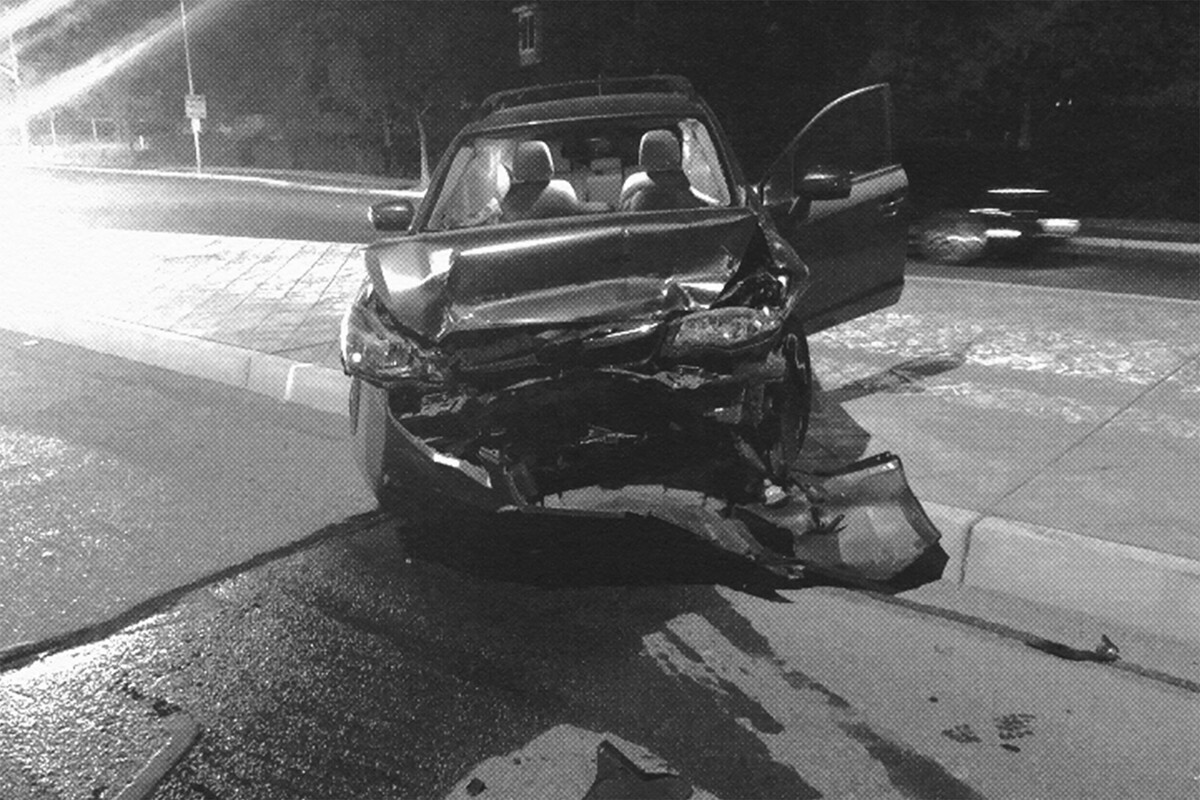
"caption": "The mangled remains of Kevin Bohnstedt’s car after a head-on crash caused by Melanie Sandoval, who was arrested for her 16th DUI. Sandoval, first convicted of drunken driving as a teenager in Madera County in 1989, received probation and no additional jail time for the collision.",
"credit": "Courtesy of Kevin Bohnstedt",
"altTag": null,
"description": null,
"imgSizes": {
"thumbnail": {
"file": "https://cdn.kqed.org/wp-content/uploads/sites/10/2025/10/L2K-DUI_CM_01_scr-160x107.jpg",
"width": 160,
"height": 107,
"mimeType": "image/jpeg"
},
"post-thumbnail": {
"file": "https://cdn.kqed.org/wp-content/uploads/sites/10/2025/10/L2K-DUI_CM_01_scr-672x372.jpg",
"width": 672,
"height": 372,
"mimeType": "image/jpeg"
},
"twentyfourteen-full-width": {
"file": "https://cdn.kqed.org/wp-content/uploads/sites/10/2025/10/L2K-DUI_CM_01_scr-1038x576.jpg",
"width": 1038,
"height": 576,
"mimeType": "image/jpeg"
},
"npr-cds-wide": {
"file": "https://cdn.kqed.org/wp-content/uploads/sites/10/2025/10/L2K-DUI_CM_01_scr-1200x675.jpg",
"width": 1200,
"height": 675,
"mimeType": "image/jpeg"
},
"kqedFullSize": {
"file": "https://cdn.kqed.org/wp-content/uploads/sites/10/2025/10/L2K-DUI_CM_01_scr.jpg",
"width": 1200,
"height": 800
}
},
"isLoading": false,
"fetchFailed": false
},
"news_12062533": {
"type": "attachments",
"id": "news_12062533",
"meta": {
"index": "attachments_1716263798",
"site": "news",
"id": "12062533",
"found": true
},
"title": "APTOPIX US Government Shutdown-SNAP",
"publishDate": 1761936832,
"status": "inherit",
"parent": 12062530,
"modified": 1761936864,
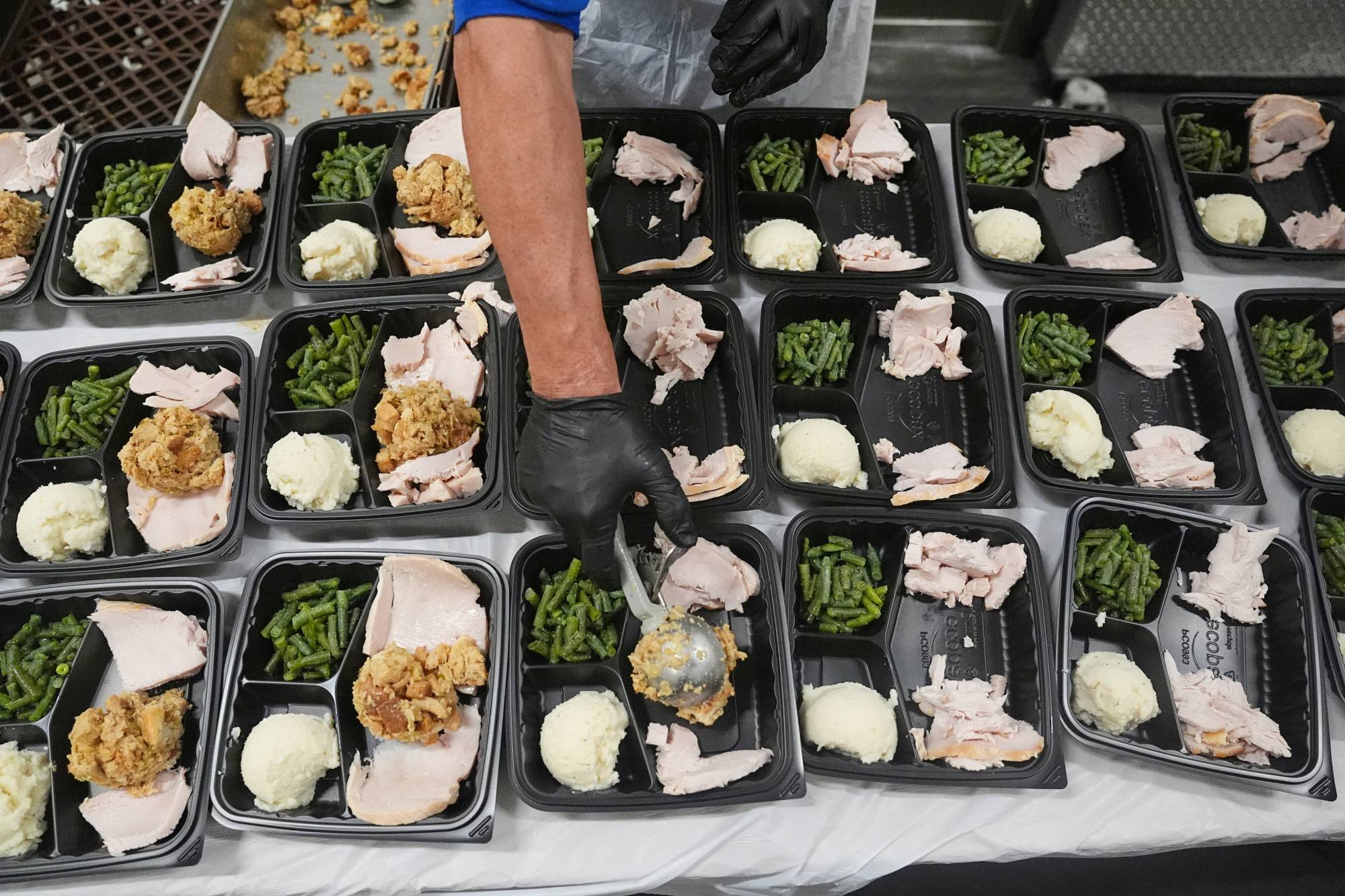
"caption": "A volunteer prepares meals at the Philabundance Community Kitchen in Philadelphia, Oct. 30, 2025. ",
"credit": "AP Photo/Matt Rourke",
"altTag": null,
"description": null,
"imgSizes": {
"medium": {
"file": "https://cdn.kqed.org/wp-content/uploads/sites/10/2025/10/AP25303685099353-2000x1333.jpg",
"width": 2000,
"height": 1333,
"mimeType": "image/jpeg"
},
"large": {
"file": "https://cdn.kqed.org/wp-content/uploads/sites/10/2025/10/AP25303685099353-2000x1333.jpg",
"width": 2000,
"height": 1333,
"mimeType": "image/jpeg"
},
"thumbnail": {
"file": "https://cdn.kqed.org/wp-content/uploads/sites/10/2025/10/AP25303685099353-160x107.jpg",
"width": 160,
"height": 107,
"mimeType": "image/jpeg"
},
"1536x1536": {
"file": "https://cdn.kqed.org/wp-content/uploads/sites/10/2025/10/AP25303685099353-1536x1024.jpg",
"width": 1536,
"height": 1024,
"mimeType": "image/jpeg"
},
"2048x2048": {
"file": "https://cdn.kqed.org/wp-content/uploads/sites/10/2025/10/AP25303685099353-2048x1365.jpg",
"width": 2048,
"height": 1365,
"mimeType": "image/jpeg"
},
"post-thumbnail": {
"file": "https://cdn.kqed.org/wp-content/uploads/sites/10/2025/10/AP25303685099353-672x372.jpg",
"width": 672,
"height": 372,
"mimeType": "image/jpeg"
},
"twentyfourteen-full-width": {
"file": "https://cdn.kqed.org/wp-content/uploads/sites/10/2025/10/AP25303685099353-1038x576.jpg",
"width": 1038,
"height": 576,
"mimeType": "image/jpeg"
},
"full-width": {
"file": "https://cdn.kqed.org/wp-content/uploads/sites/10/2025/10/AP25303685099353-2000x1333.jpg",
"width": 2000,
"height": 1333,
"mimeType": "image/jpeg"
},
"npr-cds-wide": {
"file": "https://cdn.kqed.org/wp-content/uploads/sites/10/2025/10/AP25303685099353-1200x675.jpg",
"width": 1200,
"height": 675,
"mimeType": "image/jpeg"
},
"kqedFullSize": {
"file": "https://cdn.kqed.org/wp-content/uploads/sites/10/2025/10/AP25303685099353-scaled-e1761936872193.jpg",
"width": 2000,
"height": 1334
}
},
"isLoading": false,
"fetchFailed": false
},
"news_12056813": {
"type": "attachments",
"id": "news_12056813",
"meta": {
"index": "attachments_1716263798",
"site": "news",
"id": "12056813",
"found": true
},
"title": "holt_286_4870.jpg",
"publishDate": 1758301557,
"status": "inherit",
"parent": 12056776,
"modified": 1758308245,
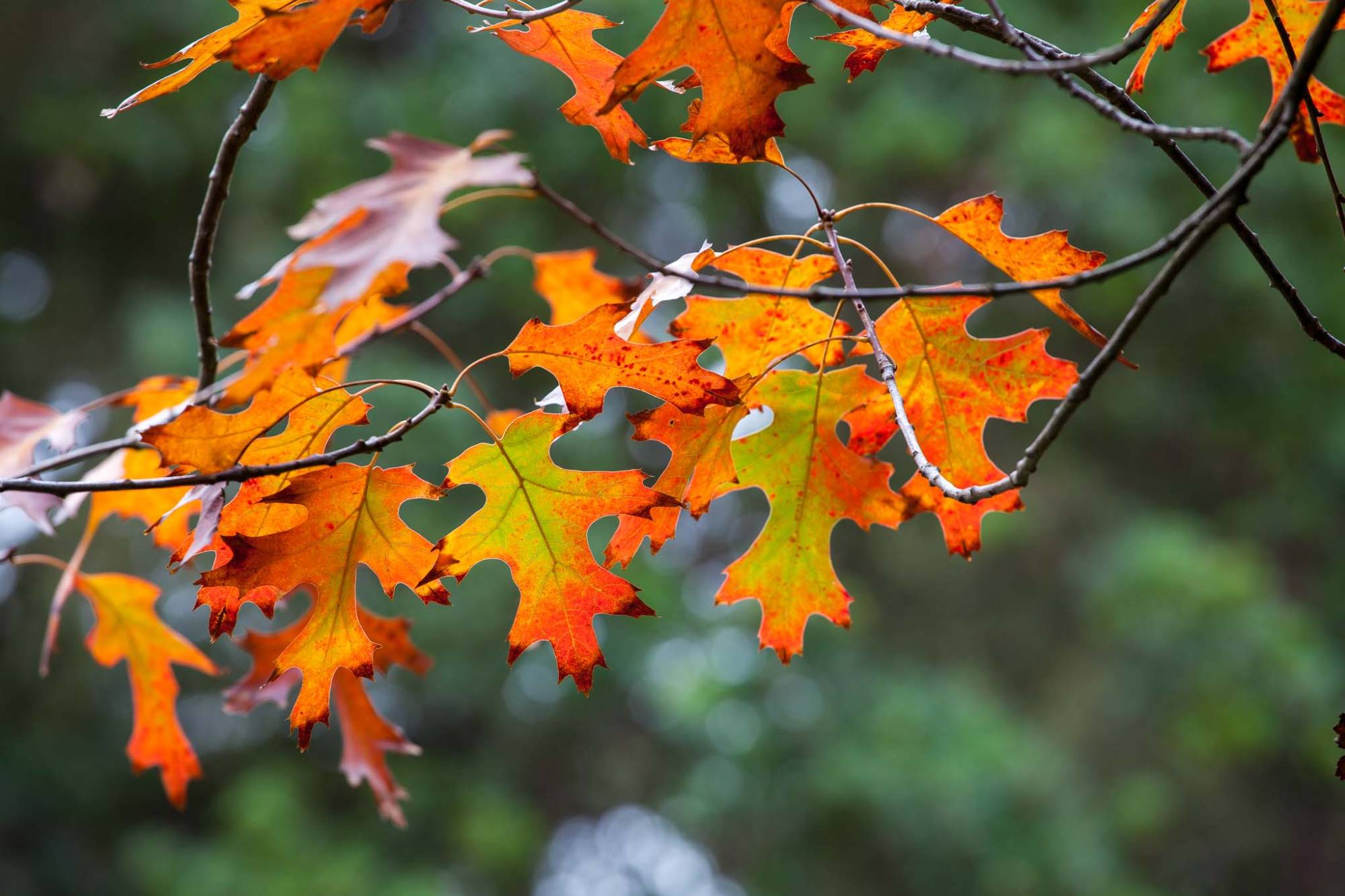
"caption": "Quercus rubra, a Northern Red Oak tree with leaves in fall color in San Francisco's Botanical Garden.",
"credit": "Courtesy of Saxon Holt",
"altTag": null,
"description": null,
"imgSizes": {
"medium": {
"file": "https://cdn.kqed.org/wp-content/uploads/sites/10/2025/09/holt_286_4870-2000x1333.jpg",
"width": 2000,
"height": 1333,
"mimeType": "image/jpeg"
},
"large": {
"file": "https://cdn.kqed.org/wp-content/uploads/sites/10/2025/09/holt_286_4870-2000x1333.jpg",
"width": 2000,
"height": 1333,
"mimeType": "image/jpeg"
},
"thumbnail": {
"file": "https://cdn.kqed.org/wp-content/uploads/sites/10/2025/09/holt_286_4870-160x107.jpg",
"width": 160,
"height": 107,
"mimeType": "image/jpeg"
},
"1536x1536": {
"file": "https://cdn.kqed.org/wp-content/uploads/sites/10/2025/09/holt_286_4870-1536x1024.jpg",
"width": 1536,
"height": 1024,
"mimeType": "image/jpeg"
},
"post-thumbnail": {
"file": "https://cdn.kqed.org/wp-content/uploads/sites/10/2025/09/holt_286_4870-672x372.jpg",
"width": 672,
"height": 372,
"mimeType": "image/jpeg"
},
"twentyfourteen-full-width": {
"file": "https://cdn.kqed.org/wp-content/uploads/sites/10/2025/09/holt_286_4870-1038x576.jpg",
"width": 1038,
"height": 576,
"mimeType": "image/jpeg"
},
"full-width": {
"file": "https://cdn.kqed.org/wp-content/uploads/sites/10/2025/09/holt_286_4870-2000x1333.jpg",
"width": 2000,
"height": 1333,
"mimeType": "image/jpeg"
},
"kqedFullSize": {
"file": "https://cdn.kqed.org/wp-content/uploads/sites/10/2025/09/holt_286_4870-e1758301572353.jpg",
"width": 2000,
"height": 1333
}
},
"isLoading": false,
"fetchFailed": false
},
"news_12062153": {
"type": "attachments",
"id": "news_12062153",
"meta": {
"index": "attachments_1716263798",
"site": "news",
"id": "12062153",
"found": true
},
"title": "US Election 2025 Redistricting California",
"publishDate": 1761777442,
"status": "inherit",
"parent": 12062049,
"modified": 1761777504,
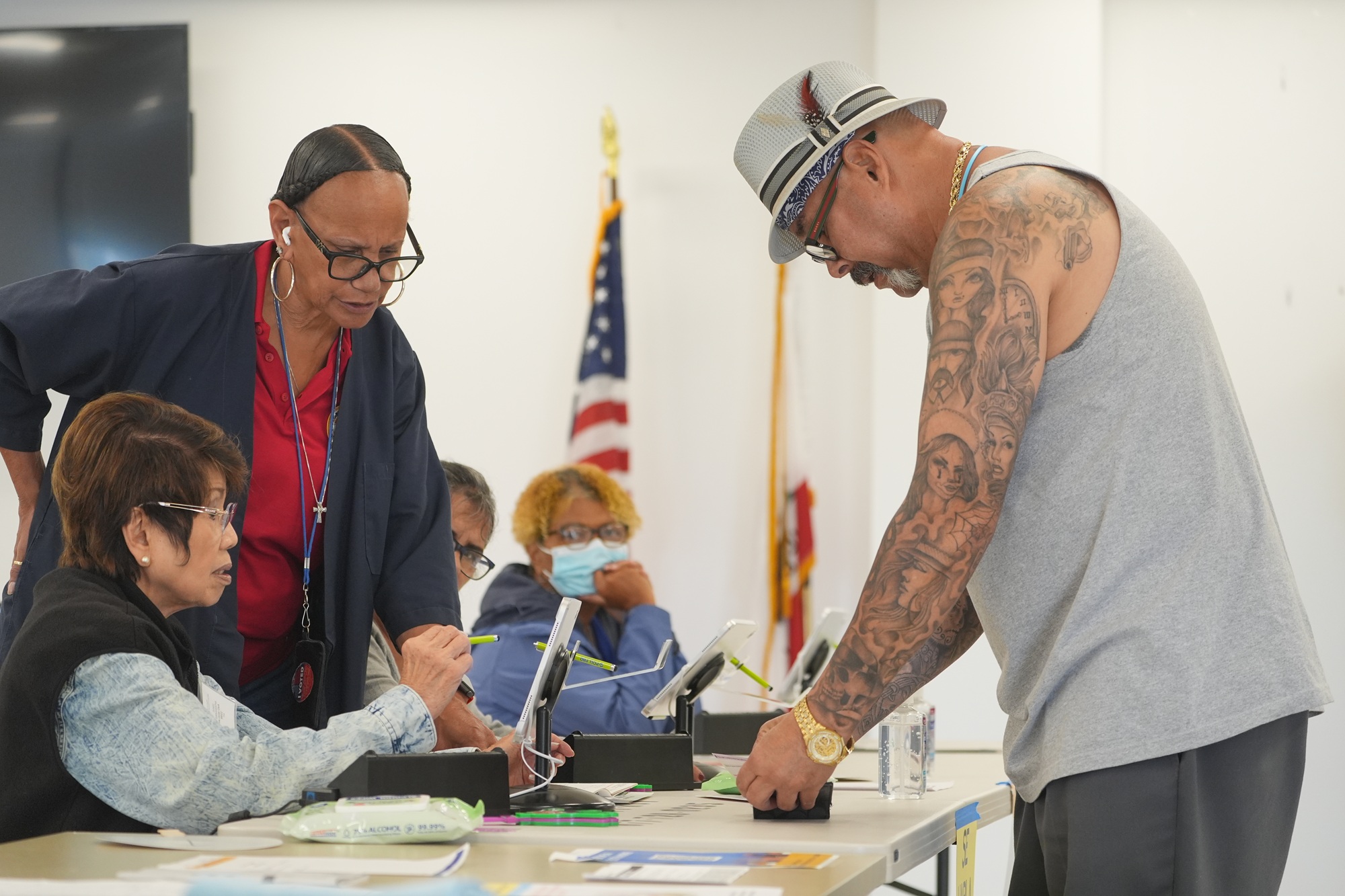
"caption": "Los Angeles County Election officials assist first-time voter Robert Conejo, right, as he votes in person on California's Proposition 50 election on Wednesday, Oct. 29, 2025, at the Los Angeles County Registrar-Recorder's headquarters in Norwalk, California. ",
"credit": "Damian Dovarganes/AP Photo",
"altTag": null,
"description": null,
"imgSizes": {
"thumbnail": {
"file": "https://cdn.kqed.org/wp-content/uploads/sites/10/2025/10/Prop50APPhoto-160x107.jpg",
"width": 160,
"height": 107,
"mimeType": "image/jpeg"
},
"1536x1536": {
"file": "https://cdn.kqed.org/wp-content/uploads/sites/10/2025/10/Prop50APPhoto-1536x1024.jpg",
"width": 1536,
"height": 1024,
"mimeType": "image/jpeg"
},
"post-thumbnail": {
"file": "https://cdn.kqed.org/wp-content/uploads/sites/10/2025/10/Prop50APPhoto-672x372.jpg",
"width": 672,
"height": 372,
"mimeType": "image/jpeg"
},
"twentyfourteen-full-width": {
"file": "https://cdn.kqed.org/wp-content/uploads/sites/10/2025/10/Prop50APPhoto-1038x576.jpg",
"width": 1038,
"height": 576,
"mimeType": "image/jpeg"
},
"npr-cds-wide": {
"file": "https://cdn.kqed.org/wp-content/uploads/sites/10/2025/10/Prop50APPhoto-1600x900.jpg",
"width": 1600,
"height": 900,
"mimeType": "image/jpeg"
},
"kqedFullSize": {
"file": "https://cdn.kqed.org/wp-content/uploads/sites/10/2025/10/Prop50APPhoto.jpg",
"width": 2000,
"height": 1333
}
},
"isLoading": false,
"fetchFailed": false
},
"news_12061781": {
"type": "attachments",
"id": "news_12061781",
"meta": {
"index": "attachments_1716263798",
"site": "news",
"id": "12061781",
"found": true
},
"title": "251027-JANE STANFORD ARCHIVAL-03-KQED",
"publishDate": 1761604939,
"status": "inherit",
"parent": 0,
"modified": 1761605047,
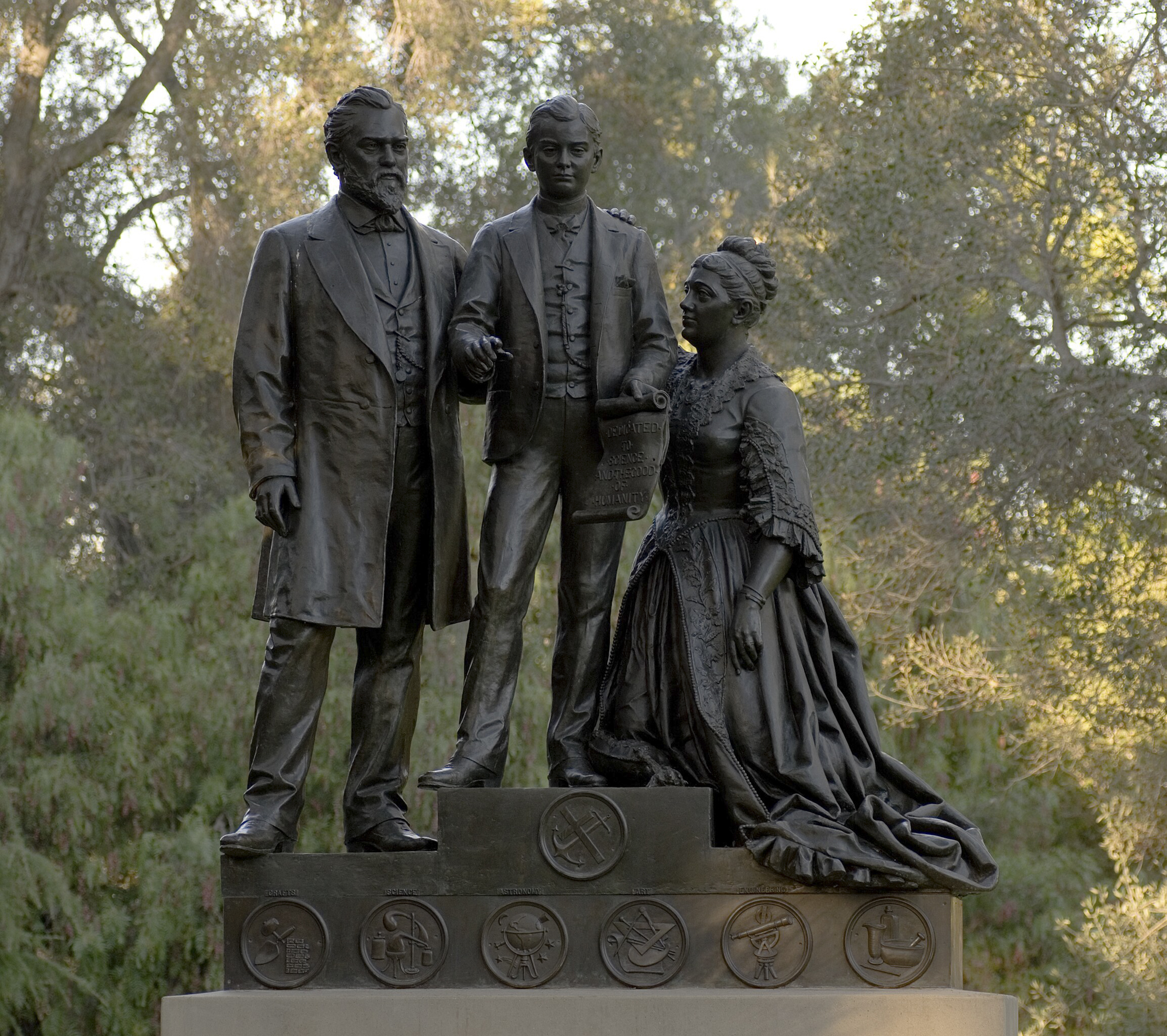
"caption": "This bronze statue of the Stanford family is located on Stanford University’s campus. Crafted by Larkin Goldsmith Mead in 1899.",
"credit": "Wikimedia Commons",
"altTag": null,
"description": null,
"imgSizes": {
"thumbnail": {
"file": "https://cdn.kqed.org/wp-content/uploads/sites/10/2025/10/251027-JANE-STANFORD-ARCHIVAL-03-KQED-160x142.jpg",
"width": 160,
"height": 142,
"mimeType": "image/jpeg"
},
"1536x1536": {
"file": "https://cdn.kqed.org/wp-content/uploads/sites/10/2025/10/251027-JANE-STANFORD-ARCHIVAL-03-KQED-1536x1363.jpg",
"width": 1536,
"height": 1363,
"mimeType": "image/jpeg"
},
"post-thumbnail": {
"file": "https://cdn.kqed.org/wp-content/uploads/sites/10/2025/10/251027-JANE-STANFORD-ARCHIVAL-03-KQED-672x372.jpg",
"width": 672,
"height": 372,
"mimeType": "image/jpeg"
},
"twentyfourteen-full-width": {
"file": "https://cdn.kqed.org/wp-content/uploads/sites/10/2025/10/251027-JANE-STANFORD-ARCHIVAL-03-KQED-1038x576.jpg",
"width": 1038,
"height": 576,
"mimeType": "image/jpeg"
},
"npr-cds-wide": {
"file": "https://cdn.kqed.org/wp-content/uploads/sites/10/2025/10/251027-JANE-STANFORD-ARCHIVAL-03-KQED-1600x900.jpg",
"width": 1600,
"height": 900,
"mimeType": "image/jpeg"
},
"kqedFullSize": {
"file": "https://cdn.kqed.org/wp-content/uploads/sites/10/2025/10/251027-JANE-STANFORD-ARCHIVAL-03-KQED.jpg",
"width": 2000,
"height": 1775
}
},
"isLoading": false,
"fetchFailed": false
},
"news_12058101": {
"type": "attachments",
"id": "news_12058101",
"meta": {
"index": "attachments_1716263798",
"site": "news",
"id": "12058101",
"found": true
},
"title": "Students walk on campus at UC Berkeley in Berkeley on Sept. 29, 2025.",
"publishDate": 1759255323,
"status": "inherit",
"parent": 0,
"modified": 1759255359,
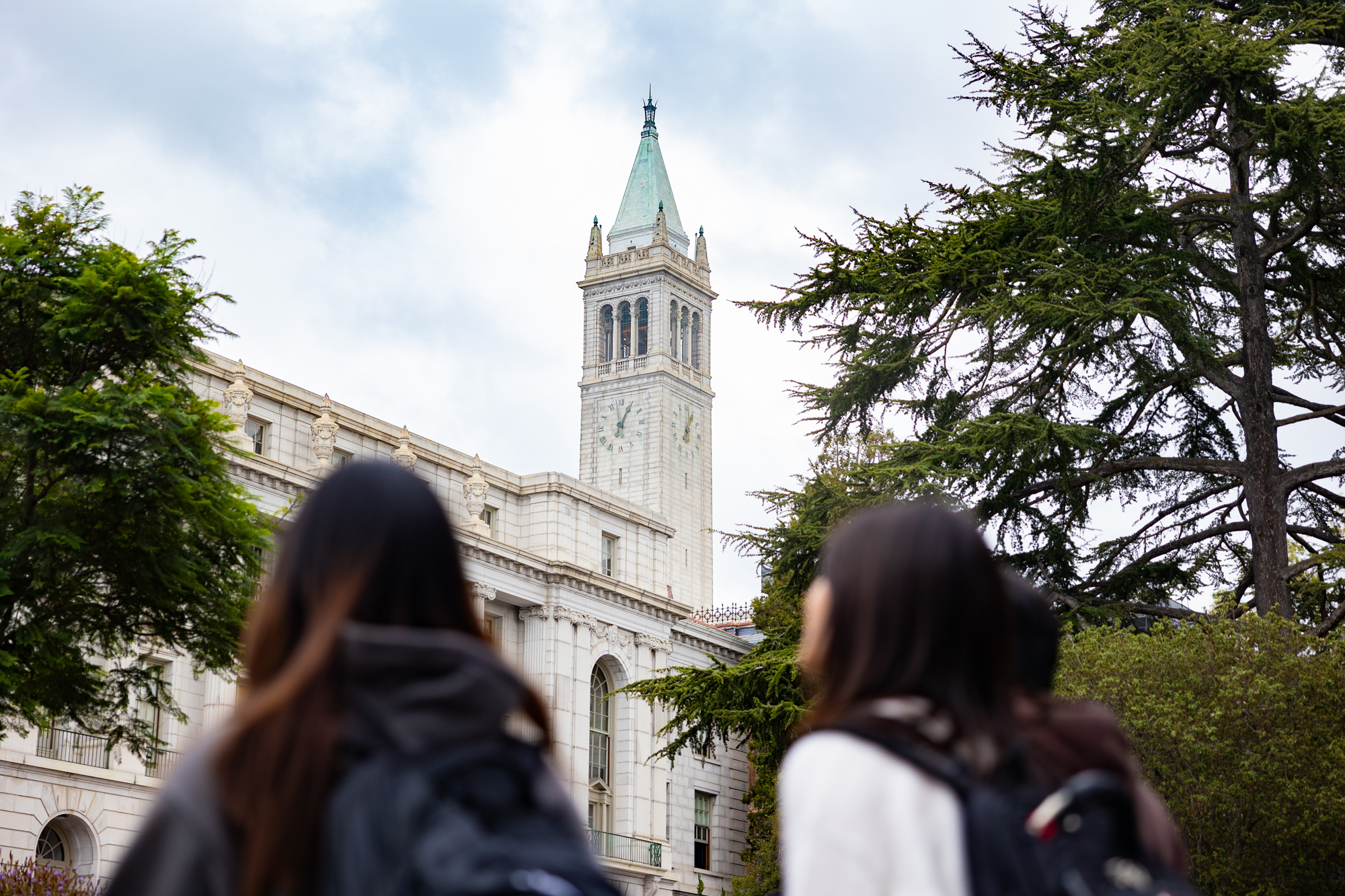
"caption": "Students walk on campus at UC Berkeley in Berkeley on Sept. 29, 2025.",
"credit": "Gina Castro/KQED",
"altTag": null,
"description": null,
"imgSizes": {
"thumbnail": {
"file": "https://cdn.kqed.org/wp-content/uploads/sites/10/2025/09/20250929_UCBERKELEY_GC-5-KQED-160x107.jpg",
"width": 160,
"height": 107,
"mimeType": "image/jpeg"
},
"1536x1536": {
"file": "https://cdn.kqed.org/wp-content/uploads/sites/10/2025/09/20250929_UCBERKELEY_GC-5-KQED-1536x1024.jpg",
"width": 1536,
"height": 1024,
"mimeType": "image/jpeg"
},
"post-thumbnail": {
"file": "https://cdn.kqed.org/wp-content/uploads/sites/10/2025/09/20250929_UCBERKELEY_GC-5-KQED-672x372.jpg",
"width": 672,
"height": 372,
"mimeType": "image/jpeg"
},
"twentyfourteen-full-width": {
"file": "https://cdn.kqed.org/wp-content/uploads/sites/10/2025/09/20250929_UCBERKELEY_GC-5-KQED-1038x576.jpg",
"width": 1038,
"height": 576,
"mimeType": "image/jpeg"
},
"kqedFullSize": {
"file": "https://cdn.kqed.org/wp-content/uploads/sites/10/2025/09/20250929_UCBERKELEY_GC-5-KQED.jpg",
"width": 2000,
"height": 1333
}
},
"isLoading": false,
"fetchFailed": false
},
"news_12062022": {
"type": "attachments",
"id": "news_12062022",
"meta": {
"index": "attachments_1716263798",
"site": "news",
"id": "12062022",
"found": true
},
"title": "Male and female friends arranging food in cardboard boxes",
"publishDate": 1761758018,
"status": "inherit",
"parent": 12062018,
"modified": 1761758123,
"caption": null,
"credit": "Maskot/Getty Images",
"altTag": null,
"description": null,
"imgSizes": {
"thumbnail": {
"file": "https://cdn.kqed.org/wp-content/uploads/sites/10/2025/10/FoodPantryGetty1-160x107.jpg",
"width": 160,
"height": 107,
"mimeType": "image/jpeg"
},
"1536x1536": {
"file": "https://cdn.kqed.org/wp-content/uploads/sites/10/2025/10/FoodPantryGetty1-1536x1024.jpg",
"width": 1536,
"height": 1024,
"mimeType": "image/jpeg"
},
"post-thumbnail": {
"file": "https://cdn.kqed.org/wp-content/uploads/sites/10/2025/10/FoodPantryGetty1-672x372.jpg",
"width": 672,
"height": 372,
"mimeType": "image/jpeg"
},
"twentyfourteen-full-width": {
"file": "https://cdn.kqed.org/wp-content/uploads/sites/10/2025/10/FoodPantryGetty1-1038x576.jpg",
"width": 1038,
"height": 576,
"mimeType": "image/jpeg"
},
"npr-cds-wide": {
"file": "https://cdn.kqed.org/wp-content/uploads/sites/10/2025/10/FoodPantryGetty1-1600x900.jpg",
"width": 1600,
"height": 900,
"mimeType": "image/jpeg"
},
"kqedFullSize": {
"file": "https://cdn.kqed.org/wp-content/uploads/sites/10/2025/10/FoodPantryGetty1.jpg",
"width": 2000,
"height": 1333
}
},
"isLoading": false,
"fetchFailed": false
},
"news_12061714": {
"type": "attachments",
"id": "news_12061714",
"meta": {
"index": "attachments_1716263798",
"site": "news",
"id": "12061714",
"found": true
},
"title": "IMG_1209",
"publishDate": 1761595082,
"status": "inherit",
"parent": 0,
"modified": 1761595254,
"caption": "An unprecedented proposal to update California's Congressional Districts could change the Golden State's political lines from Modoc County down to San Diego.",
"credit": "Anna Vignet/KQED",
"altTag": null,
"description": null,
"imgSizes": {
"medium": {
"file": "https://cdn.kqed.org/wp-content/uploads/sites/10/2025/10/IMG_1209-2000x1500.jpg",
"width": 2000,
"height": 1500,
"mimeType": "image/jpeg"
},
"large": {
"file": "https://cdn.kqed.org/wp-content/uploads/sites/10/2025/10/IMG_1209-2000x1500.jpg",
"width": 2000,
"height": 1500,
"mimeType": "image/jpeg"
},
"thumbnail": {
"file": "https://cdn.kqed.org/wp-content/uploads/sites/10/2025/10/IMG_1209-160x120.jpg",
"width": 160,
"height": 120,
"mimeType": "image/jpeg"
},
"1536x1536": {
"file": "https://cdn.kqed.org/wp-content/uploads/sites/10/2025/10/IMG_1209-1536x1152.jpg",
"width": 1536,
"height": 1152,
"mimeType": "image/jpeg"
},
"2048x2048": {
"file": "https://cdn.kqed.org/wp-content/uploads/sites/10/2025/10/IMG_1209-2048x1536.jpg",
"width": 2048,
"height": 1536,
"mimeType": "image/jpeg"
},
"post-thumbnail": {
"file": "https://cdn.kqed.org/wp-content/uploads/sites/10/2025/10/IMG_1209-672x372.jpg",
"width": 672,
"height": 372,
"mimeType": "image/jpeg"
},
"twentyfourteen-full-width": {
"file": "https://cdn.kqed.org/wp-content/uploads/sites/10/2025/10/IMG_1209-1038x576.jpg",
"width": 1038,
"height": 576,
"mimeType": "image/jpeg"
},
"full-width": {
"file": "https://cdn.kqed.org/wp-content/uploads/sites/10/2025/10/IMG_1209-2000x1500.jpg",
"width": 2000,
"height": 1500,
"mimeType": "image/jpeg"
},
"npr-cds-wide": {
"file": "https://cdn.kqed.org/wp-content/uploads/sites/10/2025/10/IMG_1209-1600x900.jpg",
"width": 1600,
"height": 900,
"mimeType": "image/jpeg"
},
"kqedFullSize": {
"file": "https://cdn.kqed.org/wp-content/uploads/sites/10/2025/10/IMG_1209.jpg",
"width": 2560,
"height": 1920
}
},
"isLoading": false,
"fetchFailed": false
},
"news_12061772": {
"type": "attachments",
"id": "news_12061772",
"meta": {
"index": "attachments_1716263798",
"site": "news",
"id": "12061772",
"found": true
},
"title": "251027-CHILD CARE PRICES-MD-05-1-KQED",
"publishDate": 1761603293,
"status": "inherit",
"parent": 0,
"modified": 1761603350,
"caption": "Monica Vaughan and her daughter Hazel play in City Park in Benicia on Oct. 27, 2025.",
"credit": "Martin do Nascimento/KQED",
"altTag": null,
"description": null,
"imgSizes": {
"thumbnail": {
"file": "https://cdn.kqed.org/wp-content/uploads/sites/10/2025/10/251027-CHILD-CARE-PRICES-MD-05-1-KQED-160x107.jpg",
"width": 160,
"height": 107,
"mimeType": "image/jpeg"
},
"1536x1536": {
"file": "https://cdn.kqed.org/wp-content/uploads/sites/10/2025/10/251027-CHILD-CARE-PRICES-MD-05-1-KQED-1536x1025.jpg",
"width": 1536,
"height": 1025,
"mimeType": "image/jpeg"
},
"post-thumbnail": {
"file": "https://cdn.kqed.org/wp-content/uploads/sites/10/2025/10/251027-CHILD-CARE-PRICES-MD-05-1-KQED-672x372.jpg",
"width": 672,
"height": 372,
"mimeType": "image/jpeg"
},
"twentyfourteen-full-width": {
"file": "https://cdn.kqed.org/wp-content/uploads/sites/10/2025/10/251027-CHILD-CARE-PRICES-MD-05-1-KQED-1038x576.jpg",
"width": 1038,
"height": 576,
"mimeType": "image/jpeg"
},
"npr-cds-wide": {
"file": "https://cdn.kqed.org/wp-content/uploads/sites/10/2025/10/251027-CHILD-CARE-PRICES-MD-05-1-KQED-1600x900.jpg",
"width": 1600,
"height": 900,
"mimeType": "image/jpeg"
},
"kqedFullSize": {
"file": "https://cdn.kqed.org/wp-content/uploads/sites/10/2025/10/251027-CHILD-CARE-PRICES-MD-05-1-KQED.jpg",
"width": 2000,
"height": 1334
}
},
"isLoading": false,
"fetchFailed": false
}
},
"audioPlayerReducer": {
"postId": "stream_live",
"isPaused": true,
"isPlaying": false,
"pfsActive": false,
"pledgeModalIsOpen": true,
"playerDrawerIsOpen": false,
"liveAudioPlayStartedAt": 0,
"liveAudioPlayContext": ""
},
"authorsReducer": {
"byline_news_12062523": {
"type": "authors",
"id": "byline_news_12062523",
"meta": {
"override": true
},
"slug": "byline_news_12062523",
"name": "Khari Johnson and Levi Sumagaysay, CalMatters",
"isLoading": false
},
"byline_news_12061934": {
"type": "authors",
"id": "byline_news_12061934",
"meta": {
"override": true
},
"slug": "byline_news_12061934",
"name": "Robert Lewis and Lauren Hepler, CalMatters",
"isLoading": false
},
"byline_news_12062530": {
"type": "authors",
"id": "byline_news_12062530",
"meta": {
"override": true
},
"slug": "byline_news_12062530",
"name": "Michael Casey, Geoff Mulvihill and Kimberlee Kruesi, The Associated Press ",
"isLoading": false
},
"byline_news_12061715": {
"type": "authors",
"id": "byline_news_12061715",
"meta": {
"override": true
},
"slug": "byline_news_12061715",
"name": "The California Newsroom",
"isLoading": false
},
"sasha-khokha": {
"type": "authors",
"id": "254",
"meta": {
"index": "authors_1716337520",
"id": "254",
"found": true
},
"name": "Sasha Khokha",
"firstName": "Sasha",
"lastName": "Khokha",
"slug": "sasha-khokha",
"email": "skhokha@kqed.org",
"display_author_email": true,
"staff_mastheads": [
"news"
],
"title": "Host, The California Report Magazine",
"bio": "Sasha Khokha is the host of \u003cem>The California Report's \u003c/em> weekly magazine program, which takes listeners on sound-rich excursions to meet the people that make the Golden State unique -- through audio documentaries and long-form stories. As \u003cem>The California Report's\u003c/em> Central Valley Bureau Chief based in Fresno for nearly a dozen years, Sasha brought the lives and concerns of rural Californians to listeners around the state. Her reporting helped expose the hidden price immigrant women janitors and farmworkers may pay to keep their jobs: sexual assault at work. It inspired two new California laws to protect them from sexual harassment. She was a key member of the reporting team for the Frontline film \u003cem>Rape on the Night Shift, \u003c/em>which was nominated for two national Emmys. Sasha has also won a national Edward R. Murrow and a national PRNDI award for investigative reporting, as well as multiple prizes from the Society for Professional Journalists. Sasha is a proud alum of the UC Berkeley Graduate School of Journalism and Brown University and a member of the South Asian Journalists Association.",
"avatar": "https://secure.gravatar.com/avatar/e4b5e1541aaeea2aa356aa1fb2a68950?s=600&d=blank&r=g",
"twitter": "KQEDSashaKhokha",
"facebook": null,
"instagram": null,
"linkedin": null,
"sites": [
{
"site": "news",
"roles": [
"editor"
]
},
{
"site": "stateofhealth",
"roles": [
"author"
]
},
{
"site": "science",
"roles": [
"author"
]
},
{
"site": "quest",
"roles": [
"subscriber"
]
}
],
"headData": {
"title": "Sasha Khokha | KQED",
"description": "Host, The California Report Magazine",
"ogImgSrc": "https://secure.gravatar.com/avatar/e4b5e1541aaeea2aa356aa1fb2a68950?s=600&d=blank&r=g",
"twImgSrc": "https://secure.gravatar.com/avatar/e4b5e1541aaeea2aa356aa1fb2a68950?s=600&d=blank&r=g"
},
"isLoading": false,
"link": "/author/sasha-khokha"
},
"mlagos": {
"type": "authors",
"id": "3239",
"meta": {
"index": "authors_1716337520",
"id": "3239",
"found": true
},
"name": "Marisa Lagos",
"firstName": "Marisa",
"lastName": "Lagos",
"slug": "mlagos",
"email": "mlagos@kqed.org",
"display_author_email": false,
"staff_mastheads": [
"news"
],
"title": "KQED Contributor",
"bio": "Marisa Lagos is a correspondent for KQED’s California Politics and Government Desk and co-hosts the award-winning show and podcast, Political Breakdown. At KQED, Lagos also conducts reporting, analysis and investigations into state, local and national politics for radio, TV, online and onstage. In 2022, she and co-host, Scott Shafer, moderated the only gubernatorial debate in California. In 2020, the \u003ci>Washington Post\u003c/i> named her one of the top political journalists in California; she was nominated for a Peabody and won several other awards for her work investigating the 2017 California wildfires. She has worked at the \u003ci>San Francisco Chronicle\u003c/i>, \u003ci>San Francisco Examiner\u003c/i> and \u003ci>Los Angeles Times\u003c/i>. A UC Santa Barbara graduate, she lives in San Francisco with her two sons and husband.",
"avatar": "https://secure.gravatar.com/avatar/a261a0d3696fc066871ef96b85b5e7d2?s=600&d=blank&r=g",
"twitter": "@mlagos",
"facebook": null,
"instagram": null,
"linkedin": null,
"sites": [
{
"site": "arts",
"roles": [
"author"
]
},
{
"site": "news",
"roles": [
"editor"
]
},
{
"site": "science",
"roles": [
"editor"
]
},
{
"site": "forum",
"roles": [
"author"
]
},
{
"site": "liveblog",
"roles": [
"author"
]
}
],
"headData": {
"title": "Marisa Lagos | KQED",
"description": "KQED Contributor",
"ogImgSrc": "https://secure.gravatar.com/avatar/a261a0d3696fc066871ef96b85b5e7d2?s=600&d=blank&r=g",
"twImgSrc": "https://secure.gravatar.com/avatar/a261a0d3696fc066871ef96b85b5e7d2?s=600&d=blank&r=g"
},
"isLoading": false,
"link": "/author/mlagos"
},
"carlysevern": {
"type": "authors",
"id": "3243",
"meta": {
"index": "authors_1716337520",
"id": "3243",
"found": true
},
"name": "Carly Severn",
"firstName": "Carly",
"lastName": "Severn",
"slug": "carlysevern",
"email": "csevern@kqed.org",
"display_author_email": false,
"staff_mastheads": [
"news"
],
"title": "Senior Editor, Audience News ",
"bio": "Carly is KQED's Senior Editor of Audience News on the Digital News team, and has reported for the California Report Magazine, Bay Curious and KQED Arts. She's formerly the host of \u003ca href=\"http://ww2.kqed.org/pop/category/the-cooler/\" rel=\"noopener noreferrer\">The Cooler\u003c/a> podcast.",
"avatar": "https://secure.gravatar.com/avatar/2d8d6765f186e64c798cf7f0c8088a41?s=600&d=blank&r=g",
"twitter": "teacupinthebay",
"facebook": null,
"instagram": null,
"linkedin": null,
"sites": [
{
"site": "",
"roles": [
"editor"
]
},
{
"site": "arts",
"roles": [
"editor"
]
},
{
"site": "news",
"roles": [
"administrator"
]
},
{
"site": "pop",
"roles": [
"editor"
]
},
{
"site": "futureofyou",
"roles": [
"editor"
]
},
{
"site": "about",
"roles": [
"administrator"
]
},
{
"site": "mindshift",
"roles": [
"editor"
]
},
{
"site": "bayareabites",
"roles": [
"editor"
]
},
{
"site": "stateofhealth",
"roles": [
"editor"
]
},
{
"site": "science",
"roles": [
"editor"
]
},
{
"site": "food",
"roles": [
"contributor"
]
},
{
"site": "forum",
"roles": [
"editor"
]
},
{
"site": "perspectives",
"roles": [
"administrator"
]
},
{
"site": "liveblog",
"roles": [
"editor"
]
}
],
"headData": {
"title": "Carly Severn | KQED",
"description": "Senior Editor, Audience News ",
"ogImgSrc": "https://secure.gravatar.com/avatar/2d8d6765f186e64c798cf7f0c8088a41?s=600&d=blank&r=g",
"twImgSrc": "https://secure.gravatar.com/avatar/2d8d6765f186e64c798cf7f0c8088a41?s=600&d=blank&r=g"
},
"isLoading": false,
"link": "/author/carlysevern"
},
"daisynguyen": {
"type": "authors",
"id": "11829",
"meta": {
"index": "authors_1716337520",
"id": "11829",
"found": true
},
"name": "Daisy Nguyen",
"firstName": "Daisy",
"lastName": "Nguyen",
"slug": "daisynguyen",
"email": "daisynguyen@kqed.org",
"display_author_email": true,
"staff_mastheads": [
"news"
],
"title": "KQED Contributor",
"bio": "I have covered early childhood education and child care for KQED since 2022. I focus on policies aimed at increasing access to early care and education and how they shape individual lives. I've been a journalist for more than two decades, with most of that time devoted to covering breaking news throughout California for The Associated Press. I grew up in San Francisco and studied at UC Davis and Columbia University's Graduate School of Journalism. I live in Oakland with my husband and two kids.",
"avatar": "https://secure.gravatar.com/avatar/2da2127c27f7143b53ebd419800fd55f?s=600&d=blank&r=g",
"twitter": null,
"facebook": null,
"instagram": null,
"linkedin": "https://www.linkedin.com/in/daisynguyen/",
"sites": [
{
"site": "news",
"roles": [
"author"
]
},
{
"site": "liveblog",
"roles": [
"author"
]
}
],
"headData": {
"title": "Daisy Nguyen | KQED",
"description": "KQED Contributor",
"ogImgSrc": "https://secure.gravatar.com/avatar/2da2127c27f7143b53ebd419800fd55f?s=600&d=blank&r=g",
"twImgSrc": "https://secure.gravatar.com/avatar/2da2127c27f7143b53ebd419800fd55f?s=600&d=blank&r=g"
},
"isLoading": false,
"link": "/author/daisynguyen"
},
"bsiavoshy": {
"type": "authors",
"id": "11890",
"meta": {
"index": "authors_1716337520",
"id": "11890",
"found": true
},
"name": "Bejan Siavoshy",
"firstName": "Bejan",
"lastName": "Siavoshy",
"slug": "bsiavoshy",
"email": "bsiavoshy@kqed.org",
"display_author_email": false,
"staff_mastheads": [],
"title": "KQED Contributor",
"bio": null,
"avatar": "https://secure.gravatar.com/avatar/ead3e7c509634b37a73b1f57677e49f9?s=600&d=blank&r=g",
"twitter": null,
"facebook": null,
"instagram": null,
"linkedin": null,
"sites": [
{
"site": "news",
"roles": [
"editor"
]
}
],
"headData": {
"title": "Bejan Siavoshy | KQED",
"description": "KQED Contributor",
"ogImgSrc": "https://secure.gravatar.com/avatar/ead3e7c509634b37a73b1f57677e49f9?s=600&d=blank&r=g",
"twImgSrc": "https://secure.gravatar.com/avatar/ead3e7c509634b37a73b1f57677e49f9?s=600&d=blank&r=g"
},
"isLoading": false,
"link": "/author/bsiavoshy"
},
"kdebenedetti": {
"type": "authors",
"id": "11913",
"meta": {
"index": "authors_1716337520",
"id": "11913",
"found": true
},
"name": "Katie DeBenedetti",
"firstName": "Katie",
"lastName": "DeBenedetti",
"slug": "kdebenedetti",
"email": "kdebenedetti@kqed.org",
"display_author_email": false,
"staff_mastheads": [
"news",
"science"
],
"title": "KQED Contributor",
"bio": "Katie DeBenedetti is a digital reporter covering daily news for the Express Desk. Prior to joining KQED as a culture reporting intern in January 2024, she covered education and city government for the Napa Valley Register.",
"avatar": "https://secure.gravatar.com/avatar/6e31073cb8f7e4214ab03f42771d0f45?s=600&d=blank&r=g",
"twitter": null,
"facebook": null,
"instagram": null,
"linkedin": null,
"sites": [
{
"site": "news",
"roles": [
"author"
]
},
{
"site": "science",
"roles": [
"author"
]
},
{
"site": "liveblog",
"roles": [
"author"
]
}
],
"headData": {
"title": "Katie DeBenedetti | KQED",
"description": "KQED Contributor",
"ogImgSrc": "https://secure.gravatar.com/avatar/6e31073cb8f7e4214ab03f42771d0f45?s=600&d=blank&r=g",
"twImgSrc": "https://secure.gravatar.com/avatar/6e31073cb8f7e4214ab03f42771d0f45?s=600&d=blank&r=g"
},
"isLoading": false,
"link": "/author/kdebenedetti"
},
"sarahwright": {
"type": "authors",
"id": "11956",
"meta": {
"index": "authors_1716337520",
"id": "11956",
"found": true
},
"name": "Sarah Wright",
"firstName": "Sarah",
"lastName": "Wright",
"slug": "sarahwright",
"email": "swright@kqed.org",
"display_author_email": true,
"staff_mastheads": [],
"title": "Outdoors Engagement Reporter",
"bio": "Sarah Wright is KQED's Outdoors Engagement Reporter. Originally from Lake Tahoe, she completed a thru-hike of the Pacific Crest Trail in 2019 and was a U.S. Fulbright Program grantee to Argentina in 2023. Her journalism has appeared in The Guardian, The San Francisco Standard, The Palo Alto Weekly and the Half Moon Bay Review.",
"avatar": "https://secure.gravatar.com/avatar/c161a3d6441865cba25e6db4fa561099ad665799e9432e34da2b84d7e371524c?s=600&d=blank&r=g",
"twitter": null,
"bluesky": null,
"facebook": null,
"instagram": null,
"linkedin": null,
"sites": [
{
"site": "arts",
"roles": [
"editor"
]
},
{
"site": "news",
"roles": [
"editor"
]
},
{
"site": "science",
"roles": [
"contributor",
"author"
]
},
{
"site": "forum",
"roles": [
"editor"
]
}
],
"headData": {
"title": "Sarah Wright | KQED",
"description": "Outdoors Engagement Reporter",
"ogImgSrc": "https://secure.gravatar.com/avatar/c161a3d6441865cba25e6db4fa561099ad665799e9432e34da2b84d7e371524c?s=600&d=blank&r=g",
"twImgSrc": "https://secure.gravatar.com/avatar/c161a3d6441865cba25e6db4fa561099ad665799e9432e34da2b84d7e371524c?s=600&d=blank&r=g"
},
"isLoading": false,
"link": "/author/sarahwright"
}
},
"pagesReducer": {
"news_tag_california": {
"type": "terms",
"id": "news_18538",
"meta": {
"index": "terms_1716263798",
"site": "news",
"id": "18538",
"score": 6.8456693
},
"featImg": null,
"name": "California",
"description": null,
"taxonomy": "tag",
"headData": {
"twImgId": null,
"twTitle": null,
"ogTitle": null,
"ogImgId": null,
"twDescription": null,
"description": null,
"title": "California Archives | KQED News",
"ogDescription": null
},
"ttid": 31,
"slug": "california",
"isLoading": false,
"title": "California",
"pageMeta": {
"site": "news",
"WpPageTemplate": "page-topic-editorial",
"currentPage": 45
},
"blocks": [
{
"blockName": "kqed/post-list",
"attrs": {
"layout": "cardArticle2",
"query": "posts/news?tag=california",
"seeMore": false,
"paginated": true,
"page": 45
}
},
{
"blockName": "kqed/ad"
}
]
}
},
"pfsSessionReducer": {},
"postsReducer": {
"stream_live": {
"type": "live",
"id": "stream_live",
"audioUrl": "https://streams.kqed.org/kqedradio",
"title": "Live Stream",
"excerpt": "Live Stream information currently unavailable.",
"link": "/radio",
"featImg": "",
"label": {
"name": "KQED Live",
"link": "/"
}
},
"stream_kqedNewscast": {
"type": "posts",
"id": "stream_kqedNewscast",
"audioUrl": "https://www.kqed.org/.stream/anon/radio/RDnews/newscast.mp3?_=1",
"title": "KQED Newscast",
"featImg": "",
"label": {
"name": "88.5 FM",
"link": "/"
}
},
"news_12062631": {
"type": "posts",
"id": "news_12062631",
"meta": {
"index": "posts_1716263798",
"site": "news",
"id": "12062631",
"score": null,
"sort": [
1762190344000
]
},
"guestAuthors": [],
"slug": "californias-food-pantries-mobilize-to-fill-benefits-gap-left-by-gov-shutdown",
"title": "California's Food Banks Mobilize to Fill Benefits Gap Left by Gov. Shutdown",
"publishDate": 1762190344,
"format": "audio",
"headTitle": "California’s Food Banks Mobilize to Fill Benefits Gap Left by Gov. Shutdown | KQED",
"labelTerm": {},
"content": "\u003cp>\u003cstrong>Here are this morning’s headlines for the morning of November 3rd, 2025: \u003c/strong>\u003c/p>\n\u003cul>\n\u003cli>The government shutdown has left the federal Supplemental Nutrition Assistance Program in funding limbo–after two judges on Friday ordered a reticent Trump Administration to fund the food aid program with the $5 billion in contingency funds the USDA has on hand. Meanwhile, millions of Californians who rely on the state’s version of SNAP–CalFresh–to stay fed are left wondering where their next meals will come from. Food pantries throughout the state are gearing up to meet the demand.\u003c/li>\n\u003cli>Meanwhile, Democratic Senator, Adam Schiff says his party is pushing to get SNAP funded while also ending the political stalemate in Washington.\u003c/li>\n\u003c/ul>\n\u003cp>\u003ca href=\"https://www.kqed.org/news/12061440/calfresh-snap-ebt-shutdown-find-food-banks-near-me-san-francisco-bay-area-alameda-oakland-contra-costa-newsom-national-guard\">\u003cstrong>What You Need to Know as California Food Pantries Get Ready for a Surge in Demand\u003c/strong>\u003c/a>\u003c/p>\n\u003cp>If you’re one of the 5.5 million Californians who use CalFresh — the state’s version of the Supplemental Nutrition Assistance Program — you should now expect \u003ca href=\"https://www.kqed.org/news/12060770/snap-calfresh-food-stamps-government-shutdown-november-payments-ebt\">your November SNAP payments on your EBT card to be “delayed” \u003c/a>due to the \u003ca href=\"https://www.kqed.org/news/tag/government-shutdown\">ongoing federal government shutdown\u003c/a>, according to the state.\u003c/p>\n\u003cp>That somber revelation has foodbanks throughout California marshalling up all available resources to meet the coming surge in demand, especially ahead of the Thanksgiving holiday. We’ll walk you through how to find your nearest foodbank, what to expect and how to get involved in donations–while SNAP funding lingers in legal limbo.\u003c/p>\n\u003cp>On Friday, \u003ca href=\"https://apnews.com/live/donald-trump-news-updates-10-31-2025?utm_source=copy&utm_medium=share\">two federal judges ruled\u003c/a> that President Donald Trump’s administration must continue to fund SNAP, and\u003ca href=\"https://apnews.com/live/donald-trump-news-updates-10-31-2025#0000019a-3b85-db90-a7de-3bb7cfb00000\"> gave the administration’s deadline to make its decision is today\u003c/a>. President\u003c/p>\n\u003cp>[ad fullwidth]\u003c/p>\n\u003cp>Trump \u003ca href=\"https://truthsocial.com/@realDonaldTrump/posts/115471065919157533\">responded on social media\u003c/a> that he had “instructed our lawyers to ask the Court to clarify how we can legally fund SNAP as soon as possible,” but that “even if we get immediate guidance, it will unfortunately be delayed while States get the money out.” The administration had previously claimed that \u003ca href=\"https://www.kqed.org/news/12061823/california-sues-trump-administration-over-suspension-of-snap-benefits-during-shutdown\">it could not use the USDA’s contingency fund\u003c/a> of around $6 billion to fund SNAP benefits in November.\u003c/p>\n\u003cp>\u003cstrong>Senator Schiff Says President Trump Key to Breaking Shutdown Stalemate, Fund SNAP\u003c/strong>\u003c/p>\n\u003cp>California Senator Adam Schiff is calling on President Trump to get involved in congressional negotiations to fund SNAP and end the government shutdown in DC.\u003c/p>\n\u003cp>During an interview with \u003ca href=\"https://www.kcra.com/article/adam-schiff-shutdown-talks-president-trump-california-politics-360/69221541\">KCRA in Los Angeles over the weekend,\u003c/a> Schiff said, once President Trump returns from his trip overseas, he may be more receptive to striking a deal to end the shutdown, because “now that I think Americans are seeing their insurance costs, I think it is really increasing the pressure on the White House to try to fix this.”\u003c/p>\n\u003cp>President Trump spent\u003ca href=\"https://www.npr.org/2025/11/01/nx-s1-5593444/trump-government-shutdown-travel\"> nearly half the duration of the shutdown traveling outside of Washington. \u003c/a>\u003c/p>\n\u003cp> \u003c/p>\n\u003cp>\u003c/p>\n\u003cp> \u003c/p>\n\n",
"blocks": [],
"excerpt": null,
"status": "publish",
"parent": 0,
"modified": 1762190879,
"stats": {
"hasAudio": false,
"hasVideo": false,
"hasChartOrMap": false,
"iframeSrcs": [],
"hasGoogleForm": false,
"hasGallery": false,
"hasHearkenModule": false,
"hasPolis": false,
"paragraphCount": 12,
"wordCount": 483
},
"headData": {
"title": "California's Food Banks Mobilize to Fill Benefits Gap Left by Gov. Shutdown | KQED",
"description": "Here are this morning's headlines for the morning of November 3rd, 2025: The government shutdown has left the federal Supplemental Nutrition Assistance Program in funding limbo--after two judges on Friday ordered a reticent Trump Administration to fund the food aid program with the $5 billion in contingency funds the USDA has on hand. Meanwhile, millions of Californians who rely on the state's version of SNAP--CalFresh--to stay fed are left wondering where their next meals will come from. Food pantries throughout the state are gearing up to meet the demand. Meanwhile, Democratic Senator, Adam Schiff says his party is pushing to",
"ogTitle": "",
"ogDescription": "",
"ogImgId": "",
"twTitle": "",
"twDescription": "",
"twImgId": "",
"schema": {
"@context": "https://schema.org",
"@type": "NewsArticle",
"headline": "California's Food Banks Mobilize to Fill Benefits Gap Left by Gov. Shutdown",
"datePublished": "2025-11-03T09:19:04-08:00",
"dateModified": "2025-11-03T09:27:59-08:00",
"image": "https://cdn.kqed.org/wp-content/uploads/2020/02/KQED-OG-Image@1x.png",
"isAccessibleForFree": "True",
"publisher": {
"@type": "NewsMediaOrganization",
"@id": "https://www.kqed.org/#organization",
"name": "KQED",
"logo": "https://cdn.kqed.org/wp-content/uploads/2020/02/KQED-OG-Image@1x.png",
"url": "https://www.kqed.org",
"sameAs": [
"https://www.facebook.com/KQED",
"https://twitter.com/KQED",
"https://www.instagram.com/kqed/",
"https://www.tiktok.com/@kqedofficial",
"https://www.linkedin.com/company/kqed",
"https://www.youtube.com/channel/UCeC0IOo7i1P_61zVUWbJ4nw"
]
}
}
},
"primaryCategory": {
"termId": 34018,
"slug": "tcr",
"name": "tcr"
},
"source": "The California Report",
"sourceUrl": "https://www.kqed.org/news/tag/tcrarchive/",
"audioUrl": "https://www.podtrac.com/pts/redirect.mp3/chrt.fm/track/G6C7C3/traffic.megaphone.fm/KQINC6152937858.mp3?updated=1762189265",
"sticky": false,
"nprStoryId": "kqed-12062631",
"templateType": "standard",
"featuredImageType": "standard",
"excludeFromSiteSearch": "Include",
"articleAge": "0",
"path": "/news/12062631/californias-food-pantries-mobilize-to-fill-benefits-gap-left-by-gov-shutdown",
"audioTrackLength": null,
"parsedContent": [
{
"type": "contentString",
"content": "\u003cdiv class=\"post-body\">\u003cp>\u003cp>\u003cstrong>Here are this morning’s headlines for the morning of November 3rd, 2025: \u003c/strong>\u003c/p>\n\u003cul>\n\u003cli>The government shutdown has left the federal Supplemental Nutrition Assistance Program in funding limbo–after two judges on Friday ordered a reticent Trump Administration to fund the food aid program with the $5 billion in contingency funds the USDA has on hand. Meanwhile, millions of Californians who rely on the state’s version of SNAP–CalFresh–to stay fed are left wondering where their next meals will come from. Food pantries throughout the state are gearing up to meet the demand.\u003c/li>\n\u003cli>Meanwhile, Democratic Senator, Adam Schiff says his party is pushing to get SNAP funded while also ending the political stalemate in Washington.\u003c/li>\n\u003c/ul>\n\u003cp>\u003ca href=\"https://www.kqed.org/news/12061440/calfresh-snap-ebt-shutdown-find-food-banks-near-me-san-francisco-bay-area-alameda-oakland-contra-costa-newsom-national-guard\">\u003cstrong>What You Need to Know as California Food Pantries Get Ready for a Surge in Demand\u003c/strong>\u003c/a>\u003c/p>\n\u003cp>If you’re one of the 5.5 million Californians who use CalFresh — the state’s version of the Supplemental Nutrition Assistance Program — you should now expect \u003ca href=\"https://www.kqed.org/news/12060770/snap-calfresh-food-stamps-government-shutdown-november-payments-ebt\">your November SNAP payments on your EBT card to be “delayed” \u003c/a>due to the \u003ca href=\"https://www.kqed.org/news/tag/government-shutdown\">ongoing federal government shutdown\u003c/a>, according to the state.\u003c/p>\n\u003cp>That somber revelation has foodbanks throughout California marshalling up all available resources to meet the coming surge in demand, especially ahead of the Thanksgiving holiday. We’ll walk you through how to find your nearest foodbank, what to expect and how to get involved in donations–while SNAP funding lingers in legal limbo.\u003c/p>\n\u003cp>On Friday, \u003ca href=\"https://apnews.com/live/donald-trump-news-updates-10-31-2025?utm_source=copy&utm_medium=share\">two federal judges ruled\u003c/a> that President Donald Trump’s administration must continue to fund SNAP, and\u003ca href=\"https://apnews.com/live/donald-trump-news-updates-10-31-2025#0000019a-3b85-db90-a7de-3bb7cfb00000\"> gave the administration’s deadline to make its decision is today\u003c/a>. President\u003c/p>\n\u003cp>\u003c/p>\u003c/div>",
"attributes": {
"named": {},
"numeric": []
}
},
{
"type": "component",
"content": "",
"name": "ad",
"attributes": {
"named": {
"label": "fullwidth"
},
"numeric": [
"fullwidth"
]
}
},
{
"type": "contentString",
"content": "\u003cdiv class=\"post-body\">\u003cp>\u003c/p>\n\u003cp>Trump \u003ca href=\"https://truthsocial.com/@realDonaldTrump/posts/115471065919157533\">responded on social media\u003c/a> that he had “instructed our lawyers to ask the Court to clarify how we can legally fund SNAP as soon as possible,” but that “even if we get immediate guidance, it will unfortunately be delayed while States get the money out.” The administration had previously claimed that \u003ca href=\"https://www.kqed.org/news/12061823/california-sues-trump-administration-over-suspension-of-snap-benefits-during-shutdown\">it could not use the USDA’s contingency fund\u003c/a> of around $6 billion to fund SNAP benefits in November.\u003c/p>\n\u003cp>\u003cstrong>Senator Schiff Says President Trump Key to Breaking Shutdown Stalemate, Fund SNAP\u003c/strong>\u003c/p>\n\u003cp>California Senator Adam Schiff is calling on President Trump to get involved in congressional negotiations to fund SNAP and end the government shutdown in DC.\u003c/p>\n\u003cp>During an interview with \u003ca href=\"https://www.kcra.com/article/adam-schiff-shutdown-talks-president-trump-california-politics-360/69221541\">KCRA in Los Angeles over the weekend,\u003c/a> Schiff said, once President Trump returns from his trip overseas, he may be more receptive to striking a deal to end the shutdown, because “now that I think Americans are seeing their insurance costs, I think it is really increasing the pressure on the White House to try to fix this.”\u003c/p>\n\u003cp>President Trump spent\u003ca href=\"https://www.npr.org/2025/11/01/nx-s1-5593444/trump-government-shutdown-travel\"> nearly half the duration of the shutdown traveling outside of Washington. \u003c/a>\u003c/p>\n\u003cp> \u003c/p>\n\u003cp>\u003c/p>\n\u003cp> \u003c/p>\n\n\u003c/div>\u003c/p>",
"attributes": {
"named": {},
"numeric": []
}
}
],
"link": "/news/12062631/californias-food-pantries-mobilize-to-fill-benefits-gap-left-by-gov-shutdown",
"authors": [
"11890"
],
"programs": [
"news_72"
],
"categories": [
"news_33520",
"news_34018"
],
"tags": [
"news_31080",
"news_22578",
"news_18538",
"news_1323",
"news_29806",
"news_23122",
"news_36040",
"news_20337",
"news_19994",
"news_36038",
"news_1204",
"news_79",
"news_35255",
"news_22992",
"news_36039",
"news_17286",
"news_21998",
"news_20851"
],
"featImg": "news_12062637",
"label": "source_news_12062631"
},
"news_12061805": {
"type": "posts",
"id": "news_12061805",
"meta": {
"index": "posts_1716263798",
"site": "news",
"id": "12061805",
"score": null,
"sort": [
1762177340000
]
},
"guestAuthors": [],
"slug": "introducing-love-you-for-you-conversations-between-trans-kids-and-their-loved-ones",
"title": "Introducing 'Love You for You:' Conversations Between Trans Kids and Their Loved Ones",
"publishDate": 1762177340,
"format": "standard",
"headTitle": "Introducing ‘Love You for You:’ Conversations Between Trans Kids and Their Loved Ones | KQED",
"labelTerm": {
"term": 26731,
"site": "news"
},
"content": "\u003cp>\u003ca href=\"#episode-transcript\">\u003ci>View the full episode transcript.\u003c/i>\u003c/a>\u003c/p>\n\u003cp>\u003ca href=\"https://www.kqed.org/news/tag/transgender\">Transgender\u003c/a> and nonbinary kids have been in the headlines a lot lately, and recent \u003ca href=\"https://www.kqed.org/news/tag/trump-administration\">Trump administration\u003c/a> policies have only intensified this focus. But we rarely hear these young people tell their own stories, about growing up with love and support from their families and communities, or about their complex, multifaceted identities that go beyond gender.\u003c/p>\n\u003cp>Our \u003ca href=\"https://www.kqed.org/news/tag/love-you-for-you\">\u003cem>Love You for You\u003c/em>\u003c/a> series takes a unique approach, featuring conversations between trans and nonbinary youth from across California and the people in their lives who love and mentor them: parents, grandparents, siblings and others.\u003c/p>\n\u003cp>This series features six conversations, packaged into three episodes. (Note that most families participating in the series have decided not to use their names to protect their identities).\u003c/p>\n\u003cp>[ad fullwidth]\u003c/p>\n\u003cp>This week, we’ll hear kids exploring identity and coming out to family. In the first conversation, a nonbinary 8-year-old talks with their mom about navigating school life and connecting with their Vietnamese and Taiwanese relatives. Then, 16-year-old Hunter Stoval sits down with his mom’s best friend, Shirin Amini, who came out as a lesbian at his age.\u003c/p>\n\u003cp>\u003c!-- iframe plugin v.4.3 wordpress.org/plugins/iframe/ -->\u003cbr>\n\u003ciframe loading=\"lazy\" frameborder=\"0\" height=\"200\" scrolling=\"no\" src=\"https://playlist.megaphone.fm?e=KQINC9033219123\" width=\"100%\" class=\"iframe-class\">\u003c/iframe>\u003c/p>\n\u003cp>Guests:\u003c/p>\n\u003cul>\n\u003cli>A mom and 8-year-old nonbinary kid (they/them)\u003c/li>\n\u003cli>Hunter Stoval, a 16-year-old trans boy (he/him) and Shirin Amini (she/her)\u003c/li>\n\u003c/ul>\n\u003cfigure id=\"attachment_12062276\" class=\"wp-caption aligncenter\" style=\"max-width: 1920px\">\u003ca href=\"https://cdn.kqed.org/wp-content/uploads/sites/10/2025/10/2.png\">\u003cimg loading=\"lazy\" decoding=\"async\" class=\"size-full wp-image-12062276\" src=\"https://cdn.kqed.org/wp-content/uploads/sites/10/2025/10/2.png\" alt=\"\" width=\"1920\" height=\"1080\" srcset=\"https://cdn.kqed.org/wp-content/uploads/sites/10/2025/10/2.png 1920w, https://cdn.kqed.org/wp-content/uploads/sites/10/2025/10/2-160x90.png 160w, https://cdn.kqed.org/wp-content/uploads/sites/10/2025/10/2-1536x864.png 1536w, https://cdn.kqed.org/wp-content/uploads/sites/10/2025/10/2-1600x900.png 1600w\" sizes=\"auto, (max-width: 1920px) 100vw, 1920px\">\u003c/a>\u003cfigcaption class=\"wp-caption-text\">An illustration of an 8-year-old and their mom (who wish to remain anonymous for safety) in a photo booth. As part of “Love You for You,” a new California Report Magazine series uplifting the voices of trans youth, the kid talks to their mom about navigating their gender identity at school and with their Vietnamese and Taiwanese relatives. \u003ccite>(Anna Vignet/KQED)\u003c/cite>\u003c/figcaption>\u003c/figure>\n\u003ch2 id=\"episode-transcript\">Episode Transcript\u003c/h2>\n\u003cp>\u003cstrong>\u003cstrong>Love You for You Episode 1: Coming Out to Love \u003c/strong>\u003c/strong>\u003cbr>\n\u003cstrong>Sasha Khokha: \u003c/strong>Hey, it’s Sasha Khokha. And here on the California Report’s weekly magazine show, we get to do something really special: take deep dives into issues that shape who we are as Californians. Spend time to really get to know the people whose stories and voices we bring you. So you can understand the complexity of their experience. The nuances, not just the headlines.\u003c/p>\n\u003cp>Well, over the next few weeks, we’re gonna do just that by introducing you to some transgender, nonbinary and other gender expansive youth and their families.[aside postID=news_12061591 hero='https://cdn.kqed.org/wp-content/uploads/sites/10/2025/03/250331-Trans-Newsom-Rally-AC-02-KQED-1020x680.jpg']Trans kids have been in the headlines a lot recently, especially since the Trump Administration has started targeting them through executive orders and policies.We’ve been hearing a lot of debates over whether they’re being harmed by the medical system or their schools.\u003c/p>\n\u003cp>But we’re not hearing much from those young people themselves about their lives. And most media coverage focuses on the hardships trans kids can face: suicide risk, depression, rejection from their families, lack of access to supportive care.\u003c/p>\n\u003cp>All of those factors are real. But I’ve got some amazing trans and nonbinary kids in my life, and it seems like we rarely hear stories about these young people are thriving with love and support from their families and communities. And how trans youth actually have complex, multifaceted identities that go beyond their gender. They’re scholars, siblings, artists, athletes and so much more.\u003c/p>\n\u003cp>So over the next few weeks, we’ll introduce you to some gender-expansive youth from across California and the people in their lives who love, support, and mentor them.\u003c/p>\n\u003cp>\u003cem>Montage of voices\u003c/em>\u003c/p>\n\u003cp>\u003cem>Being trans, of course it’s a big deal, but I wish it didn’t feel like such a big deal. I wish I just felt like, you now, another fun thing about me instead of my whole identity? \u003c/em>\u003c/p>\n\u003cp>\u003cem>What do you want people who are targeting trans kids right now to know about your grandkid? \u003c/em>\u003c/p>\n\u003cp>\u003cem>Just about how special she is. That you gotta know the person. \u003c/em>\u003c/p>\n\u003cp>\u003cem>Thanks for letting me be who I am. \u003c/em>\u003c/p>\n\u003cp>\u003cem>And thank you for letting me be your parent and for letting me love you. \u003c/em>\u003c/p>\n\u003cp>\u003cem>What are you hopeful for the future will look like for trans kids?\u003c/em>\u003c/p>\n\u003cp>\u003cem>All the trans people I know have one vision and it is just a society where being trans isn’t this whole like thing, right?Where I can just say, ‘Hey, I’m trans,’ and everyone’s like, ‘OK, cool.’\u003c/em>\u003c/p>\n\u003cp>\u003cstrong>Sasha Khokha: \u003c/strong>We’re gonna take a page from the long-running storytelling project “Storycorps” and listen in as these young people have conversations with their parents, their grandparents, or their mentors, about how they can thrive with love. We’re calling the series “Love You for You.”\u003c/p>\n\u003cp>This week, we’ll hear from two young people. An 8-year-old in conversation with their mom…and then, a 16-year-old talking to his “Aunty” – his mom’s best friend, who’s a lesbian. And just a note, many of the youth in this series have chosen to stay anonymous and not use their names out of fear that they and their families could face harm in this current climate.\u003c/p>\n\u003cp>Here’s our first conversation…\u003c/p>\n\u003cp>\u003cem>[Mother and child speak in Vietnamese: I will ask some questions so the answer is in American. OK.]\u003c/em>\u003c/p>\n\u003cp>\u003cstrong>Mother:\u003c/strong> Can you tell me a little bit about yourself?\u003c/p>\n\u003cp>\u003cstrong>Child\u003c/strong>: I like to play soccer and read, and my family is from Asia, like Vietnam and Taiwan, and my pronouns is they/them and I’m 8 years old.\u003c/p>\n\u003cp>What are you most proud of about me?\u003c/p>\n\u003cp>\u003cstrong>Mother:\u003c/strong> What am I most proud of about you? Um, I think in terms of being non-binary that you knew when you were very young. You were only about four years old and you just kind of told me that you weren’t sure that you fit being either a boy or a girl and you felt maybe like you were neither or both.\u003c/p>\n\u003cp>And so that was something for us to learn because we didn’t think kids that young knew that about themselves. And so we had to learn a lot about it and support you. And you’ve always just kind stuck with it, even though people ask a lot, like, ‘How do you know?’ Like you just know.\u003c/p>\n\u003cp>\u003cem>Music bridge \u003c/em>\u003c/p>\n\u003cp>\u003cstrong>Mother:\u003c/strong> What does it feel like to be non-binary?\u003c/p>\n\u003cp>\u003cstrong>Child: \u003c/strong>Um, Different\u003c/p>\n\u003cp>\u003cstrong>Mother:\u003c/strong> Different in what way?\u003c/p>\n\u003cp>\u003cstrong>Child:\u003c/strong> Just kids sometimes tease me.\u003c/p>\n\u003cp>\u003cstrong>Mother: \u003c/strong>Kids sometimes tease you?\u003c/p>\n\u003cp>\u003cstrong>Child \u003c/strong>Yeah.\u003c/p>\n\u003cp>\u003cstrong>Mother:\u003c/strong> What do they say?\u003c/p>\n\u003cp>\u003cstrong>Child: \u003c/strong>They’re just like, like ‘Why are you in here? You’re not allowed to.’\u003c/p>\n\u003cp>\u003cstrong>Mother:\u003c/strong> Oh, when you go to the bathrooms?\u003c/p>\n\u003cp>\u003cstrong>Child: \u003c/strong>Yeah.\u003c/p>\n\u003cp>\u003cstrong>Mother:\u003c/strong> And it sounds like that made you feel bad. I remember it made you feel really sad when you were little.\u003c/p>\n\u003cp>\u003cstrong>Child: \u003c/strong>I’m sad that, like, some people don’t like that I’m non-binary and they don’t want it to be allowed.\u003c/p>\n\u003cp>\u003cstrong>Mother:\u003c/strong> Oh, yeah, do you mean at school or just like in the world?\u003c/p>\n\u003cp>\u003cstrong>Child:\u003c/strong> In the world.\u003c/p>\n\u003cp>\u003cstrong>Mother:\u003c/strong> In the world. Yeah, it feels like you can’t be yourself?\u003c/p>\n\u003cp>\u003cstrong>Child:\u003c/strong> Yeah.\u003c/p>\n\u003cp>\u003cstrong>Mother:\u003c/strong> Does it feel like there’s, like, new rules about it?\u003c/p>\n\u003cp>\u003cstrong>Child:\u003c/strong> Yeah.\u003c/p>\n\u003cp>\u003cstrong>Mother:\u003c/strong> Yeah? And that makes you sad?\u003c/p>\n\u003cp>\u003cstrong>Child:\u003c/strong> Mm-hmm.\u003c/p>\n\u003cp>\u003cem>Music sneaks in\u003c/em>\u003c/p>\n\u003cp>\u003cstrong>Mother:\u003c/strong> And before it was hard, if people got your pronouns wrong, you wouldn’t say anything. And now you’ll correct people. And like at school, like sometimes you wear a bracelet that says what your pronouns are. You know, we found ways at school to find safe spaces for bathrooms, right? You’ll go to the principal’s office or in the library. Um, but sometimes if you want to use the restroom, you’re not letting other kids like bully you, um, out of the space anymore.\u003c/p>\n\u003cp>\u003cstrong>Child: \u003c/strong>If they say I can’t, I’m just like ‘Too bad. I’m gonna go anyway.’\u003c/p>\n\u003cp>\u003cstrong>Mother:\u003c/strong> Yeah.(laughs)\u003c/p>\n\u003cp>You have really good friends at school that use the buddy system and they’ll go with you, too, so it’s almost like you have an extra person there that’s an ally. And then how about at home? What about our family?\u003c/p>\n\u003cp>\u003cstrong>Child: \u003c/strong>You like use my correct pronouns, and if you say it wrong, then you correct yourself and say sorry.\u003c/p>\n\u003cp>\u003cstrong>Mother:\u003c/strong> Do you feel like the rest of our family and friends have been OK with your pronouns or do you think they understand it? Like grandma?\u003c/p>\n\u003cp>\u003cstrong>Child:\u003c/strong> Yeah, fifty-fifty\u003c/p>\n\u003cp>\u003cstrong>Mother:\u003c/strong> Fifty-fifty. Yeah, I think sometimes, like, aunties will understand it and then your uncles kind of forget sometimes, huh? (Child yeah) And then your grandma’s, it’s a little hard because in our languages, there are no pronouns. And so for them, it’s everybody’s a they, or they mix hes and shes a lot.\u003c/p>\n\u003cp>\u003cem>Music bridge\u003c/em>\u003c/p>\n\u003cp>\u003cstrong>Child:\u003c/strong> Maybe like the future could just be like people accept they/them or trans just as like would they accept she or he right now.\u003c/p>\n\u003cp>\u003cstrong>Mother:\u003c/strong> Yeah.\u003c/p>\n\u003cp>\u003cstrong>Child:\u003c/strong> Like the same.\u003c/p>\n\u003cp>\u003cstrong>Mother:\u003c/strong> What do you hope the future is going to be like for trans and non-binary kids like you?\u003c/p>\n\u003cp>\u003cstrong>Child:\u003c/strong> I hope that it’s like you can just be trans or non-binary and no one will like judge you.\u003c/p>\n\u003cp>\u003cstrong>Mother:\u003c/strong> Yeah.\u003c/p>\n\u003cp>\u003cem>Music fades \u003c/em>\u003c/p>\n\u003cp>\u003cstrong>Child:\u003c/strong> What are your dreams for me?\u003c/p>\n\u003cp>\u003cstrong>Mother:\u003c/strong> What are my dreams for you? Um, I hope in the future that it’s safe for you to be who you are and continue to be who you are. I feel like in the Bay Area, we’re pretty lucky and our family has been really supported in our community. And I hope that that can extend outside of, you know, where we live and kind of in the world. And I just hope that you can be happy, happy with who you are. And I don’t know, that you just get to be and do the things that you want to do and that people don’t put like limits on what you can do because of your gender identity. Yeah. And I hope that people can be as kind as you and as accepting as you.\u003c/p>\n\u003cp>\u003cstrong>Child:\u003c/strong> And thanks for letting me be who I am.\u003c/p>\n\u003cp>\u003cstrong>Mother:\u003c/strong> Yeah. And thank you for letting me be your parent and for letting me love you.\u003c/p>\n\u003cp>\u003cstrong>Child:\u003c/strong> You’re welcome.\u003c/p>\n\u003cp>\u003cem>Music\u003c/em>\u003c/p>\n\u003ch2>\u003cstrong>Hunter and Shirin \u003c/strong>\u003c/h2>\n\u003ch2>\u003cstrong style=\"font-size: 16px\">Sasha Khokha: \u003c/strong>\u003cspan style=\"font-size: 16px;font-weight: 400\">That kind of support – allowing gender-expansive kids to just be who they are – can come from many people in their lives…whether it’s a parent or someone else.\u003c/span>\u003c/h2>\n\u003cp>\u003cstrong>Hunter Stoval\u003cem>:\u003c/em>\u003c/strong> Hi, I’m Hunter. I’m 16 years old and I am a trans guy. And my pronouns are he, him. Now introduce yourself.\u003c/p>\n\u003cp>\u003cstrong>Shirin Amini:\u003c/strong> OK. My name is Shirin. I am 48 years old. I identify as a lesbian. I came out of the closet in 1993. That was another century ago. And my pronouns are she and her.\u003c/p>\n\u003cp>\u003cstrong>Sasha Khokha: \u003c/strong>Meet Hunter Stoval and Shirin Amini. Shirin is Hunter’s mom’s best friend. She’s known him his whole life. And she’s kind of Aunty to him. Let’s hear their conversation.\u003c/p>\n\u003cp>\u003cstrong>Hunter Stoval: \u003c/strong>I think both of us have been through a lot in the past few years, which has made us a lot closer. We text a lot, we call a lot. You know all of my gossip. And I think since I came out, that’s only made us closer since we have even more things in common now. And yeah, I would say beyond you being my aunt, you’re one of my closest friends.\u003c/p>\n\u003cp>\u003cstrong>Shirin Amini: \u003c/strong>Oh, I love that because I was just, as you were talking, I was like, you know, yeah, ‘You’re like my nephew, but actually I feel like more just a friend’. So tell me about being trans. Will you remind me of your like coming out story?\u003c/p>\n\u003cp>\u003cstrong>Hunter Stoval: \u003c/strong>Yeah, so I came out probably two and a half or three years ago when I was still in middle school. And I first came out to my friends who were super supportive. And then I came to my parents. And it was very scary. It was probably the hardest thing I’ve ever done. I had been planning what I was going to say for a very long time. I wrote my mom a letter and I read it to her. And she didn’t really know what was going on, I would say, but she was supportive of me.\u003c/p>\n\u003cp>I think I came out to my mom the night prior to coming out to you, but I do think I came out to you before I came out to my dad.\u003c/p>\n\u003cp>\u003cstrong>Shirin Amini:\u003c/strong> Yeah.\u003c/p>\n\u003cp>\u003cstrong>Hunter Stoval: \u003c/strong>And I think that was helpful for my mom as well so that she could have someone to talk to because she did tell me it was hard for her to keep secrets from my dad, So, I’m glad that she had you to rely on, and you to kind of almost help her through and um, because I know you understand, so….\u003c/p>\n\u003cp>\u003cstrong>Shirin Amini:\u003c/strong> I remember the night that you came out to me. We were in your room, and I was sitting on the floor, and you were on your bed, and we were talking. And I think maybe dating myself, my gaydar went off (laughs). And I had, like, this hunch, you know?\u003c/p>\n\u003cp>And I know I asked about your pronouns. And that was the first time you told me that they were he and they, at that time. And now, I don’t really think they is the pronoun you identify with, right?\u003c/p>\n\u003cp>\u003cstrong>Hunter Stoval: \u003c/strong>Yeah, I think part of my coming out … there’s definitely like a very common she/her, she/they, they/them, like a shift from, you know, one gender identity, like shifting from female to male. And I think at the time, I kind of included “they” in my pronouns because I was like, ‘Oh, I don’t want to make it difficult for other people. I wanna make this, you know, easy on everyone. If they don’t know my pronouns, like I won’t cry if they call me they,’ but that didn’t last very long, turns out.\u003c/p>\n\u003cp>\u003cstrong>Shirin Amini: \u003c/strong>I was so happy that you told me and I feel like there was a little bit of excitement, right? There is like this relief. And so then I felt like, OK, we all right. It like bonded us a little bit.\u003c/p>\n\u003cp>\u003cstrong>Hunter Stoval: \u003c/strong>Yeah. It might be because I’m older or it might be because of, you know, we’re both queer, a combination of the two, but I definitely think it made us closer because you felt like someone I could rely on as one of, as an older queer person, that I’m super, you now, close to and have known for the past 16 years of my life.\u003c/p>\n\u003cp>\u003cstrong>Hunter Stoval: \u003c/strong>So, can you tell me about your coming out story? How old were you when you came out?\u003c/p>\n\u003cp>\u003cstrong>Shirin Amini: \u003c/strong>I was exactly your age. I was 16, it was 1993. And so when I came out, I first came out to my mom, who is a very loving and supportive mother. But back then she didn’t have any friends who had other gay children. She didn’t have any gay friends and I was like the only one. Which might seem bizarre today because it seems like most people know people in the LGBTQ+ community.\u003c/p>\n\u003cp>The way I came out was my mom asked me, ‘Well, you’re not gay, are you?’ \u003cem>[Hunter laughs]\u003c/em> Which is always a great way to set up a question. And instead of confirming that I was not, I told her that, well, actually I was.\u003c/p>\n\u003cp>And for me, there was a ton of shame, because as supportive as my mom wanted to be, she was shocked and disappointed. And so I could feel that. And… It felt like immediately I was on this island by myself. And so I kind of carry that experience with me. And I think that it relates or I assume that a lot of trans kids and coming out kind of feel a little bit like that.\u003c/p>\n\u003cp>\u003cstrong>Hunter Stoval: \u003c/strong>Yeah, I think I felt a similar way with my dad, who now is such a big supporter of me, but he had a very different upbringing than me, and doesn’t know any other parents with trans kids, I think, which makes it a bit harder.\u003c/p>\n\u003cp>So there was definitely a lot of, you know, shock and how do I feel about this and, you know, what are the next steps? But I think you were really helpful with that because my parents did know queer people, mostly, like, gay people or lesbian people, but regardless queer, so it really could have been worse. I’m very grateful for, you know, my community. I have a lot of family that lives locally who I’m really close to.\u003c/p>\n\u003cp>\u003cstrong>Shirin Amini:\u003c/strong> Awesome. I will say one thing that’s been really exciting, I guess, to see and watch is how you have come out and I’ve learned so much from you and I actually feel like you’ve been so inspirational to me even and I kind of look back and I think, ‘Oh my gosh, I wish I had the courage that you had when I came out,’ because you’re so authentic and you’re so yourself and you don’t feel that you have to fit a certain mold which I think is extremely powerful, to say that you’re trans this is how you feel, this is who you are And I think that that has been something that’s been really powerful for me to watch and learn and actually even help me be more authentic person even at this age.\u003c/p>\n\u003cp>\u003cstrong>Hunter Stoval: \u003c/strong>Thank you so much.\u003c/p>\n\u003cp>\u003cem>Music\u003c/em>\u003c/p>\n\u003cp>\u003cstrong>Shirin Amini:\u003c/strong> So I think about like what an amazing human you are and all of your interests and things that you do. What would you say your superpower is?\u003c/p>\n\u003cp>\u003cstrong>Hunter Stoval: \u003c/strong>I would say my superpower is being creative. I’m really into art, I’m into fashion, and I think that helps me express my identity in creative ways. I am not super worried about being the most masculine person on earth. I love just wearing what I think is cute. I love fashion, I love creating art and writing about who I am, and I wouldn’t have it any way.\u003c/p>\n\u003cp>\u003cstrong>Shirin Amini:\u003c/strong> I totally agree, especially with your fits. You are a little bit of a fashionista, so I can always get some tips from you.\u003c/p>\n\u003cp>\u003cstrong>Hunter Stoval: \u003c/strong>So, one of the other things I want to talk about is what has someone in your life done to make you feel supported in your identity?\u003c/p>\n\u003cp>\u003cstrong>Shirin Amini:\u003c/strong> I think, honestly, that your mom was the most supportive person in my life, that was kind of a rock, like my rock of Gibraltar.\u003c/p>\n\u003cp>And I remember when I came out to your mom. We were parked out in front of her house in my 1979 baby blue Monte Carlo. I was dropping her off at night and I was so nervous. And back in that day, you kind of prefaced it with like, ‘Well, I think I’m bisexual. I don’t know, you know, I don’t really know if I’m totally gay.’ And your mom was like, ‘Yeah, I know, I’m not surprised,’ and I think I was more shocked. And then after that was in high school.\u003c/p>\n\u003cp>And I think just having one person in your life that was just not embarrassed, like would be by my side. It was kind of like having this confidence kick by you. And that made actually a really significant difference. Somebody that was like open and go to gay pride parades with me and go out to places. I think that was the most helpful thing to have in my life especially at the beginning when I was younger.\u003c/p>\n\u003cp>Do you have somebody in your life? I mean, I’m curious what somebody has done to make you feel really supported through all this.\u003c/p>\n\u003cp>\u003cstrong>Hunter Stoval: \u003c/strong>When I came out to my grandmother, instead of questioning anything, she’s a very solution-oriented person, and she was immediately like, ‘OK, so what does that mean? Like, what should we do?’ And there was no shock or whatever. She was just immediately so supportive of me.\u003c/p>\n\u003cp>And then another thing that someone has done is my dad. I had to get my passport renewed, and there was a little option to change your gender marker, and he was like, ‘OK, do you want to change it to male?’ So now my passport says male on it, which you know feels so great and it feels really affirming, especially coming from my dad when our relationship was a little bit rocky when I first came out. He’s definitely grown a lot and I’m super proud of him in that way.\u003c/p>\n\u003cp>\u003cstrong>Shirin Amini:\u003c/strong> Just to clarify, Hunter, this all happened before the election, right? That you did this?\u003c/p>\n\u003cp>\u003cstrong>Hunter Stoval: \u003c/strong>This was before the election, but this was when we kind of knew that Donald Trump was going to run for president and that with him possibly in office at the time, that that could affect a lot of things related to transgender rights and stuff like that. So…\u003c/p>\n\u003cp>\u003cstrong>Shirin Amini:\u003c/strong> I’m happy you did it. It’s like you got in and like that window almost. I’ve been married more than once, but the first time I got married, there was a window right before Prop. 8 came out in California. They were allowing same-sex marriage and there was this window of opportunity that my partner and I seized at the time and went and got married during that window.\u003c/p>\n\u003cp>\u003cstrong>Hunter Stoval: \u003c/strong>Can you explain what Prop. 8 is?\u003c/p>\n\u003cp>\u003cstrong>Shirin Amini: \u003c/strong>Yeah, Prop. 8, which the LGBTQ community called “Prop Hate,” was a proposition that was very controversial to ban gay marriage in California. And they did ban gay marriage. And it was several years that gay people were banned from being married. However, those of us who got married in that window where it was legal for a short time were still considered married. I think that a lot of younger people can’t even imagine that could have been illegal and kind of the anti-gay sentiment\u003c/p>\n\u003cp>\u003cem>Music\u003c/em>\u003c/p>\n\u003cp>In the ’90s, when I came out, and there was a big incident that you’re probably not aware of, there was a big incident with a young guy named Matthew Shepard, who was gay, and he was killed in a homophobic gay hate crime. And that really rocked the gay community at that time. And I think ultimately, hopefully, we now feel safer; however, I think that the trans community may still be in a similar position today, and that I don’t want.\u003c/p>\n\u003cp>\u003cstrong>Hunter Stoval:\u003c/strong> I still feel a sense of community with all the trans people in this country and in the world, and it’s really sad to see, in my opinion.\u003c/p>\n\u003cp>\u003cem>Music\u003c/em>\u003c/p>\n\u003cp>\u003cstrong>Shirin Amini: \u003c/strong>What do you feel is the most difficult thing about where you are being trans youth at like your age or if you could change one thing or one thing that you struggle with, if you’re willing to share.\u003c/p>\n\u003cp>\u003cstrong>Hunter Stoval: \u003c/strong>I think for me, my biggest issue is in gender dysphoria. So, like, feeling, you know, insecure about my voice, feeling insecure about my body. Luckily, I’ve been gifted with height, so…\u003c/p>\n\u003cp>\u003cstrong>Shirin Amini:\u003c/strong> Mm-hmm.\u003c/p>\n\u003cp>\u003cstrong>Hunter Stoval:\u003c/strong> I know that’s an issue for a lot of, especially trans men. I love feeling confident in myself, but there are days where I do not feel confident. So yeah, it is hard, but it has gotten easier. And I hope that all trans people, especially the ones who are planning on coming out or just came out. I hope they know it does, it does get easier. And you know, I used to hate being trans, but now I love it. I have made so many friends and so many connections this way and gotten so much closer to my family too, which is really amazing.\u003c/p>\n\u003cp>\u003cstrong>Shirin Amini:\u003c/strong> That’s awesome.\u003c/p>\n\u003cp>\u003cstrong>Hunter Stoval: \u003c/strong>What do you hope the future looks like for trans people or queer people in general?\u003c/p>\n\u003cp>\u003cstrong>Shirin Amini:\u003c/strong> In my perfect world, I hope that it’s NBD, it’s like no big deal, that people have parents who are trans, children who are trans, everybody knows somebody. And it’s just become pretty much mainstream and acceptable. That coming out isn’t a big deal, that trans people have all the same rights that non-trans people have. The other thing is I want the future to be safe for trans and non-binary kids. And I think that it’s still unfortunately not.\u003c/p>\n\u003cp>What do you want your future to look like?\u003c/p>\n\u003cp>\u003cstrong>Hunter Stoval:\u003c/strong> Um, I feel the same way. I think, you know, being trans has, of course it’s a big deal, but I wish it didn’t feel like such a big deal. I wish I just felt like, you now, another fun thing about me instead of my whole identity? I’m so much more than being trans and being trans is really hard and it could be so much easier, you know?\u003c/p>\n\u003cp>One thing that I really wish people would understand is that it’s OK to be confused when someone comes out, but it’s not an excuse to invalidate them. It’s OK for things to change. It’s OK that things weren’t like how they were when you were a kid and you know, the least you can do when someone comes out is just say, OK, I’m here for you, and I promise you the person coming out to you is having a harder time than you receiving the news.\u003c/p>\n\u003cp>\u003cstrong>Shirin Amini:\u003c/strong> That is so true, Hunter. I actually was thinking that. I was like, well, for as much as it makes some people uncomfortable, it’s so much more uncomfortable being on the coming out side. It’s really difficult. I do think that you are a bit of a pioneer. Whether you want to be or not.\u003c/p>\n\u003cp>And I look back, and I kind of think, maybe I was a little bit of a pioneer. And there were a lot of people who were not accepting of gays, lesbians, let alone trans back then. And I think that I was able to change a lot of people’s minds as they got to know me. And it’s really important to come out because once people actually know that the people that they love and care about are LGBTQ, that’s when you change minds. And I’m really proud of you. It does take a lot of courage and I really hope that by you coming out now, I really believe that you’re changing a lot of people’s minds.\u003c/p>\n\u003cp>\u003cstrong>Hunter Stoval: \u003c/strong>Thank you so much. And I really agree with that. I think a lot of the people who have come out too, like that I’m not super close to, but people still in my life, like my parents’ friends or whatever, I might be one of the first trans people that they’ve met and it feels really good to just be around them and be myself and help them understand, I’m still the same person as I was before I came out. It’s just you know, a slight shift in what pronoun you use for me, but besides that, I’m still me, you know?\u003c/p>\n\u003cp>\u003cstrong>Shirin Amini: \u003c/strong>Yep.\u003c/p>\n\u003cp>\u003cstrong>Hunter Stovall: \u003c/strong>I think everyone should have a Shirin in their life. Like an older role model who’s also your friend, who you can tell anything and you know they won’t tell your parents unless you ask them to and they’re there to advocate for you and call you when you need anything. Just having that mentor-friend combination is just, you know, so perfect, so.\u003c/p>\n\u003cp>\u003cem>Music bridge\u003c/em>\u003c/p>\n\u003cp>\u003cstrong>Shirin Amini:\u003c/strong> Well, I love you with all my heart, always will, no matter what. And I wish everyone had a Hunter in their life.\u003c/p>\n\u003cp>\u003cstrong>Hunter Stoval: \u003c/strong>You’re so sweet. (laughs)\u003c/p>\n\u003cp>\u003cem>Music comes out\u003c/em>\u003c/p>\n\u003cp>\u003cstrong>Sasha Khokha: \u003c/strong>16-year-old Hunter Stoval in conversation with his special Aunty, Shirin Amini as part of our series \u003cem>Love You for You\u003c/em> where transgender and nonbinary kids are talking with people who love and support them and help them to thrive.\u003c/p>\n\u003cp>Next week a conversation between kids and their grandparents…\u003c/p>\n\u003cp>\u003cem>Older sister: What do you want people who are targeting trans kids right now to know about your grandkid? \u003c/em>\u003c/p>\n\u003cp>\u003cem>Grandpa: \u003c/em>\u003cem>Just about how special she is. That you gotta know the person.\u003c/em>\u003c/p>\n\u003cp>\u003cem>Upbeat music in\u003c/em>\u003cstrong>\u003cem>\u003cbr>\n\u003c/em>\u003c/strong>\u003cstrong>\u003cbr>\nSasha Khokha: \u003c/strong>That’s next week on the California Report Magazine.\u003cbr>\nThe interviews in our Love You for You series were produced by Tessa Paoli and Suzie Racho. Our senior editor is Victoria Mauleon. Our engineer is Brendan Willard. Srishti Prabha is our intern. Special thanks to Tuck Woodstock, host of the \u003ca href=\"https://www.genderpodcast.com/\">Gender Reveal podcas\u003c/a>\u003ca href=\"https://www.genderpodcast.com/\">t,\u003c/a> for all his help on the series.\u003c/p>\n\u003cp>Special thanks to KQED’s Jen Chien, Katie Sprenger, Ana de Almeida Amaral and Anna Vignet for their help on the series.\u003c/p>\n\u003cp>I’m Sasha Khokha of the California Report Magazine, Your State, Your stories.\u003c/p>\n\u003cp>[ad floatright]\u003c/p>\n",
"blocks": [],
"excerpt": "KQED's new series, \"Love You for You,\" features trans and nonbinary youth from across California in conversation with people in their lives who love, support and mentor them so they can thrive.",
"status": "publish",
"parent": 0,
"modified": 1763406742,
"stats": {
"hasAudio": true,
"hasVideo": false,
"hasChartOrMap": false,
"iframeSrcs": [],
"hasGoogleForm": false,
"hasGallery": false,
"hasHearkenModule": false,
"hasPolis": false,
"paragraphCount": 143,
"wordCount": 5212
},
"headData": {
"title": "Introducing 'Love You for You:' Conversations Between Trans Kids and Their Loved Ones | KQED",
"description": "KQED's new series, "Love You for You," features trans and nonbinary youth from across California in conversation with people in their lives who love, support and mentor them so they can thrive.",
"ogTitle": "",
"ogDescription": "",
"ogImgId": "",
"twTitle": "",
"twDescription": "",
"twImgId": "",
"schema": {
"@context": "https://schema.org",
"@type": "NewsArticle",
"headline": "Introducing 'Love You for You:' Conversations Between Trans Kids and Their Loved Ones",
"datePublished": "2025-11-03T05:42:20-08:00",
"dateModified": "2025-11-17T11:12:22-08:00",
"image": "https://cdn.kqed.org/wp-content/uploads/2020/02/KQED-OG-Image@1x.png",
"isAccessibleForFree": "True",
"publisher": {
"@type": "NewsMediaOrganization",
"@id": "https://www.kqed.org/#organization",
"name": "KQED",
"logo": "https://cdn.kqed.org/wp-content/uploads/2020/02/KQED-OG-Image@1x.png",
"url": "https://www.kqed.org",
"sameAs": [
"https://www.facebook.com/KQED",
"https://twitter.com/KQED",
"https://www.instagram.com/kqed/",
"https://www.tiktok.com/@kqedofficial",
"https://www.linkedin.com/company/kqed",
"https://www.youtube.com/channel/UCeC0IOo7i1P_61zVUWbJ4nw"
]
}
}
},
"primaryCategory": {
"termId": 33520,
"slug": "podcast",
"name": "Podcast"
},
"audioUrl": "https://dcs-spotify.megaphone.fm/KQINC9033219123.mp3?key=df6119e40b2279779f06f0b09b3bd4a6&request_event_id=c5a3e8b0-09fb-4fb1-b06a-b4d02aaf6a33&session_id=c5a3e8b0-09fb-4fb1-b06a-b4d02aaf6a33&timetoken=1761867759_A631519C5881782E5438700FDD2097D0",
"sticky": false,
"nprStoryId": "kqed-12061805",
"templateType": "standard",
"featuredImageType": "standard",
"excludeFromSiteSearch": "Include",
"showOnAuthorArchivePages": "No",
"articleAge": "0",
"path": "/news/12061805/introducing-love-you-for-you-conversations-between-trans-kids-and-their-loved-ones",
"audioTrackLength": null,
"parsedContent": [
{
"type": "contentString",
"content": "\u003cdiv class=\"post-body\">\u003cp>\u003cp>\u003ca href=\"#episode-transcript\">\u003ci>View the full episode transcript.\u003c/i>\u003c/a>\u003c/p>\n\u003cp>\u003ca href=\"https://www.kqed.org/news/tag/transgender\">Transgender\u003c/a> and nonbinary kids have been in the headlines a lot lately, and recent \u003ca href=\"https://www.kqed.org/news/tag/trump-administration\">Trump administration\u003c/a> policies have only intensified this focus. But we rarely hear these young people tell their own stories, about growing up with love and support from their families and communities, or about their complex, multifaceted identities that go beyond gender.\u003c/p>\n\u003cp>Our \u003ca href=\"https://www.kqed.org/news/tag/love-you-for-you\">\u003cem>Love You for You\u003c/em>\u003c/a> series takes a unique approach, featuring conversations between trans and nonbinary youth from across California and the people in their lives who love and mentor them: parents, grandparents, siblings and others.\u003c/p>\n\u003cp>This series features six conversations, packaged into three episodes. (Note that most families participating in the series have decided not to use their names to protect their identities).\u003c/p>\n\u003cp>\u003c/p>\u003c/div>",
"attributes": {
"named": {},
"numeric": []
}
},
{
"type": "component",
"content": "",
"name": "ad",
"attributes": {
"named": {
"label": "fullwidth"
},
"numeric": [
"fullwidth"
]
}
},
{
"type": "contentString",
"content": "\u003cdiv class=\"post-body\">\u003cp>\u003c/p>\n\u003cp>This week, we’ll hear kids exploring identity and coming out to family. In the first conversation, a nonbinary 8-year-old talks with their mom about navigating school life and connecting with their Vietnamese and Taiwanese relatives. Then, 16-year-old Hunter Stoval sits down with his mom’s best friend, Shirin Amini, who came out as a lesbian at his age.\u003c/p>\n\u003cp>\u003c!-- iframe plugin v.4.3 wordpress.org/plugins/iframe/ -->\u003cbr>\n\u003ciframe loading=\"lazy\" frameborder=\"0\" height=\"200\" scrolling=\"no\" src=\"https://playlist.megaphone.fm?e=KQINC9033219123\" width=\"100%\" class=\"iframe-class\">\u003c/iframe>\u003c/p>\n\u003cp>Guests:\u003c/p>\n\u003cul>\n\u003cli>A mom and 8-year-old nonbinary kid (they/them)\u003c/li>\n\u003cli>Hunter Stoval, a 16-year-old trans boy (he/him) and Shirin Amini (she/her)\u003c/li>\n\u003c/ul>\n\u003cfigure id=\"attachment_12062276\" class=\"wp-caption aligncenter\" style=\"max-width: 1920px\">\u003ca href=\"https://cdn.kqed.org/wp-content/uploads/sites/10/2025/10/2.png\">\u003cimg loading=\"lazy\" decoding=\"async\" class=\"size-full wp-image-12062276\" src=\"https://cdn.kqed.org/wp-content/uploads/sites/10/2025/10/2.png\" alt=\"\" width=\"1920\" height=\"1080\" srcset=\"https://cdn.kqed.org/wp-content/uploads/sites/10/2025/10/2.png 1920w, https://cdn.kqed.org/wp-content/uploads/sites/10/2025/10/2-160x90.png 160w, https://cdn.kqed.org/wp-content/uploads/sites/10/2025/10/2-1536x864.png 1536w, https://cdn.kqed.org/wp-content/uploads/sites/10/2025/10/2-1600x900.png 1600w\" sizes=\"auto, (max-width: 1920px) 100vw, 1920px\">\u003c/a>\u003cfigcaption class=\"wp-caption-text\">An illustration of an 8-year-old and their mom (who wish to remain anonymous for safety) in a photo booth. As part of “Love You for You,” a new California Report Magazine series uplifting the voices of trans youth, the kid talks to their mom about navigating their gender identity at school and with their Vietnamese and Taiwanese relatives. \u003ccite>(Anna Vignet/KQED)\u003c/cite>\u003c/figcaption>\u003c/figure>\u003c/div>",
"attributes": {
"named": {},
"numeric": []
}
},
{
"type": "contentString",
"content": "\u003cdiv class=\"post-content post-body\">\u003ch2 id=\"episode-transcript\">Episode Transcript\u003c/h2>\n\u003cp>\u003cstrong>\u003cstrong>Love You for You Episode 1: Coming Out to Love \u003c/strong>\u003c/strong>\u003cbr>\n\u003cstrong>Sasha Khokha: \u003c/strong>Hey, it’s Sasha Khokha. And here on the California Report’s weekly magazine show, we get to do something really special: take deep dives into issues that shape who we are as Californians. Spend time to really get to know the people whose stories and voices we bring you. So you can understand the complexity of their experience. The nuances, not just the headlines.\u003c/p>\n\u003cp>Well, over the next few weeks, we’re gonna do just that by introducing you to some transgender, nonbinary and other gender expansive youth and their families.Trans kids have been in the headlines a lot recently, especially since the Trump Administration has started targeting them through executive orders and policies.We’ve been hearing a lot of debates over whether they’re being harmed by the medical system or their schools.\u003c/p>\n\u003cp>But we’re not hearing much from those young people themselves about their lives. And most media coverage focuses on the hardships trans kids can face: suicide risk, depression, rejection from their families, lack of access to supportive care.\u003c/p>\n\u003cp>All of those factors are real. But I’ve got some amazing trans and nonbinary kids in my life, and it seems like we rarely hear stories about these young people are thriving with love and support from their families and communities. And how trans youth actually have complex, multifaceted identities that go beyond their gender. They’re scholars, siblings, artists, athletes and so much more.\u003c/p>\n\u003cp>So over the next few weeks, we’ll introduce you to some gender-expansive youth from across California and the people in their lives who love, support, and mentor them.\u003c/p>\n\u003cp>\u003cem>Montage of voices\u003c/em>\u003c/p>\n\u003cp>\u003cem>Being trans, of course it’s a big deal, but I wish it didn’t feel like such a big deal. I wish I just felt like, you now, another fun thing about me instead of my whole identity? \u003c/em>\u003c/p>\n\u003cp>\u003cem>What do you want people who are targeting trans kids right now to know about your grandkid? \u003c/em>\u003c/p>\n\u003cp>\u003cem>Just about how special she is. That you gotta know the person. \u003c/em>\u003c/p>\n\u003cp>\u003cem>Thanks for letting me be who I am. \u003c/em>\u003c/p>\n\u003cp>\u003cem>And thank you for letting me be your parent and for letting me love you. \u003c/em>\u003c/p>\n\u003cp>\u003cem>What are you hopeful for the future will look like for trans kids?\u003c/em>\u003c/p>\n\u003cp>\u003cem>All the trans people I know have one vision and it is just a society where being trans isn’t this whole like thing, right?Where I can just say, ‘Hey, I’m trans,’ and everyone’s like, ‘OK, cool.’\u003c/em>\u003c/p>\n\u003cp>\u003cstrong>Sasha Khokha: \u003c/strong>We’re gonna take a page from the long-running storytelling project “Storycorps” and listen in as these young people have conversations with their parents, their grandparents, or their mentors, about how they can thrive with love. We’re calling the series “Love You for You.”\u003c/p>\n\u003cp>This week, we’ll hear from two young people. An 8-year-old in conversation with their mom…and then, a 16-year-old talking to his “Aunty” – his mom’s best friend, who’s a lesbian. And just a note, many of the youth in this series have chosen to stay anonymous and not use their names out of fear that they and their families could face harm in this current climate.\u003c/p>\n\u003cp>Here’s our first conversation…\u003c/p>\n\u003cp>\u003cem>[Mother and child speak in Vietnamese: I will ask some questions so the answer is in American. OK.]\u003c/em>\u003c/p>\n\u003cp>\u003cstrong>Mother:\u003c/strong> Can you tell me a little bit about yourself?\u003c/p>\n\u003cp>\u003cstrong>Child\u003c/strong>: I like to play soccer and read, and my family is from Asia, like Vietnam and Taiwan, and my pronouns is they/them and I’m 8 years old.\u003c/p>\n\u003cp>What are you most proud of about me?\u003c/p>\n\u003cp>\u003cstrong>Mother:\u003c/strong> What am I most proud of about you? Um, I think in terms of being non-binary that you knew when you were very young. You were only about four years old and you just kind of told me that you weren’t sure that you fit being either a boy or a girl and you felt maybe like you were neither or both.\u003c/p>\n\u003cp>And so that was something for us to learn because we didn’t think kids that young knew that about themselves. And so we had to learn a lot about it and support you. And you’ve always just kind stuck with it, even though people ask a lot, like, ‘How do you know?’ Like you just know.\u003c/p>\n\u003cp>\u003cem>Music bridge \u003c/em>\u003c/p>\n\u003cp>\u003cstrong>Mother:\u003c/strong> What does it feel like to be non-binary?\u003c/p>\n\u003cp>\u003cstrong>Child: \u003c/strong>Um, Different\u003c/p>\n\u003cp>\u003cstrong>Mother:\u003c/strong> Different in what way?\u003c/p>\n\u003cp>\u003cstrong>Child:\u003c/strong> Just kids sometimes tease me.\u003c/p>\n\u003cp>\u003cstrong>Mother: \u003c/strong>Kids sometimes tease you?\u003c/p>\n\u003cp>\u003cstrong>Child \u003c/strong>Yeah.\u003c/p>\n\u003cp>\u003cstrong>Mother:\u003c/strong> What do they say?\u003c/p>\n\u003cp>\u003cstrong>Child: \u003c/strong>They’re just like, like ‘Why are you in here? You’re not allowed to.’\u003c/p>\n\u003cp>\u003cstrong>Mother:\u003c/strong> Oh, when you go to the bathrooms?\u003c/p>\n\u003cp>\u003cstrong>Child: \u003c/strong>Yeah.\u003c/p>\n\u003cp>\u003cstrong>Mother:\u003c/strong> And it sounds like that made you feel bad. I remember it made you feel really sad when you were little.\u003c/p>\n\u003cp>\u003cstrong>Child: \u003c/strong>I’m sad that, like, some people don’t like that I’m non-binary and they don’t want it to be allowed.\u003c/p>\n\u003cp>\u003cstrong>Mother:\u003c/strong> Oh, yeah, do you mean at school or just like in the world?\u003c/p>\n\u003cp>\u003cstrong>Child:\u003c/strong> In the world.\u003c/p>\n\u003cp>\u003cstrong>Mother:\u003c/strong> In the world. Yeah, it feels like you can’t be yourself?\u003c/p>\n\u003cp>\u003cstrong>Child:\u003c/strong> Yeah.\u003c/p>\n\u003cp>\u003cstrong>Mother:\u003c/strong> Does it feel like there’s, like, new rules about it?\u003c/p>\n\u003cp>\u003cstrong>Child:\u003c/strong> Yeah.\u003c/p>\n\u003cp>\u003cstrong>Mother:\u003c/strong> Yeah? And that makes you sad?\u003c/p>\n\u003cp>\u003cstrong>Child:\u003c/strong> Mm-hmm.\u003c/p>\n\u003cp>\u003cem>Music sneaks in\u003c/em>\u003c/p>\n\u003cp>\u003cstrong>Mother:\u003c/strong> And before it was hard, if people got your pronouns wrong, you wouldn’t say anything. And now you’ll correct people. And like at school, like sometimes you wear a bracelet that says what your pronouns are. You know, we found ways at school to find safe spaces for bathrooms, right? You’ll go to the principal’s office or in the library. Um, but sometimes if you want to use the restroom, you’re not letting other kids like bully you, um, out of the space anymore.\u003c/p>\n\u003cp>\u003cstrong>Child: \u003c/strong>If they say I can’t, I’m just like ‘Too bad. I’m gonna go anyway.’\u003c/p>\n\u003cp>\u003cstrong>Mother:\u003c/strong> Yeah.(laughs)\u003c/p>\n\u003cp>You have really good friends at school that use the buddy system and they’ll go with you, too, so it’s almost like you have an extra person there that’s an ally. And then how about at home? What about our family?\u003c/p>\n\u003cp>\u003cstrong>Child: \u003c/strong>You like use my correct pronouns, and if you say it wrong, then you correct yourself and say sorry.\u003c/p>\n\u003cp>\u003cstrong>Mother:\u003c/strong> Do you feel like the rest of our family and friends have been OK with your pronouns or do you think they understand it? Like grandma?\u003c/p>\n\u003cp>\u003cstrong>Child:\u003c/strong> Yeah, fifty-fifty\u003c/p>\n\u003cp>\u003cstrong>Mother:\u003c/strong> Fifty-fifty. Yeah, I think sometimes, like, aunties will understand it and then your uncles kind of forget sometimes, huh? (Child yeah) And then your grandma’s, it’s a little hard because in our languages, there are no pronouns. And so for them, it’s everybody’s a they, or they mix hes and shes a lot.\u003c/p>\n\u003cp>\u003cem>Music bridge\u003c/em>\u003c/p>\n\u003cp>\u003cstrong>Child:\u003c/strong> Maybe like the future could just be like people accept they/them or trans just as like would they accept she or he right now.\u003c/p>\n\u003cp>\u003cstrong>Mother:\u003c/strong> Yeah.\u003c/p>\n\u003cp>\u003cstrong>Child:\u003c/strong> Like the same.\u003c/p>\n\u003cp>\u003cstrong>Mother:\u003c/strong> What do you hope the future is going to be like for trans and non-binary kids like you?\u003c/p>\n\u003cp>\u003cstrong>Child:\u003c/strong> I hope that it’s like you can just be trans or non-binary and no one will like judge you.\u003c/p>\n\u003cp>\u003cstrong>Mother:\u003c/strong> Yeah.\u003c/p>\n\u003cp>\u003cem>Music fades \u003c/em>\u003c/p>\n\u003cp>\u003cstrong>Child:\u003c/strong> What are your dreams for me?\u003c/p>\n\u003cp>\u003cstrong>Mother:\u003c/strong> What are my dreams for you? Um, I hope in the future that it’s safe for you to be who you are and continue to be who you are. I feel like in the Bay Area, we’re pretty lucky and our family has been really supported in our community. And I hope that that can extend outside of, you know, where we live and kind of in the world. And I just hope that you can be happy, happy with who you are. And I don’t know, that you just get to be and do the things that you want to do and that people don’t put like limits on what you can do because of your gender identity. Yeah. And I hope that people can be as kind as you and as accepting as you.\u003c/p>\n\u003cp>\u003cstrong>Child:\u003c/strong> And thanks for letting me be who I am.\u003c/p>\n\u003cp>\u003cstrong>Mother:\u003c/strong> Yeah. And thank you for letting me be your parent and for letting me love you.\u003c/p>\n\u003cp>\u003cstrong>Child:\u003c/strong> You’re welcome.\u003c/p>\n\u003cp>\u003cem>Music\u003c/em>\u003c/p>\n\u003ch2>\u003cstrong>Hunter and Shirin \u003c/strong>\u003c/h2>\n\u003ch2>\u003cstrong style=\"font-size: 16px\">Sasha Khokha: \u003c/strong>\u003cspan style=\"font-size: 16px;font-weight: 400\">That kind of support – allowing gender-expansive kids to just be who they are – can come from many people in their lives…whether it’s a parent or someone else.\u003c/span>\u003c/h2>\n\u003cp>\u003cstrong>Hunter Stoval\u003cem>:\u003c/em>\u003c/strong> Hi, I’m Hunter. I’m 16 years old and I am a trans guy. And my pronouns are he, him. Now introduce yourself.\u003c/p>\n\u003cp>\u003cstrong>Shirin Amini:\u003c/strong> OK. My name is Shirin. I am 48 years old. I identify as a lesbian. I came out of the closet in 1993. That was another century ago. And my pronouns are she and her.\u003c/p>\n\u003cp>\u003cstrong>Sasha Khokha: \u003c/strong>Meet Hunter Stoval and Shirin Amini. Shirin is Hunter’s mom’s best friend. She’s known him his whole life. And she’s kind of Aunty to him. Let’s hear their conversation.\u003c/p>\n\u003cp>\u003cstrong>Hunter Stoval: \u003c/strong>I think both of us have been through a lot in the past few years, which has made us a lot closer. We text a lot, we call a lot. You know all of my gossip. And I think since I came out, that’s only made us closer since we have even more things in common now. And yeah, I would say beyond you being my aunt, you’re one of my closest friends.\u003c/p>\n\u003cp>\u003cstrong>Shirin Amini: \u003c/strong>Oh, I love that because I was just, as you were talking, I was like, you know, yeah, ‘You’re like my nephew, but actually I feel like more just a friend’. So tell me about being trans. Will you remind me of your like coming out story?\u003c/p>\n\u003cp>\u003cstrong>Hunter Stoval: \u003c/strong>Yeah, so I came out probably two and a half or three years ago when I was still in middle school. And I first came out to my friends who were super supportive. And then I came to my parents. And it was very scary. It was probably the hardest thing I’ve ever done. I had been planning what I was going to say for a very long time. I wrote my mom a letter and I read it to her. And she didn’t really know what was going on, I would say, but she was supportive of me.\u003c/p>\n\u003cp>I think I came out to my mom the night prior to coming out to you, but I do think I came out to you before I came out to my dad.\u003c/p>\n\u003cp>\u003cstrong>Shirin Amini:\u003c/strong> Yeah.\u003c/p>\n\u003cp>\u003cstrong>Hunter Stoval: \u003c/strong>And I think that was helpful for my mom as well so that she could have someone to talk to because she did tell me it was hard for her to keep secrets from my dad, So, I’m glad that she had you to rely on, and you to kind of almost help her through and um, because I know you understand, so….\u003c/p>\n\u003cp>\u003cstrong>Shirin Amini:\u003c/strong> I remember the night that you came out to me. We were in your room, and I was sitting on the floor, and you were on your bed, and we were talking. And I think maybe dating myself, my gaydar went off (laughs). And I had, like, this hunch, you know?\u003c/p>\n\u003cp>And I know I asked about your pronouns. And that was the first time you told me that they were he and they, at that time. And now, I don’t really think they is the pronoun you identify with, right?\u003c/p>\n\u003cp>\u003cstrong>Hunter Stoval: \u003c/strong>Yeah, I think part of my coming out … there’s definitely like a very common she/her, she/they, they/them, like a shift from, you know, one gender identity, like shifting from female to male. And I think at the time, I kind of included “they” in my pronouns because I was like, ‘Oh, I don’t want to make it difficult for other people. I wanna make this, you know, easy on everyone. If they don’t know my pronouns, like I won’t cry if they call me they,’ but that didn’t last very long, turns out.\u003c/p>\n\u003cp>\u003cstrong>Shirin Amini: \u003c/strong>I was so happy that you told me and I feel like there was a little bit of excitement, right? There is like this relief. And so then I felt like, OK, we all right. It like bonded us a little bit.\u003c/p>\n\u003cp>\u003cstrong>Hunter Stoval: \u003c/strong>Yeah. It might be because I’m older or it might be because of, you know, we’re both queer, a combination of the two, but I definitely think it made us closer because you felt like someone I could rely on as one of, as an older queer person, that I’m super, you now, close to and have known for the past 16 years of my life.\u003c/p>\n\u003cp>\u003cstrong>Hunter Stoval: \u003c/strong>So, can you tell me about your coming out story? How old were you when you came out?\u003c/p>\n\u003cp>\u003cstrong>Shirin Amini: \u003c/strong>I was exactly your age. I was 16, it was 1993. And so when I came out, I first came out to my mom, who is a very loving and supportive mother. But back then she didn’t have any friends who had other gay children. She didn’t have any gay friends and I was like the only one. Which might seem bizarre today because it seems like most people know people in the LGBTQ+ community.\u003c/p>\n\u003cp>The way I came out was my mom asked me, ‘Well, you’re not gay, are you?’ \u003cem>[Hunter laughs]\u003c/em> Which is always a great way to set up a question. And instead of confirming that I was not, I told her that, well, actually I was.\u003c/p>\n\u003cp>And for me, there was a ton of shame, because as supportive as my mom wanted to be, she was shocked and disappointed. And so I could feel that. And… It felt like immediately I was on this island by myself. And so I kind of carry that experience with me. And I think that it relates or I assume that a lot of trans kids and coming out kind of feel a little bit like that.\u003c/p>\n\u003cp>\u003cstrong>Hunter Stoval: \u003c/strong>Yeah, I think I felt a similar way with my dad, who now is such a big supporter of me, but he had a very different upbringing than me, and doesn’t know any other parents with trans kids, I think, which makes it a bit harder.\u003c/p>\n\u003cp>So there was definitely a lot of, you know, shock and how do I feel about this and, you know, what are the next steps? But I think you were really helpful with that because my parents did know queer people, mostly, like, gay people or lesbian people, but regardless queer, so it really could have been worse. I’m very grateful for, you know, my community. I have a lot of family that lives locally who I’m really close to.\u003c/p>\n\u003cp>\u003cstrong>Shirin Amini:\u003c/strong> Awesome. I will say one thing that’s been really exciting, I guess, to see and watch is how you have come out and I’ve learned so much from you and I actually feel like you’ve been so inspirational to me even and I kind of look back and I think, ‘Oh my gosh, I wish I had the courage that you had when I came out,’ because you’re so authentic and you’re so yourself and you don’t feel that you have to fit a certain mold which I think is extremely powerful, to say that you’re trans this is how you feel, this is who you are And I think that that has been something that’s been really powerful for me to watch and learn and actually even help me be more authentic person even at this age.\u003c/p>\n\u003cp>\u003cstrong>Hunter Stoval: \u003c/strong>Thank you so much.\u003c/p>\n\u003cp>\u003cem>Music\u003c/em>\u003c/p>\n\u003cp>\u003cstrong>Shirin Amini:\u003c/strong> So I think about like what an amazing human you are and all of your interests and things that you do. What would you say your superpower is?\u003c/p>\n\u003cp>\u003cstrong>Hunter Stoval: \u003c/strong>I would say my superpower is being creative. I’m really into art, I’m into fashion, and I think that helps me express my identity in creative ways. I am not super worried about being the most masculine person on earth. I love just wearing what I think is cute. I love fashion, I love creating art and writing about who I am, and I wouldn’t have it any way.\u003c/p>\n\u003cp>\u003cstrong>Shirin Amini:\u003c/strong> I totally agree, especially with your fits. You are a little bit of a fashionista, so I can always get some tips from you.\u003c/p>\n\u003cp>\u003cstrong>Hunter Stoval: \u003c/strong>So, one of the other things I want to talk about is what has someone in your life done to make you feel supported in your identity?\u003c/p>\n\u003cp>\u003cstrong>Shirin Amini:\u003c/strong> I think, honestly, that your mom was the most supportive person in my life, that was kind of a rock, like my rock of Gibraltar.\u003c/p>\n\u003cp>And I remember when I came out to your mom. We were parked out in front of her house in my 1979 baby blue Monte Carlo. I was dropping her off at night and I was so nervous. And back in that day, you kind of prefaced it with like, ‘Well, I think I’m bisexual. I don’t know, you know, I don’t really know if I’m totally gay.’ And your mom was like, ‘Yeah, I know, I’m not surprised,’ and I think I was more shocked. And then after that was in high school.\u003c/p>\n\u003cp>And I think just having one person in your life that was just not embarrassed, like would be by my side. It was kind of like having this confidence kick by you. And that made actually a really significant difference. Somebody that was like open and go to gay pride parades with me and go out to places. I think that was the most helpful thing to have in my life especially at the beginning when I was younger.\u003c/p>\n\u003cp>Do you have somebody in your life? I mean, I’m curious what somebody has done to make you feel really supported through all this.\u003c/p>\n\u003cp>\u003cstrong>Hunter Stoval: \u003c/strong>When I came out to my grandmother, instead of questioning anything, she’s a very solution-oriented person, and she was immediately like, ‘OK, so what does that mean? Like, what should we do?’ And there was no shock or whatever. She was just immediately so supportive of me.\u003c/p>\n\u003cp>And then another thing that someone has done is my dad. I had to get my passport renewed, and there was a little option to change your gender marker, and he was like, ‘OK, do you want to change it to male?’ So now my passport says male on it, which you know feels so great and it feels really affirming, especially coming from my dad when our relationship was a little bit rocky when I first came out. He’s definitely grown a lot and I’m super proud of him in that way.\u003c/p>\n\u003cp>\u003cstrong>Shirin Amini:\u003c/strong> Just to clarify, Hunter, this all happened before the election, right? That you did this?\u003c/p>\n\u003cp>\u003cstrong>Hunter Stoval: \u003c/strong>This was before the election, but this was when we kind of knew that Donald Trump was going to run for president and that with him possibly in office at the time, that that could affect a lot of things related to transgender rights and stuff like that. So…\u003c/p>\n\u003cp>\u003cstrong>Shirin Amini:\u003c/strong> I’m happy you did it. It’s like you got in and like that window almost. I’ve been married more than once, but the first time I got married, there was a window right before Prop. 8 came out in California. They were allowing same-sex marriage and there was this window of opportunity that my partner and I seized at the time and went and got married during that window.\u003c/p>\n\u003cp>\u003cstrong>Hunter Stoval: \u003c/strong>Can you explain what Prop. 8 is?\u003c/p>\n\u003cp>\u003cstrong>Shirin Amini: \u003c/strong>Yeah, Prop. 8, which the LGBTQ community called “Prop Hate,” was a proposition that was very controversial to ban gay marriage in California. And they did ban gay marriage. And it was several years that gay people were banned from being married. However, those of us who got married in that window where it was legal for a short time were still considered married. I think that a lot of younger people can’t even imagine that could have been illegal and kind of the anti-gay sentiment\u003c/p>\n\u003cp>\u003cem>Music\u003c/em>\u003c/p>\n\u003cp>In the ’90s, when I came out, and there was a big incident that you’re probably not aware of, there was a big incident with a young guy named Matthew Shepard, who was gay, and he was killed in a homophobic gay hate crime. And that really rocked the gay community at that time. And I think ultimately, hopefully, we now feel safer; however, I think that the trans community may still be in a similar position today, and that I don’t want.\u003c/p>\n\u003cp>\u003cstrong>Hunter Stoval:\u003c/strong> I still feel a sense of community with all the trans people in this country and in the world, and it’s really sad to see, in my opinion.\u003c/p>\n\u003cp>\u003cem>Music\u003c/em>\u003c/p>\n\u003cp>\u003cstrong>Shirin Amini: \u003c/strong>What do you feel is the most difficult thing about where you are being trans youth at like your age or if you could change one thing or one thing that you struggle with, if you’re willing to share.\u003c/p>\n\u003cp>\u003cstrong>Hunter Stoval: \u003c/strong>I think for me, my biggest issue is in gender dysphoria. So, like, feeling, you know, insecure about my voice, feeling insecure about my body. Luckily, I’ve been gifted with height, so…\u003c/p>\n\u003cp>\u003cstrong>Shirin Amini:\u003c/strong> Mm-hmm.\u003c/p>\n\u003cp>\u003cstrong>Hunter Stoval:\u003c/strong> I know that’s an issue for a lot of, especially trans men. I love feeling confident in myself, but there are days where I do not feel confident. So yeah, it is hard, but it has gotten easier. And I hope that all trans people, especially the ones who are planning on coming out or just came out. I hope they know it does, it does get easier. And you know, I used to hate being trans, but now I love it. I have made so many friends and so many connections this way and gotten so much closer to my family too, which is really amazing.\u003c/p>\n\u003cp>\u003cstrong>Shirin Amini:\u003c/strong> That’s awesome.\u003c/p>\n\u003cp>\u003cstrong>Hunter Stoval: \u003c/strong>What do you hope the future looks like for trans people or queer people in general?\u003c/p>\n\u003cp>\u003cstrong>Shirin Amini:\u003c/strong> In my perfect world, I hope that it’s NBD, it’s like no big deal, that people have parents who are trans, children who are trans, everybody knows somebody. And it’s just become pretty much mainstream and acceptable. That coming out isn’t a big deal, that trans people have all the same rights that non-trans people have. The other thing is I want the future to be safe for trans and non-binary kids. And I think that it’s still unfortunately not.\u003c/p>\n\u003cp>What do you want your future to look like?\u003c/p>\n\u003cp>\u003cstrong>Hunter Stoval:\u003c/strong> Um, I feel the same way. I think, you know, being trans has, of course it’s a big deal, but I wish it didn’t feel like such a big deal. I wish I just felt like, you now, another fun thing about me instead of my whole identity? I’m so much more than being trans and being trans is really hard and it could be so much easier, you know?\u003c/p>\n\u003cp>One thing that I really wish people would understand is that it’s OK to be confused when someone comes out, but it’s not an excuse to invalidate them. It’s OK for things to change. It’s OK that things weren’t like how they were when you were a kid and you know, the least you can do when someone comes out is just say, OK, I’m here for you, and I promise you the person coming out to you is having a harder time than you receiving the news.\u003c/p>\n\u003cp>\u003cstrong>Shirin Amini:\u003c/strong> That is so true, Hunter. I actually was thinking that. I was like, well, for as much as it makes some people uncomfortable, it’s so much more uncomfortable being on the coming out side. It’s really difficult. I do think that you are a bit of a pioneer. Whether you want to be or not.\u003c/p>\n\u003cp>And I look back, and I kind of think, maybe I was a little bit of a pioneer. And there were a lot of people who were not accepting of gays, lesbians, let alone trans back then. And I think that I was able to change a lot of people’s minds as they got to know me. And it’s really important to come out because once people actually know that the people that they love and care about are LGBTQ, that’s when you change minds. And I’m really proud of you. It does take a lot of courage and I really hope that by you coming out now, I really believe that you’re changing a lot of people’s minds.\u003c/p>\n\u003cp>\u003cstrong>Hunter Stoval: \u003c/strong>Thank you so much. And I really agree with that. I think a lot of the people who have come out too, like that I’m not super close to, but people still in my life, like my parents’ friends or whatever, I might be one of the first trans people that they’ve met and it feels really good to just be around them and be myself and help them understand, I’m still the same person as I was before I came out. It’s just you know, a slight shift in what pronoun you use for me, but besides that, I’m still me, you know?\u003c/p>\n\u003cp>\u003cstrong>Shirin Amini: \u003c/strong>Yep.\u003c/p>\n\u003cp>\u003cstrong>Hunter Stovall: \u003c/strong>I think everyone should have a Shirin in their life. Like an older role model who’s also your friend, who you can tell anything and you know they won’t tell your parents unless you ask them to and they’re there to advocate for you and call you when you need anything. Just having that mentor-friend combination is just, you know, so perfect, so.\u003c/p>\n\u003cp>\u003cem>Music bridge\u003c/em>\u003c/p>\n\u003cp>\u003cstrong>Shirin Amini:\u003c/strong> Well, I love you with all my heart, always will, no matter what. And I wish everyone had a Hunter in their life.\u003c/p>\n\u003cp>\u003cstrong>Hunter Stoval: \u003c/strong>You’re so sweet. (laughs)\u003c/p>\n\u003cp>\u003cem>Music comes out\u003c/em>\u003c/p>\n\u003cp>\u003cstrong>Sasha Khokha: \u003c/strong>16-year-old Hunter Stoval in conversation with his special Aunty, Shirin Amini as part of our series \u003cem>Love You for You\u003c/em> where transgender and nonbinary kids are talking with people who love and support them and help them to thrive.\u003c/p>\n\u003cp>Next week a conversation between kids and their grandparents…\u003c/p>\n\u003cp>\u003cem>Older sister: What do you want people who are targeting trans kids right now to know about your grandkid? \u003c/em>\u003c/p>\n\u003cp>\u003cem>Grandpa: \u003c/em>\u003cem>Just about how special she is. That you gotta know the person.\u003c/em>\u003c/p>\n\u003cp>\u003cem>Upbeat music in\u003c/em>\u003cstrong>\u003cem>\u003cbr>\n\u003c/em>\u003c/strong>\u003cstrong>\u003cbr>\nSasha Khokha: \u003c/strong>That’s next week on the California Report Magazine.\u003cbr>\nThe interviews in our Love You for You series were produced by Tessa Paoli and Suzie Racho. Our senior editor is Victoria Mauleon. Our engineer is Brendan Willard. Srishti Prabha is our intern. Special thanks to Tuck Woodstock, host of the \u003ca href=\"https://www.genderpodcast.com/\">Gender Reveal podcas\u003c/a>\u003ca href=\"https://www.genderpodcast.com/\">t,\u003c/a> for all his help on the series.\u003c/p>\n\u003cp>Special thanks to KQED’s Jen Chien, Katie Sprenger, Ana de Almeida Amaral and Anna Vignet for their help on the series.\u003c/p>\n\u003cp>I’m Sasha Khokha of the California Report Magazine, Your State, Your stories.\u003c/p>\n\u003cp>\u003c/p>\n\u003c/div>\u003c/div>"
},
{
"type": "component",
"content": "",
"name": "aside",
"attributes": {
"named": {
"postid": "news_12061591",
"hero": "https://cdn.kqed.org/wp-content/uploads/sites/10/2025/03/250331-Trans-Newsom-Rally-AC-02-KQED-1020x680.jpg",
"label": ""
},
"numeric": []
}
}
],
"link": "/news/12061805/introducing-love-you-for-you-conversations-between-trans-kids-and-their-loved-ones",
"authors": [
"254"
],
"programs": [
"news_26731"
],
"categories": [
"news_223",
"news_31795",
"news_8",
"news_33520"
],
"tags": [
"news_18538",
"news_2043",
"news_22960",
"news_27626",
"news_17762",
"news_36093",
"news_2486",
"news_35628"
],
"featImg": "news_12062277",
"label": "news_26731"
},
"news_12062523": {
"type": "posts",
"id": "news_12062523",
"meta": {
"index": "posts_1716263798",
"site": "news",
"id": "12062523",
"score": null,
"sort": [
1762113614000
]
},
"guestAuthors": [],
"slug": "openai-just-cut-a-deal-with-california-critics-say-its-full-of-holes",
"title": "OpenAI Just Cut a Deal With California. Critics Say It’s Full of Holes",
"publishDate": 1762113614,
"format": "standard",
"headTitle": "OpenAI Just Cut a Deal With California. Critics Say It’s Full of Holes | KQED",
"labelTerm": {
"term": 18481,
"site": "news"
},
"content": "\u003cp>\u003cem>This story was originally published by \u003ca href=\"https://calmatters.org/\">CalMatters\u003c/a>. \u003ca href=\"https://calmatters.org/subscribe-to-calmatters/\">Sign up\u003c/a> for their newsletters.\u003c/em>\u003c/p>\n\u003cp>\u003ca href=\"https://www.kqed.org/news/category/technology\">OpenAI\u003c/a> said Tuesday it would restructure as a for-profit company in a way that addresses concerns from California Attorney General Rob Bonta, who signed off on the transformation.\u003c/p>\n\u003cp>But details of the move could revive worries that OpenAI is misusing charitable tax exemptions, experts and advocates told CalMatters. The ChatGPT maker is putting its nonprofit arm nominally in control of the for-profit entity, but there are numerous ways the for-profit company could end up calling the shots, these people said. There are also important, unanswered questions about the safeguards that are supposed to keep that from happening.\u003c/p>\n\u003cp>Under the restructuring, the newly-formed OpenAI Foundation will hold about 26 percent of \u003ca href=\"https://www.reuters.com/technology/openai-hits-500-billion-valuation-after-share-sale-source-says-2025-10-02/\">OpenAI’s valuation\u003c/a>, a share amounting to $130 billion, instantly making it one of the most well-endowed philanthropic organizations in the world. Microsoft, company employees, and other investors will hold the rest. The controlling nonprofit foundation can appoint members of the for-profit board of directors and, through a special committee, step in to address AI safety concerns. The company also pledged to remain in California.\u003c/p>\n\u003cp>[ad fullwidth]\u003c/p>\n\u003cp>OpenAI did not respond to a CalMatters request for additional details about potential safeguards to preserve the independence of the OpenAI Foundation.\u003c/p>\n\u003cp>OpenAI’s plans \u003ca href=\"https://calmatters.org/economy/technology/2025/01/openai-investigation-california/\">came under scrutiny in California because\u003c/a> Bonta, along with Delaware Attorney General Kathy Jennings, wanted to ensure the company stayed true to the mission laid out in its charter when the organization was founded as a nonprofit a decade ago to make artificial intelligence that benefits humanity. The company had pledged all “assets are irrevocably dedicated” to this purpose.\u003c/p>\n\u003cp>OpenAI has faced criticism for a wide range of impacts on society. In August, \u003ca href=\"https://www.nytimes.com/2025/08/26/technology/chatgpt-openai-suicide.html\">the parents of California teenager Adam Raine alleged in a lawsuit that ChatGPT \u003c/a>coached him on how to commit suicide. The company put restrictions on its generative AI video app Sora 2 after depictions \u003ca href=\"https://www.cbsnews.com/news/openai-martin-luther-depictions-king-jr-sora-2-app/\">of Martin Luther King Jr\u003c/a> were criticized as disrespectful. Lawmakers in California \u003ca href=\"https://calmatters.org/environment/2025/09/data-centers-california-electricity-rates/\">have also moved to mitigate\u003c/a> rising power consumption and proliferation of data centers driven by ChatGPT and similar tools. At the same time, the company has helped drive an AI boom that has seen Big Tech companies \u003ca href=\"https://calmatters.org/economy/technology/2024/10/ca-corporate-tax-revenue-surge/\">surge money into state tax coffers\u003c/a>.\u003c/p>\n\u003cp>Bonta and Jennings have both now signed \u003ca href=\"https://oag.ca.gov/system/files/attachments/press-docs/Final%20Executed%20MOU%20Between%20OpenAI%20and%20California%20AG%20re%20Notice%20of%20Conditions%20of%20Non-Objection%20%2810.27.2025%29%20%28Signed%20by%20OpenAI%29%20%28Signed%20by%20CA%20DOJ%29.pdf\">agreements with OpenAI\u003c/a> blessing its new structure.\u003c/p>\n\u003cp>[aside postID=news_12060365 hero='https://cdn.kqed.org/wp-content/uploads/sites/10/2025/10/SamAltmanGetty.jpg']\u003c/p>\n\u003cp>“We will be keeping a close eye on OpenAI to ensure ongoing adherence to its charitable mission and the protection of the safety of all Californians,” Bonta \u003ca href=\"https://oag.ca.gov/news/press-releases/attorney-general-bonta-issues-statement-openai%E2%80%99s-recapitalization-plan\">wrote\u003c/a>.\u003c/p>\n\u003cp>Robert Bartlett, a professor of law and business at Stanford Law School, has studied and worked in the venture capital ecosystem for three decades. He said OpenAI’s start as a nonprofit was unusual and related to its unique mission around artificial intelligence. But it found being a nonprofit restrictive, making it difficult to raise capital and compensate its employees with equity in the company. Its restructuring should pave the way for an eventual \u003ca href=\"https://www.reuters.com/business/openai-lays-groundwork-juggernaut-ipo-up-1-trillion-valuation-2025-10-29/\">initial public offering\u003c/a>.\u003c/p>\n\u003cp>Bartlett said the new arrangement that the nonprofit, a minority stakeholder, will have oversight of the public benefit corporation is also unusual. He said the deal envisions a “pretty active role” for the nonprofit’s safety committee, which will include the right to control safety procedures and halt the release of AI models made by the corporation. OpenAI previously \u003ca href=\"https://openai.com/index/update-on-safety-and-security-practices/\">named four members\u003c/a> of the safety committee on its website and has \u003ca href=\"https://openai.com/our-structure/\">said all current members\u003c/a> of the non-profit board will serve on the for-profit board, with some as observers.\u003c/p>\n\u003cp>But not knowing exactly how much overlap there might be between the boards of the nonprofit and the corporation is a big question, as is the ultimate composition of the committee, Bartlett said. \u003c/p>\n\u003cp>“We’ll have to see what happens, who’s on the committee, how active (they are), and their relationship to OpenAI,” Bartlett said. “Will (the structure) be meaningful and consistent with the AG’s focus on safety?”\u003c/p>\n\u003cp>Steven Adler previously led a product safety team at OpenAI. On Tuesday he published an\u003ca href=\"https://www.nytimes.com/2025/10/28/opinion/openai-chatgpt-safety.html\"> op-ed in the New York Times\u003c/a> that argues that the company can’t be trusted when they say they can safely\u003ca href=\"https://x.com/sama/status/1978129344598827128\"> deploy erotica chatbots\u003c/a> in part because it has a history of ignoring risks.\u003c/p>\n\u003cp>He told CalMatters that under the restructure that he thinks the nonprofit’s safety committee needs more independence to operate effectively. “I hope that a truly independent body will do a better job of protecting the organization’s mission than one that feels any pull toward profits,” he said.\u003c/p>\n\u003cfigure>\n\u003cblockquote>\n\u003cp>“There’s a bazillion conflicts of interest here.”\u003c/p>\n\u003cp>\u003ccite>Judith Bell, San Francisco Foundation\u003c/cite>\u003c/p>\u003c/blockquote>\n\u003c/figure>\n\u003cp>OpenAI’s restructuring drew ire from \u003ca href=\"https://www.eyesonopenai.org/\">Eyes On OpenAI\u003c/a>, a coalition of more than 60 California nonprofit organizations who have argued for more than a year that attorneys general should force the company to transfer its assets to an independent nonprofit entity. The precedent for this approach comes from Blue Cross of California, which started as a nonprofit. Following a transfer of assets to a for-profit subsidiary in the 1990s, that organization \u003ca href=\"https://pmc.ncbi.nlm.nih.gov/articles/PMC2690248/\">gave more than $3 billion in stock to two foundations\u003c/a>.\u003c/p>\n\u003cp>San Francisco Foundation chief Impact Officer Judith Bell, a member of the Eyes on OpenAI coalition, said the deal could set a precedent for startups to evade taxes, and is also concerned that under the restructuring the same people can serve on boards of directors for the for-profit and the nonprofit.\u003c/p>\n\u003cp>“There’s a bazillion conflicts of interest here,” she said, adding that those conflicts are particularly worrisome given the broad potential harms the foundation needs to keep an eye on, including how the tech impacts children, the economy, the workplace, and society.\u003c/p>\n\u003cp>The deal speaks to the tremendous influence of a corporation to push forward a deal, said Orson Aguilar, director of the advocacy nonprofit LatinoProsperity and a member of the Eyes On OpenAI coalition.\u003c/p>\n\u003cp>He believes OpenAI lost its way when key executives realized they could make an enormous amount of money for themselves. Members of the nonprofit board, meanwhile, variously quit and lost influence after some of them attempted to oust CEO Sam Altman in 2023.\u003c/p>\n\u003cp>“The nonprofit continues to operate under the influence of the for-profit it supposedly oversees and that’s been our biggest objection and nothing today tells us that anything meaningful has changed that,” he said.\u003c/p>\n\u003cp>This article was \u003ca href=\"https://calmatters.org/economy/technology/2025/10/openai-restructuring-deal-full-of-holes-critics-say/\">originally published on CalMatters\u003c/a> and was republished under the \u003ca href=\"https://creativecommons.org/licenses/by-nc-nd/4.0/\">Creative Commons Attribution-NonCommercial-NoDerivatives\u003c/a> license.\u003c/p>\n\u003cp>[ad floatright]\u003c/p>\n",
"blocks": [],
"excerpt": "The company behind ChatGPT is converting to a for-profit company and settling an investigation by California’s attorney general. Experts and advocates say the company could still exploit its charitable roots.\r\n\r\n",
"status": "publish",
"parent": 0,
"modified": 1761950860,
"stats": {
"hasAudio": false,
"hasVideo": false,
"hasChartOrMap": false,
"iframeSrcs": [],
"hasGoogleForm": false,
"hasGallery": false,
"hasHearkenModule": false,
"hasPolis": false,
"paragraphCount": 27,
"wordCount": 1133
},
"headData": {
"title": "OpenAI Just Cut a Deal With California. Critics Say It’s Full of Holes | KQED",
"description": "The company behind ChatGPT is converting to a for-profit company and settling an investigation by California’s attorney general. Experts and advocates say the company could still exploit its charitable roots.\r\n\r\n",
"ogTitle": "",
"ogDescription": "",
"ogImgId": "",
"twTitle": "",
"twDescription": "",
"twImgId": "",
"schema": {
"@context": "https://schema.org",
"@type": "NewsArticle",
"headline": "OpenAI Just Cut a Deal With California. Critics Say It’s Full of Holes",
"datePublished": "2025-11-02T12:00:14-08:00",
"dateModified": "2025-10-31T15:47:40-07:00",
"image": "https://cdn.kqed.org/wp-content/uploads/2020/02/KQED-OG-Image@1x.png",
"isAccessibleForFree": "True",
"publisher": {
"@type": "NewsMediaOrganization",
"@id": "https://www.kqed.org/#organization",
"name": "KQED",
"logo": "https://cdn.kqed.org/wp-content/uploads/2020/02/KQED-OG-Image@1x.png",
"url": "https://www.kqed.org",
"sameAs": [
"https://www.facebook.com/KQED",
"https://twitter.com/KQED",
"https://www.instagram.com/kqed/",
"https://www.tiktok.com/@kqedofficial",
"https://www.linkedin.com/company/kqed",
"https://www.youtube.com/channel/UCeC0IOo7i1P_61zVUWbJ4nw"
]
}
}
},
"primaryCategory": {
"termId": 13,
"slug": "politics",
"name": "Politics"
},
"sourceUrl": "https://calmatters.org/",
"sticky": false,
"nprByline": "Khari Johnson and Levi Sumagaysay, CalMatters",
"nprStoryId": "kqed-12061723",
"templateType": "standard",
"featuredImageType": "standard",
"excludeFromSiteSearch": "Include",
"showOnAuthorArchivePages": "No",
"articleAge": "0",
"path": "/news/12062523/openai-just-cut-a-deal-with-california-critics-say-its-full-of-holes",
"audioTrackLength": null,
"parsedContent": [
{
"type": "contentString",
"content": "\u003cdiv class=\"post-body\">\u003cp>\u003cp>\u003cem>This story was originally published by \u003ca href=\"https://calmatters.org/\">CalMatters\u003c/a>. \u003ca href=\"https://calmatters.org/subscribe-to-calmatters/\">Sign up\u003c/a> for their newsletters.\u003c/em>\u003c/p>\n\u003cp>\u003ca href=\"https://www.kqed.org/news/category/technology\">OpenAI\u003c/a> said Tuesday it would restructure as a for-profit company in a way that addresses concerns from California Attorney General Rob Bonta, who signed off on the transformation.\u003c/p>\n\u003cp>But details of the move could revive worries that OpenAI is misusing charitable tax exemptions, experts and advocates told CalMatters. The ChatGPT maker is putting its nonprofit arm nominally in control of the for-profit entity, but there are numerous ways the for-profit company could end up calling the shots, these people said. There are also important, unanswered questions about the safeguards that are supposed to keep that from happening.\u003c/p>\n\u003cp>Under the restructuring, the newly-formed OpenAI Foundation will hold about 26 percent of \u003ca href=\"https://www.reuters.com/technology/openai-hits-500-billion-valuation-after-share-sale-source-says-2025-10-02/\">OpenAI’s valuation\u003c/a>, a share amounting to $130 billion, instantly making it one of the most well-endowed philanthropic organizations in the world. Microsoft, company employees, and other investors will hold the rest. The controlling nonprofit foundation can appoint members of the for-profit board of directors and, through a special committee, step in to address AI safety concerns. The company also pledged to remain in California.\u003c/p>\n\u003cp>\u003c/p>\u003c/div>",
"attributes": {
"named": {},
"numeric": []
}
},
{
"type": "component",
"content": "",
"name": "ad",
"attributes": {
"named": {
"label": "fullwidth"
},
"numeric": [
"fullwidth"
]
}
},
{
"type": "contentString",
"content": "\u003cdiv class=\"post-body\">\u003cp>\u003c/p>\n\u003cp>OpenAI did not respond to a CalMatters request for additional details about potential safeguards to preserve the independence of the OpenAI Foundation.\u003c/p>\n\u003cp>OpenAI’s plans \u003ca href=\"https://calmatters.org/economy/technology/2025/01/openai-investigation-california/\">came under scrutiny in California because\u003c/a> Bonta, along with Delaware Attorney General Kathy Jennings, wanted to ensure the company stayed true to the mission laid out in its charter when the organization was founded as a nonprofit a decade ago to make artificial intelligence that benefits humanity. The company had pledged all “assets are irrevocably dedicated” to this purpose.\u003c/p>\n\u003cp>OpenAI has faced criticism for a wide range of impacts on society. In August, \u003ca href=\"https://www.nytimes.com/2025/08/26/technology/chatgpt-openai-suicide.html\">the parents of California teenager Adam Raine alleged in a lawsuit that ChatGPT \u003c/a>coached him on how to commit suicide. The company put restrictions on its generative AI video app Sora 2 after depictions \u003ca href=\"https://www.cbsnews.com/news/openai-martin-luther-depictions-king-jr-sora-2-app/\">of Martin Luther King Jr\u003c/a> were criticized as disrespectful. Lawmakers in California \u003ca href=\"https://calmatters.org/environment/2025/09/data-centers-california-electricity-rates/\">have also moved to mitigate\u003c/a> rising power consumption and proliferation of data centers driven by ChatGPT and similar tools. At the same time, the company has helped drive an AI boom that has seen Big Tech companies \u003ca href=\"https://calmatters.org/economy/technology/2024/10/ca-corporate-tax-revenue-surge/\">surge money into state tax coffers\u003c/a>.\u003c/p>\n\u003cp>Bonta and Jennings have both now signed \u003ca href=\"https://oag.ca.gov/system/files/attachments/press-docs/Final%20Executed%20MOU%20Between%20OpenAI%20and%20California%20AG%20re%20Notice%20of%20Conditions%20of%20Non-Objection%20%2810.27.2025%29%20%28Signed%20by%20OpenAI%29%20%28Signed%20by%20CA%20DOJ%29.pdf\">agreements with OpenAI\u003c/a> blessing its new structure.\u003c/p>\n\u003cp>\u003c/p>\u003c/div>",
"attributes": {
"named": {},
"numeric": []
}
},
{
"type": "component",
"content": "",
"name": "aside",
"attributes": {
"named": {
"postid": "news_12060365",
"hero": "https://cdn.kqed.org/wp-content/uploads/sites/10/2025/10/SamAltmanGetty.jpg",
"label": ""
},
"numeric": []
}
},
{
"type": "contentString",
"content": "\u003cdiv class=\"post-body\">\u003cp>\u003c/p>\n\u003cp>“We will be keeping a close eye on OpenAI to ensure ongoing adherence to its charitable mission and the protection of the safety of all Californians,” Bonta \u003ca href=\"https://oag.ca.gov/news/press-releases/attorney-general-bonta-issues-statement-openai%E2%80%99s-recapitalization-plan\">wrote\u003c/a>.\u003c/p>\n\u003cp>Robert Bartlett, a professor of law and business at Stanford Law School, has studied and worked in the venture capital ecosystem for three decades. He said OpenAI’s start as a nonprofit was unusual and related to its unique mission around artificial intelligence. But it found being a nonprofit restrictive, making it difficult to raise capital and compensate its employees with equity in the company. Its restructuring should pave the way for an eventual \u003ca href=\"https://www.reuters.com/business/openai-lays-groundwork-juggernaut-ipo-up-1-trillion-valuation-2025-10-29/\">initial public offering\u003c/a>.\u003c/p>\n\u003cp>Bartlett said the new arrangement that the nonprofit, a minority stakeholder, will have oversight of the public benefit corporation is also unusual. He said the deal envisions a “pretty active role” for the nonprofit’s safety committee, which will include the right to control safety procedures and halt the release of AI models made by the corporation. OpenAI previously \u003ca href=\"https://openai.com/index/update-on-safety-and-security-practices/\">named four members\u003c/a> of the safety committee on its website and has \u003ca href=\"https://openai.com/our-structure/\">said all current members\u003c/a> of the non-profit board will serve on the for-profit board, with some as observers.\u003c/p>\n\u003cp>But not knowing exactly how much overlap there might be between the boards of the nonprofit and the corporation is a big question, as is the ultimate composition of the committee, Bartlett said. \u003c/p>\n\u003cp>“We’ll have to see what happens, who’s on the committee, how active (they are), and their relationship to OpenAI,” Bartlett said. “Will (the structure) be meaningful and consistent with the AG’s focus on safety?”\u003c/p>\n\u003cp>Steven Adler previously led a product safety team at OpenAI. On Tuesday he published an\u003ca href=\"https://www.nytimes.com/2025/10/28/opinion/openai-chatgpt-safety.html\"> op-ed in the New York Times\u003c/a> that argues that the company can’t be trusted when they say they can safely\u003ca href=\"https://x.com/sama/status/1978129344598827128\"> deploy erotica chatbots\u003c/a> in part because it has a history of ignoring risks.\u003c/p>\n\u003cp>He told CalMatters that under the restructure that he thinks the nonprofit’s safety committee needs more independence to operate effectively. “I hope that a truly independent body will do a better job of protecting the organization’s mission than one that feels any pull toward profits,” he said.\u003c/p>\n\u003cfigure>\n\u003cblockquote>\n\u003cp>“There’s a bazillion conflicts of interest here.”\u003c/p>\n\u003cp>\u003ccite>Judith Bell, San Francisco Foundation\u003c/cite>\u003c/p>\u003c/blockquote>\n\u003c/figure>\n\u003cp>OpenAI’s restructuring drew ire from \u003ca href=\"https://www.eyesonopenai.org/\">Eyes On OpenAI\u003c/a>, a coalition of more than 60 California nonprofit organizations who have argued for more than a year that attorneys general should force the company to transfer its assets to an independent nonprofit entity. The precedent for this approach comes from Blue Cross of California, which started as a nonprofit. Following a transfer of assets to a for-profit subsidiary in the 1990s, that organization \u003ca href=\"https://pmc.ncbi.nlm.nih.gov/articles/PMC2690248/\">gave more than $3 billion in stock to two foundations\u003c/a>.\u003c/p>\n\u003cp>San Francisco Foundation chief Impact Officer Judith Bell, a member of the Eyes on OpenAI coalition, said the deal could set a precedent for startups to evade taxes, and is also concerned that under the restructuring the same people can serve on boards of directors for the for-profit and the nonprofit.\u003c/p>\n\u003cp>“There’s a bazillion conflicts of interest here,” she said, adding that those conflicts are particularly worrisome given the broad potential harms the foundation needs to keep an eye on, including how the tech impacts children, the economy, the workplace, and society.\u003c/p>\n\u003cp>The deal speaks to the tremendous influence of a corporation to push forward a deal, said Orson Aguilar, director of the advocacy nonprofit LatinoProsperity and a member of the Eyes On OpenAI coalition.\u003c/p>\n\u003cp>He believes OpenAI lost its way when key executives realized they could make an enormous amount of money for themselves. Members of the nonprofit board, meanwhile, variously quit and lost influence after some of them attempted to oust CEO Sam Altman in 2023.\u003c/p>\n\u003cp>“The nonprofit continues to operate under the influence of the for-profit it supposedly oversees and that’s been our biggest objection and nothing today tells us that anything meaningful has changed that,” he said.\u003c/p>\n\u003cp>This article was \u003ca href=\"https://calmatters.org/economy/technology/2025/10/openai-restructuring-deal-full-of-holes-critics-say/\">originally published on CalMatters\u003c/a> and was republished under the \u003ca href=\"https://creativecommons.org/licenses/by-nc-nd/4.0/\">Creative Commons Attribution-NonCommercial-NoDerivatives\u003c/a> license.\u003c/p>\n\u003cp>\u003c/p>\u003c/div>",
"attributes": {
"named": {},
"numeric": []
}
},
{
"type": "component",
"content": "",
"name": "ad",
"attributes": {
"named": {
"label": "floatright"
},
"numeric": [
"floatright"
]
}
},
{
"type": "contentString",
"content": "\u003cdiv class=\"post-body\">\u003cp>\u003c/p>\n\u003c/div>\u003c/p>",
"attributes": {
"named": {},
"numeric": []
}
}
],
"link": "/news/12062523/openai-just-cut-a-deal-with-california-critics-say-its-full-of-holes",
"authors": [
"byline_news_12062523"
],
"categories": [
"news_31795",
"news_1169",
"news_8",
"news_13"
],
"tags": [
"news_25184",
"news_18538",
"news_16",
"news_17968",
"news_35940",
"news_1631"
],
"affiliates": [
"news_18481"
],
"featImg": "news_12062600",
"label": "news_18481"
},
"news_12061934": {
"type": "posts",
"id": "news_12061934",
"meta": {
"index": "posts_1716263798",
"site": "news",
"id": "12061934",
"score": null,
"sort": [
1762012806000
]
},
"guestAuthors": [],
"slug": "how-californias-broken-dui-system-fails-to-stop-repeat-drunk-drivers",
"title": "How California’s Broken DUI System Fails to Stop Repeat Drunk Drivers",
"publishDate": 1762012806,
"format": "standard",
"headTitle": "How California’s Broken DUI System Fails to Stop Repeat Drunk Drivers | KQED",
"labelTerm": {},
"content": "\u003cp>\u003cem>This story was originally published by \u003ca href=\"https://calmatters.org/\">CalMatters\u003c/a>. \u003ca href=\"https://calmatters.org/subscribe-to-calmatters/\">Sign up\u003c/a> for their newsletters.\u003c/em>\u003c/p>\n\u003cp>The state of \u003ca href=\"https://www.kqed.org/news/tag/california\">California\u003c/a> gave Sylvester Conway every opportunity to kill.\u003c/p>\n\u003cp>He already had two DUI convictions by 2019, when the California Highway Patrol arrested him for driving drunk in Fresno County. The jail released him three days later. Conway didn’t show up to court and a judge issued a warrant for his arrest.\u003c/p>\n\u003cp>The cycle continued. In April 2021, prosecutors say he drove the wrong way on the highway with a blood alcohol level nearly twice the legal limit. Conway signed a citation for driving under the influence, promising that he’d show up to court. He didn’t.\u003c/p>\n\u003cp>The same thing happened in August that year — another DUI arrest, this time by Fresno police, and another warrant for skipping court.\u003c/p>\n\u003cp>All three Fresno DUI cases were still open, and all three warrants were out for Conway’s arrest, when police say he sped — drunk again — on his way to a casino in February 2022. This time, he lost control, flipped his Acura and killed his passenger, Khayriyyah Jones. He’s now facing murder charges in Madera County.\u003c/p>\n\u003cp>[ad fullwidth]\u003c/p>\n\u003cp>California’s DUI enforcement system is broken. The toll can be counted in bodies.\u003c/p>\n\u003cp>Alcohol-related roadway deaths in California have shot up by more than 50% in the past decade — an increase more than twice as steep as the rest of the country, federal estimates show. More than 1,300 people die each year statewide in drunken collisions. Thousands more are injured. Again and again, repeat DUI offenders cause the crashes.\u003c/p>\n\u003cp>To understand why so many people are dying under the wheels of drunk and drugged drivers, \u003ca href=\"https://calmatters.org/show-your-work/2025/04/reporting-on-californias-deadly-drivers/\">CalMatters reviewed\u003c/a> thousands of vehicular manslaughter and homicide cases prosecutors filed across the state since 2019. We also examined other states’ laws on intoxicated driving and sifted through decades of state and federal traffic safety data.\u003c/p>\n\u003cp>We found that California has some of the weakest DUI laws in the country, allowing repeat drunk and drugged drivers to stay on the road with little punishment. Here, drivers generally can’t be charged with a felony until their fourth DUI within 10 years, unless they injure someone. In some states, a second DUI can be a felony.\u003c/p>\n\u003cp>California too often fails to differentiate between drunk drivers who made a dangerous mistake but learn from it and those who refuse to stop endangering lives. It’s the missed opportunities to prevent tragedies that haunt the loved ones of the dead.\u003c/p>\n\u003cp>Sarah Villar, a pediatric physical therapist, was out walking the dog with her fiance in San Benito County when a drunk driver swerved off the road and killed her in 2021. The driver had been convicted of driving drunk in 2018, 2019 and again in 2020 — all misdemeanors — and served just a couple weeks behind bars before the fatal crash.\u003c/p>\n\u003cp>Villar’s parents buried her in her wedding dress.\u003c/p>\n\u003cp>“To the broken justice system that allowed this to happen — shame on you,” her father, Dave Villar, said in her eulogy. “If I walked out my front door today onto my porch and fired a shot into my neighborhood every day until I killed someone, when would I be a menace to society? When do I become a danger to my community? I say it’s after the first shot. Our system says it’s after the last.”\u003c/p>\n\u003cp>California also gives repeat drunk drivers their licenses back faster than other states. Here, you typically lose your license for three years after your third DUI, compared to eight years in New Jersey, 15 years in Nebraska and a permanent revocation in Connecticut. We found drivers with as many as six DUIs who were able to get a license in California.\u003c/p>\n\u003cp>Many drivers stay on the road for years even when the state does take their license — racking up tickets and even additional DUIs — with few consequences until they eventually kill.\u003c/p>\n\u003cp>When the worst does happen, there’s often little punishment. Drunk vehicular manslaughter isn’t considered a “violent felony.” But in a twist of state law, a DUI that causes “great bodily injury” is — meaning that a drunk driver who breaks someone’s leg can face more time behind bars than if they’d killed them, prosecutors said.\u003c/p>\n\u003cp>Despite the mounting death toll, state leaders have shown little willingness to address the issue. A bill proposed in the state Legislature this year would have expanded the use of in-car breathalyzers, which research shows can significantly reduce drunk driving. Most other states already require the device for first-time DUI offenders. But lawmakers killed the provision after the state’s \u003ca href=\"https://leginfo.legislature.ca.gov/faces/billAnalysisClient.xhtml?bill_id=202520260AB366\">Department of Motor Vehicles said\u003c/a> it didn’t have the time or resources to carry it out.\u003c/p>\n\u003cp>Drunk and drugged driving is now so common in car-centric California that drivers routinely rack up four, five, six DUIs. One woman in Fresno just got her 16th.\u003c/p>\n\u003cp>The case files we reviewed are full of horrific reminders of this ubiquity. Like the story of Masako Saenz.\u003c/p>\n\u003cp>In 2000, Saenz was driving with her 5-year-old son, Manuel, to pick up an uncle in Stockton for the family’s Easter celebration when a drunk driver slammed his pickup truck into her tiny Toyota Tercel, killing the boy.\u003c/p>\n\u003cp>The driver had been convicted of his fourth DUI two months before. He likely would have been behind bars that day, but San Joaquin Superior Court Judge John Cruikshank was letting him finish a rehab program before reporting to jail.\u003c/p>\n\u003cp>The case made \u003ca href=\"https://www.deseret.com/2000/4/28/19551423/4-time-dui-offender-is-accused-again-in-a-fatal-accident/\">national news\u003c/a> when Saenz broke down during the arraignment. “Murderer! Murderer! You killed my son!” she screamed and had to be removed from the courtroom.\u003c/p>\n\u003cp>She told a Sacramento Bee reporter that people would marvel at how well she seemed to be doing. “But they have no idea,” she said. “They have no idea. Sometimes even now I wonder if I can go on.”\u003c/p>\n\u003cp>In the years after, her life unraveled, police and court records show. Saenz became homeless, sleeping along Sacramento roadways.\u003c/p>\n\u003cp>She appears to have started posting to an online memorial website for her son — simple messages of love and grief sent into the void. “He will always be with me,” reads the last post from January 2022.\u003c/p>\n\u003cp>Three months later, a man with a blood alcohol level twice the legal limit — whose license was suspended after a string of speeding tickets — gunned his car, lost control and careened into an encampment just miles from the state Capitol. A witness found her body wrapped in a tent.\u003c/p>\n\u003cp>Mother and son were killed two decades apart by drunk drivers who never should have been on the road.\u003c/p>\n\u003cp>It doesn’t have to be this way.\u003c/p>\n\u003ch2>‘It’s accepted in society until the worst happens’\u003c/h2>\n\u003cp>Once upon a time, California showed that you can reduce drunk driving deaths simply by trying.\u003c/p>\n\u003cp>Two decades before Saenz’s son was killed, another Sacramento mother’s unfathomable loss galvanized the state and country. In 1980, Candace Lightner’s 13-year-old daughter was walking to a church carnival when a drunk driver — out of jail days after what was reportedly his fourth DUI arrest — slammed into her so hard she flew out of her shoes, landing 125 feet away.\u003c/p>\n\u003cfigure id=\"attachment_12062508\" class=\"wp-caption aligncenter\" style=\"max-width: 2000px\">\u003cimg loading=\"lazy\" decoding=\"async\" class=\"size-full wp-image-12062508\" src=\"https://cdn.kqed.org/wp-content/uploads/sites/10/2025/11/GettyImages-1473491270_qed.jpg\" alt=\"\" width=\"2000\" height=\"1193\" srcset=\"https://cdn.kqed.org/wp-content/uploads/sites/10/2025/11/GettyImages-1473491270_qed.jpg 2000w, https://cdn.kqed.org/wp-content/uploads/sites/10/2025/11/GettyImages-1473491270_qed-160x95.jpg 160w, https://cdn.kqed.org/wp-content/uploads/sites/10/2025/11/GettyImages-1473491270_qed-1536x916.jpg 1536w\" sizes=\"auto, (max-width: 2000px) 100vw, 2000px\">\u003cfigcaption class=\"wp-caption-text\">Candy Lightner, center, founder of Mothers Against Drunk Driving, or M.A.D.D., is joined by Jamie Lee Curtis (L), Henry Winkler and Kate Jackson outside Los Angeles City Hall in 1985 as they marched with supporters through the streets. (Bob Riha, Jr./Getty Images)\u003c/figcaption>\u003c/figure>\n\u003cp>In response, Lightner helped found Mothers Against Drunk Driving, ushering in the modern anti-DUI movement. California was at the forefront, forming a special task force in 1980. State leaders enacted a slate of new laws, setting a legal limit for blood alcohol content and increasing DUI penalties. In 1982, Gov. Jerry Brown touted the reforms as the “toughest package of legislation in the Nation against driving while under the influence of alcohol or drugs.”\u003c/p>\n\u003cp>In the decades that followed, California cut alcohol-related roadway fatalities by more than half.\u003c/p>\n\u003cp>Now, the state’s headed backward. And as deaths have increased, law enforcement has done less: DUI arrests \u003ca href=\"https://www.dmv.ca.gov/portal/dmv-research-reports/research-development-data-dashboards/dui-management-information-system-dashboards/dui-summary-statistics/\">statewide dropped\u003c/a> from nearly 200,000 in 2010 to 100,000 in 2020.\u003c/p>\n\u003cp>The death of Masako Saenz launched no new movements. Her killing was briefly mentioned in a local news roundup of homeless deaths from 2022. But that was about it. There wasn’t a picture of her on the site, just a stock photo of a burning candle — a placeholder for a life lost.\u003c/p>\n\u003cp>The Sacramento County District Attorney’s Office filed a lesser manslaughter charge against the driver, Puentis Currie Jr., instead of the more serious charge police recommended. Currie got three months behind bars, then a few months with a monitoring bracelet so he could keep going to college.\u003c/p>\n\u003cp>Prosecutors asked Sacramento County Superior Court Judge John P. Winn to sentence Currie to at least community service instead of letting him “sit at home and play video games,” according to a court transcript. But Winn declined, saying he was leaving the department and didn’t want to saddle his replacement with decisions regarding the details of such an order.\u003c/p>\n\u003cp>Just this past May, police caught Currie driving on a suspended license again after pulling him over for a busted headlight, court records show. That could have meant more jail time. Instead, he got a ticket.\u003c/p>\n\u003cp>Currie said he needs to drive to and from work and was driving home from a shift when he got the recent citation. Now 25, he hopes talking about his case might keep other kids from driving while intoxicated.\u003c/p>\n\u003cp>He said that the night he killed Masako Saenz, he had gone out to celebrate his cousin’s birthday. He did tequila shots and took ecstasy and remembers getting in the car but nothing else until after the crash.\u003c/p>\n\u003cp>One of his attorneys told him about Saenz’s son. The weight of what he’d done hit him.\u003c/p>\n\u003cp>He said he goes back to the scene of the crash every April.\u003c/p>\n\u003cp>“I put flowers there just to show, like —” he said, breaking down in tears, “show that I care, or show her that I’m truly sorry.”\u003c/p>\n\u003cp>He said it’s too easy to ignore the risk of driving under the influence. Lawyers, doctors, everyone gets DUIs.\u003c/p>\n\u003cp>“I think it’s accepted in society until the worst happens,” he said.\u003c/p>\n\u003ch2>‘It is literally just a matter of time before they kill’\u003c/h2>\n\u003cp>David Alvarado already had three prior DUIs when a CHP officer saw him almost hit another car in January 2019. He admitted he’d been drinking Coors Light at a friend’s house.\u003c/p>\n\u003cp>But prosecutors couldn’t charge Alvarado with a felony, which typically brings with it more serious penalties and oversight. His previous DUIs — from 1997, and two from 2006 — essentially didn’t count. In California, a DUI drops off your record after 10 years. He was just another misdemeanor drunk driver in a state with more than 100,000 of them that year.\u003c/p>\n\u003cp>The Madera County District Attorney’s Office hadn’t even filed criminal charges yet when, 10 months later, law enforcement stopped him again for driving drunk.\u003c/p>\n\u003cp>Over the next two years, they’d pull him over twice more, citing him once for driving without a valid license and another time for drunk driving, court records show.\u003c/p>\n\u003cp>That’s three DUI arrests and a ticket in less than three years.\u003c/p>\n\u003cp>His punishment: probation. The judge ordered him to wear an alcohol monitoring bracelet for 129 days.\u003c/p>\n\u003cp>Less than a year after his conviction, he was driving a F-250 pickup truck when he slammed into a car stopped at a red light, killing Mary and Paul Hardin, a Texas couple visiting on a church mission trip. Prosecutors say Alvarado was drunk. He is now facing murder charges in Fresno County.\u003c/p>\n\u003cp>Benjamin Hardin is the second oldest of the victims’ 11 children. He said his parents touched so many lives with their kindness and love. When the family cleaned out the couple’s California apartment after the crash, he said they found a fresh baked loaf of bread with someone’s name on it that their mother must have intended to deliver.\u003c/p>\n\u003cp>“I know that my parents would want me and my siblings to forgive him,” Hardin said. “My parents would not want me to carry hate in my heart for him.”\u003c/p>\n\u003cp>Still, he said he was stunned to learn that someone could get that many DUIs.\u003c/p>\n\u003cp>“It really does feel like it is literally just a matter of time before they kill someone — or in my family’s case, two someones,” he said.\u003c/p>\n\u003cfigure>\n\u003cfigure>\u003cimg decoding=\"async\" src=\"https://calmatters.org/wp-content/uploads/2025/10/092425_DUI-DeathsMemorial_JAH_CM_03-682x1024.jpg\" alt=\"\">\u003c/figure>\n\u003cfigure>\u003cimg decoding=\"async\" src=\"https://calmatters.org/wp-content/uploads/2025/10/092425_DUI-DeathsMemorial_JAH_CM_15-682x1024.jpg\" alt=\"\">\u003c/figure>\u003cfigcaption>The Victims of Drunk Drivers Memorial at Pacific View Mortuary and Memorial Park in Corona del Mar, on Sept. 24, 2025. (Jules Hotz for CalMatters)\u003c/figcaption>\u003c/figure>\n\u003cp>State data shows repeat drunk driving is not an aberration. A \u003ca href=\"https://www.dmv.ca.gov/portal/uploads/2023/09/2022-DUI-MIS-Report.pdf\">recent DMV analysis\u003c/a> tracked drivers who got a DUI in 2005. More than a quarter got another DUI over the next 15 years. Of the drivers for whom the 2005 arrest was at least their third DUI, nearly 40% went on to get yet another.\u003c/p>\n\u003cp>San Benito District Attorney Joel Buckingham said he views a third DUI as a crucial moment to intervene, aiming for drivers to serve at least 60 days in jail to “really kind of wake them up.”\u003c/p>\n\u003cp>But he also tries to take matters into his own hands at home. When he teaches his kids to drive, he tells them to “assume everyone is trying to kill you,” he said.\u003c/p>\n\u003cp>It’s the lack of consequences or meaningful intervention over years that make so many of the cases read like tragedy foretold.\u003c/p>\n\u003cp>William Curtis was convicted of driving while intoxicated in May 2012.\u003c/p>\n\u003cp>Over the next several years, he would be involved in two collisions, receive four traffic tickets and get another DUI, all while his license was supposed to be suspended, Sacramento County court records show.\u003c/p>\n\u003cp>For the second DUI, he was sentenced to 30 days in jail. Police filed the citations in traffic court rather than sending them to the DA’s office for criminal prosecution. As a result, he got off with little more than a fine for refusing to stay off the road.\u003c/p>\n\u003cp>And he continued to drive until one night in November 2020, when he sped down Highway 99 drunk and crashed into the back of a stalled car. That vehicle burst into flames. Emergency personnel later found the charred remains of Dominique Howard trapped inside the burned vehicle.\u003c/p>\n\u003cp>Law enforcement later let him call his mother. Court records reveal what they heard Curtis say:\u003c/p>\n\u003cp>“I killed someone. I’m going away. I’m sorry, mom. Tell my kids I love them.”\u003c/p>\n\u003ch2>‘You just saved a family of four’\u003c/h2>\n\u003cp>Ryan Nazaroff became a police officer because of the worst day — or maybe one of the two worst days — of his life. He was just 16 in February 2008, with a bunch of friends going from party to party on the roads that run between the farms outside Fresno. There was another car of kids in front of him, Nazaroff said.\u003c/p>\n\u003cp>He remembers seeing the vehicle in front swerve. It hit the shoulder, overcorrected to the left and started to roll. His 14-year-old brother and another passenger were ejected.\u003c/p>\n\u003cp>Nazaroff found his brother laying on the dirt shoulder, dead.\u003c/p>\n\u003cp>In the horror of the moment, he remembers the polite professionalism of the CHP officers who investigated the crash. Nazaroff decided then that he wanted to do that for other people in their worst moments and try to help prevent the types of tragedies his family endured. He eventually joined the Los Angeles County Sheriff’s Department.\u003c/p>\n\u003cp>The first chance Nazaroff got as a young deputy, he took an assignment working traffic patrol on the graveyard shift, cruising alone along the dark roads of Norwalk and La Mirada, 20 miles southeast of downtown LA, looking for drunk drivers and responding to crashes. Mothers Against Drunk Driving gave him awards for his DUI arrests.\u003c/p>\n\u003cp>“You try and remind yourself, every DUI arrest you make, you just saved a family of four,” he said.\u003c/p>\n\u003cfigure>\u003cimg decoding=\"async\" src=\"https://calmatters.org/wp-content/uploads/2025/10/092625_Ryan-Nazaroff_JAH_CM_07-1024x682.jpg\" alt=\"A close-up of a person wearing a red plaid flannel shirt.\">\u003cfigcaption>Ryan Nazaroff in Rowland Heights, on Sept. 26, 2025. (Jules Hotz for CalMatters)\u003c/figcaption>\u003c/figure>\n\u003cp>Nazaroff was up for a promotion in April 2022 when he pulled into the station garage and his phone buzzed. He picked up. A Fresno County sheriff’s deputy was at his mom’s house.\u003c/p>\n\u003cp>It had happened again.\u003c/p>\n\u003cp>A drunk driver blew a stop sign and smashed into the dump truck his father was driving. Jeffrey Nazaroff was barely a block from where he was supposed to park his truck, finish his shift and go home. Instead, Ryan’s dad became one of the more than 1,400 people killed in an alcohol-related crash in California that year, \u003ca href=\"https://explore.dot.gov/views/DV_FARS_Alcohol/Home?%3Aembed=y&%3Aiid=1&%3AisGuestRedirectFromVizportal=y\">federal estimates\u003c/a> show.\u003c/p>\n\u003cp>Ryan Nazaroff called off of work and went home. He sat up all night with his wife before driving to be with his family the next day.\u003c/p>\n\u003cp>The woman who killed his dad was not a first-time drunk driver. Zdeineb Juarez Calderon was arrested two months before the fatal crash for allegedly driving drunk and crashing into a sign post. He thought that should be enough to charge her with murder.\u003c/p>\n\u003cp>To sustain a murder charge, prosecutors need to be able to prove that the person knew the danger and took the risk anyway. That typically means showing the defendant received a formal warning about the dangers of intoxicated driving, called a Watson advisement. Judges will typically read a boilerplate warning into the court record when someone is convicted of a DUI or have them sign a form.\u003c/p>\n\u003cp>But Juarez Calderon wasn’t convicted of anything yet for the earlier crash, so there was no Watson warning in the court records. Prosecutors told him the best they could charge Juarez Calderon with was vehicular manslaughter, Nazaroff said.\u003c/p>\n\u003cp>He was further frustrated to learn that because vehicular manslaughter isn’t considered a “violent” felony, the repeat drunk driver who killed his dad will likely serve only a small fraction of her 10-year sentence in prison.\u003c/p>\n\u003cp>That’s because the state requires people convicted of a violent felony to serve more of their time in prison. In general, someone convicted of a violent felony will serve two-thirds of their sentence behind bars while for a lesser felony it’s as little as a third, said Steve Ueltzen, a Fresno County senior deputy district attorney.\u003c/p>\n\u003cp>“It’s a tough conversation to have with victims,” he said.\u003c/p>\n\u003cp>Juarez Calderon was sentenced to prison in January 2024. Records show that with the time she already spent in jail pretrial, she’s eligible for release this December.\u003c/p>\n\u003cfigure>\u003cimg decoding=\"async\" src=\"https://calmatters.org/wp-content/uploads/2025/10/092625_Ryan-Nazaroff_JAH_CM_10-1024x682.jpg\" alt=\"\">\u003cfigcaption>Ryan Nazaroff displays childhood photos on his phone. The photo on the left shows his father, Jeffrey Nazaroff, alongside Ryan and his younger brother, Thomas Nazaroff. The photo on the right shows his father with Thomas. Rowland Heights, Sept. 26, 2025. (Jules Hotz for CalMatters)\u003c/figcaption>\u003c/figure>\n\u003ch2>‘It’s an abuse of authority and power’\u003c/h2>\n\u003cp>California judges and lawmakers have often refused to require one of the few technological solutions most other states use to at least try to cut down on repeat drunk drivers.\u003c/p>\n\u003cp>Ignition interlock devices, known as IIDs, are those in-car breathalyzers that a driver needs to blow into for the vehicle to start. The technology has been around since the 1960s. The Centers for Disease Control and Prevention says they can decrease repeat drunk driving offenses as much as 70% while in use. In California, the devices prevented more than 30,500 attempts to drive under the influence in 2023 alone, state \u003ca href=\"https://spsf.senate.ca.gov/system/files/2025-07/ab-366-analysis.pdf\">legislative reports\u003c/a> say.\u003c/p>\n\u003cp>But unlike most states, California doesn’t require first-time drunk drivers to use the devices. MADD gave us an “F” on a 2022 national report card of states’ ignition interlock laws.\u003c/p>\n\u003cp>More than a decade ago, state Sen. Jerry Hill tried to require the devices for all DUI offenders in honor of a friend killed by a drunk driver. The Bay Area Democrat, now retired, grew dismayed by what he deemed a “soft approach” to DUIs, where legislators and committee consultants worry more about inconveniencing drivers than preventing deaths.\u003c/p>\n\u003cp>Hill ultimately had to settle for a 2016 bill that required the in-car breathalyzers for repeat DUI offenders.\u003c/p>\n\u003cp>But records suggest even that law isn’t being followed. Judges in more than a dozen counties ordered the breathalyzers for less than 10% of drivers convicted of a second DUI, according to \u003ca href=\"https://www.dmv.ca.gov/portal/uploads/2023/09/2022-DUI-MIS-Report.pdf\">a 2023 DMV report\u003c/a>. In Los Angeles, judges made such orders for just 0.5% of the county’s thousands of second-time DUI offenders, according to the report.\u003c/p>\n\u003cp>“They should be ashamed of themselves, because how many deaths have they caused?” Hill said. “It’s an abuse of authority and power.”\u003c/p>\n\u003cp>LA County Superior Court spokesman Rob Oftring did not directly respond to detailed questions about how often the court’s judges order the breathalyzers, instead saying they “regularly submit abstracts of conviction” to the DMV.\u003c/p>\n\u003cp>The DMV hasn’t issued new figures showing the use of the devices in more recent years. Asked for comment, the agency responded via email saying: “The DMV follows the laws established by the Legislature in the California Vehicle Code. The department operates within those laws.”\u003c/p>\n\u003cp>Even drivers who have killed someone in recent years can get on the road without the device. We identified about 130 drivers who were convicted for a fatal DUI since 2019 who have already gotten their licenses back from the state. Alcohol was a factor in the vast majority of the cases. And although some appear to have had a short requirement to use an in-car breathalyzer, fewer than 20 are currently limited to driving vehicles with an ignition interlock device installed, their DMV records show.\u003c/p>\n\u003cp>Elias Mack thinks that’s a mistake.\u003c/p>\n\u003cp>Mack said he wasn’t much of a drinker, certainly not an alcoholic, when he drove drunk in early 2023 and caused the crash that killed Aurora Morris, his high school sweetheart.\u003c/p>\n\u003cp>“I was just young,” said Mack, who’s now 25.\u003c/p>\n\u003cp>He was convicted of vehicular manslaughter while intoxicated, and at his sentencing, the judge ordered Mack’s license be revoked for three years. But under state law, the DMV is allowed to ignore such orders if the length of revocation is longer than what the statutes require. The agency gave Mack his license back little more than a year after his conviction and with no requirement that he install a breathalyzer, he said.\u003c/p>\n\u003cp>“I was trying to get my life back on track. I just wanted to do better and make her proud,” he said, adding that he needed to drive for work.\u003c/p>\n\u003cp>But the grief was almost too much. “To just live with that every day eats you alive,” Mack said.\u003c/p>\n\u003cp>He would often drive to see her memorial. “The only thing that’s making me feel good is just going to talk to her,” Mack said. But he was also drinking as a way to cope.\u003c/p>\n\u003cp>On one of those trips, just a few months after he got his license back, police stopped him. He got another DUI.\u003c/p>\n\u003cp>Mack said he’s sober now and hopes his story can help other people. He wishes the court had ordered him to have a breathalyzer after his manslaughter conviction.\u003c/p>\n\u003cp>It makes sense the devices would be mandatory, especially after a case like his, and for as long as possible, he added.\u003c/p>\n\u003cp>“It’s going to save somebody’s life.”\u003c/p>\n\u003ch2>‘You have an opportunity to stop this’\u003c/h2>\n\u003cp>Melanie Sandoval was still a teenager in 1989 when she was convicted in Madera County for driving drunk.\u003c/p>\n\u003cp>She got her second DUI a couple years later, and the state took her license.\u003c/p>\n\u003cp>She got her third a few years after that. And then her fourth, fifth, sixth, seventh, eighth, ninth, 10th, 11th, 12th, 13th, 14th and 15th.\u003c/p>\n\u003cp>It still didn’t keep her from driving drunk.\u003c/p>\n\u003cp>Kevin Bohnstedt saw the headlights coming toward him. The next thing he remembers, he was trapped in his seat with the airbags deployed and a woman outside rapping on the window.\u003c/p>\n\u003cp>Police found a pint of vodka in Sandoval’s car, said Ueltzen, who was the prosecutor in the case. It was her 16th DUI.\u003c/p>\n\u003cp>Bohnstedt, who spent 21 years flying jets off aircraft carriers as a naval aviator, said for months afterward he’d close his eyes and see the headlights coming for him. It took a while before he felt comfortable driving at night.\u003c/p>\n\u003cfigure>\u003cimg decoding=\"async\" src=\"https://calmatters.org/wp-content/uploads/2025/10/100725_L2k-Kevin-Bohnstedt_LV_CM_01-1024x682.jpg\" alt=\"\">\u003cfigcaption>Kevin Bohnstedt stands in front of his home in central Fresno on Oct. 7, 2025. (Larry Valenzuela, CalMatters/CatchLight Local)\u003c/figcaption>\u003c/figure>\n\u003cp>Sandoval pleaded no contest to felony DUI and went to rehab. At a sentencing hearing in October 2024, Ueltzen implored Superior Court Judge Charles Lee to also send Sandoval to prison.\u003c/p>\n\u003cp>In a sharp back and forth, the judge and the prosecutor argued the weaknesses in the system.\u003c/p>\n\u003cp>Lee noted that if he sentenced her to four years, she would be out in two at most.\u003c/p>\n\u003cp>“What changes? She has been to prison so many times on so many different DUIs,” Lee said. “We warehouse her for a number of months. She comes out. She is still an addict. How is public safety addressed by a prison commitment here when we know she has gone to prison over and over and over again on DUIs?”\u003c/p>\n\u003cp>Ueltzen said that at least she could be forced to stay sober for a while.\u003c/p>\n\u003cp>“The public safety is addressed by the fact that while this defendant is in the California Department of Corrections and Rehabilitation, she is not behind the wheel of a car,” he said.\u003c/p>\n\u003cp>Lee was unmoved. For driving head on into another vehicle in what was her 16th DUI, the judge granted Sandoval probation with no additional time behind bars.\u003c/p>\n\u003cp>Her own attorney, who asked the court to send her to rehab instead of prison, said in an interview that there was “no accountability” in state law for repeat DUI offenders.\u003c/p>\n\u003cp>“If you have 16 DUIs, you likely should be doing 20 years in prison,” Marc Kapetan said.\u003c/p>\n\u003cp>Sandoval went on to violate the terms of her supervised release by showing up drunk to a probation appointment.\u003c/p>\n\u003cp>Just this summer a different judge ordered her to serve out the remainder of her four-year sentence in prison. With credit for the time she was in rehab, plus the time she spent in jail pretrial, plus the credit the state gives you just for behaving yourself behind bars, she should be out next year.\u003c/p>\n\u003cp>Bohnstedt said he recognizes the government can only do so much to stop people from making bad decisions and drivers have a responsibility for their own actions. But he said he was floored the court tried to let her off with mere probation and is baffled California can’t either get people like Sandoval the help they need or keep them from endangering the public.\u003c/p>\n\u003cp>“The biggest concern I have is the next time that it happens, there could be kids in the car. And she could kill them,” he said. “Or she could run people down. Any number of different horrific things could happen. And it could lead to somebody dying.”\u003c/p>\n\u003cp>If that happens, he said the state — lawmakers, law enforcement, the courts — will have blood on its hands.\u003c/p>\n\u003cp>“You have an opportunity to stop this.”\u003c/p>\n\u003cp>\u003cem>We attempted to reach every driver named in this story or their attorneys — oftentimes both. If a person or their attorney isn’t quoted, we were unable to reach them or they declined to comment.\u003c/em>\u003c/p>\n\u003cp>\u003cem>Court research by Robert Lewis, Lauren Hepler, Anat Rubin, Sergio Olmos, Cayla Mihalovich, Ese Olumhense, Ko Bragg, Andrew Donohue and Jenna Peterson. \u003c/em>\u003c/p>\n\u003cp>\u003cem>This article was \u003ca href=\"https://calmatters.org/investigation/2025/10/california-dui-failure/\">originally published on CalMatters\u003c/a> and was republished under the \u003ca href=\"https://creativecommons.org/licenses/by-nc-nd/4.0/\">Creative Commons Attribution-NonCommercial-NoDerivatives\u003c/a> license.\u003c/em>\u003c/p>\n\u003cp>[ad floatright]\u003c/p>\n",
"blocks": [],
"excerpt": "As alcohol-related roadway deaths spike across the state, a CalMatters investigation finds California has some of the weakest DUI laws in the country.",
"status": "publish",
"parent": 0,
"modified": 1761953371,
"stats": {
"hasAudio": false,
"hasVideo": false,
"hasChartOrMap": false,
"iframeSrcs": [],
"hasGoogleForm": false,
"hasGallery": false,
"hasHearkenModule": false,
"hasPolis": false,
"paragraphCount": 131,
"wordCount": 4871
},
"headData": {
"title": "How California’s Broken DUI System Fails to Stop Repeat Drunk Drivers | KQED",
"description": "As alcohol-related roadway deaths spike across the state, a CalMatters investigation finds California has some of the weakest DUI laws in the country.",
"ogTitle": "",
"ogDescription": "",
"ogImgId": "",
"twTitle": "",
"twDescription": "",
"twImgId": "",
"schema": {
"@context": "https://schema.org",
"@type": "NewsArticle",
"headline": "How California’s Broken DUI System Fails to Stop Repeat Drunk Drivers",
"datePublished": "2025-11-01T09:00:06-07:00",
"dateModified": "2025-10-31T16:29:31-07:00",
"image": "https://cdn.kqed.org/wp-content/uploads/2020/02/KQED-OG-Image@1x.png",
"isAccessibleForFree": "True",
"publisher": {
"@type": "NewsMediaOrganization",
"@id": "https://www.kqed.org/#organization",
"name": "KQED",
"logo": "https://cdn.kqed.org/wp-content/uploads/2020/02/KQED-OG-Image@1x.png",
"url": "https://www.kqed.org",
"sameAs": [
"https://www.facebook.com/KQED",
"https://twitter.com/KQED",
"https://www.instagram.com/kqed/",
"https://www.tiktok.com/@kqedofficial",
"https://www.linkedin.com/company/kqed",
"https://www.youtube.com/channel/UCeC0IOo7i1P_61zVUWbJ4nw"
]
}
}
},
"primaryCategory": {
"termId": 8,
"slug": "news",
"name": "News"
},
"source": "CALMATTERS",
"sticky": false,
"nprByline": "Robert Lewis and Lauren Hepler, CalMatters",
"templateType": "standard",
"featuredImageType": "standard",
"excludeFromSiteSearch": "Include",
"showOnAuthorArchivePages": "No",
"articleAge": "0",
"path": "/news/12061934/how-californias-broken-dui-system-fails-to-stop-repeat-drunk-drivers",
"audioTrackLength": null,
"parsedContent": [
{
"type": "contentString",
"content": "\u003cdiv class=\"post-body\">\u003cp>\u003cp>\u003cem>This story was originally published by \u003ca href=\"https://calmatters.org/\">CalMatters\u003c/a>. \u003ca href=\"https://calmatters.org/subscribe-to-calmatters/\">Sign up\u003c/a> for their newsletters.\u003c/em>\u003c/p>\n\u003cp>The state of \u003ca href=\"https://www.kqed.org/news/tag/california\">California\u003c/a> gave Sylvester Conway every opportunity to kill.\u003c/p>\n\u003cp>He already had two DUI convictions by 2019, when the California Highway Patrol arrested him for driving drunk in Fresno County. The jail released him three days later. Conway didn’t show up to court and a judge issued a warrant for his arrest.\u003c/p>\n\u003cp>The cycle continued. In April 2021, prosecutors say he drove the wrong way on the highway with a blood alcohol level nearly twice the legal limit. Conway signed a citation for driving under the influence, promising that he’d show up to court. He didn’t.\u003c/p>\n\u003cp>The same thing happened in August that year — another DUI arrest, this time by Fresno police, and another warrant for skipping court.\u003c/p>\n\u003cp>All three Fresno DUI cases were still open, and all three warrants were out for Conway’s arrest, when police say he sped — drunk again — on his way to a casino in February 2022. This time, he lost control, flipped his Acura and killed his passenger, Khayriyyah Jones. He’s now facing murder charges in Madera County.\u003c/p>\n\u003cp>\u003c/p>\u003c/div>",
"attributes": {
"named": {},
"numeric": []
}
},
{
"type": "component",
"content": "",
"name": "ad",
"attributes": {
"named": {
"label": "fullwidth"
},
"numeric": [
"fullwidth"
]
}
},
{
"type": "contentString",
"content": "\u003cdiv class=\"post-body\">\u003cp>\u003c/p>\n\u003cp>California’s DUI enforcement system is broken. The toll can be counted in bodies.\u003c/p>\n\u003cp>Alcohol-related roadway deaths in California have shot up by more than 50% in the past decade — an increase more than twice as steep as the rest of the country, federal estimates show. More than 1,300 people die each year statewide in drunken collisions. Thousands more are injured. Again and again, repeat DUI offenders cause the crashes.\u003c/p>\n\u003cp>To understand why so many people are dying under the wheels of drunk and drugged drivers, \u003ca href=\"https://calmatters.org/show-your-work/2025/04/reporting-on-californias-deadly-drivers/\">CalMatters reviewed\u003c/a> thousands of vehicular manslaughter and homicide cases prosecutors filed across the state since 2019. We also examined other states’ laws on intoxicated driving and sifted through decades of state and federal traffic safety data.\u003c/p>\n\u003cp>We found that California has some of the weakest DUI laws in the country, allowing repeat drunk and drugged drivers to stay on the road with little punishment. Here, drivers generally can’t be charged with a felony until their fourth DUI within 10 years, unless they injure someone. In some states, a second DUI can be a felony.\u003c/p>\n\u003cp>California too often fails to differentiate between drunk drivers who made a dangerous mistake but learn from it and those who refuse to stop endangering lives. It’s the missed opportunities to prevent tragedies that haunt the loved ones of the dead.\u003c/p>\n\u003cp>Sarah Villar, a pediatric physical therapist, was out walking the dog with her fiance in San Benito County when a drunk driver swerved off the road and killed her in 2021. The driver had been convicted of driving drunk in 2018, 2019 and again in 2020 — all misdemeanors — and served just a couple weeks behind bars before the fatal crash.\u003c/p>\n\u003cp>Villar’s parents buried her in her wedding dress.\u003c/p>\n\u003cp>“To the broken justice system that allowed this to happen — shame on you,” her father, Dave Villar, said in her eulogy. “If I walked out my front door today onto my porch and fired a shot into my neighborhood every day until I killed someone, when would I be a menace to society? When do I become a danger to my community? I say it’s after the first shot. Our system says it’s after the last.”\u003c/p>\n\u003cp>California also gives repeat drunk drivers their licenses back faster than other states. Here, you typically lose your license for three years after your third DUI, compared to eight years in New Jersey, 15 years in Nebraska and a permanent revocation in Connecticut. We found drivers with as many as six DUIs who were able to get a license in California.\u003c/p>\n\u003cp>Many drivers stay on the road for years even when the state does take their license — racking up tickets and even additional DUIs — with few consequences until they eventually kill.\u003c/p>\n\u003cp>When the worst does happen, there’s often little punishment. Drunk vehicular manslaughter isn’t considered a “violent felony.” But in a twist of state law, a DUI that causes “great bodily injury” is — meaning that a drunk driver who breaks someone’s leg can face more time behind bars than if they’d killed them, prosecutors said.\u003c/p>\n\u003cp>Despite the mounting death toll, state leaders have shown little willingness to address the issue. A bill proposed in the state Legislature this year would have expanded the use of in-car breathalyzers, which research shows can significantly reduce drunk driving. Most other states already require the device for first-time DUI offenders. But lawmakers killed the provision after the state’s \u003ca href=\"https://leginfo.legislature.ca.gov/faces/billAnalysisClient.xhtml?bill_id=202520260AB366\">Department of Motor Vehicles said\u003c/a> it didn’t have the time or resources to carry it out.\u003c/p>\n\u003cp>Drunk and drugged driving is now so common in car-centric California that drivers routinely rack up four, five, six DUIs. One woman in Fresno just got her 16th.\u003c/p>\n\u003cp>The case files we reviewed are full of horrific reminders of this ubiquity. Like the story of Masako Saenz.\u003c/p>\n\u003cp>In 2000, Saenz was driving with her 5-year-old son, Manuel, to pick up an uncle in Stockton for the family’s Easter celebration when a drunk driver slammed his pickup truck into her tiny Toyota Tercel, killing the boy.\u003c/p>\n\u003cp>The driver had been convicted of his fourth DUI two months before. He likely would have been behind bars that day, but San Joaquin Superior Court Judge John Cruikshank was letting him finish a rehab program before reporting to jail.\u003c/p>\n\u003cp>The case made \u003ca href=\"https://www.deseret.com/2000/4/28/19551423/4-time-dui-offender-is-accused-again-in-a-fatal-accident/\">national news\u003c/a> when Saenz broke down during the arraignment. “Murderer! Murderer! You killed my son!” she screamed and had to be removed from the courtroom.\u003c/p>\n\u003cp>She told a Sacramento Bee reporter that people would marvel at how well she seemed to be doing. “But they have no idea,” she said. “They have no idea. Sometimes even now I wonder if I can go on.”\u003c/p>\n\u003cp>In the years after, her life unraveled, police and court records show. Saenz became homeless, sleeping along Sacramento roadways.\u003c/p>\n\u003cp>She appears to have started posting to an online memorial website for her son — simple messages of love and grief sent into the void. “He will always be with me,” reads the last post from January 2022.\u003c/p>\n\u003cp>Three months later, a man with a blood alcohol level twice the legal limit — whose license was suspended after a string of speeding tickets — gunned his car, lost control and careened into an encampment just miles from the state Capitol. A witness found her body wrapped in a tent.\u003c/p>\n\u003cp>Mother and son were killed two decades apart by drunk drivers who never should have been on the road.\u003c/p>\n\u003cp>It doesn’t have to be this way.\u003c/p>\n\u003ch2>‘It’s accepted in society until the worst happens’\u003c/h2>\n\u003cp>Once upon a time, California showed that you can reduce drunk driving deaths simply by trying.\u003c/p>\n\u003cp>Two decades before Saenz’s son was killed, another Sacramento mother’s unfathomable loss galvanized the state and country. In 1980, Candace Lightner’s 13-year-old daughter was walking to a church carnival when a drunk driver — out of jail days after what was reportedly his fourth DUI arrest — slammed into her so hard she flew out of her shoes, landing 125 feet away.\u003c/p>\n\u003cfigure id=\"attachment_12062508\" class=\"wp-caption aligncenter\" style=\"max-width: 2000px\">\u003cimg loading=\"lazy\" decoding=\"async\" class=\"size-full wp-image-12062508\" src=\"https://cdn.kqed.org/wp-content/uploads/sites/10/2025/11/GettyImages-1473491270_qed.jpg\" alt=\"\" width=\"2000\" height=\"1193\" srcset=\"https://cdn.kqed.org/wp-content/uploads/sites/10/2025/11/GettyImages-1473491270_qed.jpg 2000w, https://cdn.kqed.org/wp-content/uploads/sites/10/2025/11/GettyImages-1473491270_qed-160x95.jpg 160w, https://cdn.kqed.org/wp-content/uploads/sites/10/2025/11/GettyImages-1473491270_qed-1536x916.jpg 1536w\" sizes=\"auto, (max-width: 2000px) 100vw, 2000px\">\u003cfigcaption class=\"wp-caption-text\">Candy Lightner, center, founder of Mothers Against Drunk Driving, or M.A.D.D., is joined by Jamie Lee Curtis (L), Henry Winkler and Kate Jackson outside Los Angeles City Hall in 1985 as they marched with supporters through the streets. (Bob Riha, Jr./Getty Images)\u003c/figcaption>\u003c/figure>\n\u003cp>In response, Lightner helped found Mothers Against Drunk Driving, ushering in the modern anti-DUI movement. California was at the forefront, forming a special task force in 1980. State leaders enacted a slate of new laws, setting a legal limit for blood alcohol content and increasing DUI penalties. In 1982, Gov. Jerry Brown touted the reforms as the “toughest package of legislation in the Nation against driving while under the influence of alcohol or drugs.”\u003c/p>\n\u003cp>In the decades that followed, California cut alcohol-related roadway fatalities by more than half.\u003c/p>\n\u003cp>Now, the state’s headed backward. And as deaths have increased, law enforcement has done less: DUI arrests \u003ca href=\"https://www.dmv.ca.gov/portal/dmv-research-reports/research-development-data-dashboards/dui-management-information-system-dashboards/dui-summary-statistics/\">statewide dropped\u003c/a> from nearly 200,000 in 2010 to 100,000 in 2020.\u003c/p>\n\u003cp>The death of Masako Saenz launched no new movements. Her killing was briefly mentioned in a local news roundup of homeless deaths from 2022. But that was about it. There wasn’t a picture of her on the site, just a stock photo of a burning candle — a placeholder for a life lost.\u003c/p>\n\u003cp>The Sacramento County District Attorney’s Office filed a lesser manslaughter charge against the driver, Puentis Currie Jr., instead of the more serious charge police recommended. Currie got three months behind bars, then a few months with a monitoring bracelet so he could keep going to college.\u003c/p>\n\u003cp>Prosecutors asked Sacramento County Superior Court Judge John P. Winn to sentence Currie to at least community service instead of letting him “sit at home and play video games,” according to a court transcript. But Winn declined, saying he was leaving the department and didn’t want to saddle his replacement with decisions regarding the details of such an order.\u003c/p>\n\u003cp>Just this past May, police caught Currie driving on a suspended license again after pulling him over for a busted headlight, court records show. That could have meant more jail time. Instead, he got a ticket.\u003c/p>\n\u003cp>Currie said he needs to drive to and from work and was driving home from a shift when he got the recent citation. Now 25, he hopes talking about his case might keep other kids from driving while intoxicated.\u003c/p>\n\u003cp>He said that the night he killed Masako Saenz, he had gone out to celebrate his cousin’s birthday. He did tequila shots and took ecstasy and remembers getting in the car but nothing else until after the crash.\u003c/p>\n\u003cp>One of his attorneys told him about Saenz’s son. The weight of what he’d done hit him.\u003c/p>\n\u003cp>He said he goes back to the scene of the crash every April.\u003c/p>\n\u003cp>“I put flowers there just to show, like —” he said, breaking down in tears, “show that I care, or show her that I’m truly sorry.”\u003c/p>\n\u003cp>He said it’s too easy to ignore the risk of driving under the influence. Lawyers, doctors, everyone gets DUIs.\u003c/p>\n\u003cp>“I think it’s accepted in society until the worst happens,” he said.\u003c/p>\n\u003ch2>‘It is literally just a matter of time before they kill’\u003c/h2>\n\u003cp>David Alvarado already had three prior DUIs when a CHP officer saw him almost hit another car in January 2019. He admitted he’d been drinking Coors Light at a friend’s house.\u003c/p>\n\u003cp>But prosecutors couldn’t charge Alvarado with a felony, which typically brings with it more serious penalties and oversight. His previous DUIs — from 1997, and two from 2006 — essentially didn’t count. In California, a DUI drops off your record after 10 years. He was just another misdemeanor drunk driver in a state with more than 100,000 of them that year.\u003c/p>\n\u003cp>The Madera County District Attorney’s Office hadn’t even filed criminal charges yet when, 10 months later, law enforcement stopped him again for driving drunk.\u003c/p>\n\u003cp>Over the next two years, they’d pull him over twice more, citing him once for driving without a valid license and another time for drunk driving, court records show.\u003c/p>\n\u003cp>That’s three DUI arrests and a ticket in less than three years.\u003c/p>\n\u003cp>His punishment: probation. The judge ordered him to wear an alcohol monitoring bracelet for 129 days.\u003c/p>\n\u003cp>Less than a year after his conviction, he was driving a F-250 pickup truck when he slammed into a car stopped at a red light, killing Mary and Paul Hardin, a Texas couple visiting on a church mission trip. Prosecutors say Alvarado was drunk. He is now facing murder charges in Fresno County.\u003c/p>\n\u003cp>Benjamin Hardin is the second oldest of the victims’ 11 children. He said his parents touched so many lives with their kindness and love. When the family cleaned out the couple’s California apartment after the crash, he said they found a fresh baked loaf of bread with someone’s name on it that their mother must have intended to deliver.\u003c/p>\n\u003cp>“I know that my parents would want me and my siblings to forgive him,” Hardin said. “My parents would not want me to carry hate in my heart for him.”\u003c/p>\n\u003cp>Still, he said he was stunned to learn that someone could get that many DUIs.\u003c/p>\n\u003cp>“It really does feel like it is literally just a matter of time before they kill someone — or in my family’s case, two someones,” he said.\u003c/p>\n\u003cfigure>\n\u003cfigure>\u003cimg decoding=\"async\" src=\"https://calmatters.org/wp-content/uploads/2025/10/092425_DUI-DeathsMemorial_JAH_CM_03-682x1024.jpg\" alt=\"\">\u003c/figure>\n\u003cfigure>\u003cimg decoding=\"async\" src=\"https://calmatters.org/wp-content/uploads/2025/10/092425_DUI-DeathsMemorial_JAH_CM_15-682x1024.jpg\" alt=\"\">\u003c/figure>\u003cfigcaption>The Victims of Drunk Drivers Memorial at Pacific View Mortuary and Memorial Park in Corona del Mar, on Sept. 24, 2025. (Jules Hotz for CalMatters)\u003c/figcaption>\u003c/figure>\n\u003cp>State data shows repeat drunk driving is not an aberration. A \u003ca href=\"https://www.dmv.ca.gov/portal/uploads/2023/09/2022-DUI-MIS-Report.pdf\">recent DMV analysis\u003c/a> tracked drivers who got a DUI in 2005. More than a quarter got another DUI over the next 15 years. Of the drivers for whom the 2005 arrest was at least their third DUI, nearly 40% went on to get yet another.\u003c/p>\n\u003cp>San Benito District Attorney Joel Buckingham said he views a third DUI as a crucial moment to intervene, aiming for drivers to serve at least 60 days in jail to “really kind of wake them up.”\u003c/p>\n\u003cp>But he also tries to take matters into his own hands at home. When he teaches his kids to drive, he tells them to “assume everyone is trying to kill you,” he said.\u003c/p>\n\u003cp>It’s the lack of consequences or meaningful intervention over years that make so many of the cases read like tragedy foretold.\u003c/p>\n\u003cp>William Curtis was convicted of driving while intoxicated in May 2012.\u003c/p>\n\u003cp>Over the next several years, he would be involved in two collisions, receive four traffic tickets and get another DUI, all while his license was supposed to be suspended, Sacramento County court records show.\u003c/p>\n\u003cp>For the second DUI, he was sentenced to 30 days in jail. Police filed the citations in traffic court rather than sending them to the DA’s office for criminal prosecution. As a result, he got off with little more than a fine for refusing to stay off the road.\u003c/p>\n\u003cp>And he continued to drive until one night in November 2020, when he sped down Highway 99 drunk and crashed into the back of a stalled car. That vehicle burst into flames. Emergency personnel later found the charred remains of Dominique Howard trapped inside the burned vehicle.\u003c/p>\n\u003cp>Law enforcement later let him call his mother. Court records reveal what they heard Curtis say:\u003c/p>\n\u003cp>“I killed someone. I’m going away. I’m sorry, mom. Tell my kids I love them.”\u003c/p>\n\u003ch2>‘You just saved a family of four’\u003c/h2>\n\u003cp>Ryan Nazaroff became a police officer because of the worst day — or maybe one of the two worst days — of his life. He was just 16 in February 2008, with a bunch of friends going from party to party on the roads that run between the farms outside Fresno. There was another car of kids in front of him, Nazaroff said.\u003c/p>\n\u003cp>He remembers seeing the vehicle in front swerve. It hit the shoulder, overcorrected to the left and started to roll. His 14-year-old brother and another passenger were ejected.\u003c/p>\n\u003cp>Nazaroff found his brother laying on the dirt shoulder, dead.\u003c/p>\n\u003cp>In the horror of the moment, he remembers the polite professionalism of the CHP officers who investigated the crash. Nazaroff decided then that he wanted to do that for other people in their worst moments and try to help prevent the types of tragedies his family endured. He eventually joined the Los Angeles County Sheriff’s Department.\u003c/p>\n\u003cp>The first chance Nazaroff got as a young deputy, he took an assignment working traffic patrol on the graveyard shift, cruising alone along the dark roads of Norwalk and La Mirada, 20 miles southeast of downtown LA, looking for drunk drivers and responding to crashes. Mothers Against Drunk Driving gave him awards for his DUI arrests.\u003c/p>\n\u003cp>“You try and remind yourself, every DUI arrest you make, you just saved a family of four,” he said.\u003c/p>\n\u003cfigure>\u003cimg decoding=\"async\" src=\"https://calmatters.org/wp-content/uploads/2025/10/092625_Ryan-Nazaroff_JAH_CM_07-1024x682.jpg\" alt=\"A close-up of a person wearing a red plaid flannel shirt.\">\u003cfigcaption>Ryan Nazaroff in Rowland Heights, on Sept. 26, 2025. (Jules Hotz for CalMatters)\u003c/figcaption>\u003c/figure>\n\u003cp>Nazaroff was up for a promotion in April 2022 when he pulled into the station garage and his phone buzzed. He picked up. A Fresno County sheriff’s deputy was at his mom’s house.\u003c/p>\n\u003cp>It had happened again.\u003c/p>\n\u003cp>A drunk driver blew a stop sign and smashed into the dump truck his father was driving. Jeffrey Nazaroff was barely a block from where he was supposed to park his truck, finish his shift and go home. Instead, Ryan’s dad became one of the more than 1,400 people killed in an alcohol-related crash in California that year, \u003ca href=\"https://explore.dot.gov/views/DV_FARS_Alcohol/Home?%3Aembed=y&%3Aiid=1&%3AisGuestRedirectFromVizportal=y\">federal estimates\u003c/a> show.\u003c/p>\n\u003cp>Ryan Nazaroff called off of work and went home. He sat up all night with his wife before driving to be with his family the next day.\u003c/p>\n\u003cp>The woman who killed his dad was not a first-time drunk driver. Zdeineb Juarez Calderon was arrested two months before the fatal crash for allegedly driving drunk and crashing into a sign post. He thought that should be enough to charge her with murder.\u003c/p>\n\u003cp>To sustain a murder charge, prosecutors need to be able to prove that the person knew the danger and took the risk anyway. That typically means showing the defendant received a formal warning about the dangers of intoxicated driving, called a Watson advisement. Judges will typically read a boilerplate warning into the court record when someone is convicted of a DUI or have them sign a form.\u003c/p>\n\u003cp>But Juarez Calderon wasn’t convicted of anything yet for the earlier crash, so there was no Watson warning in the court records. Prosecutors told him the best they could charge Juarez Calderon with was vehicular manslaughter, Nazaroff said.\u003c/p>\n\u003cp>He was further frustrated to learn that because vehicular manslaughter isn’t considered a “violent” felony, the repeat drunk driver who killed his dad will likely serve only a small fraction of her 10-year sentence in prison.\u003c/p>\n\u003cp>That’s because the state requires people convicted of a violent felony to serve more of their time in prison. In general, someone convicted of a violent felony will serve two-thirds of their sentence behind bars while for a lesser felony it’s as little as a third, said Steve Ueltzen, a Fresno County senior deputy district attorney.\u003c/p>\n\u003cp>“It’s a tough conversation to have with victims,” he said.\u003c/p>\n\u003cp>Juarez Calderon was sentenced to prison in January 2024. Records show that with the time she already spent in jail pretrial, she’s eligible for release this December.\u003c/p>\n\u003cfigure>\u003cimg decoding=\"async\" src=\"https://calmatters.org/wp-content/uploads/2025/10/092625_Ryan-Nazaroff_JAH_CM_10-1024x682.jpg\" alt=\"\">\u003cfigcaption>Ryan Nazaroff displays childhood photos on his phone. The photo on the left shows his father, Jeffrey Nazaroff, alongside Ryan and his younger brother, Thomas Nazaroff. The photo on the right shows his father with Thomas. Rowland Heights, Sept. 26, 2025. (Jules Hotz for CalMatters)\u003c/figcaption>\u003c/figure>\n\u003ch2>‘It’s an abuse of authority and power’\u003c/h2>\n\u003cp>California judges and lawmakers have often refused to require one of the few technological solutions most other states use to at least try to cut down on repeat drunk drivers.\u003c/p>\n\u003cp>Ignition interlock devices, known as IIDs, are those in-car breathalyzers that a driver needs to blow into for the vehicle to start. The technology has been around since the 1960s. The Centers for Disease Control and Prevention says they can decrease repeat drunk driving offenses as much as 70% while in use. In California, the devices prevented more than 30,500 attempts to drive under the influence in 2023 alone, state \u003ca href=\"https://spsf.senate.ca.gov/system/files/2025-07/ab-366-analysis.pdf\">legislative reports\u003c/a> say.\u003c/p>\n\u003cp>But unlike most states, California doesn’t require first-time drunk drivers to use the devices. MADD gave us an “F” on a 2022 national report card of states’ ignition interlock laws.\u003c/p>\n\u003cp>More than a decade ago, state Sen. Jerry Hill tried to require the devices for all DUI offenders in honor of a friend killed by a drunk driver. The Bay Area Democrat, now retired, grew dismayed by what he deemed a “soft approach” to DUIs, where legislators and committee consultants worry more about inconveniencing drivers than preventing deaths.\u003c/p>\n\u003cp>Hill ultimately had to settle for a 2016 bill that required the in-car breathalyzers for repeat DUI offenders.\u003c/p>\n\u003cp>But records suggest even that law isn’t being followed. Judges in more than a dozen counties ordered the breathalyzers for less than 10% of drivers convicted of a second DUI, according to \u003ca href=\"https://www.dmv.ca.gov/portal/uploads/2023/09/2022-DUI-MIS-Report.pdf\">a 2023 DMV report\u003c/a>. In Los Angeles, judges made such orders for just 0.5% of the county’s thousands of second-time DUI offenders, according to the report.\u003c/p>\n\u003cp>“They should be ashamed of themselves, because how many deaths have they caused?” Hill said. “It’s an abuse of authority and power.”\u003c/p>\n\u003cp>LA County Superior Court spokesman Rob Oftring did not directly respond to detailed questions about how often the court’s judges order the breathalyzers, instead saying they “regularly submit abstracts of conviction” to the DMV.\u003c/p>\n\u003cp>The DMV hasn’t issued new figures showing the use of the devices in more recent years. Asked for comment, the agency responded via email saying: “The DMV follows the laws established by the Legislature in the California Vehicle Code. The department operates within those laws.”\u003c/p>\n\u003cp>Even drivers who have killed someone in recent years can get on the road without the device. We identified about 130 drivers who were convicted for a fatal DUI since 2019 who have already gotten their licenses back from the state. Alcohol was a factor in the vast majority of the cases. And although some appear to have had a short requirement to use an in-car breathalyzer, fewer than 20 are currently limited to driving vehicles with an ignition interlock device installed, their DMV records show.\u003c/p>\n\u003cp>Elias Mack thinks that’s a mistake.\u003c/p>\n\u003cp>Mack said he wasn’t much of a drinker, certainly not an alcoholic, when he drove drunk in early 2023 and caused the crash that killed Aurora Morris, his high school sweetheart.\u003c/p>\n\u003cp>“I was just young,” said Mack, who’s now 25.\u003c/p>\n\u003cp>He was convicted of vehicular manslaughter while intoxicated, and at his sentencing, the judge ordered Mack’s license be revoked for three years. But under state law, the DMV is allowed to ignore such orders if the length of revocation is longer than what the statutes require. The agency gave Mack his license back little more than a year after his conviction and with no requirement that he install a breathalyzer, he said.\u003c/p>\n\u003cp>“I was trying to get my life back on track. I just wanted to do better and make her proud,” he said, adding that he needed to drive for work.\u003c/p>\n\u003cp>But the grief was almost too much. “To just live with that every day eats you alive,” Mack said.\u003c/p>\n\u003cp>He would often drive to see her memorial. “The only thing that’s making me feel good is just going to talk to her,” Mack said. But he was also drinking as a way to cope.\u003c/p>\n\u003cp>On one of those trips, just a few months after he got his license back, police stopped him. He got another DUI.\u003c/p>\n\u003cp>Mack said he’s sober now and hopes his story can help other people. He wishes the court had ordered him to have a breathalyzer after his manslaughter conviction.\u003c/p>\n\u003cp>It makes sense the devices would be mandatory, especially after a case like his, and for as long as possible, he added.\u003c/p>\n\u003cp>“It’s going to save somebody’s life.”\u003c/p>\n\u003ch2>‘You have an opportunity to stop this’\u003c/h2>\n\u003cp>Melanie Sandoval was still a teenager in 1989 when she was convicted in Madera County for driving drunk.\u003c/p>\n\u003cp>She got her second DUI a couple years later, and the state took her license.\u003c/p>\n\u003cp>She got her third a few years after that. And then her fourth, fifth, sixth, seventh, eighth, ninth, 10th, 11th, 12th, 13th, 14th and 15th.\u003c/p>\n\u003cp>It still didn’t keep her from driving drunk.\u003c/p>\n\u003cp>Kevin Bohnstedt saw the headlights coming toward him. The next thing he remembers, he was trapped in his seat with the airbags deployed and a woman outside rapping on the window.\u003c/p>\n\u003cp>Police found a pint of vodka in Sandoval’s car, said Ueltzen, who was the prosecutor in the case. It was her 16th DUI.\u003c/p>\n\u003cp>Bohnstedt, who spent 21 years flying jets off aircraft carriers as a naval aviator, said for months afterward he’d close his eyes and see the headlights coming for him. It took a while before he felt comfortable driving at night.\u003c/p>\n\u003cfigure>\u003cimg decoding=\"async\" src=\"https://calmatters.org/wp-content/uploads/2025/10/100725_L2k-Kevin-Bohnstedt_LV_CM_01-1024x682.jpg\" alt=\"\">\u003cfigcaption>Kevin Bohnstedt stands in front of his home in central Fresno on Oct. 7, 2025. (Larry Valenzuela, CalMatters/CatchLight Local)\u003c/figcaption>\u003c/figure>\n\u003cp>Sandoval pleaded no contest to felony DUI and went to rehab. At a sentencing hearing in October 2024, Ueltzen implored Superior Court Judge Charles Lee to also send Sandoval to prison.\u003c/p>\n\u003cp>In a sharp back and forth, the judge and the prosecutor argued the weaknesses in the system.\u003c/p>\n\u003cp>Lee noted that if he sentenced her to four years, she would be out in two at most.\u003c/p>\n\u003cp>“What changes? She has been to prison so many times on so many different DUIs,” Lee said. “We warehouse her for a number of months. She comes out. She is still an addict. How is public safety addressed by a prison commitment here when we know she has gone to prison over and over and over again on DUIs?”\u003c/p>\n\u003cp>Ueltzen said that at least she could be forced to stay sober for a while.\u003c/p>\n\u003cp>“The public safety is addressed by the fact that while this defendant is in the California Department of Corrections and Rehabilitation, she is not behind the wheel of a car,” he said.\u003c/p>\n\u003cp>Lee was unmoved. For driving head on into another vehicle in what was her 16th DUI, the judge granted Sandoval probation with no additional time behind bars.\u003c/p>\n\u003cp>Her own attorney, who asked the court to send her to rehab instead of prison, said in an interview that there was “no accountability” in state law for repeat DUI offenders.\u003c/p>\n\u003cp>“If you have 16 DUIs, you likely should be doing 20 years in prison,” Marc Kapetan said.\u003c/p>\n\u003cp>Sandoval went on to violate the terms of her supervised release by showing up drunk to a probation appointment.\u003c/p>\n\u003cp>Just this summer a different judge ordered her to serve out the remainder of her four-year sentence in prison. With credit for the time she was in rehab, plus the time she spent in jail pretrial, plus the credit the state gives you just for behaving yourself behind bars, she should be out next year.\u003c/p>\n\u003cp>Bohnstedt said he recognizes the government can only do so much to stop people from making bad decisions and drivers have a responsibility for their own actions. But he said he was floored the court tried to let her off with mere probation and is baffled California can’t either get people like Sandoval the help they need or keep them from endangering the public.\u003c/p>\n\u003cp>“The biggest concern I have is the next time that it happens, there could be kids in the car. And she could kill them,” he said. “Or she could run people down. Any number of different horrific things could happen. And it could lead to somebody dying.”\u003c/p>\n\u003cp>If that happens, he said the state — lawmakers, law enforcement, the courts — will have blood on its hands.\u003c/p>\n\u003cp>“You have an opportunity to stop this.”\u003c/p>\n\u003cp>\u003cem>We attempted to reach every driver named in this story or their attorneys — oftentimes both. If a person or their attorney isn’t quoted, we were unable to reach them or they declined to comment.\u003c/em>\u003c/p>\n\u003cp>\u003cem>Court research by Robert Lewis, Lauren Hepler, Anat Rubin, Sergio Olmos, Cayla Mihalovich, Ese Olumhense, Ko Bragg, Andrew Donohue and Jenna Peterson. \u003c/em>\u003c/p>\n\u003cp>\u003cem>This article was \u003ca href=\"https://calmatters.org/investigation/2025/10/california-dui-failure/\">originally published on CalMatters\u003c/a> and was republished under the \u003ca href=\"https://creativecommons.org/licenses/by-nc-nd/4.0/\">Creative Commons Attribution-NonCommercial-NoDerivatives\u003c/a> license.\u003c/em>\u003c/p>\n\u003cp>\u003c/p>\u003c/div>",
"attributes": {
"named": {},
"numeric": []
}
},
{
"type": "component",
"content": "",
"name": "ad",
"attributes": {
"named": {
"label": "floatright"
},
"numeric": [
"floatright"
]
}
},
{
"type": "contentString",
"content": "\u003cdiv class=\"post-body\">\u003cp>\u003c/p>\n\u003c/div>\u003c/p>",
"attributes": {
"named": {},
"numeric": []
}
}
],
"link": "/news/12061934/how-californias-broken-dui-system-fails-to-stop-repeat-drunk-drivers",
"authors": [
"byline_news_12061934"
],
"categories": [
"news_31795",
"news_457",
"news_8"
],
"tags": [
"news_18538",
"news_22772",
"news_18543"
],
"featImg": "news_12062484",
"label": "source_news_12061934"
},
"news_12062530": {
"type": "posts",
"id": "news_12062530",
"meta": {
"index": "posts_1716263798",
"site": "news",
"id": "12062530",
"score": null,
"sort": [
1761937296000
]
},
"guestAuthors": [],
"slug": "judges-order-the-trump-administration-to-use-contingency-funds-for-snap-payments-during-the-shutdown",
"title": "Judges Order the Trump Administration to Fund Snap Payments During Shutdown",
"publishDate": 1761937296,
"format": "standard",
"headTitle": "Judges Order the Trump Administration to Fund Snap Payments During Shutdown | KQED",
"labelTerm": {
"site": "news"
},
"content": "\u003cp>Two federal judges ruled nearly simultaneously on Friday that \u003ca href=\"https://www.kqed.org/news/tag/donald-trump\">President Donald Trump’s\u003c/a> administration must continue to \u003ca href=\"https://www.kqed.org/news/12060770/snap-calfresh-food-stamps-government-shutdown-november-payments-ebt\">fund SNAP, the nation’s biggest food aid program\u003c/a>, using contingency funds during the government shutdown.\u003c/p>\n\u003cp>The judges in Massachusetts and Rhode Island gave the administration leeway on whether to fund the program partially or in full for November.\u003c/p>\n\u003cp>The rulings came a day before the U.S. Department of Agriculture planned to freeze payments to the Supplemental Nutrition Assistance Program because it said it could no longer keep funding it due to the shutdown.\u003c/p>\n\u003cp>[ad fullwidth]\u003c/p>\n\u003cp>The program serves about 1 in 8 Americans and is a major piece of the nation’s social safety net — and it costs about $8 billion per month nationally.\u003c/p>\n\u003cp>Democratic state attorneys general or governors from 25 states, as well as the District of Columbia, challenged the plan to pause the program, contending that the administration has a legal obligation to keep it running in their jurisdictions.\u003c/p>\n\u003cfigure id=\"attachment_12062532\" class=\"wp-caption aligncenter\" style=\"max-width: 2000px\">\u003ca href=\"https://cdn.kqed.org/wp-content/uploads/sites/10/2025/10/AP25304635007787-scaled-e1761936895845.jpg\">\u003cimg loading=\"lazy\" decoding=\"async\" class=\"size-full wp-image-12062532\" src=\"https://cdn.kqed.org/wp-content/uploads/sites/10/2025/10/AP25304635007787-scaled-e1761936895845.jpg\" alt=\"\" width=\"2000\" height=\"1334\">\u003c/a>\u003cfigcaption class=\"wp-caption-text\">Brock Brooks, a disable Marine Corps veteran, cries while describing the impending SNAP shutdowns while waiting in line to enter the food pantry service at Calvary Episcopal Church on Thursday, Oct. 30, 2025, in Louisville, Ky. \u003ccite>(AP Photo/Jon Cherry)\u003c/cite>\u003c/figcaption>\u003c/figure>\n\u003cp>The administration said it wasn’t allowed to use a contingency fund with about $5 billion in it for the program, which reversed a USDA plan from before the shutdown that said money would be tapped to keep SNAP running. The Democratic officials argued that not only could that money be used, but it must be. They also said a separate fund with around $23 billion is available for the cause.\u003c/p>\n\u003cp>In Providence, Rhode Island, U.S. District Judge John J. McConnell ruled from the bench in a case filed by cities and nonprofits that the program must be funded using at least the contingency funds, and he asked for an update on progress by Monday.\u003c/p>\n\u003cp>Along with ordering the federal government to use emergency reserves to backfill SNAP benefits, McConnell ruled that all previous work requirement waivers must continue to be honored. The USDA during the shutdown has terminated existing waivers that exempted work requirements for older adults, veterans and others.\u003c/p>\n\u003cp>“The court’s ruling protects millions of families, seniors, and veterans from being used as leverage in a political fight and upholds the principle that no one in America should go hungry,” Skye Perryman, president and CEO of Democracy Forward, said of the Rhode Island decision.[aside postID='news_12060770,news_12062018,news_12061440,arts_13982957,news_12061005' label='More CalFresh Guides']There were similar elements in the Boston case, where U.S. District Judge Indira Talwani ruled in a written opinion that the USDA has to pay for SNAP, calling the suspension “unlawful.” She ordered the federal government to advise the court by Monday as to whether they will use the contingency funds to provide reduced SNAP benefits for November or fully fund the program “using both contingency funds and additional available funds.\u003c/p>\n\u003cp>“Defendants’ suspension of SNAP payments was based on the erroneous conclusion that the Contingency Funds could not be used to ensure continuation of SNAP payments,” she wrote. “This court has now clarified that Defendants are required to use those Contingency Funds as necessary for the SNAP program.”\u003c/p>\n\u003cp>It wasn’t immediately clear how quickly the debit cards that beneficiaries use to buy groceries could be reloaded after the ruling. That process often takes one to two weeks.\u003c/p>\n\u003cp>The rulings are likely to face appeals.\u003c/p>\n\u003cp>States, food banks and SNAP recipients have been bracing for an abrupt shift in how low-income people can get groceries. Advocates and beneficiaries say halting the food aid would force people to choose between buying groceries and paying other bills.\u003c/p>\n\u003cp>The majority of states have announced more or expedited funding for food banks or novel ways to load at least some benefits onto the debit cards used in the program.\u003c/p>\n\u003cp>At a Washington news conference earlier Friday, Agriculture Secretary Brooke Rollins, whose department runs SNAP, said the contingency funds in question would not cover the cost of SNAP for long. Speaking at a press conference with House Speaker Mike Johnson at the Capitol, she blamed Democrats for conducting a “disgusting dereliction of duty” by refusing to end their Senate filibuster as they hold out for an extension of health care funds.\u003c/p>\n\u003cp>A push this week to continue SNAP funding during the shutdown \u003ca href=\"https://apnews.com/article/snap-benefits-government-shutdown-democrats-0cb0858eca47c90e2379f823d360083b\">failed in Congress\u003c/a>.\u003c/p>\n\u003cp>To qualify for SNAP in 2025, a family of four’s net income after certain expenses can’t exceed the federal poverty line, which is about $31,000 per year. Last year, SNAP provided assistance to 41 million people, nearly two-thirds of whom were families with children.\u003c/p>\n\u003cp>\u003cem>Mulvihill reported from Haddonfield, New Jersey; and Kruesi from Providence, Rhode Island. Associated Press reporter Lisa Mascaro in Washington, D.C., contributed.\u003c/em>\u003c/p>\n\u003cp>\u003c/p>\n",
"blocks": [],
"excerpt": "Two federal judge have ruled that the Trump administration must continue to fund the SNAP food aid program using contingency funds during the government shutdown.",
"status": "publish",
"parent": 0,
"modified": 1761940555,
"stats": {
"hasAudio": false,
"hasVideo": false,
"hasChartOrMap": false,
"iframeSrcs": [],
"hasGoogleForm": false,
"hasGallery": false,
"hasHearkenModule": false,
"hasPolis": false,
"paragraphCount": 20,
"wordCount": 825
},
"headData": {
"title": "Judges Order the Trump Administration to Fund Snap Payments During Shutdown | KQED",
"description": "Two federal judge have ruled that the Trump administration must continue to fund the SNAP food aid program using contingency funds during the government shutdown.",
"ogTitle": "",
"ogDescription": "",
"ogImgId": "",
"twTitle": "",
"twDescription": "",
"twImgId": "",
"schema": {
"@context": "https://schema.org",
"@type": "NewsArticle",
"headline": "Judges Order the Trump Administration to Fund Snap Payments During Shutdown",
"datePublished": "2025-10-31T12:01:36-07:00",
"dateModified": "2025-10-31T12:55:55-07:00",
"image": "https://cdn.kqed.org/wp-content/uploads/2020/02/KQED-OG-Image@1x.png",
"isAccessibleForFree": "True",
"publisher": {
"@type": "NewsMediaOrganization",
"@id": "https://www.kqed.org/#organization",
"name": "KQED",
"logo": "https://cdn.kqed.org/wp-content/uploads/2020/02/KQED-OG-Image@1x.png",
"url": "https://www.kqed.org",
"sameAs": [
"https://www.facebook.com/KQED",
"https://twitter.com/KQED",
"https://www.instagram.com/kqed/",
"https://www.tiktok.com/@kqedofficial",
"https://www.linkedin.com/company/kqed",
"https://www.youtube.com/channel/UCeC0IOo7i1P_61zVUWbJ4nw"
]
}
}
},
"primaryCategory": {
"termId": 13,
"slug": "politics",
"name": "Politics"
},
"sticky": false,
"nprByline": "Michael Casey, Geoff Mulvihill and Kimberlee Kruesi, The Associated Press ",
"nprStoryId": "kqed-12062530",
"templateType": "standard",
"featuredImageType": "standard",
"excludeFromSiteSearch": "Include",
"showOnAuthorArchivePages": "No",
"articleAge": "0",
"path": "/news/12062530/judges-order-the-trump-administration-to-use-contingency-funds-for-snap-payments-during-the-shutdown",
"audioTrackLength": null,
"parsedContent": [
{
"type": "contentString",
"content": "\u003cdiv class=\"post-body\">\u003cp>\u003cp>Two federal judges ruled nearly simultaneously on Friday that \u003ca href=\"https://www.kqed.org/news/tag/donald-trump\">President Donald Trump’s\u003c/a> administration must continue to \u003ca href=\"https://www.kqed.org/news/12060770/snap-calfresh-food-stamps-government-shutdown-november-payments-ebt\">fund SNAP, the nation’s biggest food aid program\u003c/a>, using contingency funds during the government shutdown.\u003c/p>\n\u003cp>The judges in Massachusetts and Rhode Island gave the administration leeway on whether to fund the program partially or in full for November.\u003c/p>\n\u003cp>The rulings came a day before the U.S. Department of Agriculture planned to freeze payments to the Supplemental Nutrition Assistance Program because it said it could no longer keep funding it due to the shutdown.\u003c/p>\n\u003cp>\u003c/p>\u003c/div>",
"attributes": {
"named": {},
"numeric": []
}
},
{
"type": "component",
"content": "",
"name": "ad",
"attributes": {
"named": {
"label": "fullwidth"
},
"numeric": [
"fullwidth"
]
}
},
{
"type": "contentString",
"content": "\u003cdiv class=\"post-body\">\u003cp>\u003c/p>\n\u003cp>The program serves about 1 in 8 Americans and is a major piece of the nation’s social safety net — and it costs about $8 billion per month nationally.\u003c/p>\n\u003cp>Democratic state attorneys general or governors from 25 states, as well as the District of Columbia, challenged the plan to pause the program, contending that the administration has a legal obligation to keep it running in their jurisdictions.\u003c/p>\n\u003cfigure id=\"attachment_12062532\" class=\"wp-caption aligncenter\" style=\"max-width: 2000px\">\u003ca href=\"https://cdn.kqed.org/wp-content/uploads/sites/10/2025/10/AP25304635007787-scaled-e1761936895845.jpg\">\u003cimg loading=\"lazy\" decoding=\"async\" class=\"size-full wp-image-12062532\" src=\"https://cdn.kqed.org/wp-content/uploads/sites/10/2025/10/AP25304635007787-scaled-e1761936895845.jpg\" alt=\"\" width=\"2000\" height=\"1334\">\u003c/a>\u003cfigcaption class=\"wp-caption-text\">Brock Brooks, a disable Marine Corps veteran, cries while describing the impending SNAP shutdowns while waiting in line to enter the food pantry service at Calvary Episcopal Church on Thursday, Oct. 30, 2025, in Louisville, Ky. \u003ccite>(AP Photo/Jon Cherry)\u003c/cite>\u003c/figcaption>\u003c/figure>\n\u003cp>The administration said it wasn’t allowed to use a contingency fund with about $5 billion in it for the program, which reversed a USDA plan from before the shutdown that said money would be tapped to keep SNAP running. The Democratic officials argued that not only could that money be used, but it must be. They also said a separate fund with around $23 billion is available for the cause.\u003c/p>\n\u003cp>In Providence, Rhode Island, U.S. District Judge John J. McConnell ruled from the bench in a case filed by cities and nonprofits that the program must be funded using at least the contingency funds, and he asked for an update on progress by Monday.\u003c/p>\n\u003cp>Along with ordering the federal government to use emergency reserves to backfill SNAP benefits, McConnell ruled that all previous work requirement waivers must continue to be honored. The USDA during the shutdown has terminated existing waivers that exempted work requirements for older adults, veterans and others.\u003c/p>\n\u003cp>“The court’s ruling protects millions of families, seniors, and veterans from being used as leverage in a political fight and upholds the principle that no one in America should go hungry,” Skye Perryman, president and CEO of Democracy Forward, said of the Rhode Island decision.\u003c/p>\u003c/div>",
"attributes": {
"named": {},
"numeric": []
}
},
{
"type": "component",
"content": "",
"name": "aside",
"attributes": {
"named": {
"postid": "news_12060770,news_12062018,news_12061440,arts_13982957,news_12061005",
"label": "More CalFresh Guides "
},
"numeric": []
}
},
{
"type": "contentString",
"content": "\u003cdiv class=\"post-body\">\u003cp>There were similar elements in the Boston case, where U.S. District Judge Indira Talwani ruled in a written opinion that the USDA has to pay for SNAP, calling the suspension “unlawful.” She ordered the federal government to advise the court by Monday as to whether they will use the contingency funds to provide reduced SNAP benefits for November or fully fund the program “using both contingency funds and additional available funds.\u003c/p>\n\u003cp>“Defendants’ suspension of SNAP payments was based on the erroneous conclusion that the Contingency Funds could not be used to ensure continuation of SNAP payments,” she wrote. “This court has now clarified that Defendants are required to use those Contingency Funds as necessary for the SNAP program.”\u003c/p>\n\u003cp>It wasn’t immediately clear how quickly the debit cards that beneficiaries use to buy groceries could be reloaded after the ruling. That process often takes one to two weeks.\u003c/p>\n\u003cp>The rulings are likely to face appeals.\u003c/p>\n\u003cp>States, food banks and SNAP recipients have been bracing for an abrupt shift in how low-income people can get groceries. Advocates and beneficiaries say halting the food aid would force people to choose between buying groceries and paying other bills.\u003c/p>\n\u003cp>The majority of states have announced more or expedited funding for food banks or novel ways to load at least some benefits onto the debit cards used in the program.\u003c/p>\n\u003cp>At a Washington news conference earlier Friday, Agriculture Secretary Brooke Rollins, whose department runs SNAP, said the contingency funds in question would not cover the cost of SNAP for long. Speaking at a press conference with House Speaker Mike Johnson at the Capitol, she blamed Democrats for conducting a “disgusting dereliction of duty” by refusing to end their Senate filibuster as they hold out for an extension of health care funds.\u003c/p>\n\u003cp>A push this week to continue SNAP funding during the shutdown \u003ca href=\"https://apnews.com/article/snap-benefits-government-shutdown-democrats-0cb0858eca47c90e2379f823d360083b\">failed in Congress\u003c/a>.\u003c/p>\n\u003cp>To qualify for SNAP in 2025, a family of four’s net income after certain expenses can’t exceed the federal poverty line, which is about $31,000 per year. Last year, SNAP provided assistance to 41 million people, nearly two-thirds of whom were families with children.\u003c/p>\n\u003cp>\u003cem>Mulvihill reported from Haddonfield, New Jersey; and Kruesi from Providence, Rhode Island. Associated Press reporter Lisa Mascaro in Washington, D.C., contributed.\u003c/em>\u003c/p>\n\u003cp>\u003c/p>\n\u003c/div>\u003c/p>",
"attributes": {
"named": {},
"numeric": []
}
}
],
"link": "/news/12062530/judges-order-the-trump-administration-to-use-contingency-funds-for-snap-payments-during-the-shutdown",
"authors": [
"byline_news_12062530"
],
"categories": [
"news_31795",
"news_24114",
"news_8",
"news_13"
],
"tags": [
"news_22578",
"news_18538",
"news_1323",
"news_24796",
"news_23122",
"news_19994",
"news_1204"
],
"featImg": "news_12062533",
"label": "news"
},
"news_12056776": {
"type": "posts",
"id": "news_12056776",
"meta": {
"index": "posts_1716263798",
"site": "news",
"id": "12056776",
"score": null,
"sort": [
1761850203000
]
},
"guestAuthors": [],
"slug": "san-francisco-bay-area-fall-foliage-near-me-map-colors-clocks-go-back",
"title": "Where to See Bay Area Fall Foliage Near You",
"publishDate": 1761850203,
"format": "standard",
"headTitle": "Where to See Bay Area Fall Foliage Near You | KQED",
"labelTerm": {
"site": "news"
},
"content": "\u003cp>\u003ca href=\"https://apnews.com/article/daylight-saving-time-health-effects-body-b67f3f0c00774851514c7fc80913c7c4\">The clocks “fall back” this weekend, \u003c/a>at 2 a.m. on Sunday, Nov. 2.\u003c/p>\n\u003cp>And along with crisper weather, \u003ca href=\"https://www.kqed.org/arts/13979698/10-best-bay-area-san-francisco-oakland-san-jose-halloween-events-guide-2025\" target=\"_blank\" rel=\"noopener\">Halloween\u003c/a> candy and thoughts of the holidays, this time of year brings another autumnal pleasure: seeking out fall foliage.\u003c/p>\n\u003cp>In the Bay Area, the yellows, oranges and reds don’t truly hit their peaks until November, \u003ca href=\"https://californiafallcolor.com/2025/09/01/2025-predictions/\" target=\"_blank\" rel=\"noopener\">according to this year’s predictions\u003c/a>. So with October almost over, now’s the time to text the group chat to make plans for the perfect fall picnic — surrounded by the best colors the Bay has to offer.\u003c/p>\n\u003cp>[ad fullwidth]\u003c/p>\n\u003cp>And we’ve since done the work for you on this one on \u003cem>where \u003c/em>to go — keep reading for five ideas for the ideal autumn gathering.\u003c/p>\n\u003cp>Jump straight to:\u003c/p>\n\u003cul>\n\u003cli>\u003ca href=\"#CruisealongtheSilveradoTrail\">Cruise along the Silverado Trail\u003c/a>\u003c/li>\n\u003cli>\u003ca href=\"#SoakinthespectacleofSanFranciscosgardens\">Soak in the spectacle of San Francisco’s gardens\u003c/a>\u003c/li>\n\u003cli>\u003ca href=\"#TakethescenicrouteinSonomaCounty\">Take the scenic route in Sonoma County\u003c/a>\u003c/li>\n\u003cli>\u003ca href=\"#GetlostinLivermoressycamoregroves\">Get lost in Livermore’s sycamore groves\u003c/a>\u003c/li>\n\u003cli>\u003ca href=\"#FurtherafieldExplorenewcornersofSantaCruzCounty\">Further afield: Explore new corners of Santa Cruz County\u003c/a>\u003c/li>\n\u003c/ul>\n\u003ch2>\u003cstrong>\u003ca id=\"CruisealongtheSilveradoTrail\">\u003c/a>Explore Napa’s Silverado Trail\u003c/strong>\u003c/h2>\n\u003cp>“Folks call us every fall asking: ‘Where can we hike and \u003ca href=\"https://www.visit-vermont.com/state/foliage/\" target=\"_blank\" rel=\"noopener\">find Vermont\u003c/a>?’” said Ryan Ayers, who works in community relations and outreach for Napa County Regional Park and Open Space District.\u003c/p>\n\u003cp>The reality is that “most of the native plants we have are not good for color change,” he said.\u003c/p>\n\u003cfigure id=\"attachment_12056790\" class=\"wp-caption aligncenter\" style=\"max-width: 2000px\">\u003cimg loading=\"lazy\" decoding=\"async\" class=\"size-full wp-image-12056790\" src=\"https://cdn.kqed.org/wp-content/uploads/sites/10/2025/09/Moore-Creek-Park-Conn-Peak-Trail-Sunset-scaled-e1758300678271.jpg\" alt=\"\" width=\"2000\" height=\"1500\">\u003cfigcaption class=\"wp-caption-text\">The sun sets on Conn Peak trail in Napa’s Moore Creek park. \u003ccite>(Courtesy of the Napa Open Space District)\u003c/cite>\u003c/figcaption>\u003c/figure>\n\u003cp>But there \u003cem>is \u003c/em>one iconic Bay Area plant that does create a spectacular rainbow of fall colors, Ayers said: The grapevines that make up the region’s iconic vineyards.\u003c/p>\n\u003cp>To get the best view of the changing colorscape, take a drive up \u003ca href=\"https://www.visitcalifornia.com/experience/napa-valleys-silverado-trail/\" target=\"_blank\" rel=\"noopener\">Napa’s Silverado Trail\u003c/a>, the affectionate nickname for the road running parallel to Highway 29 from San Francisco to Calistoga, and pass winery after winery blanketing the hills. The 29-mile scenic road winds through the valley, passing by some of the most famous wineries in the world.[aside postID=news_12049568 hero='https://cdn.kqed.org/wp-content/uploads/sites/10/2025/07/Fog-2.png']If you’re looking for a hike amid the foliage, Ayers suggested heading to Moore Creek Park for a \u003ca href=\"https://napaoutdoors.org/wp-content/uploads/2022/03/Moore-Creek-Hennessey-brochure-Nov-18-2021-COLOR.pdf\" target=\"_blank\" rel=\"noopener\">jaunt along the Moore Creek Trail\u003c/a> — and, if you’re feeling extra ambitious, all the way to a “top secret swimming hole,” he said.\u003c/p>\n\u003cp>“There’s not a bad walk anywhere in there,” Ayers said of the park.\u003c/p>\n\u003cp>\u003cem>Picnicking pointers: \u003c/em>Stop on the way and grab upscale to-go fare at \u003ca href=\"https://www.stationsh.com/\" target=\"_blank\" rel=\"noopener\">Station St. Helena\u003c/a>, or a full deli sandwich at \u003ca href=\"https://www.giugnis.com/\" target=\"_blank\" rel=\"noopener\">Giugnis\u003c/a>, a Saint Helena staple that’s been \u003ca href=\"https://www.giugnis.com/\" target=\"_blank\" rel=\"noopener\">open since 1911. \u003c/a>\u003c/p>\n\u003cp>Then, Ayers suggested heading to \u003ca href=\"https://www.parks.ca.gov/?page_id=477\" target=\"_blank\" rel=\"noopener\">Bothe-Napa Valley State Park\u003c/a>, where you’ll find a spacious picnic area where you can enjoy your meal. For the history buffs or spooky season enthusiasts, nearby the picnic area is the historic\u003ca href=\"https://www.atlasobscura.com/places/calistoga-pioneer-cemetery\"> Pioneer Cemetery\u003c/a>, where early Napa Valley settlers — including survivors of the \u003ca href=\"https://www.kqed.org/news/11844011/donner-party-pt-1\" target=\"_blank\" rel=\"noopener\">infamous Donner Party\u003c/a> — are buried.\u003c/p>\n\u003ch2>\u003cstrong>\u003ca id=\"SoakinthespectacleofSanFranciscosgardens\">\u003c/a>Find peace in San Francisco’s gardens\u003c/strong>\u003c/h2>\n\u003cp>When searching for fall colors, it’ll help to know your trees — and the \u003ca href=\"https://hgic.clemson.edu/the-history-of-the-ginkgo-tree/\" target=\"_blank\" rel=\"noopener\">ginkgo\u003c/a> is one of the key species that’s near-guaranteed to turn a brilliant yellow each fall.\u003c/p>\n\u003cp>Luckily for San Franciscans looking for a tranquil picnic spot, the \u003ca href=\"https://gggp.org/japanese-tea-garden/\" target=\"_blank\" rel=\"noopener\">Japanese Tea Garden\u003c/a> is full of ginkgos on display — and it’s even free for city residents to visit.\u003c/p>\n\u003cp>“Some of them are starting to turn a little bit yellow now, and they will peak usually close to Thanksgiving,” garden supervisor Steven Pitsenbarger said. Gingkos can continue their colorful displays into December and “even into early January,” he said.\u003c/p>\n\u003cfigure id=\"attachment_12056797\" class=\"wp-caption aligncenter\" style=\"max-width: 2000px\">\u003cimg loading=\"lazy\" decoding=\"async\" class=\"size-full wp-image-12056797\" src=\"https://cdn.kqed.org/wp-content/uploads/sites/10/2025/09/holt_901_516-scaled-e1758300905811.jpg\" alt=\"\" width=\"2000\" height=\"1406\">\u003cfigcaption class=\"wp-caption-text\">Autumn in Japanese Tea Garden in Gardens of Golden Gate Park, San Francisco, California. \u003ccite>(Courtesy of Saxon Holt)\u003c/cite>\u003c/figcaption>\u003c/figure>\n\u003cp>“A hotter summer and a colder winter will make more dramatic colors,” Pitsenbarger said — but although the Bay Area’s more temperate seasonal shifts can mean less dramatic fall changes than you’d see elsewhere, “even so, we still will always have some color,” he said.\u003c/p>\n\u003cp>That’s true, too, for the maples in the garden, many of which were planted this year \u003ca href=\"https://sfrecpark.org/CivicAlerts.aspx?AID=1986\" target=\"_blank\" rel=\"noopener\">along a new pathway\u003c/a>, and will turn colors ranging from yellow to orange to red — and even deep purple.\u003c/p>\n\u003cp>Just a few steps away is the \u003ca href=\"https://gggp.org/san-francisco-botanical-garden/\" target=\"_blank\" rel=\"noopener\">San Francisco Botanical Garden\u003c/a>, whose Temperate Asia area and Moon Viewing Garden boast cherry, beech and alder trees, among other autumn staples, said Brendan Lange, spokesperson for Gardens of Golden Gate Park.\u003c/p>\n\u003cfigure id=\"attachment_12056799\" class=\"wp-caption aligncenter\" style=\"max-width: 2000px\">\u003cimg loading=\"lazy\" decoding=\"async\" class=\"size-full wp-image-12056799\" src=\"https://cdn.kqed.org/wp-content/uploads/sites/10/2025/09/Moon-View-e1758300999218.jpg\" alt=\"\" width=\"2000\" height=\"1265\">\u003cfigcaption class=\"wp-caption-text\">Platform viewing deck over pond in Moon Viewing Garden in San Francisco Botanical Garden with fall foliage color in Japanese Maple trees. \u003ccite>(Courtesy of Saxon Holt)\u003c/cite>\u003c/figcaption>\u003c/figure>\n\u003cp>\u003cem>Picnicking pointers: \u003c/em>The Botanical Garden is the perfect place to sit with a picnic, with its wealth of nooks and crannies — or you could spread out on the Great Meadow near the garden’s eastern entrance.\u003c/p>\n\u003cp>While you can’t bring your own food into the Japanese Tea Garden, there is a tea house inside where you can enjoy a warm beverage and light snacks while taking in the view. Despite being just 4 acres, the garden can get quite crowded, but Pitsenbarger said they have regulars who come every week who “notice all the subtle changes that happen throughout the year.” Meanwhile, other visitors will arrive, ”find a spot in the garden and hang out, and just watch and see how the earth turns around them,” he said.\u003c/p>\n\u003cp>“One of the better ways to experience the garden is to sit and kind of absorb things,” Pitsenbarger said.\u003c/p>\n\u003ch2>\u003cstrong>\u003ca id=\"TakethescenicrouteinSonomaCounty\">\u003c/a>Go for a scenic stroll in Sonoma County\u003c/strong>\u003c/h2>\n\u003cp>Like Ayers, Sonoma County Regional Parks spokesperson Sarah Campbell was sure to manage the expectations of visitors who might be hoping to find East Coast-like fall colors in Sonoma County. “What people have in mind isn’t necessarily what you’ll find,” she said.\u003c/p>\n\u003cp>But casual walkers or bikers can still find fall vibes on the \u003ca href=\"https://parks.sonomacounty.ca.gov/visit/find-a-park/west-county-regional-trail\" target=\"_blank\" rel=\"noopener\">West County Regional Trail\u003c/a>, a 5-mile paved wheelchair and stroller-accessible walkway that takes you the scenic route over wetlands, by farms and vineyards, and spits you out in the charming small town of Sebastopol.\u003c/p>\n\u003cp>The town is full of gems, from Florence Avenue’s \u003ca href=\"https://www.abc10.com/article/entertainment/television/programs/backroads/junk-art-of-sebastopol/103-2fe9c24b-bcc7-4bb8-a7fd-72da00162e15\" target=\"_blank\" rel=\"noopener\">“Junk Art”\u003c/a> and countless antique and craft boutiques downtown to \u003ca href=\"https://thebarlow.net/\" target=\"_blank\" rel=\"noopener\">a 12-acre outdoor artists’ and artisans’ marketplace\u003c/a>.\u003c/p>\n\u003cfigure id=\"attachment_12056803\" class=\"wp-caption aligncenter\" style=\"max-width: 2000px\">\u003cimg loading=\"lazy\" decoding=\"async\" class=\"size-full wp-image-12056803\" src=\"https://cdn.kqed.org/wp-content/uploads/sites/10/2025/09/Shiloh-Ranch-Big-Leaf-Maple-Trail-scaled-e1758301114292.jpg\" alt=\"\" width=\"2000\" height=\"1334\">\u003cfigcaption class=\"wp-caption-text\">Shiloh Ranch Big Leaf Maple Trail in Sonoma County, California. \u003ccite>(Courtesy of the Sonoma County Regional Parks)\u003c/cite>\u003c/figcaption>\u003c/figure>\n\u003cp>The rest of Sonoma County boasts a number of \u003ca href=\"https://parks.sonomacounty.ca.gov/learn/blog/perfect-sonoma-county-fall-hikes\" target=\"_blank\" rel=\"noopener\">fall-friendly hiking areas\u003c/a>, Campbell said, including the Big Leaf Trail at \u003ca href=\"https://parks.sonomacounty.ca.gov/visit/find-a-park/shiloh-ranch-regional-park\" target=\"_blank\" rel=\"noopener\">Shiloh Ranch Regional Park\u003c/a> — be prepared, this one is “rugged,” she said. There’s also \u003ca href=\"https://parks.sonomacounty.ca.gov/visit/find-a-park/riverfront-regional-park\">Riverfront Regional Park\u003c/a>, with views of the Russian River and several small lakes.\u003c/p>\n\u003cp>\u003cem>Picnicking pointers: \u003c/em>While the Gravenstein Apple Fair, featuring the world-famous Sonoma native fruit, is behind us, \u003ca href=\"https://www.sebastopolfarmersmarket.org/\" target=\"_blank\" rel=\"noopener\">the Sebastopol farmers market runs all year long on Sundays\u003c/a> and will easily fill your picnic basket.\u003c/p>\n\u003cp>After you’ve got the goods, you can head to \u003ca href=\"https://parks.sonomacounty.ca.gov/visit/find-a-park/ragle-ranch-regional-park\" target=\"_blank\" rel=\"noopener\">Ragle Ranch Regional Park\u003c/a> to enjoy your meal, and maybe even catch a glimpse of wildlife along Atascadero Creek.\u003c/p>\n\u003ch2>\u003cstrong>\u003ca id=\"GetlostinLivermoressycamoregroves\">\u003c/a>Soak in the big leaves at Sycamore Grove Park in Livermore\u003c/strong>\u003c/h2>\n\u003cp>For stunning — and colorful — sycamore trees, look no further than Livermore in Alameda County, where they’re abundant at \u003ca href=\"https://www.larpd.org/sycamore-grove-park\" target=\"_blank\" rel=\"noopener\">Sycamore Grove Park. \u003c/a>\u003c/p>\n\u003cp>Sycamore trees “have a wide range on their bigger leaves, so it goes from yellow to orange-ish, almost a little red,” said park ranger and field supervisor Seth Eddings from Livermore Area Recreation and Park District’s Open Space team. “Not too much red, but a little bit.”\u003c/p>\n\u003cp>But it’s not just the trees that are abundant at Sycamore. The sweeping grasslands are a sight to behold, Eddings said, as is the wildlife — the park’s nature area has a wealth of wild animals, from bobcats and badgers to owls and mountain lions. And even, if you’re lucky, “if river otters: “My theory is if you see a river otter, they let you see them,” he said. “They’re very elusive animals.”\u003c/p>\n\u003cp>Eddings will host a free ranger talk on the \u003ca href=\"https://www.larpd.org/2025-09-27-ranger-program-cats-of-sycamore\" target=\"_blank\" rel=\"noopener\">wild cats of Sycamore\u003c/a> at the end of the month.\u003c/p>\n\u003cp>\u003cem>Picnicking pointers: \u003c/em>The park offers two picnic areas on either side of the park — one off Wetmore Road and the other off Arroyo Road. The \u003ca href=\"https://www.larpd.org/picnic-rentals\" target=\"_blank\" rel=\"noopener\">larger sites near the ranger station can even be reserved\u003c/a> for bigger private events.\u003c/p>\n\u003cp>Stop in downtown Livermore on your way for a spread of lunch options, or detour to locals’ favorite \u003ca href=\"https://places.singleplatform.com/ofelias-kitchen/menu?ref=google\" target=\"_blank\" rel=\"noopener\">Ofelia’s Kitchen\u003c/a> for true cafe staples.\u003c/p>\n\u003ch2>\u003cstrong>\u003ca id=\"FurtherafieldExplorenewcornersofSantaCruzCounty\">\u003c/a>Further afield: Grab some grub in Santa Cruz County’s Aptos\u003c/strong>\u003c/h2>\n\u003cp>The \u003ca href=\"https://www.parks.ca.gov/?page_id=666\" target=\"_blank\" rel=\"noopener\">Forest of Nisene Marks State Park\u003c/a> in Santa Cruz County is best known for its evergreen redwoods. But it also follows a \u003ca href=\"https://www.nps.gov/articles/000/nrca_glca_2021_riparian.htm\" target=\"_blank\" rel=\"noopener\">riparian \u003c/a>corridor that features the big leaf maple, as well as sycamore, box elders, willows and cottonwoods, “that all have some great fall color,” said Sarah Shea, parks superintendent for Santa Cruz County Parks.\u003c/p>\n\u003cp>The park’s trails reach all the way south to the town of Aptos, whose \u003ca href=\"https://parks.santacruzcountyca.gov/Home/ExploreOurParksBeaches/AllCountyParks/AptosVillageCountyPark.aspx\" target=\"_blank\" rel=\"noopener\">Village Park\u003c/a>, Shea said, is a great spot to catch the fall colors and sit down with your picnic.\u003c/p>\n\u003cfigure id=\"attachment_12056786\" class=\"wp-caption aligncenter\" style=\"max-width: 2000px\">\u003cimg loading=\"lazy\" decoding=\"async\" class=\"wp-image-12056786 size-full\" src=\"https://cdn.kqed.org/wp-content/uploads/sites/10/2025/09/AptosVillage-DeviPridePhotography079-scaled-e1758300501457.jpg\" alt=\"\" width=\"2000\" height=\"1334\">\u003cfigcaption class=\"wp-caption-text\">A girl explores the forest floor at Aptos Village in Santa Cruz County. \u003ccite>(Courtesy of Devi Pride)\u003c/cite>\u003c/figcaption>\u003c/figure>\n\u003cp>For a full-day scenic journey, you can \u003ca href=\"https://www.alltrails.com/trail/us/california/maple-falls-via-the-bridge-creek-trail-and-aptos-creek-road\" target=\"_blank\" rel=\"noopener\">venture up Maple Falls,\u003c/a> a 7–8 mile hike that takes you over creeks (and former creeks, where you can see \u003ca href=\"https://www.santacruz.org/blog/spotlight-on-parks-forest-of-nisene-marks/\" target=\"_blank\" rel=\"noopener\">fossilized seashells\u003c/a>), through dense redwoods and fern forests and all the way up to a 30-foot waterfall.\u003c/p>\n\u003cp>\u003cem>Picnicking pointers:\u003c/em> Within walking distance of the Aptos’ downtown area, the Aptos Village County Park is a great option for lunch, Shea said.\u003c/p>\n\u003cp>“It’s just down below the village, and so there’s lots of opportunities to grab a picnic and then head down to the park,” she said. If you want some local grub, check out \u003ca href=\"https://www.deluxefoodsofaptos.com/\" target=\"_blank\" rel=\"noopener\">Deluxe Foods\u003c/a> or any of the \u003ca href=\"https://www.instagram.com/thepalmdeliaptos/?hl=en\" target=\"_blank\" rel=\"noopener\">handful\u003c/a> of delis in the area for top-tier to-go eats.\u003c/p>\n\u003cp>Most importantly: Don’t forget to stop at \u003ca href=\"https://mariannesicecream.com/\" target=\"_blank\" rel=\"noopener\">Marianne’s Ice Cream\u003c/a> on the way out to taste iconic fall flavors like pumpkin and maple nut.\u003c/p>\n\u003cp>[ad floatright]\u003c/p>\n",
"blocks": [],
"excerpt": "With the peak for autumnal colors just around the corner, check out five of the Bay Area’s best spots to get the most out of this fall.",
"status": "publish",
"parent": 0,
"modified": 1764966107,
"stats": {
"hasAudio": false,
"hasVideo": false,
"hasChartOrMap": false,
"iframeSrcs": [],
"hasGoogleForm": false,
"hasGallery": false,
"hasHearkenModule": false,
"hasPolis": false,
"paragraphCount": 41,
"wordCount": 1791
},
"headData": {
"title": "Where to See Bay Area Fall Foliage Near You | KQED",
"description": "With the peak for autumnal colors just around the corner, check out five of the Bay Area’s best spots to get the most out of this fall.",
"ogTitle": "",
"ogDescription": "",
"ogImgId": "",
"twTitle": "",
"twDescription": "",
"twImgId": "",
"schema": {
"@context": "https://schema.org",
"@type": "NewsArticle",
"headline": "Where to See Bay Area Fall Foliage Near You",
"datePublished": "2025-10-30T11:50:03-07:00",
"dateModified": "2025-12-05T12:21:47-08:00",
"image": "https://cdn.kqed.org/wp-content/uploads/2020/02/KQED-OG-Image@1x.png",
"isAccessibleForFree": "True",
"publisher": {
"@type": "NewsMediaOrganization",
"@id": "https://www.kqed.org/#organization",
"name": "KQED",
"logo": "https://cdn.kqed.org/wp-content/uploads/2020/02/KQED-OG-Image@1x.png",
"url": "https://www.kqed.org",
"sameAs": [
"https://www.facebook.com/KQED",
"https://twitter.com/KQED",
"https://www.instagram.com/kqed/",
"https://www.tiktok.com/@kqedofficial",
"https://www.linkedin.com/company/kqed",
"https://www.youtube.com/channel/UCeC0IOo7i1P_61zVUWbJ4nw"
]
}
}
},
"primaryCategory": {
"termId": 34168,
"slug": "guides-and-explainers",
"name": "Guides and Explainers"
},
"sticky": false,
"WpOldSlug": "bay-area-fall-foliage-guide-make-your-leaf-peeping-plans-now",
"nprStoryId": "kqed-12056776",
"templateType": "standard",
"featuredImageType": "standard",
"excludeFromSiteSearch": "Include",
"articleAge": "0",
"path": "/news/12056776/san-francisco-bay-area-fall-foliage-near-me-map-colors-clocks-go-back",
"audioTrackLength": null,
"parsedContent": [
{
"type": "contentString",
"content": "\u003cdiv class=\"post-body\">\u003cp>\u003cp>\u003ca href=\"https://apnews.com/article/daylight-saving-time-health-effects-body-b67f3f0c00774851514c7fc80913c7c4\">The clocks “fall back” this weekend, \u003c/a>at 2 a.m. on Sunday, Nov. 2.\u003c/p>\n\u003cp>And along with crisper weather, \u003ca href=\"https://www.kqed.org/arts/13979698/10-best-bay-area-san-francisco-oakland-san-jose-halloween-events-guide-2025\" target=\"_blank\" rel=\"noopener\">Halloween\u003c/a> candy and thoughts of the holidays, this time of year brings another autumnal pleasure: seeking out fall foliage.\u003c/p>\n\u003cp>In the Bay Area, the yellows, oranges and reds don’t truly hit their peaks until November, \u003ca href=\"https://californiafallcolor.com/2025/09/01/2025-predictions/\" target=\"_blank\" rel=\"noopener\">according to this year’s predictions\u003c/a>. So with October almost over, now’s the time to text the group chat to make plans for the perfect fall picnic — surrounded by the best colors the Bay has to offer.\u003c/p>\n\u003cp>\u003c/p>\u003c/div>",
"attributes": {
"named": {},
"numeric": []
}
},
{
"type": "component",
"content": "",
"name": "ad",
"attributes": {
"named": {
"label": "fullwidth"
},
"numeric": [
"fullwidth"
]
}
},
{
"type": "contentString",
"content": "\u003cdiv class=\"post-body\">\u003cp>\u003c/p>\n\u003cp>And we’ve since done the work for you on this one on \u003cem>where \u003c/em>to go — keep reading for five ideas for the ideal autumn gathering.\u003c/p>\n\u003cp>Jump straight to:\u003c/p>\n\u003cul>\n\u003cli>\u003ca href=\"#CruisealongtheSilveradoTrail\">Cruise along the Silverado Trail\u003c/a>\u003c/li>\n\u003cli>\u003ca href=\"#SoakinthespectacleofSanFranciscosgardens\">Soak in the spectacle of San Francisco’s gardens\u003c/a>\u003c/li>\n\u003cli>\u003ca href=\"#TakethescenicrouteinSonomaCounty\">Take the scenic route in Sonoma County\u003c/a>\u003c/li>\n\u003cli>\u003ca href=\"#GetlostinLivermoressycamoregroves\">Get lost in Livermore’s sycamore groves\u003c/a>\u003c/li>\n\u003cli>\u003ca href=\"#FurtherafieldExplorenewcornersofSantaCruzCounty\">Further afield: Explore new corners of Santa Cruz County\u003c/a>\u003c/li>\n\u003c/ul>\n\u003ch2>\u003cstrong>\u003ca id=\"CruisealongtheSilveradoTrail\">\u003c/a>Explore Napa’s Silverado Trail\u003c/strong>\u003c/h2>\n\u003cp>“Folks call us every fall asking: ‘Where can we hike and \u003ca href=\"https://www.visit-vermont.com/state/foliage/\" target=\"_blank\" rel=\"noopener\">find Vermont\u003c/a>?’” said Ryan Ayers, who works in community relations and outreach for Napa County Regional Park and Open Space District.\u003c/p>\n\u003cp>The reality is that “most of the native plants we have are not good for color change,” he said.\u003c/p>\n\u003cfigure id=\"attachment_12056790\" class=\"wp-caption aligncenter\" style=\"max-width: 2000px\">\u003cimg loading=\"lazy\" decoding=\"async\" class=\"size-full wp-image-12056790\" src=\"https://cdn.kqed.org/wp-content/uploads/sites/10/2025/09/Moore-Creek-Park-Conn-Peak-Trail-Sunset-scaled-e1758300678271.jpg\" alt=\"\" width=\"2000\" height=\"1500\">\u003cfigcaption class=\"wp-caption-text\">The sun sets on Conn Peak trail in Napa’s Moore Creek park. \u003ccite>(Courtesy of the Napa Open Space District)\u003c/cite>\u003c/figcaption>\u003c/figure>\n\u003cp>But there \u003cem>is \u003c/em>one iconic Bay Area plant that does create a spectacular rainbow of fall colors, Ayers said: The grapevines that make up the region’s iconic vineyards.\u003c/p>\n\u003cp>To get the best view of the changing colorscape, take a drive up \u003ca href=\"https://www.visitcalifornia.com/experience/napa-valleys-silverado-trail/\" target=\"_blank\" rel=\"noopener\">Napa’s Silverado Trail\u003c/a>, the affectionate nickname for the road running parallel to Highway 29 from San Francisco to Calistoga, and pass winery after winery blanketing the hills. The 29-mile scenic road winds through the valley, passing by some of the most famous wineries in the world.\u003c/p>\u003c/div>",
"attributes": {
"named": {},
"numeric": []
}
},
{
"type": "component",
"content": "",
"name": "aside",
"attributes": {
"named": {
"postid": "news_12049568",
"hero": "https://cdn.kqed.org/wp-content/uploads/sites/10/2025/07/Fog-2.png",
"label": ""
},
"numeric": []
}
},
{
"type": "contentString",
"content": "\u003cdiv class=\"post-body\">\u003cp>If you’re looking for a hike amid the foliage, Ayers suggested heading to Moore Creek Park for a \u003ca href=\"https://napaoutdoors.org/wp-content/uploads/2022/03/Moore-Creek-Hennessey-brochure-Nov-18-2021-COLOR.pdf\" target=\"_blank\" rel=\"noopener\">jaunt along the Moore Creek Trail\u003c/a> — and, if you’re feeling extra ambitious, all the way to a “top secret swimming hole,” he said.\u003c/p>\n\u003cp>“There’s not a bad walk anywhere in there,” Ayers said of the park.\u003c/p>\n\u003cp>\u003cem>Picnicking pointers: \u003c/em>Stop on the way and grab upscale to-go fare at \u003ca href=\"https://www.stationsh.com/\" target=\"_blank\" rel=\"noopener\">Station St. Helena\u003c/a>, or a full deli sandwich at \u003ca href=\"https://www.giugnis.com/\" target=\"_blank\" rel=\"noopener\">Giugnis\u003c/a>, a Saint Helena staple that’s been \u003ca href=\"https://www.giugnis.com/\" target=\"_blank\" rel=\"noopener\">open since 1911. \u003c/a>\u003c/p>\n\u003cp>Then, Ayers suggested heading to \u003ca href=\"https://www.parks.ca.gov/?page_id=477\" target=\"_blank\" rel=\"noopener\">Bothe-Napa Valley State Park\u003c/a>, where you’ll find a spacious picnic area where you can enjoy your meal. For the history buffs or spooky season enthusiasts, nearby the picnic area is the historic\u003ca href=\"https://www.atlasobscura.com/places/calistoga-pioneer-cemetery\"> Pioneer Cemetery\u003c/a>, where early Napa Valley settlers — including survivors of the \u003ca href=\"https://www.kqed.org/news/11844011/donner-party-pt-1\" target=\"_blank\" rel=\"noopener\">infamous Donner Party\u003c/a> — are buried.\u003c/p>\n\u003ch2>\u003cstrong>\u003ca id=\"SoakinthespectacleofSanFranciscosgardens\">\u003c/a>Find peace in San Francisco’s gardens\u003c/strong>\u003c/h2>\n\u003cp>When searching for fall colors, it’ll help to know your trees — and the \u003ca href=\"https://hgic.clemson.edu/the-history-of-the-ginkgo-tree/\" target=\"_blank\" rel=\"noopener\">ginkgo\u003c/a> is one of the key species that’s near-guaranteed to turn a brilliant yellow each fall.\u003c/p>\n\u003cp>Luckily for San Franciscans looking for a tranquil picnic spot, the \u003ca href=\"https://gggp.org/japanese-tea-garden/\" target=\"_blank\" rel=\"noopener\">Japanese Tea Garden\u003c/a> is full of ginkgos on display — and it’s even free for city residents to visit.\u003c/p>\n\u003cp>“Some of them are starting to turn a little bit yellow now, and they will peak usually close to Thanksgiving,” garden supervisor Steven Pitsenbarger said. Gingkos can continue their colorful displays into December and “even into early January,” he said.\u003c/p>\n\u003cfigure id=\"attachment_12056797\" class=\"wp-caption aligncenter\" style=\"max-width: 2000px\">\u003cimg loading=\"lazy\" decoding=\"async\" class=\"size-full wp-image-12056797\" src=\"https://cdn.kqed.org/wp-content/uploads/sites/10/2025/09/holt_901_516-scaled-e1758300905811.jpg\" alt=\"\" width=\"2000\" height=\"1406\">\u003cfigcaption class=\"wp-caption-text\">Autumn in Japanese Tea Garden in Gardens of Golden Gate Park, San Francisco, California. \u003ccite>(Courtesy of Saxon Holt)\u003c/cite>\u003c/figcaption>\u003c/figure>\n\u003cp>“A hotter summer and a colder winter will make more dramatic colors,” Pitsenbarger said — but although the Bay Area’s more temperate seasonal shifts can mean less dramatic fall changes than you’d see elsewhere, “even so, we still will always have some color,” he said.\u003c/p>\n\u003cp>That’s true, too, for the maples in the garden, many of which were planted this year \u003ca href=\"https://sfrecpark.org/CivicAlerts.aspx?AID=1986\" target=\"_blank\" rel=\"noopener\">along a new pathway\u003c/a>, and will turn colors ranging from yellow to orange to red — and even deep purple.\u003c/p>\n\u003cp>Just a few steps away is the \u003ca href=\"https://gggp.org/san-francisco-botanical-garden/\" target=\"_blank\" rel=\"noopener\">San Francisco Botanical Garden\u003c/a>, whose Temperate Asia area and Moon Viewing Garden boast cherry, beech and alder trees, among other autumn staples, said Brendan Lange, spokesperson for Gardens of Golden Gate Park.\u003c/p>\n\u003cfigure id=\"attachment_12056799\" class=\"wp-caption aligncenter\" style=\"max-width: 2000px\">\u003cimg loading=\"lazy\" decoding=\"async\" class=\"size-full wp-image-12056799\" src=\"https://cdn.kqed.org/wp-content/uploads/sites/10/2025/09/Moon-View-e1758300999218.jpg\" alt=\"\" width=\"2000\" height=\"1265\">\u003cfigcaption class=\"wp-caption-text\">Platform viewing deck over pond in Moon Viewing Garden in San Francisco Botanical Garden with fall foliage color in Japanese Maple trees. \u003ccite>(Courtesy of Saxon Holt)\u003c/cite>\u003c/figcaption>\u003c/figure>\n\u003cp>\u003cem>Picnicking pointers: \u003c/em>The Botanical Garden is the perfect place to sit with a picnic, with its wealth of nooks and crannies — or you could spread out on the Great Meadow near the garden’s eastern entrance.\u003c/p>\n\u003cp>While you can’t bring your own food into the Japanese Tea Garden, there is a tea house inside where you can enjoy a warm beverage and light snacks while taking in the view. Despite being just 4 acres, the garden can get quite crowded, but Pitsenbarger said they have regulars who come every week who “notice all the subtle changes that happen throughout the year.” Meanwhile, other visitors will arrive, ”find a spot in the garden and hang out, and just watch and see how the earth turns around them,” he said.\u003c/p>\n\u003cp>“One of the better ways to experience the garden is to sit and kind of absorb things,” Pitsenbarger said.\u003c/p>\n\u003ch2>\u003cstrong>\u003ca id=\"TakethescenicrouteinSonomaCounty\">\u003c/a>Go for a scenic stroll in Sonoma County\u003c/strong>\u003c/h2>\n\u003cp>Like Ayers, Sonoma County Regional Parks spokesperson Sarah Campbell was sure to manage the expectations of visitors who might be hoping to find East Coast-like fall colors in Sonoma County. “What people have in mind isn’t necessarily what you’ll find,” she said.\u003c/p>\n\u003cp>But casual walkers or bikers can still find fall vibes on the \u003ca href=\"https://parks.sonomacounty.ca.gov/visit/find-a-park/west-county-regional-trail\" target=\"_blank\" rel=\"noopener\">West County Regional Trail\u003c/a>, a 5-mile paved wheelchair and stroller-accessible walkway that takes you the scenic route over wetlands, by farms and vineyards, and spits you out in the charming small town of Sebastopol.\u003c/p>\n\u003cp>The town is full of gems, from Florence Avenue’s \u003ca href=\"https://www.abc10.com/article/entertainment/television/programs/backroads/junk-art-of-sebastopol/103-2fe9c24b-bcc7-4bb8-a7fd-72da00162e15\" target=\"_blank\" rel=\"noopener\">“Junk Art”\u003c/a> and countless antique and craft boutiques downtown to \u003ca href=\"https://thebarlow.net/\" target=\"_blank\" rel=\"noopener\">a 12-acre outdoor artists’ and artisans’ marketplace\u003c/a>.\u003c/p>\n\u003cfigure id=\"attachment_12056803\" class=\"wp-caption aligncenter\" style=\"max-width: 2000px\">\u003cimg loading=\"lazy\" decoding=\"async\" class=\"size-full wp-image-12056803\" src=\"https://cdn.kqed.org/wp-content/uploads/sites/10/2025/09/Shiloh-Ranch-Big-Leaf-Maple-Trail-scaled-e1758301114292.jpg\" alt=\"\" width=\"2000\" height=\"1334\">\u003cfigcaption class=\"wp-caption-text\">Shiloh Ranch Big Leaf Maple Trail in Sonoma County, California. \u003ccite>(Courtesy of the Sonoma County Regional Parks)\u003c/cite>\u003c/figcaption>\u003c/figure>\n\u003cp>The rest of Sonoma County boasts a number of \u003ca href=\"https://parks.sonomacounty.ca.gov/learn/blog/perfect-sonoma-county-fall-hikes\" target=\"_blank\" rel=\"noopener\">fall-friendly hiking areas\u003c/a>, Campbell said, including the Big Leaf Trail at \u003ca href=\"https://parks.sonomacounty.ca.gov/visit/find-a-park/shiloh-ranch-regional-park\" target=\"_blank\" rel=\"noopener\">Shiloh Ranch Regional Park\u003c/a> — be prepared, this one is “rugged,” she said. There’s also \u003ca href=\"https://parks.sonomacounty.ca.gov/visit/find-a-park/riverfront-regional-park\">Riverfront Regional Park\u003c/a>, with views of the Russian River and several small lakes.\u003c/p>\n\u003cp>\u003cem>Picnicking pointers: \u003c/em>While the Gravenstein Apple Fair, featuring the world-famous Sonoma native fruit, is behind us, \u003ca href=\"https://www.sebastopolfarmersmarket.org/\" target=\"_blank\" rel=\"noopener\">the Sebastopol farmers market runs all year long on Sundays\u003c/a> and will easily fill your picnic basket.\u003c/p>\n\u003cp>After you’ve got the goods, you can head to \u003ca href=\"https://parks.sonomacounty.ca.gov/visit/find-a-park/ragle-ranch-regional-park\" target=\"_blank\" rel=\"noopener\">Ragle Ranch Regional Park\u003c/a> to enjoy your meal, and maybe even catch a glimpse of wildlife along Atascadero Creek.\u003c/p>\n\u003ch2>\u003cstrong>\u003ca id=\"GetlostinLivermoressycamoregroves\">\u003c/a>Soak in the big leaves at Sycamore Grove Park in Livermore\u003c/strong>\u003c/h2>\n\u003cp>For stunning — and colorful — sycamore trees, look no further than Livermore in Alameda County, where they’re abundant at \u003ca href=\"https://www.larpd.org/sycamore-grove-park\" target=\"_blank\" rel=\"noopener\">Sycamore Grove Park. \u003c/a>\u003c/p>\n\u003cp>Sycamore trees “have a wide range on their bigger leaves, so it goes from yellow to orange-ish, almost a little red,” said park ranger and field supervisor Seth Eddings from Livermore Area Recreation and Park District’s Open Space team. “Not too much red, but a little bit.”\u003c/p>\n\u003cp>But it’s not just the trees that are abundant at Sycamore. The sweeping grasslands are a sight to behold, Eddings said, as is the wildlife — the park’s nature area has a wealth of wild animals, from bobcats and badgers to owls and mountain lions. And even, if you’re lucky, “if river otters: “My theory is if you see a river otter, they let you see them,” he said. “They’re very elusive animals.”\u003c/p>\n\u003cp>Eddings will host a free ranger talk on the \u003ca href=\"https://www.larpd.org/2025-09-27-ranger-program-cats-of-sycamore\" target=\"_blank\" rel=\"noopener\">wild cats of Sycamore\u003c/a> at the end of the month.\u003c/p>\n\u003cp>\u003cem>Picnicking pointers: \u003c/em>The park offers two picnic areas on either side of the park — one off Wetmore Road and the other off Arroyo Road. The \u003ca href=\"https://www.larpd.org/picnic-rentals\" target=\"_blank\" rel=\"noopener\">larger sites near the ranger station can even be reserved\u003c/a> for bigger private events.\u003c/p>\n\u003cp>Stop in downtown Livermore on your way for a spread of lunch options, or detour to locals’ favorite \u003ca href=\"https://places.singleplatform.com/ofelias-kitchen/menu?ref=google\" target=\"_blank\" rel=\"noopener\">Ofelia’s Kitchen\u003c/a> for true cafe staples.\u003c/p>\n\u003ch2>\u003cstrong>\u003ca id=\"FurtherafieldExplorenewcornersofSantaCruzCounty\">\u003c/a>Further afield: Grab some grub in Santa Cruz County’s Aptos\u003c/strong>\u003c/h2>\n\u003cp>The \u003ca href=\"https://www.parks.ca.gov/?page_id=666\" target=\"_blank\" rel=\"noopener\">Forest of Nisene Marks State Park\u003c/a> in Santa Cruz County is best known for its evergreen redwoods. But it also follows a \u003ca href=\"https://www.nps.gov/articles/000/nrca_glca_2021_riparian.htm\" target=\"_blank\" rel=\"noopener\">riparian \u003c/a>corridor that features the big leaf maple, as well as sycamore, box elders, willows and cottonwoods, “that all have some great fall color,” said Sarah Shea, parks superintendent for Santa Cruz County Parks.\u003c/p>\n\u003cp>The park’s trails reach all the way south to the town of Aptos, whose \u003ca href=\"https://parks.santacruzcountyca.gov/Home/ExploreOurParksBeaches/AllCountyParks/AptosVillageCountyPark.aspx\" target=\"_blank\" rel=\"noopener\">Village Park\u003c/a>, Shea said, is a great spot to catch the fall colors and sit down with your picnic.\u003c/p>\n\u003cfigure id=\"attachment_12056786\" class=\"wp-caption aligncenter\" style=\"max-width: 2000px\">\u003cimg loading=\"lazy\" decoding=\"async\" class=\"wp-image-12056786 size-full\" src=\"https://cdn.kqed.org/wp-content/uploads/sites/10/2025/09/AptosVillage-DeviPridePhotography079-scaled-e1758300501457.jpg\" alt=\"\" width=\"2000\" height=\"1334\">\u003cfigcaption class=\"wp-caption-text\">A girl explores the forest floor at Aptos Village in Santa Cruz County. \u003ccite>(Courtesy of Devi Pride)\u003c/cite>\u003c/figcaption>\u003c/figure>\n\u003cp>For a full-day scenic journey, you can \u003ca href=\"https://www.alltrails.com/trail/us/california/maple-falls-via-the-bridge-creek-trail-and-aptos-creek-road\" target=\"_blank\" rel=\"noopener\">venture up Maple Falls,\u003c/a> a 7–8 mile hike that takes you over creeks (and former creeks, where you can see \u003ca href=\"https://www.santacruz.org/blog/spotlight-on-parks-forest-of-nisene-marks/\" target=\"_blank\" rel=\"noopener\">fossilized seashells\u003c/a>), through dense redwoods and fern forests and all the way up to a 30-foot waterfall.\u003c/p>\n\u003cp>\u003cem>Picnicking pointers:\u003c/em> Within walking distance of the Aptos’ downtown area, the Aptos Village County Park is a great option for lunch, Shea said.\u003c/p>\n\u003cp>“It’s just down below the village, and so there’s lots of opportunities to grab a picnic and then head down to the park,” she said. If you want some local grub, check out \u003ca href=\"https://www.deluxefoodsofaptos.com/\" target=\"_blank\" rel=\"noopener\">Deluxe Foods\u003c/a> or any of the \u003ca href=\"https://www.instagram.com/thepalmdeliaptos/?hl=en\" target=\"_blank\" rel=\"noopener\">handful\u003c/a> of delis in the area for top-tier to-go eats.\u003c/p>\n\u003cp>Most importantly: Don’t forget to stop at \u003ca href=\"https://mariannesicecream.com/\" target=\"_blank\" rel=\"noopener\">Marianne’s Ice Cream\u003c/a> on the way out to taste iconic fall flavors like pumpkin and maple nut.\u003c/p>\n\u003cp>\u003c/p>\u003c/div>",
"attributes": {
"named": {},
"numeric": []
}
},
{
"type": "component",
"content": "",
"name": "ad",
"attributes": {
"named": {
"label": "floatright"
},
"numeric": [
"floatright"
]
}
},
{
"type": "contentString",
"content": "\u003cdiv class=\"post-body\">\u003cp>\u003c/p>\n\u003c/div>\u003c/p>",
"attributes": {
"named": {},
"numeric": []
}
}
],
"link": "/news/12056776/san-francisco-bay-area-fall-foliage-near-me-map-colors-clocks-go-back",
"authors": [
"11956"
],
"categories": [
"news_31795",
"news_34165",
"news_19906",
"news_34168",
"news_28250"
],
"tags": [
"news_32707",
"news_18538",
"news_34081",
"news_35769",
"news_17925",
"news_804",
"news_2520",
"news_17996",
"news_721",
"news_4981",
"news_1855"
],
"featImg": "news_12056813",
"label": "news"
},
"news_12062049": {
"type": "posts",
"id": "news_12062049",
"meta": {
"index": "posts_1716263798",
"site": "news",
"id": "12062049",
"score": null,
"sort": [
1761829251000
]
},
"guestAuthors": [],
"slug": "polls-show-prop-50-leading-ahead-of-tuesdays-election",
"title": "Polls Show Proposition 50 Leading Ahead of Tuesday’s Election",
"publishDate": 1761829251,
"format": "standard",
"headTitle": "Polls Show Proposition 50 Leading Ahead of Tuesday’s Election | KQED",
"labelTerm": {
"site": "news"
},
"content": "\u003cp>\u003ca href=\"https://www.kqed.org/news/tag/proposition-50\">Proposition 50\u003c/a> is headed for approval on Tuesday, according to new polls from California’s two most trusted independent pollsters.\u003c/p>\n\u003cp>Both the \u003ca href=\"https://www.ppic.org/publication/ppic-statewide-survey-californians-and-their-government-october-2025/\">Public Policy Institute of California\u003c/a> and UC Berkeley’s Institute for Governmental Studies found a majority of voters ready to support the ballot initiative, which would temporarily change California’s congressional maps in an attempt to give Democrats more seats in Congress.\u003c/p>\n\u003cp>IGS found support for the measure at 60% for likely voters, while the PPIC poll found 56% of the electorate backing it. The surveys found just 1% to 2% of voters undecided.\u003c/p>\n\u003cp>[ad fullwidth]\u003c/p>\n\u003cp>Democrats in California, led by Gov. Gavin Newsom, \u003ca href=\"https://www.kqed.org/news/12053140/california-lawmakers-pass-redistricting-plan-now-it-heads-to-voters\">placed the measure on the ballot\u003c/a> in August after President Donald Trump urged GOP-led states to redraw their maps to give Republicans more safe seats in the House of Representatives.\u003c/p>\n\u003cp>The unusual mid-decade redistricting push comes as both parties look toward the 2026 midterm elections: Texas, Missouri and North Carolina have already heeded Trump’s call and approved new maps that are more favorable to Republicans; \u003ca href=\"https://www.newsweek.com/redistricting-map-shows-states-planning-major-changes-10949573\">other states are considering changes as well.\u003c/a>\u003c/p>\n\u003cfigure id=\"attachment_12060675\" class=\"wp-caption aligncenter\" style=\"max-width: 2000px\">\u003cimg loading=\"lazy\" decoding=\"async\" class=\"wp-image-12060675 size-full\" src=\"https://cdn.kqed.org/wp-content/uploads/sites/10/2025/10/GettyImages-2230160972-scaled-e1760990148740.jpg\" alt=\"\" width=\"2000\" height=\"1356\">\u003cfigcaption class=\"wp-caption-text\">California Gov. Gavin Newsom speaks about California redistricting plans at a press conference at the Democracy Center, Japanese American Museum on August 14, 2025, in Los Angeles, California. Newsom spoke about a possible California referendum on redistricting to counter the legislative effort to add five Republican House seats in the state of Texas. \u003ccite>(Mario Tama/Getty Images)\u003c/cite>\u003c/figcaption>\u003c/figure>\n\u003cp>Both polls found voters’ positions on Proposition 50 directly related to their political party affiliations. The IGS survey shows more than 90% of Democrats planning to vote yes and more than 90% of Republicans saying they will vote no. Likely voters not affiliated with either party were split 57%–39%, according to the IGS poll.\u003c/p>\n\u003cp>“If you want to know how people are likely to vote, you really just need to ask their party registration on this one,” IGS poll director Mark DiCamillo said.\u003c/p>\n\u003cp>PPIC also found a stark partisan split, PPIC poll director Mark Baldassare said. It’s unusual, he said, for a ballot measure to be viewed through such a partisan lens, but Baldassare said the polls show California voters are connecting the measure to national politics and view it \u003ca href=\"https://www.npr.org/2025/10/27/nx-s1-5582302/californians-redistricting-vote-could-hinge-on-how-they-feel-about-newsom-and-trump\">as a choice between Trump and Newsom\u003c/a>.[aside label=\"2025 California Special Election\" link1='https://www.kqed.org/proposition-50,Learn about Proposition 50' hero=https://cdn.kqed.org/wp-content/uploads/2025/09/Aside-2025-Special-Election-Voter-Guide-Proposition-50-1200x675-1.png]“If you look at the people who would vote yes on Proposition 50, that is the people that support this change in the redistricting process, 95% of them disapprove of President Trump, 86% of them approve of Gov. Newsom,” Baldassare said.\u003c/p>\n\u003cp>IGS similarly found Proposition 50 preferences directly related to the views voters have of Newsom and Trump, DiCamillo said.\u003c/p>\n\u003cp>The IGS poll also identified differences in how voters plan to cast their ballots: Democrats were motivated to vote early, said DiCamillo, and are outpacing Republicans two-to-one in returning their ballots early. Meanwhile, a whopping 70% of Republicans — who have been encouraged to \u003ca href=\"https://www.latimes.com/california/story/2025-10-27/trump-contradicts-california-gop-opposes-early-and-mail-in-voting-prop-50\">vote early by the No campaign, but urged by Trump not to\u003c/a> use vote-by-mail — say they will vote in person on Tuesday.\u003c/p>\n\u003cp>Despite this being an unexpected, off-year special election with just one question on the ballot, DiCamillo said a staggering 71% of voters reported being aware of Proposition 50 and its implications.\u003c/p>\n\u003cp>“That’s extraordinarily high,” he said. “I think there’s just been a lot of attention given to redistricting, all around the country, on social media, in the media, not just here in California. So voters who are likely voters are just certainly aware of what this is all about, and in most cases, they’ve made up their minds.”\u003c/p>\n\u003cp>PPIC surveyed about 1,700 Californians between Oct. 7 and 14, with a margin of error of plus-or-minus 3 percentage points. IGS’s poll was conducted between Oct. 20 and 27 among 8,141 registered voters in California, and has a sampling error of plus-or-minus 2 points.\u003c/p>\n\u003cp>\u003c/p>\n",
"blocks": [],
"excerpt": "Both independent surveys reveal a partisan divide fueled by voters' views of Newsom and Trump.",
"status": "publish",
"parent": 0,
"modified": 1761783503,
"stats": {
"hasAudio": false,
"hasVideo": false,
"hasChartOrMap": false,
"iframeSrcs": [],
"hasGoogleForm": false,
"hasGallery": false,
"hasHearkenModule": false,
"hasPolis": false,
"paragraphCount": 15,
"wordCount": 708
},
"headData": {
"title": "Polls Show Proposition 50 Leading Ahead of Tuesday’s Election | KQED",
"description": "Both independent surveys reveal a partisan divide fueled by voters' views of Newsom and Trump.",
"ogTitle": "",
"ogDescription": "",
"ogImgId": "",
"twTitle": "",
"twDescription": "",
"twImgId": "",
"schema": {
"@context": "https://schema.org",
"@type": "NewsArticle",
"headline": "Polls Show Proposition 50 Leading Ahead of Tuesday’s Election",
"datePublished": "2025-10-30T06:00:51-07:00",
"dateModified": "2025-10-29T17:18:23-07:00",
"image": "https://cdn.kqed.org/wp-content/uploads/2020/02/KQED-OG-Image@1x.png",
"isAccessibleForFree": "True",
"publisher": {
"@type": "NewsMediaOrganization",
"@id": "https://www.kqed.org/#organization",
"name": "KQED",
"logo": "https://cdn.kqed.org/wp-content/uploads/2020/02/KQED-OG-Image@1x.png",
"url": "https://www.kqed.org",
"sameAs": [
"https://www.facebook.com/KQED",
"https://twitter.com/KQED",
"https://www.instagram.com/kqed/",
"https://www.tiktok.com/@kqedofficial",
"https://www.linkedin.com/company/kqed",
"https://www.youtube.com/channel/UCeC0IOo7i1P_61zVUWbJ4nw"
]
}
}
},
"primaryCategory": {
"termId": 13,
"slug": "politics",
"name": "Politics"
},
"sticky": false,
"templateType": "standard",
"featuredImageType": "standard",
"excludeFromSiteSearch": "Include",
"articleAge": "0",
"path": "/news/12062049/polls-show-prop-50-leading-ahead-of-tuesdays-election",
"audioTrackLength": null,
"parsedContent": [
{
"type": "contentString",
"content": "\u003cdiv class=\"post-body\">\u003cp>\u003cp>\u003ca href=\"https://www.kqed.org/news/tag/proposition-50\">Proposition 50\u003c/a> is headed for approval on Tuesday, according to new polls from California’s two most trusted independent pollsters.\u003c/p>\n\u003cp>Both the \u003ca href=\"https://www.ppic.org/publication/ppic-statewide-survey-californians-and-their-government-october-2025/\">Public Policy Institute of California\u003c/a> and UC Berkeley’s Institute for Governmental Studies found a majority of voters ready to support the ballot initiative, which would temporarily change California’s congressional maps in an attempt to give Democrats more seats in Congress.\u003c/p>\n\u003cp>IGS found support for the measure at 60% for likely voters, while the PPIC poll found 56% of the electorate backing it. The surveys found just 1% to 2% of voters undecided.\u003c/p>\n\u003cp>\u003c/p>\u003c/div>",
"attributes": {
"named": {},
"numeric": []
}
},
{
"type": "component",
"content": "",
"name": "ad",
"attributes": {
"named": {
"label": "fullwidth"
},
"numeric": [
"fullwidth"
]
}
},
{
"type": "contentString",
"content": "\u003cdiv class=\"post-body\">\u003cp>\u003c/p>\n\u003cp>Democrats in California, led by Gov. Gavin Newsom, \u003ca href=\"https://www.kqed.org/news/12053140/california-lawmakers-pass-redistricting-plan-now-it-heads-to-voters\">placed the measure on the ballot\u003c/a> in August after President Donald Trump urged GOP-led states to redraw their maps to give Republicans more safe seats in the House of Representatives.\u003c/p>\n\u003cp>The unusual mid-decade redistricting push comes as both parties look toward the 2026 midterm elections: Texas, Missouri and North Carolina have already heeded Trump’s call and approved new maps that are more favorable to Republicans; \u003ca href=\"https://www.newsweek.com/redistricting-map-shows-states-planning-major-changes-10949573\">other states are considering changes as well.\u003c/a>\u003c/p>\n\u003cfigure id=\"attachment_12060675\" class=\"wp-caption aligncenter\" style=\"max-width: 2000px\">\u003cimg loading=\"lazy\" decoding=\"async\" class=\"wp-image-12060675 size-full\" src=\"https://cdn.kqed.org/wp-content/uploads/sites/10/2025/10/GettyImages-2230160972-scaled-e1760990148740.jpg\" alt=\"\" width=\"2000\" height=\"1356\">\u003cfigcaption class=\"wp-caption-text\">California Gov. Gavin Newsom speaks about California redistricting plans at a press conference at the Democracy Center, Japanese American Museum on August 14, 2025, in Los Angeles, California. Newsom spoke about a possible California referendum on redistricting to counter the legislative effort to add five Republican House seats in the state of Texas. \u003ccite>(Mario Tama/Getty Images)\u003c/cite>\u003c/figcaption>\u003c/figure>\n\u003cp>Both polls found voters’ positions on Proposition 50 directly related to their political party affiliations. The IGS survey shows more than 90% of Democrats planning to vote yes and more than 90% of Republicans saying they will vote no. Likely voters not affiliated with either party were split 57%–39%, according to the IGS poll.\u003c/p>\n\u003cp>“If you want to know how people are likely to vote, you really just need to ask their party registration on this one,” IGS poll director Mark DiCamillo said.\u003c/p>\n\u003cp>PPIC also found a stark partisan split, PPIC poll director Mark Baldassare said. It’s unusual, he said, for a ballot measure to be viewed through such a partisan lens, but Baldassare said the polls show California voters are connecting the measure to national politics and view it \u003ca href=\"https://www.npr.org/2025/10/27/nx-s1-5582302/californians-redistricting-vote-could-hinge-on-how-they-feel-about-newsom-and-trump\">as a choice between Trump and Newsom\u003c/a>.\u003c/p>\u003c/div>",
"attributes": {
"named": {},
"numeric": []
}
},
{
"type": "component",
"content": "",
"name": "aside",
"attributes": {
"named": {
"label": "2025 California Special Election ",
"link1": "https://www.kqed.org/proposition-50,Learn about Proposition 50",
"hero": "https://cdn.kqed.org/wp-content/uploads/2025/09/Aside-2025-Special-Election-Voter-Guide-Proposition-50-1200x675-1.png"
},
"numeric": []
}
},
{
"type": "contentString",
"content": "\u003cdiv class=\"post-body\">\u003cp>“If you look at the people who would vote yes on Proposition 50, that is the people that support this change in the redistricting process, 95% of them disapprove of President Trump, 86% of them approve of Gov. Newsom,” Baldassare said.\u003c/p>\n\u003cp>IGS similarly found Proposition 50 preferences directly related to the views voters have of Newsom and Trump, DiCamillo said.\u003c/p>\n\u003cp>The IGS poll also identified differences in how voters plan to cast their ballots: Democrats were motivated to vote early, said DiCamillo, and are outpacing Republicans two-to-one in returning their ballots early. Meanwhile, a whopping 70% of Republicans — who have been encouraged to \u003ca href=\"https://www.latimes.com/california/story/2025-10-27/trump-contradicts-california-gop-opposes-early-and-mail-in-voting-prop-50\">vote early by the No campaign, but urged by Trump not to\u003c/a> use vote-by-mail — say they will vote in person on Tuesday.\u003c/p>\n\u003cp>Despite this being an unexpected, off-year special election with just one question on the ballot, DiCamillo said a staggering 71% of voters reported being aware of Proposition 50 and its implications.\u003c/p>\n\u003cp>“That’s extraordinarily high,” he said. “I think there’s just been a lot of attention given to redistricting, all around the country, on social media, in the media, not just here in California. So voters who are likely voters are just certainly aware of what this is all about, and in most cases, they’ve made up their minds.”\u003c/p>\n\u003cp>PPIC surveyed about 1,700 Californians between Oct. 7 and 14, with a margin of error of plus-or-minus 3 percentage points. IGS’s poll was conducted between Oct. 20 and 27 among 8,141 registered voters in California, and has a sampling error of plus-or-minus 2 points.\u003c/p>\n\u003cp>\u003c/p>\n\u003c/div>\u003c/p>",
"attributes": {
"named": {},
"numeric": []
}
}
],
"link": "/news/12062049/polls-show-prop-50-leading-ahead-of-tuesdays-election",
"authors": [
"3239"
],
"categories": [
"news_31795",
"news_8",
"news_13"
],
"tags": [
"news_18538",
"news_35929",
"news_27626",
"news_34377",
"news_16",
"news_17968",
"news_35928",
"news_282",
"news_20147",
"news_2027"
],
"featImg": "news_12062153",
"label": "news"
},
"news_12062097": {
"type": "posts",
"id": "news_12062097",
"meta": {
"index": "posts_1716263798",
"site": "news",
"id": "12062097",
"score": null,
"sort": [
1761818404000
]
},
"guestAuthors": [],
"slug": "who-killed-jane-stanford-inside-a-120-year-old-mystery",
"title": "Who Killed Jane Stanford? Inside a 120-Year-Old Mystery",
"publishDate": 1761818404,
"format": "standard",
"headTitle": "Who Killed Jane Stanford? Inside a 120-Year-Old Mystery | KQED",
"labelTerm": {},
"content": "\u003cp>\u003ca href=\"#episode-transcript\">\u003ci>View the full episode transcript.\u003c/i>\u003c/a>\u003cbr>\n[baycuriouspodcastinfo]\u003cbr>\nFounded in 1885, Stanford University is famed for its world-class research in medicine, business, law and the humanities, not to mention its 20 living Nobel laureates.\u003cbr>\nThis manicured institution on the San Francisco peninsula isn’t necessarily the kind of place you’d expect to harbor a century-old murder mystery.\u003c/p>\n\u003cp>But 120 years ago this year, the university’s co-founder, Jane Stanford, died suddenly one winter evening. And although the official verdict was natural causes, the original coroner’s report indicated something far more sinister: poisoning.\u003c/p>\n\u003cp>So what really happened to Jane Stanford in 1905? It’s a question that preoccupies Richard White, Stanford University history professor emeritus and author of \u003ca href=\"https://history.stanford.edu/people/richard-white\">\u003cem>Who Killed Jane Stanford\u003c/em>\u003c/a>\u003cem>?\u003c/em>\u003c/p>\n\u003cp>[ad fullwidth]\u003c/p>\n\u003cp>Several years ago, White was teaching his students how to use the Stanford University archives. He asked them to research the curious history of Jane Stanford.\u003c/p>\n\u003cp>“I thought, if I can’t get them interested in the story that supposedly somebody murdered the founder of the university, I cannot get them interested in anything,” White said.\u003c/p>\n\u003cfigure id=\"attachment_12061787\" class=\"wp-caption alignright\" style=\"max-width: 1594px\">\u003ca href=\"https://cdn.kqed.org/wp-content/uploads/sites/10/2025/10/251027-JANE-STANFORD-ARCHIVAL-06-KQED.jpg\">\u003cimg loading=\"lazy\" decoding=\"async\" class=\"size-full wp-image-12061787\" src=\"https://cdn.kqed.org/wp-content/uploads/sites/10/2025/10/251027-JANE-STANFORD-ARCHIVAL-06-KQED.jpg\" alt=\"\" width=\"1594\" height=\"2500\" srcset=\"https://cdn.kqed.org/wp-content/uploads/sites/10/2025/10/251027-JANE-STANFORD-ARCHIVAL-06-KQED.jpg 1594w, https://cdn.kqed.org/wp-content/uploads/sites/10/2025/10/251027-JANE-STANFORD-ARCHIVAL-06-KQED-160x251.jpg 160w, https://cdn.kqed.org/wp-content/uploads/sites/10/2025/10/251027-JANE-STANFORD-ARCHIVAL-06-KQED-979x1536.jpg 979w, https://cdn.kqed.org/wp-content/uploads/sites/10/2025/10/251027-JANE-STANFORD-ARCHIVAL-06-KQED-1306x2048.jpg 1306w\" sizes=\"auto, (max-width: 1594px) 100vw, 1594px\">\u003c/a>\u003cfigcaption class=\"wp-caption-text\">A Portrait of Jane Stanford with her son, Leland Jr., before he died of typhoid in 1884. \u003ccite>(Special Collections & University Archives, Stanford University Libraries)\u003c/cite>\u003c/figcaption>\u003c/figure>\n\u003cp>When his students kept hitting roadblocks in the archives, an intrigued White couldn’t resist looking into the story himself — and soon found himself baffled that the death of Jane Stanford wasn’t a bigger source of intrigue. Especially since Stanford Medical School physician Robert Cutler had \u003ca href=\"https://www.sup.org/books/history/mysterious-death-jane-stanford\">already published a 2003 book\u003c/a> concluding that she did not die of natural causes, but had instead been killed by strychnine poisoning.\u003c/p>\n\u003cp>“The university had contended from the very beginning that she’d died of a heart attack,” White said. “And that contradiction, I thought, would have a lot of public interest and certainly bring some response from the university — but it hadn’t.”\u003c/p>\n\u003cp>\u003ca href=\"https://www.stanford.edu/about/history/\">The university’s history webpage\u003c/a> doesn’t mention the death of Jane Stanford at all, let alone the fact that she may well have been murdered. (Stanford University didn’t respond to our request for official comment on their co-founder’s death.)\u003c/p>\n\u003cp>But one thing is certain: strychnine poisoning is a particularly horrible way to die. When this white powder gets into the body, it attacks the chemical that normally controls nerve signals to a person’s muscles, inducing waves of painful spasms. The jaw locks tight and the limbs start twisting in on themselves. In high amounts, strychnine can kill within minutes.\u003c/p>\n\u003cp>Strychnine tastes bitter but is odorless, making it a notoriously popular way to poison a person in the 19th and early 20th centuries. It was also an ingredient in rat bait — and even some medicines — making it easy to obtain.\u003c/p>\n\u003cp>“You have to be able to follow the evidence, and I follow the evidence,” White said. And after much research, he has a theory about who ended Jane Stanford’s life.\u003c/p>\n\u003ch2>A ‘personal fiefdom’\u003c/h2>\n\u003cp>Jane Stanford was born Jane Lathrop in 1828 in upstate New York. At the age of 22, she married Leland Stanford, a railroad baron, who briefly served as governor of California from 1862 to 1863, and then a U.S. senator for almost a decade starting in 1885.\u003c/p>\n\u003cp>At age 39, Jane Stanford gave birth to \u003ca href=\"https://stanfordmag.org/contents/about-a-boy\">her only child, Leland Stanford Jr\u003c/a>., but Leland Jr. died from typhoid in his teens. “She never gets over that,” White said. “She will be in mourning for the rest of her life.”[aside postID=news_11893685 hero='https://cdn.kqed.org/wp-content/uploads/sites/10/2019/10/RS39771_4.34-qut.jpg']In their grief, the Stanfords sought ways to honor Leland Jr.’s memory. At this time, “California has great ambitions beyond just being a sort of outpost of wealth in the West,” White said. “It wants to become a cultural leader, an industrial leader. And so, founding universities and founding colleges is very much in the mind of the San Francisco elite.”\u003c/p>\n\u003cp>So, in 1891, Jane and Leland opened their university on the San Francisco Peninsula, called Leland Stanford Junior University. But Leland Stanford Sr would only live two more years before he too died, in 1893.\u003c/p>\n\u003cp>At age 65, Jane Stanford found herself in charge of the new university — a heavy responsibility compounded, White said, by Leland Sr’s financial mismanagement of both the university’s funds and the Stanfords’ own money.\u003c/p>\n\u003cp>“It turned out that Leland Stanford was not nearly as competent as most people thought,” White said.\u003c/p>\n\u003cp>For the next several years, Jane Stanford was constantly fighting to keep the university afloat in a way that wouldn’t further tank her considerable fortune. But her methods of managing the university’s affairs swiftly made her very unpopular.\u003c/p>\n\u003cp>“Once she gets power, she uses it ruthlessly,” White said. “She knows the power of wealth and she exerts that power — so much so that she makes a great many enemies.”\u003c/p>\n\u003cp>Jane Stanford was a walking contradiction. She was an advocate for women’s rights and insisted Stanford admit female students, but then treated those same students poorly. The women in her personal life found this out firsthand — chief among them her longtime companion and secretary, Bertha Berner, “who wasn’t really a servant, but Jane Stanford often treated her like one,” White said.\u003c/p>\n\u003cfigure id=\"attachment_12061782\" class=\"wp-caption aligncenter\" style=\"max-width: 2000px\">\u003ca href=\"https://cdn.kqed.org/wp-content/uploads/sites/10/2025/10/251027-JANE-STANFORD-ARCHIVAL-04-KQED.jpg\">\u003cimg loading=\"lazy\" decoding=\"async\" class=\"size-full wp-image-12061782\" src=\"https://cdn.kqed.org/wp-content/uploads/sites/10/2025/10/251027-JANE-STANFORD-ARCHIVAL-04-KQED.jpg\" alt=\"\" width=\"2000\" height=\"1387\" srcset=\"https://cdn.kqed.org/wp-content/uploads/sites/10/2025/10/251027-JANE-STANFORD-ARCHIVAL-04-KQED.jpg 2000w, https://cdn.kqed.org/wp-content/uploads/sites/10/2025/10/251027-JANE-STANFORD-ARCHIVAL-04-KQED-160x111.jpg 160w, https://cdn.kqed.org/wp-content/uploads/sites/10/2025/10/251027-JANE-STANFORD-ARCHIVAL-04-KQED-1536x1065.jpg 1536w\" sizes=\"auto, (max-width: 2000px) 100vw, 2000px\">\u003c/a>\u003cfigcaption class=\"wp-caption-text\">The Stanford women’s basketball team circa 1896. Jane Stanford, co-founder of Stanford University, insisted that women be admitted from the school’s inception in 1891. \u003ccite>(Special Collections & University Archives, Stanford University Libraries)\u003c/cite>\u003c/figcaption>\u003c/figure>\n\u003cp>While running the university as what White called “a personal fiefdom,” Jane Stanford butted heads often with the institution’s president, David Starr Jordan. While “devoted” to the university, Jordan knew “that the university and his own job depend on pleasing Jane Stanford,” White said.\u003c/p>\n\u003cp>Jane Stanford’s religious beliefs were also a major headache for Jordan. She was a Spiritualist: a belief system that hinged on making contact with the dead. Like many people who turned to Spiritualism in the 19th century, Stanford was motivated by the losses in her own life: the death of her son and husband.\u003c/p>\n\u003cp>Back in the Victorian era, the sheer prevalence of death through disease and infant mortality meant that virtually everyone was surrounded by tragedies like Stanford’s. But it was one thing for well-to-do ladies to be conducting seances in their free time, and quite another for the leader of a major university. Not least because Stanford told people that she was using those seances to receive instructions on how to run the university.\u003c/p>\n\u003cp>Jordan and his Stanford University colleagues lived in fear of their boss’s Spiritualism becoming common knowledge, White said.\u003c/p>\n\u003cp>“That’s going to endanger all the legal documents she signs,” he said. “It’s very hard to uphold a legal document when you say the ghosts are the ones telling you to sign it or not.”\u003c/p>\n\u003cp>But for Jordan, things soon got even worse, White said – when he realized “that Leland Stanford had endowed the university in such a way that the university really has no free and clear access to its funds or even a guarantee of its funds until Jane Stanford is dead.”\u003c/p>\n\u003cp>All of this leads us to 1905, when 76-year-old Jane Stanford was poisoned not once but twice. She did not survive the second attempt.\u003c/p>\n\u003ch2>A cover-up across an ocean\u003c/h2>\n\u003cp>The first poisoning attempt in January 1905, inside Jane Stanford’s San Francisco mansion, was unsuccessful.\u003c/p>\n\u003cp>Stanford complained of feeling sick after drinking from a bottle of Poland Spring water and called out for her household staff, including her secretary and companion, Bertha Berner. After vomiting, Stanford recovered — and when the water was tested, strychnine was found.[aside postID=news_11700225 hero='https://cdn.kqed.org/wp-content/uploads/sites/10/2018/10/RS33251_composite_2-qut.jpg'] However, it wasn’t a pure form of the poison in the bottle. “Somebody who didn’t know much about poisoning people had dumped rat poison in it,” White said. Other ingredients in the rat poison had caused Stanford to vomit, which saved her life.\u003c/p>\n\u003cp>Stanford’s inner circle advised her to keep the incident under wraps to prevent a scandal that could taint the university, and to get far away from San Francisco and a poisoner who might try again. So just over a month later, Stanford departed for Hawaii with just two trusted employees: a maid and Bertha Berner.\u003c/p>\n\u003cp>Her attempts to evade her poisoner proved unsuccessful. On February 28, 1905, Stanford woke up in her Oahu hotel in the middle of the night and screamed out for Berner. She knew she’d been poisoned again.\u003c/p>\n\u003cp>“She died within 10 minutes of the doctor coming in,” White said — and the medical evaluation swiftly concluded she showed all the symptoms of strychnine poisoning. “Later on, the coroner’s jury would determine that it had been strychnine poisoning and that she had been poisoned by party or parties unknown,” White said.\u003c/p>\n\u003cp>This was the story reported by the earliest newspaper accounts, like that of \u003ca href=\"https://cdnc.ucr.edu/?a=d&d=BT19050304.2.29&srpos=10&e=------190-en--20--1--txt-txIN-%22jane+stanford%22----1905---\">the Oceanside Blade in Southern California\u003c/a> on March 4, 1905, which noted the “suspicious circumstances which point to poisoning by strychnine.\u003cstrong>”\u003c/strong>\u003c/p>\n\u003cfigure id=\"attachment_12061783\" class=\"wp-caption alignright\" style=\"max-width: 2047px\">\u003ca href=\"https://cdn.kqed.org/wp-content/uploads/sites/10/2025/10/251027-JANE-STANFORD-ARCHIVAL-05-KQED-scaled.jpg\">\u003cimg loading=\"lazy\" decoding=\"async\" class=\"size-full wp-image-12061783\" src=\"https://cdn.kqed.org/wp-content/uploads/sites/10/2025/10/251027-JANE-STANFORD-ARCHIVAL-05-KQED-scaled.jpg\" alt=\"\" width=\"2047\" height=\"2560\" srcset=\"https://cdn.kqed.org/wp-content/uploads/sites/10/2025/10/251027-JANE-STANFORD-ARCHIVAL-05-KQED-scaled.jpg 2047w, https://cdn.kqed.org/wp-content/uploads/sites/10/2025/10/251027-JANE-STANFORD-ARCHIVAL-05-KQED-2000x2501.jpg 2000w, https://cdn.kqed.org/wp-content/uploads/sites/10/2025/10/251027-JANE-STANFORD-ARCHIVAL-05-KQED-160x200.jpg 160w, https://cdn.kqed.org/wp-content/uploads/sites/10/2025/10/251027-JANE-STANFORD-ARCHIVAL-05-KQED-1228x1536.jpg 1228w, https://cdn.kqed.org/wp-content/uploads/sites/10/2025/10/251027-JANE-STANFORD-ARCHIVAL-05-KQED-1638x2048.jpg 1638w\" sizes=\"auto, (max-width: 2047px) 100vw, 2047px\">\u003c/a>\u003cfigcaption class=\"wp-caption-text\">David Starr Jordan was the first president of Stanford University and butted heads with Jane Stanford often. He died in 1931, outliving Jane by more than 20 years. \u003ccite>(Courtesy of the San Francisco History Center, San Francisco Public Library)\u003c/cite>\u003c/figcaption>\u003c/figure>\n\u003cp>While Stanford’s household fell under suspicion, another person absolutely had the motive, White said: Stanford University’s president, David Starr Jordan. Just a few weeks before the first poisoning attempt, Jordan had not only discovered that Stanford intended to fire him, but had been working with colleagues to try to take control of the university’s finances.\u003c/p>\n\u003cp>At the news of Jane Stanford’s death, Jordan jumped on a boat to Oahu: “Ostensibly to bring her body home,” White said, “but what he’s really in Hawaii for is to suppress the coroner’s jury verdict.”\u003c/p>\n\u003cp>On arrival in Honolulu, Jordan hired another doctor to deliver a verdict on the death, one who contradicted the earlier account of strychnine poisoning, “though he has not examined the body,” and “doesn’t know anything about strychnine poisoning,” White said.\u003c/p>\n\u003cp>Jordan then used that new verdict to suppress the investigation back in San Francisco, an inquiry which neatly concluded that rather than being poisoned, Stanford had instead died of a heart attack. \u003ca href=\"https://cdnc.ucr.edu/?a=d&d=SRPD19051231.2.17&srpos=5&e=------190-en--20--1--txt-txIN-%22jane+stanford%22----1905---\">He also used the local papers\u003c/a> to discredit the Hawaii authorities, creating a general air of — as White put it — “There’s nothing to see here, there’s nothing to look at, let’s get on with things.”\u003c/p>\n\u003cp>“For a long time, this becomes the official story from Stanford University: That she died a natural death and that she was not poisoned by strychnine,” he said.\u003c/p>\n\u003ch2>A suspect in plain sight\u003c/h2>\n\u003cp>While Jordan certainly acted suspiciously, White said that “the other stuff with Jordan doesn’t really add up.”\u003c/p>\n\u003cp>Jordan may have had several reasons to want Jane Stanford out of the picture, but he wasn’t actually present at either poisoning attempt. He lacked the opportunity to poison her himself. “Sometimes you just get really lucky,” White said. “He wanted her killed, and she was killed.\u003cbr>\n[aside postID=news_11894939 hero='https://ww2.kqed.org/app/uploads/sites/10/2021/11/3738571926_99e9526967_o-1020x683.jpg']For White, there’s a far more persuasive suspect hiding in plain sight: Stanford’s longtime, long-suffering companion and secretary Bertha Berner.\u003c/p>\n\u003cp>Berner had been in Stanford’s service from a young age, ever since they met at the memorial service for Leland Junior. She was, by all accounts, “a very attractive, very smart, and very capable woman,” White said — and he believes Berner’s decision not to marry was a strategic, practical move.\u003c/p>\n\u003cp>Not only would marriage have meant giving up traveling the world with Jane Stanford and access to high society, but Berner was also the sole caretaker for her sick mother. “She really cannot afford to give up this job,” White said. And Stanford knew it, even going so far as to sabotage any romantic relationships Berner dared to have.\u003c/p>\n\u003cp>The relationship between the two women became “incredibly rocky,” White said, to the point where Berner quit Stanford’s employ several times. “But she always comes back.”\u003c/p>\n\u003cp>Not convinced? How about this for motive — Berner was a beneficiary in Jane Stanford’s will.\u003c/p>\n\u003cp>And at the time of the second poisoning attempt, Berner’s mother became even sicker. Berner even declined to join Stanford on her Hawaii trip due to fears about her mother’s ailing health, but her employer insisted that Berner make the trip if she wanted to keep the job.\u003c/p>\n\u003cp>While Stanford clearly did not harbor any suspicions that her trusted companion and secretary of many years had anything to do with the first attempt on her life, she was nonetheless aware that Berner was romantically involved with Stanford’s own butler — and that the pair had been “embezzling money from her,” White said. “She can hang that over Bertha Berner’s head.”\u003c/p>\n\u003ch2>A killer walks free?\u003c/h2>\n\u003cp>To White, when added together, Berner’s motives are convincing. Her trusted position meant she also had the opportunity to poison Stanford, and she was present at both attempts.\u003c/p>\n\u003cp>White’s research shows Berner also had the means to kill Jane Stanford. By the time Berner left for Hawaii, she’d started a relationship with a Palo Alto pharmacist. This association provided “a place where Bertha Berner can get free, pure strychnine,” White said. “Otherwise, that would be very difficult to do.”\u003c/p>\n\u003cfigure id=\"attachment_12061780\" class=\"wp-caption aligncenter\" style=\"max-width: 2000px\">\u003ca href=\"https://cdn.kqed.org/wp-content/uploads/sites/10/2025/10/251027-JANE-STANFORD-ARCHIVAL-02-KQED.jpg\">\u003cimg loading=\"lazy\" decoding=\"async\" class=\"size-full wp-image-12061780\" src=\"https://cdn.kqed.org/wp-content/uploads/sites/10/2025/10/251027-JANE-STANFORD-ARCHIVAL-02-KQED.jpg\" alt=\"\" width=\"2000\" height=\"1362\" srcset=\"https://cdn.kqed.org/wp-content/uploads/sites/10/2025/10/251027-JANE-STANFORD-ARCHIVAL-02-KQED.jpg 2000w, https://cdn.kqed.org/wp-content/uploads/sites/10/2025/10/251027-JANE-STANFORD-ARCHIVAL-02-KQED-160x109.jpg 160w, https://cdn.kqed.org/wp-content/uploads/sites/10/2025/10/251027-JANE-STANFORD-ARCHIVAL-02-KQED-1536x1046.jpg 1536w\" sizes=\"auto, (max-width: 2000px) 100vw, 2000px\">\u003c/a>\u003cfigcaption class=\"wp-caption-text\">David Starr Jordan, the first president of Stanford University, bats in a faculty versus student baseball game, a tradition on campus. Jordan often butted heads with Jane Stanford over how to run the university and covered up her death by poisoning in 1905. \u003ccite>(Special Collections & University Archives, Stanford University Libraries)\u003c/cite>\u003c/figcaption>\u003c/figure>\n\u003cp>White suspects that university president Jordan may have suspected Berner at the time, and that he may have actively protected her after Jane Stanford’s demise.\u003c/p>\n\u003cp>“He does it in writing,” White said: “He reassures her that, ‘we know you didn’t do it; we’re going take care of you; you have nothing to worry about.’”\u003c/p>\n\u003cp>And even if other people close to Jane Stanford suspected there’d been a murder and a cover-up, nobody wanted to bring that kind of scandal upon Stanford University, White said.\u003c/p>\n\u003cp>Jane Stanford was buried in the mausoleum at Stanford University, next to her husband and son. As her body was carried to its final resting place, the procession was full of people who had butted heads with her while she was alive.\u003c/p>\n\u003cp>The man who led the cover-up of her murder now led the walk from the church to her tomb. And walking pride of place, behind the casket, was Bertha Berner.\u003c/p>\n\u003cp>\u003c!-- iframe plugin v.4.3 wordpress.org/plugins/iframe/ -->\u003cbr>\n\u003ciframe loading=\"lazy\" data-testid=\"embed-iframe\" style=\"border-radius:12px\" src=\"https://open.spotify.com/embed/playlist/63j9eNYdy78nVPUzUJ791e?utm_source=generator&theme=0\" width=\"100%\" height=\"352\" frameborder=\"0\" allowfullscreen allow=\"autoplay; clipboard-write; encrypted-media; fullscreen; picture-in-picture\" scrolling=\"yes\" class=\"iframe-class\">\u003c/iframe>\u003c/p>\n\u003cp>[baycuriousquestion]\u003c/p>\n\u003ch2 id=\"episode-transcript\">Episode Transcript\u003c/h2>\n\u003cp>\u003cstrong>Katrina Schwartz:\u003c/strong> Stanford University is undeniably a Bay Area icon with the pedigree to match.\u003c/p>\n\u003cp>Founded back in the late 19th century, this private institution sprawling over 8,000 manicured acres on the sunny San Francisco peninsula is famed for its world-class research in medicine, business, law and the humanities. It has 20 living Nobel laureates.\u003c/p>\n\u003cp>In short: not the kind of place you’d necessarily expect to harbor a century-old mystery full of skulduggery, lies and poison.\u003c/p>\n\u003cp>But that’s exactly what lies beneath Stanford’s history. Because the woman who co-founded this place, Jane Stanford, died in very strange circumstances in 1905. And although the official verdict was natural causes, some suspect something far more sinister happened.\u003c/p>\n\u003cp>Today on Bay Curious, we’re following the historic breadcrumbs to discover who might have been responsible. Stay with us.\u003c/p>\n\u003cp>\u003cem>Sponsor message\u003c/em>\u003c/p>\n\u003cp>\u003cstrong>Katrina Schwartz:\u003c/strong> What really happened to Jane Stanford, co-founder of Stanford University, who died suddenly in 1905?\u003c/p>\n\u003cp>KQED’s Carly Severn brings us the historic mystery — and dastardly cover-up — that a lot of people in the Bay Area still don’t know about.\u003c/p>\n\u003cp>\u003cstrong>Carly Severn:\u003c/strong> Death by poisoning is a nasty way to go. But strychnine poisoning is a particularly horrible way to die.\u003c/p>\n\u003cp>When this white powder gets into your body, it attacks the chemical that normally controls nerve signals to your muscles resulting in overwhelming, painful spasms all over. Your jaw locks tight. Your limbs start twisting in on themselves. In high amounts, strychnine can kill you within minutes.\u003c/p>\n\u003cp>Strychnine tastes bitter but it doesn’t smell of anything. And as an ingredient in rat bait, and even some medicines in the 19th and early twentieth centuries, it was a very popular way to poison someone.\u003c/p>\n\u003cp>So what if I told you that 120 years ago, the co-founder of Stanford University found this out first-hand. And almost nobody is talking about it.\u003c/p>\n\u003cp>\u003cstrong>Richard White: \u003c/strong>You have to be able to follow the evidence, and I follow the evidence.\u003c/p>\n\u003cp>\u003cstrong>Carly Severn: \u003c/strong>Richard White is a professor emeritus in Stanford University’s history department. Several years ago he was TEACHING students how to use the university’s own archives to investigate historical conundrums … and he asked them to find out what happened to Jane Stanford.\u003c/p>\n\u003cp>\u003cstrong>Richard White: \u003c/strong>I thought, if I can’t get them interested in the story that supposedly somebody murdered the founder of the university, I cannot get them interested in anything.\u003c/p>\n\u003cp>\u003cstrong>Carly Severn: \u003c/strong>Richard found there was a lot his students couldn’t uncover about this case, prompting him to turn historical detective after the class had long ended.\u003c/p>\n\u003cp>When he started looking into it he was baffled this wasn’t a bigger source of intrigue. Especially because a physician at Stanford Medical School had already written a book showing that Jane Stanford had 100% been killed by strychnine poisoning.\u003c/p>\n\u003cp>\u003cstrong>Richard White: \u003c/strong>And the university had contended from the very beginning that she’d died of a heart attack. And that contradiction, I thought, would have a lot of public interest and certainly bring some response from the university, but it hadn’t.\u003c/p>\n\u003cp>\u003cstrong>Carly Severn: \u003c/strong>To get to the bottom of this mystery, let’s wind back all the way to 1828 when Jane Stanford entered this world in upstate New York.\u003c/p>\n\u003cp>As a young woman, Jane married Leland Stanford, a businessman and politician who made his fortune in the railroad business, and who briefly served as governor of California in the 1860s.\u003c/p>\n\u003cp>Jane gave birth to her only child — also called Leland — when she was 39. And she doted on him.\u003c/p>\n\u003cp>But then tragedy struck in 1884, when that son died of typhoid. And in their grief, the Stanfords looked for ways to honor his memory.\u003c/p>\n\u003cp>\u003cstrong>Richard White: \u003c/strong>Founding universities and founding colleges is very much in the mind of the San Francisco elite.\u003c/p>\n\u003cp>\u003cstrong>Carly Severn: \u003c/strong>And so, in 1891, Jane and Leland opened a university on the Peninsula calling it Leland Stanford Junior University, after their son.\u003c/p>\n\u003cp>But just two years later, Jane’s husband died. And at age 65, Jane found herself in charge of the university.\u003c/p>\n\u003cp>\u003cstrong>Richard White: \u003c/strong>But it turned out that Leland Stanford was not nearly as competent as most people thought.\u003c/p>\n\u003cp>\u003cstrong>Carly Severn: \u003c/strong>Richard says Leland Stanford had mismanaged University funds and his own fortune for a long time. So for the next several years, Jane was constantly fighting to keep the university afloat in a way that wouldn’t tank her considerable fortune.\u003c/p>\n\u003cp>And this is really where the trouble began. Because Jane’s way of managing affairs at Stanford University made her very unpopular.\u003c/p>\n\u003cp>\u003cstrong>Richard White:\u003c/strong> Once she gets power she uses it ruthlessly. She knows the power of wealth and she exerts that power, so much so that she makes a great many enemies.\u003c/p>\n\u003cp>\u003cstrong>Carly Severn: \u003c/strong>Jane was a walking contradiction. She was an advocate for women’s rights and insisted Stanford admit female students, but treated those students terribly.\u003c/p>\n\u003cp>And when it came to men, Jane particularly butted heads with the president of Stanford University: David Starr Jordan.\u003c/p>\n\u003cp>\u003cstrong>Richard White: \u003c/strong>Jane Stanford runs Stanford University as a personal fiefdom. David Starr Jordan is devoted to the university, but he knows that the university and his own job depend on pleasing Jane Stanford.\u003c/p>\n\u003cp>\u003cstrong>Carly Severn: \u003c/strong>Jane Stanford was also a Spiritualist, a belief system that hinged on making contact with the dead. And like many people who turned to Spiritualism in the 19th century, Jane was motivated by personal tragedy beginning with the death of her son.\u003c/p>\n\u003cp>\u003cstrong>Richard White: \u003c/strong>She never gets over that. She will be in mourning for the rest of her life.\u003c/p>\n\u003cp>\u003cstrong>Carly Severn: \u003c/strong>But it was one thing for well-to-do ladies to be conducting seances in their free time and quite another for the leader of a major university.\u003c/p>\n\u003cp>Jane’s Spiritualism became a big problem for Stanford University and for its president, Jordan. Because Jane told people that she was using her seances to receive instructions from her dead husband and son on how to run Stanford.\u003c/p>\n\u003cp>\u003cstrong>Richard White: \u003c/strong>The great fear of Stanford University is that they’re gonna discover that Jane Stanford is a spiritualist and that’s gonna endanger all the legal documents she signs. It’s very hard to uphold the legal document when you say the ghosts are the ones telling you to sign it or not.\u003c/p>\n\u003cp>\u003cstrong>Carly Severn: \u003c/strong>Jane’s beliefs were a constant source of stress for Jordan. And their relationship deteriorated even further when Jane made him fire a professor friend of his, sparking a scandal about academic freedom.\u003c/p>\n\u003cp>And while trying to navigate all of this, Jordan made a discovery:\u003c/p>\n\u003cp>\u003cstrong>Richard White: \u003c/strong>He also realizes that Leland Stanford had endowed the university in such a way that the university really has no free and clear access to its funds or even a guarantee of its funds until Jane Stanford is dead.\u003c/p>\n\u003cp>\u003cstrong>Carly Severn: \u003c/strong>In 1905, when Jane was 76, someone tried to poison her not once, but twice.\u003c/p>\n\u003cp>The first attempt, at her Nob Hill mansion, was unsuccessful. Jane complained of feeling sick after drinking from a bottle of spring water and called for her staff.\u003c/p>\n\u003cp>\u003cstrong>Richard White: \u003c/strong>One of them was her secretary and companion, Bertha Berner, who wasn’t really a servant, but Jane Stanford often treated her like one.\u003c/p>\n\u003cp>\u003cstrong>Carly Severn: \u003c/strong>Bertha and the maids helped Jane to vomit. And when that water bottle was tested, the verdict came back: it was strychnine.\u003c/p>\n\u003cp>\u003cstrong>Richard White: \u003c/strong>But it wasn’t pure strychnine. Somebody who didn’t know much about poisoning people, had dumped rat poison in it. The rat poison had caused her to vomit. She felt very sick, but she recovered from it.\u003c/p>\n\u003cp>\u003cstrong>Carly Severn: \u003c/strong>The people around Jane advised her to keep the incident under wraps to prevent a scandal. And to get the hell out of dodge away from the poisoner who might try again with something even stronger than rat poison this time.\u003c/p>\n\u003cp>So Jane left for Hawaii with just two trusted employees: a maid and Bertha Berner.\u003c/p>\n\u003cp>Which leads us to the second poisoning. Just over a month after the first attempt, Jane woke up in the middle of the night in her Oahu hotel and screamed for Bertha. She knew she’d been poisoned again.\u003c/p>\n\u003cp>\u003cstrong>Richard White: \u003c/strong>Somebody obtained pure strychnine, put it in her water and she died within 10 minutes of the doctor coming in. The doctors looked at her, she showed all the symptoms of strychnine poisoning. Later on, the coroner’s jury would determine that it had been strychnine poisoning and that she had been poisoned by party or parties unknown.\u003c/p>\n\u003cp>\u003cstrong>Carly Severn: \u003c/strong>And this was the story that was reported by the earliest newspaper accounts.\u003c/p>\n\u003cp>\u003cstrong>Voice reads newspaper clipping: \u003c/strong>Oceanside Blade, March 1905: Mrs. Jane Stanford of San Francisco … died at Honolulu Wednesday under suspicious circumstances which point to poisoning by strychnine which had been mixed with bicarbonate of soda taken as a medicine … Mrs. Stanford had taken the medicine and retired but was soon afterward seized with violent convulsions dying in a few minutes.\u003c/p>\n\u003cp>\u003cstrong>Carly Severn: \u003c/strong>Naturally, Jane’s household was under suspicion. But another person absolutely had the motive — David Starr Jordan, the president of Stanford University.\u003c/p>\n\u003cp>Just a few weeks before Jane was poisoned the first time he’d found out that she was planning to fire him. And Richard says Jordan had also been trying to take control from Jane of those Stanford finances via some pretty shady means.\u003c/p>\n\u003cp>And now, Jane was dead and Jordan was on a boat to Hawaii.\u003c/p>\n\u003cp>\u003cstrong>Richard White: \u003c/strong>Ostensibly to bring her body home, but what he’s really in Hawaii for is to suppress the coroner’s jury verdict. He hires another doctor. He says she didn’t die of strychnine poisoning, though he has not examined the body, doesn’t know anything about strychnine poisoning, and he discredits doctors who in fact are much more senior and well-known than him.\u003c/p>\n\u003cp>\u003cstrong>Carly Severn: \u003c/strong>Jordan then used that new verdict to suppress the investigation back in San Francisco, which neatly concluded that instead of being poisoned, Jane had died of a heart attack.\u003c/p>\n\u003cp>Jordan also used the newspapers to discredit the Hawaii authorities.\u003c/p>\n\u003cp>\u003cstrong>Voice reading newspaper clipping: \u003c/strong>Press Democrat, December 1905: According to Dr. Jordan no strychnine was found in Mrs. Stanford’s room.\u003c/p>\n\u003cp>\u003cstrong>Richard White: \u003c/strong>There’s nothing to see here. There’s nothing to look at. Let’s get on with things. And it is a conspiracy to cover up her death and the conspiracy worked.\u003c/p>\n\u003cp>\u003cstrong>Carly Severn: \u003c/strong>Because in 1905 — before widespread telephones, before the internet — covering up someone’s death like this across an ocean no less was in many ways a lot simpler.\u003c/p>\n\u003cp>\u003cstrong>Richard White: \u003c/strong>For a long time, this becomes the official story from Stanford University, that she died a natural death and that she was not poisoned by strychnine.\u003c/p>\n\u003cp>\u003cstrong>Carly Severn: \u003c/strong>So you’re hearing all this and thinking: well, it’s so clearly this guy right? David Starr Jordan’s the murderer? He’s the one trying to cover up her death! I mean, what more do we need??\u003c/p>\n\u003cp>\u003cstrong>Richard White: \u003c/strong>And that’s what a lot of people think, except that the other stuff with Jordan doesn’t really add up.\u003c/p>\n\u003cp>\u003cstrong>Carly Severn: \u003c/strong>For one thing, he’s not present at the scene of either poisoning attempt. And he definitely wasn’t anywhere near Hawaii the second time. So while he had the motive, he doesn’t actually have the opportunity to poison her himself.\u003c/p>\n\u003cp>\u003cstrong>Richard White: \u003c/strong>It’s one of those times where for David Starr Jordan, you just think sometimes you just get really lucky. He wanted her killed and she was killed.\u003c/p>\n\u003cp>\u003cstrong>Carly Severn: \u003c/strong>So if it wasn’t David Starr Jordan, who did kill Jane Stanford?\u003c/p>\n\u003cp>Well if you’ve watched one murder mystery in your life, you’ve probably learned to watch out for that one “harmless” background character who keeps popping up.\u003c/p>\n\u003cp>And so you might be wondering, what about Jane’s longtime, long-suffering companion and secretary: Bertha Berner?\u003c/p>\n\u003cp>Bertha had been employed by Jane from a young age, ever since they met at the memorial service for Jane’s son.\u003c/p>\n\u003cp>\u003cstrong>Richard White: \u003c/strong>And Bertha Berner, by all accounts, was both a very attractive, very smart, and very capable woman.\u003c/p>\n\u003cp>\u003cstrong>Carly Severn: \u003c/strong>Bertha never married, which wasn’t that unusual for the time, but Richard says that was a strategic, practical decision she made.\u003c/p>\n\u003cp>\u003cstrong>Richard White: \u003c/strong>First of all, it would give up her job that she has with Stanford, traveling around the world, the access to a society which otherwise she would have no access to. And secondly, she becomes the sole support of her mother. She really cannot afford to give up this job.\u003c/p>\n\u003cp>\u003cstrong>Carly Severn: \u003c/strong>And Jane knew it. Richard says this gave her carte blanche to treat Bertha like a true “frenemy,” even going so far as to sabotage Bertha’s romantic relationships when she dared to have them.\u003c/p>\n\u003cp>\u003cstrong>Richard White: \u003c/strong>Their relationship becomes incredibly rocky. Bertha Berner refuses to put up with it. And several times, which rarely shows up until I started looking at it, she leaves Jane Stanford’s employ, sometimes for years at a time. But she always comes back.\u003c/p>\n\u003cp>\u003cstrong>Carly Severn: \u003c/strong>Another reason that Bertha stuck around through it all … she was in Jane Stanford’s will.\u003c/p>\n\u003cp>And this is where we come to Richard’s theory about Bertha.\u003c/p>\n\u003cp>Because the second poisoning attempt coincides with Bertha’s mother getting really sick.\u003c/p>\n\u003cp>\u003cstrong>Richard White: \u003c/strong>When Jane Stanford asked her to come to Hawaii, says, I can’t. My mother’s dying. I have to stay here and take care of her.\u003c/p>\n\u003cp>\u003cstrong>Carly Severn: \u003c/strong>But Jane insisted she make the journey if she wanted to keep the job.\u003c/p>\n\u003cp>Jane clearly still trusted Bertha and harbored zero suspicions she’d been involved in the first poisoning. Although she did have some dirt on Bertha:\u003c/p>\n\u003cp>\u003cstrong>Richard White: \u003c/strong>Bertha Berner has had an affair with Albert Beverly, who’s Jane Stanford’s butler at the time.\u003c/p>\n\u003cp>\u003cstrong>Carly Severn: \u003c/strong>Yup, there’s a shady butler in this mystery.\u003c/p>\n\u003cp>\u003cstrong>Richard White: \u003c/strong>Jane Stanford knows about that. And she also knows that both of them have been embezzling money from her. She can hang that over Bertha Berners head.\u003c/p>\n\u003cp>\u003cstrong>Carly Severn: \u003c/strong>As all good mysteries show, a killer needs the means, the motive, and the opportunity. And according to Richard, Bertha had all three.\u003c/p>\n\u003cp>She had the motive: anger at her years of mistreatment by Jane, fear that her embezzlement might be exposed, and financial incentive, from being in the will.\u003c/p>\n\u003cp>\u003cstrong>Richard White: \u003c/strong>If she can get away with the murder, she will have money in the will. She will in fact be able to continue to take care of her mother and she can set herself up not comfortably, but well enough to last for the rest of her life, which she does do.\u003c/p>\n\u003cp>\u003cstrong>Carly Severn: \u003c/strong>She also had the physical opportunity. All of Jane’s servants were suspects in the first poisoning, but Bertha was the only one who’d been present for both attempts.\u003c/p>\n\u003cp>Which brings us to the means. That first poisoning, with the rat poison, had been clumsy. But by the time Bertha left for Hawaii, Richard says she’d started a relationship with a Palo Alto pharmacist.\u003c/p>\n\u003cp>\u003cstrong>Richard White: \u003c/strong>He becomes a place where Bertha Berner can get free, pure strychnine. Otherwise, that would be very difficult to do.\u003c/p>\n\u003cp>\u003cstrong>Carly Severn: \u003c/strong>Guess the Butler was out of the picture?\u003c/p>\n\u003cp>Some time after Jane died, Bertha also did something really weird. She wrote a tell-all book about Jane.\u003c/p>\n\u003cp>\u003cstrong>Richard White: \u003c/strong>She doesn’t mention the affairs, she doesn’t mentioned the embezzling, but what she says is Jane Stanford had money and she knew the power of money. She used it like a queen. She dominated everyone around her. She got what she wanted and she forced people to do what she want them to do because she has control over her money. Which sounds very much like the reason why, in fact, in the end, she will kill her.\u003c/p>\n\u003cp>\u003cstrong>Carly Severn: \u003c/strong>So if it was Bertha, even if Stanford president David Starr Jordan wasn’t in on it, did he know?\u003c/p>\n\u003cp>Richard says he’s pretty sure the answer is yes, given how Jordan treated Bertha after the murder:\u003c/p>\n\u003cp>\u003cstrong>Richard White: \u003c/strong>What he does, and this he does in writing, is he reassures her that we know you didn’t do it, we’re gonna take care of you, you have nothing to worry about.\u003c/p>\n\u003cp>\u003cstrong>Carly Severn: \u003c/strong>And even if other people close to Jane suspected there’d been a murder and a cover-up, they didn’t want to bring that kind of smoke to Stanford.\u003c/p>\n\u003cp>Jane was buried in the mausoleum at Stanford University next to her husband and son. As her body was carried to her final resting place, the procession was full of people who had butted heads with her while she was alive.\u003c/p>\n\u003cp>David Starr Jordan — the man who led the cover-up of her murder — led the walk from the church to her tomb.\u003c/p>\n\u003cp>And the final insult? Walking pride of place, behind the casket, was Bertha Berner.\u003c/p>\n\u003cp>\u003cstrong>Richard White: \u003c/strong>The woman I think, murdered her.\u003cstrong> \u003c/strong>\u003c/p>\n\u003cp>\u003cstrong>Carly Severn: \u003c/strong>When you made as many enemies in life as Jane Stanford not even your funeral is safe.\u003c/p>\n\u003cp>\u003cstrong>Katrina Schwartz:\u003c/strong> That was KQED’s Carly Severn.\u003c/p>\n\u003cp>Bay Curious has published many episodes over the years that get into the spookier side of Bay Area history. If you’re looking for a little thrill this All Hallow’s Eve, check out our spooky Spotify playlist linked in the show notes.\u003c/p>\n\u003cp>And, don’t forget to grab yourself a ticket to our trivia night. It’s on Thursday, November 13 at KQED headquarters in San Francisco. Come alone or with a team. It will be a lot of fun! Tickets are at kqed.org/events.\u003c/p>\n\u003cp>Bay Curious is produced at member-supported KQED in San Francisco.\u003c/p>\n\u003cp>Our show is made by Christopher Beale, Gabriela Glueck, Olivia Allen-Price, and me, Katrina Schwartz.\u003c/p>\n\u003cp>With extra support from Maha Sanad, Katie Sprenger, Jen Chien, Ethan Toven-Lindsey and everyone on team KQED.\u003c/p>\n\u003cp>Some members of the KQED podcast team are represented by The Screen Actors Guild, American Federation of Television and Radio Artists. San Francisco Northern California Local.\u003c/p>\n\u003cp>I hope everyone has a fun and safe Halloween tomorrow. See you next week!\u003c/p>\n\u003cp>[ad floatright]\u003c/p>\n",
"blocks": [],
"excerpt": "In 1905, Stanford University’s cofounder died suddenly under mysterious circumstances. This professor has a theory on who’s responsible.\r\n",
"status": "publish",
"parent": 0,
"modified": 1761784445,
"stats": {
"hasAudio": false,
"hasVideo": false,
"hasChartOrMap": false,
"iframeSrcs": [],
"hasGoogleForm": false,
"hasGallery": false,
"hasHearkenModule": true,
"hasPolis": false,
"paragraphCount": 165,
"wordCount": 5858
},
"headData": {
"title": "Who Killed Jane Stanford? Inside a 120-Year-Old Mystery | KQED",
"description": "In 1905, Stanford University’s cofounder died suddenly under mysterious circumstances. This professor has a theory on who’s responsible.\r\n",
"ogTitle": "",
"ogDescription": "",
"ogImgId": "",
"twTitle": "",
"twDescription": "",
"twImgId": "",
"schema": {
"@context": "https://schema.org",
"@type": "NewsArticle",
"headline": "Who Killed Jane Stanford? Inside a 120-Year-Old Mystery",
"datePublished": "2025-10-30T03:00:04-07:00",
"dateModified": "2025-10-29T17:34:05-07:00",
"image": "https://cdn.kqed.org/wp-content/uploads/2020/02/KQED-OG-Image@1x.png",
"isAccessibleForFree": "True",
"publisher": {
"@type": "NewsMediaOrganization",
"@id": "https://www.kqed.org/#organization",
"name": "KQED",
"logo": "https://cdn.kqed.org/wp-content/uploads/2020/02/KQED-OG-Image@1x.png",
"url": "https://www.kqed.org",
"sameAs": [
"https://www.facebook.com/KQED",
"https://twitter.com/KQED",
"https://www.instagram.com/kqed/",
"https://www.tiktok.com/@kqedofficial",
"https://www.linkedin.com/company/kqed",
"https://www.youtube.com/channel/UCeC0IOo7i1P_61zVUWbJ4nw"
]
}
}
},
"primaryCategory": {
"termId": 33520,
"slug": "podcast",
"name": "Podcast"
},
"source": "Bay Curious",
"sourceUrl": "https://www.kqed.org/podcasts/baycurious",
"audioUrl": "https://dcs-spotify.megaphone.fm/KQINC7981493048.mp3?key=c42c67d3a8c0b16f837a466cd0171926&request_event_id=7ae14c67-a7b6-4c6a-b1a9-5a66892f14dc&session_id=7ae14c67-a7b6-4c6a-b1a9-5a66892f14dc&timetoken=1761782484_618AA9DEA804588BEF7EE03A444E16D2",
"sticky": false,
"templateType": "standard",
"featuredImageType": "standard",
"excludeFromSiteSearch": "Include",
"articleAge": "0",
"path": "/news/12062097/who-killed-jane-stanford-inside-a-120-year-old-mystery",
"audioTrackLength": null,
"parsedContent": [
{
"type": "contentString",
"content": "\u003cdiv class=\"post-body\">\u003cp>\u003cp>\u003ca href=\"#episode-transcript\">\u003ci>View the full episode transcript.\u003c/i>\u003c/a>\u003cbr>\n\u003c/p>\u003cp>\u003caside class=\"alignleft utils-parseShortcode-shortcodes-__bayCuriousPodcastShortcode__bayCurious\">\u003cimg src=https://cdn.kqed.org/wp-content/uploads/2023/02/bayCuriousLogo.png alt=\"Bay Curious Podcast\" loading=\"lazy\" />\n \u003ca href=\"/news/series/baycurious\">Bay Curious\u003c/a> is a podcast that answers your questions about the Bay Area.\n Subscribe on \u003ca href=\"https://itunes.apple.com/us/podcast/bay-curious/id1172473406\" target=\"_blank\" rel=\"noopener noreferrer\">Apple Podcasts\u003c/a>,\n \u003ca href=\"http://www.npr.org/podcasts/500557090/bay-curious\" target=\"_blank\" rel=\"noopener noreferrer\">NPR One\u003c/a> or your favorite podcast platform.\u003c/aside>\u003c/p>\u003cp>\u003cbr>\nFounded in 1885, Stanford University is famed for its world-class research in medicine, business, law and the humanities, not to mention its 20 living Nobel laureates.\u003cbr>\nThis manicured institution on the San Francisco peninsula isn’t necessarily the kind of place you’d expect to harbor a century-old murder mystery.\u003c/p>\n\u003cp>But 120 years ago this year, the university’s co-founder, Jane Stanford, died suddenly one winter evening. And although the official verdict was natural causes, the original coroner’s report indicated something far more sinister: poisoning.\u003c/p>\n\u003cp>So what really happened to Jane Stanford in 1905? It’s a question that preoccupies Richard White, Stanford University history professor emeritus and author of \u003ca href=\"https://history.stanford.edu/people/richard-white\">\u003cem>Who Killed Jane Stanford\u003c/em>\u003c/a>\u003cem>?\u003c/em>\u003c/p>\n\u003cp>\u003c/p>\u003c/div>",
"attributes": {
"named": {},
"numeric": []
}
},
{
"type": "component",
"content": "",
"name": "ad",
"attributes": {
"named": {
"label": "fullwidth"
},
"numeric": [
"fullwidth"
]
}
},
{
"type": "contentString",
"content": "\u003cdiv class=\"post-body\">\u003cp>\u003c/p>\n\u003cp>Several years ago, White was teaching his students how to use the Stanford University archives. He asked them to research the curious history of Jane Stanford.\u003c/p>\n\u003cp>“I thought, if I can’t get them interested in the story that supposedly somebody murdered the founder of the university, I cannot get them interested in anything,” White said.\u003c/p>\n\u003cfigure id=\"attachment_12061787\" class=\"wp-caption alignright\" style=\"max-width: 1594px\">\u003ca href=\"https://cdn.kqed.org/wp-content/uploads/sites/10/2025/10/251027-JANE-STANFORD-ARCHIVAL-06-KQED.jpg\">\u003cimg loading=\"lazy\" decoding=\"async\" class=\"size-full wp-image-12061787\" src=\"https://cdn.kqed.org/wp-content/uploads/sites/10/2025/10/251027-JANE-STANFORD-ARCHIVAL-06-KQED.jpg\" alt=\"\" width=\"1594\" height=\"2500\" srcset=\"https://cdn.kqed.org/wp-content/uploads/sites/10/2025/10/251027-JANE-STANFORD-ARCHIVAL-06-KQED.jpg 1594w, https://cdn.kqed.org/wp-content/uploads/sites/10/2025/10/251027-JANE-STANFORD-ARCHIVAL-06-KQED-160x251.jpg 160w, https://cdn.kqed.org/wp-content/uploads/sites/10/2025/10/251027-JANE-STANFORD-ARCHIVAL-06-KQED-979x1536.jpg 979w, https://cdn.kqed.org/wp-content/uploads/sites/10/2025/10/251027-JANE-STANFORD-ARCHIVAL-06-KQED-1306x2048.jpg 1306w\" sizes=\"auto, (max-width: 1594px) 100vw, 1594px\">\u003c/a>\u003cfigcaption class=\"wp-caption-text\">A Portrait of Jane Stanford with her son, Leland Jr., before he died of typhoid in 1884. \u003ccite>(Special Collections & University Archives, Stanford University Libraries)\u003c/cite>\u003c/figcaption>\u003c/figure>\n\u003cp>When his students kept hitting roadblocks in the archives, an intrigued White couldn’t resist looking into the story himself — and soon found himself baffled that the death of Jane Stanford wasn’t a bigger source of intrigue. Especially since Stanford Medical School physician Robert Cutler had \u003ca href=\"https://www.sup.org/books/history/mysterious-death-jane-stanford\">already published a 2003 book\u003c/a> concluding that she did not die of natural causes, but had instead been killed by strychnine poisoning.\u003c/p>\n\u003cp>“The university had contended from the very beginning that she’d died of a heart attack,” White said. “And that contradiction, I thought, would have a lot of public interest and certainly bring some response from the university — but it hadn’t.”\u003c/p>\n\u003cp>\u003ca href=\"https://www.stanford.edu/about/history/\">The university’s history webpage\u003c/a> doesn’t mention the death of Jane Stanford at all, let alone the fact that she may well have been murdered. (Stanford University didn’t respond to our request for official comment on their co-founder’s death.)\u003c/p>\n\u003cp>But one thing is certain: strychnine poisoning is a particularly horrible way to die. When this white powder gets into the body, it attacks the chemical that normally controls nerve signals to a person’s muscles, inducing waves of painful spasms. The jaw locks tight and the limbs start twisting in on themselves. In high amounts, strychnine can kill within minutes.\u003c/p>\n\u003cp>Strychnine tastes bitter but is odorless, making it a notoriously popular way to poison a person in the 19th and early 20th centuries. It was also an ingredient in rat bait — and even some medicines — making it easy to obtain.\u003c/p>\n\u003cp>“You have to be able to follow the evidence, and I follow the evidence,” White said. And after much research, he has a theory about who ended Jane Stanford’s life.\u003c/p>\n\u003ch2>A ‘personal fiefdom’\u003c/h2>\n\u003cp>Jane Stanford was born Jane Lathrop in 1828 in upstate New York. At the age of 22, she married Leland Stanford, a railroad baron, who briefly served as governor of California from 1862 to 1863, and then a U.S. senator for almost a decade starting in 1885.\u003c/p>\n\u003cp>At age 39, Jane Stanford gave birth to \u003ca href=\"https://stanfordmag.org/contents/about-a-boy\">her only child, Leland Stanford Jr\u003c/a>., but Leland Jr. died from typhoid in his teens. “She never gets over that,” White said. “She will be in mourning for the rest of her life.”\u003c/p>\u003c/div>",
"attributes": {
"named": {},
"numeric": []
}
},
{
"type": "component",
"content": "",
"name": "aside",
"attributes": {
"named": {
"postid": "news_11893685",
"hero": "https://cdn.kqed.org/wp-content/uploads/sites/10/2019/10/RS39771_4.34-qut.jpg",
"label": ""
},
"numeric": []
}
},
{
"type": "contentString",
"content": "\u003cdiv class=\"post-body\">\u003cp>In their grief, the Stanfords sought ways to honor Leland Jr.’s memory. At this time, “California has great ambitions beyond just being a sort of outpost of wealth in the West,” White said. “It wants to become a cultural leader, an industrial leader. And so, founding universities and founding colleges is very much in the mind of the San Francisco elite.”\u003c/p>\n\u003cp>So, in 1891, Jane and Leland opened their university on the San Francisco Peninsula, called Leland Stanford Junior University. But Leland Stanford Sr would only live two more years before he too died, in 1893.\u003c/p>\n\u003cp>At age 65, Jane Stanford found herself in charge of the new university — a heavy responsibility compounded, White said, by Leland Sr’s financial mismanagement of both the university’s funds and the Stanfords’ own money.\u003c/p>\n\u003cp>“It turned out that Leland Stanford was not nearly as competent as most people thought,” White said.\u003c/p>\n\u003cp>For the next several years, Jane Stanford was constantly fighting to keep the university afloat in a way that wouldn’t further tank her considerable fortune. But her methods of managing the university’s affairs swiftly made her very unpopular.\u003c/p>\n\u003cp>“Once she gets power, she uses it ruthlessly,” White said. “She knows the power of wealth and she exerts that power — so much so that she makes a great many enemies.”\u003c/p>\n\u003cp>Jane Stanford was a walking contradiction. She was an advocate for women’s rights and insisted Stanford admit female students, but then treated those same students poorly. The women in her personal life found this out firsthand — chief among them her longtime companion and secretary, Bertha Berner, “who wasn’t really a servant, but Jane Stanford often treated her like one,” White said.\u003c/p>\n\u003cfigure id=\"attachment_12061782\" class=\"wp-caption aligncenter\" style=\"max-width: 2000px\">\u003ca href=\"https://cdn.kqed.org/wp-content/uploads/sites/10/2025/10/251027-JANE-STANFORD-ARCHIVAL-04-KQED.jpg\">\u003cimg loading=\"lazy\" decoding=\"async\" class=\"size-full wp-image-12061782\" src=\"https://cdn.kqed.org/wp-content/uploads/sites/10/2025/10/251027-JANE-STANFORD-ARCHIVAL-04-KQED.jpg\" alt=\"\" width=\"2000\" height=\"1387\" srcset=\"https://cdn.kqed.org/wp-content/uploads/sites/10/2025/10/251027-JANE-STANFORD-ARCHIVAL-04-KQED.jpg 2000w, https://cdn.kqed.org/wp-content/uploads/sites/10/2025/10/251027-JANE-STANFORD-ARCHIVAL-04-KQED-160x111.jpg 160w, https://cdn.kqed.org/wp-content/uploads/sites/10/2025/10/251027-JANE-STANFORD-ARCHIVAL-04-KQED-1536x1065.jpg 1536w\" sizes=\"auto, (max-width: 2000px) 100vw, 2000px\">\u003c/a>\u003cfigcaption class=\"wp-caption-text\">The Stanford women’s basketball team circa 1896. Jane Stanford, co-founder of Stanford University, insisted that women be admitted from the school’s inception in 1891. \u003ccite>(Special Collections & University Archives, Stanford University Libraries)\u003c/cite>\u003c/figcaption>\u003c/figure>\n\u003cp>While running the university as what White called “a personal fiefdom,” Jane Stanford butted heads often with the institution’s president, David Starr Jordan. While “devoted” to the university, Jordan knew “that the university and his own job depend on pleasing Jane Stanford,” White said.\u003c/p>\n\u003cp>Jane Stanford’s religious beliefs were also a major headache for Jordan. She was a Spiritualist: a belief system that hinged on making contact with the dead. Like many people who turned to Spiritualism in the 19th century, Stanford was motivated by the losses in her own life: the death of her son and husband.\u003c/p>\n\u003cp>Back in the Victorian era, the sheer prevalence of death through disease and infant mortality meant that virtually everyone was surrounded by tragedies like Stanford’s. But it was one thing for well-to-do ladies to be conducting seances in their free time, and quite another for the leader of a major university. Not least because Stanford told people that she was using those seances to receive instructions on how to run the university.\u003c/p>\n\u003cp>Jordan and his Stanford University colleagues lived in fear of their boss’s Spiritualism becoming common knowledge, White said.\u003c/p>\n\u003cp>“That’s going to endanger all the legal documents she signs,” he said. “It’s very hard to uphold a legal document when you say the ghosts are the ones telling you to sign it or not.”\u003c/p>\n\u003cp>But for Jordan, things soon got even worse, White said – when he realized “that Leland Stanford had endowed the university in such a way that the university really has no free and clear access to its funds or even a guarantee of its funds until Jane Stanford is dead.”\u003c/p>\n\u003cp>All of this leads us to 1905, when 76-year-old Jane Stanford was poisoned not once but twice. She did not survive the second attempt.\u003c/p>\n\u003ch2>A cover-up across an ocean\u003c/h2>\n\u003cp>The first poisoning attempt in January 1905, inside Jane Stanford’s San Francisco mansion, was unsuccessful.\u003c/p>\n\u003cp>Stanford complained of feeling sick after drinking from a bottle of Poland Spring water and called out for her household staff, including her secretary and companion, Bertha Berner. After vomiting, Stanford recovered — and when the water was tested, strychnine was found.\u003c/p>\u003c/div>",
"attributes": {
"named": {},
"numeric": []
}
},
{
"type": "component",
"content": "",
"name": "aside",
"attributes": {
"named": {
"postid": "news_11700225",
"hero": "https://cdn.kqed.org/wp-content/uploads/sites/10/2018/10/RS33251_composite_2-qut.jpg",
"label": ""
},
"numeric": []
}
},
{
"type": "contentString",
"content": "\u003cdiv class=\"post-body\">\u003cp> However, it wasn’t a pure form of the poison in the bottle. “Somebody who didn’t know much about poisoning people had dumped rat poison in it,” White said. Other ingredients in the rat poison had caused Stanford to vomit, which saved her life.\u003c/p>\n\u003cp>Stanford’s inner circle advised her to keep the incident under wraps to prevent a scandal that could taint the university, and to get far away from San Francisco and a poisoner who might try again. So just over a month later, Stanford departed for Hawaii with just two trusted employees: a maid and Bertha Berner.\u003c/p>\n\u003cp>Her attempts to evade her poisoner proved unsuccessful. On February 28, 1905, Stanford woke up in her Oahu hotel in the middle of the night and screamed out for Berner. She knew she’d been poisoned again.\u003c/p>\n\u003cp>“She died within 10 minutes of the doctor coming in,” White said — and the medical evaluation swiftly concluded she showed all the symptoms of strychnine poisoning. “Later on, the coroner’s jury would determine that it had been strychnine poisoning and that she had been poisoned by party or parties unknown,” White said.\u003c/p>\n\u003cp>This was the story reported by the earliest newspaper accounts, like that of \u003ca href=\"https://cdnc.ucr.edu/?a=d&d=BT19050304.2.29&srpos=10&e=------190-en--20--1--txt-txIN-%22jane+stanford%22----1905---\">the Oceanside Blade in Southern California\u003c/a> on March 4, 1905, which noted the “suspicious circumstances which point to poisoning by strychnine.\u003cstrong>”\u003c/strong>\u003c/p>\n\u003cfigure id=\"attachment_12061783\" class=\"wp-caption alignright\" style=\"max-width: 2047px\">\u003ca href=\"https://cdn.kqed.org/wp-content/uploads/sites/10/2025/10/251027-JANE-STANFORD-ARCHIVAL-05-KQED-scaled.jpg\">\u003cimg loading=\"lazy\" decoding=\"async\" class=\"size-full wp-image-12061783\" src=\"https://cdn.kqed.org/wp-content/uploads/sites/10/2025/10/251027-JANE-STANFORD-ARCHIVAL-05-KQED-scaled.jpg\" alt=\"\" width=\"2047\" height=\"2560\" srcset=\"https://cdn.kqed.org/wp-content/uploads/sites/10/2025/10/251027-JANE-STANFORD-ARCHIVAL-05-KQED-scaled.jpg 2047w, https://cdn.kqed.org/wp-content/uploads/sites/10/2025/10/251027-JANE-STANFORD-ARCHIVAL-05-KQED-2000x2501.jpg 2000w, https://cdn.kqed.org/wp-content/uploads/sites/10/2025/10/251027-JANE-STANFORD-ARCHIVAL-05-KQED-160x200.jpg 160w, https://cdn.kqed.org/wp-content/uploads/sites/10/2025/10/251027-JANE-STANFORD-ARCHIVAL-05-KQED-1228x1536.jpg 1228w, https://cdn.kqed.org/wp-content/uploads/sites/10/2025/10/251027-JANE-STANFORD-ARCHIVAL-05-KQED-1638x2048.jpg 1638w\" sizes=\"auto, (max-width: 2047px) 100vw, 2047px\">\u003c/a>\u003cfigcaption class=\"wp-caption-text\">David Starr Jordan was the first president of Stanford University and butted heads with Jane Stanford often. He died in 1931, outliving Jane by more than 20 years. \u003ccite>(Courtesy of the San Francisco History Center, San Francisco Public Library)\u003c/cite>\u003c/figcaption>\u003c/figure>\n\u003cp>While Stanford’s household fell under suspicion, another person absolutely had the motive, White said: Stanford University’s president, David Starr Jordan. Just a few weeks before the first poisoning attempt, Jordan had not only discovered that Stanford intended to fire him, but had been working with colleagues to try to take control of the university’s finances.\u003c/p>\n\u003cp>At the news of Jane Stanford’s death, Jordan jumped on a boat to Oahu: “Ostensibly to bring her body home,” White said, “but what he’s really in Hawaii for is to suppress the coroner’s jury verdict.”\u003c/p>\n\u003cp>On arrival in Honolulu, Jordan hired another doctor to deliver a verdict on the death, one who contradicted the earlier account of strychnine poisoning, “though he has not examined the body,” and “doesn’t know anything about strychnine poisoning,” White said.\u003c/p>\n\u003cp>Jordan then used that new verdict to suppress the investigation back in San Francisco, an inquiry which neatly concluded that rather than being poisoned, Stanford had instead died of a heart attack. \u003ca href=\"https://cdnc.ucr.edu/?a=d&d=SRPD19051231.2.17&srpos=5&e=------190-en--20--1--txt-txIN-%22jane+stanford%22----1905---\">He also used the local papers\u003c/a> to discredit the Hawaii authorities, creating a general air of — as White put it — “There’s nothing to see here, there’s nothing to look at, let’s get on with things.”\u003c/p>\n\u003cp>“For a long time, this becomes the official story from Stanford University: That she died a natural death and that she was not poisoned by strychnine,” he said.\u003c/p>\n\u003ch2>A suspect in plain sight\u003c/h2>\n\u003cp>While Jordan certainly acted suspiciously, White said that “the other stuff with Jordan doesn’t really add up.”\u003c/p>\n\u003cp>Jordan may have had several reasons to want Jane Stanford out of the picture, but he wasn’t actually present at either poisoning attempt. He lacked the opportunity to poison her himself. “Sometimes you just get really lucky,” White said. “He wanted her killed, and she was killed.\u003cbr>\n\u003c/p>\u003c/div>",
"attributes": {
"named": {},
"numeric": []
}
},
{
"type": "component",
"content": "",
"name": "aside",
"attributes": {
"named": {
"postid": "news_11894939",
"hero": "https://ww2.kqed.org/app/uploads/sites/10/2021/11/3738571926_99e9526967_o-1020x683.jpg",
"label": ""
},
"numeric": []
}
},
{
"type": "contentString",
"content": "\u003cdiv class=\"post-body\">\u003cp>For White, there’s a far more persuasive suspect hiding in plain sight: Stanford’s longtime, long-suffering companion and secretary Bertha Berner.\u003c/p>\n\u003cp>Berner had been in Stanford’s service from a young age, ever since they met at the memorial service for Leland Junior. She was, by all accounts, “a very attractive, very smart, and very capable woman,” White said — and he believes Berner’s decision not to marry was a strategic, practical move.\u003c/p>\n\u003cp>Not only would marriage have meant giving up traveling the world with Jane Stanford and access to high society, but Berner was also the sole caretaker for her sick mother. “She really cannot afford to give up this job,” White said. And Stanford knew it, even going so far as to sabotage any romantic relationships Berner dared to have.\u003c/p>\n\u003cp>The relationship between the two women became “incredibly rocky,” White said, to the point where Berner quit Stanford’s employ several times. “But she always comes back.”\u003c/p>\n\u003cp>Not convinced? How about this for motive — Berner was a beneficiary in Jane Stanford’s will.\u003c/p>\n\u003cp>And at the time of the second poisoning attempt, Berner’s mother became even sicker. Berner even declined to join Stanford on her Hawaii trip due to fears about her mother’s ailing health, but her employer insisted that Berner make the trip if she wanted to keep the job.\u003c/p>\n\u003cp>While Stanford clearly did not harbor any suspicions that her trusted companion and secretary of many years had anything to do with the first attempt on her life, she was nonetheless aware that Berner was romantically involved with Stanford’s own butler — and that the pair had been “embezzling money from her,” White said. “She can hang that over Bertha Berner’s head.”\u003c/p>\n\u003ch2>A killer walks free?\u003c/h2>\n\u003cp>To White, when added together, Berner’s motives are convincing. Her trusted position meant she also had the opportunity to poison Stanford, and she was present at both attempts.\u003c/p>\n\u003cp>White’s research shows Berner also had the means to kill Jane Stanford. By the time Berner left for Hawaii, she’d started a relationship with a Palo Alto pharmacist. This association provided “a place where Bertha Berner can get free, pure strychnine,” White said. “Otherwise, that would be very difficult to do.”\u003c/p>\n\u003cfigure id=\"attachment_12061780\" class=\"wp-caption aligncenter\" style=\"max-width: 2000px\">\u003ca href=\"https://cdn.kqed.org/wp-content/uploads/sites/10/2025/10/251027-JANE-STANFORD-ARCHIVAL-02-KQED.jpg\">\u003cimg loading=\"lazy\" decoding=\"async\" class=\"size-full wp-image-12061780\" src=\"https://cdn.kqed.org/wp-content/uploads/sites/10/2025/10/251027-JANE-STANFORD-ARCHIVAL-02-KQED.jpg\" alt=\"\" width=\"2000\" height=\"1362\" srcset=\"https://cdn.kqed.org/wp-content/uploads/sites/10/2025/10/251027-JANE-STANFORD-ARCHIVAL-02-KQED.jpg 2000w, https://cdn.kqed.org/wp-content/uploads/sites/10/2025/10/251027-JANE-STANFORD-ARCHIVAL-02-KQED-160x109.jpg 160w, https://cdn.kqed.org/wp-content/uploads/sites/10/2025/10/251027-JANE-STANFORD-ARCHIVAL-02-KQED-1536x1046.jpg 1536w\" sizes=\"auto, (max-width: 2000px) 100vw, 2000px\">\u003c/a>\u003cfigcaption class=\"wp-caption-text\">David Starr Jordan, the first president of Stanford University, bats in a faculty versus student baseball game, a tradition on campus. Jordan often butted heads with Jane Stanford over how to run the university and covered up her death by poisoning in 1905. \u003ccite>(Special Collections & University Archives, Stanford University Libraries)\u003c/cite>\u003c/figcaption>\u003c/figure>\n\u003cp>White suspects that university president Jordan may have suspected Berner at the time, and that he may have actively protected her after Jane Stanford’s demise.\u003c/p>\n\u003cp>“He does it in writing,” White said: “He reassures her that, ‘we know you didn’t do it; we’re going take care of you; you have nothing to worry about.’”\u003c/p>\n\u003cp>And even if other people close to Jane Stanford suspected there’d been a murder and a cover-up, nobody wanted to bring that kind of scandal upon Stanford University, White said.\u003c/p>\n\u003cp>Jane Stanford was buried in the mausoleum at Stanford University, next to her husband and son. As her body was carried to its final resting place, the procession was full of people who had butted heads with her while she was alive.\u003c/p>\n\u003cp>The man who led the cover-up of her murder now led the walk from the church to her tomb. And walking pride of place, behind the casket, was Bertha Berner.\u003c/p>\n\u003cp>\u003c!-- iframe plugin v.4.3 wordpress.org/plugins/iframe/ -->\u003cbr>\n\u003ciframe loading=\"lazy\" data-testid=\"embed-iframe\" style=\"border-radius:12px\" src=\"https://open.spotify.com/embed/playlist/63j9eNYdy78nVPUzUJ791e?utm_source=generator&theme=0\" width=\"100%\" height=\"352\" frameborder=\"0\" allowfullscreen allow=\"autoplay; clipboard-write; encrypted-media; fullscreen; picture-in-picture\" scrolling=\"yes\" class=\"iframe-class\">\u003c/iframe>\u003c/p>\n\u003cp>\u003c/p>\u003c/div>",
"attributes": {
"named": {},
"numeric": []
}
},
{
"type": "component",
"content": "",
"name": "baycuriousquestion",
"attributes": {
"named": {
"label": ""
},
"numeric": []
}
},
{
"type": "contentString",
"content": "\u003cdiv class=\"post-body\">\u003c/div>",
"attributes": {
"named": {},
"numeric": []
}
},
{
"type": "contentString",
"content": "\u003cdiv class=\"post-content post-body\">\u003ch2 id=\"episode-transcript\">Episode Transcript\u003c/h2>\n\u003cp>\u003cstrong>Katrina Schwartz:\u003c/strong> Stanford University is undeniably a Bay Area icon with the pedigree to match.\u003c/p>\n\u003cp>Founded back in the late 19th century, this private institution sprawling over 8,000 manicured acres on the sunny San Francisco peninsula is famed for its world-class research in medicine, business, law and the humanities. It has 20 living Nobel laureates.\u003c/p>\n\u003cp>In short: not the kind of place you’d necessarily expect to harbor a century-old mystery full of skulduggery, lies and poison.\u003c/p>\n\u003cp>But that’s exactly what lies beneath Stanford’s history. Because the woman who co-founded this place, Jane Stanford, died in very strange circumstances in 1905. And although the official verdict was natural causes, some suspect something far more sinister happened.\u003c/p>\n\u003cp>Today on Bay Curious, we’re following the historic breadcrumbs to discover who might have been responsible. Stay with us.\u003c/p>\n\u003cp>\u003cem>Sponsor message\u003c/em>\u003c/p>\n\u003cp>\u003cstrong>Katrina Schwartz:\u003c/strong> What really happened to Jane Stanford, co-founder of Stanford University, who died suddenly in 1905?\u003c/p>\n\u003cp>KQED’s Carly Severn brings us the historic mystery — and dastardly cover-up — that a lot of people in the Bay Area still don’t know about.\u003c/p>\n\u003cp>\u003cstrong>Carly Severn:\u003c/strong> Death by poisoning is a nasty way to go. But strychnine poisoning is a particularly horrible way to die.\u003c/p>\n\u003cp>When this white powder gets into your body, it attacks the chemical that normally controls nerve signals to your muscles resulting in overwhelming, painful spasms all over. Your jaw locks tight. Your limbs start twisting in on themselves. In high amounts, strychnine can kill you within minutes.\u003c/p>\n\u003cp>Strychnine tastes bitter but it doesn’t smell of anything. And as an ingredient in rat bait, and even some medicines in the 19th and early twentieth centuries, it was a very popular way to poison someone.\u003c/p>\n\u003cp>So what if I told you that 120 years ago, the co-founder of Stanford University found this out first-hand. And almost nobody is talking about it.\u003c/p>\n\u003cp>\u003cstrong>Richard White: \u003c/strong>You have to be able to follow the evidence, and I follow the evidence.\u003c/p>\n\u003cp>\u003cstrong>Carly Severn: \u003c/strong>Richard White is a professor emeritus in Stanford University’s history department. Several years ago he was TEACHING students how to use the university’s own archives to investigate historical conundrums … and he asked them to find out what happened to Jane Stanford.\u003c/p>\n\u003cp>\u003cstrong>Richard White: \u003c/strong>I thought, if I can’t get them interested in the story that supposedly somebody murdered the founder of the university, I cannot get them interested in anything.\u003c/p>\n\u003cp>\u003cstrong>Carly Severn: \u003c/strong>Richard found there was a lot his students couldn’t uncover about this case, prompting him to turn historical detective after the class had long ended.\u003c/p>\n\u003cp>When he started looking into it he was baffled this wasn’t a bigger source of intrigue. Especially because a physician at Stanford Medical School had already written a book showing that Jane Stanford had 100% been killed by strychnine poisoning.\u003c/p>\n\u003cp>\u003cstrong>Richard White: \u003c/strong>And the university had contended from the very beginning that she’d died of a heart attack. And that contradiction, I thought, would have a lot of public interest and certainly bring some response from the university, but it hadn’t.\u003c/p>\n\u003cp>\u003cstrong>Carly Severn: \u003c/strong>To get to the bottom of this mystery, let’s wind back all the way to 1828 when Jane Stanford entered this world in upstate New York.\u003c/p>\n\u003cp>As a young woman, Jane married Leland Stanford, a businessman and politician who made his fortune in the railroad business, and who briefly served as governor of California in the 1860s.\u003c/p>\n\u003cp>Jane gave birth to her only child — also called Leland — when she was 39. And she doted on him.\u003c/p>\n\u003cp>But then tragedy struck in 1884, when that son died of typhoid. And in their grief, the Stanfords looked for ways to honor his memory.\u003c/p>\n\u003cp>\u003cstrong>Richard White: \u003c/strong>Founding universities and founding colleges is very much in the mind of the San Francisco elite.\u003c/p>\n\u003cp>\u003cstrong>Carly Severn: \u003c/strong>And so, in 1891, Jane and Leland opened a university on the Peninsula calling it Leland Stanford Junior University, after their son.\u003c/p>\n\u003cp>But just two years later, Jane’s husband died. And at age 65, Jane found herself in charge of the university.\u003c/p>\n\u003cp>\u003cstrong>Richard White: \u003c/strong>But it turned out that Leland Stanford was not nearly as competent as most people thought.\u003c/p>\n\u003cp>\u003cstrong>Carly Severn: \u003c/strong>Richard says Leland Stanford had mismanaged University funds and his own fortune for a long time. So for the next several years, Jane was constantly fighting to keep the university afloat in a way that wouldn’t tank her considerable fortune.\u003c/p>\n\u003cp>And this is really where the trouble began. Because Jane’s way of managing affairs at Stanford University made her very unpopular.\u003c/p>\n\u003cp>\u003cstrong>Richard White:\u003c/strong> Once she gets power she uses it ruthlessly. She knows the power of wealth and she exerts that power, so much so that she makes a great many enemies.\u003c/p>\n\u003cp>\u003cstrong>Carly Severn: \u003c/strong>Jane was a walking contradiction. She was an advocate for women’s rights and insisted Stanford admit female students, but treated those students terribly.\u003c/p>\n\u003cp>And when it came to men, Jane particularly butted heads with the president of Stanford University: David Starr Jordan.\u003c/p>\n\u003cp>\u003cstrong>Richard White: \u003c/strong>Jane Stanford runs Stanford University as a personal fiefdom. David Starr Jordan is devoted to the university, but he knows that the university and his own job depend on pleasing Jane Stanford.\u003c/p>\n\u003cp>\u003cstrong>Carly Severn: \u003c/strong>Jane Stanford was also a Spiritualist, a belief system that hinged on making contact with the dead. And like many people who turned to Spiritualism in the 19th century, Jane was motivated by personal tragedy beginning with the death of her son.\u003c/p>\n\u003cp>\u003cstrong>Richard White: \u003c/strong>She never gets over that. She will be in mourning for the rest of her life.\u003c/p>\n\u003cp>\u003cstrong>Carly Severn: \u003c/strong>But it was one thing for well-to-do ladies to be conducting seances in their free time and quite another for the leader of a major university.\u003c/p>\n\u003cp>Jane’s Spiritualism became a big problem for Stanford University and for its president, Jordan. Because Jane told people that she was using her seances to receive instructions from her dead husband and son on how to run Stanford.\u003c/p>\n\u003cp>\u003cstrong>Richard White: \u003c/strong>The great fear of Stanford University is that they’re gonna discover that Jane Stanford is a spiritualist and that’s gonna endanger all the legal documents she signs. It’s very hard to uphold the legal document when you say the ghosts are the ones telling you to sign it or not.\u003c/p>\n\u003cp>\u003cstrong>Carly Severn: \u003c/strong>Jane’s beliefs were a constant source of stress for Jordan. And their relationship deteriorated even further when Jane made him fire a professor friend of his, sparking a scandal about academic freedom.\u003c/p>\n\u003cp>And while trying to navigate all of this, Jordan made a discovery:\u003c/p>\n\u003cp>\u003cstrong>Richard White: \u003c/strong>He also realizes that Leland Stanford had endowed the university in such a way that the university really has no free and clear access to its funds or even a guarantee of its funds until Jane Stanford is dead.\u003c/p>\n\u003cp>\u003cstrong>Carly Severn: \u003c/strong>In 1905, when Jane was 76, someone tried to poison her not once, but twice.\u003c/p>\n\u003cp>The first attempt, at her Nob Hill mansion, was unsuccessful. Jane complained of feeling sick after drinking from a bottle of spring water and called for her staff.\u003c/p>\n\u003cp>\u003cstrong>Richard White: \u003c/strong>One of them was her secretary and companion, Bertha Berner, who wasn’t really a servant, but Jane Stanford often treated her like one.\u003c/p>\n\u003cp>\u003cstrong>Carly Severn: \u003c/strong>Bertha and the maids helped Jane to vomit. And when that water bottle was tested, the verdict came back: it was strychnine.\u003c/p>\n\u003cp>\u003cstrong>Richard White: \u003c/strong>But it wasn’t pure strychnine. Somebody who didn’t know much about poisoning people, had dumped rat poison in it. The rat poison had caused her to vomit. She felt very sick, but she recovered from it.\u003c/p>\n\u003cp>\u003cstrong>Carly Severn: \u003c/strong>The people around Jane advised her to keep the incident under wraps to prevent a scandal. And to get the hell out of dodge away from the poisoner who might try again with something even stronger than rat poison this time.\u003c/p>\n\u003cp>So Jane left for Hawaii with just two trusted employees: a maid and Bertha Berner.\u003c/p>\n\u003cp>Which leads us to the second poisoning. Just over a month after the first attempt, Jane woke up in the middle of the night in her Oahu hotel and screamed for Bertha. She knew she’d been poisoned again.\u003c/p>\n\u003cp>\u003cstrong>Richard White: \u003c/strong>Somebody obtained pure strychnine, put it in her water and she died within 10 minutes of the doctor coming in. The doctors looked at her, she showed all the symptoms of strychnine poisoning. Later on, the coroner’s jury would determine that it had been strychnine poisoning and that she had been poisoned by party or parties unknown.\u003c/p>\n\u003cp>\u003cstrong>Carly Severn: \u003c/strong>And this was the story that was reported by the earliest newspaper accounts.\u003c/p>\n\u003cp>\u003cstrong>Voice reads newspaper clipping: \u003c/strong>Oceanside Blade, March 1905: Mrs. Jane Stanford of San Francisco … died at Honolulu Wednesday under suspicious circumstances which point to poisoning by strychnine which had been mixed with bicarbonate of soda taken as a medicine … Mrs. Stanford had taken the medicine and retired but was soon afterward seized with violent convulsions dying in a few minutes.\u003c/p>\n\u003cp>\u003cstrong>Carly Severn: \u003c/strong>Naturally, Jane’s household was under suspicion. But another person absolutely had the motive — David Starr Jordan, the president of Stanford University.\u003c/p>\n\u003cp>Just a few weeks before Jane was poisoned the first time he’d found out that she was planning to fire him. And Richard says Jordan had also been trying to take control from Jane of those Stanford finances via some pretty shady means.\u003c/p>\n\u003cp>And now, Jane was dead and Jordan was on a boat to Hawaii.\u003c/p>\n\u003cp>\u003cstrong>Richard White: \u003c/strong>Ostensibly to bring her body home, but what he’s really in Hawaii for is to suppress the coroner’s jury verdict. He hires another doctor. He says she didn’t die of strychnine poisoning, though he has not examined the body, doesn’t know anything about strychnine poisoning, and he discredits doctors who in fact are much more senior and well-known than him.\u003c/p>\n\u003cp>\u003cstrong>Carly Severn: \u003c/strong>Jordan then used that new verdict to suppress the investigation back in San Francisco, which neatly concluded that instead of being poisoned, Jane had died of a heart attack.\u003c/p>\n\u003cp>Jordan also used the newspapers to discredit the Hawaii authorities.\u003c/p>\n\u003cp>\u003cstrong>Voice reading newspaper clipping: \u003c/strong>Press Democrat, December 1905: According to Dr. Jordan no strychnine was found in Mrs. Stanford’s room.\u003c/p>\n\u003cp>\u003cstrong>Richard White: \u003c/strong>There’s nothing to see here. There’s nothing to look at. Let’s get on with things. And it is a conspiracy to cover up her death and the conspiracy worked.\u003c/p>\n\u003cp>\u003cstrong>Carly Severn: \u003c/strong>Because in 1905 — before widespread telephones, before the internet — covering up someone’s death like this across an ocean no less was in many ways a lot simpler.\u003c/p>\n\u003cp>\u003cstrong>Richard White: \u003c/strong>For a long time, this becomes the official story from Stanford University, that she died a natural death and that she was not poisoned by strychnine.\u003c/p>\n\u003cp>\u003cstrong>Carly Severn: \u003c/strong>So you’re hearing all this and thinking: well, it’s so clearly this guy right? David Starr Jordan’s the murderer? He’s the one trying to cover up her death! I mean, what more do we need??\u003c/p>\n\u003cp>\u003cstrong>Richard White: \u003c/strong>And that’s what a lot of people think, except that the other stuff with Jordan doesn’t really add up.\u003c/p>\n\u003cp>\u003cstrong>Carly Severn: \u003c/strong>For one thing, he’s not present at the scene of either poisoning attempt. And he definitely wasn’t anywhere near Hawaii the second time. So while he had the motive, he doesn’t actually have the opportunity to poison her himself.\u003c/p>\n\u003cp>\u003cstrong>Richard White: \u003c/strong>It’s one of those times where for David Starr Jordan, you just think sometimes you just get really lucky. He wanted her killed and she was killed.\u003c/p>\n\u003cp>\u003cstrong>Carly Severn: \u003c/strong>So if it wasn’t David Starr Jordan, who did kill Jane Stanford?\u003c/p>\n\u003cp>Well if you’ve watched one murder mystery in your life, you’ve probably learned to watch out for that one “harmless” background character who keeps popping up.\u003c/p>\n\u003cp>And so you might be wondering, what about Jane’s longtime, long-suffering companion and secretary: Bertha Berner?\u003c/p>\n\u003cp>Bertha had been employed by Jane from a young age, ever since they met at the memorial service for Jane’s son.\u003c/p>\n\u003cp>\u003cstrong>Richard White: \u003c/strong>And Bertha Berner, by all accounts, was both a very attractive, very smart, and very capable woman.\u003c/p>\n\u003cp>\u003cstrong>Carly Severn: \u003c/strong>Bertha never married, which wasn’t that unusual for the time, but Richard says that was a strategic, practical decision she made.\u003c/p>\n\u003cp>\u003cstrong>Richard White: \u003c/strong>First of all, it would give up her job that she has with Stanford, traveling around the world, the access to a society which otherwise she would have no access to. And secondly, she becomes the sole support of her mother. She really cannot afford to give up this job.\u003c/p>\n\u003cp>\u003cstrong>Carly Severn: \u003c/strong>And Jane knew it. Richard says this gave her carte blanche to treat Bertha like a true “frenemy,” even going so far as to sabotage Bertha’s romantic relationships when she dared to have them.\u003c/p>\n\u003cp>\u003cstrong>Richard White: \u003c/strong>Their relationship becomes incredibly rocky. Bertha Berner refuses to put up with it. And several times, which rarely shows up until I started looking at it, she leaves Jane Stanford’s employ, sometimes for years at a time. But she always comes back.\u003c/p>\n\u003cp>\u003cstrong>Carly Severn: \u003c/strong>Another reason that Bertha stuck around through it all … she was in Jane Stanford’s will.\u003c/p>\n\u003cp>And this is where we come to Richard’s theory about Bertha.\u003c/p>\n\u003cp>Because the second poisoning attempt coincides with Bertha’s mother getting really sick.\u003c/p>\n\u003cp>\u003cstrong>Richard White: \u003c/strong>When Jane Stanford asked her to come to Hawaii, says, I can’t. My mother’s dying. I have to stay here and take care of her.\u003c/p>\n\u003cp>\u003cstrong>Carly Severn: \u003c/strong>But Jane insisted she make the journey if she wanted to keep the job.\u003c/p>\n\u003cp>Jane clearly still trusted Bertha and harbored zero suspicions she’d been involved in the first poisoning. Although she did have some dirt on Bertha:\u003c/p>\n\u003cp>\u003cstrong>Richard White: \u003c/strong>Bertha Berner has had an affair with Albert Beverly, who’s Jane Stanford’s butler at the time.\u003c/p>\n\u003cp>\u003cstrong>Carly Severn: \u003c/strong>Yup, there’s a shady butler in this mystery.\u003c/p>\n\u003cp>\u003cstrong>Richard White: \u003c/strong>Jane Stanford knows about that. And she also knows that both of them have been embezzling money from her. She can hang that over Bertha Berners head.\u003c/p>\n\u003cp>\u003cstrong>Carly Severn: \u003c/strong>As all good mysteries show, a killer needs the means, the motive, and the opportunity. And according to Richard, Bertha had all three.\u003c/p>\n\u003cp>She had the motive: anger at her years of mistreatment by Jane, fear that her embezzlement might be exposed, and financial incentive, from being in the will.\u003c/p>\n\u003cp>\u003cstrong>Richard White: \u003c/strong>If she can get away with the murder, she will have money in the will. She will in fact be able to continue to take care of her mother and she can set herself up not comfortably, but well enough to last for the rest of her life, which she does do.\u003c/p>\n\u003cp>\u003cstrong>Carly Severn: \u003c/strong>She also had the physical opportunity. All of Jane’s servants were suspects in the first poisoning, but Bertha was the only one who’d been present for both attempts.\u003c/p>\n\u003cp>Which brings us to the means. That first poisoning, with the rat poison, had been clumsy. But by the time Bertha left for Hawaii, Richard says she’d started a relationship with a Palo Alto pharmacist.\u003c/p>\n\u003cp>\u003cstrong>Richard White: \u003c/strong>He becomes a place where Bertha Berner can get free, pure strychnine. Otherwise, that would be very difficult to do.\u003c/p>\n\u003cp>\u003cstrong>Carly Severn: \u003c/strong>Guess the Butler was out of the picture?\u003c/p>\n\u003cp>Some time after Jane died, Bertha also did something really weird. She wrote a tell-all book about Jane.\u003c/p>\n\u003cp>\u003cstrong>Richard White: \u003c/strong>She doesn’t mention the affairs, she doesn’t mentioned the embezzling, but what she says is Jane Stanford had money and she knew the power of money. She used it like a queen. She dominated everyone around her. She got what she wanted and she forced people to do what she want them to do because she has control over her money. Which sounds very much like the reason why, in fact, in the end, she will kill her.\u003c/p>\n\u003cp>\u003cstrong>Carly Severn: \u003c/strong>So if it was Bertha, even if Stanford president David Starr Jordan wasn’t in on it, did he know?\u003c/p>\n\u003cp>Richard says he’s pretty sure the answer is yes, given how Jordan treated Bertha after the murder:\u003c/p>\n\u003cp>\u003cstrong>Richard White: \u003c/strong>What he does, and this he does in writing, is he reassures her that we know you didn’t do it, we’re gonna take care of you, you have nothing to worry about.\u003c/p>\n\u003cp>\u003cstrong>Carly Severn: \u003c/strong>And even if other people close to Jane suspected there’d been a murder and a cover-up, they didn’t want to bring that kind of smoke to Stanford.\u003c/p>\n\u003cp>Jane was buried in the mausoleum at Stanford University next to her husband and son. As her body was carried to her final resting place, the procession was full of people who had butted heads with her while she was alive.\u003c/p>\n\u003cp>David Starr Jordan — the man who led the cover-up of her murder — led the walk from the church to her tomb.\u003c/p>\n\u003cp>And the final insult? Walking pride of place, behind the casket, was Bertha Berner.\u003c/p>\n\u003cp>\u003cstrong>Richard White: \u003c/strong>The woman I think, murdered her.\u003cstrong> \u003c/strong>\u003c/p>\n\u003cp>\u003cstrong>Carly Severn: \u003c/strong>When you made as many enemies in life as Jane Stanford not even your funeral is safe.\u003c/p>\n\u003cp>\u003cstrong>Katrina Schwartz:\u003c/strong> That was KQED’s Carly Severn.\u003c/p>\n\u003cp>Bay Curious has published many episodes over the years that get into the spookier side of Bay Area history. If you’re looking for a little thrill this All Hallow’s Eve, check out our spooky Spotify playlist linked in the show notes.\u003c/p>\n\u003cp>And, don’t forget to grab yourself a ticket to our trivia night. It’s on Thursday, November 13 at KQED headquarters in San Francisco. Come alone or with a team. It will be a lot of fun! Tickets are at kqed.org/events.\u003c/p>\n\u003cp>Bay Curious is produced at member-supported KQED in San Francisco.\u003c/p>\n\u003cp>Our show is made by Christopher Beale, Gabriela Glueck, Olivia Allen-Price, and me, Katrina Schwartz.\u003c/p>\n\u003cp>With extra support from Maha Sanad, Katie Sprenger, Jen Chien, Ethan Toven-Lindsey and everyone on team KQED.\u003c/p>\n\u003cp>Some members of the KQED podcast team are represented by The Screen Actors Guild, American Federation of Television and Radio Artists. San Francisco Northern California Local.\u003c/p>\n\u003cp>I hope everyone has a fun and safe Halloween tomorrow. See you next week!\u003c/p>\n\u003cp>\u003c/p>\n\u003c/div>"
}
],
"link": "/news/12062097/who-killed-jane-stanford-inside-a-120-year-old-mystery",
"authors": [
"3243"
],
"programs": [
"news_33523",
"news_34552"
],
"series": [
"news_17986"
],
"categories": [
"news_28250",
"news_8",
"news_33520"
],
"tags": [
"news_3631",
"news_18426",
"news_18538",
"news_28426",
"news_178",
"news_1928"
],
"featImg": "news_12061781",
"label": "source_news_12062097"
},
"news_12062080": {
"type": "posts",
"id": "news_12062080",
"meta": {
"index": "posts_1716263798",
"site": "news",
"id": "12062080",
"score": null,
"sort": [
1761774779000
]
},
"guestAuthors": [],
"slug": "uc-workers-call-on-university-to-ban-ice-agents-from-campuses",
"title": "UC Workers Call on University to Ban ICE Agents From Campuses",
"publishDate": 1761774779,
"format": "standard",
"headTitle": "UC Workers Call on University to Ban ICE Agents From Campuses | KQED",
"labelTerm": {
"site": "news"
},
"content": "\u003cp>\u003ca href=\"https://www.kqed.org/news/tag/university-of-california\">University of California\u003c/a> union members are urging the system to take more concrete steps to protect international workers by barring federal agents from campuses and providing financial and legal assistance for workers facing immigration status changes.\u003c/p>\n\u003cp>More than 13,000 members of United Auto Workers Local 4811, which represents 48,000 student researchers, employees and postdoctoral researchers, sent a petition to the UC Office of the President last week demanding that it “protect vulnerable international workers from the Trump administration’s racist and xenophobic policies.”\u003c/p>\n\u003cp>Their petition comes as the Trump administration has moved to terminate some student visas and ramped up immigration enforcement around the state. So far this year, at least 100 scholars and recent graduates across the UC system have had their \u003ca href=\"https://www.kqed.org/news/12037114/student-visa-cancellations-uc-berkeley-beyond-could-hurt-us-innovation\">visas or exchange visitor status revoked\u003c/a> “with no valid justification,” according to the union. Some students and graduate workers have had their visas revoked and reinstated, \u003ca href=\"https://calmatters.org/education/2025/08/international-students-california-universities/\">according to \u003cem>CalMatters\u003c/em>\u003c/a>\u003cem>.\u003c/em>\u003c/p>\n\u003cp>[ad fullwidth]\u003c/p>\n\u003cp>UCSF postdoctoral researcher Atreya Dey, who is from India, said the union began circulating the petition after first hearing that peoples’ exchange visitor status or student visas had been revoked.\u003c/p>\n\u003cp>“We think since there’s so many attacks on immigrants happening right now, the UC needs to take some steps to protect basically its core working research group,” he said.\u003c/p>\n\u003cp>Across the UC system, \u003ca href=\"https://www.universityofcalifornia.edu/about-us/information-center/uc-workforce-diversity\">61.5% of postdoctoral scholars\u003c/a> are international workers.\u003c/p>\n\u003cfigure id=\"attachment_12037908\" class=\"wp-caption aligncenter\" style=\"max-width: 2000px\">\u003cimg loading=\"lazy\" decoding=\"async\" class=\"size-full wp-image-12037908\" src=\"https://cdn.kqed.org/wp-content/uploads/sites/10/2025/04/20250424_UCSFFILE_GC-12-KQED.jpg\" alt=\"\" width=\"2000\" height=\"1236\" srcset=\"https://cdn.kqed.org/wp-content/uploads/sites/10/2025/04/20250424_UCSFFILE_GC-12-KQED.jpg 2000w, https://cdn.kqed.org/wp-content/uploads/sites/10/2025/04/20250424_UCSFFILE_GC-12-KQED-800x494.jpg 800w, https://cdn.kqed.org/wp-content/uploads/sites/10/2025/04/20250424_UCSFFILE_GC-12-KQED-1020x630.jpg 1020w, https://cdn.kqed.org/wp-content/uploads/sites/10/2025/04/20250424_UCSFFILE_GC-12-KQED-160x99.jpg 160w, https://cdn.kqed.org/wp-content/uploads/sites/10/2025/04/20250424_UCSFFILE_GC-12-KQED-1536x949.jpg 1536w, https://cdn.kqed.org/wp-content/uploads/sites/10/2025/04/20250424_UCSFFILE_GC-12-KQED-1920x1187.jpg 1920w\" sizes=\"auto, (max-width: 2000px) 100vw, 2000px\">\u003cfigcaption class=\"wp-caption-text\">UCSF Medical Center at Mission Bay in San Francisco on April 24, 2025. \u003ccite>(Gina Castro/KQED)\u003c/cite>\u003c/figcaption>\u003c/figure>\n\u003cp>UAW 4811 is calling on the UC to establish a legal defense fund for those affected by changes to their immigration status; provide financial assistance for people who lose a job, fellowship or living accommodations based on a status change; and deny immigration officials access to university property.\u003c/p>\n\u003cp>“The University of California has long been at the forefront of the fight for immigrant rights in higher education,” the petition reads. “UC must live up to this history by joining other universities in their opposition to the Trump Administration’s blatantly illegal attacks on higher education and immigrants.”\u003c/p>\n\u003cp>UAW 4811 graduate students are currently in contract negotiations with the UC, bargaining over fair pay and job security on behalf of graduate students.\u003c/p>\n\u003cp>The UC \u003ca href=\"https://www.universityofcalifornia.edu/frequently-asked-questions-university-employees-about-possible-federal-immigration-enforcement#questiontwo\">said on its website\u003c/a> that while it cannot broadly prohibit immigration officers from coming onto campus, it does limit public access to certain areas, including those restricted by key card or locked doors, such as dormitories.[aside postID=news_12056908 hero='https://cdn.kqed.org/wp-content/uploads/sites/10/2024/07/230817-UC-BERKELEY-CAMPUS-MD-03-1020x680.jpg']Access to other areas that are generally unlocked can also be restricted, such as lecture halls where class is in session, hospital exam and inpatient rooms, laboratories and kitchens and food preparation areas.\u003c/p>\n\u003cp>Spokesperson Rachel Zaentz said the university system provides “know your rights” information cards that detail the information students are legally obligated to provide if stopped by federal immigration enforcement agents.\u003c/p>\n\u003cp>“International students can reach out to their International Student Services Office for legal and resource referrals,” Zaentz wrote via email. “ [UC Immigrant Legal Services Center California] is also available for legal consultations and referrals for UC’s international students with immigration related questions.”\u003c/p>\n\u003cp>Dey said so far, the UC hasn’t responded to the petition or taken any “concrete steps” in ongoing negotiations on immigration-related demands.\u003c/p>\n\u003cp>“The petition is just to get the university to do something to protect its workers, which they haven’t really done much,” he said.\u003c/p>\n\u003cp>Dey’s current F-1 visa, a non-immigrant visa for full-time students, expires next year. He had planned to apply for an H1-B visa to continue biomedical research at the UC’s San Francisco campus, but after the Trump administration introduced a \u003ca href=\"https://www.uscis.gov/working-in-the-united-states/h-1b-specialty-occupations\">new $100,000 fee\u003c/a> for people applying from outside the country in September, he said he’s more worried about how changing \u003ca href=\"https://www.kqed.org/news/12058586/silicon-valley-dreams-at-risk-current-h-1bs-sidestep-trumps-100k-fee-for-now\">restrictions to H1-B\u003c/a> and other work visas could prevent him from continuing his research.\u003c/p>\n\u003cp>“UCSF sees, at least it seems like they see, that my research is important, but they have so far still not taken any concrete steps to protect immigrants like me,” he told KQED.\u003c/p>\n\u003cp>\u003cem>KQED’s \u003c/em>\u003ca href=\"https://www.kqed.org/author/jlara\">\u003cem>Juan Carlos Lara\u003c/em>\u003c/a>\u003cem> contributed to this report. \u003c/em>\u003c/p>\n\u003cp>\u003c/p>\n",
"blocks": [],
"excerpt": "The petition from unionized University of California researchers and others also demands concrete steps to protect international workers, including financial and legal aid.",
"status": "publish",
"parent": 0,
"modified": 1761781469,
"stats": {
"hasAudio": false,
"hasVideo": false,
"hasChartOrMap": false,
"iframeSrcs": [],
"hasGoogleForm": false,
"hasGallery": false,
"hasHearkenModule": false,
"hasPolis": false,
"paragraphCount": 19,
"wordCount": 738
},
"headData": {
"title": "UC Workers Call on University to Ban ICE Agents From Campuses | KQED",
"description": "The petition from unionized University of California researchers and others also demands concrete steps to protect international workers, including financial and legal aid.",
"ogTitle": "",
"ogDescription": "",
"ogImgId": "",
"twTitle": "",
"twDescription": "",
"twImgId": "",
"schema": {
"@context": "https://schema.org",
"@type": "NewsArticle",
"headline": "UC Workers Call on University to Ban ICE Agents From Campuses",
"datePublished": "2025-10-29T14:52:59-07:00",
"dateModified": "2025-10-29T16:44:29-07:00",
"image": "https://cdn.kqed.org/wp-content/uploads/2020/02/KQED-OG-Image@1x.png",
"isAccessibleForFree": "True",
"publisher": {
"@type": "NewsMediaOrganization",
"@id": "https://www.kqed.org/#organization",
"name": "KQED",
"logo": "https://cdn.kqed.org/wp-content/uploads/2020/02/KQED-OG-Image@1x.png",
"url": "https://www.kqed.org",
"sameAs": [
"https://www.facebook.com/KQED",
"https://twitter.com/KQED",
"https://www.instagram.com/kqed/",
"https://www.tiktok.com/@kqedofficial",
"https://www.linkedin.com/company/kqed",
"https://www.youtube.com/channel/UCeC0IOo7i1P_61zVUWbJ4nw"
]
}
}
},
"primaryCategory": {
"termId": 18540,
"slug": "education",
"name": "Education"
},
"sticky": false,
"nprStoryId": "kqed-12062080",
"templateType": "standard",
"featuredImageType": "standard",
"excludeFromSiteSearch": "Include",
"articleAge": "0",
"path": "/news/12062080/uc-workers-call-on-university-to-ban-ice-agents-from-campuses",
"audioTrackLength": null,
"parsedContent": [
{
"type": "contentString",
"content": "\u003cdiv class=\"post-body\">\u003cp>\u003cp>\u003ca href=\"https://www.kqed.org/news/tag/university-of-california\">University of California\u003c/a> union members are urging the system to take more concrete steps to protect international workers by barring federal agents from campuses and providing financial and legal assistance for workers facing immigration status changes.\u003c/p>\n\u003cp>More than 13,000 members of United Auto Workers Local 4811, which represents 48,000 student researchers, employees and postdoctoral researchers, sent a petition to the UC Office of the President last week demanding that it “protect vulnerable international workers from the Trump administration’s racist and xenophobic policies.”\u003c/p>\n\u003cp>Their petition comes as the Trump administration has moved to terminate some student visas and ramped up immigration enforcement around the state. So far this year, at least 100 scholars and recent graduates across the UC system have had their \u003ca href=\"https://www.kqed.org/news/12037114/student-visa-cancellations-uc-berkeley-beyond-could-hurt-us-innovation\">visas or exchange visitor status revoked\u003c/a> “with no valid justification,” according to the union. Some students and graduate workers have had their visas revoked and reinstated, \u003ca href=\"https://calmatters.org/education/2025/08/international-students-california-universities/\">according to \u003cem>CalMatters\u003c/em>\u003c/a>\u003cem>.\u003c/em>\u003c/p>\n\u003cp>\u003c/p>\u003c/div>",
"attributes": {
"named": {},
"numeric": []
}
},
{
"type": "component",
"content": "",
"name": "ad",
"attributes": {
"named": {
"label": "fullwidth"
},
"numeric": [
"fullwidth"
]
}
},
{
"type": "contentString",
"content": "\u003cdiv class=\"post-body\">\u003cp>\u003c/p>\n\u003cp>UCSF postdoctoral researcher Atreya Dey, who is from India, said the union began circulating the petition after first hearing that peoples’ exchange visitor status or student visas had been revoked.\u003c/p>\n\u003cp>“We think since there’s so many attacks on immigrants happening right now, the UC needs to take some steps to protect basically its core working research group,” he said.\u003c/p>\n\u003cp>Across the UC system, \u003ca href=\"https://www.universityofcalifornia.edu/about-us/information-center/uc-workforce-diversity\">61.5% of postdoctoral scholars\u003c/a> are international workers.\u003c/p>\n\u003cfigure id=\"attachment_12037908\" class=\"wp-caption aligncenter\" style=\"max-width: 2000px\">\u003cimg loading=\"lazy\" decoding=\"async\" class=\"size-full wp-image-12037908\" src=\"https://cdn.kqed.org/wp-content/uploads/sites/10/2025/04/20250424_UCSFFILE_GC-12-KQED.jpg\" alt=\"\" width=\"2000\" height=\"1236\" srcset=\"https://cdn.kqed.org/wp-content/uploads/sites/10/2025/04/20250424_UCSFFILE_GC-12-KQED.jpg 2000w, https://cdn.kqed.org/wp-content/uploads/sites/10/2025/04/20250424_UCSFFILE_GC-12-KQED-800x494.jpg 800w, https://cdn.kqed.org/wp-content/uploads/sites/10/2025/04/20250424_UCSFFILE_GC-12-KQED-1020x630.jpg 1020w, https://cdn.kqed.org/wp-content/uploads/sites/10/2025/04/20250424_UCSFFILE_GC-12-KQED-160x99.jpg 160w, https://cdn.kqed.org/wp-content/uploads/sites/10/2025/04/20250424_UCSFFILE_GC-12-KQED-1536x949.jpg 1536w, https://cdn.kqed.org/wp-content/uploads/sites/10/2025/04/20250424_UCSFFILE_GC-12-KQED-1920x1187.jpg 1920w\" sizes=\"auto, (max-width: 2000px) 100vw, 2000px\">\u003cfigcaption class=\"wp-caption-text\">UCSF Medical Center at Mission Bay in San Francisco on April 24, 2025. \u003ccite>(Gina Castro/KQED)\u003c/cite>\u003c/figcaption>\u003c/figure>\n\u003cp>UAW 4811 is calling on the UC to establish a legal defense fund for those affected by changes to their immigration status; provide financial assistance for people who lose a job, fellowship or living accommodations based on a status change; and deny immigration officials access to university property.\u003c/p>\n\u003cp>“The University of California has long been at the forefront of the fight for immigrant rights in higher education,” the petition reads. “UC must live up to this history by joining other universities in their opposition to the Trump Administration’s blatantly illegal attacks on higher education and immigrants.”\u003c/p>\n\u003cp>UAW 4811 graduate students are currently in contract negotiations with the UC, bargaining over fair pay and job security on behalf of graduate students.\u003c/p>\n\u003cp>The UC \u003ca href=\"https://www.universityofcalifornia.edu/frequently-asked-questions-university-employees-about-possible-federal-immigration-enforcement#questiontwo\">said on its website\u003c/a> that while it cannot broadly prohibit immigration officers from coming onto campus, it does limit public access to certain areas, including those restricted by key card or locked doors, such as dormitories.\u003c/p>\u003c/div>",
"attributes": {
"named": {},
"numeric": []
}
},
{
"type": "component",
"content": "",
"name": "aside",
"attributes": {
"named": {
"postid": "news_12056908",
"hero": "https://cdn.kqed.org/wp-content/uploads/sites/10/2024/07/230817-UC-BERKELEY-CAMPUS-MD-03-1020x680.jpg",
"label": ""
},
"numeric": []
}
},
{
"type": "contentString",
"content": "\u003cdiv class=\"post-body\">\u003cp>Access to other areas that are generally unlocked can also be restricted, such as lecture halls where class is in session, hospital exam and inpatient rooms, laboratories and kitchens and food preparation areas.\u003c/p>\n\u003cp>Spokesperson Rachel Zaentz said the university system provides “know your rights” information cards that detail the information students are legally obligated to provide if stopped by federal immigration enforcement agents.\u003c/p>\n\u003cp>“International students can reach out to their International Student Services Office for legal and resource referrals,” Zaentz wrote via email. “ [UC Immigrant Legal Services Center California] is also available for legal consultations and referrals for UC’s international students with immigration related questions.”\u003c/p>\n\u003cp>Dey said so far, the UC hasn’t responded to the petition or taken any “concrete steps” in ongoing negotiations on immigration-related demands.\u003c/p>\n\u003cp>“The petition is just to get the university to do something to protect its workers, which they haven’t really done much,” he said.\u003c/p>\n\u003cp>Dey’s current F-1 visa, a non-immigrant visa for full-time students, expires next year. He had planned to apply for an H1-B visa to continue biomedical research at the UC’s San Francisco campus, but after the Trump administration introduced a \u003ca href=\"https://www.uscis.gov/working-in-the-united-states/h-1b-specialty-occupations\">new $100,000 fee\u003c/a> for people applying from outside the country in September, he said he’s more worried about how changing \u003ca href=\"https://www.kqed.org/news/12058586/silicon-valley-dreams-at-risk-current-h-1bs-sidestep-trumps-100k-fee-for-now\">restrictions to H1-B\u003c/a> and other work visas could prevent him from continuing his research.\u003c/p>\n\u003cp>“UCSF sees, at least it seems like they see, that my research is important, but they have so far still not taken any concrete steps to protect immigrants like me,” he told KQED.\u003c/p>\n\u003cp>\u003cem>KQED’s \u003c/em>\u003ca href=\"https://www.kqed.org/author/jlara\">\u003cem>Juan Carlos Lara\u003c/em>\u003c/a>\u003cem> contributed to this report. \u003c/em>\u003c/p>\n\u003cp>\u003c/p>\n\u003c/div>\u003c/p>",
"attributes": {
"named": {},
"numeric": []
}
}
],
"link": "/news/12062080/uc-workers-call-on-university-to-ban-ice-agents-from-campuses",
"authors": [
"11913"
],
"categories": [
"news_31795",
"news_18540",
"news_34551",
"news_8",
"news_13"
],
"tags": [
"news_18538",
"news_1323",
"news_20013",
"news_35606",
"news_27924",
"news_20202",
"news_19904",
"news_17968",
"news_20529",
"news_35285",
"news_33765",
"news_206"
],
"featImg": "news_12058101",
"label": "news"
},
"news_12062018": {
"type": "posts",
"id": "news_12062018",
"meta": {
"index": "posts_1716263798",
"site": "news",
"id": "12062018",
"score": null,
"sort": [
1761764433000
]
},
"guestAuthors": [],
"slug": "how-to-volunteer-donate-food-bank-near-me-thanksgiving-free-meals-san-francisco-bay-area-snap-calfresh-delays-ebt-november-shutdown",
"title": "How to Best Support Your Local Food Bank During Shutdown SNAP Delays",
"publishDate": 1761764433,
"format": "standard",
"headTitle": "How to Best Support Your Local Food Bank During Shutdown SNAP Delays | KQED",
"labelTerm": {
"site": "news"
},
"content": "\u003cp>The \u003ca href=\"https://www.kqed.org/news/tag/government-shutdown\">government shutdown\u003c/a> has reached its second month. And the 5.5 million Californians who use CalFresh — the state’s version of the Supplemental Nutrition Assistance Program, formerly known as food stamps — have seen \u003ca href=\"https://www.kqed.org/news/12060770/snap-calfresh-food-stamps-government-shutdown-november-payments-ebt\">their November SNAP payments delayed\u003c/a>.\u003c/p>\n\u003cp>And it’s still unclear how SNAP payments will be distributed this month. On Nov. 3, President Donald Trump’s administration said it would \u003ca href=\"https://www.npr.org/2025/11/03/nx-s1-5596121/snap-food-benefits-trump-government-shutdown\">use the U.S. Department of Agriculture’s contingency fund to provide SNAP payments\u003c/a> in November after all, having previously claimed that it could not tap this fund.\u003c/p>\n\u003cp>[ad fullwidth]\u003c/p>\n\u003cp>But the White House warned that payments would still only be half of people’s regular benefits, and that there could be lengthy delays before EBT cards are reloaded. And on Nov. 4, \u003ca href=\"https://www.nytimes.com/live/2025/11/04/us/trump-shutdown-news#cities-nonprofits-food-stamp-snap-payments\">Trump again threatened to withhold SNAP payments\u003c/a> entirely — before a judge \u003ca href=\"https://apnews.com/live/donald-trump-news-updates-11-6-2025#0000019a-5af9-d003-addb-deffec620000\">ruled a second time that the White House must pay these benefits in full by Nov. 7\u003c/a>.\u003c/p>\n\u003cp>On Nov. 6, Gov. Gavin Newsom’s office confirmed that \u003ca href=\"https://www.gov.ca.gov/2025/11/06/californians-are-beginning-to-see-cash-on-their-snap-cards-following-major-win-against-the-trump-administration/\">some CalFresh recipients have begun to see benefits payments\u003c/a> arrive in full onto their EBT cards, but it’s not yet clear how these funds will continue to roll out, especially since \u003ca href=\"https://apnews.com/article/snap-food-government-shutdown-trump-a807e9f0c0a7213e203c074553dc1f9b\">the Trump administration asked a federal appeals court Friday to block the judge’s order\u003c/a>.\u003c/p>\n\u003cp>Around the Bay Area,\u003ca href=\"https://www.kqed.org/news/12061440/calfresh-snap-ebt-shutdown-find-food-banks-near-me-san-francisco-bay-area-alameda-oakland-contra-costa-newsom-national-guard\"> food banks\u003c/a> are working to meet the needs of thousands of people who have seen their access to food greatly reduced aleady, with the Thanksgiving holidays fast approaching.\u003c/p>\n\u003cp>And if you don’t need the services of a food bank right now, you might be wondering how to best support your local nonprofit providing food assistance to your neighbor, either by volunteering your time or donating to them financially.\u003c/p>\n\u003cp>Keep reading for how Bay Area food banks say you can most effectively support them during the shutdown. And remember: The quickest way to offer your support is by visiting an organization’s website and signing up there to volunteer or make a donation.\u003c/p>\n\u003cp>[ad fullwidth]\u003c/p>\n\u003ch2>Don’t feel you need to wait until the holidays to volunteer or donate\u003c/h2>\n\u003cp>“The holidays are definitely busier times when we tend to get more volunteers coming in,” said Elizabeth Gomez, vice president of impact at the \u003ca href=\"https://www.accfb.org/\">Alameda County Community Food Bank\u003c/a>. “But the truth is that we need volunteers every day of the year.”\u003c/p>\n\u003cp>And while the Thanksgiving holiday is a particularly popular time to volunteer at food banks around the country, SNAP payments are typically paid onto recipients’ EBT cards in the first ten days of the month — meaning that with the shutdown delays, many people’s urgency around accessing food will start early in November.\u003c/p>\n\u003cfigure id=\"attachment_12062023\" class=\"wp-caption aligncenter\" style=\"max-width: 2000px\">\u003cimg loading=\"lazy\" decoding=\"async\" class=\"wp-image-12062023 size-full\" src=\"https://cdn.kqed.org/wp-content/uploads/sites/10/2025/10/FoodPantryGetty2.jpg\" alt=\"\" width=\"2000\" height=\"1333\" srcset=\"https://cdn.kqed.org/wp-content/uploads/sites/10/2025/10/FoodPantryGetty2.jpg 2000w, https://cdn.kqed.org/wp-content/uploads/sites/10/2025/10/FoodPantryGetty2-160x107.jpg 160w, https://cdn.kqed.org/wp-content/uploads/sites/10/2025/10/FoodPantryGetty2-1536x1024.jpg 1536w\" sizes=\"auto, (max-width: 2000px) 100vw, 2000px\">\u003cfigcaption class=\"wp-caption-text\">Would-be volunteers should also seek out opportunities at smaller locations in their communities, such as schools, community centers, senior centers and soup kitchens. \u003ccite>(Maskot/Getty Images)\u003c/cite>\u003c/figcaption>\u003c/figure>\n\u003cp>ACCFB has already seen a 12% increase since July in people using its food distribution sites, Gomez said. And now, the CalFresh delays “couldn’t come at a worse time,” she said. “This is November: It’s a time for family, for food, for togetherness.”\u003c/p>\n\u003cp>Many people on CalFresh are particularly relying on these funds to feed their families at the holidays, noted Gomez, “especially during the winter months when not only our food prices go up, but electricity bills go up.”\u003c/p>\n\u003ch2>Be open to different volunteer roles …\u003c/h2>\n\u003cp>Food banks — and the programs they distribute to — have a wide variety of volunteer roles to be filled, from warehouse roles like stocking shelves, packing boxes and cleaning facilities to “front of house” opportunities where volunteers work directly with members of the public.\u003c/p>\n\u003cfigure id=\"attachment_11928374\" class=\"wp-caption aligncenter\" style=\"max-width: 1920px\">\u003cimg loading=\"lazy\" decoding=\"async\" class=\"size-full wp-image-11928374\" src=\"https://cdn.kqed.org/wp-content/uploads/sites/10/2022/10/RS42171_005_KQED_SanFranciscoMarinFoodBank_03182020_9168-qut.jpg\" alt=\"a volunteer sorts donated food for the SF Marin food bank\" width=\"1920\" height=\"1280\" srcset=\"https://cdn.kqed.org/wp-content/uploads/sites/10/2022/10/RS42171_005_KQED_SanFranciscoMarinFoodBank_03182020_9168-qut.jpg 1920w, https://cdn.kqed.org/wp-content/uploads/sites/10/2022/10/RS42171_005_KQED_SanFranciscoMarinFoodBank_03182020_9168-qut-800x533.jpg 800w, https://cdn.kqed.org/wp-content/uploads/sites/10/2022/10/RS42171_005_KQED_SanFranciscoMarinFoodBank_03182020_9168-qut-1020x680.jpg 1020w, https://cdn.kqed.org/wp-content/uploads/sites/10/2022/10/RS42171_005_KQED_SanFranciscoMarinFoodBank_03182020_9168-qut-160x107.jpg 160w, https://cdn.kqed.org/wp-content/uploads/sites/10/2022/10/RS42171_005_KQED_SanFranciscoMarinFoodBank_03182020_9168-qut-1536x1024.jpg 1536w\" sizes=\"auto, (max-width: 1920px) 100vw, 1920px\">\u003cfigcaption class=\"wp-caption-text\">Volunteers sort donated apples at the San Francisco-Marin Food Bank. The organization’s workers voted to unionize in 2020 following a growing sense among employees that management was ignoring institutional problems. \u003ccite>(Beth LaBerge/KQED)\u003c/cite>\u003c/figcaption>\u003c/figure>\n\u003cp>Different organizations may have different needs. Cody Jang, senior associate director of community engagement at the \u003ca href=\"https://www.sfmfoodbank.org/\">San Francisco-Marin Food Bank\u003c/a>, \u003ca href=\"https://www.kqed.org/news/12036573/volunteer-bay-area-non-profits-what-helps-opportunities\">told KQED earlier this year\u003c/a> that one of the organization’s biggest needs is for volunteers with a valid driver’s license and their own vehicle to deliver food door-to-door through\u003ca href=\"https://www.sfmfoodbank.org/programs/home-delivered-groceries-seniors/\"> the home-delivered grocery program\u003c/a>.\u003c/p>\n\u003cp>At \u003ca href=\"https://www.berkeleyfoodnetwork.org/\">Berkeley Food Network\u003c/a>, the most crucial volunteer role is that of greeter, executive director Andrew Crispin said: people who welcome clients, “letting them know what’s on the menu, letting them know that this is a safe space.”\u003c/p>\n\u003ch2>… and volunteering at different places\u003c/h2>\n\u003cp>Since\u003ca href=\"https://www.feedingamerica.org/hunger-blog/what-difference-between-food-bank-and-food-pantry\"> the SF-Marin Food Bank itself is “much more of a warehouse” \u003c/a>where “we get the food, we build a menu each week, and then we push it out to partners,” Jang also suggested would-be volunteers seek out opportunities at these smaller locations in their communities: “schools, community centers, senior centers, soup kitchens, all kinds of different places.”\u003c/p>\n\u003cp>Not only does donating volunteer hours to one of these smaller pantries help “with the chain of getting food to those in need,” your work there is more likely to impact your actual neighbors, Jang said.\u003c/p>\n\u003ch2>Know that donating money has greater impact than donating food\u003c/h2>\n\u003cp>‘We definitely need volunteers both at our distribution sites and at our warehouses, but also quite honestly, we need people’s financial support,” said Leslie Bacho, CEO of \u003ca href=\"https://www.shfb.org/\">Second Harvest of Silicon Valley\u003c/a>.[aside postID=news_12061440 hero='https://cdn.kqed.org/wp-content/uploads/sites/10/2025/06/013_KQED_SanFranciscoMarinFoodBank_03182020_9229_qed.jpg']Donating money rather than food gives food banks far more flexibility, as these nonprofits are able to negotiate special deals for the food they buy in bulk — at much better prices than you can access as a private customer at a store.\u003c/p>\n\u003cp>“We can really stretch people’s dollars far,” Bacho said. “And believe me, they are really needed in this moment.”\u003c/p>\n\u003cp>“For every dollar, we’re able to turn that into $2 of purchasing power,” ACCFB’s Gomez said.\u003c/p>\n\u003cp>“And especially at a time when CalFresh benefits are decreasing, we need to do everything that we can to secure additional funds to purchase nutritious food for our community.”\u003c/p>\n\u003ch2>See if your employer will match your donation\u003c/h2>\n\u003cp>Some companies will match whatever you donate to a food bank, so it’s worth inquiring with your employer. \u003ca href=\"https://donate.accfb.org/search/Donate\">ACCFB’s donation page \u003c/a>even allows you to type in your company’s name to see if they’ll match the amount you give.\u003c/p>\n\u003ch2>Be aware of any guidelines for donating food\u003c/h2>\n\u003cp>Food banks will typically welcome nonperishable, unopened food. And you’ll want to make sure your product can be accepted at the particular food bank you want to donate to.\u003c/p>\n\u003cp>For example, \u003ca href=\"https://www.accfb.org/wp-content/uploads/2025/05/Needed-Food-items-2025.pdf\">ACCFB has a list of foods “our community loves” \u003c/a>to guide food donations, which include:\u003c/p>\n\u003cp>[aside postID=news_12060770 hero='https://cdn.kqed.org/wp-content/uploads/sites/10/2025/10/SNAPGetty.jpg']\u003c/p>\n\u003cul>\n\u003cli>Ready-to-eat meals, especially in easy-open cans or pouches\u003c/li>\n\u003cli>Chilis, stews, ravioli and soups\u003c/li>\n\u003cli>Chicken, tuna and salmon\u003c/li>\n\u003cli>Snacks for children (like healthy lunch snacks, bars, and fruit or veggie pouches)\u003c/li>\n\u003cli>Nonperishable fruit (in cups, bowls or cans)\u003c/li>\n\u003cli>Peanut butter\u003c/li>\n\u003cli>Cereal (boxes or single-serve bowls)\u003c/li>\n\u003cli>Nutrition and protein bars\u003c/li>\n\u003c/ul>\n\u003cp>\u003ca href=\"https://www.accfb.org/wp-content/uploads/2021/10/ACCFB-General-Donation-Guidelines-new-logo-Oct21.pdf\">Items the food bank asks people \u003cem>not \u003c/em>to donate:\u003c/a>\u003c/p>\n\u003cul>\n\u003cli>Soda, carbonated drinks, energy drinks or alcohol\u003c/li>\n\u003cli>Items with major dents or damage\u003c/li>\n\u003cli>Produce that’s overripe, moldy, wilted or extremely bruised\u003c/li>\n\u003cli>Items that have been previously thawed\u003c/li>\n\u003cli>Ice cream\u003c/li>\n\u003c/ul>\n\u003cp>Some food banks may also accept products needed by the community, like detergent, period supplies, diapers or other personal care items, and \u003ca href=\"https://www.feedingamerica.org/hunger-blog/three-non-food-items-food\">Feeding America suggests \u003c/a>you contact your local organization directly to check.\u003c/p>\n\u003ch2>Host a food drive to collect physical donations …\u003c/h2>\n\u003cp>While food banks across the country paused their traditional food drives at the height of the COVID-19 pandemic, they’re once again an option for people wanting to support their local food bank with food donations.\u003c/p>\n\u003cfigure id=\"attachment_11953002\" class=\"wp-caption aligncenter\" style=\"max-width: 2000px\">\u003cimg loading=\"lazy\" decoding=\"async\" class=\"size-full wp-image-11953002\" src=\"https://cdn.kqed.org/wp-content/uploads/sites/10/2023/06/RS66300_230613-SFMarinFoodPantry-11-BL-KQED.jpg\" alt=\"A woman with white hair and a warm coat picks through a huge box of ears of corn in a paved outdoor area where lots of other people are also circulating.\" width=\"2000\" height=\"1333\" srcset=\"https://cdn.kqed.org/wp-content/uploads/sites/10/2023/06/RS66300_230613-SFMarinFoodPantry-11-BL-KQED.jpg 2000w, https://cdn.kqed.org/wp-content/uploads/sites/10/2023/06/RS66300_230613-SFMarinFoodPantry-11-BL-KQED-800x533.jpg 800w, https://cdn.kqed.org/wp-content/uploads/sites/10/2023/06/RS66300_230613-SFMarinFoodPantry-11-BL-KQED-1020x680.jpg 1020w, https://cdn.kqed.org/wp-content/uploads/sites/10/2023/06/RS66300_230613-SFMarinFoodPantry-11-BL-KQED-160x107.jpg 160w, https://cdn.kqed.org/wp-content/uploads/sites/10/2023/06/RS66300_230613-SFMarinFoodPantry-11-BL-KQED-1536x1024.jpg 1536w, https://cdn.kqed.org/wp-content/uploads/sites/10/2023/06/RS66300_230613-SFMarinFoodPantry-11-BL-KQED-1920x1280.jpg 1920w\" sizes=\"auto, (max-width: 2000px) 100vw, 2000px\">\u003cfigcaption class=\"wp-caption-text\">Volunteers distribute food items at a San Francisco-Marin Food Bank pop-up pantry in the Richmond District of San Francisco on June 13, 2023. \u003ccite>(Beth LaBerge/KQED)\u003c/cite>\u003c/figcaption>\u003c/figure>\n\u003cp>ACCFB also welcomes\u003ca href=\"https://www.accfb.org/get-involved/fundraise/food-drive/#large\"> “large-scale food drives”\u003c/a> in which groups like schools and larger businesses commit to collecting over 400 lbs. of food, i.e., at least three completely full food drive barrels.\u003c/p>\n\u003ch2>… or start a virtual food drive\u003c/h2>\n\u003cp>ACCFB has a tool that allows supporters to \u003ca href=\"https://donate.accfb.org/vfd\">host virtual food drives online\u003c/a>, inviting donors to “shop” for the food bank’s most needed fresh items, like milk, eggs and produce, which can’t be collected in a typical food drive’s barrels.\u003c/p>\n\u003cp>“Thanks to our bulk purchasing power, the money you’d spend in a grocery store to fill just one food drive barrel is enough to fill 3–4 virtual barrels,” ACCFB’s website said.\u003c/p>\n\u003cp>\u003cem>This story contains reporting from KQED’s \u003ca href=\"https://www.kqed.org/author/ffenzi\">Francesca Fenzi\u003c/a>.\u003c/em>\u003c/p>\n\u003cp>[ad floatright]\u003c/p>\n",
"blocks": [],
"excerpt": "As millions of Californians prepare to go without food benefits in November due to the government shutdown, here’s how you can support local food banks.",
"status": "publish",
"parent": 0,
"modified": 1762542465,
"stats": {
"hasAudio": false,
"hasVideo": false,
"hasChartOrMap": false,
"iframeSrcs": [],
"hasGoogleForm": false,
"hasGallery": false,
"hasHearkenModule": false,
"hasPolis": false,
"paragraphCount": 34,
"wordCount": 1535
},
"headData": {
"title": "How to Best Support Your Local Food Bank During Shutdown SNAP Delays | KQED",
"description": "As millions of Californians prepare to go without food benefits in November due to the government shutdown, here’s how you can support local food banks.",
"ogTitle": "",
"ogDescription": "",
"ogImgId": "",
"twTitle": "",
"twDescription": "",
"twImgId": "",
"schema": {
"@context": "https://schema.org",
"@type": "NewsArticle",
"headline": "How to Best Support Your Local Food Bank During Shutdown SNAP Delays",
"datePublished": "2025-10-29T12:00:33-07:00",
"dateModified": "2025-11-07T11:07:45-08:00",
"image": "https://cdn.kqed.org/wp-content/uploads/2020/02/KQED-OG-Image@1x.png",
"isAccessibleForFree": "True",
"publisher": {
"@type": "NewsMediaOrganization",
"@id": "https://www.kqed.org/#organization",
"name": "KQED",
"logo": "https://cdn.kqed.org/wp-content/uploads/2020/02/KQED-OG-Image@1x.png",
"url": "https://www.kqed.org",
"sameAs": [
"https://www.facebook.com/KQED",
"https://twitter.com/KQED",
"https://www.instagram.com/kqed/",
"https://www.tiktok.com/@kqedofficial",
"https://www.linkedin.com/company/kqed",
"https://www.youtube.com/channel/UCeC0IOo7i1P_61zVUWbJ4nw"
]
}
}
},
"primaryCategory": {
"termId": 34168,
"slug": "guides-and-explainers",
"name": "Guides and Explainers"
},
"sticky": false,
"nprStoryId": "kqed-12062018",
"templateType": "standard",
"featuredImageType": "standard",
"excludeFromSiteSearch": "Include",
"articleAge": "0",
"path": "/news/12062018/how-to-volunteer-donate-food-bank-near-me-thanksgiving-free-meals-san-francisco-bay-area-snap-calfresh-delays-ebt-november-shutdown",
"audioTrackLength": null,
"parsedContent": [
{
"type": "contentString",
"content": "\u003cdiv class=\"post-body\">\u003cp>\u003cp>The \u003ca href=\"https://www.kqed.org/news/tag/government-shutdown\">government shutdown\u003c/a> has reached its second month. And the 5.5 million Californians who use CalFresh — the state’s version of the Supplemental Nutrition Assistance Program, formerly known as food stamps — have seen \u003ca href=\"https://www.kqed.org/news/12060770/snap-calfresh-food-stamps-government-shutdown-november-payments-ebt\">their November SNAP payments delayed\u003c/a>.\u003c/p>\n\u003cp>And it’s still unclear how SNAP payments will be distributed this month. On Nov. 3, President Donald Trump’s administration said it would \u003ca href=\"https://www.npr.org/2025/11/03/nx-s1-5596121/snap-food-benefits-trump-government-shutdown\">use the U.S. Department of Agriculture’s contingency fund to provide SNAP payments\u003c/a> in November after all, having previously claimed that it could not tap this fund.\u003c/p>\n\u003cp>\u003c/p>\u003c/div>",
"attributes": {
"named": {},
"numeric": []
}
},
{
"type": "component",
"content": "",
"name": "ad",
"attributes": {
"named": {
"label": "fullwidth"
},
"numeric": [
"fullwidth"
]
}
},
{
"type": "contentString",
"content": "\u003cdiv class=\"post-body\">\u003cp>\u003c/p>\n\u003cp>But the White House warned that payments would still only be half of people’s regular benefits, and that there could be lengthy delays before EBT cards are reloaded. And on Nov. 4, \u003ca href=\"https://www.nytimes.com/live/2025/11/04/us/trump-shutdown-news#cities-nonprofits-food-stamp-snap-payments\">Trump again threatened to withhold SNAP payments\u003c/a> entirely — before a judge \u003ca href=\"https://apnews.com/live/donald-trump-news-updates-11-6-2025#0000019a-5af9-d003-addb-deffec620000\">ruled a second time that the White House must pay these benefits in full by Nov. 7\u003c/a>.\u003c/p>\n\u003cp>On Nov. 6, Gov. Gavin Newsom’s office confirmed that \u003ca href=\"https://www.gov.ca.gov/2025/11/06/californians-are-beginning-to-see-cash-on-their-snap-cards-following-major-win-against-the-trump-administration/\">some CalFresh recipients have begun to see benefits payments\u003c/a> arrive in full onto their EBT cards, but it’s not yet clear how these funds will continue to roll out, especially since \u003ca href=\"https://apnews.com/article/snap-food-government-shutdown-trump-a807e9f0c0a7213e203c074553dc1f9b\">the Trump administration asked a federal appeals court Friday to block the judge’s order\u003c/a>.\u003c/p>\n\u003cp>Around the Bay Area,\u003ca href=\"https://www.kqed.org/news/12061440/calfresh-snap-ebt-shutdown-find-food-banks-near-me-san-francisco-bay-area-alameda-oakland-contra-costa-newsom-national-guard\"> food banks\u003c/a> are working to meet the needs of thousands of people who have seen their access to food greatly reduced aleady, with the Thanksgiving holidays fast approaching.\u003c/p>\n\u003cp>And if you don’t need the services of a food bank right now, you might be wondering how to best support your local nonprofit providing food assistance to your neighbor, either by volunteering your time or donating to them financially.\u003c/p>\n\u003cp>Keep reading for how Bay Area food banks say you can most effectively support them during the shutdown. And remember: The quickest way to offer your support is by visiting an organization’s website and signing up there to volunteer or make a donation.\u003c/p>\n\u003cp>\u003c/p>\u003c/div>",
"attributes": {
"named": {},
"numeric": []
}
},
{
"type": "component",
"content": "",
"name": "ad",
"attributes": {
"named": {
"label": "fullwidth"
},
"numeric": [
"fullwidth"
]
}
},
{
"type": "contentString",
"content": "\u003cdiv class=\"post-body\">\u003cp>\u003c/p>\n\u003ch2>Don’t feel you need to wait until the holidays to volunteer or donate\u003c/h2>\n\u003cp>“The holidays are definitely busier times when we tend to get more volunteers coming in,” said Elizabeth Gomez, vice president of impact at the \u003ca href=\"https://www.accfb.org/\">Alameda County Community Food Bank\u003c/a>. “But the truth is that we need volunteers every day of the year.”\u003c/p>\n\u003cp>And while the Thanksgiving holiday is a particularly popular time to volunteer at food banks around the country, SNAP payments are typically paid onto recipients’ EBT cards in the first ten days of the month — meaning that with the shutdown delays, many people’s urgency around accessing food will start early in November.\u003c/p>\n\u003cfigure id=\"attachment_12062023\" class=\"wp-caption aligncenter\" style=\"max-width: 2000px\">\u003cimg loading=\"lazy\" decoding=\"async\" class=\"wp-image-12062023 size-full\" src=\"https://cdn.kqed.org/wp-content/uploads/sites/10/2025/10/FoodPantryGetty2.jpg\" alt=\"\" width=\"2000\" height=\"1333\" srcset=\"https://cdn.kqed.org/wp-content/uploads/sites/10/2025/10/FoodPantryGetty2.jpg 2000w, https://cdn.kqed.org/wp-content/uploads/sites/10/2025/10/FoodPantryGetty2-160x107.jpg 160w, https://cdn.kqed.org/wp-content/uploads/sites/10/2025/10/FoodPantryGetty2-1536x1024.jpg 1536w\" sizes=\"auto, (max-width: 2000px) 100vw, 2000px\">\u003cfigcaption class=\"wp-caption-text\">Would-be volunteers should also seek out opportunities at smaller locations in their communities, such as schools, community centers, senior centers and soup kitchens. \u003ccite>(Maskot/Getty Images)\u003c/cite>\u003c/figcaption>\u003c/figure>\n\u003cp>ACCFB has already seen a 12% increase since July in people using its food distribution sites, Gomez said. And now, the CalFresh delays “couldn’t come at a worse time,” she said. “This is November: It’s a time for family, for food, for togetherness.”\u003c/p>\n\u003cp>Many people on CalFresh are particularly relying on these funds to feed their families at the holidays, noted Gomez, “especially during the winter months when not only our food prices go up, but electricity bills go up.”\u003c/p>\n\u003ch2>Be open to different volunteer roles …\u003c/h2>\n\u003cp>Food banks — and the programs they distribute to — have a wide variety of volunteer roles to be filled, from warehouse roles like stocking shelves, packing boxes and cleaning facilities to “front of house” opportunities where volunteers work directly with members of the public.\u003c/p>\n\u003cfigure id=\"attachment_11928374\" class=\"wp-caption aligncenter\" style=\"max-width: 1920px\">\u003cimg loading=\"lazy\" decoding=\"async\" class=\"size-full wp-image-11928374\" src=\"https://cdn.kqed.org/wp-content/uploads/sites/10/2022/10/RS42171_005_KQED_SanFranciscoMarinFoodBank_03182020_9168-qut.jpg\" alt=\"a volunteer sorts donated food for the SF Marin food bank\" width=\"1920\" height=\"1280\" srcset=\"https://cdn.kqed.org/wp-content/uploads/sites/10/2022/10/RS42171_005_KQED_SanFranciscoMarinFoodBank_03182020_9168-qut.jpg 1920w, https://cdn.kqed.org/wp-content/uploads/sites/10/2022/10/RS42171_005_KQED_SanFranciscoMarinFoodBank_03182020_9168-qut-800x533.jpg 800w, https://cdn.kqed.org/wp-content/uploads/sites/10/2022/10/RS42171_005_KQED_SanFranciscoMarinFoodBank_03182020_9168-qut-1020x680.jpg 1020w, https://cdn.kqed.org/wp-content/uploads/sites/10/2022/10/RS42171_005_KQED_SanFranciscoMarinFoodBank_03182020_9168-qut-160x107.jpg 160w, https://cdn.kqed.org/wp-content/uploads/sites/10/2022/10/RS42171_005_KQED_SanFranciscoMarinFoodBank_03182020_9168-qut-1536x1024.jpg 1536w\" sizes=\"auto, (max-width: 1920px) 100vw, 1920px\">\u003cfigcaption class=\"wp-caption-text\">Volunteers sort donated apples at the San Francisco-Marin Food Bank. The organization’s workers voted to unionize in 2020 following a growing sense among employees that management was ignoring institutional problems. \u003ccite>(Beth LaBerge/KQED)\u003c/cite>\u003c/figcaption>\u003c/figure>\n\u003cp>Different organizations may have different needs. Cody Jang, senior associate director of community engagement at the \u003ca href=\"https://www.sfmfoodbank.org/\">San Francisco-Marin Food Bank\u003c/a>, \u003ca href=\"https://www.kqed.org/news/12036573/volunteer-bay-area-non-profits-what-helps-opportunities\">told KQED earlier this year\u003c/a> that one of the organization’s biggest needs is for volunteers with a valid driver’s license and their own vehicle to deliver food door-to-door through\u003ca href=\"https://www.sfmfoodbank.org/programs/home-delivered-groceries-seniors/\"> the home-delivered grocery program\u003c/a>.\u003c/p>\n\u003cp>At \u003ca href=\"https://www.berkeleyfoodnetwork.org/\">Berkeley Food Network\u003c/a>, the most crucial volunteer role is that of greeter, executive director Andrew Crispin said: people who welcome clients, “letting them know what’s on the menu, letting them know that this is a safe space.”\u003c/p>\n\u003ch2>… and volunteering at different places\u003c/h2>\n\u003cp>Since\u003ca href=\"https://www.feedingamerica.org/hunger-blog/what-difference-between-food-bank-and-food-pantry\"> the SF-Marin Food Bank itself is “much more of a warehouse” \u003c/a>where “we get the food, we build a menu each week, and then we push it out to partners,” Jang also suggested would-be volunteers seek out opportunities at these smaller locations in their communities: “schools, community centers, senior centers, soup kitchens, all kinds of different places.”\u003c/p>\n\u003cp>Not only does donating volunteer hours to one of these smaller pantries help “with the chain of getting food to those in need,” your work there is more likely to impact your actual neighbors, Jang said.\u003c/p>\n\u003ch2>Know that donating money has greater impact than donating food\u003c/h2>\n\u003cp>‘We definitely need volunteers both at our distribution sites and at our warehouses, but also quite honestly, we need people’s financial support,” said Leslie Bacho, CEO of \u003ca href=\"https://www.shfb.org/\">Second Harvest of Silicon Valley\u003c/a>.\u003c/p>\u003c/div>",
"attributes": {
"named": {},
"numeric": []
}
},
{
"type": "component",
"content": "",
"name": "aside",
"attributes": {
"named": {
"postid": "news_12061440",
"hero": "https://cdn.kqed.org/wp-content/uploads/sites/10/2025/06/013_KQED_SanFranciscoMarinFoodBank_03182020_9229_qed.jpg",
"label": ""
},
"numeric": []
}
},
{
"type": "contentString",
"content": "\u003cdiv class=\"post-body\">\u003cp>Donating money rather than food gives food banks far more flexibility, as these nonprofits are able to negotiate special deals for the food they buy in bulk — at much better prices than you can access as a private customer at a store.\u003c/p>\n\u003cp>“We can really stretch people’s dollars far,” Bacho said. “And believe me, they are really needed in this moment.”\u003c/p>\n\u003cp>“For every dollar, we’re able to turn that into $2 of purchasing power,” ACCFB’s Gomez said.\u003c/p>\n\u003cp>“And especially at a time when CalFresh benefits are decreasing, we need to do everything that we can to secure additional funds to purchase nutritious food for our community.”\u003c/p>\n\u003ch2>See if your employer will match your donation\u003c/h2>\n\u003cp>Some companies will match whatever you donate to a food bank, so it’s worth inquiring with your employer. \u003ca href=\"https://donate.accfb.org/search/Donate\">ACCFB’s donation page \u003c/a>even allows you to type in your company’s name to see if they’ll match the amount you give.\u003c/p>\n\u003ch2>Be aware of any guidelines for donating food\u003c/h2>\n\u003cp>Food banks will typically welcome nonperishable, unopened food. And you’ll want to make sure your product can be accepted at the particular food bank you want to donate to.\u003c/p>\n\u003cp>For example, \u003ca href=\"https://www.accfb.org/wp-content/uploads/2025/05/Needed-Food-items-2025.pdf\">ACCFB has a list of foods “our community loves” \u003c/a>to guide food donations, which include:\u003c/p>\n\u003cp>\u003c/p>\u003c/div>",
"attributes": {
"named": {},
"numeric": []
}
},
{
"type": "component",
"content": "",
"name": "aside",
"attributes": {
"named": {
"postid": "news_12060770",
"hero": "https://cdn.kqed.org/wp-content/uploads/sites/10/2025/10/SNAPGetty.jpg",
"label": ""
},
"numeric": []
}
},
{
"type": "contentString",
"content": "\u003cdiv class=\"post-body\">\u003cp>\u003c/p>\n\u003cul>\n\u003cli>Ready-to-eat meals, especially in easy-open cans or pouches\u003c/li>\n\u003cli>Chilis, stews, ravioli and soups\u003c/li>\n\u003cli>Chicken, tuna and salmon\u003c/li>\n\u003cli>Snacks for children (like healthy lunch snacks, bars, and fruit or veggie pouches)\u003c/li>\n\u003cli>Nonperishable fruit (in cups, bowls or cans)\u003c/li>\n\u003cli>Peanut butter\u003c/li>\n\u003cli>Cereal (boxes or single-serve bowls)\u003c/li>\n\u003cli>Nutrition and protein bars\u003c/li>\n\u003c/ul>\n\u003cp>\u003ca href=\"https://www.accfb.org/wp-content/uploads/2021/10/ACCFB-General-Donation-Guidelines-new-logo-Oct21.pdf\">Items the food bank asks people \u003cem>not \u003c/em>to donate:\u003c/a>\u003c/p>\n\u003cul>\n\u003cli>Soda, carbonated drinks, energy drinks or alcohol\u003c/li>\n\u003cli>Items with major dents or damage\u003c/li>\n\u003cli>Produce that’s overripe, moldy, wilted or extremely bruised\u003c/li>\n\u003cli>Items that have been previously thawed\u003c/li>\n\u003cli>Ice cream\u003c/li>\n\u003c/ul>\n\u003cp>Some food banks may also accept products needed by the community, like detergent, period supplies, diapers or other personal care items, and \u003ca href=\"https://www.feedingamerica.org/hunger-blog/three-non-food-items-food\">Feeding America suggests \u003c/a>you contact your local organization directly to check.\u003c/p>\n\u003ch2>Host a food drive to collect physical donations …\u003c/h2>\n\u003cp>While food banks across the country paused their traditional food drives at the height of the COVID-19 pandemic, they’re once again an option for people wanting to support their local food bank with food donations.\u003c/p>\n\u003cfigure id=\"attachment_11953002\" class=\"wp-caption aligncenter\" style=\"max-width: 2000px\">\u003cimg loading=\"lazy\" decoding=\"async\" class=\"size-full wp-image-11953002\" src=\"https://cdn.kqed.org/wp-content/uploads/sites/10/2023/06/RS66300_230613-SFMarinFoodPantry-11-BL-KQED.jpg\" alt=\"A woman with white hair and a warm coat picks through a huge box of ears of corn in a paved outdoor area where lots of other people are also circulating.\" width=\"2000\" height=\"1333\" srcset=\"https://cdn.kqed.org/wp-content/uploads/sites/10/2023/06/RS66300_230613-SFMarinFoodPantry-11-BL-KQED.jpg 2000w, https://cdn.kqed.org/wp-content/uploads/sites/10/2023/06/RS66300_230613-SFMarinFoodPantry-11-BL-KQED-800x533.jpg 800w, https://cdn.kqed.org/wp-content/uploads/sites/10/2023/06/RS66300_230613-SFMarinFoodPantry-11-BL-KQED-1020x680.jpg 1020w, https://cdn.kqed.org/wp-content/uploads/sites/10/2023/06/RS66300_230613-SFMarinFoodPantry-11-BL-KQED-160x107.jpg 160w, https://cdn.kqed.org/wp-content/uploads/sites/10/2023/06/RS66300_230613-SFMarinFoodPantry-11-BL-KQED-1536x1024.jpg 1536w, https://cdn.kqed.org/wp-content/uploads/sites/10/2023/06/RS66300_230613-SFMarinFoodPantry-11-BL-KQED-1920x1280.jpg 1920w\" sizes=\"auto, (max-width: 2000px) 100vw, 2000px\">\u003cfigcaption class=\"wp-caption-text\">Volunteers distribute food items at a San Francisco-Marin Food Bank pop-up pantry in the Richmond District of San Francisco on June 13, 2023. \u003ccite>(Beth LaBerge/KQED)\u003c/cite>\u003c/figcaption>\u003c/figure>\n\u003cp>ACCFB also welcomes\u003ca href=\"https://www.accfb.org/get-involved/fundraise/food-drive/#large\"> “large-scale food drives”\u003c/a> in which groups like schools and larger businesses commit to collecting over 400 lbs. of food, i.e., at least three completely full food drive barrels.\u003c/p>\n\u003ch2>… or start a virtual food drive\u003c/h2>\n\u003cp>ACCFB has a tool that allows supporters to \u003ca href=\"https://donate.accfb.org/vfd\">host virtual food drives online\u003c/a>, inviting donors to “shop” for the food bank’s most needed fresh items, like milk, eggs and produce, which can’t be collected in a typical food drive’s barrels.\u003c/p>\n\u003cp>“Thanks to our bulk purchasing power, the money you’d spend in a grocery store to fill just one food drive barrel is enough to fill 3–4 virtual barrels,” ACCFB’s website said.\u003c/p>\n\u003cp>\u003cem>This story contains reporting from KQED’s \u003ca href=\"https://www.kqed.org/author/ffenzi\">Francesca Fenzi\u003c/a>.\u003c/em>\u003c/p>\n\u003cp>\u003c/p>\u003c/div>",
"attributes": {
"named": {},
"numeric": []
}
},
{
"type": "component",
"content": "",
"name": "ad",
"attributes": {
"named": {
"label": "floatright"
},
"numeric": [
"floatright"
]
}
},
{
"type": "contentString",
"content": "\u003cdiv class=\"post-body\">\u003cp>\u003c/p>\n\u003c/div>\u003c/p>",
"attributes": {
"named": {},
"numeric": []
}
}
],
"link": "/news/12062018/how-to-volunteer-donate-food-bank-near-me-thanksgiving-free-meals-san-francisco-bay-area-snap-calfresh-delays-ebt-november-shutdown",
"authors": [
"3243"
],
"categories": [
"news_31795",
"news_24114",
"news_34168",
"news_457",
"news_28250",
"news_8",
"news_13"
],
"tags": [
"news_32707",
"news_36020",
"news_22578",
"news_18538",
"news_29806",
"news_35888",
"news_23122",
"news_20337",
"news_21602",
"news_1204",
"news_17968",
"news_22992"
],
"featImg": "news_12062022",
"label": "news"
},
"news_12061715": {
"type": "posts",
"id": "news_12061715",
"meta": {
"index": "posts_1716263798",
"site": "news",
"id": "12061715",
"score": null,
"sort": [
1761757244000
]
},
"guestAuthors": [],
"slug": "california-divided-heres-whats-at-stake-for-californians-whose-districts-could-get-rewritten-by-prop-50",
"title": "California Divided: Here’s What’s at Stake for Californians Whose Districts Could Get Rewritten by Proposition 50",
"publishDate": 1761757244,
"format": "standard",
"headTitle": "California Divided: Here’s What’s at Stake for Californians Whose Districts Could Get Rewritten by Proposition 50 | KQED",
"labelTerm": {
"site": "news"
},
"content": "\u003cp>Californians will decide Nov. 4 on a ballot measure that could reshape how our state is represented in Congress: Proposition 50 would \u003ca href=\"https://www.kqed.org/news/12053140/california-lawmakers-pass-redistricting-plan-now-it-heads-to-voters\">redraw California’s congressional district lines\u003c/a> to help Democrats pick up five additional seats in the House.\u003c/p>\n\u003cp>The measure is Gov. Gavin Newsom’s response to the growing \u003ca href=\"https://www.npr.org/2025/08/14/nx-s1-5501537/texas-california-gerrymandering-redistricting\">national fight over redistricting\u003c/a>, sparked by President Donald Trump’s push for Republicans in Texas to redraw their maps. If Proposition 50 passes, the state’s political map will look different from Sonoma down to San Diego.\u003c/p>\n\u003cp>“We can’t stand back and watch this democracy disappear district by district, all across this country,” Newsom said \u003ca href=\"https://www.youtube.com/watch?v=io2HutlGdHk\">during a press conference\u003c/a> in August. “It’s not good enough to just hold hands, have a candlelight vigil and talk about the way things should be. We have got to meet fire with fire.”\u003c/p>\n\u003cp>[ad fullwidth]\u003c/p>\n\u003cp>State legislators voted to put Newsom’s \u003ca href=\"https://www.kqed.org/news/12053140/california-lawmakers-pass-redistricting-plan-now-it-heads-to-voters\">redistricting plan on the ballot\u003c/a>. If Proposition 50 passes, it would temporarily suspend California’s independent redistricting commission through 2030 – an unprecedented mid-decade redistricting move for a state that typically redraws its lines after the census once every 10 years after the census.\u003c/p>\n\u003cp>The new map would likely flip five of California’s 52 congressional districts from Republican representation to Democratic. It would also make several existing Democratic seats less competitive by bringing blue-leaning areas like Sonoma and Sacramento counties into more traditionally red areas, like Modoc and Kings counties.\u003c/p>\n\u003cfigure id=\"attachment_12038712\" class=\"wp-caption aligncenter\" style=\"max-width: 2000px\">\u003cimg loading=\"lazy\" decoding=\"async\" class=\"size-full wp-image-12038712\" src=\"https://cdn.kqed.org/wp-content/uploads/sites/10/2025/05/CATTLE-1-KQED.jpg\" alt=\"\" width=\"2000\" height=\"1125\" srcset=\"https://cdn.kqed.org/wp-content/uploads/sites/10/2025/05/CATTLE-1-KQED.jpg 2000w, https://cdn.kqed.org/wp-content/uploads/sites/10/2025/05/CATTLE-1-KQED-800x450.jpg 800w, https://cdn.kqed.org/wp-content/uploads/sites/10/2025/05/CATTLE-1-KQED-1020x574.jpg 1020w, https://cdn.kqed.org/wp-content/uploads/sites/10/2025/05/CATTLE-1-KQED-160x90.jpg 160w, https://cdn.kqed.org/wp-content/uploads/sites/10/2025/05/CATTLE-1-KQED-1536x864.jpg 1536w, https://cdn.kqed.org/wp-content/uploads/sites/10/2025/05/CATTLE-1-KQED-1920x1080.jpg 1920w\" sizes=\"auto, (max-width: 2000px) 100vw, 2000px\">\u003cfigcaption class=\"wp-caption-text\">Cattle graze in a Modoc County pasture. \u003ccite>(Saul Gonzalez/KQED)\u003c/cite>\u003c/figcaption>\u003c/figure>\n\u003cp>In the final week of campaigning ahead of Election Day, those in favor of Proposition 50 argue that redistricting in the Golden State is a necessary counterpunch to Texas’ gerrymandering — and a way to stand up to President Trump on principle.\u003c/p>\n\u003cp>Opponents argue that the state’s established citizen redistricting commission \u003ca href=\"https://www.kqed.org/news/12060736/recall-redux-democrats-and-republicans-bring-back-familiar-arguments-in-prop-50-battle\">should be the one orchestrating this process\u003c/a> to keep things nonpartisan.\u003c/p>\n\u003cp>In collaboration with The California Newsroom and KQED’s The California Report, journalists across the state spoke with residents, business leaders and legislators from each of the five congressional districts that could change under Proposition 50 to understand what’s at stake.\u003c/p>\n\u003ch2>District 3\u003c/h2>\n\u003cp>\u003cstrong>Quick take: Democratic residents in the blue bubble of Lake Tahoe say it’s time to have one of their own in Washington.\u003c/strong>\u003c/p>\n\u003cp>Lake Tahoe is a blue dot in California’s 3rd Congressional District, which covers conservative Placer and El Dorado counties and spans down the Eastern Sierra to Death Valley.\u003c/p>\n\u003cp>The district has long had a Republican representative in Congress, but this mountainous area that draws outdoor lovers year-round usually votes blue.\u003c/p>\n\u003cp>Theresa May Duggan, a Democrat known locally as Tee May, has been writing postcards to voters across the state, urging them to support Proposition 50. She’s lived in Tahoe for 48 years and said the region faces a lot of the same challenges as other parts of California that are often overshadowed by issues surrounding Lake Tahoe itself.\u003c/p>\n\u003cfigure id=\"attachment_12061948\" class=\"wp-caption aligncenter\" style=\"max-width: 2000px\">\u003cimg loading=\"lazy\" decoding=\"async\" class=\"size-full wp-image-12061948\" src=\"https://cdn.kqed.org/wp-content/uploads/sites/10/2025/10/CaliforniaDivided1.jpg\" alt=\"\" width=\"2000\" height=\"1500\" srcset=\"https://cdn.kqed.org/wp-content/uploads/sites/10/2025/10/CaliforniaDivided1.jpg 2000w, https://cdn.kqed.org/wp-content/uploads/sites/10/2025/10/CaliforniaDivided1-160x120.jpg 160w, https://cdn.kqed.org/wp-content/uploads/sites/10/2025/10/CaliforniaDivided1-1536x1152.jpg 1536w\" sizes=\"auto, (max-width: 2000px) 100vw, 2000px\">\u003cfigcaption class=\"wp-caption-text\">Tee May Duggan writes postcards to California voters urging their support on Proposition 50 at her Tahoe Vista home on Oct. 5, 2025. \u003ccite>(Laura Fitzgerald/CapRadio)\u003c/cite>\u003c/figcaption>\u003c/figure>\n\u003cp>“Can you imagine if we had another vote in Congress for things for our community that didn’t involve the lake?” Duggan asked. She wants a representative who will work to boost the region’s housing stock.\u003c/p>\n\u003cp>Duggan also wants to feel like she’s part of California, the part that reflects her values.\u003c/p>\n\u003cp>“I know I live in a blue dot. I want to live in a blue district too,” Duggan said.\u003c/p>\n\u003cp>Duggan could get her wish if Proposition 50 passes. California’s redistricting proposal would shrink the 3rd Congressional District and tie in parts of bluer Sacramento County, making it easier for a Democratic candidate to win the seat, currently held by Republican Kevin Kiley.\u003c/p>\n\u003cp>Other residents say, regardless of party, they want their representative to pay more attention to the region’s unique challenges, including wildfire prevention, skyrocketing insurance rates, rural health care access and management of federal land.\u003c/p>\n\u003cp>“I think the cuts to the U.S. Forest Service do not serve this area,” said Truckee Town Councilmember Courtney Henderson. “No matter what the boundary looks like or who that representative is, they have to have deep working knowledge of what happens on the ground and in rural communities and a lot of this district is very rural.”\u003c/p>\n\u003cp>\u003cem>— \u003c/em>\u003ca href=\"https://www.capradio.org/about/bios/laura-fitzgerald/\">\u003cem>Laura Fitzgerald\u003c/em>\u003c/a>\u003cem>, CapRadio\u003c/em>\u003c/p>\n\u003ch2>District 22\u003c/h2>\n\u003cp>\u003cstrong>Quick Take: Farmers fear losing Republican Rep. David Valadao will put them at the mercy of regulation-crazed Dems; others say the congressman needs to pay the political price for supporting Medicaid cuts.\u003c/strong>\u003c/p>\n\u003cp>If Proposition 50 passes, Rep. David Valadao of the Central Valley would be one of five Republicans on the chopping block — and that worries farmers in his district, which comprises a significant portion of California’s rich agricultural belt.\u003c/p>\n\u003cp>Kings County is one of \u003ca href=\"https://wedrawthelines.ca.gov/final-maps/\">three agricultural counties\u003c/a> that make up District 22, represented by Valadao. Dairy farms, vineyards and crops help make California one of the world’s leading agricultural exporters, bringing in \u003ca href=\"https://plantingseedsblog.cdfa.ca.gov/wordpress/?p=27335\">billions of dollars\u003c/a> a year and providing \u003ca href=\"https://dot.ca.gov/-/media/dot-media/programs/transportation-planning/documents/new-state-planning/transportation-economics/socioeconomic-forecasts/2019/2019-pdf/kingsfinal-a11y.pdf\">tens of thousands\u003c/a> of jobs.\u003c/p>\n\u003cp>It’s a point of pride for Charles Meyer, who grows a cornucopia of crops on his 1,500-acre Stratford farm in Kings County, including wheat, Pima cotton, alfalfa, almonds and pistachios.\u003c/p>\n\u003cfigure id=\"attachment_12061952\" class=\"wp-caption aligncenter\" style=\"max-width: 2000px\">\u003cimg loading=\"lazy\" decoding=\"async\" class=\"size-full wp-image-12061952\" src=\"https://cdn.kqed.org/wp-content/uploads/sites/10/2025/10/CaliforniaDivided2.jpg\" alt=\"\" width=\"2000\" height=\"1505\" srcset=\"https://cdn.kqed.org/wp-content/uploads/sites/10/2025/10/CaliforniaDivided2.jpg 2000w, https://cdn.kqed.org/wp-content/uploads/sites/10/2025/10/CaliforniaDivided2-160x120.jpg 160w, https://cdn.kqed.org/wp-content/uploads/sites/10/2025/10/CaliforniaDivided2-1536x1156.jpg 1536w\" sizes=\"auto, (max-width: 2000px) 100vw, 2000px\">\u003cfigcaption class=\"wp-caption-text\">Charles Meyer stands in his Kings County cotton field on Oct. 10, 2025. He said he opposes Proposition 50 — and Democratic leadership in general — because he feels their environmental regulations are slowly edging farmers out of business. \u003ccite>(Kerry Klein/KVPR)\u003c/cite>\u003c/figcaption>\u003c/figure>\n\u003cp>“You become attached to the ground,” he said. “It’s like our boys in the military, they give their life for the country. We feel about our ground about like that.”\u003c/p>\n\u003cp>Meyer wants elected leaders who feel that way, too. Valadao, who \u003ca href=\"https://valadao.house.gov/about/\">used to be a dairy farmer\u003c/a>, was first elected to Congress in 2012. But if voters approve Proposition 50 next month, District 22 would stretch out \u003ca href=\"https://aelc.assembly.ca.gov/proposed-congressional-map\">almost twice as long\u003c/a> to gain Democratic voters from neighboring counties and give them a better shot at winning.\u003c/p>\n\u003cp>“I don’t want anything that would help Democrats gain power,” Meyer said.\u003c/p>\n\u003cp>That’s because California Democrats have pushed a slew of environmental regulations aimed at protecting air, \u003ca href=\"https://www.waterboards.ca.gov/centralvalley/water_issues/irrigated_lands/background_history/\">water\u003c/a> and ecosystems. They also restrict things like \u003ca href=\"https://www.waterboards.ca.gov/sgma/about_sgma.html\">groundwater\u003c/a> and \u003ca href=\"https://www.cdfa.ca.gov/is/docs/Fertilizer_Law_and_Regs.pdf\">fertilizer use\u003c/a>.\u003c/p>\n\u003cp>Meyer calls that regulatory overreach, and he blames Democrats for rising farming costs and slumping profits: “When they gain power, negative things happen,” he said.\u003c/p>\n\u003cfigure id=\"attachment_12061960\" class=\"wp-caption aligncenter\" style=\"max-width: 2000px\">\u003cimg loading=\"lazy\" decoding=\"async\" class=\"size-full wp-image-12061960\" src=\"https://cdn.kqed.org/wp-content/uploads/sites/10/2025/10/CaliforniaDivided4.jpg\" alt=\"\" width=\"2000\" height=\"1505\" srcset=\"https://cdn.kqed.org/wp-content/uploads/sites/10/2025/10/CaliforniaDivided4.jpg 2000w, https://cdn.kqed.org/wp-content/uploads/sites/10/2025/10/CaliforniaDivided4-160x120.jpg 160w, https://cdn.kqed.org/wp-content/uploads/sites/10/2025/10/CaliforniaDivided4-1536x1156.jpg 1536w\" sizes=\"auto, (max-width: 2000px) 100vw, 2000px\">\u003cfigcaption class=\"wp-caption-text\">Charles Meyer holds pima cotton he grew on his Stratford, California farm. \u003ccite>(Kerry Klein/KVPR)\u003c/cite>\u003c/figcaption>\u003c/figure>\n\u003cp>It’s a common opinion. Signs reading “Vote No on Prop. 50” line Kings County’s highways, alongside banners to recall Newsom.\u003c/p>\n\u003cp>Many Democrats, however, support the new map. Karla Orosco, a retired science teacher, was among a dozen people recently holding up signs in favor of Proposition 50 and other Democratic priorities in nearby Lemoore. She’s part of a “bridge brigade” that hangs signs on overpasses throughout Kings County. None of the dozen volunteers canvassing in Lemoore that day was a farmer.\u003c/p>\n\u003cp>But they said they’re angry that Valadao hasn’t hosted an in-person town hall in \u003ca href=\"https://valadao.house.gov/news/documentsingle.aspx?DocumentID=1424\">more than a year\u003c/a>, and that he voted to cut Medicaid — even though he said he wouldn’t, and \u003ca href=\"https://www.chcf.org/resource/how-many-congressional-district-get-medi-cal-premium-subsidy-through-covered-california/\">two-thirds of his constituents\u003c/a> rely on it.\u003c/p>\n\u003cp>“That’s going to hurt a lot of people, and it’s going to wake a lot of people up when the healthcare premiums go up,” Orosco said.\u003c/p>\n\u003cp>\u003cem>—\u003c/em>\u003ca href=\"https://www.kvpr.org/people/kerry-klein\">\u003cem>Kerry Klein\u003c/em>\u003c/a>\u003cem>, KVPR\u003c/em>\u003c/p>\n\u003ch2>District 48\u003c/h2>\n\u003cp>\u003cstrong>Quick take: In a largely red area of San Diego County, Democrats see Proposition 50 as a way to reach new voters.\u003c/strong>\u003c/p>\n\u003cp>In San Diego County, four out of five congressional seats are held by Democrats. But in the more rural northeast part of the county, Republicans have been on a winning streak that has lasted more than two decades.\u003c/p>\n\u003cp>Republican Darrell Issa, who holds California’s 48th District seat, has represented the area through multiple redistricting cycles. If Proposition 50 passes in November, Issa’s district would become almost unrecognizable, shifting from a double-digit advantage for Republicans to a 10-point lead for Democrats.\u003c/p>\n\u003cfigure id=\"attachment_12056383\" class=\"wp-caption aligncenter\" style=\"max-width: 2000px\">\u003cimg loading=\"lazy\" decoding=\"async\" class=\"size-full wp-image-12056383\" src=\"https://cdn.kqed.org/wp-content/uploads/sites/10/2025/09/Newsom-Gerry_CalMatters.jpg\" alt=\"\" width=\"2000\" height=\"1333\" srcset=\"https://cdn.kqed.org/wp-content/uploads/sites/10/2025/09/Newsom-Gerry_CalMatters.jpg 2000w, https://cdn.kqed.org/wp-content/uploads/sites/10/2025/09/Newsom-Gerry_CalMatters-160x107.jpg 160w, https://cdn.kqed.org/wp-content/uploads/sites/10/2025/09/Newsom-Gerry_CalMatters-1536x1024.jpg 1536w\" sizes=\"auto, (max-width: 2000px) 100vw, 2000px\">\u003cfigcaption class=\"wp-caption-text\">U.S. Rep. Darrell Issa speaks to media outside of a House Republican meeting at the U.S. Capitol in Washington, D.C. on Sept. 14, 2023. \u003ccite>(Graeme Sloan/Sipa USA via Reuters)\u003c/cite>\u003c/figcaption>\u003c/figure>\n\u003cp>But Democratic Party activists say the district already has more liberal-leaning voters than even residents in the area might think.\u003c/p>\n\u003cp>“When people find out that they actually have Democrats or like-minded people as their neighbors, they’re surprised,” said Andi McNew, who was canvassing in the small city of Poway in favor of Proposition 50. “While the MAGA people are loud with their flags and stuff, it kind of keeps Democrats afraid and scared. And they shouldn’t be scared.”\u003c/p>\n\u003cp>McNew said this perception leads people — and the Democratic Party — to write these areas off as “red,” and not invest in getting out the vote. But because Proposition 50 is a statewide referendum, every vote counts.\u003c/p>\n\u003cp>“That’s why it’s so sad to see Democrats give up on these areas and not run … for these local seats, because we can win them,” McNew said.[aside postID=news_12061445 hero='https://cdn.kqed.org/wp-content/uploads/sites/10/2025/10/251024-NEWSOM-ON-PB-MD-03-KQED.jpg']San Diego County Democratic Party Chair Will Rodriguez-Kennedy said his group is going “all in” on Proposition 50 messaging to reach “everyone, everywhere, all at once.”\u003c/p>\n\u003cp>The party is expanding efforts to reach voters who speak different languages. He said activists on the ground have asked for Spanish-language material, which they’ve been delivering to locals.\u003c/p>\n\u003cp>Julie Martinez is one of those activists. She volunteers with the Fallbrook Democratic Club, which covers the area northeast of Camp Pendleton.\u003c/p>\n\u003cp>“Fifty percent of our Democratic base here [in Fallbrook] is of Hispanic and or Indigenous [heritage],” Martinez said. “So, maybe in the past … their needs and their wants and their voices have not been addressed.”\u003c/p>\n\u003cp>Martinez said targeted outreach makes a big difference.\u003c/p>\n\u003cp>“We do get a lot of ‘thank yous,’” Martinez said. “We get people telling us that in the entire 20 years or so that they’ve lived in this community, no one has ever given them any voter information in their native language of Spanish. So I see that as a huge success.”\u003c/p>\n\u003cp>\u003cem>—\u003c/em>\u003ca href=\"https://www.kpbs.org/staff/jake-gotta\">\u003cem>Jake Gotta\u003c/em>\u003c/a>\u003cem>, KPBS\u003c/em>\u003c/p>\n\u003ch2>District 1\u003c/h2>\n\u003cp>\u003cstrong>Quick take: Folks in California’s largest Congressional District worry their rural way of life could be threatened by wealthy Bay Area representation under Proposition 50.\u003c/strong>\u003c/p>\n\u003cp>California’s 1st Congressional District is the state’s largest by geography: It stretches from Modoc County in the northeast corner of the state to the Klamath National Forest in the west, and down south to the city of Chico.\u003c/p>\n\u003cp>While it’s vast, Modoc is the third-least populated county in the state. It’s part of a congressional district created to include counties that depend on natural resources like ranching, timber and farming.\u003c/p>\n\u003cp>Under Proposition 50, that would change: Modoc would still be clustered with like-minded Siskiyou and Shasta counties, but it would be in the same congressional district — District 2 — as Marin County on the coast.\u003c/p>\n\u003cp>Some residents are concerned that the new maps would further reduce their political power in a super-blue state.\u003c/p>\n\u003cp>Artist and rancher Valerie Coe moved to Modoc County in the 1990s. She’s concerned that Modoc will be forgotten in the proposed changes, and likes current Congressman Doug LaMalfa, a Republican.[aside label=\"2025 California Special Election\" link1='https://www.kqed.org/proposition-50,Learn about Proposition 50' hero=https://cdn.kqed.org/wp-content/uploads/2025/09/Aside-2025-Special-Election-Voter-Guide-Proposition-50-1200x675-1.png]“The representation we have now is a gentleman who is a farmer himself, and so he understands the challenges we face in agriculture,” she said.\u003c/p>\n\u003cp>If Proposition 50 is approved, Modoc County Democrats hope that Jared Huffman, who currently represents District 2 and calls Marin County home, would become the area’s new congressman.\u003c/p>\n\u003cp>But not everyone agrees.\u003c/p>\n\u003cp>“He doesn’t get what’s going on on the ground in rural areas at all,” said Geri Byrne, a rancher and county supervisor. Huffman isn’t a farmer and represents Bay Area cities like San Rafael and Petaluma, along with more rural cities on the coast like Fort Bragg and Ukiah.\u003c/p>\n\u003cp>Huffman told Jefferson Public Radio he’s aware of the skeptics and knows what he’s up against.\u003c/p>\n\u003cp>“I’ve got to take the time and make the effort to humanize myself, to show that I do care,” Huffman said. “I’m not some caricature of an urban elite that knows nothing about rural America.”\u003c/p>\n\u003cp>Chico, also in District 1, is a bright blue dot in a sea of red. If Proposition 50 is approved, it would stay in District 1, but would be clustered into the same district as some wealthy Bay Area cities like Santa Rosa.\u003c/p>\n\u003cp>Chico and Santa Rosa voted for Kamala Harris and agreed on seven out of the 10 propositions on the 2024 ballot. But Chico resident Walt Stile said political affinity doesn’t equate to a connection, and that people in Santa Rosa aren’t likely to care about issues that Chico faces, like flooding in the Sacramento River.\u003c/p>\n\u003cp>“I don’t think people in Santa Rosa even know where Chico is,” he said.\u003c/p>\n\u003cp>And when Chico resident Denise Katsikas thinks of Santa Rosa, her first thought is fancy wineries and wealth. (In 2023, Santa Rosa, with its many vineyards, was ranked \u003ca href=\"https://www.pressdemocrat.com/2023/11/07/santa-rosa-ranks-among-top-25-most-expensive-places-to-live-in-the-us-according-to-us-news-world-report/\">eighth out of the 25 most expensive places to live\u003c/a> in the United States, according to a U.S. News & World Report.)\u003c/p>\n\u003cp>“I’m closer to being evicted from my home that’s not paid off than I am to being a billionaire,” she said.\u003c/p>\n\u003cp>Nevertheless, Katsikas is in favor of Proposition 50.\u003c/p>\n\u003cp>\u003cem>—\u003c/em>\u003ca href=\"https://www.ijpr.org/people/roman-battaglia\">\u003cem>Roman Battaglia\u003c/em>\u003c/a>\u003cem>, Jefferson Public Radio and \u003c/em>\u003ca href=\"https://www.mynspr.org/people/sarina-grossi\">\u003cem>Sarina Grossi\u003c/em>\u003c/a>\u003cem>, North State Public Radio\u003c/em>\u003c/p>\n\u003ch2>District 41\u003c/h2>\n\u003cp>\u003cstrong>Quick Take: Welcome to the horsey hamlet of Norco, where voters want to protect their way of life, and “Gavin Newsom” is a dirty word. \u003c/strong>\u003c/p>\n\u003cp>Life in Norco, a rural city of about 25,000 in Riverside County, is built around horses. Locals call it “Horsetown USA.” Just ask resident Don Pettinger, who rides his reddish-brown horse, “Rusty,” through his neighborhood — the sidewalks in Norco are horse trails.\u003c/p>\n\u003cp>“What does Norco stand for? It stands for the equestrian lifestyle … being able to get our horse and go ride,” he said.\u003c/p>\n\u003cp>Pettinger and many others in Norco worry they’ll lose their equestrian way of life if Proposition 50 passes. That’s because Norco would be shifted from a staunchly conservative district into one that’s solidly Democratic, urban and possibly unsympathetic to what Pettinger and others here hold dear.\u003c/p>\n\u003cfigure id=\"attachment_12061954\" class=\"wp-caption aligncenter\" style=\"max-width: 2000px\">\u003cimg loading=\"lazy\" decoding=\"async\" class=\"size-full wp-image-12061954\" src=\"https://cdn.kqed.org/wp-content/uploads/sites/10/2025/10/CaliforniaDivided3.jpg\" alt=\"\" width=\"2000\" height=\"1448\" srcset=\"https://cdn.kqed.org/wp-content/uploads/sites/10/2025/10/CaliforniaDivided3.jpg 2000w, https://cdn.kqed.org/wp-content/uploads/sites/10/2025/10/CaliforniaDivided3-160x116.jpg 160w, https://cdn.kqed.org/wp-content/uploads/sites/10/2025/10/CaliforniaDivided3-1536x1112.jpg 1536w\" sizes=\"auto, (max-width: 2000px) 100vw, 2000px\">\u003cfigcaption class=\"wp-caption-text\">The city of Norco’s Main Street — which boasts a “Horsetown, USA” sign in addition to horse trails instead of sidewalks — is seen on Oct. 8, 2025. \u003ccite>(Madison Aument/KVCR)\u003c/cite>\u003c/figcaption>\u003c/figure>\n\u003cp>“If we get a representative here who is representing Los Angeles or parts of Pomona or something like that, she’s not going to be used to our lifestyles, or whoever that Congress person is,” he said. “We need someone who knows who we are.”\u003c/p>\n\u003cp>Norco’s current representative, Republican Ken Calvert, \u003ca href=\"https://calvert.house.gov/about-ken/biography\">was born and raised in Corona\u003c/a>, which is just one town over. He’s represented District 41 for more than 30 years. Pettinger abhors the idea of Proposition 50 taking Calvert away.\u003c/p>\n\u003cp>“It’s more an issue of a power grab by the governor and the state trying to put their will in place so that they can help control Congress for whoever might control the White House next,” Pettinger said. “And it’s not right.”\u003c/p>\n\u003cp>Calvert has served on the House Appropriations Committee for more than a decade. Norco City Councilmember Kevin Bash said over the years, the congressman has delivered funding to the region for several big infrastructure projects.\u003c/p>\n\u003cp>“He built \u003ca href=\"https://www.rctc.org/community-celebrates-completion-of-mayor-berwin-hanna-bridge-and-hamner-widening-projects/\">two bridges\u003c/a> for us,” Bash said. “He’s put together a \u003ca href=\"https://kesq.com/news/2024/03/06/millions-in-federal-funding-for-infrastructure-projects-could-be-on-its-way-to-the-coachella-valley/\">recycled water treatment plant\u003c/a> to help the Navy, to help our lake.”\u003c/p>\n\u003cp>Bash worries that without Calvert, Norco might not get what it needs.\u003c/p>\n\u003cp>Yet conversations with Bash and many other Republicans in town often turn away from Congress and focus instead on state politics, where Democrats hold the power.\u003c/p>\n\u003cp>For example, they say state policies that require high-density housing threaten Norco’s way of life.\u003c/p>\n\u003cp>“Our biggest enemy is the state of California,” Bash said.\u003c/p>\n\u003cp>And as many California Republicans see it, Gov. Newsom — who launched Proposition 50 in response to gerrymandering efforts in Texas — \u003cem>is \u003c/em>the state.\u003c/p>\n\u003cp>But many Democrats in Norco see Proposition 50’s proposed map as an opportunity to get rid of Calvert. Chair of the Riverside County Democratic Party Joy Silver said after more than 30 years, it’s about time.\u003c/p>\n\u003cp>“Ken Calvert, I think, is just one of those guys who touts the party line,” she said.\u003c/p>\n\u003cp>For example, Calvert voted to cut Medicaid, by way of voting for the Big Beautiful Bill, and he holds an “\u003ca href=\"https://calvert.house.gov/sites/evo-subsites/calvert-evo.house.gov/files/migrated/UploadedFiles/Calvert_Amnesty.pdf\">enforcement-first\u003c/a>” stance on immigration. Local Democrats also say he’s notorious for not hosting town hall events. According to Calvert’s website, the last town hall was held \u003ca href=\"https://calvert.house.gov/media/press-releases/rep-calvert-announces-telephone-town-hall\">in 2017\u003c/a>.\u003c/p>\n\u003cp>That doesn’t matter much to Don Pettinger. Even though there’s no sign Congress would come for his horse trails, he still worries that a new district map would stir up trouble for Norco.\u003c/p>\n\u003cp>“Let us be Horsetown, USA,” he said. “Let us be.”\u003c/p>\n\u003cp>\u003cem>—\u003c/em>\u003ca href=\"https://www.kvcrnews.org/people/madison-aument\">\u003cem>Madison Aument\u003c/em>\u003c/a>\u003cem>, KVCR\u003c/em>\u003c/p>\n\u003cp>\u003cem>This story is part of \u003c/em>California Divided,\u003cem> a digital and audio series about Proposition 50 produced by \u003c/em>\u003ca href=\"https://www.kqed.org/californianewsroom\">\u003cem>The California Newsroom\u003c/em>\u003c/a>\u003cem>, a collaboration of public media outlets throughout the state and KQED’s The California Report.\u003c/em>\u003c/p>\n\u003cp>[ad floatright]\u003c/p>\n",
"blocks": [],
"excerpt": "Journalists at public radio stations across California spoke with residents, business leaders and politicos in each of the districts that could flip under Proposition 50.\r\n",
"status": "publish",
"parent": 0,
"modified": 1761866224,
"stats": {
"hasAudio": false,
"hasVideo": false,
"hasChartOrMap": false,
"iframeSrcs": [],
"hasGoogleForm": false,
"hasGallery": false,
"hasHearkenModule": false,
"hasPolis": false,
"paragraphCount": 87,
"wordCount": 3178
},
"headData": {
"title": "California Divided: Here’s What’s at Stake for Californians Whose Districts Could Get Rewritten by Proposition 50 | KQED",
"description": "Journalists at public radio stations across California spoke with residents, business leaders and politicos in each of the districts that could flip under Proposition 50.\r\n",
"ogTitle": "",
"ogDescription": "",
"ogImgId": "",
"twTitle": "",
"twDescription": "",
"twImgId": "",
"schema": {
"@context": "https://schema.org",
"@type": "NewsArticle",
"headline": "California Divided: Here’s What’s at Stake for Californians Whose Districts Could Get Rewritten by Proposition 50",
"datePublished": "2025-10-29T10:00:44-07:00",
"dateModified": "2025-10-30T16:17:04-07:00",
"image": "https://cdn.kqed.org/wp-content/uploads/2020/02/KQED-OG-Image@1x.png",
"isAccessibleForFree": "True",
"publisher": {
"@type": "NewsMediaOrganization",
"@id": "https://www.kqed.org/#organization",
"name": "KQED",
"logo": "https://cdn.kqed.org/wp-content/uploads/2020/02/KQED-OG-Image@1x.png",
"url": "https://www.kqed.org",
"sameAs": [
"https://www.facebook.com/KQED",
"https://twitter.com/KQED",
"https://www.instagram.com/kqed/",
"https://www.tiktok.com/@kqedofficial",
"https://www.linkedin.com/company/kqed",
"https://www.youtube.com/channel/UCeC0IOo7i1P_61zVUWbJ4nw"
]
}
}
},
"primaryCategory": {
"termId": 13,
"slug": "politics",
"name": "Politics"
},
"audioUrl": "https://traffic.omny.fm/d/clips/0af137ef-751e-4b19-a055-aaef00d2d578/ffca7e9f-6831-41c5-bcaf-aaef00f5a073/f3a4167d-1a63-4425-9081-b385012ee7bd/audio.mp3",
"sticky": false,
"nprByline": "The California Newsroom",
"nprStoryId": "kqed-12061715",
"templateType": "standard",
"featuredImageType": "standard",
"excludeFromSiteSearch": "Include",
"showOnAuthorArchivePages": "No",
"articleAge": "0",
"path": "/news/12061715/california-divided-heres-whats-at-stake-for-californians-whose-districts-could-get-rewritten-by-prop-50",
"audioTrackLength": null,
"parsedContent": [
{
"type": "contentString",
"content": "\u003cdiv class=\"post-body\">\u003cp>\u003cp>Californians will decide Nov. 4 on a ballot measure that could reshape how our state is represented in Congress: Proposition 50 would \u003ca href=\"https://www.kqed.org/news/12053140/california-lawmakers-pass-redistricting-plan-now-it-heads-to-voters\">redraw California’s congressional district lines\u003c/a> to help Democrats pick up five additional seats in the House.\u003c/p>\n\u003cp>The measure is Gov. Gavin Newsom’s response to the growing \u003ca href=\"https://www.npr.org/2025/08/14/nx-s1-5501537/texas-california-gerrymandering-redistricting\">national fight over redistricting\u003c/a>, sparked by President Donald Trump’s push for Republicans in Texas to redraw their maps. If Proposition 50 passes, the state’s political map will look different from Sonoma down to San Diego.\u003c/p>\n\u003cp>“We can’t stand back and watch this democracy disappear district by district, all across this country,” Newsom said \u003ca href=\"https://www.youtube.com/watch?v=io2HutlGdHk\">during a press conference\u003c/a> in August. “It’s not good enough to just hold hands, have a candlelight vigil and talk about the way things should be. We have got to meet fire with fire.”\u003c/p>\n\u003cp>\u003c/p>\u003c/div>",
"attributes": {
"named": {},
"numeric": []
}
},
{
"type": "component",
"content": "",
"name": "ad",
"attributes": {
"named": {
"label": "fullwidth"
},
"numeric": [
"fullwidth"
]
}
},
{
"type": "contentString",
"content": "\u003cdiv class=\"post-body\">\u003cp>\u003c/p>\n\u003cp>State legislators voted to put Newsom’s \u003ca href=\"https://www.kqed.org/news/12053140/california-lawmakers-pass-redistricting-plan-now-it-heads-to-voters\">redistricting plan on the ballot\u003c/a>. If Proposition 50 passes, it would temporarily suspend California’s independent redistricting commission through 2030 – an unprecedented mid-decade redistricting move for a state that typically redraws its lines after the census once every 10 years after the census.\u003c/p>\n\u003cp>The new map would likely flip five of California’s 52 congressional districts from Republican representation to Democratic. It would also make several existing Democratic seats less competitive by bringing blue-leaning areas like Sonoma and Sacramento counties into more traditionally red areas, like Modoc and Kings counties.\u003c/p>\n\u003cfigure id=\"attachment_12038712\" class=\"wp-caption aligncenter\" style=\"max-width: 2000px\">\u003cimg loading=\"lazy\" decoding=\"async\" class=\"size-full wp-image-12038712\" src=\"https://cdn.kqed.org/wp-content/uploads/sites/10/2025/05/CATTLE-1-KQED.jpg\" alt=\"\" width=\"2000\" height=\"1125\" srcset=\"https://cdn.kqed.org/wp-content/uploads/sites/10/2025/05/CATTLE-1-KQED.jpg 2000w, https://cdn.kqed.org/wp-content/uploads/sites/10/2025/05/CATTLE-1-KQED-800x450.jpg 800w, https://cdn.kqed.org/wp-content/uploads/sites/10/2025/05/CATTLE-1-KQED-1020x574.jpg 1020w, https://cdn.kqed.org/wp-content/uploads/sites/10/2025/05/CATTLE-1-KQED-160x90.jpg 160w, https://cdn.kqed.org/wp-content/uploads/sites/10/2025/05/CATTLE-1-KQED-1536x864.jpg 1536w, https://cdn.kqed.org/wp-content/uploads/sites/10/2025/05/CATTLE-1-KQED-1920x1080.jpg 1920w\" sizes=\"auto, (max-width: 2000px) 100vw, 2000px\">\u003cfigcaption class=\"wp-caption-text\">Cattle graze in a Modoc County pasture. \u003ccite>(Saul Gonzalez/KQED)\u003c/cite>\u003c/figcaption>\u003c/figure>\n\u003cp>In the final week of campaigning ahead of Election Day, those in favor of Proposition 50 argue that redistricting in the Golden State is a necessary counterpunch to Texas’ gerrymandering — and a way to stand up to President Trump on principle.\u003c/p>\n\u003cp>Opponents argue that the state’s established citizen redistricting commission \u003ca href=\"https://www.kqed.org/news/12060736/recall-redux-democrats-and-republicans-bring-back-familiar-arguments-in-prop-50-battle\">should be the one orchestrating this process\u003c/a> to keep things nonpartisan.\u003c/p>\n\u003cp>In collaboration with The California Newsroom and KQED’s The California Report, journalists across the state spoke with residents, business leaders and legislators from each of the five congressional districts that could change under Proposition 50 to understand what’s at stake.\u003c/p>\n\u003ch2>District 3\u003c/h2>\n\u003cp>\u003cstrong>Quick take: Democratic residents in the blue bubble of Lake Tahoe say it’s time to have one of their own in Washington.\u003c/strong>\u003c/p>\n\u003cp>Lake Tahoe is a blue dot in California’s 3rd Congressional District, which covers conservative Placer and El Dorado counties and spans down the Eastern Sierra to Death Valley.\u003c/p>\n\u003cp>The district has long had a Republican representative in Congress, but this mountainous area that draws outdoor lovers year-round usually votes blue.\u003c/p>\n\u003cp>Theresa May Duggan, a Democrat known locally as Tee May, has been writing postcards to voters across the state, urging them to support Proposition 50. She’s lived in Tahoe for 48 years and said the region faces a lot of the same challenges as other parts of California that are often overshadowed by issues surrounding Lake Tahoe itself.\u003c/p>\n\u003cfigure id=\"attachment_12061948\" class=\"wp-caption aligncenter\" style=\"max-width: 2000px\">\u003cimg loading=\"lazy\" decoding=\"async\" class=\"size-full wp-image-12061948\" src=\"https://cdn.kqed.org/wp-content/uploads/sites/10/2025/10/CaliforniaDivided1.jpg\" alt=\"\" width=\"2000\" height=\"1500\" srcset=\"https://cdn.kqed.org/wp-content/uploads/sites/10/2025/10/CaliforniaDivided1.jpg 2000w, https://cdn.kqed.org/wp-content/uploads/sites/10/2025/10/CaliforniaDivided1-160x120.jpg 160w, https://cdn.kqed.org/wp-content/uploads/sites/10/2025/10/CaliforniaDivided1-1536x1152.jpg 1536w\" sizes=\"auto, (max-width: 2000px) 100vw, 2000px\">\u003cfigcaption class=\"wp-caption-text\">Tee May Duggan writes postcards to California voters urging their support on Proposition 50 at her Tahoe Vista home on Oct. 5, 2025. \u003ccite>(Laura Fitzgerald/CapRadio)\u003c/cite>\u003c/figcaption>\u003c/figure>\n\u003cp>“Can you imagine if we had another vote in Congress for things for our community that didn’t involve the lake?” Duggan asked. She wants a representative who will work to boost the region’s housing stock.\u003c/p>\n\u003cp>Duggan also wants to feel like she’s part of California, the part that reflects her values.\u003c/p>\n\u003cp>“I know I live in a blue dot. I want to live in a blue district too,” Duggan said.\u003c/p>\n\u003cp>Duggan could get her wish if Proposition 50 passes. California’s redistricting proposal would shrink the 3rd Congressional District and tie in parts of bluer Sacramento County, making it easier for a Democratic candidate to win the seat, currently held by Republican Kevin Kiley.\u003c/p>\n\u003cp>Other residents say, regardless of party, they want their representative to pay more attention to the region’s unique challenges, including wildfire prevention, skyrocketing insurance rates, rural health care access and management of federal land.\u003c/p>\n\u003cp>“I think the cuts to the U.S. Forest Service do not serve this area,” said Truckee Town Councilmember Courtney Henderson. “No matter what the boundary looks like or who that representative is, they have to have deep working knowledge of what happens on the ground and in rural communities and a lot of this district is very rural.”\u003c/p>\n\u003cp>\u003cem>— \u003c/em>\u003ca href=\"https://www.capradio.org/about/bios/laura-fitzgerald/\">\u003cem>Laura Fitzgerald\u003c/em>\u003c/a>\u003cem>, CapRadio\u003c/em>\u003c/p>\n\u003ch2>District 22\u003c/h2>\n\u003cp>\u003cstrong>Quick Take: Farmers fear losing Republican Rep. David Valadao will put them at the mercy of regulation-crazed Dems; others say the congressman needs to pay the political price for supporting Medicaid cuts.\u003c/strong>\u003c/p>\n\u003cp>If Proposition 50 passes, Rep. David Valadao of the Central Valley would be one of five Republicans on the chopping block — and that worries farmers in his district, which comprises a significant portion of California’s rich agricultural belt.\u003c/p>\n\u003cp>Kings County is one of \u003ca href=\"https://wedrawthelines.ca.gov/final-maps/\">three agricultural counties\u003c/a> that make up District 22, represented by Valadao. Dairy farms, vineyards and crops help make California one of the world’s leading agricultural exporters, bringing in \u003ca href=\"https://plantingseedsblog.cdfa.ca.gov/wordpress/?p=27335\">billions of dollars\u003c/a> a year and providing \u003ca href=\"https://dot.ca.gov/-/media/dot-media/programs/transportation-planning/documents/new-state-planning/transportation-economics/socioeconomic-forecasts/2019/2019-pdf/kingsfinal-a11y.pdf\">tens of thousands\u003c/a> of jobs.\u003c/p>\n\u003cp>It’s a point of pride for Charles Meyer, who grows a cornucopia of crops on his 1,500-acre Stratford farm in Kings County, including wheat, Pima cotton, alfalfa, almonds and pistachios.\u003c/p>\n\u003cfigure id=\"attachment_12061952\" class=\"wp-caption aligncenter\" style=\"max-width: 2000px\">\u003cimg loading=\"lazy\" decoding=\"async\" class=\"size-full wp-image-12061952\" src=\"https://cdn.kqed.org/wp-content/uploads/sites/10/2025/10/CaliforniaDivided2.jpg\" alt=\"\" width=\"2000\" height=\"1505\" srcset=\"https://cdn.kqed.org/wp-content/uploads/sites/10/2025/10/CaliforniaDivided2.jpg 2000w, https://cdn.kqed.org/wp-content/uploads/sites/10/2025/10/CaliforniaDivided2-160x120.jpg 160w, https://cdn.kqed.org/wp-content/uploads/sites/10/2025/10/CaliforniaDivided2-1536x1156.jpg 1536w\" sizes=\"auto, (max-width: 2000px) 100vw, 2000px\">\u003cfigcaption class=\"wp-caption-text\">Charles Meyer stands in his Kings County cotton field on Oct. 10, 2025. He said he opposes Proposition 50 — and Democratic leadership in general — because he feels their environmental regulations are slowly edging farmers out of business. \u003ccite>(Kerry Klein/KVPR)\u003c/cite>\u003c/figcaption>\u003c/figure>\n\u003cp>“You become attached to the ground,” he said. “It’s like our boys in the military, they give their life for the country. We feel about our ground about like that.”\u003c/p>\n\u003cp>Meyer wants elected leaders who feel that way, too. Valadao, who \u003ca href=\"https://valadao.house.gov/about/\">used to be a dairy farmer\u003c/a>, was first elected to Congress in 2012. But if voters approve Proposition 50 next month, District 22 would stretch out \u003ca href=\"https://aelc.assembly.ca.gov/proposed-congressional-map\">almost twice as long\u003c/a> to gain Democratic voters from neighboring counties and give them a better shot at winning.\u003c/p>\n\u003cp>“I don’t want anything that would help Democrats gain power,” Meyer said.\u003c/p>\n\u003cp>That’s because California Democrats have pushed a slew of environmental regulations aimed at protecting air, \u003ca href=\"https://www.waterboards.ca.gov/centralvalley/water_issues/irrigated_lands/background_history/\">water\u003c/a> and ecosystems. They also restrict things like \u003ca href=\"https://www.waterboards.ca.gov/sgma/about_sgma.html\">groundwater\u003c/a> and \u003ca href=\"https://www.cdfa.ca.gov/is/docs/Fertilizer_Law_and_Regs.pdf\">fertilizer use\u003c/a>.\u003c/p>\n\u003cp>Meyer calls that regulatory overreach, and he blames Democrats for rising farming costs and slumping profits: “When they gain power, negative things happen,” he said.\u003c/p>\n\u003cfigure id=\"attachment_12061960\" class=\"wp-caption aligncenter\" style=\"max-width: 2000px\">\u003cimg loading=\"lazy\" decoding=\"async\" class=\"size-full wp-image-12061960\" src=\"https://cdn.kqed.org/wp-content/uploads/sites/10/2025/10/CaliforniaDivided4.jpg\" alt=\"\" width=\"2000\" height=\"1505\" srcset=\"https://cdn.kqed.org/wp-content/uploads/sites/10/2025/10/CaliforniaDivided4.jpg 2000w, https://cdn.kqed.org/wp-content/uploads/sites/10/2025/10/CaliforniaDivided4-160x120.jpg 160w, https://cdn.kqed.org/wp-content/uploads/sites/10/2025/10/CaliforniaDivided4-1536x1156.jpg 1536w\" sizes=\"auto, (max-width: 2000px) 100vw, 2000px\">\u003cfigcaption class=\"wp-caption-text\">Charles Meyer holds pima cotton he grew on his Stratford, California farm. \u003ccite>(Kerry Klein/KVPR)\u003c/cite>\u003c/figcaption>\u003c/figure>\n\u003cp>It’s a common opinion. Signs reading “Vote No on Prop. 50” line Kings County’s highways, alongside banners to recall Newsom.\u003c/p>\n\u003cp>Many Democrats, however, support the new map. Karla Orosco, a retired science teacher, was among a dozen people recently holding up signs in favor of Proposition 50 and other Democratic priorities in nearby Lemoore. She’s part of a “bridge brigade” that hangs signs on overpasses throughout Kings County. None of the dozen volunteers canvassing in Lemoore that day was a farmer.\u003c/p>\n\u003cp>But they said they’re angry that Valadao hasn’t hosted an in-person town hall in \u003ca href=\"https://valadao.house.gov/news/documentsingle.aspx?DocumentID=1424\">more than a year\u003c/a>, and that he voted to cut Medicaid — even though he said he wouldn’t, and \u003ca href=\"https://www.chcf.org/resource/how-many-congressional-district-get-medi-cal-premium-subsidy-through-covered-california/\">two-thirds of his constituents\u003c/a> rely on it.\u003c/p>\n\u003cp>“That’s going to hurt a lot of people, and it’s going to wake a lot of people up when the healthcare premiums go up,” Orosco said.\u003c/p>\n\u003cp>\u003cem>—\u003c/em>\u003ca href=\"https://www.kvpr.org/people/kerry-klein\">\u003cem>Kerry Klein\u003c/em>\u003c/a>\u003cem>, KVPR\u003c/em>\u003c/p>\n\u003ch2>District 48\u003c/h2>\n\u003cp>\u003cstrong>Quick take: In a largely red area of San Diego County, Democrats see Proposition 50 as a way to reach new voters.\u003c/strong>\u003c/p>\n\u003cp>In San Diego County, four out of five congressional seats are held by Democrats. But in the more rural northeast part of the county, Republicans have been on a winning streak that has lasted more than two decades.\u003c/p>\n\u003cp>Republican Darrell Issa, who holds California’s 48th District seat, has represented the area through multiple redistricting cycles. If Proposition 50 passes in November, Issa’s district would become almost unrecognizable, shifting from a double-digit advantage for Republicans to a 10-point lead for Democrats.\u003c/p>\n\u003cfigure id=\"attachment_12056383\" class=\"wp-caption aligncenter\" style=\"max-width: 2000px\">\u003cimg loading=\"lazy\" decoding=\"async\" class=\"size-full wp-image-12056383\" src=\"https://cdn.kqed.org/wp-content/uploads/sites/10/2025/09/Newsom-Gerry_CalMatters.jpg\" alt=\"\" width=\"2000\" height=\"1333\" srcset=\"https://cdn.kqed.org/wp-content/uploads/sites/10/2025/09/Newsom-Gerry_CalMatters.jpg 2000w, https://cdn.kqed.org/wp-content/uploads/sites/10/2025/09/Newsom-Gerry_CalMatters-160x107.jpg 160w, https://cdn.kqed.org/wp-content/uploads/sites/10/2025/09/Newsom-Gerry_CalMatters-1536x1024.jpg 1536w\" sizes=\"auto, (max-width: 2000px) 100vw, 2000px\">\u003cfigcaption class=\"wp-caption-text\">U.S. Rep. Darrell Issa speaks to media outside of a House Republican meeting at the U.S. Capitol in Washington, D.C. on Sept. 14, 2023. \u003ccite>(Graeme Sloan/Sipa USA via Reuters)\u003c/cite>\u003c/figcaption>\u003c/figure>\n\u003cp>But Democratic Party activists say the district already has more liberal-leaning voters than even residents in the area might think.\u003c/p>\n\u003cp>“When people find out that they actually have Democrats or like-minded people as their neighbors, they’re surprised,” said Andi McNew, who was canvassing in the small city of Poway in favor of Proposition 50. “While the MAGA people are loud with their flags and stuff, it kind of keeps Democrats afraid and scared. And they shouldn’t be scared.”\u003c/p>\n\u003cp>McNew said this perception leads people — and the Democratic Party — to write these areas off as “red,” and not invest in getting out the vote. But because Proposition 50 is a statewide referendum, every vote counts.\u003c/p>\n\u003cp>“That’s why it’s so sad to see Democrats give up on these areas and not run … for these local seats, because we can win them,” McNew said.\u003c/p>\u003c/div>",
"attributes": {
"named": {},
"numeric": []
}
},
{
"type": "component",
"content": "",
"name": "aside",
"attributes": {
"named": {
"postid": "news_12061445",
"hero": "https://cdn.kqed.org/wp-content/uploads/sites/10/2025/10/251024-NEWSOM-ON-PB-MD-03-KQED.jpg",
"label": ""
},
"numeric": []
}
},
{
"type": "contentString",
"content": "\u003cdiv class=\"post-body\">\u003cp>San Diego County Democratic Party Chair Will Rodriguez-Kennedy said his group is going “all in” on Proposition 50 messaging to reach “everyone, everywhere, all at once.”\u003c/p>\n\u003cp>The party is expanding efforts to reach voters who speak different languages. He said activists on the ground have asked for Spanish-language material, which they’ve been delivering to locals.\u003c/p>\n\u003cp>Julie Martinez is one of those activists. She volunteers with the Fallbrook Democratic Club, which covers the area northeast of Camp Pendleton.\u003c/p>\n\u003cp>“Fifty percent of our Democratic base here [in Fallbrook] is of Hispanic and or Indigenous [heritage],” Martinez said. “So, maybe in the past … their needs and their wants and their voices have not been addressed.”\u003c/p>\n\u003cp>Martinez said targeted outreach makes a big difference.\u003c/p>\n\u003cp>“We do get a lot of ‘thank yous,’” Martinez said. “We get people telling us that in the entire 20 years or so that they’ve lived in this community, no one has ever given them any voter information in their native language of Spanish. So I see that as a huge success.”\u003c/p>\n\u003cp>\u003cem>—\u003c/em>\u003ca href=\"https://www.kpbs.org/staff/jake-gotta\">\u003cem>Jake Gotta\u003c/em>\u003c/a>\u003cem>, KPBS\u003c/em>\u003c/p>\n\u003ch2>District 1\u003c/h2>\n\u003cp>\u003cstrong>Quick take: Folks in California’s largest Congressional District worry their rural way of life could be threatened by wealthy Bay Area representation under Proposition 50.\u003c/strong>\u003c/p>\n\u003cp>California’s 1st Congressional District is the state’s largest by geography: It stretches from Modoc County in the northeast corner of the state to the Klamath National Forest in the west, and down south to the city of Chico.\u003c/p>\n\u003cp>While it’s vast, Modoc is the third-least populated county in the state. It’s part of a congressional district created to include counties that depend on natural resources like ranching, timber and farming.\u003c/p>\n\u003cp>Under Proposition 50, that would change: Modoc would still be clustered with like-minded Siskiyou and Shasta counties, but it would be in the same congressional district — District 2 — as Marin County on the coast.\u003c/p>\n\u003cp>Some residents are concerned that the new maps would further reduce their political power in a super-blue state.\u003c/p>\n\u003cp>Artist and rancher Valerie Coe moved to Modoc County in the 1990s. She’s concerned that Modoc will be forgotten in the proposed changes, and likes current Congressman Doug LaMalfa, a Republican.\u003c/p>\u003c/div>",
"attributes": {
"named": {},
"numeric": []
}
},
{
"type": "component",
"content": "",
"name": "aside",
"attributes": {
"named": {
"label": "2025 California Special Election ",
"link1": "https://www.kqed.org/proposition-50,Learn about Proposition 50",
"hero": "https://cdn.kqed.org/wp-content/uploads/2025/09/Aside-2025-Special-Election-Voter-Guide-Proposition-50-1200x675-1.png"
},
"numeric": []
}
},
{
"type": "contentString",
"content": "\u003cdiv class=\"post-body\">\u003cp>“The representation we have now is a gentleman who is a farmer himself, and so he understands the challenges we face in agriculture,” she said.\u003c/p>\n\u003cp>If Proposition 50 is approved, Modoc County Democrats hope that Jared Huffman, who currently represents District 2 and calls Marin County home, would become the area’s new congressman.\u003c/p>\n\u003cp>But not everyone agrees.\u003c/p>\n\u003cp>“He doesn’t get what’s going on on the ground in rural areas at all,” said Geri Byrne, a rancher and county supervisor. Huffman isn’t a farmer and represents Bay Area cities like San Rafael and Petaluma, along with more rural cities on the coast like Fort Bragg and Ukiah.\u003c/p>\n\u003cp>Huffman told Jefferson Public Radio he’s aware of the skeptics and knows what he’s up against.\u003c/p>\n\u003cp>“I’ve got to take the time and make the effort to humanize myself, to show that I do care,” Huffman said. “I’m not some caricature of an urban elite that knows nothing about rural America.”\u003c/p>\n\u003cp>Chico, also in District 1, is a bright blue dot in a sea of red. If Proposition 50 is approved, it would stay in District 1, but would be clustered into the same district as some wealthy Bay Area cities like Santa Rosa.\u003c/p>\n\u003cp>Chico and Santa Rosa voted for Kamala Harris and agreed on seven out of the 10 propositions on the 2024 ballot. But Chico resident Walt Stile said political affinity doesn’t equate to a connection, and that people in Santa Rosa aren’t likely to care about issues that Chico faces, like flooding in the Sacramento River.\u003c/p>\n\u003cp>“I don’t think people in Santa Rosa even know where Chico is,” he said.\u003c/p>\n\u003cp>And when Chico resident Denise Katsikas thinks of Santa Rosa, her first thought is fancy wineries and wealth. (In 2023, Santa Rosa, with its many vineyards, was ranked \u003ca href=\"https://www.pressdemocrat.com/2023/11/07/santa-rosa-ranks-among-top-25-most-expensive-places-to-live-in-the-us-according-to-us-news-world-report/\">eighth out of the 25 most expensive places to live\u003c/a> in the United States, according to a U.S. News & World Report.)\u003c/p>\n\u003cp>“I’m closer to being evicted from my home that’s not paid off than I am to being a billionaire,” she said.\u003c/p>\n\u003cp>Nevertheless, Katsikas is in favor of Proposition 50.\u003c/p>\n\u003cp>\u003cem>—\u003c/em>\u003ca href=\"https://www.ijpr.org/people/roman-battaglia\">\u003cem>Roman Battaglia\u003c/em>\u003c/a>\u003cem>, Jefferson Public Radio and \u003c/em>\u003ca href=\"https://www.mynspr.org/people/sarina-grossi\">\u003cem>Sarina Grossi\u003c/em>\u003c/a>\u003cem>, North State Public Radio\u003c/em>\u003c/p>\n\u003ch2>District 41\u003c/h2>\n\u003cp>\u003cstrong>Quick Take: Welcome to the horsey hamlet of Norco, where voters want to protect their way of life, and “Gavin Newsom” is a dirty word. \u003c/strong>\u003c/p>\n\u003cp>Life in Norco, a rural city of about 25,000 in Riverside County, is built around horses. Locals call it “Horsetown USA.” Just ask resident Don Pettinger, who rides his reddish-brown horse, “Rusty,” through his neighborhood — the sidewalks in Norco are horse trails.\u003c/p>\n\u003cp>“What does Norco stand for? It stands for the equestrian lifestyle … being able to get our horse and go ride,” he said.\u003c/p>\n\u003cp>Pettinger and many others in Norco worry they’ll lose their equestrian way of life if Proposition 50 passes. That’s because Norco would be shifted from a staunchly conservative district into one that’s solidly Democratic, urban and possibly unsympathetic to what Pettinger and others here hold dear.\u003c/p>\n\u003cfigure id=\"attachment_12061954\" class=\"wp-caption aligncenter\" style=\"max-width: 2000px\">\u003cimg loading=\"lazy\" decoding=\"async\" class=\"size-full wp-image-12061954\" src=\"https://cdn.kqed.org/wp-content/uploads/sites/10/2025/10/CaliforniaDivided3.jpg\" alt=\"\" width=\"2000\" height=\"1448\" srcset=\"https://cdn.kqed.org/wp-content/uploads/sites/10/2025/10/CaliforniaDivided3.jpg 2000w, https://cdn.kqed.org/wp-content/uploads/sites/10/2025/10/CaliforniaDivided3-160x116.jpg 160w, https://cdn.kqed.org/wp-content/uploads/sites/10/2025/10/CaliforniaDivided3-1536x1112.jpg 1536w\" sizes=\"auto, (max-width: 2000px) 100vw, 2000px\">\u003cfigcaption class=\"wp-caption-text\">The city of Norco’s Main Street — which boasts a “Horsetown, USA” sign in addition to horse trails instead of sidewalks — is seen on Oct. 8, 2025. \u003ccite>(Madison Aument/KVCR)\u003c/cite>\u003c/figcaption>\u003c/figure>\n\u003cp>“If we get a representative here who is representing Los Angeles or parts of Pomona or something like that, she’s not going to be used to our lifestyles, or whoever that Congress person is,” he said. “We need someone who knows who we are.”\u003c/p>\n\u003cp>Norco’s current representative, Republican Ken Calvert, \u003ca href=\"https://calvert.house.gov/about-ken/biography\">was born and raised in Corona\u003c/a>, which is just one town over. He’s represented District 41 for more than 30 years. Pettinger abhors the idea of Proposition 50 taking Calvert away.\u003c/p>\n\u003cp>“It’s more an issue of a power grab by the governor and the state trying to put their will in place so that they can help control Congress for whoever might control the White House next,” Pettinger said. “And it’s not right.”\u003c/p>\n\u003cp>Calvert has served on the House Appropriations Committee for more than a decade. Norco City Councilmember Kevin Bash said over the years, the congressman has delivered funding to the region for several big infrastructure projects.\u003c/p>\n\u003cp>“He built \u003ca href=\"https://www.rctc.org/community-celebrates-completion-of-mayor-berwin-hanna-bridge-and-hamner-widening-projects/\">two bridges\u003c/a> for us,” Bash said. “He’s put together a \u003ca href=\"https://kesq.com/news/2024/03/06/millions-in-federal-funding-for-infrastructure-projects-could-be-on-its-way-to-the-coachella-valley/\">recycled water treatment plant\u003c/a> to help the Navy, to help our lake.”\u003c/p>\n\u003cp>Bash worries that without Calvert, Norco might not get what it needs.\u003c/p>\n\u003cp>Yet conversations with Bash and many other Republicans in town often turn away from Congress and focus instead on state politics, where Democrats hold the power.\u003c/p>\n\u003cp>For example, they say state policies that require high-density housing threaten Norco’s way of life.\u003c/p>\n\u003cp>“Our biggest enemy is the state of California,” Bash said.\u003c/p>\n\u003cp>And as many California Republicans see it, Gov. Newsom — who launched Proposition 50 in response to gerrymandering efforts in Texas — \u003cem>is \u003c/em>the state.\u003c/p>\n\u003cp>But many Democrats in Norco see Proposition 50’s proposed map as an opportunity to get rid of Calvert. Chair of the Riverside County Democratic Party Joy Silver said after more than 30 years, it’s about time.\u003c/p>\n\u003cp>“Ken Calvert, I think, is just one of those guys who touts the party line,” she said.\u003c/p>\n\u003cp>For example, Calvert voted to cut Medicaid, by way of voting for the Big Beautiful Bill, and he holds an “\u003ca href=\"https://calvert.house.gov/sites/evo-subsites/calvert-evo.house.gov/files/migrated/UploadedFiles/Calvert_Amnesty.pdf\">enforcement-first\u003c/a>” stance on immigration. Local Democrats also say he’s notorious for not hosting town hall events. According to Calvert’s website, the last town hall was held \u003ca href=\"https://calvert.house.gov/media/press-releases/rep-calvert-announces-telephone-town-hall\">in 2017\u003c/a>.\u003c/p>\n\u003cp>That doesn’t matter much to Don Pettinger. Even though there’s no sign Congress would come for his horse trails, he still worries that a new district map would stir up trouble for Norco.\u003c/p>\n\u003cp>“Let us be Horsetown, USA,” he said. “Let us be.”\u003c/p>\n\u003cp>\u003cem>—\u003c/em>\u003ca href=\"https://www.kvcrnews.org/people/madison-aument\">\u003cem>Madison Aument\u003c/em>\u003c/a>\u003cem>, KVCR\u003c/em>\u003c/p>\n\u003cp>\u003cem>This story is part of \u003c/em>California Divided,\u003cem> a digital and audio series about Proposition 50 produced by \u003c/em>\u003ca href=\"https://www.kqed.org/californianewsroom\">\u003cem>The California Newsroom\u003c/em>\u003c/a>\u003cem>, a collaboration of public media outlets throughout the state and KQED’s The California Report.\u003c/em>\u003c/p>\n\u003cp>\u003c/p>\u003c/div>",
"attributes": {
"named": {},
"numeric": []
}
},
{
"type": "component",
"content": "",
"name": "ad",
"attributes": {
"named": {
"label": "floatright"
},
"numeric": [
"floatright"
]
}
},
{
"type": "contentString",
"content": "\u003cdiv class=\"post-body\">\u003cp>\u003c/p>\n\u003c/div>\u003c/p>",
"attributes": {
"named": {},
"numeric": []
}
}
],
"link": "/news/12061715/california-divided-heres-whats-at-stake-for-californians-whose-districts-could-get-rewritten-by-prop-50",
"authors": [
"byline_news_12061715"
],
"categories": [
"news_31795",
"news_8",
"news_13"
],
"tags": [
"news_18538",
"news_35929",
"news_27626",
"news_34377",
"news_16",
"news_3885",
"news_17968",
"news_35928",
"news_282",
"news_4486",
"news_4427",
"news_20147",
"news_2027",
"news_23471"
],
"featImg": "news_12061714",
"label": "news"
},
"news_12061802": {
"type": "posts",
"id": "news_12061802",
"meta": {
"index": "posts_1716263798",
"site": "news",
"id": "12061802",
"score": null,
"sort": [
1761746404000
]
},
"guestAuthors": [],
"slug": "how-are-child-care-costs-affecting-the-lives-of-bay-area-families-you-told-us",
"title": "How Are Child Care Costs Affecting the Lives of Bay Area Families? You Told Us",
"publishDate": 1761746404,
"format": "standard",
"headTitle": "How Are Child Care Costs Affecting the Lives of Bay Area Families? You Told Us | KQED",
"labelTerm": {
"site": "news"
},
"content": "\u003cp>Parents pay more for child care in the \u003ca href=\"https://www.kqed.org/news/tag/bay-area\">Bay Area\u003c/a> than almost anywhere else in the country, according to the \u003ca href=\"https://www.google.com/url?q=https://www.dol.gov/agencies/wb/topics/childcare/price-by-age-care-setting-2022&sa=D&source=docs&ust=1761685582830978&usg=AOvVaw29yG_HrebGaRIn8KFMNtQG\">National Database on Childcare Prices\u003c/a>.\u003c/p>\n\u003cp>KQED recently published a story about \u003ca href=\"https://www.kqed.org/news/12055336/alameda-county-is-giving-cash-to-child-care-providers-other-bay-area-counties-are-envious\">how some Bay Area counties are addressing the crisis, and how others are looking into solutions\u003c/a>.\u003c/p>\n\u003cp>\u003ca href=\"https://www.kqed.org/news/12057125/tell-us-how-much-do-you-pay-for-child-care-in-the-bay-area\">We also asked you how much you pay for child care\u003c/a> and how it affects your financial and family-planning decisions.\u003c/p>\n\u003cp>The numbers were eye-popping, and the stories you shared were frustrating and painfully honest. Each one emphasized a common struggle to afford child care while keeping up with the cost of living in the Bay Area.\u003c/p>\n\u003cp>\u003cem>Some of these responses have been edited for length.\u003c/em>\u003c/p>\n\u003cp>[ad fullwidth]\u003c/p>\n\u003ch2>How much are Bay Area families paying monthly for child care?\u003c/h2>\n\u003cul>\n\u003cli>$2,200 for full-time toddler care\u003c/li>\n\u003c/ul>\n\u003cp>“The amount we pay in child care keeps us from looking to buy a home because we couldn’t also pay for a mortgage. We relied on family members to help with student loans for a little while.” — \u003cstrong>Colby\u003c/strong>\u003c/p>\n\u003cul>\n\u003cli>$2,400 until baby turned 1 ½, now paying $1,915 for toddler care\u003c/li>\n\u003c/ul>\n\u003cp>Honestly, I feel a little traumatized from trying to find an open day care, the stress of the cost and then the fact that we were sick all the time. It makes me much more hesitant to have a second.” — \u003cstrong>Whitney Hall\u003c/strong>\u003c/p>\n\u003cul>\n\u003cli>$2,500 for full-time infant care\u003c/li>\n\u003c/ul>\n\u003cfigure id=\"attachment_12061774\" class=\"wp-caption aligncenter\" style=\"max-width: 2000px\">\u003cimg loading=\"lazy\" decoding=\"async\" class=\"size-full wp-image-12061774\" src=\"https://cdn.kqed.org/wp-content/uploads/sites/10/2025/10/251027-CHILD-CARE-PRICES-MD-07-1-KQED.jpg\" alt=\"\" width=\"2000\" height=\"1334\" srcset=\"https://cdn.kqed.org/wp-content/uploads/sites/10/2025/10/251027-CHILD-CARE-PRICES-MD-07-1-KQED.jpg 2000w, https://cdn.kqed.org/wp-content/uploads/sites/10/2025/10/251027-CHILD-CARE-PRICES-MD-07-1-KQED-160x107.jpg 160w, https://cdn.kqed.org/wp-content/uploads/sites/10/2025/10/251027-CHILD-CARE-PRICES-MD-07-1-KQED-1536x1025.jpg 1536w\" sizes=\"auto, (max-width: 2000px) 100vw, 2000px\">\u003cfigcaption class=\"wp-caption-text\">Monica Vaughan and her daughter, Hazel, play in City Park in Benicia on Oct. 27, 2025. \u003ccite>(Martin do Nascimento/KQED)\u003c/cite>\u003c/figcaption>\u003c/figure>\n\u003cp>My partner was laid off during his paternity leave, speeding up the timeline we needed to find child care. We found a home day care that recently opened and got the last available spot. It’s perfect for us right now except for the cost, which is more than our mortgage, and this was the second cheapest option! We’re taking it a month at a time and might move to part-time care to save a bit of money. —\u003cstrong> May\u003c/strong>\u003c/p>\n\u003cul>\n\u003cli>$3,800 for in-home care for two kids, ages 4 and 2\u003c/li>\n\u003c/ul>\n\u003cp>“We decided to forego a couple of preferred child care options because their cost exceeded our budget. My husband took a lesser-paying job with a less demanding schedule to accommodate pickup and drop-off times. With two children in private child care, we are looking forward to the relative financial relief of public school.” — \u003cstrong>Jessica Hsu\u003c/strong>\u003c/p>\n\u003cul>\n\u003cli>$2315 for a 3-year-old, $575 in after-school care for a 6-year-old\u003c/li>\n\u003c/ul>\n\u003cfigure id=\"attachment_12061773\" class=\"wp-caption aligncenter\" style=\"max-width: 2000px\">\u003cimg loading=\"lazy\" decoding=\"async\" class=\"size-full wp-image-12061773\" src=\"https://cdn.kqed.org/wp-content/uploads/sites/10/2025/10/251027-CHILD-CARE-PRICES-MD-06-1-KQED.jpg\" alt=\"\" width=\"2000\" height=\"1334\" srcset=\"https://cdn.kqed.org/wp-content/uploads/sites/10/2025/10/251027-CHILD-CARE-PRICES-MD-06-1-KQED.jpg 2000w, https://cdn.kqed.org/wp-content/uploads/sites/10/2025/10/251027-CHILD-CARE-PRICES-MD-06-1-KQED-160x107.jpg 160w, https://cdn.kqed.org/wp-content/uploads/sites/10/2025/10/251027-CHILD-CARE-PRICES-MD-06-1-KQED-1536x1025.jpg 1536w\" sizes=\"auto, (max-width: 2000px) 100vw, 2000px\">\u003cfigcaption class=\"wp-caption-text\">Monica Vaughan and her daughter, Hazel, play in City Park in Benicia on Oct. 27, 2025. \u003ccite>(Martin do Nascimento/KQED)\u003c/cite>\u003c/figcaption>\u003c/figure>\n\u003cp>“Plus $100 to $150 per day for day camps, drop-in care or babysitters for the MANY professional development days and holidays when schools are closed but parents are still working. We make six figures, but we feel broke every month and are living beyond our means [because of spouse’s layoff].” — \u003cstrong>The Munoz Family \u003c/strong>\u003c/p>\n\u003cul>\n\u003cli>$5200 for two kids, ages 10 months and almost 3 years\u003c/li>\n\u003c/ul>\n\u003cp>“Luckily, we both have jobs right now that allow us to afford this, and we had a good amount of savings before becoming parents. But if one of us lost a job, keeping our kids in day care wouldn’t be feasible. Also, a career change to a more interesting but lower-paying career or going back to school isn’t really an option right now, because we have to keep our tech jobs to make day care even worth it.” — \u003cstrong>Yasmine Mortazavi\u003c/strong>\u003c/p>\n\u003ch2>How are parents trying to make it work?\u003c/h2>\n\u003cp>“Not considering buying a house, less vacations, less eating out, deciding to only have one child.” — \u003cstrong>Kala\u003c/strong>, who pays $1800 per month for part-time infant care.\u003c/p>\n\u003cp>“We try to minimize all other expenses, and to do our best to live within our means in order to pay for a day care center we feel comfortable with that best meets our child’s needs. Also, we had to wait until our first almost transitioned to TK \u003ca href=\"https://www.kqed.org/news/11989955/what-to-expect-when-enrolling-your-child-in-transitional-kindergarten\">[a free public school-based pre-kindergarten program\u003c/a>] before having a second baby since we can’t afford the cost of two overlapping at day care.” — \u003cstrong>Jeff Chan\u003c/strong>, who pays $2615 per month for his 3-year-old’s child care.\u003c/p>\n\u003cfigure id=\"attachment_12061770\" class=\"wp-caption aligncenter\" style=\"max-width: 2000px\">\u003cimg loading=\"lazy\" decoding=\"async\" class=\"size-full wp-image-12061770\" src=\"https://cdn.kqed.org/wp-content/uploads/sites/10/2025/10/251027-CHILD-CARE-PRICES-MD-03-1-KQED.jpg\" alt=\"\" width=\"2000\" height=\"1334\" srcset=\"https://cdn.kqed.org/wp-content/uploads/sites/10/2025/10/251027-CHILD-CARE-PRICES-MD-03-1-KQED.jpg 2000w, https://cdn.kqed.org/wp-content/uploads/sites/10/2025/10/251027-CHILD-CARE-PRICES-MD-03-1-KQED-160x107.jpg 160w, https://cdn.kqed.org/wp-content/uploads/sites/10/2025/10/251027-CHILD-CARE-PRICES-MD-03-1-KQED-1536x1025.jpg 1536w\" sizes=\"auto, (max-width: 2000px) 100vw, 2000px\">\u003cfigcaption class=\"wp-caption-text\">Amy Cruz adds raspberries to her son Nolan’s breakfast on Oct. 27, 2025. \u003ccite>(Martin do Nascimento/KQED)\u003c/cite>\u003c/figcaption>\u003c/figure>\n\u003cp>“We have a mix of babysitters who are college students and grandparents to help care for our toddler. We also have flexible work arrangements, but that means we rarely have time together as a family, as when one of us is not working, we’re caring for our baby and vice versa.”— \u003cstrong>Ana\u003c/strong>, who pays about $1656 per month for child care.\u003c/p>\n\u003cp>“My son was in a nanny share for the first two years of his life. I was working a six-figure nursing job, and it still didn’t feel like working was the better option. After taxes and 401K savings, half of my paycheck was going to our nanny. She deserves it and should be paid well for the work she does, but seeing that much money leave our accounts every month was tough.\u003c/p>\n\u003cp>I recently left my job, and my son’s child care costs went down significantly when he started a part-time Pre-K program. I’m covering the cost by teaching dance. When our second kid comes into the picture, I plan to be a nanny, taking care of my baby and someone else’s child, while my older is in Pre-K. This choice is both personal and financial for me. It’s more worth it to make a little less money but be able to be with my kids more. I know not everyone has this option.” — \u003cstrong>Amy Cruz\u003c/strong>, who pays $1,600 per month for three days of Pre-K for her 2 1/2 -year-old son\u003c/p>\n\u003cfigure id=\"attachment_12061829\" class=\"wp-caption aligncenter\" style=\"max-width: 1500px\">\u003cimg loading=\"lazy\" decoding=\"async\" class=\"size-full wp-image-12061829\" src=\"https://cdn.kqed.org/wp-content/uploads/sites/10/2025/10/251028-CHILD-CARE-PRICES-04-KQED.jpg\" alt=\"\" width=\"1500\" height=\"2000\" srcset=\"https://cdn.kqed.org/wp-content/uploads/sites/10/2025/10/251028-CHILD-CARE-PRICES-04-KQED.jpg 1500w, https://cdn.kqed.org/wp-content/uploads/sites/10/2025/10/251028-CHILD-CARE-PRICES-04-KQED-160x213.jpg 160w, https://cdn.kqed.org/wp-content/uploads/sites/10/2025/10/251028-CHILD-CARE-PRICES-04-KQED-1152x1536.jpg 1152w\" sizes=\"auto, (max-width: 1500px) 100vw, 1500px\">\u003cfigcaption class=\"wp-caption-text\">Meaghan Johnson with her children in San José Del Cabo, Mexico, during their 15-month road trip in 2023 and 2024. \u003ccite>(Courtesy of Cody McClintock)\u003c/cite>\u003c/figcaption>\u003c/figure>\n\u003cp>“We decided it was cheaper and better to rent out our house in the spring of 2023 and travel on a bus through the Western U.S., Canada and Mexico with our two small children before they became school age.\u003c/p>\n\u003cp>Nothing about the 15-month trip was easy, but it was so worth it to be on a huge adventure as a family, and not be spending our full-time salaries on day care. We unplugged for a while, and it was awesome. We found a neat private school in Baja, so we went back and rented a small house in San José del Cabo for $1500 for 5 months. The school was half-Spanish, half-English and outdoors. It costs $900 per month for both kids to attend. I believe day care in Santa Cruz costs us $3200 per month. Now we’re back, kids are in public school, we’re working again and feel fulfilled by our time together.” — \u003cstrong>Meaghan Johnson\u003c/strong>\u003c/p>\n\u003ch2>What advice do people have for first-time parents?\u003c/h2>\n\u003cp>“Maximize your parental leave if you have it by taking it at different times. For example, I took my full leave immediately. My spouse took three weeks after the birth and then will finish his leave when I return to work. So our baby will be almost 10 months old before needing care. Since infant care is more expensive, this saves a lot of money.” — \u003cstrong>Heidi\u003c/strong>\u003c/p>\n\u003cp>“Nanny-share as long as you can and take advantage of family groups. Also, some childcare programs offer discounts if you can teach a skill. One of us always taught music classes for a discounted rate and that requires a flexible work arrangement. Many people we know wake up early (like 3 to 4 a.m.) to work from home while the kids are sleeping or have part-time child care from like 9 a.m. to 1 p.m., then provide child care until they fall asleep. Crazy! But it works for them and they feel like it’s worth it to be present for their children instead of hiring a nanny or paying for full-time child care.” — \u003cstrong>Heather Quinones\u003c/strong>[aside postID=news_12058949 hero='https://cdn.kqed.org/wp-content/uploads/sites/10/2025/10/251008-CHILDCARE-DISCRIMINATION-MD-07-KQED.jpg']“My advice would be to tap into local Facebook mom groups. In Alameda, where I live, there is an infamous document created a few years ago with nearly every single day care option listed on a Google Sheet. It included crowdsourced details on costs, meals, schedule, age limits, languages spoken, ratios, etc. That’s how I found my day care arrangement. Also, in-home is usually cheaper than a center.” — \u003cstrong>Shiantel \u003c/strong>\u003c/p>\n\u003cp>“Make sure the day care is transparent and allows parents the choice to walk in and see at any time. We’ve seen instances of continuously understaffed day care. Try and find out if they’re flexible with drop-off and pickup times if work requires flexibility.” — \u003cstrong>Paul \u003c/strong>\u003c/p>\n\u003cp>“My number one advice for stay-at-home parents: Gift yourself child care, even just a few hours a week. It will make you a better parent. It might save your marriage. It will certainly help save your sanity. It’s OK to need a break, to take care of yourself, and to have a few hours where you can have more than two consecutive thoughts without interruption.” — \u003cstrong>Monica Vaughan\u003c/strong>, who works part-time and pays $620 a month for 2 days of child care per week.\u003c/p>\n\u003cp>“Look for community mutual aid. Finding families who are open to swapping child care, pickups from school, etc., was one of the best things we’ve done to support the sustainability of our family.” — \u003cstrong>Lesley Paige \u003c/strong>\u003c/p>\n\u003cp>“Try to get on a day care waitlist the moment you find out you are pregnant — that might help your kid get a spot, but it won’t help with the fact that affordable daycare is not something our society values, and you will have to pay a ton of money to ensure your child is being cared for while you’re at work. Hopefully, we can work to create a world where our children won’t be burdened with day care costs in the same way we are.” — \u003cstrong>Yasmine Mortazavi\u003c/strong>\u003c/p>\n\u003ch2>Tell us: How much do you pay for child care?\u003c/h2>\n\u003cp>https://docs.google.com/forms/d/e/1FAIpQLScXzIe1VspLGIBi0B8oelJqEYifr1IJZxE8U7IVVp4G77wZow/viewform?embedded=true\u003c/p>\n\u003cp>[ad floatright]\u003c/p>\n",
"blocks": [],
"excerpt": "The high cost of childcare in the Bay Area is pushing families to make tough choices about jobs, homes and whether to have more kids. ",
"status": "publish",
"parent": 0,
"modified": 1767830604,
"stats": {
"hasAudio": false,
"hasVideo": false,
"hasChartOrMap": false,
"iframeSrcs": [],
"hasGoogleForm": true,
"hasGallery": false,
"hasHearkenModule": false,
"hasPolis": false,
"paragraphCount": 26,
"wordCount": 1840
},
"headData": {
"title": "How Are Child Care Costs Affecting the Lives of Bay Area Families? You Told Us | KQED",
"description": "The high cost of childcare in the Bay Area is pushing families to make tough choices about jobs, homes and whether to have more kids. ",
"ogTitle": "",
"ogDescription": "",
"ogImgId": "",
"twTitle": "",
"twDescription": "",
"twImgId": "",
"schema": {
"@context": "https://schema.org",
"@type": "NewsArticle",
"headline": "How Are Child Care Costs Affecting the Lives of Bay Area Families? You Told Us",
"datePublished": "2025-10-29T07:00:04-07:00",
"dateModified": "2026-01-07T16:03:24-08:00",
"image": "https://cdn.kqed.org/wp-content/uploads/2020/02/KQED-OG-Image@1x.png",
"isAccessibleForFree": "True",
"publisher": {
"@type": "NewsMediaOrganization",
"@id": "https://www.kqed.org/#organization",
"name": "KQED",
"logo": "https://cdn.kqed.org/wp-content/uploads/2020/02/KQED-OG-Image@1x.png",
"url": "https://www.kqed.org",
"sameAs": [
"https://www.facebook.com/KQED",
"https://twitter.com/KQED",
"https://www.instagram.com/kqed/",
"https://www.tiktok.com/@kqedofficial",
"https://www.linkedin.com/company/kqed",
"https://www.youtube.com/channel/UCeC0IOo7i1P_61zVUWbJ4nw"
]
}
}
},
"primaryCategory": {
"termId": 18540,
"slug": "education",
"name": "Education"
},
"sticky": false,
"nprStoryId": "kqed-12061802",
"templateType": "standard",
"featuredImageType": "standard",
"excludeFromSiteSearch": "Include",
"articleAge": "0",
"path": "/news/12061802/how-are-child-care-costs-affecting-the-lives-of-bay-area-families-you-told-us",
"audioTrackLength": null,
"parsedContent": [
{
"type": "contentString",
"content": "\u003cdiv class=\"post-body\">\u003cp>\u003cp>Parents pay more for child care in the \u003ca href=\"https://www.kqed.org/news/tag/bay-area\">Bay Area\u003c/a> than almost anywhere else in the country, according to the \u003ca href=\"https://www.google.com/url?q=https://www.dol.gov/agencies/wb/topics/childcare/price-by-age-care-setting-2022&sa=D&source=docs&ust=1761685582830978&usg=AOvVaw29yG_HrebGaRIn8KFMNtQG\">National Database on Childcare Prices\u003c/a>.\u003c/p>\n\u003cp>KQED recently published a story about \u003ca href=\"https://www.kqed.org/news/12055336/alameda-county-is-giving-cash-to-child-care-providers-other-bay-area-counties-are-envious\">how some Bay Area counties are addressing the crisis, and how others are looking into solutions\u003c/a>.\u003c/p>\n\u003cp>\u003ca href=\"https://www.kqed.org/news/12057125/tell-us-how-much-do-you-pay-for-child-care-in-the-bay-area\">We also asked you how much you pay for child care\u003c/a> and how it affects your financial and family-planning decisions.\u003c/p>\n\u003cp>The numbers were eye-popping, and the stories you shared were frustrating and painfully honest. Each one emphasized a common struggle to afford child care while keeping up with the cost of living in the Bay Area.\u003c/p>\n\u003cp>\u003cem>Some of these responses have been edited for length.\u003c/em>\u003c/p>\n\u003cp>\u003c/p>\u003c/div>",
"attributes": {
"named": {},
"numeric": []
}
},
{
"type": "component",
"content": "",
"name": "ad",
"attributes": {
"named": {
"label": "fullwidth"
},
"numeric": [
"fullwidth"
]
}
},
{
"type": "contentString",
"content": "\u003cdiv class=\"post-body\">\u003cp>\u003c/p>\n\u003ch2>How much are Bay Area families paying monthly for child care?\u003c/h2>\n\u003cul>\n\u003cli>$2,200 for full-time toddler care\u003c/li>\n\u003c/ul>\n\u003cp>“The amount we pay in child care keeps us from looking to buy a home because we couldn’t also pay for a mortgage. We relied on family members to help with student loans for a little while.” — \u003cstrong>Colby\u003c/strong>\u003c/p>\n\u003cul>\n\u003cli>$2,400 until baby turned 1 ½, now paying $1,915 for toddler care\u003c/li>\n\u003c/ul>\n\u003cp>Honestly, I feel a little traumatized from trying to find an open day care, the stress of the cost and then the fact that we were sick all the time. It makes me much more hesitant to have a second.” — \u003cstrong>Whitney Hall\u003c/strong>\u003c/p>\n\u003cul>\n\u003cli>$2,500 for full-time infant care\u003c/li>\n\u003c/ul>\n\u003cfigure id=\"attachment_12061774\" class=\"wp-caption aligncenter\" style=\"max-width: 2000px\">\u003cimg loading=\"lazy\" decoding=\"async\" class=\"size-full wp-image-12061774\" src=\"https://cdn.kqed.org/wp-content/uploads/sites/10/2025/10/251027-CHILD-CARE-PRICES-MD-07-1-KQED.jpg\" alt=\"\" width=\"2000\" height=\"1334\" srcset=\"https://cdn.kqed.org/wp-content/uploads/sites/10/2025/10/251027-CHILD-CARE-PRICES-MD-07-1-KQED.jpg 2000w, https://cdn.kqed.org/wp-content/uploads/sites/10/2025/10/251027-CHILD-CARE-PRICES-MD-07-1-KQED-160x107.jpg 160w, https://cdn.kqed.org/wp-content/uploads/sites/10/2025/10/251027-CHILD-CARE-PRICES-MD-07-1-KQED-1536x1025.jpg 1536w\" sizes=\"auto, (max-width: 2000px) 100vw, 2000px\">\u003cfigcaption class=\"wp-caption-text\">Monica Vaughan and her daughter, Hazel, play in City Park in Benicia on Oct. 27, 2025. \u003ccite>(Martin do Nascimento/KQED)\u003c/cite>\u003c/figcaption>\u003c/figure>\n\u003cp>My partner was laid off during his paternity leave, speeding up the timeline we needed to find child care. We found a home day care that recently opened and got the last available spot. It’s perfect for us right now except for the cost, which is more than our mortgage, and this was the second cheapest option! We’re taking it a month at a time and might move to part-time care to save a bit of money. —\u003cstrong> May\u003c/strong>\u003c/p>\n\u003cul>\n\u003cli>$3,800 for in-home care for two kids, ages 4 and 2\u003c/li>\n\u003c/ul>\n\u003cp>“We decided to forego a couple of preferred child care options because their cost exceeded our budget. My husband took a lesser-paying job with a less demanding schedule to accommodate pickup and drop-off times. With two children in private child care, we are looking forward to the relative financial relief of public school.” — \u003cstrong>Jessica Hsu\u003c/strong>\u003c/p>\n\u003cul>\n\u003cli>$2315 for a 3-year-old, $575 in after-school care for a 6-year-old\u003c/li>\n\u003c/ul>\n\u003cfigure id=\"attachment_12061773\" class=\"wp-caption aligncenter\" style=\"max-width: 2000px\">\u003cimg loading=\"lazy\" decoding=\"async\" class=\"size-full wp-image-12061773\" src=\"https://cdn.kqed.org/wp-content/uploads/sites/10/2025/10/251027-CHILD-CARE-PRICES-MD-06-1-KQED.jpg\" alt=\"\" width=\"2000\" height=\"1334\" srcset=\"https://cdn.kqed.org/wp-content/uploads/sites/10/2025/10/251027-CHILD-CARE-PRICES-MD-06-1-KQED.jpg 2000w, https://cdn.kqed.org/wp-content/uploads/sites/10/2025/10/251027-CHILD-CARE-PRICES-MD-06-1-KQED-160x107.jpg 160w, https://cdn.kqed.org/wp-content/uploads/sites/10/2025/10/251027-CHILD-CARE-PRICES-MD-06-1-KQED-1536x1025.jpg 1536w\" sizes=\"auto, (max-width: 2000px) 100vw, 2000px\">\u003cfigcaption class=\"wp-caption-text\">Monica Vaughan and her daughter, Hazel, play in City Park in Benicia on Oct. 27, 2025. \u003ccite>(Martin do Nascimento/KQED)\u003c/cite>\u003c/figcaption>\u003c/figure>\n\u003cp>“Plus $100 to $150 per day for day camps, drop-in care or babysitters for the MANY professional development days and holidays when schools are closed but parents are still working. We make six figures, but we feel broke every month and are living beyond our means [because of spouse’s layoff].” — \u003cstrong>The Munoz Family \u003c/strong>\u003c/p>\n\u003cul>\n\u003cli>$5200 for two kids, ages 10 months and almost 3 years\u003c/li>\n\u003c/ul>\n\u003cp>“Luckily, we both have jobs right now that allow us to afford this, and we had a good amount of savings before becoming parents. But if one of us lost a job, keeping our kids in day care wouldn’t be feasible. Also, a career change to a more interesting but lower-paying career or going back to school isn’t really an option right now, because we have to keep our tech jobs to make day care even worth it.” — \u003cstrong>Yasmine Mortazavi\u003c/strong>\u003c/p>\n\u003ch2>How are parents trying to make it work?\u003c/h2>\n\u003cp>“Not considering buying a house, less vacations, less eating out, deciding to only have one child.” — \u003cstrong>Kala\u003c/strong>, who pays $1800 per month for part-time infant care.\u003c/p>\n\u003cp>“We try to minimize all other expenses, and to do our best to live within our means in order to pay for a day care center we feel comfortable with that best meets our child’s needs. Also, we had to wait until our first almost transitioned to TK \u003ca href=\"https://www.kqed.org/news/11989955/what-to-expect-when-enrolling-your-child-in-transitional-kindergarten\">[a free public school-based pre-kindergarten program\u003c/a>] before having a second baby since we can’t afford the cost of two overlapping at day care.” — \u003cstrong>Jeff Chan\u003c/strong>, who pays $2615 per month for his 3-year-old’s child care.\u003c/p>\n\u003cfigure id=\"attachment_12061770\" class=\"wp-caption aligncenter\" style=\"max-width: 2000px\">\u003cimg loading=\"lazy\" decoding=\"async\" class=\"size-full wp-image-12061770\" src=\"https://cdn.kqed.org/wp-content/uploads/sites/10/2025/10/251027-CHILD-CARE-PRICES-MD-03-1-KQED.jpg\" alt=\"\" width=\"2000\" height=\"1334\" srcset=\"https://cdn.kqed.org/wp-content/uploads/sites/10/2025/10/251027-CHILD-CARE-PRICES-MD-03-1-KQED.jpg 2000w, https://cdn.kqed.org/wp-content/uploads/sites/10/2025/10/251027-CHILD-CARE-PRICES-MD-03-1-KQED-160x107.jpg 160w, https://cdn.kqed.org/wp-content/uploads/sites/10/2025/10/251027-CHILD-CARE-PRICES-MD-03-1-KQED-1536x1025.jpg 1536w\" sizes=\"auto, (max-width: 2000px) 100vw, 2000px\">\u003cfigcaption class=\"wp-caption-text\">Amy Cruz adds raspberries to her son Nolan’s breakfast on Oct. 27, 2025. \u003ccite>(Martin do Nascimento/KQED)\u003c/cite>\u003c/figcaption>\u003c/figure>\n\u003cp>“We have a mix of babysitters who are college students and grandparents to help care for our toddler. We also have flexible work arrangements, but that means we rarely have time together as a family, as when one of us is not working, we’re caring for our baby and vice versa.”— \u003cstrong>Ana\u003c/strong>, who pays about $1656 per month for child care.\u003c/p>\n\u003cp>“My son was in a nanny share for the first two years of his life. I was working a six-figure nursing job, and it still didn’t feel like working was the better option. After taxes and 401K savings, half of my paycheck was going to our nanny. She deserves it and should be paid well for the work she does, but seeing that much money leave our accounts every month was tough.\u003c/p>\n\u003cp>I recently left my job, and my son’s child care costs went down significantly when he started a part-time Pre-K program. I’m covering the cost by teaching dance. When our second kid comes into the picture, I plan to be a nanny, taking care of my baby and someone else’s child, while my older is in Pre-K. This choice is both personal and financial for me. It’s more worth it to make a little less money but be able to be with my kids more. I know not everyone has this option.” — \u003cstrong>Amy Cruz\u003c/strong>, who pays $1,600 per month for three days of Pre-K for her 2 1/2 -year-old son\u003c/p>\n\u003cfigure id=\"attachment_12061829\" class=\"wp-caption aligncenter\" style=\"max-width: 1500px\">\u003cimg loading=\"lazy\" decoding=\"async\" class=\"size-full wp-image-12061829\" src=\"https://cdn.kqed.org/wp-content/uploads/sites/10/2025/10/251028-CHILD-CARE-PRICES-04-KQED.jpg\" alt=\"\" width=\"1500\" height=\"2000\" srcset=\"https://cdn.kqed.org/wp-content/uploads/sites/10/2025/10/251028-CHILD-CARE-PRICES-04-KQED.jpg 1500w, https://cdn.kqed.org/wp-content/uploads/sites/10/2025/10/251028-CHILD-CARE-PRICES-04-KQED-160x213.jpg 160w, https://cdn.kqed.org/wp-content/uploads/sites/10/2025/10/251028-CHILD-CARE-PRICES-04-KQED-1152x1536.jpg 1152w\" sizes=\"auto, (max-width: 1500px) 100vw, 1500px\">\u003cfigcaption class=\"wp-caption-text\">Meaghan Johnson with her children in San José Del Cabo, Mexico, during their 15-month road trip in 2023 and 2024. \u003ccite>(Courtesy of Cody McClintock)\u003c/cite>\u003c/figcaption>\u003c/figure>\n\u003cp>“We decided it was cheaper and better to rent out our house in the spring of 2023 and travel on a bus through the Western U.S., Canada and Mexico with our two small children before they became school age.\u003c/p>\n\u003cp>Nothing about the 15-month trip was easy, but it was so worth it to be on a huge adventure as a family, and not be spending our full-time salaries on day care. We unplugged for a while, and it was awesome. We found a neat private school in Baja, so we went back and rented a small house in San José del Cabo for $1500 for 5 months. The school was half-Spanish, half-English and outdoors. It costs $900 per month for both kids to attend. I believe day care in Santa Cruz costs us $3200 per month. Now we’re back, kids are in public school, we’re working again and feel fulfilled by our time together.” — \u003cstrong>Meaghan Johnson\u003c/strong>\u003c/p>\n\u003ch2>What advice do people have for first-time parents?\u003c/h2>\n\u003cp>“Maximize your parental leave if you have it by taking it at different times. For example, I took my full leave immediately. My spouse took three weeks after the birth and then will finish his leave when I return to work. So our baby will be almost 10 months old before needing care. Since infant care is more expensive, this saves a lot of money.” — \u003cstrong>Heidi\u003c/strong>\u003c/p>\n\u003cp>“Nanny-share as long as you can and take advantage of family groups. Also, some childcare programs offer discounts if you can teach a skill. One of us always taught music classes for a discounted rate and that requires a flexible work arrangement. Many people we know wake up early (like 3 to 4 a.m.) to work from home while the kids are sleeping or have part-time child care from like 9 a.m. to 1 p.m., then provide child care until they fall asleep. Crazy! But it works for them and they feel like it’s worth it to be present for their children instead of hiring a nanny or paying for full-time child care.” — \u003cstrong>Heather Quinones\u003c/strong>\u003c/p>\u003c/div>",
"attributes": {
"named": {},
"numeric": []
}
},
{
"type": "component",
"content": "",
"name": "aside",
"attributes": {
"named": {
"postid": "news_12058949",
"hero": "https://cdn.kqed.org/wp-content/uploads/sites/10/2025/10/251008-CHILDCARE-DISCRIMINATION-MD-07-KQED.jpg",
"label": ""
},
"numeric": []
}
},
{
"type": "contentString",
"content": "\u003cdiv class=\"post-body\">\u003cp>“My advice would be to tap into local Facebook mom groups. In Alameda, where I live, there is an infamous document created a few years ago with nearly every single day care option listed on a Google Sheet. It included crowdsourced details on costs, meals, schedule, age limits, languages spoken, ratios, etc. That’s how I found my day care arrangement. Also, in-home is usually cheaper than a center.” — \u003cstrong>Shiantel \u003c/strong>\u003c/p>\n\u003cp>“Make sure the day care is transparent and allows parents the choice to walk in and see at any time. We’ve seen instances of continuously understaffed day care. Try and find out if they’re flexible with drop-off and pickup times if work requires flexibility.” — \u003cstrong>Paul \u003c/strong>\u003c/p>\n\u003cp>“My number one advice for stay-at-home parents: Gift yourself child care, even just a few hours a week. It will make you a better parent. It might save your marriage. It will certainly help save your sanity. It’s OK to need a break, to take care of yourself, and to have a few hours where you can have more than two consecutive thoughts without interruption.” — \u003cstrong>Monica Vaughan\u003c/strong>, who works part-time and pays $620 a month for 2 days of child care per week.\u003c/p>\n\u003cp>“Look for community mutual aid. Finding families who are open to swapping child care, pickups from school, etc., was one of the best things we’ve done to support the sustainability of our family.” — \u003cstrong>Lesley Paige \u003c/strong>\u003c/p>\n\u003cp>“Try to get on a day care waitlist the moment you find out you are pregnant — that might help your kid get a spot, but it won’t help with the fact that affordable daycare is not something our society values, and you will have to pay a ton of money to ensure your child is being cared for while you’re at work. Hopefully, we can work to create a world where our children won’t be burdened with day care costs in the same way we are.” — \u003cstrong>Yasmine Mortazavi\u003c/strong>\u003c/p>\n\u003ch2>Tell us: How much do you pay for child care?\u003c/h2>\u003c/p>\u003cp>\u003cdiv class='utils-parseShortcode-shortcodes-__shortcodes__shortcodeWrapper'>\n \u003ciframe\n src='https://docs.google.com/forms/d/e/1FAIpQLScXzIe1VspLGIBi0B8oelJqEYifr1IJZxE8U7IVVp4G77wZow/viewform?embedded=true?embedded=true'\n title='https://docs.google.com/forms/d/e/1FAIpQLScXzIe1VspLGIBi0B8oelJqEYifr1IJZxE8U7IVVp4G77wZow/viewform?embedded=true'\n width='760' height='500'\n frameborder='0'\n marginheight='0' marginwidth='0'>\u003c/iframe>\u003c/div>\u003c/p>\u003cp>\u003cp>\u003c/p>\u003c/div>",
"attributes": {
"named": {},
"numeric": []
}
},
{
"type": "component",
"content": "",
"name": "ad",
"attributes": {
"named": {
"label": "floatright"
},
"numeric": [
"floatright"
]
}
},
{
"type": "contentString",
"content": "\u003cdiv class=\"post-body\">\u003cp>\u003c/p>\n\u003c/div>\u003c/p>",
"attributes": {
"named": {},
"numeric": []
}
}
],
"link": "/news/12061802/how-are-child-care-costs-affecting-the-lives-of-bay-area-families-you-told-us",
"authors": [
"11829"
],
"categories": [
"news_31795",
"news_18540",
"news_28250",
"news_8"
],
"tags": [
"news_26598",
"news_25647",
"news_32707",
"news_1386",
"news_18538",
"news_20754",
"news_32102",
"news_32928",
"news_29460",
"news_18545",
"news_20013",
"news_27626"
],
"featImg": "news_12061772",
"label": "news"
}
},
"podcastsReducer": {
"isFetching": false,
"fetchFailed": false,
"hasFetched": false,
"podcasts": {}
},
"radioProgramsReducer": {
"isFetching": false,
"fetchFailed": false,
"hasFetched": false,
"radioPrograms": {}
},
"programsReducer": {
"all-things-considered": {
"id": "all-things-considered",
"title": "All Things Considered",
"info": "Every weekday, \u003cem>All Things Considered\u003c/em> hosts Robert Siegel, Audie Cornish, Ari Shapiro, and Kelly McEvers present the program's trademark mix of news, interviews, commentaries, reviews, and offbeat features. Michel Martin hosts on the weekends.",
"airtime": "MON-FRI 1pm-2pm, 4:30pm-6:30pm\u003cbr />SAT-SUN 5pm-6pm",
"imageSrc": "https://cdn.kqed.org/wp-content/uploads/2024/04/All-Things-Considered-Podcast-Tile-360x360-1.jpg",
"officialWebsiteLink": "https://www.npr.org/programs/all-things-considered/",
"meta": {
"site": "news",
"source": "npr"
},
"link": "/radio/program/all-things-considered"
},
"american-suburb-podcast": {
"id": "american-suburb-podcast",
"title": "American Suburb: The Podcast",
"tagline": "The flip side of gentrification, told through one town",
"info": "Gentrification is changing cities across America, forcing people from neighborhoods they have long called home. Call them the displaced. Now those priced out of the Bay Area are looking for a better life in an unlikely place. American Suburb follows this migration to one California town along the Delta, 45 miles from San Francisco. But is this once sleepy suburb ready for them?",
"imageSrc": "https://cdn.kqed.org/wp-content/uploads/2024/04/American-Suburb-Podcast-Tile-703x703-1.jpg",
"officialWebsiteLink": "/news/series/american-suburb-podcast",
"meta": {
"site": "news",
"source": "kqed",
"order": 19
},
"link": "/news/series/american-suburb-podcast/",
"subscribe": {
"npr": "https://rpb3r.app.goo.gl/RBrW",
"apple": "https://itunes.apple.com/WebObjects/MZStore.woa/wa/viewPodcast?mt=2&id=1287748328",
"tuneIn": "https://tunein.com/radio/American-Suburb-p1086805/",
"rss": "https://ww2.kqed.org/news/series/american-suburb-podcast/feed/podcast",
"google": "https://podcasts.google.com/feed/aHR0cHM6Ly9mZWVkcy5tZWdhcGhvbmUuZm0vS1FJTkMzMDExODgxNjA5"
}
},
"baycurious": {
"id": "baycurious",
"title": "Bay Curious",
"tagline": "Exploring the Bay Area, one question at a time",
"info": "KQED’s new podcast, Bay Curious, gets to the bottom of the mysteries — both profound and peculiar — that give the Bay Area its unique identity. And we’ll do it with your help! You ask the questions. You decide what Bay Curious investigates. And you join us on the journey to find the answers.",
"imageSrc": "https://cdn.kqed.org/wp-content/uploads/2024/04/Bay-Curious-Podcast-Tile-703x703-1.jpg",
"imageAlt": "KQED Bay Curious",
"officialWebsiteLink": "/news/series/baycurious",
"meta": {
"site": "news",
"source": "kqed",
"order": 3
},
"link": "/podcasts/baycurious",
"subscribe": {
"apple": "https://podcasts.apple.com/us/podcast/bay-curious/id1172473406",
"npr": "https://www.npr.org/podcasts/500557090/bay-curious",
"rss": "https://ww2.kqed.org/news/category/bay-curious-podcast/feed/podcast",
"amazon": "https://music.amazon.com/podcasts/9a90d476-aa04-455d-9a4c-0871ed6216d4/bay-curious",
"stitcher": "https://www.stitcher.com/podcast/kqed/bay-curious",
"spotify": "https://open.spotify.com/show/6O76IdmhixfijmhTZLIJ8k"
}
},
"bbc-world-service": {
"id": "bbc-world-service",
"title": "BBC World Service",
"info": "The day's top stories from BBC News compiled twice daily in the week, once at weekends.",
"airtime": "MON-FRI 9pm-10pm, TUE-FRI 1am-2am",
"imageSrc": "https://cdn.kqed.org/wp-content/uploads/2024/04/BBC-World-Service-Podcast-Tile-360x360-1.jpg",
"officialWebsiteLink": "https://www.bbc.co.uk/sounds/play/live:bbc_world_service",
"meta": {
"site": "news",
"source": "BBC World Service"
},
"link": "/radio/program/bbc-world-service",
"subscribe": {
"apple": "https://itunes.apple.com/us/podcast/global-news-podcast/id135067274?mt=2",
"tuneIn": "https://tunein.com/radio/BBC-World-Service-p455581/",
"rss": "https://podcasts.files.bbci.co.uk/p02nq0gn.rss"
}
},
"californiareport": {
"id": "californiareport",
"title": "The California Report",
"tagline": "California, day by day",
"info": "KQED’s statewide radio news program providing daily coverage of issues, trends and public policy decisions.",
"imageSrc": "https://cdn.kqed.org/wp-content/uploads/2024/04/The-California-Report-Podcast-Tile-703x703-1.jpg",
"imageAlt": "KQED The California Report",
"officialWebsiteLink": "/californiareport",
"meta": {
"site": "news",
"source": "kqed",
"order": 8
},
"link": "/californiareport",
"subscribe": {
"apple": "https://podcasts.apple.com/us/podcast/kqeds-the-california-report/id79681292",
"amazon": "https://music.amazon.com/podcasts/26099305-72af-4542-9dde-ac1807fe36d5/kqed-s-the-california-report",
"npr": "https://www.npr.org/podcasts/432285393/the-california-report",
"stitcher": "https://www.stitcher.com/podcast/kqedfm-kqeds-the-california-report-podcast-8838",
"rss": "https://ww2.kqed.org/news/tag/tcram/feed/podcast"
}
},
"californiareportmagazine": {
"id": "californiareportmagazine",
"title": "The California Report Magazine",
"tagline": "Your state, your stories",
"info": "Every week, The California Report Magazine takes you on a road trip for the ears: to visit the places and meet the people who make California unique. The in-depth storytelling podcast from the California Report.",
"airtime": "FRI 4:30pm-5pm, 6:30pm-7pm, 11pm-11:30pm",
"imageSrc": "https://cdn.kqed.org/wp-content/uploads/2024/04/The-California-Report-Magazine-Podcast-Tile-703x703-1.jpg",
"imageAlt": "KQED The California Report Magazine",
"officialWebsiteLink": "/californiareportmagazine",
"meta": {
"site": "news",
"source": "kqed",
"order": 10
},
"link": "/californiareportmagazine",
"subscribe": {
"apple": "https://podcasts.apple.com/us/podcast/the-california-report-magazine/id1314750545",
"google": "https://podcasts.google.com/feed/aHR0cHM6Ly9mZWVkcy5tZWdhcGhvbmUuZm0vS1FJTkM3NjkwNjk1OTAz",
"npr": "https://www.npr.org/podcasts/564733126/the-california-report-magazine",
"stitcher": "https://www.stitcher.com/podcast/kqed/the-california-report-magazine",
"rss": "https://ww2.kqed.org/news/tag/tcrmag/feed/podcast"
}
},
"city-arts": {
"id": "city-arts",
"title": "City Arts & Lectures",
"info": "A one-hour radio program to hear celebrated writers, artists and thinkers address contemporary ideas and values, often discussing the creative process. Please note: tapes or transcripts are not available",
"imageSrc": "https://ww2.kqed.org/radio/wp-content/uploads/sites/50/2018/05/cityartsandlecture-300x300.jpg",
"officialWebsiteLink": "https://www.cityarts.net/",
"airtime": "SUN 1pm-2pm, TUE 10pm, WED 1am",
"meta": {
"site": "news",
"source": "City Arts & Lectures"
},
"link": "https://www.cityarts.net",
"subscribe": {
"tuneIn": "https://tunein.com/radio/City-Arts-and-Lectures-p692/",
"rss": "https://www.cityarts.net/feed/"
}
},
"closealltabs": {
"id": "closealltabs",
"title": "Close All Tabs",
"tagline": "Your irreverent guide to the trends redefining our world",
"info": "Close All Tabs breaks down how digital culture shapes our world through thoughtful insights and irreverent humor.",
"imageSrc": "https://cdn.kqed.org/wp-content/uploads/2025/02/CAT_2_Tile-scaled.jpg",
"imageAlt": "KQED Close All Tabs",
"officialWebsiteLink": "/podcasts/closealltabs",
"meta": {
"site": "news",
"source": "kqed",
"order": 1
},
"link": "/podcasts/closealltabs",
"subscribe": {
"apple": "https://podcasts.apple.com/us/podcast/close-all-tabs/id214663465",
"rss": "https://feeds.megaphone.fm/KQINC6993880386",
"amazon": "https://music.amazon.com/podcasts/92d9d4ac-67a3-4eed-b10a-fb45d45b1ef2/close-all-tabs",
"spotify": "https://open.spotify.com/show/6LAJFHnGK1pYXYzv6SIol6?si=deb0cae19813417c"
}
},
"code-switch-life-kit": {
"id": "code-switch-life-kit",
"title": "Code Switch / Life Kit",
"info": "\u003cem>Code Switch\u003c/em>, which listeners will hear in the first part of the hour, has fearless and much-needed conversations about race. Hosted by journalists of color, the show tackles the subject of race head-on, exploring how it impacts every part of society — from politics and pop culture to history, sports and more.\u003cbr />\u003cbr />\u003cem>Life Kit\u003c/em>, which will be in the second part of the hour, guides you through spaces and feelings no one prepares you for — from finances to mental health, from workplace microaggressions to imposter syndrome, from relationships to parenting. The show features experts with real world experience and shares their knowledge. Because everyone needs a little help being human.\u003cbr />\u003cbr />\u003ca href=\"https://www.npr.org/podcasts/510312/codeswitch\">\u003cem>Code Switch\u003c/em> offical site and podcast\u003c/a>\u003cbr />\u003ca href=\"https://www.npr.org/lifekit\">\u003cem>Life Kit\u003c/em> offical site and podcast\u003c/a>\u003cbr />",
"airtime": "SUN 9pm-10pm",
"imageSrc": "https://cdn.kqed.org/wp-content/uploads/2024/04/Code-Switch-Life-Kit-Podcast-Tile-360x360-1.jpg",
"meta": {
"site": "radio",
"source": "npr"
},
"link": "/radio/program/code-switch-life-kit",
"subscribe": {
"apple": "https://podcasts.apple.com/podcast/1112190608?mt=2&at=11l79Y&ct=nprdirectory",
"google": "https://podcasts.google.com/feed/aHR0cHM6Ly93d3cubnByLm9yZy9yc3MvcG9kY2FzdC5waHA_aWQ9NTEwMzEy",
"spotify": "https://open.spotify.com/show/3bExJ9JQpkwNhoHvaIIuyV",
"rss": "https://feeds.npr.org/510312/podcast.xml"
}
},
"commonwealth-club": {
"id": "commonwealth-club",
"title": "Commonwealth Club of California Podcast",
"info": "The Commonwealth Club of California is the nation's oldest and largest public affairs forum. As a non-partisan forum, The Club brings to the public airwaves diverse viewpoints on important topics. The Club's weekly radio broadcast - the oldest in the U.S., dating back to 1924 - is carried across the nation on public radio stations and is now podcasting. Our website archive features audio of our recent programs, as well as selected speeches from our long and distinguished history. This podcast feed is usually updated twice a week and is always un-edited.",
"airtime": "THU 10pm, FRI 1am",
"imageSrc": "https://cdn.kqed.org/wp-content/uploads/2024/04/Commonwealth-Club-Podcast-Tile-360x360-1.jpg",
"officialWebsiteLink": "https://www.commonwealthclub.org/podcasts",
"meta": {
"site": "news",
"source": "Commonwealth Club of California"
},
"link": "/radio/program/commonwealth-club",
"subscribe": {
"apple": "https://itunes.apple.com/us/podcast/commonwealth-club-of-california-podcast/id976334034?mt=2",
"google": "https://podcasts.google.com/feed/aHR0cDovL3d3dy5jb21tb253ZWFsdGhjbHViLm9yZy9hdWRpby9wb2RjYXN0L3dlZWtseS54bWw",
"tuneIn": "https://tunein.com/radio/Commonwealth-Club-of-California-p1060/"
}
},
"forum": {
"id": "forum",
"title": "Forum",
"tagline": "The conversation starts here",
"info": "KQED’s live call-in program discussing local, state, national and international issues, as well as in-depth interviews.",
"airtime": "MON-FRI 9am-11am, 10pm-11pm",
"imageSrc": "https://cdn.kqed.org/wp-content/uploads/2024/04/Forum-Podcast-Tile-703x703-1.jpg",
"imageAlt": "KQED Forum with Mina Kim and Alexis Madrigal",
"officialWebsiteLink": "/forum",
"meta": {
"site": "news",
"source": "kqed",
"order": 9
},
"link": "/forum",
"subscribe": {
"apple": "https://podcasts.apple.com/us/podcast/kqeds-forum/id73329719",
"google": "https://podcasts.google.com/feed/aHR0cHM6Ly9mZWVkcy5tZWdhcGhvbmUuZm0vS1FJTkM5NTU3MzgxNjMz",
"npr": "https://www.npr.org/podcasts/432307980/forum",
"stitcher": "https://www.stitcher.com/podcast/kqedfm-kqeds-forum-podcast",
"rss": "https://feeds.megaphone.fm/KQINC9557381633"
}
},
"freakonomics-radio": {
"id": "freakonomics-radio",
"title": "Freakonomics Radio",
"info": "Freakonomics Radio is a one-hour award-winning podcast and public-radio project hosted by Stephen Dubner, with co-author Steve Levitt as a regular guest. It is produced in partnership with WNYC.",
"imageSrc": "https://ww2.kqed.org/news/wp-content/uploads/sites/10/2018/05/freakonomicsRadio.png",
"officialWebsiteLink": "http://freakonomics.com/",
"airtime": "SUN 1am-2am, SAT 3pm-4pm",
"meta": {
"site": "radio",
"source": "WNYC"
},
"link": "/radio/program/freakonomics-radio",
"subscribe": {
"npr": "https://rpb3r.app.goo.gl/4s8b",
"apple": "https://itunes.apple.com/us/podcast/freakonomics-radio/id354668519",
"tuneIn": "https://tunein.com/podcasts/WNYC-Podcasts/Freakonomics-Radio-p272293/",
"rss": "https://feeds.feedburner.com/freakonomicsradio"
}
},
"fresh-air": {
"id": "fresh-air",
"title": "Fresh Air",
"info": "Hosted by Terry Gross, \u003cem>Fresh Air from WHYY\u003c/em> is the Peabody Award-winning weekday magazine of contemporary arts and issues. One of public radio's most popular programs, Fresh Air features intimate conversations with today's biggest luminaries.",
"airtime": "MON-FRI 7pm-8pm",
"imageSrc": "https://cdn.kqed.org/wp-content/uploads/2024/04/Fresh-Air-Podcast-Tile-360x360-1.jpg",
"officialWebsiteLink": "https://www.npr.org/programs/fresh-air/",
"meta": {
"site": "radio",
"source": "npr"
},
"link": "/radio/program/fresh-air",
"subscribe": {
"npr": "https://rpb3r.app.goo.gl/4s8b",
"apple": "https://itunes.apple.com/WebObjects/MZStore.woa/wa/viewPodcast?s=143441&mt=2&id=214089682&at=11l79Y&ct=nprdirectory",
"tuneIn": "https://tunein.com/radio/Fresh-Air-p17/",
"rss": "https://feeds.npr.org/381444908/podcast.xml"
}
},
"here-and-now": {
"id": "here-and-now",
"title": "Here & Now",
"info": "A live production of NPR and WBUR Boston, in collaboration with stations across the country, Here & Now reflects the fluid world of news as it's happening in the middle of the day, with timely, in-depth news, interviews and conversation. Hosted by Robin Young, Jeremy Hobson and Tonya Mosley.",
"airtime": "MON-THU 11am-12pm",
"imageSrc": "https://cdn.kqed.org/wp-content/uploads/2024/04/Here-And-Now-Podcast-Tile-360x360-1.jpg",
"officialWebsiteLink": "http://www.wbur.org/hereandnow",
"meta": {
"site": "news",
"source": "npr"
},
"link": "/radio/program/here-and-now",
"subsdcribe": {
"apple": "https://itunes.apple.com/WebObjects/MZStore.woa/wa/viewPodcast?mt=2&id=426698661",
"tuneIn": "https://tunein.com/radio/Here--Now-p211/",
"rss": "https://feeds.npr.org/510051/podcast.xml"
}
},
"hidden-brain": {
"id": "hidden-brain",
"title": "Hidden Brain",
"info": "Shankar Vedantam uses science and storytelling to reveal the unconscious patterns that drive human behavior, shape our choices and direct our relationships.",
"imageSrc": "https://ww2.kqed.org/radio/wp-content/uploads/sites/50/2018/05/hiddenbrain.jpg",
"officialWebsiteLink": "https://www.npr.org/series/423302056/hidden-brain",
"airtime": "SUN 7pm-8pm",
"meta": {
"site": "news",
"source": "NPR"
},
"link": "/radio/program/hidden-brain",
"subscribe": {
"apple": "https://itunes.apple.com/us/podcast/hidden-brain/id1028908750?mt=2",
"tuneIn": "https://tunein.com/podcasts/Science-Podcasts/Hidden-Brain-p787503/",
"rss": "https://feeds.npr.org/510308/podcast.xml"
}
},
"how-i-built-this": {
"id": "how-i-built-this",
"title": "How I Built This with Guy Raz",
"info": "Guy Raz dives into the stories behind some of the world's best known companies. How I Built This weaves a narrative journey about innovators, entrepreneurs and idealists—and the movements they built.",
"imageSrc": "https://ww2.kqed.org/news/wp-content/uploads/sites/10/2018/05/howIBuiltThis.png",
"officialWebsiteLink": "https://www.npr.org/podcasts/510313/how-i-built-this",
"airtime": "SUN 7:30pm-8pm",
"meta": {
"site": "news",
"source": "npr"
},
"link": "/radio/program/how-i-built-this",
"subscribe": {
"npr": "https://rpb3r.app.goo.gl/3zxy",
"apple": "https://itunes.apple.com/us/podcast/how-i-built-this-with-guy-raz/id1150510297?mt=2",
"tuneIn": "https://tunein.com/podcasts/Arts--Culture-Podcasts/How-I-Built-This-p910896/",
"rss": "https://feeds.npr.org/510313/podcast.xml"
}
},
"hyphenacion": {
"id": "hyphenacion",
"title": "Hyphenación",
"tagline": "Where conversation and cultura meet",
"info": "What kind of no sabo word is Hyphenación? For us, it’s about living within a hyphenation. Like being a third-gen Mexican-American from the Texas border now living that Bay Area Chicano life. Like Xorje! Each week we bring together a couple of hyphenated Latinos to talk all about personal life choices: family, careers, relationships, belonging … everything is on the table. ",
"imageSrc": "https://cdn.kqed.org/wp-content/uploads/2025/03/Hyphenacion_FinalAssets_PodcastTile.png",
"imageAlt": "KQED Hyphenación",
"officialWebsiteLink": "/podcasts/hyphenacion",
"meta": {
"site": "news",
"source": "kqed",
"order": 15
},
"link": "/podcasts/hyphenacion",
"subscribe": {
"apple": "https://podcasts.apple.com/us/podcast/hyphenaci%C3%B3n/id1191591838",
"spotify": "https://open.spotify.com/show/2p3Fifq96nw9BPcmFdIq0o?si=39209f7b25774f38",
"youtube": "https://www.youtube.com/c/kqedarts",
"amazon": "https://music.amazon.com/podcasts/6c3dd23c-93fb-4aab-97ba-1725fa6315f1/hyphenaci%C3%B3n",
"rss": "https://feeds.megaphone.fm/KQINC2275451163"
}
},
"jerrybrown": {
"id": "jerrybrown",
"title": "The Political Mind of Jerry Brown",
"tagline": "Lessons from a lifetime in politics",
"info": "The Political Mind of Jerry Brown brings listeners the wisdom of the former Governor, Mayor, and presidential candidate. Scott Shafer interviewed Brown for more than 40 hours, covering the former governor's life and half-century in the political game – and Brown has some lessons he'd like to share. ",
"imageSrc": "https://cdn.kqed.org/wp-content/uploads/2024/04/The-Political-Mind-of-Jerry-Brown-Podcast-Tile-703x703-1.jpg",
"imageAlt": "KQED The Political Mind of Jerry Brown",
"officialWebsiteLink": "/podcasts/jerrybrown",
"meta": {
"site": "news",
"source": "kqed",
"order": 18
},
"link": "/podcasts/jerrybrown",
"subscribe": {
"npr": "https://www.npr.org/podcasts/790253322/the-political-mind-of-jerry-brown",
"apple": "https://itunes.apple.com/us/podcast/id1492194549",
"rss": "https://ww2.kqed.org/news/series/jerrybrown/feed/podcast/",
"tuneIn": "http://tun.in/pjGcK",
"stitcher": "https://www.stitcher.com/podcast/kqed/the-political-mind-of-jerry-brown",
"spotify": "https://open.spotify.com/show/54C1dmuyFyKMFttY6X2j6r?si=K8SgRCoISNK6ZbjpXrX5-w",
"amazon": "https://music.amazon.com/podcasts/44420f75-3b0e-4301-ab3b-16da6b09e543/the-political-mind-of-jerry-brown"
}
},
"latino-usa": {
"id": "latino-usa",
"title": "Latino USA",
"airtime": "MON 1am-2am, SUN 6pm-7pm",
"info": "Latino USA, the radio journal of news and culture, is the only national, English-language radio program produced from a Latino perspective.",
"imageSrc": "https://ww2.kqed.org/radio/wp-content/uploads/sites/50/2018/04/latinoUsa.jpg",
"officialWebsiteLink": "http://latinousa.org/",
"meta": {
"site": "news",
"source": "npr"
},
"link": "/radio/program/latino-usa",
"subscribe": {
"npr": "https://rpb3r.app.goo.gl/xtTd",
"apple": "https://itunes.apple.com/WebObjects/MZStore.woa/wa/viewPodcast?s=143441&mt=2&id=79681317&at=11l79Y&ct=nprdirectory",
"tuneIn": "https://tunein.com/radio/Latino-USA-p621/",
"rss": "https://feeds.npr.org/510016/podcast.xml"
}
},
"marketplace": {
"id": "marketplace",
"title": "Marketplace",
"info": "Our flagship program, helmed by Kai Ryssdal, examines what the day in money delivered, through stories, conversations, newsworthy numbers and more. Updated Monday through Friday at about 3:30 p.m. PT.",
"airtime": "MON-FRI 4pm-4:30pm, MON-WED 6:30pm-7pm",
"imageSrc": "https://cdn.kqed.org/wp-content/uploads/2024/04/Marketplace-Podcast-Tile-360x360-1.jpg",
"officialWebsiteLink": "https://www.marketplace.org/",
"meta": {
"site": "news",
"source": "American Public Media"
},
"link": "/radio/program/marketplace",
"subscribe": {
"apple": "https://itunes.apple.com/WebObjects/MZStore.woa/wa/viewPodcast?s=143441&mt=2&id=201853034&at=11l79Y&ct=nprdirectory",
"tuneIn": "https://tunein.com/radio/APM-Marketplace-p88/",
"rss": "https://feeds.publicradio.org/public_feeds/marketplace-pm/rss/rss"
}
},
"masters-of-scale": {
"id": "masters-of-scale",
"title": "Masters of Scale",
"info": "Masters of Scale is an original podcast in which LinkedIn co-founder and Greylock Partner Reid Hoffman sets out to describe and prove theories that explain how great entrepreneurs take their companies from zero to a gazillion in ingenious fashion.",
"airtime": "Every other Wednesday June 12 through October 16 at 8pm (repeats Thursdays at 2am)",
"imageSrc": "https://cdn.kqed.org/wp-content/uploads/2024/04/Masters-of-Scale-Podcast-Tile-360x360-1.jpg",
"officialWebsiteLink": "https://mastersofscale.com/",
"meta": {
"site": "radio",
"source": "WaitWhat"
},
"link": "/radio/program/masters-of-scale",
"subscribe": {
"apple": "http://mastersofscale.app.link/",
"rss": "https://rss.art19.com/masters-of-scale"
}
},
"mindshift": {
"id": "mindshift",
"title": "MindShift",
"tagline": "A podcast about the future of learning and how we raise our kids",
"info": "The MindShift podcast explores the innovations in education that are shaping how kids learn. Hosts Ki Sung and Katrina Schwartz introduce listeners to educators, researchers, parents and students who are developing effective ways to improve how kids learn. We cover topics like how fed-up administrators are developing surprising tactics to deal with classroom disruptions; how listening to podcasts are helping kids develop reading skills; the consequences of overparenting; and why interdisciplinary learning can engage students on all ends of the traditional achievement spectrum. This podcast is part of the MindShift education site, a division of KQED News. KQED is an NPR/PBS member station based in San Francisco. You can also visit the MindShift website for episodes and supplemental blog posts or tweet us \u003ca href=\"https://twitter.com/MindShiftKQED\">@MindShiftKQED\u003c/a> or visit us at \u003ca href=\"/mindshift\">MindShift.KQED.org\u003c/a>",
"imageSrc": "https://cdn.kqed.org/wp-content/uploads/2024/04/Mindshift-Podcast-Tile-703x703-1.jpg",
"imageAlt": "KQED MindShift: How We Will Learn",
"officialWebsiteLink": "/mindshift/",
"meta": {
"site": "news",
"source": "kqed",
"order": 12
},
"link": "/podcasts/mindshift",
"subscribe": {
"apple": "https://podcasts.apple.com/us/podcast/mindshift-podcast/id1078765985",
"google": "https://podcasts.google.com/feed/aHR0cHM6Ly9mZWVkcy5tZWdhcGhvbmUuZm0vS1FJTkM1NzY0NjAwNDI5",
"npr": "https://www.npr.org/podcasts/464615685/mind-shift-podcast",
"stitcher": "https://www.stitcher.com/podcast/kqed/stories-teachers-share",
"spotify": "https://open.spotify.com/show/0MxSpNYZKNprFLCl7eEtyx"
}
},
"morning-edition": {
"id": "morning-edition",
"title": "Morning Edition",
"info": "\u003cem>Morning Edition\u003c/em> takes listeners around the country and the world with multi-faceted stories and commentaries every weekday. Hosts Steve Inskeep, David Greene and Rachel Martin bring you the latest breaking news and features to prepare you for the day.",
"airtime": "MON-FRI 3am-9am",
"imageSrc": "https://cdn.kqed.org/wp-content/uploads/2024/04/Morning-Edition-Podcast-Tile-360x360-1.jpg",
"officialWebsiteLink": "https://www.npr.org/programs/morning-edition/",
"meta": {
"site": "news",
"source": "npr"
},
"link": "/radio/program/morning-edition"
},
"onourwatch": {
"id": "onourwatch",
"title": "On Our Watch",
"tagline": "Deeply-reported investigative journalism",
"info": "For decades, the process for how police police themselves has been inconsistent – if not opaque. In some states, like California, these proceedings were completely hidden. After a new police transparency law unsealed scores of internal affairs files, our reporters set out to examine these cases and the shadow world of police discipline. On Our Watch brings listeners into the rooms where officers are questioned and witnesses are interrogated to find out who this system is really protecting. Is it the officers, or the public they've sworn to serve?",
"imageSrc": "https://cdn.kqed.org/wp-content/uploads/2024/04/On-Our-Watch-Podcast-Tile-703x703-1.jpg",
"imageAlt": "On Our Watch from NPR and KQED",
"officialWebsiteLink": "/podcasts/onourwatch",
"meta": {
"site": "news",
"source": "kqed",
"order": 11
},
"link": "/podcasts/onourwatch",
"subscribe": {
"apple": "https://podcasts.apple.com/podcast/id1567098962",
"google": "https://podcasts.google.com/feed/aHR0cHM6Ly9mZWVkcy5ucHIub3JnLzUxMDM2MC9wb2RjYXN0LnhtbD9zYz1nb29nbGVwb2RjYXN0cw",
"npr": "https://rpb3r.app.goo.gl/onourwatch",
"spotify": "https://open.spotify.com/show/0OLWoyizopu6tY1XiuX70x",
"tuneIn": "https://tunein.com/radio/On-Our-Watch-p1436229/",
"stitcher": "https://www.stitcher.com/show/on-our-watch",
"rss": "https://feeds.npr.org/510360/podcast.xml"
}
},
"on-the-media": {
"id": "on-the-media",
"title": "On The Media",
"info": "Our weekly podcast explores how the media 'sausage' is made, casts an incisive eye on fluctuations in the marketplace of ideas, and examines threats to the freedom of information and expression in America and abroad. For one hour a week, the show tries to lift the veil from the process of \"making media,\" especially news media, because it's through that lens that we see the world and the world sees us",
"airtime": "SUN 2pm-3pm, MON 12am-1am",
"imageSrc": "https://ww2.kqed.org/radio/wp-content/uploads/sites/50/2018/04/onTheMedia.png",
"officialWebsiteLink": "https://www.wnycstudios.org/shows/otm",
"meta": {
"site": "news",
"source": "wnyc"
},
"link": "/radio/program/on-the-media",
"subscribe": {
"apple": "https://itunes.apple.com/us/podcast/on-the-media/id73330715?mt=2",
"tuneIn": "https://tunein.com/radio/On-the-Media-p69/",
"rss": "http://feeds.wnyc.org/onthemedia"
}
},
"pbs-newshour": {
"id": "pbs-newshour",
"title": "PBS NewsHour",
"info": "Analysis, background reports and updates from the PBS NewsHour putting today's news in context.",
"airtime": "MON-FRI 3pm-4pm",
"imageSrc": "https://cdn.kqed.org/wp-content/uploads/2024/04/PBS-News-Hour-Podcast-Tile-360x360-1.jpg",
"officialWebsiteLink": "https://www.pbs.org/newshour/",
"meta": {
"site": "news",
"source": "pbs"
},
"link": "/radio/program/pbs-newshour",
"subscribe": {
"apple": "https://itunes.apple.com/us/podcast/pbs-newshour-full-show/id394432287?mt=2",
"tuneIn": "https://tunein.com/radio/PBS-NewsHour---Full-Show-p425698/",
"rss": "https://www.pbs.org/newshour/feeds/rss/podcasts/show"
}
},
"perspectives": {
"id": "perspectives",
"title": "Perspectives",
"tagline": "KQED's series of daily listener commentaries since 1991",
"info": "KQED's series of daily listener commentaries since 1991.",
"imageSrc": "https://cdn.kqed.org/wp-content/uploads/2025/01/Perspectives_Tile_Final.jpg",
"imageAlt": "KQED Perspectives",
"officialWebsiteLink": "/perspectives/",
"meta": {
"site": "radio",
"source": "kqed",
"order": 14
},
"link": "/perspectives",
"subscribe": {
"apple": "https://podcasts.apple.com/us/podcast/id73801135",
"npr": "https://www.npr.org/podcasts/432309616/perspectives",
"rss": "https://ww2.kqed.org/perspectives/category/perspectives/feed/",
"google": "https://podcasts.google.com/feed/aHR0cHM6Ly93dzIua3FlZC5vcmcvcGVyc3BlY3RpdmVzL2NhdGVnb3J5L3BlcnNwZWN0aXZlcy9mZWVkLw"
}
},
"planet-money": {
"id": "planet-money",
"title": "Planet Money",
"info": "The economy explained. Imagine you could call up a friend and say, Meet me at the bar and tell me what's going on with the economy. Now imagine that's actually a fun evening.",
"airtime": "SUN 3pm-4pm",
"imageSrc": "https://ww2.kqed.org/radio/wp-content/uploads/sites/50/2018/04/planetmoney.jpg",
"officialWebsiteLink": "https://www.npr.org/sections/money/",
"meta": {
"site": "news",
"source": "npr"
},
"link": "/radio/program/planet-money",
"subscribe": {
"npr": "https://rpb3r.app.goo.gl/M4f5",
"apple": "https://itunes.apple.com/us/podcast/planet-money/id290783428?mt=2",
"tuneIn": "https://tunein.com/podcasts/Business--Economics-Podcasts/Planet-Money-p164680/",
"rss": "https://feeds.npr.org/510289/podcast.xml"
}
},
"politicalbreakdown": {
"id": "politicalbreakdown",
"title": "Political Breakdown",
"tagline": "Politics from a personal perspective",
"info": "Political Breakdown is a new series that explores the political intersection of California and the nation. Each week hosts Scott Shafer and Marisa Lagos are joined with a new special guest to unpack politics -- with personality — and offer an insider’s glimpse at how politics happens.",
"airtime": "THU 6:30pm-7pm",
"imageSrc": "https://cdn.kqed.org/wp-content/uploads/2024/04/Political-Breakdown-2024-Podcast-Tile-703x703-1.jpg",
"imageAlt": "KQED Political Breakdown",
"officialWebsiteLink": "/podcasts/politicalbreakdown",
"meta": {
"site": "radio",
"source": "kqed",
"order": 5
},
"link": "/podcasts/politicalbreakdown",
"subscribe": {
"apple": "https://podcasts.apple.com/us/podcast/political-breakdown/id1327641087",
"amazon": "https://music.amazon.com/podcasts/e0c2d153-ad36-4c8d-901d-f1da6a724824/political-breakdown",
"npr": "https://www.npr.org/podcasts/572155894/political-breakdown",
"stitcher": "https://www.stitcher.com/podcast/kqed/political-breakdown",
"spotify": "https://open.spotify.com/show/07RVyIjIdk2WDuVehvBMoN",
"rss": "https://ww2.kqed.org/news/tag/political-breakdown/feed/podcast"
}
},
"possible": {
"id": "possible",
"title": "Possible",
"info": "Possible is hosted by entrepreneur Reid Hoffman and writer Aria Finger. Together in Possible, Hoffman and Finger lead enlightening discussions about building a brighter collective future. The show features interviews with visionary guests like Trevor Noah, Sam Altman and Janette Sadik-Khan. Possible paints an optimistic portrait of the world we can create through science, policy, business, art and our shared humanity. It asks: What if everything goes right for once? How can we get there? Each episode also includes a short fiction story generated by advanced AI GPT-4, serving as a thought-provoking springboard to speculate how humanity could leverage technology for good.",
"airtime": "SUN 2pm",
"imageSrc": "https://cdn.kqed.org/wp-content/uploads/2024/04/Possible-Podcast-Tile-360x360-1.jpg",
"officialWebsiteLink": "https://www.possible.fm/",
"meta": {
"site": "news",
"source": "Possible"
},
"link": "/radio/program/possible",
"subscribe": {
"apple": "https://podcasts.apple.com/us/podcast/possible/id1677184070",
"spotify": "https://open.spotify.com/show/730YpdUSNlMyPQwNnyjp4k"
}
},
"pri-the-world": {
"id": "pri-the-world",
"title": "PRI's The World: Latest Edition",
"info": "Each weekday, host Marco Werman and his team of producers bring you the world's most interesting stories in an hour of radio that reminds us just how small our planet really is.",
"airtime": "MON-FRI 2pm-3pm",
"imageSrc": "https://cdn.kqed.org/wp-content/uploads/2024/04/The-World-Podcast-Tile-360x360-1.jpg",
"officialWebsiteLink": "https://www.pri.org/programs/the-world",
"meta": {
"site": "news",
"source": "PRI"
},
"link": "/radio/program/pri-the-world",
"subscribe": {
"apple": "https://itunes.apple.com/us/podcast/pris-the-world-latest-edition/id278196007?mt=2",
"tuneIn": "https://tunein.com/podcasts/News--Politics-Podcasts/PRIs-The-World-p24/",
"rss": "http://feeds.feedburner.com/pri/theworld"
}
},
"radiolab": {
"id": "radiolab",
"title": "Radiolab",
"info": "A two-time Peabody Award-winner, Radiolab is an investigation told through sounds and stories, and centered around one big idea. In the Radiolab world, information sounds like music and science and culture collide. Hosted by Jad Abumrad and Robert Krulwich, the show is designed for listeners who demand skepticism, but appreciate wonder. WNYC Studios is the producer of other leading podcasts including Freakonomics Radio, Death, Sex & Money, On the Media and many more.",
"airtime": "SUN 12am-1am, SAT 2pm-3pm",
"imageSrc": "https://ww2.kqed.org/radio/wp-content/uploads/sites/50/2018/04/radiolab1400.png",
"officialWebsiteLink": "https://www.wnycstudios.org/shows/radiolab/",
"meta": {
"site": "science",
"source": "WNYC"
},
"link": "/radio/program/radiolab",
"subscribe": {
"apple": "https://itunes.apple.com/us/podcast/radiolab/id152249110?mt=2",
"tuneIn": "https://tunein.com/radio/RadioLab-p68032/",
"rss": "https://feeds.wnyc.org/radiolab"
}
},
"reveal": {
"id": "reveal",
"title": "Reveal",
"info": "Created by The Center for Investigative Reporting and PRX, Reveal is public radios first one-hour weekly radio show and podcast dedicated to investigative reporting. Credible, fact based and without a partisan agenda, Reveal combines the power and artistry of driveway moment storytelling with data-rich reporting on critically important issues. The result is stories that inform and inspire, arming our listeners with information to right injustices, hold the powerful accountable and improve lives.Reveal is hosted by Al Letson and showcases the award-winning work of CIR and newsrooms large and small across the nation. In a radio and podcast market crowded with choices, Reveal focuses on important and often surprising stories that illuminate the world for our listeners.",
"airtime": "SAT 4pm-5pm",
"imageSrc": "https://ww2.kqed.org/radio/wp-content/uploads/sites/50/2018/04/reveal300px.png",
"officialWebsiteLink": "https://www.revealnews.org/episodes/",
"meta": {
"site": "news",
"source": "npr"
},
"link": "/radio/program/reveal",
"subscribe": {
"apple": "https://itunes.apple.com/us/podcast/reveal/id886009669",
"tuneIn": "https://tunein.com/radio/Reveal-p679597/",
"rss": "http://feeds.revealradio.org/revealpodcast"
}
},
"rightnowish": {
"id": "rightnowish",
"title": "Rightnowish",
"tagline": "Art is where you find it",
"info": "Rightnowish digs into life in the Bay Area right now… ish. Journalist Pendarvis Harshaw takes us to galleries painted on the sides of liquor stores in West Oakland. We'll dance in warehouses in the Bayview, make smoothies with kids in South Berkeley, and listen to classical music in a 1984 Cutlass Supreme in Richmond. Every week, Pen talks to movers and shakers about how the Bay Area shapes what they create, and how they shape the place we call home.",
"imageSrc": "https://cdn.kqed.org/wp-content/uploads/2024/04/Rightnowish-Podcast-Tile-500x500-1.jpg",
"imageAlt": "KQED Rightnowish with Pendarvis Harshaw",
"officialWebsiteLink": "/podcasts/rightnowish",
"meta": {
"site": "arts",
"source": "kqed",
"order": 16
},
"link": "/podcasts/rightnowish",
"subscribe": {
"npr": "https://www.npr.org/podcasts/721590300/rightnowish",
"rss": "https://ww2.kqed.org/arts/programs/rightnowish/feed/podcast",
"apple": "https://podcasts.apple.com/us/podcast/rightnowish/id1482187648",
"stitcher": "https://www.stitcher.com/podcast/kqed/rightnowish",
"google": "https://podcasts.google.com/feed/aHR0cHM6Ly9mZWVkcy5tZWdhcGhvbmUuZm0vS1FJTkMxMjU5MTY3NDc4",
"spotify": "https://open.spotify.com/show/7kEJuafTzTVan7B78ttz1I"
}
},
"science-friday": {
"id": "science-friday",
"title": "Science Friday",
"info": "Science Friday is a weekly science talk show, broadcast live over public radio stations nationwide. Each week, the show focuses on science topics that are in the news and tries to bring an educated, balanced discussion to bear on the scientific issues at hand. Panels of expert guests join host Ira Flatow, a veteran science journalist, to discuss science and to take questions from listeners during the call-in portion of the program.",
"airtime": "FRI 11am-1pm",
"imageSrc": "https://cdn.kqed.org/wp-content/uploads/2024/04/Science-Friday-Podcast-Tile-360x360-1.jpg",
"officialWebsiteLink": "https://www.wnycstudios.org/shows/science-friday",
"meta": {
"site": "news",
"source": "npr"
},
"link": "/radio/program/science-friday",
"subscribe": {
"apple": "https://itunes.apple.com/WebObjects/MZStore.woa/wa/viewPodcast?s=143441&mt=2&id=73329284&at=11l79Y&ct=nprdirectory",
"tuneIn": "https://tunein.com/radio/Science-Friday-p394/",
"rss": "http://feeds.wnyc.org/science-friday"
}
},
"snap-judgment": {
"id": "snap-judgment",
"title": "Snap Judgment",
"tagline": "Real stories with killer beats",
"info": "The Snap Judgment radio show and podcast mixes real stories with killer beats to produce cinematic, dramatic radio. Snap's musical brand of storytelling dares listeners to see the world through the eyes of another. This is storytelling... with a BEAT!! Snap first aired on public radio stations nationwide in July 2010. Today, Snap Judgment airs on over 450 public radio stations and is brought to the airwaves by KQED & PRX.",
"airtime": "SAT 1pm-2pm, 9pm-10pm",
"imageSrc": "https://cdn.kqed.org/wp-content/uploads/2024/05/Snap-Judgment-Podcast-Tile-703x703-1.jpg",
"imageAlt": "KQED Snap Judgment",
"officialWebsiteLink": "https://snapjudgment.org",
"meta": {
"site": "arts",
"source": "kqed",
"order": 4
},
"link": "https://snapjudgment.org",
"subscribe": {
"apple": "https://podcasts.apple.com/us/podcast/snap-judgment/id283657561",
"npr": "https://www.npr.org/podcasts/449018144/snap-judgment",
"stitcher": "https://www.pandora.com/podcast/snap-judgment/PC:241?source=stitcher-sunset",
"spotify": "https://open.spotify.com/show/3Cct7ZWmxHNAtLgBTqjC5v",
"rss": "https://snap.feed.snapjudgment.org/"
}
},
"soldout": {
"id": "soldout",
"title": "SOLD OUT: Rethinking Housing in America",
"tagline": "A new future for housing",
"info": "Sold Out: Rethinking Housing in America",
"imageSrc": "https://cdn.kqed.org/wp-content/uploads/2024/04/Sold-Out-Podcast-Tile-703x703-1.jpg",
"imageAlt": "KQED Sold Out: Rethinking Housing in America",
"officialWebsiteLink": "/podcasts/soldout",
"meta": {
"site": "news",
"source": "kqed",
"order": 13
},
"link": "/podcasts/soldout",
"subscribe": {
"npr": "https://www.npr.org/podcasts/911586047/s-o-l-d-o-u-t-a-new-future-for-housing",
"apple": "https://podcasts.apple.com/us/podcast/introducing-sold-out-rethinking-housing-in-america/id1531354937",
"rss": "https://feeds.megaphone.fm/soldout",
"spotify": "https://open.spotify.com/show/38dTBSk2ISFoPiyYNoKn1X",
"stitcher": "https://www.stitcher.com/podcast/kqed/sold-out-rethinking-housing-in-america",
"tunein": "https://tunein.com/radio/SOLD-OUT-Rethinking-Housing-in-America-p1365871/"
}
},
"spooked": {
"id": "spooked",
"title": "Spooked",
"tagline": "True-life supernatural stories",
"info": "",
"imageSrc": "https://cdn.kqed.org/wp-content/uploads/2024/10/Spooked-Podcast-Tile-703x703-1.jpg",
"imageAlt": "KQED Spooked",
"officialWebsiteLink": "https://spookedpodcast.org/",
"meta": {
"site": "news",
"source": "kqed",
"order": 7
},
"link": "https://spookedpodcast.org/",
"subscribe": {
"apple": "https://podcasts.apple.com/us/podcast/spooked/id1279361017",
"npr": "https://www.npr.org/podcasts/549547848/snap-judgment-presents-spooked",
"spotify": "https://open.spotify.com/show/76571Rfl3m7PLJQZKQIGCT",
"rss": "https://feeds.simplecast.com/TBotaapn"
}
},
"tech-nation": {
"id": "tech-nation",
"title": "Tech Nation Radio Podcast",
"info": "Tech Nation is a weekly public radio program, hosted by Dr. Moira Gunn. Founded in 1993, it has grown from a simple interview show to a multi-faceted production, featuring conversations with noted technology and science leaders, and a weekly science and technology-related commentary.",
"airtime": "FRI 10pm",
"imageSrc": "https://cdn.kqed.org/wp-content/uploads/2024/04/Tech-Nation-Radio-Podcast-Tile-360x360-1.jpg",
"officialWebsiteLink": "http://technation.podomatic.com/",
"meta": {
"site": "science",
"source": "Tech Nation Media"
},
"link": "/radio/program/tech-nation",
"subscribe": {
"rss": "https://technation.podomatic.com/rss2.xml"
}
},
"ted-radio-hour": {
"id": "ted-radio-hour",
"title": "TED Radio Hour",
"info": "The TED Radio Hour is a journey through fascinating ideas, astonishing inventions, fresh approaches to old problems, and new ways to think and create.",
"airtime": "SUN 3pm-4pm, SAT 10pm-11pm",
"imageSrc": "https://ww2.kqed.org/radio/wp-content/uploads/sites/50/2018/04/tedRadioHour.jpg",
"officialWebsiteLink": "https://www.npr.org/programs/ted-radio-hour/?showDate=2018-06-22",
"meta": {
"site": "news",
"source": "npr"
},
"link": "/radio/program/ted-radio-hour",
"subscribe": {
"npr": "https://rpb3r.app.goo.gl/8vsS",
"apple": "https://itunes.apple.com/WebObjects/MZStore.woa/wa/viewPodcast?s=143441&mt=2&id=523121474&at=11l79Y&ct=nprdirectory",
"tuneIn": "https://tunein.com/radio/TED-Radio-Hour-p418021/",
"rss": "https://feeds.npr.org/510298/podcast.xml"
}
},
"thebay": {
"id": "thebay",
"title": "The Bay",
"tagline": "Local news to keep you rooted",
"info": "Host Devin Katayama walks you through the biggest story of the day with reporters and newsmakers.",
"imageSrc": "https://cdn.kqed.org/wp-content/uploads/2024/04/The-Bay-Podcast-Tile-703x703-1.jpg",
"imageAlt": "KQED The Bay",
"officialWebsiteLink": "/podcasts/thebay",
"meta": {
"site": "radio",
"source": "kqed",
"order": 2
},
"link": "/podcasts/thebay",
"subscribe": {
"apple": "https://podcasts.apple.com/us/podcast/the-bay/id1350043452",
"amazon": "https://music.amazon.com/podcasts/d800ea4c-7a2c-42f2-b861-edaf78a5db0b/the-bay",
"npr": "https://www.npr.org/podcasts/586725995/the-bay",
"stitcher": "https://www.stitcher.com/podcast/kqed/the-bay",
"spotify": "https://open.spotify.com/show/4BIKBKIujizLHlIlBNaAqQ",
"rss": "https://feeds.megaphone.fm/KQINC8259786327"
}
},
"thelatest": {
"id": "thelatest",
"title": "The Latest",
"tagline": "Trusted local news in real time",
"info": "",
"imageSrc": "https://cdn.kqed.org/wp-content/uploads/2025/05/The-Latest-2025-Podcast-Tile-703x703-1.jpg",
"imageAlt": "KQED The Latest",
"officialWebsiteLink": "/thelatest",
"meta": {
"site": "news",
"source": "kqed",
"order": 6
},
"link": "/thelatest",
"subscribe": {
"apple": "https://podcasts.apple.com/us/podcast/the-latest-from-kqed/id1197721799",
"npr": "https://www.npr.org/podcasts/1257949365/the-latest-from-k-q-e-d",
"spotify": "https://open.spotify.com/show/5KIIXMgM9GTi5AepwOYvIZ?si=bd3053fec7244dba",
"rss": "https://feeds.megaphone.fm/KQINC9137121918"
}
},
"theleap": {
"id": "theleap",
"title": "The Leap",
"tagline": "What if you closed your eyes, and jumped?",
"info": "Stories about people making dramatic, risky changes, told by award-winning public radio reporter Judy Campbell.",
"imageSrc": "https://cdn.kqed.org/wp-content/uploads/2024/04/The-Leap-Podcast-Tile-703x703-1.jpg",
"imageAlt": "KQED The Leap",
"officialWebsiteLink": "/podcasts/theleap",
"meta": {
"site": "news",
"source": "kqed",
"order": 17
},
"link": "/podcasts/theleap",
"subscribe": {
"apple": "https://podcasts.apple.com/us/podcast/the-leap/id1046668171",
"npr": "https://www.npr.org/podcasts/447248267/the-leap",
"stitcher": "https://www.stitcher.com/podcast/kqed/the-leap",
"spotify": "https://open.spotify.com/show/3sSlVHHzU0ytLwuGs1SD1U",
"rss": "https://ww2.kqed.org/news/programs/the-leap/feed/podcast"
}
},
"the-moth-radio-hour": {
"id": "the-moth-radio-hour",
"title": "The Moth Radio Hour",
"info": "Since its launch in 1997, The Moth has presented thousands of true stories, told live and without notes, to standing-room-only crowds worldwide. Moth storytellers stand alone, under a spotlight, with only a microphone and a roomful of strangers. The storyteller and the audience embark on a high-wire act of shared experience which is both terrifying and exhilarating. Since 2008, The Moth podcast has featured many of our favorite stories told live on Moth stages around the country. For information on all of our programs and live events, visit themoth.org.",
"airtime": "SAT 8pm-9pm and SUN 11am-12pm",
"imageSrc": "https://ww2.kqed.org/radio/wp-content/uploads/sites/50/2018/04/theMoth.jpg",
"officialWebsiteLink": "https://themoth.org/",
"meta": {
"site": "arts",
"source": "prx"
},
"link": "/radio/program/the-moth-radio-hour",
"subscribe": {
"apple": "https://itunes.apple.com/us/podcast/the-moth-podcast/id275699983?mt=2",
"tuneIn": "https://tunein.com/radio/The-Moth-p273888/",
"rss": "http://feeds.themoth.org/themothpodcast"
}
},
"the-new-yorker-radio-hour": {
"id": "the-new-yorker-radio-hour",
"title": "The New Yorker Radio Hour",
"info": "The New Yorker Radio Hour is a weekly program presented by the magazine's editor, David Remnick, and produced by WNYC Studios and The New Yorker. Each episode features a diverse mix of interviews, profiles, storytelling, and an occasional burst of humor inspired by the magazine, and shaped by its writers, artists, and editors. This isn't a radio version of a magazine, but something all its own, reflecting the rich possibilities of audio storytelling and conversation. Theme music for the show was composed and performed by Merrill Garbus of tUnE-YArDs.",
"airtime": "SAT 10am-11am",
"imageSrc": "https://cdn.kqed.org/wp-content/uploads/2024/04/The-New-Yorker-Podcast-Tile-360x360-1.jpg",
"officialWebsiteLink": "https://www.wnycstudios.org/shows/tnyradiohour",
"meta": {
"site": "arts",
"source": "WNYC"
},
"link": "/radio/program/the-new-yorker-radio-hour",
"subscribe": {
"apple": "https://itunes.apple.com/us/podcast/id1050430296",
"tuneIn": "https://tunein.com/podcasts/WNYC-Podcasts/New-Yorker-Radio-Hour-p803804/",
"rss": "https://feeds.feedburner.com/newyorkerradiohour"
}
},
"the-sam-sanders-show": {
"id": "the-sam-sanders-show",
"title": "The Sam Sanders Show",
"info": "One of public radio's most dynamic voices, Sam Sanders helped launch The NPR Politics Podcast and hosted NPR's hit show It's Been A Minute. Now, the award-winning host returns with something brand new, The Sam Sanders Show. Every week, Sam Sanders and friends dig into the culture that shapes our lives: what's driving the biggest trends, how artists really think, and even the memes you can't stop scrolling past. Sam is beloved for his way of unpacking the world and bringing you up close to fresh currents and engaging conversations. The Sam Sanders Show is smart, funny and always a good time.",
"airtime": "FRI 12-1pm AND SAT 11am-12pm",
"imageSrc": "https://cdn.kqed.org/wp-content/uploads/2025/11/The-Sam-Sanders-Show-Podcast-Tile-400x400-1.jpg",
"officialWebsiteLink": "https://www.kcrw.com/shows/the-sam-sanders-show/latest",
"meta": {
"site": "arts",
"source": "KCRW"
},
"link": "https://www.kcrw.com/shows/the-sam-sanders-show/latest",
"subscribe": {
"rss": "https://feed.cdnstream1.com/zjb/feed/download/ac/28/59/ac28594c-e1d0-4231-8728-61865cdc80e8.xml"
}
},
"the-splendid-table": {
"id": "the-splendid-table",
"title": "The Splendid Table",
"info": "\u003cem>The Splendid Table\u003c/em> hosts our nation's conversations about cooking, sustainability and food culture.",
"imageSrc": "https://cdn.kqed.org/wp-content/uploads/2024/04/The-Splendid-Table-Podcast-Tile-360x360-1.jpg",
"officialWebsiteLink": "https://www.splendidtable.org/",
"airtime": "SUN 10-11 pm",
"meta": {
"site": "radio",
"source": "npr"
},
"link": "/radio/program/the-splendid-table"
},
"this-american-life": {
"id": "this-american-life",
"title": "This American Life",
"info": "This American Life is a weekly public radio show, heard by 2.2 million people on more than 500 stations. Another 2.5 million people download the weekly podcast. It is hosted by Ira Glass, produced in collaboration with Chicago Public Media, delivered to stations by PRX The Public Radio Exchange, and has won all of the major broadcasting awards.",
"airtime": "SAT 12pm-1pm, 7pm-8pm",
"imageSrc": "https://ww2.kqed.org/radio/wp-content/uploads/sites/50/2018/04/thisAmericanLife.png",
"officialWebsiteLink": "https://www.thisamericanlife.org/",
"meta": {
"site": "news",
"source": "wbez"
},
"link": "/radio/program/this-american-life",
"subscribe": {
"apple": "https://itunes.apple.com/WebObjects/MZStore.woa/wa/viewPodcast?s=143441&mt=2&id=201671138&at=11l79Y&ct=nprdirectory",
"rss": "https://www.thisamericanlife.org/podcast/rss.xml"
}
},
"tinydeskradio": {
"id": "tinydeskradio",
"title": "Tiny Desk Radio",
"info": "We're bringing the best of Tiny Desk to the airwaves, only on public radio.",
"airtime": "SUN 8pm and SAT 9pm",
"imageSrc": "https://cdn.kqed.org/wp-content/uploads/2025/04/300x300-For-Member-Station-Logo-Tiny-Desk-Radio-@2x.png",
"officialWebsiteLink": "https://www.npr.org/series/g-s1-52030/tiny-desk-radio",
"meta": {
"site": "news",
"source": "npr"
},
"link": "/radio/program/tinydeskradio",
"subscribe": {
"rss": "https://feeds.npr.org/g-s1-52030/rss.xml"
}
},
"wait-wait-dont-tell-me": {
"id": "wait-wait-dont-tell-me",
"title": "Wait Wait... Don't Tell Me!",
"info": "Peter Sagal and Bill Kurtis host the weekly NPR News quiz show alongside some of the best and brightest news and entertainment personalities.",
"airtime": "SUN 10am-11am, SAT 11am-12pm, SAT 6pm-7pm",
"imageSrc": "https://cdn.kqed.org/wp-content/uploads/2024/04/Wait-Wait-Podcast-Tile-300x300-1.jpg",
"officialWebsiteLink": "https://www.npr.org/programs/wait-wait-dont-tell-me/",
"meta": {
"site": "news",
"source": "npr"
},
"link": "/radio/program/wait-wait-dont-tell-me",
"subscribe": {
"npr": "https://rpb3r.app.goo.gl/Xogv",
"apple": "https://itunes.apple.com/WebObjects/MZStore.woa/wa/viewPodcast?s=143441&mt=2&id=121493804&at=11l79Y&ct=nprdirectory",
"tuneIn": "https://tunein.com/radio/Wait-Wait-Dont-Tell-Me-p46/",
"rss": "https://feeds.npr.org/344098539/podcast.xml"
}
},
"weekend-edition-saturday": {
"id": "weekend-edition-saturday",
"title": "Weekend Edition Saturday",
"info": "Weekend Edition Saturday wraps up the week's news and offers a mix of analysis and features on a wide range of topics, including arts, sports, entertainment, and human interest stories. The two-hour program is hosted by NPR's Peabody Award-winning Scott Simon.",
"airtime": "SAT 5am-10am",
"imageSrc": "https://cdn.kqed.org/wp-content/uploads/2024/04/Weekend-Edition-Podcast-Tile-360x360-1.jpg",
"officialWebsiteLink": "https://www.npr.org/programs/weekend-edition-saturday/",
"meta": {
"site": "news",
"source": "npr"
},
"link": "/radio/program/weekend-edition-saturday"
},
"weekend-edition-sunday": {
"id": "weekend-edition-sunday",
"title": "Weekend Edition Sunday",
"info": "Weekend Edition Sunday features interviews with newsmakers, artists, scientists, politicians, musicians, writers, theologians and historians. The program has covered news events from Nelson Mandela's 1990 release from a South African prison to the capture of Saddam Hussein.",
"airtime": "SUN 5am-10am",
"imageSrc": "https://cdn.kqed.org/wp-content/uploads/2024/04/Weekend-Edition-Podcast-Tile-360x360-1.jpg",
"officialWebsiteLink": "https://www.npr.org/programs/weekend-edition-sunday/",
"meta": {
"site": "news",
"source": "npr"
},
"link": "/radio/program/weekend-edition-sunday"
}
},
"racesReducer": {},
"racesGenElectionReducer": {},
"racesGenElection2026Reducer": {},
"radioSchedulesReducer": {},
"listsReducer": {
"posts/news?tag=california": {
"isFetching": false,
"latestQuery": {
"from": 528,
"size": 12
},
"vitalsOnly": false,
"totalRequested": 12,
"isLoading": false,
"isLoadingMore": true,
"total": {
"value": 2769,
"relation": "eq"
},
"items": [
"news_12062631",
"news_12061805",
"news_12062523",
"news_12061934",
"news_12062530",
"news_12056776",
"news_12062049",
"news_12062097",
"news_12062080",
"news_12062018",
"news_12061715",
"news_12061802"
],
"complete": true
}
},
"recallGuideReducer": {
"intros": {},
"policy": {},
"candidates": {}
},
"savedArticleReducer": {
"articles": [],
"status": {}
},
"newslettersReducer": {
"isFetching": false,
"fetchFailed": false,
"hasFetched": false,
"newsletters": {},
"isSubscribing": false,
"isUnsubscribing": false,
"subscribedNewsletters": {}
},
"termsReducer": {
"about": {
"name": "About",
"type": "terms",
"id": "about",
"slug": "about",
"link": "/about",
"taxonomy": "site"
},
"arts": {
"name": "Arts & Culture",
"grouping": [
"arts",
"pop",
"trulyca"
],
"description": "KQED Arts provides daily in-depth coverage of the Bay Area's music, art, film, performing arts, literature and arts news, as well as cultural commentary and criticism.",
"type": "terms",
"id": "arts",
"slug": "arts",
"link": "/arts",
"taxonomy": "site"
},
"artschool": {
"name": "Art School",
"parent": "arts",
"type": "terms",
"id": "artschool",
"slug": "artschool",
"link": "/artschool",
"taxonomy": "site"
},
"bayareabites": {
"name": "KQED food",
"grouping": [
"food",
"bayareabites",
"checkplease"
],
"parent": "food",
"type": "terms",
"id": "bayareabites",
"slug": "bayareabites",
"link": "/food",
"taxonomy": "site"
},
"bayareahiphop": {
"name": "Bay Area Hiphop",
"type": "terms",
"id": "bayareahiphop",
"slug": "bayareahiphop",
"link": "/bayareahiphop",
"taxonomy": "site"
},
"campaign21": {
"name": "Campaign 21",
"type": "terms",
"id": "campaign21",
"slug": "campaign21",
"link": "/campaign21",
"taxonomy": "site"
},
"careers": {
"name": "Careers",
"type": "terms",
"id": "careers",
"slug": "careers",
"link": "/careers",
"taxonomy": "site"
},
"checkplease": {
"name": "KQED food",
"grouping": [
"food",
"bayareabites",
"checkplease"
],
"parent": "food",
"type": "terms",
"id": "checkplease",
"slug": "checkplease",
"link": "/food",
"taxonomy": "site"
},
"education": {
"name": "Education",
"grouping": [
"education"
],
"type": "terms",
"id": "education",
"slug": "education",
"link": "/education",
"taxonomy": "site"
},
"elections": {
"name": "Elections",
"type": "terms",
"id": "elections",
"slug": "elections",
"link": "/elections",
"taxonomy": "site"
},
"events": {
"name": "Events",
"type": "terms",
"id": "events",
"slug": "events",
"link": "/events",
"taxonomy": "site"
},
"event": {
"name": "Event",
"alias": "events",
"type": "terms",
"id": "event",
"slug": "event",
"link": "/event",
"taxonomy": "site"
},
"filmschoolshorts": {
"name": "Film School Shorts",
"type": "terms",
"id": "filmschoolshorts",
"slug": "filmschoolshorts",
"link": "/filmschoolshorts",
"taxonomy": "site"
},
"food": {
"name": "KQED food",
"grouping": [
"food",
"bayareabites",
"checkplease"
],
"type": "terms",
"id": "food",
"slug": "food",
"link": "/food",
"taxonomy": "site"
},
"forum": {
"name": "Forum",
"relatedContentQuery": "posts/forum?",
"parent": "news",
"type": "terms",
"id": "forum",
"slug": "forum",
"link": "/forum",
"taxonomy": "site"
},
"futureofyou": {
"name": "Future of You",
"grouping": [
"science",
"futureofyou"
],
"parent": "science",
"type": "terms",
"id": "futureofyou",
"slug": "futureofyou",
"link": "/futureofyou",
"taxonomy": "site"
},
"jpepinheart": {
"name": "KQED food",
"relatedContentQuery": "posts/food,bayareabites,checkplease",
"parent": "food",
"type": "terms",
"id": "jpepinheart",
"slug": "jpepinheart",
"link": "/food",
"taxonomy": "site"
},
"liveblog": {
"name": "Live Blog",
"type": "terms",
"id": "liveblog",
"slug": "liveblog",
"link": "/liveblog",
"taxonomy": "site"
},
"livetv": {
"name": "Live TV",
"parent": "tv",
"type": "terms",
"id": "livetv",
"slug": "livetv",
"link": "/livetv",
"taxonomy": "site"
},
"lowdown": {
"name": "The Lowdown",
"relatedContentQuery": "posts/lowdown?",
"parent": "news",
"type": "terms",
"id": "lowdown",
"slug": "lowdown",
"link": "/lowdown",
"taxonomy": "site"
},
"mindshift": {
"name": "Mindshift",
"parent": "news",
"description": "MindShift explores the future of education by highlighting the innovative – and sometimes counterintuitive – ways educators and parents are helping all children succeed.",
"type": "terms",
"id": "mindshift",
"slug": "mindshift",
"link": "/mindshift",
"taxonomy": "site"
},
"news": {
"name": "News",
"grouping": [
"news",
"forum"
],
"type": "terms",
"id": "news",
"slug": "news",
"link": "/news",
"taxonomy": "site"
},
"newsletters": {
"name": "newsletters",
"type": "terms",
"id": "newsletters",
"slug": "newsletters",
"link": "/newsletters",
"taxonomy": "site"
},
"perspectives": {
"name": "Perspectives",
"parent": "radio",
"type": "terms",
"id": "perspectives",
"slug": "perspectives",
"link": "/perspectives",
"taxonomy": "site"
},
"podcasts": {
"name": "Podcasts",
"type": "terms",
"id": "podcasts",
"slug": "podcasts",
"link": "/podcasts",
"taxonomy": "site"
},
"pop": {
"name": "Pop",
"parent": "arts",
"type": "terms",
"id": "pop",
"slug": "pop",
"link": "/pop",
"taxonomy": "site"
},
"pressroom": {
"name": "Pressroom",
"type": "terms",
"id": "pressroom",
"slug": "pressroom",
"link": "/pressroom",
"taxonomy": "site"
},
"quest": {
"name": "Quest",
"parent": "science",
"type": "terms",
"id": "quest",
"slug": "quest",
"link": "/quest",
"taxonomy": "site"
},
"radio": {
"name": "Radio",
"grouping": [
"forum",
"perspectives"
],
"description": "Listen to KQED Public Radio – home of Forum and The California Report – on 88.5 FM in San Francisco, 89.3 FM in Sacramento, 88.3 FM in Santa Rosa and 88.1 FM in Martinez.",
"type": "terms",
"id": "radio",
"slug": "radio",
"link": "/radio",
"taxonomy": "site"
},
"root": {
"name": "KQED",
"image": "https://ww2.kqed.org/app/uploads/2020/02/KQED-OG-Image@1x.png",
"imageWidth": 1200,
"imageHeight": 630,
"headData": {
"title": "KQED | News, Radio, Podcasts, TV | Public Media for Northern California",
"description": "KQED provides public radio, television, and independent reporting on issues that matter to the Bay Area. We’re the NPR and PBS member station for Northern California."
},
"type": "terms",
"id": "root",
"slug": "root",
"link": "/root",
"taxonomy": "site"
},
"science": {
"name": "Science",
"grouping": [
"science",
"futureofyou"
],
"description": "KQED Science brings you award-winning science and environment coverage from the Bay Area and beyond.",
"type": "terms",
"id": "science",
"slug": "science",
"link": "/science",
"taxonomy": "site"
},
"stateofhealth": {
"name": "State of Health",
"parent": "science",
"type": "terms",
"id": "stateofhealth",
"slug": "stateofhealth",
"link": "/stateofhealth",
"taxonomy": "site"
},
"support": {
"name": "Support",
"type": "terms",
"id": "support",
"slug": "support",
"link": "/support",
"taxonomy": "site"
},
"thedolist": {
"name": "The Do List",
"parent": "arts",
"type": "terms",
"id": "thedolist",
"slug": "thedolist",
"link": "/thedolist",
"taxonomy": "site"
},
"trulyca": {
"name": "Truly CA",
"grouping": [
"arts",
"pop",
"trulyca"
],
"parent": "arts",
"type": "terms",
"id": "trulyca",
"slug": "trulyca",
"link": "/trulyca",
"taxonomy": "site"
},
"tv": {
"name": "TV",
"type": "terms",
"id": "tv",
"slug": "tv",
"link": "/tv",
"taxonomy": "site"
},
"voterguide": {
"name": "Voter Guide",
"parent": "elections",
"alias": "elections",
"type": "terms",
"id": "voterguide",
"slug": "voterguide",
"link": "/voterguide",
"taxonomy": "site"
},
"guiaelectoral": {
"name": "Guia Electoral",
"parent": "elections",
"alias": "elections",
"type": "terms",
"id": "guiaelectoral",
"slug": "guiaelectoral",
"link": "/guiaelectoral",
"taxonomy": "site"
},
"news_tag_california": {
"isLoading": true
},
"news_18538": {
"type": "terms",
"id": "news_18538",
"meta": {
"index": "terms_1716263798",
"site": "news",
"id": "18538",
"found": true
},
"relationships": {},
"featImg": null,
"name": "California",
"description": null,
"taxonomy": "tag",
"headData": {
"twImgId": null,
"twTitle": null,
"ogTitle": null,
"ogImgId": null,
"twDescription": null,
"description": null,
"title": "California Archives | KQED News",
"ogDescription": null
},
"ttid": 31,
"slug": "california",
"isLoading": false,
"link": "/news/tag/california"
},
"source_news_12062631": {
"type": "terms",
"id": "source_news_12062631",
"meta": {
"override": true
},
"name": "The California Report",
"link": "https://www.kqed.org/news/tag/tcrarchive/",
"isLoading": false
},
"source_news_12061934": {
"type": "terms",
"id": "source_news_12061934",
"meta": {
"override": true
},
"name": "CALMATTERS",
"isLoading": false
},
"source_news_12062097": {
"type": "terms",
"id": "source_news_12062097",
"meta": {
"override": true
},
"name": "Bay Curious",
"link": "https://www.kqed.org/podcasts/baycurious",
"isLoading": false
},
"news_72": {
"type": "terms",
"id": "news_72",
"meta": {
"index": "terms_1716263798",
"site": "news",
"id": "72",
"found": true
},
"relationships": {},
"featImg": "https://ww2.kqed.org/app/uploads/sites/10/2014/10/TCR-2-Logo-Web-Banners-03.png",
"name": "The California Report",
"description": null,
"taxonomy": "program",
"headData": {
"twImgId": null,
"twTitle": null,
"ogTitle": null,
"ogImgId": null,
"twDescription": null,
"description": null,
"title": "The California Report Archives | KQED News",
"ogDescription": null
},
"ttid": 6969,
"slug": "the-california-report",
"isLoading": false,
"link": "/news/program/the-california-report"
},
"news_33520": {
"type": "terms",
"id": "news_33520",
"meta": {
"index": "terms_1716263798",
"site": "news",
"id": "33520",
"found": true
},
"relationships": {},
"featImg": null,
"name": "Podcast",
"description": null,
"taxonomy": "category",
"headData": {
"twImgId": null,
"twTitle": null,
"ogTitle": null,
"ogImgId": null,
"twDescription": null,
"description": null,
"title": "Podcast Archives | KQED News",
"ogDescription": null
},
"ttid": 33537,
"slug": "podcast",
"isLoading": false,
"link": "/news/category/podcast"
},
"news_34018": {
"type": "terms",
"id": "news_34018",
"meta": {
"index": "terms_1716263798",
"site": "news",
"id": "34018",
"found": true
},
"relationships": {},
"featImg": null,
"name": "tcr",
"description": null,
"taxonomy": "category",
"headData": {
"twImgId": null,
"twTitle": null,
"ogTitle": null,
"ogImgId": null,
"twDescription": null,
"description": null,
"title": "tcr Archives | KQED News",
"ogDescription": null
},
"ttid": 34035,
"slug": "tcr",
"isLoading": false,
"link": "/news/category/tcr"
},
"news_31080": {
"type": "terms",
"id": "news_31080",
"meta": {
"index": "terms_1716263798",
"site": "news",
"id": "31080",
"found": true
},
"relationships": {},
"featImg": null,
"name": "benefits",
"description": null,
"taxonomy": "tag",
"headData": {
"twImgId": null,
"twTitle": null,
"ogTitle": null,
"ogImgId": null,
"twDescription": null,
"description": null,
"title": "benefits Archives | KQED News",
"ogDescription": null
},
"ttid": 31097,
"slug": "benefits",
"isLoading": false,
"link": "/news/tag/benefits"
},
"news_22578": {
"type": "terms",
"id": "news_22578",
"meta": {
"index": "terms_1716263798",
"site": "news",
"id": "22578",
"found": true
},
"relationships": {},
"featImg": null,
"name": "CalFresh",
"description": null,
"taxonomy": "tag",
"headData": {
"twImgId": null,
"twTitle": null,
"ogTitle": null,
"ogImgId": null,
"twDescription": null,
"description": null,
"title": "CalFresh Archives | KQED News",
"ogDescription": null
},
"ttid": 22595,
"slug": "calfresh",
"isLoading": false,
"link": "/news/tag/calfresh"
},
"news_1323": {
"type": "terms",
"id": "news_1323",
"meta": {
"index": "terms_1716263798",
"site": "news",
"id": "1323",
"found": true
},
"relationships": {},
"featImg": null,
"name": "Donald Trump",
"description": null,
"taxonomy": "tag",
"headData": {
"twImgId": null,
"twTitle": null,
"ogTitle": null,
"ogImgId": null,
"twDescription": null,
"description": null,
"title": "Donald Trump Archives | KQED News",
"ogDescription": null
},
"ttid": 1335,
"slug": "donald-trump",
"isLoading": false,
"link": "/news/tag/donald-trump"
},
"news_29806": {
"type": "terms",
"id": "news_29806",
"meta": {
"index": "terms_1716263798",
"site": "news",
"id": "29806",
"found": true
},
"relationships": {},
"name": "EBT",
"slug": "ebt",
"taxonomy": "tag",
"description": null,
"featImg": null,
"headData": {
"title": "EBT | KQED News",
"description": null,
"ogTitle": null,
"ogDescription": null,
"ogImgId": null,
"twTitle": null,
"twDescription": null,
"twImgId": null,
"metaRobotsNoIndex": "noindex"
},
"ttid": 29823,
"isLoading": false,
"link": "/news/tag/ebt"
},
"news_23122": {
"type": "terms",
"id": "news_23122",
"meta": {
"index": "terms_1716263798",
"site": "news",
"id": "23122",
"found": true
},
"relationships": {},
"featImg": null,
"name": "food assistance",
"description": null,
"taxonomy": "tag",
"headData": {
"twImgId": null,
"twTitle": null,
"ogTitle": null,
"ogImgId": null,
"twDescription": null,
"description": null,
"title": "food assistance Archives | KQED News",
"ogDescription": null
},
"ttid": 23139,
"slug": "food-assistance",
"isLoading": false,
"link": "/news/tag/food-assistance"
},
"news_36040": {
"type": "terms",
"id": "news_36040",
"meta": {
"index": "terms_1716263798",
"site": "news",
"id": "36040",
"found": true
},
"relationships": {},
"name": "Food Bank",
"slug": "food-bank",
"taxonomy": "tag",
"description": null,
"featImg": null,
"headData": {
"title": "Food Bank | KQED News",
"description": null,
"ogTitle": null,
"ogDescription": null,
"ogImgId": null,
"twTitle": null,
"twDescription": null,
"twImgId": null
},
"ttid": 36057,
"isLoading": false,
"link": "/news/tag/food-bank"
},
"news_20337": {
"type": "terms",
"id": "news_20337",
"meta": {
"index": "terms_1716263798",
"site": "news",
"id": "20337",
"found": true
},
"relationships": {},
"featImg": null,
"name": "food banks",
"description": null,
"taxonomy": "tag",
"headData": {
"twImgId": null,
"twTitle": null,
"ogTitle": null,
"ogImgId": null,
"twDescription": null,
"description": null,
"title": "food banks Archives | KQED News",
"ogDescription": null
},
"ttid": 20354,
"slug": "food-banks",
"isLoading": false,
"link": "/news/tag/food-banks"
},
"news_19994": {
"type": "terms",
"id": "news_19994",
"meta": {
"index": "terms_1716263798",
"site": "news",
"id": "19994",
"found": true
},
"relationships": {},
"featImg": null,
"name": "food stamps",
"description": null,
"taxonomy": "tag",
"headData": {
"twImgId": null,
"twTitle": null,
"ogTitle": null,
"ogImgId": null,
"twDescription": null,
"description": null,
"title": "food stamps Archives | KQED News",
"ogDescription": null
},
"ttid": 20011,
"slug": "food-stamps",
"isLoading": false,
"link": "/news/tag/food-stamps"
},
"news_36038": {
"type": "terms",
"id": "news_36038",
"meta": {
"index": "terms_1716263798",
"site": "news",
"id": "36038",
"found": true
},
"relationships": {},
"name": "Government Benefits",
"slug": "government-benefits",
"taxonomy": "tag",
"description": null,
"featImg": null,
"headData": {
"title": "Government Benefits | KQED News",
"description": null,
"ogTitle": null,
"ogDescription": null,
"ogImgId": null,
"twTitle": null,
"twDescription": null,
"twImgId": null
},
"ttid": 36055,
"isLoading": false,
"link": "/news/tag/government-benefits"
},
"news_1204": {
"type": "terms",
"id": "news_1204",
"meta": {
"index": "terms_1716263798",
"site": "news",
"id": "1204",
"found": true
},
"relationships": {},
"featImg": null,
"name": "government shutdown",
"description": null,
"taxonomy": "tag",
"headData": {
"twImgId": null,
"twTitle": null,
"ogTitle": null,
"ogImgId": null,
"twDescription": null,
"description": null,
"title": "government shutdown Archives | KQED News",
"ogDescription": null
},
"ttid": 1216,
"slug": "government-shutdown",
"isLoading": false,
"link": "/news/tag/government-shutdown"
},
"news_79": {
"type": "terms",
"id": "news_79",
"meta": {
"index": "terms_1716263798",
"site": "news",
"id": "79",
"found": true
},
"relationships": {},
"featImg": null,
"name": "National Guard",
"description": null,
"taxonomy": "tag",
"headData": {
"twImgId": null,
"twTitle": null,
"ogTitle": null,
"ogImgId": null,
"twDescription": null,
"description": null,
"title": "National Guard Archives | KQED News",
"ogDescription": null
},
"ttid": 80,
"slug": "national-guard",
"isLoading": false,
"link": "/news/tag/national-guard"
},
"news_35255": {
"type": "terms",
"id": "news_35255",
"meta": {
"index": "terms_1716263798",
"site": "news",
"id": "35255",
"found": true
},
"relationships": {},
"name": "President Trump",
"slug": "president-trump",
"taxonomy": "tag",
"description": null,
"featImg": null,
"headData": {
"title": "President Trump | KQED News",
"description": null,
"ogTitle": null,
"ogDescription": null,
"ogImgId": null,
"twTitle": null,
"twDescription": null,
"twImgId": null
},
"ttid": 35272,
"isLoading": false,
"link": "/news/tag/president-trump"
},
"news_22992": {
"type": "terms",
"id": "news_22992",
"meta": {
"index": "terms_1716263798",
"site": "news",
"id": "22992",
"found": true
},
"relationships": {},
"featImg": null,
"name": "snap",
"description": null,
"taxonomy": "tag",
"headData": {
"twImgId": null,
"twTitle": null,
"ogTitle": null,
"ogImgId": null,
"twDescription": null,
"description": null,
"title": "snap Archives | KQED News",
"ogDescription": null
},
"ttid": 23009,
"slug": "snap",
"isLoading": false,
"link": "/news/tag/snap"
},
"news_36039": {
"type": "terms",
"id": "news_36039",
"meta": {
"index": "terms_1716263798",
"site": "news",
"id": "36039",
"found": true
},
"relationships": {},
"name": "Supplemental Nutrition Assistance Program",
"slug": "supplemental-nutrition-assistance-program",
"taxonomy": "tag",
"description": null,
"featImg": null,
"headData": {
"title": "Supplemental Nutrition Assistance Program | KQED News",
"description": null,
"ogTitle": null,
"ogDescription": null,
"ogImgId": null,
"twTitle": null,
"twDescription": null,
"twImgId": null
},
"ttid": 36056,
"isLoading": false,
"link": "/news/tag/supplemental-nutrition-assistance-program"
},
"news_17286": {
"type": "terms",
"id": "news_17286",
"meta": {
"index": "terms_1716263798",
"site": "news",
"id": "17286",
"found": true
},
"relationships": {},
"featImg": null,
"name": "tcr",
"description": null,
"taxonomy": "tag",
"headData": {
"twImgId": null,
"twTitle": null,
"ogTitle": null,
"ogImgId": null,
"twDescription": null,
"description": null,
"title": "tcr Archives | KQED News",
"ogDescription": null
},
"ttid": 17318,
"slug": "tcr",
"isLoading": false,
"link": "/news/tag/tcr"
},
"news_21998": {
"type": "terms",
"id": "news_21998",
"meta": {
"index": "terms_1716263798",
"site": "news",
"id": "21998",
"found": true
},
"relationships": {},
"featImg": null,
"name": "TCRAM",
"description": null,
"taxonomy": "tag",
"headData": {
"twImgId": null,
"twTitle": null,
"ogTitle": null,
"ogImgId": null,
"twDescription": null,
"description": null,
"title": "TCRAM Archives | KQED News",
"ogDescription": null
},
"ttid": 22015,
"slug": "tcram",
"isLoading": false,
"link": "/news/tag/tcram"
},
"news_20851": {
"type": "terms",
"id": "news_20851",
"meta": {
"index": "terms_1716263798",
"site": "news",
"id": "20851",
"found": true
},
"relationships": {},
"featImg": null,
"name": "The California Report",
"description": null,
"taxonomy": "tag",
"headData": {
"twImgId": null,
"twTitle": null,
"ogTitle": null,
"ogImgId": null,
"twDescription": null,
"description": null,
"title": "The California Report Archives | KQED News",
"ogDescription": null
},
"ttid": 20868,
"slug": "the-california-report",
"isLoading": false,
"link": "/news/tag/the-california-report"
},
"news_26731": {
"type": "terms",
"id": "news_26731",
"meta": {
"index": "terms_1716263798",
"site": "news",
"id": "26731",
"found": true
},
"relationships": {},
"featImg": null,
"name": "The California Report Magazine",
"description": null,
"taxonomy": "program",
"headData": {
"twImgId": null,
"twTitle": null,
"ogTitle": null,
"ogImgId": null,
"twDescription": null,
"description": null,
"title": "The California Report Magazine Archives | KQED News",
"ogDescription": null
},
"ttid": 26748,
"slug": "the-california-report-magazine",
"isLoading": false,
"link": "/news/program/the-california-report-magazine"
},
"news_223": {
"type": "terms",
"id": "news_223",
"meta": {
"index": "terms_1716263798",
"site": "news",
"id": "223",
"found": true
},
"relationships": {},
"featImg": null,
"name": "Arts and Culture",
"description": null,
"taxonomy": "category",
"headData": {
"twImgId": null,
"twTitle": null,
"ogTitle": null,
"ogImgId": null,
"twDescription": null,
"description": null,
"title": "Arts and Culture Archives | KQED News",
"ogDescription": null
},
"ttid": 231,
"slug": "arts-and-culture",
"isLoading": false,
"link": "/news/category/arts-and-culture"
},
"news_31795": {
"type": "terms",
"id": "news_31795",
"meta": {
"index": "terms_1716263798",
"site": "news",
"id": "31795",
"found": true
},
"relationships": {},
"featImg": null,
"name": "California",
"description": null,
"taxonomy": "category",
"headData": {
"twImgId": null,
"twTitle": null,
"ogTitle": null,
"ogImgId": null,
"twDescription": null,
"description": null,
"title": "California Archives | KQED News",
"ogDescription": null
},
"ttid": 31812,
"slug": "california",
"isLoading": false,
"link": "/news/category/california"
},
"news_8": {
"type": "terms",
"id": "news_8",
"meta": {
"index": "terms_1716263798",
"site": "news",
"id": "8",
"found": true
},
"relationships": {},
"featImg": null,
"name": "News",
"description": null,
"taxonomy": "category",
"headData": {
"twImgId": null,
"twTitle": null,
"ogTitle": null,
"ogImgId": null,
"twDescription": null,
"description": null,
"title": "News Archives | KQED News",
"ogDescription": null
},
"ttid": 8,
"slug": "news",
"isLoading": false,
"link": "/news/category/news"
},
"news_2043": {
"type": "terms",
"id": "news_2043",
"meta": {
"index": "terms_1716263798",
"site": "news",
"id": "2043",
"found": true
},
"relationships": {},
"featImg": null,
"name": "children",
"description": null,
"taxonomy": "tag",
"headData": {
"twImgId": null,
"twTitle": null,
"ogTitle": null,
"ogImgId": null,
"twDescription": null,
"description": null,
"title": "children Archives | KQED News",
"ogDescription": null
},
"ttid": 2058,
"slug": "children",
"isLoading": false,
"link": "/news/tag/children"
},
"news_22960": {
"type": "terms",
"id": "news_22960",
"meta": {
"index": "terms_1716263798",
"site": "news",
"id": "22960",
"found": true
},
"relationships": {},
"featImg": null,
"name": "community",
"description": null,
"taxonomy": "tag",
"headData": {
"twImgId": null,
"twTitle": null,
"ogTitle": null,
"ogImgId": null,
"twDescription": null,
"description": null,
"title": "community Archives | KQED News",
"ogDescription": null
},
"ttid": 22977,
"slug": "community",
"isLoading": false,
"link": "/news/tag/community"
},
"news_27626": {
"type": "terms",
"id": "news_27626",
"meta": {
"index": "terms_1716263798",
"site": "news",
"id": "27626",
"found": true
},
"relationships": {},
"featImg": null,
"name": "featured-news",
"description": null,
"taxonomy": "tag",
"headData": {
"twImgId": null,
"twTitle": null,
"ogTitle": null,
"ogImgId": null,
"twDescription": null,
"description": null,
"title": "featured-news Archives | KQED News",
"ogDescription": null
},
"ttid": 27643,
"slug": "featured-news",
"isLoading": false,
"link": "/news/tag/featured-news"
},
"news_17762": {
"type": "terms",
"id": "news_17762",
"meta": {
"index": "terms_1716263798",
"site": "news",
"id": "17762",
"found": true
},
"relationships": {},
"featImg": null,
"name": "kids",
"description": null,
"taxonomy": "tag",
"headData": {
"twImgId": null,
"twTitle": null,
"ogTitle": null,
"ogImgId": null,
"twDescription": null,
"description": null,
"title": "kids Archives | KQED News",
"ogDescription": null
},
"ttid": 17796,
"slug": "kids",
"isLoading": false,
"link": "/news/tag/kids"
},
"news_36093": {
"type": "terms",
"id": "news_36093",
"meta": {
"index": "terms_1716263798",
"site": "news",
"id": "36093",
"found": true
},
"relationships": {},
"name": "Love You for You",
"slug": "love-you-for-you",
"taxonomy": "tag",
"description": "The California Report Magazine's series \"\u003cem>Love You for You\u003c/em>,\" features trans and nonbinary youth from across California in conversation with people in their lives who love, support and mentor them so they can thrive.",
"featImg": null,
"headData": {
"title": "Love You for You | KQED News",
"description": "The California Report Magazine's series \"Love You for You,\" features trans and nonbinary youth from across California in conversation with people in their lives who love, support and mentor them so they can thrive.",
"ogTitle": null,
"ogDescription": null,
"ogImgId": null,
"twTitle": null,
"twDescription": null,
"twImgId": null
},
"ttid": 36110,
"isLoading": false,
"link": "/news/tag/love-you-for-you"
},
"news_2486": {
"type": "terms",
"id": "news_2486",
"meta": {
"index": "terms_1716263798",
"site": "news",
"id": "2486",
"found": true
},
"relationships": {},
"featImg": null,
"name": "transgender",
"description": null,
"taxonomy": "tag",
"headData": {
"twImgId": null,
"twTitle": null,
"ogTitle": null,
"ogImgId": null,
"twDescription": null,
"description": null,
"title": "transgender Archives | KQED News",
"ogDescription": null
},
"ttid": 2501,
"slug": "transgender",
"isLoading": false,
"link": "/news/tag/transgender"
},
"news_35628": {
"type": "terms",
"id": "news_35628",
"meta": {
"index": "terms_1716263798",
"site": "news",
"id": "35628",
"found": true
},
"relationships": {},
"name": "transgender rights",
"slug": "transgender-rights",
"taxonomy": "tag",
"description": null,
"featImg": null,
"headData": {
"title": "transgender rights | KQED News",
"description": null,
"ogTitle": null,
"ogDescription": null,
"ogImgId": null,
"twTitle": null,
"twDescription": null,
"twImgId": null
},
"ttid": 35645,
"isLoading": false,
"link": "/news/tag/transgender-rights"
},
"news_33736": {
"type": "terms",
"id": "news_33736",
"meta": {
"index": "terms_1716263798",
"site": "news",
"id": "33736",
"found": true
},
"relationships": {},
"featImg": null,
"name": "Arts and Culture",
"description": null,
"taxonomy": "interest",
"headData": {
"twImgId": null,
"twTitle": null,
"ogTitle": null,
"ogImgId": null,
"twDescription": null,
"description": null,
"title": "Arts and Culture Archives | KQED News",
"ogDescription": null
},
"ttid": 33753,
"slug": "arts-and-culture",
"isLoading": false,
"link": "/news/interest/arts-and-culture"
},
"news_33738": {
"type": "terms",
"id": "news_33738",
"meta": {
"index": "terms_1716263798",
"site": "news",
"id": "33738",
"found": true
},
"relationships": {},
"featImg": null,
"name": "California",
"description": null,
"taxonomy": "interest",
"headData": {
"twImgId": null,
"twTitle": null,
"ogTitle": null,
"ogImgId": null,
"twDescription": null,
"description": null,
"title": "California Archives | KQED News",
"ogDescription": null
},
"ttid": 33755,
"slug": "california",
"isLoading": false,
"link": "/news/interest/california"
},
"news_33733": {
"type": "terms",
"id": "news_33733",
"meta": {
"index": "terms_1716263798",
"site": "news",
"id": "33733",
"found": true
},
"relationships": {},
"featImg": null,
"name": "News",
"description": null,
"taxonomy": "interest",
"headData": {
"twImgId": null,
"twTitle": null,
"ogTitle": null,
"ogImgId": null,
"twDescription": null,
"description": null,
"title": "News Archives | KQED News",
"ogDescription": null
},
"ttid": 33750,
"slug": "news",
"isLoading": false,
"link": "/news/interest/news"
},
"news_1169": {
"type": "terms",
"id": "news_1169",
"meta": {
"index": "terms_1716263798",
"site": "news",
"id": "1169",
"found": true
},
"relationships": {},
"featImg": null,
"name": "Immigration",
"description": null,
"taxonomy": "category",
"headData": {
"twImgId": null,
"twTitle": null,
"ogTitle": null,
"ogImgId": null,
"twDescription": null,
"description": null,
"title": "Immigration Archives | KQED News",
"ogDescription": null
},
"ttid": 1180,
"slug": "immigration",
"isLoading": false,
"link": "/news/category/immigration"
},
"news_13": {
"type": "terms",
"id": "news_13",
"meta": {
"index": "terms_1716263798",
"site": "news",
"id": "13",
"found": true
},
"relationships": {},
"name": "Politics",
"slug": "politics",
"taxonomy": "category",
"description": null,
"featImg": null,
"headData": {
"title": "Politics | KQED News",
"description": null,
"ogTitle": null,
"ogDescription": null,
"ogImgId": null,
"twTitle": null,
"twDescription": null,
"twImgId": null
},
"ttid": 13,
"isLoading": false,
"link": "/news/category/politics"
},
"news_25184": {
"type": "terms",
"id": "news_25184",
"meta": {
"index": "terms_1716263798",
"site": "news",
"id": "25184",
"found": true
},
"relationships": {},
"featImg": null,
"name": "AI",
"description": null,
"taxonomy": "tag",
"headData": {
"twImgId": null,
"twTitle": null,
"ogTitle": null,
"ogImgId": null,
"twDescription": null,
"description": null,
"title": "AI Archives | KQED News",
"ogDescription": null
},
"ttid": 25201,
"slug": "ai",
"isLoading": false,
"link": "/news/tag/ai"
},
"news_16": {
"type": "terms",
"id": "news_16",
"meta": {
"index": "terms_1716263798",
"site": "news",
"id": "16",
"found": true
},
"relationships": {},
"featImg": null,
"name": "Gavin Newsom",
"description": null,
"taxonomy": "tag",
"headData": {
"twImgId": null,
"twTitle": null,
"ogTitle": null,
"ogImgId": null,
"twDescription": null,
"description": null,
"title": "Gavin Newsom Archives | KQED News",
"ogDescription": null
},
"ttid": 16,
"slug": "gavin-newsom",
"isLoading": false,
"link": "/news/tag/gavin-newsom"
},
"news_17968": {
"type": "terms",
"id": "news_17968",
"meta": {
"index": "terms_1716263798",
"site": "news",
"id": "17968",
"found": true
},
"relationships": {},
"name": "Politics",
"slug": "politics",
"taxonomy": "tag",
"description": null,
"featImg": null,
"headData": {
"title": "Politics | KQED News",
"description": null,
"ogTitle": null,
"ogDescription": null,
"ogImgId": null,
"twTitle": null,
"twDescription": null,
"twImgId": null
},
"ttid": 18002,
"isLoading": false,
"link": "/news/tag/politics"
},
"news_35940": {
"type": "terms",
"id": "news_35940",
"meta": {
"index": "terms_1716263798",
"site": "news",
"id": "35940",
"found": true
},
"relationships": {},
"name": "tech industry",
"slug": "tech-industry",
"taxonomy": "tag",
"description": null,
"featImg": null,
"headData": {
"title": "tech industry | KQED News",
"description": null,
"ogTitle": null,
"ogDescription": null,
"ogImgId": null,
"twTitle": null,
"twDescription": null,
"twImgId": null
},
"ttid": 35957,
"isLoading": false,
"link": "/news/tag/tech-industry"
},
"news_1631": {
"type": "terms",
"id": "news_1631",
"meta": {
"index": "terms_1716263798",
"site": "news",
"id": "1631",
"found": true
},
"relationships": {},
"name": "Technology",
"slug": "technology",
"taxonomy": "tag",
"description": null,
"featImg": null,
"headData": {
"title": "Technology | KQED News",
"description": null,
"ogTitle": null,
"ogDescription": null,
"ogImgId": null,
"twTitle": null,
"twDescription": null,
"twImgId": null
},
"ttid": 1643,
"isLoading": false,
"link": "/news/tag/technology"
},
"news_18481": {
"type": "terms",
"id": "news_18481",
"meta": {
"index": "terms_1716263798",
"site": "news",
"id": "18481",
"found": true
},
"relationships": {},
"featImg": null,
"name": "CALmatters",
"description": null,
"taxonomy": "affiliate",
"headData": {
"twImgId": null,
"twTitle": null,
"ogTitle": null,
"ogImgId": null,
"twDescription": null,
"description": null,
"title": "CALmatters Archives | KQED Arts",
"ogDescription": null
},
"ttid": 18515,
"slug": "calmatters",
"isLoading": false,
"link": "/news/affiliate/calmatters"
},
"news_33732": {
"type": "terms",
"id": "news_33732",
"meta": {
"index": "terms_1716263798",
"site": "news",
"id": "33732",
"found": true
},
"relationships": {},
"featImg": null,
"name": "Technology",
"description": null,
"taxonomy": "interest",
"headData": {
"twImgId": null,
"twTitle": null,
"ogTitle": null,
"ogImgId": null,
"twDescription": null,
"description": null,
"title": "Technology Archives | KQED News",
"ogDescription": null
},
"ttid": 33749,
"slug": "technology",
"isLoading": false,
"link": "/news/interest/technology"
},
"news_457": {
"type": "terms",
"id": "news_457",
"meta": {
"index": "terms_1716263798",
"site": "news",
"id": "457",
"found": true
},
"relationships": {},
"featImg": null,
"name": "Health",
"description": null,
"taxonomy": "category",
"headData": {
"twImgId": null,
"twTitle": null,
"ogTitle": null,
"ogImgId": null,
"twDescription": null,
"description": null,
"title": "Health Archives | KQED News",
"ogDescription": null
},
"ttid": 16998,
"slug": "health",
"isLoading": false,
"link": "/news/category/health"
},
"news_22772": {
"type": "terms",
"id": "news_22772",
"meta": {
"index": "terms_1716263798",
"site": "news",
"id": "22772",
"found": true
},
"relationships": {},
"featImg": null,
"name": "CALmatters",
"description": null,
"taxonomy": "tag",
"headData": {
"twImgId": null,
"twTitle": null,
"ogTitle": null,
"ogImgId": null,
"twDescription": null,
"description": null,
"title": "CALmatters Archives | KQED News",
"ogDescription": null
},
"ttid": 22789,
"slug": "calmatters",
"isLoading": false,
"link": "/news/tag/calmatters"
},
"news_18543": {
"type": "terms",
"id": "news_18543",
"meta": {
"index": "terms_1716263798",
"site": "news",
"id": "18543",
"found": true
},
"relationships": {},
"featImg": null,
"name": "Health",
"description": null,
"taxonomy": "tag",
"headData": {
"twImgId": null,
"twTitle": null,
"ogTitle": null,
"ogImgId": null,
"twDescription": null,
"description": null,
"title": "Health Archives | KQED News",
"ogDescription": null
},
"ttid": 466,
"slug": "health",
"isLoading": false,
"link": "/news/tag/health"
},
"news_33747": {
"type": "terms",
"id": "news_33747",
"meta": {
"index": "terms_1716263798",
"site": "news",
"id": "33747",
"found": true
},
"relationships": {},
"featImg": null,
"name": "Health",
"description": null,
"taxonomy": "interest",
"headData": {
"twImgId": null,
"twTitle": null,
"ogTitle": null,
"ogImgId": null,
"twDescription": null,
"description": null,
"title": "Health Archives | KQED News",
"ogDescription": null
},
"ttid": 33764,
"slug": "health",
"isLoading": false,
"link": "/news/interest/health"
},
"news_24114": {
"type": "terms",
"id": "news_24114",
"meta": {
"index": "terms_1716263798",
"site": "news",
"id": "24114",
"found": true
},
"relationships": {},
"featImg": null,
"name": "Food",
"description": null,
"taxonomy": "category",
"headData": {
"twImgId": null,
"twTitle": null,
"ogTitle": null,
"ogImgId": null,
"twDescription": null,
"description": null,
"title": "Food Archives | KQED News",
"ogDescription": null
},
"ttid": 24131,
"slug": "food",
"isLoading": false,
"link": "/news/category/food"
},
"news_24796": {
"type": "terms",
"id": "news_24796",
"meta": {
"index": "terms_1716263798",
"site": "news",
"id": "24796",
"found": true
},
"relationships": {},
"featImg": null,
"name": "Federal government shutdown",
"description": null,
"taxonomy": "tag",
"headData": {
"twImgId": null,
"twTitle": null,
"ogTitle": null,
"ogImgId": null,
"twDescription": null,
"description": null,
"title": "Federal government shutdown Archives | KQED News",
"ogDescription": null
},
"ttid": 24813,
"slug": "federal-government-shutdown",
"isLoading": false,
"link": "/news/tag/federal-government-shutdown"
},
"news_33734": {
"type": "terms",
"id": "news_33734",
"meta": {
"index": "terms_1716263798",
"site": "news",
"id": "33734",
"found": true
},
"relationships": {},
"featImg": null,
"name": "Local Politics",
"description": null,
"taxonomy": "interest",
"headData": {
"twImgId": null,
"twTitle": null,
"ogTitle": null,
"ogImgId": null,
"twDescription": null,
"description": null,
"title": "Local Politics Archives | KQED News",
"ogDescription": null
},
"ttid": 33751,
"slug": "local-politics",
"isLoading": false,
"link": "/news/interest/local-politics"
},
"news_34165": {
"type": "terms",
"id": "news_34165",
"meta": {
"index": "terms_1716263798",
"site": "news",
"id": "34165",
"found": true
},
"relationships": {},
"name": "Climate",
"slug": "climate",
"taxonomy": "category",
"description": null,
"featImg": null,
"headData": {
"title": "Climate Archives | KQED News",
"description": null,
"ogTitle": null,
"ogDescription": null,
"ogImgId": null,
"twTitle": null,
"twDescription": null,
"twImgId": null
},
"ttid": 34182,
"isLoading": false,
"link": "/news/category/climate"
},
"news_19906": {
"type": "terms",
"id": "news_19906",
"meta": {
"index": "terms_1716263798",
"site": "news",
"id": "19906",
"found": true
},
"relationships": {},
"featImg": null,
"name": "Environment",
"description": null,
"taxonomy": "category",
"headData": {
"twImgId": null,
"twTitle": null,
"ogTitle": null,
"ogImgId": null,
"twDescription": null,
"description": null,
"title": "Environment Archives | KQED News",
"ogDescription": null
},
"ttid": 19923,
"slug": "environment",
"isLoading": false,
"link": "/news/category/environment"
},
"news_34168": {
"type": "terms",
"id": "news_34168",
"meta": {
"index": "terms_1716263798",
"site": "news",
"id": "34168",
"found": true
},
"relationships": {},
"name": "Guides and Explainers",
"slug": "guides-and-explainers",
"taxonomy": "category",
"description": null,
"featImg": null,
"headData": {
"title": "Guides and Explainers Archives | KQED News",
"description": null,
"ogTitle": null,
"ogDescription": null,
"ogImgId": null,
"twTitle": null,
"twDescription": null,
"twImgId": null
},
"ttid": 34185,
"isLoading": false,
"link": "/news/category/guides-and-explainers"
},
"news_28250": {
"type": "terms",
"id": "news_28250",
"meta": {
"index": "terms_1716263798",
"site": "news",
"id": "28250",
"found": true
},
"relationships": {},
"featImg": null,
"name": "Local",
"description": null,
"taxonomy": "category",
"headData": {
"twImgId": null,
"twTitle": null,
"ogTitle": null,
"ogImgId": null,
"twDescription": null,
"description": null,
"title": "Local Archives | KQED News",
"ogDescription": null
},
"ttid": 28267,
"slug": "local",
"isLoading": false,
"link": "/news/category/local"
},
"news_32707": {
"type": "terms",
"id": "news_32707",
"meta": {
"index": "terms_1716263798",
"site": "news",
"id": "32707",
"found": true
},
"relationships": {},
"featImg": null,
"name": "audience-news",
"description": null,
"taxonomy": "tag",
"headData": {
"twImgId": null,
"twTitle": null,
"ogTitle": null,
"ogImgId": null,
"twDescription": null,
"description": null,
"title": "audience-news Archives | KQED News",
"ogDescription": null
},
"ttid": 32724,
"slug": "audience-news",
"isLoading": false,
"link": "/news/tag/audience-news"
},
"news_34081": {
"type": "terms",
"id": "news_34081",
"meta": {
"index": "terms_1716263798",
"site": "news",
"id": "34081",
"found": true
},
"relationships": {},
"featImg": null,
"name": "events",
"description": null,
"taxonomy": "tag",
"headData": {
"twImgId": null,
"twTitle": null,
"ogTitle": null,
"ogImgId": null,
"twDescription": null,
"description": null,
"title": "events Archives | KQED News",
"ogDescription": null
},
"ttid": 34098,
"slug": "events",
"isLoading": false,
"link": "/news/tag/events"
},
"news_35769": {
"type": "terms",
"id": "news_35769",
"meta": {
"index": "terms_1716263798",
"site": "news",
"id": "35769",
"found": true
},
"relationships": {},
"name": "Fall Guide 2025",
"slug": "fall-guide-2025",
"taxonomy": "tag",
"description": null,
"featImg": null,
"headData": {
"title": "Fall Guide 2025 | KQED News",
"description": null,
"ogTitle": null,
"ogDescription": null,
"ogImgId": null,
"twTitle": null,
"twDescription": null,
"twImgId": null
},
"ttid": 35786,
"isLoading": false,
"link": "/news/tag/fall-guide-2025"
},
"news_17925": {
"type": "terms",
"id": "news_17925",
"meta": {
"index": "terms_1716263798",
"site": "news",
"id": "17925",
"found": true
},
"relationships": {},
"featImg": null,
"name": "hiking",
"description": null,
"taxonomy": "tag",
"headData": {
"twImgId": null,
"twTitle": null,
"ogTitle": null,
"ogImgId": null,
"twDescription": null,
"description": null,
"title": "hiking Archives | KQED News",
"ogDescription": null
},
"ttid": 17959,
"slug": "hiking",
"isLoading": false,
"link": "/news/tag/hiking"
},
"news_804": {
"type": "terms",
"id": "news_804",
"meta": {
"index": "terms_1716263798",
"site": "news",
"id": "804",
"found": true
},
"relationships": {},
"featImg": null,
"name": "Livermore",
"description": null,
"taxonomy": "tag",
"headData": {
"twImgId": null,
"twTitle": null,
"ogTitle": null,
"ogImgId": null,
"twDescription": null,
"description": null,
"title": "Livermore Archives | KQED News",
"ogDescription": null
},
"ttid": 814,
"slug": "livermore",
"isLoading": false,
"link": "/news/tag/livermore"
},
"news_2520": {
"type": "terms",
"id": "news_2520",
"meta": {
"index": "terms_1716263798",
"site": "news",
"id": "2520",
"found": true
},
"relationships": {},
"featImg": null,
"name": "Napa",
"description": null,
"taxonomy": "tag",
"headData": {
"twImgId": null,
"twTitle": null,
"ogTitle": null,
"ogImgId": null,
"twDescription": null,
"description": null,
"title": "Napa Archives | KQED News",
"ogDescription": null
},
"ttid": 2535,
"slug": "napa",
"isLoading": false,
"link": "/news/tag/napa"
},
"news_17996": {
"type": "terms",
"id": "news_17996",
"meta": {
"index": "terms_1716263798",
"site": "news",
"id": "17996",
"found": true
},
"relationships": {},
"featImg": null,
"name": "News",
"description": null,
"taxonomy": "tag",
"headData": {
"twImgId": null,
"twTitle": null,
"ogTitle": null,
"ogImgId": null,
"twDescription": null,
"description": null,
"title": "News Archives | KQED News",
"ogDescription": null
},
"ttid": 18030,
"slug": "news",
"isLoading": false,
"link": "/news/tag/news"
},
"news_721": {
"type": "terms",
"id": "news_721",
"meta": {
"index": "terms_1716263798",
"site": "news",
"id": "721",
"found": true
},
"relationships": {},
"featImg": null,
"name": "Santa Cruz",
"description": null,
"taxonomy": "tag",
"headData": {
"twImgId": null,
"twTitle": null,
"ogTitle": null,
"ogImgId": null,
"twDescription": null,
"description": null,
"title": "Santa Cruz Archives | KQED News",
"ogDescription": null
},
"ttid": 730,
"slug": "santa-cruz",
"isLoading": false,
"link": "/news/tag/santa-cruz"
},
"news_4981": {
"type": "terms",
"id": "news_4981",
"meta": {
"index": "terms_1716263798",
"site": "news",
"id": "4981",
"found": true
},
"relationships": {},
"featImg": null,
"name": "Sonoma County",
"description": null,
"taxonomy": "tag",
"headData": {
"twImgId": null,
"twTitle": null,
"ogTitle": null,
"ogImgId": null,
"twDescription": null,
"description": null,
"title": "Sonoma County Archives | KQED News",
"ogDescription": null
},
"ttid": 5000,
"slug": "sonoma-county",
"isLoading": false,
"link": "/news/tag/sonoma-county"
},
"news_1855": {
"type": "terms",
"id": "news_1855",
"meta": {
"index": "terms_1716263798",
"site": "news",
"id": "1855",
"found": true
},
"relationships": {},
"featImg": null,
"name": "travel",
"description": null,
"taxonomy": "tag",
"headData": {
"twImgId": null,
"twTitle": null,
"ogTitle": null,
"ogImgId": null,
"twDescription": null,
"description": null,
"title": "travel Archives | KQED News",
"ogDescription": null
},
"ttid": 1870,
"slug": "travel",
"isLoading": false,
"link": "/news/tag/travel"
},
"news_33750": {
"type": "terms",
"id": "news_33750",
"meta": {
"index": "terms_1716263798",
"site": "news",
"id": "33750",
"found": true
},
"relationships": {},
"featImg": null,
"name": "Climate",
"description": null,
"taxonomy": "interest",
"headData": {
"twImgId": null,
"twTitle": null,
"ogTitle": null,
"ogImgId": null,
"twDescription": null,
"description": null,
"title": "Climate Archives | KQED News",
"ogDescription": null
},
"ttid": 33767,
"slug": "climate",
"isLoading": false,
"link": "/news/interest/climate"
},
"news_35929": {
"type": "terms",
"id": "news_35929",
"meta": {
"index": "terms_1716263798",
"site": "news",
"id": "35929",
"found": true
},
"relationships": {},
"name": "Election 2025",
"slug": "election-2025",
"taxonomy": "tag",
"description": null,
"featImg": null,
"headData": {
"title": "Election 2025 | KQED News",
"description": null,
"ogTitle": null,
"ogDescription": null,
"ogImgId": null,
"twTitle": null,
"twDescription": null,
"twImgId": null
},
"ttid": 35946,
"isLoading": false,
"link": "/news/tag/election-2025"
},
"news_34377": {
"type": "terms",
"id": "news_34377",
"meta": {
"index": "terms_1716263798",
"site": "news",
"id": "34377",
"found": true
},
"relationships": {},
"name": "featured-politics",
"slug": "featured-politics",
"taxonomy": "tag",
"description": null,
"featImg": null,
"headData": {
"title": "featured-politics Archives | KQED News",
"description": null,
"ogTitle": null,
"ogDescription": null,
"ogImgId": null,
"twTitle": null,
"twDescription": null,
"twImgId": null
},
"ttid": 34394,
"isLoading": false,
"link": "/news/tag/featured-politics"
},
"news_35928": {
"type": "terms",
"id": "news_35928",
"meta": {
"index": "terms_1716263798",
"site": "news",
"id": "35928",
"found": true
},
"relationships": {},
"name": "Proposition 50",
"slug": "proposition-50",
"taxonomy": "tag",
"description": null,
"featImg": null,
"headData": {
"title": "Proposition 50 | KQED News",
"description": null,
"ogTitle": null,
"ogDescription": null,
"ogImgId": null,
"twTitle": null,
"twDescription": null,
"twImgId": null
},
"ttid": 35945,
"isLoading": false,
"link": "/news/tag/proposition-50"
},
"news_282": {
"type": "terms",
"id": "news_282",
"meta": {
"index": "terms_1716263798",
"site": "news",
"id": "282",
"found": true
},
"relationships": {},
"featImg": null,
"name": "redistricting",
"description": null,
"taxonomy": "tag",
"headData": {
"twImgId": null,
"twTitle": null,
"ogTitle": null,
"ogImgId": null,
"twDescription": null,
"description": null,
"title": "redistricting Archives | KQED News",
"ogDescription": null
},
"ttid": 290,
"slug": "redistricting",
"isLoading": false,
"link": "/news/tag/redistricting"
},
"news_20147": {
"type": "terms",
"id": "news_20147",
"meta": {
"index": "terms_1716263798",
"site": "news",
"id": "20147",
"found": true
},
"relationships": {},
"featImg": null,
"name": "voters",
"description": null,
"taxonomy": "tag",
"headData": {
"twImgId": null,
"twTitle": null,
"ogTitle": null,
"ogImgId": null,
"twDescription": null,
"description": null,
"title": "voters Archives | KQED News",
"ogDescription": null
},
"ttid": 20164,
"slug": "voters",
"isLoading": false,
"link": "/news/tag/voters"
},
"news_2027": {
"type": "terms",
"id": "news_2027",
"meta": {
"index": "terms_1716263798",
"site": "news",
"id": "2027",
"found": true
},
"relationships": {},
"featImg": null,
"name": "voting",
"description": null,
"taxonomy": "tag",
"headData": {
"twImgId": null,
"twTitle": null,
"ogTitle": null,
"ogImgId": null,
"twDescription": null,
"description": null,
"title": "voting Archives | KQED News",
"ogDescription": null
},
"ttid": 2042,
"slug": "voting",
"isLoading": false,
"link": "/news/tag/voting"
},
"news_33523": {
"type": "terms",
"id": "news_33523",
"meta": {
"index": "terms_1716263798",
"site": "news",
"id": "33523",
"found": true
},
"relationships": {},
"featImg": null,
"name": "Bay Curious",
"description": null,
"taxonomy": "program",
"headData": {
"twImgId": null,
"twTitle": null,
"ogTitle": null,
"ogImgId": null,
"twDescription": null,
"description": null,
"title": "Bay Curious Archives | KQED News",
"ogDescription": null
},
"ttid": 33540,
"slug": "bay-curious",
"isLoading": false,
"link": "/news/program/bay-curious"
},
"news_34552": {
"type": "terms",
"id": "news_34552",
"meta": {
"index": "terms_1716263798",
"site": "news",
"id": "34552",
"found": true
},
"relationships": {},
"name": "baycurious",
"slug": "baycurious",
"taxonomy": "program",
"description": null,
"featImg": null,
"headData": {
"title": "baycurious | KQED News",
"description": null,
"ogTitle": null,
"ogDescription": null,
"ogImgId": null,
"twTitle": null,
"twDescription": null,
"twImgId": null
},
"ttid": 34569,
"isLoading": false,
"link": "/news/program/baycurious"
},
"news_17986": {
"type": "terms",
"id": "news_17986",
"meta": {
"index": "terms_1716263798",
"site": "news",
"id": "17986",
"found": true
},
"relationships": {},
"featImg": "https://ww2.kqed.org/app/uploads/sites/10/2016/11/BayCuriousLogoFinal01-e1493662037229.png",
"name": "Bay Curious",
"description": "\u003ch2>A podcast exploring the Bay Area one question at a time\u003c/h2>\r\n\r\n\u003caside>\r\n\u003cdiv style=\"width: 100%; padding-right: 20px;\">\r\n\r\nKQED’s \u003cstrong>Bay Curious\u003c/strong> gets to the bottom of the mysteries — both profound and peculiar — that give the Bay Area its unique identity. And we’ll do it with your help! You ask the questions. You decide what Bay Curious investigates. And you join us on the journey to find the answers.\r\n\u003cbr />\r\n\u003cspan class=\"alignleft\">\u003ca href=\"https://itunes.apple.com/us/podcast/id1172473406\">\u003cimg width=\"75px\" src=\"https://ww2.kqed.org/news/wp-content/uploads/sites/10/2016/11/DownloadOniTunes_100x100.png\">\u003c/a> \u003ca href=\"https://goo.gl/app/playmusic?ibi=com.google.PlayMusic&isi=691797987&ius=googleplaymusic&link=https://play.google.com/music/m/Ipi2mc5aqfen4nr2daayiziiyuy?t%3DBay_Curious\">\u003cimg width=\"75px\" src=\"https://ww2.kqed.org/news/wp-content/uploads/sites/10/2016/11/Google_Play_100x100.png\">\u003c/a>\u003c/span>\u003c/div>\r\n\u003c/aside> \r\n\u003ch2>What's your question?\u003c/h2>\r\n\u003cdiv id=\"huxq6\" class=\"curiosity-module\" data-pym-src=\"//modules.wearehearken.com/kqed/curiosity_modules/133\">\u003c/div>\r\n\u003cscript src=\"//assets.wearehearken.com/production/thirdparty/p.m.js\">\u003c/script>\r\n\u003ch2>Bay Curious monthly newsletter\u003c/h2>\r\nWe're launching it soon! \u003ca href=\"https://docs.google.com/forms/d/e/1FAIpQLSdEtzbyNbSQkRHCCAkKhoGiAl3Bd0zWxhk0ZseJ1KH_o_ZDjQ/viewform\" target=\"_blank\">Sign up\u003c/a> so you don't miss it when it drops.\r\n",
"taxonomy": "series",
"headData": {
"twImgId": null,
"twTitle": null,
"ogTitle": null,
"ogImgId": null,
"twDescription": null,
"description": "A podcast exploring the Bay Area one question at a time KQED’s Bay Curious gets to the bottom of the mysteries — both profound and peculiar — that give the Bay Area its unique identity. And we’ll do it with your help! You ask the questions. You decide what Bay Curious investigates. And you join us on the journey to find the answers. What's your question? Bay Curious monthly newsletter We're launching it soon! Sign up so you don't miss it when it drops.",
"title": "Bay Curious Archives | KQED News",
"ogDescription": null
},
"ttid": 18020,
"slug": "baycurious",
"isLoading": false,
"link": "/news/series/baycurious"
},
"news_3631": {
"type": "terms",
"id": "news_3631",
"meta": {
"index": "terms_1716263798",
"site": "news",
"id": "3631",
"found": true
},
"relationships": {},
"featImg": null,
"name": "Bay Area History",
"description": null,
"taxonomy": "tag",
"headData": {
"twImgId": null,
"twTitle": null,
"ogTitle": null,
"ogImgId": null,
"twDescription": null,
"description": null,
"title": "Bay Area History Archives | KQED News",
"ogDescription": null
},
"ttid": 3649,
"slug": "bay-area-history",
"isLoading": false,
"link": "/news/tag/bay-area-history"
},
"news_18426": {
"type": "terms",
"id": "news_18426",
"meta": {
"index": "terms_1716263798",
"site": "news",
"id": "18426",
"found": true
},
"relationships": {},
"featImg": null,
"name": "Bay Curious",
"description": null,
"taxonomy": "tag",
"headData": {
"twImgId": null,
"twTitle": null,
"ogTitle": null,
"ogImgId": null,
"twDescription": null,
"description": null,
"title": "Bay Curious Archives | KQED News",
"ogDescription": null
},
"ttid": 18460,
"slug": "bay-curious",
"isLoading": false,
"link": "/news/tag/bay-curious"
},
"news_28426": {
"type": "terms",
"id": "news_28426",
"meta": {
"index": "terms_1716263798",
"site": "news",
"id": "28426",
"found": true
},
"relationships": {},
"featImg": null,
"name": "podcast",
"description": null,
"taxonomy": "tag",
"headData": {
"twImgId": null,
"twTitle": null,
"ogTitle": null,
"ogImgId": null,
"twDescription": null,
"description": null,
"title": "podcast Archives | KQED News",
"ogDescription": null
},
"ttid": 28443,
"slug": "podcast",
"isLoading": false,
"link": "/news/tag/podcast"
},
"news_178": {
"type": "terms",
"id": "news_178",
"meta": {
"index": "terms_1716263798",
"site": "news",
"id": "178",
"found": true
},
"relationships": {},
"featImg": null,
"name": "Stanford",
"description": null,
"taxonomy": "tag",
"headData": {
"twImgId": null,
"twTitle": null,
"ogTitle": null,
"ogImgId": null,
"twDescription": null,
"description": null,
"title": "Stanford Archives | KQED News",
"ogDescription": null
},
"ttid": 185,
"slug": "stanford",
"isLoading": false,
"link": "/news/tag/stanford"
},
"news_1928": {
"type": "terms",
"id": "news_1928",
"meta": {
"index": "terms_1716263798",
"site": "news",
"id": "1928",
"found": true
},
"relationships": {},
"featImg": null,
"name": "Stanford University",
"description": null,
"taxonomy": "tag",
"headData": {
"twImgId": null,
"twTitle": null,
"ogTitle": null,
"ogImgId": null,
"twDescription": null,
"description": null,
"title": "Stanford University Archives | KQED News",
"ogDescription": null
},
"ttid": 1943,
"slug": "stanford-university",
"isLoading": false,
"link": "/news/tag/stanford-university"
},
"news_33729": {
"type": "terms",
"id": "news_33729",
"meta": {
"index": "terms_1716263798",
"site": "news",
"id": "33729",
"found": true
},
"relationships": {},
"featImg": null,
"name": "San Francisco",
"description": null,
"taxonomy": "interest",
"headData": {
"twImgId": null,
"twTitle": null,
"ogTitle": null,
"ogImgId": null,
"twDescription": null,
"description": null,
"title": "San Francisco Archives | KQED News",
"ogDescription": null
},
"ttid": 33746,
"slug": "san-francisco",
"isLoading": false,
"link": "/news/interest/san-francisco"
},
"news_18540": {
"type": "terms",
"id": "news_18540",
"meta": {
"index": "terms_1716263798",
"site": "news",
"id": "18540",
"found": true
},
"relationships": {},
"featImg": null,
"name": "Education",
"description": null,
"taxonomy": "category",
"headData": {
"twImgId": null,
"twTitle": null,
"ogTitle": null,
"ogImgId": null,
"twDescription": null,
"description": null,
"title": "Education Archives | KQED News",
"ogDescription": null
},
"ttid": 2595,
"slug": "education",
"isLoading": false,
"link": "/news/category/education"
},
"news_34551": {
"type": "terms",
"id": "news_34551",
"meta": {
"index": "terms_1716263798",
"site": "news",
"id": "34551",
"found": true
},
"relationships": {},
"name": "Labor",
"slug": "labor",
"taxonomy": "category",
"description": "We examine worker safety, workplace regulation, employment trends and union organizing.",
"featImg": null,
"headData": {
"title": "Labor | KQED News",
"description": "We examine worker safety, workplace regulation, employment trends and union organizing.",
"ogTitle": null,
"ogDescription": null,
"ogImgId": null,
"twTitle": null,
"twDescription": null,
"twImgId": null
},
"ttid": 34568,
"isLoading": false,
"link": "/news/category/labor"
},
"news_20013": {
"type": "terms",
"id": "news_20013",
"meta": {
"index": "terms_1716263798",
"site": "news",
"id": "20013",
"found": true
},
"relationships": {},
"featImg": null,
"name": "education",
"description": null,
"taxonomy": "tag",
"headData": {
"twImgId": null,
"twTitle": null,
"ogTitle": null,
"ogImgId": null,
"twDescription": null,
"description": null,
"title": "education Archives | KQED News",
"ogDescription": null
},
"ttid": 20030,
"slug": "education",
"isLoading": false,
"link": "/news/tag/education"
},
"news_35606": {
"type": "terms",
"id": "news_35606",
"meta": {
"index": "terms_1716263798",
"site": "news",
"id": "35606",
"found": true
},
"relationships": {},
"name": "ICE raids",
"slug": "ice-raids",
"taxonomy": "tag",
"description": null,
"featImg": null,
"headData": {
"title": "ICE raids | KQED News",
"description": null,
"ogTitle": null,
"ogDescription": null,
"ogImgId": null,
"twTitle": null,
"twDescription": null,
"twImgId": null
},
"ttid": 35623,
"isLoading": false,
"link": "/news/tag/ice-raids"
},
"news_27924": {
"type": "terms",
"id": "news_27924",
"meta": {
"index": "terms_1716263798",
"site": "news",
"id": "27924",
"found": true
},
"relationships": {},
"featImg": null,
"name": "immigrant students",
"description": null,
"taxonomy": "tag",
"headData": {
"twImgId": null,
"twTitle": null,
"ogTitle": null,
"ogImgId": null,
"twDescription": null,
"description": null,
"title": "immigrant students Archives | KQED News",
"ogDescription": null
},
"ttid": 27941,
"slug": "immigrant-students",
"isLoading": false,
"link": "/news/tag/immigrant-students"
},
"news_20202": {
"type": "terms",
"id": "news_20202",
"meta": {
"index": "terms_1716263798",
"site": "news",
"id": "20202",
"found": true
},
"relationships": {},
"featImg": null,
"name": "immigration",
"description": null,
"taxonomy": "tag",
"headData": {
"twImgId": null,
"twTitle": null,
"ogTitle": null,
"ogImgId": null,
"twDescription": null,
"description": null,
"title": "immigration Archives | KQED News",
"ogDescription": null
},
"ttid": 20219,
"slug": "immigration",
"isLoading": false,
"link": "/news/tag/immigration"
},
"news_19904": {
"type": "terms",
"id": "news_19904",
"meta": {
"index": "terms_1716263798",
"site": "news",
"id": "19904",
"found": true
},
"relationships": {},
"name": "Labor",
"slug": "labor",
"taxonomy": "tag",
"description": null,
"featImg": null,
"headData": {
"title": "Labor | KQED News",
"description": null,
"ogTitle": null,
"ogDescription": null,
"ogImgId": null,
"twTitle": null,
"twDescription": null,
"twImgId": null
},
"ttid": 19921,
"isLoading": false,
"link": "/news/tag/labor"
},
"news_20529": {
"type": "terms",
"id": "news_20529",
"meta": {
"index": "terms_1716263798",
"site": "news",
"id": "20529",
"found": true
},
"relationships": {},
"featImg": null,
"name": "U.S. Immigration and Customs Enforcement",
"description": null,
"taxonomy": "tag",
"headData": {
"twImgId": null,
"twTitle": null,
"ogTitle": null,
"ogImgId": null,
"twDescription": null,
"description": null,
"title": "U.S. Immigration and Customs Enforcement Archives | KQED News",
"ogDescription": null
},
"ttid": 20546,
"slug": "u-s-immigration-and-customs-enforcement",
"isLoading": false,
"link": "/news/tag/u-s-immigration-and-customs-enforcement"
},
"news_35285": {
"type": "terms",
"id": "news_35285",
"meta": {
"index": "terms_1716263798",
"site": "news",
"id": "35285",
"found": true
},
"relationships": {},
"name": "undocumented students",
"slug": "undocumented-students",
"taxonomy": "tag",
"description": null,
"featImg": null,
"headData": {
"title": "undocumented students | KQED News",
"description": null,
"ogTitle": null,
"ogDescription": null,
"ogImgId": null,
"twTitle": null,
"twDescription": null,
"twImgId": null
},
"ttid": 35302,
"isLoading": false,
"link": "/news/tag/undocumented-students"
},
"news_33765": {
"type": "terms",
"id": "news_33765",
"meta": {
"index": "terms_1716263798",
"site": "news",
"id": "33765",
"found": true
},
"relationships": {},
"featImg": null,
"name": "universities",
"description": null,
"taxonomy": "tag",
"headData": {
"twImgId": null,
"twTitle": null,
"ogTitle": null,
"ogImgId": null,
"twDescription": null,
"description": null,
"title": "universities Archives | KQED News",
"ogDescription": null
},
"ttid": 33782,
"slug": "universities",
"isLoading": false,
"link": "/news/tag/universities"
},
"news_206": {
"type": "terms",
"id": "news_206",
"meta": {
"index": "terms_1716263798",
"site": "news",
"id": "206",
"found": true
},
"relationships": {},
"featImg": null,
"name": "University of California",
"description": null,
"taxonomy": "tag",
"headData": {
"twImgId": null,
"twTitle": null,
"ogTitle": null,
"ogImgId": null,
"twDescription": null,
"description": null,
"title": "University of California Archives | KQED News",
"ogDescription": null
},
"ttid": 214,
"slug": "university-of-california",
"isLoading": false,
"link": "/news/tag/university-of-california"
},
"news_33746": {
"type": "terms",
"id": "news_33746",
"meta": {
"index": "terms_1716263798",
"site": "news",
"id": "33746",
"found": true
},
"relationships": {},
"featImg": null,
"name": "Education",
"description": null,
"taxonomy": "interest",
"headData": {
"twImgId": null,
"twTitle": null,
"ogTitle": null,
"ogImgId": null,
"twDescription": null,
"description": null,
"title": "Education Archives | KQED News",
"ogDescription": null
},
"ttid": 33763,
"slug": "education",
"isLoading": false,
"link": "/news/interest/education"
},
"news_36020": {
"type": "terms",
"id": "news_36020",
"meta": {
"index": "terms_1716263798",
"site": "news",
"id": "36020",
"found": true
},
"relationships": {},
"name": "audience-shutdown",
"slug": "audience-shutdown",
"taxonomy": "tag",
"description": null,
"featImg": null,
"headData": {
"title": "audience-shutdown | KQED News",
"description": null,
"ogTitle": null,
"ogDescription": null,
"ogImgId": null,
"twTitle": null,
"twDescription": null,
"twImgId": null
},
"ttid": 36037,
"isLoading": false,
"link": "/news/tag/audience-shutdown"
},
"news_35888": {
"type": "terms",
"id": "news_35888",
"meta": {
"index": "terms_1716263798",
"site": "news",
"id": "35888",
"found": true
},
"relationships": {},
"name": "featured-audience-news",
"slug": "featured-audience-news",
"taxonomy": "tag",
"description": null,
"featImg": null,
"headData": {
"title": "featured-audience-news | KQED News",
"description": null,
"ogTitle": null,
"ogDescription": null,
"ogImgId": null,
"twTitle": null,
"twDescription": null,
"twImgId": null
},
"ttid": 35905,
"isLoading": false,
"link": "/news/tag/featured-audience-news"
},
"news_21602": {
"type": "terms",
"id": "news_21602",
"meta": {
"index": "terms_1716263798",
"site": "news",
"id": "21602",
"found": true
},
"relationships": {},
"featImg": null,
"name": "food insecurity",
"description": null,
"taxonomy": "tag",
"headData": {
"twImgId": null,
"twTitle": null,
"ogTitle": null,
"ogImgId": null,
"twDescription": null,
"description": null,
"title": "food insecurity Archives | KQED News",
"ogDescription": null
},
"ttid": 21619,
"slug": "food-insecurity",
"isLoading": false,
"link": "/news/tag/food-insecurity"
},
"news_33735": {
"type": "terms",
"id": "news_33735",
"meta": {
"index": "terms_1716263798",
"site": "news",
"id": "33735",
"found": true
},
"relationships": {},
"featImg": null,
"name": "Food and Drink",
"description": null,
"taxonomy": "interest",
"headData": {
"twImgId": null,
"twTitle": null,
"ogTitle": null,
"ogImgId": null,
"twDescription": null,
"description": null,
"title": "Food and Drink Archives | KQED News",
"ogDescription": null
},
"ttid": 33752,
"slug": "food-and-drink",
"isLoading": false,
"link": "/news/interest/food-and-drink"
},
"news_3885": {
"type": "terms",
"id": "news_3885",
"meta": {
"index": "terms_1716263798",
"site": "news",
"id": "3885",
"found": true
},
"relationships": {},
"featImg": null,
"name": "Modoc County",
"description": null,
"taxonomy": "tag",
"headData": {
"twImgId": null,
"twTitle": null,
"ogTitle": null,
"ogImgId": null,
"twDescription": null,
"description": null,
"title": "Modoc County Archives | KQED News",
"ogDescription": null
},
"ttid": 3904,
"slug": "modoc-county",
"isLoading": false,
"link": "/news/tag/modoc-county"
},
"news_4486": {
"type": "terms",
"id": "news_4486",
"meta": {
"index": "terms_1716263798",
"site": "news",
"id": "4486",
"found": true
},
"relationships": {},
"featImg": null,
"name": "San Diego",
"description": null,
"taxonomy": "tag",
"headData": {
"twImgId": null,
"twTitle": null,
"ogTitle": null,
"ogImgId": null,
"twDescription": null,
"description": null,
"title": "San Diego Archives | KQED News",
"ogDescription": null
},
"ttid": 4505,
"slug": "san-diego",
"isLoading": false,
"link": "/news/tag/san-diego"
},
"news_4427": {
"type": "terms",
"id": "news_4427",
"meta": {
"index": "terms_1716263798",
"site": "news",
"id": "4427",
"found": true
},
"relationships": {},
"featImg": null,
"name": "San Diego County",
"description": null,
"taxonomy": "tag",
"headData": {
"twImgId": null,
"twTitle": null,
"ogTitle": null,
"ogImgId": null,
"twDescription": null,
"description": null,
"title": "San Diego County Archives | KQED News",
"ogDescription": null
},
"ttid": 4446,
"slug": "san-diego-county",
"isLoading": false,
"link": "/news/tag/san-diego-county"
},
"news_23471": {
"type": "terms",
"id": "news_23471",
"meta": {
"index": "terms_1716263798",
"site": "news",
"id": "23471",
"found": true
},
"relationships": {},
"featImg": null,
"name": "voting rights",
"description": null,
"taxonomy": "tag",
"headData": {
"twImgId": null,
"twTitle": null,
"ogTitle": null,
"ogImgId": null,
"twDescription": null,
"description": null,
"title": "voting rights Archives | KQED News",
"ogDescription": null
},
"ttid": 23488,
"slug": "voting-rights",
"isLoading": false,
"link": "/news/tag/voting-rights"
},
"news_26598": {
"type": "terms",
"id": "news_26598",
"meta": {
"index": "terms_1716263798",
"site": "news",
"id": "26598",
"found": true
},
"relationships": {},
"name": "affordability",
"slug": "affordability",
"taxonomy": "tag",
"description": null,
"featImg": null,
"headData": {
"title": "affordability | KQED News",
"description": null,
"ogTitle": null,
"ogDescription": null,
"ogImgId": null,
"twTitle": null,
"twDescription": null,
"twImgId": null,
"metaRobotsNoIndex": "noindex"
},
"ttid": 26615,
"isLoading": false,
"link": "/news/tag/affordability"
},
"news_25647": {
"type": "terms",
"id": "news_25647",
"meta": {
"index": "terms_1716263798",
"site": "news",
"id": "25647",
"found": true
},
"relationships": {},
"name": "affordable child care",
"slug": "affordable-child-care",
"taxonomy": "tag",
"description": null,
"featImg": null,
"headData": {
"title": "affordable child care | KQED News",
"description": null,
"ogTitle": null,
"ogDescription": null,
"ogImgId": null,
"twTitle": null,
"twDescription": null,
"twImgId": null,
"metaRobotsNoIndex": "noindex"
},
"ttid": 25664,
"isLoading": false,
"link": "/news/tag/affordable-child-care"
},
"news_1386": {
"type": "terms",
"id": "news_1386",
"meta": {
"index": "terms_1716263798",
"site": "news",
"id": "1386",
"found": true
},
"relationships": {},
"featImg": null,
"name": "Bay Area",
"description": null,
"taxonomy": "tag",
"headData": {
"twImgId": null,
"twTitle": null,
"ogTitle": null,
"ogImgId": null,
"twDescription": null,
"description": null,
"title": "Bay Area Archives | KQED News",
"ogDescription": null
},
"ttid": 1398,
"slug": "bay-area",
"isLoading": false,
"link": "/news/tag/bay-area"
},
"news_20754": {
"type": "terms",
"id": "news_20754",
"meta": {
"index": "terms_1716263798",
"site": "news",
"id": "20754",
"found": true
},
"relationships": {},
"featImg": null,
"name": "child care",
"description": null,
"taxonomy": "tag",
"headData": {
"twImgId": null,
"twTitle": null,
"ogTitle": null,
"ogImgId": null,
"twDescription": null,
"description": null,
"title": "child care Archives | KQED News",
"ogDescription": null
},
"ttid": 20771,
"slug": "child-care",
"isLoading": false,
"link": "/news/tag/child-care"
},
"news_32102": {
"type": "terms",
"id": "news_32102",
"meta": {
"index": "terms_1716263798",
"site": "news",
"id": "32102",
"found": true
},
"relationships": {},
"featImg": null,
"name": "early childhood education and care",
"description": null,
"taxonomy": "tag",
"headData": {
"twImgId": null,
"twTitle": null,
"ogTitle": null,
"ogImgId": null,
"twDescription": null,
"description": null,
"title": "early childhood education and care Archives | KQED News",
"ogDescription": null
},
"ttid": 32119,
"slug": "early-childhood-education-and-care",
"isLoading": false,
"link": "/news/tag/early-childhood-education-and-care"
},
"news_32928": {
"type": "terms",
"id": "news_32928",
"meta": {
"index": "terms_1716263798",
"site": "news",
"id": "32928",
"found": true
},
"relationships": {},
"featImg": null,
"name": "early childhood services",
"description": null,
"taxonomy": "tag",
"headData": {
"twImgId": null,
"twTitle": null,
"ogTitle": null,
"ogImgId": null,
"twDescription": null,
"description": null,
"title": "early childhood services Archives | KQED News",
"ogDescription": null
},
"ttid": 32945,
"slug": "early-childhood-services",
"isLoading": false,
"link": "/news/tag/early-childhood-services"
},
"news_29460": {
"type": "terms",
"id": "news_29460",
"meta": {
"index": "terms_1716263798",
"site": "news",
"id": "29460",
"found": true
},
"relationships": {},
"featImg": null,
"name": "early education",
"description": null,
"taxonomy": "tag",
"headData": {
"twImgId": null,
"twTitle": null,
"ogTitle": null,
"ogImgId": null,
"twDescription": null,
"description": null,
"title": "early education Archives | KQED News",
"ogDescription": null
},
"ttid": 29477,
"slug": "early-education",
"isLoading": false,
"link": "/news/tag/early-education"
},
"news_18545": {
"type": "terms",
"id": "news_18545",
"meta": {
"index": "terms_1716263798",
"site": "news",
"id": "18545",
"found": true
},
"relationships": {},
"featImg": null,
"name": "Economy",
"description": null,
"taxonomy": "tag",
"headData": {
"twImgId": null,
"twTitle": null,
"ogTitle": null,
"ogImgId": null,
"twDescription": null,
"description": null,
"title": "Economy Archives | KQED News",
"ogDescription": null
},
"ttid": 1771,
"slug": "economy",
"isLoading": false,
"link": "/news/tag/economy"
}
},
"userPermissionsReducer": {
"wpLoggedIn": false
},
"eventsReducer": {},
"fssReducer": {},
"tvDailyScheduleReducer": {},
"tvWeeklyScheduleReducer": {},
"tvPrimetimeScheduleReducer": {},
"tvMonthlyScheduleReducer": {},
"userAccountReducer": {
"user": {
"email": null,
"emailStatus": "EMAIL_UNVALIDATED",
"loggedStatus": "LOGGED_OUT",
"loggingChecked": false,
"articles": [],
"firstName": null,
"lastName": null,
"phoneNumber": null,
"fetchingMembership": false,
"membershipError": false,
"memberships": [
{
"id": null,
"startDate": null,
"firstName": null,
"lastName": null,
"familyNumber": null,
"memberNumber": null,
"memberSince": null,
"expirationDate": null,
"pfsEligible": false,
"isSustaining": false,
"membershipLevel": "Prospect",
"membershipStatus": "Non Member",
"lastGiftDate": null,
"renewalDate": null,
"lastDonationAmount": null
}
]
},
"authModal": {
"isOpen": false,
"view": "LANDING_VIEW"
},
"error": null
},
"youthMediaReducer": {},
"checkPleaseReducer": {
"filterData": {
"region": {
"key": "Restaurant Region",
"filters": [
"Any Region"
]
},
"cuisine": {
"key": "Restaurant Cuisine",
"filters": [
"Any Cuisine"
]
}
},
"restaurantDataById": {},
"restaurantIdsSorted": [],
"error": null
},
"userAgentReducer": {
"userAgent": "Mozilla/5.0 AppleWebKit/537.36 (KHTML, like Gecko; compatible; ClaudeBot/1.0; +claudebot@anthropic.com)",
"isBot": true
}
}