window.__IS_SSR__=true
window.__INITIAL_STATE__={
"attachmentsReducer": {
"audio_0": {
"type": "attachments",
"id": "audio_0",
"imgSizes": {
"kqedFullSize": {
"file": "https://ww2.kqed.org/news/wp-content/themes/KQED-unified/img/audio_bgs/background0.jpg"
}
}
},
"audio_1": {
"type": "attachments",
"id": "audio_1",
"imgSizes": {
"kqedFullSize": {
"file": "https://ww2.kqed.org/news/wp-content/themes/KQED-unified/img/audio_bgs/background1.jpg"
}
}
},
"audio_2": {
"type": "attachments",
"id": "audio_2",
"imgSizes": {
"kqedFullSize": {
"file": "https://ww2.kqed.org/news/wp-content/themes/KQED-unified/img/audio_bgs/background2.jpg"
}
}
},
"audio_3": {
"type": "attachments",
"id": "audio_3",
"imgSizes": {
"kqedFullSize": {
"file": "https://ww2.kqed.org/news/wp-content/themes/KQED-unified/img/audio_bgs/background3.jpg"
}
}
},
"audio_4": {
"type": "attachments",
"id": "audio_4",
"imgSizes": {
"kqedFullSize": {
"file": "https://ww2.kqed.org/news/wp-content/themes/KQED-unified/img/audio_bgs/background4.jpg"
}
}
},
"placeholder": {
"type": "attachments",
"id": "placeholder",
"imgSizes": {
"thumbnail": {
"file": "https://cdn.kqed.org/wp-content/uploads/2024/12/KQED-Default-Image-816638274-2000x1333-1-160x107.jpg",
"width": 160,
"height": 107,
"mimeType": "image/jpeg"
},
"medium": {
"file": "https://cdn.kqed.org/wp-content/uploads/2024/12/KQED-Default-Image-816638274-2000x1333-1-800x533.jpg",
"width": 800,
"height": 533,
"mimeType": "image/jpeg"
},
"medium_large": {
"file": "https://cdn.kqed.org/wp-content/uploads/2024/12/KQED-Default-Image-816638274-2000x1333-1-768x512.jpg",
"width": 768,
"height": 512,
"mimeType": "image/jpeg"
},
"large": {
"file": "https://cdn.kqed.org/wp-content/uploads/2024/12/KQED-Default-Image-816638274-2000x1333-1-1020x680.jpg",
"width": 1020,
"height": 680,
"mimeType": "image/jpeg"
},
"1536x1536": {
"file": "https://cdn.kqed.org/wp-content/uploads/2024/12/KQED-Default-Image-816638274-2000x1333-1-1536x1024.jpg",
"width": 1536,
"height": 1024,
"mimeType": "image/jpeg"
},
"fd-lrg": {
"file": "https://cdn.kqed.org/wp-content/uploads/2024/12/KQED-Default-Image-816638274-2000x1333-1-1536x1024.jpg",
"width": 1536,
"height": 1024,
"mimeType": "image/jpeg"
},
"fd-med": {
"file": "https://cdn.kqed.org/wp-content/uploads/2024/12/KQED-Default-Image-816638274-2000x1333-1-1020x680.jpg",
"width": 1020,
"height": 680,
"mimeType": "image/jpeg"
},
"fd-sm": {
"file": "https://cdn.kqed.org/wp-content/uploads/2024/12/KQED-Default-Image-816638274-2000x1333-1-800x533.jpg",
"width": 800,
"height": 533,
"mimeType": "image/jpeg"
},
"post-thumbnail": {
"file": "https://cdn.kqed.org/wp-content/uploads/2024/12/KQED-Default-Image-816638274-2000x1333-1-672x372.jpg",
"width": 672,
"height": 372,
"mimeType": "image/jpeg"
},
"twentyfourteen-full-width": {
"file": "https://cdn.kqed.org/wp-content/uploads/2024/12/KQED-Default-Image-816638274-2000x1333-1-1038x576.jpg",
"width": 1038,
"height": 576,
"mimeType": "image/jpeg"
},
"xxsmall": {
"file": "https://cdn.kqed.org/wp-content/uploads/2024/12/KQED-Default-Image-816638274-2000x1333-1-160x107.jpg",
"width": 160,
"height": 107,
"mimeType": "image/jpeg"
},
"xsmall": {
"file": "https://cdn.kqed.org/wp-content/uploads/2024/12/KQED-Default-Image-816638274-2000x1333-1-672x372.jpg",
"width": 672,
"height": 372,
"mimeType": "image/jpeg"
},
"small": {
"file": "https://cdn.kqed.org/wp-content/uploads/2024/12/KQED-Default-Image-816638274-2000x1333-1-672x372.jpg",
"width": 672,
"height": 372,
"mimeType": "image/jpeg"
},
"xlarge": {
"file": "https://cdn.kqed.org/wp-content/uploads/2024/12/KQED-Default-Image-816638274-2000x1333-1-1020x680.jpg",
"width": 1020,
"height": 680,
"mimeType": "image/jpeg"
},
"full-width": {
"file": "https://cdn.kqed.org/wp-content/uploads/2024/12/KQED-Default-Image-816638274-2000x1333-1-1920x1280.jpg",
"width": 1920,
"height": 1280,
"mimeType": "image/jpeg"
},
"guest-author-32": {
"file": "https://cdn.kqed.org/wp-content/uploads/2025/01/KQED-Default-Image-816638274-1333x1333-1-160x160.jpg",
"width": 32,
"height": 32,
"mimeType": "image/jpeg"
},
"guest-author-50": {
"file": "https://cdn.kqed.org/wp-content/uploads/2025/01/KQED-Default-Image-816638274-1333x1333-1-160x160.jpg",
"width": 50,
"height": 50,
"mimeType": "image/jpeg"
},
"guest-author-64": {
"file": "https://cdn.kqed.org/wp-content/uploads/2025/01/KQED-Default-Image-816638274-1333x1333-1-160x160.jpg",
"width": 64,
"height": 64,
"mimeType": "image/jpeg"
},
"guest-author-96": {
"file": "https://cdn.kqed.org/wp-content/uploads/2025/01/KQED-Default-Image-816638274-1333x1333-1-160x160.jpg",
"width": 96,
"height": 96,
"mimeType": "image/jpeg"
},
"guest-author-128": {
"file": "https://cdn.kqed.org/wp-content/uploads/2025/01/KQED-Default-Image-816638274-1333x1333-1-160x160.jpg",
"width": 128,
"height": 128,
"mimeType": "image/jpeg"
},
"detail": {
"file": "https://cdn.kqed.org/wp-content/uploads/2025/01/KQED-Default-Image-816638274-1333x1333-1-160x160.jpg",
"width": 160,
"height": 160,
"mimeType": "image/jpeg"
},
"kqedFullSize": {
"file": "https://cdn.kqed.org/wp-content/uploads/2024/12/KQED-Default-Image-816638274-2000x1333-1.jpg",
"width": 2000,
"height": 1333
}
}
},
"news_12047046": {
"type": "attachments",
"id": "news_12047046",
"meta": {
"index": "attachments_1716263798",
"site": "news",
"id": "12047046",
"found": true
},
"title": "Rally To Oppose House Republicans' Tax Proposal Ahead Of Final House Vote",
"publishDate": 1751576109,
"status": "inherit",
"parent": 12047037,
"modified": 1751579101,
"caption": "Rep. Nancy Pelosi (D-CA) speaks during a rally opposing House Republicans Tax Proposal prior to the final House Vote on Capitol Hill on May 21, 2025, in Washington, D.C. Votes largely fell along party lines, with the exception of two Republicans who joined Democrats to vote against the so-called “Big Beautiful Bill.” ",
"credit": "Jemal Countess/Getty Images for Families Over Billionaires",
"altTag": null,
"description": null,
"imgSizes": {
"thumbnail": {
"file": "https://cdn.kqed.org/wp-content/uploads/sites/10/2025/07/NancyPelosiGetty2-160x107.jpg",
"width": 160,
"height": 107,
"mimeType": "image/jpeg"
},
"1536x1536": {
"file": "https://cdn.kqed.org/wp-content/uploads/sites/10/2025/07/NancyPelosiGetty2-1536x1024.jpg",
"width": 1536,
"height": 1024,
"mimeType": "image/jpeg"
},
"post-thumbnail": {
"file": "https://cdn.kqed.org/wp-content/uploads/sites/10/2025/07/NancyPelosiGetty2-672x372.jpg",
"width": 672,
"height": 372,
"mimeType": "image/jpeg"
},
"twentyfourteen-full-width": {
"file": "https://cdn.kqed.org/wp-content/uploads/sites/10/2025/07/NancyPelosiGetty2-1038x576.jpg",
"width": 1038,
"height": 576,
"mimeType": "image/jpeg"
},
"kqedFullSize": {
"file": "https://cdn.kqed.org/wp-content/uploads/sites/10/2025/07/NancyPelosiGetty2.jpg",
"width": 2000,
"height": 1333
}
},
"isLoading": false,
"fetchFailed": false
},
"news_12046737": {
"type": "attachments",
"id": "news_12046737",
"meta": {
"index": "attachments_1716263798",
"site": "news",
"id": "12046737",
"found": true
},
"title": "240517-TKBilingualLearners-128-BL_qed",
"publishDate": 1751407704,
"status": "inherit",
"parent": 12046684,
"modified": 1751407715,
"caption": "A student reads a book in English and Spanish in a bilingual transitional kindergarten class at Global Family Elementary School in Oakland on May 17, 2024.",
"credit": "Beth LaBerge/KQED",
"altTag": null,
"description": null,
"imgSizes": {
"thumbnail": {
"file": "https://cdn.kqed.org/wp-content/uploads/sites/10/2025/07/240517-TKBilingualLearners-128-BL_qed-160x107.jpg",
"width": 160,
"height": 107,
"mimeType": "image/jpeg"
},
"1536x1536": {
"file": "https://cdn.kqed.org/wp-content/uploads/sites/10/2025/07/240517-TKBilingualLearners-128-BL_qed-1536x1024.jpg",
"width": 1536,
"height": 1024,
"mimeType": "image/jpeg"
},
"post-thumbnail": {
"file": "https://cdn.kqed.org/wp-content/uploads/sites/10/2025/07/240517-TKBilingualLearners-128-BL_qed-672x372.jpg",
"width": 672,
"height": 372,
"mimeType": "image/jpeg"
},
"twentyfourteen-full-width": {
"file": "https://cdn.kqed.org/wp-content/uploads/sites/10/2025/07/240517-TKBilingualLearners-128-BL_qed-1038x576.jpg",
"width": 1038,
"height": 576,
"mimeType": "image/jpeg"
},
"kqedFullSize": {
"file": "https://cdn.kqed.org/wp-content/uploads/sites/10/2025/07/240517-TKBilingualLearners-128-BL_qed.jpg",
"width": 2000,
"height": 1333
}
},
"isLoading": false,
"fetchFailed": false
},
"news_12046361": {
"type": "attachments",
"id": "news_12046361",
"meta": {
"index": "attachments_1716263798",
"site": "news",
"id": "12046361",
"found": true
},
"title": "250421-SFUSDCentralCuts-06-BL_qed (1)",
"publishDate": 1751052877,
"status": "inherit",
"parent": 12046122,
"modified": 1751052886,
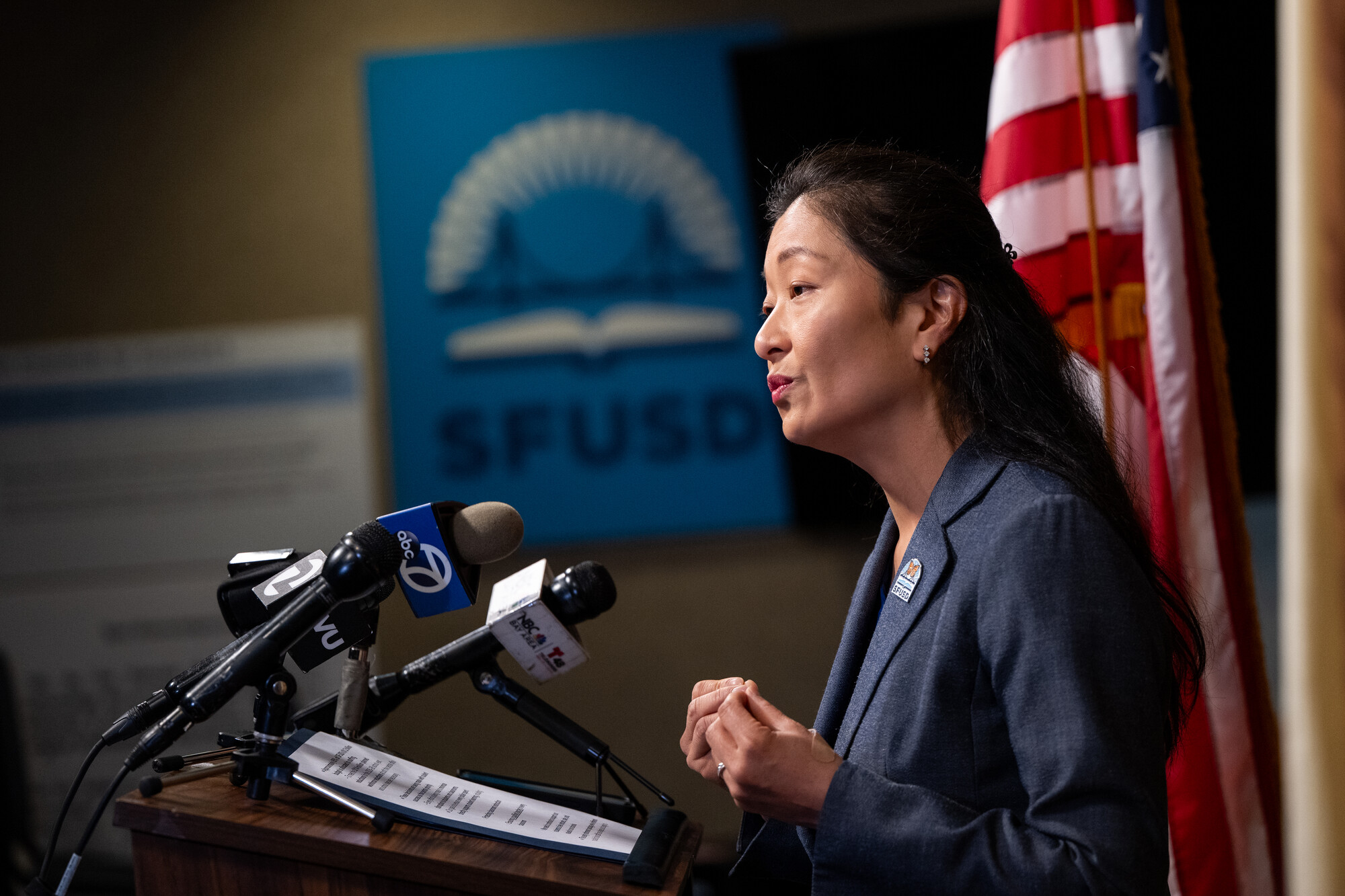
"caption": "San Francisco Unified School District Superintendent Dr. Maria Su speaks during a press conference at the school district offices in San Francisco on April 21, 2025.",
"credit": "Beth LaBerge/KQED",
"altTag": null,
"description": null,
"imgSizes": {
"thumbnail": {
"file": "https://cdn.kqed.org/wp-content/uploads/sites/10/2025/06/250421-SFUSDCentralCuts-06-BL_qed-1-160x107.jpg",
"width": 160,
"height": 107,
"mimeType": "image/jpeg"
},
"1536x1536": {
"file": "https://cdn.kqed.org/wp-content/uploads/sites/10/2025/06/250421-SFUSDCentralCuts-06-BL_qed-1-1536x1024.jpg",
"width": 1536,
"height": 1024,
"mimeType": "image/jpeg"
},
"post-thumbnail": {
"file": "https://cdn.kqed.org/wp-content/uploads/sites/10/2025/06/250421-SFUSDCentralCuts-06-BL_qed-1-672x372.jpg",
"width": 672,
"height": 372,
"mimeType": "image/jpeg"
},
"twentyfourteen-full-width": {
"file": "https://cdn.kqed.org/wp-content/uploads/sites/10/2025/06/250421-SFUSDCentralCuts-06-BL_qed-1-1038x576.jpg",
"width": 1038,
"height": 576,
"mimeType": "image/jpeg"
},
"kqedFullSize": {
"file": "https://cdn.kqed.org/wp-content/uploads/sites/10/2025/06/250421-SFUSDCentralCuts-06-BL_qed-1.jpg",
"width": 1999,
"height": 1333
}
},
"isLoading": false,
"fetchFailed": false
},
"news_12046127": {
"type": "attachments",
"id": "news_12046127",
"meta": {
"index": "attachments_1716263798",
"site": "news",
"id": "12046127",
"found": true
},
"title": "250421-SFUSDCentralCuts-09-BL_qed",
"publishDate": 1750965461,
"status": "inherit",
"parent": 12051862,
"modified": 1755024878,
"caption": "San Francisco Unified School District Superintendent Dr. Maria Su speaks during a press conference at the school district offices in San Francisco on April 21, 2025.",
"credit": "Beth LaBerge/KQED",
"altTag": null,
"description": null,
"imgSizes": {
"thumbnail": {
"file": "https://cdn.kqed.org/wp-content/uploads/sites/10/2025/06/250421-SFUSDCentralCuts-09-BL_qed-160x107.jpg",
"width": 160,
"height": 107,
"mimeType": "image/jpeg"
},
"1536x1536": {
"file": "https://cdn.kqed.org/wp-content/uploads/sites/10/2025/06/250421-SFUSDCentralCuts-09-BL_qed-1536x1024.jpg",
"width": 1536,
"height": 1024,
"mimeType": "image/jpeg"
},
"post-thumbnail": {
"file": "https://cdn.kqed.org/wp-content/uploads/sites/10/2025/06/250421-SFUSDCentralCuts-09-BL_qed-672x372.jpg",
"width": 672,
"height": 372,
"mimeType": "image/jpeg"
},
"twentyfourteen-full-width": {
"file": "https://cdn.kqed.org/wp-content/uploads/sites/10/2025/06/250421-SFUSDCentralCuts-09-BL_qed-1038x576.jpg",
"width": 1038,
"height": 576,
"mimeType": "image/jpeg"
},
"kqedFullSize": {
"file": "https://cdn.kqed.org/wp-content/uploads/sites/10/2025/06/250421-SFUSDCentralCuts-09-BL_qed.jpg",
"width": 2000,
"height": 1333
}
},
"isLoading": false,
"fetchFailed": false
},
"news_12046206": {
"type": "attachments",
"id": "news_12046206",
"meta": {
"index": "attachments_1716263798",
"site": "news",
"id": "12046206",
"found": true
},
"title": "250626-SJBBB-JG-5-KQED",
"publishDate": 1750976134,
"status": "inherit",
"parent": 0,
"modified": 1750976161,
"caption": "Immigration Attorney Richard Hobbs speaks at a podium while surrounded by representatives of roughly two dozen community groups during a rally against President Trump's budget bill on June 26, 2025, in San José.",
"credit": "Joseph Geha/KQED",
"altTag": null,
"description": null,
"imgSizes": {
"thumbnail": {
"file": "https://cdn.kqed.org/wp-content/uploads/sites/10/2025/06/250626-SJBBB-JG-5-KQED-160x107.jpg",
"width": 160,
"height": 107,
"mimeType": "image/jpeg"
},
"1536x1536": {
"file": "https://cdn.kqed.org/wp-content/uploads/sites/10/2025/06/250626-SJBBB-JG-5-KQED-1536x1024.jpg",
"width": 1536,
"height": 1024,
"mimeType": "image/jpeg"
},
"post-thumbnail": {
"file": "https://cdn.kqed.org/wp-content/uploads/sites/10/2025/06/250626-SJBBB-JG-5-KQED-672x372.jpg",
"width": 672,
"height": 372,
"mimeType": "image/jpeg"
},
"twentyfourteen-full-width": {
"file": "https://cdn.kqed.org/wp-content/uploads/sites/10/2025/06/250626-SJBBB-JG-5-KQED-1038x576.jpg",
"width": 1038,
"height": 576,
"mimeType": "image/jpeg"
},
"kqedFullSize": {
"file": "https://cdn.kqed.org/wp-content/uploads/sites/10/2025/06/250626-SJBBB-JG-5-KQED.jpg",
"width": 2000,
"height": 1333
}
},
"isLoading": false,
"fetchFailed": false
},
"news_12046175": {
"type": "attachments",
"id": "news_12046175",
"meta": {
"index": "attachments_1716263798",
"site": "news",
"id": "12046175",
"found": true
},
"title": "Homeless people struggle during heavy rain in San Francisco, California",
"publishDate": 1750970923,
"status": "inherit",
"parent": 12087973,
"modified": 1781737864,
"caption": "A homeless encampment near Polk Street in San Francisco on Feb. 6, 2025.",
"credit": "Tayfun Coskun/Anadolu via Getty Images",
"altTag": null,
"description": null,
"imgSizes": {
"thumbnail": {
"file": "https://cdn.kqed.org/wp-content/uploads/sites/10/2025/06/GETTYIMAGES-2197492442-KQED-160x101.jpg",
"width": 160,
"height": 101,
"mimeType": "image/jpeg"
},
"1536x1536": {
"file": "https://cdn.kqed.org/wp-content/uploads/sites/10/2025/06/GETTYIMAGES-2197492442-KQED-1536x969.jpg",
"width": 1536,
"height": 969,
"mimeType": "image/jpeg"
},
"post-thumbnail": {
"file": "https://cdn.kqed.org/wp-content/uploads/sites/10/2025/06/GETTYIMAGES-2197492442-KQED-672x372.jpg",
"width": 672,
"height": 372,
"mimeType": "image/jpeg"
},
"twentyfourteen-full-width": {
"file": "https://cdn.kqed.org/wp-content/uploads/sites/10/2025/06/GETTYIMAGES-2197492442-KQED-1038x576.jpg",
"width": 1038,
"height": 576,
"mimeType": "image/jpeg"
},
"kqedFullSize": {
"file": "https://cdn.kqed.org/wp-content/uploads/sites/10/2025/06/GETTYIMAGES-2197492442-KQED.jpg",
"width": 2000,
"height": 1262
}
},
"isLoading": false,
"fetchFailed": false
},
"news_12045592": {
"type": "attachments",
"id": "news_12045592",
"meta": {
"index": "attachments_1716263798",
"site": "news",
"id": "12045592",
"found": true
},
"title": "250623-SF BUDGET ACTIVISTS-MD-01-KQED-1",
"publishDate": 1750714470,
"status": "inherit",
"parent": 0,
"modified": 1750714513,
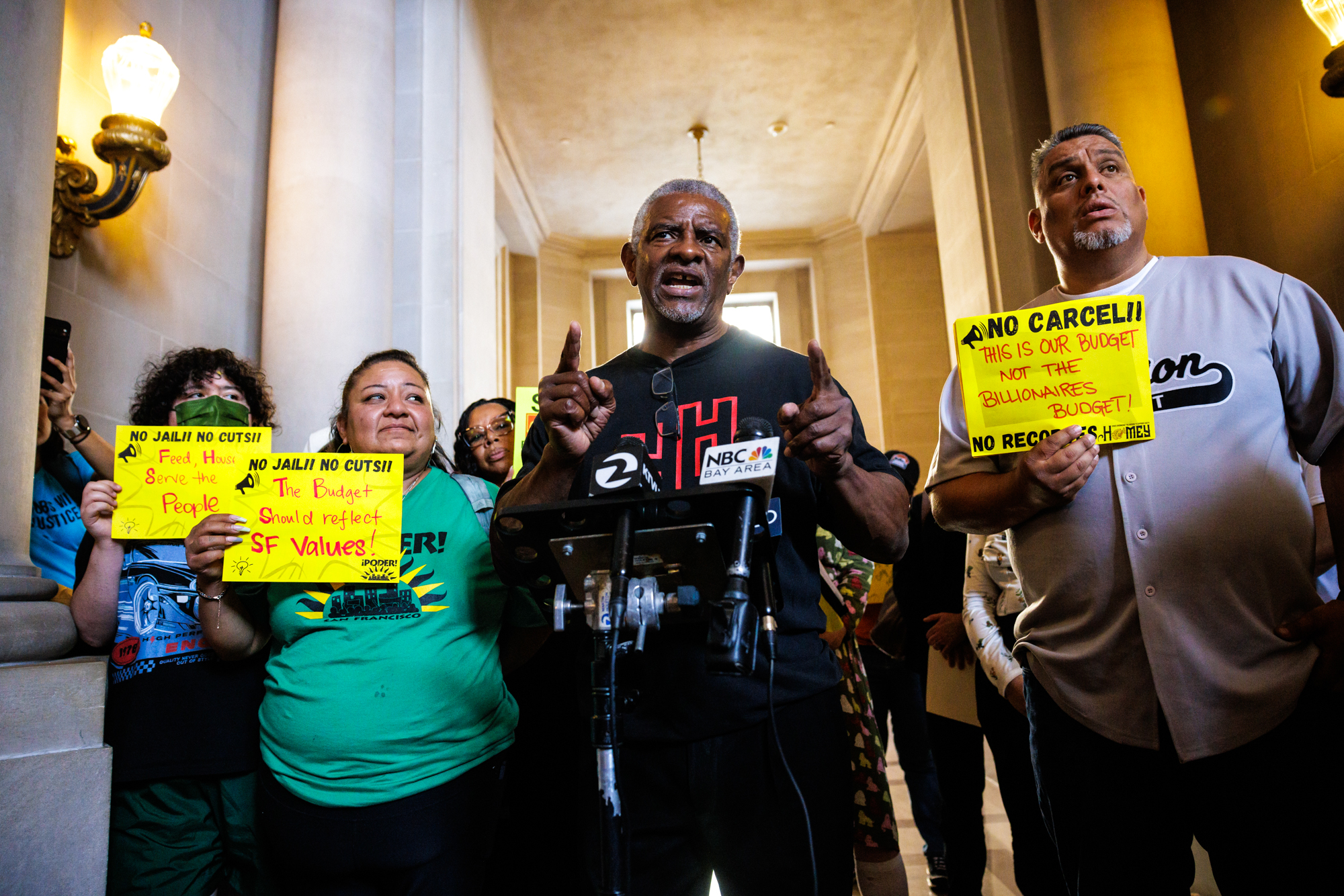
"caption": "Joe Wilson, Executive Director at Hospitality House addresses the press at City Hall in San Francisco on June 23, 2025.",
"credit": "Martin do Nascimento/KQED",
"altTag": null,
"description": null,
"imgSizes": {
"thumbnail": {
"file": "https://cdn.kqed.org/wp-content/uploads/sites/10/2025/06/250623-SF-BUDGET-ACTIVISTS-MD-01-KQED-1-160x107.jpg",
"width": 160,
"height": 107,
"mimeType": "image/jpeg"
},
"1536x1536": {
"file": "https://cdn.kqed.org/wp-content/uploads/sites/10/2025/06/250623-SF-BUDGET-ACTIVISTS-MD-01-KQED-1-1536x1025.jpg",
"width": 1536,
"height": 1025,
"mimeType": "image/jpeg"
},
"post-thumbnail": {
"file": "https://cdn.kqed.org/wp-content/uploads/sites/10/2025/06/250623-SF-BUDGET-ACTIVISTS-MD-01-KQED-1-672x372.jpg",
"width": 672,
"height": 372,
"mimeType": "image/jpeg"
},
"twentyfourteen-full-width": {
"file": "https://cdn.kqed.org/wp-content/uploads/sites/10/2025/06/250623-SF-BUDGET-ACTIVISTS-MD-01-KQED-1-1038x576.jpg",
"width": 1038,
"height": 576,
"mimeType": "image/jpeg"
},
"kqedFullSize": {
"file": "https://cdn.kqed.org/wp-content/uploads/sites/10/2025/06/250623-SF-BUDGET-ACTIVISTS-MD-01-KQED-1.jpg",
"width": 2000,
"height": 1334
}
},
"isLoading": false,
"fetchFailed": false
},
"news_12044772": {
"type": "attachments",
"id": "news_12044772",
"meta": {
"index": "attachments_1716263798",
"site": "news",
"id": "12044772",
"found": true
},
"title": "250421-SFUSDCentralCuts-07-BL_qed",
"publishDate": 1750192751,
"status": "inherit",
"parent": 12044768,
"modified": 1750192759,
"caption": "San Francisco Unified School District Superintendent Dr. Maria Su speaks during a press conference at the school district offices in San Francisco on April 21, 2025.",
"credit": "Beth LaBerge/KQED",
"altTag": null,
"description": null,
"imgSizes": {
"thumbnail": {
"file": "https://cdn.kqed.org/wp-content/uploads/sites/10/2025/06/250421-SFUSDCentralCuts-07-BL_qed-160x107.jpg",
"width": 160,
"height": 107,
"mimeType": "image/jpeg"
},
"1536x1536": {
"file": "https://cdn.kqed.org/wp-content/uploads/sites/10/2025/06/250421-SFUSDCentralCuts-07-BL_qed-1536x1024.jpg",
"width": 1536,
"height": 1024,
"mimeType": "image/jpeg"
},
"post-thumbnail": {
"file": "https://cdn.kqed.org/wp-content/uploads/sites/10/2025/06/250421-SFUSDCentralCuts-07-BL_qed-672x372.jpg",
"width": 672,
"height": 372,
"mimeType": "image/jpeg"
},
"twentyfourteen-full-width": {
"file": "https://cdn.kqed.org/wp-content/uploads/sites/10/2025/06/250421-SFUSDCentralCuts-07-BL_qed-1038x576.jpg",
"width": 1038,
"height": 576,
"mimeType": "image/jpeg"
},
"kqedFullSize": {
"file": "https://cdn.kqed.org/wp-content/uploads/sites/10/2025/06/250421-SFUSDCentralCuts-07-BL_qed.jpg",
"width": 2000,
"height": 1333
}
},
"isLoading": false,
"fetchFailed": false
},
"news_12044837": {
"type": "attachments",
"id": "news_12044837",
"meta": {
"index": "attachments_1716263798",
"site": "news",
"id": "12044837",
"found": true
},
"title": "20250617_SFBUDGETPROTEST_GC-23-KQED",
"publishDate": 1750202915,
"status": "inherit",
"parent": 0,
"modified": 1750203329,
"caption": "San Francisco Sheriff officers arrest workers who participated in a sit-in, protesting against Mayor Daniel Lurie’s budget proposal that would call for hundreds of layoffs, during a Board of Supervisors meeting at City Hall on June 17, 2025.",
"credit": "Gina Castro/KQED",
"altTag": null,
"description": null,
"imgSizes": {
"thumbnail": {
"file": "https://cdn.kqed.org/wp-content/uploads/sites/10/2025/06/20250617_SFBUDGETPROTEST_GC-23-KQED-160x107.jpg",
"width": 160,
"height": 107,
"mimeType": "image/jpeg"
},
"1536x1536": {
"file": "https://cdn.kqed.org/wp-content/uploads/sites/10/2025/06/20250617_SFBUDGETPROTEST_GC-23-KQED-1536x1024.jpg",
"width": 1536,
"height": 1024,
"mimeType": "image/jpeg"
},
"post-thumbnail": {
"file": "https://cdn.kqed.org/wp-content/uploads/sites/10/2025/06/20250617_SFBUDGETPROTEST_GC-23-KQED-672x372.jpg",
"width": 672,
"height": 372,
"mimeType": "image/jpeg"
},
"twentyfourteen-full-width": {
"file": "https://cdn.kqed.org/wp-content/uploads/sites/10/2025/06/20250617_SFBUDGETPROTEST_GC-23-KQED-1038x576.jpg",
"width": 1038,
"height": 576,
"mimeType": "image/jpeg"
},
"kqedFullSize": {
"file": "https://cdn.kqed.org/wp-content/uploads/sites/10/2025/06/20250617_SFBUDGETPROTEST_GC-23-KQED.jpg",
"width": 2000,
"height": 1333
}
},
"isLoading": false,
"fetchFailed": false
},
"news_12043660": {
"type": "attachments",
"id": "news_12043660",
"meta": {
"index": "attachments_1716263798",
"site": "news",
"id": "12043660",
"found": true
},
"title": "Adrian Tirtanadi stands outside of City Hall in San Francisco on June 10, 2025.",
"publishDate": 1749599453,
"status": "inherit",
"parent": 12043582,
"modified": 1749665017,
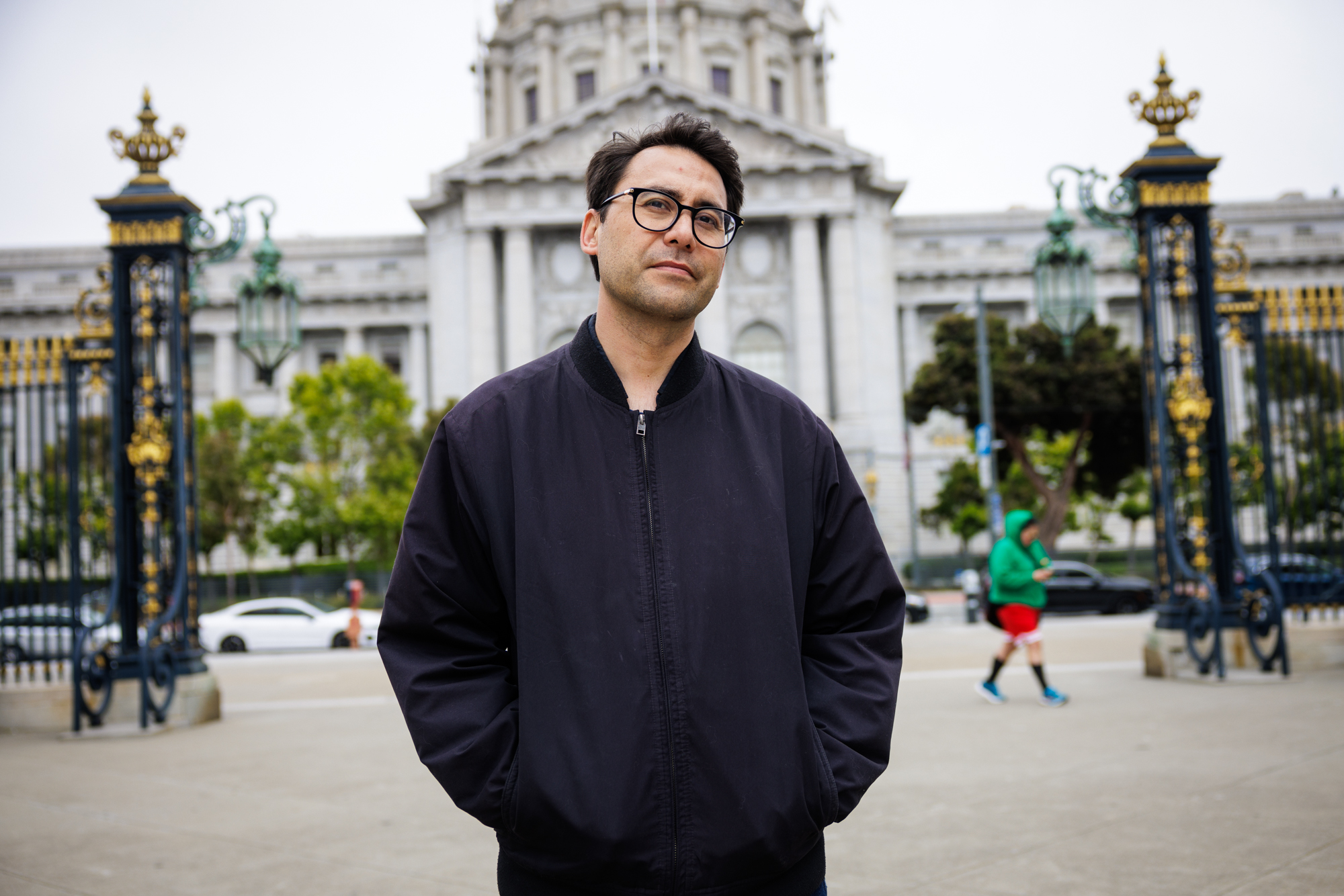
"caption": "Adrian Tirtanadi stands outside City Hall in San Francisco on June 10, 2025.",
"credit": "Martin do Nasicmento/KQED",
"altTag": null,
"description": null,
"imgSizes": {
"thumbnail": {
"file": "https://cdn.kqed.org/wp-content/uploads/sites/10/2025/06/250610-LEGAL-AID-HUNGER-STRIKE-MD-01-KQED-160x107.jpg",
"width": 160,
"height": 107,
"mimeType": "image/jpeg"
},
"1536x1536": {
"file": "https://cdn.kqed.org/wp-content/uploads/sites/10/2025/06/250610-LEGAL-AID-HUNGER-STRIKE-MD-01-KQED-1536x1025.jpg",
"width": 1536,
"height": 1025,
"mimeType": "image/jpeg"
},
"post-thumbnail": {
"file": "https://cdn.kqed.org/wp-content/uploads/sites/10/2025/06/250610-LEGAL-AID-HUNGER-STRIKE-MD-01-KQED-672x372.jpg",
"width": 672,
"height": 372,
"mimeType": "image/jpeg"
},
"twentyfourteen-full-width": {
"file": "https://cdn.kqed.org/wp-content/uploads/sites/10/2025/06/250610-LEGAL-AID-HUNGER-STRIKE-MD-01-KQED-1038x576.jpg",
"width": 1038,
"height": 576,
"mimeType": "image/jpeg"
},
"kqedFullSize": {
"file": "https://cdn.kqed.org/wp-content/uploads/sites/10/2025/06/250610-LEGAL-AID-HUNGER-STRIKE-MD-01-KQED.jpg",
"width": 2000,
"height": 1334
}
},
"isLoading": false,
"fetchFailed": false
},
"news_12029489": {
"type": "attachments",
"id": "news_12029489",
"meta": {
"index": "attachments_1716263798",
"site": "news",
"id": "12029489",
"found": true
},
"title": "US-POLITICS-ENVIRONMENT-NATURE-PARKS-PROTEST",
"publishDate": 1741040569,
"status": "inherit",
"parent": 12029182,
"modified": 1741040606,
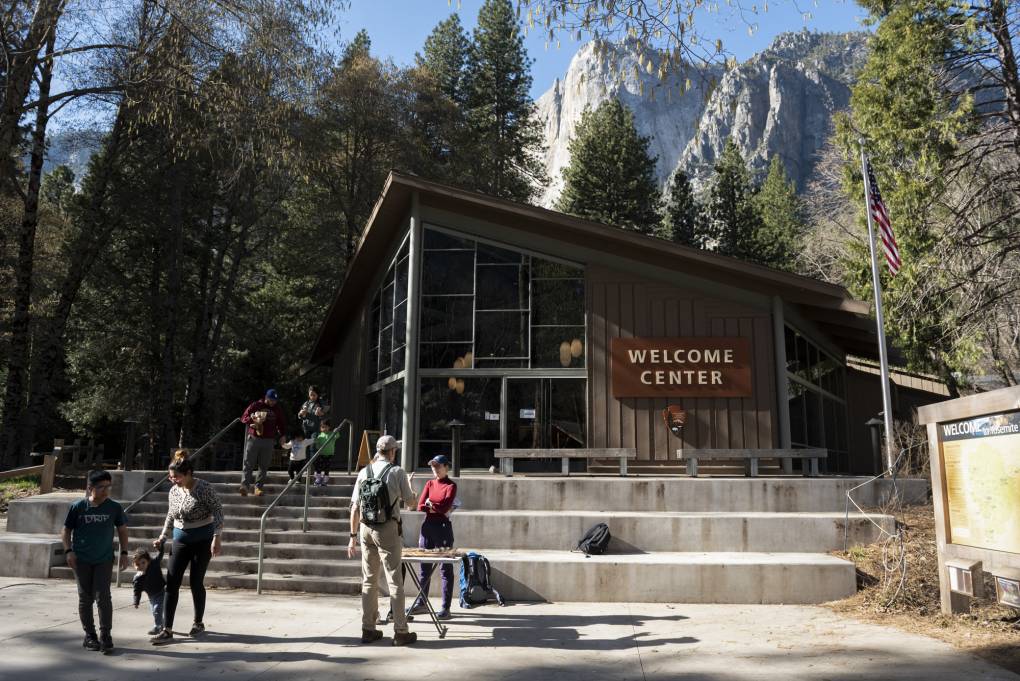
"caption": "A volunteer for the National Park Service welcomes visitors at the Exploration Center in Yosemite Valley, at Yosemite National Park on March 1, 2025.",
"credit": "Laure Andrillon/AFP via Getty",
"altTag": null,
"description": null,
"imgSizes": {
"medium": {
"file": "https://cdn.kqed.org/wp-content/uploads/sites/10/2025/03/CaliforniaPublicLandsGetty1-800x534.jpg",
"width": 800,
"height": 534,
"mimeType": "image/jpeg"
},
"large": {
"file": "https://cdn.kqed.org/wp-content/uploads/sites/10/2025/03/CaliforniaPublicLandsGetty1-1020x681.jpg",
"width": 1020,
"height": 681,
"mimeType": "image/jpeg"
},
"thumbnail": {
"file": "https://cdn.kqed.org/wp-content/uploads/sites/10/2025/03/CaliforniaPublicLandsGetty1-160x107.jpg",
"width": 160,
"height": 107,
"mimeType": "image/jpeg"
},
"1536x1536": {
"file": "https://cdn.kqed.org/wp-content/uploads/sites/10/2025/03/CaliforniaPublicLandsGetty1-1536x1025.jpg",
"width": 1536,
"height": 1025,
"mimeType": "image/jpeg"
},
"post-thumbnail": {
"file": "https://cdn.kqed.org/wp-content/uploads/sites/10/2025/03/CaliforniaPublicLandsGetty1-672x372.jpg",
"width": 672,
"height": 372,
"mimeType": "image/jpeg"
},
"twentyfourteen-full-width": {
"file": "https://cdn.kqed.org/wp-content/uploads/sites/10/2025/03/CaliforniaPublicLandsGetty1-1038x576.jpg",
"width": 1038,
"height": 576,
"mimeType": "image/jpeg"
},
"full-width": {
"file": "https://cdn.kqed.org/wp-content/uploads/sites/10/2025/03/CaliforniaPublicLandsGetty1-1920x1282.jpg",
"width": 1920,
"height": 1282,
"mimeType": "image/jpeg"
},
"kqedFullSize": {
"file": "https://cdn.kqed.org/wp-content/uploads/sites/10/2025/03/CaliforniaPublicLandsGetty1.jpg",
"width": 2000,
"height": 1335
}
},
"isLoading": false,
"fetchFailed": false
},
"news_12041290": {
"type": "attachments",
"id": "news_12041290",
"meta": {
"index": "attachments_1716263798",
"site": "news",
"id": "12041290",
"found": true
},
"title": "240520-TKBilingualLearners-03-BL_qed",
"publishDate": 1747939937,
"status": "inherit",
"parent": 12041279,
"modified": 1747939947,
"caption": "Students form a line to get ready for lunchtime at La Plazita Preschool in Oakland on May 20, 2024.",
"credit": "Beth LaBerge/KQED",
"altTag": null,
"description": null,
"imgSizes": {
"medium": {
"file": "https://cdn.kqed.org/wp-content/uploads/sites/10/2025/05/240520-TKBilingualLearners-03-BL_qed-800x533.jpg",
"width": 800,
"height": 533,
"mimeType": "image/jpeg"
},
"large": {
"file": "https://cdn.kqed.org/wp-content/uploads/sites/10/2025/05/240520-TKBilingualLearners-03-BL_qed-1020x680.jpg",
"width": 1020,
"height": 680,
"mimeType": "image/jpeg"
},
"thumbnail": {
"file": "https://cdn.kqed.org/wp-content/uploads/sites/10/2025/05/240520-TKBilingualLearners-03-BL_qed-160x107.jpg",
"width": 160,
"height": 107,
"mimeType": "image/jpeg"
},
"1536x1536": {
"file": "https://cdn.kqed.org/wp-content/uploads/sites/10/2025/05/240520-TKBilingualLearners-03-BL_qed-1536x1024.jpg",
"width": 1536,
"height": 1024,
"mimeType": "image/jpeg"
},
"post-thumbnail": {
"file": "https://cdn.kqed.org/wp-content/uploads/sites/10/2025/05/240520-TKBilingualLearners-03-BL_qed-672x372.jpg",
"width": 672,
"height": 372,
"mimeType": "image/jpeg"
},
"twentyfourteen-full-width": {
"file": "https://cdn.kqed.org/wp-content/uploads/sites/10/2025/05/240520-TKBilingualLearners-03-BL_qed-1038x576.jpg",
"width": 1038,
"height": 576,
"mimeType": "image/jpeg"
},
"full-width": {
"file": "https://cdn.kqed.org/wp-content/uploads/sites/10/2025/05/240520-TKBilingualLearners-03-BL_qed-1920x1280.jpg",
"width": 1920,
"height": 1280,
"mimeType": "image/jpeg"
},
"kqedFullSize": {
"file": "https://cdn.kqed.org/wp-content/uploads/sites/10/2025/05/240520-TKBilingualLearners-03-BL_qed.jpg",
"width": 2000,
"height": 1333
}
},
"isLoading": false,
"fetchFailed": false
}
},
"audioPlayerReducer": {
"postId": "stream_live",
"isPaused": true,
"isPlaying": false,
"pfsActive": false,
"pledgeModalIsOpen": true,
"playerDrawerIsOpen": false,
"liveAudioPlayStartedAt": 0,
"liveAudioPlayContext": ""
},
"authorsReducer": {
"byline_news_12043582": {
"type": "authors",
"id": "byline_news_12043582",
"meta": {
"override": true
},
"slug": "byline_news_12043582",
"name": "Cami Dominguez ",
"isLoading": false
},
"sjohnson": {
"type": "authors",
"id": "11840",
"meta": {
"index": "authors_1716337520",
"id": "11840",
"found": true
},
"name": "Sydney Johnson",
"firstName": "Sydney",
"lastName": "Johnson",
"slug": "sjohnson",
"email": "sjohnson@kqed.org",
"display_author_email": false,
"staff_mastheads": [
"news"
],
"title": "KQED Reporter",
"bio": "Sydney Johnson is a general assignment reporter at KQED. She previously reported on public health and city government at the San Francisco Examiner, and before that, she covered statewide education policy for EdSource. Her reporting has won multiple local, state and national awards. Sydney is a graduate of the University of California, Berkeley and lives in San Francisco.",
"avatar": "https://secure.gravatar.com/avatar/97855f2719b72ad6190b7c535fe642c8?s=600&d=blank&r=g",
"twitter": "sydneyfjohnson",
"facebook": null,
"instagram": null,
"linkedin": null,
"sites": [
{
"site": "news",
"roles": [
"editor"
]
}
],
"headData": {
"title": "Sydney Johnson | KQED",
"description": "KQED Reporter",
"ogImgSrc": "https://secure.gravatar.com/avatar/97855f2719b72ad6190b7c535fe642c8?s=600&d=blank&r=g",
"twImgSrc": "https://secure.gravatar.com/avatar/97855f2719b72ad6190b7c535fe642c8?s=600&d=blank&r=g"
},
"isLoading": false,
"link": "/author/sjohnson"
},
"jgeha": {
"type": "authors",
"id": "11906",
"meta": {
"index": "authors_1716337520",
"id": "11906",
"found": true
},
"name": "Joseph Geha",
"firstName": "Joseph",
"lastName": "Geha",
"slug": "jgeha",
"email": "jgeha@kqed.org",
"display_author_email": false,
"staff_mastheads": [
"news",
"science"
],
"title": "KQED Contributor",
"bio": null,
"avatar": "https://secure.gravatar.com/avatar/ea84d2b6dd93d6369d453edf19dd583f117cd1759d2d9c9c92f9de77017354fe?s=600&d=blank&r=g",
"twitter": null,
"bluesky": null,
"facebook": null,
"instagram": null,
"linkedin": null,
"sites": [
{
"site": "news",
"roles": [
"editor"
]
},
{
"site": "liveblog",
"roles": [
"author"
]
}
],
"headData": {
"title": "Joseph Geha | KQED",
"description": "KQED Contributor",
"ogImgSrc": "https://secure.gravatar.com/avatar/ea84d2b6dd93d6369d453edf19dd583f117cd1759d2d9c9c92f9de77017354fe?s=600&d=blank&r=g",
"twImgSrc": "https://secure.gravatar.com/avatar/ea84d2b6dd93d6369d453edf19dd583f117cd1759d2d9c9c92f9de77017354fe?s=600&d=blank&r=g"
},
"isLoading": false,
"link": "/author/jgeha"
},
"kdebenedetti": {
"type": "authors",
"id": "11913",
"meta": {
"index": "authors_1716337520",
"id": "11913",
"found": true
},
"name": "Katie DeBenedetti",
"firstName": "Katie",
"lastName": "DeBenedetti",
"slug": "kdebenedetti",
"email": "kdebenedetti@kqed.org",
"display_author_email": false,
"staff_mastheads": [
"news",
"science"
],
"title": "KQED Contributor",
"bio": "Katie DeBenedetti is a digital reporter covering daily news for the Express Desk. Prior to joining KQED as a culture reporting intern in January 2024, she covered education and city government for the Napa Valley Register.",
"avatar": "https://secure.gravatar.com/avatar/6e31073cb8f7e4214ab03f42771d0f45?s=600&d=blank&r=g",
"twitter": null,
"facebook": null,
"instagram": null,
"linkedin": null,
"sites": [
{
"site": "news",
"roles": [
"author"
]
},
{
"site": "science",
"roles": [
"author"
]
},
{
"site": "liveblog",
"roles": [
"author"
]
}
],
"headData": {
"title": "Katie DeBenedetti | KQED",
"description": "KQED Contributor",
"ogImgSrc": "https://secure.gravatar.com/avatar/6e31073cb8f7e4214ab03f42771d0f45?s=600&d=blank&r=g",
"twImgSrc": "https://secure.gravatar.com/avatar/6e31073cb8f7e4214ab03f42771d0f45?s=600&d=blank&r=g"
},
"isLoading": false,
"link": "/author/kdebenedetti"
},
"rcooke": {
"type": "authors",
"id": "11921",
"meta": {
"index": "authors_1716337520",
"id": "11921",
"found": true
},
"name": "Riley Cooke",
"firstName": "Riley",
"lastName": "Cooke",
"slug": "rcooke",
"email": "rcooke@kqed.org",
"display_author_email": true,
"staff_mastheads": [
"news"
],
"title": "KQED Contributor",
"bio": "Riley is a senior at UC Berkeley, where she studies political science and journalism. Her work has appeared in SFGate, NBC Bay Area, Local News Matters and more. She enjoys reporting on politics, housing and homelessness — and using as many em dashes as her editors will allow.",
"avatar": "https://secure.gravatar.com/avatar/792f98c126cc5e270a8a96f77f7224ea?s=600&d=blank&r=g",
"twitter": "rrileycooke",
"facebook": null,
"instagram": null,
"linkedin": null,
"sites": [
{
"site": "arts",
"roles": [
"author"
]
},
{
"site": "news",
"roles": [
"author"
]
}
],
"headData": {
"title": "Riley Cooke | KQED",
"description": "KQED Contributor",
"ogImgSrc": "https://secure.gravatar.com/avatar/792f98c126cc5e270a8a96f77f7224ea?s=600&d=blank&r=g",
"twImgSrc": "https://secure.gravatar.com/avatar/792f98c126cc5e270a8a96f77f7224ea?s=600&d=blank&r=g"
},
"isLoading": false,
"link": "/author/rcooke"
}
},
"pagesReducer": {
"news_tag_budget-cuts": {
"type": "terms",
"id": "news_3854",
"meta": {
"index": "terms_1716263798",
"site": "news",
"id": "3854",
"score": 9.556763
},
"featImg": null,
"name": "budget cuts",
"description": null,
"taxonomy": "tag",
"headData": {
"twImgId": null,
"twTitle": null,
"ogTitle": null,
"ogImgId": null,
"twDescription": null,
"description": null,
"title": "budget cuts Archives | KQED News",
"ogDescription": null
},
"ttid": 3873,
"slug": "budget-cuts",
"isLoading": false,
"title": "budget cuts",
"pageMeta": {
"site": "news",
"WpPageTemplate": "page-topic-editorial",
"currentPage": 3
},
"blocks": [
{
"blockName": "kqed/post-list",
"attrs": {
"layout": "cardArticle2",
"query": "posts/news?tag=budget-cuts",
"seeMore": false,
"paginated": true,
"page": 3
}
},
{
"blockName": "kqed/ad"
}
]
}
},
"pfsSessionReducer": {},
"postsReducer": {
"stream_live": {
"type": "live",
"id": "stream_live",
"audioUrl": "https://streams.kqed.org/kqedradio",
"title": "Live Stream",
"excerpt": "Live Stream information currently unavailable.",
"link": "/radio",
"featImg": "",
"label": {
"name": "KQED Live",
"link": "/"
}
},
"stream_kqedNewscast": {
"type": "posts",
"id": "stream_kqedNewscast",
"audioUrl": "https://www.kqed.org/.stream/anon/radio/RDnews/newscast.mp3?_=1",
"title": "KQED Newscast",
"featImg": "",
"label": {
"name": "88.5 FM",
"link": "/"
}
},
"news_12047037": {
"type": "posts",
"id": "news_12047037",
"meta": {
"index": "posts_1716263798",
"site": "news",
"id": "12047037",
"score": null,
"sort": [
1751650253000
]
},
"guestAuthors": [],
"slug": "a-betrayal-bay-area-leaders-react-to-us-house-passing-trumps-tax-and-welfare-cuts",
"title": "‘A Betrayal’: Bay Area Leaders React to US House Passing Trump’s Tax and Welfare Cuts",
"publishDate": 1751650253,
"format": "standard",
"headTitle": "‘A Betrayal’: Bay Area Leaders React to US House Passing Trump’s Tax and Welfare Cuts | KQED",
"labelTerm": {
"site": "news"
},
"content": "\u003cp>\u003cem>Updated 3:05 p.m. Thursday\u003c/em>\u003c/p>\n\u003cp>The House of Representatives narrowly passed President Trump’s \u003ca href=\"https://www.kqed.org/news/12046831/cruel-ugly-nasty-immoral-democrats-slam-mega-bill-ahead-of-house-vote\">federal budget proposal on Thursday\u003c/a>, slashing \u003ca href=\"https://www.kqed.org/news/12046134/a-big-bad-betrayal-san-jose-groups-protest-trumps-tax-bill\">social safety net programs\u003c/a> and extending tax cuts that Bay Area lawmakers say are a betrayal of the American people.\u003c/p>\n\u003cp>Votes largely fell along party lines, with the exception of Republican Reps. Thomas Massie of Kentucky and Brian Fitzpatrick of Pennsylvania, who joined Democrats to vote against the so-called “Big Beautiful Bill.”\u003c/p>\n\u003cp>The legislation heads to Trump’s desk next, and he is expected to sign it on July Fourth.\u003c/p>\n\u003cp>[ad fullwidth]\u003c/p>\n\u003cp>“This bill is a betrayal that abandons the needs of hardworking Americans and balloons the national debt by over $4 trillion — not to invest in the future, but to reward the wealthiest in our country at the expense of everyone else,” Speaker Emerita Nancy Pelosi, D-San Francisco, said in a statement on Thursday, referring to the legislation as the “Big, Ugly Bill.”\u003c/p>\n\u003cp>She said the legislation makes the \u003ca href=\"https://www.kqed.org/news/12028454/potential-medicaid-cuts-who-would-be-affected-and-what-are-republicans-proposing\">largest cuts to Medicaid\u003c/a>, Medicare and federal food stamps programs in history.\u003c/p>\n\u003cp>An estimated 2 million California residents could also lose healthcare coverage as a result of more than $28.4 billion slashed from Medicaid funding to the state. Gov. Gavin Newsom said in a statement that rural hospitals could see services reduced or close their doors entirely.\u003c/p>\n\u003cfigure id=\"attachment_12047045\" class=\"wp-caption aligncenter\" style=\"max-width: 2000px\">\u003cimg loading=\"lazy\" decoding=\"async\" class=\"size-full wp-image-12047045\" src=\"https://cdn.kqed.org/wp-content/uploads/sites/10/2025/07/BigBeautifulBillAP1.jpg\" alt=\"\" width=\"2000\" height=\"1333\" srcset=\"https://cdn.kqed.org/wp-content/uploads/sites/10/2025/07/BigBeautifulBillAP1.jpg 2000w, https://cdn.kqed.org/wp-content/uploads/sites/10/2025/07/BigBeautifulBillAP1-160x107.jpg 160w, https://cdn.kqed.org/wp-content/uploads/sites/10/2025/07/BigBeautifulBillAP1-1536x1024.jpg 1536w\" sizes=\"auto, (max-width: 2000px) 100vw, 2000px\">\u003cfigcaption class=\"wp-caption-text\">House Minority Leader Hakeem Jeffries, D-N.Y., left, speaks in the House chamber as House Democrats stand to applaud him, prior to the final vote for President Donald Trump’s signature bill of tax breaks and spending cuts, at the Capitol, on Thursday, July 3, 2025, in Washington. \u003ccite>(Rod Lamkey, Jr./AP Photo)\u003c/cite>\u003c/figcaption>\u003c/figure>\n\u003cp>Marnie Regan, director of government relations at Larkin Street Youth Services, said that the nonprofit’s clients, many of whom are homeless or formerly homeless young people, are especially at risk of losing access to these services.\u003c/p>\n\u003cp>Many of the 18- to 25-year-olds Larkin supports work gig jobs, or hold multiple part-time roles that don’t include health benefits, or allow them to cobble together the income necessary to afford enough food — making them dependent on public assistance for healthcare and nutrition.\u003c/p>\n\u003cp>“It’s that sort of invisible part of the workforce that we are very, very concerned about losing their benefits,” she said, adding that many of these young people are especially likely to forgo routine and preventative health care when they don’t have access to Medicaid.[aside postID=news_12046831 hero='https://cdn.kqed.org/wp-content/uploads/sites/10/2025/03/LateefahSimonGetty2-1020x680.jpg']“They’re worried about the cost … they don’t do dental care, there’s a lot of things that they just don’t access,” she told KQED.\u003c/p>\n\u003cp>The bill also blocks abortion care providers, like Planned Parenthood, from receiving federal funding.\u003c/p>\n\u003cp>While a federal law already prevents Medicaid from paying for abortions unless the pregnancy is a result of rape or incest or there is a threat to the pregnant person’s life, the bill would block Medicaid reimbursements for other care offered at these sites, like pregnancy testing, cancer screenings and contraceptives.\u003c/p>\n\u003cp>In a post on its website this week, Planned Parenthood said the bill could put as many as 200 of its health centers at risk of shutting down.\u003c/p>\n\u003cp>“The health and lives of 1.1 million patients across the country are at risk,” the organization said.\u003c/p>\n\u003cp>Newsom called the move to defund Planned Parenthood a “backdoor abortion ban.”\u003c/p>\n\u003cp>More than \u003ca href=\"https://calbudgetcenter.org/resources/republican-proposed-calfresh-cuts-put-millions-of-californians-at-risk-of-hunger/\">5.5 million\u003c/a> Californians rely on food assistance benefits in California, which are nearly entirely funded by the federal government, according to the \u003ca href=\"https://calbudgetcenter.org/resources/republican-proposed-calfresh-cuts-put-millions-of-californians-at-risk-of-hunger/\">California Budget & Policy Center\u003c/a>.\u003c/p>\n\u003cp>Gina Fromer, the executive director of the service organization GLIDE, told KQED that its meal lines have already grown in anticipation of cuts to CalFresh, California’s Supplemental Nutrition Assistance Program.\u003c/p>\n\u003cfigure id=\"attachment_12009979\" class=\"wp-caption aligncenter\" style=\"max-width: 2000px\">\u003cimg loading=\"lazy\" decoding=\"async\" class=\"size-full wp-image-12009979\" src=\"https://cdn.kqed.org/wp-content/uploads/sites/10/2024/10/241017-GLIDE-COMMUNITY-AMBASSADORS-MD-02-KQED.jpg\" alt=\"\" width=\"2000\" height=\"1333\" srcset=\"https://cdn.kqed.org/wp-content/uploads/sites/10/2024/10/241017-GLIDE-COMMUNITY-AMBASSADORS-MD-02-KQED.jpg 2000w, https://cdn.kqed.org/wp-content/uploads/sites/10/2024/10/241017-GLIDE-COMMUNITY-AMBASSADORS-MD-02-KQED-800x533.jpg 800w, https://cdn.kqed.org/wp-content/uploads/sites/10/2024/10/241017-GLIDE-COMMUNITY-AMBASSADORS-MD-02-KQED-1020x680.jpg 1020w, https://cdn.kqed.org/wp-content/uploads/sites/10/2024/10/241017-GLIDE-COMMUNITY-AMBASSADORS-MD-02-KQED-160x107.jpg 160w, https://cdn.kqed.org/wp-content/uploads/sites/10/2024/10/241017-GLIDE-COMMUNITY-AMBASSADORS-MD-02-KQED-1536x1024.jpg 1536w, https://cdn.kqed.org/wp-content/uploads/sites/10/2024/10/241017-GLIDE-COMMUNITY-AMBASSADORS-MD-02-KQED-1920x1280.jpg 1920w\" sizes=\"auto, (max-width: 2000px) 100vw, 2000px\">\u003cfigcaption class=\"wp-caption-text\">Dr. Gina Fromer, CEO of GLIDE, speaks at an event highlighting the work of the GLIDE Community Ambassadors program in the lobby of the GLIDE building in the Tenderloin neighborhood in San Francisco on Oct. 17, 2024. \u003ccite>(Martin do Nascimento/KQED)\u003c/cite>\u003c/figcaption>\u003c/figure>\n\u003cp>The organization serves three hot meals on weekdays, and previously offered bagged food instead of a full lunch and dinner service on weekends. This week, she said, GLIDE returned to a more full meal schedule on the weekend because of growing demand — especially as other city food providers, like Saint Anthony’s — \u003ca href=\"https://missionlocal.org/2025/07/sf-tenderloin-st-anthony-layoffs/\">face cuts.\u003c/a>\u003c/p>\n\u003cp>“We already have families in our food line who can’t afford the third meal [of the day], now they’re not going be able to afford the second meal,” she told KQED. “The impact is going to be devastating to GLIDE because it’s a strain on our resources already that are [stretched thin].”\u003c/p>\n\u003cp>All Republican members of Congress from California, including those in purple districts such as Rep. David Valadao, R-Bakersfield, voted in support of the bill.\u003c/p>\n\u003cp>“It was not an easy decision for me,” Valadao said in a statement on Thursday. “I’ve been a vocal advocate for protecting and preserving Medicaid for the most vulnerable in my district. I know how important the program is for my constituents.”\u003c/p>\n\u003cp>Trump earlier blasted the three Senate Republicans who voted against the bill — Rand Paul of Kentucky, Susan Collins of Maine and Thom Tillis of North Carolina — threatening to support their challengers in upcoming primaries.\u003c/p>\n\u003cp>Tillis announced his decision not to seek reelection on Sunday, the day after Trump \u003ca href=\"https://www.politico.com/live-updates/2025/06/28/congress/donald-trump-threatens-thom-tillis-00431472\">threatened \u003c/a>the senator online for opposing cuts to Medicaid that Tillis warned would devastate his state.\u003c/p>\n\u003cfigure id=\"attachment_11804662\" class=\"wp-caption aligncenter\" style=\"max-width: 1920px\">\u003cimg loading=\"lazy\" decoding=\"async\" class=\"size-full wp-image-11804662\" src=\"https://cdn.kqed.org/wp-content/uploads/sites/10/2020/03/John-Garamendi.jpg\" alt=\"North Bay Rep. John Garamendi (right), pictured in 2011. Garamendi and two other California congressmen want clarity from federal health officials in the wake of a whistleblower complaint.\" width=\"1920\" height=\"1128\" srcset=\"https://cdn.kqed.org/wp-content/uploads/sites/10/2020/03/John-Garamendi.jpg 1920w, https://cdn.kqed.org/wp-content/uploads/sites/10/2020/03/John-Garamendi-160x94.jpg 160w, https://cdn.kqed.org/wp-content/uploads/sites/10/2020/03/John-Garamendi-800x470.jpg 800w, https://cdn.kqed.org/wp-content/uploads/sites/10/2020/03/John-Garamendi-1020x599.jpg 1020w\" sizes=\"auto, (max-width: 1920px) 100vw, 1920px\">\u003cfigcaption class=\"wp-caption-text\">North Bay Rep. John Garamendi (right), pictured in 2011. \u003ccite>(Chip Somodevilla/Getty Images)\u003c/cite>\u003c/figcaption>\u003c/figure>\n\u003cp>“It has been very, very clear that if a Republican does not vote for this bill, then Trump is going to come after them,” Rep. John Garamendi, D-Fairfield, told KQED this week after the bill passed the Senate. “They fear Trump.”\u003c/p>\n\u003cp>In addition to preserving tax cuts, the federal budget bill significantly ramps up funding for Trump’s immigration agenda. The bill includes nearly $45 billion for new detention centers and $14 billion for increased deportation operations and hiring more Immigration and Customs Enforcement agents.\u003c/p>\n\u003cp>“Republicans have a choice between governance for the people or cruelty,” Rep. Lateefah Simon, D-Oakland, said Thursday in a statement. “It is undeniable that the policies in the bill will hurt communities in my district.”\u003c/p>\n\u003cp>Civil rights groups fighting against the bill said the impacts on vulnerable communities could be devastating.\u003c/p>\n\u003cp>“The bill will inflict generational harm on Black communities, people with disabilities, low-income families, veterans, immigrants, and countless others who already struggle to access basic necessities,” Janai Nelson, director of the NAACP Legal Defense Fund, said in a statement.\u003c/p>\n\u003cfigure id=\"attachment_11969248\" class=\"wp-caption aligncenter\" style=\"max-width: 2000px\">\u003cimg loading=\"lazy\" decoding=\"async\" class=\"size-full wp-image-11969248\" src=\"https://cdn.kqed.org/wp-content/uploads/sites/10/2023/12/231206-LateefahSimon-19-BL-KQED.jpg\" alt=\"\" width=\"2000\" height=\"1333\" srcset=\"https://cdn.kqed.org/wp-content/uploads/sites/10/2023/12/231206-LateefahSimon-19-BL-KQED.jpg 2000w, https://cdn.kqed.org/wp-content/uploads/sites/10/2023/12/231206-LateefahSimon-19-BL-KQED-800x533.jpg 800w, https://cdn.kqed.org/wp-content/uploads/sites/10/2023/12/231206-LateefahSimon-19-BL-KQED-1020x680.jpg 1020w, https://cdn.kqed.org/wp-content/uploads/sites/10/2023/12/231206-LateefahSimon-19-BL-KQED-160x107.jpg 160w, https://cdn.kqed.org/wp-content/uploads/sites/10/2023/12/231206-LateefahSimon-19-BL-KQED-1536x1024.jpg 1536w, https://cdn.kqed.org/wp-content/uploads/sites/10/2023/12/231206-LateefahSimon-19-BL-KQED-1920x1280.jpg 1920w\" sizes=\"auto, (max-width: 2000px) 100vw, 2000px\">\u003cfigcaption class=\"wp-caption-text\">Lateefah Simon poses for a portrait on Dec. 6, 2023, after signing paperwork for her congressional campaign candidacy at the Alameda County Registrar of Voters Office in Oakland. \u003ccite>(Beth LaBerge/KQED)\u003c/cite>\u003c/figcaption>\u003c/figure>\n\u003cp>The California Immigrant Policy Center, in a statement, called on Gov. Gavin Newsom and California lawmakers to “identify short and long-term opportunities to generate revenue to help mitigate the enormous harm this bill will cause.”\u003c/p>\n\u003cp>The bill also eliminates much of the \u003ca href=\"https://www.kqed.org/news/11922351/3-ways-the-inflation-reduction-act-would-pay-you-to-help-fight-climate-change\">Inflation Reduction Act’s clean energy tax credits\u003c/a> for renewable energy projects, efficient appliances and more, putting 686,000 California jobs at risk.\u003c/p>\n\u003cp>Democrats, including Simon, threw amendments at the bill this week in hopes of delaying the vote and maintaining funding for Medicaid and the Supplemental Nutrition Assistance Program.\u003c/p>\n\u003cp>Now, they’re scrambling to determine next steps for healthcare and other basic needs programs slashed in Trump’s budget.\u003c/p>\n\u003cp>“We will wake up tomorrow and fight another day, and many more days after that — until we create a society and government that we can actually be proud of,” said Simon, addressing her constituents in the statement. “That is what you sent me to Congress to do, and that is the clear-eyed goal I have for the coming months.”\u003c/p>\n\u003cp>[ad floatright]\u003c/p>\n",
"blocks": [],
"excerpt": "Votes largely fell along party lines, with the exception of two Republicans who joined Democrats to vote against the so-called “Big Beautiful Bill.” ",
"status": "publish",
"parent": 0,
"modified": 1751652239,
"stats": {
"hasAudio": false,
"hasVideo": false,
"hasChartOrMap": false,
"iframeSrcs": [],
"hasGoogleForm": false,
"hasGallery": false,
"hasHearkenModule": false,
"hasPolis": false,
"paragraphCount": 35,
"wordCount": 1384
},
"headData": {
"title": "‘A Betrayal’: Bay Area Leaders React to US House Passing Trump’s Tax and Welfare Cuts | KQED",
"description": "Votes largely fell along party lines, with the exception of two Republicans who joined Democrats to vote against the so-called “Big Beautiful Bill.” ",
"ogTitle": "",
"ogDescription": "",
"ogImgId": "",
"twTitle": "",
"twDescription": "",
"twImgId": "",
"schema": {
"@context": "https://schema.org",
"@type": "NewsArticle",
"headline": "‘A Betrayal’: Bay Area Leaders React to US House Passing Trump’s Tax and Welfare Cuts",
"datePublished": "2025-07-04T10:30:53-07:00",
"dateModified": "2025-07-04T11:03:59-07:00",
"image": "https://cdn.kqed.org/wp-content/uploads/2020/02/KQED-OG-Image@1x.png",
"isAccessibleForFree": "True",
"publisher": {
"@type": "NewsMediaOrganization",
"@id": "https://www.kqed.org/#organization",
"name": "KQED",
"logo": "https://cdn.kqed.org/wp-content/uploads/2020/02/KQED-OG-Image@1x.png",
"url": "https://www.kqed.org",
"sameAs": [
"https://www.facebook.com/KQED",
"https://twitter.com/KQED",
"https://www.instagram.com/kqed/",
"https://www.tiktok.com/@kqedofficial",
"https://www.linkedin.com/company/kqed",
"https://www.youtube.com/channel/UCeC0IOo7i1P_61zVUWbJ4nw"
]
}
}
},
"primaryCategory": {
"termId": 8,
"slug": "news",
"name": "News"
},
"sticky": false,
"nprStoryId": "kqed-12047037",
"templateType": "standard",
"featuredImageType": "standard",
"excludeFromSiteSearch": "Include",
"articleAge": "0",
"path": "/news/12047037/a-betrayal-bay-area-leaders-react-to-us-house-passing-trumps-tax-and-welfare-cuts",
"audioTrackLength": null,
"parsedContent": [
{
"type": "contentString",
"content": "\u003cdiv class=\"post-body\">\u003cp>\u003cp>\u003cem>Updated 3:05 p.m. Thursday\u003c/em>\u003c/p>\n\u003cp>The House of Representatives narrowly passed President Trump’s \u003ca href=\"https://www.kqed.org/news/12046831/cruel-ugly-nasty-immoral-democrats-slam-mega-bill-ahead-of-house-vote\">federal budget proposal on Thursday\u003c/a>, slashing \u003ca href=\"https://www.kqed.org/news/12046134/a-big-bad-betrayal-san-jose-groups-protest-trumps-tax-bill\">social safety net programs\u003c/a> and extending tax cuts that Bay Area lawmakers say are a betrayal of the American people.\u003c/p>\n\u003cp>Votes largely fell along party lines, with the exception of Republican Reps. Thomas Massie of Kentucky and Brian Fitzpatrick of Pennsylvania, who joined Democrats to vote against the so-called “Big Beautiful Bill.”\u003c/p>\n\u003cp>The legislation heads to Trump’s desk next, and he is expected to sign it on July Fourth.\u003c/p>\n\u003cp>\u003c/p>\u003c/div>",
"attributes": {
"named": {},
"numeric": []
}
},
{
"type": "component",
"content": "",
"name": "ad",
"attributes": {
"named": {
"label": "fullwidth"
},
"numeric": [
"fullwidth"
]
}
},
{
"type": "contentString",
"content": "\u003cdiv class=\"post-body\">\u003cp>\u003c/p>\n\u003cp>“This bill is a betrayal that abandons the needs of hardworking Americans and balloons the national debt by over $4 trillion — not to invest in the future, but to reward the wealthiest in our country at the expense of everyone else,” Speaker Emerita Nancy Pelosi, D-San Francisco, said in a statement on Thursday, referring to the legislation as the “Big, Ugly Bill.”\u003c/p>\n\u003cp>She said the legislation makes the \u003ca href=\"https://www.kqed.org/news/12028454/potential-medicaid-cuts-who-would-be-affected-and-what-are-republicans-proposing\">largest cuts to Medicaid\u003c/a>, Medicare and federal food stamps programs in history.\u003c/p>\n\u003cp>An estimated 2 million California residents could also lose healthcare coverage as a result of more than $28.4 billion slashed from Medicaid funding to the state. Gov. Gavin Newsom said in a statement that rural hospitals could see services reduced or close their doors entirely.\u003c/p>\n\u003cfigure id=\"attachment_12047045\" class=\"wp-caption aligncenter\" style=\"max-width: 2000px\">\u003cimg loading=\"lazy\" decoding=\"async\" class=\"size-full wp-image-12047045\" src=\"https://cdn.kqed.org/wp-content/uploads/sites/10/2025/07/BigBeautifulBillAP1.jpg\" alt=\"\" width=\"2000\" height=\"1333\" srcset=\"https://cdn.kqed.org/wp-content/uploads/sites/10/2025/07/BigBeautifulBillAP1.jpg 2000w, https://cdn.kqed.org/wp-content/uploads/sites/10/2025/07/BigBeautifulBillAP1-160x107.jpg 160w, https://cdn.kqed.org/wp-content/uploads/sites/10/2025/07/BigBeautifulBillAP1-1536x1024.jpg 1536w\" sizes=\"auto, (max-width: 2000px) 100vw, 2000px\">\u003cfigcaption class=\"wp-caption-text\">House Minority Leader Hakeem Jeffries, D-N.Y., left, speaks in the House chamber as House Democrats stand to applaud him, prior to the final vote for President Donald Trump’s signature bill of tax breaks and spending cuts, at the Capitol, on Thursday, July 3, 2025, in Washington. \u003ccite>(Rod Lamkey, Jr./AP Photo)\u003c/cite>\u003c/figcaption>\u003c/figure>\n\u003cp>Marnie Regan, director of government relations at Larkin Street Youth Services, said that the nonprofit’s clients, many of whom are homeless or formerly homeless young people, are especially at risk of losing access to these services.\u003c/p>\n\u003cp>Many of the 18- to 25-year-olds Larkin supports work gig jobs, or hold multiple part-time roles that don’t include health benefits, or allow them to cobble together the income necessary to afford enough food — making them dependent on public assistance for healthcare and nutrition.\u003c/p>\n\u003cp>“It’s that sort of invisible part of the workforce that we are very, very concerned about losing their benefits,” she said, adding that many of these young people are especially likely to forgo routine and preventative health care when they don’t have access to Medicaid.\u003c/p>\u003c/div>",
"attributes": {
"named": {},
"numeric": []
}
},
{
"type": "component",
"content": "",
"name": "aside",
"attributes": {
"named": {
"postid": "news_12046831",
"hero": "https://cdn.kqed.org/wp-content/uploads/sites/10/2025/03/LateefahSimonGetty2-1020x680.jpg",
"label": ""
},
"numeric": []
}
},
{
"type": "contentString",
"content": "\u003cdiv class=\"post-body\">\u003cp>“They’re worried about the cost … they don’t do dental care, there’s a lot of things that they just don’t access,” she told KQED.\u003c/p>\n\u003cp>The bill also blocks abortion care providers, like Planned Parenthood, from receiving federal funding.\u003c/p>\n\u003cp>While a federal law already prevents Medicaid from paying for abortions unless the pregnancy is a result of rape or incest or there is a threat to the pregnant person’s life, the bill would block Medicaid reimbursements for other care offered at these sites, like pregnancy testing, cancer screenings and contraceptives.\u003c/p>\n\u003cp>In a post on its website this week, Planned Parenthood said the bill could put as many as 200 of its health centers at risk of shutting down.\u003c/p>\n\u003cp>“The health and lives of 1.1 million patients across the country are at risk,” the organization said.\u003c/p>\n\u003cp>Newsom called the move to defund Planned Parenthood a “backdoor abortion ban.”\u003c/p>\n\u003cp>More than \u003ca href=\"https://calbudgetcenter.org/resources/republican-proposed-calfresh-cuts-put-millions-of-californians-at-risk-of-hunger/\">5.5 million\u003c/a> Californians rely on food assistance benefits in California, which are nearly entirely funded by the federal government, according to the \u003ca href=\"https://calbudgetcenter.org/resources/republican-proposed-calfresh-cuts-put-millions-of-californians-at-risk-of-hunger/\">California Budget & Policy Center\u003c/a>.\u003c/p>\n\u003cp>Gina Fromer, the executive director of the service organization GLIDE, told KQED that its meal lines have already grown in anticipation of cuts to CalFresh, California’s Supplemental Nutrition Assistance Program.\u003c/p>\n\u003cfigure id=\"attachment_12009979\" class=\"wp-caption aligncenter\" style=\"max-width: 2000px\">\u003cimg loading=\"lazy\" decoding=\"async\" class=\"size-full wp-image-12009979\" src=\"https://cdn.kqed.org/wp-content/uploads/sites/10/2024/10/241017-GLIDE-COMMUNITY-AMBASSADORS-MD-02-KQED.jpg\" alt=\"\" width=\"2000\" height=\"1333\" srcset=\"https://cdn.kqed.org/wp-content/uploads/sites/10/2024/10/241017-GLIDE-COMMUNITY-AMBASSADORS-MD-02-KQED.jpg 2000w, https://cdn.kqed.org/wp-content/uploads/sites/10/2024/10/241017-GLIDE-COMMUNITY-AMBASSADORS-MD-02-KQED-800x533.jpg 800w, https://cdn.kqed.org/wp-content/uploads/sites/10/2024/10/241017-GLIDE-COMMUNITY-AMBASSADORS-MD-02-KQED-1020x680.jpg 1020w, https://cdn.kqed.org/wp-content/uploads/sites/10/2024/10/241017-GLIDE-COMMUNITY-AMBASSADORS-MD-02-KQED-160x107.jpg 160w, https://cdn.kqed.org/wp-content/uploads/sites/10/2024/10/241017-GLIDE-COMMUNITY-AMBASSADORS-MD-02-KQED-1536x1024.jpg 1536w, https://cdn.kqed.org/wp-content/uploads/sites/10/2024/10/241017-GLIDE-COMMUNITY-AMBASSADORS-MD-02-KQED-1920x1280.jpg 1920w\" sizes=\"auto, (max-width: 2000px) 100vw, 2000px\">\u003cfigcaption class=\"wp-caption-text\">Dr. Gina Fromer, CEO of GLIDE, speaks at an event highlighting the work of the GLIDE Community Ambassadors program in the lobby of the GLIDE building in the Tenderloin neighborhood in San Francisco on Oct. 17, 2024. \u003ccite>(Martin do Nascimento/KQED)\u003c/cite>\u003c/figcaption>\u003c/figure>\n\u003cp>The organization serves three hot meals on weekdays, and previously offered bagged food instead of a full lunch and dinner service on weekends. This week, she said, GLIDE returned to a more full meal schedule on the weekend because of growing demand — especially as other city food providers, like Saint Anthony’s — \u003ca href=\"https://missionlocal.org/2025/07/sf-tenderloin-st-anthony-layoffs/\">face cuts.\u003c/a>\u003c/p>\n\u003cp>“We already have families in our food line who can’t afford the third meal [of the day], now they’re not going be able to afford the second meal,” she told KQED. “The impact is going to be devastating to GLIDE because it’s a strain on our resources already that are [stretched thin].”\u003c/p>\n\u003cp>All Republican members of Congress from California, including those in purple districts such as Rep. David Valadao, R-Bakersfield, voted in support of the bill.\u003c/p>\n\u003cp>“It was not an easy decision for me,” Valadao said in a statement on Thursday. “I’ve been a vocal advocate for protecting and preserving Medicaid for the most vulnerable in my district. I know how important the program is for my constituents.”\u003c/p>\n\u003cp>Trump earlier blasted the three Senate Republicans who voted against the bill — Rand Paul of Kentucky, Susan Collins of Maine and Thom Tillis of North Carolina — threatening to support their challengers in upcoming primaries.\u003c/p>\n\u003cp>Tillis announced his decision not to seek reelection on Sunday, the day after Trump \u003ca href=\"https://www.politico.com/live-updates/2025/06/28/congress/donald-trump-threatens-thom-tillis-00431472\">threatened \u003c/a>the senator online for opposing cuts to Medicaid that Tillis warned would devastate his state.\u003c/p>\n\u003cfigure id=\"attachment_11804662\" class=\"wp-caption aligncenter\" style=\"max-width: 1920px\">\u003cimg loading=\"lazy\" decoding=\"async\" class=\"size-full wp-image-11804662\" src=\"https://cdn.kqed.org/wp-content/uploads/sites/10/2020/03/John-Garamendi.jpg\" alt=\"North Bay Rep. John Garamendi (right), pictured in 2011. Garamendi and two other California congressmen want clarity from federal health officials in the wake of a whistleblower complaint.\" width=\"1920\" height=\"1128\" srcset=\"https://cdn.kqed.org/wp-content/uploads/sites/10/2020/03/John-Garamendi.jpg 1920w, https://cdn.kqed.org/wp-content/uploads/sites/10/2020/03/John-Garamendi-160x94.jpg 160w, https://cdn.kqed.org/wp-content/uploads/sites/10/2020/03/John-Garamendi-800x470.jpg 800w, https://cdn.kqed.org/wp-content/uploads/sites/10/2020/03/John-Garamendi-1020x599.jpg 1020w\" sizes=\"auto, (max-width: 1920px) 100vw, 1920px\">\u003cfigcaption class=\"wp-caption-text\">North Bay Rep. John Garamendi (right), pictured in 2011. \u003ccite>(Chip Somodevilla/Getty Images)\u003c/cite>\u003c/figcaption>\u003c/figure>\n\u003cp>“It has been very, very clear that if a Republican does not vote for this bill, then Trump is going to come after them,” Rep. John Garamendi, D-Fairfield, told KQED this week after the bill passed the Senate. “They fear Trump.”\u003c/p>\n\u003cp>In addition to preserving tax cuts, the federal budget bill significantly ramps up funding for Trump’s immigration agenda. The bill includes nearly $45 billion for new detention centers and $14 billion for increased deportation operations and hiring more Immigration and Customs Enforcement agents.\u003c/p>\n\u003cp>“Republicans have a choice between governance for the people or cruelty,” Rep. Lateefah Simon, D-Oakland, said Thursday in a statement. “It is undeniable that the policies in the bill will hurt communities in my district.”\u003c/p>\n\u003cp>Civil rights groups fighting against the bill said the impacts on vulnerable communities could be devastating.\u003c/p>\n\u003cp>“The bill will inflict generational harm on Black communities, people with disabilities, low-income families, veterans, immigrants, and countless others who already struggle to access basic necessities,” Janai Nelson, director of the NAACP Legal Defense Fund, said in a statement.\u003c/p>\n\u003cfigure id=\"attachment_11969248\" class=\"wp-caption aligncenter\" style=\"max-width: 2000px\">\u003cimg loading=\"lazy\" decoding=\"async\" class=\"size-full wp-image-11969248\" src=\"https://cdn.kqed.org/wp-content/uploads/sites/10/2023/12/231206-LateefahSimon-19-BL-KQED.jpg\" alt=\"\" width=\"2000\" height=\"1333\" srcset=\"https://cdn.kqed.org/wp-content/uploads/sites/10/2023/12/231206-LateefahSimon-19-BL-KQED.jpg 2000w, https://cdn.kqed.org/wp-content/uploads/sites/10/2023/12/231206-LateefahSimon-19-BL-KQED-800x533.jpg 800w, https://cdn.kqed.org/wp-content/uploads/sites/10/2023/12/231206-LateefahSimon-19-BL-KQED-1020x680.jpg 1020w, https://cdn.kqed.org/wp-content/uploads/sites/10/2023/12/231206-LateefahSimon-19-BL-KQED-160x107.jpg 160w, https://cdn.kqed.org/wp-content/uploads/sites/10/2023/12/231206-LateefahSimon-19-BL-KQED-1536x1024.jpg 1536w, https://cdn.kqed.org/wp-content/uploads/sites/10/2023/12/231206-LateefahSimon-19-BL-KQED-1920x1280.jpg 1920w\" sizes=\"auto, (max-width: 2000px) 100vw, 2000px\">\u003cfigcaption class=\"wp-caption-text\">Lateefah Simon poses for a portrait on Dec. 6, 2023, after signing paperwork for her congressional campaign candidacy at the Alameda County Registrar of Voters Office in Oakland. \u003ccite>(Beth LaBerge/KQED)\u003c/cite>\u003c/figcaption>\u003c/figure>\n\u003cp>The California Immigrant Policy Center, in a statement, called on Gov. Gavin Newsom and California lawmakers to “identify short and long-term opportunities to generate revenue to help mitigate the enormous harm this bill will cause.”\u003c/p>\n\u003cp>The bill also eliminates much of the \u003ca href=\"https://www.kqed.org/news/11922351/3-ways-the-inflation-reduction-act-would-pay-you-to-help-fight-climate-change\">Inflation Reduction Act’s clean energy tax credits\u003c/a> for renewable energy projects, efficient appliances and more, putting 686,000 California jobs at risk.\u003c/p>\n\u003cp>Democrats, including Simon, threw amendments at the bill this week in hopes of delaying the vote and maintaining funding for Medicaid and the Supplemental Nutrition Assistance Program.\u003c/p>\n\u003cp>Now, they’re scrambling to determine next steps for healthcare and other basic needs programs slashed in Trump’s budget.\u003c/p>\n\u003cp>“We will wake up tomorrow and fight another day, and many more days after that — until we create a society and government that we can actually be proud of,” said Simon, addressing her constituents in the statement. “That is what you sent me to Congress to do, and that is the clear-eyed goal I have for the coming months.”\u003c/p>\n\u003cp>\u003c/p>\u003c/div>",
"attributes": {
"named": {},
"numeric": []
}
},
{
"type": "component",
"content": "",
"name": "ad",
"attributes": {
"named": {
"label": "floatright"
},
"numeric": [
"floatright"
]
}
},
{
"type": "contentString",
"content": "\u003cdiv class=\"post-body\">\u003cp>\u003c/p>\n\u003c/div>\u003c/p>",
"attributes": {
"named": {},
"numeric": []
}
}
],
"link": "/news/12047037/a-betrayal-bay-area-leaders-react-to-us-house-passing-trumps-tax-and-welfare-cuts",
"authors": [
"11913",
"11840"
],
"categories": [
"news_31795",
"news_8",
"news_13"
],
"tags": [
"news_3854",
"news_20156",
"news_20251",
"news_1323",
"news_27626",
"news_34377",
"news_35063",
"news_34927",
"news_23122",
"news_16",
"news_18543",
"news_2605",
"news_20666",
"news_17968",
"news_22992"
],
"featImg": "news_12047046",
"label": "news"
},
"news_12046684": {
"type": "posts",
"id": "news_12046684",
"meta": {
"index": "posts_1716263798",
"site": "news",
"id": "12046684",
"score": null,
"sort": [
1751408253000
]
},
"guestAuthors": [],
"slug": "sudden-us-education-grant-freeze-targets-money-for-english-learners-migrant-students",
"title": "Sudden US Education Grant Freeze Targets Money for English Learners, Migrant Students",
"publishDate": 1751408253,
"format": "standard",
"headTitle": "Sudden US Education Grant Freeze Targets Money for English Learners, Migrant Students | KQED",
"labelTerm": {
"site": "news"
},
"content": "\u003cp>Bay Area school districts stand to lose millions of federal dollars budgeted for programs that support \u003ca href=\"https://www.kqed.org/news/12002815/lawmakers-push-to-fully-implement-english-learner-roadmap-in-california-schools\">English language learners\u003c/a>, children of migrant families and others this fall after the Trump administration made a last-minute move to freeze funding for the fiscal year that begins Tuesday.\u003c/p>\n\u003cp>The U.S. Department of Education notified states Monday afternoon that it would withhold more than $6.8 billion for six grant programs under review, including those that fund language instruction, after-school programs, teacher training and more. The freeze is expected to affect upwards of $1 billion meant for California school districts, threatening to exacerbate their \u003ca href=\"https://www.kqed.org/news/12027158/how-oakland-and-sf-ended-up-among-7-ca-school-districts-who-cant-pay-their-bills\">already squeezed wallets\u003c/a>.\u003c/p>\n\u003cp>“The actions at this time represent an incredible disruption,” state Superintendent of Public Instruction Tony Thurmond said during a press conference on Tuesday. “As schools are preparing for the next school year, as many of our programs are already in their summer programming, it couldn’t come at a worse time.\u003c/p>\n\u003cp>[ad fullwidth]\u003c/p>\n\u003cp>“The administration is punishing children for the sole reason that states refuse to cater to Trump’s political ideology, so we are here in California today to say we’re not going to let that happen,” he continued.\u003c/p>\n\u003cp>State offices of education were informed Monday that, given the change in presidential administrations, the Department of Education was reviewing congressionally appropriated grant allocations for the 2025 fiscal year, which states had expected to begin drawing down on July 1.\u003c/p>\n\u003cp>The messages said final decisions had not been made for the upcoming academic year, and that the department would not issue grant award notifications until that review was complete.\u003c/p>\n\u003cfigure id=\"attachment_12045403\" class=\"wp-caption aligncenter\" style=\"max-width: 2560px\">\u003cimg loading=\"lazy\" decoding=\"async\" class=\"size-full wp-image-12045403\" src=\"https://cdn.kqed.org/wp-content/uploads/sites/10/2025/06/gettyimages-2220605099-1-scaled.jpeg\" alt=\"President Trump pumps his fist after stepping off Air Force One at Joint Base Andrews in Maryland on Saturday.\" width=\"2560\" height=\"1705\" srcset=\"https://cdn.kqed.org/wp-content/uploads/sites/10/2025/06/gettyimages-2220605099-1-scaled.jpeg 2560w, https://cdn.kqed.org/wp-content/uploads/sites/10/2025/06/gettyimages-2220605099-1-2000x1332.jpeg 2000w, https://cdn.kqed.org/wp-content/uploads/sites/10/2025/06/gettyimages-2220605099-1-160x107.jpeg 160w, https://cdn.kqed.org/wp-content/uploads/sites/10/2025/06/gettyimages-2220605099-1-1536x1023.jpeg 1536w, https://cdn.kqed.org/wp-content/uploads/sites/10/2025/06/gettyimages-2220605099-1-2048x1364.jpeg 2048w\" sizes=\"auto, (max-width: 2560px) 100vw, 2560px\">\u003cfigcaption class=\"wp-caption-text\">President Trump pumps his fist after stepping off Air Force One at Joint Base Andrews in Maryland on June 21, 2025. \u003ccite>(Mandel Ngan/AFP via Getty Images)\u003c/cite>\u003c/figcaption>\u003c/figure>\n\u003cp>It wasn’t immediately clear what the timeline would be. The Trump administration and the Department of Education did not respond to requests for comment on Tuesday.\u003c/p>\n\u003cp>Edgar Zazueta, the executive director of the Association of California School Administrators, said the cuts will have a disproportionate effect on those public school students who need some of the most support.\u003c/p>\n\u003cp>“English learners, our migrant students, adult education, after-school programs — all those who need more are the ones that are being targeted,” he said during the press conference.\u003c/p>\n\u003cp>In Oakland, $1.47 million in Title III grant funding is allocated to pay for salaries and programming in language instruction for English learners this year, and another $2 million is planned to supplement teaching instruction. More than 32% of OUSD students are considered English language learners, according to district data.[aside postID=news_12046580 hero='https://cdn.kqed.org/wp-content/uploads/sites/10/2025/06/250421-SFUSDCentralCuts-06-BL_qed-1.jpg']Julie Kessler, who heads the newcomer and English language learner programs in OUSD, said that while some of the funding targets those students specifically, all students will be affected by the loss of funds, which pay for education coaches for teachers, curriculum writers who keep lesson plans up to date, and extended hours for teachers to modify their classes and do professional development.\u003c/p>\n\u003cp>“We’re going to send teachers back to schools less prepared than they would have been if we had Title III funding,” she told KQED.\u003c/p>\n\u003cp>The San Francisco school district’s nearly $1.3 billion budget accounts for $1.48 million for instruction for more than 15,000 English language learners — about 24% of all students, according to the state’s Ed Data dashboard — and an additional $2.5 million for instruction support.\u003c/p>\n\u003cp>Both districts were already set to receive less funding from these grants this year than in the last fiscal year.\u003c/p>\n\u003cp>Districts in more rural parts of California will be hit especially hard by the loss of funds for migrant family programs, according to Patricia Unruhe, who heads the program at Pajaro Valley Unified School District in Santa Cruz County.\u003c/p>\n\u003cp>Nearly 8% of Pajaro Valley students come from migrant families, Unruhe said.\u003c/p>\n\u003cfigure id=\"attachment_12026832\" class=\"wp-caption aligncenter\" style=\"max-width: 2000px\">\u003cimg loading=\"lazy\" decoding=\"async\" class=\"size-full wp-image-12026832\" src=\"https://cdn.kqed.org/wp-content/uploads/sites/10/2025/02/GettyImages-2197914000-scaled-e1740613370625.jpg\" alt=\"\" width=\"2000\" height=\"1334\">\u003cfigcaption class=\"wp-caption-text\">A protester waves the national flags of Mexico during a demonstration for immigrants’ rights outside of Los Angeles City Hall on Feb. 5, 2025. \u003ccite>(Qian Weizhong/VCG via Getty Images)\u003c/cite>\u003c/figcaption>\u003c/figure>\n\u003cp>“We serve over 1,000 migrant education students, and those students have unique educational needs because their families move around in order to work in the agricultural field,” she told KQED.\u003c/p>\n\u003cp>She said the program helps mitigate learning loss from frequent school changes by focusing on early literacy for students as young as pre-kindergarten, and identifying students in high school who are falling behind in math and language arts and need additional support to catch up to grade level.\u003c/p>\n\u003cp>Rich DuVarney, the president of the California County Superintendents, said the frozen funds could lead to layoffs, continued use of outdated class materials and cuts to enrichment, summer and after-school programs.[aside postID=news_12046431 hero='https://cdn.kqed.org/wp-content/uploads/sites/10/2025/06/250612-NICARAGUAN-JOURNALIST-MD-01-KQED-1.jpg']“By withdrawing those funds, our district leaders will be forced to reduce staff, delay programs and cancel services for those students [who are] the most vulnerable that rely upon those services,” he said during the press conference.\u003c/p>\n\u003cp>The state was already having trouble accessing federal funding, according to California Department of Education chief of staff David Schapira, which he said is partly due to \u003ca href=\"https://www.kqed.org/news/12030839/us-education-department-says-it-is-cutting-nearly-half-of-all-staff\">mass reductions\u003c/a> in the U.S. Department of Education.\u003c/p>\n\u003cp>In March, Secretary of Education Linda McMahon said the department would cut nearly half of its staff. Courts have required the department to hire back those workers, but Schapira said they have been placed on administrative leave.\u003c/p>\n\u003cp>“Unfortunately, we believe the U.S. Department of Education lacks the resources to get some of these funds out in a timely manner — by choice,” he said.\u003c/p>\n\u003cp>The state office of education did not say whether it would sue the Trump administration over the funding freeze, but it said it was in contact with California politicians and Attorney General Rob Bonta, as well as other states, adding that no legal remedy was off the table.\u003c/p>\n\u003cp>Bonta’s office, which has been at the forefront of many state-led challenges to Trump administration policies, did not respond to a request for comment on Tuesday.\u003c/p>\n\u003cp>In a joint statement, California Sens. Alex Padilla and Adam Schiff said the state was prepared to respond.\u003c/p>\n\u003cp>“This reckless decision threatens the future of America’s workforce and our global competitiveness. And if the Administration is asking for a fight, make no mistake — California will give it to them,” they wrote.\u003c/p>\n\u003cp>\u003cem>KQED’s \u003c/em>\u003ca href=\"https://www.kqed.org/author/shossaini\">\u003cem>Sara Hossaini\u003c/em>\u003c/a>\u003cem> contributed to this report.\u003c/em>\u003c/p>\n\u003cp>[ad floatright]\u003c/p>\n",
"blocks": [],
"excerpt": "Bay Area school districts stand to lose millions budgeted for support programs after the Trump administration froze grants that states were expecting to start on Tuesday.",
"status": "publish",
"parent": 0,
"modified": 1751409477,
"stats": {
"hasAudio": false,
"hasVideo": false,
"hasChartOrMap": false,
"iframeSrcs": [],
"hasGoogleForm": false,
"hasGallery": false,
"hasHearkenModule": false,
"hasPolis": false,
"paragraphCount": 28,
"wordCount": 1132
},
"headData": {
"title": "Sudden US Education Grant Freeze Targets Money for English Learners, Migrant Students | KQED",
"description": "Bay Area school districts stand to lose millions budgeted for support programs after the Trump administration froze grants that states were expecting to start on Tuesday.",
"ogTitle": "",
"ogDescription": "",
"ogImgId": "",
"twTitle": "",
"twDescription": "",
"twImgId": "",
"schema": {
"@context": "https://schema.org",
"@type": "NewsArticle",
"headline": "Sudden US Education Grant Freeze Targets Money for English Learners, Migrant Students",
"datePublished": "2025-07-01T15:17:33-07:00",
"dateModified": "2025-07-01T15:37:57-07:00",
"image": "https://cdn.kqed.org/wp-content/uploads/2020/02/KQED-OG-Image@1x.png",
"isAccessibleForFree": "True",
"publisher": {
"@type": "NewsMediaOrganization",
"@id": "https://www.kqed.org/#organization",
"name": "KQED",
"logo": "https://cdn.kqed.org/wp-content/uploads/2020/02/KQED-OG-Image@1x.png",
"url": "https://www.kqed.org",
"sameAs": [
"https://www.facebook.com/KQED",
"https://twitter.com/KQED",
"https://www.instagram.com/kqed/",
"https://www.tiktok.com/@kqedofficial",
"https://www.linkedin.com/company/kqed",
"https://www.youtube.com/channel/UCeC0IOo7i1P_61zVUWbJ4nw"
]
}
}
},
"primaryCategory": {
"termId": 8,
"slug": "news",
"name": "News"
},
"sticky": false,
"nprStoryId": "kqed-12046684",
"templateType": "standard",
"featuredImageType": "standard",
"excludeFromSiteSearch": "Include",
"articleAge": "0",
"path": "/news/12046684/sudden-us-education-grant-freeze-targets-money-for-english-learners-migrant-students",
"audioTrackLength": null,
"parsedContent": [
{
"type": "contentString",
"content": "\u003cdiv class=\"post-body\">\u003cp>\u003cp>Bay Area school districts stand to lose millions of federal dollars budgeted for programs that support \u003ca href=\"https://www.kqed.org/news/12002815/lawmakers-push-to-fully-implement-english-learner-roadmap-in-california-schools\">English language learners\u003c/a>, children of migrant families and others this fall after the Trump administration made a last-minute move to freeze funding for the fiscal year that begins Tuesday.\u003c/p>\n\u003cp>The U.S. Department of Education notified states Monday afternoon that it would withhold more than $6.8 billion for six grant programs under review, including those that fund language instruction, after-school programs, teacher training and more. The freeze is expected to affect upwards of $1 billion meant for California school districts, threatening to exacerbate their \u003ca href=\"https://www.kqed.org/news/12027158/how-oakland-and-sf-ended-up-among-7-ca-school-districts-who-cant-pay-their-bills\">already squeezed wallets\u003c/a>.\u003c/p>\n\u003cp>“The actions at this time represent an incredible disruption,” state Superintendent of Public Instruction Tony Thurmond said during a press conference on Tuesday. “As schools are preparing for the next school year, as many of our programs are already in their summer programming, it couldn’t come at a worse time.\u003c/p>\n\u003cp>\u003c/p>\u003c/div>",
"attributes": {
"named": {},
"numeric": []
}
},
{
"type": "component",
"content": "",
"name": "ad",
"attributes": {
"named": {
"label": "fullwidth"
},
"numeric": [
"fullwidth"
]
}
},
{
"type": "contentString",
"content": "\u003cdiv class=\"post-body\">\u003cp>\u003c/p>\n\u003cp>“The administration is punishing children for the sole reason that states refuse to cater to Trump’s political ideology, so we are here in California today to say we’re not going to let that happen,” he continued.\u003c/p>\n\u003cp>State offices of education were informed Monday that, given the change in presidential administrations, the Department of Education was reviewing congressionally appropriated grant allocations for the 2025 fiscal year, which states had expected to begin drawing down on July 1.\u003c/p>\n\u003cp>The messages said final decisions had not been made for the upcoming academic year, and that the department would not issue grant award notifications until that review was complete.\u003c/p>\n\u003cfigure id=\"attachment_12045403\" class=\"wp-caption aligncenter\" style=\"max-width: 2560px\">\u003cimg loading=\"lazy\" decoding=\"async\" class=\"size-full wp-image-12045403\" src=\"https://cdn.kqed.org/wp-content/uploads/sites/10/2025/06/gettyimages-2220605099-1-scaled.jpeg\" alt=\"President Trump pumps his fist after stepping off Air Force One at Joint Base Andrews in Maryland on Saturday.\" width=\"2560\" height=\"1705\" srcset=\"https://cdn.kqed.org/wp-content/uploads/sites/10/2025/06/gettyimages-2220605099-1-scaled.jpeg 2560w, https://cdn.kqed.org/wp-content/uploads/sites/10/2025/06/gettyimages-2220605099-1-2000x1332.jpeg 2000w, https://cdn.kqed.org/wp-content/uploads/sites/10/2025/06/gettyimages-2220605099-1-160x107.jpeg 160w, https://cdn.kqed.org/wp-content/uploads/sites/10/2025/06/gettyimages-2220605099-1-1536x1023.jpeg 1536w, https://cdn.kqed.org/wp-content/uploads/sites/10/2025/06/gettyimages-2220605099-1-2048x1364.jpeg 2048w\" sizes=\"auto, (max-width: 2560px) 100vw, 2560px\">\u003cfigcaption class=\"wp-caption-text\">President Trump pumps his fist after stepping off Air Force One at Joint Base Andrews in Maryland on June 21, 2025. \u003ccite>(Mandel Ngan/AFP via Getty Images)\u003c/cite>\u003c/figcaption>\u003c/figure>\n\u003cp>It wasn’t immediately clear what the timeline would be. The Trump administration and the Department of Education did not respond to requests for comment on Tuesday.\u003c/p>\n\u003cp>Edgar Zazueta, the executive director of the Association of California School Administrators, said the cuts will have a disproportionate effect on those public school students who need some of the most support.\u003c/p>\n\u003cp>“English learners, our migrant students, adult education, after-school programs — all those who need more are the ones that are being targeted,” he said during the press conference.\u003c/p>\n\u003cp>In Oakland, $1.47 million in Title III grant funding is allocated to pay for salaries and programming in language instruction for English learners this year, and another $2 million is planned to supplement teaching instruction. More than 32% of OUSD students are considered English language learners, according to district data.\u003c/p>\u003c/div>",
"attributes": {
"named": {},
"numeric": []
}
},
{
"type": "component",
"content": "",
"name": "aside",
"attributes": {
"named": {
"postid": "news_12046580",
"hero": "https://cdn.kqed.org/wp-content/uploads/sites/10/2025/06/250421-SFUSDCentralCuts-06-BL_qed-1.jpg",
"label": ""
},
"numeric": []
}
},
{
"type": "contentString",
"content": "\u003cdiv class=\"post-body\">\u003cp>Julie Kessler, who heads the newcomer and English language learner programs in OUSD, said that while some of the funding targets those students specifically, all students will be affected by the loss of funds, which pay for education coaches for teachers, curriculum writers who keep lesson plans up to date, and extended hours for teachers to modify their classes and do professional development.\u003c/p>\n\u003cp>“We’re going to send teachers back to schools less prepared than they would have been if we had Title III funding,” she told KQED.\u003c/p>\n\u003cp>The San Francisco school district’s nearly $1.3 billion budget accounts for $1.48 million for instruction for more than 15,000 English language learners — about 24% of all students, according to the state’s Ed Data dashboard — and an additional $2.5 million for instruction support.\u003c/p>\n\u003cp>Both districts were already set to receive less funding from these grants this year than in the last fiscal year.\u003c/p>\n\u003cp>Districts in more rural parts of California will be hit especially hard by the loss of funds for migrant family programs, according to Patricia Unruhe, who heads the program at Pajaro Valley Unified School District in Santa Cruz County.\u003c/p>\n\u003cp>Nearly 8% of Pajaro Valley students come from migrant families, Unruhe said.\u003c/p>\n\u003cfigure id=\"attachment_12026832\" class=\"wp-caption aligncenter\" style=\"max-width: 2000px\">\u003cimg loading=\"lazy\" decoding=\"async\" class=\"size-full wp-image-12026832\" src=\"https://cdn.kqed.org/wp-content/uploads/sites/10/2025/02/GettyImages-2197914000-scaled-e1740613370625.jpg\" alt=\"\" width=\"2000\" height=\"1334\">\u003cfigcaption class=\"wp-caption-text\">A protester waves the national flags of Mexico during a demonstration for immigrants’ rights outside of Los Angeles City Hall on Feb. 5, 2025. \u003ccite>(Qian Weizhong/VCG via Getty Images)\u003c/cite>\u003c/figcaption>\u003c/figure>\n\u003cp>“We serve over 1,000 migrant education students, and those students have unique educational needs because their families move around in order to work in the agricultural field,” she told KQED.\u003c/p>\n\u003cp>She said the program helps mitigate learning loss from frequent school changes by focusing on early literacy for students as young as pre-kindergarten, and identifying students in high school who are falling behind in math and language arts and need additional support to catch up to grade level.\u003c/p>\n\u003cp>Rich DuVarney, the president of the California County Superintendents, said the frozen funds could lead to layoffs, continued use of outdated class materials and cuts to enrichment, summer and after-school programs.\u003c/p>\u003c/div>",
"attributes": {
"named": {},
"numeric": []
}
},
{
"type": "component",
"content": "",
"name": "aside",
"attributes": {
"named": {
"postid": "news_12046431",
"hero": "https://cdn.kqed.org/wp-content/uploads/sites/10/2025/06/250612-NICARAGUAN-JOURNALIST-MD-01-KQED-1.jpg",
"label": ""
},
"numeric": []
}
},
{
"type": "contentString",
"content": "\u003cdiv class=\"post-body\">\u003cp>“By withdrawing those funds, our district leaders will be forced to reduce staff, delay programs and cancel services for those students [who are] the most vulnerable that rely upon those services,” he said during the press conference.\u003c/p>\n\u003cp>The state was already having trouble accessing federal funding, according to California Department of Education chief of staff David Schapira, which he said is partly due to \u003ca href=\"https://www.kqed.org/news/12030839/us-education-department-says-it-is-cutting-nearly-half-of-all-staff\">mass reductions\u003c/a> in the U.S. Department of Education.\u003c/p>\n\u003cp>In March, Secretary of Education Linda McMahon said the department would cut nearly half of its staff. Courts have required the department to hire back those workers, but Schapira said they have been placed on administrative leave.\u003c/p>\n\u003cp>“Unfortunately, we believe the U.S. Department of Education lacks the resources to get some of these funds out in a timely manner — by choice,” he said.\u003c/p>\n\u003cp>The state office of education did not say whether it would sue the Trump administration over the funding freeze, but it said it was in contact with California politicians and Attorney General Rob Bonta, as well as other states, adding that no legal remedy was off the table.\u003c/p>\n\u003cp>Bonta’s office, which has been at the forefront of many state-led challenges to Trump administration policies, did not respond to a request for comment on Tuesday.\u003c/p>\n\u003cp>In a joint statement, California Sens. Alex Padilla and Adam Schiff said the state was prepared to respond.\u003c/p>\n\u003cp>“This reckless decision threatens the future of America’s workforce and our global competitiveness. And if the Administration is asking for a fight, make no mistake — California will give it to them,” they wrote.\u003c/p>\n\u003cp>\u003cem>KQED’s \u003c/em>\u003ca href=\"https://www.kqed.org/author/shossaini\">\u003cem>Sara Hossaini\u003c/em>\u003c/a>\u003cem> contributed to this report.\u003c/em>\u003c/p>\n\u003cp>\u003c/p>\u003c/div>",
"attributes": {
"named": {},
"numeric": []
}
},
{
"type": "component",
"content": "",
"name": "ad",
"attributes": {
"named": {
"label": "floatright"
},
"numeric": [
"floatright"
]
}
},
{
"type": "contentString",
"content": "\u003cdiv class=\"post-body\">\u003cp>\u003c/p>\n\u003c/div>\u003c/p>",
"attributes": {
"named": {},
"numeric": []
}
}
],
"link": "/news/12046684/sudden-us-education-grant-freeze-targets-money-for-english-learners-migrant-students",
"authors": [
"11913"
],
"categories": [
"news_31795",
"news_18540",
"news_8",
"news_13"
],
"tags": [
"news_1386",
"news_3854",
"news_18538",
"news_30911",
"news_1323",
"news_20013",
"news_27626",
"news_34377",
"news_35063",
"news_34927",
"news_17968",
"news_20516"
],
"featImg": "news_12046737",
"label": "news"
},
"news_12046580": {
"type": "posts",
"id": "news_12046580",
"meta": {
"index": "posts_1716263798",
"site": "news",
"id": "12046580",
"score": null,
"sort": [
1751311402000
]
},
"guestAuthors": [],
"slug": "sf-school-district-wont-cancel-ethnic-studies-but-pauses-its-homegrown-curriculum",
"title": "SF School District Won’t Cancel Ethnic Studies, But Pauses Its Homegrown Curriculum",
"publishDate": 1751311402,
"format": "standard",
"headTitle": "SF School District Won’t Cancel Ethnic Studies, But Pauses Its Homegrown Curriculum | KQED",
"labelTerm": {
"site": "news"
},
"content": "\u003cp>After \u003ca href=\"https://www.kqed.org/news/12046122/sfusd-was-a-pioneer-in-ethnic-studies-now-the-program-could-be-put-on-pause\">controversy over its ethnic studies program\u003c/a>, San Francisco’s school district announced Monday that it would continue teaching the class but put a pause on its homegrown curriculum to audit course materials.\u003c/p>\n\u003cp>Last week, ethnic studies teachers, district employees and a school board member raised alarms after they said Superintendent Maria Su met with school leaders to discuss a possible plan to pause the \u003ca href=\"https://www.kqed.org/news/tag/san-francisco-unified-school-district\">San Francisco Unified School District\u003c/a>’s \u003ca href=\"https://www.kqed.org/news/tag/ethnic-studies\">ethnic studies\u003c/a> program entirely. For months, the course had come under fire from some parents who found it biased and “activist-driven.”\u003c/p>\n\u003cp>The district said Monday that it plans to keep ninth graders enrolled in ethnic studies this fall, but it will pilot a new interim curriculum used by other California school districts that meets state board of education guidelines as it reviews its own program.\u003c/p>\n\u003cp>[ad fullwidth]\u003c/p>\n\u003cp>Over the next year, SFUSD will conduct an audit of the ethnic studies curriculum that teachers have developed and taught since the district was among the first in the U.S. to introduce such a course in 2010. District officials said they aim to develop a curriculum to bring to the city’s board of education for approval during that time.\u003c/p>\n\u003cp>“I remain deeply committed to the importance of Ethnic Studies in developing critical thinking, cultural understanding, and civic engagement among our students,” Su said in a statement. “As we prepare for a successful start to the school year, my goal is for SFUSD to offer Ethnic Studies with intention, quality, and shared purpose.”\u003c/p>\n\u003cfigure id=\"attachment_12046596\" class=\"wp-caption aligncenter\" style=\"max-width: 2000px\">\u003cimg loading=\"lazy\" decoding=\"async\" class=\"size-full wp-image-12046596\" src=\"https://cdn.kqed.org/wp-content/uploads/sites/10/2025/06/018_KQED_MichaelRosenbergBalboaHS_04202023_qed.jpg\" alt=\"\" width=\"2000\" height=\"1333\" srcset=\"https://cdn.kqed.org/wp-content/uploads/sites/10/2025/06/018_KQED_MichaelRosenbergBalboaHS_04202023_qed.jpg 2000w, https://cdn.kqed.org/wp-content/uploads/sites/10/2025/06/018_KQED_MichaelRosenbergBalboaHS_04202023_qed-160x107.jpg 160w, https://cdn.kqed.org/wp-content/uploads/sites/10/2025/06/018_KQED_MichaelRosenbergBalboaHS_04202023_qed-1536x1024.jpg 1536w\" sizes=\"auto, (max-width: 2000px) 100vw, 2000px\">\u003cfigcaption class=\"wp-caption-text\">A student works on a written assignment at Balboa High School in San Francisco on April 20, 2023. \u003ccite>(Beth LaBerge/KQED)\u003c/cite>\u003c/figcaption>\u003c/figure>\n\u003cp>The class came under fire this spring after a national education group published an “incident report” criticizing curriculum focused on “white supremacy culture,” gender ideology and support for undocumented immigrants.\u003c/p>\n\u003cp>A flurry of articles weeks later found lesson plans asking students to role-play as Israeli soldiers and Palestinian refugees, and noting the Chinese youth militants known as the Red Guards among social movements that have “pushed for change and justice.”\u003c/p>\n\u003cp>Ethnic studies teachers in the district told KQED they had never used those course materials or heard of their colleagues teaching them.\u003c/p>\n\u003cp>The course has “been in the district for a decade and has never been an issue,” said Sam Aguirre, who has taught the course since 2015.[aside postID=news_12046122 hero='https://cdn.kqed.org/wp-content/uploads/sites/10/2025/06/250421-SFUSDCentralCuts-09-BL_qed.jpg']After SFUSD launched its ethnic studies pilot program in 2010, it has had the course available as an elective for all high school students since the 2015–16 school year.\u003c/p>\n\u003cp>It became a graduation requirement for ninth graders last fall.\u003c/p>\n\u003cp>“We’re teaching the same units that have always been around, the same core values, the same mission statement for a decade,” Aguirre said.\u003c/p>\n\u003cp>A 2021 study from Stanford’s Graduate School of Education found that low-achieving students in the SFUSD class were more likely to attend and be engaged in school, graduate and go to college. New research from UC Irvine shows that taking the course in ninth grade boosted GPAs, especially among Black and Latino students.\u003c/p>\n\u003cp>Aguirre and other district teachers worried a pause to the class could turn into a repeal, as momentum surrounding the expansion of ethnic studies wanes more broadly.\u003c/p>\n\u003cp>California’s state budget, signed by Gov. Gavin Newsom over the weekend, excludes funding to implement a state mandate for ethnic studies in public schools, which was set to go into effect this fall.\u003c/p>\n\u003cp>Other districts in the Bay Area have also faced \u003ca href=\"https://www.sfchronicle.com/bayarea/article/palo-alto-ethnic-studies-19588959.php\">legal pushback\u003c/a> to plans to expand the course, many of which have stemmed from Israel’s war in Gaza and concerns over allegations of \u003ca href=\"https://www.kqed.org/news/12008739/sfusd-antisemitism-training-sparks-controversy-as-some-educators-opt-for-alternative\">antisemitism in schools\u003c/a>.\u003c/p>\n\u003cp>In addition to the audit, SFUSD plans to introduce a new administrative regulation on supplemental instructional materials in response to the backlash.\u003c/p>\n\u003cp>The rule will require that resources teachers plan to use in their classrooms be reviewed to ensure they are “aligned with district curriculum objectives,” directly related to the course they’re used in and age-appropriate.\u003c/p>\n\u003cp>\u003c/p>\n",
"blocks": [],
"excerpt": "San Francisco schools will adopt an interim curriculum used by other California districts as SFUSD audits its own course materials following backlash from some parents.",
"status": "publish",
"parent": 0,
"modified": 1751314159,
"stats": {
"hasAudio": false,
"hasVideo": false,
"hasChartOrMap": false,
"iframeSrcs": [],
"hasGoogleForm": false,
"hasGallery": false,
"hasHearkenModule": false,
"hasPolis": false,
"paragraphCount": 19,
"wordCount": 714
},
"headData": {
"title": "SF School District Won’t Cancel Ethnic Studies, But Pauses Its Homegrown Curriculum | KQED",
"description": "San Francisco schools will adopt an interim curriculum used by other California districts as SFUSD audits its own course materials following backlash from some parents.",
"ogTitle": "",
"ogDescription": "",
"ogImgId": "",
"twTitle": "",
"twDescription": "",
"twImgId": "",
"schema": {
"@context": "https://schema.org",
"@type": "NewsArticle",
"headline": "SF School District Won’t Cancel Ethnic Studies, But Pauses Its Homegrown Curriculum",
"datePublished": "2025-06-30T12:23:22-07:00",
"dateModified": "2025-06-30T13:09:19-07:00",
"image": "https://cdn.kqed.org/wp-content/uploads/2020/02/KQED-OG-Image@1x.png",
"isAccessibleForFree": "True",
"publisher": {
"@type": "NewsMediaOrganization",
"@id": "https://www.kqed.org/#organization",
"name": "KQED",
"logo": "https://cdn.kqed.org/wp-content/uploads/2020/02/KQED-OG-Image@1x.png",
"url": "https://www.kqed.org",
"sameAs": [
"https://www.facebook.com/KQED",
"https://twitter.com/KQED",
"https://www.instagram.com/kqed/",
"https://www.tiktok.com/@kqedofficial",
"https://www.linkedin.com/company/kqed",
"https://www.youtube.com/channel/UCeC0IOo7i1P_61zVUWbJ4nw"
]
}
}
},
"primaryCategory": {
"termId": 8,
"slug": "news",
"name": "News"
},
"sticky": false,
"nprStoryId": "kqed-12046580",
"templateType": "standard",
"featuredImageType": "standard",
"excludeFromSiteSearch": "Include",
"articleAge": "0",
"path": "/news/12046580/sf-school-district-wont-cancel-ethnic-studies-but-pauses-its-homegrown-curriculum",
"audioTrackLength": null,
"parsedContent": [
{
"type": "contentString",
"content": "\u003cdiv class=\"post-body\">\u003cp>\u003cp>After \u003ca href=\"https://www.kqed.org/news/12046122/sfusd-was-a-pioneer-in-ethnic-studies-now-the-program-could-be-put-on-pause\">controversy over its ethnic studies program\u003c/a>, San Francisco’s school district announced Monday that it would continue teaching the class but put a pause on its homegrown curriculum to audit course materials.\u003c/p>\n\u003cp>Last week, ethnic studies teachers, district employees and a school board member raised alarms after they said Superintendent Maria Su met with school leaders to discuss a possible plan to pause the \u003ca href=\"https://www.kqed.org/news/tag/san-francisco-unified-school-district\">San Francisco Unified School District\u003c/a>’s \u003ca href=\"https://www.kqed.org/news/tag/ethnic-studies\">ethnic studies\u003c/a> program entirely. For months, the course had come under fire from some parents who found it biased and “activist-driven.”\u003c/p>\n\u003cp>The district said Monday that it plans to keep ninth graders enrolled in ethnic studies this fall, but it will pilot a new interim curriculum used by other California school districts that meets state board of education guidelines as it reviews its own program.\u003c/p>\n\u003cp>\u003c/p>\u003c/div>",
"attributes": {
"named": {},
"numeric": []
}
},
{
"type": "component",
"content": "",
"name": "ad",
"attributes": {
"named": {
"label": "fullwidth"
},
"numeric": [
"fullwidth"
]
}
},
{
"type": "contentString",
"content": "\u003cdiv class=\"post-body\">\u003cp>\u003c/p>\n\u003cp>Over the next year, SFUSD will conduct an audit of the ethnic studies curriculum that teachers have developed and taught since the district was among the first in the U.S. to introduce such a course in 2010. District officials said they aim to develop a curriculum to bring to the city’s board of education for approval during that time.\u003c/p>\n\u003cp>“I remain deeply committed to the importance of Ethnic Studies in developing critical thinking, cultural understanding, and civic engagement among our students,” Su said in a statement. “As we prepare for a successful start to the school year, my goal is for SFUSD to offer Ethnic Studies with intention, quality, and shared purpose.”\u003c/p>\n\u003cfigure id=\"attachment_12046596\" class=\"wp-caption aligncenter\" style=\"max-width: 2000px\">\u003cimg loading=\"lazy\" decoding=\"async\" class=\"size-full wp-image-12046596\" src=\"https://cdn.kqed.org/wp-content/uploads/sites/10/2025/06/018_KQED_MichaelRosenbergBalboaHS_04202023_qed.jpg\" alt=\"\" width=\"2000\" height=\"1333\" srcset=\"https://cdn.kqed.org/wp-content/uploads/sites/10/2025/06/018_KQED_MichaelRosenbergBalboaHS_04202023_qed.jpg 2000w, https://cdn.kqed.org/wp-content/uploads/sites/10/2025/06/018_KQED_MichaelRosenbergBalboaHS_04202023_qed-160x107.jpg 160w, https://cdn.kqed.org/wp-content/uploads/sites/10/2025/06/018_KQED_MichaelRosenbergBalboaHS_04202023_qed-1536x1024.jpg 1536w\" sizes=\"auto, (max-width: 2000px) 100vw, 2000px\">\u003cfigcaption class=\"wp-caption-text\">A student works on a written assignment at Balboa High School in San Francisco on April 20, 2023. \u003ccite>(Beth LaBerge/KQED)\u003c/cite>\u003c/figcaption>\u003c/figure>\n\u003cp>The class came under fire this spring after a national education group published an “incident report” criticizing curriculum focused on “white supremacy culture,” gender ideology and support for undocumented immigrants.\u003c/p>\n\u003cp>A flurry of articles weeks later found lesson plans asking students to role-play as Israeli soldiers and Palestinian refugees, and noting the Chinese youth militants known as the Red Guards among social movements that have “pushed for change and justice.”\u003c/p>\n\u003cp>Ethnic studies teachers in the district told KQED they had never used those course materials or heard of their colleagues teaching them.\u003c/p>\n\u003cp>The course has “been in the district for a decade and has never been an issue,” said Sam Aguirre, who has taught the course since 2015.\u003c/p>\u003c/div>",
"attributes": {
"named": {},
"numeric": []
}
},
{
"type": "component",
"content": "",
"name": "aside",
"attributes": {
"named": {
"postid": "news_12046122",
"hero": "https://cdn.kqed.org/wp-content/uploads/sites/10/2025/06/250421-SFUSDCentralCuts-09-BL_qed.jpg",
"label": ""
},
"numeric": []
}
},
{
"type": "contentString",
"content": "\u003cdiv class=\"post-body\">\u003cp>After SFUSD launched its ethnic studies pilot program in 2010, it has had the course available as an elective for all high school students since the 2015–16 school year.\u003c/p>\n\u003cp>It became a graduation requirement for ninth graders last fall.\u003c/p>\n\u003cp>“We’re teaching the same units that have always been around, the same core values, the same mission statement for a decade,” Aguirre said.\u003c/p>\n\u003cp>A 2021 study from Stanford’s Graduate School of Education found that low-achieving students in the SFUSD class were more likely to attend and be engaged in school, graduate and go to college. New research from UC Irvine shows that taking the course in ninth grade boosted GPAs, especially among Black and Latino students.\u003c/p>\n\u003cp>Aguirre and other district teachers worried a pause to the class could turn into a repeal, as momentum surrounding the expansion of ethnic studies wanes more broadly.\u003c/p>\n\u003cp>California’s state budget, signed by Gov. Gavin Newsom over the weekend, excludes funding to implement a state mandate for ethnic studies in public schools, which was set to go into effect this fall.\u003c/p>\n\u003cp>Other districts in the Bay Area have also faced \u003ca href=\"https://www.sfchronicle.com/bayarea/article/palo-alto-ethnic-studies-19588959.php\">legal pushback\u003c/a> to plans to expand the course, many of which have stemmed from Israel’s war in Gaza and concerns over allegations of \u003ca href=\"https://www.kqed.org/news/12008739/sfusd-antisemitism-training-sparks-controversy-as-some-educators-opt-for-alternative\">antisemitism in schools\u003c/a>.\u003c/p>\n\u003cp>In addition to the audit, SFUSD plans to introduce a new administrative regulation on supplemental instructional materials in response to the backlash.\u003c/p>\n\u003cp>The rule will require that resources teachers plan to use in their classrooms be reviewed to ensure they are “aligned with district curriculum objectives,” directly related to the course they’re used in and age-appropriate.\u003c/p>\n\u003cp>\u003c/p>\n\u003c/div>\u003c/p>",
"attributes": {
"named": {},
"numeric": []
}
}
],
"link": "/news/12046580/sf-school-district-wont-cancel-ethnic-studies-but-pauses-its-homegrown-curriculum",
"authors": [
"11913"
],
"categories": [
"news_18540",
"news_28250",
"news_8"
],
"tags": [
"news_3854",
"news_22973",
"news_20013",
"news_19203",
"news_27626",
"news_34709",
"news_38",
"news_3946",
"news_1290"
],
"featImg": "news_12046361",
"label": "news"
},
"news_12046122": {
"type": "posts",
"id": "news_12046122",
"meta": {
"index": "posts_1716263798",
"site": "news",
"id": "12046122",
"score": null,
"sort": [
1751053159000
]
},
"guestAuthors": [],
"slug": "sfusd-was-a-pioneer-in-ethnic-studies-now-the-program-could-be-put-on-pause",
"title": "SFUSD Was a Pioneer in Ethnic Studies. Now the Program Could Be Put on Pause",
"publishDate": 1751053159,
"format": "standard",
"headTitle": "SFUSD Was a Pioneer in Ethnic Studies. Now the Program Could Be Put on Pause | KQED",
"labelTerm": {
"site": "news"
},
"content": "\u003cp>\u003cem>Updated 3:45 p.m. Friday\u003c/em>\u003c/p>\n\u003cp>After months of mounting pushback, San Francisco’s superintendent of schools is in talks to pause the district’s \u003ca href=\"https://www.kqed.org/news/tag/ethnic-studies\">ethnic studies\u003c/a> program, according to teachers and a member of the school board who have raised concerns over the move.\u003c/p>\n\u003cp>The program — which covers topics including identity, white supremacy, sexuality and social movements — has come under increasing scrutiny from some parents and a national education group that have criticized its course materials as biased and “activist-driven.”\u003c/p>\n\u003cp>Now, Superintendent Maria Su is considering reassigning ninth graders enrolled in the course next fall while the district conducts an audit of the curriculum, according to ethnic studies teachers and school board member Matt Alexander.\u003c/p>\n\u003cp>[ad fullwidth]\u003c/p>\n\u003cp>They say that the move would deviate from the district’s past protocols for handling curriculum changes and raises concerns about the future of the course, which has been heralded as a success for more than a decade.\u003c/p>\n\u003cp>“We have a course that’s worked for a very long time,” Alexander said. “There doesn’t seem to be any reason for a pause, and it’s something that’s very effective. In fact, it may be the only initiative that we have that actually increases college and career outcomes for students.”\u003c/p>\n\u003ch2>More than a decade of ethnic studies\u003c/h2>\n\u003cp>The San Francisco Unified School District became one of the first in the nation to introduce ethnic studies after its board of education called for creating a dedicated course in 2008. The field, which has roots in Bay Area \u003ca href=\"https://www.kqed.org/news/11830384/how-the-longest-student-strike-in-u-s-history-created-ethnic-studies\">student activism\u003c/a> in the 1960s, includes and examines the experiences of minorities in the United States, typically focusing on the experiences of Indigenous people, as well as Black, Latino and Asian Americans.\u003c/p>\n\u003cp>In 2010, SFUSD launched a pilot program as an elective for high schoolers, which has been offered on all campuses since the 2015–16 school year.\u003c/p>\n\u003cfigure id=\"attachment_11918617\" class=\"wp-caption aligncenter\" style=\"max-width: 1920px\">\u003cimg loading=\"lazy\" decoding=\"async\" class=\"size-full wp-image-11918617\" src=\"https://cdn.kqed.org/wp-content/uploads/sites/10/2022/06/IMG_8133.jpg\" alt=\"Children and adults hold signs at a demonstration to save a Filipino language program.\" width=\"1920\" height=\"1440\" srcset=\"https://cdn.kqed.org/wp-content/uploads/sites/10/2022/06/IMG_8133.jpg 1920w, https://cdn.kqed.org/wp-content/uploads/sites/10/2022/06/IMG_8133-800x600.jpg 800w, https://cdn.kqed.org/wp-content/uploads/sites/10/2022/06/IMG_8133-1020x765.jpg 1020w, https://cdn.kqed.org/wp-content/uploads/sites/10/2022/06/IMG_8133-160x120.jpg 160w, https://cdn.kqed.org/wp-content/uploads/sites/10/2022/06/IMG_8133-1536x1152.jpg 1536w\" sizes=\"auto, (max-width: 1920px) 100vw, 1920px\">\u003cfigcaption class=\"wp-caption-text\">A group of students and community members demonstrates outside SFUSD headquarters on June 7, 2022, to protest the district’s plan to downsize the Filipino language program at Longfellow Elementary School. \u003ccite>(Julia McEvoy/KQED)\u003c/cite>\u003c/figcaption>\u003c/figure>\n\u003cp>A \u003ca href=\"https://ed.stanford.edu/news/ninth-grade-ethnic-studies-helped-students-years-stanford-researchers-find\">2021 study\u003c/a> by Stanford’s Graduate School of Education raised the program’s profile when it found that low-achieving students who participated in SFUSD’s course were more likely to attend and be engaged in school, had higher probabilities of graduating and were more likely to go to college. And a new draft study from UC Irvine this year shows that over the 15 years SFUSD has offered the class, taking ethnic studies in ninth grade boosted the GPAs of students throughout their high school careers, especially among those who identify as Black and Latino.\u003c/p>\n\u003cp>The 2021 study persuaded policymakers at the state and local levels. That year, California lawmakers enacted a mandate for public schools to require a semester of ethnic studies, which is set to take effect in 2025. That same year, the San Francisco school board passed legislation making the two-semester course a graduation requirement, beginning with ninth graders entering high school in the fall of 2024.\u003c/p>\n\u003cp>But one year after lawmakers passed those measures, three of the school board members who backed the SFUSD plan — and other social justice-oriented changes within the district, including renaming schools and eliminating merit-based admissions at Lowell High School — were overwhelmingly recalled. The contentious vote followed a swell of criticism from parents, particularly in the Asian American community.\u003c/p>\n\u003ch2>Parents and advocacy groups push back\u003c/h2>\n\u003cp>Samantha Aguirre, who has taught ethnic studies in SFUSD since 2015, said she had not heard widespread pushback specifically about the course until this year.\u003c/p>\n\u003cp>One parent, Vivian Safrin, began raising concerns about the curriculum to district officials last year, after she said she was shown class materials that concerned her.\u003c/p>\n\u003cfigure id=\"attachment_12036911\" class=\"wp-caption aligncenter\" style=\"max-width: 2000px\">\u003cimg loading=\"lazy\" decoding=\"async\" class=\"size-full wp-image-12036911\" src=\"https://cdn.kqed.org/wp-content/uploads/sites/10/2025/04/250418-SFUSD-06-BL-KQED.jpg\" alt=\"\" width=\"2000\" height=\"1333\" srcset=\"https://cdn.kqed.org/wp-content/uploads/sites/10/2025/04/250418-SFUSD-06-BL-KQED.jpg 2000w, https://cdn.kqed.org/wp-content/uploads/sites/10/2025/04/250418-SFUSD-06-BL-KQED-800x533.jpg 800w, https://cdn.kqed.org/wp-content/uploads/sites/10/2025/04/250418-SFUSD-06-BL-KQED-1020x680.jpg 1020w, https://cdn.kqed.org/wp-content/uploads/sites/10/2025/04/250418-SFUSD-06-BL-KQED-160x107.jpg 160w, https://cdn.kqed.org/wp-content/uploads/sites/10/2025/04/250418-SFUSD-06-BL-KQED-1536x1024.jpg 1536w, https://cdn.kqed.org/wp-content/uploads/sites/10/2025/04/250418-SFUSD-06-BL-KQED-1920x1280.jpg 1920w\" sizes=\"auto, (max-width: 2000px) 100vw, 2000px\">\u003cfigcaption class=\"wp-caption-text\">The San Francisco Unified School District Administrative Offices in San Francisco on April 18, 2025. \u003ccite>(Beth LaBerge/KQED)\u003c/cite>\u003c/figcaption>\u003c/figure>\n\u003cp>“[Ethnic studies] is supposed to be an opportunity for students to learn about the histories, cultures, struggles and contributions of ethnic groups in California,” she said. “And at this time, the course in San Francisco is a lot of one-sided political dogma.\u003c/p>\n\u003cp>“Our kids don’t have context to be able to analyze this material, given that it is being taught before world history, before U.S. history,” she said.\u003c/p>\n\u003cp>Criticism of the course didn’t break into the mainstream until May, though, following media coverage and a report from a national parents’ group about the class’ content.\u003c/p>\n\u003cp>Parents Defending Education, which said it aims to protect school districts from “activists imposing harmful agendas,” published an “incident report” criticizing the ethnic studies curriculum’s focus on “white supremacy culture” and support for undocumented immigrants.[aside postID=news_12044768 hero='https://cdn.kqed.org/wp-content/uploads/sites/10/2025/06/250421-SFUSDCentralCuts-07-BL_qed.jpg']Weeks later, an \u003ca href=\"https://sfstandard.com/2025/05/30/sfusd-new-ethnic-studies-mandate/\">article\u003c/a> published in the \u003cem>San Francisco Standard\u003c/em> said that one lesson plan viewed by parents asked students to role-play as Israeli soldiers putting Palestinians into refugee camps.\u003c/p>\n\u003cp>The \u003cem>San Francisco Chronicle \u003c/em>\u003ca href=\"https://www.sfchronicle.com/bayarea/article/sfusd-ethic-studies-school-20353723.php\">reported\u003c/a> that a lesson about social movements included as an example the Red Guards, an often-violent militant youth movement that backed Chinese Communist Party leader Mao Zedong during the country’s cultural revolution in the 1960s.\u003c/p>\n\u003cp>Aguirre, along with SFUSD ethnic studies teacher Sarita Lavin and a third who requested anonymity for fear of retaliation since they are not tenured, all told KQED they had never used, or heard of any of their colleagues using, those materials in their classrooms.\u003c/p>\n\u003cp>None of the district’s publicly posted ethnic studies materials currently reference such lesson plans, though at least one of the unit curriculum slide decks contains broken links to slides that it said have been deleted, and it’s unclear when or if changes have been made.\u003c/p>\n\u003cp>“That is not something as an ethnic studies department that we are promoting or teaching en masse,” Lavin said. “I think that that’s just been wildly overblown.”\u003c/p>\n\u003cfigure id=\"attachment_12046354\" class=\"wp-caption aligncenter\" style=\"max-width: 2000px\">\u003cimg loading=\"lazy\" decoding=\"async\" class=\"size-full wp-image-12046354\" src=\"https://cdn.kqed.org/wp-content/uploads/sites/10/2025/06/001_KQED_MichaelRosenbergBalboaHS_04202023_qed.jpg\" alt=\"\" width=\"2000\" height=\"1333\" srcset=\"https://cdn.kqed.org/wp-content/uploads/sites/10/2025/06/001_KQED_MichaelRosenbergBalboaHS_04202023_qed.jpg 2000w, https://cdn.kqed.org/wp-content/uploads/sites/10/2025/06/001_KQED_MichaelRosenbergBalboaHS_04202023_qed-160x107.jpg 160w, https://cdn.kqed.org/wp-content/uploads/sites/10/2025/06/001_KQED_MichaelRosenbergBalboaHS_04202023_qed-1536x1024.jpg 1536w\" sizes=\"auto, (max-width: 2000px) 100vw, 2000px\">\u003cfigcaption class=\"wp-caption-text\">Student drawings hang on the wall of a classroom at Balboa High School in San Francisco on April 20, 2023. \u003ccite>(Beth LaBerge/KQED)\u003c/cite>\u003c/figcaption>\u003c/figure>\n\u003cp>And not all families have had negative experiences with ethnic studies.\u003c/p>\n\u003cp>Maria Elena Francis said that when her children took the course, they came home from school feeling like they saw themselves reflected in their curriculum for one of the first times ever.\u003c/p>\n\u003cp>“Both of my children are Puerto Rican, Chicano and Indigenous, so they’re multiracial, multi-ethnic, and don’t often hear their different histories in a classroom,” she said.\u003c/p>\n\u003cp>Her son is a rising 11th grader, and her daughter, who took the honors course when she was in high school, graduated from UC Berkeley last month with an ethnic studies degree.\u003c/p>\n\u003cp>“It was important to me, it was important to my husband that we saw them coming back and saying, ‘We learned about this and I made this connection with this person,’” she said. “This program did for my children what I did not have as a student in SFUSD. I had never felt that way … and I’m so glad that my children had a different experience.”\u003c/p>\n\u003ch2>‘We were in the middle of the process’\u003c/h2>\n\u003cp>The teachers who spoke with KQED acknowledged that one of many parents’ resounding concerns with the class was valid: a standardized curriculum for it isn’t complete.\u003c/p>\n\u003cp>According to Aguirre, in the summer of 2021, amid the wider push to expand ethnic studies requirements in the district and across the state, she and other teachers were asked to participate in a working group to develop and vet a more standardized curriculum.\u003c/p>\n\u003cfigure id=\"attachment_12046126\" class=\"wp-caption aligncenter\" style=\"max-width: 1999px\">\u003cimg loading=\"lazy\" decoding=\"async\" class=\"size-full wp-image-12046126\" src=\"https://cdn.kqed.org/wp-content/uploads/sites/10/2025/06/250418-SFUSD-01-BL_qed.jpg\" alt=\"\" width=\"1999\" height=\"1333\" srcset=\"https://cdn.kqed.org/wp-content/uploads/sites/10/2025/06/250418-SFUSD-01-BL_qed.jpg 1999w, https://cdn.kqed.org/wp-content/uploads/sites/10/2025/06/250418-SFUSD-01-BL_qed-160x107.jpg 160w, https://cdn.kqed.org/wp-content/uploads/sites/10/2025/06/250418-SFUSD-01-BL_qed-1536x1024.jpg 1536w\" sizes=\"auto, (max-width: 1999px) 100vw, 1999px\">\u003cfigcaption class=\"wp-caption-text\">The San Francisco Unified School District Administrative Offices in San Francisco on April 18, 2025. \u003ccite>(Beth LaBerge/KQED)\u003c/cite>\u003c/figcaption>\u003c/figure>\n\u003cp>They split into small cohorts focused on each of the course’s four units, swapped and refined lesson plans, and came up with a draft for each of the class’s sections throughout the summers of 2021 and 2022.\u003c/p>\n\u003cp>She said the working group had planned to gather to assess their first drafts, give each other feedback and make further changes before delivering a final product.\u003c/p>\n\u003cp>But that never happened.\u003c/p>\n\u003cp>“After the summer of 2022, there was no more money or funding to keep doing the process of making the pilot curriculum,” she said.[aside postID=news_12036406 hero='https://cdn.kqed.org/wp-content/uploads/sites/10/2025/04/250417-HIGHEREDPROTESTS-08-BL-KQED-1020x680.jpg']The work was cut short amid the return to classrooms and mass exodus of district employees after the COVID-19 pandemic and a growing budget deficit, she told KQED.\u003c/p>\n\u003cp>“What’s available right now on the website when you look at SFUSD curriculum is a lot of our draft work,” Aguirre said. “We were in the middle of the process. Project specialists went in and kind of just made it presentable and put it out there.”\u003c/p>\n\u003cp>Those drafts — in the form of Google slide presentations for each of the class’s four units — include writing prompts, in-class group projects, links to articles and external resources that align with the class’s broader focus areas. The specific materials, Aguirre said, are suggestions, not requirements.\u003c/p>\n\u003cp>There is no standardized curriculum for the course, nor is there one for any of the district’s history classes, Aguirre said. Instead, teachers are required to teach based on a bullet-point list of content standards handed down by the state.\u003c/p>\n\u003cp>“It’s not a curriculum … that doesn’t exist,” she said, adding that the textbook she’s been using in her world history courses was developed 20 years ago.\u003c/p>\n\u003ch2>Pausing the course\u003c/h2>\n\u003cp>Despite the pushback that’s plagued the end of the school year, the educators said they went into the summer working on updates to their lesson plans and preparing to teach ethnic studies again in the fall.\u003c/p>\n\u003cp>“Then, about last week, I started hearing murmurs through the different ethnic study teachers that I was already working with over the summer that something might happen and that there was some sort of plan that things might not be the same in the fall,” said the teacher who requested anonymity.\u003c/p>\n\u003cfigure id=\"attachment_12046361\" class=\"wp-caption aligncenter\" style=\"max-width: 1999px\">\u003cimg loading=\"lazy\" decoding=\"async\" class=\"size-full wp-image-12046361\" src=\"https://cdn.kqed.org/wp-content/uploads/sites/10/2025/06/250421-SFUSDCentralCuts-06-BL_qed-1.jpg\" alt=\"\" width=\"1999\" height=\"1333\" srcset=\"https://cdn.kqed.org/wp-content/uploads/sites/10/2025/06/250421-SFUSDCentralCuts-06-BL_qed-1.jpg 1999w, https://cdn.kqed.org/wp-content/uploads/sites/10/2025/06/250421-SFUSDCentralCuts-06-BL_qed-1-160x107.jpg 160w, https://cdn.kqed.org/wp-content/uploads/sites/10/2025/06/250421-SFUSDCentralCuts-06-BL_qed-1-1536x1024.jpg 1536w\" sizes=\"auto, (max-width: 1999px) 100vw, 1999px\">\u003cfigcaption class=\"wp-caption-text\">San Francisco Unified School District Superintendent Dr. Maria Su speaks during a press conference at the school district offices in San Francisco on April 21, 2025. \u003ccite>(Beth LaBerge/KQED)\u003c/cite>\u003c/figcaption>\u003c/figure>\n\u003cp>In a statement, a district spokesperson said, “The superintendent is currently in active discussions with principals and various stakeholders regarding high school curriculum and course sequencing for social studies, including Ethnic Studies, in fall 2025.”\u003c/p>\n\u003cp>The district said there was no anticipated change to the ethnic studies graduation requirement, which is mandated by school board policy.\u003c/p>\n\u003cp>“We are committed to keeping our community informed as soon as we have an official update,” the statement said.[aside postID=news_12024203 hero='https://cdn.kqed.org/wp-content/uploads/sites/10/2024/11/005_KQED_StanfordGradUnion_05302023_qed-1020x680.jpg']Ethnic studies teachers told KQED they’re worried that a potential pause could turn into a repeal of the class altogether.\u003c/p>\n\u003cp>“There’s no more teachers on special assignment, nobody’s actually teaching ethnic studies, I’ve heard no talk of work groups, there’s no funding to get teachers together to keep on working on the curriculum … then you run into the same issue about access to resources,” Aguirre said.\u003c/p>\n\u003cp>Alexander said that an audit of the curriculum is a good idea — especially given valid concerns about certain class materials — but he believes the class should continue in the interim.\u003c/p>\n\u003cp>He said that a few years ago, when a group of parents approached the district with concerns about racism in the U.S. history curriculum, prompting an audit, “we didn’t stop teaching U.S. history.”\u003c/p>\n\u003cp>“We analyzed the curriculum and looked at ways that we could improve [it] and make them anti-racist in line with our values,” Alexander told KQED. “That to me seems like the appropriate response when this kind of thing comes up. I’ve never heard of stopping a course because of curriculum concerns.”\u003c/p>\n\u003ch2>A larger movement\u003c/h2>\n\u003cp>The decision comes as the state also seems to be backing away from its push to broaden ethnic studies education.\u003c/p>\n\u003cp>Gov. Gavin Newsom signed legislation in 2021 mandating a semester in the course for all public school students beginning with the class of 2030, who will enter ninth grade in the fall. The same year, the state board of education adopted a model curriculum for the course.\u003c/p>\n\u003cfigure id=\"attachment_12008270\" class=\"wp-caption aligncenter\" style=\"max-width: 2000px\">\u003cimg loading=\"lazy\" decoding=\"async\" class=\"size-full wp-image-12008270\" src=\"https://cdn.kqed.org/wp-content/uploads/sites/10/2024/10/10.02.2024-SB1016-03-scaled-1-e1733162494960.jpg\" alt=\"A white man wearing a suit sits at a desk in an office, writing on a piece of paper with an American flag behind him.\" width=\"2000\" height=\"1300\">\u003cfigcaption class=\"wp-caption-text\">Gov. Gavin Newsom on Sept. 28, 2024. \u003ccite>(Photo Courtesy of Governor of California via Flickr)\u003c/cite>\u003c/figcaption>\u003c/figure>\n\u003cp>However, California’s current 2025–26 budget plan, which needs to be adopted by the end of this month, doesn’t include funding to implement ethnic studies statewide.\u003c/p>\n\u003cp>Under the 2021 law that created the ethnic studies requirement, the state had to provide money to pay for course materials, teachers and training for the mandate to take effect.\u003c/p>\n\u003cp>At the same time, districts around the Bay Area and the state have also been backing off plans to expand the course in the face of \u003ca href=\"https://www.sfchronicle.com/bayarea/article/palo-alto-ethnic-studies-19588959.php\">legal challenges\u003c/a>, many of which have stemmed from Israel’s war in Gaza and concerns over allegations of \u003ca href=\"https://www.kqed.org/news/12008739/sfusd-antisemitism-training-sparks-controversy-as-some-educators-opt-for-alternative\">antisemitism in schools\u003c/a>.\u003c/p>\n\u003cp>A \u003ca href=\"https://calmatters.digitaldemocracy.org/bills/ca_202520260ab715\">bill making its way through California’s Legislature\u003c/a> that aims to strengthen protections against discrimination and antisemitism has also been criticized by some teachers and \u003ca href=\"https://ca.cair.com/action/stop-ab-715-in-the-senate-defend-our-classrooms/\">advocacy groups\u003c/a> who worry it could prohibit students from learning about Palestine and human rights more broadly.\u003c/p>\n\u003cp>“The reason why ethnic studies was created in the 1960s in San Francisco was because of the lack of education for students of color about their own identities,” Lavin said. Without ethnic studies, she asked, “Where exactly are those students supposed to get their representation?”\u003c/p>\n\u003cp>[ad floatright]\u003c/p>\n",
"blocks": [],
"excerpt": "After mounting pushback, San Francisco’s superintendent of schools is considering pausing the district’s ethnic studies program, according to teachers and a school board member.",
"status": "publish",
"parent": 0,
"modified": 1751064259,
"stats": {
"hasAudio": false,
"hasVideo": false,
"hasChartOrMap": false,
"iframeSrcs": [],
"hasGoogleForm": false,
"hasGallery": false,
"hasHearkenModule": false,
"hasPolis": false,
"paragraphCount": 54,
"wordCount": 2392
},
"headData": {
"title": "SFUSD Was a Pioneer in Ethnic Studies. Now the Program Could Be Put on Pause | KQED",
"description": "After mounting pushback, San Francisco’s superintendent of schools is considering pausing the district’s ethnic studies program, according to teachers and a school board member.",
"ogTitle": "",
"ogDescription": "",
"ogImgId": "",
"twTitle": "",
"twDescription": "",
"twImgId": "",
"schema": {
"@context": "https://schema.org",
"@type": "NewsArticle",
"headline": "SFUSD Was a Pioneer in Ethnic Studies. Now the Program Could Be Put on Pause",
"datePublished": "2025-06-27T12:39:19-07:00",
"dateModified": "2025-06-27T15:44:19-07:00",
"image": "https://cdn.kqed.org/wp-content/uploads/2020/02/KQED-OG-Image@1x.png",
"isAccessibleForFree": "True",
"publisher": {
"@type": "NewsMediaOrganization",
"@id": "https://www.kqed.org/#organization",
"name": "KQED",
"logo": "https://cdn.kqed.org/wp-content/uploads/2020/02/KQED-OG-Image@1x.png",
"url": "https://www.kqed.org",
"sameAs": [
"https://www.facebook.com/KQED",
"https://twitter.com/KQED",
"https://www.instagram.com/kqed/",
"https://www.tiktok.com/@kqedofficial",
"https://www.linkedin.com/company/kqed",
"https://www.youtube.com/channel/UCeC0IOo7i1P_61zVUWbJ4nw"
]
}
}
},
"primaryCategory": {
"termId": 8,
"slug": "news",
"name": "News"
},
"sticky": false,
"nprStoryId": "kqed-12046122",
"templateType": "standard",
"featuredImageType": "standard",
"excludeFromSiteSearch": "Include",
"articleAge": "0",
"path": "/news/12046122/sfusd-was-a-pioneer-in-ethnic-studies-now-the-program-could-be-put-on-pause",
"audioTrackLength": null,
"parsedContent": [
{
"type": "contentString",
"content": "\u003cdiv class=\"post-body\">\u003cp>\u003cp>\u003cem>Updated 3:45 p.m. Friday\u003c/em>\u003c/p>\n\u003cp>After months of mounting pushback, San Francisco’s superintendent of schools is in talks to pause the district’s \u003ca href=\"https://www.kqed.org/news/tag/ethnic-studies\">ethnic studies\u003c/a> program, according to teachers and a member of the school board who have raised concerns over the move.\u003c/p>\n\u003cp>The program — which covers topics including identity, white supremacy, sexuality and social movements — has come under increasing scrutiny from some parents and a national education group that have criticized its course materials as biased and “activist-driven.”\u003c/p>\n\u003cp>Now, Superintendent Maria Su is considering reassigning ninth graders enrolled in the course next fall while the district conducts an audit of the curriculum, according to ethnic studies teachers and school board member Matt Alexander.\u003c/p>\n\u003cp>\u003c/p>\u003c/div>",
"attributes": {
"named": {},
"numeric": []
}
},
{
"type": "component",
"content": "",
"name": "ad",
"attributes": {
"named": {
"label": "fullwidth"
},
"numeric": [
"fullwidth"
]
}
},
{
"type": "contentString",
"content": "\u003cdiv class=\"post-body\">\u003cp>\u003c/p>\n\u003cp>They say that the move would deviate from the district’s past protocols for handling curriculum changes and raises concerns about the future of the course, which has been heralded as a success for more than a decade.\u003c/p>\n\u003cp>“We have a course that’s worked for a very long time,” Alexander said. “There doesn’t seem to be any reason for a pause, and it’s something that’s very effective. In fact, it may be the only initiative that we have that actually increases college and career outcomes for students.”\u003c/p>\n\u003ch2>More than a decade of ethnic studies\u003c/h2>\n\u003cp>The San Francisco Unified School District became one of the first in the nation to introduce ethnic studies after its board of education called for creating a dedicated course in 2008. The field, which has roots in Bay Area \u003ca href=\"https://www.kqed.org/news/11830384/how-the-longest-student-strike-in-u-s-history-created-ethnic-studies\">student activism\u003c/a> in the 1960s, includes and examines the experiences of minorities in the United States, typically focusing on the experiences of Indigenous people, as well as Black, Latino and Asian Americans.\u003c/p>\n\u003cp>In 2010, SFUSD launched a pilot program as an elective for high schoolers, which has been offered on all campuses since the 2015–16 school year.\u003c/p>\n\u003cfigure id=\"attachment_11918617\" class=\"wp-caption aligncenter\" style=\"max-width: 1920px\">\u003cimg loading=\"lazy\" decoding=\"async\" class=\"size-full wp-image-11918617\" src=\"https://cdn.kqed.org/wp-content/uploads/sites/10/2022/06/IMG_8133.jpg\" alt=\"Children and adults hold signs at a demonstration to save a Filipino language program.\" width=\"1920\" height=\"1440\" srcset=\"https://cdn.kqed.org/wp-content/uploads/sites/10/2022/06/IMG_8133.jpg 1920w, https://cdn.kqed.org/wp-content/uploads/sites/10/2022/06/IMG_8133-800x600.jpg 800w, https://cdn.kqed.org/wp-content/uploads/sites/10/2022/06/IMG_8133-1020x765.jpg 1020w, https://cdn.kqed.org/wp-content/uploads/sites/10/2022/06/IMG_8133-160x120.jpg 160w, https://cdn.kqed.org/wp-content/uploads/sites/10/2022/06/IMG_8133-1536x1152.jpg 1536w\" sizes=\"auto, (max-width: 1920px) 100vw, 1920px\">\u003cfigcaption class=\"wp-caption-text\">A group of students and community members demonstrates outside SFUSD headquarters on June 7, 2022, to protest the district’s plan to downsize the Filipino language program at Longfellow Elementary School. \u003ccite>(Julia McEvoy/KQED)\u003c/cite>\u003c/figcaption>\u003c/figure>\n\u003cp>A \u003ca href=\"https://ed.stanford.edu/news/ninth-grade-ethnic-studies-helped-students-years-stanford-researchers-find\">2021 study\u003c/a> by Stanford’s Graduate School of Education raised the program’s profile when it found that low-achieving students who participated in SFUSD’s course were more likely to attend and be engaged in school, had higher probabilities of graduating and were more likely to go to college. And a new draft study from UC Irvine this year shows that over the 15 years SFUSD has offered the class, taking ethnic studies in ninth grade boosted the GPAs of students throughout their high school careers, especially among those who identify as Black and Latino.\u003c/p>\n\u003cp>The 2021 study persuaded policymakers at the state and local levels. That year, California lawmakers enacted a mandate for public schools to require a semester of ethnic studies, which is set to take effect in 2025. That same year, the San Francisco school board passed legislation making the two-semester course a graduation requirement, beginning with ninth graders entering high school in the fall of 2024.\u003c/p>\n\u003cp>But one year after lawmakers passed those measures, three of the school board members who backed the SFUSD plan — and other social justice-oriented changes within the district, including renaming schools and eliminating merit-based admissions at Lowell High School — were overwhelmingly recalled. The contentious vote followed a swell of criticism from parents, particularly in the Asian American community.\u003c/p>\n\u003ch2>Parents and advocacy groups push back\u003c/h2>\n\u003cp>Samantha Aguirre, who has taught ethnic studies in SFUSD since 2015, said she had not heard widespread pushback specifically about the course until this year.\u003c/p>\n\u003cp>One parent, Vivian Safrin, began raising concerns about the curriculum to district officials last year, after she said she was shown class materials that concerned her.\u003c/p>\n\u003cfigure id=\"attachment_12036911\" class=\"wp-caption aligncenter\" style=\"max-width: 2000px\">\u003cimg loading=\"lazy\" decoding=\"async\" class=\"size-full wp-image-12036911\" src=\"https://cdn.kqed.org/wp-content/uploads/sites/10/2025/04/250418-SFUSD-06-BL-KQED.jpg\" alt=\"\" width=\"2000\" height=\"1333\" srcset=\"https://cdn.kqed.org/wp-content/uploads/sites/10/2025/04/250418-SFUSD-06-BL-KQED.jpg 2000w, https://cdn.kqed.org/wp-content/uploads/sites/10/2025/04/250418-SFUSD-06-BL-KQED-800x533.jpg 800w, https://cdn.kqed.org/wp-content/uploads/sites/10/2025/04/250418-SFUSD-06-BL-KQED-1020x680.jpg 1020w, https://cdn.kqed.org/wp-content/uploads/sites/10/2025/04/250418-SFUSD-06-BL-KQED-160x107.jpg 160w, https://cdn.kqed.org/wp-content/uploads/sites/10/2025/04/250418-SFUSD-06-BL-KQED-1536x1024.jpg 1536w, https://cdn.kqed.org/wp-content/uploads/sites/10/2025/04/250418-SFUSD-06-BL-KQED-1920x1280.jpg 1920w\" sizes=\"auto, (max-width: 2000px) 100vw, 2000px\">\u003cfigcaption class=\"wp-caption-text\">The San Francisco Unified School District Administrative Offices in San Francisco on April 18, 2025. \u003ccite>(Beth LaBerge/KQED)\u003c/cite>\u003c/figcaption>\u003c/figure>\n\u003cp>“[Ethnic studies] is supposed to be an opportunity for students to learn about the histories, cultures, struggles and contributions of ethnic groups in California,” she said. “And at this time, the course in San Francisco is a lot of one-sided political dogma.\u003c/p>\n\u003cp>“Our kids don’t have context to be able to analyze this material, given that it is being taught before world history, before U.S. history,” she said.\u003c/p>\n\u003cp>Criticism of the course didn’t break into the mainstream until May, though, following media coverage and a report from a national parents’ group about the class’ content.\u003c/p>\n\u003cp>Parents Defending Education, which said it aims to protect school districts from “activists imposing harmful agendas,” published an “incident report” criticizing the ethnic studies curriculum’s focus on “white supremacy culture” and support for undocumented immigrants.\u003c/p>\u003c/div>",
"attributes": {
"named": {},
"numeric": []
}
},
{
"type": "component",
"content": "",
"name": "aside",
"attributes": {
"named": {
"postid": "news_12044768",
"hero": "https://cdn.kqed.org/wp-content/uploads/sites/10/2025/06/250421-SFUSDCentralCuts-07-BL_qed.jpg",
"label": ""
},
"numeric": []
}
},
{
"type": "contentString",
"content": "\u003cdiv class=\"post-body\">\u003cp>Weeks later, an \u003ca href=\"https://sfstandard.com/2025/05/30/sfusd-new-ethnic-studies-mandate/\">article\u003c/a> published in the \u003cem>San Francisco Standard\u003c/em> said that one lesson plan viewed by parents asked students to role-play as Israeli soldiers putting Palestinians into refugee camps.\u003c/p>\n\u003cp>The \u003cem>San Francisco Chronicle \u003c/em>\u003ca href=\"https://www.sfchronicle.com/bayarea/article/sfusd-ethic-studies-school-20353723.php\">reported\u003c/a> that a lesson about social movements included as an example the Red Guards, an often-violent militant youth movement that backed Chinese Communist Party leader Mao Zedong during the country’s cultural revolution in the 1960s.\u003c/p>\n\u003cp>Aguirre, along with SFUSD ethnic studies teacher Sarita Lavin and a third who requested anonymity for fear of retaliation since they are not tenured, all told KQED they had never used, or heard of any of their colleagues using, those materials in their classrooms.\u003c/p>\n\u003cp>None of the district’s publicly posted ethnic studies materials currently reference such lesson plans, though at least one of the unit curriculum slide decks contains broken links to slides that it said have been deleted, and it’s unclear when or if changes have been made.\u003c/p>\n\u003cp>“That is not something as an ethnic studies department that we are promoting or teaching en masse,” Lavin said. “I think that that’s just been wildly overblown.”\u003c/p>\n\u003cfigure id=\"attachment_12046354\" class=\"wp-caption aligncenter\" style=\"max-width: 2000px\">\u003cimg loading=\"lazy\" decoding=\"async\" class=\"size-full wp-image-12046354\" src=\"https://cdn.kqed.org/wp-content/uploads/sites/10/2025/06/001_KQED_MichaelRosenbergBalboaHS_04202023_qed.jpg\" alt=\"\" width=\"2000\" height=\"1333\" srcset=\"https://cdn.kqed.org/wp-content/uploads/sites/10/2025/06/001_KQED_MichaelRosenbergBalboaHS_04202023_qed.jpg 2000w, https://cdn.kqed.org/wp-content/uploads/sites/10/2025/06/001_KQED_MichaelRosenbergBalboaHS_04202023_qed-160x107.jpg 160w, https://cdn.kqed.org/wp-content/uploads/sites/10/2025/06/001_KQED_MichaelRosenbergBalboaHS_04202023_qed-1536x1024.jpg 1536w\" sizes=\"auto, (max-width: 2000px) 100vw, 2000px\">\u003cfigcaption class=\"wp-caption-text\">Student drawings hang on the wall of a classroom at Balboa High School in San Francisco on April 20, 2023. \u003ccite>(Beth LaBerge/KQED)\u003c/cite>\u003c/figcaption>\u003c/figure>\n\u003cp>And not all families have had negative experiences with ethnic studies.\u003c/p>\n\u003cp>Maria Elena Francis said that when her children took the course, they came home from school feeling like they saw themselves reflected in their curriculum for one of the first times ever.\u003c/p>\n\u003cp>“Both of my children are Puerto Rican, Chicano and Indigenous, so they’re multiracial, multi-ethnic, and don’t often hear their different histories in a classroom,” she said.\u003c/p>\n\u003cp>Her son is a rising 11th grader, and her daughter, who took the honors course when she was in high school, graduated from UC Berkeley last month with an ethnic studies degree.\u003c/p>\n\u003cp>“It was important to me, it was important to my husband that we saw them coming back and saying, ‘We learned about this and I made this connection with this person,’” she said. “This program did for my children what I did not have as a student in SFUSD. I had never felt that way … and I’m so glad that my children had a different experience.”\u003c/p>\n\u003ch2>‘We were in the middle of the process’\u003c/h2>\n\u003cp>The teachers who spoke with KQED acknowledged that one of many parents’ resounding concerns with the class was valid: a standardized curriculum for it isn’t complete.\u003c/p>\n\u003cp>According to Aguirre, in the summer of 2021, amid the wider push to expand ethnic studies requirements in the district and across the state, she and other teachers were asked to participate in a working group to develop and vet a more standardized curriculum.\u003c/p>\n\u003cfigure id=\"attachment_12046126\" class=\"wp-caption aligncenter\" style=\"max-width: 1999px\">\u003cimg loading=\"lazy\" decoding=\"async\" class=\"size-full wp-image-12046126\" src=\"https://cdn.kqed.org/wp-content/uploads/sites/10/2025/06/250418-SFUSD-01-BL_qed.jpg\" alt=\"\" width=\"1999\" height=\"1333\" srcset=\"https://cdn.kqed.org/wp-content/uploads/sites/10/2025/06/250418-SFUSD-01-BL_qed.jpg 1999w, https://cdn.kqed.org/wp-content/uploads/sites/10/2025/06/250418-SFUSD-01-BL_qed-160x107.jpg 160w, https://cdn.kqed.org/wp-content/uploads/sites/10/2025/06/250418-SFUSD-01-BL_qed-1536x1024.jpg 1536w\" sizes=\"auto, (max-width: 1999px) 100vw, 1999px\">\u003cfigcaption class=\"wp-caption-text\">The San Francisco Unified School District Administrative Offices in San Francisco on April 18, 2025. \u003ccite>(Beth LaBerge/KQED)\u003c/cite>\u003c/figcaption>\u003c/figure>\n\u003cp>They split into small cohorts focused on each of the course’s four units, swapped and refined lesson plans, and came up with a draft for each of the class’s sections throughout the summers of 2021 and 2022.\u003c/p>\n\u003cp>She said the working group had planned to gather to assess their first drafts, give each other feedback and make further changes before delivering a final product.\u003c/p>\n\u003cp>But that never happened.\u003c/p>\n\u003cp>“After the summer of 2022, there was no more money or funding to keep doing the process of making the pilot curriculum,” she said.\u003c/p>\u003c/div>",
"attributes": {
"named": {},
"numeric": []
}
},
{
"type": "component",
"content": "",
"name": "aside",
"attributes": {
"named": {
"postid": "news_12036406",
"hero": "https://cdn.kqed.org/wp-content/uploads/sites/10/2025/04/250417-HIGHEREDPROTESTS-08-BL-KQED-1020x680.jpg",
"label": ""
},
"numeric": []
}
},
{
"type": "contentString",
"content": "\u003cdiv class=\"post-body\">\u003cp>The work was cut short amid the return to classrooms and mass exodus of district employees after the COVID-19 pandemic and a growing budget deficit, she told KQED.\u003c/p>\n\u003cp>“What’s available right now on the website when you look at SFUSD curriculum is a lot of our draft work,” Aguirre said. “We were in the middle of the process. Project specialists went in and kind of just made it presentable and put it out there.”\u003c/p>\n\u003cp>Those drafts — in the form of Google slide presentations for each of the class’s four units — include writing prompts, in-class group projects, links to articles and external resources that align with the class’s broader focus areas. The specific materials, Aguirre said, are suggestions, not requirements.\u003c/p>\n\u003cp>There is no standardized curriculum for the course, nor is there one for any of the district’s history classes, Aguirre said. Instead, teachers are required to teach based on a bullet-point list of content standards handed down by the state.\u003c/p>\n\u003cp>“It’s not a curriculum … that doesn’t exist,” she said, adding that the textbook she’s been using in her world history courses was developed 20 years ago.\u003c/p>\n\u003ch2>Pausing the course\u003c/h2>\n\u003cp>Despite the pushback that’s plagued the end of the school year, the educators said they went into the summer working on updates to their lesson plans and preparing to teach ethnic studies again in the fall.\u003c/p>\n\u003cp>“Then, about last week, I started hearing murmurs through the different ethnic study teachers that I was already working with over the summer that something might happen and that there was some sort of plan that things might not be the same in the fall,” said the teacher who requested anonymity.\u003c/p>\n\u003cfigure id=\"attachment_12046361\" class=\"wp-caption aligncenter\" style=\"max-width: 1999px\">\u003cimg loading=\"lazy\" decoding=\"async\" class=\"size-full wp-image-12046361\" src=\"https://cdn.kqed.org/wp-content/uploads/sites/10/2025/06/250421-SFUSDCentralCuts-06-BL_qed-1.jpg\" alt=\"\" width=\"1999\" height=\"1333\" srcset=\"https://cdn.kqed.org/wp-content/uploads/sites/10/2025/06/250421-SFUSDCentralCuts-06-BL_qed-1.jpg 1999w, https://cdn.kqed.org/wp-content/uploads/sites/10/2025/06/250421-SFUSDCentralCuts-06-BL_qed-1-160x107.jpg 160w, https://cdn.kqed.org/wp-content/uploads/sites/10/2025/06/250421-SFUSDCentralCuts-06-BL_qed-1-1536x1024.jpg 1536w\" sizes=\"auto, (max-width: 1999px) 100vw, 1999px\">\u003cfigcaption class=\"wp-caption-text\">San Francisco Unified School District Superintendent Dr. Maria Su speaks during a press conference at the school district offices in San Francisco on April 21, 2025. \u003ccite>(Beth LaBerge/KQED)\u003c/cite>\u003c/figcaption>\u003c/figure>\n\u003cp>In a statement, a district spokesperson said, “The superintendent is currently in active discussions with principals and various stakeholders regarding high school curriculum and course sequencing for social studies, including Ethnic Studies, in fall 2025.”\u003c/p>\n\u003cp>The district said there was no anticipated change to the ethnic studies graduation requirement, which is mandated by school board policy.\u003c/p>\n\u003cp>“We are committed to keeping our community informed as soon as we have an official update,” the statement said.\u003c/p>\u003c/div>",
"attributes": {
"named": {},
"numeric": []
}
},
{
"type": "component",
"content": "",
"name": "aside",
"attributes": {
"named": {
"postid": "news_12024203",
"hero": "https://cdn.kqed.org/wp-content/uploads/sites/10/2024/11/005_KQED_StanfordGradUnion_05302023_qed-1020x680.jpg",
"label": ""
},
"numeric": []
}
},
{
"type": "contentString",
"content": "\u003cdiv class=\"post-body\">\u003cp>Ethnic studies teachers told KQED they’re worried that a potential pause could turn into a repeal of the class altogether.\u003c/p>\n\u003cp>“There’s no more teachers on special assignment, nobody’s actually teaching ethnic studies, I’ve heard no talk of work groups, there’s no funding to get teachers together to keep on working on the curriculum … then you run into the same issue about access to resources,” Aguirre said.\u003c/p>\n\u003cp>Alexander said that an audit of the curriculum is a good idea — especially given valid concerns about certain class materials — but he believes the class should continue in the interim.\u003c/p>\n\u003cp>He said that a few years ago, when a group of parents approached the district with concerns about racism in the U.S. history curriculum, prompting an audit, “we didn’t stop teaching U.S. history.”\u003c/p>\n\u003cp>“We analyzed the curriculum and looked at ways that we could improve [it] and make them anti-racist in line with our values,” Alexander told KQED. “That to me seems like the appropriate response when this kind of thing comes up. I’ve never heard of stopping a course because of curriculum concerns.”\u003c/p>\n\u003ch2>A larger movement\u003c/h2>\n\u003cp>The decision comes as the state also seems to be backing away from its push to broaden ethnic studies education.\u003c/p>\n\u003cp>Gov. Gavin Newsom signed legislation in 2021 mandating a semester in the course for all public school students beginning with the class of 2030, who will enter ninth grade in the fall. The same year, the state board of education adopted a model curriculum for the course.\u003c/p>\n\u003cfigure id=\"attachment_12008270\" class=\"wp-caption aligncenter\" style=\"max-width: 2000px\">\u003cimg loading=\"lazy\" decoding=\"async\" class=\"size-full wp-image-12008270\" src=\"https://cdn.kqed.org/wp-content/uploads/sites/10/2024/10/10.02.2024-SB1016-03-scaled-1-e1733162494960.jpg\" alt=\"A white man wearing a suit sits at a desk in an office, writing on a piece of paper with an American flag behind him.\" width=\"2000\" height=\"1300\">\u003cfigcaption class=\"wp-caption-text\">Gov. Gavin Newsom on Sept. 28, 2024. \u003ccite>(Photo Courtesy of Governor of California via Flickr)\u003c/cite>\u003c/figcaption>\u003c/figure>\n\u003cp>However, California’s current 2025–26 budget plan, which needs to be adopted by the end of this month, doesn’t include funding to implement ethnic studies statewide.\u003c/p>\n\u003cp>Under the 2021 law that created the ethnic studies requirement, the state had to provide money to pay for course materials, teachers and training for the mandate to take effect.\u003c/p>\n\u003cp>At the same time, districts around the Bay Area and the state have also been backing off plans to expand the course in the face of \u003ca href=\"https://www.sfchronicle.com/bayarea/article/palo-alto-ethnic-studies-19588959.php\">legal challenges\u003c/a>, many of which have stemmed from Israel’s war in Gaza and concerns over allegations of \u003ca href=\"https://www.kqed.org/news/12008739/sfusd-antisemitism-training-sparks-controversy-as-some-educators-opt-for-alternative\">antisemitism in schools\u003c/a>.\u003c/p>\n\u003cp>A \u003ca href=\"https://calmatters.digitaldemocracy.org/bills/ca_202520260ab715\">bill making its way through California’s Legislature\u003c/a> that aims to strengthen protections against discrimination and antisemitism has also been criticized by some teachers and \u003ca href=\"https://ca.cair.com/action/stop-ab-715-in-the-senate-defend-our-classrooms/\">advocacy groups\u003c/a> who worry it could prohibit students from learning about Palestine and human rights more broadly.\u003c/p>\n\u003cp>“The reason why ethnic studies was created in the 1960s in San Francisco was because of the lack of education for students of color about their own identities,” Lavin said. Without ethnic studies, she asked, “Where exactly are those students supposed to get their representation?”\u003c/p>\n\u003cp>\u003c/p>\u003c/div>",
"attributes": {
"named": {},
"numeric": []
}
},
{
"type": "component",
"content": "",
"name": "ad",
"attributes": {
"named": {
"label": "floatright"
},
"numeric": [
"floatright"
]
}
},
{
"type": "contentString",
"content": "\u003cdiv class=\"post-body\">\u003cp>\u003c/p>\n\u003c/div>\u003c/p>",
"attributes": {
"named": {},
"numeric": []
}
}
],
"link": "/news/12046122/sfusd-was-a-pioneer-in-ethnic-studies-now-the-program-could-be-put-on-pause",
"authors": [
"11913"
],
"categories": [
"news_18540",
"news_28250",
"news_8"
],
"tags": [
"news_1386",
"news_3854",
"news_22973",
"news_20013",
"news_38",
"news_2876",
"news_3946",
"news_1290"
],
"featImg": "news_12046127",
"label": "news"
},
"news_12046134": {
"type": "posts",
"id": "news_12046134",
"meta": {
"index": "posts_1716263798",
"site": "news",
"id": "12046134",
"score": null,
"sort": [
1750982764000
]
},
"guestAuthors": [],
"slug": "a-big-bad-betrayal-san-jose-groups-protest-trumps-tax-bill",
"title": "‘A Big Bad Betrayal’: San José Groups Protest Trump’s Tax Bill",
"publishDate": 1750982764,
"format": "standard",
"headTitle": "‘A Big Bad Betrayal’: San José Groups Protest Trump’s Tax Bill | KQED",
"labelTerm": {
"site": "news"
},
"content": "\u003cp>A broad coalition of \u003ca href=\"https://www.kqed.org/news/tag/south-bay\">South Bay\u003c/a> organizations rallied Thursday in San José against what they called President Trump’s “Big Bad Bill,” aiming to highlight the harmful effect the Trump administration’s tax and immigration proposal, if passed, will have on large swaths of working class and lower income people, immigrants and the environment.\u003c/p>\n\u003cp>Protesters representing two dozen progressive groups said they are gravely concerned that the budget bill would spend hundreds of billions of dollars on defense and immigration enforcement, and make deep cuts to bedrock health and safety net programs like Medicaid and food stamps, while extending tax breaks for the rich. The bill is currently working its way through the U.S. Senate after squeezing through the House.\u003c/p>\n\u003cp>“I think people are just now getting out of their cocoons and realizing that we need a mass movement to address the problems that the country is facing,” Richard Hobbs, an immigration attorney and founder of the nonprofit Human Agenda, told KQED.\u003c/p>\n\u003cp>[ad fullwidth]\u003c/p>\n\u003cp>Hobbs said the common thread among the protesters was care for the basic needs of residents, including people of color, workers, students and immigrants.\u003c/p>\n\u003cp>“They don’t believe that we can get fundamental change in this country without changing the institutions that are currently dominating the United States and that are causing great harm,” Hobbs said, of the participating groups, which included the Council on American-Islamic Relations, the NAACP of San José/Silicon Valley, Asian Law Alliance, Amigos de Guadalupe and the Silicon Valley Immigration Committee.\u003c/p>\n\u003cfigure id=\"attachment_12046208\" class=\"wp-caption aligncenter\" style=\"max-width: 2000px\">\u003cimg loading=\"lazy\" decoding=\"async\" class=\"size-full wp-image-12046208\" src=\"https://cdn.kqed.org/wp-content/uploads/sites/10/2025/06/250626-SJBBB-JG-8-KQED.jpg\" alt=\"\" width=\"2000\" height=\"1333\" srcset=\"https://cdn.kqed.org/wp-content/uploads/sites/10/2025/06/250626-SJBBB-JG-8-KQED.jpg 2000w, https://cdn.kqed.org/wp-content/uploads/sites/10/2025/06/250626-SJBBB-JG-8-KQED-160x107.jpg 160w, https://cdn.kqed.org/wp-content/uploads/sites/10/2025/06/250626-SJBBB-JG-8-KQED-1536x1024.jpg 1536w\" sizes=\"auto, (max-width: 2000px) 100vw, 2000px\">\u003cfigcaption class=\"wp-caption-text\">Immigration Attorney Richard Hobbs, center, is seen during a rally against President Trump’s budget bill on June 26, 2025, in San José. \u003ccite>(Joseph Geha/KQED)\u003c/cite>\u003c/figcaption>\u003c/figure>\n\u003cp>In front of the Robert F. Peckham Federal Building and U.S. Courthouse, the group of about 45 protesters held a brief rally, chanting slogans in support of immigrants and opposing Trump and U.S. Immigration and Customs Enforcement, while holding anti-war signs.\u003c/p>\n\u003cp>Leaders of various groups called out Congress and Trump for their support of the budget bill. While Trump has dubbed the legislation “One Big Beautiful Bill,” the group’s leaders called it “bad,” “brutal” and a “betrayal,” among other derisive comments.\u003c/p>\n\u003cp>Kimberly Woo, an organizer with immigrant rights organization SIREN, said the bill’s proposed changes to eligibility requirements for nutritional assistance programs like SNAP, and new restrictions to Medicaid and Federal Student Aid would have a sweeping effect, cutting benefits to millions of U.S. citizens and immigrants with or without green cards.[aside postID=news_12046104 hero='https://cdn.kqed.org/wp-content/uploads/sites/10/2025/06/LosAngelesImmigrationRaidAP.jpg']“The Trump administration has weaponized our money to spend billions on fear, violence, kidnapping our community members from our streets, detaining and abusing children and families without proper access to medical attention, separating and deporting our loved ones without so much as a court hearing, and forcing us to drain our savings for necessary health care and education expenses,” Woo said during the rally.\u003c/p>\n\u003cp>The changes to Medicaid alone, known as MediCal, could push more than 1 million Californians out of the program, a \u003ca href=\"https://www.kqed.org/news/12042342/medicaid-work-rules-could-leave-a-million-californians-with-no-health-insurance\">recent analysis\u003c/a> by the Urban Institute found.\u003c/p>\n\u003cp>Darcie Green, the executive director of healthcare nonprofit Latinas Contra Cancer, said the bill is “shameful.”\u003c/p>\n\u003cp>“It isn’t a budget, it’s a heist. In our communities, MediCal isn’t optional. It’s how people access cancer treatment, medication, prenatal care, it is how our families survive,” Green said during the rally. “We will not let this system sacrifice our people so billionaires can buy a third yacht and ICE can build another detention center.”\u003c/p>\n\u003cfigure id=\"attachment_12046205\" class=\"wp-caption aligncenter\" style=\"max-width: 2000px\">\u003cimg loading=\"lazy\" decoding=\"async\" class=\"size-full wp-image-12046205\" src=\"https://cdn.kqed.org/wp-content/uploads/sites/10/2025/06/250626-SJBBB-JG-4-KQED.jpg\" alt=\"\" width=\"2000\" height=\"1333\" srcset=\"https://cdn.kqed.org/wp-content/uploads/sites/10/2025/06/250626-SJBBB-JG-4-KQED.jpg 2000w, https://cdn.kqed.org/wp-content/uploads/sites/10/2025/06/250626-SJBBB-JG-4-KQED-160x107.jpg 160w, https://cdn.kqed.org/wp-content/uploads/sites/10/2025/06/250626-SJBBB-JG-4-KQED-1536x1024.jpg 1536w\" sizes=\"auto, (max-width: 2000px) 100vw, 2000px\">\u003cfigcaption class=\"wp-caption-text\">Scott Myers-Lipton, a professor emeritus of sociology at San José State University, said President Trump’s budget bill will exacerbate inequality in the region and the country. \u003ccite>(Joseph Geha/KQED)\u003c/cite>\u003c/figcaption>\u003c/figure>\n\u003cp>The cuts to SNAP, which currently provides money for groceries for 40 million Americans, could be up to $300 billion, crippling the program and putting greater strain on already stretched thin food banks.\u003c/p>\n\u003cp>Bay Area \u003ca href=\"https://www.kqed.org/news/12044713/food-stamps-at-risk-in-trump-budget-bill-bay-area-food-banks-warn\">food bank leaders\u003c/a> said earlier this month that the bill could lead to hundreds of thousands of residents locally losing a major chunk of their monthly food budget, or being cut off altogether.\u003c/p>\n\u003cp>Scott Myers-Lipton, a professor emeritus of sociology at San José State University, who until last year led the publication of the annual Silicon Valley Pain Index — which reports on the region’s disparities in health, wealth and education — said the federal budget bill will only exacerbate worsening inequality, locally and nationwide.\u003c/p>\n\u003cp>“So here we have a Trump tax cut, a budget bill, that’s really going to give 68% of all the benefits to the top 10%, and the bottom 10%, the ones that have been struggling the most, are going to get a $1,600 cut in their annual budget. So to me, it just doesn’t seem right,” Myers-Lipton said.\u003c/p>\n\u003cfigure id=\"attachment_12046207\" class=\"wp-caption aligncenter\" style=\"max-width: 2000px\">\u003cimg loading=\"lazy\" decoding=\"async\" class=\"wp-image-12046207 size-full\" src=\"https://cdn.kqed.org/wp-content/uploads/sites/10/2025/06/250626-SJBBB-JG-6-KQED.jpg\" alt=\"\" width=\"2000\" height=\"1333\" srcset=\"https://cdn.kqed.org/wp-content/uploads/sites/10/2025/06/250626-SJBBB-JG-6-KQED.jpg 2000w, https://cdn.kqed.org/wp-content/uploads/sites/10/2025/06/250626-SJBBB-JG-6-KQED-160x107.jpg 160w, https://cdn.kqed.org/wp-content/uploads/sites/10/2025/06/250626-SJBBB-JG-6-KQED-1536x1024.jpg 1536w\" sizes=\"auto, (max-width: 2000px) 100vw, 2000px\">\u003cfigcaption class=\"wp-caption-text\">Protesters walk in a circle and chant slogans during a rally against President Trump’s budget bill outside the federal courthouse in San José on June 26, 2025. \u003ccite>(Joseph Geha/KQED)\u003c/cite>\u003c/figcaption>\u003c/figure>\n\u003cp>“Really, this is about the American dream, and cutting the possibility for so many people in our community to achieve the American Dream, which is the right to have enough food, to have a place to live, to send your kid to a good school, to have health care. Just the basics,” he added.\u003c/p>\n\u003cp>Hobbs said Thursday’s action is a small example of the kind of intersectional protests and solidarity that will be needed to push local, state and national leaders to fight back against these proposed changes to American life.\u003c/p>\n\u003cp>“People are beginning to recognize that they need to get out of their bunker — out of their house, and … out of their silo,” Hobbs said.\u003c/p>\n\u003cp>“If they stay in their silo, for example, and only represent women or only represent immigrants or only represent the environment or only represent labor, then we’re never going to reach a point where we can have the mass protest that’s going to be necessary to make change in this country.”\u003c/p>\n\u003cp>\u003c/p>\n",
"blocks": [],
"excerpt": "Progressive South Bay organizations rallied in San José to highlight the harms of Trump’s “Big Beautiful Bill,” currently before Congress.",
"status": "publish",
"parent": 0,
"modified": 1750983702,
"stats": {
"hasAudio": false,
"hasVideo": false,
"hasChartOrMap": false,
"iframeSrcs": [],
"hasGoogleForm": false,
"hasGallery": false,
"hasHearkenModule": false,
"hasPolis": false,
"paragraphCount": 21,
"wordCount": 1072
},
"headData": {
"title": "‘A Big Bad Betrayal’: San José Groups Protest Trump’s Tax Bill | KQED",
"description": "Progressive South Bay organizations rallied in San José to highlight the harms of Trump’s “Big Beautiful Bill,” currently before Congress.",
"ogTitle": "",
"ogDescription": "",
"ogImgId": "",
"twTitle": "",
"twDescription": "",
"twImgId": "",
"schema": {
"@context": "https://schema.org",
"@type": "NewsArticle",
"headline": "‘A Big Bad Betrayal’: San José Groups Protest Trump’s Tax Bill",
"datePublished": "2025-06-26T17:06:04-07:00",
"dateModified": "2025-06-26T17:21:42-07:00",
"image": "https://cdn.kqed.org/wp-content/uploads/2020/02/KQED-OG-Image@1x.png",
"isAccessibleForFree": "True",
"publisher": {
"@type": "NewsMediaOrganization",
"@id": "https://www.kqed.org/#organization",
"name": "KQED",
"logo": "https://cdn.kqed.org/wp-content/uploads/2020/02/KQED-OG-Image@1x.png",
"url": "https://www.kqed.org",
"sameAs": [
"https://www.facebook.com/KQED",
"https://twitter.com/KQED",
"https://www.instagram.com/kqed/",
"https://www.tiktok.com/@kqedofficial",
"https://www.linkedin.com/company/kqed",
"https://www.youtube.com/channel/UCeC0IOo7i1P_61zVUWbJ4nw"
]
}
}
},
"primaryCategory": {
"termId": 8,
"slug": "news",
"name": "News"
},
"sticky": false,
"nprStoryId": "kqed-12046134",
"templateType": "standard",
"featuredImageType": "standard",
"excludeFromSiteSearch": "Include",
"articleAge": "0",
"path": "/news/12046134/a-big-bad-betrayal-san-jose-groups-protest-trumps-tax-bill",
"audioTrackLength": null,
"parsedContent": [
{
"type": "contentString",
"content": "\u003cdiv class=\"post-body\">\u003cp>\u003cp>A broad coalition of \u003ca href=\"https://www.kqed.org/news/tag/south-bay\">South Bay\u003c/a> organizations rallied Thursday in San José against what they called President Trump’s “Big Bad Bill,” aiming to highlight the harmful effect the Trump administration’s tax and immigration proposal, if passed, will have on large swaths of working class and lower income people, immigrants and the environment.\u003c/p>\n\u003cp>Protesters representing two dozen progressive groups said they are gravely concerned that the budget bill would spend hundreds of billions of dollars on defense and immigration enforcement, and make deep cuts to bedrock health and safety net programs like Medicaid and food stamps, while extending tax breaks for the rich. The bill is currently working its way through the U.S. Senate after squeezing through the House.\u003c/p>\n\u003cp>“I think people are just now getting out of their cocoons and realizing that we need a mass movement to address the problems that the country is facing,” Richard Hobbs, an immigration attorney and founder of the nonprofit Human Agenda, told KQED.\u003c/p>\n\u003cp>\u003c/p>\u003c/div>",
"attributes": {
"named": {},
"numeric": []
}
},
{
"type": "component",
"content": "",
"name": "ad",
"attributes": {
"named": {
"label": "fullwidth"
},
"numeric": [
"fullwidth"
]
}
},
{
"type": "contentString",
"content": "\u003cdiv class=\"post-body\">\u003cp>\u003c/p>\n\u003cp>Hobbs said the common thread among the protesters was care for the basic needs of residents, including people of color, workers, students and immigrants.\u003c/p>\n\u003cp>“They don’t believe that we can get fundamental change in this country without changing the institutions that are currently dominating the United States and that are causing great harm,” Hobbs said, of the participating groups, which included the Council on American-Islamic Relations, the NAACP of San José/Silicon Valley, Asian Law Alliance, Amigos de Guadalupe and the Silicon Valley Immigration Committee.\u003c/p>\n\u003cfigure id=\"attachment_12046208\" class=\"wp-caption aligncenter\" style=\"max-width: 2000px\">\u003cimg loading=\"lazy\" decoding=\"async\" class=\"size-full wp-image-12046208\" src=\"https://cdn.kqed.org/wp-content/uploads/sites/10/2025/06/250626-SJBBB-JG-8-KQED.jpg\" alt=\"\" width=\"2000\" height=\"1333\" srcset=\"https://cdn.kqed.org/wp-content/uploads/sites/10/2025/06/250626-SJBBB-JG-8-KQED.jpg 2000w, https://cdn.kqed.org/wp-content/uploads/sites/10/2025/06/250626-SJBBB-JG-8-KQED-160x107.jpg 160w, https://cdn.kqed.org/wp-content/uploads/sites/10/2025/06/250626-SJBBB-JG-8-KQED-1536x1024.jpg 1536w\" sizes=\"auto, (max-width: 2000px) 100vw, 2000px\">\u003cfigcaption class=\"wp-caption-text\">Immigration Attorney Richard Hobbs, center, is seen during a rally against President Trump’s budget bill on June 26, 2025, in San José. \u003ccite>(Joseph Geha/KQED)\u003c/cite>\u003c/figcaption>\u003c/figure>\n\u003cp>In front of the Robert F. Peckham Federal Building and U.S. Courthouse, the group of about 45 protesters held a brief rally, chanting slogans in support of immigrants and opposing Trump and U.S. Immigration and Customs Enforcement, while holding anti-war signs.\u003c/p>\n\u003cp>Leaders of various groups called out Congress and Trump for their support of the budget bill. While Trump has dubbed the legislation “One Big Beautiful Bill,” the group’s leaders called it “bad,” “brutal” and a “betrayal,” among other derisive comments.\u003c/p>\n\u003cp>Kimberly Woo, an organizer with immigrant rights organization SIREN, said the bill’s proposed changes to eligibility requirements for nutritional assistance programs like SNAP, and new restrictions to Medicaid and Federal Student Aid would have a sweeping effect, cutting benefits to millions of U.S. citizens and immigrants with or without green cards.\u003c/p>\u003c/div>",
"attributes": {
"named": {},
"numeric": []
}
},
{
"type": "component",
"content": "",
"name": "aside",
"attributes": {
"named": {
"postid": "news_12046104",
"hero": "https://cdn.kqed.org/wp-content/uploads/sites/10/2025/06/LosAngelesImmigrationRaidAP.jpg",
"label": ""
},
"numeric": []
}
},
{
"type": "contentString",
"content": "\u003cdiv class=\"post-body\">\u003cp>“The Trump administration has weaponized our money to spend billions on fear, violence, kidnapping our community members from our streets, detaining and abusing children and families without proper access to medical attention, separating and deporting our loved ones without so much as a court hearing, and forcing us to drain our savings for necessary health care and education expenses,” Woo said during the rally.\u003c/p>\n\u003cp>The changes to Medicaid alone, known as MediCal, could push more than 1 million Californians out of the program, a \u003ca href=\"https://www.kqed.org/news/12042342/medicaid-work-rules-could-leave-a-million-californians-with-no-health-insurance\">recent analysis\u003c/a> by the Urban Institute found.\u003c/p>\n\u003cp>Darcie Green, the executive director of healthcare nonprofit Latinas Contra Cancer, said the bill is “shameful.”\u003c/p>\n\u003cp>“It isn’t a budget, it’s a heist. In our communities, MediCal isn’t optional. It’s how people access cancer treatment, medication, prenatal care, it is how our families survive,” Green said during the rally. “We will not let this system sacrifice our people so billionaires can buy a third yacht and ICE can build another detention center.”\u003c/p>\n\u003cfigure id=\"attachment_12046205\" class=\"wp-caption aligncenter\" style=\"max-width: 2000px\">\u003cimg loading=\"lazy\" decoding=\"async\" class=\"size-full wp-image-12046205\" src=\"https://cdn.kqed.org/wp-content/uploads/sites/10/2025/06/250626-SJBBB-JG-4-KQED.jpg\" alt=\"\" width=\"2000\" height=\"1333\" srcset=\"https://cdn.kqed.org/wp-content/uploads/sites/10/2025/06/250626-SJBBB-JG-4-KQED.jpg 2000w, https://cdn.kqed.org/wp-content/uploads/sites/10/2025/06/250626-SJBBB-JG-4-KQED-160x107.jpg 160w, https://cdn.kqed.org/wp-content/uploads/sites/10/2025/06/250626-SJBBB-JG-4-KQED-1536x1024.jpg 1536w\" sizes=\"auto, (max-width: 2000px) 100vw, 2000px\">\u003cfigcaption class=\"wp-caption-text\">Scott Myers-Lipton, a professor emeritus of sociology at San José State University, said President Trump’s budget bill will exacerbate inequality in the region and the country. \u003ccite>(Joseph Geha/KQED)\u003c/cite>\u003c/figcaption>\u003c/figure>\n\u003cp>The cuts to SNAP, which currently provides money for groceries for 40 million Americans, could be up to $300 billion, crippling the program and putting greater strain on already stretched thin food banks.\u003c/p>\n\u003cp>Bay Area \u003ca href=\"https://www.kqed.org/news/12044713/food-stamps-at-risk-in-trump-budget-bill-bay-area-food-banks-warn\">food bank leaders\u003c/a> said earlier this month that the bill could lead to hundreds of thousands of residents locally losing a major chunk of their monthly food budget, or being cut off altogether.\u003c/p>\n\u003cp>Scott Myers-Lipton, a professor emeritus of sociology at San José State University, who until last year led the publication of the annual Silicon Valley Pain Index — which reports on the region’s disparities in health, wealth and education — said the federal budget bill will only exacerbate worsening inequality, locally and nationwide.\u003c/p>\n\u003cp>“So here we have a Trump tax cut, a budget bill, that’s really going to give 68% of all the benefits to the top 10%, and the bottom 10%, the ones that have been struggling the most, are going to get a $1,600 cut in their annual budget. So to me, it just doesn’t seem right,” Myers-Lipton said.\u003c/p>\n\u003cfigure id=\"attachment_12046207\" class=\"wp-caption aligncenter\" style=\"max-width: 2000px\">\u003cimg loading=\"lazy\" decoding=\"async\" class=\"wp-image-12046207 size-full\" src=\"https://cdn.kqed.org/wp-content/uploads/sites/10/2025/06/250626-SJBBB-JG-6-KQED.jpg\" alt=\"\" width=\"2000\" height=\"1333\" srcset=\"https://cdn.kqed.org/wp-content/uploads/sites/10/2025/06/250626-SJBBB-JG-6-KQED.jpg 2000w, https://cdn.kqed.org/wp-content/uploads/sites/10/2025/06/250626-SJBBB-JG-6-KQED-160x107.jpg 160w, https://cdn.kqed.org/wp-content/uploads/sites/10/2025/06/250626-SJBBB-JG-6-KQED-1536x1024.jpg 1536w\" sizes=\"auto, (max-width: 2000px) 100vw, 2000px\">\u003cfigcaption class=\"wp-caption-text\">Protesters walk in a circle and chant slogans during a rally against President Trump’s budget bill outside the federal courthouse in San José on June 26, 2025. \u003ccite>(Joseph Geha/KQED)\u003c/cite>\u003c/figcaption>\u003c/figure>\n\u003cp>“Really, this is about the American dream, and cutting the possibility for so many people in our community to achieve the American Dream, which is the right to have enough food, to have a place to live, to send your kid to a good school, to have health care. Just the basics,” he added.\u003c/p>\n\u003cp>Hobbs said Thursday’s action is a small example of the kind of intersectional protests and solidarity that will be needed to push local, state and national leaders to fight back against these proposed changes to American life.\u003c/p>\n\u003cp>“People are beginning to recognize that they need to get out of their bunker — out of their house, and … out of their silo,” Hobbs said.\u003c/p>\n\u003cp>“If they stay in their silo, for example, and only represent women or only represent immigrants or only represent the environment or only represent labor, then we’re never going to reach a point where we can have the mass protest that’s going to be necessary to make change in this country.”\u003c/p>\n\u003cp>\u003c/p>\n\u003c/div>\u003c/p>",
"attributes": {
"named": {},
"numeric": []
}
}
],
"link": "/news/12046134/a-big-bad-betrayal-san-jose-groups-protest-trumps-tax-bill",
"authors": [
"11906"
],
"categories": [
"news_31795",
"news_8",
"news_13"
],
"tags": [
"news_3854",
"news_1323",
"news_34377",
"news_35063",
"news_20202",
"news_17968",
"news_745",
"news_35419",
"news_18541",
"news_21285"
],
"featImg": "news_12046206",
"label": "news"
},
"news_12045893": {
"type": "posts",
"id": "news_12045893",
"meta": {
"index": "posts_1716263798",
"site": "news",
"id": "12045893",
"score": null,
"sort": [
1750963663000
]
},
"guestAuthors": [],
"slug": "sf-supervisors-preserve-millions-for-homeless-prevention-housing-in-budget",
"title": "SF Supervisors Preserve Millions for Homeless Prevention, Housing in Budget",
"publishDate": 1750963663,
"format": "standard",
"headTitle": "SF Supervisors Preserve Millions for Homeless Prevention, Housing in Budget | KQED",
"labelTerm": {
"site": "news"
},
"content": "\u003cp>Mayor \u003ca href=\"https://www.kqed.org/news/tag/daniel-lurie\">Daniel Lurie\u003c/a> is backing down — somewhat — from \u003ca href=\"https://www.kqed.org/news/12044180/spike-in-homelessness-stalled-after-sf-started-these-programs-lurie-is-slashing-them\">his effort\u003c/a> to sweep money set aside for homeless prevention programs and permanent housing to instead fund temporary shelter.\u003c/p>\n\u003cp>The compromise comes after \u003ca href=\"https://www.kqed.org/news/12044717/dozens-of-protesters-disrupt-sf-supervisors-meeting-to-resist-city-job-cuts\">community groups and experts\u003c/a> warned that the mayor’s plan, proposed last month, could inadvertently inflate the need for temporary shelter if more permanent housing is not available for people to move into.\u003c/p>\n\u003cp>“It’s not perfect, but it’s way better than where we started,” said Christin Evans, co-chair of the city’s Homeless Oversight Commission. “If you put all your investment into shelter, you aren’t ending homelessness. You’re perpetuating homelessness and warehousing people. So we need more housing that people can exit shelter into.”\u003c/p>\n\u003cp>[ad fullwidth]\u003c/p>\n\u003cp>After more than 14 hours of tense closed-door negotiations, the city’s Budget and Appropriations Committee at 2 a.m. Thursday voted to move the amended $16 billion budget proposal forward to the full Board of Supervisors.\u003c/p>\n\u003cp>Supervisors also preserved funding for 57 of 100 filled jobs that Lurie had proposed to cut to help balance the city’s nearly $800 million deficit. Lurie had proposed \u003ca href=\"https://www.kqed.org/news/12041773/san-francisco-mayor-daniel-lurie-plans-to-cut-1400-jobs-in-city-budget-proposal\">eliminating around 1,400 positions\u003c/a>, most of which are currently vacant.\u003c/p>\n\u003cp>“Passing this budget also required painful decisions that were, unfortunately, necessary to set up our entire city for success,” Lurie said in a statement on Thursday morning. “Leadership means making those tough decisions, and this group of city leaders did that.”\u003c/p>\n\u003cfigure id=\"attachment_12045897\" class=\"wp-caption aligncenter\" style=\"max-width: 2000px\">\u003cimg loading=\"lazy\" decoding=\"async\" class=\"size-full wp-image-12045897\" src=\"https://cdn.kqed.org/wp-content/uploads/sites/10/2025/06/20250417_Lurie100Days_GC-9_qed.jpg\" alt=\"\" width=\"2000\" height=\"1333\" srcset=\"https://cdn.kqed.org/wp-content/uploads/sites/10/2025/06/20250417_Lurie100Days_GC-9_qed.jpg 2000w, https://cdn.kqed.org/wp-content/uploads/sites/10/2025/06/20250417_Lurie100Days_GC-9_qed-160x107.jpg 160w, https://cdn.kqed.org/wp-content/uploads/sites/10/2025/06/20250417_Lurie100Days_GC-9_qed-1536x1024.jpg 1536w\" sizes=\"auto, (max-width: 2000px) 100vw, 2000px\">\u003cfigcaption class=\"wp-caption-text\">Mayor Daniel Lurie delivers remarks on a progress report of his first 100 days in office at the San Francisco Conservatory of Music in San Francisco on April 17, 2025. \u003ccite>(Gina Castro/KQED)\u003c/cite>\u003c/figcaption>\u003c/figure>\n\u003cp>Lurie’s initial plan would have reappropriated nearly $88 million from the Our City, Our Home fund, created after voters passed Proposition C in 2018 to generate revenue for homeless services by taxing the city’s wealthiest businesses.\u003c/p>\n\u003cp>Currently, about 50% of Proposition C dollars are slated for permanent supportive housing. About 25% is set aside for mental health services, 15% for prevention programs like civil legal aid, and around 10% for shelter and hygiene.\u003c/p>\n\u003cp>After weeks of negotiations and \u003ca href=\"https://www.kqed.org/news/12045555/activists-flood-sf-city-hall-to-protest-immigrant-support-and-legal-aid-cuts\">protests\u003c/a> from community advocates, the mayor and supervisors agreed to reallocate $34 million toward shelter.\u003c/p>\n\u003cp>“There are a lot of services, a lot of restorations that we are used to being able to make possible that won’t be reflective of this budget,” Supervisor Shamann Walton said at the marathon hearing. “But most certainly we did work hard to do everything we could to continue critical services.”[aside postID=news_12045555 hero='https://cdn.kqed.org/wp-content/uploads/sites/10/2025/06/250623-SF-BUDGET-ACTIVISTS-MD-01-KQED-1.jpg']Much of the friction came down to whether Lurie would need a supermajority to make changes to the funding allocations, which were established in the law approved by voters.\u003c/p>\n\u003cp>Critics of the proposal have asserted that the move could potentially violate the law. San Francisco’s city attorney released a memo warning of legal risks.\u003c/p>\n\u003cp>“Is this even legal?” Supervisor Jackie Fielder said at the meeting. “It’s absurd that I have to ask that.”\u003c/p>\n\u003cp>Lurie must still present legislation to the Board of Supervisors in order to shift the funding. The committee ultimately voted to release its power and require only a simple majority in order to reallocate up to $19 million in future revenue from the Our City, Our Home fund.\u003c/p>\n\u003cp>“It is not unreasonable, especially within a limited period of time, to give this new administration a modest amount of flexibility with unanticipated extra funds that may come in,” said Supervisor Rafael Mandelman, who voted in favor of the amendment.\u003c/p>\n\u003cp>Other supervisors fired back at the idea, saying the board was caving to the mayor.\u003c/p>\n\u003cp>“This mayor wants you to give up the last thing we have, which is the will of the voters,” Fielder said. “I’m hearing people say, ‘What’s the big deal?’ The big deal is precedent … The big deal is democracy.”\u003c/p>\n\u003cfigure id=\"attachment_12041396\" class=\"wp-caption aligncenter\" style=\"max-width: 2000px\">\u003cimg loading=\"lazy\" decoding=\"async\" class=\"size-full wp-image-12041396\" src=\"https://cdn.kqed.org/wp-content/uploads/sites/10/2025/05/250128-SFImmigration-25-BL_qed.jpg\" alt=\"\" width=\"2000\" height=\"1333\" srcset=\"https://cdn.kqed.org/wp-content/uploads/sites/10/2025/05/250128-SFImmigration-25-BL_qed.jpg 2000w, https://cdn.kqed.org/wp-content/uploads/sites/10/2025/05/250128-SFImmigration-25-BL_qed-800x533.jpg 800w, https://cdn.kqed.org/wp-content/uploads/sites/10/2025/05/250128-SFImmigration-25-BL_qed-1020x680.jpg 1020w, https://cdn.kqed.org/wp-content/uploads/sites/10/2025/05/250128-SFImmigration-25-BL_qed-160x107.jpg 160w, https://cdn.kqed.org/wp-content/uploads/sites/10/2025/05/250128-SFImmigration-25-BL_qed-1536x1024.jpg 1536w, https://cdn.kqed.org/wp-content/uploads/sites/10/2025/05/250128-SFImmigration-25-BL_qed-1920x1280.jpg 1920w\" sizes=\"auto, (max-width: 2000px) 100vw, 2000px\">\u003cfigcaption class=\"wp-caption-text\">San Francisco Supervisor Jackie Fielder speaks during a press conference with elected and public safety officials and labor leaders in front of City Hall in San Francisco on Tuesday, Jan. 28, 2025, to reaffirm San Francisco’s commitment to being a Sanctuary City. \u003ccite>(Beth LaBerge/KQED)\u003c/cite>\u003c/figcaption>\u003c/figure>\n\u003cp>City officials are unlikely to make substantive changes to the budget after this week’s vote. The entire board will consider the budget on July 15 and must send it to the mayor for his signature before Aug. 1.\u003c/p>\n\u003cp>“You can be assured that, as someone who has been in and out of that room and walking down this hall, this is not everything that Mayor Lurie wants,” said Supervisor Connie Chan, chair of the budget committee. “A great portion of it is really what the board wants, too, for the people who elected us.”\u003c/p>\n\u003cp>Lurie made solving street homelessness a central part of his platform while running for mayor last year. Since taking office in January, he’s launched a handful of initiatives aimed at targeting homelessness from different angles, as part of \u003ca href=\"https://www.kqed.org/news/12031581/first-look-sf-mayor-luries-yearlong-plan-homelessness-response\">his “Breaking the Cycle” plan\u003c/a>. So far, it’s included opening up a \u003ca href=\"https://www.kqed.org/news/12038376/tenderloin-welcomes-mental-health-clinic-demands-broader-city-action-on-homelessness\">drop-in behavioral health site in the Tenderloin\u003c/a>, consolidating street crisis response teams and \u003ca href=\"https://www.kqed.org/news/12034214/san-francisco-ends-health-programs-for-drug-users-not-active-in-treatment\">walking back some publicly-funded overdose prevention programs\u003c/a>.[aside postID=news_12045887 hero='https://cdn.kqed.org/wp-content/uploads/sites/10/2025/06/ggbridge_003_qed.jpg']This spring, Lurie also launched \u003ca href=\"https://www.kqed.org/news/12040581/to-revitalize-downtown-sf-mayor-daniel-lurie-taps-citys-wealthy-elite\">a public-private fund to raise money\u003c/a> for building more temporary shelter beds. Even with private sector support, however, Lurie will not meet a key campaign promise to build 1,500 shelter beds in his first six months in office.\u003c/p>\n\u003cp>The mayor has said the city needs more shelter beds in order to get more people off the street quicker and connected to other resources.\u003c/p>\n\u003cp>“I am confident that this budget answers San Francisco’s call for us to build a safer, cleaner and thriving San Francisco,” Lurie said in a press conference on Thursday morning.\u003c/p>\n\u003cp>About 8,300 people are experiencing homelessness in San Francisco, according to 2024 federal data. More than half are considered unsheltered, meaning they sleep outside in parks, sidewalks or cars, compared with the city’s inventory of 3,228 shelter beds, which are often full.\u003c/p>\n\u003cp>That’s partly because there is not enough housing for people to move into after they land in a shelter. Just 13% of people staying in San Francisco shelters exited into permanent housing, according to a March 2025 report from the City Controller using data from July 2022 to December 2023.\u003c/p>\n\u003cfigure id=\"attachment_12034110\" class=\"wp-caption aligncenter\" style=\"max-width: 1991px\">\u003cimg loading=\"lazy\" decoding=\"async\" class=\"size-full wp-image-12034110\" src=\"https://cdn.kqed.org/wp-content/uploads/sites/10/2025/04/20250211_SFPoliceTriage_GC-16_qed.jpg\" alt=\"\" width=\"1991\" height=\"1333\" srcset=\"https://cdn.kqed.org/wp-content/uploads/sites/10/2025/04/20250211_SFPoliceTriage_GC-16_qed.jpg 1991w, https://cdn.kqed.org/wp-content/uploads/sites/10/2025/04/20250211_SFPoliceTriage_GC-16_qed-800x536.jpg 800w, https://cdn.kqed.org/wp-content/uploads/sites/10/2025/04/20250211_SFPoliceTriage_GC-16_qed-1020x683.jpg 1020w, https://cdn.kqed.org/wp-content/uploads/sites/10/2025/04/20250211_SFPoliceTriage_GC-16_qed-160x107.jpg 160w, https://cdn.kqed.org/wp-content/uploads/sites/10/2025/04/20250211_SFPoliceTriage_GC-16_qed-1536x1028.jpg 1536w, https://cdn.kqed.org/wp-content/uploads/sites/10/2025/04/20250211_SFPoliceTriage_GC-16_qed-1920x1285.jpg 1920w\" sizes=\"auto, (max-width: 1991px) 100vw, 1991px\">\u003cfigcaption class=\"wp-caption-text\">An outdoor triage center at the 469 Stevenson St. parking lot in San Francisco on Feb. 11, 2025. At the site, individuals who were arrested get dropped off, where they can either get treatment, take a bus out of town or go to jail. The center, operating as a 30-day pilot program, also offers resources and food to individuals. \u003ccite>(Gina Castro/KQED)\u003c/cite>\u003c/figcaption>\u003c/figure>\n\u003cp>Advocates feared that stripping money set aside for homeless prevention could cause more people to become homeless, increasing the immediate need for temporary shelters. Without enough permanent supportive housing, advocates said, the city would exacerbate the bottleneck of people entering and exiting the homelessness response system.\u003c/p>\n\u003cp>“It’s about creating balance between shelter and housing,” Evans said. “That’s where we landed, instead of putting all our investments into one part of the system: building shelter.”\u003c/p>\n\u003cp>Many community advocates agree that the city could use more shelter beds. But concerns that funding temporary beds at the expense of prevention programs and housing that people can move into after a shelter stay have been a sticking point in budget negotiations this month, which have also addressed \u003ca href=\"https://www.kqed.org/news/12045555/activists-flood-sf-city-hall-to-protest-immigrant-support-and-legal-aid-cuts#:~:text=Lurie's%20proposal%20balances%20a%20%24782,positions%20across%2040%20different%20departments.\">Lurie’s proposed cuts to nonprofits\u003c/a> and legal services.\u003c/p>\n\u003cp>“There is a deep sense of anger and sadness as nonprofits will have to close their doors. Many services were not saved,” said Anya Worley-Ziegmann, an organizer with the People’s Budget Coalition, a group of around 150 organizations fighting against the proposed layoffs and cuts to community services. “But we are deeply proud of the services we were able to restore, like general legal aid.”\u003c/p>\n\u003cp>[ad floatright]\u003c/p>\n",
"blocks": [],
"excerpt": "San Francisco’s city proposed budget advanced this morning, after supervisors and the mayor agreed to reallocate funding back toward homeless prevention and housing, instead of temporary shelter.",
"status": "publish",
"parent": 0,
"modified": 1750972566,
"stats": {
"hasAudio": false,
"hasVideo": false,
"hasChartOrMap": false,
"iframeSrcs": [],
"hasGoogleForm": false,
"hasGallery": false,
"hasHearkenModule": false,
"hasPolis": false,
"paragraphCount": 29,
"wordCount": 1428
},
"headData": {
"title": "SF Supervisors Preserve Millions for Homeless Prevention, Housing in Budget | KQED",
"description": "San Francisco’s city proposed budget advanced this morning, after supervisors and the mayor agreed to reallocate funding back toward homeless prevention and housing, instead of temporary shelter.",
"ogTitle": "",
"ogDescription": "",
"ogImgId": "",
"twTitle": "",
"twDescription": "",
"twImgId": "",
"schema": {
"@context": "https://schema.org",
"@type": "NewsArticle",
"headline": "SF Supervisors Preserve Millions for Homeless Prevention, Housing in Budget",
"datePublished": "2025-06-26T11:47:43-07:00",
"dateModified": "2025-06-26T14:16:06-07:00",
"image": "https://cdn.kqed.org/wp-content/uploads/2020/02/KQED-OG-Image@1x.png",
"isAccessibleForFree": "True",
"publisher": {
"@type": "NewsMediaOrganization",
"@id": "https://www.kqed.org/#organization",
"name": "KQED",
"logo": "https://cdn.kqed.org/wp-content/uploads/2020/02/KQED-OG-Image@1x.png",
"url": "https://www.kqed.org",
"sameAs": [
"https://www.facebook.com/KQED",
"https://twitter.com/KQED",
"https://www.instagram.com/kqed/",
"https://www.tiktok.com/@kqedofficial",
"https://www.linkedin.com/company/kqed",
"https://www.youtube.com/channel/UCeC0IOo7i1P_61zVUWbJ4nw"
]
}
}
},
"primaryCategory": {
"termId": 8,
"slug": "news",
"name": "News"
},
"sticky": false,
"nprStoryId": "kqed-12045893",
"templateType": "standard",
"featuredImageType": "standard",
"excludeFromSiteSearch": "Include",
"articleAge": "0",
"path": "/news/12045893/sf-supervisors-preserve-millions-for-homeless-prevention-housing-in-budget",
"audioTrackLength": null,
"parsedContent": [
{
"type": "contentString",
"content": "\u003cdiv class=\"post-body\">\u003cp>\u003cp>Mayor \u003ca href=\"https://www.kqed.org/news/tag/daniel-lurie\">Daniel Lurie\u003c/a> is backing down — somewhat — from \u003ca href=\"https://www.kqed.org/news/12044180/spike-in-homelessness-stalled-after-sf-started-these-programs-lurie-is-slashing-them\">his effort\u003c/a> to sweep money set aside for homeless prevention programs and permanent housing to instead fund temporary shelter.\u003c/p>\n\u003cp>The compromise comes after \u003ca href=\"https://www.kqed.org/news/12044717/dozens-of-protesters-disrupt-sf-supervisors-meeting-to-resist-city-job-cuts\">community groups and experts\u003c/a> warned that the mayor’s plan, proposed last month, could inadvertently inflate the need for temporary shelter if more permanent housing is not available for people to move into.\u003c/p>\n\u003cp>“It’s not perfect, but it’s way better than where we started,” said Christin Evans, co-chair of the city’s Homeless Oversight Commission. “If you put all your investment into shelter, you aren’t ending homelessness. You’re perpetuating homelessness and warehousing people. So we need more housing that people can exit shelter into.”\u003c/p>\n\u003cp>\u003c/p>\u003c/div>",
"attributes": {
"named": {},
"numeric": []
}
},
{
"type": "component",
"content": "",
"name": "ad",
"attributes": {
"named": {
"label": "fullwidth"
},
"numeric": [
"fullwidth"
]
}
},
{
"type": "contentString",
"content": "\u003cdiv class=\"post-body\">\u003cp>\u003c/p>\n\u003cp>After more than 14 hours of tense closed-door negotiations, the city’s Budget and Appropriations Committee at 2 a.m. Thursday voted to move the amended $16 billion budget proposal forward to the full Board of Supervisors.\u003c/p>\n\u003cp>Supervisors also preserved funding for 57 of 100 filled jobs that Lurie had proposed to cut to help balance the city’s nearly $800 million deficit. Lurie had proposed \u003ca href=\"https://www.kqed.org/news/12041773/san-francisco-mayor-daniel-lurie-plans-to-cut-1400-jobs-in-city-budget-proposal\">eliminating around 1,400 positions\u003c/a>, most of which are currently vacant.\u003c/p>\n\u003cp>“Passing this budget also required painful decisions that were, unfortunately, necessary to set up our entire city for success,” Lurie said in a statement on Thursday morning. “Leadership means making those tough decisions, and this group of city leaders did that.”\u003c/p>\n\u003cfigure id=\"attachment_12045897\" class=\"wp-caption aligncenter\" style=\"max-width: 2000px\">\u003cimg loading=\"lazy\" decoding=\"async\" class=\"size-full wp-image-12045897\" src=\"https://cdn.kqed.org/wp-content/uploads/sites/10/2025/06/20250417_Lurie100Days_GC-9_qed.jpg\" alt=\"\" width=\"2000\" height=\"1333\" srcset=\"https://cdn.kqed.org/wp-content/uploads/sites/10/2025/06/20250417_Lurie100Days_GC-9_qed.jpg 2000w, https://cdn.kqed.org/wp-content/uploads/sites/10/2025/06/20250417_Lurie100Days_GC-9_qed-160x107.jpg 160w, https://cdn.kqed.org/wp-content/uploads/sites/10/2025/06/20250417_Lurie100Days_GC-9_qed-1536x1024.jpg 1536w\" sizes=\"auto, (max-width: 2000px) 100vw, 2000px\">\u003cfigcaption class=\"wp-caption-text\">Mayor Daniel Lurie delivers remarks on a progress report of his first 100 days in office at the San Francisco Conservatory of Music in San Francisco on April 17, 2025. \u003ccite>(Gina Castro/KQED)\u003c/cite>\u003c/figcaption>\u003c/figure>\n\u003cp>Lurie’s initial plan would have reappropriated nearly $88 million from the Our City, Our Home fund, created after voters passed Proposition C in 2018 to generate revenue for homeless services by taxing the city’s wealthiest businesses.\u003c/p>\n\u003cp>Currently, about 50% of Proposition C dollars are slated for permanent supportive housing. About 25% is set aside for mental health services, 15% for prevention programs like civil legal aid, and around 10% for shelter and hygiene.\u003c/p>\n\u003cp>After weeks of negotiations and \u003ca href=\"https://www.kqed.org/news/12045555/activists-flood-sf-city-hall-to-protest-immigrant-support-and-legal-aid-cuts\">protests\u003c/a> from community advocates, the mayor and supervisors agreed to reallocate $34 million toward shelter.\u003c/p>\n\u003cp>“There are a lot of services, a lot of restorations that we are used to being able to make possible that won’t be reflective of this budget,” Supervisor Shamann Walton said at the marathon hearing. “But most certainly we did work hard to do everything we could to continue critical services.”\u003c/p>\u003c/div>",
"attributes": {
"named": {},
"numeric": []
}
},
{
"type": "component",
"content": "",
"name": "aside",
"attributes": {
"named": {
"postid": "news_12045555",
"hero": "https://cdn.kqed.org/wp-content/uploads/sites/10/2025/06/250623-SF-BUDGET-ACTIVISTS-MD-01-KQED-1.jpg",
"label": ""
},
"numeric": []
}
},
{
"type": "contentString",
"content": "\u003cdiv class=\"post-body\">\u003cp>Much of the friction came down to whether Lurie would need a supermajority to make changes to the funding allocations, which were established in the law approved by voters.\u003c/p>\n\u003cp>Critics of the proposal have asserted that the move could potentially violate the law. San Francisco’s city attorney released a memo warning of legal risks.\u003c/p>\n\u003cp>“Is this even legal?” Supervisor Jackie Fielder said at the meeting. “It’s absurd that I have to ask that.”\u003c/p>\n\u003cp>Lurie must still present legislation to the Board of Supervisors in order to shift the funding. The committee ultimately voted to release its power and require only a simple majority in order to reallocate up to $19 million in future revenue from the Our City, Our Home fund.\u003c/p>\n\u003cp>“It is not unreasonable, especially within a limited period of time, to give this new administration a modest amount of flexibility with unanticipated extra funds that may come in,” said Supervisor Rafael Mandelman, who voted in favor of the amendment.\u003c/p>\n\u003cp>Other supervisors fired back at the idea, saying the board was caving to the mayor.\u003c/p>\n\u003cp>“This mayor wants you to give up the last thing we have, which is the will of the voters,” Fielder said. “I’m hearing people say, ‘What’s the big deal?’ The big deal is precedent … The big deal is democracy.”\u003c/p>\n\u003cfigure id=\"attachment_12041396\" class=\"wp-caption aligncenter\" style=\"max-width: 2000px\">\u003cimg loading=\"lazy\" decoding=\"async\" class=\"size-full wp-image-12041396\" src=\"https://cdn.kqed.org/wp-content/uploads/sites/10/2025/05/250128-SFImmigration-25-BL_qed.jpg\" alt=\"\" width=\"2000\" height=\"1333\" srcset=\"https://cdn.kqed.org/wp-content/uploads/sites/10/2025/05/250128-SFImmigration-25-BL_qed.jpg 2000w, https://cdn.kqed.org/wp-content/uploads/sites/10/2025/05/250128-SFImmigration-25-BL_qed-800x533.jpg 800w, https://cdn.kqed.org/wp-content/uploads/sites/10/2025/05/250128-SFImmigration-25-BL_qed-1020x680.jpg 1020w, https://cdn.kqed.org/wp-content/uploads/sites/10/2025/05/250128-SFImmigration-25-BL_qed-160x107.jpg 160w, https://cdn.kqed.org/wp-content/uploads/sites/10/2025/05/250128-SFImmigration-25-BL_qed-1536x1024.jpg 1536w, https://cdn.kqed.org/wp-content/uploads/sites/10/2025/05/250128-SFImmigration-25-BL_qed-1920x1280.jpg 1920w\" sizes=\"auto, (max-width: 2000px) 100vw, 2000px\">\u003cfigcaption class=\"wp-caption-text\">San Francisco Supervisor Jackie Fielder speaks during a press conference with elected and public safety officials and labor leaders in front of City Hall in San Francisco on Tuesday, Jan. 28, 2025, to reaffirm San Francisco’s commitment to being a Sanctuary City. \u003ccite>(Beth LaBerge/KQED)\u003c/cite>\u003c/figcaption>\u003c/figure>\n\u003cp>City officials are unlikely to make substantive changes to the budget after this week’s vote. The entire board will consider the budget on July 15 and must send it to the mayor for his signature before Aug. 1.\u003c/p>\n\u003cp>“You can be assured that, as someone who has been in and out of that room and walking down this hall, this is not everything that Mayor Lurie wants,” said Supervisor Connie Chan, chair of the budget committee. “A great portion of it is really what the board wants, too, for the people who elected us.”\u003c/p>\n\u003cp>Lurie made solving street homelessness a central part of his platform while running for mayor last year. Since taking office in January, he’s launched a handful of initiatives aimed at targeting homelessness from different angles, as part of \u003ca href=\"https://www.kqed.org/news/12031581/first-look-sf-mayor-luries-yearlong-plan-homelessness-response\">his “Breaking the Cycle” plan\u003c/a>. So far, it’s included opening up a \u003ca href=\"https://www.kqed.org/news/12038376/tenderloin-welcomes-mental-health-clinic-demands-broader-city-action-on-homelessness\">drop-in behavioral health site in the Tenderloin\u003c/a>, consolidating street crisis response teams and \u003ca href=\"https://www.kqed.org/news/12034214/san-francisco-ends-health-programs-for-drug-users-not-active-in-treatment\">walking back some publicly-funded overdose prevention programs\u003c/a>.\u003c/p>\u003c/div>",
"attributes": {
"named": {},
"numeric": []
}
},
{
"type": "component",
"content": "",
"name": "aside",
"attributes": {
"named": {
"postid": "news_12045887",
"hero": "https://cdn.kqed.org/wp-content/uploads/sites/10/2025/06/ggbridge_003_qed.jpg",
"label": ""
},
"numeric": []
}
},
{
"type": "contentString",
"content": "\u003cdiv class=\"post-body\">\u003cp>This spring, Lurie also launched \u003ca href=\"https://www.kqed.org/news/12040581/to-revitalize-downtown-sf-mayor-daniel-lurie-taps-citys-wealthy-elite\">a public-private fund to raise money\u003c/a> for building more temporary shelter beds. Even with private sector support, however, Lurie will not meet a key campaign promise to build 1,500 shelter beds in his first six months in office.\u003c/p>\n\u003cp>The mayor has said the city needs more shelter beds in order to get more people off the street quicker and connected to other resources.\u003c/p>\n\u003cp>“I am confident that this budget answers San Francisco’s call for us to build a safer, cleaner and thriving San Francisco,” Lurie said in a press conference on Thursday morning.\u003c/p>\n\u003cp>About 8,300 people are experiencing homelessness in San Francisco, according to 2024 federal data. More than half are considered unsheltered, meaning they sleep outside in parks, sidewalks or cars, compared with the city’s inventory of 3,228 shelter beds, which are often full.\u003c/p>\n\u003cp>That’s partly because there is not enough housing for people to move into after they land in a shelter. Just 13% of people staying in San Francisco shelters exited into permanent housing, according to a March 2025 report from the City Controller using data from July 2022 to December 2023.\u003c/p>\n\u003cfigure id=\"attachment_12034110\" class=\"wp-caption aligncenter\" style=\"max-width: 1991px\">\u003cimg loading=\"lazy\" decoding=\"async\" class=\"size-full wp-image-12034110\" src=\"https://cdn.kqed.org/wp-content/uploads/sites/10/2025/04/20250211_SFPoliceTriage_GC-16_qed.jpg\" alt=\"\" width=\"1991\" height=\"1333\" srcset=\"https://cdn.kqed.org/wp-content/uploads/sites/10/2025/04/20250211_SFPoliceTriage_GC-16_qed.jpg 1991w, https://cdn.kqed.org/wp-content/uploads/sites/10/2025/04/20250211_SFPoliceTriage_GC-16_qed-800x536.jpg 800w, https://cdn.kqed.org/wp-content/uploads/sites/10/2025/04/20250211_SFPoliceTriage_GC-16_qed-1020x683.jpg 1020w, https://cdn.kqed.org/wp-content/uploads/sites/10/2025/04/20250211_SFPoliceTriage_GC-16_qed-160x107.jpg 160w, https://cdn.kqed.org/wp-content/uploads/sites/10/2025/04/20250211_SFPoliceTriage_GC-16_qed-1536x1028.jpg 1536w, https://cdn.kqed.org/wp-content/uploads/sites/10/2025/04/20250211_SFPoliceTriage_GC-16_qed-1920x1285.jpg 1920w\" sizes=\"auto, (max-width: 1991px) 100vw, 1991px\">\u003cfigcaption class=\"wp-caption-text\">An outdoor triage center at the 469 Stevenson St. parking lot in San Francisco on Feb. 11, 2025. At the site, individuals who were arrested get dropped off, where they can either get treatment, take a bus out of town or go to jail. The center, operating as a 30-day pilot program, also offers resources and food to individuals. \u003ccite>(Gina Castro/KQED)\u003c/cite>\u003c/figcaption>\u003c/figure>\n\u003cp>Advocates feared that stripping money set aside for homeless prevention could cause more people to become homeless, increasing the immediate need for temporary shelters. Without enough permanent supportive housing, advocates said, the city would exacerbate the bottleneck of people entering and exiting the homelessness response system.\u003c/p>\n\u003cp>“It’s about creating balance between shelter and housing,” Evans said. “That’s where we landed, instead of putting all our investments into one part of the system: building shelter.”\u003c/p>\n\u003cp>Many community advocates agree that the city could use more shelter beds. But concerns that funding temporary beds at the expense of prevention programs and housing that people can move into after a shelter stay have been a sticking point in budget negotiations this month, which have also addressed \u003ca href=\"https://www.kqed.org/news/12045555/activists-flood-sf-city-hall-to-protest-immigrant-support-and-legal-aid-cuts#:~:text=Lurie's%20proposal%20balances%20a%20%24782,positions%20across%2040%20different%20departments.\">Lurie’s proposed cuts to nonprofits\u003c/a> and legal services.\u003c/p>\n\u003cp>“There is a deep sense of anger and sadness as nonprofits will have to close their doors. Many services were not saved,” said Anya Worley-Ziegmann, an organizer with the People’s Budget Coalition, a group of around 150 organizations fighting against the proposed layoffs and cuts to community services. “But we are deeply proud of the services we were able to restore, like general legal aid.”\u003c/p>\n\u003cp>\u003c/p>\u003c/div>",
"attributes": {
"named": {},
"numeric": []
}
},
{
"type": "component",
"content": "",
"name": "ad",
"attributes": {
"named": {
"label": "floatright"
},
"numeric": [
"floatright"
]
}
},
{
"type": "contentString",
"content": "\u003cdiv class=\"post-body\">\u003cp>\u003c/p>\n\u003c/div>\u003c/p>",
"attributes": {
"named": {},
"numeric": []
}
}
],
"link": "/news/12045893/sf-supervisors-preserve-millions-for-homeless-prevention-housing-in-budget",
"authors": [
"11840"
],
"categories": [
"news_28250",
"news_8",
"news_13"
],
"tags": [
"news_3921",
"news_24805",
"news_1386",
"news_3854",
"news_18538",
"news_32983",
"news_34055",
"news_34377",
"news_4020",
"news_1775",
"news_17968",
"news_38"
],
"featImg": "news_12046175",
"label": "news"
},
"news_12045555": {
"type": "posts",
"id": "news_12045555",
"meta": {
"index": "posts_1716263798",
"site": "news",
"id": "12045555",
"score": null,
"sort": [
1750800959000
]
},
"guestAuthors": [],
"slug": "activists-flood-sf-city-hall-to-protest-immigrant-support-and-legal-aid-cuts",
"title": "Activists Flood SF City Hall to Protest Immigrant Support and Legal Aid Cuts",
"publishDate": 1750800959,
"format": "standard",
"headTitle": "Activists Flood SF City Hall to Protest Immigrant Support and Legal Aid Cuts | KQED",
"labelTerm": {
"site": "news"
},
"content": "\u003cp>Hundreds of activists flooded \u003ca href=\"https://www.kqed.org/news/tag/san-francisco\">San Francisco\u003c/a>’s City Hall Monday to protest cuts to nonprofit funding in the city’s pending budget, saying the mayor is pulling back support for working-class and low-income San Franciscans at a time these communities are facing threats from the federal government.\u003c/p>\n\u003cp>During more than eight hours of public comment on the city’s spending plan, hundreds of housing caseworkers, immigrants’ rights advocates and nonprofit employees set to have their budgets and roles slashed to cure the city’s massive shortfall, voiced their frustrations to city supervisors.\u003c/p>\n\u003cp>“San Francisco was built on the backs of immigrants and working-class communities of color, and right now, we need San Francisco to put its money where its mouth is,” said Claire Lau, a campaign coordinator with the Chinese Progressive Association. “We see that in all levels of government, our social safety net is already falling apart … We need the city to strengthen our social safety net here, right at home.”\u003c/p>\n\u003cp>[ad fullwidth]\u003c/p>\n\u003cp>Lurie’s proposal balances a $782 million shortfall over the next two years, in part by shaving $200 million off of nonprofits’ budgets. Public safety departments and his own office maintain their funding under his plan.\u003c/p>\n\u003cp>The proposal also eliminates \u003ca href=\"https://www.kqed.org/news/12044717/dozens-of-protesters-disrupt-sf-supervisors-meeting-to-resist-city-job-cuts\">1,400 city positions\u003c/a> across 40 different departments. Many of these positions are vacant, but about 400 are currently staffed, and around 100 people could be laid off.\u003c/p>\n\u003cfigure id=\"attachment_12045558\" class=\"wp-caption aligncenter\" style=\"max-width: 2000px\">\u003cimg loading=\"lazy\" decoding=\"async\" class=\"size-full wp-image-12045558\" src=\"https://cdn.kqed.org/wp-content/uploads/sites/10/2025/06/250623-SF-BUDGET-ACTIVISTS-MD-02-KQED.jpg\" alt=\"\" width=\"2000\" height=\"1334\" srcset=\"https://cdn.kqed.org/wp-content/uploads/sites/10/2025/06/250623-SF-BUDGET-ACTIVISTS-MD-02-KQED.jpg 2000w, https://cdn.kqed.org/wp-content/uploads/sites/10/2025/06/250623-SF-BUDGET-ACTIVISTS-MD-02-KQED-160x107.jpg 160w, https://cdn.kqed.org/wp-content/uploads/sites/10/2025/06/250623-SF-BUDGET-ACTIVISTS-MD-02-KQED-1536x1025.jpg 1536w\" sizes=\"auto, (max-width: 2000px) 100vw, 2000px\">\u003cfigcaption class=\"wp-caption-text\">Members of the public line up to provide public comment on San Francisco’s proposed budget at City Hall in San Francisco on June 23, 2025. \u003ccite>(Martin do Nascimento/KQED)\u003c/cite>\u003c/figcaption>\u003c/figure>\n\u003cp>Organizers gathered Monday during the board’s Budget and Appropriations Committee meeting, some of whom have begun calling themselves the \u003ca href=\"https://www.kqed.org/news/12042690/sf-labor-unions-community-groups-decry-budget-cuts-at-city-hall\">People’s Budget Coalition\u003c/a>, suggested instead that cuts should come from the police’s $60 million overtime budget, and continued funding for a jail in San Bruno that was initially slated to be opened temporarily.\u003c/p>\n\u003cp>Laura Chiera, the executive director of Legal Services to the Elderly, which works with seniors to ensure they aren’t evicted, said the organization is preparing to lose all funding for its general legal services division.\u003c/p>\n\u003cp>She said the service is essential to protect tenants — like a recent senior whose landlord locked him out and turned off his power after he refused a request to leave.[aside postID=news_12044717 hero='https://cdn.kqed.org/wp-content/uploads/sites/10/2025/06/20250617_SFBUDGETPROTEST_GC-23-KQED.jpg']“The only way to get that power back on for a 77-year-old with severe mobility issues — who has no light, no power, no heat — is to go to court and sue and get a court order ordering that landlord to turn that power on and to not change the keys,” Chiera said. “That was funded by the funding that’s being cut.”\u003c/p>\n\u003cp>The coalition is especially concerned about reduced services for immigrants, given the recent escalation of Immigration and Customs Enforcement actions throughout the state.\u003c/p>\n\u003cp>Lurie’s budget plan cuts $250,000 from the Office of Civic Engagement and Immigration Affairs during its second year, and makes deep cuts to nonprofits that serve immigrant families in need of legal support and housing.\u003c/p>\n\u003cp>In recent weeks, \u003ca href=\"https://www.kqed.org/news/12042887/ice-arrests-15-people-in-san-francisco-including-a-child\">at least 20 people\u003c/a> have been disappeared by ICE agents at court hearings and asylum case check-ins in San Francisco. In Southern California, ICE agents have arrested people at high school graduations, workplaces and gas stations.\u003c/p>\n\u003cp>“Immigrant families are being torn apart at schools, at workplaces, and in communities,” Lau said. “Some are afraid to go to school, some are afraid to go work and those who do go to work are afraid to speak up when their rights are being violated.”\u003c/p>\n\u003cfigure id=\"attachment_12036905\" class=\"wp-caption aligncenter\" style=\"max-width: 2000px\">\u003cimg loading=\"lazy\" decoding=\"async\" class=\"size-full wp-image-12036905\" src=\"https://cdn.kqed.org/wp-content/uploads/sites/10/2025/04/250418-SFPDFILE-29-BL-KQED.jpg\" alt=\"\" width=\"2000\" height=\"1333\" srcset=\"https://cdn.kqed.org/wp-content/uploads/sites/10/2025/04/250418-SFPDFILE-29-BL-KQED.jpg 2000w, https://cdn.kqed.org/wp-content/uploads/sites/10/2025/04/250418-SFPDFILE-29-BL-KQED-800x533.jpg 800w, https://cdn.kqed.org/wp-content/uploads/sites/10/2025/04/250418-SFPDFILE-29-BL-KQED-1020x680.jpg 1020w, https://cdn.kqed.org/wp-content/uploads/sites/10/2025/04/250418-SFPDFILE-29-BL-KQED-160x107.jpg 160w, https://cdn.kqed.org/wp-content/uploads/sites/10/2025/04/250418-SFPDFILE-29-BL-KQED-1536x1024.jpg 1536w, https://cdn.kqed.org/wp-content/uploads/sites/10/2025/04/250418-SFPDFILE-29-BL-KQED-1920x1280.jpg 1920w\" sizes=\"auto, (max-width: 2000px) 100vw, 2000px\">\u003cfigcaption class=\"wp-caption-text\">Mayor Daniel Lurie speaks with SFMTA employees at 16th and Mission Streets in San Francisco on April 18, 2025. \u003ccite>(Beth LaBerge/KQED)\u003c/cite>\u003c/figcaption>\u003c/figure>\n\u003cp>She called on the supervisors to increase funding for the city’s Rapid Response Network, which verifies and reports ICE raids, and protect immigrant-oriented food security programs and mental health services.\u003c/p>\n\u003cp>Around noon, nearly two hours into the marathon comment period, coalition leaders unrolled banners over the City Hall rotunda’s second- and third-story railings that read “No Cuts!” and “New Jail steals $$ from crucial services,” referring to the ongoing funding for the San Bruno annex. Organizers lined the stairs of the room with signs urging the supervisors to “Protect Immigrants Rights.”\u003c/p>\n\u003cp>After about five minutes, sheriff’s officers confiscated the banners, but the long line of commenters winding through the caverns stayed put for another six hours, organizer Anya Worley-Ziegmann said.\u003c/p>\n\u003cp>“We appeal to the Board of Supervisors today to look at options,” said Joe Wilson, the executive director of Hospitality House, a community center that serves the Tenderloin and South of Market neighborhoods. “Options create possibilities, possibilities create hope. Hope is what we need in this budget … and we need a board that fights for hopefulness and fights for its people every single day of the year, not just on budget day.”\u003c/p>\n\u003cp>The Budget and Appropriations committee will reconvene to discuss amendments to the city’s budget on Wednesday, after which it will advance to the whole board for a vote, likely on the July 1 deadline next Tuesday.\u003c/p>\n\u003cp>\u003c/p>\n",
"blocks": [],
"excerpt": "Mayor Daniel Lurie’s budget plan restricts funding that activists say is essential for immigrants and working-class residents to fight back against threats from the Trump administration.",
"status": "publish",
"parent": 0,
"modified": 1750802271,
"stats": {
"hasAudio": false,
"hasVideo": false,
"hasChartOrMap": false,
"iframeSrcs": [],
"hasGoogleForm": false,
"hasGallery": false,
"hasHearkenModule": false,
"hasPolis": false,
"paragraphCount": 19,
"wordCount": 916
},
"headData": {
"title": "Activists Flood SF City Hall to Protest Immigrant Support and Legal Aid Cuts | KQED",
"description": "Mayor Daniel Lurie’s budget plan restricts funding that activists say is essential for immigrants and working-class residents to fight back against threats from the Trump administration.",
"ogTitle": "",
"ogDescription": "",
"ogImgId": "",
"twTitle": "",
"twDescription": "",
"twImgId": "",
"schema": {
"@context": "https://schema.org",
"@type": "NewsArticle",
"headline": "Activists Flood SF City Hall to Protest Immigrant Support and Legal Aid Cuts",
"datePublished": "2025-06-24T14:35:59-07:00",
"dateModified": "2025-06-24T14:57:51-07:00",
"image": "https://cdn.kqed.org/wp-content/uploads/2020/02/KQED-OG-Image@1x.png",
"isAccessibleForFree": "True",
"publisher": {
"@type": "NewsMediaOrganization",
"@id": "https://www.kqed.org/#organization",
"name": "KQED",
"logo": "https://cdn.kqed.org/wp-content/uploads/2020/02/KQED-OG-Image@1x.png",
"url": "https://www.kqed.org",
"sameAs": [
"https://www.facebook.com/KQED",
"https://twitter.com/KQED",
"https://www.instagram.com/kqed/",
"https://www.tiktok.com/@kqedofficial",
"https://www.linkedin.com/company/kqed",
"https://www.youtube.com/channel/UCeC0IOo7i1P_61zVUWbJ4nw"
]
}
}
},
"sticky": false,
"nprStoryId": "kqed-12045555",
"templateType": "standard",
"featuredImageType": "standard",
"excludeFromSiteSearch": "Include",
"articleAge": "0",
"path": "/news/12045555/activists-flood-sf-city-hall-to-protest-immigrant-support-and-legal-aid-cuts",
"audioTrackLength": null,
"parsedContent": [
{
"type": "contentString",
"content": "\u003cdiv class=\"post-body\">\u003cp>\u003cp>Hundreds of activists flooded \u003ca href=\"https://www.kqed.org/news/tag/san-francisco\">San Francisco\u003c/a>’s City Hall Monday to protest cuts to nonprofit funding in the city’s pending budget, saying the mayor is pulling back support for working-class and low-income San Franciscans at a time these communities are facing threats from the federal government.\u003c/p>\n\u003cp>During more than eight hours of public comment on the city’s spending plan, hundreds of housing caseworkers, immigrants’ rights advocates and nonprofit employees set to have their budgets and roles slashed to cure the city’s massive shortfall, voiced their frustrations to city supervisors.\u003c/p>\n\u003cp>“San Francisco was built on the backs of immigrants and working-class communities of color, and right now, we need San Francisco to put its money where its mouth is,” said Claire Lau, a campaign coordinator with the Chinese Progressive Association. “We see that in all levels of government, our social safety net is already falling apart … We need the city to strengthen our social safety net here, right at home.”\u003c/p>\n\u003cp>\u003c/p>\u003c/div>",
"attributes": {
"named": {},
"numeric": []
}
},
{
"type": "component",
"content": "",
"name": "ad",
"attributes": {
"named": {
"label": "fullwidth"
},
"numeric": [
"fullwidth"
]
}
},
{
"type": "contentString",
"content": "\u003cdiv class=\"post-body\">\u003cp>\u003c/p>\n\u003cp>Lurie’s proposal balances a $782 million shortfall over the next two years, in part by shaving $200 million off of nonprofits’ budgets. Public safety departments and his own office maintain their funding under his plan.\u003c/p>\n\u003cp>The proposal also eliminates \u003ca href=\"https://www.kqed.org/news/12044717/dozens-of-protesters-disrupt-sf-supervisors-meeting-to-resist-city-job-cuts\">1,400 city positions\u003c/a> across 40 different departments. Many of these positions are vacant, but about 400 are currently staffed, and around 100 people could be laid off.\u003c/p>\n\u003cfigure id=\"attachment_12045558\" class=\"wp-caption aligncenter\" style=\"max-width: 2000px\">\u003cimg loading=\"lazy\" decoding=\"async\" class=\"size-full wp-image-12045558\" src=\"https://cdn.kqed.org/wp-content/uploads/sites/10/2025/06/250623-SF-BUDGET-ACTIVISTS-MD-02-KQED.jpg\" alt=\"\" width=\"2000\" height=\"1334\" srcset=\"https://cdn.kqed.org/wp-content/uploads/sites/10/2025/06/250623-SF-BUDGET-ACTIVISTS-MD-02-KQED.jpg 2000w, https://cdn.kqed.org/wp-content/uploads/sites/10/2025/06/250623-SF-BUDGET-ACTIVISTS-MD-02-KQED-160x107.jpg 160w, https://cdn.kqed.org/wp-content/uploads/sites/10/2025/06/250623-SF-BUDGET-ACTIVISTS-MD-02-KQED-1536x1025.jpg 1536w\" sizes=\"auto, (max-width: 2000px) 100vw, 2000px\">\u003cfigcaption class=\"wp-caption-text\">Members of the public line up to provide public comment on San Francisco’s proposed budget at City Hall in San Francisco on June 23, 2025. \u003ccite>(Martin do Nascimento/KQED)\u003c/cite>\u003c/figcaption>\u003c/figure>\n\u003cp>Organizers gathered Monday during the board’s Budget and Appropriations Committee meeting, some of whom have begun calling themselves the \u003ca href=\"https://www.kqed.org/news/12042690/sf-labor-unions-community-groups-decry-budget-cuts-at-city-hall\">People’s Budget Coalition\u003c/a>, suggested instead that cuts should come from the police’s $60 million overtime budget, and continued funding for a jail in San Bruno that was initially slated to be opened temporarily.\u003c/p>\n\u003cp>Laura Chiera, the executive director of Legal Services to the Elderly, which works with seniors to ensure they aren’t evicted, said the organization is preparing to lose all funding for its general legal services division.\u003c/p>\n\u003cp>She said the service is essential to protect tenants — like a recent senior whose landlord locked him out and turned off his power after he refused a request to leave.\u003c/p>\u003c/div>",
"attributes": {
"named": {},
"numeric": []
}
},
{
"type": "component",
"content": "",
"name": "aside",
"attributes": {
"named": {
"postid": "news_12044717",
"hero": "https://cdn.kqed.org/wp-content/uploads/sites/10/2025/06/20250617_SFBUDGETPROTEST_GC-23-KQED.jpg",
"label": ""
},
"numeric": []
}
},
{
"type": "contentString",
"content": "\u003cdiv class=\"post-body\">\u003cp>“The only way to get that power back on for a 77-year-old with severe mobility issues — who has no light, no power, no heat — is to go to court and sue and get a court order ordering that landlord to turn that power on and to not change the keys,” Chiera said. “That was funded by the funding that’s being cut.”\u003c/p>\n\u003cp>The coalition is especially concerned about reduced services for immigrants, given the recent escalation of Immigration and Customs Enforcement actions throughout the state.\u003c/p>\n\u003cp>Lurie’s budget plan cuts $250,000 from the Office of Civic Engagement and Immigration Affairs during its second year, and makes deep cuts to nonprofits that serve immigrant families in need of legal support and housing.\u003c/p>\n\u003cp>In recent weeks, \u003ca href=\"https://www.kqed.org/news/12042887/ice-arrests-15-people-in-san-francisco-including-a-child\">at least 20 people\u003c/a> have been disappeared by ICE agents at court hearings and asylum case check-ins in San Francisco. In Southern California, ICE agents have arrested people at high school graduations, workplaces and gas stations.\u003c/p>\n\u003cp>“Immigrant families are being torn apart at schools, at workplaces, and in communities,” Lau said. “Some are afraid to go to school, some are afraid to go work and those who do go to work are afraid to speak up when their rights are being violated.”\u003c/p>\n\u003cfigure id=\"attachment_12036905\" class=\"wp-caption aligncenter\" style=\"max-width: 2000px\">\u003cimg loading=\"lazy\" decoding=\"async\" class=\"size-full wp-image-12036905\" src=\"https://cdn.kqed.org/wp-content/uploads/sites/10/2025/04/250418-SFPDFILE-29-BL-KQED.jpg\" alt=\"\" width=\"2000\" height=\"1333\" srcset=\"https://cdn.kqed.org/wp-content/uploads/sites/10/2025/04/250418-SFPDFILE-29-BL-KQED.jpg 2000w, https://cdn.kqed.org/wp-content/uploads/sites/10/2025/04/250418-SFPDFILE-29-BL-KQED-800x533.jpg 800w, https://cdn.kqed.org/wp-content/uploads/sites/10/2025/04/250418-SFPDFILE-29-BL-KQED-1020x680.jpg 1020w, https://cdn.kqed.org/wp-content/uploads/sites/10/2025/04/250418-SFPDFILE-29-BL-KQED-160x107.jpg 160w, https://cdn.kqed.org/wp-content/uploads/sites/10/2025/04/250418-SFPDFILE-29-BL-KQED-1536x1024.jpg 1536w, https://cdn.kqed.org/wp-content/uploads/sites/10/2025/04/250418-SFPDFILE-29-BL-KQED-1920x1280.jpg 1920w\" sizes=\"auto, (max-width: 2000px) 100vw, 2000px\">\u003cfigcaption class=\"wp-caption-text\">Mayor Daniel Lurie speaks with SFMTA employees at 16th and Mission Streets in San Francisco on April 18, 2025. \u003ccite>(Beth LaBerge/KQED)\u003c/cite>\u003c/figcaption>\u003c/figure>\n\u003cp>She called on the supervisors to increase funding for the city’s Rapid Response Network, which verifies and reports ICE raids, and protect immigrant-oriented food security programs and mental health services.\u003c/p>\n\u003cp>Around noon, nearly two hours into the marathon comment period, coalition leaders unrolled banners over the City Hall rotunda’s second- and third-story railings that read “No Cuts!” and “New Jail steals $$ from crucial services,” referring to the ongoing funding for the San Bruno annex. Organizers lined the stairs of the room with signs urging the supervisors to “Protect Immigrants Rights.”\u003c/p>\n\u003cp>After about five minutes, sheriff’s officers confiscated the banners, but the long line of commenters winding through the caverns stayed put for another six hours, organizer Anya Worley-Ziegmann said.\u003c/p>\n\u003cp>“We appeal to the Board of Supervisors today to look at options,” said Joe Wilson, the executive director of Hospitality House, a community center that serves the Tenderloin and South of Market neighborhoods. “Options create possibilities, possibilities create hope. Hope is what we need in this budget … and we need a board that fights for hopefulness and fights for its people every single day of the year, not just on budget day.”\u003c/p>\n\u003cp>The Budget and Appropriations committee will reconvene to discuss amendments to the city’s budget on Wednesday, after which it will advance to the whole board for a vote, likely on the July 1 deadline next Tuesday.\u003c/p>\n\u003cp>\u003c/p>\n\u003c/div>\u003c/p>",
"attributes": {
"named": {},
"numeric": []
}
}
],
"link": "/news/12045555/activists-flood-sf-city-hall-to-protest-immigrant-support-and-legal-aid-cuts",
"authors": [
"11913"
],
"categories": [
"news_31795",
"news_28250",
"news_8",
"news_13"
],
"tags": [
"news_35067",
"news_3854",
"news_32983",
"news_34055",
"news_17968",
"news_38"
],
"featImg": "news_12045592",
"label": "news"
},
"news_12044768": {
"type": "posts",
"id": "news_12044768",
"meta": {
"index": "posts_1716263798",
"site": "news",
"id": "12044768",
"score": null,
"sort": [
1750280174000
]
},
"guestAuthors": [],
"slug": "sf-school-district-unveils-balanced-budget-after-cutting-over-110-million-in-spending",
"title": "SF School District Unveils Balanced Budget After Cutting Over $110 Million in Spending",
"publishDate": 1750280174,
"format": "standard",
"headTitle": "SF School District Unveils Balanced Budget After Cutting Over $110 Million in Spending | KQED",
"labelTerm": {
"site": "news"
},
"content": "\u003cp>After months of budget wrangling, buyouts and the threat of state takeover, \u003ca href=\"https://www.kqed.org/news/tag/san-francisco-unified-school-district\">San Francisco’s school district\u003c/a> will deliver a balanced budget, according to Superintendent Maria Su.\u003c/p>\n\u003cp>As the San Francisco Unified School District nears the end of its fiscal year, Su on Tuesday unveiled the financial plan she was \u003ca href=\"https://www.kqed.org/news/12017631/embattled-sf-school-district-offer-hundreds-buyouts-potential-layoffs\">brought into the embattled system to deliver\u003c/a> last fall. The budget eliminates a $113 million deficit, focuses more spending on school campuses, \u003ca href=\"https://www.kqed.org/news/12040756/sfusd-reverses-over-150-layoffs-but-hiring-teachers-may-still-be-an-uphill-battle\">avoids teacher layoffs\u003c/a> and cuts down nearly half of the district’s deficit spending.\u003c/p>\n\u003cp>“We have made a lot of really, really tough decisions and all of those necessary cuts that need to be made to support our budget and, of course, to maintain local control,” Su told reporters last week.\u003c/p>\n\u003cp>[ad fullwidth]\u003c/p>\n\u003cp>The district’s budget focus will be three-pronged, she said: improving student learning, creating strong and supported schools, and prioritizing effective governance.\u003c/p>\n\u003cp>“We have worked really hard to strategically invest in what we know our students need the most,” she continued.\u003c/p>\n\u003cp>The biggest cuts will be in staffing. Nearly 400 positions are being eliminated across school sites and \u003ca href=\"https://www.kqed.org/news/12036914/more-sfusd-layoffs-to-target-central-office-bringing-budget-gap-closer-to-zero\">the central office\u003c/a>, and 345 more positions are being vacated by retiring staffers who took a \u003ca href=\"https://www.kqed.org/news/12017631/embattled-sf-school-district-offer-hundreds-buyouts-potential-layoffs\">voluntary buyout\u003c/a> earlier this year. Of those, 315 positions will be filled by mostly lower-paid — and less experienced — workers.\u003c/p>\n\u003cfigure id=\"attachment_12036911\" class=\"wp-caption aligncenter\" style=\"max-width: 2000px\">\u003cimg loading=\"lazy\" decoding=\"async\" class=\"size-full wp-image-12036911\" src=\"https://cdn.kqed.org/wp-content/uploads/sites/10/2025/04/250418-SFUSD-06-BL-KQED.jpg\" alt=\"\" width=\"2000\" height=\"1333\" srcset=\"https://cdn.kqed.org/wp-content/uploads/sites/10/2025/04/250418-SFUSD-06-BL-KQED.jpg 2000w, https://cdn.kqed.org/wp-content/uploads/sites/10/2025/04/250418-SFUSD-06-BL-KQED-800x533.jpg 800w, https://cdn.kqed.org/wp-content/uploads/sites/10/2025/04/250418-SFUSD-06-BL-KQED-1020x680.jpg 1020w, https://cdn.kqed.org/wp-content/uploads/sites/10/2025/04/250418-SFUSD-06-BL-KQED-160x107.jpg 160w, https://cdn.kqed.org/wp-content/uploads/sites/10/2025/04/250418-SFUSD-06-BL-KQED-1536x1024.jpg 1536w, https://cdn.kqed.org/wp-content/uploads/sites/10/2025/04/250418-SFUSD-06-BL-KQED-1920x1280.jpg 1920w\" sizes=\"auto, (max-width: 2000px) 100vw, 2000px\">\u003cfigcaption class=\"wp-caption-text\">The San Francisco Unified School District administrative offices in San Francisco on April 18, 2025. \u003ccite>(Beth LaBerge/KQED)\u003c/cite>\u003c/figcaption>\u003c/figure>\n\u003cp>About 180 of the eliminated positions involve employees who work on school campuses, according to district documents, though their exact roles have not been made clear.\u003c/p>\n\u003cp>Frank Lara, vice president of the SFUSD teachers union, said most were “special assignment” roles that many experienced teachers had moved into to focus on English language learning, reforms to teaching and curriculum, or reducing class sizes.\u003c/p>\n\u003cp>The district said every school site will have a principal, clerk and classroom teachers for each grade level, but those specialized staffers, along with assistant principals and higher-than-mandated numbers of paraeducators, counselors and social workers, are not guaranteed.\u003c/p>\n\u003cp>“We’re really facing a major disruption to how schools serve students,” without those jobs, but the effects won’t be fully known until next year, Lara said.[aside postID=news_12040756 hero='https://cdn.kqed.org/wp-content/uploads/sites/10/2025/05/250204-WeCantWait-04-BL_qed-1020x680.jpg']Su said last week that the district was focused on making sure schools still have access to enrichment courses in the arts and physical education, along with language immersion opportunities and improved food options — a hot topic with students, she told reporters.\u003c/p>\n\u003cp>In the central office, the gaps could be more glaring.\u003c/p>\n\u003cp>About 190 roles have been eliminated there, which will extend wait times for technology needs and force the office to prioritize certain communications and digital resources that are aligned with curriculum, according to the district. With the reductions, spending on the central office will be about 16% of the district’s total budget, down from 25% five years ago and lower than similar districts in the state.\u003c/p>\n\u003cp>“That shows the commitment to our students, our schools, our families, and it’s much appreciated,” said board member Matt Alexander.\u003c/p>\n\u003cp>Union leaders have long said the district spends too much of its resources on the administrative office staff, and they urged for cuts to be kept away from school sites.\u003c/p>\n\u003cp>Lara said it was a positive step, but he added that the union is continuing to monitor if, and how, central office positions are reintroduced.\u003c/p>\n\u003cp>In the next year, Su said further reductions will be needed, especially after the district reported that it will receive about $8 million less revenue in state and attendance-related funding than it budgeted for in a fiscal update last month.\u003c/p>\n\u003cp>The district is also continuing to try to curb deficit spending, which is down from more than $90 million to $47 million this year. Projections for future years show the district continuing to overspend by about the same amount, meaning it will need to take additional steps to reach longer-term stability.\u003c/p>\n\u003cp>Su said that could mean discussing whether school closures are needed, investing in changes to \u003ca href=\"https://www.kqed.org/news/12031802/san-francisco-public-schools-see-surge-applications-thanks-transitional-kindergarten-demand\">transitional kindergarten\u003c/a> and special education services, and making additional reductions in some programs.\u003c/p>\n\u003cp>A clearer picture of next year’s budget outlook will come into focus next week, when the district plans to present a fiscal stabilization plan for the 2026–2027 school year.\u003c/p>\n\u003cp>\u003c/p>\n",
"blocks": [],
"excerpt": "San Francisco schools Superintendent Maria Su unveiled the financial plan she was brought into the embattled district to deliver, saying officials had to make 'tough decisions.'",
"status": "publish",
"parent": 0,
"modified": 1750281129,
"stats": {
"hasAudio": false,
"hasVideo": false,
"hasChartOrMap": false,
"iframeSrcs": [],
"hasGoogleForm": false,
"hasGallery": false,
"hasHearkenModule": false,
"hasPolis": false,
"paragraphCount": 21,
"wordCount": 759
},
"headData": {
"title": "SF School District Unveils Balanced Budget After Cutting Over $110 Million in Spending | KQED",
"description": "San Francisco schools Superintendent Maria Su unveiled the financial plan she was brought into the embattled district to deliver, saying officials had to make 'tough decisions.'",
"ogTitle": "",
"ogDescription": "",
"ogImgId": "",
"twTitle": "",
"twDescription": "",
"twImgId": "",
"schema": {
"@context": "https://schema.org",
"@type": "NewsArticle",
"headline": "SF School District Unveils Balanced Budget After Cutting Over $110 Million in Spending",
"datePublished": "2025-06-18T13:56:14-07:00",
"dateModified": "2025-06-18T14:12:09-07:00",
"image": "https://cdn.kqed.org/wp-content/uploads/2020/02/KQED-OG-Image@1x.png",
"isAccessibleForFree": "True",
"publisher": {
"@type": "NewsMediaOrganization",
"@id": "https://www.kqed.org/#organization",
"name": "KQED",
"logo": "https://cdn.kqed.org/wp-content/uploads/2020/02/KQED-OG-Image@1x.png",
"url": "https://www.kqed.org",
"sameAs": [
"https://www.facebook.com/KQED",
"https://twitter.com/KQED",
"https://www.instagram.com/kqed/",
"https://www.tiktok.com/@kqedofficial",
"https://www.linkedin.com/company/kqed",
"https://www.youtube.com/channel/UCeC0IOo7i1P_61zVUWbJ4nw"
]
}
}
},
"sticky": false,
"nprStoryId": "kqed-12044768",
"templateType": "standard",
"featuredImageType": "standard",
"excludeFromSiteSearch": "Include",
"articleAge": "0",
"path": "/news/12044768/sf-school-district-unveils-balanced-budget-after-cutting-over-110-million-in-spending",
"audioTrackLength": null,
"parsedContent": [
{
"type": "contentString",
"content": "\u003cdiv class=\"post-body\">\u003cp>\u003cp>After months of budget wrangling, buyouts and the threat of state takeover, \u003ca href=\"https://www.kqed.org/news/tag/san-francisco-unified-school-district\">San Francisco’s school district\u003c/a> will deliver a balanced budget, according to Superintendent Maria Su.\u003c/p>\n\u003cp>As the San Francisco Unified School District nears the end of its fiscal year, Su on Tuesday unveiled the financial plan she was \u003ca href=\"https://www.kqed.org/news/12017631/embattled-sf-school-district-offer-hundreds-buyouts-potential-layoffs\">brought into the embattled system to deliver\u003c/a> last fall. The budget eliminates a $113 million deficit, focuses more spending on school campuses, \u003ca href=\"https://www.kqed.org/news/12040756/sfusd-reverses-over-150-layoffs-but-hiring-teachers-may-still-be-an-uphill-battle\">avoids teacher layoffs\u003c/a> and cuts down nearly half of the district’s deficit spending.\u003c/p>\n\u003cp>“We have made a lot of really, really tough decisions and all of those necessary cuts that need to be made to support our budget and, of course, to maintain local control,” Su told reporters last week.\u003c/p>\n\u003cp>\u003c/p>\u003c/div>",
"attributes": {
"named": {},
"numeric": []
}
},
{
"type": "component",
"content": "",
"name": "ad",
"attributes": {
"named": {
"label": "fullwidth"
},
"numeric": [
"fullwidth"
]
}
},
{
"type": "contentString",
"content": "\u003cdiv class=\"post-body\">\u003cp>\u003c/p>\n\u003cp>The district’s budget focus will be three-pronged, she said: improving student learning, creating strong and supported schools, and prioritizing effective governance.\u003c/p>\n\u003cp>“We have worked really hard to strategically invest in what we know our students need the most,” she continued.\u003c/p>\n\u003cp>The biggest cuts will be in staffing. Nearly 400 positions are being eliminated across school sites and \u003ca href=\"https://www.kqed.org/news/12036914/more-sfusd-layoffs-to-target-central-office-bringing-budget-gap-closer-to-zero\">the central office\u003c/a>, and 345 more positions are being vacated by retiring staffers who took a \u003ca href=\"https://www.kqed.org/news/12017631/embattled-sf-school-district-offer-hundreds-buyouts-potential-layoffs\">voluntary buyout\u003c/a> earlier this year. Of those, 315 positions will be filled by mostly lower-paid — and less experienced — workers.\u003c/p>\n\u003cfigure id=\"attachment_12036911\" class=\"wp-caption aligncenter\" style=\"max-width: 2000px\">\u003cimg loading=\"lazy\" decoding=\"async\" class=\"size-full wp-image-12036911\" src=\"https://cdn.kqed.org/wp-content/uploads/sites/10/2025/04/250418-SFUSD-06-BL-KQED.jpg\" alt=\"\" width=\"2000\" height=\"1333\" srcset=\"https://cdn.kqed.org/wp-content/uploads/sites/10/2025/04/250418-SFUSD-06-BL-KQED.jpg 2000w, https://cdn.kqed.org/wp-content/uploads/sites/10/2025/04/250418-SFUSD-06-BL-KQED-800x533.jpg 800w, https://cdn.kqed.org/wp-content/uploads/sites/10/2025/04/250418-SFUSD-06-BL-KQED-1020x680.jpg 1020w, https://cdn.kqed.org/wp-content/uploads/sites/10/2025/04/250418-SFUSD-06-BL-KQED-160x107.jpg 160w, https://cdn.kqed.org/wp-content/uploads/sites/10/2025/04/250418-SFUSD-06-BL-KQED-1536x1024.jpg 1536w, https://cdn.kqed.org/wp-content/uploads/sites/10/2025/04/250418-SFUSD-06-BL-KQED-1920x1280.jpg 1920w\" sizes=\"auto, (max-width: 2000px) 100vw, 2000px\">\u003cfigcaption class=\"wp-caption-text\">The San Francisco Unified School District administrative offices in San Francisco on April 18, 2025. \u003ccite>(Beth LaBerge/KQED)\u003c/cite>\u003c/figcaption>\u003c/figure>\n\u003cp>About 180 of the eliminated positions involve employees who work on school campuses, according to district documents, though their exact roles have not been made clear.\u003c/p>\n\u003cp>Frank Lara, vice president of the SFUSD teachers union, said most were “special assignment” roles that many experienced teachers had moved into to focus on English language learning, reforms to teaching and curriculum, or reducing class sizes.\u003c/p>\n\u003cp>The district said every school site will have a principal, clerk and classroom teachers for each grade level, but those specialized staffers, along with assistant principals and higher-than-mandated numbers of paraeducators, counselors and social workers, are not guaranteed.\u003c/p>\n\u003cp>“We’re really facing a major disruption to how schools serve students,” without those jobs, but the effects won’t be fully known until next year, Lara said.\u003c/p>\u003c/div>",
"attributes": {
"named": {},
"numeric": []
}
},
{
"type": "component",
"content": "",
"name": "aside",
"attributes": {
"named": {
"postid": "news_12040756",
"hero": "https://cdn.kqed.org/wp-content/uploads/sites/10/2025/05/250204-WeCantWait-04-BL_qed-1020x680.jpg",
"label": ""
},
"numeric": []
}
},
{
"type": "contentString",
"content": "\u003cdiv class=\"post-body\">\u003cp>Su said last week that the district was focused on making sure schools still have access to enrichment courses in the arts and physical education, along with language immersion opportunities and improved food options — a hot topic with students, she told reporters.\u003c/p>\n\u003cp>In the central office, the gaps could be more glaring.\u003c/p>\n\u003cp>About 190 roles have been eliminated there, which will extend wait times for technology needs and force the office to prioritize certain communications and digital resources that are aligned with curriculum, according to the district. With the reductions, spending on the central office will be about 16% of the district’s total budget, down from 25% five years ago and lower than similar districts in the state.\u003c/p>\n\u003cp>“That shows the commitment to our students, our schools, our families, and it’s much appreciated,” said board member Matt Alexander.\u003c/p>\n\u003cp>Union leaders have long said the district spends too much of its resources on the administrative office staff, and they urged for cuts to be kept away from school sites.\u003c/p>\n\u003cp>Lara said it was a positive step, but he added that the union is continuing to monitor if, and how, central office positions are reintroduced.\u003c/p>\n\u003cp>In the next year, Su said further reductions will be needed, especially after the district reported that it will receive about $8 million less revenue in state and attendance-related funding than it budgeted for in a fiscal update last month.\u003c/p>\n\u003cp>The district is also continuing to try to curb deficit spending, which is down from more than $90 million to $47 million this year. Projections for future years show the district continuing to overspend by about the same amount, meaning it will need to take additional steps to reach longer-term stability.\u003c/p>\n\u003cp>Su said that could mean discussing whether school closures are needed, investing in changes to \u003ca href=\"https://www.kqed.org/news/12031802/san-francisco-public-schools-see-surge-applications-thanks-transitional-kindergarten-demand\">transitional kindergarten\u003c/a> and special education services, and making additional reductions in some programs.\u003c/p>\n\u003cp>A clearer picture of next year’s budget outlook will come into focus next week, when the district plans to present a fiscal stabilization plan for the 2026–2027 school year.\u003c/p>\n\u003cp>\u003c/p>\n\u003c/div>\u003c/p>",
"attributes": {
"named": {},
"numeric": []
}
}
],
"link": "/news/12044768/sf-school-district-unveils-balanced-budget-after-cutting-over-110-million-in-spending",
"authors": [
"11913"
],
"categories": [
"news_18540",
"news_34551",
"news_8"
],
"tags": [
"news_3854",
"news_18538",
"news_30911",
"news_20013",
"news_20516",
"news_38",
"news_3946",
"news_1290"
],
"featImg": "news_12044772",
"label": "news"
},
"news_12044717": {
"type": "posts",
"id": "news_12044717",
"meta": {
"index": "posts_1716263798",
"site": "news",
"id": "12044717",
"score": null,
"sort": [
1750200087000
]
},
"guestAuthors": [],
"slug": "dozens-of-protesters-disrupt-sf-supervisors-meeting-to-resist-city-job-cuts",
"title": "11 Arrested After Disrupting SF Supervisors’ Meeting in Protest Against City Job Cuts",
"publishDate": 1750200087,
"format": "standard",
"headTitle": "11 Arrested After Disrupting SF Supervisors’ Meeting in Protest Against City Job Cuts | KQED",
"labelTerm": {
"site": "news"
},
"content": "\u003cp>\u003cem>Updated 10:45 a.m. Wednesday\u003c/em>\u003c/p>\n\u003cp>Nearly a dozen people were arrested Tuesday afternoon after disrupting a San Francisco Board of Supervisors meeting where lawmakers were set to discuss a \u003ca href=\"https://www.kqed.org/news/12041773/san-francisco-mayor-daniel-lurie-plans-to-cut-1400-jobs-in-city-budget-proposal\">budget plan that makes significant cuts to city jobs\u003c/a>.\u003c/p>\n\u003cp>More than 100 members of local labor unions and supporters rose from the chamber benches in City Hall shortly after the 2 p.m. meeting began, filling the large room with signs and chanting “Protect public services” and “Whose city? Our city.” They say Mayor Daniel Lurie’s plan to issue the city’s first layoff notices in more than a decade is unnecessary and threatens to further constrain under-resourced departments.\u003c/p>\n\u003cp>“We are here once again — it’s not our first time — because we are 100% not OK with all of these layoffs that are proposed in this budget,” said Nicole T. Germain, vice president of representation for the Service Employees International Union Local 1021, one of several unions that represents San Francisco city workers. “There is absolutely no reason that this budget should be balanced on the back of our hardworking San Franciscans.”\u003c/p>\n\u003cp>[ad fullwidth]\u003c/p>\n\u003cp>Sheriff’s deputies blocked the barricade between protesters and the board but remained mostly silent for more than 20 minutes as the demonstration continued. Supervisors cleared the room when the board went into recess just after 2:30 p.m., and they were not expected to return for at least an hour. The protestors remained in the chambers until after 3:30 p.m., at which point 11 people who were sitting on the chamber floor were arrested.\u003c/p>\n\u003cp>They were cited for intentionally obstructing business and were released shortly after, according to the sheriff’s office.\u003c/p>\n\u003cp>Supervisor Jackie Fielder, who walked around to the side of the chamber where protesters were gathered, told KQED during the recess that she understood their concerns. She echoed statements Supervisor Connie Chan \u003ca href=\"https://sfstandard.com/2025/06/13/sf-layoffs-daniel-lurie-budget-connie-chan/\">made last week to the \u003cem>San Francisco Standard\u003c/em>\u003c/a>, indicating that she would eye both vacant and filled managerial positions for potential reductions.\u003c/p>\n\u003cfigure id=\"attachment_12041396\" class=\"wp-caption aligncenter\" style=\"max-width: 2000px\">\u003cimg loading=\"lazy\" decoding=\"async\" class=\"size-full wp-image-12041396\" src=\"https://cdn.kqed.org/wp-content/uploads/sites/10/2025/05/250128-SFImmigration-25-BL_qed.jpg\" alt=\"\" width=\"2000\" height=\"1333\" srcset=\"https://cdn.kqed.org/wp-content/uploads/sites/10/2025/05/250128-SFImmigration-25-BL_qed.jpg 2000w, https://cdn.kqed.org/wp-content/uploads/sites/10/2025/05/250128-SFImmigration-25-BL_qed-800x533.jpg 800w, https://cdn.kqed.org/wp-content/uploads/sites/10/2025/05/250128-SFImmigration-25-BL_qed-1020x680.jpg 1020w, https://cdn.kqed.org/wp-content/uploads/sites/10/2025/05/250128-SFImmigration-25-BL_qed-160x107.jpg 160w, https://cdn.kqed.org/wp-content/uploads/sites/10/2025/05/250128-SFImmigration-25-BL_qed-1536x1024.jpg 1536w, https://cdn.kqed.org/wp-content/uploads/sites/10/2025/05/250128-SFImmigration-25-BL_qed-1920x1280.jpg 1920w\" sizes=\"auto, (max-width: 2000px) 100vw, 2000px\">\u003cfigcaption class=\"wp-caption-text\">San Francisco Supervisor Jackie Fielder speaks during a press conference with elected and public safety officials and labor leaders in front of City Hall in San Francisco on Tuesday, Jan. 28, 2025, to reaffirm San Francisco’s commitment to being a sanctuary city. \u003ccite>(Beth LaBerge/KQED)\u003c/cite>\u003c/figcaption>\u003c/figure>\n\u003cp>“Their demands are reasonable as to have no layoffs in this budget, and I’m hopeful that this board and the budget committee are able to figure something out to make sure that jobs are saved,” Fielder said. “At the end of the day, it’s city services, and we’re also in general severely understaffed, so we can’t afford any cuts to public services.”\u003c/p>\n\u003cp>In a statement to KQED, Chan also expressed her solidarity with the protesters.\u003c/p>\n\u003cp>The protest came ahead of the board’s first discussion of Lurie’s proposed budget for the next two fiscal years. The mayor has proposed deep cuts to the city’s workforce, with 1,400 positions eliminated across 40 departments, as part of his plan to close a $782 million shortfall exacerbated by federal and state funding cuts and expensive pushback against the Trump administration.\u003c/p>\n\u003cp>Many of the positions are vacant, and only about 17 of the affected departments stand to lose roles that are currently filled.\u003c/p>\n\u003cp>Among those whose positions will be eliminated, some are retiring and won’t be replaced. But up to about 100 workers could be issued layoff notices — something the city hasn’t had to do for 15 years.[aside postID=news_12042755 hero='https://cdn.kqed.org/wp-content/uploads/sites/10/2025/06/250609-LURIEPRESSER-04-BL-KQED.jpg']“A crisis of this magnitude means we cannot avoid painful decisions, and I’m prepared to make them,” Lurie said when he announced his plan in May.\u003c/p>\n\u003cp>The Board of Supervisors must pass a balanced budget before the new fiscal year begins in July. This week, supervisors will begin their amendment process and hold hearings with the city departments affected by proposed cuts.\u003c/p>\n\u003cp>Meanwhile, San Francisco is steeling itself for a decline in federal funding under the Trump administration.\u003c/p>\n\u003cp>About $140 million in Federal Emergency Management Agency funding that the city used to shelter unhoused residents during the COVID-19 pandemic could be clawed back. President Trump has also threatened to pull money from sanctuary cities like San Francisco, and during a hearing in the city’s Budget and Appropriations Committee last week, Chan said officials are expecting cuts to Medicaid, which more than 17% of San Francisco residents rely on.\u003c/p>\n\u003cp>Chan said during the budget hearing that the city has “no good options,” citing the Trump administration’s threats.\u003c/p>\n\u003cp>This year, San Francisco \u003ca href=\"https://www.spur.org/news/2025-05-20/balancing-san-franciscos-budget-part-2-revenues-and-expenditures\">received just under $1 billion in federal grants\u003c/a>, according to the Bay Area-based think tank SPUR. The city’s total spending plan for the upcoming fiscal year is $15.9 billion.\u003c/p>\n\u003cfigure id=\"attachment_12044833\" class=\"wp-caption aligncenter\" style=\"max-width: 2000px\">\u003cimg loading=\"lazy\" decoding=\"async\" class=\"size-full wp-image-12044833\" src=\"https://cdn.kqed.org/wp-content/uploads/sites/10/2025/06/20250617_SFBUDGETPROTEST_GC-3-KQED.jpg\" alt=\"\" width=\"2000\" height=\"1333\" srcset=\"https://cdn.kqed.org/wp-content/uploads/sites/10/2025/06/20250617_SFBUDGETPROTEST_GC-3-KQED.jpg 2000w, https://cdn.kqed.org/wp-content/uploads/sites/10/2025/06/20250617_SFBUDGETPROTEST_GC-3-KQED-160x107.jpg 160w, https://cdn.kqed.org/wp-content/uploads/sites/10/2025/06/20250617_SFBUDGETPROTEST_GC-3-KQED-1536x1024.jpg 1536w\" sizes=\"auto, (max-width: 2000px) 100vw, 2000px\">\u003cfigcaption class=\"wp-caption-text\">Over a hundred SEIU 1021 and IFPTE Local 21 union workers conduct a sit-in, protesting against Mayor Lurie’s budget proposal that would call for hundreds of layoffs, during a Board of Supervisors meeting at City Hall on June 17, 2025. \u003ccite>(Gina Castro/KQED)\u003c/cite>\u003c/figcaption>\u003c/figure>\n\u003cp>San Francisco is also facing potentially costly litigation from Airbnb and Google, which are trying to recoup $145 million they claim they were forced to overpay in city taxes.\u003c/p>\n\u003cp>Labor groups have pushed back in force since Lurie made his proposal public, saying the city could have worked with their leaders to avoid layoffs and should instead be focused on retaining the tax revenue from Airbnb and Google.\u003c/p>\n\u003cp>In addition to the labor cuts, many grant-making departments are set to lose money, and about $100 million in grants and contracts have been sliced from the budget. The district attorney’s and public defender’s offices, along with public safety departments, would mostly maintain their funding.\u003c/p>\n\u003cp>The mayor’s office itself will have an increased budget in the coming years, though a spokesperson told KQED that was due to previously negotiated wage increases, not new positions.\u003c/p>\n\u003cp>“Mayor Lurie’s budget tackles the city’s historic budget deficit head-on, doubling down on the core services that are driving our recovery and bringing San Francisco back,” Lurie’s spokesperson Charles Lutvak said in a statement. “To do that amid serious uncertainty in the state and federal budgets, we can only spend the money we have.”\u003c/p>\n\u003cp>\u003cem>KQED’s \u003c/em>\u003ca href=\"https://www.kqed.org/author/jlara\">\u003cem>Juan Carlos Lara\u003c/em>\u003c/a>\u003cem> contributed to this report.\u003c/em>\u003c/p>\n\u003cp>[ad floatright]\u003c/p>\n",
"blocks": [],
"excerpt": "More than 100 members of San Francisco labor unions and supporters protested against Mayor Daniel Lurie’s budget plan, which would include the first layoffs in over a decade.",
"status": "publish",
"parent": 0,
"modified": 1750268573,
"stats": {
"hasAudio": false,
"hasVideo": false,
"hasChartOrMap": false,
"iframeSrcs": [],
"hasGoogleForm": false,
"hasGallery": false,
"hasHearkenModule": false,
"hasPolis": false,
"paragraphCount": 25,
"wordCount": 1122
},
"headData": {
"title": "11 Arrested After Disrupting SF Supervisors’ Meeting in Protest Against City Job Cuts | KQED",
"description": "More than 100 members of San Francisco labor unions and supporters protested against Mayor Daniel Lurie’s budget plan, which would include the first layoffs in over a decade.",
"ogTitle": "",
"ogDescription": "",
"ogImgId": "",
"twTitle": "",
"twDescription": "",
"twImgId": "",
"schema": {
"@context": "https://schema.org",
"@type": "NewsArticle",
"headline": "11 Arrested After Disrupting SF Supervisors’ Meeting in Protest Against City Job Cuts",
"datePublished": "2025-06-17T15:41:27-07:00",
"dateModified": "2025-06-18T10:42:53-07:00",
"image": "https://cdn.kqed.org/wp-content/uploads/2020/02/KQED-OG-Image@1x.png",
"isAccessibleForFree": "True",
"publisher": {
"@type": "NewsMediaOrganization",
"@id": "https://www.kqed.org/#organization",
"name": "KQED",
"logo": "https://cdn.kqed.org/wp-content/uploads/2020/02/KQED-OG-Image@1x.png",
"url": "https://www.kqed.org",
"sameAs": [
"https://www.facebook.com/KQED",
"https://twitter.com/KQED",
"https://www.instagram.com/kqed/",
"https://www.tiktok.com/@kqedofficial",
"https://www.linkedin.com/company/kqed",
"https://www.youtube.com/channel/UCeC0IOo7i1P_61zVUWbJ4nw"
]
}
}
},
"sticky": false,
"nprStoryId": "kqed-12044717",
"templateType": "standard",
"featuredImageType": "standard",
"excludeFromSiteSearch": "Include",
"articleAge": "0",
"path": "/news/12044717/dozens-of-protesters-disrupt-sf-supervisors-meeting-to-resist-city-job-cuts",
"audioTrackLength": null,
"parsedContent": [
{
"type": "contentString",
"content": "\u003cdiv class=\"post-body\">\u003cp>\u003cp>\u003cem>Updated 10:45 a.m. Wednesday\u003c/em>\u003c/p>\n\u003cp>Nearly a dozen people were arrested Tuesday afternoon after disrupting a San Francisco Board of Supervisors meeting where lawmakers were set to discuss a \u003ca href=\"https://www.kqed.org/news/12041773/san-francisco-mayor-daniel-lurie-plans-to-cut-1400-jobs-in-city-budget-proposal\">budget plan that makes significant cuts to city jobs\u003c/a>.\u003c/p>\n\u003cp>More than 100 members of local labor unions and supporters rose from the chamber benches in City Hall shortly after the 2 p.m. meeting began, filling the large room with signs and chanting “Protect public services” and “Whose city? Our city.” They say Mayor Daniel Lurie’s plan to issue the city’s first layoff notices in more than a decade is unnecessary and threatens to further constrain under-resourced departments.\u003c/p>\n\u003cp>“We are here once again — it’s not our first time — because we are 100% not OK with all of these layoffs that are proposed in this budget,” said Nicole T. Germain, vice president of representation for the Service Employees International Union Local 1021, one of several unions that represents San Francisco city workers. “There is absolutely no reason that this budget should be balanced on the back of our hardworking San Franciscans.”\u003c/p>\n\u003cp>\u003c/p>\u003c/div>",
"attributes": {
"named": {},
"numeric": []
}
},
{
"type": "component",
"content": "",
"name": "ad",
"attributes": {
"named": {
"label": "fullwidth"
},
"numeric": [
"fullwidth"
]
}
},
{
"type": "contentString",
"content": "\u003cdiv class=\"post-body\">\u003cp>\u003c/p>\n\u003cp>Sheriff’s deputies blocked the barricade between protesters and the board but remained mostly silent for more than 20 minutes as the demonstration continued. Supervisors cleared the room when the board went into recess just after 2:30 p.m., and they were not expected to return for at least an hour. The protestors remained in the chambers until after 3:30 p.m., at which point 11 people who were sitting on the chamber floor were arrested.\u003c/p>\n\u003cp>They were cited for intentionally obstructing business and were released shortly after, according to the sheriff’s office.\u003c/p>\n\u003cp>Supervisor Jackie Fielder, who walked around to the side of the chamber where protesters were gathered, told KQED during the recess that she understood their concerns. She echoed statements Supervisor Connie Chan \u003ca href=\"https://sfstandard.com/2025/06/13/sf-layoffs-daniel-lurie-budget-connie-chan/\">made last week to the \u003cem>San Francisco Standard\u003c/em>\u003c/a>, indicating that she would eye both vacant and filled managerial positions for potential reductions.\u003c/p>\n\u003cfigure id=\"attachment_12041396\" class=\"wp-caption aligncenter\" style=\"max-width: 2000px\">\u003cimg loading=\"lazy\" decoding=\"async\" class=\"size-full wp-image-12041396\" src=\"https://cdn.kqed.org/wp-content/uploads/sites/10/2025/05/250128-SFImmigration-25-BL_qed.jpg\" alt=\"\" width=\"2000\" height=\"1333\" srcset=\"https://cdn.kqed.org/wp-content/uploads/sites/10/2025/05/250128-SFImmigration-25-BL_qed.jpg 2000w, https://cdn.kqed.org/wp-content/uploads/sites/10/2025/05/250128-SFImmigration-25-BL_qed-800x533.jpg 800w, https://cdn.kqed.org/wp-content/uploads/sites/10/2025/05/250128-SFImmigration-25-BL_qed-1020x680.jpg 1020w, https://cdn.kqed.org/wp-content/uploads/sites/10/2025/05/250128-SFImmigration-25-BL_qed-160x107.jpg 160w, https://cdn.kqed.org/wp-content/uploads/sites/10/2025/05/250128-SFImmigration-25-BL_qed-1536x1024.jpg 1536w, https://cdn.kqed.org/wp-content/uploads/sites/10/2025/05/250128-SFImmigration-25-BL_qed-1920x1280.jpg 1920w\" sizes=\"auto, (max-width: 2000px) 100vw, 2000px\">\u003cfigcaption class=\"wp-caption-text\">San Francisco Supervisor Jackie Fielder speaks during a press conference with elected and public safety officials and labor leaders in front of City Hall in San Francisco on Tuesday, Jan. 28, 2025, to reaffirm San Francisco’s commitment to being a sanctuary city. \u003ccite>(Beth LaBerge/KQED)\u003c/cite>\u003c/figcaption>\u003c/figure>\n\u003cp>“Their demands are reasonable as to have no layoffs in this budget, and I’m hopeful that this board and the budget committee are able to figure something out to make sure that jobs are saved,” Fielder said. “At the end of the day, it’s city services, and we’re also in general severely understaffed, so we can’t afford any cuts to public services.”\u003c/p>\n\u003cp>In a statement to KQED, Chan also expressed her solidarity with the protesters.\u003c/p>\n\u003cp>The protest came ahead of the board’s first discussion of Lurie’s proposed budget for the next two fiscal years. The mayor has proposed deep cuts to the city’s workforce, with 1,400 positions eliminated across 40 departments, as part of his plan to close a $782 million shortfall exacerbated by federal and state funding cuts and expensive pushback against the Trump administration.\u003c/p>\n\u003cp>Many of the positions are vacant, and only about 17 of the affected departments stand to lose roles that are currently filled.\u003c/p>\n\u003cp>Among those whose positions will be eliminated, some are retiring and won’t be replaced. But up to about 100 workers could be issued layoff notices — something the city hasn’t had to do for 15 years.\u003c/p>\u003c/div>",
"attributes": {
"named": {},
"numeric": []
}
},
{
"type": "component",
"content": "",
"name": "aside",
"attributes": {
"named": {
"postid": "news_12042755",
"hero": "https://cdn.kqed.org/wp-content/uploads/sites/10/2025/06/250609-LURIEPRESSER-04-BL-KQED.jpg",
"label": ""
},
"numeric": []
}
},
{
"type": "contentString",
"content": "\u003cdiv class=\"post-body\">\u003cp>“A crisis of this magnitude means we cannot avoid painful decisions, and I’m prepared to make them,” Lurie said when he announced his plan in May.\u003c/p>\n\u003cp>The Board of Supervisors must pass a balanced budget before the new fiscal year begins in July. This week, supervisors will begin their amendment process and hold hearings with the city departments affected by proposed cuts.\u003c/p>\n\u003cp>Meanwhile, San Francisco is steeling itself for a decline in federal funding under the Trump administration.\u003c/p>\n\u003cp>About $140 million in Federal Emergency Management Agency funding that the city used to shelter unhoused residents during the COVID-19 pandemic could be clawed back. President Trump has also threatened to pull money from sanctuary cities like San Francisco, and during a hearing in the city’s Budget and Appropriations Committee last week, Chan said officials are expecting cuts to Medicaid, which more than 17% of San Francisco residents rely on.\u003c/p>\n\u003cp>Chan said during the budget hearing that the city has “no good options,” citing the Trump administration’s threats.\u003c/p>\n\u003cp>This year, San Francisco \u003ca href=\"https://www.spur.org/news/2025-05-20/balancing-san-franciscos-budget-part-2-revenues-and-expenditures\">received just under $1 billion in federal grants\u003c/a>, according to the Bay Area-based think tank SPUR. The city’s total spending plan for the upcoming fiscal year is $15.9 billion.\u003c/p>\n\u003cfigure id=\"attachment_12044833\" class=\"wp-caption aligncenter\" style=\"max-width: 2000px\">\u003cimg loading=\"lazy\" decoding=\"async\" class=\"size-full wp-image-12044833\" src=\"https://cdn.kqed.org/wp-content/uploads/sites/10/2025/06/20250617_SFBUDGETPROTEST_GC-3-KQED.jpg\" alt=\"\" width=\"2000\" height=\"1333\" srcset=\"https://cdn.kqed.org/wp-content/uploads/sites/10/2025/06/20250617_SFBUDGETPROTEST_GC-3-KQED.jpg 2000w, https://cdn.kqed.org/wp-content/uploads/sites/10/2025/06/20250617_SFBUDGETPROTEST_GC-3-KQED-160x107.jpg 160w, https://cdn.kqed.org/wp-content/uploads/sites/10/2025/06/20250617_SFBUDGETPROTEST_GC-3-KQED-1536x1024.jpg 1536w\" sizes=\"auto, (max-width: 2000px) 100vw, 2000px\">\u003cfigcaption class=\"wp-caption-text\">Over a hundred SEIU 1021 and IFPTE Local 21 union workers conduct a sit-in, protesting against Mayor Lurie’s budget proposal that would call for hundreds of layoffs, during a Board of Supervisors meeting at City Hall on June 17, 2025. \u003ccite>(Gina Castro/KQED)\u003c/cite>\u003c/figcaption>\u003c/figure>\n\u003cp>San Francisco is also facing potentially costly litigation from Airbnb and Google, which are trying to recoup $145 million they claim they were forced to overpay in city taxes.\u003c/p>\n\u003cp>Labor groups have pushed back in force since Lurie made his proposal public, saying the city could have worked with their leaders to avoid layoffs and should instead be focused on retaining the tax revenue from Airbnb and Google.\u003c/p>\n\u003cp>In addition to the labor cuts, many grant-making departments are set to lose money, and about $100 million in grants and contracts have been sliced from the budget. The district attorney’s and public defender’s offices, along with public safety departments, would mostly maintain their funding.\u003c/p>\n\u003cp>The mayor’s office itself will have an increased budget in the coming years, though a spokesperson told KQED that was due to previously negotiated wage increases, not new positions.\u003c/p>\n\u003cp>“Mayor Lurie’s budget tackles the city’s historic budget deficit head-on, doubling down on the core services that are driving our recovery and bringing San Francisco back,” Lurie’s spokesperson Charles Lutvak said in a statement. “To do that amid serious uncertainty in the state and federal budgets, we can only spend the money we have.”\u003c/p>\n\u003cp>\u003cem>KQED’s \u003c/em>\u003ca href=\"https://www.kqed.org/author/jlara\">\u003cem>Juan Carlos Lara\u003c/em>\u003c/a>\u003cem> contributed to this report.\u003c/em>\u003c/p>\n\u003cp>\u003c/p>\u003c/div>",
"attributes": {
"named": {},
"numeric": []
}
},
{
"type": "component",
"content": "",
"name": "ad",
"attributes": {
"named": {
"label": "floatright"
},
"numeric": [
"floatright"
]
}
},
{
"type": "contentString",
"content": "\u003cdiv class=\"post-body\">\u003cp>\u003c/p>\n\u003c/div>\u003c/p>",
"attributes": {
"named": {},
"numeric": []
}
}
],
"link": "/news/12044717/dozens-of-protesters-disrupt-sf-supervisors-meeting-to-resist-city-job-cuts",
"authors": [
"11913"
],
"categories": [
"news_31795",
"news_8",
"news_13"
],
"tags": [
"news_3854",
"news_32983",
"news_34055",
"news_34377",
"news_17968",
"news_745",
"news_38"
],
"featImg": "news_12044837",
"label": "news"
},
"news_12043582": {
"type": "posts",
"id": "news_12043582",
"meta": {
"index": "posts_1716263798",
"site": "news",
"id": "12043582",
"score": null,
"sort": [
1749646801000
]
},
"guestAuthors": [],
"slug": "he-says-legal-aid-fights-poverty-in-sf-now-hes-starting-a-hunger-strike",
"title": "He Says Legal Aid Fights Poverty in SF. Now He’s Starting a Hunger Strike",
"publishDate": 1749646801,
"format": "standard",
"headTitle": "He Says Legal Aid Fights Poverty in SF. Now He’s Starting a Hunger Strike | KQED",
"labelTerm": {
"site": "news"
},
"content": "\u003cp>A prominent San Francisco nonprofit leader is starting a hunger strike in June, in protest of a proposed budget cut that threatens to strangle \u003ca href=\"https://www.kqed.org/news/12035360/sf-could-see-homelessness-spike-with-legal-aid-cuts-advocates-warn\">civil legal services in the city\u003c/a>.\u003c/p>\n\u003cp>Adrian Tirtanadi is the founder of Open Door Legal, which provides legal services for San Francisco’s low-income residents. Access to these services, Tirtanadi said, can help build a bridge out of poverty in America.\u003c/p>\n\u003cp>[ad fullwidth]\u003c/p>\n\u003cp>“Since people don’t have access to legal services in the U.S., hundreds of billions of dollars in assets and lost income are stolen from poor and working-class Americans every year. If we could just change that one thing about our country, it would be so much more equitable,” Tirtanadi said.\u003c/p>\n\u003cp>Following news of Mayor Daniel Lurie’s new proposed budget, announced late May, general civil legal services in San Francisco are looking at a grim $4.2 million cut in funding. Open Door Legal stands to lose a potential $2.2 million loss in revenue, “at least” 15 staff members, one of the nonprofit’s four offices and a reduced caseload of roughly 900 fewer clients served each year.\u003c/p>\n\u003cfigure id=\"attachment_12042747\" class=\"wp-caption aligncenter\" style=\"max-width: 2000px\">\u003ca href=\"https://cdn.kqed.org/wp-content/uploads/sites/10/2025/06/20250604_SFBUDGETLABOR_GC-2-KQED.jpg\">\u003cimg loading=\"lazy\" decoding=\"async\" class=\"size-full wp-image-12042747\" src=\"https://cdn.kqed.org/wp-content/uploads/sites/10/2025/06/20250604_SFBUDGETLABOR_GC-2-KQED.jpg\" alt=\"\" width=\"2000\" height=\"1333\" srcset=\"https://cdn.kqed.org/wp-content/uploads/sites/10/2025/06/20250604_SFBUDGETLABOR_GC-2-KQED.jpg 2000w, https://cdn.kqed.org/wp-content/uploads/sites/10/2025/06/20250604_SFBUDGETLABOR_GC-2-KQED-800x533.jpg 800w, https://cdn.kqed.org/wp-content/uploads/sites/10/2025/06/20250604_SFBUDGETLABOR_GC-2-KQED-1020x680.jpg 1020w, https://cdn.kqed.org/wp-content/uploads/sites/10/2025/06/20250604_SFBUDGETLABOR_GC-2-KQED-160x107.jpg 160w, https://cdn.kqed.org/wp-content/uploads/sites/10/2025/06/20250604_SFBUDGETLABOR_GC-2-KQED-1536x1024.jpg 1536w, https://cdn.kqed.org/wp-content/uploads/sites/10/2025/06/20250604_SFBUDGETLABOR_GC-2-KQED-1920x1280.jpg 1920w\" sizes=\"auto, (max-width: 2000px) 100vw, 2000px\">\u003c/a>\u003cfigcaption class=\"wp-caption-text\">An individual holds a sign reading “protect public services, no cuts no layoffs” at a rally in front of City Hall, where thousands of labor unions and community organizations are demanding an alternative to Mayor Lurie’s proposed budget cuts, on June 4, 2025. \u003ccite>(Gina Castro/KQED)\u003c/cite>\u003c/figcaption>\u003c/figure>\n\u003cp>Tirtanadi said he met with Lurie “several times” and pleaded with him not to make the cuts, which will impact six other legal aid nonprofits and target “general civil legal services,” or legal assistance outside immediate eviction threat, immigration and gender-based violence.\u003c/p>\n\u003cp>“I think injustice is easy to dismiss or to not fund because it’s basically invisible, right? It happens behind closed doors,” Tirtanadi said. “I think this [hunger strike] is the best way to highlight the harm, because it makes the suffering public.”\u003c/p>\n\u003cp>Since 2013, with the opening of the first location in the Bayview, Open Door Legal was founded with the idea that general civil legal services are the city’s “most cost-effective program at addressing poverty and homelessness.”\u003c/p>\n\u003cp>The nonprofit offers legal services around immigration, homelessness, housing and other civil legal issues to lower-income and vulnerable communities who may not have access to private forms of legal representation. According to a study conducted by Open Door Legal, 60% of people at risk of homelessness have general legal issues and 46% of people at risk of becoming homeless were able to stay housed because of free legal services.\u003c/p>\n\u003cp>Over the past 10 years, 20% of the Bayview’s population had turned to them for help, roughly five to 10 families on every block.[aside postID=news_12035360 hero='https://ww2.kqed.org/app/uploads/sites/10/2019/12/RS31143_GettyImages-514351304-qut-1020x674.jpg']For years, Tirtanadi pushed himself both physically and physiologically, working 80-hour weeks after seeing how much the community benefited from Open Door Legal’s resources.\u003c/p>\n\u003cp>“I remember this client who broke down crying when we told her we would help her, because she had been to so many places — she had even been to, like abandoned buildings looking for legal help,” Tirtanadi said.\u003c/p>\n\u003cp>I remember people who had their assets stolen, their wages stolen, who got locked out of their homes by their landlord or sent into homelessness by abusers,” he continued.\u003c/p>\n\u003cp>Tirtanadi will begin his hunger strike on June 11 during a rally in front of City Hall with other legal aid groups and their supporters, as well as nine out of 11 supervisors.\u003c/p>\n\u003cp>Open Door Legal is just one nonprofit left spiraling after Lurie announced he was “doubling down” to face the city’s $800 million deficit head-on.\u003c/p>\n\u003cp>“A crisis of this magnitude means we cannot avoid painful decisions, and I am prepared to make those decisions,” Lurie said in a statement. “When I say core services, I am talking about police, firefighters, emergency personnel, nurses, street cleaners, Muni operators and more — all the things that keep people safe and support our long-term economic growth.”[aside postID=news_12042881 hero='https://cdn.kqed.org/wp-content/uploads/sites/10/2025/06/05192025_StanfordHungerStrike_EG030_qed-1020x680.jpg']At least one organization, the Bar Association of San Francisco’s Justice & Diversity Center, is facing elimination of all of its general civil services due to a $684,000 loss in funding.\u003c/p>\n\u003cp>To continue providing services, which include benefits for homeless and low-income individuals, bilingual family law services and pre-eviction tenant legal services, the organization needs a financial injection of around $880,000.\u003c/p>\n\u003cp>William Ryland, a granting contracts manager at the Justice and Diversity Center, called the decision to “flat out” eliminate civil legal services as a funding category a shock.\u003c/p>\n\u003cp>“The civil legal services in San Francisco are an ecosystem, the safety net,” Ryland said. “These services form the connective glue that makes our service system comprehensive. Without these services to fill in the gaps between the very specific and restricted services that are funded, the community will fall through the gaps.”\u003c/p>\n\u003cp>\u003c/p>\n",
"blocks": [],
"excerpt": "Adrian Tirtanadi, a San Francisco nonprofit leader, is striking against Mayor Daniel Lurie’s cuts to legal services in the city. ",
"status": "publish",
"parent": 0,
"modified": 1749665225,
"stats": {
"hasAudio": false,
"hasVideo": false,
"hasChartOrMap": false,
"iframeSrcs": [],
"hasGoogleForm": false,
"hasGallery": false,
"hasHearkenModule": false,
"hasPolis": false,
"paragraphCount": 19,
"wordCount": 893
},
"headData": {
"title": "He Says Legal Aid Fights Poverty in SF. Now He’s Starting a Hunger Strike | KQED",
"description": "Adrian Tirtanadi, a San Francisco nonprofit leader, is striking against Mayor Daniel Lurie’s cuts to legal services in the city. ",
"ogTitle": "",
"ogDescription": "",
"ogImgId": "",
"twTitle": "",
"twDescription": "",
"twImgId": "",
"schema": {
"@context": "https://schema.org",
"@type": "NewsArticle",
"headline": "He Says Legal Aid Fights Poverty in SF. Now He’s Starting a Hunger Strike",
"datePublished": "2025-06-11T06:00:01-07:00",
"dateModified": "2025-06-11T11:07:05-07:00",
"image": "https://cdn.kqed.org/wp-content/uploads/2020/02/KQED-OG-Image@1x.png",
"isAccessibleForFree": "True",
"publisher": {
"@type": "NewsMediaOrganization",
"@id": "https://www.kqed.org/#organization",
"name": "KQED",
"logo": "https://cdn.kqed.org/wp-content/uploads/2020/02/KQED-OG-Image@1x.png",
"url": "https://www.kqed.org",
"sameAs": [
"https://www.facebook.com/KQED",
"https://twitter.com/KQED",
"https://www.instagram.com/kqed/",
"https://www.tiktok.com/@kqedofficial",
"https://www.linkedin.com/company/kqed",
"https://www.youtube.com/channel/UCeC0IOo7i1P_61zVUWbJ4nw"
]
}
}
},
"sticky": false,
"nprByline": "Cami Dominguez ",
"nprStoryId": "kqed-12043582",
"templateType": "standard",
"featuredImageType": "standard",
"excludeFromSiteSearch": "Include",
"showOnAuthorArchivePages": "No",
"articleAge": "0",
"path": "/news/12043582/he-says-legal-aid-fights-poverty-in-sf-now-hes-starting-a-hunger-strike",
"audioTrackLength": null,
"parsedContent": [
{
"type": "contentString",
"content": "\u003cdiv class=\"post-body\">\u003cp>\u003cp>A prominent San Francisco nonprofit leader is starting a hunger strike in June, in protest of a proposed budget cut that threatens to strangle \u003ca href=\"https://www.kqed.org/news/12035360/sf-could-see-homelessness-spike-with-legal-aid-cuts-advocates-warn\">civil legal services in the city\u003c/a>.\u003c/p>\n\u003cp>Adrian Tirtanadi is the founder of Open Door Legal, which provides legal services for San Francisco’s low-income residents. Access to these services, Tirtanadi said, can help build a bridge out of poverty in America.\u003c/p>\n\u003cp>\u003c/p>\u003c/div>",
"attributes": {
"named": {},
"numeric": []
}
},
{
"type": "component",
"content": "",
"name": "ad",
"attributes": {
"named": {
"label": "fullwidth"
},
"numeric": [
"fullwidth"
]
}
},
{
"type": "contentString",
"content": "\u003cdiv class=\"post-body\">\u003cp>\u003c/p>\n\u003cp>“Since people don’t have access to legal services in the U.S., hundreds of billions of dollars in assets and lost income are stolen from poor and working-class Americans every year. If we could just change that one thing about our country, it would be so much more equitable,” Tirtanadi said.\u003c/p>\n\u003cp>Following news of Mayor Daniel Lurie’s new proposed budget, announced late May, general civil legal services in San Francisco are looking at a grim $4.2 million cut in funding. Open Door Legal stands to lose a potential $2.2 million loss in revenue, “at least” 15 staff members, one of the nonprofit’s four offices and a reduced caseload of roughly 900 fewer clients served each year.\u003c/p>\n\u003cfigure id=\"attachment_12042747\" class=\"wp-caption aligncenter\" style=\"max-width: 2000px\">\u003ca href=\"https://cdn.kqed.org/wp-content/uploads/sites/10/2025/06/20250604_SFBUDGETLABOR_GC-2-KQED.jpg\">\u003cimg loading=\"lazy\" decoding=\"async\" class=\"size-full wp-image-12042747\" src=\"https://cdn.kqed.org/wp-content/uploads/sites/10/2025/06/20250604_SFBUDGETLABOR_GC-2-KQED.jpg\" alt=\"\" width=\"2000\" height=\"1333\" srcset=\"https://cdn.kqed.org/wp-content/uploads/sites/10/2025/06/20250604_SFBUDGETLABOR_GC-2-KQED.jpg 2000w, https://cdn.kqed.org/wp-content/uploads/sites/10/2025/06/20250604_SFBUDGETLABOR_GC-2-KQED-800x533.jpg 800w, https://cdn.kqed.org/wp-content/uploads/sites/10/2025/06/20250604_SFBUDGETLABOR_GC-2-KQED-1020x680.jpg 1020w, https://cdn.kqed.org/wp-content/uploads/sites/10/2025/06/20250604_SFBUDGETLABOR_GC-2-KQED-160x107.jpg 160w, https://cdn.kqed.org/wp-content/uploads/sites/10/2025/06/20250604_SFBUDGETLABOR_GC-2-KQED-1536x1024.jpg 1536w, https://cdn.kqed.org/wp-content/uploads/sites/10/2025/06/20250604_SFBUDGETLABOR_GC-2-KQED-1920x1280.jpg 1920w\" sizes=\"auto, (max-width: 2000px) 100vw, 2000px\">\u003c/a>\u003cfigcaption class=\"wp-caption-text\">An individual holds a sign reading “protect public services, no cuts no layoffs” at a rally in front of City Hall, where thousands of labor unions and community organizations are demanding an alternative to Mayor Lurie’s proposed budget cuts, on June 4, 2025. \u003ccite>(Gina Castro/KQED)\u003c/cite>\u003c/figcaption>\u003c/figure>\n\u003cp>Tirtanadi said he met with Lurie “several times” and pleaded with him not to make the cuts, which will impact six other legal aid nonprofits and target “general civil legal services,” or legal assistance outside immediate eviction threat, immigration and gender-based violence.\u003c/p>\n\u003cp>“I think injustice is easy to dismiss or to not fund because it’s basically invisible, right? It happens behind closed doors,” Tirtanadi said. “I think this [hunger strike] is the best way to highlight the harm, because it makes the suffering public.”\u003c/p>\n\u003cp>Since 2013, with the opening of the first location in the Bayview, Open Door Legal was founded with the idea that general civil legal services are the city’s “most cost-effective program at addressing poverty and homelessness.”\u003c/p>\n\u003cp>The nonprofit offers legal services around immigration, homelessness, housing and other civil legal issues to lower-income and vulnerable communities who may not have access to private forms of legal representation. According to a study conducted by Open Door Legal, 60% of people at risk of homelessness have general legal issues and 46% of people at risk of becoming homeless were able to stay housed because of free legal services.\u003c/p>\n\u003cp>Over the past 10 years, 20% of the Bayview’s population had turned to them for help, roughly five to 10 families on every block.\u003c/p>\u003c/div>",
"attributes": {
"named": {},
"numeric": []
}
},
{
"type": "component",
"content": "",
"name": "aside",
"attributes": {
"named": {
"postid": "news_12035360",
"hero": "https://ww2.kqed.org/app/uploads/sites/10/2019/12/RS31143_GettyImages-514351304-qut-1020x674.jpg",
"label": ""
},
"numeric": []
}
},
{
"type": "contentString",
"content": "\u003cdiv class=\"post-body\">\u003cp>For years, Tirtanadi pushed himself both physically and physiologically, working 80-hour weeks after seeing how much the community benefited from Open Door Legal’s resources.\u003c/p>\n\u003cp>“I remember this client who broke down crying when we told her we would help her, because she had been to so many places — she had even been to, like abandoned buildings looking for legal help,” Tirtanadi said.\u003c/p>\n\u003cp>I remember people who had their assets stolen, their wages stolen, who got locked out of their homes by their landlord or sent into homelessness by abusers,” he continued.\u003c/p>\n\u003cp>Tirtanadi will begin his hunger strike on June 11 during a rally in front of City Hall with other legal aid groups and their supporters, as well as nine out of 11 supervisors.\u003c/p>\n\u003cp>Open Door Legal is just one nonprofit left spiraling after Lurie announced he was “doubling down” to face the city’s $800 million deficit head-on.\u003c/p>\n\u003cp>“A crisis of this magnitude means we cannot avoid painful decisions, and I am prepared to make those decisions,” Lurie said in a statement. “When I say core services, I am talking about police, firefighters, emergency personnel, nurses, street cleaners, Muni operators and more — all the things that keep people safe and support our long-term economic growth.”\u003c/p>\u003c/div>",
"attributes": {
"named": {},
"numeric": []
}
},
{
"type": "component",
"content": "",
"name": "aside",
"attributes": {
"named": {
"postid": "news_12042881",
"hero": "https://cdn.kqed.org/wp-content/uploads/sites/10/2025/06/05192025_StanfordHungerStrike_EG030_qed-1020x680.jpg",
"label": ""
},
"numeric": []
}
},
{
"type": "contentString",
"content": "\u003cdiv class=\"post-body\">\u003cp>At least one organization, the Bar Association of San Francisco’s Justice & Diversity Center, is facing elimination of all of its general civil services due to a $684,000 loss in funding.\u003c/p>\n\u003cp>To continue providing services, which include benefits for homeless and low-income individuals, bilingual family law services and pre-eviction tenant legal services, the organization needs a financial injection of around $880,000.\u003c/p>\n\u003cp>William Ryland, a granting contracts manager at the Justice and Diversity Center, called the decision to “flat out” eliminate civil legal services as a funding category a shock.\u003c/p>\n\u003cp>“The civil legal services in San Francisco are an ecosystem, the safety net,” Ryland said. “These services form the connective glue that makes our service system comprehensive. Without these services to fill in the gaps between the very specific and restricted services that are funded, the community will fall through the gaps.”\u003c/p>\n\u003cp>\u003c/p>\n\u003c/div>\u003c/p>",
"attributes": {
"named": {},
"numeric": []
}
}
],
"link": "/news/12043582/he-says-legal-aid-fights-poverty-in-sf-now-hes-starting-a-hunger-strike",
"authors": [
"byline_news_12043582"
],
"categories": [
"news_31795",
"news_8",
"news_13"
],
"tags": [
"news_3854",
"news_32983",
"news_34055",
"news_1925",
"news_17968",
"news_38"
],
"featImg": "news_12043660",
"label": "news"
},
"news_12041320": {
"type": "posts",
"id": "news_12041320",
"meta": {
"index": "posts_1716263798",
"site": "news",
"id": "12041320",
"score": null,
"sort": [
1748269842000
]
},
"guestAuthors": [],
"slug": "in-crisis-mode-former-national-park-leaders-say-cuts-will-hit-public-lands-hard",
"title": "‘In Crisis Mode’: Former National Park Leaders Say Cuts Will Hit Public Lands Hard",
"publishDate": 1748269842,
"format": "standard",
"headTitle": "‘In Crisis Mode’: Former National Park Leaders Say Cuts Will Hit Public Lands Hard | KQED",
"labelTerm": {
"site": "news"
},
"content": "\u003cp>Former \u003ca href=\"https://www.kqed.org/news/tag/national-park-service\">National Park Service\u003c/a> leaders are warning Californians about degrading conditions and safety risks on public lands this summer following the Trump administration’s \u003ca href=\"https://www.kqed.org/news/12030343/layoffs-have-hit-the-beloved-national-park-service-how-will-it-affect-your-visit\">cuts to staffing\u003c/a>.\u003c/p>\n\u003cp>Despite firing 1,000 probationary employees this year and implementing a hiring freeze, the secretary of the interior \u003ca href=\"https://www.doi.gov/document-library/secretary-order/so-3426-ensuring-national-parks-are-open-and-accessible\">ordered all national parks to remain “open and accessible”\u003c/a> — something that Don Neubacher, former superintendent of Yosemite National Park, said is untenable.\u003c/p>\n\u003cp>“You just can’t have more visitors, less staff, less money and do an adequate job,” he said. “This is not possible. So I think you’re going to find long lines, less law enforcement presence, less search and rescue capability, and less visitor centers.”\u003c/p>\n\u003cp>[ad fullwidth]\u003c/p>\n\u003cp>At \u003ca href=\"https://www.kqed.org/science/1996682/yosemite-reservation-system-2025-vehicles-camping\">Yosemite\u003c/a>, he said the quality of service is already declining: the popular High Sierra Camps are closed, and other campgrounds have had to delay their opening ahead of the busy season.\u003c/p>\n\u003cp>Russell Galipeau, who retired as superintendent of Channel Islands National Park in 2018, said he noticed cuts already beginning to affect service in his last few years on the job. However, he added that the recent hiring freeze and additional cuts in the proposed White House budget are unlike anything he has ever seen.\u003c/p>\n\u003cfigure id=\"attachment_11997996\" class=\"wp-caption aligncenter\" style=\"max-width: 2000px\">\u003cimg loading=\"lazy\" decoding=\"async\" class=\"size-full wp-image-11997996\" src=\"https://cdn.kqed.org/wp-content/uploads/sites/10/2024/07/GETTYIMAGES-2021284785-KQED.jpg\" alt=\"\" width=\"2000\" height=\"1333\" srcset=\"https://cdn.kqed.org/wp-content/uploads/sites/10/2024/07/GETTYIMAGES-2021284785-KQED.jpg 2000w, https://cdn.kqed.org/wp-content/uploads/sites/10/2024/07/GETTYIMAGES-2021284785-KQED-800x533.jpg 800w, https://cdn.kqed.org/wp-content/uploads/sites/10/2024/07/GETTYIMAGES-2021284785-KQED-1020x680.jpg 1020w, https://cdn.kqed.org/wp-content/uploads/sites/10/2024/07/GETTYIMAGES-2021284785-KQED-160x107.jpg 160w, https://cdn.kqed.org/wp-content/uploads/sites/10/2024/07/GETTYIMAGES-2021284785-KQED-1536x1024.jpg 1536w, https://cdn.kqed.org/wp-content/uploads/sites/10/2024/07/GETTYIMAGES-2021284785-KQED-1920x1280.jpg 1920w\" sizes=\"auto, (max-width: 2000px) 100vw, 2000px\">\u003cfigcaption class=\"wp-caption-text\">Upper Yosemite Fall is reflected in the Merced River at Swinging Bridge in Yosemite National Park on June 13, 2023. \u003ccite>(Tracy Barbutes for The Washington Post via Getty Images)\u003c/cite>\u003c/figcaption>\u003c/figure>\n\u003cp>“The poor park service is left in a catch-22,” he said. “They want to keep the parks, but they don’t have the human resources or the funding to do it.”\u003c/p>\n\u003cp>Both Neubacher and Galipeau are also members of the executive council of the Coalition to Protect America’s National Parks, a nonprofit organization made up of current and former parks employees.\u003c/p>\n\u003cp>In a statement, the National Park Service said, “It’s not unusual or unique to this year for questions to come up about staffing or for the staffing needs to fluctuate.”\u003c/p>\n\u003cp>But according to Neubacher, the \u003ca href=\"https://www.kqed.org/science/1996198/what-you-should-know-about-visiting-national-parks-right-now\">situation on the ground\u003c/a> is much more severe.\u003c/p>\n\u003cp>“They’re saying everything’s fine, but I don’t think one person in the park service believes that. And all the people I talk to say it’s really traumatic and it’s in crisis mode,” Neubacher said.\u003c/p>\n\u003cp>He added that many park staffers are so demoralized on the job that they are “jumping ship” at the first opportunity.[aside postID=news_12029839 hero='https://cdn.kqed.org/wp-content/uploads/sites/10/2025/03/250224-Presidio-20-BL_qed-1020x680.jpg']Besides longer lines and dirtier facilities, Galipeau said reduced staffing could also endanger park visitors. Fewer staffers will mean longer emergency service response times and less preventive maintenance for roads and trails.\u003c/p>\n\u003cp>“You have a bad experience or you get lost or you get hurt or maybe there’s a crime that occurs in the park, and there’s no one for you to turn to,” Galipeau said. “All this equates to a bad visitor experience, and a bad visitor experience means you won’t go back.”\u003c/p>\n\u003cp>The lack of maintenance also spells trouble for the beginning of the peak wildfire season in California, and Neubacher said the parks are less prepared now than ever.\u003c/p>\n\u003cp>Not only will there be fewer people to maintain vegetation and remove invasive species, but park rangers are also trained medics and firefighters. Galipeau said rangers are often sent to other regions or states to offer disaster aid; as a ranger at Everglades National Park in Florida, he was once sent to help fight fires in Oregon.\u003c/p>\n\u003cp>“If we don’t have those people around, how are we going to help when there’s a catastrophe? We won’t be able to,” Galipeau said.\u003c/p>\n\u003cp>Despite the issues they anticipate, the former park service leaders said that people should still visit the parks this summer — if anything, to see for themselves how bad it is and offer their sympathies to staff.\u003c/p>\n\u003cp>“Go there, enjoy your heritage. That’s why we set these places aside as a country,” Galipeau said. “But then if you see things that are broken, you need to go back home, you need to dial up your member of Congress or your senator and say, ‘You need to stop this.’”\u003c/p>\n\u003cp>\u003c/p>\n",
"blocks": [],
"excerpt": "After the Trump administration’s cuts to National Park Service staffing, former agency leaders warn Californians about degrading conditions and safety risks this summer.",
"status": "publish",
"parent": 0,
"modified": 1748042644,
"stats": {
"hasAudio": false,
"hasVideo": false,
"hasChartOrMap": false,
"iframeSrcs": [],
"hasGoogleForm": false,
"hasGallery": false,
"hasHearkenModule": false,
"hasPolis": false,
"paragraphCount": 19,
"wordCount": 752
},
"headData": {
"title": "‘In Crisis Mode’: Former National Park Leaders Say Cuts Will Hit Public Lands Hard | KQED",
"description": "After the Trump administration’s cuts to National Park Service staffing, former agency leaders warn Californians about degrading conditions and safety risks this summer.",
"ogTitle": "",
"ogDescription": "",
"ogImgId": "",
"twTitle": "",
"twDescription": "",
"twImgId": "",
"schema": {
"@context": "https://schema.org",
"@type": "NewsArticle",
"headline": "‘In Crisis Mode’: Former National Park Leaders Say Cuts Will Hit Public Lands Hard",
"datePublished": "2025-05-26T07:30:42-07:00",
"dateModified": "2025-05-23T16:24:04-07:00",
"image": "https://cdn.kqed.org/wp-content/uploads/2020/02/KQED-OG-Image@1x.png",
"isAccessibleForFree": "True",
"publisher": {
"@type": "NewsMediaOrganization",
"@id": "https://www.kqed.org/#organization",
"name": "KQED",
"logo": "https://cdn.kqed.org/wp-content/uploads/2020/02/KQED-OG-Image@1x.png",
"url": "https://www.kqed.org",
"sameAs": [
"https://www.facebook.com/KQED",
"https://twitter.com/KQED",
"https://www.instagram.com/kqed/",
"https://www.tiktok.com/@kqedofficial",
"https://www.linkedin.com/company/kqed",
"https://www.youtube.com/channel/UCeC0IOo7i1P_61zVUWbJ4nw"
]
}
}
},
"sticky": false,
"templateType": "standard",
"featuredImageType": "standard",
"excludeFromSiteSearch": "Include",
"articleAge": "0",
"path": "/news/12041320/in-crisis-mode-former-national-park-leaders-say-cuts-will-hit-public-lands-hard",
"audioTrackLength": null,
"parsedContent": [
{
"type": "contentString",
"content": "\u003cdiv class=\"post-body\">\u003cp>\u003cp>Former \u003ca href=\"https://www.kqed.org/news/tag/national-park-service\">National Park Service\u003c/a> leaders are warning Californians about degrading conditions and safety risks on public lands this summer following the Trump administration’s \u003ca href=\"https://www.kqed.org/news/12030343/layoffs-have-hit-the-beloved-national-park-service-how-will-it-affect-your-visit\">cuts to staffing\u003c/a>.\u003c/p>\n\u003cp>Despite firing 1,000 probationary employees this year and implementing a hiring freeze, the secretary of the interior \u003ca href=\"https://www.doi.gov/document-library/secretary-order/so-3426-ensuring-national-parks-are-open-and-accessible\">ordered all national parks to remain “open and accessible”\u003c/a> — something that Don Neubacher, former superintendent of Yosemite National Park, said is untenable.\u003c/p>\n\u003cp>“You just can’t have more visitors, less staff, less money and do an adequate job,” he said. “This is not possible. So I think you’re going to find long lines, less law enforcement presence, less search and rescue capability, and less visitor centers.”\u003c/p>\n\u003cp>\u003c/p>\u003c/div>",
"attributes": {
"named": {},
"numeric": []
}
},
{
"type": "component",
"content": "",
"name": "ad",
"attributes": {
"named": {
"label": "fullwidth"
},
"numeric": [
"fullwidth"
]
}
},
{
"type": "contentString",
"content": "\u003cdiv class=\"post-body\">\u003cp>\u003c/p>\n\u003cp>At \u003ca href=\"https://www.kqed.org/science/1996682/yosemite-reservation-system-2025-vehicles-camping\">Yosemite\u003c/a>, he said the quality of service is already declining: the popular High Sierra Camps are closed, and other campgrounds have had to delay their opening ahead of the busy season.\u003c/p>\n\u003cp>Russell Galipeau, who retired as superintendent of Channel Islands National Park in 2018, said he noticed cuts already beginning to affect service in his last few years on the job. However, he added that the recent hiring freeze and additional cuts in the proposed White House budget are unlike anything he has ever seen.\u003c/p>\n\u003cfigure id=\"attachment_11997996\" class=\"wp-caption aligncenter\" style=\"max-width: 2000px\">\u003cimg loading=\"lazy\" decoding=\"async\" class=\"size-full wp-image-11997996\" src=\"https://cdn.kqed.org/wp-content/uploads/sites/10/2024/07/GETTYIMAGES-2021284785-KQED.jpg\" alt=\"\" width=\"2000\" height=\"1333\" srcset=\"https://cdn.kqed.org/wp-content/uploads/sites/10/2024/07/GETTYIMAGES-2021284785-KQED.jpg 2000w, https://cdn.kqed.org/wp-content/uploads/sites/10/2024/07/GETTYIMAGES-2021284785-KQED-800x533.jpg 800w, https://cdn.kqed.org/wp-content/uploads/sites/10/2024/07/GETTYIMAGES-2021284785-KQED-1020x680.jpg 1020w, https://cdn.kqed.org/wp-content/uploads/sites/10/2024/07/GETTYIMAGES-2021284785-KQED-160x107.jpg 160w, https://cdn.kqed.org/wp-content/uploads/sites/10/2024/07/GETTYIMAGES-2021284785-KQED-1536x1024.jpg 1536w, https://cdn.kqed.org/wp-content/uploads/sites/10/2024/07/GETTYIMAGES-2021284785-KQED-1920x1280.jpg 1920w\" sizes=\"auto, (max-width: 2000px) 100vw, 2000px\">\u003cfigcaption class=\"wp-caption-text\">Upper Yosemite Fall is reflected in the Merced River at Swinging Bridge in Yosemite National Park on June 13, 2023. \u003ccite>(Tracy Barbutes for The Washington Post via Getty Images)\u003c/cite>\u003c/figcaption>\u003c/figure>\n\u003cp>“The poor park service is left in a catch-22,” he said. “They want to keep the parks, but they don’t have the human resources or the funding to do it.”\u003c/p>\n\u003cp>Both Neubacher and Galipeau are also members of the executive council of the Coalition to Protect America’s National Parks, a nonprofit organization made up of current and former parks employees.\u003c/p>\n\u003cp>In a statement, the National Park Service said, “It’s not unusual or unique to this year for questions to come up about staffing or for the staffing needs to fluctuate.”\u003c/p>\n\u003cp>But according to Neubacher, the \u003ca href=\"https://www.kqed.org/science/1996198/what-you-should-know-about-visiting-national-parks-right-now\">situation on the ground\u003c/a> is much more severe.\u003c/p>\n\u003cp>“They’re saying everything’s fine, but I don’t think one person in the park service believes that. And all the people I talk to say it’s really traumatic and it’s in crisis mode,” Neubacher said.\u003c/p>\n\u003cp>He added that many park staffers are so demoralized on the job that they are “jumping ship” at the first opportunity.\u003c/p>\u003c/div>",
"attributes": {
"named": {},
"numeric": []
}
},
{
"type": "component",
"content": "",
"name": "aside",
"attributes": {
"named": {
"postid": "news_12029839",
"hero": "https://cdn.kqed.org/wp-content/uploads/sites/10/2025/03/250224-Presidio-20-BL_qed-1020x680.jpg",
"label": ""
},
"numeric": []
}
},
{
"type": "contentString",
"content": "\u003cdiv class=\"post-body\">\u003cp>Besides longer lines and dirtier facilities, Galipeau said reduced staffing could also endanger park visitors. Fewer staffers will mean longer emergency service response times and less preventive maintenance for roads and trails.\u003c/p>\n\u003cp>“You have a bad experience or you get lost or you get hurt or maybe there’s a crime that occurs in the park, and there’s no one for you to turn to,” Galipeau said. “All this equates to a bad visitor experience, and a bad visitor experience means you won’t go back.”\u003c/p>\n\u003cp>The lack of maintenance also spells trouble for the beginning of the peak wildfire season in California, and Neubacher said the parks are less prepared now than ever.\u003c/p>\n\u003cp>Not only will there be fewer people to maintain vegetation and remove invasive species, but park rangers are also trained medics and firefighters. Galipeau said rangers are often sent to other regions or states to offer disaster aid; as a ranger at Everglades National Park in Florida, he was once sent to help fight fires in Oregon.\u003c/p>\n\u003cp>“If we don’t have those people around, how are we going to help when there’s a catastrophe? We won’t be able to,” Galipeau said.\u003c/p>\n\u003cp>Despite the issues they anticipate, the former park service leaders said that people should still visit the parks this summer — if anything, to see for themselves how bad it is and offer their sympathies to staff.\u003c/p>\n\u003cp>“Go there, enjoy your heritage. That’s why we set these places aside as a country,” Galipeau said. “But then if you see things that are broken, you need to go back home, you need to dial up your member of Congress or your senator and say, ‘You need to stop this.’”\u003c/p>\n\u003cp>\u003c/p>\n\u003c/div>\u003c/p>",
"attributes": {
"named": {},
"numeric": []
}
}
],
"link": "/news/12041320/in-crisis-mode-former-national-park-leaders-say-cuts-will-hit-public-lands-hard",
"authors": [
"11921"
],
"categories": [
"news_31795",
"news_8",
"news_13"
],
"tags": [
"news_3854",
"news_18538",
"news_1323",
"news_20466",
"news_27626",
"news_35063",
"news_21370",
"news_2715",
"news_5663",
"news_22456",
"news_4170",
"news_4463",
"news_4746"
],
"featImg": "news_12029489",
"label": "news"
},
"news_12041279": {
"type": "posts",
"id": "news_12041279",
"meta": {
"index": "posts_1716263798",
"site": "news",
"id": "12041279",
"score": null,
"sort": [
1747950258000
]
},
"guestAuthors": [],
"slug": "ousd-cancels-controversial-after-school-cuts-but-deep-divisions-within-school-board-remain",
"title": "OUSD Cancels Controversial After-School Cuts, but Deep Divisions Within School Board Remain",
"publishDate": 1747950258,
"format": "standard",
"headTitle": "OUSD Cancels Controversial After-School Cuts, but Deep Divisions Within School Board Remain | KQED",
"labelTerm": {
"site": "news"
},
"content": "\u003cp>\u003cem>Updated 3:30 p.m. Thursday\u003c/em>\u003c/p>\n\u003cp>\u003ca href=\"https://www.kqed.org/news/tag/oakland-school-board\">Oakland’s school board\u003c/a> voted Wednesday to cancel spending caps that would have cut after-school care by at least 50% next year. However, that funding will likely remain in limbo until the new fiscal year begins in July, adding uncertainty for the services’ providers, already wary of infighting in district leadership.\u003c/p>\n\u003cp>Lukas Brekke-Miesner, the executive director of Oakland Kids First, which runs Castlemont High School’s after-school enrichment program, told KQED that his and other agencies were instructed Wednesday by the district’s head of expanded learning to plan for programs as usual.\u003c/p>\n\u003cp>But, he said, “If July becomes this really critical moment to figure everything out, I wouldn’t say that this board has demonstrated sufficient acumen to navigate what could be a very difficult process.”\u003c/p>\n\u003cp>“And I’m unclear within the central office who would be equipped to shepherd that through,” Brekke-Miesner continued.\u003c/p>\n\u003cp>[ad fullwidth]\u003c/p>\n\u003cp>This year has been a rollercoaster for the Oakland Unified School District. Board members are deeply divided and a majority voted last month on a \u003ca href=\"https://www.kqed.org/news/12037315/oakland-school-board-votes-remove-superintendent-sparking-worries-instability\">separation agreement with longtime Superintendent Kyla Johnson-Trammell\u003c/a>, terminating her contract early this summer.\u003c/p>\n\u003cp>Much of the controversy between board members began surrounding a set of budget proposals co-sponsored by Board President Jennifer Brouhard in March — one of which, referred to as alternative budget adjustments, put caps on contracts the district has with consultants and service providers, certain employee salaries and for books and supplies.\u003c/p>\n\u003cfigure id=\"attachment_12041367\" class=\"wp-caption aligncenter\" style=\"max-width: 2000px\">\u003cimg loading=\"lazy\" decoding=\"async\" class=\"wp-image-12041367 size-full\" src=\"https://cdn.kqed.org/wp-content/uploads/sites/10/2025/05/20250423_OUSDSupe_GC-18_qed.jpg\" alt=\"\" width=\"2000\" height=\"1316\" srcset=\"https://cdn.kqed.org/wp-content/uploads/sites/10/2025/05/20250423_OUSDSupe_GC-18_qed.jpg 2000w, https://cdn.kqed.org/wp-content/uploads/sites/10/2025/05/20250423_OUSDSupe_GC-18_qed-800x526.jpg 800w, https://cdn.kqed.org/wp-content/uploads/sites/10/2025/05/20250423_OUSDSupe_GC-18_qed-1020x671.jpg 1020w, https://cdn.kqed.org/wp-content/uploads/sites/10/2025/05/20250423_OUSDSupe_GC-18_qed-160x105.jpg 160w, https://cdn.kqed.org/wp-content/uploads/sites/10/2025/05/20250423_OUSDSupe_GC-18_qed-1536x1011.jpg 1536w, https://cdn.kqed.org/wp-content/uploads/sites/10/2025/05/20250423_OUSDSupe_GC-18_qed-1920x1263.jpg 1920w\" sizes=\"auto, (max-width: 2000px) 100vw, 2000px\">\u003cfigcaption class=\"wp-caption-text\">Oakland Unified School District board president Jennifer Brouhard speaks during a meeting at Metwest High School in Oakland on April 23, 2025. \u003ccite>(Gina Castro/KQED)\u003c/cite>\u003c/figcaption>\u003c/figure>\n\u003cp>Members of the district’s budget staff and board member Mike Hutchinson, who chairs the budget and finance committee, adamantly opposed the resolution at the time, saying it was rushed and could have unintended consequences. But the budget measures passed with a slim majority.\u003c/p>\n\u003cp>While the resolution aimed to restrict spending on services and salaries that don’t directly serve students, the language used caused it to backfire, leading district staff to place caps on contracts with local nonprofits who provide enrichment and after care services in OUSD schools next fall, requiring at least 50% reductions in their services. In total, the resolution would have resulted in $29 million in budget cuts.\u003c/p>\n\u003cp>After community outrage, the board held a special meeting on Wednesday where it debated for nearly three hours whether to slash the alternative budget adjustments, or add last-minute changes to the legislation it was discussing that would keep but delay the cuts. Those changes earned frank criticism from district staff.[aside postID=news_12039737 hero='https://cdn.kqed.org/wp-content/uploads/sites/10/2025/05/OaklandSchoolChildren-1020x696.jpg']“If you don’t want this repeat cycle, we would have conferred and I would have been able to see this [amendment] prior to 30 minutes before the meeting,” budget chief Lisa Grant-Dawson said. “Please know that if you adopt this [amended] resolution, it still will have problems.”\u003c/p>\n\u003cp>Ultimately, the board majority chose to repeal the resolution entirely, but the meeting further deepened the chasm between board members and with staff — and could threaten their collective goal to serve Oakland students.\u003c/p>\n\u003cp>Grant-Dawson told KQED after the meeting that even with the budget adjustments repealed, staff won’t have time to reinstate the funding to schools until after the budget process is completed at the end of June.\u003c/p>\n\u003cp>“We’re too far into budget development to take off the [caps] and then rebalance and still be ready for the [Local Control and Accountability Plan] and budget,” she said. “We’re literally weeks away from our public hearing as well as the adoption.\u003c/p>\n\u003cp>“This has created a whole different degree of consternation of us having to adjust all these budgets. It took me almost a month to figure out what was the most equitable way to do it, because we’re not talking about five lines of data, we are talking about thousands of lines of data to change,” Grant-Dawson continued.\u003c/p>\n\u003cp>She said the plan is to lift the spending limits once the budget process wraps up at the end of June.\u003c/p>\n\u003cfigure id=\"attachment_12041376\" class=\"wp-caption aligncenter\" style=\"max-width: 1999px\">\u003cimg loading=\"lazy\" decoding=\"async\" class=\"size-full wp-image-12041376\" src=\"https://cdn.kqed.org/wp-content/uploads/sites/10/2025/05/20250226_Youth-Vote_DMB_00088_qed.jpg\" alt=\"\" width=\"1999\" height=\"1333\" srcset=\"https://cdn.kqed.org/wp-content/uploads/sites/10/2025/05/20250226_Youth-Vote_DMB_00088_qed.jpg 1999w, https://cdn.kqed.org/wp-content/uploads/sites/10/2025/05/20250226_Youth-Vote_DMB_00088_qed-800x533.jpg 800w, https://cdn.kqed.org/wp-content/uploads/sites/10/2025/05/20250226_Youth-Vote_DMB_00088_qed-1020x680.jpg 1020w, https://cdn.kqed.org/wp-content/uploads/sites/10/2025/05/20250226_Youth-Vote_DMB_00088_qed-160x107.jpg 160w, https://cdn.kqed.org/wp-content/uploads/sites/10/2025/05/20250226_Youth-Vote_DMB_00088_qed-1536x1024.jpg 1536w, https://cdn.kqed.org/wp-content/uploads/sites/10/2025/05/20250226_Youth-Vote_DMB_00088_qed-1920x1280.jpg 1920w\" sizes=\"auto, (max-width: 1999px) 100vw, 1999px\">\u003cfigcaption class=\"wp-caption-text\">Lukas Brekke-Miesner, executive director of Oakland Kids First, which helped launch youth voting in Oakland in 2019, at Willard Park in Berkeley on Feb. 26, 2025. \u003ccite>(David M. Barreda/KQED)\u003c/cite>\u003c/figcaption>\u003c/figure>\n\u003cp>According to Brekke-Miesner, stalling that technical change won’t financially impact his program, but it does extend his and other aftercare program providers’ uncertainty.\u003c/p>\n\u003cp>“It creates a lot of confusion, and a delay like this basically means that agencies are going into summer not knowing if everything is going to be remediated and restored,” Brekke-Miesner said. “That means that they could then have to lay off staff in July or August, or tell families in July or August that, ‘Actually, your kid doesn’t have aftercare next year,’ when the ship has sailed on any other alternatives.”\u003c/p>\n\u003cp>It is expected that when Johnson-Trammell departs the district at the end of June, other executive staff, including Grant-Dawson, could leave with her. Grant-Dawson was previously set to depart OUSD in alignment with Johnson-Trammell’s transition out in 2026.\u003c/p>\n\u003cp>An application was also opened for an interim superintendent earlier this month, but no one has been named to take over in July.\u003c/p>\n\u003cp>Brekke-Miesner said that while questions of who will be district leadership are a concern, ultimately, his main worry is with the school board’s inability to get along.\u003c/p>\n\u003cp>“The level of discourse and derision and disrespect is just so constant and high level that I think it thwarts the ability to really effectively try to solve some really complicated problems,” he told KQED. “I think collectively, the board has to kind of have a ‘Come to Jesus moment’ because it’s going to require a lot more cooperation and respect.”\u003c/p>\n\u003cp>\u003c/p>\n",
"blocks": [],
"excerpt": "Oakland schools repealed a measure that accidentally cut school nonprofit funding, but the debacle only heightened tensions between school board members after a year of turmoil. ",
"status": "publish",
"parent": 0,
"modified": 1747953467,
"stats": {
"hasAudio": false,
"hasVideo": false,
"hasChartOrMap": false,
"iframeSrcs": [],
"hasGoogleForm": false,
"hasGallery": false,
"hasHearkenModule": false,
"hasPolis": false,
"paragraphCount": 23,
"wordCount": 1030
},
"headData": {
"title": "OUSD Cancels Controversial After-School Cuts, but Deep Divisions Within School Board Remain | KQED",
"description": "Oakland schools repealed a measure that accidentally cut school nonprofit funding, but the debacle only heightened tensions between school board members after a year of turmoil. ",
"ogTitle": "",
"ogDescription": "",
"ogImgId": "",
"twTitle": "",
"twDescription": "",
"twImgId": "",
"schema": {
"@context": "https://schema.org",
"@type": "NewsArticle",
"headline": "OUSD Cancels Controversial After-School Cuts, but Deep Divisions Within School Board Remain",
"datePublished": "2025-05-22T14:44:18-07:00",
"dateModified": "2025-05-22T15:37:47-07:00",
"image": "https://cdn.kqed.org/wp-content/uploads/2020/02/KQED-OG-Image@1x.png",
"isAccessibleForFree": "True",
"publisher": {
"@type": "NewsMediaOrganization",
"@id": "https://www.kqed.org/#organization",
"name": "KQED",
"logo": "https://cdn.kqed.org/wp-content/uploads/2020/02/KQED-OG-Image@1x.png",
"url": "https://www.kqed.org",
"sameAs": [
"https://www.facebook.com/KQED",
"https://twitter.com/KQED",
"https://www.instagram.com/kqed/",
"https://www.tiktok.com/@kqedofficial",
"https://www.linkedin.com/company/kqed",
"https://www.youtube.com/channel/UCeC0IOo7i1P_61zVUWbJ4nw"
]
}
}
},
"sticky": false,
"nprStoryId": "kqed-12041279",
"templateType": "standard",
"featuredImageType": "standard",
"excludeFromSiteSearch": "Include",
"articleAge": "0",
"path": "/news/12041279/ousd-cancels-controversial-after-school-cuts-but-deep-divisions-within-school-board-remain",
"audioTrackLength": null,
"parsedContent": [
{
"type": "contentString",
"content": "\u003cdiv class=\"post-body\">\u003cp>\u003cp>\u003cem>Updated 3:30 p.m. Thursday\u003c/em>\u003c/p>\n\u003cp>\u003ca href=\"https://www.kqed.org/news/tag/oakland-school-board\">Oakland’s school board\u003c/a> voted Wednesday to cancel spending caps that would have cut after-school care by at least 50% next year. However, that funding will likely remain in limbo until the new fiscal year begins in July, adding uncertainty for the services’ providers, already wary of infighting in district leadership.\u003c/p>\n\u003cp>Lukas Brekke-Miesner, the executive director of Oakland Kids First, which runs Castlemont High School’s after-school enrichment program, told KQED that his and other agencies were instructed Wednesday by the district’s head of expanded learning to plan for programs as usual.\u003c/p>\n\u003cp>But, he said, “If July becomes this really critical moment to figure everything out, I wouldn’t say that this board has demonstrated sufficient acumen to navigate what could be a very difficult process.”\u003c/p>\n\u003cp>“And I’m unclear within the central office who would be equipped to shepherd that through,” Brekke-Miesner continued.\u003c/p>\n\u003cp>\u003c/p>\u003c/div>",
"attributes": {
"named": {},
"numeric": []
}
},
{
"type": "component",
"content": "",
"name": "ad",
"attributes": {
"named": {
"label": "fullwidth"
},
"numeric": [
"fullwidth"
]
}
},
{
"type": "contentString",
"content": "\u003cdiv class=\"post-body\">\u003cp>\u003c/p>\n\u003cp>This year has been a rollercoaster for the Oakland Unified School District. Board members are deeply divided and a majority voted last month on a \u003ca href=\"https://www.kqed.org/news/12037315/oakland-school-board-votes-remove-superintendent-sparking-worries-instability\">separation agreement with longtime Superintendent Kyla Johnson-Trammell\u003c/a>, terminating her contract early this summer.\u003c/p>\n\u003cp>Much of the controversy between board members began surrounding a set of budget proposals co-sponsored by Board President Jennifer Brouhard in March — one of which, referred to as alternative budget adjustments, put caps on contracts the district has with consultants and service providers, certain employee salaries and for books and supplies.\u003c/p>\n\u003cfigure id=\"attachment_12041367\" class=\"wp-caption aligncenter\" style=\"max-width: 2000px\">\u003cimg loading=\"lazy\" decoding=\"async\" class=\"wp-image-12041367 size-full\" src=\"https://cdn.kqed.org/wp-content/uploads/sites/10/2025/05/20250423_OUSDSupe_GC-18_qed.jpg\" alt=\"\" width=\"2000\" height=\"1316\" srcset=\"https://cdn.kqed.org/wp-content/uploads/sites/10/2025/05/20250423_OUSDSupe_GC-18_qed.jpg 2000w, https://cdn.kqed.org/wp-content/uploads/sites/10/2025/05/20250423_OUSDSupe_GC-18_qed-800x526.jpg 800w, https://cdn.kqed.org/wp-content/uploads/sites/10/2025/05/20250423_OUSDSupe_GC-18_qed-1020x671.jpg 1020w, https://cdn.kqed.org/wp-content/uploads/sites/10/2025/05/20250423_OUSDSupe_GC-18_qed-160x105.jpg 160w, https://cdn.kqed.org/wp-content/uploads/sites/10/2025/05/20250423_OUSDSupe_GC-18_qed-1536x1011.jpg 1536w, https://cdn.kqed.org/wp-content/uploads/sites/10/2025/05/20250423_OUSDSupe_GC-18_qed-1920x1263.jpg 1920w\" sizes=\"auto, (max-width: 2000px) 100vw, 2000px\">\u003cfigcaption class=\"wp-caption-text\">Oakland Unified School District board president Jennifer Brouhard speaks during a meeting at Metwest High School in Oakland on April 23, 2025. \u003ccite>(Gina Castro/KQED)\u003c/cite>\u003c/figcaption>\u003c/figure>\n\u003cp>Members of the district’s budget staff and board member Mike Hutchinson, who chairs the budget and finance committee, adamantly opposed the resolution at the time, saying it was rushed and could have unintended consequences. But the budget measures passed with a slim majority.\u003c/p>\n\u003cp>While the resolution aimed to restrict spending on services and salaries that don’t directly serve students, the language used caused it to backfire, leading district staff to place caps on contracts with local nonprofits who provide enrichment and after care services in OUSD schools next fall, requiring at least 50% reductions in their services. In total, the resolution would have resulted in $29 million in budget cuts.\u003c/p>\n\u003cp>After community outrage, the board held a special meeting on Wednesday where it debated for nearly three hours whether to slash the alternative budget adjustments, or add last-minute changes to the legislation it was discussing that would keep but delay the cuts. Those changes earned frank criticism from district staff.\u003c/p>\u003c/div>",
"attributes": {
"named": {},
"numeric": []
}
},
{
"type": "component",
"content": "",
"name": "aside",
"attributes": {
"named": {
"postid": "news_12039737",
"hero": "https://cdn.kqed.org/wp-content/uploads/sites/10/2025/05/OaklandSchoolChildren-1020x696.jpg",
"label": ""
},
"numeric": []
}
},
{
"type": "contentString",
"content": "\u003cdiv class=\"post-body\">\u003cp>“If you don’t want this repeat cycle, we would have conferred and I would have been able to see this [amendment] prior to 30 minutes before the meeting,” budget chief Lisa Grant-Dawson said. “Please know that if you adopt this [amended] resolution, it still will have problems.”\u003c/p>\n\u003cp>Ultimately, the board majority chose to repeal the resolution entirely, but the meeting further deepened the chasm between board members and with staff — and could threaten their collective goal to serve Oakland students.\u003c/p>\n\u003cp>Grant-Dawson told KQED after the meeting that even with the budget adjustments repealed, staff won’t have time to reinstate the funding to schools until after the budget process is completed at the end of June.\u003c/p>\n\u003cp>“We’re too far into budget development to take off the [caps] and then rebalance and still be ready for the [Local Control and Accountability Plan] and budget,” she said. “We’re literally weeks away from our public hearing as well as the adoption.\u003c/p>\n\u003cp>“This has created a whole different degree of consternation of us having to adjust all these budgets. It took me almost a month to figure out what was the most equitable way to do it, because we’re not talking about five lines of data, we are talking about thousands of lines of data to change,” Grant-Dawson continued.\u003c/p>\n\u003cp>She said the plan is to lift the spending limits once the budget process wraps up at the end of June.\u003c/p>\n\u003cfigure id=\"attachment_12041376\" class=\"wp-caption aligncenter\" style=\"max-width: 1999px\">\u003cimg loading=\"lazy\" decoding=\"async\" class=\"size-full wp-image-12041376\" src=\"https://cdn.kqed.org/wp-content/uploads/sites/10/2025/05/20250226_Youth-Vote_DMB_00088_qed.jpg\" alt=\"\" width=\"1999\" height=\"1333\" srcset=\"https://cdn.kqed.org/wp-content/uploads/sites/10/2025/05/20250226_Youth-Vote_DMB_00088_qed.jpg 1999w, https://cdn.kqed.org/wp-content/uploads/sites/10/2025/05/20250226_Youth-Vote_DMB_00088_qed-800x533.jpg 800w, https://cdn.kqed.org/wp-content/uploads/sites/10/2025/05/20250226_Youth-Vote_DMB_00088_qed-1020x680.jpg 1020w, https://cdn.kqed.org/wp-content/uploads/sites/10/2025/05/20250226_Youth-Vote_DMB_00088_qed-160x107.jpg 160w, https://cdn.kqed.org/wp-content/uploads/sites/10/2025/05/20250226_Youth-Vote_DMB_00088_qed-1536x1024.jpg 1536w, https://cdn.kqed.org/wp-content/uploads/sites/10/2025/05/20250226_Youth-Vote_DMB_00088_qed-1920x1280.jpg 1920w\" sizes=\"auto, (max-width: 1999px) 100vw, 1999px\">\u003cfigcaption class=\"wp-caption-text\">Lukas Brekke-Miesner, executive director of Oakland Kids First, which helped launch youth voting in Oakland in 2019, at Willard Park in Berkeley on Feb. 26, 2025. \u003ccite>(David M. Barreda/KQED)\u003c/cite>\u003c/figcaption>\u003c/figure>\n\u003cp>According to Brekke-Miesner, stalling that technical change won’t financially impact his program, but it does extend his and other aftercare program providers’ uncertainty.\u003c/p>\n\u003cp>“It creates a lot of confusion, and a delay like this basically means that agencies are going into summer not knowing if everything is going to be remediated and restored,” Brekke-Miesner said. “That means that they could then have to lay off staff in July or August, or tell families in July or August that, ‘Actually, your kid doesn’t have aftercare next year,’ when the ship has sailed on any other alternatives.”\u003c/p>\n\u003cp>It is expected that when Johnson-Trammell departs the district at the end of June, other executive staff, including Grant-Dawson, could leave with her. Grant-Dawson was previously set to depart OUSD in alignment with Johnson-Trammell’s transition out in 2026.\u003c/p>\n\u003cp>An application was also opened for an interim superintendent earlier this month, but no one has been named to take over in July.\u003c/p>\n\u003cp>Brekke-Miesner said that while questions of who will be district leadership are a concern, ultimately, his main worry is with the school board’s inability to get along.\u003c/p>\n\u003cp>“The level of discourse and derision and disrespect is just so constant and high level that I think it thwarts the ability to really effectively try to solve some really complicated problems,” he told KQED. “I think collectively, the board has to kind of have a ‘Come to Jesus moment’ because it’s going to require a lot more cooperation and respect.”\u003c/p>\n\u003cp>\u003c/p>\n\u003c/div>\u003c/p>",
"attributes": {
"named": {},
"numeric": []
}
}
],
"link": "/news/12041279/ousd-cancels-controversial-after-school-cuts-but-deep-divisions-within-school-board-remain",
"authors": [
"11913"
],
"categories": [
"news_18540",
"news_34551",
"news_28250",
"news_8"
],
"tags": [
"news_3854",
"news_20754",
"news_18352",
"news_20013",
"news_19904",
"news_34054",
"news_2432",
"news_4281",
"news_3202",
"news_24851",
"news_1826",
"news_3366"
],
"featImg": "news_12041290",
"label": "news"
}
},
"podcastsReducer": {
"isFetching": false,
"fetchFailed": false,
"hasFetched": false,
"podcasts": {}
},
"radioProgramsReducer": {
"isFetching": false,
"fetchFailed": false,
"hasFetched": false,
"radioPrograms": {}
},
"radioSearchSegmentsReducer": {},
"programsReducer": {
"all-things-considered": {
"id": "all-things-considered",
"title": "All Things Considered",
"info": "Every weekday, \u003cem>All Things Considered\u003c/em> hosts Robert Siegel, Audie Cornish, Ari Shapiro, and Kelly McEvers present the program's trademark mix of news, interviews, commentaries, reviews, and offbeat features. Michel Martin hosts on the weekends.",
"airtime": "MON-FRI 1pm-2pm, 4:30pm-6:30pm\u003cbr />SAT-SUN 5pm-6pm",
"imageSrc": "https://cdn.kqed.org/wp-content/uploads/2024/04/All-Things-Considered-Podcast-Tile-360x360-1.jpg",
"officialWebsiteLink": "https://www.npr.org/programs/all-things-considered/",
"meta": {
"site": "news",
"source": "npr"
},
"link": "/radio/program/all-things-considered"
},
"american-suburb-podcast": {
"id": "american-suburb-podcast",
"title": "American Suburb: The Podcast",
"tagline": "The flip side of gentrification, told through one town",
"info": "Gentrification is changing cities across America, forcing people from neighborhoods they have long called home. Call them the displaced. Now those priced out of the Bay Area are looking for a better life in an unlikely place. American Suburb follows this migration to one California town along the Delta, 45 miles from San Francisco. But is this once sleepy suburb ready for them?",
"imageSrc": "https://cdn.kqed.org/wp-content/uploads/2024/04/American-Suburb-Podcast-Tile-703x703-1.jpg",
"officialWebsiteLink": "/news/series/american-suburb-podcast",
"meta": {
"site": "news",
"source": "kqed",
"order": 19
},
"link": "/news/series/american-suburb-podcast/",
"subscribe": {
"npr": "https://rpb3r.app.goo.gl/RBrW",
"apple": "https://itunes.apple.com/WebObjects/MZStore.woa/wa/viewPodcast?mt=2&id=1287748328",
"tuneIn": "https://tunein.com/radio/American-Suburb-p1086805/",
"rss": "https://ww2.kqed.org/news/series/american-suburb-podcast/feed/podcast",
"google": "https://podcasts.google.com/feed/aHR0cHM6Ly9mZWVkcy5tZWdhcGhvbmUuZm0vS1FJTkMzMDExODgxNjA5"
}
},
"baycurious": {
"id": "baycurious",
"title": "Bay Curious",
"tagline": "Exploring the Bay Area, one question at a time",
"info": "KQED’s new podcast, Bay Curious, gets to the bottom of the mysteries — both profound and peculiar — that give the Bay Area its unique identity. And we’ll do it with your help! You ask the questions. You decide what Bay Curious investigates. And you join us on the journey to find the answers.",
"imageSrc": "https://cdn.kqed.org/wp-content/uploads/2024/04/Bay-Curious-Podcast-Tile-703x703-1.jpg",
"imageAlt": "KQED Bay Curious",
"officialWebsiteLink": "/news/series/baycurious",
"meta": {
"site": "news",
"source": "kqed",
"order": 3
},
"link": "/podcasts/baycurious",
"subscribe": {
"apple": "https://podcasts.apple.com/us/podcast/bay-curious/id1172473406",
"npr": "https://www.npr.org/podcasts/500557090/bay-curious",
"rss": "https://ww2.kqed.org/news/category/bay-curious-podcast/feed/podcast",
"amazon": "https://music.amazon.com/podcasts/9a90d476-aa04-455d-9a4c-0871ed6216d4/bay-curious",
"stitcher": "https://www.stitcher.com/podcast/kqed/bay-curious",
"spotify": "https://open.spotify.com/show/6O76IdmhixfijmhTZLIJ8k"
}
},
"bbc-world-service": {
"id": "bbc-world-service",
"title": "BBC World Service",
"info": "The day's top stories from BBC News compiled twice daily in the week, once at weekends.",
"airtime": "MON-FRI 9pm-10pm, TUE-FRI 1am-2am",
"imageSrc": "https://cdn.kqed.org/wp-content/uploads/2024/04/BBC-World-Service-Podcast-Tile-360x360-1.jpg",
"officialWebsiteLink": "https://www.bbc.co.uk/sounds/play/live:bbc_world_service",
"meta": {
"site": "news",
"source": "BBC World Service"
},
"link": "/radio/program/bbc-world-service",
"subscribe": {
"apple": "https://itunes.apple.com/us/podcast/global-news-podcast/id135067274?mt=2",
"tuneIn": "https://tunein.com/radio/BBC-World-Service-p455581/",
"rss": "https://podcasts.files.bbci.co.uk/p02nq0gn.rss"
}
},
"californiareport": {
"id": "californiareport",
"title": "The California Report",
"tagline": "California, day by day",
"info": "KQED’s statewide radio news program providing daily coverage of issues, trends and public policy decisions.",
"imageSrc": "https://cdn.kqed.org/wp-content/uploads/2024/04/The-California-Report-Podcast-Tile-703x703-1.jpg",
"imageAlt": "KQED The California Report",
"officialWebsiteLink": "/californiareport",
"meta": {
"site": "news",
"source": "kqed",
"order": 8
},
"link": "/californiareport",
"subscribe": {
"apple": "https://podcasts.apple.com/us/podcast/kqeds-the-california-report/id79681292",
"amazon": "https://music.amazon.com/podcasts/26099305-72af-4542-9dde-ac1807fe36d5/kqed-s-the-california-report",
"npr": "https://www.npr.org/podcasts/432285393/the-california-report",
"stitcher": "https://www.stitcher.com/podcast/kqedfm-kqeds-the-california-report-podcast-8838",
"rss": "https://ww2.kqed.org/news/tag/tcram/feed/podcast"
}
},
"californiareportmagazine": {
"id": "californiareportmagazine",
"title": "The California Report Magazine",
"tagline": "Your state, your stories",
"info": "Every week, The California Report Magazine takes you on a road trip for the ears: to visit the places and meet the people who make California unique. The in-depth storytelling podcast from the California Report.",
"airtime": "FRI 4:30pm-5pm, 6:30pm-7pm, 11pm-11:30pm",
"imageSrc": "https://cdn.kqed.org/wp-content/uploads/2024/04/The-California-Report-Magazine-Podcast-Tile-703x703-1.jpg",
"imageAlt": "KQED The California Report Magazine",
"officialWebsiteLink": "/californiareportmagazine",
"meta": {
"site": "news",
"source": "kqed",
"order": 10
},
"link": "/californiareportmagazine",
"subscribe": {
"apple": "https://podcasts.apple.com/us/podcast/the-california-report-magazine/id1314750545",
"google": "https://podcasts.google.com/feed/aHR0cHM6Ly9mZWVkcy5tZWdhcGhvbmUuZm0vS1FJTkM3NjkwNjk1OTAz",
"npr": "https://www.npr.org/podcasts/564733126/the-california-report-magazine",
"stitcher": "https://www.stitcher.com/podcast/kqed/the-california-report-magazine",
"rss": "https://ww2.kqed.org/news/tag/tcrmag/feed/podcast"
}
},
"city-arts": {
"id": "city-arts",
"title": "City Arts & Lectures",
"info": "A one-hour radio program to hear celebrated writers, artists and thinkers address contemporary ideas and values, often discussing the creative process. Please note: tapes or transcripts are not available",
"imageSrc": "https://ww2.kqed.org/radio/wp-content/uploads/sites/50/2018/05/cityartsandlecture-300x300.jpg",
"officialWebsiteLink": "https://www.cityarts.net/",
"airtime": "SUN 1pm-2pm, TUE 10pm, WED 1am",
"meta": {
"site": "news",
"source": "City Arts & Lectures"
},
"link": "https://www.cityarts.net",
"subscribe": {
"tuneIn": "https://tunein.com/radio/City-Arts-and-Lectures-p692/",
"rss": "https://www.cityarts.net/feed/"
}
},
"closealltabs": {
"id": "closealltabs",
"title": "Close All Tabs",
"tagline": "Your irreverent guide to the trends redefining our world",
"info": "Close All Tabs breaks down how digital culture shapes our world through thoughtful insights and irreverent humor.",
"imageSrc": "https://cdn.kqed.org/wp-content/uploads/2025/02/CAT_2_Tile-scaled.jpg",
"imageAlt": "KQED Close All Tabs",
"officialWebsiteLink": "/podcasts/closealltabs",
"meta": {
"site": "news",
"source": "kqed",
"order": 1
},
"link": "/podcasts/closealltabs",
"subscribe": {
"apple": "https://podcasts.apple.com/us/podcast/close-all-tabs/id214663465",
"rss": "https://feeds.megaphone.fm/KQINC6993880386",
"amazon": "https://music.amazon.com/podcasts/92d9d4ac-67a3-4eed-b10a-fb45d45b1ef2/close-all-tabs",
"spotify": "https://open.spotify.com/show/6LAJFHnGK1pYXYzv6SIol6?si=deb0cae19813417c"
}
},
"code-switch-life-kit": {
"id": "code-switch-life-kit",
"title": "Code Switch / Life Kit",
"info": "\u003cem>Code Switch\u003c/em>, which listeners will hear in the first part of the hour, has fearless and much-needed conversations about race. Hosted by journalists of color, the show tackles the subject of race head-on, exploring how it impacts every part of society — from politics and pop culture to history, sports and more.\u003cbr />\u003cbr />\u003cem>Life Kit\u003c/em>, which will be in the second part of the hour, guides you through spaces and feelings no one prepares you for — from finances to mental health, from workplace microaggressions to imposter syndrome, from relationships to parenting. The show features experts with real world experience and shares their knowledge. Because everyone needs a little help being human.\u003cbr />\u003cbr />\u003ca href=\"https://www.npr.org/podcasts/510312/codeswitch\">\u003cem>Code Switch\u003c/em> offical site and podcast\u003c/a>\u003cbr />\u003ca href=\"https://www.npr.org/lifekit\">\u003cem>Life Kit\u003c/em> offical site and podcast\u003c/a>\u003cbr />",
"airtime": "SUN 9pm-10pm",
"imageSrc": "https://cdn.kqed.org/wp-content/uploads/2024/04/Code-Switch-Life-Kit-Podcast-Tile-360x360-1.jpg",
"meta": {
"site": "radio",
"source": "npr"
},
"link": "/radio/program/code-switch-life-kit",
"subscribe": {
"apple": "https://podcasts.apple.com/podcast/1112190608?mt=2&at=11l79Y&ct=nprdirectory",
"google": "https://podcasts.google.com/feed/aHR0cHM6Ly93d3cubnByLm9yZy9yc3MvcG9kY2FzdC5waHA_aWQ9NTEwMzEy",
"spotify": "https://open.spotify.com/show/3bExJ9JQpkwNhoHvaIIuyV",
"rss": "https://feeds.npr.org/510312/podcast.xml"
}
},
"commonwealth-club": {
"id": "commonwealth-club",
"title": "Commonwealth Club of California Podcast",
"info": "The Commonwealth Club of California is the nation's oldest and largest public affairs forum. As a non-partisan forum, The Club brings to the public airwaves diverse viewpoints on important topics. The Club's weekly radio broadcast - the oldest in the U.S., dating back to 1924 - is carried across the nation on public radio stations and is now podcasting. Our website archive features audio of our recent programs, as well as selected speeches from our long and distinguished history. This podcast feed is usually updated twice a week and is always un-edited.",
"airtime": "THU 10pm, FRI 1am",
"imageSrc": "https://cdn.kqed.org/wp-content/uploads/2024/04/Commonwealth-Club-Podcast-Tile-360x360-1.jpg",
"officialWebsiteLink": "https://www.commonwealthclub.org/podcasts",
"meta": {
"site": "news",
"source": "Commonwealth Club of California"
},
"link": "/radio/program/commonwealth-club",
"subscribe": {
"apple": "https://itunes.apple.com/us/podcast/commonwealth-club-of-california-podcast/id976334034?mt=2",
"google": "https://podcasts.google.com/feed/aHR0cDovL3d3dy5jb21tb253ZWFsdGhjbHViLm9yZy9hdWRpby9wb2RjYXN0L3dlZWtseS54bWw",
"tuneIn": "https://tunein.com/radio/Commonwealth-Club-of-California-p1060/"
}
},
"forum": {
"id": "forum",
"title": "Forum",
"tagline": "The conversation starts here",
"info": "KQED’s live call-in program discussing local, state, national and international issues, as well as in-depth interviews.",
"airtime": "MON-FRI 9am-11am, 10pm-11pm",
"imageSrc": "https://cdn.kqed.org/wp-content/uploads/2024/04/Forum-Podcast-Tile-703x703-1.jpg",
"imageAlt": "KQED Forum with Mina Kim and Alexis Madrigal",
"officialWebsiteLink": "/forum",
"meta": {
"site": "news",
"source": "kqed",
"order": 9
},
"link": "/forum",
"subscribe": {
"apple": "https://podcasts.apple.com/us/podcast/kqeds-forum/id73329719",
"google": "https://podcasts.google.com/feed/aHR0cHM6Ly9mZWVkcy5tZWdhcGhvbmUuZm0vS1FJTkM5NTU3MzgxNjMz",
"npr": "https://www.npr.org/podcasts/432307980/forum",
"stitcher": "https://www.stitcher.com/podcast/kqedfm-kqeds-forum-podcast",
"rss": "https://feeds.megaphone.fm/KQINC9557381633"
}
},
"freakonomics-radio": {
"id": "freakonomics-radio",
"title": "Freakonomics Radio",
"info": "Freakonomics Radio is a one-hour award-winning podcast and public-radio project hosted by Stephen Dubner, with co-author Steve Levitt as a regular guest. It is produced in partnership with WNYC.",
"imageSrc": "https://ww2.kqed.org/news/wp-content/uploads/sites/10/2018/05/freakonomicsRadio.png",
"officialWebsiteLink": "http://freakonomics.com/",
"airtime": "SUN 1am-2am, SAT 3pm-4pm",
"meta": {
"site": "radio",
"source": "WNYC"
},
"link": "/radio/program/freakonomics-radio",
"subscribe": {
"npr": "https://rpb3r.app.goo.gl/4s8b",
"apple": "https://itunes.apple.com/us/podcast/freakonomics-radio/id354668519",
"tuneIn": "https://tunein.com/podcasts/WNYC-Podcasts/Freakonomics-Radio-p272293/",
"rss": "https://feeds.feedburner.com/freakonomicsradio"
}
},
"fresh-air": {
"id": "fresh-air",
"title": "Fresh Air",
"info": "Hosted by Terry Gross, \u003cem>Fresh Air from WHYY\u003c/em> is the Peabody Award-winning weekday magazine of contemporary arts and issues. One of public radio's most popular programs, Fresh Air features intimate conversations with today's biggest luminaries.",
"airtime": "MON-FRI 7pm-8pm",
"imageSrc": "https://cdn.kqed.org/wp-content/uploads/2024/04/Fresh-Air-Podcast-Tile-360x360-1.jpg",
"officialWebsiteLink": "https://www.npr.org/programs/fresh-air/",
"meta": {
"site": "radio",
"source": "npr"
},
"link": "/radio/program/fresh-air",
"subscribe": {
"npr": "https://rpb3r.app.goo.gl/4s8b",
"apple": "https://itunes.apple.com/WebObjects/MZStore.woa/wa/viewPodcast?s=143441&mt=2&id=214089682&at=11l79Y&ct=nprdirectory",
"tuneIn": "https://tunein.com/radio/Fresh-Air-p17/",
"rss": "https://feeds.npr.org/381444908/podcast.xml"
}
},
"here-and-now": {
"id": "here-and-now",
"title": "Here & Now",
"info": "A live production of NPR and WBUR Boston, in collaboration with stations across the country, Here & Now reflects the fluid world of news as it's happening in the middle of the day, with timely, in-depth news, interviews and conversation. Hosted by Robin Young, Jeremy Hobson and Tonya Mosley.",
"airtime": "MON-THU 11am-12pm",
"imageSrc": "https://cdn.kqed.org/wp-content/uploads/2024/04/Here-And-Now-Podcast-Tile-360x360-1.jpg",
"officialWebsiteLink": "http://www.wbur.org/hereandnow",
"meta": {
"site": "news",
"source": "npr"
},
"link": "/radio/program/here-and-now",
"subsdcribe": {
"apple": "https://itunes.apple.com/WebObjects/MZStore.woa/wa/viewPodcast?mt=2&id=426698661",
"tuneIn": "https://tunein.com/radio/Here--Now-p211/",
"rss": "https://feeds.npr.org/510051/podcast.xml"
}
},
"hidden-brain": {
"id": "hidden-brain",
"title": "Hidden Brain",
"info": "Shankar Vedantam uses science and storytelling to reveal the unconscious patterns that drive human behavior, shape our choices and direct our relationships.",
"imageSrc": "https://ww2.kqed.org/radio/wp-content/uploads/sites/50/2018/05/hiddenbrain.jpg",
"officialWebsiteLink": "https://www.npr.org/series/423302056/hidden-brain",
"airtime": "SUN 7pm-8pm",
"meta": {
"site": "news",
"source": "NPR"
},
"link": "/radio/program/hidden-brain",
"subscribe": {
"apple": "https://itunes.apple.com/us/podcast/hidden-brain/id1028908750?mt=2",
"tuneIn": "https://tunein.com/podcasts/Science-Podcasts/Hidden-Brain-p787503/",
"rss": "https://feeds.npr.org/510308/podcast.xml"
}
},
"how-i-built-this": {
"id": "how-i-built-this",
"title": "How I Built This with Guy Raz",
"info": "Guy Raz dives into the stories behind some of the world's best known companies. How I Built This weaves a narrative journey about innovators, entrepreneurs and idealists—and the movements they built.",
"imageSrc": "https://ww2.kqed.org/news/wp-content/uploads/sites/10/2018/05/howIBuiltThis.png",
"officialWebsiteLink": "https://www.npr.org/podcasts/510313/how-i-built-this",
"airtime": "SUN 7:30pm-8pm",
"meta": {
"site": "news",
"source": "npr"
},
"link": "/radio/program/how-i-built-this",
"subscribe": {
"npr": "https://rpb3r.app.goo.gl/3zxy",
"apple": "https://itunes.apple.com/us/podcast/how-i-built-this-with-guy-raz/id1150510297?mt=2",
"tuneIn": "https://tunein.com/podcasts/Arts--Culture-Podcasts/How-I-Built-This-p910896/",
"rss": "https://feeds.npr.org/510313/podcast.xml"
}
},
"hyphenacion": {
"id": "hyphenacion",
"title": "Hyphenación",
"tagline": "Where conversation and cultura meet",
"info": "What kind of no sabo word is Hyphenación? For us, it’s about living within a hyphenation. Like being a third-gen Mexican-American from the Texas border now living that Bay Area Chicano life. Like Xorje! Each week we bring together a couple of hyphenated Latinos to talk all about personal life choices: family, careers, relationships, belonging … everything is on the table. ",
"imageSrc": "https://cdn.kqed.org/wp-content/uploads/2025/03/Hyphenacion_FinalAssets_PodcastTile.png",
"imageAlt": "KQED Hyphenación",
"officialWebsiteLink": "/podcasts/hyphenacion",
"meta": {
"site": "news",
"source": "kqed",
"order": 15
},
"link": "/podcasts/hyphenacion",
"subscribe": {
"apple": "https://podcasts.apple.com/us/podcast/hyphenaci%C3%B3n/id1191591838",
"spotify": "https://open.spotify.com/show/2p3Fifq96nw9BPcmFdIq0o?si=39209f7b25774f38",
"youtube": "https://www.youtube.com/c/kqedarts",
"amazon": "https://music.amazon.com/podcasts/6c3dd23c-93fb-4aab-97ba-1725fa6315f1/hyphenaci%C3%B3n",
"rss": "https://feeds.megaphone.fm/KQINC2275451163"
}
},
"jerrybrown": {
"id": "jerrybrown",
"title": "The Political Mind of Jerry Brown",
"tagline": "Lessons from a lifetime in politics",
"info": "The Political Mind of Jerry Brown brings listeners the wisdom of the former Governor, Mayor, and presidential candidate. Scott Shafer interviewed Brown for more than 40 hours, covering the former governor's life and half-century in the political game – and Brown has some lessons he'd like to share. ",
"imageSrc": "https://cdn.kqed.org/wp-content/uploads/2024/04/The-Political-Mind-of-Jerry-Brown-Podcast-Tile-703x703-1.jpg",
"imageAlt": "KQED The Political Mind of Jerry Brown",
"officialWebsiteLink": "/podcasts/jerrybrown",
"meta": {
"site": "news",
"source": "kqed",
"order": 18
},
"link": "/podcasts/jerrybrown",
"subscribe": {
"npr": "https://www.npr.org/podcasts/790253322/the-political-mind-of-jerry-brown",
"apple": "https://itunes.apple.com/us/podcast/id1492194549",
"rss": "https://ww2.kqed.org/news/series/jerrybrown/feed/podcast/",
"tuneIn": "http://tun.in/pjGcK",
"stitcher": "https://www.stitcher.com/podcast/kqed/the-political-mind-of-jerry-brown",
"spotify": "https://open.spotify.com/show/54C1dmuyFyKMFttY6X2j6r?si=K8SgRCoISNK6ZbjpXrX5-w",
"amazon": "https://music.amazon.com/podcasts/44420f75-3b0e-4301-ab3b-16da6b09e543/the-political-mind-of-jerry-brown"
}
},
"latino-usa": {
"id": "latino-usa",
"title": "Latino USA",
"airtime": "MON 1am-2am, SUN 6pm-7pm",
"info": "Latino USA, the radio journal of news and culture, is the only national, English-language radio program produced from a Latino perspective.",
"imageSrc": "https://ww2.kqed.org/radio/wp-content/uploads/sites/50/2018/04/latinoUsa.jpg",
"officialWebsiteLink": "http://latinousa.org/",
"meta": {
"site": "news",
"source": "npr"
},
"link": "/radio/program/latino-usa",
"subscribe": {
"npr": "https://rpb3r.app.goo.gl/xtTd",
"apple": "https://itunes.apple.com/WebObjects/MZStore.woa/wa/viewPodcast?s=143441&mt=2&id=79681317&at=11l79Y&ct=nprdirectory",
"tuneIn": "https://tunein.com/radio/Latino-USA-p621/",
"rss": "https://feeds.npr.org/510016/podcast.xml"
}
},
"marketplace": {
"id": "marketplace",
"title": "Marketplace",
"info": "Our flagship program, helmed by Kai Ryssdal, examines what the day in money delivered, through stories, conversations, newsworthy numbers and more. Updated Monday through Friday at about 3:30 p.m. PT.",
"airtime": "MON-FRI 4pm-4:30pm, MON-WED 6:30pm-7pm",
"imageSrc": "https://cdn.kqed.org/wp-content/uploads/2024/04/Marketplace-Podcast-Tile-360x360-1.jpg",
"officialWebsiteLink": "https://www.marketplace.org/",
"meta": {
"site": "news",
"source": "American Public Media"
},
"link": "/radio/program/marketplace",
"subscribe": {
"apple": "https://itunes.apple.com/WebObjects/MZStore.woa/wa/viewPodcast?s=143441&mt=2&id=201853034&at=11l79Y&ct=nprdirectory",
"tuneIn": "https://tunein.com/radio/APM-Marketplace-p88/",
"rss": "https://feeds.publicradio.org/public_feeds/marketplace-pm/rss/rss"
}
},
"masters-of-scale": {
"id": "masters-of-scale",
"title": "Masters of Scale",
"info": "Masters of Scale is an original podcast in which LinkedIn co-founder and Greylock Partner Reid Hoffman sets out to describe and prove theories that explain how great entrepreneurs take their companies from zero to a gazillion in ingenious fashion.",
"airtime": "Every other Wednesday June 12 through October 16 at 8pm (repeats Thursdays at 2am)",
"imageSrc": "https://cdn.kqed.org/wp-content/uploads/2024/04/Masters-of-Scale-Podcast-Tile-360x360-1.jpg",
"officialWebsiteLink": "https://mastersofscale.com/",
"meta": {
"site": "radio",
"source": "WaitWhat"
},
"link": "/radio/program/masters-of-scale",
"subscribe": {
"apple": "http://mastersofscale.app.link/",
"rss": "https://rss.art19.com/masters-of-scale"
}
},
"mindshift": {
"id": "mindshift",
"title": "MindShift",
"tagline": "A podcast about the future of learning and how we raise our kids",
"info": "The MindShift podcast explores the innovations in education that are shaping how kids learn. Hosts Ki Sung and Katrina Schwartz introduce listeners to educators, researchers, parents and students who are developing effective ways to improve how kids learn. We cover topics like how fed-up administrators are developing surprising tactics to deal with classroom disruptions; how listening to podcasts are helping kids develop reading skills; the consequences of overparenting; and why interdisciplinary learning can engage students on all ends of the traditional achievement spectrum. This podcast is part of the MindShift education site, a division of KQED News. KQED is an NPR/PBS member station based in San Francisco. You can also visit the MindShift website for episodes and supplemental blog posts or tweet us \u003ca href=\"https://twitter.com/MindShiftKQED\">@MindShiftKQED\u003c/a> or visit us at \u003ca href=\"/mindshift\">MindShift.KQED.org\u003c/a>",
"imageSrc": "https://cdn.kqed.org/wp-content/uploads/2024/04/Mindshift-Podcast-Tile-703x703-1.jpg",
"imageAlt": "KQED MindShift: How We Will Learn",
"officialWebsiteLink": "/mindshift/",
"meta": {
"site": "news",
"source": "kqed",
"order": 12
},
"link": "/podcasts/mindshift",
"subscribe": {
"apple": "https://podcasts.apple.com/us/podcast/mindshift-podcast/id1078765985",
"google": "https://podcasts.google.com/feed/aHR0cHM6Ly9mZWVkcy5tZWdhcGhvbmUuZm0vS1FJTkM1NzY0NjAwNDI5",
"npr": "https://www.npr.org/podcasts/464615685/mind-shift-podcast",
"stitcher": "https://www.stitcher.com/podcast/kqed/stories-teachers-share",
"spotify": "https://open.spotify.com/show/0MxSpNYZKNprFLCl7eEtyx"
}
},
"morning-edition": {
"id": "morning-edition",
"title": "Morning Edition",
"info": "\u003cem>Morning Edition\u003c/em> takes listeners around the country and the world with multi-faceted stories and commentaries every weekday. Hosts Steve Inskeep, David Greene and Rachel Martin bring you the latest breaking news and features to prepare you for the day.",
"airtime": "MON-FRI 3am-9am",
"imageSrc": "https://cdn.kqed.org/wp-content/uploads/2024/04/Morning-Edition-Podcast-Tile-360x360-1.jpg",
"officialWebsiteLink": "https://www.npr.org/programs/morning-edition/",
"meta": {
"site": "news",
"source": "npr"
},
"link": "/radio/program/morning-edition"
},
"onourwatch": {
"id": "onourwatch",
"title": "On Our Watch",
"tagline": "Deeply-reported investigative journalism",
"info": "For decades, the process for how police police themselves has been inconsistent – if not opaque. In some states, like California, these proceedings were completely hidden. After a new police transparency law unsealed scores of internal affairs files, our reporters set out to examine these cases and the shadow world of police discipline. On Our Watch brings listeners into the rooms where officers are questioned and witnesses are interrogated to find out who this system is really protecting. Is it the officers, or the public they've sworn to serve?",
"imageSrc": "https://cdn.kqed.org/wp-content/uploads/2024/04/On-Our-Watch-Podcast-Tile-703x703-1.jpg",
"imageAlt": "On Our Watch from NPR and KQED",
"officialWebsiteLink": "/podcasts/onourwatch",
"meta": {
"site": "news",
"source": "kqed",
"order": 11
},
"link": "/podcasts/onourwatch",
"subscribe": {
"apple": "https://podcasts.apple.com/podcast/id1567098962",
"google": "https://podcasts.google.com/feed/aHR0cHM6Ly9mZWVkcy5ucHIub3JnLzUxMDM2MC9wb2RjYXN0LnhtbD9zYz1nb29nbGVwb2RjYXN0cw",
"npr": "https://rpb3r.app.goo.gl/onourwatch",
"spotify": "https://open.spotify.com/show/0OLWoyizopu6tY1XiuX70x",
"tuneIn": "https://tunein.com/radio/On-Our-Watch-p1436229/",
"stitcher": "https://www.stitcher.com/show/on-our-watch",
"rss": "https://feeds.npr.org/510360/podcast.xml"
}
},
"on-the-media": {
"id": "on-the-media",
"title": "On The Media",
"info": "Our weekly podcast explores how the media 'sausage' is made, casts an incisive eye on fluctuations in the marketplace of ideas, and examines threats to the freedom of information and expression in America and abroad. For one hour a week, the show tries to lift the veil from the process of \"making media,\" especially news media, because it's through that lens that we see the world and the world sees us",
"airtime": "SUN 2pm-3pm, MON 12am-1am",
"imageSrc": "https://ww2.kqed.org/radio/wp-content/uploads/sites/50/2018/04/onTheMedia.png",
"officialWebsiteLink": "https://www.wnycstudios.org/shows/otm",
"meta": {
"site": "news",
"source": "wnyc"
},
"link": "/radio/program/on-the-media",
"subscribe": {
"apple": "https://itunes.apple.com/us/podcast/on-the-media/id73330715?mt=2",
"tuneIn": "https://tunein.com/radio/On-the-Media-p69/",
"rss": "http://feeds.wnyc.org/onthemedia"
}
},
"pbs-newshour": {
"id": "pbs-newshour",
"title": "PBS NewsHour",
"info": "Analysis, background reports and updates from the PBS NewsHour putting today's news in context.",
"airtime": "MON-FRI 3pm-4pm",
"imageSrc": "https://cdn.kqed.org/wp-content/uploads/2024/04/PBS-News-Hour-Podcast-Tile-360x360-1.jpg",
"officialWebsiteLink": "https://www.pbs.org/newshour/",
"meta": {
"site": "news",
"source": "pbs"
},
"link": "/radio/program/pbs-newshour",
"subscribe": {
"apple": "https://itunes.apple.com/us/podcast/pbs-newshour-full-show/id394432287?mt=2",
"tuneIn": "https://tunein.com/radio/PBS-NewsHour---Full-Show-p425698/",
"rss": "https://www.pbs.org/newshour/feeds/rss/podcasts/show"
}
},
"perspectives": {
"id": "perspectives",
"title": "Perspectives",
"tagline": "KQED's series of daily listener commentaries since 1991",
"info": "KQED's series of daily listener commentaries since 1991.",
"imageSrc": "https://cdn.kqed.org/wp-content/uploads/2025/01/Perspectives_Tile_Final.jpg",
"imageAlt": "KQED Perspectives",
"officialWebsiteLink": "/perspectives/",
"meta": {
"site": "radio",
"source": "kqed",
"order": 14
},
"link": "/perspectives",
"subscribe": {
"apple": "https://podcasts.apple.com/us/podcast/id73801135",
"npr": "https://www.npr.org/podcasts/432309616/perspectives",
"rss": "https://ww2.kqed.org/perspectives/category/perspectives/feed/",
"google": "https://podcasts.google.com/feed/aHR0cHM6Ly93dzIua3FlZC5vcmcvcGVyc3BlY3RpdmVzL2NhdGVnb3J5L3BlcnNwZWN0aXZlcy9mZWVkLw"
}
},
"planet-money": {
"id": "planet-money",
"title": "Planet Money",
"info": "The economy explained. Imagine you could call up a friend and say, Meet me at the bar and tell me what's going on with the economy. Now imagine that's actually a fun evening.",
"airtime": "SUN 3pm-4pm",
"imageSrc": "https://ww2.kqed.org/radio/wp-content/uploads/sites/50/2018/04/planetmoney.jpg",
"officialWebsiteLink": "https://www.npr.org/sections/money/",
"meta": {
"site": "news",
"source": "npr"
},
"link": "/radio/program/planet-money",
"subscribe": {
"npr": "https://rpb3r.app.goo.gl/M4f5",
"apple": "https://itunes.apple.com/us/podcast/planet-money/id290783428?mt=2",
"tuneIn": "https://tunein.com/podcasts/Business--Economics-Podcasts/Planet-Money-p164680/",
"rss": "https://feeds.npr.org/510289/podcast.xml"
}
},
"politicalbreakdown": {
"id": "politicalbreakdown",
"title": "Political Breakdown",
"tagline": "Politics from a personal perspective",
"info": "Political Breakdown is a new series that explores the political intersection of California and the nation. Each week hosts Scott Shafer and Marisa Lagos are joined with a new special guest to unpack politics -- with personality — and offer an insider’s glimpse at how politics happens.",
"airtime": "THU 6:30pm-7pm",
"imageSrc": "https://cdn.kqed.org/wp-content/uploads/2024/04/Political-Breakdown-2024-Podcast-Tile-703x703-1.jpg",
"imageAlt": "KQED Political Breakdown",
"officialWebsiteLink": "/podcasts/politicalbreakdown",
"meta": {
"site": "radio",
"source": "kqed",
"order": 5
},
"link": "/podcasts/politicalbreakdown",
"subscribe": {
"apple": "https://podcasts.apple.com/us/podcast/political-breakdown/id1327641087",
"amazon": "https://music.amazon.com/podcasts/e0c2d153-ad36-4c8d-901d-f1da6a724824/political-breakdown",
"npr": "https://www.npr.org/podcasts/572155894/political-breakdown",
"stitcher": "https://www.stitcher.com/podcast/kqed/political-breakdown",
"spotify": "https://open.spotify.com/show/07RVyIjIdk2WDuVehvBMoN",
"rss": "https://ww2.kqed.org/news/tag/political-breakdown/feed/podcast"
}
},
"possible": {
"id": "possible",
"title": "Possible",
"info": "Possible is hosted by entrepreneur Reid Hoffman and writer Aria Finger. Together in Possible, Hoffman and Finger lead enlightening discussions about building a brighter collective future. The show features interviews with visionary guests like Trevor Noah, Sam Altman and Janette Sadik-Khan. Possible paints an optimistic portrait of the world we can create through science, policy, business, art and our shared humanity. It asks: What if everything goes right for once? How can we get there? Each episode also includes a short fiction story generated by advanced AI GPT-4, serving as a thought-provoking springboard to speculate how humanity could leverage technology for good.",
"airtime": "SUN 2pm",
"imageSrc": "https://cdn.kqed.org/wp-content/uploads/2024/04/Possible-Podcast-Tile-360x360-1.jpg",
"officialWebsiteLink": "https://www.possible.fm/",
"meta": {
"site": "news",
"source": "Possible"
},
"link": "/radio/program/possible",
"subscribe": {
"apple": "https://podcasts.apple.com/us/podcast/possible/id1677184070",
"spotify": "https://open.spotify.com/show/730YpdUSNlMyPQwNnyjp4k"
}
},
"pri-the-world": {
"id": "pri-the-world",
"title": "PRI's The World: Latest Edition",
"info": "Each weekday, host Marco Werman and his team of producers bring you the world's most interesting stories in an hour of radio that reminds us just how small our planet really is.",
"airtime": "MON-FRI 2pm-3pm",
"imageSrc": "https://cdn.kqed.org/wp-content/uploads/2024/04/The-World-Podcast-Tile-360x360-1.jpg",
"officialWebsiteLink": "https://www.pri.org/programs/the-world",
"meta": {
"site": "news",
"source": "PRI"
},
"link": "/radio/program/pri-the-world",
"subscribe": {
"apple": "https://itunes.apple.com/us/podcast/pris-the-world-latest-edition/id278196007?mt=2",
"tuneIn": "https://tunein.com/podcasts/News--Politics-Podcasts/PRIs-The-World-p24/",
"rss": "http://feeds.feedburner.com/pri/theworld"
}
},
"radiolab": {
"id": "radiolab",
"title": "Radiolab",
"info": "A two-time Peabody Award-winner, Radiolab is an investigation told through sounds and stories, and centered around one big idea. In the Radiolab world, information sounds like music and science and culture collide. Hosted by Jad Abumrad and Robert Krulwich, the show is designed for listeners who demand skepticism, but appreciate wonder. WNYC Studios is the producer of other leading podcasts including Freakonomics Radio, Death, Sex & Money, On the Media and many more.",
"airtime": "SUN 12am-1am, SAT 2pm-3pm",
"imageSrc": "https://ww2.kqed.org/radio/wp-content/uploads/sites/50/2018/04/radiolab1400.png",
"officialWebsiteLink": "https://www.wnycstudios.org/shows/radiolab/",
"meta": {
"site": "science",
"source": "WNYC"
},
"link": "/radio/program/radiolab",
"subscribe": {
"apple": "https://itunes.apple.com/us/podcast/radiolab/id152249110?mt=2",
"tuneIn": "https://tunein.com/radio/RadioLab-p68032/",
"rss": "https://feeds.wnyc.org/radiolab"
}
},
"reveal": {
"id": "reveal",
"title": "Reveal",
"info": "Created by The Center for Investigative Reporting and PRX, Reveal is public radios first one-hour weekly radio show and podcast dedicated to investigative reporting. Credible, fact based and without a partisan agenda, Reveal combines the power and artistry of driveway moment storytelling with data-rich reporting on critically important issues. The result is stories that inform and inspire, arming our listeners with information to right injustices, hold the powerful accountable and improve lives.Reveal is hosted by Al Letson and showcases the award-winning work of CIR and newsrooms large and small across the nation. In a radio and podcast market crowded with choices, Reveal focuses on important and often surprising stories that illuminate the world for our listeners.",
"airtime": "SAT 4pm-5pm",
"imageSrc": "https://ww2.kqed.org/radio/wp-content/uploads/sites/50/2018/04/reveal300px.png",
"officialWebsiteLink": "https://www.revealnews.org/episodes/",
"meta": {
"site": "news",
"source": "npr"
},
"link": "/radio/program/reveal",
"subscribe": {
"apple": "https://itunes.apple.com/us/podcast/reveal/id886009669",
"tuneIn": "https://tunein.com/radio/Reveal-p679597/",
"rss": "http://feeds.revealradio.org/revealpodcast"
}
},
"rightnowish": {
"id": "rightnowish",
"title": "Rightnowish",
"tagline": "Art is where you find it",
"info": "Rightnowish digs into life in the Bay Area right now… ish. Journalist Pendarvis Harshaw takes us to galleries painted on the sides of liquor stores in West Oakland. We'll dance in warehouses in the Bayview, make smoothies with kids in South Berkeley, and listen to classical music in a 1984 Cutlass Supreme in Richmond. Every week, Pen talks to movers and shakers about how the Bay Area shapes what they create, and how they shape the place we call home.",
"imageSrc": "https://cdn.kqed.org/wp-content/uploads/2024/04/Rightnowish-Podcast-Tile-500x500-1.jpg",
"imageAlt": "KQED Rightnowish with Pendarvis Harshaw",
"officialWebsiteLink": "/podcasts/rightnowish",
"meta": {
"site": "arts",
"source": "kqed",
"order": 16
},
"link": "/podcasts/rightnowish",
"subscribe": {
"npr": "https://www.npr.org/podcasts/721590300/rightnowish",
"rss": "https://ww2.kqed.org/arts/programs/rightnowish/feed/podcast",
"apple": "https://podcasts.apple.com/us/podcast/rightnowish/id1482187648",
"stitcher": "https://www.stitcher.com/podcast/kqed/rightnowish",
"google": "https://podcasts.google.com/feed/aHR0cHM6Ly9mZWVkcy5tZWdhcGhvbmUuZm0vS1FJTkMxMjU5MTY3NDc4",
"spotify": "https://open.spotify.com/show/7kEJuafTzTVan7B78ttz1I"
}
},
"science-friday": {
"id": "science-friday",
"title": "Science Friday",
"info": "Science Friday is a weekly science talk show, broadcast live over public radio stations nationwide. Each week, the show focuses on science topics that are in the news and tries to bring an educated, balanced discussion to bear on the scientific issues at hand. Panels of expert guests join host Ira Flatow, a veteran science journalist, to discuss science and to take questions from listeners during the call-in portion of the program.",
"airtime": "FRI 11am-1pm",
"imageSrc": "https://cdn.kqed.org/wp-content/uploads/2024/04/Science-Friday-Podcast-Tile-360x360-1.jpg",
"officialWebsiteLink": "https://www.wnycstudios.org/shows/science-friday",
"meta": {
"site": "news",
"source": "npr"
},
"link": "/radio/program/science-friday",
"subscribe": {
"apple": "https://itunes.apple.com/WebObjects/MZStore.woa/wa/viewPodcast?s=143441&mt=2&id=73329284&at=11l79Y&ct=nprdirectory",
"tuneIn": "https://tunein.com/radio/Science-Friday-p394/",
"rss": "http://feeds.wnyc.org/science-friday"
}
},
"snap-judgment": {
"id": "snap-judgment",
"title": "Snap Judgment",
"tagline": "Real stories with killer beats",
"info": "The Snap Judgment radio show and podcast mixes real stories with killer beats to produce cinematic, dramatic radio. Snap's musical brand of storytelling dares listeners to see the world through the eyes of another. This is storytelling... with a BEAT!! Snap first aired on public radio stations nationwide in July 2010. Today, Snap Judgment airs on over 450 public radio stations and is brought to the airwaves by KQED & PRX.",
"airtime": "SAT 1pm-2pm, 9pm-10pm",
"imageSrc": "https://cdn.kqed.org/wp-content/uploads/2024/05/Snap-Judgment-Podcast-Tile-703x703-1.jpg",
"imageAlt": "KQED Snap Judgment",
"officialWebsiteLink": "https://snapjudgment.org",
"meta": {
"site": "arts",
"source": "kqed",
"order": 4
},
"link": "https://snapjudgment.org",
"subscribe": {
"apple": "https://podcasts.apple.com/us/podcast/snap-judgment/id283657561",
"npr": "https://www.npr.org/podcasts/449018144/snap-judgment",
"stitcher": "https://www.pandora.com/podcast/snap-judgment/PC:241?source=stitcher-sunset",
"spotify": "https://open.spotify.com/show/3Cct7ZWmxHNAtLgBTqjC5v",
"rss": "https://snap.feed.snapjudgment.org/"
}
},
"soldout": {
"id": "soldout",
"title": "SOLD OUT: Rethinking Housing in America",
"tagline": "A new future for housing",
"info": "Sold Out: Rethinking Housing in America",
"imageSrc": "https://cdn.kqed.org/wp-content/uploads/2024/04/Sold-Out-Podcast-Tile-703x703-1.jpg",
"imageAlt": "KQED Sold Out: Rethinking Housing in America",
"officialWebsiteLink": "/podcasts/soldout",
"meta": {
"site": "news",
"source": "kqed",
"order": 13
},
"link": "/podcasts/soldout",
"subscribe": {
"npr": "https://www.npr.org/podcasts/911586047/s-o-l-d-o-u-t-a-new-future-for-housing",
"apple": "https://podcasts.apple.com/us/podcast/introducing-sold-out-rethinking-housing-in-america/id1531354937",
"rss": "https://feeds.megaphone.fm/soldout",
"spotify": "https://open.spotify.com/show/38dTBSk2ISFoPiyYNoKn1X",
"stitcher": "https://www.stitcher.com/podcast/kqed/sold-out-rethinking-housing-in-america",
"tunein": "https://tunein.com/radio/SOLD-OUT-Rethinking-Housing-in-America-p1365871/"
}
},
"spooked": {
"id": "spooked",
"title": "Spooked",
"tagline": "True-life supernatural stories",
"info": "",
"imageSrc": "https://cdn.kqed.org/wp-content/uploads/2024/10/Spooked-Podcast-Tile-703x703-1.jpg",
"imageAlt": "KQED Spooked",
"officialWebsiteLink": "https://spookedpodcast.org/",
"meta": {
"site": "news",
"source": "kqed",
"order": 7
},
"link": "https://spookedpodcast.org/",
"subscribe": {
"apple": "https://podcasts.apple.com/us/podcast/spooked/id1279361017",
"npr": "https://www.npr.org/podcasts/549547848/snap-judgment-presents-spooked",
"spotify": "https://open.spotify.com/show/76571Rfl3m7PLJQZKQIGCT",
"rss": "https://feeds.simplecast.com/TBotaapn"
}
},
"tech-nation": {
"id": "tech-nation",
"title": "Tech Nation Radio Podcast",
"info": "Tech Nation is a weekly public radio program, hosted by Dr. Moira Gunn. Founded in 1993, it has grown from a simple interview show to a multi-faceted production, featuring conversations with noted technology and science leaders, and a weekly science and technology-related commentary.",
"airtime": "FRI 10pm",
"imageSrc": "https://cdn.kqed.org/wp-content/uploads/2024/04/Tech-Nation-Radio-Podcast-Tile-360x360-1.jpg",
"officialWebsiteLink": "http://technation.podomatic.com/",
"meta": {
"site": "science",
"source": "Tech Nation Media"
},
"link": "/radio/program/tech-nation",
"subscribe": {
"rss": "https://technation.podomatic.com/rss2.xml"
}
},
"ted-radio-hour": {
"id": "ted-radio-hour",
"title": "TED Radio Hour",
"info": "The TED Radio Hour is a journey through fascinating ideas, astonishing inventions, fresh approaches to old problems, and new ways to think and create.",
"airtime": "SUN 3pm-4pm, SAT 10pm-11pm",
"imageSrc": "https://ww2.kqed.org/radio/wp-content/uploads/sites/50/2018/04/tedRadioHour.jpg",
"officialWebsiteLink": "https://www.npr.org/programs/ted-radio-hour/?showDate=2018-06-22",
"meta": {
"site": "news",
"source": "npr"
},
"link": "/radio/program/ted-radio-hour",
"subscribe": {
"npr": "https://rpb3r.app.goo.gl/8vsS",
"apple": "https://itunes.apple.com/WebObjects/MZStore.woa/wa/viewPodcast?s=143441&mt=2&id=523121474&at=11l79Y&ct=nprdirectory",
"tuneIn": "https://tunein.com/radio/TED-Radio-Hour-p418021/",
"rss": "https://feeds.npr.org/510298/podcast.xml"
}
},
"thebay": {
"id": "thebay",
"title": "The Bay",
"tagline": "Local news to keep you rooted",
"info": "Host Devin Katayama walks you through the biggest story of the day with reporters and newsmakers.",
"imageSrc": "https://cdn.kqed.org/wp-content/uploads/2024/04/The-Bay-Podcast-Tile-703x703-1.jpg",
"imageAlt": "KQED The Bay",
"officialWebsiteLink": "/podcasts/thebay",
"meta": {
"site": "radio",
"source": "kqed",
"order": 2
},
"link": "/podcasts/thebay",
"subscribe": {
"apple": "https://podcasts.apple.com/us/podcast/the-bay/id1350043452",
"amazon": "https://music.amazon.com/podcasts/d800ea4c-7a2c-42f2-b861-edaf78a5db0b/the-bay",
"npr": "https://www.npr.org/podcasts/586725995/the-bay",
"stitcher": "https://www.stitcher.com/podcast/kqed/the-bay",
"spotify": "https://open.spotify.com/show/4BIKBKIujizLHlIlBNaAqQ",
"rss": "https://feeds.megaphone.fm/KQINC8259786327"
}
},
"thelatest": {
"id": "thelatest",
"title": "The Latest",
"tagline": "Trusted local news in real time",
"info": "",
"imageSrc": "https://cdn.kqed.org/wp-content/uploads/2025/05/The-Latest-2025-Podcast-Tile-703x703-1.jpg",
"imageAlt": "KQED The Latest",
"officialWebsiteLink": "/thelatest",
"meta": {
"site": "news",
"source": "kqed",
"order": 6
},
"link": "/thelatest",
"subscribe": {
"apple": "https://podcasts.apple.com/us/podcast/the-latest-from-kqed/id1197721799",
"npr": "https://www.npr.org/podcasts/1257949365/the-latest-from-k-q-e-d",
"spotify": "https://open.spotify.com/show/5KIIXMgM9GTi5AepwOYvIZ?si=bd3053fec7244dba",
"rss": "https://feeds.megaphone.fm/KQINC9137121918"
}
},
"theleap": {
"id": "theleap",
"title": "The Leap",
"tagline": "What if you closed your eyes, and jumped?",
"info": "Stories about people making dramatic, risky changes, told by award-winning public radio reporter Judy Campbell.",
"imageSrc": "https://cdn.kqed.org/wp-content/uploads/2024/04/The-Leap-Podcast-Tile-703x703-1.jpg",
"imageAlt": "KQED The Leap",
"officialWebsiteLink": "/podcasts/theleap",
"meta": {
"site": "news",
"source": "kqed",
"order": 17
},
"link": "/podcasts/theleap",
"subscribe": {
"apple": "https://podcasts.apple.com/us/podcast/the-leap/id1046668171",
"npr": "https://www.npr.org/podcasts/447248267/the-leap",
"stitcher": "https://www.stitcher.com/podcast/kqed/the-leap",
"spotify": "https://open.spotify.com/show/3sSlVHHzU0ytLwuGs1SD1U",
"rss": "https://ww2.kqed.org/news/programs/the-leap/feed/podcast"
}
},
"the-moth-radio-hour": {
"id": "the-moth-radio-hour",
"title": "The Moth Radio Hour",
"info": "Since its launch in 1997, The Moth has presented thousands of true stories, told live and without notes, to standing-room-only crowds worldwide. Moth storytellers stand alone, under a spotlight, with only a microphone and a roomful of strangers. The storyteller and the audience embark on a high-wire act of shared experience which is both terrifying and exhilarating. Since 2008, The Moth podcast has featured many of our favorite stories told live on Moth stages around the country. For information on all of our programs and live events, visit themoth.org.",
"airtime": "SAT 8pm-9pm and SUN 11am-12pm",
"imageSrc": "https://ww2.kqed.org/radio/wp-content/uploads/sites/50/2018/04/theMoth.jpg",
"officialWebsiteLink": "https://themoth.org/",
"meta": {
"site": "arts",
"source": "prx"
},
"link": "/radio/program/the-moth-radio-hour",
"subscribe": {
"apple": "https://itunes.apple.com/us/podcast/the-moth-podcast/id275699983?mt=2",
"tuneIn": "https://tunein.com/radio/The-Moth-p273888/",
"rss": "http://feeds.themoth.org/themothpodcast"
}
},
"the-new-yorker-radio-hour": {
"id": "the-new-yorker-radio-hour",
"title": "The New Yorker Radio Hour",
"info": "The New Yorker Radio Hour is a weekly program presented by the magazine's editor, David Remnick, and produced by WNYC Studios and The New Yorker. Each episode features a diverse mix of interviews, profiles, storytelling, and an occasional burst of humor inspired by the magazine, and shaped by its writers, artists, and editors. This isn't a radio version of a magazine, but something all its own, reflecting the rich possibilities of audio storytelling and conversation. Theme music for the show was composed and performed by Merrill Garbus of tUnE-YArDs.",
"airtime": "SAT 10am-11am",
"imageSrc": "https://cdn.kqed.org/wp-content/uploads/2024/04/The-New-Yorker-Podcast-Tile-360x360-1.jpg",
"officialWebsiteLink": "https://www.wnycstudios.org/shows/tnyradiohour",
"meta": {
"site": "arts",
"source": "WNYC"
},
"link": "/radio/program/the-new-yorker-radio-hour",
"subscribe": {
"apple": "https://itunes.apple.com/us/podcast/id1050430296",
"tuneIn": "https://tunein.com/podcasts/WNYC-Podcasts/New-Yorker-Radio-Hour-p803804/",
"rss": "https://feeds.feedburner.com/newyorkerradiohour"
}
},
"the-sam-sanders-show": {
"id": "the-sam-sanders-show",
"title": "The Sam Sanders Show",
"info": "One of public radio's most dynamic voices, Sam Sanders helped launch The NPR Politics Podcast and hosted NPR's hit show It's Been A Minute. Now, the award-winning host returns with something brand new, The Sam Sanders Show. Every week, Sam Sanders and friends dig into the culture that shapes our lives: what's driving the biggest trends, how artists really think, and even the memes you can't stop scrolling past. Sam is beloved for his way of unpacking the world and bringing you up close to fresh currents and engaging conversations. The Sam Sanders Show is smart, funny and always a good time.",
"airtime": "FRI 12-1pm AND SAT 11am-12pm",
"imageSrc": "https://cdn.kqed.org/wp-content/uploads/2025/11/The-Sam-Sanders-Show-Podcast-Tile-400x400-1.jpg",
"officialWebsiteLink": "https://www.kcrw.com/shows/the-sam-sanders-show/latest",
"meta": {
"site": "arts",
"source": "KCRW"
},
"link": "https://www.kcrw.com/shows/the-sam-sanders-show/latest",
"subscribe": {
"rss": "https://feed.cdnstream1.com/zjb/feed/download/ac/28/59/ac28594c-e1d0-4231-8728-61865cdc80e8.xml"
}
},
"the-splendid-table": {
"id": "the-splendid-table",
"title": "The Splendid Table",
"info": "\u003cem>The Splendid Table\u003c/em> hosts our nation's conversations about cooking, sustainability and food culture.",
"imageSrc": "https://cdn.kqed.org/wp-content/uploads/2024/04/The-Splendid-Table-Podcast-Tile-360x360-1.jpg",
"officialWebsiteLink": "https://www.splendidtable.org/",
"airtime": "SUN 10-11 pm",
"meta": {
"site": "radio",
"source": "npr"
},
"link": "/radio/program/the-splendid-table"
},
"this-american-life": {
"id": "this-american-life",
"title": "This American Life",
"info": "This American Life is a weekly public radio show, heard by 2.2 million people on more than 500 stations. Another 2.5 million people download the weekly podcast. It is hosted by Ira Glass, produced in collaboration with Chicago Public Media, delivered to stations by PRX The Public Radio Exchange, and has won all of the major broadcasting awards.",
"airtime": "SAT 12pm-1pm, 7pm-8pm",
"imageSrc": "https://ww2.kqed.org/radio/wp-content/uploads/sites/50/2018/04/thisAmericanLife.png",
"officialWebsiteLink": "https://www.thisamericanlife.org/",
"meta": {
"site": "news",
"source": "wbez"
},
"link": "/radio/program/this-american-life",
"subscribe": {
"apple": "https://itunes.apple.com/WebObjects/MZStore.woa/wa/viewPodcast?s=143441&mt=2&id=201671138&at=11l79Y&ct=nprdirectory",
"rss": "https://www.thisamericanlife.org/podcast/rss.xml"
}
},
"tinydeskradio": {
"id": "tinydeskradio",
"title": "Tiny Desk Radio",
"info": "We're bringing the best of Tiny Desk to the airwaves, only on public radio.",
"airtime": "SUN 8pm and SAT 9pm",
"imageSrc": "https://cdn.kqed.org/wp-content/uploads/2025/04/300x300-For-Member-Station-Logo-Tiny-Desk-Radio-@2x.png",
"officialWebsiteLink": "https://www.npr.org/series/g-s1-52030/tiny-desk-radio",
"meta": {
"site": "news",
"source": "npr"
},
"link": "/radio/program/tinydeskradio",
"subscribe": {
"rss": "https://feeds.npr.org/g-s1-52030/rss.xml"
}
},
"wait-wait-dont-tell-me": {
"id": "wait-wait-dont-tell-me",
"title": "Wait Wait... Don't Tell Me!",
"info": "Peter Sagal and Bill Kurtis host the weekly NPR News quiz show alongside some of the best and brightest news and entertainment personalities.",
"airtime": "SUN 10am-11am, SAT 11am-12pm, SAT 6pm-7pm",
"imageSrc": "https://cdn.kqed.org/wp-content/uploads/2024/04/Wait-Wait-Podcast-Tile-300x300-1.jpg",
"officialWebsiteLink": "https://www.npr.org/programs/wait-wait-dont-tell-me/",
"meta": {
"site": "news",
"source": "npr"
},
"link": "/radio/program/wait-wait-dont-tell-me",
"subscribe": {
"npr": "https://rpb3r.app.goo.gl/Xogv",
"apple": "https://itunes.apple.com/WebObjects/MZStore.woa/wa/viewPodcast?s=143441&mt=2&id=121493804&at=11l79Y&ct=nprdirectory",
"tuneIn": "https://tunein.com/radio/Wait-Wait-Dont-Tell-Me-p46/",
"rss": "https://feeds.npr.org/344098539/podcast.xml"
}
},
"weekend-edition-saturday": {
"id": "weekend-edition-saturday",
"title": "Weekend Edition Saturday",
"info": "Weekend Edition Saturday wraps up the week's news and offers a mix of analysis and features on a wide range of topics, including arts, sports, entertainment, and human interest stories. The two-hour program is hosted by NPR's Peabody Award-winning Scott Simon.",
"airtime": "SAT 5am-10am",
"imageSrc": "https://cdn.kqed.org/wp-content/uploads/2024/04/Weekend-Edition-Podcast-Tile-360x360-1.jpg",
"officialWebsiteLink": "https://www.npr.org/programs/weekend-edition-saturday/",
"meta": {
"site": "news",
"source": "npr"
},
"link": "/radio/program/weekend-edition-saturday"
},
"weekend-edition-sunday": {
"id": "weekend-edition-sunday",
"title": "Weekend Edition Sunday",
"info": "Weekend Edition Sunday features interviews with newsmakers, artists, scientists, politicians, musicians, writers, theologians and historians. The program has covered news events from Nelson Mandela's 1990 release from a South African prison to the capture of Saddam Hussein.",
"airtime": "SUN 5am-10am",
"imageSrc": "https://cdn.kqed.org/wp-content/uploads/2024/04/Weekend-Edition-Podcast-Tile-360x360-1.jpg",
"officialWebsiteLink": "https://www.npr.org/programs/weekend-edition-sunday/",
"meta": {
"site": "news",
"source": "npr"
},
"link": "/radio/program/weekend-edition-sunday"
}
},
"racesReducer": {},
"racesGenElectionReducer": {},
"racesGenElection2026Reducer": {},
"radioSchedulesReducer": {},
"listsReducer": {
"posts/news?tag=budget-cuts": {
"isFetching": false,
"latestQuery": {
"from": 24,
"size": 12
},
"vitalsOnly": false,
"totalRequested": 12,
"isLoading": false,
"isLoadingMore": true,
"total": {
"value": 69,
"relation": "eq"
},
"items": [
"news_12047037",
"news_12046684",
"news_12046580",
"news_12046122",
"news_12046134",
"news_12045893",
"news_12045555",
"news_12044768",
"news_12044717",
"news_12043582",
"news_12041320",
"news_12041279"
],
"complete": true
}
},
"recallGuideReducer": {
"intros": {},
"policy": {},
"candidates": {}
},
"savedArticleReducer": {
"articles": [],
"status": {}
},
"newslettersReducer": {
"isFetching": false,
"fetchFailed": false,
"hasFetched": false,
"newsletters": {},
"isSubscribing": false,
"isUnsubscribing": false,
"subscribedNewsletters": {}
},
"termsReducer": {
"about": {
"name": "About",
"type": "terms",
"id": "about",
"slug": "about",
"link": "/about",
"taxonomy": "site"
},
"arts": {
"name": "Arts & Culture",
"grouping": [
"arts",
"pop",
"trulyca"
],
"description": "KQED Arts provides daily in-depth coverage of the Bay Area's music, art, film, performing arts, literature and arts news, as well as cultural commentary and criticism.",
"type": "terms",
"id": "arts",
"slug": "arts",
"link": "/arts",
"taxonomy": "site"
},
"artschool": {
"name": "Art School",
"parent": "arts",
"type": "terms",
"id": "artschool",
"slug": "artschool",
"link": "/artschool",
"taxonomy": "site"
},
"bayareabites": {
"name": "KQED food",
"grouping": [
"food",
"bayareabites",
"checkplease"
],
"parent": "food",
"type": "terms",
"id": "bayareabites",
"slug": "bayareabites",
"link": "/food",
"taxonomy": "site"
},
"bayareahiphop": {
"name": "Bay Area Hiphop",
"type": "terms",
"id": "bayareahiphop",
"slug": "bayareahiphop",
"link": "/bayareahiphop",
"taxonomy": "site"
},
"campaign21": {
"name": "Campaign 21",
"type": "terms",
"id": "campaign21",
"slug": "campaign21",
"link": "/campaign21",
"taxonomy": "site"
},
"careers": {
"name": "Careers",
"type": "terms",
"id": "careers",
"slug": "careers",
"link": "/careers",
"taxonomy": "site"
},
"checkplease": {
"name": "KQED food",
"grouping": [
"food",
"bayareabites",
"checkplease"
],
"parent": "food",
"type": "terms",
"id": "checkplease",
"slug": "checkplease",
"link": "/food",
"taxonomy": "site"
},
"education": {
"name": "Education",
"grouping": [
"education"
],
"type": "terms",
"id": "education",
"slug": "education",
"link": "/education",
"taxonomy": "site"
},
"elections": {
"name": "Elections",
"type": "terms",
"id": "elections",
"slug": "elections",
"link": "/elections",
"taxonomy": "site"
},
"events": {
"name": "Events",
"type": "terms",
"id": "events",
"slug": "events",
"link": "/events",
"taxonomy": "site"
},
"event": {
"name": "Event",
"alias": "events",
"type": "terms",
"id": "event",
"slug": "event",
"link": "/event",
"taxonomy": "site"
},
"filmschoolshorts": {
"name": "Film School Shorts",
"type": "terms",
"id": "filmschoolshorts",
"slug": "filmschoolshorts",
"link": "/filmschoolshorts",
"taxonomy": "site"
},
"food": {
"name": "KQED food",
"grouping": [
"food",
"bayareabites",
"checkplease"
],
"type": "terms",
"id": "food",
"slug": "food",
"link": "/food",
"taxonomy": "site"
},
"forum": {
"name": "Forum",
"relatedContentQuery": "posts/forum?",
"parent": "news",
"type": "terms",
"id": "forum",
"slug": "forum",
"link": "/forum",
"taxonomy": "site"
},
"futureofyou": {
"name": "Future of You",
"grouping": [
"science",
"futureofyou"
],
"parent": "science",
"type": "terms",
"id": "futureofyou",
"slug": "futureofyou",
"link": "/futureofyou",
"taxonomy": "site"
},
"jpepinheart": {
"name": "KQED food",
"relatedContentQuery": "posts/food,bayareabites,checkplease",
"parent": "food",
"type": "terms",
"id": "jpepinheart",
"slug": "jpepinheart",
"link": "/food",
"taxonomy": "site"
},
"liveblog": {
"name": "Live Blog",
"type": "terms",
"id": "liveblog",
"slug": "liveblog",
"link": "/liveblog",
"taxonomy": "site"
},
"livetv": {
"name": "Live TV",
"parent": "tv",
"type": "terms",
"id": "livetv",
"slug": "livetv",
"link": "/livetv",
"taxonomy": "site"
},
"lowdown": {
"name": "The Lowdown",
"relatedContentQuery": "posts/lowdown?",
"parent": "news",
"type": "terms",
"id": "lowdown",
"slug": "lowdown",
"link": "/lowdown",
"taxonomy": "site"
},
"mindshift": {
"name": "Mindshift",
"parent": "news",
"description": "MindShift explores the future of education by highlighting the innovative – and sometimes counterintuitive – ways educators and parents are helping all children succeed.",
"type": "terms",
"id": "mindshift",
"slug": "mindshift",
"link": "/mindshift",
"taxonomy": "site"
},
"news": {
"name": "News",
"grouping": [
"news",
"forum"
],
"type": "terms",
"id": "news",
"slug": "news",
"link": "/news",
"taxonomy": "site"
},
"newsletters": {
"name": "newsletters",
"type": "terms",
"id": "newsletters",
"slug": "newsletters",
"link": "/newsletters",
"taxonomy": "site"
},
"perspectives": {
"name": "Perspectives",
"parent": "radio",
"type": "terms",
"id": "perspectives",
"slug": "perspectives",
"link": "/perspectives",
"taxonomy": "site"
},
"podcasts": {
"name": "Podcasts",
"type": "terms",
"id": "podcasts",
"slug": "podcasts",
"link": "/podcasts",
"taxonomy": "site"
},
"pop": {
"name": "Pop",
"parent": "arts",
"type": "terms",
"id": "pop",
"slug": "pop",
"link": "/pop",
"taxonomy": "site"
},
"pressroom": {
"name": "Pressroom",
"type": "terms",
"id": "pressroom",
"slug": "pressroom",
"link": "/pressroom",
"taxonomy": "site"
},
"quest": {
"name": "Quest",
"parent": "science",
"type": "terms",
"id": "quest",
"slug": "quest",
"link": "/quest",
"taxonomy": "site"
},
"radio": {
"name": "Radio",
"grouping": [
"forum",
"perspectives"
],
"description": "Listen to KQED Public Radio – home of Forum and The California Report – on 88.5 FM in San Francisco, 89.3 FM in Sacramento, 88.3 FM in Santa Rosa and 88.1 FM in Martinez.",
"type": "terms",
"id": "radio",
"slug": "radio",
"link": "/radio",
"taxonomy": "site"
},
"root": {
"name": "KQED",
"image": "https://ww2.kqed.org/app/uploads/2020/02/KQED-OG-Image@1x.png",
"imageWidth": 1200,
"imageHeight": 630,
"headData": {
"title": "KQED | News, Radio, Podcasts, TV | Public Media for Northern California",
"description": "KQED provides public radio, television, and independent reporting on issues that matter to the Bay Area. We’re the NPR and PBS member station for Northern California."
},
"type": "terms",
"id": "root",
"slug": "root",
"link": "/root",
"taxonomy": "site"
},
"science": {
"name": "Science",
"grouping": [
"science",
"futureofyou"
],
"description": "KQED Science brings you award-winning science and environment coverage from the Bay Area and beyond.",
"type": "terms",
"id": "science",
"slug": "science",
"link": "/science",
"taxonomy": "site"
},
"stateofhealth": {
"name": "State of Health",
"parent": "science",
"type": "terms",
"id": "stateofhealth",
"slug": "stateofhealth",
"link": "/stateofhealth",
"taxonomy": "site"
},
"support": {
"name": "Support",
"type": "terms",
"id": "support",
"slug": "support",
"link": "/support",
"taxonomy": "site"
},
"thedolist": {
"name": "The Do List",
"parent": "arts",
"type": "terms",
"id": "thedolist",
"slug": "thedolist",
"link": "/thedolist",
"taxonomy": "site"
},
"trulyca": {
"name": "Truly CA",
"grouping": [
"arts",
"pop",
"trulyca"
],
"parent": "arts",
"type": "terms",
"id": "trulyca",
"slug": "trulyca",
"link": "/trulyca",
"taxonomy": "site"
},
"tv": {
"name": "TV",
"type": "terms",
"id": "tv",
"slug": "tv",
"link": "/tv",
"taxonomy": "site"
},
"voterguide": {
"name": "Voter Guide",
"parent": "elections",
"alias": "elections",
"type": "terms",
"id": "voterguide",
"slug": "voterguide",
"link": "/voterguide",
"taxonomy": "site"
},
"guiaelectoral": {
"name": "Guia Electoral",
"parent": "elections",
"alias": "elections",
"type": "terms",
"id": "guiaelectoral",
"slug": "guiaelectoral",
"link": "/guiaelectoral",
"taxonomy": "site"
},
"news_tag_budget-cuts": {
"isLoading": true
},
"news_3854": {
"type": "terms",
"id": "news_3854",
"meta": {
"index": "terms_1716263798",
"site": "news",
"id": "3854",
"found": true
},
"relationships": {},
"featImg": null,
"name": "budget cuts",
"description": null,
"taxonomy": "tag",
"headData": {
"twImgId": null,
"twTitle": null,
"ogTitle": null,
"ogImgId": null,
"twDescription": null,
"description": null,
"title": "budget cuts Archives | KQED News",
"ogDescription": null
},
"ttid": 3873,
"slug": "budget-cuts",
"isLoading": false,
"link": "/news/tag/budget-cuts"
},
"news_31795": {
"type": "terms",
"id": "news_31795",
"meta": {
"index": "terms_1716263798",
"site": "news",
"id": "31795",
"found": true
},
"relationships": {},
"featImg": null,
"name": "California",
"description": null,
"taxonomy": "category",
"headData": {
"twImgId": null,
"twTitle": null,
"ogTitle": null,
"ogImgId": null,
"twDescription": null,
"description": null,
"title": "California Archives | KQED News",
"ogDescription": null
},
"ttid": 31812,
"slug": "california",
"isLoading": false,
"link": "/news/category/california"
},
"news_8": {
"type": "terms",
"id": "news_8",
"meta": {
"index": "terms_1716263798",
"site": "news",
"id": "8",
"found": true
},
"relationships": {},
"featImg": null,
"name": "News",
"description": null,
"taxonomy": "category",
"headData": {
"twImgId": null,
"twTitle": null,
"ogTitle": null,
"ogImgId": null,
"twDescription": null,
"description": null,
"title": "News Archives | KQED News",
"ogDescription": null
},
"ttid": 8,
"slug": "news",
"isLoading": false,
"link": "/news/category/news"
},
"news_13": {
"type": "terms",
"id": "news_13",
"meta": {
"index": "terms_1716263798",
"site": "news",
"id": "13",
"found": true
},
"relationships": {},
"name": "Politics",
"slug": "politics",
"taxonomy": "category",
"description": null,
"featImg": null,
"headData": {
"title": "Politics | KQED News",
"description": null,
"ogTitle": null,
"ogDescription": null,
"ogImgId": null,
"twTitle": null,
"twDescription": null,
"twImgId": null
},
"ttid": 13,
"isLoading": false,
"link": "/news/category/politics"
},
"news_20156": {
"type": "terms",
"id": "news_20156",
"meta": {
"index": "terms_1716263798",
"site": "news",
"id": "20156",
"found": true
},
"relationships": {},
"featImg": null,
"name": "California Democratic Party",
"description": null,
"taxonomy": "tag",
"headData": {
"twImgId": null,
"twTitle": null,
"ogTitle": null,
"ogImgId": null,
"twDescription": null,
"description": null,
"title": "California Democratic Party Archives | KQED News",
"ogDescription": null
},
"ttid": 20173,
"slug": "california-democratic-party",
"isLoading": false,
"link": "/news/tag/california-democratic-party"
},
"news_20251": {
"type": "terms",
"id": "news_20251",
"meta": {
"index": "terms_1716263798",
"site": "news",
"id": "20251",
"found": true
},
"relationships": {},
"featImg": null,
"name": "California Democrats",
"description": null,
"taxonomy": "tag",
"headData": {
"twImgId": null,
"twTitle": null,
"ogTitle": null,
"ogImgId": null,
"twDescription": null,
"description": null,
"title": "California Democrats Archives | KQED News",
"ogDescription": null
},
"ttid": 20268,
"slug": "california-democrats",
"isLoading": false,
"link": "/news/tag/california-democrats"
},
"news_1323": {
"type": "terms",
"id": "news_1323",
"meta": {
"index": "terms_1716263798",
"site": "news",
"id": "1323",
"found": true
},
"relationships": {},
"featImg": null,
"name": "Donald Trump",
"description": null,
"taxonomy": "tag",
"headData": {
"twImgId": null,
"twTitle": null,
"ogTitle": null,
"ogImgId": null,
"twDescription": null,
"description": null,
"title": "Donald Trump Archives | KQED News",
"ogDescription": null
},
"ttid": 1335,
"slug": "donald-trump",
"isLoading": false,
"link": "/news/tag/donald-trump"
},
"news_27626": {
"type": "terms",
"id": "news_27626",
"meta": {
"index": "terms_1716263798",
"site": "news",
"id": "27626",
"found": true
},
"relationships": {},
"featImg": null,
"name": "featured-news",
"description": null,
"taxonomy": "tag",
"headData": {
"twImgId": null,
"twTitle": null,
"ogTitle": null,
"ogImgId": null,
"twDescription": null,
"description": null,
"title": "featured-news Archives | KQED News",
"ogDescription": null
},
"ttid": 27643,
"slug": "featured-news",
"isLoading": false,
"link": "/news/tag/featured-news"
},
"news_34377": {
"type": "terms",
"id": "news_34377",
"meta": {
"index": "terms_1716263798",
"site": "news",
"id": "34377",
"found": true
},
"relationships": {},
"name": "featured-politics",
"slug": "featured-politics",
"taxonomy": "tag",
"description": null,
"featImg": null,
"headData": {
"title": "featured-politics Archives | KQED News",
"description": null,
"ogTitle": null,
"ogDescription": null,
"ogImgId": null,
"twTitle": null,
"twDescription": null,
"twImgId": null
},
"ttid": 34394,
"isLoading": false,
"link": "/news/tag/featured-politics"
},
"news_35063": {
"type": "terms",
"id": "news_35063",
"meta": {
"index": "terms_1716263798",
"site": "news",
"id": "35063",
"found": true
},
"relationships": {},
"name": "federal funding",
"slug": "federal-funding",
"taxonomy": "tag",
"description": null,
"featImg": null,
"headData": {
"title": "federal funding | KQED News",
"description": null,
"ogTitle": null,
"ogDescription": null,
"ogImgId": null,
"twTitle": null,
"twDescription": null,
"twImgId": null
},
"ttid": 35080,
"isLoading": false,
"link": "/news/tag/federal-funding"
},
"news_34927": {
"type": "terms",
"id": "news_34927",
"meta": {
"index": "terms_1716263798",
"site": "news",
"id": "34927",
"found": true
},
"relationships": {},
"name": "federal funds",
"slug": "federal-funds",
"taxonomy": "tag",
"description": null,
"featImg": null,
"headData": {
"title": "federal funds | KQED News",
"description": null,
"ogTitle": null,
"ogDescription": null,
"ogImgId": null,
"twTitle": null,
"twDescription": null,
"twImgId": null
},
"ttid": 34944,
"isLoading": false,
"link": "/news/tag/federal-funds"
},
"news_23122": {
"type": "terms",
"id": "news_23122",
"meta": {
"index": "terms_1716263798",
"site": "news",
"id": "23122",
"found": true
},
"relationships": {},
"featImg": null,
"name": "food assistance",
"description": null,
"taxonomy": "tag",
"headData": {
"twImgId": null,
"twTitle": null,
"ogTitle": null,
"ogImgId": null,
"twDescription": null,
"description": null,
"title": "food assistance Archives | KQED News",
"ogDescription": null
},
"ttid": 23139,
"slug": "food-assistance",
"isLoading": false,
"link": "/news/tag/food-assistance"
},
"news_16": {
"type": "terms",
"id": "news_16",
"meta": {
"index": "terms_1716263798",
"site": "news",
"id": "16",
"found": true
},
"relationships": {},
"featImg": null,
"name": "Gavin Newsom",
"description": null,
"taxonomy": "tag",
"headData": {
"twImgId": null,
"twTitle": null,
"ogTitle": null,
"ogImgId": null,
"twDescription": null,
"description": null,
"title": "Gavin Newsom Archives | KQED News",
"ogDescription": null
},
"ttid": 16,
"slug": "gavin-newsom",
"isLoading": false,
"link": "/news/tag/gavin-newsom"
},
"news_18543": {
"type": "terms",
"id": "news_18543",
"meta": {
"index": "terms_1716263798",
"site": "news",
"id": "18543",
"found": true
},
"relationships": {},
"featImg": null,
"name": "Health",
"description": null,
"taxonomy": "tag",
"headData": {
"twImgId": null,
"twTitle": null,
"ogTitle": null,
"ogImgId": null,
"twDescription": null,
"description": null,
"title": "Health Archives | KQED News",
"ogDescription": null
},
"ttid": 466,
"slug": "health",
"isLoading": false,
"link": "/news/tag/health"
},
"news_2605": {
"type": "terms",
"id": "news_2605",
"meta": {
"index": "terms_1716263798",
"site": "news",
"id": "2605",
"found": true
},
"relationships": {},
"featImg": null,
"name": "Medi-Cal",
"description": null,
"taxonomy": "tag",
"headData": {
"twImgId": null,
"twTitle": null,
"ogTitle": null,
"ogImgId": null,
"twDescription": null,
"description": null,
"title": "Medi-Cal Archives | KQED News",
"ogDescription": null
},
"ttid": 2621,
"slug": "medi-cal",
"isLoading": false,
"link": "/news/tag/medi-cal"
},
"news_20666": {
"type": "terms",
"id": "news_20666",
"meta": {
"index": "terms_1716263798",
"site": "news",
"id": "20666",
"found": true
},
"relationships": {},
"featImg": null,
"name": "Medicaid",
"description": null,
"taxonomy": "tag",
"headData": {
"twImgId": null,
"twTitle": null,
"ogTitle": null,
"ogImgId": null,
"twDescription": null,
"description": null,
"title": "Medicaid Archives | KQED News",
"ogDescription": null
},
"ttid": 20683,
"slug": "medicaid",
"isLoading": false,
"link": "/news/tag/medicaid"
},
"news_17968": {
"type": "terms",
"id": "news_17968",
"meta": {
"index": "terms_1716263798",
"site": "news",
"id": "17968",
"found": true
},
"relationships": {},
"name": "Politics",
"slug": "politics",
"taxonomy": "tag",
"description": null,
"featImg": null,
"headData": {
"title": "Politics | KQED News",
"description": null,
"ogTitle": null,
"ogDescription": null,
"ogImgId": null,
"twTitle": null,
"twDescription": null,
"twImgId": null
},
"ttid": 18002,
"isLoading": false,
"link": "/news/tag/politics"
},
"news_22992": {
"type": "terms",
"id": "news_22992",
"meta": {
"index": "terms_1716263798",
"site": "news",
"id": "22992",
"found": true
},
"relationships": {},
"featImg": null,
"name": "snap",
"description": null,
"taxonomy": "tag",
"headData": {
"twImgId": null,
"twTitle": null,
"ogTitle": null,
"ogImgId": null,
"twDescription": null,
"description": null,
"title": "snap Archives | KQED News",
"ogDescription": null
},
"ttid": 23009,
"slug": "snap",
"isLoading": false,
"link": "/news/tag/snap"
},
"news_33738": {
"type": "terms",
"id": "news_33738",
"meta": {
"index": "terms_1716263798",
"site": "news",
"id": "33738",
"found": true
},
"relationships": {},
"featImg": null,
"name": "California",
"description": null,
"taxonomy": "interest",
"headData": {
"twImgId": null,
"twTitle": null,
"ogTitle": null,
"ogImgId": null,
"twDescription": null,
"description": null,
"title": "California Archives | KQED News",
"ogDescription": null
},
"ttid": 33755,
"slug": "california",
"isLoading": false,
"link": "/news/interest/california"
},
"news_33734": {
"type": "terms",
"id": "news_33734",
"meta": {
"index": "terms_1716263798",
"site": "news",
"id": "33734",
"found": true
},
"relationships": {},
"featImg": null,
"name": "Local Politics",
"description": null,
"taxonomy": "interest",
"headData": {
"twImgId": null,
"twTitle": null,
"ogTitle": null,
"ogImgId": null,
"twDescription": null,
"description": null,
"title": "Local Politics Archives | KQED News",
"ogDescription": null
},
"ttid": 33751,
"slug": "local-politics",
"isLoading": false,
"link": "/news/interest/local-politics"
},
"news_33733": {
"type": "terms",
"id": "news_33733",
"meta": {
"index": "terms_1716263798",
"site": "news",
"id": "33733",
"found": true
},
"relationships": {},
"featImg": null,
"name": "News",
"description": null,
"taxonomy": "interest",
"headData": {
"twImgId": null,
"twTitle": null,
"ogTitle": null,
"ogImgId": null,
"twDescription": null,
"description": null,
"title": "News Archives | KQED News",
"ogDescription": null
},
"ttid": 33750,
"slug": "news",
"isLoading": false,
"link": "/news/interest/news"
},
"news_18540": {
"type": "terms",
"id": "news_18540",
"meta": {
"index": "terms_1716263798",
"site": "news",
"id": "18540",
"found": true
},
"relationships": {},
"featImg": null,
"name": "Education",
"description": null,
"taxonomy": "category",
"headData": {
"twImgId": null,
"twTitle": null,
"ogTitle": null,
"ogImgId": null,
"twDescription": null,
"description": null,
"title": "Education Archives | KQED News",
"ogDescription": null
},
"ttid": 2595,
"slug": "education",
"isLoading": false,
"link": "/news/category/education"
},
"news_1386": {
"type": "terms",
"id": "news_1386",
"meta": {
"index": "terms_1716263798",
"site": "news",
"id": "1386",
"found": true
},
"relationships": {},
"featImg": null,
"name": "Bay Area",
"description": null,
"taxonomy": "tag",
"headData": {
"twImgId": null,
"twTitle": null,
"ogTitle": null,
"ogImgId": null,
"twDescription": null,
"description": null,
"title": "Bay Area Archives | KQED News",
"ogDescription": null
},
"ttid": 1398,
"slug": "bay-area",
"isLoading": false,
"link": "/news/tag/bay-area"
},
"news_18538": {
"type": "terms",
"id": "news_18538",
"meta": {
"index": "terms_1716263798",
"site": "news",
"id": "18538",
"found": true
},
"relationships": {},
"featImg": null,
"name": "California",
"description": null,
"taxonomy": "tag",
"headData": {
"twImgId": null,
"twTitle": null,
"ogTitle": null,
"ogImgId": null,
"twDescription": null,
"description": null,
"title": "California Archives | KQED News",
"ogDescription": null
},
"ttid": 31,
"slug": "california",
"isLoading": false,
"link": "/news/tag/california"
},
"news_30911": {
"type": "terms",
"id": "news_30911",
"meta": {
"index": "terms_1716263798",
"site": "news",
"id": "30911",
"found": true
},
"relationships": {},
"featImg": null,
"name": "california schools",
"description": null,
"taxonomy": "tag",
"headData": {
"twImgId": null,
"twTitle": null,
"ogTitle": null,
"ogImgId": null,
"twDescription": null,
"description": null,
"title": "california schools Archives | KQED News",
"ogDescription": null
},
"ttid": 30928,
"slug": "california-schools",
"isLoading": false,
"link": "/news/tag/california-schools"
},
"news_20013": {
"type": "terms",
"id": "news_20013",
"meta": {
"index": "terms_1716263798",
"site": "news",
"id": "20013",
"found": true
},
"relationships": {},
"featImg": null,
"name": "education",
"description": null,
"taxonomy": "tag",
"headData": {
"twImgId": null,
"twTitle": null,
"ogTitle": null,
"ogImgId": null,
"twDescription": null,
"description": null,
"title": "education Archives | KQED News",
"ogDescription": null
},
"ttid": 20030,
"slug": "education",
"isLoading": false,
"link": "/news/tag/education"
},
"news_20516": {
"type": "terms",
"id": "news_20516",
"meta": {
"index": "terms_1716263798",
"site": "news",
"id": "20516",
"found": true
},
"relationships": {},
"featImg": null,
"name": "public schools",
"description": null,
"taxonomy": "tag",
"headData": {
"twImgId": null,
"twTitle": null,
"ogTitle": null,
"ogImgId": null,
"twDescription": null,
"description": null,
"title": "public schools Archives | KQED News",
"ogDescription": null
},
"ttid": 20533,
"slug": "public-schools",
"isLoading": false,
"link": "/news/tag/public-schools"
},
"news_33746": {
"type": "terms",
"id": "news_33746",
"meta": {
"index": "terms_1716263798",
"site": "news",
"id": "33746",
"found": true
},
"relationships": {},
"featImg": null,
"name": "Education",
"description": null,
"taxonomy": "interest",
"headData": {
"twImgId": null,
"twTitle": null,
"ogTitle": null,
"ogImgId": null,
"twDescription": null,
"description": null,
"title": "Education Archives | KQED News",
"ogDescription": null
},
"ttid": 33763,
"slug": "education",
"isLoading": false,
"link": "/news/interest/education"
},
"news_28250": {
"type": "terms",
"id": "news_28250",
"meta": {
"index": "terms_1716263798",
"site": "news",
"id": "28250",
"found": true
},
"relationships": {},
"featImg": null,
"name": "Local",
"description": null,
"taxonomy": "category",
"headData": {
"twImgId": null,
"twTitle": null,
"ogTitle": null,
"ogImgId": null,
"twDescription": null,
"description": null,
"title": "Local Archives | KQED News",
"ogDescription": null
},
"ttid": 28267,
"slug": "local",
"isLoading": false,
"link": "/news/category/local"
},
"news_22973": {
"type": "terms",
"id": "news_22973",
"meta": {
"index": "terms_1716263798",
"site": "news",
"id": "22973",
"found": true
},
"relationships": {},
"featImg": null,
"name": "culture",
"description": null,
"taxonomy": "tag",
"headData": {
"twImgId": null,
"twTitle": null,
"ogTitle": null,
"ogImgId": null,
"twDescription": null,
"description": null,
"title": "culture Archives | KQED News",
"ogDescription": null
},
"ttid": 22990,
"slug": "culture",
"isLoading": false,
"link": "/news/tag/culture"
},
"news_19203": {
"type": "terms",
"id": "news_19203",
"meta": {
"index": "terms_1716263798",
"site": "news",
"id": "19203",
"found": true
},
"relationships": {},
"featImg": null,
"name": "ethnic studies",
"description": null,
"taxonomy": "tag",
"headData": {
"twImgId": null,
"twTitle": null,
"ogTitle": null,
"ogImgId": null,
"twDescription": null,
"description": null,
"title": "ethnic studies Archives | KQED News",
"ogDescription": null
},
"ttid": 19220,
"slug": "ethnic-studies",
"isLoading": false,
"link": "/news/tag/ethnic-studies"
},
"news_34709": {
"type": "terms",
"id": "news_34709",
"meta": {
"index": "terms_1716263798",
"site": "news",
"id": "34709",
"found": true
},
"relationships": {},
"name": "race and ethnicity",
"slug": "race-and-ethnicity",
"taxonomy": "tag",
"description": null,
"featImg": null,
"headData": {
"title": "race and ethnicity | KQED News",
"description": null,
"ogTitle": null,
"ogDescription": null,
"ogImgId": null,
"twTitle": null,
"twDescription": null,
"twImgId": null,
"metaRobotsNoIndex": "noindex"
},
"ttid": 34726,
"isLoading": false,
"link": "/news/tag/race-and-ethnicity"
},
"news_38": {
"type": "terms",
"id": "news_38",
"meta": {
"index": "terms_1716263798",
"site": "news",
"id": "38",
"found": true
},
"relationships": {},
"featImg": null,
"name": "San Francisco",
"description": null,
"taxonomy": "tag",
"headData": {
"twImgId": null,
"twTitle": null,
"ogTitle": null,
"ogImgId": null,
"twDescription": null,
"description": null,
"title": "San Francisco Archives | KQED News",
"ogDescription": null
},
"ttid": 58,
"slug": "san-francisco",
"isLoading": false,
"link": "/news/tag/san-francisco"
},
"news_3946": {
"type": "terms",
"id": "news_3946",
"meta": {
"index": "terms_1716263798",
"site": "news",
"id": "3946",
"found": true
},
"relationships": {},
"featImg": null,
"name": "San Francisco Unified School District",
"description": null,
"taxonomy": "tag",
"headData": {
"twImgId": null,
"twTitle": null,
"ogTitle": null,
"ogImgId": null,
"twDescription": null,
"description": null,
"title": "San Francisco Unified School District Archives | KQED News",
"ogDescription": null
},
"ttid": 3965,
"slug": "san-francisco-unified-school-district",
"isLoading": false,
"link": "/news/tag/san-francisco-unified-school-district"
},
"news_1290": {
"type": "terms",
"id": "news_1290",
"meta": {
"index": "terms_1716263798",
"site": "news",
"id": "1290",
"found": true
},
"relationships": {},
"featImg": null,
"name": "SFUSD",
"description": null,
"taxonomy": "tag",
"headData": {
"twImgId": null,
"twTitle": null,
"ogTitle": null,
"ogImgId": null,
"twDescription": null,
"description": null,
"title": "SFUSD Archives | KQED News",
"ogDescription": null
},
"ttid": 1302,
"slug": "sfusd",
"isLoading": false,
"link": "/news/tag/sfusd"
},
"news_33729": {
"type": "terms",
"id": "news_33729",
"meta": {
"index": "terms_1716263798",
"site": "news",
"id": "33729",
"found": true
},
"relationships": {},
"featImg": null,
"name": "San Francisco",
"description": null,
"taxonomy": "interest",
"headData": {
"twImgId": null,
"twTitle": null,
"ogTitle": null,
"ogImgId": null,
"twDescription": null,
"description": null,
"title": "San Francisco Archives | KQED News",
"ogDescription": null
},
"ttid": 33746,
"slug": "san-francisco",
"isLoading": false,
"link": "/news/interest/san-francisco"
},
"news_2876": {
"type": "terms",
"id": "news_2876",
"meta": {
"index": "terms_1716263798",
"site": "news",
"id": "2876",
"found": true
},
"relationships": {},
"featImg": null,
"name": "San Francisco School District",
"description": null,
"taxonomy": "tag",
"headData": {
"twImgId": null,
"twTitle": null,
"ogTitle": null,
"ogImgId": null,
"twDescription": null,
"description": null,
"title": "San Francisco School District Archives | KQED News",
"ogDescription": null
},
"ttid": 2894,
"slug": "san-francisco-school-district",
"isLoading": false,
"link": "/news/tag/san-francisco-school-district"
},
"news_20202": {
"type": "terms",
"id": "news_20202",
"meta": {
"index": "terms_1716263798",
"site": "news",
"id": "20202",
"found": true
},
"relationships": {},
"featImg": null,
"name": "immigration",
"description": null,
"taxonomy": "tag",
"headData": {
"twImgId": null,
"twTitle": null,
"ogTitle": null,
"ogImgId": null,
"twDescription": null,
"description": null,
"title": "immigration Archives | KQED News",
"ogDescription": null
},
"ttid": 20219,
"slug": "immigration",
"isLoading": false,
"link": "/news/tag/immigration"
},
"news_745": {
"type": "terms",
"id": "news_745",
"meta": {
"index": "terms_1716263798",
"site": "news",
"id": "745",
"found": true
},
"relationships": {},
"featImg": null,
"name": "protests",
"description": null,
"taxonomy": "tag",
"headData": {
"twImgId": null,
"twTitle": null,
"ogTitle": null,
"ogImgId": null,
"twDescription": null,
"description": null,
"title": "protests Archives | KQED News",
"ogDescription": null
},
"ttid": 754,
"slug": "protests",
"isLoading": false,
"link": "/news/tag/protests"
},
"news_35419": {
"type": "terms",
"id": "news_35419",
"meta": {
"index": "terms_1716263798",
"site": "news",
"id": "35419",
"found": true
},
"relationships": {},
"name": "rally",
"slug": "rally",
"taxonomy": "tag",
"description": null,
"featImg": null,
"headData": {
"title": "rally | KQED News",
"description": null,
"ogTitle": null,
"ogDescription": null,
"ogImgId": null,
"twTitle": null,
"twDescription": null,
"twImgId": null
},
"ttid": 35436,
"isLoading": false,
"link": "/news/tag/rally"
},
"news_18541": {
"type": "terms",
"id": "news_18541",
"meta": {
"index": "terms_1716263798",
"site": "news",
"id": "18541",
"found": true
},
"relationships": {},
"featImg": null,
"name": "San Jose",
"description": null,
"taxonomy": "tag",
"headData": {
"twImgId": null,
"twTitle": null,
"ogTitle": null,
"ogImgId": null,
"twDescription": null,
"description": null,
"title": "San Jose Archives | KQED News",
"ogDescription": null
},
"ttid": 91,
"slug": "san-jose",
"isLoading": false,
"link": "/news/tag/san-jose"
},
"news_21285": {
"type": "terms",
"id": "news_21285",
"meta": {
"index": "terms_1716263798",
"site": "news",
"id": "21285",
"found": true
},
"relationships": {},
"featImg": null,
"name": "South Bay",
"description": null,
"taxonomy": "tag",
"headData": {
"twImgId": null,
"twTitle": null,
"ogTitle": null,
"ogImgId": null,
"twDescription": null,
"description": null,
"title": "South Bay Archives | KQED News",
"ogDescription": null
},
"ttid": 21302,
"slug": "south-bay",
"isLoading": false,
"link": "/news/tag/south-bay"
},
"news_33731": {
"type": "terms",
"id": "news_33731",
"meta": {
"index": "terms_1716263798",
"site": "news",
"id": "33731",
"found": true
},
"relationships": {},
"featImg": null,
"name": "South Bay",
"description": null,
"taxonomy": "interest",
"headData": {
"twImgId": null,
"twTitle": null,
"ogTitle": null,
"ogImgId": null,
"twDescription": null,
"description": null,
"title": "South Bay Archives | KQED News",
"ogDescription": null
},
"ttid": 33748,
"slug": "south-bay",
"isLoading": false,
"link": "/news/interest/south-bay"
},
"news_3921": {
"type": "terms",
"id": "news_3921",
"meta": {
"index": "terms_1716263798",
"site": "news",
"id": "3921",
"found": true
},
"relationships": {},
"featImg": null,
"name": "affordable housing",
"description": null,
"taxonomy": "tag",
"headData": {
"twImgId": null,
"twTitle": null,
"ogTitle": null,
"ogImgId": null,
"twDescription": null,
"description": null,
"title": "affordable housing Archives | KQED News",
"ogDescription": null
},
"ttid": 3940,
"slug": "affordable-housing",
"isLoading": false,
"link": "/news/tag/affordable-housing"
},
"news_24805": {
"type": "terms",
"id": "news_24805",
"meta": {
"index": "terms_1716263798",
"site": "news",
"id": "24805",
"found": true
},
"relationships": {},
"featImg": null,
"name": "affordable housing crisis",
"description": null,
"taxonomy": "tag",
"headData": {
"twImgId": null,
"twTitle": null,
"ogTitle": null,
"ogImgId": null,
"twDescription": null,
"description": null,
"title": "affordable housing crisis Archives | KQED News",
"ogDescription": null
},
"ttid": 24822,
"slug": "affordable-housing-crisis",
"isLoading": false,
"link": "/news/tag/affordable-housing-crisis"
},
"news_32983": {
"type": "terms",
"id": "news_32983",
"meta": {
"index": "terms_1716263798",
"site": "news",
"id": "32983",
"found": true
},
"relationships": {},
"featImg": null,
"name": "city budgets",
"description": null,
"taxonomy": "tag",
"headData": {
"twImgId": null,
"twTitle": null,
"ogTitle": null,
"ogImgId": null,
"twDescription": null,
"description": null,
"title": "city budgets Archives | KQED News",
"ogDescription": null
},
"ttid": 33000,
"slug": "city-budgets",
"isLoading": false,
"link": "/news/tag/city-budgets"
},
"news_34055": {
"type": "terms",
"id": "news_34055",
"meta": {
"index": "terms_1716263798",
"site": "news",
"id": "34055",
"found": true
},
"relationships": {},
"name": "Daniel Lurie",
"slug": "daniel-lurie",
"taxonomy": "tag",
"description": null,
"featImg": null,
"headData": {
"title": "Daniel Lurie | KQED News",
"description": null,
"ogTitle": null,
"ogDescription": null,
"ogImgId": null,
"twTitle": null,
"twDescription": null,
"twImgId": null
},
"ttid": 34072,
"isLoading": false,
"link": "/news/tag/daniel-lurie"
},
"news_4020": {
"type": "terms",
"id": "news_4020",
"meta": {
"index": "terms_1716263798",
"site": "news",
"id": "4020",
"found": true
},
"relationships": {},
"name": "Homelessness",
"slug": "homelessness",
"taxonomy": "tag",
"description": null,
"featImg": null,
"headData": {
"title": "Homelessness | KQED News",
"description": null,
"ogTitle": null,
"ogDescription": null,
"ogImgId": null,
"twTitle": null,
"twDescription": null,
"twImgId": null,
"metaRobotsNoIndex": "index"
},
"ttid": 4039,
"isLoading": false,
"link": "/news/tag/homelessness"
},
"news_1775": {
"type": "terms",
"id": "news_1775",
"meta": {
"index": "terms_1716263798",
"site": "news",
"id": "1775",
"found": true
},
"relationships": {},
"featImg": null,
"name": "housing",
"description": null,
"taxonomy": "tag",
"headData": {
"twImgId": null,
"twTitle": null,
"ogTitle": null,
"ogImgId": null,
"twDescription": null,
"description": null,
"title": "housing Archives | KQED News",
"ogDescription": null
},
"ttid": 1790,
"slug": "housing",
"isLoading": false,
"link": "/news/tag/housing"
},
"news_35067": {
"type": "terms",
"id": "news_35067",
"meta": {
"index": "terms_1716263798",
"site": "news",
"id": "35067",
"found": true
},
"relationships": {},
"name": "budget crisis",
"slug": "budget-crisis",
"taxonomy": "tag",
"description": null,
"featImg": null,
"headData": {
"title": "budget crisis | KQED News",
"description": null,
"ogTitle": null,
"ogDescription": null,
"ogImgId": null,
"twTitle": null,
"twDescription": null,
"twImgId": null
},
"ttid": 35084,
"isLoading": false,
"link": "/news/tag/budget-crisis"
},
"news_34551": {
"type": "terms",
"id": "news_34551",
"meta": {
"index": "terms_1716263798",
"site": "news",
"id": "34551",
"found": true
},
"relationships": {},
"name": "Labor",
"slug": "labor",
"taxonomy": "category",
"description": "We examine worker safety, workplace regulation, employment trends and union organizing.",
"featImg": null,
"headData": {
"title": "Labor | KQED News",
"description": "We examine worker safety, workplace regulation, employment trends and union organizing.",
"ogTitle": null,
"ogDescription": null,
"ogImgId": null,
"twTitle": null,
"twDescription": null,
"twImgId": null
},
"ttid": 34568,
"isLoading": false,
"link": "/news/category/labor"
},
"news_1925": {
"type": "terms",
"id": "news_1925",
"meta": {
"index": "terms_1716263798",
"site": "news",
"id": "1925",
"found": true
},
"relationships": {},
"featImg": null,
"name": "hunger strike",
"description": null,
"taxonomy": "tag",
"headData": {
"twImgId": null,
"twTitle": null,
"ogTitle": null,
"ogImgId": null,
"twDescription": null,
"description": null,
"title": "hunger strike Archives | KQED News",
"ogDescription": null
},
"ttid": 1940,
"slug": "hunger-strike",
"isLoading": false,
"link": "/news/tag/hunger-strike"
},
"news_20466": {
"type": "terms",
"id": "news_20466",
"meta": {
"index": "terms_1716263798",
"site": "news",
"id": "20466",
"found": true
},
"relationships": {},
"featImg": null,
"name": "Executive Order",
"description": null,
"taxonomy": "tag",
"headData": {
"twImgId": null,
"twTitle": null,
"ogTitle": null,
"ogImgId": null,
"twDescription": null,
"description": null,
"title": "Executive Order Archives | KQED News",
"ogDescription": null
},
"ttid": 20483,
"slug": "executive-order",
"isLoading": false,
"link": "/news/tag/executive-order"
},
"news_21370": {
"type": "terms",
"id": "news_21370",
"meta": {
"index": "terms_1716263798",
"site": "news",
"id": "21370",
"found": true
},
"relationships": {},
"featImg": null,
"name": "Joshua Tree National Park",
"description": null,
"taxonomy": "tag",
"headData": {
"twImgId": null,
"twTitle": null,
"ogTitle": null,
"ogImgId": null,
"twDescription": null,
"description": null,
"title": "Joshua Tree National Park Archives | KQED News",
"ogDescription": null
},
"ttid": 21387,
"slug": "joshua-tree-national-park",
"isLoading": false,
"link": "/news/tag/joshua-tree-national-park"
},
"news_2715": {
"type": "terms",
"id": "news_2715",
"meta": {
"index": "terms_1716263798",
"site": "news",
"id": "2715",
"found": true
},
"relationships": {},
"featImg": null,
"name": "national parks",
"description": null,
"taxonomy": "tag",
"headData": {
"twImgId": null,
"twTitle": null,
"ogTitle": null,
"ogImgId": null,
"twDescription": null,
"description": null,
"title": "national parks Archives | KQED News",
"ogDescription": null
},
"ttid": 2733,
"slug": "national-parks",
"isLoading": false,
"link": "/news/tag/national-parks"
},
"news_5663": {
"type": "terms",
"id": "news_5663",
"meta": {
"index": "terms_1716263798",
"site": "news",
"id": "5663",
"found": true
},
"relationships": {},
"featImg": null,
"name": "Presidio",
"description": null,
"taxonomy": "tag",
"headData": {
"twImgId": null,
"twTitle": null,
"ogTitle": null,
"ogImgId": null,
"twDescription": null,
"description": null,
"title": "Presidio Archives | KQED News",
"ogDescription": null
},
"ttid": 5687,
"slug": "presidio",
"isLoading": false,
"link": "/news/tag/presidio"
},
"news_22456": {
"type": "terms",
"id": "news_22456",
"meta": {
"index": "terms_1716263798",
"site": "news",
"id": "22456",
"found": true
},
"relationships": {},
"featImg": null,
"name": "public safety",
"description": null,
"taxonomy": "tag",
"headData": {
"twImgId": null,
"twTitle": null,
"ogTitle": null,
"ogImgId": null,
"twDescription": null,
"description": null,
"title": "public safety Archives | KQED News",
"ogDescription": null
},
"ttid": 22473,
"slug": "public-safety",
"isLoading": false,
"link": "/news/tag/public-safety"
},
"news_4170": {
"type": "terms",
"id": "news_4170",
"meta": {
"index": "terms_1716263798",
"site": "news",
"id": "4170",
"found": true
},
"relationships": {},
"featImg": null,
"name": "the Presidio",
"description": null,
"taxonomy": "tag",
"headData": {
"twImgId": null,
"twTitle": null,
"ogTitle": null,
"ogImgId": null,
"twDescription": null,
"description": null,
"title": "the Presidio Archives | KQED News",
"ogDescription": null
},
"ttid": 4189,
"slug": "the-presidio",
"isLoading": false,
"link": "/news/tag/the-presidio"
},
"news_4463": {
"type": "terms",
"id": "news_4463",
"meta": {
"index": "terms_1716263798",
"site": "news",
"id": "4463",
"found": true
},
"relationships": {},
"featImg": null,
"name": "wildfires",
"description": null,
"taxonomy": "tag",
"headData": {
"twImgId": null,
"twTitle": null,
"ogTitle": null,
"ogImgId": null,
"twDescription": null,
"description": null,
"title": "wildfires Archives | KQED News",
"ogDescription": null
},
"ttid": 4482,
"slug": "wildfires",
"isLoading": false,
"link": "/news/tag/wildfires"
},
"news_4746": {
"type": "terms",
"id": "news_4746",
"meta": {
"index": "terms_1716263798",
"site": "news",
"id": "4746",
"found": true
},
"relationships": {},
"featImg": null,
"name": "Yosemite National Park",
"description": null,
"taxonomy": "tag",
"headData": {
"twImgId": null,
"twTitle": null,
"ogTitle": null,
"ogImgId": null,
"twDescription": null,
"description": null,
"title": "Yosemite National Park Archives | KQED News",
"ogDescription": null
},
"ttid": 4765,
"slug": "yosemite-national-park",
"isLoading": false,
"link": "/news/tag/yosemite-national-park"
},
"news_20754": {
"type": "terms",
"id": "news_20754",
"meta": {
"index": "terms_1716263798",
"site": "news",
"id": "20754",
"found": true
},
"relationships": {},
"featImg": null,
"name": "child care",
"description": null,
"taxonomy": "tag",
"headData": {
"twImgId": null,
"twTitle": null,
"ogTitle": null,
"ogImgId": null,
"twDescription": null,
"description": null,
"title": "child care Archives | KQED News",
"ogDescription": null
},
"ttid": 20771,
"slug": "child-care",
"isLoading": false,
"link": "/news/tag/child-care"
},
"news_18352": {
"type": "terms",
"id": "news_18352",
"meta": {
"index": "terms_1716263798",
"site": "news",
"id": "18352",
"found": true
},
"relationships": {},
"featImg": null,
"name": "East Bay",
"description": null,
"taxonomy": "tag",
"headData": {
"twImgId": null,
"twTitle": null,
"ogTitle": null,
"ogImgId": null,
"twDescription": null,
"description": null,
"title": "East Bay Archives | KQED News",
"ogDescription": null
},
"ttid": 18386,
"slug": "east-bay",
"isLoading": false,
"link": "/news/tag/east-bay"
},
"news_19904": {
"type": "terms",
"id": "news_19904",
"meta": {
"index": "terms_1716263798",
"site": "news",
"id": "19904",
"found": true
},
"relationships": {},
"name": "Labor",
"slug": "labor",
"taxonomy": "tag",
"description": null,
"featImg": null,
"headData": {
"title": "Labor | KQED News",
"description": null,
"ogTitle": null,
"ogDescription": null,
"ogImgId": null,
"twTitle": null,
"twDescription": null,
"twImgId": null
},
"ttid": 19921,
"isLoading": false,
"link": "/news/tag/labor"
},
"news_34054": {
"type": "terms",
"id": "news_34054",
"meta": {
"index": "terms_1716263798",
"site": "news",
"id": "34054",
"found": true
},
"relationships": {},
"featImg": null,
"name": "oakland",
"description": null,
"taxonomy": "tag",
"headData": {
"twImgId": null,
"twTitle": null,
"ogTitle": null,
"ogImgId": null,
"twDescription": null,
"description": null,
"title": "oakland Archives | KQED News",
"ogDescription": null
},
"ttid": 34071,
"slug": "oakland",
"isLoading": false,
"link": "/news/tag/oakland"
},
"news_2432": {
"type": "terms",
"id": "news_2432",
"meta": {
"index": "terms_1716263798",
"site": "news",
"id": "2432",
"found": true
},
"relationships": {},
"featImg": null,
"name": "Oakland Education Association",
"description": null,
"taxonomy": "tag",
"headData": {
"twImgId": null,
"twTitle": null,
"ogTitle": null,
"ogImgId": null,
"twDescription": null,
"description": null,
"title": "Oakland Education Association Archives | KQED News",
"ogDescription": null
},
"ttid": 2447,
"slug": "oakland-education-association",
"isLoading": false,
"link": "/news/tag/oakland-education-association"
},
"news_4281": {
"type": "terms",
"id": "news_4281",
"meta": {
"index": "terms_1716263798",
"site": "news",
"id": "4281",
"found": true
},
"relationships": {},
"featImg": null,
"name": "Oakland School Board",
"description": null,
"taxonomy": "tag",
"headData": {
"twImgId": null,
"twTitle": null,
"ogTitle": null,
"ogImgId": null,
"twDescription": null,
"description": null,
"title": "Oakland School Board Archives | KQED News",
"ogDescription": null
},
"ttid": 4300,
"slug": "oakland-school-board",
"isLoading": false,
"link": "/news/tag/oakland-school-board"
},
"news_3202": {
"type": "terms",
"id": "news_3202",
"meta": {
"index": "terms_1716263798",
"site": "news",
"id": "3202",
"found": true
},
"relationships": {},
"featImg": null,
"name": "Oakland schools",
"description": null,
"taxonomy": "tag",
"headData": {
"twImgId": null,
"twTitle": null,
"ogTitle": null,
"ogImgId": null,
"twDescription": null,
"description": null,
"title": "Oakland schools Archives | KQED News",
"ogDescription": null
},
"ttid": 3220,
"slug": "oakland-schools",
"isLoading": false,
"link": "/news/tag/oakland-schools"
},
"news_24851": {
"type": "terms",
"id": "news_24851",
"meta": {
"index": "terms_1716263798",
"site": "news",
"id": "24851",
"found": true
},
"relationships": {},
"featImg": null,
"name": "Oakland teachers",
"description": null,
"taxonomy": "tag",
"headData": {
"twImgId": null,
"twTitle": null,
"ogTitle": null,
"ogImgId": null,
"twDescription": null,
"description": null,
"title": "Oakland teachers Archives | KQED News",
"ogDescription": null
},
"ttid": 24868,
"slug": "oakland-teachers",
"isLoading": false,
"link": "/news/tag/oakland-teachers"
},
"news_1826": {
"type": "terms",
"id": "news_1826",
"meta": {
"index": "terms_1716263798",
"site": "news",
"id": "1826",
"found": true
},
"relationships": {},
"featImg": null,
"name": "Oakland Unified School District",
"description": null,
"taxonomy": "tag",
"headData": {
"twImgId": null,
"twTitle": null,
"ogTitle": null,
"ogImgId": null,
"twDescription": null,
"description": null,
"title": "Oakland Unified School District Archives | KQED News",
"ogDescription": null
},
"ttid": 1841,
"slug": "oakland-unified-school-district",
"isLoading": false,
"link": "/news/tag/oakland-unified-school-district"
},
"news_3366": {
"type": "terms",
"id": "news_3366",
"meta": {
"index": "terms_1716263798",
"site": "news",
"id": "3366",
"found": true
},
"relationships": {},
"featImg": null,
"name": "OUSD",
"description": null,
"taxonomy": "tag",
"headData": {
"twImgId": null,
"twTitle": null,
"ogTitle": null,
"ogImgId": null,
"twDescription": null,
"description": null,
"title": "OUSD Archives | KQED News",
"ogDescription": null
},
"ttid": 3384,
"slug": "ousd",
"isLoading": false,
"link": "/news/tag/ousd"
},
"news_33730": {
"type": "terms",
"id": "news_33730",
"meta": {
"index": "terms_1716263798",
"site": "news",
"id": "33730",
"found": true
},
"relationships": {},
"featImg": null,
"name": "Oakland",
"description": null,
"taxonomy": "interest",
"headData": {
"twImgId": null,
"twTitle": null,
"ogTitle": null,
"ogImgId": null,
"twDescription": null,
"description": null,
"title": "Oakland Archives | KQED News",
"ogDescription": null
},
"ttid": 33747,
"slug": "oakland",
"isLoading": false,
"link": "/news/interest/oakland"
}
},
"userPermissionsReducer": {
"wpLoggedIn": false
},
"eventsReducer": {},
"fssReducer": {},
"tvDailyScheduleReducer": {},
"tvWeeklyScheduleReducer": {},
"tvPrimetimeScheduleReducer": {},
"tvMonthlyScheduleReducer": {},
"userAccountReducer": {
"user": {
"email": null,
"emailStatus": "EMAIL_UNVALIDATED",
"loggedStatus": "LOGGED_OUT",
"loggingChecked": false,
"articles": [],
"firstName": null,
"lastName": null,
"phoneNumber": null,
"fetchingMembership": false,
"membershipError": false,
"memberships": [
{
"id": null,
"startDate": null,
"firstName": null,
"lastName": null,
"familyNumber": null,
"memberNumber": null,
"memberSince": null,
"expirationDate": null,
"pfsEligible": false,
"isSustaining": false,
"membershipLevel": "Prospect",
"membershipStatus": "Non Member",
"lastGiftDate": null,
"renewalDate": null,
"lastDonationAmount": null
}
]
},
"authModal": {
"isOpen": false,
"view": "LANDING_VIEW"
},
"error": null
},
"youthMediaReducer": {},
"checkPleaseReducer": {
"filterData": {
"region": {
"key": "Restaurant Region",
"filters": [
"Any Region"
]
},
"cuisine": {
"key": "Restaurant Cuisine",
"filters": [
"Any Cuisine"
]
}
},
"restaurantDataById": {},
"restaurantIdsSorted": [],
"error": null
},
"userAgentReducer": {
"userAgent": "Mozilla/5.0 AppleWebKit/537.36 (KHTML, like Gecko; compatible; ClaudeBot/1.0; +claudebot@anthropic.com)",
"isBot": true
},
"requestOutcomesReducer": {
"notFound": []
}
}