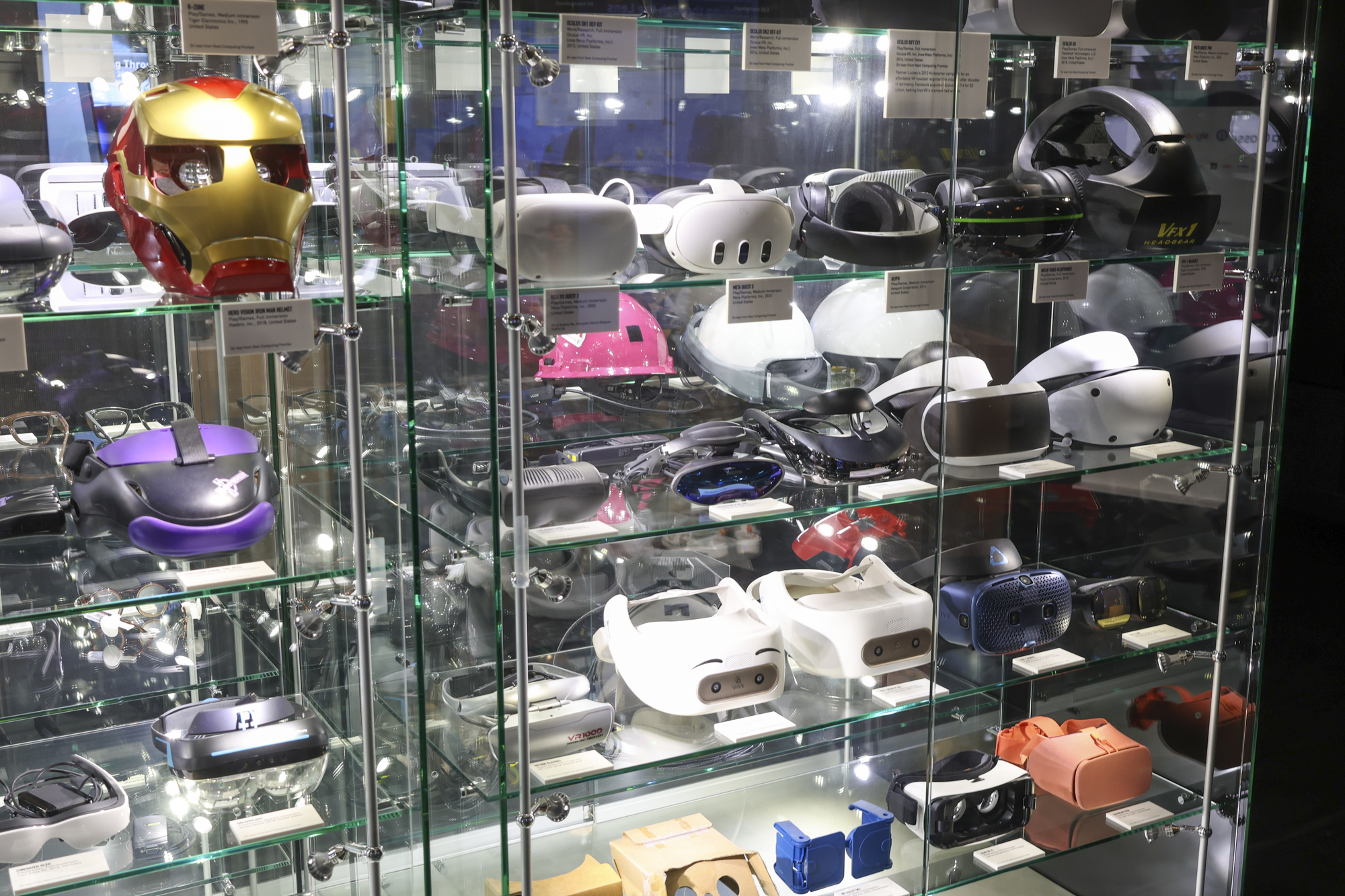
Computer History Museum Tests AI Glasses for Blind Visitors
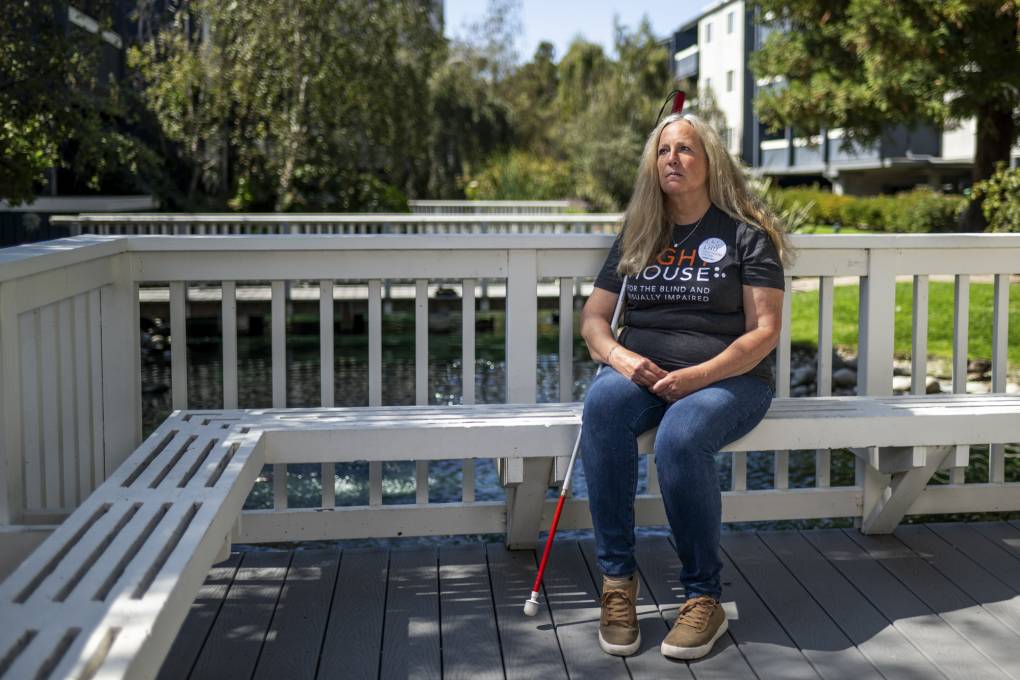
'It's About Time': Workers at LightHouse for the Blind and Visually Impaired to Vote on Unionizing
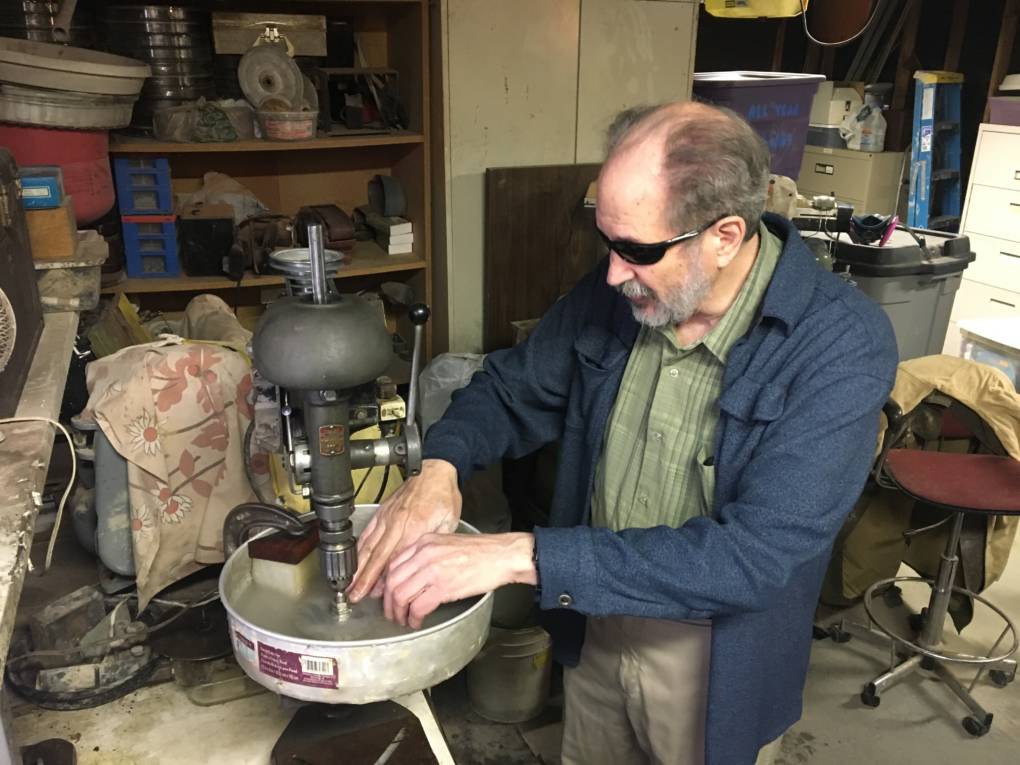
If Noel Runyan Can't Find What He Needs, He Builds It Himself
Touching the Secret World of Mollusk Shells
Ioana Gandrabur Is Not 'The Blind Guitarist'
Blind Beekeeper Relies on Sound to Keep Her Hives Happy
Blind Beekeeper Relies on Sound to Keep Her Hives Happy
Hoby Wedler Thinks About How Your Water Bottle Sounds
Through Google Glass, Remote Helper Sees What Blind Person Can't
Pixar's New App Gives the Blind a New Way to Experience Movies
When a Stranger Gives You $125 Million
Player sponsored by
window.__IS_SSR__=true
window.__INITIAL_STATE__={
"attachmentsReducer": {
"audio_0": {
"type": "attachments",
"id": "audio_0",
"imgSizes": {
"kqedFullSize": {
"file": "https://ww2.kqed.org/news/wp-content/themes/KQED-unified/img/audio_bgs/background0.jpg"
}
}
},
"audio_1": {
"type": "attachments",
"id": "audio_1",
"imgSizes": {
"kqedFullSize": {
"file": "https://ww2.kqed.org/news/wp-content/themes/KQED-unified/img/audio_bgs/background1.jpg"
}
}
},
"audio_2": {
"type": "attachments",
"id": "audio_2",
"imgSizes": {
"kqedFullSize": {
"file": "https://ww2.kqed.org/news/wp-content/themes/KQED-unified/img/audio_bgs/background2.jpg"
}
}
},
"audio_3": {
"type": "attachments",
"id": "audio_3",
"imgSizes": {
"kqedFullSize": {
"file": "https://ww2.kqed.org/news/wp-content/themes/KQED-unified/img/audio_bgs/background3.jpg"
}
}
},
"audio_4": {
"type": "attachments",
"id": "audio_4",
"imgSizes": {
"kqedFullSize": {
"file": "https://ww2.kqed.org/news/wp-content/themes/KQED-unified/img/audio_bgs/background4.jpg"
}
}
},
"placeholder": {
"type": "attachments",
"id": "placeholder",
"imgSizes": {
"thumbnail": {
"file": "https://cdn.kqed.org/wp-content/uploads/2024/12/KQED-Default-Image-816638274-2000x1333-1-160x107.jpg",
"width": 160,
"height": 107,
"mimeType": "image/jpeg"
},
"medium": {
"file": "https://cdn.kqed.org/wp-content/uploads/2024/12/KQED-Default-Image-816638274-2000x1333-1-800x533.jpg",
"width": 800,
"height": 533,
"mimeType": "image/jpeg"
},
"medium_large": {
"file": "https://cdn.kqed.org/wp-content/uploads/2024/12/KQED-Default-Image-816638274-2000x1333-1-768x512.jpg",
"width": 768,
"height": 512,
"mimeType": "image/jpeg"
},
"large": {
"file": "https://cdn.kqed.org/wp-content/uploads/2024/12/KQED-Default-Image-816638274-2000x1333-1-1020x680.jpg",
"width": 1020,
"height": 680,
"mimeType": "image/jpeg"
},
"1536x1536": {
"file": "https://cdn.kqed.org/wp-content/uploads/2024/12/KQED-Default-Image-816638274-2000x1333-1-1536x1024.jpg",
"width": 1536,
"height": 1024,
"mimeType": "image/jpeg"
},
"fd-lrg": {
"file": "https://cdn.kqed.org/wp-content/uploads/2024/12/KQED-Default-Image-816638274-2000x1333-1-1536x1024.jpg",
"width": 1536,
"height": 1024,
"mimeType": "image/jpeg"
},
"fd-med": {
"file": "https://cdn.kqed.org/wp-content/uploads/2024/12/KQED-Default-Image-816638274-2000x1333-1-1020x680.jpg",
"width": 1020,
"height": 680,
"mimeType": "image/jpeg"
},
"fd-sm": {
"file": "https://cdn.kqed.org/wp-content/uploads/2024/12/KQED-Default-Image-816638274-2000x1333-1-800x533.jpg",
"width": 800,
"height": 533,
"mimeType": "image/jpeg"
},
"post-thumbnail": {
"file": "https://cdn.kqed.org/wp-content/uploads/2024/12/KQED-Default-Image-816638274-2000x1333-1-672x372.jpg",
"width": 672,
"height": 372,
"mimeType": "image/jpeg"
},
"twentyfourteen-full-width": {
"file": "https://cdn.kqed.org/wp-content/uploads/2024/12/KQED-Default-Image-816638274-2000x1333-1-1038x576.jpg",
"width": 1038,
"height": 576,
"mimeType": "image/jpeg"
},
"xxsmall": {
"file": "https://cdn.kqed.org/wp-content/uploads/2024/12/KQED-Default-Image-816638274-2000x1333-1-160x107.jpg",
"width": 160,
"height": 107,
"mimeType": "image/jpeg"
},
"xsmall": {
"file": "https://cdn.kqed.org/wp-content/uploads/2024/12/KQED-Default-Image-816638274-2000x1333-1-672x372.jpg",
"width": 672,
"height": 372,
"mimeType": "image/jpeg"
},
"small": {
"file": "https://cdn.kqed.org/wp-content/uploads/2024/12/KQED-Default-Image-816638274-2000x1333-1-672x372.jpg",
"width": 672,
"height": 372,
"mimeType": "image/jpeg"
},
"xlarge": {
"file": "https://cdn.kqed.org/wp-content/uploads/2024/12/KQED-Default-Image-816638274-2000x1333-1-1020x680.jpg",
"width": 1020,
"height": 680,
"mimeType": "image/jpeg"
},
"full-width": {
"file": "https://cdn.kqed.org/wp-content/uploads/2024/12/KQED-Default-Image-816638274-2000x1333-1-1920x1280.jpg",
"width": 1920,
"height": 1280,
"mimeType": "image/jpeg"
},
"guest-author-32": {
"file": "https://cdn.kqed.org/wp-content/uploads/2025/01/KQED-Default-Image-816638274-1333x1333-1-160x160.jpg",
"width": 32,
"height": 32,
"mimeType": "image/jpeg"
},
"guest-author-50": {
"file": "https://cdn.kqed.org/wp-content/uploads/2025/01/KQED-Default-Image-816638274-1333x1333-1-160x160.jpg",
"width": 50,
"height": 50,
"mimeType": "image/jpeg"
},
"guest-author-64": {
"file": "https://cdn.kqed.org/wp-content/uploads/2025/01/KQED-Default-Image-816638274-1333x1333-1-160x160.jpg",
"width": 64,
"height": 64,
"mimeType": "image/jpeg"
},
"guest-author-96": {
"file": "https://cdn.kqed.org/wp-content/uploads/2025/01/KQED-Default-Image-816638274-1333x1333-1-160x160.jpg",
"width": 96,
"height": 96,
"mimeType": "image/jpeg"
},
"guest-author-128": {
"file": "https://cdn.kqed.org/wp-content/uploads/2025/01/KQED-Default-Image-816638274-1333x1333-1-160x160.jpg",
"width": 128,
"height": 128,
"mimeType": "image/jpeg"
},
"detail": {
"file": "https://cdn.kqed.org/wp-content/uploads/2025/01/KQED-Default-Image-816638274-1333x1333-1-160x160.jpg",
"width": 160,
"height": 160,
"mimeType": "image/jpeg"
},
"kqedFullSize": {
"file": "https://cdn.kqed.org/wp-content/uploads/2024/12/KQED-Default-Image-816638274-2000x1333-1.jpg",
"width": 2000,
"height": 1333
}
}
},
"news_12110200": {
"type": "attachments",
"id": "news_12110200",
"meta": {
"index": "attachments_1716263798",
"site": "news",
"id": "12110200",
"found": true
},
"title": "261117-AI museum glasses-02",
"publishDate": 1794953255,
"status": "inherit",
"parent": 0,
"modified": 1794956557,
"caption": "Virtual reality headsets and other wearable devices on display at the Computer History Museum in Mountain View on Oct. 16, 2026. Its “Extended Reality: Visions of the Future” exhibition features more than 100 devices spanning six decades of technological innovation.",
"credit": "Eden Collier for KQED",
"altTag": null,
"description": null,
"imgSizes": {
"thumbnail": {
"file": "https://cdn.kqed.org/wp-content/uploads/sites/10/2026/11/261117-AI-museum-glasses-02-8b15b7a1-160x107.jpg",
"width": 160,
"height": 107,
"mimeType": "image/jpeg"
},
"1536x1536": {
"file": "https://cdn.kqed.org/wp-content/uploads/sites/10/2026/11/261117-AI-museum-glasses-02-8b15b7a1-1536x1024.jpg",
"width": 1536,
"height": 1024,
"mimeType": "image/jpeg"
},
"post-thumbnail": {
"file": "https://cdn.kqed.org/wp-content/uploads/sites/10/2026/11/261117-AI-museum-glasses-02-8b15b7a1-672x372.jpg",
"width": 672,
"height": 372,
"mimeType": "image/jpeg"
},
"twentyfourteen-full-width": {
"file": "https://cdn.kqed.org/wp-content/uploads/sites/10/2026/11/261117-AI-museum-glasses-02-8b15b7a1-1038x576.jpg",
"width": 1038,
"height": 576,
"mimeType": "image/jpeg"
},
"npr-cds-wide": {
"file": "https://cdn.kqed.org/wp-content/uploads/sites/10/2026/11/261117-AI-museum-glasses-02-8b15b7a1-1200x675.jpg",
"width": 1200,
"height": 675,
"mimeType": "image/jpeg"
},
"npr-cds-square": {
"file": "https://cdn.kqed.org/wp-content/uploads/sites/10/2026/11/261117-AI-museum-glasses-02-8b15b7a1-600x600.jpg",
"width": 600,
"height": 600,
"mimeType": "image/jpeg"
},
"kqedFullSize": {
"file": "https://cdn.kqed.org/wp-content/uploads/sites/10/2026/11/261117-AI-museum-glasses-02-8b15b7a1.jpg",
"width": 2000,
"height": 1333
}
},
"isLoading": false,
"fetchFailed": false
},
"news_11961692": {
"type": "attachments",
"id": "news_11961692",
"meta": {
"index": "attachments_1716263798",
"site": "news",
"id": "11961692",
"found": true
},
"parent": 0,
"imgSizes": {
"twentyfourteen-full-width": {
"file": "https://ww2.kqed.org/app/uploads/sites/10/2023/09/230918-LighthouseUnion-010-BL-KQED-1038x576.jpg",
"width": 1038,
"mimeType": "image/jpeg",
"height": 576
},
"thumbnail": {
"file": "https://ww2.kqed.org/app/uploads/sites/10/2023/09/230918-LighthouseUnion-010-BL-KQED-160x107.jpg",
"width": 160,
"mimeType": "image/jpeg",
"height": 107
},
"post-thumbnail": {
"file": "https://ww2.kqed.org/app/uploads/sites/10/2023/09/230918-LighthouseUnion-010-BL-KQED-672x372.jpg",
"width": 672,
"mimeType": "image/jpeg",
"height": 372
},
"kqedFullSize": {
"file": "https://ww2.kqed.org/app/uploads/sites/10/2023/09/230918-LighthouseUnion-010-BL-KQED.jpg",
"width": 2000,
"height": 1333
},
"large": {
"file": "https://ww2.kqed.org/app/uploads/sites/10/2023/09/230918-LighthouseUnion-010-BL-KQED-1020x680.jpg",
"width": 1020,
"mimeType": "image/jpeg",
"height": 680
},
"1536x1536": {
"file": "https://ww2.kqed.org/app/uploads/sites/10/2023/09/230918-LighthouseUnion-010-BL-KQED-1536x1024.jpg",
"width": 1536,
"mimeType": "image/jpeg",
"height": 1024
},
"full-width": {
"file": "https://ww2.kqed.org/app/uploads/sites/10/2023/09/230918-LighthouseUnion-010-BL-KQED-1920x1280.jpg",
"width": 1920,
"mimeType": "image/jpeg",
"height": 1280
},
"medium": {
"file": "https://ww2.kqed.org/app/uploads/sites/10/2023/09/230918-LighthouseUnion-010-BL-KQED-800x533.jpg",
"width": 800,
"mimeType": "image/jpeg",
"height": 533
}
},
"publishDate": 1695074376,
"modified": 1698190256,
"caption": "Sheri Albers, Community Outreach Specialist with LightHouse for the Blind and Visually Impaired, sits outside her home in Alameda on Sept. 18, 2023.",
"description": null,
"title": "230918-LighthouseUnion-010-BL-KQED",
"credit": "Beth LaBerge/KQED",
"status": "inherit",
"altTag": "A person holding a white can sits on a bench outdoors.",
"isLoading": false,
"fetchFailed": false
},
"news_11778556": {
"type": "attachments",
"id": "news_11778556",
"meta": {
"index": "attachments_1716263798",
"site": "news",
"id": "11778556",
"found": true
},
"parent": 11778553,
"imgSizes": {
"apple_news_ca_landscape_5_5": {
"file": "https://ww2.kqed.org/app/uploads/sites/10/2019/10/Noel-Polishing-Rocks-1044x783.jpg",
"width": 1044,
"mimeType": "image/jpeg",
"height": 783
},
"apple_news_ca_square_4_0": {
"file": "https://ww2.kqed.org/app/uploads/sites/10/2019/10/Noel-Polishing-Rocks-470x470.jpg",
"width": 470,
"mimeType": "image/jpeg",
"height": 470
},
"twentyfourteen-full-width": {
"file": "https://ww2.kqed.org/app/uploads/sites/10/2019/10/Noel-Polishing-Rocks-1038x576.jpg",
"width": 1038,
"mimeType": "image/jpeg",
"height": 576
},
"thumbnail": {
"file": "https://ww2.kqed.org/app/uploads/sites/10/2019/10/Noel-Polishing-Rocks-160x120.jpg",
"width": 160,
"mimeType": "image/jpeg",
"height": 120
},
"post-thumbnail": {
"file": "https://ww2.kqed.org/app/uploads/sites/10/2019/10/Noel-Polishing-Rocks-672x372.jpg",
"width": 672,
"mimeType": "image/jpeg",
"height": 372
},
"kqedFullSize": {
"file": "https://ww2.kqed.org/app/uploads/sites/10/2019/10/Noel-Polishing-Rocks.jpg",
"width": 2048,
"height": 1536
},
"apple_news_ca_landscape_4_7": {
"file": "https://ww2.kqed.org/app/uploads/sites/10/2019/10/Noel-Polishing-Rocks-632x474.jpg",
"width": 632,
"mimeType": "image/jpeg",
"height": 474
},
"large": {
"file": "https://ww2.kqed.org/app/uploads/sites/10/2019/10/Noel-Polishing-Rocks-1020x765.jpg",
"width": 1020,
"mimeType": "image/jpeg",
"height": 765
},
"complete_open_graph": {
"file": "https://ww2.kqed.org/app/uploads/sites/10/2019/10/Noel-Polishing-Rocks-1200x900.jpg",
"width": 1200,
"mimeType": "image/jpeg",
"height": 900
},
"apple_news_ca_landscape_4_0": {
"file": "https://ww2.kqed.org/app/uploads/sites/10/2019/10/Noel-Polishing-Rocks-536x402.jpg",
"width": 536,
"mimeType": "image/jpeg",
"height": 402
},
"apple_news_ca_portrait_12_9": {
"file": "https://ww2.kqed.org/app/uploads/sites/10/2019/10/Noel-Polishing-Rocks-1122x1496.jpg",
"width": 1122,
"mimeType": "image/jpeg",
"height": 1496
},
"medium": {
"file": "https://ww2.kqed.org/app/uploads/sites/10/2019/10/Noel-Polishing-Rocks-800x600.jpg",
"width": 800,
"mimeType": "image/jpeg",
"height": 600
},
"apple_news_ca_portrait_4_0": {
"file": "https://ww2.kqed.org/app/uploads/sites/10/2019/10/Noel-Polishing-Rocks-354x472.jpg",
"width": 354,
"mimeType": "image/jpeg",
"height": 472
},
"apple_news_ca_portrait_9_7": {
"file": "https://ww2.kqed.org/app/uploads/sites/10/2019/10/Noel-Polishing-Rocks-840x1120.jpg",
"width": 840,
"mimeType": "image/jpeg",
"height": 1120
},
"apple_news_ca_landscape_12_9": {
"file": "https://ww2.kqed.org/app/uploads/sites/10/2019/10/Noel-Polishing-Rocks-1832x1374.jpg",
"width": 1832,
"mimeType": "image/jpeg",
"height": 1374
},
"apple_news_ca_square_9_7": {
"file": "https://ww2.kqed.org/app/uploads/sites/10/2019/10/Noel-Polishing-Rocks-1104x1104.jpg",
"width": 1104,
"mimeType": "image/jpeg",
"height": 1104
},
"apple_news_ca_portrait_4_7": {
"file": "https://ww2.kqed.org/app/uploads/sites/10/2019/10/Noel-Polishing-Rocks-414x552.jpg",
"width": 414,
"mimeType": "image/jpeg",
"height": 552
},
"apple_news_ca_square_12_9": {
"file": "https://ww2.kqed.org/app/uploads/sites/10/2019/10/Noel-Polishing-Rocks-1472x1472.jpg",
"width": 1472,
"mimeType": "image/jpeg",
"height": 1472
},
"apple_news_ca_portrait_5_5": {
"file": "https://ww2.kqed.org/app/uploads/sites/10/2019/10/Noel-Polishing-Rocks-687x916.jpg",
"width": 687,
"mimeType": "image/jpeg",
"height": 916
},
"full-width": {
"file": "https://ww2.kqed.org/app/uploads/sites/10/2019/10/Noel-Polishing-Rocks-1920x1440.jpg",
"width": 1920,
"mimeType": "image/jpeg",
"height": 1440
},
"apple_news_ca_square_4_7": {
"file": "https://ww2.kqed.org/app/uploads/sites/10/2019/10/Noel-Polishing-Rocks-550x550.jpg",
"width": 550,
"mimeType": "image/jpeg",
"height": 550
},
"apple_news_ca_landscape_9_7": {
"file": "https://ww2.kqed.org/app/uploads/sites/10/2019/10/Noel-Polishing-Rocks-1376x1032.jpg",
"width": 1376,
"mimeType": "image/jpeg",
"height": 1032
},
"apple_news_ca_square_5_5": {
"file": "https://ww2.kqed.org/app/uploads/sites/10/2019/10/Noel-Polishing-Rocks-912x912.jpg",
"width": 912,
"mimeType": "image/jpeg",
"height": 912
}
},
"publishDate": 1570482277,
"modified": 1570482344,
"caption": "Noel Runyan polishes rocks for competitions and uses his hands to tell if they look beautiful.",
"description": null,
"title": "Noel Polishing Rocks",
"credit": "Sam Harnett/KQED",
"status": "inherit",
"isLoading": false,
"fetchFailed": false
},
"news_11754676": {
"type": "attachments",
"id": "news_11754676",
"meta": {
"index": "attachments_1716263798",
"site": "news",
"id": "11754676",
"found": true
},
"parent": 11754661,
"imgSizes": {
"apple_news_ca_landscape_5_5": {
"file": "https://ww2.kqed.org/app/uploads/sites/10/2019/06/Geerat-Standing-1044x783.jpg",
"width": 1044,
"mimeType": "image/jpeg",
"height": 783
},
"apple_news_ca_square_4_0": {
"file": "https://ww2.kqed.org/app/uploads/sites/10/2019/06/Geerat-Standing-470x470.jpg",
"width": 470,
"mimeType": "image/jpeg",
"height": 470
},
"twentyfourteen-full-width": {
"file": "https://ww2.kqed.org/app/uploads/sites/10/2019/06/Geerat-Standing-1038x576.jpg",
"width": 1038,
"mimeType": "image/jpeg",
"height": 576
},
"thumbnail": {
"file": "https://ww2.kqed.org/app/uploads/sites/10/2019/06/Geerat-Standing-160x120.jpg",
"width": 160,
"mimeType": "image/jpeg",
"height": 120
},
"post-thumbnail": {
"file": "https://ww2.kqed.org/app/uploads/sites/10/2019/06/Geerat-Standing-672x372.jpg",
"width": 672,
"mimeType": "image/jpeg",
"height": 372
},
"kqedFullSize": {
"file": "https://ww2.kqed.org/app/uploads/sites/10/2019/06/Geerat-Standing.jpg",
"width": 2048,
"height": 1536
},
"apple_news_ca_landscape_4_7": {
"file": "https://ww2.kqed.org/app/uploads/sites/10/2019/06/Geerat-Standing-632x474.jpg",
"width": 632,
"mimeType": "image/jpeg",
"height": 474
},
"large": {
"file": "https://ww2.kqed.org/app/uploads/sites/10/2019/06/Geerat-Standing-1020x765.jpg",
"width": 1020,
"mimeType": "image/jpeg",
"height": 765
},
"complete_open_graph": {
"file": "https://ww2.kqed.org/app/uploads/sites/10/2019/06/Geerat-Standing-1200x900.jpg",
"width": 1200,
"mimeType": "image/jpeg",
"height": 900
},
"apple_news_ca_landscape_4_0": {
"file": "https://ww2.kqed.org/app/uploads/sites/10/2019/06/Geerat-Standing-536x402.jpg",
"width": 536,
"mimeType": "image/jpeg",
"height": 402
},
"apple_news_ca_portrait_12_9": {
"file": "https://ww2.kqed.org/app/uploads/sites/10/2019/06/Geerat-Standing-1122x1496.jpg",
"width": 1122,
"mimeType": "image/jpeg",
"height": 1496
},
"medium": {
"file": "https://ww2.kqed.org/app/uploads/sites/10/2019/06/Geerat-Standing-800x600.jpg",
"width": 800,
"mimeType": "image/jpeg",
"height": 600
},
"apple_news_ca_portrait_4_0": {
"file": "https://ww2.kqed.org/app/uploads/sites/10/2019/06/Geerat-Standing-354x472.jpg",
"width": 354,
"mimeType": "image/jpeg",
"height": 472
},
"apple_news_ca_portrait_9_7": {
"file": "https://ww2.kqed.org/app/uploads/sites/10/2019/06/Geerat-Standing-840x1120.jpg",
"width": 840,
"mimeType": "image/jpeg",
"height": 1120
},
"apple_news_ca_landscape_12_9": {
"file": "https://ww2.kqed.org/app/uploads/sites/10/2019/06/Geerat-Standing-1832x1374.jpg",
"width": 1832,
"mimeType": "image/jpeg",
"height": 1374
},
"apple_news_ca_square_9_7": {
"file": "https://ww2.kqed.org/app/uploads/sites/10/2019/06/Geerat-Standing-1104x1104.jpg",
"width": 1104,
"mimeType": "image/jpeg",
"height": 1104
},
"apple_news_ca_portrait_4_7": {
"file": "https://ww2.kqed.org/app/uploads/sites/10/2019/06/Geerat-Standing-414x552.jpg",
"width": 414,
"mimeType": "image/jpeg",
"height": 552
},
"apple_news_ca_square_12_9": {
"file": "https://ww2.kqed.org/app/uploads/sites/10/2019/06/Geerat-Standing-1472x1472.jpg",
"width": 1472,
"mimeType": "image/jpeg",
"height": 1472
},
"apple_news_ca_portrait_5_5": {
"file": "https://ww2.kqed.org/app/uploads/sites/10/2019/06/Geerat-Standing-687x916.jpg",
"width": 687,
"mimeType": "image/jpeg",
"height": 916
},
"full-width": {
"file": "https://ww2.kqed.org/app/uploads/sites/10/2019/06/Geerat-Standing-1920x1440.jpg",
"width": 1920,
"mimeType": "image/jpeg",
"height": 1440
},
"apple_news_ca_square_4_7": {
"file": "https://ww2.kqed.org/app/uploads/sites/10/2019/06/Geerat-Standing-550x550.jpg",
"width": 550,
"mimeType": "image/jpeg",
"height": 550
},
"apple_news_ca_landscape_9_7": {
"file": "https://ww2.kqed.org/app/uploads/sites/10/2019/06/Geerat-Standing-1376x1032.jpg",
"width": 1376,
"mimeType": "image/jpeg",
"height": 1032
},
"apple_news_ca_square_5_5": {
"file": "https://ww2.kqed.org/app/uploads/sites/10/2019/06/Geerat-Standing-912x912.jpg",
"width": 912,
"mimeType": "image/jpeg",
"height": 912
}
},
"publishDate": 1560499075,
"modified": 1560499275,
"caption": "UC Davis evolutionary biologist Geerat Vermeij has made major discoveries in mollusk shells through touch.",
"description": null,
"title": "Geerat Standing",
"credit": "Sam Harnett/KQED",
"status": "inherit",
"isLoading": false,
"fetchFailed": false
},
"news_11754686": {
"type": "attachments",
"id": "news_11754686",
"meta": {
"index": "attachments_1716263798",
"site": "news",
"id": "11754686",
"found": true
},
"parent": 11754681,
"imgSizes": {
"apple_news_ca_landscape_5_5": {
"file": "https://ww2.kqed.org/app/uploads/sites/10/2019/06/Ioana-1044x783.jpg",
"width": 1044,
"mimeType": "image/jpeg",
"height": 783
},
"apple_news_ca_square_4_0": {
"file": "https://ww2.kqed.org/app/uploads/sites/10/2019/06/Ioana-470x470.jpg",
"width": 470,
"mimeType": "image/jpeg",
"height": 470
},
"twentyfourteen-full-width": {
"file": "https://ww2.kqed.org/app/uploads/sites/10/2019/06/Ioana-1038x576.jpg",
"width": 1038,
"mimeType": "image/jpeg",
"height": 576
},
"thumbnail": {
"file": "https://ww2.kqed.org/app/uploads/sites/10/2019/06/Ioana-160x120.jpg",
"width": 160,
"mimeType": "image/jpeg",
"height": 120
},
"post-thumbnail": {
"file": "https://ww2.kqed.org/app/uploads/sites/10/2019/06/Ioana-672x372.jpg",
"width": 672,
"mimeType": "image/jpeg",
"height": 372
},
"kqedFullSize": {
"file": "https://ww2.kqed.org/app/uploads/sites/10/2019/06/Ioana.jpg",
"width": 2048,
"height": 1536
},
"apple_news_ca_landscape_4_7": {
"file": "https://ww2.kqed.org/app/uploads/sites/10/2019/06/Ioana-632x474.jpg",
"width": 632,
"mimeType": "image/jpeg",
"height": 474
},
"large": {
"file": "https://ww2.kqed.org/app/uploads/sites/10/2019/06/Ioana-1020x765.jpg",
"width": 1020,
"mimeType": "image/jpeg",
"height": 765
},
"complete_open_graph": {
"file": "https://ww2.kqed.org/app/uploads/sites/10/2019/06/Ioana-1200x900.jpg",
"width": 1200,
"mimeType": "image/jpeg",
"height": 900
},
"apple_news_ca_landscape_4_0": {
"file": "https://ww2.kqed.org/app/uploads/sites/10/2019/06/Ioana-536x402.jpg",
"width": 536,
"mimeType": "image/jpeg",
"height": 402
},
"apple_news_ca_portrait_12_9": {
"file": "https://ww2.kqed.org/app/uploads/sites/10/2019/06/Ioana-1122x1496.jpg",
"width": 1122,
"mimeType": "image/jpeg",
"height": 1496
},
"medium": {
"file": "https://ww2.kqed.org/app/uploads/sites/10/2019/06/Ioana-800x600.jpg",
"width": 800,
"mimeType": "image/jpeg",
"height": 600
},
"apple_news_ca_portrait_4_0": {
"file": "https://ww2.kqed.org/app/uploads/sites/10/2019/06/Ioana-354x472.jpg",
"width": 354,
"mimeType": "image/jpeg",
"height": 472
},
"apple_news_ca_portrait_9_7": {
"file": "https://ww2.kqed.org/app/uploads/sites/10/2019/06/Ioana-840x1120.jpg",
"width": 840,
"mimeType": "image/jpeg",
"height": 1120
},
"apple_news_ca_landscape_12_9": {
"file": "https://ww2.kqed.org/app/uploads/sites/10/2019/06/Ioana-1832x1374.jpg",
"width": 1832,
"mimeType": "image/jpeg",
"height": 1374
},
"apple_news_ca_square_9_7": {
"file": "https://ww2.kqed.org/app/uploads/sites/10/2019/06/Ioana-1104x1104.jpg",
"width": 1104,
"mimeType": "image/jpeg",
"height": 1104
},
"apple_news_ca_portrait_4_7": {
"file": "https://ww2.kqed.org/app/uploads/sites/10/2019/06/Ioana-414x552.jpg",
"width": 414,
"mimeType": "image/jpeg",
"height": 552
},
"apple_news_ca_square_12_9": {
"file": "https://ww2.kqed.org/app/uploads/sites/10/2019/06/Ioana-1472x1472.jpg",
"width": 1472,
"mimeType": "image/jpeg",
"height": 1472
},
"apple_news_ca_portrait_5_5": {
"file": "https://ww2.kqed.org/app/uploads/sites/10/2019/06/Ioana-687x916.jpg",
"width": 687,
"mimeType": "image/jpeg",
"height": 916
},
"full-width": {
"file": "https://ww2.kqed.org/app/uploads/sites/10/2019/06/Ioana-1920x1440.jpg",
"width": 1920,
"mimeType": "image/jpeg",
"height": 1440
},
"apple_news_ca_square_4_7": {
"file": "https://ww2.kqed.org/app/uploads/sites/10/2019/06/Ioana-550x550.jpg",
"width": 550,
"mimeType": "image/jpeg",
"height": 550
},
"apple_news_ca_landscape_9_7": {
"file": "https://ww2.kqed.org/app/uploads/sites/10/2019/06/Ioana-1376x1032.jpg",
"width": 1376,
"mimeType": "image/jpeg",
"height": 1032
},
"apple_news_ca_square_5_5": {
"file": "https://ww2.kqed.org/app/uploads/sites/10/2019/06/Ioana-912x912.jpg",
"width": 912,
"mimeType": "image/jpeg",
"height": 912
}
},
"publishDate": 1560500429,
"modified": 1560500761,
"caption": "Ioana was born blind and has been making music since she was just a few years old.",
"description": null,
"title": "Ioana",
"credit": "Sam Harnett/KQED",
"status": "inherit",
"isLoading": false,
"fetchFailed": false
},
"news_11778063": {
"type": "attachments",
"id": "news_11778063",
"meta": {
"index": "attachments_1716263798",
"site": "news",
"id": "11778063",
"found": true
},
"parent": 11777723,
"imgSizes": {
"apple_news_ca_landscape_5_5": {
"file": "https://ww2.kqed.org/app/uploads/sites/10/2019/10/RS39378_beekeeper3-qut-1-1044x783.jpg",
"width": 1044,
"mimeType": "image/jpeg",
"height": 783
},
"apple_news_ca_square_4_0": {
"file": "https://ww2.kqed.org/app/uploads/sites/10/2019/10/RS39378_beekeeper3-qut-1-470x470.jpg",
"width": 470,
"mimeType": "image/jpeg",
"height": 470
},
"twentyfourteen-full-width": {
"file": "https://ww2.kqed.org/app/uploads/sites/10/2019/10/RS39378_beekeeper3-qut-1-1038x576.jpg",
"width": 1038,
"mimeType": "image/jpeg",
"height": 576
},
"thumbnail": {
"file": "https://ww2.kqed.org/app/uploads/sites/10/2019/10/RS39378_beekeeper3-qut-1-160x107.jpg",
"width": 160,
"mimeType": "image/jpeg",
"height": 107
},
"post-thumbnail": {
"file": "https://ww2.kqed.org/app/uploads/sites/10/2019/10/RS39378_beekeeper3-qut-1-672x372.jpg",
"width": 672,
"mimeType": "image/jpeg",
"height": 372
},
"kqedFullSize": {
"file": "https://ww2.kqed.org/app/uploads/sites/10/2019/10/RS39378_beekeeper3-qut-1.jpg",
"width": 1920,
"height": 1279
},
"apple_news_ca_landscape_4_7": {
"file": "https://ww2.kqed.org/app/uploads/sites/10/2019/10/RS39378_beekeeper3-qut-1-632x474.jpg",
"width": 632,
"mimeType": "image/jpeg",
"height": 474
},
"large": {
"file": "https://ww2.kqed.org/app/uploads/sites/10/2019/10/RS39378_beekeeper3-qut-1-1020x679.jpg",
"width": 1020,
"mimeType": "image/jpeg",
"height": 679
},
"complete_open_graph": {
"file": "https://ww2.kqed.org/app/uploads/sites/10/2019/10/RS39378_beekeeper3-qut-1-1200x799.jpg",
"width": 1200,
"mimeType": "image/jpeg",
"height": 799
},
"apple_news_ca_landscape_4_0": {
"file": "https://ww2.kqed.org/app/uploads/sites/10/2019/10/RS39378_beekeeper3-qut-1-536x402.jpg",
"width": 536,
"mimeType": "image/jpeg",
"height": 402
},
"apple_news_ca_portrait_12_9": {
"file": "https://ww2.kqed.org/app/uploads/sites/10/2019/10/RS39378_beekeeper3-qut-1-1122x1279.jpg",
"width": 1122,
"mimeType": "image/jpeg",
"height": 1279
},
"medium": {
"file": "https://ww2.kqed.org/app/uploads/sites/10/2019/10/RS39378_beekeeper3-qut-1-800x533.jpg",
"width": 800,
"mimeType": "image/jpeg",
"height": 533
},
"apple_news_ca_portrait_4_0": {
"file": "https://ww2.kqed.org/app/uploads/sites/10/2019/10/RS39378_beekeeper3-qut-1-354x472.jpg",
"width": 354,
"mimeType": "image/jpeg",
"height": 472
},
"apple_news_ca_portrait_9_7": {
"file": "https://ww2.kqed.org/app/uploads/sites/10/2019/10/RS39378_beekeeper3-qut-1-840x1120.jpg",
"width": 840,
"mimeType": "image/jpeg",
"height": 1120
},
"apple_news_ca_landscape_12_9": {
"file": "https://ww2.kqed.org/app/uploads/sites/10/2019/10/RS39378_beekeeper3-qut-1-1832x1279.jpg",
"width": 1832,
"mimeType": "image/jpeg",
"height": 1279
},
"apple_news_ca_square_9_7": {
"file": "https://ww2.kqed.org/app/uploads/sites/10/2019/10/RS39378_beekeeper3-qut-1-1104x1104.jpg",
"width": 1104,
"mimeType": "image/jpeg",
"height": 1104
},
"apple_news_ca_portrait_4_7": {
"file": "https://ww2.kqed.org/app/uploads/sites/10/2019/10/RS39378_beekeeper3-qut-1-414x552.jpg",
"width": 414,
"mimeType": "image/jpeg",
"height": 552
},
"apple_news_ca_square_12_9": {
"file": "https://ww2.kqed.org/app/uploads/sites/10/2019/10/RS39378_beekeeper3-qut-1-1472x1279.jpg",
"width": 1472,
"mimeType": "image/jpeg",
"height": 1279
},
"apple_news_ca_portrait_5_5": {
"file": "https://ww2.kqed.org/app/uploads/sites/10/2019/10/RS39378_beekeeper3-qut-1-687x916.jpg",
"width": 687,
"mimeType": "image/jpeg",
"height": 916
},
"full-width": {
"file": "https://ww2.kqed.org/app/uploads/sites/10/2019/10/RS39378_beekeeper3-qut-1-1920x1279.jpg",
"width": 1920,
"mimeType": "image/jpeg",
"height": 1279
},
"apple_news_ca_square_4_7": {
"file": "https://ww2.kqed.org/app/uploads/sites/10/2019/10/RS39378_beekeeper3-qut-1-550x550.jpg",
"width": 550,
"mimeType": "image/jpeg",
"height": 550
},
"apple_news_ca_landscape_9_7": {
"file": "https://ww2.kqed.org/app/uploads/sites/10/2019/10/RS39378_beekeeper3-qut-1-1376x1032.jpg",
"width": 1376,
"mimeType": "image/jpeg",
"height": 1032
},
"apple_news_ca_square_5_5": {
"file": "https://ww2.kqed.org/app/uploads/sites/10/2019/10/RS39378_beekeeper3-qut-1-912x912.jpg",
"width": 912,
"mimeType": "image/jpeg",
"height": 912
}
},
"publishDate": 1570143425,
"modified": 1570232406,
"caption": "Aerial Gilbert, 52 in Petaluma on July 07, 2016.",
"description": "Aerial Gilbert, 52 in Petaluma on July 07, 2016.",
"title": "RS39378_beekeeper3-qut",
"credit": "Crissy Pascual/Argus-Courier Staff",
"status": "inherit",
"isLoading": false,
"fetchFailed": false
},
"news_11778051": {
"type": "attachments",
"id": "news_11778051",
"meta": {
"index": "attachments_1716263798",
"site": "news",
"id": "11778051",
"found": true
},
"parent": 11777723,
"imgSizes": {
"apple_news_ca_landscape_5_5": {
"file": "https://ww2.kqed.org/app/uploads/sites/10/2019/10/RS39379_beekeeper2-qut-1044x783.jpg",
"width": 1044,
"mimeType": "image/jpeg",
"height": 783
},
"apple_news_ca_square_4_0": {
"file": "https://ww2.kqed.org/app/uploads/sites/10/2019/10/RS39379_beekeeper2-qut-470x470.jpg",
"width": 470,
"mimeType": "image/jpeg",
"height": 470
},
"twentyfourteen-full-width": {
"file": "https://ww2.kqed.org/app/uploads/sites/10/2019/10/RS39379_beekeeper2-qut-1038x576.jpg",
"width": 1038,
"mimeType": "image/jpeg",
"height": 576
},
"thumbnail": {
"file": "https://ww2.kqed.org/app/uploads/sites/10/2019/10/RS39379_beekeeper2-qut-160x107.jpg",
"width": 160,
"mimeType": "image/jpeg",
"height": 107
},
"post-thumbnail": {
"file": "https://ww2.kqed.org/app/uploads/sites/10/2019/10/RS39379_beekeeper2-qut-672x372.jpg",
"width": 672,
"mimeType": "image/jpeg",
"height": 372
},
"kqedFullSize": {
"file": "https://ww2.kqed.org/app/uploads/sites/10/2019/10/RS39379_beekeeper2-qut.jpg",
"width": 1920,
"height": 1279
},
"apple_news_ca_landscape_4_7": {
"file": "https://ww2.kqed.org/app/uploads/sites/10/2019/10/RS39379_beekeeper2-qut-632x474.jpg",
"width": 632,
"mimeType": "image/jpeg",
"height": 474
},
"large": {
"file": "https://ww2.kqed.org/app/uploads/sites/10/2019/10/RS39379_beekeeper2-qut-1020x679.jpg",
"width": 1020,
"mimeType": "image/jpeg",
"height": 679
},
"complete_open_graph": {
"file": "https://ww2.kqed.org/app/uploads/sites/10/2019/10/RS39379_beekeeper2-qut-1200x799.jpg",
"width": 1200,
"mimeType": "image/jpeg",
"height": 799
},
"apple_news_ca_landscape_4_0": {
"file": "https://ww2.kqed.org/app/uploads/sites/10/2019/10/RS39379_beekeeper2-qut-536x402.jpg",
"width": 536,
"mimeType": "image/jpeg",
"height": 402
},
"apple_news_ca_portrait_12_9": {
"file": "https://ww2.kqed.org/app/uploads/sites/10/2019/10/RS39379_beekeeper2-qut-1122x1279.jpg",
"width": 1122,
"mimeType": "image/jpeg",
"height": 1279
},
"medium": {
"file": "https://ww2.kqed.org/app/uploads/sites/10/2019/10/RS39379_beekeeper2-qut-800x533.jpg",
"width": 800,
"mimeType": "image/jpeg",
"height": 533
},
"apple_news_ca_portrait_4_0": {
"file": "https://ww2.kqed.org/app/uploads/sites/10/2019/10/RS39379_beekeeper2-qut-354x472.jpg",
"width": 354,
"mimeType": "image/jpeg",
"height": 472
},
"apple_news_ca_portrait_9_7": {
"file": "https://ww2.kqed.org/app/uploads/sites/10/2019/10/RS39379_beekeeper2-qut-840x1120.jpg",
"width": 840,
"mimeType": "image/jpeg",
"height": 1120
},
"apple_news_ca_landscape_12_9": {
"file": "https://ww2.kqed.org/app/uploads/sites/10/2019/10/RS39379_beekeeper2-qut-1832x1279.jpg",
"width": 1832,
"mimeType": "image/jpeg",
"height": 1279
},
"apple_news_ca_square_9_7": {
"file": "https://ww2.kqed.org/app/uploads/sites/10/2019/10/RS39379_beekeeper2-qut-1104x1104.jpg",
"width": 1104,
"mimeType": "image/jpeg",
"height": 1104
},
"apple_news_ca_portrait_4_7": {
"file": "https://ww2.kqed.org/app/uploads/sites/10/2019/10/RS39379_beekeeper2-qut-414x552.jpg",
"width": 414,
"mimeType": "image/jpeg",
"height": 552
},
"apple_news_ca_square_12_9": {
"file": "https://ww2.kqed.org/app/uploads/sites/10/2019/10/RS39379_beekeeper2-qut-1472x1279.jpg",
"width": 1472,
"mimeType": "image/jpeg",
"height": 1279
},
"apple_news_ca_portrait_5_5": {
"file": "https://ww2.kqed.org/app/uploads/sites/10/2019/10/RS39379_beekeeper2-qut-687x916.jpg",
"width": 687,
"mimeType": "image/jpeg",
"height": 916
},
"full-width": {
"file": "https://ww2.kqed.org/app/uploads/sites/10/2019/10/RS39379_beekeeper2-qut-1920x1279.jpg",
"width": 1920,
"mimeType": "image/jpeg",
"height": 1279
},
"apple_news_ca_square_4_7": {
"file": "https://ww2.kqed.org/app/uploads/sites/10/2019/10/RS39379_beekeeper2-qut-550x550.jpg",
"width": 550,
"mimeType": "image/jpeg",
"height": 550
},
"apple_news_ca_landscape_9_7": {
"file": "https://ww2.kqed.org/app/uploads/sites/10/2019/10/RS39379_beekeeper2-qut-1376x1032.jpg",
"width": 1376,
"mimeType": "image/jpeg",
"height": 1032
},
"apple_news_ca_square_5_5": {
"file": "https://ww2.kqed.org/app/uploads/sites/10/2019/10/RS39379_beekeeper2-qut-912x912.jpg",
"width": 912,
"mimeType": "image/jpeg",
"height": 912
}
},
"publishDate": 1570142459,
"modified": 1570150455,
"caption": "Aerial Gilbert, an avid beekeeper, in Petaluma on July 7, 2016.",
"description": "Aerial Gilbert, an avid beekeeper, in Petaluma on July 7, 2016.",
"title": "RS39379_beekeeper2-qut",
"credit": "Crissy Pascual/Argus-Courier Staff",
"status": "inherit",
"isLoading": false,
"fetchFailed": false
},
"news_11749654": {
"type": "attachments",
"id": "news_11749654",
"meta": {
"index": "attachments_1716263798",
"site": "news",
"id": "11749654",
"found": true
},
"parent": 11749650,
"imgSizes": {
"apple_news_ca_landscape_5_5": {
"file": "https://ww2.kqed.org/app/uploads/sites/10/2019/05/Hoby_Lake_Zurich-1044x783.jpg",
"width": 1044,
"mimeType": "image/jpeg",
"height": 783
},
"apple_news_ca_square_4_0": {
"file": "https://ww2.kqed.org/app/uploads/sites/10/2019/05/Hoby_Lake_Zurich-470x470.jpg",
"width": 470,
"mimeType": "image/jpeg",
"height": 470
},
"twentyfourteen-full-width": {
"file": "https://ww2.kqed.org/app/uploads/sites/10/2019/05/Hoby_Lake_Zurich-1038x576.jpg",
"width": 1038,
"mimeType": "image/jpeg",
"height": 576
},
"thumbnail": {
"file": "https://ww2.kqed.org/app/uploads/sites/10/2019/05/Hoby_Lake_Zurich-160x120.jpg",
"width": 160,
"mimeType": "image/jpeg",
"height": 120
},
"post-thumbnail": {
"file": "https://ww2.kqed.org/app/uploads/sites/10/2019/05/Hoby_Lake_Zurich-672x372.jpg",
"width": 672,
"mimeType": "image/jpeg",
"height": 372
},
"kqedFullSize": {
"file": "https://ww2.kqed.org/app/uploads/sites/10/2019/05/Hoby_Lake_Zurich-e1558741664664.jpg",
"width": 1920,
"height": 1440
},
"apple_news_ca_landscape_4_7": {
"file": "https://ww2.kqed.org/app/uploads/sites/10/2019/05/Hoby_Lake_Zurich-632x474.jpg",
"width": 632,
"mimeType": "image/jpeg",
"height": 474
},
"large": {
"file": "https://ww2.kqed.org/app/uploads/sites/10/2019/05/Hoby_Lake_Zurich-1020x765.jpg",
"width": 1020,
"mimeType": "image/jpeg",
"height": 765
},
"complete_open_graph": {
"file": "https://ww2.kqed.org/app/uploads/sites/10/2019/05/Hoby_Lake_Zurich-1200x900.jpg",
"width": 1200,
"mimeType": "image/jpeg",
"height": 900
},
"apple_news_ca_landscape_4_0": {
"file": "https://ww2.kqed.org/app/uploads/sites/10/2019/05/Hoby_Lake_Zurich-536x402.jpg",
"width": 536,
"mimeType": "image/jpeg",
"height": 402
},
"apple_news_ca_portrait_12_9": {
"file": "https://ww2.kqed.org/app/uploads/sites/10/2019/05/Hoby_Lake_Zurich-1122x1496.jpg",
"width": 1122,
"mimeType": "image/jpeg",
"height": 1496
},
"medium": {
"file": "https://ww2.kqed.org/app/uploads/sites/10/2019/05/Hoby_Lake_Zurich-800x600.jpg",
"width": 800,
"mimeType": "image/jpeg",
"height": 600
},
"apple_news_ca_portrait_4_0": {
"file": "https://ww2.kqed.org/app/uploads/sites/10/2019/05/Hoby_Lake_Zurich-354x472.jpg",
"width": 354,
"mimeType": "image/jpeg",
"height": 472
},
"apple_news_ca_portrait_9_7": {
"file": "https://ww2.kqed.org/app/uploads/sites/10/2019/05/Hoby_Lake_Zurich-840x1120.jpg",
"width": 840,
"mimeType": "image/jpeg",
"height": 1120
},
"apple_news_ca_landscape_12_9": {
"file": "https://ww2.kqed.org/app/uploads/sites/10/2019/05/Hoby_Lake_Zurich-1832x1374.jpg",
"width": 1832,
"mimeType": "image/jpeg",
"height": 1374
},
"apple_news_ca_square_9_7": {
"file": "https://ww2.kqed.org/app/uploads/sites/10/2019/05/Hoby_Lake_Zurich-1104x1104.jpg",
"width": 1104,
"mimeType": "image/jpeg",
"height": 1104
},
"apple_news_ca_portrait_4_7": {
"file": "https://ww2.kqed.org/app/uploads/sites/10/2019/05/Hoby_Lake_Zurich-414x552.jpg",
"width": 414,
"mimeType": "image/jpeg",
"height": 552
},
"apple_news_ca_square_12_9": {
"file": "https://ww2.kqed.org/app/uploads/sites/10/2019/05/Hoby_Lake_Zurich-1472x1472.jpg",
"width": 1472,
"mimeType": "image/jpeg",
"height": 1472
},
"apple_news_ca_portrait_5_5": {
"file": "https://ww2.kqed.org/app/uploads/sites/10/2019/05/Hoby_Lake_Zurich-687x916.jpg",
"width": 687,
"mimeType": "image/jpeg",
"height": 916
},
"full-width": {
"file": "https://ww2.kqed.org/app/uploads/sites/10/2019/05/Hoby_Lake_Zurich-1920x1440.jpg",
"width": 1920,
"mimeType": "image/jpeg",
"height": 1440
},
"apple_news_ca_square_4_7": {
"file": "https://ww2.kqed.org/app/uploads/sites/10/2019/05/Hoby_Lake_Zurich-550x550.jpg",
"width": 550,
"mimeType": "image/jpeg",
"height": 550
},
"apple_news_ca_landscape_9_7": {
"file": "https://ww2.kqed.org/app/uploads/sites/10/2019/05/Hoby_Lake_Zurich-1376x1032.jpg",
"width": 1376,
"mimeType": "image/jpeg",
"height": 1032
},
"apple_news_ca_square_5_5": {
"file": "https://ww2.kqed.org/app/uploads/sites/10/2019/05/Hoby_Lake_Zurich-912x912.jpg",
"width": 912,
"mimeType": "image/jpeg",
"height": 912
}
},
"publishDate": 1558676512,
"modified": 1558741650,
"caption": "Hoby Wedler makes a living thinking about the way things sound.",
"description": "Hoby Wedler makes a living thinking about the way things sound.",
"title": "Hoby_Lake_Zurich",
"credit": "Courtesy of Hoby Wedler",
"status": "inherit",
"isLoading": false,
"fetchFailed": false
},
"futureofyou_424272": {
"type": "attachments",
"id": "futureofyou_424272",
"meta": {
"index": "attachments_1716263798",
"site": "futureofyou",
"id": "424272",
"found": true
},
"parent": 418097,
"imgSizes": {
"small": {
"file": "https://ww2.kqed.org/app/uploads/sites/13/2017/07/AiraPhoto2-520x390.jpg",
"width": 520,
"mimeType": "image/jpeg",
"height": 390
},
"twentyfourteen-full-width": {
"file": "https://ww2.kqed.org/app/uploads/sites/13/2017/07/AiraPhoto2-1038x576.jpg",
"width": 1038,
"mimeType": "image/jpeg",
"height": 576
},
"thumbnail": {
"file": "https://ww2.kqed.org/app/uploads/sites/13/2017/07/AiraPhoto2-160x120.jpg",
"width": 160,
"mimeType": "image/jpeg",
"height": 120
},
"fd-sm": {
"file": "https://ww2.kqed.org/app/uploads/sites/13/2017/07/AiraPhoto2-960x720.jpg",
"width": 960,
"mimeType": "image/jpeg",
"height": 720
},
"post-thumbnail": {
"file": "https://ww2.kqed.org/app/uploads/sites/13/2017/07/AiraPhoto2-672x372.jpg",
"width": 672,
"mimeType": "image/jpeg",
"height": 372
},
"xsmall": {
"file": "https://ww2.kqed.org/app/uploads/sites/13/2017/07/AiraPhoto2-375x281.jpg",
"width": 375,
"mimeType": "image/jpeg",
"height": 281
},
"kqedFullSize": {
"file": "https://ww2.kqed.org/app/uploads/sites/13/2017/07/AiraPhoto2-e1499816256643.jpg",
"width": 1920,
"height": 1440
},
"large": {
"file": "https://ww2.kqed.org/app/uploads/sites/13/2017/07/AiraPhoto2-1020x765.jpg",
"width": 1020,
"mimeType": "image/jpeg",
"height": 765
},
"xlarge": {
"file": "https://ww2.kqed.org/app/uploads/sites/13/2017/07/AiraPhoto2-1180x885.jpg",
"width": 1180,
"mimeType": "image/jpeg",
"height": 885
},
"guest-author-50": {
"file": "https://ww2.kqed.org/app/uploads/sites/13/2017/07/AiraPhoto2-50x50.jpg",
"width": 50,
"mimeType": "image/jpeg",
"height": 50
},
"guest-author-96": {
"file": "https://ww2.kqed.org/app/uploads/sites/13/2017/07/AiraPhoto2-96x96.jpg",
"width": 96,
"mimeType": "image/jpeg",
"height": 96
},
"medium": {
"file": "https://ww2.kqed.org/app/uploads/sites/13/2017/07/AiraPhoto2-800x600.jpg",
"width": 800,
"mimeType": "image/jpeg",
"height": 600
},
"guest-author-64": {
"file": "https://ww2.kqed.org/app/uploads/sites/13/2017/07/AiraPhoto2-64x64.jpg",
"width": 64,
"mimeType": "image/jpeg",
"height": 64
},
"guest-author-32": {
"file": "https://ww2.kqed.org/app/uploads/sites/13/2017/07/AiraPhoto2-32x32.jpg",
"width": 32,
"mimeType": "image/jpeg",
"height": 32
},
"fd-lrg": {
"file": "https://ww2.kqed.org/app/uploads/sites/13/2017/07/AiraPhoto2-1920x1440.jpg",
"width": 1920,
"mimeType": "image/jpeg",
"height": 1440
},
"fd-med": {
"file": "https://ww2.kqed.org/app/uploads/sites/13/2017/07/AiraPhoto2-1180x885.jpg",
"width": 1180,
"mimeType": "image/jpeg",
"height": 885
},
"full-width": {
"file": "https://ww2.kqed.org/app/uploads/sites/13/2017/07/AiraPhoto2-1920x1440.jpg",
"width": 1920,
"mimeType": "image/jpeg",
"height": 1440
},
"detail": {
"file": "https://ww2.kqed.org/app/uploads/sites/13/2017/07/AiraPhoto2-150x150.jpg",
"width": 150,
"mimeType": "image/jpeg",
"height": 150
},
"medium_large": {
"file": "https://ww2.kqed.org/app/uploads/sites/13/2017/07/AiraPhoto2-768x576.jpg",
"width": 768,
"mimeType": "image/jpeg",
"height": 576
},
"guest-author-128": {
"file": "https://ww2.kqed.org/app/uploads/sites/13/2017/07/AiraPhoto2-128x128.jpg",
"width": 128,
"mimeType": "image/jpeg",
"height": 128
},
"xxsmall": {
"file": "https://ww2.kqed.org/app/uploads/sites/13/2017/07/AiraPhoto2-240x180.jpg",
"width": 240,
"mimeType": "image/jpeg",
"height": 180
}
},
"publishDate": 1499816225,
"modified": 1499871796,
"caption": "Dwight Sayer, National Federation of the Blind Veteran president, posing with Aira glasses at the NFB convention, July, 2016.",
"description": null,
"title": "AiraPhoto2",
"credit": "Courtesy of Aira",
"status": "inherit",
"isLoading": false,
"fetchFailed": false
},
"news_10841807": {
"type": "attachments",
"id": "news_10841807",
"meta": {
"index": "attachments_1716263798",
"site": "news",
"id": "10841807",
"found": true
},
"parent": 10840539,
"imgSizes": {
"twentyfourteen-full-width": {
"file": "https://ww2.kqed.org/app/uploads/sites/10/2016/01/RedCarpetWhiteCanes-1038x576.jpg",
"width": 1038,
"mimeType": "image/jpeg",
"height": 576
},
"thumbnail": {
"file": "https://ww2.kqed.org/app/uploads/sites/10/2016/01/RedCarpetWhiteCanes-400x296.jpg",
"width": 400,
"mimeType": "image/jpeg",
"height": 296
},
"fd-sm": {
"file": "https://ww2.kqed.org/app/uploads/sites/10/2016/01/RedCarpetWhiteCanes-960x711.jpg",
"width": 960,
"mimeType": "image/jpeg",
"height": 711
},
"post-thumbnail": {
"file": "https://ww2.kqed.org/app/uploads/sites/10/2016/01/RedCarpetWhiteCanes-672x372.jpg",
"width": 672,
"mimeType": "image/jpeg",
"height": 372
},
"kqedFullSize": {
"file": "https://ww2.kqed.org/app/uploads/sites/10/2016/01/RedCarpetWhiteCanes.jpg",
"width": 1920,
"height": 1421
},
"large": {
"file": "https://ww2.kqed.org/app/uploads/sites/10/2016/01/RedCarpetWhiteCanes-1440x1066.jpg",
"width": 1440,
"mimeType": "image/jpeg",
"height": 1066
},
"guest-author-96": {
"file": "https://ww2.kqed.org/app/uploads/sites/10/2016/01/RedCarpetWhiteCanes-96x96.jpg",
"width": 96,
"mimeType": "image/jpeg",
"height": 96
},
"medium": {
"file": "https://ww2.kqed.org/app/uploads/sites/10/2016/01/RedCarpetWhiteCanes-800x592.jpg",
"width": 800,
"mimeType": "image/jpeg",
"height": 592
},
"guest-author-64": {
"file": "https://ww2.kqed.org/app/uploads/sites/10/2016/01/RedCarpetWhiteCanes-64x64.jpg",
"width": 64,
"mimeType": "image/jpeg",
"height": 64
},
"guest-author-32": {
"file": "https://ww2.kqed.org/app/uploads/sites/10/2016/01/RedCarpetWhiteCanes-32x32.jpg",
"width": 32,
"mimeType": "image/jpeg",
"height": 32
},
"jmtc-small-thumb": {
"file": "https://ww2.kqed.org/app/uploads/sites/10/2016/01/RedCarpetWhiteCanes-280x150.jpg",
"width": 280,
"mimeType": "image/jpeg",
"height": 150
},
"fd-lrg": {
"file": "https://ww2.kqed.org/app/uploads/sites/10/2016/01/RedCarpetWhiteCanes-1920x1421.jpg",
"width": 1920,
"mimeType": "image/jpeg",
"height": 1421
},
"fd-med": {
"file": "https://ww2.kqed.org/app/uploads/sites/10/2016/01/RedCarpetWhiteCanes-1180x873.jpg",
"width": 1180,
"mimeType": "image/jpeg",
"height": 873
},
"detail": {
"file": "https://ww2.kqed.org/app/uploads/sites/10/2016/01/RedCarpetWhiteCanes-75x75.jpg",
"width": 75,
"mimeType": "image/jpeg",
"height": 75
},
"medium_large": {
"file": "https://ww2.kqed.org/app/uploads/sites/10/2016/01/RedCarpetWhiteCanes-768x568.jpg",
"width": 768,
"mimeType": "image/jpeg",
"height": 568
},
"guest-author-128": {
"file": "https://ww2.kqed.org/app/uploads/sites/10/2016/01/RedCarpetWhiteCanes-128x128.jpg",
"width": 128,
"mimeType": "image/jpeg",
"height": 128
}
},
"publishDate": 1453508366,
"modified": 1453508432,
"caption": "Attendees arrive at Pixar's 'Red Carpet, White Canes\" screening event to test out the new app.",
"description": "Attendees arrive at Pixar's 'Red Carpet, White Canes\" screening event to test out the new app.",
"title": "RedCarpetWhiteCanes",
"credit": "Guide Dogs for the Blind/Flickr",
"status": "inherit",
"isLoading": false,
"fetchFailed": false
},
"news_10744471": {
"type": "attachments",
"id": "news_10744471",
"meta": {
"index": "attachments_1716263798",
"site": "news",
"id": "10744471",
"found": true
},
"parent": 10744359,
"imgSizes": {
"twentyfourteen-full-width": {
"file": "https://ww2.kqed.org/app/uploads/sites/10/2015/11/Bryan-16-x-9-1038x576.jpg",
"width": 1038,
"mimeType": "image/jpeg",
"height": 576
},
"thumbnail": {
"file": "https://ww2.kqed.org/app/uploads/sites/10/2015/11/Bryan-16-x-9-400x225.jpg",
"width": 400,
"mimeType": "image/jpeg",
"height": 225
},
"fd-sm": {
"file": "https://ww2.kqed.org/app/uploads/sites/10/2015/11/Bryan-16-x-9-960x540.jpg",
"width": 960,
"mimeType": "image/jpeg",
"height": 540
},
"post-thumbnail": {
"file": "https://ww2.kqed.org/app/uploads/sites/10/2015/11/Bryan-16-x-9-672x372.jpg",
"width": 672,
"mimeType": "image/jpeg",
"height": 372
},
"kqedFullSize": {
"file": "https://ww2.kqed.org/app/uploads/sites/10/2015/11/Bryan-16-x-9.jpg",
"width": 4163,
"height": 2341
},
"large": {
"file": "https://ww2.kqed.org/app/uploads/sites/10/2015/11/Bryan-16-x-9-1440x810.jpg",
"width": 1440,
"mimeType": "image/jpeg",
"height": 810
},
"guest-author-96": {
"file": "https://ww2.kqed.org/app/uploads/sites/10/2015/11/Bryan-16-x-9-96x96.jpg",
"width": 96,
"mimeType": "image/jpeg",
"height": 96
},
"medium": {
"file": "https://ww2.kqed.org/app/uploads/sites/10/2015/11/Bryan-16-x-9-800x450.jpg",
"width": 800,
"mimeType": "image/jpeg",
"height": 450
},
"guest-author-64": {
"file": "https://ww2.kqed.org/app/uploads/sites/10/2015/11/Bryan-16-x-9-64x64.jpg",
"width": 64,
"mimeType": "image/jpeg",
"height": 64
},
"guest-author-32": {
"file": "https://ww2.kqed.org/app/uploads/sites/10/2015/11/Bryan-16-x-9-32x32.jpg",
"width": 32,
"mimeType": "image/jpeg",
"height": 32
},
"jmtc-small-thumb": {
"file": "https://ww2.kqed.org/app/uploads/sites/10/2015/11/Bryan-16-x-9-280x150.jpg",
"width": 280,
"mimeType": "image/jpeg",
"height": 150
},
"fd-lrg": {
"file": "https://ww2.kqed.org/app/uploads/sites/10/2015/11/Bryan-16-x-9-1920x1080.jpg",
"width": 1920,
"mimeType": "image/jpeg",
"height": 1080
},
"fd-med": {
"file": "https://ww2.kqed.org/app/uploads/sites/10/2015/11/Bryan-16-x-9-1180x664.jpg",
"width": 1180,
"mimeType": "image/jpeg",
"height": 664
},
"detail": {
"file": "https://ww2.kqed.org/app/uploads/sites/10/2015/11/Bryan-16-x-9-75x75.jpg",
"width": 75,
"mimeType": "image/jpeg",
"height": 75
},
"guest-author-128": {
"file": "https://ww2.kqed.org/app/uploads/sites/10/2015/11/Bryan-16-x-9-128x128.jpg",
"width": 128,
"mimeType": "image/jpeg",
"height": 128
}
},
"publishDate": 1446574597,
"modified": 1446574635,
"caption": "Bryan Bashin is Director and CEO of the LightHouse for the Blind and Visually Impaired in San Francisco. ",
"description": null,
"title": "Bryan 16 x 9",
"credit": "Jeremy Raff/KQED",
"status": "inherit",
"isLoading": false,
"fetchFailed": false
}
},
"audioPlayerReducer": {
"postId": "stream_live",
"isPaused": true,
"isPlaying": false,
"pfsActive": false,
"pledgeModalIsOpen": true,
"playerDrawerIsOpen": false,
"liveAudioPlayStartedAt": 0,
"liveAudioPlayContext": ""
},
"authorsReducer": {
"byline_news_12110212": {
"type": "authors",
"id": "byline_news_12110212",
"meta": {
"override": true
},
"slug": "byline_news_12110212",
"name": "Eden Collier ",
"isLoading": false
},
"byline_futureofyou_418097": {
"type": "authors",
"id": "byline_futureofyou_418097",
"meta": {
"override": true
},
"slug": "byline_futureofyou_418097",
"name": "Kara Platoni\u003cbr />Future of You",
"isLoading": false
},
"amystanden": {
"type": "authors",
"id": "210",
"meta": {
"index": "authors_1716337520",
"id": "210",
"found": true
},
"name": "Amy Standen",
"firstName": "Amy",
"lastName": "Standen",
"slug": "amystanden",
"email": "astanden@kqed.org",
"display_author_email": false,
"staff_mastheads": [],
"title": "KQED Contributor",
"bio": "Amy Standen (@amystanden) is co-host of #\u003ca href=\"https://ww2.kqed.org/news/programs/the-leap\">TheLeapPodcast\u003c/a> (subscribe on iTunes or Stitcher!) and host of KQED and PBSDigital Studios' science video series, \u003ca href=\"https://www.youtube.com/user/KQEDDeepLook\">Deep Look\u003c/a>. Her science radio stories appear on KQED and NPR.\r\n\r\nEmail her at astanden@kqed.org",
"avatar": "https://secure.gravatar.com/avatar/3d021b72de685a788b0487b059d0a6a1?s=600&d=blank&r=g",
"twitter": null,
"facebook": null,
"instagram": null,
"linkedin": null,
"sites": [
{
"site": "news",
"roles": [
"subscriber"
]
},
{
"site": "futureofyou",
"roles": [
"subscriber"
]
},
{
"site": "stateofhealth",
"roles": [
"subscriber"
]
},
{
"site": "science",
"roles": []
},
{
"site": "quest",
"roles": [
"subscriber"
]
}
],
"headData": {
"title": "Amy Standen | KQED",
"description": "KQED Contributor",
"ogImgSrc": "https://secure.gravatar.com/avatar/3d021b72de685a788b0487b059d0a6a1?s=600&d=blank&r=g",
"twImgSrc": "https://secure.gravatar.com/avatar/3d021b72de685a788b0487b059d0a6a1?s=600&d=blank&r=g"
},
"isLoading": false,
"link": "/author/amystanden"
},
"kqed": {
"type": "authors",
"id": "236",
"meta": {
"index": "authors_1716337520",
"id": "236",
"found": true
},
"name": "KQED News Staff",
"firstName": "KQED News Staff",
"lastName": null,
"slug": "kqed",
"email": "faq@kqed.org",
"display_author_email": false,
"staff_mastheads": [],
"title": null,
"bio": null,
"avatar": "https://secure.gravatar.com/avatar/ef0e801a68c4c54afa9180db14084167?s=600&d=blank&r=g",
"twitter": null,
"facebook": null,
"instagram": null,
"linkedin": null,
"sites": [
{
"site": "arts",
"roles": [
"contributor"
]
},
{
"site": "news",
"roles": [
"editor"
]
},
{
"site": "futureofyou",
"roles": [
"author"
]
}
],
"headData": {
"title": "KQED News Staff | KQED",
"description": null,
"ogImgSrc": "https://secure.gravatar.com/avatar/ef0e801a68c4c54afa9180db14084167?s=600&d=blank&r=g",
"twImgSrc": "https://secure.gravatar.com/avatar/ef0e801a68c4c54afa9180db14084167?s=600&d=blank&r=g"
},
"isLoading": false,
"link": "/author/kqed"
},
"samharnett": {
"type": "authors",
"id": "253",
"meta": {
"index": "authors_1716337520",
"id": "253",
"found": true
},
"name": "Sam Harnett",
"firstName": "Sam",
"lastName": "Harnett",
"slug": "samharnett",
"email": "samharnett@gmail.com",
"display_author_email": false,
"staff_mastheads": [],
"title": "KQED Contributor",
"bio": "Sam Harnett covered tech and work at KQED. He is the co-creator of \u003cem>\u003ca href=\"http://www.theworldaccordingtosound.org\">The World According to Sound\u003c/a>,\u003c/em> a 90-second podcast that features different sounds and the stories behind them.\r\n\r\nBefore coming to KQED, Sam worked as an independent reporter who contributed regularly to \u003cem>The California Report, Marketplace,\u003c/em> \u003cem>The World \u003c/em>and NPR.",
"avatar": "https://secure.gravatar.com/avatar/2538b972ac02f2b9546c7a6c59a0f3d0?s=600&d=blank&r=g",
"twitter": "Samwharnett",
"facebook": null,
"instagram": null,
"linkedin": null,
"sites": [
{
"site": "news",
"roles": [
"edit_others_posts",
"subscriber"
]
},
{
"site": "stateofhealth",
"roles": [
"author"
]
},
{
"site": "science",
"roles": [
"editor"
]
},
{
"site": "quest",
"roles": [
"subscriber"
]
}
],
"headData": {
"title": "Sam Harnett | KQED",
"description": "KQED Contributor",
"ogImgSrc": "https://secure.gravatar.com/avatar/2538b972ac02f2b9546c7a6c59a0f3d0?s=600&d=blank&r=g",
"twImgSrc": "https://secure.gravatar.com/avatar/2538b972ac02f2b9546c7a6c59a0f3d0?s=600&d=blank&r=g"
},
"isLoading": false,
"link": "/author/samharnett"
},
"mlevenson": {
"type": "authors",
"id": "6624",
"meta": {
"index": "authors_1716337520",
"id": "6624",
"found": true
},
"name": "Max Savage Levenson",
"firstName": "Max",
"lastName": "Savage Levenson",
"slug": "mlevenson",
"email": "m.savagelevenson@gmail.com",
"display_author_email": false,
"staff_mastheads": [],
"title": null,
"bio": null,
"avatar": "https://secure.gravatar.com/avatar/e7f998073c1ba6fec822d9f7dcd8c272?s=600&d=blank&r=g",
"twitter": null,
"facebook": null,
"instagram": null,
"linkedin": null,
"sites": [
{
"site": "arts",
"roles": [
"contributor"
]
},
{
"site": "news",
"roles": [
"author"
]
}
],
"headData": {
"title": "Max Savage Levenson | KQED",
"description": null,
"ogImgSrc": "https://secure.gravatar.com/avatar/e7f998073c1ba6fec822d9f7dcd8c272?s=600&d=blank&r=g",
"twImgSrc": "https://secure.gravatar.com/avatar/e7f998073c1ba6fec822d9f7dcd8c272?s=600&d=blank&r=g"
},
"isLoading": false,
"link": "/author/mlevenson"
},
"jcampbell": {
"type": "authors",
"id": "11094",
"meta": {
"index": "authors_1716337520",
"id": "11094",
"found": true
},
"name": "Judy Campbell",
"firstName": "Judy",
"lastName": "Campbell",
"slug": "jcampbell",
"email": "jcampbell@kqed.org",
"display_author_email": true,
"staff_mastheads": [
"news"
],
"title": "lead producer, Forum with Alexis Madrigal",
"bio": "Judy Campbell is the lead producer for \u003cem>Forum\u003c/em> with Alexis Madrigal. She hosted and produced the KQED podcast \u003cem>The Leap\u003c/em>, about people making dramatic, risky changes\u003cem>. \u003c/em>Previously, Judy was a KQED reporter, focusing on criminal justice and prison issues.\r\n\r\n ",
"avatar": "https://secure.gravatar.com/avatar/6104f6c32a87cf84a5f6c9dec82a79920c1ab746498a62f06b6e3f92e86d194e?s=600&d=blank&r=g",
"twitter": null,
"bluesky": null,
"facebook": null,
"instagram": null,
"linkedin": null,
"sites": [
{
"site": "news",
"roles": [
"editor"
]
},
{
"site": "forum",
"roles": [
"administrator"
]
}
],
"headData": {
"title": "Judy Campbell | KQED",
"description": "lead producer, Forum with Alexis Madrigal",
"ogImgSrc": "https://secure.gravatar.com/avatar/6104f6c32a87cf84a5f6c9dec82a79920c1ab746498a62f06b6e3f92e86d194e?s=600&d=blank&r=g",
"twImgSrc": "https://secure.gravatar.com/avatar/6104f6c32a87cf84a5f6c9dec82a79920c1ab746498a62f06b6e3f92e86d194e?s=600&d=blank&r=g"
},
"isLoading": false,
"link": "/author/jcampbell"
},
"hmcdede": {
"type": "authors",
"id": "11635",
"meta": {
"index": "authors_1716337520",
"id": "11635",
"found": true
},
"name": "Holly McDede",
"firstName": "Holly",
"lastName": "McDede",
"slug": "hmcdede",
"email": "hmcdede@KQED.org",
"display_author_email": false,
"staff_mastheads": [],
"title": "KQED Contributor",
"bio": null,
"avatar": "https://secure.gravatar.com/avatar/35d1a1f5422c9d266f7ace9348d170f2136671a65fffc90a592e4d7fbf8dc3f6?s=600&d=blank&r=g",
"twitter": null,
"bluesky": null,
"facebook": null,
"instagram": null,
"linkedin": null,
"sites": [
{
"site": "arts",
"roles": [
"editor"
]
},
{
"site": "news",
"roles": [
"edit_others_posts",
"editor"
]
},
{
"site": "science",
"roles": [
"editor"
]
},
{
"site": "forum",
"roles": [
"editor"
]
},
{
"site": "perspectives",
"roles": [
"administrator"
]
}
],
"headData": {
"title": "Holly McDede | KQED",
"description": "KQED Contributor",
"ogImgSrc": "https://secure.gravatar.com/avatar/35d1a1f5422c9d266f7ace9348d170f2136671a65fffc90a592e4d7fbf8dc3f6?s=600&d=blank&r=g",
"twImgSrc": "https://secure.gravatar.com/avatar/35d1a1f5422c9d266f7ace9348d170f2136671a65fffc90a592e4d7fbf8dc3f6?s=600&d=blank&r=g"
},
"isLoading": false,
"link": "/author/hmcdede"
}
},
"pagesReducer": {
"news_tag_blindness": {
"type": "terms",
"id": "news_18826",
"meta": {
"index": "terms_1716263798",
"site": "news",
"id": "18826",
"score": 9.309148
},
"featImg": null,
"name": "blindness",
"description": null,
"taxonomy": "tag",
"headData": {
"twImgId": null,
"twTitle": null,
"ogTitle": null,
"ogImgId": null,
"twDescription": null,
"description": null,
"title": "blindness Archives | KQED News",
"ogDescription": null
},
"ttid": 18843,
"slug": "blindness",
"isLoading": false,
"title": "blindness",
"pageMeta": {
"site": "news",
"WpPageTemplate": "page-topic-editorial",
"currentPage": 1
},
"blocks": [
{
"blockName": "kqed/post-list",
"attrs": {
"layout": "cardArticle2",
"query": "posts/news?tag=blindness",
"seeMore": false,
"paginated": true,
"page": 1
}
},
{
"blockName": "kqed/ad"
}
]
}
},
"pfsSessionReducer": {},
"postsReducer": {
"stream_live": {
"type": "live",
"id": "stream_live",
"audioUrl": "https://hls.kqed.org/hls/kqed_app/playlist.m3u8",
"title": "Live Stream",
"excerpt": "Live Stream information currently unavailable.",
"link": "/radio",
"featImg": "",
"label": {
"name": "KQED Live",
"link": "/"
}
},
"stream_kqedNewscast": {
"type": "posts",
"id": "stream_kqedNewscast",
"audioUrl": "https://www.kqed.org/.stream/anon/radio/RDnews/newscast.mp3?_=1",
"title": "KQED Newscast",
"featImg": "",
"label": {
"name": "88.5 FM",
"link": "/"
}
},
"news_12110212": {
"type": "posts",
"id": "news_12110212",
"meta": {
"index": "posts_1716263798",
"site": "news",
"id": "12110212",
"score": null,
"sort": [
1795003200000
]
},
"guestAuthors": [],
"slug": "computer-history-museum-tests-ai-glasses-for-blind-visitors",
"title": "Computer History Museum Tests AI Glasses for Blind Visitors",
"publishDate": 1795003200,
"format": "standard",
"headTitle": "Computer History Museum Tests AI Glasses for Blind Visitors | KQED",
"labelTerm": {
"site": "news"
},
"content": "\n\u003cp class=\"wp-block-paragraph\">Thomas Panek loves to learn, and few institutions are as devoted to learning as \u003ca href=\"https://www.kqed.org/arts/13993086/best-museum-gallery-shows-visual-art-guide-fall-2026-bolinas-moraga-palo-alto\">museums\u003c/a>. Yet he has largely given up on them as welcoming places.\u003c/p>\n\n\n\n\u003cp class=\"wp-block-paragraph\">Panek, who is blind, said most museums are built around sight. Paintings hang behind barriers, exhibits are designed to be viewed from a distance and audio tours rarely explain how to find the next display.\u003c/p>\n\n\n\n\u003cp class=\"wp-block-paragraph\">“I’ve often felt like an intruder who wasn’t expected,” Panek, president and CEO of Lighthouse Guild, a New York City-based nonprofit serving people who are \u003ca href=\"https://www.kqed.org/news/tag/blindness\">blind or have low vision\u003c/a>, wrote in an email.\u003c/p>\n\n\n\n\u003cp class=\"wp-block-paragraph\">But during a recent visit to the Computer History Museum in Mountain View, Panek experienced something different. Wearing an experimental pair of artificial intelligence-powered glasses developed by Meta, he explored a museum without depending on someone else to guide him or tell him about an exhibit.\u003c/p>\n\n\n\n\u003cp class=\"wp-block-paragraph\">The glasses are part of Project Aria, a research collaboration between \u003ca href=\"https://www.kqed.org/news/tag/meta\">Meta\u003c/a> and the museum. Unlike a conventional audio tour, they use spatial audio to guide visitors through the galleries, provide information about the displays they encounter and answer follow-up questions through an AI assistant.\u003c/p>\n\n\n\n\u003cfigure class=\"wp-block-image size-full\">\u003cimg loading=\"lazy\" decoding=\"async\" width=\"1013\" height=\"675\" src=\"https://cdn.kqed.org/wp-content/uploads/sites/10/2026/11/261117-AI-museum-glasses-06-6f3cc0a0.jpg\" alt=\"\" class=\"wp-image-12110204\" srcset=\"https://cdn.kqed.org/wp-content/uploads/sites/10/2026/11/261117-AI-museum-glasses-06-6f3cc0a0.jpg 1013w, https://cdn.kqed.org/wp-content/uploads/sites/10/2026/11/261117-AI-museum-glasses-06-6f3cc0a0-160x107.jpg 160w\" sizes=\"auto, (max-width: 1013px) 100vw, 1013px\" />\u003cfigcaption class=\"wp-element-caption\">Thomas Panek, president and CEO of Lighthouse Guild, wears experimental AI-powered glasses developed by Meta at the Computer History Museum in Mountain View. (Eden Collier for KQED)\u003c/figcaption>\u003c/figure>\n\n\n\n\u003cp class=\"wp-block-paragraph\">Museum curators worked with Meta researchers to map a route through the galleries and develop the AI guide’s responses, drawing exclusively on information supplied by the museum.\u003c/p>\n\n\n\n\u003cp class=\"wp-block-paragraph\">The project coincides with the \u003ca href=\"https://www.kqed.org/news/12525/computer-history-museum-mountain-view\">Computer History Museum\u003c/a>’s new exhibition, “Extended Reality: Visions of the Future,” which opened Oct. 1 and features more than 100 devices spanning six decades of wearable technology, from early virtual reality headsets to today’s AI-powered smart glasses. Among them are the Project Aria research glasses Panek tested. The exhibition is open to the public through March 28, 2027, but the Aria tour is experimental and not open to visitors.\u003c/p>\n\n\n\n\u003cp class=\"wp-block-paragraph\">On select demo days, however, visitors can borrow Meta glasses for a separate experience called museum mode. Visitors scan exhibit placards or QR codes using the glasses to hear information about the objects on display and ask follow-up questions.\u003c/p>\n\n\n\n\u003cp class=\"wp-block-paragraph\">While the glasses are designed for all visitors, Panek, whose company is working in partnership with Meta, said the technology changes what a museum visit feels like for blind and low-vision communities.\u003c/p>\n\n\n\n\u003cp class=\"wp-block-paragraph\">“I was in a gallery I had never set foot in, and I walked it on my own, following a sound,” he wrote. “It wasn’t an audio tour where I’m a passive listener. It was a conversation, and the glasses helped me move through the space and understand it at once.”\u003c/p>\n\n\n\n\n\n\u003cp class=\"wp-block-paragraph\">Kirsten Tashev, the museum’s chief curatorial and exhibitions officer, said the glasses tackle a problem every museum has: wayfinding. Instead of hunting for a sticker or a line on the floor, visitors follow a sound, the way you’d find someone calling your name from another room in a house.\u003c/p>\n\n\n\n\u003cp class=\"wp-block-paragraph\">“You follow it, you get to the spot, and it kind of rewards you with a chime, and it’s amazing for everyone but also for blind and low-vision [guests] because it’s a way to navigate using an audio system,” she said.\u003c/p>\n\n\n\n\u003cp class=\"wp-block-paragraph\">The glasses could also improve the museum experience for sighted visitors, who often spend their time looking down at handheld devices, such as guides and phones, Tashev said.\u003c/p>\n\n\n\n\u003cp class=\"wp-block-paragraph\"> “With the glasses, you’re in the gallery, you’re with your friends, you’re looking at objects,” she said. “You’re not competing with another device.”\u003c/p>\n\n\n\n\u003cp class=\"wp-block-paragraph\">For Tashev, the potential to improve accessibility is especially significant. When museums ask blind and low-vision visitors what they want, Tashev said, “basically the feedback is just ‘do something,’ because it’s pretty inaccessible as it is.”\u003c/p>\n\n\n\n\u003cp class=\"wp-block-paragraph\">But Panek said the tour is a project with built-in limits.\u003c/p>\n\n\n\n\u003cp class=\"wp-block-paragraph\">“This is early research, and I think it’s important to say so,” he wrote. “The guide only knows what the curators wrote for it, which is a good thing for accuracy but means it’s only as deep as that content.”\u003c/p>\n\n\n\n\u003cfigure class=\"wp-block-image size-full\">\u003cimg loading=\"lazy\" decoding=\"async\" width=\"2000\" height=\"1333\" src=\"https://cdn.kqed.org/wp-content/uploads/sites/10/2026/11/261117-AI-museum-glasses-01-1fb876dd.jpg\" alt=\"\" class=\"wp-image-12110199\" srcset=\"https://cdn.kqed.org/wp-content/uploads/sites/10/2026/11/261117-AI-museum-glasses-01-1fb876dd.jpg 2000w, https://cdn.kqed.org/wp-content/uploads/sites/10/2026/11/261117-AI-museum-glasses-01-1fb876dd-160x107.jpg 160w, https://cdn.kqed.org/wp-content/uploads/sites/10/2026/11/261117-AI-museum-glasses-01-1fb876dd-1536x1024.jpg 1536w\" sizes=\"auto, (max-width: 2000px) 100vw, 2000px\" />\u003cfigcaption class=\"wp-element-caption\">The exterior of the Computer History Museum in Mountain View on Oct. 16, 2026. (Eden Collier for KQED)\u003c/figcaption>\u003c/figure>\n\n\n\n\u003cp class=\"wp-block-paragraph\">The glasses also cover only part of what he needs. Shadow, his guide dog, watches the floor, the people and the obstacles, Panek said, while the glasses tell him where to go and what he’s standing in front of. “Neither one replaces the other,” he said.\u003c/p>\n\n\n\n\u003cp class=\"wp-block-paragraph\">While the Computer History Museum experiments with what AI-powered accessibility might look like in the future, the Smithsonian Institution is already using technology to help blind and low-vision visitors experience its collections.\u003c/p>\n\n\n\n\u003cp class=\"wp-block-paragraph\">Through a visual interpreting service, visitors can connect remotely with trained human interpreters who describe their surroundings and help them navigate unfamiliar spaces. Unlike Meta’s Project Aria, a live agent is on the other end of the connection, providing human assistance in real time.\u003c/p>\n\n\n\n\u003cp class=\"wp-block-paragraph\">But technology is only one part of the Smithsonian’s approach. Its museums also offer tactile exhibits, audio descriptions and assistance from staff.\u003c/p>\n\n\n\n\u003cp class=\"wp-block-paragraph\">Ashley Grady, an accessibility program specialist with the Smithsonian’s Office of Visitor Accessibility, said the institution is careful not to rely on any single approach, particularly as new technologies can quickly become outdated.\u003c/p>\n\n\n\n\u003cfigure class=\"wp-block-image size-full\">\u003cimg loading=\"lazy\" decoding=\"async\" width=\"2000\" height=\"1333\" src=\"https://cdn.kqed.org/wp-content/uploads/sites/10/2026/11/261117-AI-museum-glasses-03-64afb14e.jpg\" alt=\"\" class=\"wp-image-12110201\" srcset=\"https://cdn.kqed.org/wp-content/uploads/sites/10/2026/11/261117-AI-museum-glasses-03-64afb14e.jpg 2000w, https://cdn.kqed.org/wp-content/uploads/sites/10/2026/11/261117-AI-museum-glasses-03-64afb14e-160x107.jpg 160w, https://cdn.kqed.org/wp-content/uploads/sites/10/2026/11/261117-AI-museum-glasses-03-64afb14e-1536x1024.jpg 1536w\" sizes=\"auto, (max-width: 2000px) 100vw, 2000px\" />\u003cfigcaption class=\"wp-element-caption\">Ray-Ban Meta smart glasses on display at the Computer History Museum in Mountain View on Oct. 16, 2026. (Eden Collier for KQED)\u003c/figcaption>\u003c/figure>\n\n\n\n\u003cp class=\"wp-block-paragraph\">“We know how important technology is, but really emphasize that accessibility isn’t a one-size- fits-all solution,” Grady said.\u003c/p>\n\n\n\n\u003cp class=\"wp-block-paragraph\">The challenge, she said, is recognizing that even visitors with the same disability may have different preferences and needs.\u003c/p>\n\n\n\n\u003cp class=\"wp-block-paragraph\">“Not everyone who’s blind or has low vision … is going to always choose the same option,” Grady said. “That’s why we have to try to offer multiple options and multiple choices for people.”\u003c/p>\n\n\n\n\u003cp class=\"wp-block-paragraph\">Smart glasses are one option for improving access in museums, but they’re also controversial.\u003c/p>\n\n\n\n\u003cp class=\"wp-block-paragraph\">The devices are equipped with cameras, a feature that has drawn concern from privacy advocates who worry about the growing use of wearable surveillance technology in public spaces.\u003c/p>\n\n\n\n\u003cp class=\"wp-block-paragraph\">Reem Suleiman, senior campaign director at the Boston-based digital rights advocacy organization Fight for the Future, said her organization opposes facial recognition in public spaces and has encouraged businesses and other public establishments to prohibit smart glasses.\u003c/p>\n\n\n\n\u003cfigure class=\"wp-block-image size-full\">\u003cimg loading=\"lazy\" decoding=\"async\" width=\"2000\" height=\"1333\" src=\"https://cdn.kqed.org/wp-content/uploads/sites/10/2026/11/261117-AI-museum-glasses-04-6c18df15.jpg\" alt=\"\" class=\"wp-image-12110202\" srcset=\"https://cdn.kqed.org/wp-content/uploads/sites/10/2026/11/261117-AI-museum-glasses-04-6c18df15.jpg 2000w, https://cdn.kqed.org/wp-content/uploads/sites/10/2026/11/261117-AI-museum-glasses-04-6c18df15-160x107.jpg 160w, https://cdn.kqed.org/wp-content/uploads/sites/10/2026/11/261117-AI-museum-glasses-04-6c18df15-1536x1024.jpg 1536w\" sizes=\"auto, (max-width: 2000px) 100vw, 2000px\" />\u003cfigcaption class=\"wp-element-caption\">The entrance to the “Extended Reality: Visions of the Future” exhibition at the Computer History Museum in Mountain View on Oct. 16, 2026. (Eden Collier for KQED)\u003c/figcaption>\u003c/figure>\n\n\n\n\u003cp class=\"wp-block-paragraph\">Suleiman said she did not know whether the glasses used at the museum have facial recognition capabilities. \u003c/p>\n\n\n\n\u003cp class=\"wp-block-paragraph\">Meta declined to comment on how its glasses are used at the museum, pointing instead to \u003ca href=\"https://www.meta.com/blog/new-museum-exhibition-shows-evolution-of-interactive-wearable-technology/?srsltid=AYCX9vKwsDpAznEcjWjlJTyT5QHEl4KbQKyQl6b_9vt7mifzTENnMFsq\">a blog note\u003c/a> that outlines its privacy safeguards. According to the company, the glasses scan placards or QR codes “for exhibit recognition only,” camera capture features are disabled, no data is recorded and the devices are factory reset after each use.\u003c/p>\n\n\n\n\u003cp class=\"wp-block-paragraph\">But Suleiman questioned whether demonstrating the technology could help normalize its use in public.\u003c/p>\n\n\n\n\u003cp class=\"wp-block-paragraph\">Even with its advantages inside the gallery, she said, the museum is essentially “helping to support the idea that this technology is safe in public space, which it is not.”\u003c/p>\n\n\n\n\n\n\u003cp class=\"wp-block-paragraph\">Suleiman acknowledged the potential benefits for people with disabilities but argued that accessibility tools should be designed for specific needs rather than incorporated into products marketed to the general public.\u003c/p>\n\n\n\n\u003cp class=\"wp-block-paragraph\">“I think the right solution is to develop that tool for that specific community, and for that specific use case,” she said.\u003c/p>\n\n\n\n\u003cp class=\"wp-block-paragraph\">If smart glasses become commonplace, Suleiman warned, “you have created an enormous surveillance issue.”\u003c/p>\n\n\n\n\u003cp class=\"wp-block-paragraph\">Tashev said the museum sees itself as a place to explore those concerns.\u003c/p>\n\n\n\n\u003cp class=\"wp-block-paragraph\">“This is the right place to learn about a new technology and to ask those critical questions about what it should or shouldn’t do,” she said.\u003c/p>\n\n\n\n\u003cp class=\"wp-block-paragraph\">“Those concerns are legitimate, and they deserve real guardrails,” Panek said of the privacy objections. “I’d never want my independence to come at someone else’s expense.”\u003c/p>\n\n\n\n\u003cp class=\"wp-block-paragraph\">He said museums should clearly explain how the technology operates, establish transparent policies and involve blind and low-vision visitors in decisions about its use.\u003c/p>\n\n\n\n\u003cp class=\"wp-block-paragraph\">“What I’d ask is that museums not respond with a blanket ban,” he said. “A policy that treats an accessibility tool the same as someone sneaking photos shuts people out. The better path is to build the rules with the blind community in the room.”\u003c/p>\n\n\n\n\u003cp class=\"wp-block-paragraph\">The Aria tour remains a research project for now, but Panek hopes experiences like the one he had in Mountain View will someday be routine for blind visitors.\u003c/p>\n\n\n\n\u003cp class=\"wp-block-paragraph\">“The goal is for a blind visitor to walk into a museum and have this just be there,” he wrote.\u003c/p>\n\n\n\n\u003cp class=\"wp-block-paragraph\">\u003cem>Eden Collier is a graduate journalism student at Stanford University.\u003c/em>\u003c/p>\n",
"blocks": [
{
"blockName": "core/paragraph",
"attrs": {
"dropCap": false
},
"innerHTML": "\n\u003cp>Thomas Panek loves to learn, and few institutions are as devoted to learning as \u003ca href=\"https://www.kqed.org/arts/13993086/best-museum-gallery-shows-visual-art-guide-fall-2026-bolinas-moraga-palo-alto\">museums\u003c/a>. Yet he has largely given up on them as welcoming places.\u003c/p>\n",
"innerContent": [
"\n\u003cp>Thomas Panek loves to learn, and few institutions are as devoted to learning as \u003ca href=\"https://www.kqed.org/arts/13993086/best-museum-gallery-shows-visual-art-guide-fall-2026-bolinas-moraga-palo-alto\">museums\u003c/a>. Yet he has largely given up on them as welcoming places.\u003c/p>\n"
],
"innerBlocks": []
},
{
"blockName": "core/paragraph",
"attrs": {
"dropCap": false
},
"innerHTML": "\n\u003cp>Panek, who is blind, said most museums are built around sight. Paintings hang behind barriers, exhibits are designed to be viewed from a distance and audio tours rarely explain how to find the next display.\u003c/p>\n",
"innerContent": [
"\n\u003cp>Panek, who is blind, said most museums are built around sight. Paintings hang behind barriers, exhibits are designed to be viewed from a distance and audio tours rarely explain how to find the next display.\u003c/p>\n"
],
"innerBlocks": []
},
{
"blockName": "core/paragraph",
"attrs": {
"dropCap": false
},
"innerHTML": "\n\u003cp>“I’ve often felt like an intruder who wasn’t expected,” Panek, president and CEO of Lighthouse Guild, a New York City-based nonprofit serving people who are \u003ca href=\"https://www.kqed.org/news/tag/blindness\">blind or have low vision\u003c/a>, wrote in an email.\u003c/p>\n",
"innerContent": [
"\n\u003cp>“I’ve often felt like an intruder who wasn’t expected,” Panek, president and CEO of Lighthouse Guild, a New York City-based nonprofit serving people who are \u003ca href=\"https://www.kqed.org/news/tag/blindness\">blind or have low vision\u003c/a>, wrote in an email.\u003c/p>\n"
],
"innerBlocks": []
},
{
"blockName": "core/paragraph",
"attrs": {
"dropCap": false
},
"innerHTML": "\n\u003cp>But during a recent visit to the Computer History Museum in Mountain View, Panek experienced something different. Wearing an experimental pair of artificial intelligence-powered glasses developed by Meta, he explored a museum without depending on someone else to guide him or tell him about an exhibit.\u003c/p>\n",
"innerContent": [
"\n\u003cp>But during a recent visit to the Computer History Museum in Mountain View, Panek experienced something different. Wearing an experimental pair of artificial intelligence-powered glasses developed by Meta, he explored a museum without depending on someone else to guide him or tell him about an exhibit.\u003c/p>\n"
],
"innerBlocks": []
},
{
"blockName": "core/paragraph",
"attrs": {
"dropCap": false
},
"innerHTML": "\n\u003cp>The glasses are part of Project Aria, a research collaboration between \u003ca href=\"https://www.kqed.org/news/tag/meta\">Meta\u003c/a> and the museum. Unlike a conventional audio tour, they use spatial audio to guide visitors through the galleries, provide information about the displays they encounter and answer follow-up questions through an AI assistant.\u003c/p>\n",
"innerContent": [
"\n\u003cp>The glasses are part of Project Aria, a research collaboration between \u003ca href=\"https://www.kqed.org/news/tag/meta\">Meta\u003c/a> and the museum. Unlike a conventional audio tour, they use spatial audio to guide visitors through the galleries, provide information about the displays they encounter and answer follow-up questions through an AI assistant.\u003c/p>\n"
],
"innerBlocks": []
},
{
"blockName": "core/image",
"attrs": {
"id": 12110204,
"sizeSlug": "full",
"linkDestination": "none",
"alt": "",
"srcset": "https://cdn.kqed.org/wp-content/uploads/sites/10/2026/11/261117-AI-museum-glasses-06-6f3cc0a0.jpg 1013w, https://cdn.kqed.org/wp-content/uploads/sites/10/2026/11/261117-AI-museum-glasses-06-6f3cc0a0-160x107.jpg 160w",
"sizes": "(min-width: 992px) min(100vw, 1536px), (min-width: 768px) min(100vw, 1280px), min(100vw, 1020px)",
"isDecorative": false
},
"innerHTML": "\n\u003cfigure class=\"wp-block-image size-full\">\u003cimg src=\"https://cdn.kqed.org/wp-content/uploads/sites/10/2026/11/261117-AI-museum-glasses-06-6f3cc0a0.jpg\" alt=\"\" class=\"wp-image-12110204\" srcset=\"https://cdn.kqed.org/wp-content/uploads/sites/10/2026/11/261117-AI-museum-glasses-06-6f3cc0a0.jpg 1013w, https://cdn.kqed.org/wp-content/uploads/sites/10/2026/11/261117-AI-museum-glasses-06-6f3cc0a0-160x107.jpg 160w\" sizes=\"(min-width: 992px) min(100vw, 1536px), (min-width: 768px) min(100vw, 1280px), min(100vw, 1020px)\"/>\u003cfigcaption class=\"wp-element-caption\">Thomas Panek, president and CEO of Lighthouse Guild, wears experimental AI-powered glasses developed by Meta at the Computer History Museum in Mountain View.\u003ccite class=\"wp-inline-image-credit\"> (Eden Collier for KQED)\u003c/cite>\u003c/figcaption>\u003c/figure>\n",
"innerContent": [
"\n\u003cfigure class=\"wp-block-image size-full\">\u003cimg src=\"https://cdn.kqed.org/wp-content/uploads/sites/10/2026/11/261117-AI-museum-glasses-06-6f3cc0a0.jpg\" alt=\"\" class=\"wp-image-12110204\"/>\u003cfigcaption class=\"wp-element-caption\">Thomas Panek, president and CEO of Lighthouse Guild, wears experimental AI-powered glasses developed by Meta at the Computer History Museum in Mountain View.\u003ccite class=\"wp-inline-image-credit\"> (Eden Collier for KQED)\u003c/cite>\u003c/figcaption>\u003c/figure>\n"
],
"innerBlocks": []
},
{
"blockName": "core/paragraph",
"attrs": {
"dropCap": false
},
"innerHTML": "\n\u003cp>Museum curators worked with Meta researchers to map a route through the galleries and develop the AI guide’s responses, drawing exclusively on information supplied by the museum.\u003c/p>\n",
"innerContent": [
"\n\u003cp>Museum curators worked with Meta researchers to map a route through the galleries and develop the AI guide’s responses, drawing exclusively on information supplied by the museum.\u003c/p>\n"
],
"innerBlocks": []
},
{
"blockName": "core/paragraph",
"attrs": {
"dropCap": false
},
"innerHTML": "\n\u003cp>The project coincides with the \u003ca href=\"https://www.kqed.org/news/12525/computer-history-museum-mountain-view\">Computer History Museum\u003c/a>’s new exhibition, “Extended Reality: Visions of the Future,” which opened Oct. 1 and features more than 100 devices spanning six decades of wearable technology, from early virtual reality headsets to today’s AI-powered smart glasses. Among them are the Project Aria research glasses Panek tested. The exhibition is open to the public through March 28, 2027, but the Aria tour is experimental and not open to visitors.\u003c/p>\n",
"innerContent": [
"\n\u003cp>The project coincides with the \u003ca href=\"https://www.kqed.org/news/12525/computer-history-museum-mountain-view\">Computer History Museum\u003c/a>’s new exhibition, “Extended Reality: Visions of the Future,” which opened Oct. 1 and features more than 100 devices spanning six decades of wearable technology, from early virtual reality headsets to today’s AI-powered smart glasses. Among them are the Project Aria research glasses Panek tested. The exhibition is open to the public through March 28, 2027, but the Aria tour is experimental and not open to visitors.\u003c/p>\n"
],
"innerBlocks": []
},
{
"blockName": "core/paragraph",
"attrs": {
"dropCap": false
},
"innerHTML": "\n\u003cp>On select demo days, however, visitors can borrow Meta glasses for a separate experience called museum mode. Visitors scan exhibit placards or QR codes using the glasses to hear information about the objects on display and ask follow-up questions.\u003c/p>\n",
"innerContent": [
"\n\u003cp>On select demo days, however, visitors can borrow Meta glasses for a separate experience called museum mode. Visitors scan exhibit placards or QR codes using the glasses to hear information about the objects on display and ask follow-up questions.\u003c/p>\n"
],
"innerBlocks": []
},
{
"blockName": "core/paragraph",
"attrs": {
"dropCap": false
},
"innerHTML": "\n\u003cp>While the glasses are designed for all visitors, Panek, whose company is working in partnership with Meta, said the technology changes what a museum visit feels like for blind and low-vision communities.\u003c/p>\n",
"innerContent": [
"\n\u003cp>While the glasses are designed for all visitors, Panek, whose company is working in partnership with Meta, said the technology changes what a museum visit feels like for blind and low-vision communities.\u003c/p>\n"
],
"innerBlocks": []
},
{
"blockName": "core/paragraph",
"attrs": {
"dropCap": false
},
"innerHTML": "\n\u003cp>“I was in a gallery I had never set foot in, and I walked it on my own, following a sound,” he wrote. “It wasn’t an audio tour where I’m a passive listener. It was a conversation, and the glasses helped me move through the space and understand it at once.”\u003c/p>\n",
"innerContent": [
"\n\u003cp>“I was in a gallery I had never set foot in, and I walked it on my own, following a sound,” he wrote. “It wasn’t an audio tour where I’m a passive listener. It was a conversation, and the glasses helped me move through the space and understand it at once.”\u003c/p>\n"
],
"innerBlocks": []
},
{
"blockName": "kqed-v2/related-articles",
"attrs": {
"postIds": [
"news_12107887"
],
"label": "Related Articles",
"maxPosts": 1,
"showImages": false,
"heroImage": "https://cdn.kqed.org/wp-content/uploads/sites/10/2026/10/261015-DATACENTERMEET-JG-9-KQED-6d4d94e2.jpg",
"query": "",
"labelWasCleared": false,
"heroImageAlt": "",
"heroImageLink": "",
"labelLink": "",
"alignment": "right",
"target": "_self",
"manualLinks": [],
"posts": []
},
"innerHTML": "",
"innerContent": [],
"innerBlocks": []
},
{
"blockName": "core/paragraph",
"attrs": {
"dropCap": false
},
"innerHTML": "\n\u003cp>Kirsten Tashev, the museum’s chief curatorial and exhibitions officer, said the glasses tackle a problem every museum has: wayfinding. Instead of hunting for a sticker or a line on the floor, visitors follow a sound, the way you’d find someone calling your name from another room in a house.\u003c/p>\n",
"innerContent": [
"\n\u003cp>Kirsten Tashev, the museum’s chief curatorial and exhibitions officer, said the glasses tackle a problem every museum has: wayfinding. Instead of hunting for a sticker or a line on the floor, visitors follow a sound, the way you’d find someone calling your name from another room in a house.\u003c/p>\n"
],
"innerBlocks": []
},
{
"blockName": "core/paragraph",
"attrs": {
"dropCap": false
},
"innerHTML": "\n\u003cp>“You follow it, you get to the spot, and it kind of rewards you with a chime, and it’s amazing for everyone but also for blind and low-vision [guests] because it’s a way to navigate using an audio system,” she said.\u003c/p>\n",
"innerContent": [
"\n\u003cp>“You follow it, you get to the spot, and it kind of rewards you with a chime, and it’s amazing for everyone but also for blind and low-vision [guests] because it’s a way to navigate using an audio system,” she said.\u003c/p>\n"
],
"innerBlocks": []
},
{
"blockName": "core/paragraph",
"attrs": {
"dropCap": false
},
"innerHTML": "\n\u003cp>The glasses could also improve the museum experience for sighted visitors, who often spend their time looking down at handheld devices, such as guides and phones, Tashev said.\u003c/p>\n",
"innerContent": [
"\n\u003cp>The glasses could also improve the museum experience for sighted visitors, who often spend their time looking down at handheld devices, such as guides and phones, Tashev said.\u003c/p>\n"
],
"innerBlocks": []
},
{
"blockName": "core/paragraph",
"attrs": {
"dropCap": false
},
"innerHTML": "\n\u003cp> “With the glasses, you’re in the gallery, you’re with your friends, you’re looking at objects,” she said. “You’re not competing with another device.”\u003c/p>\n",
"innerContent": [
"\n\u003cp> “With the glasses, you’re in the gallery, you’re with your friends, you’re looking at objects,” she said. “You’re not competing with another device.”\u003c/p>\n"
],
"innerBlocks": []
},
{
"blockName": "core/paragraph",
"attrs": {
"dropCap": false
},
"innerHTML": "\n\u003cp>For Tashev, the potential to improve accessibility is especially significant. When museums ask blind and low-vision visitors what they want, Tashev said, “basically the feedback is just ‘do something,’ because it’s pretty inaccessible as it is.”\u003c/p>\n",
"innerContent": [
"\n\u003cp>For Tashev, the potential to improve accessibility is especially significant. When museums ask blind and low-vision visitors what they want, Tashev said, “basically the feedback is just ‘do something,’ because it’s pretty inaccessible as it is.”\u003c/p>\n"
],
"innerBlocks": []
},
{
"blockName": "core/paragraph",
"attrs": {
"dropCap": false
},
"innerHTML": "\n\u003cp>But Panek said the tour is a project with built-in limits.\u003c/p>\n",
"innerContent": [
"\n\u003cp>But Panek said the tour is a project with built-in limits.\u003c/p>\n"
],
"innerBlocks": []
},
{
"blockName": "core/paragraph",
"attrs": {
"dropCap": false
},
"innerHTML": "\n\u003cp>“This is early research, and I think it’s important to say so,” he wrote. “The guide only knows what the curators wrote for it, which is a good thing for accuracy but means it’s only as deep as that content.”\u003c/p>\n",
"innerContent": [
"\n\u003cp>“This is early research, and I think it’s important to say so,” he wrote. “The guide only knows what the curators wrote for it, which is a good thing for accuracy but means it’s only as deep as that content.”\u003c/p>\n"
],
"innerBlocks": []
},
{
"blockName": "core/image",
"attrs": {
"id": 12110199,
"sizeSlug": "full",
"linkDestination": "none",
"alt": "",
"srcset": "https://cdn.kqed.org/wp-content/uploads/sites/10/2026/11/261117-AI-museum-glasses-01-1fb876dd.jpg 2000w, https://cdn.kqed.org/wp-content/uploads/sites/10/2026/11/261117-AI-museum-glasses-01-1fb876dd-160x107.jpg 160w, https://cdn.kqed.org/wp-content/uploads/sites/10/2026/11/261117-AI-museum-glasses-01-1fb876dd-1536x1024.jpg 1536w",
"sizes": "(min-width: 992px) min(100vw, 1536px), (min-width: 768px) min(100vw, 1280px), min(100vw, 1020px)",
"isDecorative": false
},
"innerHTML": "\n\u003cfigure class=\"wp-block-image size-full\">\u003cimg src=\"https://cdn.kqed.org/wp-content/uploads/sites/10/2026/11/261117-AI-museum-glasses-01-1fb876dd.jpg\" alt=\"\" class=\"wp-image-12110199\" srcset=\"https://cdn.kqed.org/wp-content/uploads/sites/10/2026/11/261117-AI-museum-glasses-01-1fb876dd.jpg 2000w, https://cdn.kqed.org/wp-content/uploads/sites/10/2026/11/261117-AI-museum-glasses-01-1fb876dd-160x107.jpg 160w, https://cdn.kqed.org/wp-content/uploads/sites/10/2026/11/261117-AI-museum-glasses-01-1fb876dd-1536x1024.jpg 1536w\" sizes=\"(min-width: 992px) min(100vw, 1536px), (min-width: 768px) min(100vw, 1280px), min(100vw, 1020px)\"/>\u003cfigcaption class=\"wp-element-caption\">The exterior of the Computer History Museum in Mountain View on Oct. 16, 2026.\u003ccite class=\"wp-inline-image-credit\"> (Eden Collier for KQED)\u003c/cite>\u003c/figcaption>\u003c/figure>\n",
"innerContent": [
"\n\u003cfigure class=\"wp-block-image size-full\">\u003cimg src=\"https://cdn.kqed.org/wp-content/uploads/sites/10/2026/11/261117-AI-museum-glasses-01-1fb876dd.jpg\" alt=\"\" class=\"wp-image-12110199\"/>\u003cfigcaption class=\"wp-element-caption\">The exterior of the Computer History Museum in Mountain View on Oct. 16, 2026.\u003ccite class=\"wp-inline-image-credit\"> (Eden Collier for KQED)\u003c/cite>\u003c/figcaption>\u003c/figure>\n"
],
"innerBlocks": []
},
{
"blockName": "core/paragraph",
"attrs": {
"dropCap": false
},
"innerHTML": "\n\u003cp>The glasses also cover only part of what he needs. Shadow, his guide dog, watches the floor, the people and the obstacles, Panek said, while the glasses tell him where to go and what he’s standing in front of. “Neither one replaces the other,” he said.\u003c/p>\n",
"innerContent": [
"\n\u003cp>The glasses also cover only part of what he needs. Shadow, his guide dog, watches the floor, the people and the obstacles, Panek said, while the glasses tell him where to go and what he’s standing in front of. “Neither one replaces the other,” he said.\u003c/p>\n"
],
"innerBlocks": []
},
{
"blockName": "core/paragraph",
"attrs": {
"dropCap": false
},
"innerHTML": "\n\u003cp>While the Computer History Museum experiments with what AI-powered accessibility might look like in the future, the Smithsonian Institution is already using technology to help blind and low-vision visitors experience its collections.\u003c/p>\n",
"innerContent": [
"\n\u003cp>While the Computer History Museum experiments with what AI-powered accessibility might look like in the future, the Smithsonian Institution is already using technology to help blind and low-vision visitors experience its collections.\u003c/p>\n"
],
"innerBlocks": []
},
{
"blockName": "core/paragraph",
"attrs": {
"dropCap": false
},
"innerHTML": "\n\u003cp>Through a visual interpreting service, visitors can connect remotely with trained human interpreters who describe their surroundings and help them navigate unfamiliar spaces. Unlike Meta’s Project Aria, a live agent is on the other end of the connection, providing human assistance in real time.\u003c/p>\n",
"innerContent": [
"\n\u003cp>Through a visual interpreting service, visitors can connect remotely with trained human interpreters who describe their surroundings and help them navigate unfamiliar spaces. Unlike Meta’s Project Aria, a live agent is on the other end of the connection, providing human assistance in real time.\u003c/p>\n"
],
"innerBlocks": []
},
{
"blockName": "core/paragraph",
"attrs": {
"dropCap": false
},
"innerHTML": "\n\u003cp>But technology is only one part of the Smithsonian’s approach. Its museums also offer tactile exhibits, audio descriptions and assistance from staff.\u003c/p>\n",
"innerContent": [
"\n\u003cp>But technology is only one part of the Smithsonian’s approach. Its museums also offer tactile exhibits, audio descriptions and assistance from staff.\u003c/p>\n"
],
"innerBlocks": []
},
{
"blockName": "core/paragraph",
"attrs": {
"dropCap": false
},
"innerHTML": "\n\u003cp>Ashley Grady, an accessibility program specialist with the Smithsonian’s Office of Visitor Accessibility, said the institution is careful not to rely on any single approach, particularly as new technologies can quickly become outdated.\u003c/p>\n",
"innerContent": [
"\n\u003cp>Ashley Grady, an accessibility program specialist with the Smithsonian’s Office of Visitor Accessibility, said the institution is careful not to rely on any single approach, particularly as new technologies can quickly become outdated.\u003c/p>\n"
],
"innerBlocks": []
},
{
"blockName": "core/image",
"attrs": {
"id": 12110201,
"sizeSlug": "full",
"linkDestination": "none",
"alt": "",
"srcset": "https://cdn.kqed.org/wp-content/uploads/sites/10/2026/11/261117-AI-museum-glasses-03-64afb14e.jpg 2000w, https://cdn.kqed.org/wp-content/uploads/sites/10/2026/11/261117-AI-museum-glasses-03-64afb14e-160x107.jpg 160w, https://cdn.kqed.org/wp-content/uploads/sites/10/2026/11/261117-AI-museum-glasses-03-64afb14e-1536x1024.jpg 1536w",
"sizes": "(min-width: 992px) min(100vw, 1536px), (min-width: 768px) min(100vw, 1280px), min(100vw, 1020px)",
"isDecorative": false
},
"innerHTML": "\n\u003cfigure class=\"wp-block-image size-full\">\u003cimg src=\"https://cdn.kqed.org/wp-content/uploads/sites/10/2026/11/261117-AI-museum-glasses-03-64afb14e.jpg\" alt=\"\" class=\"wp-image-12110201\" srcset=\"https://cdn.kqed.org/wp-content/uploads/sites/10/2026/11/261117-AI-museum-glasses-03-64afb14e.jpg 2000w, https://cdn.kqed.org/wp-content/uploads/sites/10/2026/11/261117-AI-museum-glasses-03-64afb14e-160x107.jpg 160w, https://cdn.kqed.org/wp-content/uploads/sites/10/2026/11/261117-AI-museum-glasses-03-64afb14e-1536x1024.jpg 1536w\" sizes=\"(min-width: 992px) min(100vw, 1536px), (min-width: 768px) min(100vw, 1280px), min(100vw, 1020px)\"/>\u003cfigcaption class=\"wp-element-caption\">Ray-Ban Meta smart glasses on display at the Computer History Museum in Mountain View on Oct. 16, 2026.\u003ccite class=\"wp-inline-image-credit\"> (Eden Collier for KQED)\u003c/cite>\u003c/figcaption>\u003c/figure>\n",
"innerContent": [
"\n\u003cfigure class=\"wp-block-image size-full\">\u003cimg src=\"https://cdn.kqed.org/wp-content/uploads/sites/10/2026/11/261117-AI-museum-glasses-03-64afb14e.jpg\" alt=\"\" class=\"wp-image-12110201\"/>\u003cfigcaption class=\"wp-element-caption\">Ray-Ban Meta smart glasses on display at the Computer History Museum in Mountain View on Oct. 16, 2026.\u003ccite class=\"wp-inline-image-credit\"> (Eden Collier for KQED)\u003c/cite>\u003c/figcaption>\u003c/figure>\n"
],
"innerBlocks": []
},
{
"blockName": "core/paragraph",
"attrs": {
"dropCap": false
},
"innerHTML": "\n\u003cp>“We know how important technology is, but really emphasize that accessibility isn’t a one-size- fits-all solution,” Grady said.\u003c/p>\n",
"innerContent": [
"\n\u003cp>“We know how important technology is, but really emphasize that accessibility isn’t a one-size- fits-all solution,” Grady said.\u003c/p>\n"
],
"innerBlocks": []
},
{
"blockName": "core/paragraph",
"attrs": {
"dropCap": false
},
"innerHTML": "\n\u003cp>The challenge, she said, is recognizing that even visitors with the same disability may have different preferences and needs.\u003c/p>\n",
"innerContent": [
"\n\u003cp>The challenge, she said, is recognizing that even visitors with the same disability may have different preferences and needs.\u003c/p>\n"
],
"innerBlocks": []
},
{
"blockName": "core/paragraph",
"attrs": {
"dropCap": false
},
"innerHTML": "\n\u003cp>“Not everyone who’s blind or has low vision … is going to always choose the same option,” Grady said. “That’s why we have to try to offer multiple options and multiple choices for people.”\u003c/p>\n",
"innerContent": [
"\n\u003cp>“Not everyone who’s blind or has low vision … is going to always choose the same option,” Grady said. “That’s why we have to try to offer multiple options and multiple choices for people.”\u003c/p>\n"
],
"innerBlocks": []
},
{
"blockName": "core/paragraph",
"attrs": {
"dropCap": false
},
"innerHTML": "\n\u003cp>Smart glasses are one option for improving access in museums, but they’re also controversial.\u003c/p>\n",
"innerContent": [
"\n\u003cp>Smart glasses are one option for improving access in museums, but they’re also controversial.\u003c/p>\n"
],
"innerBlocks": []
},
{
"blockName": "core/paragraph",
"attrs": {
"dropCap": false
},
"innerHTML": "\n\u003cp>The devices are equipped with cameras, a feature that has drawn concern from privacy advocates who worry about the growing use of wearable surveillance technology in public spaces.\u003c/p>\n",
"innerContent": [
"\n\u003cp>The devices are equipped with cameras, a feature that has drawn concern from privacy advocates who worry about the growing use of wearable surveillance technology in public spaces.\u003c/p>\n"
],
"innerBlocks": []
},
{
"blockName": "core/paragraph",
"attrs": {
"dropCap": false
},
"innerHTML": "\n\u003cp>Reem Suleiman, senior campaign director at the Boston-based digital rights advocacy organization Fight for the Future, said her organization opposes facial recognition in public spaces and has encouraged businesses and other public establishments to prohibit smart glasses.\u003c/p>\n",
"innerContent": [
"\n\u003cp>Reem Suleiman, senior campaign director at the Boston-based digital rights advocacy organization Fight for the Future, said her organization opposes facial recognition in public spaces and has encouraged businesses and other public establishments to prohibit smart glasses.\u003c/p>\n"
],
"innerBlocks": []
},
{
"blockName": "core/image",
"attrs": {
"id": 12110202,
"sizeSlug": "full",
"linkDestination": "none",
"alt": "",
"srcset": "https://cdn.kqed.org/wp-content/uploads/sites/10/2026/11/261117-AI-museum-glasses-04-6c18df15.jpg 2000w, https://cdn.kqed.org/wp-content/uploads/sites/10/2026/11/261117-AI-museum-glasses-04-6c18df15-160x107.jpg 160w, https://cdn.kqed.org/wp-content/uploads/sites/10/2026/11/261117-AI-museum-glasses-04-6c18df15-1536x1024.jpg 1536w",
"sizes": "(min-width: 992px) min(100vw, 1536px), (min-width: 768px) min(100vw, 1280px), min(100vw, 1020px)",
"isDecorative": false
},
"innerHTML": "\n\u003cfigure class=\"wp-block-image size-full\">\u003cimg src=\"https://cdn.kqed.org/wp-content/uploads/sites/10/2026/11/261117-AI-museum-glasses-04-6c18df15.jpg\" alt=\"\" class=\"wp-image-12110202\" srcset=\"https://cdn.kqed.org/wp-content/uploads/sites/10/2026/11/261117-AI-museum-glasses-04-6c18df15.jpg 2000w, https://cdn.kqed.org/wp-content/uploads/sites/10/2026/11/261117-AI-museum-glasses-04-6c18df15-160x107.jpg 160w, https://cdn.kqed.org/wp-content/uploads/sites/10/2026/11/261117-AI-museum-glasses-04-6c18df15-1536x1024.jpg 1536w\" sizes=\"(min-width: 992px) min(100vw, 1536px), (min-width: 768px) min(100vw, 1280px), min(100vw, 1020px)\"/>\u003cfigcaption class=\"wp-element-caption\">The entrance to the “Extended Reality: Visions of the Future” exhibition at the Computer History Museum in Mountain View on Oct. 16, 2026.\u003ccite class=\"wp-inline-image-credit\"> (Eden Collier for KQED)\u003c/cite>\u003c/figcaption>\u003c/figure>\n",
"innerContent": [
"\n\u003cfigure class=\"wp-block-image size-full\">\u003cimg src=\"https://cdn.kqed.org/wp-content/uploads/sites/10/2026/11/261117-AI-museum-glasses-04-6c18df15.jpg\" alt=\"\" class=\"wp-image-12110202\"/>\u003cfigcaption class=\"wp-element-caption\">The entrance to the “Extended Reality: Visions of the Future” exhibition at the Computer History Museum in Mountain View on Oct. 16, 2026.\u003ccite class=\"wp-inline-image-credit\"> (Eden Collier for KQED)\u003c/cite>\u003c/figcaption>\u003c/figure>\n"
],
"innerBlocks": []
},
{
"blockName": "core/paragraph",
"attrs": {
"dropCap": false
},
"innerHTML": "\n\u003cp>Suleiman said she did not know whether the glasses used at the museum have facial recognition capabilities. \u003c/p>\n",
"innerContent": [
"\n\u003cp>Suleiman said she did not know whether the glasses used at the museum have facial recognition capabilities. \u003c/p>\n"
],
"innerBlocks": []
},
{
"blockName": "core/paragraph",
"attrs": {
"dropCap": false
},
"innerHTML": "\n\u003cp>Meta declined to comment on how its glasses are used at the museum, pointing instead to \u003ca href=\"https://www.meta.com/blog/new-museum-exhibition-shows-evolution-of-interactive-wearable-technology/?srsltid=AYCX9vKwsDpAznEcjWjlJTyT5QHEl4KbQKyQl6b_9vt7mifzTENnMFsq\">a blog note\u003c/a> that outlines its privacy safeguards. According to the company, the glasses scan placards or QR codes “for exhibit recognition only,” camera capture features are disabled, no data is recorded and the devices are factory reset after each use.\u003c/p>\n",
"innerContent": [
"\n\u003cp>Meta declined to comment on how its glasses are used at the museum, pointing instead to \u003ca href=\"https://www.meta.com/blog/new-museum-exhibition-shows-evolution-of-interactive-wearable-technology/?srsltid=AYCX9vKwsDpAznEcjWjlJTyT5QHEl4KbQKyQl6b_9vt7mifzTENnMFsq\">a blog note\u003c/a> that outlines its privacy safeguards. According to the company, the glasses scan placards or QR codes “for exhibit recognition only,” camera capture features are disabled, no data is recorded and the devices are factory reset after each use.\u003c/p>\n"
],
"innerBlocks": []
},
{
"blockName": "core/paragraph",
"attrs": {
"dropCap": false
},
"innerHTML": "\n\u003cp>But Suleiman questioned whether demonstrating the technology could help normalize its use in public.\u003c/p>\n",
"innerContent": [
"\n\u003cp>But Suleiman questioned whether demonstrating the technology could help normalize its use in public.\u003c/p>\n"
],
"innerBlocks": []
},
{
"blockName": "core/paragraph",
"attrs": {
"dropCap": false
},
"innerHTML": "\n\u003cp>Even with its advantages inside the gallery, she said, the museum is essentially “helping to support the idea that this technology is safe in public space, which it is not.”\u003c/p>\n",
"innerContent": [
"\n\u003cp>Even with its advantages inside the gallery, she said, the museum is essentially “helping to support the idea that this technology is safe in public space, which it is not.”\u003c/p>\n"
],
"innerBlocks": []
},
{
"blockName": "kqed-v2/related-articles",
"attrs": {
"postIds": [
"news_12109921"
],
"label": "Related Articles",
"maxPosts": 1,
"showImages": false,
"heroImage": "https://cdn.kqed.org/wp-content/uploads/sites/10/2026/11/261116-SOCIAL-COMPANION-TOYS-MD-03-KQED-e99a5a2d.jpg",
"query": "",
"labelWasCleared": false,
"heroImageAlt": "",
"heroImageLink": "",
"labelLink": "",
"alignment": "right",
"target": "_self",
"manualLinks": [],
"posts": []
},
"innerHTML": "",
"innerContent": [],
"innerBlocks": []
},
{
"blockName": "core/paragraph",
"attrs": {
"dropCap": false
},
"innerHTML": "\n\u003cp>Suleiman acknowledged the potential benefits for people with disabilities but argued that accessibility tools should be designed for specific needs rather than incorporated into products marketed to the general public.\u003c/p>\n",
"innerContent": [
"\n\u003cp>Suleiman acknowledged the potential benefits for people with disabilities but argued that accessibility tools should be designed for specific needs rather than incorporated into products marketed to the general public.\u003c/p>\n"
],
"innerBlocks": []
},
{
"blockName": "core/paragraph",
"attrs": {
"dropCap": false
},
"innerHTML": "\n\u003cp>“I think the right solution is to develop that tool for that specific community, and for that specific use case,” she said.\u003c/p>\n",
"innerContent": [
"\n\u003cp>“I think the right solution is to develop that tool for that specific community, and for that specific use case,” she said.\u003c/p>\n"
],
"innerBlocks": []
},
{
"blockName": "core/paragraph",
"attrs": {
"dropCap": false
},
"innerHTML": "\n\u003cp>If smart glasses become commonplace, Suleiman warned, “you have created an enormous surveillance issue.”\u003c/p>\n",
"innerContent": [
"\n\u003cp>If smart glasses become commonplace, Suleiman warned, “you have created an enormous surveillance issue.”\u003c/p>\n"
],
"innerBlocks": []
},
{
"blockName": "core/paragraph",
"attrs": {
"dropCap": false
},
"innerHTML": "\n\u003cp>Tashev said the museum sees itself as a place to explore those concerns.\u003c/p>\n",
"innerContent": [
"\n\u003cp>Tashev said the museum sees itself as a place to explore those concerns.\u003c/p>\n"
],
"innerBlocks": []
},
{
"blockName": "core/paragraph",
"attrs": {
"dropCap": false
},
"innerHTML": "\n\u003cp>“This is the right place to learn about a new technology and to ask those critical questions about what it should or shouldn’t do,” she said.\u003c/p>\n",
"innerContent": [
"\n\u003cp>“This is the right place to learn about a new technology and to ask those critical questions about what it should or shouldn’t do,” she said.\u003c/p>\n"
],
"innerBlocks": []
},
{
"blockName": "core/paragraph",
"attrs": {
"dropCap": false
},
"innerHTML": "\n\u003cp>“Those concerns are legitimate, and they deserve real guardrails,” Panek said of the privacy objections. “I’d never want my independence to come at someone else’s expense.”\u003c/p>\n",
"innerContent": [
"\n\u003cp>“Those concerns are legitimate, and they deserve real guardrails,” Panek said of the privacy objections. “I’d never want my independence to come at someone else’s expense.”\u003c/p>\n"
],
"innerBlocks": []
},
{
"blockName": "core/paragraph",
"attrs": {
"dropCap": false
},
"innerHTML": "\n\u003cp>He said museums should clearly explain how the technology operates, establish transparent policies and involve blind and low-vision visitors in decisions about its use.\u003c/p>\n",
"innerContent": [
"\n\u003cp>He said museums should clearly explain how the technology operates, establish transparent policies and involve blind and low-vision visitors in decisions about its use.\u003c/p>\n"
],
"innerBlocks": []
},
{
"blockName": "core/paragraph",
"attrs": {
"dropCap": false
},
"innerHTML": "\n\u003cp>“What I’d ask is that museums not respond with a blanket ban,” he said. “A policy that treats an accessibility tool the same as someone sneaking photos shuts people out. The better path is to build the rules with the blind community in the room.”\u003c/p>\n",
"innerContent": [
"\n\u003cp>“What I’d ask is that museums not respond with a blanket ban,” he said. “A policy that treats an accessibility tool the same as someone sneaking photos shuts people out. The better path is to build the rules with the blind community in the room.”\u003c/p>\n"
],
"innerBlocks": []
},
{
"blockName": "core/paragraph",
"attrs": {
"dropCap": false
},
"innerHTML": "\n\u003cp>The Aria tour remains a research project for now, but Panek hopes experiences like the one he had in Mountain View will someday be routine for blind visitors.\u003c/p>\n",
"innerContent": [
"\n\u003cp>The Aria tour remains a research project for now, but Panek hopes experiences like the one he had in Mountain View will someday be routine for blind visitors.\u003c/p>\n"
],
"innerBlocks": []
},
{
"blockName": "core/paragraph",
"attrs": {
"dropCap": false
},
"innerHTML": "\n\u003cp>“The goal is for a blind visitor to walk into a museum and have this just be there,” he wrote.\u003c/p>\n",
"innerContent": [
"\n\u003cp>“The goal is for a blind visitor to walk into a museum and have this just be there,” he wrote.\u003c/p>\n"
],
"innerBlocks": []
},
{
"blockName": "core/paragraph",
"attrs": {
"dropCap": false
},
"innerHTML": "\n\u003cp>\u003cem>Eden Collier is a graduate journalism student at Stanford University.\u003c/em>\u003c/p>\n",
"innerContent": [
"\n\u003cp>\u003cem>Eden Collier is a graduate journalism student at Stanford University.\u003c/em>\u003c/p>\n"
],
"innerBlocks": []
}
],
"excerpt": "A new research project explores how artificial intelligence could help blind visitors navigate museums independently, but raises questions about privacy and surveillance.",
"status": "publish",
"parent": 0,
"modified": 1794960222,
"stats": {
"hasAudio": false,
"hasVideo": false,
"hasChartOrMap": false,
"iframeSrcs": [],
"hasGoogleForm": false,
"hasGallery": false,
"hasHearkenModule": false,
"hasPolis": false,
"paragraphCount": 0,
"wordCount": 1484
},
"headData": {
"title": "Computer History Museum Tests AI Glasses for Blind Visitors | KQED",
"description": "A new research project explores how artificial intelligence could help blind visitors navigate museums independently, but raises questions about privacy and surveillance.",
"ogTitle": "",
"ogDescription": "",
"ogImgId": "",
"twTitle": "",
"twDescription": "",
"twImgId": "",
"schema": {
"@context": "https://schema.org",
"@type": "NewsArticle",
"headline": "Computer History Museum Tests AI Glasses for Blind Visitors",
"datePublished": "2026-11-18T04:00:00-08:00",
"dateModified": "2026-11-17T16:03:42-08:00",
"image": "https://cdn.kqed.org/wp-content/uploads/2020/02/KQED-OG-Image@1x.png",
"isAccessibleForFree": "True",
"publisher": {
"@type": "NewsMediaOrganization",
"@id": "https://www.kqed.org/#organization",
"name": "KQED",
"logo": "https://cdn.kqed.org/wp-content/uploads/2020/02/KQED-OG-Image@1x.png",
"url": "https://www.kqed.org",
"sameAs": [
"https://www.facebook.com/KQED",
"https://twitter.com/KQED",
"https://www.instagram.com/kqed/",
"https://www.tiktok.com/@kqedofficial",
"https://www.linkedin.com/company/kqed",
"https://www.youtube.com/channel/UCeC0IOo7i1P_61zVUWbJ4nw"
]
}
}
},
"primaryCategory": {
"termId": 248,
"slug": "technology",
"name": "Technology"
},
"sticky": false,
"nprByline": "Eden Collier ",
"templateType": "standard",
"featuredImageType": "standard",
"excludeFromSiteSearch": "Include",
"showOnAuthorArchivePages": "No",
"articleAge": "0",
"path": "/news/12110212/computer-history-museum-tests-ai-glasses-for-blind-visitors",
"audioTrackLength": null,
"parsedContent": [
{
"type": "contentString",
"content": "\u003cdiv class=\"post-body\">\u003cp>\n\u003cp class=\"wp-block-paragraph\">Thomas Panek loves to learn, and few institutions are as devoted to learning as \u003ca href=\"https://www.kqed.org/arts/13993086/best-museum-gallery-shows-visual-art-guide-fall-2026-bolinas-moraga-palo-alto\">museums\u003c/a>. Yet he has largely given up on them as welcoming places.\u003c/p>\n\n\n\n\u003cp class=\"wp-block-paragraph\">Panek, who is blind, said most museums are built around sight. Paintings hang behind barriers, exhibits are designed to be viewed from a distance and audio tours rarely explain how to find the next display.\u003c/p>\n\n\n\n\u003cp class=\"wp-block-paragraph\">“I’ve often felt like an intruder who wasn’t expected,” Panek, president and CEO of Lighthouse Guild, a New York City-based nonprofit serving people who are \u003ca href=\"https://www.kqed.org/news/tag/blindness\">blind or have low vision\u003c/a>, wrote in an email.\u003c/p>\n\n\n\n\u003cp class=\"wp-block-paragraph\">But during a recent visit to the Computer History Museum in Mountain View, Panek experienced something different. Wearing an experimental pair of artificial intelligence-powered glasses developed by Meta, he explored a museum without depending on someone else to guide him or tell him about an exhibit.\u003c/p>\n\n\n\n\u003cp class=\"wp-block-paragraph\">The glasses are part of Project Aria, a research collaboration between \u003ca href=\"https://www.kqed.org/news/tag/meta\">Meta\u003c/a> and the museum. Unlike a conventional audio tour, they use spatial audio to guide visitors through the galleries, provide information about the displays they encounter and answer follow-up questions through an AI assistant.\u003c/p>\n\n\n\n\u003cfigure class=\"wp-block-image size-full\">\u003cimg loading=\"lazy\" decoding=\"async\" width=\"1013\" height=\"675\" src=\"https://cdn.kqed.org/wp-content/uploads/sites/10/2026/11/261117-AI-museum-glasses-06-6f3cc0a0.jpg\" alt=\"\" class=\"wp-image-12110204\" srcset=\"https://cdn.kqed.org/wp-content/uploads/sites/10/2026/11/261117-AI-museum-glasses-06-6f3cc0a0.jpg 1013w, https://cdn.kqed.org/wp-content/uploads/sites/10/2026/11/261117-AI-museum-glasses-06-6f3cc0a0-160x107.jpg 160w\" sizes=\"auto, (max-width: 1013px) 100vw, 1013px\" />\u003cfigcaption class=\"wp-element-caption\">Thomas Panek, president and CEO of Lighthouse Guild, wears experimental AI-powered glasses developed by Meta at the Computer History Museum in Mountain View. (Eden Collier for KQED)\u003c/figcaption>\u003c/figure>\n\n\n\n\u003cp class=\"wp-block-paragraph\">Museum curators worked with Meta researchers to map a route through the galleries and develop the AI guide’s responses, drawing exclusively on information supplied by the museum.\u003c/p>\n\n\n\n\u003cp class=\"wp-block-paragraph\">The project coincides with the \u003ca href=\"https://www.kqed.org/news/12525/computer-history-museum-mountain-view\">Computer History Museum\u003c/a>’s new exhibition, “Extended Reality: Visions of the Future,” which opened Oct. 1 and features more than 100 devices spanning six decades of wearable technology, from early virtual reality headsets to today’s AI-powered smart glasses. Among them are the Project Aria research glasses Panek tested. The exhibition is open to the public through March 28, 2027, but the Aria tour is experimental and not open to visitors.\u003c/p>\n\n\n\n\u003cp class=\"wp-block-paragraph\">On select demo days, however, visitors can borrow Meta glasses for a separate experience called museum mode. Visitors scan exhibit placards or QR codes using the glasses to hear information about the objects on display and ask follow-up questions.\u003c/p>\n\n\n\n\u003cp class=\"wp-block-paragraph\">While the glasses are designed for all visitors, Panek, whose company is working in partnership with Meta, said the technology changes what a museum visit feels like for blind and low-vision communities.\u003c/p>\n\n\n\n\u003cp class=\"wp-block-paragraph\">“I was in a gallery I had never set foot in, and I walked it on my own, following a sound,” he wrote. “It wasn’t an audio tour where I’m a passive listener. It was a conversation, and the glasses helped me move through the space and understand it at once.”\u003c/p>\n\n\n\n\n\n\u003cp class=\"wp-block-paragraph\">Kirsten Tashev, the museum’s chief curatorial and exhibitions officer, said the glasses tackle a problem every museum has: wayfinding. Instead of hunting for a sticker or a line on the floor, visitors follow a sound, the way you’d find someone calling your name from another room in a house.\u003c/p>\n\n\n\n\u003cp class=\"wp-block-paragraph\">“You follow it, you get to the spot, and it kind of rewards you with a chime, and it’s amazing for everyone but also for blind and low-vision [guests] because it’s a way to navigate using an audio system,” she said.\u003c/p>\n\n\n\n\u003cp class=\"wp-block-paragraph\">The glasses could also improve the museum experience for sighted visitors, who often spend their time looking down at handheld devices, such as guides and phones, Tashev said.\u003c/p>\n\n\n\n\u003cp class=\"wp-block-paragraph\"> “With the glasses, you’re in the gallery, you’re with your friends, you’re looking at objects,” she said. “You’re not competing with another device.”\u003c/p>\n\n\n\n\u003cp class=\"wp-block-paragraph\">For Tashev, the potential to improve accessibility is especially significant. When museums ask blind and low-vision visitors what they want, Tashev said, “basically the feedback is just ‘do something,’ because it’s pretty inaccessible as it is.”\u003c/p>\n\n\n\n\u003cp class=\"wp-block-paragraph\">But Panek said the tour is a project with built-in limits.\u003c/p>\n\n\n\n\u003cp class=\"wp-block-paragraph\">“This is early research, and I think it’s important to say so,” he wrote. “The guide only knows what the curators wrote for it, which is a good thing for accuracy but means it’s only as deep as that content.”\u003c/p>\n\n\n\n\u003cfigure class=\"wp-block-image size-full\">\u003cimg loading=\"lazy\" decoding=\"async\" width=\"2000\" height=\"1333\" src=\"https://cdn.kqed.org/wp-content/uploads/sites/10/2026/11/261117-AI-museum-glasses-01-1fb876dd.jpg\" alt=\"\" class=\"wp-image-12110199\" srcset=\"https://cdn.kqed.org/wp-content/uploads/sites/10/2026/11/261117-AI-museum-glasses-01-1fb876dd.jpg 2000w, https://cdn.kqed.org/wp-content/uploads/sites/10/2026/11/261117-AI-museum-glasses-01-1fb876dd-160x107.jpg 160w, https://cdn.kqed.org/wp-content/uploads/sites/10/2026/11/261117-AI-museum-glasses-01-1fb876dd-1536x1024.jpg 1536w\" sizes=\"auto, (max-width: 2000px) 100vw, 2000px\" />\u003cfigcaption class=\"wp-element-caption\">The exterior of the Computer History Museum in Mountain View on Oct. 16, 2026. (Eden Collier for KQED)\u003c/figcaption>\u003c/figure>\n\n\n\n\u003cp class=\"wp-block-paragraph\">The glasses also cover only part of what he needs. Shadow, his guide dog, watches the floor, the people and the obstacles, Panek said, while the glasses tell him where to go and what he’s standing in front of. “Neither one replaces the other,” he said.\u003c/p>\n\n\n\n\u003cp class=\"wp-block-paragraph\">While the Computer History Museum experiments with what AI-powered accessibility might look like in the future, the Smithsonian Institution is already using technology to help blind and low-vision visitors experience its collections.\u003c/p>\n\n\n\n\u003cp class=\"wp-block-paragraph\">Through a visual interpreting service, visitors can connect remotely with trained human interpreters who describe their surroundings and help them navigate unfamiliar spaces. Unlike Meta’s Project Aria, a live agent is on the other end of the connection, providing human assistance in real time.\u003c/p>\n\n\n\n\u003cp class=\"wp-block-paragraph\">But technology is only one part of the Smithsonian’s approach. Its museums also offer tactile exhibits, audio descriptions and assistance from staff.\u003c/p>\n\n\n\n\u003cp class=\"wp-block-paragraph\">Ashley Grady, an accessibility program specialist with the Smithsonian’s Office of Visitor Accessibility, said the institution is careful not to rely on any single approach, particularly as new technologies can quickly become outdated.\u003c/p>\n\n\n\n\u003cfigure class=\"wp-block-image size-full\">\u003cimg loading=\"lazy\" decoding=\"async\" width=\"2000\" height=\"1333\" src=\"https://cdn.kqed.org/wp-content/uploads/sites/10/2026/11/261117-AI-museum-glasses-03-64afb14e.jpg\" alt=\"\" class=\"wp-image-12110201\" srcset=\"https://cdn.kqed.org/wp-content/uploads/sites/10/2026/11/261117-AI-museum-glasses-03-64afb14e.jpg 2000w, https://cdn.kqed.org/wp-content/uploads/sites/10/2026/11/261117-AI-museum-glasses-03-64afb14e-160x107.jpg 160w, https://cdn.kqed.org/wp-content/uploads/sites/10/2026/11/261117-AI-museum-glasses-03-64afb14e-1536x1024.jpg 1536w\" sizes=\"auto, (max-width: 2000px) 100vw, 2000px\" />\u003cfigcaption class=\"wp-element-caption\">Ray-Ban Meta smart glasses on display at the Computer History Museum in Mountain View on Oct. 16, 2026. (Eden Collier for KQED)\u003c/figcaption>\u003c/figure>\n\n\n\n\u003cp class=\"wp-block-paragraph\">“We know how important technology is, but really emphasize that accessibility isn’t a one-size- fits-all solution,” Grady said.\u003c/p>\n\n\n\n\u003cp class=\"wp-block-paragraph\">The challenge, she said, is recognizing that even visitors with the same disability may have different preferences and needs.\u003c/p>\n\n\n\n\u003cp class=\"wp-block-paragraph\">“Not everyone who’s blind or has low vision … is going to always choose the same option,” Grady said. “That’s why we have to try to offer multiple options and multiple choices for people.”\u003c/p>\n\n\n\n\u003cp class=\"wp-block-paragraph\">Smart glasses are one option for improving access in museums, but they’re also controversial.\u003c/p>\n\n\n\n\u003cp class=\"wp-block-paragraph\">The devices are equipped with cameras, a feature that has drawn concern from privacy advocates who worry about the growing use of wearable surveillance technology in public spaces.\u003c/p>\n\n\n\n\u003cp class=\"wp-block-paragraph\">Reem Suleiman, senior campaign director at the Boston-based digital rights advocacy organization Fight for the Future, said her organization opposes facial recognition in public spaces and has encouraged businesses and other public establishments to prohibit smart glasses.\u003c/p>\n\n\n\n\u003cfigure class=\"wp-block-image size-full\">\u003cimg loading=\"lazy\" decoding=\"async\" width=\"2000\" height=\"1333\" src=\"https://cdn.kqed.org/wp-content/uploads/sites/10/2026/11/261117-AI-museum-glasses-04-6c18df15.jpg\" alt=\"\" class=\"wp-image-12110202\" srcset=\"https://cdn.kqed.org/wp-content/uploads/sites/10/2026/11/261117-AI-museum-glasses-04-6c18df15.jpg 2000w, https://cdn.kqed.org/wp-content/uploads/sites/10/2026/11/261117-AI-museum-glasses-04-6c18df15-160x107.jpg 160w, https://cdn.kqed.org/wp-content/uploads/sites/10/2026/11/261117-AI-museum-glasses-04-6c18df15-1536x1024.jpg 1536w\" sizes=\"auto, (max-width: 2000px) 100vw, 2000px\" />\u003cfigcaption class=\"wp-element-caption\">The entrance to the “Extended Reality: Visions of the Future” exhibition at the Computer History Museum in Mountain View on Oct. 16, 2026. (Eden Collier for KQED)\u003c/figcaption>\u003c/figure>\n\n\n\n\u003cp class=\"wp-block-paragraph\">Suleiman said she did not know whether the glasses used at the museum have facial recognition capabilities. \u003c/p>\n\n\n\n\u003cp class=\"wp-block-paragraph\">Meta declined to comment on how its glasses are used at the museum, pointing instead to \u003ca href=\"https://www.meta.com/blog/new-museum-exhibition-shows-evolution-of-interactive-wearable-technology/?srsltid=AYCX9vKwsDpAznEcjWjlJTyT5QHEl4KbQKyQl6b_9vt7mifzTENnMFsq\">a blog note\u003c/a> that outlines its privacy safeguards. According to the company, the glasses scan placards or QR codes “for exhibit recognition only,” camera capture features are disabled, no data is recorded and the devices are factory reset after each use.\u003c/p>\n\n\n\n\u003cp class=\"wp-block-paragraph\">But Suleiman questioned whether demonstrating the technology could help normalize its use in public.\u003c/p>\n\n\n\n\u003cp class=\"wp-block-paragraph\">Even with its advantages inside the gallery, she said, the museum is essentially “helping to support the idea that this technology is safe in public space, which it is not.”\u003c/p>\n\n\n\n\n\n\u003cp class=\"wp-block-paragraph\">Suleiman acknowledged the potential benefits for people with disabilities but argued that accessibility tools should be designed for specific needs rather than incorporated into products marketed to the general public.\u003c/p>\n\n\n\n\u003cp class=\"wp-block-paragraph\">“I think the right solution is to develop that tool for that specific community, and for that specific use case,” she said.\u003c/p>\n\n\n\n\u003cp class=\"wp-block-paragraph\">If smart glasses become commonplace, Suleiman warned, “you have created an enormous surveillance issue.”\u003c/p>\n\n\n\n\u003cp class=\"wp-block-paragraph\">Tashev said the museum sees itself as a place to explore those concerns.\u003c/p>\n\n\n\n\u003cp class=\"wp-block-paragraph\">“This is the right place to learn about a new technology and to ask those critical questions about what it should or shouldn’t do,” she said.\u003c/p>\n\n\n\n\u003cp class=\"wp-block-paragraph\">“Those concerns are legitimate, and they deserve real guardrails,” Panek said of the privacy objections. “I’d never want my independence to come at someone else’s expense.”\u003c/p>\n\n\n\n\u003cp class=\"wp-block-paragraph\">He said museums should clearly explain how the technology operates, establish transparent policies and involve blind and low-vision visitors in decisions about its use.\u003c/p>\n\n\n\n\u003cp class=\"wp-block-paragraph\">“What I’d ask is that museums not respond with a blanket ban,” he said. “A policy that treats an accessibility tool the same as someone sneaking photos shuts people out. The better path is to build the rules with the blind community in the room.”\u003c/p>\n\n\n\n\u003cp class=\"wp-block-paragraph\">The Aria tour remains a research project for now, but Panek hopes experiences like the one he had in Mountain View will someday be routine for blind visitors.\u003c/p>\n\n\n\n\u003cp class=\"wp-block-paragraph\">“The goal is for a blind visitor to walk into a museum and have this just be there,” he wrote.\u003c/p>\n\n\n\n\u003cp class=\"wp-block-paragraph\">\u003cem>Eden Collier is a graduate journalism student at Stanford University.\u003c/em>\u003c/p>\n\u003c/div>\u003c/p>",
"attributes": {
"named": {},
"numeric": []
}
}
],
"link": "/news/12110212/computer-history-museum-tests-ai-glasses-for-blind-visitors",
"authors": [
"byline_news_12110212"
],
"categories": [
"news_18540",
"news_457",
"news_28250",
"news_8",
"news_248"
],
"tags": [
"news_25184",
"news_34755",
"news_21855",
"news_18826",
"news_27626",
"news_30214",
"news_31878",
"news_639",
"news_1631"
],
"featImg": "news_12110200",
"label": "news"
},
"news_11965152": {
"type": "posts",
"id": "news_11965152",
"meta": {
"index": "posts_1716263798",
"site": "news",
"id": "11965152",
"score": null,
"sort": [
1698231610000
]
},
"guestAuthors": [],
"slug": "its-about-time-workers-at-lighthouse-for-the-blind-and-visually-impaired-to-vote-on-unionizing",
"title": "'It's About Time': Workers at LightHouse for the Blind and Visually Impaired to Vote on Unionizing",
"publishDate": 1698231610,
"format": "standard",
"headTitle": "‘It’s About Time’: Workers at LightHouse for the Blind and Visually Impaired to Vote on Unionizing | KQED",
"labelTerm": {
"site": "news"
},
"content": "\u003cp>\u003cem>\u003ca href=\"#correction\">This story contains a correction.\u003c/a>\u003c/em>\u003c/p>\n\u003cp>Workers at LightHouse for the Blind and Visually Impaired are set to vote today, Oct. 25, on whether to form a union. \u003cspan style=\"font-weight: 400\">If successful, \u003c/span>\u003cspan style=\"font-weight: 400\">organizers say the nonprofit would be the first organization serving people who are blind or visually impaired to unionize in the Bay Area. [pullquote size=\"medium\" align=\"right\" citation=\"Sheri Albers, outreach specialist, LightHouse\"]‘It’s about time. The disability community has been squashed for so, so long.’[/pullquote]\u003c/span>LightHouse workers leading the union campaign hope joining the Office and Professional Employees International Union Local 29 will improve pay equity and boost job security.\u003c/p>\n\u003cp>“It’s about time. The disability community has been squashed for so, so long,” said Sheri Albers, an outreach specialist at LightHouse. “It takes a lot of strength and courage to stand up and speak out so we can be heard. This here is the vehicle to the nth degree.”\u003c/p>\n\u003cfigure id=\"attachment_11961690\" class=\"wp-caption aligncenter\" style=\"max-width: 2000px\">\u003cimg loading=\"lazy\" decoding=\"async\" class=\"wp-image-11961690 size-full\" src=\"https://ww2.kqed.org/app/uploads/sites/10/2023/09/230914-LighthouseUnion-013-BL-KQED.jpg\" alt='A modern-looking building with the words \"Lighthouse\" written over the doorway.' width=\"2000\" height=\"1333\" srcset=\"https://cdn.kqed.org/wp-content/uploads/sites/10/2023/09/230914-LighthouseUnion-013-BL-KQED.jpg 2000w, https://cdn.kqed.org/wp-content/uploads/sites/10/2023/09/230914-LighthouseUnion-013-BL-KQED-800x533.jpg 800w, https://cdn.kqed.org/wp-content/uploads/sites/10/2023/09/230914-LighthouseUnion-013-BL-KQED-1020x680.jpg 1020w, https://cdn.kqed.org/wp-content/uploads/sites/10/2023/09/230914-LighthouseUnion-013-BL-KQED-160x107.jpg 160w, https://cdn.kqed.org/wp-content/uploads/sites/10/2023/09/230914-LighthouseUnion-013-BL-KQED-1536x1024.jpg 1536w, https://cdn.kqed.org/wp-content/uploads/sites/10/2023/09/230914-LighthouseUnion-013-BL-KQED-1920x1280.jpg 1920w\" sizes=\"auto, (max-width: 2000px) 100vw, 2000px\">\u003cfigcaption class=\"wp-caption-text\">People pass by LightHouse for the Blind and Visually Impaired in San Francisco on Market Street on Sept. 14, 2023. \u003ccite>(Beth LaBerge/KQED)\u003c/cite>\u003c/figcaption>\u003c/figure>\n\u003cp>\u003cspan style=\"font-weight: 400\">LightHouse, which has a headquarters on Market Street in San Francisco, provides education, training, and other services for roughly 3,000 residents annually. Its roots can be traced to more than a century ago when a group of women established the Reading Room for the Blind in the basement of the San Francisco Public Library. LightHouse now has five locations across Northern California, and in 2015 it received a $125 million donation, one of the largest single gifts ever given to a blindness organization. \u003c/span>\u003c/p>\n\u003cp>\u003cspan style=\"font-weight: 400\">Many of the nonprofit’s staff are drawn in by the organization’s mission to promote independence, equality and self-reliance for people who are blind or have low vision. \u003c/span>\u003c/p>\n\u003cp>[pullquote align=\"right\" size=\"medium\" citation=\"Divina Carlson, braille instructor, LightHouse\"]‘Just value the experience that we bring to the agency, and the loyalty and dedication. We want equity for our workers in terms of salary, benefits, and all the good things that unions provide.’[/pullquote]\u003c/p>\n\u003cp>\u003cspan style=\"font-weight: 400\">Albers, who has retinitis pigmentosa and did not receive training around blindness until age 40, said she has invested “her entire being” into the agency she joined a few years back. She had been living in Ohio in 2019 when she heard the then-CEO of LightHouse speak at a national conference and was so enamored by “the positive blind philosophy” that she quit her job. She left her home, family, and friends, determined to work at LightHouse. Six months later, she was working at LightHouse. \u003c/span>\u003c/p>\n\u003cp>But Albers said the organization has changed dramatically since then, and she’s seen too many talented staff let go or leave for better positions elsewhere.\u003c/p>\n\u003cp>\u003cspan style=\"font-weight: 400\">“If I were let go today, I don’t know when and where and how easy it would be for me to get another job,” Albers said. “And I’ve worked hard to get where I am. To know that just at will, I could be let go? That scares me a lot because I’ve seen it happen.”\u003c/span>\u003c/p>\n\u003cp>[ad fullwidth]\u003c/p>\n\u003cp>\u003ca href=\"https://www.americanprogress.org/article/removing-obstacles-for-disabled-workers-would-strengthen-the-u-s-labor-market/\">\u003cspan style=\"font-weight: 400\">Layoffs can hit people with disabilities particularly hard.\u003c/span>\u003c/a>\u003cspan style=\"font-weight: 400\"> During the mass layoffs felt during the start of the pandemic, \u003c/span>\u003ca href=\"https://www.nytimes.com/2021/03/05/nyregion/workers-disabilities-unemployment-covid.html\">\u003cspan style=\"font-weight: 400\">people with disabilities represented a disproportionate share\u003c/span>\u003c/a>\u003cspan style=\"font-weight: 400\"> of people who lost their jobs. \u003c/span>\u003c/p>\n\u003cp>Those concerns about job stability and the organization’s future led LightHouse staff to seek voluntary recognition from management in September, writing in a letter to Chief Executive Director Sharon Giovinazzo that unionizing would allow staff a voice in shaping the organization’s policies.\u003c/p>\n\u003cp>[aside label=\"Related Stories\" postID=\"news_11964236,news_11961743,news_11963717\"]\u003cspan style=\"font-weight: 400\">“We believe that all LightHouse employees — from factory workers to executive leadership — should receive equal treatment,” the letter reads. “Today, we reflect upon the words of Helen Keller, who wrote, ‘Alone we can do so little; together we can do so much.’ Together, we are claiming our collective voice and exercising our legal right to unionize and create a LightHouse, United.” \u003c/span>\u003c/p>\n\u003cp>In a written statement, Giovinazzo, who became CEO of LightHouse last October, said she is committed to honoring the results of the union election.\u003c/p>\n\u003cp>“I have been actively engaged in measures to reinvigorate our workforce and chart a new trajectory that will secure a robust and sustainable future for LightHouse,” Giovinazzo said. “I can assure you that these measures have and will continue to reflect my commitment to social justice and workers’ rights.”\u003c/p>\n\u003cp>In addition to job security, workers also want to see more pay equity and compensation that rewards longevity within the organization.\u003c/p>\n\u003cp>\u003cspan style=\"font-weight: 400\">Divina Carlson, a braille teacher, has worked at LightHouse for the last three decades. \u003c/span>\u003c/p>\n\u003cp>“Just value the experience that we bring to the agency and the loyalty and dedication,” Carlson said. “We want equity for our workers in terms of salary, benefits, and all the good things that unions provide.”\u003c/p>\n\u003cfigure id=\"attachment_11965168\" class=\"wp-caption alignnone\" style=\"max-width: 1920px\">\u003cimg loading=\"lazy\" decoding=\"async\" class=\"size-full wp-image-11965168\" src=\"https://ww2.kqed.org/app/uploads/sites/10/2023/10/230914-LighthouseUnion-003-BL-qut.jpg\" alt=\"An Asian woman with short hair stands in front of a building wearing a LIGHTHOUSE shirt, looking to the side away from the camera.\" width=\"1920\" height=\"1280\" srcset=\"https://cdn.kqed.org/wp-content/uploads/sites/10/2023/10/230914-LighthouseUnion-003-BL-qut.jpg 1920w, https://cdn.kqed.org/wp-content/uploads/sites/10/2023/10/230914-LighthouseUnion-003-BL-qut-800x533.jpg 800w, https://cdn.kqed.org/wp-content/uploads/sites/10/2023/10/230914-LighthouseUnion-003-BL-qut-1020x680.jpg 1020w, https://cdn.kqed.org/wp-content/uploads/sites/10/2023/10/230914-LighthouseUnion-003-BL-qut-160x107.jpg 160w, https://cdn.kqed.org/wp-content/uploads/sites/10/2023/10/230914-LighthouseUnion-003-BL-qut-1536x1024.jpg 1536w\" sizes=\"auto, (max-width: 1920px) 100vw, 1920px\">\u003cfigcaption class=\"wp-caption-text\">Divina Carlson, a braille instructor, stands outside LightHouse for the Blind and Visually Impaired on Market Street in San Francisco on Sept. 14, 2023. Carlson and fellow employees are working to form a union at the organization. \u003ccite>(Beth LaBerge/KQED)\u003c/cite>\u003c/figcaption>\u003c/figure>\n\u003cp>\u003cspan style=\"font-weight: 400\">Several other mission-driven nonprofits in the Bay Area have unionized over the last two years, including Compass Family Services and the Glide Foundation in San Francisco. Workers at the Alameda County Community Food Bank also announced their move to unionize earlier this month. \u003c/span>\u003c/p>\n\u003cp>Frank Welte, a senior Accessible Media and Braille Specialist at LightHouse, said unionizing at an agency with so many blind employees and blind people in leadership positions sends a powerful message to other workplaces.\u003c/p>\n\u003cp>“It emphasizes and affirms the fundamental equality of people who are blind with people who are sighted in whatever level we are in,” Welte said. “I think that sets a wonderful example throughout the country that this is how things can be.”\u003c/p>\n\u003cp>\u003cem>\u003ca id=\"correction\">\u003c/a>October 25: An earlier version of this story included the incorrect date for the vote on unionizing. This story has been edited to correct the inaccuracy.\u003c/em>\u003c/p>\n\u003cp>\u003c/p>\n",
"blocks": [],
"excerpt": "If successful, LightHouse organizers say the nonprofit would be the first organization serving people who are blind or visually impaired to unionize in California.",
"status": "publish",
"parent": 0,
"modified": 1740699826,
"stats": {
"hasAudio": false,
"hasVideo": false,
"hasChartOrMap": false,
"iframeSrcs": [],
"hasGoogleForm": false,
"hasGallery": false,
"hasHearkenModule": false,
"hasPolis": false,
"paragraphCount": 23,
"wordCount": 1033
},
"headData": {
"title": "'It's About Time': Workers at LightHouse for the Blind and Visually Impaired to Vote on Unionizing | KQED",
"description": "If successful, LightHouse organizers say the nonprofit would be the first organization serving people who are blind or visually impaired to unionize in California.",
"ogTitle": "",
"ogDescription": "",
"ogImgId": "",
"twTitle": "",
"twDescription": "",
"twImgId": "",
"schema": {
"@context": "https://schema.org",
"@type": "NewsArticle",
"headline": "'It's About Time': Workers at LightHouse for the Blind and Visually Impaired to Vote on Unionizing",
"datePublished": "2023-10-25T04:00:10-07:00",
"dateModified": "2025-02-27T15:43:46-08:00",
"image": "https://cdn.kqed.org/wp-content/uploads/2020/02/KQED-OG-Image@1x.png",
"isAccessibleForFree": "True",
"publisher": {
"@type": "NewsMediaOrganization",
"@id": "https://www.kqed.org/#organization",
"name": "KQED",
"logo": "https://cdn.kqed.org/wp-content/uploads/2020/02/KQED-OG-Image@1x.png",
"url": "https://www.kqed.org",
"sameAs": [
"https://www.facebook.com/KQED",
"https://twitter.com/KQED",
"https://www.instagram.com/kqed/",
"https://www.tiktok.com/@kqedofficial",
"https://www.linkedin.com/company/kqed",
"https://www.youtube.com/channel/UCeC0IOo7i1P_61zVUWbJ4nw"
]
}
}
},
"sticky": false,
"excludeFromSiteSearch": "Include",
"articleAge": "0",
"path": "/news/11965152/its-about-time-workers-at-lighthouse-for-the-blind-and-visually-impaired-to-vote-on-unionizing",
"audioTrackLength": null,
"parsedContent": [
{
"type": "contentString",
"content": "\u003cdiv class=\"post-body\">\u003cp>\u003cp>\u003cem>\u003ca href=\"#correction\">This story contains a correction.\u003c/a>\u003c/em>\u003c/p>\n\u003cp>Workers at LightHouse for the Blind and Visually Impaired are set to vote today, Oct. 25, on whether to form a union. \u003cspan style=\"font-weight: 400\">If successful, \u003c/span>\u003cspan style=\"font-weight: 400\">organizers say the nonprofit would be the first organization serving people who are blind or visually impaired to unionize in the Bay Area. \u003c/p>\u003c/div>",
"attributes": {
"named": {},
"numeric": []
}
},
{
"type": "component",
"content": "‘It’s about time. The disability community has been squashed for so, so long.’",
"name": "pullquote",
"attributes": {
"named": {
"size": "medium",
"align": "right",
"citation": "Sheri Albers, outreach specialist, LightHouse",
"label": ""
},
"numeric": []
}
},
{
"type": "contentString",
"content": "\u003cdiv class=\"post-body\">\u003cp>\u003c/span>LightHouse workers leading the union campaign hope joining the Office and Professional Employees International Union Local 29 will improve pay equity and boost job security.\u003c/p>\n\u003cp>“It’s about time. The disability community has been squashed for so, so long,” said Sheri Albers, an outreach specialist at LightHouse. “It takes a lot of strength and courage to stand up and speak out so we can be heard. This here is the vehicle to the nth degree.”\u003c/p>\n\u003cfigure id=\"attachment_11961690\" class=\"wp-caption aligncenter\" style=\"max-width: 2000px\">\u003cimg loading=\"lazy\" decoding=\"async\" class=\"wp-image-11961690 size-full\" src=\"https://ww2.kqed.org/app/uploads/sites/10/2023/09/230914-LighthouseUnion-013-BL-KQED.jpg\" alt='A modern-looking building with the words \"Lighthouse\" written over the doorway.' width=\"2000\" height=\"1333\" srcset=\"https://cdn.kqed.org/wp-content/uploads/sites/10/2023/09/230914-LighthouseUnion-013-BL-KQED.jpg 2000w, https://cdn.kqed.org/wp-content/uploads/sites/10/2023/09/230914-LighthouseUnion-013-BL-KQED-800x533.jpg 800w, https://cdn.kqed.org/wp-content/uploads/sites/10/2023/09/230914-LighthouseUnion-013-BL-KQED-1020x680.jpg 1020w, https://cdn.kqed.org/wp-content/uploads/sites/10/2023/09/230914-LighthouseUnion-013-BL-KQED-160x107.jpg 160w, https://cdn.kqed.org/wp-content/uploads/sites/10/2023/09/230914-LighthouseUnion-013-BL-KQED-1536x1024.jpg 1536w, https://cdn.kqed.org/wp-content/uploads/sites/10/2023/09/230914-LighthouseUnion-013-BL-KQED-1920x1280.jpg 1920w\" sizes=\"auto, (max-width: 2000px) 100vw, 2000px\">\u003cfigcaption class=\"wp-caption-text\">People pass by LightHouse for the Blind and Visually Impaired in San Francisco on Market Street on Sept. 14, 2023. \u003ccite>(Beth LaBerge/KQED)\u003c/cite>\u003c/figcaption>\u003c/figure>\n\u003cp>\u003cspan style=\"font-weight: 400\">LightHouse, which has a headquarters on Market Street in San Francisco, provides education, training, and other services for roughly 3,000 residents annually. Its roots can be traced to more than a century ago when a group of women established the Reading Room for the Blind in the basement of the San Francisco Public Library. LightHouse now has five locations across Northern California, and in 2015 it received a $125 million donation, one of the largest single gifts ever given to a blindness organization. \u003c/span>\u003c/p>\n\u003cp>\u003cspan style=\"font-weight: 400\">Many of the nonprofit’s staff are drawn in by the organization’s mission to promote independence, equality and self-reliance for people who are blind or have low vision. \u003c/span>\u003c/p>\n\u003cp>\u003c/p>\u003c/div>",
"attributes": {
"named": {},
"numeric": []
}
},
{
"type": "component",
"content": "‘Just value the experience that we bring to the agency, and the loyalty and dedication. We want equity for our workers in terms of salary, benefits, and all the good things that unions provide.’",
"name": "pullquote",
"attributes": {
"named": {
"align": "right",
"size": "medium",
"citation": "Divina Carlson, braille instructor, LightHouse",
"label": ""
},
"numeric": []
}
},
{
"type": "contentString",
"content": "\u003cdiv class=\"post-body\">\u003cp>\u003c/p>\n\u003cp>\u003cspan style=\"font-weight: 400\">Albers, who has retinitis pigmentosa and did not receive training around blindness until age 40, said she has invested “her entire being” into the agency she joined a few years back. She had been living in Ohio in 2019 when she heard the then-CEO of LightHouse speak at a national conference and was so enamored by “the positive blind philosophy” that she quit her job. She left her home, family, and friends, determined to work at LightHouse. Six months later, she was working at LightHouse. \u003c/span>\u003c/p>\n\u003cp>But Albers said the organization has changed dramatically since then, and she’s seen too many talented staff let go or leave for better positions elsewhere.\u003c/p>\n\u003cp>\u003cspan style=\"font-weight: 400\">“If I were let go today, I don’t know when and where and how easy it would be for me to get another job,” Albers said. “And I’ve worked hard to get where I am. To know that just at will, I could be let go? That scares me a lot because I’ve seen it happen.”\u003c/span>\u003c/p>\n\u003cp>\u003c/p>\u003c/div>",
"attributes": {
"named": {},
"numeric": []
}
},
{
"type": "component",
"content": "",
"name": "ad",
"attributes": {
"named": {
"label": "fullwidth"
},
"numeric": [
"fullwidth"
]
}
},
{
"type": "contentString",
"content": "\u003cdiv class=\"post-body\">\u003cp>\u003c/p>\n\u003cp>\u003ca href=\"https://www.americanprogress.org/article/removing-obstacles-for-disabled-workers-would-strengthen-the-u-s-labor-market/\">\u003cspan style=\"font-weight: 400\">Layoffs can hit people with disabilities particularly hard.\u003c/span>\u003c/a>\u003cspan style=\"font-weight: 400\"> During the mass layoffs felt during the start of the pandemic, \u003c/span>\u003ca href=\"https://www.nytimes.com/2021/03/05/nyregion/workers-disabilities-unemployment-covid.html\">\u003cspan style=\"font-weight: 400\">people with disabilities represented a disproportionate share\u003c/span>\u003c/a>\u003cspan style=\"font-weight: 400\"> of people who lost their jobs. \u003c/span>\u003c/p>\n\u003cp>Those concerns about job stability and the organization’s future led LightHouse staff to seek voluntary recognition from management in September, writing in a letter to Chief Executive Director Sharon Giovinazzo that unionizing would allow staff a voice in shaping the organization’s policies.\u003c/p>\n\u003cp>\u003c/p>\u003c/div>",
"attributes": {
"named": {},
"numeric": []
}
},
{
"type": "component",
"content": "",
"name": "aside",
"attributes": {
"named": {
"label": "Related Stories ",
"postid": "news_11964236,news_11961743,news_11963717"
},
"numeric": []
}
},
{
"type": "contentString",
"content": "\u003cdiv class=\"post-body\">\u003cp>\u003cspan style=\"font-weight: 400\">“We believe that all LightHouse employees — from factory workers to executive leadership — should receive equal treatment,” the letter reads. “Today, we reflect upon the words of Helen Keller, who wrote, ‘Alone we can do so little; together we can do so much.’ Together, we are claiming our collective voice and exercising our legal right to unionize and create a LightHouse, United.” \u003c/span>\u003c/p>\n\u003cp>In a written statement, Giovinazzo, who became CEO of LightHouse last October, said she is committed to honoring the results of the union election.\u003c/p>\n\u003cp>“I have been actively engaged in measures to reinvigorate our workforce and chart a new trajectory that will secure a robust and sustainable future for LightHouse,” Giovinazzo said. “I can assure you that these measures have and will continue to reflect my commitment to social justice and workers’ rights.”\u003c/p>\n\u003cp>In addition to job security, workers also want to see more pay equity and compensation that rewards longevity within the organization.\u003c/p>\n\u003cp>\u003cspan style=\"font-weight: 400\">Divina Carlson, a braille teacher, has worked at LightHouse for the last three decades. \u003c/span>\u003c/p>\n\u003cp>“Just value the experience that we bring to the agency and the loyalty and dedication,” Carlson said. “We want equity for our workers in terms of salary, benefits, and all the good things that unions provide.”\u003c/p>\n\u003cfigure id=\"attachment_11965168\" class=\"wp-caption alignnone\" style=\"max-width: 1920px\">\u003cimg loading=\"lazy\" decoding=\"async\" class=\"size-full wp-image-11965168\" src=\"https://ww2.kqed.org/app/uploads/sites/10/2023/10/230914-LighthouseUnion-003-BL-qut.jpg\" alt=\"An Asian woman with short hair stands in front of a building wearing a LIGHTHOUSE shirt, looking to the side away from the camera.\" width=\"1920\" height=\"1280\" srcset=\"https://cdn.kqed.org/wp-content/uploads/sites/10/2023/10/230914-LighthouseUnion-003-BL-qut.jpg 1920w, https://cdn.kqed.org/wp-content/uploads/sites/10/2023/10/230914-LighthouseUnion-003-BL-qut-800x533.jpg 800w, https://cdn.kqed.org/wp-content/uploads/sites/10/2023/10/230914-LighthouseUnion-003-BL-qut-1020x680.jpg 1020w, https://cdn.kqed.org/wp-content/uploads/sites/10/2023/10/230914-LighthouseUnion-003-BL-qut-160x107.jpg 160w, https://cdn.kqed.org/wp-content/uploads/sites/10/2023/10/230914-LighthouseUnion-003-BL-qut-1536x1024.jpg 1536w\" sizes=\"auto, (max-width: 1920px) 100vw, 1920px\">\u003cfigcaption class=\"wp-caption-text\">Divina Carlson, a braille instructor, stands outside LightHouse for the Blind and Visually Impaired on Market Street in San Francisco on Sept. 14, 2023. Carlson and fellow employees are working to form a union at the organization. \u003ccite>(Beth LaBerge/KQED)\u003c/cite>\u003c/figcaption>\u003c/figure>\n\u003cp>\u003cspan style=\"font-weight: 400\">Several other mission-driven nonprofits in the Bay Area have unionized over the last two years, including Compass Family Services and the Glide Foundation in San Francisco. Workers at the Alameda County Community Food Bank also announced their move to unionize earlier this month. \u003c/span>\u003c/p>\n\u003cp>Frank Welte, a senior Accessible Media and Braille Specialist at LightHouse, said unionizing at an agency with so many blind employees and blind people in leadership positions sends a powerful message to other workplaces.\u003c/p>\n\u003cp>“It emphasizes and affirms the fundamental equality of people who are blind with people who are sighted in whatever level we are in,” Welte said. “I think that sets a wonderful example throughout the country that this is how things can be.”\u003c/p>\n\u003cp>\u003cem>\u003ca id=\"correction\">\u003c/a>October 25: An earlier version of this story included the incorrect date for the vote on unionizing. This story has been edited to correct the inaccuracy.\u003c/em>\u003c/p>\n\u003cp>\u003c/p>\n\u003c/div>\u003c/p>",
"attributes": {
"named": {},
"numeric": []
}
}
],
"link": "/news/11965152/its-about-time-workers-at-lighthouse-for-the-blind-and-visually-impaired-to-vote-on-unionizing",
"authors": [
"11635"
],
"categories": [
"news_8"
],
"tags": [
"news_21855",
"news_18826",
"news_27626",
"news_38",
"news_794"
],
"featImg": "news_11961692",
"label": "news"
},
"news_11778553": {
"type": "posts",
"id": "news_11778553",
"meta": {
"index": "posts_1716263798",
"site": "news",
"id": "11778553",
"score": null,
"sort": [
1570809656000
]
},
"parent": 0,
"labelTerm": {
"site": "news",
"term": 26731
},
"blocks": [],
"publishDate": 1570809656,
"format": "standard",
"disqusTitle": "If Noel Runyan Can't Find What He Needs, He Builds It Himself",
"title": "If Noel Runyan Can't Find What He Needs, He Builds It Himself",
"headTitle": "The California Report Magazine | KQED News",
"content": "\u003cp>Many things in our world are not made accessible for the visually impaired, which means they have to find their own workarounds. That requires ingenuity and a fair bit of tinkering — which comes very naturally to Noel Runyan.\u003c/p>\n\u003cfigure id=\"attachment_11778564\" class=\"wp-caption aligncenter\" style=\"max-width: 800px\">\u003cimg class=\"size-medium wp-image-11778564\" src=\"https://ww2.kqed.org/news/wp-content/uploads/sites/10/2019/10/Noel-Target-Shooting-e1570483334111-800x1067.jpg\" alt=\"\" width=\"800\" height=\"1067\" srcset=\"https://ww2.kqed.org/app/uploads/sites/10/2019/10/Noel-Target-Shooting-e1570483334111-800x1067.jpg 800w, https://ww2.kqed.org/app/uploads/sites/10/2019/10/Noel-Target-Shooting-e1570483334111-160x213.jpg 160w, https://ww2.kqed.org/app/uploads/sites/10/2019/10/Noel-Target-Shooting-e1570483334111-1020x1360.jpg 1020w, https://ww2.kqed.org/app/uploads/sites/10/2019/10/Noel-Target-Shooting-e1570483334111-900x1200.jpg 900w, https://ww2.kqed.org/app/uploads/sites/10/2019/10/Noel-Target-Shooting-e1570483334111-1122x1496.jpg 1122w, https://ww2.kqed.org/app/uploads/sites/10/2019/10/Noel-Target-Shooting-e1570483334111-840x1120.jpg 840w, https://ww2.kqed.org/app/uploads/sites/10/2019/10/Noel-Target-Shooting-e1570483334111-687x916.jpg 687w, https://ww2.kqed.org/app/uploads/sites/10/2019/10/Noel-Target-Shooting-e1570483334111-414x552.jpg 414w, https://ww2.kqed.org/app/uploads/sites/10/2019/10/Noel-Target-Shooting-e1570483334111-354x472.jpg 354w, https://ww2.kqed.org/app/uploads/sites/10/2019/10/Noel-Target-Shooting-e1570483334111.jpg 1536w\" sizes=\"(max-width: 800px) 100vw, 800px\">\u003cfigcaption class=\"wp-caption-text\">Noel Runyan developed a gun sight that vibrates when it's pointed at the target. \u003ccite>(Sam Harnett/KQED)\u003c/cite>\u003c/figcaption>\u003c/figure>\n\u003cp>Runyan is an engineer by training and isn't afraid to take on any challenge. After losing his sight, he has built everything from an electric Jacob's ladder to a vibrating gun sight so he can shoot targets at a local shooting range. He has also set up a workshop to polish rocks, and he makes small sculptures in his spare time.\u003c/p>\n\u003cfigure id=\"attachment_11778563\" class=\"wp-caption aligncenter\" style=\"max-width: 800px\">\u003cimg class=\"size-medium wp-image-11778563\" src=\"https://ww2.kqed.org/news/wp-content/uploads/sites/10/2019/10/Noel-Critters-800x600.jpg\" alt=\"\" width=\"800\" height=\"600\" srcset=\"https://ww2.kqed.org/app/uploads/sites/10/2019/10/Noel-Critters-800x600.jpg 800w, https://ww2.kqed.org/app/uploads/sites/10/2019/10/Noel-Critters-160x120.jpg 160w, https://ww2.kqed.org/app/uploads/sites/10/2019/10/Noel-Critters-1020x765.jpg 1020w, https://ww2.kqed.org/app/uploads/sites/10/2019/10/Noel-Critters-1200x900.jpg 1200w, https://ww2.kqed.org/app/uploads/sites/10/2019/10/Noel-Critters-1920x1440.jpg 1920w, https://ww2.kqed.org/app/uploads/sites/10/2019/10/Noel-Critters-1832x1374.jpg 1832w, https://ww2.kqed.org/app/uploads/sites/10/2019/10/Noel-Critters-1376x1032.jpg 1376w, https://ww2.kqed.org/app/uploads/sites/10/2019/10/Noel-Critters-1044x783.jpg 1044w, https://ww2.kqed.org/app/uploads/sites/10/2019/10/Noel-Critters-632x474.jpg 632w, https://ww2.kqed.org/app/uploads/sites/10/2019/10/Noel-Critters-536x402.jpg 536w, https://ww2.kqed.org/app/uploads/sites/10/2019/10/Noel-Critters.jpg 2048w\" sizes=\"(max-width: 800px) 100vw, 800px\">\u003cfigcaption class=\"wp-caption-text\">Noel Runyan builds sculptures out of rocks and old computer parts. \u003ccite>(Sam Harnett/KQED)\u003c/cite>\u003c/figcaption>\u003c/figure>\n\u003chr>\n\u003cp>\u003cem>This story comes to us from Chris Hoff and Sam Harnett of \u003ca href=\"http://www.theworldaccordingtosound.org/\">The World According to Sound podcast\u003c/a>. They’re partnering with the \u003ca href=\"http://lighthouse-sf.org/\">LightHouse for the Blind and Visually Impaired\u003c/a> in San Francisco to help us reimagine California in the rich way blind people experience it every day. The project has additional support from \u003ca href=\"https://calhum.org/\"> California Humanities\u003c/a>.\u003c/em>\u003c/p>\n\u003cp>[ad fullwidth]\u003c/p>\u003cp>\u003c/p>\n",
"disqusIdentifier": "11778553 https://ww2.kqed.org/news/?p=11778553",
"disqusUrl": "https://ww2.kqed.org/news/2019/10/11/california-sounds-noel-runyan-a-master-of-tinkering/",
"stats": {
"hasVideo": false,
"hasChartOrMap": false,
"hasAudio": false,
"hasPolis": false,
"wordCount": 195,
"hasGoogleForm": false,
"hasGallery": false,
"hasHearkenModule": false,
"iframeSrcs": [],
"paragraphCount": 5
},
"modified": 1570894650,
"excerpt": "This engineer and 'tinkerer' can't see the objects he creates with his eyes, but he can feel their beauty through his fingertips. ",
"headData": {
"twImgId": "",
"twTitle": "",
"ogTitle": "",
"ogImgId": "",
"twDescription": "",
"description": "This engineer and 'tinkerer' can't see the objects he creates with his eyes, but he can feel their beauty through his fingertips. ",
"title": "If Noel Runyan Can't Find What He Needs, He Builds It Himself | KQED",
"ogDescription": "",
"schema": {
"@context": "https://schema.org",
"@type": "NewsArticle",
"headline": "If Noel Runyan Can't Find What He Needs, He Builds It Himself",
"datePublished": "2019-10-11T09:00:56-07:00",
"dateModified": "2019-10-12T08:37:30-07:00",
"image": "https://cdn.kqed.org/wp-content/uploads/2020/02/KQED-OG-Image@1x.png",
"isAccessibleForFree": "True",
"publisher": {
"@type": "NewsMediaOrganization",
"@id": "https://www.kqed.org/#organization",
"name": "KQED",
"logo": "https://cdn.kqed.org/wp-content/uploads/2020/02/KQED-OG-Image@1x.png",
"url": "https://www.kqed.org",
"sameAs": [
"https://www.facebook.com/KQED",
"https://twitter.com/KQED",
"https://www.instagram.com/kqed/",
"https://www.tiktok.com/@kqedofficial",
"https://www.linkedin.com/company/kqed",
"https://www.youtube.com/channel/UCeC0IOo7i1P_61zVUWbJ4nw"
]
}
}
},
"guestAuthors": [],
"slug": "california-sounds-noel-runyan-a-master-of-tinkering",
"status": "publish",
"audioUrl": "https://www.kqed.org/.stream/anon/radio/tcrmag/2019/10/MagNoel.mp3",
"audioTrackLength": 381,
"path": "/news/11778553/california-sounds-noel-runyan-a-master-of-tinkering",
"audioDuration": 380000,
"parsedContent": [
{
"type": "contentString",
"content": "\u003cdiv class=\"post-body\">\u003cp>\u003cp>Many things in our world are not made accessible for the visually impaired, which means they have to find their own workarounds. That requires ingenuity and a fair bit of tinkering — which comes very naturally to Noel Runyan.\u003c/p>\n\u003cfigure id=\"attachment_11778564\" class=\"wp-caption aligncenter\" style=\"max-width: 800px\">\u003cimg class=\"size-medium wp-image-11778564\" src=\"https://ww2.kqed.org/news/wp-content/uploads/sites/10/2019/10/Noel-Target-Shooting-e1570483334111-800x1067.jpg\" alt=\"\" width=\"800\" height=\"1067\" srcset=\"https://ww2.kqed.org/app/uploads/sites/10/2019/10/Noel-Target-Shooting-e1570483334111-800x1067.jpg 800w, https://ww2.kqed.org/app/uploads/sites/10/2019/10/Noel-Target-Shooting-e1570483334111-160x213.jpg 160w, https://ww2.kqed.org/app/uploads/sites/10/2019/10/Noel-Target-Shooting-e1570483334111-1020x1360.jpg 1020w, https://ww2.kqed.org/app/uploads/sites/10/2019/10/Noel-Target-Shooting-e1570483334111-900x1200.jpg 900w, https://ww2.kqed.org/app/uploads/sites/10/2019/10/Noel-Target-Shooting-e1570483334111-1122x1496.jpg 1122w, https://ww2.kqed.org/app/uploads/sites/10/2019/10/Noel-Target-Shooting-e1570483334111-840x1120.jpg 840w, https://ww2.kqed.org/app/uploads/sites/10/2019/10/Noel-Target-Shooting-e1570483334111-687x916.jpg 687w, https://ww2.kqed.org/app/uploads/sites/10/2019/10/Noel-Target-Shooting-e1570483334111-414x552.jpg 414w, https://ww2.kqed.org/app/uploads/sites/10/2019/10/Noel-Target-Shooting-e1570483334111-354x472.jpg 354w, https://ww2.kqed.org/app/uploads/sites/10/2019/10/Noel-Target-Shooting-e1570483334111.jpg 1536w\" sizes=\"(max-width: 800px) 100vw, 800px\">\u003cfigcaption class=\"wp-caption-text\">Noel Runyan developed a gun sight that vibrates when it's pointed at the target. \u003ccite>(Sam Harnett/KQED)\u003c/cite>\u003c/figcaption>\u003c/figure>\n\u003cp>Runyan is an engineer by training and isn't afraid to take on any challenge. After losing his sight, he has built everything from an electric Jacob's ladder to a vibrating gun sight so he can shoot targets at a local shooting range. He has also set up a workshop to polish rocks, and he makes small sculptures in his spare time.\u003c/p>\n\u003cfigure id=\"attachment_11778563\" class=\"wp-caption aligncenter\" style=\"max-width: 800px\">\u003cimg class=\"size-medium wp-image-11778563\" src=\"https://ww2.kqed.org/news/wp-content/uploads/sites/10/2019/10/Noel-Critters-800x600.jpg\" alt=\"\" width=\"800\" height=\"600\" srcset=\"https://ww2.kqed.org/app/uploads/sites/10/2019/10/Noel-Critters-800x600.jpg 800w, https://ww2.kqed.org/app/uploads/sites/10/2019/10/Noel-Critters-160x120.jpg 160w, https://ww2.kqed.org/app/uploads/sites/10/2019/10/Noel-Critters-1020x765.jpg 1020w, https://ww2.kqed.org/app/uploads/sites/10/2019/10/Noel-Critters-1200x900.jpg 1200w, https://ww2.kqed.org/app/uploads/sites/10/2019/10/Noel-Critters-1920x1440.jpg 1920w, https://ww2.kqed.org/app/uploads/sites/10/2019/10/Noel-Critters-1832x1374.jpg 1832w, https://ww2.kqed.org/app/uploads/sites/10/2019/10/Noel-Critters-1376x1032.jpg 1376w, https://ww2.kqed.org/app/uploads/sites/10/2019/10/Noel-Critters-1044x783.jpg 1044w, https://ww2.kqed.org/app/uploads/sites/10/2019/10/Noel-Critters-632x474.jpg 632w, https://ww2.kqed.org/app/uploads/sites/10/2019/10/Noel-Critters-536x402.jpg 536w, https://ww2.kqed.org/app/uploads/sites/10/2019/10/Noel-Critters.jpg 2048w\" sizes=\"(max-width: 800px) 100vw, 800px\">\u003cfigcaption class=\"wp-caption-text\">Noel Runyan builds sculptures out of rocks and old computer parts. \u003ccite>(Sam Harnett/KQED)\u003c/cite>\u003c/figcaption>\u003c/figure>\n\u003chr>\n\u003cp>\u003cem>This story comes to us from Chris Hoff and Sam Harnett of \u003ca href=\"http://www.theworldaccordingtosound.org/\">The World According to Sound podcast\u003c/a>. They’re partnering with the \u003ca href=\"http://lighthouse-sf.org/\">LightHouse for the Blind and Visually Impaired\u003c/a> in San Francisco to help us reimagine California in the rich way blind people experience it every day. The project has additional support from \u003ca href=\"https://calhum.org/\"> California Humanities\u003c/a>.\u003c/em>\u003c/p>\n\u003cp>\u003c/p>\u003c/div>",
"attributes": {
"named": {},
"numeric": []
}
},
{
"type": "component",
"content": "",
"name": "ad",
"attributes": {
"named": {
"label": "fullwidth"
},
"numeric": [
"fullwidth"
]
}
},
{
"type": "contentString",
"content": "\u003cdiv class=\"post-body\">\u003cp>\u003c/p>\u003cp>\u003c/p>\n\u003c/div>\u003c/p>",
"attributes": {
"named": {},
"numeric": []
}
}
],
"link": "/news/11778553/california-sounds-noel-runyan-a-master-of-tinkering",
"authors": [
"253"
],
"programs": [
"news_26731"
],
"categories": [
"news_223",
"news_8"
],
"tags": [
"news_21855",
"news_18826",
"news_25962",
"news_19928"
],
"featImg": "news_11778556",
"label": "news_26731"
},
"news_11754661": {
"type": "posts",
"id": "news_11754661",
"meta": {
"index": "posts_1716263798",
"site": "news",
"id": "11754661",
"score": null,
"sort": [
1570809642000
]
},
"parent": 0,
"labelTerm": {
"site": "news",
"term": 26731
},
"blocks": [],
"publishDate": 1570809642,
"format": "standard",
"disqusTitle": "Touching the Secret World of Mollusk Shells",
"title": "Touching the Secret World of Mollusk Shells",
"headTitle": "The California Report Magazine | KQED News",
"content": "\u003cp>What can we learn about economics, war or politics from a mollusk shell? Quite a lot, according to Geerat Vermeij. The UC Davis evolutionary biologist studies mollusk shells, and he uses what he learns to make insights on everything from the dangers of capitalism to the evolution of law.\u003c/p>\n\u003cp>Vermeij has been blind since he was 3-years old. To observe a shell, he takes it in his hands and feels the entire structure. He takes in every detail — the thickness of shell, number of spines, dimension of the spiral, any of the myriad grooves, teeth and crenelations on its surface.\u003c/p>\n\u003cp>\"Shells are all beautiful in their own way,\" Vermeij says. \"But I look beyond their beauty and at what they’re trying to tell me.\"\u003c/p>\n\u003cfigure id=\"attachment_11754679\" class=\"wp-caption alignright\" style=\"max-width: 370px\">\u003cimg class=\" wp-image-11754679\" src=\"https://ww2.kqed.org/news/wp-content/uploads/sites/10/2019/06/Geerat-Feeling-a-shell-e1560500645508-800x1067.jpg\" alt=\"\" width=\"370\" height=\"493\" srcset=\"https://ww2.kqed.org/app/uploads/sites/10/2019/06/Geerat-Feeling-a-shell-e1560500645508-800x1067.jpg 800w, https://ww2.kqed.org/app/uploads/sites/10/2019/06/Geerat-Feeling-a-shell-e1560500645508-160x213.jpg 160w, https://ww2.kqed.org/app/uploads/sites/10/2019/06/Geerat-Feeling-a-shell-e1560500645508-1020x1360.jpg 1020w, https://ww2.kqed.org/app/uploads/sites/10/2019/06/Geerat-Feeling-a-shell-e1560500645508-900x1200.jpg 900w, https://ww2.kqed.org/app/uploads/sites/10/2019/06/Geerat-Feeling-a-shell-e1560500645508-1122x1496.jpg 1122w, https://ww2.kqed.org/app/uploads/sites/10/2019/06/Geerat-Feeling-a-shell-e1560500645508-840x1120.jpg 840w, https://ww2.kqed.org/app/uploads/sites/10/2019/06/Geerat-Feeling-a-shell-e1560500645508-687x916.jpg 687w, https://ww2.kqed.org/app/uploads/sites/10/2019/06/Geerat-Feeling-a-shell-e1560500645508-414x552.jpg 414w, https://ww2.kqed.org/app/uploads/sites/10/2019/06/Geerat-Feeling-a-shell-e1560500645508-354x472.jpg 354w, https://ww2.kqed.org/app/uploads/sites/10/2019/06/Geerat-Feeling-a-shell-e1560500645508.jpg 1536w\" sizes=\"(max-width: 370px) 100vw, 370px\">\u003cfigcaption class=\"wp-caption-text\">To observe a shell, Geerat Vermeij takes it into his hands. \u003ccite>(Sam Harnett/KQED)\u003c/cite>\u003c/figcaption>\u003c/figure>\n\u003cp>Each detail on a shell holds a secret. A small nick can show where a crab attacked. Growth lines tell how fast it grew. The spiral structure lets you feel how the creature burrowed into sand. Through touch alone, Vermeij can identify a shell, place it in time, and in some cases, determine if it is an entirely new species.\u003c/p>\n\u003cp>Mollusks have been around for over 500 million years. Each shell helps Vermeij better understand how they evolved — the battles between predators and prey, adaptations and the struggle for survival. That evolutionary history provides insight on human history. For example, Vermeij has found that for mollusks, periods of population expansion — kind of like one that humans are going through right now — only last a short time.\u003c/p>\n\u003cp>Over the years he has amassed a collection of thousands of shells, which he keeps on hand at his UC Davis office. He’s written over 200 articles and books, including \"The Evolutionary World: How Adaptation Explains Everything From Seashells to Civilization.\" His theories all stem from the intricate details of shells. He spends hours categorizing them all.\u003c/p>\n\u003cp>\"The more I look at shells, the more I see that I haven’t seen before,\" Vermeij says. \"Thinking about big subjects is beautiful. My life is filled with beauty.\"\u003c/p>\n\u003chr>\n\u003cp>\u003cem>This story comes to us from Chris Hoff and Sam Harnett of \u003ca href=\"http://www.theworldaccordingtosound.org/\">The World According to Sound podcast\u003c/a>. They’re partnering with the \u003ca href=\"http://lighthouse-sf.org/\">LightHouse for the Blind and Visually Impaired\u003c/a> in San Francisco to help us reimagine California in the rich way blind people experience it every day. The project has additional support from \u003ca href=\"https://calhum.org/\"> California Humanities\u003c/a>.\u003c/em>\u003c/p>\n\u003cp>[ad fullwidth]\u003c/p>\n\u003cp>\u003c/p>\n",
"disqusIdentifier": "11754661 https://ww2.kqed.org/news/?p=11754661",
"disqusUrl": "https://ww2.kqed.org/news/2019/10/11/california-sounds-touching-the-secret-world-of-mollusk-shells/",
"stats": {
"hasVideo": false,
"hasChartOrMap": false,
"hasAudio": false,
"hasPolis": false,
"wordCount": 422,
"hasGoogleForm": false,
"hasGallery": false,
"hasHearkenModule": false,
"iframeSrcs": [],
"paragraphCount": 10
},
"modified": 1570894858,
"excerpt": "Geerat Vermeij studies the evolution of mollusk shells to make observations on economics, law and politics.",
"headData": {
"twImgId": "",
"twTitle": "",
"ogTitle": "",
"ogImgId": "",
"twDescription": "",
"description": "Geerat Vermeij studies the evolution of mollusk shells to make observations on economics, law and politics.",
"title": "Touching the Secret World of Mollusk Shells | KQED",
"ogDescription": "",
"schema": {
"@context": "https://schema.org",
"@type": "NewsArticle",
"headline": "Touching the Secret World of Mollusk Shells",
"datePublished": "2019-10-11T09:00:42-07:00",
"dateModified": "2019-10-12T08:40:58-07:00",
"image": "https://cdn.kqed.org/wp-content/uploads/2020/02/KQED-OG-Image@1x.png",
"isAccessibleForFree": "True",
"publisher": {
"@type": "NewsMediaOrganization",
"@id": "https://www.kqed.org/#organization",
"name": "KQED",
"logo": "https://cdn.kqed.org/wp-content/uploads/2020/02/KQED-OG-Image@1x.png",
"url": "https://www.kqed.org",
"sameAs": [
"https://www.facebook.com/KQED",
"https://twitter.com/KQED",
"https://www.instagram.com/kqed/",
"https://www.tiktok.com/@kqedofficial",
"https://www.linkedin.com/company/kqed",
"https://www.youtube.com/channel/UCeC0IOo7i1P_61zVUWbJ4nw"
]
}
}
},
"guestAuthors": [],
"slug": "california-sounds-touching-the-secret-world-of-mollusk-shells",
"status": "publish",
"audioUrl": "https://www.kqed.org/.stream/anon/radio/tcrmag/2019/10/MagMollusk.mp3",
"audioTrackLength": 302,
"path": "/news/11754661/california-sounds-touching-the-secret-world-of-mollusk-shells",
"audioDuration": 302000,
"parsedContent": [
{
"type": "contentString",
"content": "\u003cdiv class=\"post-body\">\u003cp>\u003cp>What can we learn about economics, war or politics from a mollusk shell? Quite a lot, according to Geerat Vermeij. The UC Davis evolutionary biologist studies mollusk shells, and he uses what he learns to make insights on everything from the dangers of capitalism to the evolution of law.\u003c/p>\n\u003cp>Vermeij has been blind since he was 3-years old. To observe a shell, he takes it in his hands and feels the entire structure. He takes in every detail — the thickness of shell, number of spines, dimension of the spiral, any of the myriad grooves, teeth and crenelations on its surface.\u003c/p>\n\u003cp>\"Shells are all beautiful in their own way,\" Vermeij says. \"But I look beyond their beauty and at what they’re trying to tell me.\"\u003c/p>\n\u003cfigure id=\"attachment_11754679\" class=\"wp-caption alignright\" style=\"max-width: 370px\">\u003cimg class=\" wp-image-11754679\" src=\"https://ww2.kqed.org/news/wp-content/uploads/sites/10/2019/06/Geerat-Feeling-a-shell-e1560500645508-800x1067.jpg\" alt=\"\" width=\"370\" height=\"493\" srcset=\"https://ww2.kqed.org/app/uploads/sites/10/2019/06/Geerat-Feeling-a-shell-e1560500645508-800x1067.jpg 800w, https://ww2.kqed.org/app/uploads/sites/10/2019/06/Geerat-Feeling-a-shell-e1560500645508-160x213.jpg 160w, https://ww2.kqed.org/app/uploads/sites/10/2019/06/Geerat-Feeling-a-shell-e1560500645508-1020x1360.jpg 1020w, https://ww2.kqed.org/app/uploads/sites/10/2019/06/Geerat-Feeling-a-shell-e1560500645508-900x1200.jpg 900w, https://ww2.kqed.org/app/uploads/sites/10/2019/06/Geerat-Feeling-a-shell-e1560500645508-1122x1496.jpg 1122w, https://ww2.kqed.org/app/uploads/sites/10/2019/06/Geerat-Feeling-a-shell-e1560500645508-840x1120.jpg 840w, https://ww2.kqed.org/app/uploads/sites/10/2019/06/Geerat-Feeling-a-shell-e1560500645508-687x916.jpg 687w, https://ww2.kqed.org/app/uploads/sites/10/2019/06/Geerat-Feeling-a-shell-e1560500645508-414x552.jpg 414w, https://ww2.kqed.org/app/uploads/sites/10/2019/06/Geerat-Feeling-a-shell-e1560500645508-354x472.jpg 354w, https://ww2.kqed.org/app/uploads/sites/10/2019/06/Geerat-Feeling-a-shell-e1560500645508.jpg 1536w\" sizes=\"(max-width: 370px) 100vw, 370px\">\u003cfigcaption class=\"wp-caption-text\">To observe a shell, Geerat Vermeij takes it into his hands. \u003ccite>(Sam Harnett/KQED)\u003c/cite>\u003c/figcaption>\u003c/figure>\n\u003cp>Each detail on a shell holds a secret. A small nick can show where a crab attacked. Growth lines tell how fast it grew. The spiral structure lets you feel how the creature burrowed into sand. Through touch alone, Vermeij can identify a shell, place it in time, and in some cases, determine if it is an entirely new species.\u003c/p>\n\u003cp>Mollusks have been around for over 500 million years. Each shell helps Vermeij better understand how they evolved — the battles between predators and prey, adaptations and the struggle for survival. That evolutionary history provides insight on human history. For example, Vermeij has found that for mollusks, periods of population expansion — kind of like one that humans are going through right now — only last a short time.\u003c/p>\n\u003cp>Over the years he has amassed a collection of thousands of shells, which he keeps on hand at his UC Davis office. He’s written over 200 articles and books, including \"The Evolutionary World: How Adaptation Explains Everything From Seashells to Civilization.\" His theories all stem from the intricate details of shells. He spends hours categorizing them all.\u003c/p>\n\u003cp>\"The more I look at shells, the more I see that I haven’t seen before,\" Vermeij says. \"Thinking about big subjects is beautiful. My life is filled with beauty.\"\u003c/p>\n\u003chr>\n\u003cp>\u003cem>This story comes to us from Chris Hoff and Sam Harnett of \u003ca href=\"http://www.theworldaccordingtosound.org/\">The World According to Sound podcast\u003c/a>. They’re partnering with the \u003ca href=\"http://lighthouse-sf.org/\">LightHouse for the Blind and Visually Impaired\u003c/a> in San Francisco to help us reimagine California in the rich way blind people experience it every day. The project has additional support from \u003ca href=\"https://calhum.org/\"> California Humanities\u003c/a>.\u003c/em>\u003c/p>\n\u003cp>\u003c/p>\u003c/div>",
"attributes": {
"named": {},
"numeric": []
}
},
{
"type": "component",
"content": "",
"name": "ad",
"attributes": {
"named": {
"label": "fullwidth"
},
"numeric": [
"fullwidth"
]
}
},
{
"type": "contentString",
"content": "\u003cdiv class=\"post-body\">\u003cp>\u003c/p>\n\u003cp>\u003c/p>\n\u003c/div>\u003c/p>",
"attributes": {
"named": {},
"numeric": []
}
}
],
"link": "/news/11754661/california-sounds-touching-the-secret-world-of-mollusk-shells",
"authors": [
"253"
],
"programs": [
"news_26731"
],
"categories": [
"news_8",
"news_356"
],
"tags": [
"news_21855",
"news_18826",
"news_25962",
"news_19928"
],
"featImg": "news_11754676",
"label": "news_26731"
},
"news_11754681": {
"type": "posts",
"id": "news_11754681",
"meta": {
"index": "posts_1716263798",
"site": "news",
"id": "11754681",
"score": null,
"sort": [
1570809621000
]
},
"guestAuthors": [],
"slug": "california-sounds-ioana-gandrabur-doesnt-want-you-to-think-of-her-as-the-blind-guitarist",
"title": "Ioana Gandrabur Is Not 'The Blind Guitarist'",
"publishDate": 1570809621,
"format": "standard",
"headTitle": "Ioana Gandrabur Is Not ‘The Blind Guitarist’ | KQED",
"labelTerm": {
"term": 26731,
"site": "news"
},
"content": "\u003cp>Ioana Gandrabur is a classical guitarist who also happens to be blind. Grandrabur is originally from Romania, but she now lives in Montreal. She recently came to the Bay Area to play a few local concerts and get paired with a new guide dog at \u003ca href=\"https://www.guidedogs.com/\">Guide Dogs for the Blind\u003c/a> in San Rafael.\u003c/p>\n\u003cp>While here, she met with Sam Harnett to play some music, discuss her career and talk about how she manages the attention she gets as a blind guitarist.\u003c/p>\n\u003chr>\n\u003cp>\u003cem>This story comes to us from Chris Hoff and Sam Harnett of \u003ca href=\"http://www.theworldaccordingtosound.org/\">The World According to Sound podcast\u003c/a>. They’re partnering with the \u003ca href=\"http://lighthouse-sf.org/\">LightHouse for the Blind and Visually Impaired\u003c/a> in San Francisco to help us reimagine California in the rich way blind people experience it every day. The project has additional support from \u003ca href=\"https://calhum.org/\"> California Humanities\u003c/a>.\u003c/em>\u003c/p>\n\u003cp>[ad fullwidth]\u003c/p>\u003cp>\u003c/p>\n",
"blocks": [],
"excerpt": "Gandrabur was the only blind kid in a sighted school, and says she felt special, but also segregated. 'And then all of a sudden through music, I felt like I had a way to reach people,' she says.\r\n",
"status": "publish",
"parent": 0,
"modified": 1721113905,
"stats": {
"hasAudio": false,
"hasVideo": false,
"hasChartOrMap": false,
"iframeSrcs": [],
"hasGoogleForm": false,
"hasGallery": false,
"hasHearkenModule": false,
"hasPolis": false,
"paragraphCount": 5,
"wordCount": 141
},
"headData": {
"title": "Ioana Gandrabur Is Not 'The Blind Guitarist' | KQED",
"description": "Gandrabur was the only blind kid in a sighted school, and says she felt special, but also segregated. 'And then all of a sudden through music, I felt like I had a way to reach people,' she says.\r\n",
"ogTitle": "",
"ogDescription": "",
"ogImgId": "",
"twTitle": "",
"twDescription": "",
"twImgId": "",
"schema": {
"@context": "https://schema.org",
"@type": "NewsArticle",
"headline": "Ioana Gandrabur Is Not 'The Blind Guitarist'",
"datePublished": "2019-10-11T09:00:21-07:00",
"dateModified": "2024-07-16T00:11:45-07:00",
"image": "https://cdn.kqed.org/wp-content/uploads/2020/02/KQED-OG-Image@1x.png",
"isAccessibleForFree": "True",
"publisher": {
"@type": "NewsMediaOrganization",
"@id": "https://www.kqed.org/#organization",
"name": "KQED",
"logo": "https://cdn.kqed.org/wp-content/uploads/2020/02/KQED-OG-Image@1x.png",
"url": "https://www.kqed.org",
"sameAs": [
"https://www.facebook.com/KQED",
"https://twitter.com/KQED",
"https://www.instagram.com/kqed/",
"https://www.tiktok.com/@kqedofficial",
"https://www.linkedin.com/company/kqed",
"https://www.youtube.com/channel/UCeC0IOo7i1P_61zVUWbJ4nw"
]
}
}
},
"audioUrl": "https://www.kqed.org/.stream/anon/radio/tcrmag/2019/10/MagGuitarist.mp3",
"sticky": false,
"audioTrackLength": 228,
"path": "/news/11754681/california-sounds-ioana-gandrabur-doesnt-want-you-to-think-of-her-as-the-blind-guitarist",
"audioDuration": 227000,
"parsedContent": [
{
"type": "contentString",
"content": "\u003cdiv class=\"post-body\">\u003cp>\u003cp>Ioana Gandrabur is a classical guitarist who also happens to be blind. Grandrabur is originally from Romania, but she now lives in Montreal. She recently came to the Bay Area to play a few local concerts and get paired with a new guide dog at \u003ca href=\"https://www.guidedogs.com/\">Guide Dogs for the Blind\u003c/a> in San Rafael.\u003c/p>\n\u003cp>While here, she met with Sam Harnett to play some music, discuss her career and talk about how she manages the attention she gets as a blind guitarist.\u003c/p>\n\u003chr>\n\u003cp>\u003cem>This story comes to us from Chris Hoff and Sam Harnett of \u003ca href=\"http://www.theworldaccordingtosound.org/\">The World According to Sound podcast\u003c/a>. They’re partnering with the \u003ca href=\"http://lighthouse-sf.org/\">LightHouse for the Blind and Visually Impaired\u003c/a> in San Francisco to help us reimagine California in the rich way blind people experience it every day. The project has additional support from \u003ca href=\"https://calhum.org/\"> California Humanities\u003c/a>.\u003c/em>\u003c/p>\n\u003cp>\u003c/p>\u003c/div>",
"attributes": {
"named": {},
"numeric": []
}
},
{
"type": "component",
"content": "",
"name": "ad",
"attributes": {
"named": {
"label": "fullwidth"
},
"numeric": [
"fullwidth"
]
}
},
{
"type": "contentString",
"content": "\u003cdiv class=\"post-body\">\u003cp>\u003c/p>\u003cp>\u003c/p>\n\u003c/div>\u003c/p>",
"attributes": {
"named": {},
"numeric": []
}
}
],
"link": "/news/11754681/california-sounds-ioana-gandrabur-doesnt-want-you-to-think-of-her-as-the-blind-guitarist",
"authors": [
"253"
],
"programs": [
"news_26731"
],
"categories": [
"news_223",
"news_8"
],
"tags": [
"news_19133",
"news_21855",
"news_18826",
"news_25962",
"news_19928"
],
"featImg": "news_11754686",
"label": "news_26731"
},
"news_11778295": {
"type": "posts",
"id": "news_11778295",
"meta": {
"index": "posts_1716263798",
"site": "news",
"id": "11778295",
"score": null,
"sort": [
1570233276000
]
},
"guestAuthors": [],
"slug": "blind-beekeeper-relies-on-sound-to-keep-her-hives-happy",
"title": "Blind Beekeeper Relies on Sound to Keep Her Hives Happy",
"publishDate": 1570233276,
"format": "audio",
"headTitle": "Blind Beekeeper Relies on Sound to Keep Her Hives Happy | KQED",
"labelTerm": {},
"content": "\u003cp>\u003cem>\u003ca href=\"http://itunes.apple.com/us/podcast/the-california-report-magazine/id1314750545?mt=2\" rel=\"noopener noreferrer\" target=\"_blank\">Listen to this and more in-depth storytelling by subscribing to The California Report Magazine podcast.\u003c/a>\u003c/em>\u003c/p>\n\u003cp>Aerial Gilbert has always had a lot of hobbies. \u003c/p>\n\u003cp>She used to make jewelry, go bird watching, take photographs, and she loved beekeeping. But at the age of 34, all that changed in an instant. \u003c/p>\n\u003cp>[aside postID=news_11777723 label='Read the Full Story']\u003c/p>\n\u003cp>Aerial suddenly lost her vision. It has been almost 30 years since Aerial lost her sight. In that time she’s relearned everything she used to do before going blind. And she did it through the power of sound. \u003c/p>\n\u003cp>Sam Harnett and Chris Hoff of the podcast the World According to Sound visit Aerial in her home in Petaluma, and tell us how she reclaimed many of the things she thought she’d never have again. Along the way, we explore what it’s like to experience the world using senses beyond vision.\u003c/p>\n\u003cp>[ad fullwidth]\u003c/p>\n\u003cp>\u003c/p>\n",
"blocks": [],
"excerpt": "It has been almost 30 years since Aerial Gilbert lost her sight. In that time she’s relearned just about everything she used to do before going blind — and she did it through the power of sound.",
"status": "publish",
"parent": 0,
"modified": 1721123444,
"stats": {
"hasAudio": false,
"hasVideo": false,
"hasChartOrMap": false,
"iframeSrcs": [],
"hasGoogleForm": false,
"hasGallery": false,
"hasHearkenModule": false,
"hasPolis": false,
"paragraphCount": 8,
"wordCount": 157
},
"headData": {
"title": "Blind Beekeeper Relies on Sound to Keep Her Hives Happy | KQED",
"description": "It has been almost 30 years since Aerial Gilbert lost her sight. In that time she’s relearned just about everything she used to do before going blind — and she did it through the power of sound.",
"ogTitle": "",
"ogDescription": "",
"ogImgId": "",
"twTitle": "",
"twDescription": "",
"twImgId": "",
"schema": {
"@context": "https://schema.org",
"@type": "NewsArticle",
"headline": "Blind Beekeeper Relies on Sound to Keep Her Hives Happy",
"datePublished": "2019-10-04T16:54:36-07:00",
"dateModified": "2024-07-16T02:50:44-07:00",
"image": "https://cdn.kqed.org/wp-content/uploads/2020/02/KQED-OG-Image@1x.png",
"isAccessibleForFree": "True",
"publisher": {
"@type": "NewsMediaOrganization",
"@id": "https://www.kqed.org/#organization",
"name": "KQED",
"logo": "https://cdn.kqed.org/wp-content/uploads/2020/02/KQED-OG-Image@1x.png",
"url": "https://www.kqed.org",
"sameAs": [
"https://www.facebook.com/KQED",
"https://twitter.com/KQED",
"https://www.instagram.com/kqed/",
"https://www.tiktok.com/@kqedofficial",
"https://www.linkedin.com/company/kqed",
"https://www.youtube.com/channel/UCeC0IOo7i1P_61zVUWbJ4nw"
]
}
}
},
"source": "The California Report Magazine",
"sourceUrl": "https://www.kqed.org/news/tag/tcrmag/",
"audioUrl": "https://www.kqed.org/.stream/anon/radio/tcrmag/2019/10/TCRMAG20191004.mp3",
"sticky": false,
"audioTrackLength": 1721,
"path": "/news/11778295/blind-beekeeper-relies-on-sound-to-keep-her-hives-happy",
"audioDuration": 1718000,
"parsedContent": [
{
"type": "contentString",
"content": "\u003cdiv class=\"post-body\">\u003cp>\u003cp>\u003cem>\u003ca href=\"http://itunes.apple.com/us/podcast/the-california-report-magazine/id1314750545?mt=2\" rel=\"noopener noreferrer\" target=\"_blank\">Listen to this and more in-depth storytelling by subscribing to The California Report Magazine podcast.\u003c/a>\u003c/em>\u003c/p>\n\u003cp>Aerial Gilbert has always had a lot of hobbies. \u003c/p>\n\u003cp>She used to make jewelry, go bird watching, take photographs, and she loved beekeeping. But at the age of 34, all that changed in an instant. \u003c/p>\n\u003cp>\u003c/p>\u003c/div>",
"attributes": {
"named": {},
"numeric": []
}
},
{
"type": "component",
"content": "",
"name": "aside",
"attributes": {
"named": {
"postid": "news_11777723",
"label": "Read the Full Story "
},
"numeric": []
}
},
{
"type": "contentString",
"content": "\u003cdiv class=\"post-body\">\u003cp>\u003c/p>\n\u003cp>Aerial suddenly lost her vision. It has been almost 30 years since Aerial lost her sight. In that time she’s relearned everything she used to do before going blind. And she did it through the power of sound. \u003c/p>\n\u003cp>Sam Harnett and Chris Hoff of the podcast the World According to Sound visit Aerial in her home in Petaluma, and tell us how she reclaimed many of the things she thought she’d never have again. Along the way, we explore what it’s like to experience the world using senses beyond vision.\u003c/p>\n\u003cp>\u003c/p>\u003c/div>",
"attributes": {
"named": {},
"numeric": []
}
},
{
"type": "component",
"content": "",
"name": "ad",
"attributes": {
"named": {
"label": "fullwidth"
},
"numeric": [
"fullwidth"
]
}
},
{
"type": "contentString",
"content": "\u003cdiv class=\"post-body\">\u003cp>\u003c/p>\n\u003cp>\u003c/p>\n\u003c/div>\u003c/p>",
"attributes": {
"named": {},
"numeric": []
}
}
],
"link": "/news/11778295/blind-beekeeper-relies-on-sound-to-keep-her-hives-happy",
"authors": [
"236"
],
"categories": [
"news_19906",
"news_457"
],
"tags": [
"news_18132",
"news_18826",
"news_21268",
"news_22018",
"news_28233"
],
"featImg": "news_11778063",
"label": "source_news_11778295"
},
"news_11777723": {
"type": "posts",
"id": "news_11777723",
"meta": {
"index": "posts_1716263798",
"site": "news",
"id": "11777723",
"score": null,
"sort": [
1570226401000
]
},
"guestAuthors": [],
"slug": "blind-beekeeper-relies-on-the-sound-of-the-swarm-to-keep-her-hives-happy",
"title": "Blind Beekeeper Relies on Sound to Keep Her Hives Happy",
"publishDate": 1570226401,
"format": "audio",
"headTitle": "Blind Beekeeper Relies on Sound to Keep Her Hives Happy | KQED",
"labelTerm": {
"term": 72,
"site": "news"
},
"content": "\u003cp>\u003cem>\u003ca href=\"http://itunes.apple.com/us/podcast/the-california-report-magazine/id1314750545?mt=2\" target=\"_blank\" rel=\"noopener\">Listen to this and more in-depth storytelling by subscribing to The California Report Magazine podcast.\u003c/a>\u003c/em>\u003c/p>\n\u003cp>“I can hear how the bees are behaving — if they’re agitated, if there are other bees trying to get in the hive, or if it’s too crowded or too hot or too cold,” said Aerial Gilbert, an avid beekeeper in Petaluma.\u003c/p>\n\u003cp>What you want to hear, she said, is a calm steady buzz. That indicates that everything in the hive is going smoothly. Gilbert tends to three beehives on her back patio.\u003c/p>\n\u003cp>When Gilbert went blind in 1988, beekeeping was one of the hobbies she figured she’d have to give up. But in the years since, she has found ways to do the things she used to before losing her sight. And that has meant relying a lot more on the power of sound.\u003c/p>\n\u003cp>“When I worked with my bees, the information I was paying attention to was visual,” Gilbert said. “Now it’s the other senses.”\u003c/p>\n\u003ch2>The Bees Came in the Mail — With the Hive\u003c/h2>\n\u003cp>Gilbert is in her early 60s, but looks younger. She has a crop of black hair and an athletic frame. She used to be a nurse, and with the decisive yet gentle way she moves her hands, you sense she was good at it.\u003c/p>\n\u003cfigure id=\"attachment_11778063\" class=\"wp-caption alignnone\" style=\"max-width: 800px\">\u003cimg loading=\"lazy\" decoding=\"async\" class=\"size-medium wp-image-11778063\" src=\"https://ww2.kqed.org/news/wp-content/uploads/sites/10/2019/10/RS39378_beekeeper3-qut-1-800x533.jpg\" alt=\"\" width=\"800\" height=\"533\" srcset=\"https://cdn.kqed.org/wp-content/uploads/sites/10/2019/10/RS39378_beekeeper3-qut-1-800x533.jpg 800w, https://cdn.kqed.org/wp-content/uploads/sites/10/2019/10/RS39378_beekeeper3-qut-1-160x107.jpg 160w, https://cdn.kqed.org/wp-content/uploads/sites/10/2019/10/RS39378_beekeeper3-qut-1-1020x679.jpg 1020w, https://cdn.kqed.org/wp-content/uploads/sites/10/2019/10/RS39378_beekeeper3-qut-1-1200x799.jpg 1200w, https://cdn.kqed.org/wp-content/uploads/sites/10/2019/10/RS39378_beekeeper3-qut-1.jpg 1920w\" sizes=\"(max-width: 800px) 100vw, 800px\">\u003cfigcaption class=\"wp-caption-text\">Aerial Gilbert in Petaluma on July 7, 2016. \u003ccite>(Crissy Pascual/Argus-Courier Staff)\u003c/cite>\u003c/figcaption>\u003c/figure>\n\u003cp>Gilbert doesn’t hesitate to open the hives in her backyard and reach down into the humming mass of thousands of bees. Her fingers softly brush against their bodies, and they don’t seem to mind. She calls the bees her “girls.”\u003c/p>\n\u003cp>When Gilbert was 10, a swarm of bees flew into her backyard looking for a new home. Hundreds of thousands of bees coalesced in a big buzzing ball on a tree. And they stayed, humming in a giant mass.\u003c/p>\n\u003cp>[pullquote size='medium' align='right' citation='Aerial Gilbert, a blind beekeeper in Petaluma']‘I can hear how the bees are behaving — if they’re agitated, if there are other bees trying to get in the hive, or if it’s too crowded or too hot or too cold.’[/pullquote]Gilbert’s grandfather remembered the name of a local beekeeper and gave him a call. He said he’d be happy to have the bees. Gilbert watched the beekeeper walk calmly over to the giant blob of bees and scoop them up with his bare hands. He carried the swarm back to his car and left. Gilbert was mesmerized.\u003c/p>\n\u003cp>When Gilbert was a junior in high school, her parents finally capitulated to her demand for her own hive. She ordered her first bees from Sears and Roebuck.\u003c/p>\n\u003cp>“They came in the mail, along with the hive,” she said. “The postman was terrified. He got to the door and my mom was there, and he just shoved them in her face and said, ‘These your bees, lady?’ ”\u003c/p>\n\u003cp>It took a long time for Gilbert to get used to being around bees.\u003c/p>\n\u003cp>“When I first started beekeeping I was afraid of them,” Gilbert said.\u003c/p>\n\u003cp>She would gear up in a white suit with big thick gloves.\u003c/p>\n\u003cp>“There’s so much visual information you get by looking at the honeycomb and the brood nest,” Gilbert said. “I didn’t think I could be a good beekeeper without being able to see.”\u003c/p>\n\u003cp>[ad fullwidth]\u003c/p>\n\u003ch2>Vision Lost in an Instant\u003c/h2>\n\u003cp>Gilbert lost her vision in an instant. After working the night shift at Marin General Hospital in 1988, she stopped at a pharmacy to buy some eye drops. They had been tampered with, filled with drain cleaner.\u003c/p>\n\u003cfigure id=\"attachment_11778049\" class=\"wp-caption alignnone\" style=\"max-width: 800px\">\u003cimg loading=\"lazy\" decoding=\"async\" class=\"size-medium wp-image-11778049\" src=\"https://ww2.kqed.org/news/wp-content/uploads/sites/10/2019/10/RS39377_beekeeper1-qut-800x1200.jpg\" alt=\"\" width=\"800\" height=\"1200\" srcset=\"https://cdn.kqed.org/wp-content/uploads/sites/10/2019/10/RS39377_beekeeper1-qut-800x1200.jpg 800w, https://cdn.kqed.org/wp-content/uploads/sites/10/2019/10/RS39377_beekeeper1-qut-160x240.jpg 160w, https://cdn.kqed.org/wp-content/uploads/sites/10/2019/10/RS39377_beekeeper1-qut-1020x1530.jpg 1020w, https://cdn.kqed.org/wp-content/uploads/sites/10/2019/10/RS39377_beekeeper1-qut-1920x2880.jpg 1920w, https://cdn.kqed.org/wp-content/uploads/sites/10/2019/10/RS39377_beekeeper1-qut.jpg 1365w\" sizes=\"(max-width: 800px) 100vw, 800px\">\u003cfigcaption class=\"wp-caption-text\">Aerial Gilbert in Petaluma on July 7, 2016. \u003ccite>(Crissy Pascual/Argus-Courier Staff)\u003c/cite>\u003c/figcaption>\u003c/figure>\n\u003cp>“I felt sorry for myself. I was afraid of everything. I kind of closed myself down to ‘you might as well be dead,’ ” she said. “I didn’t think I could do anything.”\u003c/p>\n\u003cp>It was a long process of healing and realizing she wouldn’t get her vision back, not even some of it.\u003c/p>\n\u003cp>“I … woke up one day and started projecting out what my life would be like because going in the direction I was going wasn’t working,” Gilbert said. “I had always been very active. Now I was going to have a really boring life if I didn’t do something to change this.”\u003c/p>\n\u003cp>[pullquote size='medium' align='right' citation='Aerial Gilbert, a blind beekeeper in Petaluma']‘When I worked with my bees, the information I was paying attention to was visual. Now it’s the other senses.’[/pullquote]There isn’t much information about the tampering. Gilbert settled with the company that made the eye drops and, as part of the deal, she isn’t supposed to go into detail about it with the media. The \u003ca href=\"https://www.latimes.com/archives/la-xpm-1988-04-04-mn-366-story.html\" target=\"_blank\" rel=\"noopener\">Los Angeles Times\u003c/a> ran a short story about the tampering. It says, in part:\u003c/p>\n\u003cp>\u003cem>The FBI and the federal Food and Drug Administration are probing an incident in which a nurse was blinded by eye drops contaminated with a caustic chemical. “Her left eye looks like it melted and her right eye looks like it’s covered with white glue,” said Richard Critchlow, an attorney for Gilbert Van Zee Miller, 34, of Fairfax in Marin County.\u003c/em>\u003c/p>\n\u003cp>Gilbert said her marriage ended when she lost her sight, and she couldn’t work as a nurse anymore.\u003c/p>\n\u003cp>The hospital gave her a job developing X-rays. She said that was the only place they were comfortable having a blind person work. Gilbert would sit in a small dark room all day, developing film.\u003c/p>\n\u003cp>At first, she was in despair. After six months it reached a breaking point.\u003c/p>\n\u003cp>“I made the decision, no more feeling sorry for myself,” Gilbert said, “No more hiding, no more being afraid because I am allowing whoever this person was to still hurt me.”\u003c/p>\n\u003cp>She then went to the state school for the blind in Albany, living there for six months and learning braille, how to orient herself and daily living.\u003c/p>\n\u003cp>“I learned a lot of basically the tricks of being blind.”\u003c/p>\n\u003ch2>You Can Hear the Bees’ Waggle Dance\u003c/h2>\n\u003cp>A few years ago, a friend had some hives she needed someone to look after. She asked Gilbert if she could. At first Gilbert hesitated, but she decided to give it a try.\u003c/p>\n\u003cp>[pullquote size='medium' align='right' citation='Aerial Gilbert, a blind beekeeper in Petaluma']‘The dance, it kind of happens in a little circle. You’ll hear ‘bzzz bzzz bzzz,’ and it’s different patterns depending on how far away the pollen is.’[/pullquote]As soon as the hives arrived, Gilbert was relieved. She was ecstatic to have bees back in her life. And she realized that much of the information about the bees she had gathered before with her eyes, she could now gather with her ears.\u003c/p>\n\u003cp>Whenever Gilbert is out working on the hives, she is listening to them, keeping tabs on how they sound. She also bought some microphones to make recordings inside the hive. Those recordings give her an audio snapshot of the bees’ condition and more specific insight into what’s happening inside the hives. She can hear the waggle dance, which is the movement bees make to tell others where to find pollen.\u003c/p>\n\u003cp>Not only can Gilbert hear the dance, she has started to notice variations in the sound depending on where the pollen is located.\u003c/p>\n\u003cp>“The dance, it kind of happens in a little circle,” Gilbert said. “You’ll hear ‘bzzz bzzz bzzz,’ and it’s different patterns depending on how far away the pollen is.”\u003c/p>\n\u003cp>[aside tag='bees' label='Related Coverage']Getting back to beekeeping was a triumph for Gilbert, but that’s just one part of her life: She fell in love again and remarried. She has worked at a nonprofit called Guide Dogs for the Blind, was an active volunteer and has traveled extensively. It’s been a full life.\u003c/p>\n\u003cp>Years ago, Gilbert donated one of her kidneys to a friend. The friend recovered, but the surgery didn’t go well for Gilbert: She suffered a rare complication that caused her remaining kidney to start failing. Gilbert has managed it for years, but now, she needs someone to donate a kidney to her.\u003c/p>\n\u003cp>Gilbert has had to spend a lot of time at home because of her health, and has been kept from many of the things she loves, like rowing. She has managed to continue taking care of her hives, and after losing bees once in her life, she doesn’t want to go without them ever again.\u003c/p>\n\u003ch2>An Entire Democratic Process Unfolding in a Hive\u003c/h2>\n\u003cp>Gilbert is not the first blind person to take an interest in bees.\u003c/p>\n\u003cp>[pullquote size='medium' align='right' citation='Aerial Gilbert, a blind beekeeper in Petaluma']‘They came in the mail, along with the hive … the postman was terrified.’[/pullquote]Swiss entomologist Francois Huber started losing his sight at age 15. In the 18th century, he made major discoveries about the lives of bees. He proved that bees use their antennae to communicate and that queens mate in the air. And he described how male drone bees — worker bees responsible for mating with the queen — were killed at the end of each summer.\u003c/p>\n\u003cp>And those who are blind aren’t the only one listening to bees.\u003c/p>\n\u003cp>Researchers like Tom Seeley at Cornell University are recording them to better understand their behavior. Seeley wrote a book called “Honeybee Democracy” that’s about the decision-making process inside a hive.\u003c/p>\n\u003cp>Seeley said you can listen to an entire democratic process unfolding inside a hive: You can hear the high-pitched buzz of worker bees telling the queen it’s time to fly to a new home. There are short, high-pitched bursts when a bee disagrees with some decision inside a hive and wants to vote against doing it. And you can hear the waggle dance that Gilbert has recorded.\u003c/p>\n\u003cp>Gilbert’s life is now filled with the beauty and intricacy of all these sounds.\u003c/p>\n\u003cp>\u003cem>This story comes to us from Chris Hoff and Sam Harnett of “The World According to Sound” podcast. They’re partnering with the LightHouse for the Blind and Visually Impaired in San Francisco to help us reimagine California in the rich way blind people experience it every day. The project has additional support from California Humanities.\u003c/em>\u003c/p>\n\u003cp>[ad floatright]\u003c/p>\n",
"blocks": [],
"excerpt": "When Aerial Gilbert went blind, beekeeping was something she figured she’d have to give up. But in the 30 years since, she's found ways to do things she used to — and that's meant relying a lot more on the power of sound.",
"status": "publish",
"parent": 0,
"modified": 1721123448,
"stats": {
"hasAudio": false,
"hasVideo": false,
"hasChartOrMap": false,
"iframeSrcs": [],
"hasGoogleForm": false,
"hasGallery": false,
"hasHearkenModule": false,
"hasPolis": false,
"paragraphCount": 44,
"wordCount": 1830
},
"headData": {
"title": "Blind Beekeeper Relies on Sound to Keep Her Hives Happy | KQED",
"description": "When Aerial Gilbert went blind, beekeeping was something she figured she’d have to give up. But in the 30 years since, she's found ways to do things she used to — and that's meant relying a lot more on the power of sound.",
"ogTitle": "",
"ogDescription": "",
"ogImgId": "",
"twTitle": "",
"twDescription": "",
"twImgId": "",
"schema": {
"@context": "https://schema.org",
"@type": "NewsArticle",
"headline": "Blind Beekeeper Relies on Sound to Keep Her Hives Happy",
"datePublished": "2019-10-04T15:00:01-07:00",
"dateModified": "2024-07-16T02:50:48-07:00",
"image": "https://cdn.kqed.org/wp-content/uploads/2020/02/KQED-OG-Image@1x.png",
"isAccessibleForFree": "True",
"publisher": {
"@type": "NewsMediaOrganization",
"@id": "https://www.kqed.org/#organization",
"name": "KQED",
"logo": "https://cdn.kqed.org/wp-content/uploads/2020/02/KQED-OG-Image@1x.png",
"url": "https://www.kqed.org",
"sameAs": [
"https://www.facebook.com/KQED",
"https://twitter.com/KQED",
"https://www.instagram.com/kqed/",
"https://www.tiktok.com/@kqedofficial",
"https://www.linkedin.com/company/kqed",
"https://www.youtube.com/channel/UCeC0IOo7i1P_61zVUWbJ4nw"
]
}
}
},
"audioUrl": "https://www.kqed.org/.stream/anon/radio/tcrmag/2019/10/TCRMAG20191004.mp3",
"sticky": false,
"audioTrackLength": 1721,
"path": "/news/11777723/blind-beekeeper-relies-on-the-sound-of-the-swarm-to-keep-her-hives-happy",
"audioDuration": 1718000,
"parsedContent": [
{
"type": "contentString",
"content": "\u003cdiv class=\"post-body\">\u003cp>\u003cp>\u003cem>\u003ca href=\"http://itunes.apple.com/us/podcast/the-california-report-magazine/id1314750545?mt=2\" target=\"_blank\" rel=\"noopener\">Listen to this and more in-depth storytelling by subscribing to The California Report Magazine podcast.\u003c/a>\u003c/em>\u003c/p>\n\u003cp>“I can hear how the bees are behaving — if they’re agitated, if there are other bees trying to get in the hive, or if it’s too crowded or too hot or too cold,” said Aerial Gilbert, an avid beekeeper in Petaluma.\u003c/p>\n\u003cp>What you want to hear, she said, is a calm steady buzz. That indicates that everything in the hive is going smoothly. Gilbert tends to three beehives on her back patio.\u003c/p>\n\u003cp>When Gilbert went blind in 1988, beekeeping was one of the hobbies she figured she’d have to give up. But in the years since, she has found ways to do the things she used to before losing her sight. And that has meant relying a lot more on the power of sound.\u003c/p>\n\u003cp>“When I worked with my bees, the information I was paying attention to was visual,” Gilbert said. “Now it’s the other senses.”\u003c/p>\n\u003ch2>The Bees Came in the Mail — With the Hive\u003c/h2>\n\u003cp>Gilbert is in her early 60s, but looks younger. She has a crop of black hair and an athletic frame. She used to be a nurse, and with the decisive yet gentle way she moves her hands, you sense she was good at it.\u003c/p>\n\u003cfigure id=\"attachment_11778063\" class=\"wp-caption alignnone\" style=\"max-width: 800px\">\u003cimg loading=\"lazy\" decoding=\"async\" class=\"size-medium wp-image-11778063\" src=\"https://ww2.kqed.org/news/wp-content/uploads/sites/10/2019/10/RS39378_beekeeper3-qut-1-800x533.jpg\" alt=\"\" width=\"800\" height=\"533\" srcset=\"https://cdn.kqed.org/wp-content/uploads/sites/10/2019/10/RS39378_beekeeper3-qut-1-800x533.jpg 800w, https://cdn.kqed.org/wp-content/uploads/sites/10/2019/10/RS39378_beekeeper3-qut-1-160x107.jpg 160w, https://cdn.kqed.org/wp-content/uploads/sites/10/2019/10/RS39378_beekeeper3-qut-1-1020x679.jpg 1020w, https://cdn.kqed.org/wp-content/uploads/sites/10/2019/10/RS39378_beekeeper3-qut-1-1200x799.jpg 1200w, https://cdn.kqed.org/wp-content/uploads/sites/10/2019/10/RS39378_beekeeper3-qut-1.jpg 1920w\" sizes=\"(max-width: 800px) 100vw, 800px\">\u003cfigcaption class=\"wp-caption-text\">Aerial Gilbert in Petaluma on July 7, 2016. \u003ccite>(Crissy Pascual/Argus-Courier Staff)\u003c/cite>\u003c/figcaption>\u003c/figure>\n\u003cp>Gilbert doesn’t hesitate to open the hives in her backyard and reach down into the humming mass of thousands of bees. Her fingers softly brush against their bodies, and they don’t seem to mind. She calls the bees her “girls.”\u003c/p>\n\u003cp>When Gilbert was 10, a swarm of bees flew into her backyard looking for a new home. Hundreds of thousands of bees coalesced in a big buzzing ball on a tree. And they stayed, humming in a giant mass.\u003c/p>\n\u003cp>\u003c/p>\u003c/div>",
"attributes": {
"named": {},
"numeric": []
}
},
{
"type": "component",
"content": "‘I can hear how the bees are behaving — if they’re agitated, if there are other bees trying to get in the hive, or if it’s too crowded or too hot or too cold.’",
"name": "pullquote",
"attributes": {
"named": {
"size": "medium",
"align": "right",
"citation": "Aerial Gilbert, a blind beekeeper in Petaluma",
"label": ""
},
"numeric": []
}
},
{
"type": "contentString",
"content": "\u003cdiv class=\"post-body\">\u003cp>Gilbert’s grandfather remembered the name of a local beekeeper and gave him a call. He said he’d be happy to have the bees. Gilbert watched the beekeeper walk calmly over to the giant blob of bees and scoop them up with his bare hands. He carried the swarm back to his car and left. Gilbert was mesmerized.\u003c/p>\n\u003cp>When Gilbert was a junior in high school, her parents finally capitulated to her demand for her own hive. She ordered her first bees from Sears and Roebuck.\u003c/p>\n\u003cp>“They came in the mail, along with the hive,” she said. “The postman was terrified. He got to the door and my mom was there, and he just shoved them in her face and said, ‘These your bees, lady?’ ”\u003c/p>\n\u003cp>It took a long time for Gilbert to get used to being around bees.\u003c/p>\n\u003cp>“When I first started beekeeping I was afraid of them,” Gilbert said.\u003c/p>\n\u003cp>She would gear up in a white suit with big thick gloves.\u003c/p>\n\u003cp>“There’s so much visual information you get by looking at the honeycomb and the brood nest,” Gilbert said. “I didn’t think I could be a good beekeeper without being able to see.”\u003c/p>\n\u003cp>\u003c/p>\u003c/div>",
"attributes": {
"named": {},
"numeric": []
}
},
{
"type": "component",
"content": "",
"name": "ad",
"attributes": {
"named": {
"label": "fullwidth"
},
"numeric": [
"fullwidth"
]
}
},
{
"type": "contentString",
"content": "\u003cdiv class=\"post-body\">\u003cp>\u003c/p>\n\u003ch2>Vision Lost in an Instant\u003c/h2>\n\u003cp>Gilbert lost her vision in an instant. After working the night shift at Marin General Hospital in 1988, she stopped at a pharmacy to buy some eye drops. They had been tampered with, filled with drain cleaner.\u003c/p>\n\u003cfigure id=\"attachment_11778049\" class=\"wp-caption alignnone\" style=\"max-width: 800px\">\u003cimg loading=\"lazy\" decoding=\"async\" class=\"size-medium wp-image-11778049\" src=\"https://ww2.kqed.org/news/wp-content/uploads/sites/10/2019/10/RS39377_beekeeper1-qut-800x1200.jpg\" alt=\"\" width=\"800\" height=\"1200\" srcset=\"https://cdn.kqed.org/wp-content/uploads/sites/10/2019/10/RS39377_beekeeper1-qut-800x1200.jpg 800w, https://cdn.kqed.org/wp-content/uploads/sites/10/2019/10/RS39377_beekeeper1-qut-160x240.jpg 160w, https://cdn.kqed.org/wp-content/uploads/sites/10/2019/10/RS39377_beekeeper1-qut-1020x1530.jpg 1020w, https://cdn.kqed.org/wp-content/uploads/sites/10/2019/10/RS39377_beekeeper1-qut-1920x2880.jpg 1920w, https://cdn.kqed.org/wp-content/uploads/sites/10/2019/10/RS39377_beekeeper1-qut.jpg 1365w\" sizes=\"(max-width: 800px) 100vw, 800px\">\u003cfigcaption class=\"wp-caption-text\">Aerial Gilbert in Petaluma on July 7, 2016. \u003ccite>(Crissy Pascual/Argus-Courier Staff)\u003c/cite>\u003c/figcaption>\u003c/figure>\n\u003cp>“I felt sorry for myself. I was afraid of everything. I kind of closed myself down to ‘you might as well be dead,’ ” she said. “I didn’t think I could do anything.”\u003c/p>\n\u003cp>It was a long process of healing and realizing she wouldn’t get her vision back, not even some of it.\u003c/p>\n\u003cp>“I … woke up one day and started projecting out what my life would be like because going in the direction I was going wasn’t working,” Gilbert said. “I had always been very active. Now I was going to have a really boring life if I didn’t do something to change this.”\u003c/p>\n\u003cp>\u003c/p>\u003c/div>",
"attributes": {
"named": {},
"numeric": []
}
},
{
"type": "component",
"content": "‘When I worked with my bees, the information I was paying attention to was visual. Now it’s the other senses.’",
"name": "pullquote",
"attributes": {
"named": {
"size": "medium",
"align": "right",
"citation": "Aerial Gilbert, a blind beekeeper in Petaluma",
"label": ""
},
"numeric": []
}
},
{
"type": "contentString",
"content": "\u003cdiv class=\"post-body\">\u003cp>There isn’t much information about the tampering. Gilbert settled with the company that made the eye drops and, as part of the deal, she isn’t supposed to go into detail about it with the media. The \u003ca href=\"https://www.latimes.com/archives/la-xpm-1988-04-04-mn-366-story.html\" target=\"_blank\" rel=\"noopener\">Los Angeles Times\u003c/a> ran a short story about the tampering. It says, in part:\u003c/p>\n\u003cp>\u003cem>The FBI and the federal Food and Drug Administration are probing an incident in which a nurse was blinded by eye drops contaminated with a caustic chemical. “Her left eye looks like it melted and her right eye looks like it’s covered with white glue,” said Richard Critchlow, an attorney for Gilbert Van Zee Miller, 34, of Fairfax in Marin County.\u003c/em>\u003c/p>\n\u003cp>Gilbert said her marriage ended when she lost her sight, and she couldn’t work as a nurse anymore.\u003c/p>\n\u003cp>The hospital gave her a job developing X-rays. She said that was the only place they were comfortable having a blind person work. Gilbert would sit in a small dark room all day, developing film.\u003c/p>\n\u003cp>At first, she was in despair. After six months it reached a breaking point.\u003c/p>\n\u003cp>“I made the decision, no more feeling sorry for myself,” Gilbert said, “No more hiding, no more being afraid because I am allowing whoever this person was to still hurt me.”\u003c/p>\n\u003cp>She then went to the state school for the blind in Albany, living there for six months and learning braille, how to orient herself and daily living.\u003c/p>\n\u003cp>“I learned a lot of basically the tricks of being blind.”\u003c/p>\n\u003ch2>You Can Hear the Bees’ Waggle Dance\u003c/h2>\n\u003cp>A few years ago, a friend had some hives she needed someone to look after. She asked Gilbert if she could. At first Gilbert hesitated, but she decided to give it a try.\u003c/p>\n\u003cp>\u003c/p>\u003c/div>",
"attributes": {
"named": {},
"numeric": []
}
},
{
"type": "component",
"content": "‘The dance, it kind of happens in a little circle. You’ll hear ‘bzzz bzzz bzzz,’ and it’s different patterns depending on how far away the pollen is.’",
"name": "pullquote",
"attributes": {
"named": {
"size": "medium",
"align": "right",
"citation": "Aerial Gilbert, a blind beekeeper in Petaluma",
"label": ""
},
"numeric": []
}
},
{
"type": "contentString",
"content": "\u003cdiv class=\"post-body\">\u003cp>As soon as the hives arrived, Gilbert was relieved. She was ecstatic to have bees back in her life. And she realized that much of the information about the bees she had gathered before with her eyes, she could now gather with her ears.\u003c/p>\n\u003cp>Whenever Gilbert is out working on the hives, she is listening to them, keeping tabs on how they sound. She also bought some microphones to make recordings inside the hive. Those recordings give her an audio snapshot of the bees’ condition and more specific insight into what’s happening inside the hives. She can hear the waggle dance, which is the movement bees make to tell others where to find pollen.\u003c/p>\n\u003cp>Not only can Gilbert hear the dance, she has started to notice variations in the sound depending on where the pollen is located.\u003c/p>\n\u003cp>“The dance, it kind of happens in a little circle,” Gilbert said. “You’ll hear ‘bzzz bzzz bzzz,’ and it’s different patterns depending on how far away the pollen is.”\u003c/p>\n\u003cp>\u003c/p>\u003c/div>",
"attributes": {
"named": {},
"numeric": []
}
},
{
"type": "component",
"content": "",
"name": "aside",
"attributes": {
"named": {
"tag": "bees",
"label": "Related Coverage "
},
"numeric": []
}
},
{
"type": "contentString",
"content": "\u003cdiv class=\"post-body\">\u003cp>Getting back to beekeeping was a triumph for Gilbert, but that’s just one part of her life: She fell in love again and remarried. She has worked at a nonprofit called Guide Dogs for the Blind, was an active volunteer and has traveled extensively. It’s been a full life.\u003c/p>\n\u003cp>Years ago, Gilbert donated one of her kidneys to a friend. The friend recovered, but the surgery didn’t go well for Gilbert: She suffered a rare complication that caused her remaining kidney to start failing. Gilbert has managed it for years, but now, she needs someone to donate a kidney to her.\u003c/p>\n\u003cp>Gilbert has had to spend a lot of time at home because of her health, and has been kept from many of the things she loves, like rowing. She has managed to continue taking care of her hives, and after losing bees once in her life, she doesn’t want to go without them ever again.\u003c/p>\n\u003ch2>An Entire Democratic Process Unfolding in a Hive\u003c/h2>\n\u003cp>Gilbert is not the first blind person to take an interest in bees.\u003c/p>\n\u003cp>\u003c/p>\u003c/div>",
"attributes": {
"named": {},
"numeric": []
}
},
{
"type": "component",
"content": "‘They came in the mail, along with the hive … the postman was terrified.’",
"name": "pullquote",
"attributes": {
"named": {
"size": "medium",
"align": "right",
"citation": "Aerial Gilbert, a blind beekeeper in Petaluma",
"label": ""
},
"numeric": []
}
},
{
"type": "contentString",
"content": "\u003cdiv class=\"post-body\">\u003cp>Swiss entomologist Francois Huber started losing his sight at age 15. In the 18th century, he made major discoveries about the lives of bees. He proved that bees use their antennae to communicate and that queens mate in the air. And he described how male drone bees — worker bees responsible for mating with the queen — were killed at the end of each summer.\u003c/p>\n\u003cp>And those who are blind aren’t the only one listening to bees.\u003c/p>\n\u003cp>Researchers like Tom Seeley at Cornell University are recording them to better understand their behavior. Seeley wrote a book called “Honeybee Democracy” that’s about the decision-making process inside a hive.\u003c/p>\n\u003cp>Seeley said you can listen to an entire democratic process unfolding inside a hive: You can hear the high-pitched buzz of worker bees telling the queen it’s time to fly to a new home. There are short, high-pitched bursts when a bee disagrees with some decision inside a hive and wants to vote against doing it. And you can hear the waggle dance that Gilbert has recorded.\u003c/p>\n\u003cp>Gilbert’s life is now filled with the beauty and intricacy of all these sounds.\u003c/p>\n\u003cp>\u003cem>This story comes to us from Chris Hoff and Sam Harnett of “The World According to Sound” podcast. They’re partnering with the LightHouse for the Blind and Visually Impaired in San Francisco to help us reimagine California in the rich way blind people experience it every day. The project has additional support from California Humanities.\u003c/em>\u003c/p>\n\u003cp>\u003c/p>\u003c/div>",
"attributes": {
"named": {},
"numeric": []
}
},
{
"type": "component",
"content": "",
"name": "ad",
"attributes": {
"named": {
"label": "floatright"
},
"numeric": [
"floatright"
]
}
},
{
"type": "contentString",
"content": "\u003cdiv class=\"post-body\">\u003cp>\u003c/p>\n\u003c/div>\u003c/p>",
"attributes": {
"named": {},
"numeric": []
}
}
],
"link": "/news/11777723/blind-beekeeper-relies-on-the-sound-of-the-swarm-to-keep-her-hives-happy",
"authors": [
"253"
],
"programs": [
"news_72"
],
"categories": [
"news_19906",
"news_457",
"news_8",
"news_356"
],
"tags": [
"news_18132",
"news_2199",
"news_21855",
"news_18826",
"news_25962",
"news_17041"
],
"featImg": "news_11778051",
"label": "news_72"
},
"news_11749650": {
"type": "posts",
"id": "news_11749650",
"meta": {
"index": "posts_1716263798",
"site": "news",
"id": "11749650",
"score": null,
"sort": [
1559066450000
]
},
"parent": 0,
"labelTerm": {
"site": "news",
"term": 72
},
"blocks": [],
"publishDate": 1559066450,
"format": "audio",
"disqusTitle": "Hoby Wedler Thinks About How Your Water Bottle Sounds",
"title": "Hoby Wedler Thinks About How Your Water Bottle Sounds",
"headTitle": "The California Report | KQED News",
"content": "\u003cp>Almost every product that you interact with has been designed to have a particular look, but also a particular sound. Think of the pop of a Pringles can or the snap of a Snapple cap. When companies need to design the sound of their products, they turn to a sensory consultant, like \u003ca href=\"https://www.senspointdesign.com/our-story\">Hoby Wedler\u003c/a>.\u003c/p>\n\u003cp>Wedler lives in Petaluma and has been blind since birth.\u003c/p>\n\u003cp>\"I've not had vision ever, but I've used my other four senses a lot to just sort of engage and understand the world around me,\" Wedler says. \"I have a sonic memory and I memorize sounds and how things sound when I'm around them.\"\u003c/p>\n\u003cp>He invited Chris Hoff and Sam Harnett from the podcast, \u003ci>The World According to Sound\u003c/i>, to his house for a sonic demonstration of the kinds of sounds that he spends hours thinking about.\u003c/p>\n\u003cp>If you’ve got a chance, when you hit that play button above, you should really listen to this story with headphones.\u003c/p>\n\u003cp>\u003cem>This story is part of a series by Chris Hoff and Sam Harnett of the podcast \u003ca href=\"http://www.theworldaccordingtosound.org/\">\u003ci>The World According to Sound\u003c/i>\u003c/a>. They’re teaming up with the \u003ca href=\"http://lighthouse-sf.org/\">LightHouse for the Blind and Visually Impaired\u003c/a> in San Francisco to help us reimagine California in the rich ways blind people experience it every day. The project has additional support from California Humanities.\u003c/em>\u003c/p>\n\u003cp>[ad fullwidth]\u003c/p>\n\u003cp>\u003c/p>\n",
"disqusIdentifier": "11749650 https://ww2.kqed.org/news/?p=11749650",
"disqusUrl": "https://ww2.kqed.org/news/2019/05/28/blind-since-birth-this-petaluma-man-now-designs-how-products-sound/",
"stats": {
"hasVideo": false,
"hasChartOrMap": false,
"hasAudio": false,
"hasPolis": false,
"wordCount": 230,
"hasGoogleForm": false,
"hasGallery": false,
"hasHearkenModule": false,
"iframeSrcs": [],
"paragraphCount": 8
},
"modified": 1570894822,
"excerpt": "Sensory consultants like Hoby Wedler help companies design how their products sound.",
"headData": {
"twImgId": "",
"twTitle": "",
"ogTitle": "",
"ogImgId": "",
"twDescription": "",
"description": "Sensory consultants like Hoby Wedler help companies design how their products sound.",
"title": "Hoby Wedler Thinks About How Your Water Bottle Sounds | KQED",
"ogDescription": "",
"schema": {
"@context": "https://schema.org",
"@type": "NewsArticle",
"headline": "Hoby Wedler Thinks About How Your Water Bottle Sounds",
"datePublished": "2019-05-28T11:00:50-07:00",
"dateModified": "2019-10-12T08:40:22-07:00",
"image": "https://cdn.kqed.org/wp-content/uploads/2020/02/KQED-OG-Image@1x.png",
"isAccessibleForFree": "True",
"publisher": {
"@type": "NewsMediaOrganization",
"@id": "https://www.kqed.org/#organization",
"name": "KQED",
"logo": "https://cdn.kqed.org/wp-content/uploads/2020/02/KQED-OG-Image@1x.png",
"url": "https://www.kqed.org",
"sameAs": [
"https://www.facebook.com/KQED",
"https://twitter.com/KQED",
"https://www.instagram.com/kqed/",
"https://www.tiktok.com/@kqedofficial",
"https://www.linkedin.com/company/kqed",
"https://www.youtube.com/channel/UCeC0IOo7i1P_61zVUWbJ4nw"
]
}
}
},
"guestAuthors": [],
"slug": "blind-since-birth-this-petaluma-man-now-designs-how-products-sound",
"status": "publish",
"audioUrl": "https://www.kqed.org/.stream/anon/radio/tcrmag/2019/05/WATSHowProductsSound.mp3",
"audioTrackLength": 352,
"path": "/news/11749650/blind-since-birth-this-petaluma-man-now-designs-how-products-sound",
"audioDuration": 351000,
"parsedContent": [
{
"type": "contentString",
"content": "\u003cdiv class=\"post-body\">\u003cp>\u003cp>Almost every product that you interact with has been designed to have a particular look, but also a particular sound. Think of the pop of a Pringles can or the snap of a Snapple cap. When companies need to design the sound of their products, they turn to a sensory consultant, like \u003ca href=\"https://www.senspointdesign.com/our-story\">Hoby Wedler\u003c/a>.\u003c/p>\n\u003cp>Wedler lives in Petaluma and has been blind since birth.\u003c/p>\n\u003cp>\"I've not had vision ever, but I've used my other four senses a lot to just sort of engage and understand the world around me,\" Wedler says. \"I have a sonic memory and I memorize sounds and how things sound when I'm around them.\"\u003c/p>\n\u003cp>He invited Chris Hoff and Sam Harnett from the podcast, \u003ci>The World According to Sound\u003c/i>, to his house for a sonic demonstration of the kinds of sounds that he spends hours thinking about.\u003c/p>\n\u003cp>If you’ve got a chance, when you hit that play button above, you should really listen to this story with headphones.\u003c/p>\n\u003cp>\u003cem>This story is part of a series by Chris Hoff and Sam Harnett of the podcast \u003ca href=\"http://www.theworldaccordingtosound.org/\">\u003ci>The World According to Sound\u003c/i>\u003c/a>. They’re teaming up with the \u003ca href=\"http://lighthouse-sf.org/\">LightHouse for the Blind and Visually Impaired\u003c/a> in San Francisco to help us reimagine California in the rich ways blind people experience it every day. The project has additional support from California Humanities.\u003c/em>\u003c/p>\n\u003cp>\u003c/p>\u003c/div>",
"attributes": {
"named": {},
"numeric": []
}
},
{
"type": "component",
"content": "",
"name": "ad",
"attributes": {
"named": {
"label": "fullwidth"
},
"numeric": [
"fullwidth"
]
}
},
{
"type": "contentString",
"content": "\u003cdiv class=\"post-body\">\u003cp>\u003c/p>\n\u003cp>\u003c/p>\n\u003c/div>\u003c/p>",
"attributes": {
"named": {},
"numeric": []
}
}
],
"link": "/news/11749650/blind-since-birth-this-petaluma-man-now-designs-how-products-sound",
"authors": [
"253"
],
"programs": [
"news_72"
],
"categories": [
"news_223",
"news_8"
],
"tags": [
"news_21855",
"news_18826",
"news_25962",
"news_20691",
"news_19928"
],
"featImg": "news_11749654",
"label": "news_72"
},
"futureofyou_418097": {
"type": "posts",
"id": "futureofyou_418097",
"meta": {
"index": "posts_1716263798",
"site": "futureofyou",
"id": "418097",
"score": null,
"sort": [
1499877201000
]
},
"parent": 0,
"labelTerm": {},
"blocks": [],
"publishDate": 1499877201,
"format": "standard",
"disqusTitle": "Through Google Glass, Remote Helper Sees What Blind Person Can't",
"title": "Through Google Glass, Remote Helper Sees What Blind Person Can't",
"headTitle": "KQED Future of You | KQED Science",
"content": "\u003cp>The first thing I do is put on Google Glass, its tiny camera situated over my right eye.\u003c/p>\n\u003cp>A MiFi — a personal wireless hotspot — goes into my pocket. I pop in earbuds connected to a smartphone. Then I close my eyes. I am trying to simulate, for this demonstration, what it's like to navigate without being able to see.\u003c/p>\n\u003caside class=\"alignright\">Finding a cafe, describing a museum exhibit, or helping someone fold origami -- a new service guides blind people by connecting them with live agents who view their surroundings through smartglasses like Google Glass.\u003c/aside>\n\u003cp>All geared up, I am now ready for my test run. \u003ca href=\"https://aira.io/#service\" target=\"_blank\" rel=\"noopener noreferrer\">Aira\u003c/a>, based in San Diego, is a paid service that offers \"visual interpretation\" for the blind and visually impaired. With a smartphone app, Aira users connect with a remote agent who sees through any one of four types of smartglasses and describes the client's environment to her. Employees say the service, which became available in March, is like \u003ca href=\"https://www.theatlantic.com/business/archive/2016/04/onstar/480471/\" target=\"_blank\" rel=\"noopener noreferrer\">\u003cspan style=\"color: #24890d\">OnStar\u003c/span>\u003c/a>\u003cspan class=\"m-6819587429447741435apple-converted-space\"> \u003c/span>for the blind — or maybe like having your own personal “\u003ca href=\"http://24.wikia.com/wiki/Chloe_O%27Brian\" target=\"_blank\" rel=\"noopener noreferrer\">\u003cspan style=\"color: #24890d\">Chloe\u003c/span>\u003c/a>,” the intelligence analyst on the TV show \"24\" who often remotely assists hero Jack Bauer.\u003c/p>\n\u003cp>I summon \u003cem>my\u003c/em> Chloe using the Aira interface, which consists of a giant blue button. All I have to do is tap anywhere on the phone's display.\u003c/p>\n\u003cp>“Thank you for calling Aira,” a friendly voice says. “How can I help you?”\u003c/p>\n\u003cp>[ad fullwidth]\u003c/p>\n\u003cp>This is Andy Del Valle, my agent, and, for as long as I need him, my long-distance eyes. Del Valle — sitting in front of his laptop — can now see through my Google Glass feed. As I scan my surroundings, he sees Amy Bernal, the company’s vice president of customer experience, who has helped get me outfitted; then I lower my head so he can see the path before my feet.\u003c/p>\n\u003cp>Thanks to my GPS connection, Del Valle is also able to locate me using Google Maps. We’re on the campus of San Francisco State University, for me unfamiliar turf. I ask him to direct me to the nearest cafe.\u003c/p>\n\u003cp>Within seconds, he's produced a route.\u003c/p>\n\u003cp>Granted, we’re approximating the Aira experience; I’m a sighted person with no orientation and mobility training, and I'm not using a dog or cane, as regular users do. I am, to put it gently, perhaps not the most graceful mover Del Valle has ever assisted. But he is cheerful as he offers me directions, like to turn left toward 11 o’clock. As I walk, he offers environmental cues, telling me to turn when I feel the slope of the sidewalk level out, or when I can feel the sun as I emerge from a nearby building’s shadow.\u003c/p>\n\u003cp>I quickly grow to trust his voice in my ear.\u003c/p>\n\u003cp>After a short walk, I hear music and a cash register — we’ve arrived at our destination. I want to order an iced coffee; Del Valle asks me to turn so he can scan a posted menu.\u003c/p>\n\u003cfigure id=\"attachment_424306\" class=\"wp-caption alignleft\" style=\"max-width: 292px\">\u003ca href=\"https://ww2.kqed.org/futureofyou/wp-content/uploads/sites/13/2017/07/AiraPhoto1-e1499819013990.jpg\">\u003cimg class=\"wp-image-424306\" src=\"https://ww2.kqed.org/futureofyou/wp-content/uploads/sites/13/2017/07/AiraPhoto1-1020x1360.jpg\" alt=\"\" width=\"292\" height=\"390\">\u003c/a>\u003cfigcaption class=\"wp-caption-text\">Orientation and mobility specialist using Aira at the International Mobility Conference in 2016. (Courtesy Aira)\u003c/figcaption>\u003c/figure>\n\u003cp>“Taking picture,” an automated voice intones as Del Valle grabs a shot from the camera feed and zooms in. He also pulls up a more detailed menu online and gives me a rundown of options — espresso? Blended java drink? — and a headcount of how many people are in line.\u003c/p>\n\u003cp>Del Valle is among the 33 agents working that day, covering customers across the United States. The service runs from 4 a.m. to 10 p.m., Pacific time or 7 a.m.to 1 a.m. Eastern, and clients subscribe to a monthly plan or a package of minutes. (The monthly plans go from $89 to $329, depending on \u003ca href=\"https://aira.io/plans\" target=\"_blank\" rel=\"noopener noreferrer\">level of service\u003c/a>.\u003cstrong>) \u003c/strong>Each user gets a personal profile that lists details like allergies, so an agent can warn someone allergic to shellfish, for example, that there’s shrimp salad on the potluck table. The company says it has \"hundreds\" of clients.\u003c/p>\n\u003cp>Bernal, the customer experience VP, is also an agent, and she's set up shop for the afternoon in the campus’ special education department. The calls she fields run from the mundane (a man looking for a trash can while cleaning up after his guide dog) to the complicated (a lost woman with bad directions from a passerby can't find her bus stop.) “You'll never know until you pick up the call,” Bernal says.\u003c/p>\n\u003caside class=\"pullquote alignright\">'There are hundreds of thousands of very clever and efficient solutions that don’t involve sight.'\u003ccite>Bryan Bashin, LightHouse for the Blind and Visually Impaired\u003c/cite>\u003c/aside>\n\u003cp>Sometimes they get a strange one — Bernal recalls an agent being asked to help a user do origami, having to hastily grab some paper and fold along. But most are the stuff of ordinary life: setting up the cable box, checking the expiration date on the milk, matching a shirt and tie.\u003c/p>\n\u003cp>Tiffany Manosh, president of the River City Chapter of the National Federation of the Blind, in Sacramento, has been using Aira for about a year. She likes it for tasks that involve browsing, like shopping. Sure, she could ask a clerk for help, but “they go directly to whatever item we’ve asked for,” she says. “Well, what if I want to see maybe what’s on sale?”\u003c/p>\n\u003cp>At a natural history museum, she once had an agent describe the exhibits. A docent could have done that — if she’d booked one a month in advance. “Sighted people don’t have to do that, so why should we?” she asks. “Aira gives us the freedom to be able to really integrate and do things at our own time — when we want to, and where we want to go.” An agent even helped her find her father’s gravesite at Arlington National Cemetery. “It was a very emotional and just phenomenal feeling to be able to do it on my own time,” says Manosh.\u003c/p>\n\u003cp>Aira, based in San Diego, test-launched three years ago with 200 beta users. Among them was Victorville resident Michael Hingson, who has been blind since birth and recently became the company’s director of strategic sales. “Aira is not helping a blind person see,” Hingson says. “Aira is giving me information that the sighted world has not learned to provide to us.”\u003c/p>\n\u003cp>For example, on emails or websites, those who are visually impaired might use a screen reader that speaks the text aloud. For printed materials, they might try a phone app like the \u003ca href=\"http://www.knfbreader.com/\" target=\"_blank\" rel=\"noopener noreferrer\">KNFB Reader\u003c/a>, which translates text using optical character recognition. But those don’t cover everything. Hingson recalls trying to assemble a laundry cart and discovering the instructions were in pictures, which his reader couldn’t decipher. So he called Aira. The agent zoomed in on the cart’s bar code and found assembly instructions on the internet. In a half-hour, Hingson said, “I had a working laundry cart.”\u003c/p>\n\u003cp>Aira agents are trained to give factual information without offering advice, deferring to the user’s orientation and mobility training. “What I don’t want is an agent telling me it’s safe to cross the street — because the agent doesn't \u003cem>know\u003c/em> it’s safe to cross the street,” says Hingson. “That should be my choice.”\u003c/p>\n\u003cp>Learning to give the right information is a balancing act, says Bernal. “When agents first start, they feel like they have to say every little thing that is in any remote path of a user,” she says. But a person’s dog or cane will help them avoid obstacles. Instead, it might be more useful to offer social information, like where the empty seat in the room is, or whether the driver greeting you at the airport is smiling and waving you over.\u003c/p>\n\u003cp>https://www.youtube.com/watch?v=Jxkq-Ta0tv4&ab_channel=KansasCityStarVideo\u003c/p>\n\u003cp>\u003cstrong>Free Services\u003c/strong>\u003c/p>\n\u003cp>Bryan Bashin, CEO of the training and advocacy group \u003ca href=\"http://lighthouse-sf.org/\">LightHouse for the Blind and Visually Impaired\u003c/a>, in San Francisco, has tried Aira, and points out that while it’s the first such for-profit service, it’s not the first visual interpretation app.\u003c/p>\n\u003cp>Once the iPhone debuted, he says, “a lot of people had the same idea at the same time.” He sometimes uses \u003ca href=\"http://bemyeyes.com/\" target=\"_blank\" rel=\"noopener noreferrer\">Be My Eyes\u003c/a>, a free worldwide service powered by volunteers who assist by cellphone video chat. The free app \u003ca href=\"http://taptapseeapp.com/\" target=\"_blank\" rel=\"noopener noreferrer\">TapTapSee\u003c/a> identifies the content of still photos and speaks it aloud. And people can also improvise by simply Facetiming with friends or relatives. Bashin says these solutions are more accessible to low-income people than Aira’s paid service, although they lack some of the features — smartglasses, GPS mapping, agents trained to work with the blind. But what they all have in common, Bashin says, “is the world is still not 100 percent accessible for blind people.”\u003c/p>\n\u003cp>Bashin says that dialing a sighted person can be especially helpful when optical character readers fail, noting they are often thwarted by glare (think thermostat screens) or fancy script (think wine bottle labels or handwritten mail). But Bashin cautions against over-reliance on visual interpreters.\u003c/p>\n\u003cp>“When somebody first becomes blind, they think that the answers to the obstacles of blindness are to have someone see for you,” he says. Yet a person can skillfully use other senses, like touch and hearing, and low-tech solutions, like Braille. “There are hundreds of thousands of very clever and efficient solutions that don’t involve sight,” Bashin continues. “That’s what we teach at the LightHouse, and that’s what will get us through the day with a little bit of grace, so that we can reserve these technologies for when they really count. I'm a little bit afraid that new students will avoid learning what they need to learn to be competent blind people.”\u003c/p>\n\u003cp>While some Aira users prefer a paid agent — often for fear of imposing on others’ time — Bashin doesn't mind asking a stranger to steer him toward the check-in desk or describe what’s on the buffet, because that’s a social activity. “Yes, I’ll learn where the strawberries are, but I’ll also learn about \u003cem>them\u003c/em>. Now I’ve made a bridge to another person instead of isolating myself talking into a headset and some goggles,” he says.\u003c/p>\n\u003cp>But Manosh, from the Sacramento National Federation of the Blind chapter, disagrees that the service will encourage isolation or over-reliance. She calls Aira “a tool in my toolbox” that also includes her cane and her mobility training. “You don’t have to rely \u003cem>just\u003c/em> on it, and that’s the beauty of it,” she says.\u003c/p>\n\u003cfigure id=\"attachment_418103\" class=\"wp-caption aligncenter\" style=\"max-width: 640px\">\u003ca href=\"https://ww2.kqed.org/futureofyou/wp-content/uploads/sites/13/2017/06/Aira5.jpg\">\u003cimg class=\"wp-image-418103 size-large\" src=\"https://ww2.kqed.org/futureofyou/wp-content/uploads/sites/13/2017/06/Aira5-1020x680.jpg\" alt=\"\" width=\"640\" height=\"427\" srcset=\"https://ww2.kqed.org/app/uploads/sites/13/2017/06/Aira5-1020x680.jpg 1020w, https://ww2.kqed.org/app/uploads/sites/13/2017/06/Aira5-160x107.jpg 160w, https://ww2.kqed.org/app/uploads/sites/13/2017/06/Aira5-800x534.jpg 800w, https://ww2.kqed.org/app/uploads/sites/13/2017/06/Aira5-768x512.jpg 768w, https://ww2.kqed.org/app/uploads/sites/13/2017/06/Aira5-1180x787.jpg 1180w, https://ww2.kqed.org/app/uploads/sites/13/2017/06/Aira5-960x640.jpg 960w, https://ww2.kqed.org/app/uploads/sites/13/2017/06/Aira5-240x160.jpg 240w, https://ww2.kqed.org/app/uploads/sites/13/2017/06/Aira5-375x250.jpg 375w, https://ww2.kqed.org/app/uploads/sites/13/2017/06/Aira5-520x347.jpg 520w, https://ww2.kqed.org/app/uploads/sites/13/2017/06/Aira5.jpg 1600w\" sizes=\"(max-width: 640px) 100vw, 640px\">\u003c/a>\u003cfigcaption class=\"wp-caption-text\">Amy Bernal, Aira's vice president of customer experience, demonstrates what agents connected to the company's clients see on their screen -- a Google Map of the user's location with an inset of the video stream coming from their glasses or phone. (Kara Platoni/KQED)\u003c/figcaption>\u003c/figure>\n\u003caside class=\"pullquote alignright\">'I’ve had this experience where I’ve actually gone to an airport and thought ‘How do I know this airport? I’ve never been here before. You realize that you’ve been an agent for a user in an airport. You are like, ‘Oh, I’ve been in this terminal, but I haven’t \u003cem>been in this terminal\u003c/em>.’ It’s very déjà vu.'\u003ccite>Amy Bernal, Aira’s vice president of customer experience\u003c/cite>\u003c/aside>\n\u003cp>The next phase of Aira’s development will be to turn some tasks over to a machine. At first, Bernal says, the AI will likely assist the agent. Later, it might guide people through routine tasks, like daily commutes. Or it might replace agents in sensitive situations, while users are in restrooms or dealing with finances, for instance. (Currently, users can go into “privacy mode” with no video or audio, or hang up and call back.)\u003c/p>\n\u003cp>Hingson imagines sending a shopping list to Aira, and having the AI map his path through the store and check barcodes to confirm that he's grabbed the right items. He’d also like Aira integration with Facebook, so the system could use facial recognition to let him know if his friends are nearby.\u003c/p>\n\u003cp>For now, employees like Bernal are happy to assist with just about everything, although she notes that there’s one oddly sci-fi effect of seeing the world through someone else’s lenses.\u003c/p>\n\u003cp>[ad floatright]\u003c/p>\n\u003cp>“I’ve had this experience where I’ve actually gone to an airport and thought ‘How do I know this airport? I’ve never been here before,’ ” she says. “But you realize that you’ve been an agent for a user in an airport. You are like, ‘Oh, I’ve been in this terminal, but I haven’t \u003cem>been in this terminal\u003c/em>.’ It’s very déjà vu.”\u003c/p>\n\n",
"disqusIdentifier": "418097 https://ww2.kqed.org/futureofyou/?p=418097",
"disqusUrl": "https://ww2.kqed.org/futureofyou/2017/07/12/google-glass-feed-connects-the-blind-with-remote-human-guides/",
"stats": {
"hasVideo": true,
"hasChartOrMap": false,
"hasAudio": false,
"hasPolis": false,
"wordCount": 2315,
"hasGoogleForm": false,
"hasGallery": false,
"hasHearkenModule": false,
"iframeSrcs": [],
"paragraphCount": 34
},
"modified": 1510960658,
"excerpt": "Finding a cafe, describing a museum exhibit or helping someone fold origami -- a new service helps blind people navigate by linking them with live agents who view their surroundings through smartglasses like Google Glass.",
"headData": {
"twImgId": "",
"twTitle": "",
"ogTitle": "",
"ogImgId": "",
"twDescription": "",
"description": "Finding a cafe, describing a museum exhibit or helping someone fold origami -- a new service helps blind people navigate by linking them with live agents who view their surroundings through smartglasses like Google Glass.",
"title": "Through Google Glass, Remote Helper Sees What Blind Person Can't | KQED",
"ogDescription": "",
"schema": {
"@context": "https://schema.org",
"@type": "Article",
"headline": "Through Google Glass, Remote Helper Sees What Blind Person Can't",
"datePublished": "2017-07-12T09:33:21-07:00",
"dateModified": "2017-11-17T15:17:38-08:00",
"image": "https://cdn.kqed.org/wp-content/uploads/2020/02/KQED-OG-Image@1x.png"
}
},
"guestAuthors": [],
"slug": "google-glass-feed-connects-the-blind-with-remote-human-guides",
"status": "publish",
"nprByline": "Kara Platoni\u003cbr />Future of You",
"source": "KQED Future of You",
"path": "/futureofyou/418097/google-glass-feed-connects-the-blind-with-remote-human-guides",
"audioTrackLength": null,
"parsedContent": [
{
"type": "contentString",
"content": "\u003cdiv class=\"post-body\">\u003cp>\u003cp>The first thing I do is put on Google Glass, its tiny camera situated over my right eye.\u003c/p>\n\u003cp>A MiFi — a personal wireless hotspot — goes into my pocket. I pop in earbuds connected to a smartphone. Then I close my eyes. I am trying to simulate, for this demonstration, what it's like to navigate without being able to see.\u003c/p>\n\u003caside class=\"alignright\">Finding a cafe, describing a museum exhibit, or helping someone fold origami -- a new service guides blind people by connecting them with live agents who view their surroundings through smartglasses like Google Glass.\u003c/aside>\n\u003cp>All geared up, I am now ready for my test run. \u003ca href=\"https://aira.io/#service\" target=\"_blank\" rel=\"noopener noreferrer\">Aira\u003c/a>, based in San Diego, is a paid service that offers \"visual interpretation\" for the blind and visually impaired. With a smartphone app, Aira users connect with a remote agent who sees through any one of four types of smartglasses and describes the client's environment to her. Employees say the service, which became available in March, is like \u003ca href=\"https://www.theatlantic.com/business/archive/2016/04/onstar/480471/\" target=\"_blank\" rel=\"noopener noreferrer\">\u003cspan style=\"color: #24890d\">OnStar\u003c/span>\u003c/a>\u003cspan class=\"m-6819587429447741435apple-converted-space\"> \u003c/span>for the blind — or maybe like having your own personal “\u003ca href=\"http://24.wikia.com/wiki/Chloe_O%27Brian\" target=\"_blank\" rel=\"noopener noreferrer\">\u003cspan style=\"color: #24890d\">Chloe\u003c/span>\u003c/a>,” the intelligence analyst on the TV show \"24\" who often remotely assists hero Jack Bauer.\u003c/p>\n\u003cp>I summon \u003cem>my\u003c/em> Chloe using the Aira interface, which consists of a giant blue button. All I have to do is tap anywhere on the phone's display.\u003c/p>\n\u003cp>“Thank you for calling Aira,” a friendly voice says. “How can I help you?”\u003c/p>\n\u003cp>\u003c/p>\u003c/div>",
"attributes": {
"named": {},
"numeric": []
}
},
{
"type": "component",
"content": "",
"name": "ad",
"attributes": {
"named": {
"label": "fullwidth"
},
"numeric": [
"fullwidth"
]
}
},
{
"type": "contentString",
"content": "\u003cdiv class=\"post-body\">\u003cp>\u003c/p>\n\u003cp>This is Andy Del Valle, my agent, and, for as long as I need him, my long-distance eyes. Del Valle — sitting in front of his laptop — can now see through my Google Glass feed. As I scan my surroundings, he sees Amy Bernal, the company’s vice president of customer experience, who has helped get me outfitted; then I lower my head so he can see the path before my feet.\u003c/p>\n\u003cp>Thanks to my GPS connection, Del Valle is also able to locate me using Google Maps. We’re on the campus of San Francisco State University, for me unfamiliar turf. I ask him to direct me to the nearest cafe.\u003c/p>\n\u003cp>Within seconds, he's produced a route.\u003c/p>\n\u003cp>Granted, we’re approximating the Aira experience; I’m a sighted person with no orientation and mobility training, and I'm not using a dog or cane, as regular users do. I am, to put it gently, perhaps not the most graceful mover Del Valle has ever assisted. But he is cheerful as he offers me directions, like to turn left toward 11 o’clock. As I walk, he offers environmental cues, telling me to turn when I feel the slope of the sidewalk level out, or when I can feel the sun as I emerge from a nearby building’s shadow.\u003c/p>\n\u003cp>I quickly grow to trust his voice in my ear.\u003c/p>\n\u003cp>After a short walk, I hear music and a cash register — we’ve arrived at our destination. I want to order an iced coffee; Del Valle asks me to turn so he can scan a posted menu.\u003c/p>\n\u003cfigure id=\"attachment_424306\" class=\"wp-caption alignleft\" style=\"max-width: 292px\">\u003ca href=\"https://ww2.kqed.org/futureofyou/wp-content/uploads/sites/13/2017/07/AiraPhoto1-e1499819013990.jpg\">\u003cimg class=\"wp-image-424306\" src=\"https://ww2.kqed.org/futureofyou/wp-content/uploads/sites/13/2017/07/AiraPhoto1-1020x1360.jpg\" alt=\"\" width=\"292\" height=\"390\">\u003c/a>\u003cfigcaption class=\"wp-caption-text\">Orientation and mobility specialist using Aira at the International Mobility Conference in 2016. (Courtesy Aira)\u003c/figcaption>\u003c/figure>\n\u003cp>“Taking picture,” an automated voice intones as Del Valle grabs a shot from the camera feed and zooms in. He also pulls up a more detailed menu online and gives me a rundown of options — espresso? Blended java drink? — and a headcount of how many people are in line.\u003c/p>\n\u003cp>Del Valle is among the 33 agents working that day, covering customers across the United States. The service runs from 4 a.m. to 10 p.m., Pacific time or 7 a.m.to 1 a.m. Eastern, and clients subscribe to a monthly plan or a package of minutes. (The monthly plans go from $89 to $329, depending on \u003ca href=\"https://aira.io/plans\" target=\"_blank\" rel=\"noopener noreferrer\">level of service\u003c/a>.\u003cstrong>) \u003c/strong>Each user gets a personal profile that lists details like allergies, so an agent can warn someone allergic to shellfish, for example, that there’s shrimp salad on the potluck table. The company says it has \"hundreds\" of clients.\u003c/p>\n\u003cp>Bernal, the customer experience VP, is also an agent, and she's set up shop for the afternoon in the campus’ special education department. The calls she fields run from the mundane (a man looking for a trash can while cleaning up after his guide dog) to the complicated (a lost woman with bad directions from a passerby can't find her bus stop.) “You'll never know until you pick up the call,” Bernal says.\u003c/p>\n\u003caside class=\"pullquote alignright\">'There are hundreds of thousands of very clever and efficient solutions that don’t involve sight.'\u003ccite>Bryan Bashin, LightHouse for the Blind and Visually Impaired\u003c/cite>\u003c/aside>\n\u003cp>Sometimes they get a strange one — Bernal recalls an agent being asked to help a user do origami, having to hastily grab some paper and fold along. But most are the stuff of ordinary life: setting up the cable box, checking the expiration date on the milk, matching a shirt and tie.\u003c/p>\n\u003cp>Tiffany Manosh, president of the River City Chapter of the National Federation of the Blind, in Sacramento, has been using Aira for about a year. She likes it for tasks that involve browsing, like shopping. Sure, she could ask a clerk for help, but “they go directly to whatever item we’ve asked for,” she says. “Well, what if I want to see maybe what’s on sale?”\u003c/p>\n\u003cp>At a natural history museum, she once had an agent describe the exhibits. A docent could have done that — if she’d booked one a month in advance. “Sighted people don’t have to do that, so why should we?” she asks. “Aira gives us the freedom to be able to really integrate and do things at our own time — when we want to, and where we want to go.” An agent even helped her find her father’s gravesite at Arlington National Cemetery. “It was a very emotional and just phenomenal feeling to be able to do it on my own time,” says Manosh.\u003c/p>\n\u003cp>Aira, based in San Diego, test-launched three years ago with 200 beta users. Among them was Victorville resident Michael Hingson, who has been blind since birth and recently became the company’s director of strategic sales. “Aira is not helping a blind person see,” Hingson says. “Aira is giving me information that the sighted world has not learned to provide to us.”\u003c/p>\n\u003cp>For example, on emails or websites, those who are visually impaired might use a screen reader that speaks the text aloud. For printed materials, they might try a phone app like the \u003ca href=\"http://www.knfbreader.com/\" target=\"_blank\" rel=\"noopener noreferrer\">KNFB Reader\u003c/a>, which translates text using optical character recognition. But those don’t cover everything. Hingson recalls trying to assemble a laundry cart and discovering the instructions were in pictures, which his reader couldn’t decipher. So he called Aira. The agent zoomed in on the cart’s bar code and found assembly instructions on the internet. In a half-hour, Hingson said, “I had a working laundry cart.”\u003c/p>\n\u003cp>Aira agents are trained to give factual information without offering advice, deferring to the user’s orientation and mobility training. “What I don’t want is an agent telling me it’s safe to cross the street — because the agent doesn't \u003cem>know\u003c/em> it’s safe to cross the street,” says Hingson. “That should be my choice.”\u003c/p>\n\u003cp>Learning to give the right information is a balancing act, says Bernal. “When agents first start, they feel like they have to say every little thing that is in any remote path of a user,” she says. But a person’s dog or cane will help them avoid obstacles. Instead, it might be more useful to offer social information, like where the empty seat in the room is, or whether the driver greeting you at the airport is smiling and waving you over.\u003c/p>\u003c/p>\u003cp>\u003cspan class='utils-parseShortcode-shortcodes-__youtubeShortcode__embedYoutube'>\n \u003cspan class='utils-parseShortcode-shortcodes-__youtubeShortcode__embedYoutubeInside'>\n \u003ciframe\n loading='lazy'\n class='utils-parseShortcode-shortcodes-__youtubeShortcode__youtubePlayer'\n type='text/html'\n src='//www.youtube.com/embed/Jxkq-Ta0tv4'\n title='//www.youtube.com/embed/Jxkq-Ta0tv4'\n allowfullscreen='true'\n style='border:0;'>\u003c/iframe>\n \u003c/span>\n \u003c/span>\u003c/p>\u003cp>\u003cp>\u003cstrong>Free Services\u003c/strong>\u003c/p>\n\u003cp>Bryan Bashin, CEO of the training and advocacy group \u003ca href=\"http://lighthouse-sf.org/\">LightHouse for the Blind and Visually Impaired\u003c/a>, in San Francisco, has tried Aira, and points out that while it’s the first such for-profit service, it’s not the first visual interpretation app.\u003c/p>\n\u003cp>Once the iPhone debuted, he says, “a lot of people had the same idea at the same time.” He sometimes uses \u003ca href=\"http://bemyeyes.com/\" target=\"_blank\" rel=\"noopener noreferrer\">Be My Eyes\u003c/a>, a free worldwide service powered by volunteers who assist by cellphone video chat. The free app \u003ca href=\"http://taptapseeapp.com/\" target=\"_blank\" rel=\"noopener noreferrer\">TapTapSee\u003c/a> identifies the content of still photos and speaks it aloud. And people can also improvise by simply Facetiming with friends or relatives. Bashin says these solutions are more accessible to low-income people than Aira’s paid service, although they lack some of the features — smartglasses, GPS mapping, agents trained to work with the blind. But what they all have in common, Bashin says, “is the world is still not 100 percent accessible for blind people.”\u003c/p>\n\u003cp>Bashin says that dialing a sighted person can be especially helpful when optical character readers fail, noting they are often thwarted by glare (think thermostat screens) or fancy script (think wine bottle labels or handwritten mail). But Bashin cautions against over-reliance on visual interpreters.\u003c/p>\n\u003cp>“When somebody first becomes blind, they think that the answers to the obstacles of blindness are to have someone see for you,” he says. Yet a person can skillfully use other senses, like touch and hearing, and low-tech solutions, like Braille. “There are hundreds of thousands of very clever and efficient solutions that don’t involve sight,” Bashin continues. “That’s what we teach at the LightHouse, and that’s what will get us through the day with a little bit of grace, so that we can reserve these technologies for when they really count. I'm a little bit afraid that new students will avoid learning what they need to learn to be competent blind people.”\u003c/p>\n\u003cp>While some Aira users prefer a paid agent — often for fear of imposing on others’ time — Bashin doesn't mind asking a stranger to steer him toward the check-in desk or describe what’s on the buffet, because that’s a social activity. “Yes, I’ll learn where the strawberries are, but I’ll also learn about \u003cem>them\u003c/em>. Now I’ve made a bridge to another person instead of isolating myself talking into a headset and some goggles,” he says.\u003c/p>\n\u003cp>But Manosh, from the Sacramento National Federation of the Blind chapter, disagrees that the service will encourage isolation or over-reliance. She calls Aira “a tool in my toolbox” that also includes her cane and her mobility training. “You don’t have to rely \u003cem>just\u003c/em> on it, and that’s the beauty of it,” she says.\u003c/p>\n\u003cfigure id=\"attachment_418103\" class=\"wp-caption aligncenter\" style=\"max-width: 640px\">\u003ca href=\"https://ww2.kqed.org/futureofyou/wp-content/uploads/sites/13/2017/06/Aira5.jpg\">\u003cimg class=\"wp-image-418103 size-large\" src=\"https://ww2.kqed.org/futureofyou/wp-content/uploads/sites/13/2017/06/Aira5-1020x680.jpg\" alt=\"\" width=\"640\" height=\"427\" srcset=\"https://ww2.kqed.org/app/uploads/sites/13/2017/06/Aira5-1020x680.jpg 1020w, https://ww2.kqed.org/app/uploads/sites/13/2017/06/Aira5-160x107.jpg 160w, https://ww2.kqed.org/app/uploads/sites/13/2017/06/Aira5-800x534.jpg 800w, https://ww2.kqed.org/app/uploads/sites/13/2017/06/Aira5-768x512.jpg 768w, https://ww2.kqed.org/app/uploads/sites/13/2017/06/Aira5-1180x787.jpg 1180w, https://ww2.kqed.org/app/uploads/sites/13/2017/06/Aira5-960x640.jpg 960w, https://ww2.kqed.org/app/uploads/sites/13/2017/06/Aira5-240x160.jpg 240w, https://ww2.kqed.org/app/uploads/sites/13/2017/06/Aira5-375x250.jpg 375w, https://ww2.kqed.org/app/uploads/sites/13/2017/06/Aira5-520x347.jpg 520w, https://ww2.kqed.org/app/uploads/sites/13/2017/06/Aira5.jpg 1600w\" sizes=\"(max-width: 640px) 100vw, 640px\">\u003c/a>\u003cfigcaption class=\"wp-caption-text\">Amy Bernal, Aira's vice president of customer experience, demonstrates what agents connected to the company's clients see on their screen -- a Google Map of the user's location with an inset of the video stream coming from their glasses or phone. (Kara Platoni/KQED)\u003c/figcaption>\u003c/figure>\n\u003caside class=\"pullquote alignright\">'I’ve had this experience where I’ve actually gone to an airport and thought ‘How do I know this airport? I’ve never been here before. You realize that you’ve been an agent for a user in an airport. You are like, ‘Oh, I’ve been in this terminal, but I haven’t \u003cem>been in this terminal\u003c/em>.’ It’s very déjà vu.'\u003ccite>Amy Bernal, Aira’s vice president of customer experience\u003c/cite>\u003c/aside>\n\u003cp>The next phase of Aira’s development will be to turn some tasks over to a machine. At first, Bernal says, the AI will likely assist the agent. Later, it might guide people through routine tasks, like daily commutes. Or it might replace agents in sensitive situations, while users are in restrooms or dealing with finances, for instance. (Currently, users can go into “privacy mode” with no video or audio, or hang up and call back.)\u003c/p>\n\u003cp>Hingson imagines sending a shopping list to Aira, and having the AI map his path through the store and check barcodes to confirm that he's grabbed the right items. He’d also like Aira integration with Facebook, so the system could use facial recognition to let him know if his friends are nearby.\u003c/p>\n\u003cp>For now, employees like Bernal are happy to assist with just about everything, although she notes that there’s one oddly sci-fi effect of seeing the world through someone else’s lenses.\u003c/p>\n\u003cp>\u003c/p>\u003c/div>",
"attributes": {
"named": {},
"numeric": []
}
},
{
"type": "component",
"content": "",
"name": "ad",
"attributes": {
"named": {
"label": "floatright"
},
"numeric": [
"floatright"
]
}
},
{
"type": "contentString",
"content": "\u003cdiv class=\"post-body\">\u003cp>\u003c/p>\n\u003cp>“I’ve had this experience where I’ve actually gone to an airport and thought ‘How do I know this airport? I’ve never been here before,’ ” she says. “But you realize that you’ve been an agent for a user in an airport. You are like, ‘Oh, I’ve been in this terminal, but I haven’t \u003cem>been in this terminal\u003c/em>.’ It’s very déjà vu.”\u003c/p>\n\n\u003c/div>\u003c/p>",
"attributes": {
"named": {},
"numeric": []
}
}
],
"link": "/futureofyou/418097/google-glass-feed-connects-the-blind-with-remote-human-guides",
"authors": [
"byline_futureofyou_418097"
],
"categories": [
"futureofyou_452",
"futureofyou_1062",
"futureofyou_1",
"futureofyou_73"
],
"tags": [
"futureofyou_1130",
"futureofyou_1275",
"futureofyou_226"
],
"featImg": "futureofyou_424272",
"label": "source_futureofyou_418097"
},
"news_10840539": {
"type": "posts",
"id": "news_10840539",
"meta": {
"index": "posts_1716263798",
"site": "news",
"id": "10840539",
"score": null,
"sort": [
1453554024000
]
},
"parent": 0,
"labelTerm": {
"site": "news",
"term": 72
},
"blocks": [],
"publishDate": 1453554024,
"format": "standard",
"disqusTitle": "Pixar's New App Gives the Blind a New Way to Experience Movies",
"title": "Pixar's New App Gives the Blind a New Way to Experience Movies",
"headTitle": "The California Report | KQED News",
"content": "\u003cp>While we all love going to the movies, the experience often becomes a huge challenge for the blind and low-vision community when the visual aids provided by theaters are broken (or can't even be found). Fortunately, that may be about to change.\u003c/p>\n\u003cp>Pixar Studios is developing an app that syncs your phone with a narration track. Interspersed between segments of dialogue, it describes what’s happening on-screen -- characters, action, costumes -- through your headphones.\u003c/p>\n\u003cp>[soundcloud url=\"https://api.soundcloud.com/tracks/243324744\" params=\"color=ff5500&auto_play=false&hide_related=false&show_comments=true&show_user=true&show_reposts=false\" width=\"100%\" height=\"166\" iframe=\"true\" /]\u003c/p>\n\u003cp>Last month, Pixar \u003ca href=\"https://www.flickr.com/photos/guidedogsfortheblind/sets/72157662146678371/\" target=\"_blank\">threw a party\u003c/a> at their Emeryville headquarters to test out the new app, in collaboration with Bay Area non-profits like LightHouse for the Blind, the Blind Babies Foundation and Guide Dogs. Complete with an expansive red carpet, the event was a Gatsby-like dazzle of light and noise, flashing cameras and a whole fleet of seeing-eye dogs. The evening culminated in a screening of \"The Good Dinosaur.\"\u003c/p>\n\u003cp>There are definitely some kinks to be worked out. A large portion of the audience -- sighted and non-sighted alike -- had trouble downloading it onto their phones. But thanks to a few Pixar employees, looking only mildly nervous, everyone soon had it working. Lisamaria Martinez, the director of community services at the LightHouse for the Blind, explained that it offered great improvements over current visual aids.\u003c/p>\n\u003cfigure id=\"attachment_10841766\" class=\"wp-caption aligncenter\" style=\"max-width: 800px\">\u003cimg src=\"http://ww2.kqed.org/news/wp-content/uploads/sites/10/2016/01/TheaterAttendeesWalkIn-800x503.jpg\" alt='Attendees walk into the theater at “The Good Dinosaur\" screening event at Pixar headquarters.' width=\"800\" height=\"503\" class=\"size-medium wp-image-10841766\" srcset=\"https://ww2.kqed.org/app/uploads/sites/10/2016/01/TheaterAttendeesWalkIn-800x503.jpg 800w, https://ww2.kqed.org/app/uploads/sites/10/2016/01/TheaterAttendeesWalkIn-400x251.jpg 400w, https://ww2.kqed.org/app/uploads/sites/10/2016/01/TheaterAttendeesWalkIn-768x482.jpg 768w, https://ww2.kqed.org/app/uploads/sites/10/2016/01/TheaterAttendeesWalkIn-1440x905.jpg 1440w, https://ww2.kqed.org/app/uploads/sites/10/2016/01/TheaterAttendeesWalkIn.jpg 1920w, https://ww2.kqed.org/app/uploads/sites/10/2016/01/TheaterAttendeesWalkIn-1180x741.jpg 1180w, https://ww2.kqed.org/app/uploads/sites/10/2016/01/TheaterAttendeesWalkIn-960x603.jpg 960w\" sizes=\"(max-width: 800px) 100vw, 800px\">\u003cfigcaption class=\"wp-caption-text\">Attendees walk into the theater at “The Good Dinosaur\" screening event at Pixar headquarters. \u003ccite>(Guide Dogs for the Blind/Flickr)\u003c/cite>\u003c/figcaption>\u003c/figure>\n\u003cp>\"Often I'm handed the handset for the hard of hearing,” she said. “Then I have to rely on the fact that they've charged the device...and that they've turned on the audio-description tracks. A lot of times they don't and I have to go look for someone...and I've lost the first 15 minutes of the movie.\"\u003c/p>\n\u003cp>[ad fullwidth]\u003c/p>\n\u003cp>Going to movies with her four-year-old is particularly discouraging.\u003c/p>\n\u003cp>\"My kid’s a pretty smart kid, and he asks lots of questions: Mommy, what was that? How do I explain something that needs explaining when I don't even know it happened?\"\u003c/p>\n\u003cp>As the film began and animated talking dinosaurs galloped across the screen, the theater filled with laughter. Many folks who had never fully followed a film before suddenly knew what was happening. Read in an almost comical monotone, the female narration track was concise and dry -- a bit like IKEA instructions. Here's an example: “A bush rustled nearby. Arlo hides. A fully-grown chicken-like dinosaur with red eyes looms over them.\"\u003c/p>\n\u003cp>Yet no one seemed to mind the hollow voice, and when the lights came up, the applause was raucous. Ms. Martinez was excited by how thorough the narration was. \u003c/p>\n\u003cp>\"During the movie,” she explained, “I realized that it had dialogue, [but] not nearly as much as other movies. If that wasn’t there, I’d be so lost. Being able to have accessibility in my own power, it’s empowering to me.\"\u003c/p>\n\u003cp>\u003c/p>\n\u003cp>For much of the audience, Pixar's new app offers much more than a chance to merely follow along. It offers the possibility of a drastic change -- that a group of people who have long been left out of a full movie experience can finally feel included.\u003c/p>\n\n",
"disqusIdentifier": "10840539 http://ww2.kqed.org/news/?p=10840539",
"disqusUrl": "https://ww2.kqed.org/news/2016/01/23/pixars-new-app-gives-the-blind-a-new-way-to-experience-movies/",
"stats": {
"hasVideo": false,
"hasChartOrMap": false,
"hasAudio": false,
"hasPolis": false,
"wordCount": 588,
"hasGoogleForm": false,
"hasGallery": false,
"hasHearkenModule": false,
"iframeSrcs": [],
"paragraphCount": 14
},
"modified": 1453514555,
"excerpt": "The app aims to make a group of people who have long been left out of a full movie experience finally feel included.",
"headData": {
"twImgId": "",
"twTitle": "",
"ogTitle": "",
"ogImgId": "",
"twDescription": "",
"description": "The app aims to make a group of people who have long been left out of a full movie experience finally feel included.",
"title": "Pixar's New App Gives the Blind a New Way to Experience Movies | KQED",
"ogDescription": "",
"schema": {
"@context": "https://schema.org",
"@type": "NewsArticle",
"headline": "Pixar's New App Gives the Blind a New Way to Experience Movies",
"datePublished": "2016-01-23T05:00:24-08:00",
"dateModified": "2016-01-22T18:02:35-08:00",
"image": "https://cdn.kqed.org/wp-content/uploads/2020/02/KQED-OG-Image@1x.png",
"isAccessibleForFree": "True",
"publisher": {
"@type": "NewsMediaOrganization",
"@id": "https://www.kqed.org/#organization",
"name": "KQED",
"logo": "https://cdn.kqed.org/wp-content/uploads/2020/02/KQED-OG-Image@1x.png",
"url": "https://www.kqed.org",
"sameAs": [
"https://www.facebook.com/KQED",
"https://twitter.com/KQED",
"https://www.instagram.com/kqed/",
"https://www.tiktok.com/@kqedofficial",
"https://www.linkedin.com/company/kqed",
"https://www.youtube.com/channel/UCeC0IOo7i1P_61zVUWbJ4nw"
]
}
}
},
"guestAuthors": [],
"slug": "pixars-new-app-gives-the-blind-a-new-way-to-experience-movies",
"status": "publish",
"customPermalink": "2016/01/23/pixar-new-app-gives-blind-new-way-to-experience-movies/",
"nprStoryId": "464090739",
"path": "/news/10840539/pixars-new-app-gives-the-blind-a-new-way-to-experience-movies",
"audioTrackLength": null,
"parsedContent": [
{
"type": "contentString",
"content": "\u003cdiv class=\"post-body\">\u003cp>\u003cp>While we all love going to the movies, the experience often becomes a huge challenge for the blind and low-vision community when the visual aids provided by theaters are broken (or can't even be found). Fortunately, that may be about to change.\u003c/p>\n\u003cp>Pixar Studios is developing an app that syncs your phone with a narration track. Interspersed between segments of dialogue, it describes what’s happening on-screen -- characters, action, costumes -- through your headphones.\u003c/p>\n\u003cp>\u003c/p>\u003cp>\u003cdiv class='utils-parseShortcode-shortcodes-__shortcodes__shortcodeWrapper'>\n \u003ciframe width='100%' height='166'\n scrolling='no' frameborder='no'\n src='https://w.soundcloud.com/player/?url=https://api.soundcloud.com/tracks/243324744&visual=true&color=ff5500&auto_play=false&hide_related=false&show_comments=true&show_user=true&show_reposts=false'\n title='https://api.soundcloud.com/tracks/243324744'>\n \u003c/iframe>\n \u003c/div>\u003c/p>\u003cp>\u003c/p>\n\u003cp>Last month, Pixar \u003ca href=\"https://www.flickr.com/photos/guidedogsfortheblind/sets/72157662146678371/\" target=\"_blank\">threw a party\u003c/a> at their Emeryville headquarters to test out the new app, in collaboration with Bay Area non-profits like LightHouse for the Blind, the Blind Babies Foundation and Guide Dogs. Complete with an expansive red carpet, the event was a Gatsby-like dazzle of light and noise, flashing cameras and a whole fleet of seeing-eye dogs. The evening culminated in a screening of \"The Good Dinosaur.\"\u003c/p>\n\u003cp>There are definitely some kinks to be worked out. A large portion of the audience -- sighted and non-sighted alike -- had trouble downloading it onto their phones. But thanks to a few Pixar employees, looking only mildly nervous, everyone soon had it working. Lisamaria Martinez, the director of community services at the LightHouse for the Blind, explained that it offered great improvements over current visual aids.\u003c/p>\n\u003cfigure id=\"attachment_10841766\" class=\"wp-caption aligncenter\" style=\"max-width: 800px\">\u003cimg src=\"http://ww2.kqed.org/news/wp-content/uploads/sites/10/2016/01/TheaterAttendeesWalkIn-800x503.jpg\" alt='Attendees walk into the theater at “The Good Dinosaur\" screening event at Pixar headquarters.' width=\"800\" height=\"503\" class=\"size-medium wp-image-10841766\" srcset=\"https://ww2.kqed.org/app/uploads/sites/10/2016/01/TheaterAttendeesWalkIn-800x503.jpg 800w, https://ww2.kqed.org/app/uploads/sites/10/2016/01/TheaterAttendeesWalkIn-400x251.jpg 400w, https://ww2.kqed.org/app/uploads/sites/10/2016/01/TheaterAttendeesWalkIn-768x482.jpg 768w, https://ww2.kqed.org/app/uploads/sites/10/2016/01/TheaterAttendeesWalkIn-1440x905.jpg 1440w, https://ww2.kqed.org/app/uploads/sites/10/2016/01/TheaterAttendeesWalkIn.jpg 1920w, https://ww2.kqed.org/app/uploads/sites/10/2016/01/TheaterAttendeesWalkIn-1180x741.jpg 1180w, https://ww2.kqed.org/app/uploads/sites/10/2016/01/TheaterAttendeesWalkIn-960x603.jpg 960w\" sizes=\"(max-width: 800px) 100vw, 800px\">\u003cfigcaption class=\"wp-caption-text\">Attendees walk into the theater at “The Good Dinosaur\" screening event at Pixar headquarters. \u003ccite>(Guide Dogs for the Blind/Flickr)\u003c/cite>\u003c/figcaption>\u003c/figure>\n\u003cp>\"Often I'm handed the handset for the hard of hearing,” she said. “Then I have to rely on the fact that they've charged the device...and that they've turned on the audio-description tracks. A lot of times they don't and I have to go look for someone...and I've lost the first 15 minutes of the movie.\"\u003c/p>\n\u003cp>\u003c/p>\u003c/div>",
"attributes": {
"named": {},
"numeric": []
}
},
{
"type": "component",
"content": "",
"name": "ad",
"attributes": {
"named": {
"label": "fullwidth"
},
"numeric": [
"fullwidth"
]
}
},
{
"type": "contentString",
"content": "\u003cdiv class=\"post-body\">\u003cp>\u003c/p>\n\u003cp>Going to movies with her four-year-old is particularly discouraging.\u003c/p>\n\u003cp>\"My kid’s a pretty smart kid, and he asks lots of questions: Mommy, what was that? How do I explain something that needs explaining when I don't even know it happened?\"\u003c/p>\n\u003cp>As the film began and animated talking dinosaurs galloped across the screen, the theater filled with laughter. Many folks who had never fully followed a film before suddenly knew what was happening. Read in an almost comical monotone, the female narration track was concise and dry -- a bit like IKEA instructions. Here's an example: “A bush rustled nearby. Arlo hides. A fully-grown chicken-like dinosaur with red eyes looms over them.\"\u003c/p>\n\u003cp>Yet no one seemed to mind the hollow voice, and when the lights came up, the applause was raucous. Ms. Martinez was excited by how thorough the narration was. \u003c/p>\n\u003cp>\"During the movie,” she explained, “I realized that it had dialogue, [but] not nearly as much as other movies. If that wasn’t there, I’d be so lost. Being able to have accessibility in my own power, it’s empowering to me.\"\u003c/p>\n\u003cp>\u003c/p>\n\u003cp>For much of the audience, Pixar's new app offers much more than a chance to merely follow along. It offers the possibility of a drastic change -- that a group of people who have long been left out of a full movie experience can finally feel included.\u003c/p>\n\n\u003c/div>\u003c/p>",
"attributes": {
"named": {},
"numeric": []
}
}
],
"link": "/news/10840539/pixars-new-app-gives-the-blind-a-new-way-to-experience-movies",
"authors": [
"6624"
],
"programs": [
"news_72"
],
"categories": [
"news_223",
"news_248"
],
"tags": [
"news_18826",
"news_701",
"news_944",
"news_17286",
"news_17041"
],
"featImg": "news_10841807",
"label": "news_72"
},
"news_10744359": {
"type": "posts",
"id": "news_10744359",
"meta": {
"index": "posts_1716263798",
"site": "news",
"id": "10744359",
"score": null,
"sort": [
1446565310000
]
},
"guestAuthors": [],
"slug": "episode-3-when-a-stranger-gives-you-125-million",
"title": "When a Stranger Gives You $125 Million",
"publishDate": 1446565310,
"format": "audio",
"headTitle": "When a Stranger Gives You $125 Million | KQED",
"labelTerm": {
"term": 18606,
"site": "news"
},
"content": "\u003cdiv class=\"callout alignright\">\n\u003cp>\u003cimg decoding=\"async\" class=\"alignright\" src=\"http://ww2.kqed.org/pop/wp-content/uploads/sites/12/2015/10/TheLEAP-iTune-1400x1400-01-e1444097330587.png\" alt=\"\">\u003c/p>\n\u003ch3>\u003ca href=\"https://itunes.apple.com/us/podcast/the-leap/id1046668171\">Subscribe in iTunes\u003c/a>\u003c/h3>\n\u003cp>Don’t miss an episode of \u003cem>The Leap\u003c/em>.\u003c/p>\n\u003cp>Also available via \u003ca href=\"https://ww2.kqed.org/news/programs/the-leap/feed\">RSS\u003c/a>.\u003c/p>\n\u003c/div>\n\u003cp>One morning last year, Bryan Bashin sat down to check his email. One peculiarly short note caught his attention.\u003c/p>\n\u003cp>“A businessman has passed away. I think you might want to talk to us,” it read.\u003c/p>\n\u003cp>Bryan directs a nonprofit in San Francisco called the LightHouse for the Blind and Visually Impaired, so he gets a lot of email about donations. But this one felt different. It came from a group of lawyers handling the estate of a deceased businessman, Donald Sirkin.\u003c/p>\n\u003cp>When Bryan and the LightHouse’s Director of Development, Jennifer Sachs, checked the LightHouse’s donor database, they found no record of him. Don Sirkin had never donated to the LightHouse for the Blind and Visually Impaired before, or used its services.\u003c/p>\n\u003cp>And yet, in his will, Don Sirkin had left almost his entire estate to the LightHouse, with no explanation.\u003c/p>\n\u003cp>[ad fullwidth]\u003c/p>\n\u003cp>In the end, the gift totaled over $125 million, more than 15 times the LightHouse’s annual budget. Bryan believes it’s the largest single gift ever given to a blindness organization.\u003c/p>\n\u003cp>“It’s one of those experiences where time stands still, where you know that every little bit of what you’re experiencing will be engraved in your memory,” Bryan said. “This is the moment that everything is going to change.”\u003c/p>\n\u003cp>He’s 60 years old, tall and almost always smiling. His eyes are cloudy; he walks with a cane. He gives off the impression of being an entirely functional, confident blind person.\u003c/p>\n\u003cp>But this Bryan is a relatively recent incarnation, because for a long time, Bryan didn’t identify as blind at all.\u003c/p>\n\u003cp>“I didn’t say the “B” word,” Bryan said. “Instead I used euphemisms if I had to. I used the lingo of the day: ‘visual Impairment,’ ‘low vision,’ ‘visual challenge,’ that kind of thing.”\u003c/p>\n\u003cp>Bryan’s vision began to falter when he was in his teens, and gradually got worse. By his 20s, he was legally blind. Today, he says he sees the world “as if through wax paper.” He can make out some light and color, but not faces or words.\u003c/p>\n\u003cp>Yet through his twenties and most of his thirties, Bryan squeezed by on the little vision he had, relying on magnifiers and special lamps to read what he could. He memorized the map of his daily route so as to not get lost. He only went out during daylight, to avoid the confusion of navigating in complete darkness.\u003c/p>\n\u003cp>Bryan says that a lot of blind Americans use work-arounds like these. “Most never use a cane, or a dog, or Braille or any of the things that are identifiably blind,” he said. “In the blind community we say we’re in the closet, and it is just like being in the closet in the gay community. You try to pass and you try to be somebody that you’re not.”\u003c/p>\n\u003cp>But as Bryan’s vision declined, these work-arounds became harder to pull off. They were time consuming and exhausting. Finally when Bryan was 38 – his vision at about 10 percent of normal — he realized he couldn’t hide anymore. He decided to learn to be a blind person in public.\u003c/p>\n\u003cp>A friend took Bryan to a local blindness agency that Bryan found dishearteningly shabby. Stuffing was coming out of the chairs. The air conditioners buzzed. The office hadn’t been painted in decades.\u003c/p>\n\u003cp>For Bryan all of this was symbolic. The place lacked dignity. “None of that period made me feel like I could be a cool blind person and do stuff in the future,” Bryan said. “I felt ashamed. I felt confirmed in my suspicion that blindness would be a diminishment of my potential.”\u003c/p>\n\u003cp>But he did get something out of it. He learned how to navigate with a cane. He started learning the technologies that make life vastly simpler for blind people than it was a generation ago: the smart phone, text readers and pocket recorders.\u003c/p>\n\u003cp>And suddenly, everything got easier. For example, using text-to-speech was “vastly quicker” than trying to make out giant letters on a screen.\u003c/p>\n\u003cp>Since then, Bryan’s made it his life’s mission to help other blind people make the leap he did. He got a job at the agency with the ripped up couches. And in 2010, he became the Executive Director of the LightHouse for the Blind and Visually Impaired in San Francisco.\u003c/p>\n\u003cp>Bryan says that with the right tools and training, blindness can be reduced to the level of inconvenience. “Don’t just hide,” Bryan said. “This is not a tragedy or shame. This is not some kind of deep loss. This is just another side of being human.”\u003c/p>\n\u003cp>Despite enormous technological gains that have made life vastly easier for blind people in the last decade, there are still significant obstacles to independence. The unemployment rate among working age blind people is 50 percent — ten times the national average. Job training is expensive, and learning to live independently as a blind person takes time and resources. It’s often easier to get disability checks than to find and pay for necessary training.\u003c/p>\n\u003cp>“To really master walking around using a white cane,” Bryan said, “that’s two, three, four hundred hours of training with somebody being paid to work with you. Same thing with computers.”\u003c/p>\n\u003cp>Through near constant fundraising, Bryan’s organization has the resources to provide basic services to their clients.\u003c/p>\n\u003cp>But what Bryan wants is bigger than that: a change in how blindness is perceived. He wants to to encourage more blind people to come “out of the closet,” to embrace and celebrate blindness as a difference, and get the skills they need to pursue their ambitions.\u003c/p>\n\u003cp>Now, suddenly, thanks to this mysterious businessman in Seattle, Bryan and the LightHouse are looking at a different scale of ambition.\u003c/p>\n\u003cp>“When you get right down to it, the Sirkin bequest is about … feeling like we can dream and have options and be proud of who we are.”\u003c/p>\n\u003cp>LightHouse for the Blind and Visually Impaired is just beginning its strategic planning process, to decide how to spend the Sirkin money, but Bryan has some ideas.\u003c/p>\n\u003cp>One major project – which had begun well before the Sirkin grant – is a new headquarters in San Francisco. The building will have expanded facilities, including a dormitory where blind people can stay while they receive training in blind tech, cane navigation, and other necessary skills.\u003c/p>\n\u003cp>There’s also the idea of a MacArthur Genius type award for blind people who do extraordinary things – say, travel around the world independently, or invent some kind of game-changing tool for blind accessibility.\u003c/p>\n\u003cp>For now, Bryan wants to understand the man behind the donation: This mysterious Seattle businessman, Donald Sirkin, left $125 million to an organization that had never heard of him, with no explanation — just a few legal sentences in a three page will.\u003c/p>\n\u003cp>Last year, to try to reconstruct this man from the dead, Bryan made a trip to Seattle, where Don Sirkin had lived. He took a tape recorder and interviewed everyone he could find who had known Sirkin, including Sirkin’s ex-girlfriend, a half dozen of his colleagues and good friends.\u003c/p>\n\u003cp>The interviews reveal a charismatic, idiosyncratic businessman. Sirkin built a hugely successful insurance company from the ground up. He was on a caloric restriction diet that consisted of large quantities of pomegranate juice and seaweed. He refused to eat in public. His ex-girlfriend Sue Tripp remembers going to a trip to New York with him. But while Sue went to see the Statue of Liberty, Sirkin stayed in the hotel and exercised for hours.\u003c/p>\n\u003cp>Don Sirkin commanded attention. If left too long in a waiting room, he would walk around on his hands to catch the eye of the receptionist, as change and keys flew out of his pockets. He loved a big gesture, handing out hundred dollar bills to his staff after closing on a big client.\u003c/p>\n\u003cp>The interviews also reveal a man estranged from his family. Missing from Bryan’s tapes are Don Sirkin’s children. He had two – a daughter and son. Neither of them wanted to be interviewed. The kids received relatively little from his will: $250,000 apiece, compared to the LightHouse’s $125 million.\u003c/p>\n\u003cp>In May, Sirkin’s daughter Anna sued her father’s estate. Her complaint says that her father hit her and touched her sexually. She says this happened dozens of times. If she wins, she could get a small percentage of what would otherwise go to the LightHouse. Anna told us through her lawyer that she didn’t want to talk to us for this story.\u003c/p>\n\u003cp>As part of the Sirkin bequest, the LightHouse inherited Sirkin’s private residence on the edge of the Puget Sound. Last year Bryan and Jennifer Sachs, the LightHouse’s Director of Development, went to see it.\u003c/p>\n\u003cp>Jennifer recalls that the house was in disrepair. Crows had pecked away at the shingles. The roof was crumbling. And inside, it was packed with stuff: piles of old papers, paintings, plastic clocks stacked on top of each other.\u003c/p>\n\u003cp>What Bryan wanted, of course, were clues. And pretty quickly, he found them.\u003c/p>\n\u003cp>“As we wandered through [Sirkin’s] house,” Bryan said, “we saw all these gadgets: giant light boxes, magnifiers, enormous plasma TVs in his kitchen and throughout his house.” Bryan recognized these clues because he’d used them himself, back when he was trying to hide his blindness.\u003c/p>\n\u003cp>It appeared that Sirkin, too, had lost his sight. He kept it a secret from almost everyone he knew.\u003c/p>\n\u003cp>Instead of getting help, or learning to use a cane, it seems he’d tried to bring his eyes back with special diets, the pomegranate juice and the caloric restriction.\u003c/p>\n\u003cp>Sirkin’s colleagues said in his final years, he became more reclusive than ever. He holed up in his house. In his case, in a little room off the side of his kitchen.\u003c/p>\n\u003cp>In that room, Sirkin’s heart gave out on him. His body wasn’t discovered for days.\u003c/p>\n\u003cp>To Bryan Bashin, Don Sirkin is a black box, a mystery. Estranged from his family, reclusive, even to those who worked with him. A guy who made this dramatic, final gesture– this extravagant gift– to people whom he’d never met.\u003c/p>\n\u003cp>What Bryan found in Sirkin’s home reminded him of his own difficulty in “coming out” as blind. Sirkin couldn’t make the leap Bryan did. Instead, he hid. But he also did something else. He left his entire inheritance to a group of people who could have helped him, but didn’t get the chance.\u003c/p>\n\u003cp>\u003cem>Please consider subscribing to The Leap! You can do that through \u003ca href=\"https://itunes.apple.com/us/podcast/the-leap/id1046668171?mt=2\">iTunes\u003c/a> or Stitcher.\u003cbr>\n\u003c/em>\u003c/p>\n\u003chr>\n\u003cp>Support for The Leap is provided by\u003c/p>\n\u003cp>\u003ca href=\"http://www.act-sf.org\">\u003cimg decoding=\"async\" src=\"http://u.s.kqed.net/2015/09/21/actlogo250.jpg\" alt=\"\" width=\"200\">\u003c/a>\u003c/p>\n\u003cp>[ad floatright]\u003c/p>\n\u003cp>\u003ca href=\"http://www.operasj.org/\">\u003cimg decoding=\"async\" src=\"http://u.s.kqed.net/2015/09/21/operasjlogo250.jpg\" alt=\"\" width=\"200\">\u003c/a>\u003c/p>\n\n",
"blocks": [],
"excerpt": "After a Seattle businessman left his fortune to a San Francisco blindness organization, its director went in search of an explanation. He found a secret the two men had shared. ",
"status": "publish",
"parent": 0,
"modified": 1727132709,
"stats": {
"hasAudio": false,
"hasVideo": false,
"hasChartOrMap": false,
"iframeSrcs": [],
"hasGoogleForm": false,
"hasGallery": false,
"hasHearkenModule": false,
"hasPolis": false,
"paragraphCount": 54,
"wordCount": 1917
},
"headData": {
"title": "When a Stranger Gives You $125 Million | KQED",
"description": "After a Seattle businessman left his fortune to a San Francisco blindness organization, its director went in search of an explanation. He found a secret the two men had shared. ",
"ogTitle": "",
"ogDescription": "",
"ogImgId": "",
"twTitle": "",
"twDescription": "",
"twImgId": "",
"schema": {
"@context": "https://schema.org",
"@type": "NewsArticle",
"headline": "When a Stranger Gives You $125 Million",
"datePublished": "2015-11-03T07:41:50-08:00",
"dateModified": "2024-09-23T16:05:09-07:00",
"image": "https://cdn.kqed.org/wp-content/uploads/2020/02/KQED-OG-Image@1x.png",
"isAccessibleForFree": "True",
"publisher": {
"@type": "NewsMediaOrganization",
"@id": "https://www.kqed.org/#organization",
"name": "KQED",
"logo": "https://cdn.kqed.org/wp-content/uploads/2020/02/KQED-OG-Image@1x.png",
"url": "https://www.kqed.org",
"sameAs": [
"https://www.facebook.com/KQED",
"https://twitter.com/KQED",
"https://www.instagram.com/kqed/",
"https://www.tiktok.com/@kqedofficial",
"https://www.linkedin.com/company/kqed",
"https://www.youtube.com/channel/UCeC0IOo7i1P_61zVUWbJ4nw"
]
}
}
},
"audioUrl": "https://www.kqed.org/.stream/mp3splice/radio/theleap/2015/11/TheLeap3.mp3",
"sticky": false,
"excludeFromSiteSearch": "Include",
"path": "/news/10744359/episode-3-when-a-stranger-gives-you-125-million",
"audioDuration": 1447000,
"audioTrackLength": null,
"parsedContent": [
{
"type": "contentString",
"content": "\u003cdiv class=\"post-body\">\u003cp>\u003cdiv class=\"callout alignright\">\n\u003cp>\u003cimg decoding=\"async\" class=\"alignright\" src=\"http://ww2.kqed.org/pop/wp-content/uploads/sites/12/2015/10/TheLEAP-iTune-1400x1400-01-e1444097330587.png\" alt=\"\">\u003c/p>\n\u003ch3>\u003ca href=\"https://itunes.apple.com/us/podcast/the-leap/id1046668171\">Subscribe in iTunes\u003c/a>\u003c/h3>\n\u003cp>Don’t miss an episode of \u003cem>The Leap\u003c/em>.\u003c/p>\n\u003cp>Also available via \u003ca href=\"https://ww2.kqed.org/news/programs/the-leap/feed\">RSS\u003c/a>.\u003c/p>\n\u003c/div>\n\u003cp>One morning last year, Bryan Bashin sat down to check his email. One peculiarly short note caught his attention.\u003c/p>\n\u003cp>“A businessman has passed away. I think you might want to talk to us,” it read.\u003c/p>\n\u003cp>Bryan directs a nonprofit in San Francisco called the LightHouse for the Blind and Visually Impaired, so he gets a lot of email about donations. But this one felt different. It came from a group of lawyers handling the estate of a deceased businessman, Donald Sirkin.\u003c/p>\n\u003cp>When Bryan and the LightHouse’s Director of Development, Jennifer Sachs, checked the LightHouse’s donor database, they found no record of him. Don Sirkin had never donated to the LightHouse for the Blind and Visually Impaired before, or used its services.\u003c/p>\n\u003cp>And yet, in his will, Don Sirkin had left almost his entire estate to the LightHouse, with no explanation.\u003c/p>\n\u003cp>\u003c/p>\u003c/div>",
"attributes": {
"named": {},
"numeric": []
}
},
{
"type": "component",
"content": "",
"name": "ad",
"attributes": {
"named": {
"label": "fullwidth"
},
"numeric": [
"fullwidth"
]
}
},
{
"type": "contentString",
"content": "\u003cdiv class=\"post-body\">\u003cp>\u003c/p>\n\u003cp>In the end, the gift totaled over $125 million, more than 15 times the LightHouse’s annual budget. Bryan believes it’s the largest single gift ever given to a blindness organization.\u003c/p>\n\u003cp>“It’s one of those experiences where time stands still, where you know that every little bit of what you’re experiencing will be engraved in your memory,” Bryan said. “This is the moment that everything is going to change.”\u003c/p>\n\u003cp>He’s 60 years old, tall and almost always smiling. His eyes are cloudy; he walks with a cane. He gives off the impression of being an entirely functional, confident blind person.\u003c/p>\n\u003cp>But this Bryan is a relatively recent incarnation, because for a long time, Bryan didn’t identify as blind at all.\u003c/p>\n\u003cp>“I didn’t say the “B” word,” Bryan said. “Instead I used euphemisms if I had to. I used the lingo of the day: ‘visual Impairment,’ ‘low vision,’ ‘visual challenge,’ that kind of thing.”\u003c/p>\n\u003cp>Bryan’s vision began to falter when he was in his teens, and gradually got worse. By his 20s, he was legally blind. Today, he says he sees the world “as if through wax paper.” He can make out some light and color, but not faces or words.\u003c/p>\n\u003cp>Yet through his twenties and most of his thirties, Bryan squeezed by on the little vision he had, relying on magnifiers and special lamps to read what he could. He memorized the map of his daily route so as to not get lost. He only went out during daylight, to avoid the confusion of navigating in complete darkness.\u003c/p>\n\u003cp>Bryan says that a lot of blind Americans use work-arounds like these. “Most never use a cane, or a dog, or Braille or any of the things that are identifiably blind,” he said. “In the blind community we say we’re in the closet, and it is just like being in the closet in the gay community. You try to pass and you try to be somebody that you’re not.”\u003c/p>\n\u003cp>But as Bryan’s vision declined, these work-arounds became harder to pull off. They were time consuming and exhausting. Finally when Bryan was 38 – his vision at about 10 percent of normal — he realized he couldn’t hide anymore. He decided to learn to be a blind person in public.\u003c/p>\n\u003cp>A friend took Bryan to a local blindness agency that Bryan found dishearteningly shabby. Stuffing was coming out of the chairs. The air conditioners buzzed. The office hadn’t been painted in decades.\u003c/p>\n\u003cp>For Bryan all of this was symbolic. The place lacked dignity. “None of that period made me feel like I could be a cool blind person and do stuff in the future,” Bryan said. “I felt ashamed. I felt confirmed in my suspicion that blindness would be a diminishment of my potential.”\u003c/p>\n\u003cp>But he did get something out of it. He learned how to navigate with a cane. He started learning the technologies that make life vastly simpler for blind people than it was a generation ago: the smart phone, text readers and pocket recorders.\u003c/p>\n\u003cp>And suddenly, everything got easier. For example, using text-to-speech was “vastly quicker” than trying to make out giant letters on a screen.\u003c/p>\n\u003cp>Since then, Bryan’s made it his life’s mission to help other blind people make the leap he did. He got a job at the agency with the ripped up couches. And in 2010, he became the Executive Director of the LightHouse for the Blind and Visually Impaired in San Francisco.\u003c/p>\n\u003cp>Bryan says that with the right tools and training, blindness can be reduced to the level of inconvenience. “Don’t just hide,” Bryan said. “This is not a tragedy or shame. This is not some kind of deep loss. This is just another side of being human.”\u003c/p>\n\u003cp>Despite enormous technological gains that have made life vastly easier for blind people in the last decade, there are still significant obstacles to independence. The unemployment rate among working age blind people is 50 percent — ten times the national average. Job training is expensive, and learning to live independently as a blind person takes time and resources. It’s often easier to get disability checks than to find and pay for necessary training.\u003c/p>\n\u003cp>“To really master walking around using a white cane,” Bryan said, “that’s two, three, four hundred hours of training with somebody being paid to work with you. Same thing with computers.”\u003c/p>\n\u003cp>Through near constant fundraising, Bryan’s organization has the resources to provide basic services to their clients.\u003c/p>\n\u003cp>But what Bryan wants is bigger than that: a change in how blindness is perceived. He wants to to encourage more blind people to come “out of the closet,” to embrace and celebrate blindness as a difference, and get the skills they need to pursue their ambitions.\u003c/p>\n\u003cp>Now, suddenly, thanks to this mysterious businessman in Seattle, Bryan and the LightHouse are looking at a different scale of ambition.\u003c/p>\n\u003cp>“When you get right down to it, the Sirkin bequest is about … feeling like we can dream and have options and be proud of who we are.”\u003c/p>\n\u003cp>LightHouse for the Blind and Visually Impaired is just beginning its strategic planning process, to decide how to spend the Sirkin money, but Bryan has some ideas.\u003c/p>\n\u003cp>One major project – which had begun well before the Sirkin grant – is a new headquarters in San Francisco. The building will have expanded facilities, including a dormitory where blind people can stay while they receive training in blind tech, cane navigation, and other necessary skills.\u003c/p>\n\u003cp>There’s also the idea of a MacArthur Genius type award for blind people who do extraordinary things – say, travel around the world independently, or invent some kind of game-changing tool for blind accessibility.\u003c/p>\n\u003cp>For now, Bryan wants to understand the man behind the donation: This mysterious Seattle businessman, Donald Sirkin, left $125 million to an organization that had never heard of him, with no explanation — just a few legal sentences in a three page will.\u003c/p>\n\u003cp>Last year, to try to reconstruct this man from the dead, Bryan made a trip to Seattle, where Don Sirkin had lived. He took a tape recorder and interviewed everyone he could find who had known Sirkin, including Sirkin’s ex-girlfriend, a half dozen of his colleagues and good friends.\u003c/p>\n\u003cp>The interviews reveal a charismatic, idiosyncratic businessman. Sirkin built a hugely successful insurance company from the ground up. He was on a caloric restriction diet that consisted of large quantities of pomegranate juice and seaweed. He refused to eat in public. His ex-girlfriend Sue Tripp remembers going to a trip to New York with him. But while Sue went to see the Statue of Liberty, Sirkin stayed in the hotel and exercised for hours.\u003c/p>\n\u003cp>Don Sirkin commanded attention. If left too long in a waiting room, he would walk around on his hands to catch the eye of the receptionist, as change and keys flew out of his pockets. He loved a big gesture, handing out hundred dollar bills to his staff after closing on a big client.\u003c/p>\n\u003cp>The interviews also reveal a man estranged from his family. Missing from Bryan’s tapes are Don Sirkin’s children. He had two – a daughter and son. Neither of them wanted to be interviewed. The kids received relatively little from his will: $250,000 apiece, compared to the LightHouse’s $125 million.\u003c/p>\n\u003cp>In May, Sirkin’s daughter Anna sued her father’s estate. Her complaint says that her father hit her and touched her sexually. She says this happened dozens of times. If she wins, she could get a small percentage of what would otherwise go to the LightHouse. Anna told us through her lawyer that she didn’t want to talk to us for this story.\u003c/p>\n\u003cp>As part of the Sirkin bequest, the LightHouse inherited Sirkin’s private residence on the edge of the Puget Sound. Last year Bryan and Jennifer Sachs, the LightHouse’s Director of Development, went to see it.\u003c/p>\n\u003cp>Jennifer recalls that the house was in disrepair. Crows had pecked away at the shingles. The roof was crumbling. And inside, it was packed with stuff: piles of old papers, paintings, plastic clocks stacked on top of each other.\u003c/p>\n\u003cp>What Bryan wanted, of course, were clues. And pretty quickly, he found them.\u003c/p>\n\u003cp>“As we wandered through [Sirkin’s] house,” Bryan said, “we saw all these gadgets: giant light boxes, magnifiers, enormous plasma TVs in his kitchen and throughout his house.” Bryan recognized these clues because he’d used them himself, back when he was trying to hide his blindness.\u003c/p>\n\u003cp>It appeared that Sirkin, too, had lost his sight. He kept it a secret from almost everyone he knew.\u003c/p>\n\u003cp>Instead of getting help, or learning to use a cane, it seems he’d tried to bring his eyes back with special diets, the pomegranate juice and the caloric restriction.\u003c/p>\n\u003cp>Sirkin’s colleagues said in his final years, he became more reclusive than ever. He holed up in his house. In his case, in a little room off the side of his kitchen.\u003c/p>\n\u003cp>In that room, Sirkin’s heart gave out on him. His body wasn’t discovered for days.\u003c/p>\n\u003cp>To Bryan Bashin, Don Sirkin is a black box, a mystery. Estranged from his family, reclusive, even to those who worked with him. A guy who made this dramatic, final gesture– this extravagant gift– to people whom he’d never met.\u003c/p>\n\u003cp>What Bryan found in Sirkin’s home reminded him of his own difficulty in “coming out” as blind. Sirkin couldn’t make the leap Bryan did. Instead, he hid. But he also did something else. He left his entire inheritance to a group of people who could have helped him, but didn’t get the chance.\u003c/p>\n\u003cp>\u003cem>Please consider subscribing to The Leap! You can do that through \u003ca href=\"https://itunes.apple.com/us/podcast/the-leap/id1046668171?mt=2\">iTunes\u003c/a> or Stitcher.\u003cbr>\n\u003c/em>\u003c/p>\n\u003chr>\n\u003cp>Support for The Leap is provided by\u003c/p>\n\u003cp>\u003ca href=\"http://www.act-sf.org\">\u003cimg decoding=\"async\" src=\"http://u.s.kqed.net/2015/09/21/actlogo250.jpg\" alt=\"\" width=\"200\">\u003c/a>\u003c/p>\n\u003cp>\u003c/p>\u003c/div>",
"attributes": {
"named": {},
"numeric": []
}
},
{
"type": "component",
"content": "",
"name": "ad",
"attributes": {
"named": {
"label": "floatright"
},
"numeric": [
"floatright"
]
}
},
{
"type": "contentString",
"content": "\u003cdiv class=\"post-body\">\u003cp>\u003c/p>\n\u003cp>\u003ca href=\"http://www.operasj.org/\">\u003cimg decoding=\"async\" src=\"http://u.s.kqed.net/2015/09/21/operasjlogo250.jpg\" alt=\"\" width=\"200\">\u003c/a>\u003c/p>\n\n\u003c/div>\u003c/p>",
"attributes": {
"named": {},
"numeric": []
}
}
],
"link": "/news/10744359/episode-3-when-a-stranger-gives-you-125-million",
"authors": [
"11094",
"210"
],
"programs": [
"news_18606"
],
"categories": [
"news_8",
"news_33520"
],
"tags": [
"news_18826",
"news_23257"
],
"featImg": "news_10744471",
"label": "news_18606"
}
},
"podcastsReducer": {
"isFetching": false,
"fetchFailed": false,
"hasFetched": false,
"podcasts": {}
},
"radioProgramsReducer": {
"isFetching": false,
"fetchFailed": false,
"hasFetched": false,
"radioPrograms": {}
},
"radioSearchSegmentsReducer": {},
"programsReducer": {
"all-things-considered": {
"id": "all-things-considered",
"title": "All Things Considered",
"info": "Every weekday, \u003cem>All Things Considered\u003c/em> hosts Robert Siegel, Audie Cornish, Ari Shapiro, and Kelly McEvers present the program's trademark mix of news, interviews, commentaries, reviews, and offbeat features. Michel Martin hosts on the weekends.",
"airtime": "MON-FRI 1pm-2pm, 4:30pm-6:30pm\u003cbr />SAT-SUN 5pm-6pm",
"imageSrc": "https://cdn.kqed.org/wp-content/uploads/2024/04/All-Things-Considered-Podcast-Tile-360x360-1.jpg",
"officialWebsiteLink": "https://www.npr.org/programs/all-things-considered/",
"meta": {
"site": "news",
"source": "npr"
},
"link": "/radio/program/all-things-considered"
},
"american-suburb-podcast": {
"id": "american-suburb-podcast",
"title": "American Suburb: The Podcast",
"tagline": "The flip side of gentrification, told through one town",
"info": "Gentrification is changing cities across America, forcing people from neighborhoods they have long called home. Call them the displaced. Now those priced out of the Bay Area are looking for a better life in an unlikely place. American Suburb follows this migration to one California town along the Delta, 45 miles from San Francisco. But is this once sleepy suburb ready for them?",
"imageSrc": "https://cdn.kqed.org/wp-content/uploads/2024/04/American-Suburb-Podcast-Tile-703x703-1.jpg",
"officialWebsiteLink": "/news/series/american-suburb-podcast",
"meta": {
"site": "news",
"source": "kqed",
"order": 19
},
"link": "/news/series/american-suburb-podcast/",
"subscribe": {
"npr": "https://rpb3r.app.goo.gl/RBrW",
"apple": "https://itunes.apple.com/WebObjects/MZStore.woa/wa/viewPodcast?mt=2&id=1287748328",
"tuneIn": "https://tunein.com/radio/American-Suburb-p1086805/",
"rss": "https://ww2.kqed.org/news/series/american-suburb-podcast/feed/podcast",
"google": "https://podcasts.google.com/feed/aHR0cHM6Ly9mZWVkcy5tZWdhcGhvbmUuZm0vS1FJTkMzMDExODgxNjA5"
}
},
"baycurious": {
"id": "baycurious",
"title": "Bay Curious",
"tagline": "Exploring the Bay Area, one question at a time",
"info": "KQED’s new podcast, Bay Curious, gets to the bottom of the mysteries — both profound and peculiar — that give the Bay Area its unique identity. And we’ll do it with your help! You ask the questions. You decide what Bay Curious investigates. And you join us on the journey to find the answers.",
"imageSrc": "https://cdn.kqed.org/wp-content/uploads/2024/04/Bay-Curious-Podcast-Tile-703x703-1.jpg",
"imageAlt": "KQED Bay Curious",
"officialWebsiteLink": "/news/series/baycurious",
"meta": {
"site": "news",
"source": "kqed",
"order": 3
},
"link": "/podcasts/baycurious",
"subscribe": {
"apple": "https://podcasts.apple.com/us/podcast/bay-curious/id1172473406",
"npr": "https://www.npr.org/podcasts/500557090/bay-curious",
"rss": "https://ww2.kqed.org/news/category/bay-curious-podcast/feed/podcast",
"amazon": "https://music.amazon.com/podcasts/9a90d476-aa04-455d-9a4c-0871ed6216d4/bay-curious",
"stitcher": "https://www.stitcher.com/podcast/kqed/bay-curious",
"spotify": "https://open.spotify.com/show/6O76IdmhixfijmhTZLIJ8k"
}
},
"bbc-world-service": {
"id": "bbc-world-service",
"title": "BBC World Service",
"info": "The day's top stories from BBC News compiled twice daily in the week, once at weekends.",
"airtime": "MON-FRI 9pm-10pm, TUE-FRI 1am-2am",
"imageSrc": "https://cdn.kqed.org/wp-content/uploads/2024/04/BBC-World-Service-Podcast-Tile-360x360-1.jpg",
"officialWebsiteLink": "https://www.bbc.co.uk/sounds/play/live:bbc_world_service",
"meta": {
"site": "news",
"source": "BBC World Service"
},
"link": "/radio/program/bbc-world-service",
"subscribe": {
"apple": "https://itunes.apple.com/us/podcast/global-news-podcast/id135067274?mt=2",
"tuneIn": "https://tunein.com/radio/BBC-World-Service-p455581/",
"rss": "https://podcasts.files.bbci.co.uk/p02nq0gn.rss"
}
},
"californiareport": {
"id": "californiareport",
"title": "The California Report",
"tagline": "California, day by day",
"info": "KQED’s statewide radio news program providing daily coverage of issues, trends and public policy decisions.",
"imageSrc": "https://cdn.kqed.org/wp-content/uploads/2024/04/The-California-Report-Podcast-Tile-703x703-1.jpg",
"imageAlt": "KQED The California Report",
"officialWebsiteLink": "/californiareport",
"meta": {
"site": "news",
"source": "kqed",
"order": 8
},
"link": "/californiareport",
"subscribe": {
"apple": "https://podcasts.apple.com/us/podcast/kqeds-the-california-report/id79681292",
"amazon": "https://music.amazon.com/podcasts/26099305-72af-4542-9dde-ac1807fe36d5/kqed-s-the-california-report",
"npr": "https://www.npr.org/podcasts/432285393/the-california-report",
"stitcher": "https://www.stitcher.com/podcast/kqedfm-kqeds-the-california-report-podcast-8838",
"rss": "https://ww2.kqed.org/news/tag/tcram/feed/podcast"
}
},
"californiareportmagazine": {
"id": "californiareportmagazine",
"title": "The California Report Magazine",
"tagline": "Your state, your stories",
"info": "Every week, The California Report Magazine takes you on a road trip for the ears: to visit the places and meet the people who make California unique. The in-depth storytelling podcast from the California Report.",
"airtime": "FRI 4:30pm-5pm, 6:30pm-7pm, 11pm-11:30pm",
"imageSrc": "https://cdn.kqed.org/wp-content/uploads/2024/04/The-California-Report-Magazine-Podcast-Tile-703x703-1.jpg",
"imageAlt": "KQED The California Report Magazine",
"officialWebsiteLink": "/californiareportmagazine",
"meta": {
"site": "news",
"source": "kqed",
"order": 10
},
"link": "/californiareportmagazine",
"subscribe": {
"apple": "https://podcasts.apple.com/us/podcast/the-california-report-magazine/id1314750545",
"google": "https://podcasts.google.com/feed/aHR0cHM6Ly9mZWVkcy5tZWdhcGhvbmUuZm0vS1FJTkM3NjkwNjk1OTAz",
"npr": "https://www.npr.org/podcasts/564733126/the-california-report-magazine",
"stitcher": "https://www.stitcher.com/podcast/kqed/the-california-report-magazine",
"rss": "https://ww2.kqed.org/news/tag/tcrmag/feed/podcast"
}
},
"city-arts": {
"id": "city-arts",
"title": "City Arts & Lectures",
"info": "A one-hour radio program to hear celebrated writers, artists and thinkers address contemporary ideas and values, often discussing the creative process. Please note: tapes or transcripts are not available",
"imageSrc": "https://ww2.kqed.org/radio/wp-content/uploads/sites/50/2018/05/cityartsandlecture-300x300.jpg",
"officialWebsiteLink": "https://www.cityarts.net/",
"airtime": "SUN 1pm-2pm, TUE 10pm, WED 1am",
"meta": {
"site": "news",
"source": "City Arts & Lectures"
},
"link": "https://www.cityarts.net",
"subscribe": {
"tuneIn": "https://tunein.com/radio/City-Arts-and-Lectures-p692/",
"rss": "https://www.cityarts.net/feed/"
}
},
"closealltabs": {
"id": "closealltabs",
"title": "Close All Tabs",
"tagline": "Your irreverent guide to the trends redefining our world",
"info": "Close All Tabs breaks down how digital culture shapes our world through thoughtful insights and irreverent humor.",
"imageSrc": "https://cdn.kqed.org/wp-content/uploads/2025/02/CAT_2_Tile-scaled.jpg",
"imageAlt": "KQED Close All Tabs",
"officialWebsiteLink": "/podcasts/closealltabs",
"meta": {
"site": "news",
"source": "kqed",
"order": 1
},
"link": "/podcasts/closealltabs",
"subscribe": {
"apple": "https://podcasts.apple.com/us/podcast/close-all-tabs/id214663465",
"rss": "https://feeds.megaphone.fm/KQINC6993880386",
"amazon": "https://music.amazon.com/podcasts/92d9d4ac-67a3-4eed-b10a-fb45d45b1ef2/close-all-tabs",
"spotify": "https://open.spotify.com/show/6LAJFHnGK1pYXYzv6SIol6?si=deb0cae19813417c"
}
},
"code-switch-life-kit": {
"id": "code-switch-life-kit",
"title": "Code Switch / Life Kit",
"info": "\u003cem>Code Switch\u003c/em>, which listeners will hear in the first part of the hour, has fearless and much-needed conversations about race. Hosted by journalists of color, the show tackles the subject of race head-on, exploring how it impacts every part of society — from politics and pop culture to history, sports and more.\u003cbr />\u003cbr />\u003cem>Life Kit\u003c/em>, which will be in the second part of the hour, guides you through spaces and feelings no one prepares you for — from finances to mental health, from workplace microaggressions to imposter syndrome, from relationships to parenting. The show features experts with real world experience and shares their knowledge. Because everyone needs a little help being human.\u003cbr />\u003cbr />\u003ca href=\"https://www.npr.org/podcasts/510312/codeswitch\">\u003cem>Code Switch\u003c/em> offical site and podcast\u003c/a>\u003cbr />\u003ca href=\"https://www.npr.org/lifekit\">\u003cem>Life Kit\u003c/em> offical site and podcast\u003c/a>\u003cbr />",
"airtime": "SUN 9pm-10pm",
"imageSrc": "https://cdn.kqed.org/wp-content/uploads/2024/04/Code-Switch-Life-Kit-Podcast-Tile-360x360-1.jpg",
"meta": {
"site": "radio",
"source": "npr"
},
"link": "/radio/program/code-switch-life-kit",
"subscribe": {
"apple": "https://podcasts.apple.com/podcast/1112190608?mt=2&at=11l79Y&ct=nprdirectory",
"google": "https://podcasts.google.com/feed/aHR0cHM6Ly93d3cubnByLm9yZy9yc3MvcG9kY2FzdC5waHA_aWQ9NTEwMzEy",
"spotify": "https://open.spotify.com/show/3bExJ9JQpkwNhoHvaIIuyV",
"rss": "https://feeds.npr.org/510312/podcast.xml"
}
},
"commonwealth-club": {
"id": "commonwealth-club",
"title": "Commonwealth Club of California Podcast",
"info": "The Commonwealth Club of California is the nation's oldest and largest public affairs forum. As a non-partisan forum, The Club brings to the public airwaves diverse viewpoints on important topics. The Club's weekly radio broadcast - the oldest in the U.S., dating back to 1924 - is carried across the nation on public radio stations and is now podcasting. Our website archive features audio of our recent programs, as well as selected speeches from our long and distinguished history. This podcast feed is usually updated twice a week and is always un-edited.",
"airtime": "THU 10pm, FRI 1am",
"imageSrc": "https://cdn.kqed.org/wp-content/uploads/2024/04/Commonwealth-Club-Podcast-Tile-360x360-1.jpg",
"officialWebsiteLink": "https://www.commonwealthclub.org/podcasts",
"meta": {
"site": "news",
"source": "Commonwealth Club of California"
},
"link": "/radio/program/commonwealth-club",
"subscribe": {
"apple": "https://itunes.apple.com/us/podcast/commonwealth-club-of-california-podcast/id976334034?mt=2",
"google": "https://podcasts.google.com/feed/aHR0cDovL3d3dy5jb21tb253ZWFsdGhjbHViLm9yZy9hdWRpby9wb2RjYXN0L3dlZWtseS54bWw",
"tuneIn": "https://tunein.com/radio/Commonwealth-Club-of-California-p1060/"
}
},
"forum": {
"id": "forum",
"title": "Forum",
"tagline": "The conversation starts here",
"info": "KQED’s live call-in program discussing local, state, national and international issues, as well as in-depth interviews.",
"airtime": "MON-FRI 9am-11am, 10pm-11pm",
"imageSrc": "https://cdn.kqed.org/wp-content/uploads/2024/04/Forum-Podcast-Tile-703x703-1.jpg",
"imageAlt": "KQED Forum with Mina Kim and Alexis Madrigal",
"officialWebsiteLink": "/forum",
"meta": {
"site": "news",
"source": "kqed",
"order": 9
},
"link": "/forum",
"subscribe": {
"apple": "https://podcasts.apple.com/us/podcast/kqeds-forum/id73329719",
"google": "https://podcasts.google.com/feed/aHR0cHM6Ly9mZWVkcy5tZWdhcGhvbmUuZm0vS1FJTkM5NTU3MzgxNjMz",
"npr": "https://www.npr.org/podcasts/432307980/forum",
"stitcher": "https://www.stitcher.com/podcast/kqedfm-kqeds-forum-podcast",
"rss": "https://feeds.megaphone.fm/KQINC9557381633"
}
},
"freakonomics-radio": {
"id": "freakonomics-radio",
"title": "Freakonomics Radio",
"info": "Freakonomics Radio is a one-hour award-winning podcast and public-radio project hosted by Stephen Dubner, with co-author Steve Levitt as a regular guest. It is produced in partnership with WNYC.",
"imageSrc": "https://ww2.kqed.org/news/wp-content/uploads/sites/10/2018/05/freakonomicsRadio.png",
"officialWebsiteLink": "http://freakonomics.com/",
"airtime": "SUN 1am-2am, SAT 3pm-4pm",
"meta": {
"site": "radio",
"source": "WNYC"
},
"link": "/radio/program/freakonomics-radio",
"subscribe": {
"npr": "https://rpb3r.app.goo.gl/4s8b",
"apple": "https://itunes.apple.com/us/podcast/freakonomics-radio/id354668519",
"tuneIn": "https://tunein.com/podcasts/WNYC-Podcasts/Freakonomics-Radio-p272293/",
"rss": "https://feeds.feedburner.com/freakonomicsradio"
}
},
"fresh-air": {
"id": "fresh-air",
"title": "Fresh Air",
"info": "Hosted by Terry Gross, \u003cem>Fresh Air from WHYY\u003c/em> is the Peabody Award-winning weekday magazine of contemporary arts and issues. One of public radio's most popular programs, Fresh Air features intimate conversations with today's biggest luminaries.",
"airtime": "MON-FRI 7pm-8pm",
"imageSrc": "https://cdn.kqed.org/wp-content/uploads/2024/04/Fresh-Air-Podcast-Tile-360x360-1.jpg",
"officialWebsiteLink": "https://www.npr.org/programs/fresh-air/",
"meta": {
"site": "radio",
"source": "npr"
},
"link": "/radio/program/fresh-air",
"subscribe": {
"npr": "https://rpb3r.app.goo.gl/4s8b",
"apple": "https://itunes.apple.com/WebObjects/MZStore.woa/wa/viewPodcast?s=143441&mt=2&id=214089682&at=11l79Y&ct=nprdirectory",
"tuneIn": "https://tunein.com/radio/Fresh-Air-p17/",
"rss": "https://feeds.npr.org/381444908/podcast.xml"
}
},
"here-and-now": {
"id": "here-and-now",
"title": "Here & Now",
"info": "A live production of NPR and WBUR Boston, in collaboration with stations across the country, Here & Now reflects the fluid world of news as it's happening in the middle of the day, with timely, in-depth news, interviews and conversation. Hosted by Robin Young, Jeremy Hobson and Tonya Mosley.",
"airtime": "MON-THU 11am-12pm",
"imageSrc": "https://cdn.kqed.org/wp-content/uploads/2024/04/Here-And-Now-Podcast-Tile-360x360-1.jpg",
"officialWebsiteLink": "http://www.wbur.org/hereandnow",
"meta": {
"site": "news",
"source": "npr"
},
"link": "/radio/program/here-and-now",
"subsdcribe": {
"apple": "https://itunes.apple.com/WebObjects/MZStore.woa/wa/viewPodcast?mt=2&id=426698661",
"tuneIn": "https://tunein.com/radio/Here--Now-p211/",
"rss": "https://feeds.npr.org/510051/podcast.xml"
}
},
"hidden-brain": {
"id": "hidden-brain",
"title": "Hidden Brain",
"info": "Shankar Vedantam uses science and storytelling to reveal the unconscious patterns that drive human behavior, shape our choices and direct our relationships.",
"imageSrc": "https://ww2.kqed.org/radio/wp-content/uploads/sites/50/2018/05/hiddenbrain.jpg",
"officialWebsiteLink": "https://www.npr.org/series/423302056/hidden-brain",
"airtime": "SUN 7pm-8pm",
"meta": {
"site": "news",
"source": "NPR"
},
"link": "/radio/program/hidden-brain",
"subscribe": {
"apple": "https://itunes.apple.com/us/podcast/hidden-brain/id1028908750?mt=2",
"tuneIn": "https://tunein.com/podcasts/Science-Podcasts/Hidden-Brain-p787503/",
"rss": "https://feeds.npr.org/510308/podcast.xml"
}
},
"how-i-built-this": {
"id": "how-i-built-this",
"title": "How I Built This with Guy Raz",
"info": "Guy Raz dives into the stories behind some of the world's best known companies. How I Built This weaves a narrative journey about innovators, entrepreneurs and idealists—and the movements they built.",
"imageSrc": "https://ww2.kqed.org/news/wp-content/uploads/sites/10/2018/05/howIBuiltThis.png",
"officialWebsiteLink": "https://www.npr.org/podcasts/510313/how-i-built-this",
"airtime": "SUN 7:30pm-8pm",
"meta": {
"site": "news",
"source": "npr"
},
"link": "/radio/program/how-i-built-this",
"subscribe": {
"npr": "https://rpb3r.app.goo.gl/3zxy",
"apple": "https://itunes.apple.com/us/podcast/how-i-built-this-with-guy-raz/id1150510297?mt=2",
"tuneIn": "https://tunein.com/podcasts/Arts--Culture-Podcasts/How-I-Built-This-p910896/",
"rss": "https://feeds.npr.org/510313/podcast.xml"
}
},
"hyphenacion": {
"id": "hyphenacion",
"title": "Hyphenación",
"tagline": "Where conversation and cultura meet",
"info": "What kind of no sabo word is Hyphenación? For us, it’s about living within a hyphenation. Like being a third-gen Mexican-American from the Texas border now living that Bay Area Chicano life. Like Xorje! Each week we bring together a couple of hyphenated Latinos to talk all about personal life choices: family, careers, relationships, belonging … everything is on the table. ",
"imageSrc": "https://cdn.kqed.org/wp-content/uploads/2025/03/Hyphenacion_FinalAssets_PodcastTile.png",
"imageAlt": "KQED Hyphenación",
"officialWebsiteLink": "/podcasts/hyphenacion",
"meta": {
"site": "news",
"source": "kqed",
"order": 15
},
"link": "/podcasts/hyphenacion",
"subscribe": {
"apple": "https://podcasts.apple.com/us/podcast/hyphenaci%C3%B3n/id1191591838",
"spotify": "https://open.spotify.com/show/2p3Fifq96nw9BPcmFdIq0o?si=39209f7b25774f38",
"youtube": "https://www.youtube.com/c/kqedarts",
"amazon": "https://music.amazon.com/podcasts/6c3dd23c-93fb-4aab-97ba-1725fa6315f1/hyphenaci%C3%B3n",
"rss": "https://feeds.megaphone.fm/KQINC2275451163"
}
},
"jerrybrown": {
"id": "jerrybrown",
"title": "The Political Mind of Jerry Brown",
"tagline": "Lessons from a lifetime in politics",
"info": "The Political Mind of Jerry Brown brings listeners the wisdom of the former Governor, Mayor, and presidential candidate. Scott Shafer interviewed Brown for more than 40 hours, covering the former governor's life and half-century in the political game – and Brown has some lessons he'd like to share. ",
"imageSrc": "https://cdn.kqed.org/wp-content/uploads/2024/04/The-Political-Mind-of-Jerry-Brown-Podcast-Tile-703x703-1.jpg",
"imageAlt": "KQED The Political Mind of Jerry Brown",
"officialWebsiteLink": "/podcasts/jerrybrown",
"meta": {
"site": "news",
"source": "kqed",
"order": 18
},
"link": "/podcasts/jerrybrown",
"subscribe": {
"npr": "https://www.npr.org/podcasts/790253322/the-political-mind-of-jerry-brown",
"apple": "https://itunes.apple.com/us/podcast/id1492194549",
"rss": "https://ww2.kqed.org/news/series/jerrybrown/feed/podcast/",
"tuneIn": "http://tun.in/pjGcK",
"stitcher": "https://www.stitcher.com/podcast/kqed/the-political-mind-of-jerry-brown",
"spotify": "https://open.spotify.com/show/54C1dmuyFyKMFttY6X2j6r?si=K8SgRCoISNK6ZbjpXrX5-w",
"amazon": "https://music.amazon.com/podcasts/44420f75-3b0e-4301-ab3b-16da6b09e543/the-political-mind-of-jerry-brown"
}
},
"latino-usa": {
"id": "latino-usa",
"title": "Latino USA",
"airtime": "MON 1am-2am, SUN 6pm-7pm",
"info": "Latino USA, the radio journal of news and culture, is the only national, English-language radio program produced from a Latino perspective.",
"imageSrc": "https://ww2.kqed.org/radio/wp-content/uploads/sites/50/2018/04/latinoUsa.jpg",
"officialWebsiteLink": "http://latinousa.org/",
"meta": {
"site": "news",
"source": "npr"
},
"link": "/radio/program/latino-usa",
"subscribe": {
"npr": "https://rpb3r.app.goo.gl/xtTd",
"apple": "https://itunes.apple.com/WebObjects/MZStore.woa/wa/viewPodcast?s=143441&mt=2&id=79681317&at=11l79Y&ct=nprdirectory",
"tuneIn": "https://tunein.com/radio/Latino-USA-p621/",
"rss": "https://feeds.npr.org/510016/podcast.xml"
}
},
"marketplace": {
"id": "marketplace",
"title": "Marketplace",
"info": "Our flagship program, helmed by Kai Ryssdal, examines what the day in money delivered, through stories, conversations, newsworthy numbers and more. Updated Monday through Friday at about 3:30 p.m. PT.",
"airtime": "MON-FRI 4pm-4:30pm, MON-WED 6:30pm-7pm",
"imageSrc": "https://cdn.kqed.org/wp-content/uploads/2024/04/Marketplace-Podcast-Tile-360x360-1.jpg",
"officialWebsiteLink": "https://www.marketplace.org/",
"meta": {
"site": "news",
"source": "American Public Media"
},
"link": "/radio/program/marketplace",
"subscribe": {
"apple": "https://itunes.apple.com/WebObjects/MZStore.woa/wa/viewPodcast?s=143441&mt=2&id=201853034&at=11l79Y&ct=nprdirectory",
"tuneIn": "https://tunein.com/radio/APM-Marketplace-p88/",
"rss": "https://feeds.publicradio.org/public_feeds/marketplace-pm/rss/rss"
}
},
"masters-of-scale": {
"id": "masters-of-scale",
"title": "Masters of Scale",
"info": "Masters of Scale is an original podcast in which LinkedIn co-founder and Greylock Partner Reid Hoffman sets out to describe and prove theories that explain how great entrepreneurs take their companies from zero to a gazillion in ingenious fashion.",
"airtime": "Every other Wednesday June 12 through October 16 at 8pm (repeats Thursdays at 2am)",
"imageSrc": "https://cdn.kqed.org/wp-content/uploads/2024/04/Masters-of-Scale-Podcast-Tile-360x360-1.jpg",
"officialWebsiteLink": "https://mastersofscale.com/",
"meta": {
"site": "radio",
"source": "WaitWhat"
},
"link": "/radio/program/masters-of-scale",
"subscribe": {
"apple": "http://mastersofscale.app.link/",
"rss": "https://rss.art19.com/masters-of-scale"
}
},
"mindshift": {
"id": "mindshift",
"title": "MindShift",
"tagline": "A podcast about the future of learning and how we raise our kids",
"info": "The MindShift podcast explores the innovations in education that are shaping how kids learn. Hosts Ki Sung and Katrina Schwartz introduce listeners to educators, researchers, parents and students who are developing effective ways to improve how kids learn. We cover topics like how fed-up administrators are developing surprising tactics to deal with classroom disruptions; how listening to podcasts are helping kids develop reading skills; the consequences of overparenting; and why interdisciplinary learning can engage students on all ends of the traditional achievement spectrum. This podcast is part of the MindShift education site, a division of KQED News. KQED is an NPR/PBS member station based in San Francisco. You can also visit the MindShift website for episodes and supplemental blog posts or tweet us \u003ca href=\"https://twitter.com/MindShiftKQED\">@MindShiftKQED\u003c/a> or visit us at \u003ca href=\"/mindshift\">MindShift.KQED.org\u003c/a>",
"imageSrc": "https://cdn.kqed.org/wp-content/uploads/2024/04/Mindshift-Podcast-Tile-703x703-1.jpg",
"imageAlt": "KQED MindShift: How We Will Learn",
"officialWebsiteLink": "/mindshift/",
"meta": {
"site": "news",
"source": "kqed",
"order": 12
},
"link": "/podcasts/mindshift",
"subscribe": {
"apple": "https://podcasts.apple.com/us/podcast/mindshift-podcast/id1078765985",
"google": "https://podcasts.google.com/feed/aHR0cHM6Ly9mZWVkcy5tZWdhcGhvbmUuZm0vS1FJTkM1NzY0NjAwNDI5",
"npr": "https://www.npr.org/podcasts/464615685/mind-shift-podcast",
"stitcher": "https://www.stitcher.com/podcast/kqed/stories-teachers-share",
"spotify": "https://open.spotify.com/show/0MxSpNYZKNprFLCl7eEtyx"
}
},
"morning-edition": {
"id": "morning-edition",
"title": "Morning Edition",
"info": "\u003cem>Morning Edition\u003c/em> takes listeners around the country and the world with multi-faceted stories and commentaries every weekday. Hosts Steve Inskeep, David Greene and Rachel Martin bring you the latest breaking news and features to prepare you for the day.",
"airtime": "MON-FRI 3am-9am",
"imageSrc": "https://cdn.kqed.org/wp-content/uploads/2024/04/Morning-Edition-Podcast-Tile-360x360-1.jpg",
"officialWebsiteLink": "https://www.npr.org/programs/morning-edition/",
"meta": {
"site": "news",
"source": "npr"
},
"link": "/radio/program/morning-edition"
},
"onourwatch": {
"id": "onourwatch",
"title": "On Our Watch",
"tagline": "Deeply-reported investigative journalism",
"info": "For decades, the process for how police police themselves has been inconsistent – if not opaque. In some states, like California, these proceedings were completely hidden. After a new police transparency law unsealed scores of internal affairs files, our reporters set out to examine these cases and the shadow world of police discipline. On Our Watch brings listeners into the rooms where officers are questioned and witnesses are interrogated to find out who this system is really protecting. Is it the officers, or the public they've sworn to serve?",
"imageSrc": "https://cdn.kqed.org/wp-content/uploads/2024/04/On-Our-Watch-Podcast-Tile-703x703-1.jpg",
"imageAlt": "On Our Watch from NPR and KQED",
"officialWebsiteLink": "/podcasts/onourwatch",
"meta": {
"site": "news",
"source": "kqed",
"order": 11
},
"link": "/podcasts/onourwatch",
"subscribe": {
"apple": "https://podcasts.apple.com/podcast/id1567098962",
"google": "https://podcasts.google.com/feed/aHR0cHM6Ly9mZWVkcy5ucHIub3JnLzUxMDM2MC9wb2RjYXN0LnhtbD9zYz1nb29nbGVwb2RjYXN0cw",
"npr": "https://rpb3r.app.goo.gl/onourwatch",
"spotify": "https://open.spotify.com/show/0OLWoyizopu6tY1XiuX70x",
"tuneIn": "https://tunein.com/radio/On-Our-Watch-p1436229/",
"stitcher": "https://www.stitcher.com/show/on-our-watch",
"rss": "https://feeds.npr.org/510360/podcast.xml"
}
},
"on-the-media": {
"id": "on-the-media",
"title": "On The Media",
"info": "Our weekly podcast explores how the media 'sausage' is made, casts an incisive eye on fluctuations in the marketplace of ideas, and examines threats to the freedom of information and expression in America and abroad. For one hour a week, the show tries to lift the veil from the process of \"making media,\" especially news media, because it's through that lens that we see the world and the world sees us",
"airtime": "SUN 2pm-3pm, MON 12am-1am",
"imageSrc": "https://ww2.kqed.org/radio/wp-content/uploads/sites/50/2018/04/onTheMedia.png",
"officialWebsiteLink": "https://www.wnycstudios.org/shows/otm",
"meta": {
"site": "news",
"source": "wnyc"
},
"link": "/radio/program/on-the-media",
"subscribe": {
"apple": "https://itunes.apple.com/us/podcast/on-the-media/id73330715?mt=2",
"tuneIn": "https://tunein.com/radio/On-the-Media-p69/",
"rss": "http://feeds.wnyc.org/onthemedia"
}
},
"pbs-newshour": {
"id": "pbs-newshour",
"title": "PBS NewsHour",
"info": "Analysis, background reports and updates from the PBS NewsHour putting today's news in context.",
"airtime": "MON-FRI 3pm-4pm",
"imageSrc": "https://cdn.kqed.org/wp-content/uploads/2024/04/PBS-News-Hour-Podcast-Tile-360x360-1.jpg",
"officialWebsiteLink": "https://www.pbs.org/newshour/",
"meta": {
"site": "news",
"source": "pbs"
},
"link": "/radio/program/pbs-newshour",
"subscribe": {
"apple": "https://itunes.apple.com/us/podcast/pbs-newshour-full-show/id394432287?mt=2",
"tuneIn": "https://tunein.com/radio/PBS-NewsHour---Full-Show-p425698/",
"rss": "https://www.pbs.org/newshour/feeds/rss/podcasts/show"
}
},
"perspectives": {
"id": "perspectives",
"title": "Perspectives",
"tagline": "KQED's series of daily listener commentaries since 1991",
"info": "KQED's series of daily listener commentaries since 1991.",
"imageSrc": "https://cdn.kqed.org/wp-content/uploads/2025/01/Perspectives_Tile_Final.jpg",
"imageAlt": "KQED Perspectives",
"officialWebsiteLink": "/perspectives/",
"meta": {
"site": "radio",
"source": "kqed",
"order": 14
},
"link": "/perspectives",
"subscribe": {
"apple": "https://podcasts.apple.com/us/podcast/id73801135",
"npr": "https://www.npr.org/podcasts/432309616/perspectives",
"rss": "https://ww2.kqed.org/perspectives/category/perspectives/feed/",
"google": "https://podcasts.google.com/feed/aHR0cHM6Ly93dzIua3FlZC5vcmcvcGVyc3BlY3RpdmVzL2NhdGVnb3J5L3BlcnNwZWN0aXZlcy9mZWVkLw"
}
},
"planet-money": {
"id": "planet-money",
"title": "Planet Money",
"info": "The economy explained. Imagine you could call up a friend and say, Meet me at the bar and tell me what's going on with the economy. Now imagine that's actually a fun evening.",
"airtime": "SUN 3pm-4pm",
"imageSrc": "https://ww2.kqed.org/radio/wp-content/uploads/sites/50/2018/04/planetmoney.jpg",
"officialWebsiteLink": "https://www.npr.org/sections/money/",
"meta": {
"site": "news",
"source": "npr"
},
"link": "/radio/program/planet-money",
"subscribe": {
"npr": "https://rpb3r.app.goo.gl/M4f5",
"apple": "https://itunes.apple.com/us/podcast/planet-money/id290783428?mt=2",
"tuneIn": "https://tunein.com/podcasts/Business--Economics-Podcasts/Planet-Money-p164680/",
"rss": "https://feeds.npr.org/510289/podcast.xml"
}
},
"politicalbreakdown": {
"id": "politicalbreakdown",
"title": "Political Breakdown",
"tagline": "Politics from a personal perspective",
"info": "Political Breakdown is a new series that explores the political intersection of California and the nation. Each week hosts Scott Shafer and Marisa Lagos are joined with a new special guest to unpack politics -- with personality — and offer an insider’s glimpse at how politics happens.",
"airtime": "THU 6:30pm-7pm",
"imageSrc": "https://cdn.kqed.org/wp-content/uploads/2024/04/Political-Breakdown-2024-Podcast-Tile-703x703-1.jpg",
"imageAlt": "KQED Political Breakdown",
"officialWebsiteLink": "/podcasts/politicalbreakdown",
"meta": {
"site": "radio",
"source": "kqed",
"order": 5
},
"link": "/podcasts/politicalbreakdown",
"subscribe": {
"apple": "https://podcasts.apple.com/us/podcast/political-breakdown/id1327641087",
"amazon": "https://music.amazon.com/podcasts/e0c2d153-ad36-4c8d-901d-f1da6a724824/political-breakdown",
"npr": "https://www.npr.org/podcasts/572155894/political-breakdown",
"stitcher": "https://www.stitcher.com/podcast/kqed/political-breakdown",
"spotify": "https://open.spotify.com/show/07RVyIjIdk2WDuVehvBMoN",
"rss": "https://ww2.kqed.org/news/tag/political-breakdown/feed/podcast"
}
},
"possible": {
"id": "possible",
"title": "Possible",
"info": "Possible is hosted by entrepreneur Reid Hoffman and writer Aria Finger. Together in Possible, Hoffman and Finger lead enlightening discussions about building a brighter collective future. The show features interviews with visionary guests like Trevor Noah, Sam Altman and Janette Sadik-Khan. Possible paints an optimistic portrait of the world we can create through science, policy, business, art and our shared humanity. It asks: What if everything goes right for once? How can we get there? Each episode also includes a short fiction story generated by advanced AI GPT-4, serving as a thought-provoking springboard to speculate how humanity could leverage technology for good.",
"airtime": "SUN 2pm",
"imageSrc": "https://cdn.kqed.org/wp-content/uploads/2024/04/Possible-Podcast-Tile-360x360-1.jpg",
"officialWebsiteLink": "https://www.possible.fm/",
"meta": {
"site": "news",
"source": "Possible"
},
"link": "/radio/program/possible",
"subscribe": {
"apple": "https://podcasts.apple.com/us/podcast/possible/id1677184070",
"spotify": "https://open.spotify.com/show/730YpdUSNlMyPQwNnyjp4k"
}
},
"pri-the-world": {
"id": "pri-the-world",
"title": "PRI's The World: Latest Edition",
"info": "Each weekday, host Marco Werman and his team of producers bring you the world's most interesting stories in an hour of radio that reminds us just how small our planet really is.",
"airtime": "MON-FRI 2pm-3pm",
"imageSrc": "https://cdn.kqed.org/wp-content/uploads/2024/04/The-World-Podcast-Tile-360x360-1.jpg",
"officialWebsiteLink": "https://www.pri.org/programs/the-world",
"meta": {
"site": "news",
"source": "PRI"
},
"link": "/radio/program/pri-the-world",
"subscribe": {
"apple": "https://itunes.apple.com/us/podcast/pris-the-world-latest-edition/id278196007?mt=2",
"tuneIn": "https://tunein.com/podcasts/News--Politics-Podcasts/PRIs-The-World-p24/",
"rss": "http://feeds.feedburner.com/pri/theworld"
}
},
"radiolab": {
"id": "radiolab",
"title": "Radiolab",
"info": "A two-time Peabody Award-winner, Radiolab is an investigation told through sounds and stories, and centered around one big idea. In the Radiolab world, information sounds like music and science and culture collide. Hosted by Jad Abumrad and Robert Krulwich, the show is designed for listeners who demand skepticism, but appreciate wonder. WNYC Studios is the producer of other leading podcasts including Freakonomics Radio, Death, Sex & Money, On the Media and many more.",
"airtime": "SUN 12am-1am, SAT 2pm-3pm",
"imageSrc": "https://ww2.kqed.org/radio/wp-content/uploads/sites/50/2018/04/radiolab1400.png",
"officialWebsiteLink": "https://www.wnycstudios.org/shows/radiolab/",
"meta": {
"site": "science",
"source": "WNYC"
},
"link": "/radio/program/radiolab",
"subscribe": {
"apple": "https://itunes.apple.com/us/podcast/radiolab/id152249110?mt=2",
"tuneIn": "https://tunein.com/radio/RadioLab-p68032/",
"rss": "https://feeds.wnyc.org/radiolab"
}
},
"reveal": {
"id": "reveal",
"title": "Reveal",
"info": "Created by The Center for Investigative Reporting and PRX, Reveal is public radios first one-hour weekly radio show and podcast dedicated to investigative reporting. Credible, fact based and without a partisan agenda, Reveal combines the power and artistry of driveway moment storytelling with data-rich reporting on critically important issues. The result is stories that inform and inspire, arming our listeners with information to right injustices, hold the powerful accountable and improve lives.Reveal is hosted by Al Letson and showcases the award-winning work of CIR and newsrooms large and small across the nation. In a radio and podcast market crowded with choices, Reveal focuses on important and often surprising stories that illuminate the world for our listeners.",
"airtime": "SAT 4pm-5pm",
"imageSrc": "https://ww2.kqed.org/radio/wp-content/uploads/sites/50/2018/04/reveal300px.png",
"officialWebsiteLink": "https://www.revealnews.org/episodes/",
"meta": {
"site": "news",
"source": "npr"
},
"link": "/radio/program/reveal",
"subscribe": {
"apple": "https://itunes.apple.com/us/podcast/reveal/id886009669",
"tuneIn": "https://tunein.com/radio/Reveal-p679597/",
"rss": "http://feeds.revealradio.org/revealpodcast"
}
},
"rightnowish": {
"id": "rightnowish",
"title": "Rightnowish",
"tagline": "Art is where you find it",
"info": "Rightnowish digs into life in the Bay Area right now… ish. Journalist Pendarvis Harshaw takes us to galleries painted on the sides of liquor stores in West Oakland. We'll dance in warehouses in the Bayview, make smoothies with kids in South Berkeley, and listen to classical music in a 1984 Cutlass Supreme in Richmond. Every week, Pen talks to movers and shakers about how the Bay Area shapes what they create, and how they shape the place we call home.",
"imageSrc": "https://cdn.kqed.org/wp-content/uploads/2024/04/Rightnowish-Podcast-Tile-500x500-1.jpg",
"imageAlt": "KQED Rightnowish with Pendarvis Harshaw",
"officialWebsiteLink": "/podcasts/rightnowish",
"meta": {
"site": "arts",
"source": "kqed",
"order": 16
},
"link": "/podcasts/rightnowish",
"subscribe": {
"npr": "https://www.npr.org/podcasts/721590300/rightnowish",
"rss": "https://ww2.kqed.org/arts/programs/rightnowish/feed/podcast",
"apple": "https://podcasts.apple.com/us/podcast/rightnowish/id1482187648",
"stitcher": "https://www.stitcher.com/podcast/kqed/rightnowish",
"google": "https://podcasts.google.com/feed/aHR0cHM6Ly9mZWVkcy5tZWdhcGhvbmUuZm0vS1FJTkMxMjU5MTY3NDc4",
"spotify": "https://open.spotify.com/show/7kEJuafTzTVan7B78ttz1I"
}
},
"science-friday": {
"id": "science-friday",
"title": "Science Friday",
"info": "Science Friday is a weekly science talk show, broadcast live over public radio stations nationwide. Each week, the show focuses on science topics that are in the news and tries to bring an educated, balanced discussion to bear on the scientific issues at hand. Panels of expert guests join host Ira Flatow, a veteran science journalist, to discuss science and to take questions from listeners during the call-in portion of the program.",
"airtime": "FRI 11am-1pm",
"imageSrc": "https://cdn.kqed.org/wp-content/uploads/2024/04/Science-Friday-Podcast-Tile-360x360-1.jpg",
"officialWebsiteLink": "https://www.wnycstudios.org/shows/science-friday",
"meta": {
"site": "news",
"source": "npr"
},
"link": "/radio/program/science-friday",
"subscribe": {
"apple": "https://itunes.apple.com/WebObjects/MZStore.woa/wa/viewPodcast?s=143441&mt=2&id=73329284&at=11l79Y&ct=nprdirectory",
"tuneIn": "https://tunein.com/radio/Science-Friday-p394/",
"rss": "http://feeds.wnyc.org/science-friday"
}
},
"snap-judgment": {
"id": "snap-judgment",
"title": "Snap Judgment",
"tagline": "Real stories with killer beats",
"info": "The Snap Judgment radio show and podcast mixes real stories with killer beats to produce cinematic, dramatic radio. Snap's musical brand of storytelling dares listeners to see the world through the eyes of another. This is storytelling... with a BEAT!! Snap first aired on public radio stations nationwide in July 2010. Today, Snap Judgment airs on over 450 public radio stations and is brought to the airwaves by KQED & PRX.",
"airtime": "SAT 1pm-2pm, 9pm-10pm",
"imageSrc": "https://cdn.kqed.org/wp-content/uploads/2024/05/Snap-Judgment-Podcast-Tile-703x703-1.jpg",
"imageAlt": "KQED Snap Judgment",
"officialWebsiteLink": "https://snapjudgment.org",
"meta": {
"site": "arts",
"source": "kqed",
"order": 4
},
"link": "https://snapjudgment.org",
"subscribe": {
"apple": "https://podcasts.apple.com/us/podcast/snap-judgment/id283657561",
"npr": "https://www.npr.org/podcasts/449018144/snap-judgment",
"stitcher": "https://www.pandora.com/podcast/snap-judgment/PC:241?source=stitcher-sunset",
"spotify": "https://open.spotify.com/show/3Cct7ZWmxHNAtLgBTqjC5v",
"rss": "https://snap.feed.snapjudgment.org/"
}
},
"soldout": {
"id": "soldout",
"title": "SOLD OUT: Rethinking Housing in America",
"tagline": "A new future for housing",
"info": "Sold Out: Rethinking Housing in America",
"imageSrc": "https://cdn.kqed.org/wp-content/uploads/2024/04/Sold-Out-Podcast-Tile-703x703-1.jpg",
"imageAlt": "KQED Sold Out: Rethinking Housing in America",
"officialWebsiteLink": "/podcasts/soldout",
"meta": {
"site": "news",
"source": "kqed",
"order": 13
},
"link": "/podcasts/soldout",
"subscribe": {
"npr": "https://www.npr.org/podcasts/911586047/s-o-l-d-o-u-t-a-new-future-for-housing",
"apple": "https://podcasts.apple.com/us/podcast/introducing-sold-out-rethinking-housing-in-america/id1531354937",
"rss": "https://feeds.megaphone.fm/soldout",
"spotify": "https://open.spotify.com/show/38dTBSk2ISFoPiyYNoKn1X",
"stitcher": "https://www.stitcher.com/podcast/kqed/sold-out-rethinking-housing-in-america",
"tunein": "https://tunein.com/radio/SOLD-OUT-Rethinking-Housing-in-America-p1365871/"
}
},
"spooked": {
"id": "spooked",
"title": "Spooked",
"tagline": "True-life supernatural stories",
"info": "",
"imageSrc": "https://cdn.kqed.org/wp-content/uploads/2024/10/Spooked-Podcast-Tile-703x703-1.jpg",
"imageAlt": "KQED Spooked",
"officialWebsiteLink": "https://spookedpodcast.org/",
"meta": {
"site": "news",
"source": "kqed",
"order": 7
},
"link": "https://spookedpodcast.org/",
"subscribe": {
"apple": "https://podcasts.apple.com/us/podcast/spooked/id1279361017",
"npr": "https://www.npr.org/podcasts/549547848/snap-judgment-presents-spooked",
"spotify": "https://open.spotify.com/show/76571Rfl3m7PLJQZKQIGCT",
"rss": "https://feeds.simplecast.com/TBotaapn"
}
},
"tech-nation": {
"id": "tech-nation",
"title": "Tech Nation Radio Podcast",
"info": "Tech Nation is a weekly public radio program, hosted by Dr. Moira Gunn. Founded in 1993, it has grown from a simple interview show to a multi-faceted production, featuring conversations with noted technology and science leaders, and a weekly science and technology-related commentary.",
"airtime": "FRI 10pm",
"imageSrc": "https://cdn.kqed.org/wp-content/uploads/2024/04/Tech-Nation-Radio-Podcast-Tile-360x360-1.jpg",
"officialWebsiteLink": "http://technation.podomatic.com/",
"meta": {
"site": "science",
"source": "Tech Nation Media"
},
"link": "/radio/program/tech-nation",
"subscribe": {
"rss": "https://technation.podomatic.com/rss2.xml"
}
},
"ted-radio-hour": {
"id": "ted-radio-hour",
"title": "TED Radio Hour",
"info": "The TED Radio Hour is a journey through fascinating ideas, astonishing inventions, fresh approaches to old problems, and new ways to think and create.",
"airtime": "SUN 3pm-4pm, SAT 10pm-11pm",
"imageSrc": "https://ww2.kqed.org/radio/wp-content/uploads/sites/50/2018/04/tedRadioHour.jpg",
"officialWebsiteLink": "https://www.npr.org/programs/ted-radio-hour/?showDate=2018-06-22",
"meta": {
"site": "news",
"source": "npr"
},
"link": "/radio/program/ted-radio-hour",
"subscribe": {
"npr": "https://rpb3r.app.goo.gl/8vsS",
"apple": "https://itunes.apple.com/WebObjects/MZStore.woa/wa/viewPodcast?s=143441&mt=2&id=523121474&at=11l79Y&ct=nprdirectory",
"tuneIn": "https://tunein.com/radio/TED-Radio-Hour-p418021/",
"rss": "https://feeds.npr.org/510298/podcast.xml"
}
},
"thebay": {
"id": "thebay",
"title": "The Bay",
"tagline": "Local news to keep you rooted",
"info": "Host Devin Katayama walks you through the biggest story of the day with reporters and newsmakers.",
"imageSrc": "https://cdn.kqed.org/wp-content/uploads/2024/04/The-Bay-Podcast-Tile-703x703-1.jpg",
"imageAlt": "KQED The Bay",
"officialWebsiteLink": "/podcasts/thebay",
"meta": {
"site": "radio",
"source": "kqed",
"order": 2
},
"link": "/podcasts/thebay",
"subscribe": {
"apple": "https://podcasts.apple.com/us/podcast/the-bay/id1350043452",
"amazon": "https://music.amazon.com/podcasts/d800ea4c-7a2c-42f2-b861-edaf78a5db0b/the-bay",
"npr": "https://www.npr.org/podcasts/586725995/the-bay",
"stitcher": "https://www.stitcher.com/podcast/kqed/the-bay",
"spotify": "https://open.spotify.com/show/4BIKBKIujizLHlIlBNaAqQ",
"rss": "https://feeds.megaphone.fm/KQINC8259786327"
}
},
"thelatest": {
"id": "thelatest",
"title": "The Latest",
"tagline": "Trusted local news in real time",
"info": "",
"imageSrc": "https://cdn.kqed.org/wp-content/uploads/2025/05/The-Latest-2025-Podcast-Tile-703x703-1.jpg",
"imageAlt": "KQED The Latest",
"officialWebsiteLink": "/thelatest",
"meta": {
"site": "news",
"source": "kqed",
"order": 6
},
"link": "/thelatest",
"subscribe": {
"apple": "https://podcasts.apple.com/us/podcast/the-latest-from-kqed/id1197721799",
"npr": "https://www.npr.org/podcasts/1257949365/the-latest-from-k-q-e-d",
"spotify": "https://open.spotify.com/show/5KIIXMgM9GTi5AepwOYvIZ?si=bd3053fec7244dba",
"rss": "https://feeds.megaphone.fm/KQINC9137121918"
}
},
"theleap": {
"id": "theleap",
"title": "The Leap",
"tagline": "What if you closed your eyes, and jumped?",
"info": "Stories about people making dramatic, risky changes, told by award-winning public radio reporter Judy Campbell.",
"imageSrc": "https://cdn.kqed.org/wp-content/uploads/2024/04/The-Leap-Podcast-Tile-703x703-1.jpg",
"imageAlt": "KQED The Leap",
"officialWebsiteLink": "/podcasts/theleap",
"meta": {
"site": "news",
"source": "kqed",
"order": 17
},
"link": "/podcasts/theleap",
"subscribe": {
"apple": "https://podcasts.apple.com/us/podcast/the-leap/id1046668171",
"npr": "https://www.npr.org/podcasts/447248267/the-leap",
"stitcher": "https://www.stitcher.com/podcast/kqed/the-leap",
"spotify": "https://open.spotify.com/show/3sSlVHHzU0ytLwuGs1SD1U",
"rss": "https://ww2.kqed.org/news/programs/the-leap/feed/podcast"
}
},
"the-moth-radio-hour": {
"id": "the-moth-radio-hour",
"title": "The Moth Radio Hour",
"info": "Since its launch in 1997, The Moth has presented thousands of true stories, told live and without notes, to standing-room-only crowds worldwide. Moth storytellers stand alone, under a spotlight, with only a microphone and a roomful of strangers. The storyteller and the audience embark on a high-wire act of shared experience which is both terrifying and exhilarating. Since 2008, The Moth podcast has featured many of our favorite stories told live on Moth stages around the country. For information on all of our programs and live events, visit themoth.org.",
"airtime": "SAT 8pm-9pm and SUN 11am-12pm",
"imageSrc": "https://ww2.kqed.org/radio/wp-content/uploads/sites/50/2018/04/theMoth.jpg",
"officialWebsiteLink": "https://themoth.org/",
"meta": {
"site": "arts",
"source": "prx"
},
"link": "/radio/program/the-moth-radio-hour",
"subscribe": {
"apple": "https://itunes.apple.com/us/podcast/the-moth-podcast/id275699983?mt=2",
"tuneIn": "https://tunein.com/radio/The-Moth-p273888/",
"rss": "http://feeds.themoth.org/themothpodcast"
}
},
"the-new-yorker-radio-hour": {
"id": "the-new-yorker-radio-hour",
"title": "The New Yorker Radio Hour",
"info": "The New Yorker Radio Hour is a weekly program presented by the magazine's editor, David Remnick, and produced by WNYC Studios and The New Yorker. Each episode features a diverse mix of interviews, profiles, storytelling, and an occasional burst of humor inspired by the magazine, and shaped by its writers, artists, and editors. This isn't a radio version of a magazine, but something all its own, reflecting the rich possibilities of audio storytelling and conversation. Theme music for the show was composed and performed by Merrill Garbus of tUnE-YArDs.",
"airtime": "SAT 10am-11am",
"imageSrc": "https://cdn.kqed.org/wp-content/uploads/2024/04/The-New-Yorker-Podcast-Tile-360x360-1.jpg",
"officialWebsiteLink": "https://www.wnycstudios.org/shows/tnyradiohour",
"meta": {
"site": "arts",
"source": "WNYC"
},
"link": "/radio/program/the-new-yorker-radio-hour",
"subscribe": {
"apple": "https://itunes.apple.com/us/podcast/id1050430296",
"tuneIn": "https://tunein.com/podcasts/WNYC-Podcasts/New-Yorker-Radio-Hour-p803804/",
"rss": "https://feeds.feedburner.com/newyorkerradiohour"
}
},
"the-sam-sanders-show": {
"id": "the-sam-sanders-show",
"title": "The Sam Sanders Show",
"info": "One of public radio's most dynamic voices, Sam Sanders helped launch The NPR Politics Podcast and hosted NPR's hit show It's Been A Minute. Now, the award-winning host returns with something brand new, The Sam Sanders Show. Every week, Sam Sanders and friends dig into the culture that shapes our lives: what's driving the biggest trends, how artists really think, and even the memes you can't stop scrolling past. Sam is beloved for his way of unpacking the world and bringing you up close to fresh currents and engaging conversations. The Sam Sanders Show is smart, funny and always a good time.",
"airtime": "FRI 12-1pm AND SAT 11am-12pm",
"imageSrc": "https://cdn.kqed.org/wp-content/uploads/2025/11/The-Sam-Sanders-Show-Podcast-Tile-400x400-1.jpg",
"officialWebsiteLink": "https://www.kcrw.com/shows/the-sam-sanders-show/latest",
"meta": {
"site": "arts",
"source": "KCRW"
},
"link": "https://www.kcrw.com/shows/the-sam-sanders-show/latest",
"subscribe": {
"rss": "https://feed.cdnstream1.com/zjb/feed/download/ac/28/59/ac28594c-e1d0-4231-8728-61865cdc80e8.xml"
}
},
"the-splendid-table": {
"id": "the-splendid-table",
"title": "The Splendid Table",
"info": "\u003cem>The Splendid Table\u003c/em> hosts our nation's conversations about cooking, sustainability and food culture.",
"imageSrc": "https://cdn.kqed.org/wp-content/uploads/2024/04/The-Splendid-Table-Podcast-Tile-360x360-1.jpg",
"officialWebsiteLink": "https://www.splendidtable.org/",
"airtime": "SUN 10-11 pm",
"meta": {
"site": "radio",
"source": "npr"
},
"link": "/radio/program/the-splendid-table"
},
"this-american-life": {
"id": "this-american-life",
"title": "This American Life",
"info": "This American Life is a weekly public radio show, heard by 2.2 million people on more than 500 stations. Another 2.5 million people download the weekly podcast. It is hosted by Ira Glass, produced in collaboration with Chicago Public Media, delivered to stations by PRX The Public Radio Exchange, and has won all of the major broadcasting awards.",
"airtime": "SAT 12pm-1pm, 7pm-8pm",
"imageSrc": "https://ww2.kqed.org/radio/wp-content/uploads/sites/50/2018/04/thisAmericanLife.png",
"officialWebsiteLink": "https://www.thisamericanlife.org/",
"meta": {
"site": "news",
"source": "wbez"
},
"link": "/radio/program/this-american-life",
"subscribe": {
"apple": "https://itunes.apple.com/WebObjects/MZStore.woa/wa/viewPodcast?s=143441&mt=2&id=201671138&at=11l79Y&ct=nprdirectory",
"rss": "https://www.thisamericanlife.org/podcast/rss.xml"
}
},
"tinydeskradio": {
"id": "tinydeskradio",
"title": "Tiny Desk Radio",
"info": "We're bringing the best of Tiny Desk to the airwaves, only on public radio.",
"airtime": "SUN 8pm and SAT 9pm",
"imageSrc": "https://cdn.kqed.org/wp-content/uploads/2025/04/300x300-For-Member-Station-Logo-Tiny-Desk-Radio-@2x.png",
"officialWebsiteLink": "https://www.npr.org/series/g-s1-52030/tiny-desk-radio",
"meta": {
"site": "news",
"source": "npr"
},
"link": "/radio/program/tinydeskradio",
"subscribe": {
"rss": "https://feeds.npr.org/g-s1-52030/rss.xml"
}
},
"wait-wait-dont-tell-me": {
"id": "wait-wait-dont-tell-me",
"title": "Wait Wait... Don't Tell Me!",
"info": "Peter Sagal and Bill Kurtis host the weekly NPR News quiz show alongside some of the best and brightest news and entertainment personalities.",
"airtime": "SUN 10am-11am, SAT 11am-12pm, SAT 6pm-7pm",
"imageSrc": "https://cdn.kqed.org/wp-content/uploads/2024/04/Wait-Wait-Podcast-Tile-300x300-1.jpg",
"officialWebsiteLink": "https://www.npr.org/programs/wait-wait-dont-tell-me/",
"meta": {
"site": "news",
"source": "npr"
},
"link": "/radio/program/wait-wait-dont-tell-me",
"subscribe": {
"npr": "https://rpb3r.app.goo.gl/Xogv",
"apple": "https://itunes.apple.com/WebObjects/MZStore.woa/wa/viewPodcast?s=143441&mt=2&id=121493804&at=11l79Y&ct=nprdirectory",
"tuneIn": "https://tunein.com/radio/Wait-Wait-Dont-Tell-Me-p46/",
"rss": "https://feeds.npr.org/344098539/podcast.xml"
}
},
"weekend-edition-saturday": {
"id": "weekend-edition-saturday",
"title": "Weekend Edition Saturday",
"info": "Weekend Edition Saturday wraps up the week's news and offers a mix of analysis and features on a wide range of topics, including arts, sports, entertainment, and human interest stories. The two-hour program is hosted by NPR's Peabody Award-winning Scott Simon.",
"airtime": "SAT 5am-10am",
"imageSrc": "https://cdn.kqed.org/wp-content/uploads/2024/04/Weekend-Edition-Podcast-Tile-360x360-1.jpg",
"officialWebsiteLink": "https://www.npr.org/programs/weekend-edition-saturday/",
"meta": {
"site": "news",
"source": "npr"
},
"link": "/radio/program/weekend-edition-saturday"
},
"weekend-edition-sunday": {
"id": "weekend-edition-sunday",
"title": "Weekend Edition Sunday",
"info": "Weekend Edition Sunday features interviews with newsmakers, artists, scientists, politicians, musicians, writers, theologians and historians. The program has covered news events from Nelson Mandela's 1990 release from a South African prison to the capture of Saddam Hussein.",
"airtime": "SUN 5am-10am",
"imageSrc": "https://cdn.kqed.org/wp-content/uploads/2024/04/Weekend-Edition-Podcast-Tile-360x360-1.jpg",
"officialWebsiteLink": "https://www.npr.org/programs/weekend-edition-sunday/",
"meta": {
"site": "news",
"source": "npr"
},
"link": "/radio/program/weekend-edition-sunday"
}
},
"racesReducer": {},
"racesGenElectionReducer": {},
"racesGenElection2026Reducer": {},
"racesGeneralEl2026Reducer": {},
"radioSchedulesReducer": {},
"listsReducer": {
"posts/news?tag=blindness": {
"isFetching": false,
"latestQuery": {
"from": 0,
"size": 12
},
"vitalsOnly": false,
"totalRequested": 11,
"isLoading": false,
"isLoadingMore": true,
"total": {
"value": 11,
"relation": "eq"
},
"items": [
"news_12110212",
"news_11965152",
"news_11778553",
"news_11754661",
"news_11754681",
"news_11778295",
"news_11777723",
"news_11749650",
"futureofyou_418097",
"news_10840539",
"news_10744359"
],
"complete": true
}
},
"recallGuideReducer": {
"intros": {},
"policy": {},
"candidates": {}
},
"savedArticleReducer": {
"articles": [],
"status": {}
},
"newslettersReducer": {
"isFetching": false,
"fetchFailed": false,
"hasFetched": false,
"newsletters": {},
"isSubscribing": false,
"isUnsubscribing": false,
"subscribedNewsletters": {}
},
"termsReducer": {
"about": {
"name": "About",
"type": "terms",
"id": "about",
"slug": "about",
"link": "/about",
"taxonomy": "site"
},
"arts": {
"name": "Arts & Culture",
"grouping": [
"arts",
"pop",
"trulyca"
],
"description": "KQED Arts provides daily in-depth coverage of the Bay Area's music, art, film, performing arts, literature and arts news, as well as cultural commentary and criticism.",
"type": "terms",
"id": "arts",
"slug": "arts",
"link": "/arts",
"taxonomy": "site"
},
"artschool": {
"name": "Art School",
"parent": "arts",
"type": "terms",
"id": "artschool",
"slug": "artschool",
"link": "/artschool",
"taxonomy": "site"
},
"bayareabites": {
"name": "KQED food",
"grouping": [
"food",
"bayareabites",
"checkplease"
],
"parent": "food",
"type": "terms",
"id": "bayareabites",
"slug": "bayareabites",
"link": "/food",
"taxonomy": "site"
},
"bayareahiphop": {
"name": "Bay Area Hiphop",
"type": "terms",
"id": "bayareahiphop",
"slug": "bayareahiphop",
"link": "/bayareahiphop",
"taxonomy": "site"
},
"campaign21": {
"name": "Campaign 21",
"type": "terms",
"id": "campaign21",
"slug": "campaign21",
"link": "/campaign21",
"taxonomy": "site"
},
"careers": {
"name": "Careers",
"type": "terms",
"id": "careers",
"slug": "careers",
"link": "/careers",
"taxonomy": "site"
},
"checkplease": {
"name": "KQED food",
"grouping": [
"food",
"bayareabites",
"checkplease"
],
"parent": "food",
"type": "terms",
"id": "checkplease",
"slug": "checkplease",
"link": "/food",
"taxonomy": "site"
},
"education": {
"name": "Education",
"grouping": [
"education"
],
"type": "terms",
"id": "education",
"slug": "education",
"link": "/education",
"taxonomy": "site"
},
"elections": {
"name": "Elections",
"type": "terms",
"id": "elections",
"slug": "elections",
"link": "/elections",
"taxonomy": "site"
},
"events": {
"name": "Events",
"type": "terms",
"id": "events",
"slug": "events",
"link": "/events",
"taxonomy": "site"
},
"event": {
"name": "Event",
"alias": "events",
"type": "terms",
"id": "event",
"slug": "event",
"link": "/event",
"taxonomy": "site"
},
"filmschoolshorts": {
"name": "Film School Shorts",
"type": "terms",
"id": "filmschoolshorts",
"slug": "filmschoolshorts",
"link": "/filmschoolshorts",
"taxonomy": "site"
},
"food": {
"name": "KQED food",
"grouping": [
"food",
"bayareabites",
"checkplease"
],
"type": "terms",
"id": "food",
"slug": "food",
"link": "/food",
"taxonomy": "site"
},
"forum": {
"name": "Forum",
"relatedContentQuery": "posts/forum?",
"parent": "news",
"type": "terms",
"id": "forum",
"slug": "forum",
"link": "/forum",
"taxonomy": "site"
},
"futureofyou": {
"name": "Future of You",
"grouping": [
"science",
"futureofyou"
],
"parent": "science",
"type": "terms",
"id": "futureofyou",
"slug": "futureofyou",
"link": "/futureofyou",
"taxonomy": "site"
},
"jpepinheart": {
"name": "KQED food",
"relatedContentQuery": "posts/food,bayareabites,checkplease",
"parent": "food",
"type": "terms",
"id": "jpepinheart",
"slug": "jpepinheart",
"link": "/food",
"taxonomy": "site"
},
"liveblog": {
"name": "Live Blog",
"type": "terms",
"id": "liveblog",
"slug": "liveblog",
"link": "/liveblog",
"taxonomy": "site"
},
"livetv": {
"name": "Live TV",
"parent": "tv",
"type": "terms",
"id": "livetv",
"slug": "livetv",
"link": "/livetv",
"taxonomy": "site"
},
"lowdown": {
"name": "The Lowdown",
"relatedContentQuery": "posts/lowdown?",
"parent": "news",
"type": "terms",
"id": "lowdown",
"slug": "lowdown",
"link": "/lowdown",
"taxonomy": "site"
},
"mindshift": {
"name": "Mindshift",
"parent": "news",
"description": "MindShift explores the future of education by highlighting the innovative – and sometimes counterintuitive – ways educators and parents are helping all children succeed.",
"type": "terms",
"id": "mindshift",
"slug": "mindshift",
"link": "/mindshift",
"taxonomy": "site"
},
"news": {
"name": "News",
"grouping": [
"news",
"forum"
],
"type": "terms",
"id": "news",
"slug": "news",
"link": "/news",
"taxonomy": "site"
},
"newsletters": {
"name": "newsletters",
"type": "terms",
"id": "newsletters",
"slug": "newsletters",
"link": "/newsletters",
"taxonomy": "site"
},
"perspectives": {
"name": "Perspectives",
"parent": "radio",
"type": "terms",
"id": "perspectives",
"slug": "perspectives",
"link": "/perspectives",
"taxonomy": "site"
},
"podcasts": {
"name": "Podcasts",
"type": "terms",
"id": "podcasts",
"slug": "podcasts",
"link": "/podcasts",
"taxonomy": "site"
},
"pop": {
"name": "Pop",
"parent": "arts",
"type": "terms",
"id": "pop",
"slug": "pop",
"link": "/pop",
"taxonomy": "site"
},
"pressroom": {
"name": "Pressroom",
"type": "terms",
"id": "pressroom",
"slug": "pressroom",
"link": "/pressroom",
"taxonomy": "site"
},
"quest": {
"name": "Quest",
"parent": "science",
"type": "terms",
"id": "quest",
"slug": "quest",
"link": "/quest",
"taxonomy": "site"
},
"radio": {
"name": "Radio",
"grouping": [
"forum",
"perspectives"
],
"description": "Listen to KQED Public Radio – home of Forum and The California Report – on 88.5 FM in San Francisco, 89.3 FM in Sacramento, 88.3 FM in Santa Rosa and 88.1 FM in Martinez.",
"type": "terms",
"id": "radio",
"slug": "radio",
"link": "/radio",
"taxonomy": "site"
},
"root": {
"name": "KQED",
"image": "https://ww2.kqed.org/app/uploads/2020/02/KQED-OG-Image@1x.png",
"imageWidth": 1200,
"imageHeight": 630,
"headData": {
"title": "KQED | News, Radio, Podcasts, TV | Public Media for Northern California",
"description": "KQED provides public radio, television, and independent reporting on issues that matter to the Bay Area. We’re the NPR and PBS member station for Northern California."
},
"type": "terms",
"id": "root",
"slug": "root",
"link": "/root",
"taxonomy": "site"
},
"science": {
"name": "Science",
"grouping": [
"science",
"futureofyou"
],
"description": "KQED Science brings you award-winning science and environment coverage from the Bay Area and beyond.",
"type": "terms",
"id": "science",
"slug": "science",
"link": "/science",
"taxonomy": "site"
},
"stateofhealth": {
"name": "State of Health",
"parent": "science",
"type": "terms",
"id": "stateofhealth",
"slug": "stateofhealth",
"link": "/stateofhealth",
"taxonomy": "site"
},
"support": {
"name": "Support",
"type": "terms",
"id": "support",
"slug": "support",
"link": "/support",
"taxonomy": "site"
},
"thedolist": {
"name": "The Do List",
"parent": "arts",
"type": "terms",
"id": "thedolist",
"slug": "thedolist",
"link": "/thedolist",
"taxonomy": "site"
},
"trulyca": {
"name": "Truly CA",
"grouping": [
"arts",
"pop",
"trulyca"
],
"parent": "arts",
"type": "terms",
"id": "trulyca",
"slug": "trulyca",
"link": "/trulyca",
"taxonomy": "site"
},
"tv": {
"name": "TV",
"type": "terms",
"id": "tv",
"slug": "tv",
"link": "/tv",
"taxonomy": "site"
},
"voterguide": {
"name": "Voter Guide",
"parent": "elections",
"alias": "elections",
"type": "terms",
"id": "voterguide",
"slug": "voterguide",
"link": "/voterguide",
"taxonomy": "site"
},
"guiaelectoral": {
"name": "Guia Electoral",
"parent": "elections",
"alias": "elections",
"type": "terms",
"id": "guiaelectoral",
"slug": "guiaelectoral",
"link": "/guiaelectoral",
"taxonomy": "site"
},
"news_tag_blindness": {
"isLoading": true
},
"news_18826": {
"type": "terms",
"id": "news_18826",
"meta": {
"index": "terms_1716263798",
"site": "news",
"id": "18826",
"found": true
},
"relationships": {},
"featImg": null,
"name": "blindness",
"description": null,
"taxonomy": "tag",
"headData": {
"twImgId": null,
"twTitle": null,
"ogTitle": null,
"ogImgId": null,
"twDescription": null,
"description": null,
"title": "blindness Archives | KQED News",
"ogDescription": null
},
"ttid": 18843,
"slug": "blindness",
"isLoading": false,
"link": "/news/tag/blindness"
},
"source_news_11778295": {
"type": "terms",
"id": "source_news_11778295",
"meta": {
"override": true
},
"name": "The California Report Magazine",
"link": "https://www.kqed.org/news/tag/tcrmag/",
"isLoading": false
},
"source_futureofyou_418097": {
"type": "terms",
"id": "source_futureofyou_418097",
"meta": {
"override": true
},
"name": "KQED Future of You",
"isLoading": false
},
"news_18540": {
"type": "terms",
"id": "news_18540",
"meta": {
"index": "terms_1716263798",
"site": "news",
"id": "18540",
"found": true
},
"relationships": {},
"featImg": null,
"name": "Education",
"description": null,
"taxonomy": "category",
"headData": {
"twImgId": null,
"twTitle": null,
"ogTitle": null,
"ogImgId": null,
"twDescription": null,
"description": null,
"title": "Education Archives | KQED News",
"ogDescription": null
},
"ttid": 2595,
"slug": "education",
"isLoading": false,
"link": "/news/category/education"
},
"news_457": {
"type": "terms",
"id": "news_457",
"meta": {
"index": "terms_1716263798",
"site": "news",
"id": "457",
"found": true
},
"relationships": {},
"featImg": null,
"name": "Health",
"description": null,
"taxonomy": "category",
"headData": {
"twImgId": null,
"twTitle": null,
"ogTitle": null,
"ogImgId": null,
"twDescription": null,
"description": null,
"title": "Health Archives | KQED News",
"ogDescription": null
},
"ttid": 16998,
"slug": "health",
"isLoading": false,
"link": "/news/category/health"
},
"news_28250": {
"type": "terms",
"id": "news_28250",
"meta": {
"index": "terms_1716263798",
"site": "news",
"id": "28250",
"found": true
},
"relationships": {},
"featImg": null,
"name": "Local",
"description": null,
"taxonomy": "category",
"headData": {
"twImgId": null,
"twTitle": null,
"ogTitle": null,
"ogImgId": null,
"twDescription": null,
"description": null,
"title": "Local Archives | KQED News",
"ogDescription": null
},
"ttid": 28267,
"slug": "local",
"isLoading": false,
"link": "/news/category/local"
},
"news_8": {
"type": "terms",
"id": "news_8",
"meta": {
"index": "terms_1716263798",
"site": "news",
"id": "8",
"found": true
},
"relationships": {},
"featImg": null,
"name": "News",
"description": null,
"taxonomy": "category",
"headData": {
"twImgId": null,
"twTitle": null,
"ogTitle": null,
"ogImgId": null,
"twDescription": null,
"description": null,
"title": "News Archives | KQED News",
"ogDescription": null
},
"ttid": 8,
"slug": "news",
"isLoading": false,
"link": "/news/category/news"
},
"news_248": {
"type": "terms",
"id": "news_248",
"meta": {
"index": "terms_1716263798",
"site": "news",
"id": "248",
"found": true
},
"relationships": {},
"featImg": null,
"name": "Technology",
"description": null,
"taxonomy": "category",
"headData": {
"twImgId": null,
"twTitle": null,
"ogTitle": null,
"ogImgId": null,
"twDescription": null,
"description": null,
"title": "Technology Archives | KQED News",
"ogDescription": null
},
"ttid": 256,
"slug": "technology",
"isLoading": false,
"link": "/news/category/technology"
},
"news_25184": {
"type": "terms",
"id": "news_25184",
"meta": {
"index": "terms_1716263798",
"site": "news",
"id": "25184",
"found": true
},
"relationships": {},
"featImg": null,
"name": "AI",
"description": null,
"taxonomy": "tag",
"headData": {
"twImgId": null,
"twTitle": null,
"ogTitle": null,
"ogImgId": null,
"twDescription": null,
"description": null,
"title": "AI Archives | KQED News",
"ogDescription": null
},
"ttid": 25201,
"slug": "ai",
"isLoading": false,
"link": "/news/tag/ai"
},
"news_34755": {
"type": "terms",
"id": "news_34755",
"meta": {
"index": "terms_1716263798",
"site": "news",
"id": "34755",
"found": true
},
"relationships": {},
"name": "artificial intelligence",
"slug": "artificial-intelligence",
"taxonomy": "tag",
"description": null,
"featImg": null,
"headData": {
"title": "artificial intelligence | KQED News",
"description": null,
"ogTitle": null,
"ogDescription": null,
"ogImgId": null,
"twTitle": null,
"twDescription": null,
"twImgId": null
},
"ttid": 34772,
"isLoading": false,
"link": "/news/tag/artificial-intelligence"
},
"news_21855": {
"type": "terms",
"id": "news_21855",
"meta": {
"index": "terms_1716263798",
"site": "news",
"id": "21855",
"found": true
},
"relationships": {},
"featImg": null,
"name": "blind",
"description": null,
"taxonomy": "tag",
"headData": {
"twImgId": null,
"twTitle": null,
"ogTitle": null,
"ogImgId": null,
"twDescription": null,
"description": null,
"title": "blind Archives | KQED News",
"ogDescription": null
},
"ttid": 21872,
"slug": "blind",
"isLoading": false,
"link": "/news/tag/blind"
},
"news_27626": {
"type": "terms",
"id": "news_27626",
"meta": {
"index": "terms_1716263798",
"site": "news",
"id": "27626",
"found": true
},
"relationships": {},
"featImg": null,
"name": "featured-news",
"description": null,
"taxonomy": "tag",
"headData": {
"twImgId": null,
"twTitle": null,
"ogTitle": null,
"ogImgId": null,
"twDescription": null,
"description": null,
"title": "featured-news Archives | KQED News",
"ogDescription": null
},
"ttid": 27643,
"slug": "featured-news",
"isLoading": false,
"link": "/news/tag/featured-news"
},
"news_30214": {
"type": "terms",
"id": "news_30214",
"meta": {
"index": "terms_1716263798",
"site": "news",
"id": "30214",
"found": true
},
"relationships": {},
"featImg": null,
"name": "Meta",
"description": null,
"taxonomy": "tag",
"headData": {
"twImgId": null,
"twTitle": null,
"ogTitle": null,
"ogImgId": null,
"twDescription": null,
"description": null,
"title": "Meta Archives | KQED News",
"ogDescription": null
},
"ttid": 30231,
"slug": "meta",
"isLoading": false,
"link": "/news/tag/meta"
},
"news_31878": {
"type": "terms",
"id": "news_31878",
"meta": {
"index": "terms_1716263798",
"site": "news",
"id": "31878",
"found": true
},
"relationships": {},
"name": "metaverse",
"slug": "metaverse",
"taxonomy": "tag",
"description": null,
"featImg": null,
"headData": {
"title": "metaverse | KQED News",
"description": null,
"ogTitle": null,
"ogDescription": null,
"ogImgId": null,
"twTitle": null,
"twDescription": null,
"twImgId": null,
"metaRobotsNoIndex": "noindex"
},
"ttid": 31895,
"isLoading": false,
"link": "/news/tag/metaverse"
},
"news_639": {
"type": "terms",
"id": "news_639",
"meta": {
"index": "terms_1716263798",
"site": "news",
"id": "639",
"found": true
},
"relationships": {},
"featImg": null,
"name": "museums",
"description": null,
"taxonomy": "tag",
"headData": {
"twImgId": null,
"twTitle": null,
"ogTitle": null,
"ogImgId": null,
"twDescription": null,
"description": null,
"title": "museums Archives | KQED News",
"ogDescription": null
},
"ttid": 648,
"slug": "museums",
"isLoading": false,
"link": "/news/tag/museums"
},
"news_1631": {
"type": "terms",
"id": "news_1631",
"meta": {
"index": "terms_1716263798",
"site": "news",
"id": "1631",
"found": true
},
"relationships": {},
"name": "Technology",
"slug": "technology",
"taxonomy": "tag",
"description": null,
"featImg": null,
"headData": {
"title": "Technology | KQED News",
"description": null,
"ogTitle": null,
"ogDescription": null,
"ogImgId": null,
"twTitle": null,
"twDescription": null,
"twImgId": null
},
"ttid": 1643,
"isLoading": false,
"link": "/news/tag/technology"
},
"news_33747": {
"type": "terms",
"id": "news_33747",
"meta": {
"index": "terms_1716263798",
"site": "news",
"id": "33747",
"found": true
},
"relationships": {},
"featImg": null,
"name": "Health",
"description": null,
"taxonomy": "interest",
"headData": {
"twImgId": null,
"twTitle": null,
"ogTitle": null,
"ogImgId": null,
"twDescription": null,
"description": null,
"title": "Health Archives | KQED News",
"ogDescription": null
},
"ttid": 33764,
"slug": "health",
"isLoading": false,
"link": "/news/interest/health"
},
"news_33733": {
"type": "terms",
"id": "news_33733",
"meta": {
"index": "terms_1716263798",
"site": "news",
"id": "33733",
"found": true
},
"relationships": {},
"featImg": null,
"name": "News",
"description": null,
"taxonomy": "interest",
"headData": {
"twImgId": null,
"twTitle": null,
"ogTitle": null,
"ogImgId": null,
"twDescription": null,
"description": null,
"title": "News Archives | KQED News",
"ogDescription": null
},
"ttid": 33750,
"slug": "news",
"isLoading": false,
"link": "/news/interest/news"
},
"news_33732": {
"type": "terms",
"id": "news_33732",
"meta": {
"index": "terms_1716263798",
"site": "news",
"id": "33732",
"found": true
},
"relationships": {},
"featImg": null,
"name": "Technology",
"description": null,
"taxonomy": "interest",
"headData": {
"twImgId": null,
"twTitle": null,
"ogTitle": null,
"ogImgId": null,
"twDescription": null,
"description": null,
"title": "Technology Archives | KQED News",
"ogDescription": null
},
"ttid": 33749,
"slug": "technology",
"isLoading": false,
"link": "/news/interest/technology"
},
"news_38": {
"type": "terms",
"id": "news_38",
"meta": {
"index": "terms_1716263798",
"site": "news",
"id": "38",
"found": true
},
"relationships": {},
"featImg": null,
"name": "San Francisco",
"description": null,
"taxonomy": "tag",
"headData": {
"twImgId": null,
"twTitle": null,
"ogTitle": null,
"ogImgId": null,
"twDescription": null,
"description": null,
"title": "San Francisco Archives | KQED News",
"ogDescription": null
},
"ttid": 58,
"slug": "san-francisco",
"isLoading": false,
"link": "/news/tag/san-francisco"
},
"news_794": {
"type": "terms",
"id": "news_794",
"meta": {
"index": "terms_1716263798",
"site": "news",
"id": "794",
"found": true
},
"relationships": {},
"name": "Unions",
"slug": "unions",
"taxonomy": "tag",
"description": null,
"featImg": null,
"headData": {
"title": "Unions | KQED News",
"description": null,
"ogTitle": null,
"ogDescription": null,
"ogImgId": null,
"twTitle": null,
"twDescription": null,
"twImgId": null
},
"ttid": 804,
"isLoading": false,
"link": "/news/tag/unions"
},
"news_26731": {
"type": "terms",
"id": "news_26731",
"meta": {
"index": "terms_1716263798",
"site": "news",
"id": "26731",
"found": true
},
"relationships": {},
"featImg": null,
"name": "The California Report Magazine",
"description": null,
"taxonomy": "program",
"headData": {
"twImgId": null,
"twTitle": null,
"ogTitle": null,
"ogImgId": null,
"twDescription": null,
"description": null,
"title": "The California Report Magazine Archives | KQED News",
"ogDescription": null
},
"ttid": 26748,
"slug": "the-california-report-magazine",
"isLoading": false,
"link": "/news/program/the-california-report-magazine"
},
"news_223": {
"type": "terms",
"id": "news_223",
"meta": {
"index": "terms_1716263798",
"site": "news",
"id": "223",
"found": true
},
"relationships": {},
"featImg": null,
"name": "Arts and Culture",
"description": null,
"taxonomy": "category",
"headData": {
"twImgId": null,
"twTitle": null,
"ogTitle": null,
"ogImgId": null,
"twDescription": null,
"description": null,
"title": "Arts and Culture Archives | KQED News",
"ogDescription": null
},
"ttid": 231,
"slug": "arts-and-culture",
"isLoading": false,
"link": "/news/category/arts-and-culture"
},
"news_25962": {
"type": "terms",
"id": "news_25962",
"meta": {
"index": "terms_1716263798",
"site": "news",
"id": "25962",
"found": true
},
"relationships": {},
"featImg": null,
"name": "California Sounds",
"description": null,
"taxonomy": "tag",
"headData": {
"twImgId": null,
"twTitle": null,
"ogTitle": null,
"ogImgId": null,
"twDescription": null,
"description": null,
"title": "California Sounds Archives | KQED News",
"ogDescription": null
},
"ttid": 25979,
"slug": "california-sounds",
"isLoading": false,
"link": "/news/tag/california-sounds"
},
"news_19928": {
"type": "terms",
"id": "news_19928",
"meta": {
"index": "terms_1716263798",
"site": "news",
"id": "19928",
"found": true
},
"relationships": {},
"featImg": null,
"name": "The World According to Sound",
"description": null,
"taxonomy": "tag",
"headData": {
"twImgId": null,
"twTitle": null,
"ogTitle": null,
"ogImgId": null,
"twDescription": null,
"description": null,
"title": "The World According to Sound Archives | KQED News",
"ogDescription": null
},
"ttid": 19945,
"slug": "the-world-according-to-sound",
"isLoading": false,
"link": "/news/tag/the-world-according-to-sound"
},
"news_356": {
"type": "terms",
"id": "news_356",
"meta": {
"index": "terms_1716263798",
"site": "news",
"id": "356",
"found": true
},
"relationships": {},
"featImg": null,
"name": "Science",
"description": null,
"taxonomy": "category",
"headData": {
"twImgId": null,
"twTitle": null,
"ogTitle": null,
"ogImgId": null,
"twDescription": null,
"description": null,
"title": "Science Archives | KQED News",
"ogDescription": null
},
"ttid": 364,
"slug": "science",
"isLoading": false,
"link": "/news/category/science"
},
"news_19133": {
"type": "terms",
"id": "news_19133",
"meta": {
"index": "terms_1716263798",
"site": "news",
"id": "19133",
"found": true
},
"relationships": {},
"featImg": null,
"name": "Arts",
"description": null,
"taxonomy": "tag",
"headData": {
"twImgId": null,
"twTitle": null,
"ogTitle": null,
"ogImgId": null,
"twDescription": null,
"description": null,
"title": "Arts Archives | KQED News",
"ogDescription": null
},
"ttid": 19150,
"slug": "arts",
"isLoading": false,
"link": "/news/tag/arts"
},
"news_19906": {
"type": "terms",
"id": "news_19906",
"meta": {
"index": "terms_1716263798",
"site": "news",
"id": "19906",
"found": true
},
"relationships": {},
"featImg": null,
"name": "Environment",
"description": null,
"taxonomy": "category",
"headData": {
"twImgId": null,
"twTitle": null,
"ogTitle": null,
"ogImgId": null,
"twDescription": null,
"description": null,
"title": "Environment Archives | KQED News",
"ogDescription": null
},
"ttid": 19923,
"slug": "environment",
"isLoading": false,
"link": "/news/category/environment"
},
"news_18132": {
"type": "terms",
"id": "news_18132",
"meta": {
"index": "terms_1716263798",
"site": "news",
"id": "18132",
"found": true
},
"relationships": {},
"featImg": null,
"name": "animals",
"description": null,
"taxonomy": "tag",
"headData": {
"twImgId": null,
"twTitle": null,
"ogTitle": null,
"ogImgId": null,
"twDescription": null,
"description": null,
"title": "animals Archives | KQED News",
"ogDescription": null
},
"ttid": 18166,
"slug": "animals",
"isLoading": false,
"link": "/news/tag/animals"
},
"news_21268": {
"type": "terms",
"id": "news_21268",
"meta": {
"index": "terms_1716263798",
"site": "news",
"id": "21268",
"found": true
},
"relationships": {},
"featImg": null,
"name": "tcrarchive",
"description": null,
"taxonomy": "tag",
"headData": {
"twImgId": null,
"twTitle": null,
"ogTitle": null,
"ogImgId": null,
"twDescription": null,
"description": null,
"title": "tcrarchive Archives | KQED News",
"ogDescription": null
},
"ttid": 21285,
"slug": "tcrarchive",
"isLoading": false,
"link": "/news/tag/tcrarchive"
},
"news_22018": {
"type": "terms",
"id": "news_22018",
"meta": {
"index": "terms_1716263798",
"site": "news",
"id": "22018",
"found": true
},
"relationships": {},
"featImg": null,
"name": "TCRMag",
"description": null,
"taxonomy": "tag",
"headData": {
"twImgId": null,
"twTitle": null,
"ogTitle": null,
"ogImgId": null,
"twDescription": null,
"description": null,
"title": "TCRMag Archives | KQED News",
"ogDescription": null
},
"ttid": 22035,
"slug": "tcrmag",
"isLoading": false,
"link": "/news/tag/tcrmag"
},
"news_28233": {
"type": "terms",
"id": "news_28233",
"meta": {
"index": "terms_1716263798",
"site": "news",
"id": "28233",
"found": true
},
"relationships": {},
"featImg": null,
"name": "tcrmag2",
"description": null,
"taxonomy": "tag",
"headData": {
"twImgId": null,
"twTitle": null,
"ogTitle": null,
"ogImgId": null,
"twDescription": null,
"description": null,
"title": "tcrmag2 Archives | KQED News",
"ogDescription": null
},
"ttid": 28250,
"slug": "tcrmag2",
"isLoading": false,
"link": "/news/tag/tcrmag2"
},
"news_72": {
"type": "terms",
"id": "news_72",
"meta": {
"index": "terms_1716263798",
"site": "news",
"id": "72",
"found": true
},
"relationships": {},
"featImg": "https://ww2.kqed.org/app/uploads/sites/10/2014/10/TCR-2-Logo-Web-Banners-03.png",
"name": "The California Report",
"description": null,
"taxonomy": "program",
"headData": {
"twImgId": null,
"twTitle": null,
"ogTitle": null,
"ogImgId": null,
"twDescription": null,
"description": null,
"title": "The California Report Archives | KQED News",
"ogDescription": null
},
"ttid": 6969,
"slug": "the-california-report",
"isLoading": false,
"link": "/news/program/the-california-report"
},
"news_2199": {
"type": "terms",
"id": "news_2199",
"meta": {
"index": "terms_1716263798",
"site": "news",
"id": "2199",
"found": true
},
"relationships": {},
"featImg": null,
"name": "bees",
"description": null,
"taxonomy": "tag",
"headData": {
"twImgId": null,
"twTitle": null,
"ogTitle": null,
"ogImgId": null,
"twDescription": null,
"description": null,
"title": "bees Archives | KQED News",
"ogDescription": null
},
"ttid": 2214,
"slug": "bees",
"isLoading": false,
"link": "/news/tag/bees"
},
"news_17041": {
"type": "terms",
"id": "news_17041",
"meta": {
"index": "terms_1716263798",
"site": "news",
"id": "17041",
"found": true
},
"relationships": {},
"featImg": null,
"name": "the-california-report-featured",
"description": null,
"taxonomy": "tag",
"headData": {
"twImgId": null,
"twTitle": null,
"ogTitle": null,
"ogImgId": null,
"twDescription": null,
"description": null,
"title": "the-california-report-featured Archives | KQED News",
"ogDescription": null
},
"ttid": 17067,
"slug": "the-california-report-featured",
"isLoading": false,
"link": "/news/tag/the-california-report-featured"
},
"news_20691": {
"type": "terms",
"id": "news_20691",
"meta": {
"index": "terms_1716263798",
"site": "news",
"id": "20691",
"found": true
},
"relationships": {},
"featImg": null,
"name": "LightHouse for the Blind and Visually Impaired",
"description": null,
"taxonomy": "tag",
"headData": {
"twImgId": null,
"twTitle": null,
"ogTitle": null,
"ogImgId": null,
"twDescription": null,
"description": null,
"title": "LightHouse for the Blind and Visually Impaired Archives | KQED News",
"ogDescription": null
},
"ttid": 20708,
"slug": "lighthouse-for-the-blind-and-visually-impaired",
"isLoading": false,
"link": "/news/tag/lighthouse-for-the-blind-and-visually-impaired"
},
"futureofyou_452": {
"type": "terms",
"id": "futureofyou_452",
"meta": {
"index": "terms_1716263798",
"site": "futureofyou",
"id": "452",
"found": true
},
"relationships": {},
"featImg": null,
"name": "Health Policy",
"description": null,
"taxonomy": "category",
"headData": {
"twImgId": null,
"twTitle": null,
"ogTitle": null,
"ogImgId": null,
"twDescription": null,
"description": null,
"title": "Health Policy Archives | KQED Arts",
"ogDescription": null
},
"ttid": 452,
"slug": "health-policy",
"isLoading": false,
"link": "/futureofyou/category/health-policy"
},
"futureofyou_1062": {
"type": "terms",
"id": "futureofyou_1062",
"meta": {
"index": "terms_1716263798",
"site": "futureofyou",
"id": "1062",
"found": true
},
"relationships": {},
"featImg": null,
"name": "Hope/Hype",
"description": null,
"taxonomy": "category",
"headData": {
"twImgId": null,
"twTitle": null,
"ogTitle": null,
"ogImgId": null,
"twDescription": null,
"description": null,
"title": "Hope/Hype Archives | KQED Arts",
"ogDescription": null
},
"ttid": 1062,
"slug": "hopehype",
"isLoading": false,
"link": "/futureofyou/category/hopehype"
},
"futureofyou_1": {
"type": "terms",
"id": "futureofyou_1",
"meta": {
"index": "terms_1716263798",
"site": "futureofyou",
"id": "1",
"found": true
},
"relationships": {},
"featImg": null,
"name": "KQED Future Of You",
"description": null,
"taxonomy": "category",
"headData": {
"twImgId": null,
"twTitle": null,
"ogTitle": null,
"ogImgId": null,
"twDescription": null,
"description": null,
"title": "KQED Future Of You Archives | KQED Arts",
"ogDescription": null
},
"ttid": 1,
"slug": "future-of-you",
"isLoading": false,
"link": "/futureofyou/category/future-of-you"
},
"futureofyou_73": {
"type": "terms",
"id": "futureofyou_73",
"meta": {
"index": "terms_1716263798",
"site": "futureofyou",
"id": "73",
"found": true
},
"relationships": {},
"featImg": null,
"name": "KQED News",
"description": null,
"taxonomy": "category",
"headData": {
"twImgId": null,
"twTitle": null,
"ogTitle": null,
"ogImgId": null,
"twDescription": null,
"description": null,
"title": "KQED News Archives | KQED Arts",
"ogDescription": null
},
"ttid": 73,
"slug": "kqed-news",
"isLoading": false,
"link": "/futureofyou/category/kqed-news"
},
"futureofyou_1130": {
"type": "terms",
"id": "futureofyou_1130",
"meta": {
"index": "terms_1716263798",
"site": "futureofyou",
"id": "1130",
"found": true
},
"relationships": {},
"featImg": null,
"name": "blindness",
"description": null,
"taxonomy": "tag",
"headData": {
"twImgId": null,
"twTitle": null,
"ogTitle": null,
"ogImgId": null,
"twDescription": null,
"description": null,
"title": "blindness Archives | KQED Arts",
"ogDescription": null
},
"ttid": 1130,
"slug": "blindness",
"isLoading": false,
"link": "/futureofyou/tag/blindness"
},
"futureofyou_1275": {
"type": "terms",
"id": "futureofyou_1275",
"meta": {
"index": "terms_1716263798",
"site": "futureofyou",
"id": "1275",
"found": true
},
"relationships": {},
"featImg": null,
"name": "featured",
"description": null,
"taxonomy": "tag",
"headData": {
"twImgId": null,
"twTitle": null,
"ogTitle": null,
"ogImgId": null,
"twDescription": null,
"description": null,
"title": "featured Archives | KQED Arts",
"ogDescription": null
},
"ttid": 1275,
"slug": "featured",
"isLoading": false,
"link": "/futureofyou/tag/featured"
},
"futureofyou_226": {
"type": "terms",
"id": "futureofyou_226",
"meta": {
"index": "terms_1716263798",
"site": "futureofyou",
"id": "226",
"found": true
},
"relationships": {},
"featImg": null,
"name": "google glass",
"description": null,
"taxonomy": "tag",
"headData": {
"twImgId": null,
"twTitle": null,
"ogTitle": null,
"ogImgId": null,
"twDescription": null,
"description": null,
"title": "google glass Archives | KQED Arts",
"ogDescription": null
},
"ttid": 226,
"slug": "google-glass",
"isLoading": false,
"link": "/futureofyou/tag/google-glass"
},
"news_701": {
"type": "terms",
"id": "news_701",
"meta": {
"index": "terms_1716263798",
"site": "news",
"id": "701",
"found": true
},
"relationships": {},
"featImg": null,
"name": "movies",
"description": null,
"taxonomy": "tag",
"headData": {
"twImgId": null,
"twTitle": null,
"ogTitle": null,
"ogImgId": null,
"twDescription": null,
"description": null,
"title": "movies Archives | KQED News",
"ogDescription": null
},
"ttid": 710,
"slug": "movies",
"isLoading": false,
"link": "/news/tag/movies"
},
"news_944": {
"type": "terms",
"id": "news_944",
"meta": {
"index": "terms_1716263798",
"site": "news",
"id": "944",
"found": true
},
"relationships": {},
"name": "Pixar",
"slug": "pixar",
"taxonomy": "tag",
"description": null,
"featImg": null,
"headData": {
"title": "Pixar | KQED News",
"description": null,
"ogTitle": null,
"ogDescription": null,
"ogImgId": null,
"twTitle": null,
"twDescription": null,
"twImgId": null,
"metaRobotsNoIndex": "noindex"
},
"ttid": 954,
"isLoading": false,
"link": "/news/tag/pixar"
},
"news_17286": {
"type": "terms",
"id": "news_17286",
"meta": {
"index": "terms_1716263798",
"site": "news",
"id": "17286",
"found": true
},
"relationships": {},
"featImg": null,
"name": "tcr",
"description": null,
"taxonomy": "tag",
"headData": {
"twImgId": null,
"twTitle": null,
"ogTitle": null,
"ogImgId": null,
"twDescription": null,
"description": null,
"title": "tcr Archives | KQED News",
"ogDescription": null
},
"ttid": 17318,
"slug": "tcr",
"isLoading": false,
"link": "/news/tag/tcr"
},
"news_18606": {
"type": "terms",
"id": "news_18606",
"meta": {
"index": "terms_1716263798",
"site": "news",
"id": "18606",
"found": true
},
"relationships": {},
"featImg": "https://ww2.kqed.org/app/uploads/sites/10/2015/09/KQED_TheLEAP_final-Horizontal-01.png",
"name": "The Leap",
"description": "KQED's award-winning storytelling podcast about people making dramatic transformations and the risky choices that change everything.",
"taxonomy": "program",
"headData": {
"twImgId": null,
"twTitle": null,
"ogTitle": null,
"ogImgId": null,
"twDescription": null,
"description": "KQED's award-winning storytelling podcast about people making dramatic transformations and the risky choices that change everything.",
"title": "The Leap Archives | KQED News",
"ogDescription": null
},
"ttid": 18623,
"slug": "the-leap",
"isLoading": false,
"link": "/news/program/the-leap"
},
"news_33520": {
"type": "terms",
"id": "news_33520",
"meta": {
"index": "terms_1716263798",
"site": "news",
"id": "33520",
"found": true
},
"relationships": {},
"featImg": null,
"name": "Podcast",
"description": null,
"taxonomy": "category",
"headData": {
"twImgId": null,
"twTitle": null,
"ogTitle": null,
"ogImgId": null,
"twDescription": null,
"description": null,
"title": "Podcast Archives | KQED News",
"ogDescription": null
},
"ttid": 33537,
"slug": "podcast",
"isLoading": false,
"link": "/news/category/podcast"
},
"news_23257": {
"type": "terms",
"id": "news_23257",
"meta": {
"index": "terms_1716263798",
"site": "news",
"id": "23257",
"found": true
},
"relationships": {},
"featImg": null,
"name": "the-leap",
"description": null,
"taxonomy": "tag",
"headData": {
"twImgId": null,
"twTitle": null,
"ogTitle": null,
"ogImgId": null,
"twDescription": null,
"description": null,
"title": "the-leap Archives | KQED News",
"ogDescription": null
},
"ttid": 23274,
"slug": "the-leap",
"isLoading": false,
"link": "/news/tag/the-leap"
}
},
"userPermissionsReducer": {
"wpLoggedIn": false
},
"eventsReducer": {},
"fssReducer": {},
"tvDailyScheduleReducer": {},
"tvWeeklyScheduleReducer": {},
"tvPrimetimeScheduleReducer": {},
"tvMonthlyScheduleReducer": {},
"userAccountReducer": {
"user": {
"email": null,
"emailStatus": "EMAIL_UNVALIDATED",
"loggedStatus": "LOGGED_OUT",
"loggingChecked": false,
"articles": [],
"firstName": null,
"lastName": null,
"phoneNumber": null,
"fetchingMembership": false,
"membershipError": false,
"memberships": [
{
"id": null,
"startDate": null,
"firstName": null,
"lastName": null,
"familyNumber": null,
"memberNumber": null,
"memberSince": null,
"expirationDate": null,
"pfsEligible": false,
"isSustaining": false,
"membershipLevel": "Prospect",
"membershipStatus": "Non Member",
"lastGiftDate": null,
"renewalDate": null,
"lastDonationAmount": null
}
]
},
"authModal": {
"isOpen": false,
"view": "LANDING_VIEW"
},
"error": null
},
"youthMediaReducer": {},
"checkPleaseReducer": {
"filterData": {
"region": {
"key": "Restaurant Region",
"filters": [
"Any Region"
]
},
"cuisine": {
"key": "Restaurant Cuisine",
"filters": [
"Any Cuisine"
]
}
},
"restaurantDataById": {},
"restaurantIdsSorted": [],
"error": null
},
"userAgentReducer": {
"userAgent": "Mozilla/5.0 AppleWebKit/537.36 (KHTML, like Gecko; compatible; ClaudeBot/1.0; +claudebot@anthropic.com)",
"isBot": true
},
"requestOutcomesReducer": {
"notFound": []
},
"navPromosReducer": {
"isFetching": false,
"fetchFailed": false,
"hasFetched": true,
"promos": {
"news": {},
"podcasts-radio": {},
"video-tv": {},
"events": {},
"support": {
"name": "Shop exclusive Bay Area offers",
"link": "https://shop.kqed.org/",
"imageURL": "https://cdn.kqed.org/wp-content/uploads/2026/11/Nav-Support-KQED-Marketplace@2x-e29b8111.png",
"description": "100% of net proceeds go to support KQED’s mission."
}
}
}
}