Computer History Museum Tests AI Glasses for Blind Visitors
Thomas Panek loves to learn, and few institutions are as devoted to learning as museums. Yet he has largely given up on them as welcoming places.
Panek, who is blind, said most museums are built around sight. Paintings hang behind barriers, exhibits are designed to be viewed from a distance and audio tours rarely explain how to find the next display.
“I’ve often felt like an intruder who wasn’t expected,” Panek, president and CEO of Lighthouse Guild, a New York City-based nonprofit serving people who are blind or have low vision, wrote in an email.
But during a recent visit to the Computer History Museum in Mountain View, Panek experienced something different. Wearing an experimental pair of artificial intelligence-powered glasses developed by Meta, he explored a museum without depending on someone else to guide him or tell him about an exhibit.
The glasses are part of Project Aria, a research collaboration between Meta and the museum. Unlike a conventional audio tour, they use spatial audio to guide visitors through the galleries, provide information about the displays they encounter and answer follow-up questions through an AI assistant.
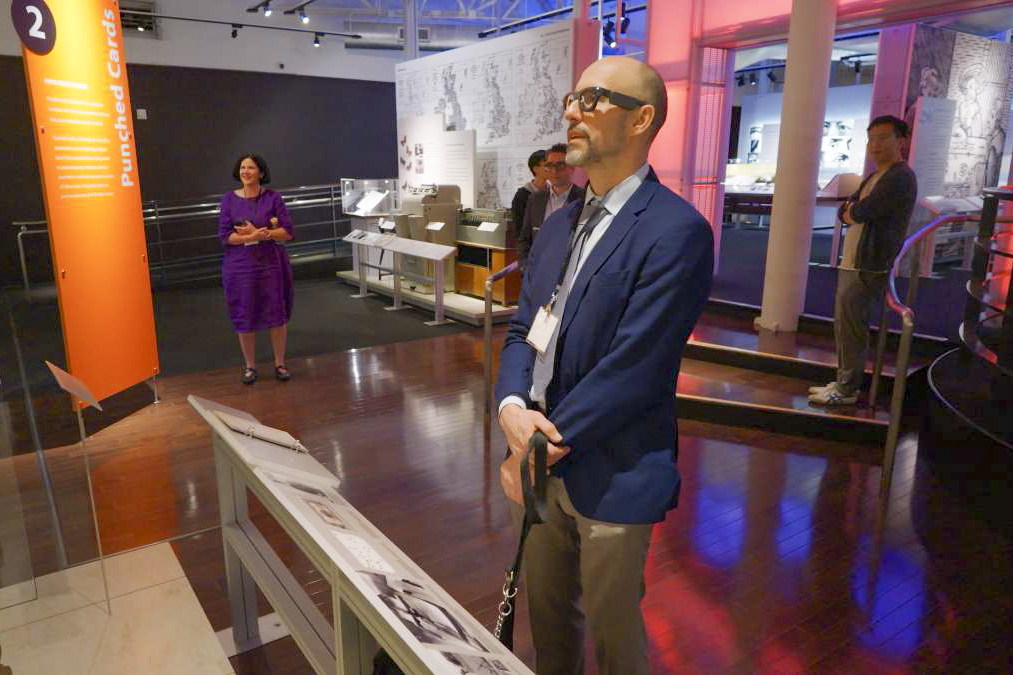
Museum curators worked with Meta researchers to map a route through the galleries and develop the AI guide’s responses, drawing exclusively on information supplied by the museum.
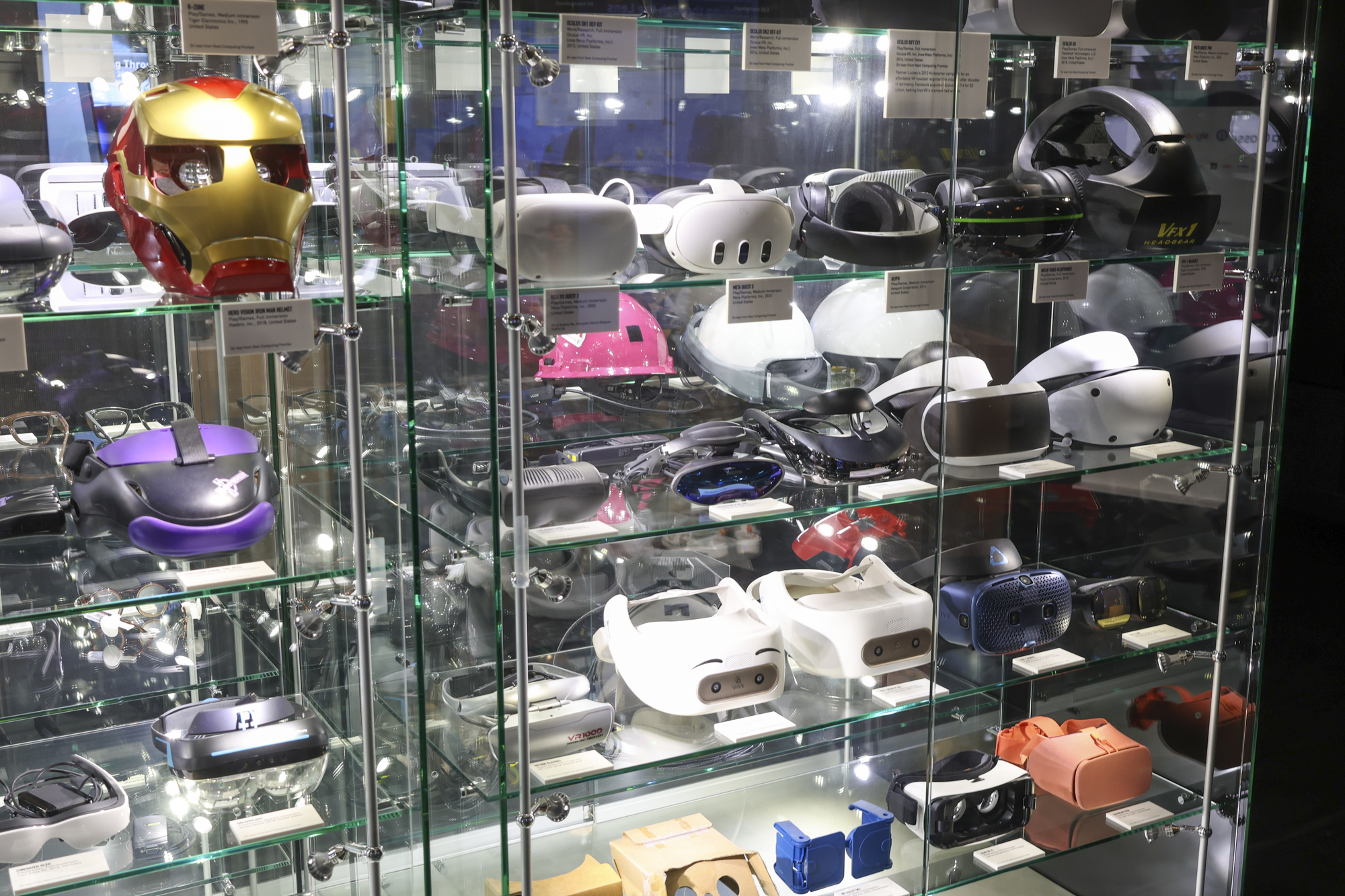
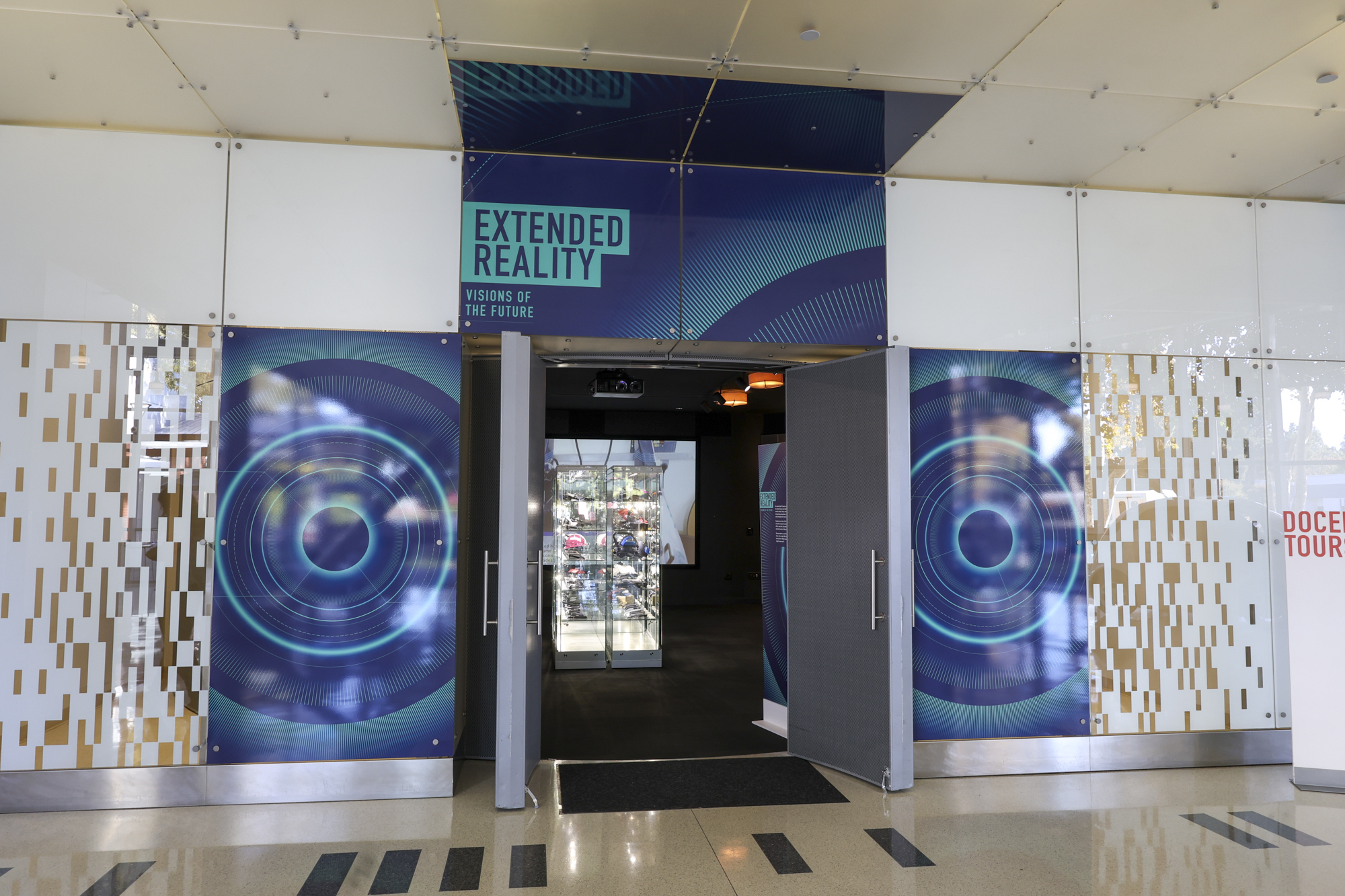
The project coincides with the Computer History Museum’s new exhibition, “Extended Reality: Visions of the Future,” which opened Oct. 1 and features more than 100 devices spanning six decades of wearable technology, from early virtual reality headsets to today’s AI-powered smart glasses. Among them are the Project Aria research glasses Panek tested. The exhibition is open to the public through March 28, 2027, but the Aria tour is experimental and not open to visitors.
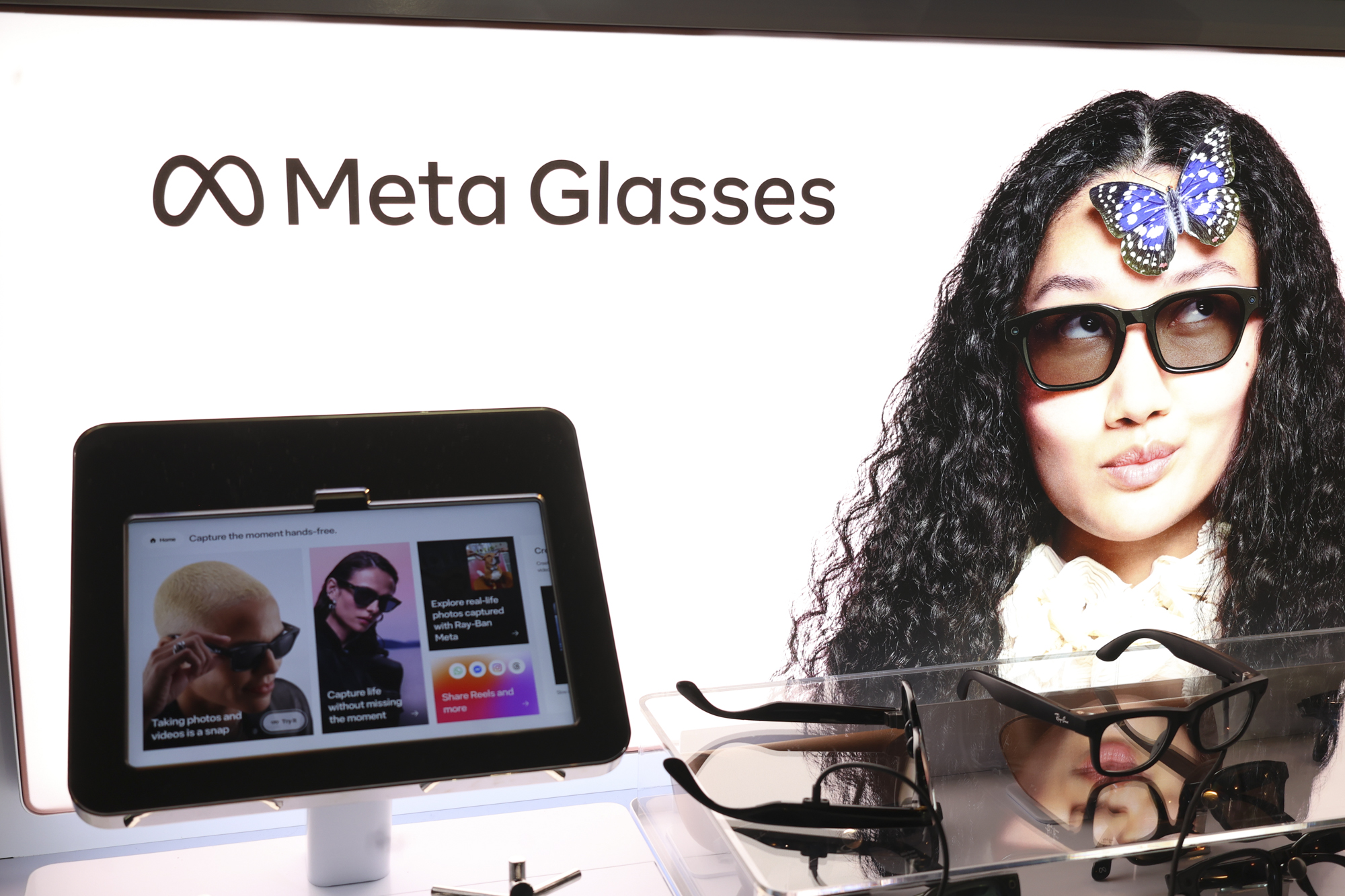
On select demo days, however, visitors can borrow Meta glasses for a separate experience called museum mode. Visitors scan exhibit placards or QR codes using the glasses to hear information about the objects on display and ask follow-up questions.
While the glasses are designed for all visitors, Panek, whose company is working in partnership with Meta, said the technology changes what a museum visit feels like for blind and low-vision communities.
“I was in a gallery I had never set foot in, and I walked it on my own, following a sound,” he wrote. “It wasn’t an audio tour where I’m a passive listener. It was a conversation, and the glasses helped me move through the space and understand it at once.”

Kirsten Tashev, the museum’s chief curatorial and exhibitions officer, said the glasses tackle a problem every museum has: wayfinding. Instead of hunting for a sticker or a line on the floor, visitors follow a sound, the way you’d find someone calling your name from another room in a house.
“You follow it, you get to the spot, and it kind of rewards you with a chime, and it’s amazing for everyone but also for blind and low-vision [guests] because it’s a way to navigate using an audio system,” she said.
The glasses could also improve the museum experience for sighted visitors, who often spend their time looking down at handheld devices, such as guides and phones, Tashev said.
“With the glasses, you’re in the gallery, you’re with your friends, you’re looking at objects,” she said. “You’re not competing with another device.”
For Tashev, the potential to improve accessibility is especially significant. When museums ask blind and low-vision visitors what they want, Tashev said, “basically the feedback is just ‘do something,’ because it’s pretty inaccessible as it is.”
But Panek said the tour is a project with built-in limits.
“This is early research, and I think it’s important to say so,” he wrote. “The guide only knows what the curators wrote for it, which is a good thing for accuracy but means it’s only as deep as that content.”

The glasses also cover only part of what he needs. Shadow, his guide dog, watches the floor, the people and the obstacles, Panek said, while the glasses tell him where to go and what he’s standing in front of. “Neither one replaces the other,” he said.
While the Computer History Museum experiments with what AI-powered accessibility might look like in the future, the Smithsonian Institution is already using technology to help blind and low-vision visitors experience its collections.
Through a visual interpreting service, visitors can connect remotely with trained human interpreters who describe their surroundings and help them navigate unfamiliar spaces. Unlike Meta’s Project Aria, a live agent is on the other end of the connection, providing human assistance in real time.
But technology is only one part of the Smithsonian’s approach. Its museums also offer tactile exhibits, audio descriptions and assistance from staff.
Ashley Grady, an accessibility program specialist with the Smithsonian’s Office of Visitor Accessibility, said the institution is careful not to rely on any single approach, particularly as new technologies can quickly become outdated.
“We know how important technology is, but really emphasize that accessibility isn’t a one-size- fits-all solution,” Grady said.
The challenge, she said, is recognizing that even visitors with the same disability may have different preferences and needs.
“Not everyone who’s blind or has low vision … is going to always choose the same option,” Grady said. “That’s why we have to try to offer multiple options and multiple choices for people.”
Smart glasses are one option for improving access in museums, but they’re also controversial.
The devices are equipped with cameras, a feature that has drawn concern from privacy advocates who worry about the growing use of wearable surveillance technology in public spaces.
Reem Suleiman, senior campaign director at the Boston-based digital rights advocacy organization Fight for the Future, said her organization opposes facial recognition in public spaces and has encouraged businesses and other public establishments to prohibit smart glasses.
Suleiman said she did not know whether the glasses used at the museum have facial recognition capabilities.
Meta declined to comment on how its glasses are used at the museum, pointing instead to a blog note that outlines its privacy safeguards. According to the company, the glasses scan placards or QR codes “for exhibit recognition only,” camera capture features are disabled, no data is recorded and the devices are factory reset after each use.
But Suleiman questioned whether demonstrating the technology could help normalize its use in public.
Even with its advantages inside the gallery, she said, the museum is essentially “helping to support the idea that this technology is safe in public space, which it is not.”

Suleiman acknowledged the potential benefits for people with disabilities but argued that accessibility tools should be designed for specific needs rather than incorporated into products marketed to the general public.
“I think the right solution is to develop that tool for that specific community, and for that specific use case,” she said.
If smart glasses become commonplace, Suleiman warned, “you have created an enormous surveillance issue.”
Tashev said the museum sees itself as a place to explore those concerns.
“This is the right place to learn about a new technology and to ask those critical questions about what it should or shouldn’t do,” she said.
“Those concerns are legitimate, and they deserve real guardrails,” Panek said of the privacy objections. “I’d never want my independence to come at someone else’s expense.”
He said museums should clearly explain how the technology operates, establish transparent policies and involve blind and low-vision visitors in decisions about its use.
“What I’d ask is that museums not respond with a blanket ban,” he said. “A policy that treats an accessibility tool the same as someone sneaking photos shuts people out. The better path is to build the rules with the blind community in the room.”
The Aria tour remains a research project for now, but Panek hopes experiences like the one he had in Mountain View will someday be routine for blind visitors.
“The goal is for a blind visitor to walk into a museum and have this just be there,” he wrote.
Eden Collier is a graduate journalism student at Stanford University.