window.__IS_SSR__=true
window.__INITIAL_STATE__={
"attachmentsReducer": {
"audio_0": {
"type": "attachments",
"id": "audio_0",
"imgSizes": {
"kqedFullSize": {
"file": "https://ww2.kqed.org/news/wp-content/themes/KQED-unified/img/audio_bgs/background0.jpg"
}
}
},
"audio_1": {
"type": "attachments",
"id": "audio_1",
"imgSizes": {
"kqedFullSize": {
"file": "https://ww2.kqed.org/news/wp-content/themes/KQED-unified/img/audio_bgs/background1.jpg"
}
}
},
"audio_2": {
"type": "attachments",
"id": "audio_2",
"imgSizes": {
"kqedFullSize": {
"file": "https://ww2.kqed.org/news/wp-content/themes/KQED-unified/img/audio_bgs/background2.jpg"
}
}
},
"audio_3": {
"type": "attachments",
"id": "audio_3",
"imgSizes": {
"kqedFullSize": {
"file": "https://ww2.kqed.org/news/wp-content/themes/KQED-unified/img/audio_bgs/background3.jpg"
}
}
},
"audio_4": {
"type": "attachments",
"id": "audio_4",
"imgSizes": {
"kqedFullSize": {
"file": "https://ww2.kqed.org/news/wp-content/themes/KQED-unified/img/audio_bgs/background4.jpg"
}
}
},
"placeholder": {
"type": "attachments",
"id": "placeholder",
"imgSizes": {
"thumbnail": {
"file": "https://cdn.kqed.org/wp-content/uploads/2024/12/KQED-Default-Image-816638274-2000x1333-1-160x107.jpg",
"width": 160,
"height": 107,
"mimeType": "image/jpeg"
},
"medium": {
"file": "https://cdn.kqed.org/wp-content/uploads/2024/12/KQED-Default-Image-816638274-2000x1333-1-800x533.jpg",
"width": 800,
"height": 533,
"mimeType": "image/jpeg"
},
"medium_large": {
"file": "https://cdn.kqed.org/wp-content/uploads/2024/12/KQED-Default-Image-816638274-2000x1333-1-768x512.jpg",
"width": 768,
"height": 512,
"mimeType": "image/jpeg"
},
"large": {
"file": "https://cdn.kqed.org/wp-content/uploads/2024/12/KQED-Default-Image-816638274-2000x1333-1-1020x680.jpg",
"width": 1020,
"height": 680,
"mimeType": "image/jpeg"
},
"1536x1536": {
"file": "https://cdn.kqed.org/wp-content/uploads/2024/12/KQED-Default-Image-816638274-2000x1333-1-1536x1024.jpg",
"width": 1536,
"height": 1024,
"mimeType": "image/jpeg"
},
"fd-lrg": {
"file": "https://cdn.kqed.org/wp-content/uploads/2024/12/KQED-Default-Image-816638274-2000x1333-1-1536x1024.jpg",
"width": 1536,
"height": 1024,
"mimeType": "image/jpeg"
},
"fd-med": {
"file": "https://cdn.kqed.org/wp-content/uploads/2024/12/KQED-Default-Image-816638274-2000x1333-1-1020x680.jpg",
"width": 1020,
"height": 680,
"mimeType": "image/jpeg"
},
"fd-sm": {
"file": "https://cdn.kqed.org/wp-content/uploads/2024/12/KQED-Default-Image-816638274-2000x1333-1-800x533.jpg",
"width": 800,
"height": 533,
"mimeType": "image/jpeg"
},
"post-thumbnail": {
"file": "https://cdn.kqed.org/wp-content/uploads/2024/12/KQED-Default-Image-816638274-2000x1333-1-672x372.jpg",
"width": 672,
"height": 372,
"mimeType": "image/jpeg"
},
"twentyfourteen-full-width": {
"file": "https://cdn.kqed.org/wp-content/uploads/2024/12/KQED-Default-Image-816638274-2000x1333-1-1038x576.jpg",
"width": 1038,
"height": 576,
"mimeType": "image/jpeg"
},
"xxsmall": {
"file": "https://cdn.kqed.org/wp-content/uploads/2024/12/KQED-Default-Image-816638274-2000x1333-1-160x107.jpg",
"width": 160,
"height": 107,
"mimeType": "image/jpeg"
},
"xsmall": {
"file": "https://cdn.kqed.org/wp-content/uploads/2024/12/KQED-Default-Image-816638274-2000x1333-1-672x372.jpg",
"width": 672,
"height": 372,
"mimeType": "image/jpeg"
},
"small": {
"file": "https://cdn.kqed.org/wp-content/uploads/2024/12/KQED-Default-Image-816638274-2000x1333-1-672x372.jpg",
"width": 672,
"height": 372,
"mimeType": "image/jpeg"
},
"xlarge": {
"file": "https://cdn.kqed.org/wp-content/uploads/2024/12/KQED-Default-Image-816638274-2000x1333-1-1020x680.jpg",
"width": 1020,
"height": 680,
"mimeType": "image/jpeg"
},
"full-width": {
"file": "https://cdn.kqed.org/wp-content/uploads/2024/12/KQED-Default-Image-816638274-2000x1333-1-1920x1280.jpg",
"width": 1920,
"height": 1280,
"mimeType": "image/jpeg"
},
"guest-author-32": {
"file": "https://cdn.kqed.org/wp-content/uploads/2025/01/KQED-Default-Image-816638274-1333x1333-1-160x160.jpg",
"width": 32,
"height": 32,
"mimeType": "image/jpeg"
},
"guest-author-50": {
"file": "https://cdn.kqed.org/wp-content/uploads/2025/01/KQED-Default-Image-816638274-1333x1333-1-160x160.jpg",
"width": 50,
"height": 50,
"mimeType": "image/jpeg"
},
"guest-author-64": {
"file": "https://cdn.kqed.org/wp-content/uploads/2025/01/KQED-Default-Image-816638274-1333x1333-1-160x160.jpg",
"width": 64,
"height": 64,
"mimeType": "image/jpeg"
},
"guest-author-96": {
"file": "https://cdn.kqed.org/wp-content/uploads/2025/01/KQED-Default-Image-816638274-1333x1333-1-160x160.jpg",
"width": 96,
"height": 96,
"mimeType": "image/jpeg"
},
"guest-author-128": {
"file": "https://cdn.kqed.org/wp-content/uploads/2025/01/KQED-Default-Image-816638274-1333x1333-1-160x160.jpg",
"width": 128,
"height": 128,
"mimeType": "image/jpeg"
},
"detail": {
"file": "https://cdn.kqed.org/wp-content/uploads/2025/01/KQED-Default-Image-816638274-1333x1333-1-160x160.jpg",
"width": 160,
"height": 160,
"mimeType": "image/jpeg"
},
"kqedFullSize": {
"file": "https://cdn.kqed.org/wp-content/uploads/2024/12/KQED-Default-Image-816638274-2000x1333-1.jpg",
"width": 2000,
"height": 1333
}
}
},
"news_10345364": {
"type": "attachments",
"id": "news_10345364",
"meta": {
"index": "attachments_1716263798",
"site": "news",
"id": "10345364",
"found": true
},
"parent": 10345361,
"imgSizes": {
"thumbnail": {
"file": "https://ww2.kqed.org/app/uploads/sites/10/2014/10/berkeleymainpo-400x265.png",
"width": 400,
"mimeType": "image/png",
"height": 265
},
"post-thumbnail": {
"file": "https://ww2.kqed.org/app/uploads/sites/10/2014/10/berkeleymainpo-672x372.png",
"width": 672,
"mimeType": "image/png",
"height": 372
},
"kqedFullSize": {
"file": "https://ww2.kqed.org/app/uploads/sites/10/2014/10/berkeleymainpo.png",
"width": 720,
"height": 477
},
"guest-author-96": {
"file": "https://ww2.kqed.org/app/uploads/sites/10/2014/10/berkeleymainpo-96x96.png",
"width": 96,
"mimeType": "image/png",
"height": 96
},
"guest-author-64": {
"file": "https://ww2.kqed.org/app/uploads/sites/10/2014/10/berkeleymainpo-64x64.png",
"width": 64,
"mimeType": "image/png",
"height": 64
},
"detail": {
"file": "https://ww2.kqed.org/app/uploads/sites/10/2014/10/berkeleymainpo-75x75.png",
"width": 75,
"mimeType": "image/png",
"height": 75
},
"guest-author-32": {
"file": "https://ww2.kqed.org/app/uploads/sites/10/2014/10/berkeleymainpo-32x32.png",
"width": 32,
"mimeType": "image/png",
"height": 32
},
"guest-author-128": {
"file": "https://ww2.kqed.org/app/uploads/sites/10/2014/10/berkeleymainpo-128x128.png",
"width": 128,
"mimeType": "image/png",
"height": 128
}
},
"publishDate": 1414389971,
"modified": 1414389971,
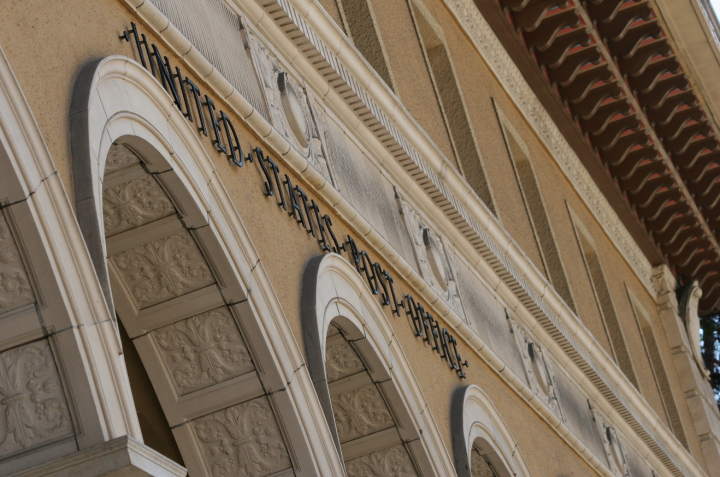
"caption": "The historic U.S. Post Office in downtown Berkeley. (Darius Wekwerth/Berkeleyside)",
"description": "The historic U.S. Post Office in downtown Berkeley. (Darius Wekwerth/Berkeleyside)",
"title": "Berkeley Main Post Office",
"credit": null,
"status": "inherit",
"isLoading": false,
"fetchFailed": false
},
"news_10344615": {
"type": "attachments",
"id": "news_10344615",
"meta": {
"index": "attachments_1716263798",
"site": "news",
"id": "10344615",
"found": true
},
"parent": 10344614,
"imgSizes": {
"twentyfourteen-full-width": {
"file": "https://ww2.kqed.org/app/uploads/sites/10/2014/10/RS12686_ballot141020a-1038x576.jpg",
"width": 1038,
"mimeType": "image/jpeg",
"height": 576
},
"thumbnail": {
"file": "https://ww2.kqed.org/app/uploads/sites/10/2014/10/RS12686_ballot141020a-400x209.jpg",
"width": 400,
"mimeType": "image/jpeg",
"height": 209
},
"post-thumbnail": {
"file": "https://ww2.kqed.org/app/uploads/sites/10/2014/10/RS12686_ballot141020a-672x372.jpg",
"width": 672,
"mimeType": "image/jpeg",
"height": 372
},
"kqedFullSize": {
"file": "https://ww2.kqed.org/app/uploads/sites/10/2014/10/RS12686_ballot141020a.jpg",
"width": 1280,
"height": 669
},
"guest-author-96": {
"file": "https://ww2.kqed.org/app/uploads/sites/10/2014/10/RS12686_ballot141020a-96x96.jpg",
"width": 96,
"mimeType": "image/jpeg",
"height": 96
},
"medium": {
"file": "https://ww2.kqed.org/app/uploads/sites/10/2014/10/RS12686_ballot141020a-800x418.jpg",
"width": 800,
"mimeType": "image/jpeg",
"height": 418
},
"guest-author-64": {
"file": "https://ww2.kqed.org/app/uploads/sites/10/2014/10/RS12686_ballot141020a-64x64.jpg",
"width": 64,
"mimeType": "image/jpeg",
"height": 64
},
"detail": {
"file": "https://ww2.kqed.org/app/uploads/sites/10/2014/10/RS12686_ballot141020a-75x75.jpg",
"width": 75,
"mimeType": "image/jpeg",
"height": 75
},
"guest-author-32": {
"file": "https://ww2.kqed.org/app/uploads/sites/10/2014/10/RS12686_ballot141020a-32x32.jpg",
"width": 32,
"mimeType": "image/jpeg",
"height": 32
},
"guest-author-128": {
"file": "https://ww2.kqed.org/app/uploads/sites/10/2014/10/RS12686_ballot141020a-128x128.jpg",
"width": 128,
"mimeType": "image/jpeg",
"height": 128
}
},
"publishDate": 1413933490,
"modified": 1413933490,
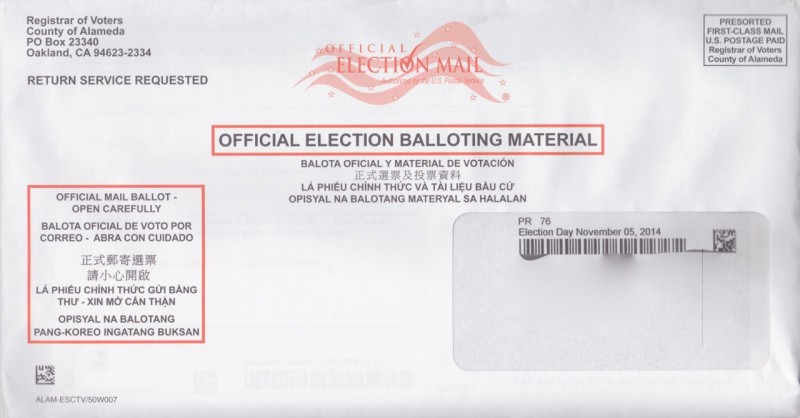
"caption": "An Alameda County mail-in ballot, with incorrect date of 2014 general election showing in address window at lower right.",
"description": "An Alameda County mail-in ballot, with incorrect date of 2014 general election showing in address window at lower right.",
"title": "Alameda County Ballots",
"credit": null,
"status": "inherit",
"isLoading": false,
"fetchFailed": false
},
"stateofhealth_22123": {
"type": "attachments",
"id": "stateofhealth_22123",
"meta": {
"index": "attachments_1716263798",
"site": "stateofhealth",
"id": "22123",
"found": true
},
"parent": 22116,
"imgSizes": {
"thumbnail": {
"file": "https://ww2.kqed.org/app/uploads/sites/27/2014/10/Screen-Shot-2014-10-20-at-10.36.01-AM-e1413826601647-400x261.png",
"width": 400,
"mimeType": "image/png",
"height": 261
},
"fd-sm": {
"file": "https://ww2.kqed.org/app/uploads/sites/27/2014/10/Screen-Shot-2014-10-20-at-10.36.01-AM-e1413826601647-320x209.png",
"width": 320,
"mimeType": "image/png",
"height": 209
},
"post-thumbnail": {
"file": "https://ww2.kqed.org/app/uploads/sites/27/2014/10/Screen-Shot-2014-10-20-at-10.36.01-AM-e1413826601647-640x372.png",
"width": 640,
"mimeType": "image/png",
"height": 372
},
"kqedFullSize": {
"file": "https://ww2.kqed.org/app/uploads/sites/27/2014/10/Screen-Shot-2014-10-20-at-10.36.01-AM-e1413826601647.png",
"width": 640,
"height": 418
},
"guest-author-96": {
"file": "https://ww2.kqed.org/app/uploads/sites/27/2014/10/Screen-Shot-2014-10-20-at-10.36.01-AM-e1413826601647-96x96.png",
"width": 96,
"mimeType": "image/png",
"height": 96
},
"guest-author-64": {
"file": "https://ww2.kqed.org/app/uploads/sites/27/2014/10/Screen-Shot-2014-10-20-at-10.36.01-AM-e1413826601647-64x64.png",
"width": 64,
"mimeType": "image/png",
"height": 64
},
"detail": {
"file": "https://ww2.kqed.org/app/uploads/sites/27/2014/10/Screen-Shot-2014-10-20-at-10.36.01-AM-e1413826601647-75x75.png",
"width": 75,
"mimeType": "image/png",
"height": 75
},
"guest-author-32": {
"file": "https://ww2.kqed.org/app/uploads/sites/27/2014/10/Screen-Shot-2014-10-20-at-10.36.01-AM-e1413826601647-32x32.png",
"width": 32,
"mimeType": "image/png",
"height": 32
},
"guest-author-128": {
"file": "https://ww2.kqed.org/app/uploads/sites/27/2014/10/Screen-Shot-2014-10-20-at-10.36.01-AM-e1413826601647-128x128.png",
"width": 128,
"mimeType": "image/png",
"height": 128
}
},
"publishDate": 1413826589,
"modified": 1413826589,
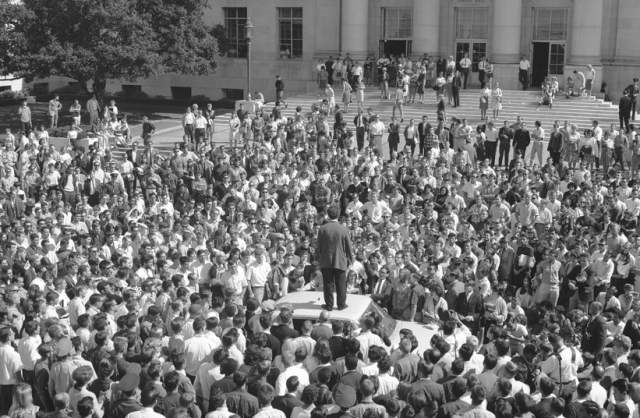
"caption": "Mario Savio stands on top of police car in front of Sproul Hall on Oct 1. 1964. (Courtesy of UC Berkeley, The Bancroft Library).",
"description": "Mario Savio stands on top of police car in front of Sproul Hall on Oct 1. 1964. (Courtesy of UC Berkeley, The Bancroft Library).",
"title": "Screen Shot 2014-10-20 at 10.36.01 AM",
"credit": null,
"status": "inherit",
"isLoading": false,
"fetchFailed": false
},
"news_10343304": {
"type": "attachments",
"id": "news_10343304",
"meta": {
"index": "attachments_1716263798",
"site": "news",
"id": "10343304",
"found": true
},
"parent": 10343251,
"imgSizes": {
"thumbnail": {
"file": "https://ww2.kqed.org/app/uploads/sites/10/2014/10/berkeleymeasured-400x300.jpg",
"width": 400,
"mimeType": "image/jpeg",
"height": 300
},
"post-thumbnail": {
"file": "https://ww2.kqed.org/app/uploads/sites/10/2014/10/berkeleymeasured-640x372.jpg",
"width": 640,
"mimeType": "image/jpeg",
"height": 372
},
"kqedFullSize": {
"file": "https://ww2.kqed.org/app/uploads/sites/10/2014/10/berkeleymeasured.jpg",
"width": 640,
"height": 480
},
"guest-author-96": {
"file": "https://ww2.kqed.org/app/uploads/sites/10/2014/10/berkeleymeasured-96x96.jpg",
"width": 96,
"mimeType": "image/jpeg",
"height": 96
},
"guest-author-64": {
"file": "https://ww2.kqed.org/app/uploads/sites/10/2014/10/berkeleymeasured-64x64.jpg",
"width": 64,
"mimeType": "image/jpeg",
"height": 64
},
"detail": {
"file": "https://ww2.kqed.org/app/uploads/sites/10/2014/10/berkeleymeasured-75x75.jpg",
"width": 75,
"mimeType": "image/jpeg",
"height": 75
},
"guest-author-32": {
"file": "https://ww2.kqed.org/app/uploads/sites/10/2014/10/berkeleymeasured-32x32.jpg",
"width": 32,
"mimeType": "image/jpeg",
"height": 32
},
"guest-author-128": {
"file": "https://ww2.kqed.org/app/uploads/sites/10/2014/10/berkeleymeasured-128x128.jpg",
"width": 128,
"mimeType": "image/jpeg",
"height": 128
}
},
"publishDate": 1412973250,
"modified": 1412973250,
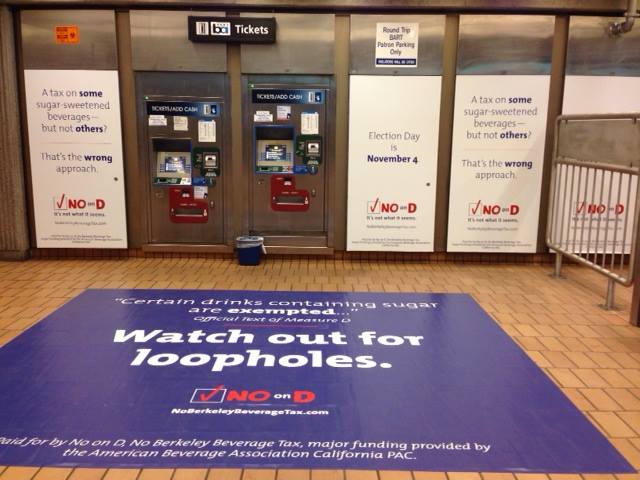
"caption": "The No on Measure D campaign has paid to plaster the Ashby BART station with signs. (Marian Mabel/Berkeleyside)",
"description": "The No on Measure D campaign on Oct. 8 covered the Ashby BART station with signs — on the floor, on the walls, and next to the ticket machines. BART workers accidentally took down some of the signs Wednesday night, but they will be reinstalled. (Marian Mabel/Berkeleyside)",
"title": "Berkeley Measure D-BART",
"credit": null,
"status": "inherit",
"isLoading": false,
"fetchFailed": false
},
"news_10342306": {
"type": "attachments",
"id": "news_10342306",
"meta": {
"index": "attachments_1716263798",
"site": "news",
"id": "10342306",
"found": true
},
"parent": 10342299,
"imgSizes": {
"thumbnail": {
"file": "https://ww2.kqed.org/app/uploads/sites/10/2014/10/Union-protest-400x320.png",
"width": 400,
"mimeType": "image/png",
"height": 320
},
"post-thumbnail": {
"file": "https://ww2.kqed.org/app/uploads/sites/10/2014/10/Union-protest-672x372.png",
"width": 672,
"mimeType": "image/png",
"height": 372
},
"kqedFullSize": {
"file": "https://ww2.kqed.org/app/uploads/sites/10/2014/10/Union-protest-e1412372310714.png",
"width": 720,
"height": 576
},
"guest-author-96": {
"file": "https://ww2.kqed.org/app/uploads/sites/10/2014/10/Union-protest-96x96.png",
"width": 96,
"mimeType": "image/png",
"height": 96
},
"guest-author-64": {
"file": "https://ww2.kqed.org/app/uploads/sites/10/2014/10/Union-protest-64x64.png",
"width": 64,
"mimeType": "image/png",
"height": 64
},
"detail": {
"file": "https://ww2.kqed.org/app/uploads/sites/10/2014/10/Union-protest-75x75.png",
"width": 75,
"mimeType": "image/png",
"height": 75
},
"guest-author-32": {
"file": "https://ww2.kqed.org/app/uploads/sites/10/2014/10/Union-protest-32x32.png",
"width": 32,
"mimeType": "image/png",
"height": 32
},
"guest-author-128": {
"file": "https://ww2.kqed.org/app/uploads/sites/10/2014/10/Union-protest-128x128.png",
"width": 128,
"mimeType": "image/png",
"height": 128
}
},
"publishDate": 1412368060,
"modified": 1412368060,
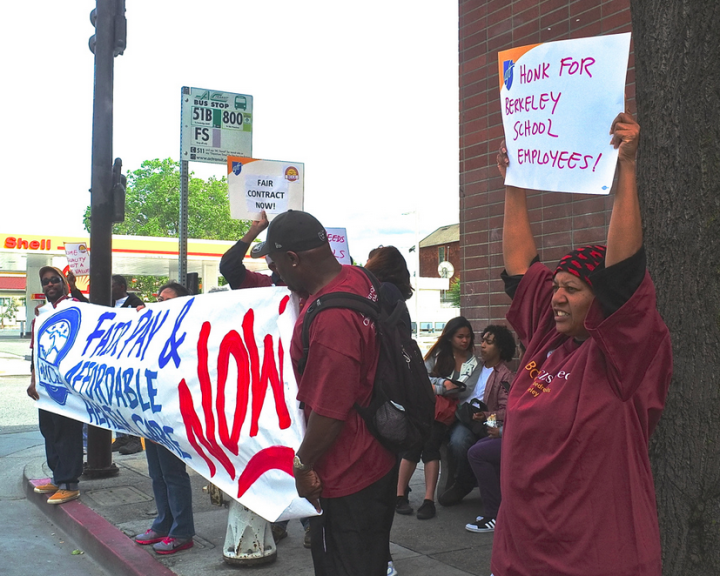
"caption": "Berkeley Council of Classified Employees demonstrating for fair pay and affordable health care in March 2014. (Ted Friedman/Berkeleyside)",
"description": null,
"title": "Union-protest",
"credit": null,
"status": "inherit",
"isLoading": false,
"fetchFailed": false
},
"news_10342223": {
"type": "attachments",
"id": "news_10342223",
"meta": {
"index": "attachments_1716263798",
"site": "news",
"id": "10342223",
"found": true
},
"parent": 10342197,
"imgSizes": {
"twentyfourteen-full-width": {
"file": "https://ww2.kqed.org/app/uploads/sites/10/2014/10/PeninsulaPress_mvmeeting2_Wilson-1038x576.jpg",
"width": 1038,
"mimeType": "image/jpeg",
"height": 576
},
"thumbnail": {
"file": "https://ww2.kqed.org/app/uploads/sites/10/2014/10/PeninsulaPress_mvmeeting2_Wilson-400x295.jpg",
"width": 400,
"mimeType": "image/jpeg",
"height": 295
},
"post-thumbnail": {
"file": "https://ww2.kqed.org/app/uploads/sites/10/2014/10/PeninsulaPress_mvmeeting2_Wilson-672x372.jpg",
"width": 672,
"mimeType": "image/jpeg",
"height": 372
},
"kqedFullSize": {
"file": "https://ww2.kqed.org/app/uploads/sites/10/2014/10/PeninsulaPress_mvmeeting2_Wilson-e1412366582512.jpg",
"width": 1400,
"height": 1035
},
"large": {
"file": "https://ww2.kqed.org/app/uploads/sites/10/2014/10/PeninsulaPress_mvmeeting2_Wilson-1440x1064.jpg",
"width": 1440,
"mimeType": "image/jpeg",
"height": 1064
},
"guest-author-96": {
"file": "https://ww2.kqed.org/app/uploads/sites/10/2014/10/PeninsulaPress_mvmeeting2_Wilson-96x96.jpg",
"width": 96,
"mimeType": "image/jpeg",
"height": 96
},
"medium": {
"file": "https://ww2.kqed.org/app/uploads/sites/10/2014/10/PeninsulaPress_mvmeeting2_Wilson-800x591.jpg",
"width": 800,
"mimeType": "image/jpeg",
"height": 591
},
"guest-author-64": {
"file": "https://ww2.kqed.org/app/uploads/sites/10/2014/10/PeninsulaPress_mvmeeting2_Wilson-64x64.jpg",
"width": 64,
"mimeType": "image/jpeg",
"height": 64
},
"detail": {
"file": "https://ww2.kqed.org/app/uploads/sites/10/2014/10/PeninsulaPress_mvmeeting2_Wilson-75x75.jpg",
"width": 75,
"mimeType": "image/jpeg",
"height": 75
},
"guest-author-32": {
"file": "https://ww2.kqed.org/app/uploads/sites/10/2014/10/PeninsulaPress_mvmeeting2_Wilson-32x32.jpg",
"width": 32,
"mimeType": "image/jpeg",
"height": 32
},
"guest-author-128": {
"file": "https://ww2.kqed.org/app/uploads/sites/10/2014/10/PeninsulaPress_mvmeeting2_Wilson-128x128.jpg",
"width": 128,
"mimeType": "image/jpeg",
"height": 128
}
},
"publishDate": 1412362841,
"modified": 1412362841,
"caption": "Mountain View residents join the city's biking and walking community meeting on Saturday. The city asked for input into the California/Escuela/Shoreline Complete Streets Project. (Carolina Wilson/Peninsula Press)",
"description": "Mountain View residents join the city's biking and walking community meeting on Saturday. The city asked for input into the California/Escuela/Shoreline Complete Streets Project. (Carolina Wilson/Peninsula Press)",
"title": "Mountain View-Complete Streets",
"credit": null,
"status": "inherit",
"isLoading": false,
"fetchFailed": false
},
"news_148609": {
"type": "attachments",
"id": "news_148609",
"meta": {
"index": "attachments_1716263798",
"site": "news",
"id": "148609",
"found": true
},
"parent": 148585,
"imgSizes": {
"wide-featured-image": {
"file": "https://ww2.kqed.org/app/uploads/sites/10/2014/09/payprotest092514-600x300.jpg",
"width": 600,
"mimeType": "image/jpeg",
"height": 300
},
"featured-page": {
"file": "https://ww2.kqed.org/app/uploads/sites/10/2014/09/payprotest092514-315x145.jpg",
"width": 315,
"mimeType": "image/jpeg",
"height": 145
},
"thumbnail": {
"file": "https://ww2.kqed.org/app/uploads/sites/10/2014/09/payprotest092514-300x300.jpg",
"width": 300,
"mimeType": "image/jpeg",
"height": 300
},
"kqedFullSize": {
"file": "https://ww2.kqed.org/app/uploads/sites/10/2014/09/payprotest092514.jpg",
"width": 2000,
"height": 1157
},
"large": {
"file": "https://ww2.kqed.org/app/uploads/sites/10/2014/09/payprotest092514-1028x594.jpg",
"width": 1028,
"mimeType": "image/jpeg",
"height": 594
},
"wide-featured-image-full": {
"file": "https://ww2.kqed.org/app/uploads/sites/10/2014/09/payprotest092514-960x300.jpg",
"width": 960,
"mimeType": "image/jpeg",
"height": 300
},
"guest-author-96": {
"file": "https://ww2.kqed.org/app/uploads/sites/10/2014/09/payprotest092514-96x96.jpg",
"width": 96,
"mimeType": "image/jpeg",
"height": 96
},
"medium": {
"file": "https://ww2.kqed.org/app/uploads/sites/10/2014/09/payprotest092514-640x370.jpg",
"width": 640,
"mimeType": "image/jpeg",
"height": 370
},
"guest-author-64": {
"file": "https://ww2.kqed.org/app/uploads/sites/10/2014/09/payprotest092514-64x64.jpg",
"width": 64,
"mimeType": "image/jpeg",
"height": 64
},
"guest-author-32": {
"file": "https://ww2.kqed.org/app/uploads/sites/10/2014/09/payprotest092514-32x32.jpg",
"width": 32,
"mimeType": "image/jpeg",
"height": 32
},
"narrow-featured-image": {
"file": "https://ww2.kqed.org/app/uploads/sites/10/2014/09/payprotest092514-400x300.jpg",
"width": 400,
"mimeType": "image/jpeg",
"height": 300
},
"narrow-featured-image-full": {
"file": "https://ww2.kqed.org/app/uploads/sites/10/2014/09/payprotest092514-640x360.jpg",
"width": 640,
"mimeType": "image/jpeg",
"height": 360
},
"detail": {
"file": "https://ww2.kqed.org/app/uploads/sites/10/2014/09/payprotest092514-75x75.jpg",
"width": 75,
"mimeType": "image/jpeg",
"height": 75
},
"guest-author-128": {
"file": "https://ww2.kqed.org/app/uploads/sites/10/2014/09/payprotest092514-128x128.jpg",
"width": 128,
"mimeType": "image/jpeg",
"height": 128
}
},
"publishDate": 1411657181,
"modified": 1411657181,
"caption": "SEIU President Mary Kay Henry and fast-food workers occupy a North Oakland McDonalds earlier this month. (Andrew Stelzer/KQED)",
"description": "SEIU President Mary Kay Henry and fast-food workers occupy a North Oakland McDonalds earlier this month. (Andrew Stelzer/KQED)",
"title": "Fast Food Pay Protest-SEIU",
"credit": null,
"status": "inherit",
"isLoading": false,
"fetchFailed": false
},
"news_148494": {
"type": "attachments",
"id": "news_148494",
"meta": {
"index": "attachments_1716263798",
"site": "news",
"id": "148494",
"found": true
},
"parent": 148491,
"imgSizes": {
"wide-featured-image": {
"file": "https://ww2.kqed.org/app/uploads/sites/10/2014/09/brk00040959b_c-600x300.jpg",
"width": 600,
"mimeType": "image/jpeg",
"height": 300
},
"featured-page": {
"file": "https://ww2.kqed.org/app/uploads/sites/10/2014/09/brk00040959b_c-315x145.jpg",
"width": 315,
"mimeType": "image/jpeg",
"height": 145
},
"thumbnail": {
"file": "https://ww2.kqed.org/app/uploads/sites/10/2014/09/brk00040959b_c-300x300.jpg",
"width": 300,
"mimeType": "image/jpeg",
"height": 300
},
"kqedFullSize": {
"file": "https://ww2.kqed.org/app/uploads/sites/10/2014/09/brk00040959b_c.jpg",
"width": 1494,
"height": 1500
},
"large": {
"file": "https://ww2.kqed.org/app/uploads/sites/10/2014/09/brk00040959b_c-1023x1028.jpg",
"width": 1023,
"mimeType": "image/jpeg",
"height": 1028
},
"wide-featured-image-full": {
"file": "https://ww2.kqed.org/app/uploads/sites/10/2014/09/brk00040959b_c-960x300.jpg",
"width": 960,
"mimeType": "image/jpeg",
"height": 300
},
"guest-author-96": {
"file": "https://ww2.kqed.org/app/uploads/sites/10/2014/09/brk00040959b_c-96x96.jpg",
"width": 96,
"mimeType": "image/jpeg",
"height": 96
},
"medium": {
"file": "https://ww2.kqed.org/app/uploads/sites/10/2014/09/brk00040959b_c-637x640.jpg",
"width": 637,
"mimeType": "image/jpeg",
"height": 640
},
"guest-author-64": {
"file": "https://ww2.kqed.org/app/uploads/sites/10/2014/09/brk00040959b_c-64x64.jpg",
"width": 64,
"mimeType": "image/jpeg",
"height": 64
},
"guest-author-32": {
"file": "https://ww2.kqed.org/app/uploads/sites/10/2014/09/brk00040959b_c-32x32.jpg",
"width": 32,
"mimeType": "image/jpeg",
"height": 32
},
"narrow-featured-image": {
"file": "https://ww2.kqed.org/app/uploads/sites/10/2014/09/brk00040959b_c-400x300.jpg",
"width": 400,
"mimeType": "image/jpeg",
"height": 300
},
"narrow-featured-image-full": {
"file": "https://ww2.kqed.org/app/uploads/sites/10/2014/09/brk00040959b_c-640x360.jpg",
"width": 640,
"mimeType": "image/jpeg",
"height": 360
},
"detail": {
"file": "https://ww2.kqed.org/app/uploads/sites/10/2014/09/brk00040959b_c-75x75.jpg",
"width": 75,
"mimeType": "image/jpeg",
"height": 75
},
"guest-author-128": {
"file": "https://ww2.kqed.org/app/uploads/sites/10/2014/09/brk00040959b_c-128x128.jpg",
"width": 128,
"mimeType": "image/jpeg",
"height": 128
}
},
"publishDate": 1411581342,
"modified": 1411581342,
"caption": "Mario Savio on top of police car in front of Sproul Hall. Oct 1. 1964 (Courtesy of UC Berkeley, The Bancroft Library).",
"description": null,
"title": "brk00040959b_c",
"credit": null,
"status": "inherit",
"isLoading": false,
"fetchFailed": false
},
"news_147836": {
"type": "attachments",
"id": "news_147836",
"meta": {
"index": "attachments_1716263798",
"site": "news",
"id": "147836",
"found": true
},
"parent": 147834,
"imgSizes": {
"wide-featured-image": {
"file": "https://ww2.kqed.org/app/uploads/sites/10/2014/09/photo-2-191-720x480-600x300.jpg",
"width": 600,
"mimeType": "image/jpeg",
"height": 300
},
"featured-page": {
"file": "https://ww2.kqed.org/app/uploads/sites/10/2014/09/photo-2-191-720x480-315x145.jpg",
"width": 315,
"mimeType": "image/jpeg",
"height": 145
},
"thumbnail": {
"file": "https://ww2.kqed.org/app/uploads/sites/10/2014/09/photo-2-191-720x480-300x300.jpg",
"width": 300,
"mimeType": "image/jpeg",
"height": 300
},
"kqedFullSize": {
"file": "https://ww2.kqed.org/app/uploads/sites/10/2014/09/photo-2-191-720x480.jpg",
"width": 720,
"height": 480
},
"wide-featured-image-full": {
"file": "https://ww2.kqed.org/app/uploads/sites/10/2014/09/photo-2-191-720x480-720x300.jpg",
"width": 720,
"mimeType": "image/jpeg",
"height": 300
},
"guest-author-96": {
"file": "https://ww2.kqed.org/app/uploads/sites/10/2014/09/photo-2-191-720x480-96x96.jpg",
"width": 96,
"mimeType": "image/jpeg",
"height": 96
},
"medium": {
"file": "https://ww2.kqed.org/app/uploads/sites/10/2014/09/photo-2-191-720x480-640x426.jpg",
"width": 640,
"mimeType": "image/jpeg",
"height": 426
},
"guest-author-64": {
"file": "https://ww2.kqed.org/app/uploads/sites/10/2014/09/photo-2-191-720x480-64x64.jpg",
"width": 64,
"mimeType": "image/jpeg",
"height": 64
},
"guest-author-32": {
"file": "https://ww2.kqed.org/app/uploads/sites/10/2014/09/photo-2-191-720x480-32x32.jpg",
"width": 32,
"mimeType": "image/jpeg",
"height": 32
},
"narrow-featured-image": {
"file": "https://ww2.kqed.org/app/uploads/sites/10/2014/09/photo-2-191-720x480-400x300.jpg",
"width": 400,
"mimeType": "image/jpeg",
"height": 300
},
"narrow-featured-image-full": {
"file": "https://ww2.kqed.org/app/uploads/sites/10/2014/09/photo-2-191-720x480-640x360.jpg",
"width": 640,
"mimeType": "image/jpeg",
"height": 360
},
"detail": {
"file": "https://ww2.kqed.org/app/uploads/sites/10/2014/09/photo-2-191-720x480-75x75.jpg",
"width": 75,
"mimeType": "image/jpeg",
"height": 75
},
"guest-author-128": {
"file": "https://ww2.kqed.org/app/uploads/sites/10/2014/09/photo-2-191-720x480-128x128.jpg",
"width": 128,
"mimeType": "image/jpeg",
"height": 128
}
},
"publishDate": 1410975220,
"modified": 1410975220,
"caption": null,
"description": null,
"title": "photo-2-191-720x480",
"credit": null,
"status": "inherit",
"isLoading": false,
"fetchFailed": false
},
"news_147529": {
"type": "attachments",
"id": "news_147529",
"meta": {
"index": "attachments_1716263798",
"site": "news",
"id": "147529",
"found": true
},
"parent": 147527,
"imgSizes": {
"wide-featured-image": {
"file": "https://ww2.kqed.org/app/uploads/sites/10/2014/09/1130655563_bd35906972_o-600x300.jpg",
"width": 600,
"mimeType": "image/jpeg",
"height": 300
},
"featured-page": {
"file": "https://ww2.kqed.org/app/uploads/sites/10/2014/09/1130655563_bd35906972_o-315x145.jpg",
"width": 315,
"mimeType": "image/jpeg",
"height": 145
},
"thumbnail": {
"file": "https://ww2.kqed.org/app/uploads/sites/10/2014/09/1130655563_bd35906972_o-300x300.jpg",
"width": 300,
"mimeType": "image/jpeg",
"height": 300
},
"kqedFullSize": {
"file": "https://ww2.kqed.org/app/uploads/sites/10/2014/09/1130655563_bd35906972_o.jpg",
"width": 2048,
"height": 1365
},
"large": {
"file": "https://ww2.kqed.org/app/uploads/sites/10/2014/09/1130655563_bd35906972_o-1028x685.jpg",
"width": 1028,
"mimeType": "image/jpeg",
"height": 685
},
"wide-featured-image-full": {
"file": "https://ww2.kqed.org/app/uploads/sites/10/2014/09/1130655563_bd35906972_o-960x300.jpg",
"width": 960,
"mimeType": "image/jpeg",
"height": 300
},
"guest-author-96": {
"file": "https://ww2.kqed.org/app/uploads/sites/10/2014/09/1130655563_bd35906972_o-96x96.jpg",
"width": 96,
"mimeType": "image/jpeg",
"height": 96
},
"medium": {
"file": "https://ww2.kqed.org/app/uploads/sites/10/2014/09/1130655563_bd35906972_o-640x426.jpg",
"width": 640,
"mimeType": "image/jpeg",
"height": 426
},
"guest-author-64": {
"file": "https://ww2.kqed.org/app/uploads/sites/10/2014/09/1130655563_bd35906972_o-64x64.jpg",
"width": 64,
"mimeType": "image/jpeg",
"height": 64
},
"guest-author-32": {
"file": "https://ww2.kqed.org/app/uploads/sites/10/2014/09/1130655563_bd35906972_o-32x32.jpg",
"width": 32,
"mimeType": "image/jpeg",
"height": 32
},
"narrow-featured-image": {
"file": "https://ww2.kqed.org/app/uploads/sites/10/2014/09/1130655563_bd35906972_o-400x300.jpg",
"width": 400,
"mimeType": "image/jpeg",
"height": 300
},
"narrow-featured-image-full": {
"file": "https://ww2.kqed.org/app/uploads/sites/10/2014/09/1130655563_bd35906972_o-640x360.jpg",
"width": 640,
"mimeType": "image/jpeg",
"height": 360
},
"detail": {
"file": "https://ww2.kqed.org/app/uploads/sites/10/2014/09/1130655563_bd35906972_o-75x75.jpg",
"width": 75,
"mimeType": "image/jpeg",
"height": 75
},
"guest-author-128": {
"file": "https://ww2.kqed.org/app/uploads/sites/10/2014/09/1130655563_bd35906972_o-128x128.jpg",
"width": 128,
"mimeType": "image/jpeg",
"height": 128
}
},
"publishDate": 1410549762,
"modified": 1410549762,
"caption": null,
"description": null,
"title": "1130655563_bd35906972_o",
"credit": null,
"status": "inherit",
"isLoading": false,
"fetchFailed": false
},
"news_146950": {
"type": "attachments",
"id": "news_146950",
"meta": {
"index": "attachments_1716263798",
"site": "news",
"id": "146950",
"found": true
},
"parent": 146938,
"imgSizes": {
"thumbnail": {
"file": "https://ww2.kqed.org/app/uploads/sites/10/2014/09/Thunderbird-series-400x277.jpg",
"width": 400,
"mimeType": "image/jpeg",
"height": 277
},
"post-thumbnail": {
"file": "https://ww2.kqed.org/app/uploads/sites/10/2014/09/Thunderbird-series-672x372.jpg",
"width": 672,
"mimeType": "image/jpeg",
"height": 372
},
"kqedFullSize": {
"file": "https://ww2.kqed.org/app/uploads/sites/10/2014/09/Thunderbird-series.jpg",
"width": 720,
"height": 499
}
},
"publishDate": 1409943953,
"modified": 1409943953,
"caption": null,
"description": null,
"title": "Quirky Berkeley",
"credit": null,
"status": "inherit",
"isLoading": false,
"fetchFailed": false
},
"news_146573": {
"type": "attachments",
"id": "news_146573",
"meta": {
"index": "attachments_1716263798",
"site": "news",
"id": "146573",
"found": true
},
"parent": 146565,
"imgSizes": {
"thumbnail": {
"file": "https://ww2.kqed.org/app/uploads/sites/10/2014/09/Smoke-testing-1-400x304.jpg",
"width": 400,
"mimeType": "image/jpeg",
"height": 304
},
"post-thumbnail": {
"file": "https://ww2.kqed.org/app/uploads/sites/10/2014/09/Smoke-testing-1-672x372.jpg",
"width": 672,
"mimeType": "image/jpeg",
"height": 372
},
"kqedFullSize": {
"file": "https://ww2.kqed.org/app/uploads/sites/10/2014/09/Smoke-testing-1.jpg",
"width": 720,
"height": 548
}
},
"publishDate": 1409686741,
"modified": 1409686741,
"caption": null,
"description": null,
"title": "Smoke-testing-1",
"credit": null,
"status": "inherit",
"isLoading": false,
"fetchFailed": false
}
},
"audioPlayerReducer": {
"postId": "stream_live",
"isPaused": true,
"isPlaying": false,
"pfsActive": false,
"pledgeModalIsOpen": true,
"playerDrawerIsOpen": false,
"liveAudioPlayStartedAt": 0,
"liveAudioPlayContext": ""
},
"authorsReducer": {
"byline_news_10345363": {
"type": "authors",
"id": "byline_news_10345363",
"meta": {
"override": true
},
"slug": "byline_news_10345363",
"name": "\u003ca href=\"http://www.berkeleyside.com/author/frances/\" target=\"_blank\">Frances Dinkelspiel\u003c/a>\u003cbr />Berkeleyside",
"isLoading": false
},
"byline_news_10343251": {
"type": "authors",
"id": "byline_news_10343251",
"meta": {
"override": true
},
"slug": "byline_news_10343251",
"name": "\u003ca href=\"http://www.berkeleyside.com/author/frances/\">Frances Dinkelspiel\u003c/a>\u003cbr />\u003ca href=\"http://www.berkeleyside.com/\">Berkeleyside\u003c/a>",
"isLoading": false
},
"byline_news_10342299": {
"type": "authors",
"id": "byline_news_10342299",
"meta": {
"override": true
},
"slug": "byline_news_10342299",
"name": "Frances Dinkelspiel, Berkeleyside",
"isLoading": false
},
"andrewstelzer": {
"type": "authors",
"id": "213",
"meta": {
"index": "authors_1716337520",
"id": "213",
"found": true
},
"name": "Andrew Stelzer",
"firstName": "Andrew",
"lastName": "Stelzer",
"slug": "andrewstelzer",
"email": "andrewstelzer@gmail.com",
"display_author_email": false,
"staff_mastheads": [],
"title": null,
"bio": "Andrew Stelzer has been reporting for KQED since 2010, and is a producer at \u003ca href=\"http://www.radioproject.org\" target=\"_blank\">Making Contact\u003c/a> in Oakland.. His work has been featured on programs including \u003ca href=\"http://www.npr.org/templates/story/story.php?storyId=5010\" target=\"_blank\">NPR’s Weekend Edition\u003c/a>, \u003ca href=\"http://www.theworld.org/\" target=\"_blank\">PRI’s The World\u003c/a>, \u003ca href=\"http://www.studio360.org/\" target=\"_blank\">Studio 360\u003c/a>, \u003ca href=\"http://marketplace.publicradio.org/\" target=\"_blank\">Marketplace\u003c/a>,\u003ca href=\"http://www.loe.org/\" target=\"_blank\">Living on Earth\u003c/a>, \u003ca href=\"http://www.onthemedia.org/\" target=\"_blank\">On the Media\u003c/a>, \u003ca href=\"http://www.latinousa.org/index.html\" target=\"_blank\">Latino USA,\u003c/a> \u003ca href=\"http://www.onlyagame.org/\" rel=\"tag\">Only a Game,\u003c/a> \u003ca href=\"http://www.tswi.org/\" target=\"_blank\">Radio Netherlands,\u003c/a> \u003ca href=\"http://worldradio.ch/index.shtml\" target=\"_blank\">World Radio Switzerland,\u003c/a> and \u003ca href=\"http://www.rfi.fr/langues/statiques/rfi_anglais.asp\" target=\"_blank\">Radio France International\u003c/a>. Andrew has written for publications including \u003ca href=\"http://www.inthesetimes.com/site/about/author/2369\" target=\"_blank\">In These Times\u003c/a>, \u003ca href=\"http://www.progressive.org/\" target=\"_blank\">The Progressive\u003c/a>, \u003ca href=\"http://ipsnews.net/\" target=\"_blank\">Interpress Service\u003c/a>, \u003ca href=\"http://www.tampabay.com/\" target=\"_blank\">The St. Petersburg Times\u003c/a>, and \u003ca href=\"http://www.eastbayexpress.com/ebx/Home\" target=\"_blank\">The East Bay Express\u003c/a>.\r\n\r\nAndrew’s work has received numerous awards from the Society of Professional Journalists, the National Lesbian and Gay Journalists Association, and the National Council on Crime and Delinquency.\r\n\r\nHe previously was a reporter at \u003ca href=\"http://www.wmnf.org/\" target=\"_blank\">WMNF\u003c/a> radio in Tampa, FL, and reporter and youth advocate st \u003ca href=\"http://www.kboo.org/\" target=\"_blank\">KBOO \u003c/a> in Portland, Oregon. Andrew has conducted radio production trainings around the world, from Algeria, to New Orleans, to the desert of Southern Jordan.",
"avatar": "https://secure.gravatar.com/avatar/14c7e75469395cb2468d45c9f6896ca9?s=600&d=blank&r=g",
"twitter": null,
"facebook": null,
"instagram": null,
"linkedin": null,
"sites": [
{
"site": "arts",
"roles": [
"contributor"
]
},
{
"site": "news",
"roles": [
"author"
]
},
{
"site": "stateofhealth",
"roles": [
"author"
]
}
],
"headData": {
"title": "Andrew Stelzer | KQED",
"description": null,
"ogImgSrc": "https://secure.gravatar.com/avatar/14c7e75469395cb2468d45c9f6896ca9?s=600&d=blank&r=g",
"twImgSrc": "https://secure.gravatar.com/avatar/14c7e75469395cb2468d45c9f6896ca9?s=600&d=blank&r=g"
},
"isLoading": false,
"link": "/author/andrewstelzer"
},
"danbrekke": {
"type": "authors",
"id": "222",
"meta": {
"index": "authors_1716337520",
"id": "222",
"found": true
},
"name": "Dan Brekke",
"firstName": "Dan",
"lastName": "Brekke",
"slug": "danbrekke",
"email": "dbrekke@kqed.org",
"display_author_email": true,
"staff_mastheads": [
"news",
"science"
],
"title": "KQED Editor and Reporter",
"bio": "Dan Brekke is a reporter and editor for KQED News, responsible for coverage of topics ranging from California water issues to the Bay Area's transportation challenges. In a newsroom career that began in Chicago in 1972, Dan has worked for \u003cem>The San Francisco Examiner,\u003c/em> Wired and TechTV and has been published in The New York Times, The New York Times Magazine, Business 2.0, Salon and elsewhere.\r\n\r\nSince joining KQED in 2007, Dan has reported, edited and produced both radio and online features and breaking news pieces. He has shared as both editor and reporter in four Society of Professional Journalists Norcal Excellence in Journalism awards and one Edward R. Murrow regional award. He was chosen for a spring 2017 residency at the Mesa Refuge to advance his research on California salmon.\r\n\r\nEmail Dan at: \u003ca href=\"mailto:dbrekke@kqed.org\">dbrekke@kqed.org\u003c/a>\r\n\r\n\u003cstrong>Twitter:\u003c/strong> \u003ca href=\"https://twitter.com/danbrekke\" rel=\"noopener noreferrer\">twitter.com/danbrekke\u003c/a>\r\n\u003cstrong>Facebook:\u003c/strong> \u003ca href=\"https://www.facebook.com/danbrekke\" rel=\"noopener noreferrer\">www.facebook.com/danbrekke\u003c/a>\r\n\u003cstrong>LinkedIn:\u003c/strong> \u003ca href=\"https://www.linkedin.com/in/danbrekke\" rel=\"noopener noreferrer\">www.linkedin.com/in/danbrekke\u003c/a>",
"avatar": "https://secure.gravatar.com/avatar/8f1f0d2a978fb3b23426c922c7e2af558fa36905b49c4ce76a97dc3c72d27226?s=600&d=mm&r=g",
"twitter": "danbrekke",
"bluesky": null,
"facebook": null,
"instagram": "https://www.instagram.com/dan.brekke/",
"linkedin": "https://www.linkedin.com/in/danbrekke/",
"sites": [
{
"site": "news",
"roles": [
"administrator",
"create_posts"
]
},
{
"site": "stateofhealth",
"roles": [
"editor"
]
},
{
"site": "science",
"roles": [
"editor"
]
},
{
"site": "quest",
"roles": [
"contributor"
]
},
{
"site": "food",
"roles": [
"contributor"
]
},
{
"site": "forum",
"roles": [
"contributor"
]
},
{
"site": "elections",
"roles": [
"editor"
]
},
{
"site": "liveblog",
"roles": [
"editor"
]
}
],
"headData": {
"title": "Dan Brekke | KQED",
"description": "KQED Editor and Reporter",
"ogImgSrc": "https://secure.gravatar.com/avatar/8f1f0d2a978fb3b23426c922c7e2af558fa36905b49c4ce76a97dc3c72d27226?s=600&d=mm&r=g",
"twImgSrc": "https://secure.gravatar.com/avatar/8f1f0d2a978fb3b23426c922c7e2af558fa36905b49c4ce76a97dc3c72d27226?s=600&d=mm&r=g"
},
"isLoading": false,
"link": "/author/danbrekke"
},
"gmarzorati": {
"type": "authors",
"id": "227",
"meta": {
"index": "authors_1716337520",
"id": "227",
"found": true
},
"name": "Guy Marzorati",
"firstName": "Guy",
"lastName": "Marzorati",
"slug": "gmarzorati",
"email": "gmarzorati@KQED.org",
"display_author_email": true,
"staff_mastheads": [
"news"
],
"title": "Correspondent",
"bio": "Guy Marzorati is a correspondent on KQED's California Politics and Government Desk, based in San Jose. A graduate of Santa Clara University, Guy joined KQED in 2013. He reports on state and local politics and produces KQED's digital voter guide.",
"avatar": "https://secure.gravatar.com/avatar/e7038b8dbfd55b104369b76b1cd0b9de?s=600&d=blank&r=g",
"twitter": "guymarzorati",
"facebook": null,
"instagram": null,
"linkedin": null,
"sites": [
{
"site": "",
"roles": [
"editor"
]
},
{
"site": "news",
"roles": [
"editor"
]
},
{
"site": "science",
"roles": [
"editor"
]
},
{
"site": "forum",
"roles": [
"editor"
]
},
{
"site": "elections",
"roles": [
"editor"
]
},
{
"site": "liveblog",
"roles": [
"editor"
]
}
],
"headData": {
"title": "Guy Marzorati | KQED",
"description": "Correspondent",
"ogImgSrc": "https://secure.gravatar.com/avatar/e7038b8dbfd55b104369b76b1cd0b9de?s=600&d=blank&r=g",
"twImgSrc": "https://secure.gravatar.com/avatar/e7038b8dbfd55b104369b76b1cd0b9de?s=600&d=blank&r=g"
},
"isLoading": false,
"link": "/author/gmarzorati"
},
"kqednewsstaffandwires": {
"type": "authors",
"id": "237",
"meta": {
"index": "authors_1716337520",
"id": "237",
"found": true
},
"name": "KQED News Staff and Wires",
"firstName": "KQED News Staff and Wires",
"lastName": null,
"slug": "kqednewsstaffandwires",
"email": "onlinenewsstaff@kqed.org",
"display_author_email": false,
"staff_mastheads": [],
"title": null,
"bio": null,
"avatar": "https://secure.gravatar.com/avatar/72295af8ebbfbd19a4948f5271285664?s=600&d=blank&r=g",
"twitter": null,
"facebook": null,
"instagram": null,
"linkedin": null,
"sites": [
{
"site": "arts",
"roles": [
"contributor"
]
},
{
"site": "news",
"roles": [
"contributor"
]
},
{
"site": "lowdown",
"roles": [
"author"
]
},
{
"site": "stateofhealth",
"roles": [
"contributor"
]
},
{
"site": "food",
"roles": [
"author"
]
}
],
"headData": {
"title": "KQED News Staff and Wires | KQED",
"description": null,
"ogImgSrc": "https://secure.gravatar.com/avatar/72295af8ebbfbd19a4948f5271285664?s=600&d=blank&r=g",
"twImgSrc": "https://secure.gravatar.com/avatar/72295af8ebbfbd19a4948f5271285664?s=600&d=blank&r=g"
},
"isLoading": false,
"link": "/author/kqednewsstaffandwires"
},
"jcarstensen": {
"type": "authors",
"id": "2597",
"meta": {
"index": "authors_1716337520",
"id": "2597",
"found": true
},
"name": "Jeanne Carstensen",
"firstName": "Jeanne",
"lastName": "Carstensen",
"slug": "jcarstensen",
"email": "jeanne.carstensen@gmail.com",
"display_author_email": false,
"staff_mastheads": [],
"title": null,
"bio": null,
"avatar": "https://secure.gravatar.com/avatar/6e425ab6a3c7b1e4cbbc03b457fb6812?s=600&d=blank&r=g",
"twitter": null,
"facebook": null,
"instagram": null,
"linkedin": null,
"sites": [
{
"site": "arts",
"roles": [
"contributor"
]
},
{
"site": "news",
"roles": [
"contributor"
]
}
],
"headData": {
"title": "Jeanne Carstensen | KQED",
"description": null,
"ogImgSrc": "https://secure.gravatar.com/avatar/6e425ab6a3c7b1e4cbbc03b457fb6812?s=600&d=blank&r=g",
"twImgSrc": "https://secure.gravatar.com/avatar/6e425ab6a3c7b1e4cbbc03b457fb6812?s=600&d=blank&r=g"
},
"isLoading": false,
"link": "/author/jcarstensen"
},
"state-of-health": {
"type": "authors",
"id": "8344",
"meta": {
"index": "authors_1716337520",
"id": "8344",
"found": true
},
"name": "State of Health",
"firstName": "State of Health",
"lastName": null,
"slug": "state-of-health",
"email": "stateofhealth@kqed.org",
"display_author_email": false,
"staff_mastheads": [],
"title": null,
"bio": null,
"avatar": "https://secure.gravatar.com/avatar/66de4bf6d331fa7402bba1ffe8135e17?s=600&d=blank&r=g",
"twitter": null,
"facebook": null,
"instagram": null,
"linkedin": null,
"sites": [
{
"site": "arts",
"roles": [
"author"
]
},
{
"site": "stateofhealth",
"roles": [
"editor"
]
}
],
"headData": {
"title": "State of Health | KQED",
"description": null,
"ogImgSrc": "https://secure.gravatar.com/avatar/66de4bf6d331fa7402bba1ffe8135e17?s=600&d=blank&r=g",
"twImgSrc": "https://secure.gravatar.com/avatar/66de4bf6d331fa7402bba1ffe8135e17?s=600&d=blank&r=g"
},
"isLoading": false,
"link": "/author/state-of-health"
}
},
"pagesReducer": {
"news_tag_berkeley": {
"type": "terms",
"id": "news_129",
"meta": {
"index": "terms_1716263798",
"site": "news",
"id": "129",
"score": 6.9285283
},
"featImg": null,
"name": "Berkeley",
"description": null,
"taxonomy": "tag",
"headData": {
"twImgId": null,
"twTitle": null,
"ogTitle": null,
"ogImgId": null,
"twDescription": null,
"description": null,
"title": "Berkeley Archives | KQED News",
"ogDescription": null
},
"ttid": 133,
"slug": "berkeley",
"isLoading": false,
"title": "Berkeley",
"pageMeta": {
"site": "news",
"WpPageTemplate": "page-topic-editorial",
"currentPage": 29
},
"blocks": [
{
"blockName": "kqed/post-list",
"attrs": {
"layout": "cardArticle2",
"query": "posts/news?tag=berkeley",
"seeMore": false,
"paginated": true,
"page": 29
}
},
{
"blockName": "kqed/ad"
}
]
}
},
"pfsSessionReducer": {},
"postsReducer": {
"stream_live": {
"type": "live",
"id": "stream_live",
"audioUrl": "https://streams.kqed.org/kqedradio",
"title": "Live Stream",
"excerpt": "Live Stream information currently unavailable.",
"link": "/radio",
"featImg": "",
"label": {
"name": "KQED Live",
"link": "/"
}
},
"stream_kqedNewscast": {
"type": "posts",
"id": "stream_kqedNewscast",
"audioUrl": "https://www.kqed.org/.stream/anon/radio/RDnews/newscast.mp3?_=1",
"title": "KQED Newscast",
"featImg": "",
"label": {
"name": "88.5 FM",
"link": "/"
}
},
"news_10345363": {
"type": "posts",
"id": "news_10345363",
"meta": {
"index": "posts_1716263798",
"site": "news",
"id": "10345363",
"score": null,
"sort": [
1414424131000
]
},
"parent": 0,
"labelTerm": {
"site": "news",
"term": 6944
},
"blocks": [],
"publishDate": 1414424131,
"format": "standard",
"disqusTitle": "Berkeley Going to Court to Block Rumored Post Office Sale ",
"title": "Berkeley Going to Court to Block Rumored Post Office Sale ",
"headTitle": "News Fix | KQED News",
"content": "\u003cp>The Berkeley city attorney has informed the City Council he believes someone has purchased the downtown U.S. post office at 2000 Allston Way, and that it is time for Berkeley to file a lawsuit against the U.S. Postal Service to stop the sale.\u003c/p>\n\u003cp>A letter to that effect was leaked to the Berkeley Daily Planet, which \u003ca href=\"http://www.berkeleydailyplanet.com/issue/2014-10-17/article/42592?headline=Sale-of-Berkeley-Post-Office-Rumored-to-Be-in-Escrow-City-Initiates-Lawsuit--\" target=\"_blank\">published it\u003c/a> on Thursday.\u003c/p>\n\u003cp>Zach Cowan, Berkeley’s city attorney, told Berkeleyside he could not share the letter he sent to the council since it was privileged attorney-client communication. But Cowan said the version on the Planet website was accurate.\u003c/p>\n\u003cp>“It is my conclusion that at a minimum a buyer has been chosen, and that it is likely that there is at least a letter of understanding in place, if not a contract and perhaps an open escrow,” Cowan wrote to council members, according to the letter published by the Daily Planet.\u003c/p>\n\u003cp>“Accordingly, pursuant to the authority granted by the Council in May 2013, I have directed our outside counsel, Tony Rossmann, to initiate litigation against the USPS to prevent the sale of the Berkeley Main Post Office. We are working closely with the National Trust and have asked them to participate in the litigation as well.”\u003c/p>\n\u003cp>[ad fullwidth]\u003c/p>\n\u003cp>The name of the purchaser is still secret, although there have been rumors that it is a Berkeley developer. Berkeley has not been informed by the USPS who the purchaser may be, according to Christine Daniel, city manager.\u003c/p>\n\u003cp>The post office \u003ca href=\"http://www.contracostatimes.com/breaking-news/ci_26793489/downtown-berkeley-post-office-under-contract-be-sold\" target=\"_blank\">confirmed to the Contra Costa Times Friday\u003c/a> that the building is “under contract but not yet sold.”\u003c/p>\n\u003cp>The Postal Service first announced it wanted to sell the downtown post office on Allston Way in June 2012. It said it would move its operations to another site in downtown Berkeley.\u003c/p>\n\u003cp>The announced sale was part of a massive USPS sell-off of historic post offices to reduce its operating costs. The USPS has been in financial difficulty since Congress ordered it in 2006 to prepay health benefits for future retirees at a rate of $5.5 billion annually. That has placed a huge strain on the agency.\u003c/p>\n\u003cp>According to post office activists, the USPS has circumvented state and national laws against selling historic properties by declaring sales as “relocations,” rather than closures. This means there are fewer ways to slow down or stop the process, and very limited means to appeal the decision.\u003c/p>\n\u003cp>There have been so many sales of historic post offices, despite community outcry, that the National Trust for Historic Preservation put historic post offices on its “\u003ca href=\"http://www.preservationnation.org/issues/11-most-endangered/locations/historic-post-office.html#.VE5l1vldV8E\" target=\"_blank\">2012 List of America’s 11 Most Endangered Places\u003c/a>.”\u003c/p>\n\u003cp>The Berkeley City Council has opposed the sale of the post office, a Renaissance Revival building on Allston Way that was designed by Oscar Wenderoth and erected in 1914. The interior contains a WPA mural by Suzanne Scheur depicting early Berkeley history. The building is on the Historic Register.\u003c/p>\n\u003cp>The City Council has tried a number of maneuvers to stop the sale, including the recent rezoning of the Civic Center core. The new law says the historic buildings in the core, including the old City Hall and the Veterans' Memorial Building, cannot be used for commercial purposes. Height limits are capped at 50 feet, or the height of old City Hall.\u003c/p>\n\u003cp>There have been numerous demonstrations and camp-outs on the steps of the post office by Save the Berkeley Post Office and other groups to protest the building’s sale.\u003c/p>\n\u003cp>Despite the outcry, the USPS has determined that the sale of the post office would produce “no adverse effect.” The post office has pledged to require the new owner to comply with a “preservation covenant,” to ensure that the historic aspects of the structure are preserved.\u003c/p>\n\u003cp>Not all residents of Berkeley are opposed to the post office sale. John Caner, who runs the Downtown Berkeley Association, has spoken out at council meetings to suggest the building might be used in different ways to bring new vitality to the area.\u003c/p>\n\u003cp>Berkeley City Councilman Gordon Wozniak said he thinks the building could be repurposed, since 80 percent of it is empty. (The post office has already moved its distribution facility to another site.) He would like to keep the front section as a post office, but the rear could be used as a farmers market or other community use.\u003c/p>\n\u003cp>“I don’t think saving the building to keep it empty” is a good idea, said Wozniak.\u003c/p>\n\u003cp>\u003c/p>\n\u003cp>\u003cem>Berkeleyside publishes many articles every day. To see all our stories in chronological order, and read ones you may have missed, check out \u003ca href=\"http://www.berkeleyside.com/all-the-news/\" target=\"_blank\">All the News\u003c/a>.\u003c/em>\u003c/p>\n\n",
"disqusIdentifier": "10345363 http://ww2.kqed.org/news/?p=10345363",
"disqusUrl": "https://ww2.kqed.org/news/2014/10/27/berkeley-going-to-court-to-block-rumored-post-office-sale/",
"stats": {
"hasVideo": false,
"hasChartOrMap": false,
"hasAudio": false,
"hasPolis": false,
"wordCount": 787,
"hasGoogleForm": false,
"hasGallery": false,
"hasHearkenModule": false,
"iframeSrcs": [],
"paragraphCount": 21
},
"modified": 1414449815,
"excerpt": "City acts after report that U.S. Postal Service is in the process of selling historic downtown facility. ",
"headData": {
"twImgId": "",
"twTitle": "",
"ogTitle": "",
"ogImgId": "",
"twDescription": "",
"description": "City acts after report that U.S. Postal Service is in the process of selling historic downtown facility. ",
"title": "Berkeley Going to Court to Block Rumored Post Office Sale | KQED",
"ogDescription": "",
"schema": {
"@context": "https://schema.org",
"@type": "NewsArticle",
"headline": "Berkeley Going to Court to Block Rumored Post Office Sale ",
"datePublished": "2014-10-27T08:35:31-07:00",
"dateModified": "2014-10-27T15:43:35-07:00",
"image": "https://cdn.kqed.org/wp-content/uploads/2020/02/KQED-OG-Image@1x.png",
"isAccessibleForFree": "True",
"publisher": {
"@type": "NewsMediaOrganization",
"@id": "https://www.kqed.org/#organization",
"name": "KQED",
"logo": "https://cdn.kqed.org/wp-content/uploads/2020/02/KQED-OG-Image@1x.png",
"url": "https://www.kqed.org",
"sameAs": [
"https://www.facebook.com/KQED",
"https://twitter.com/KQED",
"https://www.instagram.com/kqed/",
"https://www.tiktok.com/@kqedofficial",
"https://www.linkedin.com/company/kqed",
"https://www.youtube.com/channel/UCeC0IOo7i1P_61zVUWbJ4nw"
]
}
}
},
"guestAuthors": [],
"slug": "berkeley-going-to-court-to-block-rumored-post-office-sale",
"status": "publish",
"customPermalink": "2014/10/27/berkeley-suing-to-stop-post-office-sale/",
"nprByline": "\u003ca href=\"http://www.berkeleyside.com/author/frances/\" target=\"_blank\">Frances Dinkelspiel\u003c/a>\u003cbr />Berkeleyside",
"path": "/news/10345363/berkeley-going-to-court-to-block-rumored-post-office-sale",
"audioTrackLength": null,
"parsedContent": [
{
"type": "contentString",
"content": "\u003cdiv class=\"post-body\">\u003cp>\u003cp>The Berkeley city attorney has informed the City Council he believes someone has purchased the downtown U.S. post office at 2000 Allston Way, and that it is time for Berkeley to file a lawsuit against the U.S. Postal Service to stop the sale.\u003c/p>\n\u003cp>A letter to that effect was leaked to the Berkeley Daily Planet, which \u003ca href=\"http://www.berkeleydailyplanet.com/issue/2014-10-17/article/42592?headline=Sale-of-Berkeley-Post-Office-Rumored-to-Be-in-Escrow-City-Initiates-Lawsuit--\" target=\"_blank\">published it\u003c/a> on Thursday.\u003c/p>\n\u003cp>Zach Cowan, Berkeley’s city attorney, told Berkeleyside he could not share the letter he sent to the council since it was privileged attorney-client communication. But Cowan said the version on the Planet website was accurate.\u003c/p>\n\u003cp>“It is my conclusion that at a minimum a buyer has been chosen, and that it is likely that there is at least a letter of understanding in place, if not a contract and perhaps an open escrow,” Cowan wrote to council members, according to the letter published by the Daily Planet.\u003c/p>\n\u003cp>“Accordingly, pursuant to the authority granted by the Council in May 2013, I have directed our outside counsel, Tony Rossmann, to initiate litigation against the USPS to prevent the sale of the Berkeley Main Post Office. We are working closely with the National Trust and have asked them to participate in the litigation as well.”\u003c/p>\n\u003cp>\u003c/p>\u003c/div>",
"attributes": {
"named": {},
"numeric": []
}
},
{
"type": "component",
"content": "",
"name": "ad",
"attributes": {
"named": {
"label": "fullwidth"
},
"numeric": [
"fullwidth"
]
}
},
{
"type": "contentString",
"content": "\u003cdiv class=\"post-body\">\u003cp>\u003c/p>\n\u003cp>The name of the purchaser is still secret, although there have been rumors that it is a Berkeley developer. Berkeley has not been informed by the USPS who the purchaser may be, according to Christine Daniel, city manager.\u003c/p>\n\u003cp>The post office \u003ca href=\"http://www.contracostatimes.com/breaking-news/ci_26793489/downtown-berkeley-post-office-under-contract-be-sold\" target=\"_blank\">confirmed to the Contra Costa Times Friday\u003c/a> that the building is “under contract but not yet sold.”\u003c/p>\n\u003cp>The Postal Service first announced it wanted to sell the downtown post office on Allston Way in June 2012. It said it would move its operations to another site in downtown Berkeley.\u003c/p>\n\u003cp>The announced sale was part of a massive USPS sell-off of historic post offices to reduce its operating costs. The USPS has been in financial difficulty since Congress ordered it in 2006 to prepay health benefits for future retirees at a rate of $5.5 billion annually. That has placed a huge strain on the agency.\u003c/p>\n\u003cp>According to post office activists, the USPS has circumvented state and national laws against selling historic properties by declaring sales as “relocations,” rather than closures. This means there are fewer ways to slow down or stop the process, and very limited means to appeal the decision.\u003c/p>\n\u003cp>There have been so many sales of historic post offices, despite community outcry, that the National Trust for Historic Preservation put historic post offices on its “\u003ca href=\"http://www.preservationnation.org/issues/11-most-endangered/locations/historic-post-office.html#.VE5l1vldV8E\" target=\"_blank\">2012 List of America’s 11 Most Endangered Places\u003c/a>.”\u003c/p>\n\u003cp>The Berkeley City Council has opposed the sale of the post office, a Renaissance Revival building on Allston Way that was designed by Oscar Wenderoth and erected in 1914. The interior contains a WPA mural by Suzanne Scheur depicting early Berkeley history. The building is on the Historic Register.\u003c/p>\n\u003cp>The City Council has tried a number of maneuvers to stop the sale, including the recent rezoning of the Civic Center core. The new law says the historic buildings in the core, including the old City Hall and the Veterans' Memorial Building, cannot be used for commercial purposes. Height limits are capped at 50 feet, or the height of old City Hall.\u003c/p>\n\u003cp>There have been numerous demonstrations and camp-outs on the steps of the post office by Save the Berkeley Post Office and other groups to protest the building’s sale.\u003c/p>\n\u003cp>Despite the outcry, the USPS has determined that the sale of the post office would produce “no adverse effect.” The post office has pledged to require the new owner to comply with a “preservation covenant,” to ensure that the historic aspects of the structure are preserved.\u003c/p>\n\u003cp>Not all residents of Berkeley are opposed to the post office sale. John Caner, who runs the Downtown Berkeley Association, has spoken out at council meetings to suggest the building might be used in different ways to bring new vitality to the area.\u003c/p>\n\u003cp>Berkeley City Councilman Gordon Wozniak said he thinks the building could be repurposed, since 80 percent of it is empty. (The post office has already moved its distribution facility to another site.) He would like to keep the front section as a post office, but the rear could be used as a farmers market or other community use.\u003c/p>\n\u003cp>“I don’t think saving the building to keep it empty” is a good idea, said Wozniak.\u003c/p>\n\u003cp>\u003c/p>\n\u003cp>\u003cem>Berkeleyside publishes many articles every day. To see all our stories in chronological order, and read ones you may have missed, check out \u003ca href=\"http://www.berkeleyside.com/all-the-news/\" target=\"_blank\">All the News\u003c/a>.\u003c/em>\u003c/p>\n\n\u003c/div>\u003c/p>",
"attributes": {
"named": {},
"numeric": []
}
}
],
"link": "/news/10345363/berkeley-going-to-court-to-block-rumored-post-office-sale",
"authors": [
"byline_news_10345363"
],
"programs": [
"news_6944"
],
"categories": [
"news_8"
],
"tags": [
"news_129",
"news_4763"
],
"affiliates": [
"news_5078"
],
"featImg": "news_10345364",
"label": "news_6944"
},
"news_10344614": {
"type": "posts",
"id": "news_10344614",
"meta": {
"index": "posts_1716263798",
"site": "news",
"id": "10344614",
"score": null,
"sort": [
1413934359000
]
},
"parent": 0,
"labelTerm": {
"site": "news",
"term": 6944
},
"blocks": [],
"publishDate": 1413934359,
"format": "standard",
"disqusTitle": "Alameda County Alerts Berkeley Voters to Ballot Snafu ",
"title": "Alameda County Alerts Berkeley Voters to Ballot Snafu ",
"headTitle": "California Election Watch 2014 | News Fix | KQED News",
"content": "\u003cp>Alameda County elections officials are sending out cards to alert 27,000 voters in Berkeley that they've received mail-in ballots imprinted with the incorrect date for next month's election.\u003c/p>\n\u003cfigure id=\"attachment_10344616\" class=\"wp-caption alignright\" style=\"max-width: 400px\">\u003ca href=\"http://ww2.kqed.org/news/wp-content/uploads/sites/10/2014/10/RS12687_ballot141020b.jpg\">\u003cimg class=\"size-thumbnail wp-image-10344616\" src=\"http://ww2.kqed.org/news/wp-content/uploads/sites/10/2014/10/RS12687_ballot141020b-400x206.jpg\" alt=\"The address window in Alameda County mail-in ballots displaying incorrect date for this year's election. \" width=\"400\" height=\"206\" srcset=\"https://ww2.kqed.org/app/uploads/sites/10/2014/10/RS12687_ballot141020b-400x206.jpg 400w, https://ww2.kqed.org/app/uploads/sites/10/2014/10/RS12687_ballot141020b-800x413.jpg 800w, https://ww2.kqed.org/app/uploads/sites/10/2014/10/RS12687_ballot141020b.jpg 1280w\" sizes=\"(max-width: 400px) 100vw, 400px\">\u003c/a>\u003cfigcaption class=\"wp-caption-text\">The address window in Alameda County mail-in ballots displaying incorrect date for this year's election.\u003c/figcaption>\u003c/figure>\n\u003cp>The ballots arrived in voters' mailboxes last month. In addition to the legend \"Official Election Balloting Material,\" the ballots' address window says, \"Election Day November 5, 2014.\"\u003c/p>\n\u003cp>That's a day after the actual election day, Nov. 4, which is also the deadline for the county Registrar of Voters to receive mail-in ballots. Under state law, ballots not turned in by 8 p.m. that night will not be counted.\u003c/p>\n\u003cp>Among closely contested issues that Berkeley voters will decide are Measure D, the city's soda tax proposal, and Measure R, a proposal to rewrite the city's downtown development ordinance.\u003c/p>\n\u003cp>More details of the misdated mail-in ballots, via Bay City News:\u003c/p>\n\u003cblockquote>\u003cp>\"This is an unfortunate error on some vote-by-mail envelopes sent to voters in Berkeley, and we deeply regret any confusion this may be causing,\" Alameda County Registrar of Voters Tim Dupuis said in a statement.\u003c/p>\n\u003cp>Dupuis's office is mailing letters to each voter that received the erroneous return envelopes and is sending emails to each voter that provided an email address to the registrar. The office will also be telling voters of the correct date through social media sites such as Twitter and Facebook.\u003c/p>\n\u003cp>\"We are glad that we discovered the error relatively early in the process,\" Dupuis said. \"This will allow us to take a number of corrective measures in the coming weeks to remind our voters that Election Day is Tuesday, Nov. 4.\"\u003c/p>\n\u003cp>A printer used by the county and other large counties in California has taken responsibility for the error. Dupuis said his office is taking additional safeguards to avoid misprints in the future.\u003c/p>\n\u003cp>More than half of registered voters in Alameda County vote by mail. The 27,000 voters who received the misprinted envelopes represent about 6 percent of the 422,000 voters who are registered to vote by mail in Alameda County.\u003c/p>\u003c/blockquote>\n\u003cp>[ad fullwidth]\u003c/p>\u003cp>\u003c/p>\n",
"disqusIdentifier": "10344614 http://ww2.kqed.org/news/?p=10344614",
"disqusUrl": "https://ww2.kqed.org/news/2014/10/21/alameda-county-alerts-berkeley-voters-to-ballot-snafu/",
"stats": {
"hasVideo": false,
"hasChartOrMap": false,
"hasAudio": false,
"hasPolis": false,
"wordCount": 365,
"hasGoogleForm": false,
"hasGallery": false,
"hasHearkenModule": false,
"iframeSrcs": [],
"paragraphCount": 12
},
"modified": 1413936447,
"excerpt": "Election officials sent out 27,000 mail-in ballots containing incorrect election date. ",
"headData": {
"twImgId": "",
"twTitle": "",
"ogTitle": "",
"ogImgId": "",
"twDescription": "",
"description": "Election officials sent out 27,000 mail-in ballots containing incorrect election date. ",
"title": "Alameda County Alerts Berkeley Voters to Ballot Snafu | KQED",
"ogDescription": "",
"schema": {
"@context": "https://schema.org",
"@type": "NewsArticle",
"headline": "Alameda County Alerts Berkeley Voters to Ballot Snafu ",
"datePublished": "2014-10-21T16:32:39-07:00",
"dateModified": "2014-10-21T17:07:27-07:00",
"image": "https://cdn.kqed.org/wp-content/uploads/2020/02/KQED-OG-Image@1x.png",
"isAccessibleForFree": "True",
"publisher": {
"@type": "NewsMediaOrganization",
"@id": "https://www.kqed.org/#organization",
"name": "KQED",
"logo": "https://cdn.kqed.org/wp-content/uploads/2020/02/KQED-OG-Image@1x.png",
"url": "https://www.kqed.org",
"sameAs": [
"https://www.facebook.com/KQED",
"https://twitter.com/KQED",
"https://www.instagram.com/kqed/",
"https://www.tiktok.com/@kqedofficial",
"https://www.linkedin.com/company/kqed",
"https://www.youtube.com/channel/UCeC0IOo7i1P_61zVUWbJ4nw"
]
}
}
},
"guestAuthors": [],
"slug": "alameda-county-alerts-berkeley-voters-to-ballot-snafu",
"status": "publish",
"path": "/news/10344614/alameda-county-alerts-berkeley-voters-to-ballot-snafu",
"audioTrackLength": null,
"parsedContent": [
{
"type": "contentString",
"content": "\u003cdiv class=\"post-body\">\u003cp>\u003cp>Alameda County elections officials are sending out cards to alert 27,000 voters in Berkeley that they've received mail-in ballots imprinted with the incorrect date for next month's election.\u003c/p>\n\u003cfigure id=\"attachment_10344616\" class=\"wp-caption alignright\" style=\"max-width: 400px\">\u003ca href=\"http://ww2.kqed.org/news/wp-content/uploads/sites/10/2014/10/RS12687_ballot141020b.jpg\">\u003cimg class=\"size-thumbnail wp-image-10344616\" src=\"http://ww2.kqed.org/news/wp-content/uploads/sites/10/2014/10/RS12687_ballot141020b-400x206.jpg\" alt=\"The address window in Alameda County mail-in ballots displaying incorrect date for this year's election. \" width=\"400\" height=\"206\" srcset=\"https://ww2.kqed.org/app/uploads/sites/10/2014/10/RS12687_ballot141020b-400x206.jpg 400w, https://ww2.kqed.org/app/uploads/sites/10/2014/10/RS12687_ballot141020b-800x413.jpg 800w, https://ww2.kqed.org/app/uploads/sites/10/2014/10/RS12687_ballot141020b.jpg 1280w\" sizes=\"(max-width: 400px) 100vw, 400px\">\u003c/a>\u003cfigcaption class=\"wp-caption-text\">The address window in Alameda County mail-in ballots displaying incorrect date for this year's election.\u003c/figcaption>\u003c/figure>\n\u003cp>The ballots arrived in voters' mailboxes last month. In addition to the legend \"Official Election Balloting Material,\" the ballots' address window says, \"Election Day November 5, 2014.\"\u003c/p>\n\u003cp>That's a day after the actual election day, Nov. 4, which is also the deadline for the county Registrar of Voters to receive mail-in ballots. Under state law, ballots not turned in by 8 p.m. that night will not be counted.\u003c/p>\n\u003cp>Among closely contested issues that Berkeley voters will decide are Measure D, the city's soda tax proposal, and Measure R, a proposal to rewrite the city's downtown development ordinance.\u003c/p>\n\u003cp>More details of the misdated mail-in ballots, via Bay City News:\u003c/p>\n\u003cblockquote>\u003cp>\"This is an unfortunate error on some vote-by-mail envelopes sent to voters in Berkeley, and we deeply regret any confusion this may be causing,\" Alameda County Registrar of Voters Tim Dupuis said in a statement.\u003c/p>\n\u003cp>Dupuis's office is mailing letters to each voter that received the erroneous return envelopes and is sending emails to each voter that provided an email address to the registrar. The office will also be telling voters of the correct date through social media sites such as Twitter and Facebook.\u003c/p>\n\u003cp>\"We are glad that we discovered the error relatively early in the process,\" Dupuis said. \"This will allow us to take a number of corrective measures in the coming weeks to remind our voters that Election Day is Tuesday, Nov. 4.\"\u003c/p>\n\u003cp>A printer used by the county and other large counties in California has taken responsibility for the error. Dupuis said his office is taking additional safeguards to avoid misprints in the future.\u003c/p>\n\u003cp>More than half of registered voters in Alameda County vote by mail. The 27,000 voters who received the misprinted envelopes represent about 6 percent of the 422,000 voters who are registered to vote by mail in Alameda County.\u003c/p>\u003c/blockquote>\n\u003cp>\u003c/p>\u003c/div>",
"attributes": {
"named": {},
"numeric": []
}
},
{
"type": "component",
"content": "",
"name": "ad",
"attributes": {
"named": {
"label": "fullwidth"
},
"numeric": [
"fullwidth"
]
}
},
{
"type": "contentString",
"content": "\u003cdiv class=\"post-body\">\u003cp>\u003c/p>\u003cp>\u003c/p>\n\u003c/div>\u003c/p>",
"attributes": {
"named": {},
"numeric": []
}
}
],
"link": "/news/10344614/alameda-county-alerts-berkeley-voters-to-ballot-snafu",
"authors": [
"222"
],
"programs": [
"news_6944"
],
"series": [
"news_6304"
],
"categories": [
"news_8",
"news_13"
],
"tags": [
"news_260",
"news_129"
],
"featImg": "news_10344615",
"label": "news_6944"
},
"stateofhealth_22116": {
"type": "posts",
"id": "stateofhealth_22116",
"meta": {
"index": "posts_1716263798",
"site": "stateofhealth",
"id": "22116",
"score": null,
"sort": [
1413826764000
]
},
"parent": 0,
"labelTerm": {
"site": "stateofhealth"
},
"blocks": [],
"publishDate": 1413826764,
"format": "aside",
"disqusTitle": "In Berkeley, Soda Tax Measure Is New Front in Social Activism",
"title": "In Berkeley, Soda Tax Measure Is New Front in Social Activism",
"headTitle": "State of Health | KQED News",
"content": "\u003cfigure id=\"attachment_22123\" class=\"wp-caption aligncenter\" style=\"max-width: 640px\">\u003ca href=\"http://ww2.kqed.org/stateofhealth/wp-content/uploads/sites/27/2014/10/Screen-Shot-2014-10-20-at-10.36.01-AM-e1413826601647.png\">\u003cimg class=\"size-large wp-image-22123\" title=\"\" src=\"http://ww2.kqed.org/stateofhealth/wp-content/uploads/sites/27/2014/10/Screen-Shot-2014-10-20-at-10.36.01-AM-640x417.png\" alt=\"Mario Savio stands on top of police car in front of Sproul Hall on Oct 1. 1964. (Courtesy of UC Berkeley, The Bancroft Library).\" width=\"640\" height=\"417\">\u003c/a>\u003cfigcaption class=\"wp-caption-text\">Mario Savio stands on top of police car in front of UC Berkeley's Sproul Hall on Oct 1. 1964. The protest is considered the birth of the Free Speech Movement. (Courtesy of UC Berkeley, The Bancroft Library).\u003c/figcaption>\u003c/figure>\n\u003cp>\u003cstrong>By Erika Kelly\u003c/strong>\u003c/p>\n\u003cp>Berkeley, the originator of movements ranging from Free Speech to Healthy Eating has a new cause: taking on the soft drink industry. On November 4th, the city's voters will decide whether to tax sodas and other sugar-sweetened beverages.\u003c/p>\n\u003caside class=\"pullquote alignleft\">'My entire family has been a part of activism around Berkeley.'\u003cbr> -- Dr. Vicki Alexander\u003c/aside>\n\u003cp>No such tax has ever passed anywhere in the nation.\u003c/p>\n\u003cp>The effort is bringing out progressives in Berkeley who have lobbied for social change for decades. Berkeley city leaders and health advocates have joined a coalition to support the measure, in hopes of igniting a nationwide fight against soda consumption. Meanwhile, the beverage industry is spending big to defeat the measure.\u003c!--more-->\u003c/p>\n\u003cp>\u003cstrong>A History of Activism\u003c/strong>\u003c/p>\n\u003cp>[ad fullwidth]\u003c/p>\n\u003cp>The supporters of Measure D see it as the next chapter in Berkeley’s history of social activism. Dr. Vicki Alexander has been working on public health and other social issues in this community for half a century.\u003c/p>\n\u003cp>“My entire family has been a part of activism around Berkeley,\" says Alexander. \"The Free Speech Movement the Free Mandela Movement -- just one after another after another -- we were involved.\"\u003c/p>\n\u003cp>Alexander was there 50 years ago at UC Berkeley confrontation at Sproul Hall between students and the administration -- a confrontation credited with launching the Free Speech Movement. Berkeley also helped launch an effort toward healthy eating, led by Alice Waters and Berkeley's schoolyard gardens.\u003c/p>\n\u003cp>Two years ago, funding cuts threatened some of those gardens, and the seed was planted for the beverage tax, says Alexander.\u003c/p>\n\u003cp>“The parents of the kids who benefited from the gardens in the schools,\" Alexander says, \"and people in the community who benefited from the gardens started [asking], 'How can we have a source of funding that's ongoing?'”\u003c/p>\n\u003cp>\u003cstrong>Building A Coalition\u003c/strong>\u003c/p>\n\u003cp>They knew they were taking on a tough opponent -- the beverage industry. Beverage taxes have been tried in 30 cities and states. They've all failed.\u003c/p>\n\u003cp>The opposition often successfully argues that this kind of tax would hurt low-income minority communities. So early on Berkeley activists began building a \u003ca title=\"http://www.berkeleyvsbigsoda.com/supporters\" href=\"http://www.berkeleyvsbigsoda.com/supporters\" target=\"_blank\">coalition that included African-Americans and Latinos\u003c/a>.\u003c/p>\n\u003cp>[soundcloud url=\"https://api.soundcloud.com/tracks/173030570\" params=\"color=ff5500&auto_play=false&hide_related=false&show_comments=true&show_user=true&show_reposts=false\" width=\"100%\" height=\"166\" iframe=\"true\" /]\u003c/p>\n\u003cp>Carol McGruder works with the Berkeley chapter of the NAACP. She says she's involved as part of her focus on health in the African-American community. She says she was \"very disappointed\" when New York City's local NAACP sided against the ban on large servings of soda that was proposed there.\u003c/p>\n\u003cp>“And in Richmond I know that big soda hired a lot of people from the community, from minority groups, to do telephone polling against it,“ McGruder says.\u003c/p>\n\u003cp>The Berkeley pro-tax campaign is also tapping into a broad network of\u003ca title=\"http://www.berkeleyvsbigsoda.com/supporters\" href=\"http://www.berkeleyvsbigsoda.com/supporters\" target=\"_blank\"> community groups\u003c/a>. Take the Ecology Center. It's been around for more than 40 years, and is known for pioneering Berkeley's curbside recycling program.\u003c/p>\n\u003cp>The Ecology Center marshaled resources including campaign foot soldiers like 22-year-old Kad Smith, who works on nutrition programs for the center. He’s spending weekends canvassing, and his evenings phone banking.\u003c/p>\n\u003cp>“Our message is that there is an overwhelming and urgent health crisis in our community,” says Smith. \"We see those disparities especially in south and west Berkeley, which is a low-income community, which is also populated by a lot of people of color. It’s an overwhelming health crisis with obesity, diabetes.”\u003c/p>\n\u003cp>The \"yes\" campaign is also drawing support from outside the community. Former New York City Mayor Michael Bloomberg, who tried and failed to put a cap on the size of sodas sold in that city, recently donated $85,000 to the Berkeley effort.\u003c/p>\n\u003cp>\u003cstrong>Big Money From a Big Opponent\u003c/strong>\u003c/p>\n\u003cp>Drive around Berkeley and you will see bright red “Yes on D” signs blooming in yard after yard, suggesting the measure's success is at hand. But the beverage industry is very good at fighting this fight, very good at sowing doubt about the benefits of this kind of tax. So far they've \u003ca title=\"http://ww2.kqed.org/news/2014/10/10/beverage-industry-spends-big-to-defeat-berkeley-measure-d\" href=\"http://ww2.kqed.org/news/2014/10/10/beverage-industry-spends-big-to-defeat-berkeley-measure-d\" target=\"_blank\">spent more than $1.6 million dollars\u003c/a> in Berkeley.\u003c/p>\n\u003cp>At the Ashby BART station, it’s easy to see where some of that money is going. There are signs everywhere that say, “Measure D is not what is seems.” A bunch of them have a big piece of glossy fruit that on the outside looks like an apple and on the inside looks like an orange. The tagline says, “On November 4th, vote no on Measure D.”\u003c/p>\n\u003cp>[contextly_sidebar id=\"UB8RkOYJaiQH1WslpAfI0RKMkE32mdwG\"]\u003c/p>\n\u003cp>Katie Merrill is a democratic political strategist based in Berkeley. She says the beverage industry's tactics work. It’s easier to kill this kind of measure than to pass it.\u003c/p>\n\u003cp>“You're hearing the measure is flawed, it won't do what it says it will; the money won't be spent in the way that the proponents say it will.” says Merrill.\u003c/p>\n\u003cp>The beverage industry argues there's no guarantee the tax income will support school gardens or other health programs. Instead it will end up in Berkeley's general fund, where it could be used to pay for anything.\u003c/p>\n\u003cp>Campaign spokesman Roger Salazar says the anti-tax support is coming from some unions and small businesses.\u003c/p>\n\u003cp>Joshua Kemper owns one of those small businesses, Smokey J’s BBQ on Shattuck Avenue. Campaign fliers for No on D cover the tables in his small restaurant. He says the tax could hurt his business.\u003c/p>\n\u003cp>“It would be passed onto the people that buy stuff here,\" Kemper says. \"That’s increasing the cost of the overall food. They’re spending more money when they come here, but I don’t see any of that.”\u003c/p>\n\u003cp>To get their message out, \u003ca title=\"http://noberkeleybeveragetax.com\" href=\"http://noberkeleybeveragetax.com\" target=\"_blank\">the no campaign\u003c/a> is also paying teams of young people, some from as far away as Hayward, who are going door to door, every day until the election. They're articulate and very persuasive. Salazar says they're relying on that kind of street outreach.\u003c/p>\n\u003cp>“They go out, share the information that we have,” says Salazar. “Encourage them to read the initiative for themselves.”\u003c/p>\n\u003cp>\u003cstrong>Is Big Soda The Next Big Tobacco?\u003c/strong>\u003c/p>\n\u003cp>“Berkeley vs. Big Soda” is the official tag line of the Yes on D campaign. The slogan is featured on their t-shirts, their yard signs, and is even the \u003ca title=\"http://www.berkeleyvsbigsoda.com\" href=\"http://www.berkeleyvsbigsoda.com\" target=\"_blank\">campaign's website URL\u003c/a>. Proponents argue that there are parallels between the soda industry and tobacco companies.\u003c/p>\n\u003cp>The Yes on D campaign even hosted a forum called “Is Soda The New Tobacco,” featuring Stan Glantz, a UCSF professor of medicine who has long fought for public health policies, including tobacco taxes to reduce smoking.\u003c/p>\n\u003cp>Political strategist Katie Merrill says those who think they can take on the soda industry should consider it a long haul.\u003c/p>\n\u003cp>“The soda industry is not the tobacco industry, it's not the oil industry,” says Merrill. “People haven't spent 30 years in high visibility battles against the soda industry”\u003c/p>\n\u003cp>[ad floatright]\u003c/p>\n\u003cp>Still, it's just that kind of battle that Berkeley activists say they're known for.\u003c/p>\n\n",
"disqusIdentifier": "22116 http://blogs.kqed.org/stateofhealth/?p=22116",
"disqusUrl": "https://ww2.kqed.org/stateofhealth/2014/10/20/in-berkeley-soda-tax-measure-is-new-front-in-social-activism/",
"stats": {
"hasVideo": false,
"hasChartOrMap": false,
"hasAudio": false,
"hasPolis": false,
"wordCount": 1275,
"hasGoogleForm": false,
"hasGallery": false,
"hasHearkenModule": false,
"iframeSrcs": [],
"paragraphCount": 40
},
"modified": 1475177716,
"excerpt": "Proponents have built a coalition; the beverage industry is fighting back hard. ",
"headData": {
"twImgId": "",
"twTitle": "",
"ogTitle": "",
"ogImgId": "",
"twDescription": "",
"description": "Proponents have built a coalition; the beverage industry is fighting back hard. ",
"title": "In Berkeley, Soda Tax Measure Is New Front in Social Activism | KQED",
"ogDescription": "",
"schema": {
"@context": "https://schema.org",
"@type": "Article",
"headline": "In Berkeley, Soda Tax Measure Is New Front in Social Activism",
"datePublished": "2014-10-20T10:39:24-07:00",
"dateModified": "2016-09-29T12:35:16-07:00",
"image": "https://cdn.kqed.org/wp-content/uploads/2020/02/KQED-OG-Image@1x.png"
}
},
"guestAuthors": [],
"slug": "in-berkeley-soda-tax-measure-is-new-front-in-social-activism",
"status": "publish",
"path": "/stateofhealth/22116/in-berkeley-soda-tax-measure-is-new-front-in-social-activism",
"audioTrackLength": null,
"parsedContent": [
{
"type": "contentString",
"content": "\u003cdiv class=\"post-body\">\u003cp>\u003cfigure id=\"attachment_22123\" class=\"wp-caption aligncenter\" style=\"max-width: 640px\">\u003ca href=\"http://ww2.kqed.org/stateofhealth/wp-content/uploads/sites/27/2014/10/Screen-Shot-2014-10-20-at-10.36.01-AM-e1413826601647.png\">\u003cimg class=\"size-large wp-image-22123\" title=\"\" src=\"http://ww2.kqed.org/stateofhealth/wp-content/uploads/sites/27/2014/10/Screen-Shot-2014-10-20-at-10.36.01-AM-640x417.png\" alt=\"Mario Savio stands on top of police car in front of Sproul Hall on Oct 1. 1964. (Courtesy of UC Berkeley, The Bancroft Library).\" width=\"640\" height=\"417\">\u003c/a>\u003cfigcaption class=\"wp-caption-text\">Mario Savio stands on top of police car in front of UC Berkeley's Sproul Hall on Oct 1. 1964. The protest is considered the birth of the Free Speech Movement. (Courtesy of UC Berkeley, The Bancroft Library).\u003c/figcaption>\u003c/figure>\n\u003cp>\u003cstrong>By Erika Kelly\u003c/strong>\u003c/p>\n\u003cp>Berkeley, the originator of movements ranging from Free Speech to Healthy Eating has a new cause: taking on the soft drink industry. On November 4th, the city's voters will decide whether to tax sodas and other sugar-sweetened beverages.\u003c/p>\n\u003caside class=\"pullquote alignleft\">'My entire family has been a part of activism around Berkeley.'\u003cbr> -- Dr. Vicki Alexander\u003c/aside>\n\u003cp>No such tax has ever passed anywhere in the nation.\u003c/p>\n\u003cp>The effort is bringing out progressives in Berkeley who have lobbied for social change for decades. Berkeley city leaders and health advocates have joined a coalition to support the measure, in hopes of igniting a nationwide fight against soda consumption. Meanwhile, the beverage industry is spending big to defeat the measure.\u003c!--more-->\u003c/p>\n\u003cp>\u003cstrong>A History of Activism\u003c/strong>\u003c/p>\n\u003cp>\u003c/p>\u003c/div>",
"attributes": {
"named": {},
"numeric": []
}
},
{
"type": "component",
"content": "",
"name": "ad",
"attributes": {
"named": {
"label": "fullwidth"
},
"numeric": [
"fullwidth"
]
}
},
{
"type": "contentString",
"content": "\u003cdiv class=\"post-body\">\u003cp>\u003c/p>\n\u003cp>The supporters of Measure D see it as the next chapter in Berkeley’s history of social activism. Dr. Vicki Alexander has been working on public health and other social issues in this community for half a century.\u003c/p>\n\u003cp>“My entire family has been a part of activism around Berkeley,\" says Alexander. \"The Free Speech Movement the Free Mandela Movement -- just one after another after another -- we were involved.\"\u003c/p>\n\u003cp>Alexander was there 50 years ago at UC Berkeley confrontation at Sproul Hall between students and the administration -- a confrontation credited with launching the Free Speech Movement. Berkeley also helped launch an effort toward healthy eating, led by Alice Waters and Berkeley's schoolyard gardens.\u003c/p>\n\u003cp>Two years ago, funding cuts threatened some of those gardens, and the seed was planted for the beverage tax, says Alexander.\u003c/p>\n\u003cp>“The parents of the kids who benefited from the gardens in the schools,\" Alexander says, \"and people in the community who benefited from the gardens started [asking], 'How can we have a source of funding that's ongoing?'”\u003c/p>\n\u003cp>\u003cstrong>Building A Coalition\u003c/strong>\u003c/p>\n\u003cp>They knew they were taking on a tough opponent -- the beverage industry. Beverage taxes have been tried in 30 cities and states. They've all failed.\u003c/p>\n\u003cp>The opposition often successfully argues that this kind of tax would hurt low-income minority communities. So early on Berkeley activists began building a \u003ca title=\"http://www.berkeleyvsbigsoda.com/supporters\" href=\"http://www.berkeleyvsbigsoda.com/supporters\" target=\"_blank\">coalition that included African-Americans and Latinos\u003c/a>.\u003c/p>\n\u003cp>\u003c/p>\u003cp>\u003cdiv class='utils-parseShortcode-shortcodes-__shortcodes__shortcodeWrapper'>\n \u003ciframe width='100%' height='166'\n scrolling='no' frameborder='no'\n src='https://w.soundcloud.com/player/?url=https://api.soundcloud.com/tracks/173030570&visual=true&color=ff5500&auto_play=false&hide_related=false&show_comments=true&show_user=true&show_reposts=false'\n title='https://api.soundcloud.com/tracks/173030570'>\n \u003c/iframe>\n \u003c/div>\u003c/p>\u003cp>\u003c/p>\n\u003cp>Carol McGruder works with the Berkeley chapter of the NAACP. She says she's involved as part of her focus on health in the African-American community. She says she was \"very disappointed\" when New York City's local NAACP sided against the ban on large servings of soda that was proposed there.\u003c/p>\n\u003cp>“And in Richmond I know that big soda hired a lot of people from the community, from minority groups, to do telephone polling against it,“ McGruder says.\u003c/p>\n\u003cp>The Berkeley pro-tax campaign is also tapping into a broad network of\u003ca title=\"http://www.berkeleyvsbigsoda.com/supporters\" href=\"http://www.berkeleyvsbigsoda.com/supporters\" target=\"_blank\"> community groups\u003c/a>. Take the Ecology Center. It's been around for more than 40 years, and is known for pioneering Berkeley's curbside recycling program.\u003c/p>\n\u003cp>The Ecology Center marshaled resources including campaign foot soldiers like 22-year-old Kad Smith, who works on nutrition programs for the center. He’s spending weekends canvassing, and his evenings phone banking.\u003c/p>\n\u003cp>“Our message is that there is an overwhelming and urgent health crisis in our community,” says Smith. \"We see those disparities especially in south and west Berkeley, which is a low-income community, which is also populated by a lot of people of color. It’s an overwhelming health crisis with obesity, diabetes.”\u003c/p>\n\u003cp>The \"yes\" campaign is also drawing support from outside the community. Former New York City Mayor Michael Bloomberg, who tried and failed to put a cap on the size of sodas sold in that city, recently donated $85,000 to the Berkeley effort.\u003c/p>\n\u003cp>\u003cstrong>Big Money From a Big Opponent\u003c/strong>\u003c/p>\n\u003cp>Drive around Berkeley and you will see bright red “Yes on D” signs blooming in yard after yard, suggesting the measure's success is at hand. But the beverage industry is very good at fighting this fight, very good at sowing doubt about the benefits of this kind of tax. So far they've \u003ca title=\"http://ww2.kqed.org/news/2014/10/10/beverage-industry-spends-big-to-defeat-berkeley-measure-d\" href=\"http://ww2.kqed.org/news/2014/10/10/beverage-industry-spends-big-to-defeat-berkeley-measure-d\" target=\"_blank\">spent more than $1.6 million dollars\u003c/a> in Berkeley.\u003c/p>\n\u003cp>At the Ashby BART station, it’s easy to see where some of that money is going. There are signs everywhere that say, “Measure D is not what is seems.” A bunch of them have a big piece of glossy fruit that on the outside looks like an apple and on the inside looks like an orange. The tagline says, “On November 4th, vote no on Measure D.”\u003c/p>\n\u003cp>\u003c/p>\u003cp>\u003c/p>\u003cp>\u003c/p>\n\u003cp>Katie Merrill is a democratic political strategist based in Berkeley. She says the beverage industry's tactics work. It’s easier to kill this kind of measure than to pass it.\u003c/p>\n\u003cp>“You're hearing the measure is flawed, it won't do what it says it will; the money won't be spent in the way that the proponents say it will.” says Merrill.\u003c/p>\n\u003cp>The beverage industry argues there's no guarantee the tax income will support school gardens or other health programs. Instead it will end up in Berkeley's general fund, where it could be used to pay for anything.\u003c/p>\n\u003cp>Campaign spokesman Roger Salazar says the anti-tax support is coming from some unions and small businesses.\u003c/p>\n\u003cp>Joshua Kemper owns one of those small businesses, Smokey J’s BBQ on Shattuck Avenue. Campaign fliers for No on D cover the tables in his small restaurant. He says the tax could hurt his business.\u003c/p>\n\u003cp>“It would be passed onto the people that buy stuff here,\" Kemper says. \"That’s increasing the cost of the overall food. They’re spending more money when they come here, but I don’t see any of that.”\u003c/p>\n\u003cp>To get their message out, \u003ca title=\"http://noberkeleybeveragetax.com\" href=\"http://noberkeleybeveragetax.com\" target=\"_blank\">the no campaign\u003c/a> is also paying teams of young people, some from as far away as Hayward, who are going door to door, every day until the election. They're articulate and very persuasive. Salazar says they're relying on that kind of street outreach.\u003c/p>\n\u003cp>“They go out, share the information that we have,” says Salazar. “Encourage them to read the initiative for themselves.”\u003c/p>\n\u003cp>\u003cstrong>Is Big Soda The Next Big Tobacco?\u003c/strong>\u003c/p>\n\u003cp>“Berkeley vs. Big Soda” is the official tag line of the Yes on D campaign. The slogan is featured on their t-shirts, their yard signs, and is even the \u003ca title=\"http://www.berkeleyvsbigsoda.com\" href=\"http://www.berkeleyvsbigsoda.com\" target=\"_blank\">campaign's website URL\u003c/a>. Proponents argue that there are parallels between the soda industry and tobacco companies.\u003c/p>\n\u003cp>The Yes on D campaign even hosted a forum called “Is Soda The New Tobacco,” featuring Stan Glantz, a UCSF professor of medicine who has long fought for public health policies, including tobacco taxes to reduce smoking.\u003c/p>\n\u003cp>Political strategist Katie Merrill says those who think they can take on the soda industry should consider it a long haul.\u003c/p>\n\u003cp>“The soda industry is not the tobacco industry, it's not the oil industry,” says Merrill. “People haven't spent 30 years in high visibility battles against the soda industry”\u003c/p>\n\u003cp>\u003c/p>\u003c/div>",
"attributes": {
"named": {},
"numeric": []
}
},
{
"type": "component",
"content": "",
"name": "ad",
"attributes": {
"named": {
"label": "floatright"
},
"numeric": [
"floatright"
]
}
},
{
"type": "contentString",
"content": "\u003cdiv class=\"post-body\">\u003cp>\u003c/p>\n\u003cp>Still, it's just that kind of battle that Berkeley activists say they're known for.\u003c/p>\n\n\u003c/div>\u003c/p>",
"attributes": {
"named": {},
"numeric": []
}
}
],
"link": "/stateofhealth/22116/in-berkeley-soda-tax-measure-is-new-front-in-social-activism",
"authors": [
"8344"
],
"categories": [
"stateofhealth_11",
"stateofhealth_14",
"stateofhealth_2746"
],
"tags": [
"stateofhealth_2925",
"stateofhealth_859",
"stateofhealth_75"
],
"featImg": "stateofhealth_22123",
"label": "stateofhealth"
},
"news_10343251": {
"type": "posts",
"id": "news_10343251",
"meta": {
"index": "posts_1716263798",
"site": "news",
"id": "10343251",
"score": null,
"sort": [
1412974219000
]
},
"parent": 0,
"labelTerm": {
"site": "news",
"term": 6944
},
"blocks": [],
"publishDate": 1412974219,
"format": "standard",
"disqusTitle": "Beverage Industry Spends Big to Beat Berkeley Soda Tax",
"title": "Beverage Industry Spends Big to Beat Berkeley Soda Tax",
"headTitle": "California Election Watch 2014 | News Fix | KQED News",
"content": "\u003cp>Anyone who walked into the Ashby BART station Wednesday night would have been barraged by “No on Measure D” ads. They were plastered on the walls across from the trains, pinned to spaces near the ticket machine, and laid out on the floor of the station.\u003c/p>\n\u003cp>It’s known as saturation advertising and the No on Measure D campaign is using it across Berkeley to get its message across. There are ads in bus shelters. There are ads on Berkeleyside. There are ads in the Daily Californian and on SFGate. There are campaign signs pinned to posts and stuck in medians around town.\u003c/p>\n\u003cp>Get used to it. Newly filed finance reports show that the No on Measure D campaign has spent $1.675 million so far trying to defeat a 1-cent-per-ounce tax on sugary beverages, which is about $275,000 more than was previously disclosed.\u003c/p>\n\u003caside class=\"pullquote alignright\">'When one side has more than 10 times as many resources as another, it starts to make a mockery of what our democracy is supposed to be like.'\u003ccite>Daniel Newman\u003cbr>\nPresident, Maplight.org\u003c/cite>\u003c/aside>\n\u003cp>The American Beverage Association California PAC, which is funding the campaign, donated $1.4 million but has actually spent more. The campaign is also carrying $947,433 in accrued expenses. The bulk of the money is going to campaign literature, advertising, a website and campaign, and public relations consultants.\u003c/p>\n\u003cp>That comes to $21.43 for each of Berkeley’s 78,144 registered voters. In comparison, the beverage industry is spending $15.50 per registered voter in San Francisco, \u003ca href=\"http://www.sfgate.com/default/article/Soda-industry-spends-7-7-million-to-defeat-SF-5807057.php\" target=\"_blank\">according to the San Francisco Chronicle\u003c/a>. (The stakes for soda manufacturers are higher in Berkeley, where the measure only needs a simple \"50 percent plus one\" majority to pass; in San Francisco, a two-thirds majority vote is needed.)\u003c/p>\n\u003cp>[ad fullwidth]\u003c/p>\n\u003cp>The amount of money spent dwarfs previous Berkeley political campaigns, and distorts the electoral process, according to Daniel Newman, the president and co-founder of \u003ca href=\"http://maplight.org/\" target=\"_blank\">MapLight\u003c/a>, a nonpartisan research organization in Berkeley that tracks money in politics.\u003c/p>\n\u003cp>“When one side has more than 10 times as many resources as another, it starts to make a mockery of what our democracy is supposed to be like,” Newman said. “If one side has 10 times more money to send mailers, and pay people to have conversations with voters, it creates distorted conditions for voters to effectively decide on what laws they want.”\u003c/p>\n\u003cp>Roger Salazar, a spokesman for the No on D campaign, would not directly answer whether the amount of money the beverage industry is spending in Berkeley would turn off voters. He pointed out that the Yes on D campaign is also using seasoned campaign consultants and that all the city officials running for re-election are using their bully pulpit to push the tax. The beverage industry must overcome that, he said. In addition, the Berkeley City Council spent $60,000 to conduct a poll about the proposed 1-cent-tax-per-ounce measure, he said.\u003c/p>\n\u003cp>“They’ve got government sponsorship,” Salazar said. “We are going to be informing voters about the flaws and impacts of this misguided venture.”\u003c/p>\n\u003cp>(The City Council did spend $60,000 on two polls, but the questions that were posed covered a range of issues, not just the soda tax.)\u003c/p>\n\u003cp>Only a small portion of the $1.675 million declared recently was actually spent in Berkeley, according to campaign finance documents reviewed by Berkeleyside.\u003c/p>\n\u003cp>Dustan Batton, who works for Rodriguez Strategies, the Los Angeles-based consulting firm that is running the Berkeley campaign, paid $622 to stay at the Durant Hotel, according to campaign filings. The campaign has paid Wong Property Management $11,040 for rent and $1,020 to Parking Concepts for parking.\u003c/p>\n\u003cp>Two print shops were paid for printing campaign literature: Zee Zee Copy and Alliance Graphic got a combined $4,239. The campaign has paid Berkeleyside $9,393 for advertising. It has also taken out ads that cover two full pages in the Daily Californian.\u003c/p>\n\u003cp>Here are some of the major expenditures, according to campaign filings:\u003c/p>\n\u003cfigure id=\"attachment_10343289\" class=\"wp-caption aligncenter\" style=\"max-width: 600px\">\u003ca href=\"http://ww2.kqed.org/news/wp-content/uploads/sites/10/2014/10/No-on-D-expenditures.png\">\u003cimg src=\"http://ww2.kqed.org/news/wp-content/uploads/sites/10/2014/10/No-on-D-expenditures.png\" alt=\"Expenditures by the No on Measure D campaign. (Berkeleyside)\" width=\"600\" height=\"801\" class=\"size-full wp-image-10343289\" srcset=\"https://ww2.kqed.org/app/uploads/sites/10/2014/10/No-on-D-expenditures.png 600w, https://ww2.kqed.org/app/uploads/sites/10/2014/10/No-on-D-expenditures-400x534.png 400w\" sizes=\"(max-width: 600px) 100vw, 600px\">\u003c/a>\u003cfigcaption class=\"wp-caption-text\">Expenditures by the No on Measure D campaign. (Berkeleyside)\u003c/figcaption>\u003c/figure>\n\u003cp>In addition to blitzing the Bay Area with ads, the No on D campaign has sent out at least seven mass mailings, defined by Berkeley election law as those going to more than 200 households.\u003c/p>\n\u003cp>In recent days, the No on D campaign has also been passing out a flyer that features excerpts from two anti-soda tax op-eds that were published on Berkeleyside in the Opinionator section. Berkeleyside’s logo is prominently featured at the top of the page. Many Berkeley residents have been confused by that campaign literature, and have asked Berkeleyside whether the news site has taken a position to oppose Measure D. Berkeleyside does not take editorial positions. The flyer is a production of the No on Measure D campaign. (\u003ca href=\"http://www.berkeleyside.com/2014/10/10/berkeleyside-does-not-endorse-candidates-measures/\" target=\"_blank\">Read more \u003c/a>about Berkeleyside’s position on endorsements.)\u003c/p>\n\u003caside class=\"pullquote alignleft\">'From our perspective, it’s bad public policy. There are ways you can promote healthy lifestyles. We don’t believe taxing people is the way to do it.'\u003ccite>Roger Salazar,\u003cbr>\nNo on D spokesman\u003c/cite>\u003c/aside>\n\u003cp>The proliferation of campaign signs has also been a problem. The city of Berkeley has sent the No on Measure D campaign two letters informing it that its signs are illegally placed in Berkeley. Berkeley’s sign ordinance does not allow campaign signs on wooden utility poles, public sidewalks, median strips, fire hydrants, curbs, or any traffic control fixture.\u003c/p>\n\u003cp>On Oct. 2 and then again on Oct. 6, Berkeley noted that there were No on Measure D signs on at least six different roundabouts or median strips.\u003c/p>\n\u003cp>The willingness of the beverage industry to pour close to $2 million into the campaign to defeat the proposed soda tax should come as no surprise. The beverage industry has spent $117 million since 2009 to quash or roll back soda taxes, \u003ca href=\"http://www.nytimes.com/2014/10/08/us/berkeley-officials-outspent-but-optimistic-in-battle-over-soda-tax.html?_r=0\" target=\"_blank\">according to the New York Times\u003c/a>. The beverage industry has defeated more than 30 initiatives around the United States in those years.\u003c/p>\n\u003cp>Nationwide, the fight has been funded by political action committees of the American Beverage Association, a trade organization made up of the world’s largest beverage companies and businesses that sell their products. They include the Coca-Cola Company, PepsiCo, Dr. Pepper-Royal Crown Bottling Co., Canada Dry Bottling Co. of New York, the Can Manufacturers Institute, 7-Eleven Convenience Stores, and Yum! Brands (KFC, Pizza Hut and Taco Bell).\u003c/p>\n\u003cp>The brands include Honest Tea, Snapple, Tropicana, Minute Maid, Aquafina, Mountain Dew, Starbucks coffee drinks, Fuze Tea, Odwalla, Glacéau Vitaminwater, Hawaiian Punch, 7-Up, Coca–Cola and many more.\u003c/p>\n\u003cp>Salazar said the beverage industry wants to help people reduce their sugar consumption, just not through local legislation. The soda industry has reduced the calories in many of its drinks by 10 percent in the last 10 years, and just recently pledged to reduce it an additional 20 percent, he said.\u003c/p>\n\u003cp>“From our perspective, it’s bad public policy,” Salazar said of local legislation. “There are ways you can promote healthy lifestyles. We don’t believe taxing people is the way to do it.”\u003c/p>\n\u003cp>[ad floatright]\u003c/p>\n\u003cp>\u003cstrong>Berkeleyside publishes many articles every day. To see all our stories in chronological order, and read ones you may have missed, check out \u003ca href=\"http://www.berkeleyside.com/all-the-news/\" target=\"_blank\">All the News\u003c/a>.\u003c/strong>\u003c/p>\n\n",
"disqusIdentifier": "10343251 http://ww2.kqed.org/news/?p=10343251",
"disqusUrl": "https://ww2.kqed.org/news/2014/10/10/beverage-industry-spends-big-to-beat-berkeley-soda-tax/",
"stats": {
"hasVideo": false,
"hasChartOrMap": false,
"hasAudio": false,
"hasPolis": false,
"wordCount": 1240,
"hasGoogleForm": false,
"hasGallery": false,
"hasHearkenModule": false,
"iframeSrcs": [],
"paragraphCount": 26
},
"modified": 1415132366,
"excerpt": "Report shows firms have spent $1.675 million so far -- $21.43 per Berkeley voter -- to defeat measure.",
"headData": {
"twImgId": "",
"twTitle": "",
"ogTitle": "",
"ogImgId": "",
"twDescription": "",
"description": "Report shows firms have spent $1.675 million so far -- $21.43 per Berkeley voter -- to defeat measure.",
"title": "Beverage Industry Spends Big to Beat Berkeley Soda Tax | KQED",
"ogDescription": "",
"schema": {
"@context": "https://schema.org",
"@type": "NewsArticle",
"headline": "Beverage Industry Spends Big to Beat Berkeley Soda Tax",
"datePublished": "2014-10-10T13:50:19-07:00",
"dateModified": "2014-11-04T12:19:26-08:00",
"image": "https://cdn.kqed.org/wp-content/uploads/2020/02/KQED-OG-Image@1x.png",
"isAccessibleForFree": "True",
"publisher": {
"@type": "NewsMediaOrganization",
"@id": "https://www.kqed.org/#organization",
"name": "KQED",
"logo": "https://cdn.kqed.org/wp-content/uploads/2020/02/KQED-OG-Image@1x.png",
"url": "https://www.kqed.org",
"sameAs": [
"https://www.facebook.com/KQED",
"https://twitter.com/KQED",
"https://www.instagram.com/kqed/",
"https://www.tiktok.com/@kqedofficial",
"https://www.linkedin.com/company/kqed",
"https://www.youtube.com/channel/UCeC0IOo7i1P_61zVUWbJ4nw"
]
}
}
},
"guestAuthors": [],
"slug": "beverage-industry-spends-big-to-beat-berkeley-soda-tax",
"status": "publish",
"customPermalink": "2014/10/10/beverage-industry-spends-big-to-defeat-berkeley-measure-d/",
"nprByline": "\u003ca href=\"http://www.berkeleyside.com/author/frances/\">Frances Dinkelspiel\u003c/a>\u003cbr />\u003ca href=\"http://www.berkeleyside.com/\">Berkeleyside\u003c/a>",
"path": "/news/10343251/beverage-industry-spends-big-to-beat-berkeley-soda-tax",
"audioTrackLength": null,
"parsedContent": [
{
"type": "contentString",
"content": "\u003cdiv class=\"post-body\">\u003cp>\u003cp>Anyone who walked into the Ashby BART station Wednesday night would have been barraged by “No on Measure D” ads. They were plastered on the walls across from the trains, pinned to spaces near the ticket machine, and laid out on the floor of the station.\u003c/p>\n\u003cp>It’s known as saturation advertising and the No on Measure D campaign is using it across Berkeley to get its message across. There are ads in bus shelters. There are ads on Berkeleyside. There are ads in the Daily Californian and on SFGate. There are campaign signs pinned to posts and stuck in medians around town.\u003c/p>\n\u003cp>Get used to it. Newly filed finance reports show that the No on Measure D campaign has spent $1.675 million so far trying to defeat a 1-cent-per-ounce tax on sugary beverages, which is about $275,000 more than was previously disclosed.\u003c/p>\n\u003caside class=\"pullquote alignright\">'When one side has more than 10 times as many resources as another, it starts to make a mockery of what our democracy is supposed to be like.'\u003ccite>Daniel Newman\u003cbr>\nPresident, Maplight.org\u003c/cite>\u003c/aside>\n\u003cp>The American Beverage Association California PAC, which is funding the campaign, donated $1.4 million but has actually spent more. The campaign is also carrying $947,433 in accrued expenses. The bulk of the money is going to campaign literature, advertising, a website and campaign, and public relations consultants.\u003c/p>\n\u003cp>That comes to $21.43 for each of Berkeley’s 78,144 registered voters. In comparison, the beverage industry is spending $15.50 per registered voter in San Francisco, \u003ca href=\"http://www.sfgate.com/default/article/Soda-industry-spends-7-7-million-to-defeat-SF-5807057.php\" target=\"_blank\">according to the San Francisco Chronicle\u003c/a>. (The stakes for soda manufacturers are higher in Berkeley, where the measure only needs a simple \"50 percent plus one\" majority to pass; in San Francisco, a two-thirds majority vote is needed.)\u003c/p>\n\u003cp>\u003c/p>\u003c/div>",
"attributes": {
"named": {},
"numeric": []
}
},
{
"type": "component",
"content": "",
"name": "ad",
"attributes": {
"named": {
"label": "fullwidth"
},
"numeric": [
"fullwidth"
]
}
},
{
"type": "contentString",
"content": "\u003cdiv class=\"post-body\">\u003cp>\u003c/p>\n\u003cp>The amount of money spent dwarfs previous Berkeley political campaigns, and distorts the electoral process, according to Daniel Newman, the president and co-founder of \u003ca href=\"http://maplight.org/\" target=\"_blank\">MapLight\u003c/a>, a nonpartisan research organization in Berkeley that tracks money in politics.\u003c/p>\n\u003cp>“When one side has more than 10 times as many resources as another, it starts to make a mockery of what our democracy is supposed to be like,” Newman said. “If one side has 10 times more money to send mailers, and pay people to have conversations with voters, it creates distorted conditions for voters to effectively decide on what laws they want.”\u003c/p>\n\u003cp>Roger Salazar, a spokesman for the No on D campaign, would not directly answer whether the amount of money the beverage industry is spending in Berkeley would turn off voters. He pointed out that the Yes on D campaign is also using seasoned campaign consultants and that all the city officials running for re-election are using their bully pulpit to push the tax. The beverage industry must overcome that, he said. In addition, the Berkeley City Council spent $60,000 to conduct a poll about the proposed 1-cent-tax-per-ounce measure, he said.\u003c/p>\n\u003cp>“They’ve got government sponsorship,” Salazar said. “We are going to be informing voters about the flaws and impacts of this misguided venture.”\u003c/p>\n\u003cp>(The City Council did spend $60,000 on two polls, but the questions that were posed covered a range of issues, not just the soda tax.)\u003c/p>\n\u003cp>Only a small portion of the $1.675 million declared recently was actually spent in Berkeley, according to campaign finance documents reviewed by Berkeleyside.\u003c/p>\n\u003cp>Dustan Batton, who works for Rodriguez Strategies, the Los Angeles-based consulting firm that is running the Berkeley campaign, paid $622 to stay at the Durant Hotel, according to campaign filings. The campaign has paid Wong Property Management $11,040 for rent and $1,020 to Parking Concepts for parking.\u003c/p>\n\u003cp>Two print shops were paid for printing campaign literature: Zee Zee Copy and Alliance Graphic got a combined $4,239. The campaign has paid Berkeleyside $9,393 for advertising. It has also taken out ads that cover two full pages in the Daily Californian.\u003c/p>\n\u003cp>Here are some of the major expenditures, according to campaign filings:\u003c/p>\n\u003cfigure id=\"attachment_10343289\" class=\"wp-caption aligncenter\" style=\"max-width: 600px\">\u003ca href=\"http://ww2.kqed.org/news/wp-content/uploads/sites/10/2014/10/No-on-D-expenditures.png\">\u003cimg src=\"http://ww2.kqed.org/news/wp-content/uploads/sites/10/2014/10/No-on-D-expenditures.png\" alt=\"Expenditures by the No on Measure D campaign. (Berkeleyside)\" width=\"600\" height=\"801\" class=\"size-full wp-image-10343289\" srcset=\"https://ww2.kqed.org/app/uploads/sites/10/2014/10/No-on-D-expenditures.png 600w, https://ww2.kqed.org/app/uploads/sites/10/2014/10/No-on-D-expenditures-400x534.png 400w\" sizes=\"(max-width: 600px) 100vw, 600px\">\u003c/a>\u003cfigcaption class=\"wp-caption-text\">Expenditures by the No on Measure D campaign. (Berkeleyside)\u003c/figcaption>\u003c/figure>\n\u003cp>In addition to blitzing the Bay Area with ads, the No on D campaign has sent out at least seven mass mailings, defined by Berkeley election law as those going to more than 200 households.\u003c/p>\n\u003cp>In recent days, the No on D campaign has also been passing out a flyer that features excerpts from two anti-soda tax op-eds that were published on Berkeleyside in the Opinionator section. Berkeleyside’s logo is prominently featured at the top of the page. Many Berkeley residents have been confused by that campaign literature, and have asked Berkeleyside whether the news site has taken a position to oppose Measure D. Berkeleyside does not take editorial positions. The flyer is a production of the No on Measure D campaign. (\u003ca href=\"http://www.berkeleyside.com/2014/10/10/berkeleyside-does-not-endorse-candidates-measures/\" target=\"_blank\">Read more \u003c/a>about Berkeleyside’s position on endorsements.)\u003c/p>\n\u003caside class=\"pullquote alignleft\">'From our perspective, it’s bad public policy. There are ways you can promote healthy lifestyles. We don’t believe taxing people is the way to do it.'\u003ccite>Roger Salazar,\u003cbr>\nNo on D spokesman\u003c/cite>\u003c/aside>\n\u003cp>The proliferation of campaign signs has also been a problem. The city of Berkeley has sent the No on Measure D campaign two letters informing it that its signs are illegally placed in Berkeley. Berkeley’s sign ordinance does not allow campaign signs on wooden utility poles, public sidewalks, median strips, fire hydrants, curbs, or any traffic control fixture.\u003c/p>\n\u003cp>On Oct. 2 and then again on Oct. 6, Berkeley noted that there were No on Measure D signs on at least six different roundabouts or median strips.\u003c/p>\n\u003cp>The willingness of the beverage industry to pour close to $2 million into the campaign to defeat the proposed soda tax should come as no surprise. The beverage industry has spent $117 million since 2009 to quash or roll back soda taxes, \u003ca href=\"http://www.nytimes.com/2014/10/08/us/berkeley-officials-outspent-but-optimistic-in-battle-over-soda-tax.html?_r=0\" target=\"_blank\">according to the New York Times\u003c/a>. The beverage industry has defeated more than 30 initiatives around the United States in those years.\u003c/p>\n\u003cp>Nationwide, the fight has been funded by political action committees of the American Beverage Association, a trade organization made up of the world’s largest beverage companies and businesses that sell their products. They include the Coca-Cola Company, PepsiCo, Dr. Pepper-Royal Crown Bottling Co., Canada Dry Bottling Co. of New York, the Can Manufacturers Institute, 7-Eleven Convenience Stores, and Yum! Brands (KFC, Pizza Hut and Taco Bell).\u003c/p>\n\u003cp>The brands include Honest Tea, Snapple, Tropicana, Minute Maid, Aquafina, Mountain Dew, Starbucks coffee drinks, Fuze Tea, Odwalla, Glacéau Vitaminwater, Hawaiian Punch, 7-Up, Coca–Cola and many more.\u003c/p>\n\u003cp>Salazar said the beverage industry wants to help people reduce their sugar consumption, just not through local legislation. The soda industry has reduced the calories in many of its drinks by 10 percent in the last 10 years, and just recently pledged to reduce it an additional 20 percent, he said.\u003c/p>\n\u003cp>“From our perspective, it’s bad public policy,” Salazar said of local legislation. “There are ways you can promote healthy lifestyles. We don’t believe taxing people is the way to do it.”\u003c/p>\n\u003cp>\u003c/p>\u003c/div>",
"attributes": {
"named": {},
"numeric": []
}
},
{
"type": "component",
"content": "",
"name": "ad",
"attributes": {
"named": {
"label": "floatright"
},
"numeric": [
"floatright"
]
}
},
{
"type": "contentString",
"content": "\u003cdiv class=\"post-body\">\u003cp>\u003c/p>\n\u003cp>\u003cstrong>Berkeleyside publishes many articles every day. To see all our stories in chronological order, and read ones you may have missed, check out \u003ca href=\"http://www.berkeleyside.com/all-the-news/\" target=\"_blank\">All the News\u003c/a>.\u003c/strong>\u003c/p>\n\n\u003c/div>\u003c/p>",
"attributes": {
"named": {},
"numeric": []
}
}
],
"link": "/news/10343251/beverage-industry-spends-big-to-beat-berkeley-soda-tax",
"authors": [
"byline_news_10343251"
],
"programs": [
"news_6944"
],
"series": [
"news_6304"
],
"categories": [
"news_13"
],
"tags": [
"news_129",
"news_19960",
"news_3448",
"news_423"
],
"affiliates": [
"news_5078"
],
"featImg": "news_10343304",
"label": "news_6944"
},
"news_10342299": {
"type": "posts",
"id": "news_10342299",
"meta": {
"index": "posts_1716263798",
"site": "news",
"id": "10342299",
"score": null,
"sort": [
1412368231000
]
},
"parent": 0,
"labelTerm": {
"site": "news",
"term": 6944
},
"blocks": [],
"publishDate": 1412368231,
"format": "standard",
"disqusTitle": "After Long Negotiations, Berkeley School District and Union Reach Agreement",
"title": "After Long Negotiations, Berkeley School District and Union Reach Agreement",
"headTitle": "News Fix | KQED News",
"content": "\u003cp>A fact-finding panel brought in to assist with talks between the Berkeley Unified School District and one of its unions finally led to a contract breakthrough -- after three years of negotiations.\u003c/p>\n\u003cp>The district and the Berkeley Council of Classified Employees, which represents 590 employees, hammered out the details of an agreement on Wednesday.\u003c/p>\n\u003cp>“We entered into the fact-finding phase early on Tuesday morning, and everyone worked together nonstop until we were able to reach a tentative agreement at 3:30 a.m. on Wednesday,” Superintendent Donald Evans said in a prepared statement. “It was a productive process.”\u003c/p>\n\u003cp>While the two sides had worked out a number of issues prior to this week, they could not agree on the district’s proposed transfer policy allowing it to shift employees between various job sites. The proposal put forward by the fact-finding team included language that offered protections to workers.\u003c/p>\n\u003cp>The two sides had also disagreed on the amount employees would pay for their health care. The district agreed to increase its contribution by $60 a month, starting in January 2015.\u003c/p>\n\u003cp>[ad fullwidth]\u003c/p>\n\u003cp>The two sides also agreed on wage packages. Employees will get a 2.5 percent pay increase retroactive to July 1, 2013. They also got a 2 percent increase starting July 1. The increase applies to all areas of compensation -- salaries, longevity merit pay, stipends and professional growth salary awards.\u003c/p>\n\u003cp>The Berkeley Council of Classified Employees (BCCE) represents employees who perform a variety of duties, such as classroom and office technical support, custodial and facilities maintenance, nutrition services, school safety, transportation and other school-related support services.\u003c/p>\n\u003cp>The district and the union have been trying to reach an agreement for three years. The Public Employees Relations Board declared an impasse in January and appointed a mediator from the State Mediation and Conciliation Service in February. When the mediator failed to settle the outstanding issues, the two sides decided in August to turn negotiations over to a fact-finding panel.\u003c/p>\n\u003cp>\u003c/p>\n\u003cp>Union members and the school board must vote on the proposals before the new contract can go into effect.\u003c/p>\n\n",
"disqusIdentifier": "10342299 http://ww2.kqed.org/news/?p=10342299",
"disqusUrl": "https://ww2.kqed.org/news/2014/10/03/after-long-negotiations-berkeley-school-district-union-reach-agreement/",
"stats": {
"hasVideo": false,
"hasChartOrMap": false,
"hasAudio": false,
"hasPolis": false,
"wordCount": 356,
"hasGoogleForm": false,
"hasGallery": false,
"hasHearkenModule": false,
"iframeSrcs": [],
"paragraphCount": 11
},
"modified": 1412372544,
"excerpt": "The Berkeley Council of Classified Employees represents 590 workers, who will now receive wage increases.",
"headData": {
"twImgId": "",
"twTitle": "",
"ogTitle": "",
"ogImgId": "",
"twDescription": "",
"description": "The Berkeley Council of Classified Employees represents 590 workers, who will now receive wage increases.",
"title": "After Long Negotiations, Berkeley School District and Union Reach Agreement | KQED",
"ogDescription": "",
"schema": {
"@context": "https://schema.org",
"@type": "NewsArticle",
"headline": "After Long Negotiations, Berkeley School District and Union Reach Agreement",
"datePublished": "2014-10-03T13:30:31-07:00",
"dateModified": "2014-10-03T14:42:24-07:00",
"image": "https://cdn.kqed.org/wp-content/uploads/2020/02/KQED-OG-Image@1x.png",
"isAccessibleForFree": "True",
"publisher": {
"@type": "NewsMediaOrganization",
"@id": "https://www.kqed.org/#organization",
"name": "KQED",
"logo": "https://cdn.kqed.org/wp-content/uploads/2020/02/KQED-OG-Image@1x.png",
"url": "https://www.kqed.org",
"sameAs": [
"https://www.facebook.com/KQED",
"https://twitter.com/KQED",
"https://www.instagram.com/kqed/",
"https://www.tiktok.com/@kqedofficial",
"https://www.linkedin.com/company/kqed",
"https://www.youtube.com/channel/UCeC0IOo7i1P_61zVUWbJ4nw"
]
}
}
},
"guestAuthors": [],
"slug": "after-long-negotiations-berkeley-school-district-union-reach-agreement",
"status": "publish",
"nprByline": "Frances Dinkelspiel, Berkeleyside",
"path": "/news/10342299/after-long-negotiations-berkeley-school-district-union-reach-agreement",
"audioTrackLength": null,
"parsedContent": [
{
"type": "contentString",
"content": "\u003cdiv class=\"post-body\">\u003cp>\u003cp>A fact-finding panel brought in to assist with talks between the Berkeley Unified School District and one of its unions finally led to a contract breakthrough -- after three years of negotiations.\u003c/p>\n\u003cp>The district and the Berkeley Council of Classified Employees, which represents 590 employees, hammered out the details of an agreement on Wednesday.\u003c/p>\n\u003cp>“We entered into the fact-finding phase early on Tuesday morning, and everyone worked together nonstop until we were able to reach a tentative agreement at 3:30 a.m. on Wednesday,” Superintendent Donald Evans said in a prepared statement. “It was a productive process.”\u003c/p>\n\u003cp>While the two sides had worked out a number of issues prior to this week, they could not agree on the district’s proposed transfer policy allowing it to shift employees between various job sites. The proposal put forward by the fact-finding team included language that offered protections to workers.\u003c/p>\n\u003cp>The two sides had also disagreed on the amount employees would pay for their health care. The district agreed to increase its contribution by $60 a month, starting in January 2015.\u003c/p>\n\u003cp>\u003c/p>\u003c/div>",
"attributes": {
"named": {},
"numeric": []
}
},
{
"type": "component",
"content": "",
"name": "ad",
"attributes": {
"named": {
"label": "fullwidth"
},
"numeric": [
"fullwidth"
]
}
},
{
"type": "contentString",
"content": "\u003cdiv class=\"post-body\">\u003cp>\u003c/p>\n\u003cp>The two sides also agreed on wage packages. Employees will get a 2.5 percent pay increase retroactive to July 1, 2013. They also got a 2 percent increase starting July 1. The increase applies to all areas of compensation -- salaries, longevity merit pay, stipends and professional growth salary awards.\u003c/p>\n\u003cp>The Berkeley Council of Classified Employees (BCCE) represents employees who perform a variety of duties, such as classroom and office technical support, custodial and facilities maintenance, nutrition services, school safety, transportation and other school-related support services.\u003c/p>\n\u003cp>The district and the union have been trying to reach an agreement for three years. The Public Employees Relations Board declared an impasse in January and appointed a mediator from the State Mediation and Conciliation Service in February. When the mediator failed to settle the outstanding issues, the two sides decided in August to turn negotiations over to a fact-finding panel.\u003c/p>\n\u003cp>\u003c/p>\n\u003cp>Union members and the school board must vote on the proposals before the new contract can go into effect.\u003c/p>\n\n\u003c/div>\u003c/p>",
"attributes": {
"named": {},
"numeric": []
}
}
],
"link": "/news/10342299/after-long-negotiations-berkeley-school-district-union-reach-agreement",
"authors": [
"byline_news_10342299"
],
"programs": [
"news_6944"
],
"categories": [
"news_18540",
"news_8"
],
"tags": [
"news_129"
],
"affiliates": [
"news_5078"
],
"featImg": "news_10342306",
"label": "news_6944"
},
"news_10342197": {
"type": "posts",
"id": "news_10342197",
"meta": {
"index": "posts_1716263798",
"site": "news",
"id": "10342197",
"score": null,
"sort": [
1412368026000
]
},
"parent": 0,
"labelTerm": {
"site": "news",
"term": 6944
},
"blocks": [],
"publishDate": 1412368026,
"format": "standard",
"disqusTitle": "News Pix: S.J. Mayoral Debate, Free Speech Anniversary, Another Black and Orange October",
"title": "News Pix: S.J. Mayoral Debate, Free Speech Anniversary, Another Black and Orange October",
"headTitle": "News Fix | KQED News",
"content": "\u003cp>\u003ca href=\"http://ww2.kqed.org/news/wp-content/uploads/sites/10/2014/10/SJ-Debate.jpg\">\u003cimg class=\"aligncenter wp-image-10342198 size-medium\" src=\"http://ww2.kqed.org/news/wp-content/uploads/sites/10/2014/10/SJ-Debate-800x514.jpg\" alt=\"SJ Debate\" width=\"800\" height=\"514\" srcset=\"https://ww2.kqed.org/app/uploads/sites/10/2014/10/SJ-Debate-800x514.jpg 800w, https://ww2.kqed.org/app/uploads/sites/10/2014/10/SJ-Debate-400x257.jpg 400w, https://ww2.kqed.org/app/uploads/sites/10/2014/10/SJ-Debate-1440x926.jpg 1440w, https://ww2.kqed.org/app/uploads/sites/10/2014/10/SJ-Debate.jpg 2000w\" sizes=\"(max-width: 800px) 100vw, 800px\">\u003c/a>\u003c/p>\n\u003cp>City Councilman Sam Liccardo (left) faced off against Santa Clara County Supervisor Dave Cortese in a \u003ca href=\"http://ww2.kqed.org/news/2014/09/30/san-jose-mayoral-candidates-liccardo-cortese-go-head-to-head-on-city-issues/\">San Jose mayoral debate\u003c/a> at eBay. (Michael Ridola/KQED)\u003c/p>\n\u003cp>\u003ca href=\"http://ww2.kqed.org/news/wp-content/uploads/sites/10/2014/10/Screen-Shot-2014-10-01-at-8.56.21-PM-720x5391.png\">\u003cimg class=\"alignnone wp-image-10342256 size-full\" src=\"http://ww2.kqed.org/news/wp-content/uploads/sites/10/2014/10/Screen-Shot-2014-10-01-at-8.56.21-PM-720x5391.png\" alt=\"\" width=\"720\" height=\"539\" srcset=\"https://ww2.kqed.org/app/uploads/sites/10/2014/10/Screen-Shot-2014-10-01-at-8.56.21-PM-720x5391.png 720w, https://ww2.kqed.org/app/uploads/sites/10/2014/10/Screen-Shot-2014-10-01-at-8.56.21-PM-720x5391-400x299.png 400w\" sizes=\"(max-width: 720px) 100vw, 720px\">\u003c/a>\u003c/p>\n\u003cp>A \u003ca href=\"http://www.berkeleyside.com/2014/10/02/photos-rally-on-uc-berkeley-campus-marks-50th-anniversary-of-the-free-speech-movement-student-protests/\">rally at the campus of UC Berkeley\u003c/a> marked the 50th anniversary of the Free Speech Movement. \u003cspan style=\"color: #444444\">(Ted Friedman/Berkeleyside) \u003c/span>\u003c/p>\n\u003cp>\u003ca href=\"http://ww2.kqed.org/news/wp-content/uploads/sites/10/2014/10/IMG_6714-2-620x413.jpg\">\u003cimg class=\"alignnone size-full wp-image-10342228\" src=\"http://ww2.kqed.org/news/wp-content/uploads/sites/10/2014/10/IMG_6714-2-620x413.jpg\" alt=\"IMG_6714-2-620x413\" width=\"620\" height=\"413\" srcset=\"https://ww2.kqed.org/app/uploads/sites/10/2014/10/IMG_6714-2-620x413.jpg 620w, https://ww2.kqed.org/app/uploads/sites/10/2014/10/IMG_6714-2-620x413-400x266.jpg 400w\" sizes=\"(max-width: 620px) 100vw, 620px\">\u003c/a>\u003c/p>\n\u003cp>[ad fullwidth]\u003c/p>\n\u003cp>Chevron stickers cover a Donna Powers banner at the corner of Barrett Avenue and Richmond Parkway in Richmond. Powers is among nine candidates \u003ca href=\"http://richmondconfidential.org/2014/10/02/political-battle-is-waged-on-the-ground-via-campaign-signage/\">running for three spots\u003c/a> on the City Council. (Harriet Rowan/Richmond Confidential)\u003c/p>\n\u003cp>\u003ca href=\"http://ww2.kqed.org/news/wp-content/uploads/sites/10/2014/10/4564898781.jpg\">\u003cimg class=\"alignnone wp-image-10342264 size-medium\" src=\"http://ww2.kqed.org/news/wp-content/uploads/sites/10/2014/10/4564898781-800x533.jpg\" alt=\"\" width=\"800\" height=\"533\" srcset=\"https://ww2.kqed.org/app/uploads/sites/10/2014/10/4564898781-800x533.jpg 800w, https://ww2.kqed.org/app/uploads/sites/10/2014/10/4564898781-400x266.jpg 400w, https://ww2.kqed.org/app/uploads/sites/10/2014/10/4564898781-1440x960.jpg 1440w\" sizes=\"(max-width: 800px) 100vw, 800px\">\u003c/a>\u003c/p>\n\u003cp>\u003c/p>\n\u003cp>Brandon Crawford follows through after hitting a grand slam that put the Giants up 4-0 in their w\u003ca href=\"http://ww2.kqed.org/news/2014/10/02/as-and-giants-fans-hail-your-conquering-fifth-place-heroes/\">ild-card playoff game\u003c/a> with the Pittsburgh Pirates. They went on to win the game 8-0 and began their National League Division Series against the Washington Nationals on Friday. (Justin K. Aller/Getty Images)\u003c/p>\n\n",
"disqusIdentifier": "10342197 http://ww2.kqed.org/news/?p=10342197",
"disqusUrl": "https://ww2.kqed.org/news/2014/10/03/news-pix-san-jose-mayoral-debate-free-speech-anniversary-giants-playoffs/",
"stats": {
"hasVideo": false,
"hasChartOrMap": false,
"hasAudio": false,
"hasPolis": false,
"wordCount": 135,
"hasGoogleForm": false,
"hasGallery": false,
"hasHearkenModule": false,
"iframeSrcs": [],
"paragraphCount": 10
},
"modified": 1412371863,
"excerpt": "The week's news in photos from around the Bay Area and beyond. ",
"headData": {
"twImgId": "",
"twTitle": "",
"ogTitle": "",
"ogImgId": "",
"twDescription": "",
"description": "The week's news in photos from around the Bay Area and beyond. ",
"title": "News Pix: S.J. Mayoral Debate, Free Speech Anniversary, Another Black and Orange October | KQED",
"ogDescription": "",
"schema": {
"@context": "https://schema.org",
"@type": "NewsArticle",
"headline": "News Pix: S.J. Mayoral Debate, Free Speech Anniversary, Another Black and Orange October",
"datePublished": "2014-10-03T13:27:06-07:00",
"dateModified": "2014-10-03T14:31:03-07:00",
"image": "https://cdn.kqed.org/wp-content/uploads/2020/02/KQED-OG-Image@1x.png",
"isAccessibleForFree": "True",
"publisher": {
"@type": "NewsMediaOrganization",
"@id": "https://www.kqed.org/#organization",
"name": "KQED",
"logo": "https://cdn.kqed.org/wp-content/uploads/2020/02/KQED-OG-Image@1x.png",
"url": "https://www.kqed.org",
"sameAs": [
"https://www.facebook.com/KQED",
"https://twitter.com/KQED",
"https://www.instagram.com/kqed/",
"https://www.tiktok.com/@kqedofficial",
"https://www.linkedin.com/company/kqed",
"https://www.youtube.com/channel/UCeC0IOo7i1P_61zVUWbJ4nw"
]
}
}
},
"guestAuthors": [],
"slug": "news-pix-san-jose-mayoral-debate-free-speech-anniversary-giants-playoffs",
"status": "publish",
"path": "/news/10342197/news-pix-san-jose-mayoral-debate-free-speech-anniversary-giants-playoffs",
"audioTrackLength": null,
"parsedContent": [
{
"type": "contentString",
"content": "\u003cdiv class=\"post-body\">\u003cp>\u003cp>\u003ca href=\"http://ww2.kqed.org/news/wp-content/uploads/sites/10/2014/10/SJ-Debate.jpg\">\u003cimg class=\"aligncenter wp-image-10342198 size-medium\" src=\"http://ww2.kqed.org/news/wp-content/uploads/sites/10/2014/10/SJ-Debate-800x514.jpg\" alt=\"SJ Debate\" width=\"800\" height=\"514\" srcset=\"https://ww2.kqed.org/app/uploads/sites/10/2014/10/SJ-Debate-800x514.jpg 800w, https://ww2.kqed.org/app/uploads/sites/10/2014/10/SJ-Debate-400x257.jpg 400w, https://ww2.kqed.org/app/uploads/sites/10/2014/10/SJ-Debate-1440x926.jpg 1440w, https://ww2.kqed.org/app/uploads/sites/10/2014/10/SJ-Debate.jpg 2000w\" sizes=\"(max-width: 800px) 100vw, 800px\">\u003c/a>\u003c/p>\n\u003cp>City Councilman Sam Liccardo (left) faced off against Santa Clara County Supervisor Dave Cortese in a \u003ca href=\"http://ww2.kqed.org/news/2014/09/30/san-jose-mayoral-candidates-liccardo-cortese-go-head-to-head-on-city-issues/\">San Jose mayoral debate\u003c/a> at eBay. (Michael Ridola/KQED)\u003c/p>\n\u003cp>\u003ca href=\"http://ww2.kqed.org/news/wp-content/uploads/sites/10/2014/10/Screen-Shot-2014-10-01-at-8.56.21-PM-720x5391.png\">\u003cimg class=\"alignnone wp-image-10342256 size-full\" src=\"http://ww2.kqed.org/news/wp-content/uploads/sites/10/2014/10/Screen-Shot-2014-10-01-at-8.56.21-PM-720x5391.png\" alt=\"\" width=\"720\" height=\"539\" srcset=\"https://ww2.kqed.org/app/uploads/sites/10/2014/10/Screen-Shot-2014-10-01-at-8.56.21-PM-720x5391.png 720w, https://ww2.kqed.org/app/uploads/sites/10/2014/10/Screen-Shot-2014-10-01-at-8.56.21-PM-720x5391-400x299.png 400w\" sizes=\"(max-width: 720px) 100vw, 720px\">\u003c/a>\u003c/p>\n\u003cp>A \u003ca href=\"http://www.berkeleyside.com/2014/10/02/photos-rally-on-uc-berkeley-campus-marks-50th-anniversary-of-the-free-speech-movement-student-protests/\">rally at the campus of UC Berkeley\u003c/a> marked the 50th anniversary of the Free Speech Movement. \u003cspan style=\"color: #444444\">(Ted Friedman/Berkeleyside) \u003c/span>\u003c/p>\n\u003cp>\u003ca href=\"http://ww2.kqed.org/news/wp-content/uploads/sites/10/2014/10/IMG_6714-2-620x413.jpg\">\u003cimg class=\"alignnone size-full wp-image-10342228\" src=\"http://ww2.kqed.org/news/wp-content/uploads/sites/10/2014/10/IMG_6714-2-620x413.jpg\" alt=\"IMG_6714-2-620x413\" width=\"620\" height=\"413\" srcset=\"https://ww2.kqed.org/app/uploads/sites/10/2014/10/IMG_6714-2-620x413.jpg 620w, https://ww2.kqed.org/app/uploads/sites/10/2014/10/IMG_6714-2-620x413-400x266.jpg 400w\" sizes=\"(max-width: 620px) 100vw, 620px\">\u003c/a>\u003c/p>\n\u003cp>\u003c/p>\u003c/div>",
"attributes": {
"named": {},
"numeric": []
}
},
{
"type": "component",
"content": "",
"name": "ad",
"attributes": {
"named": {
"label": "fullwidth"
},
"numeric": [
"fullwidth"
]
}
},
{
"type": "contentString",
"content": "\u003cdiv class=\"post-body\">\u003cp>\u003c/p>\n\u003cp>Chevron stickers cover a Donna Powers banner at the corner of Barrett Avenue and Richmond Parkway in Richmond. Powers is among nine candidates \u003ca href=\"http://richmondconfidential.org/2014/10/02/political-battle-is-waged-on-the-ground-via-campaign-signage/\">running for three spots\u003c/a> on the City Council. (Harriet Rowan/Richmond Confidential)\u003c/p>\n\u003cp>\u003ca href=\"http://ww2.kqed.org/news/wp-content/uploads/sites/10/2014/10/4564898781.jpg\">\u003cimg class=\"alignnone wp-image-10342264 size-medium\" src=\"http://ww2.kqed.org/news/wp-content/uploads/sites/10/2014/10/4564898781-800x533.jpg\" alt=\"\" width=\"800\" height=\"533\" srcset=\"https://ww2.kqed.org/app/uploads/sites/10/2014/10/4564898781-800x533.jpg 800w, https://ww2.kqed.org/app/uploads/sites/10/2014/10/4564898781-400x266.jpg 400w, https://ww2.kqed.org/app/uploads/sites/10/2014/10/4564898781-1440x960.jpg 1440w\" sizes=\"(max-width: 800px) 100vw, 800px\">\u003c/a>\u003c/p>\n\u003cp>\u003c/p>\n\u003cp>Brandon Crawford follows through after hitting a grand slam that put the Giants up 4-0 in their w\u003ca href=\"http://ww2.kqed.org/news/2014/10/02/as-and-giants-fans-hail-your-conquering-fifth-place-heroes/\">ild-card playoff game\u003c/a> with the Pittsburgh Pirates. They went on to win the game 8-0 and began their National League Division Series against the Washington Nationals on Friday. (Justin K. Aller/Getty Images)\u003c/p>\n\n\u003c/div>\u003c/p>",
"attributes": {
"named": {},
"numeric": []
}
}
],
"link": "/news/10342197/news-pix-san-jose-mayoral-debate-free-speech-anniversary-giants-playoffs",
"authors": [
"227"
],
"programs": [
"news_6944"
],
"categories": [
"news_8"
],
"tags": [
"news_129",
"news_638",
"news_3094",
"news_579",
"news_18541"
],
"affiliates": [
"news_5078",
"news_5933",
"news_4912"
],
"featImg": "news_10342223",
"label": "news_6944"
},
"news_148585": {
"type": "posts",
"id": "news_148585",
"meta": {
"index": "posts_1716263798",
"site": "news",
"id": "148585",
"score": null,
"sort": [
1411679457000
]
},
"parent": 0,
"labelTerm": {
"site": "news",
"term": 6944
},
"blocks": [],
"publishDate": 1411679457,
"format": "aside",
"disqusTitle": "Bay Area Minimum-Wage Campaigns Echo a National Movement",
"title": "Bay Area Minimum-Wage Campaigns Echo a National Movement",
"headTitle": "Priced Out | News Fix | KQED News",
"content": "\u003cfigure id=\"attachment_148609\" class=\"wp-caption aligncenter\" style=\"max-width: 640px\">\u003ca href=\"http://ww2.kqed.org/news/wp-content/uploads/sites/10/2014/09/payprotest092514.jpg\">\u003cimg class=\"size-medium wp-image-148609\" src=\"http://ww2.kqed.org/news/wp-content/uploads/sites/10/2014/09/payprotest092514-640x370.jpg\" alt=\"SEIU President Mary Kay Henry and fast-food workers occupy a North Oakland McDonalds earlier this month. (Andrew Stelzer/KQED)\" width=\"640\" height=\"370\" srcset=\"https://ww2.kqed.org/app/uploads/sites/10/2014/09/payprotest092514-640x370.jpg 640w, https://ww2.kqed.org/app/uploads/sites/10/2014/09/payprotest092514-1028x594.jpg 1028w, https://ww2.kqed.org/app/uploads/sites/10/2014/09/payprotest092514.jpg 2000w\" sizes=\"(max-width: 640px) 100vw, 640px\">\u003c/a>\u003cfigcaption class=\"wp-caption-text\">SEIU President Mary Kay Henry and fast-food workers occupy a North Oakland McDonald's earlier this month. (Andrew Stelzer/KQED)\u003c/figcaption>\u003c/figure>\n\u003cp>\u003ciframe src=\"https://w.soundcloud.com/player/?url=https%3A//api.soundcloud.com/tracks/169374791&color=ff5500&inverse=false&auto_play=false&show_user=true\" width=\"100%\" height=\"20\" frameborder=\"no\" scrolling=\"no\">\u003c/iframe>\u003c/p>\n\u003cp>A few days before Christmas last year, dozens of people marched in circles around a Jack in the Box restaurant on Telegraph Avenue in North Oakland.\u003c/p>\n\u003cp>“Give her her job back!” they chanted, protesting the firing of Ilda Amadour.\u003c/p>\n\u003cp>[contextly_sidebar id=\"FhsGHGY6V1vaWSBNVZvGuGOHXne92498\"]\u003c/p>\n\u003cp>“I’m a good employee. I work hard for $8.75 an hour.” said Amadour. “Jack in the Box feels like they can walk all over us and we're not taking it no more.”\u003c/p>\n\u003cp>[ad fullwidth]\u003c/p>\n\u003cp>Then another chant rang out, making it clear that Amadour and the rest of the crowd, which included other fast-food workers, weren’t just advocating for her.\u003c/p>\n\u003cp>“Fifteen dollars! A union! Fifteen dollars! A union!” they cried as they marched to a second Jack in the Box.\u003c/p>\n\u003cp>Those two basic demands -- $15 an hour and a union contract -- have become the battle cry for millions of fast-food workers across the country. With unions on a decades-long downslide, \u003ca href=\"http://www.seiu.org/\" target=\"_blank\">Service Employees International Union\u003c/a> President Mary Kay Henry saw a chance to connect with disgruntled workers at companies like McDonald's and Jack in the Box and change the public conversation around stagnant wages.\u003c/p>\n\u003cp>“What union they become a part of or what membership they have is sort of secondary to the first job, which is to make sure they win $15 and a union,” said Henry. The union has spent a reported $10 million on the campaign, which has spread from New York to Chicago, Detroit and the Bay Area.\u003c/p>\n\u003cp>“If San Francisco and Oakland can raise their minimum wage and there can still be job growth and small business growth, it shows that what the right wing is saying is wrong. This is not a job killer. This is a job creator,” Henry added.\u003c/p>\n\u003caside class=\"pullquote alignleft\">How a president's remarks and a campaign by fast-food workers has struck a chord in the Bay Area.\u003c/aside>\n\u003cp>Over the last two years, the \u003ca href=\"http://www.seiu1021.org/politics/raise-the-bay/\">“Raise the Bay”\u003c/a> regional effort has recruited and trained dozens of fast-food employees to tell their stories in order to change public perceptions of who they are and what their lives are like.\u003c/p>\n\u003cp>For instance: workers like KFC employee Shonda Roberts, with two daughters in college.\u003c/p>\n\u003cp>“I was probably working (at KFC) six months, and an organizer happened to come in and had a petition there to up the pay — minimum wage $15 — and I signed it [and] went to a meeting,\" Roberts recalls.\u003c/p>\n\u003cp>“And then they flew me out to Detroit maybe six months later for a conference. And when I saw 1,500 young adults, all fast-food workers just standing in solidarity, I was hooked. It was like a drug,” she added.\u003c/p>\n\u003cp>President Obama mentioned the minimum wage in his \u003ca href=\"http://www.whitehouse.gov/sotu\" target=\"_blank\">2014 State of the Union address\u003c/a>, calling on “every mayor, governor and state legislator in America\" to take on the issue. UC Berkeley economist Ken Jacobs said Obama’s remarks were a coup for ongoing local efforts in Bay Area communities.\u003c/p>\n\u003cp>“It has really changed the debate.” said Jacobs.\u003c/p>\n\u003cp>San Jose was ahead of the wave of Bay Area minimum-wage campaigns, with voters approving \u003ca href=\"http://blogs.kqed.org/election2012/2012/09/26/in-san-jose-voters-ponder-raising-minimum-wage-by-25-percent/\" target=\"_blank\">a raise to $10 an hour\u003c/a> (and future increases) in 2012. Earlier this year, both \u003ca href=\"http://ww2.kqed.org/news/2014/05/06/east-bay-minimum+wage-conversation-spreads/\" target=\"_blank\">Richmond\u003c/a> and \u003ca href=\"http://www.berkeleyside.com/tag/berkeley-minimum-wage/\" target=\"_blank\">Berkeley\u003c/a> moved to raise minimum wages. And this fall, voters in San Francisco and Oakland will consider ballot initiatives that would raise wages.\u003c/p>\n\u003cp>Some local chambers of commerce and many business owners have argued against the hefty minimum-wage increases, saying that increased costs for employers will lead to layoffs and hurt workers, not help them.\u003c/p>\n\u003cp>Michael LeBlanc, founder and principal of \u003ca href=\"http://www.picanrestaurant.com/index.php\" target=\"_blank\">downtown Oakland's Picán restaurant\u003c/a>, voiced those very concerns when he appeared before the Oakland City Council in July to testify against a campaign to raise the city's minimum wage by more than 35 percent. That proposal, placed on Oakland's November ballot through a petition drive led by a community group called \u003ca href=\"http://www.liftupoakland.org/\" target=\"_blank\">Lift Up Oakland\u003c/a>, would hike minimum pay from $9 to $12.25 an hour, effective next March.\u003c/p>\n\u003cp>“If the minimum wage increases in the form that Lift Up Oakland has it, I will lose eight or nine people, and I don’t have a choice about that,” LeBlanc told the council as it considered an alternate proposal for a more gradual increase.\u003c/p>\n\u003cp>The City Council voted down the alternative, which would have raised wages to $12.25 next October and $13.50 in 2018. Councilman Noel Gallo, one of those who voted against the alternate plan, said the council’s previous lack of action helped fuel the Lift Up Oakland campaign for strong action on a wage hike.\u003c/p>\n\u003cp>\u003c/p>\n\u003cp>“We all dropped the ball,\" he said. \"The individual employees and unions took it upon their own to provide leadership and go do it.\"\u003c/p>\n\n",
"disqusIdentifier": "148585 http://ww2.kqed.org/news/?p=148585",
"disqusUrl": "https://ww2.kqed.org/news/2014/09/25/bay-area-minimum-wage-campaigns-echo-a-national-movement/",
"stats": {
"hasVideo": false,
"hasChartOrMap": false,
"hasAudio": true,
"hasPolis": false,
"wordCount": 849,
"hasGoogleForm": false,
"hasGallery": false,
"hasHearkenModule": false,
"iframeSrcs": [],
"paragraphCount": 24
},
"modified": 1411682402,
"excerpt": "Spurred partly by union campaign, partly by President Obama, wage issue finds fertile ground locally. ",
"headData": {
"twImgId": "",
"twTitle": "",
"ogTitle": "",
"ogImgId": "",
"twDescription": "",
"description": "Spurred partly by union campaign, partly by President Obama, wage issue finds fertile ground locally. ",
"title": "Bay Area Minimum-Wage Campaigns Echo a National Movement | KQED",
"ogDescription": "",
"schema": {
"@context": "https://schema.org",
"@type": "NewsArticle",
"headline": "Bay Area Minimum-Wage Campaigns Echo a National Movement",
"datePublished": "2014-09-25T14:10:57-07:00",
"dateModified": "2014-09-25T15:00:02-07:00",
"image": "https://cdn.kqed.org/wp-content/uploads/2020/02/KQED-OG-Image@1x.png",
"isAccessibleForFree": "True",
"publisher": {
"@type": "NewsMediaOrganization",
"@id": "https://www.kqed.org/#organization",
"name": "KQED",
"logo": "https://cdn.kqed.org/wp-content/uploads/2020/02/KQED-OG-Image@1x.png",
"url": "https://www.kqed.org",
"sameAs": [
"https://www.facebook.com/KQED",
"https://twitter.com/KQED",
"https://www.instagram.com/kqed/",
"https://www.tiktok.com/@kqedofficial",
"https://www.linkedin.com/company/kqed",
"https://www.youtube.com/channel/UCeC0IOo7i1P_61zVUWbJ4nw"
]
}
}
},
"guestAuthors": [],
"slug": "bay-area-minimum-wage-campaigns-echo-a-national-movement",
"status": "publish",
"customPermalink": "2014/9/25/fast-food-workers-minimum-wage-bay-area/",
"path": "/news/148585/bay-area-minimum-wage-campaigns-echo-a-national-movement",
"audioTrackLength": null,
"parsedContent": [
{
"type": "contentString",
"content": "\u003cdiv class=\"post-body\">\u003cp>\u003cfigure id=\"attachment_148609\" class=\"wp-caption aligncenter\" style=\"max-width: 640px\">\u003ca href=\"http://ww2.kqed.org/news/wp-content/uploads/sites/10/2014/09/payprotest092514.jpg\">\u003cimg class=\"size-medium wp-image-148609\" src=\"http://ww2.kqed.org/news/wp-content/uploads/sites/10/2014/09/payprotest092514-640x370.jpg\" alt=\"SEIU President Mary Kay Henry and fast-food workers occupy a North Oakland McDonalds earlier this month. (Andrew Stelzer/KQED)\" width=\"640\" height=\"370\" srcset=\"https://ww2.kqed.org/app/uploads/sites/10/2014/09/payprotest092514-640x370.jpg 640w, https://ww2.kqed.org/app/uploads/sites/10/2014/09/payprotest092514-1028x594.jpg 1028w, https://ww2.kqed.org/app/uploads/sites/10/2014/09/payprotest092514.jpg 2000w\" sizes=\"(max-width: 640px) 100vw, 640px\">\u003c/a>\u003cfigcaption class=\"wp-caption-text\">SEIU President Mary Kay Henry and fast-food workers occupy a North Oakland McDonald's earlier this month. (Andrew Stelzer/KQED)\u003c/figcaption>\u003c/figure>\n\u003cp>\u003ciframe src=\"https://w.soundcloud.com/player/?url=https%3A//api.soundcloud.com/tracks/169374791&color=ff5500&inverse=false&auto_play=false&show_user=true\" width=\"100%\" height=\"20\" frameborder=\"no\" scrolling=\"no\">\u003c/iframe>\u003c/p>\n\u003cp>A few days before Christmas last year, dozens of people marched in circles around a Jack in the Box restaurant on Telegraph Avenue in North Oakland.\u003c/p>\n\u003cp>“Give her her job back!” they chanted, protesting the firing of Ilda Amadour.\u003c/p>\n\u003cp>\u003c/p>\u003cp>\u003c/p>\u003cp>\u003c/p>\n\u003cp>“I’m a good employee. I work hard for $8.75 an hour.” said Amadour. “Jack in the Box feels like they can walk all over us and we're not taking it no more.”\u003c/p>\n\u003cp>\u003c/p>\u003c/div>",
"attributes": {
"named": {},
"numeric": []
}
},
{
"type": "component",
"content": "",
"name": "ad",
"attributes": {
"named": {
"label": "fullwidth"
},
"numeric": [
"fullwidth"
]
}
},
{
"type": "contentString",
"content": "\u003cdiv class=\"post-body\">\u003cp>\u003c/p>\n\u003cp>Then another chant rang out, making it clear that Amadour and the rest of the crowd, which included other fast-food workers, weren’t just advocating for her.\u003c/p>\n\u003cp>“Fifteen dollars! A union! Fifteen dollars! A union!” they cried as they marched to a second Jack in the Box.\u003c/p>\n\u003cp>Those two basic demands -- $15 an hour and a union contract -- have become the battle cry for millions of fast-food workers across the country. With unions on a decades-long downslide, \u003ca href=\"http://www.seiu.org/\" target=\"_blank\">Service Employees International Union\u003c/a> President Mary Kay Henry saw a chance to connect with disgruntled workers at companies like McDonald's and Jack in the Box and change the public conversation around stagnant wages.\u003c/p>\n\u003cp>“What union they become a part of or what membership they have is sort of secondary to the first job, which is to make sure they win $15 and a union,” said Henry. The union has spent a reported $10 million on the campaign, which has spread from New York to Chicago, Detroit and the Bay Area.\u003c/p>\n\u003cp>“If San Francisco and Oakland can raise their minimum wage and there can still be job growth and small business growth, it shows that what the right wing is saying is wrong. This is not a job killer. This is a job creator,” Henry added.\u003c/p>\n\u003caside class=\"pullquote alignleft\">How a president's remarks and a campaign by fast-food workers has struck a chord in the Bay Area.\u003c/aside>\n\u003cp>Over the last two years, the \u003ca href=\"http://www.seiu1021.org/politics/raise-the-bay/\">“Raise the Bay”\u003c/a> regional effort has recruited and trained dozens of fast-food employees to tell their stories in order to change public perceptions of who they are and what their lives are like.\u003c/p>\n\u003cp>For instance: workers like KFC employee Shonda Roberts, with two daughters in college.\u003c/p>\n\u003cp>“I was probably working (at KFC) six months, and an organizer happened to come in and had a petition there to up the pay — minimum wage $15 — and I signed it [and] went to a meeting,\" Roberts recalls.\u003c/p>\n\u003cp>“And then they flew me out to Detroit maybe six months later for a conference. And when I saw 1,500 young adults, all fast-food workers just standing in solidarity, I was hooked. It was like a drug,” she added.\u003c/p>\n\u003cp>President Obama mentioned the minimum wage in his \u003ca href=\"http://www.whitehouse.gov/sotu\" target=\"_blank\">2014 State of the Union address\u003c/a>, calling on “every mayor, governor and state legislator in America\" to take on the issue. UC Berkeley economist Ken Jacobs said Obama’s remarks were a coup for ongoing local efforts in Bay Area communities.\u003c/p>\n\u003cp>“It has really changed the debate.” said Jacobs.\u003c/p>\n\u003cp>San Jose was ahead of the wave of Bay Area minimum-wage campaigns, with voters approving \u003ca href=\"http://blogs.kqed.org/election2012/2012/09/26/in-san-jose-voters-ponder-raising-minimum-wage-by-25-percent/\" target=\"_blank\">a raise to $10 an hour\u003c/a> (and future increases) in 2012. Earlier this year, both \u003ca href=\"http://ww2.kqed.org/news/2014/05/06/east-bay-minimum+wage-conversation-spreads/\" target=\"_blank\">Richmond\u003c/a> and \u003ca href=\"http://www.berkeleyside.com/tag/berkeley-minimum-wage/\" target=\"_blank\">Berkeley\u003c/a> moved to raise minimum wages. And this fall, voters in San Francisco and Oakland will consider ballot initiatives that would raise wages.\u003c/p>\n\u003cp>Some local chambers of commerce and many business owners have argued against the hefty minimum-wage increases, saying that increased costs for employers will lead to layoffs and hurt workers, not help them.\u003c/p>\n\u003cp>Michael LeBlanc, founder and principal of \u003ca href=\"http://www.picanrestaurant.com/index.php\" target=\"_blank\">downtown Oakland's Picán restaurant\u003c/a>, voiced those very concerns when he appeared before the Oakland City Council in July to testify against a campaign to raise the city's minimum wage by more than 35 percent. That proposal, placed on Oakland's November ballot through a petition drive led by a community group called \u003ca href=\"http://www.liftupoakland.org/\" target=\"_blank\">Lift Up Oakland\u003c/a>, would hike minimum pay from $9 to $12.25 an hour, effective next March.\u003c/p>\n\u003cp>“If the minimum wage increases in the form that Lift Up Oakland has it, I will lose eight or nine people, and I don’t have a choice about that,” LeBlanc told the council as it considered an alternate proposal for a more gradual increase.\u003c/p>\n\u003cp>The City Council voted down the alternative, which would have raised wages to $12.25 next October and $13.50 in 2018. Councilman Noel Gallo, one of those who voted against the alternate plan, said the council’s previous lack of action helped fuel the Lift Up Oakland campaign for strong action on a wage hike.\u003c/p>\n\u003cp>\u003c/p>\n\u003cp>“We all dropped the ball,\" he said. \"The individual employees and unions took it upon their own to provide leadership and go do it.\"\u003c/p>\n\n\u003c/div>\u003c/p>",
"attributes": {
"named": {},
"numeric": []
}
}
],
"link": "/news/148585/bay-area-minimum-wage-campaigns-echo-a-national-movement",
"authors": [
"213"
],
"programs": [
"news_6944"
],
"series": [
"news_6304",
"news_18549"
],
"categories": [
"news_1758",
"news_8",
"news_13"
],
"tags": [
"news_129",
"news_17011",
"news_2141",
"news_18",
"news_579",
"news_18541",
"news_214"
],
"featImg": "news_148609",
"label": "news_6944"
},
"news_148491": {
"type": "posts",
"id": "news_148491",
"meta": {
"index": "posts_1716263798",
"site": "news",
"id": "148491",
"score": null,
"sort": [
1411657223000
]
},
"parent": 0,
"labelTerm": {
"site": "news",
"term": 6944
},
"blocks": [],
"publishDate": 1411657223,
"format": "aside",
"disqusTitle": "Berkeley Celebrates 50th Anniversary of Free Speech Movement",
"title": "Berkeley Celebrates 50th Anniversary of Free Speech Movement",
"headTitle": "News Fix | KQED News",
"content": "\u003cfigure id=\"attachment_148494\" class=\"wp-caption aligncenter\" style=\"max-width: 637px\">\u003ca href=\"http://ww2.kqed.org/news/wp-content/uploads/sites/10/2014/09/brk00040959b_c.jpg\">\u003cimg class=\"wp-image-148494 size-medium\" src=\"http://ww2.kqed.org/news/wp-content/uploads/sites/10/2014/09/brk00040959b_c-637x640.jpg\" alt=\"brk00040959b_c\" width=\"637\" height=\"640\" srcset=\"https://ww2.kqed.org/app/uploads/sites/10/2014/09/brk00040959b_c-637x640.jpg 637w, https://ww2.kqed.org/app/uploads/sites/10/2014/09/brk00040959b_c-300x300.jpg 300w, https://ww2.kqed.org/app/uploads/sites/10/2014/09/brk00040959b_c-1023x1028.jpg 1023w, https://ww2.kqed.org/app/uploads/sites/10/2014/09/brk00040959b_c-32x32.jpg 32w, https://ww2.kqed.org/app/uploads/sites/10/2014/09/brk00040959b_c-64x64.jpg 64w, https://ww2.kqed.org/app/uploads/sites/10/2014/09/brk00040959b_c-96x96.jpg 96w, https://ww2.kqed.org/app/uploads/sites/10/2014/09/brk00040959b_c-128x128.jpg 128w, https://ww2.kqed.org/app/uploads/sites/10/2014/09/brk00040959b_c-75x75.jpg 75w, https://ww2.kqed.org/app/uploads/sites/10/2014/09/brk00040959b_c.jpg 1494w\" sizes=\"(max-width: 637px) 100vw, 637px\">\u003c/a>\u003cfigcaption class=\"wp-caption-text\">Mario Savio stands on top of police car in front of Sproul Hall on Oct 1. 1964. (Courtesy of UC Berkeley, The Bancroft Library).\u003c/figcaption>\u003c/figure>\n\u003cp>They say that 50 is the new 40, so it’s fitting that the Free Speech Movement, or FSM, is still in great shape.\u003c/p>\n\u003cp>As the Berkeley-born movement marks its golden anniversary on Oct. 1 -- the date in 1964 when students surrounded a police car in Sproul Plaza containing activist Jack Weinberg, who had been arrested for distributing civil rights information on campus -- the university and the community at large are holding commemorative rallies, teach-ins, poetry readings and other events.\u003c/p>\n\u003cp>UC Berkeley has created a website called \u003ca href=\"http://fsm.berkeley.edu/\">FSM50\u003c/a> with the tagline: “Activism is in our DNA.” A \u003ca href=\"http://www.dailycal.org/2014/09/15/fsm/\">new play about the era\u003c/a> debuts at Berkeley Repertory Theatre this weekend with music co-written by Daniel Savio, the son of Mario Savio, one of the most significant activists of the FSM generation.\u003c/p>\n\u003cp>Three veterans of the Free Speech Movement spoke with Michael Krasny on \u003cem>Forum\u003c/em> Tuesday about their participation in this formative era: Jack Weinberg, now an environmental activist; Lynnd Hollander Savio, Mario Savio’s widow; and Jackie Goldberg, a former California assemblywoman who spoke to the crowd from atop a police car on Oct. 1.\u003c/p>\n\u003cp>The conversation, however, didn’t linger too long over the past.\u003c/p>\n\u003cp>[ad fullwidth]\u003c/p>\n\u003cp>On \u003cem>Forum,\u003c/em> Weinberg recounted how he and other young activists in fall 1964 had reached a boiling point over the university administration’s ban on political speech and campus activism. Weinberg defied the ban and set up a table to distribute civil rights literature. He soon found himself under arrest and hauled into a police car. Students, realizing what happened, surrounded the police car. Weinberg spent 33 hours inside as activists turned the car into a podium for what would become a historic rally for free speech.\u003c/p>\n\u003cp>The image of Mario Savio standing atop the car in his blazer and stocking feet (so as not to damage the roof) as he demanded “no arbitrary restrictions of free speech of any kind on this campus” is iconic -- but not just as a media artifact of '60s bravado. Robert Cohen, also a guest on the \u003cem>Forum\u003c/em> program, wrote in \"The Free Speech Movement: Reflections on Berkeley in the 1960s\" that \"what happened at Berkeley was an authentic political invention -- a new and complex mixture of issues, tactics, emotions, and setting that became the prototype for student protest throughout the decade. Nothing quite like it had ever before appeared in America.”\u003c/p>\n\u003cp>The show's guests focused on the movement's legacy after recalling the events of Oct. 1 and its aftermath, leading up to the occupation of Sproul Plaza on Dec. 2, the mass arrest of students on Dec. 3 and UC Berkeley Chancellor Clark Kerr’s speech upholding the university’s right to restrict speech -- culminating in the vote by the Academic Senate on Dec. 8, 1964, finally acceding to student demands and lifting all restrictions on speech. (You can listen to the complete episode \u003ca href=\"http://www.kqed.org/a/forum/R201409231000\">here\u003c/a>. The events are also chronicled on this \u003ca href=\"http://www.pbs.org/pov/berkeleyinthesixties/\">timeline\u003c/a> and in the documentary “\u003ca href=\"http://www.pbs.org/pov/berkeleyinthesixties/\">Berkeley In the Sixties\u003c/a>,” available to stream on Netflix.)\u003c/p>\n\u003cp>\u003cstrong>The Way It Was (And Is)\u003c/strong>\u003c/p>\n\u003cp>It is the connections from that time to the present that resonate, the guests said.\u003c/p>\n\u003cp>“I think it’s a mistake to think that all of this is past and ancient history,” Cohen said, mentioning the Occupy protests that swept the nation’s campuses and cities in 2011 as well as today's movement to stop climate change.\u003c/p>\n\u003cp>According to Goldberg, most people have a distorted idea that the FSM roared into history with thousands of activists at the ready. She recounted sitting at literature tables on Bancroft Way with a handful of other students as people walked by without a glance. “There’s a mythology that somehow we were different and these kids today are not as good as we were. That’s just baloney.”\u003c/p>\n\u003cp>Weinberg agreed. “Young people today are getting a bad rap,” he said. He denounced growing economic inequality, and said huge tuition hikes have made it necessary for students to work all the time to pay off their loans. “I think that’s coming to a head right now.”\u003c/p>\n\u003cp>As recently as 2011, riot police used batons to remove students and Occupy protesters from Sproul Plaza, described in\u003ca href=\"http://www.theatlantic.com/national/archive/2011/11/uc-berkeley-riot-police-use-batons-to-clear-students-from-sproul-plaza/248228/\" target=\"_blank\"> a piece in The Atlantic\u003c/a> as “the ground zero” of the FSM. The Academic Senate later condemned the police actions, and the administration backed down and apologized. Cohen noted the outrage was recognition that the Dec. 8, 1964 resolution, which said the content of speech should not be regulated, is still crucial.\u003c/p>\n\u003cp>Recent comments by UC Berkeley Chancellor Nicholas Dirks might indicate that the debate over free speech issues is far from over. His Sept. 5 email to faculty, staff and students, titled “Civility and Free Speech,” caused an uproar because he seemed to qualify what constituted acceptable speech, writing: \"We can only exercise our right to free speech insofar as we feel safe and respected in doing so, and this in turn requires that people treat each other with civility.”\u003c/p>\n\u003cp>Critics of Dirks’ email noted that civility is a specious criterion for protecting speech; They say that some spoken dissent is by definition going to be considered uncivil by authorities who generally have the power to regulate it, such as the university administration or the government.\u003c/p>\n\u003cp>A few days later Dirks sought to \u003ca href=\"http://newscenter.berkeley.edu/2014/09/12/chancellor-dirks-on-civility/\">clarify his comments\u003c/a>, which he said were not meant in any sense to advocate squelching dissent: “In invoking my hope that commitments to civility and to freedom of speech can complement each other, I did not mean to suggest any constraint on freedom of speech, nor did I mean to compromise in any way our commitment to academic freedom, as defined both by this campus and the American Association of University Professors.”\u003c/p>\n\u003cp>[ad floatright]\u003c/p>\n\u003cp>For some, Dirks’ remarks have a distant echo with comments by Robert Gordon Sproul, UC Berkeley president from 1930 to 1958. Cohen, who was a student in the 1950s, wrote in his book that Sproul’s Cold-War era notions that the university should protect students from dangerous ideas \"meant for Sproul ‘freedom within the framework of public good’ and ‘liberty with order.’ ”\u003c/p>\n\n",
"disqusIdentifier": "148491 http://ww2.kqed.org/news/?p=148491",
"disqusUrl": "https://ww2.kqed.org/news/2014/09/25/berkeley-celebrates-50th-anniversary-of-free-speech-movement/",
"stats": {
"hasVideo": false,
"hasChartOrMap": false,
"hasAudio": false,
"hasPolis": false,
"wordCount": 1092,
"hasGoogleForm": false,
"hasGallery": false,
"hasHearkenModule": false,
"iframeSrcs": [],
"paragraphCount": 20
},
"modified": 1413826795,
"excerpt": "On Oct. 1, 1964, Cal students surrounded police car on campus, opening new chapter in history of dissent.",
"headData": {
"twImgId": "",
"twTitle": "",
"ogTitle": "",
"ogImgId": "",
"twDescription": "",
"description": "On Oct. 1, 1964, Cal students surrounded police car on campus, opening new chapter in history of dissent.",
"title": "Berkeley Celebrates 50th Anniversary of Free Speech Movement | KQED",
"ogDescription": "",
"schema": {
"@context": "https://schema.org",
"@type": "NewsArticle",
"headline": "Berkeley Celebrates 50th Anniversary of Free Speech Movement",
"datePublished": "2014-09-25T08:00:23-07:00",
"dateModified": "2014-10-20T10:39:55-07:00",
"image": "https://cdn.kqed.org/wp-content/uploads/2020/02/KQED-OG-Image@1x.png",
"isAccessibleForFree": "True",
"publisher": {
"@type": "NewsMediaOrganization",
"@id": "https://www.kqed.org/#organization",
"name": "KQED",
"logo": "https://cdn.kqed.org/wp-content/uploads/2020/02/KQED-OG-Image@1x.png",
"url": "https://www.kqed.org",
"sameAs": [
"https://www.facebook.com/KQED",
"https://twitter.com/KQED",
"https://www.instagram.com/kqed/",
"https://www.tiktok.com/@kqedofficial",
"https://www.linkedin.com/company/kqed",
"https://www.youtube.com/channel/UCeC0IOo7i1P_61zVUWbJ4nw"
]
}
}
},
"guestAuthors": [],
"slug": "berkeley-celebrates-50th-anniversary-of-free-speech-movement",
"status": "publish",
"customPermalink": "2014/09/25/berkeley-celebrates-50-years-of-free-speech/",
"path": "/news/148491/berkeley-celebrates-50th-anniversary-of-free-speech-movement",
"audioTrackLength": null,
"parsedContent": [
{
"type": "contentString",
"content": "\u003cdiv class=\"post-body\">\u003cp>\u003cfigure id=\"attachment_148494\" class=\"wp-caption aligncenter\" style=\"max-width: 637px\">\u003ca href=\"http://ww2.kqed.org/news/wp-content/uploads/sites/10/2014/09/brk00040959b_c.jpg\">\u003cimg class=\"wp-image-148494 size-medium\" src=\"http://ww2.kqed.org/news/wp-content/uploads/sites/10/2014/09/brk00040959b_c-637x640.jpg\" alt=\"brk00040959b_c\" width=\"637\" height=\"640\" srcset=\"https://ww2.kqed.org/app/uploads/sites/10/2014/09/brk00040959b_c-637x640.jpg 637w, https://ww2.kqed.org/app/uploads/sites/10/2014/09/brk00040959b_c-300x300.jpg 300w, https://ww2.kqed.org/app/uploads/sites/10/2014/09/brk00040959b_c-1023x1028.jpg 1023w, https://ww2.kqed.org/app/uploads/sites/10/2014/09/brk00040959b_c-32x32.jpg 32w, https://ww2.kqed.org/app/uploads/sites/10/2014/09/brk00040959b_c-64x64.jpg 64w, https://ww2.kqed.org/app/uploads/sites/10/2014/09/brk00040959b_c-96x96.jpg 96w, https://ww2.kqed.org/app/uploads/sites/10/2014/09/brk00040959b_c-128x128.jpg 128w, https://ww2.kqed.org/app/uploads/sites/10/2014/09/brk00040959b_c-75x75.jpg 75w, https://ww2.kqed.org/app/uploads/sites/10/2014/09/brk00040959b_c.jpg 1494w\" sizes=\"(max-width: 637px) 100vw, 637px\">\u003c/a>\u003cfigcaption class=\"wp-caption-text\">Mario Savio stands on top of police car in front of Sproul Hall on Oct 1. 1964. (Courtesy of UC Berkeley, The Bancroft Library).\u003c/figcaption>\u003c/figure>\n\u003cp>They say that 50 is the new 40, so it’s fitting that the Free Speech Movement, or FSM, is still in great shape.\u003c/p>\n\u003cp>As the Berkeley-born movement marks its golden anniversary on Oct. 1 -- the date in 1964 when students surrounded a police car in Sproul Plaza containing activist Jack Weinberg, who had been arrested for distributing civil rights information on campus -- the university and the community at large are holding commemorative rallies, teach-ins, poetry readings and other events.\u003c/p>\n\u003cp>UC Berkeley has created a website called \u003ca href=\"http://fsm.berkeley.edu/\">FSM50\u003c/a> with the tagline: “Activism is in our DNA.” A \u003ca href=\"http://www.dailycal.org/2014/09/15/fsm/\">new play about the era\u003c/a> debuts at Berkeley Repertory Theatre this weekend with music co-written by Daniel Savio, the son of Mario Savio, one of the most significant activists of the FSM generation.\u003c/p>\n\u003cp>Three veterans of the Free Speech Movement spoke with Michael Krasny on \u003cem>Forum\u003c/em> Tuesday about their participation in this formative era: Jack Weinberg, now an environmental activist; Lynnd Hollander Savio, Mario Savio’s widow; and Jackie Goldberg, a former California assemblywoman who spoke to the crowd from atop a police car on Oct. 1.\u003c/p>\n\u003cp>The conversation, however, didn’t linger too long over the past.\u003c/p>\n\u003cp>\u003c/p>\u003c/div>",
"attributes": {
"named": {},
"numeric": []
}
},
{
"type": "component",
"content": "",
"name": "ad",
"attributes": {
"named": {
"label": "fullwidth"
},
"numeric": [
"fullwidth"
]
}
},
{
"type": "contentString",
"content": "\u003cdiv class=\"post-body\">\u003cp>\u003c/p>\n\u003cp>On \u003cem>Forum,\u003c/em> Weinberg recounted how he and other young activists in fall 1964 had reached a boiling point over the university administration’s ban on political speech and campus activism. Weinberg defied the ban and set up a table to distribute civil rights literature. He soon found himself under arrest and hauled into a police car. Students, realizing what happened, surrounded the police car. Weinberg spent 33 hours inside as activists turned the car into a podium for what would become a historic rally for free speech.\u003c/p>\n\u003cp>The image of Mario Savio standing atop the car in his blazer and stocking feet (so as not to damage the roof) as he demanded “no arbitrary restrictions of free speech of any kind on this campus” is iconic -- but not just as a media artifact of '60s bravado. Robert Cohen, also a guest on the \u003cem>Forum\u003c/em> program, wrote in \"The Free Speech Movement: Reflections on Berkeley in the 1960s\" that \"what happened at Berkeley was an authentic political invention -- a new and complex mixture of issues, tactics, emotions, and setting that became the prototype for student protest throughout the decade. Nothing quite like it had ever before appeared in America.”\u003c/p>\n\u003cp>The show's guests focused on the movement's legacy after recalling the events of Oct. 1 and its aftermath, leading up to the occupation of Sproul Plaza on Dec. 2, the mass arrest of students on Dec. 3 and UC Berkeley Chancellor Clark Kerr’s speech upholding the university’s right to restrict speech -- culminating in the vote by the Academic Senate on Dec. 8, 1964, finally acceding to student demands and lifting all restrictions on speech. (You can listen to the complete episode \u003ca href=\"http://www.kqed.org/a/forum/R201409231000\">here\u003c/a>. The events are also chronicled on this \u003ca href=\"http://www.pbs.org/pov/berkeleyinthesixties/\">timeline\u003c/a> and in the documentary “\u003ca href=\"http://www.pbs.org/pov/berkeleyinthesixties/\">Berkeley In the Sixties\u003c/a>,” available to stream on Netflix.)\u003c/p>\n\u003cp>\u003cstrong>The Way It Was (And Is)\u003c/strong>\u003c/p>\n\u003cp>It is the connections from that time to the present that resonate, the guests said.\u003c/p>\n\u003cp>“I think it’s a mistake to think that all of this is past and ancient history,” Cohen said, mentioning the Occupy protests that swept the nation’s campuses and cities in 2011 as well as today's movement to stop climate change.\u003c/p>\n\u003cp>According to Goldberg, most people have a distorted idea that the FSM roared into history with thousands of activists at the ready. She recounted sitting at literature tables on Bancroft Way with a handful of other students as people walked by without a glance. “There’s a mythology that somehow we were different and these kids today are not as good as we were. That’s just baloney.”\u003c/p>\n\u003cp>Weinberg agreed. “Young people today are getting a bad rap,” he said. He denounced growing economic inequality, and said huge tuition hikes have made it necessary for students to work all the time to pay off their loans. “I think that’s coming to a head right now.”\u003c/p>\n\u003cp>As recently as 2011, riot police used batons to remove students and Occupy protesters from Sproul Plaza, described in\u003ca href=\"http://www.theatlantic.com/national/archive/2011/11/uc-berkeley-riot-police-use-batons-to-clear-students-from-sproul-plaza/248228/\" target=\"_blank\"> a piece in The Atlantic\u003c/a> as “the ground zero” of the FSM. The Academic Senate later condemned the police actions, and the administration backed down and apologized. Cohen noted the outrage was recognition that the Dec. 8, 1964 resolution, which said the content of speech should not be regulated, is still crucial.\u003c/p>\n\u003cp>Recent comments by UC Berkeley Chancellor Nicholas Dirks might indicate that the debate over free speech issues is far from over. His Sept. 5 email to faculty, staff and students, titled “Civility and Free Speech,” caused an uproar because he seemed to qualify what constituted acceptable speech, writing: \"We can only exercise our right to free speech insofar as we feel safe and respected in doing so, and this in turn requires that people treat each other with civility.”\u003c/p>\n\u003cp>Critics of Dirks’ email noted that civility is a specious criterion for protecting speech; They say that some spoken dissent is by definition going to be considered uncivil by authorities who generally have the power to regulate it, such as the university administration or the government.\u003c/p>\n\u003cp>A few days later Dirks sought to \u003ca href=\"http://newscenter.berkeley.edu/2014/09/12/chancellor-dirks-on-civility/\">clarify his comments\u003c/a>, which he said were not meant in any sense to advocate squelching dissent: “In invoking my hope that commitments to civility and to freedom of speech can complement each other, I did not mean to suggest any constraint on freedom of speech, nor did I mean to compromise in any way our commitment to academic freedom, as defined both by this campus and the American Association of University Professors.”\u003c/p>\n\u003cp>\u003c/p>\u003c/div>",
"attributes": {
"named": {},
"numeric": []
}
},
{
"type": "component",
"content": "",
"name": "ad",
"attributes": {
"named": {
"label": "floatright"
},
"numeric": [
"floatright"
]
}
},
{
"type": "contentString",
"content": "\u003cdiv class=\"post-body\">\u003cp>\u003c/p>\n\u003cp>For some, Dirks’ remarks have a distant echo with comments by Robert Gordon Sproul, UC Berkeley president from 1930 to 1958. Cohen, who was a student in the 1950s, wrote in his book that Sproul’s Cold-War era notions that the university should protect students from dangerous ideas \"meant for Sproul ‘freedom within the framework of public good’ and ‘liberty with order.’ ”\u003c/p>\n\n\u003c/div>\u003c/p>",
"attributes": {
"named": {},
"numeric": []
}
}
],
"link": "/news/148491/berkeley-celebrates-50th-anniversary-of-free-speech-movement",
"authors": [
"2597"
],
"programs": [
"news_6944"
],
"categories": [
"news_18540",
"news_8",
"news_13"
],
"tags": [
"news_129"
],
"featImg": "news_148494",
"label": "news_6944"
},
"news_147834": {
"type": "posts",
"id": "news_147834",
"meta": {
"index": "posts_1716263798",
"site": "news",
"id": "147834",
"score": null,
"sort": [
1410987645000
]
},
"parent": 0,
"labelTerm": {
"site": "news",
"term": 6944
},
"blocks": [],
"publishDate": 1410987645,
"format": "aside",
"disqusTitle": "Berkeley’s Colony of Spotted Hyenas to Close After 30 Years",
"title": "Berkeley’s Colony of Spotted Hyenas to Close After 30 Years",
"headTitle": "News Fix | KQED News",
"content": "\u003cfigure id=\"attachment_147836\" class=\"wp-caption aligncenter\" style=\"max-width: 640px\">\u003ca href=\"http://ww2.kqed.org/news/wp-content/uploads/sites/10/2014/09/photo-2-191-720x480.jpg\">\u003cimg class=\"wp-image-147836 size-medium\" src=\"http://ww2.kqed.org/news/wp-content/uploads/sites/10/2014/09/photo-2-191-720x480-640x426.jpg\" alt=\"photo-2-191-720x480\" width=\"640\" height=\"426\" srcset=\"https://ww2.kqed.org/app/uploads/sites/10/2014/09/photo-2-191-720x480-640x426.jpg 640w, https://ww2.kqed.org/app/uploads/sites/10/2014/09/photo-2-191-720x480.jpg 720w\" sizes=\"(max-width: 640px) 100vw, 640px\">\u003c/a>\u003cfigcaption class=\"wp-caption-text\">Male Zawadi is one of the many spotted hyenas that were part of a 30-year study in the Berkeley Hills. (Natalie Orenstein/Berkeleyside)\u003c/figcaption>\u003c/figure>\n\u003cp style=\"color: #444444\">\u003cstrong>By \u003ca href=\"http://www.berkeleyside.com/author/natalie/\" target=\"_blank\">Natalie Orenstein\u003c/a>, \u003ca href=\"http://www.berkeleyside.com/2014/09/15/berkeleys-captive-colony-of-spotted-hyenas-closes-after-30-years/\" target=\"_blank\">Berkeleyside \u003c/a>\u003c/strong>\u003c/p>\n\u003cp style=\"color: #444444\">Tucked away in the Berkeley Hills is a swath of land where females are in charge and always get first dibs on dinner.\u003c/p>\n\u003cp style=\"color: #444444\">It’s no feminist utopia — just UC Berkeley’s captive colony of spotted hyenas.\u003c/p>\n\u003cp style=\"color: #444444\">The noisy animals, whose whoops are audible from the fire trails, have been fixtures for decades at the Field Station for the Study of Behavior, Ecology and Reproduction. But when the researchers who study them lost their funding, the animals had to start finding new homes. By the beginning of next year the colony will shutter for good.\u003c/p>\n\u003cp style=\"color: #444444\">The 30-year project was one of a kind. In 1985, UC Berkeley biologist/psychologist Stephen Glickman and animal behaviorist Laurence Frank brought 20 newborn spotted hyenas from the Maasai Mara region of Kenya to Berkeley. What followed was unprecedented research on hormones, reproduction and social behavior.\u003cspan id=\"more-170976\">\u003c/span>\u003c/p>\n\u003cp>[ad fullwidth]\u003c/p>\n\u003cp style=\"color: #444444\">Particularly fascinating to the scientists is the female hyenas’ unusual anatomy. Due to exposure to androgens, including testosterone in the womb, females develop large external genitalia that look like the males’ and that similarly become erect when the animal is excited.\u003c/p>\n\u003cp style=\"color: #444444\">The organs are often referred to as “pseudo-penises,” but that’s not technically accurate, said Mary Weldele, research analyst and colony manager.\u003c/p>\n\u003cp style=\"color: #444444\">“I think there’s a hesitance for people to say clitoris,” she said. “But it’s on a female. That’s her clitoris.”\u003c/p>\n\u003cp style=\"color: #444444\">But unlike any other mammalian clitoris, the organ is used for urinating, mating and — because the vagina is fused shut — giving birth. Because the clitoral opening is so small, firstborns often suffocate during labor.\u003c/p>\n\u003cp style=\"color: #444444\">The colony provided scientists with a rare opportunity to observe hyenas mating, a process that is quite an endeavor for the male, who has to mount the female and blindly attempt to insert his external genitalia into her similar organ.\u003c/p>\n\u003cp style=\"color: #444444\">And when copulation occurs, the female has her pick of mates. Females are always dominant over males in the strictly hierarchical hyena social system. Within the sexes there are also specific social rankings, which determine who gets to eat when.\u003c/p>\n\u003cp style=\"color: #444444\">“They start fighting for dominance within seconds of being born,” Weldele said, but the males inherit their mother’s rank until they reach sexual maturity.\u003c/p>\n\u003cp style=\"color: #444444\">When the scientists brought the initial newborn cubs to Berkeley, nobody knew if they’d develop the same kind of linear social system that occurs in the wild.\u003c/p>\n\u003cp style=\"color: #444444\">“Here we had 10 hyenas who really hadn’t witnessed adults or knew what their social rank was,” Weldele said. “So what would happen when they came here? Well, when they reached puberty, everything fell into place. The males went to the bottom, the females were on top.”\u003c/p>\n\u003cp style=\"color: #444444\">The people who have been involved in the colony for all or some of the past 30 years are saying goodbye not just to the project, but to animals they named and got to know well.\u003c/p>\n\u003cp style=\"color: #444444\">Hyenas tend to be portrayed as grungy and conniving creatures, but the researchers describe them as smart and often affectionate animals with highly distinct personalities.\u003c/p>\n\u003cp style=\"color: #444444\">“They’re just wonderful animals,” Weldele said. “They’re intelligent, they like to make eye contact, and they recognize you. On the other hand, if you do something they don’t like, they remember that, too.”\u003c/p>\n\u003cp style=\"color: #444444\">Hyenas are born with full sets of teeth, which are notoriously capable of crunching through bone. It’s not uncommon for one hyena to seriously injure another. But the animals — all offspring of the original Kenyan cubs — are content to spend most of their time splashing around in pools of water or getting massaged by the wooden backscratchers that the researchers bought in Chinatown.\u003c/p>\n\u003cp style=\"color: #444444\">The most popular of erroneous hyena representations is, of course, in Disney’s \"The Lion King\" -- whose artists actually visited the Berkeley colony to sketch the hyenas. Ironically, it’s the scientists who can be credited for one of the biggest inaccuracies in the animations.\u003c/p>\n\u003cp style=\"color: #444444\">“In the early days of the project, veterinary dentists thought it best to blunt their canines so that if they fought they couldn’t do much damage,” Weldele said. “Well, that was a terrible idea, and in fact it’s against the law now. And when the Disney people were here, we forgot to tell them.”\u003c/p>\n\u003cp style=\"color: #444444\">So the immortalized cartoons lack the sharp front teeth found in real spotted hyenas.\u003c/p>\n\u003cp style=\"color: #444444\">Frank jokes that \"The Lion King\" set back hyena conservation efforts. But the movie certainly sparked an interest in the animals, and the colony received many requests from zoos in the following years.\u003c/p>\n\u003cp style=\"color: #444444\">Currently, there are five hyenas from the colony at the Oakland Zoo.\u003c/p>\n\u003cp style=\"color: #444444\">“They’ve done well,” and are popular with patrons, said Director of Animal Care, Conservation, and Research Colleen Kinzley. “Sometimes people even have a negative view of hyenas because of what they’ve seen in movies. But then they see these interesting animals that are very social. They have a lot of cool vocalizations.”\u003c/p>\n\u003cp style=\"color: #444444\">Those vocalizations include the famous “laugh,” documented in many anthropomorphic depictions.\u003c/p>\n\u003cp style=\"color: #444444\">Hyenas \u003ca href=\"https://www.youtube.com/watch?v=iZ6T-AWGCN4\" target=\"_blank\">do make a laughing sound\u003c/a>, but it’s an expression of excitement, not amusement, Weldele said.\u003c/p>\n\u003cp style=\"color: #444444\">“You’re going to kill? You’re being chased? You’re going to giggle,” she said.\u003c/p>\n\u003cfigure id=\"attachment_170983\" class=\"wp-caption alignnone\" style=\"max-width: 720px\">\u003ca style=\"color: #0069a3\" href=\"http://www.berkeleyside.com/wp-content/uploads/2014/09/photo-1-18.jpg\">\u003cimg class=\"wp-image-170983 size-large\" src=\"http://www.berkeleyside.com/wp-content/uploads/2014/09/photo-1-18-720x540.jpg\" alt=\"\" width=\"720\" height=\"540\">\u003c/a>\u003cfigcaption class=\"wp-caption-text\">Research analyst Mary Weldele massages a hyena with a wooden backscratcher bought in Chinatown. (Natalie Orenstein/Berkeleyside)\u003c/figcaption>\u003c/figure>\n\u003cp style=\"color: #444444\">Over the years, researchers spanning the disciplines have studied the hyenas. Because it’s the only sizable captive colony of spotted hyenas -- at its largest there were 43 -- requests came from far afield, and the researchers granted permission to most projects that didn’t put too much stress on the animals.\u003c/p>\n\u003cp style=\"color: #444444\">“We picked up a lot of collaborators, many of them at the medical school at UCSF,” Glickman said. “They introduced us to the medical relevance of the hyena research. It took us in directions we’d never anticipated.”\u003c/p>\n\u003cp style=\"color: #444444\">The implications for human medicine are wide-reaching, he said. The research suggests, for example, that hyena genitalia are produced by a mechanism similar to that which exists in men with hormone-refractory prostate cancer. And the fact that female hyenas can reproduce despite their high concentration of androgens holds potential for women with polycystic ovaries, Glickman said.\u003c/p>\n\u003cp style=\"color: #444444\">The study also exposed the strength of the androgen androstenedione, and its relation to aggressiveness in both hyenas and humans. Previously, the hormone was dismissed as weak, allowing baseball player Mark McGuire to purchase and use it the year he set a home run record, Glickman said.\u003c/p>\n\u003cp style=\"color: #444444\">In another long-term hormone study, the researchers gave pregnant females anti-androgen drugs to find out whether decreased circulation of male hormones resulted in female cubs with more typical anatomies.\u003c/p>\n\u003cp style=\"color: #444444\">“There were some interesting results,” Weldele said. “It wasn’t like a female suddenly had a normal internal vagina. In fact her clitoris became even bigger. Those females were able to give birth without stillborns. And we noticed that the males’ penises were smaller and shaped the wrong way.”\u003c/p>\n\u003cp style=\"color: #444444\">But many questions remain unanswered.\u003c/p>\n\u003cp style=\"color: #444444\">“It would be nice to figure out what’s going on,” Weldele said. “But I don’t think it’s going to happen again. Funding just has become extremely difficult for anyone to get, especially in behavior and with such unusual animals.”\u003c/p>\n\u003cp style=\"color: #444444\">For years, the project was funded by the National Institute of Mental Health, and later survived on a grant from the National Science Foundation. That funding dried up in 2013, and UC Berkeley paid for the study until maintaining the colony became too pricey. At the beginning of the study, the care cost was less than $5 per hyena per day, but it rose to $14 by the end.\u003c/p>\n\u003cp style=\"color: #444444\">Several animals have been placed elsewhere already, and the final hyenas will go to their new homes in the next week or two. Locations range from a wildlife refuge in Southern California to Disney’s Animal Kingdom in Florida.\u003c/p>\n\u003cp style=\"color: #444444\">The 12 hyenas that remain at the colony haven’t quite kept up their typical gibbering and gabbing, Weldele said.\u003c/p>\n\u003cp>[ad floatright]\u003c/p>\n\u003cp style=\"color: #444444\">“They’re so socially facilitated in what they do, so they’re much more subdued now,” she said. “I’m glad they’re going to good places, but this is going to be hard.”\u003c/p>\n\n",
"disqusIdentifier": "147834 http://ww2.kqed.org/news/?p=147834",
"disqusUrl": "https://ww2.kqed.org/news/2014/09/17/berkeleys-colony-of-spotted-hyenas-to-close-after-30-years/",
"stats": {
"hasVideo": false,
"hasChartOrMap": false,
"hasAudio": false,
"hasPolis": false,
"wordCount": 1493,
"hasGoogleForm": false,
"hasGallery": false,
"hasHearkenModule": false,
"iframeSrcs": [],
"paragraphCount": 2
},
"modified": 1411058087,
"excerpt": "A loss of funding has forced researchers to find new homes for the noisy and unusual animals. ",
"headData": {
"twImgId": "",
"twTitle": "",
"ogTitle": "",
"ogImgId": "",
"twDescription": "",
"description": "A loss of funding has forced researchers to find new homes for the noisy and unusual animals. ",
"title": "Berkeley’s Colony of Spotted Hyenas to Close After 30 Years | KQED",
"ogDescription": "",
"schema": {
"@context": "https://schema.org",
"@type": "NewsArticle",
"headline": "Berkeley’s Colony of Spotted Hyenas to Close After 30 Years",
"datePublished": "2014-09-17T14:00:45-07:00",
"dateModified": "2014-09-18T09:34:47-07:00",
"image": "https://cdn.kqed.org/wp-content/uploads/2020/02/KQED-OG-Image@1x.png",
"isAccessibleForFree": "True",
"publisher": {
"@type": "NewsMediaOrganization",
"@id": "https://www.kqed.org/#organization",
"name": "KQED",
"logo": "https://cdn.kqed.org/wp-content/uploads/2020/02/KQED-OG-Image@1x.png",
"url": "https://www.kqed.org",
"sameAs": [
"https://www.facebook.com/KQED",
"https://twitter.com/KQED",
"https://www.instagram.com/kqed/",
"https://www.tiktok.com/@kqedofficial",
"https://www.linkedin.com/company/kqed",
"https://www.youtube.com/channel/UCeC0IOo7i1P_61zVUWbJ4nw"
]
}
}
},
"guestAuthors": [],
"slug": "berkeleys-colony-of-spotted-hyenas-to-close-after-30-years",
"status": "publish",
"customPermalink": "2014/09/17/Berkeley/spotted/hyena/colony/close/",
"path": "/news/147834/berkeleys-colony-of-spotted-hyenas-to-close-after-30-years",
"audioTrackLength": null,
"parsedContent": [
{
"type": "contentString",
"content": "\u003cdiv class=\"post-body\">\u003cp>\u003cfigure id=\"attachment_147836\" class=\"wp-caption aligncenter\" style=\"max-width: 640px\">\u003ca href=\"http://ww2.kqed.org/news/wp-content/uploads/sites/10/2014/09/photo-2-191-720x480.jpg\">\u003cimg class=\"wp-image-147836 size-medium\" src=\"http://ww2.kqed.org/news/wp-content/uploads/sites/10/2014/09/photo-2-191-720x480-640x426.jpg\" alt=\"photo-2-191-720x480\" width=\"640\" height=\"426\" srcset=\"https://ww2.kqed.org/app/uploads/sites/10/2014/09/photo-2-191-720x480-640x426.jpg 640w, https://ww2.kqed.org/app/uploads/sites/10/2014/09/photo-2-191-720x480.jpg 720w\" sizes=\"(max-width: 640px) 100vw, 640px\">\u003c/a>\u003cfigcaption class=\"wp-caption-text\">Male Zawadi is one of the many spotted hyenas that were part of a 30-year study in the Berkeley Hills. (Natalie Orenstein/Berkeleyside)\u003c/figcaption>\u003c/figure>\n\u003cp style=\"color: #444444\">\u003cstrong>By \u003ca href=\"http://www.berkeleyside.com/author/natalie/\" target=\"_blank\">Natalie Orenstein\u003c/a>, \u003ca href=\"http://www.berkeleyside.com/2014/09/15/berkeleys-captive-colony-of-spotted-hyenas-closes-after-30-years/\" target=\"_blank\">Berkeleyside \u003c/a>\u003c/strong>\u003c/p>\n\u003cp style=\"color: #444444\">Tucked away in the Berkeley Hills is a swath of land where females are in charge and always get first dibs on dinner.\u003c/p>\n\u003cp style=\"color: #444444\">It’s no feminist utopia — just UC Berkeley’s captive colony of spotted hyenas.\u003c/p>\n\u003cp style=\"color: #444444\">The noisy animals, whose whoops are audible from the fire trails, have been fixtures for decades at the Field Station for the Study of Behavior, Ecology and Reproduction. But when the researchers who study them lost their funding, the animals had to start finding new homes. By the beginning of next year the colony will shutter for good.\u003c/p>\n\u003cp style=\"color: #444444\">The 30-year project was one of a kind. In 1985, UC Berkeley biologist/psychologist Stephen Glickman and animal behaviorist Laurence Frank brought 20 newborn spotted hyenas from the Maasai Mara region of Kenya to Berkeley. What followed was unprecedented research on hormones, reproduction and social behavior.\u003cspan id=\"more-170976\">\u003c/span>\u003c/p>\n\u003cp>\u003c/p>\u003c/div>",
"attributes": {
"named": {},
"numeric": []
}
},
{
"type": "component",
"content": "",
"name": "ad",
"attributes": {
"named": {
"label": "fullwidth"
},
"numeric": [
"fullwidth"
]
}
},
{
"type": "contentString",
"content": "\u003cdiv class=\"post-body\">\u003cp>\u003c/p>\n\u003cp style=\"color: #444444\">Particularly fascinating to the scientists is the female hyenas’ unusual anatomy. Due to exposure to androgens, including testosterone in the womb, females develop large external genitalia that look like the males’ and that similarly become erect when the animal is excited.\u003c/p>\n\u003cp style=\"color: #444444\">The organs are often referred to as “pseudo-penises,” but that’s not technically accurate, said Mary Weldele, research analyst and colony manager.\u003c/p>\n\u003cp style=\"color: #444444\">“I think there’s a hesitance for people to say clitoris,” she said. “But it’s on a female. That’s her clitoris.”\u003c/p>\n\u003cp style=\"color: #444444\">But unlike any other mammalian clitoris, the organ is used for urinating, mating and — because the vagina is fused shut — giving birth. Because the clitoral opening is so small, firstborns often suffocate during labor.\u003c/p>\n\u003cp style=\"color: #444444\">The colony provided scientists with a rare opportunity to observe hyenas mating, a process that is quite an endeavor for the male, who has to mount the female and blindly attempt to insert his external genitalia into her similar organ.\u003c/p>\n\u003cp style=\"color: #444444\">And when copulation occurs, the female has her pick of mates. Females are always dominant over males in the strictly hierarchical hyena social system. Within the sexes there are also specific social rankings, which determine who gets to eat when.\u003c/p>\n\u003cp style=\"color: #444444\">“They start fighting for dominance within seconds of being born,” Weldele said, but the males inherit their mother’s rank until they reach sexual maturity.\u003c/p>\n\u003cp style=\"color: #444444\">When the scientists brought the initial newborn cubs to Berkeley, nobody knew if they’d develop the same kind of linear social system that occurs in the wild.\u003c/p>\n\u003cp style=\"color: #444444\">“Here we had 10 hyenas who really hadn’t witnessed adults or knew what their social rank was,” Weldele said. “So what would happen when they came here? Well, when they reached puberty, everything fell into place. The males went to the bottom, the females were on top.”\u003c/p>\n\u003cp style=\"color: #444444\">The people who have been involved in the colony for all or some of the past 30 years are saying goodbye not just to the project, but to animals they named and got to know well.\u003c/p>\n\u003cp style=\"color: #444444\">Hyenas tend to be portrayed as grungy and conniving creatures, but the researchers describe them as smart and often affectionate animals with highly distinct personalities.\u003c/p>\n\u003cp style=\"color: #444444\">“They’re just wonderful animals,” Weldele said. “They’re intelligent, they like to make eye contact, and they recognize you. On the other hand, if you do something they don’t like, they remember that, too.”\u003c/p>\n\u003cp style=\"color: #444444\">Hyenas are born with full sets of teeth, which are notoriously capable of crunching through bone. It’s not uncommon for one hyena to seriously injure another. But the animals — all offspring of the original Kenyan cubs — are content to spend most of their time splashing around in pools of water or getting massaged by the wooden backscratchers that the researchers bought in Chinatown.\u003c/p>\n\u003cp style=\"color: #444444\">The most popular of erroneous hyena representations is, of course, in Disney’s \"The Lion King\" -- whose artists actually visited the Berkeley colony to sketch the hyenas. Ironically, it’s the scientists who can be credited for one of the biggest inaccuracies in the animations.\u003c/p>\n\u003cp style=\"color: #444444\">“In the early days of the project, veterinary dentists thought it best to blunt their canines so that if they fought they couldn’t do much damage,” Weldele said. “Well, that was a terrible idea, and in fact it’s against the law now. And when the Disney people were here, we forgot to tell them.”\u003c/p>\n\u003cp style=\"color: #444444\">So the immortalized cartoons lack the sharp front teeth found in real spotted hyenas.\u003c/p>\n\u003cp style=\"color: #444444\">Frank jokes that \"The Lion King\" set back hyena conservation efforts. But the movie certainly sparked an interest in the animals, and the colony received many requests from zoos in the following years.\u003c/p>\n\u003cp style=\"color: #444444\">Currently, there are five hyenas from the colony at the Oakland Zoo.\u003c/p>\n\u003cp style=\"color: #444444\">“They’ve done well,” and are popular with patrons, said Director of Animal Care, Conservation, and Research Colleen Kinzley. “Sometimes people even have a negative view of hyenas because of what they’ve seen in movies. But then they see these interesting animals that are very social. They have a lot of cool vocalizations.”\u003c/p>\n\u003cp style=\"color: #444444\">Those vocalizations include the famous “laugh,” documented in many anthropomorphic depictions.\u003c/p>\n\u003cp style=\"color: #444444\">Hyenas \u003ca href=\"https://www.youtube.com/watch?v=iZ6T-AWGCN4\" target=\"_blank\">do make a laughing sound\u003c/a>, but it’s an expression of excitement, not amusement, Weldele said.\u003c/p>\n\u003cp style=\"color: #444444\">“You’re going to kill? You’re being chased? You’re going to giggle,” she said.\u003c/p>\n\u003cfigure id=\"attachment_170983\" class=\"wp-caption alignnone\" style=\"max-width: 720px\">\u003ca style=\"color: #0069a3\" href=\"http://www.berkeleyside.com/wp-content/uploads/2014/09/photo-1-18.jpg\">\u003cimg class=\"wp-image-170983 size-large\" src=\"http://www.berkeleyside.com/wp-content/uploads/2014/09/photo-1-18-720x540.jpg\" alt=\"\" width=\"720\" height=\"540\">\u003c/a>\u003cfigcaption class=\"wp-caption-text\">Research analyst Mary Weldele massages a hyena with a wooden backscratcher bought in Chinatown. (Natalie Orenstein/Berkeleyside)\u003c/figcaption>\u003c/figure>\n\u003cp style=\"color: #444444\">Over the years, researchers spanning the disciplines have studied the hyenas. Because it’s the only sizable captive colony of spotted hyenas -- at its largest there were 43 -- requests came from far afield, and the researchers granted permission to most projects that didn’t put too much stress on the animals.\u003c/p>\n\u003cp style=\"color: #444444\">“We picked up a lot of collaborators, many of them at the medical school at UCSF,” Glickman said. “They introduced us to the medical relevance of the hyena research. It took us in directions we’d never anticipated.”\u003c/p>\n\u003cp style=\"color: #444444\">The implications for human medicine are wide-reaching, he said. The research suggests, for example, that hyena genitalia are produced by a mechanism similar to that which exists in men with hormone-refractory prostate cancer. And the fact that female hyenas can reproduce despite their high concentration of androgens holds potential for women with polycystic ovaries, Glickman said.\u003c/p>\n\u003cp style=\"color: #444444\">The study also exposed the strength of the androgen androstenedione, and its relation to aggressiveness in both hyenas and humans. Previously, the hormone was dismissed as weak, allowing baseball player Mark McGuire to purchase and use it the year he set a home run record, Glickman said.\u003c/p>\n\u003cp style=\"color: #444444\">In another long-term hormone study, the researchers gave pregnant females anti-androgen drugs to find out whether decreased circulation of male hormones resulted in female cubs with more typical anatomies.\u003c/p>\n\u003cp style=\"color: #444444\">“There were some interesting results,” Weldele said. “It wasn’t like a female suddenly had a normal internal vagina. In fact her clitoris became even bigger. Those females were able to give birth without stillborns. And we noticed that the males’ penises were smaller and shaped the wrong way.”\u003c/p>\n\u003cp style=\"color: #444444\">But many questions remain unanswered.\u003c/p>\n\u003cp style=\"color: #444444\">“It would be nice to figure out what’s going on,” Weldele said. “But I don’t think it’s going to happen again. Funding just has become extremely difficult for anyone to get, especially in behavior and with such unusual animals.”\u003c/p>\n\u003cp style=\"color: #444444\">For years, the project was funded by the National Institute of Mental Health, and later survived on a grant from the National Science Foundation. That funding dried up in 2013, and UC Berkeley paid for the study until maintaining the colony became too pricey. At the beginning of the study, the care cost was less than $5 per hyena per day, but it rose to $14 by the end.\u003c/p>\n\u003cp style=\"color: #444444\">Several animals have been placed elsewhere already, and the final hyenas will go to their new homes in the next week or two. Locations range from a wildlife refuge in Southern California to Disney’s Animal Kingdom in Florida.\u003c/p>\n\u003cp style=\"color: #444444\">The 12 hyenas that remain at the colony haven’t quite kept up their typical gibbering and gabbing, Weldele said.\u003c/p>\n\u003cp>\u003c/p>\u003c/div>",
"attributes": {
"named": {},
"numeric": []
}
},
{
"type": "component",
"content": "",
"name": "ad",
"attributes": {
"named": {
"label": "floatright"
},
"numeric": [
"floatright"
]
}
},
{
"type": "contentString",
"content": "\u003cdiv class=\"post-body\">\u003cp>\u003c/p>\n\u003cp style=\"color: #444444\">“They’re so socially facilitated in what they do, so they’re much more subdued now,” she said. “I’m glad they’re going to good places, but this is going to be hard.”\u003c/p>\n\n\u003c/div>\u003c/p>",
"attributes": {
"named": {},
"numeric": []
}
}
],
"link": "/news/147834/berkeleys-colony-of-spotted-hyenas-to-close-after-30-years",
"authors": [
"237"
],
"programs": [
"news_6944"
],
"categories": [
"news_8"
],
"tags": [
"news_129",
"news_16975"
],
"affiliates": [
"news_5078"
],
"featImg": "news_147836",
"label": "news_6944"
},
"news_147527": {
"type": "posts",
"id": "news_147527",
"meta": {
"index": "posts_1716263798",
"site": "news",
"id": "147527",
"score": null,
"sort": [
1410706838000
]
},
"parent": 0,
"labelTerm": {
"site": "news",
"term": 6944
},
"blocks": [],
"publishDate": 1410706838,
"format": "aside",
"disqusTitle": "Berkeley to Look at Residential Permit Parking Citywide",
"title": "Berkeley to Look at Residential Permit Parking Citywide",
"headTitle": "News Fix | KQED News",
"content": "\u003cfigure id=\"attachment_147529\" class=\"wp-caption aligncenter\" style=\"max-width: 640px\">\u003ca href=\"http://ww2.kqed.org/news/wp-content/uploads/sites/10/2014/09/1130655563_bd35906972_o.jpg\">\u003cimg class=\"wp-image-147529 size-medium\" src=\"http://ww2.kqed.org/news/wp-content/uploads/sites/10/2014/09/1130655563_bd35906972_o-640x426.jpg\" alt=\"1130655563_bd35906972_o\" width=\"640\" height=\"426\" srcset=\"https://ww2.kqed.org/app/uploads/sites/10/2014/09/1130655563_bd35906972_o-640x426.jpg 640w, https://ww2.kqed.org/app/uploads/sites/10/2014/09/1130655563_bd35906972_o-1028x685.jpg 1028w, https://ww2.kqed.org/app/uploads/sites/10/2014/09/1130655563_bd35906972_o.jpg 2048w\" sizes=\"(max-width: 640px) 100vw, 640px\">\u003c/a>\u003cfigcaption class=\"wp-caption-text\">The city of Berkeley is looking at expanding its permit parking program to ease the crush in residential neighborhoods. (Chris Makarsky/Flickr)\u003c/figcaption>\u003c/figure>\n\u003cp>By \u003ca href=\"http://www.berkeleyside.com/author/emilie/\" target=\"_blank\">Emilie Raguso \u003c/a>\u003c/p>\n\u003cp>\u003ca href=\"http://www.berkeleyside.com/\" target=\"_blank\">Berkeleyside \u003c/a>\u003c/p>\n\u003cp style=\"color: #444444\">The Berkeley City Council voted unanimously Tuesday night to study whether permit parking might be needed in more residential neighborhoods throughout the city, and whether the cost to buy those permits should increase.\u003c/p>\n\u003cp style=\"color: #444444\">Parking in West Berkeley, particularly around Fourth Street and the city Corporation Yard on Allston Way, has been an area of concern for officials, as are blocks near Sacramento Street where many city staff reportedly park.\u003c/p>\n\u003cp style=\"color: #444444\">The city hopes to learn — via a new environmental study — where it might make the most sense to expand the permit parking program. Berkeley currently has \u003ca href=\"http://www.berkeleyside.com/wp-content/uploads/2014/09/RPP_R1.pdf\" target=\"_blank\">14 permit (RPP) zones\u003c/a> in central Berkeley, most of which are near commercial areas. \u003ca href=\"http://www.berkeleyside.com/wp-content/uploads/2014/09/2014-09-09-Item-50-Expansion-of-Residential1.pdf\" target=\"_blank\">Via the staff report\u003c/a> “The existing RPP zones are bounded roughly on the north by Rose, Hopkins and Eunice Streets; on the east by UC Berkeley; on the south by Woolsey and part of 62nd Street; and on the west by Sacramento and Chestnut Streets.”\u003c/p>\n\u003cp>[ad fullwidth]\u003c/p>\n\u003cp style=\"color: #444444\">Residents would have to opt in to the program by garnering the support of at least 51% of homes per block face. In addition, a parking survey would need to show that at least 75% of available street parking is occupied at mid-morning and mid-afternoon.\u003c/p>\n\u003cp style=\"color: #444444\">Last year, the city launched a \u003ca href=\"http://www.berkeleyside.com/tag/goberkeley/\" target=\"_blank\">pilot program called goBerkeley\u003c/a> to change its approach to metered parking in several commercial areas to improve the visitor experience and cut down on emissions caused by drivers circling for a spot. With the permit parking program, the city now plans to take a closer look at neighborhood parking in residential areas, which was not part of goBerkeley.\u003c/p>\n\u003cp style=\"color: #444444\">Tuesday night, two speakers addressed council \u003ca href=\"http://www.berkeleyside.com/wp-content/uploads/2014/09/2014-09-09-Item-50-Expansion-of-Residential1.pdf\" target=\"_blank\">about the proposal\u003c/a>, which was submitted by Public Works director Andrew Clough and prompted by “periodic interest” in permit parking expansion expressed by council members.\u003c/p>\n\u003cp style=\"color: #444444\">One local resident told council she wasn’t sure she wanted to have to pay more to park in her own neighborhood, or to host visitors who need to park on the street.\u003c/p>\n\u003cp style=\"color: #444444\">\u003ca href=\"http://www.berkeleyside.com/tag/john-caner/\" target=\"_blank\">John Caner\u003c/a>, who runs the Downtown Berkeley Association, told council the city might want to consider protecting the ability of city staff to park in residential areas around Sacramento Street. He noted that downtown garages are already full, and that many city staff cannot afford to park in them.\u003c/p>\n\u003cp style=\"color: #444444\">On the other hand, \u003ca href=\"http://www.berkeleyside.com/tag/jesse-arreguin/\" target=\"_blank\">Councilman Jesse Arreguín\u003c/a> said he’s heard from many residents around California Street and Spaulding Avenue who are frustrated by the number of city staff who park in the neighborhood. He said there needs to be a balance in residential areas between “providing parking for people who work downtown” and “neighborhood character.”\u003c/p>\n\u003cp style=\"color: #444444\">As the program currently works, on roughly 1,600 “street segments,” parking for longer than two hours — in most areas — is reserved for permit holders from 9 a.m. to 7 p.m. weekdays. Some blocks also require permits on Saturdays.\u003c/p>\n\u003cp style=\"color: #444444\">The city hopes expanding the program might push more people who drive to use public transportation, which could decrease congestion and emissions. On the flip side, it may also lead to increased “rotation” as drivers who don’t opt for public transportation would need to move their vehicles more often to comply with the two-hour time limit.\u003c/p>\n\u003cp style=\"color: #444444\">The city estimates that 300 more blocks might be included in the program once the new environmental study is done. Expanding the program to those blocks would lead to additional costs, however, and the program already loses money, according to \u003ca href=\"http://www.berkeleyside.com/wp-content/uploads/2014/09/2014-09-09-Item-50-Expansion-of-Residential1.pdf\" target=\"_blank\">the staff report\u003c/a>. (An exact amount was not specified.)\u003c/p>\n\u003cp style=\"color: #444444\">Staff estimate that the expansion could cost more than $1 million to implement: nearly $800,000 to hire 7.6 parking enforcement officers; nearly $80,000 for 7.6 vehicles for them to drive; an estimated $150,000 for signage, at $500 per block; and $70,000 in program management costs for staffing.\u003c/p>\n\u003cp style=\"color: #444444\">Additional costs related to permit renewals, printing and postage, citation processing and the adjudication of contested citations have not been determined.\u003c/p>\n\u003cp style=\"color: #444444\">Council said, as part of the process, the city should investigate the possibility of raising the annual permit fee so it covers more program costs. Currently, an annual permit costs $45. Officials said it might be wise to look at an escalating fee for households with numerous vehicles.\u003c/p>\n\u003cp style=\"color: #444444\">City of Berkeley Transportation Division manager\u003ca href=\"http://www.berkeleyside.com/tag/farid-javandel/\" target=\"_blank\"> Farid Javandel\u003c/a> said Tuesday that he didn’t have an estimate for how much the environmental study will cost to complete, but noted that the expenses listed above, particularly for enforcement, would likely be of more significance.\u003c/p>\n\u003cp style=\"color: #444444\">Javandel said he hopes to return to council in February with a proposed timeline and estimated cost for the environmental study.\u003c/p>\n\u003cp style=\"color: #444444\">\u003ca href=\"http://www.berkeleyside.com/tag/susan-wengraf/\" target=\"_blank\">Councilwoman Susan Wengraf\u003c/a> said Tuesday night that the city is going to need to think more broadly about parking going forward. She said there is an “inherent conflict we have about parking,” and that the city needs to build more parking structures downtown to help ease the tension.\u003c/p>\n\u003cp style=\"color: #444444\">Wengraf said many people do use BART to get to the city, but that the transit system doesn’t serve all of the surrounding communities. She also noted that the city doesn’t have the staff “to do simple things,” and wondered how an increased workload would be handled.\u003c/p>\n\u003cp style=\"color: #444444\">“We’re moving in one direction but we’re not doing anything to alleviate the whole problem,” she said. “I think we really do have a citywide problem with parking. And we’re not really addressing it in a comprehensive way.”\u003c/p>\n\u003cp style=\"color: #444444\">\u003ca href=\"http://www.berkeleyside.com/tag/max-anderson/\" target=\"_blank\">Councilman Max Anderson\u003c/a> said the situation is only going to get worse as the city increases in density. He said Berkeley’s population rose from 99,000 in 2000 to 114,000 now.\u003c/p>\n\u003cp>\u003c/p>\n\u003cp style=\"color: #444444\">“That increase in population alone adds to the problem and, as we build more structures that attract people and are destinations, we’re going to have even more people coming,” he said. “In a sense, there’s a problem that accompanies success, and we have to be able to address the increased demand.\u003cbr>\nI don’t think we’ve done that so far.”\u003c/p>\n\n",
"disqusIdentifier": "147527 http://ww2.kqed.org/news/?p=147527",
"disqusUrl": "https://ww2.kqed.org/news/2014/09/14/berkeley-to-look-at-residential-permit-parking-citywide/",
"stats": {
"hasVideo": false,
"hasChartOrMap": false,
"hasAudio": false,
"hasPolis": false,
"wordCount": 1122,
"hasGoogleForm": false,
"hasGallery": false,
"hasHearkenModule": false,
"iframeSrcs": [],
"paragraphCount": 4
},
"modified": 1410554805,
"excerpt": "The city hopes to learn from a study where it might make sense to expand the permit parking program.",
"headData": {
"twImgId": "",
"twTitle": "",
"ogTitle": "",
"ogImgId": "",
"twDescription": "",
"description": "The city hopes to learn from a study where it might make sense to expand the permit parking program.",
"title": "Berkeley to Look at Residential Permit Parking Citywide | KQED",
"ogDescription": "",
"schema": {
"@context": "https://schema.org",
"@type": "NewsArticle",
"headline": "Berkeley to Look at Residential Permit Parking Citywide",
"datePublished": "2014-09-14T08:00:38-07:00",
"dateModified": "2014-09-12T13:46:45-07:00",
"image": "https://cdn.kqed.org/wp-content/uploads/2020/02/KQED-OG-Image@1x.png",
"isAccessibleForFree": "True",
"publisher": {
"@type": "NewsMediaOrganization",
"@id": "https://www.kqed.org/#organization",
"name": "KQED",
"logo": "https://cdn.kqed.org/wp-content/uploads/2020/02/KQED-OG-Image@1x.png",
"url": "https://www.kqed.org",
"sameAs": [
"https://www.facebook.com/KQED",
"https://twitter.com/KQED",
"https://www.instagram.com/kqed/",
"https://www.tiktok.com/@kqedofficial",
"https://www.linkedin.com/company/kqed",
"https://www.youtube.com/channel/UCeC0IOo7i1P_61zVUWbJ4nw"
]
}
}
},
"guestAuthors": [],
"slug": "berkeley-to-look-at-residential-permit-parking-citywide",
"status": "publish",
"customPermalink": "2014/09/12/Berkeley-Residential-Parking-Citywide/",
"path": "/news/147527/berkeley-to-look-at-residential-permit-parking-citywide",
"audioTrackLength": null,
"parsedContent": [
{
"type": "contentString",
"content": "\u003cdiv class=\"post-body\">\u003cp>\u003cfigure id=\"attachment_147529\" class=\"wp-caption aligncenter\" style=\"max-width: 640px\">\u003ca href=\"http://ww2.kqed.org/news/wp-content/uploads/sites/10/2014/09/1130655563_bd35906972_o.jpg\">\u003cimg class=\"wp-image-147529 size-medium\" src=\"http://ww2.kqed.org/news/wp-content/uploads/sites/10/2014/09/1130655563_bd35906972_o-640x426.jpg\" alt=\"1130655563_bd35906972_o\" width=\"640\" height=\"426\" srcset=\"https://ww2.kqed.org/app/uploads/sites/10/2014/09/1130655563_bd35906972_o-640x426.jpg 640w, https://ww2.kqed.org/app/uploads/sites/10/2014/09/1130655563_bd35906972_o-1028x685.jpg 1028w, https://ww2.kqed.org/app/uploads/sites/10/2014/09/1130655563_bd35906972_o.jpg 2048w\" sizes=\"(max-width: 640px) 100vw, 640px\">\u003c/a>\u003cfigcaption class=\"wp-caption-text\">The city of Berkeley is looking at expanding its permit parking program to ease the crush in residential neighborhoods. (Chris Makarsky/Flickr)\u003c/figcaption>\u003c/figure>\n\u003cp>By \u003ca href=\"http://www.berkeleyside.com/author/emilie/\" target=\"_blank\">Emilie Raguso \u003c/a>\u003c/p>\n\u003cp>\u003ca href=\"http://www.berkeleyside.com/\" target=\"_blank\">Berkeleyside \u003c/a>\u003c/p>\n\u003cp style=\"color: #444444\">The Berkeley City Council voted unanimously Tuesday night to study whether permit parking might be needed in more residential neighborhoods throughout the city, and whether the cost to buy those permits should increase.\u003c/p>\n\u003cp style=\"color: #444444\">Parking in West Berkeley, particularly around Fourth Street and the city Corporation Yard on Allston Way, has been an area of concern for officials, as are blocks near Sacramento Street where many city staff reportedly park.\u003c/p>\n\u003cp style=\"color: #444444\">The city hopes to learn — via a new environmental study — where it might make the most sense to expand the permit parking program. Berkeley currently has \u003ca href=\"http://www.berkeleyside.com/wp-content/uploads/2014/09/RPP_R1.pdf\" target=\"_blank\">14 permit (RPP) zones\u003c/a> in central Berkeley, most of which are near commercial areas. \u003ca href=\"http://www.berkeleyside.com/wp-content/uploads/2014/09/2014-09-09-Item-50-Expansion-of-Residential1.pdf\" target=\"_blank\">Via the staff report\u003c/a> “The existing RPP zones are bounded roughly on the north by Rose, Hopkins and Eunice Streets; on the east by UC Berkeley; on the south by Woolsey and part of 62nd Street; and on the west by Sacramento and Chestnut Streets.”\u003c/p>\n\u003cp>\u003c/p>\u003c/div>",
"attributes": {
"named": {},
"numeric": []
}
},
{
"type": "component",
"content": "",
"name": "ad",
"attributes": {
"named": {
"label": "fullwidth"
},
"numeric": [
"fullwidth"
]
}
},
{
"type": "contentString",
"content": "\u003cdiv class=\"post-body\">\u003cp>\u003c/p>\n\u003cp style=\"color: #444444\">Residents would have to opt in to the program by garnering the support of at least 51% of homes per block face. In addition, a parking survey would need to show that at least 75% of available street parking is occupied at mid-morning and mid-afternoon.\u003c/p>\n\u003cp style=\"color: #444444\">Last year, the city launched a \u003ca href=\"http://www.berkeleyside.com/tag/goberkeley/\" target=\"_blank\">pilot program called goBerkeley\u003c/a> to change its approach to metered parking in several commercial areas to improve the visitor experience and cut down on emissions caused by drivers circling for a spot. With the permit parking program, the city now plans to take a closer look at neighborhood parking in residential areas, which was not part of goBerkeley.\u003c/p>\n\u003cp style=\"color: #444444\">Tuesday night, two speakers addressed council \u003ca href=\"http://www.berkeleyside.com/wp-content/uploads/2014/09/2014-09-09-Item-50-Expansion-of-Residential1.pdf\" target=\"_blank\">about the proposal\u003c/a>, which was submitted by Public Works director Andrew Clough and prompted by “periodic interest” in permit parking expansion expressed by council members.\u003c/p>\n\u003cp style=\"color: #444444\">One local resident told council she wasn’t sure she wanted to have to pay more to park in her own neighborhood, or to host visitors who need to park on the street.\u003c/p>\n\u003cp style=\"color: #444444\">\u003ca href=\"http://www.berkeleyside.com/tag/john-caner/\" target=\"_blank\">John Caner\u003c/a>, who runs the Downtown Berkeley Association, told council the city might want to consider protecting the ability of city staff to park in residential areas around Sacramento Street. He noted that downtown garages are already full, and that many city staff cannot afford to park in them.\u003c/p>\n\u003cp style=\"color: #444444\">On the other hand, \u003ca href=\"http://www.berkeleyside.com/tag/jesse-arreguin/\" target=\"_blank\">Councilman Jesse Arreguín\u003c/a> said he’s heard from many residents around California Street and Spaulding Avenue who are frustrated by the number of city staff who park in the neighborhood. He said there needs to be a balance in residential areas between “providing parking for people who work downtown” and “neighborhood character.”\u003c/p>\n\u003cp style=\"color: #444444\">As the program currently works, on roughly 1,600 “street segments,” parking for longer than two hours — in most areas — is reserved for permit holders from 9 a.m. to 7 p.m. weekdays. Some blocks also require permits on Saturdays.\u003c/p>\n\u003cp style=\"color: #444444\">The city hopes expanding the program might push more people who drive to use public transportation, which could decrease congestion and emissions. On the flip side, it may also lead to increased “rotation” as drivers who don’t opt for public transportation would need to move their vehicles more often to comply with the two-hour time limit.\u003c/p>\n\u003cp style=\"color: #444444\">The city estimates that 300 more blocks might be included in the program once the new environmental study is done. Expanding the program to those blocks would lead to additional costs, however, and the program already loses money, according to \u003ca href=\"http://www.berkeleyside.com/wp-content/uploads/2014/09/2014-09-09-Item-50-Expansion-of-Residential1.pdf\" target=\"_blank\">the staff report\u003c/a>. (An exact amount was not specified.)\u003c/p>\n\u003cp style=\"color: #444444\">Staff estimate that the expansion could cost more than $1 million to implement: nearly $800,000 to hire 7.6 parking enforcement officers; nearly $80,000 for 7.6 vehicles for them to drive; an estimated $150,000 for signage, at $500 per block; and $70,000 in program management costs for staffing.\u003c/p>\n\u003cp style=\"color: #444444\">Additional costs related to permit renewals, printing and postage, citation processing and the adjudication of contested citations have not been determined.\u003c/p>\n\u003cp style=\"color: #444444\">Council said, as part of the process, the city should investigate the possibility of raising the annual permit fee so it covers more program costs. Currently, an annual permit costs $45. Officials said it might be wise to look at an escalating fee for households with numerous vehicles.\u003c/p>\n\u003cp style=\"color: #444444\">City of Berkeley Transportation Division manager\u003ca href=\"http://www.berkeleyside.com/tag/farid-javandel/\" target=\"_blank\"> Farid Javandel\u003c/a> said Tuesday that he didn’t have an estimate for how much the environmental study will cost to complete, but noted that the expenses listed above, particularly for enforcement, would likely be of more significance.\u003c/p>\n\u003cp style=\"color: #444444\">Javandel said he hopes to return to council in February with a proposed timeline and estimated cost for the environmental study.\u003c/p>\n\u003cp style=\"color: #444444\">\u003ca href=\"http://www.berkeleyside.com/tag/susan-wengraf/\" target=\"_blank\">Councilwoman Susan Wengraf\u003c/a> said Tuesday night that the city is going to need to think more broadly about parking going forward. She said there is an “inherent conflict we have about parking,” and that the city needs to build more parking structures downtown to help ease the tension.\u003c/p>\n\u003cp style=\"color: #444444\">Wengraf said many people do use BART to get to the city, but that the transit system doesn’t serve all of the surrounding communities. She also noted that the city doesn’t have the staff “to do simple things,” and wondered how an increased workload would be handled.\u003c/p>\n\u003cp style=\"color: #444444\">“We’re moving in one direction but we’re not doing anything to alleviate the whole problem,” she said. “I think we really do have a citywide problem with parking. And we’re not really addressing it in a comprehensive way.”\u003c/p>\n\u003cp style=\"color: #444444\">\u003ca href=\"http://www.berkeleyside.com/tag/max-anderson/\" target=\"_blank\">Councilman Max Anderson\u003c/a> said the situation is only going to get worse as the city increases in density. He said Berkeley’s population rose from 99,000 in 2000 to 114,000 now.\u003c/p>\n\u003cp>\u003c/p>\n\u003cp style=\"color: #444444\">“That increase in population alone adds to the problem and, as we build more structures that attract people and are destinations, we’re going to have even more people coming,” he said. “In a sense, there’s a problem that accompanies success, and we have to be able to address the increased demand.\u003cbr>\nI don’t think we’ve done that so far.”\u003c/p>\n\n\u003c/div>\u003c/p>",
"attributes": {
"named": {},
"numeric": []
}
}
],
"link": "/news/147527/berkeley-to-look-at-residential-permit-parking-citywide",
"authors": [
"237"
],
"programs": [
"news_6944"
],
"categories": [
"news_8",
"news_1397"
],
"tags": [
"news_129",
"news_1159"
],
"affiliates": [
"news_5078"
],
"featImg": "news_147529",
"label": "news_6944"
},
"news_146938": {
"type": "posts",
"id": "news_146938",
"meta": {
"index": "posts_1716263798",
"site": "news",
"id": "146938",
"score": null,
"sort": [
1410105622000
]
},
"parent": 0,
"labelTerm": {
"site": "news",
"term": 6944
},
"blocks": [],
"publishDate": 1410105622,
"format": "aside",
"disqusTitle": "Salvaged Beach Trash Becomes Art in Berkeley Resident's Front Yard",
"title": "Salvaged Beach Trash Becomes Art in Berkeley Resident's Front Yard",
"headTitle": "News Fix | KQED News",
"content": "\u003cp>\u003cstrong>By Tom Dalzell, \u003ca href=\"http://www.berkeleyside.com/2014/09/04/how-quirky-is-berkeley-mark-oliviers-colusa-avenue-beach-trash-sculpture/\" target=\"_blank\">Berkeleyside\u003c/a>\u003c/strong>\u003c/p>\n\u003cfigure id=\"attachment_146922\" class=\"wp-caption aligncenter\" style=\"max-width: 480px\">\u003ca href=\"http://ww2.kqed.org/news/wp-content/uploads/sites/10/2014/09/RS11949_Cathy-ThirdBuddha1.jpg\">\u003cimg class=\"wp-image-146922 size-medium\" src=\"http://ww2.kqed.org/news/wp-content/uploads/sites/10/2014/09/RS11949_Cathy-ThirdBuddha1-480x640.jpg\" alt=\"RS11949_Cathy-ThirdBuddha1\" width=\"480\" height=\"640\">\u003c/a>\u003cfigcaption class=\"wp-caption-text\">Third Buddha and other sculpture at 1118 Colusa Ave. (Catherine MacNeal/Berkeleyside)\u003c/figcaption>\u003c/figure>\n\u003cp>Colusa Avenue between Marin and Hopkins is not well-traveled, but people who have heard about Mark Olivier’s incredible — as in unbelievable — front yard at 1118 Colusa often make a point to go there.\u003c/p>\n\u003cp>Olivier, a carpenter who found himself as a sculptor, has created a fantastical display from found objects. He walks the Albany Bulb and other beaches to collect trash, mostly plastic, that has washed up. He takes the trash home, sorts it in boxes and bins. And then the magic happens: unexpected animals and masks and figures and machines.\u003c/p>\n\u003cp>For some pieces, Olivier sticks to one basic trash commodity. Baseball caps wash up on the beaches with some regularity, and one man’s washed-up baseball cap is another man’s material for sculpture:\u003c/p>\n\u003cfigure id=\"attachment_146943\" class=\"wp-caption aligncenter\" style=\"max-width: 640px\">\u003ca href=\"http://ww2.kqed.org/news/wp-content/uploads/sites/10/2014/09/Nike-of-Samothrace.jpg\">\u003cimg class=\"wp-image-146943 size-medium\" src=\"http://ww2.kqed.org/news/wp-content/uploads/sites/10/2014/09/Nike-of-Samothrace-640x488.jpg\" alt=\"Quirky Berkeley\" width=\"640\" height=\"488\">\u003c/a>\u003cfigcaption class=\"wp-caption-text\">Nike of Samothrace at 1118 Colusa Ave. (John Storey/Berkeleyside)\u003c/figcaption>\u003c/figure>\n\u003cp>This sculpture is one of the few Olivier sculptures which is an allusion to classical sculpture. The \u003cem>Winged Victory of Samothrace\u003c/em> or \u003cem>Nike of Samothrace\u003c/em> is a second-century B.C. marble sculpture found in the Louvre. It is believed that Pythokritos of Rhodes was the sculptor and that it was erected by Macedonian general Demetrius I Poliocretes after a naval victory at Cyprus. That is quite a bit of heritage for a bunch of washed-up baseball caps in Berkeley.\u003cbr>\nOlivier has created a series of thunderbird sculptures, also made primarily from baseball caps:\u003c/p>\n\u003cfigure id=\"attachment_146950\" class=\"wp-caption aligncenter\" style=\"max-width: 640px\">\u003ca href=\"http://ww2.kqed.org/news/wp-content/uploads/sites/10/2014/09/Thunderbird-series.jpg\">\u003cimg class=\"wp-image-146950 size-medium\" src=\"http://ww2.kqed.org/news/wp-content/uploads/sites/10/2014/09/Thunderbird-series-640x443.jpg\" alt=\"Quirky Berkeley\" width=\"640\" height=\"443\">\u003c/a>\u003cfigcaption class=\"wp-caption-text\">One of the Thunderbird Series at 1118 Colusa Ave. (John Storey/Berkeleyside)\u003c/figcaption>\u003c/figure>\n\u003cp>The number of disposable butane lighters that Olivier has rescued and repurposed is staggering. The Zippo lighter was introduced in 1932. Great thought was put into its design and care was exercised in preserving and using a Zippo for years of smoking pleasure. Not so with the disposables. Beaches are littered with them, and Olivier is especially fond of their symmetry and bright colors. He has several intricate bridge sculptures made almost entirely with lighters, as well as this serpent:\u003c/p>\n\u003cfigure id=\"attachment_146956\" class=\"wp-caption aligncenter\" style=\"max-width: 640px\">\u003ca href=\"http://ww2.kqed.org/news/wp-content/uploads/sites/10/2014/09/Doubleheaded-Aztec-Serpent.jpg\">\u003cimg class=\"wp-image-146956 size-medium\" src=\"http://ww2.kqed.org/news/wp-content/uploads/sites/10/2014/09/Doubleheaded-Aztec-Serpent-640x399.jpg\" alt=\"Quirky Berkeley\" width=\"640\" height=\"399\">\u003c/a>\u003cfigcaption class=\"wp-caption-text\">Double-headed Aztec serpent at 1118 Colusa Ave. (Tom Dalzell/Berkeleyside)\u003c/figcaption>\u003c/figure>\n\u003cp>Braided nylon rope, especially dynamic kernmantle rope, washes up by the mile on beaches. Olivier salvages the rope and builds around wooden frames. Margate, New Jersey may have Lucy the Elephant, but we have Mark Olivier’s Babu:\u003c/p>\n\u003cfigure id=\"attachment_146961\" class=\"wp-caption aligncenter\" style=\"max-width: 640px\">\u003ca href=\"http://ww2.kqed.org/news/wp-content/uploads/sites/10/2014/09/Sweet-Babu-Cathy.jpg\">\u003cimg class=\"wp-image-146961 size-medium\" src=\"http://ww2.kqed.org/news/wp-content/uploads/sites/10/2014/09/Sweet-Babu-Cathy-640x480.jpg\" alt=\"Sweet-Babu-Cathy\" width=\"640\" height=\"480\">\u003c/a>\u003cfigcaption class=\"wp-caption-text\">Sweet Babu at 1118 Colusa Ave.\u003c/figcaption>\u003c/figure>\n\u003cp>Any one of Olivier’s sculptures is a marvel of color, form and reuse of trash. Seen as a whole in his front yard, the effect is overwhelming in a Dr. Seuss world kind of way. I visit every month or so, seeing old friends and making new ones. I am always amazed.\u003c/p>\n\u003cp>[ad fullwidth]\u003c/p>\n\u003cp>For a fuller treatment of Mark Olivier’s beach detritus sculpture, see \u003ca href=\"http://quirkyberkeley.com/major-quirky-9-beach-detritus-art-1118-colusa/\" target=\"_blank\">Quirky Berkeley\u003c/a>.\u003c/p>\n\u003cp>Read the full article and see more photos \u003ca href=\"http://www.berkeleyside.com/2014/09/04/how-quirky-is-berkeley-mark-oliviers-colusa-avenue-beach-trash-sculpture/\" target=\"_blank\">here\u003c/a>.\u003c/p>\n\u003cp>\u003cem>Tom Dalzell, a labor lawyer, created a website, Quirky Berkeley, to share all the whimsical objects he has captured with his iPhone. The site now has more than 8,400 photographs of quirky objects around town as well as posts where the 30-year resident muses on what it all means. This is the eighth installment in the series.\u003c/em>\u003c/p>\n\u003cp>\u003c/p>\n\u003cp>\u003cstrong>Berkeleyside publishes many articles every day. To see all our stories in chronological order, and read ones you may have missed, check out \u003ca href=\"http://www.berkeleyside.com/all-the-news/\" target=\"_blank\">All the News\u003c/a>.\u003c/strong>\u003c/p>\n\n",
"disqusIdentifier": "146938 http://ww2.kqed.org/news/?p=146938",
"disqusUrl": "https://ww2.kqed.org/news/2014/09/07/berkeley-resident-makes-sculpture-garden-of-beach-trash-in-front-yard/",
"stats": {
"hasVideo": false,
"hasChartOrMap": false,
"hasAudio": false,
"hasPolis": false,
"wordCount": 574,
"hasGoogleForm": false,
"hasGallery": false,
"hasHearkenModule": false,
"iframeSrcs": [],
"paragraphCount": 14
},
"modified": 1410032867,
"excerpt": "Carpenter turned sculptor creates a whimsical world with baseball caps, rope and other washed-up junk.",
"headData": {
"twImgId": "",
"twTitle": "",
"ogTitle": "",
"ogImgId": "",
"twDescription": "",
"description": "Carpenter turned sculptor creates a whimsical world with baseball caps, rope and other washed-up junk.",
"title": "Salvaged Beach Trash Becomes Art in Berkeley Resident's Front Yard | KQED",
"ogDescription": "",
"schema": {
"@context": "https://schema.org",
"@type": "NewsArticle",
"headline": "Salvaged Beach Trash Becomes Art in Berkeley Resident's Front Yard",
"datePublished": "2014-09-07T09:00:22-07:00",
"dateModified": "2014-09-06T12:47:47-07:00",
"image": "https://cdn.kqed.org/wp-content/uploads/2020/02/KQED-OG-Image@1x.png",
"isAccessibleForFree": "True",
"publisher": {
"@type": "NewsMediaOrganization",
"@id": "https://www.kqed.org/#organization",
"name": "KQED",
"logo": "https://cdn.kqed.org/wp-content/uploads/2020/02/KQED-OG-Image@1x.png",
"url": "https://www.kqed.org",
"sameAs": [
"https://www.facebook.com/KQED",
"https://twitter.com/KQED",
"https://www.instagram.com/kqed/",
"https://www.tiktok.com/@kqedofficial",
"https://www.linkedin.com/company/kqed",
"https://www.youtube.com/channel/UCeC0IOo7i1P_61zVUWbJ4nw"
]
}
}
},
"guestAuthors": [],
"slug": "berkeley-resident-makes-sculpture-garden-of-beach-trash-in-front-yard",
"status": "publish",
"customPermalink": "2014/09/07/Berkeley-Sculpture-Garden-Beach-Trash-Front-Yard-Colusa/",
"path": "/news/146938/berkeley-resident-makes-sculpture-garden-of-beach-trash-in-front-yard",
"audioTrackLength": null,
"parsedContent": [
{
"type": "contentString",
"content": "\u003cdiv class=\"post-body\">\u003cp>\u003cp>\u003cstrong>By Tom Dalzell, \u003ca href=\"http://www.berkeleyside.com/2014/09/04/how-quirky-is-berkeley-mark-oliviers-colusa-avenue-beach-trash-sculpture/\" target=\"_blank\">Berkeleyside\u003c/a>\u003c/strong>\u003c/p>\n\u003cfigure id=\"attachment_146922\" class=\"wp-caption aligncenter\" style=\"max-width: 480px\">\u003ca href=\"http://ww2.kqed.org/news/wp-content/uploads/sites/10/2014/09/RS11949_Cathy-ThirdBuddha1.jpg\">\u003cimg class=\"wp-image-146922 size-medium\" src=\"http://ww2.kqed.org/news/wp-content/uploads/sites/10/2014/09/RS11949_Cathy-ThirdBuddha1-480x640.jpg\" alt=\"RS11949_Cathy-ThirdBuddha1\" width=\"480\" height=\"640\">\u003c/a>\u003cfigcaption class=\"wp-caption-text\">Third Buddha and other sculpture at 1118 Colusa Ave. (Catherine MacNeal/Berkeleyside)\u003c/figcaption>\u003c/figure>\n\u003cp>Colusa Avenue between Marin and Hopkins is not well-traveled, but people who have heard about Mark Olivier’s incredible — as in unbelievable — front yard at 1118 Colusa often make a point to go there.\u003c/p>\n\u003cp>Olivier, a carpenter who found himself as a sculptor, has created a fantastical display from found objects. He walks the Albany Bulb and other beaches to collect trash, mostly plastic, that has washed up. He takes the trash home, sorts it in boxes and bins. And then the magic happens: unexpected animals and masks and figures and machines.\u003c/p>\n\u003cp>For some pieces, Olivier sticks to one basic trash commodity. Baseball caps wash up on the beaches with some regularity, and one man’s washed-up baseball cap is another man’s material for sculpture:\u003c/p>\n\u003cfigure id=\"attachment_146943\" class=\"wp-caption aligncenter\" style=\"max-width: 640px\">\u003ca href=\"http://ww2.kqed.org/news/wp-content/uploads/sites/10/2014/09/Nike-of-Samothrace.jpg\">\u003cimg class=\"wp-image-146943 size-medium\" src=\"http://ww2.kqed.org/news/wp-content/uploads/sites/10/2014/09/Nike-of-Samothrace-640x488.jpg\" alt=\"Quirky Berkeley\" width=\"640\" height=\"488\">\u003c/a>\u003cfigcaption class=\"wp-caption-text\">Nike of Samothrace at 1118 Colusa Ave. (John Storey/Berkeleyside)\u003c/figcaption>\u003c/figure>\n\u003cp>This sculpture is one of the few Olivier sculptures which is an allusion to classical sculpture. The \u003cem>Winged Victory of Samothrace\u003c/em> or \u003cem>Nike of Samothrace\u003c/em> is a second-century B.C. marble sculpture found in the Louvre. It is believed that Pythokritos of Rhodes was the sculptor and that it was erected by Macedonian general Demetrius I Poliocretes after a naval victory at Cyprus. That is quite a bit of heritage for a bunch of washed-up baseball caps in Berkeley.\u003cbr>\nOlivier has created a series of thunderbird sculptures, also made primarily from baseball caps:\u003c/p>\n\u003cfigure id=\"attachment_146950\" class=\"wp-caption aligncenter\" style=\"max-width: 640px\">\u003ca href=\"http://ww2.kqed.org/news/wp-content/uploads/sites/10/2014/09/Thunderbird-series.jpg\">\u003cimg class=\"wp-image-146950 size-medium\" src=\"http://ww2.kqed.org/news/wp-content/uploads/sites/10/2014/09/Thunderbird-series-640x443.jpg\" alt=\"Quirky Berkeley\" width=\"640\" height=\"443\">\u003c/a>\u003cfigcaption class=\"wp-caption-text\">One of the Thunderbird Series at 1118 Colusa Ave. (John Storey/Berkeleyside)\u003c/figcaption>\u003c/figure>\n\u003cp>The number of disposable butane lighters that Olivier has rescued and repurposed is staggering. The Zippo lighter was introduced in 1932. Great thought was put into its design and care was exercised in preserving and using a Zippo for years of smoking pleasure. Not so with the disposables. Beaches are littered with them, and Olivier is especially fond of their symmetry and bright colors. He has several intricate bridge sculptures made almost entirely with lighters, as well as this serpent:\u003c/p>\n\u003cfigure id=\"attachment_146956\" class=\"wp-caption aligncenter\" style=\"max-width: 640px\">\u003ca href=\"http://ww2.kqed.org/news/wp-content/uploads/sites/10/2014/09/Doubleheaded-Aztec-Serpent.jpg\">\u003cimg class=\"wp-image-146956 size-medium\" src=\"http://ww2.kqed.org/news/wp-content/uploads/sites/10/2014/09/Doubleheaded-Aztec-Serpent-640x399.jpg\" alt=\"Quirky Berkeley\" width=\"640\" height=\"399\">\u003c/a>\u003cfigcaption class=\"wp-caption-text\">Double-headed Aztec serpent at 1118 Colusa Ave. (Tom Dalzell/Berkeleyside)\u003c/figcaption>\u003c/figure>\n\u003cp>Braided nylon rope, especially dynamic kernmantle rope, washes up by the mile on beaches. Olivier salvages the rope and builds around wooden frames. Margate, New Jersey may have Lucy the Elephant, but we have Mark Olivier’s Babu:\u003c/p>\n\u003cfigure id=\"attachment_146961\" class=\"wp-caption aligncenter\" style=\"max-width: 640px\">\u003ca href=\"http://ww2.kqed.org/news/wp-content/uploads/sites/10/2014/09/Sweet-Babu-Cathy.jpg\">\u003cimg class=\"wp-image-146961 size-medium\" src=\"http://ww2.kqed.org/news/wp-content/uploads/sites/10/2014/09/Sweet-Babu-Cathy-640x480.jpg\" alt=\"Sweet-Babu-Cathy\" width=\"640\" height=\"480\">\u003c/a>\u003cfigcaption class=\"wp-caption-text\">Sweet Babu at 1118 Colusa Ave.\u003c/figcaption>\u003c/figure>\n\u003cp>Any one of Olivier’s sculptures is a marvel of color, form and reuse of trash. Seen as a whole in his front yard, the effect is overwhelming in a Dr. Seuss world kind of way. I visit every month or so, seeing old friends and making new ones. I am always amazed.\u003c/p>\n\u003cp>\u003c/p>\u003c/div>",
"attributes": {
"named": {},
"numeric": []
}
},
{
"type": "component",
"content": "",
"name": "ad",
"attributes": {
"named": {
"label": "fullwidth"
},
"numeric": [
"fullwidth"
]
}
},
{
"type": "contentString",
"content": "\u003cdiv class=\"post-body\">\u003cp>\u003c/p>\n\u003cp>For a fuller treatment of Mark Olivier’s beach detritus sculpture, see \u003ca href=\"http://quirkyberkeley.com/major-quirky-9-beach-detritus-art-1118-colusa/\" target=\"_blank\">Quirky Berkeley\u003c/a>.\u003c/p>\n\u003cp>Read the full article and see more photos \u003ca href=\"http://www.berkeleyside.com/2014/09/04/how-quirky-is-berkeley-mark-oliviers-colusa-avenue-beach-trash-sculpture/\" target=\"_blank\">here\u003c/a>.\u003c/p>\n\u003cp>\u003cem>Tom Dalzell, a labor lawyer, created a website, Quirky Berkeley, to share all the whimsical objects he has captured with his iPhone. The site now has more than 8,400 photographs of quirky objects around town as well as posts where the 30-year resident muses on what it all means. This is the eighth installment in the series.\u003c/em>\u003c/p>\n\u003cp>\u003c/p>\n\u003cp>\u003cstrong>Berkeleyside publishes many articles every day. To see all our stories in chronological order, and read ones you may have missed, check out \u003ca href=\"http://www.berkeleyside.com/all-the-news/\" target=\"_blank\">All the News\u003c/a>.\u003c/strong>\u003c/p>\n\n\u003c/div>\u003c/p>",
"attributes": {
"named": {},
"numeric": []
}
}
],
"link": "/news/146938/berkeley-resident-makes-sculpture-garden-of-beach-trash-in-front-yard",
"authors": [
"237"
],
"programs": [
"news_6944"
],
"categories": [
"news_223",
"news_8"
],
"tags": [
"news_129"
],
"affiliates": [
"news_5078"
],
"featImg": "news_146950",
"label": "news_6944"
},
"news_146565": {
"type": "posts",
"id": "news_146565",
"meta": {
"index": "posts_1716263798",
"site": "news",
"id": "146565",
"score": null,
"sort": [
1409693160000
]
},
"parent": 0,
"labelTerm": {
"site": "news",
"term": 6944
},
"blocks": [],
"publishDate": 1409693160,
"format": "aside",
"disqusTitle": "Berkeley Residents on the Hook for Some EPA-Mandated Sewer Repairs ",
"title": "Berkeley Residents on the Hook for Some EPA-Mandated Sewer Repairs ",
"headTitle": "News Fix | KQED News",
"content": "\u003cp>By \u003ca href=\"http://www.berkeleyside.com/author/natalie/\">Natalie Orenstein\u003c/a>\u003c/p>\n\u003cp>\u003ca href=\"http://www.berkeleyside.com/2014/09/02/epa-settlement-calls-for-repairs-to-east-bays-faulty-sewage-lines-berkeley-to-pay-133500-civil-penalty/\">Berkeleyside \u003c/a>\u003c/p>\n\u003cfigure id=\"attachment_146573\" class=\"wp-caption aligncenter\" style=\"max-width: 640px\">\u003ca href=\"http://ww2.kqed.org/news/wp-content/uploads/sites/10/2014/09/Smoke-testing-1.jpg\">\u003cimg class=\"wp-image-146573 size-medium\" src=\"http://ww2.kqed.org/news/wp-content/uploads/sites/10/2014/09/Smoke-testing-1-640x487.jpg\" alt=\"Smoke-testing-1\" width=\"640\" height=\"487\">\u003c/a>\u003cfigcaption class=\"wp-caption-text\">Berkeley tested the state of its sewer system in 2011 by smoke-testing some of the lines. (Lance Knobel/Berkeleyside)\u003c/figcaption>\u003c/figure>\n\u003cp style=\"color: #444444\">The recent settlement of a lawsuit between the Environmental Protection Agency and several cities, including Berkeley, will lead to major repairs of the East Bay’s deteriorating sewage system — and less wastewater discharge into the bay.\u003c/p>\n\u003cp style=\"color: #444444\">The federal government had sued Berkeley, Oakland and the East Bay Municipal Utility District (EBMUD), among others, to stop sewage overflows that released hundreds of millions of gallons of raw or partially untreated sewage water in the bay. The spillage could be particularly acute during heavy rains, as stormwater enters the East Bay sewage system through flaws in the aging pipes.\u003c/p>\n\u003cp>In 2009, the EPA issued a complaint against the East Bay Municipal Utility District and the cities in its jurisdiction for violating the Clean Water Act. The parties settled in July with a c\u003ca href=\"http://www.justice.gov/enrd/ConsentDecrees/East_Bay_Consent_Decree.PDF\">onsent decree\u003c/a> that requires a series of repairs and replacements over the next 21 years. The goal is to entirely eliminate wastewater discharge by 2035.\u003c/p>\n\u003cp>[ad fullwidth]\u003c/p>\n\u003cp>For Berkeley, that means paying a civil penalty of $133,500, cleaning 51 miles of sewer mains per year, inspecting 15 miles per year and rehabbing 4 miles per year.\u003c/p>\n\u003cp>According to city spokesman Matthai Chakko, over 80 percent of the \u003cspan style=\"color: #000000\">rehabbing of sewer mains and associated lower laterals in Berkeley has already been completed. He also said that the city cleaned 64.1 miles of sewer lines in 2013, and that Berkeley was achieving the annual 15 miles per year inspection \u003c/span>goal. Last year, the city inspected 17.4 miles, he said.\u003c/p>\n\u003cp>The East Bay’s entire sewer infrastructure is 1,500 miles long and the estimated total cost of repair is $1.5 billion.\u003c/p>\n\u003cp>Homeowners are responsible for nearly half of that cost.\u003c/p>\n\u003cp>When private property owners sell or renovate their properties, they are required to inspect and upgrade the sewer laterals that connect the property to the city’s sewer mains. The settlement’s wide timeframe of 21 years was chosen in part because many homes will be sold by 2035, said EPA spokeswoman Suzanne Skadowski.\u003c/p>\n\u003cp>“Personally, each homeowner is on the hook,” said EBMUD spokeswoman Andrea Pook. “The city’s part is to upgrade its sewer lines. Then it’s EBMUD’s role to oversee the private sewer lateral program, and work on the miles of large pipeline that we own and improve those.”\u003c/p>\n\u003cp style=\"color: #444444\">Berkeley is unusual in that predating the settlement, the city already had its own \u003ca href=\"http://www.ci.berkeley.ca.us/psl/\">ordinance requiring private property owners to upgrade their sewer laterals, \u003c/a>said City Attorney Zach Cowan, who negotiated the agreement.\u003c/p>\n\u003cp style=\"color: #444444\">“After further discussions and hearing other people’s experiences with their ordinances, we thought it could use some tweaks and refinements,” Cowan said. “There were some changes we made just because the EPA wanted language in there, and some changes we made to accommodate people buying houses.”\u003c/p>\n\u003cp>The City Council will vote on the \u003ca href=\"http://www.ci.berkeley.ca.us/Clerk/City_Council/2014/09_Sep/Documents/2014-09-09_Item_62_EPA_Litigation.aspx\">first reading of an amendmen\u003c/a>t to the Private Sewer Lateral Ordinance on \u003ca href=\"http://www.ci.berkeley.ca.us/Clerk/City_Council/2014/09_Sep/City_Council__09-09-2014_-_Regular_Meeting_Agenda.aspx\">Sept. 9\u003c/a>.\u003c/p>\n\u003cp>As for the cost of cleaning and repairing the city-owned infrastructure, “that’s what sewage rates are for,” Cowan said. The city of Berkeley is conducting a sewer rate study that is likely to result in increased rates, he said.\u003c/p>\n\u003cp>The flaws in the East Bay’s sewage system, which was built in the late 1950s, are common throughout the country.\u003c/p>\n\u003cp>“Aging infrastructure is a big problem everywhere,” said Skadowski. “The EPA has done similar agreements with other utilities over the last decade or so. It takes time and momentum to get the utilities and communities to put money toward making those repairs.”\u003c/p>\n\u003cp>Between 1990 and 1996, EBMUD built three wet-weather facilities to alleviate the pressure on the main sewage treatment plants when wastewater reached capacity during storms. Initially the facilities succeeded in reducing wastewater discharge, but they can’t handle current levels of overflow.\u003c/p>\n\u003cp>The environmental impact of untreated sewage water in the bay is significant, Skadowski said.\u003c/p>\n\u003cp>“When you do a big discharge into a water body like that, there’s a good chance that it’s going to result in depleted oxygen, and that’s bad for the marine life,” she said. The discharge may contain other pollutants like toxic metals or pathogens, she said.\u003c/p>\n\u003cp>The settlement negotiations took over a year, but all parties involved believe the final terms are feasible, Cowan said.\u003c/p>\n\u003cp>“It was difficult stuff but we all ended up in agreement,” he said.\u003c/p>\n\u003cp>\u003c/p>\n\u003cp style=\"color: #444444\">\n\u003c/p>\n",
"disqusIdentifier": "146565 http://ww2.kqed.org/news/?p=146565",
"disqusUrl": "https://ww2.kqed.org/news/2014/09/02/berkeley-residents-on-the-hook-for-some-epa-mandated-sewer-repairs/",
"stats": {
"hasVideo": false,
"hasChartOrMap": false,
"hasAudio": false,
"hasPolis": false,
"wordCount": 803,
"hasGoogleForm": false,
"hasGallery": false,
"hasHearkenModule": false,
"iframeSrcs": [],
"paragraphCount": 20
},
"modified": 1409693160,
"excerpt": "The EPA settlement requires Berkeley, Oakland and EBMUD to make repairs in their sewage lines.",
"headData": {
"twImgId": "",
"twTitle": "",
"ogTitle": "",
"ogImgId": "",
"twDescription": "",
"description": "The EPA settlement requires Berkeley, Oakland and EBMUD to make repairs in their sewage lines.",
"title": "Berkeley Residents on the Hook for Some EPA-Mandated Sewer Repairs | KQED",
"ogDescription": "",
"schema": {
"@context": "https://schema.org",
"@type": "NewsArticle",
"headline": "Berkeley Residents on the Hook for Some EPA-Mandated Sewer Repairs ",
"datePublished": "2014-09-02T14:26:00-07:00",
"dateModified": "2014-09-02T14:26:00-07:00",
"image": "https://cdn.kqed.org/wp-content/uploads/2020/02/KQED-OG-Image@1x.png",
"isAccessibleForFree": "True",
"publisher": {
"@type": "NewsMediaOrganization",
"@id": "https://www.kqed.org/#organization",
"name": "KQED",
"logo": "https://cdn.kqed.org/wp-content/uploads/2020/02/KQED-OG-Image@1x.png",
"url": "https://www.kqed.org",
"sameAs": [
"https://www.facebook.com/KQED",
"https://twitter.com/KQED",
"https://www.instagram.com/kqed/",
"https://www.tiktok.com/@kqedofficial",
"https://www.linkedin.com/company/kqed",
"https://www.youtube.com/channel/UCeC0IOo7i1P_61zVUWbJ4nw"
]
}
}
},
"guestAuthors": [],
"slug": "berkeley-residents-on-the-hook-for-some-epa-mandated-sewer-repairs",
"status": "publish",
"customPermalink": "2014/09/02/Berkeley-Residents-EPA-Settlement-Sewer-Repairs/",
"path": "/news/146565/berkeley-residents-on-the-hook-for-some-epa-mandated-sewer-repairs",
"audioTrackLength": null,
"parsedContent": [
{
"type": "contentString",
"content": "\u003cdiv class=\"post-body\">\u003cp>\u003cp>By \u003ca href=\"http://www.berkeleyside.com/author/natalie/\">Natalie Orenstein\u003c/a>\u003c/p>\n\u003cp>\u003ca href=\"http://www.berkeleyside.com/2014/09/02/epa-settlement-calls-for-repairs-to-east-bays-faulty-sewage-lines-berkeley-to-pay-133500-civil-penalty/\">Berkeleyside \u003c/a>\u003c/p>\n\u003cfigure id=\"attachment_146573\" class=\"wp-caption aligncenter\" style=\"max-width: 640px\">\u003ca href=\"http://ww2.kqed.org/news/wp-content/uploads/sites/10/2014/09/Smoke-testing-1.jpg\">\u003cimg class=\"wp-image-146573 size-medium\" src=\"http://ww2.kqed.org/news/wp-content/uploads/sites/10/2014/09/Smoke-testing-1-640x487.jpg\" alt=\"Smoke-testing-1\" width=\"640\" height=\"487\">\u003c/a>\u003cfigcaption class=\"wp-caption-text\">Berkeley tested the state of its sewer system in 2011 by smoke-testing some of the lines. (Lance Knobel/Berkeleyside)\u003c/figcaption>\u003c/figure>\n\u003cp style=\"color: #444444\">The recent settlement of a lawsuit between the Environmental Protection Agency and several cities, including Berkeley, will lead to major repairs of the East Bay’s deteriorating sewage system — and less wastewater discharge into the bay.\u003c/p>\n\u003cp style=\"color: #444444\">The federal government had sued Berkeley, Oakland and the East Bay Municipal Utility District (EBMUD), among others, to stop sewage overflows that released hundreds of millions of gallons of raw or partially untreated sewage water in the bay. The spillage could be particularly acute during heavy rains, as stormwater enters the East Bay sewage system through flaws in the aging pipes.\u003c/p>\n\u003cp>In 2009, the EPA issued a complaint against the East Bay Municipal Utility District and the cities in its jurisdiction for violating the Clean Water Act. The parties settled in July with a c\u003ca href=\"http://www.justice.gov/enrd/ConsentDecrees/East_Bay_Consent_Decree.PDF\">onsent decree\u003c/a> that requires a series of repairs and replacements over the next 21 years. The goal is to entirely eliminate wastewater discharge by 2035.\u003c/p>\n\u003cp>\u003c/p>\u003c/div>",
"attributes": {
"named": {},
"numeric": []
}
},
{
"type": "component",
"content": "",
"name": "ad",
"attributes": {
"named": {
"label": "fullwidth"
},
"numeric": [
"fullwidth"
]
}
},
{
"type": "contentString",
"content": "\u003cdiv class=\"post-body\">\u003cp>\u003c/p>\n\u003cp>For Berkeley, that means paying a civil penalty of $133,500, cleaning 51 miles of sewer mains per year, inspecting 15 miles per year and rehabbing 4 miles per year.\u003c/p>\n\u003cp>According to city spokesman Matthai Chakko, over 80 percent of the \u003cspan style=\"color: #000000\">rehabbing of sewer mains and associated lower laterals in Berkeley has already been completed. He also said that the city cleaned 64.1 miles of sewer lines in 2013, and that Berkeley was achieving the annual 15 miles per year inspection \u003c/span>goal. Last year, the city inspected 17.4 miles, he said.\u003c/p>\n\u003cp>The East Bay’s entire sewer infrastructure is 1,500 miles long and the estimated total cost of repair is $1.5 billion.\u003c/p>\n\u003cp>Homeowners are responsible for nearly half of that cost.\u003c/p>\n\u003cp>When private property owners sell or renovate their properties, they are required to inspect and upgrade the sewer laterals that connect the property to the city’s sewer mains. The settlement’s wide timeframe of 21 years was chosen in part because many homes will be sold by 2035, said EPA spokeswoman Suzanne Skadowski.\u003c/p>\n\u003cp>“Personally, each homeowner is on the hook,” said EBMUD spokeswoman Andrea Pook. “The city’s part is to upgrade its sewer lines. Then it’s EBMUD’s role to oversee the private sewer lateral program, and work on the miles of large pipeline that we own and improve those.”\u003c/p>\n\u003cp style=\"color: #444444\">Berkeley is unusual in that predating the settlement, the city already had its own \u003ca href=\"http://www.ci.berkeley.ca.us/psl/\">ordinance requiring private property owners to upgrade their sewer laterals, \u003c/a>said City Attorney Zach Cowan, who negotiated the agreement.\u003c/p>\n\u003cp style=\"color: #444444\">“After further discussions and hearing other people’s experiences with their ordinances, we thought it could use some tweaks and refinements,” Cowan said. “There were some changes we made just because the EPA wanted language in there, and some changes we made to accommodate people buying houses.”\u003c/p>\n\u003cp>The City Council will vote on the \u003ca href=\"http://www.ci.berkeley.ca.us/Clerk/City_Council/2014/09_Sep/Documents/2014-09-09_Item_62_EPA_Litigation.aspx\">first reading of an amendmen\u003c/a>t to the Private Sewer Lateral Ordinance on \u003ca href=\"http://www.ci.berkeley.ca.us/Clerk/City_Council/2014/09_Sep/City_Council__09-09-2014_-_Regular_Meeting_Agenda.aspx\">Sept. 9\u003c/a>.\u003c/p>\n\u003cp>As for the cost of cleaning and repairing the city-owned infrastructure, “that’s what sewage rates are for,” Cowan said. The city of Berkeley is conducting a sewer rate study that is likely to result in increased rates, he said.\u003c/p>\n\u003cp>The flaws in the East Bay’s sewage system, which was built in the late 1950s, are common throughout the country.\u003c/p>\n\u003cp>“Aging infrastructure is a big problem everywhere,” said Skadowski. “The EPA has done similar agreements with other utilities over the last decade or so. It takes time and momentum to get the utilities and communities to put money toward making those repairs.”\u003c/p>\n\u003cp>Between 1990 and 1996, EBMUD built three wet-weather facilities to alleviate the pressure on the main sewage treatment plants when wastewater reached capacity during storms. Initially the facilities succeeded in reducing wastewater discharge, but they can’t handle current levels of overflow.\u003c/p>\n\u003cp>The environmental impact of untreated sewage water in the bay is significant, Skadowski said.\u003c/p>\n\u003cp>“When you do a big discharge into a water body like that, there’s a good chance that it’s going to result in depleted oxygen, and that’s bad for the marine life,” she said. The discharge may contain other pollutants like toxic metals or pathogens, she said.\u003c/p>\n\u003cp>The settlement negotiations took over a year, but all parties involved believe the final terms are feasible, Cowan said.\u003c/p>\n\u003cp>“It was difficult stuff but we all ended up in agreement,” he said.\u003c/p>\n\u003cp>\u003c/p>\n\u003cp style=\"color: #444444\">\n\u003c/p>\n\u003c/div>\u003c/p>",
"attributes": {
"named": {},
"numeric": []
}
}
],
"link": "/news/146565/berkeley-residents-on-the-hook-for-some-epa-mandated-sewer-repairs",
"authors": [
"237"
],
"programs": [
"news_6944"
],
"categories": [
"news_19906",
"news_8"
],
"tags": [
"news_129",
"news_1116"
],
"affiliates": [
"news_5078"
],
"featImg": "news_146573",
"label": "news_6944"
}
},
"podcastsReducer": {
"isFetching": false,
"fetchFailed": false,
"hasFetched": false,
"podcasts": {}
},
"radioProgramsReducer": {
"isFetching": false,
"fetchFailed": false,
"hasFetched": false,
"radioPrograms": {}
},
"radioSearchSegmentsReducer": {},
"programsReducer": {
"all-things-considered": {
"id": "all-things-considered",
"title": "All Things Considered",
"info": "Every weekday, \u003cem>All Things Considered\u003c/em> hosts Robert Siegel, Audie Cornish, Ari Shapiro, and Kelly McEvers present the program's trademark mix of news, interviews, commentaries, reviews, and offbeat features. Michel Martin hosts on the weekends.",
"airtime": "MON-FRI 1pm-2pm, 4:30pm-6:30pm\u003cbr />SAT-SUN 5pm-6pm",
"imageSrc": "https://cdn.kqed.org/wp-content/uploads/2024/04/All-Things-Considered-Podcast-Tile-360x360-1.jpg",
"officialWebsiteLink": "https://www.npr.org/programs/all-things-considered/",
"meta": {
"site": "news",
"source": "npr"
},
"link": "/radio/program/all-things-considered"
},
"american-suburb-podcast": {
"id": "american-suburb-podcast",
"title": "American Suburb: The Podcast",
"tagline": "The flip side of gentrification, told through one town",
"info": "Gentrification is changing cities across America, forcing people from neighborhoods they have long called home. Call them the displaced. Now those priced out of the Bay Area are looking for a better life in an unlikely place. American Suburb follows this migration to one California town along the Delta, 45 miles from San Francisco. But is this once sleepy suburb ready for them?",
"imageSrc": "https://cdn.kqed.org/wp-content/uploads/2024/04/American-Suburb-Podcast-Tile-703x703-1.jpg",
"officialWebsiteLink": "/news/series/american-suburb-podcast",
"meta": {
"site": "news",
"source": "kqed",
"order": 19
},
"link": "/news/series/american-suburb-podcast/",
"subscribe": {
"npr": "https://rpb3r.app.goo.gl/RBrW",
"apple": "https://itunes.apple.com/WebObjects/MZStore.woa/wa/viewPodcast?mt=2&id=1287748328",
"tuneIn": "https://tunein.com/radio/American-Suburb-p1086805/",
"rss": "https://ww2.kqed.org/news/series/american-suburb-podcast/feed/podcast",
"google": "https://podcasts.google.com/feed/aHR0cHM6Ly9mZWVkcy5tZWdhcGhvbmUuZm0vS1FJTkMzMDExODgxNjA5"
}
},
"baycurious": {
"id": "baycurious",
"title": "Bay Curious",
"tagline": "Exploring the Bay Area, one question at a time",
"info": "KQED’s new podcast, Bay Curious, gets to the bottom of the mysteries — both profound and peculiar — that give the Bay Area its unique identity. And we’ll do it with your help! You ask the questions. You decide what Bay Curious investigates. And you join us on the journey to find the answers.",
"imageSrc": "https://cdn.kqed.org/wp-content/uploads/2024/04/Bay-Curious-Podcast-Tile-703x703-1.jpg",
"imageAlt": "KQED Bay Curious",
"officialWebsiteLink": "/news/series/baycurious",
"meta": {
"site": "news",
"source": "kqed",
"order": 3
},
"link": "/podcasts/baycurious",
"subscribe": {
"apple": "https://podcasts.apple.com/us/podcast/bay-curious/id1172473406",
"npr": "https://www.npr.org/podcasts/500557090/bay-curious",
"rss": "https://ww2.kqed.org/news/category/bay-curious-podcast/feed/podcast",
"amazon": "https://music.amazon.com/podcasts/9a90d476-aa04-455d-9a4c-0871ed6216d4/bay-curious",
"stitcher": "https://www.stitcher.com/podcast/kqed/bay-curious",
"spotify": "https://open.spotify.com/show/6O76IdmhixfijmhTZLIJ8k"
}
},
"bbc-world-service": {
"id": "bbc-world-service",
"title": "BBC World Service",
"info": "The day's top stories from BBC News compiled twice daily in the week, once at weekends.",
"airtime": "MON-FRI 9pm-10pm, TUE-FRI 1am-2am",
"imageSrc": "https://cdn.kqed.org/wp-content/uploads/2024/04/BBC-World-Service-Podcast-Tile-360x360-1.jpg",
"officialWebsiteLink": "https://www.bbc.co.uk/sounds/play/live:bbc_world_service",
"meta": {
"site": "news",
"source": "BBC World Service"
},
"link": "/radio/program/bbc-world-service",
"subscribe": {
"apple": "https://itunes.apple.com/us/podcast/global-news-podcast/id135067274?mt=2",
"tuneIn": "https://tunein.com/radio/BBC-World-Service-p455581/",
"rss": "https://podcasts.files.bbci.co.uk/p02nq0gn.rss"
}
},
"californiareport": {
"id": "californiareport",
"title": "The California Report",
"tagline": "California, day by day",
"info": "KQED’s statewide radio news program providing daily coverage of issues, trends and public policy decisions.",
"imageSrc": "https://cdn.kqed.org/wp-content/uploads/2024/04/The-California-Report-Podcast-Tile-703x703-1.jpg",
"imageAlt": "KQED The California Report",
"officialWebsiteLink": "/californiareport",
"meta": {
"site": "news",
"source": "kqed",
"order": 8
},
"link": "/californiareport",
"subscribe": {
"apple": "https://podcasts.apple.com/us/podcast/kqeds-the-california-report/id79681292",
"amazon": "https://music.amazon.com/podcasts/26099305-72af-4542-9dde-ac1807fe36d5/kqed-s-the-california-report",
"npr": "https://www.npr.org/podcasts/432285393/the-california-report",
"stitcher": "https://www.stitcher.com/podcast/kqedfm-kqeds-the-california-report-podcast-8838",
"rss": "https://ww2.kqed.org/news/tag/tcram/feed/podcast"
}
},
"californiareportmagazine": {
"id": "californiareportmagazine",
"title": "The California Report Magazine",
"tagline": "Your state, your stories",
"info": "Every week, The California Report Magazine takes you on a road trip for the ears: to visit the places and meet the people who make California unique. The in-depth storytelling podcast from the California Report.",
"airtime": "FRI 4:30pm-5pm, 6:30pm-7pm, 11pm-11:30pm",
"imageSrc": "https://cdn.kqed.org/wp-content/uploads/2024/04/The-California-Report-Magazine-Podcast-Tile-703x703-1.jpg",
"imageAlt": "KQED The California Report Magazine",
"officialWebsiteLink": "/californiareportmagazine",
"meta": {
"site": "news",
"source": "kqed",
"order": 10
},
"link": "/californiareportmagazine",
"subscribe": {
"apple": "https://podcasts.apple.com/us/podcast/the-california-report-magazine/id1314750545",
"google": "https://podcasts.google.com/feed/aHR0cHM6Ly9mZWVkcy5tZWdhcGhvbmUuZm0vS1FJTkM3NjkwNjk1OTAz",
"npr": "https://www.npr.org/podcasts/564733126/the-california-report-magazine",
"stitcher": "https://www.stitcher.com/podcast/kqed/the-california-report-magazine",
"rss": "https://ww2.kqed.org/news/tag/tcrmag/feed/podcast"
}
},
"city-arts": {
"id": "city-arts",
"title": "City Arts & Lectures",
"info": "A one-hour radio program to hear celebrated writers, artists and thinkers address contemporary ideas and values, often discussing the creative process. Please note: tapes or transcripts are not available",
"imageSrc": "https://ww2.kqed.org/radio/wp-content/uploads/sites/50/2018/05/cityartsandlecture-300x300.jpg",
"officialWebsiteLink": "https://www.cityarts.net/",
"airtime": "SUN 1pm-2pm, TUE 10pm, WED 1am",
"meta": {
"site": "news",
"source": "City Arts & Lectures"
},
"link": "https://www.cityarts.net",
"subscribe": {
"tuneIn": "https://tunein.com/radio/City-Arts-and-Lectures-p692/",
"rss": "https://www.cityarts.net/feed/"
}
},
"closealltabs": {
"id": "closealltabs",
"title": "Close All Tabs",
"tagline": "Your irreverent guide to the trends redefining our world",
"info": "Close All Tabs breaks down how digital culture shapes our world through thoughtful insights and irreverent humor.",
"imageSrc": "https://cdn.kqed.org/wp-content/uploads/2025/02/CAT_2_Tile-scaled.jpg",
"imageAlt": "KQED Close All Tabs",
"officialWebsiteLink": "/podcasts/closealltabs",
"meta": {
"site": "news",
"source": "kqed",
"order": 1
},
"link": "/podcasts/closealltabs",
"subscribe": {
"apple": "https://podcasts.apple.com/us/podcast/close-all-tabs/id214663465",
"rss": "https://feeds.megaphone.fm/KQINC6993880386",
"amazon": "https://music.amazon.com/podcasts/92d9d4ac-67a3-4eed-b10a-fb45d45b1ef2/close-all-tabs",
"spotify": "https://open.spotify.com/show/6LAJFHnGK1pYXYzv6SIol6?si=deb0cae19813417c"
}
},
"code-switch-life-kit": {
"id": "code-switch-life-kit",
"title": "Code Switch / Life Kit",
"info": "\u003cem>Code Switch\u003c/em>, which listeners will hear in the first part of the hour, has fearless and much-needed conversations about race. Hosted by journalists of color, the show tackles the subject of race head-on, exploring how it impacts every part of society — from politics and pop culture to history, sports and more.\u003cbr />\u003cbr />\u003cem>Life Kit\u003c/em>, which will be in the second part of the hour, guides you through spaces and feelings no one prepares you for — from finances to mental health, from workplace microaggressions to imposter syndrome, from relationships to parenting. The show features experts with real world experience and shares their knowledge. Because everyone needs a little help being human.\u003cbr />\u003cbr />\u003ca href=\"https://www.npr.org/podcasts/510312/codeswitch\">\u003cem>Code Switch\u003c/em> offical site and podcast\u003c/a>\u003cbr />\u003ca href=\"https://www.npr.org/lifekit\">\u003cem>Life Kit\u003c/em> offical site and podcast\u003c/a>\u003cbr />",
"airtime": "SUN 9pm-10pm",
"imageSrc": "https://cdn.kqed.org/wp-content/uploads/2024/04/Code-Switch-Life-Kit-Podcast-Tile-360x360-1.jpg",
"meta": {
"site": "radio",
"source": "npr"
},
"link": "/radio/program/code-switch-life-kit",
"subscribe": {
"apple": "https://podcasts.apple.com/podcast/1112190608?mt=2&at=11l79Y&ct=nprdirectory",
"google": "https://podcasts.google.com/feed/aHR0cHM6Ly93d3cubnByLm9yZy9yc3MvcG9kY2FzdC5waHA_aWQ9NTEwMzEy",
"spotify": "https://open.spotify.com/show/3bExJ9JQpkwNhoHvaIIuyV",
"rss": "https://feeds.npr.org/510312/podcast.xml"
}
},
"commonwealth-club": {
"id": "commonwealth-club",
"title": "Commonwealth Club of California Podcast",
"info": "The Commonwealth Club of California is the nation's oldest and largest public affairs forum. As a non-partisan forum, The Club brings to the public airwaves diverse viewpoints on important topics. The Club's weekly radio broadcast - the oldest in the U.S., dating back to 1924 - is carried across the nation on public radio stations and is now podcasting. Our website archive features audio of our recent programs, as well as selected speeches from our long and distinguished history. This podcast feed is usually updated twice a week and is always un-edited.",
"airtime": "THU 10pm, FRI 1am",
"imageSrc": "https://cdn.kqed.org/wp-content/uploads/2024/04/Commonwealth-Club-Podcast-Tile-360x360-1.jpg",
"officialWebsiteLink": "https://www.commonwealthclub.org/podcasts",
"meta": {
"site": "news",
"source": "Commonwealth Club of California"
},
"link": "/radio/program/commonwealth-club",
"subscribe": {
"apple": "https://itunes.apple.com/us/podcast/commonwealth-club-of-california-podcast/id976334034?mt=2",
"google": "https://podcasts.google.com/feed/aHR0cDovL3d3dy5jb21tb253ZWFsdGhjbHViLm9yZy9hdWRpby9wb2RjYXN0L3dlZWtseS54bWw",
"tuneIn": "https://tunein.com/radio/Commonwealth-Club-of-California-p1060/"
}
},
"forum": {
"id": "forum",
"title": "Forum",
"tagline": "The conversation starts here",
"info": "KQED’s live call-in program discussing local, state, national and international issues, as well as in-depth interviews.",
"airtime": "MON-FRI 9am-11am, 10pm-11pm",
"imageSrc": "https://cdn.kqed.org/wp-content/uploads/2024/04/Forum-Podcast-Tile-703x703-1.jpg",
"imageAlt": "KQED Forum with Mina Kim and Alexis Madrigal",
"officialWebsiteLink": "/forum",
"meta": {
"site": "news",
"source": "kqed",
"order": 9
},
"link": "/forum",
"subscribe": {
"apple": "https://podcasts.apple.com/us/podcast/kqeds-forum/id73329719",
"google": "https://podcasts.google.com/feed/aHR0cHM6Ly9mZWVkcy5tZWdhcGhvbmUuZm0vS1FJTkM5NTU3MzgxNjMz",
"npr": "https://www.npr.org/podcasts/432307980/forum",
"stitcher": "https://www.stitcher.com/podcast/kqedfm-kqeds-forum-podcast",
"rss": "https://feeds.megaphone.fm/KQINC9557381633"
}
},
"freakonomics-radio": {
"id": "freakonomics-radio",
"title": "Freakonomics Radio",
"info": "Freakonomics Radio is a one-hour award-winning podcast and public-radio project hosted by Stephen Dubner, with co-author Steve Levitt as a regular guest. It is produced in partnership with WNYC.",
"imageSrc": "https://ww2.kqed.org/news/wp-content/uploads/sites/10/2018/05/freakonomicsRadio.png",
"officialWebsiteLink": "http://freakonomics.com/",
"airtime": "SUN 1am-2am, SAT 3pm-4pm",
"meta": {
"site": "radio",
"source": "WNYC"
},
"link": "/radio/program/freakonomics-radio",
"subscribe": {
"npr": "https://rpb3r.app.goo.gl/4s8b",
"apple": "https://itunes.apple.com/us/podcast/freakonomics-radio/id354668519",
"tuneIn": "https://tunein.com/podcasts/WNYC-Podcasts/Freakonomics-Radio-p272293/",
"rss": "https://feeds.feedburner.com/freakonomicsradio"
}
},
"fresh-air": {
"id": "fresh-air",
"title": "Fresh Air",
"info": "Hosted by Terry Gross, \u003cem>Fresh Air from WHYY\u003c/em> is the Peabody Award-winning weekday magazine of contemporary arts and issues. One of public radio's most popular programs, Fresh Air features intimate conversations with today's biggest luminaries.",
"airtime": "MON-FRI 7pm-8pm",
"imageSrc": "https://cdn.kqed.org/wp-content/uploads/2024/04/Fresh-Air-Podcast-Tile-360x360-1.jpg",
"officialWebsiteLink": "https://www.npr.org/programs/fresh-air/",
"meta": {
"site": "radio",
"source": "npr"
},
"link": "/radio/program/fresh-air",
"subscribe": {
"npr": "https://rpb3r.app.goo.gl/4s8b",
"apple": "https://itunes.apple.com/WebObjects/MZStore.woa/wa/viewPodcast?s=143441&mt=2&id=214089682&at=11l79Y&ct=nprdirectory",
"tuneIn": "https://tunein.com/radio/Fresh-Air-p17/",
"rss": "https://feeds.npr.org/381444908/podcast.xml"
}
},
"here-and-now": {
"id": "here-and-now",
"title": "Here & Now",
"info": "A live production of NPR and WBUR Boston, in collaboration with stations across the country, Here & Now reflects the fluid world of news as it's happening in the middle of the day, with timely, in-depth news, interviews and conversation. Hosted by Robin Young, Jeremy Hobson and Tonya Mosley.",
"airtime": "MON-THU 11am-12pm",
"imageSrc": "https://cdn.kqed.org/wp-content/uploads/2024/04/Here-And-Now-Podcast-Tile-360x360-1.jpg",
"officialWebsiteLink": "http://www.wbur.org/hereandnow",
"meta": {
"site": "news",
"source": "npr"
},
"link": "/radio/program/here-and-now",
"subsdcribe": {
"apple": "https://itunes.apple.com/WebObjects/MZStore.woa/wa/viewPodcast?mt=2&id=426698661",
"tuneIn": "https://tunein.com/radio/Here--Now-p211/",
"rss": "https://feeds.npr.org/510051/podcast.xml"
}
},
"hidden-brain": {
"id": "hidden-brain",
"title": "Hidden Brain",
"info": "Shankar Vedantam uses science and storytelling to reveal the unconscious patterns that drive human behavior, shape our choices and direct our relationships.",
"imageSrc": "https://ww2.kqed.org/radio/wp-content/uploads/sites/50/2018/05/hiddenbrain.jpg",
"officialWebsiteLink": "https://www.npr.org/series/423302056/hidden-brain",
"airtime": "SUN 7pm-8pm",
"meta": {
"site": "news",
"source": "NPR"
},
"link": "/radio/program/hidden-brain",
"subscribe": {
"apple": "https://itunes.apple.com/us/podcast/hidden-brain/id1028908750?mt=2",
"tuneIn": "https://tunein.com/podcasts/Science-Podcasts/Hidden-Brain-p787503/",
"rss": "https://feeds.npr.org/510308/podcast.xml"
}
},
"how-i-built-this": {
"id": "how-i-built-this",
"title": "How I Built This with Guy Raz",
"info": "Guy Raz dives into the stories behind some of the world's best known companies. How I Built This weaves a narrative journey about innovators, entrepreneurs and idealists—and the movements they built.",
"imageSrc": "https://ww2.kqed.org/news/wp-content/uploads/sites/10/2018/05/howIBuiltThis.png",
"officialWebsiteLink": "https://www.npr.org/podcasts/510313/how-i-built-this",
"airtime": "SUN 7:30pm-8pm",
"meta": {
"site": "news",
"source": "npr"
},
"link": "/radio/program/how-i-built-this",
"subscribe": {
"npr": "https://rpb3r.app.goo.gl/3zxy",
"apple": "https://itunes.apple.com/us/podcast/how-i-built-this-with-guy-raz/id1150510297?mt=2",
"tuneIn": "https://tunein.com/podcasts/Arts--Culture-Podcasts/How-I-Built-This-p910896/",
"rss": "https://feeds.npr.org/510313/podcast.xml"
}
},
"hyphenacion": {
"id": "hyphenacion",
"title": "Hyphenación",
"tagline": "Where conversation and cultura meet",
"info": "What kind of no sabo word is Hyphenación? For us, it’s about living within a hyphenation. Like being a third-gen Mexican-American from the Texas border now living that Bay Area Chicano life. Like Xorje! Each week we bring together a couple of hyphenated Latinos to talk all about personal life choices: family, careers, relationships, belonging … everything is on the table. ",
"imageSrc": "https://cdn.kqed.org/wp-content/uploads/2025/03/Hyphenacion_FinalAssets_PodcastTile.png",
"imageAlt": "KQED Hyphenación",
"officialWebsiteLink": "/podcasts/hyphenacion",
"meta": {
"site": "news",
"source": "kqed",
"order": 15
},
"link": "/podcasts/hyphenacion",
"subscribe": {
"apple": "https://podcasts.apple.com/us/podcast/hyphenaci%C3%B3n/id1191591838",
"spotify": "https://open.spotify.com/show/2p3Fifq96nw9BPcmFdIq0o?si=39209f7b25774f38",
"youtube": "https://www.youtube.com/c/kqedarts",
"amazon": "https://music.amazon.com/podcasts/6c3dd23c-93fb-4aab-97ba-1725fa6315f1/hyphenaci%C3%B3n",
"rss": "https://feeds.megaphone.fm/KQINC2275451163"
}
},
"jerrybrown": {
"id": "jerrybrown",
"title": "The Political Mind of Jerry Brown",
"tagline": "Lessons from a lifetime in politics",
"info": "The Political Mind of Jerry Brown brings listeners the wisdom of the former Governor, Mayor, and presidential candidate. Scott Shafer interviewed Brown for more than 40 hours, covering the former governor's life and half-century in the political game – and Brown has some lessons he'd like to share. ",
"imageSrc": "https://cdn.kqed.org/wp-content/uploads/2024/04/The-Political-Mind-of-Jerry-Brown-Podcast-Tile-703x703-1.jpg",
"imageAlt": "KQED The Political Mind of Jerry Brown",
"officialWebsiteLink": "/podcasts/jerrybrown",
"meta": {
"site": "news",
"source": "kqed",
"order": 18
},
"link": "/podcasts/jerrybrown",
"subscribe": {
"npr": "https://www.npr.org/podcasts/790253322/the-political-mind-of-jerry-brown",
"apple": "https://itunes.apple.com/us/podcast/id1492194549",
"rss": "https://ww2.kqed.org/news/series/jerrybrown/feed/podcast/",
"tuneIn": "http://tun.in/pjGcK",
"stitcher": "https://www.stitcher.com/podcast/kqed/the-political-mind-of-jerry-brown",
"spotify": "https://open.spotify.com/show/54C1dmuyFyKMFttY6X2j6r?si=K8SgRCoISNK6ZbjpXrX5-w",
"amazon": "https://music.amazon.com/podcasts/44420f75-3b0e-4301-ab3b-16da6b09e543/the-political-mind-of-jerry-brown"
}
},
"latino-usa": {
"id": "latino-usa",
"title": "Latino USA",
"airtime": "MON 1am-2am, SUN 6pm-7pm",
"info": "Latino USA, the radio journal of news and culture, is the only national, English-language radio program produced from a Latino perspective.",
"imageSrc": "https://ww2.kqed.org/radio/wp-content/uploads/sites/50/2018/04/latinoUsa.jpg",
"officialWebsiteLink": "http://latinousa.org/",
"meta": {
"site": "news",
"source": "npr"
},
"link": "/radio/program/latino-usa",
"subscribe": {
"npr": "https://rpb3r.app.goo.gl/xtTd",
"apple": "https://itunes.apple.com/WebObjects/MZStore.woa/wa/viewPodcast?s=143441&mt=2&id=79681317&at=11l79Y&ct=nprdirectory",
"tuneIn": "https://tunein.com/radio/Latino-USA-p621/",
"rss": "https://feeds.npr.org/510016/podcast.xml"
}
},
"marketplace": {
"id": "marketplace",
"title": "Marketplace",
"info": "Our flagship program, helmed by Kai Ryssdal, examines what the day in money delivered, through stories, conversations, newsworthy numbers and more. Updated Monday through Friday at about 3:30 p.m. PT.",
"airtime": "MON-FRI 4pm-4:30pm, MON-WED 6:30pm-7pm",
"imageSrc": "https://cdn.kqed.org/wp-content/uploads/2024/04/Marketplace-Podcast-Tile-360x360-1.jpg",
"officialWebsiteLink": "https://www.marketplace.org/",
"meta": {
"site": "news",
"source": "American Public Media"
},
"link": "/radio/program/marketplace",
"subscribe": {
"apple": "https://itunes.apple.com/WebObjects/MZStore.woa/wa/viewPodcast?s=143441&mt=2&id=201853034&at=11l79Y&ct=nprdirectory",
"tuneIn": "https://tunein.com/radio/APM-Marketplace-p88/",
"rss": "https://feeds.publicradio.org/public_feeds/marketplace-pm/rss/rss"
}
},
"masters-of-scale": {
"id": "masters-of-scale",
"title": "Masters of Scale",
"info": "Masters of Scale is an original podcast in which LinkedIn co-founder and Greylock Partner Reid Hoffman sets out to describe and prove theories that explain how great entrepreneurs take their companies from zero to a gazillion in ingenious fashion.",
"airtime": "Every other Wednesday June 12 through October 16 at 8pm (repeats Thursdays at 2am)",
"imageSrc": "https://cdn.kqed.org/wp-content/uploads/2024/04/Masters-of-Scale-Podcast-Tile-360x360-1.jpg",
"officialWebsiteLink": "https://mastersofscale.com/",
"meta": {
"site": "radio",
"source": "WaitWhat"
},
"link": "/radio/program/masters-of-scale",
"subscribe": {
"apple": "http://mastersofscale.app.link/",
"rss": "https://rss.art19.com/masters-of-scale"
}
},
"mindshift": {
"id": "mindshift",
"title": "MindShift",
"tagline": "A podcast about the future of learning and how we raise our kids",
"info": "The MindShift podcast explores the innovations in education that are shaping how kids learn. Hosts Ki Sung and Katrina Schwartz introduce listeners to educators, researchers, parents and students who are developing effective ways to improve how kids learn. We cover topics like how fed-up administrators are developing surprising tactics to deal with classroom disruptions; how listening to podcasts are helping kids develop reading skills; the consequences of overparenting; and why interdisciplinary learning can engage students on all ends of the traditional achievement spectrum. This podcast is part of the MindShift education site, a division of KQED News. KQED is an NPR/PBS member station based in San Francisco. You can also visit the MindShift website for episodes and supplemental blog posts or tweet us \u003ca href=\"https://twitter.com/MindShiftKQED\">@MindShiftKQED\u003c/a> or visit us at \u003ca href=\"/mindshift\">MindShift.KQED.org\u003c/a>",
"imageSrc": "https://cdn.kqed.org/wp-content/uploads/2024/04/Mindshift-Podcast-Tile-703x703-1.jpg",
"imageAlt": "KQED MindShift: How We Will Learn",
"officialWebsiteLink": "/mindshift/",
"meta": {
"site": "news",
"source": "kqed",
"order": 12
},
"link": "/podcasts/mindshift",
"subscribe": {
"apple": "https://podcasts.apple.com/us/podcast/mindshift-podcast/id1078765985",
"google": "https://podcasts.google.com/feed/aHR0cHM6Ly9mZWVkcy5tZWdhcGhvbmUuZm0vS1FJTkM1NzY0NjAwNDI5",
"npr": "https://www.npr.org/podcasts/464615685/mind-shift-podcast",
"stitcher": "https://www.stitcher.com/podcast/kqed/stories-teachers-share",
"spotify": "https://open.spotify.com/show/0MxSpNYZKNprFLCl7eEtyx"
}
},
"morning-edition": {
"id": "morning-edition",
"title": "Morning Edition",
"info": "\u003cem>Morning Edition\u003c/em> takes listeners around the country and the world with multi-faceted stories and commentaries every weekday. Hosts Steve Inskeep, David Greene and Rachel Martin bring you the latest breaking news and features to prepare you for the day.",
"airtime": "MON-FRI 3am-9am",
"imageSrc": "https://cdn.kqed.org/wp-content/uploads/2024/04/Morning-Edition-Podcast-Tile-360x360-1.jpg",
"officialWebsiteLink": "https://www.npr.org/programs/morning-edition/",
"meta": {
"site": "news",
"source": "npr"
},
"link": "/radio/program/morning-edition"
},
"onourwatch": {
"id": "onourwatch",
"title": "On Our Watch",
"tagline": "Deeply-reported investigative journalism",
"info": "For decades, the process for how police police themselves has been inconsistent – if not opaque. In some states, like California, these proceedings were completely hidden. After a new police transparency law unsealed scores of internal affairs files, our reporters set out to examine these cases and the shadow world of police discipline. On Our Watch brings listeners into the rooms where officers are questioned and witnesses are interrogated to find out who this system is really protecting. Is it the officers, or the public they've sworn to serve?",
"imageSrc": "https://cdn.kqed.org/wp-content/uploads/2024/04/On-Our-Watch-Podcast-Tile-703x703-1.jpg",
"imageAlt": "On Our Watch from NPR and KQED",
"officialWebsiteLink": "/podcasts/onourwatch",
"meta": {
"site": "news",
"source": "kqed",
"order": 11
},
"link": "/podcasts/onourwatch",
"subscribe": {
"apple": "https://podcasts.apple.com/podcast/id1567098962",
"google": "https://podcasts.google.com/feed/aHR0cHM6Ly9mZWVkcy5ucHIub3JnLzUxMDM2MC9wb2RjYXN0LnhtbD9zYz1nb29nbGVwb2RjYXN0cw",
"npr": "https://rpb3r.app.goo.gl/onourwatch",
"spotify": "https://open.spotify.com/show/0OLWoyizopu6tY1XiuX70x",
"tuneIn": "https://tunein.com/radio/On-Our-Watch-p1436229/",
"stitcher": "https://www.stitcher.com/show/on-our-watch",
"rss": "https://feeds.npr.org/510360/podcast.xml"
}
},
"on-the-media": {
"id": "on-the-media",
"title": "On The Media",
"info": "Our weekly podcast explores how the media 'sausage' is made, casts an incisive eye on fluctuations in the marketplace of ideas, and examines threats to the freedom of information and expression in America and abroad. For one hour a week, the show tries to lift the veil from the process of \"making media,\" especially news media, because it's through that lens that we see the world and the world sees us",
"airtime": "SUN 2pm-3pm, MON 12am-1am",
"imageSrc": "https://ww2.kqed.org/radio/wp-content/uploads/sites/50/2018/04/onTheMedia.png",
"officialWebsiteLink": "https://www.wnycstudios.org/shows/otm",
"meta": {
"site": "news",
"source": "wnyc"
},
"link": "/radio/program/on-the-media",
"subscribe": {
"apple": "https://itunes.apple.com/us/podcast/on-the-media/id73330715?mt=2",
"tuneIn": "https://tunein.com/radio/On-the-Media-p69/",
"rss": "http://feeds.wnyc.org/onthemedia"
}
},
"pbs-newshour": {
"id": "pbs-newshour",
"title": "PBS NewsHour",
"info": "Analysis, background reports and updates from the PBS NewsHour putting today's news in context.",
"airtime": "MON-FRI 3pm-4pm",
"imageSrc": "https://cdn.kqed.org/wp-content/uploads/2024/04/PBS-News-Hour-Podcast-Tile-360x360-1.jpg",
"officialWebsiteLink": "https://www.pbs.org/newshour/",
"meta": {
"site": "news",
"source": "pbs"
},
"link": "/radio/program/pbs-newshour",
"subscribe": {
"apple": "https://itunes.apple.com/us/podcast/pbs-newshour-full-show/id394432287?mt=2",
"tuneIn": "https://tunein.com/radio/PBS-NewsHour---Full-Show-p425698/",
"rss": "https://www.pbs.org/newshour/feeds/rss/podcasts/show"
}
},
"perspectives": {
"id": "perspectives",
"title": "Perspectives",
"tagline": "KQED's series of daily listener commentaries since 1991",
"info": "KQED's series of daily listener commentaries since 1991.",
"imageSrc": "https://cdn.kqed.org/wp-content/uploads/2025/01/Perspectives_Tile_Final.jpg",
"imageAlt": "KQED Perspectives",
"officialWebsiteLink": "/perspectives/",
"meta": {
"site": "radio",
"source": "kqed",
"order": 14
},
"link": "/perspectives",
"subscribe": {
"apple": "https://podcasts.apple.com/us/podcast/id73801135",
"npr": "https://www.npr.org/podcasts/432309616/perspectives",
"rss": "https://ww2.kqed.org/perspectives/category/perspectives/feed/",
"google": "https://podcasts.google.com/feed/aHR0cHM6Ly93dzIua3FlZC5vcmcvcGVyc3BlY3RpdmVzL2NhdGVnb3J5L3BlcnNwZWN0aXZlcy9mZWVkLw"
}
},
"planet-money": {
"id": "planet-money",
"title": "Planet Money",
"info": "The economy explained. Imagine you could call up a friend and say, Meet me at the bar and tell me what's going on with the economy. Now imagine that's actually a fun evening.",
"airtime": "SUN 3pm-4pm",
"imageSrc": "https://ww2.kqed.org/radio/wp-content/uploads/sites/50/2018/04/planetmoney.jpg",
"officialWebsiteLink": "https://www.npr.org/sections/money/",
"meta": {
"site": "news",
"source": "npr"
},
"link": "/radio/program/planet-money",
"subscribe": {
"npr": "https://rpb3r.app.goo.gl/M4f5",
"apple": "https://itunes.apple.com/us/podcast/planet-money/id290783428?mt=2",
"tuneIn": "https://tunein.com/podcasts/Business--Economics-Podcasts/Planet-Money-p164680/",
"rss": "https://feeds.npr.org/510289/podcast.xml"
}
},
"politicalbreakdown": {
"id": "politicalbreakdown",
"title": "Political Breakdown",
"tagline": "Politics from a personal perspective",
"info": "Political Breakdown is a new series that explores the political intersection of California and the nation. Each week hosts Scott Shafer and Marisa Lagos are joined with a new special guest to unpack politics -- with personality — and offer an insider’s glimpse at how politics happens.",
"airtime": "THU 6:30pm-7pm",
"imageSrc": "https://cdn.kqed.org/wp-content/uploads/2024/04/Political-Breakdown-2024-Podcast-Tile-703x703-1.jpg",
"imageAlt": "KQED Political Breakdown",
"officialWebsiteLink": "/podcasts/politicalbreakdown",
"meta": {
"site": "radio",
"source": "kqed",
"order": 5
},
"link": "/podcasts/politicalbreakdown",
"subscribe": {
"apple": "https://podcasts.apple.com/us/podcast/political-breakdown/id1327641087",
"amazon": "https://music.amazon.com/podcasts/e0c2d153-ad36-4c8d-901d-f1da6a724824/political-breakdown",
"npr": "https://www.npr.org/podcasts/572155894/political-breakdown",
"stitcher": "https://www.stitcher.com/podcast/kqed/political-breakdown",
"spotify": "https://open.spotify.com/show/07RVyIjIdk2WDuVehvBMoN",
"rss": "https://ww2.kqed.org/news/tag/political-breakdown/feed/podcast"
}
},
"possible": {
"id": "possible",
"title": "Possible",
"info": "Possible is hosted by entrepreneur Reid Hoffman and writer Aria Finger. Together in Possible, Hoffman and Finger lead enlightening discussions about building a brighter collective future. The show features interviews with visionary guests like Trevor Noah, Sam Altman and Janette Sadik-Khan. Possible paints an optimistic portrait of the world we can create through science, policy, business, art and our shared humanity. It asks: What if everything goes right for once? How can we get there? Each episode also includes a short fiction story generated by advanced AI GPT-4, serving as a thought-provoking springboard to speculate how humanity could leverage technology for good.",
"airtime": "SUN 2pm",
"imageSrc": "https://cdn.kqed.org/wp-content/uploads/2024/04/Possible-Podcast-Tile-360x360-1.jpg",
"officialWebsiteLink": "https://www.possible.fm/",
"meta": {
"site": "news",
"source": "Possible"
},
"link": "/radio/program/possible",
"subscribe": {
"apple": "https://podcasts.apple.com/us/podcast/possible/id1677184070",
"spotify": "https://open.spotify.com/show/730YpdUSNlMyPQwNnyjp4k"
}
},
"pri-the-world": {
"id": "pri-the-world",
"title": "PRI's The World: Latest Edition",
"info": "Each weekday, host Marco Werman and his team of producers bring you the world's most interesting stories in an hour of radio that reminds us just how small our planet really is.",
"airtime": "MON-FRI 2pm-3pm",
"imageSrc": "https://cdn.kqed.org/wp-content/uploads/2024/04/The-World-Podcast-Tile-360x360-1.jpg",
"officialWebsiteLink": "https://www.pri.org/programs/the-world",
"meta": {
"site": "news",
"source": "PRI"
},
"link": "/radio/program/pri-the-world",
"subscribe": {
"apple": "https://itunes.apple.com/us/podcast/pris-the-world-latest-edition/id278196007?mt=2",
"tuneIn": "https://tunein.com/podcasts/News--Politics-Podcasts/PRIs-The-World-p24/",
"rss": "http://feeds.feedburner.com/pri/theworld"
}
},
"radiolab": {
"id": "radiolab",
"title": "Radiolab",
"info": "A two-time Peabody Award-winner, Radiolab is an investigation told through sounds and stories, and centered around one big idea. In the Radiolab world, information sounds like music and science and culture collide. Hosted by Jad Abumrad and Robert Krulwich, the show is designed for listeners who demand skepticism, but appreciate wonder. WNYC Studios is the producer of other leading podcasts including Freakonomics Radio, Death, Sex & Money, On the Media and many more.",
"airtime": "SUN 12am-1am, SAT 2pm-3pm",
"imageSrc": "https://ww2.kqed.org/radio/wp-content/uploads/sites/50/2018/04/radiolab1400.png",
"officialWebsiteLink": "https://www.wnycstudios.org/shows/radiolab/",
"meta": {
"site": "science",
"source": "WNYC"
},
"link": "/radio/program/radiolab",
"subscribe": {
"apple": "https://itunes.apple.com/us/podcast/radiolab/id152249110?mt=2",
"tuneIn": "https://tunein.com/radio/RadioLab-p68032/",
"rss": "https://feeds.wnyc.org/radiolab"
}
},
"reveal": {
"id": "reveal",
"title": "Reveal",
"info": "Created by The Center for Investigative Reporting and PRX, Reveal is public radios first one-hour weekly radio show and podcast dedicated to investigative reporting. Credible, fact based and without a partisan agenda, Reveal combines the power and artistry of driveway moment storytelling with data-rich reporting on critically important issues. The result is stories that inform and inspire, arming our listeners with information to right injustices, hold the powerful accountable and improve lives.Reveal is hosted by Al Letson and showcases the award-winning work of CIR and newsrooms large and small across the nation. In a radio and podcast market crowded with choices, Reveal focuses on important and often surprising stories that illuminate the world for our listeners.",
"airtime": "SAT 4pm-5pm",
"imageSrc": "https://ww2.kqed.org/radio/wp-content/uploads/sites/50/2018/04/reveal300px.png",
"officialWebsiteLink": "https://www.revealnews.org/episodes/",
"meta": {
"site": "news",
"source": "npr"
},
"link": "/radio/program/reveal",
"subscribe": {
"apple": "https://itunes.apple.com/us/podcast/reveal/id886009669",
"tuneIn": "https://tunein.com/radio/Reveal-p679597/",
"rss": "http://feeds.revealradio.org/revealpodcast"
}
},
"rightnowish": {
"id": "rightnowish",
"title": "Rightnowish",
"tagline": "Art is where you find it",
"info": "Rightnowish digs into life in the Bay Area right now… ish. Journalist Pendarvis Harshaw takes us to galleries painted on the sides of liquor stores in West Oakland. We'll dance in warehouses in the Bayview, make smoothies with kids in South Berkeley, and listen to classical music in a 1984 Cutlass Supreme in Richmond. Every week, Pen talks to movers and shakers about how the Bay Area shapes what they create, and how they shape the place we call home.",
"imageSrc": "https://cdn.kqed.org/wp-content/uploads/2024/04/Rightnowish-Podcast-Tile-500x500-1.jpg",
"imageAlt": "KQED Rightnowish with Pendarvis Harshaw",
"officialWebsiteLink": "/podcasts/rightnowish",
"meta": {
"site": "arts",
"source": "kqed",
"order": 16
},
"link": "/podcasts/rightnowish",
"subscribe": {
"npr": "https://www.npr.org/podcasts/721590300/rightnowish",
"rss": "https://ww2.kqed.org/arts/programs/rightnowish/feed/podcast",
"apple": "https://podcasts.apple.com/us/podcast/rightnowish/id1482187648",
"stitcher": "https://www.stitcher.com/podcast/kqed/rightnowish",
"google": "https://podcasts.google.com/feed/aHR0cHM6Ly9mZWVkcy5tZWdhcGhvbmUuZm0vS1FJTkMxMjU5MTY3NDc4",
"spotify": "https://open.spotify.com/show/7kEJuafTzTVan7B78ttz1I"
}
},
"science-friday": {
"id": "science-friday",
"title": "Science Friday",
"info": "Science Friday is a weekly science talk show, broadcast live over public radio stations nationwide. Each week, the show focuses on science topics that are in the news and tries to bring an educated, balanced discussion to bear on the scientific issues at hand. Panels of expert guests join host Ira Flatow, a veteran science journalist, to discuss science and to take questions from listeners during the call-in portion of the program.",
"airtime": "FRI 11am-1pm",
"imageSrc": "https://cdn.kqed.org/wp-content/uploads/2024/04/Science-Friday-Podcast-Tile-360x360-1.jpg",
"officialWebsiteLink": "https://www.wnycstudios.org/shows/science-friday",
"meta": {
"site": "news",
"source": "npr"
},
"link": "/radio/program/science-friday",
"subscribe": {
"apple": "https://itunes.apple.com/WebObjects/MZStore.woa/wa/viewPodcast?s=143441&mt=2&id=73329284&at=11l79Y&ct=nprdirectory",
"tuneIn": "https://tunein.com/radio/Science-Friday-p394/",
"rss": "http://feeds.wnyc.org/science-friday"
}
},
"snap-judgment": {
"id": "snap-judgment",
"title": "Snap Judgment",
"tagline": "Real stories with killer beats",
"info": "The Snap Judgment radio show and podcast mixes real stories with killer beats to produce cinematic, dramatic radio. Snap's musical brand of storytelling dares listeners to see the world through the eyes of another. This is storytelling... with a BEAT!! Snap first aired on public radio stations nationwide in July 2010. Today, Snap Judgment airs on over 450 public radio stations and is brought to the airwaves by KQED & PRX.",
"airtime": "SAT 1pm-2pm, 9pm-10pm",
"imageSrc": "https://cdn.kqed.org/wp-content/uploads/2024/05/Snap-Judgment-Podcast-Tile-703x703-1.jpg",
"imageAlt": "KQED Snap Judgment",
"officialWebsiteLink": "https://snapjudgment.org",
"meta": {
"site": "arts",
"source": "kqed",
"order": 4
},
"link": "https://snapjudgment.org",
"subscribe": {
"apple": "https://podcasts.apple.com/us/podcast/snap-judgment/id283657561",
"npr": "https://www.npr.org/podcasts/449018144/snap-judgment",
"stitcher": "https://www.pandora.com/podcast/snap-judgment/PC:241?source=stitcher-sunset",
"spotify": "https://open.spotify.com/show/3Cct7ZWmxHNAtLgBTqjC5v",
"rss": "https://snap.feed.snapjudgment.org/"
}
},
"soldout": {
"id": "soldout",
"title": "SOLD OUT: Rethinking Housing in America",
"tagline": "A new future for housing",
"info": "Sold Out: Rethinking Housing in America",
"imageSrc": "https://cdn.kqed.org/wp-content/uploads/2024/04/Sold-Out-Podcast-Tile-703x703-1.jpg",
"imageAlt": "KQED Sold Out: Rethinking Housing in America",
"officialWebsiteLink": "/podcasts/soldout",
"meta": {
"site": "news",
"source": "kqed",
"order": 13
},
"link": "/podcasts/soldout",
"subscribe": {
"npr": "https://www.npr.org/podcasts/911586047/s-o-l-d-o-u-t-a-new-future-for-housing",
"apple": "https://podcasts.apple.com/us/podcast/introducing-sold-out-rethinking-housing-in-america/id1531354937",
"rss": "https://feeds.megaphone.fm/soldout",
"spotify": "https://open.spotify.com/show/38dTBSk2ISFoPiyYNoKn1X",
"stitcher": "https://www.stitcher.com/podcast/kqed/sold-out-rethinking-housing-in-america",
"tunein": "https://tunein.com/radio/SOLD-OUT-Rethinking-Housing-in-America-p1365871/"
}
},
"spooked": {
"id": "spooked",
"title": "Spooked",
"tagline": "True-life supernatural stories",
"info": "",
"imageSrc": "https://cdn.kqed.org/wp-content/uploads/2024/10/Spooked-Podcast-Tile-703x703-1.jpg",
"imageAlt": "KQED Spooked",
"officialWebsiteLink": "https://spookedpodcast.org/",
"meta": {
"site": "news",
"source": "kqed",
"order": 7
},
"link": "https://spookedpodcast.org/",
"subscribe": {
"apple": "https://podcasts.apple.com/us/podcast/spooked/id1279361017",
"npr": "https://www.npr.org/podcasts/549547848/snap-judgment-presents-spooked",
"spotify": "https://open.spotify.com/show/76571Rfl3m7PLJQZKQIGCT",
"rss": "https://feeds.simplecast.com/TBotaapn"
}
},
"tech-nation": {
"id": "tech-nation",
"title": "Tech Nation Radio Podcast",
"info": "Tech Nation is a weekly public radio program, hosted by Dr. Moira Gunn. Founded in 1993, it has grown from a simple interview show to a multi-faceted production, featuring conversations with noted technology and science leaders, and a weekly science and technology-related commentary.",
"airtime": "FRI 10pm",
"imageSrc": "https://cdn.kqed.org/wp-content/uploads/2024/04/Tech-Nation-Radio-Podcast-Tile-360x360-1.jpg",
"officialWebsiteLink": "http://technation.podomatic.com/",
"meta": {
"site": "science",
"source": "Tech Nation Media"
},
"link": "/radio/program/tech-nation",
"subscribe": {
"rss": "https://technation.podomatic.com/rss2.xml"
}
},
"ted-radio-hour": {
"id": "ted-radio-hour",
"title": "TED Radio Hour",
"info": "The TED Radio Hour is a journey through fascinating ideas, astonishing inventions, fresh approaches to old problems, and new ways to think and create.",
"airtime": "SUN 3pm-4pm, SAT 10pm-11pm",
"imageSrc": "https://ww2.kqed.org/radio/wp-content/uploads/sites/50/2018/04/tedRadioHour.jpg",
"officialWebsiteLink": "https://www.npr.org/programs/ted-radio-hour/?showDate=2018-06-22",
"meta": {
"site": "news",
"source": "npr"
},
"link": "/radio/program/ted-radio-hour",
"subscribe": {
"npr": "https://rpb3r.app.goo.gl/8vsS",
"apple": "https://itunes.apple.com/WebObjects/MZStore.woa/wa/viewPodcast?s=143441&mt=2&id=523121474&at=11l79Y&ct=nprdirectory",
"tuneIn": "https://tunein.com/radio/TED-Radio-Hour-p418021/",
"rss": "https://feeds.npr.org/510298/podcast.xml"
}
},
"thebay": {
"id": "thebay",
"title": "The Bay",
"tagline": "Local news to keep you rooted",
"info": "Host Devin Katayama walks you through the biggest story of the day with reporters and newsmakers.",
"imageSrc": "https://cdn.kqed.org/wp-content/uploads/2024/04/The-Bay-Podcast-Tile-703x703-1.jpg",
"imageAlt": "KQED The Bay",
"officialWebsiteLink": "/podcasts/thebay",
"meta": {
"site": "radio",
"source": "kqed",
"order": 2
},
"link": "/podcasts/thebay",
"subscribe": {
"apple": "https://podcasts.apple.com/us/podcast/the-bay/id1350043452",
"amazon": "https://music.amazon.com/podcasts/d800ea4c-7a2c-42f2-b861-edaf78a5db0b/the-bay",
"npr": "https://www.npr.org/podcasts/586725995/the-bay",
"stitcher": "https://www.stitcher.com/podcast/kqed/the-bay",
"spotify": "https://open.spotify.com/show/4BIKBKIujizLHlIlBNaAqQ",
"rss": "https://feeds.megaphone.fm/KQINC8259786327"
}
},
"thelatest": {
"id": "thelatest",
"title": "The Latest",
"tagline": "Trusted local news in real time",
"info": "",
"imageSrc": "https://cdn.kqed.org/wp-content/uploads/2025/05/The-Latest-2025-Podcast-Tile-703x703-1.jpg",
"imageAlt": "KQED The Latest",
"officialWebsiteLink": "/thelatest",
"meta": {
"site": "news",
"source": "kqed",
"order": 6
},
"link": "/thelatest",
"subscribe": {
"apple": "https://podcasts.apple.com/us/podcast/the-latest-from-kqed/id1197721799",
"npr": "https://www.npr.org/podcasts/1257949365/the-latest-from-k-q-e-d",
"spotify": "https://open.spotify.com/show/5KIIXMgM9GTi5AepwOYvIZ?si=bd3053fec7244dba",
"rss": "https://feeds.megaphone.fm/KQINC9137121918"
}
},
"theleap": {
"id": "theleap",
"title": "The Leap",
"tagline": "What if you closed your eyes, and jumped?",
"info": "Stories about people making dramatic, risky changes, told by award-winning public radio reporter Judy Campbell.",
"imageSrc": "https://cdn.kqed.org/wp-content/uploads/2024/04/The-Leap-Podcast-Tile-703x703-1.jpg",
"imageAlt": "KQED The Leap",
"officialWebsiteLink": "/podcasts/theleap",
"meta": {
"site": "news",
"source": "kqed",
"order": 17
},
"link": "/podcasts/theleap",
"subscribe": {
"apple": "https://podcasts.apple.com/us/podcast/the-leap/id1046668171",
"npr": "https://www.npr.org/podcasts/447248267/the-leap",
"stitcher": "https://www.stitcher.com/podcast/kqed/the-leap",
"spotify": "https://open.spotify.com/show/3sSlVHHzU0ytLwuGs1SD1U",
"rss": "https://ww2.kqed.org/news/programs/the-leap/feed/podcast"
}
},
"the-moth-radio-hour": {
"id": "the-moth-radio-hour",
"title": "The Moth Radio Hour",
"info": "Since its launch in 1997, The Moth has presented thousands of true stories, told live and without notes, to standing-room-only crowds worldwide. Moth storytellers stand alone, under a spotlight, with only a microphone and a roomful of strangers. The storyteller and the audience embark on a high-wire act of shared experience which is both terrifying and exhilarating. Since 2008, The Moth podcast has featured many of our favorite stories told live on Moth stages around the country. For information on all of our programs and live events, visit themoth.org.",
"airtime": "SAT 8pm-9pm and SUN 11am-12pm",
"imageSrc": "https://ww2.kqed.org/radio/wp-content/uploads/sites/50/2018/04/theMoth.jpg",
"officialWebsiteLink": "https://themoth.org/",
"meta": {
"site": "arts",
"source": "prx"
},
"link": "/radio/program/the-moth-radio-hour",
"subscribe": {
"apple": "https://itunes.apple.com/us/podcast/the-moth-podcast/id275699983?mt=2",
"tuneIn": "https://tunein.com/radio/The-Moth-p273888/",
"rss": "http://feeds.themoth.org/themothpodcast"
}
},
"the-new-yorker-radio-hour": {
"id": "the-new-yorker-radio-hour",
"title": "The New Yorker Radio Hour",
"info": "The New Yorker Radio Hour is a weekly program presented by the magazine's editor, David Remnick, and produced by WNYC Studios and The New Yorker. Each episode features a diverse mix of interviews, profiles, storytelling, and an occasional burst of humor inspired by the magazine, and shaped by its writers, artists, and editors. This isn't a radio version of a magazine, but something all its own, reflecting the rich possibilities of audio storytelling and conversation. Theme music for the show was composed and performed by Merrill Garbus of tUnE-YArDs.",
"airtime": "SAT 10am-11am",
"imageSrc": "https://cdn.kqed.org/wp-content/uploads/2024/04/The-New-Yorker-Podcast-Tile-360x360-1.jpg",
"officialWebsiteLink": "https://www.wnycstudios.org/shows/tnyradiohour",
"meta": {
"site": "arts",
"source": "WNYC"
},
"link": "/radio/program/the-new-yorker-radio-hour",
"subscribe": {
"apple": "https://itunes.apple.com/us/podcast/id1050430296",
"tuneIn": "https://tunein.com/podcasts/WNYC-Podcasts/New-Yorker-Radio-Hour-p803804/",
"rss": "https://feeds.feedburner.com/newyorkerradiohour"
}
},
"the-sam-sanders-show": {
"id": "the-sam-sanders-show",
"title": "The Sam Sanders Show",
"info": "One of public radio's most dynamic voices, Sam Sanders helped launch The NPR Politics Podcast and hosted NPR's hit show It's Been A Minute. Now, the award-winning host returns with something brand new, The Sam Sanders Show. Every week, Sam Sanders and friends dig into the culture that shapes our lives: what's driving the biggest trends, how artists really think, and even the memes you can't stop scrolling past. Sam is beloved for his way of unpacking the world and bringing you up close to fresh currents and engaging conversations. The Sam Sanders Show is smart, funny and always a good time.",
"airtime": "FRI 12-1pm AND SAT 11am-12pm",
"imageSrc": "https://cdn.kqed.org/wp-content/uploads/2025/11/The-Sam-Sanders-Show-Podcast-Tile-400x400-1.jpg",
"officialWebsiteLink": "https://www.kcrw.com/shows/the-sam-sanders-show/latest",
"meta": {
"site": "arts",
"source": "KCRW"
},
"link": "https://www.kcrw.com/shows/the-sam-sanders-show/latest",
"subscribe": {
"rss": "https://feed.cdnstream1.com/zjb/feed/download/ac/28/59/ac28594c-e1d0-4231-8728-61865cdc80e8.xml"
}
},
"the-splendid-table": {
"id": "the-splendid-table",
"title": "The Splendid Table",
"info": "\u003cem>The Splendid Table\u003c/em> hosts our nation's conversations about cooking, sustainability and food culture.",
"imageSrc": "https://cdn.kqed.org/wp-content/uploads/2024/04/The-Splendid-Table-Podcast-Tile-360x360-1.jpg",
"officialWebsiteLink": "https://www.splendidtable.org/",
"airtime": "SUN 10-11 pm",
"meta": {
"site": "radio",
"source": "npr"
},
"link": "/radio/program/the-splendid-table"
},
"this-american-life": {
"id": "this-american-life",
"title": "This American Life",
"info": "This American Life is a weekly public radio show, heard by 2.2 million people on more than 500 stations. Another 2.5 million people download the weekly podcast. It is hosted by Ira Glass, produced in collaboration with Chicago Public Media, delivered to stations by PRX The Public Radio Exchange, and has won all of the major broadcasting awards.",
"airtime": "SAT 12pm-1pm, 7pm-8pm",
"imageSrc": "https://ww2.kqed.org/radio/wp-content/uploads/sites/50/2018/04/thisAmericanLife.png",
"officialWebsiteLink": "https://www.thisamericanlife.org/",
"meta": {
"site": "news",
"source": "wbez"
},
"link": "/radio/program/this-american-life",
"subscribe": {
"apple": "https://itunes.apple.com/WebObjects/MZStore.woa/wa/viewPodcast?s=143441&mt=2&id=201671138&at=11l79Y&ct=nprdirectory",
"rss": "https://www.thisamericanlife.org/podcast/rss.xml"
}
},
"tinydeskradio": {
"id": "tinydeskradio",
"title": "Tiny Desk Radio",
"info": "We're bringing the best of Tiny Desk to the airwaves, only on public radio.",
"airtime": "SUN 8pm and SAT 9pm",
"imageSrc": "https://cdn.kqed.org/wp-content/uploads/2025/04/300x300-For-Member-Station-Logo-Tiny-Desk-Radio-@2x.png",
"officialWebsiteLink": "https://www.npr.org/series/g-s1-52030/tiny-desk-radio",
"meta": {
"site": "news",
"source": "npr"
},
"link": "/radio/program/tinydeskradio",
"subscribe": {
"rss": "https://feeds.npr.org/g-s1-52030/rss.xml"
}
},
"wait-wait-dont-tell-me": {
"id": "wait-wait-dont-tell-me",
"title": "Wait Wait... Don't Tell Me!",
"info": "Peter Sagal and Bill Kurtis host the weekly NPR News quiz show alongside some of the best and brightest news and entertainment personalities.",
"airtime": "SUN 10am-11am, SAT 11am-12pm, SAT 6pm-7pm",
"imageSrc": "https://cdn.kqed.org/wp-content/uploads/2024/04/Wait-Wait-Podcast-Tile-300x300-1.jpg",
"officialWebsiteLink": "https://www.npr.org/programs/wait-wait-dont-tell-me/",
"meta": {
"site": "news",
"source": "npr"
},
"link": "/radio/program/wait-wait-dont-tell-me",
"subscribe": {
"npr": "https://rpb3r.app.goo.gl/Xogv",
"apple": "https://itunes.apple.com/WebObjects/MZStore.woa/wa/viewPodcast?s=143441&mt=2&id=121493804&at=11l79Y&ct=nprdirectory",
"tuneIn": "https://tunein.com/radio/Wait-Wait-Dont-Tell-Me-p46/",
"rss": "https://feeds.npr.org/344098539/podcast.xml"
}
},
"weekend-edition-saturday": {
"id": "weekend-edition-saturday",
"title": "Weekend Edition Saturday",
"info": "Weekend Edition Saturday wraps up the week's news and offers a mix of analysis and features on a wide range of topics, including arts, sports, entertainment, and human interest stories. The two-hour program is hosted by NPR's Peabody Award-winning Scott Simon.",
"airtime": "SAT 5am-10am",
"imageSrc": "https://cdn.kqed.org/wp-content/uploads/2024/04/Weekend-Edition-Podcast-Tile-360x360-1.jpg",
"officialWebsiteLink": "https://www.npr.org/programs/weekend-edition-saturday/",
"meta": {
"site": "news",
"source": "npr"
},
"link": "/radio/program/weekend-edition-saturday"
},
"weekend-edition-sunday": {
"id": "weekend-edition-sunday",
"title": "Weekend Edition Sunday",
"info": "Weekend Edition Sunday features interviews with newsmakers, artists, scientists, politicians, musicians, writers, theologians and historians. The program has covered news events from Nelson Mandela's 1990 release from a South African prison to the capture of Saddam Hussein.",
"airtime": "SUN 5am-10am",
"imageSrc": "https://cdn.kqed.org/wp-content/uploads/2024/04/Weekend-Edition-Podcast-Tile-360x360-1.jpg",
"officialWebsiteLink": "https://www.npr.org/programs/weekend-edition-sunday/",
"meta": {
"site": "news",
"source": "npr"
},
"link": "/radio/program/weekend-edition-sunday"
}
},
"racesReducer": {},
"racesGenElectionReducer": {},
"racesGenElection2026Reducer": {},
"racesGenElection2026PresidentialReducer": {},
"radioSchedulesReducer": {},
"listsReducer": {
"posts/news?tag=berkeley": {
"isFetching": false,
"latestQuery": {
"from": 336,
"size": 12
},
"vitalsOnly": false,
"totalRequested": 12,
"isLoading": false,
"isLoadingMore": true,
"total": {
"value": 411,
"relation": "eq"
},
"items": [
"news_10345363",
"news_10344614",
"stateofhealth_22116",
"news_10343251",
"news_10342299",
"news_10342197",
"news_148585",
"news_148491",
"news_147834",
"news_147527",
"news_146938",
"news_146565"
],
"complete": true
}
},
"recallGuideReducer": {
"intros": {},
"policy": {},
"candidates": {}
},
"savedArticleReducer": {
"articles": [],
"status": {}
},
"newslettersReducer": {
"isFetching": false,
"fetchFailed": false,
"hasFetched": false,
"newsletters": {},
"isSubscribing": false,
"isUnsubscribing": false,
"subscribedNewsletters": {}
},
"termsReducer": {
"about": {
"name": "About",
"type": "terms",
"id": "about",
"slug": "about",
"link": "/about",
"taxonomy": "site"
},
"arts": {
"name": "Arts & Culture",
"grouping": [
"arts",
"pop",
"trulyca"
],
"description": "KQED Arts provides daily in-depth coverage of the Bay Area's music, art, film, performing arts, literature and arts news, as well as cultural commentary and criticism.",
"type": "terms",
"id": "arts",
"slug": "arts",
"link": "/arts",
"taxonomy": "site"
},
"artschool": {
"name": "Art School",
"parent": "arts",
"type": "terms",
"id": "artschool",
"slug": "artschool",
"link": "/artschool",
"taxonomy": "site"
},
"bayareabites": {
"name": "KQED food",
"grouping": [
"food",
"bayareabites",
"checkplease"
],
"parent": "food",
"type": "terms",
"id": "bayareabites",
"slug": "bayareabites",
"link": "/food",
"taxonomy": "site"
},
"bayareahiphop": {
"name": "Bay Area Hiphop",
"type": "terms",
"id": "bayareahiphop",
"slug": "bayareahiphop",
"link": "/bayareahiphop",
"taxonomy": "site"
},
"campaign21": {
"name": "Campaign 21",
"type": "terms",
"id": "campaign21",
"slug": "campaign21",
"link": "/campaign21",
"taxonomy": "site"
},
"careers": {
"name": "Careers",
"type": "terms",
"id": "careers",
"slug": "careers",
"link": "/careers",
"taxonomy": "site"
},
"checkplease": {
"name": "KQED food",
"grouping": [
"food",
"bayareabites",
"checkplease"
],
"parent": "food",
"type": "terms",
"id": "checkplease",
"slug": "checkplease",
"link": "/food",
"taxonomy": "site"
},
"education": {
"name": "Education",
"grouping": [
"education"
],
"type": "terms",
"id": "education",
"slug": "education",
"link": "/education",
"taxonomy": "site"
},
"elections": {
"name": "Elections",
"type": "terms",
"id": "elections",
"slug": "elections",
"link": "/elections",
"taxonomy": "site"
},
"events": {
"name": "Events",
"type": "terms",
"id": "events",
"slug": "events",
"link": "/events",
"taxonomy": "site"
},
"event": {
"name": "Event",
"alias": "events",
"type": "terms",
"id": "event",
"slug": "event",
"link": "/event",
"taxonomy": "site"
},
"filmschoolshorts": {
"name": "Film School Shorts",
"type": "terms",
"id": "filmschoolshorts",
"slug": "filmschoolshorts",
"link": "/filmschoolshorts",
"taxonomy": "site"
},
"food": {
"name": "KQED food",
"grouping": [
"food",
"bayareabites",
"checkplease"
],
"type": "terms",
"id": "food",
"slug": "food",
"link": "/food",
"taxonomy": "site"
},
"forum": {
"name": "Forum",
"relatedContentQuery": "posts/forum?",
"parent": "news",
"type": "terms",
"id": "forum",
"slug": "forum",
"link": "/forum",
"taxonomy": "site"
},
"futureofyou": {
"name": "Future of You",
"grouping": [
"science",
"futureofyou"
],
"parent": "science",
"type": "terms",
"id": "futureofyou",
"slug": "futureofyou",
"link": "/futureofyou",
"taxonomy": "site"
},
"jpepinheart": {
"name": "KQED food",
"relatedContentQuery": "posts/food,bayareabites,checkplease",
"parent": "food",
"type": "terms",
"id": "jpepinheart",
"slug": "jpepinheart",
"link": "/food",
"taxonomy": "site"
},
"liveblog": {
"name": "Live Blog",
"type": "terms",
"id": "liveblog",
"slug": "liveblog",
"link": "/liveblog",
"taxonomy": "site"
},
"livetv": {
"name": "Live TV",
"parent": "tv",
"type": "terms",
"id": "livetv",
"slug": "livetv",
"link": "/livetv",
"taxonomy": "site"
},
"lowdown": {
"name": "The Lowdown",
"relatedContentQuery": "posts/lowdown?",
"parent": "news",
"type": "terms",
"id": "lowdown",
"slug": "lowdown",
"link": "/lowdown",
"taxonomy": "site"
},
"mindshift": {
"name": "Mindshift",
"parent": "news",
"description": "MindShift explores the future of education by highlighting the innovative – and sometimes counterintuitive – ways educators and parents are helping all children succeed.",
"type": "terms",
"id": "mindshift",
"slug": "mindshift",
"link": "/mindshift",
"taxonomy": "site"
},
"news": {
"name": "News",
"grouping": [
"news",
"forum"
],
"type": "terms",
"id": "news",
"slug": "news",
"link": "/news",
"taxonomy": "site"
},
"newsletters": {
"name": "newsletters",
"type": "terms",
"id": "newsletters",
"slug": "newsletters",
"link": "/newsletters",
"taxonomy": "site"
},
"perspectives": {
"name": "Perspectives",
"parent": "radio",
"type": "terms",
"id": "perspectives",
"slug": "perspectives",
"link": "/perspectives",
"taxonomy": "site"
},
"podcasts": {
"name": "Podcasts",
"type": "terms",
"id": "podcasts",
"slug": "podcasts",
"link": "/podcasts",
"taxonomy": "site"
},
"pop": {
"name": "Pop",
"parent": "arts",
"type": "terms",
"id": "pop",
"slug": "pop",
"link": "/pop",
"taxonomy": "site"
},
"pressroom": {
"name": "Pressroom",
"type": "terms",
"id": "pressroom",
"slug": "pressroom",
"link": "/pressroom",
"taxonomy": "site"
},
"quest": {
"name": "Quest",
"parent": "science",
"type": "terms",
"id": "quest",
"slug": "quest",
"link": "/quest",
"taxonomy": "site"
},
"radio": {
"name": "Radio",
"grouping": [
"forum",
"perspectives"
],
"description": "Listen to KQED Public Radio – home of Forum and The California Report – on 88.5 FM in San Francisco, 89.3 FM in Sacramento, 88.3 FM in Santa Rosa and 88.1 FM in Martinez.",
"type": "terms",
"id": "radio",
"slug": "radio",
"link": "/radio",
"taxonomy": "site"
},
"root": {
"name": "KQED",
"image": "https://ww2.kqed.org/app/uploads/2020/02/KQED-OG-Image@1x.png",
"imageWidth": 1200,
"imageHeight": 630,
"headData": {
"title": "KQED | News, Radio, Podcasts, TV | Public Media for Northern California",
"description": "KQED provides public radio, television, and independent reporting on issues that matter to the Bay Area. We’re the NPR and PBS member station for Northern California."
},
"type": "terms",
"id": "root",
"slug": "root",
"link": "/root",
"taxonomy": "site"
},
"science": {
"name": "Science",
"grouping": [
"science",
"futureofyou"
],
"description": "KQED Science brings you award-winning science and environment coverage from the Bay Area and beyond.",
"type": "terms",
"id": "science",
"slug": "science",
"link": "/science",
"taxonomy": "site"
},
"stateofhealth": {
"name": "State of Health",
"parent": "science",
"type": "terms",
"id": "stateofhealth",
"slug": "stateofhealth",
"link": "/stateofhealth",
"taxonomy": "site"
},
"support": {
"name": "Support",
"type": "terms",
"id": "support",
"slug": "support",
"link": "/support",
"taxonomy": "site"
},
"thedolist": {
"name": "The Do List",
"parent": "arts",
"type": "terms",
"id": "thedolist",
"slug": "thedolist",
"link": "/thedolist",
"taxonomy": "site"
},
"trulyca": {
"name": "Truly CA",
"grouping": [
"arts",
"pop",
"trulyca"
],
"parent": "arts",
"type": "terms",
"id": "trulyca",
"slug": "trulyca",
"link": "/trulyca",
"taxonomy": "site"
},
"tv": {
"name": "TV",
"type": "terms",
"id": "tv",
"slug": "tv",
"link": "/tv",
"taxonomy": "site"
},
"voterguide": {
"name": "Voter Guide",
"parent": "elections",
"alias": "elections",
"type": "terms",
"id": "voterguide",
"slug": "voterguide",
"link": "/voterguide",
"taxonomy": "site"
},
"guiaelectoral": {
"name": "Guia Electoral",
"parent": "elections",
"alias": "elections",
"type": "terms",
"id": "guiaelectoral",
"slug": "guiaelectoral",
"link": "/guiaelectoral",
"taxonomy": "site"
},
"news_tag_berkeley": {
"isLoading": true
},
"news_129": {
"type": "terms",
"id": "news_129",
"meta": {
"index": "terms_1716263798",
"site": "news",
"id": "129",
"found": true
},
"relationships": {},
"featImg": null,
"name": "Berkeley",
"description": null,
"taxonomy": "tag",
"headData": {
"twImgId": null,
"twTitle": null,
"ogTitle": null,
"ogImgId": null,
"twDescription": null,
"description": null,
"title": "Berkeley Archives | KQED News",
"ogDescription": null
},
"ttid": 133,
"slug": "berkeley",
"isLoading": false,
"link": "/news/tag/berkeley"
},
"news_6944": {
"type": "terms",
"id": "news_6944",
"meta": {
"index": "terms_1716263798",
"site": "news",
"id": "6944",
"found": true
},
"relationships": {},
"featImg": "https://ww2.kqed.org/app/uploads/sites/10/2014/10/News-Fix-Logo-Web-Banners-04.png",
"name": "News Fix",
"description": null,
"taxonomy": "program",
"headData": {
"twImgId": null,
"twTitle": null,
"ogTitle": null,
"ogImgId": null,
"twDescription": null,
"description": "The News Fix is a daily news podcast from KQED that breaks down the latest headlines and provides in-depth analysis of the stories that matter to the Bay Area.",
"title": "News Fix - Daily Dose of Bay Area News | KQED",
"ogDescription": null
},
"ttid": 6968,
"slug": "news-fix",
"isLoading": false,
"link": "/news/program/news-fix"
},
"news_8": {
"type": "terms",
"id": "news_8",
"meta": {
"index": "terms_1716263798",
"site": "news",
"id": "8",
"found": true
},
"relationships": {},
"featImg": null,
"name": "News",
"description": null,
"taxonomy": "category",
"headData": {
"twImgId": null,
"twTitle": null,
"ogTitle": null,
"ogImgId": null,
"twDescription": null,
"description": null,
"title": "News Archives | KQED News",
"ogDescription": null
},
"ttid": 8,
"slug": "news",
"isLoading": false,
"link": "/news/category/news"
},
"news_4763": {
"type": "terms",
"id": "news_4763",
"meta": {
"index": "terms_1716263798",
"site": "news",
"id": "4763",
"found": true
},
"relationships": {},
"featImg": null,
"name": "Berkeley Post Office",
"description": null,
"taxonomy": "tag",
"headData": {
"twImgId": null,
"twTitle": null,
"ogTitle": null,
"ogImgId": null,
"twDescription": null,
"description": null,
"title": "Berkeley Post Office Archives | KQED News",
"ogDescription": null
},
"ttid": 4782,
"slug": "berkeley-post-office",
"isLoading": false,
"link": "/news/tag/berkeley-post-office"
},
"news_5078": {
"type": "terms",
"id": "news_5078",
"meta": {
"index": "terms_1716263798",
"site": "news",
"id": "5078",
"found": true
},
"relationships": {},
"featImg": null,
"name": "Berkeleyside",
"description": "Berkeleyside is Berkeley, California’s independently owned local news site. We report on the extraordinary diversity of people, issues, events, food and environment in our city on the Bay.",
"taxonomy": "affiliate",
"headData": {
"twImgId": null,
"twTitle": null,
"ogTitle": null,
"ogImgId": null,
"twDescription": null,
"description": "Berkeleyside is Berkeley, California’s independently owned local news site. We report on the extraordinary diversity of people, issues, events, food and environment in our city on the Bay.",
"title": "Berkeleyside Archives | KQED Arts",
"ogDescription": null
},
"ttid": 5099,
"slug": "berkeleyside-2",
"isLoading": false,
"link": "/news/affiliate/berkeleyside-2"
},
"news_6304": {
"type": "terms",
"id": "news_6304",
"meta": {
"index": "terms_1716263798",
"site": "news",
"id": "6304",
"found": true
},
"relationships": {},
"featImg": null,
"name": "California Election Watch 2014",
"description": "\u003cstyle>\r\n.column-left{ float: left; width: 33%; }\r\n.column-right{ float: right; width: 33%; }\r\n.column-center{ display: inline-block; width: 33%; }\r\n.archive-title{display:none;}\r\n@media screen and (max-width: 680px) {\r\n.column-left, .column-right, .column-center { float: none; width: auto; }\r\n}\r\n\u003c/style>\r\n\u003cimg class=\"aligncenter size-medium wp-image-10343791\" src=\"http://u.s.kqed.net/2014/10/14/cewseries.png\" alt=\"\" width=\"500px\" />\r\n\u003cdiv class=\"column-left\">\r\n\u003ch3>Get The Latest\u003c/h3>\r\n\u003cul>\r\n\u003cli>\u003ca href=\"https://twitter.com/kqednews\" target=\"_blank\">Follow @KQEDNews\u003c/a>\u003c/li>\r\n\u003c/ul>\r\n\u003ch3>Propositions\u003c/h3>\r\n\u003cul>\r\n\u003cli>\u003ca href=\"http://ww2.kqed.org/news/tag/proposition-1/\" target=\"_blank\">Prop 1\u003c/a>\u003c/li>\r\n\u003cli>\u003ca href=\"http://ww2.kqed.org/news/tag/proposition-2/\" target=\"_blank\">Prop 2\u003c/a>\u003c/li>\r\n\u003cli>\u003ca href=\"http://ww2.kqed.org/news/tag/proposition-45/\" target=\"_blank\">Prop 45\u003c/a>\u003c/li>\r\n\u003cli>\u003ca href=\"http://ww2.kqed.org/news/tag/proposition-46/\" target=\"_blank\">Prop 46\u003c/a>\u003c/li>\r\n\u003cli>\u003ca href=\"http://ww2.kqed.org/news/tag/proposition-47/\" target=\"_blank\">Prop 47\u003c/a>\u003c/li>\r\n\u003cli>\u003ca href=\"http://ww2.kqed.org/news/tag/proposition-48/\" target=\"_blank\">Prop 48\u003c/a>\u003c/li>\r\n\u003c/ul>\r\n\u003c/div>\r\n\u003cdiv class=\"column-center\">\r\n\u003ch3>Statewide Races\u003c/h3>\r\n\u003cul>\r\n\u003cli>\u003ca href=\"http://ww2.kqed.org/news/tag/governor/\" target=\"_blank\">Governor\u003c/a>\u003c/li>\r\n\u003cli>\u003ca href=\"http://ww2.kqed.org/news/tag/lieutenant-governor/\" target=\"_blank\">Lieutenant Governor\u003c/a>\u003c/li>\r\n\u003cli>\u003ca href=\"http://ww2.kqed.org/news/tag/attorney-general/\" target=\"_blank\">Attorney General\u003c/a>\u003c/li>\r\n\u003cli>\u003ca href=\"http://ww2.kqed.org/news/tag/secretary-of-state\" target=\"_blank\">Secretary of State\u003c/a>\u003c/li>\r\n\u003cli>\u003ca href=\"http://ww2.kqed.org/news/tag/controller\" target=\"_blank\">Controller\u003c/a>\u003c/li>\r\n\u003cli>\u003ca href=\"http://ww2.kqed.org/news/tag/treasurer\" target=\"_blank\">Treasurer\u003c/a>\u003c/li>\r\n\u003cli>\u003ca href=\"http://ww2.kqed.org/news/tag/insurance-commissioner\" target=\"_blank\">Insurance Commissioner\u003c/a>\u003c/li>\r\n\u003cli>\u003ca href=\"http://ww2.kqed.org/news/tag/Superintendent-of-Public-Instruction\" target=\"_blank\">Superintendent of Public Instruction\u003c/a>\u003c/li>\r\n\u003c/ul>\r\n\u003c/div>\r\n\u003cdiv class=\"column-right\">\r\n\u003ch3>Local Measures & Races\u003c/h3>\r\n\u003cul>\r\n\u003cli>\u003ca href=\"http://ww2.kqed.org/news/tag/soda-tax\" target=\"_blank\">Soda Tax\u003c/a>\u003c/li>\r\n\u003cli>\u003ca href=\"http://ww2.kqed.org/news/tag/17th-congressional-district\" target=\"_blank\">Congressional District 17\u003c/a>\u003c/li>\r\n\u003cli>\u003ca href=\"http://ww2.kqed.org/news/tag/district-17\" target=\"_blank\">Assembly District 17\u003c/a>\u003c/li>\r\n\u003cli>\u003ca href=\"http://ww2.kqed.org/news/tag/oakland-mayor\" target=\"_blank\">Oakland Mayoral\u003c/a>\u003c/li>\r\n\u003cli>\u003ca href=\"http://ww2.kqed.org/news/tag/san-jose-mayor\" target=\"_blank\">San Jose Mayoral\u003c/a>\u003c/li>\r\n\u003c/ul>\r\n\u003ch3>Guides\u003c/h3>\r\n\u003cul>\r\n\u003cli>\u003ca href=\"http://ww2.kqed.org/news/2014/10/03/california-watch-2014-election-guide\" target=\"_blank\">KQED Election Guide\u003c/a>\u003c/li>\r\n\u003cbr />\r\n\u003c/ul>\r\n\u003c/div>\r\n\u003ch2>Latest Coverage\u003c/h2>",
"taxonomy": "series",
"headData": {
"twImgId": null,
"twTitle": null,
"ogTitle": null,
"ogImgId": null,
"twDescription": null,
"description": "Get The Latest Follow @KQEDNews Propositions Prop 1 Prop 2 Prop 45 Prop 46 Prop 47 Prop 48 Statewide Races Governor Lieutenant Governor Attorney General Secretary of State Controller Treasurer Insurance Commissioner Superintendent of Public Instruction Local Measures & Races Soda Tax Congressional District 17 Assembly District 17 Oakland Mayoral San Jose Mayoral Guides KQED Election Guide Latest Coverage",
"title": "California Election Watch 2014 Archives | KQED News",
"ogDescription": null
},
"ttid": 6328,
"slug": "election-watch-2014",
"isLoading": false,
"link": "/news/series/election-watch-2014"
},
"news_13": {
"type": "terms",
"id": "news_13",
"meta": {
"index": "terms_1716263798",
"site": "news",
"id": "13",
"found": true
},
"relationships": {},
"name": "Politics",
"slug": "politics",
"taxonomy": "category",
"description": null,
"featImg": null,
"headData": {
"title": "Politics | KQED News",
"description": null,
"ogTitle": null,
"ogDescription": null,
"ogImgId": null,
"twTitle": null,
"twDescription": null,
"twImgId": null
},
"ttid": 13,
"isLoading": false,
"link": "/news/category/politics"
},
"news_260": {
"type": "terms",
"id": "news_260",
"meta": {
"index": "terms_1716263798",
"site": "news",
"id": "260",
"found": true
},
"relationships": {},
"featImg": null,
"name": "Alameda County",
"description": null,
"taxonomy": "tag",
"headData": {
"twImgId": null,
"twTitle": null,
"ogTitle": null,
"ogImgId": null,
"twDescription": null,
"description": null,
"title": "Alameda County Archives | KQED News",
"ogDescription": null
},
"ttid": 268,
"slug": "alameda-county",
"isLoading": false,
"link": "/news/tag/alameda-county"
},
"stateofhealth_11": {
"type": "terms",
"id": "stateofhealth_11",
"meta": {
"index": "terms_1716263798",
"site": "stateofhealth",
"id": "11",
"found": true
},
"relationships": {},
"featImg": null,
"name": "Community Health",
"description": "\r\n\r\nFrom rural California to urban neighborhoods, where you live affects your health",
"taxonomy": "category",
"headData": {
"twImgId": null,
"twTitle": null,
"ogTitle": null,
"ogImgId": null,
"twDescription": null,
"description": "From rural California to urban neighborhoods, where you live affects your health",
"title": "Community Health Archives | KQED Arts",
"ogDescription": null
},
"ttid": 11,
"slug": "place-matters",
"isLoading": false,
"link": "/stateofhealth/category/place-matters"
},
"stateofhealth_14": {
"type": "terms",
"id": "stateofhealth_14",
"meta": {
"index": "terms_1716263798",
"site": "stateofhealth",
"id": "14",
"found": true
},
"relationships": {},
"featImg": null,
"name": "Policy",
"description": "Actions by people in power – lawmakers, regulators and the like – can make a difference to your health, for better or for worse. We keep you informed",
"taxonomy": "category",
"headData": {
"twImgId": null,
"twTitle": null,
"ogTitle": null,
"ogImgId": null,
"twDescription": null,
"description": "Actions by people in power – lawmakers, regulators and the like – can make a difference to your health, for better or for worse. We keep you informed",
"title": "Policy Archives | KQED Arts",
"ogDescription": null
},
"ttid": 14,
"slug": "policy",
"isLoading": false,
"link": "/stateofhealth/category/policy"
},
"stateofhealth_2746": {
"type": "terms",
"id": "stateofhealth_2746",
"meta": {
"index": "terms_1716263798",
"site": "stateofhealth",
"id": "2746",
"found": true
},
"relationships": {},
"featImg": null,
"name": "Public Health",
"description": null,
"taxonomy": "category",
"headData": {
"twImgId": null,
"twTitle": null,
"ogTitle": null,
"ogImgId": null,
"twDescription": null,
"description": null,
"title": "Public Health Archives | KQED Arts",
"ogDescription": null
},
"ttid": 2755,
"slug": "public-health",
"isLoading": false,
"link": "/stateofhealth/category/public-health"
},
"stateofhealth_2925": {
"type": "terms",
"id": "stateofhealth_2925",
"meta": {
"index": "terms_1716263798",
"site": "stateofhealth",
"id": "2925",
"found": true
},
"relationships": {},
"featImg": null,
"name": "Election 2016",
"description": null,
"taxonomy": "tag",
"headData": {
"twImgId": null,
"twTitle": null,
"ogTitle": null,
"ogImgId": null,
"twDescription": null,
"description": null,
"title": "Election 2016 Archives | KQED Arts",
"ogDescription": null
},
"ttid": 2934,
"slug": "election-2016",
"isLoading": false,
"link": "/stateofhealth/tag/election-2016"
},
"stateofhealth_859": {
"type": "terms",
"id": "stateofhealth_859",
"meta": {
"index": "terms_1716263798",
"site": "stateofhealth",
"id": "859",
"found": true
},
"relationships": {},
"featImg": null,
"name": "Measure D",
"description": null,
"taxonomy": "tag",
"headData": {
"twImgId": null,
"twTitle": null,
"ogTitle": null,
"ogImgId": null,
"twDescription": null,
"description": null,
"title": "Measure D Archives | KQED Arts",
"ogDescription": null
},
"ttid": 862,
"slug": "measure-d",
"isLoading": false,
"link": "/stateofhealth/tag/measure-d"
},
"stateofhealth_75": {
"type": "terms",
"id": "stateofhealth_75",
"meta": {
"index": "terms_1716263798",
"site": "stateofhealth",
"id": "75",
"found": true
},
"relationships": {},
"featImg": null,
"name": "Soda Tax",
"description": null,
"taxonomy": "tag",
"headData": {
"twImgId": null,
"twTitle": null,
"ogTitle": null,
"ogImgId": null,
"twDescription": null,
"description": null,
"title": "Soda Tax Archives | KQED Arts",
"ogDescription": null
},
"ttid": 75,
"slug": "soda-tax",
"isLoading": false,
"link": "/stateofhealth/tag/soda-tax"
},
"news_19960": {
"type": "terms",
"id": "news_19960",
"meta": {
"index": "terms_1716263798",
"site": "news",
"id": "19960",
"found": true
},
"relationships": {},
"featImg": null,
"name": "public health",
"description": null,
"taxonomy": "tag",
"headData": {
"twImgId": null,
"twTitle": null,
"ogTitle": null,
"ogImgId": null,
"twDescription": null,
"description": null,
"title": "public health Archives | KQED News",
"ogDescription": null
},
"ttid": 19977,
"slug": "public-health",
"isLoading": false,
"link": "/news/tag/public-health"
},
"news_3448": {
"type": "terms",
"id": "news_3448",
"meta": {
"index": "terms_1716263798",
"site": "news",
"id": "3448",
"found": true
},
"relationships": {},
"featImg": null,
"name": "soda tax",
"description": "Berkeley will became the first city in America to impose a soda tax after the passage of Measure D. A similar measure was defeated in San Francisco. ",
"taxonomy": "tag",
"headData": {
"twImgId": null,
"twTitle": null,
"ogTitle": null,
"ogImgId": null,
"twDescription": null,
"description": "Berkeley will became the first city in America to impose a soda tax after the passage of Measure D. A similar measure was defeated in San Francisco.",
"title": "soda tax Archives | KQED News",
"ogDescription": null
},
"ttid": 3466,
"slug": "soda-tax",
"isLoading": false,
"link": "/news/tag/soda-tax"
},
"news_423": {
"type": "terms",
"id": "news_423",
"meta": {
"index": "terms_1716263798",
"site": "news",
"id": "423",
"found": true
},
"relationships": {},
"featImg": null,
"name": "taxes",
"description": null,
"taxonomy": "tag",
"headData": {
"twImgId": null,
"twTitle": null,
"ogTitle": null,
"ogImgId": null,
"twDescription": null,
"description": null,
"title": "taxes Archives | KQED News",
"ogDescription": null
},
"ttid": 432,
"slug": "taxes",
"isLoading": false,
"link": "/news/tag/taxes"
},
"news_18540": {
"type": "terms",
"id": "news_18540",
"meta": {
"index": "terms_1716263798",
"site": "news",
"id": "18540",
"found": true
},
"relationships": {},
"featImg": null,
"name": "Education",
"description": null,
"taxonomy": "category",
"headData": {
"twImgId": null,
"twTitle": null,
"ogTitle": null,
"ogImgId": null,
"twDescription": null,
"description": null,
"title": "Education Archives | KQED News",
"ogDescription": null
},
"ttid": 2595,
"slug": "education",
"isLoading": false,
"link": "/news/category/education"
},
"news_638": {
"type": "terms",
"id": "news_638",
"meta": {
"index": "terms_1716263798",
"site": "news",
"id": "638",
"found": true
},
"relationships": {},
"featImg": null,
"name": "Mountain View",
"description": null,
"taxonomy": "tag",
"headData": {
"twImgId": null,
"twTitle": null,
"ogTitle": null,
"ogImgId": null,
"twDescription": null,
"description": null,
"title": "Mountain View Archives | KQED News",
"ogDescription": null
},
"ttid": 647,
"slug": "mountain-view",
"isLoading": false,
"link": "/news/tag/mountain-view"
},
"news_3094": {
"type": "terms",
"id": "news_3094",
"meta": {
"index": "terms_1716263798",
"site": "news",
"id": "3094",
"found": true
},
"relationships": {},
"featImg": null,
"name": "News Pix",
"description": null,
"taxonomy": "tag",
"headData": {
"twImgId": null,
"twTitle": null,
"ogTitle": null,
"ogImgId": null,
"twDescription": null,
"description": null,
"title": "News Pix Archives | KQED News",
"ogDescription": null
},
"ttid": 3112,
"slug": "news-pix",
"isLoading": false,
"link": "/news/tag/news-pix"
},
"news_579": {
"type": "terms",
"id": "news_579",
"meta": {
"index": "terms_1716263798",
"site": "news",
"id": "579",
"found": true
},
"relationships": {},
"featImg": null,
"name": "Richmond",
"description": null,
"taxonomy": "tag",
"headData": {
"twImgId": null,
"twTitle": null,
"ogTitle": null,
"ogImgId": null,
"twDescription": null,
"description": null,
"title": "Richmond Archives | KQED News",
"ogDescription": null
},
"ttid": 2717,
"slug": "richmond",
"isLoading": false,
"link": "/news/tag/richmond"
},
"news_18541": {
"type": "terms",
"id": "news_18541",
"meta": {
"index": "terms_1716263798",
"site": "news",
"id": "18541",
"found": true
},
"relationships": {},
"featImg": null,
"name": "San Jose",
"description": null,
"taxonomy": "tag",
"headData": {
"twImgId": null,
"twTitle": null,
"ogTitle": null,
"ogImgId": null,
"twDescription": null,
"description": null,
"title": "San Jose Archives | KQED News",
"ogDescription": null
},
"ttid": 91,
"slug": "san-jose",
"isLoading": false,
"link": "/news/tag/san-jose"
},
"news_5933": {
"type": "terms",
"id": "news_5933",
"meta": {
"index": "terms_1716263798",
"site": "news",
"id": "5933",
"found": true
},
"relationships": {},
"featImg": null,
"name": "Peninsula Press",
"description": null,
"taxonomy": "affiliate",
"headData": {
"twImgId": null,
"twTitle": null,
"ogTitle": null,
"ogImgId": null,
"twDescription": null,
"description": null,
"title": "Peninsula Press Archives | KQED Arts",
"ogDescription": null
},
"ttid": 7088,
"slug": "peninsula-press",
"isLoading": false,
"link": "/news/affiliate/peninsula-press"
},
"news_4912": {
"type": "terms",
"id": "news_4912",
"meta": {
"index": "terms_1716263798",
"site": "news",
"id": "4912",
"found": true
},
"relationships": {},
"featImg": null,
"name": "Richmond Confidential",
"description": null,
"taxonomy": "affiliate",
"headData": {
"twImgId": null,
"twTitle": null,
"ogTitle": null,
"ogImgId": null,
"twDescription": null,
"description": null,
"title": "Richmond Confidential Archives | KQED Arts",
"ogDescription": null
},
"ttid": 7086,
"slug": "richmond-confidential",
"isLoading": false,
"link": "/news/affiliate/richmond-confidential"
},
"news_18549": {
"type": "terms",
"id": "news_18549",
"meta": {
"index": "terms_1716263798",
"site": "news",
"id": "18549",
"found": true
},
"relationships": {},
"featImg": null,
"name": "Priced Out",
"description": "It seems that almost everyone in the Bay Area has a housing horror story to tell. Anecdotes abound of renters spending months looking for a new place, and the pound of flesh extracted when they do find one. Equally scary are the stories from aspiring, seemingly qualified homeowners who are turned away by banks. \r\n \r\nThroughout 2014, KQED brought out the facts and stories behind the Bay Area housing crisis as part of our series called ‘Priced Out.’ We told the stories of people struggling and surviving amidst the increasing cost of living. We examined the changing neighborhoods and cities in the Bay Area, looked at who is getting evicted and why, as well as the potential solutions that have emerged.",
"taxonomy": "series",
"headData": {
"twImgId": null,
"twTitle": null,
"ogTitle": null,
"ogImgId": null,
"twDescription": null,
"description": "It seems that almost everyone in the Bay Area has a housing horror story to tell. Anecdotes abound of renters spending months looking for a new place, and the pound of flesh extracted when they do find one. Equally scary are the stories from aspiring, seemingly qualified homeowners who are turned away by banks. Throughout 2014, KQED brought out the facts and stories behind the Bay Area housing crisis as part of our series called ‘Priced Out.’ We told the stories of people struggling and surviving amidst the increasing cost of living. We examined the changing neighborhoods and cities in the Bay Area, looked at who is getting evicted and why, as well as the potential solutions that have emerged.",
"title": "Priced Out Archives | KQED News",
"ogDescription": null
},
"ttid": 5066,
"slug": "priced-out",
"isLoading": false,
"link": "/news/series/priced-out"
},
"news_1758": {
"type": "terms",
"id": "news_1758",
"meta": {
"index": "terms_1716263798",
"site": "news",
"id": "1758",
"found": true
},
"relationships": {},
"featImg": null,
"name": "Economy",
"description": null,
"taxonomy": "category",
"headData": {
"twImgId": null,
"twTitle": null,
"ogTitle": null,
"ogImgId": null,
"twDescription": null,
"description": "Full coverage of the economy",
"title": "Economy Archives | KQED News",
"ogDescription": null
},
"ttid": 2648,
"slug": "economy",
"isLoading": false,
"link": "/news/category/economy"
},
"news_17011": {
"type": "terms",
"id": "news_17011",
"meta": {
"index": "terms_1716263798",
"site": "news",
"id": "17011",
"found": true
},
"relationships": {},
"featImg": null,
"name": "Mary Kay Henry",
"description": null,
"taxonomy": "tag",
"headData": {
"twImgId": null,
"twTitle": null,
"ogTitle": null,
"ogImgId": null,
"twDescription": null,
"description": null,
"title": "Mary Kay Henry Archives | KQED News",
"ogDescription": null
},
"ttid": 17037,
"slug": "mary-kay-henry",
"isLoading": false,
"link": "/news/tag/mary-kay-henry"
},
"news_2141": {
"type": "terms",
"id": "news_2141",
"meta": {
"index": "terms_1716263798",
"site": "news",
"id": "2141",
"found": true
},
"relationships": {},
"featImg": null,
"name": "minimum wage",
"description": null,
"taxonomy": "tag",
"headData": {
"twImgId": null,
"twTitle": null,
"ogTitle": null,
"ogImgId": null,
"twDescription": null,
"description": null,
"title": "minimum wage Archives | KQED News",
"ogDescription": null
},
"ttid": 2156,
"slug": "minimum-wage",
"isLoading": false,
"link": "/news/tag/minimum-wage"
},
"news_214": {
"type": "terms",
"id": "news_214",
"meta": {
"index": "terms_1716263798",
"site": "news",
"id": "214",
"found": true
},
"relationships": {},
"featImg": null,
"name": "SEIU",
"description": null,
"taxonomy": "tag",
"headData": {
"twImgId": null,
"twTitle": null,
"ogTitle": null,
"ogImgId": null,
"twDescription": null,
"description": null,
"title": "SEIU Archives | KQED News",
"ogDescription": null
},
"ttid": 222,
"slug": "seiu",
"isLoading": false,
"link": "/news/tag/seiu"
},
"news_16975": {
"type": "terms",
"id": "news_16975",
"meta": {
"index": "terms_1716263798",
"site": "news",
"id": "16975",
"found": true
},
"relationships": {},
"featImg": null,
"name": "hyena",
"description": null,
"taxonomy": "tag",
"headData": {
"twImgId": null,
"twTitle": null,
"ogTitle": null,
"ogImgId": null,
"twDescription": null,
"description": null,
"title": "hyena Archives | KQED News",
"ogDescription": null
},
"ttid": 17001,
"slug": "hyena",
"isLoading": false,
"link": "/news/tag/hyena"
},
"news_1397": {
"type": "terms",
"id": "news_1397",
"meta": {
"index": "terms_1716263798",
"site": "news",
"id": "1397",
"found": true
},
"relationships": {},
"featImg": null,
"name": "Transportation",
"description": null,
"taxonomy": "category",
"headData": {
"twImgId": null,
"twTitle": null,
"ogTitle": null,
"ogImgId": null,
"twDescription": null,
"description": null,
"title": "Transportation Archives | KQED News",
"ogDescription": null
},
"ttid": 1409,
"slug": "transportation",
"isLoading": false,
"link": "/news/category/transportation"
},
"news_1159": {
"type": "terms",
"id": "news_1159",
"meta": {
"index": "terms_1716263798",
"site": "news",
"id": "1159",
"found": true
},
"relationships": {},
"featImg": null,
"name": "Parking",
"description": null,
"taxonomy": "tag",
"headData": {
"twImgId": null,
"twTitle": null,
"ogTitle": null,
"ogImgId": null,
"twDescription": null,
"description": null,
"title": "Parking Archives | KQED News",
"ogDescription": null
},
"ttid": 1170,
"slug": "parking",
"isLoading": false,
"link": "/news/tag/parking"
},
"news_223": {
"type": "terms",
"id": "news_223",
"meta": {
"index": "terms_1716263798",
"site": "news",
"id": "223",
"found": true
},
"relationships": {},
"featImg": null,
"name": "Arts and Culture",
"description": null,
"taxonomy": "category",
"headData": {
"twImgId": null,
"twTitle": null,
"ogTitle": null,
"ogImgId": null,
"twDescription": null,
"description": null,
"title": "Arts and Culture Archives | KQED News",
"ogDescription": null
},
"ttid": 231,
"slug": "arts-and-culture",
"isLoading": false,
"link": "/news/category/arts-and-culture"
},
"news_19906": {
"type": "terms",
"id": "news_19906",
"meta": {
"index": "terms_1716263798",
"site": "news",
"id": "19906",
"found": true
},
"relationships": {},
"featImg": null,
"name": "Environment",
"description": null,
"taxonomy": "category",
"headData": {
"twImgId": null,
"twTitle": null,
"ogTitle": null,
"ogImgId": null,
"twDescription": null,
"description": null,
"title": "Environment Archives | KQED News",
"ogDescription": null
},
"ttid": 19923,
"slug": "environment",
"isLoading": false,
"link": "/news/category/environment"
},
"news_1116": {
"type": "terms",
"id": "news_1116",
"meta": {
"index": "terms_1716263798",
"site": "news",
"id": "1116",
"found": true
},
"relationships": {},
"featImg": null,
"name": "EPA",
"description": null,
"taxonomy": "tag",
"headData": {
"twImgId": null,
"twTitle": null,
"ogTitle": null,
"ogImgId": null,
"twDescription": null,
"description": null,
"title": "EPA Archives | KQED News",
"ogDescription": null
},
"ttid": 1127,
"slug": "epa",
"isLoading": false,
"link": "/news/tag/epa"
}
},
"userPermissionsReducer": {
"wpLoggedIn": false
},
"eventsReducer": {},
"fssReducer": {},
"tvDailyScheduleReducer": {},
"tvWeeklyScheduleReducer": {},
"tvPrimetimeScheduleReducer": {},
"tvMonthlyScheduleReducer": {},
"userAccountReducer": {
"user": {
"email": null,
"emailStatus": "EMAIL_UNVALIDATED",
"loggedStatus": "LOGGED_OUT",
"loggingChecked": false,
"articles": [],
"firstName": null,
"lastName": null,
"phoneNumber": null,
"fetchingMembership": false,
"membershipError": false,
"memberships": [
{
"id": null,
"startDate": null,
"firstName": null,
"lastName": null,
"familyNumber": null,
"memberNumber": null,
"memberSince": null,
"expirationDate": null,
"pfsEligible": false,
"isSustaining": false,
"membershipLevel": "Prospect",
"membershipStatus": "Non Member",
"lastGiftDate": null,
"renewalDate": null,
"lastDonationAmount": null
}
]
},
"authModal": {
"isOpen": false,
"view": "LANDING_VIEW"
},
"error": null
},
"youthMediaReducer": {},
"checkPleaseReducer": {
"filterData": {
"region": {
"key": "Restaurant Region",
"filters": [
"Any Region"
]
},
"cuisine": {
"key": "Restaurant Cuisine",
"filters": [
"Any Cuisine"
]
}
},
"restaurantDataById": {},
"restaurantIdsSorted": [],
"error": null
},
"userAgentReducer": {
"userAgent": "Mozilla/5.0 AppleWebKit/537.36 (KHTML, like Gecko; compatible; ClaudeBot/1.0; +claudebot@anthropic.com)",
"isBot": true
},
"requestOutcomesReducer": {
"notFound": []
}
}