window.__IS_SSR__=true
window.__INITIAL_STATE__={
"attachmentsReducer": {
"audio_0": {
"type": "attachments",
"id": "audio_0",
"imgSizes": {
"kqedFullSize": {
"file": "https://ww2.kqed.org/news/wp-content/themes/KQED-unified/img/audio_bgs/background0.jpg"
}
}
},
"audio_1": {
"type": "attachments",
"id": "audio_1",
"imgSizes": {
"kqedFullSize": {
"file": "https://ww2.kqed.org/news/wp-content/themes/KQED-unified/img/audio_bgs/background1.jpg"
}
}
},
"audio_2": {
"type": "attachments",
"id": "audio_2",
"imgSizes": {
"kqedFullSize": {
"file": "https://ww2.kqed.org/news/wp-content/themes/KQED-unified/img/audio_bgs/background2.jpg"
}
}
},
"audio_3": {
"type": "attachments",
"id": "audio_3",
"imgSizes": {
"kqedFullSize": {
"file": "https://ww2.kqed.org/news/wp-content/themes/KQED-unified/img/audio_bgs/background3.jpg"
}
}
},
"audio_4": {
"type": "attachments",
"id": "audio_4",
"imgSizes": {
"kqedFullSize": {
"file": "https://ww2.kqed.org/news/wp-content/themes/KQED-unified/img/audio_bgs/background4.jpg"
}
}
},
"placeholder": {
"type": "attachments",
"id": "placeholder",
"imgSizes": {
"thumbnail": {
"file": "https://cdn.kqed.org/wp-content/uploads/2024/12/KQED-Default-Image-816638274-2000x1333-1-160x107.jpg",
"width": 160,
"height": 107,
"mimeType": "image/jpeg"
},
"medium": {
"file": "https://cdn.kqed.org/wp-content/uploads/2024/12/KQED-Default-Image-816638274-2000x1333-1-800x533.jpg",
"width": 800,
"height": 533,
"mimeType": "image/jpeg"
},
"medium_large": {
"file": "https://cdn.kqed.org/wp-content/uploads/2024/12/KQED-Default-Image-816638274-2000x1333-1-768x512.jpg",
"width": 768,
"height": 512,
"mimeType": "image/jpeg"
},
"large": {
"file": "https://cdn.kqed.org/wp-content/uploads/2024/12/KQED-Default-Image-816638274-2000x1333-1-1020x680.jpg",
"width": 1020,
"height": 680,
"mimeType": "image/jpeg"
},
"1536x1536": {
"file": "https://cdn.kqed.org/wp-content/uploads/2024/12/KQED-Default-Image-816638274-2000x1333-1-1536x1024.jpg",
"width": 1536,
"height": 1024,
"mimeType": "image/jpeg"
},
"fd-lrg": {
"file": "https://cdn.kqed.org/wp-content/uploads/2024/12/KQED-Default-Image-816638274-2000x1333-1-1536x1024.jpg",
"width": 1536,
"height": 1024,
"mimeType": "image/jpeg"
},
"fd-med": {
"file": "https://cdn.kqed.org/wp-content/uploads/2024/12/KQED-Default-Image-816638274-2000x1333-1-1020x680.jpg",
"width": 1020,
"height": 680,
"mimeType": "image/jpeg"
},
"fd-sm": {
"file": "https://cdn.kqed.org/wp-content/uploads/2024/12/KQED-Default-Image-816638274-2000x1333-1-800x533.jpg",
"width": 800,
"height": 533,
"mimeType": "image/jpeg"
},
"post-thumbnail": {
"file": "https://cdn.kqed.org/wp-content/uploads/2024/12/KQED-Default-Image-816638274-2000x1333-1-672x372.jpg",
"width": 672,
"height": 372,
"mimeType": "image/jpeg"
},
"twentyfourteen-full-width": {
"file": "https://cdn.kqed.org/wp-content/uploads/2024/12/KQED-Default-Image-816638274-2000x1333-1-1038x576.jpg",
"width": 1038,
"height": 576,
"mimeType": "image/jpeg"
},
"xxsmall": {
"file": "https://cdn.kqed.org/wp-content/uploads/2024/12/KQED-Default-Image-816638274-2000x1333-1-160x107.jpg",
"width": 160,
"height": 107,
"mimeType": "image/jpeg"
},
"xsmall": {
"file": "https://cdn.kqed.org/wp-content/uploads/2024/12/KQED-Default-Image-816638274-2000x1333-1-672x372.jpg",
"width": 672,
"height": 372,
"mimeType": "image/jpeg"
},
"small": {
"file": "https://cdn.kqed.org/wp-content/uploads/2024/12/KQED-Default-Image-816638274-2000x1333-1-672x372.jpg",
"width": 672,
"height": 372,
"mimeType": "image/jpeg"
},
"xlarge": {
"file": "https://cdn.kqed.org/wp-content/uploads/2024/12/KQED-Default-Image-816638274-2000x1333-1-1020x680.jpg",
"width": 1020,
"height": 680,
"mimeType": "image/jpeg"
},
"full-width": {
"file": "https://cdn.kqed.org/wp-content/uploads/2024/12/KQED-Default-Image-816638274-2000x1333-1-1920x1280.jpg",
"width": 1920,
"height": 1280,
"mimeType": "image/jpeg"
},
"guest-author-32": {
"file": "https://cdn.kqed.org/wp-content/uploads/2025/01/KQED-Default-Image-816638274-1333x1333-1-160x160.jpg",
"width": 32,
"height": 32,
"mimeType": "image/jpeg"
},
"guest-author-50": {
"file": "https://cdn.kqed.org/wp-content/uploads/2025/01/KQED-Default-Image-816638274-1333x1333-1-160x160.jpg",
"width": 50,
"height": 50,
"mimeType": "image/jpeg"
},
"guest-author-64": {
"file": "https://cdn.kqed.org/wp-content/uploads/2025/01/KQED-Default-Image-816638274-1333x1333-1-160x160.jpg",
"width": 64,
"height": 64,
"mimeType": "image/jpeg"
},
"guest-author-96": {
"file": "https://cdn.kqed.org/wp-content/uploads/2025/01/KQED-Default-Image-816638274-1333x1333-1-160x160.jpg",
"width": 96,
"height": 96,
"mimeType": "image/jpeg"
},
"guest-author-128": {
"file": "https://cdn.kqed.org/wp-content/uploads/2025/01/KQED-Default-Image-816638274-1333x1333-1-160x160.jpg",
"width": 128,
"height": 128,
"mimeType": "image/jpeg"
},
"detail": {
"file": "https://cdn.kqed.org/wp-content/uploads/2025/01/KQED-Default-Image-816638274-1333x1333-1-160x160.jpg",
"width": 160,
"height": 160,
"mimeType": "image/jpeg"
},
"kqedFullSize": {
"file": "https://cdn.kqed.org/wp-content/uploads/2024/12/KQED-Default-Image-816638274-2000x1333-1.jpg",
"width": 2000,
"height": 1333
}
}
},
"news_11958666": {
"type": "attachments",
"id": "news_11958666",
"meta": {
"index": "attachments_1716263798",
"site": "news",
"id": "11958666",
"found": true
},
"parent": 11958562,
"imgSizes": {
"twentyfourteen-full-width": {
"file": "https://ww2.kqed.org/app/uploads/sites/10/2023/08/GettyImages-1612055801-1024x576.jpg",
"width": 1024,
"mimeType": "image/jpeg",
"height": 576
},
"thumbnail": {
"file": "https://ww2.kqed.org/app/uploads/sites/10/2023/08/GettyImages-1612055801-160x107.jpg",
"width": 160,
"mimeType": "image/jpeg",
"height": 107
},
"post-thumbnail": {
"file": "https://ww2.kqed.org/app/uploads/sites/10/2023/08/GettyImages-1612055801-672x372.jpg",
"width": 672,
"mimeType": "image/jpeg",
"height": 372
},
"kqedFullSize": {
"file": "https://ww2.kqed.org/app/uploads/sites/10/2023/08/GettyImages-1612055801.jpg",
"width": 1024,
"height": 683
},
"large": {
"file": "https://ww2.kqed.org/app/uploads/sites/10/2023/08/GettyImages-1612055801-1020x680.jpg",
"width": 1020,
"mimeType": "image/jpeg",
"height": 680
},
"medium": {
"file": "https://ww2.kqed.org/app/uploads/sites/10/2023/08/GettyImages-1612055801-800x534.jpg",
"width": 800,
"mimeType": "image/jpeg",
"height": 534
}
},
"publishDate": 1692589799,
"modified": 1692589890,
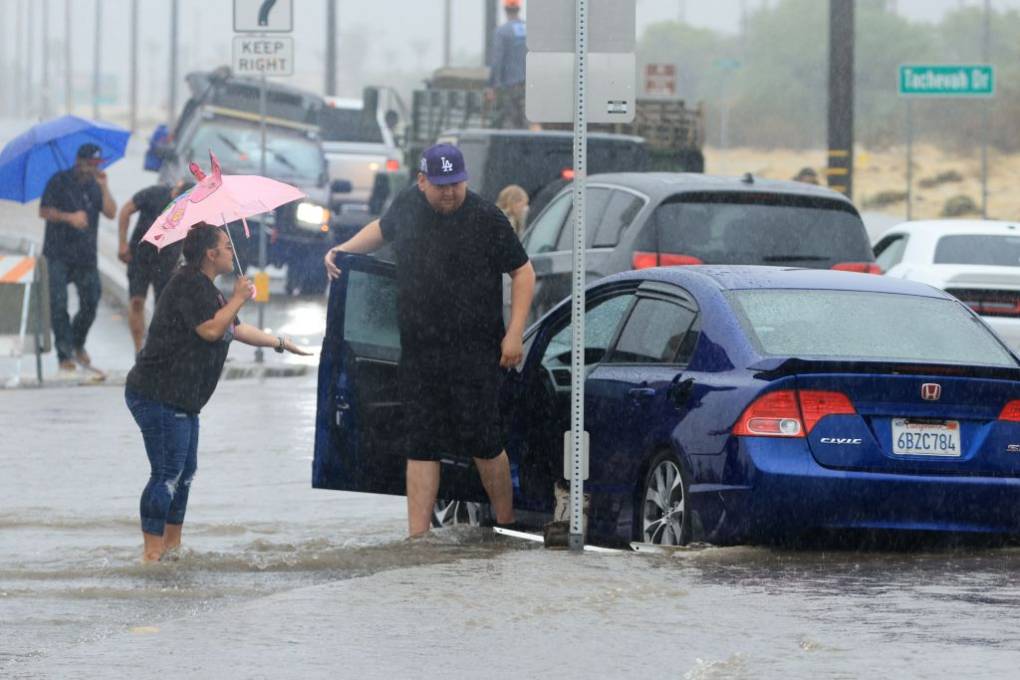
"caption": "Motorists deal with a flooded road and stuck vehicles during heavy rains from Tropical Storm Hilary in Palm Springs, on Aug. 20, 2023. Heavy rain lashed California on Aug. 20 as Tropical Storm Hilary approached from Mexico, bringing warnings of potentially life-threatening flooding in the typically arid southwestern United States.",
"description": null,
"title": "US-WEATHER-HURRICANE",
"credit": "DAVID SWANSON/AFP via Getty Images",
"status": "inherit",
"altTag": "People struggling in stranded cars and traffic on a rainy road.",
"isLoading": false,
"fetchFailed": false
},
"news_11957323": {
"type": "attachments",
"id": "news_11957323",
"meta": {
"index": "attachments_1716263798",
"site": "news",
"id": "11957323",
"found": true
},
"parent": 0,
"imgSizes": {
"twentyfourteen-full-width": {
"file": "https://ww2.kqed.org/app/uploads/sites/10/2023/08/230803-Manipur-02-KQED-1038x576.jpg",
"width": 1038,
"mimeType": "image/jpeg",
"height": 576
},
"thumbnail": {
"file": "https://ww2.kqed.org/app/uploads/sites/10/2023/08/230803-Manipur-02-KQED-160x107.jpg",
"width": 160,
"mimeType": "image/jpeg",
"height": 107
},
"post-thumbnail": {
"file": "https://ww2.kqed.org/app/uploads/sites/10/2023/08/230803-Manipur-02-KQED-672x372.jpg",
"width": 672,
"mimeType": "image/jpeg",
"height": 372
},
"kqedFullSize": {
"file": "https://ww2.kqed.org/app/uploads/sites/10/2023/08/230803-Manipur-02-KQED.jpg",
"width": 2000,
"height": 1333
},
"large": {
"file": "https://ww2.kqed.org/app/uploads/sites/10/2023/08/230803-Manipur-02-KQED-1020x680.jpg",
"width": 1020,
"mimeType": "image/jpeg",
"height": 680
},
"1536x1536": {
"file": "https://ww2.kqed.org/app/uploads/sites/10/2023/08/230803-Manipur-02-KQED-1536x1024.jpg",
"width": 1536,
"mimeType": "image/jpeg",
"height": 1024
},
"full-width": {
"file": "https://ww2.kqed.org/app/uploads/sites/10/2023/08/230803-Manipur-02-KQED-1920x1280.jpg",
"width": 1920,
"mimeType": "image/jpeg",
"height": 1280
},
"medium": {
"file": "https://ww2.kqed.org/app/uploads/sites/10/2023/08/230803-Manipur-02-KQED-800x533.jpg",
"width": 800,
"mimeType": "image/jpeg",
"height": 533
}
},
"publishDate": 1691095418,
"modified": 1691259520,
"caption": "Niang Hangzo, vice president of the North American Manipur Tribal Association stands with a sign that reads, 'Sikhs stand with Manipur' at a protest in Fremont on July 30, 2023. ",
"description": null,
"title": "230803-Manipur-02-KQED",
"credit": "Lakshmi Sarah/KQED",
"status": "inherit",
"altTag": "A group of people stands outdoors in a grassy area holding signs.",
"isLoading": false,
"fetchFailed": false
},
"news_11956485": {
"type": "attachments",
"id": "news_11956485",
"meta": {
"index": "attachments_1716263798",
"site": "news",
"id": "11956485",
"found": true
},
"parent": 0,
"imgSizes": {
"twentyfourteen-full-width": {
"file": "https://ww2.kqed.org/app/uploads/sites/10/2023/07/RS66984_230714-AnchorBrewing-09-BL-KQED-1038x576.jpg",
"width": 1038,
"mimeType": "image/jpeg",
"height": 576
},
"thumbnail": {
"file": "https://ww2.kqed.org/app/uploads/sites/10/2023/07/RS66984_230714-AnchorBrewing-09-BL-KQED-160x107.jpg",
"width": 160,
"mimeType": "image/jpeg",
"height": 107
},
"post-thumbnail": {
"file": "https://ww2.kqed.org/app/uploads/sites/10/2023/07/RS66984_230714-AnchorBrewing-09-BL-KQED-672x372.jpg",
"width": 672,
"mimeType": "image/jpeg",
"height": 372
},
"kqedFullSize": {
"file": "https://ww2.kqed.org/app/uploads/sites/10/2023/07/RS66984_230714-AnchorBrewing-09-BL-KQED.jpg",
"width": 2000,
"height": 1333
},
"large": {
"file": "https://ww2.kqed.org/app/uploads/sites/10/2023/07/RS66984_230714-AnchorBrewing-09-BL-KQED-1020x680.jpg",
"width": 1020,
"mimeType": "image/jpeg",
"height": 680
},
"1536x1536": {
"file": "https://ww2.kqed.org/app/uploads/sites/10/2023/07/RS66984_230714-AnchorBrewing-09-BL-KQED-1536x1024.jpg",
"width": 1536,
"mimeType": "image/jpeg",
"height": 1024
},
"full-width": {
"file": "https://ww2.kqed.org/app/uploads/sites/10/2023/07/RS66984_230714-AnchorBrewing-09-BL-KQED-1920x1280.jpg",
"width": 1920,
"mimeType": "image/jpeg",
"height": 1280
},
"medium": {
"file": "https://ww2.kqed.org/app/uploads/sites/10/2023/07/RS66984_230714-AnchorBrewing-09-BL-KQED-800x533.jpg",
"width": 800,
"mimeType": "image/jpeg",
"height": 533
}
},
"publishDate": 1690324395,
"modified": 1690326636,
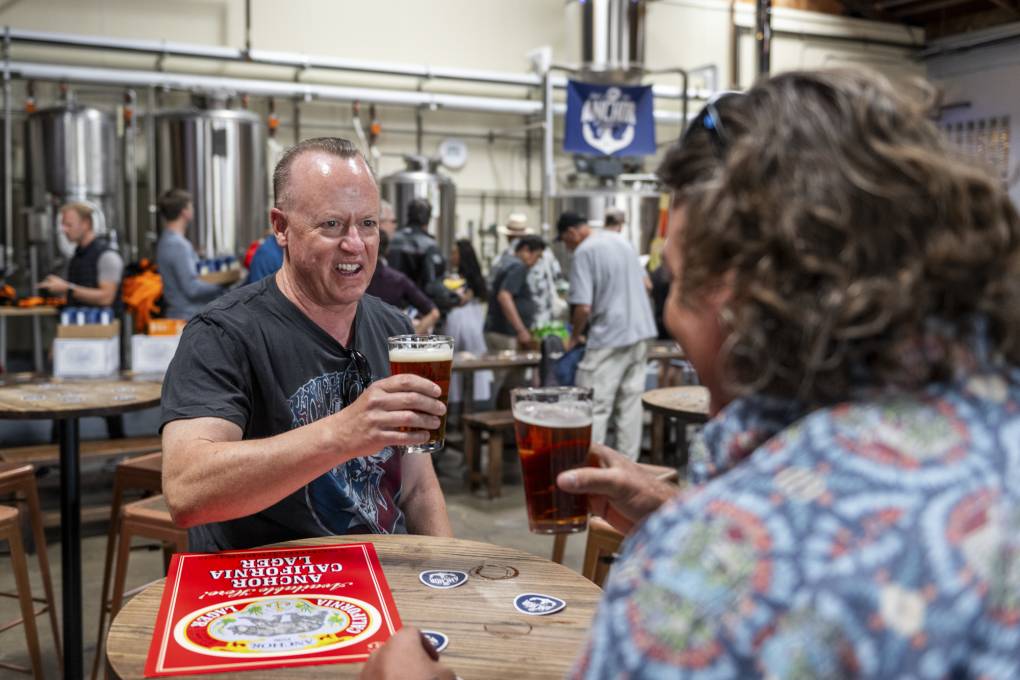
"caption": "Buzz Lawson (left), born and raised in San Francisco, sits with friend Chris Tingley at Anchor Public Taps in San Francisco on July 14, 2023. After more than 127 years of brewing in San Francisco, Anchor Brewing will soon bottle it's last beer. Anchor Public Taps brewpub will remain open until Aug. 1, and the company will continue to package and distribute the beer it has remaining through the end of the month.",
"description": null,
"title": "RS66984_230714-AnchorBrewing-09-BL-KQED",
"credit": "Beth LaBerge/KQED",
"status": "inherit",
"altTag": "Two people sit at a high top table holding glasses of beer towards each other.",
"isLoading": false,
"fetchFailed": false
},
"news_11953002": {
"type": "attachments",
"id": "news_11953002",
"meta": {
"index": "attachments_1716263798",
"site": "news",
"id": "11953002",
"found": true
},
"title": "RS66300_230613-SFMarinFoodPantry-11-BL-KQED",
"publishDate": 1686846422,
"status": "inherit",
"parent": 12036573,
"modified": 1744998295,
"caption": "Volunteers distribute food items at a San Francisco-Marin Food Bank pop-up pantry in the Richmond District of San Francisco on June 13, 2023.",
"credit": "Beth LaBerge/KQED",
"altTag": "A woman with white hair and a warm coat picks through a huge box of ears of corn in a paved outdoor area where lots of other people are also circulating.",
"description": null,
"imgSizes": {
"medium": {
"file": "https://cdn.kqed.org/wp-content/uploads/sites/10/2023/06/RS66300_230613-SFMarinFoodPantry-11-BL-KQED-800x533.jpg",
"width": 800,
"height": 533,
"mimeType": "image/jpeg"
},
"large": {
"file": "https://cdn.kqed.org/wp-content/uploads/sites/10/2023/06/RS66300_230613-SFMarinFoodPantry-11-BL-KQED-1020x680.jpg",
"width": 1020,
"height": 680,
"mimeType": "image/jpeg"
},
"thumbnail": {
"file": "https://cdn.kqed.org/wp-content/uploads/sites/10/2023/06/RS66300_230613-SFMarinFoodPantry-11-BL-KQED-160x107.jpg",
"width": 160,
"height": 107,
"mimeType": "image/jpeg"
},
"1536x1536": {
"file": "https://cdn.kqed.org/wp-content/uploads/sites/10/2023/06/RS66300_230613-SFMarinFoodPantry-11-BL-KQED-1536x1024.jpg",
"width": 1536,
"height": 1024,
"mimeType": "image/jpeg"
},
"post-thumbnail": {
"file": "https://cdn.kqed.org/wp-content/uploads/sites/10/2023/06/RS66300_230613-SFMarinFoodPantry-11-BL-KQED-672x372.jpg",
"width": 672,
"height": 372,
"mimeType": "image/jpeg"
},
"twentyfourteen-full-width": {
"file": "https://cdn.kqed.org/wp-content/uploads/sites/10/2023/06/RS66300_230613-SFMarinFoodPantry-11-BL-KQED-1038x576.jpg",
"width": 1038,
"height": 576,
"mimeType": "image/jpeg"
},
"full-width": {
"file": "https://cdn.kqed.org/wp-content/uploads/sites/10/2023/06/RS66300_230613-SFMarinFoodPantry-11-BL-KQED-1920x1280.jpg",
"width": 1920,
"height": 1280,
"mimeType": "image/jpeg"
},
"kqedFullSize": {
"file": "https://cdn.kqed.org/wp-content/uploads/sites/10/2023/06/RS66300_230613-SFMarinFoodPantry-11-BL-KQED.jpg",
"width": 2000,
"height": 1333
}
},
"isLoading": false,
"fetchFailed": false
},
"news_11953471": {
"type": "attachments",
"id": "news_11953471",
"meta": {
"index": "attachments_1716263798",
"site": "news",
"id": "11953471",
"found": true
},
"parent": 0,
"imgSizes": {
"twentyfourteen-full-width": {
"file": "https://ww2.kqed.org/app/uploads/sites/10/2023/06/230620-EL-SOBRANTE-SEWAGE-KQED-1038x576.jpg",
"width": 1038,
"mimeType": "image/jpeg",
"height": 576
},
"thumbnail": {
"file": "https://ww2.kqed.org/app/uploads/sites/10/2023/06/230620-EL-SOBRANTE-SEWAGE-KQED-160x107.jpg",
"width": 160,
"mimeType": "image/jpeg",
"height": 107
},
"post-thumbnail": {
"file": "https://ww2.kqed.org/app/uploads/sites/10/2023/06/230620-EL-SOBRANTE-SEWAGE-KQED-672x372.jpg",
"width": 672,
"mimeType": "image/jpeg",
"height": 372
},
"kqedFullSize": {
"file": "https://ww2.kqed.org/app/uploads/sites/10/2023/06/230620-EL-SOBRANTE-SEWAGE-KQED.jpg",
"width": 2000,
"height": 1333
},
"large": {
"file": "https://ww2.kqed.org/app/uploads/sites/10/2023/06/230620-EL-SOBRANTE-SEWAGE-KQED-1020x680.jpg",
"width": 1020,
"mimeType": "image/jpeg",
"height": 680
},
"1536x1536": {
"file": "https://ww2.kqed.org/app/uploads/sites/10/2023/06/230620-EL-SOBRANTE-SEWAGE-KQED-1536x1024.jpg",
"width": 1536,
"mimeType": "image/jpeg",
"height": 1024
},
"full-width": {
"file": "https://ww2.kqed.org/app/uploads/sites/10/2023/06/230620-EL-SOBRANTE-SEWAGE-KQED-1920x1280.jpg",
"width": 1920,
"mimeType": "image/jpeg",
"height": 1280
},
"medium": {
"file": "https://ww2.kqed.org/app/uploads/sites/10/2023/06/230620-EL-SOBRANTE-SEWAGE-KQED-800x533.jpg",
"width": 800,
"mimeType": "image/jpeg",
"height": 533
}
},
"publishDate": 1687295785,
"modified": 1687304618,
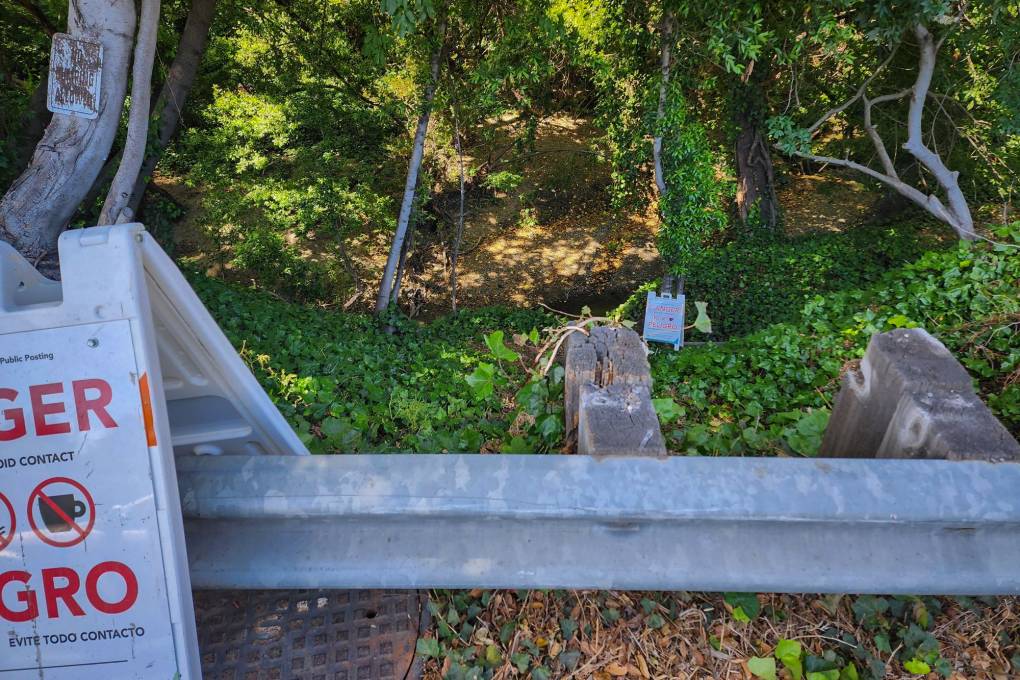
"caption": "The San Pablo Creek in El Sobrante. More than 500,000 gallons of raw sewage leaked from a maintenance hole in El Sobrante, affecting nearby San Pablo Creek.",
"description": null,
"title": "230620-EL SOBRANTE SEWAGE-KQED",
"credit": "Courtesy West County Wastewater",
"status": "inherit",
"altTag": "A wooded ravine is seen from across a traffic median. Two a-frame signs, one in the foreground and one set in the ravine, read \"Danger/Peligro.\" Sitting inconspicuously beneath the closer a-frame and the median divider is a manhole cover.",
"isLoading": false,
"fetchFailed": false
},
"news_11947462": {
"type": "attachments",
"id": "news_11947462",
"meta": {
"index": "attachments_1716263798",
"site": "news",
"id": "11947462",
"found": true
},
"parent": 11953672,
"imgSizes": {
"twentyfourteen-full-width": {
"file": "https://ww2.kqed.org/app/uploads/sites/10/2023/04/RS64551_011_KQED_MothershipHarmReduction_04112023-qut-1038x576.jpg",
"width": 1038,
"mimeType": "image/jpeg",
"height": 576
},
"thumbnail": {
"file": "https://ww2.kqed.org/app/uploads/sites/10/2023/04/RS64551_011_KQED_MothershipHarmReduction_04112023-qut-160x107.jpg",
"width": 160,
"mimeType": "image/jpeg",
"height": 107
},
"post-thumbnail": {
"file": "https://ww2.kqed.org/app/uploads/sites/10/2023/04/RS64551_011_KQED_MothershipHarmReduction_04112023-qut-672x372.jpg",
"width": 672,
"mimeType": "image/jpeg",
"height": 372
},
"kqedFullSize": {
"file": "https://ww2.kqed.org/app/uploads/sites/10/2023/04/RS64551_011_KQED_MothershipHarmReduction_04112023-qut.jpg",
"width": 1920,
"height": 1280
},
"large": {
"file": "https://ww2.kqed.org/app/uploads/sites/10/2023/04/RS64551_011_KQED_MothershipHarmReduction_04112023-qut-1020x680.jpg",
"width": 1020,
"mimeType": "image/jpeg",
"height": 680
},
"1536x1536": {
"file": "https://ww2.kqed.org/app/uploads/sites/10/2023/04/RS64551_011_KQED_MothershipHarmReduction_04112023-qut-1536x1024.jpg",
"width": 1536,
"mimeType": "image/jpeg",
"height": 1024
},
"medium": {
"file": "https://ww2.kqed.org/app/uploads/sites/10/2023/04/RS64551_011_KQED_MothershipHarmReduction_04112023-qut-800x533.jpg",
"width": 800,
"mimeType": "image/jpeg",
"height": 533
}
},
"publishDate": 1682364349,
"modified": 1687395869,
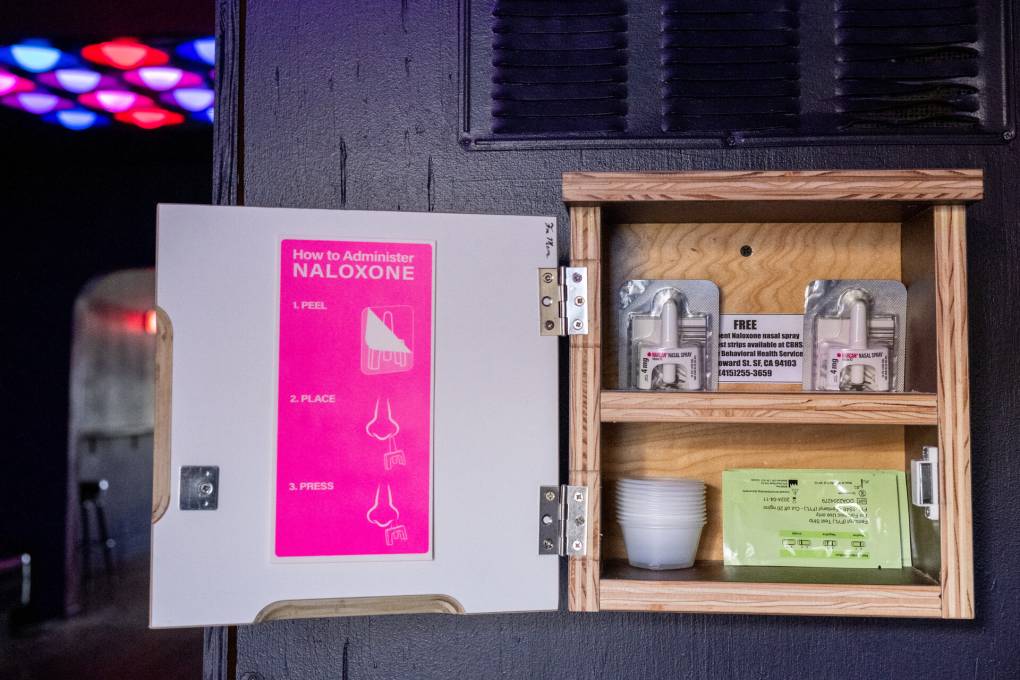
"caption": "A harm-reduction box created by Josh Yule hangs on the wall at Mothership bar in San Francisco on April 11, 2023. The boxes include Narcan and instructions on how to administer it, along with fentanyl test strips.",
"description": null,
"title": "RS64551_011_KQED_MothershipHarmReduction_04112023-qut",
"credit": "Beth LaBerge/KQED",
"status": "inherit",
"altTag": "A wooden box hanging on a bar wall is open, with medication, cups, instructions inside.",
"isLoading": false,
"fetchFailed": false
},
"news_11937119": {
"type": "attachments",
"id": "news_11937119",
"meta": {
"index": "attachments_1716263798",
"site": "news",
"id": "11937119",
"found": true
},
"parent": 11937103,
"imgSizes": {
"twentyfourteen-full-width": {
"file": "https://ww2.kqed.org/app/uploads/sites/10/2023/01/RS61892_008_KQED_WoodStreetFlooding_01052023-qut-1038x576.jpg",
"width": 1038,
"mimeType": "image/jpeg",
"height": 576
},
"thumbnail": {
"file": "https://ww2.kqed.org/app/uploads/sites/10/2023/01/RS61892_008_KQED_WoodStreetFlooding_01052023-qut-160x107.jpg",
"width": 160,
"mimeType": "image/jpeg",
"height": 107
},
"post-thumbnail": {
"file": "https://ww2.kqed.org/app/uploads/sites/10/2023/01/RS61892_008_KQED_WoodStreetFlooding_01052023-qut-672x372.jpg",
"width": 672,
"mimeType": "image/jpeg",
"height": 372
},
"kqedFullSize": {
"file": "https://ww2.kqed.org/app/uploads/sites/10/2023/01/RS61892_008_KQED_WoodStreetFlooding_01052023-qut.jpg",
"width": 1920,
"height": 1280
},
"large": {
"file": "https://ww2.kqed.org/app/uploads/sites/10/2023/01/RS61892_008_KQED_WoodStreetFlooding_01052023-qut-1020x680.jpg",
"width": 1020,
"mimeType": "image/jpeg",
"height": 680
},
"1536x1536": {
"file": "https://ww2.kqed.org/app/uploads/sites/10/2023/01/RS61892_008_KQED_WoodStreetFlooding_01052023-qut-1536x1024.jpg",
"width": 1536,
"mimeType": "image/jpeg",
"height": 1024
},
"medium": {
"file": "https://ww2.kqed.org/app/uploads/sites/10/2023/01/RS61892_008_KQED_WoodStreetFlooding_01052023-qut-800x533.jpg",
"width": 800,
"mimeType": "image/jpeg",
"height": 533
}
},
"publishDate": 1672968427,
"modified": 1672968582,
"caption": "An RV sits in water on Wood Street in Oakland on Jan. 5, 2023, after recent storms contributed to flooding in the area.",
"description": null,
"title": "shelter-homeless",
"credit": "Beth LaBerge/KQED",
"status": "inherit",
"altTag": null,
"isLoading": false,
"fetchFailed": false
},
"news_11933256": {
"type": "attachments",
"id": "news_11933256",
"meta": {
"index": "attachments_1716263798",
"site": "news",
"id": "11933256",
"found": true
},
"parent": 11932862,
"imgSizes": {
"twentyfourteen-full-width": {
"file": "https://ww2.kqed.org/app/uploads/sites/10/2022/11/nov20-sunday-1038x576.png",
"width": 1038,
"mimeType": "image/png",
"height": 576
},
"thumbnail": {
"file": "https://ww2.kqed.org/app/uploads/sites/10/2022/11/nov20-sunday-160x90.png",
"width": 160,
"mimeType": "image/png",
"height": 90
},
"post-thumbnail": {
"file": "https://ww2.kqed.org/app/uploads/sites/10/2022/11/nov20-sunday-672x372.png",
"width": 672,
"mimeType": "image/png",
"height": 372
},
"kqedFullSize": {
"file": "https://ww2.kqed.org/app/uploads/sites/10/2022/11/nov20-sunday.png",
"width": 1920,
"height": 1080
},
"large": {
"file": "https://ww2.kqed.org/app/uploads/sites/10/2022/11/nov20-sunday-1020x574.png",
"width": 1020,
"mimeType": "image/png",
"height": 574
},
"1536x1536": {
"file": "https://ww2.kqed.org/app/uploads/sites/10/2022/11/nov20-sunday-1536x864.png",
"width": 1536,
"mimeType": "image/png",
"height": 864
},
"medium": {
"file": "https://ww2.kqed.org/app/uploads/sites/10/2022/11/nov20-sunday-800x450.png",
"width": 800,
"mimeType": "image/png",
"height": 450
}
},
"publishDate": 1669566771,
"modified": 1674587706,
"caption": "Christelle Durandy sings at an event.",
"description": null,
"title": "nov20-sunday",
"credit": "Courtesy of Christelle Durandy/Collage by Lakshmi Sarah, KQED",
"status": "inherit",
"altTag": "An Afro-Caribbean woman with a shaved head, wearing a white tunic shirt with a multicolored neckline, hoop earrings, and bracelets on one wrist, sings into a microphone she holds up to her mouth, eyes closed.",
"isLoading": false,
"fetchFailed": false
},
"news_11929871": {
"type": "attachments",
"id": "news_11929871",
"meta": {
"index": "attachments_1716263798",
"site": "news",
"id": "11929871",
"found": true
},
"parent": 11929864,
"imgSizes": {
"twentyfourteen-full-width": {
"file": "https://ww2.kqed.org/app/uploads/sites/10/2022/10/RS51691_043_SanJose_WaterPurificationCenter_09232021-qut-1038x576.jpg",
"width": 1038,
"mimeType": "image/jpeg",
"height": 576
},
"thumbnail": {
"file": "https://ww2.kqed.org/app/uploads/sites/10/2022/10/RS51691_043_SanJose_WaterPurificationCenter_09232021-qut-160x107.jpg",
"width": 160,
"mimeType": "image/jpeg",
"height": 107
},
"post-thumbnail": {
"file": "https://ww2.kqed.org/app/uploads/sites/10/2022/10/RS51691_043_SanJose_WaterPurificationCenter_09232021-qut-672x372.jpg",
"width": 672,
"mimeType": "image/jpeg",
"height": 372
},
"kqedFullSize": {
"file": "https://ww2.kqed.org/app/uploads/sites/10/2022/10/RS51691_043_SanJose_WaterPurificationCenter_09232021-qut.jpg",
"width": 1920,
"height": 1280
},
"large": {
"file": "https://ww2.kqed.org/app/uploads/sites/10/2022/10/RS51691_043_SanJose_WaterPurificationCenter_09232021-qut-1020x680.jpg",
"width": 1020,
"mimeType": "image/jpeg",
"height": 680
},
"1536x1536": {
"file": "https://ww2.kqed.org/app/uploads/sites/10/2022/10/RS51691_043_SanJose_WaterPurificationCenter_09232021-qut-1536x1024.jpg",
"width": 1536,
"mimeType": "image/jpeg",
"height": 1024
},
"medium": {
"file": "https://ww2.kqed.org/app/uploads/sites/10/2022/10/RS51691_043_SanJose_WaterPurificationCenter_09232021-qut-800x533.jpg",
"width": 800,
"mimeType": "image/jpeg",
"height": 533
}
},
"publishDate": 1666483815,
"modified": 1666641630,
"caption": "Beakers on display show results of the four steps in the water-purification process: treated wastewater, microfiltration, reverse osmosis and purified water, at the Silicon Valley Advanced Water Purification Center in San José on Sept. 23, 2021.",
"description": null,
"title": "RS51691_043_SanJose_WaterPurificationCenter_09232021-qut",
"credit": "Beth LaBerge/KQED",
"status": "inherit",
"altTag": "our beakers with water and pipes in the background.",
"isLoading": false,
"fetchFailed": false
},
"news_11927539": {
"type": "attachments",
"id": "news_11927539",
"meta": {
"index": "attachments_1716263798",
"site": "news",
"id": "11927539",
"found": true
},
"parent": 11927434,
"imgSizes": {
"twentyfourteen-full-width": {
"file": "https://ww2.kqed.org/app/uploads/sites/10/2022/10/RS53940_004_KQED_BayviewBloodTesting_02252022-qut-1038x576.jpg",
"width": 1038,
"mimeType": "image/jpeg",
"height": 576
},
"thumbnail": {
"file": "https://ww2.kqed.org/app/uploads/sites/10/2022/10/RS53940_004_KQED_BayviewBloodTesting_02252022-qut-160x107.jpg",
"width": 160,
"mimeType": "image/jpeg",
"height": 107
},
"post-thumbnail": {
"file": "https://ww2.kqed.org/app/uploads/sites/10/2022/10/RS53940_004_KQED_BayviewBloodTesting_02252022-qut-672x372.jpg",
"width": 672,
"mimeType": "image/jpeg",
"height": 372
},
"kqedFullSize": {
"file": "https://ww2.kqed.org/app/uploads/sites/10/2022/10/RS53940_004_KQED_BayviewBloodTesting_02252022-qut.jpg",
"width": 1920,
"height": 1280
},
"large": {
"file": "https://ww2.kqed.org/app/uploads/sites/10/2022/10/RS53940_004_KQED_BayviewBloodTesting_02252022-qut-1020x680.jpg",
"width": 1020,
"mimeType": "image/jpeg",
"height": 680
},
"1536x1536": {
"file": "https://ww2.kqed.org/app/uploads/sites/10/2022/10/RS53940_004_KQED_BayviewBloodTesting_02252022-qut-1536x1024.jpg",
"width": 1536,
"mimeType": "image/jpeg",
"height": 1024
},
"medium": {
"file": "https://ww2.kqed.org/app/uploads/sites/10/2022/10/RS53940_004_KQED_BayviewBloodTesting_02252022-qut-800x533.jpg",
"width": 800,
"mimeType": "image/jpeg",
"height": 533
}
},
"publishDate": 1664824309,
"modified": 1664825221,
"caption": "A view of the former Hunters Point Naval Shipyard from the Lennar at the SF Shipyard housing development on Feb. 25, 2022.",
"description": "A view of Hunters Point Naval Shipyard.",
"title": "RS53940_004_KQED_BayviewBloodTesting_02252022-qut",
"credit": "Beth LaBerge/KQED",
"status": "inherit",
"altTag": "A view from a hill of a dilapidated shuttered and abandoned naval shipyard with a dock and a rusting equipment, bushes in the foreground, the blue sea and sky past the dock looking out at San Francisco Bay",
"isLoading": false,
"fetchFailed": false
},
"news_11925894": {
"type": "attachments",
"id": "news_11925894",
"meta": {
"index": "attachments_1716263798",
"site": "news",
"id": "11925894",
"found": true
},
"parent": 11925850,
"imgSizes": {
"twentyfourteen-full-width": {
"file": "https://ww2.kqed.org/app/uploads/sites/10/2022/09/IMG_0858-1038x576.jpg",
"width": 1038,
"mimeType": "image/jpeg",
"height": 576
},
"thumbnail": {
"file": "https://ww2.kqed.org/app/uploads/sites/10/2022/09/IMG_0858-160x120.jpg",
"width": 160,
"mimeType": "image/jpeg",
"height": 120
},
"post-thumbnail": {
"file": "https://ww2.kqed.org/app/uploads/sites/10/2022/09/IMG_0858-672x372.jpg",
"width": 672,
"mimeType": "image/jpeg",
"height": 372
},
"kqedFullSize": {
"file": "https://ww2.kqed.org/app/uploads/sites/10/2022/09/IMG_0858-scaled.jpg",
"width": 2560,
"height": 1920
},
"2048x2048": {
"file": "https://ww2.kqed.org/app/uploads/sites/10/2022/09/IMG_0858-2048x1536.jpg",
"width": 2048,
"mimeType": "image/jpeg",
"height": 1536
},
"large": {
"file": "https://ww2.kqed.org/app/uploads/sites/10/2022/09/IMG_0858-1020x765.jpg",
"width": 1020,
"mimeType": "image/jpeg",
"height": 765
},
"1536x1536": {
"file": "https://ww2.kqed.org/app/uploads/sites/10/2022/09/IMG_0858-1536x1152.jpg",
"width": 1536,
"mimeType": "image/jpeg",
"height": 1152
},
"full-width": {
"file": "https://ww2.kqed.org/app/uploads/sites/10/2022/09/IMG_0858-1920x1440.jpg",
"width": 1920,
"mimeType": "image/jpeg",
"height": 1440
},
"medium": {
"file": "https://ww2.kqed.org/app/uploads/sites/10/2022/09/IMG_0858-800x600.jpg",
"width": 800,
"mimeType": "image/jpeg",
"height": 600
}
},
"publishDate": 1663288066,
"modified": 1663288066,
"caption": null,
"description": null,
"title": "IMG_0858",
"credit": null,
"status": "inherit",
"altTag": null,
"isLoading": false,
"fetchFailed": false
},
"news_11924839": {
"type": "attachments",
"id": "news_11924839",
"meta": {
"index": "attachments_1716263798",
"site": "news",
"id": "11924839",
"found": true
},
"parent": 11924833,
"imgSizes": {
"twentyfourteen-full-width": {
"file": "https://ww2.kqed.org/app/uploads/sites/10/2022/09/RS58381_GettyImages-1242893088-qut-1038x576.jpg",
"width": 1038,
"mimeType": "image/jpeg",
"height": 576
},
"thumbnail": {
"file": "https://ww2.kqed.org/app/uploads/sites/10/2022/09/RS58381_GettyImages-1242893088-qut-160x96.jpg",
"width": 160,
"mimeType": "image/jpeg",
"height": 96
},
"post-thumbnail": {
"file": "https://ww2.kqed.org/app/uploads/sites/10/2022/09/RS58381_GettyImages-1242893088-qut-672x372.jpg",
"width": 672,
"mimeType": "image/jpeg",
"height": 372
},
"kqedFullSize": {
"file": "https://ww2.kqed.org/app/uploads/sites/10/2022/09/RS58381_GettyImages-1242893088-qut.jpg",
"width": 1920,
"height": 1148
},
"large": {
"file": "https://ww2.kqed.org/app/uploads/sites/10/2022/09/RS58381_GettyImages-1242893088-qut-1020x610.jpg",
"width": 1020,
"mimeType": "image/jpeg",
"height": 610
},
"1536x1536": {
"file": "https://ww2.kqed.org/app/uploads/sites/10/2022/09/RS58381_GettyImages-1242893088-qut-1536x918.jpg",
"width": 1536,
"mimeType": "image/jpeg",
"height": 918
},
"medium": {
"file": "https://ww2.kqed.org/app/uploads/sites/10/2022/09/RS58381_GettyImages-1242893088-qut-800x478.jpg",
"width": 800,
"mimeType": "image/jpeg",
"height": 478
}
},
"publishDate": 1662571784,
"modified": 1662651150,
"caption": null,
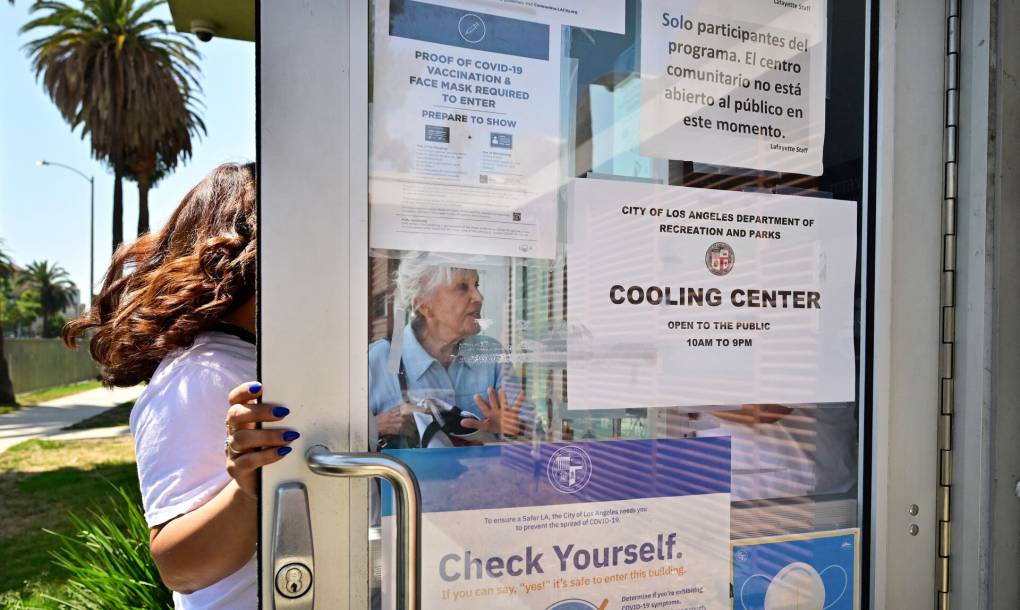
"description": "A person makes their way out of the heat into a cooling center at the Lafayette Recreation Center in Los Angeles, on Sept. 2, 2022.",
"title": "US-CLIMATE-WEATHER-HEAT",
"credit": "Frederic J. Brown/AFP via Getty Images",
"status": "inherit",
"altTag": "A door to a cooling center is open with signs saying 'cooling center' and two women about to enter.",
"isLoading": false,
"fetchFailed": false
}
},
"audioPlayerReducer": {
"postId": "stream_live",
"isPaused": true,
"isPlaying": false,
"pfsActive": false,
"pledgeModalIsOpen": true,
"playerDrawerIsOpen": false,
"liveAudioPlayStartedAt": 0,
"liveAudioPlayContext": ""
},
"authorsReducer": {
"byline_news_11924833": {
"type": "authors",
"id": "byline_news_11924833",
"meta": {
"override": true
},
"slug": "byline_news_11924833",
"name": "Bay City News",
"isLoading": false
},
"kqednewsstaffandwires": {
"type": "authors",
"id": "237",
"meta": {
"index": "authors_1716337520",
"id": "237",
"found": true
},
"name": "KQED News Staff and Wires",
"firstName": "KQED News Staff and Wires",
"lastName": null,
"slug": "kqednewsstaffandwires",
"email": "onlinenewsstaff@kqed.org",
"display_author_email": false,
"staff_mastheads": [],
"title": null,
"bio": null,
"avatar": "https://secure.gravatar.com/avatar/72295af8ebbfbd19a4948f5271285664?s=600&d=blank&r=g",
"twitter": null,
"facebook": null,
"instagram": null,
"linkedin": null,
"sites": [
{
"site": "arts",
"roles": [
"contributor"
]
},
{
"site": "news",
"roles": [
"contributor"
]
},
{
"site": "lowdown",
"roles": [
"author"
]
},
{
"site": "stateofhealth",
"roles": [
"contributor"
]
},
{
"site": "food",
"roles": [
"author"
]
}
],
"headData": {
"title": "KQED News Staff and Wires | KQED",
"description": null,
"ogImgSrc": "https://secure.gravatar.com/avatar/72295af8ebbfbd19a4948f5271285664?s=600&d=blank&r=g",
"twImgSrc": "https://secure.gravatar.com/avatar/72295af8ebbfbd19a4948f5271285664?s=600&d=blank&r=g"
},
"isLoading": false,
"link": "/author/kqednewsstaffandwires"
},
"ecruzguevarra": {
"type": "authors",
"id": "8654",
"meta": {
"index": "authors_1716337520",
"id": "8654",
"found": true
},
"name": "Ericka Cruz Guevarra",
"firstName": "Ericka",
"lastName": "Cruz Guevarra",
"slug": "ecruzguevarra",
"email": "ecruzguevarra@kqed.org",
"display_author_email": true,
"staff_mastheads": [
"news"
],
"title": "Producer, The Bay Podcast",
"bio": "Ericka Cruz Guevarra is host of \u003ca href=\"https://www.kqed.org/podcasts/thebay\">\u003cem>The Bay\u003c/em>\u003c/a> podcast at KQED. Before host, she was the show’s producer. Her work in that capacity includes a three-part reported series on policing in Vallejo, which won a 2020 excellence in journalism award from the Society of Professional Journalists. Ericka has worked as a breaking news reporter at Oregon Public Broadcasting, helped produce the Code Switch podcast, and was KQED’s inaugural Raul Ramirez Diversity Fund intern. She’s also an alumna of NPR’s Next Generation Radio program. Send her an email if you have strong feelings about whether Fairfield and Suisun City are the Bay. Ericka is represented by SAG-AFTRA.",
"avatar": "https://secure.gravatar.com/avatar/accefc1de4bafc7e234b69bcb9b6f6536c130fd84709bc3069ef11a78787e1bb?s=600&d=blank&r=g",
"twitter": "NotoriousECG",
"bluesky": null,
"facebook": null,
"instagram": null,
"linkedin": null,
"sites": [
{
"site": "arts",
"roles": [
"subscriber"
]
},
{
"site": "news",
"roles": [
"editor",
"manage_categories"
]
},
{
"site": "futureofyou",
"roles": [
"subscriber"
]
},
{
"site": "stateofhealth",
"roles": [
"subscriber"
]
},
{
"site": "science",
"roles": [
"editor"
]
},
{
"site": "forum",
"roles": [
"subscriber"
]
}
],
"headData": {
"title": "Ericka Cruz Guevarra | KQED",
"description": "Producer, The Bay Podcast",
"ogImgSrc": "https://secure.gravatar.com/avatar/accefc1de4bafc7e234b69bcb9b6f6536c130fd84709bc3069ef11a78787e1bb?s=600&d=blank&r=g",
"twImgSrc": "https://secure.gravatar.com/avatar/accefc1de4bafc7e234b69bcb9b6f6536c130fd84709bc3069ef11a78787e1bb?s=600&d=blank&r=g"
},
"isLoading": false,
"link": "/author/ecruzguevarra"
},
"vrancano": {
"type": "authors",
"id": "11276",
"meta": {
"index": "authors_1716337520",
"id": "11276",
"found": true
},
"name": "Vanessa Rancaño",
"firstName": "Vanessa",
"lastName": "Rancaño",
"slug": "vrancano",
"email": "vrancano@kqed.org",
"display_author_email": false,
"staff_mastheads": [
"news"
],
"title": "Reporter",
"bio": "Vanessa Rancaño is a features reporter for KQED. She’s also covered homelessness and education for the station and reported from the Central Valley. Her work has aired across public radio, from flagship national news shows to longform narrative podcasts. Before taking up a mic, she worked as a freelance print journalist. She’s been recognized with a number of national and regional awards. Vanessa grew up in California's Central Valley. She's a former NPR Kroc Fellow, and a graduate of the UC Berkeley Graduate School of Journalism.",
"avatar": "https://secure.gravatar.com/avatar/b3a383dfb0e7ee1c17568f2cf067904ab654d6e3de9743fc661f3c788ade1bed?s=600&d=blank&r=g",
"twitter": "vanessarancano",
"bluesky": null,
"facebook": null,
"instagram": null,
"linkedin": null,
"sites": [
{
"site": "arts",
"roles": [
"editor"
]
},
{
"site": "news",
"roles": [
"editor"
]
},
{
"site": "liveblog",
"roles": [
"contributor"
]
}
],
"headData": {
"title": "Vanessa Rancaño | KQED",
"description": "Reporter",
"ogImgSrc": "https://secure.gravatar.com/avatar/b3a383dfb0e7ee1c17568f2cf067904ab654d6e3de9743fc661f3c788ade1bed?s=600&d=blank&r=g",
"twImgSrc": "https://secure.gravatar.com/avatar/b3a383dfb0e7ee1c17568f2cf067904ab654d6e3de9743fc661f3c788ade1bed?s=600&d=blank&r=g"
},
"isLoading": false,
"link": "/author/vrancano"
},
"dcronin": {
"type": "authors",
"id": "11362",
"meta": {
"index": "authors_1716337520",
"id": "11362",
"found": true
},
"name": "Dana Cronin",
"firstName": "Dana",
"lastName": "Cronin",
"slug": "dcronin",
"email": "dcronin@KQED.org",
"display_author_email": true,
"staff_mastheads": [],
"title": "KQED Contributor",
"bio": "Dana Cronin is a reporter for KQED News. She loves writing stories about climate change, environmental issues, food and agriculture. She's reported across the country, from Colorado to Washington D.C. to Illinois, and has won numerous awards for her coverage. Her work is regularly featured on national broadcasts, including NPR’s Morning Edition, All Things Considered, PBS Newshour and Science Friday. She lives in Oakland and has an avocado tree in her back yard.",
"avatar": "https://secure.gravatar.com/avatar/bcf89e3455ff7235f96ab6fa7258dd95?s=600&d=blank&r=g",
"twitter": "DanaHCronin",
"facebook": null,
"instagram": null,
"linkedin": null,
"sites": [
{
"site": "arts",
"roles": [
"author"
]
},
{
"site": "news",
"roles": [
"editor"
]
},
{
"site": "science",
"roles": [
"author"
]
},
{
"site": "liveblog",
"roles": [
"author"
]
}
],
"headData": {
"title": "Dana Cronin | KQED",
"description": "KQED Contributor",
"ogImgSrc": "https://secure.gravatar.com/avatar/bcf89e3455ff7235f96ab6fa7258dd95?s=600&d=blank&r=g",
"twImgSrc": "https://secure.gravatar.com/avatar/bcf89e3455ff7235f96ab6fa7258dd95?s=600&d=blank&r=g"
},
"isLoading": false,
"link": "/author/dcronin"
},
"jasminegarnett": {
"type": "authors",
"id": "11530",
"meta": {
"index": "authors_1716337520",
"id": "11530",
"found": true
},
"name": "Jasmine Garnett",
"firstName": "Jasmine",
"lastName": "Garnett",
"slug": "jasminegarnett",
"email": "JGarnett@KQED.org",
"display_author_email": false,
"staff_mastheads": [
"news"
],
"title": "Senior Engagement Platforms Producer",
"bio": "Jasmine is a Senior Engagement Platforms Producer on the KQED News team. She is also a freelance writer, with work appearing in KQED, Bitch Media, and Kotaku among others. Jasmine graduated from UC Berkeley with a degree in Media Studies, where she was also an Arts and Entertainment reporter at the Daily Californian.",
"avatar": "https://secure.gravatar.com/avatar/a6ea8b0641874311533b7401bee15c8e?s=600&d=blank&r=g",
"twitter": "JFLGarnett",
"facebook": null,
"instagram": null,
"linkedin": null,
"sites": [
{
"site": "arts",
"roles": [
"author"
]
},
{
"site": "news",
"roles": [
"editor"
]
},
{
"site": "about",
"roles": [
"editor"
]
},
{
"site": "science",
"roles": [
"editor"
]
},
{
"site": "forum",
"roles": [
"editor"
]
},
{
"site": "pressroom",
"roles": [
"editor"
]
}
],
"headData": {
"title": "Jasmine Garnett | KQED",
"description": "Senior Engagement Platforms Producer",
"ogImgSrc": "https://secure.gravatar.com/avatar/a6ea8b0641874311533b7401bee15c8e?s=600&d=blank&r=g",
"twImgSrc": "https://secure.gravatar.com/avatar/a6ea8b0641874311533b7401bee15c8e?s=600&d=blank&r=g"
},
"isLoading": false,
"link": "/author/jasminegarnett"
},
"lsarah": {
"type": "authors",
"id": "11626",
"meta": {
"index": "authors_1716337520",
"id": "11626",
"found": true
},
"name": "Lakshmi Sarah",
"firstName": "Lakshmi",
"lastName": "Sarah",
"slug": "lsarah",
"email": "lsarah@kqed.org",
"display_author_email": false,
"staff_mastheads": [],
"title": "Digital Producer",
"bio": "Lakshmi Sarah is an educator, author and journalist with a focus on innovative storytelling. She has worked with newspapers, radio and magazines from Ahmedabad, India to Los Angeles, California. She has written and produced for Die Zeit, Global Voices, AJ+, KQED, Fusion Media Group and the New York Times.",
"avatar": "https://secure.gravatar.com/avatar/652dcaecd8b28826fc17a8b2d6bb4e93?s=600&d=blank&r=g",
"twitter": "lakitalki",
"facebook": null,
"instagram": "https://www.instagram.com/laki.talki/",
"linkedin": "https://www.linkedin.com/in/lakisarah/",
"sites": [
{
"site": "arts",
"roles": []
},
{
"site": "news",
"roles": []
},
{
"site": "bayareabites",
"roles": []
},
{
"site": "science",
"roles": []
}
],
"headData": {
"title": "Lakshmi Sarah | KQED",
"description": "Digital Producer",
"ogImgSrc": "https://secure.gravatar.com/avatar/652dcaecd8b28826fc17a8b2d6bb4e93?s=600&d=blank&r=g",
"twImgSrc": "https://secure.gravatar.com/avatar/652dcaecd8b28826fc17a8b2d6bb4e93?s=600&d=blank&r=g"
},
"isLoading": false,
"link": "/author/lsarah"
},
"hmcdede": {
"type": "authors",
"id": "11635",
"meta": {
"index": "authors_1716337520",
"id": "11635",
"found": true
},
"name": "Holly McDede",
"firstName": "Holly",
"lastName": "McDede",
"slug": "hmcdede",
"email": "hmcdede@KQED.org",
"display_author_email": false,
"staff_mastheads": [],
"title": "KQED Contributor",
"bio": null,
"avatar": "https://secure.gravatar.com/avatar/999d9bf31bb3a2f0511932d99526cb3e?s=600&d=blank&r=g",
"twitter": null,
"facebook": null,
"instagram": null,
"linkedin": null,
"sites": [
{
"site": "arts",
"roles": [
"editor"
]
},
{
"site": "news",
"roles": [
"edit_others_posts",
"editor"
]
},
{
"site": "science",
"roles": [
"editor"
]
},
{
"site": "forum",
"roles": [
"editor"
]
},
{
"site": "perspectives",
"roles": [
"administrator"
]
}
],
"headData": {
"title": "Holly McDede | KQED",
"description": "KQED Contributor",
"ogImgSrc": "https://secure.gravatar.com/avatar/999d9bf31bb3a2f0511932d99526cb3e?s=600&d=blank&r=g",
"twImgSrc": "https://secure.gravatar.com/avatar/999d9bf31bb3a2f0511932d99526cb3e?s=600&d=blank&r=g"
},
"isLoading": false,
"link": "/author/hmcdede"
},
"amontecillo": {
"type": "authors",
"id": "11649",
"meta": {
"index": "authors_1716337520",
"id": "11649",
"found": true
},
"name": "Alan Montecillo",
"firstName": "Alan",
"lastName": "Montecillo",
"slug": "amontecillo",
"email": "amontecillo@kqed.org",
"display_author_email": false,
"staff_mastheads": [
"news"
],
"title": "KQED Contributor",
"bio": "Alan Montecillo is the senior editor of \u003cem>\u003ca href=\"http://kqed.org/thebay\">The Bay\u003c/a>, \u003c/em> KQED's local news podcast. Before moving to the Bay Area, he worked as a senior talk show producer for WILL in Champaign-Urbana, Illinois and at Oregon Public Broadcasting in Portland, Oregon. He has won journalism awards from the Society of Professional Journalists Northern California, the Public Media Journalists Association, The Signal Awards, and has also received a regional Edward R. Murrow award. Alan is a Filipino American from Hong Kong and a graduate of Reed College.",
"avatar": "https://secure.gravatar.com/avatar/268f53a2066899ea9efdd8a5900218b17c822d9862cbc9326cccec53ef41d349?s=600&d=blank&r=g",
"twitter": "alanmontecillo",
"bluesky": null,
"facebook": null,
"instagram": null,
"linkedin": null,
"sites": [
{
"site": "",
"roles": [
"editor"
]
},
{
"site": "news",
"roles": [
"editor",
"manage_categories"
]
}
],
"headData": {
"title": "Alan Montecillo | KQED",
"description": "KQED Contributor",
"ogImgSrc": "https://secure.gravatar.com/avatar/268f53a2066899ea9efdd8a5900218b17c822d9862cbc9326cccec53ef41d349?s=600&d=blank&r=g",
"twImgSrc": "https://secure.gravatar.com/avatar/268f53a2066899ea9efdd8a5900218b17c822d9862cbc9326cccec53ef41d349?s=600&d=blank&r=g"
},
"isLoading": false,
"link": "/author/amontecillo"
},
"ccabreralomeli": {
"type": "authors",
"id": "11708",
"meta": {
"index": "authors_1716337520",
"id": "11708",
"found": true
},
"name": "Carlos Cabrera-Lomelí",
"firstName": "Carlos",
"lastName": "Cabrera-Lomelí",
"slug": "ccabreralomeli",
"email": "ccabreralomeli@KQED.org",
"display_author_email": true,
"staff_mastheads": [
"news"
],
"title": "Community Reporter",
"bio": "Carlos Cabrera-Lomelí is a community reporter with KQED's digital engagement team. He also reports and co-produces for KQED's bilingual news hub KQED en Español. He grew up in San Francisco's Mission District and has previously worked with Univision, 48 Hills and REFORMA in Mexico City.",
"avatar": "https://secure.gravatar.com/avatar/c309be9665e484f887b818c89e273ecc673004f426f36b24d00a4d813a2e0518?s=600&d=blank&r=g",
"twitter": "@LomeliCabrera",
"bluesky": null,
"facebook": null,
"instagram": null,
"linkedin": null,
"sites": [
{
"site": "arts",
"roles": [
"editor"
]
},
{
"site": "news",
"roles": [
"editor"
]
},
{
"site": "about",
"roles": [
"editor"
]
},
{
"site": "science",
"roles": [
"editor"
]
},
{
"site": "perspectives",
"roles": [
"editor"
]
},
{
"site": "elections",
"roles": [
"editor"
]
},
{
"site": "liveblog",
"roles": [
"contributor"
]
}
],
"headData": {
"title": "Carlos Cabrera-Lomelí | KQED",
"description": "Community Reporter",
"ogImgSrc": "https://secure.gravatar.com/avatar/c309be9665e484f887b818c89e273ecc673004f426f36b24d00a4d813a2e0518?s=600&d=blank&r=g",
"twImgSrc": "https://secure.gravatar.com/avatar/c309be9665e484f887b818c89e273ecc673004f426f36b24d00a4d813a2e0518?s=600&d=blank&r=g"
},
"isLoading": false,
"link": "/author/ccabreralomeli"
},
"eromero": {
"type": "authors",
"id": "11746",
"meta": {
"index": "authors_1716337520",
"id": "11746",
"found": true
},
"name": "Ezra David Romero",
"firstName": "Ezra David",
"lastName": "Romero",
"slug": "eromero",
"email": "eromero@kqed.org",
"display_author_email": true,
"staff_mastheads": [
"news",
"science"
],
"title": "Climate Reporter",
"bio": "Ezra David Romero is a climate reporter for KQED News. He covers the absence and excess of water in the Bay Area — think sea level rise, flooding and drought. For nearly a decade he’s covered how warming temperatures are altering the lives of Californians. He’s reported on farmers worried their pistachio trees aren’t getting enough sleep, families desperate for water, scientists studying dying giant sequoias, and alongside firefighters containing wildfires. His work has appeared on local stations across California and nationally on public radio shows like Morning Edition, Here and Now, All Things Considered and Science Friday. ",
"avatar": "https://secure.gravatar.com/avatar/c76404d287c10ed40224227551ac36e24352c7306f106632caf6fead76f8801f?s=600&d=blank&r=g",
"twitter": "ezraromero",
"bluesky": null,
"facebook": null,
"instagram": null,
"linkedin": null,
"sites": [
{
"site": "arts",
"roles": [
"editor"
]
},
{
"site": "news",
"roles": [
"editor"
]
},
{
"site": "science",
"roles": [
"editor"
]
},
{
"site": "liveblog",
"roles": [
"author"
]
}
],
"headData": {
"title": "Ezra David Romero | KQED",
"description": "Climate Reporter",
"ogImgSrc": "https://secure.gravatar.com/avatar/c76404d287c10ed40224227551ac36e24352c7306f106632caf6fead76f8801f?s=600&d=blank&r=g",
"twImgSrc": "https://secure.gravatar.com/avatar/c76404d287c10ed40224227551ac36e24352c7306f106632caf6fead76f8801f?s=600&d=blank&r=g"
},
"isLoading": false,
"link": "/author/eromero"
},
"afinney": {
"type": "authors",
"id": "11772",
"meta": {
"index": "authors_1716337520",
"id": "11772",
"found": true
},
"name": "Annelise Finney",
"firstName": "Annelise",
"lastName": "Finney",
"slug": "afinney",
"email": "afinney@kqed.org",
"display_author_email": true,
"staff_mastheads": [
"news"
],
"title": "Reporter",
"bio": "Annelise reports on reparations in California and East Bay politics. She co-produced the Sunday Music Drop, a limited-term radio series featuring Bay Area musicians that aired between Sept 2022 and Oct 2024. She joined KQED in 2021 as a general assignment reporter and is an alumna of KALW's Audio Academy. She was born and raised in the East Bay. She is currently away from KQED completing a year-long reporting project in Berlin, Germany as a Alexander Von Humboldt German Chancellor Fellow.",
"avatar": "https://secure.gravatar.com/avatar/5fded66cae47704cdfc5021cde0f3aa4?s=600&d=blank&r=g",
"twitter": null,
"facebook": null,
"instagram": null,
"linkedin": null,
"sites": [
{
"site": "news",
"roles": [
"editor"
]
},
{
"site": "liveblog",
"roles": [
"author"
]
}
],
"headData": {
"title": "Annelise Finney | KQED",
"description": "Reporter",
"ogImgSrc": "https://secure.gravatar.com/avatar/5fded66cae47704cdfc5021cde0f3aa4?s=600&d=blank&r=g",
"twImgSrc": "https://secure.gravatar.com/avatar/5fded66cae47704cdfc5021cde0f3aa4?s=600&d=blank&r=g"
},
"isLoading": false,
"link": "/author/afinney"
},
"mesquinca": {
"type": "authors",
"id": "11802",
"meta": {
"index": "authors_1716337520",
"id": "11802",
"found": true
},
"name": "Maria Esquinca",
"firstName": "Maria",
"lastName": "Esquinca",
"slug": "mesquinca",
"email": "mesquinca@kqed.org",
"display_author_email": false,
"staff_mastheads": [],
"title": "Producer, The Bay",
"bio": "María Esquinca is a producer of The Bay. Before that, she was a New York Women’s Foundation IGNITE Fellow at Latino USA. She worked at Radio Bilingue where she covered the San Joaquin Valley. Maria has interned at WLRN, News 21, The New York Times Student Journalism Institute and at Crain’s Detroit Business as a Dow Jones News Fund Business Reporting Intern. She is an MFA graduate from the University of Miami. In 2017, she graduated from the Walter Cronkite School of Journalism and Mass Communication with a Master of Mass Communication. A fronteriza, she was born in Ciudad Juárez, Chihuahua, Mexico and grew up in El Paso, Texas.",
"avatar": "https://secure.gravatar.com/avatar/77cedba18aae91da775038ba06dcd8d0?s=600&d=blank&r=g",
"twitter": "@m_esquinca",
"facebook": null,
"instagram": null,
"linkedin": null,
"sites": [
{
"site": "news",
"roles": []
}
],
"headData": {
"title": "Maria Esquinca | KQED",
"description": "Producer, The Bay",
"ogImgSrc": "https://secure.gravatar.com/avatar/77cedba18aae91da775038ba06dcd8d0?s=600&d=blank&r=g",
"twImgSrc": "https://secure.gravatar.com/avatar/77cedba18aae91da775038ba06dcd8d0?s=600&d=blank&r=g"
},
"isLoading": false,
"link": "/author/mesquinca"
},
"sjohnson": {
"type": "authors",
"id": "11840",
"meta": {
"index": "authors_1716337520",
"id": "11840",
"found": true
},
"name": "Sydney Johnson",
"firstName": "Sydney",
"lastName": "Johnson",
"slug": "sjohnson",
"email": "sjohnson@kqed.org",
"display_author_email": false,
"staff_mastheads": [
"news"
],
"title": "KQED Reporter",
"bio": "Sydney Johnson is a general assignment reporter at KQED. She previously reported on public health and city government at the San Francisco Examiner, and before that, she covered statewide education policy for EdSource. Her reporting has won multiple local, state and national awards. Sydney is a graduate of the University of California, Berkeley and lives in San Francisco.",
"avatar": "https://secure.gravatar.com/avatar/97855f2719b72ad6190b7c535fe642c8?s=600&d=blank&r=g",
"twitter": "sydneyfjohnson",
"facebook": null,
"instagram": null,
"linkedin": null,
"sites": [
{
"site": "news",
"roles": [
"editor"
]
}
],
"headData": {
"title": "Sydney Johnson | KQED",
"description": "KQED Reporter",
"ogImgSrc": "https://secure.gravatar.com/avatar/97855f2719b72ad6190b7c535fe642c8?s=600&d=blank&r=g",
"twImgSrc": "https://secure.gravatar.com/avatar/97855f2719b72ad6190b7c535fe642c8?s=600&d=blank&r=g"
},
"isLoading": false,
"link": "/author/sjohnson"
}
},
"pagesReducer": {
"news_tag_bay-area": {
"type": "terms",
"id": "news_1386",
"meta": {
"index": "terms_1716263798",
"site": "news",
"id": "1386",
"score": 7.788433
},
"featImg": null,
"name": "Bay Area",
"description": null,
"taxonomy": "tag",
"headData": {
"twImgId": null,
"twTitle": null,
"ogTitle": null,
"ogImgId": null,
"twDescription": null,
"description": null,
"title": "Bay Area Archives | KQED News",
"ogDescription": null
},
"ttid": 1398,
"slug": "bay-area",
"isLoading": false,
"title": "Bay Area",
"pageMeta": {
"site": "news",
"WpPageTemplate": "page-topic-editorial",
"currentPage": 91
},
"blocks": [
{
"blockName": "kqed/post-list",
"attrs": {
"layout": "cardArticle2",
"query": "posts/news?tag=bay-area",
"seeMore": false,
"paginated": true,
"page": 91
}
},
{
"blockName": "kqed/ad"
}
]
}
},
"pfsSessionReducer": {},
"postsReducer": {
"stream_live": {
"type": "live",
"id": "stream_live",
"audioUrl": "https://streams.kqed.org/kqedradio",
"title": "Live Stream",
"excerpt": "Live Stream information currently unavailable.",
"link": "/radio",
"featImg": "",
"label": {
"name": "KQED Live",
"link": "/"
}
},
"stream_kqedNewscast": {
"type": "posts",
"id": "stream_kqedNewscast",
"audioUrl": "https://www.kqed.org/.stream/anon/radio/RDnews/newscast.mp3?_=1",
"title": "KQED Newscast",
"featImg": "",
"label": {
"name": "88.5 FM",
"link": "/"
}
},
"news_11958562": {
"type": "posts",
"id": "news_11958562",
"meta": {
"index": "posts_1716263798",
"site": "news",
"id": "11958562",
"score": null,
"sort": [
1692401492000
]
},
"guestAuthors": [],
"slug": "hurricane-hilary-hits-what-california-and-the-bay-area-can-expect",
"title": "Tropical Storm Hilary: Bay Area Weather & Safety Tips",
"publishDate": 1692401492,
"format": "standard",
"headTitle": "Tropical Storm Hilary: Bay Area Weather & Safety Tips | KQED",
"labelTerm": {
"site": "news"
},
"content": "\u003cp>\u003ci>\u003cspan style=\"font-weight: 400;\">Updated 8:30 p.m. Sunday\u003c/span>\u003c/i>\u003c/p>\n\u003cp>\u003cspan style=\"font-weight: 400;\">Tropical Storm Hilary inundated streets across Mexico’s arid Baja California Peninsula with deadly floodwaters Sunday before moving over Southern California, where it swamped roads and downed trees, as concerns mounted that flash floods could strike in places as far north as Idaho that rarely get such torrential rain.\u003c/span>\u003c/p>\n\u003cp>\u003cspan style=\"font-weight: 400;\">Forecasters said Hilary was the first tropical storm \u003c/span>\u003ca href=\"https://apnews.com/article/mexico-tropical-storm-hilary-2347dcf718ad0658ba61311b1afe3d13\">\u003cspan style=\"font-weight: 400;\">to hit Southern California in 84 years\u003c/span>\u003c/a>\u003cspan style=\"font-weight: 400;\">, bringing flash floods, mudslides, high winds, power outages and the potential for isolated tornadoes.\u003c/span>\u003c/p>\n\u003cp>\u003cspan style=\"font-weight: 400;\">Hilary made landfall along the Mexican coast in a sparsely populated area about 150 miles south of Ensenada, then moved through mudslide-prone Tijuana, threatening the improvised homes that cling to hillsides just south of the U.S. border.\u003c/span>\u003c/p>\n\u003cp>\u003cspan style=\"font-weight: 400;\">At least 9 million people were under flash-flood watches and warnings as heavy rain fell across normally sunny Southern California ahead of the brunt of the storm. Desert areas were especially susceptible along with hillsides with wildfire burn scars, forecasters warned.\u003c/span>\u003c/p>\n\u003cfigure id=\"attachment_11958661\" class=\"wp-caption alignnone\" style=\"max-width: 1024px\">\u003cimg loading=\"lazy\" decoding=\"async\" class=\"size-full wp-image-11958661\" src=\"https://ww2.kqed.org/app/uploads/sites/10/2023/08/GettyImages-1628495398.jpg\" alt=\"A submerged car in a flooded street with houses on a stormy day.\" width=\"1024\" height=\"691\" srcset=\"https://cdn.kqed.org/wp-content/uploads/sites/10/2023/08/GettyImages-1628495398.jpg 1024w, https://cdn.kqed.org/wp-content/uploads/sites/10/2023/08/GettyImages-1628495398-800x540.jpg 800w, https://cdn.kqed.org/wp-content/uploads/sites/10/2023/08/GettyImages-1628495398-1020x688.jpg 1020w, https://cdn.kqed.org/wp-content/uploads/sites/10/2023/08/GettyImages-1628495398-160x108.jpg 160w\" sizes=\"auto, (max-width: 1024px) 100vw, 1024px\">\u003cfigcaption class=\"wp-caption-text\">A car is partially submerged in floodwaters as Tropical Storm Hilary moves through the area on Aug. 20, 2023 in Cathedral City, Riverside County. Southern California is under a first-ever tropical storm warning as Hilary impacts parts of California, Arizona and Nevada. All California state beaches have been closed in San Diego and Orange counties in preparation for the impacts from the storm, which was downgraded from hurricane status. \u003ccite>(Mario Tama/Getty Images)\u003c/cite>\u003c/figcaption>\u003c/figure>\n\u003cp>\u003cspan style=\"font-weight: 400;\">Mud and boulders spilled onto highways, water overwhelmed drainage systems and tree branches fell in neighborhoods from San Diego to Los Angeles. Dozens of cars were trapped in floodwaters in Palm Springs and surrounding desert communities across the Coachella Valley. The Los Angeles Unified School District, the nation’s second largest school system, said all campuses would be closed on Monday.\u003c/span>\u003c/p>\n\u003cp>\u003cspan style=\"font-weight: 400;\">Hilary could wallop other Western states with once-in-a-century rains, with a good chance of it becoming the wettest known tropical cyclone to douse Nevada, Oregon and Idaho. Hilary was expected to remain a tropical storm into central Nevada early Monday before dissipating.\u003c/span>\u003c/p>\n\u003cp>\u003cspan style=\"font-weight: 400;\">The Bay Area, meanwhile, will mostly be spared from the effects of Hilary. \u003c/span>\u003c/p>\n\u003cp>\u003cspan style=\"font-weight: 400;\">“By Sunday night into Monday there is a greater chance that we’ll see more widespread shower activity across the Bay Area,” said Matt Mehle, lead meteorologist for NWS Bay Area. “When it’s all said and done we’re expecting generally less than a tenth of an inch for most of the Bay Area.”\u003c/span>\u003c/p>\n\u003cp>\u003cspan style=\"font-weight: 400;\">California Gov. Gavin Newsom declared a state of emergency. The Federal Emergency Management Agency said it has officials inside California’s emergency preparedness office and teams on standby with food, water and other help.\u003c/span>\u003c/p>\n\u003cp>\u003cspan style=\"font-weight: 400;\">Southern California got another surprise in the afternoon as an earthquake with a preliminary magnitude of 5.1 hit near Ojai, about 80 miles northwest of downtown Los Angeles, according to the U.S. Geological Survey. It was felt widely and was followed by smaller aftershocks. There were no immediate reports of major damage or injury, according to a dispatcher with the Ventura County Sheriff’s Office.\u003c/span>\u003c/p>\n\u003ch3>California State Parks closures\u003c/h3>\n\u003cp>\u003ca href=\"http://parks.ca.gov/Incidents\">California State Parks announced temporary closures and camping cancellations\u003c/a> due to potential impacts from Tropical Storm Hilary. All state beaches in Orange and San Diego counties will be closed on Sunday and Monday, August 20–21. State parks in the path of the storm, such as Cuyamaca State Park, Ocotillo Wells State Vehicular Recreation Area and Anza-Borrego Desert State Park, will also be closed due to flooding concerns. In addition, all incoming camping reservations for impacted areas are being canceled Sunday–Tuesday, August 20–22.\u003c/p>\n\u003cfigure id=\"attachment_11958643\" class=\"wp-caption alignnone\" style=\"max-width: 1024px\">\u003cimg loading=\"lazy\" decoding=\"async\" class=\"size-full wp-image-11958643\" src=\"https://ww2.kqed.org/app/uploads/sites/10/2023/08/GettyImages-1625820087.jpg\" alt=\"Empty shelves with just two bottles of Evian water left in a supermarket aisle.\" width=\"1024\" height=\"711\" srcset=\"https://cdn.kqed.org/wp-content/uploads/sites/10/2023/08/GettyImages-1625820087.jpg 1024w, https://cdn.kqed.org/wp-content/uploads/sites/10/2023/08/GettyImages-1625820087-800x555.jpg 800w, https://cdn.kqed.org/wp-content/uploads/sites/10/2023/08/GettyImages-1625820087-1020x708.jpg 1020w, https://cdn.kqed.org/wp-content/uploads/sites/10/2023/08/GettyImages-1625820087-160x111.jpg 160w\" sizes=\"auto, (max-width: 1024px) 100vw, 1024px\">\u003cfigcaption class=\"wp-caption-text\">Shelves are nearly empty of bottled water in a grocery store as people stock up as Hurricane Hilary approaches on Aug. 19, 2023 in Los Angeles. \u003ccite>(Mario Tama/Getty Images)\u003c/cite>\u003c/figcaption>\u003c/figure>\n\u003ch2>\u003ca id=\"hurricanehilarybayarea\">\u003c/a>How will Tropical Storm Hilary affect Bay Area weather?\u003c/h2>\n\u003cp>\u003cspan style=\"font-weight: 400;\">Hilary reached California on Sunday while still at tropical storm strength.\u003c/span>\u003c/p>\n\u003cp>\u003cspan style=\"font-weight: 400;\">In the Bay Area, the National Weather Service forecast unsettled weather with cooler temperatures, cloud cover and chances of showers and isolated thunderstorms, with high chance of rain from late Sunday into early Tuesday.\u003c/span> \u003ca href=\"https://forecast.weather.gov/product.php?format=CI&glossary=1&issuedby=MTR&product=AFD&site=MTR&version=1\">Read the weather forecast from the National Weather Service Bay Area office.\u003c/a>\u003c/p>\n\u003ch2>\u003cstrong>How can I be preparing for Tropical Storm Hilary if I live in an at-risk area?\u003c/strong>\u003c/h2>\n\u003cp>If you or a loved one lives in Southern California, sign up to receive emergency weather alerts from the county.\u003c/p>\n\u003cp>County officials use these notifications to inform residents of weather alerts, street and road closures, and evacuation orders.\u003c/p>\n\u003cp>Find your at-risk California county below:\u003c/p>\n\u003cul>\n\u003cli>\u003ca href=\"https://www.readysandiego.org/alertsandiego/\">San Diego County emergency alerts\u003c/a>\u003c/li>\n\u003cli>\u003ca href=\"http://www.emergencyemail.org/add.asp?lc=25060\">Imperial County emergency alerts\u003c/a>\u003c/li>\n\u003cli>\u003ca href=\"https://public.coderedweb.com/CNE/en-US/BF5E205B1D69\">Los Angeles County emergency alerts\u003c/a>\u003c/li>\n\u003cli>\u003ca href=\"https://member.everbridge.net/453003085613900/new\">Orange County emergency alerts\u003c/a>\u003c/li>\n\u003cli>\u003ca href=\"https://rivcoready.org/alert-rivco\">Riverside County emergency alerts\u003c/a>\u003c/li>\n\u003cli>\u003ca href=\"https://member.everbridge.net/index/892807736723794#/signup\">Santa Barbara County emergency alerts\u003c/a>\u003c/li>\n\u003cli>\u003ca href=\"https://sbcfire.org/alertwarning/\">San Bernardino County emergency alerts \u003c/a>\u003c/li>\n\u003cli>\u003ca href=\"https://member.everbridge.net/1772417038942453/login\">Ventura County emergency alerts\u003c/a>\u003c/li>\n\u003c/ul>\n\u003ch2>Why is Tropical Storm Hilary happening?\u003c/h2>\n\u003cp>Hurricanes are much rarer on the country’s Pacific coast as ocean waters are much colder here than in the Atlantic and Gulf coasts.\u003c/p>\n\u003cp>However, meteorologists point out that a significant amount of warm water is helping keep the storm together as it moves up the Mexican coast. Ocean temperatures across the globe are on the rise, largely due to carbon emissions, and scientists \u003ca href=\"https://www.noaa.gov/news/ongoing-marine-heat-waves-in-us-waters-explained\">are studying the deadly impact of marine heatwaves on wildlife\u003c/a>.\u003c/p>\n\u003cp>However, Null says that hurricanes will not become casual occurrences along the West Coast anytime soon. “As the oceans warm, we will certainly see the possibility of some more frequent tropical storms getting farther and farther north. But that being said, it’s not going to be an annual occurrence,” he said.\u003c/p>\n\u003cp>“Maybe once a decade, maybe it will be twice a decade,” said Null.\u003c/p>\n\u003cp>\u003cem>This story includes reporting from The Associated Press and KQED’s Carlos Cabrera-Lomelí, Madi Bolaños and Christopher Alam.\u003c/em>\u003c/p>\n\u003cp>[ad fullwidth]\u003c/p>\n\u003cp>\u003c/p>\n",
"blocks": [],
"excerpt": "The Bay Area will escape the brunt of Hilary as the tropical storm drops torrential rains on Mexico and Southern California, swamping roads, trapping cars and flooding buildings.",
"status": "publish",
"parent": 0,
"modified": 1746622040,
"stats": {
"hasAudio": false,
"hasVideo": false,
"hasChartOrMap": false,
"iframeSrcs": [],
"hasGoogleForm": false,
"hasGallery": false,
"hasHearkenModule": false,
"hasPolis": false,
"paragraphCount": 24,
"wordCount": 990
},
"headData": {
"title": "Tropical Storm Hilary: Impact on California & the Bay Area | KQED",
"description": "Tropical Storm Hilary is hitting Southern California with heavy rain and flooding. See how it could affect the Bay Area and how to prepare.",
"ogTitle": "",
"ogDescription": "",
"ogImgId": "",
"twTitle": "",
"twDescription": "",
"twImgId": "",
"socialTitle": "Tropical Storm Hilary: Impact on California & the Bay Area | KQED",
"socialDescription": "Tropical Storm Hilary is hitting Southern California with heavy rain and flooding. See how it could affect the Bay Area and how to prepare.",
"schema": {
"@context": "https://schema.org",
"@type": "NewsArticle",
"headline": "Tropical Storm Hilary: Bay Area Weather & Safety Tips",
"datePublished": "2023-08-18T16:31:32-07:00",
"dateModified": "2025-05-07T05:47:20-07:00",
"image": "https://cdn.kqed.org/wp-content/uploads/2020/02/KQED-OG-Image@1x.png",
"isAccessibleForFree": "True",
"publisher": {
"@type": "NewsMediaOrganization",
"@id": "https://www.kqed.org/#organization",
"name": "KQED",
"logo": "https://cdn.kqed.org/wp-content/uploads/2020/02/KQED-OG-Image@1x.png",
"url": "https://www.kqed.org",
"sameAs": [
"https://www.facebook.com/KQED",
"https://twitter.com/KQED",
"https://www.instagram.com/kqed/",
"https://www.tiktok.com/@kqedofficial",
"https://www.linkedin.com/company/kqed",
"https://www.youtube.com/channel/UCeC0IOo7i1P_61zVUWbJ4nw"
]
}
}
},
"sticky": false,
"templateType": "standard",
"featuredImageType": "standard",
"excludeFromSiteSearch": "Include",
"articleAge": "0",
"path": "/news/11958562/hurricane-hilary-hits-what-california-and-the-bay-area-can-expect",
"audioTrackLength": null,
"parsedContent": [
{
"type": "contentString",
"content": "\u003cdiv class=\"post-body\">\u003cp>\u003cp>\u003ci>\u003cspan style=\"font-weight: 400;\">Updated 8:30 p.m. Sunday\u003c/span>\u003c/i>\u003c/p>\n\u003cp>\u003cspan style=\"font-weight: 400;\">Tropical Storm Hilary inundated streets across Mexico’s arid Baja California Peninsula with deadly floodwaters Sunday before moving over Southern California, where it swamped roads and downed trees, as concerns mounted that flash floods could strike in places as far north as Idaho that rarely get such torrential rain.\u003c/span>\u003c/p>\n\u003cp>\u003cspan style=\"font-weight: 400;\">Forecasters said Hilary was the first tropical storm \u003c/span>\u003ca href=\"https://apnews.com/article/mexico-tropical-storm-hilary-2347dcf718ad0658ba61311b1afe3d13\">\u003cspan style=\"font-weight: 400;\">to hit Southern California in 84 years\u003c/span>\u003c/a>\u003cspan style=\"font-weight: 400;\">, bringing flash floods, mudslides, high winds, power outages and the potential for isolated tornadoes.\u003c/span>\u003c/p>\n\u003cp>\u003cspan style=\"font-weight: 400;\">Hilary made landfall along the Mexican coast in a sparsely populated area about 150 miles south of Ensenada, then moved through mudslide-prone Tijuana, threatening the improvised homes that cling to hillsides just south of the U.S. border.\u003c/span>\u003c/p>\n\u003cp>\u003cspan style=\"font-weight: 400;\">At least 9 million people were under flash-flood watches and warnings as heavy rain fell across normally sunny Southern California ahead of the brunt of the storm. Desert areas were especially susceptible along with hillsides with wildfire burn scars, forecasters warned.\u003c/span>\u003c/p>\n\u003cfigure id=\"attachment_11958661\" class=\"wp-caption alignnone\" style=\"max-width: 1024px\">\u003cimg loading=\"lazy\" decoding=\"async\" class=\"size-full wp-image-11958661\" src=\"https://ww2.kqed.org/app/uploads/sites/10/2023/08/GettyImages-1628495398.jpg\" alt=\"A submerged car in a flooded street with houses on a stormy day.\" width=\"1024\" height=\"691\" srcset=\"https://cdn.kqed.org/wp-content/uploads/sites/10/2023/08/GettyImages-1628495398.jpg 1024w, https://cdn.kqed.org/wp-content/uploads/sites/10/2023/08/GettyImages-1628495398-800x540.jpg 800w, https://cdn.kqed.org/wp-content/uploads/sites/10/2023/08/GettyImages-1628495398-1020x688.jpg 1020w, https://cdn.kqed.org/wp-content/uploads/sites/10/2023/08/GettyImages-1628495398-160x108.jpg 160w\" sizes=\"auto, (max-width: 1024px) 100vw, 1024px\">\u003cfigcaption class=\"wp-caption-text\">A car is partially submerged in floodwaters as Tropical Storm Hilary moves through the area on Aug. 20, 2023 in Cathedral City, Riverside County. Southern California is under a first-ever tropical storm warning as Hilary impacts parts of California, Arizona and Nevada. All California state beaches have been closed in San Diego and Orange counties in preparation for the impacts from the storm, which was downgraded from hurricane status. \u003ccite>(Mario Tama/Getty Images)\u003c/cite>\u003c/figcaption>\u003c/figure>\n\u003cp>\u003cspan style=\"font-weight: 400;\">Mud and boulders spilled onto highways, water overwhelmed drainage systems and tree branches fell in neighborhoods from San Diego to Los Angeles. Dozens of cars were trapped in floodwaters in Palm Springs and surrounding desert communities across the Coachella Valley. The Los Angeles Unified School District, the nation’s second largest school system, said all campuses would be closed on Monday.\u003c/span>\u003c/p>\n\u003cp>\u003cspan style=\"font-weight: 400;\">Hilary could wallop other Western states with once-in-a-century rains, with a good chance of it becoming the wettest known tropical cyclone to douse Nevada, Oregon and Idaho. Hilary was expected to remain a tropical storm into central Nevada early Monday before dissipating.\u003c/span>\u003c/p>\n\u003cp>\u003cspan style=\"font-weight: 400;\">The Bay Area, meanwhile, will mostly be spared from the effects of Hilary. \u003c/span>\u003c/p>\n\u003cp>\u003cspan style=\"font-weight: 400;\">“By Sunday night into Monday there is a greater chance that we’ll see more widespread shower activity across the Bay Area,” said Matt Mehle, lead meteorologist for NWS Bay Area. “When it’s all said and done we’re expecting generally less than a tenth of an inch for most of the Bay Area.”\u003c/span>\u003c/p>\n\u003cp>\u003cspan style=\"font-weight: 400;\">California Gov. Gavin Newsom declared a state of emergency. The Federal Emergency Management Agency said it has officials inside California’s emergency preparedness office and teams on standby with food, water and other help.\u003c/span>\u003c/p>\n\u003cp>\u003cspan style=\"font-weight: 400;\">Southern California got another surprise in the afternoon as an earthquake with a preliminary magnitude of 5.1 hit near Ojai, about 80 miles northwest of downtown Los Angeles, according to the U.S. Geological Survey. It was felt widely and was followed by smaller aftershocks. There were no immediate reports of major damage or injury, according to a dispatcher with the Ventura County Sheriff’s Office.\u003c/span>\u003c/p>\n\u003ch3>California State Parks closures\u003c/h3>\n\u003cp>\u003ca href=\"http://parks.ca.gov/Incidents\">California State Parks announced temporary closures and camping cancellations\u003c/a> due to potential impacts from Tropical Storm Hilary. All state beaches in Orange and San Diego counties will be closed on Sunday and Monday, August 20–21. State parks in the path of the storm, such as Cuyamaca State Park, Ocotillo Wells State Vehicular Recreation Area and Anza-Borrego Desert State Park, will also be closed due to flooding concerns. In addition, all incoming camping reservations for impacted areas are being canceled Sunday–Tuesday, August 20–22.\u003c/p>\n\u003cfigure id=\"attachment_11958643\" class=\"wp-caption alignnone\" style=\"max-width: 1024px\">\u003cimg loading=\"lazy\" decoding=\"async\" class=\"size-full wp-image-11958643\" src=\"https://ww2.kqed.org/app/uploads/sites/10/2023/08/GettyImages-1625820087.jpg\" alt=\"Empty shelves with just two bottles of Evian water left in a supermarket aisle.\" width=\"1024\" height=\"711\" srcset=\"https://cdn.kqed.org/wp-content/uploads/sites/10/2023/08/GettyImages-1625820087.jpg 1024w, https://cdn.kqed.org/wp-content/uploads/sites/10/2023/08/GettyImages-1625820087-800x555.jpg 800w, https://cdn.kqed.org/wp-content/uploads/sites/10/2023/08/GettyImages-1625820087-1020x708.jpg 1020w, https://cdn.kqed.org/wp-content/uploads/sites/10/2023/08/GettyImages-1625820087-160x111.jpg 160w\" sizes=\"auto, (max-width: 1024px) 100vw, 1024px\">\u003cfigcaption class=\"wp-caption-text\">Shelves are nearly empty of bottled water in a grocery store as people stock up as Hurricane Hilary approaches on Aug. 19, 2023 in Los Angeles. \u003ccite>(Mario Tama/Getty Images)\u003c/cite>\u003c/figcaption>\u003c/figure>\n\u003ch2>\u003ca id=\"hurricanehilarybayarea\">\u003c/a>How will Tropical Storm Hilary affect Bay Area weather?\u003c/h2>\n\u003cp>\u003cspan style=\"font-weight: 400;\">Hilary reached California on Sunday while still at tropical storm strength.\u003c/span>\u003c/p>\n\u003cp>\u003cspan style=\"font-weight: 400;\">In the Bay Area, the National Weather Service forecast unsettled weather with cooler temperatures, cloud cover and chances of showers and isolated thunderstorms, with high chance of rain from late Sunday into early Tuesday.\u003c/span> \u003ca href=\"https://forecast.weather.gov/product.php?format=CI&glossary=1&issuedby=MTR&product=AFD&site=MTR&version=1\">Read the weather forecast from the National Weather Service Bay Area office.\u003c/a>\u003c/p>\n\u003ch2>\u003cstrong>How can I be preparing for Tropical Storm Hilary if I live in an at-risk area?\u003c/strong>\u003c/h2>\n\u003cp>If you or a loved one lives in Southern California, sign up to receive emergency weather alerts from the county.\u003c/p>\n\u003cp>County officials use these notifications to inform residents of weather alerts, street and road closures, and evacuation orders.\u003c/p>\n\u003cp>Find your at-risk California county below:\u003c/p>\n\u003cul>\n\u003cli>\u003ca href=\"https://www.readysandiego.org/alertsandiego/\">San Diego County emergency alerts\u003c/a>\u003c/li>\n\u003cli>\u003ca href=\"http://www.emergencyemail.org/add.asp?lc=25060\">Imperial County emergency alerts\u003c/a>\u003c/li>\n\u003cli>\u003ca href=\"https://public.coderedweb.com/CNE/en-US/BF5E205B1D69\">Los Angeles County emergency alerts\u003c/a>\u003c/li>\n\u003cli>\u003ca href=\"https://member.everbridge.net/453003085613900/new\">Orange County emergency alerts\u003c/a>\u003c/li>\n\u003cli>\u003ca href=\"https://rivcoready.org/alert-rivco\">Riverside County emergency alerts\u003c/a>\u003c/li>\n\u003cli>\u003ca href=\"https://member.everbridge.net/index/892807736723794#/signup\">Santa Barbara County emergency alerts\u003c/a>\u003c/li>\n\u003cli>\u003ca href=\"https://sbcfire.org/alertwarning/\">San Bernardino County emergency alerts \u003c/a>\u003c/li>\n\u003cli>\u003ca href=\"https://member.everbridge.net/1772417038942453/login\">Ventura County emergency alerts\u003c/a>\u003c/li>\n\u003c/ul>\n\u003ch2>Why is Tropical Storm Hilary happening?\u003c/h2>\n\u003cp>Hurricanes are much rarer on the country’s Pacific coast as ocean waters are much colder here than in the Atlantic and Gulf coasts.\u003c/p>\n\u003cp>However, meteorologists point out that a significant amount of warm water is helping keep the storm together as it moves up the Mexican coast. Ocean temperatures across the globe are on the rise, largely due to carbon emissions, and scientists \u003ca href=\"https://www.noaa.gov/news/ongoing-marine-heat-waves-in-us-waters-explained\">are studying the deadly impact of marine heatwaves on wildlife\u003c/a>.\u003c/p>\n\u003cp>However, Null says that hurricanes will not become casual occurrences along the West Coast anytime soon. “As the oceans warm, we will certainly see the possibility of some more frequent tropical storms getting farther and farther north. But that being said, it’s not going to be an annual occurrence,” he said.\u003c/p>\n\u003cp>“Maybe once a decade, maybe it will be twice a decade,” said Null.\u003c/p>\n\u003cp>\u003cem>This story includes reporting from The Associated Press and KQED’s Carlos Cabrera-Lomelí, Madi Bolaños and Christopher Alam.\u003c/em>\u003c/p>\n\u003cp>\u003c/p>\u003c/div>",
"attributes": {
"named": {},
"numeric": []
}
},
{
"type": "component",
"content": "",
"name": "ad",
"attributes": {
"named": {
"label": "fullwidth"
},
"numeric": [
"fullwidth"
]
}
},
{
"type": "contentString",
"content": "\u003cdiv class=\"post-body\">\u003cp>\u003c/p>\n\u003cp>\u003c/p>\n\u003c/div>\u003c/p>",
"attributes": {
"named": {},
"numeric": []
}
}
],
"link": "/news/11958562/hurricane-hilary-hits-what-california-and-the-bay-area-can-expect",
"authors": [
"237"
],
"categories": [
"news_31795",
"news_34165",
"news_8",
"news_356"
],
"tags": [
"news_32707",
"news_1386",
"news_255",
"news_27626",
"news_33047",
"news_4",
"news_3187",
"news_18355",
"news_33048",
"news_3"
],
"featImg": "news_11958666",
"label": "news"
},
"news_11957446": {
"type": "posts",
"id": "news_11957446",
"meta": {
"index": "posts_1716263798",
"site": "news",
"id": "11957446",
"score": null,
"sort": [
1691262014000
]
},
"guestAuthors": [],
"slug": "bay-area-activists-raise-awareness-of-violence-in-indias-manipur-state",
"title": "Bay Area Activists Raise Awareness of Violence in India’s Manipur State",
"publishDate": 1691262014,
"format": "standard",
"headTitle": "Bay Area Activists Raise Awareness of Violence in India’s Manipur State | KQED",
"labelTerm": {
"site": "news"
},
"content": "\u003cp>On May 3, a mob rushed into a tribal area in the Indian state of Manipur.\u003c/p>\n\u003cp>“They started screaming ‘Kill Kuki, Kill Kuki’ and started burning our church,” Niang Hangzo, a San José resident who immigrated to the United States in 1990, told KQED.\u003c/p>\n\u003cp>Hangzo was born and raised in Manipur. Nestled in the mountains of northeast India, Manipur, which borders Myanmar, is about the size of New Hampshire and has a population of 3.7 million people.\u003c/p>\n\u003cp>Twenty of Hangzo’s family members used to live in this region, which is currently engulfed in violent conflict. At least 150 people have died as a result and more than 60,000 were displaced, according to the International Crisis Group. Those displaced include Hangzo’s 86-year-old mother, six of Hangzo’s siblings and several cousins who are now in Delhi, more than 1,500 miles from their homes.\u003c/p>\n\u003cp>[ad fullwidth]\u003c/p>\n\u003cp>The violence erupted after a local court ruling awarded government benefits to the Meitei, a mostly Hindu community that maintains a majority in the area. The Kuki tribal community, who are mostly Christian and represent the minority faction, protested. That prompted the waves of armed Meitei mobs that are unofficially supported by the state government, according to activists and human rights groups.\u003c/p>\n\u003cp>The Bharatiya Janata Party, or BJP, which is in charge of India’s central government, has stoked politically motivated policies promoting Hindu majoritarianism, according to Human Rights Watch.\u003c/p>\n\u003cp>The bloodshed is resonating within the large Indian diaspora in the Bay Area. Rallies, hunger strikes and educational Zoom meetings were held to raise awareness of the persecution of the Kuki community in Manipur.[pullquote size=\"medium\" align=\"right\" citation=\"Niang Hangzo, co-founder, North American Manipur Tribal Association\"]‘They had to run for their lives with just the clothes on their back.’[/pullquote]Hangzo, like most of her family in India, is a member of the Kuki, which is sometimes referred to as Kuki-Zomi or Kuki-Zo.\u003c/p>\n\u003cp>After the mob burned the church, Hangzo’s family hid in a local hotel. They watched the growing mob outside on the security camera before escaping to an army camp. Hangzo and others convinced them to leave the region by plane.\u003c/p>\n\u003cp>“They had to run for their lives with just the clothes on their back,” said Hangzo, who works as an engineer in the tech industry.\u003c/p>\n\u003cp>With luck and help from people Hangzo describes as “angels,” the family made it safely out of the region. Images from the local news channel showed their homes looted and burned. Eleven members are now crowded in a three-bedroom apartment in New Delhi, India’s capital. Despite leaving all their possessions behind, Hangzo said they feel fortunate to have made it out alive.\u003c/p>\n\u003cp>Since the violence broke out in Manipur, Hangzo has dedicated her time to informing people about the conflict.\u003c/p>\n\u003cp>She is one of the founding members of the North American Manipur Tribal Association, a national organization formed to promote awareness of the hill tribes of Manipur in the U.S.\u003c/p>\n\u003cp>The group wrote letters to President Joe Biden, asking him to raise the issue when Indian Prime Minister Narendra Modi visited the U.S. at the end of June. NAMTA also coordinated efforts with the Indian American Muslim Council, Hindus for Human Rights, as well as Indian Christian organizations.\u003c/p>\n\u003cp>“There’s not much we can do on our own, but I think the atrocities and the stories from Manipur have shaken people and shaken the conscience of other people,” Hangzo said.\u003c/p>\n\u003cp>Indian communities in the Bay Area held rallies in Oakland, Palo Alto and Fremont after a video showing two Kuki women being assaulted in public went viral in India. Members of the Muslim, Sikh and Dalit communities in the Bay Area also combined efforts to pressure congressional leaders to take action.\u003c/p>\n\u003cfigure id=\"attachment_11957326\" class=\"wp-caption aligncenter\" style=\"max-width: 1620px\">\u003cimg loading=\"lazy\" decoding=\"async\" class=\"size-full wp-image-11957326\" src=\"https://ww2.kqed.org/app/uploads/sites/10/2023/08/230803-Manipur-05-KQED.jpg\" alt=\"A group of people stands outdoors in front of a building holding signs while one person speaks into a megaphone.\" width=\"1620\" height=\"1080\" srcset=\"https://cdn.kqed.org/wp-content/uploads/sites/10/2023/08/230803-Manipur-05-KQED.jpg 1620w, https://cdn.kqed.org/wp-content/uploads/sites/10/2023/08/230803-Manipur-05-KQED-800x533.jpg 800w, https://cdn.kqed.org/wp-content/uploads/sites/10/2023/08/230803-Manipur-05-KQED-1020x680.jpg 1020w, https://cdn.kqed.org/wp-content/uploads/sites/10/2023/08/230803-Manipur-05-KQED-160x107.jpg 160w, https://cdn.kqed.org/wp-content/uploads/sites/10/2023/08/230803-Manipur-05-KQED-1536x1024.jpg 1536w\" sizes=\"(max-width: 1620px) 100vw, 1620px\">\u003cfigcaption class=\"wp-caption-text\">Shan Sankaran (left) stands alongside Niang Hangzo (right) at a rally outside of Oakland City Hall on July 23, 2023. \u003ccite>(Courtesy of North American Manipur Tribal Association.)\u003c/cite>\u003c/figcaption>\u003c/figure>\n\u003cp>Pieter Friedrich and Shan Sankaran protested the treatment of the Kuki with a hunger strike. Friedrich, a human rights advocate, ended his fast after nine days at the request of NAMTA and the Federation of Indian American Christian Organizations.\u003c/p>\n\u003cp>On Thursday, Sankaran, a Sunnyvale resident, ended his hunger strike after 10 days. Sankaran said if the central government wanted the crisis under control, they would’ve taken action earlier.\u003c/p>\n\u003cp>“This is not the first incident under this administration,” said Sankaran, recalling how Modi was denied a visa to the U.S. for several years for “severe violations of religious freedom.”[pullquote size=\"medium\" align=\"right\" citation=\"Niang Hangzo, co-founder, North American Manipur Tribal Association\"]‘It’s very difficult living in sort of limbo for them and for us. We have become so embroiled in what’s happening out there that that’s become our reality more than what’s going on here.’[/pullquote] Friedrich, who has written extensively on Hindu nationalism, said “what is happening in Manipur is being driven by the Hindutva movement in India,” which is the political ideology that believes in Hindu supremacy and that India’s identity is inseparable from the Hindu religion. Friedrich wants Rep. Ro Khanna (D-Fremont) to publicly condemn the violence in Manipur on the House floor.\u003c/p>\n\u003cp>“I’ve consistently used my position in Congress to defend human rights and admire the activists who work to drive change on these important issues,” Khanna told KQED in a statement.\u003c/p>\n\u003cp>He added that he “condemns all violence against civilians or places of worship in Manipur and speaks out on those issues whenever I can.”\u003c/p>\n\u003cp>Hangzo wants to see politicians “raise the humanitarian issue of the ethnic cleansing of the Kuki-Zomi and the genocide that is in progress.”\u003c/p>\n\u003cp>“Their lands are being seized,” she said of the Kuki.\u003c/p>\n\u003cp>Hangzo gets up every morning and routinely checks news and messages to see what happened the night before. Her mother wants to return to Manipur and be among familiar surroundings.\u003c/p>\n\u003cp>“It’s very difficult living in sort of limbo for them and for us,” said Hangzo, who plans to go to India in December. “We have become so embroiled in what’s happening out there that that’s become our reality more than what’s going on here.”\u003c/p>\n\u003cp>[ad floatright]\u003c/p>\n",
"blocks": [],
"excerpt": "'They had to run for their lives with just the clothes on their back,' said Niang Hangzo, co-founder of the North American Manipur Tribal Association.",
"status": "publish",
"parent": 0,
"modified": 1721155884,
"stats": {
"hasAudio": false,
"hasVideo": false,
"hasChartOrMap": false,
"iframeSrcs": [],
"hasGoogleForm": false,
"hasGallery": false,
"hasHearkenModule": false,
"hasPolis": false,
"paragraphCount": 26,
"wordCount": 1104
},
"headData": {
"title": "Bay Area Activists Raise Awareness of Violence in India’s Manipur State | KQED",
"description": "'They had to run for their lives with just the clothes on their back,' said Niang Hangzo, co-founder of the North American Manipur Tribal Association.",
"ogTitle": "",
"ogDescription": "",
"ogImgId": "",
"twTitle": "",
"twDescription": "",
"twImgId": "",
"schema": {
"@context": "https://schema.org",
"@type": "NewsArticle",
"headline": "Bay Area Activists Raise Awareness of Violence in India’s Manipur State",
"datePublished": "2023-08-05T12:00:14-07:00",
"dateModified": "2024-07-16T11:51:24-07:00",
"image": "https://cdn.kqed.org/wp-content/uploads/2020/02/KQED-OG-Image@1x.png",
"isAccessibleForFree": "True",
"publisher": {
"@type": "NewsMediaOrganization",
"@id": "https://www.kqed.org/#organization",
"name": "KQED",
"logo": "https://cdn.kqed.org/wp-content/uploads/2020/02/KQED-OG-Image@1x.png",
"url": "https://www.kqed.org",
"sameAs": [
"https://www.facebook.com/KQED",
"https://twitter.com/KQED",
"https://www.instagram.com/kqed/",
"https://www.tiktok.com/@kqedofficial",
"https://www.linkedin.com/company/kqed",
"https://www.youtube.com/channel/UCeC0IOo7i1P_61zVUWbJ4nw"
]
}
}
},
"sticky": false,
"excludeFromSiteSearch": "Include",
"articleAge": "0",
"path": "/news/11957446/bay-area-activists-raise-awareness-of-violence-in-indias-manipur-state",
"audioTrackLength": null,
"parsedContent": [
{
"type": "contentString",
"content": "\u003cdiv class=\"post-body\">\u003cp>\u003cp>On May 3, a mob rushed into a tribal area in the Indian state of Manipur.\u003c/p>\n\u003cp>“They started screaming ‘Kill Kuki, Kill Kuki’ and started burning our church,” Niang Hangzo, a San José resident who immigrated to the United States in 1990, told KQED.\u003c/p>\n\u003cp>Hangzo was born and raised in Manipur. Nestled in the mountains of northeast India, Manipur, which borders Myanmar, is about the size of New Hampshire and has a population of 3.7 million people.\u003c/p>\n\u003cp>Twenty of Hangzo’s family members used to live in this region, which is currently engulfed in violent conflict. At least 150 people have died as a result and more than 60,000 were displaced, according to the International Crisis Group. Those displaced include Hangzo’s 86-year-old mother, six of Hangzo’s siblings and several cousins who are now in Delhi, more than 1,500 miles from their homes.\u003c/p>\n\u003cp>\u003c/p>\u003c/div>",
"attributes": {
"named": {},
"numeric": []
}
},
{
"type": "component",
"content": "",
"name": "ad",
"attributes": {
"named": {
"label": "fullwidth"
},
"numeric": [
"fullwidth"
]
}
},
{
"type": "contentString",
"content": "\u003cdiv class=\"post-body\">\u003cp>\u003c/p>\n\u003cp>The violence erupted after a local court ruling awarded government benefits to the Meitei, a mostly Hindu community that maintains a majority in the area. The Kuki tribal community, who are mostly Christian and represent the minority faction, protested. That prompted the waves of armed Meitei mobs that are unofficially supported by the state government, according to activists and human rights groups.\u003c/p>\n\u003cp>The Bharatiya Janata Party, or BJP, which is in charge of India’s central government, has stoked politically motivated policies promoting Hindu majoritarianism, according to Human Rights Watch.\u003c/p>\n\u003cp>The bloodshed is resonating within the large Indian diaspora in the Bay Area. Rallies, hunger strikes and educational Zoom meetings were held to raise awareness of the persecution of the Kuki community in Manipur.\u003c/p>\u003c/div>",
"attributes": {
"named": {},
"numeric": []
}
},
{
"type": "component",
"content": "‘They had to run for their lives with just the clothes on their back.’",
"name": "pullquote",
"attributes": {
"named": {
"size": "medium",
"align": "right",
"citation": "Niang Hangzo, co-founder, North American Manipur Tribal Association",
"label": ""
},
"numeric": []
}
},
{
"type": "contentString",
"content": "\u003cdiv class=\"post-body\">\u003cp>Hangzo, like most of her family in India, is a member of the Kuki, which is sometimes referred to as Kuki-Zomi or Kuki-Zo.\u003c/p>\n\u003cp>After the mob burned the church, Hangzo’s family hid in a local hotel. They watched the growing mob outside on the security camera before escaping to an army camp. Hangzo and others convinced them to leave the region by plane.\u003c/p>\n\u003cp>“They had to run for their lives with just the clothes on their back,” said Hangzo, who works as an engineer in the tech industry.\u003c/p>\n\u003cp>With luck and help from people Hangzo describes as “angels,” the family made it safely out of the region. Images from the local news channel showed their homes looted and burned. Eleven members are now crowded in a three-bedroom apartment in New Delhi, India’s capital. Despite leaving all their possessions behind, Hangzo said they feel fortunate to have made it out alive.\u003c/p>\n\u003cp>Since the violence broke out in Manipur, Hangzo has dedicated her time to informing people about the conflict.\u003c/p>\n\u003cp>She is one of the founding members of the North American Manipur Tribal Association, a national organization formed to promote awareness of the hill tribes of Manipur in the U.S.\u003c/p>\n\u003cp>The group wrote letters to President Joe Biden, asking him to raise the issue when Indian Prime Minister Narendra Modi visited the U.S. at the end of June. NAMTA also coordinated efforts with the Indian American Muslim Council, Hindus for Human Rights, as well as Indian Christian organizations.\u003c/p>\n\u003cp>“There’s not much we can do on our own, but I think the atrocities and the stories from Manipur have shaken people and shaken the conscience of other people,” Hangzo said.\u003c/p>\n\u003cp>Indian communities in the Bay Area held rallies in Oakland, Palo Alto and Fremont after a video showing two Kuki women being assaulted in public went viral in India. Members of the Muslim, Sikh and Dalit communities in the Bay Area also combined efforts to pressure congressional leaders to take action.\u003c/p>\n\u003cfigure id=\"attachment_11957326\" class=\"wp-caption aligncenter\" style=\"max-width: 1620px\">\u003cimg loading=\"lazy\" decoding=\"async\" class=\"size-full wp-image-11957326\" src=\"https://ww2.kqed.org/app/uploads/sites/10/2023/08/230803-Manipur-05-KQED.jpg\" alt=\"A group of people stands outdoors in front of a building holding signs while one person speaks into a megaphone.\" width=\"1620\" height=\"1080\" srcset=\"https://cdn.kqed.org/wp-content/uploads/sites/10/2023/08/230803-Manipur-05-KQED.jpg 1620w, https://cdn.kqed.org/wp-content/uploads/sites/10/2023/08/230803-Manipur-05-KQED-800x533.jpg 800w, https://cdn.kqed.org/wp-content/uploads/sites/10/2023/08/230803-Manipur-05-KQED-1020x680.jpg 1020w, https://cdn.kqed.org/wp-content/uploads/sites/10/2023/08/230803-Manipur-05-KQED-160x107.jpg 160w, https://cdn.kqed.org/wp-content/uploads/sites/10/2023/08/230803-Manipur-05-KQED-1536x1024.jpg 1536w\" sizes=\"(max-width: 1620px) 100vw, 1620px\">\u003cfigcaption class=\"wp-caption-text\">Shan Sankaran (left) stands alongside Niang Hangzo (right) at a rally outside of Oakland City Hall on July 23, 2023. \u003ccite>(Courtesy of North American Manipur Tribal Association.)\u003c/cite>\u003c/figcaption>\u003c/figure>\n\u003cp>Pieter Friedrich and Shan Sankaran protested the treatment of the Kuki with a hunger strike. Friedrich, a human rights advocate, ended his fast after nine days at the request of NAMTA and the Federation of Indian American Christian Organizations.\u003c/p>\n\u003cp>On Thursday, Sankaran, a Sunnyvale resident, ended his hunger strike after 10 days. Sankaran said if the central government wanted the crisis under control, they would’ve taken action earlier.\u003c/p>\n\u003cp>“This is not the first incident under this administration,” said Sankaran, recalling how Modi was denied a visa to the U.S. for several years for “severe violations of religious freedom.”\u003c/p>\u003c/div>",
"attributes": {
"named": {},
"numeric": []
}
},
{
"type": "component",
"content": "‘It’s very difficult living in sort of limbo for them and for us. We have become so embroiled in what’s happening out there that that’s become our reality more than what’s going on here.’",
"name": "pullquote",
"attributes": {
"named": {
"size": "medium",
"align": "right",
"citation": "Niang Hangzo, co-founder, North American Manipur Tribal Association",
"label": ""
},
"numeric": []
}
},
{
"type": "contentString",
"content": "\u003cdiv class=\"post-body\">\u003cp> Friedrich, who has written extensively on Hindu nationalism, said “what is happening in Manipur is being driven by the Hindutva movement in India,” which is the political ideology that believes in Hindu supremacy and that India’s identity is inseparable from the Hindu religion. Friedrich wants Rep. Ro Khanna (D-Fremont) to publicly condemn the violence in Manipur on the House floor.\u003c/p>\n\u003cp>“I’ve consistently used my position in Congress to defend human rights and admire the activists who work to drive change on these important issues,” Khanna told KQED in a statement.\u003c/p>\n\u003cp>He added that he “condemns all violence against civilians or places of worship in Manipur and speaks out on those issues whenever I can.”\u003c/p>\n\u003cp>Hangzo wants to see politicians “raise the humanitarian issue of the ethnic cleansing of the Kuki-Zomi and the genocide that is in progress.”\u003c/p>\n\u003cp>“Their lands are being seized,” she said of the Kuki.\u003c/p>\n\u003cp>Hangzo gets up every morning and routinely checks news and messages to see what happened the night before. Her mother wants to return to Manipur and be among familiar surroundings.\u003c/p>\n\u003cp>“It’s very difficult living in sort of limbo for them and for us,” said Hangzo, who plans to go to India in December. “We have become so embroiled in what’s happening out there that that’s become our reality more than what’s going on here.”\u003c/p>\n\u003cp>\u003c/p>\u003c/div>",
"attributes": {
"named": {},
"numeric": []
}
},
{
"type": "component",
"content": "",
"name": "ad",
"attributes": {
"named": {
"label": "floatright"
},
"numeric": [
"floatright"
]
}
},
{
"type": "contentString",
"content": "\u003cdiv class=\"post-body\">\u003cp>\u003c/p>\n\u003c/div>\u003c/p>",
"attributes": {
"named": {},
"numeric": []
}
}
],
"link": "/news/11957446/bay-area-activists-raise-awareness-of-violence-in-indias-manipur-state",
"authors": [
"11626"
],
"categories": [
"news_8"
],
"tags": [
"news_21077",
"news_1386",
"news_27626",
"news_31316",
"news_18436",
"news_6238",
"news_18541",
"news_18029"
],
"featImg": "news_11957323",
"label": "news"
},
"news_11956482": {
"type": "posts",
"id": "news_11956482",
"meta": {
"index": "posts_1716263798",
"site": "news",
"id": "11956482",
"score": null,
"sort": [
1690328285000
]
},
"parent": 0,
"labelTerm": {},
"blocks": [],
"publishDate": 1690328285,
"format": "standard",
"title": "How San Francisco's Anchor Brewing Company Could Still Stay Open",
"headTitle": "How San Francisco’s Anchor Brewing Company Could Still Stay Open | KQED",
"content": "\u003cp>More than two dozen interested buyers have come forward to \u003ca href=\"https://www.kqed.org/news/11955487/as-anchor-brewing-closes-liquidates-business-workers-hope-for-a-miracle\">keep Anchor Brewing open\u003c/a> after it announced earlier this month that it would close by Aug. 1, according to a company spokesperson. But there are still a few steps before Anchor Brewing can go full steam ahead again, and time is ticking.\u003c/p>\n\u003cp>“We’re open to work with anyone who is willing to work with us,” said Pedro de Sá, a representative with International Longshore and Warehouse Union Local 6, which includes workers at Anchor. “People have reached out to us, some investors who originally talked about going on their own.”[pullquote size=\"medium\" align=\"right\" citation=\"Pedro de Sá, representative, International Longshore and Warehouse Union Local 6\"]‘We had a lot of people reach out to us to help, individuals and investors saying they want to invest.’[/pullquote]Anchor Brewing workers have started laying the groundwork to purchase the business from parent company Sapporo USA and run it as an employee-owned cooperative. Sapporo is open to the idea, but there’s not much time before a state-appointed liquidator will take over the company’s assets and determine whether it will remain open.\u003c/p>\n\u003cp>Unionized workers at the brewery — representing about a third of the staff — are now hoping to extend that timeline as they evaluate the brewery’s worth and formulate their bid. They have selected a point person to talk through some of the logistics with the parent company, but next need to secure funding and legal representation by Aug. 1.\u003c/p>\n\u003cp>[ad fullwidth]\u003c/p>\n\u003cp>“We want more time. The timeline right now is very short,” de Sá said. “We had a lot of people reach out to us to help, individuals and investors saying they want to invest.”\u003c/p>\n\u003cp>Meanwhile, other offers are brewing.\u003c/p>\n\u003cfigure id=\"attachment_11956486\" class=\"wp-caption aligncenter\" style=\"max-width: 2000px\">\u003cimg decoding=\"async\" loading=\"lazy\" class=\"size-full wp-image-11956486\" src=\"https://ww2.kqed.org/app/uploads/sites/10/2023/07/RS66999_230714-AnchorBrewing-25-BL-KQED.jpg\" alt='People stand in a line inside a large indoor space with a banner on the wall reading \"Anchor Steam Beer.\"' width=\"2000\" height=\"1333\" srcset=\"https://ww2.kqed.org/app/uploads/sites/10/2023/07/RS66999_230714-AnchorBrewing-25-BL-KQED.jpg 2000w, https://ww2.kqed.org/app/uploads/sites/10/2023/07/RS66999_230714-AnchorBrewing-25-BL-KQED-800x533.jpg 800w, https://ww2.kqed.org/app/uploads/sites/10/2023/07/RS66999_230714-AnchorBrewing-25-BL-KQED-1020x680.jpg 1020w, https://ww2.kqed.org/app/uploads/sites/10/2023/07/RS66999_230714-AnchorBrewing-25-BL-KQED-160x107.jpg 160w, https://ww2.kqed.org/app/uploads/sites/10/2023/07/RS66999_230714-AnchorBrewing-25-BL-KQED-1536x1024.jpg 1536w, https://ww2.kqed.org/app/uploads/sites/10/2023/07/RS66999_230714-AnchorBrewing-25-BL-KQED-1920x1280.jpg 1920w\" sizes=\"(max-width: 2000px) 100vw, 2000px\">\u003cfigcaption class=\"wp-caption-text\">People wait in line to buy cases of beer and merchandise at Anchor Public Taps in San Francisco on July 14, 2023, after it was announced that Anchor Brewing will soon close. \u003ccite>(Beth LaBerge/KQED)\u003c/cite>\u003c/figcaption>\u003c/figure>\n\u003cp>Venture capitalist Mike Walsh, who lives in the Potrero Hill neighborhood where the brewery and taproom are located, has spent the weeks since the company’s announcement talking to fellow investors and putting together an offer.[aside postID=arts_13927137 hero='https://ww2.kqed.org/app/uploads/sites/2/2023/03/opensfhistory_wnp26.2055.jpg']One person he already tapped is Tony Foglio, who co-owned Anchor from 2010 to 2017 before he and Keith Greggor sold the company to Sapporo for about $85 million.\u003c/p>\n\u003cp>“There’s definitely enough investor interest” to make an offer, Walsh said. “I just have to figure out that offer amount.”\u003c/p>\n\u003cp>Both parties are now crunching the numbers. Walsh said that he plans to meet with employees at the brewery about involvement or collaboration. De Sá did not definitively say what the brewery workers would be open to, but that they “feel strongly at this point that they want to have governance and a say in how that company is run.”\u003c/p>\n\u003cp>The latest dash for a new owner to come in and keep Anchor from shuttering comes after a long history of highs and lows for the historic brand and brewery.\u003c/p>\n\u003cfigure id=\"attachment_11956487\" class=\"wp-caption aligncenter\" style=\"max-width: 2000px\">\u003cimg decoding=\"async\" loading=\"lazy\" class=\"size-full wp-image-11956487\" src=\"https://ww2.kqed.org/app/uploads/sites/10/2023/07/RS67000_230714-AnchorBrewing-26-BL-KQED.jpg\" alt=\"People sit under umbrellas in a sunny outdoors space.\" width=\"2000\" height=\"1333\" srcset=\"https://ww2.kqed.org/app/uploads/sites/10/2023/07/RS67000_230714-AnchorBrewing-26-BL-KQED.jpg 2000w, https://ww2.kqed.org/app/uploads/sites/10/2023/07/RS67000_230714-AnchorBrewing-26-BL-KQED-800x533.jpg 800w, https://ww2.kqed.org/app/uploads/sites/10/2023/07/RS67000_230714-AnchorBrewing-26-BL-KQED-1020x680.jpg 1020w, https://ww2.kqed.org/app/uploads/sites/10/2023/07/RS67000_230714-AnchorBrewing-26-BL-KQED-160x107.jpg 160w, https://ww2.kqed.org/app/uploads/sites/10/2023/07/RS67000_230714-AnchorBrewing-26-BL-KQED-1536x1024.jpg 1536w, https://ww2.kqed.org/app/uploads/sites/10/2023/07/RS67000_230714-AnchorBrewing-26-BL-KQED-1920x1280.jpg 1920w\" sizes=\"(max-width: 2000px) 100vw, 2000px\">\u003cfigcaption class=\"wp-caption-text\">People sit at picnic tables outside of Anchor Public Taps in San Francisco on July 14, 2023. \u003ccite>(Beth LaBerge/KQED)\u003c/cite>\u003c/figcaption>\u003c/figure>\n\u003cp>Anchor was founded 127 years ago, using actual steam and San Francisco’s cold temps and fog to brew its iconic Anchor Steam beverage. It survived the 1906 earthquake, prohibition and even the boom and bust cycles of the local tech sector.\u003c/p>\n\u003cp>In 2019, brewery workers unionized, citing the need for higher pay and better working conditions.\u003c/p>\n\u003cp>But Anchor couldn’t make up for sliding sales and broader pandemic-fueled challenges.\u003c/p>\n\u003cp>“About 70% of the company’s sales were on-premises, meaning in bars or restaurants. When the pandemic came along, that just absolutely tanked sales,” said Anchor spokesperson Sam Singer.[pullquote size=\"medium\" align=\"right\" citation=\"John Elliott, San Francisco resident\"]‘… I’m staying hopeful someone will pick it up and take the brand forward. It’s a huge part of being in the city and growing up in California.’[/pullquote]Singer told KQED that there is no definitive timeline for when a new owner could step in. As of publication, plans to close the taproom and brewery on Aug. 1 are moving ahead.\u003c/p>\n\u003cp>“After that date, it will be in the hands of the liquidator to make a determination as to whether it will remain open,” Singer said in a text message.\u003c/p>\n\u003cp>Production has already stopped at the brewery and Anchor Public Taps, the company’s brewpub, will stay open selling what’s left of the inventory.\u003c/p>\n\u003cp>In the meantime, Anchor beer lovers are showing up in droves at the brewery to pick up cases of beer and merchandise while they still can.\u003c/p>\n\u003cp>“It’s super sad. I’m somewhat not surprised after Sapporo bought them in 2017, but I’m staying hopeful someone will pick it up and take the brand forward,” San Francisco resident John Elliott told KQED between sips of Anchor Steam at the taproom. “It’s a huge part of being in the city and growing up in California.”\u003c/p>\n\u003cp>\u003c/p>\n",
"stats": {
"hasVideo": false,
"hasChartOrMap": false,
"hasAudio": false,
"hasPolis": false,
"wordCount": 909,
"hasGoogleForm": false,
"hasGallery": false,
"hasHearkenModule": false,
"iframeSrcs": [],
"paragraphCount": 19
},
"modified": 1690329547,
"excerpt": "The 127-year-old San Francisco brewery, along with its taproom, is slated to close on Aug.1.",
"headData": {
"twImgId": "",
"twTitle": "",
"ogTitle": "",
"ogImgId": "",
"twDescription": "",
"description": "The 127-year-old San Francisco brewery, along with its taproom, is slated to close on Aug.1.",
"title": "How San Francisco's Anchor Brewing Company Could Still Stay Open | KQED",
"ogDescription": "",
"schema": {
"@context": "https://schema.org",
"@type": "NewsArticle",
"headline": "How San Francisco's Anchor Brewing Company Could Still Stay Open",
"datePublished": "2023-07-25T16:38:05-07:00",
"dateModified": "2023-07-25T16:59:07-07:00",
"image": "https://cdn.kqed.org/wp-content/uploads/2020/02/KQED-OG-Image@1x.png",
"isAccessibleForFree": "True",
"publisher": {
"@type": "NewsMediaOrganization",
"@id": "https://www.kqed.org/#organization",
"name": "KQED",
"logo": "https://cdn.kqed.org/wp-content/uploads/2020/02/KQED-OG-Image@1x.png",
"url": "https://www.kqed.org",
"sameAs": [
"https://www.facebook.com/KQED",
"https://twitter.com/KQED",
"https://www.instagram.com/kqed/",
"https://www.tiktok.com/@kqedofficial",
"https://www.linkedin.com/company/kqed",
"https://www.youtube.com/channel/UCeC0IOo7i1P_61zVUWbJ4nw"
]
}
}
},
"guestAuthors": [],
"slug": "san-franciscos-anchor-brewing-company-could-still-stay-open",
"status": "publish",
"sourceUrl": "/food/",
"excludeFromSiteSearch": "Include",
"source": "Food",
"articleAge": "0",
"path": "/news/11956482/san-franciscos-anchor-brewing-company-could-still-stay-open",
"audioTrackLength": null,
"parsedContent": [
{
"type": "contentString",
"content": "\u003cdiv class=\"post-body\">\u003cp>\u003cp>More than two dozen interested buyers have come forward to \u003ca href=\"https://www.kqed.org/news/11955487/as-anchor-brewing-closes-liquidates-business-workers-hope-for-a-miracle\">keep Anchor Brewing open\u003c/a> after it announced earlier this month that it would close by Aug. 1, according to a company spokesperson. But there are still a few steps before Anchor Brewing can go full steam ahead again, and time is ticking.\u003c/p>\n\u003cp>“We’re open to work with anyone who is willing to work with us,” said Pedro de Sá, a representative with International Longshore and Warehouse Union Local 6, which includes workers at Anchor. “People have reached out to us, some investors who originally talked about going on their own.”\u003c/p>\u003c/div>",
"attributes": {
"named": {},
"numeric": []
}
},
{
"type": "component",
"content": "‘We had a lot of people reach out to us to help, individuals and investors saying they want to invest.’",
"name": "pullquote",
"attributes": {
"named": {
"size": "medium",
"align": "right",
"citation": "Pedro de Sá, representative, International Longshore and Warehouse Union Local 6",
"label": ""
},
"numeric": []
}
},
{
"type": "contentString",
"content": "\u003cdiv class=\"post-body\">\u003cp>Anchor Brewing workers have started laying the groundwork to purchase the business from parent company Sapporo USA and run it as an employee-owned cooperative. Sapporo is open to the idea, but there’s not much time before a state-appointed liquidator will take over the company’s assets and determine whether it will remain open.\u003c/p>\n\u003cp>Unionized workers at the brewery — representing about a third of the staff — are now hoping to extend that timeline as they evaluate the brewery’s worth and formulate their bid. They have selected a point person to talk through some of the logistics with the parent company, but next need to secure funding and legal representation by Aug. 1.\u003c/p>\n\u003cp>\u003c/p>\u003c/div>",
"attributes": {
"named": {},
"numeric": []
}
},
{
"type": "component",
"content": "",
"name": "ad",
"attributes": {
"named": {
"label": "fullwidth"
},
"numeric": [
"fullwidth"
]
}
},
{
"type": "contentString",
"content": "\u003cdiv class=\"post-body\">\u003cp>\u003c/p>\n\u003cp>“We want more time. The timeline right now is very short,” de Sá said. “We had a lot of people reach out to us to help, individuals and investors saying they want to invest.”\u003c/p>\n\u003cp>Meanwhile, other offers are brewing.\u003c/p>\n\u003cfigure id=\"attachment_11956486\" class=\"wp-caption aligncenter\" style=\"max-width: 2000px\">\u003cimg decoding=\"async\" loading=\"lazy\" class=\"size-full wp-image-11956486\" src=\"https://ww2.kqed.org/app/uploads/sites/10/2023/07/RS66999_230714-AnchorBrewing-25-BL-KQED.jpg\" alt='People stand in a line inside a large indoor space with a banner on the wall reading \"Anchor Steam Beer.\"' width=\"2000\" height=\"1333\" srcset=\"https://ww2.kqed.org/app/uploads/sites/10/2023/07/RS66999_230714-AnchorBrewing-25-BL-KQED.jpg 2000w, https://ww2.kqed.org/app/uploads/sites/10/2023/07/RS66999_230714-AnchorBrewing-25-BL-KQED-800x533.jpg 800w, https://ww2.kqed.org/app/uploads/sites/10/2023/07/RS66999_230714-AnchorBrewing-25-BL-KQED-1020x680.jpg 1020w, https://ww2.kqed.org/app/uploads/sites/10/2023/07/RS66999_230714-AnchorBrewing-25-BL-KQED-160x107.jpg 160w, https://ww2.kqed.org/app/uploads/sites/10/2023/07/RS66999_230714-AnchorBrewing-25-BL-KQED-1536x1024.jpg 1536w, https://ww2.kqed.org/app/uploads/sites/10/2023/07/RS66999_230714-AnchorBrewing-25-BL-KQED-1920x1280.jpg 1920w\" sizes=\"(max-width: 2000px) 100vw, 2000px\">\u003cfigcaption class=\"wp-caption-text\">People wait in line to buy cases of beer and merchandise at Anchor Public Taps in San Francisco on July 14, 2023, after it was announced that Anchor Brewing will soon close. \u003ccite>(Beth LaBerge/KQED)\u003c/cite>\u003c/figcaption>\u003c/figure>\n\u003cp>Venture capitalist Mike Walsh, who lives in the Potrero Hill neighborhood where the brewery and taproom are located, has spent the weeks since the company’s announcement talking to fellow investors and putting together an offer.\u003c/p>\u003c/div>",
"attributes": {
"named": {},
"numeric": []
}
},
{
"type": "component",
"content": "",
"name": "aside",
"attributes": {
"named": {
"postid": "arts_13927137",
"hero": "https://ww2.kqed.org/app/uploads/sites/2/2023/03/opensfhistory_wnp26.2055.jpg",
"label": ""
},
"numeric": []
}
},
{
"type": "contentString",
"content": "\u003cdiv class=\"post-body\">\u003cp>One person he already tapped is Tony Foglio, who co-owned Anchor from 2010 to 2017 before he and Keith Greggor sold the company to Sapporo for about $85 million.\u003c/p>\n\u003cp>“There’s definitely enough investor interest” to make an offer, Walsh said. “I just have to figure out that offer amount.”\u003c/p>\n\u003cp>Both parties are now crunching the numbers. Walsh said that he plans to meet with employees at the brewery about involvement or collaboration. De Sá did not definitively say what the brewery workers would be open to, but that they “feel strongly at this point that they want to have governance and a say in how that company is run.”\u003c/p>\n\u003cp>The latest dash for a new owner to come in and keep Anchor from shuttering comes after a long history of highs and lows for the historic brand and brewery.\u003c/p>\n\u003cfigure id=\"attachment_11956487\" class=\"wp-caption aligncenter\" style=\"max-width: 2000px\">\u003cimg decoding=\"async\" loading=\"lazy\" class=\"size-full wp-image-11956487\" src=\"https://ww2.kqed.org/app/uploads/sites/10/2023/07/RS67000_230714-AnchorBrewing-26-BL-KQED.jpg\" alt=\"People sit under umbrellas in a sunny outdoors space.\" width=\"2000\" height=\"1333\" srcset=\"https://ww2.kqed.org/app/uploads/sites/10/2023/07/RS67000_230714-AnchorBrewing-26-BL-KQED.jpg 2000w, https://ww2.kqed.org/app/uploads/sites/10/2023/07/RS67000_230714-AnchorBrewing-26-BL-KQED-800x533.jpg 800w, https://ww2.kqed.org/app/uploads/sites/10/2023/07/RS67000_230714-AnchorBrewing-26-BL-KQED-1020x680.jpg 1020w, https://ww2.kqed.org/app/uploads/sites/10/2023/07/RS67000_230714-AnchorBrewing-26-BL-KQED-160x107.jpg 160w, https://ww2.kqed.org/app/uploads/sites/10/2023/07/RS67000_230714-AnchorBrewing-26-BL-KQED-1536x1024.jpg 1536w, https://ww2.kqed.org/app/uploads/sites/10/2023/07/RS67000_230714-AnchorBrewing-26-BL-KQED-1920x1280.jpg 1920w\" sizes=\"(max-width: 2000px) 100vw, 2000px\">\u003cfigcaption class=\"wp-caption-text\">People sit at picnic tables outside of Anchor Public Taps in San Francisco on July 14, 2023. \u003ccite>(Beth LaBerge/KQED)\u003c/cite>\u003c/figcaption>\u003c/figure>\n\u003cp>Anchor was founded 127 years ago, using actual steam and San Francisco’s cold temps and fog to brew its iconic Anchor Steam beverage. It survived the 1906 earthquake, prohibition and even the boom and bust cycles of the local tech sector.\u003c/p>\n\u003cp>In 2019, brewery workers unionized, citing the need for higher pay and better working conditions.\u003c/p>\n\u003cp>But Anchor couldn’t make up for sliding sales and broader pandemic-fueled challenges.\u003c/p>\n\u003cp>“About 70% of the company’s sales were on-premises, meaning in bars or restaurants. When the pandemic came along, that just absolutely tanked sales,” said Anchor spokesperson Sam Singer.\u003c/p>\u003c/div>",
"attributes": {
"named": {},
"numeric": []
}
},
{
"type": "component",
"content": "‘… I’m staying hopeful someone will pick it up and take the brand forward. It’s a huge part of being in the city and growing up in California.’",
"name": "pullquote",
"attributes": {
"named": {
"size": "medium",
"align": "right",
"citation": "John Elliott, San Francisco resident",
"label": ""
},
"numeric": []
}
},
{
"type": "contentString",
"content": "\u003cdiv class=\"post-body\">\u003cp>Singer told KQED that there is no definitive timeline for when a new owner could step in. As of publication, plans to close the taproom and brewery on Aug. 1 are moving ahead.\u003c/p>\n\u003cp>“After that date, it will be in the hands of the liquidator to make a determination as to whether it will remain open,” Singer said in a text message.\u003c/p>\n\u003cp>Production has already stopped at the brewery and Anchor Public Taps, the company’s brewpub, will stay open selling what’s left of the inventory.\u003c/p>\n\u003cp>In the meantime, Anchor beer lovers are showing up in droves at the brewery to pick up cases of beer and merchandise while they still can.\u003c/p>\n\u003cp>“It’s super sad. I’m somewhat not surprised after Sapporo bought them in 2017, but I’m staying hopeful someone will pick it up and take the brand forward,” San Francisco resident John Elliott told KQED between sips of Anchor Steam at the taproom. “It’s a huge part of being in the city and growing up in California.”\u003c/p>\n\u003cp>\u003c/p>\n\u003c/div>\u003c/p>",
"attributes": {
"named": {},
"numeric": []
}
}
],
"link": "/news/11956482/san-franciscos-anchor-brewing-company-could-still-stay-open",
"authors": [
"11840"
],
"categories": [
"news_24114",
"news_8"
],
"tags": [
"news_32908",
"news_1386",
"news_3631",
"news_21212",
"news_18538",
"news_22973",
"news_27626",
"news_27993",
"news_38",
"news_6627"
],
"featImg": "news_11956485",
"label": "source_news_11956482"
},
"news_11953447": {
"type": "posts",
"id": "news_11953447",
"meta": {
"index": "posts_1716263798",
"site": "news",
"id": "11953447",
"score": null,
"sort": [
1687345243000
]
},
"guestAuthors": [],
"slug": "bay-area-food-banks-feeding-more-people-than-ever-face-lack-of-volunteers",
"title": "Bay Area Food Banks, Feeding More People Than Ever, Face Lack of Volunteers",
"publishDate": 1687345243,
"format": "standard",
"headTitle": "Bay Area Food Banks, Feeding More People Than Ever, Face Lack of Volunteers | KQED",
"labelTerm": {},
"content": "\u003cp>Inflation, a shortage of volunteers and a lack of funding have led to a crisis for \u003ca href=\"https://www.kqed.org/news/tag/bay-area-food-banks\">Bay Area food banks\u003c/a> — organizations that were already under heavy strain due to the COVID-19 pandemic.\u003c/p>\n\u003cp>Rachelle Mesheau, marketing and communications manager at the Redwood Empire Food Bank, said that she’s seeing more daily participation now than at the height of the pandemic.\u003c/p>\n\u003cul>\n\u003cli>\u003cstrong>Jump straight to: \u003ca href=\"#foodbanksupport\">How to support your local food bank\u003c/a>\u003c/strong>\u003c/li>\n\u003c/ul>\n\u003cp>“At the current pace, we will serve more people this year than at any point in our 36-year history. It is costing us more to serve our participants due to price increases in food and gas, and we are having to buy more food to meet the demand,” she said. “On top of that, donations are down, which is adding fuel to the fire. It’s a challenging time for food banks.”\u003c/p>\n\u003cp>[ad fullwidth]\u003c/p>\n\u003cp>Diane Baker Hayward, director of communications at Second Harvest of Silicon Valley, told KQED the number of people being served at its location is also back to peak pandemic levels.\u003c/p>\n\u003cp>At the San Francisco-Marin Food Bank, it’s a different story. Pre-pandemic, the organization served an average of 32,000 households a week. That number rose to 55,000 households — a 72% increase.\u003c/p>\n\u003cfigure id=\"attachment_11953000\" class=\"wp-caption aligncenter\" style=\"max-width: 2000px\">\u003cimg loading=\"lazy\" decoding=\"async\" class=\"size-full wp-image-11953000\" src=\"https://ww2.kqed.org/app/uploads/sites/10/2023/06/RS66293_230613-SFMarinFoodPantry-04-BL-KQED.jpg\" alt=\"A woman with gray hair wearing a black face mask holds out cauliflower heads as a man using a can walks past in a paved outdoor area.\" width=\"2000\" height=\"1333\" srcset=\"https://cdn.kqed.org/wp-content/uploads/sites/10/2023/06/RS66293_230613-SFMarinFoodPantry-04-BL-KQED.jpg 2000w, https://cdn.kqed.org/wp-content/uploads/sites/10/2023/06/RS66293_230613-SFMarinFoodPantry-04-BL-KQED-800x533.jpg 800w, https://cdn.kqed.org/wp-content/uploads/sites/10/2023/06/RS66293_230613-SFMarinFoodPantry-04-BL-KQED-1020x680.jpg 1020w, https://cdn.kqed.org/wp-content/uploads/sites/10/2023/06/RS66293_230613-SFMarinFoodPantry-04-BL-KQED-160x107.jpg 160w, https://cdn.kqed.org/wp-content/uploads/sites/10/2023/06/RS66293_230613-SFMarinFoodPantry-04-BL-KQED-1536x1024.jpg 1536w, https://cdn.kqed.org/wp-content/uploads/sites/10/2023/06/RS66293_230613-SFMarinFoodPantry-04-BL-KQED-1920x1280.jpg 1920w\" sizes=\"auto, (max-width: 2000px) 100vw, 2000px\">\u003cfigcaption class=\"wp-caption-text\">Volunteers distribute food items at a San Francisco-Marin Food Bank pop-up pantry in the Richmond District of San Francisco on June 13, 2023. Volunteers at the food distribution events often help set up, build grocery bags, distribute food, check in participants, manage the line and help with other tasks as needed. \u003ccite>(Beth LaBerge/KQED)\u003c/cite>\u003c/figcaption>\u003c/figure>\n\u003cp>During the pandemic, people using CalFresh (also known as food stamps) received a minimum “emergency allotment” of $95 a month. That federal funding ended in April, meaning that many lower-income Californians experienced a big reduction in their benefits. (If you were one of them, take a look at \u003ca href=\"https://www.kqed.org/news/11943420/your-calfresh-benefits-will-drop-in-april-heres-what-you-can-do#foodsupport\">our guide to other ways to find food assistance and funds\u003c/a>.)\u003c/p>\n\u003cp>Keely Hopkins, senior communications manager at the SF-Marin Food Bank, said it’s still too early to know whether the end of the CalFresh allotments is the reason for the increased need. She noted, however, that anecdotal evidence from food bank workers points to a rise in people visiting the food bank weekly — as opposed to a previous trend of people visiting monthly once their benefits run out.\u003c/p>\n\u003ch2>\u003ca id=\"foodbanksupport\">\u003c/a>How to support your local food bank\u003c/h2>\n\u003cp>\u003cstrong>Donate your time\u003c/strong>\u003c/p>\n\u003cp>The food banks KQED spoke to all pointed to a need for volunteers. While many weekend food bank shifts get taken quickly, other important shifts throughout the week remain unfilled.\u003c/p>\n\u003cp>[aside label='More Stories on Food Banks' tag='bay-area-food-banks']\u003c/p>\n\u003cp>What if your work schedule prevents you from taking on many shifts during the week? Cody Jang, associate director of community engagement at the SF-Marin Food Bank, said that for prospective volunteers who are only available during the weekends, there are still ways to make a big impact. These include volunteering to make food bank home deliveries, which have a slightly more flexible schedule. Jang also encourages people to get their workplaces and co-workers involved in a group volunteer shift during those time slots during the work week.\u003c/p>\n\u003cp>\u003cstrong>Donate your money\u003c/strong>\u003c/p>\n\u003cp>Last winter, KQED spoke to Michael Altfest, community engagement and marketing director at the Alameda County Community Food Bank, who said that 60% of its funding comes from the holiday season. He explained, however, that “hunger is a 365-day-a-year problem,” and that food banks still need full support throughout the year.\u003c/p>\n\u003cp>Hayward of Second Harvest of Silicon Valley said that financial donations are down 30% since the peak of the pandemic, while food and fuel costs have increased significantly.\u003c/p>\n\u003cfigure id=\"attachment_11953001\" class=\"wp-caption aligncenter\" style=\"max-width: 2000px\">\u003cimg loading=\"lazy\" decoding=\"async\" class=\"size-full wp-image-11953001\" src=\"https://ww2.kqed.org/app/uploads/sites/10/2023/06/RS66299_230613-SFMarinFoodPantry-09-BL-KQED.jpg\" alt=\"Stacked brown cardboard boxes of cauliflower and sweet potatoes in a paved outdoor area.\" width=\"2000\" height=\"1333\" srcset=\"https://cdn.kqed.org/wp-content/uploads/sites/10/2023/06/RS66299_230613-SFMarinFoodPantry-09-BL-KQED.jpg 2000w, https://cdn.kqed.org/wp-content/uploads/sites/10/2023/06/RS66299_230613-SFMarinFoodPantry-09-BL-KQED-800x533.jpg 800w, https://cdn.kqed.org/wp-content/uploads/sites/10/2023/06/RS66299_230613-SFMarinFoodPantry-09-BL-KQED-1020x680.jpg 1020w, https://cdn.kqed.org/wp-content/uploads/sites/10/2023/06/RS66299_230613-SFMarinFoodPantry-09-BL-KQED-160x107.jpg 160w, https://cdn.kqed.org/wp-content/uploads/sites/10/2023/06/RS66299_230613-SFMarinFoodPantry-09-BL-KQED-1536x1024.jpg 1536w, https://cdn.kqed.org/wp-content/uploads/sites/10/2023/06/RS66299_230613-SFMarinFoodPantry-09-BL-KQED-1920x1280.jpg 1920w\" sizes=\"auto, (max-width: 2000px) 100vw, 2000px\">\u003cfigcaption class=\"wp-caption-text\">Boxes of vegetables await distribution at a San Francisco-Marin Food Bank pop-up pantry. \u003ccite>(Beth LaBerge/KQED)\u003c/cite>\u003c/figcaption>\u003c/figure>\n\u003cp>\u003cstrong>Donate food\u003c/strong>\u003c/p>\n\u003cp>During the holidays, when food banks historically receive the most support, KQED reported that food banks had a greater need for funds than food — that’s still the case.\u003c/p>\n\u003cp>However, food donations are still welcome. Said Mesheau, “While we still need food donations, monetary support goes much further — for every $1 we receive, we’re able to provide $3 worth of food. Because of our buying power, a monetary donation will provide more food.”\u003c/p>\n\u003cp>Check before you donate that the food bank doesn’t still have COVID precautions in place around food donations, which prevented many organizations from accepting food donations at the height of the pandemic.\u003c/p>\n\u003cp>\u003cstrong>If it’s your first time, here’s what to expect\u003c/strong>\u003c/p>\n\u003cp>[pullquote size=\"medium\" align=\"right\" citation=\"Cody Jang, associate director of community engagement, SF-Marin Food Bank\"]‘If you’re at all curious, just try it out … once you get started, it becomes part of your weekly routine, and we love to see that.’[/pullquote]Jang emphasized that every shift is different, but generally volunteers who are ready to work hard and come with an open mind have positive experiences that deepen their relationship to their local communities. He’s seen friendships form from groups that started meeting up through the pandemic.\u003c/p>\n\u003cp>“If you’re at all curious, just try it out,” he said. “And we oftentimes, we think that once you get started, it becomes part of your weekly routine, and we love to see that.”\u003c/p>\n\u003cp>\u003ca href=\"https://www.kqed.org/news/11897177/nearly-2-years-into-pandemic-food-banks-still-need-support-how-to-help-and-find-one\">Find a food bank near you to support — or use — in our 2022 guide.\u003c/a>\u003c/p>\n\u003cp>\u003c/p>\n",
"blocks": [],
"excerpt": "'At the current pace, we will serve more people this year than at any point in our 36-year history,' said Rachelle Mesheau, marketing and communications manager at the Redwood Empire Food Bank.",
"status": "publish",
"parent": 0,
"modified": 1740181306,
"stats": {
"hasAudio": false,
"hasVideo": false,
"hasChartOrMap": false,
"iframeSrcs": [],
"hasGoogleForm": false,
"hasGallery": false,
"hasHearkenModule": false,
"hasPolis": false,
"paragraphCount": 24,
"wordCount": 939
},
"headData": {
"title": "Bay Area Food Banks, Feeding More People Than Ever, Face Lack of Volunteers | KQED",
"description": "'At the current pace, we will serve more people this year than at any point in our 36-year history,' said Rachelle Mesheau, marketing and communications manager at the Redwood Empire Food Bank.",
"ogTitle": "",
"ogDescription": "",
"ogImgId": "",
"twTitle": "",
"twDescription": "",
"twImgId": "",
"schema": {
"@context": "https://schema.org",
"@type": "NewsArticle",
"headline": "Bay Area Food Banks, Feeding More People Than Ever, Face Lack of Volunteers",
"datePublished": "2023-06-21T04:00:43-07:00",
"dateModified": "2025-02-21T15:41:46-08:00",
"image": "https://cdn.kqed.org/wp-content/uploads/2020/02/KQED-OG-Image@1x.png",
"isAccessibleForFree": "True",
"publisher": {
"@type": "NewsMediaOrganization",
"@id": "https://www.kqed.org/#organization",
"name": "KQED",
"logo": "https://cdn.kqed.org/wp-content/uploads/2020/02/KQED-OG-Image@1x.png",
"url": "https://www.kqed.org",
"sameAs": [
"https://www.facebook.com/KQED",
"https://twitter.com/KQED",
"https://www.instagram.com/kqed/",
"https://www.tiktok.com/@kqedofficial",
"https://www.linkedin.com/company/kqed",
"https://www.youtube.com/channel/UCeC0IOo7i1P_61zVUWbJ4nw"
]
}
}
},
"source": "Food",
"sourceUrl": "/food/",
"sticky": false,
"excludeFromSiteSearch": "Include",
"articleAge": "0",
"path": "/news/11953447/bay-area-food-banks-feeding-more-people-than-ever-face-lack-of-volunteers",
"audioTrackLength": null,
"parsedContent": [
{
"type": "contentString",
"content": "\u003cdiv class=\"post-body\">\u003cp>\u003cp>Inflation, a shortage of volunteers and a lack of funding have led to a crisis for \u003ca href=\"https://www.kqed.org/news/tag/bay-area-food-banks\">Bay Area food banks\u003c/a> — organizations that were already under heavy strain due to the COVID-19 pandemic.\u003c/p>\n\u003cp>Rachelle Mesheau, marketing and communications manager at the Redwood Empire Food Bank, said that she’s seeing more daily participation now than at the height of the pandemic.\u003c/p>\n\u003cul>\n\u003cli>\u003cstrong>Jump straight to: \u003ca href=\"#foodbanksupport\">How to support your local food bank\u003c/a>\u003c/strong>\u003c/li>\n\u003c/ul>\n\u003cp>“At the current pace, we will serve more people this year than at any point in our 36-year history. It is costing us more to serve our participants due to price increases in food and gas, and we are having to buy more food to meet the demand,” she said. “On top of that, donations are down, which is adding fuel to the fire. It’s a challenging time for food banks.”\u003c/p>\n\u003cp>\u003c/p>\u003c/div>",
"attributes": {
"named": {},
"numeric": []
}
},
{
"type": "component",
"content": "",
"name": "ad",
"attributes": {
"named": {
"label": "fullwidth"
},
"numeric": [
"fullwidth"
]
}
},
{
"type": "contentString",
"content": "\u003cdiv class=\"post-body\">\u003cp>\u003c/p>\n\u003cp>Diane Baker Hayward, director of communications at Second Harvest of Silicon Valley, told KQED the number of people being served at its location is also back to peak pandemic levels.\u003c/p>\n\u003cp>At the San Francisco-Marin Food Bank, it’s a different story. Pre-pandemic, the organization served an average of 32,000 households a week. That number rose to 55,000 households — a 72% increase.\u003c/p>\n\u003cfigure id=\"attachment_11953000\" class=\"wp-caption aligncenter\" style=\"max-width: 2000px\">\u003cimg loading=\"lazy\" decoding=\"async\" class=\"size-full wp-image-11953000\" src=\"https://ww2.kqed.org/app/uploads/sites/10/2023/06/RS66293_230613-SFMarinFoodPantry-04-BL-KQED.jpg\" alt=\"A woman with gray hair wearing a black face mask holds out cauliflower heads as a man using a can walks past in a paved outdoor area.\" width=\"2000\" height=\"1333\" srcset=\"https://cdn.kqed.org/wp-content/uploads/sites/10/2023/06/RS66293_230613-SFMarinFoodPantry-04-BL-KQED.jpg 2000w, https://cdn.kqed.org/wp-content/uploads/sites/10/2023/06/RS66293_230613-SFMarinFoodPantry-04-BL-KQED-800x533.jpg 800w, https://cdn.kqed.org/wp-content/uploads/sites/10/2023/06/RS66293_230613-SFMarinFoodPantry-04-BL-KQED-1020x680.jpg 1020w, https://cdn.kqed.org/wp-content/uploads/sites/10/2023/06/RS66293_230613-SFMarinFoodPantry-04-BL-KQED-160x107.jpg 160w, https://cdn.kqed.org/wp-content/uploads/sites/10/2023/06/RS66293_230613-SFMarinFoodPantry-04-BL-KQED-1536x1024.jpg 1536w, https://cdn.kqed.org/wp-content/uploads/sites/10/2023/06/RS66293_230613-SFMarinFoodPantry-04-BL-KQED-1920x1280.jpg 1920w\" sizes=\"auto, (max-width: 2000px) 100vw, 2000px\">\u003cfigcaption class=\"wp-caption-text\">Volunteers distribute food items at a San Francisco-Marin Food Bank pop-up pantry in the Richmond District of San Francisco on June 13, 2023. Volunteers at the food distribution events often help set up, build grocery bags, distribute food, check in participants, manage the line and help with other tasks as needed. \u003ccite>(Beth LaBerge/KQED)\u003c/cite>\u003c/figcaption>\u003c/figure>\n\u003cp>During the pandemic, people using CalFresh (also known as food stamps) received a minimum “emergency allotment” of $95 a month. That federal funding ended in April, meaning that many lower-income Californians experienced a big reduction in their benefits. (If you were one of them, take a look at \u003ca href=\"https://www.kqed.org/news/11943420/your-calfresh-benefits-will-drop-in-april-heres-what-you-can-do#foodsupport\">our guide to other ways to find food assistance and funds\u003c/a>.)\u003c/p>\n\u003cp>Keely Hopkins, senior communications manager at the SF-Marin Food Bank, said it’s still too early to know whether the end of the CalFresh allotments is the reason for the increased need. She noted, however, that anecdotal evidence from food bank workers points to a rise in people visiting the food bank weekly — as opposed to a previous trend of people visiting monthly once their benefits run out.\u003c/p>\n\u003ch2>\u003ca id=\"foodbanksupport\">\u003c/a>How to support your local food bank\u003c/h2>\n\u003cp>\u003cstrong>Donate your time\u003c/strong>\u003c/p>\n\u003cp>The food banks KQED spoke to all pointed to a need for volunteers. While many weekend food bank shifts get taken quickly, other important shifts throughout the week remain unfilled.\u003c/p>\n\u003cp>\u003c/p>\u003c/div>",
"attributes": {
"named": {},
"numeric": []
}
},
{
"type": "component",
"content": "",
"name": "aside",
"attributes": {
"named": {
"label": "More Stories on Food Banks ",
"tag": "bay-area-food-banks"
},
"numeric": []
}
},
{
"type": "contentString",
"content": "\u003cdiv class=\"post-body\">\u003cp>\u003c/p>\n\u003cp>What if your work schedule prevents you from taking on many shifts during the week? Cody Jang, associate director of community engagement at the SF-Marin Food Bank, said that for prospective volunteers who are only available during the weekends, there are still ways to make a big impact. These include volunteering to make food bank home deliveries, which have a slightly more flexible schedule. Jang also encourages people to get their workplaces and co-workers involved in a group volunteer shift during those time slots during the work week.\u003c/p>\n\u003cp>\u003cstrong>Donate your money\u003c/strong>\u003c/p>\n\u003cp>Last winter, KQED spoke to Michael Altfest, community engagement and marketing director at the Alameda County Community Food Bank, who said that 60% of its funding comes from the holiday season. He explained, however, that “hunger is a 365-day-a-year problem,” and that food banks still need full support throughout the year.\u003c/p>\n\u003cp>Hayward of Second Harvest of Silicon Valley said that financial donations are down 30% since the peak of the pandemic, while food and fuel costs have increased significantly.\u003c/p>\n\u003cfigure id=\"attachment_11953001\" class=\"wp-caption aligncenter\" style=\"max-width: 2000px\">\u003cimg loading=\"lazy\" decoding=\"async\" class=\"size-full wp-image-11953001\" src=\"https://ww2.kqed.org/app/uploads/sites/10/2023/06/RS66299_230613-SFMarinFoodPantry-09-BL-KQED.jpg\" alt=\"Stacked brown cardboard boxes of cauliflower and sweet potatoes in a paved outdoor area.\" width=\"2000\" height=\"1333\" srcset=\"https://cdn.kqed.org/wp-content/uploads/sites/10/2023/06/RS66299_230613-SFMarinFoodPantry-09-BL-KQED.jpg 2000w, https://cdn.kqed.org/wp-content/uploads/sites/10/2023/06/RS66299_230613-SFMarinFoodPantry-09-BL-KQED-800x533.jpg 800w, https://cdn.kqed.org/wp-content/uploads/sites/10/2023/06/RS66299_230613-SFMarinFoodPantry-09-BL-KQED-1020x680.jpg 1020w, https://cdn.kqed.org/wp-content/uploads/sites/10/2023/06/RS66299_230613-SFMarinFoodPantry-09-BL-KQED-160x107.jpg 160w, https://cdn.kqed.org/wp-content/uploads/sites/10/2023/06/RS66299_230613-SFMarinFoodPantry-09-BL-KQED-1536x1024.jpg 1536w, https://cdn.kqed.org/wp-content/uploads/sites/10/2023/06/RS66299_230613-SFMarinFoodPantry-09-BL-KQED-1920x1280.jpg 1920w\" sizes=\"auto, (max-width: 2000px) 100vw, 2000px\">\u003cfigcaption class=\"wp-caption-text\">Boxes of vegetables await distribution at a San Francisco-Marin Food Bank pop-up pantry. \u003ccite>(Beth LaBerge/KQED)\u003c/cite>\u003c/figcaption>\u003c/figure>\n\u003cp>\u003cstrong>Donate food\u003c/strong>\u003c/p>\n\u003cp>During the holidays, when food banks historically receive the most support, KQED reported that food banks had a greater need for funds than food — that’s still the case.\u003c/p>\n\u003cp>However, food donations are still welcome. Said Mesheau, “While we still need food donations, monetary support goes much further — for every $1 we receive, we’re able to provide $3 worth of food. Because of our buying power, a monetary donation will provide more food.”\u003c/p>\n\u003cp>Check before you donate that the food bank doesn’t still have COVID precautions in place around food donations, which prevented many organizations from accepting food donations at the height of the pandemic.\u003c/p>\n\u003cp>\u003cstrong>If it’s your first time, here’s what to expect\u003c/strong>\u003c/p>\n\u003cp>\u003c/p>\u003c/div>",
"attributes": {
"named": {},
"numeric": []
}
},
{
"type": "component",
"content": "‘If you’re at all curious, just try it out … once you get started, it becomes part of your weekly routine, and we love to see that.’",
"name": "pullquote",
"attributes": {
"named": {
"size": "medium",
"align": "right",
"citation": "Cody Jang, associate director of community engagement, SF-Marin Food Bank",
"label": ""
},
"numeric": []
}
},
{
"type": "contentString",
"content": "\u003cdiv class=\"post-body\">\u003cp>Jang emphasized that every shift is different, but generally volunteers who are ready to work hard and come with an open mind have positive experiences that deepen their relationship to their local communities. He’s seen friendships form from groups that started meeting up through the pandemic.\u003c/p>\n\u003cp>“If you’re at all curious, just try it out,” he said. “And we oftentimes, we think that once you get started, it becomes part of your weekly routine, and we love to see that.”\u003c/p>\n\u003cp>\u003ca href=\"https://www.kqed.org/news/11897177/nearly-2-years-into-pandemic-food-banks-still-need-support-how-to-help-and-find-one\">Find a food bank near you to support — or use — in our 2022 guide.\u003c/a>\u003c/p>\n\u003cp>\u003c/p>\n\u003c/div>\u003c/p>",
"attributes": {
"named": {},
"numeric": []
}
}
],
"link": "/news/11953447/bay-area-food-banks-feeding-more-people-than-ever-face-lack-of-volunteers",
"authors": [
"11530"
],
"categories": [
"news_24114",
"news_8"
],
"tags": [
"news_1386",
"news_27626",
"news_333",
"news_23122",
"news_20337",
"news_30877",
"news_21221"
],
"featImg": "news_11953002",
"label": "source_news_11953447"
},
"news_11953475": {
"type": "posts",
"id": "news_11953475",
"meta": {
"index": "posts_1716263798",
"site": "news",
"id": "11953475",
"score": null,
"sort": [
1687304755000
]
},
"parent": 0,
"labelTerm": {
"site": "news"
},
"blocks": [],
"publishDate": 1687304755,
"format": "standard",
"title": "500,000-Gallon Sewage Leak in El Sobrante Was 'Preventable'",
"headTitle": "500,000-Gallon Sewage Leak in El Sobrante Was ‘Preventable’ | KQED",
"content": "\u003cp>More than 500,000 gallons of sewage spilled from a maintenance hole in \u003ca href=\"https://www.kqed.org/news/tag/el-sobrante\">El Sobrante\u003c/a>, according to a local wastewater treatment agency. The waste leaked into nearby San Pablo Creek.\u003c/p>\n\u003cp>West County Wastewater (WCW) was alerted to the spill by a nearby resident, who called it in over the weekend. The agency said it has stopped the leak, which they estimate may have lasted up to two weeks.\u003c/p>\n\u003cp>“It’s really disappointing to have a sewage spill of this magnitude,” said Sejal Choksi-Chugh, director of the pollution watchdog nonprofit \u003ca href=\"https://baykeeper.org/\">San Francisco Baykeeper\u003c/a>. “It’s a lot to go unnoticed for almost two weeks.”\u003c/p>\n\u003cp>\u003cspan style=\"font-weight: 400\">[ad fullwidth] \u003c/span>\u003c/p>\n\u003cp>According to a WCW press release, the spill was caused by a “blockage of grease and disposable wipes, which should not be flushed down toilets.”\u003c/p>\n\u003cp>WCW said there’s been no impact to the public, though Choksi-Chugh points out sewage spills from maintenance holes can contain chemicals and pharmaceuticals and can also be dangerous for humans, pets and wildlife.\u003c/p>\n\u003cp>\u003cspan style=\"font-weight: 400\">[pullquote size=\"medium\" align=\"right\" citation=\"Sejal Choksi-Chugh, director, San Francisco Baykeeper\"]‘It’s really disappointing to have a sewage spill of this magnitude. It’s a lot to go unnoticed for almost two weeks.’[/pullquote]\u003c/span>\u003c/p>\n\u003cp>“A lot of people could come into contact with this sewage water while it’s in the street, and that can cause illness in people, it can cause illness in pets,” she said.\u003c/p>\n\u003cp>The sewage can also make its way into the San Francisco Bay and affect wildlife there, including fish and birds, she said.\u003c/p>\n\u003cp>“Right now, there are no reports of any deceased wildlife associated with the incident,” said Eileen White, executive officer of the \u003ca href=\"https://www.waterboards.ca.gov/sanfranciscobay/\">San Francisco Bay Regional Water Quality Control Board\u003c/a>, which is investigating the incident. “That’s what we look for: Are there dead birds? Are there dead fish in the area?”\u003c/p>\n\u003cp>White said the \u003ca href=\"https://wildlife.ca.gov/\">California Department of Fish and Wildlife\u003c/a> is doing a more thorough assessment of the impact on nearby waterways and habitat areas.\u003cspan style=\"font-weight: 400\">[aside label='More Stories on Wildlife' tag='wildlife']\u003c/span>“Unfortunately, where the sewage was coming out was not obvious to people for some time,” White said. “It wasn’t like it was coming out in front of someone’s house.”\u003c/p>\n\u003cp>She added that once WCW was alerted to the incident, the agency acted immediately to stop the spill.\u003c/p>\n\u003cp>The spill has been stopped, but is not yet contained, according to WCW. In the meantime, the agency is collecting samples and running tests in the affected areas.\u003c/p>\n\u003cp>The Contra Costa County Health Department is also investigating potential health impacts from the sewage that leaked into nearby San Pablo Creek.\u003c/p>\n\u003cp>“While that creek is not a source of drinking water, it is a habitat area and also goes through a residential community, and if anyone would happen to be in contact with the creek, there could potentially be some health issues,” said county Supervisor John Gioia.[pullquote size=\"medium\" align=\"right\" citation=\"Sejal Choksi-Chugh, director, San Francisco Baykeeper\"]‘[WCW] really should have put this pipe on a maintenance schedule before this spill happened. This was a preventable spill.’[/pullquote]Baykeeper’s Choksi-Chugh said sewage spills of this magnitude are more common during heavy rainstorms when there’s a lot of water running through the system. A dry spill of this magnitude, she said, is very rare.\u003c/p>\n\u003cp>It’s also a reminder of the Bay Area’s aging sewage system, which Choksi-Chugh said dates back more than 60 years.\u003c/p>\n\u003cp>“[WCW] really should have put this pipe on a maintenance schedule before this spill happened,” she said. “This was a preventable spill.”\u003c/p>\n\u003cp>\u003c/p>\n",
"stats": {
"hasVideo": false,
"hasChartOrMap": false,
"hasAudio": false,
"hasPolis": false,
"wordCount": 642,
"hasGoogleForm": false,
"hasGallery": false,
"hasHearkenModule": false,
"iframeSrcs": [],
"paragraphCount": 18
},
"modified": 1687312287,
"excerpt": "El Sobrante's nearby San Pablo Creek was affected as raw sewage spilled from a maintenance hole. Household items causing blockage are to blame.",
"headData": {
"twImgId": "",
"twTitle": "",
"ogTitle": "",
"ogImgId": "",
"twDescription": "",
"description": "El Sobrante's nearby San Pablo Creek was affected as raw sewage spilled from a maintenance hole. Household items causing blockage are to blame.",
"title": "500,000-Gallon Sewage Leak in El Sobrante Was 'Preventable' | KQED",
"ogDescription": "",
"schema": {
"@context": "https://schema.org",
"@type": "NewsArticle",
"headline": "500,000-Gallon Sewage Leak in El Sobrante Was 'Preventable'",
"datePublished": "2023-06-20T16:45:55-07:00",
"dateModified": "2023-06-20T18:51:27-07:00",
"image": "https://cdn.kqed.org/wp-content/uploads/2020/02/KQED-OG-Image@1x.png",
"isAccessibleForFree": "True",
"publisher": {
"@type": "NewsMediaOrganization",
"@id": "https://www.kqed.org/#organization",
"name": "KQED",
"logo": "https://cdn.kqed.org/wp-content/uploads/2020/02/KQED-OG-Image@1x.png",
"url": "https://www.kqed.org",
"sameAs": [
"https://www.facebook.com/KQED",
"https://twitter.com/KQED",
"https://www.instagram.com/kqed/",
"https://www.tiktok.com/@kqedofficial",
"https://www.linkedin.com/company/kqed",
"https://www.youtube.com/channel/UCeC0IOo7i1P_61zVUWbJ4nw"
]
}
}
},
"guestAuthors": [],
"slug": "500000-gallon-sewage-leak-in-el-sobrante-was-preventable",
"status": "publish",
"excludeFromSiteSearch": "Include",
"articleAge": "0",
"path": "/news/11953475/500000-gallon-sewage-leak-in-el-sobrante-was-preventable",
"audioTrackLength": null,
"parsedContent": [
{
"type": "contentString",
"content": "\u003cdiv class=\"post-body\">\u003cp>\u003cp>More than 500,000 gallons of sewage spilled from a maintenance hole in \u003ca href=\"https://www.kqed.org/news/tag/el-sobrante\">El Sobrante\u003c/a>, according to a local wastewater treatment agency. The waste leaked into nearby San Pablo Creek.\u003c/p>\n\u003cp>West County Wastewater (WCW) was alerted to the spill by a nearby resident, who called it in over the weekend. The agency said it has stopped the leak, which they estimate may have lasted up to two weeks.\u003c/p>\n\u003cp>“It’s really disappointing to have a sewage spill of this magnitude,” said Sejal Choksi-Chugh, director of the pollution watchdog nonprofit \u003ca href=\"https://baykeeper.org/\">San Francisco Baykeeper\u003c/a>. “It’s a lot to go unnoticed for almost two weeks.”\u003c/p>\n\u003cp>\u003cspan style=\"font-weight: 400\">\u003c/p>\u003c/div>",
"attributes": {
"named": {},
"numeric": []
}
},
{
"type": "component",
"content": "",
"name": "ad",
"attributes": {
"named": {
"label": "fullwidth"
},
"numeric": [
"fullwidth"
]
}
},
{
"type": "contentString",
"content": "\u003cdiv class=\"post-body\">\u003cp> \u003c/span>\u003c/p>\n\u003cp>According to a WCW press release, the spill was caused by a “blockage of grease and disposable wipes, which should not be flushed down toilets.”\u003c/p>\n\u003cp>WCW said there’s been no impact to the public, though Choksi-Chugh points out sewage spills from maintenance holes can contain chemicals and pharmaceuticals and can also be dangerous for humans, pets and wildlife.\u003c/p>\n\u003cp>\u003cspan style=\"font-weight: 400\">\u003c/p>\u003c/div>",
"attributes": {
"named": {},
"numeric": []
}
},
{
"type": "component",
"content": "‘It’s really disappointing to have a sewage spill of this magnitude. It’s a lot to go unnoticed for almost two weeks.’",
"name": "pullquote",
"attributes": {
"named": {
"size": "medium",
"align": "right",
"citation": "Sejal Choksi-Chugh, director, San Francisco Baykeeper",
"label": ""
},
"numeric": []
}
},
{
"type": "contentString",
"content": "\u003cdiv class=\"post-body\">\u003cp>\u003c/span>\u003c/p>\n\u003cp>“A lot of people could come into contact with this sewage water while it’s in the street, and that can cause illness in people, it can cause illness in pets,” she said.\u003c/p>\n\u003cp>The sewage can also make its way into the San Francisco Bay and affect wildlife there, including fish and birds, she said.\u003c/p>\n\u003cp>“Right now, there are no reports of any deceased wildlife associated with the incident,” said Eileen White, executive officer of the \u003ca href=\"https://www.waterboards.ca.gov/sanfranciscobay/\">San Francisco Bay Regional Water Quality Control Board\u003c/a>, which is investigating the incident. “That’s what we look for: Are there dead birds? Are there dead fish in the area?”\u003c/p>\n\u003cp>White said the \u003ca href=\"https://wildlife.ca.gov/\">California Department of Fish and Wildlife\u003c/a> is doing a more thorough assessment of the impact on nearby waterways and habitat areas.\u003cspan style=\"font-weight: 400\">\u003c/p>\u003c/div>",
"attributes": {
"named": {},
"numeric": []
}
},
{
"type": "component",
"content": "",
"name": "aside",
"attributes": {
"named": {
"label": "More Stories on Wildlife ",
"tag": "wildlife"
},
"numeric": []
}
},
{
"type": "contentString",
"content": "\u003cdiv class=\"post-body\">\u003cp>\u003c/span>“Unfortunately, where the sewage was coming out was not obvious to people for some time,” White said. “It wasn’t like it was coming out in front of someone’s house.”\u003c/p>\n\u003cp>She added that once WCW was alerted to the incident, the agency acted immediately to stop the spill.\u003c/p>\n\u003cp>The spill has been stopped, but is not yet contained, according to WCW. In the meantime, the agency is collecting samples and running tests in the affected areas.\u003c/p>\n\u003cp>The Contra Costa County Health Department is also investigating potential health impacts from the sewage that leaked into nearby San Pablo Creek.\u003c/p>\n\u003cp>“While that creek is not a source of drinking water, it is a habitat area and also goes through a residential community, and if anyone would happen to be in contact with the creek, there could potentially be some health issues,” said county Supervisor John Gioia.\u003c/p>\u003c/div>",
"attributes": {
"named": {},
"numeric": []
}
},
{
"type": "component",
"content": "‘[WCW] really should have put this pipe on a maintenance schedule before this spill happened. This was a preventable spill.’",
"name": "pullquote",
"attributes": {
"named": {
"size": "medium",
"align": "right",
"citation": "Sejal Choksi-Chugh, director, San Francisco Baykeeper",
"label": ""
},
"numeric": []
}
},
{
"type": "contentString",
"content": "\u003cdiv class=\"post-body\">\u003cp>Baykeeper’s Choksi-Chugh said sewage spills of this magnitude are more common during heavy rainstorms when there’s a lot of water running through the system. A dry spill of this magnitude, she said, is very rare.\u003c/p>\n\u003cp>It’s also a reminder of the Bay Area’s aging sewage system, which Choksi-Chugh said dates back more than 60 years.\u003c/p>\n\u003cp>“[WCW] really should have put this pipe on a maintenance schedule before this spill happened,” she said. “This was a preventable spill.”\u003c/p>\n\u003cp>\u003c/p>\n\u003c/div>\u003c/p>",
"attributes": {
"named": {},
"numeric": []
}
}
],
"link": "/news/11953475/500000-gallon-sewage-leak-in-el-sobrante-was-preventable",
"authors": [
"11362"
],
"categories": [
"news_19906",
"news_8"
],
"tags": [
"news_1386",
"news_20767",
"news_1467",
"news_29617",
"news_20023",
"news_27626",
"news_1861",
"news_32842",
"news_5909",
"news_20287",
"news_1421"
],
"featImg": "news_11953471",
"label": "news"
},
"news_11947448": {
"type": "posts",
"id": "news_11947448",
"meta": {
"index": "posts_1716263798",
"site": "news",
"id": "11947448",
"score": null,
"sort": [
1682373085000
]
},
"guestAuthors": [],
"slug": "there-to-save-a-life-san-francisco-bars-fight-fentanyl-overdoses-with-narcan",
"title": "'There to Save a Life': San Francisco Bars Fight Fentanyl Overdoses With Narcan",
"publishDate": 1682373085,
"format": "standard",
"headTitle": "‘There to Save a Life’: San Francisco Bars Fight Fentanyl Overdoses With Narcan | KQED",
"labelTerm": {
"site": "news"
},
"content": "\u003cp>Tika Hall was at a music show in San Francisco’s Mission District in February when around 10 p.m. someone yelled out, “Does anyone have Narcan?”\u003c/p>\n\u003cp>Hall, who is an artist, a musician and a longtime San Francisco resident, understood this meant someone had overdosed, and that their survival could depend on finding Narcan, a naloxone nasal spray that reverses opioid overdoses.\u003c/p>\n\u003cp>Hall and a friend ran to the nearest bar, one of the few places still open that might carry it.\u003c/p>\n\u003cp>“When I go into crisis mode, I get a lizard brain, and I was like, ‘What we have to do is go get this thing,’” Hall said.\u003c/p>\n\u003cp>When the first bar did not have Narcan, they tried the next one, The Eagle, which did. The bartender gave them the medicine, no questions asked, and the Narcan was used to revive the person who had overdosed.\u003c/p>\n\u003cfigure id=\"attachment_11947461\" class=\"wp-caption alignnone\" style=\"max-width: 1920px\">\u003cimg loading=\"lazy\" decoding=\"async\" class=\"size-full wp-image-11947461\" src=\"https://ww2.kqed.org/app/uploads/sites/10/2023/04/RS64549_006_KQED_MothershipHarmReduction_04112023-qut.jpg\" alt=\"A closed white box with a pink asterisk logo hangs on a wall in a dimly lit bar with a bar counter further back and a bartender and two patrons.\" width=\"1920\" height=\"1280\" srcset=\"https://cdn.kqed.org/wp-content/uploads/sites/10/2023/04/RS64549_006_KQED_MothershipHarmReduction_04112023-qut.jpg 1920w, https://cdn.kqed.org/wp-content/uploads/sites/10/2023/04/RS64549_006_KQED_MothershipHarmReduction_04112023-qut-800x533.jpg 800w, https://cdn.kqed.org/wp-content/uploads/sites/10/2023/04/RS64549_006_KQED_MothershipHarmReduction_04112023-qut-1020x680.jpg 1020w, https://cdn.kqed.org/wp-content/uploads/sites/10/2023/04/RS64549_006_KQED_MothershipHarmReduction_04112023-qut-160x107.jpg 160w, https://cdn.kqed.org/wp-content/uploads/sites/10/2023/04/RS64549_006_KQED_MothershipHarmReduction_04112023-qut-1536x1024.jpg 1536w\" sizes=\"(max-width: 1920px) 100vw, 1920px\">\u003cfigcaption class=\"wp-caption-text\">A harm-reduction box created by Josh Yule hangs on the wall at Mothership bar in San Francisco on April 11, 2023. \u003ccite>(Beth LaBerge/KQED)\u003c/cite>\u003c/figcaption>\u003c/figure>\n\u003cp>“If this had happened somewhere there wasn’t a bar that had Narcan nearby, or if this had happened during the day when a bar wasn’t open, I don’t know what would have happened,” Hall said.\u003c/p>\n\u003cp>Now Hall carries Narcan with her everywhere, and the incident underscores the importance of making the antidote available for the public in places like bars. \u003ca href=\"https://sf.gov/sites/default/files/2023-04/2023%2004_OCME%20Overdose%20Report_0.pdf\">Two hundred people have fatally overdosed in San Francisco in the first three months of this year (PDF)\u003c/a>, and nationwide there has been a steep \u003ca href=\"https://apnews.com/article/health-opioids-synthetic-government-and-politics-8f64b776b82d6e8bc2e324b732e4b6e2\">rise in accidental overdoses\u003c/a>, as other illicit drugs — like cocaine and methamphetamines — have been increasingly \u003ca href=\"https://www.npr.org/2021/07/05/1013203805/party-drugs-are-being-increasingly-laced-with-fentanyl\">laced with fentanyl\u003c/a>.\u003c/p>\n\u003cp>Bay Area bar owners, staff and advocates are taking the initiative to keep patrons and the community safe. The nonprofit \u003ca href=\"https://fentcheck.org/\">FentCheck\u003c/a> brings Narcan and fentanyl test strips to bars and other community spaces, and bars are stocking the life-saving medication, as well as hosting trainings on how to administer it. Those promoting harm reduction in the nightlife community say the effort has also opened up a necessary conversation about the risks and realities of drug use.\u003c/p>\n\u003ch2>Harm-reduction boxes offer ‘a beacon for conversation’\u003c/h2>\n\u003cp>That push to reduce stigma and save lives is why Josh Yule has been building harm-reduction boxes and delivering them to bars since December. The bright, medical-white boxes contain Narcan; a neon pink, three-step guide to administering it; and fentanyl test strips.\u003c/p>\n\u003cp>Yule, a former bartender at The Knockout who still books shows there, makes the boxes at a friend’s woodshop in San Leandro. Nine San Francisco establishments house the boxes so far, including The Knockout, The Phone Booth, The Make Out Room and Mothership.\u003c/p>\n\u003cfigure id=\"attachment_11947458\" class=\"wp-caption alignnone\" style=\"max-width: 1920px\">\u003cimg loading=\"lazy\" decoding=\"async\" class=\"size-full wp-image-11947458\" src=\"https://ww2.kqed.org/app/uploads/sites/10/2023/04/RS62179_002_KQED_KnockoutNarcanTraining_12152022-qut.jpg\" alt=\"A white man with glasses looks at the camera as he gestures toward three white boxes with asterisk logos on them lined up next to each other in a bar.\" width=\"1920\" height=\"1280\" srcset=\"https://cdn.kqed.org/wp-content/uploads/sites/10/2023/04/RS62179_002_KQED_KnockoutNarcanTraining_12152022-qut.jpg 1920w, https://cdn.kqed.org/wp-content/uploads/sites/10/2023/04/RS62179_002_KQED_KnockoutNarcanTraining_12152022-qut-800x533.jpg 800w, https://cdn.kqed.org/wp-content/uploads/sites/10/2023/04/RS62179_002_KQED_KnockoutNarcanTraining_12152022-qut-1020x680.jpg 1020w, https://cdn.kqed.org/wp-content/uploads/sites/10/2023/04/RS62179_002_KQED_KnockoutNarcanTraining_12152022-qut-160x107.jpg 160w, https://cdn.kqed.org/wp-content/uploads/sites/10/2023/04/RS62179_002_KQED_KnockoutNarcanTraining_12152022-qut-1536x1024.jpg 1536w\" sizes=\"(max-width: 1920px) 100vw, 1920px\">\u003cfigcaption class=\"wp-caption-text\">Josh Yule shows a group of bar employees gathered for a Narcan training session the harm-reduction boxes he hopes to distribute to other Bay Area bars, at The Knockout in San Francisco on Dec. 15, 2022. \u003ccite>(Beth LaBerge/KQED)\u003c/cite>\u003c/figcaption>\u003c/figure>\n\u003cp>Each box is dedicated to Yule’s mother, Roberta Damron, who fatally overdosed on fentanyl in 2021. He signs the inside doors of the boxes “For Mom.”\u003c/p>\n\u003cp>“It is there to save a life. First and foremost, that’s what it does,” Yule said. “But it’s also there so people can talk to one another. People can feel safe that they know it’s there.”\u003c/p>\n\u003cp>Yule said his mother’s death, at age 66, was a shock. His mother was religious, straightlaced and hilarious.\u003c/p>\n\u003cp>“She was awesome,” Yule said.\u003c/p>\n\u003cp>He remembered how, when he was in middle school, his mom tore down a poster in his room of Sid Vicious, the bassist for The Sex Pistols who died of a drug overdose.\u003c/p>\n\u003cp>“She would be really embarrassed that this is how she passed away. I just know that. And I think about that often,” Yule said. “I never really understood what was going on. Maybe I didn’t really want to understand. I’m still figuring that one out.”\u003c/p>\n\u003cp>Yule had been studying graphic design at California College of the Arts, when he decided to pour his energy into work focused on destigmatizing opioid use disorders.\u003c/p>\n\u003cfigure id=\"attachment_11947463\" class=\"wp-caption alignnone\" style=\"max-width: 1920px\">\u003cimg loading=\"lazy\" decoding=\"async\" class=\"size-full wp-image-11947463\" src=\"https://ww2.kqed.org/app/uploads/sites/10/2023/04/RS64677_004_KQED_JoshYuleMomPhotos_04212023-qut.jpg\" alt=\"Two hands holding a few photos, with a mother and child in the topmost photo.\" width=\"1920\" height=\"1280\" srcset=\"https://cdn.kqed.org/wp-content/uploads/sites/10/2023/04/RS64677_004_KQED_JoshYuleMomPhotos_04212023-qut.jpg 1920w, https://cdn.kqed.org/wp-content/uploads/sites/10/2023/04/RS64677_004_KQED_JoshYuleMomPhotos_04212023-qut-800x533.jpg 800w, https://cdn.kqed.org/wp-content/uploads/sites/10/2023/04/RS64677_004_KQED_JoshYuleMomPhotos_04212023-qut-1020x680.jpg 1020w, https://cdn.kqed.org/wp-content/uploads/sites/10/2023/04/RS64677_004_KQED_JoshYuleMomPhotos_04212023-qut-160x107.jpg 160w, https://cdn.kqed.org/wp-content/uploads/sites/10/2023/04/RS64677_004_KQED_JoshYuleMomPhotos_04212023-qut-1536x1024.jpg 1536w\" sizes=\"(max-width: 1920px) 100vw, 1920px\">\u003cfigcaption class=\"wp-caption-text\">Josh Yule looks through the few photos he has of his mother, at his home in San Francisco on April 21, 2023. \u003ccite>(Beth LaBerge/KQED)\u003c/cite>\u003c/figcaption>\u003c/figure>\n\u003cp>He designed posters and stickers, but also wanted to create something physical that could become a “beacon for conversation.” The harm-reduction boxes became his thesis project.\u003c/p>\n\u003cp>Before his mother’s death, Yule had also lost two friends to fatal overdoses.\u003c/p>\n\u003cp>“We should be destigmatizing this disorder. It’s the only way to get anywhere. We’re just taking baby steps,” Yule said. “I wish that there was something that beckoned me to talk to my friend, or something I had seen. Maybe he would still be around. Maybe I would have put two and two together about my mom.”\u003c/p>\n\u003ch2>Bar staff train and prepare for emergencies\u003c/h2>\n\u003cp>Then, last winter, bar staff and community members were pushed to action after a string of near fatal overdoses in Mission District bars. Anita Ellis, a bartender at The Phone Booth and Pop’s Bar, organized a training for any interested bartenders in learning about Narcan as well as fentanyl test strips.\u003c/p>\n\u003cfigure id=\"attachment_11947611\" class=\"wp-caption aligncenter\" style=\"max-width: 1920px\">\u003cimg loading=\"lazy\" decoding=\"async\" src=\"https://ww2.kqed.org/app/uploads/sites/10/2023/04/RS64686_007_KQED_HarmReductionPhoneBooth_04172023-qut.jpg\" alt=\"A white woman stands behind a dimly lit bar as an older white man with a white beard speaks smilingly to her\" width=\"1920\" height=\"1280\" class=\"size-full wp-image-11947611\" srcset=\"https://cdn.kqed.org/wp-content/uploads/sites/10/2023/04/RS64686_007_KQED_HarmReductionPhoneBooth_04172023-qut.jpg 1920w, https://cdn.kqed.org/wp-content/uploads/sites/10/2023/04/RS64686_007_KQED_HarmReductionPhoneBooth_04172023-qut-800x533.jpg 800w, https://cdn.kqed.org/wp-content/uploads/sites/10/2023/04/RS64686_007_KQED_HarmReductionPhoneBooth_04172023-qut-1020x680.jpg 1020w, https://cdn.kqed.org/wp-content/uploads/sites/10/2023/04/RS64686_007_KQED_HarmReductionPhoneBooth_04172023-qut-160x107.jpg 160w, https://cdn.kqed.org/wp-content/uploads/sites/10/2023/04/RS64686_007_KQED_HarmReductionPhoneBooth_04172023-qut-1536x1024.jpg 1536w\" sizes=\"(max-width: 1920px) 100vw, 1920px\">\u003cfigcaption class=\"wp-caption-text\">A harm reduction box made by Josh Yule and painted by artist Chelsea Wong hangs at the end of the bar at the Phone Booth while Anita Ellis bartends. \u003ccite>(Beth LaBerge/KQED)\u003c/cite>\u003c/figcaption>\u003c/figure>\n\u003cp>At least 50 people showed up at The Knockout for the December training, many more than a similar training Ellis had organized years before.\u003c/p>\n\u003cp>“I felt a lot of community spirit, this feeling of, ‘Let’s take care of one another.’” Ellis said. “The idea of somebody losing their life because they want to do a little blow in the bathroom because it’s their birthday or whatever occasion, or no occasion at all, I find that to be ludicrous. That shouldn’t be happening.”\u003c/p>\n\u003cp>Yule talked about the harm-reduction boxes during the event, and about 20 people signed up for them. He’s still working through that list, and more people have signed up since then. He’s also looking to expand to restaurants, and hopes to gain enough traction that the city or state takes over to continue the effort.\u003c/p>\n\u003cfigure id=\"attachment_11947609\" class=\"wp-caption aligncenter\" style=\"max-width: 1920px\">\u003cimg loading=\"lazy\" decoding=\"async\" src=\"https://ww2.kqed.org/app/uploads/sites/10/2023/04/RS64693_018_KQED_KnockoutNarcanTraining_12152022-qut.jpg\" alt=\"People stand and listen at a bar\" width=\"1920\" height=\"1280\" class=\"size-full wp-image-11947609\" srcset=\"https://cdn.kqed.org/wp-content/uploads/sites/10/2023/04/RS64693_018_KQED_KnockoutNarcanTraining_12152022-qut.jpg 1920w, https://cdn.kqed.org/wp-content/uploads/sites/10/2023/04/RS64693_018_KQED_KnockoutNarcanTraining_12152022-qut-800x533.jpg 800w, https://cdn.kqed.org/wp-content/uploads/sites/10/2023/04/RS64693_018_KQED_KnockoutNarcanTraining_12152022-qut-1020x680.jpg 1020w, https://cdn.kqed.org/wp-content/uploads/sites/10/2023/04/RS64693_018_KQED_KnockoutNarcanTraining_12152022-qut-160x107.jpg 160w, https://cdn.kqed.org/wp-content/uploads/sites/10/2023/04/RS64693_018_KQED_KnockoutNarcanTraining_12152022-qut-1536x1024.jpg 1536w\" sizes=\"(max-width: 1920px) 100vw, 1920px\">\u003cfigcaption class=\"wp-caption-text\">A group of bar employees gathered for a Narcan training session listen to Josh Yule discuss harm reduction boxes he created to help prevent fentanyl overdoses in bars at The Knockout in San Francisco on Dec. 15, 2022. \u003ccite>(Beth LaBerge/KQED)\u003c/cite>\u003c/figcaption>\u003c/figure>\n\u003cp>Joanna Lioce, staff manager at Vesuvio Cafe in North Beach, picked up one of the harm-reduction boxes during that training. Years before, in response to overdoses in the alley outside the bar, Vesuvio staff were trained in administering Narcan. Lioce was able to reverse an overdose in the alleyway with Narcan.\u003c/p>\n\u003cp>“It’s like anything — if you see someone fall in a pool and you can get out and save them, you’re going to do it,” Lioce said.\u003c/p>\n\u003cp>She says Narcan is essential for bars in the age of fentanyl, like carrying a fire extinguisher.\u003c/p>\n\u003cp>Yule’s boxes alert patrons that Narcan is available in emergencies.\u003c/p>\n\u003cp>“We all kind of sound like grandmas now. Like, at least me and my friends are like, ‘Back in my day, you could buy cocaine in the Tenderloin and didn’t even have to worry about it.’ Now it’s like, ‘No, you can’t do anything like that,’” Lioce said.\u003c/p>\n\u003cfigure id=\"attachment_11947459\" class=\"wp-caption alignnone\" style=\"max-width: 1920px\">\u003cimg loading=\"lazy\" decoding=\"async\" class=\"size-full wp-image-11947459\" src=\"https://ww2.kqed.org/app/uploads/sites/10/2023/04/RS62181_012_KQED_KnockoutNarcanTraining_12152022-qut.jpg\" alt=\"A white man with glasses and a sweater opens a white wooden box with "How to Administer Naloxone" written in red on the inside of the box lid, as two women look on from the man's left.\" width=\"1920\" height=\"1280\" srcset=\"https://cdn.kqed.org/wp-content/uploads/sites/10/2023/04/RS62181_012_KQED_KnockoutNarcanTraining_12152022-qut.jpg 1920w, https://cdn.kqed.org/wp-content/uploads/sites/10/2023/04/RS62181_012_KQED_KnockoutNarcanTraining_12152022-qut-800x533.jpg 800w, https://cdn.kqed.org/wp-content/uploads/sites/10/2023/04/RS62181_012_KQED_KnockoutNarcanTraining_12152022-qut-1020x680.jpg 1020w, https://cdn.kqed.org/wp-content/uploads/sites/10/2023/04/RS62181_012_KQED_KnockoutNarcanTraining_12152022-qut-160x107.jpg 160w, https://cdn.kqed.org/wp-content/uploads/sites/10/2023/04/RS62181_012_KQED_KnockoutNarcanTraining_12152022-qut-1536x1024.jpg 1536w\" sizes=\"(max-width: 1920px) 100vw, 1920px\">\u003cfigcaption class=\"wp-caption-text\">Josh Yule shows local bar employee Joanna Lioce a harm-reduction box he created to help prevent fentanyl overdoses, after a Narcan training session at The Knockout in San Francisco on Dec. 15, 2022. \u003ccite>(Beth LaBerge/KQED)\u003c/cite>\u003c/figcaption>\u003c/figure>\n\u003cp>But there are still barriers to accessing Narcan for free, and Yule said one of the biggest challenges in completing his project was figuring out where to get Narcan. Now he goes to the city’s Community Behavioral Health Services pharmacy, where the public can get Narcan for free.\u003c/p>\n\u003ch2>A potential policy solution, and barriers in supply\u003c/h2>\n\u003cp>A bill from Assemblymember Matt Haney, \u003ca href=\"https://legiscan.com/CA/text/AB24/2023#:~:text=California%20Assembly%20Bill%2024&text=Bill%20Title%3A%20Emergency%20response%3A%20opioid%20antagonist%20kits.&text=An%20act%20to%20add%20Chapter,Code%2C%20relating%20to%20emergency%20response\">Assembly Bill 24\u003c/a>, could require libraries, gas stations, residential hotels and bars in areas hardest hit by drug overdoses to carry Narcan, or face $100 fines.\u003c/p>\n\u003cp>“There is enough Narcan to put in all of these establishments and also get into the hands of organizations who work directly with people who are using drugs. They really need to be in both places,” Haney said in an interview. “And we have to stop nickel-and-diming this if we are going to save lives.”[aside label=\"Related Stories\" postID=\"news_11944267,science_1982214,news_11945418\"]In a statement, San Francisco Entertainment Commission Senior Analyst Dylan Rice said the commission is identifying policy, supply chain and consumer price considerations that would make it possible to achieve a vision for Narcan to be available behind every bar in San Francisco.\u003c/p>\n\u003cp>Some harm reduction advocates remain worried about resources. Laura Guzman, acting executive director of the National Harm Reduction Coalition, said their organization primarily distributes overdose reversal medication to syringe exchange programs that serve residents most vulnerable to overdoses.\u003c/p>\n\u003cp>“In San Francisco, we are still waiting to see if there will be additional allocation of naloxone that we could be distributing throughout all of the supportive housing, shelters, etcetera,” Guzman said. “There hasn’t been in San Francisco or in the state yet an amplification of naloxone access.”\u003c/p>\n\u003cp>Gov. Gavin Newsom has pledged \u003ca href=\"https://www.kqed.org/news/11944267/newsom-doubles-down-on-naloxone-distribution-in-new-master-plan-to-curb-overdose-deaths\">$79 million to go toward distributing Narcan\u003c/a>.\u003c/p>\n\u003cp>The medication could also become available over the counter later this year, though the manufacturer has said it could cost as much as $50 per kit, \u003ca href=\"https://www.washingtonpost.com/health/2023/04/20/narcan-price-over-the-counter/\">a price tag advocates say puts it out of reach for people who need it most\u003c/a>.\u003c/p>\n\u003cp>[ad fullwidth]\u003c/p>\n\u003cp>Laura Thomas, director of HIV and harm reduction policy at the San Francisco AIDS Foundation who also sits on the San Francisco Entertainment Commission, said she wants to see a day where all venues have Narcan, but is also concerned about diverting scarce resources. She said the AIDS Foundation uses its own organizational funds to buy Narcan because it does not get enough supplies from the state.\u003c/p>\n\u003cp>“And that is a huge problem because we are distributing Narcan to people who are the most likely to be at the scene of an overdose and the most likely to reverse an overdose,” Thomas said.\u003c/p>\n\u003ch2>The community continues to educate each other\u003c/h2>\n\u003cp>If you’re looking to access Narcan or learn how to use it, you could also try \u003ca href=\"https://www.sfoasis.com/princess\">Princess\u003c/a>, the weekly Saturday night dance party and drag spectacular at Oasis.[pullquote align=\"right\" size=\"medium\" citation=\"Anita Ellis, bartender\"]‘The idea of somebody losing their life because they want to do a little blow in the bathroom … That shouldn’t be happening.’[/pullquote]Virtually every weekend for about 18 months, Cary Escovedo has offered overdose prevention education during the show, usually for about five minutes after intermission. Escovedo, whose drag name is Kochina Rude and who co-hosts the event with Lisa Frankenstein, has partnered with the \u003ca href=\"https://harmreduction.org/our-work/action/dope-project-san-francisco/\">Drug Overdose Prevention and Education\u003c/a> Project on the effort, and distributes about 24 doses of Narcan per show.\u003c/p>\n\u003cp>She starts off by asking the audience if they know what Narcan is, and then outlines a scenario that could happen in any club where a hypothetical person is found unresponsive.\u003c/p>\n\u003cp>In the scenario, friends call 911, administer Narcan and provide rescue breathing.\u003c/p>\n\u003cp>When the overdose is reversed, the audience cheers. Kochina Rude ends on a high note, focusing on how queer people are in a unique position to take care of each other.\u003c/p>\n\u003cp>“Because historically we have had to do so out of necessity,” she said.\u003c/p>\n\u003cfigure id=\"attachment_11947483\" class=\"wp-caption alignnone\" style=\"max-width: 1920px\">\u003cimg loading=\"lazy\" decoding=\"async\" class=\"size-full wp-image-11947483\" src=\"https://ww2.kqed.org/app/uploads/sites/10/2023/04/RS62150_020_KQED_HarmReductionBoxes_12072022-qut.jpg\" alt=\"Two white men with glasses talk over a white box in process of completion in a furniture store with carpentry equipment around them.\" width=\"1920\" height=\"1280\" srcset=\"https://cdn.kqed.org/wp-content/uploads/sites/10/2023/04/RS62150_020_KQED_HarmReductionBoxes_12072022-qut.jpg 1920w, https://cdn.kqed.org/wp-content/uploads/sites/10/2023/04/RS62150_020_KQED_HarmReductionBoxes_12072022-qut-800x533.jpg 800w, https://cdn.kqed.org/wp-content/uploads/sites/10/2023/04/RS62150_020_KQED_HarmReductionBoxes_12072022-qut-1020x680.jpg 1020w, https://cdn.kqed.org/wp-content/uploads/sites/10/2023/04/RS62150_020_KQED_HarmReductionBoxes_12072022-qut-160x107.jpg 160w, https://cdn.kqed.org/wp-content/uploads/sites/10/2023/04/RS62150_020_KQED_HarmReductionBoxes_12072022-qut-1536x1024.jpg 1536w\" sizes=\"(max-width: 1920px) 100vw, 1920px\">\u003cfigcaption class=\"wp-caption-text\">Josh Yule (left) and Jeremiah Nielsen work to make harm-reduction boxes at the Oakland handmade furniture manufacturing shop Jeremiah Collection, on Dec. 7, 2022. \u003ccite>(Beth LaBerge/KQED)\u003c/cite>\u003c/figcaption>\u003c/figure>\n\u003cp>Even if some bar owners may want to pretend drug use does not happen, bartenders can still come to Kochina Rude and access Narcan on their own, she said. During the weekly shows, she reminds the audience that they should not be scared to act.\u003c/p>\n\u003cp>“By taking this Narcan today, you now are serving as a community first responder in the event of an overdose, wherever you are,” she tells the audience. “And it can happen anytime and anywhere.”\u003c/p>\n\u003cp>[ad floatright]\u003c/p>\n",
"blocks": [],
"excerpt": "With the fentanyl epidemic showing no signs of abating, bar staff and nonprofits are pushing for Narcan to be widely available in bars as they train and prepare for a spike in fatal opioid overdoses on the San Francisco nightlife scene.",
"status": "publish",
"parent": 0,
"modified": 1726004980,
"stats": {
"hasAudio": false,
"hasVideo": false,
"hasChartOrMap": false,
"iframeSrcs": [],
"hasGoogleForm": false,
"hasGallery": false,
"hasHearkenModule": false,
"hasPolis": false,
"paragraphCount": 47,
"wordCount": 2152
},
"headData": {
"title": "'There to Save a Life': San Francisco Bars Fight Fentanyl Overdoses With Narcan | KQED",
"description": "With the fentanyl epidemic showing no signs of abating, bar staff and nonprofits are pushing for Narcan to be widely available in bars as they train and prepare for a spike in fatal opioid overdoses on the San Francisco nightlife scene.",
"ogTitle": "",
"ogDescription": "",
"ogImgId": "",
"twTitle": "",
"twDescription": "",
"twImgId": "",
"schema": {
"@context": "https://schema.org",
"@type": "NewsArticle",
"headline": "'There to Save a Life': San Francisco Bars Fight Fentanyl Overdoses With Narcan",
"datePublished": "2023-04-24T14:51:25-07:00",
"dateModified": "2024-09-10T14:49:40-07:00",
"image": "https://cdn.kqed.org/wp-content/uploads/2020/02/KQED-OG-Image@1x.png",
"isAccessibleForFree": "True",
"publisher": {
"@type": "NewsMediaOrganization",
"@id": "https://www.kqed.org/#organization",
"name": "KQED",
"logo": "https://cdn.kqed.org/wp-content/uploads/2020/02/KQED-OG-Image@1x.png",
"url": "https://www.kqed.org",
"sameAs": [
"https://www.facebook.com/KQED",
"https://twitter.com/KQED",
"https://www.instagram.com/kqed/",
"https://www.tiktok.com/@kqedofficial",
"https://www.linkedin.com/company/kqed",
"https://www.youtube.com/channel/UCeC0IOo7i1P_61zVUWbJ4nw"
]
}
}
},
"sticky": false,
"excludeFromSiteSearch": "Include",
"articleAge": "0",
"path": "/news/11947448/there-to-save-a-life-san-francisco-bars-fight-fentanyl-overdoses-with-narcan",
"audioTrackLength": null,
"parsedContent": [
{
"type": "contentString",
"content": "\u003cdiv class=\"post-body\">\u003cp>\u003cp>Tika Hall was at a music show in San Francisco’s Mission District in February when around 10 p.m. someone yelled out, “Does anyone have Narcan?”\u003c/p>\n\u003cp>Hall, who is an artist, a musician and a longtime San Francisco resident, understood this meant someone had overdosed, and that their survival could depend on finding Narcan, a naloxone nasal spray that reverses opioid overdoses.\u003c/p>\n\u003cp>Hall and a friend ran to the nearest bar, one of the few places still open that might carry it.\u003c/p>\n\u003cp>“When I go into crisis mode, I get a lizard brain, and I was like, ‘What we have to do is go get this thing,’” Hall said.\u003c/p>\n\u003cp>When the first bar did not have Narcan, they tried the next one, The Eagle, which did. The bartender gave them the medicine, no questions asked, and the Narcan was used to revive the person who had overdosed.\u003c/p>\n\u003cfigure id=\"attachment_11947461\" class=\"wp-caption alignnone\" style=\"max-width: 1920px\">\u003cimg loading=\"lazy\" decoding=\"async\" class=\"size-full wp-image-11947461\" src=\"https://ww2.kqed.org/app/uploads/sites/10/2023/04/RS64549_006_KQED_MothershipHarmReduction_04112023-qut.jpg\" alt=\"A closed white box with a pink asterisk logo hangs on a wall in a dimly lit bar with a bar counter further back and a bartender and two patrons.\" width=\"1920\" height=\"1280\" srcset=\"https://cdn.kqed.org/wp-content/uploads/sites/10/2023/04/RS64549_006_KQED_MothershipHarmReduction_04112023-qut.jpg 1920w, https://cdn.kqed.org/wp-content/uploads/sites/10/2023/04/RS64549_006_KQED_MothershipHarmReduction_04112023-qut-800x533.jpg 800w, https://cdn.kqed.org/wp-content/uploads/sites/10/2023/04/RS64549_006_KQED_MothershipHarmReduction_04112023-qut-1020x680.jpg 1020w, https://cdn.kqed.org/wp-content/uploads/sites/10/2023/04/RS64549_006_KQED_MothershipHarmReduction_04112023-qut-160x107.jpg 160w, https://cdn.kqed.org/wp-content/uploads/sites/10/2023/04/RS64549_006_KQED_MothershipHarmReduction_04112023-qut-1536x1024.jpg 1536w\" sizes=\"(max-width: 1920px) 100vw, 1920px\">\u003cfigcaption class=\"wp-caption-text\">A harm-reduction box created by Josh Yule hangs on the wall at Mothership bar in San Francisco on April 11, 2023. \u003ccite>(Beth LaBerge/KQED)\u003c/cite>\u003c/figcaption>\u003c/figure>\n\u003cp>“If this had happened somewhere there wasn’t a bar that had Narcan nearby, or if this had happened during the day when a bar wasn’t open, I don’t know what would have happened,” Hall said.\u003c/p>\n\u003cp>Now Hall carries Narcan with her everywhere, and the incident underscores the importance of making the antidote available for the public in places like bars. \u003ca href=\"https://sf.gov/sites/default/files/2023-04/2023%2004_OCME%20Overdose%20Report_0.pdf\">Two hundred people have fatally overdosed in San Francisco in the first three months of this year (PDF)\u003c/a>, and nationwide there has been a steep \u003ca href=\"https://apnews.com/article/health-opioids-synthetic-government-and-politics-8f64b776b82d6e8bc2e324b732e4b6e2\">rise in accidental overdoses\u003c/a>, as other illicit drugs — like cocaine and methamphetamines — have been increasingly \u003ca href=\"https://www.npr.org/2021/07/05/1013203805/party-drugs-are-being-increasingly-laced-with-fentanyl\">laced with fentanyl\u003c/a>.\u003c/p>\n\u003cp>Bay Area bar owners, staff and advocates are taking the initiative to keep patrons and the community safe. The nonprofit \u003ca href=\"https://fentcheck.org/\">FentCheck\u003c/a> brings Narcan and fentanyl test strips to bars and other community spaces, and bars are stocking the life-saving medication, as well as hosting trainings on how to administer it. Those promoting harm reduction in the nightlife community say the effort has also opened up a necessary conversation about the risks and realities of drug use.\u003c/p>\n\u003ch2>Harm-reduction boxes offer ‘a beacon for conversation’\u003c/h2>\n\u003cp>That push to reduce stigma and save lives is why Josh Yule has been building harm-reduction boxes and delivering them to bars since December. The bright, medical-white boxes contain Narcan; a neon pink, three-step guide to administering it; and fentanyl test strips.\u003c/p>\n\u003cp>Yule, a former bartender at The Knockout who still books shows there, makes the boxes at a friend’s woodshop in San Leandro. Nine San Francisco establishments house the boxes so far, including The Knockout, The Phone Booth, The Make Out Room and Mothership.\u003c/p>\n\u003cfigure id=\"attachment_11947458\" class=\"wp-caption alignnone\" style=\"max-width: 1920px\">\u003cimg loading=\"lazy\" decoding=\"async\" class=\"size-full wp-image-11947458\" src=\"https://ww2.kqed.org/app/uploads/sites/10/2023/04/RS62179_002_KQED_KnockoutNarcanTraining_12152022-qut.jpg\" alt=\"A white man with glasses looks at the camera as he gestures toward three white boxes with asterisk logos on them lined up next to each other in a bar.\" width=\"1920\" height=\"1280\" srcset=\"https://cdn.kqed.org/wp-content/uploads/sites/10/2023/04/RS62179_002_KQED_KnockoutNarcanTraining_12152022-qut.jpg 1920w, https://cdn.kqed.org/wp-content/uploads/sites/10/2023/04/RS62179_002_KQED_KnockoutNarcanTraining_12152022-qut-800x533.jpg 800w, https://cdn.kqed.org/wp-content/uploads/sites/10/2023/04/RS62179_002_KQED_KnockoutNarcanTraining_12152022-qut-1020x680.jpg 1020w, https://cdn.kqed.org/wp-content/uploads/sites/10/2023/04/RS62179_002_KQED_KnockoutNarcanTraining_12152022-qut-160x107.jpg 160w, https://cdn.kqed.org/wp-content/uploads/sites/10/2023/04/RS62179_002_KQED_KnockoutNarcanTraining_12152022-qut-1536x1024.jpg 1536w\" sizes=\"(max-width: 1920px) 100vw, 1920px\">\u003cfigcaption class=\"wp-caption-text\">Josh Yule shows a group of bar employees gathered for a Narcan training session the harm-reduction boxes he hopes to distribute to other Bay Area bars, at The Knockout in San Francisco on Dec. 15, 2022. \u003ccite>(Beth LaBerge/KQED)\u003c/cite>\u003c/figcaption>\u003c/figure>\n\u003cp>Each box is dedicated to Yule’s mother, Roberta Damron, who fatally overdosed on fentanyl in 2021. He signs the inside doors of the boxes “For Mom.”\u003c/p>\n\u003cp>“It is there to save a life. First and foremost, that’s what it does,” Yule said. “But it’s also there so people can talk to one another. People can feel safe that they know it’s there.”\u003c/p>\n\u003cp>Yule said his mother’s death, at age 66, was a shock. His mother was religious, straightlaced and hilarious.\u003c/p>\n\u003cp>“She was awesome,” Yule said.\u003c/p>\n\u003cp>He remembered how, when he was in middle school, his mom tore down a poster in his room of Sid Vicious, the bassist for The Sex Pistols who died of a drug overdose.\u003c/p>\n\u003cp>“She would be really embarrassed that this is how she passed away. I just know that. And I think about that often,” Yule said. “I never really understood what was going on. Maybe I didn’t really want to understand. I’m still figuring that one out.”\u003c/p>\n\u003cp>Yule had been studying graphic design at California College of the Arts, when he decided to pour his energy into work focused on destigmatizing opioid use disorders.\u003c/p>\n\u003cfigure id=\"attachment_11947463\" class=\"wp-caption alignnone\" style=\"max-width: 1920px\">\u003cimg loading=\"lazy\" decoding=\"async\" class=\"size-full wp-image-11947463\" src=\"https://ww2.kqed.org/app/uploads/sites/10/2023/04/RS64677_004_KQED_JoshYuleMomPhotos_04212023-qut.jpg\" alt=\"Two hands holding a few photos, with a mother and child in the topmost photo.\" width=\"1920\" height=\"1280\" srcset=\"https://cdn.kqed.org/wp-content/uploads/sites/10/2023/04/RS64677_004_KQED_JoshYuleMomPhotos_04212023-qut.jpg 1920w, https://cdn.kqed.org/wp-content/uploads/sites/10/2023/04/RS64677_004_KQED_JoshYuleMomPhotos_04212023-qut-800x533.jpg 800w, https://cdn.kqed.org/wp-content/uploads/sites/10/2023/04/RS64677_004_KQED_JoshYuleMomPhotos_04212023-qut-1020x680.jpg 1020w, https://cdn.kqed.org/wp-content/uploads/sites/10/2023/04/RS64677_004_KQED_JoshYuleMomPhotos_04212023-qut-160x107.jpg 160w, https://cdn.kqed.org/wp-content/uploads/sites/10/2023/04/RS64677_004_KQED_JoshYuleMomPhotos_04212023-qut-1536x1024.jpg 1536w\" sizes=\"(max-width: 1920px) 100vw, 1920px\">\u003cfigcaption class=\"wp-caption-text\">Josh Yule looks through the few photos he has of his mother, at his home in San Francisco on April 21, 2023. \u003ccite>(Beth LaBerge/KQED)\u003c/cite>\u003c/figcaption>\u003c/figure>\n\u003cp>He designed posters and stickers, but also wanted to create something physical that could become a “beacon for conversation.” The harm-reduction boxes became his thesis project.\u003c/p>\n\u003cp>Before his mother’s death, Yule had also lost two friends to fatal overdoses.\u003c/p>\n\u003cp>“We should be destigmatizing this disorder. It’s the only way to get anywhere. We’re just taking baby steps,” Yule said. “I wish that there was something that beckoned me to talk to my friend, or something I had seen. Maybe he would still be around. Maybe I would have put two and two together about my mom.”\u003c/p>\n\u003ch2>Bar staff train and prepare for emergencies\u003c/h2>\n\u003cp>Then, last winter, bar staff and community members were pushed to action after a string of near fatal overdoses in Mission District bars. Anita Ellis, a bartender at The Phone Booth and Pop’s Bar, organized a training for any interested bartenders in learning about Narcan as well as fentanyl test strips.\u003c/p>\n\u003cfigure id=\"attachment_11947611\" class=\"wp-caption aligncenter\" style=\"max-width: 1920px\">\u003cimg loading=\"lazy\" decoding=\"async\" src=\"https://ww2.kqed.org/app/uploads/sites/10/2023/04/RS64686_007_KQED_HarmReductionPhoneBooth_04172023-qut.jpg\" alt=\"A white woman stands behind a dimly lit bar as an older white man with a white beard speaks smilingly to her\" width=\"1920\" height=\"1280\" class=\"size-full wp-image-11947611\" srcset=\"https://cdn.kqed.org/wp-content/uploads/sites/10/2023/04/RS64686_007_KQED_HarmReductionPhoneBooth_04172023-qut.jpg 1920w, https://cdn.kqed.org/wp-content/uploads/sites/10/2023/04/RS64686_007_KQED_HarmReductionPhoneBooth_04172023-qut-800x533.jpg 800w, https://cdn.kqed.org/wp-content/uploads/sites/10/2023/04/RS64686_007_KQED_HarmReductionPhoneBooth_04172023-qut-1020x680.jpg 1020w, https://cdn.kqed.org/wp-content/uploads/sites/10/2023/04/RS64686_007_KQED_HarmReductionPhoneBooth_04172023-qut-160x107.jpg 160w, https://cdn.kqed.org/wp-content/uploads/sites/10/2023/04/RS64686_007_KQED_HarmReductionPhoneBooth_04172023-qut-1536x1024.jpg 1536w\" sizes=\"(max-width: 1920px) 100vw, 1920px\">\u003cfigcaption class=\"wp-caption-text\">A harm reduction box made by Josh Yule and painted by artist Chelsea Wong hangs at the end of the bar at the Phone Booth while Anita Ellis bartends. \u003ccite>(Beth LaBerge/KQED)\u003c/cite>\u003c/figcaption>\u003c/figure>\n\u003cp>At least 50 people showed up at The Knockout for the December training, many more than a similar training Ellis had organized years before.\u003c/p>\n\u003cp>“I felt a lot of community spirit, this feeling of, ‘Let’s take care of one another.’” Ellis said. “The idea of somebody losing their life because they want to do a little blow in the bathroom because it’s their birthday or whatever occasion, or no occasion at all, I find that to be ludicrous. That shouldn’t be happening.”\u003c/p>\n\u003cp>Yule talked about the harm-reduction boxes during the event, and about 20 people signed up for them. He’s still working through that list, and more people have signed up since then. He’s also looking to expand to restaurants, and hopes to gain enough traction that the city or state takes over to continue the effort.\u003c/p>\n\u003cfigure id=\"attachment_11947609\" class=\"wp-caption aligncenter\" style=\"max-width: 1920px\">\u003cimg loading=\"lazy\" decoding=\"async\" src=\"https://ww2.kqed.org/app/uploads/sites/10/2023/04/RS64693_018_KQED_KnockoutNarcanTraining_12152022-qut.jpg\" alt=\"People stand and listen at a bar\" width=\"1920\" height=\"1280\" class=\"size-full wp-image-11947609\" srcset=\"https://cdn.kqed.org/wp-content/uploads/sites/10/2023/04/RS64693_018_KQED_KnockoutNarcanTraining_12152022-qut.jpg 1920w, https://cdn.kqed.org/wp-content/uploads/sites/10/2023/04/RS64693_018_KQED_KnockoutNarcanTraining_12152022-qut-800x533.jpg 800w, https://cdn.kqed.org/wp-content/uploads/sites/10/2023/04/RS64693_018_KQED_KnockoutNarcanTraining_12152022-qut-1020x680.jpg 1020w, https://cdn.kqed.org/wp-content/uploads/sites/10/2023/04/RS64693_018_KQED_KnockoutNarcanTraining_12152022-qut-160x107.jpg 160w, https://cdn.kqed.org/wp-content/uploads/sites/10/2023/04/RS64693_018_KQED_KnockoutNarcanTraining_12152022-qut-1536x1024.jpg 1536w\" sizes=\"(max-width: 1920px) 100vw, 1920px\">\u003cfigcaption class=\"wp-caption-text\">A group of bar employees gathered for a Narcan training session listen to Josh Yule discuss harm reduction boxes he created to help prevent fentanyl overdoses in bars at The Knockout in San Francisco on Dec. 15, 2022. \u003ccite>(Beth LaBerge/KQED)\u003c/cite>\u003c/figcaption>\u003c/figure>\n\u003cp>Joanna Lioce, staff manager at Vesuvio Cafe in North Beach, picked up one of the harm-reduction boxes during that training. Years before, in response to overdoses in the alley outside the bar, Vesuvio staff were trained in administering Narcan. Lioce was able to reverse an overdose in the alleyway with Narcan.\u003c/p>\n\u003cp>“It’s like anything — if you see someone fall in a pool and you can get out and save them, you’re going to do it,” Lioce said.\u003c/p>\n\u003cp>She says Narcan is essential for bars in the age of fentanyl, like carrying a fire extinguisher.\u003c/p>\n\u003cp>Yule’s boxes alert patrons that Narcan is available in emergencies.\u003c/p>\n\u003cp>“We all kind of sound like grandmas now. Like, at least me and my friends are like, ‘Back in my day, you could buy cocaine in the Tenderloin and didn’t even have to worry about it.’ Now it’s like, ‘No, you can’t do anything like that,’” Lioce said.\u003c/p>\n\u003cfigure id=\"attachment_11947459\" class=\"wp-caption alignnone\" style=\"max-width: 1920px\">\u003cimg loading=\"lazy\" decoding=\"async\" class=\"size-full wp-image-11947459\" src=\"https://ww2.kqed.org/app/uploads/sites/10/2023/04/RS62181_012_KQED_KnockoutNarcanTraining_12152022-qut.jpg\" alt=\"A white man with glasses and a sweater opens a white wooden box with "How to Administer Naloxone" written in red on the inside of the box lid, as two women look on from the man's left.\" width=\"1920\" height=\"1280\" srcset=\"https://cdn.kqed.org/wp-content/uploads/sites/10/2023/04/RS62181_012_KQED_KnockoutNarcanTraining_12152022-qut.jpg 1920w, https://cdn.kqed.org/wp-content/uploads/sites/10/2023/04/RS62181_012_KQED_KnockoutNarcanTraining_12152022-qut-800x533.jpg 800w, https://cdn.kqed.org/wp-content/uploads/sites/10/2023/04/RS62181_012_KQED_KnockoutNarcanTraining_12152022-qut-1020x680.jpg 1020w, https://cdn.kqed.org/wp-content/uploads/sites/10/2023/04/RS62181_012_KQED_KnockoutNarcanTraining_12152022-qut-160x107.jpg 160w, https://cdn.kqed.org/wp-content/uploads/sites/10/2023/04/RS62181_012_KQED_KnockoutNarcanTraining_12152022-qut-1536x1024.jpg 1536w\" sizes=\"(max-width: 1920px) 100vw, 1920px\">\u003cfigcaption class=\"wp-caption-text\">Josh Yule shows local bar employee Joanna Lioce a harm-reduction box he created to help prevent fentanyl overdoses, after a Narcan training session at The Knockout in San Francisco on Dec. 15, 2022. \u003ccite>(Beth LaBerge/KQED)\u003c/cite>\u003c/figcaption>\u003c/figure>\n\u003cp>But there are still barriers to accessing Narcan for free, and Yule said one of the biggest challenges in completing his project was figuring out where to get Narcan. Now he goes to the city’s Community Behavioral Health Services pharmacy, where the public can get Narcan for free.\u003c/p>\n\u003ch2>A potential policy solution, and barriers in supply\u003c/h2>\n\u003cp>A bill from Assemblymember Matt Haney, \u003ca href=\"https://legiscan.com/CA/text/AB24/2023#:~:text=California%20Assembly%20Bill%2024&text=Bill%20Title%3A%20Emergency%20response%3A%20opioid%20antagonist%20kits.&text=An%20act%20to%20add%20Chapter,Code%2C%20relating%20to%20emergency%20response\">Assembly Bill 24\u003c/a>, could require libraries, gas stations, residential hotels and bars in areas hardest hit by drug overdoses to carry Narcan, or face $100 fines.\u003c/p>\n\u003cp>“There is enough Narcan to put in all of these establishments and also get into the hands of organizations who work directly with people who are using drugs. They really need to be in both places,” Haney said in an interview. “And we have to stop nickel-and-diming this if we are going to save lives.”\u003c/p>\u003c/div>",
"attributes": {
"named": {},
"numeric": []
}
},
{
"type": "component",
"content": "",
"name": "aside",
"attributes": {
"named": {
"label": "Related Stories ",
"postid": "news_11944267,science_1982214,news_11945418"
},
"numeric": []
}
},
{
"type": "contentString",
"content": "\u003cdiv class=\"post-body\">\u003cp>In a statement, San Francisco Entertainment Commission Senior Analyst Dylan Rice said the commission is identifying policy, supply chain and consumer price considerations that would make it possible to achieve a vision for Narcan to be available behind every bar in San Francisco.\u003c/p>\n\u003cp>Some harm reduction advocates remain worried about resources. Laura Guzman, acting executive director of the National Harm Reduction Coalition, said their organization primarily distributes overdose reversal medication to syringe exchange programs that serve residents most vulnerable to overdoses.\u003c/p>\n\u003cp>“In San Francisco, we are still waiting to see if there will be additional allocation of naloxone that we could be distributing throughout all of the supportive housing, shelters, etcetera,” Guzman said. “There hasn’t been in San Francisco or in the state yet an amplification of naloxone access.”\u003c/p>\n\u003cp>Gov. Gavin Newsom has pledged \u003ca href=\"https://www.kqed.org/news/11944267/newsom-doubles-down-on-naloxone-distribution-in-new-master-plan-to-curb-overdose-deaths\">$79 million to go toward distributing Narcan\u003c/a>.\u003c/p>\n\u003cp>The medication could also become available over the counter later this year, though the manufacturer has said it could cost as much as $50 per kit, \u003ca href=\"https://www.washingtonpost.com/health/2023/04/20/narcan-price-over-the-counter/\">a price tag advocates say puts it out of reach for people who need it most\u003c/a>.\u003c/p>\n\u003cp>\u003c/p>\u003c/div>",
"attributes": {
"named": {},
"numeric": []
}
},
{
"type": "component",
"content": "",
"name": "ad",
"attributes": {
"named": {
"label": "fullwidth"
},
"numeric": [
"fullwidth"
]
}
},
{
"type": "contentString",
"content": "\u003cdiv class=\"post-body\">\u003cp>\u003c/p>\n\u003cp>Laura Thomas, director of HIV and harm reduction policy at the San Francisco AIDS Foundation who also sits on the San Francisco Entertainment Commission, said she wants to see a day where all venues have Narcan, but is also concerned about diverting scarce resources. She said the AIDS Foundation uses its own organizational funds to buy Narcan because it does not get enough supplies from the state.\u003c/p>\n\u003cp>“And that is a huge problem because we are distributing Narcan to people who are the most likely to be at the scene of an overdose and the most likely to reverse an overdose,” Thomas said.\u003c/p>\n\u003ch2>The community continues to educate each other\u003c/h2>\n\u003cp>If you’re looking to access Narcan or learn how to use it, you could also try \u003ca href=\"https://www.sfoasis.com/princess\">Princess\u003c/a>, the weekly Saturday night dance party and drag spectacular at Oasis.\u003c/p>\u003c/div>",
"attributes": {
"named": {},
"numeric": []
}
},
{
"type": "component",
"content": "‘The idea of somebody losing their life because they want to do a little blow in the bathroom … That shouldn’t be happening.’",
"name": "pullquote",
"attributes": {
"named": {
"align": "right",
"size": "medium",
"citation": "Anita Ellis, bartender",
"label": ""
},
"numeric": []
}
},
{
"type": "contentString",
"content": "\u003cdiv class=\"post-body\">\u003cp>Virtually every weekend for about 18 months, Cary Escovedo has offered overdose prevention education during the show, usually for about five minutes after intermission. Escovedo, whose drag name is Kochina Rude and who co-hosts the event with Lisa Frankenstein, has partnered with the \u003ca href=\"https://harmreduction.org/our-work/action/dope-project-san-francisco/\">Drug Overdose Prevention and Education\u003c/a> Project on the effort, and distributes about 24 doses of Narcan per show.\u003c/p>\n\u003cp>She starts off by asking the audience if they know what Narcan is, and then outlines a scenario that could happen in any club where a hypothetical person is found unresponsive.\u003c/p>\n\u003cp>In the scenario, friends call 911, administer Narcan and provide rescue breathing.\u003c/p>\n\u003cp>When the overdose is reversed, the audience cheers. Kochina Rude ends on a high note, focusing on how queer people are in a unique position to take care of each other.\u003c/p>\n\u003cp>“Because historically we have had to do so out of necessity,” she said.\u003c/p>\n\u003cfigure id=\"attachment_11947483\" class=\"wp-caption alignnone\" style=\"max-width: 1920px\">\u003cimg loading=\"lazy\" decoding=\"async\" class=\"size-full wp-image-11947483\" src=\"https://ww2.kqed.org/app/uploads/sites/10/2023/04/RS62150_020_KQED_HarmReductionBoxes_12072022-qut.jpg\" alt=\"Two white men with glasses talk over a white box in process of completion in a furniture store with carpentry equipment around them.\" width=\"1920\" height=\"1280\" srcset=\"https://cdn.kqed.org/wp-content/uploads/sites/10/2023/04/RS62150_020_KQED_HarmReductionBoxes_12072022-qut.jpg 1920w, https://cdn.kqed.org/wp-content/uploads/sites/10/2023/04/RS62150_020_KQED_HarmReductionBoxes_12072022-qut-800x533.jpg 800w, https://cdn.kqed.org/wp-content/uploads/sites/10/2023/04/RS62150_020_KQED_HarmReductionBoxes_12072022-qut-1020x680.jpg 1020w, https://cdn.kqed.org/wp-content/uploads/sites/10/2023/04/RS62150_020_KQED_HarmReductionBoxes_12072022-qut-160x107.jpg 160w, https://cdn.kqed.org/wp-content/uploads/sites/10/2023/04/RS62150_020_KQED_HarmReductionBoxes_12072022-qut-1536x1024.jpg 1536w\" sizes=\"(max-width: 1920px) 100vw, 1920px\">\u003cfigcaption class=\"wp-caption-text\">Josh Yule (left) and Jeremiah Nielsen work to make harm-reduction boxes at the Oakland handmade furniture manufacturing shop Jeremiah Collection, on Dec. 7, 2022. \u003ccite>(Beth LaBerge/KQED)\u003c/cite>\u003c/figcaption>\u003c/figure>\n\u003cp>Even if some bar owners may want to pretend drug use does not happen, bartenders can still come to Kochina Rude and access Narcan on their own, she said. During the weekly shows, she reminds the audience that they should not be scared to act.\u003c/p>\n\u003cp>“By taking this Narcan today, you now are serving as a community first responder in the event of an overdose, wherever you are,” she tells the audience. “And it can happen anytime and anywhere.”\u003c/p>\n\u003cp>\u003c/p>\u003c/div>",
"attributes": {
"named": {},
"numeric": []
}
},
{
"type": "component",
"content": "",
"name": "ad",
"attributes": {
"named": {
"label": "floatright"
},
"numeric": [
"floatright"
]
}
},
{
"type": "contentString",
"content": "\u003cdiv class=\"post-body\">\u003cp>\u003c/p>\n\u003c/div>\u003c/p>",
"attributes": {
"named": {},
"numeric": []
}
}
],
"link": "/news/11947448/there-to-save-a-life-san-francisco-bars-fight-fentanyl-overdoses-with-narcan",
"authors": [
"11635"
],
"categories": [
"news_31795",
"news_457",
"news_8"
],
"tags": [
"news_1386",
"news_18538",
"news_27626",
"news_23051",
"news_29524",
"news_18543",
"news_30252",
"news_30965",
"news_22774",
"news_38"
],
"featImg": "news_11947462",
"label": "news"
},
"news_11937103": {
"type": "posts",
"id": "news_11937103",
"meta": {
"index": "posts_1716263798",
"site": "news",
"id": "11937103",
"score": null,
"sort": [
1678743637000
]
},
"guestAuthors": [],
"slug": "warming-shelters-flood-bomb-cyclone-storm-bay-area",
"title": "Where to Find Shelter From Rain and Floods in the Bay Area",
"publishDate": 1678743637,
"format": "standard",
"headTitle": "Where to Find Shelter From Rain and Floods in the Bay Area | KQED",
"labelTerm": {
"site": "news"
},
"content": "\u003cp>Moderate to heavy rain is expected throughout the Bay Area beginning Monday evening as \u003ca href=\"https://www.kqed.org/news/11936674/how-to-prepare-for-this-weeks-atmospheric-river-storm-sandbags-emergency-kits-and-more\">yet another atmospheric river storm approaches\u003c/a>. The National Weather Service has \u003ca href=\"https://forecast.weather.gov/showsigwx.php?warnzone=CAZ006&warncounty=CAC075&firewxzone=CAZ006&local_place1=San%20Francisco%20CA&product1=Flood+Watch&lat=37.7452&lon=-122.4159#.ZA-PUnbMI2z\">issued a flood watch for the entire region\u003c/a> through late Tuesday night, along with a high wind warning.\u003c/p>\n\u003cp>https://twitter.com/NWSBayArea/status/1635254292637700098?s=20\u003c/p>\n\u003cp>Flooding concerns are especially serious just south of the Bay Area where late Friday night, the Pajaro River, which borders Monterey and Santa Cruz counties, \u003ca href=\"https://www.kqed.org/news/11943316/pajaro-river-levee-breached-where-to-find-evacuation-shelters\">breached a levee and flooded the Pajaro River Valley\u003c/a>. Evacuation orders remain in place for the roughly 1,700 residents of Pajaro as an incoming atmospheric river is set to bring more heavy rain and flooding concerns as early as Monday night, according to the National Weather Service. Here’s \u003ca href=\"https://www.kazu.org/kazu-news/2023-03-11/pajaro-river-levee-breached-where-to-find-evacuation-shelters\">where to find evacuation shelters\u003c/a>.\u003c/p>\n\u003cp>As many unhoused people in the Bay Area also struggle to stay dry, several warming centers are open this week, with year-round shelters continuing their operations.\u003c/p>\n\u003cp>\u003cstrong>Jump straight to shelters available during Bay Area storms in:\u003c/strong>\u003c/p>\n\u003cul>\n\u003cli style=\"list-style-type: none\">\n\u003cul>\n\u003cli>\u003cstrong>\u003ca href=\"#sanfranciscoshelters\">City and County of San Francisco\u003c/a>\u003c/strong>\u003c/li>\n\u003cli>\u003cstrong>\u003ca href=\"#alamedashelters\">Alameda County\u003c/a>\u003c/strong>\u003c/li>\n\u003cli>\u003cstrong>\u003ca href=\"#santaclarashelters\">Santa Clara County\u003c/a>\u003c/strong>\u003c/li>\n\u003cli>\u003cstrong>\u003ca href=\"#sonomashelters\">Sonoma County\u003c/a>\u003c/strong>\u003c/li>\n\u003cli>\u003cstrong>\u003ca href=\"#contracostashelters\">Contra Costa County\u003c/a>\u003c/strong>\u003c/li>\n\u003cli>\u003cstrong>\u003ca href=\"#sanmateoshelters\">San Mateo County\u003c/a>\u003c/strong>\u003c/li>\n\u003cli>\u003cstrong>\u003ca href=\"#santacruzshelters\">Santa Cruz County\u003c/a>\u003c/strong>\u003c/li>\n\u003c/ul>\n\u003c/li>\n\u003c/ul>\n\u003cp>[ad fullwidth]\u003c/p>\n\u003ch2>‘A nightmare’\u003c/h2>\n\u003cp>Cities across the region have opened warming shelters this winter to help get unhoused people inside. But many unhoused folks aren’t willing to leave their belongings exposed to the weather.\u003c/p>\n\u003cp>“It’s a nightmare, when it rains here,” said Lydia Blumberg, a resident of West Oakland’s Wood Street Commons encampment, after the New Year’s Eve storm. “My site is entirely flooded.”[aside postID=news_11936674 hero='https://ww2.kqed.org/app/uploads/sites/10/2023/01/E2081DCF-BC1D-480F-B27A-DBB7E0C45B3A-1020x680.jpg']\u003c/p>\n\u003cp>Advocates have expressed deep concern about residents’ safety.\u003c/p>\n\u003cp>Andrea Burton of \u003ca href=\"https://www.homefirstscc.org/\">HomeFirst\u003c/a>, one of the largest providers of services for people experiencing homelessness in Santa Clara County, told KQED’s Rachael Myrow on Monday that the organization is active, especially during storms.\u003c/p>\n\u003cp>“Our staff are literally in the rain and dark and flooding areas and at risk trying to get the word out there to educate people … then, we transport them, and the belongings that we can manage, to a safe place,” Burton said. “Oftentimes, that is a HomeFirst location. We are the largest provider of cold-weather shelter in the county going back over 20 years.”\u003c/p>\n\u003cp>Talya Husbands-Hankin, founder of the advocacy organization Love and Justice in the Streets, echoed the risks of being exposed to the elements.\u003c/p>\n\u003cp>“This really just exposes how dangerous it is to be living outside when we have a climate emergency going on and people have no way to dry off or get warm,” Husbands-Hankin told KQED in January. “It’s really, really frightening.”\u003c/p>\n\u003cp>She urged those who want to help to pass out tarps and share information with unhoused neighbors about where they can go for shelter. Other advocates have suggested warm blankets and clothes, socks, rain boots, rain jackets, tents, flashlights, batteries and other warm-weather gear.\u003c/p>\n\u003cp>Another way to help, said Husbands-Hankin, is to directly ask people what they need.\u003c/p>\n\u003cp>“And then figure out how to go and get it for them,” she said.\u003c/p>\n\u003cp>Keep reading for where residents can access warming shelters in the Bay Area.\u003c/p>\n\u003ch2>\u003ca id=\"sanfranciscoshelters\">\u003c/a>Shelters in San Francisco\u003c/h2>\n\u003cp>San Francisco has rotating shelters available through the \u003ca href=\"https://ecs-sf.org/interfaith-winter-shelter/\">Interfaith Winter Shelter Program\u003c/a>, which runs through March 26. \u003cem>Please note the shelters below have different opening and closing dates:\u003c/em>\u003c/p>\n\u003cp>\u003cstrong>Canon Kip Senior Center\u003c/strong>\u003cbr>\n705 Natoma Street, San Francisco, CA 94103\u003cbr>\nAvailable Friday, March 3 through Sunday, March 26.\u003c/p>\n\u003cul>\n\u003cli>Doors open at 6 p.m.; dinner at 7 p.m.; shelter closes at 7 a.m.\u003c/li>\n\u003c/ul>\n\u003cp>Public libraries around San Francisco are also available as warming centers. \u003ca href=\"https://sfpl.org/locations/#!/filters?sort_by=weight&sort_order=ASC\">Find a branch of the San Francisco Public Library near you.\u003c/a>\u003c/p>\n\u003ch2>\u003ca id=\"alamedashelters\">\u003c/a>Shelters in Alameda County\u003c/h2>\n\u003cp>\u003cstrong>St. Vincent de Paul\u003c/strong>\u003cbr>\n675 23rd Street, West Oakland, CA 94612\u003c/p>\n\u003cul>\n\u003cli>Open 6 p.m. to 8 a.m. Day programs five days a week, Tuesday through Saturday.\u003c/li>\n\u003cli>Shelter beds can be secured through referral, reservation and walk-up on a first-come, first-served basis during the hours above.\u003c/li>\n\u003cli>Capacity for up to 100 people.\u003c/li>\n\u003cli>Contact St. Vincent de Paul directly by phone: (510) 638-7600.\u003c/li>\n\u003c/ul>\n\u003cp>\u003cstrong>Alameda Warming Center\u003cbr>\n\u003c/strong>1700 Santa Clara Ave., Alameda, CA 94501\u003c/p>\n\u003cul>\n\u003cli>Shelter is located at Christ Episcopal Church.\u003c/li>\n\u003cli>Typically open every Monday, Wednesday and Friday evening 5 p.m.–7 a.m. (days and hours expanded during winter storms).\u003c/li>\n\u003cli>Dinner is provided at 6:30 p.m. and breakfast at 6:30 a.m. On Wednesdays and Fridays, showers are provided 6 p.m.–8 p.m.\u003c/li>\n\u003cli>Toiletries and clothes are available, along with limited overnight storage for belongings.\u003c/li>\n\u003cli>One approved and screened pet is welcome per guest. Space is limited.\u003c/li>\n\u003cli>Contact Marichelle Alcantara by phone: (510) 832-1382, ext. 123.\u003c/li>\n\u003c/ul>\n\u003cp>\u003cstrong>Livermore Warming Center, Veterans Memorial Building\u003c/strong>\u003cbr>\n522 S. L Street, Livermore, CA 94550\u003c/p>\n\u003cul>\n\u003cli>Open 6 p.m.–8 a.m. on a first-come, first-served basis, serving adults from Livermore, Pleasanton and Dublin.\u003c/li>\n\u003cli>Shelter is open through April 30, when there’s an expected forecast of overnight temperatures at or below 45 degrees and/or a 20% or higher chance of rain.\u003c/li>\n\u003cli>Open to anyone; expected to accommodate 15–20 people each evening.\u003c/li>\n\u003cli>CityServe does case management; Abode Services helps with street medical team.\u003c/li>\n\u003cli>No showers are available at this shelter.\u003c/li>\n\u003cli>Call (510) 224-3755 for preregistration.\u003c/li>\n\u003c/ul>\n\u003cp>\u003cstrong>First Presbyterian Church of Hayward in Castro Valley\u003c/strong>\u003cbr>\n2490 Grove Ave., Castro Valley, CA 94546\u003c/p>\n\u003cul>\n\u003cli>Open year-round. Doors open at 6:30 p.m., dinner is served. Check-in ends at 8 p.m.\u003c/li>\n\u003cli>Bagged breakfast served; you must be off the property by 7 a.m.\u003c/li>\n\u003cli>Possibility to park and live in your car on-site.\u003c/li>\n\u003cli>Guests must be able to care for themselves (i.e., transfer, toilet, eat and dress).\u003c/li>\n\u003cli>Pets will be admitted if they are on leash or in a crate.\u003c/li>\n\u003cli>Call first for availability: (510) 634-4750.\u003c/li>\n\u003c/ul>\n\u003cp>\u003cstrong>South Hayward Parish\u003c/strong>\u003cbr>\n27287 Patrick Avenue, Hayward, CA 94544\u003c/p>\n\u003cul>\n\u003cli>Open 6:30 p.m.–7 a.m., seven days a week.\u003c/li>\n\u003cli>\u003ca href=\"https://www.southhaywardparish.org/winter-shelter\">Shelter usually has capacity of 18 people per night\u003c/a>, and preregistration is required by calling (510) 634-2229.\u003c/li>\n\u003c/ul>\n\u003cp>In Hayward, community members living unsheltered or displaced due to flooding and other storm effects — or aware of someone in need of assistance — may contact the City of Hayward Emergency Operations Center by phone at (510) 583-2182.\u003c/p>\n\u003cp>Local service providers also are requesting donations of pocket warmers, ponchos, umbrellas, plastic and rubber shoe covers, and raincoats. Please direct donations to Bay Area Community Services (590 B Street, Hayward, CA 94541), open until 4:30 p.m. Monday–Friday.\u003c/p>\n\u003cp>\u003cstrong>Community Christian Church\u003c/strong>\u003cbr>\n17640 Crest Ave., Morgan Hill, CA 95037\u003c/p>\n\u003cul>\n\u003cli>Available from 7 p.m.–7 a.m.\u003c/li>\n\u003cli>Overnight warming center.\u003c/li>\n\u003c/ul>\n\u003cp>\u003cstrong>Sunnyvale Public Library\u003c/strong>\u003cbr>\n665 W. Olive Ave., Sunnyvale, CA 94086\u003c/p>\n\u003cul>\n\u003cli>Available March 9 from 10 a.m.–9 p.m.\u003c/li>\n\u003cli>Overnight warming center.\u003c/li>\n\u003c/ul>\n\u003cp>\u003cstrong>Central Park Library\u003c/strong>\u003cbr>\n2635 Homestead Rd., Santa Clara, CA 95051\u003c/p>\n\u003cul>\n\u003cli>Available Thursday, March 9 from noon–7 p.m.; Friday, March 10 from 10 a.m.–2 p.m.; Saturday, March 11 from 10 a.m.–2 p.m.\u003c/li>\n\u003c/ul>\n\u003cp>\u003cstrong>Cupertino Library\u003c/strong>\u003cbr>\n10800 Torre Ave., Cupertino, CA 95014\u003c/p>\n\u003cul>\n\u003cli>Available Thursday, March 9 from 10 a.m.–9 p.m., Friday, March 10 from 10 a.m.–9 p.m., Saturday, March 11 from 10 a.m.–6:30 p.m.\u003c/li>\n\u003c/ul>\n\u003cp>\u003cstrong>Gilroy Library\u003c/strong>\u003cbr>\n350 W. 6th St., Gilroy, CA 95020\u003c/p>\n\u003cul>\n\u003cli>Available Thursday, March 9 from 10 a.m.–9 p.m., Friday, March 10 from 10 a.m.–7 p.m., Saturday, March 11 from 10 a.m.–7 p.m.\u003c/li>\n\u003c/ul>\n\u003cp>\u003cstrong>Los Altos Library\u003c/strong>\u003cbr>\n13 S. San Antonio Rd., Los Altos, CA 94022\u003c/p>\n\u003cul>\n\u003cli>Available Thursday, March 9 from 10 a.m.–9 p.m., Friday, March 10 from 10 a.m.–7 p.m., Saturday, March 11 from 10 a.m.–7 p.m.\u003c/li>\n\u003c/ul>\n\u003cp>\u003cstrong>Milpitas Library\u003c/strong>\u003cbr>\n160 N. Main St., Milpitas, CA 95035\u003c/p>\n\u003cul>\n\u003cli>Available Thursday, March 9 from 10 a.m.–9 p.m., Friday, March 10 from 10 a.m.–7 p.m., Saturday, March 11 from 10 a.m.–7 p.m.\u003c/li>\n\u003c/ul>\n\u003cp>\u003cstrong>Mission Branch Library\u003c/strong>\u003cbr>\n1098 Lexington St., Santa Clara, CA 95050\u003c/p>\n\u003cul>\n\u003cli>Available Thursday, March 9 from 12 p.m.–5 p.m.\u003c/li>\n\u003c/ul>\n\u003cp>\u003cstrong>Morgan Hill Library\u003c/strong>\u003cbr>\n660 W. Main Ave., Morgan Hill, CA 95037\u003c/p>\n\u003cul>\n\u003cli>Available Thursday, March 9 from 10 a.m.–6 p.m., Friday, March 10 from 10 a.m.–6 p.m., Saturday, March 11 from 10 a.m.–6 p.m.\u003c/li>\n\u003c/ul>\n\u003cp>\u003cstrong>Northside Branch Library\u003c/strong>\u003cbr>\n695 Moreland Way, Santa Clara, CA 95054\u003c/p>\n\u003cul>\n\u003cli>Available Thursday, March 9 from 12 p.m.–7 p.m., Friday, March 10 from 10 a.m.–2 p.m., Saturday, March 11 from 10 a.m.–2 p.m.\u003c/li>\n\u003c/ul>\n\u003cp>\u003cstrong>Santa Clara Senior Center\u003c/strong>\u003cbr>\n1303 Fremont St., Santa Clara, CA 95050\u003c/p>\n\u003cul>\n\u003cli>Available Thursday, March 9 from 7 a.m.–3 p.m., Friday, March 10 from 7 a.m.–3 p.m.\u003c/li>\n\u003c/ul>\n\u003cp>\u003cstrong>Saratoga Library\u003c/strong>\u003cbr>\n13650 Saratoga Ave., Saratoga, CA 95070\u003c/p>\n\u003cul>\n\u003cli>Available Thursday, March 9 from 10 a.m.–6 p.m., Friday, March 10 from 10 a.m.–6 p.m., Saturday, March 11 from 10 a.m.–6 p.m.\u003c/li>\n\u003c/ul>\n\u003cp>\u003ca href=\"https://emergencymanagement.sccgov.org/residents/cold-weather-safety?utm_campaign=preparescc-vanity-redirect&utm_medium=redirect&utm_source=vanity\">Explore a list of warming centers in Santa Clara County\u003c/a> available during the day.\u003c/p>\n\u003cp>For shelter placements, Santa Clara’s Office of Supportive Housing asks that you contact the county’s Here4You Hotline at (408) 385-2400, staffed 9 a.m.–7 p.m., seven days a week.\u003c/p>\n\u003cp>Please note that the following shelters are unable to accept families with children:\u003c/p>\n\u003cp>\u003cstrong>CityTeam (for men)\u003c/strong>\u003cbr>\n1174 Old Bayshore Highway, San José, CA 95112\u003c/p>\n\u003cul>\n\u003cli>Call (408) 288-2153.\u003c/li>\n\u003cli>Intake begins 5:30 p.m., first-come, first-served.\u003c/li>\n\u003c/ul>\n\u003cp>\u003cstrong>HomeFirst – Boccardo Reception Center\u003c/strong>\u003cbr>\n2011 Little Orchard Street, San José, CA 95125\u003c/p>\n\u003cul>\n\u003cli>Call (408) 294-2100.\u003c/li>\n\u003cli>Intake begins 3:30 p.m., first-come, first-served.\u003c/li>\n\u003c/ul>\n\u003cp>\u003cstrong>LifeMoves – Georgia Travis House (for women)\u003cbr>\n\u003c/strong>260 Commercial Street, San José, CA 95112\u003c/p>\n\u003cul>\n\u003cli>Call (408) 271-1630 for more information.\u003c/li>\n\u003c/ul>\n\u003cp>\u003cstrong>LifeMoves – Montgomery Street Inn (for men)\u003c/strong>\u003cbr>\n358 North Montgomery Street, San José, CA 95110\u003c/p>\n\u003cul>\n\u003cli>Call (408) 271-5160.\u003c/li>\n\u003cli>Program assessments Monday through Friday at 12:30 p.m.\u003c/li>\n\u003c/ul>\n\u003cp>\u003cstrong>Salvation Army – Emmanuel House (for men)\u003c/strong>\u003cbr>\n405 North Fourth Street, San José, CA 95112\u003c/p>\n\u003cul>\n\u003cli>Call (408) 282-1175.\u003c/li>\n\u003cli>Suggested arrival time is between 1:30 p.m. and 2:30 p.m.\u003c/li>\n\u003c/ul>\n\u003cp>\u003cstrong>HomeFirst – Veterans Services\u003c/strong>\u003cbr>\n2011 Little Orchard Street, San José, CA 95125\u003c/p>\n\u003cul>\n\u003cli>Call (408) 510-7522.\u003c/li>\n\u003cli>Beds for veterans are on a first-come, first-served basis; check in at 3:30 p.m.\u003c/li>\n\u003c/ul>\n\u003ch2>\u003ca id=\"sonomashelters\">\u003c/a>Shelters in Sonoma County\u003c/h2>\n\u003cp>\u003cstrong>West County Community Services, Guerneville Veterans Memorial Building\u003c/strong>\u003cbr>\n16255 First Street, Guerneville, CA 95446\u003c/p>\n\u003cul>\n\u003cli>Contact this shelter by phone at (707) 823-1640, ext.115.\u003c/li>\n\u003c/ul>\n\u003cp>\u003cstrong>Social Advocates for Youth, Dream Center at Santa Rosa Junior College\u003c/strong>\u003cbr>\n2447 Summerfield Road, Santa Rosa, CA 95405\u003c/p>\n\u003cul>\n\u003cli>A nightly shelter reserved for youth ages 18–24 to escape the cold temperatures, open through March 31.\u003c/li>\n\u003cli>Call the crisis line before 5 p.m. at (888) 729-0012 to reserve a spot, or drop in at Coffee House Teen Shelter at 1243 Ripley Street, Santa Rosa, CA 95401, before 5 p.m. to reserve a spot.\u003c/li>\n\u003cli>After reserving a spot, youth must arrive at Coffee House Teen Shelter from 6 p.m.–7 p.m. for transportation to Dream Center.\u003c/li>\n\u003c/ul>\n\u003cp>\u003cstrong>Homeless Action Sonoma (HAS) Navigation Center and Warming Station\u003c/strong>\u003cbr>\n867 West Napa Street, CA 95476 (site of the former Community Café)\u003c/p>\n\u003cul>\n\u003cli>Open 2 p.m.–10 a.m., seven days a week.\u003c/li>\n\u003c/ul>\n\u003ch2>\u003ca id=\"contracostashelters\">\u003c/a>Shelters in Contra Costa County\u003c/h2>\n\u003cp>County officials say that anyone needing assistance with getting placed in a shelter should call the Contra Costa Crisis Center directly at 211. People in need of help finding resources in Contra Costa County also can text the word “HOPE” to 20121.\u003c/p>\n\u003cp>\u003cstrong>Concord Service Center Overnight Warming Center\u003c/strong>\u003cbr>\n2047 Arnold Industrial Way, Suite A, Concord, CA 94520\u003c/p>\n\u003cp>\u003cstrong>Greater Richmond Interfaith Program (GRIP)\u003c/strong>\u003cbr>\n165 22nd Street, Richmond, CA 94801\u003c/p>\n\u003cp>\u003cstrong>Trinity Center Winter Evening Program\u003c/strong>\u003cbr>\n1888 Trinity Ave., Walnut Creek, CA 94596\u003c/p>\n\u003cp>\u003cstrong>Delta Landing\u003c/strong>\u003cbr>\n2101 Loveridge Rd., Pittsburg, CA 94565\u003c/p>\n\u003cp>\u003cstrong>Bay Area Rescue Mission\u003c/strong>\u003cbr>\n200 Macdonald Ave., Richmond, CA 94801\u003c/p>\n\u003cp>Contra Costa County says its outreach teams are in need of sleeping bags, gloves and beanies, tarps and blankets (in order of importance). Donations can be dropped off at 2400 Bisso Lane, Suite D, Concord, CA 94520.\u003c/p>\n\u003ch2>\u003ca id=\"marinshelters\">\u003c/a>Shelters in Marin County\u003c/h2>\n\u003cp>Marin County is activating its severe weather emergency shelter for people experiencing homelessness.\u003c/p>\n\u003cp>\u003cstrong>Marin Health and Wellness Campus\u003c/strong>\u003cbr>\n3240 Kerner Boulevard, San Rafael, CA 94901\u003c/p>\n\u003cul>\n\u003cli>The warming center will be open for three nights, from Wednesday evening through Saturday morning, 5 p.m.–6:30 a.m.\u003c/li>\n\u003cli>Individuals are encouraged to sign in by 8 p.m.\u003c/li>\n\u003c/ul>\n\u003cp>People in need also may contact these agencies for services:\u003c/p>\n\u003cp>\u003cstrong>Family Center (shelter for families)\u003c/strong>\u003cbr>\n430 Mission Avenue, San Rafael, CA 94901\u003cbr>\nCall (415) 457-2115 for more information.\u003cbr>\nTTY English: (866) 660-4288\u003cbr>\nTTY Spanish: (866) 288-1311\u003c/p>\n\u003cp>\u003cstrong>Jonathan’s Place (shelter for adults)\u003cbr>\n\u003c/strong>190 Mill Street, San Rafael, CA 94901\u003cbr>\nCall (415) 457-9651 or (800) 428-1488 for more information.\u003cbr>\nTTY English: (866) 660-4288\u003cbr>\nTTY Spanish: (866) 288-1311\u003c/p>\n\u003cp>\u003cstrong>St. Vincent de Paul Society Free Dining Room\u003c/strong>\u003cbr>\n820 B Street, San Rafael, CA 94901\u003c/p>\n\u003cul>\n\u003cli>Open from 6 a.m. to 1 p.m., serving free breakfast and lunch.\u003c/li>\n\u003cli>Call (415) 454-3303 for more information.\u003c/li>\n\u003c/ul>\n\u003cp>\u003cstrong>Ritter Center\u003c/strong>\u003cbr>\n16 Ritter Street, San Rafael, CA 94912\u003c/p>\n\u003cul>\n\u003cli>Showers, information, emergency clothing and food, and laundry are available.\u003c/li>\n\u003cli>Call (415) 457-8182 for more information.\u003c/li>\n\u003c/ul>\n\u003cp>\u003cem>KQED’s Carly Severn and Spencer Whitney contributed to this story.\u003c/em>\u003c/p>\n\u003cp>\u003cem>An earlier version of this story was published on Jan. 5.\u003c/em>\u003c/p>\n\u003cp>[ad floatright]\u003c/p>\n",
"blocks": [],
"excerpt": "As the Bay Area braces for another storm, people living in tents, RVs and cars are struggling to stay dry. Find a warming shelter near you in our list.",
"status": "publish",
"parent": 0,
"modified": 1740517098,
"stats": {
"hasAudio": false,
"hasVideo": false,
"hasChartOrMap": false,
"iframeSrcs": [],
"hasGoogleForm": false,
"hasGallery": false,
"hasHearkenModule": false,
"hasPolis": false,
"paragraphCount": 67,
"wordCount": 2368
},
"headData": {
"title": "Where to Find Shelter From Rain and Floods in the Bay Area | KQED",
"description": "As the Bay Area braces for another storm, people living in tents, RVs and cars are struggling to stay dry. Find a warming shelter near you in our list.",
"ogTitle": "",
"ogDescription": "",
"ogImgId": "",
"twTitle": "",
"twDescription": "",
"twImgId": "",
"schema": {
"@context": "https://schema.org",
"@type": "NewsArticle",
"headline": "Where to Find Shelter From Rain and Floods in the Bay Area",
"datePublished": "2023-03-13T14:40:37-07:00",
"dateModified": "2025-02-25T12:58:18-08:00",
"image": "https://cdn.kqed.org/wp-content/uploads/2020/02/KQED-OG-Image@1x.png",
"isAccessibleForFree": "True",
"publisher": {
"@type": "NewsMediaOrganization",
"@id": "https://www.kqed.org/#organization",
"name": "KQED",
"logo": "https://cdn.kqed.org/wp-content/uploads/2020/02/KQED-OG-Image@1x.png",
"url": "https://www.kqed.org",
"sameAs": [
"https://www.facebook.com/KQED",
"https://twitter.com/KQED",
"https://www.instagram.com/kqed/",
"https://www.tiktok.com/@kqedofficial",
"https://www.linkedin.com/company/kqed",
"https://www.youtube.com/channel/UCeC0IOo7i1P_61zVUWbJ4nw"
]
}
}
},
"sticky": false,
"excludeFromSiteSearch": "Include",
"articleAge": "0",
"path": "/news/11937103/warming-shelters-flood-bomb-cyclone-storm-bay-area",
"audioTrackLength": null,
"parsedContent": [
{
"type": "contentString",
"content": "\u003cdiv class=\"post-body\">\u003cp>\u003cp>Moderate to heavy rain is expected throughout the Bay Area beginning Monday evening as \u003ca href=\"https://www.kqed.org/news/11936674/how-to-prepare-for-this-weeks-atmospheric-river-storm-sandbags-emergency-kits-and-more\">yet another atmospheric river storm approaches\u003c/a>. The National Weather Service has \u003ca href=\"https://forecast.weather.gov/showsigwx.php?warnzone=CAZ006&warncounty=CAC075&firewxzone=CAZ006&local_place1=San%20Francisco%20CA&product1=Flood+Watch&lat=37.7452&lon=-122.4159#.ZA-PUnbMI2z\">issued a flood watch for the entire region\u003c/a> through late Tuesday night, along with a high wind warning.\u003c/p>\u003c/p>\u003c/div>",
"attributes": {
"named": {},
"numeric": []
}
},
{
"type": "component",
"content": "",
"name": "singleTwitterStatus",
"attributes": {
"named": {
"id": "1635254292637700098"
},
"numeric": []
}
},
{
"type": "contentString",
"content": "\u003cdiv class=\"post-body\">\u003cp>\n\u003cp>Flooding concerns are especially serious just south of the Bay Area where late Friday night, the Pajaro River, which borders Monterey and Santa Cruz counties, \u003ca href=\"https://www.kqed.org/news/11943316/pajaro-river-levee-breached-where-to-find-evacuation-shelters\">breached a levee and flooded the Pajaro River Valley\u003c/a>. Evacuation orders remain in place for the roughly 1,700 residents of Pajaro as an incoming atmospheric river is set to bring more heavy rain and flooding concerns as early as Monday night, according to the National Weather Service. Here’s \u003ca href=\"https://www.kazu.org/kazu-news/2023-03-11/pajaro-river-levee-breached-where-to-find-evacuation-shelters\">where to find evacuation shelters\u003c/a>.\u003c/p>\n\u003cp>As many unhoused people in the Bay Area also struggle to stay dry, several warming centers are open this week, with year-round shelters continuing their operations.\u003c/p>\n\u003cp>\u003cstrong>Jump straight to shelters available during Bay Area storms in:\u003c/strong>\u003c/p>\n\u003cul>\n\u003cli style=\"list-style-type: none\">\n\u003cul>\n\u003cli>\u003cstrong>\u003ca href=\"#sanfranciscoshelters\">City and County of San Francisco\u003c/a>\u003c/strong>\u003c/li>\n\u003cli>\u003cstrong>\u003ca href=\"#alamedashelters\">Alameda County\u003c/a>\u003c/strong>\u003c/li>\n\u003cli>\u003cstrong>\u003ca href=\"#santaclarashelters\">Santa Clara County\u003c/a>\u003c/strong>\u003c/li>\n\u003cli>\u003cstrong>\u003ca href=\"#sonomashelters\">Sonoma County\u003c/a>\u003c/strong>\u003c/li>\n\u003cli>\u003cstrong>\u003ca href=\"#contracostashelters\">Contra Costa County\u003c/a>\u003c/strong>\u003c/li>\n\u003cli>\u003cstrong>\u003ca href=\"#sanmateoshelters\">San Mateo County\u003c/a>\u003c/strong>\u003c/li>\n\u003cli>\u003cstrong>\u003ca href=\"#santacruzshelters\">Santa Cruz County\u003c/a>\u003c/strong>\u003c/li>\n\u003c/ul>\n\u003c/li>\n\u003c/ul>\n\u003cp>\u003c/p>\u003c/div>",
"attributes": {
"named": {},
"numeric": []
}
},
{
"type": "component",
"content": "",
"name": "ad",
"attributes": {
"named": {
"label": "fullwidth"
},
"numeric": [
"fullwidth"
]
}
},
{
"type": "contentString",
"content": "\u003cdiv class=\"post-body\">\u003cp>\u003c/p>\n\u003ch2>‘A nightmare’\u003c/h2>\n\u003cp>Cities across the region have opened warming shelters this winter to help get unhoused people inside. But many unhoused folks aren’t willing to leave their belongings exposed to the weather.\u003c/p>\n\u003cp>“It’s a nightmare, when it rains here,” said Lydia Blumberg, a resident of West Oakland’s Wood Street Commons encampment, after the New Year’s Eve storm. “My site is entirely flooded.”\u003c/p>\u003c/div>",
"attributes": {
"named": {},
"numeric": []
}
},
{
"type": "component",
"content": "",
"name": "aside",
"attributes": {
"named": {
"postid": "news_11936674",
"hero": "https://ww2.kqed.org/app/uploads/sites/10/2023/01/E2081DCF-BC1D-480F-B27A-DBB7E0C45B3A-1020x680.jpg",
"label": ""
},
"numeric": []
}
},
{
"type": "contentString",
"content": "\u003cdiv class=\"post-body\">\u003cp>\u003c/p>\n\u003cp>Advocates have expressed deep concern about residents’ safety.\u003c/p>\n\u003cp>Andrea Burton of \u003ca href=\"https://www.homefirstscc.org/\">HomeFirst\u003c/a>, one of the largest providers of services for people experiencing homelessness in Santa Clara County, told KQED’s Rachael Myrow on Monday that the organization is active, especially during storms.\u003c/p>\n\u003cp>“Our staff are literally in the rain and dark and flooding areas and at risk trying to get the word out there to educate people … then, we transport them, and the belongings that we can manage, to a safe place,” Burton said. “Oftentimes, that is a HomeFirst location. We are the largest provider of cold-weather shelter in the county going back over 20 years.”\u003c/p>\n\u003cp>Talya Husbands-Hankin, founder of the advocacy organization Love and Justice in the Streets, echoed the risks of being exposed to the elements.\u003c/p>\n\u003cp>“This really just exposes how dangerous it is to be living outside when we have a climate emergency going on and people have no way to dry off or get warm,” Husbands-Hankin told KQED in January. “It’s really, really frightening.”\u003c/p>\n\u003cp>She urged those who want to help to pass out tarps and share information with unhoused neighbors about where they can go for shelter. Other advocates have suggested warm blankets and clothes, socks, rain boots, rain jackets, tents, flashlights, batteries and other warm-weather gear.\u003c/p>\n\u003cp>Another way to help, said Husbands-Hankin, is to directly ask people what they need.\u003c/p>\n\u003cp>“And then figure out how to go and get it for them,” she said.\u003c/p>\n\u003cp>Keep reading for where residents can access warming shelters in the Bay Area.\u003c/p>\n\u003ch2>\u003ca id=\"sanfranciscoshelters\">\u003c/a>Shelters in San Francisco\u003c/h2>\n\u003cp>San Francisco has rotating shelters available through the \u003ca href=\"https://ecs-sf.org/interfaith-winter-shelter/\">Interfaith Winter Shelter Program\u003c/a>, which runs through March 26. \u003cem>Please note the shelters below have different opening and closing dates:\u003c/em>\u003c/p>\n\u003cp>\u003cstrong>Canon Kip Senior Center\u003c/strong>\u003cbr>\n705 Natoma Street, San Francisco, CA 94103\u003cbr>\nAvailable Friday, March 3 through Sunday, March 26.\u003c/p>\n\u003cul>\n\u003cli>Doors open at 6 p.m.; dinner at 7 p.m.; shelter closes at 7 a.m.\u003c/li>\n\u003c/ul>\n\u003cp>Public libraries around San Francisco are also available as warming centers. \u003ca href=\"https://sfpl.org/locations/#!/filters?sort_by=weight&sort_order=ASC\">Find a branch of the San Francisco Public Library near you.\u003c/a>\u003c/p>\n\u003ch2>\u003ca id=\"alamedashelters\">\u003c/a>Shelters in Alameda County\u003c/h2>\n\u003cp>\u003cstrong>St. Vincent de Paul\u003c/strong>\u003cbr>\n675 23rd Street, West Oakland, CA 94612\u003c/p>\n\u003cul>\n\u003cli>Open 6 p.m. to 8 a.m. Day programs five days a week, Tuesday through Saturday.\u003c/li>\n\u003cli>Shelter beds can be secured through referral, reservation and walk-up on a first-come, first-served basis during the hours above.\u003c/li>\n\u003cli>Capacity for up to 100 people.\u003c/li>\n\u003cli>Contact St. Vincent de Paul directly by phone: (510) 638-7600.\u003c/li>\n\u003c/ul>\n\u003cp>\u003cstrong>Alameda Warming Center\u003cbr>\n\u003c/strong>1700 Santa Clara Ave., Alameda, CA 94501\u003c/p>\n\u003cul>\n\u003cli>Shelter is located at Christ Episcopal Church.\u003c/li>\n\u003cli>Typically open every Monday, Wednesday and Friday evening 5 p.m.–7 a.m. (days and hours expanded during winter storms).\u003c/li>\n\u003cli>Dinner is provided at 6:30 p.m. and breakfast at 6:30 a.m. On Wednesdays and Fridays, showers are provided 6 p.m.–8 p.m.\u003c/li>\n\u003cli>Toiletries and clothes are available, along with limited overnight storage for belongings.\u003c/li>\n\u003cli>One approved and screened pet is welcome per guest. Space is limited.\u003c/li>\n\u003cli>Contact Marichelle Alcantara by phone: (510) 832-1382, ext. 123.\u003c/li>\n\u003c/ul>\n\u003cp>\u003cstrong>Livermore Warming Center, Veterans Memorial Building\u003c/strong>\u003cbr>\n522 S. L Street, Livermore, CA 94550\u003c/p>\n\u003cul>\n\u003cli>Open 6 p.m.–8 a.m. on a first-come, first-served basis, serving adults from Livermore, Pleasanton and Dublin.\u003c/li>\n\u003cli>Shelter is open through April 30, when there’s an expected forecast of overnight temperatures at or below 45 degrees and/or a 20% or higher chance of rain.\u003c/li>\n\u003cli>Open to anyone; expected to accommodate 15–20 people each evening.\u003c/li>\n\u003cli>CityServe does case management; Abode Services helps with street medical team.\u003c/li>\n\u003cli>No showers are available at this shelter.\u003c/li>\n\u003cli>Call (510) 224-3755 for preregistration.\u003c/li>\n\u003c/ul>\n\u003cp>\u003cstrong>First Presbyterian Church of Hayward in Castro Valley\u003c/strong>\u003cbr>\n2490 Grove Ave., Castro Valley, CA 94546\u003c/p>\n\u003cul>\n\u003cli>Open year-round. Doors open at 6:30 p.m., dinner is served. Check-in ends at 8 p.m.\u003c/li>\n\u003cli>Bagged breakfast served; you must be off the property by 7 a.m.\u003c/li>\n\u003cli>Possibility to park and live in your car on-site.\u003c/li>\n\u003cli>Guests must be able to care for themselves (i.e., transfer, toilet, eat and dress).\u003c/li>\n\u003cli>Pets will be admitted if they are on leash or in a crate.\u003c/li>\n\u003cli>Call first for availability: (510) 634-4750.\u003c/li>\n\u003c/ul>\n\u003cp>\u003cstrong>South Hayward Parish\u003c/strong>\u003cbr>\n27287 Patrick Avenue, Hayward, CA 94544\u003c/p>\n\u003cul>\n\u003cli>Open 6:30 p.m.–7 a.m., seven days a week.\u003c/li>\n\u003cli>\u003ca href=\"https://www.southhaywardparish.org/winter-shelter\">Shelter usually has capacity of 18 people per night\u003c/a>, and preregistration is required by calling (510) 634-2229.\u003c/li>\n\u003c/ul>\n\u003cp>In Hayward, community members living unsheltered or displaced due to flooding and other storm effects — or aware of someone in need of assistance — may contact the City of Hayward Emergency Operations Center by phone at (510) 583-2182.\u003c/p>\n\u003cp>Local service providers also are requesting donations of pocket warmers, ponchos, umbrellas, plastic and rubber shoe covers, and raincoats. Please direct donations to Bay Area Community Services (590 B Street, Hayward, CA 94541), open until 4:30 p.m. Monday–Friday.\u003c/p>\n\u003cp>\u003cstrong>Community Christian Church\u003c/strong>\u003cbr>\n17640 Crest Ave., Morgan Hill, CA 95037\u003c/p>\n\u003cul>\n\u003cli>Available from 7 p.m.–7 a.m.\u003c/li>\n\u003cli>Overnight warming center.\u003c/li>\n\u003c/ul>\n\u003cp>\u003cstrong>Sunnyvale Public Library\u003c/strong>\u003cbr>\n665 W. Olive Ave., Sunnyvale, CA 94086\u003c/p>\n\u003cul>\n\u003cli>Available March 9 from 10 a.m.–9 p.m.\u003c/li>\n\u003cli>Overnight warming center.\u003c/li>\n\u003c/ul>\n\u003cp>\u003cstrong>Central Park Library\u003c/strong>\u003cbr>\n2635 Homestead Rd., Santa Clara, CA 95051\u003c/p>\n\u003cul>\n\u003cli>Available Thursday, March 9 from noon–7 p.m.; Friday, March 10 from 10 a.m.–2 p.m.; Saturday, March 11 from 10 a.m.–2 p.m.\u003c/li>\n\u003c/ul>\n\u003cp>\u003cstrong>Cupertino Library\u003c/strong>\u003cbr>\n10800 Torre Ave., Cupertino, CA 95014\u003c/p>\n\u003cul>\n\u003cli>Available Thursday, March 9 from 10 a.m.–9 p.m., Friday, March 10 from 10 a.m.–9 p.m., Saturday, March 11 from 10 a.m.–6:30 p.m.\u003c/li>\n\u003c/ul>\n\u003cp>\u003cstrong>Gilroy Library\u003c/strong>\u003cbr>\n350 W. 6th St., Gilroy, CA 95020\u003c/p>\n\u003cul>\n\u003cli>Available Thursday, March 9 from 10 a.m.–9 p.m., Friday, March 10 from 10 a.m.–7 p.m., Saturday, March 11 from 10 a.m.–7 p.m.\u003c/li>\n\u003c/ul>\n\u003cp>\u003cstrong>Los Altos Library\u003c/strong>\u003cbr>\n13 S. San Antonio Rd., Los Altos, CA 94022\u003c/p>\n\u003cul>\n\u003cli>Available Thursday, March 9 from 10 a.m.–9 p.m., Friday, March 10 from 10 a.m.–7 p.m., Saturday, March 11 from 10 a.m.–7 p.m.\u003c/li>\n\u003c/ul>\n\u003cp>\u003cstrong>Milpitas Library\u003c/strong>\u003cbr>\n160 N. Main St., Milpitas, CA 95035\u003c/p>\n\u003cul>\n\u003cli>Available Thursday, March 9 from 10 a.m.–9 p.m., Friday, March 10 from 10 a.m.–7 p.m., Saturday, March 11 from 10 a.m.–7 p.m.\u003c/li>\n\u003c/ul>\n\u003cp>\u003cstrong>Mission Branch Library\u003c/strong>\u003cbr>\n1098 Lexington St., Santa Clara, CA 95050\u003c/p>\n\u003cul>\n\u003cli>Available Thursday, March 9 from 12 p.m.–5 p.m.\u003c/li>\n\u003c/ul>\n\u003cp>\u003cstrong>Morgan Hill Library\u003c/strong>\u003cbr>\n660 W. Main Ave., Morgan Hill, CA 95037\u003c/p>\n\u003cul>\n\u003cli>Available Thursday, March 9 from 10 a.m.–6 p.m., Friday, March 10 from 10 a.m.–6 p.m., Saturday, March 11 from 10 a.m.–6 p.m.\u003c/li>\n\u003c/ul>\n\u003cp>\u003cstrong>Northside Branch Library\u003c/strong>\u003cbr>\n695 Moreland Way, Santa Clara, CA 95054\u003c/p>\n\u003cul>\n\u003cli>Available Thursday, March 9 from 12 p.m.–7 p.m., Friday, March 10 from 10 a.m.–2 p.m., Saturday, March 11 from 10 a.m.–2 p.m.\u003c/li>\n\u003c/ul>\n\u003cp>\u003cstrong>Santa Clara Senior Center\u003c/strong>\u003cbr>\n1303 Fremont St., Santa Clara, CA 95050\u003c/p>\n\u003cul>\n\u003cli>Available Thursday, March 9 from 7 a.m.–3 p.m., Friday, March 10 from 7 a.m.–3 p.m.\u003c/li>\n\u003c/ul>\n\u003cp>\u003cstrong>Saratoga Library\u003c/strong>\u003cbr>\n13650 Saratoga Ave., Saratoga, CA 95070\u003c/p>\n\u003cul>\n\u003cli>Available Thursday, March 9 from 10 a.m.–6 p.m., Friday, March 10 from 10 a.m.–6 p.m., Saturday, March 11 from 10 a.m.–6 p.m.\u003c/li>\n\u003c/ul>\n\u003cp>\u003ca href=\"https://emergencymanagement.sccgov.org/residents/cold-weather-safety?utm_campaign=preparescc-vanity-redirect&utm_medium=redirect&utm_source=vanity\">Explore a list of warming centers in Santa Clara County\u003c/a> available during the day.\u003c/p>\n\u003cp>For shelter placements, Santa Clara’s Office of Supportive Housing asks that you contact the county’s Here4You Hotline at (408) 385-2400, staffed 9 a.m.–7 p.m., seven days a week.\u003c/p>\n\u003cp>Please note that the following shelters are unable to accept families with children:\u003c/p>\n\u003cp>\u003cstrong>CityTeam (for men)\u003c/strong>\u003cbr>\n1174 Old Bayshore Highway, San José, CA 95112\u003c/p>\n\u003cul>\n\u003cli>Call (408) 288-2153.\u003c/li>\n\u003cli>Intake begins 5:30 p.m., first-come, first-served.\u003c/li>\n\u003c/ul>\n\u003cp>\u003cstrong>HomeFirst – Boccardo Reception Center\u003c/strong>\u003cbr>\n2011 Little Orchard Street, San José, CA 95125\u003c/p>\n\u003cul>\n\u003cli>Call (408) 294-2100.\u003c/li>\n\u003cli>Intake begins 3:30 p.m., first-come, first-served.\u003c/li>\n\u003c/ul>\n\u003cp>\u003cstrong>LifeMoves – Georgia Travis House (for women)\u003cbr>\n\u003c/strong>260 Commercial Street, San José, CA 95112\u003c/p>\n\u003cul>\n\u003cli>Call (408) 271-1630 for more information.\u003c/li>\n\u003c/ul>\n\u003cp>\u003cstrong>LifeMoves – Montgomery Street Inn (for men)\u003c/strong>\u003cbr>\n358 North Montgomery Street, San José, CA 95110\u003c/p>\n\u003cul>\n\u003cli>Call (408) 271-5160.\u003c/li>\n\u003cli>Program assessments Monday through Friday at 12:30 p.m.\u003c/li>\n\u003c/ul>\n\u003cp>\u003cstrong>Salvation Army – Emmanuel House (for men)\u003c/strong>\u003cbr>\n405 North Fourth Street, San José, CA 95112\u003c/p>\n\u003cul>\n\u003cli>Call (408) 282-1175.\u003c/li>\n\u003cli>Suggested arrival time is between 1:30 p.m. and 2:30 p.m.\u003c/li>\n\u003c/ul>\n\u003cp>\u003cstrong>HomeFirst – Veterans Services\u003c/strong>\u003cbr>\n2011 Little Orchard Street, San José, CA 95125\u003c/p>\n\u003cul>\n\u003cli>Call (408) 510-7522.\u003c/li>\n\u003cli>Beds for veterans are on a first-come, first-served basis; check in at 3:30 p.m.\u003c/li>\n\u003c/ul>\n\u003ch2>\u003ca id=\"sonomashelters\">\u003c/a>Shelters in Sonoma County\u003c/h2>\n\u003cp>\u003cstrong>West County Community Services, Guerneville Veterans Memorial Building\u003c/strong>\u003cbr>\n16255 First Street, Guerneville, CA 95446\u003c/p>\n\u003cul>\n\u003cli>Contact this shelter by phone at (707) 823-1640, ext.115.\u003c/li>\n\u003c/ul>\n\u003cp>\u003cstrong>Social Advocates for Youth, Dream Center at Santa Rosa Junior College\u003c/strong>\u003cbr>\n2447 Summerfield Road, Santa Rosa, CA 95405\u003c/p>\n\u003cul>\n\u003cli>A nightly shelter reserved for youth ages 18–24 to escape the cold temperatures, open through March 31.\u003c/li>\n\u003cli>Call the crisis line before 5 p.m. at (888) 729-0012 to reserve a spot, or drop in at Coffee House Teen Shelter at 1243 Ripley Street, Santa Rosa, CA 95401, before 5 p.m. to reserve a spot.\u003c/li>\n\u003cli>After reserving a spot, youth must arrive at Coffee House Teen Shelter from 6 p.m.–7 p.m. for transportation to Dream Center.\u003c/li>\n\u003c/ul>\n\u003cp>\u003cstrong>Homeless Action Sonoma (HAS) Navigation Center and Warming Station\u003c/strong>\u003cbr>\n867 West Napa Street, CA 95476 (site of the former Community Café)\u003c/p>\n\u003cul>\n\u003cli>Open 2 p.m.–10 a.m., seven days a week.\u003c/li>\n\u003c/ul>\n\u003ch2>\u003ca id=\"contracostashelters\">\u003c/a>Shelters in Contra Costa County\u003c/h2>\n\u003cp>County officials say that anyone needing assistance with getting placed in a shelter should call the Contra Costa Crisis Center directly at 211. People in need of help finding resources in Contra Costa County also can text the word “HOPE” to 20121.\u003c/p>\n\u003cp>\u003cstrong>Concord Service Center Overnight Warming Center\u003c/strong>\u003cbr>\n2047 Arnold Industrial Way, Suite A, Concord, CA 94520\u003c/p>\n\u003cp>\u003cstrong>Greater Richmond Interfaith Program (GRIP)\u003c/strong>\u003cbr>\n165 22nd Street, Richmond, CA 94801\u003c/p>\n\u003cp>\u003cstrong>Trinity Center Winter Evening Program\u003c/strong>\u003cbr>\n1888 Trinity Ave., Walnut Creek, CA 94596\u003c/p>\n\u003cp>\u003cstrong>Delta Landing\u003c/strong>\u003cbr>\n2101 Loveridge Rd., Pittsburg, CA 94565\u003c/p>\n\u003cp>\u003cstrong>Bay Area Rescue Mission\u003c/strong>\u003cbr>\n200 Macdonald Ave., Richmond, CA 94801\u003c/p>\n\u003cp>Contra Costa County says its outreach teams are in need of sleeping bags, gloves and beanies, tarps and blankets (in order of importance). Donations can be dropped off at 2400 Bisso Lane, Suite D, Concord, CA 94520.\u003c/p>\n\u003ch2>\u003ca id=\"marinshelters\">\u003c/a>Shelters in Marin County\u003c/h2>\n\u003cp>Marin County is activating its severe weather emergency shelter for people experiencing homelessness.\u003c/p>\n\u003cp>\u003cstrong>Marin Health and Wellness Campus\u003c/strong>\u003cbr>\n3240 Kerner Boulevard, San Rafael, CA 94901\u003c/p>\n\u003cul>\n\u003cli>The warming center will be open for three nights, from Wednesday evening through Saturday morning, 5 p.m.–6:30 a.m.\u003c/li>\n\u003cli>Individuals are encouraged to sign in by 8 p.m.\u003c/li>\n\u003c/ul>\n\u003cp>People in need also may contact these agencies for services:\u003c/p>\n\u003cp>\u003cstrong>Family Center (shelter for families)\u003c/strong>\u003cbr>\n430 Mission Avenue, San Rafael, CA 94901\u003cbr>\nCall (415) 457-2115 for more information.\u003cbr>\nTTY English: (866) 660-4288\u003cbr>\nTTY Spanish: (866) 288-1311\u003c/p>\n\u003cp>\u003cstrong>Jonathan’s Place (shelter for adults)\u003cbr>\n\u003c/strong>190 Mill Street, San Rafael, CA 94901\u003cbr>\nCall (415) 457-9651 or (800) 428-1488 for more information.\u003cbr>\nTTY English: (866) 660-4288\u003cbr>\nTTY Spanish: (866) 288-1311\u003c/p>\n\u003cp>\u003cstrong>St. Vincent de Paul Society Free Dining Room\u003c/strong>\u003cbr>\n820 B Street, San Rafael, CA 94901\u003c/p>\n\u003cul>\n\u003cli>Open from 6 a.m. to 1 p.m., serving free breakfast and lunch.\u003c/li>\n\u003cli>Call (415) 454-3303 for more information.\u003c/li>\n\u003c/ul>\n\u003cp>\u003cstrong>Ritter Center\u003c/strong>\u003cbr>\n16 Ritter Street, San Rafael, CA 94912\u003c/p>\n\u003cul>\n\u003cli>Showers, information, emergency clothing and food, and laundry are available.\u003c/li>\n\u003cli>Call (415) 457-8182 for more information.\u003c/li>\n\u003c/ul>\n\u003cp>\u003cem>KQED’s Carly Severn and Spencer Whitney contributed to this story.\u003c/em>\u003c/p>\n\u003cp>\u003cem>An earlier version of this story was published on Jan. 5.\u003c/em>\u003c/p>\n\u003cp>\u003c/p>\u003c/div>",
"attributes": {
"named": {},
"numeric": []
}
},
{
"type": "component",
"content": "",
"name": "ad",
"attributes": {
"named": {
"label": "floatright"
},
"numeric": [
"floatright"
]
}
},
{
"type": "contentString",
"content": "\u003cdiv class=\"post-body\">\u003cp>\u003c/p>\n\u003c/div>\u003c/p>",
"attributes": {
"named": {},
"numeric": []
}
}
],
"link": "/news/11937103/warming-shelters-flood-bomb-cyclone-storm-bay-area",
"authors": [
"11276"
],
"categories": [
"news_19906",
"news_6266",
"news_8"
],
"tags": [
"news_20061",
"news_1386",
"news_30126",
"news_4020",
"news_1775",
"news_1083",
"news_29607"
],
"featImg": "news_11937119",
"label": "news"
},
"news_11932862": {
"type": "posts",
"id": "news_11932862",
"meta": {
"index": "posts_1716263798",
"site": "news",
"id": "11932862",
"score": null,
"sort": [
1668994220000
]
},
"guestAuthors": [],
"slug": "christelle-durandy-il-faut-me-jurer-de-maimer",
"title": "Christelle Durandy: 'Il Faut Me Jurer De M'aimer'",
"publishDate": 1668994220,
"format": "standard",
"headTitle": "Christelle Durandy: ‘Il Faut Me Jurer De M’aimer’ | KQED",
"labelTerm": {},
"content": "\u003cp>\u003cem>\u003ca href=\"https://www.kqed.org/sundaymusicdrop\">The Sunday Music Drop is a weekly radio series hosted by the KQED weekend news team.\u003c/a> In each segment, we feature a song from a local musician or band with an upcoming show and hear about what inspires their music.\u003c/em>\u003c/p>\n\u003cp>In this episode of The Sunday Music Drop, Oakland vocalist Christelle Durandy discusses her song “Il Faut Me Jurer De M’aimer,” performed with her band Christelle Durandy Sanktet.\u003c/p>\n\u003cp>“This song is a poem that was written by Boris Vian. He is a writer, poet and songwriter from France,” said Durandy. “He was born in the 1920s, died in 1959, and my mother introduced me to his poetry.”\u003c/p>\n\u003cp>The band name is \u003cspan style=\"font-weight: 400\">a play on words with the number 5, which is “cinq” in French, because there are five members in the ensemble.\u003c/span>\u003c/p>\n\u003cp>Durandy says she started playing with her father’s band at age 6, and the band would tour all around France and beyond. Her father is from Guadeloupe and played traditional music from the archipelago that incorporated drumming, dancing and vocals.\u003c/p>\n\u003cp>“What I would love for the audience to get, is to just be transported by the words, even if they don’t understand it,” said Durandy.\u003c/p>\n\u003cp>The band’s members also include Isaac Schwartz, Steve Hogan, Mena Ramos and Nathan Bickart.\u003c/p>\n\u003cp>Christelle Durandy Sanktet will be performing at the Lakehouse in San Francisco on Dec. 9, 2022, at 7:30 p.m. and will be in residency at Keys Jazz Bistro in San Francisco at the end of January.\u003c/p>\n\u003cp>[ad fullwidth]\u003c/p>\n\u003cp>\u003c/p>\n",
"blocks": [],
"excerpt": "In this episode of The Sunday Music Drop, Oakland vocalist Christelle Durandy discusses her song 'Il Faut Me Jurer De M'aimer,' performed with her band Christelle Durandy Sanktet.",
"status": "publish",
"parent": 0,
"modified": 1727137236,
"stats": {
"hasAudio": false,
"hasVideo": false,
"hasChartOrMap": false,
"iframeSrcs": [],
"hasGoogleForm": false,
"hasGallery": false,
"hasHearkenModule": false,
"hasPolis": false,
"paragraphCount": 10,
"wordCount": 270
},
"headData": {
"title": "Christelle Durandy: 'Il Faut Me Jurer De M'aimer' | KQED",
"description": "In this episode of The Sunday Music Drop, Oakland vocalist Christelle Durandy discusses her song 'Il Faut Me Jurer De M'aimer,' performed with her band Christelle Durandy Sanktet.",
"ogTitle": "",
"ogDescription": "",
"ogImgId": "",
"twTitle": "",
"twDescription": "",
"twImgId": "",
"schema": {
"@context": "https://schema.org",
"@type": "NewsArticle",
"headline": "Christelle Durandy: 'Il Faut Me Jurer De M'aimer'",
"datePublished": "2022-11-20T17:30:20-08:00",
"dateModified": "2024-09-23T17:20:36-07:00",
"image": "https://cdn.kqed.org/wp-content/uploads/2020/02/KQED-OG-Image@1x.png",
"isAccessibleForFree": "True",
"publisher": {
"@type": "NewsMediaOrganization",
"@id": "https://www.kqed.org/#organization",
"name": "KQED",
"logo": "https://cdn.kqed.org/wp-content/uploads/2020/02/KQED-OG-Image@1x.png",
"url": "https://www.kqed.org",
"sameAs": [
"https://www.facebook.com/KQED",
"https://twitter.com/KQED",
"https://www.instagram.com/kqed/",
"https://www.tiktok.com/@kqedofficial",
"https://www.linkedin.com/company/kqed",
"https://www.youtube.com/channel/UCeC0IOo7i1P_61zVUWbJ4nw"
]
}
}
},
"source": "Sunday Music Drop",
"sourceUrl": "https://www.kqed.org/sundaymusicdrop",
"audioUrl": "https://ww2.kqed.org/app/uploads/sites/10/2022/11/SMD_Christelle-Durandy_-221120-.mp3",
"sticky": false,
"excludeFromSiteSearch": "Include",
"articleAge": "0",
"path": "/news/11932862/christelle-durandy-il-faut-me-jurer-de-maimer",
"audioTrackLength": null,
"parsedContent": [
{
"type": "contentString",
"content": "\u003cdiv class=\"post-body\">\u003cp>\u003cp>\u003cem>\u003ca href=\"https://www.kqed.org/sundaymusicdrop\">The Sunday Music Drop is a weekly radio series hosted by the KQED weekend news team.\u003c/a> In each segment, we feature a song from a local musician or band with an upcoming show and hear about what inspires their music.\u003c/em>\u003c/p>\n\u003cp>In this episode of The Sunday Music Drop, Oakland vocalist Christelle Durandy discusses her song “Il Faut Me Jurer De M’aimer,” performed with her band Christelle Durandy Sanktet.\u003c/p>\n\u003cp>“This song is a poem that was written by Boris Vian. He is a writer, poet and songwriter from France,” said Durandy. “He was born in the 1920s, died in 1959, and my mother introduced me to his poetry.”\u003c/p>\n\u003cp>The band name is \u003cspan style=\"font-weight: 400\">a play on words with the number 5, which is “cinq” in French, because there are five members in the ensemble.\u003c/span>\u003c/p>\n\u003cp>Durandy says she started playing with her father’s band at age 6, and the band would tour all around France and beyond. Her father is from Guadeloupe and played traditional music from the archipelago that incorporated drumming, dancing and vocals.\u003c/p>\n\u003cp>“What I would love for the audience to get, is to just be transported by the words, even if they don’t understand it,” said Durandy.\u003c/p>\n\u003cp>The band’s members also include Isaac Schwartz, Steve Hogan, Mena Ramos and Nathan Bickart.\u003c/p>\n\u003cp>Christelle Durandy Sanktet will be performing at the Lakehouse in San Francisco on Dec. 9, 2022, at 7:30 p.m. and will be in residency at Keys Jazz Bistro in San Francisco at the end of January.\u003c/p>\n\u003cp>\u003c/p>\u003c/div>",
"attributes": {
"named": {},
"numeric": []
}
},
{
"type": "component",
"content": "",
"name": "ad",
"attributes": {
"named": {
"label": "fullwidth"
},
"numeric": [
"fullwidth"
]
}
},
{
"type": "contentString",
"content": "\u003cdiv class=\"post-body\">\u003cp>\u003c/p>\n\u003cp>\u003c/p>\n\u003c/div>\u003c/p>",
"attributes": {
"named": {},
"numeric": []
}
}
],
"link": "/news/11932862/christelle-durandy-il-faut-me-jurer-de-maimer",
"authors": [
"11772"
],
"programs": [
"news_34370"
],
"categories": [
"news_28250",
"news_8"
],
"tags": [
"news_1386",
"news_1425",
"news_31662",
"news_31663"
],
"featImg": "news_11933256",
"label": "source_news_11932862"
},
"news_11929864": {
"type": "posts",
"id": "news_11929864",
"meta": {
"index": "posts_1716263798",
"site": "news",
"id": "11929864",
"score": null,
"sort": [
1666710042000
]
},
"parent": 0,
"labelTerm": {
"site": "news"
},
"blocks": [],
"publishDate": 1666710042,
"format": "standard",
"disqusTitle": "Recycled Water May Prove Crucial for Northern California Amid Ongoing Droughts, Climate Change",
"title": "Recycled Water May Prove Crucial for Northern California Amid Ongoing Droughts, Climate Change",
"headTitle": "KQED News",
"content": "\u003cp>The San Francisco Bay Area is far behind Southern California in reusing water. Policy experts say it could take decades for the state’s second-most populous region to catch up — the lower half of the state recycled 83% more water than the Bay Area last year.\u003c/p>\n\u003cp>Standing outside Google’s Bay View campus in Mountain View in early August, wearing a pool-blue collared shirt and a gray blazer, California's Natural Resources Secretary Wade Crowfoot pressed the state's northern region to do more.\u003c/p>\n\u003cp>“If you spend time in Orange County, there's a chance that you're consuming purified water that's been recycled,” he said. “We need to expand water recycling throughout the Bay Area.”\u003c/p>\n\u003cp>With two multiyear droughts in a decade and the pace of human-caused climate change accelerating each year due to the burning of fossil fuels, agencies across the region are finally grappling with the need for more recycled water and whether to expand the purple pipe systems that carry it. Boosting water recycling around the Bay Area could have a secondary benefit: preventing red tides or algal blooms in the bay that threaten marine life.[pullquote size=\"medium\" align=\"right\" citation=\"Felicia Marcus, visiting fellow, Stanford University Water in the West program\"]'Many in the Bay Area don't realize that they are just as dependent on imported water as Southern California (is). The majority of our water comes from 100 miles away.'[/pullquote]“Southern California communities, they've kind of had to grapple with this, crack this nut and solve this problem a little bit sooner than other California communities,” said Annalisa Kihara, assistant deputy director of the division of water quality with the State Water Resources Control Board.\u003c/p>\n\u003cp>Scientists project that California’s climate will grow more arid and could provide 10% less water statewide by 2040. Kihara said recycled water must be part of the state’s plan to adapt to drought.\u003c/p>\n\u003cp>But most water agencies in the nine Bay Area counties are cautiously waiting to invest until the long-awaited, state-approved regulations for mixing toilet water and tap water — what officials call \"direct potable reuse\" — go into effect.\u003c/p>\n\u003cp>Recycled wastewater is currently not allowed to be directly pumped into drinking water sources, but the new rules, which could go into effect in late 2023, might change that, ushering in a new era of water treatment in California.\u003c/p>\n\u003cp>Gov. Gavin Newsom has called for the state to increase water recycling by 60% by 2040, or 1.8 million acre-feet yearly. Last year, the state recycled 731,000 acre-feet and will need to spend billions of dollars to reach that 2040 target.\u003c/p>\n\u003cp>The Bay Area hasn’t truly taken the leap into large-scale water recycling, with a few exceptions. In 2021, from Healdsburg to San José, the region recycled nearly 78,000 acre-feet of water, a small fraction of what the region uses yearly.[aside label='Related Coverage' tag='water']Historical necessity is part of the reason that Southern California is so far ahead of the Bay Area. Most of the rain falls in the northern part of the state, and yet most Californians live in the southern part of the state (the Bay Area’s population of 8 million is about a third of that of Southern California).\u003c/p>\n\u003cp>But Felicia Marcus, visiting fellow at Stanford University’s Water in the West program and past chair of the California State Water Resources Control Board, notes that San Francisco, Santa Clara and other Bay Area counties also rely on water from other places.\u003c/p>\n\u003cp>“Many in the Bay Area don't realize that they are just as dependent on imported water as Southern California (is). The majority of our water comes from 100 miles away,” she said.\u003c/p>\n\u003cp>Southern California invested in water recycling first because they have fewer rights to water from the Sierra Nevada. But now that the Bay Area faces increasingly hot summers and droughts super-fueled by climate change, Marcus said the region must follow.\u003c/p>\n\u003ch2>A solution for red tides?\u003c/h2>\n\u003cp>Earlier this year, the worst ecological disaster in recent memory gripped the Bay Area. An algal bloom killed thousands of fish across the Bay Area. Scores of bat ray, crab, flounder and striped bass carcasses washed up along the shoreline from Lake Merritt to Fort Funston to Oyster Point in San Mateo County.\u003c/p>\n\u003cp>Scientists aren’t entirely sure what caused the algal bloom but believe the red tide, vividly seen from the sky, is climate-related and linked to treated sewage.\u003c/p>\n\u003cp>“We just experienced this horrendous algae bloom and fish-kill,” Marcus said. “A lot of that has to do with nutrients in the waterway.”\u003c/p>\n\u003cfigure id=\"attachment_11929869\" class=\"wp-caption alignnone\" style=\"max-width: 1920px\">\u003cimg class=\"wp-image-11929869 size-full\" src=\"https://ww2.kqed.org/app/uploads/sites/10/2022/10/RS51731_083_SanJose_WaterPurificationCenter_09232021-qut.jpg\" alt=\"A large, outdoor, metal, circular water purification tank, maybe four stories high and half a block in diamteter.\" width=\"1920\" height=\"1280\" srcset=\"https://ww2.kqed.org/app/uploads/sites/10/2022/10/RS51731_083_SanJose_WaterPurificationCenter_09232021-qut.jpg 1920w, https://ww2.kqed.org/app/uploads/sites/10/2022/10/RS51731_083_SanJose_WaterPurificationCenter_09232021-qut-800x533.jpg 800w, https://ww2.kqed.org/app/uploads/sites/10/2022/10/RS51731_083_SanJose_WaterPurificationCenter_09232021-qut-1020x680.jpg 1020w, https://ww2.kqed.org/app/uploads/sites/10/2022/10/RS51731_083_SanJose_WaterPurificationCenter_09232021-qut-160x107.jpg 160w, https://ww2.kqed.org/app/uploads/sites/10/2022/10/RS51731_083_SanJose_WaterPurificationCenter_09232021-qut-1536x1024.jpg 1536w\" sizes=\"(max-width: 1920px) 100vw, 1920px\">\u003cfigcaption class=\"wp-caption-text\">Water remains in a finishing tank until blending at the Silicon Valley Advanced Water Purification Center in San José on Sept. 23, 2021. \u003ccite>(Beth LaBerge/KQED)\u003c/cite>\u003c/figcaption>\u003c/figure>\n\u003cp>Wastewater treatment plants unload nutrients — cleaned-up particles of human waste — as a by-product released into the bay. Marcus said that if the Bay Area cleans wastewater to a higher level and reuses much of that water rather than dumping it, it could prevent harmful algal blooms in the bay.\u003c/p>\n\u003cp>The San Francisco Bay Regional Water Quality Control Board, which regulates wastewater treatment across the region, is mandating that all agencies study the impact water recycling could have on their operations and the bay.\u003c/p>\n\u003cp>“We're feeling pretty confident that the nutrients in the bay help the bloom grow,” said Eileen White, head of the agency. “It’s one of the reasons we're asking wastewater utilities to look at recycled water.”\u003c/p>\n\u003cp>White said the final results could come next summer. The price to update wastewater treatment plants to better account for nutrient loading could cost in the ballpark of $12 billion, according to the Bay Area Clean Water Agencies, which represents the plants.\u003c/p>\n\u003ch2>'It's the perfect time'\u003c/h2>\n\u003cp>Valley Water, which serves more than 2 million residents in the South Bay, is one of the agencies eagerly awaiting the state’s decision on direct potable reuse. The agency runs a wastewater recycling plant and by 2025 aims to double the 5% of the water it recycles yearly.\u003c/p>\n\u003cp>That’s enough to supply 74,000 households with water a year. But Marcus says that’s chump change compared to what is needed.\u003c/p>\n\u003cp>“I don't understand why Valley Water is only going for 10% when they are perhaps the most vulnerable population of a large city,” she said. “You would think they would put the pedal to the metal on everything.”\u003c/p>\n\u003cp>One of the reasons Valley Water isn’t doing more is because of the cost — millions, if not billions, of dollars in both upfront and long-term maintenance, which could significantly decrease with state and federal infrastructure dollars.\u003c/p>\n\u003cp>It’s pricey to build a water recycling facility, but even more costly to create a separate system to transport water, said Kirsten Struve, the agency’s assistant officer for water supply.\u003c/p>\n\u003cfigure id=\"attachment_11929873\" class=\"wp-caption alignnone\" style=\"max-width: 1920px\">\u003cimg class=\"size-full wp-image-11929873\" src=\"https://ww2.kqed.org/app/uploads/sites/10/2022/10/RS51700_052_SanJose_WaterPurificationCenter_09232021-qut.jpg\" alt=\"\" width=\"1920\" height=\"1278\" srcset=\"https://ww2.kqed.org/app/uploads/sites/10/2022/10/RS51700_052_SanJose_WaterPurificationCenter_09232021-qut.jpg 1920w, https://ww2.kqed.org/app/uploads/sites/10/2022/10/RS51700_052_SanJose_WaterPurificationCenter_09232021-qut-800x533.jpg 800w, https://ww2.kqed.org/app/uploads/sites/10/2022/10/RS51700_052_SanJose_WaterPurificationCenter_09232021-qut-1020x679.jpg 1020w, https://ww2.kqed.org/app/uploads/sites/10/2022/10/RS51700_052_SanJose_WaterPurificationCenter_09232021-qut-160x107.jpg 160w, https://ww2.kqed.org/app/uploads/sites/10/2022/10/RS51700_052_SanJose_WaterPurificationCenter_09232021-qut-1536x1022.jpg 1536w\" sizes=\"(max-width: 1920px) 100vw, 1920px\">\u003cfigcaption class=\"wp-caption-text\">The ultraviolet-light step in the water purification process at Silicon Valley Advanced Water Purification Center in San José on Sept. 23, 2021. \u003ccite>(Beth LaBerge/KQED)\u003c/cite>\u003c/figcaption>\u003c/figure>\n\u003cp>“Once direct potable is an option, recycled water can go to one of our drinking-water treatment plants and we wouldn't need a whole new pipe system,” she said.\u003c/p>\n\u003cp>Up the peninsula, the San Francisco-Peninsula Regional PureWater Project is leading an effort to turn 12 million gallons of wastewater daily into drinking water. They’d like to store the recycled water in a reservoir or pump it straight into drinking water pipes.\u003c/p>\n\u003cp>“The concept that we take potable drinking water, poo and pee in it, and just flush it down the toilet is a travesty,” said Teresa Herrera, Silicon Valley Clean Water manager. Herrera is leading the project to help secure drinking water supplies between Redwood City and San Francisco.\u003c/p>\n\u003cp>The project is in its early phases. Herrera said a proposal outlining the next steps could come next year.\u003c/p>\n\u003cp>The real leader of water recycling in the Bay Area is Santa Rosa, which reuses 98% of its wastewater. The agency pipes recycled water to three other cities — Rohnert Park, Cotati and Sebastopol, as well as additional, unincorporated areas — a geothermal energy operation, and farms, said Jennifer Burke, director of Santa Rosa Water.\u003c/p>\n\u003cp>This past summer, Santa Rosa began a study on how to make the city’s water system climate-resilient. It includes a focus group considering adding direct potable reuse to its existing water recycling system.\u003c/p>\n\u003cp>“This allows us to prepare for the future,” Burke said.\u003c/p>\n\u003ch2>'I don't think we should feel numb'\u003c/h2>\n\u003cp>As Bay Area water agencies begin boosting water recycling, Charisma Acey, city and regional planning professor at UC Berkeley, worries that affluent neighborhoods might receive tasty mountain-sourced Hetch Hetchy water and lower-income communities of color will be delivered recycled wastewater.\u003c/p>\n\u003cp>“We need to make sure things don't become tiered where one level of service that's perceived as inferior, even though it might be far more environmentally friendly, is only used by one group of society,” she said.\u003c/p>\n\u003cp>On another point about equity, Samuel Sandoval Solís, professor of water resources management at UC Davis, said if the Bay Area recycles enough water, decreasing demand on the Sierra, some of that water saved could be made available for the more than 1 million people in the state — mainly in the Central Valley — who don’t have access to clean and affordable drinking water.\u003c/p>\n\u003cp>“The conversation should focus on how we can provide water to these million people that, by the way, put a lot of food on the table for people in the Bay Area,” he said. “I don't think we should feel numb by this number.”\u003c/p>\n\u003cp>[ad fullwidth]\u003c/p>\n\u003cp>[ad floatright]\u003c/p>\n",
"disqusIdentifier": "11929864 https://ww2.kqed.org/news/?p=11929864",
"disqusUrl": "https://ww2.kqed.org/news/2022/10/25/recycled-water-may-prove-crucial-for-northern-california-amid-ongoing-droughts-climate-change/",
"stats": {
"hasVideo": false,
"hasChartOrMap": false,
"hasAudio": false,
"hasPolis": false,
"wordCount": 1692,
"hasGoogleForm": false,
"hasGallery": false,
"hasHearkenModule": false,
"iframeSrcs": [],
"paragraphCount": 37
},
"modified": 1666731891,
"excerpt": "The Bay Area lags far behind Southern California in its reuse of water, and experts say it could take decades for the state's second-most populous region to catch up, despite mounting urgency.",
"headData": {
"twImgId": "",
"twTitle": "",
"ogTitle": "",
"ogImgId": "",
"twDescription": "",
"description": "The Bay Area lags far behind Southern California in its reuse of water, and experts say it could take decades for the state's second-most populous region to catch up, despite mounting urgency.",
"title": "Recycled Water May Prove Crucial for Northern California Amid Ongoing Droughts, Climate Change | KQED",
"ogDescription": "",
"schema": {
"@context": "https://schema.org",
"@type": "NewsArticle",
"headline": "Recycled Water May Prove Crucial for Northern California Amid Ongoing Droughts, Climate Change",
"datePublished": "2022-10-25T08:00:42-07:00",
"dateModified": "2022-10-25T14:04:51-07:00",
"image": "https://cdn.kqed.org/wp-content/uploads/2020/02/KQED-OG-Image@1x.png",
"isAccessibleForFree": "True",
"publisher": {
"@type": "NewsMediaOrganization",
"@id": "https://www.kqed.org/#organization",
"name": "KQED",
"logo": "https://cdn.kqed.org/wp-content/uploads/2020/02/KQED-OG-Image@1x.png",
"url": "https://www.kqed.org",
"sameAs": [
"https://www.facebook.com/KQED",
"https://twitter.com/KQED",
"https://www.instagram.com/kqed/",
"https://www.tiktok.com/@kqedofficial",
"https://www.linkedin.com/company/kqed",
"https://www.youtube.com/channel/UCeC0IOo7i1P_61zVUWbJ4nw"
]
}
}
},
"guestAuthors": [],
"slug": "recycled-water-may-prove-crucial-for-northern-california-amid-ongoing-droughts-climate-change",
"status": "publish",
"audioUrl": "https://traffic.omny.fm/d/clips/0af137ef-751e-4b19-a055-aaef00d2d578/ffca7e9f-6831-41c5-bcaf-aaef00f5a073/6c4c9c85-5a30-47b1-b9d9-af39012e25f7/audio.mp3",
"excludeFromSiteSearch": "Include",
"path": "/news/11929864/recycled-water-may-prove-crucial-for-northern-california-amid-ongoing-droughts-climate-change",
"audioTrackLength": null,
"parsedContent": [
{
"type": "contentString",
"content": "\u003cdiv class=\"post-body\">\u003cp>\u003cp>The San Francisco Bay Area is far behind Southern California in reusing water. Policy experts say it could take decades for the state’s second-most populous region to catch up — the lower half of the state recycled 83% more water than the Bay Area last year.\u003c/p>\n\u003cp>Standing outside Google’s Bay View campus in Mountain View in early August, wearing a pool-blue collared shirt and a gray blazer, California's Natural Resources Secretary Wade Crowfoot pressed the state's northern region to do more.\u003c/p>\n\u003cp>“If you spend time in Orange County, there's a chance that you're consuming purified water that's been recycled,” he said. “We need to expand water recycling throughout the Bay Area.”\u003c/p>\n\u003cp>With two multiyear droughts in a decade and the pace of human-caused climate change accelerating each year due to the burning of fossil fuels, agencies across the region are finally grappling with the need for more recycled water and whether to expand the purple pipe systems that carry it. Boosting water recycling around the Bay Area could have a secondary benefit: preventing red tides or algal blooms in the bay that threaten marine life.\u003c/p>\u003c/div>",
"attributes": {
"named": {},
"numeric": []
}
},
{
"type": "component",
"content": "'Many in the Bay Area don't realize that they are just as dependent on imported water as Southern California (is). The majority of our water comes from 100 miles away.'",
"name": "pullquote",
"attributes": {
"named": {
"size": "medium",
"align": "right",
"citation": "Felicia Marcus, visiting fellow, Stanford University Water in the West program",
"label": ""
},
"numeric": []
}
},
{
"type": "contentString",
"content": "\u003cdiv class=\"post-body\">\u003cp>“Southern California communities, they've kind of had to grapple with this, crack this nut and solve this problem a little bit sooner than other California communities,” said Annalisa Kihara, assistant deputy director of the division of water quality with the State Water Resources Control Board.\u003c/p>\n\u003cp>Scientists project that California’s climate will grow more arid and could provide 10% less water statewide by 2040. Kihara said recycled water must be part of the state’s plan to adapt to drought.\u003c/p>\n\u003cp>But most water agencies in the nine Bay Area counties are cautiously waiting to invest until the long-awaited, state-approved regulations for mixing toilet water and tap water — what officials call \"direct potable reuse\" — go into effect.\u003c/p>\n\u003cp>Recycled wastewater is currently not allowed to be directly pumped into drinking water sources, but the new rules, which could go into effect in late 2023, might change that, ushering in a new era of water treatment in California.\u003c/p>\n\u003cp>Gov. Gavin Newsom has called for the state to increase water recycling by 60% by 2040, or 1.8 million acre-feet yearly. Last year, the state recycled 731,000 acre-feet and will need to spend billions of dollars to reach that 2040 target.\u003c/p>\n\u003cp>The Bay Area hasn’t truly taken the leap into large-scale water recycling, with a few exceptions. In 2021, from Healdsburg to San José, the region recycled nearly 78,000 acre-feet of water, a small fraction of what the region uses yearly.\u003c/p>\u003c/div>",
"attributes": {
"named": {},
"numeric": []
}
},
{
"type": "component",
"content": "",
"name": "aside",
"attributes": {
"named": {
"label": "Related Coverage ",
"tag": "water"
},
"numeric": []
}
},
{
"type": "contentString",
"content": "\u003cdiv class=\"post-body\">\u003cp>Historical necessity is part of the reason that Southern California is so far ahead of the Bay Area. Most of the rain falls in the northern part of the state, and yet most Californians live in the southern part of the state (the Bay Area’s population of 8 million is about a third of that of Southern California).\u003c/p>\n\u003cp>But Felicia Marcus, visiting fellow at Stanford University’s Water in the West program and past chair of the California State Water Resources Control Board, notes that San Francisco, Santa Clara and other Bay Area counties also rely on water from other places.\u003c/p>\n\u003cp>“Many in the Bay Area don't realize that they are just as dependent on imported water as Southern California (is). The majority of our water comes from 100 miles away,” she said.\u003c/p>\n\u003cp>Southern California invested in water recycling first because they have fewer rights to water from the Sierra Nevada. But now that the Bay Area faces increasingly hot summers and droughts super-fueled by climate change, Marcus said the region must follow.\u003c/p>\n\u003ch2>A solution for red tides?\u003c/h2>\n\u003cp>Earlier this year, the worst ecological disaster in recent memory gripped the Bay Area. An algal bloom killed thousands of fish across the Bay Area. Scores of bat ray, crab, flounder and striped bass carcasses washed up along the shoreline from Lake Merritt to Fort Funston to Oyster Point in San Mateo County.\u003c/p>\n\u003cp>Scientists aren’t entirely sure what caused the algal bloom but believe the red tide, vividly seen from the sky, is climate-related and linked to treated sewage.\u003c/p>\n\u003cp>“We just experienced this horrendous algae bloom and fish-kill,” Marcus said. “A lot of that has to do with nutrients in the waterway.”\u003c/p>\n\u003cfigure id=\"attachment_11929869\" class=\"wp-caption alignnone\" style=\"max-width: 1920px\">\u003cimg class=\"wp-image-11929869 size-full\" src=\"https://ww2.kqed.org/app/uploads/sites/10/2022/10/RS51731_083_SanJose_WaterPurificationCenter_09232021-qut.jpg\" alt=\"A large, outdoor, metal, circular water purification tank, maybe four stories high and half a block in diamteter.\" width=\"1920\" height=\"1280\" srcset=\"https://ww2.kqed.org/app/uploads/sites/10/2022/10/RS51731_083_SanJose_WaterPurificationCenter_09232021-qut.jpg 1920w, https://ww2.kqed.org/app/uploads/sites/10/2022/10/RS51731_083_SanJose_WaterPurificationCenter_09232021-qut-800x533.jpg 800w, https://ww2.kqed.org/app/uploads/sites/10/2022/10/RS51731_083_SanJose_WaterPurificationCenter_09232021-qut-1020x680.jpg 1020w, https://ww2.kqed.org/app/uploads/sites/10/2022/10/RS51731_083_SanJose_WaterPurificationCenter_09232021-qut-160x107.jpg 160w, https://ww2.kqed.org/app/uploads/sites/10/2022/10/RS51731_083_SanJose_WaterPurificationCenter_09232021-qut-1536x1024.jpg 1536w\" sizes=\"(max-width: 1920px) 100vw, 1920px\">\u003cfigcaption class=\"wp-caption-text\">Water remains in a finishing tank until blending at the Silicon Valley Advanced Water Purification Center in San José on Sept. 23, 2021. \u003ccite>(Beth LaBerge/KQED)\u003c/cite>\u003c/figcaption>\u003c/figure>\n\u003cp>Wastewater treatment plants unload nutrients — cleaned-up particles of human waste — as a by-product released into the bay. Marcus said that if the Bay Area cleans wastewater to a higher level and reuses much of that water rather than dumping it, it could prevent harmful algal blooms in the bay.\u003c/p>\n\u003cp>The San Francisco Bay Regional Water Quality Control Board, which regulates wastewater treatment across the region, is mandating that all agencies study the impact water recycling could have on their operations and the bay.\u003c/p>\n\u003cp>“We're feeling pretty confident that the nutrients in the bay help the bloom grow,” said Eileen White, head of the agency. “It’s one of the reasons we're asking wastewater utilities to look at recycled water.”\u003c/p>\n\u003cp>White said the final results could come next summer. The price to update wastewater treatment plants to better account for nutrient loading could cost in the ballpark of $12 billion, according to the Bay Area Clean Water Agencies, which represents the plants.\u003c/p>\n\u003ch2>'It's the perfect time'\u003c/h2>\n\u003cp>Valley Water, which serves more than 2 million residents in the South Bay, is one of the agencies eagerly awaiting the state’s decision on direct potable reuse. The agency runs a wastewater recycling plant and by 2025 aims to double the 5% of the water it recycles yearly.\u003c/p>\n\u003cp>That’s enough to supply 74,000 households with water a year. But Marcus says that’s chump change compared to what is needed.\u003c/p>\n\u003cp>“I don't understand why Valley Water is only going for 10% when they are perhaps the most vulnerable population of a large city,” she said. “You would think they would put the pedal to the metal on everything.”\u003c/p>\n\u003cp>One of the reasons Valley Water isn’t doing more is because of the cost — millions, if not billions, of dollars in both upfront and long-term maintenance, which could significantly decrease with state and federal infrastructure dollars.\u003c/p>\n\u003cp>It’s pricey to build a water recycling facility, but even more costly to create a separate system to transport water, said Kirsten Struve, the agency’s assistant officer for water supply.\u003c/p>\n\u003cfigure id=\"attachment_11929873\" class=\"wp-caption alignnone\" style=\"max-width: 1920px\">\u003cimg class=\"size-full wp-image-11929873\" src=\"https://ww2.kqed.org/app/uploads/sites/10/2022/10/RS51700_052_SanJose_WaterPurificationCenter_09232021-qut.jpg\" alt=\"\" width=\"1920\" height=\"1278\" srcset=\"https://ww2.kqed.org/app/uploads/sites/10/2022/10/RS51700_052_SanJose_WaterPurificationCenter_09232021-qut.jpg 1920w, https://ww2.kqed.org/app/uploads/sites/10/2022/10/RS51700_052_SanJose_WaterPurificationCenter_09232021-qut-800x533.jpg 800w, https://ww2.kqed.org/app/uploads/sites/10/2022/10/RS51700_052_SanJose_WaterPurificationCenter_09232021-qut-1020x679.jpg 1020w, https://ww2.kqed.org/app/uploads/sites/10/2022/10/RS51700_052_SanJose_WaterPurificationCenter_09232021-qut-160x107.jpg 160w, https://ww2.kqed.org/app/uploads/sites/10/2022/10/RS51700_052_SanJose_WaterPurificationCenter_09232021-qut-1536x1022.jpg 1536w\" sizes=\"(max-width: 1920px) 100vw, 1920px\">\u003cfigcaption class=\"wp-caption-text\">The ultraviolet-light step in the water purification process at Silicon Valley Advanced Water Purification Center in San José on Sept. 23, 2021. \u003ccite>(Beth LaBerge/KQED)\u003c/cite>\u003c/figcaption>\u003c/figure>\n\u003cp>“Once direct potable is an option, recycled water can go to one of our drinking-water treatment plants and we wouldn't need a whole new pipe system,” she said.\u003c/p>\n\u003cp>Up the peninsula, the San Francisco-Peninsula Regional PureWater Project is leading an effort to turn 12 million gallons of wastewater daily into drinking water. They’d like to store the recycled water in a reservoir or pump it straight into drinking water pipes.\u003c/p>\n\u003cp>“The concept that we take potable drinking water, poo and pee in it, and just flush it down the toilet is a travesty,” said Teresa Herrera, Silicon Valley Clean Water manager. Herrera is leading the project to help secure drinking water supplies between Redwood City and San Francisco.\u003c/p>\n\u003cp>The project is in its early phases. Herrera said a proposal outlining the next steps could come next year.\u003c/p>\n\u003cp>The real leader of water recycling in the Bay Area is Santa Rosa, which reuses 98% of its wastewater. The agency pipes recycled water to three other cities — Rohnert Park, Cotati and Sebastopol, as well as additional, unincorporated areas — a geothermal energy operation, and farms, said Jennifer Burke, director of Santa Rosa Water.\u003c/p>\n\u003cp>This past summer, Santa Rosa began a study on how to make the city’s water system climate-resilient. It includes a focus group considering adding direct potable reuse to its existing water recycling system.\u003c/p>\n\u003cp>“This allows us to prepare for the future,” Burke said.\u003c/p>\n\u003ch2>'I don't think we should feel numb'\u003c/h2>\n\u003cp>As Bay Area water agencies begin boosting water recycling, Charisma Acey, city and regional planning professor at UC Berkeley, worries that affluent neighborhoods might receive tasty mountain-sourced Hetch Hetchy water and lower-income communities of color will be delivered recycled wastewater.\u003c/p>\n\u003cp>“We need to make sure things don't become tiered where one level of service that's perceived as inferior, even though it might be far more environmentally friendly, is only used by one group of society,” she said.\u003c/p>\n\u003cp>On another point about equity, Samuel Sandoval Solís, professor of water resources management at UC Davis, said if the Bay Area recycles enough water, decreasing demand on the Sierra, some of that water saved could be made available for the more than 1 million people in the state — mainly in the Central Valley — who don’t have access to clean and affordable drinking water.\u003c/p>\n\u003cp>“The conversation should focus on how we can provide water to these million people that, by the way, put a lot of food on the table for people in the Bay Area,” he said. “I don't think we should feel numb by this number.”\u003c/p>\n\u003cp>\u003c/p>\u003c/div>",
"attributes": {
"named": {},
"numeric": []
}
},
{
"type": "component",
"content": "",
"name": "ad",
"attributes": {
"named": {
"label": "fullwidth"
},
"numeric": [
"fullwidth"
]
}
},
{
"type": "contentString",
"content": "\u003cdiv class=\"post-body\">\u003cp>\u003c/p>\n\u003cp>\u003c/p>\u003c/div>",
"attributes": {
"named": {},
"numeric": []
}
},
{
"type": "component",
"content": "",
"name": "ad",
"attributes": {
"named": {
"label": "floatright"
},
"numeric": [
"floatright"
]
}
},
{
"type": "contentString",
"content": "\u003cdiv class=\"post-body\">\u003cp>\u003c/p>\n\u003c/div>\u003c/p>",
"attributes": {
"named": {},
"numeric": []
}
}
],
"link": "/news/11929864/recycled-water-may-prove-crucial-for-northern-california-amid-ongoing-droughts-climate-change",
"authors": [
"11746"
],
"categories": [
"news_19906",
"news_8",
"news_356"
],
"tags": [
"news_1386",
"news_27626",
"news_28199",
"news_31889",
"news_31888",
"news_31887"
],
"featImg": "news_11929871",
"label": "news"
},
"news_11927434": {
"type": "posts",
"id": "news_11927434",
"meta": {
"index": "posts_1716263798",
"site": "news",
"id": "11927434",
"score": null,
"sort": [
1664659462000
]
},
"guestAuthors": [],
"slug": "sf-supervisors-challenge-mayor-breed-and-the-navy-to-bolster-protections-at-bayview-hunters-point",
"title": "SF Supervisors Challenge Mayor Breed and the Navy to Bolster Protections at Bayview-Hunters Point",
"publishDate": 1664659462,
"format": "standard",
"headTitle": "SF Supervisors Challenge Mayor Breed and the Navy to Bolster Protections at Bayview-Hunters Point | KQED",
"labelTerm": {
"site": "news"
},
"content": "\u003cp>\u003cstrong>Update, 5 p.m. Thursday, October 6: \u003c/strong>A government oversight committee with San Francisco’s Board of Supervisors recommended Thursday that the city strengthen protections against climate change-fueled flooding in the Bayview-Hunters Point neighborhood.\u003c/p>\n\u003cp>Several members of the board said they will pursue an independent task force over the next 18 months to examine how rising groundwater could mix with contaminants and expose the community of more than 35,000 people to toxic water and fumes. They also say an independent study conducted by outside researchers is needed to understand the issue fully.\u003c/p>\n\u003cp>“This is not just about Bayview-Hunters Point,” Supervisor Connie Chan said. “It is to help us think about and question the future of San Francisco in terms of our waterfront areas and how we protect our residents.”\u003c/p>\n\u003cp>The recommendations will now be taken up for consideration by the full board.\u003c/p>\n\u003cp>Last week, U.S. Environmental Protection Agency officials sent a memo to the nonprofit group Public Employees for Environmental Responsibility, or PEER, that said \u003ca href=\"https://peer.org/epa-says-hunters-point-will-never-be-fully-cleaned/\">the agency plans to allow much of the toxic contamination to remain forever underground \u003c/a>with potential land use restrictions and caps over toxics. But community groups and residents say they want all the contamination removed.\u003c/p>\n\u003cp>The memo seemed to contradict what Angeles Herrera, assistant director for Region 9 of the EPA, told the supervisors in late September.\u003c/p>\n\u003cp>“The bottom line is that EPA will not commit to the full cleanup of Hunters Point,” said Jeff Ruch, PEER’s director, in a statement. “As things stand now, the plan at Hunters Point is to pave over contamination rather than remove it.”\u003c/p>\n\u003cp>“We need a full cleanup of the shipyard and all those contaminants, toxins and radioactive elements removed,” said Bayview resident Blair Sandler, “so that kids and pets can play and that food can be grown in people’s yards.”\u003c/p>\n\u003cp>Residents asked the board to add language to require a full cleanup into its recommendations. They declined, but at the end of Thursday’s hearing Supervisor Dean Preston told community members the discussion is far from over and that the board will consider other issues related to the shipyard in the near term.\u003c/p>\n\u003cp>\u003cstrong>Original post, 2:24 p.m. October 1: \u003c/strong>Several members of the San Francisco Board of Supervisors, including its president, Shamann Walton, are challenging Mayor London Breed in an effort to bolster protections against climate change-fueled flooding for residents of Bayview-Hunters Point.\u003c/p>\n\u003cp>\u003cspan style=\"font-weight: 400\">Walton, who is pursuing an independent commission to make sure that happens, also urged U.S. Environmental Protection Agency officials Thursday, during an oversight committee hearing at City Hall, to compel the Navy to update the climate science it uses to inform the toxic cleanup at the Hunters Point Naval Shipyard, an 866-acre federal Superfund site the EPA has \u003c/span>\u003cspan style=\"font-weight: 400\">designated as highly contaminated with hazardous waste. Radioactive contamination remains buried in the soil along the edge of Bayview-Hunters Point, on the city’s southeast shoreline, among the most polluted areas of the entire San Francisco Bay.[aside label='Related Coverage' tag='superfund']\u003c/span>\u003cspan style=\"font-weight: 400\">In June, the San Francisco civil grand jury found the city, the Navy and the regulators overseeing the site had\u003c/span>\u003ca href=\"https://civilgrandjury.sfgov.org/2021_2022/2022%20CGJ%20Report_Buried%20Problems%20and%20a%20Buried%20Process%20-%20The%20Hunters%20Point%20Naval%20Shipyard%20in%20a%20Time%20of%20Climate%20Change.pdf\">\u003cspan style=\"font-weight: 400\"> not adequately accounted for how rising groundwater could mix with toxics and expose residents to contamination\u003c/span>\u003c/a>\u003cspan style=\"font-weight: 400\">. With the pace and scale of climate change, Bay Area climate scientists are increasingly worried the worst-case scenarios will become a reality, which could mean inundation of toxic sites from both above and below.\u003c/span>\u003c/p>\n\u003cp>\u003cspan style=\"font-weight: 400\">The report seemed to confirm what Bayview-Hunters Point residents have long been saying: that the city is not acting fast enough on the issue.\u003c/span>\u003cspan style=\"font-weight: 400\">\u003cbr>\n\u003c/span>\u003cspan style=\"font-weight: 400\">\u003cbr>\n\u003c/span>\u003cspan style=\"font-weight: 400\">San Francisco’s supervisors said they agree with most of the jury’s findings and have expressed frustration with the city’s lack of action on the issue. Walton would like to secure resources for an independent commission and a fast-tracked, third-party study of how groundwater rise could impact the Superfund site and the community. He would also like the city and all federal agencies involved to increase oversight of the cleanup to protect the health of residents.\u003c/span>\u003cspan style=\"font-weight: 400\">\u003cbr>\n\u003c/span>\u003cspan style=\"font-weight: 400\">\u003cbr>\n\u003c/span>\u003cspan style=\"font-weight: 400\">“Groundwater and sea level rise has not been afforded the level of review and research necessary to protect residents of the shipyard, and understanding the additional science is important to keeping people safe,” Walton said during Thursday’s hearing. \u003c/span>\u003c/p>\n\u003cp>\u003cspan style=\"font-weight: 400\">Tom Paulino, the mayor’s liaison to the Board of Supervisors,\u003c/span>\u003cspan style=\"font-weight: 400\"> reiterated the mayor’s objections to the report \u003c/span>\u003cspan style=\"font-weight: 400\">when pressed at Thursday’s hearing\u003c/span>\u003cspan style=\"font-weight: 400\">. Breed has said she mostly disagrees with its findings and argues that the city is working with regulators, the Navy and other experts on a response to the climate threat that is “robust and appropriate.” A five-year Navy review of the Superfund site beginning in March 2023 could include updated climate science. \u003c/span>\u003c/p>\n\u003cp>\u003cspan style=\"font-weight: 400\">Paulino said “additional elements of oversight” aren’t needed and would be “duplicative” of the existing structures in place. He noted the mayor’s team is willing to work collaboratively with the Board on the issue.\u003c/span>\u003c/p>\n\u003cfigure id=\"attachment_11927447\" class=\"wp-caption alignnone\" style=\"max-width: 800px\">\u003cimg loading=\"lazy\" decoding=\"async\" class=\"size-medium wp-image-11927447\" src=\"https://ww2.kqed.org/app/uploads/sites/10/2022/10/RS50006_047_SanFrancisco_JuneteenthKickoffRally_06172021-qut-800x533.jpg\" alt=\"A man in a suit with a blue tie speaks at a rally in front of a microphone.\" width=\"800\" height=\"533\" srcset=\"https://cdn.kqed.org/wp-content/uploads/sites/10/2022/10/RS50006_047_SanFrancisco_JuneteenthKickoffRally_06172021-qut-800x533.jpg 800w, https://cdn.kqed.org/wp-content/uploads/sites/10/2022/10/RS50006_047_SanFrancisco_JuneteenthKickoffRally_06172021-qut-1020x679.jpg 1020w, https://cdn.kqed.org/wp-content/uploads/sites/10/2022/10/RS50006_047_SanFrancisco_JuneteenthKickoffRally_06172021-qut-160x107.jpg 160w, https://cdn.kqed.org/wp-content/uploads/sites/10/2022/10/RS50006_047_SanFrancisco_JuneteenthKickoffRally_06172021-qut-1536x1022.jpg 1536w, https://cdn.kqed.org/wp-content/uploads/sites/10/2022/10/RS50006_047_SanFrancisco_JuneteenthKickoffRally_06172021-qut.jpg 1920w\" sizes=\"(max-width: 800px) 100vw, 800px\">\u003cfigcaption class=\"wp-caption-text\">San Francisco Board of Supervisors President Shamann Walton and his fellow supervisors are challenging Mayor Breed and the Navy over Bayview-Hunters Point. \u003ccite>(Beth LaBerge/KQED)\u003c/cite>\u003c/figcaption>\u003c/figure>\n\u003cp>\u003cspan style=\"font-weight: 400\">The jury recommended the city pay for an independent study, using multiple sea-level-rise scenarios, to determine how groundwater rise could affect toxic contamination in the soil at the Superfund site. Its report also recommended convening a permanent oversight committee to examine and question decisions about the cleanup, and communicate requests from residents and the city to the Navy and regulators. \u003c/span>\u003c/p>\n\u003cp>\u003cspan style=\"font-weight: 400\">Sara Miles, a member of the jury, said she’s happy the Board of Supervisors is taking the report seriously.\u003c/span>\u003c/p>\n\u003cp>\u003cspan style=\"font-weight: 400\">“There’s no way to erase or make good all the harm that has been done,” she said, noting\u003c/span>\u003ca href=\"https://www.kqed.org/science/1979614/for-these-black-bayview-hunters-point-residents-reparations-include-safeguarding-against-rising-toxic-contamination\">\u003cspan style=\"font-weight: 400\"> that local doctors have found contamination in resident’s bodies.\u003c/span>\u003c/a>\u003cspan style=\"font-weight: 400\"> “We’re getting somewhere. President Walton wants to take some responsibility. I think that’s good.”\u003c/span>\u003cspan style=\"font-weight: 400\">\u003cbr>\n\u003c/span>\u003cspan style=\"font-weight: 400\">\u003cbr>\n\u003c/span>\u003cspan style=\"font-weight: 400\">Bayview community members have also pressed city leaders to take action. Arieann Harrison, an organizer with the Marie Harrison Community Foundation, said that the board is taking a step in the right direction to protect residents, but that more work is needed. \u003c/span>\u003cspan style=\"font-weight: 400\">\u003cbr>\n\u003c/span>\u003cspan style=\"font-weight: 400\">\u003cbr>\n\u003c/span>\u003cspan style=\"font-weight: 400\">“It’s time to take it to big wigs,” she said. “We need our Nancy Pelosi’s to come and speak to the issue too. We need them to stop skipping past our community like we are invisible.”\u003c/span>\u003cspan style=\"font-weight: 400\">\u003cbr>\n\u003c/span>\u003cspan style=\"font-weight: 400\">\u003cbr>\n\u003c/span>\u003cspan style=\"font-weight: 400\">The Hunters Point Biomonitoring Foundation tested the urine of Harrison and other residents in the past three years and found high levels of contaminants such as uranium, although those tests were not independently confirmed by the health officials. “If I tested positive for that stuff, I’m pretty sure that a lot of other residents will test positive as well,” she said.[pullquote size=\"medium\" align=\"right\" citation=\"Shamann Walton, president, SF Board of Supervisors\"]‘Groundwater and sea level rise has not been afforded the level of review and research necessary to protect residents of the shipyard, and understanding the additional science is important to keeping people safe.’[/pullquote]In recent decades the Navy has partially cleaned up the Superfund site and is preparing it for eventual development into a sweeping new neighborhood with mixed-use construction of businesses, research institutions and thousands of homes.\u003c/span>\u003cspan style=\"font-weight: 400\">\u003cbr>\n\u003c/span>\u003cspan style=\"font-weight: 400\">\u003cbr>\n\u003c/span>\u003cspan style=\"font-weight: 400\">The board invited Navy officials but they declined saying in a letter that they disagree with the jury’s report and have accounted for both sea level rise and groundwater rise at the site. The Navy is “methodical in its cleanup approach, which is based on the best available data, science and engineering,” the letter said. \u003c/span>\u003cspan style=\"font-weight: 400\">\u003cbr>\n\u003c/span>\u003cspan style=\"font-weight: 400\">\u003cbr>\n\u003c/span>\u003cspan style=\"font-weight: 400\">The letter stated that the next five-year review will “include an evaluation of the potential effects of sea level rise and associated groundwater elevation changes on the remedies currently in place.”\u003c/span>\u003c/p>\n\u003cp>\u003cspan style=\"font-weight: 400\">“While we appreciate the written responses, it is unfortunate that the regulatory bodies, as well as the Navy, cannot be here to present the data in person,” Supervisor Connie Chan said at the early September hearing.\u003c/span>\u003cspan style=\"font-weight: 400\">\u003cbr>\n\u003c/span>\u003cspan style=\"font-weight: 400\">\u003cbr>\n\u003c/span>\u003cspan style=\"font-weight: 400\">At Thursday’s hearing, Angeles Herrera, assistant director for Region 9 of the EPA, said the agency will “set the expectation for the Navy” that it must examine the most up-to-date climate science of how rising water could move toxics around the site and into the community. \u003c/span>\u003c/p>\n\u003cp>\u003cspan style=\"font-weight: 400\">Residents have long complained about the Navy’s lack of transparency on the cleanup. At Thursday’s hearing, Walton pressed Herrera on how far the EPA will go to push the Navy if it does not cooperate. \u003c/span>\u003c/p>\n\u003cp>\u003cspan style=\"font-weight: 400\">“If we have to go to the Pentagon, we’ll go to the Pentagon to bring up these issues, and to make sure that what is done at the site is protective of human health and the environment,” Herrera said. \u003c/span>\u003c/p>\n\u003cp>\u003cspan style=\"font-weight: 400\">Walton said he is pushing for a 100% clean-up of the site before the land is allowed to be redeveloped into housing or businesses. \u003c/span>\u003c/p>\n\u003cp>\u003cspan style=\"font-weight: 400\">In mid-September, at Chan’s behest, San Francisco’s deputy city attorney determined that the board has the power to subpoena the Navy officials, but advised against it, given the lengthy and time-consuming process. \u003c/span>\u003c/p>\n\u003cp>\u003cspan style=\"font-weight: 400\">The board’s recommendations will be discussed at the Oct.\u003c/span>\u003ca href=\"https://sfbos.org/sites/default/files/gao100622_agenda.pdf\">\u003cspan style=\"font-weight: 400\"> 6 Government Audit and Oversight Committee meeting\u003c/span>\u003c/a>\u003cspan style=\"font-weight: 400\">.\u003c/span>\u003c/p>\n\u003cp>[ad fullwidth]\u003c/p>\n\u003cp>[ad floatright]\u003c/p>\n",
"blocks": [],
"excerpt": "Members of the San Francisco Board of Supervisors, including its president, Shamann Walton, are challenging Mayor London Breed in an effort to bolster protections against climate change-fueled flooding for residents of Bayview-Hunters Point.",
"status": "publish",
"parent": 0,
"modified": 1721132830,
"stats": {
"hasAudio": false,
"hasVideo": false,
"hasChartOrMap": false,
"iframeSrcs": [],
"hasGoogleForm": false,
"hasGallery": false,
"hasHearkenModule": false,
"hasPolis": false,
"paragraphCount": 25,
"wordCount": 1632
},
"headData": {
"title": "SF Supervisors Challenge Mayor Breed and the Navy to Bolster Protections at Bayview-Hunters Point | KQED",
"description": "Members of the San Francisco Board of Supervisors, including its president, Shamann Walton, are challenging Mayor London Breed in an effort to bolster protections against climate change-fueled flooding for residents of Bayview-Hunters Point.",
"ogTitle": "",
"ogDescription": "",
"ogImgId": "",
"twTitle": "",
"twDescription": "",
"twImgId": "",
"schema": {
"@context": "https://schema.org",
"@type": "NewsArticle",
"headline": "SF Supervisors Challenge Mayor Breed and the Navy to Bolster Protections at Bayview-Hunters Point",
"datePublished": "2022-10-01T14:24:22-07:00",
"dateModified": "2024-07-16T05:27:10-07:00",
"image": "https://cdn.kqed.org/wp-content/uploads/2020/02/KQED-OG-Image@1x.png",
"isAccessibleForFree": "True",
"publisher": {
"@type": "NewsMediaOrganization",
"@id": "https://www.kqed.org/#organization",
"name": "KQED",
"logo": "https://cdn.kqed.org/wp-content/uploads/2020/02/KQED-OG-Image@1x.png",
"url": "https://www.kqed.org",
"sameAs": [
"https://www.facebook.com/KQED",
"https://twitter.com/KQED",
"https://www.instagram.com/kqed/",
"https://www.tiktok.com/@kqedofficial",
"https://www.linkedin.com/company/kqed",
"https://www.youtube.com/channel/UCeC0IOo7i1P_61zVUWbJ4nw"
]
}
}
},
"sticky": false,
"excludeFromSiteSearch": "Include",
"path": "/news/11927434/sf-supervisors-challenge-mayor-breed-and-the-navy-to-bolster-protections-at-bayview-hunters-point",
"audioTrackLength": null,
"parsedContent": [
{
"type": "contentString",
"content": "\u003cdiv class=\"post-body\">\u003cp>\u003cp>\u003cstrong>Update, 5 p.m. Thursday, October 6: \u003c/strong>A government oversight committee with San Francisco’s Board of Supervisors recommended Thursday that the city strengthen protections against climate change-fueled flooding in the Bayview-Hunters Point neighborhood.\u003c/p>\n\u003cp>Several members of the board said they will pursue an independent task force over the next 18 months to examine how rising groundwater could mix with contaminants and expose the community of more than 35,000 people to toxic water and fumes. They also say an independent study conducted by outside researchers is needed to understand the issue fully.\u003c/p>\n\u003cp>“This is not just about Bayview-Hunters Point,” Supervisor Connie Chan said. “It is to help us think about and question the future of San Francisco in terms of our waterfront areas and how we protect our residents.”\u003c/p>\n\u003cp>The recommendations will now be taken up for consideration by the full board.\u003c/p>\n\u003cp>Last week, U.S. Environmental Protection Agency officials sent a memo to the nonprofit group Public Employees for Environmental Responsibility, or PEER, that said \u003ca href=\"https://peer.org/epa-says-hunters-point-will-never-be-fully-cleaned/\">the agency plans to allow much of the toxic contamination to remain forever underground \u003c/a>with potential land use restrictions and caps over toxics. But community groups and residents say they want all the contamination removed.\u003c/p>\n\u003cp>The memo seemed to contradict what Angeles Herrera, assistant director for Region 9 of the EPA, told the supervisors in late September.\u003c/p>\n\u003cp>“The bottom line is that EPA will not commit to the full cleanup of Hunters Point,” said Jeff Ruch, PEER’s director, in a statement. “As things stand now, the plan at Hunters Point is to pave over contamination rather than remove it.”\u003c/p>\n\u003cp>“We need a full cleanup of the shipyard and all those contaminants, toxins and radioactive elements removed,” said Bayview resident Blair Sandler, “so that kids and pets can play and that food can be grown in people’s yards.”\u003c/p>\n\u003cp>Residents asked the board to add language to require a full cleanup into its recommendations. They declined, but at the end of Thursday’s hearing Supervisor Dean Preston told community members the discussion is far from over and that the board will consider other issues related to the shipyard in the near term.\u003c/p>\n\u003cp>\u003cstrong>Original post, 2:24 p.m. October 1: \u003c/strong>Several members of the San Francisco Board of Supervisors, including its president, Shamann Walton, are challenging Mayor London Breed in an effort to bolster protections against climate change-fueled flooding for residents of Bayview-Hunters Point.\u003c/p>\n\u003cp>\u003cspan style=\"font-weight: 400\">Walton, who is pursuing an independent commission to make sure that happens, also urged U.S. Environmental Protection Agency officials Thursday, during an oversight committee hearing at City Hall, to compel the Navy to update the climate science it uses to inform the toxic cleanup at the Hunters Point Naval Shipyard, an 866-acre federal Superfund site the EPA has \u003c/span>\u003cspan style=\"font-weight: 400\">designated as highly contaminated with hazardous waste. Radioactive contamination remains buried in the soil along the edge of Bayview-Hunters Point, on the city’s southeast shoreline, among the most polluted areas of the entire San Francisco Bay.\u003c/p>\u003c/div>",
"attributes": {
"named": {},
"numeric": []
}
},
{
"type": "component",
"content": "",
"name": "aside",
"attributes": {
"named": {
"label": "Related Coverage ",
"tag": "superfund"
},
"numeric": []
}
},
{
"type": "contentString",
"content": "\u003cdiv class=\"post-body\">\u003cp>\u003c/span>\u003cspan style=\"font-weight: 400\">In June, the San Francisco civil grand jury found the city, the Navy and the regulators overseeing the site had\u003c/span>\u003ca href=\"https://civilgrandjury.sfgov.org/2021_2022/2022%20CGJ%20Report_Buried%20Problems%20and%20a%20Buried%20Process%20-%20The%20Hunters%20Point%20Naval%20Shipyard%20in%20a%20Time%20of%20Climate%20Change.pdf\">\u003cspan style=\"font-weight: 400\"> not adequately accounted for how rising groundwater could mix with toxics and expose residents to contamination\u003c/span>\u003c/a>\u003cspan style=\"font-weight: 400\">. With the pace and scale of climate change, Bay Area climate scientists are increasingly worried the worst-case scenarios will become a reality, which could mean inundation of toxic sites from both above and below.\u003c/span>\u003c/p>\n\u003cp>\u003cspan style=\"font-weight: 400\">The report seemed to confirm what Bayview-Hunters Point residents have long been saying: that the city is not acting fast enough on the issue.\u003c/span>\u003cspan style=\"font-weight: 400\">\u003cbr>\n\u003c/span>\u003cspan style=\"font-weight: 400\">\u003cbr>\n\u003c/span>\u003cspan style=\"font-weight: 400\">San Francisco’s supervisors said they agree with most of the jury’s findings and have expressed frustration with the city’s lack of action on the issue. Walton would like to secure resources for an independent commission and a fast-tracked, third-party study of how groundwater rise could impact the Superfund site and the community. He would also like the city and all federal agencies involved to increase oversight of the cleanup to protect the health of residents.\u003c/span>\u003cspan style=\"font-weight: 400\">\u003cbr>\n\u003c/span>\u003cspan style=\"font-weight: 400\">\u003cbr>\n\u003c/span>\u003cspan style=\"font-weight: 400\">“Groundwater and sea level rise has not been afforded the level of review and research necessary to protect residents of the shipyard, and understanding the additional science is important to keeping people safe,” Walton said during Thursday’s hearing. \u003c/span>\u003c/p>\n\u003cp>\u003cspan style=\"font-weight: 400\">Tom Paulino, the mayor’s liaison to the Board of Supervisors,\u003c/span>\u003cspan style=\"font-weight: 400\"> reiterated the mayor’s objections to the report \u003c/span>\u003cspan style=\"font-weight: 400\">when pressed at Thursday’s hearing\u003c/span>\u003cspan style=\"font-weight: 400\">. Breed has said she mostly disagrees with its findings and argues that the city is working with regulators, the Navy and other experts on a response to the climate threat that is “robust and appropriate.” A five-year Navy review of the Superfund site beginning in March 2023 could include updated climate science. \u003c/span>\u003c/p>\n\u003cp>\u003cspan style=\"font-weight: 400\">Paulino said “additional elements of oversight” aren’t needed and would be “duplicative” of the existing structures in place. He noted the mayor’s team is willing to work collaboratively with the Board on the issue.\u003c/span>\u003c/p>\n\u003cfigure id=\"attachment_11927447\" class=\"wp-caption alignnone\" style=\"max-width: 800px\">\u003cimg loading=\"lazy\" decoding=\"async\" class=\"size-medium wp-image-11927447\" src=\"https://ww2.kqed.org/app/uploads/sites/10/2022/10/RS50006_047_SanFrancisco_JuneteenthKickoffRally_06172021-qut-800x533.jpg\" alt=\"A man in a suit with a blue tie speaks at a rally in front of a microphone.\" width=\"800\" height=\"533\" srcset=\"https://cdn.kqed.org/wp-content/uploads/sites/10/2022/10/RS50006_047_SanFrancisco_JuneteenthKickoffRally_06172021-qut-800x533.jpg 800w, https://cdn.kqed.org/wp-content/uploads/sites/10/2022/10/RS50006_047_SanFrancisco_JuneteenthKickoffRally_06172021-qut-1020x679.jpg 1020w, https://cdn.kqed.org/wp-content/uploads/sites/10/2022/10/RS50006_047_SanFrancisco_JuneteenthKickoffRally_06172021-qut-160x107.jpg 160w, https://cdn.kqed.org/wp-content/uploads/sites/10/2022/10/RS50006_047_SanFrancisco_JuneteenthKickoffRally_06172021-qut-1536x1022.jpg 1536w, https://cdn.kqed.org/wp-content/uploads/sites/10/2022/10/RS50006_047_SanFrancisco_JuneteenthKickoffRally_06172021-qut.jpg 1920w\" sizes=\"(max-width: 800px) 100vw, 800px\">\u003cfigcaption class=\"wp-caption-text\">San Francisco Board of Supervisors President Shamann Walton and his fellow supervisors are challenging Mayor Breed and the Navy over Bayview-Hunters Point. \u003ccite>(Beth LaBerge/KQED)\u003c/cite>\u003c/figcaption>\u003c/figure>\n\u003cp>\u003cspan style=\"font-weight: 400\">The jury recommended the city pay for an independent study, using multiple sea-level-rise scenarios, to determine how groundwater rise could affect toxic contamination in the soil at the Superfund site. Its report also recommended convening a permanent oversight committee to examine and question decisions about the cleanup, and communicate requests from residents and the city to the Navy and regulators. \u003c/span>\u003c/p>\n\u003cp>\u003cspan style=\"font-weight: 400\">Sara Miles, a member of the jury, said she’s happy the Board of Supervisors is taking the report seriously.\u003c/span>\u003c/p>\n\u003cp>\u003cspan style=\"font-weight: 400\">“There’s no way to erase or make good all the harm that has been done,” she said, noting\u003c/span>\u003ca href=\"https://www.kqed.org/science/1979614/for-these-black-bayview-hunters-point-residents-reparations-include-safeguarding-against-rising-toxic-contamination\">\u003cspan style=\"font-weight: 400\"> that local doctors have found contamination in resident’s bodies.\u003c/span>\u003c/a>\u003cspan style=\"font-weight: 400\"> “We’re getting somewhere. President Walton wants to take some responsibility. I think that’s good.”\u003c/span>\u003cspan style=\"font-weight: 400\">\u003cbr>\n\u003c/span>\u003cspan style=\"font-weight: 400\">\u003cbr>\n\u003c/span>\u003cspan style=\"font-weight: 400\">Bayview community members have also pressed city leaders to take action. Arieann Harrison, an organizer with the Marie Harrison Community Foundation, said that the board is taking a step in the right direction to protect residents, but that more work is needed. \u003c/span>\u003cspan style=\"font-weight: 400\">\u003cbr>\n\u003c/span>\u003cspan style=\"font-weight: 400\">\u003cbr>\n\u003c/span>\u003cspan style=\"font-weight: 400\">“It’s time to take it to big wigs,” she said. “We need our Nancy Pelosi’s to come and speak to the issue too. We need them to stop skipping past our community like we are invisible.”\u003c/span>\u003cspan style=\"font-weight: 400\">\u003cbr>\n\u003c/span>\u003cspan style=\"font-weight: 400\">\u003cbr>\n\u003c/span>\u003cspan style=\"font-weight: 400\">The Hunters Point Biomonitoring Foundation tested the urine of Harrison and other residents in the past three years and found high levels of contaminants such as uranium, although those tests were not independently confirmed by the health officials. “If I tested positive for that stuff, I’m pretty sure that a lot of other residents will test positive as well,” she said.\u003c/p>\u003c/div>",
"attributes": {
"named": {},
"numeric": []
}
},
{
"type": "component",
"content": "‘Groundwater and sea level rise has not been afforded the level of review and research necessary to protect residents of the shipyard, and understanding the additional science is important to keeping people safe.’",
"name": "pullquote",
"attributes": {
"named": {
"size": "medium",
"align": "right",
"citation": "Shamann Walton, president, SF Board of Supervisors",
"label": ""
},
"numeric": []
}
},
{
"type": "contentString",
"content": "\u003cdiv class=\"post-body\">\u003cp>In recent decades the Navy has partially cleaned up the Superfund site and is preparing it for eventual development into a sweeping new neighborhood with mixed-use construction of businesses, research institutions and thousands of homes.\u003c/span>\u003cspan style=\"font-weight: 400\">\u003cbr>\n\u003c/span>\u003cspan style=\"font-weight: 400\">\u003cbr>\n\u003c/span>\u003cspan style=\"font-weight: 400\">The board invited Navy officials but they declined saying in a letter that they disagree with the jury’s report and have accounted for both sea level rise and groundwater rise at the site. The Navy is “methodical in its cleanup approach, which is based on the best available data, science and engineering,” the letter said. \u003c/span>\u003cspan style=\"font-weight: 400\">\u003cbr>\n\u003c/span>\u003cspan style=\"font-weight: 400\">\u003cbr>\n\u003c/span>\u003cspan style=\"font-weight: 400\">The letter stated that the next five-year review will “include an evaluation of the potential effects of sea level rise and associated groundwater elevation changes on the remedies currently in place.”\u003c/span>\u003c/p>\n\u003cp>\u003cspan style=\"font-weight: 400\">“While we appreciate the written responses, it is unfortunate that the regulatory bodies, as well as the Navy, cannot be here to present the data in person,” Supervisor Connie Chan said at the early September hearing.\u003c/span>\u003cspan style=\"font-weight: 400\">\u003cbr>\n\u003c/span>\u003cspan style=\"font-weight: 400\">\u003cbr>\n\u003c/span>\u003cspan style=\"font-weight: 400\">At Thursday’s hearing, Angeles Herrera, assistant director for Region 9 of the EPA, said the agency will “set the expectation for the Navy” that it must examine the most up-to-date climate science of how rising water could move toxics around the site and into the community. \u003c/span>\u003c/p>\n\u003cp>\u003cspan style=\"font-weight: 400\">Residents have long complained about the Navy’s lack of transparency on the cleanup. At Thursday’s hearing, Walton pressed Herrera on how far the EPA will go to push the Navy if it does not cooperate. \u003c/span>\u003c/p>\n\u003cp>\u003cspan style=\"font-weight: 400\">“If we have to go to the Pentagon, we’ll go to the Pentagon to bring up these issues, and to make sure that what is done at the site is protective of human health and the environment,” Herrera said. \u003c/span>\u003c/p>\n\u003cp>\u003cspan style=\"font-weight: 400\">Walton said he is pushing for a 100% clean-up of the site before the land is allowed to be redeveloped into housing or businesses. \u003c/span>\u003c/p>\n\u003cp>\u003cspan style=\"font-weight: 400\">In mid-September, at Chan’s behest, San Francisco’s deputy city attorney determined that the board has the power to subpoena the Navy officials, but advised against it, given the lengthy and time-consuming process. \u003c/span>\u003c/p>\n\u003cp>\u003cspan style=\"font-weight: 400\">The board’s recommendations will be discussed at the Oct.\u003c/span>\u003ca href=\"https://sfbos.org/sites/default/files/gao100622_agenda.pdf\">\u003cspan style=\"font-weight: 400\"> 6 Government Audit and Oversight Committee meeting\u003c/span>\u003c/a>\u003cspan style=\"font-weight: 400\">.\u003c/span>\u003c/p>\n\u003cp>\u003c/p>\u003c/div>",
"attributes": {
"named": {},
"numeric": []
}
},
{
"type": "component",
"content": "",
"name": "ad",
"attributes": {
"named": {
"label": "fullwidth"
},
"numeric": [
"fullwidth"
]
}
},
{
"type": "contentString",
"content": "\u003cdiv class=\"post-body\">\u003cp>\u003c/p>\n\u003cp>\u003c/p>\u003c/div>",
"attributes": {
"named": {},
"numeric": []
}
},
{
"type": "component",
"content": "",
"name": "ad",
"attributes": {
"named": {
"label": "floatright"
},
"numeric": [
"floatright"
]
}
},
{
"type": "contentString",
"content": "\u003cdiv class=\"post-body\">\u003cp>\u003c/p>\n\u003c/div>\u003c/p>",
"attributes": {
"named": {},
"numeric": []
}
}
],
"link": "/news/11927434/sf-supervisors-challenge-mayor-breed-and-the-navy-to-bolster-protections-at-bayview-hunters-point",
"authors": [
"11746"
],
"categories": [
"news_19906",
"news_8"
],
"tags": [
"news_1386",
"news_1700",
"news_1116",
"news_27626",
"news_30889",
"news_34037"
],
"featImg": "news_11927539",
"label": "news"
},
"news_11925850": {
"type": "posts",
"id": "news_11925850",
"meta": {
"index": "posts_1716263798",
"site": "news",
"id": "11925850",
"score": null,
"sort": [
1663322458000
]
},
"parent": 0,
"labelTerm": {},
"blocks": [],
"publishDate": 1663322458,
"format": "audio",
"title": "Poetry, Burritos, and The Border: Meet Our Producer, Maria Esquinca!",
"headTitle": "Poetry, Burritos, and The Border: Meet Our Producer, Maria Esquinca! | KQED",
"content": "\u003cp>\u003cspan style=\"font-weight: 400\">Maria Esquinca is the newest producer for The Bay, taking over after Ericka Cruz Guevarra left the position to become the host of the show. \u003c/span>\u003c/p>\n\u003cp>\u003cspan style=\"font-weight: 400\">In this episode we get to know Maria a little bit more. We talk about her hometown of El Paso, Texas (a border town nestled next to Ciudad Juárez, Chihuahua, Mexico) burritos, poetry, and finding home in the Bay Area.\u003c/span>\u003c/p>\n\u003cp>\u003cspan style=\"font-weight: 400\">KQED reporter Carlos Cabrera-Lomeli also takes us on a brief tour of the Mission, a neighborhood in the Bay Area that reminds Maria of home.\u003c/span>\u003c/p>\n\u003cp>\u003cspan style=\"font-weight: 400\">\u003cstrong>Guests:\u003c/strong> Maria Esquinca, producer of The Bay, and Carlos Cabrera-Lomeli, community engagement reporter for KQED\u003c/span>\u003c/p>\n\u003cdiv class=\"card card--enclosed grey\">\n\u003cp id=\"embed-code\" class=\"inconsolata\">\n\u003c!-- iframe plugin v.4.3 wordpress.org/plugins/iframe/ -->\u003cbr>\n\u003ciframe loading=\"lazy\" frameborder=\"0\" height=\"200\" scrolling=\"no\" src=\"https://playlist.megaphone.fm?e=KQINC2866329565&light=true\" width=\"100%\" class=\"iframe-class\">\u003c/iframe>\n\u003c/p>\n\u003c/div>\n\u003cp>\u003ca href=\"https://bit.ly/3eYJ1hS\">\u003cem>Read the transcript\u003c/em>\u003c/a>\u003c/p>\n\u003cp>[ad fullwidth]\u003c/p>\n\u003cp>\u003cspan style=\"font-weight: 400\">Links: \u003c/span>\u003c/p>\n\u003cul>\n\u003cli style=\"list-style-type: none\">\n\u003cul>\n\u003cli style=\"font-weight: 400\">\u003ca href=\"https://www.acentosreview.com/May2019/maria-esquinca.html\">\u003cspan style=\"font-weight: 400\">Pocha Poem \u003c/span>\u003c/a>\u003c/li>\n\u003cli style=\"font-weight: 400\">\u003ca href=\"https://sites.lsa.umich.edu/mqr/2022/02/the-hispanic-invasion-of-texas/\">\u003cspan style=\"font-weight: 400\">The Hispanic Invasion of Texas \u003c/span>\u003c/a>\u003c/li>\n\u003cli style=\"font-weight: 400\">\u003ca href=\"http://www.glass-poetry.com/journal/2019/august/esquinca-border.html\">\u003cspan style=\"font-weight: 400\">The US Mexico Border Replaces Itself \u003c/span>\u003c/a>\u003c/li>\n\u003cli style=\"font-weight: 400\">\u003ca href=\"https://mariaesquinca.com/poetry-more/\">\u003cspan style=\"font-weight: 400\">Other poems by Maria \u003c/span>\u003c/a>\u003c/li>\n\u003c/ul>\n\u003c/li>\n\u003c/ul>\n\u003cp>\u003c/p>\n\u003cp>\u003cem>Your support makes KQED podcasts possible. You can show your love by going to \u003ca href=\"https://kqed.org/donate/podcasts\" target=\"_blank\" rel=\"noopener noreferrer\">\u003cspan class=\"s1\">https://kqed.org/donate/podcasts.\u003c/span>\u003c/a>\u003c/em>\u003c/p>\n\n",
"stats": {
"hasVideo": false,
"hasChartOrMap": false,
"hasAudio": true,
"hasPolis": false,
"wordCount": 158,
"hasGoogleForm": false,
"hasGallery": false,
"hasHearkenModule": false,
"iframeSrcs": [],
"paragraphCount": 9
},
"modified": 1700690333,
"excerpt": null,
"headData": {
"twImgId": "",
"twTitle": "",
"ogTitle": "",
"ogImgId": "",
"twDescription": "",
"description": "Maria Esquinca is the newest producer for The Bay, taking over after Ericka Cruz Guevarra left the position to become the host of the show. In this episode we get to know Maria a little bit more. We talk about her hometown of El Paso, Texas (a border town nestled next to Ciudad Juárez, Chihuahua,",
"title": "Poetry, Burritos, and The Border: Meet Our Producer, Maria Esquinca! | KQED",
"ogDescription": "",
"schema": {
"@context": "https://schema.org",
"@type": "NewsArticle",
"headline": "Poetry, Burritos, and The Border: Meet Our Producer, Maria Esquinca!",
"datePublished": "2022-09-16T03:00:58-07:00",
"dateModified": "2023-11-22T13:58:53-08:00",
"image": "https://cdn.kqed.org/wp-content/uploads/2020/02/KQED-OG-Image@1x.png",
"isAccessibleForFree": "True",
"publisher": {
"@type": "NewsMediaOrganization",
"@id": "https://www.kqed.org/#organization",
"name": "KQED",
"logo": "https://cdn.kqed.org/wp-content/uploads/2020/02/KQED-OG-Image@1x.png",
"url": "https://www.kqed.org",
"sameAs": [
"https://www.facebook.com/KQED",
"https://twitter.com/KQED",
"https://www.instagram.com/kqed/",
"https://www.tiktok.com/@kqedofficial",
"https://www.linkedin.com/company/kqed",
"https://www.youtube.com/channel/UCeC0IOo7i1P_61zVUWbJ4nw"
]
}
}
},
"guestAuthors": [],
"slug": "poetry-burritos-and-the-border-meet-our-producer-maria-esquinca",
"status": "publish",
"sourceUrl": "https://www.kqed.org/podcasts/thebay",
"audioUrl": "https://www.podtrac.com/pts/redirect.mp3/traffic.megaphone.fm/KQINC2866329565.mp3?updated=1663283092",
"excludeFromSiteSearch": "Include",
"source": "The Bay",
"path": "/news/11925850/poetry-burritos-and-the-border-meet-our-producer-maria-esquinca",
"audioTrackLength": null,
"parsedContent": [
{
"type": "contentString",
"content": "\u003cdiv class=\"post-body\">\u003cp>\u003cp>\u003cspan style=\"font-weight: 400\">Maria Esquinca is the newest producer for The Bay, taking over after Ericka Cruz Guevarra left the position to become the host of the show. \u003c/span>\u003c/p>\n\u003cp>\u003cspan style=\"font-weight: 400\">In this episode we get to know Maria a little bit more. We talk about her hometown of El Paso, Texas (a border town nestled next to Ciudad Juárez, Chihuahua, Mexico) burritos, poetry, and finding home in the Bay Area.\u003c/span>\u003c/p>\n\u003cp>\u003cspan style=\"font-weight: 400\">KQED reporter Carlos Cabrera-Lomeli also takes us on a brief tour of the Mission, a neighborhood in the Bay Area that reminds Maria of home.\u003c/span>\u003c/p>\n\u003cp>\u003cspan style=\"font-weight: 400\">\u003cstrong>Guests:\u003c/strong> Maria Esquinca, producer of The Bay, and Carlos Cabrera-Lomeli, community engagement reporter for KQED\u003c/span>\u003c/p>\n\u003cdiv class=\"card card--enclosed grey\">\n\u003cp id=\"embed-code\" class=\"inconsolata\">\n\u003c!-- iframe plugin v.4.3 wordpress.org/plugins/iframe/ -->\u003cbr>\n\u003ciframe loading=\"lazy\" frameborder=\"0\" height=\"200\" scrolling=\"no\" src=\"https://playlist.megaphone.fm?e=KQINC2866329565&light=true\" width=\"100%\" class=\"iframe-class\">\u003c/iframe>\n\u003c/p>\n\u003c/div>\n\u003cp>\u003ca href=\"https://bit.ly/3eYJ1hS\">\u003cem>Read the transcript\u003c/em>\u003c/a>\u003c/p>\n\u003cp>\u003c/p>\u003c/div>",
"attributes": {
"named": {},
"numeric": []
}
},
{
"type": "component",
"content": "",
"name": "ad",
"attributes": {
"named": {
"label": "fullwidth"
},
"numeric": [
"fullwidth"
]
}
},
{
"type": "contentString",
"content": "\u003cdiv class=\"post-body\">\u003cp>\u003c/p>\n\u003cp>\u003cspan style=\"font-weight: 400\">Links: \u003c/span>\u003c/p>\n\u003cul>\n\u003cli style=\"list-style-type: none\">\n\u003cul>\n\u003cli style=\"font-weight: 400\">\u003ca href=\"https://www.acentosreview.com/May2019/maria-esquinca.html\">\u003cspan style=\"font-weight: 400\">Pocha Poem \u003c/span>\u003c/a>\u003c/li>\n\u003cli style=\"font-weight: 400\">\u003ca href=\"https://sites.lsa.umich.edu/mqr/2022/02/the-hispanic-invasion-of-texas/\">\u003cspan style=\"font-weight: 400\">The Hispanic Invasion of Texas \u003c/span>\u003c/a>\u003c/li>\n\u003cli style=\"font-weight: 400\">\u003ca href=\"http://www.glass-poetry.com/journal/2019/august/esquinca-border.html\">\u003cspan style=\"font-weight: 400\">The US Mexico Border Replaces Itself \u003c/span>\u003c/a>\u003c/li>\n\u003cli style=\"font-weight: 400\">\u003ca href=\"https://mariaesquinca.com/poetry-more/\">\u003cspan style=\"font-weight: 400\">Other poems by Maria \u003c/span>\u003c/a>\u003c/li>\n\u003c/ul>\n\u003c/li>\n\u003c/ul>\n\u003cp>\u003c/p>\n\u003cp>\u003cem>Your support makes KQED podcasts possible. You can show your love by going to \u003ca href=\"https://kqed.org/donate/podcasts\" target=\"_blank\" rel=\"noopener noreferrer\">\u003cspan class=\"s1\">https://kqed.org/donate/podcasts.\u003c/span>\u003c/a>\u003c/em>\u003c/p>\n\n\u003c/div>\u003c/p>",
"attributes": {
"named": {},
"numeric": []
}
}
],
"link": "/news/11925850/poetry-burritos-and-the-border-meet-our-producer-maria-esquinca",
"authors": [
"8654",
"11802",
"11708",
"11649"
],
"programs": [
"news_28779"
],
"categories": [
"news_8",
"news_33520"
],
"tags": [
"news_1386",
"news_5270",
"news_22598"
],
"featImg": "news_11925894",
"label": "source_news_11925850"
},
"news_11924833": {
"type": "posts",
"id": "news_11924833",
"meta": {
"index": "posts_1716263798",
"site": "news",
"id": "11924833",
"score": null,
"sort": [
1662574094000
]
},
"guestAuthors": [],
"slug": "where-can-i-find-a-cooling-center-near-me-in-the-bay-area",
"title": "Where Can I Find a Cooling Center Near Me in the Bay Area?",
"publishDate": 1662574094,
"format": "standard",
"headTitle": "Where Can I Find a Cooling Center Near Me in the Bay Area? | KQED",
"labelTerm": {
"site": "news"
},
"content": "\u003cp>Officials in several jurisdictions in the greater Bay Area have announced they will be keeping cooling centers open as the heat wave continues.\u003c/p>\n\u003cp>Calistoga, San Leandro, Santa Rosa and Stockton officials — along with Sonoma County — announced Tuesday that their centers will remain open until at least Thursday.\u003c/p>\n\u003cp>Additional cooling centers can be found through \u003ca href=\"https://www.caloes.ca.gov/cooling-centers/\">California’s Office of Emergency Services search tool\u003c/a>.\u003c/p>\n\u003ch2>Alameda County\u003c/h2>\n\u003cp>\u003ca href=\"https://veoci.com/v/p/dashboard/ewxv8granu\">Find a list of Alameda County cooling centers here.\u003c/a>\u003c/p>\n\u003ch2>Calistoga\u003c/h2>\n\u003cp>The Calistoga Community Center, at 1307 Washington St., will be open Wednesday from 1-9 p.m. and Thursday from 2-8 p.m.\u003c/p>\n\u003cp>[ad fullwidth]\u003c/p>\n\u003cp>\u003ca href=\"https://www.ci.calistoga.ca.us/Home/Components/News/News/5507/698\">Find additional information on cooling centers in Calistoga.\u003c/a>\u003c/p>\n\u003ch2>San Leandro\u003c/h2>\n\u003cp>San Leandro’s air-conditioned main library, at 300 Estudillo Ave., will be open Wednesday and Thursday from 8 a.m.-10 p.m., with free Wi-Fi, water, ice and resource kits.\u003c/p>\n\u003ch2>Santa Clara County\u003c/h2>\n\u003cp>Valley Transportation Authority is offering community members \u003ca href=\"https://www.vta.org/blog/vta-offers-free-rides-santa-clara-county-cooling-centers\">free rides to Santa Clara County cooling centers\u003c/a>.\u003c/p>\n\u003cp>\u003ca href=\"https://cadresv.org/response-relief/\">Find a list of community cooling centers and government-operated centers in Santa Clara County.\u003c/a>\u003c/p>\n\u003cp>\u003ca href=\"https://emergencymanagement.sccgov.org/residents/hot-weather-safety\">Find a map of Santa Clara County cooling centers.\u003c/a>\u003c/p>\n\u003ch2>Santa Rosa\u003c/h2>\n\u003cp>In Santa Rosa, the Finley Community Center, at 2060 W. College Ave., will be open Wednesday and Thursday from 11 a.m.-7 p.m.\u003c/p>\n\u003ch2>Sonoma County\u003c/h2>\n\u003cp>In Sonoma County, officials listed more than a dozen sites where residents can escape the heat, in addition to county library branches that are open from 10 a.m.-6 p.m. every day but Sunday.\u003c/p>\n\u003cul>\n\u003cli>Coddingtown Mall (10 a.m.-8 p.m. Wednesday through Saturday, 11 a.m.-6 p.m. Sunday)\u003c/li>\n\u003cli>Santa Rosa Plaza (10 a.m.-8 p.m. Wednesday through Saturday, 11 a.m.-6 p.m. Sunday)\u003c/li>\n\u003cli>Cloverdale Senior Multipurpose Center, 311 N. Main St. (1-4 p.m. Wednesday and Thursday)\u003c/li>\n\u003cli>Cloverdale Regional Library, 401 N. Cloverdale Blvd. (11 a.m.-8 p.m. Wednesday, 11 a.m.-6 p.m. Thursday through Saturday)\u003c/li>\n\u003cli>Healdsburg Senior Center, 133 Matheson St. (9 a.m.-6 p.m. Wednesday, 9 a.m.-7 p.m. Thursday, 9 a.m.-5 p.m. Friday)\u003c/li>\n\u003cli>Petaluma Community Center, 320 N. McDowell Blvd. (11 a.m.-7 p.m. Wednesday and Thursday)\u003c/li>\n\u003cli>Rohnert Park Senior Center, 6800 Hunter Drive (9 a.m.-4 p.m. Wednesday and Thursday)\u003c/li>\n\u003cli>Rohnert Park Community Center, 5401 Snyder Lane (8 a.m.-7 p.m. Wednesday and Thursday)\u003c/li>\n\u003cli>West County Community Services, Russian River Senior Center, 15010 Armstrong Woods Road, Guerneville (9 a.m.-3 p.m. Wednesday through Friday)\u003c/li>\n\u003cli>Finley Community Center, 2060 W. College Ave., Santa Rosa (11 a.m.-7 p.m. Wednesday and Thursday)\u003c/li>\n\u003cli>Sebastopol Community Cultural Center, 390 Morris St. (10 a.m.-4 p.m. Wednesday through Friday)\u003c/li>\n\u003cli>Cooling Center at the Grange Hall in The Springs hosted by SOS, 18627 Highway 12, Sonoma (9 a.m.-3 p.m. Wednesday through Friday)\u003c/li>\n\u003cli>Windsor Senior Recreation Center, 9231 Foxwood Drive (9 a.m.-6 p.m. Wednesday through Friday)\u003c/li>\n\u003c/ul>\n\u003cp>\u003ca href=\"https://socoemergency.org/emergency/cooling-centers/\">Additional Sonoma County information can be found on the county website.\u003c/a>\u003c/p>\n\u003ch2>Stockton\u003c/h2>\n\u003cp>In Stockton, these centers will be open from 8 a.m.-5 p.m. each day this week through Friday:\u003c/p>\n\u003cul>\n\u003cli>Boggs Tract Community Center, 533 S. Los Angeles St.\u003c/li>\n\u003cli>Garden Acres Community Center, 607 Bird Ave.\u003c/li>\n\u003cli>Kennedy Community Center, 2800 S. D St.\u003c/li>\n\u003cli>Northeast Community Center, 2855 E. Harding Way\u003c/li>\n\u003cli>Taft Community Center, 389 W. Downing Ave.\u003c/li>\n\u003c/ul>\n\u003cp>These Stockton centers will be open from 9 a.m.-8 p.m. Wednesday and Thursday, and from 9 a.m.-7 p.m. Friday:\u003c/p>\n\u003cul>\n\u003cli>Arnold Rue Community Center, 5758 Lorraine Ave.\u003c/li>\n\u003cli>Stribley Community Center, 1760 E. Sonora St.\u003c/li>\n\u003cli>Van Buskirk Community Center, 734 Houston Ave.\u003c/li>\n\u003c/ul>\n\u003cp>\u003c/p>\n\u003cp>The Seifert Community Center, at 128 W. Benjamin Holt Drive, will be open from 2-8 p.m. Wednesday and Thursday, and from 2-7 p.m. Friday.\u003c/p>\n\n",
"blocks": [],
"excerpt": "Looking to beat the heat? There's likely a cooling center nearby. Here's some assistance in finding one near you.",
"status": "publish",
"parent": 0,
"modified": 1721134555,
"stats": {
"hasAudio": false,
"hasVideo": false,
"hasChartOrMap": false,
"iframeSrcs": [],
"hasGoogleForm": false,
"hasGallery": false,
"hasHearkenModule": false,
"hasPolis": false,
"paragraphCount": 18,
"wordCount": 645
},
"headData": {
"title": "Where Can I Find a Cooling Center Near Me in the Bay Area? | KQED",
"description": "Looking to beat the heat? There's likely a cooling center nearby. Here's some assistance in finding one near you.",
"ogTitle": "",
"ogDescription": "",
"ogImgId": "",
"twTitle": "",
"twDescription": "",
"twImgId": "",
"schema": {
"@context": "https://schema.org",
"@type": "NewsArticle",
"headline": "Where Can I Find a Cooling Center Near Me in the Bay Area?",
"datePublished": "2022-09-07T11:08:14-07:00",
"dateModified": "2024-07-16T05:55:55-07:00",
"image": "https://cdn.kqed.org/wp-content/uploads/2020/02/KQED-OG-Image@1x.png",
"isAccessibleForFree": "True",
"publisher": {
"@type": "NewsMediaOrganization",
"@id": "https://www.kqed.org/#organization",
"name": "KQED",
"logo": "https://cdn.kqed.org/wp-content/uploads/2020/02/KQED-OG-Image@1x.png",
"url": "https://www.kqed.org",
"sameAs": [
"https://www.facebook.com/KQED",
"https://twitter.com/KQED",
"https://www.instagram.com/kqed/",
"https://www.tiktok.com/@kqedofficial",
"https://www.linkedin.com/company/kqed",
"https://www.youtube.com/channel/UCeC0IOo7i1P_61zVUWbJ4nw"
]
}
}
},
"sticky": false,
"nprByline": "Bay City News",
"excludeFromSiteSearch": "Include",
"showOnAuthorArchivePages": "No",
"path": "/news/11924833/where-can-i-find-a-cooling-center-near-me-in-the-bay-area",
"audioTrackLength": null,
"parsedContent": [
{
"type": "contentString",
"content": "\u003cdiv class=\"post-body\">\u003cp>\u003cp>Officials in several jurisdictions in the greater Bay Area have announced they will be keeping cooling centers open as the heat wave continues.\u003c/p>\n\u003cp>Calistoga, San Leandro, Santa Rosa and Stockton officials — along with Sonoma County — announced Tuesday that their centers will remain open until at least Thursday.\u003c/p>\n\u003cp>Additional cooling centers can be found through \u003ca href=\"https://www.caloes.ca.gov/cooling-centers/\">California’s Office of Emergency Services search tool\u003c/a>.\u003c/p>\n\u003ch2>Alameda County\u003c/h2>\n\u003cp>\u003ca href=\"https://veoci.com/v/p/dashboard/ewxv8granu\">Find a list of Alameda County cooling centers here.\u003c/a>\u003c/p>\n\u003ch2>Calistoga\u003c/h2>\n\u003cp>The Calistoga Community Center, at 1307 Washington St., will be open Wednesday from 1-9 p.m. and Thursday from 2-8 p.m.\u003c/p>\n\u003cp>\u003c/p>\u003c/div>",
"attributes": {
"named": {},
"numeric": []
}
},
{
"type": "component",
"content": "",
"name": "ad",
"attributes": {
"named": {
"label": "fullwidth"
},
"numeric": [
"fullwidth"
]
}
},
{
"type": "contentString",
"content": "\u003cdiv class=\"post-body\">\u003cp>\u003c/p>\n\u003cp>\u003ca href=\"https://www.ci.calistoga.ca.us/Home/Components/News/News/5507/698\">Find additional information on cooling centers in Calistoga.\u003c/a>\u003c/p>\n\u003ch2>San Leandro\u003c/h2>\n\u003cp>San Leandro’s air-conditioned main library, at 300 Estudillo Ave., will be open Wednesday and Thursday from 8 a.m.-10 p.m., with free Wi-Fi, water, ice and resource kits.\u003c/p>\n\u003ch2>Santa Clara County\u003c/h2>\n\u003cp>Valley Transportation Authority is offering community members \u003ca href=\"https://www.vta.org/blog/vta-offers-free-rides-santa-clara-county-cooling-centers\">free rides to Santa Clara County cooling centers\u003c/a>.\u003c/p>\n\u003cp>\u003ca href=\"https://cadresv.org/response-relief/\">Find a list of community cooling centers and government-operated centers in Santa Clara County.\u003c/a>\u003c/p>\n\u003cp>\u003ca href=\"https://emergencymanagement.sccgov.org/residents/hot-weather-safety\">Find a map of Santa Clara County cooling centers.\u003c/a>\u003c/p>\n\u003ch2>Santa Rosa\u003c/h2>\n\u003cp>In Santa Rosa, the Finley Community Center, at 2060 W. College Ave., will be open Wednesday and Thursday from 11 a.m.-7 p.m.\u003c/p>\n\u003ch2>Sonoma County\u003c/h2>\n\u003cp>In Sonoma County, officials listed more than a dozen sites where residents can escape the heat, in addition to county library branches that are open from 10 a.m.-6 p.m. every day but Sunday.\u003c/p>\n\u003cul>\n\u003cli>Coddingtown Mall (10 a.m.-8 p.m. Wednesday through Saturday, 11 a.m.-6 p.m. Sunday)\u003c/li>\n\u003cli>Santa Rosa Plaza (10 a.m.-8 p.m. Wednesday through Saturday, 11 a.m.-6 p.m. Sunday)\u003c/li>\n\u003cli>Cloverdale Senior Multipurpose Center, 311 N. Main St. (1-4 p.m. Wednesday and Thursday)\u003c/li>\n\u003cli>Cloverdale Regional Library, 401 N. Cloverdale Blvd. (11 a.m.-8 p.m. Wednesday, 11 a.m.-6 p.m. Thursday through Saturday)\u003c/li>\n\u003cli>Healdsburg Senior Center, 133 Matheson St. (9 a.m.-6 p.m. Wednesday, 9 a.m.-7 p.m. Thursday, 9 a.m.-5 p.m. Friday)\u003c/li>\n\u003cli>Petaluma Community Center, 320 N. McDowell Blvd. (11 a.m.-7 p.m. Wednesday and Thursday)\u003c/li>\n\u003cli>Rohnert Park Senior Center, 6800 Hunter Drive (9 a.m.-4 p.m. Wednesday and Thursday)\u003c/li>\n\u003cli>Rohnert Park Community Center, 5401 Snyder Lane (8 a.m.-7 p.m. Wednesday and Thursday)\u003c/li>\n\u003cli>West County Community Services, Russian River Senior Center, 15010 Armstrong Woods Road, Guerneville (9 a.m.-3 p.m. Wednesday through Friday)\u003c/li>\n\u003cli>Finley Community Center, 2060 W. College Ave., Santa Rosa (11 a.m.-7 p.m. Wednesday and Thursday)\u003c/li>\n\u003cli>Sebastopol Community Cultural Center, 390 Morris St. (10 a.m.-4 p.m. Wednesday through Friday)\u003c/li>\n\u003cli>Cooling Center at the Grange Hall in The Springs hosted by SOS, 18627 Highway 12, Sonoma (9 a.m.-3 p.m. Wednesday through Friday)\u003c/li>\n\u003cli>Windsor Senior Recreation Center, 9231 Foxwood Drive (9 a.m.-6 p.m. Wednesday through Friday)\u003c/li>\n\u003c/ul>\n\u003cp>\u003ca href=\"https://socoemergency.org/emergency/cooling-centers/\">Additional Sonoma County information can be found on the county website.\u003c/a>\u003c/p>\n\u003ch2>Stockton\u003c/h2>\n\u003cp>In Stockton, these centers will be open from 8 a.m.-5 p.m. each day this week through Friday:\u003c/p>\n\u003cul>\n\u003cli>Boggs Tract Community Center, 533 S. Los Angeles St.\u003c/li>\n\u003cli>Garden Acres Community Center, 607 Bird Ave.\u003c/li>\n\u003cli>Kennedy Community Center, 2800 S. D St.\u003c/li>\n\u003cli>Northeast Community Center, 2855 E. Harding Way\u003c/li>\n\u003cli>Taft Community Center, 389 W. Downing Ave.\u003c/li>\n\u003c/ul>\n\u003cp>These Stockton centers will be open from 9 a.m.-8 p.m. Wednesday and Thursday, and from 9 a.m.-7 p.m. Friday:\u003c/p>\n\u003cul>\n\u003cli>Arnold Rue Community Center, 5758 Lorraine Ave.\u003c/li>\n\u003cli>Stribley Community Center, 1760 E. Sonora St.\u003c/li>\n\u003cli>Van Buskirk Community Center, 734 Houston Ave.\u003c/li>\n\u003c/ul>\n\u003cp>\u003c/p>\n\u003cp>The Seifert Community Center, at 128 W. Benjamin Holt Drive, will be open from 2-8 p.m. Wednesday and Thursday, and from 2-7 p.m. Friday.\u003c/p>\n\n\u003c/div>\u003c/p>",
"attributes": {
"named": {},
"numeric": []
}
}
],
"link": "/news/11924833/where-can-i-find-a-cooling-center-near-me-in-the-bay-area",
"authors": [
"byline_news_11924833"
],
"categories": [
"news_19906",
"news_8"
],
"tags": [
"news_1386",
"news_18538",
"news_2929"
],
"featImg": "news_11924839",
"label": "news"
}
},
"podcastsReducer": {
"isFetching": false,
"fetchFailed": false,
"hasFetched": false,
"podcasts": {}
},
"radioProgramsReducer": {
"isFetching": false,
"fetchFailed": false,
"hasFetched": false,
"radioPrograms": {}
},
"radioSearchSegmentsReducer": {},
"programsReducer": {
"all-things-considered": {
"id": "all-things-considered",
"title": "All Things Considered",
"info": "Every weekday, \u003cem>All Things Considered\u003c/em> hosts Robert Siegel, Audie Cornish, Ari Shapiro, and Kelly McEvers present the program's trademark mix of news, interviews, commentaries, reviews, and offbeat features. Michel Martin hosts on the weekends.",
"airtime": "MON-FRI 1pm-2pm, 4:30pm-6:30pm\u003cbr />SAT-SUN 5pm-6pm",
"imageSrc": "https://cdn.kqed.org/wp-content/uploads/2024/04/All-Things-Considered-Podcast-Tile-360x360-1.jpg",
"officialWebsiteLink": "https://www.npr.org/programs/all-things-considered/",
"meta": {
"site": "news",
"source": "npr"
},
"link": "/radio/program/all-things-considered"
},
"american-suburb-podcast": {
"id": "american-suburb-podcast",
"title": "American Suburb: The Podcast",
"tagline": "The flip side of gentrification, told through one town",
"info": "Gentrification is changing cities across America, forcing people from neighborhoods they have long called home. Call them the displaced. Now those priced out of the Bay Area are looking for a better life in an unlikely place. American Suburb follows this migration to one California town along the Delta, 45 miles from San Francisco. But is this once sleepy suburb ready for them?",
"imageSrc": "https://cdn.kqed.org/wp-content/uploads/2024/04/American-Suburb-Podcast-Tile-703x703-1.jpg",
"officialWebsiteLink": "/news/series/american-suburb-podcast",
"meta": {
"site": "news",
"source": "kqed",
"order": 19
},
"link": "/news/series/american-suburb-podcast/",
"subscribe": {
"npr": "https://rpb3r.app.goo.gl/RBrW",
"apple": "https://itunes.apple.com/WebObjects/MZStore.woa/wa/viewPodcast?mt=2&id=1287748328",
"tuneIn": "https://tunein.com/radio/American-Suburb-p1086805/",
"rss": "https://ww2.kqed.org/news/series/american-suburb-podcast/feed/podcast",
"google": "https://podcasts.google.com/feed/aHR0cHM6Ly9mZWVkcy5tZWdhcGhvbmUuZm0vS1FJTkMzMDExODgxNjA5"
}
},
"baycurious": {
"id": "baycurious",
"title": "Bay Curious",
"tagline": "Exploring the Bay Area, one question at a time",
"info": "KQED’s new podcast, Bay Curious, gets to the bottom of the mysteries — both profound and peculiar — that give the Bay Area its unique identity. And we’ll do it with your help! You ask the questions. You decide what Bay Curious investigates. And you join us on the journey to find the answers.",
"imageSrc": "https://cdn.kqed.org/wp-content/uploads/2024/04/Bay-Curious-Podcast-Tile-703x703-1.jpg",
"imageAlt": "KQED Bay Curious",
"officialWebsiteLink": "/news/series/baycurious",
"meta": {
"site": "news",
"source": "kqed",
"order": 3
},
"link": "/podcasts/baycurious",
"subscribe": {
"apple": "https://podcasts.apple.com/us/podcast/bay-curious/id1172473406",
"npr": "https://www.npr.org/podcasts/500557090/bay-curious",
"rss": "https://ww2.kqed.org/news/category/bay-curious-podcast/feed/podcast",
"amazon": "https://music.amazon.com/podcasts/9a90d476-aa04-455d-9a4c-0871ed6216d4/bay-curious",
"stitcher": "https://www.stitcher.com/podcast/kqed/bay-curious",
"spotify": "https://open.spotify.com/show/6O76IdmhixfijmhTZLIJ8k"
}
},
"bbc-world-service": {
"id": "bbc-world-service",
"title": "BBC World Service",
"info": "The day's top stories from BBC News compiled twice daily in the week, once at weekends.",
"airtime": "MON-FRI 9pm-10pm, TUE-FRI 1am-2am",
"imageSrc": "https://cdn.kqed.org/wp-content/uploads/2024/04/BBC-World-Service-Podcast-Tile-360x360-1.jpg",
"officialWebsiteLink": "https://www.bbc.co.uk/sounds/play/live:bbc_world_service",
"meta": {
"site": "news",
"source": "BBC World Service"
},
"link": "/radio/program/bbc-world-service",
"subscribe": {
"apple": "https://itunes.apple.com/us/podcast/global-news-podcast/id135067274?mt=2",
"tuneIn": "https://tunein.com/radio/BBC-World-Service-p455581/",
"rss": "https://podcasts.files.bbci.co.uk/p02nq0gn.rss"
}
},
"californiareport": {
"id": "californiareport",
"title": "The California Report",
"tagline": "California, day by day",
"info": "KQED’s statewide radio news program providing daily coverage of issues, trends and public policy decisions.",
"imageSrc": "https://cdn.kqed.org/wp-content/uploads/2024/04/The-California-Report-Podcast-Tile-703x703-1.jpg",
"imageAlt": "KQED The California Report",
"officialWebsiteLink": "/californiareport",
"meta": {
"site": "news",
"source": "kqed",
"order": 8
},
"link": "/californiareport",
"subscribe": {
"apple": "https://podcasts.apple.com/us/podcast/kqeds-the-california-report/id79681292",
"amazon": "https://music.amazon.com/podcasts/26099305-72af-4542-9dde-ac1807fe36d5/kqed-s-the-california-report",
"npr": "https://www.npr.org/podcasts/432285393/the-california-report",
"stitcher": "https://www.stitcher.com/podcast/kqedfm-kqeds-the-california-report-podcast-8838",
"rss": "https://ww2.kqed.org/news/tag/tcram/feed/podcast"
}
},
"californiareportmagazine": {
"id": "californiareportmagazine",
"title": "The California Report Magazine",
"tagline": "Your state, your stories",
"info": "Every week, The California Report Magazine takes you on a road trip for the ears: to visit the places and meet the people who make California unique. The in-depth storytelling podcast from the California Report.",
"airtime": "FRI 4:30pm-5pm, 6:30pm-7pm, 11pm-11:30pm",
"imageSrc": "https://cdn.kqed.org/wp-content/uploads/2024/04/The-California-Report-Magazine-Podcast-Tile-703x703-1.jpg",
"imageAlt": "KQED The California Report Magazine",
"officialWebsiteLink": "/californiareportmagazine",
"meta": {
"site": "news",
"source": "kqed",
"order": 10
},
"link": "/californiareportmagazine",
"subscribe": {
"apple": "https://podcasts.apple.com/us/podcast/the-california-report-magazine/id1314750545",
"google": "https://podcasts.google.com/feed/aHR0cHM6Ly9mZWVkcy5tZWdhcGhvbmUuZm0vS1FJTkM3NjkwNjk1OTAz",
"npr": "https://www.npr.org/podcasts/564733126/the-california-report-magazine",
"stitcher": "https://www.stitcher.com/podcast/kqed/the-california-report-magazine",
"rss": "https://ww2.kqed.org/news/tag/tcrmag/feed/podcast"
}
},
"city-arts": {
"id": "city-arts",
"title": "City Arts & Lectures",
"info": "A one-hour radio program to hear celebrated writers, artists and thinkers address contemporary ideas and values, often discussing the creative process. Please note: tapes or transcripts are not available",
"imageSrc": "https://ww2.kqed.org/radio/wp-content/uploads/sites/50/2018/05/cityartsandlecture-300x300.jpg",
"officialWebsiteLink": "https://www.cityarts.net/",
"airtime": "SUN 1pm-2pm, TUE 10pm, WED 1am",
"meta": {
"site": "news",
"source": "City Arts & Lectures"
},
"link": "https://www.cityarts.net",
"subscribe": {
"tuneIn": "https://tunein.com/radio/City-Arts-and-Lectures-p692/",
"rss": "https://www.cityarts.net/feed/"
}
},
"closealltabs": {
"id": "closealltabs",
"title": "Close All Tabs",
"tagline": "Your irreverent guide to the trends redefining our world",
"info": "Close All Tabs breaks down how digital culture shapes our world through thoughtful insights and irreverent humor.",
"imageSrc": "https://cdn.kqed.org/wp-content/uploads/2025/02/CAT_2_Tile-scaled.jpg",
"imageAlt": "KQED Close All Tabs",
"officialWebsiteLink": "/podcasts/closealltabs",
"meta": {
"site": "news",
"source": "kqed",
"order": 1
},
"link": "/podcasts/closealltabs",
"subscribe": {
"apple": "https://podcasts.apple.com/us/podcast/close-all-tabs/id214663465",
"rss": "https://feeds.megaphone.fm/KQINC6993880386",
"amazon": "https://music.amazon.com/podcasts/92d9d4ac-67a3-4eed-b10a-fb45d45b1ef2/close-all-tabs",
"spotify": "https://open.spotify.com/show/6LAJFHnGK1pYXYzv6SIol6?si=deb0cae19813417c"
}
},
"code-switch-life-kit": {
"id": "code-switch-life-kit",
"title": "Code Switch / Life Kit",
"info": "\u003cem>Code Switch\u003c/em>, which listeners will hear in the first part of the hour, has fearless and much-needed conversations about race. Hosted by journalists of color, the show tackles the subject of race head-on, exploring how it impacts every part of society — from politics and pop culture to history, sports and more.\u003cbr />\u003cbr />\u003cem>Life Kit\u003c/em>, which will be in the second part of the hour, guides you through spaces and feelings no one prepares you for — from finances to mental health, from workplace microaggressions to imposter syndrome, from relationships to parenting. The show features experts with real world experience and shares their knowledge. Because everyone needs a little help being human.\u003cbr />\u003cbr />\u003ca href=\"https://www.npr.org/podcasts/510312/codeswitch\">\u003cem>Code Switch\u003c/em> offical site and podcast\u003c/a>\u003cbr />\u003ca href=\"https://www.npr.org/lifekit\">\u003cem>Life Kit\u003c/em> offical site and podcast\u003c/a>\u003cbr />",
"airtime": "SUN 9pm-10pm",
"imageSrc": "https://cdn.kqed.org/wp-content/uploads/2024/04/Code-Switch-Life-Kit-Podcast-Tile-360x360-1.jpg",
"meta": {
"site": "radio",
"source": "npr"
},
"link": "/radio/program/code-switch-life-kit",
"subscribe": {
"apple": "https://podcasts.apple.com/podcast/1112190608?mt=2&at=11l79Y&ct=nprdirectory",
"google": "https://podcasts.google.com/feed/aHR0cHM6Ly93d3cubnByLm9yZy9yc3MvcG9kY2FzdC5waHA_aWQ9NTEwMzEy",
"spotify": "https://open.spotify.com/show/3bExJ9JQpkwNhoHvaIIuyV",
"rss": "https://feeds.npr.org/510312/podcast.xml"
}
},
"commonwealth-club": {
"id": "commonwealth-club",
"title": "Commonwealth Club of California Podcast",
"info": "The Commonwealth Club of California is the nation's oldest and largest public affairs forum. As a non-partisan forum, The Club brings to the public airwaves diverse viewpoints on important topics. The Club's weekly radio broadcast - the oldest in the U.S., dating back to 1924 - is carried across the nation on public radio stations and is now podcasting. Our website archive features audio of our recent programs, as well as selected speeches from our long and distinguished history. This podcast feed is usually updated twice a week and is always un-edited.",
"airtime": "THU 10pm, FRI 1am",
"imageSrc": "https://cdn.kqed.org/wp-content/uploads/2024/04/Commonwealth-Club-Podcast-Tile-360x360-1.jpg",
"officialWebsiteLink": "https://www.commonwealthclub.org/podcasts",
"meta": {
"site": "news",
"source": "Commonwealth Club of California"
},
"link": "/radio/program/commonwealth-club",
"subscribe": {
"apple": "https://itunes.apple.com/us/podcast/commonwealth-club-of-california-podcast/id976334034?mt=2",
"google": "https://podcasts.google.com/feed/aHR0cDovL3d3dy5jb21tb253ZWFsdGhjbHViLm9yZy9hdWRpby9wb2RjYXN0L3dlZWtseS54bWw",
"tuneIn": "https://tunein.com/radio/Commonwealth-Club-of-California-p1060/"
}
},
"forum": {
"id": "forum",
"title": "Forum",
"tagline": "The conversation starts here",
"info": "KQED’s live call-in program discussing local, state, national and international issues, as well as in-depth interviews.",
"airtime": "MON-FRI 9am-11am, 10pm-11pm",
"imageSrc": "https://cdn.kqed.org/wp-content/uploads/2024/04/Forum-Podcast-Tile-703x703-1.jpg",
"imageAlt": "KQED Forum with Mina Kim and Alexis Madrigal",
"officialWebsiteLink": "/forum",
"meta": {
"site": "news",
"source": "kqed",
"order": 9
},
"link": "/forum",
"subscribe": {
"apple": "https://podcasts.apple.com/us/podcast/kqeds-forum/id73329719",
"google": "https://podcasts.google.com/feed/aHR0cHM6Ly9mZWVkcy5tZWdhcGhvbmUuZm0vS1FJTkM5NTU3MzgxNjMz",
"npr": "https://www.npr.org/podcasts/432307980/forum",
"stitcher": "https://www.stitcher.com/podcast/kqedfm-kqeds-forum-podcast",
"rss": "https://feeds.megaphone.fm/KQINC9557381633"
}
},
"freakonomics-radio": {
"id": "freakonomics-radio",
"title": "Freakonomics Radio",
"info": "Freakonomics Radio is a one-hour award-winning podcast and public-radio project hosted by Stephen Dubner, with co-author Steve Levitt as a regular guest. It is produced in partnership with WNYC.",
"imageSrc": "https://ww2.kqed.org/news/wp-content/uploads/sites/10/2018/05/freakonomicsRadio.png",
"officialWebsiteLink": "http://freakonomics.com/",
"airtime": "SUN 1am-2am, SAT 3pm-4pm",
"meta": {
"site": "radio",
"source": "WNYC"
},
"link": "/radio/program/freakonomics-radio",
"subscribe": {
"npr": "https://rpb3r.app.goo.gl/4s8b",
"apple": "https://itunes.apple.com/us/podcast/freakonomics-radio/id354668519",
"tuneIn": "https://tunein.com/podcasts/WNYC-Podcasts/Freakonomics-Radio-p272293/",
"rss": "https://feeds.feedburner.com/freakonomicsradio"
}
},
"fresh-air": {
"id": "fresh-air",
"title": "Fresh Air",
"info": "Hosted by Terry Gross, \u003cem>Fresh Air from WHYY\u003c/em> is the Peabody Award-winning weekday magazine of contemporary arts and issues. One of public radio's most popular programs, Fresh Air features intimate conversations with today's biggest luminaries.",
"airtime": "MON-FRI 7pm-8pm",
"imageSrc": "https://cdn.kqed.org/wp-content/uploads/2024/04/Fresh-Air-Podcast-Tile-360x360-1.jpg",
"officialWebsiteLink": "https://www.npr.org/programs/fresh-air/",
"meta": {
"site": "radio",
"source": "npr"
},
"link": "/radio/program/fresh-air",
"subscribe": {
"npr": "https://rpb3r.app.goo.gl/4s8b",
"apple": "https://itunes.apple.com/WebObjects/MZStore.woa/wa/viewPodcast?s=143441&mt=2&id=214089682&at=11l79Y&ct=nprdirectory",
"tuneIn": "https://tunein.com/radio/Fresh-Air-p17/",
"rss": "https://feeds.npr.org/381444908/podcast.xml"
}
},
"here-and-now": {
"id": "here-and-now",
"title": "Here & Now",
"info": "A live production of NPR and WBUR Boston, in collaboration with stations across the country, Here & Now reflects the fluid world of news as it's happening in the middle of the day, with timely, in-depth news, interviews and conversation. Hosted by Robin Young, Jeremy Hobson and Tonya Mosley.",
"airtime": "MON-THU 11am-12pm",
"imageSrc": "https://cdn.kqed.org/wp-content/uploads/2024/04/Here-And-Now-Podcast-Tile-360x360-1.jpg",
"officialWebsiteLink": "http://www.wbur.org/hereandnow",
"meta": {
"site": "news",
"source": "npr"
},
"link": "/radio/program/here-and-now",
"subsdcribe": {
"apple": "https://itunes.apple.com/WebObjects/MZStore.woa/wa/viewPodcast?mt=2&id=426698661",
"tuneIn": "https://tunein.com/radio/Here--Now-p211/",
"rss": "https://feeds.npr.org/510051/podcast.xml"
}
},
"hidden-brain": {
"id": "hidden-brain",
"title": "Hidden Brain",
"info": "Shankar Vedantam uses science and storytelling to reveal the unconscious patterns that drive human behavior, shape our choices and direct our relationships.",
"imageSrc": "https://ww2.kqed.org/radio/wp-content/uploads/sites/50/2018/05/hiddenbrain.jpg",
"officialWebsiteLink": "https://www.npr.org/series/423302056/hidden-brain",
"airtime": "SUN 7pm-8pm",
"meta": {
"site": "news",
"source": "NPR"
},
"link": "/radio/program/hidden-brain",
"subscribe": {
"apple": "https://itunes.apple.com/us/podcast/hidden-brain/id1028908750?mt=2",
"tuneIn": "https://tunein.com/podcasts/Science-Podcasts/Hidden-Brain-p787503/",
"rss": "https://feeds.npr.org/510308/podcast.xml"
}
},
"how-i-built-this": {
"id": "how-i-built-this",
"title": "How I Built This with Guy Raz",
"info": "Guy Raz dives into the stories behind some of the world's best known companies. How I Built This weaves a narrative journey about innovators, entrepreneurs and idealists—and the movements they built.",
"imageSrc": "https://ww2.kqed.org/news/wp-content/uploads/sites/10/2018/05/howIBuiltThis.png",
"officialWebsiteLink": "https://www.npr.org/podcasts/510313/how-i-built-this",
"airtime": "SUN 7:30pm-8pm",
"meta": {
"site": "news",
"source": "npr"
},
"link": "/radio/program/how-i-built-this",
"subscribe": {
"npr": "https://rpb3r.app.goo.gl/3zxy",
"apple": "https://itunes.apple.com/us/podcast/how-i-built-this-with-guy-raz/id1150510297?mt=2",
"tuneIn": "https://tunein.com/podcasts/Arts--Culture-Podcasts/How-I-Built-This-p910896/",
"rss": "https://feeds.npr.org/510313/podcast.xml"
}
},
"hyphenacion": {
"id": "hyphenacion",
"title": "Hyphenación",
"tagline": "Where conversation and cultura meet",
"info": "What kind of no sabo word is Hyphenación? For us, it’s about living within a hyphenation. Like being a third-gen Mexican-American from the Texas border now living that Bay Area Chicano life. Like Xorje! Each week we bring together a couple of hyphenated Latinos to talk all about personal life choices: family, careers, relationships, belonging … everything is on the table. ",
"imageSrc": "https://cdn.kqed.org/wp-content/uploads/2025/03/Hyphenacion_FinalAssets_PodcastTile.png",
"imageAlt": "KQED Hyphenación",
"officialWebsiteLink": "/podcasts/hyphenacion",
"meta": {
"site": "news",
"source": "kqed",
"order": 15
},
"link": "/podcasts/hyphenacion",
"subscribe": {
"apple": "https://podcasts.apple.com/us/podcast/hyphenaci%C3%B3n/id1191591838",
"spotify": "https://open.spotify.com/show/2p3Fifq96nw9BPcmFdIq0o?si=39209f7b25774f38",
"youtube": "https://www.youtube.com/c/kqedarts",
"amazon": "https://music.amazon.com/podcasts/6c3dd23c-93fb-4aab-97ba-1725fa6315f1/hyphenaci%C3%B3n",
"rss": "https://feeds.megaphone.fm/KQINC2275451163"
}
},
"jerrybrown": {
"id": "jerrybrown",
"title": "The Political Mind of Jerry Brown",
"tagline": "Lessons from a lifetime in politics",
"info": "The Political Mind of Jerry Brown brings listeners the wisdom of the former Governor, Mayor, and presidential candidate. Scott Shafer interviewed Brown for more than 40 hours, covering the former governor's life and half-century in the political game – and Brown has some lessons he'd like to share. ",
"imageSrc": "https://cdn.kqed.org/wp-content/uploads/2024/04/The-Political-Mind-of-Jerry-Brown-Podcast-Tile-703x703-1.jpg",
"imageAlt": "KQED The Political Mind of Jerry Brown",
"officialWebsiteLink": "/podcasts/jerrybrown",
"meta": {
"site": "news",
"source": "kqed",
"order": 18
},
"link": "/podcasts/jerrybrown",
"subscribe": {
"npr": "https://www.npr.org/podcasts/790253322/the-political-mind-of-jerry-brown",
"apple": "https://itunes.apple.com/us/podcast/id1492194549",
"rss": "https://ww2.kqed.org/news/series/jerrybrown/feed/podcast/",
"tuneIn": "http://tun.in/pjGcK",
"stitcher": "https://www.stitcher.com/podcast/kqed/the-political-mind-of-jerry-brown",
"spotify": "https://open.spotify.com/show/54C1dmuyFyKMFttY6X2j6r?si=K8SgRCoISNK6ZbjpXrX5-w",
"amazon": "https://music.amazon.com/podcasts/44420f75-3b0e-4301-ab3b-16da6b09e543/the-political-mind-of-jerry-brown"
}
},
"latino-usa": {
"id": "latino-usa",
"title": "Latino USA",
"airtime": "MON 1am-2am, SUN 6pm-7pm",
"info": "Latino USA, the radio journal of news and culture, is the only national, English-language radio program produced from a Latino perspective.",
"imageSrc": "https://ww2.kqed.org/radio/wp-content/uploads/sites/50/2018/04/latinoUsa.jpg",
"officialWebsiteLink": "http://latinousa.org/",
"meta": {
"site": "news",
"source": "npr"
},
"link": "/radio/program/latino-usa",
"subscribe": {
"npr": "https://rpb3r.app.goo.gl/xtTd",
"apple": "https://itunes.apple.com/WebObjects/MZStore.woa/wa/viewPodcast?s=143441&mt=2&id=79681317&at=11l79Y&ct=nprdirectory",
"tuneIn": "https://tunein.com/radio/Latino-USA-p621/",
"rss": "https://feeds.npr.org/510016/podcast.xml"
}
},
"marketplace": {
"id": "marketplace",
"title": "Marketplace",
"info": "Our flagship program, helmed by Kai Ryssdal, examines what the day in money delivered, through stories, conversations, newsworthy numbers and more. Updated Monday through Friday at about 3:30 p.m. PT.",
"airtime": "MON-FRI 4pm-4:30pm, MON-WED 6:30pm-7pm",
"imageSrc": "https://cdn.kqed.org/wp-content/uploads/2024/04/Marketplace-Podcast-Tile-360x360-1.jpg",
"officialWebsiteLink": "https://www.marketplace.org/",
"meta": {
"site": "news",
"source": "American Public Media"
},
"link": "/radio/program/marketplace",
"subscribe": {
"apple": "https://itunes.apple.com/WebObjects/MZStore.woa/wa/viewPodcast?s=143441&mt=2&id=201853034&at=11l79Y&ct=nprdirectory",
"tuneIn": "https://tunein.com/radio/APM-Marketplace-p88/",
"rss": "https://feeds.publicradio.org/public_feeds/marketplace-pm/rss/rss"
}
},
"masters-of-scale": {
"id": "masters-of-scale",
"title": "Masters of Scale",
"info": "Masters of Scale is an original podcast in which LinkedIn co-founder and Greylock Partner Reid Hoffman sets out to describe and prove theories that explain how great entrepreneurs take their companies from zero to a gazillion in ingenious fashion.",
"airtime": "Every other Wednesday June 12 through October 16 at 8pm (repeats Thursdays at 2am)",
"imageSrc": "https://cdn.kqed.org/wp-content/uploads/2024/04/Masters-of-Scale-Podcast-Tile-360x360-1.jpg",
"officialWebsiteLink": "https://mastersofscale.com/",
"meta": {
"site": "radio",
"source": "WaitWhat"
},
"link": "/radio/program/masters-of-scale",
"subscribe": {
"apple": "http://mastersofscale.app.link/",
"rss": "https://rss.art19.com/masters-of-scale"
}
},
"mindshift": {
"id": "mindshift",
"title": "MindShift",
"tagline": "A podcast about the future of learning and how we raise our kids",
"info": "The MindShift podcast explores the innovations in education that are shaping how kids learn. Hosts Ki Sung and Katrina Schwartz introduce listeners to educators, researchers, parents and students who are developing effective ways to improve how kids learn. We cover topics like how fed-up administrators are developing surprising tactics to deal with classroom disruptions; how listening to podcasts are helping kids develop reading skills; the consequences of overparenting; and why interdisciplinary learning can engage students on all ends of the traditional achievement spectrum. This podcast is part of the MindShift education site, a division of KQED News. KQED is an NPR/PBS member station based in San Francisco. You can also visit the MindShift website for episodes and supplemental blog posts or tweet us \u003ca href=\"https://twitter.com/MindShiftKQED\">@MindShiftKQED\u003c/a> or visit us at \u003ca href=\"/mindshift\">MindShift.KQED.org\u003c/a>",
"imageSrc": "https://cdn.kqed.org/wp-content/uploads/2024/04/Mindshift-Podcast-Tile-703x703-1.jpg",
"imageAlt": "KQED MindShift: How We Will Learn",
"officialWebsiteLink": "/mindshift/",
"meta": {
"site": "news",
"source": "kqed",
"order": 12
},
"link": "/podcasts/mindshift",
"subscribe": {
"apple": "https://podcasts.apple.com/us/podcast/mindshift-podcast/id1078765985",
"google": "https://podcasts.google.com/feed/aHR0cHM6Ly9mZWVkcy5tZWdhcGhvbmUuZm0vS1FJTkM1NzY0NjAwNDI5",
"npr": "https://www.npr.org/podcasts/464615685/mind-shift-podcast",
"stitcher": "https://www.stitcher.com/podcast/kqed/stories-teachers-share",
"spotify": "https://open.spotify.com/show/0MxSpNYZKNprFLCl7eEtyx"
}
},
"morning-edition": {
"id": "morning-edition",
"title": "Morning Edition",
"info": "\u003cem>Morning Edition\u003c/em> takes listeners around the country and the world with multi-faceted stories and commentaries every weekday. Hosts Steve Inskeep, David Greene and Rachel Martin bring you the latest breaking news and features to prepare you for the day.",
"airtime": "MON-FRI 3am-9am",
"imageSrc": "https://cdn.kqed.org/wp-content/uploads/2024/04/Morning-Edition-Podcast-Tile-360x360-1.jpg",
"officialWebsiteLink": "https://www.npr.org/programs/morning-edition/",
"meta": {
"site": "news",
"source": "npr"
},
"link": "/radio/program/morning-edition"
},
"onourwatch": {
"id": "onourwatch",
"title": "On Our Watch",
"tagline": "Deeply-reported investigative journalism",
"info": "For decades, the process for how police police themselves has been inconsistent – if not opaque. In some states, like California, these proceedings were completely hidden. After a new police transparency law unsealed scores of internal affairs files, our reporters set out to examine these cases and the shadow world of police discipline. On Our Watch brings listeners into the rooms where officers are questioned and witnesses are interrogated to find out who this system is really protecting. Is it the officers, or the public they've sworn to serve?",
"imageSrc": "https://cdn.kqed.org/wp-content/uploads/2024/04/On-Our-Watch-Podcast-Tile-703x703-1.jpg",
"imageAlt": "On Our Watch from NPR and KQED",
"officialWebsiteLink": "/podcasts/onourwatch",
"meta": {
"site": "news",
"source": "kqed",
"order": 11
},
"link": "/podcasts/onourwatch",
"subscribe": {
"apple": "https://podcasts.apple.com/podcast/id1567098962",
"google": "https://podcasts.google.com/feed/aHR0cHM6Ly9mZWVkcy5ucHIub3JnLzUxMDM2MC9wb2RjYXN0LnhtbD9zYz1nb29nbGVwb2RjYXN0cw",
"npr": "https://rpb3r.app.goo.gl/onourwatch",
"spotify": "https://open.spotify.com/show/0OLWoyizopu6tY1XiuX70x",
"tuneIn": "https://tunein.com/radio/On-Our-Watch-p1436229/",
"stitcher": "https://www.stitcher.com/show/on-our-watch",
"rss": "https://feeds.npr.org/510360/podcast.xml"
}
},
"on-the-media": {
"id": "on-the-media",
"title": "On The Media",
"info": "Our weekly podcast explores how the media 'sausage' is made, casts an incisive eye on fluctuations in the marketplace of ideas, and examines threats to the freedom of information and expression in America and abroad. For one hour a week, the show tries to lift the veil from the process of \"making media,\" especially news media, because it's through that lens that we see the world and the world sees us",
"airtime": "SUN 2pm-3pm, MON 12am-1am",
"imageSrc": "https://ww2.kqed.org/radio/wp-content/uploads/sites/50/2018/04/onTheMedia.png",
"officialWebsiteLink": "https://www.wnycstudios.org/shows/otm",
"meta": {
"site": "news",
"source": "wnyc"
},
"link": "/radio/program/on-the-media",
"subscribe": {
"apple": "https://itunes.apple.com/us/podcast/on-the-media/id73330715?mt=2",
"tuneIn": "https://tunein.com/radio/On-the-Media-p69/",
"rss": "http://feeds.wnyc.org/onthemedia"
}
},
"pbs-newshour": {
"id": "pbs-newshour",
"title": "PBS NewsHour",
"info": "Analysis, background reports and updates from the PBS NewsHour putting today's news in context.",
"airtime": "MON-FRI 3pm-4pm",
"imageSrc": "https://cdn.kqed.org/wp-content/uploads/2024/04/PBS-News-Hour-Podcast-Tile-360x360-1.jpg",
"officialWebsiteLink": "https://www.pbs.org/newshour/",
"meta": {
"site": "news",
"source": "pbs"
},
"link": "/radio/program/pbs-newshour",
"subscribe": {
"apple": "https://itunes.apple.com/us/podcast/pbs-newshour-full-show/id394432287?mt=2",
"tuneIn": "https://tunein.com/radio/PBS-NewsHour---Full-Show-p425698/",
"rss": "https://www.pbs.org/newshour/feeds/rss/podcasts/show"
}
},
"perspectives": {
"id": "perspectives",
"title": "Perspectives",
"tagline": "KQED's series of daily listener commentaries since 1991",
"info": "KQED's series of daily listener commentaries since 1991.",
"imageSrc": "https://cdn.kqed.org/wp-content/uploads/2025/01/Perspectives_Tile_Final.jpg",
"imageAlt": "KQED Perspectives",
"officialWebsiteLink": "/perspectives/",
"meta": {
"site": "radio",
"source": "kqed",
"order": 14
},
"link": "/perspectives",
"subscribe": {
"apple": "https://podcasts.apple.com/us/podcast/id73801135",
"npr": "https://www.npr.org/podcasts/432309616/perspectives",
"rss": "https://ww2.kqed.org/perspectives/category/perspectives/feed/",
"google": "https://podcasts.google.com/feed/aHR0cHM6Ly93dzIua3FlZC5vcmcvcGVyc3BlY3RpdmVzL2NhdGVnb3J5L3BlcnNwZWN0aXZlcy9mZWVkLw"
}
},
"planet-money": {
"id": "planet-money",
"title": "Planet Money",
"info": "The economy explained. Imagine you could call up a friend and say, Meet me at the bar and tell me what's going on with the economy. Now imagine that's actually a fun evening.",
"airtime": "SUN 3pm-4pm",
"imageSrc": "https://ww2.kqed.org/radio/wp-content/uploads/sites/50/2018/04/planetmoney.jpg",
"officialWebsiteLink": "https://www.npr.org/sections/money/",
"meta": {
"site": "news",
"source": "npr"
},
"link": "/radio/program/planet-money",
"subscribe": {
"npr": "https://rpb3r.app.goo.gl/M4f5",
"apple": "https://itunes.apple.com/us/podcast/planet-money/id290783428?mt=2",
"tuneIn": "https://tunein.com/podcasts/Business--Economics-Podcasts/Planet-Money-p164680/",
"rss": "https://feeds.npr.org/510289/podcast.xml"
}
},
"politicalbreakdown": {
"id": "politicalbreakdown",
"title": "Political Breakdown",
"tagline": "Politics from a personal perspective",
"info": "Political Breakdown is a new series that explores the political intersection of California and the nation. Each week hosts Scott Shafer and Marisa Lagos are joined with a new special guest to unpack politics -- with personality — and offer an insider’s glimpse at how politics happens.",
"airtime": "THU 6:30pm-7pm",
"imageSrc": "https://cdn.kqed.org/wp-content/uploads/2024/04/Political-Breakdown-2024-Podcast-Tile-703x703-1.jpg",
"imageAlt": "KQED Political Breakdown",
"officialWebsiteLink": "/podcasts/politicalbreakdown",
"meta": {
"site": "radio",
"source": "kqed",
"order": 5
},
"link": "/podcasts/politicalbreakdown",
"subscribe": {
"apple": "https://podcasts.apple.com/us/podcast/political-breakdown/id1327641087",
"amazon": "https://music.amazon.com/podcasts/e0c2d153-ad36-4c8d-901d-f1da6a724824/political-breakdown",
"npr": "https://www.npr.org/podcasts/572155894/political-breakdown",
"stitcher": "https://www.stitcher.com/podcast/kqed/political-breakdown",
"spotify": "https://open.spotify.com/show/07RVyIjIdk2WDuVehvBMoN",
"rss": "https://ww2.kqed.org/news/tag/political-breakdown/feed/podcast"
}
},
"possible": {
"id": "possible",
"title": "Possible",
"info": "Possible is hosted by entrepreneur Reid Hoffman and writer Aria Finger. Together in Possible, Hoffman and Finger lead enlightening discussions about building a brighter collective future. The show features interviews with visionary guests like Trevor Noah, Sam Altman and Janette Sadik-Khan. Possible paints an optimistic portrait of the world we can create through science, policy, business, art and our shared humanity. It asks: What if everything goes right for once? How can we get there? Each episode also includes a short fiction story generated by advanced AI GPT-4, serving as a thought-provoking springboard to speculate how humanity could leverage technology for good.",
"airtime": "SUN 2pm",
"imageSrc": "https://cdn.kqed.org/wp-content/uploads/2024/04/Possible-Podcast-Tile-360x360-1.jpg",
"officialWebsiteLink": "https://www.possible.fm/",
"meta": {
"site": "news",
"source": "Possible"
},
"link": "/radio/program/possible",
"subscribe": {
"apple": "https://podcasts.apple.com/us/podcast/possible/id1677184070",
"spotify": "https://open.spotify.com/show/730YpdUSNlMyPQwNnyjp4k"
}
},
"pri-the-world": {
"id": "pri-the-world",
"title": "PRI's The World: Latest Edition",
"info": "Each weekday, host Marco Werman and his team of producers bring you the world's most interesting stories in an hour of radio that reminds us just how small our planet really is.",
"airtime": "MON-FRI 2pm-3pm",
"imageSrc": "https://cdn.kqed.org/wp-content/uploads/2024/04/The-World-Podcast-Tile-360x360-1.jpg",
"officialWebsiteLink": "https://www.pri.org/programs/the-world",
"meta": {
"site": "news",
"source": "PRI"
},
"link": "/radio/program/pri-the-world",
"subscribe": {
"apple": "https://itunes.apple.com/us/podcast/pris-the-world-latest-edition/id278196007?mt=2",
"tuneIn": "https://tunein.com/podcasts/News--Politics-Podcasts/PRIs-The-World-p24/",
"rss": "http://feeds.feedburner.com/pri/theworld"
}
},
"radiolab": {
"id": "radiolab",
"title": "Radiolab",
"info": "A two-time Peabody Award-winner, Radiolab is an investigation told through sounds and stories, and centered around one big idea. In the Radiolab world, information sounds like music and science and culture collide. Hosted by Jad Abumrad and Robert Krulwich, the show is designed for listeners who demand skepticism, but appreciate wonder. WNYC Studios is the producer of other leading podcasts including Freakonomics Radio, Death, Sex & Money, On the Media and many more.",
"airtime": "SUN 12am-1am, SAT 2pm-3pm",
"imageSrc": "https://ww2.kqed.org/radio/wp-content/uploads/sites/50/2018/04/radiolab1400.png",
"officialWebsiteLink": "https://www.wnycstudios.org/shows/radiolab/",
"meta": {
"site": "science",
"source": "WNYC"
},
"link": "/radio/program/radiolab",
"subscribe": {
"apple": "https://itunes.apple.com/us/podcast/radiolab/id152249110?mt=2",
"tuneIn": "https://tunein.com/radio/RadioLab-p68032/",
"rss": "https://feeds.wnyc.org/radiolab"
}
},
"reveal": {
"id": "reveal",
"title": "Reveal",
"info": "Created by The Center for Investigative Reporting and PRX, Reveal is public radios first one-hour weekly radio show and podcast dedicated to investigative reporting. Credible, fact based and without a partisan agenda, Reveal combines the power and artistry of driveway moment storytelling with data-rich reporting on critically important issues. The result is stories that inform and inspire, arming our listeners with information to right injustices, hold the powerful accountable and improve lives.Reveal is hosted by Al Letson and showcases the award-winning work of CIR and newsrooms large and small across the nation. In a radio and podcast market crowded with choices, Reveal focuses on important and often surprising stories that illuminate the world for our listeners.",
"airtime": "SAT 4pm-5pm",
"imageSrc": "https://ww2.kqed.org/radio/wp-content/uploads/sites/50/2018/04/reveal300px.png",
"officialWebsiteLink": "https://www.revealnews.org/episodes/",
"meta": {
"site": "news",
"source": "npr"
},
"link": "/radio/program/reveal",
"subscribe": {
"apple": "https://itunes.apple.com/us/podcast/reveal/id886009669",
"tuneIn": "https://tunein.com/radio/Reveal-p679597/",
"rss": "http://feeds.revealradio.org/revealpodcast"
}
},
"rightnowish": {
"id": "rightnowish",
"title": "Rightnowish",
"tagline": "Art is where you find it",
"info": "Rightnowish digs into life in the Bay Area right now… ish. Journalist Pendarvis Harshaw takes us to galleries painted on the sides of liquor stores in West Oakland. We'll dance in warehouses in the Bayview, make smoothies with kids in South Berkeley, and listen to classical music in a 1984 Cutlass Supreme in Richmond. Every week, Pen talks to movers and shakers about how the Bay Area shapes what they create, and how they shape the place we call home.",
"imageSrc": "https://cdn.kqed.org/wp-content/uploads/2024/04/Rightnowish-Podcast-Tile-500x500-1.jpg",
"imageAlt": "KQED Rightnowish with Pendarvis Harshaw",
"officialWebsiteLink": "/podcasts/rightnowish",
"meta": {
"site": "arts",
"source": "kqed",
"order": 16
},
"link": "/podcasts/rightnowish",
"subscribe": {
"npr": "https://www.npr.org/podcasts/721590300/rightnowish",
"rss": "https://ww2.kqed.org/arts/programs/rightnowish/feed/podcast",
"apple": "https://podcasts.apple.com/us/podcast/rightnowish/id1482187648",
"stitcher": "https://www.stitcher.com/podcast/kqed/rightnowish",
"google": "https://podcasts.google.com/feed/aHR0cHM6Ly9mZWVkcy5tZWdhcGhvbmUuZm0vS1FJTkMxMjU5MTY3NDc4",
"spotify": "https://open.spotify.com/show/7kEJuafTzTVan7B78ttz1I"
}
},
"science-friday": {
"id": "science-friday",
"title": "Science Friday",
"info": "Science Friday is a weekly science talk show, broadcast live over public radio stations nationwide. Each week, the show focuses on science topics that are in the news and tries to bring an educated, balanced discussion to bear on the scientific issues at hand. Panels of expert guests join host Ira Flatow, a veteran science journalist, to discuss science and to take questions from listeners during the call-in portion of the program.",
"airtime": "FRI 11am-1pm",
"imageSrc": "https://cdn.kqed.org/wp-content/uploads/2024/04/Science-Friday-Podcast-Tile-360x360-1.jpg",
"officialWebsiteLink": "https://www.wnycstudios.org/shows/science-friday",
"meta": {
"site": "news",
"source": "npr"
},
"link": "/radio/program/science-friday",
"subscribe": {
"apple": "https://itunes.apple.com/WebObjects/MZStore.woa/wa/viewPodcast?s=143441&mt=2&id=73329284&at=11l79Y&ct=nprdirectory",
"tuneIn": "https://tunein.com/radio/Science-Friday-p394/",
"rss": "http://feeds.wnyc.org/science-friday"
}
},
"snap-judgment": {
"id": "snap-judgment",
"title": "Snap Judgment",
"tagline": "Real stories with killer beats",
"info": "The Snap Judgment radio show and podcast mixes real stories with killer beats to produce cinematic, dramatic radio. Snap's musical brand of storytelling dares listeners to see the world through the eyes of another. This is storytelling... with a BEAT!! Snap first aired on public radio stations nationwide in July 2010. Today, Snap Judgment airs on over 450 public radio stations and is brought to the airwaves by KQED & PRX.",
"airtime": "SAT 1pm-2pm, 9pm-10pm",
"imageSrc": "https://cdn.kqed.org/wp-content/uploads/2024/05/Snap-Judgment-Podcast-Tile-703x703-1.jpg",
"imageAlt": "KQED Snap Judgment",
"officialWebsiteLink": "https://snapjudgment.org",
"meta": {
"site": "arts",
"source": "kqed",
"order": 4
},
"link": "https://snapjudgment.org",
"subscribe": {
"apple": "https://podcasts.apple.com/us/podcast/snap-judgment/id283657561",
"npr": "https://www.npr.org/podcasts/449018144/snap-judgment",
"stitcher": "https://www.pandora.com/podcast/snap-judgment/PC:241?source=stitcher-sunset",
"spotify": "https://open.spotify.com/show/3Cct7ZWmxHNAtLgBTqjC5v",
"rss": "https://snap.feed.snapjudgment.org/"
}
},
"soldout": {
"id": "soldout",
"title": "SOLD OUT: Rethinking Housing in America",
"tagline": "A new future for housing",
"info": "Sold Out: Rethinking Housing in America",
"imageSrc": "https://cdn.kqed.org/wp-content/uploads/2024/04/Sold-Out-Podcast-Tile-703x703-1.jpg",
"imageAlt": "KQED Sold Out: Rethinking Housing in America",
"officialWebsiteLink": "/podcasts/soldout",
"meta": {
"site": "news",
"source": "kqed",
"order": 13
},
"link": "/podcasts/soldout",
"subscribe": {
"npr": "https://www.npr.org/podcasts/911586047/s-o-l-d-o-u-t-a-new-future-for-housing",
"apple": "https://podcasts.apple.com/us/podcast/introducing-sold-out-rethinking-housing-in-america/id1531354937",
"rss": "https://feeds.megaphone.fm/soldout",
"spotify": "https://open.spotify.com/show/38dTBSk2ISFoPiyYNoKn1X",
"stitcher": "https://www.stitcher.com/podcast/kqed/sold-out-rethinking-housing-in-america",
"tunein": "https://tunein.com/radio/SOLD-OUT-Rethinking-Housing-in-America-p1365871/"
}
},
"spooked": {
"id": "spooked",
"title": "Spooked",
"tagline": "True-life supernatural stories",
"info": "",
"imageSrc": "https://cdn.kqed.org/wp-content/uploads/2024/10/Spooked-Podcast-Tile-703x703-1.jpg",
"imageAlt": "KQED Spooked",
"officialWebsiteLink": "https://spookedpodcast.org/",
"meta": {
"site": "news",
"source": "kqed",
"order": 7
},
"link": "https://spookedpodcast.org/",
"subscribe": {
"apple": "https://podcasts.apple.com/us/podcast/spooked/id1279361017",
"npr": "https://www.npr.org/podcasts/549547848/snap-judgment-presents-spooked",
"spotify": "https://open.spotify.com/show/76571Rfl3m7PLJQZKQIGCT",
"rss": "https://feeds.simplecast.com/TBotaapn"
}
},
"tech-nation": {
"id": "tech-nation",
"title": "Tech Nation Radio Podcast",
"info": "Tech Nation is a weekly public radio program, hosted by Dr. Moira Gunn. Founded in 1993, it has grown from a simple interview show to a multi-faceted production, featuring conversations with noted technology and science leaders, and a weekly science and technology-related commentary.",
"airtime": "FRI 10pm",
"imageSrc": "https://cdn.kqed.org/wp-content/uploads/2024/04/Tech-Nation-Radio-Podcast-Tile-360x360-1.jpg",
"officialWebsiteLink": "http://technation.podomatic.com/",
"meta": {
"site": "science",
"source": "Tech Nation Media"
},
"link": "/radio/program/tech-nation",
"subscribe": {
"rss": "https://technation.podomatic.com/rss2.xml"
}
},
"ted-radio-hour": {
"id": "ted-radio-hour",
"title": "TED Radio Hour",
"info": "The TED Radio Hour is a journey through fascinating ideas, astonishing inventions, fresh approaches to old problems, and new ways to think and create.",
"airtime": "SUN 3pm-4pm, SAT 10pm-11pm",
"imageSrc": "https://ww2.kqed.org/radio/wp-content/uploads/sites/50/2018/04/tedRadioHour.jpg",
"officialWebsiteLink": "https://www.npr.org/programs/ted-radio-hour/?showDate=2018-06-22",
"meta": {
"site": "news",
"source": "npr"
},
"link": "/radio/program/ted-radio-hour",
"subscribe": {
"npr": "https://rpb3r.app.goo.gl/8vsS",
"apple": "https://itunes.apple.com/WebObjects/MZStore.woa/wa/viewPodcast?s=143441&mt=2&id=523121474&at=11l79Y&ct=nprdirectory",
"tuneIn": "https://tunein.com/radio/TED-Radio-Hour-p418021/",
"rss": "https://feeds.npr.org/510298/podcast.xml"
}
},
"thebay": {
"id": "thebay",
"title": "The Bay",
"tagline": "Local news to keep you rooted",
"info": "Host Devin Katayama walks you through the biggest story of the day with reporters and newsmakers.",
"imageSrc": "https://cdn.kqed.org/wp-content/uploads/2024/04/The-Bay-Podcast-Tile-703x703-1.jpg",
"imageAlt": "KQED The Bay",
"officialWebsiteLink": "/podcasts/thebay",
"meta": {
"site": "radio",
"source": "kqed",
"order": 2
},
"link": "/podcasts/thebay",
"subscribe": {
"apple": "https://podcasts.apple.com/us/podcast/the-bay/id1350043452",
"amazon": "https://music.amazon.com/podcasts/d800ea4c-7a2c-42f2-b861-edaf78a5db0b/the-bay",
"npr": "https://www.npr.org/podcasts/586725995/the-bay",
"stitcher": "https://www.stitcher.com/podcast/kqed/the-bay",
"spotify": "https://open.spotify.com/show/4BIKBKIujizLHlIlBNaAqQ",
"rss": "https://feeds.megaphone.fm/KQINC8259786327"
}
},
"thelatest": {
"id": "thelatest",
"title": "The Latest",
"tagline": "Trusted local news in real time",
"info": "",
"imageSrc": "https://cdn.kqed.org/wp-content/uploads/2025/05/The-Latest-2025-Podcast-Tile-703x703-1.jpg",
"imageAlt": "KQED The Latest",
"officialWebsiteLink": "/thelatest",
"meta": {
"site": "news",
"source": "kqed",
"order": 6
},
"link": "/thelatest",
"subscribe": {
"apple": "https://podcasts.apple.com/us/podcast/the-latest-from-kqed/id1197721799",
"npr": "https://www.npr.org/podcasts/1257949365/the-latest-from-k-q-e-d",
"spotify": "https://open.spotify.com/show/5KIIXMgM9GTi5AepwOYvIZ?si=bd3053fec7244dba",
"rss": "https://feeds.megaphone.fm/KQINC9137121918"
}
},
"theleap": {
"id": "theleap",
"title": "The Leap",
"tagline": "What if you closed your eyes, and jumped?",
"info": "Stories about people making dramatic, risky changes, told by award-winning public radio reporter Judy Campbell.",
"imageSrc": "https://cdn.kqed.org/wp-content/uploads/2024/04/The-Leap-Podcast-Tile-703x703-1.jpg",
"imageAlt": "KQED The Leap",
"officialWebsiteLink": "/podcasts/theleap",
"meta": {
"site": "news",
"source": "kqed",
"order": 17
},
"link": "/podcasts/theleap",
"subscribe": {
"apple": "https://podcasts.apple.com/us/podcast/the-leap/id1046668171",
"npr": "https://www.npr.org/podcasts/447248267/the-leap",
"stitcher": "https://www.stitcher.com/podcast/kqed/the-leap",
"spotify": "https://open.spotify.com/show/3sSlVHHzU0ytLwuGs1SD1U",
"rss": "https://ww2.kqed.org/news/programs/the-leap/feed/podcast"
}
},
"the-moth-radio-hour": {
"id": "the-moth-radio-hour",
"title": "The Moth Radio Hour",
"info": "Since its launch in 1997, The Moth has presented thousands of true stories, told live and without notes, to standing-room-only crowds worldwide. Moth storytellers stand alone, under a spotlight, with only a microphone and a roomful of strangers. The storyteller and the audience embark on a high-wire act of shared experience which is both terrifying and exhilarating. Since 2008, The Moth podcast has featured many of our favorite stories told live on Moth stages around the country. For information on all of our programs and live events, visit themoth.org.",
"airtime": "SAT 8pm-9pm and SUN 11am-12pm",
"imageSrc": "https://ww2.kqed.org/radio/wp-content/uploads/sites/50/2018/04/theMoth.jpg",
"officialWebsiteLink": "https://themoth.org/",
"meta": {
"site": "arts",
"source": "prx"
},
"link": "/radio/program/the-moth-radio-hour",
"subscribe": {
"apple": "https://itunes.apple.com/us/podcast/the-moth-podcast/id275699983?mt=2",
"tuneIn": "https://tunein.com/radio/The-Moth-p273888/",
"rss": "http://feeds.themoth.org/themothpodcast"
}
},
"the-new-yorker-radio-hour": {
"id": "the-new-yorker-radio-hour",
"title": "The New Yorker Radio Hour",
"info": "The New Yorker Radio Hour is a weekly program presented by the magazine's editor, David Remnick, and produced by WNYC Studios and The New Yorker. Each episode features a diverse mix of interviews, profiles, storytelling, and an occasional burst of humor inspired by the magazine, and shaped by its writers, artists, and editors. This isn't a radio version of a magazine, but something all its own, reflecting the rich possibilities of audio storytelling and conversation. Theme music for the show was composed and performed by Merrill Garbus of tUnE-YArDs.",
"airtime": "SAT 10am-11am",
"imageSrc": "https://cdn.kqed.org/wp-content/uploads/2024/04/The-New-Yorker-Podcast-Tile-360x360-1.jpg",
"officialWebsiteLink": "https://www.wnycstudios.org/shows/tnyradiohour",
"meta": {
"site": "arts",
"source": "WNYC"
},
"link": "/radio/program/the-new-yorker-radio-hour",
"subscribe": {
"apple": "https://itunes.apple.com/us/podcast/id1050430296",
"tuneIn": "https://tunein.com/podcasts/WNYC-Podcasts/New-Yorker-Radio-Hour-p803804/",
"rss": "https://feeds.feedburner.com/newyorkerradiohour"
}
},
"the-sam-sanders-show": {
"id": "the-sam-sanders-show",
"title": "The Sam Sanders Show",
"info": "One of public radio's most dynamic voices, Sam Sanders helped launch The NPR Politics Podcast and hosted NPR's hit show It's Been A Minute. Now, the award-winning host returns with something brand new, The Sam Sanders Show. Every week, Sam Sanders and friends dig into the culture that shapes our lives: what's driving the biggest trends, how artists really think, and even the memes you can't stop scrolling past. Sam is beloved for his way of unpacking the world and bringing you up close to fresh currents and engaging conversations. The Sam Sanders Show is smart, funny and always a good time.",
"airtime": "FRI 12-1pm AND SAT 11am-12pm",
"imageSrc": "https://cdn.kqed.org/wp-content/uploads/2025/11/The-Sam-Sanders-Show-Podcast-Tile-400x400-1.jpg",
"officialWebsiteLink": "https://www.kcrw.com/shows/the-sam-sanders-show/latest",
"meta": {
"site": "arts",
"source": "KCRW"
},
"link": "https://www.kcrw.com/shows/the-sam-sanders-show/latest",
"subscribe": {
"rss": "https://feed.cdnstream1.com/zjb/feed/download/ac/28/59/ac28594c-e1d0-4231-8728-61865cdc80e8.xml"
}
},
"the-splendid-table": {
"id": "the-splendid-table",
"title": "The Splendid Table",
"info": "\u003cem>The Splendid Table\u003c/em> hosts our nation's conversations about cooking, sustainability and food culture.",
"imageSrc": "https://cdn.kqed.org/wp-content/uploads/2024/04/The-Splendid-Table-Podcast-Tile-360x360-1.jpg",
"officialWebsiteLink": "https://www.splendidtable.org/",
"airtime": "SUN 10-11 pm",
"meta": {
"site": "radio",
"source": "npr"
},
"link": "/radio/program/the-splendid-table"
},
"this-american-life": {
"id": "this-american-life",
"title": "This American Life",
"info": "This American Life is a weekly public radio show, heard by 2.2 million people on more than 500 stations. Another 2.5 million people download the weekly podcast. It is hosted by Ira Glass, produced in collaboration with Chicago Public Media, delivered to stations by PRX The Public Radio Exchange, and has won all of the major broadcasting awards.",
"airtime": "SAT 12pm-1pm, 7pm-8pm",
"imageSrc": "https://ww2.kqed.org/radio/wp-content/uploads/sites/50/2018/04/thisAmericanLife.png",
"officialWebsiteLink": "https://www.thisamericanlife.org/",
"meta": {
"site": "news",
"source": "wbez"
},
"link": "/radio/program/this-american-life",
"subscribe": {
"apple": "https://itunes.apple.com/WebObjects/MZStore.woa/wa/viewPodcast?s=143441&mt=2&id=201671138&at=11l79Y&ct=nprdirectory",
"rss": "https://www.thisamericanlife.org/podcast/rss.xml"
}
},
"tinydeskradio": {
"id": "tinydeskradio",
"title": "Tiny Desk Radio",
"info": "We're bringing the best of Tiny Desk to the airwaves, only on public radio.",
"airtime": "SUN 8pm and SAT 9pm",
"imageSrc": "https://cdn.kqed.org/wp-content/uploads/2025/04/300x300-For-Member-Station-Logo-Tiny-Desk-Radio-@2x.png",
"officialWebsiteLink": "https://www.npr.org/series/g-s1-52030/tiny-desk-radio",
"meta": {
"site": "news",
"source": "npr"
},
"link": "/radio/program/tinydeskradio",
"subscribe": {
"rss": "https://feeds.npr.org/g-s1-52030/rss.xml"
}
},
"wait-wait-dont-tell-me": {
"id": "wait-wait-dont-tell-me",
"title": "Wait Wait... Don't Tell Me!",
"info": "Peter Sagal and Bill Kurtis host the weekly NPR News quiz show alongside some of the best and brightest news and entertainment personalities.",
"airtime": "SUN 10am-11am, SAT 11am-12pm, SAT 6pm-7pm",
"imageSrc": "https://cdn.kqed.org/wp-content/uploads/2024/04/Wait-Wait-Podcast-Tile-300x300-1.jpg",
"officialWebsiteLink": "https://www.npr.org/programs/wait-wait-dont-tell-me/",
"meta": {
"site": "news",
"source": "npr"
},
"link": "/radio/program/wait-wait-dont-tell-me",
"subscribe": {
"npr": "https://rpb3r.app.goo.gl/Xogv",
"apple": "https://itunes.apple.com/WebObjects/MZStore.woa/wa/viewPodcast?s=143441&mt=2&id=121493804&at=11l79Y&ct=nprdirectory",
"tuneIn": "https://tunein.com/radio/Wait-Wait-Dont-Tell-Me-p46/",
"rss": "https://feeds.npr.org/344098539/podcast.xml"
}
},
"weekend-edition-saturday": {
"id": "weekend-edition-saturday",
"title": "Weekend Edition Saturday",
"info": "Weekend Edition Saturday wraps up the week's news and offers a mix of analysis and features on a wide range of topics, including arts, sports, entertainment, and human interest stories. The two-hour program is hosted by NPR's Peabody Award-winning Scott Simon.",
"airtime": "SAT 5am-10am",
"imageSrc": "https://cdn.kqed.org/wp-content/uploads/2024/04/Weekend-Edition-Podcast-Tile-360x360-1.jpg",
"officialWebsiteLink": "https://www.npr.org/programs/weekend-edition-saturday/",
"meta": {
"site": "news",
"source": "npr"
},
"link": "/radio/program/weekend-edition-saturday"
},
"weekend-edition-sunday": {
"id": "weekend-edition-sunday",
"title": "Weekend Edition Sunday",
"info": "Weekend Edition Sunday features interviews with newsmakers, artists, scientists, politicians, musicians, writers, theologians and historians. The program has covered news events from Nelson Mandela's 1990 release from a South African prison to the capture of Saddam Hussein.",
"airtime": "SUN 5am-10am",
"imageSrc": "https://cdn.kqed.org/wp-content/uploads/2024/04/Weekend-Edition-Podcast-Tile-360x360-1.jpg",
"officialWebsiteLink": "https://www.npr.org/programs/weekend-edition-sunday/",
"meta": {
"site": "news",
"source": "npr"
},
"link": "/radio/program/weekend-edition-sunday"
}
},
"racesReducer": {},
"racesGenElectionReducer": {},
"racesGenElection2026Reducer": {},
"radioSchedulesReducer": {},
"listsReducer": {
"posts/news?tag=bay-area": {
"isFetching": false,
"latestQuery": {
"from": 1080,
"size": 12
},
"vitalsOnly": false,
"totalRequested": 12,
"isLoading": false,
"isLoadingMore": true,
"total": {
"value": 1216,
"relation": "eq"
},
"items": [
"news_11958562",
"news_11957446",
"news_11956482",
"news_11953447",
"news_11953475",
"news_11947448",
"news_11937103",
"news_11932862",
"news_11929864",
"news_11927434",
"news_11925850",
"news_11924833"
],
"complete": true
}
},
"recallGuideReducer": {
"intros": {},
"policy": {},
"candidates": {}
},
"savedArticleReducer": {
"articles": [],
"status": {}
},
"newslettersReducer": {
"isFetching": false,
"fetchFailed": false,
"hasFetched": false,
"newsletters": {},
"isSubscribing": false,
"isUnsubscribing": false,
"subscribedNewsletters": {}
},
"termsReducer": {
"about": {
"name": "About",
"type": "terms",
"id": "about",
"slug": "about",
"link": "/about",
"taxonomy": "site"
},
"arts": {
"name": "Arts & Culture",
"grouping": [
"arts",
"pop",
"trulyca"
],
"description": "KQED Arts provides daily in-depth coverage of the Bay Area's music, art, film, performing arts, literature and arts news, as well as cultural commentary and criticism.",
"type": "terms",
"id": "arts",
"slug": "arts",
"link": "/arts",
"taxonomy": "site"
},
"artschool": {
"name": "Art School",
"parent": "arts",
"type": "terms",
"id": "artschool",
"slug": "artschool",
"link": "/artschool",
"taxonomy": "site"
},
"bayareabites": {
"name": "KQED food",
"grouping": [
"food",
"bayareabites",
"checkplease"
],
"parent": "food",
"type": "terms",
"id": "bayareabites",
"slug": "bayareabites",
"link": "/food",
"taxonomy": "site"
},
"bayareahiphop": {
"name": "Bay Area Hiphop",
"type": "terms",
"id": "bayareahiphop",
"slug": "bayareahiphop",
"link": "/bayareahiphop",
"taxonomy": "site"
},
"campaign21": {
"name": "Campaign 21",
"type": "terms",
"id": "campaign21",
"slug": "campaign21",
"link": "/campaign21",
"taxonomy": "site"
},
"careers": {
"name": "Careers",
"type": "terms",
"id": "careers",
"slug": "careers",
"link": "/careers",
"taxonomy": "site"
},
"checkplease": {
"name": "KQED food",
"grouping": [
"food",
"bayareabites",
"checkplease"
],
"parent": "food",
"type": "terms",
"id": "checkplease",
"slug": "checkplease",
"link": "/food",
"taxonomy": "site"
},
"education": {
"name": "Education",
"grouping": [
"education"
],
"type": "terms",
"id": "education",
"slug": "education",
"link": "/education",
"taxonomy": "site"
},
"elections": {
"name": "Elections",
"type": "terms",
"id": "elections",
"slug": "elections",
"link": "/elections",
"taxonomy": "site"
},
"events": {
"name": "Events",
"type": "terms",
"id": "events",
"slug": "events",
"link": "/events",
"taxonomy": "site"
},
"event": {
"name": "Event",
"alias": "events",
"type": "terms",
"id": "event",
"slug": "event",
"link": "/event",
"taxonomy": "site"
},
"filmschoolshorts": {
"name": "Film School Shorts",
"type": "terms",
"id": "filmschoolshorts",
"slug": "filmschoolshorts",
"link": "/filmschoolshorts",
"taxonomy": "site"
},
"food": {
"name": "KQED food",
"grouping": [
"food",
"bayareabites",
"checkplease"
],
"type": "terms",
"id": "food",
"slug": "food",
"link": "/food",
"taxonomy": "site"
},
"forum": {
"name": "Forum",
"relatedContentQuery": "posts/forum?",
"parent": "news",
"type": "terms",
"id": "forum",
"slug": "forum",
"link": "/forum",
"taxonomy": "site"
},
"futureofyou": {
"name": "Future of You",
"grouping": [
"science",
"futureofyou"
],
"parent": "science",
"type": "terms",
"id": "futureofyou",
"slug": "futureofyou",
"link": "/futureofyou",
"taxonomy": "site"
},
"jpepinheart": {
"name": "KQED food",
"relatedContentQuery": "posts/food,bayareabites,checkplease",
"parent": "food",
"type": "terms",
"id": "jpepinheart",
"slug": "jpepinheart",
"link": "/food",
"taxonomy": "site"
},
"liveblog": {
"name": "Live Blog",
"type": "terms",
"id": "liveblog",
"slug": "liveblog",
"link": "/liveblog",
"taxonomy": "site"
},
"livetv": {
"name": "Live TV",
"parent": "tv",
"type": "terms",
"id": "livetv",
"slug": "livetv",
"link": "/livetv",
"taxonomy": "site"
},
"lowdown": {
"name": "The Lowdown",
"relatedContentQuery": "posts/lowdown?",
"parent": "news",
"type": "terms",
"id": "lowdown",
"slug": "lowdown",
"link": "/lowdown",
"taxonomy": "site"
},
"mindshift": {
"name": "Mindshift",
"parent": "news",
"description": "MindShift explores the future of education by highlighting the innovative – and sometimes counterintuitive – ways educators and parents are helping all children succeed.",
"type": "terms",
"id": "mindshift",
"slug": "mindshift",
"link": "/mindshift",
"taxonomy": "site"
},
"news": {
"name": "News",
"grouping": [
"news",
"forum"
],
"type": "terms",
"id": "news",
"slug": "news",
"link": "/news",
"taxonomy": "site"
},
"newsletters": {
"name": "newsletters",
"type": "terms",
"id": "newsletters",
"slug": "newsletters",
"link": "/newsletters",
"taxonomy": "site"
},
"perspectives": {
"name": "Perspectives",
"parent": "radio",
"type": "terms",
"id": "perspectives",
"slug": "perspectives",
"link": "/perspectives",
"taxonomy": "site"
},
"podcasts": {
"name": "Podcasts",
"type": "terms",
"id": "podcasts",
"slug": "podcasts",
"link": "/podcasts",
"taxonomy": "site"
},
"pop": {
"name": "Pop",
"parent": "arts",
"type": "terms",
"id": "pop",
"slug": "pop",
"link": "/pop",
"taxonomy": "site"
},
"pressroom": {
"name": "Pressroom",
"type": "terms",
"id": "pressroom",
"slug": "pressroom",
"link": "/pressroom",
"taxonomy": "site"
},
"quest": {
"name": "Quest",
"parent": "science",
"type": "terms",
"id": "quest",
"slug": "quest",
"link": "/quest",
"taxonomy": "site"
},
"radio": {
"name": "Radio",
"grouping": [
"forum",
"perspectives"
],
"description": "Listen to KQED Public Radio – home of Forum and The California Report – on 88.5 FM in San Francisco, 89.3 FM in Sacramento, 88.3 FM in Santa Rosa and 88.1 FM in Martinez.",
"type": "terms",
"id": "radio",
"slug": "radio",
"link": "/radio",
"taxonomy": "site"
},
"root": {
"name": "KQED",
"image": "https://ww2.kqed.org/app/uploads/2020/02/KQED-OG-Image@1x.png",
"imageWidth": 1200,
"imageHeight": 630,
"headData": {
"title": "KQED | News, Radio, Podcasts, TV | Public Media for Northern California",
"description": "KQED provides public radio, television, and independent reporting on issues that matter to the Bay Area. We’re the NPR and PBS member station for Northern California."
},
"type": "terms",
"id": "root",
"slug": "root",
"link": "/root",
"taxonomy": "site"
},
"science": {
"name": "Science",
"grouping": [
"science",
"futureofyou"
],
"description": "KQED Science brings you award-winning science and environment coverage from the Bay Area and beyond.",
"type": "terms",
"id": "science",
"slug": "science",
"link": "/science",
"taxonomy": "site"
},
"stateofhealth": {
"name": "State of Health",
"parent": "science",
"type": "terms",
"id": "stateofhealth",
"slug": "stateofhealth",
"link": "/stateofhealth",
"taxonomy": "site"
},
"support": {
"name": "Support",
"type": "terms",
"id": "support",
"slug": "support",
"link": "/support",
"taxonomy": "site"
},
"thedolist": {
"name": "The Do List",
"parent": "arts",
"type": "terms",
"id": "thedolist",
"slug": "thedolist",
"link": "/thedolist",
"taxonomy": "site"
},
"trulyca": {
"name": "Truly CA",
"grouping": [
"arts",
"pop",
"trulyca"
],
"parent": "arts",
"type": "terms",
"id": "trulyca",
"slug": "trulyca",
"link": "/trulyca",
"taxonomy": "site"
},
"tv": {
"name": "TV",
"type": "terms",
"id": "tv",
"slug": "tv",
"link": "/tv",
"taxonomy": "site"
},
"voterguide": {
"name": "Voter Guide",
"parent": "elections",
"alias": "elections",
"type": "terms",
"id": "voterguide",
"slug": "voterguide",
"link": "/voterguide",
"taxonomy": "site"
},
"guiaelectoral": {
"name": "Guia Electoral",
"parent": "elections",
"alias": "elections",
"type": "terms",
"id": "guiaelectoral",
"slug": "guiaelectoral",
"link": "/guiaelectoral",
"taxonomy": "site"
},
"news_tag_bay-area": {
"isLoading": true
},
"news_1386": {
"type": "terms",
"id": "news_1386",
"meta": {
"index": "terms_1716263798",
"site": "news",
"id": "1386",
"found": true
},
"relationships": {},
"featImg": null,
"name": "Bay Area",
"description": null,
"taxonomy": "tag",
"headData": {
"twImgId": null,
"twTitle": null,
"ogTitle": null,
"ogImgId": null,
"twDescription": null,
"description": null,
"title": "Bay Area Archives | KQED News",
"ogDescription": null
},
"ttid": 1398,
"slug": "bay-area",
"isLoading": false,
"link": "/news/tag/bay-area"
},
"source_news_11956482": {
"type": "terms",
"id": "source_news_11956482",
"meta": {
"override": true
},
"name": "Food",
"link": "/food/",
"isLoading": false
},
"source_news_11953447": {
"type": "terms",
"id": "source_news_11953447",
"meta": {
"override": true
},
"name": "Food",
"link": "/food/",
"isLoading": false
},
"source_news_11932862": {
"type": "terms",
"id": "source_news_11932862",
"meta": {
"override": true
},
"name": "Sunday Music Drop",
"link": "https://www.kqed.org/sundaymusicdrop",
"isLoading": false
},
"source_news_11925850": {
"type": "terms",
"id": "source_news_11925850",
"meta": {
"override": true
},
"name": "The Bay",
"link": "https://www.kqed.org/podcasts/thebay",
"isLoading": false
},
"news_31795": {
"type": "terms",
"id": "news_31795",
"meta": {
"index": "terms_1716263798",
"site": "news",
"id": "31795",
"found": true
},
"relationships": {},
"featImg": null,
"name": "California",
"description": null,
"taxonomy": "category",
"headData": {
"twImgId": null,
"twTitle": null,
"ogTitle": null,
"ogImgId": null,
"twDescription": null,
"description": null,
"title": "California Archives | KQED News",
"ogDescription": null
},
"ttid": 31812,
"slug": "california",
"isLoading": false,
"link": "/news/category/california"
},
"news_34165": {
"type": "terms",
"id": "news_34165",
"meta": {
"index": "terms_1716263798",
"site": "news",
"id": "34165",
"found": true
},
"relationships": {},
"name": "Climate",
"slug": "climate",
"taxonomy": "category",
"description": null,
"featImg": null,
"headData": {
"title": "Climate Archives | KQED News",
"description": null,
"ogTitle": null,
"ogDescription": null,
"ogImgId": null,
"twTitle": null,
"twDescription": null,
"twImgId": null
},
"ttid": 34182,
"isLoading": false,
"link": "/news/category/climate"
},
"news_8": {
"type": "terms",
"id": "news_8",
"meta": {
"index": "terms_1716263798",
"site": "news",
"id": "8",
"found": true
},
"relationships": {},
"featImg": null,
"name": "News",
"description": null,
"taxonomy": "category",
"headData": {
"twImgId": null,
"twTitle": null,
"ogTitle": null,
"ogImgId": null,
"twDescription": null,
"description": null,
"title": "News Archives | KQED News",
"ogDescription": null
},
"ttid": 8,
"slug": "news",
"isLoading": false,
"link": "/news/category/news"
},
"news_356": {
"type": "terms",
"id": "news_356",
"meta": {
"index": "terms_1716263798",
"site": "news",
"id": "356",
"found": true
},
"relationships": {},
"featImg": null,
"name": "Science",
"description": null,
"taxonomy": "category",
"headData": {
"twImgId": null,
"twTitle": null,
"ogTitle": null,
"ogImgId": null,
"twDescription": null,
"description": null,
"title": "Science Archives | KQED News",
"ogDescription": null
},
"ttid": 364,
"slug": "science",
"isLoading": false,
"link": "/news/category/science"
},
"news_32707": {
"type": "terms",
"id": "news_32707",
"meta": {
"index": "terms_1716263798",
"site": "news",
"id": "32707",
"found": true
},
"relationships": {},
"featImg": null,
"name": "audience-news",
"description": null,
"taxonomy": "tag",
"headData": {
"twImgId": null,
"twTitle": null,
"ogTitle": null,
"ogImgId": null,
"twDescription": null,
"description": null,
"title": "audience-news Archives | KQED News",
"ogDescription": null
},
"ttid": 32724,
"slug": "audience-news",
"isLoading": false,
"link": "/news/tag/audience-news"
},
"news_255": {
"type": "terms",
"id": "news_255",
"meta": {
"index": "terms_1716263798",
"site": "news",
"id": "255",
"found": true
},
"relationships": {},
"featImg": null,
"name": "climate change",
"description": null,
"taxonomy": "tag",
"headData": {
"twImgId": null,
"twTitle": null,
"ogTitle": null,
"ogImgId": null,
"twDescription": null,
"description": null,
"title": "climate change Archives | KQED News",
"ogDescription": null
},
"ttid": 263,
"slug": "climate-change",
"isLoading": false,
"link": "/news/tag/climate-change"
},
"news_27626": {
"type": "terms",
"id": "news_27626",
"meta": {
"index": "terms_1716263798",
"site": "news",
"id": "27626",
"found": true
},
"relationships": {},
"featImg": null,
"name": "featured-news",
"description": null,
"taxonomy": "tag",
"headData": {
"twImgId": null,
"twTitle": null,
"ogTitle": null,
"ogImgId": null,
"twDescription": null,
"description": null,
"title": "featured-news Archives | KQED News",
"ogDescription": null
},
"ttid": 27643,
"slug": "featured-news",
"isLoading": false,
"link": "/news/tag/featured-news"
},
"news_33047": {
"type": "terms",
"id": "news_33047",
"meta": {
"index": "terms_1716263798",
"site": "news",
"id": "33047",
"found": true
},
"relationships": {},
"name": "Hurricane Hilary",
"slug": "hurricane-hilary",
"taxonomy": "tag",
"description": null,
"featImg": null,
"headData": {
"title": "Hurricane Hilary | KQED News",
"description": null,
"ogTitle": null,
"ogDescription": null,
"ogImgId": null,
"twTitle": null,
"twDescription": null,
"twImgId": null,
"metaRobotsNoIndex": "noindex"
},
"ttid": 33064,
"isLoading": false,
"link": "/news/tag/hurricane-hilary"
},
"news_4": {
"type": "terms",
"id": "news_4",
"meta": {
"index": "terms_1716263798",
"site": "news",
"id": "4",
"found": true
},
"relationships": {},
"featImg": null,
"name": "los angeles",
"description": null,
"taxonomy": "tag",
"headData": {
"twImgId": null,
"twTitle": null,
"ogTitle": null,
"ogImgId": null,
"twDescription": null,
"description": null,
"title": "los angeles Archives | KQED News",
"ogDescription": null
},
"ttid": 4,
"slug": "los-angeles",
"isLoading": false,
"link": "/news/tag/los-angeles"
},
"news_3187": {
"type": "terms",
"id": "news_3187",
"meta": {
"index": "terms_1716263798",
"site": "news",
"id": "3187",
"found": true
},
"relationships": {},
"featImg": null,
"name": "science",
"description": null,
"taxonomy": "tag",
"headData": {
"twImgId": null,
"twTitle": null,
"ogTitle": null,
"ogImgId": null,
"twDescription": null,
"description": null,
"title": "science Archives | KQED News",
"ogDescription": null
},
"ttid": 3205,
"slug": "science-2",
"isLoading": false,
"link": "/news/tag/science-2"
},
"news_18355": {
"type": "terms",
"id": "news_18355",
"meta": {
"index": "terms_1716263798",
"site": "news",
"id": "18355",
"found": true
},
"relationships": {},
"featImg": null,
"name": "Southern California",
"description": null,
"taxonomy": "tag",
"headData": {
"twImgId": null,
"twTitle": null,
"ogTitle": null,
"ogImgId": null,
"twDescription": null,
"description": null,
"title": "Southern California Archives | KQED News",
"ogDescription": null
},
"ttid": 18389,
"slug": "southern-california",
"isLoading": false,
"link": "/news/tag/southern-california"
},
"news_33048": {
"type": "terms",
"id": "news_33048",
"meta": {
"index": "terms_1716263798",
"site": "news",
"id": "33048",
"found": true
},
"relationships": {},
"name": "Tropical Storm Hilary",
"slug": "tropical-storm-hilary",
"taxonomy": "tag",
"description": null,
"featImg": null,
"headData": {
"title": "Tropical Storm Hilary | KQED News",
"description": null,
"ogTitle": null,
"ogDescription": null,
"ogImgId": null,
"twTitle": null,
"twDescription": null,
"twImgId": null,
"metaRobotsNoIndex": "noindex"
},
"ttid": 33065,
"isLoading": false,
"link": "/news/tag/tropical-storm-hilary"
},
"news_3": {
"type": "terms",
"id": "news_3",
"meta": {
"index": "terms_1716263798",
"site": "news",
"id": "3",
"found": true
},
"relationships": {},
"featImg": null,
"name": "weather",
"description": null,
"taxonomy": "tag",
"headData": {
"twImgId": null,
"twTitle": null,
"ogTitle": null,
"ogImgId": null,
"twDescription": null,
"description": null,
"title": "weather Archives | KQED News",
"ogDescription": null
},
"ttid": 3,
"slug": "weather",
"isLoading": false,
"link": "/news/tag/weather"
},
"news_21077": {
"type": "terms",
"id": "news_21077",
"meta": {
"index": "terms_1716263798",
"site": "news",
"id": "21077",
"found": true
},
"relationships": {},
"featImg": null,
"name": "activism",
"description": null,
"taxonomy": "tag",
"headData": {
"twImgId": null,
"twTitle": null,
"ogTitle": null,
"ogImgId": null,
"twDescription": null,
"description": null,
"title": "activism Archives | KQED News",
"ogDescription": null
},
"ttid": 21094,
"slug": "activism",
"isLoading": false,
"link": "/news/tag/activism"
},
"news_31316": {
"type": "terms",
"id": "news_31316",
"meta": {
"index": "terms_1716263798",
"site": "news",
"id": "31316",
"found": true
},
"relationships": {},
"featImg": null,
"name": "Hindu",
"description": null,
"taxonomy": "tag",
"headData": {
"twImgId": null,
"twTitle": null,
"ogTitle": null,
"ogImgId": null,
"twDescription": null,
"description": null,
"title": "Hindu Archives | KQED News",
"ogDescription": null
},
"ttid": 31333,
"slug": "hindu",
"isLoading": false,
"link": "/news/tag/hindu"
},
"news_18436": {
"type": "terms",
"id": "news_18436",
"meta": {
"index": "terms_1716263798",
"site": "news",
"id": "18436",
"found": true
},
"relationships": {},
"featImg": null,
"name": "India",
"description": null,
"taxonomy": "tag",
"headData": {
"twImgId": null,
"twTitle": null,
"ogTitle": null,
"ogImgId": null,
"twDescription": null,
"description": null,
"title": "India Archives | KQED News",
"ogDescription": null
},
"ttid": 18470,
"slug": "india",
"isLoading": false,
"link": "/news/tag/india"
},
"news_6238": {
"type": "terms",
"id": "news_6238",
"meta": {
"index": "terms_1716263798",
"site": "news",
"id": "6238",
"found": true
},
"relationships": {},
"featImg": null,
"name": "Ro Khanna",
"description": null,
"taxonomy": "tag",
"headData": {
"twImgId": null,
"twTitle": null,
"ogTitle": null,
"ogImgId": null,
"twDescription": null,
"description": null,
"title": "Ro Khanna Archives | KQED News",
"ogDescription": null
},
"ttid": 6262,
"slug": "ro-khanna",
"isLoading": false,
"link": "/news/tag/ro-khanna"
},
"news_18541": {
"type": "terms",
"id": "news_18541",
"meta": {
"index": "terms_1716263798",
"site": "news",
"id": "18541",
"found": true
},
"relationships": {},
"featImg": null,
"name": "San Jose",
"description": null,
"taxonomy": "tag",
"headData": {
"twImgId": null,
"twTitle": null,
"ogTitle": null,
"ogImgId": null,
"twDescription": null,
"description": null,
"title": "San Jose Archives | KQED News",
"ogDescription": null
},
"ttid": 91,
"slug": "san-jose",
"isLoading": false,
"link": "/news/tag/san-jose"
},
"news_18029": {
"type": "terms",
"id": "news_18029",
"meta": {
"index": "terms_1716263798",
"site": "news",
"id": "18029",
"found": true
},
"relationships": {},
"featImg": null,
"name": "violence",
"description": null,
"taxonomy": "tag",
"headData": {
"twImgId": null,
"twTitle": null,
"ogTitle": null,
"ogImgId": null,
"twDescription": null,
"description": null,
"title": "violence Archives | KQED News",
"ogDescription": null
},
"ttid": 18063,
"slug": "violence",
"isLoading": false,
"link": "/news/tag/violence"
},
"news_24114": {
"type": "terms",
"id": "news_24114",
"meta": {
"index": "terms_1716263798",
"site": "news",
"id": "24114",
"found": true
},
"relationships": {},
"featImg": null,
"name": "Food",
"description": null,
"taxonomy": "category",
"headData": {
"twImgId": null,
"twTitle": null,
"ogTitle": null,
"ogImgId": null,
"twDescription": null,
"description": null,
"title": "Food Archives | KQED News",
"ogDescription": null
},
"ttid": 24131,
"slug": "food",
"isLoading": false,
"link": "/news/category/food"
},
"news_32908": {
"type": "terms",
"id": "news_32908",
"meta": {
"index": "terms_1716263798",
"site": "news",
"id": "32908",
"found": true
},
"relationships": {},
"name": "anchor brewing",
"slug": "anchor-brewing",
"taxonomy": "tag",
"description": null,
"featImg": null,
"headData": {
"title": "anchor brewing | KQED News",
"description": null,
"ogTitle": null,
"ogDescription": null,
"ogImgId": null,
"twTitle": null,
"twDescription": null,
"twImgId": null,
"metaRobotsNoIndex": "noindex"
},
"ttid": 32925,
"isLoading": false,
"link": "/news/tag/anchor-brewing"
},
"news_3631": {
"type": "terms",
"id": "news_3631",
"meta": {
"index": "terms_1716263798",
"site": "news",
"id": "3631",
"found": true
},
"relationships": {},
"featImg": null,
"name": "Bay Area History",
"description": null,
"taxonomy": "tag",
"headData": {
"twImgId": null,
"twTitle": null,
"ogTitle": null,
"ogImgId": null,
"twDescription": null,
"description": null,
"title": "Bay Area History Archives | KQED News",
"ogDescription": null
},
"ttid": 3649,
"slug": "bay-area-history",
"isLoading": false,
"link": "/news/tag/bay-area-history"
},
"news_21212": {
"type": "terms",
"id": "news_21212",
"meta": {
"index": "terms_1716263798",
"site": "news",
"id": "21212",
"found": true
},
"relationships": {},
"featImg": null,
"name": "beer",
"description": null,
"taxonomy": "tag",
"headData": {
"twImgId": null,
"twTitle": null,
"ogTitle": null,
"ogImgId": null,
"twDescription": null,
"description": null,
"title": "beer Archives | KQED News",
"ogDescription": null
},
"ttid": 21229,
"slug": "beer",
"isLoading": false,
"link": "/news/tag/beer"
},
"news_18538": {
"type": "terms",
"id": "news_18538",
"meta": {
"index": "terms_1716263798",
"site": "news",
"id": "18538",
"found": true
},
"relationships": {},
"featImg": null,
"name": "California",
"description": null,
"taxonomy": "tag",
"headData": {
"twImgId": null,
"twTitle": null,
"ogTitle": null,
"ogImgId": null,
"twDescription": null,
"description": null,
"title": "California Archives | KQED News",
"ogDescription": null
},
"ttid": 31,
"slug": "california",
"isLoading": false,
"link": "/news/tag/california"
},
"news_22973": {
"type": "terms",
"id": "news_22973",
"meta": {
"index": "terms_1716263798",
"site": "news",
"id": "22973",
"found": true
},
"relationships": {},
"featImg": null,
"name": "culture",
"description": null,
"taxonomy": "tag",
"headData": {
"twImgId": null,
"twTitle": null,
"ogTitle": null,
"ogImgId": null,
"twDescription": null,
"description": null,
"title": "culture Archives | KQED News",
"ogDescription": null
},
"ttid": 22990,
"slug": "culture",
"isLoading": false,
"link": "/news/tag/culture"
},
"news_27993": {
"type": "terms",
"id": "news_27993",
"meta": {
"index": "terms_1716263798",
"site": "news",
"id": "27993",
"found": true
},
"relationships": {},
"featImg": null,
"name": "Food history",
"description": null,
"taxonomy": "tag",
"headData": {
"twImgId": null,
"twTitle": null,
"ogTitle": null,
"ogImgId": null,
"twDescription": null,
"description": null,
"title": "Food history Archives | KQED News",
"ogDescription": null
},
"ttid": 28010,
"slug": "food-history",
"isLoading": false,
"link": "/news/tag/food-history"
},
"news_38": {
"type": "terms",
"id": "news_38",
"meta": {
"index": "terms_1716263798",
"site": "news",
"id": "38",
"found": true
},
"relationships": {},
"featImg": null,
"name": "San Francisco",
"description": null,
"taxonomy": "tag",
"headData": {
"twImgId": null,
"twTitle": null,
"ogTitle": null,
"ogImgId": null,
"twDescription": null,
"description": null,
"title": "San Francisco Archives | KQED News",
"ogDescription": null
},
"ttid": 58,
"slug": "san-francisco",
"isLoading": false,
"link": "/news/tag/san-francisco"
},
"news_6627": {
"type": "terms",
"id": "news_6627",
"meta": {
"index": "terms_1716263798",
"site": "news",
"id": "6627",
"found": true
},
"relationships": {},
"featImg": null,
"name": "San Francisco history",
"description": null,
"taxonomy": "tag",
"headData": {
"twImgId": null,
"twTitle": null,
"ogTitle": null,
"ogImgId": null,
"twDescription": null,
"description": null,
"title": "San Francisco history Archives | KQED News",
"ogDescription": null
},
"ttid": 6651,
"slug": "san-francisco-history",
"isLoading": false,
"link": "/news/tag/san-francisco-history"
},
"news_333": {
"type": "terms",
"id": "news_333",
"meta": {
"index": "terms_1716263798",
"site": "news",
"id": "333",
"found": true
},
"relationships": {},
"featImg": null,
"name": "Food",
"description": null,
"taxonomy": "tag",
"headData": {
"twImgId": null,
"twTitle": null,
"ogTitle": null,
"ogImgId": null,
"twDescription": null,
"description": null,
"title": "Food Archives | KQED News",
"ogDescription": null
},
"ttid": 341,
"slug": "food",
"isLoading": false,
"link": "/news/tag/food"
},
"news_23122": {
"type": "terms",
"id": "news_23122",
"meta": {
"index": "terms_1716263798",
"site": "news",
"id": "23122",
"found": true
},
"relationships": {},
"featImg": null,
"name": "food assistance",
"description": null,
"taxonomy": "tag",
"headData": {
"twImgId": null,
"twTitle": null,
"ogTitle": null,
"ogImgId": null,
"twDescription": null,
"description": null,
"title": "food assistance Archives | KQED News",
"ogDescription": null
},
"ttid": 23139,
"slug": "food-assistance",
"isLoading": false,
"link": "/news/tag/food-assistance"
},
"news_20337": {
"type": "terms",
"id": "news_20337",
"meta": {
"index": "terms_1716263798",
"site": "news",
"id": "20337",
"found": true
},
"relationships": {},
"featImg": null,
"name": "food banks",
"description": null,
"taxonomy": "tag",
"headData": {
"twImgId": null,
"twTitle": null,
"ogTitle": null,
"ogImgId": null,
"twDescription": null,
"description": null,
"title": "food banks Archives | KQED News",
"ogDescription": null
},
"ttid": 20354,
"slug": "food-banks",
"isLoading": false,
"link": "/news/tag/food-banks"
},
"news_30877": {
"type": "terms",
"id": "news_30877",
"meta": {
"index": "terms_1716263798",
"site": "news",
"id": "30877",
"found": true
},
"relationships": {},
"featImg": null,
"name": "inflation",
"description": null,
"taxonomy": "tag",
"headData": {
"twImgId": null,
"twTitle": null,
"ogTitle": null,
"ogImgId": null,
"twDescription": null,
"description": null,
"title": "inflation Archives | KQED News",
"ogDescription": null
},
"ttid": 30894,
"slug": "inflation",
"isLoading": false,
"link": "/news/tag/inflation"
},
"news_21221": {
"type": "terms",
"id": "news_21221",
"meta": {
"index": "terms_1716263798",
"site": "news",
"id": "21221",
"found": true
},
"relationships": {},
"featImg": null,
"name": "volunteers",
"description": null,
"taxonomy": "tag",
"headData": {
"twImgId": null,
"twTitle": null,
"ogTitle": null,
"ogImgId": null,
"twDescription": null,
"description": null,
"title": "volunteers Archives | KQED News",
"ogDescription": null
},
"ttid": 21238,
"slug": "volunteers",
"isLoading": false,
"link": "/news/tag/volunteers"
},
"news_19906": {
"type": "terms",
"id": "news_19906",
"meta": {
"index": "terms_1716263798",
"site": "news",
"id": "19906",
"found": true
},
"relationships": {},
"featImg": null,
"name": "Environment",
"description": null,
"taxonomy": "category",
"headData": {
"twImgId": null,
"twTitle": null,
"ogTitle": null,
"ogImgId": null,
"twDescription": null,
"description": null,
"title": "Environment Archives | KQED News",
"ogDescription": null
},
"ttid": 19923,
"slug": "environment",
"isLoading": false,
"link": "/news/category/environment"
},
"news_20767": {
"type": "terms",
"id": "news_20767",
"meta": {
"index": "terms_1716263798",
"site": "news",
"id": "20767",
"found": true
},
"relationships": {},
"featImg": null,
"name": "california department of fish and wildlife",
"description": null,
"taxonomy": "tag",
"headData": {
"twImgId": null,
"twTitle": null,
"ogTitle": null,
"ogImgId": null,
"twDescription": null,
"description": null,
"title": "california department of fish and wildlife Archives | KQED News",
"ogDescription": null
},
"ttid": 20784,
"slug": "california-department-of-fish-and-wildlife",
"isLoading": false,
"link": "/news/tag/california-department-of-fish-and-wildlife"
},
"news_1467": {
"type": "terms",
"id": "news_1467",
"meta": {
"index": "terms_1716263798",
"site": "news",
"id": "1467",
"found": true
},
"relationships": {},
"featImg": null,
"name": "Contra Costa County",
"description": null,
"taxonomy": "tag",
"headData": {
"twImgId": null,
"twTitle": null,
"ogTitle": null,
"ogImgId": null,
"twDescription": null,
"description": null,
"title": "Contra Costa County Archives | KQED News",
"ogDescription": null
},
"ttid": 1479,
"slug": "contra-costa-county",
"isLoading": false,
"link": "/news/tag/contra-costa-county"
},
"news_29617": {
"type": "terms",
"id": "news_29617",
"meta": {
"index": "terms_1716263798",
"site": "news",
"id": "29617",
"found": true
},
"relationships": {},
"name": "el sobrante",
"slug": "el-sobrante",
"taxonomy": "tag",
"description": null,
"featImg": null,
"headData": {
"title": "el sobrante | KQED News",
"description": null,
"ogTitle": null,
"ogDescription": null,
"ogImgId": null,
"twTitle": null,
"twDescription": null,
"twImgId": null,
"metaRobotsNoIndex": "noindex"
},
"ttid": 29634,
"isLoading": false,
"link": "/news/tag/el-sobrante"
},
"news_20023": {
"type": "terms",
"id": "news_20023",
"meta": {
"index": "terms_1716263798",
"site": "news",
"id": "20023",
"found": true
},
"relationships": {},
"featImg": null,
"name": "environment",
"description": null,
"taxonomy": "tag",
"headData": {
"twImgId": null,
"twTitle": null,
"ogTitle": null,
"ogImgId": null,
"twDescription": null,
"description": null,
"title": "environment Archives | KQED News",
"ogDescription": null
},
"ttid": 20040,
"slug": "environment",
"isLoading": false,
"link": "/news/tag/environment"
},
"news_1861": {
"type": "terms",
"id": "news_1861",
"meta": {
"index": "terms_1716263798",
"site": "news",
"id": "1861",
"found": true
},
"relationships": {},
"featImg": null,
"name": "San Francisco Bay",
"description": null,
"taxonomy": "tag",
"headData": {
"twImgId": null,
"twTitle": null,
"ogTitle": null,
"ogImgId": null,
"twDescription": null,
"description": null,
"title": "San Francisco Bay Archives | KQED News",
"ogDescription": null
},
"ttid": 1876,
"slug": "san-francisco-bay",
"isLoading": false,
"link": "/news/tag/san-francisco-bay"
},
"news_5909": {
"type": "terms",
"id": "news_5909",
"meta": {
"index": "terms_1716263798",
"site": "news",
"id": "5909",
"found": true
},
"relationships": {},
"featImg": null,
"name": "sewage",
"description": null,
"taxonomy": "tag",
"headData": {
"twImgId": null,
"twTitle": null,
"ogTitle": null,
"ogImgId": null,
"twDescription": null,
"description": null,
"title": "sewage Archives | KQED News",
"ogDescription": null
},
"ttid": 5933,
"slug": "sewage",
"isLoading": false,
"link": "/news/tag/sewage"
},
"news_20287": {
"type": "terms",
"id": "news_20287",
"meta": {
"index": "terms_1716263798",
"site": "news",
"id": "20287",
"found": true
},
"relationships": {},
"featImg": null,
"name": "wastewater",
"description": null,
"taxonomy": "tag",
"headData": {
"twImgId": null,
"twTitle": null,
"ogTitle": null,
"ogImgId": null,
"twDescription": null,
"description": null,
"title": "wastewater Archives | KQED News",
"ogDescription": null
},
"ttid": 20304,
"slug": "wastewater",
"isLoading": false,
"link": "/news/tag/wastewater"
},
"news_1421": {
"type": "terms",
"id": "news_1421",
"meta": {
"index": "terms_1716263798",
"site": "news",
"id": "1421",
"found": true
},
"relationships": {},
"featImg": null,
"name": "wildlife",
"description": null,
"taxonomy": "tag",
"headData": {
"twImgId": null,
"twTitle": null,
"ogTitle": null,
"ogImgId": null,
"twDescription": null,
"description": null,
"title": "wildlife Archives | KQED News",
"ogDescription": null
},
"ttid": 1433,
"slug": "wildlife",
"isLoading": false,
"link": "/news/tag/wildlife"
},
"news_457": {
"type": "terms",
"id": "news_457",
"meta": {
"index": "terms_1716263798",
"site": "news",
"id": "457",
"found": true
},
"relationships": {},
"featImg": null,
"name": "Health",
"description": null,
"taxonomy": "category",
"headData": {
"twImgId": null,
"twTitle": null,
"ogTitle": null,
"ogImgId": null,
"twDescription": null,
"description": null,
"title": "Health Archives | KQED News",
"ogDescription": null
},
"ttid": 16998,
"slug": "health",
"isLoading": false,
"link": "/news/category/health"
},
"news_23051": {
"type": "terms",
"id": "news_23051",
"meta": {
"index": "terms_1716263798",
"site": "news",
"id": "23051",
"found": true
},
"relationships": {},
"featImg": null,
"name": "fentanyl",
"description": null,
"taxonomy": "tag",
"headData": {
"twImgId": null,
"twTitle": null,
"ogTitle": null,
"ogImgId": null,
"twDescription": null,
"description": null,
"title": "fentanyl Archives | KQED News",
"ogDescription": null
},
"ttid": 23068,
"slug": "fentanyl",
"isLoading": false,
"link": "/news/tag/fentanyl"
},
"news_29524": {
"type": "terms",
"id": "news_29524",
"meta": {
"index": "terms_1716263798",
"site": "news",
"id": "29524",
"found": true
},
"relationships": {},
"featImg": null,
"name": "Fentanyl overdoses",
"description": null,
"taxonomy": "tag",
"headData": {
"twImgId": null,
"twTitle": null,
"ogTitle": null,
"ogImgId": null,
"twDescription": null,
"description": null,
"title": "Fentanyl overdoses Archives | KQED News",
"ogDescription": null
},
"ttid": 29541,
"slug": "fentanyl-overdoses",
"isLoading": false,
"link": "/news/tag/fentanyl-overdoses"
},
"news_18543": {
"type": "terms",
"id": "news_18543",
"meta": {
"index": "terms_1716263798",
"site": "news",
"id": "18543",
"found": true
},
"relationships": {},
"featImg": null,
"name": "Health",
"description": null,
"taxonomy": "tag",
"headData": {
"twImgId": null,
"twTitle": null,
"ogTitle": null,
"ogImgId": null,
"twDescription": null,
"description": null,
"title": "Health Archives | KQED News",
"ogDescription": null
},
"ttid": 466,
"slug": "health",
"isLoading": false,
"link": "/news/tag/health"
},
"news_30252": {
"type": "terms",
"id": "news_30252",
"meta": {
"index": "terms_1716263798",
"site": "news",
"id": "30252",
"found": true
},
"relationships": {},
"featImg": null,
"name": "Naloxone",
"description": null,
"taxonomy": "tag",
"headData": {
"twImgId": null,
"twTitle": null,
"ogTitle": null,
"ogImgId": null,
"twDescription": null,
"description": null,
"title": "Naloxone Archives | KQED News",
"ogDescription": null
},
"ttid": 30269,
"slug": "naloxone",
"isLoading": false,
"link": "/news/tag/naloxone"
},
"news_30965": {
"type": "terms",
"id": "news_30965",
"meta": {
"index": "terms_1716263798",
"site": "news",
"id": "30965",
"found": true
},
"relationships": {},
"featImg": null,
"name": "Narcan",
"description": null,
"taxonomy": "tag",
"headData": {
"twImgId": null,
"twTitle": null,
"ogTitle": null,
"ogImgId": null,
"twDescription": null,
"description": null,
"title": "Narcan Archives | KQED News",
"ogDescription": null
},
"ttid": 30982,
"slug": "narcan",
"isLoading": false,
"link": "/news/tag/narcan"
},
"news_22774": {
"type": "terms",
"id": "news_22774",
"meta": {
"index": "terms_1716263798",
"site": "news",
"id": "22774",
"found": true
},
"relationships": {},
"featImg": null,
"name": "opioids",
"description": null,
"taxonomy": "tag",
"headData": {
"twImgId": null,
"twTitle": null,
"ogTitle": null,
"ogImgId": null,
"twDescription": null,
"description": null,
"title": "opioids Archives | KQED News",
"ogDescription": null
},
"ttid": 22791,
"slug": "opioids",
"isLoading": false,
"link": "/news/tag/opioids"
},
"news_6266": {
"type": "terms",
"id": "news_6266",
"meta": {
"index": "terms_1716263798",
"site": "news",
"id": "6266",
"found": true
},
"relationships": {},
"featImg": null,
"name": "Housing",
"description": null,
"taxonomy": "category",
"headData": {
"twImgId": null,
"twTitle": null,
"ogTitle": null,
"ogImgId": null,
"twDescription": null,
"description": null,
"title": "Housing Archives | KQED News",
"ogDescription": null
},
"ttid": 6290,
"slug": "housing",
"isLoading": false,
"link": "/news/category/housing"
},
"news_20061": {
"type": "terms",
"id": "news_20061",
"meta": {
"index": "terms_1716263798",
"site": "news",
"id": "20061",
"found": true
},
"relationships": {},
"featImg": null,
"name": "Atmospheric River",
"description": null,
"taxonomy": "tag",
"headData": {
"twImgId": null,
"twTitle": null,
"ogTitle": null,
"ogImgId": null,
"twDescription": null,
"description": null,
"title": "Atmospheric River Archives | KQED News",
"ogDescription": null
},
"ttid": 20078,
"slug": "atmospheric-river",
"isLoading": false,
"link": "/news/tag/atmospheric-river"
},
"news_30126": {
"type": "terms",
"id": "news_30126",
"meta": {
"index": "terms_1716263798",
"site": "news",
"id": "30126",
"found": true
},
"relationships": {},
"featImg": null,
"name": "bomb cyclone",
"description": null,
"taxonomy": "tag",
"headData": {
"twImgId": null,
"twTitle": null,
"ogTitle": null,
"ogImgId": null,
"twDescription": null,
"description": null,
"title": "bomb cyclone Archives | KQED News",
"ogDescription": null
},
"ttid": 30143,
"slug": "bomb-cyclone",
"isLoading": false,
"link": "/news/tag/bomb-cyclone"
},
"news_4020": {
"type": "terms",
"id": "news_4020",
"meta": {
"index": "terms_1716263798",
"site": "news",
"id": "4020",
"found": true
},
"relationships": {},
"name": "Homelessness",
"slug": "homelessness",
"taxonomy": "tag",
"description": null,
"featImg": null,
"headData": {
"title": "Homelessness | KQED News",
"description": null,
"ogTitle": null,
"ogDescription": null,
"ogImgId": null,
"twTitle": null,
"twDescription": null,
"twImgId": null,
"metaRobotsNoIndex": "index"
},
"ttid": 4039,
"isLoading": false,
"link": "/news/tag/homelessness"
},
"news_1775": {
"type": "terms",
"id": "news_1775",
"meta": {
"index": "terms_1716263798",
"site": "news",
"id": "1775",
"found": true
},
"relationships": {},
"featImg": null,
"name": "housing",
"description": null,
"taxonomy": "tag",
"headData": {
"twImgId": null,
"twTitle": null,
"ogTitle": null,
"ogImgId": null,
"twDescription": null,
"description": null,
"title": "housing Archives | KQED News",
"ogDescription": null
},
"ttid": 1790,
"slug": "housing",
"isLoading": false,
"link": "/news/tag/housing"
},
"news_1083": {
"type": "terms",
"id": "news_1083",
"meta": {
"index": "terms_1716263798",
"site": "news",
"id": "1083",
"found": true
},
"relationships": {},
"featImg": null,
"name": "storm",
"description": null,
"taxonomy": "tag",
"headData": {
"twImgId": null,
"twTitle": null,
"ogTitle": null,
"ogImgId": null,
"twDescription": null,
"description": null,
"title": "storm Archives | KQED News",
"ogDescription": null
},
"ttid": 1094,
"slug": "storm",
"isLoading": false,
"link": "/news/tag/storm"
},
"news_29607": {
"type": "terms",
"id": "news_29607",
"meta": {
"index": "terms_1716263798",
"site": "news",
"id": "29607",
"found": true
},
"relationships": {},
"featImg": null,
"name": "unhoused",
"description": null,
"taxonomy": "tag",
"headData": {
"twImgId": null,
"twTitle": null,
"ogTitle": null,
"ogImgId": null,
"twDescription": null,
"description": null,
"title": "unhoused Archives | KQED News",
"ogDescription": null
},
"ttid": 29624,
"slug": "unhoused",
"isLoading": false,
"link": "/news/tag/unhoused"
},
"news_34370": {
"type": "terms",
"id": "news_34370",
"meta": {
"index": "terms_1716263798",
"site": "news",
"id": "34370",
"found": true
},
"relationships": {},
"name": "Sunday Music Drop",
"slug": "sunday-music-drop",
"taxonomy": "program",
"description": "\u003cdiv id=\"message-list_1746471329.235059\" class=\"c-virtual_list__item\" role=\"listitem\" data-qa=\"virtual-list-item\" data-item-key=\"1746471329.235059\">\r\n\u003cdiv class=\"c-message_kit__background c-message_kit__background--hovered p-message_pane_message__message c-message_kit__message\" role=\"presentation\" data-qa=\"message_container\" data-qa-unprocessed=\"false\" data-qa-placeholder=\"false\">\r\n\u003cdiv class=\"c-message_kit__hover c-message_kit__hover--hovered\" role=\"document\" data-qa-hover=\"true\">\r\n\u003cdiv class=\"c-message_kit__actions c-message_kit__actions--default\">\r\n\u003cdiv class=\"c-message_kit__gutter\">\r\n\u003cdiv class=\"c-message_kit__gutter__right\" role=\"presentation\" data-qa=\"message_content\">\r\n\u003cdiv class=\"c-message_kit__blocks c-message_kit__blocks--rich_text\">\r\n\u003cdiv class=\"c-message__message_blocks c-message__message_blocks--rich_text\" data-qa=\"message-text\">\r\n\u003cdiv class=\"p-block_kit_renderer\" data-qa=\"block-kit-renderer\">\r\n\u003cdiv class=\"p-block_kit_renderer__block_wrapper p-block_kit_renderer__block_wrapper--first\">\r\n\u003cdiv class=\"p-rich_text_block\" dir=\"auto\">\r\n\u003cdiv class=\"p-rich_text_section\">The Sunday Music Drop is a weekly radio series hosted by the KQED News team that airs on Sunday evenings. In each segment, we feature a song from a local musician with an upcoming show or new song and hear about what inspires their music. Do you or somebody you know want to be featured? Fill out \u003ca class=\"c-link\" href=\"https://docs.google.com/forms/d/e/1FAIpQLSeaF8UqQVzcPqHf1yTwFoWwdHjn59CJErrGf9KHQ_W3acjMfQ/viewform?usp=header\" target=\"_blank\" rel=\"noopener noreferrer\" data-stringify-link=\"https://docs.google.com/forms/d/e/1FAIpQLSeaF8UqQVzcPqHf1yTwFoWwdHjn59CJErrGf9KHQ_W3acjMfQ/viewform?usp=header\" data-sk=\"tooltip_parent\">this form\u003c/a> and our team will contact you if it’s a good fit!\u003c/div>\r\n\u003c/div>\r\n\u003c/div>\r\n\u003c/div>\r\n\u003c/div>\r\n\u003c/div>\r\n\u003c/div>\r\n\u003c/div>\r\n\u003c/div>\r\n\u003c/div>\r\n\u003c/div>\r\n\u003c/div>",
"featImg": null,
"headData": {
"title": "Sunday Music Drop | KQED News",
"description": "The Sunday Music Drop is a weekly radio series hosted by the KQED News team that airs on Sunday evenings. In each segment, we feature a song from a local musician with an upcoming show or new song and hear about what inspires their music. Do you or somebody you know want to be featured? Fill out this form and our team will contact you if it’s a good fit!",
"ogTitle": null,
"ogDescription": null,
"ogImgId": null,
"twTitle": null,
"twDescription": null,
"twImgId": null
},
"ttid": 34387,
"isLoading": false,
"link": "/news/program/sunday-music-drop"
},
"news_28250": {
"type": "terms",
"id": "news_28250",
"meta": {
"index": "terms_1716263798",
"site": "news",
"id": "28250",
"found": true
},
"relationships": {},
"featImg": null,
"name": "Local",
"description": null,
"taxonomy": "category",
"headData": {
"twImgId": null,
"twTitle": null,
"ogTitle": null,
"ogImgId": null,
"twDescription": null,
"description": null,
"title": "Local Archives | KQED News",
"ogDescription": null
},
"ttid": 28267,
"slug": "local",
"isLoading": false,
"link": "/news/category/local"
},
"news_1425": {
"type": "terms",
"id": "news_1425",
"meta": {
"index": "terms_1716263798",
"site": "news",
"id": "1425",
"found": true
},
"relationships": {},
"featImg": null,
"name": "music",
"description": null,
"taxonomy": "tag",
"headData": {
"twImgId": null,
"twTitle": null,
"ogTitle": null,
"ogImgId": null,
"twDescription": null,
"description": null,
"title": "music Archives | KQED News",
"ogDescription": null
},
"ttid": 1437,
"slug": "music",
"isLoading": false,
"link": "/news/tag/music"
},
"news_31662": {
"type": "terms",
"id": "news_31662",
"meta": {
"index": "terms_1716263798",
"site": "news",
"id": "31662",
"found": true
},
"relationships": {},
"featImg": null,
"name": "Sunday Music Drop",
"description": null,
"taxonomy": "tag",
"headData": {
"twImgId": null,
"twTitle": null,
"ogTitle": null,
"ogImgId": null,
"twDescription": null,
"description": null,
"title": "Sunday Music Drop Archives | KQED News",
"ogDescription": null
},
"ttid": 31679,
"slug": "sunday-music-drop",
"isLoading": false,
"link": "/news/tag/sunday-music-drop"
},
"news_31663": {
"type": "terms",
"id": "news_31663",
"meta": {
"index": "terms_1716263798",
"site": "news",
"id": "31663",
"found": true
},
"relationships": {},
"featImg": null,
"name": "sundaymusicdrop",
"description": null,
"taxonomy": "tag",
"headData": {
"twImgId": null,
"twTitle": null,
"ogTitle": null,
"ogImgId": null,
"twDescription": null,
"description": null,
"title": "sundaymusicdrop Archives | KQED News",
"ogDescription": null
},
"ttid": 31680,
"slug": "sundaymusicdrop",
"isLoading": false,
"link": "/news/tag/sundaymusicdrop"
},
"news_28199": {
"type": "terms",
"id": "news_28199",
"meta": {
"index": "terms_1716263798",
"site": "news",
"id": "28199",
"found": true
},
"relationships": {},
"featImg": null,
"name": "featured-science",
"description": null,
"taxonomy": "tag",
"headData": {
"twImgId": null,
"twTitle": null,
"ogTitle": null,
"ogImgId": null,
"twDescription": null,
"description": null,
"title": "featured-science Archives | KQED News",
"ogDescription": null
},
"ttid": 28216,
"slug": "featured-science",
"isLoading": false,
"link": "/news/tag/featured-science"
},
"news_1700": {
"type": "terms",
"id": "news_1700",
"meta": {
"index": "terms_1716263798",
"site": "news",
"id": "1700",
"found": true
},
"relationships": {},
"featImg": null,
"name": "Bayview Hunters Point",
"description": null,
"taxonomy": "tag",
"headData": {
"twImgId": null,
"twTitle": null,
"ogTitle": null,
"ogImgId": null,
"twDescription": null,
"description": null,
"title": "Bayview Hunters Point Archives | KQED News",
"ogDescription": null
},
"ttid": 1712,
"slug": "bayview-hunters-point",
"isLoading": false,
"link": "/news/tag/bayview-hunters-point"
},
"news_1116": {
"type": "terms",
"id": "news_1116",
"meta": {
"index": "terms_1716263798",
"site": "news",
"id": "1116",
"found": true
},
"relationships": {},
"featImg": null,
"name": "EPA",
"description": null,
"taxonomy": "tag",
"headData": {
"twImgId": null,
"twTitle": null,
"ogTitle": null,
"ogImgId": null,
"twDescription": null,
"description": null,
"title": "EPA Archives | KQED News",
"ogDescription": null
},
"ttid": 1127,
"slug": "epa",
"isLoading": false,
"link": "/news/tag/epa"
},
"news_30889": {
"type": "terms",
"id": "news_30889",
"meta": {
"index": "terms_1716263798",
"site": "news",
"id": "30889",
"found": true
},
"relationships": {},
"featImg": null,
"name": "SF Board of Supervisors",
"description": null,
"taxonomy": "tag",
"headData": {
"twImgId": null,
"twTitle": null,
"ogTitle": null,
"ogImgId": null,
"twDescription": null,
"description": null,
"title": "SF Board of Supervisors Archives | KQED News",
"ogDescription": null
},
"ttid": 30906,
"slug": "sf-board-of-supervisors",
"isLoading": false,
"link": "/news/tag/sf-board-of-supervisors"
},
"news_34037": {
"type": "terms",
"id": "news_34037",
"meta": {
"index": "terms_1716263798",
"site": "news",
"id": "34037",
"found": true
},
"relationships": {},
"name": "superfund sites",
"slug": "superfund-sites",
"taxonomy": "tag",
"description": null,
"featImg": null,
"headData": {
"title": "superfund sites | KQED News",
"description": null,
"ogTitle": null,
"ogDescription": null,
"ogImgId": null,
"twTitle": null,
"twDescription": null,
"twImgId": null,
"metaRobotsNoIndex": "noindex"
},
"ttid": 34054,
"isLoading": false,
"link": "/news/tag/superfund-sites"
},
"news_28779": {
"type": "terms",
"id": "news_28779",
"meta": {
"index": "terms_1716263798",
"site": "news",
"id": "28779",
"found": true
},
"relationships": {},
"featImg": null,
"name": "The Bay",
"description": null,
"taxonomy": "program",
"headData": {
"twImgId": null,
"twTitle": null,
"ogTitle": null,
"ogImgId": null,
"twDescription": null,
"description": "The Bay is a daily news and culture program from KQED that covers the latest headlines, trends, and stories that matter to the Bay Area.",
"title": "The Bay Area Archives | KQED",
"ogDescription": null
},
"ttid": 28796,
"slug": "the-bay",
"isLoading": false,
"link": "/news/program/the-bay"
},
"news_33520": {
"type": "terms",
"id": "news_33520",
"meta": {
"index": "terms_1716263798",
"site": "news",
"id": "33520",
"found": true
},
"relationships": {},
"featImg": null,
"name": "Podcast",
"description": null,
"taxonomy": "category",
"headData": {
"twImgId": null,
"twTitle": null,
"ogTitle": null,
"ogImgId": null,
"twDescription": null,
"description": null,
"title": "Podcast Archives | KQED News",
"ogDescription": null
},
"ttid": 33537,
"slug": "podcast",
"isLoading": false,
"link": "/news/category/podcast"
},
"news_5270": {
"type": "terms",
"id": "news_5270",
"meta": {
"index": "terms_1716263798",
"site": "news",
"id": "5270",
"found": true
},
"relationships": {},
"featImg": null,
"name": "Mission District",
"description": null,
"taxonomy": "tag",
"headData": {
"twImgId": null,
"twTitle": null,
"ogTitle": null,
"ogImgId": null,
"twDescription": null,
"description": null,
"title": "Mission District Archives | KQED News",
"ogDescription": null
},
"ttid": 5292,
"slug": "mission-district",
"isLoading": false,
"link": "/news/tag/mission-district"
},
"news_22598": {
"type": "terms",
"id": "news_22598",
"meta": {
"index": "terms_1716263798",
"site": "news",
"id": "22598",
"found": true
},
"relationships": {},
"featImg": null,
"name": "The Bay",
"description": "\u003cimg class=\"alignnone size-medium wp-image-11638190\" src=\"https://ww2.kqed.org/news/wp-content/uploads/sites/10/2018/02/TheBay_1200x6301.png\" alt=\"\" />\r\n\u003cbr/>\r\n\r\nEvery good story starts local. So that’s where we start. \u003ci>The Bay\u003c/i> is storytelling for daily news. KQED host Devin Katayama talks with reporters to help us make sense of what’s happening in the Bay Area. One story. One conversation. One idea.\r\n\r\n\u003cstrong>Subscribe to The Bay:\u003c/strong>\r\n\r\n\u003ca href=\"https://itunes.apple.com/us/podcast/the-bay/id1350043452?mt=2\">\u003cimg src=\"https://ww2.kqed.org/news/wp-content/uploads/sites/10/2018/01/Listen_on_Apple_Podcasts_sRGB_US-e1515635079510.png\" />\u003c/a>",
"taxonomy": "tag",
"headData": {
"twImgId": null,
"twTitle": null,
"ogTitle": null,
"ogImgId": null,
"twDescription": null,
"description": "Every good story starts local. So that’s where we start. The Bay is storytelling for daily news. KQED host Devin Katayama talks with reporters to help us make sense of what’s happening in the Bay Area. One story. One conversation. One idea. Subscribe to The Bay:",
"title": "The Bay Archives | KQED News",
"ogDescription": null
},
"ttid": 22615,
"slug": "the-bay",
"isLoading": false,
"link": "/news/tag/the-bay"
},
"news_2929": {
"type": "terms",
"id": "news_2929",
"meta": {
"index": "terms_1716263798",
"site": "news",
"id": "2929",
"found": true
},
"relationships": {},
"featImg": null,
"name": "heat",
"description": null,
"taxonomy": "tag",
"headData": {
"twImgId": null,
"twTitle": null,
"ogTitle": null,
"ogImgId": null,
"twDescription": null,
"description": null,
"title": "heat Archives | KQED News",
"ogDescription": null
},
"ttid": 2947,
"slug": "heat",
"isLoading": false,
"link": "/news/tag/heat"
}
},
"userPermissionsReducer": {
"wpLoggedIn": false
},
"eventsReducer": {},
"fssReducer": {},
"tvDailyScheduleReducer": {},
"tvWeeklyScheduleReducer": {},
"tvPrimetimeScheduleReducer": {},
"tvMonthlyScheduleReducer": {},
"userAccountReducer": {
"user": {
"email": null,
"emailStatus": "EMAIL_UNVALIDATED",
"loggedStatus": "LOGGED_OUT",
"loggingChecked": false,
"articles": [],
"firstName": null,
"lastName": null,
"phoneNumber": null,
"fetchingMembership": false,
"membershipError": false,
"memberships": [
{
"id": null,
"startDate": null,
"firstName": null,
"lastName": null,
"familyNumber": null,
"memberNumber": null,
"memberSince": null,
"expirationDate": null,
"pfsEligible": false,
"isSustaining": false,
"membershipLevel": "Prospect",
"membershipStatus": "Non Member",
"lastGiftDate": null,
"renewalDate": null,
"lastDonationAmount": null
}
]
},
"authModal": {
"isOpen": false,
"view": "LANDING_VIEW"
},
"error": null
},
"youthMediaReducer": {},
"checkPleaseReducer": {
"filterData": {
"region": {
"key": "Restaurant Region",
"filters": [
"Any Region"
]
},
"cuisine": {
"key": "Restaurant Cuisine",
"filters": [
"Any Cuisine"
]
}
},
"restaurantDataById": {},
"restaurantIdsSorted": [],
"error": null
},
"userAgentReducer": {
"userAgent": "Mozilla/5.0 AppleWebKit/537.36 (KHTML, like Gecko; compatible; ClaudeBot/1.0; +claudebot@anthropic.com)",
"isBot": true
},
"requestOutcomesReducer": {
"notFound": []
}
}