window.__IS_SSR__=true
window.__INITIAL_STATE__={
"attachmentsReducer": {
"audio_0": {
"type": "attachments",
"id": "audio_0",
"imgSizes": {
"kqedFullSize": {
"file": "https://ww2.kqed.org/news/wp-content/themes/KQED-unified/img/audio_bgs/background0.jpg"
}
}
},
"audio_1": {
"type": "attachments",
"id": "audio_1",
"imgSizes": {
"kqedFullSize": {
"file": "https://ww2.kqed.org/news/wp-content/themes/KQED-unified/img/audio_bgs/background1.jpg"
}
}
},
"audio_2": {
"type": "attachments",
"id": "audio_2",
"imgSizes": {
"kqedFullSize": {
"file": "https://ww2.kqed.org/news/wp-content/themes/KQED-unified/img/audio_bgs/background2.jpg"
}
}
},
"audio_3": {
"type": "attachments",
"id": "audio_3",
"imgSizes": {
"kqedFullSize": {
"file": "https://ww2.kqed.org/news/wp-content/themes/KQED-unified/img/audio_bgs/background3.jpg"
}
}
},
"audio_4": {
"type": "attachments",
"id": "audio_4",
"imgSizes": {
"kqedFullSize": {
"file": "https://ww2.kqed.org/news/wp-content/themes/KQED-unified/img/audio_bgs/background4.jpg"
}
}
},
"placeholder": {
"type": "attachments",
"id": "placeholder",
"imgSizes": {
"thumbnail": {
"file": "https://cdn.kqed.org/wp-content/uploads/2024/12/KQED-Default-Image-816638274-2000x1333-1-160x107.jpg",
"width": 160,
"height": 107,
"mimeType": "image/jpeg"
},
"medium": {
"file": "https://cdn.kqed.org/wp-content/uploads/2024/12/KQED-Default-Image-816638274-2000x1333-1-800x533.jpg",
"width": 800,
"height": 533,
"mimeType": "image/jpeg"
},
"medium_large": {
"file": "https://cdn.kqed.org/wp-content/uploads/2024/12/KQED-Default-Image-816638274-2000x1333-1-768x512.jpg",
"width": 768,
"height": 512,
"mimeType": "image/jpeg"
},
"large": {
"file": "https://cdn.kqed.org/wp-content/uploads/2024/12/KQED-Default-Image-816638274-2000x1333-1-1020x680.jpg",
"width": 1020,
"height": 680,
"mimeType": "image/jpeg"
},
"1536x1536": {
"file": "https://cdn.kqed.org/wp-content/uploads/2024/12/KQED-Default-Image-816638274-2000x1333-1-1536x1024.jpg",
"width": 1536,
"height": 1024,
"mimeType": "image/jpeg"
},
"fd-lrg": {
"file": "https://cdn.kqed.org/wp-content/uploads/2024/12/KQED-Default-Image-816638274-2000x1333-1-1536x1024.jpg",
"width": 1536,
"height": 1024,
"mimeType": "image/jpeg"
},
"fd-med": {
"file": "https://cdn.kqed.org/wp-content/uploads/2024/12/KQED-Default-Image-816638274-2000x1333-1-1020x680.jpg",
"width": 1020,
"height": 680,
"mimeType": "image/jpeg"
},
"fd-sm": {
"file": "https://cdn.kqed.org/wp-content/uploads/2024/12/KQED-Default-Image-816638274-2000x1333-1-800x533.jpg",
"width": 800,
"height": 533,
"mimeType": "image/jpeg"
},
"post-thumbnail": {
"file": "https://cdn.kqed.org/wp-content/uploads/2024/12/KQED-Default-Image-816638274-2000x1333-1-672x372.jpg",
"width": 672,
"height": 372,
"mimeType": "image/jpeg"
},
"twentyfourteen-full-width": {
"file": "https://cdn.kqed.org/wp-content/uploads/2024/12/KQED-Default-Image-816638274-2000x1333-1-1038x576.jpg",
"width": 1038,
"height": 576,
"mimeType": "image/jpeg"
},
"xxsmall": {
"file": "https://cdn.kqed.org/wp-content/uploads/2024/12/KQED-Default-Image-816638274-2000x1333-1-160x107.jpg",
"width": 160,
"height": 107,
"mimeType": "image/jpeg"
},
"xsmall": {
"file": "https://cdn.kqed.org/wp-content/uploads/2024/12/KQED-Default-Image-816638274-2000x1333-1-672x372.jpg",
"width": 672,
"height": 372,
"mimeType": "image/jpeg"
},
"small": {
"file": "https://cdn.kqed.org/wp-content/uploads/2024/12/KQED-Default-Image-816638274-2000x1333-1-672x372.jpg",
"width": 672,
"height": 372,
"mimeType": "image/jpeg"
},
"xlarge": {
"file": "https://cdn.kqed.org/wp-content/uploads/2024/12/KQED-Default-Image-816638274-2000x1333-1-1020x680.jpg",
"width": 1020,
"height": 680,
"mimeType": "image/jpeg"
},
"full-width": {
"file": "https://cdn.kqed.org/wp-content/uploads/2024/12/KQED-Default-Image-816638274-2000x1333-1-1920x1280.jpg",
"width": 1920,
"height": 1280,
"mimeType": "image/jpeg"
},
"guest-author-32": {
"file": "https://cdn.kqed.org/wp-content/uploads/2025/01/KQED-Default-Image-816638274-1333x1333-1-160x160.jpg",
"width": 32,
"height": 32,
"mimeType": "image/jpeg"
},
"guest-author-50": {
"file": "https://cdn.kqed.org/wp-content/uploads/2025/01/KQED-Default-Image-816638274-1333x1333-1-160x160.jpg",
"width": 50,
"height": 50,
"mimeType": "image/jpeg"
},
"guest-author-64": {
"file": "https://cdn.kqed.org/wp-content/uploads/2025/01/KQED-Default-Image-816638274-1333x1333-1-160x160.jpg",
"width": 64,
"height": 64,
"mimeType": "image/jpeg"
},
"guest-author-96": {
"file": "https://cdn.kqed.org/wp-content/uploads/2025/01/KQED-Default-Image-816638274-1333x1333-1-160x160.jpg",
"width": 96,
"height": 96,
"mimeType": "image/jpeg"
},
"guest-author-128": {
"file": "https://cdn.kqed.org/wp-content/uploads/2025/01/KQED-Default-Image-816638274-1333x1333-1-160x160.jpg",
"width": 128,
"height": 128,
"mimeType": "image/jpeg"
},
"detail": {
"file": "https://cdn.kqed.org/wp-content/uploads/2025/01/KQED-Default-Image-816638274-1333x1333-1-160x160.jpg",
"width": 160,
"height": 160,
"mimeType": "image/jpeg"
},
"kqedFullSize": {
"file": "https://cdn.kqed.org/wp-content/uploads/2024/12/KQED-Default-Image-816638274-2000x1333-1.jpg",
"width": 2000,
"height": 1333
}
}
},
"news_12046737": {
"type": "attachments",
"id": "news_12046737",
"meta": {
"index": "attachments_1716263798",
"site": "news",
"id": "12046737",
"found": true
},
"title": "240517-TKBilingualLearners-128-BL_qed",
"publishDate": 1751407704,
"status": "inherit",
"parent": 12046684,
"modified": 1751407715,
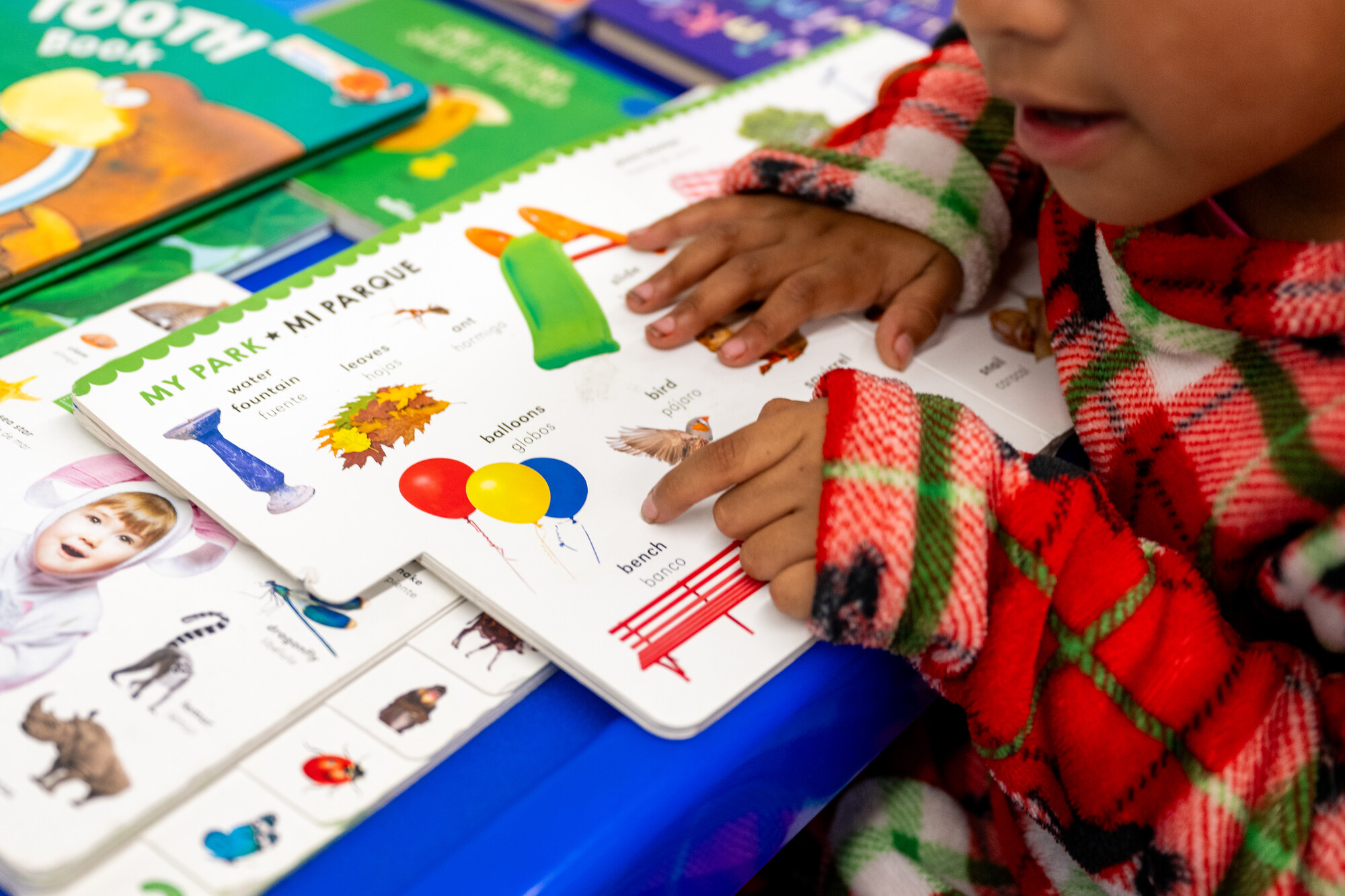
"caption": "A student reads a book in English and Spanish in a bilingual transitional kindergarten class at Global Family Elementary School in Oakland on May 17, 2024. Bay Area school districts stand to lose millions budgeted for support programs after the Trump administration froze grants that states were expecting to start Tuesday.",
"credit": "Beth LaBerge/KQED",
"altTag": null,
"description": null,
"imgSizes": {
"thumbnail": {
"file": "https://cdn.kqed.org/wp-content/uploads/sites/10/2025/07/240517-TKBilingualLearners-128-BL_qed-160x107.jpg",
"width": 160,
"height": 107,
"mimeType": "image/jpeg"
},
"1536x1536": {
"file": "https://cdn.kqed.org/wp-content/uploads/sites/10/2025/07/240517-TKBilingualLearners-128-BL_qed-1536x1024.jpg",
"width": 1536,
"height": 1024,
"mimeType": "image/jpeg"
},
"post-thumbnail": {
"file": "https://cdn.kqed.org/wp-content/uploads/sites/10/2025/07/240517-TKBilingualLearners-128-BL_qed-672x372.jpg",
"width": 672,
"height": 372,
"mimeType": "image/jpeg"
},
"twentyfourteen-full-width": {
"file": "https://cdn.kqed.org/wp-content/uploads/sites/10/2025/07/240517-TKBilingualLearners-128-BL_qed-1038x576.jpg",
"width": 1038,
"height": 576,
"mimeType": "image/jpeg"
},
"kqedFullSize": {
"file": "https://cdn.kqed.org/wp-content/uploads/sites/10/2025/07/240517-TKBilingualLearners-128-BL_qed.jpg",
"width": 2000,
"height": 1333
}
},
"isLoading": false,
"fetchFailed": false
},
"news_12046682": {
"type": "attachments",
"id": "news_12046682",
"meta": {
"index": "attachments_1716263798",
"site": "news",
"id": "12046682",
"found": true
},
"title": "20241204-BART-JY-024_qed",
"publishDate": 1751388604,
"status": "inherit",
"parent": 12046678,
"modified": 1751388636,
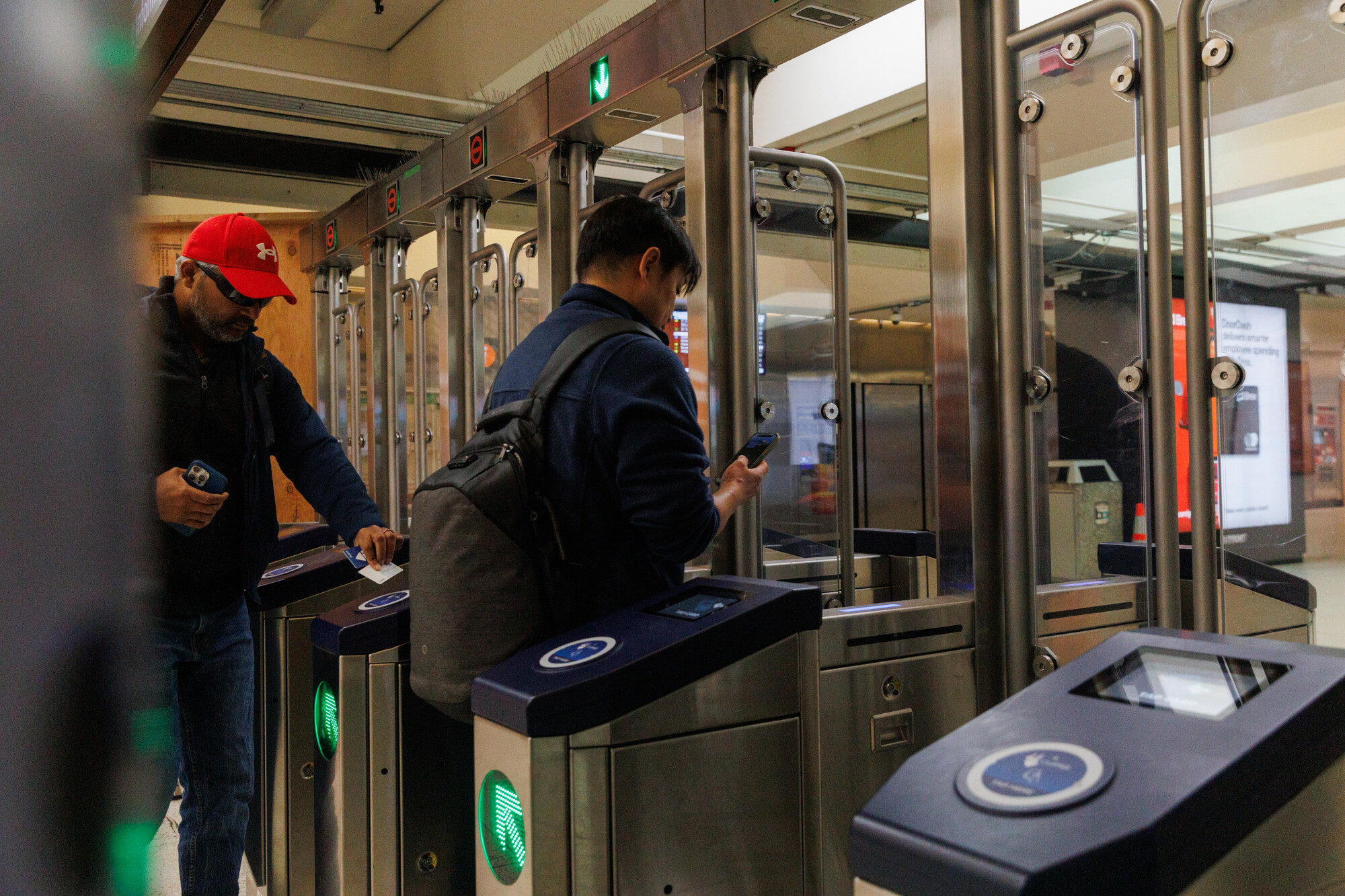
"caption": "Passengers tag their Clipper cards at Montgomery BART Station in San Francisco on Dec. 4, 2024.",
"credit": "Juliana Yamada/KQED",
"altTag": null,
"description": null,
"imgSizes": {
"thumbnail": {
"file": "https://cdn.kqed.org/wp-content/uploads/sites/10/2025/07/20241204-BART-JY-024_qed-160x107.jpg",
"width": 160,
"height": 107,
"mimeType": "image/jpeg"
},
"1536x1536": {
"file": "https://cdn.kqed.org/wp-content/uploads/sites/10/2025/07/20241204-BART-JY-024_qed-1536x1024.jpg",
"width": 1536,
"height": 1024,
"mimeType": "image/jpeg"
},
"post-thumbnail": {
"file": "https://cdn.kqed.org/wp-content/uploads/sites/10/2025/07/20241204-BART-JY-024_qed-672x372.jpg",
"width": 672,
"height": 372,
"mimeType": "image/jpeg"
},
"twentyfourteen-full-width": {
"file": "https://cdn.kqed.org/wp-content/uploads/sites/10/2025/07/20241204-BART-JY-024_qed-1038x576.jpg",
"width": 1038,
"height": 576,
"mimeType": "image/jpeg"
},
"kqedFullSize": {
"file": "https://cdn.kqed.org/wp-content/uploads/sites/10/2025/07/20241204-BART-JY-024_qed.jpg",
"width": 2000,
"height": 1333
}
},
"isLoading": false,
"fetchFailed": false
},
"news_12046578": {
"type": "attachments",
"id": "news_12046578",
"meta": {
"index": "attachments_1716263798",
"site": "news",
"id": "12046578",
"found": true
},
"title": "San Francisco Zoo Remains Closed For Investigation Into Tiger Tragedy",
"publishDate": 1751309026,
"status": "inherit",
"parent": 12046574,
"modified": 1751309088,
"caption": "A sign hangs at the entrance of the San Francisco Zoo on Dec. 27, 2007, in San Francisco, California.",
"credit": "DavPaul Morris/Getty Images",
"altTag": null,
"description": null,
"imgSizes": {
"thumbnail": {
"file": "https://cdn.kqed.org/wp-content/uploads/sites/10/2025/06/SFZooGetty3-160x107.jpg",
"width": 160,
"height": 107,
"mimeType": "image/jpeg"
},
"1536x1536": {
"file": "https://cdn.kqed.org/wp-content/uploads/sites/10/2025/06/SFZooGetty3-1536x1025.jpg",
"width": 1536,
"height": 1025,
"mimeType": "image/jpeg"
},
"post-thumbnail": {
"file": "https://cdn.kqed.org/wp-content/uploads/sites/10/2025/06/SFZooGetty3-672x372.jpg",
"width": 672,
"height": 372,
"mimeType": "image/jpeg"
},
"twentyfourteen-full-width": {
"file": "https://cdn.kqed.org/wp-content/uploads/sites/10/2025/06/SFZooGetty3-1038x576.jpg",
"width": 1038,
"height": 576,
"mimeType": "image/jpeg"
},
"kqedFullSize": {
"file": "https://cdn.kqed.org/wp-content/uploads/sites/10/2025/06/SFZooGetty3.jpg",
"width": 2000,
"height": 1334
}
},
"isLoading": false,
"fetchFailed": false
},
"news_12046383": {
"type": "attachments",
"id": "news_12046383",
"meta": {
"index": "attachments_1716263798",
"site": "news",
"id": "12046383",
"found": true
},
"title": "240412-OAKAirport-009-BL_qed",
"publishDate": 1751057311,
"status": "inherit",
"parent": 12046379,
"modified": 1751057324,
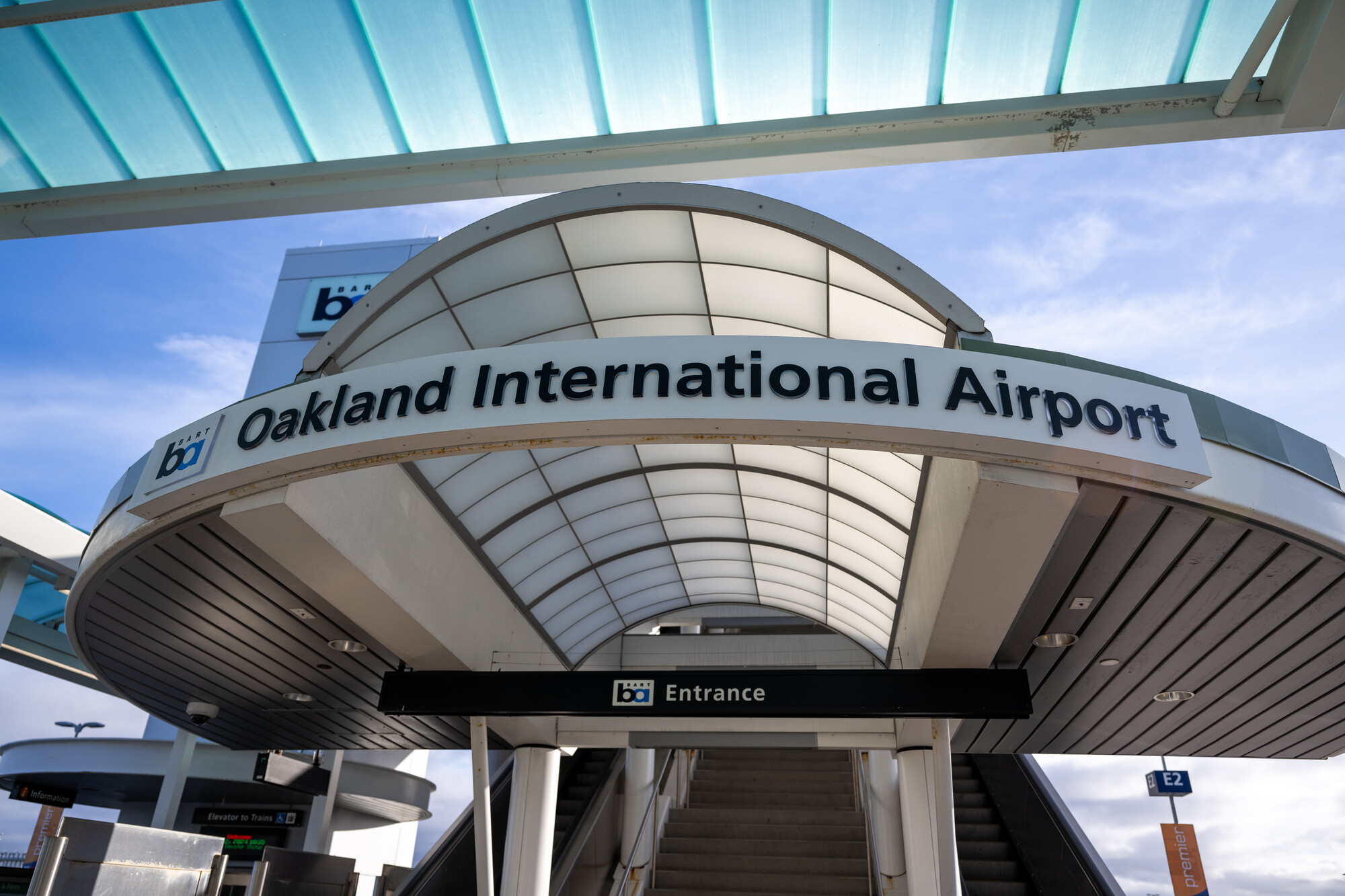
"caption": "A sign for the Oakland International Airport hangs above a BART station at the airport in Oakland on April 12, 2024.",
"credit": "Beth LaBerge/KQED",
"altTag": null,
"description": null,
"imgSizes": {
"thumbnail": {
"file": "https://cdn.kqed.org/wp-content/uploads/sites/10/2025/06/240412-OAKAirport-009-BL_qed-160x107.jpg",
"width": 160,
"height": 107,
"mimeType": "image/jpeg"
},
"1536x1536": {
"file": "https://cdn.kqed.org/wp-content/uploads/sites/10/2025/06/240412-OAKAirport-009-BL_qed-1536x1024.jpg",
"width": 1536,
"height": 1024,
"mimeType": "image/jpeg"
},
"post-thumbnail": {
"file": "https://cdn.kqed.org/wp-content/uploads/sites/10/2025/06/240412-OAKAirport-009-BL_qed-672x372.jpg",
"width": 672,
"height": 372,
"mimeType": "image/jpeg"
},
"twentyfourteen-full-width": {
"file": "https://cdn.kqed.org/wp-content/uploads/sites/10/2025/06/240412-OAKAirport-009-BL_qed-1038x576.jpg",
"width": 1038,
"height": 576,
"mimeType": "image/jpeg"
},
"kqedFullSize": {
"file": "https://cdn.kqed.org/wp-content/uploads/sites/10/2025/06/240412-OAKAirport-009-BL_qed.jpg",
"width": 2000,
"height": 1333
}
},
"isLoading": false,
"fetchFailed": false
},
"news_12046127": {
"type": "attachments",
"id": "news_12046127",
"meta": {
"index": "attachments_1716263798",
"site": "news",
"id": "12046127",
"found": true
},
"title": "250421-SFUSDCentralCuts-09-BL_qed",
"publishDate": 1750965461,
"status": "inherit",
"parent": 12051862,
"modified": 1755024878,
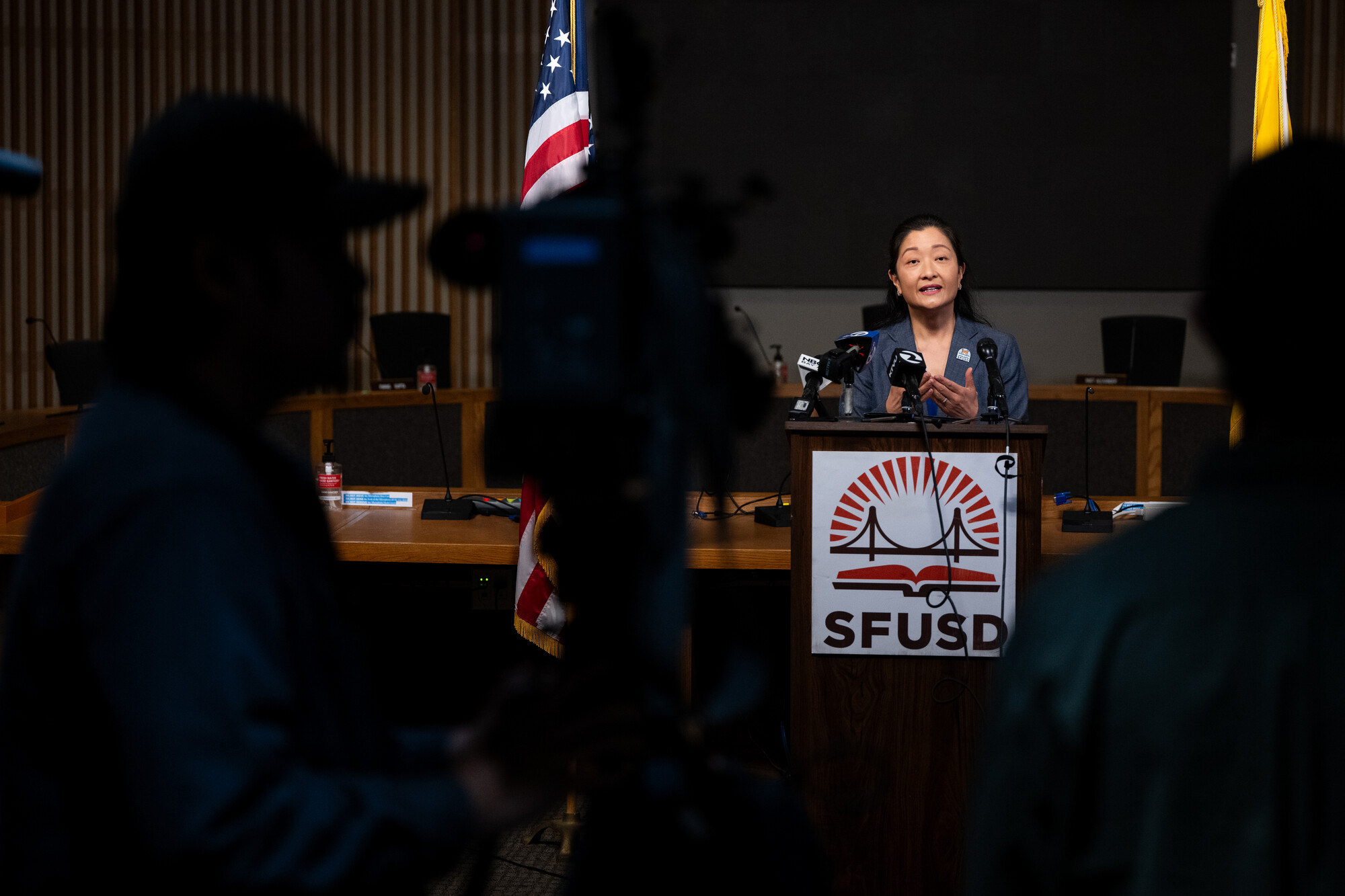
"caption": "San Francisco Unified School District Superintendent Dr. Maria Su speaks during a press conference at the school district offices in San Francisco on April 21, 2025.",
"credit": "Beth LaBerge/KQED",
"altTag": null,
"description": null,
"imgSizes": {
"thumbnail": {
"file": "https://cdn.kqed.org/wp-content/uploads/sites/10/2025/06/250421-SFUSDCentralCuts-09-BL_qed-160x107.jpg",
"width": 160,
"height": 107,
"mimeType": "image/jpeg"
},
"1536x1536": {
"file": "https://cdn.kqed.org/wp-content/uploads/sites/10/2025/06/250421-SFUSDCentralCuts-09-BL_qed-1536x1024.jpg",
"width": 1536,
"height": 1024,
"mimeType": "image/jpeg"
},
"post-thumbnail": {
"file": "https://cdn.kqed.org/wp-content/uploads/sites/10/2025/06/250421-SFUSDCentralCuts-09-BL_qed-672x372.jpg",
"width": 672,
"height": 372,
"mimeType": "image/jpeg"
},
"twentyfourteen-full-width": {
"file": "https://cdn.kqed.org/wp-content/uploads/sites/10/2025/06/250421-SFUSDCentralCuts-09-BL_qed-1038x576.jpg",
"width": 1038,
"height": 576,
"mimeType": "image/jpeg"
},
"kqedFullSize": {
"file": "https://cdn.kqed.org/wp-content/uploads/sites/10/2025/06/250421-SFUSDCentralCuts-09-BL_qed.jpg",
"width": 2000,
"height": 1333
}
},
"isLoading": false,
"fetchFailed": false
},
"news_12046078": {
"type": "attachments",
"id": "news_12046078",
"meta": {
"index": "attachments_1716263798",
"site": "news",
"id": "12046078",
"found": true
},
"title": "Tahoe1",
"publishDate": 1750960169,
"status": "inherit",
"parent": 12046061,
"modified": 1750960228,
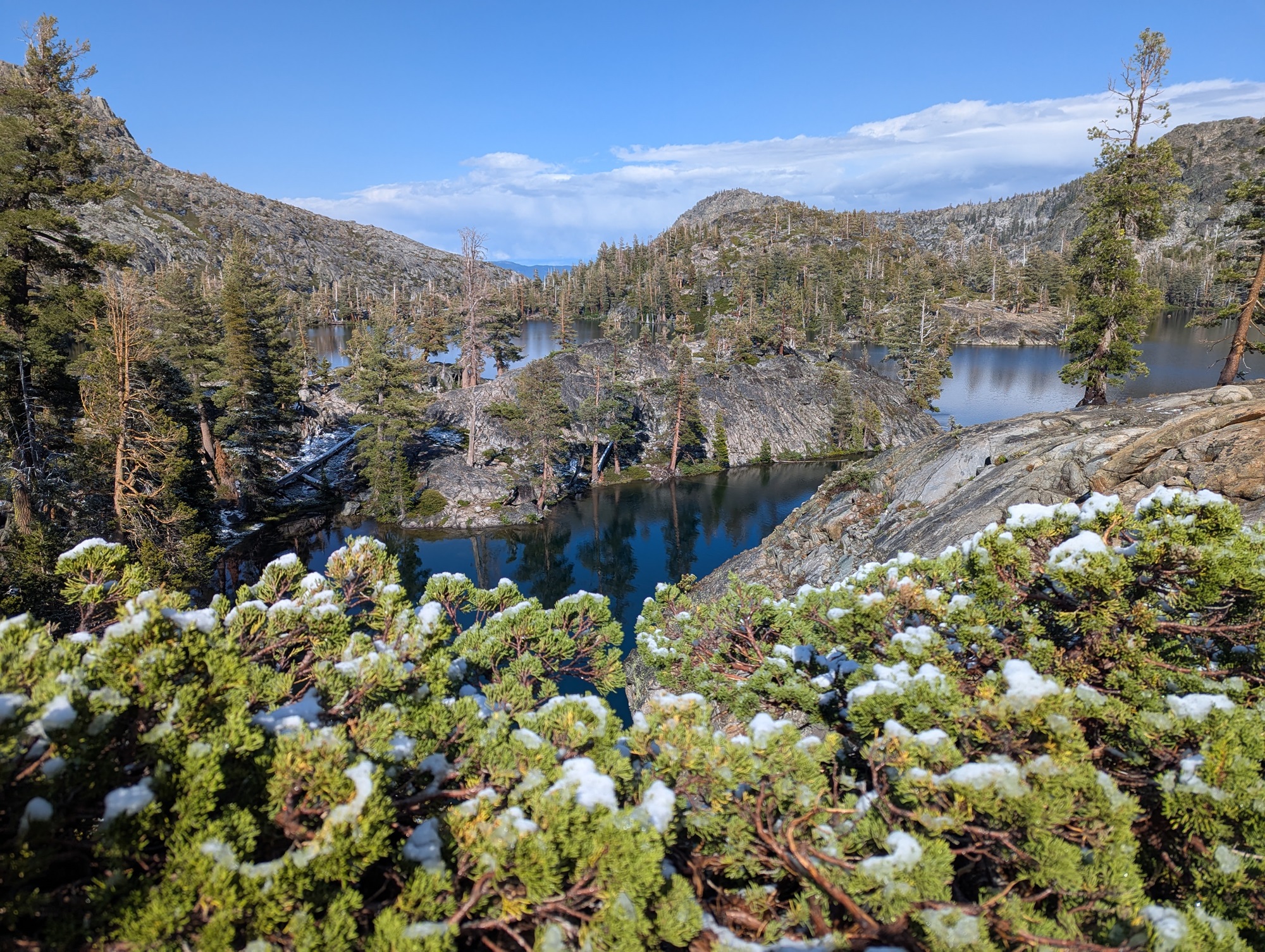
"caption": "Dick’s Peak in Desolation Wilderness near Lake Tahoe on June 21, 2025.",
"credit": "Courtesy of Matt Savener",
"altTag": null,
"description": null,
"imgSizes": {
"thumbnail": {
"file": "https://cdn.kqed.org/wp-content/uploads/sites/10/2025/06/Tahoe1-160x120.jpg",
"width": 160,
"height": 120,
"mimeType": "image/jpeg"
},
"1536x1536": {
"file": "https://cdn.kqed.org/wp-content/uploads/sites/10/2025/06/Tahoe1-1536x1156.jpg",
"width": 1536,
"height": 1156,
"mimeType": "image/jpeg"
},
"post-thumbnail": {
"file": "https://cdn.kqed.org/wp-content/uploads/sites/10/2025/06/Tahoe1-672x372.jpg",
"width": 672,
"height": 372,
"mimeType": "image/jpeg"
},
"twentyfourteen-full-width": {
"file": "https://cdn.kqed.org/wp-content/uploads/sites/10/2025/06/Tahoe1-1038x576.jpg",
"width": 1038,
"height": 576,
"mimeType": "image/jpeg"
},
"kqedFullSize": {
"file": "https://cdn.kqed.org/wp-content/uploads/sites/10/2025/06/Tahoe1.jpg",
"width": 2000,
"height": 1505
}
},
"isLoading": false,
"fetchFailed": false
},
"news_12046175": {
"type": "attachments",
"id": "news_12046175",
"meta": {
"index": "attachments_1716263798",
"site": "news",
"id": "12046175",
"found": true
},
"title": "Homeless people struggle during heavy rain in San Francisco, California",
"publishDate": 1750970923,
"status": "inherit",
"parent": 12087973,
"modified": 1781737864,
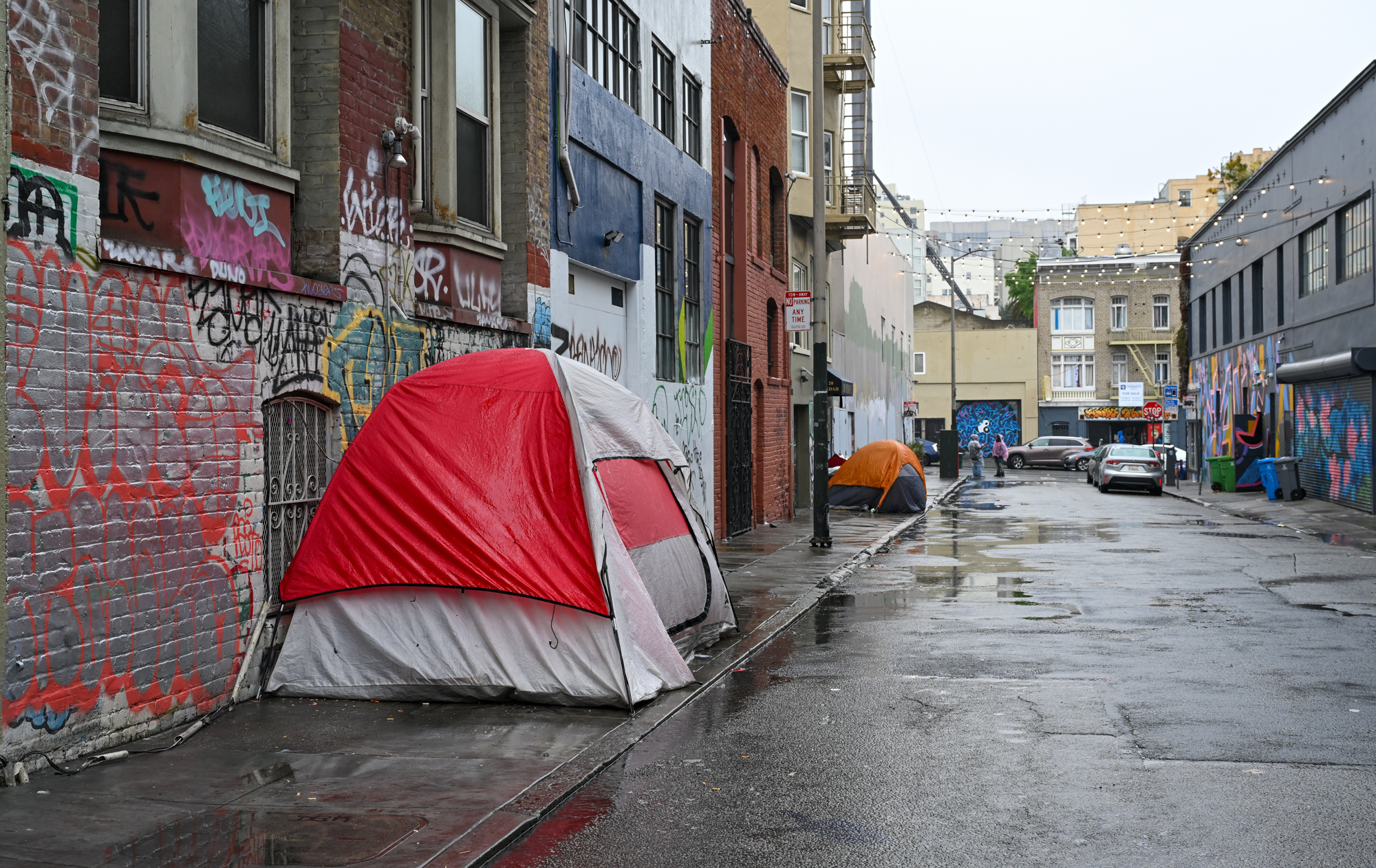
"caption": "A homeless encampment near Polk Street in San Francisco on Feb. 6, 2025.",
"credit": "Tayfun Coskun/Anadolu via Getty Images",
"altTag": null,
"description": null,
"imgSizes": {
"thumbnail": {
"file": "https://cdn.kqed.org/wp-content/uploads/sites/10/2025/06/GETTYIMAGES-2197492442-KQED-160x101.jpg",
"width": 160,
"height": 101,
"mimeType": "image/jpeg"
},
"1536x1536": {
"file": "https://cdn.kqed.org/wp-content/uploads/sites/10/2025/06/GETTYIMAGES-2197492442-KQED-1536x969.jpg",
"width": 1536,
"height": 969,
"mimeType": "image/jpeg"
},
"post-thumbnail": {
"file": "https://cdn.kqed.org/wp-content/uploads/sites/10/2025/06/GETTYIMAGES-2197492442-KQED-672x372.jpg",
"width": 672,
"height": 372,
"mimeType": "image/jpeg"
},
"twentyfourteen-full-width": {
"file": "https://cdn.kqed.org/wp-content/uploads/sites/10/2025/06/GETTYIMAGES-2197492442-KQED-1038x576.jpg",
"width": 1038,
"height": 576,
"mimeType": "image/jpeg"
},
"kqedFullSize": {
"file": "https://cdn.kqed.org/wp-content/uploads/sites/10/2025/06/GETTYIMAGES-2197492442-KQED.jpg",
"width": 2000,
"height": 1262
}
},
"isLoading": false,
"fetchFailed": false
},
"news_12045910": {
"type": "attachments",
"id": "news_12045910",
"meta": {
"index": "attachments_1716263798",
"site": "news",
"id": "12045910",
"found": true
},
"title": "007_KQED_SFDykeMarch_06252022_qed",
"publishDate": 1750873530,
"status": "inherit",
"parent": 12045907,
"modified": 1750873542,
"caption": "The San Francisco Dyke March fills 16th Street in the Mission District on June 25, 2022.",
"credit": "Beth LaBerge/KQED",
"altTag": null,
"description": null,
"imgSizes": {
"thumbnail": {
"file": "https://cdn.kqed.org/wp-content/uploads/sites/10/2025/06/007_KQED_SFDykeMarch_06252022_qed-160x107.jpg",
"width": 160,
"height": 107,
"mimeType": "image/jpeg"
},
"1536x1536": {
"file": "https://cdn.kqed.org/wp-content/uploads/sites/10/2025/06/007_KQED_SFDykeMarch_06252022_qed-1536x1024.jpg",
"width": 1536,
"height": 1024,
"mimeType": "image/jpeg"
},
"post-thumbnail": {
"file": "https://cdn.kqed.org/wp-content/uploads/sites/10/2025/06/007_KQED_SFDykeMarch_06252022_qed-672x372.jpg",
"width": 672,
"height": 372,
"mimeType": "image/jpeg"
},
"twentyfourteen-full-width": {
"file": "https://cdn.kqed.org/wp-content/uploads/sites/10/2025/06/007_KQED_SFDykeMarch_06252022_qed-1038x576.jpg",
"width": 1038,
"height": 576,
"mimeType": "image/jpeg"
},
"kqedFullSize": {
"file": "https://cdn.kqed.org/wp-content/uploads/sites/10/2025/06/007_KQED_SFDykeMarch_06252022_qed.jpg",
"width": 2000,
"height": 1333
}
},
"isLoading": false,
"fetchFailed": false
},
"news_12044939": {
"type": "attachments",
"id": "news_12044939",
"meta": {
"index": "attachments_1716263798",
"site": "news",
"id": "12044939",
"found": true
},
"title": "Gabby Chavez-LopezAnthony Tordillos",
"publishDate": 1750273269,
"status": "inherit",
"parent": 12044929,
"modified": 1750273454,
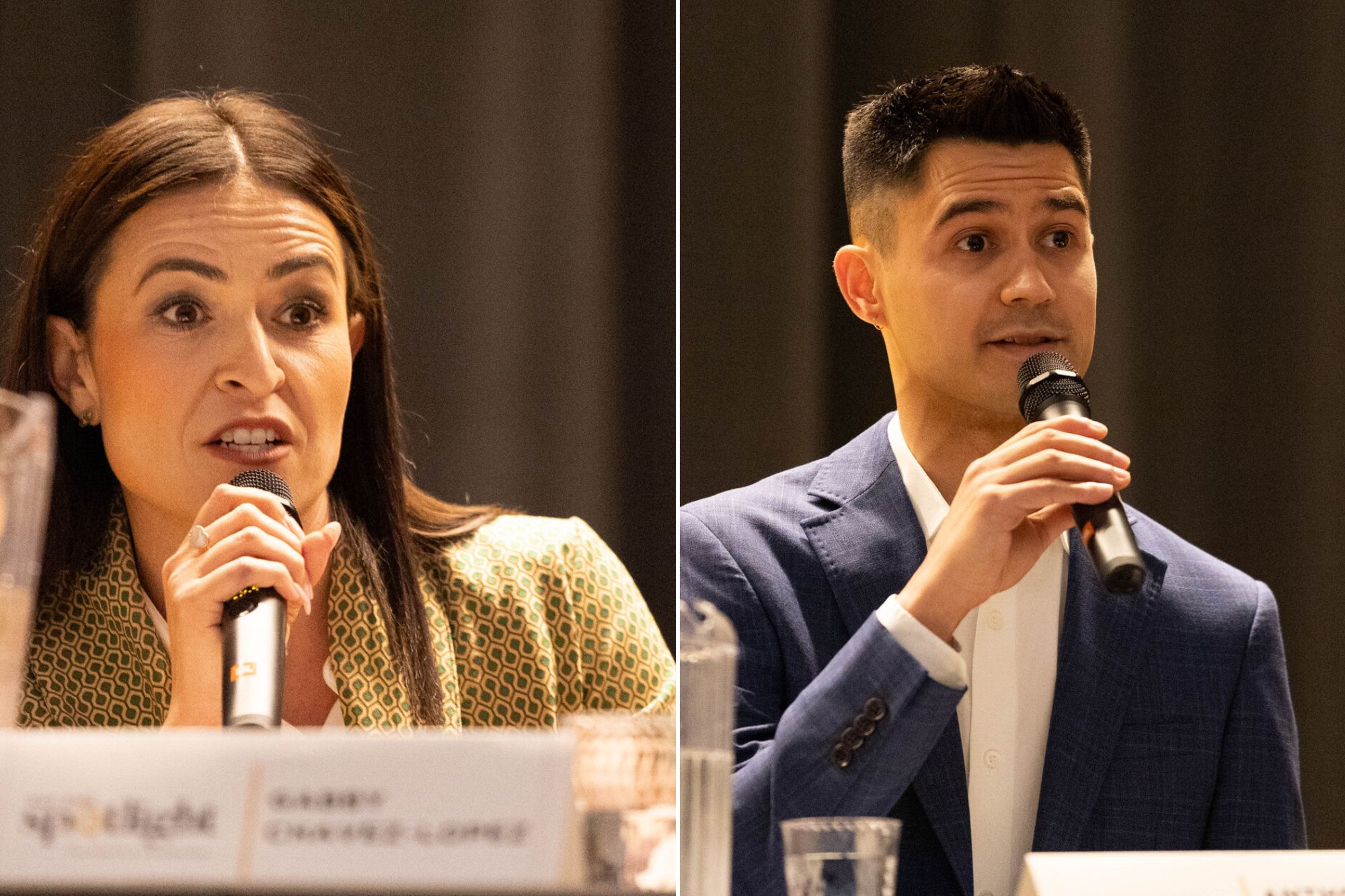
"caption": "San José City Council District 3 candidates Gabby Chavez-Lopez and Anthony Tordillos speak at a candidates forum at the San José Women’s Club in San José on March 6, 2025.",
"credit": "Gina Castro/KQED",
"altTag": null,
"description": null,
"imgSizes": {
"thumbnail": {
"file": "https://cdn.kqed.org/wp-content/uploads/sites/10/2025/06/Gabby-Chavez-LopezAnthony-Tordillos-160x107.jpg",
"width": 160,
"height": 107,
"mimeType": "image/jpeg"
},
"1536x1536": {
"file": "https://cdn.kqed.org/wp-content/uploads/sites/10/2025/06/Gabby-Chavez-LopezAnthony-Tordillos-1536x1024.jpg",
"width": 1536,
"height": 1024,
"mimeType": "image/jpeg"
},
"post-thumbnail": {
"file": "https://cdn.kqed.org/wp-content/uploads/sites/10/2025/06/Gabby-Chavez-LopezAnthony-Tordillos-672x372.jpg",
"width": 672,
"height": 372,
"mimeType": "image/jpeg"
},
"twentyfourteen-full-width": {
"file": "https://cdn.kqed.org/wp-content/uploads/sites/10/2025/06/Gabby-Chavez-LopezAnthony-Tordillos-1038x576.jpg",
"width": 1038,
"height": 576,
"mimeType": "image/jpeg"
},
"kqedFullSize": {
"file": "https://cdn.kqed.org/wp-content/uploads/sites/10/2025/06/Gabby-Chavez-LopezAnthony-Tordillos.jpg",
"width": 2000,
"height": 1333
}
},
"isLoading": false,
"fetchFailed": false
},
"news_12045575": {
"type": "attachments",
"id": "news_12045575",
"meta": {
"index": "attachments_1716263798",
"site": "news",
"id": "12045575",
"found": true
},
"title": "Side-by-side Featured",
"publishDate": 1750711430,
"status": "inherit",
"parent": 12045531,
"modified": 1750711654,
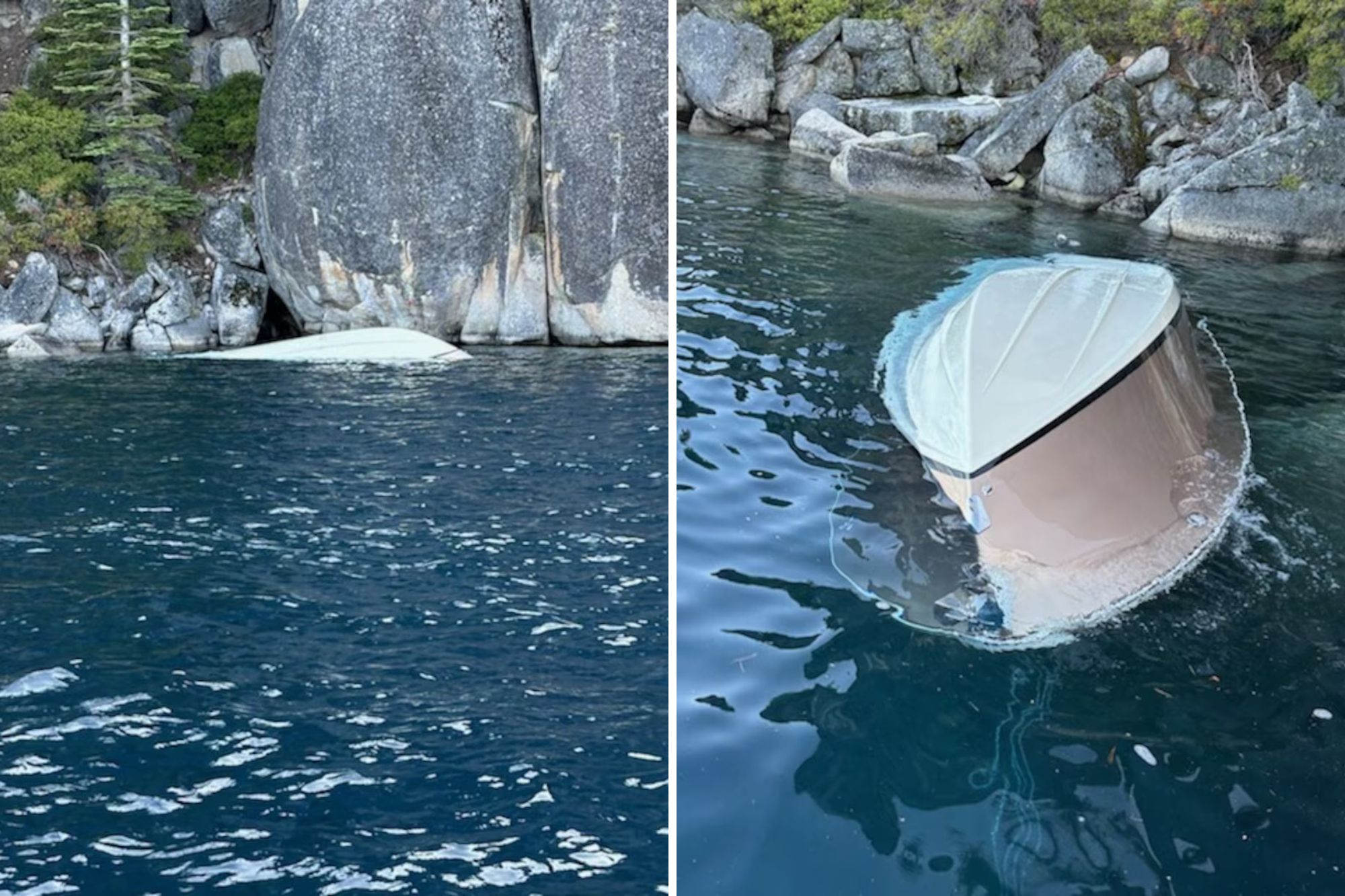
"caption": "The Coast Guard and local partner agencies responded to a capsized vessel in the vicinity of D.L. Bliss State Park at Lake Tahoe on June 21, 2025.",
"credit": "Photo courtesy of U.S. Coast Guard Pacific Southwest Public Affairs",
"altTag": null,
"description": null,
"imgSizes": {
"thumbnail": {
"file": "https://cdn.kqed.org/wp-content/uploads/sites/10/2025/06/Side-by-side-Featured-160x107.jpg",
"width": 160,
"height": 107,
"mimeType": "image/jpeg"
},
"1536x1536": {
"file": "https://cdn.kqed.org/wp-content/uploads/sites/10/2025/06/Side-by-side-Featured-1536x1024.jpg",
"width": 1536,
"height": 1024,
"mimeType": "image/jpeg"
},
"post-thumbnail": {
"file": "https://cdn.kqed.org/wp-content/uploads/sites/10/2025/06/Side-by-side-Featured-672x372.jpg",
"width": 672,
"height": 372,
"mimeType": "image/jpeg"
},
"twentyfourteen-full-width": {
"file": "https://cdn.kqed.org/wp-content/uploads/sites/10/2025/06/Side-by-side-Featured-1038x576.jpg",
"width": 1038,
"height": 576,
"mimeType": "image/jpeg"
},
"kqedFullSize": {
"file": "https://cdn.kqed.org/wp-content/uploads/sites/10/2025/06/Side-by-side-Featured.jpg",
"width": 2000,
"height": 1333
}
},
"isLoading": false,
"fetchFailed": false
},
"news_11947189": {
"type": "attachments",
"id": "news_11947189",
"meta": {
"index": "attachments_1716263798",
"site": "news",
"id": "11947189",
"found": true
},
"title": "013_KQED_UCSFBenioffChildrensHospStrike_04192023",
"publishDate": 1681947424,
"status": "inherit",
"parent": 11947102,
"modified": 1750719406,
"caption": "Hospital employees and supporters gather for a rally outside of the UCSF Benioff Children's Hospital in Oakland on April 19, 2023, during a one-day strike authorized by more than 1,200 members of the National Union of Healthcare Workers at the Oakland and Walnut Creek hospitals.",
"credit": "Beth LaBerge/KQED",
"altTag": "Hundreds of protesters in red T-shirts hold red and yellow picket signs outside of UCSF Benioff Children's Hospital Oakland.",
"description": null,
"imgSizes": {
"medium": {
"file": "https://cdn.kqed.org/wp-content/uploads/sites/10/2023/04/013_KQED_UCSFBenioffChildrensHospStrike_04192023-800x533.jpg",
"width": 800,
"height": 533,
"mimeType": "image/jpeg"
},
"large": {
"file": "https://cdn.kqed.org/wp-content/uploads/sites/10/2023/04/013_KQED_UCSFBenioffChildrensHospStrike_04192023-1020x680.jpg",
"width": 1020,
"height": 680,
"mimeType": "image/jpeg"
},
"thumbnail": {
"file": "https://cdn.kqed.org/wp-content/uploads/sites/10/2023/04/013_KQED_UCSFBenioffChildrensHospStrike_04192023-160x107.jpg",
"width": 160,
"height": 107,
"mimeType": "image/jpeg"
},
"1536x1536": {
"file": "https://cdn.kqed.org/wp-content/uploads/sites/10/2023/04/013_KQED_UCSFBenioffChildrensHospStrike_04192023-1536x1024.jpg",
"width": 1536,
"height": 1024,
"mimeType": "image/jpeg"
},
"post-thumbnail": {
"file": "https://cdn.kqed.org/wp-content/uploads/sites/10/2023/04/013_KQED_UCSFBenioffChildrensHospStrike_04192023-672x372.jpg",
"width": 672,
"height": 372,
"mimeType": "image/jpeg"
},
"twentyfourteen-full-width": {
"file": "https://cdn.kqed.org/wp-content/uploads/sites/10/2023/04/013_KQED_UCSFBenioffChildrensHospStrike_04192023-1038x576.jpg",
"width": 1038,
"height": 576,
"mimeType": "image/jpeg"
},
"kqedFullSize": {
"file": "https://cdn.kqed.org/wp-content/uploads/sites/10/2023/04/013_KQED_UCSFBenioffChildrensHospStrike_04192023.jpg",
"width": 1920,
"height": 1280
}
},
"isLoading": false,
"fetchFailed": false
},
"news_12044932": {
"type": "attachments",
"id": "news_12044932",
"meta": {
"index": "attachments_1716263798",
"site": "news",
"id": "12044932",
"found": true
},
"title": "Iran Launches A Retaliatory Missile Strike At Tel Aviv",
"publishDate": 1750272368,
"status": "inherit",
"parent": 12044919,
"modified": 1750272416,
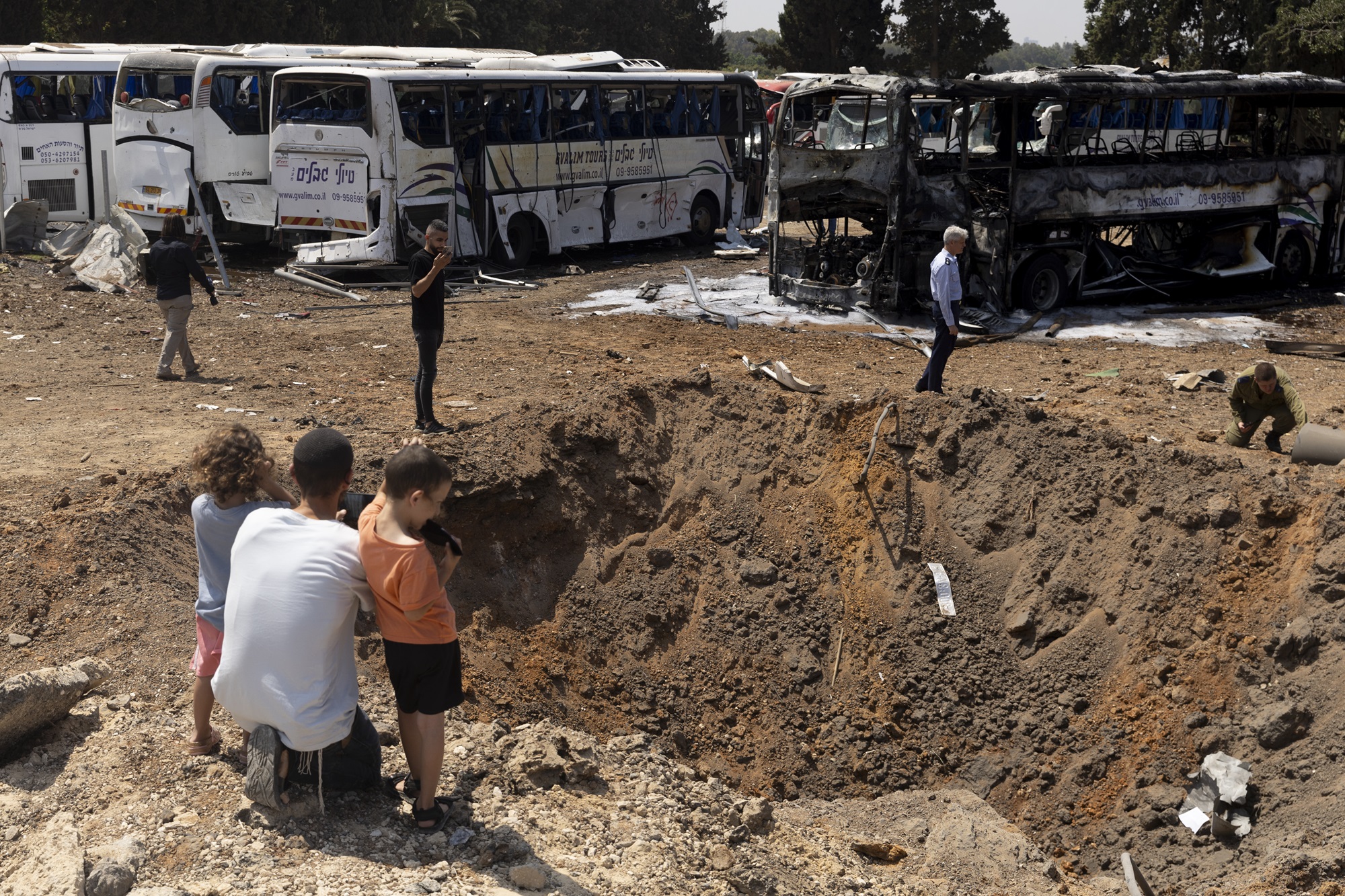
"caption": "People look at a crater in the ground in the aftermath of a reported missile strike fired from Iran, on June 17, 2025, in Herzliya, Israel. Iran launched a retaliatory missile strike on Israel starting late on June 13, after a series of Israeli airstrikes earlier in the day targeted Iranian military and nuclear sites, as well as top military officials.",
"credit": "Amir Levy/Getty Images",
"altTag": null,
"description": null,
"imgSizes": {
"thumbnail": {
"file": "https://cdn.kqed.org/wp-content/uploads/sites/10/2025/06/IsraelIranConflictGetty-160x107.jpg",
"width": 160,
"height": 107,
"mimeType": "image/jpeg"
},
"1536x1536": {
"file": "https://cdn.kqed.org/wp-content/uploads/sites/10/2025/06/IsraelIranConflictGetty-1536x1024.jpg",
"width": 1536,
"height": 1024,
"mimeType": "image/jpeg"
},
"post-thumbnail": {
"file": "https://cdn.kqed.org/wp-content/uploads/sites/10/2025/06/IsraelIranConflictGetty-672x372.jpg",
"width": 672,
"height": 372,
"mimeType": "image/jpeg"
},
"twentyfourteen-full-width": {
"file": "https://cdn.kqed.org/wp-content/uploads/sites/10/2025/06/IsraelIranConflictGetty-1038x576.jpg",
"width": 1038,
"height": 576,
"mimeType": "image/jpeg"
},
"kqedFullSize": {
"file": "https://cdn.kqed.org/wp-content/uploads/sites/10/2025/06/IsraelIranConflictGetty.jpg",
"width": 2000,
"height": 1333
}
},
"isLoading": false,
"fetchFailed": false
}
},
"audioPlayerReducer": {
"postId": "stream_live",
"isPaused": true,
"isPlaying": false,
"pfsActive": false,
"pledgeModalIsOpen": true,
"playerDrawerIsOpen": false,
"liveAudioPlayStartedAt": 0,
"liveAudioPlayContext": ""
},
"authorsReducer": {
"danbrekke": {
"type": "authors",
"id": "222",
"meta": {
"index": "authors_1716337520",
"id": "222",
"found": true
},
"name": "Dan Brekke",
"firstName": "Dan",
"lastName": "Brekke",
"slug": "danbrekke",
"email": "dbrekke@kqed.org",
"display_author_email": true,
"staff_mastheads": [
"news",
"science"
],
"title": "KQED Editor and Reporter",
"bio": "Dan Brekke is a reporter and editor for KQED News, responsible for coverage of topics ranging from California water issues to the Bay Area's transportation challenges. In a newsroom career that began in Chicago in 1972, Dan has worked for \u003cem>The San Francisco Examiner,\u003c/em> Wired and TechTV and has been published in The New York Times, The New York Times Magazine, Business 2.0, Salon and elsewhere.\r\n\r\nSince joining KQED in 2007, Dan has reported, edited and produced both radio and online features and breaking news pieces. He has shared as both editor and reporter in four Society of Professional Journalists Norcal Excellence in Journalism awards and one Edward R. Murrow regional award. He was chosen for a spring 2017 residency at the Mesa Refuge to advance his research on California salmon.\r\n\r\nEmail Dan at: \u003ca href=\"mailto:dbrekke@kqed.org\">dbrekke@kqed.org\u003c/a>\r\n\r\n\u003cstrong>Twitter:\u003c/strong> \u003ca href=\"https://twitter.com/danbrekke\" rel=\"noopener noreferrer\">twitter.com/danbrekke\u003c/a>\r\n\u003cstrong>Facebook:\u003c/strong> \u003ca href=\"https://www.facebook.com/danbrekke\" rel=\"noopener noreferrer\">www.facebook.com/danbrekke\u003c/a>\r\n\u003cstrong>LinkedIn:\u003c/strong> \u003ca href=\"https://www.linkedin.com/in/danbrekke\" rel=\"noopener noreferrer\">www.linkedin.com/in/danbrekke\u003c/a>",
"avatar": "https://secure.gravatar.com/avatar/c8126230345efca3f7aa89b1a402be45?s=600&d=mm&r=g",
"twitter": "danbrekke",
"facebook": null,
"instagram": "https://www.instagram.com/dan.brekke/",
"linkedin": "https://www.linkedin.com/in/danbrekke/",
"sites": [
{
"site": "news",
"roles": [
"administrator",
"create_posts"
]
},
{
"site": "stateofhealth",
"roles": [
"editor"
]
},
{
"site": "science",
"roles": [
"editor"
]
},
{
"site": "quest",
"roles": [
"contributor"
]
},
{
"site": "food",
"roles": [
"contributor"
]
},
{
"site": "forum",
"roles": [
"contributor"
]
},
{
"site": "liveblog",
"roles": [
"editor"
]
}
],
"headData": {
"title": "Dan Brekke | KQED",
"description": "KQED Editor and Reporter",
"ogImgSrc": "https://secure.gravatar.com/avatar/c8126230345efca3f7aa89b1a402be45?s=600&d=mm&r=g",
"twImgSrc": "https://secure.gravatar.com/avatar/c8126230345efca3f7aa89b1a402be45?s=600&d=mm&r=g"
},
"isLoading": false,
"link": "/author/danbrekke"
},
"gmarzorati": {
"type": "authors",
"id": "227",
"meta": {
"index": "authors_1716337520",
"id": "227",
"found": true
},
"name": "Guy Marzorati",
"firstName": "Guy",
"lastName": "Marzorati",
"slug": "gmarzorati",
"email": "gmarzorati@KQED.org",
"display_author_email": true,
"staff_mastheads": [
"news"
],
"title": "Correspondent",
"bio": "Guy Marzorati is a correspondent on KQED's California Politics and Government Desk, based in San Jose. A graduate of Santa Clara University, Guy joined KQED in 2013. He reports on state and local politics and produces KQED's digital voter guide.",
"avatar": "https://secure.gravatar.com/avatar/e7038b8dbfd55b104369b76b1cd0b9de?s=600&d=blank&r=g",
"twitter": "guymarzorati",
"facebook": null,
"instagram": null,
"linkedin": null,
"sites": [
{
"site": "",
"roles": [
"editor"
]
},
{
"site": "news",
"roles": [
"editor"
]
},
{
"site": "science",
"roles": [
"editor"
]
},
{
"site": "forum",
"roles": [
"editor"
]
},
{
"site": "elections",
"roles": [
"editor"
]
},
{
"site": "liveblog",
"roles": [
"editor"
]
}
],
"headData": {
"title": "Guy Marzorati | KQED",
"description": "Correspondent",
"ogImgSrc": "https://secure.gravatar.com/avatar/e7038b8dbfd55b104369b76b1cd0b9de?s=600&d=blank&r=g",
"twImgSrc": "https://secure.gravatar.com/avatar/e7038b8dbfd55b104369b76b1cd0b9de?s=600&d=blank&r=g"
},
"isLoading": false,
"link": "/author/gmarzorati"
},
"rachael-myrow": {
"type": "authors",
"id": "251",
"meta": {
"index": "authors_1716337520",
"id": "251",
"found": true
},
"name": "Rachael Myrow",
"firstName": "Rachael",
"lastName": "Myrow",
"slug": "rachael-myrow",
"email": "rmyrow@kqed.org",
"display_author_email": true,
"staff_mastheads": [
"news"
],
"title": "Senior Editor of KQED's Silicon Valley News Desk",
"bio": "• I write and edit stories about how Silicon Valley power and policies shape everyday life in California. I’m also passionate about making Bay Area history and culture more accessible to a broad public. • I’ve been a journalist for most of my life, starting in high school with The Franklin Press in Los Angeles, where I grew up. While earning my first degree in English at UC Berkeley, I got my start in public radio at KALX-FM. After completing a second degree in journalism at Cal, I landed my first professional job at Marketplace, then moved on to KPCC (now LAist), and then KQED, where I hosted The California Report for more than seven years. • My reporting has appeared on NPR, The World, WBUR’s \u003ci>Here & Now\u003c/i>, and the BBC. I also guest host for KQED’s \u003ci>Forum\u003c/i>, as well as the Commonwealth Club in San Francisco. • I speak periodically on media, democracy and technology issues, and do voiceover work for documentaries and educational video projects. • Outside of the studio, you'll find me hiking Bay Area trails and whipping up Insta-ready meals in my kitchen. • I do not accept gifts, money, or favors from anyone connected to my reporting, I don't pay people for information, and I do not support or donate to political causes. • I strive to treat the people I report on with fairness, honesty, and respect. I also recognize there are often multiple sides to a story and work to verify information through multiple sources and documentation. If I get something wrong, I correct it.",
"avatar": "https://secure.gravatar.com/avatar/3ed8a3c5f26025e4a805ba634cda8cd764906b97438a6d9ce216b044e340da4e?s=600&d=blank&r=g",
"twitter": "rachaelmyrow",
"bluesky": null,
"facebook": null,
"instagram": null,
"linkedin": "https://www.linkedin.com/in/rachaelmyrow/",
"sites": [
{
"site": "arts",
"roles": [
"administrator"
]
},
{
"site": "news",
"roles": [
"edit_others_posts",
"editor"
]
},
{
"site": "futureofyou",
"roles": [
"editor"
]
},
{
"site": "bayareabites",
"roles": [
"editor"
]
},
{
"site": "stateofhealth",
"roles": [
"editor"
]
},
{
"site": "science",
"roles": [
"editor"
]
},
{
"site": "food",
"roles": [
"editor"
]
},
{
"site": "forum",
"roles": [
"editor"
]
},
{
"site": "liveblog",
"roles": [
"author"
]
}
],
"headData": {
"title": "Rachael Myrow | KQED",
"description": "Senior Editor of KQED's Silicon Valley News Desk",
"ogImgSrc": "https://secure.gravatar.com/avatar/3ed8a3c5f26025e4a805ba634cda8cd764906b97438a6d9ce216b044e340da4e?s=600&d=blank&r=g",
"twImgSrc": "https://secure.gravatar.com/avatar/3ed8a3c5f26025e4a805ba634cda8cd764906b97438a6d9ce216b044e340da4e?s=600&d=blank&r=g"
},
"isLoading": false,
"link": "/author/rachael-myrow"
},
"matthewgreen": {
"type": "authors",
"id": "1263",
"meta": {
"index": "authors_1716337520",
"id": "1263",
"found": true
},
"name": "Matthew Green",
"firstName": "Matthew",
"lastName": "Green",
"slug": "matthewgreen",
"email": "mgreen@kqed.org",
"display_author_email": false,
"staff_mastheads": [],
"title": "KQED Editor/Reporter",
"bio": "Matthew Green is a digital media producer for KQED News. He previously produced \u003ca href=\"http://www.kqed.org/lowdown\">The Lowdown\u003c/a>, KQED’s multimedia news education blog. Matthew's written for numerous Bay Area publications, including the Oakland Tribune and San Francisco Chronicle. He also taught journalism classes at Fremont High School in East Oakland.\r\n\r\nEmail: mgreen@kqed.org; Twitter: @MGreenKQED",
"avatar": "https://secure.gravatar.com/avatar/3bf498d1267ca02c8494f33d8cfc575e?s=600&d=blank&r=g",
"twitter": "MGreenKQED",
"facebook": null,
"instagram": null,
"linkedin": null,
"sites": [
{
"site": "news",
"roles": []
},
{
"site": "lowdown",
"roles": []
},
{
"site": "science",
"roles": []
},
{
"site": "education",
"roles": []
},
{
"site": "quest",
"roles": []
},
{
"site": "liveblog",
"roles": []
}
],
"headData": {
"title": "Matthew Green | KQED",
"description": "KQED Editor/Reporter",
"ogImgSrc": "https://secure.gravatar.com/avatar/3bf498d1267ca02c8494f33d8cfc575e?s=600&d=blank&r=g",
"twImgSrc": "https://secure.gravatar.com/avatar/3bf498d1267ca02c8494f33d8cfc575e?s=600&d=blank&r=g"
},
"isLoading": false,
"link": "/author/matthewgreen"
},
"nnavarro": {
"type": "authors",
"id": "11756",
"meta": {
"index": "authors_1716337520",
"id": "11756",
"found": true
},
"name": "Natalia Navarro",
"firstName": "Natalia",
"lastName": "Navarro",
"slug": "nnavarro",
"email": "nnavarro@kqed.org",
"display_author_email": true,
"staff_mastheads": [
"news"
],
"title": "Afternoon News Anchor",
"bio": "Natalia Navarro is KQED's afternoon radio news anchor. She came to KQED in 2021 from Colorado Public Radio, where she was a reporter and host. She has received several awards for her work covering daily and breaking news from professional organizations such as the San Francisco Press Club, Society of Professional Journalists and the Colorado Broadcasters Association. Natalia is originally from Tucson, Arizona, where she got her start in journalism writing for the Arizona Daily Star, Arizona Public Media and the Tucson Weekly. Natalia earned her bachelor's degree in journalism and economics, and her master's degree in journalism from the University of Arizona.",
"avatar": "https://secure.gravatar.com/avatar/a2bdb19fd9520bdea295a2d5f9b2ad65ec51cf0bf559fb1cc041d3a0a04d62ad?s=600&d=blank&r=g",
"twitter": "@NataliaVNavarro",
"bluesky": null,
"facebook": null,
"instagram": null,
"linkedin": null,
"sites": [
{
"site": "news",
"roles": [
"editor"
]
}
],
"headData": {
"title": "Natalia Navarro | KQED",
"description": "Afternoon News Anchor",
"ogImgSrc": "https://secure.gravatar.com/avatar/a2bdb19fd9520bdea295a2d5f9b2ad65ec51cf0bf559fb1cc041d3a0a04d62ad?s=600&d=blank&r=g",
"twImgSrc": "https://secure.gravatar.com/avatar/a2bdb19fd9520bdea295a2d5f9b2ad65ec51cf0bf559fb1cc041d3a0a04d62ad?s=600&d=blank&r=g"
},
"isLoading": false,
"link": "/author/nnavarro"
},
"sjohnson": {
"type": "authors",
"id": "11840",
"meta": {
"index": "authors_1716337520",
"id": "11840",
"found": true
},
"name": "Sydney Johnson",
"firstName": "Sydney",
"lastName": "Johnson",
"slug": "sjohnson",
"email": "sjohnson@kqed.org",
"display_author_email": false,
"staff_mastheads": [
"news"
],
"title": "KQED Reporter",
"bio": "Sydney Johnson is a general assignment reporter at KQED. She previously reported on public health and city government at the San Francisco Examiner, and before that, she covered statewide education policy for EdSource. Her reporting has won multiple local, state and national awards. Sydney is a graduate of the University of California, Berkeley and lives in San Francisco.",
"avatar": "https://secure.gravatar.com/avatar/97855f2719b72ad6190b7c535fe642c8?s=600&d=blank&r=g",
"twitter": "sydneyfjohnson",
"facebook": null,
"instagram": null,
"linkedin": null,
"sites": [
{
"site": "news",
"roles": [
"editor"
]
}
],
"headData": {
"title": "Sydney Johnson | KQED",
"description": "KQED Reporter",
"ogImgSrc": "https://secure.gravatar.com/avatar/97855f2719b72ad6190b7c535fe642c8?s=600&d=blank&r=g",
"twImgSrc": "https://secure.gravatar.com/avatar/97855f2719b72ad6190b7c535fe642c8?s=600&d=blank&r=g"
},
"isLoading": false,
"link": "/author/sjohnson"
},
"kdebenedetti": {
"type": "authors",
"id": "11913",
"meta": {
"index": "authors_1716337520",
"id": "11913",
"found": true
},
"name": "Katie DeBenedetti",
"firstName": "Katie",
"lastName": "DeBenedetti",
"slug": "kdebenedetti",
"email": "kdebenedetti@kqed.org",
"display_author_email": false,
"staff_mastheads": [
"news",
"science"
],
"title": "KQED Contributor",
"bio": "Katie DeBenedetti is a digital reporter covering daily news for the Express Desk. Prior to joining KQED as a culture reporting intern in January 2024, she covered education and city government for the Napa Valley Register.",
"avatar": "https://secure.gravatar.com/avatar/6e31073cb8f7e4214ab03f42771d0f45?s=600&d=blank&r=g",
"twitter": null,
"facebook": null,
"instagram": null,
"linkedin": null,
"sites": [
{
"site": "news",
"roles": [
"author"
]
},
{
"site": "science",
"roles": [
"author"
]
},
{
"site": "liveblog",
"roles": [
"author"
]
}
],
"headData": {
"title": "Katie DeBenedetti | KQED",
"description": "KQED Contributor",
"ogImgSrc": "https://secure.gravatar.com/avatar/6e31073cb8f7e4214ab03f42771d0f45?s=600&d=blank&r=g",
"twImgSrc": "https://secure.gravatar.com/avatar/6e31073cb8f7e4214ab03f42771d0f45?s=600&d=blank&r=g"
},
"isLoading": false,
"link": "/author/kdebenedetti"
},
"sarahwright": {
"type": "authors",
"id": "11956",
"meta": {
"index": "authors_1716337520",
"id": "11956",
"found": true
},
"name": "Sarah Wright",
"firstName": "Sarah",
"lastName": "Wright",
"slug": "sarahwright",
"email": "swright@kqed.org",
"display_author_email": true,
"staff_mastheads": [],
"title": "Outdoors Engagement Reporter",
"bio": "Sarah Wright is KQED's Outdoors Engagement Reporter. Originally from Lake Tahoe, she completed a thru-hike of the Pacific Crest Trail in 2019 and was a U.S. Fulbright Program grantee to Argentina in 2023. Her journalism has appeared in The Guardian, The San Francisco Standard, The Palo Alto Weekly and the Half Moon Bay Review.",
"avatar": "https://secure.gravatar.com/avatar/c161a3d6441865cba25e6db4fa561099ad665799e9432e34da2b84d7e371524c?s=600&d=blank&r=g",
"twitter": null,
"bluesky": null,
"facebook": null,
"instagram": null,
"linkedin": null,
"sites": [
{
"site": "arts",
"roles": [
"editor"
]
},
{
"site": "news",
"roles": [
"editor"
]
},
{
"site": "science",
"roles": [
"contributor",
"author"
]
},
{
"site": "forum",
"roles": [
"editor"
]
}
],
"headData": {
"title": "Sarah Wright | KQED",
"description": "Outdoors Engagement Reporter",
"ogImgSrc": "https://secure.gravatar.com/avatar/c161a3d6441865cba25e6db4fa561099ad665799e9432e34da2b84d7e371524c?s=600&d=blank&r=g",
"twImgSrc": "https://secure.gravatar.com/avatar/c161a3d6441865cba25e6db4fa561099ad665799e9432e34da2b84d7e371524c?s=600&d=blank&r=g"
},
"isLoading": false,
"link": "/author/sarahwright"
}
},
"pagesReducer": {
"news_tag_bay-area": {
"type": "terms",
"id": "news_1386",
"meta": {
"index": "terms_1716263798",
"site": "news",
"id": "1386",
"score": 7.788433
},
"featImg": null,
"name": "Bay Area",
"description": null,
"taxonomy": "tag",
"headData": {
"twImgId": null,
"twTitle": null,
"ogTitle": null,
"ogImgId": null,
"twDescription": null,
"description": null,
"title": "Bay Area Archives | KQED News",
"ogDescription": null
},
"ttid": 1398,
"slug": "bay-area",
"isLoading": false,
"title": "Bay Area",
"pageMeta": {
"site": "news",
"WpPageTemplate": "page-topic-editorial",
"currentPage": 63
},
"blocks": [
{
"blockName": "kqed/post-list",
"attrs": {
"layout": "cardArticle2",
"query": "posts/news?tag=bay-area",
"seeMore": false,
"paginated": true,
"page": 63
}
},
{
"blockName": "kqed/ad"
}
]
}
},
"pfsSessionReducer": {},
"postsReducer": {
"stream_live": {
"type": "live",
"id": "stream_live",
"audioUrl": "https://streams.kqed.org/kqedradio",
"title": "Live Stream",
"excerpt": "Live Stream information currently unavailable.",
"link": "/radio",
"featImg": "",
"label": {
"name": "KQED Live",
"link": "/"
}
},
"stream_kqedNewscast": {
"type": "posts",
"id": "stream_kqedNewscast",
"audioUrl": "https://www.kqed.org/.stream/anon/radio/RDnews/newscast.mp3?_=1",
"title": "KQED Newscast",
"featImg": "",
"label": {
"name": "88.5 FM",
"link": "/"
}
},
"news_12046684": {
"type": "posts",
"id": "news_12046684",
"meta": {
"index": "posts_1716263798",
"site": "news",
"id": "12046684",
"score": null,
"sort": [
1751408253000
]
},
"guestAuthors": [],
"slug": "sudden-us-education-grant-freeze-targets-money-for-english-learners-migrant-students",
"title": "Sudden US Education Grant Freeze Targets Money for English Learners, Migrant Students",
"publishDate": 1751408253,
"format": "standard",
"headTitle": "Sudden US Education Grant Freeze Targets Money for English Learners, Migrant Students | KQED",
"labelTerm": {
"site": "news"
},
"content": "\u003cp>Bay Area school districts stand to lose millions of federal dollars budgeted for programs that support \u003ca href=\"https://www.kqed.org/news/12002815/lawmakers-push-to-fully-implement-english-learner-roadmap-in-california-schools\">English language learners\u003c/a>, children of migrant families and others this fall after the Trump administration made a last-minute move to freeze funding for the fiscal year that begins Tuesday.\u003c/p>\n\u003cp>The U.S. Department of Education notified states Monday afternoon that it would withhold more than $6.8 billion for six grant programs under review, including those that fund language instruction, after-school programs, teacher training and more. The freeze is expected to affect upwards of $1 billion meant for California school districts, threatening to exacerbate their \u003ca href=\"https://www.kqed.org/news/12027158/how-oakland-and-sf-ended-up-among-7-ca-school-districts-who-cant-pay-their-bills\">already squeezed wallets\u003c/a>.\u003c/p>\n\u003cp>“The actions at this time represent an incredible disruption,” state Superintendent of Public Instruction Tony Thurmond said during a press conference on Tuesday. “As schools are preparing for the next school year, as many of our programs are already in their summer programming, it couldn’t come at a worse time.\u003c/p>\n\u003cp>[ad fullwidth]\u003c/p>\n\u003cp>“The administration is punishing children for the sole reason that states refuse to cater to Trump’s political ideology, so we are here in California today to say we’re not going to let that happen,” he continued.\u003c/p>\n\u003cp>State offices of education were informed Monday that, given the change in presidential administrations, the Department of Education was reviewing congressionally appropriated grant allocations for the 2025 fiscal year, which states had expected to begin drawing down on July 1.\u003c/p>\n\u003cp>The messages said final decisions had not been made for the upcoming academic year, and that the department would not issue grant award notifications until that review was complete.\u003c/p>\n\u003cfigure id=\"attachment_12045403\" class=\"wp-caption aligncenter\" style=\"max-width: 2560px\">\u003cimg loading=\"lazy\" decoding=\"async\" class=\"size-full wp-image-12045403\" src=\"https://cdn.kqed.org/wp-content/uploads/sites/10/2025/06/gettyimages-2220605099-1-scaled.jpeg\" alt=\"President Trump pumps his fist after stepping off Air Force One at Joint Base Andrews in Maryland on Saturday.\" width=\"2560\" height=\"1705\" srcset=\"https://cdn.kqed.org/wp-content/uploads/sites/10/2025/06/gettyimages-2220605099-1-scaled.jpeg 2560w, https://cdn.kqed.org/wp-content/uploads/sites/10/2025/06/gettyimages-2220605099-1-2000x1332.jpeg 2000w, https://cdn.kqed.org/wp-content/uploads/sites/10/2025/06/gettyimages-2220605099-1-160x107.jpeg 160w, https://cdn.kqed.org/wp-content/uploads/sites/10/2025/06/gettyimages-2220605099-1-1536x1023.jpeg 1536w, https://cdn.kqed.org/wp-content/uploads/sites/10/2025/06/gettyimages-2220605099-1-2048x1364.jpeg 2048w\" sizes=\"auto, (max-width: 2560px) 100vw, 2560px\">\u003cfigcaption class=\"wp-caption-text\">President Trump pumps his fist after stepping off Air Force One at Joint Base Andrews in Maryland on June 21, 2025. \u003ccite>(Mandel Ngan/AFP via Getty Images)\u003c/cite>\u003c/figcaption>\u003c/figure>\n\u003cp>It wasn’t immediately clear what the timeline would be. The Trump administration and the Department of Education did not respond to requests for comment on Tuesday.\u003c/p>\n\u003cp>Edgar Zazueta, the executive director of the Association of California School Administrators, said the cuts will have a disproportionate effect on those public school students who need some of the most support.\u003c/p>\n\u003cp>“English learners, our migrant students, adult education, after-school programs — all those who need more are the ones that are being targeted,” he said during the press conference.\u003c/p>\n\u003cp>In Oakland, $1.47 million in Title III grant funding is allocated to pay for salaries and programming in language instruction for English learners this year, and another $2 million is planned to supplement teaching instruction. More than 32% of OUSD students are considered English language learners, according to district data.[aside postID=news_12046580 hero='https://cdn.kqed.org/wp-content/uploads/sites/10/2025/06/250421-SFUSDCentralCuts-06-BL_qed-1.jpg']Julie Kessler, who heads the newcomer and English language learner programs in OUSD, said that while some of the funding targets those students specifically, all students will be affected by the loss of funds, which pay for education coaches for teachers, curriculum writers who keep lesson plans up to date, and extended hours for teachers to modify their classes and do professional development.\u003c/p>\n\u003cp>“We’re going to send teachers back to schools less prepared than they would have been if we had Title III funding,” she told KQED.\u003c/p>\n\u003cp>The San Francisco school district’s nearly $1.3 billion budget accounts for $1.48 million for instruction for more than 15,000 English language learners — about 24% of all students, according to the state’s Ed Data dashboard — and an additional $2.5 million for instruction support.\u003c/p>\n\u003cp>Both districts were already set to receive less funding from these grants this year than in the last fiscal year.\u003c/p>\n\u003cp>Districts in more rural parts of California will be hit especially hard by the loss of funds for migrant family programs, according to Patricia Unruhe, who heads the program at Pajaro Valley Unified School District in Santa Cruz County.\u003c/p>\n\u003cp>Nearly 8% of Pajaro Valley students come from migrant families, Unruhe said.\u003c/p>\n\u003cfigure id=\"attachment_12026832\" class=\"wp-caption aligncenter\" style=\"max-width: 2000px\">\u003cimg loading=\"lazy\" decoding=\"async\" class=\"size-full wp-image-12026832\" src=\"https://cdn.kqed.org/wp-content/uploads/sites/10/2025/02/GettyImages-2197914000-scaled-e1740613370625.jpg\" alt=\"\" width=\"2000\" height=\"1334\">\u003cfigcaption class=\"wp-caption-text\">A protester waves the national flags of Mexico during a demonstration for immigrants’ rights outside of Los Angeles City Hall on Feb. 5, 2025. \u003ccite>(Qian Weizhong/VCG via Getty Images)\u003c/cite>\u003c/figcaption>\u003c/figure>\n\u003cp>“We serve over 1,000 migrant education students, and those students have unique educational needs because their families move around in order to work in the agricultural field,” she told KQED.\u003c/p>\n\u003cp>She said the program helps mitigate learning loss from frequent school changes by focusing on early literacy for students as young as pre-kindergarten, and identifying students in high school who are falling behind in math and language arts and need additional support to catch up to grade level.\u003c/p>\n\u003cp>Rich DuVarney, the president of the California County Superintendents, said the frozen funds could lead to layoffs, continued use of outdated class materials and cuts to enrichment, summer and after-school programs.[aside postID=news_12046431 hero='https://cdn.kqed.org/wp-content/uploads/sites/10/2025/06/250612-NICARAGUAN-JOURNALIST-MD-01-KQED-1.jpg']“By withdrawing those funds, our district leaders will be forced to reduce staff, delay programs and cancel services for those students [who are] the most vulnerable that rely upon those services,” he said during the press conference.\u003c/p>\n\u003cp>The state was already having trouble accessing federal funding, according to California Department of Education chief of staff David Schapira, which he said is partly due to \u003ca href=\"https://www.kqed.org/news/12030839/us-education-department-says-it-is-cutting-nearly-half-of-all-staff\">mass reductions\u003c/a> in the U.S. Department of Education.\u003c/p>\n\u003cp>In March, Secretary of Education Linda McMahon said the department would cut nearly half of its staff. Courts have required the department to hire back those workers, but Schapira said they have been placed on administrative leave.\u003c/p>\n\u003cp>“Unfortunately, we believe the U.S. Department of Education lacks the resources to get some of these funds out in a timely manner — by choice,” he said.\u003c/p>\n\u003cp>The state office of education did not say whether it would sue the Trump administration over the funding freeze, but it said it was in contact with California politicians and Attorney General Rob Bonta, as well as other states, adding that no legal remedy was off the table.\u003c/p>\n\u003cp>Bonta’s office, which has been at the forefront of many state-led challenges to Trump administration policies, did not respond to a request for comment on Tuesday.\u003c/p>\n\u003cp>In a joint statement, California Sens. Alex Padilla and Adam Schiff said the state was prepared to respond.\u003c/p>\n\u003cp>“This reckless decision threatens the future of America’s workforce and our global competitiveness. And if the Administration is asking for a fight, make no mistake — California will give it to them,” they wrote.\u003c/p>\n\u003cp>\u003cem>KQED’s \u003c/em>\u003ca href=\"https://www.kqed.org/author/shossaini\">\u003cem>Sara Hossaini\u003c/em>\u003c/a>\u003cem> contributed to this report.\u003c/em>\u003c/p>\n\u003cp>[ad floatright]\u003c/p>\n",
"blocks": [],
"excerpt": "Bay Area school districts stand to lose millions budgeted for support programs after the Trump administration froze grants that states were expecting to start on Tuesday.",
"status": "publish",
"parent": 0,
"modified": 1751409477,
"stats": {
"hasAudio": false,
"hasVideo": false,
"hasChartOrMap": false,
"iframeSrcs": [],
"hasGoogleForm": false,
"hasGallery": false,
"hasHearkenModule": false,
"hasPolis": false,
"paragraphCount": 28,
"wordCount": 1132
},
"headData": {
"title": "Sudden US Education Grant Freeze Targets Money for English Learners, Migrant Students | KQED",
"description": "Bay Area school districts stand to lose millions budgeted for support programs after the Trump administration froze grants that states were expecting to start on Tuesday.",
"ogTitle": "",
"ogDescription": "",
"ogImgId": "",
"twTitle": "",
"twDescription": "",
"twImgId": "",
"schema": {
"@context": "https://schema.org",
"@type": "NewsArticle",
"headline": "Sudden US Education Grant Freeze Targets Money for English Learners, Migrant Students",
"datePublished": "2025-07-01T15:17:33-07:00",
"dateModified": "2025-07-01T15:37:57-07:00",
"image": "https://cdn.kqed.org/wp-content/uploads/2020/02/KQED-OG-Image@1x.png",
"isAccessibleForFree": "True",
"publisher": {
"@type": "NewsMediaOrganization",
"@id": "https://www.kqed.org/#organization",
"name": "KQED",
"logo": "https://cdn.kqed.org/wp-content/uploads/2020/02/KQED-OG-Image@1x.png",
"url": "https://www.kqed.org",
"sameAs": [
"https://www.facebook.com/KQED",
"https://twitter.com/KQED",
"https://www.instagram.com/kqed/",
"https://www.tiktok.com/@kqedofficial",
"https://www.linkedin.com/company/kqed",
"https://www.youtube.com/channel/UCeC0IOo7i1P_61zVUWbJ4nw"
]
}
}
},
"primaryCategory": {
"termId": 8,
"slug": "news",
"name": "News"
},
"sticky": false,
"nprStoryId": "kqed-12046684",
"templateType": "standard",
"featuredImageType": "standard",
"excludeFromSiteSearch": "Include",
"articleAge": "0",
"path": "/news/12046684/sudden-us-education-grant-freeze-targets-money-for-english-learners-migrant-students",
"audioTrackLength": null,
"parsedContent": [
{
"type": "contentString",
"content": "\u003cdiv class=\"post-body\">\u003cp>\u003cp>Bay Area school districts stand to lose millions of federal dollars budgeted for programs that support \u003ca href=\"https://www.kqed.org/news/12002815/lawmakers-push-to-fully-implement-english-learner-roadmap-in-california-schools\">English language learners\u003c/a>, children of migrant families and others this fall after the Trump administration made a last-minute move to freeze funding for the fiscal year that begins Tuesday.\u003c/p>\n\u003cp>The U.S. Department of Education notified states Monday afternoon that it would withhold more than $6.8 billion for six grant programs under review, including those that fund language instruction, after-school programs, teacher training and more. The freeze is expected to affect upwards of $1 billion meant for California school districts, threatening to exacerbate their \u003ca href=\"https://www.kqed.org/news/12027158/how-oakland-and-sf-ended-up-among-7-ca-school-districts-who-cant-pay-their-bills\">already squeezed wallets\u003c/a>.\u003c/p>\n\u003cp>“The actions at this time represent an incredible disruption,” state Superintendent of Public Instruction Tony Thurmond said during a press conference on Tuesday. “As schools are preparing for the next school year, as many of our programs are already in their summer programming, it couldn’t come at a worse time.\u003c/p>\n\u003cp>\u003c/p>\u003c/div>",
"attributes": {
"named": {},
"numeric": []
}
},
{
"type": "component",
"content": "",
"name": "ad",
"attributes": {
"named": {
"label": "fullwidth"
},
"numeric": [
"fullwidth"
]
}
},
{
"type": "contentString",
"content": "\u003cdiv class=\"post-body\">\u003cp>\u003c/p>\n\u003cp>“The administration is punishing children for the sole reason that states refuse to cater to Trump’s political ideology, so we are here in California today to say we’re not going to let that happen,” he continued.\u003c/p>\n\u003cp>State offices of education were informed Monday that, given the change in presidential administrations, the Department of Education was reviewing congressionally appropriated grant allocations for the 2025 fiscal year, which states had expected to begin drawing down on July 1.\u003c/p>\n\u003cp>The messages said final decisions had not been made for the upcoming academic year, and that the department would not issue grant award notifications until that review was complete.\u003c/p>\n\u003cfigure id=\"attachment_12045403\" class=\"wp-caption aligncenter\" style=\"max-width: 2560px\">\u003cimg loading=\"lazy\" decoding=\"async\" class=\"size-full wp-image-12045403\" src=\"https://cdn.kqed.org/wp-content/uploads/sites/10/2025/06/gettyimages-2220605099-1-scaled.jpeg\" alt=\"President Trump pumps his fist after stepping off Air Force One at Joint Base Andrews in Maryland on Saturday.\" width=\"2560\" height=\"1705\" srcset=\"https://cdn.kqed.org/wp-content/uploads/sites/10/2025/06/gettyimages-2220605099-1-scaled.jpeg 2560w, https://cdn.kqed.org/wp-content/uploads/sites/10/2025/06/gettyimages-2220605099-1-2000x1332.jpeg 2000w, https://cdn.kqed.org/wp-content/uploads/sites/10/2025/06/gettyimages-2220605099-1-160x107.jpeg 160w, https://cdn.kqed.org/wp-content/uploads/sites/10/2025/06/gettyimages-2220605099-1-1536x1023.jpeg 1536w, https://cdn.kqed.org/wp-content/uploads/sites/10/2025/06/gettyimages-2220605099-1-2048x1364.jpeg 2048w\" sizes=\"auto, (max-width: 2560px) 100vw, 2560px\">\u003cfigcaption class=\"wp-caption-text\">President Trump pumps his fist after stepping off Air Force One at Joint Base Andrews in Maryland on June 21, 2025. \u003ccite>(Mandel Ngan/AFP via Getty Images)\u003c/cite>\u003c/figcaption>\u003c/figure>\n\u003cp>It wasn’t immediately clear what the timeline would be. The Trump administration and the Department of Education did not respond to requests for comment on Tuesday.\u003c/p>\n\u003cp>Edgar Zazueta, the executive director of the Association of California School Administrators, said the cuts will have a disproportionate effect on those public school students who need some of the most support.\u003c/p>\n\u003cp>“English learners, our migrant students, adult education, after-school programs — all those who need more are the ones that are being targeted,” he said during the press conference.\u003c/p>\n\u003cp>In Oakland, $1.47 million in Title III grant funding is allocated to pay for salaries and programming in language instruction for English learners this year, and another $2 million is planned to supplement teaching instruction. More than 32% of OUSD students are considered English language learners, according to district data.\u003c/p>\u003c/div>",
"attributes": {
"named": {},
"numeric": []
}
},
{
"type": "component",
"content": "",
"name": "aside",
"attributes": {
"named": {
"postid": "news_12046580",
"hero": "https://cdn.kqed.org/wp-content/uploads/sites/10/2025/06/250421-SFUSDCentralCuts-06-BL_qed-1.jpg",
"label": ""
},
"numeric": []
}
},
{
"type": "contentString",
"content": "\u003cdiv class=\"post-body\">\u003cp>Julie Kessler, who heads the newcomer and English language learner programs in OUSD, said that while some of the funding targets those students specifically, all students will be affected by the loss of funds, which pay for education coaches for teachers, curriculum writers who keep lesson plans up to date, and extended hours for teachers to modify their classes and do professional development.\u003c/p>\n\u003cp>“We’re going to send teachers back to schools less prepared than they would have been if we had Title III funding,” she told KQED.\u003c/p>\n\u003cp>The San Francisco school district’s nearly $1.3 billion budget accounts for $1.48 million for instruction for more than 15,000 English language learners — about 24% of all students, according to the state’s Ed Data dashboard — and an additional $2.5 million for instruction support.\u003c/p>\n\u003cp>Both districts were already set to receive less funding from these grants this year than in the last fiscal year.\u003c/p>\n\u003cp>Districts in more rural parts of California will be hit especially hard by the loss of funds for migrant family programs, according to Patricia Unruhe, who heads the program at Pajaro Valley Unified School District in Santa Cruz County.\u003c/p>\n\u003cp>Nearly 8% of Pajaro Valley students come from migrant families, Unruhe said.\u003c/p>\n\u003cfigure id=\"attachment_12026832\" class=\"wp-caption aligncenter\" style=\"max-width: 2000px\">\u003cimg loading=\"lazy\" decoding=\"async\" class=\"size-full wp-image-12026832\" src=\"https://cdn.kqed.org/wp-content/uploads/sites/10/2025/02/GettyImages-2197914000-scaled-e1740613370625.jpg\" alt=\"\" width=\"2000\" height=\"1334\">\u003cfigcaption class=\"wp-caption-text\">A protester waves the national flags of Mexico during a demonstration for immigrants’ rights outside of Los Angeles City Hall on Feb. 5, 2025. \u003ccite>(Qian Weizhong/VCG via Getty Images)\u003c/cite>\u003c/figcaption>\u003c/figure>\n\u003cp>“We serve over 1,000 migrant education students, and those students have unique educational needs because their families move around in order to work in the agricultural field,” she told KQED.\u003c/p>\n\u003cp>She said the program helps mitigate learning loss from frequent school changes by focusing on early literacy for students as young as pre-kindergarten, and identifying students in high school who are falling behind in math and language arts and need additional support to catch up to grade level.\u003c/p>\n\u003cp>Rich DuVarney, the president of the California County Superintendents, said the frozen funds could lead to layoffs, continued use of outdated class materials and cuts to enrichment, summer and after-school programs.\u003c/p>\u003c/div>",
"attributes": {
"named": {},
"numeric": []
}
},
{
"type": "component",
"content": "",
"name": "aside",
"attributes": {
"named": {
"postid": "news_12046431",
"hero": "https://cdn.kqed.org/wp-content/uploads/sites/10/2025/06/250612-NICARAGUAN-JOURNALIST-MD-01-KQED-1.jpg",
"label": ""
},
"numeric": []
}
},
{
"type": "contentString",
"content": "\u003cdiv class=\"post-body\">\u003cp>“By withdrawing those funds, our district leaders will be forced to reduce staff, delay programs and cancel services for those students [who are] the most vulnerable that rely upon those services,” he said during the press conference.\u003c/p>\n\u003cp>The state was already having trouble accessing federal funding, according to California Department of Education chief of staff David Schapira, which he said is partly due to \u003ca href=\"https://www.kqed.org/news/12030839/us-education-department-says-it-is-cutting-nearly-half-of-all-staff\">mass reductions\u003c/a> in the U.S. Department of Education.\u003c/p>\n\u003cp>In March, Secretary of Education Linda McMahon said the department would cut nearly half of its staff. Courts have required the department to hire back those workers, but Schapira said they have been placed on administrative leave.\u003c/p>\n\u003cp>“Unfortunately, we believe the U.S. Department of Education lacks the resources to get some of these funds out in a timely manner — by choice,” he said.\u003c/p>\n\u003cp>The state office of education did not say whether it would sue the Trump administration over the funding freeze, but it said it was in contact with California politicians and Attorney General Rob Bonta, as well as other states, adding that no legal remedy was off the table.\u003c/p>\n\u003cp>Bonta’s office, which has been at the forefront of many state-led challenges to Trump administration policies, did not respond to a request for comment on Tuesday.\u003c/p>\n\u003cp>In a joint statement, California Sens. Alex Padilla and Adam Schiff said the state was prepared to respond.\u003c/p>\n\u003cp>“This reckless decision threatens the future of America’s workforce and our global competitiveness. And if the Administration is asking for a fight, make no mistake — California will give it to them,” they wrote.\u003c/p>\n\u003cp>\u003cem>KQED’s \u003c/em>\u003ca href=\"https://www.kqed.org/author/shossaini\">\u003cem>Sara Hossaini\u003c/em>\u003c/a>\u003cem> contributed to this report.\u003c/em>\u003c/p>\n\u003cp>\u003c/p>\u003c/div>",
"attributes": {
"named": {},
"numeric": []
}
},
{
"type": "component",
"content": "",
"name": "ad",
"attributes": {
"named": {
"label": "floatright"
},
"numeric": [
"floatright"
]
}
},
{
"type": "contentString",
"content": "\u003cdiv class=\"post-body\">\u003cp>\u003c/p>\n\u003c/div>\u003c/p>",
"attributes": {
"named": {},
"numeric": []
}
}
],
"link": "/news/12046684/sudden-us-education-grant-freeze-targets-money-for-english-learners-migrant-students",
"authors": [
"11913"
],
"categories": [
"news_31795",
"news_18540",
"news_8",
"news_13"
],
"tags": [
"news_1386",
"news_3854",
"news_18538",
"news_30911",
"news_1323",
"news_20013",
"news_27626",
"news_34377",
"news_35063",
"news_34927",
"news_17968",
"news_20516"
],
"featImg": "news_12046737",
"label": "news"
},
"news_12046678": {
"type": "posts",
"id": "news_12046678",
"meta": {
"index": "posts_1716263798",
"site": "news",
"id": "12046678",
"score": null,
"sort": [
1751388678000
]
},
"guestAuthors": [],
"slug": "bay-area-transit-agencies-open-fare-gates-after-total-clipper-system-outage",
"title": "Clipper Outage Fixed After Forcing Bay Area Transit Agencies to Go Fare-Free for Hours",
"publishDate": 1751388678,
"format": "standard",
"headTitle": "Clipper Outage Fixed After Forcing Bay Area Transit Agencies to Go Fare-Free for Hours | KQED",
"labelTerm": {
"site": "news"
},
"content": "\u003cp>\u003cem>Updated 1:32 p.m. Tuesday\u003c/em>\u003c/p>\n\u003cp>The Clipper system that allows hundreds of thousands of \u003ca href=\"https://www.kqed.org/news/12043556/california-lawmakers-plan-would-help-bay-area-transit-avoid-fiscal-disaster-for-now\">Bay Area commuters\u003c/a> to pay transit fares suffered a total network failure on Tuesday morning, forcing bus, train and ferry agencies across the region to suspend fare collections for several hours.\u003c/p>\n\u003cp>Just before 5 a.m., \u003ca href=\"https://www.kqed.org/news/tag/bart\">BART\u003c/a> alerted station agents across its 50-station network that the Clipper system was down. The agency opened all fare gates, a move followed by Muni and other agencies to allow commuters to make their trips.\u003c/p>\n\u003cp>Metropolitan Transportation Commission spokesperson John Goodwin said the cause of the outage wasn’t immediately known. Although it came on the same day that fare increases took effect for agencies including Muni, AC Transit, Caltrain and San Francisco Bay Ferry, Goodwin said the outage was unrelated.\u003c/p>\n\u003cp>[ad fullwidth]\u003c/p>\n\u003cp>Cubic Transportation Systems, the contractor that runs Clipper, told the MTC at 10 a.m. that it was rolling out a fix to the system’s software, a painstaking, operator-by-operator process it completed by noon.\u003c/p>\n\u003cp>The MTC will make an effort to compensate transit operators for fares they’re missing during the outage, Goodwin said. The exact mechanism for doing that is unknown at this point.\u003c/p>\n\u003cfigure id=\"attachment_12037658\" class=\"wp-caption aligncenter\" style=\"max-width: 2000px\">\u003cimg loading=\"lazy\" decoding=\"async\" class=\"size-full wp-image-12037658\" src=\"https://cdn.kqed.org/wp-content/uploads/sites/10/2025/04/20231128-Muni-013-JY_qed-1.jpg\" alt=\"\" width=\"2000\" height=\"1333\" srcset=\"https://cdn.kqed.org/wp-content/uploads/sites/10/2025/04/20231128-Muni-013-JY_qed-1.jpg 2000w, https://cdn.kqed.org/wp-content/uploads/sites/10/2025/04/20231128-Muni-013-JY_qed-1-800x533.jpg 800w, https://cdn.kqed.org/wp-content/uploads/sites/10/2025/04/20231128-Muni-013-JY_qed-1-1020x680.jpg 1020w, https://cdn.kqed.org/wp-content/uploads/sites/10/2025/04/20231128-Muni-013-JY_qed-1-160x107.jpg 160w, https://cdn.kqed.org/wp-content/uploads/sites/10/2025/04/20231128-Muni-013-JY_qed-1-1536x1024.jpg 1536w, https://cdn.kqed.org/wp-content/uploads/sites/10/2025/04/20231128-Muni-013-JY_qed-1-1920x1280.jpg 1920w\" sizes=\"auto, (max-width: 2000px) 100vw, 2000px\">\u003cfigcaption class=\"wp-caption-text\">Passengers wait to board the L Bus outside of West Portal Station in San Francisco on Tuesday, Nov. 28, 2023. \u003ccite>(Juliana Yamada/KQED)\u003c/cite>\u003c/figcaption>\u003c/figure>\n\u003cp>The Clipper payment system, initially called TransLink, was launched in 2006. The system has been criticized over the years for being slow to incorporate features like phone and smartwatch payments.\u003c/p>\n\u003cp>The MTC has been preparing for a next-generation system, dubbed Clipper 2.0, \u003ca href=\"https://web.archive.org/web/20141224210546/https:/www.futureofclipper.com/\">since 2013\u003c/a>. In 2018, the commission awarded a $461 million contract to Cubic to develop and operate the new system[aside postID=news_12044945 hero='https://cdn.kqed.org/wp-content/uploads/sites/10/2025/06/20241204-BART-JY-009_qed.jpg']By 2020, MTC and Cubic were promising a full transition to Clipper 2.0 by the end of 2023. The date was moved back to the spring of 2024, then the spring of 2025.\u003c/p>\n\u003cp>The MTC and operators have promised that the new system will make it possible to offer a wide range of fare programs designed to make transit more attractive: credit and debit card payments; free transfers between bus and rail agencies; and “fare-capping,” a system that sets a maximum daily or weekly cost for users regardless of how many times they ride.\u003c/p>\n\u003cp>The repeated delays in introducing the new card have prompted sharp criticism from a committee of transit executives appointed to monitor the work.\u003c/p>\n\u003cp>“We get close to the milestone, we get close to the goalpost, the goalpost moves to the right,” BART General Manager Robert Powers complained to project managers in January. “Then we get closer, closer, closer — the goalposts moved again.”\u003c/p>\n\u003cp>At the committee’s meeting last month, Powers blasted Cubic for failing to meet the latest delivery date.\u003c/p>\n\u003cp>“You have zero credibility,” Powers said. “I mean, you’re talking about building confidence. You’ve got zero, you, meaning Cubic.”\u003c/p>\n\u003cp>\u003c/p>\n",
"blocks": [],
"excerpt": "The Clipper system that allows hundreds of thousands of Bay Area commuters to pay transit fares suffered a total network failure on Tuesday morning.",
"status": "publish",
"parent": 0,
"modified": 1751401970,
"stats": {
"hasAudio": false,
"hasVideo": false,
"hasChartOrMap": false,
"iframeSrcs": [],
"hasGoogleForm": false,
"hasGallery": false,
"hasHearkenModule": false,
"hasPolis": false,
"paragraphCount": 15,
"wordCount": 522
},
"headData": {
"title": "Clipper Outage Fixed After Forcing Bay Area Transit Agencies to Go Fare-Free for Hours | KQED",
"description": "The Clipper system that allows hundreds of thousands of Bay Area commuters to pay transit fares suffered a total network failure on Tuesday morning.",
"ogTitle": "",
"ogDescription": "",
"ogImgId": "",
"twTitle": "",
"twDescription": "",
"twImgId": "",
"schema": {
"@context": "https://schema.org",
"@type": "NewsArticle",
"headline": "Clipper Outage Fixed After Forcing Bay Area Transit Agencies to Go Fare-Free for Hours",
"datePublished": "2025-07-01T09:51:18-07:00",
"dateModified": "2025-07-01T13:32:50-07:00",
"image": "https://cdn.kqed.org/wp-content/uploads/2020/02/KQED-OG-Image@1x.png",
"isAccessibleForFree": "True",
"publisher": {
"@type": "NewsMediaOrganization",
"@id": "https://www.kqed.org/#organization",
"name": "KQED",
"logo": "https://cdn.kqed.org/wp-content/uploads/2020/02/KQED-OG-Image@1x.png",
"url": "https://www.kqed.org",
"sameAs": [
"https://www.facebook.com/KQED",
"https://twitter.com/KQED",
"https://www.instagram.com/kqed/",
"https://www.tiktok.com/@kqedofficial",
"https://www.linkedin.com/company/kqed",
"https://www.youtube.com/channel/UCeC0IOo7i1P_61zVUWbJ4nw"
]
}
}
},
"primaryCategory": {
"termId": 8,
"slug": "news",
"name": "News"
},
"sticky": false,
"nprStoryId": "kqed-12046678",
"templateType": "standard",
"featuredImageType": "standard",
"excludeFromSiteSearch": "Include",
"articleAge": "0",
"path": "/news/12046678/bay-area-transit-agencies-open-fare-gates-after-total-clipper-system-outage",
"audioTrackLength": null,
"parsedContent": [
{
"type": "contentString",
"content": "\u003cdiv class=\"post-body\">\u003cp>\u003cp>\u003cem>Updated 1:32 p.m. Tuesday\u003c/em>\u003c/p>\n\u003cp>The Clipper system that allows hundreds of thousands of \u003ca href=\"https://www.kqed.org/news/12043556/california-lawmakers-plan-would-help-bay-area-transit-avoid-fiscal-disaster-for-now\">Bay Area commuters\u003c/a> to pay transit fares suffered a total network failure on Tuesday morning, forcing bus, train and ferry agencies across the region to suspend fare collections for several hours.\u003c/p>\n\u003cp>Just before 5 a.m., \u003ca href=\"https://www.kqed.org/news/tag/bart\">BART\u003c/a> alerted station agents across its 50-station network that the Clipper system was down. The agency opened all fare gates, a move followed by Muni and other agencies to allow commuters to make their trips.\u003c/p>\n\u003cp>Metropolitan Transportation Commission spokesperson John Goodwin said the cause of the outage wasn’t immediately known. Although it came on the same day that fare increases took effect for agencies including Muni, AC Transit, Caltrain and San Francisco Bay Ferry, Goodwin said the outage was unrelated.\u003c/p>\n\u003cp>\u003c/p>\u003c/div>",
"attributes": {
"named": {},
"numeric": []
}
},
{
"type": "component",
"content": "",
"name": "ad",
"attributes": {
"named": {
"label": "fullwidth"
},
"numeric": [
"fullwidth"
]
}
},
{
"type": "contentString",
"content": "\u003cdiv class=\"post-body\">\u003cp>\u003c/p>\n\u003cp>Cubic Transportation Systems, the contractor that runs Clipper, told the MTC at 10 a.m. that it was rolling out a fix to the system’s software, a painstaking, operator-by-operator process it completed by noon.\u003c/p>\n\u003cp>The MTC will make an effort to compensate transit operators for fares they’re missing during the outage, Goodwin said. The exact mechanism for doing that is unknown at this point.\u003c/p>\n\u003cfigure id=\"attachment_12037658\" class=\"wp-caption aligncenter\" style=\"max-width: 2000px\">\u003cimg loading=\"lazy\" decoding=\"async\" class=\"size-full wp-image-12037658\" src=\"https://cdn.kqed.org/wp-content/uploads/sites/10/2025/04/20231128-Muni-013-JY_qed-1.jpg\" alt=\"\" width=\"2000\" height=\"1333\" srcset=\"https://cdn.kqed.org/wp-content/uploads/sites/10/2025/04/20231128-Muni-013-JY_qed-1.jpg 2000w, https://cdn.kqed.org/wp-content/uploads/sites/10/2025/04/20231128-Muni-013-JY_qed-1-800x533.jpg 800w, https://cdn.kqed.org/wp-content/uploads/sites/10/2025/04/20231128-Muni-013-JY_qed-1-1020x680.jpg 1020w, https://cdn.kqed.org/wp-content/uploads/sites/10/2025/04/20231128-Muni-013-JY_qed-1-160x107.jpg 160w, https://cdn.kqed.org/wp-content/uploads/sites/10/2025/04/20231128-Muni-013-JY_qed-1-1536x1024.jpg 1536w, https://cdn.kqed.org/wp-content/uploads/sites/10/2025/04/20231128-Muni-013-JY_qed-1-1920x1280.jpg 1920w\" sizes=\"auto, (max-width: 2000px) 100vw, 2000px\">\u003cfigcaption class=\"wp-caption-text\">Passengers wait to board the L Bus outside of West Portal Station in San Francisco on Tuesday, Nov. 28, 2023. \u003ccite>(Juliana Yamada/KQED)\u003c/cite>\u003c/figcaption>\u003c/figure>\n\u003cp>The Clipper payment system, initially called TransLink, was launched in 2006. The system has been criticized over the years for being slow to incorporate features like phone and smartwatch payments.\u003c/p>\n\u003cp>The MTC has been preparing for a next-generation system, dubbed Clipper 2.0, \u003ca href=\"https://web.archive.org/web/20141224210546/https:/www.futureofclipper.com/\">since 2013\u003c/a>. In 2018, the commission awarded a $461 million contract to Cubic to develop and operate the new system\u003c/p>\u003c/div>",
"attributes": {
"named": {},
"numeric": []
}
},
{
"type": "component",
"content": "",
"name": "aside",
"attributes": {
"named": {
"postid": "news_12044945",
"hero": "https://cdn.kqed.org/wp-content/uploads/sites/10/2025/06/20241204-BART-JY-009_qed.jpg",
"label": ""
},
"numeric": []
}
},
{
"type": "contentString",
"content": "\u003cdiv class=\"post-body\">\u003cp>By 2020, MTC and Cubic were promising a full transition to Clipper 2.0 by the end of 2023. The date was moved back to the spring of 2024, then the spring of 2025.\u003c/p>\n\u003cp>The MTC and operators have promised that the new system will make it possible to offer a wide range of fare programs designed to make transit more attractive: credit and debit card payments; free transfers between bus and rail agencies; and “fare-capping,” a system that sets a maximum daily or weekly cost for users regardless of how many times they ride.\u003c/p>\n\u003cp>The repeated delays in introducing the new card have prompted sharp criticism from a committee of transit executives appointed to monitor the work.\u003c/p>\n\u003cp>“We get close to the milestone, we get close to the goalpost, the goalpost moves to the right,” BART General Manager Robert Powers complained to project managers in January. “Then we get closer, closer, closer — the goalposts moved again.”\u003c/p>\n\u003cp>At the committee’s meeting last month, Powers blasted Cubic for failing to meet the latest delivery date.\u003c/p>\n\u003cp>“You have zero credibility,” Powers said. “I mean, you’re talking about building confidence. You’ve got zero, you, meaning Cubic.”\u003c/p>\n\u003cp>\u003c/p>\n\u003c/div>\u003c/p>",
"attributes": {
"named": {},
"numeric": []
}
}
],
"link": "/news/12046678/bay-area-transit-agencies-open-fare-gates-after-total-clipper-system-outage",
"authors": [
"222"
],
"categories": [
"news_31795",
"news_28250",
"news_8",
"news_248",
"news_1397"
],
"tags": [
"news_269",
"news_5226",
"news_31530",
"news_1386",
"news_510",
"news_17768",
"news_17795",
"news_20008",
"news_3532",
"news_320",
"news_1764",
"news_1533",
"news_20887",
"news_20517"
],
"featImg": "news_12046682",
"label": "news"
},
"news_12046574": {
"type": "posts",
"id": "news_12046574",
"meta": {
"index": "posts_1716263798",
"site": "news",
"id": "12046574",
"score": null,
"sort": [
1751315688000
]
},
"guestAuthors": [],
"slug": "lurie-and-sf-zoo-ceo-at-odds-about-her-resignation",
"title": "Lurie and SF Zoo CEO at Odds About Her Resignation",
"publishDate": 1751315688,
"format": "standard",
"headTitle": "Lurie and SF Zoo CEO at Odds About Her Resignation | KQED",
"labelTerm": {
"site": "news"
},
"content": "\u003cp>Mayor Daniel Lurie joined the chorus of voices \u003ca href=\"https://www.kqed.org/news/12040473/trouble-at-san-francisco-zoo-could-soon-lead-to-ceos-removal\">calling for the San Francisco Zoo’s CEO to resign\u003c/a> over the weekend, following more than a year of scandal and instability at the beloved Bay Area institution. But Tanya Peterson, the zoo’s embattled leader, has said she’s not going anywhere.\u003c/p>\n\u003cp>The confusion arose after Lurie said in a statement on Friday that new leadership would be a step in the right direction for the zoo — whose image has suffered following months of strife between Peterson and the zoo’s board of directors and staff, noncompliance with a city audit and a scathing report that found the facility \u003ca href=\"https://www.kqed.org/forum/2010101907448/sf-zoo-is-unsafe-for-visitors-and-animals-according-to-city-report\">unsafe for employees and animals\u003c/a>.\u003c/p>\n\u003cp>But according to a spokesperson for Peterson, after a phone call with Lurie on Thursday, she had no intention to leave her role.\u003c/p>\n\u003cp>[ad fullwidth]\u003c/p>\n\u003cp>“[Peterson] has always said that she would do what is in the best interest of the zoo and its visitors. She never was asked to resign, nor did she offer to resign,” public relations consultant Sam Singer told KQED.\u003c/p>\n\u003cp>Peterson’s \u003ca href=\"https://www.kqed.org/news/12042148/in-power-struggle-at-sf-zoo-embattled-ceo-appears-to-come-out-on-top\">position at the zoo has been hard-fought\u003c/a> in recent months. In May, the San Francisco Zoological Society, the nonprofit that runs the facility, held a series of closed-door discussions as part of an effort to oust her.\u003c/p>\n\u003cfigure id=\"attachment_12040493\" class=\"wp-caption aligncenter\" style=\"max-width: 2000px\">\u003cimg loading=\"lazy\" decoding=\"async\" class=\"size-full wp-image-12040493\" src=\"https://cdn.kqed.org/wp-content/uploads/sites/10/2025/05/SFZooGetty1.jpg\" alt=\"\" width=\"2000\" height=\"1474\" srcset=\"https://cdn.kqed.org/wp-content/uploads/sites/10/2025/05/SFZooGetty1.jpg 2000w, https://cdn.kqed.org/wp-content/uploads/sites/10/2025/05/SFZooGetty1-800x590.jpg 800w, https://cdn.kqed.org/wp-content/uploads/sites/10/2025/05/SFZooGetty1-1020x752.jpg 1020w, https://cdn.kqed.org/wp-content/uploads/sites/10/2025/05/SFZooGetty1-160x118.jpg 160w, https://cdn.kqed.org/wp-content/uploads/sites/10/2025/05/SFZooGetty1-1536x1132.jpg 1536w, https://cdn.kqed.org/wp-content/uploads/sites/10/2025/05/SFZooGetty1-1920x1415.jpg 1920w\" sizes=\"auto, (max-width: 2000px) 100vw, 2000px\">\u003cfigcaption class=\"wp-caption-text\">San Francisco Zoo director Tanya Peterson visits the giraffes in the African Savanna exhibit in San Francisco, California, on Jan. 7, 2011. \u003ccite>(Paul Chinn/The San Francisco Chronicle via Getty Images)\u003c/cite>\u003c/figcaption>\u003c/figure>\n\u003cp>While she ultimately stayed, at least five members of the board of directors have resigned since. Matthew Miller, the former chair of the society’s risk committee, cited the board’s inability to decide on Peterson’s employment as the reason for his departure.\u003c/p>\n\u003cp>The effort to remove Peterson followed a scathing report from the city’s Animal Control and Welfare Commission that found the zoo’s infrastructure was “extremely outdated,” lacked running water in some areas, flooded in others and was unsafe for animals and visitors last October.\u003c/p>\n\u003cp>In the months following, the union that represents about 100 zoo workers took an overwhelming vote of no confidence in Peterson and the Board of Supervisors requested a performance audit of the zoo, which is ongoing.[aside postID=news_12042683 hero='https://cdn.kqed.org/wp-content/uploads/sites/10/2025/06/SanFranciscoZooGetty-1020x744.jpg']The zoo is now \u003ca href=\"https://www.kqed.org/news/12042683/as-turmoil-mounts-at-sf-zoo-city-auditor-threatens-to-step-up-investigation\">at risk of losing $4 million in annual funding\u003c/a> for failing to comply with that audit.\u003c/p>\n\u003cp>Earlier this month, the Budget and Legislative Analyst’s office accused Peterson and zoo management of being uncooperative with its process, failing to turn over dozens of documents requested as far back as January, while making false claims about the status of others and providing contradictory financial statements.\u003c/p>\n\u003cp>The city’s audit threatens to escalate to the San Francisco Board of Supervisors for further action to force compliance. Supervisor Myrna Melgar, who told the \u003cem>San Francisco Chronicle \u003c/em>that Lurie told her Peterson was planning to resign, has already asked the chair of the Budget and Finance Committee to hold the zoo’s annual funding in reserve until it complies. The board will vote on that request next month.\u003c/p>\n\u003cp>Amid disarray at the zoo, Peterson and city leaders, led by former mayor London Breed, have been negotiating a $25 million deal to bring a pair of giant pandas from China to the site next year.\u003c/p>\n\u003cp>In his statement on Friday, Lurie said the plan, which aims to help the zoo rebound from low visitorship and profits, is among the reasons new leadership is needed.\u003c/p>\n\u003cp>“I am confident that stable, permanent leadership will strengthen the zoo and our city’s ability to welcome pandas,” he said, adding that the zoo’s board had decided to develop a plan to name a new CEO.\u003c/p>\n\u003cp>\u003c/p>\n",
"blocks": [],
"excerpt": "Following a year of scandal at the San Francisco Zoo, Mayor Daniel Lurie said finding a new CEO would usher in stability.",
"status": "publish",
"parent": 0,
"modified": 1751316975,
"stats": {
"hasAudio": false,
"hasVideo": false,
"hasChartOrMap": false,
"iframeSrcs": [],
"hasGoogleForm": false,
"hasGallery": false,
"hasHearkenModule": false,
"hasPolis": false,
"paragraphCount": 15,
"wordCount": 655
},
"headData": {
"title": "Lurie and SF Zoo CEO at Odds About Her Resignation | KQED",
"description": "Following a year of scandal at the San Francisco Zoo, Mayor Daniel Lurie said finding a new CEO would usher in stability.",
"ogTitle": "",
"ogDescription": "",
"ogImgId": "",
"twTitle": "",
"twDescription": "",
"twImgId": "",
"schema": {
"@context": "https://schema.org",
"@type": "NewsArticle",
"headline": "Lurie and SF Zoo CEO at Odds About Her Resignation",
"datePublished": "2025-06-30T13:34:48-07:00",
"dateModified": "2025-06-30T13:56:15-07:00",
"image": "https://cdn.kqed.org/wp-content/uploads/2020/02/KQED-OG-Image@1x.png",
"isAccessibleForFree": "True",
"publisher": {
"@type": "NewsMediaOrganization",
"@id": "https://www.kqed.org/#organization",
"name": "KQED",
"logo": "https://cdn.kqed.org/wp-content/uploads/2020/02/KQED-OG-Image@1x.png",
"url": "https://www.kqed.org",
"sameAs": [
"https://www.facebook.com/KQED",
"https://twitter.com/KQED",
"https://www.instagram.com/kqed/",
"https://www.tiktok.com/@kqedofficial",
"https://www.linkedin.com/company/kqed",
"https://www.youtube.com/channel/UCeC0IOo7i1P_61zVUWbJ4nw"
]
}
}
},
"primaryCategory": {
"termId": 8,
"slug": "news",
"name": "News"
},
"sticky": false,
"nprStoryId": "kqed-12046574",
"templateType": "standard",
"featuredImageType": "standard",
"excludeFromSiteSearch": "Include",
"articleAge": "0",
"path": "/news/12046574/lurie-and-sf-zoo-ceo-at-odds-about-her-resignation",
"audioTrackLength": null,
"parsedContent": [
{
"type": "contentString",
"content": "\u003cdiv class=\"post-body\">\u003cp>\u003cp>Mayor Daniel Lurie joined the chorus of voices \u003ca href=\"https://www.kqed.org/news/12040473/trouble-at-san-francisco-zoo-could-soon-lead-to-ceos-removal\">calling for the San Francisco Zoo’s CEO to resign\u003c/a> over the weekend, following more than a year of scandal and instability at the beloved Bay Area institution. But Tanya Peterson, the zoo’s embattled leader, has said she’s not going anywhere.\u003c/p>\n\u003cp>The confusion arose after Lurie said in a statement on Friday that new leadership would be a step in the right direction for the zoo — whose image has suffered following months of strife between Peterson and the zoo’s board of directors and staff, noncompliance with a city audit and a scathing report that found the facility \u003ca href=\"https://www.kqed.org/forum/2010101907448/sf-zoo-is-unsafe-for-visitors-and-animals-according-to-city-report\">unsafe for employees and animals\u003c/a>.\u003c/p>\n\u003cp>But according to a spokesperson for Peterson, after a phone call with Lurie on Thursday, she had no intention to leave her role.\u003c/p>\n\u003cp>\u003c/p>\u003c/div>",
"attributes": {
"named": {},
"numeric": []
}
},
{
"type": "component",
"content": "",
"name": "ad",
"attributes": {
"named": {
"label": "fullwidth"
},
"numeric": [
"fullwidth"
]
}
},
{
"type": "contentString",
"content": "\u003cdiv class=\"post-body\">\u003cp>\u003c/p>\n\u003cp>“[Peterson] has always said that she would do what is in the best interest of the zoo and its visitors. She never was asked to resign, nor did she offer to resign,” public relations consultant Sam Singer told KQED.\u003c/p>\n\u003cp>Peterson’s \u003ca href=\"https://www.kqed.org/news/12042148/in-power-struggle-at-sf-zoo-embattled-ceo-appears-to-come-out-on-top\">position at the zoo has been hard-fought\u003c/a> in recent months. In May, the San Francisco Zoological Society, the nonprofit that runs the facility, held a series of closed-door discussions as part of an effort to oust her.\u003c/p>\n\u003cfigure id=\"attachment_12040493\" class=\"wp-caption aligncenter\" style=\"max-width: 2000px\">\u003cimg loading=\"lazy\" decoding=\"async\" class=\"size-full wp-image-12040493\" src=\"https://cdn.kqed.org/wp-content/uploads/sites/10/2025/05/SFZooGetty1.jpg\" alt=\"\" width=\"2000\" height=\"1474\" srcset=\"https://cdn.kqed.org/wp-content/uploads/sites/10/2025/05/SFZooGetty1.jpg 2000w, https://cdn.kqed.org/wp-content/uploads/sites/10/2025/05/SFZooGetty1-800x590.jpg 800w, https://cdn.kqed.org/wp-content/uploads/sites/10/2025/05/SFZooGetty1-1020x752.jpg 1020w, https://cdn.kqed.org/wp-content/uploads/sites/10/2025/05/SFZooGetty1-160x118.jpg 160w, https://cdn.kqed.org/wp-content/uploads/sites/10/2025/05/SFZooGetty1-1536x1132.jpg 1536w, https://cdn.kqed.org/wp-content/uploads/sites/10/2025/05/SFZooGetty1-1920x1415.jpg 1920w\" sizes=\"auto, (max-width: 2000px) 100vw, 2000px\">\u003cfigcaption class=\"wp-caption-text\">San Francisco Zoo director Tanya Peterson visits the giraffes in the African Savanna exhibit in San Francisco, California, on Jan. 7, 2011. \u003ccite>(Paul Chinn/The San Francisco Chronicle via Getty Images)\u003c/cite>\u003c/figcaption>\u003c/figure>\n\u003cp>While she ultimately stayed, at least five members of the board of directors have resigned since. Matthew Miller, the former chair of the society’s risk committee, cited the board’s inability to decide on Peterson’s employment as the reason for his departure.\u003c/p>\n\u003cp>The effort to remove Peterson followed a scathing report from the city’s Animal Control and Welfare Commission that found the zoo’s infrastructure was “extremely outdated,” lacked running water in some areas, flooded in others and was unsafe for animals and visitors last October.\u003c/p>\n\u003cp>In the months following, the union that represents about 100 zoo workers took an overwhelming vote of no confidence in Peterson and the Board of Supervisors requested a performance audit of the zoo, which is ongoing.\u003c/p>\u003c/div>",
"attributes": {
"named": {},
"numeric": []
}
},
{
"type": "component",
"content": "",
"name": "aside",
"attributes": {
"named": {
"postid": "news_12042683",
"hero": "https://cdn.kqed.org/wp-content/uploads/sites/10/2025/06/SanFranciscoZooGetty-1020x744.jpg",
"label": ""
},
"numeric": []
}
},
{
"type": "contentString",
"content": "\u003cdiv class=\"post-body\">\u003cp>The zoo is now \u003ca href=\"https://www.kqed.org/news/12042683/as-turmoil-mounts-at-sf-zoo-city-auditor-threatens-to-step-up-investigation\">at risk of losing $4 million in annual funding\u003c/a> for failing to comply with that audit.\u003c/p>\n\u003cp>Earlier this month, the Budget and Legislative Analyst’s office accused Peterson and zoo management of being uncooperative with its process, failing to turn over dozens of documents requested as far back as January, while making false claims about the status of others and providing contradictory financial statements.\u003c/p>\n\u003cp>The city’s audit threatens to escalate to the San Francisco Board of Supervisors for further action to force compliance. Supervisor Myrna Melgar, who told the \u003cem>San Francisco Chronicle \u003c/em>that Lurie told her Peterson was planning to resign, has already asked the chair of the Budget and Finance Committee to hold the zoo’s annual funding in reserve until it complies. The board will vote on that request next month.\u003c/p>\n\u003cp>Amid disarray at the zoo, Peterson and city leaders, led by former mayor London Breed, have been negotiating a $25 million deal to bring a pair of giant pandas from China to the site next year.\u003c/p>\n\u003cp>In his statement on Friday, Lurie said the plan, which aims to help the zoo rebound from low visitorship and profits, is among the reasons new leadership is needed.\u003c/p>\n\u003cp>“I am confident that stable, permanent leadership will strengthen the zoo and our city’s ability to welcome pandas,” he said, adding that the zoo’s board had decided to develop a plan to name a new CEO.\u003c/p>\n\u003cp>\u003c/p>\n\u003c/div>\u003c/p>",
"attributes": {
"named": {},
"numeric": []
}
}
],
"link": "/news/12046574/lurie-and-sf-zoo-ceo-at-odds-about-her-resignation",
"authors": [
"11913"
],
"categories": [
"news_28250",
"news_8",
"news_13"
],
"tags": [
"news_18132",
"news_1386",
"news_34055",
"news_34377",
"news_17968",
"news_38",
"news_303",
"news_1421"
],
"featImg": "news_12046578",
"label": "news"
},
"news_12046379": {
"type": "posts",
"id": "news_12046379",
"meta": {
"index": "posts_1716263798",
"site": "news",
"id": "12046379",
"score": null,
"sort": [
1751062675000
]
},
"guestAuthors": [],
"slug": "oakland-airport-renamed-again-in-ongoing-legal-dispute-with-san-francisco",
"title": "Oakland Airport Renamed Again in Ongoing Legal Dispute With San Francisco",
"publishDate": 1751062675,
"format": "standard",
"headTitle": "Oakland Airport Renamed Again in Ongoing Legal Dispute With San Francisco | KQED",
"labelTerm": {
"site": "news"
},
"content": "\u003cp>After the airport’s rebrand from Metropolitan Oakland International Airport to \u003ca href=\"https://www.kqed.org/news/11983384/san-francisco-sues-oakland-over-plan-to-change-airport-name\">San Francisco Bay Oakland International Airport\u003c/a> prompted a lawsuit from San Francisco, the Port of Oakland is asking its board to approve another name change as the case makes its way through the court.\u003c/p>\n\u003cp>If approved, OAK airport will be called the “Oakland San Francisco Bay Airport,” which Port of Oakland Director of Aviation Craig Simon said highlights its position in the city and the larger East Bay.\u003c/p>\n\u003cp>“We’re proud to embrace a name that reflects both our local roots and regional reach,” he said in a letter to SFO on Friday. “‘Oakland San Francisco Bay Airport’ does both, putting Oakland first and highlighting our central location in the Bay Area for all visitors.”\u003c/p>\n\u003cp>[ad fullwidth]\u003c/p>\n\u003cp>The Port’s board will consider the new name at its meeting on July 10. Last April, the body officially \u003ca href=\"https://www.kqed.org/news/11982744/oakland-officials-to-proceed-with-controversial-move-to-rename-airport\">approved the change to “Oakland San Francisco Bay Airport\u003c/a>,” which officials said aimed to raise visitors’ geographic awareness of the airport.\u003c/p>\n\u003cp>It was \u003ca href=\"https://www.kqed.org/news/11985760/oakland-airport-new-name-lawsuit-against-san-francisco\">swiftly slapped with a lawsuit\u003c/a> from the city of San Francisco, which argued that the new name infringed on the trademark for San Francisco International (SFO) Airport, which it owns. City Attorney David Chiu said the change confused travellers and, in some cases, led them to the wrong airport.\u003c/p>\n\u003cfigure id=\"attachment_12000413\" class=\"wp-caption aligncenter\" style=\"max-width: 2000px\">\u003cimg loading=\"lazy\" decoding=\"async\" class=\"size-full wp-image-12000413\" src=\"https://cdn.kqed.org/wp-content/uploads/sites/10/2024/08/240815-CITYATTORNEYDEEPFAKES-06-BL-KQED.jpg\" alt=\"\" width=\"2000\" height=\"1333\" srcset=\"https://cdn.kqed.org/wp-content/uploads/sites/10/2024/08/240815-CITYATTORNEYDEEPFAKES-06-BL-KQED.jpg 2000w, https://cdn.kqed.org/wp-content/uploads/sites/10/2024/08/240815-CITYATTORNEYDEEPFAKES-06-BL-KQED-800x533.jpg 800w, https://cdn.kqed.org/wp-content/uploads/sites/10/2024/08/240815-CITYATTORNEYDEEPFAKES-06-BL-KQED-1020x680.jpg 1020w, https://cdn.kqed.org/wp-content/uploads/sites/10/2024/08/240815-CITYATTORNEYDEEPFAKES-06-BL-KQED-160x107.jpg 160w, https://cdn.kqed.org/wp-content/uploads/sites/10/2024/08/240815-CITYATTORNEYDEEPFAKES-06-BL-KQED-1536x1024.jpg 1536w, https://cdn.kqed.org/wp-content/uploads/sites/10/2024/08/240815-CITYATTORNEYDEEPFAKES-06-BL-KQED-1920x1280.jpg 1920w\" sizes=\"auto, (max-width: 2000px) 100vw, 2000px\">\u003cfigcaption class=\"wp-caption-text\">City Attorney David Chiu speaks during a press conference at City Hall in San Francisco on Aug. 15, 2024. \u003ccite>(Beth LaBerge/KQED)\u003c/cite>\u003c/figcaption>\u003c/figure>\n\u003cp>“We believe that Oakland intentionally designed their new rename to divert those who were unfamiliar with Bay Area geography, and also is trying to mislead the public in suggesting that Oakland might have a business relationship with SFO, which it does not,” Chiu told KQED at the time.\u003c/p>\n\u003cp>Simon pushed back on the assertion, saying the decision wasn’t intended to stoke confusion, but to improve marketing for the airport.\u003c/p>\n\u003cp>“Really, we were not seeing a significant amount of confusion happening whatsoever,” he said. “The intent of this is to really get our airline partners to put more operations and more flights into Oakland and get us the ability to have more flights that stick going towards the East Coast.”[aside postID=news_12018113 hero='https://cdn.kqed.org/wp-content/uploads/sites/10/2024/12/240412-OAKAirport-007-BL_qed-1-1020x680.jpg']A district judge awarded San Francisco a \u003ca href=\"https://www.kqed.org/news/12005052/san-francisco-seeks-court-order-to-block-oakland-airports-new-name\">preliminary injunction\u003c/a> in November, which requires Oakland to halt its name change until a trial is held. Right now, that’s scheduled for next August.\u003c/p>\n\u003cp>The Port of Oakland has filed an appeal to San Francisco’s suit, and Simon said he’s confident the original name change doesn’t infringe on San Francisco’s trademark.\u003c/p>\n\u003cp>“In the meantime, however, the port needs to implement a new name for OAK while we wait for final legal resolution,” he said.\u003c/p>\n\u003cp>Chiu’s office said in a statement it was just learning about the development, and would assess any steps necessary to protect SFO’s trademark.\u003c/p>\n\u003cp>Oakland officials say the new name responds to concerns in the court’s injunction by removing the entirety of SFO’s name and reordering the title not to lead with “San Francisco.”\u003c/p>\n\u003cp>“This really puts Oakland first and increases the already immense economic value that the airport brings to the region,” Simon told KQED.\u003c/p>\n\u003cp>\u003c/p>\n",
"blocks": [],
"excerpt": "Following a legal challenge from San Francisco, Oakland’s airport will be re-renamed Oakland San Francisco Bay Airport.",
"status": "publish",
"parent": 0,
"modified": 1751065719,
"stats": {
"hasAudio": false,
"hasVideo": false,
"hasChartOrMap": false,
"iframeSrcs": [],
"hasGoogleForm": false,
"hasGallery": false,
"hasHearkenModule": false,
"hasPolis": false,
"paragraphCount": 15,
"wordCount": 585
},
"headData": {
"title": "Oakland Airport Renamed Again in Ongoing Legal Dispute With San Francisco | KQED",
"description": "Following a legal challenge from San Francisco, Oakland’s airport will be re-renamed Oakland San Francisco Bay Airport.",
"ogTitle": "",
"ogDescription": "",
"ogImgId": "",
"twTitle": "",
"twDescription": "",
"twImgId": "",
"schema": {
"@context": "https://schema.org",
"@type": "NewsArticle",
"headline": "Oakland Airport Renamed Again in Ongoing Legal Dispute With San Francisco",
"datePublished": "2025-06-27T15:17:55-07:00",
"dateModified": "2025-06-27T16:08:39-07:00",
"image": "https://cdn.kqed.org/wp-content/uploads/2020/02/KQED-OG-Image@1x.png",
"isAccessibleForFree": "True",
"publisher": {
"@type": "NewsMediaOrganization",
"@id": "https://www.kqed.org/#organization",
"name": "KQED",
"logo": "https://cdn.kqed.org/wp-content/uploads/2020/02/KQED-OG-Image@1x.png",
"url": "https://www.kqed.org",
"sameAs": [
"https://www.facebook.com/KQED",
"https://twitter.com/KQED",
"https://www.instagram.com/kqed/",
"https://www.tiktok.com/@kqedofficial",
"https://www.linkedin.com/company/kqed",
"https://www.youtube.com/channel/UCeC0IOo7i1P_61zVUWbJ4nw"
]
}
}
},
"primaryCategory": {
"termId": 8,
"slug": "news",
"name": "News"
},
"sticky": false,
"nprStoryId": "kqed-12046379",
"templateType": "standard",
"featuredImageType": "standard",
"excludeFromSiteSearch": "Include",
"articleAge": "0",
"path": "/news/12046379/oakland-airport-renamed-again-in-ongoing-legal-dispute-with-san-francisco",
"audioTrackLength": null,
"parsedContent": [
{
"type": "contentString",
"content": "\u003cdiv class=\"post-body\">\u003cp>\u003cp>After the airport’s rebrand from Metropolitan Oakland International Airport to \u003ca href=\"https://www.kqed.org/news/11983384/san-francisco-sues-oakland-over-plan-to-change-airport-name\">San Francisco Bay Oakland International Airport\u003c/a> prompted a lawsuit from San Francisco, the Port of Oakland is asking its board to approve another name change as the case makes its way through the court.\u003c/p>\n\u003cp>If approved, OAK airport will be called the “Oakland San Francisco Bay Airport,” which Port of Oakland Director of Aviation Craig Simon said highlights its position in the city and the larger East Bay.\u003c/p>\n\u003cp>“We’re proud to embrace a name that reflects both our local roots and regional reach,” he said in a letter to SFO on Friday. “‘Oakland San Francisco Bay Airport’ does both, putting Oakland first and highlighting our central location in the Bay Area for all visitors.”\u003c/p>\n\u003cp>\u003c/p>\u003c/div>",
"attributes": {
"named": {},
"numeric": []
}
},
{
"type": "component",
"content": "",
"name": "ad",
"attributes": {
"named": {
"label": "fullwidth"
},
"numeric": [
"fullwidth"
]
}
},
{
"type": "contentString",
"content": "\u003cdiv class=\"post-body\">\u003cp>\u003c/p>\n\u003cp>The Port’s board will consider the new name at its meeting on July 10. Last April, the body officially \u003ca href=\"https://www.kqed.org/news/11982744/oakland-officials-to-proceed-with-controversial-move-to-rename-airport\">approved the change to “Oakland San Francisco Bay Airport\u003c/a>,” which officials said aimed to raise visitors’ geographic awareness of the airport.\u003c/p>\n\u003cp>It was \u003ca href=\"https://www.kqed.org/news/11985760/oakland-airport-new-name-lawsuit-against-san-francisco\">swiftly slapped with a lawsuit\u003c/a> from the city of San Francisco, which argued that the new name infringed on the trademark for San Francisco International (SFO) Airport, which it owns. City Attorney David Chiu said the change confused travellers and, in some cases, led them to the wrong airport.\u003c/p>\n\u003cfigure id=\"attachment_12000413\" class=\"wp-caption aligncenter\" style=\"max-width: 2000px\">\u003cimg loading=\"lazy\" decoding=\"async\" class=\"size-full wp-image-12000413\" src=\"https://cdn.kqed.org/wp-content/uploads/sites/10/2024/08/240815-CITYATTORNEYDEEPFAKES-06-BL-KQED.jpg\" alt=\"\" width=\"2000\" height=\"1333\" srcset=\"https://cdn.kqed.org/wp-content/uploads/sites/10/2024/08/240815-CITYATTORNEYDEEPFAKES-06-BL-KQED.jpg 2000w, https://cdn.kqed.org/wp-content/uploads/sites/10/2024/08/240815-CITYATTORNEYDEEPFAKES-06-BL-KQED-800x533.jpg 800w, https://cdn.kqed.org/wp-content/uploads/sites/10/2024/08/240815-CITYATTORNEYDEEPFAKES-06-BL-KQED-1020x680.jpg 1020w, https://cdn.kqed.org/wp-content/uploads/sites/10/2024/08/240815-CITYATTORNEYDEEPFAKES-06-BL-KQED-160x107.jpg 160w, https://cdn.kqed.org/wp-content/uploads/sites/10/2024/08/240815-CITYATTORNEYDEEPFAKES-06-BL-KQED-1536x1024.jpg 1536w, https://cdn.kqed.org/wp-content/uploads/sites/10/2024/08/240815-CITYATTORNEYDEEPFAKES-06-BL-KQED-1920x1280.jpg 1920w\" sizes=\"auto, (max-width: 2000px) 100vw, 2000px\">\u003cfigcaption class=\"wp-caption-text\">City Attorney David Chiu speaks during a press conference at City Hall in San Francisco on Aug. 15, 2024. \u003ccite>(Beth LaBerge/KQED)\u003c/cite>\u003c/figcaption>\u003c/figure>\n\u003cp>“We believe that Oakland intentionally designed their new rename to divert those who were unfamiliar with Bay Area geography, and also is trying to mislead the public in suggesting that Oakland might have a business relationship with SFO, which it does not,” Chiu told KQED at the time.\u003c/p>\n\u003cp>Simon pushed back on the assertion, saying the decision wasn’t intended to stoke confusion, but to improve marketing for the airport.\u003c/p>\n\u003cp>“Really, we were not seeing a significant amount of confusion happening whatsoever,” he said. “The intent of this is to really get our airline partners to put more operations and more flights into Oakland and get us the ability to have more flights that stick going towards the East Coast.”\u003c/p>\u003c/div>",
"attributes": {
"named": {},
"numeric": []
}
},
{
"type": "component",
"content": "",
"name": "aside",
"attributes": {
"named": {
"postid": "news_12018113",
"hero": "https://cdn.kqed.org/wp-content/uploads/sites/10/2024/12/240412-OAKAirport-007-BL_qed-1-1020x680.jpg",
"label": ""
},
"numeric": []
}
},
{
"type": "contentString",
"content": "\u003cdiv class=\"post-body\">\u003cp>A district judge awarded San Francisco a \u003ca href=\"https://www.kqed.org/news/12005052/san-francisco-seeks-court-order-to-block-oakland-airports-new-name\">preliminary injunction\u003c/a> in November, which requires Oakland to halt its name change until a trial is held. Right now, that’s scheduled for next August.\u003c/p>\n\u003cp>The Port of Oakland has filed an appeal to San Francisco’s suit, and Simon said he’s confident the original name change doesn’t infringe on San Francisco’s trademark.\u003c/p>\n\u003cp>“In the meantime, however, the port needs to implement a new name for OAK while we wait for final legal resolution,” he said.\u003c/p>\n\u003cp>Chiu’s office said in a statement it was just learning about the development, and would assess any steps necessary to protect SFO’s trademark.\u003c/p>\n\u003cp>Oakland officials say the new name responds to concerns in the court’s injunction by removing the entirety of SFO’s name and reordering the title not to lead with “San Francisco.”\u003c/p>\n\u003cp>“This really puts Oakland first and increases the already immense economic value that the airport brings to the region,” Simon told KQED.\u003c/p>\n\u003cp>\u003c/p>\n\u003c/div>\u003c/p>",
"attributes": {
"named": {},
"numeric": []
}
}
],
"link": "/news/12046379/oakland-airport-renamed-again-in-ongoing-legal-dispute-with-san-francisco",
"authors": [
"11913"
],
"categories": [
"news_31795",
"news_28250",
"news_8",
"news_1397"
],
"tags": [
"news_1386",
"news_34054",
"news_33915",
"news_38",
"news_34040",
"news_451",
"news_20517"
],
"featImg": "news_12046383",
"label": "news"
},
"news_12046122": {
"type": "posts",
"id": "news_12046122",
"meta": {
"index": "posts_1716263798",
"site": "news",
"id": "12046122",
"score": null,
"sort": [
1751053159000
]
},
"guestAuthors": [],
"slug": "sfusd-was-a-pioneer-in-ethnic-studies-now-the-program-could-be-put-on-pause",
"title": "SFUSD Was a Pioneer in Ethnic Studies. Now the Program Could Be Put on Pause",
"publishDate": 1751053159,
"format": "standard",
"headTitle": "SFUSD Was a Pioneer in Ethnic Studies. Now the Program Could Be Put on Pause | KQED",
"labelTerm": {
"site": "news"
},
"content": "\u003cp>\u003cem>Updated 3:45 p.m. Friday\u003c/em>\u003c/p>\n\u003cp>After months of mounting pushback, San Francisco’s superintendent of schools is in talks to pause the district’s \u003ca href=\"https://www.kqed.org/news/tag/ethnic-studies\">ethnic studies\u003c/a> program, according to teachers and a member of the school board who have raised concerns over the move.\u003c/p>\n\u003cp>The program — which covers topics including identity, white supremacy, sexuality and social movements — has come under increasing scrutiny from some parents and a national education group that have criticized its course materials as biased and “activist-driven.”\u003c/p>\n\u003cp>Now, Superintendent Maria Su is considering reassigning ninth graders enrolled in the course next fall while the district conducts an audit of the curriculum, according to ethnic studies teachers and school board member Matt Alexander.\u003c/p>\n\u003cp>[ad fullwidth]\u003c/p>\n\u003cp>They say that the move would deviate from the district’s past protocols for handling curriculum changes and raises concerns about the future of the course, which has been heralded as a success for more than a decade.\u003c/p>\n\u003cp>“We have a course that’s worked for a very long time,” Alexander said. “There doesn’t seem to be any reason for a pause, and it’s something that’s very effective. In fact, it may be the only initiative that we have that actually increases college and career outcomes for students.”\u003c/p>\n\u003ch2>More than a decade of ethnic studies\u003c/h2>\n\u003cp>The San Francisco Unified School District became one of the first in the nation to introduce ethnic studies after its board of education called for creating a dedicated course in 2008. The field, which has roots in Bay Area \u003ca href=\"https://www.kqed.org/news/11830384/how-the-longest-student-strike-in-u-s-history-created-ethnic-studies\">student activism\u003c/a> in the 1960s, includes and examines the experiences of minorities in the United States, typically focusing on the experiences of Indigenous people, as well as Black, Latino and Asian Americans.\u003c/p>\n\u003cp>In 2010, SFUSD launched a pilot program as an elective for high schoolers, which has been offered on all campuses since the 2015–16 school year.\u003c/p>\n\u003cfigure id=\"attachment_11918617\" class=\"wp-caption aligncenter\" style=\"max-width: 1920px\">\u003cimg loading=\"lazy\" decoding=\"async\" class=\"size-full wp-image-11918617\" src=\"https://cdn.kqed.org/wp-content/uploads/sites/10/2022/06/IMG_8133.jpg\" alt=\"Children and adults hold signs at a demonstration to save a Filipino language program.\" width=\"1920\" height=\"1440\" srcset=\"https://cdn.kqed.org/wp-content/uploads/sites/10/2022/06/IMG_8133.jpg 1920w, https://cdn.kqed.org/wp-content/uploads/sites/10/2022/06/IMG_8133-800x600.jpg 800w, https://cdn.kqed.org/wp-content/uploads/sites/10/2022/06/IMG_8133-1020x765.jpg 1020w, https://cdn.kqed.org/wp-content/uploads/sites/10/2022/06/IMG_8133-160x120.jpg 160w, https://cdn.kqed.org/wp-content/uploads/sites/10/2022/06/IMG_8133-1536x1152.jpg 1536w\" sizes=\"auto, (max-width: 1920px) 100vw, 1920px\">\u003cfigcaption class=\"wp-caption-text\">A group of students and community members demonstrates outside SFUSD headquarters on June 7, 2022, to protest the district’s plan to downsize the Filipino language program at Longfellow Elementary School. \u003ccite>(Julia McEvoy/KQED)\u003c/cite>\u003c/figcaption>\u003c/figure>\n\u003cp>A \u003ca href=\"https://ed.stanford.edu/news/ninth-grade-ethnic-studies-helped-students-years-stanford-researchers-find\">2021 study\u003c/a> by Stanford’s Graduate School of Education raised the program’s profile when it found that low-achieving students who participated in SFUSD’s course were more likely to attend and be engaged in school, had higher probabilities of graduating and were more likely to go to college. And a new draft study from UC Irvine this year shows that over the 15 years SFUSD has offered the class, taking ethnic studies in ninth grade boosted the GPAs of students throughout their high school careers, especially among those who identify as Black and Latino.\u003c/p>\n\u003cp>The 2021 study persuaded policymakers at the state and local levels. That year, California lawmakers enacted a mandate for public schools to require a semester of ethnic studies, which is set to take effect in 2025. That same year, the San Francisco school board passed legislation making the two-semester course a graduation requirement, beginning with ninth graders entering high school in the fall of 2024.\u003c/p>\n\u003cp>But one year after lawmakers passed those measures, three of the school board members who backed the SFUSD plan — and other social justice-oriented changes within the district, including renaming schools and eliminating merit-based admissions at Lowell High School — were overwhelmingly recalled. The contentious vote followed a swell of criticism from parents, particularly in the Asian American community.\u003c/p>\n\u003ch2>Parents and advocacy groups push back\u003c/h2>\n\u003cp>Samantha Aguirre, who has taught ethnic studies in SFUSD since 2015, said she had not heard widespread pushback specifically about the course until this year.\u003c/p>\n\u003cp>One parent, Vivian Safrin, began raising concerns about the curriculum to district officials last year, after she said she was shown class materials that concerned her.\u003c/p>\n\u003cfigure id=\"attachment_12036911\" class=\"wp-caption aligncenter\" style=\"max-width: 2000px\">\u003cimg loading=\"lazy\" decoding=\"async\" class=\"size-full wp-image-12036911\" src=\"https://cdn.kqed.org/wp-content/uploads/sites/10/2025/04/250418-SFUSD-06-BL-KQED.jpg\" alt=\"\" width=\"2000\" height=\"1333\" srcset=\"https://cdn.kqed.org/wp-content/uploads/sites/10/2025/04/250418-SFUSD-06-BL-KQED.jpg 2000w, https://cdn.kqed.org/wp-content/uploads/sites/10/2025/04/250418-SFUSD-06-BL-KQED-800x533.jpg 800w, https://cdn.kqed.org/wp-content/uploads/sites/10/2025/04/250418-SFUSD-06-BL-KQED-1020x680.jpg 1020w, https://cdn.kqed.org/wp-content/uploads/sites/10/2025/04/250418-SFUSD-06-BL-KQED-160x107.jpg 160w, https://cdn.kqed.org/wp-content/uploads/sites/10/2025/04/250418-SFUSD-06-BL-KQED-1536x1024.jpg 1536w, https://cdn.kqed.org/wp-content/uploads/sites/10/2025/04/250418-SFUSD-06-BL-KQED-1920x1280.jpg 1920w\" sizes=\"auto, (max-width: 2000px) 100vw, 2000px\">\u003cfigcaption class=\"wp-caption-text\">The San Francisco Unified School District Administrative Offices in San Francisco on April 18, 2025. \u003ccite>(Beth LaBerge/KQED)\u003c/cite>\u003c/figcaption>\u003c/figure>\n\u003cp>“[Ethnic studies] is supposed to be an opportunity for students to learn about the histories, cultures, struggles and contributions of ethnic groups in California,” she said. “And at this time, the course in San Francisco is a lot of one-sided political dogma.\u003c/p>\n\u003cp>“Our kids don’t have context to be able to analyze this material, given that it is being taught before world history, before U.S. history,” she said.\u003c/p>\n\u003cp>Criticism of the course didn’t break into the mainstream until May, though, following media coverage and a report from a national parents’ group about the class’ content.\u003c/p>\n\u003cp>Parents Defending Education, which said it aims to protect school districts from “activists imposing harmful agendas,” published an “incident report” criticizing the ethnic studies curriculum’s focus on “white supremacy culture” and support for undocumented immigrants.[aside postID=news_12044768 hero='https://cdn.kqed.org/wp-content/uploads/sites/10/2025/06/250421-SFUSDCentralCuts-07-BL_qed.jpg']Weeks later, an \u003ca href=\"https://sfstandard.com/2025/05/30/sfusd-new-ethnic-studies-mandate/\">article\u003c/a> published in the \u003cem>San Francisco Standard\u003c/em> said that one lesson plan viewed by parents asked students to role-play as Israeli soldiers putting Palestinians into refugee camps.\u003c/p>\n\u003cp>The \u003cem>San Francisco Chronicle \u003c/em>\u003ca href=\"https://www.sfchronicle.com/bayarea/article/sfusd-ethic-studies-school-20353723.php\">reported\u003c/a> that a lesson about social movements included as an example the Red Guards, an often-violent militant youth movement that backed Chinese Communist Party leader Mao Zedong during the country’s cultural revolution in the 1960s.\u003c/p>\n\u003cp>Aguirre, along with SFUSD ethnic studies teacher Sarita Lavin and a third who requested anonymity for fear of retaliation since they are not tenured, all told KQED they had never used, or heard of any of their colleagues using, those materials in their classrooms.\u003c/p>\n\u003cp>None of the district’s publicly posted ethnic studies materials currently reference such lesson plans, though at least one of the unit curriculum slide decks contains broken links to slides that it said have been deleted, and it’s unclear when or if changes have been made.\u003c/p>\n\u003cp>“That is not something as an ethnic studies department that we are promoting or teaching en masse,” Lavin said. “I think that that’s just been wildly overblown.”\u003c/p>\n\u003cfigure id=\"attachment_12046354\" class=\"wp-caption aligncenter\" style=\"max-width: 2000px\">\u003cimg loading=\"lazy\" decoding=\"async\" class=\"size-full wp-image-12046354\" src=\"https://cdn.kqed.org/wp-content/uploads/sites/10/2025/06/001_KQED_MichaelRosenbergBalboaHS_04202023_qed.jpg\" alt=\"\" width=\"2000\" height=\"1333\" srcset=\"https://cdn.kqed.org/wp-content/uploads/sites/10/2025/06/001_KQED_MichaelRosenbergBalboaHS_04202023_qed.jpg 2000w, https://cdn.kqed.org/wp-content/uploads/sites/10/2025/06/001_KQED_MichaelRosenbergBalboaHS_04202023_qed-160x107.jpg 160w, https://cdn.kqed.org/wp-content/uploads/sites/10/2025/06/001_KQED_MichaelRosenbergBalboaHS_04202023_qed-1536x1024.jpg 1536w\" sizes=\"auto, (max-width: 2000px) 100vw, 2000px\">\u003cfigcaption class=\"wp-caption-text\">Student drawings hang on the wall of a classroom at Balboa High School in San Francisco on April 20, 2023. \u003ccite>(Beth LaBerge/KQED)\u003c/cite>\u003c/figcaption>\u003c/figure>\n\u003cp>And not all families have had negative experiences with ethnic studies.\u003c/p>\n\u003cp>Maria Elena Francis said that when her children took the course, they came home from school feeling like they saw themselves reflected in their curriculum for one of the first times ever.\u003c/p>\n\u003cp>“Both of my children are Puerto Rican, Chicano and Indigenous, so they’re multiracial, multi-ethnic, and don’t often hear their different histories in a classroom,” she said.\u003c/p>\n\u003cp>Her son is a rising 11th grader, and her daughter, who took the honors course when she was in high school, graduated from UC Berkeley last month with an ethnic studies degree.\u003c/p>\n\u003cp>“It was important to me, it was important to my husband that we saw them coming back and saying, ‘We learned about this and I made this connection with this person,’” she said. “This program did for my children what I did not have as a student in SFUSD. I had never felt that way … and I’m so glad that my children had a different experience.”\u003c/p>\n\u003ch2>‘We were in the middle of the process’\u003c/h2>\n\u003cp>The teachers who spoke with KQED acknowledged that one of many parents’ resounding concerns with the class was valid: a standardized curriculum for it isn’t complete.\u003c/p>\n\u003cp>According to Aguirre, in the summer of 2021, amid the wider push to expand ethnic studies requirements in the district and across the state, she and other teachers were asked to participate in a working group to develop and vet a more standardized curriculum.\u003c/p>\n\u003cfigure id=\"attachment_12046126\" class=\"wp-caption aligncenter\" style=\"max-width: 1999px\">\u003cimg loading=\"lazy\" decoding=\"async\" class=\"size-full wp-image-12046126\" src=\"https://cdn.kqed.org/wp-content/uploads/sites/10/2025/06/250418-SFUSD-01-BL_qed.jpg\" alt=\"\" width=\"1999\" height=\"1333\" srcset=\"https://cdn.kqed.org/wp-content/uploads/sites/10/2025/06/250418-SFUSD-01-BL_qed.jpg 1999w, https://cdn.kqed.org/wp-content/uploads/sites/10/2025/06/250418-SFUSD-01-BL_qed-160x107.jpg 160w, https://cdn.kqed.org/wp-content/uploads/sites/10/2025/06/250418-SFUSD-01-BL_qed-1536x1024.jpg 1536w\" sizes=\"auto, (max-width: 1999px) 100vw, 1999px\">\u003cfigcaption class=\"wp-caption-text\">The San Francisco Unified School District Administrative Offices in San Francisco on April 18, 2025. \u003ccite>(Beth LaBerge/KQED)\u003c/cite>\u003c/figcaption>\u003c/figure>\n\u003cp>They split into small cohorts focused on each of the course’s four units, swapped and refined lesson plans, and came up with a draft for each of the class’s sections throughout the summers of 2021 and 2022.\u003c/p>\n\u003cp>She said the working group had planned to gather to assess their first drafts, give each other feedback and make further changes before delivering a final product.\u003c/p>\n\u003cp>But that never happened.\u003c/p>\n\u003cp>“After the summer of 2022, there was no more money or funding to keep doing the process of making the pilot curriculum,” she said.[aside postID=news_12036406 hero='https://cdn.kqed.org/wp-content/uploads/sites/10/2025/04/250417-HIGHEREDPROTESTS-08-BL-KQED-1020x680.jpg']The work was cut short amid the return to classrooms and mass exodus of district employees after the COVID-19 pandemic and a growing budget deficit, she told KQED.\u003c/p>\n\u003cp>“What’s available right now on the website when you look at SFUSD curriculum is a lot of our draft work,” Aguirre said. “We were in the middle of the process. Project specialists went in and kind of just made it presentable and put it out there.”\u003c/p>\n\u003cp>Those drafts — in the form of Google slide presentations for each of the class’s four units — include writing prompts, in-class group projects, links to articles and external resources that align with the class’s broader focus areas. The specific materials, Aguirre said, are suggestions, not requirements.\u003c/p>\n\u003cp>There is no standardized curriculum for the course, nor is there one for any of the district’s history classes, Aguirre said. Instead, teachers are required to teach based on a bullet-point list of content standards handed down by the state.\u003c/p>\n\u003cp>“It’s not a curriculum … that doesn’t exist,” she said, adding that the textbook she’s been using in her world history courses was developed 20 years ago.\u003c/p>\n\u003ch2>Pausing the course\u003c/h2>\n\u003cp>Despite the pushback that’s plagued the end of the school year, the educators said they went into the summer working on updates to their lesson plans and preparing to teach ethnic studies again in the fall.\u003c/p>\n\u003cp>“Then, about last week, I started hearing murmurs through the different ethnic study teachers that I was already working with over the summer that something might happen and that there was some sort of plan that things might not be the same in the fall,” said the teacher who requested anonymity.\u003c/p>\n\u003cfigure id=\"attachment_12046361\" class=\"wp-caption aligncenter\" style=\"max-width: 1999px\">\u003cimg loading=\"lazy\" decoding=\"async\" class=\"size-full wp-image-12046361\" src=\"https://cdn.kqed.org/wp-content/uploads/sites/10/2025/06/250421-SFUSDCentralCuts-06-BL_qed-1.jpg\" alt=\"\" width=\"1999\" height=\"1333\" srcset=\"https://cdn.kqed.org/wp-content/uploads/sites/10/2025/06/250421-SFUSDCentralCuts-06-BL_qed-1.jpg 1999w, https://cdn.kqed.org/wp-content/uploads/sites/10/2025/06/250421-SFUSDCentralCuts-06-BL_qed-1-160x107.jpg 160w, https://cdn.kqed.org/wp-content/uploads/sites/10/2025/06/250421-SFUSDCentralCuts-06-BL_qed-1-1536x1024.jpg 1536w\" sizes=\"auto, (max-width: 1999px) 100vw, 1999px\">\u003cfigcaption class=\"wp-caption-text\">San Francisco Unified School District Superintendent Dr. Maria Su speaks during a press conference at the school district offices in San Francisco on April 21, 2025. \u003ccite>(Beth LaBerge/KQED)\u003c/cite>\u003c/figcaption>\u003c/figure>\n\u003cp>In a statement, a district spokesperson said, “The superintendent is currently in active discussions with principals and various stakeholders regarding high school curriculum and course sequencing for social studies, including Ethnic Studies, in fall 2025.”\u003c/p>\n\u003cp>The district said there was no anticipated change to the ethnic studies graduation requirement, which is mandated by school board policy.\u003c/p>\n\u003cp>“We are committed to keeping our community informed as soon as we have an official update,” the statement said.[aside postID=news_12024203 hero='https://cdn.kqed.org/wp-content/uploads/sites/10/2024/11/005_KQED_StanfordGradUnion_05302023_qed-1020x680.jpg']Ethnic studies teachers told KQED they’re worried that a potential pause could turn into a repeal of the class altogether.\u003c/p>\n\u003cp>“There’s no more teachers on special assignment, nobody’s actually teaching ethnic studies, I’ve heard no talk of work groups, there’s no funding to get teachers together to keep on working on the curriculum … then you run into the same issue about access to resources,” Aguirre said.\u003c/p>\n\u003cp>Alexander said that an audit of the curriculum is a good idea — especially given valid concerns about certain class materials — but he believes the class should continue in the interim.\u003c/p>\n\u003cp>He said that a few years ago, when a group of parents approached the district with concerns about racism in the U.S. history curriculum, prompting an audit, “we didn’t stop teaching U.S. history.”\u003c/p>\n\u003cp>“We analyzed the curriculum and looked at ways that we could improve [it] and make them anti-racist in line with our values,” Alexander told KQED. “That to me seems like the appropriate response when this kind of thing comes up. I’ve never heard of stopping a course because of curriculum concerns.”\u003c/p>\n\u003ch2>A larger movement\u003c/h2>\n\u003cp>The decision comes as the state also seems to be backing away from its push to broaden ethnic studies education.\u003c/p>\n\u003cp>Gov. Gavin Newsom signed legislation in 2021 mandating a semester in the course for all public school students beginning with the class of 2030, who will enter ninth grade in the fall. The same year, the state board of education adopted a model curriculum for the course.\u003c/p>\n\u003cfigure id=\"attachment_12008270\" class=\"wp-caption aligncenter\" style=\"max-width: 2000px\">\u003cimg loading=\"lazy\" decoding=\"async\" class=\"size-full wp-image-12008270\" src=\"https://cdn.kqed.org/wp-content/uploads/sites/10/2024/10/10.02.2024-SB1016-03-scaled-1-e1733162494960.jpg\" alt=\"A white man wearing a suit sits at a desk in an office, writing on a piece of paper with an American flag behind him.\" width=\"2000\" height=\"1300\">\u003cfigcaption class=\"wp-caption-text\">Gov. Gavin Newsom on Sept. 28, 2024. \u003ccite>(Photo Courtesy of Governor of California via Flickr)\u003c/cite>\u003c/figcaption>\u003c/figure>\n\u003cp>However, California’s current 2025–26 budget plan, which needs to be adopted by the end of this month, doesn’t include funding to implement ethnic studies statewide.\u003c/p>\n\u003cp>Under the 2021 law that created the ethnic studies requirement, the state had to provide money to pay for course materials, teachers and training for the mandate to take effect.\u003c/p>\n\u003cp>At the same time, districts around the Bay Area and the state have also been backing off plans to expand the course in the face of \u003ca href=\"https://www.sfchronicle.com/bayarea/article/palo-alto-ethnic-studies-19588959.php\">legal challenges\u003c/a>, many of which have stemmed from Israel’s war in Gaza and concerns over allegations of \u003ca href=\"https://www.kqed.org/news/12008739/sfusd-antisemitism-training-sparks-controversy-as-some-educators-opt-for-alternative\">antisemitism in schools\u003c/a>.\u003c/p>\n\u003cp>A \u003ca href=\"https://calmatters.digitaldemocracy.org/bills/ca_202520260ab715\">bill making its way through California’s Legislature\u003c/a> that aims to strengthen protections against discrimination and antisemitism has also been criticized by some teachers and \u003ca href=\"https://ca.cair.com/action/stop-ab-715-in-the-senate-defend-our-classrooms/\">advocacy groups\u003c/a> who worry it could prohibit students from learning about Palestine and human rights more broadly.\u003c/p>\n\u003cp>“The reason why ethnic studies was created in the 1960s in San Francisco was because of the lack of education for students of color about their own identities,” Lavin said. Without ethnic studies, she asked, “Where exactly are those students supposed to get their representation?”\u003c/p>\n\u003cp>[ad floatright]\u003c/p>\n",
"blocks": [],
"excerpt": "After mounting pushback, San Francisco’s superintendent of schools is considering pausing the district’s ethnic studies program, according to teachers and a school board member.",
"status": "publish",
"parent": 0,
"modified": 1751064259,
"stats": {
"hasAudio": false,
"hasVideo": false,
"hasChartOrMap": false,
"iframeSrcs": [],
"hasGoogleForm": false,
"hasGallery": false,
"hasHearkenModule": false,
"hasPolis": false,
"paragraphCount": 54,
"wordCount": 2392
},
"headData": {
"title": "SFUSD Was a Pioneer in Ethnic Studies. Now the Program Could Be Put on Pause | KQED",
"description": "After mounting pushback, San Francisco’s superintendent of schools is considering pausing the district’s ethnic studies program, according to teachers and a school board member.",
"ogTitle": "",
"ogDescription": "",
"ogImgId": "",
"twTitle": "",
"twDescription": "",
"twImgId": "",
"schema": {
"@context": "https://schema.org",
"@type": "NewsArticle",
"headline": "SFUSD Was a Pioneer in Ethnic Studies. Now the Program Could Be Put on Pause",
"datePublished": "2025-06-27T12:39:19-07:00",
"dateModified": "2025-06-27T15:44:19-07:00",
"image": "https://cdn.kqed.org/wp-content/uploads/2020/02/KQED-OG-Image@1x.png",
"isAccessibleForFree": "True",
"publisher": {
"@type": "NewsMediaOrganization",
"@id": "https://www.kqed.org/#organization",
"name": "KQED",
"logo": "https://cdn.kqed.org/wp-content/uploads/2020/02/KQED-OG-Image@1x.png",
"url": "https://www.kqed.org",
"sameAs": [
"https://www.facebook.com/KQED",
"https://twitter.com/KQED",
"https://www.instagram.com/kqed/",
"https://www.tiktok.com/@kqedofficial",
"https://www.linkedin.com/company/kqed",
"https://www.youtube.com/channel/UCeC0IOo7i1P_61zVUWbJ4nw"
]
}
}
},
"primaryCategory": {
"termId": 8,
"slug": "news",
"name": "News"
},
"sticky": false,
"nprStoryId": "kqed-12046122",
"templateType": "standard",
"featuredImageType": "standard",
"excludeFromSiteSearch": "Include",
"articleAge": "0",
"path": "/news/12046122/sfusd-was-a-pioneer-in-ethnic-studies-now-the-program-could-be-put-on-pause",
"audioTrackLength": null,
"parsedContent": [
{
"type": "contentString",
"content": "\u003cdiv class=\"post-body\">\u003cp>\u003cp>\u003cem>Updated 3:45 p.m. Friday\u003c/em>\u003c/p>\n\u003cp>After months of mounting pushback, San Francisco’s superintendent of schools is in talks to pause the district’s \u003ca href=\"https://www.kqed.org/news/tag/ethnic-studies\">ethnic studies\u003c/a> program, according to teachers and a member of the school board who have raised concerns over the move.\u003c/p>\n\u003cp>The program — which covers topics including identity, white supremacy, sexuality and social movements — has come under increasing scrutiny from some parents and a national education group that have criticized its course materials as biased and “activist-driven.”\u003c/p>\n\u003cp>Now, Superintendent Maria Su is considering reassigning ninth graders enrolled in the course next fall while the district conducts an audit of the curriculum, according to ethnic studies teachers and school board member Matt Alexander.\u003c/p>\n\u003cp>\u003c/p>\u003c/div>",
"attributes": {
"named": {},
"numeric": []
}
},
{
"type": "component",
"content": "",
"name": "ad",
"attributes": {
"named": {
"label": "fullwidth"
},
"numeric": [
"fullwidth"
]
}
},
{
"type": "contentString",
"content": "\u003cdiv class=\"post-body\">\u003cp>\u003c/p>\n\u003cp>They say that the move would deviate from the district’s past protocols for handling curriculum changes and raises concerns about the future of the course, which has been heralded as a success for more than a decade.\u003c/p>\n\u003cp>“We have a course that’s worked for a very long time,” Alexander said. “There doesn’t seem to be any reason for a pause, and it’s something that’s very effective. In fact, it may be the only initiative that we have that actually increases college and career outcomes for students.”\u003c/p>\n\u003ch2>More than a decade of ethnic studies\u003c/h2>\n\u003cp>The San Francisco Unified School District became one of the first in the nation to introduce ethnic studies after its board of education called for creating a dedicated course in 2008. The field, which has roots in Bay Area \u003ca href=\"https://www.kqed.org/news/11830384/how-the-longest-student-strike-in-u-s-history-created-ethnic-studies\">student activism\u003c/a> in the 1960s, includes and examines the experiences of minorities in the United States, typically focusing on the experiences of Indigenous people, as well as Black, Latino and Asian Americans.\u003c/p>\n\u003cp>In 2010, SFUSD launched a pilot program as an elective for high schoolers, which has been offered on all campuses since the 2015–16 school year.\u003c/p>\n\u003cfigure id=\"attachment_11918617\" class=\"wp-caption aligncenter\" style=\"max-width: 1920px\">\u003cimg loading=\"lazy\" decoding=\"async\" class=\"size-full wp-image-11918617\" src=\"https://cdn.kqed.org/wp-content/uploads/sites/10/2022/06/IMG_8133.jpg\" alt=\"Children and adults hold signs at a demonstration to save a Filipino language program.\" width=\"1920\" height=\"1440\" srcset=\"https://cdn.kqed.org/wp-content/uploads/sites/10/2022/06/IMG_8133.jpg 1920w, https://cdn.kqed.org/wp-content/uploads/sites/10/2022/06/IMG_8133-800x600.jpg 800w, https://cdn.kqed.org/wp-content/uploads/sites/10/2022/06/IMG_8133-1020x765.jpg 1020w, https://cdn.kqed.org/wp-content/uploads/sites/10/2022/06/IMG_8133-160x120.jpg 160w, https://cdn.kqed.org/wp-content/uploads/sites/10/2022/06/IMG_8133-1536x1152.jpg 1536w\" sizes=\"auto, (max-width: 1920px) 100vw, 1920px\">\u003cfigcaption class=\"wp-caption-text\">A group of students and community members demonstrates outside SFUSD headquarters on June 7, 2022, to protest the district’s plan to downsize the Filipino language program at Longfellow Elementary School. \u003ccite>(Julia McEvoy/KQED)\u003c/cite>\u003c/figcaption>\u003c/figure>\n\u003cp>A \u003ca href=\"https://ed.stanford.edu/news/ninth-grade-ethnic-studies-helped-students-years-stanford-researchers-find\">2021 study\u003c/a> by Stanford’s Graduate School of Education raised the program’s profile when it found that low-achieving students who participated in SFUSD’s course were more likely to attend and be engaged in school, had higher probabilities of graduating and were more likely to go to college. And a new draft study from UC Irvine this year shows that over the 15 years SFUSD has offered the class, taking ethnic studies in ninth grade boosted the GPAs of students throughout their high school careers, especially among those who identify as Black and Latino.\u003c/p>\n\u003cp>The 2021 study persuaded policymakers at the state and local levels. That year, California lawmakers enacted a mandate for public schools to require a semester of ethnic studies, which is set to take effect in 2025. That same year, the San Francisco school board passed legislation making the two-semester course a graduation requirement, beginning with ninth graders entering high school in the fall of 2024.\u003c/p>\n\u003cp>But one year after lawmakers passed those measures, three of the school board members who backed the SFUSD plan — and other social justice-oriented changes within the district, including renaming schools and eliminating merit-based admissions at Lowell High School — were overwhelmingly recalled. The contentious vote followed a swell of criticism from parents, particularly in the Asian American community.\u003c/p>\n\u003ch2>Parents and advocacy groups push back\u003c/h2>\n\u003cp>Samantha Aguirre, who has taught ethnic studies in SFUSD since 2015, said she had not heard widespread pushback specifically about the course until this year.\u003c/p>\n\u003cp>One parent, Vivian Safrin, began raising concerns about the curriculum to district officials last year, after she said she was shown class materials that concerned her.\u003c/p>\n\u003cfigure id=\"attachment_12036911\" class=\"wp-caption aligncenter\" style=\"max-width: 2000px\">\u003cimg loading=\"lazy\" decoding=\"async\" class=\"size-full wp-image-12036911\" src=\"https://cdn.kqed.org/wp-content/uploads/sites/10/2025/04/250418-SFUSD-06-BL-KQED.jpg\" alt=\"\" width=\"2000\" height=\"1333\" srcset=\"https://cdn.kqed.org/wp-content/uploads/sites/10/2025/04/250418-SFUSD-06-BL-KQED.jpg 2000w, https://cdn.kqed.org/wp-content/uploads/sites/10/2025/04/250418-SFUSD-06-BL-KQED-800x533.jpg 800w, https://cdn.kqed.org/wp-content/uploads/sites/10/2025/04/250418-SFUSD-06-BL-KQED-1020x680.jpg 1020w, https://cdn.kqed.org/wp-content/uploads/sites/10/2025/04/250418-SFUSD-06-BL-KQED-160x107.jpg 160w, https://cdn.kqed.org/wp-content/uploads/sites/10/2025/04/250418-SFUSD-06-BL-KQED-1536x1024.jpg 1536w, https://cdn.kqed.org/wp-content/uploads/sites/10/2025/04/250418-SFUSD-06-BL-KQED-1920x1280.jpg 1920w\" sizes=\"auto, (max-width: 2000px) 100vw, 2000px\">\u003cfigcaption class=\"wp-caption-text\">The San Francisco Unified School District Administrative Offices in San Francisco on April 18, 2025. \u003ccite>(Beth LaBerge/KQED)\u003c/cite>\u003c/figcaption>\u003c/figure>\n\u003cp>“[Ethnic studies] is supposed to be an opportunity for students to learn about the histories, cultures, struggles and contributions of ethnic groups in California,” she said. “And at this time, the course in San Francisco is a lot of one-sided political dogma.\u003c/p>\n\u003cp>“Our kids don’t have context to be able to analyze this material, given that it is being taught before world history, before U.S. history,” she said.\u003c/p>\n\u003cp>Criticism of the course didn’t break into the mainstream until May, though, following media coverage and a report from a national parents’ group about the class’ content.\u003c/p>\n\u003cp>Parents Defending Education, which said it aims to protect school districts from “activists imposing harmful agendas,” published an “incident report” criticizing the ethnic studies curriculum’s focus on “white supremacy culture” and support for undocumented immigrants.\u003c/p>\u003c/div>",
"attributes": {
"named": {},
"numeric": []
}
},
{
"type": "component",
"content": "",
"name": "aside",
"attributes": {
"named": {
"postid": "news_12044768",
"hero": "https://cdn.kqed.org/wp-content/uploads/sites/10/2025/06/250421-SFUSDCentralCuts-07-BL_qed.jpg",
"label": ""
},
"numeric": []
}
},
{
"type": "contentString",
"content": "\u003cdiv class=\"post-body\">\u003cp>Weeks later, an \u003ca href=\"https://sfstandard.com/2025/05/30/sfusd-new-ethnic-studies-mandate/\">article\u003c/a> published in the \u003cem>San Francisco Standard\u003c/em> said that one lesson plan viewed by parents asked students to role-play as Israeli soldiers putting Palestinians into refugee camps.\u003c/p>\n\u003cp>The \u003cem>San Francisco Chronicle \u003c/em>\u003ca href=\"https://www.sfchronicle.com/bayarea/article/sfusd-ethic-studies-school-20353723.php\">reported\u003c/a> that a lesson about social movements included as an example the Red Guards, an often-violent militant youth movement that backed Chinese Communist Party leader Mao Zedong during the country’s cultural revolution in the 1960s.\u003c/p>\n\u003cp>Aguirre, along with SFUSD ethnic studies teacher Sarita Lavin and a third who requested anonymity for fear of retaliation since they are not tenured, all told KQED they had never used, or heard of any of their colleagues using, those materials in their classrooms.\u003c/p>\n\u003cp>None of the district’s publicly posted ethnic studies materials currently reference such lesson plans, though at least one of the unit curriculum slide decks contains broken links to slides that it said have been deleted, and it’s unclear when or if changes have been made.\u003c/p>\n\u003cp>“That is not something as an ethnic studies department that we are promoting or teaching en masse,” Lavin said. “I think that that’s just been wildly overblown.”\u003c/p>\n\u003cfigure id=\"attachment_12046354\" class=\"wp-caption aligncenter\" style=\"max-width: 2000px\">\u003cimg loading=\"lazy\" decoding=\"async\" class=\"size-full wp-image-12046354\" src=\"https://cdn.kqed.org/wp-content/uploads/sites/10/2025/06/001_KQED_MichaelRosenbergBalboaHS_04202023_qed.jpg\" alt=\"\" width=\"2000\" height=\"1333\" srcset=\"https://cdn.kqed.org/wp-content/uploads/sites/10/2025/06/001_KQED_MichaelRosenbergBalboaHS_04202023_qed.jpg 2000w, https://cdn.kqed.org/wp-content/uploads/sites/10/2025/06/001_KQED_MichaelRosenbergBalboaHS_04202023_qed-160x107.jpg 160w, https://cdn.kqed.org/wp-content/uploads/sites/10/2025/06/001_KQED_MichaelRosenbergBalboaHS_04202023_qed-1536x1024.jpg 1536w\" sizes=\"auto, (max-width: 2000px) 100vw, 2000px\">\u003cfigcaption class=\"wp-caption-text\">Student drawings hang on the wall of a classroom at Balboa High School in San Francisco on April 20, 2023. \u003ccite>(Beth LaBerge/KQED)\u003c/cite>\u003c/figcaption>\u003c/figure>\n\u003cp>And not all families have had negative experiences with ethnic studies.\u003c/p>\n\u003cp>Maria Elena Francis said that when her children took the course, they came home from school feeling like they saw themselves reflected in their curriculum for one of the first times ever.\u003c/p>\n\u003cp>“Both of my children are Puerto Rican, Chicano and Indigenous, so they’re multiracial, multi-ethnic, and don’t often hear their different histories in a classroom,” she said.\u003c/p>\n\u003cp>Her son is a rising 11th grader, and her daughter, who took the honors course when she was in high school, graduated from UC Berkeley last month with an ethnic studies degree.\u003c/p>\n\u003cp>“It was important to me, it was important to my husband that we saw them coming back and saying, ‘We learned about this and I made this connection with this person,’” she said. “This program did for my children what I did not have as a student in SFUSD. I had never felt that way … and I’m so glad that my children had a different experience.”\u003c/p>\n\u003ch2>‘We were in the middle of the process’\u003c/h2>\n\u003cp>The teachers who spoke with KQED acknowledged that one of many parents’ resounding concerns with the class was valid: a standardized curriculum for it isn’t complete.\u003c/p>\n\u003cp>According to Aguirre, in the summer of 2021, amid the wider push to expand ethnic studies requirements in the district and across the state, she and other teachers were asked to participate in a working group to develop and vet a more standardized curriculum.\u003c/p>\n\u003cfigure id=\"attachment_12046126\" class=\"wp-caption aligncenter\" style=\"max-width: 1999px\">\u003cimg loading=\"lazy\" decoding=\"async\" class=\"size-full wp-image-12046126\" src=\"https://cdn.kqed.org/wp-content/uploads/sites/10/2025/06/250418-SFUSD-01-BL_qed.jpg\" alt=\"\" width=\"1999\" height=\"1333\" srcset=\"https://cdn.kqed.org/wp-content/uploads/sites/10/2025/06/250418-SFUSD-01-BL_qed.jpg 1999w, https://cdn.kqed.org/wp-content/uploads/sites/10/2025/06/250418-SFUSD-01-BL_qed-160x107.jpg 160w, https://cdn.kqed.org/wp-content/uploads/sites/10/2025/06/250418-SFUSD-01-BL_qed-1536x1024.jpg 1536w\" sizes=\"auto, (max-width: 1999px) 100vw, 1999px\">\u003cfigcaption class=\"wp-caption-text\">The San Francisco Unified School District Administrative Offices in San Francisco on April 18, 2025. \u003ccite>(Beth LaBerge/KQED)\u003c/cite>\u003c/figcaption>\u003c/figure>\n\u003cp>They split into small cohorts focused on each of the course’s four units, swapped and refined lesson plans, and came up with a draft for each of the class’s sections throughout the summers of 2021 and 2022.\u003c/p>\n\u003cp>She said the working group had planned to gather to assess their first drafts, give each other feedback and make further changes before delivering a final product.\u003c/p>\n\u003cp>But that never happened.\u003c/p>\n\u003cp>“After the summer of 2022, there was no more money or funding to keep doing the process of making the pilot curriculum,” she said.\u003c/p>\u003c/div>",
"attributes": {
"named": {},
"numeric": []
}
},
{
"type": "component",
"content": "",
"name": "aside",
"attributes": {
"named": {
"postid": "news_12036406",
"hero": "https://cdn.kqed.org/wp-content/uploads/sites/10/2025/04/250417-HIGHEREDPROTESTS-08-BL-KQED-1020x680.jpg",
"label": ""
},
"numeric": []
}
},
{
"type": "contentString",
"content": "\u003cdiv class=\"post-body\">\u003cp>The work was cut short amid the return to classrooms and mass exodus of district employees after the COVID-19 pandemic and a growing budget deficit, she told KQED.\u003c/p>\n\u003cp>“What’s available right now on the website when you look at SFUSD curriculum is a lot of our draft work,” Aguirre said. “We were in the middle of the process. Project specialists went in and kind of just made it presentable and put it out there.”\u003c/p>\n\u003cp>Those drafts — in the form of Google slide presentations for each of the class’s four units — include writing prompts, in-class group projects, links to articles and external resources that align with the class’s broader focus areas. The specific materials, Aguirre said, are suggestions, not requirements.\u003c/p>\n\u003cp>There is no standardized curriculum for the course, nor is there one for any of the district’s history classes, Aguirre said. Instead, teachers are required to teach based on a bullet-point list of content standards handed down by the state.\u003c/p>\n\u003cp>“It’s not a curriculum … that doesn’t exist,” she said, adding that the textbook she’s been using in her world history courses was developed 20 years ago.\u003c/p>\n\u003ch2>Pausing the course\u003c/h2>\n\u003cp>Despite the pushback that’s plagued the end of the school year, the educators said they went into the summer working on updates to their lesson plans and preparing to teach ethnic studies again in the fall.\u003c/p>\n\u003cp>“Then, about last week, I started hearing murmurs through the different ethnic study teachers that I was already working with over the summer that something might happen and that there was some sort of plan that things might not be the same in the fall,” said the teacher who requested anonymity.\u003c/p>\n\u003cfigure id=\"attachment_12046361\" class=\"wp-caption aligncenter\" style=\"max-width: 1999px\">\u003cimg loading=\"lazy\" decoding=\"async\" class=\"size-full wp-image-12046361\" src=\"https://cdn.kqed.org/wp-content/uploads/sites/10/2025/06/250421-SFUSDCentralCuts-06-BL_qed-1.jpg\" alt=\"\" width=\"1999\" height=\"1333\" srcset=\"https://cdn.kqed.org/wp-content/uploads/sites/10/2025/06/250421-SFUSDCentralCuts-06-BL_qed-1.jpg 1999w, https://cdn.kqed.org/wp-content/uploads/sites/10/2025/06/250421-SFUSDCentralCuts-06-BL_qed-1-160x107.jpg 160w, https://cdn.kqed.org/wp-content/uploads/sites/10/2025/06/250421-SFUSDCentralCuts-06-BL_qed-1-1536x1024.jpg 1536w\" sizes=\"auto, (max-width: 1999px) 100vw, 1999px\">\u003cfigcaption class=\"wp-caption-text\">San Francisco Unified School District Superintendent Dr. Maria Su speaks during a press conference at the school district offices in San Francisco on April 21, 2025. \u003ccite>(Beth LaBerge/KQED)\u003c/cite>\u003c/figcaption>\u003c/figure>\n\u003cp>In a statement, a district spokesperson said, “The superintendent is currently in active discussions with principals and various stakeholders regarding high school curriculum and course sequencing for social studies, including Ethnic Studies, in fall 2025.”\u003c/p>\n\u003cp>The district said there was no anticipated change to the ethnic studies graduation requirement, which is mandated by school board policy.\u003c/p>\n\u003cp>“We are committed to keeping our community informed as soon as we have an official update,” the statement said.\u003c/p>\u003c/div>",
"attributes": {
"named": {},
"numeric": []
}
},
{
"type": "component",
"content": "",
"name": "aside",
"attributes": {
"named": {
"postid": "news_12024203",
"hero": "https://cdn.kqed.org/wp-content/uploads/sites/10/2024/11/005_KQED_StanfordGradUnion_05302023_qed-1020x680.jpg",
"label": ""
},
"numeric": []
}
},
{
"type": "contentString",
"content": "\u003cdiv class=\"post-body\">\u003cp>Ethnic studies teachers told KQED they’re worried that a potential pause could turn into a repeal of the class altogether.\u003c/p>\n\u003cp>“There’s no more teachers on special assignment, nobody’s actually teaching ethnic studies, I’ve heard no talk of work groups, there’s no funding to get teachers together to keep on working on the curriculum … then you run into the same issue about access to resources,” Aguirre said.\u003c/p>\n\u003cp>Alexander said that an audit of the curriculum is a good idea — especially given valid concerns about certain class materials — but he believes the class should continue in the interim.\u003c/p>\n\u003cp>He said that a few years ago, when a group of parents approached the district with concerns about racism in the U.S. history curriculum, prompting an audit, “we didn’t stop teaching U.S. history.”\u003c/p>\n\u003cp>“We analyzed the curriculum and looked at ways that we could improve [it] and make them anti-racist in line with our values,” Alexander told KQED. “That to me seems like the appropriate response when this kind of thing comes up. I’ve never heard of stopping a course because of curriculum concerns.”\u003c/p>\n\u003ch2>A larger movement\u003c/h2>\n\u003cp>The decision comes as the state also seems to be backing away from its push to broaden ethnic studies education.\u003c/p>\n\u003cp>Gov. Gavin Newsom signed legislation in 2021 mandating a semester in the course for all public school students beginning with the class of 2030, who will enter ninth grade in the fall. The same year, the state board of education adopted a model curriculum for the course.\u003c/p>\n\u003cfigure id=\"attachment_12008270\" class=\"wp-caption aligncenter\" style=\"max-width: 2000px\">\u003cimg loading=\"lazy\" decoding=\"async\" class=\"size-full wp-image-12008270\" src=\"https://cdn.kqed.org/wp-content/uploads/sites/10/2024/10/10.02.2024-SB1016-03-scaled-1-e1733162494960.jpg\" alt=\"A white man wearing a suit sits at a desk in an office, writing on a piece of paper with an American flag behind him.\" width=\"2000\" height=\"1300\">\u003cfigcaption class=\"wp-caption-text\">Gov. Gavin Newsom on Sept. 28, 2024. \u003ccite>(Photo Courtesy of Governor of California via Flickr)\u003c/cite>\u003c/figcaption>\u003c/figure>\n\u003cp>However, California’s current 2025–26 budget plan, which needs to be adopted by the end of this month, doesn’t include funding to implement ethnic studies statewide.\u003c/p>\n\u003cp>Under the 2021 law that created the ethnic studies requirement, the state had to provide money to pay for course materials, teachers and training for the mandate to take effect.\u003c/p>\n\u003cp>At the same time, districts around the Bay Area and the state have also been backing off plans to expand the course in the face of \u003ca href=\"https://www.sfchronicle.com/bayarea/article/palo-alto-ethnic-studies-19588959.php\">legal challenges\u003c/a>, many of which have stemmed from Israel’s war in Gaza and concerns over allegations of \u003ca href=\"https://www.kqed.org/news/12008739/sfusd-antisemitism-training-sparks-controversy-as-some-educators-opt-for-alternative\">antisemitism in schools\u003c/a>.\u003c/p>\n\u003cp>A \u003ca href=\"https://calmatters.digitaldemocracy.org/bills/ca_202520260ab715\">bill making its way through California’s Legislature\u003c/a> that aims to strengthen protections against discrimination and antisemitism has also been criticized by some teachers and \u003ca href=\"https://ca.cair.com/action/stop-ab-715-in-the-senate-defend-our-classrooms/\">advocacy groups\u003c/a> who worry it could prohibit students from learning about Palestine and human rights more broadly.\u003c/p>\n\u003cp>“The reason why ethnic studies was created in the 1960s in San Francisco was because of the lack of education for students of color about their own identities,” Lavin said. Without ethnic studies, she asked, “Where exactly are those students supposed to get their representation?”\u003c/p>\n\u003cp>\u003c/p>\u003c/div>",
"attributes": {
"named": {},
"numeric": []
}
},
{
"type": "component",
"content": "",
"name": "ad",
"attributes": {
"named": {
"label": "floatright"
},
"numeric": [
"floatright"
]
}
},
{
"type": "contentString",
"content": "\u003cdiv class=\"post-body\">\u003cp>\u003c/p>\n\u003c/div>\u003c/p>",
"attributes": {
"named": {},
"numeric": []
}
}
],
"link": "/news/12046122/sfusd-was-a-pioneer-in-ethnic-studies-now-the-program-could-be-put-on-pause",
"authors": [
"11913"
],
"categories": [
"news_18540",
"news_28250",
"news_8"
],
"tags": [
"news_1386",
"news_3854",
"news_22973",
"news_20013",
"news_38",
"news_2876",
"news_3946",
"news_1290"
],
"featImg": "news_12046127",
"label": "news"
},
"news_12046061": {
"type": "posts",
"id": "news_12046061",
"meta": {
"index": "posts_1716263798",
"site": "news",
"id": "12046061",
"score": null,
"sort": [
1750964438000
]
},
"guestAuthors": [],
"slug": "lake-tahoe-boat-accident-storm-sierra-summer-weather-safety",
"title": "Tahoe’s Fatal June Snowstorm Was Rare — but Not Unheard of. What Summer Sierra Visitors Should Know",
"publishDate": 1750964438,
"format": "standard",
"headTitle": "Tahoe’s Fatal June Snowstorm Was Rare — but Not Unheard of. What Summer Sierra Visitors Should Know | KQED",
"labelTerm": {
"site": "news"
},
"content": "\u003cp>\u003ca href=\"https://www.kqed.org/news/12045531/lake-tahoe-boat-accidents-7th-victim-is-found-by-divers-1-person-still-missing\">Eight people died last weekend on Lake Tahoe\u003c/a> in a boat accident during a rare June storm, three of them from the Bay Area.\u003c/p>\n\u003cp>The powerful storm flipped their boat near the southern reaches of the lake, in a sudden weather shift that took aback beachgoers on the shore, who were expecting a warm summer day out on the lake, and also dusted \u003ca href=\"https://www.powder.com/news/summer-snow-blankets-california-ski-resort\">nearby mountaintops with fresh snow.\u003c/a>\u003c/p>\n\u003cp>This storm, known as a \u003ca href=\"https://www.weather.gov/bmx/outreach_microbursts\">microburst\u003c/a>, blew through the region quickly, bringing wind gusts up to 35 mph and creating waves up to 10 feet high, witnessed at the lake, according to the National Weather Service.\u003c/p>\n\u003cp>[ad fullwidth]\u003c/p>\n\u003cp>“I’ve never seen anything like this,” said Oakland resident Matt Savener, an avid backpacker who was on a camping trip in Desolation Wilderness, and who called off his attempt to summit \u003ca href=\"https://www.peakbagger.com/peak.aspx?pid=2568\">Dick’s Peak \u003c/a>when the storm rolled in. “And just with no warning whatsoever.”\u003c/p>\n\u003cp>Data from monitoring stations in Tahoe City since 1910 compiled by Jan Null, certified consulting meteorologist for Golden Gate Weather Services, shows snow in Tahoe in June is uncommon. Nonetheless, it \u003cem>does \u003c/em>happen about once every five years.\u003c/p>\n\u003cp>\u003c!-- iframe plugin v.4.3 wordpress.org/plugins/iframe/ -->\u003cbr>\n\u003ciframe loading=\"lazy\" title=\"June snowfall (in inches) in Tahoe City from 1910 to 2024\" aria-label=\"Column Chart\" id=\"datawrapper-chart-0mcZf\" src=\"https://datawrapper.dwcdn.net/0mcZf/1/\" scrolling=\"no\" frameborder=\"0\" style=\"border: none;\" width=\"800\" height=\"475\" data-external=\"1\" class=\"iframe-class\">\u003c/iframe>\u003c/p>\n\u003cp>Here’s what you need to know to stay prepared for any weather event when visiting the mountains in the summer, especially if you have never considered that these types of storms could happen to you at this time of year.\u003c/p>\n\u003cp>Jump straight to:\u003c/p>\n\u003cul>\n\u003cli>\u003cstrong>\u003ca href=\"#Alwayschecktheforecastfirst\">Always check the forecast first\u003c/a>\u003c/strong>\u003c/li>\n\u003cli>\u003cstrong>\u003ca href=\"#Whattoknowifyoureouthikingduringamicroburst\">What to know if you’re out hiking during a microburst\u003c/a>\u003c/strong>\u003c/li>\n\u003cli>\u003cstrong>\u003ca href=\"#Ifyouredrivingoveramountainpasshereswhattoknow\">If you’re driving over a mountain pass, here’s what to know\u003c/a>\u003c/strong>\u003c/li>\n\u003cli>\u003cstrong>\u003ca href=\"#Howtoprepareifyoureheadingoutonthewaterthissummer\">How to prepare if you’re heading out on the water this summer\u003c/a>\u003c/strong>\u003c/li>\n\u003c/ul>\n\u003ch2>\u003ca id=\"Alwayschecktheforecastfirst\">\u003c/a>Always check the forecast, but prepare for the worst\u003c/h2>\n\u003cp>Matthew Chyba, a meteorologist with the National Weather Service, said that while these kinds of afternoon thunderstorms aren’t uncommon for Tahoe in the summer, the suddenness of this storm took many people by surprise.\u003c/p>\n\u003cp>\u003ca href=\"https://forecast.weather.gov/MapClick.php?lat=39.2095&lon=-119.9299\">That’s why checking the forecast\u003c/a> and paying attention to any signs of \u003cem>potential \u003c/em>bad weather is important, he said.\u003c/p>\n\u003cblockquote class=\"tiktok-embed\" style=\"max-width: 605px;min-width: 325px\" cite=\"https://www.tiktok.com/@cnn/video/7519214997893942583\" data-video-id=\"7519214997893942583\">\n\u003csection>\u003ca title=\"@cnn\" href=\"https://www.tiktok.com/@cnn?refer=embed\" target=\"_blank\" rel=\"noopener\">@cnn\u003c/a>A sudden storm rolled in over Lake Tahoe causing extreme conditions while people were enjoying a sunny summer day.\u003ca title=\"♬ original sound - CNN\" href=\"https://www.tiktok.com/music/original-sound-7519215123274189581?refer=embed\" target=\"_blank\" rel=\"noopener\">♬ original sound – CNN\u003c/a>\u003c/section>\n\u003c/blockquote>\n\u003cp>On the Saturday of the storm, the Tahoe region had “about a 30% to 50% chance of rain, with about a 15% chance for an isolated thunderstorm in there,” Chyba said, in addition to a dramatic temperature drop from the week’s warmer weather. “Calm conditions could turn really dangerous suddenly if a sudden shower or thunderstorm pops up.”\u003c/p>\n\u003cp>But Coast Guard Petty Officer 3rd Class Hunter Schnabel said the weather conditions around Lake Tahoe deteriorated so rapidly and unexpectedly over the course of the day that “even if you were paying attention to the forecast, you probably would not have seen this coming,” he said. So, preparing for any worst-case weather is key, Schnabel said.\u003c/p>\n\u003cp>“No matter what, when you’re headed out in the water, ensure you have all your safety equipment with you, you check the weather and have emergency plans,” he said. “Try to prepare for what you can with these incidents.”\u003c/p>\n\u003ch2>If you’re \u003ca id=\"Whattoknowifyoureouthikingduringamicroburst\">\u003c/a>out hiking, bring rain gear just in case\u003c/h2>\n\u003cp>The \u003ca href=\"https://www.fs.usda.gov/r05/laketahoebasin/safety-ethics\">U.S. Forest Service’s safety advice\u003c/a> for Lake Tahoe visitors is clear: Every hiker, whether you’re out for a couple of hours or a couple of days, should keep in mind that weather conditions can change rapidly.\u003c/p>\n\u003cp>The site also advises travelers to carry a basic first aid kit, to try to save any dangerous travel for daylight hours and to check the weather before you go.\u003c/p>\n\u003cfigure id=\"attachment_12046086\" class=\"wp-caption aligncenter\" style=\"max-width: 2000px\">\u003cimg loading=\"lazy\" decoding=\"async\" class=\"size-full wp-image-12046086\" src=\"https://cdn.kqed.org/wp-content/uploads/sites/10/2025/06/Tahoe2.jpg\" alt=\"\" width=\"2000\" height=\"1505\" srcset=\"https://cdn.kqed.org/wp-content/uploads/sites/10/2025/06/Tahoe2.jpg 2000w, https://cdn.kqed.org/wp-content/uploads/sites/10/2025/06/Tahoe2-160x120.jpg 160w, https://cdn.kqed.org/wp-content/uploads/sites/10/2025/06/Tahoe2-1536x1156.jpg 1536w\" sizes=\"auto, (max-width: 2000px) 100vw, 2000px\">\u003cfigcaption class=\"wp-caption-text\">Matt Savener and his group of backpackers were heading to the summit of Dick’s Peak in Desolation Wilderness near Lake Tahoe when a storm rolled through, dusting snow on the mountains on June 21, 2025. \u003ccite>(Courtesy of Matt Savener)\u003c/cite>\u003c/figcaption>\u003c/figure>\n\u003cp>Savener, who was using \u003ca href=\"https://www.alltrails.com/trail/us/california/bayview-trail-to-velma-lakes\">Lower Velma Lake\u003c/a> as his group’s camping spot for three nights in Desolation Wilderness, said he checked the forecast before heading out and knew there would be some cold weather coming in, “so we packed accordingly,” he said.\u003c/p>\n\u003cp>Even so, he was the only hiker of his group to bring a rain layer; all his other friends only had puffy jackets, which soaked through easily. And when he used his InReach satellite messaging device to get the weather forecast the morning of the storm, it showed 0% chance of precipitation, “so we weren’t worried about precipitation at all,” he said. So with sunny skies overhead, he and his group headed out to summit Dick’s Peak.[aside postID=news_11910495 hero='https://cdn.kqed.org/wp-content/uploads/sites/10/2022/04/RS55017_GettyImages-1387412608-qut-672x372.jpg']By the time they got up to the pass, where you can see \u003ca href=\"https://www.alltrails.com/trail/us/california/dicks-peak--2\">sweeping views of Lake Tahoe\u003c/a>, he saw the storm gathering and the rain beginning from afar. Knowing how technical and exposed the terrain would be at the top, since summiting this peak requires some amount of rock scrambling, Savener decided to turn around just around 200 feet short of the top.\u003c/p>\n\u003cp>“The snow started shortly after we left Dick’s Pass and started to descend,” Savener said. “It snowed on us for a solid hour while we were hiking, and it collected quite a bit. There was probably about an inch of snow on the ground and on us.”\u003c/p>\n\u003cp>By the time they got back to camp, the weather had passed and the group “just enjoyed our luck, basically,” he said.\u003c/p>\n\u003cp>“If [the storm] had moved in any faster … that could have been super dangerous. That’s ‘fall and die’ kind of territory,” Savener said.\u003c/p>\n\u003cp>“The wilderness is humbling, and I learn something every time I go out there.”\u003c/p>\n\u003ch2>\u003ca id=\"Ifyouredrivingoveramountainpasshereswhattoknow\">\u003c/a>If you’re driving, go slow and stay aware\u003c/h2>\n\u003cp>Last weekend’s snow even caught drivers off guard, as the California Highway Patrol reported \u003ca href=\"https://x.com/CHP_Truckee/status/1936537204198666554\">multiple collisions over Donner Summit during the storm. \u003c/a>\u003c/p>\n\u003cp>https://twitter.com/CHP_Truckee/status/1936537708186472910\u003c/p>\n\u003cp>If you usually avoid Tahoe in the winter or aren’t comfortable driving in snow, \u003ca href=\"https://www.chp.ca.gov/programs-services/services-information/winter-driving-tips\">the California Highway Patrol publishes a helpful guide for navigating snow country in your car\u003c/a>, and \u003ca href=\"https://www.kqed.org/news/11937204/lake-tahoe-weather-forecast-road-conditions-snow-chains\">KQED also has a guide to navigating winter driving\u003c/a>.\u003c/p>\n\u003cp>Some key things to keep in mind:\u003c/p>\n\u003cul>\n\u003cli>Move slowly, the wetter the roads, the less safe you are at high speeds\u003c/li>\n\u003cli>Keep your gas tank full in case you have to change routes or have to turn around\u003c/li>\n\u003cli>Bring extra food, water and clothing in case of an emergency.\u003c/li>\n\u003c/ul>\n\u003cp>If bad weather rolls in, you can always \u003ca href=\"https://www.chp.ca.gov/news-alerts\">check road conditions on the CHP website\u003c/a>, \u003ca href=\"https://quickmap.dot.ca.gov/\">the CalTrans QuickMap app\u003c/a> or by calling the Caltrans hotline at 1-800-427-ROAD.\u003c/p>\n\u003ch2>\u003ca id=\"Howtoprepareifyoureheadingoutonthewaterthissummer\">\u003c/a>If you’re in a boat, wear a life jacket …\u003c/h2>\n\u003cp>Scnhabel said while the weekend storm was unexpected, it’s important to stay prepared for any weather event when visiting Tahoe. That includes having and using life jackets, \u003ca href=\"https://laketahoewatertrail.org/boating-regulations/#:~:text=Carry%20or%20wear%20a%20Coast,during%20times%20of%20restricted%20visibility\">no matter what size boat you are on.\u003c/a>\u003c/p>\n\u003cp>“No matter what, when you’re headed out in the water, ensure you have all your safety equipment with you, you check the weather and have emergency plans,” Schnabel said.\u003c/p>\n\u003cp>You can also \u003ca href=\"https://tahoe.ucdavis.edu/lake-conditions\">check water conditions ahead of time\u003c/a>. The UC Davis Tahoe Environmental Research Center has 10 nearshore monitoring stations and four buoy-based stations that \u003ca href=\"https://tahoe.ucdavis.edu/real-time-conditions\">provide real-time information about conditions at the lake\u003c/a>, plus \u003ca href=\"https://tahoe.ucdavis.edu/modeled-conditions\">a three-day forecast\u003c/a>, which Hollis said can help you prepare for any trip on the water.\u003c/p>\n\u003cp>“We can help you plan your trips based on water temperature, water currents, and wave heights,” said Cara Hollis, communications and marketing specialist at TERC.\u003c/p>\n\u003ch2>… and watch for winds on the water\u003c/h2>\n\u003cp>In the case of last weekend, the day went from calm to not-so-calm very quickly, which can happen as a storm builds in the basin, Hollis said.\u003c/p>\n\u003cp>“Winds do typically come in from the west, but that’s going to be extremely variable as winds swirl and then, of course, as storm directions change,” Hollis said.\u003c/p>\n\u003cp>Last weekend, “the storm came from the north,” Chyba said. “It traveled across the entire lake. And it was building up, building up and reached its peak in the southern part,” contributing to Saturday’s fatal boat accident.\u003c/p>\n\u003cfigure id=\"attachment_12046093\" class=\"wp-caption aligncenter\" style=\"max-width: 2000px\">\u003cimg loading=\"lazy\" decoding=\"async\" class=\"size-full wp-image-12046093\" src=\"https://cdn.kqed.org/wp-content/uploads/sites/10/2025/06/Tahoe3.jpg\" alt=\"\" width=\"2000\" height=\"1505\" srcset=\"https://cdn.kqed.org/wp-content/uploads/sites/10/2025/06/Tahoe3.jpg 2000w, https://cdn.kqed.org/wp-content/uploads/sites/10/2025/06/Tahoe3-160x120.jpg 160w, https://cdn.kqed.org/wp-content/uploads/sites/10/2025/06/Tahoe3-1536x1156.jpg 1536w\" sizes=\"auto, (max-width: 2000px) 100vw, 2000px\">\u003cfigcaption class=\"wp-caption-text\">Heading to the summit of Dick’s Peak in Desolation Wilderness near Lake Tahoe as a storm rolled in, dusting snow on the mountains on June 21, 2025. \u003ccite>(Courtesy of Matt Savener)\u003c/cite>\u003c/figcaption>\u003c/figure>\n\u003cp>TERC’s wave height monitors only measure up to 5 feet, so they didn’t capture the full extent of the conditions last weekend, Hollis said. But data from their monitors at some locations does \u003ca href=\"https://tahoe.ucdavis.edu/real-time-conditions\">show the sharp decrease in water temperatures\u003c/a> that the NWS reported.\u003c/p>\n\u003cp>“Typically, what happens when it’s very windy is you’ll get mixing, which will bring colder water up from deeper depths,” Hollis said. “That’s when you get those big temperature drops.”\u003c/p>\n\u003cp>Michael Cane, field lab director for TERC, said being able to recognize the signs of a storm coming in — and being ready to make decisions to keep yourself safe — is key.\u003c/p>\n\u003cp>“I’ll pay attention to large clouds falling over the mountains, which could signify thundershowers — or look in the distance to see if there’s \u003ca href=\"https://www.surfertoday.com/environment/what-are-whitecaps\">whitecaps\u003c/a> coming towards me,” Cane said.\u003c/p>\n\u003cp>“Don’t wait until [things] get so bad to where it’s actually a dangerous situation,” he urged.\u003c/p>\n\u003cp>\u003cem>This story contains reporting by KQED’s \u003c/em>\u003ca href=\"https://www.kqed.org/author/kdebenedetti\">\u003cem>Katie DeBenedetti\u003c/em>\u003c/a>\u003cem>.\u003c/em>\u003c/p>\n\u003cp>[ad floatright]\u003c/p>\n",
"blocks": [],
"excerpt": "After the deadly Lake Tahoe boat accident, here's what to know about sudden changes in Sierra weather, whether you’re hiking, driving or on the water.",
"status": "publish",
"parent": 0,
"modified": 1751055909,
"stats": {
"hasAudio": false,
"hasVideo": false,
"hasChartOrMap": true,
"iframeSrcs": [
"https://datawrapper.dwcdn.net/0mcZf/1/"
],
"hasGoogleForm": false,
"hasGallery": false,
"hasHearkenModule": false,
"hasPolis": false,
"paragraphCount": 40,
"wordCount": 1667
},
"headData": {
"title": "Tahoe’s Fatal June Snowstorm Was Rare — but Not Unheard of. What Summer Sierra Visitors Should Know | KQED",
"description": "After the deadly Lake Tahoe boat accident, here's what to know about sudden changes in Sierra weather, whether you’re hiking, driving or on the water.",
"ogTitle": "",
"ogDescription": "",
"ogImgId": "",
"twTitle": "",
"twDescription": "",
"twImgId": "",
"schema": {
"@context": "https://schema.org",
"@type": "NewsArticle",
"headline": "Tahoe’s Fatal June Snowstorm Was Rare — but Not Unheard of. What Summer Sierra Visitors Should Know",
"datePublished": "2025-06-26T12:00:38-07:00",
"dateModified": "2025-06-27T13:25:09-07:00",
"image": "https://cdn.kqed.org/wp-content/uploads/2020/02/KQED-OG-Image@1x.png",
"isAccessibleForFree": "True",
"publisher": {
"@type": "NewsMediaOrganization",
"@id": "https://www.kqed.org/#organization",
"name": "KQED",
"logo": "https://cdn.kqed.org/wp-content/uploads/2020/02/KQED-OG-Image@1x.png",
"url": "https://www.kqed.org",
"sameAs": [
"https://www.facebook.com/KQED",
"https://twitter.com/KQED",
"https://www.instagram.com/kqed/",
"https://www.tiktok.com/@kqedofficial",
"https://www.linkedin.com/company/kqed",
"https://www.youtube.com/channel/UCeC0IOo7i1P_61zVUWbJ4nw"
]
}
}
},
"primaryCategory": {
"termId": 8,
"slug": "news",
"name": "News"
},
"sticky": false,
"nprStoryId": "kqed-12046061",
"templateType": "standard",
"featuredImageType": "standard",
"excludeFromSiteSearch": "Include",
"articleAge": "0",
"path": "/news/12046061/lake-tahoe-boat-accident-storm-sierra-summer-weather-safety",
"audioTrackLength": null,
"parsedContent": [
{
"type": "contentString",
"content": "\u003cdiv class=\"post-body\">\u003cp>\u003cp>\u003ca href=\"https://www.kqed.org/news/12045531/lake-tahoe-boat-accidents-7th-victim-is-found-by-divers-1-person-still-missing\">Eight people died last weekend on Lake Tahoe\u003c/a> in a boat accident during a rare June storm, three of them from the Bay Area.\u003c/p>\n\u003cp>The powerful storm flipped their boat near the southern reaches of the lake, in a sudden weather shift that took aback beachgoers on the shore, who were expecting a warm summer day out on the lake, and also dusted \u003ca href=\"https://www.powder.com/news/summer-snow-blankets-california-ski-resort\">nearby mountaintops with fresh snow.\u003c/a>\u003c/p>\n\u003cp>This storm, known as a \u003ca href=\"https://www.weather.gov/bmx/outreach_microbursts\">microburst\u003c/a>, blew through the region quickly, bringing wind gusts up to 35 mph and creating waves up to 10 feet high, witnessed at the lake, according to the National Weather Service.\u003c/p>\n\u003cp>\u003c/p>\u003c/div>",
"attributes": {
"named": {},
"numeric": []
}
},
{
"type": "component",
"content": "",
"name": "ad",
"attributes": {
"named": {
"label": "fullwidth"
},
"numeric": [
"fullwidth"
]
}
},
{
"type": "contentString",
"content": "\u003cdiv class=\"post-body\">\u003cp>\u003c/p>\n\u003cp>“I’ve never seen anything like this,” said Oakland resident Matt Savener, an avid backpacker who was on a camping trip in Desolation Wilderness, and who called off his attempt to summit \u003ca href=\"https://www.peakbagger.com/peak.aspx?pid=2568\">Dick’s Peak \u003c/a>when the storm rolled in. “And just with no warning whatsoever.”\u003c/p>\n\u003cp>Data from monitoring stations in Tahoe City since 1910 compiled by Jan Null, certified consulting meteorologist for Golden Gate Weather Services, shows snow in Tahoe in June is uncommon. Nonetheless, it \u003cem>does \u003c/em>happen about once every five years.\u003c/p>\n\u003cp>\u003c!-- iframe plugin v.4.3 wordpress.org/plugins/iframe/ -->\u003cbr>\n\u003ciframe loading=\"lazy\" title=\"June snowfall (in inches) in Tahoe City from 1910 to 2024\" aria-label=\"Column Chart\" id=\"datawrapper-chart-0mcZf\" src=\"https://datawrapper.dwcdn.net/0mcZf/1/\" scrolling=\"no\" frameborder=\"0\" style=\"border: none;\" width=\"800\" height=\"475\" data-external=\"1\" class=\"iframe-class\">\u003c/iframe>\u003c/p>\n\u003cp>Here’s what you need to know to stay prepared for any weather event when visiting the mountains in the summer, especially if you have never considered that these types of storms could happen to you at this time of year.\u003c/p>\n\u003cp>Jump straight to:\u003c/p>\n\u003cul>\n\u003cli>\u003cstrong>\u003ca href=\"#Alwayschecktheforecastfirst\">Always check the forecast first\u003c/a>\u003c/strong>\u003c/li>\n\u003cli>\u003cstrong>\u003ca href=\"#Whattoknowifyoureouthikingduringamicroburst\">What to know if you’re out hiking during a microburst\u003c/a>\u003c/strong>\u003c/li>\n\u003cli>\u003cstrong>\u003ca href=\"#Ifyouredrivingoveramountainpasshereswhattoknow\">If you’re driving over a mountain pass, here’s what to know\u003c/a>\u003c/strong>\u003c/li>\n\u003cli>\u003cstrong>\u003ca href=\"#Howtoprepareifyoureheadingoutonthewaterthissummer\">How to prepare if you’re heading out on the water this summer\u003c/a>\u003c/strong>\u003c/li>\n\u003c/ul>\n\u003ch2>\u003ca id=\"Alwayschecktheforecastfirst\">\u003c/a>Always check the forecast, but prepare for the worst\u003c/h2>\n\u003cp>Matthew Chyba, a meteorologist with the National Weather Service, said that while these kinds of afternoon thunderstorms aren’t uncommon for Tahoe in the summer, the suddenness of this storm took many people by surprise.\u003c/p>\n\u003cp>\u003ca href=\"https://forecast.weather.gov/MapClick.php?lat=39.2095&lon=-119.9299\">That’s why checking the forecast\u003c/a> and paying attention to any signs of \u003cem>potential \u003c/em>bad weather is important, he said.\u003c/p>\n\u003cblockquote class=\"tiktok-embed\" style=\"max-width: 605px;min-width: 325px\" cite=\"https://www.tiktok.com/@cnn/video/7519214997893942583\" data-video-id=\"7519214997893942583\">\n\u003csection>\u003ca title=\"@cnn\" href=\"https://www.tiktok.com/@cnn?refer=embed\" target=\"_blank\" rel=\"noopener\">@cnn\u003c/a>A sudden storm rolled in over Lake Tahoe causing extreme conditions while people were enjoying a sunny summer day.\u003ca title=\"♬ original sound - CNN\" href=\"https://www.tiktok.com/music/original-sound-7519215123274189581?refer=embed\" target=\"_blank\" rel=\"noopener\">♬ original sound – CNN\u003c/a>\u003c/section>\n\u003c/blockquote>\n\u003cp>On the Saturday of the storm, the Tahoe region had “about a 30% to 50% chance of rain, with about a 15% chance for an isolated thunderstorm in there,” Chyba said, in addition to a dramatic temperature drop from the week’s warmer weather. “Calm conditions could turn really dangerous suddenly if a sudden shower or thunderstorm pops up.”\u003c/p>\n\u003cp>But Coast Guard Petty Officer 3rd Class Hunter Schnabel said the weather conditions around Lake Tahoe deteriorated so rapidly and unexpectedly over the course of the day that “even if you were paying attention to the forecast, you probably would not have seen this coming,” he said. So, preparing for any worst-case weather is key, Schnabel said.\u003c/p>\n\u003cp>“No matter what, when you’re headed out in the water, ensure you have all your safety equipment with you, you check the weather and have emergency plans,” he said. “Try to prepare for what you can with these incidents.”\u003c/p>\n\u003ch2>If you’re \u003ca id=\"Whattoknowifyoureouthikingduringamicroburst\">\u003c/a>out hiking, bring rain gear just in case\u003c/h2>\n\u003cp>The \u003ca href=\"https://www.fs.usda.gov/r05/laketahoebasin/safety-ethics\">U.S. Forest Service’s safety advice\u003c/a> for Lake Tahoe visitors is clear: Every hiker, whether you’re out for a couple of hours or a couple of days, should keep in mind that weather conditions can change rapidly.\u003c/p>\n\u003cp>The site also advises travelers to carry a basic first aid kit, to try to save any dangerous travel for daylight hours and to check the weather before you go.\u003c/p>\n\u003cfigure id=\"attachment_12046086\" class=\"wp-caption aligncenter\" style=\"max-width: 2000px\">\u003cimg loading=\"lazy\" decoding=\"async\" class=\"size-full wp-image-12046086\" src=\"https://cdn.kqed.org/wp-content/uploads/sites/10/2025/06/Tahoe2.jpg\" alt=\"\" width=\"2000\" height=\"1505\" srcset=\"https://cdn.kqed.org/wp-content/uploads/sites/10/2025/06/Tahoe2.jpg 2000w, https://cdn.kqed.org/wp-content/uploads/sites/10/2025/06/Tahoe2-160x120.jpg 160w, https://cdn.kqed.org/wp-content/uploads/sites/10/2025/06/Tahoe2-1536x1156.jpg 1536w\" sizes=\"auto, (max-width: 2000px) 100vw, 2000px\">\u003cfigcaption class=\"wp-caption-text\">Matt Savener and his group of backpackers were heading to the summit of Dick’s Peak in Desolation Wilderness near Lake Tahoe when a storm rolled through, dusting snow on the mountains on June 21, 2025. \u003ccite>(Courtesy of Matt Savener)\u003c/cite>\u003c/figcaption>\u003c/figure>\n\u003cp>Savener, who was using \u003ca href=\"https://www.alltrails.com/trail/us/california/bayview-trail-to-velma-lakes\">Lower Velma Lake\u003c/a> as his group’s camping spot for three nights in Desolation Wilderness, said he checked the forecast before heading out and knew there would be some cold weather coming in, “so we packed accordingly,” he said.\u003c/p>\n\u003cp>Even so, he was the only hiker of his group to bring a rain layer; all his other friends only had puffy jackets, which soaked through easily. And when he used his InReach satellite messaging device to get the weather forecast the morning of the storm, it showed 0% chance of precipitation, “so we weren’t worried about precipitation at all,” he said. So with sunny skies overhead, he and his group headed out to summit Dick’s Peak.\u003c/p>\u003c/div>",
"attributes": {
"named": {},
"numeric": []
}
},
{
"type": "component",
"content": "",
"name": "aside",
"attributes": {
"named": {
"postid": "news_11910495",
"hero": "https://cdn.kqed.org/wp-content/uploads/sites/10/2022/04/RS55017_GettyImages-1387412608-qut-672x372.jpg",
"label": ""
},
"numeric": []
}
},
{
"type": "contentString",
"content": "\u003cdiv class=\"post-body\">\u003cp>By the time they got up to the pass, where you can see \u003ca href=\"https://www.alltrails.com/trail/us/california/dicks-peak--2\">sweeping views of Lake Tahoe\u003c/a>, he saw the storm gathering and the rain beginning from afar. Knowing how technical and exposed the terrain would be at the top, since summiting this peak requires some amount of rock scrambling, Savener decided to turn around just around 200 feet short of the top.\u003c/p>\n\u003cp>“The snow started shortly after we left Dick’s Pass and started to descend,” Savener said. “It snowed on us for a solid hour while we were hiking, and it collected quite a bit. There was probably about an inch of snow on the ground and on us.”\u003c/p>\n\u003cp>By the time they got back to camp, the weather had passed and the group “just enjoyed our luck, basically,” he said.\u003c/p>\n\u003cp>“If [the storm] had moved in any faster … that could have been super dangerous. That’s ‘fall and die’ kind of territory,” Savener said.\u003c/p>\n\u003cp>“The wilderness is humbling, and I learn something every time I go out there.”\u003c/p>\n\u003ch2>\u003ca id=\"Ifyouredrivingoveramountainpasshereswhattoknow\">\u003c/a>If you’re driving, go slow and stay aware\u003c/h2>\n\u003cp>Last weekend’s snow even caught drivers off guard, as the California Highway Patrol reported \u003ca href=\"https://x.com/CHP_Truckee/status/1936537204198666554\">multiple collisions over Donner Summit during the storm. \u003c/a>\u003c/p>\u003c/p>\u003c/div>",
"attributes": {
"named": {},
"numeric": []
}
},
{
"type": "component",
"content": "",
"name": "singleTwitterStatus",
"attributes": {
"named": {
"id": "1936537708186472910"
},
"numeric": []
}
},
{
"type": "contentString",
"content": "\u003cdiv class=\"post-body\">\u003cp>\n\u003cp>If you usually avoid Tahoe in the winter or aren’t comfortable driving in snow, \u003ca href=\"https://www.chp.ca.gov/programs-services/services-information/winter-driving-tips\">the California Highway Patrol publishes a helpful guide for navigating snow country in your car\u003c/a>, and \u003ca href=\"https://www.kqed.org/news/11937204/lake-tahoe-weather-forecast-road-conditions-snow-chains\">KQED also has a guide to navigating winter driving\u003c/a>.\u003c/p>\n\u003cp>Some key things to keep in mind:\u003c/p>\n\u003cul>\n\u003cli>Move slowly, the wetter the roads, the less safe you are at high speeds\u003c/li>\n\u003cli>Keep your gas tank full in case you have to change routes or have to turn around\u003c/li>\n\u003cli>Bring extra food, water and clothing in case of an emergency.\u003c/li>\n\u003c/ul>\n\u003cp>If bad weather rolls in, you can always \u003ca href=\"https://www.chp.ca.gov/news-alerts\">check road conditions on the CHP website\u003c/a>, \u003ca href=\"https://quickmap.dot.ca.gov/\">the CalTrans QuickMap app\u003c/a> or by calling the Caltrans hotline at 1-800-427-ROAD.\u003c/p>\n\u003ch2>\u003ca id=\"Howtoprepareifyoureheadingoutonthewaterthissummer\">\u003c/a>If you’re in a boat, wear a life jacket …\u003c/h2>\n\u003cp>Scnhabel said while the weekend storm was unexpected, it’s important to stay prepared for any weather event when visiting Tahoe. That includes having and using life jackets, \u003ca href=\"https://laketahoewatertrail.org/boating-regulations/#:~:text=Carry%20or%20wear%20a%20Coast,during%20times%20of%20restricted%20visibility\">no matter what size boat you are on.\u003c/a>\u003c/p>\n\u003cp>“No matter what, when you’re headed out in the water, ensure you have all your safety equipment with you, you check the weather and have emergency plans,” Schnabel said.\u003c/p>\n\u003cp>You can also \u003ca href=\"https://tahoe.ucdavis.edu/lake-conditions\">check water conditions ahead of time\u003c/a>. The UC Davis Tahoe Environmental Research Center has 10 nearshore monitoring stations and four buoy-based stations that \u003ca href=\"https://tahoe.ucdavis.edu/real-time-conditions\">provide real-time information about conditions at the lake\u003c/a>, plus \u003ca href=\"https://tahoe.ucdavis.edu/modeled-conditions\">a three-day forecast\u003c/a>, which Hollis said can help you prepare for any trip on the water.\u003c/p>\n\u003cp>“We can help you plan your trips based on water temperature, water currents, and wave heights,” said Cara Hollis, communications and marketing specialist at TERC.\u003c/p>\n\u003ch2>… and watch for winds on the water\u003c/h2>\n\u003cp>In the case of last weekend, the day went from calm to not-so-calm very quickly, which can happen as a storm builds in the basin, Hollis said.\u003c/p>\n\u003cp>“Winds do typically come in from the west, but that’s going to be extremely variable as winds swirl and then, of course, as storm directions change,” Hollis said.\u003c/p>\n\u003cp>Last weekend, “the storm came from the north,” Chyba said. “It traveled across the entire lake. And it was building up, building up and reached its peak in the southern part,” contributing to Saturday’s fatal boat accident.\u003c/p>\n\u003cfigure id=\"attachment_12046093\" class=\"wp-caption aligncenter\" style=\"max-width: 2000px\">\u003cimg loading=\"lazy\" decoding=\"async\" class=\"size-full wp-image-12046093\" src=\"https://cdn.kqed.org/wp-content/uploads/sites/10/2025/06/Tahoe3.jpg\" alt=\"\" width=\"2000\" height=\"1505\" srcset=\"https://cdn.kqed.org/wp-content/uploads/sites/10/2025/06/Tahoe3.jpg 2000w, https://cdn.kqed.org/wp-content/uploads/sites/10/2025/06/Tahoe3-160x120.jpg 160w, https://cdn.kqed.org/wp-content/uploads/sites/10/2025/06/Tahoe3-1536x1156.jpg 1536w\" sizes=\"auto, (max-width: 2000px) 100vw, 2000px\">\u003cfigcaption class=\"wp-caption-text\">Heading to the summit of Dick’s Peak in Desolation Wilderness near Lake Tahoe as a storm rolled in, dusting snow on the mountains on June 21, 2025. \u003ccite>(Courtesy of Matt Savener)\u003c/cite>\u003c/figcaption>\u003c/figure>\n\u003cp>TERC’s wave height monitors only measure up to 5 feet, so they didn’t capture the full extent of the conditions last weekend, Hollis said. But data from their monitors at some locations does \u003ca href=\"https://tahoe.ucdavis.edu/real-time-conditions\">show the sharp decrease in water temperatures\u003c/a> that the NWS reported.\u003c/p>\n\u003cp>“Typically, what happens when it’s very windy is you’ll get mixing, which will bring colder water up from deeper depths,” Hollis said. “That’s when you get those big temperature drops.”\u003c/p>\n\u003cp>Michael Cane, field lab director for TERC, said being able to recognize the signs of a storm coming in — and being ready to make decisions to keep yourself safe — is key.\u003c/p>\n\u003cp>“I’ll pay attention to large clouds falling over the mountains, which could signify thundershowers — or look in the distance to see if there’s \u003ca href=\"https://www.surfertoday.com/environment/what-are-whitecaps\">whitecaps\u003c/a> coming towards me,” Cane said.\u003c/p>\n\u003cp>“Don’t wait until [things] get so bad to where it’s actually a dangerous situation,” he urged.\u003c/p>\n\u003cp>\u003cem>This story contains reporting by KQED’s \u003c/em>\u003ca href=\"https://www.kqed.org/author/kdebenedetti\">\u003cem>Katie DeBenedetti\u003c/em>\u003c/a>\u003cem>.\u003c/em>\u003c/p>\n\u003cp>\u003c/p>\u003c/div>",
"attributes": {
"named": {},
"numeric": []
}
},
{
"type": "component",
"content": "",
"name": "ad",
"attributes": {
"named": {
"label": "floatright"
},
"numeric": [
"floatright"
]
}
},
{
"type": "contentString",
"content": "\u003cdiv class=\"post-body\">\u003cp>\u003c/p>\n\u003c/div>\u003c/p>",
"attributes": {
"named": {},
"numeric": []
}
}
],
"link": "/news/12046061/lake-tahoe-boat-accident-storm-sierra-summer-weather-safety",
"authors": [
"11956"
],
"categories": [
"news_31795",
"news_34165",
"news_8"
],
"tags": [
"news_32707",
"news_1386",
"news_19204",
"news_255",
"news_22434",
"news_26532",
"news_1430",
"news_22456",
"news_38",
"news_25259",
"news_1083",
"news_35370"
],
"featImg": "news_12046078",
"label": "news"
},
"news_12045893": {
"type": "posts",
"id": "news_12045893",
"meta": {
"index": "posts_1716263798",
"site": "news",
"id": "12045893",
"score": null,
"sort": [
1750963663000
]
},
"guestAuthors": [],
"slug": "sf-supervisors-preserve-millions-for-homeless-prevention-housing-in-budget",
"title": "SF Supervisors Preserve Millions for Homeless Prevention, Housing in Budget",
"publishDate": 1750963663,
"format": "standard",
"headTitle": "SF Supervisors Preserve Millions for Homeless Prevention, Housing in Budget | KQED",
"labelTerm": {
"site": "news"
},
"content": "\u003cp>Mayor \u003ca href=\"https://www.kqed.org/news/tag/daniel-lurie\">Daniel Lurie\u003c/a> is backing down — somewhat — from \u003ca href=\"https://www.kqed.org/news/12044180/spike-in-homelessness-stalled-after-sf-started-these-programs-lurie-is-slashing-them\">his effort\u003c/a> to sweep money set aside for homeless prevention programs and permanent housing to instead fund temporary shelter.\u003c/p>\n\u003cp>The compromise comes after \u003ca href=\"https://www.kqed.org/news/12044717/dozens-of-protesters-disrupt-sf-supervisors-meeting-to-resist-city-job-cuts\">community groups and experts\u003c/a> warned that the mayor’s plan, proposed last month, could inadvertently inflate the need for temporary shelter if more permanent housing is not available for people to move into.\u003c/p>\n\u003cp>“It’s not perfect, but it’s way better than where we started,” said Christin Evans, co-chair of the city’s Homeless Oversight Commission. “If you put all your investment into shelter, you aren’t ending homelessness. You’re perpetuating homelessness and warehousing people. So we need more housing that people can exit shelter into.”\u003c/p>\n\u003cp>[ad fullwidth]\u003c/p>\n\u003cp>After more than 14 hours of tense closed-door negotiations, the city’s Budget and Appropriations Committee at 2 a.m. Thursday voted to move the amended $16 billion budget proposal forward to the full Board of Supervisors.\u003c/p>\n\u003cp>Supervisors also preserved funding for 57 of 100 filled jobs that Lurie had proposed to cut to help balance the city’s nearly $800 million deficit. Lurie had proposed \u003ca href=\"https://www.kqed.org/news/12041773/san-francisco-mayor-daniel-lurie-plans-to-cut-1400-jobs-in-city-budget-proposal\">eliminating around 1,400 positions\u003c/a>, most of which are currently vacant.\u003c/p>\n\u003cp>“Passing this budget also required painful decisions that were, unfortunately, necessary to set up our entire city for success,” Lurie said in a statement on Thursday morning. “Leadership means making those tough decisions, and this group of city leaders did that.”\u003c/p>\n\u003cfigure id=\"attachment_12045897\" class=\"wp-caption aligncenter\" style=\"max-width: 2000px\">\u003cimg loading=\"lazy\" decoding=\"async\" class=\"size-full wp-image-12045897\" src=\"https://cdn.kqed.org/wp-content/uploads/sites/10/2025/06/20250417_Lurie100Days_GC-9_qed.jpg\" alt=\"\" width=\"2000\" height=\"1333\" srcset=\"https://cdn.kqed.org/wp-content/uploads/sites/10/2025/06/20250417_Lurie100Days_GC-9_qed.jpg 2000w, https://cdn.kqed.org/wp-content/uploads/sites/10/2025/06/20250417_Lurie100Days_GC-9_qed-160x107.jpg 160w, https://cdn.kqed.org/wp-content/uploads/sites/10/2025/06/20250417_Lurie100Days_GC-9_qed-1536x1024.jpg 1536w\" sizes=\"auto, (max-width: 2000px) 100vw, 2000px\">\u003cfigcaption class=\"wp-caption-text\">Mayor Daniel Lurie delivers remarks on a progress report of his first 100 days in office at the San Francisco Conservatory of Music in San Francisco on April 17, 2025. \u003ccite>(Gina Castro/KQED)\u003c/cite>\u003c/figcaption>\u003c/figure>\n\u003cp>Lurie’s initial plan would have reappropriated nearly $88 million from the Our City, Our Home fund, created after voters passed Proposition C in 2018 to generate revenue for homeless services by taxing the city’s wealthiest businesses.\u003c/p>\n\u003cp>Currently, about 50% of Proposition C dollars are slated for permanent supportive housing. About 25% is set aside for mental health services, 15% for prevention programs like civil legal aid, and around 10% for shelter and hygiene.\u003c/p>\n\u003cp>After weeks of negotiations and \u003ca href=\"https://www.kqed.org/news/12045555/activists-flood-sf-city-hall-to-protest-immigrant-support-and-legal-aid-cuts\">protests\u003c/a> from community advocates, the mayor and supervisors agreed to reallocate $34 million toward shelter.\u003c/p>\n\u003cp>“There are a lot of services, a lot of restorations that we are used to being able to make possible that won’t be reflective of this budget,” Supervisor Shamann Walton said at the marathon hearing. “But most certainly we did work hard to do everything we could to continue critical services.”[aside postID=news_12045555 hero='https://cdn.kqed.org/wp-content/uploads/sites/10/2025/06/250623-SF-BUDGET-ACTIVISTS-MD-01-KQED-1.jpg']Much of the friction came down to whether Lurie would need a supermajority to make changes to the funding allocations, which were established in the law approved by voters.\u003c/p>\n\u003cp>Critics of the proposal have asserted that the move could potentially violate the law. San Francisco’s city attorney released a memo warning of legal risks.\u003c/p>\n\u003cp>“Is this even legal?” Supervisor Jackie Fielder said at the meeting. “It’s absurd that I have to ask that.”\u003c/p>\n\u003cp>Lurie must still present legislation to the Board of Supervisors in order to shift the funding. The committee ultimately voted to release its power and require only a simple majority in order to reallocate up to $19 million in future revenue from the Our City, Our Home fund.\u003c/p>\n\u003cp>“It is not unreasonable, especially within a limited period of time, to give this new administration a modest amount of flexibility with unanticipated extra funds that may come in,” said Supervisor Rafael Mandelman, who voted in favor of the amendment.\u003c/p>\n\u003cp>Other supervisors fired back at the idea, saying the board was caving to the mayor.\u003c/p>\n\u003cp>“This mayor wants you to give up the last thing we have, which is the will of the voters,” Fielder said. “I’m hearing people say, ‘What’s the big deal?’ The big deal is precedent … The big deal is democracy.”\u003c/p>\n\u003cfigure id=\"attachment_12041396\" class=\"wp-caption aligncenter\" style=\"max-width: 2000px\">\u003cimg loading=\"lazy\" decoding=\"async\" class=\"size-full wp-image-12041396\" src=\"https://cdn.kqed.org/wp-content/uploads/sites/10/2025/05/250128-SFImmigration-25-BL_qed.jpg\" alt=\"\" width=\"2000\" height=\"1333\" srcset=\"https://cdn.kqed.org/wp-content/uploads/sites/10/2025/05/250128-SFImmigration-25-BL_qed.jpg 2000w, https://cdn.kqed.org/wp-content/uploads/sites/10/2025/05/250128-SFImmigration-25-BL_qed-800x533.jpg 800w, https://cdn.kqed.org/wp-content/uploads/sites/10/2025/05/250128-SFImmigration-25-BL_qed-1020x680.jpg 1020w, https://cdn.kqed.org/wp-content/uploads/sites/10/2025/05/250128-SFImmigration-25-BL_qed-160x107.jpg 160w, https://cdn.kqed.org/wp-content/uploads/sites/10/2025/05/250128-SFImmigration-25-BL_qed-1536x1024.jpg 1536w, https://cdn.kqed.org/wp-content/uploads/sites/10/2025/05/250128-SFImmigration-25-BL_qed-1920x1280.jpg 1920w\" sizes=\"auto, (max-width: 2000px) 100vw, 2000px\">\u003cfigcaption class=\"wp-caption-text\">San Francisco Supervisor Jackie Fielder speaks during a press conference with elected and public safety officials and labor leaders in front of City Hall in San Francisco on Tuesday, Jan. 28, 2025, to reaffirm San Francisco’s commitment to being a Sanctuary City. \u003ccite>(Beth LaBerge/KQED)\u003c/cite>\u003c/figcaption>\u003c/figure>\n\u003cp>City officials are unlikely to make substantive changes to the budget after this week’s vote. The entire board will consider the budget on July 15 and must send it to the mayor for his signature before Aug. 1.\u003c/p>\n\u003cp>“You can be assured that, as someone who has been in and out of that room and walking down this hall, this is not everything that Mayor Lurie wants,” said Supervisor Connie Chan, chair of the budget committee. “A great portion of it is really what the board wants, too, for the people who elected us.”\u003c/p>\n\u003cp>Lurie made solving street homelessness a central part of his platform while running for mayor last year. Since taking office in January, he’s launched a handful of initiatives aimed at targeting homelessness from different angles, as part of \u003ca href=\"https://www.kqed.org/news/12031581/first-look-sf-mayor-luries-yearlong-plan-homelessness-response\">his “Breaking the Cycle” plan\u003c/a>. So far, it’s included opening up a \u003ca href=\"https://www.kqed.org/news/12038376/tenderloin-welcomes-mental-health-clinic-demands-broader-city-action-on-homelessness\">drop-in behavioral health site in the Tenderloin\u003c/a>, consolidating street crisis response teams and \u003ca href=\"https://www.kqed.org/news/12034214/san-francisco-ends-health-programs-for-drug-users-not-active-in-treatment\">walking back some publicly-funded overdose prevention programs\u003c/a>.[aside postID=news_12045887 hero='https://cdn.kqed.org/wp-content/uploads/sites/10/2025/06/ggbridge_003_qed.jpg']This spring, Lurie also launched \u003ca href=\"https://www.kqed.org/news/12040581/to-revitalize-downtown-sf-mayor-daniel-lurie-taps-citys-wealthy-elite\">a public-private fund to raise money\u003c/a> for building more temporary shelter beds. Even with private sector support, however, Lurie will not meet a key campaign promise to build 1,500 shelter beds in his first six months in office.\u003c/p>\n\u003cp>The mayor has said the city needs more shelter beds in order to get more people off the street quicker and connected to other resources.\u003c/p>\n\u003cp>“I am confident that this budget answers San Francisco’s call for us to build a safer, cleaner and thriving San Francisco,” Lurie said in a press conference on Thursday morning.\u003c/p>\n\u003cp>About 8,300 people are experiencing homelessness in San Francisco, according to 2024 federal data. More than half are considered unsheltered, meaning they sleep outside in parks, sidewalks or cars, compared with the city’s inventory of 3,228 shelter beds, which are often full.\u003c/p>\n\u003cp>That’s partly because there is not enough housing for people to move into after they land in a shelter. Just 13% of people staying in San Francisco shelters exited into permanent housing, according to a March 2025 report from the City Controller using data from July 2022 to December 2023.\u003c/p>\n\u003cfigure id=\"attachment_12034110\" class=\"wp-caption aligncenter\" style=\"max-width: 1991px\">\u003cimg loading=\"lazy\" decoding=\"async\" class=\"size-full wp-image-12034110\" src=\"https://cdn.kqed.org/wp-content/uploads/sites/10/2025/04/20250211_SFPoliceTriage_GC-16_qed.jpg\" alt=\"\" width=\"1991\" height=\"1333\" srcset=\"https://cdn.kqed.org/wp-content/uploads/sites/10/2025/04/20250211_SFPoliceTriage_GC-16_qed.jpg 1991w, https://cdn.kqed.org/wp-content/uploads/sites/10/2025/04/20250211_SFPoliceTriage_GC-16_qed-800x536.jpg 800w, https://cdn.kqed.org/wp-content/uploads/sites/10/2025/04/20250211_SFPoliceTriage_GC-16_qed-1020x683.jpg 1020w, https://cdn.kqed.org/wp-content/uploads/sites/10/2025/04/20250211_SFPoliceTriage_GC-16_qed-160x107.jpg 160w, https://cdn.kqed.org/wp-content/uploads/sites/10/2025/04/20250211_SFPoliceTriage_GC-16_qed-1536x1028.jpg 1536w, https://cdn.kqed.org/wp-content/uploads/sites/10/2025/04/20250211_SFPoliceTriage_GC-16_qed-1920x1285.jpg 1920w\" sizes=\"auto, (max-width: 1991px) 100vw, 1991px\">\u003cfigcaption class=\"wp-caption-text\">An outdoor triage center at the 469 Stevenson St. parking lot in San Francisco on Feb. 11, 2025. At the site, individuals who were arrested get dropped off, where they can either get treatment, take a bus out of town or go to jail. The center, operating as a 30-day pilot program, also offers resources and food to individuals. \u003ccite>(Gina Castro/KQED)\u003c/cite>\u003c/figcaption>\u003c/figure>\n\u003cp>Advocates feared that stripping money set aside for homeless prevention could cause more people to become homeless, increasing the immediate need for temporary shelters. Without enough permanent supportive housing, advocates said, the city would exacerbate the bottleneck of people entering and exiting the homelessness response system.\u003c/p>\n\u003cp>“It’s about creating balance between shelter and housing,” Evans said. “That’s where we landed, instead of putting all our investments into one part of the system: building shelter.”\u003c/p>\n\u003cp>Many community advocates agree that the city could use more shelter beds. But concerns that funding temporary beds at the expense of prevention programs and housing that people can move into after a shelter stay have been a sticking point in budget negotiations this month, which have also addressed \u003ca href=\"https://www.kqed.org/news/12045555/activists-flood-sf-city-hall-to-protest-immigrant-support-and-legal-aid-cuts#:~:text=Lurie's%20proposal%20balances%20a%20%24782,positions%20across%2040%20different%20departments.\">Lurie’s proposed cuts to nonprofits\u003c/a> and legal services.\u003c/p>\n\u003cp>“There is a deep sense of anger and sadness as nonprofits will have to close their doors. Many services were not saved,” said Anya Worley-Ziegmann, an organizer with the People’s Budget Coalition, a group of around 150 organizations fighting against the proposed layoffs and cuts to community services. “But we are deeply proud of the services we were able to restore, like general legal aid.”\u003c/p>\n\u003cp>[ad floatright]\u003c/p>\n",
"blocks": [],
"excerpt": "San Francisco’s city proposed budget advanced this morning, after supervisors and the mayor agreed to reallocate funding back toward homeless prevention and housing, instead of temporary shelter.",
"status": "publish",
"parent": 0,
"modified": 1750972566,
"stats": {
"hasAudio": false,
"hasVideo": false,
"hasChartOrMap": false,
"iframeSrcs": [],
"hasGoogleForm": false,
"hasGallery": false,
"hasHearkenModule": false,
"hasPolis": false,
"paragraphCount": 29,
"wordCount": 1428
},
"headData": {
"title": "SF Supervisors Preserve Millions for Homeless Prevention, Housing in Budget | KQED",
"description": "San Francisco’s city proposed budget advanced this morning, after supervisors and the mayor agreed to reallocate funding back toward homeless prevention and housing, instead of temporary shelter.",
"ogTitle": "",
"ogDescription": "",
"ogImgId": "",
"twTitle": "",
"twDescription": "",
"twImgId": "",
"schema": {
"@context": "https://schema.org",
"@type": "NewsArticle",
"headline": "SF Supervisors Preserve Millions for Homeless Prevention, Housing in Budget",
"datePublished": "2025-06-26T11:47:43-07:00",
"dateModified": "2025-06-26T14:16:06-07:00",
"image": "https://cdn.kqed.org/wp-content/uploads/2020/02/KQED-OG-Image@1x.png",
"isAccessibleForFree": "True",
"publisher": {
"@type": "NewsMediaOrganization",
"@id": "https://www.kqed.org/#organization",
"name": "KQED",
"logo": "https://cdn.kqed.org/wp-content/uploads/2020/02/KQED-OG-Image@1x.png",
"url": "https://www.kqed.org",
"sameAs": [
"https://www.facebook.com/KQED",
"https://twitter.com/KQED",
"https://www.instagram.com/kqed/",
"https://www.tiktok.com/@kqedofficial",
"https://www.linkedin.com/company/kqed",
"https://www.youtube.com/channel/UCeC0IOo7i1P_61zVUWbJ4nw"
]
}
}
},
"primaryCategory": {
"termId": 8,
"slug": "news",
"name": "News"
},
"sticky": false,
"nprStoryId": "kqed-12045893",
"templateType": "standard",
"featuredImageType": "standard",
"excludeFromSiteSearch": "Include",
"articleAge": "0",
"path": "/news/12045893/sf-supervisors-preserve-millions-for-homeless-prevention-housing-in-budget",
"audioTrackLength": null,
"parsedContent": [
{
"type": "contentString",
"content": "\u003cdiv class=\"post-body\">\u003cp>\u003cp>Mayor \u003ca href=\"https://www.kqed.org/news/tag/daniel-lurie\">Daniel Lurie\u003c/a> is backing down — somewhat — from \u003ca href=\"https://www.kqed.org/news/12044180/spike-in-homelessness-stalled-after-sf-started-these-programs-lurie-is-slashing-them\">his effort\u003c/a> to sweep money set aside for homeless prevention programs and permanent housing to instead fund temporary shelter.\u003c/p>\n\u003cp>The compromise comes after \u003ca href=\"https://www.kqed.org/news/12044717/dozens-of-protesters-disrupt-sf-supervisors-meeting-to-resist-city-job-cuts\">community groups and experts\u003c/a> warned that the mayor’s plan, proposed last month, could inadvertently inflate the need for temporary shelter if more permanent housing is not available for people to move into.\u003c/p>\n\u003cp>“It’s not perfect, but it’s way better than where we started,” said Christin Evans, co-chair of the city’s Homeless Oversight Commission. “If you put all your investment into shelter, you aren’t ending homelessness. You’re perpetuating homelessness and warehousing people. So we need more housing that people can exit shelter into.”\u003c/p>\n\u003cp>\u003c/p>\u003c/div>",
"attributes": {
"named": {},
"numeric": []
}
},
{
"type": "component",
"content": "",
"name": "ad",
"attributes": {
"named": {
"label": "fullwidth"
},
"numeric": [
"fullwidth"
]
}
},
{
"type": "contentString",
"content": "\u003cdiv class=\"post-body\">\u003cp>\u003c/p>\n\u003cp>After more than 14 hours of tense closed-door negotiations, the city’s Budget and Appropriations Committee at 2 a.m. Thursday voted to move the amended $16 billion budget proposal forward to the full Board of Supervisors.\u003c/p>\n\u003cp>Supervisors also preserved funding for 57 of 100 filled jobs that Lurie had proposed to cut to help balance the city’s nearly $800 million deficit. Lurie had proposed \u003ca href=\"https://www.kqed.org/news/12041773/san-francisco-mayor-daniel-lurie-plans-to-cut-1400-jobs-in-city-budget-proposal\">eliminating around 1,400 positions\u003c/a>, most of which are currently vacant.\u003c/p>\n\u003cp>“Passing this budget also required painful decisions that were, unfortunately, necessary to set up our entire city for success,” Lurie said in a statement on Thursday morning. “Leadership means making those tough decisions, and this group of city leaders did that.”\u003c/p>\n\u003cfigure id=\"attachment_12045897\" class=\"wp-caption aligncenter\" style=\"max-width: 2000px\">\u003cimg loading=\"lazy\" decoding=\"async\" class=\"size-full wp-image-12045897\" src=\"https://cdn.kqed.org/wp-content/uploads/sites/10/2025/06/20250417_Lurie100Days_GC-9_qed.jpg\" alt=\"\" width=\"2000\" height=\"1333\" srcset=\"https://cdn.kqed.org/wp-content/uploads/sites/10/2025/06/20250417_Lurie100Days_GC-9_qed.jpg 2000w, https://cdn.kqed.org/wp-content/uploads/sites/10/2025/06/20250417_Lurie100Days_GC-9_qed-160x107.jpg 160w, https://cdn.kqed.org/wp-content/uploads/sites/10/2025/06/20250417_Lurie100Days_GC-9_qed-1536x1024.jpg 1536w\" sizes=\"auto, (max-width: 2000px) 100vw, 2000px\">\u003cfigcaption class=\"wp-caption-text\">Mayor Daniel Lurie delivers remarks on a progress report of his first 100 days in office at the San Francisco Conservatory of Music in San Francisco on April 17, 2025. \u003ccite>(Gina Castro/KQED)\u003c/cite>\u003c/figcaption>\u003c/figure>\n\u003cp>Lurie’s initial plan would have reappropriated nearly $88 million from the Our City, Our Home fund, created after voters passed Proposition C in 2018 to generate revenue for homeless services by taxing the city’s wealthiest businesses.\u003c/p>\n\u003cp>Currently, about 50% of Proposition C dollars are slated for permanent supportive housing. About 25% is set aside for mental health services, 15% for prevention programs like civil legal aid, and around 10% for shelter and hygiene.\u003c/p>\n\u003cp>After weeks of negotiations and \u003ca href=\"https://www.kqed.org/news/12045555/activists-flood-sf-city-hall-to-protest-immigrant-support-and-legal-aid-cuts\">protests\u003c/a> from community advocates, the mayor and supervisors agreed to reallocate $34 million toward shelter.\u003c/p>\n\u003cp>“There are a lot of services, a lot of restorations that we are used to being able to make possible that won’t be reflective of this budget,” Supervisor Shamann Walton said at the marathon hearing. “But most certainly we did work hard to do everything we could to continue critical services.”\u003c/p>\u003c/div>",
"attributes": {
"named": {},
"numeric": []
}
},
{
"type": "component",
"content": "",
"name": "aside",
"attributes": {
"named": {
"postid": "news_12045555",
"hero": "https://cdn.kqed.org/wp-content/uploads/sites/10/2025/06/250623-SF-BUDGET-ACTIVISTS-MD-01-KQED-1.jpg",
"label": ""
},
"numeric": []
}
},
{
"type": "contentString",
"content": "\u003cdiv class=\"post-body\">\u003cp>Much of the friction came down to whether Lurie would need a supermajority to make changes to the funding allocations, which were established in the law approved by voters.\u003c/p>\n\u003cp>Critics of the proposal have asserted that the move could potentially violate the law. San Francisco’s city attorney released a memo warning of legal risks.\u003c/p>\n\u003cp>“Is this even legal?” Supervisor Jackie Fielder said at the meeting. “It’s absurd that I have to ask that.”\u003c/p>\n\u003cp>Lurie must still present legislation to the Board of Supervisors in order to shift the funding. The committee ultimately voted to release its power and require only a simple majority in order to reallocate up to $19 million in future revenue from the Our City, Our Home fund.\u003c/p>\n\u003cp>“It is not unreasonable, especially within a limited period of time, to give this new administration a modest amount of flexibility with unanticipated extra funds that may come in,” said Supervisor Rafael Mandelman, who voted in favor of the amendment.\u003c/p>\n\u003cp>Other supervisors fired back at the idea, saying the board was caving to the mayor.\u003c/p>\n\u003cp>“This mayor wants you to give up the last thing we have, which is the will of the voters,” Fielder said. “I’m hearing people say, ‘What’s the big deal?’ The big deal is precedent … The big deal is democracy.”\u003c/p>\n\u003cfigure id=\"attachment_12041396\" class=\"wp-caption aligncenter\" style=\"max-width: 2000px\">\u003cimg loading=\"lazy\" decoding=\"async\" class=\"size-full wp-image-12041396\" src=\"https://cdn.kqed.org/wp-content/uploads/sites/10/2025/05/250128-SFImmigration-25-BL_qed.jpg\" alt=\"\" width=\"2000\" height=\"1333\" srcset=\"https://cdn.kqed.org/wp-content/uploads/sites/10/2025/05/250128-SFImmigration-25-BL_qed.jpg 2000w, https://cdn.kqed.org/wp-content/uploads/sites/10/2025/05/250128-SFImmigration-25-BL_qed-800x533.jpg 800w, https://cdn.kqed.org/wp-content/uploads/sites/10/2025/05/250128-SFImmigration-25-BL_qed-1020x680.jpg 1020w, https://cdn.kqed.org/wp-content/uploads/sites/10/2025/05/250128-SFImmigration-25-BL_qed-160x107.jpg 160w, https://cdn.kqed.org/wp-content/uploads/sites/10/2025/05/250128-SFImmigration-25-BL_qed-1536x1024.jpg 1536w, https://cdn.kqed.org/wp-content/uploads/sites/10/2025/05/250128-SFImmigration-25-BL_qed-1920x1280.jpg 1920w\" sizes=\"auto, (max-width: 2000px) 100vw, 2000px\">\u003cfigcaption class=\"wp-caption-text\">San Francisco Supervisor Jackie Fielder speaks during a press conference with elected and public safety officials and labor leaders in front of City Hall in San Francisco on Tuesday, Jan. 28, 2025, to reaffirm San Francisco’s commitment to being a Sanctuary City. \u003ccite>(Beth LaBerge/KQED)\u003c/cite>\u003c/figcaption>\u003c/figure>\n\u003cp>City officials are unlikely to make substantive changes to the budget after this week’s vote. The entire board will consider the budget on July 15 and must send it to the mayor for his signature before Aug. 1.\u003c/p>\n\u003cp>“You can be assured that, as someone who has been in and out of that room and walking down this hall, this is not everything that Mayor Lurie wants,” said Supervisor Connie Chan, chair of the budget committee. “A great portion of it is really what the board wants, too, for the people who elected us.”\u003c/p>\n\u003cp>Lurie made solving street homelessness a central part of his platform while running for mayor last year. Since taking office in January, he’s launched a handful of initiatives aimed at targeting homelessness from different angles, as part of \u003ca href=\"https://www.kqed.org/news/12031581/first-look-sf-mayor-luries-yearlong-plan-homelessness-response\">his “Breaking the Cycle” plan\u003c/a>. So far, it’s included opening up a \u003ca href=\"https://www.kqed.org/news/12038376/tenderloin-welcomes-mental-health-clinic-demands-broader-city-action-on-homelessness\">drop-in behavioral health site in the Tenderloin\u003c/a>, consolidating street crisis response teams and \u003ca href=\"https://www.kqed.org/news/12034214/san-francisco-ends-health-programs-for-drug-users-not-active-in-treatment\">walking back some publicly-funded overdose prevention programs\u003c/a>.\u003c/p>\u003c/div>",
"attributes": {
"named": {},
"numeric": []
}
},
{
"type": "component",
"content": "",
"name": "aside",
"attributes": {
"named": {
"postid": "news_12045887",
"hero": "https://cdn.kqed.org/wp-content/uploads/sites/10/2025/06/ggbridge_003_qed.jpg",
"label": ""
},
"numeric": []
}
},
{
"type": "contentString",
"content": "\u003cdiv class=\"post-body\">\u003cp>This spring, Lurie also launched \u003ca href=\"https://www.kqed.org/news/12040581/to-revitalize-downtown-sf-mayor-daniel-lurie-taps-citys-wealthy-elite\">a public-private fund to raise money\u003c/a> for building more temporary shelter beds. Even with private sector support, however, Lurie will not meet a key campaign promise to build 1,500 shelter beds in his first six months in office.\u003c/p>\n\u003cp>The mayor has said the city needs more shelter beds in order to get more people off the street quicker and connected to other resources.\u003c/p>\n\u003cp>“I am confident that this budget answers San Francisco’s call for us to build a safer, cleaner and thriving San Francisco,” Lurie said in a press conference on Thursday morning.\u003c/p>\n\u003cp>About 8,300 people are experiencing homelessness in San Francisco, according to 2024 federal data. More than half are considered unsheltered, meaning they sleep outside in parks, sidewalks or cars, compared with the city’s inventory of 3,228 shelter beds, which are often full.\u003c/p>\n\u003cp>That’s partly because there is not enough housing for people to move into after they land in a shelter. Just 13% of people staying in San Francisco shelters exited into permanent housing, according to a March 2025 report from the City Controller using data from July 2022 to December 2023.\u003c/p>\n\u003cfigure id=\"attachment_12034110\" class=\"wp-caption aligncenter\" style=\"max-width: 1991px\">\u003cimg loading=\"lazy\" decoding=\"async\" class=\"size-full wp-image-12034110\" src=\"https://cdn.kqed.org/wp-content/uploads/sites/10/2025/04/20250211_SFPoliceTriage_GC-16_qed.jpg\" alt=\"\" width=\"1991\" height=\"1333\" srcset=\"https://cdn.kqed.org/wp-content/uploads/sites/10/2025/04/20250211_SFPoliceTriage_GC-16_qed.jpg 1991w, https://cdn.kqed.org/wp-content/uploads/sites/10/2025/04/20250211_SFPoliceTriage_GC-16_qed-800x536.jpg 800w, https://cdn.kqed.org/wp-content/uploads/sites/10/2025/04/20250211_SFPoliceTriage_GC-16_qed-1020x683.jpg 1020w, https://cdn.kqed.org/wp-content/uploads/sites/10/2025/04/20250211_SFPoliceTriage_GC-16_qed-160x107.jpg 160w, https://cdn.kqed.org/wp-content/uploads/sites/10/2025/04/20250211_SFPoliceTriage_GC-16_qed-1536x1028.jpg 1536w, https://cdn.kqed.org/wp-content/uploads/sites/10/2025/04/20250211_SFPoliceTriage_GC-16_qed-1920x1285.jpg 1920w\" sizes=\"auto, (max-width: 1991px) 100vw, 1991px\">\u003cfigcaption class=\"wp-caption-text\">An outdoor triage center at the 469 Stevenson St. parking lot in San Francisco on Feb. 11, 2025. At the site, individuals who were arrested get dropped off, where they can either get treatment, take a bus out of town or go to jail. The center, operating as a 30-day pilot program, also offers resources and food to individuals. \u003ccite>(Gina Castro/KQED)\u003c/cite>\u003c/figcaption>\u003c/figure>\n\u003cp>Advocates feared that stripping money set aside for homeless prevention could cause more people to become homeless, increasing the immediate need for temporary shelters. Without enough permanent supportive housing, advocates said, the city would exacerbate the bottleneck of people entering and exiting the homelessness response system.\u003c/p>\n\u003cp>“It’s about creating balance between shelter and housing,” Evans said. “That’s where we landed, instead of putting all our investments into one part of the system: building shelter.”\u003c/p>\n\u003cp>Many community advocates agree that the city could use more shelter beds. But concerns that funding temporary beds at the expense of prevention programs and housing that people can move into after a shelter stay have been a sticking point in budget negotiations this month, which have also addressed \u003ca href=\"https://www.kqed.org/news/12045555/activists-flood-sf-city-hall-to-protest-immigrant-support-and-legal-aid-cuts#:~:text=Lurie's%20proposal%20balances%20a%20%24782,positions%20across%2040%20different%20departments.\">Lurie’s proposed cuts to nonprofits\u003c/a> and legal services.\u003c/p>\n\u003cp>“There is a deep sense of anger and sadness as nonprofits will have to close their doors. Many services were not saved,” said Anya Worley-Ziegmann, an organizer with the People’s Budget Coalition, a group of around 150 organizations fighting against the proposed layoffs and cuts to community services. “But we are deeply proud of the services we were able to restore, like general legal aid.”\u003c/p>\n\u003cp>\u003c/p>\u003c/div>",
"attributes": {
"named": {},
"numeric": []
}
},
{
"type": "component",
"content": "",
"name": "ad",
"attributes": {
"named": {
"label": "floatright"
},
"numeric": [
"floatright"
]
}
},
{
"type": "contentString",
"content": "\u003cdiv class=\"post-body\">\u003cp>\u003c/p>\n\u003c/div>\u003c/p>",
"attributes": {
"named": {},
"numeric": []
}
}
],
"link": "/news/12045893/sf-supervisors-preserve-millions-for-homeless-prevention-housing-in-budget",
"authors": [
"11840"
],
"categories": [
"news_28250",
"news_8",
"news_13"
],
"tags": [
"news_3921",
"news_24805",
"news_1386",
"news_3854",
"news_18538",
"news_32983",
"news_34055",
"news_34377",
"news_4020",
"news_1775",
"news_17968",
"news_38"
],
"featImg": "news_12046175",
"label": "news"
},
"news_12045907": {
"type": "posts",
"id": "news_12045907",
"meta": {
"index": "posts_1716263798",
"site": "news",
"id": "12045907",
"score": null,
"sort": [
1750946434000
]
},
"guestAuthors": [],
"slug": "sf-dyke-march-returns-in-full-force-for-pride-weekend-with-inclusivity-at-its-core",
"title": "SF Dyke March Returns in Full Force for Pride Weekend With Inclusivity at Its Core",
"publishDate": 1750946434,
"format": "standard",
"headTitle": "SF Dyke March Returns in Full Force for Pride Weekend With Inclusivity at Its Core | KQED",
"labelTerm": {
"site": "news"
},
"content": "\u003cp>The \u003ca href=\"https://www.kqed.org/news/11992072/dyke-march-canceled-for-san-francisco-pride-organizers-say\">San Francisco Dyke March\u003c/a> will return to Dolores Park this weekend as an organized march and rally for the first time in six years, and it’s more inclusive than ever, according to its new leaders.\u003c/p>\n\u003cp>Interim leadership has worked for the last year to mount a comeback on Saturday after the last leaders resigned two weeks before last year’s Pride weekend.\u003c/p>\n\u003cp>The slogan for this year is “Dyke Solidarity, Dyke Resistance.”\u003c/p>\n\u003cp>[ad fullwidth]\u003c/p>\n\u003cp>“In this time of immense oppression from our regime in power, visibility is critical to show that we care about the world that’s happening around us, and we deserve to take space and to exhibit the power that we have,” said M Rocket, interim project director for the march.\u003c/p>\n\u003cp>The long-running Pride institution has been taking place at Dolores Park since the early 1990s, but since 2018, the Dyke March organizing group dwindled due to internal conflicts around racism and trans inclusion, the deaths of several leaders and burnout. Smaller renegade marches have taken place instead in recent years.\u003c/p>\n\u003cfigure id=\"attachment_12032189\" class=\"wp-caption aligncenter\" style=\"max-width: 2000px\">\u003ca href=\"https://cdn.kqed.org/wp-content/uploads/sites/10/2025/03/040_KQEDArts_SFDykeMarch_06252022_qed.jpg\">\u003cimg loading=\"lazy\" decoding=\"async\" class=\"size-full wp-image-12032189\" src=\"https://cdn.kqed.org/wp-content/uploads/sites/10/2025/03/040_KQEDArts_SFDykeMarch_06252022_qed.jpg\" alt=\"\" width=\"2000\" height=\"1333\" srcset=\"https://cdn.kqed.org/wp-content/uploads/sites/10/2025/03/040_KQEDArts_SFDykeMarch_06252022_qed.jpg 2000w, https://cdn.kqed.org/wp-content/uploads/sites/10/2025/03/040_KQEDArts_SFDykeMarch_06252022_qed-800x533.jpg 800w, https://cdn.kqed.org/wp-content/uploads/sites/10/2025/03/040_KQEDArts_SFDykeMarch_06252022_qed-1020x680.jpg 1020w, https://cdn.kqed.org/wp-content/uploads/sites/10/2025/03/040_KQEDArts_SFDykeMarch_06252022_qed-160x107.jpg 160w, https://cdn.kqed.org/wp-content/uploads/sites/10/2025/03/040_KQEDArts_SFDykeMarch_06252022_qed-1536x1024.jpg 1536w, https://cdn.kqed.org/wp-content/uploads/sites/10/2025/03/040_KQEDArts_SFDykeMarch_06252022_qed-1920x1280.jpg 1920w\" sizes=\"auto, (max-width: 2000px) 100vw, 2000px\">\u003c/a>\u003cfigcaption class=\"wp-caption-text\">The license plate of a Harley Davidson at the end of the San Francisco Dyke March at Dolores Park on June 25, 2022. \u003ccite>(Beth LaBerge/KQED)\u003c/cite>\u003c/figcaption>\u003c/figure>\n\u003cp>A group of four queer organizers wanted to bring the Dyke March back in full force, and it turned out they weren’t the only ones. The interim steering committee held four town halls over the last eight months to gauge interest and gather support, and found more than 200 people passionate about the march to return.\u003c/p>\n\u003cp>“Some people still see the Dyke March as some sort of authoritative entity. And it’s not,” Rocket said. “It’s a loose organization made up of dedicated volunteers who care about keeping it going. And all of us are in positions of service, not of authority.”\u003c/p>\n\u003cp>For the steering committee, “dyke” is more than a sexuality or a reclaimed slur; it’s a political identity.\u003c/p>\n\u003cp>The town halls were a forum for sometimes heated debates about what the organization’s values would be, especially around the inclusion of transgender people and opposing Israel’s war in Gaza. The group took feedback from community members and published their \u003ca href=\"https://www.thedykemarch.org/about\">value statement\u003c/a> in May, which proclaims they are “against war, imperialism, and all forms of genocide,” embraces all gender expressions and sexualities, and declares bodily autonomy an “absolute right.”[aside postID=news_12044243 hero='https://cdn.kqed.org/wp-content/uploads/sites/10/2024/06/017_KQED_SFPrideParade_06262022-1020x680.jpg']“There had been trouble in years past of trans exclusionists, you know, dykes not wanting trans people in our spaces, which is absurd,” Rocket said. “Trans dykes are dykes, and so we wanted to ensure that that was explicit throughout all of our values and it’s the most trans-positive set of values to come out of the Dyke March ever. I’m really proud of that.”\u003c/p>\n\u003cp>The group expects up to 20,000 people to show up at Dolores Park on Saturday.\u003c/p>\n\u003cp>Rocket estimates the cost of running the march and rally is around $80,000, including the cost of city permits and trash, bathroom and medical services at the park.\u003c/p>\n\u003cp>The interim steering committee has so far \u003ca href=\"https://give.communityin.org/sfdykemarch25?ref=ab_7nso2pFFiWl7nso2pFFiWl\">raised nearly $70,000\u003c/a>, and will hold a final \u003ca href=\"https://www.eventbrite.com/e/moby-dyke-night-fundraiser-for-the-san-francisco-dyke-march-tickets-1415441316079?utm_experiment=test_share_listing&aff=ebdsshios\">pre-Pride fundraiser\u003c/a> at Moby Dick bar in the Castro on Thursday.\u003c/p>\n\u003cp>“I’m really excited for the rally in the park,” Rocket said. “That’s my favorite part, is to exhibit our power, our visibility, our art and culture, and our activism from the platform of the stage.”\u003c/p>\n\u003cp>The rally will run from 11 a.m. to 5 p.m. Saturday with music, drag, comedy and speeches.\u003c/p>\n\u003cp>Performers include East Bay band Skip the Needle, jazz pianist Tammy Hall, comedian Marga Gomez and drag king Leigh Crow. Speakers include Imani Rupert-Gordon, executive director of the National Center for LGBTQ Rights in San Francisco; retired San Francisco Fire Chief Jeanine Nicholson, who was the first openly LGBTQ chief of the SFFD; and Franco Stevens, founder of the Curve Foundation and Curve Magazine.\u003c/p>\n\u003cp>After the rally, \u003ca href=\"https://www.instagram.com/p/DLQUDi2yhy2/\">the march\u003c/a> will leave from and return to Dolores Park.\u003c/p>\n\u003cp>In August, Dyke March leaders will hold another town hall to roll out a new organizational membership model, and then hold elections for a new board in September.\u003c/p>\n\u003cp>\u003c/p>\n",
"blocks": [],
"excerpt": "Interim San Francisco Dyke March leadership has been working to bring an organized march and rally back to Dolores Park for the first time in six years. \r\n",
"status": "publish",
"parent": 0,
"modified": 1750968126,
"stats": {
"hasAudio": false,
"hasVideo": false,
"hasChartOrMap": false,
"iframeSrcs": [],
"hasGoogleForm": false,
"hasGallery": false,
"hasHearkenModule": false,
"hasPolis": false,
"paragraphCount": 19,
"wordCount": 753
},
"headData": {
"title": "SF Dyke March Returns in Full Force for Pride Weekend With Inclusivity at Its Core | KQED",
"description": "Interim San Francisco Dyke March leadership has been working to bring an organized march and rally back to Dolores Park for the first time in six years. \r\n",
"ogTitle": "",
"ogDescription": "",
"ogImgId": "",
"twTitle": "",
"twDescription": "",
"twImgId": "",
"schema": {
"@context": "https://schema.org",
"@type": "NewsArticle",
"headline": "SF Dyke March Returns in Full Force for Pride Weekend With Inclusivity at Its Core",
"datePublished": "2025-06-26T07:00:34-07:00",
"dateModified": "2025-06-26T13:02:06-07:00",
"image": "https://cdn.kqed.org/wp-content/uploads/2020/02/KQED-OG-Image@1x.png",
"isAccessibleForFree": "True",
"publisher": {
"@type": "NewsMediaOrganization",
"@id": "https://www.kqed.org/#organization",
"name": "KQED",
"logo": "https://cdn.kqed.org/wp-content/uploads/2020/02/KQED-OG-Image@1x.png",
"url": "https://www.kqed.org",
"sameAs": [
"https://www.facebook.com/KQED",
"https://twitter.com/KQED",
"https://www.instagram.com/kqed/",
"https://www.tiktok.com/@kqedofficial",
"https://www.linkedin.com/company/kqed",
"https://www.youtube.com/channel/UCeC0IOo7i1P_61zVUWbJ4nw"
]
}
}
},
"primaryCategory": {
"termId": 8,
"slug": "news",
"name": "News"
},
"sticky": false,
"nprStoryId": "kqed-12045907",
"templateType": "standard",
"featuredImageType": "standard",
"excludeFromSiteSearch": "Include",
"articleAge": "0",
"path": "/news/12045907/sf-dyke-march-returns-in-full-force-for-pride-weekend-with-inclusivity-at-its-core",
"audioTrackLength": null,
"parsedContent": [
{
"type": "contentString",
"content": "\u003cdiv class=\"post-body\">\u003cp>\u003cp>The \u003ca href=\"https://www.kqed.org/news/11992072/dyke-march-canceled-for-san-francisco-pride-organizers-say\">San Francisco Dyke March\u003c/a> will return to Dolores Park this weekend as an organized march and rally for the first time in six years, and it’s more inclusive than ever, according to its new leaders.\u003c/p>\n\u003cp>Interim leadership has worked for the last year to mount a comeback on Saturday after the last leaders resigned two weeks before last year’s Pride weekend.\u003c/p>\n\u003cp>The slogan for this year is “Dyke Solidarity, Dyke Resistance.”\u003c/p>\n\u003cp>\u003c/p>\u003c/div>",
"attributes": {
"named": {},
"numeric": []
}
},
{
"type": "component",
"content": "",
"name": "ad",
"attributes": {
"named": {
"label": "fullwidth"
},
"numeric": [
"fullwidth"
]
}
},
{
"type": "contentString",
"content": "\u003cdiv class=\"post-body\">\u003cp>\u003c/p>\n\u003cp>“In this time of immense oppression from our regime in power, visibility is critical to show that we care about the world that’s happening around us, and we deserve to take space and to exhibit the power that we have,” said M Rocket, interim project director for the march.\u003c/p>\n\u003cp>The long-running Pride institution has been taking place at Dolores Park since the early 1990s, but since 2018, the Dyke March organizing group dwindled due to internal conflicts around racism and trans inclusion, the deaths of several leaders and burnout. Smaller renegade marches have taken place instead in recent years.\u003c/p>\n\u003cfigure id=\"attachment_12032189\" class=\"wp-caption aligncenter\" style=\"max-width: 2000px\">\u003ca href=\"https://cdn.kqed.org/wp-content/uploads/sites/10/2025/03/040_KQEDArts_SFDykeMarch_06252022_qed.jpg\">\u003cimg loading=\"lazy\" decoding=\"async\" class=\"size-full wp-image-12032189\" src=\"https://cdn.kqed.org/wp-content/uploads/sites/10/2025/03/040_KQEDArts_SFDykeMarch_06252022_qed.jpg\" alt=\"\" width=\"2000\" height=\"1333\" srcset=\"https://cdn.kqed.org/wp-content/uploads/sites/10/2025/03/040_KQEDArts_SFDykeMarch_06252022_qed.jpg 2000w, https://cdn.kqed.org/wp-content/uploads/sites/10/2025/03/040_KQEDArts_SFDykeMarch_06252022_qed-800x533.jpg 800w, https://cdn.kqed.org/wp-content/uploads/sites/10/2025/03/040_KQEDArts_SFDykeMarch_06252022_qed-1020x680.jpg 1020w, https://cdn.kqed.org/wp-content/uploads/sites/10/2025/03/040_KQEDArts_SFDykeMarch_06252022_qed-160x107.jpg 160w, https://cdn.kqed.org/wp-content/uploads/sites/10/2025/03/040_KQEDArts_SFDykeMarch_06252022_qed-1536x1024.jpg 1536w, https://cdn.kqed.org/wp-content/uploads/sites/10/2025/03/040_KQEDArts_SFDykeMarch_06252022_qed-1920x1280.jpg 1920w\" sizes=\"auto, (max-width: 2000px) 100vw, 2000px\">\u003c/a>\u003cfigcaption class=\"wp-caption-text\">The license plate of a Harley Davidson at the end of the San Francisco Dyke March at Dolores Park on June 25, 2022. \u003ccite>(Beth LaBerge/KQED)\u003c/cite>\u003c/figcaption>\u003c/figure>\n\u003cp>A group of four queer organizers wanted to bring the Dyke March back in full force, and it turned out they weren’t the only ones. The interim steering committee held four town halls over the last eight months to gauge interest and gather support, and found more than 200 people passionate about the march to return.\u003c/p>\n\u003cp>“Some people still see the Dyke March as some sort of authoritative entity. And it’s not,” Rocket said. “It’s a loose organization made up of dedicated volunteers who care about keeping it going. And all of us are in positions of service, not of authority.”\u003c/p>\n\u003cp>For the steering committee, “dyke” is more than a sexuality or a reclaimed slur; it’s a political identity.\u003c/p>\n\u003cp>The town halls were a forum for sometimes heated debates about what the organization’s values would be, especially around the inclusion of transgender people and opposing Israel’s war in Gaza. The group took feedback from community members and published their \u003ca href=\"https://www.thedykemarch.org/about\">value statement\u003c/a> in May, which proclaims they are “against war, imperialism, and all forms of genocide,” embraces all gender expressions and sexualities, and declares bodily autonomy an “absolute right.”\u003c/p>\u003c/div>",
"attributes": {
"named": {},
"numeric": []
}
},
{
"type": "component",
"content": "",
"name": "aside",
"attributes": {
"named": {
"postid": "news_12044243",
"hero": "https://cdn.kqed.org/wp-content/uploads/sites/10/2024/06/017_KQED_SFPrideParade_06262022-1020x680.jpg",
"label": ""
},
"numeric": []
}
},
{
"type": "contentString",
"content": "\u003cdiv class=\"post-body\">\u003cp>“There had been trouble in years past of trans exclusionists, you know, dykes not wanting trans people in our spaces, which is absurd,” Rocket said. “Trans dykes are dykes, and so we wanted to ensure that that was explicit throughout all of our values and it’s the most trans-positive set of values to come out of the Dyke March ever. I’m really proud of that.”\u003c/p>\n\u003cp>The group expects up to 20,000 people to show up at Dolores Park on Saturday.\u003c/p>\n\u003cp>Rocket estimates the cost of running the march and rally is around $80,000, including the cost of city permits and trash, bathroom and medical services at the park.\u003c/p>\n\u003cp>The interim steering committee has so far \u003ca href=\"https://give.communityin.org/sfdykemarch25?ref=ab_7nso2pFFiWl7nso2pFFiWl\">raised nearly $70,000\u003c/a>, and will hold a final \u003ca href=\"https://www.eventbrite.com/e/moby-dyke-night-fundraiser-for-the-san-francisco-dyke-march-tickets-1415441316079?utm_experiment=test_share_listing&aff=ebdsshios\">pre-Pride fundraiser\u003c/a> at Moby Dick bar in the Castro on Thursday.\u003c/p>\n\u003cp>“I’m really excited for the rally in the park,” Rocket said. “That’s my favorite part, is to exhibit our power, our visibility, our art and culture, and our activism from the platform of the stage.”\u003c/p>\n\u003cp>The rally will run from 11 a.m. to 5 p.m. Saturday with music, drag, comedy and speeches.\u003c/p>\n\u003cp>Performers include East Bay band Skip the Needle, jazz pianist Tammy Hall, comedian Marga Gomez and drag king Leigh Crow. Speakers include Imani Rupert-Gordon, executive director of the National Center for LGBTQ Rights in San Francisco; retired San Francisco Fire Chief Jeanine Nicholson, who was the first openly LGBTQ chief of the SFFD; and Franco Stevens, founder of the Curve Foundation and Curve Magazine.\u003c/p>\n\u003cp>After the rally, \u003ca href=\"https://www.instagram.com/p/DLQUDi2yhy2/\">the march\u003c/a> will leave from and return to Dolores Park.\u003c/p>\n\u003cp>In August, Dyke March leaders will hold another town hall to roll out a new organizational membership model, and then hold elections for a new board in September.\u003c/p>\n\u003cp>\u003c/p>\n\u003c/div>\u003c/p>",
"attributes": {
"named": {},
"numeric": []
}
}
],
"link": "/news/12045907/sf-dyke-march-returns-in-full-force-for-pride-weekend-with-inclusivity-at-its-core",
"authors": [
"11756"
],
"categories": [
"news_28250",
"news_8",
"news_13"
],
"tags": [
"news_1386",
"news_20004",
"news_20003",
"news_38"
],
"featImg": "news_12045910",
"label": "news"
},
"news_12045526": {
"type": "posts",
"id": "news_12045526",
"meta": {
"index": "posts_1716263798",
"site": "news",
"id": "12045526",
"score": null,
"sort": [
1750824751000
]
},
"guestAuthors": [],
"slug": "todays-san-jose-runoff-could-shift-balance-of-power-at-city-hall",
"title": "Tordillos Poised to Win San José City Council Seat in Special Election",
"publishDate": 1750824751,
"format": "standard",
"headTitle": "Tordillos Poised to Win San José City Council Seat in Special Election | KQED",
"labelTerm": {
"site": "news"
},
"content": "\u003cp>San José Planning Commission Chair Anthony Tordillos appeared headed to victory Tuesday in a \u003ca href=\"https://www.kqed.org/news/12037469/after-recount-tordillos-advances-to-runoff-election-for-san-jose-council-seat\">special election for the District 3 City Council seat\u003c/a>.\u003c/p>\n\u003cp>After an 11-week runoff campaign marked by heavy political spending, Tordillos led nonprofit executive Gabby Chavez-Lopez 65% to 35% in initial returns released shortly after 8 p.m.\u003c/p>\n\u003cp>Cheers broke out at Tordillos’ election night party as results flashed across two screens above the bar of The Pressroom on Santa Clara Street.\u003c/p>\n\u003cp>Tordillos entered the race with little institutional support — particularly from the city’s powerful labor unions and business groups. But in the runoff campaign he garnered support from business heavyweights, along with a handful of unions.\u003c/p>\n\u003cp>“I think the results tonight show folks are ready for a new type of politics in San José — one that focuses on bridging old divides between business and labor, and one that is really focused on delivering results on housing affordability and homelessness and public safety,” Tordillos told supporters.\u003c/p>\n\u003cp>[ad fullwidth]\u003c/p>\n\u003cp>An intense and \u003ca href=\"https://www.kqed.org/news/12044929/in-san-jose-council-runoff-candidates-aim-to-heal-citys-political-divides\">expensive campaign\u003c/a> for the \u003ca href=\"https://www.kqed.org/news/12030375/san-jose-district-3-special-election-whos-running-and-how-to-vote\">District 3\u003c/a> seat on the San José City Council is nearing the finish line, as Gabby Chavez-Lopez and Anthony Tordillos make their final pitch to voters in the city’s downtown and surrounding neighborhoods.\u003c/p>\n\u003cp>The special election will fill the \u003ca href=\"https://www.kqed.org/news/12031953/san-joses-district-3-is-picking-a-new-city-councilmember-and-the-stakes-are-high\">seat\u003c/a> vacated by former Councilmember \u003ca href=\"https://www.kqed.org/news/12013122/san-jose-councilmember-omar-torres-resigns-arrested\">Omar Torres\u003c/a>, who \u003ca href=\"https://www.kqed.org/news/12014643/omar-torres-resigns-from-san-jose-city-council-is-arrested\">resigned\u003c/a> last year in the face of sexual abuse charges. With the balance of power of City Hall at stake, spending from outside interests has reached eye-popping levels for a single-seat special election.[aside postID=news_12042370 hero='https://cdn.kqed.org/wp-content/uploads/sites/10/2025/06/250529-SJARRESTSHELTERVOTE-06-BL-KQED-1020x680.jpg']\u003c/p>\n\u003cp>In a speech to supporters gathered around standing tables at the Corinthian Ballroom, Chavez-Lopez said, “We live to fight another day.”\u003c/p>\n\u003cp>“Obviously, not the results we wanted to see, but we’re keeping optimistic,” Chavez-Lopez told KQED. “We know we put in the work, we talked to thousands of voters over the last eight months — made relationships, made connections.” \u003c/p>\n\u003cp>Chavez-Lopez and Tordillos were the \u003ca href=\"https://www.kqed.org/news/12034920/san-jose-city-council-election-headed-to-runoff-chavez-lopez-leads\">top finishers\u003c/a> in an initial April 8 election, though neither received a majority of the vote — \u003ca href=\"https://www.kqed.org/news/12037469/after-recount-tordillos-advances-to-runoff-election-for-san-jose-council-seat\">setting up\u003c/a> the Tuesday runoff.\u003c/p>\n\u003cp>Chavez-Lopez, the executive director of the Latina Coalition of Silicon Valley, has touted her connections with local elected officials and said her experience organizing for affordable housing and COVID response will allow her to hit the ground running on the city council. She is supported by the South Bay Labor Council and all five Santa Clara County Supervisors.\u003c/p>\n\u003cp>“This district doesn’t have time to waste. We can’t afford on-the-job training, quite frankly,” Chavez-Lopez told KQED. “We haven’t had a representative in this office for quite some time, and time is moving very fast and things are happening very fast.”\u003c/p>\n\u003cfigure id=\"attachment_11978074\" class=\"wp-caption aligncenter\" style=\"max-width: 1920px\">\u003ca href=\"https://cdn.kqed.org/wp-content/uploads/sites/10/2024/03/IMG_7650.jpeg\">\u003cimg loading=\"lazy\" decoding=\"async\" class=\"size-full wp-image-11978074\" src=\"https://cdn.kqed.org/wp-content/uploads/sites/10/2024/03/IMG_7650.jpeg\" alt=\"\" width=\"1920\" height=\"1280\" srcset=\"https://cdn.kqed.org/wp-content/uploads/sites/10/2024/03/IMG_7650.jpeg 1920w, https://cdn.kqed.org/wp-content/uploads/sites/10/2024/03/IMG_7650-800x533.jpeg 800w, https://cdn.kqed.org/wp-content/uploads/sites/10/2024/03/IMG_7650-1020x680.jpeg 1020w, https://cdn.kqed.org/wp-content/uploads/sites/10/2024/03/IMG_7650-160x107.jpeg 160w, https://cdn.kqed.org/wp-content/uploads/sites/10/2024/03/IMG_7650-1536x1024.jpeg 1536w\" sizes=\"auto, (max-width: 1920px) 100vw, 1920px\">\u003c/a>\u003cfigcaption class=\"wp-caption-text\">Voters fill out their ballots at the Mexican Heritage Plaza polling place in San José on Election Day, Nov. 8, 2022. \u003ccite>(Beth LaBerge/KQED)\u003c/cite>\u003c/figcaption>\u003c/figure>\n\u003cp>Tordillos points to his work as chair of San José’s planning commission as evidence that he will be a champion for more dense development downtown. In addition to being the favored candidate of pro-housing organizations, Tordillos added the support of San José’s Mayor Matt Mahan, after the April 8 election.\u003c/p>\n\u003cp>“Folks are ready for a council member who takes issues of public policy seriously,” Tordillos told KQED. “Someone who’s willing to be collaborative, to engage with people on both sides of the [business-labor] aisle and who are focused on finding and delivering solutions for the people of District 3.”\u003c/p>\n\u003cp>The candidates share similar \u003ca href=\"https://www.kqed.org/news/12031808/homelessness-trust-center-san-jose-district-3-special-election\">priorities\u003c/a> for the district: reducing homelessness, improving public safety, encouraging housing development and invigorating business activity and foot traffic downtown.\u003c/p>\n\u003cp>In the runoff, Tordillos held a significant advantage in political spending, both from his campaign and outside groups. Between the April 8 election and Tuesday’s runoff, Tordillos spent $196,518, compared to $117,666 by Chavez-Lopez. \u003c/p>\n\u003cp>The gap in outside super PAC spending was even wider. The South Bay Labor Council spent $135,229 to support Chavez-Lopez, while groups representing realtors, businesses, police officers, and city maintenance workers spent $365,957 through Monday to support Tordillos.\u003c/p>\n\u003cp>The winner of Tuesday’s election is expected to take their seat when the council returns from summer recess on Aug. 12.\u003c/p>\n\u003cp>\u003c/p>\n",
"blocks": [],
"excerpt": "San José District 3 runoff sees Anthony Tordillos leading Gabby Chavez-Lopez in a costly, high-stakes race focused on housing and public safety.",
"status": "publish",
"parent": 0,
"modified": 1750825557,
"stats": {
"hasAudio": false,
"hasVideo": false,
"hasChartOrMap": false,
"iframeSrcs": [],
"hasGoogleForm": false,
"hasGallery": false,
"hasHearkenModule": false,
"hasPolis": false,
"paragraphCount": 20,
"wordCount": 762
},
"headData": {
"title": "Tordillos Poised to Win San José City Council Seat in Special Election | KQED",
"description": "San José District 3 runoff sees Anthony Tordillos leading Gabby Chavez-Lopez in a costly, high-stakes race focused on housing and public safety.",
"ogTitle": "",
"ogDescription": "",
"ogImgId": "",
"twTitle": "",
"twDescription": "",
"twImgId": "",
"schema": {
"@context": "https://schema.org",
"@type": "NewsArticle",
"headline": "Tordillos Poised to Win San José City Council Seat in Special Election",
"datePublished": "2025-06-24T21:12:31-07:00",
"dateModified": "2025-06-24T21:25:57-07:00",
"image": "https://cdn.kqed.org/wp-content/uploads/2020/02/KQED-OG-Image@1x.png",
"isAccessibleForFree": "True",
"publisher": {
"@type": "NewsMediaOrganization",
"@id": "https://www.kqed.org/#organization",
"name": "KQED",
"logo": "https://cdn.kqed.org/wp-content/uploads/2020/02/KQED-OG-Image@1x.png",
"url": "https://www.kqed.org",
"sameAs": [
"https://www.facebook.com/KQED",
"https://twitter.com/KQED",
"https://www.instagram.com/kqed/",
"https://www.tiktok.com/@kqedofficial",
"https://www.linkedin.com/company/kqed",
"https://www.youtube.com/channel/UCeC0IOo7i1P_61zVUWbJ4nw"
]
}
}
},
"audioUrl": "https://traffic.omny.fm/d/clips/0af137ef-751e-4b19-a055-aaef00d2d578/ffca7e9f-6831-4[…]f-aaef00f5a073/188a261f-b138-4b01-8e97-b305011493c9/audio.mp3",
"sticky": false,
"nprStoryId": "kqed-12045526",
"templateType": "standard",
"featuredImageType": "standard",
"excludeFromSiteSearch": "Include",
"articleAge": "0",
"path": "/news/12045526/todays-san-jose-runoff-could-shift-balance-of-power-at-city-hall",
"audioTrackLength": null,
"parsedContent": [
{
"type": "contentString",
"content": "\u003cdiv class=\"post-body\">\u003cp>\u003cp>San José Planning Commission Chair Anthony Tordillos appeared headed to victory Tuesday in a \u003ca href=\"https://www.kqed.org/news/12037469/after-recount-tordillos-advances-to-runoff-election-for-san-jose-council-seat\">special election for the District 3 City Council seat\u003c/a>.\u003c/p>\n\u003cp>After an 11-week runoff campaign marked by heavy political spending, Tordillos led nonprofit executive Gabby Chavez-Lopez 65% to 35% in initial returns released shortly after 8 p.m.\u003c/p>\n\u003cp>Cheers broke out at Tordillos’ election night party as results flashed across two screens above the bar of The Pressroom on Santa Clara Street.\u003c/p>\n\u003cp>Tordillos entered the race with little institutional support — particularly from the city’s powerful labor unions and business groups. But in the runoff campaign he garnered support from business heavyweights, along with a handful of unions.\u003c/p>\n\u003cp>“I think the results tonight show folks are ready for a new type of politics in San José — one that focuses on bridging old divides between business and labor, and one that is really focused on delivering results on housing affordability and homelessness and public safety,” Tordillos told supporters.\u003c/p>\n\u003cp>\u003c/p>\u003c/div>",
"attributes": {
"named": {},
"numeric": []
}
},
{
"type": "component",
"content": "",
"name": "ad",
"attributes": {
"named": {
"label": "fullwidth"
},
"numeric": [
"fullwidth"
]
}
},
{
"type": "contentString",
"content": "\u003cdiv class=\"post-body\">\u003cp>\u003c/p>\n\u003cp>An intense and \u003ca href=\"https://www.kqed.org/news/12044929/in-san-jose-council-runoff-candidates-aim-to-heal-citys-political-divides\">expensive campaign\u003c/a> for the \u003ca href=\"https://www.kqed.org/news/12030375/san-jose-district-3-special-election-whos-running-and-how-to-vote\">District 3\u003c/a> seat on the San José City Council is nearing the finish line, as Gabby Chavez-Lopez and Anthony Tordillos make their final pitch to voters in the city’s downtown and surrounding neighborhoods.\u003c/p>\n\u003cp>The special election will fill the \u003ca href=\"https://www.kqed.org/news/12031953/san-joses-district-3-is-picking-a-new-city-councilmember-and-the-stakes-are-high\">seat\u003c/a> vacated by former Councilmember \u003ca href=\"https://www.kqed.org/news/12013122/san-jose-councilmember-omar-torres-resigns-arrested\">Omar Torres\u003c/a>, who \u003ca href=\"https://www.kqed.org/news/12014643/omar-torres-resigns-from-san-jose-city-council-is-arrested\">resigned\u003c/a> last year in the face of sexual abuse charges. With the balance of power of City Hall at stake, spending from outside interests has reached eye-popping levels for a single-seat special election.\u003c/p>\u003c/div>",
"attributes": {
"named": {},
"numeric": []
}
},
{
"type": "component",
"content": "",
"name": "aside",
"attributes": {
"named": {
"postid": "news_12042370",
"hero": "https://cdn.kqed.org/wp-content/uploads/sites/10/2025/06/250529-SJARRESTSHELTERVOTE-06-BL-KQED-1020x680.jpg",
"label": ""
},
"numeric": []
}
},
{
"type": "contentString",
"content": "\u003cdiv class=\"post-body\">\u003cp>\u003c/p>\n\u003cp>In a speech to supporters gathered around standing tables at the Corinthian Ballroom, Chavez-Lopez said, “We live to fight another day.”\u003c/p>\n\u003cp>“Obviously, not the results we wanted to see, but we’re keeping optimistic,” Chavez-Lopez told KQED. “We know we put in the work, we talked to thousands of voters over the last eight months — made relationships, made connections.” \u003c/p>\n\u003cp>Chavez-Lopez and Tordillos were the \u003ca href=\"https://www.kqed.org/news/12034920/san-jose-city-council-election-headed-to-runoff-chavez-lopez-leads\">top finishers\u003c/a> in an initial April 8 election, though neither received a majority of the vote — \u003ca href=\"https://www.kqed.org/news/12037469/after-recount-tordillos-advances-to-runoff-election-for-san-jose-council-seat\">setting up\u003c/a> the Tuesday runoff.\u003c/p>\n\u003cp>Chavez-Lopez, the executive director of the Latina Coalition of Silicon Valley, has touted her connections with local elected officials and said her experience organizing for affordable housing and COVID response will allow her to hit the ground running on the city council. She is supported by the South Bay Labor Council and all five Santa Clara County Supervisors.\u003c/p>\n\u003cp>“This district doesn’t have time to waste. We can’t afford on-the-job training, quite frankly,” Chavez-Lopez told KQED. “We haven’t had a representative in this office for quite some time, and time is moving very fast and things are happening very fast.”\u003c/p>\n\u003cfigure id=\"attachment_11978074\" class=\"wp-caption aligncenter\" style=\"max-width: 1920px\">\u003ca href=\"https://cdn.kqed.org/wp-content/uploads/sites/10/2024/03/IMG_7650.jpeg\">\u003cimg loading=\"lazy\" decoding=\"async\" class=\"size-full wp-image-11978074\" src=\"https://cdn.kqed.org/wp-content/uploads/sites/10/2024/03/IMG_7650.jpeg\" alt=\"\" width=\"1920\" height=\"1280\" srcset=\"https://cdn.kqed.org/wp-content/uploads/sites/10/2024/03/IMG_7650.jpeg 1920w, https://cdn.kqed.org/wp-content/uploads/sites/10/2024/03/IMG_7650-800x533.jpeg 800w, https://cdn.kqed.org/wp-content/uploads/sites/10/2024/03/IMG_7650-1020x680.jpeg 1020w, https://cdn.kqed.org/wp-content/uploads/sites/10/2024/03/IMG_7650-160x107.jpeg 160w, https://cdn.kqed.org/wp-content/uploads/sites/10/2024/03/IMG_7650-1536x1024.jpeg 1536w\" sizes=\"auto, (max-width: 1920px) 100vw, 1920px\">\u003c/a>\u003cfigcaption class=\"wp-caption-text\">Voters fill out their ballots at the Mexican Heritage Plaza polling place in San José on Election Day, Nov. 8, 2022. \u003ccite>(Beth LaBerge/KQED)\u003c/cite>\u003c/figcaption>\u003c/figure>\n\u003cp>Tordillos points to his work as chair of San José’s planning commission as evidence that he will be a champion for more dense development downtown. In addition to being the favored candidate of pro-housing organizations, Tordillos added the support of San José’s Mayor Matt Mahan, after the April 8 election.\u003c/p>\n\u003cp>“Folks are ready for a council member who takes issues of public policy seriously,” Tordillos told KQED. “Someone who’s willing to be collaborative, to engage with people on both sides of the [business-labor] aisle and who are focused on finding and delivering solutions for the people of District 3.”\u003c/p>\n\u003cp>The candidates share similar \u003ca href=\"https://www.kqed.org/news/12031808/homelessness-trust-center-san-jose-district-3-special-election\">priorities\u003c/a> for the district: reducing homelessness, improving public safety, encouraging housing development and invigorating business activity and foot traffic downtown.\u003c/p>\n\u003cp>In the runoff, Tordillos held a significant advantage in political spending, both from his campaign and outside groups. Between the April 8 election and Tuesday’s runoff, Tordillos spent $196,518, compared to $117,666 by Chavez-Lopez. \u003c/p>\n\u003cp>The gap in outside super PAC spending was even wider. The South Bay Labor Council spent $135,229 to support Chavez-Lopez, while groups representing realtors, businesses, police officers, and city maintenance workers spent $365,957 through Monday to support Tordillos.\u003c/p>\n\u003cp>The winner of Tuesday’s election is expected to take their seat when the council returns from summer recess on Aug. 12.\u003c/p>\n\u003cp>\u003c/p>\n\u003c/div>\u003c/p>",
"attributes": {
"named": {},
"numeric": []
}
}
],
"link": "/news/12045526/todays-san-jose-runoff-could-shift-balance-of-power-at-city-hall",
"authors": [
"227"
],
"categories": [
"news_8",
"news_13"
],
"tags": [
"news_1386",
"news_18538",
"news_27626",
"news_34377",
"news_2582",
"news_1775",
"news_18541"
],
"featImg": "news_12044939",
"label": "news"
},
"news_12045531": {
"type": "posts",
"id": "news_12045531",
"meta": {
"index": "posts_1716263798",
"site": "news",
"id": "12045531",
"score": null,
"sort": [
1750786334000
]
},
"guestAuthors": [],
"slug": "lake-tahoe-boat-accidents-7th-victim-is-found-by-divers-1-person-still-missing",
"title": "3 of Lake Tahoe Boat Accident’s 8 Victims Were From Bay Area, Authorities Say",
"publishDate": 1750786334,
"format": "standard",
"headTitle": "3 of Lake Tahoe Boat Accident’s 8 Victims Were From Bay Area, Authorities Say | KQED",
"labelTerm": {
"site": "news"
},
"content": "\u003cp>\u003cem>Updated 10:32 a.m. Tuesday\u003c/em>\u003c/p>\n\u003cp>Three of the eight people who died when a power boat capsized in \u003ca href=\"https://www.kqed.org/news/tag/lake-tahoe\">Lake Tahoe\u003c/a> were identified as Bay Area residents Tuesday, the morning after dive teams recovered the body of the final missing person.\u003c/p>\n\u003cp>A powerful weekend storm that took Tahoe by surprise Saturday afternoon flipped the boat near the southern tip of the lake, authorities said, killing eight and injuring two passengers.\u003c/p>\n\u003cp>Josh Pickles, 37, of San Francisco, along with his parents, Terry Pickles, 73, and Paula Bozinovich, 71, of Redwood City, were aboard the 27-foot Chris-Craft Launch 27 when it capsized near D.L. Bliss State Park, according to the El Dorado County Sheriff’s Office.\u003c/p>\n\u003cp>[ad fullwidth]\u003c/p>\n\u003cp>Two of the other boaters who died were residents of Auburn and Lincoln in Northern California. The remaining four victims, identified by family as friends of the Pickles’, lived in New York.\u003c/p>\n\u003cp>Six of the victims were initially pronounced dead, while two survivors were rescued and taken to a hospital. Two others were initially missing after the accident; dive teams of local sheriff’s offices found their bodies on Sunday night and Monday evening.\u003c/p>\n\u003cp>Sheriff’s officials initially responded to reports of 10 people in the water just northwest of Emerald Bay shortly after 3 p.m. Saturday after a boat flipped. That was just about an hour after a strong storm, known as a microburst storm, suddenly began to blow through the region, according to Coast Guard Petty Officer 3rd Class Hunter Schnabel.\u003c/p>\n\u003cfigure id=\"attachment_11737536\" class=\"wp-caption aligncenter\" style=\"max-width: 2048px\">\u003cimg loading=\"lazy\" decoding=\"async\" class=\"size-full wp-image-11737536\" src=\"https://cdn.kqed.org/wp-content/uploads/sites/10/2019/04/RS11527_452872414.jpg\" alt=\"\" width=\"2048\" height=\"1364\" srcset=\"https://cdn.kqed.org/wp-content/uploads/sites/10/2019/04/RS11527_452872414.jpg 2048w, https://cdn.kqed.org/wp-content/uploads/sites/10/2019/04/RS11527_452872414-160x107.jpg 160w, https://cdn.kqed.org/wp-content/uploads/sites/10/2019/04/RS11527_452872414-800x533.jpg 800w, https://cdn.kqed.org/wp-content/uploads/sites/10/2019/04/RS11527_452872414-1020x679.jpg 1020w, https://cdn.kqed.org/wp-content/uploads/sites/10/2019/04/RS11527_452872414-1200x799.jpg 1200w, https://cdn.kqed.org/wp-content/uploads/sites/10/2019/04/RS11527_452872414-1920x1279.jpg 1920w\" sizes=\"auto, (max-width: 2048px) 100vw, 2048px\">\u003cfigcaption class=\"wp-caption-text\">Emerald Bay lies under blue skies at Lake Tahoe. \u003ccite>(Sean Gallup/Getty Images)\u003c/cite>\u003c/figcaption>\u003c/figure>\n\u003cp>The overturned vessel was roiled by waves up to 10 feet high, and winds were gusting up to 35 mph at the time, the Coast Guard said.\u003c/p>\n\u003cp>Throughout the previous week, waves had \u003ca href=\"https://tahoe.ucdavis.edu/real-time-conditions\">remained below a half-foot\u003c/a> near the location of Saturday’s accident, according to data from the UC Davis Tahoe Environmental Research Center.\u003c/p>\n\u003cp>“Unfortunately, even if you were paying attention to the forecast, you probably would not have seen this coming,” Schnabel said, adding that the speed at which conditions deteriorated was unusual.\u003c/p>\n\u003cp>So was the storm’s wind pattern, which intensified wave heights, according to Matthew Chyba, a meteorologist in the National Weather Service’s Reno office.[aside postID=news_12045712 hero='https://cdn.kqed.org/wp-content/uploads/sites/10/2025/06/LakeTahoeAP.jpg']Whereas winds above Lake Tahoe usually blow southwest to northeast, Saturday’s storm brought north-to-south gusts, spanning the longest direction of the oval-shaped lake.\u003c/p>\n\u003cp>“The winds just push the water from one side of the lake going to the other, and it just builds up and waves’ heights get higher and higher,” Chyba said.\u003c/p>\n\u003cp>The area where the boat sank, near Emerald Bay, is on the southern end of the 22-mile-long lake.\u003c/p>\n\u003cp>A sharp drop in temperature in Tahoe allowed for the storm conditions to sweep in so quickly, Chyba said. Throughout the week, he said, temperatures hovered in the mid-70s to 80s, but on Saturday they dropped to between 15 and 25 degrees below average.\u003c/p>\n\u003cp>“The system came through and just really, really cooled things down and allowed for conditions to bring these kinds of winds,” he told KQED.\u003c/p>\n\u003cp>Michael Cane, a lab director and boat captain at UC Davis’s Tahoe research center, said the shoreline where the boat was located is also quite rocky and can be hard to access, which could have made it more dangerous for the people on board to get to shore.\u003c/p>\n\u003cp>He said the storm came up quickly and could have taken boaters by surprise.\u003c/p>\n\u003cp>“I run a lot of vessels on the lake, and we’re always looking at the weather and the forecast and paying really close attention to that, because even when you’re about to go on a lake and it’s calm, it can change quickly,” he told KQED.\u003c/p>\n\u003cp>Cane hopes that those who choose to go out on the lake will take proper precautions, like wearing life vests, and come into shore at the first clues of an approaching storm.\u003c/p>\n\u003cp>“I pay attention to large clouds falling over the mountains, which could signify thunder showers, or look in the distances to see if there’s whitecaps coming towards me and try to pay attention to those things so that I can avoid getting involved in those dangerous situations,” he said.\u003c/p>\n\u003cp>\u003c/p>\n",
"blocks": [],
"excerpt": "Ten people were sent into the waters near Emerald Bay when a powerful storm that took many by surprise flipped a power boat Saturday afternoon.",
"status": "publish",
"parent": 0,
"modified": 1750792809,
"stats": {
"hasAudio": false,
"hasVideo": false,
"hasChartOrMap": false,
"iframeSrcs": [],
"hasGoogleForm": false,
"hasGallery": false,
"hasHearkenModule": false,
"hasPolis": false,
"paragraphCount": 22,
"wordCount": 758
},
"headData": {
"title": "3 of Lake Tahoe Boat Accident’s 8 Victims Were From Bay Area, Authorities Say | KQED",
"description": "Ten people were sent into the waters near Emerald Bay when a powerful storm that took many by surprise flipped a power boat Saturday afternoon.",
"ogTitle": "",
"ogDescription": "",
"ogImgId": "",
"twTitle": "",
"twDescription": "",
"twImgId": "",
"schema": {
"@context": "https://schema.org",
"@type": "NewsArticle",
"headline": "3 of Lake Tahoe Boat Accident’s 8 Victims Were From Bay Area, Authorities Say",
"datePublished": "2025-06-24T10:32:14-07:00",
"dateModified": "2025-06-24T12:20:09-07:00",
"image": "https://cdn.kqed.org/wp-content/uploads/2020/02/KQED-OG-Image@1x.png",
"isAccessibleForFree": "True",
"publisher": {
"@type": "NewsMediaOrganization",
"@id": "https://www.kqed.org/#organization",
"name": "KQED",
"logo": "https://cdn.kqed.org/wp-content/uploads/2020/02/KQED-OG-Image@1x.png",
"url": "https://www.kqed.org",
"sameAs": [
"https://www.facebook.com/KQED",
"https://twitter.com/KQED",
"https://www.instagram.com/kqed/",
"https://www.tiktok.com/@kqedofficial",
"https://www.linkedin.com/company/kqed",
"https://www.youtube.com/channel/UCeC0IOo7i1P_61zVUWbJ4nw"
]
}
}
},
"sticky": false,
"nprStoryId": "kqed-12045531",
"templateType": "standard",
"featuredImageType": "standard",
"excludeFromSiteSearch": "Include",
"articleAge": "0",
"path": "/news/12045531/lake-tahoe-boat-accidents-7th-victim-is-found-by-divers-1-person-still-missing",
"audioTrackLength": null,
"parsedContent": [
{
"type": "contentString",
"content": "\u003cdiv class=\"post-body\">\u003cp>\u003cp>\u003cem>Updated 10:32 a.m. Tuesday\u003c/em>\u003c/p>\n\u003cp>Three of the eight people who died when a power boat capsized in \u003ca href=\"https://www.kqed.org/news/tag/lake-tahoe\">Lake Tahoe\u003c/a> were identified as Bay Area residents Tuesday, the morning after dive teams recovered the body of the final missing person.\u003c/p>\n\u003cp>A powerful weekend storm that took Tahoe by surprise Saturday afternoon flipped the boat near the southern tip of the lake, authorities said, killing eight and injuring two passengers.\u003c/p>\n\u003cp>Josh Pickles, 37, of San Francisco, along with his parents, Terry Pickles, 73, and Paula Bozinovich, 71, of Redwood City, were aboard the 27-foot Chris-Craft Launch 27 when it capsized near D.L. Bliss State Park, according to the El Dorado County Sheriff’s Office.\u003c/p>\n\u003cp>\u003c/p>\u003c/div>",
"attributes": {
"named": {},
"numeric": []
}
},
{
"type": "component",
"content": "",
"name": "ad",
"attributes": {
"named": {
"label": "fullwidth"
},
"numeric": [
"fullwidth"
]
}
},
{
"type": "contentString",
"content": "\u003cdiv class=\"post-body\">\u003cp>\u003c/p>\n\u003cp>Two of the other boaters who died were residents of Auburn and Lincoln in Northern California. The remaining four victims, identified by family as friends of the Pickles’, lived in New York.\u003c/p>\n\u003cp>Six of the victims were initially pronounced dead, while two survivors were rescued and taken to a hospital. Two others were initially missing after the accident; dive teams of local sheriff’s offices found their bodies on Sunday night and Monday evening.\u003c/p>\n\u003cp>Sheriff’s officials initially responded to reports of 10 people in the water just northwest of Emerald Bay shortly after 3 p.m. Saturday after a boat flipped. That was just about an hour after a strong storm, known as a microburst storm, suddenly began to blow through the region, according to Coast Guard Petty Officer 3rd Class Hunter Schnabel.\u003c/p>\n\u003cfigure id=\"attachment_11737536\" class=\"wp-caption aligncenter\" style=\"max-width: 2048px\">\u003cimg loading=\"lazy\" decoding=\"async\" class=\"size-full wp-image-11737536\" src=\"https://cdn.kqed.org/wp-content/uploads/sites/10/2019/04/RS11527_452872414.jpg\" alt=\"\" width=\"2048\" height=\"1364\" srcset=\"https://cdn.kqed.org/wp-content/uploads/sites/10/2019/04/RS11527_452872414.jpg 2048w, https://cdn.kqed.org/wp-content/uploads/sites/10/2019/04/RS11527_452872414-160x107.jpg 160w, https://cdn.kqed.org/wp-content/uploads/sites/10/2019/04/RS11527_452872414-800x533.jpg 800w, https://cdn.kqed.org/wp-content/uploads/sites/10/2019/04/RS11527_452872414-1020x679.jpg 1020w, https://cdn.kqed.org/wp-content/uploads/sites/10/2019/04/RS11527_452872414-1200x799.jpg 1200w, https://cdn.kqed.org/wp-content/uploads/sites/10/2019/04/RS11527_452872414-1920x1279.jpg 1920w\" sizes=\"auto, (max-width: 2048px) 100vw, 2048px\">\u003cfigcaption class=\"wp-caption-text\">Emerald Bay lies under blue skies at Lake Tahoe. \u003ccite>(Sean Gallup/Getty Images)\u003c/cite>\u003c/figcaption>\u003c/figure>\n\u003cp>The overturned vessel was roiled by waves up to 10 feet high, and winds were gusting up to 35 mph at the time, the Coast Guard said.\u003c/p>\n\u003cp>Throughout the previous week, waves had \u003ca href=\"https://tahoe.ucdavis.edu/real-time-conditions\">remained below a half-foot\u003c/a> near the location of Saturday’s accident, according to data from the UC Davis Tahoe Environmental Research Center.\u003c/p>\n\u003cp>“Unfortunately, even if you were paying attention to the forecast, you probably would not have seen this coming,” Schnabel said, adding that the speed at which conditions deteriorated was unusual.\u003c/p>\n\u003cp>So was the storm’s wind pattern, which intensified wave heights, according to Matthew Chyba, a meteorologist in the National Weather Service’s Reno office.\u003c/p>\u003c/div>",
"attributes": {
"named": {},
"numeric": []
}
},
{
"type": "component",
"content": "",
"name": "aside",
"attributes": {
"named": {
"postid": "news_12045712",
"hero": "https://cdn.kqed.org/wp-content/uploads/sites/10/2025/06/LakeTahoeAP.jpg",
"label": ""
},
"numeric": []
}
},
{
"type": "contentString",
"content": "\u003cdiv class=\"post-body\">\u003cp>Whereas winds above Lake Tahoe usually blow southwest to northeast, Saturday’s storm brought north-to-south gusts, spanning the longest direction of the oval-shaped lake.\u003c/p>\n\u003cp>“The winds just push the water from one side of the lake going to the other, and it just builds up and waves’ heights get higher and higher,” Chyba said.\u003c/p>\n\u003cp>The area where the boat sank, near Emerald Bay, is on the southern end of the 22-mile-long lake.\u003c/p>\n\u003cp>A sharp drop in temperature in Tahoe allowed for the storm conditions to sweep in so quickly, Chyba said. Throughout the week, he said, temperatures hovered in the mid-70s to 80s, but on Saturday they dropped to between 15 and 25 degrees below average.\u003c/p>\n\u003cp>“The system came through and just really, really cooled things down and allowed for conditions to bring these kinds of winds,” he told KQED.\u003c/p>\n\u003cp>Michael Cane, a lab director and boat captain at UC Davis’s Tahoe research center, said the shoreline where the boat was located is also quite rocky and can be hard to access, which could have made it more dangerous for the people on board to get to shore.\u003c/p>\n\u003cp>He said the storm came up quickly and could have taken boaters by surprise.\u003c/p>\n\u003cp>“I run a lot of vessels on the lake, and we’re always looking at the weather and the forecast and paying really close attention to that, because even when you’re about to go on a lake and it’s calm, it can change quickly,” he told KQED.\u003c/p>\n\u003cp>Cane hopes that those who choose to go out on the lake will take proper precautions, like wearing life vests, and come into shore at the first clues of an approaching storm.\u003c/p>\n\u003cp>“I pay attention to large clouds falling over the mountains, which could signify thunder showers, or look in the distances to see if there’s whitecaps coming towards me and try to pay attention to those things so that I can avoid getting involved in those dangerous situations,” he said.\u003c/p>\n\u003cp>\u003c/p>\n\u003c/div>\u003c/p>",
"attributes": {
"named": {},
"numeric": []
}
}
],
"link": "/news/12045531/lake-tahoe-boat-accidents-7th-victim-is-found-by-divers-1-person-still-missing",
"authors": [
"11913"
],
"categories": [
"news_31795",
"news_34165",
"news_8"
],
"tags": [
"news_1386",
"news_23064",
"news_27081",
"news_35252",
"news_27626",
"news_1430",
"news_22456",
"news_3"
],
"featImg": "news_12045575",
"label": "news"
},
"news_12045528": {
"type": "posts",
"id": "news_12045528",
"meta": {
"index": "posts_1716263798",
"site": "news",
"id": "12045528",
"score": null,
"sort": [
1750719262000
]
},
"guestAuthors": [],
"slug": "workers-at-childrens-hospital-oakland-extend-strike-into-second-week",
"title": "Workers at Children’s Hospital Oakland Extend Strike Into Second Week",
"publishDate": 1750719262,
"format": "standard",
"headTitle": "Workers at Children’s Hospital Oakland Extend Strike Into Second Week | KQED",
"labelTerm": {
"site": "news"
},
"content": "\u003cp>Chanting “No contract, no peace,” roughly 100 health care workers held the picket line outside \u003ca href=\"https://www.kqed.org/news/11947102/workers-at-oakland-childrens-hospital-stage-1-day-strike-demanding-better-working-conditions-and-services\">UCSF Benioff Children’s Hospital Oakland\u003c/a> on Monday, the sixth day of an open-ended strike over what they call an illegal plan to rip up their union contracts and slash take-home pay.\u003c/p>\n\u003cp>The nursing assistants, medical technicians, cooks and other workers represented by the National Union of Healthcare Workers \u003ca href=\"https://www.kqed.org/news/12044760/health-care-workers-at-childrens-hospital-oakland-launch-strike-over-ucsf-integration\">walked off the job last Wednesday\u003c/a> in response to an “integration” proposal from UCSF, announced in January, to rehire most of them as University of California employees beginning next month. They are currently employed directly by the hospital.\u003c/p>\n\u003cp>As a result of the plan, many workers at the hospital and satellite clinics across the East Bay would be transferred to public sector unions that represent UC employees and work under new contracts that would require them to pay an average of $10,000 a year more toward health and retirement benefits, the union said.\u003c/p>\n\u003cp>[ad fullwidth]\u003c/p>\n\u003cp>“I’ve been here for 24 years. And for whatever reasons, UCSF just decided they wanted to come in and bully us into becoming their employees, which makes no sense,” said Cameron Lewis, a shop steward who works in guest services at the hospital. “Now you’re telling me I have to go over there and start all over again? I’m 60 years old. I don’t have another 20 years in me.”\u003c/p>\n\u003cp>When UCSF became affiliated with the hospital in 2014, the company assured workers the change was in name only and wouldn’t impact their existing labor agreements, he said.\u003c/p>\n\u003cfigure id=\"attachment_12044825\" class=\"wp-caption aligncenter\" style=\"max-width: 2000px\">\u003ca href=\"https://cdn.kqed.org/wp-content/uploads/sites/10/2025/06/032_KQED_UCSFBenioffChildrensHospStrike_04192023_qed.jpg\">\u003cimg loading=\"lazy\" decoding=\"async\" class=\"size-full wp-image-12044825\" src=\"https://cdn.kqed.org/wp-content/uploads/sites/10/2025/06/032_KQED_UCSFBenioffChildrensHospStrike_04192023_qed.jpg\" alt=\"\" width=\"2000\" height=\"1333\" srcset=\"https://cdn.kqed.org/wp-content/uploads/sites/10/2025/06/032_KQED_UCSFBenioffChildrensHospStrike_04192023_qed.jpg 2000w, https://cdn.kqed.org/wp-content/uploads/sites/10/2025/06/032_KQED_UCSFBenioffChildrensHospStrike_04192023_qed-160x107.jpg 160w, https://cdn.kqed.org/wp-content/uploads/sites/10/2025/06/032_KQED_UCSFBenioffChildrensHospStrike_04192023_qed-1536x1024.jpg 1536w\" sizes=\"auto, (max-width: 2000px) 100vw, 2000px\">\u003c/a>\u003cfigcaption class=\"wp-caption-text\">Hospital employees and supporters gather for a rally outside the UCSF Benioff Children’s Hospital in Oakland on April 19, 2023. \u003ccite>(Beth LaBerge/KQED)\u003c/cite>\u003c/figcaption>\u003c/figure>\n\u003cp>“Basically, they’re busting up our union, because our union has a better contract than what’s presently at UCSF,” Lewis said as he stood in the shadow of a giant inflatable rat named Scabby on the corner of Martin Luther King Jr Way and 52nd Street. “We fought for a lot of things with our union over the years that their unions are trying to get. So why would we want to go backwards?”\u003c/p>\n\u003cp>In a statement last week, UCSF called claims that employees were “being fired and rehired … simply false.”\u003c/p>\n\u003cp>“Every employee is being mapped to a position in the appropriate unit at UCSF,” the statement said.\u003c/p>\n\u003cp>In April, 98% of union members voted against integrating with UCSF, according to NUHW, which represents some 1,300 workers at the hospital. The union, which argues that the takeover plan is in violation of its contracts with the hospital, filed a motion to force arbitration as part of a last-ditch effort to block the move.\u003c/p>\n\u003cp>A court hearing on the motion is scheduled for Thursday, just over a week before the transition is set to take effect, on July 6.\u003c/p>\n\u003cp>NUHW president Sal Rosselli said that if the motion is denied, his union would appeal “and continue this struggle.”[aside postID=news_12044760 hero='https://cdn.kqed.org/wp-content/uploads/sites/10/2025/06/250618-CHILDRENSHOSPITALOAKLANDSTRIKE-04-BL-KQED.jpg']“It’s horrible that these folks have to be on strike,” he said, calling UCSF’s plan “a Trumpian move” to force workers out of their union.\u003c/p>\n\u003cp>“Children’s Hospital is a community organization,” Rosselli said. “It’s a rare institution where members’ grandchildren and children work at the hospital. They take care of their kids at the hospital. And this forced integration by UCSF is putting all of that at risk.”\u003c/p>\n\u003cp>A spokesperson for UCSF said the company couldn’t comment on pending litigation, but argued that it had made “multiple good faith offers” to meet with the union to discuss transition concerns and “bargain its effects.”\u003c/p>\n\u003cp>“The Union has refused to conduct any effective bargaining,” Jess Berthold, the UCSF spokesperson, said in an email. “We are disappointed in NUHW’s decision to strike and disrupt the care we provide to our young patients at UCSF Benioff Children’s Hospital Oakland and its clinics.”\u003c/p>\n\u003cp>Berthold said the hospital has taken steps to ensure that patients still have access to important critical care services during the strike, including the emergency department and operating rooms. And she said its Walnut Creek facility, which temporarily shut down last week, has partially reopened to in-person visits.\u003c/p>\n\u003cp>The strike follows a series of \u003ca href=\"https://www.pbs.org/newshour/show/largest-healthcare-strike-in-u-s-history-underway-as-workers-protest-wages-and-staffing#:~:text=The%20largest%20health%20care%20strike,five%20states%20and%20Washington%2C%20D.C.\">major health care labor battles\u003c/a> across the country in recent years, including \u003ca href=\"https://www.kqed.org/news/12038280/on-may-day-bay-area-workers-protest-trump-labor-battles\">several actions this year alone\u003c/a> at UC medical centers throughout California, where workers have staged short strikes over alleged unfair labor practices.\u003c/p>\n\u003cfigure id=\"attachment_12044829\" class=\"wp-caption aligncenter\" style=\"max-width: 2000px\">\u003ca href=\"https://cdn.kqed.org/wp-content/uploads/sites/10/2025/06/010_KQED_UCSFBenioffChildrensHospStrike_04192023_qed.jpg\">\u003cimg loading=\"lazy\" decoding=\"async\" class=\"size-full wp-image-12044829\" src=\"https://cdn.kqed.org/wp-content/uploads/sites/10/2025/06/010_KQED_UCSFBenioffChildrensHospStrike_04192023_qed.jpg\" alt=\"\" width=\"2000\" height=\"1333\" srcset=\"https://cdn.kqed.org/wp-content/uploads/sites/10/2025/06/010_KQED_UCSFBenioffChildrensHospStrike_04192023_qed.jpg 2000w, https://cdn.kqed.org/wp-content/uploads/sites/10/2025/06/010_KQED_UCSFBenioffChildrensHospStrike_04192023_qed-160x107.jpg 160w, https://cdn.kqed.org/wp-content/uploads/sites/10/2025/06/010_KQED_UCSFBenioffChildrensHospStrike_04192023_qed-1536x1024.jpg 1536w\" sizes=\"auto, (max-width: 2000px) 100vw, 2000px\">\u003c/a>\u003cfigcaption class=\"wp-caption-text\">Employees and supporters gather for a rally outside the UCSF Benioff Children’s Hospital in Oakland on April 19, 2023. Health care workers are set to strike again on Wednesday. \u003ccite>(Beth LaBerge/KQED)\u003c/cite>\u003c/figcaption>\u003c/figure>\n\u003cp>For Maggie Lewis (no relation to Cameron), who has been a chef at the hospital for 25 years, the fight is about protecting the rights of the health care workers who have long served this community.\u003c/p>\n\u003cp>“It’s a shame what UCSF is trying to come over and do. It’s also illegal,” said Lewis, who was born and raised in Oakland and was treated at this hospital as a child. “You know, most of these people here, they’ve never had to pay for insurance. Now, you want them to pay for insurance. They can’t afford that.”\u003c/p>\n\u003cp>Lewis said she plans to retire at the end of this year, so the UCSF proposal would have little direct impact on her.\u003c/p>\n\u003cp>“But I still have to fight with my colleagues that I’m going to leave here,” she said. “I’m ex-military. ‘Leave no man behind,’ that’s always been my quote. So that’s my whole thing. I’m gonna fight to the end with my colleagues.”\u003c/p>\n\u003cp>\u003cem>Correction: UCSF did not acquire Children’s Hospital Oakland in 2014, as this article previously stated. Rather, the two institutions became affiliated that year.\u003c/em>\u003c/p>\n\u003cp>\u003cem>KQED’s \u003c/em>\u003ca href=\"https://www.kqed.org/author/jasminegarnett\">\u003cem>Jasmine Garnett\u003c/em>\u003c/a>\u003cem> contributed to this report.\u003c/em>\u003c/p>\n\u003cp>\u003c/p>\n",
"blocks": [],
"excerpt": "Hundreds of hospital workers held the picket line in opposition to UCSF’s plan to soon rehire them as UC employees, which they say would replace their union contracts and cut their take-home pay.",
"status": "publish",
"parent": 0,
"modified": 1750998294,
"stats": {
"hasAudio": false,
"hasVideo": false,
"hasChartOrMap": false,
"iframeSrcs": [],
"hasGoogleForm": false,
"hasGallery": false,
"hasHearkenModule": false,
"hasPolis": false,
"paragraphCount": 24,
"wordCount": 1074
},
"headData": {
"title": "Workers at Children’s Hospital Oakland Extend Strike Into Second Week | KQED",
"description": "Hundreds of hospital workers held the picket line in opposition to UCSF’s plan to soon rehire them as UC employees, which they say would replace their union contracts and cut their take-home pay.",
"ogTitle": "",
"ogDescription": "",
"ogImgId": "",
"twTitle": "",
"twDescription": "",
"twImgId": "",
"schema": {
"@context": "https://schema.org",
"@type": "NewsArticle",
"headline": "Workers at Children’s Hospital Oakland Extend Strike Into Second Week",
"datePublished": "2025-06-23T15:54:22-07:00",
"dateModified": "2025-06-26T21:24:54-07:00",
"image": "https://cdn.kqed.org/wp-content/uploads/2020/02/KQED-OG-Image@1x.png",
"isAccessibleForFree": "True",
"publisher": {
"@type": "NewsMediaOrganization",
"@id": "https://www.kqed.org/#organization",
"name": "KQED",
"logo": "https://cdn.kqed.org/wp-content/uploads/2020/02/KQED-OG-Image@1x.png",
"url": "https://www.kqed.org",
"sameAs": [
"https://www.facebook.com/KQED",
"https://twitter.com/KQED",
"https://www.instagram.com/kqed/",
"https://www.tiktok.com/@kqedofficial",
"https://www.linkedin.com/company/kqed",
"https://www.youtube.com/channel/UCeC0IOo7i1P_61zVUWbJ4nw"
]
}
}
},
"primaryCategory": {
"termId": 8,
"slug": "news",
"name": "News"
},
"sticky": false,
"nprStoryId": "kqed-12045528",
"templateType": "standard",
"featuredImageType": "standard",
"excludeFromSiteSearch": "Include",
"articleAge": "0",
"path": "/news/12045528/workers-at-childrens-hospital-oakland-extend-strike-into-second-week",
"audioTrackLength": null,
"parsedContent": [
{
"type": "contentString",
"content": "\u003cdiv class=\"post-body\">\u003cp>\u003cp>Chanting “No contract, no peace,” roughly 100 health care workers held the picket line outside \u003ca href=\"https://www.kqed.org/news/11947102/workers-at-oakland-childrens-hospital-stage-1-day-strike-demanding-better-working-conditions-and-services\">UCSF Benioff Children’s Hospital Oakland\u003c/a> on Monday, the sixth day of an open-ended strike over what they call an illegal plan to rip up their union contracts and slash take-home pay.\u003c/p>\n\u003cp>The nursing assistants, medical technicians, cooks and other workers represented by the National Union of Healthcare Workers \u003ca href=\"https://www.kqed.org/news/12044760/health-care-workers-at-childrens-hospital-oakland-launch-strike-over-ucsf-integration\">walked off the job last Wednesday\u003c/a> in response to an “integration” proposal from UCSF, announced in January, to rehire most of them as University of California employees beginning next month. They are currently employed directly by the hospital.\u003c/p>\n\u003cp>As a result of the plan, many workers at the hospital and satellite clinics across the East Bay would be transferred to public sector unions that represent UC employees and work under new contracts that would require them to pay an average of $10,000 a year more toward health and retirement benefits, the union said.\u003c/p>\n\u003cp>\u003c/p>\u003c/div>",
"attributes": {
"named": {},
"numeric": []
}
},
{
"type": "component",
"content": "",
"name": "ad",
"attributes": {
"named": {
"label": "fullwidth"
},
"numeric": [
"fullwidth"
]
}
},
{
"type": "contentString",
"content": "\u003cdiv class=\"post-body\">\u003cp>\u003c/p>\n\u003cp>“I’ve been here for 24 years. And for whatever reasons, UCSF just decided they wanted to come in and bully us into becoming their employees, which makes no sense,” said Cameron Lewis, a shop steward who works in guest services at the hospital. “Now you’re telling me I have to go over there and start all over again? I’m 60 years old. I don’t have another 20 years in me.”\u003c/p>\n\u003cp>When UCSF became affiliated with the hospital in 2014, the company assured workers the change was in name only and wouldn’t impact their existing labor agreements, he said.\u003c/p>\n\u003cfigure id=\"attachment_12044825\" class=\"wp-caption aligncenter\" style=\"max-width: 2000px\">\u003ca href=\"https://cdn.kqed.org/wp-content/uploads/sites/10/2025/06/032_KQED_UCSFBenioffChildrensHospStrike_04192023_qed.jpg\">\u003cimg loading=\"lazy\" decoding=\"async\" class=\"size-full wp-image-12044825\" src=\"https://cdn.kqed.org/wp-content/uploads/sites/10/2025/06/032_KQED_UCSFBenioffChildrensHospStrike_04192023_qed.jpg\" alt=\"\" width=\"2000\" height=\"1333\" srcset=\"https://cdn.kqed.org/wp-content/uploads/sites/10/2025/06/032_KQED_UCSFBenioffChildrensHospStrike_04192023_qed.jpg 2000w, https://cdn.kqed.org/wp-content/uploads/sites/10/2025/06/032_KQED_UCSFBenioffChildrensHospStrike_04192023_qed-160x107.jpg 160w, https://cdn.kqed.org/wp-content/uploads/sites/10/2025/06/032_KQED_UCSFBenioffChildrensHospStrike_04192023_qed-1536x1024.jpg 1536w\" sizes=\"auto, (max-width: 2000px) 100vw, 2000px\">\u003c/a>\u003cfigcaption class=\"wp-caption-text\">Hospital employees and supporters gather for a rally outside the UCSF Benioff Children’s Hospital in Oakland on April 19, 2023. \u003ccite>(Beth LaBerge/KQED)\u003c/cite>\u003c/figcaption>\u003c/figure>\n\u003cp>“Basically, they’re busting up our union, because our union has a better contract than what’s presently at UCSF,” Lewis said as he stood in the shadow of a giant inflatable rat named Scabby on the corner of Martin Luther King Jr Way and 52nd Street. “We fought for a lot of things with our union over the years that their unions are trying to get. So why would we want to go backwards?”\u003c/p>\n\u003cp>In a statement last week, UCSF called claims that employees were “being fired and rehired … simply false.”\u003c/p>\n\u003cp>“Every employee is being mapped to a position in the appropriate unit at UCSF,” the statement said.\u003c/p>\n\u003cp>In April, 98% of union members voted against integrating with UCSF, according to NUHW, which represents some 1,300 workers at the hospital. The union, which argues that the takeover plan is in violation of its contracts with the hospital, filed a motion to force arbitration as part of a last-ditch effort to block the move.\u003c/p>\n\u003cp>A court hearing on the motion is scheduled for Thursday, just over a week before the transition is set to take effect, on July 6.\u003c/p>\n\u003cp>NUHW president Sal Rosselli said that if the motion is denied, his union would appeal “and continue this struggle.”\u003c/p>\u003c/div>",
"attributes": {
"named": {},
"numeric": []
}
},
{
"type": "component",
"content": "",
"name": "aside",
"attributes": {
"named": {
"postid": "news_12044760",
"hero": "https://cdn.kqed.org/wp-content/uploads/sites/10/2025/06/250618-CHILDRENSHOSPITALOAKLANDSTRIKE-04-BL-KQED.jpg",
"label": ""
},
"numeric": []
}
},
{
"type": "contentString",
"content": "\u003cdiv class=\"post-body\">\u003cp>“It’s horrible that these folks have to be on strike,” he said, calling UCSF’s plan “a Trumpian move” to force workers out of their union.\u003c/p>\n\u003cp>“Children’s Hospital is a community organization,” Rosselli said. “It’s a rare institution where members’ grandchildren and children work at the hospital. They take care of their kids at the hospital. And this forced integration by UCSF is putting all of that at risk.”\u003c/p>\n\u003cp>A spokesperson for UCSF said the company couldn’t comment on pending litigation, but argued that it had made “multiple good faith offers” to meet with the union to discuss transition concerns and “bargain its effects.”\u003c/p>\n\u003cp>“The Union has refused to conduct any effective bargaining,” Jess Berthold, the UCSF spokesperson, said in an email. “We are disappointed in NUHW’s decision to strike and disrupt the care we provide to our young patients at UCSF Benioff Children’s Hospital Oakland and its clinics.”\u003c/p>\n\u003cp>Berthold said the hospital has taken steps to ensure that patients still have access to important critical care services during the strike, including the emergency department and operating rooms. And she said its Walnut Creek facility, which temporarily shut down last week, has partially reopened to in-person visits.\u003c/p>\n\u003cp>The strike follows a series of \u003ca href=\"https://www.pbs.org/newshour/show/largest-healthcare-strike-in-u-s-history-underway-as-workers-protest-wages-and-staffing#:~:text=The%20largest%20health%20care%20strike,five%20states%20and%20Washington%2C%20D.C.\">major health care labor battles\u003c/a> across the country in recent years, including \u003ca href=\"https://www.kqed.org/news/12038280/on-may-day-bay-area-workers-protest-trump-labor-battles\">several actions this year alone\u003c/a> at UC medical centers throughout California, where workers have staged short strikes over alleged unfair labor practices.\u003c/p>\n\u003cfigure id=\"attachment_12044829\" class=\"wp-caption aligncenter\" style=\"max-width: 2000px\">\u003ca href=\"https://cdn.kqed.org/wp-content/uploads/sites/10/2025/06/010_KQED_UCSFBenioffChildrensHospStrike_04192023_qed.jpg\">\u003cimg loading=\"lazy\" decoding=\"async\" class=\"size-full wp-image-12044829\" src=\"https://cdn.kqed.org/wp-content/uploads/sites/10/2025/06/010_KQED_UCSFBenioffChildrensHospStrike_04192023_qed.jpg\" alt=\"\" width=\"2000\" height=\"1333\" srcset=\"https://cdn.kqed.org/wp-content/uploads/sites/10/2025/06/010_KQED_UCSFBenioffChildrensHospStrike_04192023_qed.jpg 2000w, https://cdn.kqed.org/wp-content/uploads/sites/10/2025/06/010_KQED_UCSFBenioffChildrensHospStrike_04192023_qed-160x107.jpg 160w, https://cdn.kqed.org/wp-content/uploads/sites/10/2025/06/010_KQED_UCSFBenioffChildrensHospStrike_04192023_qed-1536x1024.jpg 1536w\" sizes=\"auto, (max-width: 2000px) 100vw, 2000px\">\u003c/a>\u003cfigcaption class=\"wp-caption-text\">Employees and supporters gather for a rally outside the UCSF Benioff Children’s Hospital in Oakland on April 19, 2023. Health care workers are set to strike again on Wednesday. \u003ccite>(Beth LaBerge/KQED)\u003c/cite>\u003c/figcaption>\u003c/figure>\n\u003cp>For Maggie Lewis (no relation to Cameron), who has been a chef at the hospital for 25 years, the fight is about protecting the rights of the health care workers who have long served this community.\u003c/p>\n\u003cp>“It’s a shame what UCSF is trying to come over and do. It’s also illegal,” said Lewis, who was born and raised in Oakland and was treated at this hospital as a child. “You know, most of these people here, they’ve never had to pay for insurance. Now, you want them to pay for insurance. They can’t afford that.”\u003c/p>\n\u003cp>Lewis said she plans to retire at the end of this year, so the UCSF proposal would have little direct impact on her.\u003c/p>\n\u003cp>“But I still have to fight with my colleagues that I’m going to leave here,” she said. “I’m ex-military. ‘Leave no man behind,’ that’s always been my quote. So that’s my whole thing. I’m gonna fight to the end with my colleagues.”\u003c/p>\n\u003cp>\u003cem>Correction: UCSF did not acquire Children’s Hospital Oakland in 2014, as this article previously stated. Rather, the two institutions became affiliated that year.\u003c/em>\u003c/p>\n\u003cp>\u003cem>KQED’s \u003c/em>\u003ca href=\"https://www.kqed.org/author/jasminegarnett\">\u003cem>Jasmine Garnett\u003c/em>\u003c/a>\u003cem> contributed to this report.\u003c/em>\u003c/p>\n\u003cp>\u003c/p>\n\u003c/div>\u003c/p>",
"attributes": {
"named": {},
"numeric": []
}
}
],
"link": "/news/12045528/workers-at-childrens-hospital-oakland-extend-strike-into-second-week",
"authors": [
"1263"
],
"categories": [
"news_31795",
"news_34551",
"news_8"
],
"tags": [
"news_1386",
"news_18538",
"news_5403",
"news_18352",
"news_19904"
],
"featImg": "news_11947189",
"label": "news"
},
"news_12044919": {
"type": "posts",
"id": "news_12044919",
"meta": {
"index": "posts_1716263798",
"site": "news",
"id": "12044919",
"score": null,
"sort": [
1750555296000
]
},
"guestAuthors": [],
"slug": "bay-area-iranians-israelis-share-fears-for-loved-ones-facing-death-by-lottery",
"title": "Bay Area Iranians, Israelis Share Fears for Loved Ones Facing ‘Death by Lottery’",
"publishDate": 1750555296,
"format": "standard",
"headTitle": "Bay Area Iranians, Israelis Share Fears for Loved Ones Facing ‘Death by Lottery’ | KQED",
"labelTerm": {
"site": "news"
},
"content": "\u003cp>\u003cem>This story was originally published on June 20, before President Donald Trump’s Saturday evening announcement that the U.S. bombed three Iranian nuclear sites, bringing the U.S. military directly into the conflict between Israel and Iran.\u003c/em>\u003c/p>\n\u003cp>Pantea Karimi, an Iranian American \u003ca href=\"https://www.kqed.org/arts/13922777/iranian-american-artists-women-life-freedom-protests-bay-area\">fine artist\u003c/a> living in San José, is feeling overwhelmed.\u003c/p>\n\u003cp>One of her brothers and both her parents are trapped in Tehran. She is hoping against hope that no Israeli bomb falls on or near the family home her father, an architect, built himself: a three-story brick house. But given the neighborhood it sits in, those hopes are fragile.\u003c/p>\n\u003cp>An Israeli missile hit a power station about 3 miles from their home, knocking out electricity for the entire neighborhood. What happened after that is unclear to family members in the U.S. and Canada, as the Iranian government \u003ca href=\"https://www.nbcnews.com/tech/internet/iran-plunged-internet-blackout-deepening-conflict-rcna213544\">shut off global internet access\u003c/a>, citing fears of Israeli cyberattacks.\u003c/p>\n\u003cp>[ad fullwidth]\u003c/p>\n\u003cp>“We have lost contact right now. There is no internet. There is no landline. Nothing works,” Karimi said.\u003c/p>\n\u003cp>Her parents, 75 and 79 years old, can’t evacuate because her mother is still recuperating from spinal surgery two and a half months ago. Karimi’s brother, who traveled from Toronto to help care for their mother, is trapped as well.\u003c/p>\n\u003cfigure id=\"attachment_12044933\" class=\"wp-caption aligncenter\" style=\"max-width: 2000px\">\u003ca href=\"https://cdn.kqed.org/wp-content/uploads/sites/10/2025/06/IsraelIranConflictGetty2.jpg\">\u003cimg loading=\"lazy\" decoding=\"async\" class=\"size-full wp-image-12044933\" src=\"https://cdn.kqed.org/wp-content/uploads/sites/10/2025/06/IsraelIranConflictGetty2.jpg\" alt=\"\" width=\"2000\" height=\"1333\" srcset=\"https://cdn.kqed.org/wp-content/uploads/sites/10/2025/06/IsraelIranConflictGetty2.jpg 2000w, https://cdn.kqed.org/wp-content/uploads/sites/10/2025/06/IsraelIranConflictGetty2-160x107.jpg 160w, https://cdn.kqed.org/wp-content/uploads/sites/10/2025/06/IsraelIranConflictGetty2-1536x1024.jpg 1536w\" sizes=\"auto, (max-width: 2000px) 100vw, 2000px\">\u003c/a>\u003cfigcaption class=\"wp-caption-text\">A view of a damaged building in the Iranian capital, Tehran, following an Israeli attack, on June 13, 2025. Firefighting teams are dispatched to the area. Israeli Defense Minister Israel Katz has announced that Israel conducted strikes on Iran. \u003ccite>(Fatemeh Bahrami/Anadolu via Getty Images)\u003c/cite>\u003c/figcaption>\u003c/figure>\n\u003cp>Karimi is one of tens of thousands of Iranians and Israelis in the San Francisco Bay Area who have been glued to the news about the \u003ca href=\"https://www.kqed.org/forum/2010101910343/u-s-weighs-role-it-should-play-in-escalating-israel-iran-conflict\">escalating conflict\u003c/a> between the two countries.\u003c/p>\n\u003cp>In between the frantic texts and phone calls, Karimi tries to find some solace practicing art in her home studio. “I try to take refuge in my art. My art is about tension and healing.”\u003c/p>\n\u003cp>The latest update she has about her parents came from her other brother in Toronto, who spoke with a cousin in Shiraz over a two-minute, satellite-enabled phone call. “Everyone is OK,” the cousin said. That just means they’re alive. “That’s it,” Karimi said — all the information she has until someone outside the country hears more from the inside.\u003c/p>\n\u003cp>“Who are in the middle?” said Karimi. “Governments are not in the middle. People [are]. They are squeezed.”\u003c/p>\n\u003cp>“It’s just so, so, so devastating,” she continued, choking back tears.[aside postID=news_12044621 hero='https://cdn.kqed.org/wp-content/uploads/sites/10/2025/06/GettyImages-2218796587-2000x1333.jpg']Her husband’s parents died years ago, but his siblings remain stuck in Tehran and, unlike her close relatives, do not have citizenship in another country.\u003c/p>\n\u003cp>Iranian Americans and Israeli Americans alike are bracing in fear for their loved ones abroad.\u003c/p>\n\u003cp>Recent U.S. Census data shows approximately 45,000 people of Iranian ancestry live in the Bay Area, many in the South Bay like Karimi. The region is also home to roughly 10,000 Israelis, similarly concentrated in the South Bay.\u003c/p>\n\u003cp>Though Israel and Iran have been at odds since the Islamic revolution in Iran in 1979, their Bay Area diaspora communities share much in common. They have friendships, work together at the same companies, shop at the same stores and \u003ca href=\"https://www.kqed.org/arts/13965475/rose-market-iranian-persian-food-mountain-view\">eat at the same restaurants\u003c/a>. Now they share fear for loved ones back home.\u003c/p>\n\u003cp>“The sense of anxiety right now is high,” said Guy Miasnik, an Israeli American living in Los Altos. “I have my parents, who are close to 80. I have my sister and her family. Extended family and close friends.”\u003c/p>\n\u003cp>Most apartment buildings in Israel include a basement bunker, and newer homes have fortified safe rooms. Miasnik’s parents live in an older building, so when there is a missile strike warning, they must rush down four flights of stairs to reach shelter. “Sitting here, you’re devastated. You can’t be with your parents. You can’t support them,” Miasnik said.\u003c/p>\n\u003cfigure id=\"attachment_11961572\" class=\"wp-caption aligncenter\" style=\"max-width: 1920px\">\u003ca href=\"https://cdn.kqed.org/wp-content/uploads/sites/10/2023/09/230916-MAHSA-DAY-CIVIC-CENTER-19-AC-qut-1.jpg\">\u003cimg loading=\"lazy\" decoding=\"async\" class=\"size-full wp-image-11961572\" src=\"https://cdn.kqed.org/wp-content/uploads/sites/10/2023/09/230916-MAHSA-DAY-CIVIC-CENTER-19-AC-qut-1.jpg\" alt=\"\" width=\"1920\" height=\"1280\" srcset=\"https://cdn.kqed.org/wp-content/uploads/sites/10/2023/09/230916-MAHSA-DAY-CIVIC-CENTER-19-AC-qut-1.jpg 1920w, https://cdn.kqed.org/wp-content/uploads/sites/10/2023/09/230916-MAHSA-DAY-CIVIC-CENTER-19-AC-qut-1-800x533.jpg 800w, https://cdn.kqed.org/wp-content/uploads/sites/10/2023/09/230916-MAHSA-DAY-CIVIC-CENTER-19-AC-qut-1-1020x680.jpg 1020w, https://cdn.kqed.org/wp-content/uploads/sites/10/2023/09/230916-MAHSA-DAY-CIVIC-CENTER-19-AC-qut-1-160x107.jpg 160w, https://cdn.kqed.org/wp-content/uploads/sites/10/2023/09/230916-MAHSA-DAY-CIVIC-CENTER-19-AC-qut-1-1536x1024.jpg 1536w\" sizes=\"auto, (max-width: 1920px) 100vw, 1920px\">\u003c/a>\u003cfigcaption class=\"wp-caption-text\">A woman named Arya, who used to run an art gallery in Iran before it was taken over by the Islamic Republic, waves an Iranian flag during a protest against the Iranian regime in San Francisco on Sept. 17, 2023. \u003ccite>(Aryk Copley/KQED)\u003c/cite>\u003c/figcaption>\u003c/figure>\n\u003cp>He’s downloaded an app from the Israel Defense Forces Home Front Command that sends him real-time alerts of incoming missiles near his parents in Kfar Saba, a suburb of Tel Aviv.\u003c/p>\n\u003cp>Miasnik, a Silicon Valley entrepreneur and investor who emigrated to the U.S. nearly 30 years ago, said talking with others about the situation overseas helps him cope. He’s also keenly aware that the conversations push back against the \u003ca href=\"https://www.kqed.org/news/12044922/man-charged-with-hate-crime-in-violent-attack-in-sfs-marina-district\">rising tide of antisemitism\u003c/a> and \u003ca href=\"https://www.kqed.org/forum/2010101895300/hate-crimes-against-muslims-and-jews-on-the-rise\">Islamophobia\u003c/a> in American culture.\u003c/p>\n\u003cp>“We have to be able to separate events that are happening abroad from how we treat our fellow community members, whether it’s Jewish or Muslim or any other background,” he said. “We have to make sure that our communities are protected, and are not collateral damage from the conflict that is happening on the other side of the world.”\u003c/p>\n\u003cp>Christina Rogers, a social work masters student living in Vallejo, is engaged to Mostafa Rezazadeh\u003cstrong>,\u003c/strong> an Iranian man now trapped in Tehran. Their future was \u003ca href=\"https://www.thereporter.com/2025/06/19/vallejo-resident-trapped-in-tehran/\">already uncertain\u003c/a>, with his visa application stalled under the Trump administration, but Rogers now fears for his life — and their plans for marriage.[aside postID=news_12040994 hero='https://cdn.kqed.org/wp-content/uploads/sites/10/2025/05/GettyImages-Trump-Mid-East-1020x680.jpg']“I did not think a year and a half ago that we would be in this situation,” she said.\u003c/p>\n\u003cp>Although Iran has encouraged its citizens to delete WhatsApp, that’s how they keep in touch — often late night and early mornings, due to the 10.5 hour time zone difference.\u003c/p>\n\u003cp>“I never thought I would be involved in this sort of conflict or have such an emotional connection to it, either,” Rogers said. “All I want is to bring Mosi home.”\u003c/p>\n\u003cp>Steven Tadelis of Berkeley grew up in Israel from age 9 and he came to the U.S. at 30 for graduate school. His parents passed away long ago, but his cousin lives in Hadera on the coast of Israel, and he remains in close contact with childhood friends.\u003c/p>\n\u003cp>An economics professor at UC Berkeley’s Haas School of Business, he said he understands that, statistically, most people will emerge from this war physically unharmed. He knows conceptually that every phone call with a friend or family member could be the last. Yet he also feels the unsettling dissonance of sitting in the calm, sunny Bay Area while his loved ones face what he calls a “death by lottery.”\u003c/p>\n\u003cp>“As my Tel Aviv friend said to me this morning, ‘It feels like we’re in a Russian roulette game,’ and I imagine that people in Tehran and other parts of Iran feel the same,” Tadelis said.\u003c/p>\n\u003cp>[ad floatright]\u003c/p>\n",
"blocks": [],
"excerpt": "Iranian and Israeli Americans in the Bay Area are expressing fear for their loved ones abroad as the U.S. enters war with Iran.",
"status": "publish",
"parent": 0,
"modified": 1750702219,
"stats": {
"hasAudio": false,
"hasVideo": false,
"hasChartOrMap": false,
"iframeSrcs": [],
"hasGoogleForm": false,
"hasGallery": false,
"hasHearkenModule": false,
"hasPolis": false,
"paragraphCount": 27,
"wordCount": 1223
},
"headData": {
"title": "Bay Area Iranians, Israelis Share Fears for Loved Ones Facing ‘Death by Lottery’ | KQED",
"description": "Iranian and Israeli Americans in the Bay Area are expressing fear for their loved ones abroad as the U.S. enters war with Iran.",
"ogTitle": "",
"ogDescription": "",
"ogImgId": "",
"twTitle": "",
"twDescription": "",
"twImgId": "",
"schema": {
"@context": "https://schema.org",
"@type": "NewsArticle",
"headline": "Bay Area Iranians, Israelis Share Fears for Loved Ones Facing ‘Death by Lottery’",
"datePublished": "2025-06-21T18:21:36-07:00",
"dateModified": "2025-06-23T11:10:19-07:00",
"image": "https://cdn.kqed.org/wp-content/uploads/2020/02/KQED-OG-Image@1x.png",
"isAccessibleForFree": "True",
"publisher": {
"@type": "NewsMediaOrganization",
"@id": "https://www.kqed.org/#organization",
"name": "KQED",
"logo": "https://cdn.kqed.org/wp-content/uploads/2020/02/KQED-OG-Image@1x.png",
"url": "https://www.kqed.org",
"sameAs": [
"https://www.facebook.com/KQED",
"https://twitter.com/KQED",
"https://www.instagram.com/kqed/",
"https://www.tiktok.com/@kqedofficial",
"https://www.linkedin.com/company/kqed",
"https://www.youtube.com/channel/UCeC0IOo7i1P_61zVUWbJ4nw"
]
}
}
},
"audioUrl": "https://traffic.omny.fm/d/clips/0af137ef-751e-4b19-a055-aaef00d2d578/ffca7e9f-6831-4[…]f-aaef00f5a073/9e96ddb8-a6be-41fe-aed7-b305011493c8/audio.mp3",
"sticky": false,
"nprStoryId": "kqed-12044919",
"templateType": "standard",
"featuredImageType": "standard",
"excludeFromSiteSearch": "Include",
"articleAge": "0",
"path": "/news/12044919/bay-area-iranians-israelis-share-fears-for-loved-ones-facing-death-by-lottery",
"audioTrackLength": null,
"parsedContent": [
{
"type": "contentString",
"content": "\u003cdiv class=\"post-body\">\u003cp>\u003cp>\u003cem>This story was originally published on June 20, before President Donald Trump’s Saturday evening announcement that the U.S. bombed three Iranian nuclear sites, bringing the U.S. military directly into the conflict between Israel and Iran.\u003c/em>\u003c/p>\n\u003cp>Pantea Karimi, an Iranian American \u003ca href=\"https://www.kqed.org/arts/13922777/iranian-american-artists-women-life-freedom-protests-bay-area\">fine artist\u003c/a> living in San José, is feeling overwhelmed.\u003c/p>\n\u003cp>One of her brothers and both her parents are trapped in Tehran. She is hoping against hope that no Israeli bomb falls on or near the family home her father, an architect, built himself: a three-story brick house. But given the neighborhood it sits in, those hopes are fragile.\u003c/p>\n\u003cp>An Israeli missile hit a power station about 3 miles from their home, knocking out electricity for the entire neighborhood. What happened after that is unclear to family members in the U.S. and Canada, as the Iranian government \u003ca href=\"https://www.nbcnews.com/tech/internet/iran-plunged-internet-blackout-deepening-conflict-rcna213544\">shut off global internet access\u003c/a>, citing fears of Israeli cyberattacks.\u003c/p>\n\u003cp>\u003c/p>\u003c/div>",
"attributes": {
"named": {},
"numeric": []
}
},
{
"type": "component",
"content": "",
"name": "ad",
"attributes": {
"named": {
"label": "fullwidth"
},
"numeric": [
"fullwidth"
]
}
},
{
"type": "contentString",
"content": "\u003cdiv class=\"post-body\">\u003cp>\u003c/p>\n\u003cp>“We have lost contact right now. There is no internet. There is no landline. Nothing works,” Karimi said.\u003c/p>\n\u003cp>Her parents, 75 and 79 years old, can’t evacuate because her mother is still recuperating from spinal surgery two and a half months ago. Karimi’s brother, who traveled from Toronto to help care for their mother, is trapped as well.\u003c/p>\n\u003cfigure id=\"attachment_12044933\" class=\"wp-caption aligncenter\" style=\"max-width: 2000px\">\u003ca href=\"https://cdn.kqed.org/wp-content/uploads/sites/10/2025/06/IsraelIranConflictGetty2.jpg\">\u003cimg loading=\"lazy\" decoding=\"async\" class=\"size-full wp-image-12044933\" src=\"https://cdn.kqed.org/wp-content/uploads/sites/10/2025/06/IsraelIranConflictGetty2.jpg\" alt=\"\" width=\"2000\" height=\"1333\" srcset=\"https://cdn.kqed.org/wp-content/uploads/sites/10/2025/06/IsraelIranConflictGetty2.jpg 2000w, https://cdn.kqed.org/wp-content/uploads/sites/10/2025/06/IsraelIranConflictGetty2-160x107.jpg 160w, https://cdn.kqed.org/wp-content/uploads/sites/10/2025/06/IsraelIranConflictGetty2-1536x1024.jpg 1536w\" sizes=\"auto, (max-width: 2000px) 100vw, 2000px\">\u003c/a>\u003cfigcaption class=\"wp-caption-text\">A view of a damaged building in the Iranian capital, Tehran, following an Israeli attack, on June 13, 2025. Firefighting teams are dispatched to the area. Israeli Defense Minister Israel Katz has announced that Israel conducted strikes on Iran. \u003ccite>(Fatemeh Bahrami/Anadolu via Getty Images)\u003c/cite>\u003c/figcaption>\u003c/figure>\n\u003cp>Karimi is one of tens of thousands of Iranians and Israelis in the San Francisco Bay Area who have been glued to the news about the \u003ca href=\"https://www.kqed.org/forum/2010101910343/u-s-weighs-role-it-should-play-in-escalating-israel-iran-conflict\">escalating conflict\u003c/a> between the two countries.\u003c/p>\n\u003cp>In between the frantic texts and phone calls, Karimi tries to find some solace practicing art in her home studio. “I try to take refuge in my art. My art is about tension and healing.”\u003c/p>\n\u003cp>The latest update she has about her parents came from her other brother in Toronto, who spoke with a cousin in Shiraz over a two-minute, satellite-enabled phone call. “Everyone is OK,” the cousin said. That just means they’re alive. “That’s it,” Karimi said — all the information she has until someone outside the country hears more from the inside.\u003c/p>\n\u003cp>“Who are in the middle?” said Karimi. “Governments are not in the middle. People [are]. They are squeezed.”\u003c/p>\n\u003cp>“It’s just so, so, so devastating,” she continued, choking back tears.\u003c/p>\u003c/div>",
"attributes": {
"named": {},
"numeric": []
}
},
{
"type": "component",
"content": "",
"name": "aside",
"attributes": {
"named": {
"postid": "news_12044621",
"hero": "https://cdn.kqed.org/wp-content/uploads/sites/10/2025/06/GettyImages-2218796587-2000x1333.jpg",
"label": ""
},
"numeric": []
}
},
{
"type": "contentString",
"content": "\u003cdiv class=\"post-body\">\u003cp>Her husband’s parents died years ago, but his siblings remain stuck in Tehran and, unlike her close relatives, do not have citizenship in another country.\u003c/p>\n\u003cp>Iranian Americans and Israeli Americans alike are bracing in fear for their loved ones abroad.\u003c/p>\n\u003cp>Recent U.S. Census data shows approximately 45,000 people of Iranian ancestry live in the Bay Area, many in the South Bay like Karimi. The region is also home to roughly 10,000 Israelis, similarly concentrated in the South Bay.\u003c/p>\n\u003cp>Though Israel and Iran have been at odds since the Islamic revolution in Iran in 1979, their Bay Area diaspora communities share much in common. They have friendships, work together at the same companies, shop at the same stores and \u003ca href=\"https://www.kqed.org/arts/13965475/rose-market-iranian-persian-food-mountain-view\">eat at the same restaurants\u003c/a>. Now they share fear for loved ones back home.\u003c/p>\n\u003cp>“The sense of anxiety right now is high,” said Guy Miasnik, an Israeli American living in Los Altos. “I have my parents, who are close to 80. I have my sister and her family. Extended family and close friends.”\u003c/p>\n\u003cp>Most apartment buildings in Israel include a basement bunker, and newer homes have fortified safe rooms. Miasnik’s parents live in an older building, so when there is a missile strike warning, they must rush down four flights of stairs to reach shelter. “Sitting here, you’re devastated. You can’t be with your parents. You can’t support them,” Miasnik said.\u003c/p>\n\u003cfigure id=\"attachment_11961572\" class=\"wp-caption aligncenter\" style=\"max-width: 1920px\">\u003ca href=\"https://cdn.kqed.org/wp-content/uploads/sites/10/2023/09/230916-MAHSA-DAY-CIVIC-CENTER-19-AC-qut-1.jpg\">\u003cimg loading=\"lazy\" decoding=\"async\" class=\"size-full wp-image-11961572\" src=\"https://cdn.kqed.org/wp-content/uploads/sites/10/2023/09/230916-MAHSA-DAY-CIVIC-CENTER-19-AC-qut-1.jpg\" alt=\"\" width=\"1920\" height=\"1280\" srcset=\"https://cdn.kqed.org/wp-content/uploads/sites/10/2023/09/230916-MAHSA-DAY-CIVIC-CENTER-19-AC-qut-1.jpg 1920w, https://cdn.kqed.org/wp-content/uploads/sites/10/2023/09/230916-MAHSA-DAY-CIVIC-CENTER-19-AC-qut-1-800x533.jpg 800w, https://cdn.kqed.org/wp-content/uploads/sites/10/2023/09/230916-MAHSA-DAY-CIVIC-CENTER-19-AC-qut-1-1020x680.jpg 1020w, https://cdn.kqed.org/wp-content/uploads/sites/10/2023/09/230916-MAHSA-DAY-CIVIC-CENTER-19-AC-qut-1-160x107.jpg 160w, https://cdn.kqed.org/wp-content/uploads/sites/10/2023/09/230916-MAHSA-DAY-CIVIC-CENTER-19-AC-qut-1-1536x1024.jpg 1536w\" sizes=\"auto, (max-width: 1920px) 100vw, 1920px\">\u003c/a>\u003cfigcaption class=\"wp-caption-text\">A woman named Arya, who used to run an art gallery in Iran before it was taken over by the Islamic Republic, waves an Iranian flag during a protest against the Iranian regime in San Francisco on Sept. 17, 2023. \u003ccite>(Aryk Copley/KQED)\u003c/cite>\u003c/figcaption>\u003c/figure>\n\u003cp>He’s downloaded an app from the Israel Defense Forces Home Front Command that sends him real-time alerts of incoming missiles near his parents in Kfar Saba, a suburb of Tel Aviv.\u003c/p>\n\u003cp>Miasnik, a Silicon Valley entrepreneur and investor who emigrated to the U.S. nearly 30 years ago, said talking with others about the situation overseas helps him cope. He’s also keenly aware that the conversations push back against the \u003ca href=\"https://www.kqed.org/news/12044922/man-charged-with-hate-crime-in-violent-attack-in-sfs-marina-district\">rising tide of antisemitism\u003c/a> and \u003ca href=\"https://www.kqed.org/forum/2010101895300/hate-crimes-against-muslims-and-jews-on-the-rise\">Islamophobia\u003c/a> in American culture.\u003c/p>\n\u003cp>“We have to be able to separate events that are happening abroad from how we treat our fellow community members, whether it’s Jewish or Muslim or any other background,” he said. “We have to make sure that our communities are protected, and are not collateral damage from the conflict that is happening on the other side of the world.”\u003c/p>\n\u003cp>Christina Rogers, a social work masters student living in Vallejo, is engaged to Mostafa Rezazadeh\u003cstrong>,\u003c/strong> an Iranian man now trapped in Tehran. Their future was \u003ca href=\"https://www.thereporter.com/2025/06/19/vallejo-resident-trapped-in-tehran/\">already uncertain\u003c/a>, with his visa application stalled under the Trump administration, but Rogers now fears for his life — and their plans for marriage.\u003c/p>\u003c/div>",
"attributes": {
"named": {},
"numeric": []
}
},
{
"type": "component",
"content": "",
"name": "aside",
"attributes": {
"named": {
"postid": "news_12040994",
"hero": "https://cdn.kqed.org/wp-content/uploads/sites/10/2025/05/GettyImages-Trump-Mid-East-1020x680.jpg",
"label": ""
},
"numeric": []
}
},
{
"type": "contentString",
"content": "\u003cdiv class=\"post-body\">\u003cp>“I did not think a year and a half ago that we would be in this situation,” she said.\u003c/p>\n\u003cp>Although Iran has encouraged its citizens to delete WhatsApp, that’s how they keep in touch — often late night and early mornings, due to the 10.5 hour time zone difference.\u003c/p>\n\u003cp>“I never thought I would be involved in this sort of conflict or have such an emotional connection to it, either,” Rogers said. “All I want is to bring Mosi home.”\u003c/p>\n\u003cp>Steven Tadelis of Berkeley grew up in Israel from age 9 and he came to the U.S. at 30 for graduate school. His parents passed away long ago, but his cousin lives in Hadera on the coast of Israel, and he remains in close contact with childhood friends.\u003c/p>\n\u003cp>An economics professor at UC Berkeley’s Haas School of Business, he said he understands that, statistically, most people will emerge from this war physically unharmed. He knows conceptually that every phone call with a friend or family member could be the last. Yet he also feels the unsettling dissonance of sitting in the calm, sunny Bay Area while his loved ones face what he calls a “death by lottery.”\u003c/p>\n\u003cp>“As my Tel Aviv friend said to me this morning, ‘It feels like we’re in a Russian roulette game,’ and I imagine that people in Tehran and other parts of Iran feel the same,” Tadelis said.\u003c/p>\n\u003cp>\u003c/p>\u003c/div>",
"attributes": {
"named": {},
"numeric": []
}
},
{
"type": "component",
"content": "",
"name": "ad",
"attributes": {
"named": {
"label": "floatright"
},
"numeric": [
"floatright"
]
}
},
{
"type": "contentString",
"content": "\u003cdiv class=\"post-body\">\u003cp>\u003c/p>\n\u003c/div>\u003c/p>",
"attributes": {
"named": {},
"numeric": []
}
}
],
"link": "/news/12044919/bay-area-iranians-israelis-share-fears-for-loved-ones-facing-death-by-lottery",
"authors": [
"251"
],
"categories": [
"news_31795",
"news_8",
"news_13"
],
"tags": [
"news_1386",
"news_1323",
"news_34377",
"news_339",
"news_1741",
"news_1029",
"news_1069",
"news_17968"
],
"featImg": "news_12044932",
"label": "news"
}
},
"podcastsReducer": {
"isFetching": false,
"fetchFailed": false,
"hasFetched": false,
"podcasts": {}
},
"radioProgramsReducer": {
"isFetching": false,
"fetchFailed": false,
"hasFetched": false,
"radioPrograms": {}
},
"radioSearchSegmentsReducer": {},
"programsReducer": {
"all-things-considered": {
"id": "all-things-considered",
"title": "All Things Considered",
"info": "Every weekday, \u003cem>All Things Considered\u003c/em> hosts Robert Siegel, Audie Cornish, Ari Shapiro, and Kelly McEvers present the program's trademark mix of news, interviews, commentaries, reviews, and offbeat features. Michel Martin hosts on the weekends.",
"airtime": "MON-FRI 1pm-2pm, 4:30pm-6:30pm\u003cbr />SAT-SUN 5pm-6pm",
"imageSrc": "https://cdn.kqed.org/wp-content/uploads/2024/04/All-Things-Considered-Podcast-Tile-360x360-1.jpg",
"officialWebsiteLink": "https://www.npr.org/programs/all-things-considered/",
"meta": {
"site": "news",
"source": "npr"
},
"link": "/radio/program/all-things-considered"
},
"american-suburb-podcast": {
"id": "american-suburb-podcast",
"title": "American Suburb: The Podcast",
"tagline": "The flip side of gentrification, told through one town",
"info": "Gentrification is changing cities across America, forcing people from neighborhoods they have long called home. Call them the displaced. Now those priced out of the Bay Area are looking for a better life in an unlikely place. American Suburb follows this migration to one California town along the Delta, 45 miles from San Francisco. But is this once sleepy suburb ready for them?",
"imageSrc": "https://cdn.kqed.org/wp-content/uploads/2024/04/American-Suburb-Podcast-Tile-703x703-1.jpg",
"officialWebsiteLink": "/news/series/american-suburb-podcast",
"meta": {
"site": "news",
"source": "kqed",
"order": 19
},
"link": "/news/series/american-suburb-podcast/",
"subscribe": {
"npr": "https://rpb3r.app.goo.gl/RBrW",
"apple": "https://itunes.apple.com/WebObjects/MZStore.woa/wa/viewPodcast?mt=2&id=1287748328",
"tuneIn": "https://tunein.com/radio/American-Suburb-p1086805/",
"rss": "https://ww2.kqed.org/news/series/american-suburb-podcast/feed/podcast",
"google": "https://podcasts.google.com/feed/aHR0cHM6Ly9mZWVkcy5tZWdhcGhvbmUuZm0vS1FJTkMzMDExODgxNjA5"
}
},
"baycurious": {
"id": "baycurious",
"title": "Bay Curious",
"tagline": "Exploring the Bay Area, one question at a time",
"info": "KQED’s new podcast, Bay Curious, gets to the bottom of the mysteries — both profound and peculiar — that give the Bay Area its unique identity. And we’ll do it with your help! You ask the questions. You decide what Bay Curious investigates. And you join us on the journey to find the answers.",
"imageSrc": "https://cdn.kqed.org/wp-content/uploads/2024/04/Bay-Curious-Podcast-Tile-703x703-1.jpg",
"imageAlt": "KQED Bay Curious",
"officialWebsiteLink": "/news/series/baycurious",
"meta": {
"site": "news",
"source": "kqed",
"order": 3
},
"link": "/podcasts/baycurious",
"subscribe": {
"apple": "https://podcasts.apple.com/us/podcast/bay-curious/id1172473406",
"npr": "https://www.npr.org/podcasts/500557090/bay-curious",
"rss": "https://ww2.kqed.org/news/category/bay-curious-podcast/feed/podcast",
"amazon": "https://music.amazon.com/podcasts/9a90d476-aa04-455d-9a4c-0871ed6216d4/bay-curious",
"stitcher": "https://www.stitcher.com/podcast/kqed/bay-curious",
"spotify": "https://open.spotify.com/show/6O76IdmhixfijmhTZLIJ8k"
}
},
"bbc-world-service": {
"id": "bbc-world-service",
"title": "BBC World Service",
"info": "The day's top stories from BBC News compiled twice daily in the week, once at weekends.",
"airtime": "MON-FRI 9pm-10pm, TUE-FRI 1am-2am",
"imageSrc": "https://cdn.kqed.org/wp-content/uploads/2024/04/BBC-World-Service-Podcast-Tile-360x360-1.jpg",
"officialWebsiteLink": "https://www.bbc.co.uk/sounds/play/live:bbc_world_service",
"meta": {
"site": "news",
"source": "BBC World Service"
},
"link": "/radio/program/bbc-world-service",
"subscribe": {
"apple": "https://itunes.apple.com/us/podcast/global-news-podcast/id135067274?mt=2",
"tuneIn": "https://tunein.com/radio/BBC-World-Service-p455581/",
"rss": "https://podcasts.files.bbci.co.uk/p02nq0gn.rss"
}
},
"californiareport": {
"id": "californiareport",
"title": "The California Report",
"tagline": "California, day by day",
"info": "KQED’s statewide radio news program providing daily coverage of issues, trends and public policy decisions.",
"imageSrc": "https://cdn.kqed.org/wp-content/uploads/2024/04/The-California-Report-Podcast-Tile-703x703-1.jpg",
"imageAlt": "KQED The California Report",
"officialWebsiteLink": "/californiareport",
"meta": {
"site": "news",
"source": "kqed",
"order": 8
},
"link": "/californiareport",
"subscribe": {
"apple": "https://podcasts.apple.com/us/podcast/kqeds-the-california-report/id79681292",
"amazon": "https://music.amazon.com/podcasts/26099305-72af-4542-9dde-ac1807fe36d5/kqed-s-the-california-report",
"npr": "https://www.npr.org/podcasts/432285393/the-california-report",
"stitcher": "https://www.stitcher.com/podcast/kqedfm-kqeds-the-california-report-podcast-8838",
"rss": "https://ww2.kqed.org/news/tag/tcram/feed/podcast"
}
},
"californiareportmagazine": {
"id": "californiareportmagazine",
"title": "The California Report Magazine",
"tagline": "Your state, your stories",
"info": "Every week, The California Report Magazine takes you on a road trip for the ears: to visit the places and meet the people who make California unique. The in-depth storytelling podcast from the California Report.",
"airtime": "FRI 4:30pm-5pm, 6:30pm-7pm, 11pm-11:30pm",
"imageSrc": "https://cdn.kqed.org/wp-content/uploads/2024/04/The-California-Report-Magazine-Podcast-Tile-703x703-1.jpg",
"imageAlt": "KQED The California Report Magazine",
"officialWebsiteLink": "/californiareportmagazine",
"meta": {
"site": "news",
"source": "kqed",
"order": 10
},
"link": "/californiareportmagazine",
"subscribe": {
"apple": "https://podcasts.apple.com/us/podcast/the-california-report-magazine/id1314750545",
"google": "https://podcasts.google.com/feed/aHR0cHM6Ly9mZWVkcy5tZWdhcGhvbmUuZm0vS1FJTkM3NjkwNjk1OTAz",
"npr": "https://www.npr.org/podcasts/564733126/the-california-report-magazine",
"stitcher": "https://www.stitcher.com/podcast/kqed/the-california-report-magazine",
"rss": "https://ww2.kqed.org/news/tag/tcrmag/feed/podcast"
}
},
"city-arts": {
"id": "city-arts",
"title": "City Arts & Lectures",
"info": "A one-hour radio program to hear celebrated writers, artists and thinkers address contemporary ideas and values, often discussing the creative process. Please note: tapes or transcripts are not available",
"imageSrc": "https://ww2.kqed.org/radio/wp-content/uploads/sites/50/2018/05/cityartsandlecture-300x300.jpg",
"officialWebsiteLink": "https://www.cityarts.net/",
"airtime": "SUN 1pm-2pm, TUE 10pm, WED 1am",
"meta": {
"site": "news",
"source": "City Arts & Lectures"
},
"link": "https://www.cityarts.net",
"subscribe": {
"tuneIn": "https://tunein.com/radio/City-Arts-and-Lectures-p692/",
"rss": "https://www.cityarts.net/feed/"
}
},
"closealltabs": {
"id": "closealltabs",
"title": "Close All Tabs",
"tagline": "Your irreverent guide to the trends redefining our world",
"info": "Close All Tabs breaks down how digital culture shapes our world through thoughtful insights and irreverent humor.",
"imageSrc": "https://cdn.kqed.org/wp-content/uploads/2025/02/CAT_2_Tile-scaled.jpg",
"imageAlt": "KQED Close All Tabs",
"officialWebsiteLink": "/podcasts/closealltabs",
"meta": {
"site": "news",
"source": "kqed",
"order": 1
},
"link": "/podcasts/closealltabs",
"subscribe": {
"apple": "https://podcasts.apple.com/us/podcast/close-all-tabs/id214663465",
"rss": "https://feeds.megaphone.fm/KQINC6993880386",
"amazon": "https://music.amazon.com/podcasts/92d9d4ac-67a3-4eed-b10a-fb45d45b1ef2/close-all-tabs",
"spotify": "https://open.spotify.com/show/6LAJFHnGK1pYXYzv6SIol6?si=deb0cae19813417c"
}
},
"code-switch-life-kit": {
"id": "code-switch-life-kit",
"title": "Code Switch / Life Kit",
"info": "\u003cem>Code Switch\u003c/em>, which listeners will hear in the first part of the hour, has fearless and much-needed conversations about race. Hosted by journalists of color, the show tackles the subject of race head-on, exploring how it impacts every part of society — from politics and pop culture to history, sports and more.\u003cbr />\u003cbr />\u003cem>Life Kit\u003c/em>, which will be in the second part of the hour, guides you through spaces and feelings no one prepares you for — from finances to mental health, from workplace microaggressions to imposter syndrome, from relationships to parenting. The show features experts with real world experience and shares their knowledge. Because everyone needs a little help being human.\u003cbr />\u003cbr />\u003ca href=\"https://www.npr.org/podcasts/510312/codeswitch\">\u003cem>Code Switch\u003c/em> offical site and podcast\u003c/a>\u003cbr />\u003ca href=\"https://www.npr.org/lifekit\">\u003cem>Life Kit\u003c/em> offical site and podcast\u003c/a>\u003cbr />",
"airtime": "SUN 9pm-10pm",
"imageSrc": "https://cdn.kqed.org/wp-content/uploads/2024/04/Code-Switch-Life-Kit-Podcast-Tile-360x360-1.jpg",
"meta": {
"site": "radio",
"source": "npr"
},
"link": "/radio/program/code-switch-life-kit",
"subscribe": {
"apple": "https://podcasts.apple.com/podcast/1112190608?mt=2&at=11l79Y&ct=nprdirectory",
"google": "https://podcasts.google.com/feed/aHR0cHM6Ly93d3cubnByLm9yZy9yc3MvcG9kY2FzdC5waHA_aWQ9NTEwMzEy",
"spotify": "https://open.spotify.com/show/3bExJ9JQpkwNhoHvaIIuyV",
"rss": "https://feeds.npr.org/510312/podcast.xml"
}
},
"commonwealth-club": {
"id": "commonwealth-club",
"title": "Commonwealth Club of California Podcast",
"info": "The Commonwealth Club of California is the nation's oldest and largest public affairs forum. As a non-partisan forum, The Club brings to the public airwaves diverse viewpoints on important topics. The Club's weekly radio broadcast - the oldest in the U.S., dating back to 1924 - is carried across the nation on public radio stations and is now podcasting. Our website archive features audio of our recent programs, as well as selected speeches from our long and distinguished history. This podcast feed is usually updated twice a week and is always un-edited.",
"airtime": "THU 10pm, FRI 1am",
"imageSrc": "https://cdn.kqed.org/wp-content/uploads/2024/04/Commonwealth-Club-Podcast-Tile-360x360-1.jpg",
"officialWebsiteLink": "https://www.commonwealthclub.org/podcasts",
"meta": {
"site": "news",
"source": "Commonwealth Club of California"
},
"link": "/radio/program/commonwealth-club",
"subscribe": {
"apple": "https://itunes.apple.com/us/podcast/commonwealth-club-of-california-podcast/id976334034?mt=2",
"google": "https://podcasts.google.com/feed/aHR0cDovL3d3dy5jb21tb253ZWFsdGhjbHViLm9yZy9hdWRpby9wb2RjYXN0L3dlZWtseS54bWw",
"tuneIn": "https://tunein.com/radio/Commonwealth-Club-of-California-p1060/"
}
},
"forum": {
"id": "forum",
"title": "Forum",
"tagline": "The conversation starts here",
"info": "KQED’s live call-in program discussing local, state, national and international issues, as well as in-depth interviews.",
"airtime": "MON-FRI 9am-11am, 10pm-11pm",
"imageSrc": "https://cdn.kqed.org/wp-content/uploads/2024/04/Forum-Podcast-Tile-703x703-1.jpg",
"imageAlt": "KQED Forum with Mina Kim and Alexis Madrigal",
"officialWebsiteLink": "/forum",
"meta": {
"site": "news",
"source": "kqed",
"order": 9
},
"link": "/forum",
"subscribe": {
"apple": "https://podcasts.apple.com/us/podcast/kqeds-forum/id73329719",
"google": "https://podcasts.google.com/feed/aHR0cHM6Ly9mZWVkcy5tZWdhcGhvbmUuZm0vS1FJTkM5NTU3MzgxNjMz",
"npr": "https://www.npr.org/podcasts/432307980/forum",
"stitcher": "https://www.stitcher.com/podcast/kqedfm-kqeds-forum-podcast",
"rss": "https://feeds.megaphone.fm/KQINC9557381633"
}
},
"freakonomics-radio": {
"id": "freakonomics-radio",
"title": "Freakonomics Radio",
"info": "Freakonomics Radio is a one-hour award-winning podcast and public-radio project hosted by Stephen Dubner, with co-author Steve Levitt as a regular guest. It is produced in partnership with WNYC.",
"imageSrc": "https://ww2.kqed.org/news/wp-content/uploads/sites/10/2018/05/freakonomicsRadio.png",
"officialWebsiteLink": "http://freakonomics.com/",
"airtime": "SUN 1am-2am, SAT 3pm-4pm",
"meta": {
"site": "radio",
"source": "WNYC"
},
"link": "/radio/program/freakonomics-radio",
"subscribe": {
"npr": "https://rpb3r.app.goo.gl/4s8b",
"apple": "https://itunes.apple.com/us/podcast/freakonomics-radio/id354668519",
"tuneIn": "https://tunein.com/podcasts/WNYC-Podcasts/Freakonomics-Radio-p272293/",
"rss": "https://feeds.feedburner.com/freakonomicsradio"
}
},
"fresh-air": {
"id": "fresh-air",
"title": "Fresh Air",
"info": "Hosted by Terry Gross, \u003cem>Fresh Air from WHYY\u003c/em> is the Peabody Award-winning weekday magazine of contemporary arts and issues. One of public radio's most popular programs, Fresh Air features intimate conversations with today's biggest luminaries.",
"airtime": "MON-FRI 7pm-8pm",
"imageSrc": "https://cdn.kqed.org/wp-content/uploads/2024/04/Fresh-Air-Podcast-Tile-360x360-1.jpg",
"officialWebsiteLink": "https://www.npr.org/programs/fresh-air/",
"meta": {
"site": "radio",
"source": "npr"
},
"link": "/radio/program/fresh-air",
"subscribe": {
"npr": "https://rpb3r.app.goo.gl/4s8b",
"apple": "https://itunes.apple.com/WebObjects/MZStore.woa/wa/viewPodcast?s=143441&mt=2&id=214089682&at=11l79Y&ct=nprdirectory",
"tuneIn": "https://tunein.com/radio/Fresh-Air-p17/",
"rss": "https://feeds.npr.org/381444908/podcast.xml"
}
},
"here-and-now": {
"id": "here-and-now",
"title": "Here & Now",
"info": "A live production of NPR and WBUR Boston, in collaboration with stations across the country, Here & Now reflects the fluid world of news as it's happening in the middle of the day, with timely, in-depth news, interviews and conversation. Hosted by Robin Young, Jeremy Hobson and Tonya Mosley.",
"airtime": "MON-THU 11am-12pm",
"imageSrc": "https://cdn.kqed.org/wp-content/uploads/2024/04/Here-And-Now-Podcast-Tile-360x360-1.jpg",
"officialWebsiteLink": "http://www.wbur.org/hereandnow",
"meta": {
"site": "news",
"source": "npr"
},
"link": "/radio/program/here-and-now",
"subsdcribe": {
"apple": "https://itunes.apple.com/WebObjects/MZStore.woa/wa/viewPodcast?mt=2&id=426698661",
"tuneIn": "https://tunein.com/radio/Here--Now-p211/",
"rss": "https://feeds.npr.org/510051/podcast.xml"
}
},
"hidden-brain": {
"id": "hidden-brain",
"title": "Hidden Brain",
"info": "Shankar Vedantam uses science and storytelling to reveal the unconscious patterns that drive human behavior, shape our choices and direct our relationships.",
"imageSrc": "https://ww2.kqed.org/radio/wp-content/uploads/sites/50/2018/05/hiddenbrain.jpg",
"officialWebsiteLink": "https://www.npr.org/series/423302056/hidden-brain",
"airtime": "SUN 7pm-8pm",
"meta": {
"site": "news",
"source": "NPR"
},
"link": "/radio/program/hidden-brain",
"subscribe": {
"apple": "https://itunes.apple.com/us/podcast/hidden-brain/id1028908750?mt=2",
"tuneIn": "https://tunein.com/podcasts/Science-Podcasts/Hidden-Brain-p787503/",
"rss": "https://feeds.npr.org/510308/podcast.xml"
}
},
"how-i-built-this": {
"id": "how-i-built-this",
"title": "How I Built This with Guy Raz",
"info": "Guy Raz dives into the stories behind some of the world's best known companies. How I Built This weaves a narrative journey about innovators, entrepreneurs and idealists—and the movements they built.",
"imageSrc": "https://ww2.kqed.org/news/wp-content/uploads/sites/10/2018/05/howIBuiltThis.png",
"officialWebsiteLink": "https://www.npr.org/podcasts/510313/how-i-built-this",
"airtime": "SUN 7:30pm-8pm",
"meta": {
"site": "news",
"source": "npr"
},
"link": "/radio/program/how-i-built-this",
"subscribe": {
"npr": "https://rpb3r.app.goo.gl/3zxy",
"apple": "https://itunes.apple.com/us/podcast/how-i-built-this-with-guy-raz/id1150510297?mt=2",
"tuneIn": "https://tunein.com/podcasts/Arts--Culture-Podcasts/How-I-Built-This-p910896/",
"rss": "https://feeds.npr.org/510313/podcast.xml"
}
},
"hyphenacion": {
"id": "hyphenacion",
"title": "Hyphenación",
"tagline": "Where conversation and cultura meet",
"info": "What kind of no sabo word is Hyphenación? For us, it’s about living within a hyphenation. Like being a third-gen Mexican-American from the Texas border now living that Bay Area Chicano life. Like Xorje! Each week we bring together a couple of hyphenated Latinos to talk all about personal life choices: family, careers, relationships, belonging … everything is on the table. ",
"imageSrc": "https://cdn.kqed.org/wp-content/uploads/2025/03/Hyphenacion_FinalAssets_PodcastTile.png",
"imageAlt": "KQED Hyphenación",
"officialWebsiteLink": "/podcasts/hyphenacion",
"meta": {
"site": "news",
"source": "kqed",
"order": 15
},
"link": "/podcasts/hyphenacion",
"subscribe": {
"apple": "https://podcasts.apple.com/us/podcast/hyphenaci%C3%B3n/id1191591838",
"spotify": "https://open.spotify.com/show/2p3Fifq96nw9BPcmFdIq0o?si=39209f7b25774f38",
"youtube": "https://www.youtube.com/c/kqedarts",
"amazon": "https://music.amazon.com/podcasts/6c3dd23c-93fb-4aab-97ba-1725fa6315f1/hyphenaci%C3%B3n",
"rss": "https://feeds.megaphone.fm/KQINC2275451163"
}
},
"jerrybrown": {
"id": "jerrybrown",
"title": "The Political Mind of Jerry Brown",
"tagline": "Lessons from a lifetime in politics",
"info": "The Political Mind of Jerry Brown brings listeners the wisdom of the former Governor, Mayor, and presidential candidate. Scott Shafer interviewed Brown for more than 40 hours, covering the former governor's life and half-century in the political game – and Brown has some lessons he'd like to share. ",
"imageSrc": "https://cdn.kqed.org/wp-content/uploads/2024/04/The-Political-Mind-of-Jerry-Brown-Podcast-Tile-703x703-1.jpg",
"imageAlt": "KQED The Political Mind of Jerry Brown",
"officialWebsiteLink": "/podcasts/jerrybrown",
"meta": {
"site": "news",
"source": "kqed",
"order": 18
},
"link": "/podcasts/jerrybrown",
"subscribe": {
"npr": "https://www.npr.org/podcasts/790253322/the-political-mind-of-jerry-brown",
"apple": "https://itunes.apple.com/us/podcast/id1492194549",
"rss": "https://ww2.kqed.org/news/series/jerrybrown/feed/podcast/",
"tuneIn": "http://tun.in/pjGcK",
"stitcher": "https://www.stitcher.com/podcast/kqed/the-political-mind-of-jerry-brown",
"spotify": "https://open.spotify.com/show/54C1dmuyFyKMFttY6X2j6r?si=K8SgRCoISNK6ZbjpXrX5-w",
"amazon": "https://music.amazon.com/podcasts/44420f75-3b0e-4301-ab3b-16da6b09e543/the-political-mind-of-jerry-brown"
}
},
"latino-usa": {
"id": "latino-usa",
"title": "Latino USA",
"airtime": "MON 1am-2am, SUN 6pm-7pm",
"info": "Latino USA, the radio journal of news and culture, is the only national, English-language radio program produced from a Latino perspective.",
"imageSrc": "https://ww2.kqed.org/radio/wp-content/uploads/sites/50/2018/04/latinoUsa.jpg",
"officialWebsiteLink": "http://latinousa.org/",
"meta": {
"site": "news",
"source": "npr"
},
"link": "/radio/program/latino-usa",
"subscribe": {
"npr": "https://rpb3r.app.goo.gl/xtTd",
"apple": "https://itunes.apple.com/WebObjects/MZStore.woa/wa/viewPodcast?s=143441&mt=2&id=79681317&at=11l79Y&ct=nprdirectory",
"tuneIn": "https://tunein.com/radio/Latino-USA-p621/",
"rss": "https://feeds.npr.org/510016/podcast.xml"
}
},
"marketplace": {
"id": "marketplace",
"title": "Marketplace",
"info": "Our flagship program, helmed by Kai Ryssdal, examines what the day in money delivered, through stories, conversations, newsworthy numbers and more. Updated Monday through Friday at about 3:30 p.m. PT.",
"airtime": "MON-FRI 4pm-4:30pm, MON-WED 6:30pm-7pm",
"imageSrc": "https://cdn.kqed.org/wp-content/uploads/2024/04/Marketplace-Podcast-Tile-360x360-1.jpg",
"officialWebsiteLink": "https://www.marketplace.org/",
"meta": {
"site": "news",
"source": "American Public Media"
},
"link": "/radio/program/marketplace",
"subscribe": {
"apple": "https://itunes.apple.com/WebObjects/MZStore.woa/wa/viewPodcast?s=143441&mt=2&id=201853034&at=11l79Y&ct=nprdirectory",
"tuneIn": "https://tunein.com/radio/APM-Marketplace-p88/",
"rss": "https://feeds.publicradio.org/public_feeds/marketplace-pm/rss/rss"
}
},
"masters-of-scale": {
"id": "masters-of-scale",
"title": "Masters of Scale",
"info": "Masters of Scale is an original podcast in which LinkedIn co-founder and Greylock Partner Reid Hoffman sets out to describe and prove theories that explain how great entrepreneurs take their companies from zero to a gazillion in ingenious fashion.",
"airtime": "Every other Wednesday June 12 through October 16 at 8pm (repeats Thursdays at 2am)",
"imageSrc": "https://cdn.kqed.org/wp-content/uploads/2024/04/Masters-of-Scale-Podcast-Tile-360x360-1.jpg",
"officialWebsiteLink": "https://mastersofscale.com/",
"meta": {
"site": "radio",
"source": "WaitWhat"
},
"link": "/radio/program/masters-of-scale",
"subscribe": {
"apple": "http://mastersofscale.app.link/",
"rss": "https://rss.art19.com/masters-of-scale"
}
},
"mindshift": {
"id": "mindshift",
"title": "MindShift",
"tagline": "A podcast about the future of learning and how we raise our kids",
"info": "The MindShift podcast explores the innovations in education that are shaping how kids learn. Hosts Ki Sung and Katrina Schwartz introduce listeners to educators, researchers, parents and students who are developing effective ways to improve how kids learn. We cover topics like how fed-up administrators are developing surprising tactics to deal with classroom disruptions; how listening to podcasts are helping kids develop reading skills; the consequences of overparenting; and why interdisciplinary learning can engage students on all ends of the traditional achievement spectrum. This podcast is part of the MindShift education site, a division of KQED News. KQED is an NPR/PBS member station based in San Francisco. You can also visit the MindShift website for episodes and supplemental blog posts or tweet us \u003ca href=\"https://twitter.com/MindShiftKQED\">@MindShiftKQED\u003c/a> or visit us at \u003ca href=\"/mindshift\">MindShift.KQED.org\u003c/a>",
"imageSrc": "https://cdn.kqed.org/wp-content/uploads/2024/04/Mindshift-Podcast-Tile-703x703-1.jpg",
"imageAlt": "KQED MindShift: How We Will Learn",
"officialWebsiteLink": "/mindshift/",
"meta": {
"site": "news",
"source": "kqed",
"order": 12
},
"link": "/podcasts/mindshift",
"subscribe": {
"apple": "https://podcasts.apple.com/us/podcast/mindshift-podcast/id1078765985",
"google": "https://podcasts.google.com/feed/aHR0cHM6Ly9mZWVkcy5tZWdhcGhvbmUuZm0vS1FJTkM1NzY0NjAwNDI5",
"npr": "https://www.npr.org/podcasts/464615685/mind-shift-podcast",
"stitcher": "https://www.stitcher.com/podcast/kqed/stories-teachers-share",
"spotify": "https://open.spotify.com/show/0MxSpNYZKNprFLCl7eEtyx"
}
},
"morning-edition": {
"id": "morning-edition",
"title": "Morning Edition",
"info": "\u003cem>Morning Edition\u003c/em> takes listeners around the country and the world with multi-faceted stories and commentaries every weekday. Hosts Steve Inskeep, David Greene and Rachel Martin bring you the latest breaking news and features to prepare you for the day.",
"airtime": "MON-FRI 3am-9am",
"imageSrc": "https://cdn.kqed.org/wp-content/uploads/2024/04/Morning-Edition-Podcast-Tile-360x360-1.jpg",
"officialWebsiteLink": "https://www.npr.org/programs/morning-edition/",
"meta": {
"site": "news",
"source": "npr"
},
"link": "/radio/program/morning-edition"
},
"onourwatch": {
"id": "onourwatch",
"title": "On Our Watch",
"tagline": "Deeply-reported investigative journalism",
"info": "For decades, the process for how police police themselves has been inconsistent – if not opaque. In some states, like California, these proceedings were completely hidden. After a new police transparency law unsealed scores of internal affairs files, our reporters set out to examine these cases and the shadow world of police discipline. On Our Watch brings listeners into the rooms where officers are questioned and witnesses are interrogated to find out who this system is really protecting. Is it the officers, or the public they've sworn to serve?",
"imageSrc": "https://cdn.kqed.org/wp-content/uploads/2024/04/On-Our-Watch-Podcast-Tile-703x703-1.jpg",
"imageAlt": "On Our Watch from NPR and KQED",
"officialWebsiteLink": "/podcasts/onourwatch",
"meta": {
"site": "news",
"source": "kqed",
"order": 11
},
"link": "/podcasts/onourwatch",
"subscribe": {
"apple": "https://podcasts.apple.com/podcast/id1567098962",
"google": "https://podcasts.google.com/feed/aHR0cHM6Ly9mZWVkcy5ucHIub3JnLzUxMDM2MC9wb2RjYXN0LnhtbD9zYz1nb29nbGVwb2RjYXN0cw",
"npr": "https://rpb3r.app.goo.gl/onourwatch",
"spotify": "https://open.spotify.com/show/0OLWoyizopu6tY1XiuX70x",
"tuneIn": "https://tunein.com/radio/On-Our-Watch-p1436229/",
"stitcher": "https://www.stitcher.com/show/on-our-watch",
"rss": "https://feeds.npr.org/510360/podcast.xml"
}
},
"on-the-media": {
"id": "on-the-media",
"title": "On The Media",
"info": "Our weekly podcast explores how the media 'sausage' is made, casts an incisive eye on fluctuations in the marketplace of ideas, and examines threats to the freedom of information and expression in America and abroad. For one hour a week, the show tries to lift the veil from the process of \"making media,\" especially news media, because it's through that lens that we see the world and the world sees us",
"airtime": "SUN 2pm-3pm, MON 12am-1am",
"imageSrc": "https://ww2.kqed.org/radio/wp-content/uploads/sites/50/2018/04/onTheMedia.png",
"officialWebsiteLink": "https://www.wnycstudios.org/shows/otm",
"meta": {
"site": "news",
"source": "wnyc"
},
"link": "/radio/program/on-the-media",
"subscribe": {
"apple": "https://itunes.apple.com/us/podcast/on-the-media/id73330715?mt=2",
"tuneIn": "https://tunein.com/radio/On-the-Media-p69/",
"rss": "http://feeds.wnyc.org/onthemedia"
}
},
"pbs-newshour": {
"id": "pbs-newshour",
"title": "PBS NewsHour",
"info": "Analysis, background reports and updates from the PBS NewsHour putting today's news in context.",
"airtime": "MON-FRI 3pm-4pm",
"imageSrc": "https://cdn.kqed.org/wp-content/uploads/2024/04/PBS-News-Hour-Podcast-Tile-360x360-1.jpg",
"officialWebsiteLink": "https://www.pbs.org/newshour/",
"meta": {
"site": "news",
"source": "pbs"
},
"link": "/radio/program/pbs-newshour",
"subscribe": {
"apple": "https://itunes.apple.com/us/podcast/pbs-newshour-full-show/id394432287?mt=2",
"tuneIn": "https://tunein.com/radio/PBS-NewsHour---Full-Show-p425698/",
"rss": "https://www.pbs.org/newshour/feeds/rss/podcasts/show"
}
},
"perspectives": {
"id": "perspectives",
"title": "Perspectives",
"tagline": "KQED's series of daily listener commentaries since 1991",
"info": "KQED's series of daily listener commentaries since 1991.",
"imageSrc": "https://cdn.kqed.org/wp-content/uploads/2025/01/Perspectives_Tile_Final.jpg",
"imageAlt": "KQED Perspectives",
"officialWebsiteLink": "/perspectives/",
"meta": {
"site": "radio",
"source": "kqed",
"order": 14
},
"link": "/perspectives",
"subscribe": {
"apple": "https://podcasts.apple.com/us/podcast/id73801135",
"npr": "https://www.npr.org/podcasts/432309616/perspectives",
"rss": "https://ww2.kqed.org/perspectives/category/perspectives/feed/",
"google": "https://podcasts.google.com/feed/aHR0cHM6Ly93dzIua3FlZC5vcmcvcGVyc3BlY3RpdmVzL2NhdGVnb3J5L3BlcnNwZWN0aXZlcy9mZWVkLw"
}
},
"planet-money": {
"id": "planet-money",
"title": "Planet Money",
"info": "The economy explained. Imagine you could call up a friend and say, Meet me at the bar and tell me what's going on with the economy. Now imagine that's actually a fun evening.",
"airtime": "SUN 3pm-4pm",
"imageSrc": "https://ww2.kqed.org/radio/wp-content/uploads/sites/50/2018/04/planetmoney.jpg",
"officialWebsiteLink": "https://www.npr.org/sections/money/",
"meta": {
"site": "news",
"source": "npr"
},
"link": "/radio/program/planet-money",
"subscribe": {
"npr": "https://rpb3r.app.goo.gl/M4f5",
"apple": "https://itunes.apple.com/us/podcast/planet-money/id290783428?mt=2",
"tuneIn": "https://tunein.com/podcasts/Business--Economics-Podcasts/Planet-Money-p164680/",
"rss": "https://feeds.npr.org/510289/podcast.xml"
}
},
"politicalbreakdown": {
"id": "politicalbreakdown",
"title": "Political Breakdown",
"tagline": "Politics from a personal perspective",
"info": "Political Breakdown is a new series that explores the political intersection of California and the nation. Each week hosts Scott Shafer and Marisa Lagos are joined with a new special guest to unpack politics -- with personality — and offer an insider’s glimpse at how politics happens.",
"airtime": "THU 6:30pm-7pm",
"imageSrc": "https://cdn.kqed.org/wp-content/uploads/2024/04/Political-Breakdown-2024-Podcast-Tile-703x703-1.jpg",
"imageAlt": "KQED Political Breakdown",
"officialWebsiteLink": "/podcasts/politicalbreakdown",
"meta": {
"site": "radio",
"source": "kqed",
"order": 5
},
"link": "/podcasts/politicalbreakdown",
"subscribe": {
"apple": "https://podcasts.apple.com/us/podcast/political-breakdown/id1327641087",
"amazon": "https://music.amazon.com/podcasts/e0c2d153-ad36-4c8d-901d-f1da6a724824/political-breakdown",
"npr": "https://www.npr.org/podcasts/572155894/political-breakdown",
"stitcher": "https://www.stitcher.com/podcast/kqed/political-breakdown",
"spotify": "https://open.spotify.com/show/07RVyIjIdk2WDuVehvBMoN",
"rss": "https://ww2.kqed.org/news/tag/political-breakdown/feed/podcast"
}
},
"possible": {
"id": "possible",
"title": "Possible",
"info": "Possible is hosted by entrepreneur Reid Hoffman and writer Aria Finger. Together in Possible, Hoffman and Finger lead enlightening discussions about building a brighter collective future. The show features interviews with visionary guests like Trevor Noah, Sam Altman and Janette Sadik-Khan. Possible paints an optimistic portrait of the world we can create through science, policy, business, art and our shared humanity. It asks: What if everything goes right for once? How can we get there? Each episode also includes a short fiction story generated by advanced AI GPT-4, serving as a thought-provoking springboard to speculate how humanity could leverage technology for good.",
"airtime": "SUN 2pm",
"imageSrc": "https://cdn.kqed.org/wp-content/uploads/2024/04/Possible-Podcast-Tile-360x360-1.jpg",
"officialWebsiteLink": "https://www.possible.fm/",
"meta": {
"site": "news",
"source": "Possible"
},
"link": "/radio/program/possible",
"subscribe": {
"apple": "https://podcasts.apple.com/us/podcast/possible/id1677184070",
"spotify": "https://open.spotify.com/show/730YpdUSNlMyPQwNnyjp4k"
}
},
"pri-the-world": {
"id": "pri-the-world",
"title": "PRI's The World: Latest Edition",
"info": "Each weekday, host Marco Werman and his team of producers bring you the world's most interesting stories in an hour of radio that reminds us just how small our planet really is.",
"airtime": "MON-FRI 2pm-3pm",
"imageSrc": "https://cdn.kqed.org/wp-content/uploads/2024/04/The-World-Podcast-Tile-360x360-1.jpg",
"officialWebsiteLink": "https://www.pri.org/programs/the-world",
"meta": {
"site": "news",
"source": "PRI"
},
"link": "/radio/program/pri-the-world",
"subscribe": {
"apple": "https://itunes.apple.com/us/podcast/pris-the-world-latest-edition/id278196007?mt=2",
"tuneIn": "https://tunein.com/podcasts/News--Politics-Podcasts/PRIs-The-World-p24/",
"rss": "http://feeds.feedburner.com/pri/theworld"
}
},
"radiolab": {
"id": "radiolab",
"title": "Radiolab",
"info": "A two-time Peabody Award-winner, Radiolab is an investigation told through sounds and stories, and centered around one big idea. In the Radiolab world, information sounds like music and science and culture collide. Hosted by Jad Abumrad and Robert Krulwich, the show is designed for listeners who demand skepticism, but appreciate wonder. WNYC Studios is the producer of other leading podcasts including Freakonomics Radio, Death, Sex & Money, On the Media and many more.",
"airtime": "SUN 12am-1am, SAT 2pm-3pm",
"imageSrc": "https://ww2.kqed.org/radio/wp-content/uploads/sites/50/2018/04/radiolab1400.png",
"officialWebsiteLink": "https://www.wnycstudios.org/shows/radiolab/",
"meta": {
"site": "science",
"source": "WNYC"
},
"link": "/radio/program/radiolab",
"subscribe": {
"apple": "https://itunes.apple.com/us/podcast/radiolab/id152249110?mt=2",
"tuneIn": "https://tunein.com/radio/RadioLab-p68032/",
"rss": "https://feeds.wnyc.org/radiolab"
}
},
"reveal": {
"id": "reveal",
"title": "Reveal",
"info": "Created by The Center for Investigative Reporting and PRX, Reveal is public radios first one-hour weekly radio show and podcast dedicated to investigative reporting. Credible, fact based and without a partisan agenda, Reveal combines the power and artistry of driveway moment storytelling with data-rich reporting on critically important issues. The result is stories that inform and inspire, arming our listeners with information to right injustices, hold the powerful accountable and improve lives.Reveal is hosted by Al Letson and showcases the award-winning work of CIR and newsrooms large and small across the nation. In a radio and podcast market crowded with choices, Reveal focuses on important and often surprising stories that illuminate the world for our listeners.",
"airtime": "SAT 4pm-5pm",
"imageSrc": "https://ww2.kqed.org/radio/wp-content/uploads/sites/50/2018/04/reveal300px.png",
"officialWebsiteLink": "https://www.revealnews.org/episodes/",
"meta": {
"site": "news",
"source": "npr"
},
"link": "/radio/program/reveal",
"subscribe": {
"apple": "https://itunes.apple.com/us/podcast/reveal/id886009669",
"tuneIn": "https://tunein.com/radio/Reveal-p679597/",
"rss": "http://feeds.revealradio.org/revealpodcast"
}
},
"rightnowish": {
"id": "rightnowish",
"title": "Rightnowish",
"tagline": "Art is where you find it",
"info": "Rightnowish digs into life in the Bay Area right now… ish. Journalist Pendarvis Harshaw takes us to galleries painted on the sides of liquor stores in West Oakland. We'll dance in warehouses in the Bayview, make smoothies with kids in South Berkeley, and listen to classical music in a 1984 Cutlass Supreme in Richmond. Every week, Pen talks to movers and shakers about how the Bay Area shapes what they create, and how they shape the place we call home.",
"imageSrc": "https://cdn.kqed.org/wp-content/uploads/2024/04/Rightnowish-Podcast-Tile-500x500-1.jpg",
"imageAlt": "KQED Rightnowish with Pendarvis Harshaw",
"officialWebsiteLink": "/podcasts/rightnowish",
"meta": {
"site": "arts",
"source": "kqed",
"order": 16
},
"link": "/podcasts/rightnowish",
"subscribe": {
"npr": "https://www.npr.org/podcasts/721590300/rightnowish",
"rss": "https://ww2.kqed.org/arts/programs/rightnowish/feed/podcast",
"apple": "https://podcasts.apple.com/us/podcast/rightnowish/id1482187648",
"stitcher": "https://www.stitcher.com/podcast/kqed/rightnowish",
"google": "https://podcasts.google.com/feed/aHR0cHM6Ly9mZWVkcy5tZWdhcGhvbmUuZm0vS1FJTkMxMjU5MTY3NDc4",
"spotify": "https://open.spotify.com/show/7kEJuafTzTVan7B78ttz1I"
}
},
"science-friday": {
"id": "science-friday",
"title": "Science Friday",
"info": "Science Friday is a weekly science talk show, broadcast live over public radio stations nationwide. Each week, the show focuses on science topics that are in the news and tries to bring an educated, balanced discussion to bear on the scientific issues at hand. Panels of expert guests join host Ira Flatow, a veteran science journalist, to discuss science and to take questions from listeners during the call-in portion of the program.",
"airtime": "FRI 11am-1pm",
"imageSrc": "https://cdn.kqed.org/wp-content/uploads/2024/04/Science-Friday-Podcast-Tile-360x360-1.jpg",
"officialWebsiteLink": "https://www.wnycstudios.org/shows/science-friday",
"meta": {
"site": "news",
"source": "npr"
},
"link": "/radio/program/science-friday",
"subscribe": {
"apple": "https://itunes.apple.com/WebObjects/MZStore.woa/wa/viewPodcast?s=143441&mt=2&id=73329284&at=11l79Y&ct=nprdirectory",
"tuneIn": "https://tunein.com/radio/Science-Friday-p394/",
"rss": "http://feeds.wnyc.org/science-friday"
}
},
"snap-judgment": {
"id": "snap-judgment",
"title": "Snap Judgment",
"tagline": "Real stories with killer beats",
"info": "The Snap Judgment radio show and podcast mixes real stories with killer beats to produce cinematic, dramatic radio. Snap's musical brand of storytelling dares listeners to see the world through the eyes of another. This is storytelling... with a BEAT!! Snap first aired on public radio stations nationwide in July 2010. Today, Snap Judgment airs on over 450 public radio stations and is brought to the airwaves by KQED & PRX.",
"airtime": "SAT 1pm-2pm, 9pm-10pm",
"imageSrc": "https://cdn.kqed.org/wp-content/uploads/2024/05/Snap-Judgment-Podcast-Tile-703x703-1.jpg",
"imageAlt": "KQED Snap Judgment",
"officialWebsiteLink": "https://snapjudgment.org",
"meta": {
"site": "arts",
"source": "kqed",
"order": 4
},
"link": "https://snapjudgment.org",
"subscribe": {
"apple": "https://podcasts.apple.com/us/podcast/snap-judgment/id283657561",
"npr": "https://www.npr.org/podcasts/449018144/snap-judgment",
"stitcher": "https://www.pandora.com/podcast/snap-judgment/PC:241?source=stitcher-sunset",
"spotify": "https://open.spotify.com/show/3Cct7ZWmxHNAtLgBTqjC5v",
"rss": "https://snap.feed.snapjudgment.org/"
}
},
"soldout": {
"id": "soldout",
"title": "SOLD OUT: Rethinking Housing in America",
"tagline": "A new future for housing",
"info": "Sold Out: Rethinking Housing in America",
"imageSrc": "https://cdn.kqed.org/wp-content/uploads/2024/04/Sold-Out-Podcast-Tile-703x703-1.jpg",
"imageAlt": "KQED Sold Out: Rethinking Housing in America",
"officialWebsiteLink": "/podcasts/soldout",
"meta": {
"site": "news",
"source": "kqed",
"order": 13
},
"link": "/podcasts/soldout",
"subscribe": {
"npr": "https://www.npr.org/podcasts/911586047/s-o-l-d-o-u-t-a-new-future-for-housing",
"apple": "https://podcasts.apple.com/us/podcast/introducing-sold-out-rethinking-housing-in-america/id1531354937",
"rss": "https://feeds.megaphone.fm/soldout",
"spotify": "https://open.spotify.com/show/38dTBSk2ISFoPiyYNoKn1X",
"stitcher": "https://www.stitcher.com/podcast/kqed/sold-out-rethinking-housing-in-america",
"tunein": "https://tunein.com/radio/SOLD-OUT-Rethinking-Housing-in-America-p1365871/"
}
},
"spooked": {
"id": "spooked",
"title": "Spooked",
"tagline": "True-life supernatural stories",
"info": "",
"imageSrc": "https://cdn.kqed.org/wp-content/uploads/2024/10/Spooked-Podcast-Tile-703x703-1.jpg",
"imageAlt": "KQED Spooked",
"officialWebsiteLink": "https://spookedpodcast.org/",
"meta": {
"site": "news",
"source": "kqed",
"order": 7
},
"link": "https://spookedpodcast.org/",
"subscribe": {
"apple": "https://podcasts.apple.com/us/podcast/spooked/id1279361017",
"npr": "https://www.npr.org/podcasts/549547848/snap-judgment-presents-spooked",
"spotify": "https://open.spotify.com/show/76571Rfl3m7PLJQZKQIGCT",
"rss": "https://feeds.simplecast.com/TBotaapn"
}
},
"tech-nation": {
"id": "tech-nation",
"title": "Tech Nation Radio Podcast",
"info": "Tech Nation is a weekly public radio program, hosted by Dr. Moira Gunn. Founded in 1993, it has grown from a simple interview show to a multi-faceted production, featuring conversations with noted technology and science leaders, and a weekly science and technology-related commentary.",
"airtime": "FRI 10pm",
"imageSrc": "https://cdn.kqed.org/wp-content/uploads/2024/04/Tech-Nation-Radio-Podcast-Tile-360x360-1.jpg",
"officialWebsiteLink": "http://technation.podomatic.com/",
"meta": {
"site": "science",
"source": "Tech Nation Media"
},
"link": "/radio/program/tech-nation",
"subscribe": {
"rss": "https://technation.podomatic.com/rss2.xml"
}
},
"ted-radio-hour": {
"id": "ted-radio-hour",
"title": "TED Radio Hour",
"info": "The TED Radio Hour is a journey through fascinating ideas, astonishing inventions, fresh approaches to old problems, and new ways to think and create.",
"airtime": "SUN 3pm-4pm, SAT 10pm-11pm",
"imageSrc": "https://ww2.kqed.org/radio/wp-content/uploads/sites/50/2018/04/tedRadioHour.jpg",
"officialWebsiteLink": "https://www.npr.org/programs/ted-radio-hour/?showDate=2018-06-22",
"meta": {
"site": "news",
"source": "npr"
},
"link": "/radio/program/ted-radio-hour",
"subscribe": {
"npr": "https://rpb3r.app.goo.gl/8vsS",
"apple": "https://itunes.apple.com/WebObjects/MZStore.woa/wa/viewPodcast?s=143441&mt=2&id=523121474&at=11l79Y&ct=nprdirectory",
"tuneIn": "https://tunein.com/radio/TED-Radio-Hour-p418021/",
"rss": "https://feeds.npr.org/510298/podcast.xml"
}
},
"thebay": {
"id": "thebay",
"title": "The Bay",
"tagline": "Local news to keep you rooted",
"info": "Host Devin Katayama walks you through the biggest story of the day with reporters and newsmakers.",
"imageSrc": "https://cdn.kqed.org/wp-content/uploads/2024/04/The-Bay-Podcast-Tile-703x703-1.jpg",
"imageAlt": "KQED The Bay",
"officialWebsiteLink": "/podcasts/thebay",
"meta": {
"site": "radio",
"source": "kqed",
"order": 2
},
"link": "/podcasts/thebay",
"subscribe": {
"apple": "https://podcasts.apple.com/us/podcast/the-bay/id1350043452",
"amazon": "https://music.amazon.com/podcasts/d800ea4c-7a2c-42f2-b861-edaf78a5db0b/the-bay",
"npr": "https://www.npr.org/podcasts/586725995/the-bay",
"stitcher": "https://www.stitcher.com/podcast/kqed/the-bay",
"spotify": "https://open.spotify.com/show/4BIKBKIujizLHlIlBNaAqQ",
"rss": "https://feeds.megaphone.fm/KQINC8259786327"
}
},
"thelatest": {
"id": "thelatest",
"title": "The Latest",
"tagline": "Trusted local news in real time",
"info": "",
"imageSrc": "https://cdn.kqed.org/wp-content/uploads/2025/05/The-Latest-2025-Podcast-Tile-703x703-1.jpg",
"imageAlt": "KQED The Latest",
"officialWebsiteLink": "/thelatest",
"meta": {
"site": "news",
"source": "kqed",
"order": 6
},
"link": "/thelatest",
"subscribe": {
"apple": "https://podcasts.apple.com/us/podcast/the-latest-from-kqed/id1197721799",
"npr": "https://www.npr.org/podcasts/1257949365/the-latest-from-k-q-e-d",
"spotify": "https://open.spotify.com/show/5KIIXMgM9GTi5AepwOYvIZ?si=bd3053fec7244dba",
"rss": "https://feeds.megaphone.fm/KQINC9137121918"
}
},
"theleap": {
"id": "theleap",
"title": "The Leap",
"tagline": "What if you closed your eyes, and jumped?",
"info": "Stories about people making dramatic, risky changes, told by award-winning public radio reporter Judy Campbell.",
"imageSrc": "https://cdn.kqed.org/wp-content/uploads/2024/04/The-Leap-Podcast-Tile-703x703-1.jpg",
"imageAlt": "KQED The Leap",
"officialWebsiteLink": "/podcasts/theleap",
"meta": {
"site": "news",
"source": "kqed",
"order": 17
},
"link": "/podcasts/theleap",
"subscribe": {
"apple": "https://podcasts.apple.com/us/podcast/the-leap/id1046668171",
"npr": "https://www.npr.org/podcasts/447248267/the-leap",
"stitcher": "https://www.stitcher.com/podcast/kqed/the-leap",
"spotify": "https://open.spotify.com/show/3sSlVHHzU0ytLwuGs1SD1U",
"rss": "https://ww2.kqed.org/news/programs/the-leap/feed/podcast"
}
},
"the-moth-radio-hour": {
"id": "the-moth-radio-hour",
"title": "The Moth Radio Hour",
"info": "Since its launch in 1997, The Moth has presented thousands of true stories, told live and without notes, to standing-room-only crowds worldwide. Moth storytellers stand alone, under a spotlight, with only a microphone and a roomful of strangers. The storyteller and the audience embark on a high-wire act of shared experience which is both terrifying and exhilarating. Since 2008, The Moth podcast has featured many of our favorite stories told live on Moth stages around the country. For information on all of our programs and live events, visit themoth.org.",
"airtime": "SAT 8pm-9pm and SUN 11am-12pm",
"imageSrc": "https://ww2.kqed.org/radio/wp-content/uploads/sites/50/2018/04/theMoth.jpg",
"officialWebsiteLink": "https://themoth.org/",
"meta": {
"site": "arts",
"source": "prx"
},
"link": "/radio/program/the-moth-radio-hour",
"subscribe": {
"apple": "https://itunes.apple.com/us/podcast/the-moth-podcast/id275699983?mt=2",
"tuneIn": "https://tunein.com/radio/The-Moth-p273888/",
"rss": "http://feeds.themoth.org/themothpodcast"
}
},
"the-new-yorker-radio-hour": {
"id": "the-new-yorker-radio-hour",
"title": "The New Yorker Radio Hour",
"info": "The New Yorker Radio Hour is a weekly program presented by the magazine's editor, David Remnick, and produced by WNYC Studios and The New Yorker. Each episode features a diverse mix of interviews, profiles, storytelling, and an occasional burst of humor inspired by the magazine, and shaped by its writers, artists, and editors. This isn't a radio version of a magazine, but something all its own, reflecting the rich possibilities of audio storytelling and conversation. Theme music for the show was composed and performed by Merrill Garbus of tUnE-YArDs.",
"airtime": "SAT 10am-11am",
"imageSrc": "https://cdn.kqed.org/wp-content/uploads/2024/04/The-New-Yorker-Podcast-Tile-360x360-1.jpg",
"officialWebsiteLink": "https://www.wnycstudios.org/shows/tnyradiohour",
"meta": {
"site": "arts",
"source": "WNYC"
},
"link": "/radio/program/the-new-yorker-radio-hour",
"subscribe": {
"apple": "https://itunes.apple.com/us/podcast/id1050430296",
"tuneIn": "https://tunein.com/podcasts/WNYC-Podcasts/New-Yorker-Radio-Hour-p803804/",
"rss": "https://feeds.feedburner.com/newyorkerradiohour"
}
},
"the-sam-sanders-show": {
"id": "the-sam-sanders-show",
"title": "The Sam Sanders Show",
"info": "One of public radio's most dynamic voices, Sam Sanders helped launch The NPR Politics Podcast and hosted NPR's hit show It's Been A Minute. Now, the award-winning host returns with something brand new, The Sam Sanders Show. Every week, Sam Sanders and friends dig into the culture that shapes our lives: what's driving the biggest trends, how artists really think, and even the memes you can't stop scrolling past. Sam is beloved for his way of unpacking the world and bringing you up close to fresh currents and engaging conversations. The Sam Sanders Show is smart, funny and always a good time.",
"airtime": "FRI 12-1pm AND SAT 11am-12pm",
"imageSrc": "https://cdn.kqed.org/wp-content/uploads/2025/11/The-Sam-Sanders-Show-Podcast-Tile-400x400-1.jpg",
"officialWebsiteLink": "https://www.kcrw.com/shows/the-sam-sanders-show/latest",
"meta": {
"site": "arts",
"source": "KCRW"
},
"link": "https://www.kcrw.com/shows/the-sam-sanders-show/latest",
"subscribe": {
"rss": "https://feed.cdnstream1.com/zjb/feed/download/ac/28/59/ac28594c-e1d0-4231-8728-61865cdc80e8.xml"
}
},
"the-splendid-table": {
"id": "the-splendid-table",
"title": "The Splendid Table",
"info": "\u003cem>The Splendid Table\u003c/em> hosts our nation's conversations about cooking, sustainability and food culture.",
"imageSrc": "https://cdn.kqed.org/wp-content/uploads/2024/04/The-Splendid-Table-Podcast-Tile-360x360-1.jpg",
"officialWebsiteLink": "https://www.splendidtable.org/",
"airtime": "SUN 10-11 pm",
"meta": {
"site": "radio",
"source": "npr"
},
"link": "/radio/program/the-splendid-table"
},
"this-american-life": {
"id": "this-american-life",
"title": "This American Life",
"info": "This American Life is a weekly public radio show, heard by 2.2 million people on more than 500 stations. Another 2.5 million people download the weekly podcast. It is hosted by Ira Glass, produced in collaboration with Chicago Public Media, delivered to stations by PRX The Public Radio Exchange, and has won all of the major broadcasting awards.",
"airtime": "SAT 12pm-1pm, 7pm-8pm",
"imageSrc": "https://ww2.kqed.org/radio/wp-content/uploads/sites/50/2018/04/thisAmericanLife.png",
"officialWebsiteLink": "https://www.thisamericanlife.org/",
"meta": {
"site": "news",
"source": "wbez"
},
"link": "/radio/program/this-american-life",
"subscribe": {
"apple": "https://itunes.apple.com/WebObjects/MZStore.woa/wa/viewPodcast?s=143441&mt=2&id=201671138&at=11l79Y&ct=nprdirectory",
"rss": "https://www.thisamericanlife.org/podcast/rss.xml"
}
},
"tinydeskradio": {
"id": "tinydeskradio",
"title": "Tiny Desk Radio",
"info": "We're bringing the best of Tiny Desk to the airwaves, only on public radio.",
"airtime": "SUN 8pm and SAT 9pm",
"imageSrc": "https://cdn.kqed.org/wp-content/uploads/2025/04/300x300-For-Member-Station-Logo-Tiny-Desk-Radio-@2x.png",
"officialWebsiteLink": "https://www.npr.org/series/g-s1-52030/tiny-desk-radio",
"meta": {
"site": "news",
"source": "npr"
},
"link": "/radio/program/tinydeskradio",
"subscribe": {
"rss": "https://feeds.npr.org/g-s1-52030/rss.xml"
}
},
"wait-wait-dont-tell-me": {
"id": "wait-wait-dont-tell-me",
"title": "Wait Wait... Don't Tell Me!",
"info": "Peter Sagal and Bill Kurtis host the weekly NPR News quiz show alongside some of the best and brightest news and entertainment personalities.",
"airtime": "SUN 10am-11am, SAT 11am-12pm, SAT 6pm-7pm",
"imageSrc": "https://cdn.kqed.org/wp-content/uploads/2024/04/Wait-Wait-Podcast-Tile-300x300-1.jpg",
"officialWebsiteLink": "https://www.npr.org/programs/wait-wait-dont-tell-me/",
"meta": {
"site": "news",
"source": "npr"
},
"link": "/radio/program/wait-wait-dont-tell-me",
"subscribe": {
"npr": "https://rpb3r.app.goo.gl/Xogv",
"apple": "https://itunes.apple.com/WebObjects/MZStore.woa/wa/viewPodcast?s=143441&mt=2&id=121493804&at=11l79Y&ct=nprdirectory",
"tuneIn": "https://tunein.com/radio/Wait-Wait-Dont-Tell-Me-p46/",
"rss": "https://feeds.npr.org/344098539/podcast.xml"
}
},
"weekend-edition-saturday": {
"id": "weekend-edition-saturday",
"title": "Weekend Edition Saturday",
"info": "Weekend Edition Saturday wraps up the week's news and offers a mix of analysis and features on a wide range of topics, including arts, sports, entertainment, and human interest stories. The two-hour program is hosted by NPR's Peabody Award-winning Scott Simon.",
"airtime": "SAT 5am-10am",
"imageSrc": "https://cdn.kqed.org/wp-content/uploads/2024/04/Weekend-Edition-Podcast-Tile-360x360-1.jpg",
"officialWebsiteLink": "https://www.npr.org/programs/weekend-edition-saturday/",
"meta": {
"site": "news",
"source": "npr"
},
"link": "/radio/program/weekend-edition-saturday"
},
"weekend-edition-sunday": {
"id": "weekend-edition-sunday",
"title": "Weekend Edition Sunday",
"info": "Weekend Edition Sunday features interviews with newsmakers, artists, scientists, politicians, musicians, writers, theologians and historians. The program has covered news events from Nelson Mandela's 1990 release from a South African prison to the capture of Saddam Hussein.",
"airtime": "SUN 5am-10am",
"imageSrc": "https://cdn.kqed.org/wp-content/uploads/2024/04/Weekend-Edition-Podcast-Tile-360x360-1.jpg",
"officialWebsiteLink": "https://www.npr.org/programs/weekend-edition-sunday/",
"meta": {
"site": "news",
"source": "npr"
},
"link": "/radio/program/weekend-edition-sunday"
}
},
"racesReducer": {},
"racesGenElectionReducer": {},
"racesGenElection2026Reducer": {},
"radioSchedulesReducer": {},
"listsReducer": {
"posts/news?tag=bay-area": {
"isFetching": false,
"latestQuery": {
"from": 744,
"size": 12
},
"vitalsOnly": false,
"totalRequested": 12,
"isLoading": false,
"isLoadingMore": true,
"total": {
"value": 1215,
"relation": "eq"
},
"items": [
"news_12046684",
"news_12046678",
"news_12046574",
"news_12046379",
"news_12046122",
"news_12046061",
"news_12045893",
"news_12045907",
"news_12045526",
"news_12045531",
"news_12045528",
"news_12044919"
],
"complete": true
}
},
"recallGuideReducer": {
"intros": {},
"policy": {},
"candidates": {}
},
"savedArticleReducer": {
"articles": [],
"status": {}
},
"newslettersReducer": {
"isFetching": false,
"fetchFailed": false,
"hasFetched": false,
"newsletters": {},
"isSubscribing": false,
"isUnsubscribing": false,
"subscribedNewsletters": {}
},
"termsReducer": {
"about": {
"name": "About",
"type": "terms",
"id": "about",
"slug": "about",
"link": "/about",
"taxonomy": "site"
},
"arts": {
"name": "Arts & Culture",
"grouping": [
"arts",
"pop",
"trulyca"
],
"description": "KQED Arts provides daily in-depth coverage of the Bay Area's music, art, film, performing arts, literature and arts news, as well as cultural commentary and criticism.",
"type": "terms",
"id": "arts",
"slug": "arts",
"link": "/arts",
"taxonomy": "site"
},
"artschool": {
"name": "Art School",
"parent": "arts",
"type": "terms",
"id": "artschool",
"slug": "artschool",
"link": "/artschool",
"taxonomy": "site"
},
"bayareabites": {
"name": "KQED food",
"grouping": [
"food",
"bayareabites",
"checkplease"
],
"parent": "food",
"type": "terms",
"id": "bayareabites",
"slug": "bayareabites",
"link": "/food",
"taxonomy": "site"
},
"bayareahiphop": {
"name": "Bay Area Hiphop",
"type": "terms",
"id": "bayareahiphop",
"slug": "bayareahiphop",
"link": "/bayareahiphop",
"taxonomy": "site"
},
"campaign21": {
"name": "Campaign 21",
"type": "terms",
"id": "campaign21",
"slug": "campaign21",
"link": "/campaign21",
"taxonomy": "site"
},
"careers": {
"name": "Careers",
"type": "terms",
"id": "careers",
"slug": "careers",
"link": "/careers",
"taxonomy": "site"
},
"checkplease": {
"name": "KQED food",
"grouping": [
"food",
"bayareabites",
"checkplease"
],
"parent": "food",
"type": "terms",
"id": "checkplease",
"slug": "checkplease",
"link": "/food",
"taxonomy": "site"
},
"education": {
"name": "Education",
"grouping": [
"education"
],
"type": "terms",
"id": "education",
"slug": "education",
"link": "/education",
"taxonomy": "site"
},
"elections": {
"name": "Elections",
"type": "terms",
"id": "elections",
"slug": "elections",
"link": "/elections",
"taxonomy": "site"
},
"events": {
"name": "Events",
"type": "terms",
"id": "events",
"slug": "events",
"link": "/events",
"taxonomy": "site"
},
"event": {
"name": "Event",
"alias": "events",
"type": "terms",
"id": "event",
"slug": "event",
"link": "/event",
"taxonomy": "site"
},
"filmschoolshorts": {
"name": "Film School Shorts",
"type": "terms",
"id": "filmschoolshorts",
"slug": "filmschoolshorts",
"link": "/filmschoolshorts",
"taxonomy": "site"
},
"food": {
"name": "KQED food",
"grouping": [
"food",
"bayareabites",
"checkplease"
],
"type": "terms",
"id": "food",
"slug": "food",
"link": "/food",
"taxonomy": "site"
},
"forum": {
"name": "Forum",
"relatedContentQuery": "posts/forum?",
"parent": "news",
"type": "terms",
"id": "forum",
"slug": "forum",
"link": "/forum",
"taxonomy": "site"
},
"futureofyou": {
"name": "Future of You",
"grouping": [
"science",
"futureofyou"
],
"parent": "science",
"type": "terms",
"id": "futureofyou",
"slug": "futureofyou",
"link": "/futureofyou",
"taxonomy": "site"
},
"jpepinheart": {
"name": "KQED food",
"relatedContentQuery": "posts/food,bayareabites,checkplease",
"parent": "food",
"type": "terms",
"id": "jpepinheart",
"slug": "jpepinheart",
"link": "/food",
"taxonomy": "site"
},
"liveblog": {
"name": "Live Blog",
"type": "terms",
"id": "liveblog",
"slug": "liveblog",
"link": "/liveblog",
"taxonomy": "site"
},
"livetv": {
"name": "Live TV",
"parent": "tv",
"type": "terms",
"id": "livetv",
"slug": "livetv",
"link": "/livetv",
"taxonomy": "site"
},
"lowdown": {
"name": "The Lowdown",
"relatedContentQuery": "posts/lowdown?",
"parent": "news",
"type": "terms",
"id": "lowdown",
"slug": "lowdown",
"link": "/lowdown",
"taxonomy": "site"
},
"mindshift": {
"name": "Mindshift",
"parent": "news",
"description": "MindShift explores the future of education by highlighting the innovative – and sometimes counterintuitive – ways educators and parents are helping all children succeed.",
"type": "terms",
"id": "mindshift",
"slug": "mindshift",
"link": "/mindshift",
"taxonomy": "site"
},
"news": {
"name": "News",
"grouping": [
"news",
"forum"
],
"type": "terms",
"id": "news",
"slug": "news",
"link": "/news",
"taxonomy": "site"
},
"newsletters": {
"name": "newsletters",
"type": "terms",
"id": "newsletters",
"slug": "newsletters",
"link": "/newsletters",
"taxonomy": "site"
},
"perspectives": {
"name": "Perspectives",
"parent": "radio",
"type": "terms",
"id": "perspectives",
"slug": "perspectives",
"link": "/perspectives",
"taxonomy": "site"
},
"podcasts": {
"name": "Podcasts",
"type": "terms",
"id": "podcasts",
"slug": "podcasts",
"link": "/podcasts",
"taxonomy": "site"
},
"pop": {
"name": "Pop",
"parent": "arts",
"type": "terms",
"id": "pop",
"slug": "pop",
"link": "/pop",
"taxonomy": "site"
},
"pressroom": {
"name": "Pressroom",
"type": "terms",
"id": "pressroom",
"slug": "pressroom",
"link": "/pressroom",
"taxonomy": "site"
},
"quest": {
"name": "Quest",
"parent": "science",
"type": "terms",
"id": "quest",
"slug": "quest",
"link": "/quest",
"taxonomy": "site"
},
"radio": {
"name": "Radio",
"grouping": [
"forum",
"perspectives"
],
"description": "Listen to KQED Public Radio – home of Forum and The California Report – on 88.5 FM in San Francisco, 89.3 FM in Sacramento, 88.3 FM in Santa Rosa and 88.1 FM in Martinez.",
"type": "terms",
"id": "radio",
"slug": "radio",
"link": "/radio",
"taxonomy": "site"
},
"root": {
"name": "KQED",
"image": "https://ww2.kqed.org/app/uploads/2020/02/KQED-OG-Image@1x.png",
"imageWidth": 1200,
"imageHeight": 630,
"headData": {
"title": "KQED | News, Radio, Podcasts, TV | Public Media for Northern California",
"description": "KQED provides public radio, television, and independent reporting on issues that matter to the Bay Area. We’re the NPR and PBS member station for Northern California."
},
"type": "terms",
"id": "root",
"slug": "root",
"link": "/root",
"taxonomy": "site"
},
"science": {
"name": "Science",
"grouping": [
"science",
"futureofyou"
],
"description": "KQED Science brings you award-winning science and environment coverage from the Bay Area and beyond.",
"type": "terms",
"id": "science",
"slug": "science",
"link": "/science",
"taxonomy": "site"
},
"stateofhealth": {
"name": "State of Health",
"parent": "science",
"type": "terms",
"id": "stateofhealth",
"slug": "stateofhealth",
"link": "/stateofhealth",
"taxonomy": "site"
},
"support": {
"name": "Support",
"type": "terms",
"id": "support",
"slug": "support",
"link": "/support",
"taxonomy": "site"
},
"thedolist": {
"name": "The Do List",
"parent": "arts",
"type": "terms",
"id": "thedolist",
"slug": "thedolist",
"link": "/thedolist",
"taxonomy": "site"
},
"trulyca": {
"name": "Truly CA",
"grouping": [
"arts",
"pop",
"trulyca"
],
"parent": "arts",
"type": "terms",
"id": "trulyca",
"slug": "trulyca",
"link": "/trulyca",
"taxonomy": "site"
},
"tv": {
"name": "TV",
"type": "terms",
"id": "tv",
"slug": "tv",
"link": "/tv",
"taxonomy": "site"
},
"voterguide": {
"name": "Voter Guide",
"parent": "elections",
"alias": "elections",
"type": "terms",
"id": "voterguide",
"slug": "voterguide",
"link": "/voterguide",
"taxonomy": "site"
},
"guiaelectoral": {
"name": "Guia Electoral",
"parent": "elections",
"alias": "elections",
"type": "terms",
"id": "guiaelectoral",
"slug": "guiaelectoral",
"link": "/guiaelectoral",
"taxonomy": "site"
},
"news_tag_bay-area": {
"isLoading": true
},
"news_1386": {
"type": "terms",
"id": "news_1386",
"meta": {
"index": "terms_1716263798",
"site": "news",
"id": "1386",
"found": true
},
"relationships": {},
"featImg": null,
"name": "Bay Area",
"description": null,
"taxonomy": "tag",
"headData": {
"twImgId": null,
"twTitle": null,
"ogTitle": null,
"ogImgId": null,
"twDescription": null,
"description": null,
"title": "Bay Area Archives | KQED News",
"ogDescription": null
},
"ttid": 1398,
"slug": "bay-area",
"isLoading": false,
"link": "/news/tag/bay-area"
},
"news_31795": {
"type": "terms",
"id": "news_31795",
"meta": {
"index": "terms_1716263798",
"site": "news",
"id": "31795",
"found": true
},
"relationships": {},
"featImg": null,
"name": "California",
"description": null,
"taxonomy": "category",
"headData": {
"twImgId": null,
"twTitle": null,
"ogTitle": null,
"ogImgId": null,
"twDescription": null,
"description": null,
"title": "California Archives | KQED News",
"ogDescription": null
},
"ttid": 31812,
"slug": "california",
"isLoading": false,
"link": "/news/category/california"
},
"news_18540": {
"type": "terms",
"id": "news_18540",
"meta": {
"index": "terms_1716263798",
"site": "news",
"id": "18540",
"found": true
},
"relationships": {},
"featImg": null,
"name": "Education",
"description": null,
"taxonomy": "category",
"headData": {
"twImgId": null,
"twTitle": null,
"ogTitle": null,
"ogImgId": null,
"twDescription": null,
"description": null,
"title": "Education Archives | KQED News",
"ogDescription": null
},
"ttid": 2595,
"slug": "education",
"isLoading": false,
"link": "/news/category/education"
},
"news_8": {
"type": "terms",
"id": "news_8",
"meta": {
"index": "terms_1716263798",
"site": "news",
"id": "8",
"found": true
},
"relationships": {},
"featImg": null,
"name": "News",
"description": null,
"taxonomy": "category",
"headData": {
"twImgId": null,
"twTitle": null,
"ogTitle": null,
"ogImgId": null,
"twDescription": null,
"description": null,
"title": "News Archives | KQED News",
"ogDescription": null
},
"ttid": 8,
"slug": "news",
"isLoading": false,
"link": "/news/category/news"
},
"news_13": {
"type": "terms",
"id": "news_13",
"meta": {
"index": "terms_1716263798",
"site": "news",
"id": "13",
"found": true
},
"relationships": {},
"name": "Politics",
"slug": "politics",
"taxonomy": "category",
"description": null,
"featImg": null,
"headData": {
"title": "Politics | KQED News",
"description": null,
"ogTitle": null,
"ogDescription": null,
"ogImgId": null,
"twTitle": null,
"twDescription": null,
"twImgId": null
},
"ttid": 13,
"isLoading": false,
"link": "/news/category/politics"
},
"news_3854": {
"type": "terms",
"id": "news_3854",
"meta": {
"index": "terms_1716263798",
"site": "news",
"id": "3854",
"found": true
},
"relationships": {},
"featImg": null,
"name": "budget cuts",
"description": null,
"taxonomy": "tag",
"headData": {
"twImgId": null,
"twTitle": null,
"ogTitle": null,
"ogImgId": null,
"twDescription": null,
"description": null,
"title": "budget cuts Archives | KQED News",
"ogDescription": null
},
"ttid": 3873,
"slug": "budget-cuts",
"isLoading": false,
"link": "/news/tag/budget-cuts"
},
"news_18538": {
"type": "terms",
"id": "news_18538",
"meta": {
"index": "terms_1716263798",
"site": "news",
"id": "18538",
"found": true
},
"relationships": {},
"featImg": null,
"name": "California",
"description": null,
"taxonomy": "tag",
"headData": {
"twImgId": null,
"twTitle": null,
"ogTitle": null,
"ogImgId": null,
"twDescription": null,
"description": null,
"title": "California Archives | KQED News",
"ogDescription": null
},
"ttid": 31,
"slug": "california",
"isLoading": false,
"link": "/news/tag/california"
},
"news_30911": {
"type": "terms",
"id": "news_30911",
"meta": {
"index": "terms_1716263798",
"site": "news",
"id": "30911",
"found": true
},
"relationships": {},
"featImg": null,
"name": "california schools",
"description": null,
"taxonomy": "tag",
"headData": {
"twImgId": null,
"twTitle": null,
"ogTitle": null,
"ogImgId": null,
"twDescription": null,
"description": null,
"title": "california schools Archives | KQED News",
"ogDescription": null
},
"ttid": 30928,
"slug": "california-schools",
"isLoading": false,
"link": "/news/tag/california-schools"
},
"news_1323": {
"type": "terms",
"id": "news_1323",
"meta": {
"index": "terms_1716263798",
"site": "news",
"id": "1323",
"found": true
},
"relationships": {},
"featImg": null,
"name": "Donald Trump",
"description": null,
"taxonomy": "tag",
"headData": {
"twImgId": null,
"twTitle": null,
"ogTitle": null,
"ogImgId": null,
"twDescription": null,
"description": null,
"title": "Donald Trump Archives | KQED News",
"ogDescription": null
},
"ttid": 1335,
"slug": "donald-trump",
"isLoading": false,
"link": "/news/tag/donald-trump"
},
"news_20013": {
"type": "terms",
"id": "news_20013",
"meta": {
"index": "terms_1716263798",
"site": "news",
"id": "20013",
"found": true
},
"relationships": {},
"featImg": null,
"name": "education",
"description": null,
"taxonomy": "tag",
"headData": {
"twImgId": null,
"twTitle": null,
"ogTitle": null,
"ogImgId": null,
"twDescription": null,
"description": null,
"title": "education Archives | KQED News",
"ogDescription": null
},
"ttid": 20030,
"slug": "education",
"isLoading": false,
"link": "/news/tag/education"
},
"news_27626": {
"type": "terms",
"id": "news_27626",
"meta": {
"index": "terms_1716263798",
"site": "news",
"id": "27626",
"found": true
},
"relationships": {},
"featImg": null,
"name": "featured-news",
"description": null,
"taxonomy": "tag",
"headData": {
"twImgId": null,
"twTitle": null,
"ogTitle": null,
"ogImgId": null,
"twDescription": null,
"description": null,
"title": "featured-news Archives | KQED News",
"ogDescription": null
},
"ttid": 27643,
"slug": "featured-news",
"isLoading": false,
"link": "/news/tag/featured-news"
},
"news_34377": {
"type": "terms",
"id": "news_34377",
"meta": {
"index": "terms_1716263798",
"site": "news",
"id": "34377",
"found": true
},
"relationships": {},
"name": "featured-politics",
"slug": "featured-politics",
"taxonomy": "tag",
"description": null,
"featImg": null,
"headData": {
"title": "featured-politics Archives | KQED News",
"description": null,
"ogTitle": null,
"ogDescription": null,
"ogImgId": null,
"twTitle": null,
"twDescription": null,
"twImgId": null
},
"ttid": 34394,
"isLoading": false,
"link": "/news/tag/featured-politics"
},
"news_35063": {
"type": "terms",
"id": "news_35063",
"meta": {
"index": "terms_1716263798",
"site": "news",
"id": "35063",
"found": true
},
"relationships": {},
"name": "federal funding",
"slug": "federal-funding",
"taxonomy": "tag",
"description": null,
"featImg": null,
"headData": {
"title": "federal funding | KQED News",
"description": null,
"ogTitle": null,
"ogDescription": null,
"ogImgId": null,
"twTitle": null,
"twDescription": null,
"twImgId": null
},
"ttid": 35080,
"isLoading": false,
"link": "/news/tag/federal-funding"
},
"news_34927": {
"type": "terms",
"id": "news_34927",
"meta": {
"index": "terms_1716263798",
"site": "news",
"id": "34927",
"found": true
},
"relationships": {},
"name": "federal funds",
"slug": "federal-funds",
"taxonomy": "tag",
"description": null,
"featImg": null,
"headData": {
"title": "federal funds | KQED News",
"description": null,
"ogTitle": null,
"ogDescription": null,
"ogImgId": null,
"twTitle": null,
"twDescription": null,
"twImgId": null
},
"ttid": 34944,
"isLoading": false,
"link": "/news/tag/federal-funds"
},
"news_17968": {
"type": "terms",
"id": "news_17968",
"meta": {
"index": "terms_1716263798",
"site": "news",
"id": "17968",
"found": true
},
"relationships": {},
"name": "Politics",
"slug": "politics",
"taxonomy": "tag",
"description": null,
"featImg": null,
"headData": {
"title": "Politics | KQED News",
"description": null,
"ogTitle": null,
"ogDescription": null,
"ogImgId": null,
"twTitle": null,
"twDescription": null,
"twImgId": null
},
"ttid": 18002,
"isLoading": false,
"link": "/news/tag/politics"
},
"news_20516": {
"type": "terms",
"id": "news_20516",
"meta": {
"index": "terms_1716263798",
"site": "news",
"id": "20516",
"found": true
},
"relationships": {},
"featImg": null,
"name": "public schools",
"description": null,
"taxonomy": "tag",
"headData": {
"twImgId": null,
"twTitle": null,
"ogTitle": null,
"ogImgId": null,
"twDescription": null,
"description": null,
"title": "public schools Archives | KQED News",
"ogDescription": null
},
"ttid": 20533,
"slug": "public-schools",
"isLoading": false,
"link": "/news/tag/public-schools"
},
"news_33746": {
"type": "terms",
"id": "news_33746",
"meta": {
"index": "terms_1716263798",
"site": "news",
"id": "33746",
"found": true
},
"relationships": {},
"featImg": null,
"name": "Education",
"description": null,
"taxonomy": "interest",
"headData": {
"twImgId": null,
"twTitle": null,
"ogTitle": null,
"ogImgId": null,
"twDescription": null,
"description": null,
"title": "Education Archives | KQED News",
"ogDescription": null
},
"ttid": 33763,
"slug": "education",
"isLoading": false,
"link": "/news/interest/education"
},
"news_33734": {
"type": "terms",
"id": "news_33734",
"meta": {
"index": "terms_1716263798",
"site": "news",
"id": "33734",
"found": true
},
"relationships": {},
"featImg": null,
"name": "Local Politics",
"description": null,
"taxonomy": "interest",
"headData": {
"twImgId": null,
"twTitle": null,
"ogTitle": null,
"ogImgId": null,
"twDescription": null,
"description": null,
"title": "Local Politics Archives | KQED News",
"ogDescription": null
},
"ttid": 33751,
"slug": "local-politics",
"isLoading": false,
"link": "/news/interest/local-politics"
},
"news_33733": {
"type": "terms",
"id": "news_33733",
"meta": {
"index": "terms_1716263798",
"site": "news",
"id": "33733",
"found": true
},
"relationships": {},
"featImg": null,
"name": "News",
"description": null,
"taxonomy": "interest",
"headData": {
"twImgId": null,
"twTitle": null,
"ogTitle": null,
"ogImgId": null,
"twDescription": null,
"description": null,
"title": "News Archives | KQED News",
"ogDescription": null
},
"ttid": 33750,
"slug": "news",
"isLoading": false,
"link": "/news/interest/news"
},
"news_28250": {
"type": "terms",
"id": "news_28250",
"meta": {
"index": "terms_1716263798",
"site": "news",
"id": "28250",
"found": true
},
"relationships": {},
"featImg": null,
"name": "Local",
"description": null,
"taxonomy": "category",
"headData": {
"twImgId": null,
"twTitle": null,
"ogTitle": null,
"ogImgId": null,
"twDescription": null,
"description": null,
"title": "Local Archives | KQED News",
"ogDescription": null
},
"ttid": 28267,
"slug": "local",
"isLoading": false,
"link": "/news/category/local"
},
"news_248": {
"type": "terms",
"id": "news_248",
"meta": {
"index": "terms_1716263798",
"site": "news",
"id": "248",
"found": true
},
"relationships": {},
"featImg": null,
"name": "Technology",
"description": null,
"taxonomy": "category",
"headData": {
"twImgId": null,
"twTitle": null,
"ogTitle": null,
"ogImgId": null,
"twDescription": null,
"description": null,
"title": "Technology Archives | KQED News",
"ogDescription": null
},
"ttid": 256,
"slug": "technology",
"isLoading": false,
"link": "/news/category/technology"
},
"news_1397": {
"type": "terms",
"id": "news_1397",
"meta": {
"index": "terms_1716263798",
"site": "news",
"id": "1397",
"found": true
},
"relationships": {},
"featImg": null,
"name": "Transportation",
"description": null,
"taxonomy": "category",
"headData": {
"twImgId": null,
"twTitle": null,
"ogTitle": null,
"ogImgId": null,
"twDescription": null,
"description": null,
"title": "Transportation Archives | KQED News",
"ogDescription": null
},
"ttid": 1409,
"slug": "transportation",
"isLoading": false,
"link": "/news/category/transportation"
},
"news_269": {
"type": "terms",
"id": "news_269",
"meta": {
"index": "terms_1716263798",
"site": "news",
"id": "269",
"found": true
},
"relationships": {},
"featImg": null,
"name": "BART",
"description": null,
"taxonomy": "tag",
"headData": {
"twImgId": null,
"twTitle": null,
"ogTitle": null,
"ogImgId": null,
"twDescription": null,
"description": null,
"title": "BART Archives | KQED News",
"ogDescription": null
},
"ttid": 277,
"slug": "bart",
"isLoading": false,
"link": "/news/tag/bart"
},
"news_5226": {
"type": "terms",
"id": "news_5226",
"meta": {
"index": "terms_1716263798",
"site": "news",
"id": "5226",
"found": true
},
"relationships": {},
"featImg": null,
"name": "BART delays",
"description": null,
"taxonomy": "tag",
"headData": {
"twImgId": null,
"twTitle": null,
"ogTitle": null,
"ogImgId": null,
"twDescription": null,
"description": null,
"title": "BART delays Archives | KQED News",
"ogDescription": null
},
"ttid": 5247,
"slug": "bart-delays",
"isLoading": false,
"link": "/news/tag/bart-delays"
},
"news_31530": {
"type": "terms",
"id": "news_31530",
"meta": {
"index": "terms_1716263798",
"site": "news",
"id": "31530",
"found": true
},
"relationships": {},
"featImg": null,
"name": "BART fares",
"description": null,
"taxonomy": "tag",
"headData": {
"twImgId": null,
"twTitle": null,
"ogTitle": null,
"ogImgId": null,
"twDescription": null,
"description": null,
"title": "BART fares Archives | KQED News",
"ogDescription": null
},
"ttid": 31547,
"slug": "bart-fares",
"isLoading": false,
"link": "/news/tag/bart-fares"
},
"news_510": {
"type": "terms",
"id": "news_510",
"meta": {
"index": "terms_1716263798",
"site": "news",
"id": "510",
"found": true
},
"relationships": {},
"featImg": null,
"name": "Caltrain",
"description": null,
"taxonomy": "tag",
"headData": {
"twImgId": null,
"twTitle": null,
"ogTitle": null,
"ogImgId": null,
"twDescription": null,
"description": null,
"title": "Caltrain Archives | KQED News",
"ogDescription": null
},
"ttid": 519,
"slug": "caltrain",
"isLoading": false,
"link": "/news/tag/caltrain"
},
"news_17768": {
"type": "terms",
"id": "news_17768",
"meta": {
"index": "terms_1716263798",
"site": "news",
"id": "17768",
"found": true
},
"relationships": {},
"featImg": null,
"name": "commuting",
"description": null,
"taxonomy": "tag",
"headData": {
"twImgId": null,
"twTitle": null,
"ogTitle": null,
"ogImgId": null,
"twDescription": null,
"description": null,
"title": "commuting Archives | KQED News",
"ogDescription": null
},
"ttid": 17802,
"slug": "commuting",
"isLoading": false,
"link": "/news/tag/commuting"
},
"news_17795": {
"type": "terms",
"id": "news_17795",
"meta": {
"index": "terms_1716263798",
"site": "news",
"id": "17795",
"found": true
},
"relationships": {},
"featImg": null,
"name": "ferries",
"description": null,
"taxonomy": "tag",
"headData": {
"twImgId": null,
"twTitle": null,
"ogTitle": null,
"ogImgId": null,
"twDescription": null,
"description": null,
"title": "ferries Archives | KQED News",
"ogDescription": null
},
"ttid": 17829,
"slug": "ferries",
"isLoading": false,
"link": "/news/tag/ferries"
},
"news_20008": {
"type": "terms",
"id": "news_20008",
"meta": {
"index": "terms_1716263798",
"site": "news",
"id": "20008",
"found": true
},
"relationships": {},
"featImg": null,
"name": "Metropolitan Transportation Commission",
"description": null,
"taxonomy": "tag",
"headData": {
"twImgId": null,
"twTitle": null,
"ogTitle": null,
"ogImgId": null,
"twDescription": null,
"description": null,
"title": "Metropolitan Transportation Commission Archives | KQED News",
"ogDescription": null
},
"ttid": 20025,
"slug": "metropolitan-transportation-commission",
"isLoading": false,
"link": "/news/tag/metropolitan-transportation-commission"
},
"news_3532": {
"type": "terms",
"id": "news_3532",
"meta": {
"index": "terms_1716263798",
"site": "news",
"id": "3532",
"found": true
},
"relationships": {},
"featImg": null,
"name": "MTC",
"description": null,
"taxonomy": "tag",
"headData": {
"twImgId": null,
"twTitle": null,
"ogTitle": null,
"ogImgId": null,
"twDescription": null,
"description": null,
"title": "MTC Archives | KQED News",
"ogDescription": null
},
"ttid": 3550,
"slug": "mtc",
"isLoading": false,
"link": "/news/tag/mtc"
},
"news_320": {
"type": "terms",
"id": "news_320",
"meta": {
"index": "terms_1716263798",
"site": "news",
"id": "320",
"found": true
},
"relationships": {},
"featImg": null,
"name": "Muni",
"description": null,
"taxonomy": "tag",
"headData": {
"twImgId": null,
"twTitle": null,
"ogTitle": null,
"ogImgId": null,
"twDescription": null,
"description": null,
"title": "Muni Archives | KQED News",
"ogDescription": null
},
"ttid": 328,
"slug": "muni",
"isLoading": false,
"link": "/news/tag/muni"
},
"news_1764": {
"type": "terms",
"id": "news_1764",
"meta": {
"index": "terms_1716263798",
"site": "news",
"id": "1764",
"found": true
},
"relationships": {},
"featImg": null,
"name": "public transit",
"description": null,
"taxonomy": "tag",
"headData": {
"twImgId": null,
"twTitle": null,
"ogTitle": null,
"ogImgId": null,
"twDescription": null,
"description": null,
"title": "public transit Archives | KQED News",
"ogDescription": null
},
"ttid": 1777,
"slug": "public-transit",
"isLoading": false,
"link": "/news/tag/public-transit"
},
"news_1533": {
"type": "terms",
"id": "news_1533",
"meta": {
"index": "terms_1716263798",
"site": "news",
"id": "1533",
"found": true
},
"relationships": {},
"featImg": null,
"name": "public transportation",
"description": null,
"taxonomy": "tag",
"headData": {
"twImgId": null,
"twTitle": null,
"ogTitle": null,
"ogImgId": null,
"twDescription": null,
"description": null,
"title": "public transportation Archives | KQED News",
"ogDescription": null
},
"ttid": 1545,
"slug": "public-transportation",
"isLoading": false,
"link": "/news/tag/public-transportation"
},
"news_20887": {
"type": "terms",
"id": "news_20887",
"meta": {
"index": "terms_1716263798",
"site": "news",
"id": "20887",
"found": true
},
"relationships": {},
"featImg": null,
"name": "San Francisco Bay Ferry",
"description": null,
"taxonomy": "tag",
"headData": {
"twImgId": null,
"twTitle": null,
"ogTitle": null,
"ogImgId": null,
"twDescription": null,
"description": null,
"title": "San Francisco Bay Ferry Archives | KQED News",
"ogDescription": null
},
"ttid": 20904,
"slug": "san-francisco-bay-ferry",
"isLoading": false,
"link": "/news/tag/san-francisco-bay-ferry"
},
"news_20517": {
"type": "terms",
"id": "news_20517",
"meta": {
"index": "terms_1716263798",
"site": "news",
"id": "20517",
"found": true
},
"relationships": {},
"featImg": null,
"name": "transportation",
"description": null,
"taxonomy": "tag",
"headData": {
"twImgId": null,
"twTitle": null,
"ogTitle": null,
"ogImgId": null,
"twDescription": null,
"description": null,
"title": "transportation Archives | KQED News",
"ogDescription": null
},
"ttid": 20534,
"slug": "transportation",
"isLoading": false,
"link": "/news/tag/transportation"
},
"news_33730": {
"type": "terms",
"id": "news_33730",
"meta": {
"index": "terms_1716263798",
"site": "news",
"id": "33730",
"found": true
},
"relationships": {},
"featImg": null,
"name": "Oakland",
"description": null,
"taxonomy": "interest",
"headData": {
"twImgId": null,
"twTitle": null,
"ogTitle": null,
"ogImgId": null,
"twDescription": null,
"description": null,
"title": "Oakland Archives | KQED News",
"ogDescription": null
},
"ttid": 33747,
"slug": "oakland",
"isLoading": false,
"link": "/news/interest/oakland"
},
"news_33729": {
"type": "terms",
"id": "news_33729",
"meta": {
"index": "terms_1716263798",
"site": "news",
"id": "33729",
"found": true
},
"relationships": {},
"featImg": null,
"name": "San Francisco",
"description": null,
"taxonomy": "interest",
"headData": {
"twImgId": null,
"twTitle": null,
"ogTitle": null,
"ogImgId": null,
"twDescription": null,
"description": null,
"title": "San Francisco Archives | KQED News",
"ogDescription": null
},
"ttid": 33746,
"slug": "san-francisco",
"isLoading": false,
"link": "/news/interest/san-francisco"
},
"news_18132": {
"type": "terms",
"id": "news_18132",
"meta": {
"index": "terms_1716263798",
"site": "news",
"id": "18132",
"found": true
},
"relationships": {},
"featImg": null,
"name": "animals",
"description": null,
"taxonomy": "tag",
"headData": {
"twImgId": null,
"twTitle": null,
"ogTitle": null,
"ogImgId": null,
"twDescription": null,
"description": null,
"title": "animals Archives | KQED News",
"ogDescription": null
},
"ttid": 18166,
"slug": "animals",
"isLoading": false,
"link": "/news/tag/animals"
},
"news_34055": {
"type": "terms",
"id": "news_34055",
"meta": {
"index": "terms_1716263798",
"site": "news",
"id": "34055",
"found": true
},
"relationships": {},
"name": "Daniel Lurie",
"slug": "daniel-lurie",
"taxonomy": "tag",
"description": null,
"featImg": null,
"headData": {
"title": "Daniel Lurie | KQED News",
"description": null,
"ogTitle": null,
"ogDescription": null,
"ogImgId": null,
"twTitle": null,
"twDescription": null,
"twImgId": null
},
"ttid": 34072,
"isLoading": false,
"link": "/news/tag/daniel-lurie"
},
"news_38": {
"type": "terms",
"id": "news_38",
"meta": {
"index": "terms_1716263798",
"site": "news",
"id": "38",
"found": true
},
"relationships": {},
"featImg": null,
"name": "San Francisco",
"description": null,
"taxonomy": "tag",
"headData": {
"twImgId": null,
"twTitle": null,
"ogTitle": null,
"ogImgId": null,
"twDescription": null,
"description": null,
"title": "San Francisco Archives | KQED News",
"ogDescription": null
},
"ttid": 58,
"slug": "san-francisco",
"isLoading": false,
"link": "/news/tag/san-francisco"
},
"news_303": {
"type": "terms",
"id": "news_303",
"meta": {
"index": "terms_1716263798",
"site": "news",
"id": "303",
"found": true
},
"relationships": {},
"featImg": null,
"name": "San Francisco Zoo",
"description": null,
"taxonomy": "tag",
"headData": {
"twImgId": null,
"twTitle": null,
"ogTitle": null,
"ogImgId": null,
"twDescription": null,
"description": null,
"title": "San Francisco Zoo Archives | KQED News",
"ogDescription": null
},
"ttid": 311,
"slug": "san-francisco-zoo",
"isLoading": false,
"link": "/news/tag/san-francisco-zoo"
},
"news_1421": {
"type": "terms",
"id": "news_1421",
"meta": {
"index": "terms_1716263798",
"site": "news",
"id": "1421",
"found": true
},
"relationships": {},
"featImg": null,
"name": "wildlife",
"description": null,
"taxonomy": "tag",
"headData": {
"twImgId": null,
"twTitle": null,
"ogTitle": null,
"ogImgId": null,
"twDescription": null,
"description": null,
"title": "wildlife Archives | KQED News",
"ogDescription": null
},
"ttid": 1433,
"slug": "wildlife",
"isLoading": false,
"link": "/news/tag/wildlife"
},
"news_34054": {
"type": "terms",
"id": "news_34054",
"meta": {
"index": "terms_1716263798",
"site": "news",
"id": "34054",
"found": true
},
"relationships": {},
"featImg": null,
"name": "oakland",
"description": null,
"taxonomy": "tag",
"headData": {
"twImgId": null,
"twTitle": null,
"ogTitle": null,
"ogImgId": null,
"twDescription": null,
"description": null,
"title": "oakland Archives | KQED News",
"ogDescription": null
},
"ttid": 34071,
"slug": "oakland",
"isLoading": false,
"link": "/news/tag/oakland"
},
"news_33915": {
"type": "terms",
"id": "news_33915",
"meta": {
"index": "terms_1716263798",
"site": "news",
"id": "33915",
"found": true
},
"relationships": {},
"featImg": null,
"name": "Oakland Airport",
"description": null,
"taxonomy": "tag",
"headData": {
"twImgId": null,
"twTitle": null,
"ogTitle": null,
"ogImgId": null,
"twDescription": null,
"description": null,
"title": "Oakland Airport Archives | KQED News",
"ogDescription": null
},
"ttid": 33932,
"slug": "oakland-airport",
"isLoading": false,
"link": "/news/tag/oakland-airport"
},
"news_34040": {
"type": "terms",
"id": "news_34040",
"meta": {
"index": "terms_1716263798",
"site": "news",
"id": "34040",
"found": true
},
"relationships": {},
"featImg": null,
"name": "San Francisco Bay Oakland International Airport",
"description": null,
"taxonomy": "tag",
"headData": {
"twImgId": null,
"twTitle": null,
"ogTitle": null,
"ogImgId": null,
"twDescription": null,
"description": null,
"title": "San Francisco Bay Oakland International Airport Archives | KQED News",
"ogDescription": null
},
"ttid": 34057,
"slug": "san-francisco-bay-oakland-international-airport",
"isLoading": false,
"link": "/news/tag/san-francisco-bay-oakland-international-airport"
},
"news_451": {
"type": "terms",
"id": "news_451",
"meta": {
"index": "terms_1716263798",
"site": "news",
"id": "451",
"found": true
},
"relationships": {},
"featImg": null,
"name": "SFO",
"description": null,
"taxonomy": "tag",
"headData": {
"twImgId": null,
"twTitle": null,
"ogTitle": null,
"ogImgId": null,
"twDescription": null,
"description": null,
"title": "SFO Archives | KQED News",
"ogDescription": null
},
"ttid": 460,
"slug": "sfo",
"isLoading": false,
"link": "/news/tag/sfo"
},
"news_22973": {
"type": "terms",
"id": "news_22973",
"meta": {
"index": "terms_1716263798",
"site": "news",
"id": "22973",
"found": true
},
"relationships": {},
"featImg": null,
"name": "culture",
"description": null,
"taxonomy": "tag",
"headData": {
"twImgId": null,
"twTitle": null,
"ogTitle": null,
"ogImgId": null,
"twDescription": null,
"description": null,
"title": "culture Archives | KQED News",
"ogDescription": null
},
"ttid": 22990,
"slug": "culture",
"isLoading": false,
"link": "/news/tag/culture"
},
"news_2876": {
"type": "terms",
"id": "news_2876",
"meta": {
"index": "terms_1716263798",
"site": "news",
"id": "2876",
"found": true
},
"relationships": {},
"featImg": null,
"name": "San Francisco School District",
"description": null,
"taxonomy": "tag",
"headData": {
"twImgId": null,
"twTitle": null,
"ogTitle": null,
"ogImgId": null,
"twDescription": null,
"description": null,
"title": "San Francisco School District Archives | KQED News",
"ogDescription": null
},
"ttid": 2894,
"slug": "san-francisco-school-district",
"isLoading": false,
"link": "/news/tag/san-francisco-school-district"
},
"news_3946": {
"type": "terms",
"id": "news_3946",
"meta": {
"index": "terms_1716263798",
"site": "news",
"id": "3946",
"found": true
},
"relationships": {},
"featImg": null,
"name": "San Francisco Unified School District",
"description": null,
"taxonomy": "tag",
"headData": {
"twImgId": null,
"twTitle": null,
"ogTitle": null,
"ogImgId": null,
"twDescription": null,
"description": null,
"title": "San Francisco Unified School District Archives | KQED News",
"ogDescription": null
},
"ttid": 3965,
"slug": "san-francisco-unified-school-district",
"isLoading": false,
"link": "/news/tag/san-francisco-unified-school-district"
},
"news_1290": {
"type": "terms",
"id": "news_1290",
"meta": {
"index": "terms_1716263798",
"site": "news",
"id": "1290",
"found": true
},
"relationships": {},
"featImg": null,
"name": "SFUSD",
"description": null,
"taxonomy": "tag",
"headData": {
"twImgId": null,
"twTitle": null,
"ogTitle": null,
"ogImgId": null,
"twDescription": null,
"description": null,
"title": "SFUSD Archives | KQED News",
"ogDescription": null
},
"ttid": 1302,
"slug": "sfusd",
"isLoading": false,
"link": "/news/tag/sfusd"
},
"news_34165": {
"type": "terms",
"id": "news_34165",
"meta": {
"index": "terms_1716263798",
"site": "news",
"id": "34165",
"found": true
},
"relationships": {},
"name": "Climate",
"slug": "climate",
"taxonomy": "category",
"description": null,
"featImg": null,
"headData": {
"title": "Climate Archives | KQED News",
"description": null,
"ogTitle": null,
"ogDescription": null,
"ogImgId": null,
"twTitle": null,
"twDescription": null,
"twImgId": null
},
"ttid": 34182,
"isLoading": false,
"link": "/news/category/climate"
},
"news_32707": {
"type": "terms",
"id": "news_32707",
"meta": {
"index": "terms_1716263798",
"site": "news",
"id": "32707",
"found": true
},
"relationships": {},
"featImg": null,
"name": "audience-news",
"description": null,
"taxonomy": "tag",
"headData": {
"twImgId": null,
"twTitle": null,
"ogTitle": null,
"ogImgId": null,
"twDescription": null,
"description": null,
"title": "audience-news Archives | KQED News",
"ogDescription": null
},
"ttid": 32724,
"slug": "audience-news",
"isLoading": false,
"link": "/news/tag/audience-news"
},
"news_19204": {
"type": "terms",
"id": "news_19204",
"meta": {
"index": "terms_1716263798",
"site": "news",
"id": "19204",
"found": true
},
"relationships": {},
"featImg": null,
"name": "climate",
"description": null,
"taxonomy": "tag",
"headData": {
"twImgId": null,
"twTitle": null,
"ogTitle": null,
"ogImgId": null,
"twDescription": null,
"description": null,
"title": "climate Archives | KQED News",
"ogDescription": null
},
"ttid": 19221,
"slug": "climate",
"isLoading": false,
"link": "/news/tag/climate"
},
"news_255": {
"type": "terms",
"id": "news_255",
"meta": {
"index": "terms_1716263798",
"site": "news",
"id": "255",
"found": true
},
"relationships": {},
"featImg": null,
"name": "climate change",
"description": null,
"taxonomy": "tag",
"headData": {
"twImgId": null,
"twTitle": null,
"ogTitle": null,
"ogImgId": null,
"twDescription": null,
"description": null,
"title": "climate change Archives | KQED News",
"ogDescription": null
},
"ttid": 263,
"slug": "climate-change",
"isLoading": false,
"link": "/news/tag/climate-change"
},
"news_22434": {
"type": "terms",
"id": "news_22434",
"meta": {
"index": "terms_1716263798",
"site": "news",
"id": "22434",
"found": true
},
"relationships": {},
"featImg": null,
"name": "death",
"description": null,
"taxonomy": "tag",
"headData": {
"twImgId": null,
"twTitle": null,
"ogTitle": null,
"ogImgId": null,
"twDescription": null,
"description": null,
"title": "death Archives | KQED News",
"ogDescription": null
},
"ttid": 22451,
"slug": "death",
"isLoading": false,
"link": "/news/tag/death"
},
"news_26532": {
"type": "terms",
"id": "news_26532",
"meta": {
"index": "terms_1716263798",
"site": "news",
"id": "26532",
"found": true
},
"relationships": {},
"featImg": null,
"name": "doordash",
"description": null,
"taxonomy": "tag",
"headData": {
"twImgId": null,
"twTitle": null,
"ogTitle": null,
"ogImgId": null,
"twDescription": null,
"description": null,
"title": "doordash Archives | KQED News",
"ogDescription": null
},
"ttid": 26549,
"slug": "doordash",
"isLoading": false,
"link": "/news/tag/doordash"
},
"news_1430": {
"type": "terms",
"id": "news_1430",
"meta": {
"index": "terms_1716263798",
"site": "news",
"id": "1430",
"found": true
},
"relationships": {},
"featImg": null,
"name": "Lake Tahoe",
"description": null,
"taxonomy": "tag",
"headData": {
"twImgId": null,
"twTitle": null,
"ogTitle": null,
"ogImgId": null,
"twDescription": null,
"description": null,
"title": "Lake Tahoe Archives | KQED News",
"ogDescription": null
},
"ttid": 1442,
"slug": "lake-tahoe",
"isLoading": false,
"link": "/news/tag/lake-tahoe"
},
"news_22456": {
"type": "terms",
"id": "news_22456",
"meta": {
"index": "terms_1716263798",
"site": "news",
"id": "22456",
"found": true
},
"relationships": {},
"featImg": null,
"name": "public safety",
"description": null,
"taxonomy": "tag",
"headData": {
"twImgId": null,
"twTitle": null,
"ogTitle": null,
"ogImgId": null,
"twDescription": null,
"description": null,
"title": "public safety Archives | KQED News",
"ogDescription": null
},
"ttid": 22473,
"slug": "public-safety",
"isLoading": false,
"link": "/news/tag/public-safety"
},
"news_25259": {
"type": "terms",
"id": "news_25259",
"meta": {
"index": "terms_1716263798",
"site": "news",
"id": "25259",
"found": true
},
"relationships": {},
"featImg": null,
"name": "South Lake Tahoe",
"description": null,
"taxonomy": "tag",
"headData": {
"twImgId": null,
"twTitle": null,
"ogTitle": null,
"ogImgId": null,
"twDescription": null,
"description": null,
"title": "South Lake Tahoe Archives | KQED News",
"ogDescription": null
},
"ttid": 25276,
"slug": "south-lake-tahoe",
"isLoading": false,
"link": "/news/tag/south-lake-tahoe"
},
"news_1083": {
"type": "terms",
"id": "news_1083",
"meta": {
"index": "terms_1716263798",
"site": "news",
"id": "1083",
"found": true
},
"relationships": {},
"featImg": null,
"name": "storm",
"description": null,
"taxonomy": "tag",
"headData": {
"twImgId": null,
"twTitle": null,
"ogTitle": null,
"ogImgId": null,
"twDescription": null,
"description": null,
"title": "storm Archives | KQED News",
"ogDescription": null
},
"ttid": 1094,
"slug": "storm",
"isLoading": false,
"link": "/news/tag/storm"
},
"news_35370": {
"type": "terms",
"id": "news_35370",
"meta": {
"index": "terms_1716263798",
"site": "news",
"id": "35370",
"found": true
},
"relationships": {},
"name": "storms",
"slug": "storms",
"taxonomy": "tag",
"description": null,
"featImg": null,
"headData": {
"title": "storms | KQED News",
"description": null,
"ogTitle": null,
"ogDescription": null,
"ogImgId": null,
"twTitle": null,
"twDescription": null,
"twImgId": null
},
"ttid": 35387,
"isLoading": false,
"link": "/news/tag/storms"
},
"news_33738": {
"type": "terms",
"id": "news_33738",
"meta": {
"index": "terms_1716263798",
"site": "news",
"id": "33738",
"found": true
},
"relationships": {},
"featImg": null,
"name": "California",
"description": null,
"taxonomy": "interest",
"headData": {
"twImgId": null,
"twTitle": null,
"ogTitle": null,
"ogImgId": null,
"twDescription": null,
"description": null,
"title": "California Archives | KQED News",
"ogDescription": null
},
"ttid": 33755,
"slug": "california",
"isLoading": false,
"link": "/news/interest/california"
},
"news_33750": {
"type": "terms",
"id": "news_33750",
"meta": {
"index": "terms_1716263798",
"site": "news",
"id": "33750",
"found": true
},
"relationships": {},
"featImg": null,
"name": "Climate",
"description": null,
"taxonomy": "interest",
"headData": {
"twImgId": null,
"twTitle": null,
"ogTitle": null,
"ogImgId": null,
"twDescription": null,
"description": null,
"title": "Climate Archives | KQED News",
"ogDescription": null
},
"ttid": 33767,
"slug": "climate",
"isLoading": false,
"link": "/news/interest/climate"
},
"news_3921": {
"type": "terms",
"id": "news_3921",
"meta": {
"index": "terms_1716263798",
"site": "news",
"id": "3921",
"found": true
},
"relationships": {},
"featImg": null,
"name": "affordable housing",
"description": null,
"taxonomy": "tag",
"headData": {
"twImgId": null,
"twTitle": null,
"ogTitle": null,
"ogImgId": null,
"twDescription": null,
"description": null,
"title": "affordable housing Archives | KQED News",
"ogDescription": null
},
"ttid": 3940,
"slug": "affordable-housing",
"isLoading": false,
"link": "/news/tag/affordable-housing"
},
"news_24805": {
"type": "terms",
"id": "news_24805",
"meta": {
"index": "terms_1716263798",
"site": "news",
"id": "24805",
"found": true
},
"relationships": {},
"featImg": null,
"name": "affordable housing crisis",
"description": null,
"taxonomy": "tag",
"headData": {
"twImgId": null,
"twTitle": null,
"ogTitle": null,
"ogImgId": null,
"twDescription": null,
"description": null,
"title": "affordable housing crisis Archives | KQED News",
"ogDescription": null
},
"ttid": 24822,
"slug": "affordable-housing-crisis",
"isLoading": false,
"link": "/news/tag/affordable-housing-crisis"
},
"news_32983": {
"type": "terms",
"id": "news_32983",
"meta": {
"index": "terms_1716263798",
"site": "news",
"id": "32983",
"found": true
},
"relationships": {},
"featImg": null,
"name": "city budgets",
"description": null,
"taxonomy": "tag",
"headData": {
"twImgId": null,
"twTitle": null,
"ogTitle": null,
"ogImgId": null,
"twDescription": null,
"description": null,
"title": "city budgets Archives | KQED News",
"ogDescription": null
},
"ttid": 33000,
"slug": "city-budgets",
"isLoading": false,
"link": "/news/tag/city-budgets"
},
"news_4020": {
"type": "terms",
"id": "news_4020",
"meta": {
"index": "terms_1716263798",
"site": "news",
"id": "4020",
"found": true
},
"relationships": {},
"name": "Homelessness",
"slug": "homelessness",
"taxonomy": "tag",
"description": null,
"featImg": null,
"headData": {
"title": "Homelessness | KQED News",
"description": null,
"ogTitle": null,
"ogDescription": null,
"ogImgId": null,
"twTitle": null,
"twDescription": null,
"twImgId": null,
"metaRobotsNoIndex": "index"
},
"ttid": 4039,
"isLoading": false,
"link": "/news/tag/homelessness"
},
"news_1775": {
"type": "terms",
"id": "news_1775",
"meta": {
"index": "terms_1716263798",
"site": "news",
"id": "1775",
"found": true
},
"relationships": {},
"featImg": null,
"name": "housing",
"description": null,
"taxonomy": "tag",
"headData": {
"twImgId": null,
"twTitle": null,
"ogTitle": null,
"ogImgId": null,
"twDescription": null,
"description": null,
"title": "housing Archives | KQED News",
"ogDescription": null
},
"ttid": 1790,
"slug": "housing",
"isLoading": false,
"link": "/news/tag/housing"
},
"news_20004": {
"type": "terms",
"id": "news_20004",
"meta": {
"index": "terms_1716263798",
"site": "news",
"id": "20004",
"found": true
},
"relationships": {},
"featImg": null,
"name": "LGBTQ",
"description": null,
"taxonomy": "tag",
"headData": {
"twImgId": null,
"twTitle": null,
"ogTitle": null,
"ogImgId": null,
"twDescription": null,
"description": null,
"title": "LGBTQ Archives | KQED News",
"ogDescription": null
},
"ttid": 20021,
"slug": "lgbtq",
"isLoading": false,
"link": "/news/tag/lgbtq"
},
"news_20003": {
"type": "terms",
"id": "news_20003",
"meta": {
"index": "terms_1716263798",
"site": "news",
"id": "20003",
"found": true
},
"relationships": {},
"featImg": null,
"name": "LGBTQ community",
"description": null,
"taxonomy": "tag",
"headData": {
"twImgId": null,
"twTitle": null,
"ogTitle": null,
"ogImgId": null,
"twDescription": null,
"description": null,
"title": "LGBTQ community Archives | KQED News",
"ogDescription": null
},
"ttid": 20020,
"slug": "lgbtq-community",
"isLoading": false,
"link": "/news/tag/lgbtq-community"
},
"news_2582": {
"type": "terms",
"id": "news_2582",
"meta": {
"index": "terms_1716263798",
"site": "news",
"id": "2582",
"found": true
},
"relationships": {},
"featImg": null,
"name": "government",
"description": null,
"taxonomy": "tag",
"headData": {
"twImgId": null,
"twTitle": null,
"ogTitle": null,
"ogImgId": null,
"twDescription": null,
"description": null,
"title": "government Archives | KQED News",
"ogDescription": null
},
"ttid": 2598,
"slug": "government-2",
"isLoading": false,
"link": "/news/tag/government-2"
},
"news_18541": {
"type": "terms",
"id": "news_18541",
"meta": {
"index": "terms_1716263798",
"site": "news",
"id": "18541",
"found": true
},
"relationships": {},
"featImg": null,
"name": "San Jose",
"description": null,
"taxonomy": "tag",
"headData": {
"twImgId": null,
"twTitle": null,
"ogTitle": null,
"ogImgId": null,
"twDescription": null,
"description": null,
"title": "San Jose Archives | KQED News",
"ogDescription": null
},
"ttid": 91,
"slug": "san-jose",
"isLoading": false,
"link": "/news/tag/san-jose"
},
"news_33731": {
"type": "terms",
"id": "news_33731",
"meta": {
"index": "terms_1716263798",
"site": "news",
"id": "33731",
"found": true
},
"relationships": {},
"featImg": null,
"name": "South Bay",
"description": null,
"taxonomy": "interest",
"headData": {
"twImgId": null,
"twTitle": null,
"ogTitle": null,
"ogImgId": null,
"twDescription": null,
"description": null,
"title": "South Bay Archives | KQED News",
"ogDescription": null
},
"ttid": 33748,
"slug": "south-bay",
"isLoading": false,
"link": "/news/interest/south-bay"
},
"news_23064": {
"type": "terms",
"id": "news_23064",
"meta": {
"index": "terms_1716263798",
"site": "news",
"id": "23064",
"found": true
},
"relationships": {},
"featImg": null,
"name": "California weather",
"description": null,
"taxonomy": "tag",
"headData": {
"twImgId": null,
"twTitle": null,
"ogTitle": null,
"ogImgId": null,
"twDescription": null,
"description": null,
"title": "California weather Archives | KQED News",
"ogDescription": null
},
"ttid": 23081,
"slug": "california-weather",
"isLoading": false,
"link": "/news/tag/california-weather"
},
"news_27081": {
"type": "terms",
"id": "news_27081",
"meta": {
"index": "terms_1716263798",
"site": "news",
"id": "27081",
"found": true
},
"relationships": {},
"featImg": null,
"name": "cold weather",
"description": null,
"taxonomy": "tag",
"headData": {
"twImgId": null,
"twTitle": null,
"ogTitle": null,
"ogImgId": null,
"twDescription": null,
"description": null,
"title": "cold weather Archives | KQED News",
"ogDescription": null
},
"ttid": 27098,
"slug": "cold-weather",
"isLoading": false,
"link": "/news/tag/cold-weather"
},
"news_35252": {
"type": "terms",
"id": "news_35252",
"meta": {
"index": "terms_1716263798",
"site": "news",
"id": "35252",
"found": true
},
"relationships": {},
"name": "emergency crews",
"slug": "emergency-crews",
"taxonomy": "tag",
"description": null,
"featImg": null,
"headData": {
"title": "emergency crews | KQED News",
"description": null,
"ogTitle": null,
"ogDescription": null,
"ogImgId": null,
"twTitle": null,
"twDescription": null,
"twImgId": null
},
"ttid": 35269,
"isLoading": false,
"link": "/news/tag/emergency-crews"
},
"news_3": {
"type": "terms",
"id": "news_3",
"meta": {
"index": "terms_1716263798",
"site": "news",
"id": "3",
"found": true
},
"relationships": {},
"featImg": null,
"name": "weather",
"description": null,
"taxonomy": "tag",
"headData": {
"twImgId": null,
"twTitle": null,
"ogTitle": null,
"ogImgId": null,
"twDescription": null,
"description": null,
"title": "weather Archives | KQED News",
"ogDescription": null
},
"ttid": 3,
"slug": "weather",
"isLoading": false,
"link": "/news/tag/weather"
},
"news_34551": {
"type": "terms",
"id": "news_34551",
"meta": {
"index": "terms_1716263798",
"site": "news",
"id": "34551",
"found": true
},
"relationships": {},
"name": "Labor",
"slug": "labor",
"taxonomy": "category",
"description": "We examine worker safety, workplace regulation, employment trends and union organizing.",
"featImg": null,
"headData": {
"title": "Labor | KQED News",
"description": "We examine worker safety, workplace regulation, employment trends and union organizing.",
"ogTitle": null,
"ogDescription": null,
"ogImgId": null,
"twTitle": null,
"twDescription": null,
"twImgId": null
},
"ttid": 34568,
"isLoading": false,
"link": "/news/category/labor"
},
"news_5403": {
"type": "terms",
"id": "news_5403",
"meta": {
"index": "terms_1716263798",
"site": "news",
"id": "5403",
"found": true
},
"relationships": {},
"featImg": null,
"name": "Children's Hospital Oakland",
"description": null,
"taxonomy": "tag",
"headData": {
"twImgId": null,
"twTitle": null,
"ogTitle": null,
"ogImgId": null,
"twDescription": null,
"description": null,
"title": "Children's Hospital Oakland Archives | KQED News",
"ogDescription": null
},
"ttid": 5426,
"slug": "childrens-hospital-oakland",
"isLoading": false,
"link": "/news/tag/childrens-hospital-oakland"
},
"news_18352": {
"type": "terms",
"id": "news_18352",
"meta": {
"index": "terms_1716263798",
"site": "news",
"id": "18352",
"found": true
},
"relationships": {},
"featImg": null,
"name": "East Bay",
"description": null,
"taxonomy": "tag",
"headData": {
"twImgId": null,
"twTitle": null,
"ogTitle": null,
"ogImgId": null,
"twDescription": null,
"description": null,
"title": "East Bay Archives | KQED News",
"ogDescription": null
},
"ttid": 18386,
"slug": "east-bay",
"isLoading": false,
"link": "/news/tag/east-bay"
},
"news_19904": {
"type": "terms",
"id": "news_19904",
"meta": {
"index": "terms_1716263798",
"site": "news",
"id": "19904",
"found": true
},
"relationships": {},
"name": "Labor",
"slug": "labor",
"taxonomy": "tag",
"description": null,
"featImg": null,
"headData": {
"title": "Labor | KQED News",
"description": null,
"ogTitle": null,
"ogDescription": null,
"ogImgId": null,
"twTitle": null,
"twDescription": null,
"twImgId": null
},
"ttid": 19921,
"isLoading": false,
"link": "/news/tag/labor"
},
"news_33741": {
"type": "terms",
"id": "news_33741",
"meta": {
"index": "terms_1716263798",
"site": "news",
"id": "33741",
"found": true
},
"relationships": {},
"featImg": null,
"name": "East Bay",
"description": null,
"taxonomy": "interest",
"headData": {
"twImgId": null,
"twTitle": null,
"ogTitle": null,
"ogImgId": null,
"twDescription": null,
"description": null,
"title": "East Bay Archives | KQED News",
"ogDescription": null
},
"ttid": 33758,
"slug": "east-bay",
"isLoading": false,
"link": "/news/interest/east-bay"
},
"news_339": {
"type": "terms",
"id": "news_339",
"meta": {
"index": "terms_1716263798",
"site": "news",
"id": "339",
"found": true
},
"relationships": {},
"featImg": null,
"name": "Iran",
"description": null,
"taxonomy": "tag",
"headData": {
"twImgId": null,
"twTitle": null,
"ogTitle": null,
"ogImgId": null,
"twDescription": null,
"description": null,
"title": "Iran Archives | KQED News",
"ogDescription": null
},
"ttid": 347,
"slug": "iran",
"isLoading": false,
"link": "/news/tag/iran"
},
"news_1741": {
"type": "terms",
"id": "news_1741",
"meta": {
"index": "terms_1716263798",
"site": "news",
"id": "1741",
"found": true
},
"relationships": {},
"featImg": null,
"name": "Israel",
"description": null,
"taxonomy": "tag",
"headData": {
"twImgId": null,
"twTitle": null,
"ogTitle": null,
"ogImgId": null,
"twDescription": null,
"description": null,
"title": "Israel Archives | KQED News",
"ogDescription": null
},
"ttid": 1753,
"slug": "israel",
"isLoading": false,
"link": "/news/tag/israel"
},
"news_1029": {
"type": "terms",
"id": "news_1029",
"meta": {
"index": "terms_1716263798",
"site": "news",
"id": "1029",
"found": true
},
"relationships": {},
"featImg": null,
"name": "nuclear plants",
"description": null,
"taxonomy": "tag",
"headData": {
"twImgId": null,
"twTitle": null,
"ogTitle": null,
"ogImgId": null,
"twDescription": null,
"description": null,
"title": "nuclear plants Archives | KQED News",
"ogDescription": null
},
"ttid": 1039,
"slug": "nuclear-plants",
"isLoading": false,
"link": "/news/tag/nuclear-plants"
},
"news_1069": {
"type": "terms",
"id": "news_1069",
"meta": {
"index": "terms_1716263798",
"site": "news",
"id": "1069",
"found": true
},
"relationships": {},
"featImg": null,
"name": "nuclear power",
"description": null,
"taxonomy": "tag",
"headData": {
"twImgId": null,
"twTitle": null,
"ogTitle": null,
"ogImgId": null,
"twDescription": null,
"description": null,
"title": "nuclear power Archives | KQED News",
"ogDescription": null
},
"ttid": 1080,
"slug": "nuclear-power",
"isLoading": false,
"link": "/news/tag/nuclear-power"
}
},
"userPermissionsReducer": {
"wpLoggedIn": false
},
"eventsReducer": {},
"fssReducer": {},
"tvDailyScheduleReducer": {},
"tvWeeklyScheduleReducer": {},
"tvPrimetimeScheduleReducer": {},
"tvMonthlyScheduleReducer": {},
"userAccountReducer": {
"user": {
"email": null,
"emailStatus": "EMAIL_UNVALIDATED",
"loggedStatus": "LOGGED_OUT",
"loggingChecked": false,
"articles": [],
"firstName": null,
"lastName": null,
"phoneNumber": null,
"fetchingMembership": false,
"membershipError": false,
"memberships": [
{
"id": null,
"startDate": null,
"firstName": null,
"lastName": null,
"familyNumber": null,
"memberNumber": null,
"memberSince": null,
"expirationDate": null,
"pfsEligible": false,
"isSustaining": false,
"membershipLevel": "Prospect",
"membershipStatus": "Non Member",
"lastGiftDate": null,
"renewalDate": null,
"lastDonationAmount": null
}
]
},
"authModal": {
"isOpen": false,
"view": "LANDING_VIEW"
},
"error": null
},
"youthMediaReducer": {},
"checkPleaseReducer": {
"filterData": {
"region": {
"key": "Restaurant Region",
"filters": [
"Any Region"
]
},
"cuisine": {
"key": "Restaurant Cuisine",
"filters": [
"Any Cuisine"
]
}
},
"restaurantDataById": {},
"restaurantIdsSorted": [],
"error": null
},
"userAgentReducer": {
"userAgent": "Mozilla/5.0 AppleWebKit/537.36 (KHTML, like Gecko; compatible; ClaudeBot/1.0; +claudebot@anthropic.com)",
"isBot": true
},
"requestOutcomesReducer": {
"notFound": []
}
}