window.__IS_SSR__=true
window.__INITIAL_STATE__={
"attachmentsReducer": {
"audio_0": {
"type": "attachments",
"id": "audio_0",
"imgSizes": {
"kqedFullSize": {
"file": "https://ww2.kqed.org/news/wp-content/themes/KQED-unified/img/audio_bgs/background0.jpg"
}
}
},
"audio_1": {
"type": "attachments",
"id": "audio_1",
"imgSizes": {
"kqedFullSize": {
"file": "https://ww2.kqed.org/news/wp-content/themes/KQED-unified/img/audio_bgs/background1.jpg"
}
}
},
"audio_2": {
"type": "attachments",
"id": "audio_2",
"imgSizes": {
"kqedFullSize": {
"file": "https://ww2.kqed.org/news/wp-content/themes/KQED-unified/img/audio_bgs/background2.jpg"
}
}
},
"audio_3": {
"type": "attachments",
"id": "audio_3",
"imgSizes": {
"kqedFullSize": {
"file": "https://ww2.kqed.org/news/wp-content/themes/KQED-unified/img/audio_bgs/background3.jpg"
}
}
},
"audio_4": {
"type": "attachments",
"id": "audio_4",
"imgSizes": {
"kqedFullSize": {
"file": "https://ww2.kqed.org/news/wp-content/themes/KQED-unified/img/audio_bgs/background4.jpg"
}
}
},
"placeholder": {
"type": "attachments",
"id": "placeholder",
"imgSizes": {
"thumbnail": {
"file": "https://cdn.kqed.org/wp-content/uploads/2024/12/KQED-Default-Image-816638274-2000x1333-1-160x107.jpg",
"width": 160,
"height": 107,
"mimeType": "image/jpeg"
},
"medium": {
"file": "https://cdn.kqed.org/wp-content/uploads/2024/12/KQED-Default-Image-816638274-2000x1333-1-800x533.jpg",
"width": 800,
"height": 533,
"mimeType": "image/jpeg"
},
"medium_large": {
"file": "https://cdn.kqed.org/wp-content/uploads/2024/12/KQED-Default-Image-816638274-2000x1333-1-768x512.jpg",
"width": 768,
"height": 512,
"mimeType": "image/jpeg"
},
"large": {
"file": "https://cdn.kqed.org/wp-content/uploads/2024/12/KQED-Default-Image-816638274-2000x1333-1-1020x680.jpg",
"width": 1020,
"height": 680,
"mimeType": "image/jpeg"
},
"1536x1536": {
"file": "https://cdn.kqed.org/wp-content/uploads/2024/12/KQED-Default-Image-816638274-2000x1333-1-1536x1024.jpg",
"width": 1536,
"height": 1024,
"mimeType": "image/jpeg"
},
"fd-lrg": {
"file": "https://cdn.kqed.org/wp-content/uploads/2024/12/KQED-Default-Image-816638274-2000x1333-1-1536x1024.jpg",
"width": 1536,
"height": 1024,
"mimeType": "image/jpeg"
},
"fd-med": {
"file": "https://cdn.kqed.org/wp-content/uploads/2024/12/KQED-Default-Image-816638274-2000x1333-1-1020x680.jpg",
"width": 1020,
"height": 680,
"mimeType": "image/jpeg"
},
"fd-sm": {
"file": "https://cdn.kqed.org/wp-content/uploads/2024/12/KQED-Default-Image-816638274-2000x1333-1-800x533.jpg",
"width": 800,
"height": 533,
"mimeType": "image/jpeg"
},
"post-thumbnail": {
"file": "https://cdn.kqed.org/wp-content/uploads/2024/12/KQED-Default-Image-816638274-2000x1333-1-672x372.jpg",
"width": 672,
"height": 372,
"mimeType": "image/jpeg"
},
"twentyfourteen-full-width": {
"file": "https://cdn.kqed.org/wp-content/uploads/2024/12/KQED-Default-Image-816638274-2000x1333-1-1038x576.jpg",
"width": 1038,
"height": 576,
"mimeType": "image/jpeg"
},
"xxsmall": {
"file": "https://cdn.kqed.org/wp-content/uploads/2024/12/KQED-Default-Image-816638274-2000x1333-1-160x107.jpg",
"width": 160,
"height": 107,
"mimeType": "image/jpeg"
},
"xsmall": {
"file": "https://cdn.kqed.org/wp-content/uploads/2024/12/KQED-Default-Image-816638274-2000x1333-1-672x372.jpg",
"width": 672,
"height": 372,
"mimeType": "image/jpeg"
},
"small": {
"file": "https://cdn.kqed.org/wp-content/uploads/2024/12/KQED-Default-Image-816638274-2000x1333-1-672x372.jpg",
"width": 672,
"height": 372,
"mimeType": "image/jpeg"
},
"xlarge": {
"file": "https://cdn.kqed.org/wp-content/uploads/2024/12/KQED-Default-Image-816638274-2000x1333-1-1020x680.jpg",
"width": 1020,
"height": 680,
"mimeType": "image/jpeg"
},
"full-width": {
"file": "https://cdn.kqed.org/wp-content/uploads/2024/12/KQED-Default-Image-816638274-2000x1333-1-1920x1280.jpg",
"width": 1920,
"height": 1280,
"mimeType": "image/jpeg"
},
"guest-author-32": {
"file": "https://cdn.kqed.org/wp-content/uploads/2025/01/KQED-Default-Image-816638274-1333x1333-1-160x160.jpg",
"width": 32,
"height": 32,
"mimeType": "image/jpeg"
},
"guest-author-50": {
"file": "https://cdn.kqed.org/wp-content/uploads/2025/01/KQED-Default-Image-816638274-1333x1333-1-160x160.jpg",
"width": 50,
"height": 50,
"mimeType": "image/jpeg"
},
"guest-author-64": {
"file": "https://cdn.kqed.org/wp-content/uploads/2025/01/KQED-Default-Image-816638274-1333x1333-1-160x160.jpg",
"width": 64,
"height": 64,
"mimeType": "image/jpeg"
},
"guest-author-96": {
"file": "https://cdn.kqed.org/wp-content/uploads/2025/01/KQED-Default-Image-816638274-1333x1333-1-160x160.jpg",
"width": 96,
"height": 96,
"mimeType": "image/jpeg"
},
"guest-author-128": {
"file": "https://cdn.kqed.org/wp-content/uploads/2025/01/KQED-Default-Image-816638274-1333x1333-1-160x160.jpg",
"width": 128,
"height": 128,
"mimeType": "image/jpeg"
},
"detail": {
"file": "https://cdn.kqed.org/wp-content/uploads/2025/01/KQED-Default-Image-816638274-1333x1333-1-160x160.jpg",
"width": 160,
"height": 160,
"mimeType": "image/jpeg"
},
"kqedFullSize": {
"file": "https://cdn.kqed.org/wp-content/uploads/2024/12/KQED-Default-Image-816638274-2000x1333-1.jpg",
"width": 2000,
"height": 1333
}
}
},
"news_12054395": {
"type": "attachments",
"id": "news_12054395",
"meta": {
"index": "attachments_1716263798",
"site": "news",
"id": "12054395",
"found": true
},
"title": "portola-music-festival-2025-sf",
"publishDate": 1756842115,
"status": "inherit",
"parent": 12054345,
"modified": 1756842149,
"caption": "Peggy Gou performs at Portola Music Festival in San Francisco on Sunday, Sept. 25, 2022. \n",
"credit": "Estefany Gonzalez/KQED",
"altTag": null,
"description": null,
"imgSizes": {
"thumbnail": {
"file": "https://cdn.kqed.org/wp-content/uploads/sites/10/2025/09/Peggy-Gou-performs-at-Portola-Music-Festival-in-San-Francisco-on-Sunday-Sept.-25-2022.-estefany-Gonzalez002-1020x680-1-160x107.jpg",
"width": 160,
"height": 107,
"mimeType": "image/jpeg"
},
"post-thumbnail": {
"file": "https://cdn.kqed.org/wp-content/uploads/sites/10/2025/09/Peggy-Gou-performs-at-Portola-Music-Festival-in-San-Francisco-on-Sunday-Sept.-25-2022.-estefany-Gonzalez002-1020x680-1-672x372.jpg",
"width": 672,
"height": 372,
"mimeType": "image/jpeg"
},
"twentyfourteen-full-width": {
"file": "https://cdn.kqed.org/wp-content/uploads/sites/10/2025/09/Peggy-Gou-performs-at-Portola-Music-Festival-in-San-Francisco-on-Sunday-Sept.-25-2022.-estefany-Gonzalez002-1020x680-1-1020x576.jpg",
"width": 1020,
"height": 576,
"mimeType": "image/jpeg"
},
"kqedFullSize": {
"file": "https://cdn.kqed.org/wp-content/uploads/sites/10/2025/09/Peggy-Gou-performs-at-Portola-Music-Festival-in-San-Francisco-on-Sunday-Sept.-25-2022.-estefany-Gonzalez002-1020x680-1.jpg",
"width": 1020,
"height": 680
}
},
"isLoading": false,
"fetchFailed": false
},
"news_12051869": {
"type": "attachments",
"id": "news_12051869",
"meta": {
"index": "attachments_1716263798",
"site": "news",
"id": "12051869",
"found": true
},
"title": "250418-SFUSD-04-BL_qed",
"publishDate": 1755024187,
"status": "inherit",
"parent": 12051862,
"modified": 1755024198,
"caption": "The San Francisco Unified School District Administrative Offices in San Francisco on April 18, 2025.",
"credit": "Beth LaBerge/KQED",
"altTag": null,
"description": null,
"imgSizes": {
"thumbnail": {
"file": "https://cdn.kqed.org/wp-content/uploads/sites/10/2025/08/250418-SFUSD-04-BL_qed-160x107.jpg",
"width": 160,
"height": 107,
"mimeType": "image/jpeg"
},
"1536x1536": {
"file": "https://cdn.kqed.org/wp-content/uploads/sites/10/2025/08/250418-SFUSD-04-BL_qed-1536x1024.jpg",
"width": 1536,
"height": 1024,
"mimeType": "image/jpeg"
},
"post-thumbnail": {
"file": "https://cdn.kqed.org/wp-content/uploads/sites/10/2025/08/250418-SFUSD-04-BL_qed-672x372.jpg",
"width": 672,
"height": 372,
"mimeType": "image/jpeg"
},
"twentyfourteen-full-width": {
"file": "https://cdn.kqed.org/wp-content/uploads/sites/10/2025/08/250418-SFUSD-04-BL_qed-1038x576.jpg",
"width": 1038,
"height": 576,
"mimeType": "image/jpeg"
},
"kqedFullSize": {
"file": "https://cdn.kqed.org/wp-content/uploads/sites/10/2025/08/250418-SFUSD-04-BL_qed.jpg",
"width": 2000,
"height": 1333
}
},
"isLoading": false,
"fetchFailed": false
},
"news_12051941": {
"type": "attachments",
"id": "news_12051941",
"meta": {
"index": "attachments_1716263798",
"site": "news",
"id": "12051941",
"found": true
},
"title": "250812-YICK-WO-ARCHIVAL-06-KQED",
"publishDate": 1755034610,
"status": "inherit",
"parent": 12050233,
"modified": 1756488162,
"caption": "Photograph of Yick Wo Laundry, In re Wo Lee, case file 3947 (NAID 348094304); Civil and Appellate Case Files, 1863–1911 (NAID 295935); U.S. Circuit Court, Ninth Circuit, Northern District of California, San Francisco (USCC San Francisco); RG 21, NARA San Francisco. ",
"credit": "Courtesy of the National Archives at San Francisco",
"altTag": null,
"description": null,
"imgSizes": {
"thumbnail": {
"file": "https://cdn.kqed.org/wp-content/uploads/sites/10/2025/08/250812-YICK-WO-ARCHIVAL-06-KQED-160x127.jpg",
"width": 160,
"height": 127,
"mimeType": "image/jpeg"
},
"1536x1536": {
"file": "https://cdn.kqed.org/wp-content/uploads/sites/10/2025/08/250812-YICK-WO-ARCHIVAL-06-KQED-1536x1219.jpg",
"width": 1536,
"height": 1219,
"mimeType": "image/jpeg"
},
"post-thumbnail": {
"file": "https://cdn.kqed.org/wp-content/uploads/sites/10/2025/08/250812-YICK-WO-ARCHIVAL-06-KQED-672x372.jpg",
"width": 672,
"height": 372,
"mimeType": "image/jpeg"
},
"twentyfourteen-full-width": {
"file": "https://cdn.kqed.org/wp-content/uploads/sites/10/2025/08/250812-YICK-WO-ARCHIVAL-06-KQED-1038x576.jpg",
"width": 1038,
"height": 576,
"mimeType": "image/jpeg"
},
"kqedFullSize": {
"file": "https://cdn.kqed.org/wp-content/uploads/sites/10/2025/08/250812-YICK-WO-ARCHIVAL-06-KQED.jpg",
"width": 2000,
"height": 1587
}
},
"isLoading": false,
"fetchFailed": false
},
"news_12054192": {
"type": "attachments",
"id": "news_12054192",
"meta": {
"index": "attachments_1716263798",
"site": "news",
"id": "12054192",
"found": true
},
"title": "250828-KATRINABAYEVACUEES-01-BL-KQED",
"publishDate": 1756485545,
"status": "inherit",
"parent": 0,
"modified": 1756485564,
"caption": "Amber McZeal stands on the porch at DeFremery Park in Oakland on Aug. 28, 2025. She evacuated to the Bay Area from New Orleans after Hurricane Katrina in 2005.",
"credit": "Beth LaBerge/KQED",
"altTag": null,
"description": null,
"imgSizes": {
"thumbnail": {
"file": "https://cdn.kqed.org/wp-content/uploads/sites/10/2025/08/250828-KATRINABAYEVACUEES-01-BL-KQED-160x107.jpg",
"width": 160,
"height": 107,
"mimeType": "image/jpeg"
},
"1536x1536": {
"file": "https://cdn.kqed.org/wp-content/uploads/sites/10/2025/08/250828-KATRINABAYEVACUEES-01-BL-KQED-1536x1024.jpg",
"width": 1536,
"height": 1024,
"mimeType": "image/jpeg"
},
"post-thumbnail": {
"file": "https://cdn.kqed.org/wp-content/uploads/sites/10/2025/08/250828-KATRINABAYEVACUEES-01-BL-KQED-672x372.jpg",
"width": 672,
"height": 372,
"mimeType": "image/jpeg"
},
"twentyfourteen-full-width": {
"file": "https://cdn.kqed.org/wp-content/uploads/sites/10/2025/08/250828-KATRINABAYEVACUEES-01-BL-KQED-1038x576.jpg",
"width": 1038,
"height": 576,
"mimeType": "image/jpeg"
},
"kqedFullSize": {
"file": "https://cdn.kqed.org/wp-content/uploads/sites/10/2025/08/250828-KATRINABAYEVACUEES-01-BL-KQED.jpg",
"width": 2000,
"height": 1333
}
},
"isLoading": false,
"fetchFailed": false
},
"news_12053653": {
"type": "attachments",
"id": "news_12053653",
"meta": {
"index": "attachments_1716263798",
"site": "news",
"id": "12053653",
"found": true
},
"title": "The entrance to the Oakland International Airport in Oakland on April 12, 2024.",
"publishDate": 1756159972,
"status": "inherit",
"parent": 12053637,
"modified": 1756159981,
"caption": "The entrance to the Oakland International Airport in Oakland on April 12, 2024.",
"credit": "Beth LaBerge/KQED",
"altTag": null,
"description": null,
"imgSizes": {
"thumbnail": {
"file": "https://cdn.kqed.org/wp-content/uploads/sites/10/2025/08/240412-OAKAirport-004-BL_qed-160x107.jpg",
"width": 160,
"height": 107,
"mimeType": "image/jpeg"
},
"1536x1536": {
"file": "https://cdn.kqed.org/wp-content/uploads/sites/10/2025/08/240412-OAKAirport-004-BL_qed-1536x1024.jpg",
"width": 1536,
"height": 1024,
"mimeType": "image/jpeg"
},
"post-thumbnail": {
"file": "https://cdn.kqed.org/wp-content/uploads/sites/10/2025/08/240412-OAKAirport-004-BL_qed-672x372.jpg",
"width": 672,
"height": 372,
"mimeType": "image/jpeg"
},
"twentyfourteen-full-width": {
"file": "https://cdn.kqed.org/wp-content/uploads/sites/10/2025/08/240412-OAKAirport-004-BL_qed-1038x576.jpg",
"width": 1038,
"height": 576,
"mimeType": "image/jpeg"
},
"kqedFullSize": {
"file": "https://cdn.kqed.org/wp-content/uploads/sites/10/2025/08/240412-OAKAirport-004-BL_qed.jpg",
"width": 2000,
"height": 1333
}
},
"isLoading": false,
"fetchFailed": false
},
"news_12053910": {
"type": "attachments",
"id": "news_12053910",
"meta": {
"index": "attachments_1716263798",
"site": "news",
"id": "12053910",
"found": true
},
"title": "Female doctor hands putting band-aid on woman arm after giving vaccine",
"publishDate": 1756325159,
"status": "inherit",
"parent": 12053906,
"modified": 1756328764,
"caption": "The FDA has announced who is approved to get their COVID-19 vaccine in 2025.",
"credit": "Luis Alvarez/Getty Images",
"altTag": null,
"description": null,
"imgSizes": {
"thumbnail": {
"file": "https://cdn.kqed.org/wp-content/uploads/sites/10/2025/08/COVIDGetty-160x107.jpg",
"width": 160,
"height": 107,
"mimeType": "image/jpeg"
},
"1536x1536": {
"file": "https://cdn.kqed.org/wp-content/uploads/sites/10/2025/08/COVIDGetty-1536x1024.jpg",
"width": 1536,
"height": 1024,
"mimeType": "image/jpeg"
},
"post-thumbnail": {
"file": "https://cdn.kqed.org/wp-content/uploads/sites/10/2025/08/COVIDGetty-672x372.jpg",
"width": 672,
"height": 372,
"mimeType": "image/jpeg"
},
"twentyfourteen-full-width": {
"file": "https://cdn.kqed.org/wp-content/uploads/sites/10/2025/08/COVIDGetty-1038x576.jpg",
"width": 1038,
"height": 576,
"mimeType": "image/jpeg"
},
"kqedFullSize": {
"file": "https://cdn.kqed.org/wp-content/uploads/sites/10/2025/08/COVIDGetty.jpg",
"width": 2000,
"height": 1333
}
},
"isLoading": false,
"fetchFailed": false
},
"news_12053524": {
"type": "attachments",
"id": "news_12053524",
"meta": {
"index": "attachments_1716263798",
"site": "news",
"id": "12053524",
"found": true
},
"title": "250822-ECONOMICINSTABILITYIMPACTONKIDS-08-BL-KQED",
"publishDate": 1756139130,
"status": "inherit",
"parent": 0,
"modified": 1756139202,
"caption": "Harnesha Burks walks with her son Zyon, 2, near their home in Antioch on Aug. 22, 2025.",
"credit": "Beth LaBerge/KQED",
"altTag": null,
"description": null,
"imgSizes": {
"thumbnail": {
"file": "https://cdn.kqed.org/wp-content/uploads/sites/10/2025/08/250822-ECONOMICINSTABILITYIMPACTONKIDS-08-BL-KQED-160x107.jpg",
"width": 160,
"height": 107,
"mimeType": "image/jpeg"
},
"1536x1536": {
"file": "https://cdn.kqed.org/wp-content/uploads/sites/10/2025/08/250822-ECONOMICINSTABILITYIMPACTONKIDS-08-BL-KQED-1536x1024.jpg",
"width": 1536,
"height": 1024,
"mimeType": "image/jpeg"
},
"post-thumbnail": {
"file": "https://cdn.kqed.org/wp-content/uploads/sites/10/2025/08/250822-ECONOMICINSTABILITYIMPACTONKIDS-08-BL-KQED-672x372.jpg",
"width": 672,
"height": 372,
"mimeType": "image/jpeg"
},
"twentyfourteen-full-width": {
"file": "https://cdn.kqed.org/wp-content/uploads/sites/10/2025/08/250822-ECONOMICINSTABILITYIMPACTONKIDS-08-BL-KQED-1038x576.jpg",
"width": 1038,
"height": 576,
"mimeType": "image/jpeg"
},
"kqedFullSize": {
"file": "https://cdn.kqed.org/wp-content/uploads/sites/10/2025/08/250822-ECONOMICINSTABILITYIMPACTONKIDS-08-BL-KQED.jpg",
"width": 2000,
"height": 1333
}
},
"isLoading": false,
"fetchFailed": false
},
"news_12053555": {
"type": "attachments",
"id": "news_12053555",
"meta": {
"index": "attachments_1716263798",
"site": "news",
"id": "12053555",
"found": true
},
"title": "WildfiresAPM1",
"publishDate": 1756143110,
"status": "inherit",
"parent": 12053436,
"modified": 1756143229,
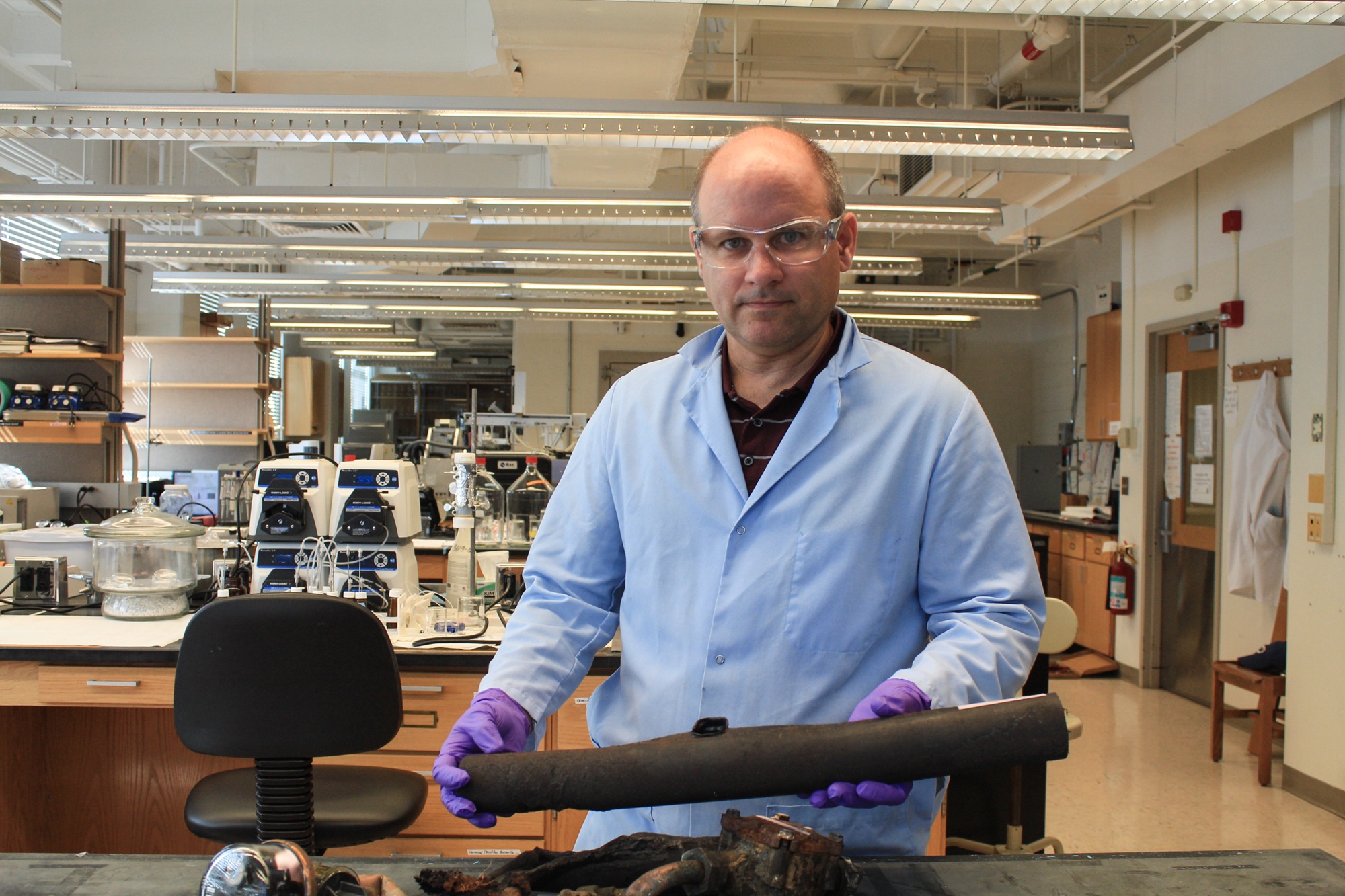
"caption": "Engineering professor Andrew Whelton in his lab on the campus of Purdue University. ",
"credit": "Benjamin Thorp/APM Reports",
"altTag": null,
"description": null,
"imgSizes": {
"thumbnail": {
"file": "https://cdn.kqed.org/wp-content/uploads/sites/10/2025/08/WildfiresAPM1-160x107.jpg",
"width": 160,
"height": 107,
"mimeType": "image/jpeg"
},
"1536x1536": {
"file": "https://cdn.kqed.org/wp-content/uploads/sites/10/2025/08/WildfiresAPM1-1536x1024.jpg",
"width": 1536,
"height": 1024,
"mimeType": "image/jpeg"
},
"post-thumbnail": {
"file": "https://cdn.kqed.org/wp-content/uploads/sites/10/2025/08/WildfiresAPM1-672x372.jpg",
"width": 672,
"height": 372,
"mimeType": "image/jpeg"
},
"twentyfourteen-full-width": {
"file": "https://cdn.kqed.org/wp-content/uploads/sites/10/2025/08/WildfiresAPM1-1038x576.jpg",
"width": 1038,
"height": 576,
"mimeType": "image/jpeg"
},
"kqedFullSize": {
"file": "https://cdn.kqed.org/wp-content/uploads/sites/10/2025/08/WildfiresAPM1.jpg",
"width": 2000,
"height": 1333
}
},
"isLoading": false,
"fetchFailed": false
},
"news_12053215": {
"type": "attachments",
"id": "news_12053215",
"meta": {
"index": "attachments_1716263798",
"site": "news",
"id": "12053215",
"found": true
},
"title": "SanRafaelFire1",
"publishDate": 1755810769,
"status": "inherit",
"parent": 0,
"modified": 1756155221,
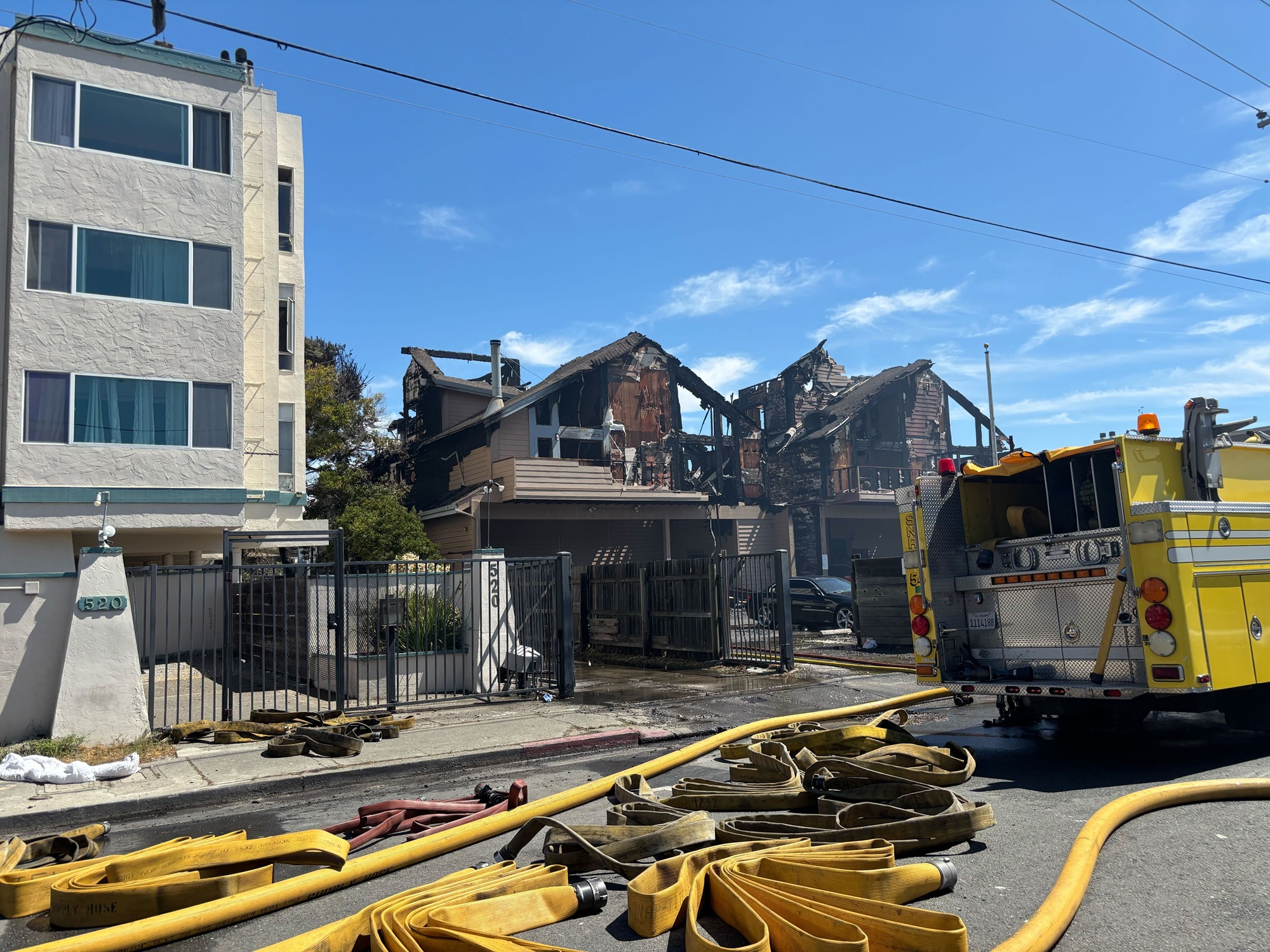
"caption": "A fire broke out around 5:30 a.m. on Thursday at an apartment complex at 516 Canal St. along the San Rafael River.",
"credit": "Courtesy of city of San Rafael",
"altTag": null,
"description": null,
"imgSizes": {
"thumbnail": {
"file": "https://cdn.kqed.org/wp-content/uploads/sites/10/2025/08/SanRafaelFire1-160x120.jpg",
"width": 160,
"height": 120,
"mimeType": "image/jpeg"
},
"1536x1536": {
"file": "https://cdn.kqed.org/wp-content/uploads/sites/10/2025/08/SanRafaelFire1-1536x1152.jpg",
"width": 1536,
"height": 1152,
"mimeType": "image/jpeg"
},
"post-thumbnail": {
"file": "https://cdn.kqed.org/wp-content/uploads/sites/10/2025/08/SanRafaelFire1-672x372.jpg",
"width": 672,
"height": 372,
"mimeType": "image/jpeg"
},
"twentyfourteen-full-width": {
"file": "https://cdn.kqed.org/wp-content/uploads/sites/10/2025/08/SanRafaelFire1-1038x576.jpg",
"width": 1038,
"height": 576,
"mimeType": "image/jpeg"
},
"kqedFullSize": {
"file": "https://cdn.kqed.org/wp-content/uploads/sites/10/2025/08/SanRafaelFire1.jpg",
"width": 2000,
"height": 1500
}
},
"isLoading": false,
"fetchFailed": false
},
"news_12053431": {
"type": "attachments",
"id": "news_12053431",
"meta": {
"index": "attachments_1716263798",
"site": "news",
"id": "12053431",
"found": true
},
"title": "300 De Haro Housing Opportunity Overview (1)",
"publishDate": 1755901898,
"status": "inherit",
"parent": 0,
"modified": 1755902204,
"caption": "A rendering of the 300 De Haro affordable housing development.",
"credit": "Courtesy of DM Development",
"altTag": null,
"description": null,
"imgSizes": {
"thumbnail": {
"file": "https://cdn.kqed.org/wp-content/uploads/sites/10/2025/08/300-De-Haro-Housing-Opportunity-Overview-1-160x90.jpg",
"width": 160,
"height": 90,
"mimeType": "image/jpeg"
},
"1536x1536": {
"file": "https://cdn.kqed.org/wp-content/uploads/sites/10/2025/08/300-De-Haro-Housing-Opportunity-Overview-1-1536x864.jpg",
"width": 1536,
"height": 864,
"mimeType": "image/jpeg"
},
"post-thumbnail": {
"file": "https://cdn.kqed.org/wp-content/uploads/sites/10/2025/08/300-De-Haro-Housing-Opportunity-Overview-1-672x372.jpg",
"width": 672,
"height": 372,
"mimeType": "image/jpeg"
},
"twentyfourteen-full-width": {
"file": "https://cdn.kqed.org/wp-content/uploads/sites/10/2025/08/300-De-Haro-Housing-Opportunity-Overview-1-1038x576.jpg",
"width": 1038,
"height": 576,
"mimeType": "image/jpeg"
},
"kqedFullSize": {
"file": "https://cdn.kqed.org/wp-content/uploads/sites/10/2025/08/300-De-Haro-Housing-Opportunity-Overview-1.jpg",
"width": 2000,
"height": 1125
}
},
"isLoading": false,
"fetchFailed": false
},
"news_12053560": {
"type": "attachments",
"id": "news_12053560",
"meta": {
"index": "attachments_1716263798",
"site": "news",
"id": "12053560",
"found": true
},
"title": "250825-SFUSDMISSIONEDCENTER-06-BL-KQED",
"publishDate": 1756145313,
"status": "inherit",
"parent": 12082156,
"modified": 1777678565,
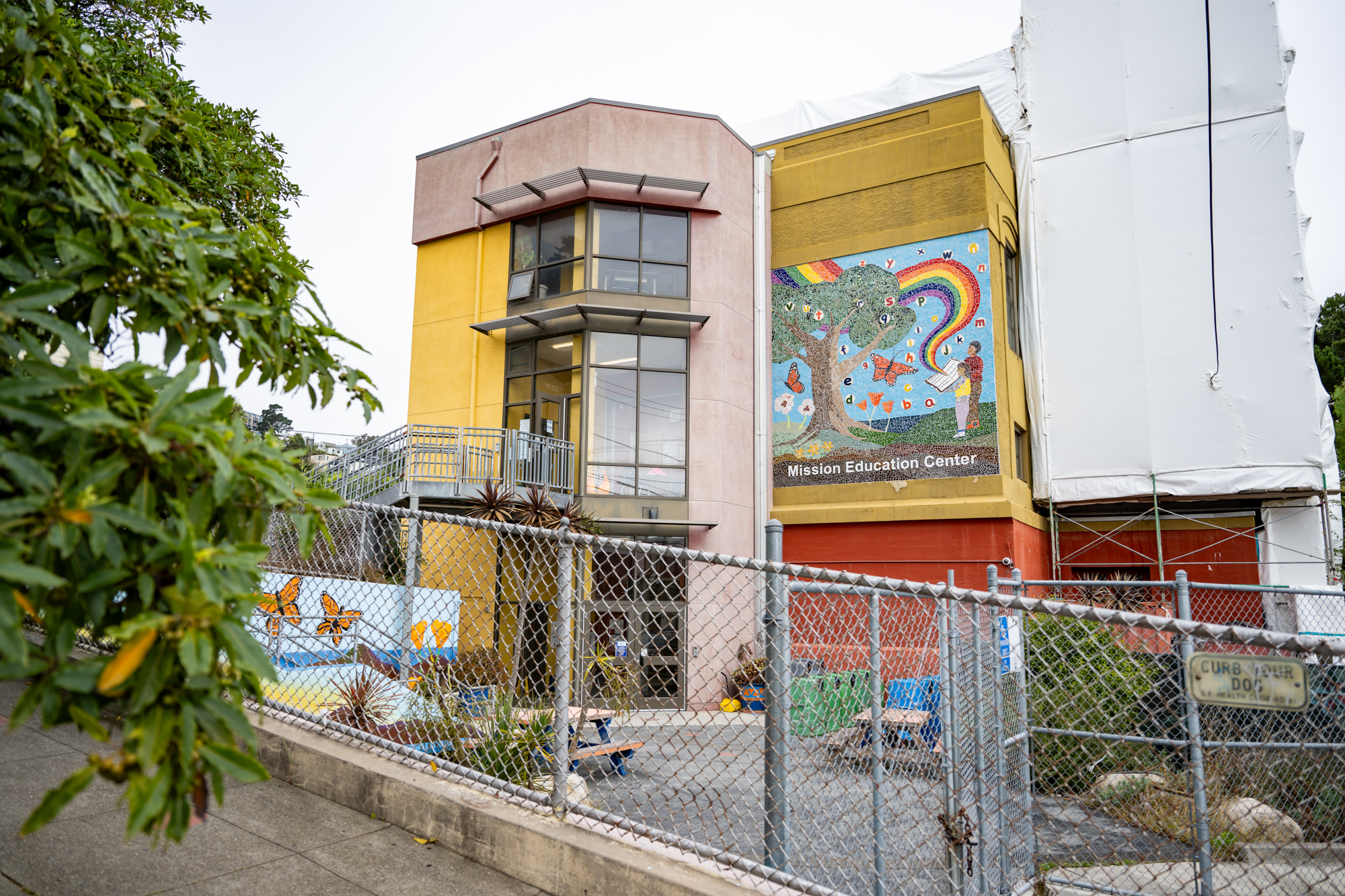
"caption": "The Mission Education Center, a bilingual elementary school in the San Francisco Unified School District, in San Francisco’s Noe Valley neighborhood, on Aug. 25, 2025.",
"credit": "Beth LaBerge/KQED",
"altTag": null,
"description": null,
"imgSizes": {
"thumbnail": {
"file": "https://cdn.kqed.org/wp-content/uploads/sites/10/2025/08/250825-SFUSDMISSIONEDCENTER-06-BL-KQED-160x107.jpg",
"width": 160,
"height": 107,
"mimeType": "image/jpeg"
},
"1536x1536": {
"file": "https://cdn.kqed.org/wp-content/uploads/sites/10/2025/08/250825-SFUSDMISSIONEDCENTER-06-BL-KQED-1536x1024.jpg",
"width": 1536,
"height": 1024,
"mimeType": "image/jpeg"
},
"post-thumbnail": {
"file": "https://cdn.kqed.org/wp-content/uploads/sites/10/2025/08/250825-SFUSDMISSIONEDCENTER-06-BL-KQED-672x372.jpg",
"width": 672,
"height": 372,
"mimeType": "image/jpeg"
},
"twentyfourteen-full-width": {
"file": "https://cdn.kqed.org/wp-content/uploads/sites/10/2025/08/250825-SFUSDMISSIONEDCENTER-06-BL-KQED-1038x576.jpg",
"width": 1038,
"height": 576,
"mimeType": "image/jpeg"
},
"kqedFullSize": {
"file": "https://cdn.kqed.org/wp-content/uploads/sites/10/2025/08/250825-SFUSDMISSIONEDCENTER-06-BL-KQED.jpg",
"width": 2000,
"height": 1333
}
},
"isLoading": false,
"fetchFailed": false
},
"news_12049066": {
"type": "attachments",
"id": "news_12049066",
"meta": {
"index": "attachments_1716263798",
"site": "news",
"id": "12049066",
"found": true
},
"title": "SanJosePostOfficeFireTwitter",
"publishDate": 1753136364,
"status": "inherit",
"parent": 12049042,
"modified": 1753139688,
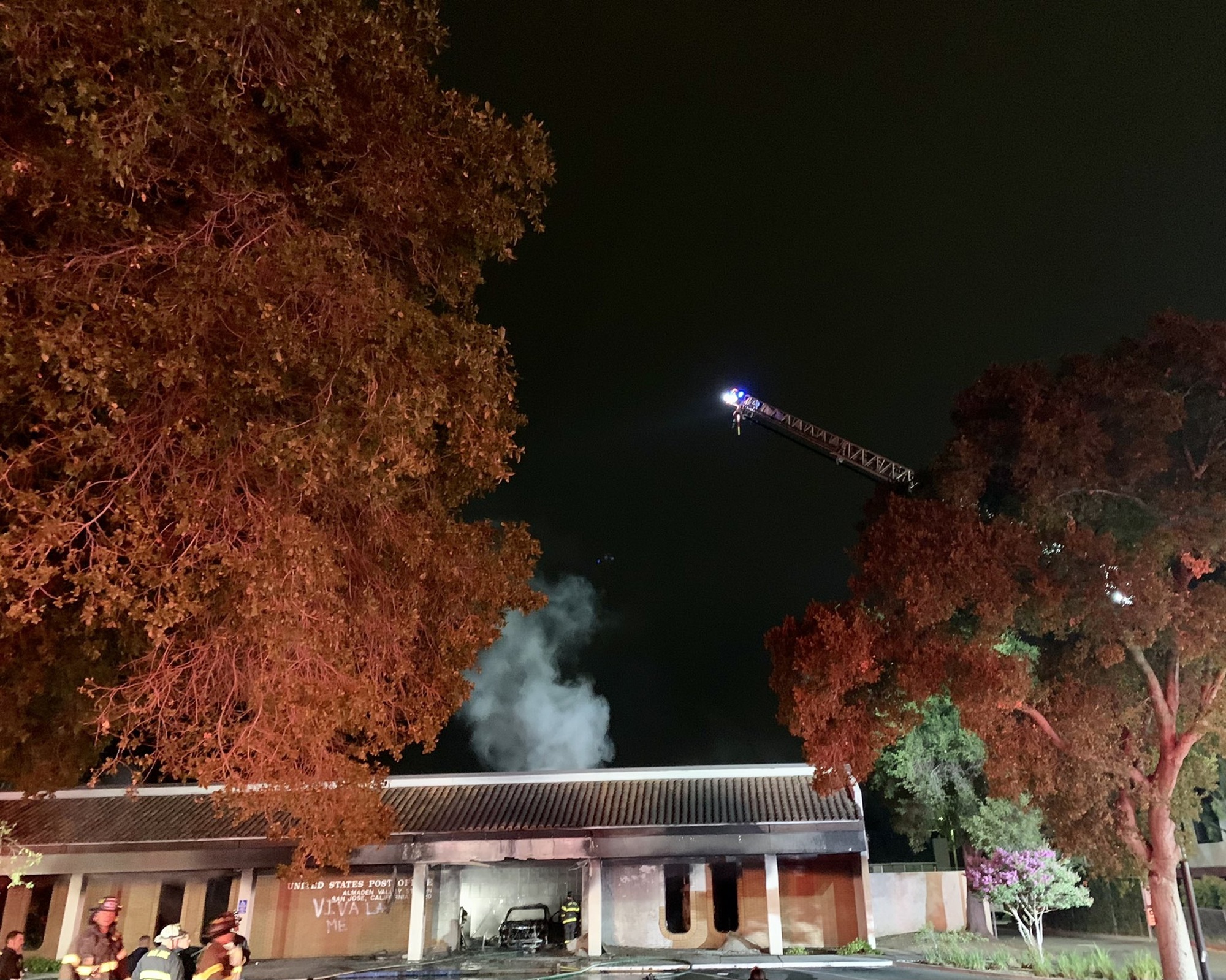
"caption": "San José Fire Department firefighters respond to a fire after a car crashed into a Post Office on Sunday, July 20, 2025, in San José, California.",
"credit": "Courtesy of San José Fire Department via X",
"altTag": null,
"description": null,
"imgSizes": {
"thumbnail": {
"file": "https://cdn.kqed.org/wp-content/uploads/sites/10/2025/07/SanJosePostOfficeFireTwitter-160x128.jpg",
"width": 160,
"height": 128,
"mimeType": "image/jpeg"
},
"1536x1536": {
"file": "https://cdn.kqed.org/wp-content/uploads/sites/10/2025/07/SanJosePostOfficeFireTwitter-1536x1228.jpg",
"width": 1536,
"height": 1228,
"mimeType": "image/jpeg"
},
"post-thumbnail": {
"file": "https://cdn.kqed.org/wp-content/uploads/sites/10/2025/07/SanJosePostOfficeFireTwitter-672x372.jpg",
"width": 672,
"height": 372,
"mimeType": "image/jpeg"
},
"twentyfourteen-full-width": {
"file": "https://cdn.kqed.org/wp-content/uploads/sites/10/2025/07/SanJosePostOfficeFireTwitter-1038x576.jpg",
"width": 1038,
"height": 576,
"mimeType": "image/jpeg"
},
"kqedFullSize": {
"file": "https://cdn.kqed.org/wp-content/uploads/sites/10/2025/07/SanJosePostOfficeFireTwitter.jpg",
"width": 2000,
"height": 1599
}
},
"isLoading": false,
"fetchFailed": false
}
},
"audioPlayerReducer": {
"postId": "stream_live",
"isPaused": true,
"isPlaying": false,
"pfsActive": false,
"pledgeModalIsOpen": true,
"playerDrawerIsOpen": false,
"liveAudioPlayStartedAt": 0,
"liveAudioPlayContext": ""
},
"authorsReducer": {
"byline_news_12053436": {
"type": "authors",
"id": "byline_news_12053436",
"meta": {
"override": true
},
"slug": "byline_news_12053436",
"name": "Jennifer Lu, APM Reports",
"isLoading": false
},
"carlysevern": {
"type": "authors",
"id": "3243",
"meta": {
"index": "authors_1716337520",
"id": "3243",
"found": true
},
"name": "Carly Severn",
"firstName": "Carly",
"lastName": "Severn",
"slug": "carlysevern",
"email": "csevern@kqed.org",
"display_author_email": false,
"staff_mastheads": [
"news"
],
"title": "Senior Editor, Audience News ",
"bio": "Carly is KQED's Senior Editor of Audience News on the Digital News team, and has reported for the California Report Magazine, Bay Curious and KQED Arts. She's formerly the host of \u003ca href=\"http://ww2.kqed.org/pop/category/the-cooler/\" rel=\"noopener noreferrer\">The Cooler\u003c/a> podcast.",
"avatar": "https://secure.gravatar.com/avatar/54037bf5c128fe678f0ef26cec97a93f2e7f220a22d7285703328f12c42c1b1d?s=600&d=blank&r=g",
"twitter": "teacupinthebay",
"bluesky": null,
"facebook": null,
"instagram": null,
"linkedin": null,
"sites": [
{
"site": "",
"roles": [
"editor"
]
},
{
"site": "arts",
"roles": [
"editor"
]
},
{
"site": "news",
"roles": [
"administrator"
]
},
{
"site": "pop",
"roles": [
"editor"
]
},
{
"site": "futureofyou",
"roles": [
"editor"
]
},
{
"site": "about",
"roles": [
"administrator"
]
},
{
"site": "mindshift",
"roles": [
"editor"
]
},
{
"site": "bayareabites",
"roles": [
"editor"
]
},
{
"site": "stateofhealth",
"roles": [
"editor"
]
},
{
"site": "science",
"roles": [
"editor"
]
},
{
"site": "food",
"roles": [
"contributor"
]
},
{
"site": "forum",
"roles": [
"editor"
]
},
{
"site": "perspectives",
"roles": [
"administrator"
]
},
{
"site": "liveblog",
"roles": [
"editor"
]
}
],
"headData": {
"title": "Carly Severn | KQED",
"description": "Senior Editor, Audience News ",
"ogImgSrc": "https://secure.gravatar.com/avatar/54037bf5c128fe678f0ef26cec97a93f2e7f220a22d7285703328f12c42c1b1d?s=600&d=blank&r=g",
"twImgSrc": "https://secure.gravatar.com/avatar/54037bf5c128fe678f0ef26cec97a93f2e7f220a22d7285703328f12c42c1b1d?s=600&d=blank&r=g"
},
"isLoading": false,
"link": "/author/carlysevern"
},
"clei": {
"type": "authors",
"id": "8617",
"meta": {
"index": "authors_1716337520",
"id": "8617",
"found": true
},
"name": "Cecilia Lei",
"firstName": "Cecilia",
"lastName": "Lei",
"slug": "clei",
"email": "clei@KQED.org",
"display_author_email": false,
"staff_mastheads": [],
"title": "KQED Contributor",
"bio": "Cecilia Lei is an on-call host and producer for KQED News and Podcasts. Previously, she was the executive producer and host of the San Francisco Chronicle's daily news podcast, 'Fifth and Mission'. Cecilia is a graduate of UC Berkeley’s Graduate School of Journalism and the former president of the Asian American Journalists Association San Francisco Bay Area chapter.",
"avatar": "https://secure.gravatar.com/avatar/40975f1f88fccf628ee537bf6ffc2af8?s=600&d=blank&r=g",
"twitter": null,
"facebook": null,
"instagram": null,
"linkedin": null,
"sites": [
{
"site": "arts",
"roles": [
"contributor"
]
},
{
"site": "news",
"roles": [
"author",
"read_private_posts"
]
},
{
"site": "about",
"roles": [
"editor"
]
}
],
"headData": {
"title": "Cecilia Lei | KQED",
"description": "KQED Contributor",
"ogImgSrc": "https://secure.gravatar.com/avatar/40975f1f88fccf628ee537bf6ffc2af8?s=600&d=blank&r=g",
"twImgSrc": "https://secure.gravatar.com/avatar/40975f1f88fccf628ee537bf6ffc2af8?s=600&d=blank&r=g"
},
"isLoading": false,
"link": "/author/clei"
},
"jlara": {
"type": "authors",
"id": "11761",
"meta": {
"index": "authors_1716337520",
"id": "11761",
"found": true
},
"name": "Juan Carlos Lara",
"firstName": "Juan Carlos",
"lastName": "Lara",
"slug": "jlara",
"email": "jlara@kqed.org",
"display_author_email": false,
"staff_mastheads": [],
"title": "KQED Contributor",
"bio": null,
"avatar": "https://secure.gravatar.com/avatar/19e2052b9b05657c5ff2af2121846e9c?s=600&d=blank&r=g",
"twitter": null,
"facebook": null,
"instagram": null,
"linkedin": null,
"sites": [
{
"site": "arts",
"roles": [
"editor"
]
},
{
"site": "news",
"roles": [
"editor"
]
},
{
"site": "forum",
"roles": [
"editor"
]
},
{
"site": "liveblog",
"roles": [
"contributor"
]
}
],
"headData": {
"title": "Juan Carlos Lara | KQED",
"description": "KQED Contributor",
"ogImgSrc": "https://secure.gravatar.com/avatar/19e2052b9b05657c5ff2af2121846e9c?s=600&d=blank&r=g",
"twImgSrc": "https://secure.gravatar.com/avatar/19e2052b9b05657c5ff2af2121846e9c?s=600&d=blank&r=g"
},
"isLoading": false,
"link": "/author/jlara"
},
"daisynguyen": {
"type": "authors",
"id": "11829",
"meta": {
"index": "authors_1716337520",
"id": "11829",
"found": true
},
"name": "Daisy Nguyen",
"firstName": "Daisy",
"lastName": "Nguyen",
"slug": "daisynguyen",
"email": "daisynguyen@kqed.org",
"display_author_email": true,
"staff_mastheads": [
"news"
],
"title": "KQED Contributor",
"bio": "I have covered early childhood education and child care for KQED since 2022. I focus on policies aimed at increasing access to early care and education and how they shape individual lives. I've been a journalist for more than two decades, with most of that time devoted to covering breaking news throughout California for The Associated Press. I grew up in San Francisco and studied at UC Davis and Columbia University's Graduate School of Journalism. I live in Oakland with my husband and two kids.",
"avatar": "https://secure.gravatar.com/avatar/2da2127c27f7143b53ebd419800fd55f?s=600&d=blank&r=g",
"twitter": null,
"facebook": null,
"instagram": null,
"linkedin": "https://www.linkedin.com/in/daisynguyen/",
"sites": [
{
"site": "news",
"roles": [
"author"
]
},
{
"site": "liveblog",
"roles": [
"author"
]
}
],
"headData": {
"title": "Daisy Nguyen | KQED",
"description": "KQED Contributor",
"ogImgSrc": "https://secure.gravatar.com/avatar/2da2127c27f7143b53ebd419800fd55f?s=600&d=blank&r=g",
"twImgSrc": "https://secure.gravatar.com/avatar/2da2127c27f7143b53ebd419800fd55f?s=600&d=blank&r=g"
},
"isLoading": false,
"link": "/author/daisynguyen"
},
"nkhan": {
"type": "authors",
"id": "11867",
"meta": {
"index": "authors_1716337520",
"id": "11867",
"found": true
},
"name": "Nisa Khan",
"firstName": "Nisa",
"lastName": "Khan",
"slug": "nkhan",
"email": "nkhan@kqed.org",
"display_author_email": false,
"staff_mastheads": [],
"title": "KQED Contributor",
"bio": "Nisa Khan is a reporter for KQED's Audience News Desk. She was formerly a data reporter at Michigan Radio. She earned a Bachelor of Science in Information from the University of Michigan and a Master of Arts in Communication from Stanford University.",
"avatar": "https://secure.gravatar.com/avatar/8720459eef081ff64582b3506b124d58523e80e120704a0cbd9892533c914991?s=600&d=blank&r=g",
"twitter": "mnisakhan",
"bluesky": null,
"facebook": null,
"instagram": null,
"linkedin": null,
"sites": [
{
"site": "arts",
"roles": [
"editor"
]
},
{
"site": "news",
"roles": [
"editor"
]
},
{
"site": "science",
"roles": [
"editor",
"author"
]
},
{
"site": "forum",
"roles": [
"editor"
]
},
{
"site": "liveblog",
"roles": [
"contributor"
]
}
],
"headData": {
"title": "Nisa Khan | KQED",
"description": "KQED Contributor",
"ogImgSrc": "https://secure.gravatar.com/avatar/8720459eef081ff64582b3506b124d58523e80e120704a0cbd9892533c914991?s=600&d=blank&r=g",
"twImgSrc": "https://secure.gravatar.com/avatar/8720459eef081ff64582b3506b124d58523e80e120704a0cbd9892533c914991?s=600&d=blank&r=g"
},
"isLoading": false,
"link": "/author/nkhan"
},
"jgeha": {
"type": "authors",
"id": "11906",
"meta": {
"index": "authors_1716337520",
"id": "11906",
"found": true
},
"name": "Joseph Geha",
"firstName": "Joseph",
"lastName": "Geha",
"slug": "jgeha",
"email": "jgeha@kqed.org",
"display_author_email": false,
"staff_mastheads": [
"news",
"science"
],
"title": "KQED Contributor",
"bio": null,
"avatar": "https://secure.gravatar.com/avatar/ea84d2b6dd93d6369d453edf19dd583f117cd1759d2d9c9c92f9de77017354fe?s=600&d=blank&r=g",
"twitter": null,
"bluesky": null,
"facebook": null,
"instagram": null,
"linkedin": null,
"sites": [
{
"site": "news",
"roles": [
"editor"
]
},
{
"site": "liveblog",
"roles": [
"author"
]
}
],
"headData": {
"title": "Joseph Geha | KQED",
"description": "KQED Contributor",
"ogImgSrc": "https://secure.gravatar.com/avatar/ea84d2b6dd93d6369d453edf19dd583f117cd1759d2d9c9c92f9de77017354fe?s=600&d=blank&r=g",
"twImgSrc": "https://secure.gravatar.com/avatar/ea84d2b6dd93d6369d453edf19dd583f117cd1759d2d9c9c92f9de77017354fe?s=600&d=blank&r=g"
},
"isLoading": false,
"link": "/author/jgeha"
},
"kdebenedetti": {
"type": "authors",
"id": "11913",
"meta": {
"index": "authors_1716337520",
"id": "11913",
"found": true
},
"name": "Katie DeBenedetti",
"firstName": "Katie",
"lastName": "DeBenedetti",
"slug": "kdebenedetti",
"email": "kdebenedetti@kqed.org",
"display_author_email": false,
"staff_mastheads": [
"news",
"science"
],
"title": "KQED Contributor",
"bio": "Katie DeBenedetti is a digital reporter covering daily news for the Express Desk. Prior to joining KQED as a culture reporting intern in January 2024, she covered education and city government for the Napa Valley Register.",
"avatar": "https://secure.gravatar.com/avatar/6e31073cb8f7e4214ab03f42771d0f45?s=600&d=blank&r=g",
"twitter": null,
"facebook": null,
"instagram": null,
"linkedin": null,
"sites": [
{
"site": "news",
"roles": [
"author"
]
},
{
"site": "science",
"roles": [
"author"
]
},
{
"site": "liveblog",
"roles": [
"author"
]
}
],
"headData": {
"title": "Katie DeBenedetti | KQED",
"description": "KQED Contributor",
"ogImgSrc": "https://secure.gravatar.com/avatar/6e31073cb8f7e4214ab03f42771d0f45?s=600&d=blank&r=g",
"twImgSrc": "https://secure.gravatar.com/avatar/6e31073cb8f7e4214ab03f42771d0f45?s=600&d=blank&r=g"
},
"isLoading": false,
"link": "/author/kdebenedetti"
},
"bkrans": {
"type": "authors",
"id": "11923",
"meta": {
"index": "authors_1716337520",
"id": "11923",
"found": true
},
"name": "Brian Krans",
"firstName": "Brian",
"lastName": "Krans",
"slug": "bkrans",
"email": "bkrans@kqed.org",
"display_author_email": false,
"staff_mastheads": [
"news"
],
"title": "KQED Contributing Reporter",
"bio": "Brian Krans is an award-winning local news and investigative reporter who has been proudly working as a general assignment reporter for KQED since August 2023. He lives in Richmond, where he also reports on air pollution for Richmondside. He is also a founding member of the Vallejo Sun.",
"avatar": "https://secure.gravatar.com/avatar/d1014d604089314a94807d2c4f2d3e06?s=600&d=blank&r=g",
"twitter": "citizenkrans",
"facebook": null,
"instagram": null,
"linkedin": null,
"sites": [
{
"site": "news",
"roles": [
"editor"
]
}
],
"headData": {
"title": "Brian Krans | KQED",
"description": "KQED Contributing Reporter",
"ogImgSrc": "https://secure.gravatar.com/avatar/d1014d604089314a94807d2c4f2d3e06?s=600&d=blank&r=g",
"twImgSrc": "https://secure.gravatar.com/avatar/d1014d604089314a94807d2c4f2d3e06?s=600&d=blank&r=g"
},
"isLoading": false,
"link": "/author/bkrans"
},
"gzada": {
"type": "authors",
"id": "11929",
"meta": {
"index": "authors_1716337520",
"id": "11929",
"found": true
},
"name": "Gilare Zada",
"firstName": "Gilare",
"lastName": "Zada",
"slug": "gzada",
"email": "gzada@kqed.org",
"display_author_email": true,
"staff_mastheads": [
"news"
],
"title": null,
"bio": "Gilare Zada is a Kurdish-American from San Diego, CA. Storytelling, fitness, and binge reading are some of her passions outside of news reporting. Her work has appeared in Mission Local, the Peninsula Press, the San Francisco Press Club, and more. She also writes as a class correspondent for the Stanford Magazine - go Card!",
"avatar": "https://secure.gravatar.com/avatar/33a75f2b947669a488a805edec3fbf3838c1cedaedda710e983770633b4d6a75?s=600&d=blank&r=g",
"twitter": null,
"bluesky": null,
"facebook": null,
"instagram": null,
"linkedin": null,
"sites": [
{
"site": "arts",
"roles": [
"editor"
]
},
{
"site": "news",
"roles": [
"administrator"
]
},
{
"site": "science",
"roles": [
"editor"
]
}
],
"headData": {
"title": "Gilare Zada | KQED",
"description": null,
"ogImgSrc": "https://secure.gravatar.com/avatar/33a75f2b947669a488a805edec3fbf3838c1cedaedda710e983770633b4d6a75?s=600&d=blank&r=g",
"twImgSrc": "https://secure.gravatar.com/avatar/33a75f2b947669a488a805edec3fbf3838c1cedaedda710e983770633b4d6a75?s=600&d=blank&r=g"
},
"isLoading": false,
"link": "/author/gzada"
},
"mbernal": {
"type": "authors",
"id": "11977",
"meta": {
"index": "authors_1716337520",
"id": "11977",
"found": true
},
"name": "María Fernanda Bernal",
"firstName": "María Fernanda",
"lastName": "Bernal",
"slug": "mbernal",
"email": "mbernal@kqed.org",
"display_author_email": false,
"staff_mastheads": [
"news"
],
"title": "KQED Contributor",
"bio": "Maria Fernanda is a UC Berkeley J-School alum and was named Innovation Fellow in 2023. She was the 2022 White House Correspondents' Fellow and Cokie Roberts Scholar. In her time at the Investigative Reporting Program, she led an investigative team and received a National Press Award in 2025 for the story on Chevron's Manipulation of Media. She is most proud of her international recognition with the first place podcast award from the Insituto Mexicano de la radio in 2021. Maria Fernanda is a Bay Area-based journalist who is currently working as a general assignment reporter, weekend host and producer at KQED.",
"avatar": "https://secure.gravatar.com/avatar/f44c9ad4bd3426006b0def803428a08a?s=600&d=blank&r=g",
"twitter": null,
"facebook": null,
"instagram": null,
"linkedin": null,
"sites": [
{
"site": "arts",
"roles": [
"editor"
]
},
{
"site": "news",
"roles": [
"editor",
"author"
]
},
{
"site": "science",
"roles": [
"editor"
]
}
],
"headData": {
"title": "María Fernanda Bernal | KQED",
"description": "KQED Contributor",
"ogImgSrc": "https://secure.gravatar.com/avatar/f44c9ad4bd3426006b0def803428a08a?s=600&d=blank&r=g",
"twImgSrc": "https://secure.gravatar.com/avatar/f44c9ad4bd3426006b0def803428a08a?s=600&d=blank&r=g"
},
"isLoading": false,
"link": "/author/mbernal"
}
},
"pagesReducer": {
"news_tag_bay-area": {
"type": "terms",
"id": "news_1386",
"meta": {
"index": "terms_1716263798",
"site": "news",
"id": "1386",
"score": 7.788433
},
"featImg": null,
"name": "Bay Area",
"description": null,
"taxonomy": "tag",
"headData": {
"twImgId": null,
"twTitle": null,
"ogTitle": null,
"ogImgId": null,
"twDescription": null,
"description": null,
"title": "Bay Area Archives | KQED News",
"ogDescription": null
},
"ttid": 1398,
"slug": "bay-area",
"isLoading": false,
"title": "Bay Area",
"pageMeta": {
"site": "news",
"WpPageTemplate": "page-topic-editorial",
"currentPage": 54
},
"blocks": [
{
"blockName": "kqed/post-list",
"attrs": {
"layout": "cardArticle2",
"query": "posts/news?tag=bay-area",
"seeMore": false,
"paginated": true,
"page": 54
}
},
{
"blockName": "kqed/ad"
}
]
}
},
"pfsSessionReducer": {},
"postsReducer": {
"stream_live": {
"type": "live",
"id": "stream_live",
"audioUrl": "https://streams.kqed.org/kqedradio",
"title": "Live Stream",
"excerpt": "Live Stream information currently unavailable.",
"link": "/radio",
"featImg": "",
"label": {
"name": "KQED Live",
"link": "/"
}
},
"stream_kqedNewscast": {
"type": "posts",
"id": "stream_kqedNewscast",
"audioUrl": "https://www.kqed.org/.stream/anon/radio/RDnews/newscast.mp3?_=1",
"title": "KQED Newscast",
"featImg": "",
"label": {
"name": "88.5 FM",
"link": "/"
}
},
"news_12054345": {
"type": "posts",
"id": "news_12054345",
"meta": {
"index": "posts_1716263798",
"site": "news",
"id": "12054345",
"score": null,
"sort": [
1756897235000
]
},
"guestAuthors": [],
"slug": "portola-music-festival-2025-sf-lineup-bag-policy-pier-80-parking",
"title": "Going to Portola Music Festival 2025? What to Know, From Bag Policy to Parking",
"publishDate": 1756897235,
"format": "standard",
"headTitle": "Going to Portola Music Festival 2025? What to Know, From Bag Policy to Parking | KQED",
"labelTerm": {
"site": "news"
},
"content": "\u003cp>The Portola Music Festival is coming back to\u003ca href=\"https://www.kqed.org/news/tag/san-francisco\"> San Francisco\u003c/a> on Sept. 20 and 21, with a \u003ca href=\"https://www.kqed.org/arts/13976070/portola-festival-2025-peggy-gou-chemical-brothers\">lineup\u003c/a> that includes LCD Soundsystem, Christina Aguilera, the Dare, the Chemical Brothers, Peggy Gou, Rico Nasty, Kreayshawn, Magdalena Bay, Dom Dolla, Moby and the Prodigy.\u003c/p>\n\u003cp>While the festival itself is a relatively new addition to San Francisco’s musical calendar, it now attracts \u003ca href=\"https://www.sfmta.com/travel-updates/portola-music-festival-september-28-29-2024\">crowds of around 45,000 people\u003c/a>.\u003c/p>\n\u003cp>Among them is KQED’s own media and marketing campaigns manager Emma Yee, who has attended the Portola Music Festival every year since it launched in 2022. Yee said that for her, what sets this event apart from the staples like \u003ca href=\"https://www.kqed.org/news/12050338/outside-lands-2025-parking-road-closures-will-call-wristbands-pick-up-food-bag-rule-muni-buses\">Outside Lands\u003c/a> and \u003ca href=\"https://www.kqed.org/news/12042763/stern-grove-festival-2025-from-tickets-to-schedules-to-transit\">Stern Grove\u003c/a> is its industrial-feeling Pier 80 warehouse location near the Dogpatch District.\u003c/p>\n\u003cp>[ad fullwidth]\u003c/p>\n\u003cp>“It’s in between a big naval ship and a big crane,” she said, and for her, this “bare bones” aesthetic makes Portola’s lineup — which includes EDM, alternative and pop acts — all the more enjoyable. “It has a very specific curated taste that’s kind of hard to encapsulate, but it all kind of somehow works together,” Yee said.\u003c/p>\n\u003cul>\n\u003cli>\u003cstrong>Jump straight to: \u003ca href=\"#portola-music-festival-bag-policy\">What’s the bag policy at the Portola Music Festival?\u003c/a>\u003c/strong>\u003c/li>\n\u003c/ul>\n\u003cp>If you’ve already got tickets to the Portola Music Festival — or are contemplating buying them — keep reading for our guide to everything you need to know about this newer festival, with insider tips on what to bring, advice for first-timers, road closures, public transportation options and more.\u003c/p>\n\u003cp>\u003cimg loading=\"lazy\" decoding=\"async\" class=\"aligncenter wp-image-12054354 size-full\" src=\"https://cdn.kqed.org/wp-content/uploads/sites/10/2025/09/lineup-5-30-25.jpg\" alt=\"\" width=\"1400\" height=\"1746\" srcset=\"https://cdn.kqed.org/wp-content/uploads/sites/10/2025/09/lineup-5-30-25.jpg 1400w, https://cdn.kqed.org/wp-content/uploads/sites/10/2025/09/lineup-5-30-25-160x200.jpg 160w, https://cdn.kqed.org/wp-content/uploads/sites/10/2025/09/lineup-5-30-25-1232x1536.jpg 1232w\" sizes=\"auto, (max-width: 1400px) 100vw, 1400px\">\u003c/p>\n\u003ch2>When and where is the Portola Music Festival?\u003c/h2>\n\u003cp>The Portola Music Festival spans a whole weekend: Saturday, Sept. 20, and Sunday, Sept. 21.\u003c/p>\n\u003cp>Doors open at 1 p.m. on each day and music ends around 11 p.m.\u003c/p>\n\u003cp>You can view the entire festival lineup and the set times on the \u003ca href=\"https://www.portolamusicfestival.com/set-times/\">Portola Music Festival’s website\u003c/a>.\u003c/p>\n\u003cp>The box office and the entrance to the event are at 900 Marin St., San Francisco.\u003c/p>\n\u003ch2>Can I still get tickets to the Portola Music Festival?\u003c/h2>\n\u003cp>As of publication, \u003ca href=\"https://www.portolamusicfestival.com/passes/\">passes to the Portola Music Festival — including VIP packages — are still available on AXS\u003c/a>.\u003c/p>\n\u003cp>The earlier you buy tickets, the cheaper they are — but remember, the event is for ages 21+ only.\u003c/p>\n\u003cp>The festival’s website warns people \u003cem>not\u003c/em> to buy passes from a third party, and that organizers “won’t service, authenticate or support passes” purchased from a third party or scalper.” If you decide to forge ahead with buying a third party ticket, Portola organizers also note that receipts and order confirmations can be faked or forged, so “don’t be fooled.”\u003c/p>\n\u003cfigure id=\"attachment_12054356\" class=\"wp-caption aligncenter\" style=\"max-width: 2000px\">\u003cimg loading=\"lazy\" decoding=\"async\" class=\"wp-image-12054356 size-full\" src=\"https://cdn.kqed.org/wp-content/uploads/sites/10/2025/09/240928_Portola_EG_04_qed.jpg\" alt=\"\" width=\"2000\" height=\"1333\" srcset=\"https://cdn.kqed.org/wp-content/uploads/sites/10/2025/09/240928_Portola_EG_04_qed.jpg 2000w, https://cdn.kqed.org/wp-content/uploads/sites/10/2025/09/240928_Portola_EG_04_qed-160x107.jpg 160w, https://cdn.kqed.org/wp-content/uploads/sites/10/2025/09/240928_Portola_EG_04_qed-1536x1024.jpg 1536w\" sizes=\"auto, (max-width: 2000px) 100vw, 2000px\">\u003cfigcaption class=\"wp-caption-text\">Andie Romero, 30, uses a parasol decorated with colorful charms to protect herself from the sun at Portola Music Festival in San Francisco on Saturday, Sept. 28, 2024. Romero, a festival enthusiast, has taken the parasol with her to countless festivals, considers it a staple, and has repaired it each time a charm falls off. “It’s been through a lot,” she said. \u003ccite>(Estefany Gonzalez for KQED)\u003c/cite>\u003c/figcaption>\u003c/figure>\n\u003ch2>What should I know about the Portola Music Festival’s Pier 80 venue?\u003c/h2>\n\u003cp>\u003cstrong>Plan for poor phone signal\u003c/strong>\u003c/p>\n\u003cp>A pro tip from Yee: She advised you to make sure that your tickets are already loaded on the \u003ca href=\"https://support.axs.com/hc/en-us/articles/115002034107-What-is-AXS-Mobile-ID\">AXS Mobile app\u003c/a> you’ve used to purchase them, or are waiting in your phone’s wallet app — because the internet signal at Pier 80 is not super strong, and you might not be able to do this in line. Consider also bringing a portable charger, she said, which is allowed at this festival (some venues prohibit them).\u003c/p>\n\u003cp>If you are going with a group of people and you decide to split up, establish a meeting spot where you can get together again, in case your messages are slow to send.\u003c/p>\n\u003cp>\u003cstrong>Don’t rely on cash\u003c/strong>\u003c/p>\n\u003cp>The Portola Music Festival is \u003ca href=\"https://www.portolamusicfestival.com/general-info/\">a cashless event\u003c/a>, but any cash you do bring can be converted to a pre-paid Visa Card at a Guest Service booth.\u003cem> \u003c/em>\u003c/p>\n\u003cp>\u003cstrong>Prepare to move around …\u003c/strong>\u003c/p>\n\u003cp>While the Pier 80 venue is on “the smaller side” as festivals go, noted Yee, it also has a lot of “open space” that makes it relatively easy to jump from stage to stage.\u003c/p>\n\u003cp>That said, usual festival rules apply: If you want to get a good spot for a set, be sure to get to that stage early to avoid a mass of people. (A personal note on festival etiquette from this reporter: If you’ve arrived at a stage super early to make sure you catch your favorite performer, remember to be respectful of the artists playing before them — and their fans. This can look like standing, if you can, and clapping at appropriate times.)\u003c/p>\n\u003cp>Also, be prepared to move around a stage a little, advised Yee, as the volume of Portola sets can range widely from extremely loud (earplugs are recommended) to “on the quiet side,” especially the stages near the water.\u003c/p>\n\u003cp>\u003cstrong>… and dress for comfort (plus variable temperatures)\u003c/strong>\u003c/p>\n\u003cp>Over the years, Portola organizers have added blue astroturf and floor mats to make standing on Pier 80’s concrete easier on your knees and feet — but you should still plan on wearing very comfortable shoes. You’ll also find some seating and water stations around the venue.\u003c/p>\n\u003cp>Be sure to check \u003ca href=\"https://forecast.weather.gov/MapClick.php?lat=37.7335&lon=-122.392\">the National Weather Service\u003c/a> ahead of the festival to know what to wear. Yee advised that while the warehouse stage in particular gets very warm, the temperature can drop significantly at night. Pier 80’s waterfront location can also make for a lot of wind around the open-air stages.[aside postID=news_11878134 hero='https://cdn.kqed.org/wp-content/uploads/sites/10/2024/09/GettyImages-2175344883-1020x680.jpg']\u003c/p>\n\u003cp>\u003cstrong>\u003cem>Don’t \u003c/em>\u003c/strong>\u003cstrong>plan on in-out privileges\u003c/strong>\u003c/p>\n\u003cp>Once you enter the venue, you cannot reenter on the same day — so don’t park somewhere you’ll need to feed a meter.\u003c/p>\n\u003cp>\u003cstrong>Know what you’ll do in a crowd situation \u003c/strong>\u003c/p>\n\u003cp>Portola is a 21+ festival, which you may find makes this crowd feel a little less rowdy than other concerts and festivals, said Yee. If you’re among the people who’ve expressed \u003ca href=\"https://www.theguardian.com/music/2023/aug/04/bad-behaviour-at-concerts-normalised-experts-say\">concern\u003c/a> about \u003ca href=\"https://www.rollingstone.com/culture/culture-news/2023-concert-etiquette-guide-1234740935/\">concert etiquette\u003c/a> devolving since the pandemic — a phenomenon which even has its \u003ca href=\"https://en.wikipedia.org/wiki/Concert_abuse_in_the_2020s\">own Wikipedia page\u003c/a> — this might be music to your ears.\u003c/p>\n\u003cp>It will be crowded, though, with an expected attendance of 45,000 people. If you are the type of person who gets overwhelmed in a busy place, take a look at NPR’s full guide on what to do if you find yourself caught in \u003ca href=\"https://www.npr.org/2021/11/09/1053828800/south-korea-seoul-halloween-crowd-safety-tips\">a crowd crush\u003c/a>.\u003c/p>\n\u003cp>According to Mehdi Moussaïd, a research scientist in Berlin who studies crowd behavior, rely on your instincts and senses if you feel like the crowd is getting too dense. If you get stuck in a crush, \u003ca href=\"https://www.npr.org/2021/11/09/1053828800/south-korea-seoul-halloween-crowd-safety-tips\">move with the crowd and put your arms out\u003c/a> in front of your chest and hold them there, he told NPR in 2022.\u003c/p>\n\u003ch2>\u003ca id=\"portola-music-festival-bag-policy\">\u003c/a>What’s the bag policy at the Portola Music Festival?\u003c/h2>\n\u003cp>The Portola Music Festival has an \u003ca href=\"https://www.portolamusicfestival.com/general-info/#prohibited-items\">extensive list\u003c/a> of what you can or cannot bring to Pier 80. Be sure to read closely, because some classic rave attire, like toys or gloves, may not be allowed.\u003c/p>\n\u003cp>\u003cstrong>Just a few of the items prohibited under the Portola Music Festival bag policy: \u003c/strong>\u003c/p>\n\u003cul>\n\u003cli>Bags, backpacks, fanny packs or purses that are larger than 18”x13”x8.5”\u003c/li>\n\u003cli>Pets (although service animals are allowed)\u003c/li>\n\u003cli>Masks (although medical face coverings to protect against COVID, like N95 masks, are allowed)\u003c/li>\n\u003cli>Aerosol products, including sunscreen\u003c/li>\n\u003cli>Outside food or drinks\u003c/li>\n\u003cli>Flags and flyers\u003c/li>\n\u003cli>Flashlights and glow sticks\u003c/li>\n\u003cli>Chain wallets and chains\u003c/li>\n\u003cli>Airhorns\u003c/li>\n\u003cli>Audio recording devices, drones, laptops, tablets, selfie sticks and professional cameras\u003c/li>\n\u003cli>Chairs, coolers, hammocks, tents and wagons/wheeled carts\u003c/li>\n\u003cli>Drugs (although you \u003cem>can\u003c/em> bring \u003ca href=\"https://video.kqed.org/video/narcan-opioid-1682625961/\">Naloxone\u003c/a>)\u003c/li>\n\u003c/ul>\n\u003cp>The Portola Music Festival’s website also reads that there can be \u003ca href=\"https://www.portolamusicfestival.com/general-info/\">“NO more than 7 Pokémon cards per person (STRICTLY ENFORCED).”\u003c/a> This reporter would like one visitor to defy this rule, to see what happens.\u003c/p>\n\u003cp>You can see the full list of allowed items \u003ca href=\"https://www.portolamusicfestival.com/general-info/\">on the Portola website\u003c/a>, including empty water bottles, phones and chargers (although charging lockers are also \u003ca href=\"https://www.tixr.com/groups/lockandrock/events/portola-music-festival-25-charging-locker-rentals-143627\">available\u003c/a>) and breast pumps and stored breastmilk or formula.\u003c/p>\n\u003ch2>Is there food at the Portola Music Festival?\u003c/h2>\n\u003cp>Food, alcoholic drinks and nonalcoholic drinks are available at the festival. The list of this year’s vendors has not been released yet, but last year included spots like Momo Noodle, Brenda’s French Soul Food and the Vegan Hood Chefs.\u003c/p>\n\u003cp>According to Portola’s \u003ca href=\"https://www.portolamusicfestival.com/ada/\">accessibility page\u003c/a>, there will be gluten-free, vegan and dairy-free dietary options.\u003c/p>\n\u003ch2>Is there parking at the Portola Music Festival?\u003c/h2>\n\u003cp>Festival officials highly recommend that you do \u003ca href=\"https://www.portolamusicfestival.com/get-here-get-out/\">\u003cem>not\u003c/em> drive\u003c/a> to the event, since there is no designated parking available at Pier 80. There is also no designated ADA parking.\u003c/p>\n\u003cp>If you do end up driving, you may be able to find parking in the Dogpatch near Pier 80 by scoping out \u003ca href=\"https://spothero.com/\">third-party apps like SpotHero\u003c/a>. Be careful not to block driveways and sidewalks, unless you’d like to return to find your car towed.\u003c/p>\n\u003cp>Some Caltrain stations, although\u003ca href=\"https://www.caltrain.com/station/22ndstreet\"> not the ones closest to Pier 80,\u003c/a> have \u003ca href=\"https://www.caltrain.com/rider-information/parking\">parking for around $5.50\u003c/a>.\u003c/p>\n\u003cp>Remember, break-ins are common in the Bay — so leave nothing visible in your vehicle, and if at all possible, leave your trunk exposed to show it’s empty. Never leave any electronics, like laptops, in your vehicle, even if you think they’re hidden. Read KQED’s \u003ca href=\"https://www.kqed.org/news/11959799/how-to-avoid-a-car-break-in-bay-area\">full guide\u003c/a> to reducing your chances of suffering a car break-in in San Francisco (and if you’re unlucky enough to have \u003ca href=\"https://www.kqed.org/news/11959477/car-break-ins-bay-area-glass-repair-what-to-do\">your car broken into\u003c/a>, our guide to how to claim the costs of window repair and stolen items from your insurance).\u003c/p>\n\u003ch2>What are the closest public transit options to the Portola Music Festival?\u003c/h2>\n\u003cp>Here are the available public transit options. To avoid getting stranded, be sure to check when your last train or bus leaves.\u003c/p>\n\u003cp>\u003cstrong>BART and shuttles\u003c/strong>\u003c/p>\n\u003cp>If you take BART to the 24th Street station in San Francisco’s Mission District, you can walk over to Valencia and 24th streets to take Portola’s free shuttle to Pier 80.[aside postID=news_12052690 hero='https://cdn.kqed.org/wp-content/uploads/sites/10/2025/08/20241204-BART-JY-023_qed.jpg']Shuttles will run consistently between Pier 80 and 24th Street from 12:30 p.m. to 11:30 p.m. They will drop you off at Illinois and Cesar Chavez streets, which are within two blocks of the entrance.\u003c/p>\n\u003cp>There will be a limited number of accessible shuttles to Pier 80, so be sure to email \u003ca href=\"mailto:ada.portola@goldenvoice.com\">ada.portola@goldenvoice.com\u003c/a> ahead of time to secure a spot.\u003c/p>\n\u003cp>Plan your journey by using \u003ca href=\"https://www.bart.gov/planner\">BART’s Trip Planner\u003c/a>.\u003c/p>\n\u003cp>\u003cstrong>SF Muni\u003c/strong>\u003c/p>\n\u003cp>According to the Portola Music Festival’s \u003ca href=\"https://www.portolamusicfestival.com/get-here-get-out/\">transit page\u003c/a>, your Muni options are:\u003c/p>\n\u003cul>\n\u003cli>T Third Train: From Powell Street BART Station, walk to Union Square/Market Street Station and board Muni’s T Third line toward Sunnydale. Get off at Third/Marin, just two blocks from Pier 80.\u003c/li>\n\u003cli>Route 48 Quintara: exit at 23rd and Third Street and walk 10 minutes to Pier 80.\u003c/li>\n\u003cli>Route 19 Polk: exit at Connecticut and Cesar Chavez and walk 10 minutes to Pier 80.\u003c/li>\n\u003cli>Route 15 Bayview Hunters Point Express: exit at Third & Marin, two blocks from Pier 80.\u003c/li>\n\u003c/ul>\n\u003cp>When leaving the event, you can take:\u003c/p>\n\u003cul>\n\u003cli>T Third Train: From 9 p.m. to 12:30 a.m., board at Third & Marin.\n\u003cul>\n\u003cli>Muni will have extra T Third trains staged and ready to go downtown at the end of the night.\u003c/li>\n\u003cli>The trains will stop at Union Square-Market Street Station, where you can walk to Powell Street BART Station, Market Street bus routes, or AC Transit Transbay Bus Service. Union Square-Market Street Station, Chinatown Station and Yerba Buena/Moscone stations will stay open late until 1 a.m.\u003c/li>\n\u003c/ul>\n\u003c/li>\n\u003cli>Route 48 Quintara runs 24/7 and connects to the 24th Street BART Station. Board at 23rd and Third. Buses run every 20 minutes before 11:30 p.m. and every 30 minutes after 11:30 p.m.\u003c/li>\n\u003cli>Route 19 Polk service ends at 10 p.m. Board at Connecticut & Cesar Chavez.\u003c/li>\n\u003cli>Route 15 Bayview Hunters Point Express Board at Third & Marin, two blocks from Pier 80.\u003c/li>\n\u003cli>Route 91 OWL is an overnight route connecting Pier 80 to Ocean Avenue, West Portal and 19th Street.\u003c/li>\n\u003c/ul>\n\u003cp>Figure out your route by using \u003ca href=\"https://www.sfmta.com/trip-planner\">SFMTA’s Trip Planner\u003c/a>.\u003c/p>\n\u003cp>\u003cstrong>Caltrain\u003c/strong>\u003c/p>\n\u003cp>The closest Caltrain station is the 22nd Street Station, which is about a mile walk from Pier 80. The last train leaving Southbound is at 12:10 a.m.\u003c/p>\n\u003cp>The 22nd Street Station does not have elevator service, so if you have accessibility needs, you may need to go to the San Francisco Caltrain Station and transfer to the T Third.\u003c/p>\n\u003cp>You can plan your trip on \u003ca href=\"http://www.caltrain.com/\">Caltrain’s website\u003c/a>.\u003c/p>\n\u003cp>\u003cstrong>Biking\u003c/strong>\u003c/p>\n\u003cp>There are free bike valets at Portola near 1495 Illinois St., for a limited number of bikes. The valet runs from 12:30 p.m. to 11:30 p.m.\u003c/p>\n\u003cp>If you are unable to secure a spot with the valet, there are several nearby bike racks that you can find on SFMTA’s \u003ca href=\"https://www.sfmta.com/maps/san-francisco-bike-network-map\">Bike Network Map\u003c/a>.\u003c/p>\n\u003cp>There are also Bay Wheels stations around Pier 80, including:\u003c/p>\n\u003cul>\n\u003cli>Illinois and Cesar Chavez streets (This one is closest to the event’s entrance)\u003c/li>\n\u003cli>Indiana and Cesar Chavez streets\u003c/li>\n\u003cli>Evans Avenue + Newhall Street\u003c/li>\n\u003cli>Illinois and 20th streets\u003c/li>\n\u003cli>Iowa and 22nd streets\u003c/li>\n\u003cli>Utah and 25th streets\u003c/li>\n\u003c/ul>\n\u003cp>\u003cstrong>Rideshare and pick up/drop off\u003c/strong>\u003c/p>\n\u003cp>The pick-up and drop-off location for rideshare services like Lyft and Uber is a few blocks from the entrance at 23rd and Illinois streets.\u003c/p>\n\u003cp>Waymos will not be able to reach this location, according to officials. Expect traffic delays and accompanying surge prices on apps like Uber and Lyft.\u003c/p>\n\u003cfigure id=\"attachment_12054358\" class=\"wp-caption aligncenter\" style=\"max-width: 2000px\">\u003cimg loading=\"lazy\" decoding=\"async\" class=\"wp-image-12054358 size-full\" src=\"https://cdn.kqed.org/wp-content/uploads/sites/10/2025/09/240928_Portola_EG_59_qed.jpg\" alt=\"\" width=\"2000\" height=\"1333\" srcset=\"https://cdn.kqed.org/wp-content/uploads/sites/10/2025/09/240928_Portola_EG_59_qed.jpg 2000w, https://cdn.kqed.org/wp-content/uploads/sites/10/2025/09/240928_Portola_EG_59_qed-160x107.jpg 160w, https://cdn.kqed.org/wp-content/uploads/sites/10/2025/09/240928_Portola_EG_59_qed-1536x1024.jpg 1536w\" sizes=\"auto, (max-width: 2000px) 100vw, 2000px\">\u003cfigcaption class=\"wp-caption-text\">Thousands of people dance as Disclosure performs at Portola Music Festival in San Francisco on Sunday, Sept. 29, 2024. \u003ccite>(Estefany Gonzalez for KQED)\u003c/cite>\u003c/figcaption>\u003c/figure>\n\u003ch2>What do I need to know about accessibility at the Portola Music Festival?\u003c/h2>\n\u003cp>There is \u003ca href=\"https://www.portolamusicfestival.com/ada/\">no pre-registration for accessibility\u003c/a>. Instead, you’ll have to register on-site at the event itself, at the two Accessibility Services Hubs near the Box Office at the entrance and inside the venue next to the lockers.\u003c/p>\n\u003cp>At the hub, you can get help like registering your service animal, getting an Assisted Listening Device System and getting an accessibility wristband.\u003c/p>\n\u003cp>The wristband allows people to access accessibility services throughout the venue. Do not take off the wristband during the festival weekend. A companion can also get a wristband.\u003c/p>\n\u003cp>According to the festival’s \u003ca href=\"https://www.portolamusicfestival.com/ada/\">website\u003c/a>, “The venue is navigable for people with mobility disabilities. The event is held primarily on cement terrain.” The festival will not be able to provide transportation between stages, but can provide some guidance on navigating routes at the hubs.\u003c/p>\n\u003cp>More to know about accessibility:\u003c/p>\n\u003cul>\n\u003cli>If you are taking a shuttle from the BART station to Pier 80, be sure to email ada.portola@goldenvoice.com ahead of time to secure a spot.\u003c/li>\n\u003cli>The pick-up/drop-zone is located on the corner of Cesar Chavez and Tennessee streets. It is mostly cement.\u003c/li>\n\u003cli>There will be an accessible entry land at each festival entrance.\u003c/li>\n\u003cli>There will be medical staff on-site.\u003c/li>\n\u003cli>There will be no mobility device to rent at the festival, but guests can bring their own equipment. Any charges for these devices must use a 110-volt, 20-amp circuit.\u003c/li>\n\u003cli>Some of the stages have an accessible viewing area, which you can access by visiting the hubs. You can also bring a companion with you. Seating is first-come, first-served.\u003c/li>\n\u003cli>The deadline to request sign language interpreters, closed captions, braille and more has passed. But you can try emailing \u003ca href=\"mailto:ada.portola@goldenvoice.com\">ada.portola@goldenvoice.com\u003c/a> to learn more about your options.\u003c/li>\n\u003c/ul>\n\u003ch2>Are there any pregames or afterparties I should know about?\u003c/h2>\n\u003cp>Several of the acting performers at the Portola Music Festival are also performing at individual sets from Sept. 18 to Sept. 22 for Portola Week.\u003c/p>\n\u003cp>So if there is a conflict and you can’t make it to a performance during a festival, or can’t get tickets at all, you \u003cem>may \u003c/em>be able to catch them at another venue, if you move fast.\u003c/p>\n\u003cp>Check out the schedule and secure tickets for\u003ca href=\"https://portolamusicfestival.com/portola-week/\"> Portola Week on the festival’s website\u003c/a>.\u003c/p>\n\u003cp>SF Public Works is also hosting a \u003ca href=\"https://www.tixr.com/groups/publicsf/events/queen-out-portola-pre-party-with-cam-girl-gaszia-donatachi-more-153361\">Portola Pre-Party\u003c/a> on Sept. 18 with acts like Cam Girl, Gaszia and Donatachi.\u003c/p>\n\u003cp>[ad floatright]\u003c/p>\n",
"blocks": [],
"excerpt": "Everything to know about the Portola Music Festival returning to San Francisco this month, from bag policy, the festival lineup and parking.",
"status": "publish",
"parent": 0,
"modified": 1756842187,
"stats": {
"hasAudio": false,
"hasVideo": false,
"hasChartOrMap": false,
"iframeSrcs": [],
"hasGoogleForm": false,
"hasGallery": false,
"hasHearkenModule": false,
"hasPolis": false,
"paragraphCount": 72,
"wordCount": 2845
},
"headData": {
"title": "Going to Portola Music Festival 2025? What to Know, From Bag Policy to Parking | KQED",
"description": "Everything to know about the Portola Music Festival returning to San Francisco this month, from bag policy, the festival lineup and parking.",
"ogTitle": "",
"ogDescription": "",
"ogImgId": "",
"twTitle": "",
"twDescription": "",
"twImgId": "",
"schema": {
"@context": "https://schema.org",
"@type": "NewsArticle",
"headline": "Going to Portola Music Festival 2025? What to Know, From Bag Policy to Parking",
"datePublished": "2025-09-03T04:00:35-07:00",
"dateModified": "2025-09-02T12:43:07-07:00",
"image": "https://cdn.kqed.org/wp-content/uploads/2020/02/KQED-OG-Image@1x.png",
"isAccessibleForFree": "True",
"publisher": {
"@type": "NewsMediaOrganization",
"@id": "https://www.kqed.org/#organization",
"name": "KQED",
"logo": "https://cdn.kqed.org/wp-content/uploads/2020/02/KQED-OG-Image@1x.png",
"url": "https://www.kqed.org",
"sameAs": [
"https://www.facebook.com/KQED",
"https://twitter.com/KQED",
"https://www.instagram.com/kqed/",
"https://www.tiktok.com/@kqedofficial",
"https://www.linkedin.com/company/kqed",
"https://www.youtube.com/channel/UCeC0IOo7i1P_61zVUWbJ4nw"
]
}
}
},
"primaryCategory": {
"termId": 8,
"slug": "news",
"name": "News"
},
"sticky": false,
"templateType": "standard",
"featuredImageType": "standard",
"excludeFromSiteSearch": "Include",
"articleAge": "0",
"path": "/news/12054345/portola-music-festival-2025-sf-lineup-bag-policy-pier-80-parking",
"audioTrackLength": null,
"parsedContent": [
{
"type": "contentString",
"content": "\u003cdiv class=\"post-body\">\u003cp>\u003cp>The Portola Music Festival is coming back to\u003ca href=\"https://www.kqed.org/news/tag/san-francisco\"> San Francisco\u003c/a> on Sept. 20 and 21, with a \u003ca href=\"https://www.kqed.org/arts/13976070/portola-festival-2025-peggy-gou-chemical-brothers\">lineup\u003c/a> that includes LCD Soundsystem, Christina Aguilera, the Dare, the Chemical Brothers, Peggy Gou, Rico Nasty, Kreayshawn, Magdalena Bay, Dom Dolla, Moby and the Prodigy.\u003c/p>\n\u003cp>While the festival itself is a relatively new addition to San Francisco’s musical calendar, it now attracts \u003ca href=\"https://www.sfmta.com/travel-updates/portola-music-festival-september-28-29-2024\">crowds of around 45,000 people\u003c/a>.\u003c/p>\n\u003cp>Among them is KQED’s own media and marketing campaigns manager Emma Yee, who has attended the Portola Music Festival every year since it launched in 2022. Yee said that for her, what sets this event apart from the staples like \u003ca href=\"https://www.kqed.org/news/12050338/outside-lands-2025-parking-road-closures-will-call-wristbands-pick-up-food-bag-rule-muni-buses\">Outside Lands\u003c/a> and \u003ca href=\"https://www.kqed.org/news/12042763/stern-grove-festival-2025-from-tickets-to-schedules-to-transit\">Stern Grove\u003c/a> is its industrial-feeling Pier 80 warehouse location near the Dogpatch District.\u003c/p>\n\u003cp>\u003c/p>\u003c/div>",
"attributes": {
"named": {},
"numeric": []
}
},
{
"type": "component",
"content": "",
"name": "ad",
"attributes": {
"named": {
"label": "fullwidth"
},
"numeric": [
"fullwidth"
]
}
},
{
"type": "contentString",
"content": "\u003cdiv class=\"post-body\">\u003cp>\u003c/p>\n\u003cp>“It’s in between a big naval ship and a big crane,” she said, and for her, this “bare bones” aesthetic makes Portola’s lineup — which includes EDM, alternative and pop acts — all the more enjoyable. “It has a very specific curated taste that’s kind of hard to encapsulate, but it all kind of somehow works together,” Yee said.\u003c/p>\n\u003cul>\n\u003cli>\u003cstrong>Jump straight to: \u003ca href=\"#portola-music-festival-bag-policy\">What’s the bag policy at the Portola Music Festival?\u003c/a>\u003c/strong>\u003c/li>\n\u003c/ul>\n\u003cp>If you’ve already got tickets to the Portola Music Festival — or are contemplating buying them — keep reading for our guide to everything you need to know about this newer festival, with insider tips on what to bring, advice for first-timers, road closures, public transportation options and more.\u003c/p>\n\u003cp>\u003cimg loading=\"lazy\" decoding=\"async\" class=\"aligncenter wp-image-12054354 size-full\" src=\"https://cdn.kqed.org/wp-content/uploads/sites/10/2025/09/lineup-5-30-25.jpg\" alt=\"\" width=\"1400\" height=\"1746\" srcset=\"https://cdn.kqed.org/wp-content/uploads/sites/10/2025/09/lineup-5-30-25.jpg 1400w, https://cdn.kqed.org/wp-content/uploads/sites/10/2025/09/lineup-5-30-25-160x200.jpg 160w, https://cdn.kqed.org/wp-content/uploads/sites/10/2025/09/lineup-5-30-25-1232x1536.jpg 1232w\" sizes=\"auto, (max-width: 1400px) 100vw, 1400px\">\u003c/p>\n\u003ch2>When and where is the Portola Music Festival?\u003c/h2>\n\u003cp>The Portola Music Festival spans a whole weekend: Saturday, Sept. 20, and Sunday, Sept. 21.\u003c/p>\n\u003cp>Doors open at 1 p.m. on each day and music ends around 11 p.m.\u003c/p>\n\u003cp>You can view the entire festival lineup and the set times on the \u003ca href=\"https://www.portolamusicfestival.com/set-times/\">Portola Music Festival’s website\u003c/a>.\u003c/p>\n\u003cp>The box office and the entrance to the event are at 900 Marin St., San Francisco.\u003c/p>\n\u003ch2>Can I still get tickets to the Portola Music Festival?\u003c/h2>\n\u003cp>As of publication, \u003ca href=\"https://www.portolamusicfestival.com/passes/\">passes to the Portola Music Festival — including VIP packages — are still available on AXS\u003c/a>.\u003c/p>\n\u003cp>The earlier you buy tickets, the cheaper they are — but remember, the event is for ages 21+ only.\u003c/p>\n\u003cp>The festival’s website warns people \u003cem>not\u003c/em> to buy passes from a third party, and that organizers “won’t service, authenticate or support passes” purchased from a third party or scalper.” If you decide to forge ahead with buying a third party ticket, Portola organizers also note that receipts and order confirmations can be faked or forged, so “don’t be fooled.”\u003c/p>\n\u003cfigure id=\"attachment_12054356\" class=\"wp-caption aligncenter\" style=\"max-width: 2000px\">\u003cimg loading=\"lazy\" decoding=\"async\" class=\"wp-image-12054356 size-full\" src=\"https://cdn.kqed.org/wp-content/uploads/sites/10/2025/09/240928_Portola_EG_04_qed.jpg\" alt=\"\" width=\"2000\" height=\"1333\" srcset=\"https://cdn.kqed.org/wp-content/uploads/sites/10/2025/09/240928_Portola_EG_04_qed.jpg 2000w, https://cdn.kqed.org/wp-content/uploads/sites/10/2025/09/240928_Portola_EG_04_qed-160x107.jpg 160w, https://cdn.kqed.org/wp-content/uploads/sites/10/2025/09/240928_Portola_EG_04_qed-1536x1024.jpg 1536w\" sizes=\"auto, (max-width: 2000px) 100vw, 2000px\">\u003cfigcaption class=\"wp-caption-text\">Andie Romero, 30, uses a parasol decorated with colorful charms to protect herself from the sun at Portola Music Festival in San Francisco on Saturday, Sept. 28, 2024. Romero, a festival enthusiast, has taken the parasol with her to countless festivals, considers it a staple, and has repaired it each time a charm falls off. “It’s been through a lot,” she said. \u003ccite>(Estefany Gonzalez for KQED)\u003c/cite>\u003c/figcaption>\u003c/figure>\n\u003ch2>What should I know about the Portola Music Festival’s Pier 80 venue?\u003c/h2>\n\u003cp>\u003cstrong>Plan for poor phone signal\u003c/strong>\u003c/p>\n\u003cp>A pro tip from Yee: She advised you to make sure that your tickets are already loaded on the \u003ca href=\"https://support.axs.com/hc/en-us/articles/115002034107-What-is-AXS-Mobile-ID\">AXS Mobile app\u003c/a> you’ve used to purchase them, or are waiting in your phone’s wallet app — because the internet signal at Pier 80 is not super strong, and you might not be able to do this in line. Consider also bringing a portable charger, she said, which is allowed at this festival (some venues prohibit them).\u003c/p>\n\u003cp>If you are going with a group of people and you decide to split up, establish a meeting spot where you can get together again, in case your messages are slow to send.\u003c/p>\n\u003cp>\u003cstrong>Don’t rely on cash\u003c/strong>\u003c/p>\n\u003cp>The Portola Music Festival is \u003ca href=\"https://www.portolamusicfestival.com/general-info/\">a cashless event\u003c/a>, but any cash you do bring can be converted to a pre-paid Visa Card at a Guest Service booth.\u003cem> \u003c/em>\u003c/p>\n\u003cp>\u003cstrong>Prepare to move around …\u003c/strong>\u003c/p>\n\u003cp>While the Pier 80 venue is on “the smaller side” as festivals go, noted Yee, it also has a lot of “open space” that makes it relatively easy to jump from stage to stage.\u003c/p>\n\u003cp>That said, usual festival rules apply: If you want to get a good spot for a set, be sure to get to that stage early to avoid a mass of people. (A personal note on festival etiquette from this reporter: If you’ve arrived at a stage super early to make sure you catch your favorite performer, remember to be respectful of the artists playing before them — and their fans. This can look like standing, if you can, and clapping at appropriate times.)\u003c/p>\n\u003cp>Also, be prepared to move around a stage a little, advised Yee, as the volume of Portola sets can range widely from extremely loud (earplugs are recommended) to “on the quiet side,” especially the stages near the water.\u003c/p>\n\u003cp>\u003cstrong>… and dress for comfort (plus variable temperatures)\u003c/strong>\u003c/p>\n\u003cp>Over the years, Portola organizers have added blue astroturf and floor mats to make standing on Pier 80’s concrete easier on your knees and feet — but you should still plan on wearing very comfortable shoes. You’ll also find some seating and water stations around the venue.\u003c/p>\n\u003cp>Be sure to check \u003ca href=\"https://forecast.weather.gov/MapClick.php?lat=37.7335&lon=-122.392\">the National Weather Service\u003c/a> ahead of the festival to know what to wear. Yee advised that while the warehouse stage in particular gets very warm, the temperature can drop significantly at night. Pier 80’s waterfront location can also make for a lot of wind around the open-air stages.\u003c/p>\u003c/div>",
"attributes": {
"named": {},
"numeric": []
}
},
{
"type": "component",
"content": "",
"name": "aside",
"attributes": {
"named": {
"postid": "news_11878134",
"hero": "https://cdn.kqed.org/wp-content/uploads/sites/10/2024/09/GettyImages-2175344883-1020x680.jpg",
"label": ""
},
"numeric": []
}
},
{
"type": "contentString",
"content": "\u003cdiv class=\"post-body\">\u003cp>\u003c/p>\n\u003cp>\u003cstrong>\u003cem>Don’t \u003c/em>\u003c/strong>\u003cstrong>plan on in-out privileges\u003c/strong>\u003c/p>\n\u003cp>Once you enter the venue, you cannot reenter on the same day — so don’t park somewhere you’ll need to feed a meter.\u003c/p>\n\u003cp>\u003cstrong>Know what you’ll do in a crowd situation \u003c/strong>\u003c/p>\n\u003cp>Portola is a 21+ festival, which you may find makes this crowd feel a little less rowdy than other concerts and festivals, said Yee. If you’re among the people who’ve expressed \u003ca href=\"https://www.theguardian.com/music/2023/aug/04/bad-behaviour-at-concerts-normalised-experts-say\">concern\u003c/a> about \u003ca href=\"https://www.rollingstone.com/culture/culture-news/2023-concert-etiquette-guide-1234740935/\">concert etiquette\u003c/a> devolving since the pandemic — a phenomenon which even has its \u003ca href=\"https://en.wikipedia.org/wiki/Concert_abuse_in_the_2020s\">own Wikipedia page\u003c/a> — this might be music to your ears.\u003c/p>\n\u003cp>It will be crowded, though, with an expected attendance of 45,000 people. If you are the type of person who gets overwhelmed in a busy place, take a look at NPR’s full guide on what to do if you find yourself caught in \u003ca href=\"https://www.npr.org/2021/11/09/1053828800/south-korea-seoul-halloween-crowd-safety-tips\">a crowd crush\u003c/a>.\u003c/p>\n\u003cp>According to Mehdi Moussaïd, a research scientist in Berlin who studies crowd behavior, rely on your instincts and senses if you feel like the crowd is getting too dense. If you get stuck in a crush, \u003ca href=\"https://www.npr.org/2021/11/09/1053828800/south-korea-seoul-halloween-crowd-safety-tips\">move with the crowd and put your arms out\u003c/a> in front of your chest and hold them there, he told NPR in 2022.\u003c/p>\n\u003ch2>\u003ca id=\"portola-music-festival-bag-policy\">\u003c/a>What’s the bag policy at the Portola Music Festival?\u003c/h2>\n\u003cp>The Portola Music Festival has an \u003ca href=\"https://www.portolamusicfestival.com/general-info/#prohibited-items\">extensive list\u003c/a> of what you can or cannot bring to Pier 80. Be sure to read closely, because some classic rave attire, like toys or gloves, may not be allowed.\u003c/p>\n\u003cp>\u003cstrong>Just a few of the items prohibited under the Portola Music Festival bag policy: \u003c/strong>\u003c/p>\n\u003cul>\n\u003cli>Bags, backpacks, fanny packs or purses that are larger than 18”x13”x8.5”\u003c/li>\n\u003cli>Pets (although service animals are allowed)\u003c/li>\n\u003cli>Masks (although medical face coverings to protect against COVID, like N95 masks, are allowed)\u003c/li>\n\u003cli>Aerosol products, including sunscreen\u003c/li>\n\u003cli>Outside food or drinks\u003c/li>\n\u003cli>Flags and flyers\u003c/li>\n\u003cli>Flashlights and glow sticks\u003c/li>\n\u003cli>Chain wallets and chains\u003c/li>\n\u003cli>Airhorns\u003c/li>\n\u003cli>Audio recording devices, drones, laptops, tablets, selfie sticks and professional cameras\u003c/li>\n\u003cli>Chairs, coolers, hammocks, tents and wagons/wheeled carts\u003c/li>\n\u003cli>Drugs (although you \u003cem>can\u003c/em> bring \u003ca href=\"https://video.kqed.org/video/narcan-opioid-1682625961/\">Naloxone\u003c/a>)\u003c/li>\n\u003c/ul>\n\u003cp>The Portola Music Festival’s website also reads that there can be \u003ca href=\"https://www.portolamusicfestival.com/general-info/\">“NO more than 7 Pokémon cards per person (STRICTLY ENFORCED).”\u003c/a> This reporter would like one visitor to defy this rule, to see what happens.\u003c/p>\n\u003cp>You can see the full list of allowed items \u003ca href=\"https://www.portolamusicfestival.com/general-info/\">on the Portola website\u003c/a>, including empty water bottles, phones and chargers (although charging lockers are also \u003ca href=\"https://www.tixr.com/groups/lockandrock/events/portola-music-festival-25-charging-locker-rentals-143627\">available\u003c/a>) and breast pumps and stored breastmilk or formula.\u003c/p>\n\u003ch2>Is there food at the Portola Music Festival?\u003c/h2>\n\u003cp>Food, alcoholic drinks and nonalcoholic drinks are available at the festival. The list of this year’s vendors has not been released yet, but last year included spots like Momo Noodle, Brenda’s French Soul Food and the Vegan Hood Chefs.\u003c/p>\n\u003cp>According to Portola’s \u003ca href=\"https://www.portolamusicfestival.com/ada/\">accessibility page\u003c/a>, there will be gluten-free, vegan and dairy-free dietary options.\u003c/p>\n\u003ch2>Is there parking at the Portola Music Festival?\u003c/h2>\n\u003cp>Festival officials highly recommend that you do \u003ca href=\"https://www.portolamusicfestival.com/get-here-get-out/\">\u003cem>not\u003c/em> drive\u003c/a> to the event, since there is no designated parking available at Pier 80. There is also no designated ADA parking.\u003c/p>\n\u003cp>If you do end up driving, you may be able to find parking in the Dogpatch near Pier 80 by scoping out \u003ca href=\"https://spothero.com/\">third-party apps like SpotHero\u003c/a>. Be careful not to block driveways and sidewalks, unless you’d like to return to find your car towed.\u003c/p>\n\u003cp>Some Caltrain stations, although\u003ca href=\"https://www.caltrain.com/station/22ndstreet\"> not the ones closest to Pier 80,\u003c/a> have \u003ca href=\"https://www.caltrain.com/rider-information/parking\">parking for around $5.50\u003c/a>.\u003c/p>\n\u003cp>Remember, break-ins are common in the Bay — so leave nothing visible in your vehicle, and if at all possible, leave your trunk exposed to show it’s empty. Never leave any electronics, like laptops, in your vehicle, even if you think they’re hidden. Read KQED’s \u003ca href=\"https://www.kqed.org/news/11959799/how-to-avoid-a-car-break-in-bay-area\">full guide\u003c/a> to reducing your chances of suffering a car break-in in San Francisco (and if you’re unlucky enough to have \u003ca href=\"https://www.kqed.org/news/11959477/car-break-ins-bay-area-glass-repair-what-to-do\">your car broken into\u003c/a>, our guide to how to claim the costs of window repair and stolen items from your insurance).\u003c/p>\n\u003ch2>What are the closest public transit options to the Portola Music Festival?\u003c/h2>\n\u003cp>Here are the available public transit options. To avoid getting stranded, be sure to check when your last train or bus leaves.\u003c/p>\n\u003cp>\u003cstrong>BART and shuttles\u003c/strong>\u003c/p>\n\u003cp>If you take BART to the 24th Street station in San Francisco’s Mission District, you can walk over to Valencia and 24th streets to take Portola’s free shuttle to Pier 80.\u003c/p>\u003c/div>",
"attributes": {
"named": {},
"numeric": []
}
},
{
"type": "component",
"content": "",
"name": "aside",
"attributes": {
"named": {
"postid": "news_12052690",
"hero": "https://cdn.kqed.org/wp-content/uploads/sites/10/2025/08/20241204-BART-JY-023_qed.jpg",
"label": ""
},
"numeric": []
}
},
{
"type": "contentString",
"content": "\u003cdiv class=\"post-body\">\u003cp>Shuttles will run consistently between Pier 80 and 24th Street from 12:30 p.m. to 11:30 p.m. They will drop you off at Illinois and Cesar Chavez streets, which are within two blocks of the entrance.\u003c/p>\n\u003cp>There will be a limited number of accessible shuttles to Pier 80, so be sure to email \u003ca href=\"mailto:ada.portola@goldenvoice.com\">ada.portola@goldenvoice.com\u003c/a> ahead of time to secure a spot.\u003c/p>\n\u003cp>Plan your journey by using \u003ca href=\"https://www.bart.gov/planner\">BART’s Trip Planner\u003c/a>.\u003c/p>\n\u003cp>\u003cstrong>SF Muni\u003c/strong>\u003c/p>\n\u003cp>According to the Portola Music Festival’s \u003ca href=\"https://www.portolamusicfestival.com/get-here-get-out/\">transit page\u003c/a>, your Muni options are:\u003c/p>\n\u003cul>\n\u003cli>T Third Train: From Powell Street BART Station, walk to Union Square/Market Street Station and board Muni’s T Third line toward Sunnydale. Get off at Third/Marin, just two blocks from Pier 80.\u003c/li>\n\u003cli>Route 48 Quintara: exit at 23rd and Third Street and walk 10 minutes to Pier 80.\u003c/li>\n\u003cli>Route 19 Polk: exit at Connecticut and Cesar Chavez and walk 10 minutes to Pier 80.\u003c/li>\n\u003cli>Route 15 Bayview Hunters Point Express: exit at Third & Marin, two blocks from Pier 80.\u003c/li>\n\u003c/ul>\n\u003cp>When leaving the event, you can take:\u003c/p>\n\u003cul>\n\u003cli>T Third Train: From 9 p.m. to 12:30 a.m., board at Third & Marin.\n\u003cul>\n\u003cli>Muni will have extra T Third trains staged and ready to go downtown at the end of the night.\u003c/li>\n\u003cli>The trains will stop at Union Square-Market Street Station, where you can walk to Powell Street BART Station, Market Street bus routes, or AC Transit Transbay Bus Service. Union Square-Market Street Station, Chinatown Station and Yerba Buena/Moscone stations will stay open late until 1 a.m.\u003c/li>\n\u003c/ul>\n\u003c/li>\n\u003cli>Route 48 Quintara runs 24/7 and connects to the 24th Street BART Station. Board at 23rd and Third. Buses run every 20 minutes before 11:30 p.m. and every 30 minutes after 11:30 p.m.\u003c/li>\n\u003cli>Route 19 Polk service ends at 10 p.m. Board at Connecticut & Cesar Chavez.\u003c/li>\n\u003cli>Route 15 Bayview Hunters Point Express Board at Third & Marin, two blocks from Pier 80.\u003c/li>\n\u003cli>Route 91 OWL is an overnight route connecting Pier 80 to Ocean Avenue, West Portal and 19th Street.\u003c/li>\n\u003c/ul>\n\u003cp>Figure out your route by using \u003ca href=\"https://www.sfmta.com/trip-planner\">SFMTA’s Trip Planner\u003c/a>.\u003c/p>\n\u003cp>\u003cstrong>Caltrain\u003c/strong>\u003c/p>\n\u003cp>The closest Caltrain station is the 22nd Street Station, which is about a mile walk from Pier 80. The last train leaving Southbound is at 12:10 a.m.\u003c/p>\n\u003cp>The 22nd Street Station does not have elevator service, so if you have accessibility needs, you may need to go to the San Francisco Caltrain Station and transfer to the T Third.\u003c/p>\n\u003cp>You can plan your trip on \u003ca href=\"http://www.caltrain.com/\">Caltrain’s website\u003c/a>.\u003c/p>\n\u003cp>\u003cstrong>Biking\u003c/strong>\u003c/p>\n\u003cp>There are free bike valets at Portola near 1495 Illinois St., for a limited number of bikes. The valet runs from 12:30 p.m. to 11:30 p.m.\u003c/p>\n\u003cp>If you are unable to secure a spot with the valet, there are several nearby bike racks that you can find on SFMTA’s \u003ca href=\"https://www.sfmta.com/maps/san-francisco-bike-network-map\">Bike Network Map\u003c/a>.\u003c/p>\n\u003cp>There are also Bay Wheels stations around Pier 80, including:\u003c/p>\n\u003cul>\n\u003cli>Illinois and Cesar Chavez streets (This one is closest to the event’s entrance)\u003c/li>\n\u003cli>Indiana and Cesar Chavez streets\u003c/li>\n\u003cli>Evans Avenue + Newhall Street\u003c/li>\n\u003cli>Illinois and 20th streets\u003c/li>\n\u003cli>Iowa and 22nd streets\u003c/li>\n\u003cli>Utah and 25th streets\u003c/li>\n\u003c/ul>\n\u003cp>\u003cstrong>Rideshare and pick up/drop off\u003c/strong>\u003c/p>\n\u003cp>The pick-up and drop-off location for rideshare services like Lyft and Uber is a few blocks from the entrance at 23rd and Illinois streets.\u003c/p>\n\u003cp>Waymos will not be able to reach this location, according to officials. Expect traffic delays and accompanying surge prices on apps like Uber and Lyft.\u003c/p>\n\u003cfigure id=\"attachment_12054358\" class=\"wp-caption aligncenter\" style=\"max-width: 2000px\">\u003cimg loading=\"lazy\" decoding=\"async\" class=\"wp-image-12054358 size-full\" src=\"https://cdn.kqed.org/wp-content/uploads/sites/10/2025/09/240928_Portola_EG_59_qed.jpg\" alt=\"\" width=\"2000\" height=\"1333\" srcset=\"https://cdn.kqed.org/wp-content/uploads/sites/10/2025/09/240928_Portola_EG_59_qed.jpg 2000w, https://cdn.kqed.org/wp-content/uploads/sites/10/2025/09/240928_Portola_EG_59_qed-160x107.jpg 160w, https://cdn.kqed.org/wp-content/uploads/sites/10/2025/09/240928_Portola_EG_59_qed-1536x1024.jpg 1536w\" sizes=\"auto, (max-width: 2000px) 100vw, 2000px\">\u003cfigcaption class=\"wp-caption-text\">Thousands of people dance as Disclosure performs at Portola Music Festival in San Francisco on Sunday, Sept. 29, 2024. \u003ccite>(Estefany Gonzalez for KQED)\u003c/cite>\u003c/figcaption>\u003c/figure>\n\u003ch2>What do I need to know about accessibility at the Portola Music Festival?\u003c/h2>\n\u003cp>There is \u003ca href=\"https://www.portolamusicfestival.com/ada/\">no pre-registration for accessibility\u003c/a>. Instead, you’ll have to register on-site at the event itself, at the two Accessibility Services Hubs near the Box Office at the entrance and inside the venue next to the lockers.\u003c/p>\n\u003cp>At the hub, you can get help like registering your service animal, getting an Assisted Listening Device System and getting an accessibility wristband.\u003c/p>\n\u003cp>The wristband allows people to access accessibility services throughout the venue. Do not take off the wristband during the festival weekend. A companion can also get a wristband.\u003c/p>\n\u003cp>According to the festival’s \u003ca href=\"https://www.portolamusicfestival.com/ada/\">website\u003c/a>, “The venue is navigable for people with mobility disabilities. The event is held primarily on cement terrain.” The festival will not be able to provide transportation between stages, but can provide some guidance on navigating routes at the hubs.\u003c/p>\n\u003cp>More to know about accessibility:\u003c/p>\n\u003cul>\n\u003cli>If you are taking a shuttle from the BART station to Pier 80, be sure to email ada.portola@goldenvoice.com ahead of time to secure a spot.\u003c/li>\n\u003cli>The pick-up/drop-zone is located on the corner of Cesar Chavez and Tennessee streets. It is mostly cement.\u003c/li>\n\u003cli>There will be an accessible entry land at each festival entrance.\u003c/li>\n\u003cli>There will be medical staff on-site.\u003c/li>\n\u003cli>There will be no mobility device to rent at the festival, but guests can bring their own equipment. Any charges for these devices must use a 110-volt, 20-amp circuit.\u003c/li>\n\u003cli>Some of the stages have an accessible viewing area, which you can access by visiting the hubs. You can also bring a companion with you. Seating is first-come, first-served.\u003c/li>\n\u003cli>The deadline to request sign language interpreters, closed captions, braille and more has passed. But you can try emailing \u003ca href=\"mailto:ada.portola@goldenvoice.com\">ada.portola@goldenvoice.com\u003c/a> to learn more about your options.\u003c/li>\n\u003c/ul>\n\u003ch2>Are there any pregames or afterparties I should know about?\u003c/h2>\n\u003cp>Several of the acting performers at the Portola Music Festival are also performing at individual sets from Sept. 18 to Sept. 22 for Portola Week.\u003c/p>\n\u003cp>So if there is a conflict and you can’t make it to a performance during a festival, or can’t get tickets at all, you \u003cem>may \u003c/em>be able to catch them at another venue, if you move fast.\u003c/p>\n\u003cp>Check out the schedule and secure tickets for\u003ca href=\"https://portolamusicfestival.com/portola-week/\"> Portola Week on the festival’s website\u003c/a>.\u003c/p>\n\u003cp>SF Public Works is also hosting a \u003ca href=\"https://www.tixr.com/groups/publicsf/events/queen-out-portola-pre-party-with-cam-girl-gaszia-donatachi-more-153361\">Portola Pre-Party\u003c/a> on Sept. 18 with acts like Cam Girl, Gaszia and Donatachi.\u003c/p>\n\u003cp>\u003c/p>\u003c/div>",
"attributes": {
"named": {},
"numeric": []
}
},
{
"type": "component",
"content": "",
"name": "ad",
"attributes": {
"named": {
"label": "floatright"
},
"numeric": [
"floatright"
]
}
},
{
"type": "contentString",
"content": "\u003cdiv class=\"post-body\">\u003cp>\u003c/p>\n\u003c/div>\u003c/p>",
"attributes": {
"named": {},
"numeric": []
}
}
],
"link": "/news/12054345/portola-music-festival-2025-sf-lineup-bag-policy-pier-80-parking",
"authors": [
"11867"
],
"categories": [
"news_29992",
"news_31795",
"news_34168",
"news_28250",
"news_8"
],
"tags": [
"news_19133",
"news_32662",
"news_32707",
"news_1386",
"news_18538",
"news_27626",
"news_1425"
],
"featImg": "news_12054395",
"label": "news"
},
"news_12054363": {
"type": "posts",
"id": "news_12054363",
"meta": {
"index": "posts_1716263798",
"site": "news",
"id": "12054363",
"score": null,
"sort": [
1756839918000
]
},
"guestAuthors": [],
"slug": "ethnic-studies-debate-follows-students-into-san-francisco-classrooms",
"title": "Ethnic Studies Debate Follows Students Into San Francisco Classrooms",
"publishDate": 1756839918,
"format": "standard",
"headTitle": "Ethnic Studies Debate Follows Students Into San Francisco Classrooms | KQED",
"labelTerm": {
"site": "news"
},
"content": "\u003cp>When Samantha Aguirre’s ninth graders shuffled into \u003ca href=\"https://www.kqed.org/news/11830384/how-the-longest-student-strike-in-u-s-history-created-ethnic-studies\">ethnic studies\u003c/a> on the first day of school this fall, many had no idea of the drama and strife surrounding the course all summer — still looming in the background of Aguirre’s and many teachers’ minds.\u003c/p>\n\u003cp>She delivered her opening spiel, refined over a decade teaching the class in the San Francisco Unified School District, introducing herself to new students, establishing a welcoming environment and posing one of the year’s guiding questions: “What are race and ethnicities and how have they changed over time?”\u003c/p>\n\u003cp>Discussing that question has always been where Aguirre starts, she said. \u003ca href=\"https://www.kqed.org/news/12046122/sfusd-was-a-pioneer-in-ethnic-studies-now-the-program-could-be-put-on-pause\">Despite months of parent pushback\u003c/a> against ethnic studies, prompting a late-summer \u003ca href=\"https://www.kqed.org/news/12046580/sf-school-district-wont-cancel-ethnic-studies-but-pauses-its-homegrown-curriculum\">curriculum change\u003c/a> and new oversight regulations, she hasn’t had to alter much.\u003c/p>\n\u003cp>[ad fullwidth]\u003c/p>\n\u003cp>Since school let out in the spring, SFUSD’s ethnic studies course has come under major scrutiny after a cohort of parents, backed by local political groups and a national education organization, raised alarms that the curriculum in their children’s classrooms comes from a biased, “activist-driven” perspective.\u003c/p>\n\u003cp>Petitions cropped up to pause the class, parents created a \u003ca href=\"https://www.opt-out-toolkit-sfusd-ethnic-studies.com/\">toolkit to opt kids out\u003c/a> and media scrutiny intensified. In July, the district announced it would replace its pioneering homegrown curriculum with a third-party textbook for this year.\u003c/p>\n\u003cfigure id=\"attachment_12052662\" class=\"wp-caption aligncenter\" style=\"max-width: 2000px\">\u003cimg loading=\"lazy\" decoding=\"async\" class=\"wp-image-12052662 size-full\" src=\"https://cdn.kqed.org/wp-content/uploads/sites/10/2025/08/250818-SFUSDFIRSTDAY-03-KQED.jpg\" alt=\"\" width=\"2000\" height=\"1333\" srcset=\"https://cdn.kqed.org/wp-content/uploads/sites/10/2025/08/250818-SFUSDFIRSTDAY-03-KQED.jpg 2000w, https://cdn.kqed.org/wp-content/uploads/sites/10/2025/08/250818-SFUSDFIRSTDAY-03-KQED-160x107.jpg 160w, https://cdn.kqed.org/wp-content/uploads/sites/10/2025/08/250818-SFUSDFIRSTDAY-03-KQED-1536x1024.jpg 1536w\" sizes=\"auto, (max-width: 2000px) 100vw, 2000px\">\u003cfigcaption class=\"wp-caption-text\">Students at Sanchez Elementary School in San Francisco arrive for their first day of the school year on Aug. 18, 2025. \u003ccite>(Beth LaBerge/KQED)\u003c/cite>\u003c/figcaption>\u003c/figure>\n\u003cp>Despite the online chatter, fewer than 50 ninth graders chose not to take ethnic studies this fall, and the classrooms the other 3,800 freshmen entered looked much the same as in previous years.\u003c/p>\n\u003cp>When teachers began flipping through the new course materials in early August, Aguirre said she and other veterans reached an almost ironic understanding: “This textbook that’s been quote-unquote ‘vetted and approved’ is not radically different from what most of us have been teaching already,” she said.\u003c/p>\n\u003cp>The first unit of the new textbook, \u003ca href=\"https://gibbssmitheducation.com/diversity-studies/voices\">\u003cem>Voices: An Ethnic Studies Survey\u003c/em>\u003c/a> by Gibbs Smith Education, focuses on race and ethnicity, sharing many of the themes that SFUSD’s opening “Self and Stories” unit covered.\u003c/p>\n\u003cp>“[\u003cem>Voices\u003c/em>] talks a little bit about colonialism and constructs and eugenics and hierarchy and race. It defines what race is and how that varies from ethnicity, “ Aguirre said. “It talks a little bit about scientific racism and pseudoscientists of the past. These are all things that were in the SFUSD curriculum.”[aside postID=news_12046580 hero='https://cdn.kqed.org/wp-content/uploads/sites/10/2025/06/250421-SFUSDCentralCuts-06-BL_qed-1.jpg']SFUSD first piloted ethnic studies as an elective at some high schools in 2010, and expanded to all campuses in 2015. San Francisco’s Board of Education voted to make a yearlong ethnic studies course a graduation requirement beginning with students who entered ninth grade last year.\u003c/p>\n\u003cp>Since its inception, the course has been lauded as one of the district’s great successes. When announcing a new \u003ca href=\"https://www.kqed.org/news/11891396/new-california-law-will-require-ethnic-studies-class-for-high-schoolers\">state-wide ethnic studies requirement\u003c/a> in 2021, Gov. Gavin Newsom pointed to San Francisco’s class, citing \u003ca href=\"https://ed.stanford.edu/news/ninth-grade-ethnic-studies-helped-students-years-stanford-researchers-find\">Stanford University research\u003c/a> that showed it bolstered students’ attendance and graduation rates. Researchers from UC Irvine found that taking ethnic studies in ninth grade boosted the GPAs of SFUSD students throughout high school, especially among Black and Latino students.\u003c/p>\n\u003cp>But since the district’s course became a graduation requirement in 2024, it has faced intense criticism. Parents Defending Education, a national education group, published multiple reports last year accusing the class of bias and posted course documents it obtained through public records requests.\u003c/p>\n\u003cp>News articles cited one in-class activity \u003ca href=\"https://sfstandard.com/2025/05/30/sfusd-new-ethnic-studies-mandate/\">asking students to role-play as Israeli soldiers\u003c/a> putting Palestinians into refugee camps, and a slide deck comparing civil rights and other \u003ca href=\"https://www.sfchronicle.com/bayarea/article/sfusd-ethic-studies-school-20353723.php\">social movements to the Red Guards\u003c/a>, an often-violent youth movement supporting Mao Zedong during China’s cultural revolution in the 1960s.\u003c/p>\n\u003cp>Multiple ethnic studies teachers previously told KQED they had never seen those materials, much less used them in their classrooms. But the documents sparked a movement to pause the course, led by parents and aided by moderate political action groups like \u003ca href=\"https://www.sfblueprint.org/blog/ethnic-studies-is-yet-another-disastrous-misstep-for-our-public-school-district\">Blueprint for a Better San Francisco\u003c/a>.\u003c/p>\n\u003cfigure id=\"attachment_12052663\" class=\"wp-caption aligncenter\" style=\"max-width: 2000px\">\u003cimg loading=\"lazy\" decoding=\"async\" class=\"wp-image-12052663 size-full\" src=\"https://cdn.kqed.org/wp-content/uploads/sites/10/2025/08/250818-SFUSDFIRSTDAY-04-KQED.jpg\" alt=\"\" width=\"2000\" height=\"1333\" srcset=\"https://cdn.kqed.org/wp-content/uploads/sites/10/2025/08/250818-SFUSDFIRSTDAY-04-KQED.jpg 2000w, https://cdn.kqed.org/wp-content/uploads/sites/10/2025/08/250818-SFUSDFIRSTDAY-04-KQED-160x107.jpg 160w, https://cdn.kqed.org/wp-content/uploads/sites/10/2025/08/250818-SFUSDFIRSTDAY-04-KQED-1536x1024.jpg 1536w\" sizes=\"auto, (max-width: 2000px) 100vw, 2000px\">\u003cfigcaption class=\"wp-caption-text\">Superintendent Maria Su speaks to students at Sanchez Elementary School on the first day of classes for the new school year in San Francisco on Aug. 18, 2025. \u003ccite>(Beth LaBerge/KQED)\u003c/cite>\u003c/figcaption>\u003c/figure>\n\u003cp>They say ethnic studies should focus less on oppression, resistance and activism, and more on the histories of different ethnic groups. The new curriculum, however, changes little, according to Nikhil Laud, who heads the department.\u003c/p>\n\u003cp>“Things are taught in a bit of a different sequence than we’re used to teaching, but we’re not planets apart or continents apart, it’s like the next town over,” he said.\u003c/p>\n\u003cp>The course’s two guiding questions — “How have race and ethnicity shaped or been shaped by history, policy and beliefs?” and “How, if at all, are race and ethnicity significant today?” — remain the same.\u003c/p>\n\u003cp>That makes sense, he said, since SFUSD’s curriculum is one of the longest-standing in the state and served as a model for the state implementing a graduation requirement.[aside postID=news_11830384 hero='https://cdn.kqed.org/wp-content/uploads/sites/10/2020/07/1495678.750x-672x372.png']“Our course actually influenced a lot of the values and principles of the state model curriculum,” he told KQED.\u003c/p>\n\u003cp>Sarita Lavin, another ethnic studies educator, said she feels the \u003cem>Voice\u003c/em>s book has gaps, lacking sections on the LGBTQ+ movement, disability rights and women’s history.\u003c/p>\n\u003cp>“It has no mention of trans people or queer people or their struggles, which is pretty appalling considering the student populations we serve and the fact that we are in San Francisco, which has been a historic hub for queer resistance and rights,” she said.\u003c/p>\n\u003cp>The biggest change teachers face, though, is not the new curriculum itself.\u003c/p>\n\u003cp>“A lot of us are kind of afraid of a witch hunt,” Aguirre said. “It’s very disheartening that … [teachers] feel like they have to look over their shoulder. To question ‘Is this going to be objectionable? Am I going to get doxxed online?’”\u003c/p>\n\u003cp>She worries ethnic studies classes will be under a microscope this year, especially after the district implemented a new regulation last month governing when supplemental materials that aren’t from the approved curriculum can be used.\u003c/p>\n\u003cp>In August, Superintendent Maria Su announced that any outside documents teachers use in any class must go through the district’s review process. That protocol said teachers can use their judgment to decide when something is appropriate. If they are unsure, they must get approval from the superintendent or another designated top official.\u003c/p>\n\u003cp>Aguirre said when she and teachers asked for more concrete details about the vetting and complaint process, they were told little.\u003c/p>\n\u003cp>The district referred KQED to a \u003ca href=\"https://www.sfusd.edu/departments/curriculum-instruction/administrative-regulation-616111-supplemental-instructional-materials\">page on its website\u003c/a> that said if a teacher requests a consult, the superintendent’s designee will assess the new material’s “educational value, relevance, appropriateness, and alignment with District criteria.”\u003c/p>\n\u003cp>SFUSD also said parents can request feedback forms from school principals.\u003c/p>\n\u003cp>She said she was told to continue sharing curriculum with her department head and campus administrators — which teachers already do — but it did little to ease the anxiety of new and non-tenured teachers.\u003c/p>\n\u003cp>Lavin said she fears that using unapproved supplements could lead to discipline or removal.\u003c/p>\n\u003cp>“What we’re seeing realistically is that people who are not educational professionals are having a voice over the people who are educational professionals,” Lavin said. “People who are not education professionals are determining what is allowed for your students to learn in a classroom space.\u003c/p>\n\u003cp>“This is a very dangerous precedent to set.”\u003c/p>\n\u003cp>[ad floatright]\u003c/p>\n",
"blocks": [],
"excerpt": "San Francisco Unified’s ethnic studies program, once hailed as a national model, is now at the center of heated parent opposition, new curriculum oversight and rising teacher fears about censorship.",
"status": "publish",
"parent": 0,
"modified": 1759505810,
"stats": {
"hasAudio": false,
"hasVideo": false,
"hasChartOrMap": false,
"iframeSrcs": [],
"hasGoogleForm": false,
"hasGallery": false,
"hasHearkenModule": false,
"hasPolis": false,
"paragraphCount": 32,
"wordCount": 1358
},
"headData": {
"title": "Ethnic Studies Debate Follows Students Into San Francisco Classrooms | KQED",
"description": "San Francisco Unified’s ethnic studies program, once hailed as a national model, is now at the center of heated parent opposition, new curriculum oversight and rising teacher fears about censorship.",
"ogTitle": "",
"ogDescription": "",
"ogImgId": "",
"twTitle": "",
"twDescription": "",
"twImgId": "",
"schema": {
"@context": "https://schema.org",
"@type": "NewsArticle",
"headline": "Ethnic Studies Debate Follows Students Into San Francisco Classrooms",
"datePublished": "2025-09-02T12:05:18-07:00",
"dateModified": "2025-10-03T08:36:50-07:00",
"image": "https://cdn.kqed.org/wp-content/uploads/2020/02/KQED-OG-Image@1x.png",
"isAccessibleForFree": "True",
"publisher": {
"@type": "NewsMediaOrganization",
"@id": "https://www.kqed.org/#organization",
"name": "KQED",
"logo": "https://cdn.kqed.org/wp-content/uploads/2020/02/KQED-OG-Image@1x.png",
"url": "https://www.kqed.org",
"sameAs": [
"https://www.facebook.com/KQED",
"https://twitter.com/KQED",
"https://www.instagram.com/kqed/",
"https://www.tiktok.com/@kqedofficial",
"https://www.linkedin.com/company/kqed",
"https://www.youtube.com/channel/UCeC0IOo7i1P_61zVUWbJ4nw"
]
}
}
},
"primaryCategory": {
"termId": 8,
"slug": "news",
"name": "News"
},
"audioUrl": "https://traffic.omny.fm/d/clips/0af137ef-751e-4b19-a055-aaef00d2d578/ffca7e9f-6831-41c5-bcaf-aaef00f5a073/8e6946ca-8dfc-45d7-a2c7-b35c010b273a/audio.mp3",
"sticky": false,
"nprStoryId": "kqed-12054363",
"templateType": "standard",
"featuredImageType": "standard",
"excludeFromSiteSearch": "Include",
"articleAge": "0",
"path": "/news/12054363/ethnic-studies-debate-follows-students-into-san-francisco-classrooms",
"audioTrackLength": null,
"parsedContent": [
{
"type": "contentString",
"content": "\u003cdiv class=\"post-body\">\u003cp>\u003cp>When Samantha Aguirre’s ninth graders shuffled into \u003ca href=\"https://www.kqed.org/news/11830384/how-the-longest-student-strike-in-u-s-history-created-ethnic-studies\">ethnic studies\u003c/a> on the first day of school this fall, many had no idea of the drama and strife surrounding the course all summer — still looming in the background of Aguirre’s and many teachers’ minds.\u003c/p>\n\u003cp>She delivered her opening spiel, refined over a decade teaching the class in the San Francisco Unified School District, introducing herself to new students, establishing a welcoming environment and posing one of the year’s guiding questions: “What are race and ethnicities and how have they changed over time?”\u003c/p>\n\u003cp>Discussing that question has always been where Aguirre starts, she said. \u003ca href=\"https://www.kqed.org/news/12046122/sfusd-was-a-pioneer-in-ethnic-studies-now-the-program-could-be-put-on-pause\">Despite months of parent pushback\u003c/a> against ethnic studies, prompting a late-summer \u003ca href=\"https://www.kqed.org/news/12046580/sf-school-district-wont-cancel-ethnic-studies-but-pauses-its-homegrown-curriculum\">curriculum change\u003c/a> and new oversight regulations, she hasn’t had to alter much.\u003c/p>\n\u003cp>\u003c/p>\u003c/div>",
"attributes": {
"named": {},
"numeric": []
}
},
{
"type": "component",
"content": "",
"name": "ad",
"attributes": {
"named": {
"label": "fullwidth"
},
"numeric": [
"fullwidth"
]
}
},
{
"type": "contentString",
"content": "\u003cdiv class=\"post-body\">\u003cp>\u003c/p>\n\u003cp>Since school let out in the spring, SFUSD’s ethnic studies course has come under major scrutiny after a cohort of parents, backed by local political groups and a national education organization, raised alarms that the curriculum in their children’s classrooms comes from a biased, “activist-driven” perspective.\u003c/p>\n\u003cp>Petitions cropped up to pause the class, parents created a \u003ca href=\"https://www.opt-out-toolkit-sfusd-ethnic-studies.com/\">toolkit to opt kids out\u003c/a> and media scrutiny intensified. In July, the district announced it would replace its pioneering homegrown curriculum with a third-party textbook for this year.\u003c/p>\n\u003cfigure id=\"attachment_12052662\" class=\"wp-caption aligncenter\" style=\"max-width: 2000px\">\u003cimg loading=\"lazy\" decoding=\"async\" class=\"wp-image-12052662 size-full\" src=\"https://cdn.kqed.org/wp-content/uploads/sites/10/2025/08/250818-SFUSDFIRSTDAY-03-KQED.jpg\" alt=\"\" width=\"2000\" height=\"1333\" srcset=\"https://cdn.kqed.org/wp-content/uploads/sites/10/2025/08/250818-SFUSDFIRSTDAY-03-KQED.jpg 2000w, https://cdn.kqed.org/wp-content/uploads/sites/10/2025/08/250818-SFUSDFIRSTDAY-03-KQED-160x107.jpg 160w, https://cdn.kqed.org/wp-content/uploads/sites/10/2025/08/250818-SFUSDFIRSTDAY-03-KQED-1536x1024.jpg 1536w\" sizes=\"auto, (max-width: 2000px) 100vw, 2000px\">\u003cfigcaption class=\"wp-caption-text\">Students at Sanchez Elementary School in San Francisco arrive for their first day of the school year on Aug. 18, 2025. \u003ccite>(Beth LaBerge/KQED)\u003c/cite>\u003c/figcaption>\u003c/figure>\n\u003cp>Despite the online chatter, fewer than 50 ninth graders chose not to take ethnic studies this fall, and the classrooms the other 3,800 freshmen entered looked much the same as in previous years.\u003c/p>\n\u003cp>When teachers began flipping through the new course materials in early August, Aguirre said she and other veterans reached an almost ironic understanding: “This textbook that’s been quote-unquote ‘vetted and approved’ is not radically different from what most of us have been teaching already,” she said.\u003c/p>\n\u003cp>The first unit of the new textbook, \u003ca href=\"https://gibbssmitheducation.com/diversity-studies/voices\">\u003cem>Voices: An Ethnic Studies Survey\u003c/em>\u003c/a> by Gibbs Smith Education, focuses on race and ethnicity, sharing many of the themes that SFUSD’s opening “Self and Stories” unit covered.\u003c/p>\n\u003cp>“[\u003cem>Voices\u003c/em>] talks a little bit about colonialism and constructs and eugenics and hierarchy and race. It defines what race is and how that varies from ethnicity, “ Aguirre said. “It talks a little bit about scientific racism and pseudoscientists of the past. These are all things that were in the SFUSD curriculum.”\u003c/p>\u003c/div>",
"attributes": {
"named": {},
"numeric": []
}
},
{
"type": "component",
"content": "",
"name": "aside",
"attributes": {
"named": {
"postid": "news_12046580",
"hero": "https://cdn.kqed.org/wp-content/uploads/sites/10/2025/06/250421-SFUSDCentralCuts-06-BL_qed-1.jpg",
"label": ""
},
"numeric": []
}
},
{
"type": "contentString",
"content": "\u003cdiv class=\"post-body\">\u003cp>SFUSD first piloted ethnic studies as an elective at some high schools in 2010, and expanded to all campuses in 2015. San Francisco’s Board of Education voted to make a yearlong ethnic studies course a graduation requirement beginning with students who entered ninth grade last year.\u003c/p>\n\u003cp>Since its inception, the course has been lauded as one of the district’s great successes. When announcing a new \u003ca href=\"https://www.kqed.org/news/11891396/new-california-law-will-require-ethnic-studies-class-for-high-schoolers\">state-wide ethnic studies requirement\u003c/a> in 2021, Gov. Gavin Newsom pointed to San Francisco’s class, citing \u003ca href=\"https://ed.stanford.edu/news/ninth-grade-ethnic-studies-helped-students-years-stanford-researchers-find\">Stanford University research\u003c/a> that showed it bolstered students’ attendance and graduation rates. Researchers from UC Irvine found that taking ethnic studies in ninth grade boosted the GPAs of SFUSD students throughout high school, especially among Black and Latino students.\u003c/p>\n\u003cp>But since the district’s course became a graduation requirement in 2024, it has faced intense criticism. Parents Defending Education, a national education group, published multiple reports last year accusing the class of bias and posted course documents it obtained through public records requests.\u003c/p>\n\u003cp>News articles cited one in-class activity \u003ca href=\"https://sfstandard.com/2025/05/30/sfusd-new-ethnic-studies-mandate/\">asking students to role-play as Israeli soldiers\u003c/a> putting Palestinians into refugee camps, and a slide deck comparing civil rights and other \u003ca href=\"https://www.sfchronicle.com/bayarea/article/sfusd-ethic-studies-school-20353723.php\">social movements to the Red Guards\u003c/a>, an often-violent youth movement supporting Mao Zedong during China’s cultural revolution in the 1960s.\u003c/p>\n\u003cp>Multiple ethnic studies teachers previously told KQED they had never seen those materials, much less used them in their classrooms. But the documents sparked a movement to pause the course, led by parents and aided by moderate political action groups like \u003ca href=\"https://www.sfblueprint.org/blog/ethnic-studies-is-yet-another-disastrous-misstep-for-our-public-school-district\">Blueprint for a Better San Francisco\u003c/a>.\u003c/p>\n\u003cfigure id=\"attachment_12052663\" class=\"wp-caption aligncenter\" style=\"max-width: 2000px\">\u003cimg loading=\"lazy\" decoding=\"async\" class=\"wp-image-12052663 size-full\" src=\"https://cdn.kqed.org/wp-content/uploads/sites/10/2025/08/250818-SFUSDFIRSTDAY-04-KQED.jpg\" alt=\"\" width=\"2000\" height=\"1333\" srcset=\"https://cdn.kqed.org/wp-content/uploads/sites/10/2025/08/250818-SFUSDFIRSTDAY-04-KQED.jpg 2000w, https://cdn.kqed.org/wp-content/uploads/sites/10/2025/08/250818-SFUSDFIRSTDAY-04-KQED-160x107.jpg 160w, https://cdn.kqed.org/wp-content/uploads/sites/10/2025/08/250818-SFUSDFIRSTDAY-04-KQED-1536x1024.jpg 1536w\" sizes=\"auto, (max-width: 2000px) 100vw, 2000px\">\u003cfigcaption class=\"wp-caption-text\">Superintendent Maria Su speaks to students at Sanchez Elementary School on the first day of classes for the new school year in San Francisco on Aug. 18, 2025. \u003ccite>(Beth LaBerge/KQED)\u003c/cite>\u003c/figcaption>\u003c/figure>\n\u003cp>They say ethnic studies should focus less on oppression, resistance and activism, and more on the histories of different ethnic groups. The new curriculum, however, changes little, according to Nikhil Laud, who heads the department.\u003c/p>\n\u003cp>“Things are taught in a bit of a different sequence than we’re used to teaching, but we’re not planets apart or continents apart, it’s like the next town over,” he said.\u003c/p>\n\u003cp>The course’s two guiding questions — “How have race and ethnicity shaped or been shaped by history, policy and beliefs?” and “How, if at all, are race and ethnicity significant today?” — remain the same.\u003c/p>\n\u003cp>That makes sense, he said, since SFUSD’s curriculum is one of the longest-standing in the state and served as a model for the state implementing a graduation requirement.\u003c/p>\u003c/div>",
"attributes": {
"named": {},
"numeric": []
}
},
{
"type": "component",
"content": "",
"name": "aside",
"attributes": {
"named": {
"postid": "news_11830384",
"hero": "https://cdn.kqed.org/wp-content/uploads/sites/10/2020/07/1495678.750x-672x372.png",
"label": ""
},
"numeric": []
}
},
{
"type": "contentString",
"content": "\u003cdiv class=\"post-body\">\u003cp>“Our course actually influenced a lot of the values and principles of the state model curriculum,” he told KQED.\u003c/p>\n\u003cp>Sarita Lavin, another ethnic studies educator, said she feels the \u003cem>Voice\u003c/em>s book has gaps, lacking sections on the LGBTQ+ movement, disability rights and women’s history.\u003c/p>\n\u003cp>“It has no mention of trans people or queer people or their struggles, which is pretty appalling considering the student populations we serve and the fact that we are in San Francisco, which has been a historic hub for queer resistance and rights,” she said.\u003c/p>\n\u003cp>The biggest change teachers face, though, is not the new curriculum itself.\u003c/p>\n\u003cp>“A lot of us are kind of afraid of a witch hunt,” Aguirre said. “It’s very disheartening that … [teachers] feel like they have to look over their shoulder. To question ‘Is this going to be objectionable? Am I going to get doxxed online?’”\u003c/p>\n\u003cp>She worries ethnic studies classes will be under a microscope this year, especially after the district implemented a new regulation last month governing when supplemental materials that aren’t from the approved curriculum can be used.\u003c/p>\n\u003cp>In August, Superintendent Maria Su announced that any outside documents teachers use in any class must go through the district’s review process. That protocol said teachers can use their judgment to decide when something is appropriate. If they are unsure, they must get approval from the superintendent or another designated top official.\u003c/p>\n\u003cp>Aguirre said when she and teachers asked for more concrete details about the vetting and complaint process, they were told little.\u003c/p>\n\u003cp>The district referred KQED to a \u003ca href=\"https://www.sfusd.edu/departments/curriculum-instruction/administrative-regulation-616111-supplemental-instructional-materials\">page on its website\u003c/a> that said if a teacher requests a consult, the superintendent’s designee will assess the new material’s “educational value, relevance, appropriateness, and alignment with District criteria.”\u003c/p>\n\u003cp>SFUSD also said parents can request feedback forms from school principals.\u003c/p>\n\u003cp>She said she was told to continue sharing curriculum with her department head and campus administrators — which teachers already do — but it did little to ease the anxiety of new and non-tenured teachers.\u003c/p>\n\u003cp>Lavin said she fears that using unapproved supplements could lead to discipline or removal.\u003c/p>\n\u003cp>“What we’re seeing realistically is that people who are not educational professionals are having a voice over the people who are educational professionals,” Lavin said. “People who are not education professionals are determining what is allowed for your students to learn in a classroom space.\u003c/p>\n\u003cp>“This is a very dangerous precedent to set.”\u003c/p>\n\u003cp>\u003c/p>\u003c/div>",
"attributes": {
"named": {},
"numeric": []
}
},
{
"type": "component",
"content": "",
"name": "ad",
"attributes": {
"named": {
"label": "floatright"
},
"numeric": [
"floatright"
]
}
},
{
"type": "contentString",
"content": "\u003cdiv class=\"post-body\">\u003cp>\u003c/p>\n\u003c/div>\u003c/p>",
"attributes": {
"named": {},
"numeric": []
}
}
],
"link": "/news/12054363/ethnic-studies-debate-follows-students-into-san-francisco-classrooms",
"authors": [
"11913"
],
"categories": [
"news_18540",
"news_28250",
"news_8"
],
"tags": [
"news_1386",
"news_20013",
"news_19203",
"news_38",
"news_3946",
"news_1290"
],
"featImg": "news_12051869",
"label": "news"
},
"news_12050233": {
"type": "posts",
"id": "news_12050233",
"meta": {
"index": "posts_1716263798",
"site": "news",
"id": "12050233",
"score": null,
"sort": [
1756821647000
]
},
"guestAuthors": [],
"slug": "how-a-chinese-laundryman-shaped-us-civil-rights-from-san-francisco",
"title": "How a Chinese Laundryman Shaped US Civil Rights From San Francisco",
"publishDate": 1756821647,
"format": "standard",
"headTitle": "How a Chinese Laundryman Shaped US Civil Rights From San Francisco | KQED",
"labelTerm": {
"site": "news"
},
"content": "\u003cp>The evening commute rush hour was starting to take shape on a recent late afternoon in \u003ca href=\"https://www.kqed.org/news/tag/san-francisco\">San Francisco\u003c/a>’s SOMA district, at the corner of Third and Harrison streets.\u003c/p>\n\u003cp>Downtown office workers, wearing backpacks and headphones, wordlessly passed one another on their way to nearby train stations. Muni buses groaned and sighed as they pulled up to a bus stop near an unremarkable half-acre concrete parking lot.\u003c/p>\n\u003cp>“If you believe in civil rights, if you believe all Americans should have civil rights, it started right here,” said David Lei, pointing to the nearly full concrete parking lot that would soon begin emptying. He added: “And this was [the location of] the case that says noncitizens have rights as well … but we forgot. Most people have forgotten.”\u003c/p>\n\u003cp>[ad fullwidth]\u003c/p>\n\u003cp>The de facto local expert on Chinese American history believes a plaque should be installed here to commemorate Yick Wo, a Chinese-owned laundry business that operated at 349 Third St. from 1864 to 1886.\u003c/p>\n\u003cp>It became the focal point of a consequential U.S. Supreme Court case, \u003ca href=\"https://supreme.justia.com/cases/federal/us/118/356/\">\u003cem>Yick Wo v. Hopkins\u003c/em>\u003c/a>, when the laundry’s owner, a Chinese immigrant named Lee Yick, and another laundry owner, Wo Lee, resisted an unfair San Francisco laundry business permit ordinance — one emblematic of the targeted anti-Chinese hostility pervasive in the city at the time.\u003c/p>\n\u003cp>“Yick was an individual, a nobody, but the community supported him and organized,” Lei said.\u003c/p>\n\u003cfigure id=\"attachment_12050750\" class=\"wp-caption aligncenter\" style=\"max-width: 2000px\">\u003cimg loading=\"lazy\" decoding=\"async\" class=\"size-full wp-image-12050750\" src=\"https://cdn.kqed.org/wp-content/uploads/sites/10/2025/08/250729-YICKWOCIVILRIGHTS-05-KQED.jpg\" alt=\"\" width=\"2000\" height=\"1333\" srcset=\"https://cdn.kqed.org/wp-content/uploads/sites/10/2025/08/250729-YICKWOCIVILRIGHTS-05-KQED.jpg 2000w, https://cdn.kqed.org/wp-content/uploads/sites/10/2025/08/250729-YICKWOCIVILRIGHTS-05-KQED-160x107.jpg 160w, https://cdn.kqed.org/wp-content/uploads/sites/10/2025/08/250729-YICKWOCIVILRIGHTS-05-KQED-1536x1024.jpg 1536w\" sizes=\"auto, (max-width: 2000px) 100vw, 2000px\">\u003cfigcaption class=\"wp-caption-text\">David Lei stands near Third and Harrison streets in San Francisco on July 29, 2025, the former site of Yick Wo Laundry, which operated at 349 Third St. and was central to the landmark 1886 Supreme Court case on equal protection. \u003ccite>(Beth LaBerge/KQED)\u003c/cite>\u003c/figcaption>\u003c/figure>\n\u003cp>When most people consider the contributions of America’s earliest Chinese immigrants, they often think of \u003ca href=\"https://www.kqed.org/forum/201509070900/stanford-project-unearths-personal-histories-of-chinese-railroad-workers\">the Transcontinental Railroad\u003c/a>. Lei, who is not related to the author, believes that’s a profound minimization of their influence — even among Chinese Americans themselves.\u003c/p>\n\u003cp>After the Chinese Exclusion Act of 1882, Chinese immigrants filed more than 10,000 lawsuits at the local, state and federal levels to challenge discriminatory laws and systemic \u003ca href=\"https://www.kqed.org/news/10413670/draft-boomtown-history-2a\">racism\u003c/a>. Dozens of those cases reached the U.S. Supreme Court, including one brought by \u003ca href=\"https://www.kqed.org/news/12015449/a-129-year-old-san-francisco-lawsuit-could-stop-trump-from-ending-birthright-citizenship\">Wong Kim Ark\u003c/a>, a case recently spotlighted as the Trump administration continues an attempt to dismantle birthright citizenship, despite \u003ca href=\"https://www.kqed.org/news/12046217/what-the-supreme-courts-latest-ruling-means-for-birthright-citizenship\">multiple court rulings\u003c/a> to block the executive order.\u003c/p>\n\u003cp>Through the legal maneuvering of early Chinese community leaders, \u003cem>Yick Wo \u003c/em>established that \u003ca href=\"https://constitution.congress.gov/constitution/amendment-14/\">the 14th Amendment\u003c/a>’s equal protection and due process clauses apply to “all persons” — including noncitizens in the U.S. These same rights are being tested today as the Trump administration’s \u003ca href=\"https://www.kqed.org/news/12044748/mass-deportations-would-take-a-major-toll-on-california-economy-report-finds\">immigration crackdown intensifies\u003c/a>.\u003c/p>\n\u003cp>\u003cem>Yick Wo\u003c/em> is just one way early Chinese immigrants helped shape constitutional principles that remain foundational to American democracy. Community leaders and immigrant advocates like Lei say the case is more relevant today than ever, serving as a powerful rebuttal to anti-immigrant rhetoric and a reminder that constitutional protections have long applied to noncitizens.\u003c/p>\n\u003ch2>Echoes of the past in today’s immigration fight\u003c/h2>\n\u003cp>Though \u003cem>Yick Wo v. Hopkins \u003c/em>is a staple of constitutional law courses, it remains largely unknown outside the legal community. In 1984, an \u003ca href=\"https://www.kqed.org/news/12008873/san-francisco-school-closures-will-hurt-chinese-immigrant-communities-city-leaders-say\">elementary school\u003c/a> in San Francisco was named after the case, but its website offers only a cursory summary of its historical significance.\u003c/p>\n\u003cp>Legal experts herald Yick’s victory as extraordinary, given the anti-immigrant environment Chinese immigrants endured in the 19th century — attitudes that echo today.\u003c/p>\n\u003cp>Since returning to the White House, Trump has made good on his promise of a massive deportation campaign by aggressively targeting, detaining and deporting immigrants nationwide. High-profile Immigration and Customs Enforcement activity \u003ca href=\"https://www.kqed.org/news/12042836/community-outrage-continues-over-ice-raid-at-san-diego-restaurant\">in Southern California \u003c/a>captured national attention in June, as videos of militarized arrests circulated on social media and fueled \u003ca href=\"https://www.kqed.org/news/12043653/hundreds-rally-in-oakland-to-protest-ice-raids-support-immigrant-communities\">protests locally\u003c/a> and across the country.\u003c/p>\n\u003cfigure id=\"attachment_12050752\" class=\"wp-caption aligncenter\" style=\"max-width: 2000px\">\u003cimg loading=\"lazy\" decoding=\"async\" class=\"size-full wp-image-12050752\" src=\"https://cdn.kqed.org/wp-content/uploads/sites/10/2025/08/250731-YICKWOCIVILRIGHTS-02-KQED.jpg\" alt=\"\" width=\"2000\" height=\"1333\" srcset=\"https://cdn.kqed.org/wp-content/uploads/sites/10/2025/08/250731-YICKWOCIVILRIGHTS-02-KQED.jpg 2000w, https://cdn.kqed.org/wp-content/uploads/sites/10/2025/08/250731-YICKWOCIVILRIGHTS-02-KQED-160x107.jpg 160w, https://cdn.kqed.org/wp-content/uploads/sites/10/2025/08/250731-YICKWOCIVILRIGHTS-02-KQED-1536x1024.jpg 1536w\" sizes=\"auto, (max-width: 2000px) 100vw, 2000px\">\u003cfigcaption class=\"wp-caption-text\">The exhibit Challenging a White-Washed History at the Chinese Historical Society of America Museum in San Francisco on July 31, 2025. The exhibition explores the history of Chinese laundries and their role in resisting discrimination and shaping immigrant labor in the U.S. \u003ccite>(Beth LaBerge/KQED)\u003c/cite>\u003c/figcaption>\u003c/figure>\n\u003cp>The administration continues to portray undocumented immigrants as criminal invaders and threats to national security. Officials \u003ca href=\"https://www.dhs.gov/news/2025/06/30/dhs-debunks-fake-news-media-narratives-june\">claim\u003c/a> they target “the worst of the worst, including gang members, murderers, and rapists,” but most people detained by ICE have \u003ca href=\"https://www.kqed.org/news/12038087/california-sent-investigators-ice-facilities-found-more-detainees-health-care-gaps\">no criminal convictions\u003c/a>.\u003c/p>\n\u003cp>Recently, in the Bay Area, ICE arrests have occurred \u003ca href=\"https://www.kqed.org/news/12028303/ice-arrest-left-bay-area-man-hospitalized-struggling-breathe-attorney-says\">outside of homes\u003c/a> and courthouses \u003ca href=\"https://www.kqed.org/news/12044592/bay-area-lawmaker-demands-answers-after-ice-arrests-at-immigration-courts\">in Concord\u003c/a> and \u003ca href=\"https://www.kqed.org/news/12043596/protesters-swarm-sf-immigration-court-after-more-ice-arrests\">San Francisco\u003c/a>, where plainclothes agents detained asylum seekers attending routine court hearings.\u003c/p>\n\u003cp>Cecillia Wang, national legal director of the American Civil Liberties Union, began her role just before Trump’s second term. She oversees a department of about 200 attorneys and paralegals and calls this “the most consequential time in U.S. history.”\u003c/p>\n\u003cp>In late July, Republicans approved a spending bill that \u003ca href=\"https://www.kqed.org/forum/2010101910650/ices-budget-just-tripled-whats-next\">tripled ICE’s budget\u003c/a>. The removal of immigrants from the country has accelerated through a variety of tactics: The Trump administration has broadened expedited removal, selectively enforced policies in sanctuary jurisdictions, targeted certain migrant groups and fast-tracked deportations — often without full hearings.[aside postID=news_12021919 hero='https://cdn.kqed.org/wp-content/uploads/sites/10/2025/01/20250115_JapaneseAmericanActivism_GC-47-1020x680.jpg']But because of \u003cem>Yick Wo\u003c/em>, constitutional protections should apply to everyone on U.S. soil, regardless of citizenship status. That’s why immigration attorneys and advocates are especially vigilant.\u003c/p>\n\u003cp>“It’s a responsibility that I think is particularly heavy at this moment in time, with a president and administration that has so little respect for civil rights and civil liberties…and so little respect for all the fundamental pillars of U.S. democracy,” Wang said.\u003c/p>\n\u003cp>A San Francisco resident, Wang has worked for the ACLU in various roles for over two decades. The organization has filed more than 60 lawsuits challenging Trump’s second-term policies.\u003c/p>\n\u003cp>Wang, who first studied \u003cem>Yick Wo\u003c/em> as an undergraduate at UC Berkeley, feels personally connected to the case as an Asian American. She has cited it throughout her career as a civil rights lawyer.\u003c/p>\n\u003cp>“One of the lessons of \u003cem>Yick Wo \u003c/em>that I think is really resonant for me right now is that someone who seemed politically powerless, under-resourced and invisible by all accounts was able to bring his claim up through the federal court system to the Supreme Court of the United States,” Wang said.\u003c/p>\n\u003ch2>Redefining constitutional rights in the U.S.\u003c/h2>\n\u003cp>When one considers the odds stacked against Chinese laundry owners as Yick brought his claim forward, the case becomes especially remarkable.\u003c/p>\n\u003cp>Though initially welcomed during the Gold Rush, Chinese immigrants eventually became targets as their population and industrial workforce roles expanded. They took jobs as miners and railroad laborers.\u003c/p>\n\u003cp>They were also entrepreneurial. Early Chinese immigrants filled a specific need that no one else seemed eager to do: laundry service. Chinese immigrants eventually dominated the industry, which would continue for the rest of the 19th century.\u003c/p>\n\u003cfigure id=\"attachment_12051938\" class=\"wp-caption aligncenter\" style=\"max-width: 2000px\">\u003cimg loading=\"lazy\" decoding=\"async\" class=\"size-full wp-image-12051938\" src=\"https://cdn.kqed.org/wp-content/uploads/sites/10/2025/08/250812-YICK-WO-ARCHIVAL-03_KQED.jpg\" alt=\"\" width=\"2000\" height=\"1545\" srcset=\"https://cdn.kqed.org/wp-content/uploads/sites/10/2025/08/250812-YICK-WO-ARCHIVAL-03_KQED.jpg 2000w, https://cdn.kqed.org/wp-content/uploads/sites/10/2025/08/250812-YICK-WO-ARCHIVAL-03_KQED-160x124.jpg 160w, https://cdn.kqed.org/wp-content/uploads/sites/10/2025/08/250812-YICK-WO-ARCHIVAL-03_KQED-1536x1187.jpg 1536w\" sizes=\"auto, (max-width: 2000px) 100vw, 2000px\">\u003cfigcaption class=\"wp-caption-text\">\u003cspan style=\"font-weight: 400\">A Chinese laundry at 924 Howard St. in San Francisco \u003c/span>is shown in a historical photograph dated Jan. 22, 1886. \u003ccite>(Courtesy of the National Archives at San Francisco)\u003c/cite>\u003c/figcaption>\u003c/figure>\n\u003cp>By 1860, about one in 10 California residents was Chinese. Their prominence alarmed white leaders, including then-California governor Henry Huntly Haight.\u003c/p>\n\u003cp>“An additional influx of Chinese to compete with white laboring men in all industrial departments ought to be discouraged by all lawful means. For the sake of some supposed advantage of cheap labor, such influx would inflict a curse upon posterity for all time,” he said during his \u003ca href=\"https://governors.library.ca.gov/addresses/10-haight.html\">1867 inaugural address\u003c/a>.\u003c/p>\n\u003cp>Widespread violence soon followed. By the 1870s, anti-Chinese sentiment escalated across the West Coast, with Chinese immigrants subjected to \u003ca href=\"https://www.kqed.org/forum/2010101886267/california-cities-apologize-for-historical-wrongs-against-chinese-community\">mob-led destruction\u003c/a>, including mass lynchings.\u003c/p>\n\u003cp>According to \u003cem>In Search of Equality: The Chinese Struggle Against Discrimination in Nineteenth-Century America\u003c/em>, a seminal book on Chinese American history by former UC Berkeley professor Charles McClain, there were about 2,600 Chinese laundrymen in California by 1870 — half of them in San Francisco.[aside postID=news_12033789 hero='https://cdn.kqed.org/wp-content/uploads/sites/10/2025/03/250324-WongKimArk-02-BL_qed-1020x680.jpg']Chinese laundry owners faced a flurry of discriminatory city ordinances. One imposed high license fees on those without horse-drawn carriages. Another required written approval from 12 citizens and taxpayers on the block where the business was located.\u003c/p>\n\u003cp>In 1880, the city passed a notorious law requiring permits for laundries not made of brick or stone. At the time, nearly all of San Francisco’s laundries, especially those owned by Chinese immigrants, were wooden structures. Of about 200 applicants, all were denied permits, while their white counterparts were not.\u003c/p>\n\u003cp>In 1885, Yick Wo’s owner refused to stop operating and was arrested by Sheriff Peter Hopkins. Rather than serve the sentence, Lee and other laundrymen fought back with support from the Chinese Consolidated Benevolent Association, also known as the Chinese Six Companies.\u003c/p>\n\u003cp>The Six Companies — a powerful coalition of family and district associations that functioned as both mutual aid organizations and political advocates for the Chinese immigrant community — \u003ca href=\"https://www.kqed.org/news/12015449/a-129-year-old-san-francisco-lawsuit-could-stop-trump-from-ending-birthright-citizenship\">coordinated legal strategies\u003c/a>, raised sizable funds by taxing Chinese immigrants and, importantly, helped them navigate a hostile legal system.\u003c/p>\n\u003cp>“This was the GoFundMe of Chinatown from 1850,” Lei told KQED from inside CCBA’s ornately designed Stockton Street headquarters, where family association leaders and San Francisco politicians still meet.\u003c/p>\n\u003cp>Together with Tung Hing Tong, a 19th-century Chinese laundry association, substantial resources were pooled to fight San Francisco’s unfair permitting ordinance.\u003c/p>\n\u003cfigure id=\"attachment_12050748\" class=\"wp-caption aligncenter\" style=\"max-width: 2000px\">\u003cimg loading=\"lazy\" decoding=\"async\" class=\"size-full wp-image-12050748\" src=\"https://cdn.kqed.org/wp-content/uploads/sites/10/2025/08/250729-YICKWOCIVILRIGHTS-01-KQED.jpg\" alt=\"\" width=\"2000\" height=\"1333\" srcset=\"https://cdn.kqed.org/wp-content/uploads/sites/10/2025/08/250729-YICKWOCIVILRIGHTS-01-KQED.jpg 2000w, https://cdn.kqed.org/wp-content/uploads/sites/10/2025/08/250729-YICKWOCIVILRIGHTS-01-KQED-160x107.jpg 160w, https://cdn.kqed.org/wp-content/uploads/sites/10/2025/08/250729-YICKWOCIVILRIGHTS-01-KQED-1536x1024.jpg 1536w\" sizes=\"auto, (max-width: 2000px) 100vw, 2000px\">\u003cfigcaption class=\"wp-caption-text\">David Lei stands on Spofford Street in San Francisco’s Chinatown on July 29, 2025, the historical site of the Chinese Laundry Association, once located at 33 Spofford St. A longtime resident and community historian, Lei has worked to preserve Chinatown’s cultural and educational legacy. \u003ccite>(Beth LaBerge/KQED)\u003c/cite>\u003c/figcaption>\u003c/figure>\n\u003cp>“They taxed themselves, raised $20,000 — equivalent to more than half a million dollars today — and hired the best lawyer money could buy to win this case,” Lei said.\u003c/p>\n\u003cp>That lawyer was Hall McAllister, a federal judge and founder of the California Bar Association, who became one of the key members of the Six Companies’ legal team as they filed lawsuits.\u003c/p>\n\u003cp>When asked why these powerful white lawyers would go against the popular grain to argue on behalf of Chinese immigrants, Lei said Chinese immigrants often paid up to about double of what other clients would pay.\u003c/p>\n\u003cp>The strategy worked.[aside postID=news_12015449 hero='https://cdn.kqed.org/wp-content/uploads/sites/10/2024/11/20241119_BirthrightCitizenshipExplainer_GC-16_qed-1020x680.jpg']In 1886, the U.S. Supreme Court \u003ca href=\"https://supreme.justia.com/cases/federal/us/118/356/\">ruled unanimously for Yick\u003c/a>, declaring that even if a law appears to be race-neutral, “if it is applied and administered by public authority with an evil eye and an unequal hand,” then it violates the equal protection clause of the 14th Amendment.\u003c/p>\n\u003cp>Crucially, the court emphasized that its protections “extend to all persons within the territorial jurisdiction of the United States, without regard to differences of race, of color, or of nationality.”\u003c/p>\n\u003cp>The keyword here is “persons,” not “citizens.” \u003cem>Yick Wo\u003c/em> marked the first time the Supreme Court extended constitutional protections under the 14th Amendment — including due process rights — to noncitizens.\u003c/p>\n\u003cp>Wang said \u003cem>Yick Wo \u003c/em>“reverberates in almost every civil rights case that’s been brought under the Equal Protection Clause.” It laid the foundation for challenges involving interracial marriage, school desegregation, housing discrimination, voting rights, gender and disability discrimination and same-sex marriage.\u003c/p>\n\u003cp>Critically, \u003cem>Yick Wo\u003c/em> provided a legal foundation to challenge discriminatory enforcement of laws — a central feature of Jim Crow. During the civil rights era, attorneys revived their principles in landmark cases, including \u003ca href=\"https://www.archives.gov/milestone-documents/brown-v-board-of-education\">\u003cem>Brown v. Board of Education\u003c/em>\u003c/a>.\u003c/p>\n\u003cp>While \u003cem>Yick Wo \u003c/em>didn’t end anti-Chinese sentiment, it established a constitutional principle that still underpins civil rights protections for both citizens and immigrants today.\u003c/p>\n\u003ch2>Why due process is critical now\u003c/h2>\n\u003cp>In early July, a \u003ca href=\"https://www.youtube.com/watch?v=GQ_YGzfaQLM&t=1s\">viral video\u003c/a> showed ICE agents clashing with protesters during an arrest in San Francisco. One protester jumped onto an ICE van’s hood before falling as it drove off.\u003c/p>\n\u003cp>Other similarly viral videos show community members confronting ICE agents, demanding to see arrest warrants and reminding immigrants of their due process rights.\u003c/p>\n\u003cp>For longtime immigrant advocates like Lisa Knox, legal director of the California Collaborative for Immigrant Justice, ICE’s actions aren’t surprising.\u003c/p>\n\u003cfigure id=\"attachment_12050751\" class=\"wp-caption aligncenter\" style=\"max-width: 2000px\">\u003cimg loading=\"lazy\" decoding=\"async\" class=\"size-full wp-image-12050751\" src=\"https://cdn.kqed.org/wp-content/uploads/sites/10/2025/08/250729-YICKWOCIVILRIGHTS-09-KQED.jpg\" alt=\"\" width=\"2000\" height=\"1333\" srcset=\"https://cdn.kqed.org/wp-content/uploads/sites/10/2025/08/250729-YICKWOCIVILRIGHTS-09-KQED.jpg 2000w, https://cdn.kqed.org/wp-content/uploads/sites/10/2025/08/250729-YICKWOCIVILRIGHTS-09-KQED-160x107.jpg 160w, https://cdn.kqed.org/wp-content/uploads/sites/10/2025/08/250729-YICKWOCIVILRIGHTS-09-KQED-1536x1024.jpg 1536w\" sizes=\"auto, (max-width: 2000px) 100vw, 2000px\">\u003cfigcaption class=\"wp-caption-text\">A statue of Hall McAllister stands near San Francisco City Hall on July 29, 2025. As a federal judge, McAllister ruled in favor of Yick Wo in the landmark civil rights case that affirmed equal protection under the 14th Amendment for Chinese immigrants. \u003ccite>(Beth LaBerge/KQED)\u003c/cite>\u003c/figcaption>\u003c/figure>\n\u003cp>“ICE has always been a rogue agency,” she said. “Yes, we are seeing some new tactics … but I would emphasize that this isn’t a complete departure for this agency. [ICE] has a long history of these abusive tactics, of doing things that violate the law.”\u003c/p>\n\u003cp>Formed after Trump’s first election in 2016, CCIJ offers legal help to detained immigrants in Northern and Central California and plays a central coordinating role in the state’s \u003ca href=\"https://www.kqed.org/news/12049326/as-ice-operations-expand-how-are-immigrant-allies-responding\">rapid response organizing\u003c/a>, including activating attorneys and mobilizing volunteers during ICE activity. They also raise awareness of the \u003ca href=\"https://www.kqed.org/news/12043004/in-recorded-calls-reports-of-overcrowding-and-lack-of-food-at-ice-detention-centers\">inhumane living conditions\u003c/a> inside detention centers.\u003c/p>\n\u003cp>Knox said the Bay Area is well organized when it comes to defending immigrant rights. She believes that may have helped prevent mass raids and more severe rights violations in the region, compared to other parts of the country.\u003c/p>\n\u003cp>But what is striking to Knox is the mainstream attention around the constitutional rights of immigrants.[aside postID=news_12025613 hero='https://cdn.kqed.org/wp-content/uploads/sites/10/2025/03/20250130-JSeiHome-JY-1927-1020x680.jpg']“There has never been a conversation about due process in my lifetime [like this],” said Knox, who also teaches an immigration and citizenship class at UC Berkeley. “Law is influenced by politics. The fact that people are taking an interest in these decisions and wanting to defend these fundamental rights is really important and really key.”\u003c/p>\n\u003cp>Attorneys like Jordan Wells, a senior staff attorney with the Lawyers’ Committee for Civil Rights, have defended immigrants in court, including a legal permanent resident targeted for participating in a pro-Palestine rally at Columbia University. Another lawsuit challenges ICE courthouse arrests as violations of the Due Process Clause.\u003c/p>\n\u003cp>According to Wells, due process has always provided a counterbalance to any presidential administration’s attempts to test the limits of constitutional protections. He said it is especially critical now as the Trump administration has tried to block immigrants from legal counsel and coerce deportation agreements.\u003c/p>\n\u003cp>“We are seeing all manner of attempts to prevent people from communicating with counsel about their immigration status,” Wells said. “They have tried to get people to concede to their removability from the country, no matter how long they’ve been here, and just get them shipped out as quickly as possible.”\u003c/p>\n\u003cfigure id=\"attachment_12050754\" class=\"wp-caption aligncenter\" style=\"max-width: 2000px\">\u003cimg loading=\"lazy\" decoding=\"async\" class=\"size-full wp-image-12050754\" src=\"https://cdn.kqed.org/wp-content/uploads/sites/10/2025/08/250731-YICKWOCIVILRIGHTS-06-KQED.jpg\" alt=\"\" width=\"2000\" height=\"1333\" srcset=\"https://cdn.kqed.org/wp-content/uploads/sites/10/2025/08/250731-YICKWOCIVILRIGHTS-06-KQED.jpg 2000w, https://cdn.kqed.org/wp-content/uploads/sites/10/2025/08/250731-YICKWOCIVILRIGHTS-06-KQED-160x107.jpg 160w, https://cdn.kqed.org/wp-content/uploads/sites/10/2025/08/250731-YICKWOCIVILRIGHTS-06-KQED-1536x1024.jpg 1536w\" sizes=\"auto, (max-width: 2000px) 100vw, 2000px\">\u003cfigcaption class=\"wp-caption-text\">Spofford Street in San Francisco’s Chinatown neighborhood on July 31, 2025. \u003ccite>(Beth LaBerge/KQED)\u003c/cite>\u003c/figcaption>\u003c/figure>\n\u003cp>For Knox, public education is critical, as demonstrated by local grassroots efforts to form rapid response networks during Trump’s first term.\u003c/p>\n\u003cp>“That first 24-hour period is really crucial for the person to be informed of their rights and options, and to exercise them so that they’re not just deported without the chance to access the process that is their right,” Knox said. “As lawyers, a lot of the time we show up after somebody has already been placed in detention … but if people can be educated and know their rights and assert them before that happens, often they can prevent their detention or they can have more options.”\u003c/p>\n\u003cp>She emphasizes that drawing connections between communities is also a powerful way to build collective strength.\u003c/p>\n\u003cp>“If we allow the government to take away immigrants’ rights to due process, then we’re all at risk,” Knox said. “We are building and exercising our power, so that’s our focus. We say over and over: power, not panic.”\u003c/p>\n\u003cp>Knox said \u003cem>Yick Wo\u003c/em> is more than a legal decision — it’s a historical reminder.\u003c/p>\n\u003cp>“We’ve been here before, and some of these questions have come up,” she said. “Who gets to enjoy the rights of citizenship? What rights should be afforded to anyone, regardless of legal status, because they’re part of this community?”\u003c/p>\n\u003cp>Wang is grateful that early Chinese immigrants asked these questions, forcing the U.S. to follow its own constitutional laws: “The fundamental promise of the 14th Amendment was only as good as the writing until people like [Lee Yick and Wo Lee] took their fights and fleshed out those words on paper… and made it a lived reality for people.”\u003c/p>\n\u003cfigure id=\"attachment_12050749\" class=\"wp-caption aligncenter\" style=\"max-width: 2000px\">\u003cimg loading=\"lazy\" decoding=\"async\" class=\"size-full wp-image-12050749\" src=\"https://cdn.kqed.org/wp-content/uploads/sites/10/2025/08/250729-YICKWOCIVILRIGHTS-03-KQED.jpg\" alt=\"\" width=\"2000\" height=\"1333\" srcset=\"https://cdn.kqed.org/wp-content/uploads/sites/10/2025/08/250729-YICKWOCIVILRIGHTS-03-KQED.jpg 2000w, https://cdn.kqed.org/wp-content/uploads/sites/10/2025/08/250729-YICKWOCIVILRIGHTS-03-KQED-160x107.jpg 160w, https://cdn.kqed.org/wp-content/uploads/sites/10/2025/08/250729-YICKWOCIVILRIGHTS-03-KQED-1536x1024.jpg 1536w\" sizes=\"auto, (max-width: 2000px) 100vw, 2000px\">\u003cfigcaption class=\"wp-caption-text\">David Lei walks along Spofford Street in San Francisco’s Chinatown on July 29, 2025, the historical site of the Chinese Laundry Association, once located at 33 Spofford St. A longtime resident and community historian, Lei has worked to preserve Chinatown’s cultural and educational legacy. \u003ccite>(Beth LaBerge/KQED)\u003c/cite>\u003c/figcaption>\u003c/figure>\n\u003cp>Wang said it took the mobilization of an entire community to defend the Chinese laundries — with people contributing in both small and large ways — and said a similar collective effort is needed today.\u003c/p>\n\u003cp>“I have family members in my Chinese American family who probably agree more with President Trump than they agree with me on issues of immigration,” she said. “What I try to do with my community … is not only point out the history, but to really draw some intersectional lines so that [they] can understand how we must all stand or fall together.”\u003c/p>\n\u003cp>Back at the parking lot on Third and Harrison, Lei reflects on the mountain of overlooked legal battles waged by early Chinese immigrants — cases that shaped modern protections such as Miranda rights, public education access and political asylum.\u003c/p>\n\u003cp>At 75, he said, “The clock is ticking,” estimating he has about five more years left in him to keep telling these stories. He shook his head, thinking about how much more there is to share.\u003c/p>\n\u003cp>Then he chuckled.\u003c/p>\n\u003cp>“We’re branded as very quiet, that we don’t cause trouble — model citizens, model minority, all these things,” he said. “But the Chinese were very hard to manage … We have to organize. That’s what our ancestors did, and they were successful, so this is what we need to do now.”\u003c/p>\n\u003cp>[ad floatright]\u003c/p>\n",
"blocks": [],
"excerpt": "A Supreme Court case born in San Francisco’s Chinatown secured equal protection rights for noncitizens and set the foundation for future civil rights battles.",
"status": "publish",
"parent": 0,
"modified": 1757095254,
"stats": {
"hasAudio": false,
"hasVideo": false,
"hasChartOrMap": false,
"iframeSrcs": [],
"hasGoogleForm": false,
"hasGallery": false,
"hasHearkenModule": false,
"hasPolis": false,
"paragraphCount": 67,
"wordCount": 3177
},
"headData": {
"title": "How a Chinese Laundryman Shaped US Civil Rights From San Francisco | KQED",
"description": "A Supreme Court case born in San Francisco’s Chinatown secured equal protection rights for noncitizens and set the foundation for future civil rights battles.",
"ogTitle": "",
"ogDescription": "",
"ogImgId": "",
"twTitle": "",
"twDescription": "",
"twImgId": "",
"schema": {
"@context": "https://schema.org",
"@type": "NewsArticle",
"headline": "How a Chinese Laundryman Shaped US Civil Rights From San Francisco",
"datePublished": "2025-09-02T07:00:47-07:00",
"dateModified": "2025-09-05T11:00:54-07:00",
"image": "https://cdn.kqed.org/wp-content/uploads/2020/02/KQED-OG-Image@1x.png",
"isAccessibleForFree": "True",
"publisher": {
"@type": "NewsMediaOrganization",
"@id": "https://www.kqed.org/#organization",
"name": "KQED",
"logo": "https://cdn.kqed.org/wp-content/uploads/2020/02/KQED-OG-Image@1x.png",
"url": "https://www.kqed.org",
"sameAs": [
"https://www.facebook.com/KQED",
"https://twitter.com/KQED",
"https://www.instagram.com/kqed/",
"https://www.tiktok.com/@kqedofficial",
"https://www.linkedin.com/company/kqed",
"https://www.youtube.com/channel/UCeC0IOo7i1P_61zVUWbJ4nw"
]
}
}
},
"primaryCategory": {
"termId": 8,
"slug": "news",
"name": "News"
},
"audioUrl": "https://traffic.omny.fm/d/clips/0af137ef-751e-4b19-a055-aaef00d2d578/ffca7e9f-6831-41c5-bcaf-aaef00f5a073/79f89467-c36b-43eb-8f0a-b34c010ea8be/audio.mp3",
"sticky": false,
"nprStoryId": "kqed-12050233",
"templateType": "standard",
"featuredImageType": "standard",
"excludeFromSiteSearch": "Include",
"articleAge": "0",
"path": "/news/12050233/how-a-chinese-laundryman-shaped-us-civil-rights-from-san-francisco",
"audioTrackLength": null,
"parsedContent": [
{
"type": "contentString",
"content": "\u003cdiv class=\"post-body\">\u003cp>\u003cp>The evening commute rush hour was starting to take shape on a recent late afternoon in \u003ca href=\"https://www.kqed.org/news/tag/san-francisco\">San Francisco\u003c/a>’s SOMA district, at the corner of Third and Harrison streets.\u003c/p>\n\u003cp>Downtown office workers, wearing backpacks and headphones, wordlessly passed one another on their way to nearby train stations. Muni buses groaned and sighed as they pulled up to a bus stop near an unremarkable half-acre concrete parking lot.\u003c/p>\n\u003cp>“If you believe in civil rights, if you believe all Americans should have civil rights, it started right here,” said David Lei, pointing to the nearly full concrete parking lot that would soon begin emptying. He added: “And this was [the location of] the case that says noncitizens have rights as well … but we forgot. Most people have forgotten.”\u003c/p>\n\u003cp>\u003c/p>\u003c/div>",
"attributes": {
"named": {},
"numeric": []
}
},
{
"type": "component",
"content": "",
"name": "ad",
"attributes": {
"named": {
"label": "fullwidth"
},
"numeric": [
"fullwidth"
]
}
},
{
"type": "contentString",
"content": "\u003cdiv class=\"post-body\">\u003cp>\u003c/p>\n\u003cp>The de facto local expert on Chinese American history believes a plaque should be installed here to commemorate Yick Wo, a Chinese-owned laundry business that operated at 349 Third St. from 1864 to 1886.\u003c/p>\n\u003cp>It became the focal point of a consequential U.S. Supreme Court case, \u003ca href=\"https://supreme.justia.com/cases/federal/us/118/356/\">\u003cem>Yick Wo v. Hopkins\u003c/em>\u003c/a>, when the laundry’s owner, a Chinese immigrant named Lee Yick, and another laundry owner, Wo Lee, resisted an unfair San Francisco laundry business permit ordinance — one emblematic of the targeted anti-Chinese hostility pervasive in the city at the time.\u003c/p>\n\u003cp>“Yick was an individual, a nobody, but the community supported him and organized,” Lei said.\u003c/p>\n\u003cfigure id=\"attachment_12050750\" class=\"wp-caption aligncenter\" style=\"max-width: 2000px\">\u003cimg loading=\"lazy\" decoding=\"async\" class=\"size-full wp-image-12050750\" src=\"https://cdn.kqed.org/wp-content/uploads/sites/10/2025/08/250729-YICKWOCIVILRIGHTS-05-KQED.jpg\" alt=\"\" width=\"2000\" height=\"1333\" srcset=\"https://cdn.kqed.org/wp-content/uploads/sites/10/2025/08/250729-YICKWOCIVILRIGHTS-05-KQED.jpg 2000w, https://cdn.kqed.org/wp-content/uploads/sites/10/2025/08/250729-YICKWOCIVILRIGHTS-05-KQED-160x107.jpg 160w, https://cdn.kqed.org/wp-content/uploads/sites/10/2025/08/250729-YICKWOCIVILRIGHTS-05-KQED-1536x1024.jpg 1536w\" sizes=\"auto, (max-width: 2000px) 100vw, 2000px\">\u003cfigcaption class=\"wp-caption-text\">David Lei stands near Third and Harrison streets in San Francisco on July 29, 2025, the former site of Yick Wo Laundry, which operated at 349 Third St. and was central to the landmark 1886 Supreme Court case on equal protection. \u003ccite>(Beth LaBerge/KQED)\u003c/cite>\u003c/figcaption>\u003c/figure>\n\u003cp>When most people consider the contributions of America’s earliest Chinese immigrants, they often think of \u003ca href=\"https://www.kqed.org/forum/201509070900/stanford-project-unearths-personal-histories-of-chinese-railroad-workers\">the Transcontinental Railroad\u003c/a>. Lei, who is not related to the author, believes that’s a profound minimization of their influence — even among Chinese Americans themselves.\u003c/p>\n\u003cp>After the Chinese Exclusion Act of 1882, Chinese immigrants filed more than 10,000 lawsuits at the local, state and federal levels to challenge discriminatory laws and systemic \u003ca href=\"https://www.kqed.org/news/10413670/draft-boomtown-history-2a\">racism\u003c/a>. Dozens of those cases reached the U.S. Supreme Court, including one brought by \u003ca href=\"https://www.kqed.org/news/12015449/a-129-year-old-san-francisco-lawsuit-could-stop-trump-from-ending-birthright-citizenship\">Wong Kim Ark\u003c/a>, a case recently spotlighted as the Trump administration continues an attempt to dismantle birthright citizenship, despite \u003ca href=\"https://www.kqed.org/news/12046217/what-the-supreme-courts-latest-ruling-means-for-birthright-citizenship\">multiple court rulings\u003c/a> to block the executive order.\u003c/p>\n\u003cp>Through the legal maneuvering of early Chinese community leaders, \u003cem>Yick Wo \u003c/em>established that \u003ca href=\"https://constitution.congress.gov/constitution/amendment-14/\">the 14th Amendment\u003c/a>’s equal protection and due process clauses apply to “all persons” — including noncitizens in the U.S. These same rights are being tested today as the Trump administration’s \u003ca href=\"https://www.kqed.org/news/12044748/mass-deportations-would-take-a-major-toll-on-california-economy-report-finds\">immigration crackdown intensifies\u003c/a>.\u003c/p>\n\u003cp>\u003cem>Yick Wo\u003c/em> is just one way early Chinese immigrants helped shape constitutional principles that remain foundational to American democracy. Community leaders and immigrant advocates like Lei say the case is more relevant today than ever, serving as a powerful rebuttal to anti-immigrant rhetoric and a reminder that constitutional protections have long applied to noncitizens.\u003c/p>\n\u003ch2>Echoes of the past in today’s immigration fight\u003c/h2>\n\u003cp>Though \u003cem>Yick Wo v. Hopkins \u003c/em>is a staple of constitutional law courses, it remains largely unknown outside the legal community. In 1984, an \u003ca href=\"https://www.kqed.org/news/12008873/san-francisco-school-closures-will-hurt-chinese-immigrant-communities-city-leaders-say\">elementary school\u003c/a> in San Francisco was named after the case, but its website offers only a cursory summary of its historical significance.\u003c/p>\n\u003cp>Legal experts herald Yick’s victory as extraordinary, given the anti-immigrant environment Chinese immigrants endured in the 19th century — attitudes that echo today.\u003c/p>\n\u003cp>Since returning to the White House, Trump has made good on his promise of a massive deportation campaign by aggressively targeting, detaining and deporting immigrants nationwide. High-profile Immigration and Customs Enforcement activity \u003ca href=\"https://www.kqed.org/news/12042836/community-outrage-continues-over-ice-raid-at-san-diego-restaurant\">in Southern California \u003c/a>captured national attention in June, as videos of militarized arrests circulated on social media and fueled \u003ca href=\"https://www.kqed.org/news/12043653/hundreds-rally-in-oakland-to-protest-ice-raids-support-immigrant-communities\">protests locally\u003c/a> and across the country.\u003c/p>\n\u003cfigure id=\"attachment_12050752\" class=\"wp-caption aligncenter\" style=\"max-width: 2000px\">\u003cimg loading=\"lazy\" decoding=\"async\" class=\"size-full wp-image-12050752\" src=\"https://cdn.kqed.org/wp-content/uploads/sites/10/2025/08/250731-YICKWOCIVILRIGHTS-02-KQED.jpg\" alt=\"\" width=\"2000\" height=\"1333\" srcset=\"https://cdn.kqed.org/wp-content/uploads/sites/10/2025/08/250731-YICKWOCIVILRIGHTS-02-KQED.jpg 2000w, https://cdn.kqed.org/wp-content/uploads/sites/10/2025/08/250731-YICKWOCIVILRIGHTS-02-KQED-160x107.jpg 160w, https://cdn.kqed.org/wp-content/uploads/sites/10/2025/08/250731-YICKWOCIVILRIGHTS-02-KQED-1536x1024.jpg 1536w\" sizes=\"auto, (max-width: 2000px) 100vw, 2000px\">\u003cfigcaption class=\"wp-caption-text\">The exhibit Challenging a White-Washed History at the Chinese Historical Society of America Museum in San Francisco on July 31, 2025. The exhibition explores the history of Chinese laundries and their role in resisting discrimination and shaping immigrant labor in the U.S. \u003ccite>(Beth LaBerge/KQED)\u003c/cite>\u003c/figcaption>\u003c/figure>\n\u003cp>The administration continues to portray undocumented immigrants as criminal invaders and threats to national security. Officials \u003ca href=\"https://www.dhs.gov/news/2025/06/30/dhs-debunks-fake-news-media-narratives-june\">claim\u003c/a> they target “the worst of the worst, including gang members, murderers, and rapists,” but most people detained by ICE have \u003ca href=\"https://www.kqed.org/news/12038087/california-sent-investigators-ice-facilities-found-more-detainees-health-care-gaps\">no criminal convictions\u003c/a>.\u003c/p>\n\u003cp>Recently, in the Bay Area, ICE arrests have occurred \u003ca href=\"https://www.kqed.org/news/12028303/ice-arrest-left-bay-area-man-hospitalized-struggling-breathe-attorney-says\">outside of homes\u003c/a> and courthouses \u003ca href=\"https://www.kqed.org/news/12044592/bay-area-lawmaker-demands-answers-after-ice-arrests-at-immigration-courts\">in Concord\u003c/a> and \u003ca href=\"https://www.kqed.org/news/12043596/protesters-swarm-sf-immigration-court-after-more-ice-arrests\">San Francisco\u003c/a>, where plainclothes agents detained asylum seekers attending routine court hearings.\u003c/p>\n\u003cp>Cecillia Wang, national legal director of the American Civil Liberties Union, began her role just before Trump’s second term. She oversees a department of about 200 attorneys and paralegals and calls this “the most consequential time in U.S. history.”\u003c/p>\n\u003cp>In late July, Republicans approved a spending bill that \u003ca href=\"https://www.kqed.org/forum/2010101910650/ices-budget-just-tripled-whats-next\">tripled ICE’s budget\u003c/a>. The removal of immigrants from the country has accelerated through a variety of tactics: The Trump administration has broadened expedited removal, selectively enforced policies in sanctuary jurisdictions, targeted certain migrant groups and fast-tracked deportations — often without full hearings.\u003c/p>\u003c/div>",
"attributes": {
"named": {},
"numeric": []
}
},
{
"type": "component",
"content": "",
"name": "aside",
"attributes": {
"named": {
"postid": "news_12021919",
"hero": "https://cdn.kqed.org/wp-content/uploads/sites/10/2025/01/20250115_JapaneseAmericanActivism_GC-47-1020x680.jpg",
"label": ""
},
"numeric": []
}
},
{
"type": "contentString",
"content": "\u003cdiv class=\"post-body\">\u003cp>But because of \u003cem>Yick Wo\u003c/em>, constitutional protections should apply to everyone on U.S. soil, regardless of citizenship status. That’s why immigration attorneys and advocates are especially vigilant.\u003c/p>\n\u003cp>“It’s a responsibility that I think is particularly heavy at this moment in time, with a president and administration that has so little respect for civil rights and civil liberties…and so little respect for all the fundamental pillars of U.S. democracy,” Wang said.\u003c/p>\n\u003cp>A San Francisco resident, Wang has worked for the ACLU in various roles for over two decades. The organization has filed more than 60 lawsuits challenging Trump’s second-term policies.\u003c/p>\n\u003cp>Wang, who first studied \u003cem>Yick Wo\u003c/em> as an undergraduate at UC Berkeley, feels personally connected to the case as an Asian American. She has cited it throughout her career as a civil rights lawyer.\u003c/p>\n\u003cp>“One of the lessons of \u003cem>Yick Wo \u003c/em>that I think is really resonant for me right now is that someone who seemed politically powerless, under-resourced and invisible by all accounts was able to bring his claim up through the federal court system to the Supreme Court of the United States,” Wang said.\u003c/p>\n\u003ch2>Redefining constitutional rights in the U.S.\u003c/h2>\n\u003cp>When one considers the odds stacked against Chinese laundry owners as Yick brought his claim forward, the case becomes especially remarkable.\u003c/p>\n\u003cp>Though initially welcomed during the Gold Rush, Chinese immigrants eventually became targets as their population and industrial workforce roles expanded. They took jobs as miners and railroad laborers.\u003c/p>\n\u003cp>They were also entrepreneurial. Early Chinese immigrants filled a specific need that no one else seemed eager to do: laundry service. Chinese immigrants eventually dominated the industry, which would continue for the rest of the 19th century.\u003c/p>\n\u003cfigure id=\"attachment_12051938\" class=\"wp-caption aligncenter\" style=\"max-width: 2000px\">\u003cimg loading=\"lazy\" decoding=\"async\" class=\"size-full wp-image-12051938\" src=\"https://cdn.kqed.org/wp-content/uploads/sites/10/2025/08/250812-YICK-WO-ARCHIVAL-03_KQED.jpg\" alt=\"\" width=\"2000\" height=\"1545\" srcset=\"https://cdn.kqed.org/wp-content/uploads/sites/10/2025/08/250812-YICK-WO-ARCHIVAL-03_KQED.jpg 2000w, https://cdn.kqed.org/wp-content/uploads/sites/10/2025/08/250812-YICK-WO-ARCHIVAL-03_KQED-160x124.jpg 160w, https://cdn.kqed.org/wp-content/uploads/sites/10/2025/08/250812-YICK-WO-ARCHIVAL-03_KQED-1536x1187.jpg 1536w\" sizes=\"auto, (max-width: 2000px) 100vw, 2000px\">\u003cfigcaption class=\"wp-caption-text\">\u003cspan style=\"font-weight: 400\">A Chinese laundry at 924 Howard St. in San Francisco \u003c/span>is shown in a historical photograph dated Jan. 22, 1886. \u003ccite>(Courtesy of the National Archives at San Francisco)\u003c/cite>\u003c/figcaption>\u003c/figure>\n\u003cp>By 1860, about one in 10 California residents was Chinese. Their prominence alarmed white leaders, including then-California governor Henry Huntly Haight.\u003c/p>\n\u003cp>“An additional influx of Chinese to compete with white laboring men in all industrial departments ought to be discouraged by all lawful means. For the sake of some supposed advantage of cheap labor, such influx would inflict a curse upon posterity for all time,” he said during his \u003ca href=\"https://governors.library.ca.gov/addresses/10-haight.html\">1867 inaugural address\u003c/a>.\u003c/p>\n\u003cp>Widespread violence soon followed. By the 1870s, anti-Chinese sentiment escalated across the West Coast, with Chinese immigrants subjected to \u003ca href=\"https://www.kqed.org/forum/2010101886267/california-cities-apologize-for-historical-wrongs-against-chinese-community\">mob-led destruction\u003c/a>, including mass lynchings.\u003c/p>\n\u003cp>According to \u003cem>In Search of Equality: The Chinese Struggle Against Discrimination in Nineteenth-Century America\u003c/em>, a seminal book on Chinese American history by former UC Berkeley professor Charles McClain, there were about 2,600 Chinese laundrymen in California by 1870 — half of them in San Francisco.\u003c/p>\u003c/div>",
"attributes": {
"named": {},
"numeric": []
}
},
{
"type": "component",
"content": "",
"name": "aside",
"attributes": {
"named": {
"postid": "news_12033789",
"hero": "https://cdn.kqed.org/wp-content/uploads/sites/10/2025/03/250324-WongKimArk-02-BL_qed-1020x680.jpg",
"label": ""
},
"numeric": []
}
},
{
"type": "contentString",
"content": "\u003cdiv class=\"post-body\">\u003cp>Chinese laundry owners faced a flurry of discriminatory city ordinances. One imposed high license fees on those without horse-drawn carriages. Another required written approval from 12 citizens and taxpayers on the block where the business was located.\u003c/p>\n\u003cp>In 1880, the city passed a notorious law requiring permits for laundries not made of brick or stone. At the time, nearly all of San Francisco’s laundries, especially those owned by Chinese immigrants, were wooden structures. Of about 200 applicants, all were denied permits, while their white counterparts were not.\u003c/p>\n\u003cp>In 1885, Yick Wo’s owner refused to stop operating and was arrested by Sheriff Peter Hopkins. Rather than serve the sentence, Lee and other laundrymen fought back with support from the Chinese Consolidated Benevolent Association, also known as the Chinese Six Companies.\u003c/p>\n\u003cp>The Six Companies — a powerful coalition of family and district associations that functioned as both mutual aid organizations and political advocates for the Chinese immigrant community — \u003ca href=\"https://www.kqed.org/news/12015449/a-129-year-old-san-francisco-lawsuit-could-stop-trump-from-ending-birthright-citizenship\">coordinated legal strategies\u003c/a>, raised sizable funds by taxing Chinese immigrants and, importantly, helped them navigate a hostile legal system.\u003c/p>\n\u003cp>“This was the GoFundMe of Chinatown from 1850,” Lei told KQED from inside CCBA’s ornately designed Stockton Street headquarters, where family association leaders and San Francisco politicians still meet.\u003c/p>\n\u003cp>Together with Tung Hing Tong, a 19th-century Chinese laundry association, substantial resources were pooled to fight San Francisco’s unfair permitting ordinance.\u003c/p>\n\u003cfigure id=\"attachment_12050748\" class=\"wp-caption aligncenter\" style=\"max-width: 2000px\">\u003cimg loading=\"lazy\" decoding=\"async\" class=\"size-full wp-image-12050748\" src=\"https://cdn.kqed.org/wp-content/uploads/sites/10/2025/08/250729-YICKWOCIVILRIGHTS-01-KQED.jpg\" alt=\"\" width=\"2000\" height=\"1333\" srcset=\"https://cdn.kqed.org/wp-content/uploads/sites/10/2025/08/250729-YICKWOCIVILRIGHTS-01-KQED.jpg 2000w, https://cdn.kqed.org/wp-content/uploads/sites/10/2025/08/250729-YICKWOCIVILRIGHTS-01-KQED-160x107.jpg 160w, https://cdn.kqed.org/wp-content/uploads/sites/10/2025/08/250729-YICKWOCIVILRIGHTS-01-KQED-1536x1024.jpg 1536w\" sizes=\"auto, (max-width: 2000px) 100vw, 2000px\">\u003cfigcaption class=\"wp-caption-text\">David Lei stands on Spofford Street in San Francisco’s Chinatown on July 29, 2025, the historical site of the Chinese Laundry Association, once located at 33 Spofford St. A longtime resident and community historian, Lei has worked to preserve Chinatown’s cultural and educational legacy. \u003ccite>(Beth LaBerge/KQED)\u003c/cite>\u003c/figcaption>\u003c/figure>\n\u003cp>“They taxed themselves, raised $20,000 — equivalent to more than half a million dollars today — and hired the best lawyer money could buy to win this case,” Lei said.\u003c/p>\n\u003cp>That lawyer was Hall McAllister, a federal judge and founder of the California Bar Association, who became one of the key members of the Six Companies’ legal team as they filed lawsuits.\u003c/p>\n\u003cp>When asked why these powerful white lawyers would go against the popular grain to argue on behalf of Chinese immigrants, Lei said Chinese immigrants often paid up to about double of what other clients would pay.\u003c/p>\n\u003cp>The strategy worked.\u003c/p>\u003c/div>",
"attributes": {
"named": {},
"numeric": []
}
},
{
"type": "component",
"content": "",
"name": "aside",
"attributes": {
"named": {
"postid": "news_12015449",
"hero": "https://cdn.kqed.org/wp-content/uploads/sites/10/2024/11/20241119_BirthrightCitizenshipExplainer_GC-16_qed-1020x680.jpg",
"label": ""
},
"numeric": []
}
},
{
"type": "contentString",
"content": "\u003cdiv class=\"post-body\">\u003cp>In 1886, the U.S. Supreme Court \u003ca href=\"https://supreme.justia.com/cases/federal/us/118/356/\">ruled unanimously for Yick\u003c/a>, declaring that even if a law appears to be race-neutral, “if it is applied and administered by public authority with an evil eye and an unequal hand,” then it violates the equal protection clause of the 14th Amendment.\u003c/p>\n\u003cp>Crucially, the court emphasized that its protections “extend to all persons within the territorial jurisdiction of the United States, without regard to differences of race, of color, or of nationality.”\u003c/p>\n\u003cp>The keyword here is “persons,” not “citizens.” \u003cem>Yick Wo\u003c/em> marked the first time the Supreme Court extended constitutional protections under the 14th Amendment — including due process rights — to noncitizens.\u003c/p>\n\u003cp>Wang said \u003cem>Yick Wo \u003c/em>“reverberates in almost every civil rights case that’s been brought under the Equal Protection Clause.” It laid the foundation for challenges involving interracial marriage, school desegregation, housing discrimination, voting rights, gender and disability discrimination and same-sex marriage.\u003c/p>\n\u003cp>Critically, \u003cem>Yick Wo\u003c/em> provided a legal foundation to challenge discriminatory enforcement of laws — a central feature of Jim Crow. During the civil rights era, attorneys revived their principles in landmark cases, including \u003ca href=\"https://www.archives.gov/milestone-documents/brown-v-board-of-education\">\u003cem>Brown v. Board of Education\u003c/em>\u003c/a>.\u003c/p>\n\u003cp>While \u003cem>Yick Wo \u003c/em>didn’t end anti-Chinese sentiment, it established a constitutional principle that still underpins civil rights protections for both citizens and immigrants today.\u003c/p>\n\u003ch2>Why due process is critical now\u003c/h2>\n\u003cp>In early July, a \u003ca href=\"https://www.youtube.com/watch?v=GQ_YGzfaQLM&t=1s\">viral video\u003c/a> showed ICE agents clashing with protesters during an arrest in San Francisco. One protester jumped onto an ICE van’s hood before falling as it drove off.\u003c/p>\n\u003cp>Other similarly viral videos show community members confronting ICE agents, demanding to see arrest warrants and reminding immigrants of their due process rights.\u003c/p>\n\u003cp>For longtime immigrant advocates like Lisa Knox, legal director of the California Collaborative for Immigrant Justice, ICE’s actions aren’t surprising.\u003c/p>\n\u003cfigure id=\"attachment_12050751\" class=\"wp-caption aligncenter\" style=\"max-width: 2000px\">\u003cimg loading=\"lazy\" decoding=\"async\" class=\"size-full wp-image-12050751\" src=\"https://cdn.kqed.org/wp-content/uploads/sites/10/2025/08/250729-YICKWOCIVILRIGHTS-09-KQED.jpg\" alt=\"\" width=\"2000\" height=\"1333\" srcset=\"https://cdn.kqed.org/wp-content/uploads/sites/10/2025/08/250729-YICKWOCIVILRIGHTS-09-KQED.jpg 2000w, https://cdn.kqed.org/wp-content/uploads/sites/10/2025/08/250729-YICKWOCIVILRIGHTS-09-KQED-160x107.jpg 160w, https://cdn.kqed.org/wp-content/uploads/sites/10/2025/08/250729-YICKWOCIVILRIGHTS-09-KQED-1536x1024.jpg 1536w\" sizes=\"auto, (max-width: 2000px) 100vw, 2000px\">\u003cfigcaption class=\"wp-caption-text\">A statue of Hall McAllister stands near San Francisco City Hall on July 29, 2025. As a federal judge, McAllister ruled in favor of Yick Wo in the landmark civil rights case that affirmed equal protection under the 14th Amendment for Chinese immigrants. \u003ccite>(Beth LaBerge/KQED)\u003c/cite>\u003c/figcaption>\u003c/figure>\n\u003cp>“ICE has always been a rogue agency,” she said. “Yes, we are seeing some new tactics … but I would emphasize that this isn’t a complete departure for this agency. [ICE] has a long history of these abusive tactics, of doing things that violate the law.”\u003c/p>\n\u003cp>Formed after Trump’s first election in 2016, CCIJ offers legal help to detained immigrants in Northern and Central California and plays a central coordinating role in the state’s \u003ca href=\"https://www.kqed.org/news/12049326/as-ice-operations-expand-how-are-immigrant-allies-responding\">rapid response organizing\u003c/a>, including activating attorneys and mobilizing volunteers during ICE activity. They also raise awareness of the \u003ca href=\"https://www.kqed.org/news/12043004/in-recorded-calls-reports-of-overcrowding-and-lack-of-food-at-ice-detention-centers\">inhumane living conditions\u003c/a> inside detention centers.\u003c/p>\n\u003cp>Knox said the Bay Area is well organized when it comes to defending immigrant rights. She believes that may have helped prevent mass raids and more severe rights violations in the region, compared to other parts of the country.\u003c/p>\n\u003cp>But what is striking to Knox is the mainstream attention around the constitutional rights of immigrants.\u003c/p>\u003c/div>",
"attributes": {
"named": {},
"numeric": []
}
},
{
"type": "component",
"content": "",
"name": "aside",
"attributes": {
"named": {
"postid": "news_12025613",
"hero": "https://cdn.kqed.org/wp-content/uploads/sites/10/2025/03/20250130-JSeiHome-JY-1927-1020x680.jpg",
"label": ""
},
"numeric": []
}
},
{
"type": "contentString",
"content": "\u003cdiv class=\"post-body\">\u003cp>“There has never been a conversation about due process in my lifetime [like this],” said Knox, who also teaches an immigration and citizenship class at UC Berkeley. “Law is influenced by politics. The fact that people are taking an interest in these decisions and wanting to defend these fundamental rights is really important and really key.”\u003c/p>\n\u003cp>Attorneys like Jordan Wells, a senior staff attorney with the Lawyers’ Committee for Civil Rights, have defended immigrants in court, including a legal permanent resident targeted for participating in a pro-Palestine rally at Columbia University. Another lawsuit challenges ICE courthouse arrests as violations of the Due Process Clause.\u003c/p>\n\u003cp>According to Wells, due process has always provided a counterbalance to any presidential administration’s attempts to test the limits of constitutional protections. He said it is especially critical now as the Trump administration has tried to block immigrants from legal counsel and coerce deportation agreements.\u003c/p>\n\u003cp>“We are seeing all manner of attempts to prevent people from communicating with counsel about their immigration status,” Wells said. “They have tried to get people to concede to their removability from the country, no matter how long they’ve been here, and just get them shipped out as quickly as possible.”\u003c/p>\n\u003cfigure id=\"attachment_12050754\" class=\"wp-caption aligncenter\" style=\"max-width: 2000px\">\u003cimg loading=\"lazy\" decoding=\"async\" class=\"size-full wp-image-12050754\" src=\"https://cdn.kqed.org/wp-content/uploads/sites/10/2025/08/250731-YICKWOCIVILRIGHTS-06-KQED.jpg\" alt=\"\" width=\"2000\" height=\"1333\" srcset=\"https://cdn.kqed.org/wp-content/uploads/sites/10/2025/08/250731-YICKWOCIVILRIGHTS-06-KQED.jpg 2000w, https://cdn.kqed.org/wp-content/uploads/sites/10/2025/08/250731-YICKWOCIVILRIGHTS-06-KQED-160x107.jpg 160w, https://cdn.kqed.org/wp-content/uploads/sites/10/2025/08/250731-YICKWOCIVILRIGHTS-06-KQED-1536x1024.jpg 1536w\" sizes=\"auto, (max-width: 2000px) 100vw, 2000px\">\u003cfigcaption class=\"wp-caption-text\">Spofford Street in San Francisco’s Chinatown neighborhood on July 31, 2025. \u003ccite>(Beth LaBerge/KQED)\u003c/cite>\u003c/figcaption>\u003c/figure>\n\u003cp>For Knox, public education is critical, as demonstrated by local grassroots efforts to form rapid response networks during Trump’s first term.\u003c/p>\n\u003cp>“That first 24-hour period is really crucial for the person to be informed of their rights and options, and to exercise them so that they’re not just deported without the chance to access the process that is their right,” Knox said. “As lawyers, a lot of the time we show up after somebody has already been placed in detention … but if people can be educated and know their rights and assert them before that happens, often they can prevent their detention or they can have more options.”\u003c/p>\n\u003cp>She emphasizes that drawing connections between communities is also a powerful way to build collective strength.\u003c/p>\n\u003cp>“If we allow the government to take away immigrants’ rights to due process, then we’re all at risk,” Knox said. “We are building and exercising our power, so that’s our focus. We say over and over: power, not panic.”\u003c/p>\n\u003cp>Knox said \u003cem>Yick Wo\u003c/em> is more than a legal decision — it’s a historical reminder.\u003c/p>\n\u003cp>“We’ve been here before, and some of these questions have come up,” she said. “Who gets to enjoy the rights of citizenship? What rights should be afforded to anyone, regardless of legal status, because they’re part of this community?”\u003c/p>\n\u003cp>Wang is grateful that early Chinese immigrants asked these questions, forcing the U.S. to follow its own constitutional laws: “The fundamental promise of the 14th Amendment was only as good as the writing until people like [Lee Yick and Wo Lee] took their fights and fleshed out those words on paper… and made it a lived reality for people.”\u003c/p>\n\u003cfigure id=\"attachment_12050749\" class=\"wp-caption aligncenter\" style=\"max-width: 2000px\">\u003cimg loading=\"lazy\" decoding=\"async\" class=\"size-full wp-image-12050749\" src=\"https://cdn.kqed.org/wp-content/uploads/sites/10/2025/08/250729-YICKWOCIVILRIGHTS-03-KQED.jpg\" alt=\"\" width=\"2000\" height=\"1333\" srcset=\"https://cdn.kqed.org/wp-content/uploads/sites/10/2025/08/250729-YICKWOCIVILRIGHTS-03-KQED.jpg 2000w, https://cdn.kqed.org/wp-content/uploads/sites/10/2025/08/250729-YICKWOCIVILRIGHTS-03-KQED-160x107.jpg 160w, https://cdn.kqed.org/wp-content/uploads/sites/10/2025/08/250729-YICKWOCIVILRIGHTS-03-KQED-1536x1024.jpg 1536w\" sizes=\"auto, (max-width: 2000px) 100vw, 2000px\">\u003cfigcaption class=\"wp-caption-text\">David Lei walks along Spofford Street in San Francisco’s Chinatown on July 29, 2025, the historical site of the Chinese Laundry Association, once located at 33 Spofford St. A longtime resident and community historian, Lei has worked to preserve Chinatown’s cultural and educational legacy. \u003ccite>(Beth LaBerge/KQED)\u003c/cite>\u003c/figcaption>\u003c/figure>\n\u003cp>Wang said it took the mobilization of an entire community to defend the Chinese laundries — with people contributing in both small and large ways — and said a similar collective effort is needed today.\u003c/p>\n\u003cp>“I have family members in my Chinese American family who probably agree more with President Trump than they agree with me on issues of immigration,” she said. “What I try to do with my community … is not only point out the history, but to really draw some intersectional lines so that [they] can understand how we must all stand or fall together.”\u003c/p>\n\u003cp>Back at the parking lot on Third and Harrison, Lei reflects on the mountain of overlooked legal battles waged by early Chinese immigrants — cases that shaped modern protections such as Miranda rights, public education access and political asylum.\u003c/p>\n\u003cp>At 75, he said, “The clock is ticking,” estimating he has about five more years left in him to keep telling these stories. He shook his head, thinking about how much more there is to share.\u003c/p>\n\u003cp>Then he chuckled.\u003c/p>\n\u003cp>“We’re branded as very quiet, that we don’t cause trouble — model citizens, model minority, all these things,” he said. “But the Chinese were very hard to manage … We have to organize. That’s what our ancestors did, and they were successful, so this is what we need to do now.”\u003c/p>\n\u003cp>\u003c/p>\u003c/div>",
"attributes": {
"named": {},
"numeric": []
}
},
{
"type": "component",
"content": "",
"name": "ad",
"attributes": {
"named": {
"label": "floatright"
},
"numeric": [
"floatright"
]
}
},
{
"type": "contentString",
"content": "\u003cdiv class=\"post-body\">\u003cp>\u003c/p>\n\u003c/div>\u003c/p>",
"attributes": {
"named": {},
"numeric": []
}
}
],
"link": "/news/12050233/how-a-chinese-laundryman-shaped-us-civil-rights-from-san-francisco",
"authors": [
"8617"
],
"categories": [
"news_31795",
"news_1169",
"news_8",
"news_13"
],
"tags": [
"news_1386",
"news_34903",
"news_18538",
"news_23078",
"news_23152",
"news_22883",
"news_4750",
"news_1323",
"news_27626",
"news_34377",
"news_17708",
"news_20202",
"news_2672",
"news_17968",
"news_244"
],
"featImg": "news_12051941",
"label": "news"
},
"news_12054206": {
"type": "posts",
"id": "news_12054206",
"meta": {
"index": "posts_1716263798",
"site": "news",
"id": "12054206",
"score": null,
"sort": [
1756662168000
]
},
"guestAuthors": [],
"slug": "katrina-survivors-in-bay-area-reflect-on-loss-resilience-20-years-later",
"title": "Katrina Survivors in Bay Area Reflect on Loss, Resilience 20 Years Later",
"publishDate": 1756662168,
"format": "standard",
"headTitle": "Katrina Survivors in Bay Area Reflect on Loss, Resilience 20 Years Later | KQED",
"labelTerm": {
"site": "news"
},
"content": "\u003cp>Amber McZeal had just wrapped up her first summer semester back at Southern University of New Orleans in August 2005.\u003c/p>\n\u003cp>“Then the big tropical storm came, which was crazy, massive,” she said. “And then Katrina hit Aug. 29.”\u003c/p>\n\u003cp>Hurricane Katrina struck Louisiana as a \u003ca href=\"https://www.weather.gov/mob/katrina\">Category 3\u003c/a> storm — with 120 mph winds and a surge over 12 feet tall in some areas — decimating New Orleans and other coastal towns along the Mississippi shore.\u003c/p>\n\u003cp>[ad fullwidth]\u003c/p>\n\u003cp>In the aftermath, 1,833 people died and survivors were left stranded on rooftops as the federal government was slow to respond. Thousands of people — mostly poor and Black — were displaced in one of the largest natural disasters in U.S. history.\u003c/p>\n\u003cp>Twenty years later, some who were evacuated and relocated to other parts of the country, including the Bay Area, reflect on how Katrina changed their lives and how they remain rooted to a place that, for them, is more than geography.\u003c/p>\n\u003cp>Like many of her neighbors, McZeal, who now lives in Oakland, initially planned to ride out Katrina, which made landfall two days before her 22nd birthday.\u003c/p>\n\u003cp>“I’m glad I didn’t, because my apartment got 8 feet of water at the bottom and then mold from the roof,” she said.\u003c/p>\n\u003cfigure id=\"attachment_12054224\" class=\"wp-caption aligncenter\" style=\"max-width: 1999px\">\u003cimg loading=\"lazy\" decoding=\"async\" class=\"size-full wp-image-12054224\" src=\"https://cdn.kqed.org/wp-content/uploads/sites/10/2025/08/250828-KatrinaBayEvacuees-04-BL_qed.jpg\" alt=\"\" width=\"1999\" height=\"1333\" srcset=\"https://cdn.kqed.org/wp-content/uploads/sites/10/2025/08/250828-KatrinaBayEvacuees-04-BL_qed.jpg 1999w, https://cdn.kqed.org/wp-content/uploads/sites/10/2025/08/250828-KatrinaBayEvacuees-04-BL_qed-160x107.jpg 160w, https://cdn.kqed.org/wp-content/uploads/sites/10/2025/08/250828-KatrinaBayEvacuees-04-BL_qed-1536x1024.jpg 1536w\" sizes=\"auto, (max-width: 1999px) 100vw, 1999px\">\u003cfigcaption class=\"wp-caption-text\">Amber McZeal sits on the porch at DeFremery Park in Oakland on Aug. 28, 2025. She evacuated to the Bay Area from New Orleans after Hurricane Katrina in 2005. \u003ccite>(Beth LaBerge/KQED)\u003c/cite>\u003c/figcaption>\u003c/figure>\n\u003cp>McZeal evacuated to Mississippi with friends and later returned to a ravaged New Orleans. She ultimately decided to leave Louisiana — where she said her ancestors have lived since the 1700s — after suffering a respiratory tract infection and growing weary of battling the Federal Emergency Management Agency for help.\u003c/p>\n\u003cp>Instead, she accepted the government’s offer to pay for a hotel room outside of New Orleans in early 2006.\u003c/p>\n\u003cp>“It was a forced exile, if you will, or forced displacement,” McZeal said.\u003c/p>\n\u003cp>She landed in Emeryville, where a friend had a spare hotel room. She joined organizers pressing the U.S. government to follow the \u003ca href=\"https://www.un.org/en/about-us/universal-declaration-of-human-rights\">United Nations’ Universal Declaration of Human Rights\u003c/a>, which they interpreted to mean that New Orleanians should be able to return to their homes there.\u003c/p>\n\u003cp>But many never did — not by choice.\u003c/p>\n\u003ch2>National disaster prompts local relief\u003c/h2>\n\u003cp>Nell Myhand, then a Bay Area volunteer with the nonprofit \u003ca href=\"https://globalwomenstrike.net/\">Global Women’s Strike\u003c/a>, worked to support Katrina evacuees, many of whom were low-income.\u003c/p>\n\u003cp>“Our question was not, what kind of charity can we provide for them, but how can we call attention to the violence that is happening to them at the hands of the government?” Myhand said. “In some countries, in natural disasters, they respond to them by moving people out of the danger as close as possible to where they were.\u003c/p>\n\u003cp>“But in the case of Katrina, the U.S. government decided to disperse people from Louisiana, throughout the country, far away from their homes, from their families, sometimes in places where they had never been before and didn’t have connection.”\u003c/p>\n\u003cfigure id=\"attachment_12054222\" class=\"wp-caption aligncenter\" style=\"max-width: 2000px\">\u003cimg loading=\"lazy\" decoding=\"async\" class=\"size-full wp-image-12054222\" src=\"https://cdn.kqed.org/wp-content/uploads/sites/10/2025/08/HurricaneKatrinaGetty.jpg\" alt=\"\" width=\"2000\" height=\"1329\" srcset=\"https://cdn.kqed.org/wp-content/uploads/sites/10/2025/08/HurricaneKatrinaGetty.jpg 2000w, https://cdn.kqed.org/wp-content/uploads/sites/10/2025/08/HurricaneKatrinaGetty-160x106.jpg 160w, https://cdn.kqed.org/wp-content/uploads/sites/10/2025/08/HurricaneKatrinaGetty-1536x1021.jpg 1536w\" sizes=\"auto, (max-width: 2000px) 100vw, 2000px\">\u003cfigcaption class=\"wp-caption-text\">A historic marker honors volunteers outside Waveland’s Ground Zero Hurricane Museum, in a town that was hard-hit by Hurricane Katrina, on Aug. 4, 2025, in Waveland, Mississippi. Katrina resulted in nearly 1,400 deaths, according to revised statistics from the National Hurricane Center, and remains the costliest storm in U.S. history at around $200 billion in today’s dollars. \u003ccite>(Mario Tama/Getty Images)\u003c/cite>\u003c/figcaption>\u003c/figure>\n\u003cp>Myhand said many people were placed in hotel rooms without kitchens or transportation, leaving volunteers scrambling to meet basic needs.\u003c/p>\n\u003cp>“There was no central place where we could say, ‘Where are the evacuees who came to the Bay Area?’ There was no coordination that helped us get ready for the folks who were coming here,” Myhand said. “There was really no reason that they had to come here in the first place, except that they were being displaced from that very vital location, that geography.”[aside postID=forum_2010101911063 hero='https://cdn.kqed.org/wp-content/uploads/sites/43/2025/08/clint-smith-katrina.png']About 1,700 people relocated to California after Katrina. A 2008 Bureau of Labor Statistics \u003ca href=\"https://www.bls.gov/opub/mlr/2008/03/art3full.pdf\">report\u003c/a> found that only up to 3% of evacuees came to California and stayed a year later.\u003c/p>\n\u003cp>Chet Hewitt, the head of Alameda County’s Social Services Agency at the time, said of the 1,700 people who came to the Bay Area, 1,100 were in Alameda County.\u003c/p>\n\u003cp>To meet their needs, the county set up a “one-stop center” in Hayward, where retired social workers helped 400 families apply for housing assistance, food stamps, school enrollment, replacement medications and new IDs.\u003c/p>\n\u003cp>“The kind of public, private, faith and nonprofit partnerships were essential,” Hewitt said. “The government has a critical role to play — particularly in long-term assistance — but the more rapid response was often of a more communal nature, with the faith community and nonprofits stepping up. We were building a system to respond, not relying on any one segment to do all of the work alone.”\u003c/p>\n\u003ch2>The Bay Area becomes home\u003c/h2>\n\u003cp>Over the last 20 years, McZeal built her life in Oakland, earning degrees in psychology and a doctorate in trauma and sound therapy. She said \u003ca href=\"https://decolonizingthepsyche.com/\">her work is deeply shaped\u003c/a> by the traumas she endured after Katrina.\u003c/p>\n\u003cp>“It’s a gem in my heart. New Orleans made me. It ushered me into all of the things that I eventually turned into a job, a vocation, a career path,” McZeal said. “I work in cultural transformation now, and I can, for sure, say it’s directly tied to my experience living through Katrina.”\u003c/p>\n\u003cp>She has thought about moving back to Louisiana, as other evacuees in the Bay Area have, but she said she’s happy where she is.\u003c/p>\n\u003cfigure id=\"attachment_12054188\" class=\"wp-caption aligncenter\" style=\"max-width: 2000px\">\u003cimg loading=\"lazy\" decoding=\"async\" class=\"size-full wp-image-12054188\" src=\"https://cdn.kqed.org/wp-content/uploads/sites/10/2025/08/250827-KATRINABAYEVACUEES-07-BL-KQED.jpg\" alt=\"\" width=\"2000\" height=\"1333\" srcset=\"https://cdn.kqed.org/wp-content/uploads/sites/10/2025/08/250827-KATRINABAYEVACUEES-07-BL-KQED.jpg 2000w, https://cdn.kqed.org/wp-content/uploads/sites/10/2025/08/250827-KATRINABAYEVACUEES-07-BL-KQED-160x107.jpg 160w, https://cdn.kqed.org/wp-content/uploads/sites/10/2025/08/250827-KATRINABAYEVACUEES-07-BL-KQED-1536x1024.jpg 1536w\" sizes=\"auto, (max-width: 2000px) 100vw, 2000px\">\u003cfigcaption class=\"wp-caption-text\">Dan Smolkin and his wife, Luisa Hernandez, sit in their Half Moon Bay home on Aug. 27, 2025, in a room soon to become a nursery as they prepare for their first child. Smolkin and his family evacuated from New Orleans during Hurricane Katrina in 2005 and later resettled in the Bay Area. \u003ccite>(Beth LaBerge/KQED)\u003c/cite>\u003c/figcaption>\u003c/figure>\n\u003cp>“Maybe one day when I’m old, I’ll settle, because I don’t even want to live in the heat,” she said, laughing. “You know the Bay grows on you. That 61-degree weather.”\u003c/p>\n\u003cp>Dan Smolkin also found himself resettled in the Bay Area. He arrived with his parents and grandparents to stay with his uncle after floodwaters engulfed their New Orleans home just days after his 17th birthday. Smolkin’s parents decided he should stay with family in Palo Alto to finish high school, while they returned to salvage what they could.[aside postID=arts_13980557 hero='https://cdn.kqed.org/wp-content/uploads/sites/2/2025/08/250811-POOSIE-HURRICANE-KATRINA-MD-01-KQED.jpg']“Never, in my wildest dreams, did I think that I would end up becoming a Californian,” Smolkin said. “One of the things that I’ve struggled with is I wasn’t there in those couple of months where my parents literally were gutting our house down to the studs, and there was part of me that felt like I was missing out on being part of that recovery effort for my family, but also being there in New Orleans.”\u003c/p>\n\u003cp>His parents later rejoined him in the Bay, and he participated in the relief efforts while attending James Madison University in Virginia, where he and his peers \u003ca href=\"https://www.jmu.edu/news/2015/11/20-katrina-mm-oct15.shtml\">routinely traveled into Katrina-ravaged areas\u003c/a> to help.\u003c/p>\n\u003cp>Smolkin now lives in Half Moon Bay, where he volunteers with \u003ca href=\"https://coastsidehope.org/\">Coastside Hope\u003c/a>, helping people with food insecurity, immigration and other needs.\u003c/p>\n\u003cp>“I don’t want to wait until there is something truly bad that happens to jump in, but rather recognizing there are these ongoing, omnipresent needs in the community. We should all be reaching out and helping in our communities in some way,” he said. “That’s part of what really stuck with me from Katrina, that there’s so much value in having strongly built safety nets and coordinated programs to support people when they’re truly in need.”\u003c/p>\n\u003cfigure id=\"attachment_12054190\" class=\"wp-caption aligncenter\" style=\"max-width: 2000px\">\u003cimg loading=\"lazy\" decoding=\"async\" class=\"size-full wp-image-12054190\" src=\"https://cdn.kqed.org/wp-content/uploads/sites/10/2025/08/250827-KATRINABAYEVACUEES-09-BL-KQED.jpg\" alt=\"\" width=\"2000\" height=\"1333\" srcset=\"https://cdn.kqed.org/wp-content/uploads/sites/10/2025/08/250827-KATRINABAYEVACUEES-09-BL-KQED.jpg 2000w, https://cdn.kqed.org/wp-content/uploads/sites/10/2025/08/250827-KATRINABAYEVACUEES-09-BL-KQED-160x107.jpg 160w, https://cdn.kqed.org/wp-content/uploads/sites/10/2025/08/250827-KATRINABAYEVACUEES-09-BL-KQED-1536x1024.jpg 1536w\" sizes=\"auto, (max-width: 2000px) 100vw, 2000px\">\u003cfigcaption class=\"wp-caption-text\">Mementos from New Orleans sit on a shelf in Dan Smolkin’s home in Half Moon Bay on Aug. 27, 2025. He and his family evacuated from New Orleans during Hurricane Katrina in 2005 and resettled in the Bay Area. \u003ccite>(Beth LaBerge/KQED)\u003c/cite>\u003c/figcaption>\u003c/figure>\n\u003cp>At home, Smolkin and his wife have a room ready for their first child, a boy due in December.\u003c/p>\n\u003cp>He hopes Louisiana will remain a part of his son’s life, starting with the family’s annual crawfish boil at his uncle’s home.\u003c/p>\n\u003cp>“To me, New Orleans isn’t just a place, but it’s an identity, and something that I hope to be able to impart on my kid,” Smolkin said.\u003c/p>\n\u003cp>[ad floatright]\u003c/p>\n",
"blocks": [],
"excerpt": "Hurricane Katrina evacuees who resettled in the Bay Area reflect on how the storm reshaped their lives, homes and careers while highlighting ongoing recovery efforts.\r\n",
"status": "publish",
"parent": 0,
"modified": 1756661900,
"stats": {
"hasAudio": false,
"hasVideo": false,
"hasChartOrMap": false,
"iframeSrcs": [],
"hasGoogleForm": false,
"hasGallery": false,
"hasHearkenModule": false,
"hasPolis": false,
"paragraphCount": 33,
"wordCount": 1549
},
"headData": {
"title": "Katrina Survivors in Bay Area Reflect on Loss, Resilience 20 Years Later | KQED",
"description": "Hurricane Katrina evacuees who resettled in the Bay Area reflect on how the storm reshaped their lives, homes and careers while highlighting ongoing recovery efforts.\r\n",
"ogTitle": "",
"ogDescription": "",
"ogImgId": "",
"twTitle": "",
"twDescription": "",
"twImgId": "",
"schema": {
"@context": "https://schema.org",
"@type": "NewsArticle",
"headline": "Katrina Survivors in Bay Area Reflect on Loss, Resilience 20 Years Later",
"datePublished": "2025-08-31T10:42:48-07:00",
"dateModified": "2025-08-31T10:38:20-07:00",
"image": "https://cdn.kqed.org/wp-content/uploads/2020/02/KQED-OG-Image@1x.png",
"isAccessibleForFree": "True",
"publisher": {
"@type": "NewsMediaOrganization",
"@id": "https://www.kqed.org/#organization",
"name": "KQED",
"logo": "https://cdn.kqed.org/wp-content/uploads/2020/02/KQED-OG-Image@1x.png",
"url": "https://www.kqed.org",
"sameAs": [
"https://www.facebook.com/KQED",
"https://twitter.com/KQED",
"https://www.instagram.com/kqed/",
"https://www.tiktok.com/@kqedofficial",
"https://www.linkedin.com/company/kqed",
"https://www.youtube.com/channel/UCeC0IOo7i1P_61zVUWbJ4nw"
]
}
}
},
"primaryCategory": {
"termId": 8,
"slug": "news",
"name": "News"
},
"audioUrl": "https://traffic.omny.fm/d/clips/0af137ef-751e-4b19-a055-aaef00d2d578/ffca7e9f-6831-41c5-bcaf-aaef00f5a073/1816669f-adaf-4b65-af7a-b348010e55ea/audio.mp3",
"sticky": false,
"nprStoryId": "kqed-12054206",
"templateType": "standard",
"featuredImageType": "standard",
"excludeFromSiteSearch": "Include",
"articleAge": "0",
"path": "/news/12054206/katrina-survivors-in-bay-area-reflect-on-loss-resilience-20-years-later",
"audioTrackLength": null,
"parsedContent": [
{
"type": "contentString",
"content": "\u003cdiv class=\"post-body\">\u003cp>\u003cp>Amber McZeal had just wrapped up her first summer semester back at Southern University of New Orleans in August 2005.\u003c/p>\n\u003cp>“Then the big tropical storm came, which was crazy, massive,” she said. “And then Katrina hit Aug. 29.”\u003c/p>\n\u003cp>Hurricane Katrina struck Louisiana as a \u003ca href=\"https://www.weather.gov/mob/katrina\">Category 3\u003c/a> storm — with 120 mph winds and a surge over 12 feet tall in some areas — decimating New Orleans and other coastal towns along the Mississippi shore.\u003c/p>\n\u003cp>\u003c/p>\u003c/div>",
"attributes": {
"named": {},
"numeric": []
}
},
{
"type": "component",
"content": "",
"name": "ad",
"attributes": {
"named": {
"label": "fullwidth"
},
"numeric": [
"fullwidth"
]
}
},
{
"type": "contentString",
"content": "\u003cdiv class=\"post-body\">\u003cp>\u003c/p>\n\u003cp>In the aftermath, 1,833 people died and survivors were left stranded on rooftops as the federal government was slow to respond. Thousands of people — mostly poor and Black — were displaced in one of the largest natural disasters in U.S. history.\u003c/p>\n\u003cp>Twenty years later, some who were evacuated and relocated to other parts of the country, including the Bay Area, reflect on how Katrina changed their lives and how they remain rooted to a place that, for them, is more than geography.\u003c/p>\n\u003cp>Like many of her neighbors, McZeal, who now lives in Oakland, initially planned to ride out Katrina, which made landfall two days before her 22nd birthday.\u003c/p>\n\u003cp>“I’m glad I didn’t, because my apartment got 8 feet of water at the bottom and then mold from the roof,” she said.\u003c/p>\n\u003cfigure id=\"attachment_12054224\" class=\"wp-caption aligncenter\" style=\"max-width: 1999px\">\u003cimg loading=\"lazy\" decoding=\"async\" class=\"size-full wp-image-12054224\" src=\"https://cdn.kqed.org/wp-content/uploads/sites/10/2025/08/250828-KatrinaBayEvacuees-04-BL_qed.jpg\" alt=\"\" width=\"1999\" height=\"1333\" srcset=\"https://cdn.kqed.org/wp-content/uploads/sites/10/2025/08/250828-KatrinaBayEvacuees-04-BL_qed.jpg 1999w, https://cdn.kqed.org/wp-content/uploads/sites/10/2025/08/250828-KatrinaBayEvacuees-04-BL_qed-160x107.jpg 160w, https://cdn.kqed.org/wp-content/uploads/sites/10/2025/08/250828-KatrinaBayEvacuees-04-BL_qed-1536x1024.jpg 1536w\" sizes=\"auto, (max-width: 1999px) 100vw, 1999px\">\u003cfigcaption class=\"wp-caption-text\">Amber McZeal sits on the porch at DeFremery Park in Oakland on Aug. 28, 2025. She evacuated to the Bay Area from New Orleans after Hurricane Katrina in 2005. \u003ccite>(Beth LaBerge/KQED)\u003c/cite>\u003c/figcaption>\u003c/figure>\n\u003cp>McZeal evacuated to Mississippi with friends and later returned to a ravaged New Orleans. She ultimately decided to leave Louisiana — where she said her ancestors have lived since the 1700s — after suffering a respiratory tract infection and growing weary of battling the Federal Emergency Management Agency for help.\u003c/p>\n\u003cp>Instead, she accepted the government’s offer to pay for a hotel room outside of New Orleans in early 2006.\u003c/p>\n\u003cp>“It was a forced exile, if you will, or forced displacement,” McZeal said.\u003c/p>\n\u003cp>She landed in Emeryville, where a friend had a spare hotel room. She joined organizers pressing the U.S. government to follow the \u003ca href=\"https://www.un.org/en/about-us/universal-declaration-of-human-rights\">United Nations’ Universal Declaration of Human Rights\u003c/a>, which they interpreted to mean that New Orleanians should be able to return to their homes there.\u003c/p>\n\u003cp>But many never did — not by choice.\u003c/p>\n\u003ch2>National disaster prompts local relief\u003c/h2>\n\u003cp>Nell Myhand, then a Bay Area volunteer with the nonprofit \u003ca href=\"https://globalwomenstrike.net/\">Global Women’s Strike\u003c/a>, worked to support Katrina evacuees, many of whom were low-income.\u003c/p>\n\u003cp>“Our question was not, what kind of charity can we provide for them, but how can we call attention to the violence that is happening to them at the hands of the government?” Myhand said. “In some countries, in natural disasters, they respond to them by moving people out of the danger as close as possible to where they were.\u003c/p>\n\u003cp>“But in the case of Katrina, the U.S. government decided to disperse people from Louisiana, throughout the country, far away from their homes, from their families, sometimes in places where they had never been before and didn’t have connection.”\u003c/p>\n\u003cfigure id=\"attachment_12054222\" class=\"wp-caption aligncenter\" style=\"max-width: 2000px\">\u003cimg loading=\"lazy\" decoding=\"async\" class=\"size-full wp-image-12054222\" src=\"https://cdn.kqed.org/wp-content/uploads/sites/10/2025/08/HurricaneKatrinaGetty.jpg\" alt=\"\" width=\"2000\" height=\"1329\" srcset=\"https://cdn.kqed.org/wp-content/uploads/sites/10/2025/08/HurricaneKatrinaGetty.jpg 2000w, https://cdn.kqed.org/wp-content/uploads/sites/10/2025/08/HurricaneKatrinaGetty-160x106.jpg 160w, https://cdn.kqed.org/wp-content/uploads/sites/10/2025/08/HurricaneKatrinaGetty-1536x1021.jpg 1536w\" sizes=\"auto, (max-width: 2000px) 100vw, 2000px\">\u003cfigcaption class=\"wp-caption-text\">A historic marker honors volunteers outside Waveland’s Ground Zero Hurricane Museum, in a town that was hard-hit by Hurricane Katrina, on Aug. 4, 2025, in Waveland, Mississippi. Katrina resulted in nearly 1,400 deaths, according to revised statistics from the National Hurricane Center, and remains the costliest storm in U.S. history at around $200 billion in today’s dollars. \u003ccite>(Mario Tama/Getty Images)\u003c/cite>\u003c/figcaption>\u003c/figure>\n\u003cp>Myhand said many people were placed in hotel rooms without kitchens or transportation, leaving volunteers scrambling to meet basic needs.\u003c/p>\n\u003cp>“There was no central place where we could say, ‘Where are the evacuees who came to the Bay Area?’ There was no coordination that helped us get ready for the folks who were coming here,” Myhand said. “There was really no reason that they had to come here in the first place, except that they were being displaced from that very vital location, that geography.”\u003c/p>\u003c/div>",
"attributes": {
"named": {},
"numeric": []
}
},
{
"type": "component",
"content": "",
"name": "aside",
"attributes": {
"named": {
"postid": "forum_2010101911063",
"hero": "https://cdn.kqed.org/wp-content/uploads/sites/43/2025/08/clint-smith-katrina.png",
"label": ""
},
"numeric": []
}
},
{
"type": "contentString",
"content": "\u003cdiv class=\"post-body\">\u003cp>About 1,700 people relocated to California after Katrina. A 2008 Bureau of Labor Statistics \u003ca href=\"https://www.bls.gov/opub/mlr/2008/03/art3full.pdf\">report\u003c/a> found that only up to 3% of evacuees came to California and stayed a year later.\u003c/p>\n\u003cp>Chet Hewitt, the head of Alameda County’s Social Services Agency at the time, said of the 1,700 people who came to the Bay Area, 1,100 were in Alameda County.\u003c/p>\n\u003cp>To meet their needs, the county set up a “one-stop center” in Hayward, where retired social workers helped 400 families apply for housing assistance, food stamps, school enrollment, replacement medications and new IDs.\u003c/p>\n\u003cp>“The kind of public, private, faith and nonprofit partnerships were essential,” Hewitt said. “The government has a critical role to play — particularly in long-term assistance — but the more rapid response was often of a more communal nature, with the faith community and nonprofits stepping up. We were building a system to respond, not relying on any one segment to do all of the work alone.”\u003c/p>\n\u003ch2>The Bay Area becomes home\u003c/h2>\n\u003cp>Over the last 20 years, McZeal built her life in Oakland, earning degrees in psychology and a doctorate in trauma and sound therapy. She said \u003ca href=\"https://decolonizingthepsyche.com/\">her work is deeply shaped\u003c/a> by the traumas she endured after Katrina.\u003c/p>\n\u003cp>“It’s a gem in my heart. New Orleans made me. It ushered me into all of the things that I eventually turned into a job, a vocation, a career path,” McZeal said. “I work in cultural transformation now, and I can, for sure, say it’s directly tied to my experience living through Katrina.”\u003c/p>\n\u003cp>She has thought about moving back to Louisiana, as other evacuees in the Bay Area have, but she said she’s happy where she is.\u003c/p>\n\u003cfigure id=\"attachment_12054188\" class=\"wp-caption aligncenter\" style=\"max-width: 2000px\">\u003cimg loading=\"lazy\" decoding=\"async\" class=\"size-full wp-image-12054188\" src=\"https://cdn.kqed.org/wp-content/uploads/sites/10/2025/08/250827-KATRINABAYEVACUEES-07-BL-KQED.jpg\" alt=\"\" width=\"2000\" height=\"1333\" srcset=\"https://cdn.kqed.org/wp-content/uploads/sites/10/2025/08/250827-KATRINABAYEVACUEES-07-BL-KQED.jpg 2000w, https://cdn.kqed.org/wp-content/uploads/sites/10/2025/08/250827-KATRINABAYEVACUEES-07-BL-KQED-160x107.jpg 160w, https://cdn.kqed.org/wp-content/uploads/sites/10/2025/08/250827-KATRINABAYEVACUEES-07-BL-KQED-1536x1024.jpg 1536w\" sizes=\"auto, (max-width: 2000px) 100vw, 2000px\">\u003cfigcaption class=\"wp-caption-text\">Dan Smolkin and his wife, Luisa Hernandez, sit in their Half Moon Bay home on Aug. 27, 2025, in a room soon to become a nursery as they prepare for their first child. Smolkin and his family evacuated from New Orleans during Hurricane Katrina in 2005 and later resettled in the Bay Area. \u003ccite>(Beth LaBerge/KQED)\u003c/cite>\u003c/figcaption>\u003c/figure>\n\u003cp>“Maybe one day when I’m old, I’ll settle, because I don’t even want to live in the heat,” she said, laughing. “You know the Bay grows on you. That 61-degree weather.”\u003c/p>\n\u003cp>Dan Smolkin also found himself resettled in the Bay Area. He arrived with his parents and grandparents to stay with his uncle after floodwaters engulfed their New Orleans home just days after his 17th birthday. Smolkin’s parents decided he should stay with family in Palo Alto to finish high school, while they returned to salvage what they could.\u003c/p>\u003c/div>",
"attributes": {
"named": {},
"numeric": []
}
},
{
"type": "component",
"content": "",
"name": "aside",
"attributes": {
"named": {
"postid": "arts_13980557",
"hero": "https://cdn.kqed.org/wp-content/uploads/sites/2/2025/08/250811-POOSIE-HURRICANE-KATRINA-MD-01-KQED.jpg",
"label": ""
},
"numeric": []
}
},
{
"type": "contentString",
"content": "\u003cdiv class=\"post-body\">\u003cp>“Never, in my wildest dreams, did I think that I would end up becoming a Californian,” Smolkin said. “One of the things that I’ve struggled with is I wasn’t there in those couple of months where my parents literally were gutting our house down to the studs, and there was part of me that felt like I was missing out on being part of that recovery effort for my family, but also being there in New Orleans.”\u003c/p>\n\u003cp>His parents later rejoined him in the Bay, and he participated in the relief efforts while attending James Madison University in Virginia, where he and his peers \u003ca href=\"https://www.jmu.edu/news/2015/11/20-katrina-mm-oct15.shtml\">routinely traveled into Katrina-ravaged areas\u003c/a> to help.\u003c/p>\n\u003cp>Smolkin now lives in Half Moon Bay, where he volunteers with \u003ca href=\"https://coastsidehope.org/\">Coastside Hope\u003c/a>, helping people with food insecurity, immigration and other needs.\u003c/p>\n\u003cp>“I don’t want to wait until there is something truly bad that happens to jump in, but rather recognizing there are these ongoing, omnipresent needs in the community. We should all be reaching out and helping in our communities in some way,” he said. “That’s part of what really stuck with me from Katrina, that there’s so much value in having strongly built safety nets and coordinated programs to support people when they’re truly in need.”\u003c/p>\n\u003cfigure id=\"attachment_12054190\" class=\"wp-caption aligncenter\" style=\"max-width: 2000px\">\u003cimg loading=\"lazy\" decoding=\"async\" class=\"size-full wp-image-12054190\" src=\"https://cdn.kqed.org/wp-content/uploads/sites/10/2025/08/250827-KATRINABAYEVACUEES-09-BL-KQED.jpg\" alt=\"\" width=\"2000\" height=\"1333\" srcset=\"https://cdn.kqed.org/wp-content/uploads/sites/10/2025/08/250827-KATRINABAYEVACUEES-09-BL-KQED.jpg 2000w, https://cdn.kqed.org/wp-content/uploads/sites/10/2025/08/250827-KATRINABAYEVACUEES-09-BL-KQED-160x107.jpg 160w, https://cdn.kqed.org/wp-content/uploads/sites/10/2025/08/250827-KATRINABAYEVACUEES-09-BL-KQED-1536x1024.jpg 1536w\" sizes=\"auto, (max-width: 2000px) 100vw, 2000px\">\u003cfigcaption class=\"wp-caption-text\">Mementos from New Orleans sit on a shelf in Dan Smolkin’s home in Half Moon Bay on Aug. 27, 2025. He and his family evacuated from New Orleans during Hurricane Katrina in 2005 and resettled in the Bay Area. \u003ccite>(Beth LaBerge/KQED)\u003c/cite>\u003c/figcaption>\u003c/figure>\n\u003cp>At home, Smolkin and his wife have a room ready for their first child, a boy due in December.\u003c/p>\n\u003cp>He hopes Louisiana will remain a part of his son’s life, starting with the family’s annual crawfish boil at his uncle’s home.\u003c/p>\n\u003cp>“To me, New Orleans isn’t just a place, but it’s an identity, and something that I hope to be able to impart on my kid,” Smolkin said.\u003c/p>\n\u003cp>\u003c/p>\u003c/div>",
"attributes": {
"named": {},
"numeric": []
}
},
{
"type": "component",
"content": "",
"name": "ad",
"attributes": {
"named": {
"label": "floatright"
},
"numeric": [
"floatright"
]
}
},
{
"type": "contentString",
"content": "\u003cdiv class=\"post-body\">\u003cp>\u003c/p>\n\u003c/div>\u003c/p>",
"attributes": {
"named": {},
"numeric": []
}
}
],
"link": "/news/12054206/katrina-survivors-in-bay-area-reflect-on-loss-resilience-20-years-later",
"authors": [
"11923"
],
"categories": [
"news_31795",
"news_34165",
"news_6266",
"news_28250",
"news_8"
],
"tags": [
"news_1386",
"news_18538",
"news_19204",
"news_22434",
"news_27626",
"news_3431",
"news_881",
"news_30125"
],
"featImg": "news_12054192",
"label": "news"
},
"news_12053637": {
"type": "posts",
"id": "news_12053637",
"meta": {
"index": "posts_1716263798",
"site": "news",
"id": "12053637",
"score": null,
"sort": [
1756393237000
]
},
"guestAuthors": [],
"slug": "palestinian-activists-urge-oakland-to-stop-military-shipments-to-israel",
"title": "Palestinian Activists Urge Oakland to Stop Military Shipments to Israel",
"publishDate": 1756393237,
"format": "standard",
"headTitle": "Palestinian Activists Urge Oakland to Stop Military Shipments to Israel | KQED",
"labelTerm": {
"site": "news"
},
"content": "\u003cp>Palestinian activists are calling on \u003ca href=\"https://www.kqed.org/news/tag/oakland\">Oakland\u003c/a> officials to halt military cargo shipments through the city’s airport to Israel, saying the shipments have supported Israeli airstrikes on Gaza.\u003c/p>\n\u003cp>In a \u003ca href=\"https://armsembargonow.com/report\">report released Thursday\u003c/a>, the Palestinian Youth Movement said it documented at least 280 shipments of military equipment this year routed through Oakland San Francisco Bay Airport, often via FedEx, to Israel.\u003c/p>\n\u003cp>Shipping documents obtained by PYM and viewed by KQED show shipments appear to include replacement parts for the U.S.-made F-35 fighter jets, which Israel has used in aerial bombardments of Gaza. Nearly all were bound for Nevatim Airbase, where Israel stations its F-35 fleet.\u003c/p>\n\u003cp>[ad fullwidth]\u003c/p>\n\u003cp>The report calls these shipments “a striking example of civilian infrastructure being used to sustain and enable a military campaign that leading human rights organizations have described as genocide under the Genocide Convention.”\u003c/p>\n\u003cp>“This is happening at an alarming frequency, multiple days per week. Every single week,” said Aisha Nizar, a Palestinian Youth Movement organizer.\u003c/p>\n\u003cfigure id=\"attachment_12053971\" class=\"wp-caption aligncenter\" style=\"max-width: 2000px\">\u003cimg loading=\"lazy\" decoding=\"async\" class=\"size-full wp-image-12053971\" src=\"https://cdn.kqed.org/wp-content/uploads/sites/10/2025/08/20240829-SFSUGazarally-JY-011_qed.jpg\" alt=\"\" width=\"2000\" height=\"1333\" srcset=\"https://cdn.kqed.org/wp-content/uploads/sites/10/2025/08/20240829-SFSUGazarally-JY-011_qed.jpg 2000w, https://cdn.kqed.org/wp-content/uploads/sites/10/2025/08/20240829-SFSUGazarally-JY-011_qed-160x107.jpg 160w, https://cdn.kqed.org/wp-content/uploads/sites/10/2025/08/20240829-SFSUGazarally-JY-011_qed-1536x1024.jpg 1536w\" sizes=\"auto, (max-width: 2000px) 100vw, 2000px\">\u003cfigcaption class=\"wp-caption-text\">A Palestinian Youth Movement press conference and rally to announce the university’s divestments from weapons manufacturers at Malcolm X Plaza on campus in San Francisco on Aug. 29, 2024. \u003ccite>(Juliana Yamada/KQED)\u003c/cite>\u003c/figcaption>\u003c/figure>\n\u003cp>Kaley Skantz, OAK’s public information officer, said in a statement to KQED that the airport has no information about the contents of shipments by cargo carrier tenants and that all of FedEx’s flight and loading operations are carried out directly by FedEx employees.\u003c/p>\n\u003cp>She added that FedEx — which has recently faced criticism for its role in shipping military cargo — is the airport’s largest cargo carrier and accounts for most of the 1.1 billion pounds of air freight passing through annually.\u003c/p>\n\u003cp>One of the most notable items listed in the shipping documents is the BRU-68, a bomb release unit made for the \u003ca href=\"https://www.l3harris.com/all-capabilities/pneumatic-single-carriage-and-release-systems\">F-35 Lightning II\u003c/a> and capable of dropping \u003ca href=\"https://www.l3harris.com/sites/default/files/2020-08/l3harris-release-systems-product-catalog-sas.pdf\">2,000-pound bombs\u003c/a>.\u003c/p>\n\u003cp>“These are the same bombs that we have seen destroy hospitals, churches, mosques. They have leveled entire refugee camps over these past two years,” Nizar said. “And it’s concerning to us because this is being flown out of a civilian airport in a city that was \u003ca href=\"https://www.kqed.org/news/11968400/oakland-city-council-set-to-vote-on-gaza-cease-fire-resolution\">one of the first cities to call for a ceasefire\u003c/a>.”[aside postID=news_12047968 hero='https://cdn.kqed.org/wp-content/uploads/sites/10/2025/07/250630-HUMANITARIANPAROLEDEEPDIVE-13-BL-KQED.jpg']On July 13, 2024, \u003ca href=\"http://aljazeera.com/features/2024/7/13/israeli-air-raid-on-al-mawasi-kills-90-people-what-we-know-so-far\">Israel bombed the al-Mawasi camp\u003c/a> in southern Gaza, where officials said two senior Hamas members were hiding. The local health ministry said the strike killed at least 90 people and injured hundreds of others.\u003c/p>\n\u003cp>After the strike, Yoav Gallant, Israel’s Minister of Defense at the time, \u003ca href=\"https://x.com/yoavgallant/status/1812505691652808883\">posted to social media\u003c/a> a photo with fighter pilots, seated in front of what appeared to be an F-35.\u003c/p>\n\u003cp>Other F-35 parts in the shipments included components used to “guide weapons, power surveillance and targeting systems, and support critical flight operations — all essential to sustaining the combat readiness of Israel’s Air Force,” the report said.\u003c/p>\n\u003cp>“We are able to conclude, beyond reasonable doubt, that military cargo being shipped out of OAK has been used by the Israeli Air Force to carry out airstrikes and commit genocide in Gaza,” the report said.\u003c/p>\n\u003cp>International human rights groups have sharply criticized Israel for what some describe as indiscriminate bombing of Gaza.\u003c/p>\n\u003cp>A United Nations special committee investigating Israeli practices cited the use of heavy bombs in a report last year, concluding that Israel’s campaign in Gaza is consistent with the \u003ca href=\"https://www.ohchr.org/en/press-releases/2024/11/un-special-committee-finds-israels-warfare-methods-gaza-consistent-genocide\">characteristics of genocide\u003c/a>.\u003c/p>\n\u003cfigure id=\"attachment_12050066\" class=\"wp-caption aligncenter\" style=\"max-width: 2000px\">\u003cimg loading=\"lazy\" decoding=\"async\" class=\"size-full wp-image-12050066\" src=\"https://cdn.kqed.org/wp-content/uploads/sites/10/2025/07/GazaHumanitarianCrisisJuly2025Getty.jpg\" alt=\"\" width=\"2000\" height=\"1333\" srcset=\"https://cdn.kqed.org/wp-content/uploads/sites/10/2025/07/GazaHumanitarianCrisisJuly2025Getty.jpg 2000w, https://cdn.kqed.org/wp-content/uploads/sites/10/2025/07/GazaHumanitarianCrisisJuly2025Getty-160x107.jpg 160w, https://cdn.kqed.org/wp-content/uploads/sites/10/2025/07/GazaHumanitarianCrisisJuly2025Getty-1536x1024.jpg 1536w\" sizes=\"auto, (max-width: 2000px) 100vw, 2000px\">\u003cfigcaption class=\"wp-caption-text\">Thousands of Palestinians struggling with hunger in Gaza flock to the Zakim area in the north of the region to receive aid on July 22, 2025. \u003ccite>(Hamza Z. H. Qraiqea/Anadolu via Getty Images)\u003c/cite>\u003c/figcaption>\u003c/figure>\n\u003cp>“Israel’s means and methods of warfare, including its indiscriminate bombing campaign, resulted in the widespread killing of civilians and mass destruction of civilian infrastructure, raising grave concerns of violations under international humanitarian law,” the committee wrote.\u003c/p>\n\u003cp>Israel has rejected allegations of genocide and defended its actions, saying civilians receive advance notice to evacuate areas targeted for military operations. Israeli officials have also blamed Hamas for operating within population centers.\u003c/p>\n\u003cp>Documents reviewed by KQED, along with FedEx tracking data, show the cargo originated from the city of Tracy, home to a military equipment distribution depot operated by the \u003ca href=\"https://www.dla.mil/Distribution/Locations/San-Joaquin/\">Defense Logistics Agency\u003c/a>.[aside postID=news_12052642 hero='https://cdn.kqed.org/wp-content/uploads/sites/10/2025/08/GazaGetty.jpg']A 2021 post from the agency’s website said that, “Defense Logistics Agency Distribution San Joaquin, located in Tracy, California, was selected as the Wholesale Air Vehicle Storage and Distribution location for F-35 Lightning II aircraft parts.”\u003c/p>\n\u003cp>Organizers stressed that they were limited by information accessible through public or commercially available datasets and that the total number of shipments could be higher.\u003c/p>\n\u003cp>An investigation by Belgian news outlets \u003ca href=\"https://www.demorgen.be/snelnieuws/f-35-componenten-via-belgie-naar-israel-vredesactie-dient-klacht-in-strafbare-medewerking-aan-oorlogsmisdaden~b57ad7c0/?ref=ontheditch.com&referrer=https%3A%2F%2Fwww.ontheditch.com%2Ffedex-under-criminal-investigation%2F\">\u003cem>De Morgen\u003c/em>\u003c/a> and \u003ca href=\"https://www.lesoir.be/684075/article/2025-06-26/une-plainte-contre-fedex-pour-des-cargaisons-suspectes-destination-disrael?ref=ontheditch.com\">\u003cem>La Soir\u003c/em>\u003c/a> reported in June that FedEx transported F-35 parts through Belgium on their way to Israel. They also list Tracy as the origin of some of those shipments.\u003c/p>\n\u003cp>“As a matter of policy, FedEx does not disclose customer shipment details,” FedEx wrote in a statement.\u003c/p>\n\u003cp>PYM also examined a sample of 500 shipments to Israel routed through FedEx’s Global Superhub in Memphis, Tennessee, between April and June. Oakland was the second most frequent U.S. transit point, accounting for 16% of Israel-bound shipments, the report said.\u003c/p>\n\u003cp>“The frequency, consistency, and content of these shipments underscore Oakland’s role not as a peripheral transit point, but as a dependable conduit for critical military technologies,” the report said.\u003c/p>\n\u003cp>The group is calling on Oakland officials to end these shipments.\u003c/p>\n\u003cp>“Oakland has a history of standing against apartheid, standing against war. We are a city of social justice and shared values from different liberation struggles around the world,” Nizar said. “So what’s happening here is actually our responsibility as civil society organizations and civilian institutions to stop our participation in a genocide that we never consented to.”\u003c/p>\n\u003cp>\u003c/p>\n",
"blocks": [],
"excerpt": "A new report links hundreds of military shipments through Oakland’s airport to Israel’s F-35 fleet, raising concerns over U.S. supply chains and civilian infrastructure aiding the war in Gaza.",
"status": "publish",
"parent": 0,
"modified": 1756398988,
"stats": {
"hasAudio": false,
"hasVideo": false,
"hasChartOrMap": false,
"iframeSrcs": [],
"hasGoogleForm": false,
"hasGallery": false,
"hasHearkenModule": false,
"hasPolis": false,
"paragraphCount": 26,
"wordCount": 1045
},
"headData": {
"title": "Palestinian Activists Urge Oakland to Stop Military Shipments to Israel | KQED",
"description": "A new report links hundreds of military shipments through Oakland’s airport to Israel’s F-35 fleet, raising concerns over U.S. supply chains and civilian infrastructure aiding the war in Gaza.",
"ogTitle": "",
"ogDescription": "",
"ogImgId": "",
"twTitle": "",
"twDescription": "",
"twImgId": "",
"schema": {
"@context": "https://schema.org",
"@type": "NewsArticle",
"headline": "Palestinian Activists Urge Oakland to Stop Military Shipments to Israel",
"datePublished": "2025-08-28T08:00:37-07:00",
"dateModified": "2025-08-28T09:36:28-07:00",
"image": "https://cdn.kqed.org/wp-content/uploads/2020/02/KQED-OG-Image@1x.png",
"isAccessibleForFree": "True",
"publisher": {
"@type": "NewsMediaOrganization",
"@id": "https://www.kqed.org/#organization",
"name": "KQED",
"logo": "https://cdn.kqed.org/wp-content/uploads/2020/02/KQED-OG-Image@1x.png",
"url": "https://www.kqed.org",
"sameAs": [
"https://www.facebook.com/KQED",
"https://twitter.com/KQED",
"https://www.instagram.com/kqed/",
"https://www.tiktok.com/@kqedofficial",
"https://www.linkedin.com/company/kqed",
"https://www.youtube.com/channel/UCeC0IOo7i1P_61zVUWbJ4nw"
]
}
}
},
"primaryCategory": {
"termId": 8,
"slug": "news",
"name": "News"
},
"sticky": false,
"nprStoryId": "kqed-12053637",
"templateType": "standard",
"featuredImageType": "standard",
"excludeFromSiteSearch": "Include",
"articleAge": "0",
"path": "/news/12053637/palestinian-activists-urge-oakland-to-stop-military-shipments-to-israel",
"audioTrackLength": null,
"parsedContent": [
{
"type": "contentString",
"content": "\u003cdiv class=\"post-body\">\u003cp>\u003cp>Palestinian activists are calling on \u003ca href=\"https://www.kqed.org/news/tag/oakland\">Oakland\u003c/a> officials to halt military cargo shipments through the city’s airport to Israel, saying the shipments have supported Israeli airstrikes on Gaza.\u003c/p>\n\u003cp>In a \u003ca href=\"https://armsembargonow.com/report\">report released Thursday\u003c/a>, the Palestinian Youth Movement said it documented at least 280 shipments of military equipment this year routed through Oakland San Francisco Bay Airport, often via FedEx, to Israel.\u003c/p>\n\u003cp>Shipping documents obtained by PYM and viewed by KQED show shipments appear to include replacement parts for the U.S.-made F-35 fighter jets, which Israel has used in aerial bombardments of Gaza. Nearly all were bound for Nevatim Airbase, where Israel stations its F-35 fleet.\u003c/p>\n\u003cp>\u003c/p>\u003c/div>",
"attributes": {
"named": {},
"numeric": []
}
},
{
"type": "component",
"content": "",
"name": "ad",
"attributes": {
"named": {
"label": "fullwidth"
},
"numeric": [
"fullwidth"
]
}
},
{
"type": "contentString",
"content": "\u003cdiv class=\"post-body\">\u003cp>\u003c/p>\n\u003cp>The report calls these shipments “a striking example of civilian infrastructure being used to sustain and enable a military campaign that leading human rights organizations have described as genocide under the Genocide Convention.”\u003c/p>\n\u003cp>“This is happening at an alarming frequency, multiple days per week. Every single week,” said Aisha Nizar, a Palestinian Youth Movement organizer.\u003c/p>\n\u003cfigure id=\"attachment_12053971\" class=\"wp-caption aligncenter\" style=\"max-width: 2000px\">\u003cimg loading=\"lazy\" decoding=\"async\" class=\"size-full wp-image-12053971\" src=\"https://cdn.kqed.org/wp-content/uploads/sites/10/2025/08/20240829-SFSUGazarally-JY-011_qed.jpg\" alt=\"\" width=\"2000\" height=\"1333\" srcset=\"https://cdn.kqed.org/wp-content/uploads/sites/10/2025/08/20240829-SFSUGazarally-JY-011_qed.jpg 2000w, https://cdn.kqed.org/wp-content/uploads/sites/10/2025/08/20240829-SFSUGazarally-JY-011_qed-160x107.jpg 160w, https://cdn.kqed.org/wp-content/uploads/sites/10/2025/08/20240829-SFSUGazarally-JY-011_qed-1536x1024.jpg 1536w\" sizes=\"auto, (max-width: 2000px) 100vw, 2000px\">\u003cfigcaption class=\"wp-caption-text\">A Palestinian Youth Movement press conference and rally to announce the university’s divestments from weapons manufacturers at Malcolm X Plaza on campus in San Francisco on Aug. 29, 2024. \u003ccite>(Juliana Yamada/KQED)\u003c/cite>\u003c/figcaption>\u003c/figure>\n\u003cp>Kaley Skantz, OAK’s public information officer, said in a statement to KQED that the airport has no information about the contents of shipments by cargo carrier tenants and that all of FedEx’s flight and loading operations are carried out directly by FedEx employees.\u003c/p>\n\u003cp>She added that FedEx — which has recently faced criticism for its role in shipping military cargo — is the airport’s largest cargo carrier and accounts for most of the 1.1 billion pounds of air freight passing through annually.\u003c/p>\n\u003cp>One of the most notable items listed in the shipping documents is the BRU-68, a bomb release unit made for the \u003ca href=\"https://www.l3harris.com/all-capabilities/pneumatic-single-carriage-and-release-systems\">F-35 Lightning II\u003c/a> and capable of dropping \u003ca href=\"https://www.l3harris.com/sites/default/files/2020-08/l3harris-release-systems-product-catalog-sas.pdf\">2,000-pound bombs\u003c/a>.\u003c/p>\n\u003cp>“These are the same bombs that we have seen destroy hospitals, churches, mosques. They have leveled entire refugee camps over these past two years,” Nizar said. “And it’s concerning to us because this is being flown out of a civilian airport in a city that was \u003ca href=\"https://www.kqed.org/news/11968400/oakland-city-council-set-to-vote-on-gaza-cease-fire-resolution\">one of the first cities to call for a ceasefire\u003c/a>.”\u003c/p>\u003c/div>",
"attributes": {
"named": {},
"numeric": []
}
},
{
"type": "component",
"content": "",
"name": "aside",
"attributes": {
"named": {
"postid": "news_12047968",
"hero": "https://cdn.kqed.org/wp-content/uploads/sites/10/2025/07/250630-HUMANITARIANPAROLEDEEPDIVE-13-BL-KQED.jpg",
"label": ""
},
"numeric": []
}
},
{
"type": "contentString",
"content": "\u003cdiv class=\"post-body\">\u003cp>On July 13, 2024, \u003ca href=\"http://aljazeera.com/features/2024/7/13/israeli-air-raid-on-al-mawasi-kills-90-people-what-we-know-so-far\">Israel bombed the al-Mawasi camp\u003c/a> in southern Gaza, where officials said two senior Hamas members were hiding. The local health ministry said the strike killed at least 90 people and injured hundreds of others.\u003c/p>\n\u003cp>After the strike, Yoav Gallant, Israel’s Minister of Defense at the time, \u003ca href=\"https://x.com/yoavgallant/status/1812505691652808883\">posted to social media\u003c/a> a photo with fighter pilots, seated in front of what appeared to be an F-35.\u003c/p>\n\u003cp>Other F-35 parts in the shipments included components used to “guide weapons, power surveillance and targeting systems, and support critical flight operations — all essential to sustaining the combat readiness of Israel’s Air Force,” the report said.\u003c/p>\n\u003cp>“We are able to conclude, beyond reasonable doubt, that military cargo being shipped out of OAK has been used by the Israeli Air Force to carry out airstrikes and commit genocide in Gaza,” the report said.\u003c/p>\n\u003cp>International human rights groups have sharply criticized Israel for what some describe as indiscriminate bombing of Gaza.\u003c/p>\n\u003cp>A United Nations special committee investigating Israeli practices cited the use of heavy bombs in a report last year, concluding that Israel’s campaign in Gaza is consistent with the \u003ca href=\"https://www.ohchr.org/en/press-releases/2024/11/un-special-committee-finds-israels-warfare-methods-gaza-consistent-genocide\">characteristics of genocide\u003c/a>.\u003c/p>\n\u003cfigure id=\"attachment_12050066\" class=\"wp-caption aligncenter\" style=\"max-width: 2000px\">\u003cimg loading=\"lazy\" decoding=\"async\" class=\"size-full wp-image-12050066\" src=\"https://cdn.kqed.org/wp-content/uploads/sites/10/2025/07/GazaHumanitarianCrisisJuly2025Getty.jpg\" alt=\"\" width=\"2000\" height=\"1333\" srcset=\"https://cdn.kqed.org/wp-content/uploads/sites/10/2025/07/GazaHumanitarianCrisisJuly2025Getty.jpg 2000w, https://cdn.kqed.org/wp-content/uploads/sites/10/2025/07/GazaHumanitarianCrisisJuly2025Getty-160x107.jpg 160w, https://cdn.kqed.org/wp-content/uploads/sites/10/2025/07/GazaHumanitarianCrisisJuly2025Getty-1536x1024.jpg 1536w\" sizes=\"auto, (max-width: 2000px) 100vw, 2000px\">\u003cfigcaption class=\"wp-caption-text\">Thousands of Palestinians struggling with hunger in Gaza flock to the Zakim area in the north of the region to receive aid on July 22, 2025. \u003ccite>(Hamza Z. H. Qraiqea/Anadolu via Getty Images)\u003c/cite>\u003c/figcaption>\u003c/figure>\n\u003cp>“Israel’s means and methods of warfare, including its indiscriminate bombing campaign, resulted in the widespread killing of civilians and mass destruction of civilian infrastructure, raising grave concerns of violations under international humanitarian law,” the committee wrote.\u003c/p>\n\u003cp>Israel has rejected allegations of genocide and defended its actions, saying civilians receive advance notice to evacuate areas targeted for military operations. Israeli officials have also blamed Hamas for operating within population centers.\u003c/p>\n\u003cp>Documents reviewed by KQED, along with FedEx tracking data, show the cargo originated from the city of Tracy, home to a military equipment distribution depot operated by the \u003ca href=\"https://www.dla.mil/Distribution/Locations/San-Joaquin/\">Defense Logistics Agency\u003c/a>.\u003c/p>\u003c/div>",
"attributes": {
"named": {},
"numeric": []
}
},
{
"type": "component",
"content": "",
"name": "aside",
"attributes": {
"named": {
"postid": "news_12052642",
"hero": "https://cdn.kqed.org/wp-content/uploads/sites/10/2025/08/GazaGetty.jpg",
"label": ""
},
"numeric": []
}
},
{
"type": "contentString",
"content": "\u003cdiv class=\"post-body\">\u003cp>A 2021 post from the agency’s website said that, “Defense Logistics Agency Distribution San Joaquin, located in Tracy, California, was selected as the Wholesale Air Vehicle Storage and Distribution location for F-35 Lightning II aircraft parts.”\u003c/p>\n\u003cp>Organizers stressed that they were limited by information accessible through public or commercially available datasets and that the total number of shipments could be higher.\u003c/p>\n\u003cp>An investigation by Belgian news outlets \u003ca href=\"https://www.demorgen.be/snelnieuws/f-35-componenten-via-belgie-naar-israel-vredesactie-dient-klacht-in-strafbare-medewerking-aan-oorlogsmisdaden~b57ad7c0/?ref=ontheditch.com&referrer=https%3A%2F%2Fwww.ontheditch.com%2Ffedex-under-criminal-investigation%2F\">\u003cem>De Morgen\u003c/em>\u003c/a> and \u003ca href=\"https://www.lesoir.be/684075/article/2025-06-26/une-plainte-contre-fedex-pour-des-cargaisons-suspectes-destination-disrael?ref=ontheditch.com\">\u003cem>La Soir\u003c/em>\u003c/a> reported in June that FedEx transported F-35 parts through Belgium on their way to Israel. They also list Tracy as the origin of some of those shipments.\u003c/p>\n\u003cp>“As a matter of policy, FedEx does not disclose customer shipment details,” FedEx wrote in a statement.\u003c/p>\n\u003cp>PYM also examined a sample of 500 shipments to Israel routed through FedEx’s Global Superhub in Memphis, Tennessee, between April and June. Oakland was the second most frequent U.S. transit point, accounting for 16% of Israel-bound shipments, the report said.\u003c/p>\n\u003cp>“The frequency, consistency, and content of these shipments underscore Oakland’s role not as a peripheral transit point, but as a dependable conduit for critical military technologies,” the report said.\u003c/p>\n\u003cp>The group is calling on Oakland officials to end these shipments.\u003c/p>\n\u003cp>“Oakland has a history of standing against apartheid, standing against war. We are a city of social justice and shared values from different liberation struggles around the world,” Nizar said. “So what’s happening here is actually our responsibility as civil society organizations and civilian institutions to stop our participation in a genocide that we never consented to.”\u003c/p>\n\u003cp>\u003c/p>\n\u003c/div>\u003c/p>",
"attributes": {
"named": {},
"numeric": []
}
}
],
"link": "/news/12053637/palestinian-activists-urge-oakland-to-stop-military-shipments-to-israel",
"authors": [
"11761"
],
"categories": [
"news_31795",
"news_8",
"news_13"
],
"tags": [
"news_1386",
"news_18538",
"news_1323",
"news_34377",
"news_6631",
"news_20202",
"news_33333",
"news_80",
"news_34913",
"news_34054",
"news_33915",
"news_17968",
"news_21068",
"news_21417"
],
"featImg": "news_12053653",
"label": "news"
},
"news_12053906": {
"type": "posts",
"id": "news_12053906",
"meta": {
"index": "posts_1716263798",
"site": "news",
"id": "12053906",
"score": null,
"sort": [
1756327808000
]
},
"guestAuthors": [],
"slug": "covid-vaccines-booster-2025-fda-cdc-who-can-get-updated-vaccine-novavax-pfizer-moderna-where-find",
"title": "The FDA Has Limited Approvals For COVID Vaccines This Year. With Pharmacy Appointments Already Available, Who Can Even Get a Shot?",
"publishDate": 1756327808,
"format": "standard",
"headTitle": "The FDA Has Limited Approvals For COVID Vaccines This Year. With Pharmacy Appointments Already Available, Who Can Even Get a Shot? | KQED",
"labelTerm": {
"site": "news"
},
"content": "\u003cp>If you’ve been wondering, “When will the 2025 COVID vaccine be widely available?” you’re not alone.\u003c/p>\n\u003cp>By this time last year, the \u003ca href=\"https://www.kqed.org/news/12001396/where-can-i-get-new-covid-vaccine-near-me-2024\">2024-25 COVID-19 vaccines had already been approved\u003c/a> by the Food and Drug Administration, recommended by the Centers for Disease Control and Prevention for everyone age 6 months and older and rolled out across the country for several weeks.[aside postID=news_12055165 hero='https://cdn.kqed.org/wp-content/uploads/sites/10/2025/08/COVIDGetty2.jpg']\u003c/p>\n\u003cp>The FDA approved updated COVID-19 shots on Aug. 27, but for the first time has limited their use for many Americans, recommending them only for people 65 and older or those younger with a health condition that puts them at higher risk.\u003c/p>\n\u003cp>The FDA also removed one of the two vaccines available for young children.\u003c/p>\n\u003cp>Pharmacies including \u003ca href=\"https://www.cvs.com/scheduling/patient-lookup?lob=rximz&flow=vaccine&icid=global-nav\">CVS\u003c/a>, \u003ca href=\"https://www.walgreens.com/topic/promotion/covid-vaccine.jsp?ban=immhub_covidinfo\">Walgreens\u003c/a> and \u003ca href=\"https://www.safeway.com/pharmacy/covid-19.html\">Safeway\u003c/a> have already begun \u003ca href=\"https://www.kqed.org/news/12055165/where-can-i-find-new-updated-2025-covid-vaccine-near-me-moderna-pfizer-cvs-walgreens-safeway-vaccinations-health-insurance-cost\">offering appointments online for eligible people\u003c/a>, despite the fact that the CDC’s vaccine advisory panel recommendation — which is usually what health insurers base their decisions on around which vaccines they’ll cover for patients — still isn’t here.\u003c/p>\n\u003cul>\n\u003cli>\u003cstrong>Jump straight to: \u003ca href=\"#whocanmakeanonlineCOVIDvaccineappointmentatCVS\">Who can make an online COVID vaccine appointment at a pharmacy already\u003c/a>\u003c/strong>\u003c/li>\n\u003c/ul>\n\u003cp>Something else to know: On Sept. 3, Governor Gavin Newsom announced he was joining the governors of Oregon and Washington in \u003ca href=\"https://www.gov.ca.gov/2025/09/03/california-oregon-and-washington-to-launch-new-west-coast-health-alliance-to-uphold-scientific-integrity-in-public-health-as-trump-destroys-cdcs-credibility/\">launching a new “West Coast Health Alliance”\u003c/a> that would form its own recommendations in the coming weeks around who should get the updated COVID-19 vaccine in California this year — in the light of what the officials called “the Trump Administration’s destruction of the U.S. CDC’s credibility and scientific integrity.”\u003c/p>\n\u003cp>So as \u003ca href=\"https://www.kqed.org/news/12045979\">COVID-19 cases keep rising in the Bay Area\u003c/a>, who \u003cem>can\u003c/em> even get a vaccine right now? How can you make an appointment, and how could California’s upcoming decisions on vaccines change eligibility?\u003c/p>\n\u003cp>[ad fullwidth]\u003c/p>\n\u003cp>Keep reading for what we know about the FDA’s decision to limit COVID-19 vaccines this year, how it affects children, whether people who aren’t considered “high risk” might still be able to get a COVID-19 shot and how it could change health insurance covering these vaccines.\u003c/p>\n\u003cp>\u003cstrong>Jump straight to: \u003c/strong>\u003c/p>\n\u003cul>\n\u003cli>\u003cstrong>\u003ca href=\"#can-i-still-get-covid-vaccine-fda-2025\">If I’m not on the FDA’s approvals list, can I still get a COVID shot this year?\u003c/a>\u003c/strong>\u003c/li>\n\u003cli>\u003cstrong>\u003ca href=\"#updated-new-covid-vaccine-insurance-coverage-like-kaiser-blue-shield\">Will my insurance cover the updated COVID vaccine “off-label”?\u003c/a>\u003c/strong>\u003c/li>\n\u003c/ul>\n\u003ch2>Who can get an updated COVID shot this year, according to the FDA?\u003c/h2>\n\u003cp>Previously, the federal government recommended that \u003ca href=\"https://www.fda.gov/emergency-preparedness-and-response/coronavirus-disease-2019-covid-19/covid-19-vaccines-2024-2025\">everyone age 6 months and older should get a COVID-19 shot.\u003c/a>\u003c/p>\n\u003cp>But on Aug. 27, the FDA said that the updated COVID-19 shots from Pfizer, Moderna and Novavax are approved for people at higher risk from the disease, which is:\u003c/p>\n\u003cul>\n\u003cli>Everyone age 65 and older\u003c/li>\n\u003cli>Younger adults and children with at least one high-risk health condition (also called “comorbidities”), such as asthma or obesity.\u003c/li>\n\u003c/ul>\n\u003cp>Novavax’s shot is only open to people 12 or older, under the same risk-based restrictions now in place for the Moderna and Pfizer options. It’s the nation’s only protein-based COVID-19 vaccine.\u003c/p>\n\u003cp>Dr. Peter Chin-Hong, an infectious disease expert at UCSF, said the FDA’s decision was “regrettable in the way that it sidelines some others who also have a disproportionate risk for getting serious disease, such as pregnant people, even if they have no comorbidities, and children under two in particular.”\u003c/p>\n\u003cp>Dr. Abraar Karan, an infectious disease physician and researcher at Stanford University, also stressed the benefits of COVID-19 vaccination for otherwise healthy people that he sees every day when working urgent care shifts.\u003c/p>\n\u003cp>“I will say that being able to basically be protected enough [to reduce] the chance that you have to miss work, where you have come in and be seen here to be evaluated? It is a big benefit,” he said.\u003c/p>\n\u003cp>Karan also flagged the ongoing risks of longer-term impacts from a COVID-19 infection. Even if a person doesn’t develop long COVID, he said, many still experience “several days or weeks of weakness, fatigue, mental fog,” he said — for days or even weeks after their infection.\u003c/p>\n\u003ch2>So what counts as ‘high risk’ from COVID?\u003c/h2>\n\u003cp>While we still don’t know if this criteria will be changed, \u003ca href=\"https://www.cdc.gov/covid/risk-factors/index.html\">the CDC’s current list of health conditions \u003c/a>that make a person at higher risk of severe illness, hospitalization or death from COVID-19 includes:\u003c/p>\n\u003cul>\n\u003cli>Cancer\u003c/li>\n\u003cli>Chronic lung, kidney and liver disease\u003c/li>\n\u003cli>Heart conditions\u003c/li>\n\u003cli>Certain disabilities\u003c/li>\n\u003cli>HIV infection\u003c/li>\n\u003cli>Mental health conditions, including depression\u003c/li>\n\u003cli>Obesity\u003c/li>\n\u003cli>Being a current or former smoker.\u003c/li>\n\u003c/ul>\n\u003cp>\u003ca href=\"https://www.cdc.gov/covid/risk-factors/index.html\">See the full list of who the CDC currently deems high risk.\u003c/a>\u003c/p>\n\u003ch2>What has the FDA said about COVID vaccines for kids?\u003c/h2>\n\u003cp>The FDA’s approval said that anyone under 65 — including children — must have an underlying health condition that puts them at higher risk from COVID-19.\u003c/p>\n\u003cp>Previously, \u003ca href=\"https://www.cdc.gov/covid/communication/vaccines-children-teens.html\">all children aged 6 months and over were recommended \u003c/a>to get vaccinated against COVID-19.\u003c/p>\n\u003cfigure id=\"attachment_12053911\" class=\"wp-caption aligncenter\" style=\"max-width: 2000px\">\u003cimg loading=\"lazy\" decoding=\"async\" class=\"wp-image-12053911 size-full\" src=\"https://cdn.kqed.org/wp-content/uploads/sites/10/2025/08/COVIDGetty2.jpg\" alt=\"\" width=\"2000\" height=\"1333\" srcset=\"https://cdn.kqed.org/wp-content/uploads/sites/10/2025/08/COVIDGetty2.jpg 2000w, https://cdn.kqed.org/wp-content/uploads/sites/10/2025/08/COVIDGetty2-160x107.jpg 160w, https://cdn.kqed.org/wp-content/uploads/sites/10/2025/08/COVIDGetty2-1536x1024.jpg 1536w\" sizes=\"auto, (max-width: 2000px) 100vw, 2000px\">\u003cfigcaption class=\"wp-caption-text\">What do we know about who can get a COVID-19 vaccine in 2025? \u003ccite>(Matt Hunt/Getty Images)\u003c/cite>\u003c/figcaption>\u003c/figure>\n\u003cp>Additionally, Pfizer’s vaccine will no longer be available for any child under 5, even if they have an underlying health condition, because the FDA has revoked the shot’s emergency authorization for that age group.\u003c/p>\n\u003cp>Parents and caregivers will still be able to seek out shots from rival Moderna, the other drugmaker of mRNA vaccines, which has full FDA approval for children as young as 6 months. But the company’s Spikevax vaccine is only approved for children with at least one serious health problem.\u003c/p>\n\u003cp>Novavax’s shot is only open to people 12 or older, under the same risk-based restrictions as are now in place for the Moderna and Pfizer options.\u003c/p>\n\u003cp>That said, in May, the CDC removed the COVID-19 vaccine for healthy children from their recommended immunization schedule, but then updated the guidelines to allow for \u003ca href=\"https://publications.aap.org/aapnews/news/32332/CDC-to-allow-COVID-vaccination-for-children-after\">parents and caregivers to obtain the vaccine for their children only after consulting with their doctor, \u003c/a>known as “shared clinical decision-making.”\u003c/p>\n\u003cp>Last week, the American Academy of Pediatrics offered its own recommendations for kids, saying \u003ca href=\"https://www.cnn.com/2025/08/19/health/covid-vaccine-recommendation-aap\">annual shots are strongly recommended for children ages 6 months to 2 years\u003c/a> and advised for older children. The AAP acknowledged that their recommendation “differs from recent recommendations of the Advisory Committee on Immunization Practices of the CDC, which was overhauled this year and replaced with individuals who have a history of spreading vaccine misinformation.”\u003c/p>\n\u003ch2>So what happens next with COVID vaccines?\u003c/h2>\n\u003cp>In June, Health Secretary Robert F. Kennedy Jr. dissolved the CDC’s Advisory Committee on Immunization Practices and \u003ca href=\"https://www.reuters.com/business/healthcare-pharmaceuticals/us-health-chief-kennedy-names-new-members-vaccine-advisory-committee-2025-06-11/\">replaced its members with a number of doctors and researchers \u003c/a>who have repeatedly questioned the safety of commonly used vaccines and ingredients.\u003c/p>\n\u003cp>That’s the panel that in previous years has met to offer annual recommendations for who should get that year’s updated COVID-19 shot, following the FDA approval — recommendations that health insurers then use to determine whose vaccines they’ll cover. After the CDC recommendations, in previous years, COVID-19 vaccines have typically been rolled out widely within days.\u003c/p>\n\u003cp>This year,\u003ca href=\"https://www.cdc.gov/acip/meetings/index.html\"> the new ACIP panel is expected to meet on Sept. 18 and 19.\u003c/a>\u003c/p>\n\u003ch2>How will California’s new vaccine alliance impact who can get the new COVID shot this year?\u003c/h2>\n\u003cp>On Sept. 3, Governor Gavin Newsom announced he was joining Oregon Governor Tina Kotek and Washington Governor Bob Ferguson in \u003ca href=\"https://www.kqed.org/news/12054491/in-rebuke-of-rfk-jr-the-west-coast-unites-on-vaccine-policy\">launching a new “West Coast Health Alliance”\u003c/a> that would form its own recommendations “in the coming weeks” around who should get the updated COVID-19 vaccine in California this year.\u003c/p>\n\u003cp>The joint governors’ statement said that these states were forming the alliance in the light of \u003ca href=\"https://www.gov.ca.gov/2025/09/03/california-oregon-and-washington-to-launch-new-west-coast-health-alliance-to-uphold-scientific-integrity-in-public-health-as-trump-destroys-cdcs-credibility/\">“the Trump Administration’s destruction of the U.S. CDC’s credibility and scientific integrity,” \u003c/a>pointing particularly to Kennedy’s purge of the CDC’s vaccine panel in May.\u003c/p>\n\u003cp>It’s not yet clear when exactly these localized recommendations will roll out, how they’ll expand on the FDA’s eligibility criteria and how any such expansion would impact how \u003ca href=\"#updated-new-covid-vaccine-insurance-coverage-like-kaiser-blue-shield\">insurers might cover the updated COVID vaccines.\u003c/a>\u003c/p>\n\u003ch2>\u003ca id=\"whocanmakeanonlineCOVIDvaccineappointmentatCVS\">\u003c/a>Why are online appointments already available at pharmacies for the new COVID-19 shots?\u003c/h2>\n\u003cp>\u003ca href=\"https://www.cvs.com/scheduling/patient-lookup?lob=rximz&flow=vaccine&icid=global-nav\">CVS\u003c/a>, \u003ca href=\"https://www.walgreens.com/topic/promotion/covid-vaccine.jsp?ban=immhub_covidinfo\">Walgreens\u003c/a> and \u003ca href=\"https://www.safeway.com/pharmacy/covid-19.html\">Safeway\u003c/a> are already offering appointments online in California for eligible people to get the updated COVID-19 shot starting this week, despite the lack of the CDC recommendation.\u003c/p>\n\u003cp>You can only make an appointment to get vaccinated at these pharmacies if you’re age 65 or older, or check the box saying you have a health condition that puts you at higher risk from COVID-19 (i.e., that you meet the requirements of the latest FDA approval.)\u003c/p>\n\u003cp>In previous years, vaccine appointments at pharmacies have only rolled out once the CDC has weighed in. California is one of the 34 states in which pharmacies like \u003ca href=\"https://archive.ph/Bloz0#SQ5KO4JY7RCZXDI6Y74FUN63RA-30\">CVS are permitted to offer the COVID-19 vaccine without a prescription\u003c/a> from a provider.\u003c/p>\n\u003cp>\u003ca href=\"https://www.kqed.org/news/12055165/where-can-i-find-new-updated-2025-covid-vaccine-near-me-moderna-pfizer-cvs-walgreens-safeway-vaccinations-health-insurance-cost\">Read our full guide to finding a COVID-19 vaccine at a pharmacy near you.\u003c/a>\u003c/p>\n\u003cp>Will your vaccine at a pharmacy even be covered by health insurance if the CDC recommendation \u003cem>hasn’t\u003c/em> been issued by Sept. 4? In a statement last week, CVS said that “Our understanding is that the COVID-19 vaccine is covered by most insurance plans at no cost for eligible patients,” but that patients should still “check with their insurer to determine whether the updated COVID-19 vaccine is covered by their individual health plan.”\u003c/p>\n\u003cp>Blue Shield and United Healthcare did not respond to KQED’s request for confirmation that they will indeed cover the shots for eligible patients before the CDC’s recommendation is released.\u003c/p>\n\u003cp>Remember, \u003ca href=\"https://www.kqed.org/news/12001396/where-can-i-get-new-covid-vaccine-near-me-2024#kaisernewcovidvaccine\">if you get your health care through a health system like Kaiser Permanente or Sutter Health\u003c/a>, even if you’re eligible for the new COVID-19 shot according to the FDA you almost certainly \u003cem>won’t\u003c/em> be able to get the vaccine covered by insurance at a pharmacy (the way you can’t get your flu shot covered by Kaiser at a pharmacy either.) Instead, you’ll have to wait until the vaccine is offered by Kaiser itself.\u003c/p>\n\u003cp>Jump to more about \u003ca href=\"#updated-new-covid-vaccine-insurance-coverage-like-kaiser-blue-shield\">what we know about health insurance covering the new COVID-19 vaccines this year. \u003c/a>\u003c/p>\n\u003cp>\u003cstrong>Will I need to provide the pharmacy proof of any health conditions?\u003c/strong>\u003c/p>\n\u003cp>CVS confirmed Friday that if someone has self-attested in the CVS appointment scheduling process that they have a health condition that puts them at higher risk from COVID-19, they \u003cem>won’t\u003c/em> be asked for documentation or proof of that condition by the pharmacist at their appointment in order to get their vaccine.\u003c/p>\n\u003ch2>\u003ca id=\"can-i-still-get-covid-vaccine-fda-2025\">\u003c/a>So if I don’t fall under the FDA’s new limits, can I still get an updated COVID vaccine this year?\u003c/h2>\n\u003cp>We just don’t know yet.\u003c/p>\n\u003cp>On social media platform X, \u003ca href=\"https://x.com/SecKennedy/status/1960742897201872969\">Kennedy claimed that COVID-19 vaccines “are available for all patients who choose them after consulting with their doctors.”\u003c/a> While the updated COVID-19 vaccines — which target a newer version of the continuously evolving virus — were set to ship immediately after the FDA approval, access will still depend on decisions by federal health advisers, private health insurers, pharmacies and state authorities.\u003c/p>\n\u003cp>This all means it could be days or weeks before many Americans know for sure if they’ll be able to get a COVID-19 shot this year.\u003c/p>\n\u003cp>“I just worry that having targeted recommendations will make it harder for the people who even are \u003cem>part\u003c/em> of the recommendations to get the vaccine,” said UCSF’s Chin-Hong. “Because of confusion and uncertainty amongst insurance companies and pharmacists, and professional bodies that represent clinicians.\u003ci>“\u003c/i>\u003c/p>\n\u003cp>“At the end of the day, what’s going to happen is that the people who need it the most are going to suffer the most,” he said.\u003c/p>\n\u003cp>\u003cstrong>What about getting the shot “off label”?\u003c/strong>\u003c/p>\n\u003cp>The FDA’s decision on Wednesday affects what’s called the vaccine’s “label.” It’s possible that someone who isn’t on the FDA’s list of groups approved for the COVID-19 shot could find a doctor or other health professional willing to give the shot “off label,” i.e., outside the use listed on the FDA label.\u003c/p>\n\u003cp>Doctors \u003cem>can\u003c/em> write these off-label prescriptions “as long as you go over the risks and benefits with the patients,” said Chin-Hong — but there are still issues inherent in this approach, he said. Not only would a patient need to have access to a doctor they feel comfortable talking to about this, but it also relies on the provider themselves feeling comfortable to actually write the prescription.\u003c/p>\n\u003cp>There’s also the big question of whether your insurance will cover your vaccination if it’s off-label — i.e., if you’re not included in the FDA’s list of who can get the updated COVID-19 shot this year. For an insurer, it could be “low-hanging fruit for someone not to get covered, if it’s not officially authorized,” Chin-Hong said.\u003c/p>\n\u003cp>\u003cstrong>What about getting the shot at a pharmacy?\u003c/strong>\u003c/p>\n\u003cp>Depending on the CDC panel’s advice, Americans under 65 \u003cem>could\u003c/em> be required to provide documentation of a serious medical condition before they can get the shot.\u003c/p>\n\u003cp>But pharmacists, who administer most COVID-19 vaccines in the U.S., typically aren’t expected to collect that kind of documentation. Case in point: If you \u003ca href=\"#cvs-appointments-updated-%20covid-vaccine\">make an appointment to get the new COVID-19 vaccine at CVS right now\u003c/a>, you’ll only be asked to self-attest that you have a health condition that puts you at high risk from COVID-19, and CVS has confirmed the pharmacist won’t ask you for proof at your appointment.\u003c/p>\n\u003cp>Laws governing\u003ca href=\"https://archive.ph/Bloz0#SQ5KO4JY7RCZXDI6Y74FUN63RA-30\"> pharmacists’ ability to administer routine vaccinations vary by state\u003c/a>, where pharmacists are licensed. And most relevantly here, not only may pharmacists be reluctant to give vaccines off-label, but many states actually limit vaccinations by pharmacists to those recommended by the CDC panel.\u003c/p>\n\u003cfigure id=\"attachment_11945640\" class=\"wp-caption alignnone\" style=\"max-width: 1920px\">\u003cimg loading=\"lazy\" decoding=\"async\" class=\"wp-image-11945640 size-full\" src=\"https://cdn.kqed.org/wp-content/uploads/sites/10/2023/04/RS52115_GettyImages-1344323369-qut.jpg\" alt=\"A woman with long blond hair, wearing a white face mask, fills a syringe from a small, clear vile that contains a Pfizer booster.\" width=\"1920\" height=\"1311\" srcset=\"https://cdn.kqed.org/wp-content/uploads/sites/10/2023/04/RS52115_GettyImages-1344323369-qut.jpg 1920w, https://cdn.kqed.org/wp-content/uploads/sites/10/2023/04/RS52115_GettyImages-1344323369-qut-800x546.jpg 800w, https://cdn.kqed.org/wp-content/uploads/sites/10/2023/04/RS52115_GettyImages-1344323369-qut-1020x696.jpg 1020w, https://cdn.kqed.org/wp-content/uploads/sites/10/2023/04/RS52115_GettyImages-1344323369-qut-160x109.jpg 160w, https://cdn.kqed.org/wp-content/uploads/sites/10/2023/04/RS52115_GettyImages-1344323369-qut-1536x1049.jpg 1536w\" sizes=\"auto, (max-width: 1920px) 100vw, 1920px\">\u003cfigcaption class=\"wp-caption-text\">Previously, the federal government recommended COVID-19 vaccines for everyone age 6 months and older. That’s just changed. \u003ccite>(Justin Sullivan/Getty Images)\u003c/cite>\u003c/figcaption>\u003c/figure>\n\u003ch2>\u003ca id=\"updated-new-covid-vaccine-insurance-coverage-like-kaiser-blue-shield\">\u003c/a>If I can get an updated COVID shot, will it be covered by health insurance if I don’t fall under the FDA’s approval list?\u003c/h2>\n\u003cp>COVID-19 shots can cost $150 or more out of pocket if not covered by insurance. Right now \u003ca href=\"https://www.cvs.com/immunizations/covid-19-vaccine\">at CVS, the cost of a COVID-19 vaccine is $198.99.\u003c/a>\u003c/p>\n\u003cp>Insurers typically base their vaccine coverage decisions on the recommendations of the CDC’s panel of advisers. But some say they will also look to medical professional groups, including the American Medical Association — potentially leaving the door open for insurers to cover vaccinations for more groups than are included in the FDA’s narrow approvals list.\u003c/p>\n\u003cp>In a statement Friday, a spokesperson for Kaiser Permanente told KQED that their clinical experts were “reviewing the details of the FDA’s approval of the 2025-26 COVID vaccine, and while they’d also be reviewing the CDC’s recommendations when they’re released, Kaiser would also be “evaluat[ing] other sources of clinical recommendations, including relevant medical societies, to ensure safe and effective administration of the COVID vaccine.”\u003c/p>\n\u003cp>“Kaiser Permanente is committed to making the 2025-26 COVID vaccine available at no cost to children and adults for protection from severe illness from COVID,” said the spokesperson — who did not give a timeframe on when Kaiser members could expect the shot to roll out within the health system. (Remember, \u003ca href=\"https://www.kqed.org/news/12001396/where-can-i-get-new-covid-vaccine-near-me-2024#kaisernewcovidvaccine\">if you get your health care through a health system like Kaiser Permanente or Sutter Health\u003c/a>, you almost certainly won’t be able to get the new COVID-19 vaccine for free — i.e., covered by insurance — at a pharmacy like CVS or Walgreens, the way you can’t get your flu shot covered by Kaiser at a pharmacy either.)\u003c/p>\n\u003cp>KQED has reached out to other major California insurers about their plans to cover COVID-19 vaccination this year, but has not yet received a response.\u003c/p>\n\u003cp>Epidemiologist Dr. Michael Osterholm, leader of the Vaccine Integrity Project and director of the Center for Infectious Disease Research and Policy at the University of Minnesota, told KQED Forum on Aug. 21 that \u003ca href=\"https://www.kqed.org/forum/2010101910992/leading-pediatric-group-splits-with-cdc-over-vaccine-recommendations\">his group had also been in discussions with health insurers \u003c/a>about the issue of who will get their COVID-19 vaccinations covered in 2025.\u003c/p>\n\u003cp>Insurers, Osterholm said, “are looking at ways that they can cover more than what has been recommended by the CDC — think of that as kind of the basement to their recommendations.”\u003c/p>\n\u003cp>“When they look at the ceiling, it may be that they will be able to justify paying for all of these vaccines as they did before,” he said.\u003c/p>\n\u003ch2>Why is access to COVID vaccines changing?\u003c/h2>\n\u003cp>The approach reflects the vaccine skepticism of President Donald Trump’s second administration. Kennedy and FDA Commissioner Marty Makary have both been outspoken critics of wide-scale vaccinations.\u003c/p>\n\u003cp>Earlier this month, when his Department of Health and Human Services canceled nearly half a billion dollars in contracts for \u003ca href=\"https://www.kqed.org/news/11933882/beyond-vaccines-biotech-is-booming-in-the-bay-area-despite-a-cooling-economy\">mRNA vaccine development\u003c/a>, Kennedy falsely claimed that the vaccines “don’t perform well against viruses that affect the upper respiratory tract,” like COVID-19.\u003c/p>\n\u003cp>Back in May, Kennedy said he “couldn’t be more pleased” to announce that the CDC had removed the COVID-19 vaccine for healthy children and healthy pregnant women from their recommended immunization schedule. \u003ca href=\"https://www.npr.org/sections/shots-health-news/2025/05/27/nx-s1-5413179/covid-vaccine-children-pregnant-rfk-cdc\">This decision makes it much harder for these groups to get the COVID-19 shot\u003c/a> because insurance companies would not be required to pay for them.\u003c/p>\n\u003cp>“It’s hard not to look at this [FDA] announcement within the framing of RFK Jnr.’s hesitancy, or pushback, against vaccines,” said Stanford’s Karan. “A lot of claims being made against mRNA vaccines that are sort of \u003ca href=\"https://www.kqed.org/news/12051152/health-experts-alarmed-by-rfk-jr-s-frightening-cuts-to-mrna-vaccine-funding\">framing them in a light that is overly-critical or unjustified\u003c/a>.”\u003c/p>\n\u003cp>“And so it’s hard not to think that this is also part of why these restrictions have been put in place,” said Karan.\u003c/p>\n\u003cp>Karan also flagged the point that despite his claims that mRNA COVID-19 “don’t perform well” against the virus, Kennedy has nonetheless overseen the FDA approving them, in his own words, \u003ca href=\"https://x.com/SecKennedy/status/1960742897201872969\">“for those at higher risk” from COVID-19.\u003c/a>\u003c/p>\n\u003cp>\u003cb>“\u003c/b>You’re saying they’re not effective? But you’re actually saying ‘They are effective, we are approving them — we’re just going to nitpick on who gets them and who doesn’t get them,'” said Karan.\u003c/p>\n\u003cp>“They’re all over the place.\u003ci>“\u003c/i>\u003c/p>\n\u003ch2>Why \u003cem>is \u003c/em>there a new version of the COVID vaccine?\u003c/h2>\n\u003cp>COVID-19 vaccines do a good job preventing severe disease, hospitalization and death, which remain a bigger risk for seniors and people with underlying health factors, including heart disease, lung disease and cancer.\u003c/p>\n\u003cp>Preliminary data from the CDC estimates 47,500 Americans died from COVID-related causes last year. In at least two-thirds of those cases, COVID-19 was listed as the underlying cause of death. For the rest, COVID-19 was a contributing factor.[aside postID=news_12045979 hero='https://cdn.kqed.org/wp-content/uploads/sites/10/2023/05/GettyImages-1369841386-1020x680.jpg']The updated shots from Pfizer, Moderna and Novavax target a coronavirus subtype named LP. 8.1, a recently dominant version of the virus that is closely related to some newly emerging cousins.\u003c/p>\n\u003cp>All three shots were initially made available under the FDA’s emergency use authorization, an expedited process to quickly review vaccines and other countermeasures during the pandemic. Pfizer had not yet sought full approval for its doses designed for children under 5, which is the reason that Moderna will be the only provider of shots for the youngest children this year.\u003c/p>\n\u003cp>In addition to revoking emergency use of Pfizer’s vaccine in young children, Kennedy said Wednesday the government also pulled remaining authorizations for all other COVID-19 vaccines and convalescent plasma, a therapy used during the pandemic to treat hospitalized patients before the first antiviral drugs became available.\u003c/p>\n\u003cp>\u003cem>This story contains reporting from The Associated Press.\u003c/em>\u003c/p>\n\u003cp>[ad floatright]\u003c/p>\n",
"blocks": [],
"excerpt": "The FDA approved updated COVID-19 shots on Wednesday, but limited their use for many Americans. What happens now, what will health insurance cover and who can still get their shot this year?",
"status": "publish",
"parent": 0,
"modified": 1757521430,
"stats": {
"hasAudio": false,
"hasVideo": false,
"hasChartOrMap": false,
"iframeSrcs": [],
"hasGoogleForm": false,
"hasGallery": false,
"hasHearkenModule": false,
"hasPolis": false,
"paragraphCount": 77,
"wordCount": 3534
},
"headData": {
"title": "The FDA Has Limited Approvals For COVID Vaccines This Year. With Pharmacy Appointments Already Available, Who Can Even Get a Shot? | KQED",
"description": "The FDA approved updated COVID-19 shots on Wednesday, but limited their use for many Americans. What happens now, what will health insurance cover and who can still get their shot this year?",
"ogTitle": "",
"ogDescription": "",
"ogImgId": "",
"twTitle": "",
"twDescription": "",
"twImgId": "",
"schema": {
"@context": "https://schema.org",
"@type": "NewsArticle",
"headline": "The FDA Has Limited Approvals For COVID Vaccines This Year. With Pharmacy Appointments Already Available, Who Can Even Get a Shot?",
"datePublished": "2025-08-27T13:50:08-07:00",
"dateModified": "2025-09-10T09:23:50-07:00",
"image": "https://cdn.kqed.org/wp-content/uploads/2020/02/KQED-OG-Image@1x.png",
"isAccessibleForFree": "True",
"publisher": {
"@type": "NewsMediaOrganization",
"@id": "https://www.kqed.org/#organization",
"name": "KQED",
"logo": "https://cdn.kqed.org/wp-content/uploads/2020/02/KQED-OG-Image@1x.png",
"url": "https://www.kqed.org",
"sameAs": [
"https://www.facebook.com/KQED",
"https://twitter.com/KQED",
"https://www.instagram.com/kqed/",
"https://www.tiktok.com/@kqedofficial",
"https://www.linkedin.com/company/kqed",
"https://www.youtube.com/channel/UCeC0IOo7i1P_61zVUWbJ4nw"
]
}
}
},
"primaryCategory": {
"termId": 8,
"slug": "news",
"name": "News"
},
"audioUrl": "https://traffic.omny.fm/d/clips/0af137ef-751e-4b19-a055-aaef00d2d578/ffca7e9f-6831-41c5-bcaf-aaef00f5a073/e6f6819c-9c82-448a-9b85-b34e011b75d6/audio.mp3",
"sticky": false,
"nprStoryId": "kqed-12053906",
"templateType": "standard",
"featuredImageType": "standard",
"excludeFromSiteSearch": "Include",
"showOnAuthorArchivePages": "No",
"articleAge": "0",
"path": "/news/12053906/covid-vaccines-booster-2025-fda-cdc-who-can-get-updated-vaccine-novavax-pfizer-moderna-where-find",
"audioTrackLength": null,
"parsedContent": [
{
"type": "contentString",
"content": "\u003cdiv class=\"post-body\">\u003cp>\u003cp>If you’ve been wondering, “When will the 2025 COVID vaccine be widely available?” you’re not alone.\u003c/p>\n\u003cp>By this time last year, the \u003ca href=\"https://www.kqed.org/news/12001396/where-can-i-get-new-covid-vaccine-near-me-2024\">2024-25 COVID-19 vaccines had already been approved\u003c/a> by the Food and Drug Administration, recommended by the Centers for Disease Control and Prevention for everyone age 6 months and older and rolled out across the country for several weeks.\u003c/p>\u003c/div>",
"attributes": {
"named": {},
"numeric": []
}
},
{
"type": "component",
"content": "",
"name": "aside",
"attributes": {
"named": {
"postid": "news_12055165",
"hero": "https://cdn.kqed.org/wp-content/uploads/sites/10/2025/08/COVIDGetty2.jpg",
"label": ""
},
"numeric": []
}
},
{
"type": "contentString",
"content": "\u003cdiv class=\"post-body\">\u003cp>\u003c/p>\n\u003cp>The FDA approved updated COVID-19 shots on Aug. 27, but for the first time has limited their use for many Americans, recommending them only for people 65 and older or those younger with a health condition that puts them at higher risk.\u003c/p>\n\u003cp>The FDA also removed one of the two vaccines available for young children.\u003c/p>\n\u003cp>Pharmacies including \u003ca href=\"https://www.cvs.com/scheduling/patient-lookup?lob=rximz&flow=vaccine&icid=global-nav\">CVS\u003c/a>, \u003ca href=\"https://www.walgreens.com/topic/promotion/covid-vaccine.jsp?ban=immhub_covidinfo\">Walgreens\u003c/a> and \u003ca href=\"https://www.safeway.com/pharmacy/covid-19.html\">Safeway\u003c/a> have already begun \u003ca href=\"https://www.kqed.org/news/12055165/where-can-i-find-new-updated-2025-covid-vaccine-near-me-moderna-pfizer-cvs-walgreens-safeway-vaccinations-health-insurance-cost\">offering appointments online for eligible people\u003c/a>, despite the fact that the CDC’s vaccine advisory panel recommendation — which is usually what health insurers base their decisions on around which vaccines they’ll cover for patients — still isn’t here.\u003c/p>\n\u003cul>\n\u003cli>\u003cstrong>Jump straight to: \u003ca href=\"#whocanmakeanonlineCOVIDvaccineappointmentatCVS\">Who can make an online COVID vaccine appointment at a pharmacy already\u003c/a>\u003c/strong>\u003c/li>\n\u003c/ul>\n\u003cp>Something else to know: On Sept. 3, Governor Gavin Newsom announced he was joining the governors of Oregon and Washington in \u003ca href=\"https://www.gov.ca.gov/2025/09/03/california-oregon-and-washington-to-launch-new-west-coast-health-alliance-to-uphold-scientific-integrity-in-public-health-as-trump-destroys-cdcs-credibility/\">launching a new “West Coast Health Alliance”\u003c/a> that would form its own recommendations in the coming weeks around who should get the updated COVID-19 vaccine in California this year — in the light of what the officials called “the Trump Administration’s destruction of the U.S. CDC’s credibility and scientific integrity.”\u003c/p>\n\u003cp>So as \u003ca href=\"https://www.kqed.org/news/12045979\">COVID-19 cases keep rising in the Bay Area\u003c/a>, who \u003cem>can\u003c/em> even get a vaccine right now? How can you make an appointment, and how could California’s upcoming decisions on vaccines change eligibility?\u003c/p>\n\u003cp>\u003c/p>\u003c/div>",
"attributes": {
"named": {},
"numeric": []
}
},
{
"type": "component",
"content": "",
"name": "ad",
"attributes": {
"named": {
"label": "fullwidth"
},
"numeric": [
"fullwidth"
]
}
},
{
"type": "contentString",
"content": "\u003cdiv class=\"post-body\">\u003cp>\u003c/p>\n\u003cp>Keep reading for what we know about the FDA’s decision to limit COVID-19 vaccines this year, how it affects children, whether people who aren’t considered “high risk” might still be able to get a COVID-19 shot and how it could change health insurance covering these vaccines.\u003c/p>\n\u003cp>\u003cstrong>Jump straight to: \u003c/strong>\u003c/p>\n\u003cul>\n\u003cli>\u003cstrong>\u003ca href=\"#can-i-still-get-covid-vaccine-fda-2025\">If I’m not on the FDA’s approvals list, can I still get a COVID shot this year?\u003c/a>\u003c/strong>\u003c/li>\n\u003cli>\u003cstrong>\u003ca href=\"#updated-new-covid-vaccine-insurance-coverage-like-kaiser-blue-shield\">Will my insurance cover the updated COVID vaccine “off-label”?\u003c/a>\u003c/strong>\u003c/li>\n\u003c/ul>\n\u003ch2>Who can get an updated COVID shot this year, according to the FDA?\u003c/h2>\n\u003cp>Previously, the federal government recommended that \u003ca href=\"https://www.fda.gov/emergency-preparedness-and-response/coronavirus-disease-2019-covid-19/covid-19-vaccines-2024-2025\">everyone age 6 months and older should get a COVID-19 shot.\u003c/a>\u003c/p>\n\u003cp>But on Aug. 27, the FDA said that the updated COVID-19 shots from Pfizer, Moderna and Novavax are approved for people at higher risk from the disease, which is:\u003c/p>\n\u003cul>\n\u003cli>Everyone age 65 and older\u003c/li>\n\u003cli>Younger adults and children with at least one high-risk health condition (also called “comorbidities”), such as asthma or obesity.\u003c/li>\n\u003c/ul>\n\u003cp>Novavax’s shot is only open to people 12 or older, under the same risk-based restrictions now in place for the Moderna and Pfizer options. It’s the nation’s only protein-based COVID-19 vaccine.\u003c/p>\n\u003cp>Dr. Peter Chin-Hong, an infectious disease expert at UCSF, said the FDA’s decision was “regrettable in the way that it sidelines some others who also have a disproportionate risk for getting serious disease, such as pregnant people, even if they have no comorbidities, and children under two in particular.”\u003c/p>\n\u003cp>Dr. Abraar Karan, an infectious disease physician and researcher at Stanford University, also stressed the benefits of COVID-19 vaccination for otherwise healthy people that he sees every day when working urgent care shifts.\u003c/p>\n\u003cp>“I will say that being able to basically be protected enough [to reduce] the chance that you have to miss work, where you have come in and be seen here to be evaluated? It is a big benefit,” he said.\u003c/p>\n\u003cp>Karan also flagged the ongoing risks of longer-term impacts from a COVID-19 infection. Even if a person doesn’t develop long COVID, he said, many still experience “several days or weeks of weakness, fatigue, mental fog,” he said — for days or even weeks after their infection.\u003c/p>\n\u003ch2>So what counts as ‘high risk’ from COVID?\u003c/h2>\n\u003cp>While we still don’t know if this criteria will be changed, \u003ca href=\"https://www.cdc.gov/covid/risk-factors/index.html\">the CDC’s current list of health conditions \u003c/a>that make a person at higher risk of severe illness, hospitalization or death from COVID-19 includes:\u003c/p>\n\u003cul>\n\u003cli>Cancer\u003c/li>\n\u003cli>Chronic lung, kidney and liver disease\u003c/li>\n\u003cli>Heart conditions\u003c/li>\n\u003cli>Certain disabilities\u003c/li>\n\u003cli>HIV infection\u003c/li>\n\u003cli>Mental health conditions, including depression\u003c/li>\n\u003cli>Obesity\u003c/li>\n\u003cli>Being a current or former smoker.\u003c/li>\n\u003c/ul>\n\u003cp>\u003ca href=\"https://www.cdc.gov/covid/risk-factors/index.html\">See the full list of who the CDC currently deems high risk.\u003c/a>\u003c/p>\n\u003ch2>What has the FDA said about COVID vaccines for kids?\u003c/h2>\n\u003cp>The FDA’s approval said that anyone under 65 — including children — must have an underlying health condition that puts them at higher risk from COVID-19.\u003c/p>\n\u003cp>Previously, \u003ca href=\"https://www.cdc.gov/covid/communication/vaccines-children-teens.html\">all children aged 6 months and over were recommended \u003c/a>to get vaccinated against COVID-19.\u003c/p>\n\u003cfigure id=\"attachment_12053911\" class=\"wp-caption aligncenter\" style=\"max-width: 2000px\">\u003cimg loading=\"lazy\" decoding=\"async\" class=\"wp-image-12053911 size-full\" src=\"https://cdn.kqed.org/wp-content/uploads/sites/10/2025/08/COVIDGetty2.jpg\" alt=\"\" width=\"2000\" height=\"1333\" srcset=\"https://cdn.kqed.org/wp-content/uploads/sites/10/2025/08/COVIDGetty2.jpg 2000w, https://cdn.kqed.org/wp-content/uploads/sites/10/2025/08/COVIDGetty2-160x107.jpg 160w, https://cdn.kqed.org/wp-content/uploads/sites/10/2025/08/COVIDGetty2-1536x1024.jpg 1536w\" sizes=\"auto, (max-width: 2000px) 100vw, 2000px\">\u003cfigcaption class=\"wp-caption-text\">What do we know about who can get a COVID-19 vaccine in 2025? \u003ccite>(Matt Hunt/Getty Images)\u003c/cite>\u003c/figcaption>\u003c/figure>\n\u003cp>Additionally, Pfizer’s vaccine will no longer be available for any child under 5, even if they have an underlying health condition, because the FDA has revoked the shot’s emergency authorization for that age group.\u003c/p>\n\u003cp>Parents and caregivers will still be able to seek out shots from rival Moderna, the other drugmaker of mRNA vaccines, which has full FDA approval for children as young as 6 months. But the company’s Spikevax vaccine is only approved for children with at least one serious health problem.\u003c/p>\n\u003cp>Novavax’s shot is only open to people 12 or older, under the same risk-based restrictions as are now in place for the Moderna and Pfizer options.\u003c/p>\n\u003cp>That said, in May, the CDC removed the COVID-19 vaccine for healthy children from their recommended immunization schedule, but then updated the guidelines to allow for \u003ca href=\"https://publications.aap.org/aapnews/news/32332/CDC-to-allow-COVID-vaccination-for-children-after\">parents and caregivers to obtain the vaccine for their children only after consulting with their doctor, \u003c/a>known as “shared clinical decision-making.”\u003c/p>\n\u003cp>Last week, the American Academy of Pediatrics offered its own recommendations for kids, saying \u003ca href=\"https://www.cnn.com/2025/08/19/health/covid-vaccine-recommendation-aap\">annual shots are strongly recommended for children ages 6 months to 2 years\u003c/a> and advised for older children. The AAP acknowledged that their recommendation “differs from recent recommendations of the Advisory Committee on Immunization Practices of the CDC, which was overhauled this year and replaced with individuals who have a history of spreading vaccine misinformation.”\u003c/p>\n\u003ch2>So what happens next with COVID vaccines?\u003c/h2>\n\u003cp>In June, Health Secretary Robert F. Kennedy Jr. dissolved the CDC’s Advisory Committee on Immunization Practices and \u003ca href=\"https://www.reuters.com/business/healthcare-pharmaceuticals/us-health-chief-kennedy-names-new-members-vaccine-advisory-committee-2025-06-11/\">replaced its members with a number of doctors and researchers \u003c/a>who have repeatedly questioned the safety of commonly used vaccines and ingredients.\u003c/p>\n\u003cp>That’s the panel that in previous years has met to offer annual recommendations for who should get that year’s updated COVID-19 shot, following the FDA approval — recommendations that health insurers then use to determine whose vaccines they’ll cover. After the CDC recommendations, in previous years, COVID-19 vaccines have typically been rolled out widely within days.\u003c/p>\n\u003cp>This year,\u003ca href=\"https://www.cdc.gov/acip/meetings/index.html\"> the new ACIP panel is expected to meet on Sept. 18 and 19.\u003c/a>\u003c/p>\n\u003ch2>How will California’s new vaccine alliance impact who can get the new COVID shot this year?\u003c/h2>\n\u003cp>On Sept. 3, Governor Gavin Newsom announced he was joining Oregon Governor Tina Kotek and Washington Governor Bob Ferguson in \u003ca href=\"https://www.kqed.org/news/12054491/in-rebuke-of-rfk-jr-the-west-coast-unites-on-vaccine-policy\">launching a new “West Coast Health Alliance”\u003c/a> that would form its own recommendations “in the coming weeks” around who should get the updated COVID-19 vaccine in California this year.\u003c/p>\n\u003cp>The joint governors’ statement said that these states were forming the alliance in the light of \u003ca href=\"https://www.gov.ca.gov/2025/09/03/california-oregon-and-washington-to-launch-new-west-coast-health-alliance-to-uphold-scientific-integrity-in-public-health-as-trump-destroys-cdcs-credibility/\">“the Trump Administration’s destruction of the U.S. CDC’s credibility and scientific integrity,” \u003c/a>pointing particularly to Kennedy’s purge of the CDC’s vaccine panel in May.\u003c/p>\n\u003cp>It’s not yet clear when exactly these localized recommendations will roll out, how they’ll expand on the FDA’s eligibility criteria and how any such expansion would impact how \u003ca href=\"#updated-new-covid-vaccine-insurance-coverage-like-kaiser-blue-shield\">insurers might cover the updated COVID vaccines.\u003c/a>\u003c/p>\n\u003ch2>\u003ca id=\"whocanmakeanonlineCOVIDvaccineappointmentatCVS\">\u003c/a>Why are online appointments already available at pharmacies for the new COVID-19 shots?\u003c/h2>\n\u003cp>\u003ca href=\"https://www.cvs.com/scheduling/patient-lookup?lob=rximz&flow=vaccine&icid=global-nav\">CVS\u003c/a>, \u003ca href=\"https://www.walgreens.com/topic/promotion/covid-vaccine.jsp?ban=immhub_covidinfo\">Walgreens\u003c/a> and \u003ca href=\"https://www.safeway.com/pharmacy/covid-19.html\">Safeway\u003c/a> are already offering appointments online in California for eligible people to get the updated COVID-19 shot starting this week, despite the lack of the CDC recommendation.\u003c/p>\n\u003cp>You can only make an appointment to get vaccinated at these pharmacies if you’re age 65 or older, or check the box saying you have a health condition that puts you at higher risk from COVID-19 (i.e., that you meet the requirements of the latest FDA approval.)\u003c/p>\n\u003cp>In previous years, vaccine appointments at pharmacies have only rolled out once the CDC has weighed in. California is one of the 34 states in which pharmacies like \u003ca href=\"https://archive.ph/Bloz0#SQ5KO4JY7RCZXDI6Y74FUN63RA-30\">CVS are permitted to offer the COVID-19 vaccine without a prescription\u003c/a> from a provider.\u003c/p>\n\u003cp>\u003ca href=\"https://www.kqed.org/news/12055165/where-can-i-find-new-updated-2025-covid-vaccine-near-me-moderna-pfizer-cvs-walgreens-safeway-vaccinations-health-insurance-cost\">Read our full guide to finding a COVID-19 vaccine at a pharmacy near you.\u003c/a>\u003c/p>\n\u003cp>Will your vaccine at a pharmacy even be covered by health insurance if the CDC recommendation \u003cem>hasn’t\u003c/em> been issued by Sept. 4? In a statement last week, CVS said that “Our understanding is that the COVID-19 vaccine is covered by most insurance plans at no cost for eligible patients,” but that patients should still “check with their insurer to determine whether the updated COVID-19 vaccine is covered by their individual health plan.”\u003c/p>\n\u003cp>Blue Shield and United Healthcare did not respond to KQED’s request for confirmation that they will indeed cover the shots for eligible patients before the CDC’s recommendation is released.\u003c/p>\n\u003cp>Remember, \u003ca href=\"https://www.kqed.org/news/12001396/where-can-i-get-new-covid-vaccine-near-me-2024#kaisernewcovidvaccine\">if you get your health care through a health system like Kaiser Permanente or Sutter Health\u003c/a>, even if you’re eligible for the new COVID-19 shot according to the FDA you almost certainly \u003cem>won’t\u003c/em> be able to get the vaccine covered by insurance at a pharmacy (the way you can’t get your flu shot covered by Kaiser at a pharmacy either.) Instead, you’ll have to wait until the vaccine is offered by Kaiser itself.\u003c/p>\n\u003cp>Jump to more about \u003ca href=\"#updated-new-covid-vaccine-insurance-coverage-like-kaiser-blue-shield\">what we know about health insurance covering the new COVID-19 vaccines this year. \u003c/a>\u003c/p>\n\u003cp>\u003cstrong>Will I need to provide the pharmacy proof of any health conditions?\u003c/strong>\u003c/p>\n\u003cp>CVS confirmed Friday that if someone has self-attested in the CVS appointment scheduling process that they have a health condition that puts them at higher risk from COVID-19, they \u003cem>won’t\u003c/em> be asked for documentation or proof of that condition by the pharmacist at their appointment in order to get their vaccine.\u003c/p>\n\u003ch2>\u003ca id=\"can-i-still-get-covid-vaccine-fda-2025\">\u003c/a>So if I don’t fall under the FDA’s new limits, can I still get an updated COVID vaccine this year?\u003c/h2>\n\u003cp>We just don’t know yet.\u003c/p>\n\u003cp>On social media platform X, \u003ca href=\"https://x.com/SecKennedy/status/1960742897201872969\">Kennedy claimed that COVID-19 vaccines “are available for all patients who choose them after consulting with their doctors.”\u003c/a> While the updated COVID-19 vaccines — which target a newer version of the continuously evolving virus — were set to ship immediately after the FDA approval, access will still depend on decisions by federal health advisers, private health insurers, pharmacies and state authorities.\u003c/p>\n\u003cp>This all means it could be days or weeks before many Americans know for sure if they’ll be able to get a COVID-19 shot this year.\u003c/p>\n\u003cp>“I just worry that having targeted recommendations will make it harder for the people who even are \u003cem>part\u003c/em> of the recommendations to get the vaccine,” said UCSF’s Chin-Hong. “Because of confusion and uncertainty amongst insurance companies and pharmacists, and professional bodies that represent clinicians.\u003ci>“\u003c/i>\u003c/p>\n\u003cp>“At the end of the day, what’s going to happen is that the people who need it the most are going to suffer the most,” he said.\u003c/p>\n\u003cp>\u003cstrong>What about getting the shot “off label”?\u003c/strong>\u003c/p>\n\u003cp>The FDA’s decision on Wednesday affects what’s called the vaccine’s “label.” It’s possible that someone who isn’t on the FDA’s list of groups approved for the COVID-19 shot could find a doctor or other health professional willing to give the shot “off label,” i.e., outside the use listed on the FDA label.\u003c/p>\n\u003cp>Doctors \u003cem>can\u003c/em> write these off-label prescriptions “as long as you go over the risks and benefits with the patients,” said Chin-Hong — but there are still issues inherent in this approach, he said. Not only would a patient need to have access to a doctor they feel comfortable talking to about this, but it also relies on the provider themselves feeling comfortable to actually write the prescription.\u003c/p>\n\u003cp>There’s also the big question of whether your insurance will cover your vaccination if it’s off-label — i.e., if you’re not included in the FDA’s list of who can get the updated COVID-19 shot this year. For an insurer, it could be “low-hanging fruit for someone not to get covered, if it’s not officially authorized,” Chin-Hong said.\u003c/p>\n\u003cp>\u003cstrong>What about getting the shot at a pharmacy?\u003c/strong>\u003c/p>\n\u003cp>Depending on the CDC panel’s advice, Americans under 65 \u003cem>could\u003c/em> be required to provide documentation of a serious medical condition before they can get the shot.\u003c/p>\n\u003cp>But pharmacists, who administer most COVID-19 vaccines in the U.S., typically aren’t expected to collect that kind of documentation. Case in point: If you \u003ca href=\"#cvs-appointments-updated-%20covid-vaccine\">make an appointment to get the new COVID-19 vaccine at CVS right now\u003c/a>, you’ll only be asked to self-attest that you have a health condition that puts you at high risk from COVID-19, and CVS has confirmed the pharmacist won’t ask you for proof at your appointment.\u003c/p>\n\u003cp>Laws governing\u003ca href=\"https://archive.ph/Bloz0#SQ5KO4JY7RCZXDI6Y74FUN63RA-30\"> pharmacists’ ability to administer routine vaccinations vary by state\u003c/a>, where pharmacists are licensed. And most relevantly here, not only may pharmacists be reluctant to give vaccines off-label, but many states actually limit vaccinations by pharmacists to those recommended by the CDC panel.\u003c/p>\n\u003cfigure id=\"attachment_11945640\" class=\"wp-caption alignnone\" style=\"max-width: 1920px\">\u003cimg loading=\"lazy\" decoding=\"async\" class=\"wp-image-11945640 size-full\" src=\"https://cdn.kqed.org/wp-content/uploads/sites/10/2023/04/RS52115_GettyImages-1344323369-qut.jpg\" alt=\"A woman with long blond hair, wearing a white face mask, fills a syringe from a small, clear vile that contains a Pfizer booster.\" width=\"1920\" height=\"1311\" srcset=\"https://cdn.kqed.org/wp-content/uploads/sites/10/2023/04/RS52115_GettyImages-1344323369-qut.jpg 1920w, https://cdn.kqed.org/wp-content/uploads/sites/10/2023/04/RS52115_GettyImages-1344323369-qut-800x546.jpg 800w, https://cdn.kqed.org/wp-content/uploads/sites/10/2023/04/RS52115_GettyImages-1344323369-qut-1020x696.jpg 1020w, https://cdn.kqed.org/wp-content/uploads/sites/10/2023/04/RS52115_GettyImages-1344323369-qut-160x109.jpg 160w, https://cdn.kqed.org/wp-content/uploads/sites/10/2023/04/RS52115_GettyImages-1344323369-qut-1536x1049.jpg 1536w\" sizes=\"auto, (max-width: 1920px) 100vw, 1920px\">\u003cfigcaption class=\"wp-caption-text\">Previously, the federal government recommended COVID-19 vaccines for everyone age 6 months and older. That’s just changed. \u003ccite>(Justin Sullivan/Getty Images)\u003c/cite>\u003c/figcaption>\u003c/figure>\n\u003ch2>\u003ca id=\"updated-new-covid-vaccine-insurance-coverage-like-kaiser-blue-shield\">\u003c/a>If I can get an updated COVID shot, will it be covered by health insurance if I don’t fall under the FDA’s approval list?\u003c/h2>\n\u003cp>COVID-19 shots can cost $150 or more out of pocket if not covered by insurance. Right now \u003ca href=\"https://www.cvs.com/immunizations/covid-19-vaccine\">at CVS, the cost of a COVID-19 vaccine is $198.99.\u003c/a>\u003c/p>\n\u003cp>Insurers typically base their vaccine coverage decisions on the recommendations of the CDC’s panel of advisers. But some say they will also look to medical professional groups, including the American Medical Association — potentially leaving the door open for insurers to cover vaccinations for more groups than are included in the FDA’s narrow approvals list.\u003c/p>\n\u003cp>In a statement Friday, a spokesperson for Kaiser Permanente told KQED that their clinical experts were “reviewing the details of the FDA’s approval of the 2025-26 COVID vaccine, and while they’d also be reviewing the CDC’s recommendations when they’re released, Kaiser would also be “evaluat[ing] other sources of clinical recommendations, including relevant medical societies, to ensure safe and effective administration of the COVID vaccine.”\u003c/p>\n\u003cp>“Kaiser Permanente is committed to making the 2025-26 COVID vaccine available at no cost to children and adults for protection from severe illness from COVID,” said the spokesperson — who did not give a timeframe on when Kaiser members could expect the shot to roll out within the health system. (Remember, \u003ca href=\"https://www.kqed.org/news/12001396/where-can-i-get-new-covid-vaccine-near-me-2024#kaisernewcovidvaccine\">if you get your health care through a health system like Kaiser Permanente or Sutter Health\u003c/a>, you almost certainly won’t be able to get the new COVID-19 vaccine for free — i.e., covered by insurance — at a pharmacy like CVS or Walgreens, the way you can’t get your flu shot covered by Kaiser at a pharmacy either.)\u003c/p>\n\u003cp>KQED has reached out to other major California insurers about their plans to cover COVID-19 vaccination this year, but has not yet received a response.\u003c/p>\n\u003cp>Epidemiologist Dr. Michael Osterholm, leader of the Vaccine Integrity Project and director of the Center for Infectious Disease Research and Policy at the University of Minnesota, told KQED Forum on Aug. 21 that \u003ca href=\"https://www.kqed.org/forum/2010101910992/leading-pediatric-group-splits-with-cdc-over-vaccine-recommendations\">his group had also been in discussions with health insurers \u003c/a>about the issue of who will get their COVID-19 vaccinations covered in 2025.\u003c/p>\n\u003cp>Insurers, Osterholm said, “are looking at ways that they can cover more than what has been recommended by the CDC — think of that as kind of the basement to their recommendations.”\u003c/p>\n\u003cp>“When they look at the ceiling, it may be that they will be able to justify paying for all of these vaccines as they did before,” he said.\u003c/p>\n\u003ch2>Why is access to COVID vaccines changing?\u003c/h2>\n\u003cp>The approach reflects the vaccine skepticism of President Donald Trump’s second administration. Kennedy and FDA Commissioner Marty Makary have both been outspoken critics of wide-scale vaccinations.\u003c/p>\n\u003cp>Earlier this month, when his Department of Health and Human Services canceled nearly half a billion dollars in contracts for \u003ca href=\"https://www.kqed.org/news/11933882/beyond-vaccines-biotech-is-booming-in-the-bay-area-despite-a-cooling-economy\">mRNA vaccine development\u003c/a>, Kennedy falsely claimed that the vaccines “don’t perform well against viruses that affect the upper respiratory tract,” like COVID-19.\u003c/p>\n\u003cp>Back in May, Kennedy said he “couldn’t be more pleased” to announce that the CDC had removed the COVID-19 vaccine for healthy children and healthy pregnant women from their recommended immunization schedule. \u003ca href=\"https://www.npr.org/sections/shots-health-news/2025/05/27/nx-s1-5413179/covid-vaccine-children-pregnant-rfk-cdc\">This decision makes it much harder for these groups to get the COVID-19 shot\u003c/a> because insurance companies would not be required to pay for them.\u003c/p>\n\u003cp>“It’s hard not to look at this [FDA] announcement within the framing of RFK Jnr.’s hesitancy, or pushback, against vaccines,” said Stanford’s Karan. “A lot of claims being made against mRNA vaccines that are sort of \u003ca href=\"https://www.kqed.org/news/12051152/health-experts-alarmed-by-rfk-jr-s-frightening-cuts-to-mrna-vaccine-funding\">framing them in a light that is overly-critical or unjustified\u003c/a>.”\u003c/p>\n\u003cp>“And so it’s hard not to think that this is also part of why these restrictions have been put in place,” said Karan.\u003c/p>\n\u003cp>Karan also flagged the point that despite his claims that mRNA COVID-19 “don’t perform well” against the virus, Kennedy has nonetheless overseen the FDA approving them, in his own words, \u003ca href=\"https://x.com/SecKennedy/status/1960742897201872969\">“for those at higher risk” from COVID-19.\u003c/a>\u003c/p>\n\u003cp>\u003cb>“\u003c/b>You’re saying they’re not effective? But you’re actually saying ‘They are effective, we are approving them — we’re just going to nitpick on who gets them and who doesn’t get them,'” said Karan.\u003c/p>\n\u003cp>“They’re all over the place.\u003ci>“\u003c/i>\u003c/p>\n\u003ch2>Why \u003cem>is \u003c/em>there a new version of the COVID vaccine?\u003c/h2>\n\u003cp>COVID-19 vaccines do a good job preventing severe disease, hospitalization and death, which remain a bigger risk for seniors and people with underlying health factors, including heart disease, lung disease and cancer.\u003c/p>\n\u003cp>Preliminary data from the CDC estimates 47,500 Americans died from COVID-related causes last year. In at least two-thirds of those cases, COVID-19 was listed as the underlying cause of death. For the rest, COVID-19 was a contributing factor.\u003c/p>\u003c/div>",
"attributes": {
"named": {},
"numeric": []
}
},
{
"type": "component",
"content": "",
"name": "aside",
"attributes": {
"named": {
"postid": "news_12045979",
"hero": "https://cdn.kqed.org/wp-content/uploads/sites/10/2023/05/GettyImages-1369841386-1020x680.jpg",
"label": ""
},
"numeric": []
}
},
{
"type": "contentString",
"content": "\u003cdiv class=\"post-body\">\u003cp>The updated shots from Pfizer, Moderna and Novavax target a coronavirus subtype named LP. 8.1, a recently dominant version of the virus that is closely related to some newly emerging cousins.\u003c/p>\n\u003cp>All three shots were initially made available under the FDA’s emergency use authorization, an expedited process to quickly review vaccines and other countermeasures during the pandemic. Pfizer had not yet sought full approval for its doses designed for children under 5, which is the reason that Moderna will be the only provider of shots for the youngest children this year.\u003c/p>\n\u003cp>In addition to revoking emergency use of Pfizer’s vaccine in young children, Kennedy said Wednesday the government also pulled remaining authorizations for all other COVID-19 vaccines and convalescent plasma, a therapy used during the pandemic to treat hospitalized patients before the first antiviral drugs became available.\u003c/p>\n\u003cp>\u003cem>This story contains reporting from The Associated Press.\u003c/em>\u003c/p>\n\u003cp>\u003c/p>\u003c/div>",
"attributes": {
"named": {},
"numeric": []
}
},
{
"type": "component",
"content": "",
"name": "ad",
"attributes": {
"named": {
"label": "floatright"
},
"numeric": [
"floatright"
]
}
},
{
"type": "contentString",
"content": "\u003cdiv class=\"post-body\">\u003cp>\u003c/p>\n\u003c/div>\u003c/p>",
"attributes": {
"named": {},
"numeric": []
}
}
],
"link": "/news/12053906/covid-vaccines-booster-2025-fda-cdc-who-can-get-updated-vaccine-novavax-pfizer-moderna-where-find",
"authors": [
"3243"
],
"categories": [
"news_31795",
"news_34168",
"news_457",
"news_8"
],
"tags": [
"news_32707",
"news_1386",
"news_18538",
"news_27989",
"news_34438",
"news_34491",
"news_28801",
"news_30304",
"news_18543",
"news_19960",
"news_981"
],
"featImg": "news_12053910",
"label": "news"
},
"news_12051850": {
"type": "posts",
"id": "news_12051850",
"meta": {
"index": "posts_1716263798",
"site": "news",
"id": "12051850",
"score": null,
"sort": [
1756306827000
]
},
"guestAuthors": [],
"slug": "as-californias-electricity-rates-rise-parents-struggle-to-pay-their-bills",
"title": "As California’s Electricity Rates Rise, Parents Struggle to Pay Their Bills",
"publishDate": 1756306827,
"format": "standard",
"headTitle": "As California’s Electricity Rates Rise, Parents Struggle to Pay Their Bills | KQED",
"labelTerm": {
"site": "news"
},
"content": "\u003cp>Harnesha Burks’ financial setback began with a high-risk pregnancy.\u003c/p>\n\u003cp>At the time, she was working as a mail handler for the U.S. Postal Service in \u003ca href=\"https://www.kqed.org/news/tag/oakland\">Oakland\u003c/a>, and her doctor told her the heavy lifting she was doing at work wasn’t safe for her and the baby she was carrying.\u003c/p>\n\u003cp>The doctor advised her to take time off, but the postal service doesn’t offer paid maternity leave, and she didn’t qualify for state benefits, so she started to fall behind on her monthly bills.\u003c/p>\n\u003cp>[ad fullwidth]\u003c/p>\n\u003cp>“It was really, really stressful, really hard,” she said.\u003c/p>\n\u003cp>Burks got help from local churches and public assistance programs to cover food and rent for the apartment she shared with her baby and teenage son in Antioch. But she didn’t always have enough money to pay her gas, electricity and cellphone bills. Eventually, she owed Pacific Gas & Electric $1,700.\u003c/p>\n\u003cp>Her debt caught up to her when, a month after coming from the hospital with her newborn, the power was cut off.\u003c/p>\n\u003cfigure id=\"attachment_12053521\" class=\"wp-caption aligncenter\" style=\"max-width: 2000px\">\u003cimg loading=\"lazy\" decoding=\"async\" class=\"size-full wp-image-12053521\" src=\"https://cdn.kqed.org/wp-content/uploads/sites/10/2025/08/250822-ECONOMICINSTABILITYIMPACTONKIDS-03-BL-KQED.jpg\" alt=\"\" width=\"2000\" height=\"1333\" srcset=\"https://cdn.kqed.org/wp-content/uploads/sites/10/2025/08/250822-ECONOMICINSTABILITYIMPACTONKIDS-03-BL-KQED.jpg 2000w, https://cdn.kqed.org/wp-content/uploads/sites/10/2025/08/250822-ECONOMICINSTABILITYIMPACTONKIDS-03-BL-KQED-160x107.jpg 160w, https://cdn.kqed.org/wp-content/uploads/sites/10/2025/08/250822-ECONOMICINSTABILITYIMPACTONKIDS-03-BL-KQED-1536x1024.jpg 1536w\" sizes=\"auto, (max-width: 2000px) 100vw, 2000px\">\u003cfigcaption class=\"wp-caption-text\">Harnesha Burks plays with her son Zyon, 2, at a park near their home in Antioch on Aug. 22, 2025. \u003ccite>(Beth LaBerge/KQED)\u003c/cite>\u003c/figcaption>\u003c/figure>\n\u003cp>“I ended up going straight to rock bottom,” she said.\u003c/p>\n\u003cp>Burks is among one in three California parents of young kids who struggle to afford their utility bills, \u003ca href=\"https://rapidsurveyproject.com/article/utility-costs-rise-leaving-california-parents-of-young-children-in-a-tough-spot/\">according to \u003c/a>a statewide survey, which found that when parents have trouble making ends meet, their children’s well-being and development suffer. As \u003ca href=\"https://www.kqed.org/news/12033386/pge-electricity-rates-have-jumped-nearly-70-since-2020\">electricity rates rise sharply\u003c/a> in California, parents told the survey they need to make tough choices between basic needs.\u003c/p>\n\u003cp>“People pay for food and housing first and foremost but utilities are, I think, something that often falls between the cracks because if people can’t pay for basic things like the rent they get evicted, or if they don’t have enough food on their table, it constitutes an emergency,” said Philip Fisher, director of the Stanford Center on Early Childhood, which surveyed as part of its multi-year RAPID project. [aside postID=news_12023805 hero='https://cdn.kqed.org/wp-content/uploads/sites/10/2025/01/P1100923_qed-1020x680.jpg']Fisher said when researchers followed up with these parents, they reported feeling elevated levels of anxiety, loneliness, depression and stress, and that their children were more fussy or defiant.\u003c/p>\n\u003cp>The parents also filled out \u003ca href=\"https://www.unmc.edu/publichealth/research/multidisciplinary-programs/kidsights/index\">an online survey\u003c/a> that measures the typical development of children under 5 years old. The results showed that when parents face economic hardships, their babies experience emotional distress and developmental delays, which affects their ability to learn in the long term.\u003c/p>\n\u003cp>Previous research has pointed to the impacts that financial strain has on parents and their children. Fisher cited a UC Berkeley study that found that caregivers with low socioeconomic status ran short on money, and they \u003ca href=\"https://onlinelibrary.wiley.com/doi/epdf/10.1111/desc.13151\">spoke less to their infants and toddlers at the end of the month\u003c/a>. The “word gap” is a concern for researchers because chatting with babies, even before they can talk, boosts their communication and social skills later on.\u003c/p>\n\u003cp>“If we’re concerned about kids’ education and [their] readiness to attend school, then these economic hardship issues are really at the center of what we’re talking about,” he said.\u003c/p>\n\u003cp>After her power was cut off, Burks said she spent several weeks couch surfing with relatives. Her older son, Bradley, went to her grandparents’ house to be closer to his high school. She felt guilty about being away from him while living out of bags with her baby, Zyon.\u003c/p>\n\u003cfigure id=\"attachment_12053525\" class=\"wp-caption aligncenter\" style=\"max-width: 2000px\">\u003cimg loading=\"lazy\" decoding=\"async\" class=\"size-full wp-image-12053525\" src=\"https://cdn.kqed.org/wp-content/uploads/sites/10/2025/08/250822-ECONOMICINSTABILITYIMPACTONKIDS-09-BL-KQED.jpg\" alt=\"\" width=\"2000\" height=\"1333\" srcset=\"https://cdn.kqed.org/wp-content/uploads/sites/10/2025/08/250822-ECONOMICINSTABILITYIMPACTONKIDS-09-BL-KQED.jpg 2000w, https://cdn.kqed.org/wp-content/uploads/sites/10/2025/08/250822-ECONOMICINSTABILITYIMPACTONKIDS-09-BL-KQED-160x107.jpg 160w, https://cdn.kqed.org/wp-content/uploads/sites/10/2025/08/250822-ECONOMICINSTABILITYIMPACTONKIDS-09-BL-KQED-1536x1024.jpg 1536w\" sizes=\"auto, (max-width: 2000px) 100vw, 2000px\">\u003cfigcaption class=\"wp-caption-text\">Harnesha Burks holds her son Zyon, 2, near their home in Antioch on Aug. 22, 2025. \u003ccite>(Beth LaBerge/KQED)\u003c/cite>\u003c/figcaption>\u003c/figure>\n\u003cp>\u003cstrong>“\u003c/strong>We were ripped from our nests,” she said.\u003c/p>\n\u003cp>Family members helped Burks pay the PG&E bill to get the electricity flowing again. She returned home after six weeks to a refrigerator full of spoiled food.\u003c/p>\n\u003cp>“I had to pretty much start over with [restocking] the refrigerator and the freezer … so I had a setback on that,” she said. “It was so hard.”\u003c/p>\n\u003cp>To get out of what she called a financial “black hole,” Burks returned to work. But going back meant working a graveyard shift and leaving Bradley to care for his brother by himself. She felt bad for making Bradley take on a huge responsibility and for leaving Zyon so soon.[aside postID=news_12052609 hero='https://cdn.kqed.org/wp-content/uploads/sites/10/2025/08/240520-TKParentsDilemma-32-BL_qed.jpg']“We didn’t get the bonding time that I felt that we needed. A lot of nights, he had to go to sleep without me,” she said. “I was in an unstable place, but I had to go back to work because who’s going to keep the lights on? Who’s going to take care of me and my kids?”\u003cem> \u003c/em>\u003c/p>\n\u003cp>When she came home, she tried to make up for lost time with Zyon but sacrificed her own sleep. Relief came on the two days Zyon’s dad, with whom she shares custody, took him to his house, but she was still exhausted. Burks began to experience debilitating postpartum depression, which she had never had after giving birth to Bradley.\u003c/p>\n\u003cp>\u003cstrong>“\u003c/strong>I was supposed to be sleeping, cuddling, bonding with my baby. I didn’t have that. So that depression set heavy: I gained a lot of weight, my hair fell out, it was so stressful,” she said.\u003cem> \u003c/em>\u003c/p>\n\u003cp>For a while, she shut out her family members as she slid deeper into her depression, but eventually she turned to a sister who works for the advocacy group Parent Voices for help.\u003c/p>\n\u003cp>Burks applied for CalWORKS, the state welfare program, but was denied cash aid because, although she was on unpaid leave, she was technically employed. Her sister helped her sign up for a monthly discount on her energy bill, and when she fell behind again on her payments, \u003ca href=\"https://www.pge.com/en/account/billing-and-assistance/financial-assistance/arrearage-management-plan-amp.html\">PG&E offered to enroll her in its debt forgiveness program\u003c/a> as long as she made on-time payments for 12 consecutive months.\u003c/p>\n\u003cfigure id=\"attachment_12053523\" class=\"wp-caption aligncenter\" style=\"max-width: 2000px\">\u003cimg loading=\"lazy\" decoding=\"async\" class=\"size-full wp-image-12053523\" src=\"https://cdn.kqed.org/wp-content/uploads/sites/10/2025/08/250822-ECONOMICINSTABILITYIMPACTONKIDS-07-BL-KQED.jpg\" alt=\"\" width=\"2000\" height=\"1333\" srcset=\"https://cdn.kqed.org/wp-content/uploads/sites/10/2025/08/250822-ECONOMICINSTABILITYIMPACTONKIDS-07-BL-KQED.jpg 2000w, https://cdn.kqed.org/wp-content/uploads/sites/10/2025/08/250822-ECONOMICINSTABILITYIMPACTONKIDS-07-BL-KQED-160x107.jpg 160w, https://cdn.kqed.org/wp-content/uploads/sites/10/2025/08/250822-ECONOMICINSTABILITYIMPACTONKIDS-07-BL-KQED-1536x1024.jpg 1536w\" sizes=\"auto, (max-width: 2000px) 100vw, 2000px\">\u003cfigcaption class=\"wp-caption-text\">Harnesha Burks holds her son Zyon, 2, at a park near their home in Antioch on Aug. 22, 2025. \u003ccite>(Beth LaBerge/KQED)\u003c/cite>\u003c/figcaption>\u003c/figure>\n\u003cp>The utility giant offers several \u003ca href=\"https://www.pge.com/en/account/billing-and-assistance/financial-assistance.html?vnt=billhelp\">financial assistance programs\u003c/a> to help lower-income customers cope with their bills. But almost one in three parents told the RAPID survey team they didn’t apply because they weren’t sure they would qualify, even though they were eligible.\u003c/p>\n\u003cp>Burks said when she first tried to arrange a payment plan with a PG&E representative to prevent losing power, that person didn’t offer financial aid.\u003c/p>\n\u003cp>When we met at her home in late Spring, Burks said she was starting to feel more stable as Bradley prepared to graduate and head to community college. She also planned to enroll Zyon in a local Head Start program.\u003c/p>\n\u003cp>The tot was energetic and chatty after waking up from a nap, but was willing to sit still to watch Ms. Rachel, his favorite YouTube personality, while his mom prepared chicken nuggets for dinner.\u003c/p>\n\u003cp>Burks said even though caregiving has gotten easier now that Zyon is two years old, she thinks he’s still clingy whenever she leaves him for work.\u003c/p>\n\u003cp>“He’s very joyful, but he has his moments. He has these tantrums I’ve never seen before,” Burks said. “It’s probably from my depression and my issues, you know, [kids] pick up what they see.”\u003c/p>\n\u003cp>Burks said she’s come out of postpartum depression, but on certain days, she gets overwhelmed.\u003c/p>\n\u003cp>“I don’t go back into that deep depression, but just that feeling comes over me, like what am I going to do,” she said. “Not knowing if I can pay this bill or not knowing how much food is gonna last this month.”\u003c/p>\n\u003cp>[ad floatright]\u003c/p>\n",
"blocks": [],
"excerpt": "When parents have a hard time affording rent, food or utilities, research shows their babies experience ripple effects like emotional distress and developmental delays.",
"status": "publish",
"parent": 0,
"modified": 1767830647,
"stats": {
"hasAudio": false,
"hasVideo": false,
"hasChartOrMap": false,
"iframeSrcs": [],
"hasGoogleForm": false,
"hasGallery": false,
"hasHearkenModule": false,
"hasPolis": false,
"paragraphCount": 31,
"wordCount": 1358
},
"headData": {
"title": "As California’s Electricity Rates Rise, Parents Struggle to Pay Their Bills | KQED",
"description": "When parents have a hard time affording rent, food or utilities, research shows their babies experience ripple effects like emotional distress and developmental delays.",
"ogTitle": "",
"ogDescription": "",
"ogImgId": "",
"twTitle": "",
"twDescription": "",
"twImgId": "",
"schema": {
"@context": "https://schema.org",
"@type": "NewsArticle",
"headline": "As California’s Electricity Rates Rise, Parents Struggle to Pay Their Bills",
"datePublished": "2025-08-27T08:00:27-07:00",
"dateModified": "2026-01-07T16:04:07-08:00",
"image": "https://cdn.kqed.org/wp-content/uploads/2020/02/KQED-OG-Image@1x.png",
"isAccessibleForFree": "True",
"publisher": {
"@type": "NewsMediaOrganization",
"@id": "https://www.kqed.org/#organization",
"name": "KQED",
"logo": "https://cdn.kqed.org/wp-content/uploads/2020/02/KQED-OG-Image@1x.png",
"url": "https://www.kqed.org",
"sameAs": [
"https://www.facebook.com/KQED",
"https://twitter.com/KQED",
"https://www.instagram.com/kqed/",
"https://www.tiktok.com/@kqedofficial",
"https://www.linkedin.com/company/kqed",
"https://www.youtube.com/channel/UCeC0IOo7i1P_61zVUWbJ4nw"
]
}
}
},
"primaryCategory": {
"termId": 8,
"slug": "news",
"name": "News"
},
"audioUrl": "https://traffic.omny.fm/d/clips/0af137ef-751e-4b19-a055-aaef00d2d578/ffca7e9f-6831-41c5-bcaf-aaef00f5a073/a9e7f9c7-cdf2-44b0-ad1a-b347012a91a6/audio.mp3",
"sticky": false,
"nprStoryId": "kqed-12051850",
"templateType": "standard",
"featuredImageType": "standard",
"excludeFromSiteSearch": "Include",
"articleAge": "0",
"path": "/news/12051850/as-californias-electricity-rates-rise-parents-struggle-to-pay-their-bills",
"audioTrackLength": null,
"parsedContent": [
{
"type": "contentString",
"content": "\u003cdiv class=\"post-body\">\u003cp>\u003cp>Harnesha Burks’ financial setback began with a high-risk pregnancy.\u003c/p>\n\u003cp>At the time, she was working as a mail handler for the U.S. Postal Service in \u003ca href=\"https://www.kqed.org/news/tag/oakland\">Oakland\u003c/a>, and her doctor told her the heavy lifting she was doing at work wasn’t safe for her and the baby she was carrying.\u003c/p>\n\u003cp>The doctor advised her to take time off, but the postal service doesn’t offer paid maternity leave, and she didn’t qualify for state benefits, so she started to fall behind on her monthly bills.\u003c/p>\n\u003cp>\u003c/p>\u003c/div>",
"attributes": {
"named": {},
"numeric": []
}
},
{
"type": "component",
"content": "",
"name": "ad",
"attributes": {
"named": {
"label": "fullwidth"
},
"numeric": [
"fullwidth"
]
}
},
{
"type": "contentString",
"content": "\u003cdiv class=\"post-body\">\u003cp>\u003c/p>\n\u003cp>“It was really, really stressful, really hard,” she said.\u003c/p>\n\u003cp>Burks got help from local churches and public assistance programs to cover food and rent for the apartment she shared with her baby and teenage son in Antioch. But she didn’t always have enough money to pay her gas, electricity and cellphone bills. Eventually, she owed Pacific Gas & Electric $1,700.\u003c/p>\n\u003cp>Her debt caught up to her when, a month after coming from the hospital with her newborn, the power was cut off.\u003c/p>\n\u003cfigure id=\"attachment_12053521\" class=\"wp-caption aligncenter\" style=\"max-width: 2000px\">\u003cimg loading=\"lazy\" decoding=\"async\" class=\"size-full wp-image-12053521\" src=\"https://cdn.kqed.org/wp-content/uploads/sites/10/2025/08/250822-ECONOMICINSTABILITYIMPACTONKIDS-03-BL-KQED.jpg\" alt=\"\" width=\"2000\" height=\"1333\" srcset=\"https://cdn.kqed.org/wp-content/uploads/sites/10/2025/08/250822-ECONOMICINSTABILITYIMPACTONKIDS-03-BL-KQED.jpg 2000w, https://cdn.kqed.org/wp-content/uploads/sites/10/2025/08/250822-ECONOMICINSTABILITYIMPACTONKIDS-03-BL-KQED-160x107.jpg 160w, https://cdn.kqed.org/wp-content/uploads/sites/10/2025/08/250822-ECONOMICINSTABILITYIMPACTONKIDS-03-BL-KQED-1536x1024.jpg 1536w\" sizes=\"auto, (max-width: 2000px) 100vw, 2000px\">\u003cfigcaption class=\"wp-caption-text\">Harnesha Burks plays with her son Zyon, 2, at a park near their home in Antioch on Aug. 22, 2025. \u003ccite>(Beth LaBerge/KQED)\u003c/cite>\u003c/figcaption>\u003c/figure>\n\u003cp>“I ended up going straight to rock bottom,” she said.\u003c/p>\n\u003cp>Burks is among one in three California parents of young kids who struggle to afford their utility bills, \u003ca href=\"https://rapidsurveyproject.com/article/utility-costs-rise-leaving-california-parents-of-young-children-in-a-tough-spot/\">according to \u003c/a>a statewide survey, which found that when parents have trouble making ends meet, their children’s well-being and development suffer. As \u003ca href=\"https://www.kqed.org/news/12033386/pge-electricity-rates-have-jumped-nearly-70-since-2020\">electricity rates rise sharply\u003c/a> in California, parents told the survey they need to make tough choices between basic needs.\u003c/p>\n\u003cp>“People pay for food and housing first and foremost but utilities are, I think, something that often falls between the cracks because if people can’t pay for basic things like the rent they get evicted, or if they don’t have enough food on their table, it constitutes an emergency,” said Philip Fisher, director of the Stanford Center on Early Childhood, which surveyed as part of its multi-year RAPID project. \u003c/p>\u003c/div>",
"attributes": {
"named": {},
"numeric": []
}
},
{
"type": "component",
"content": "",
"name": "aside",
"attributes": {
"named": {
"postid": "news_12023805",
"hero": "https://cdn.kqed.org/wp-content/uploads/sites/10/2025/01/P1100923_qed-1020x680.jpg",
"label": ""
},
"numeric": []
}
},
{
"type": "contentString",
"content": "\u003cdiv class=\"post-body\">\u003cp>Fisher said when researchers followed up with these parents, they reported feeling elevated levels of anxiety, loneliness, depression and stress, and that their children were more fussy or defiant.\u003c/p>\n\u003cp>The parents also filled out \u003ca href=\"https://www.unmc.edu/publichealth/research/multidisciplinary-programs/kidsights/index\">an online survey\u003c/a> that measures the typical development of children under 5 years old. The results showed that when parents face economic hardships, their babies experience emotional distress and developmental delays, which affects their ability to learn in the long term.\u003c/p>\n\u003cp>Previous research has pointed to the impacts that financial strain has on parents and their children. Fisher cited a UC Berkeley study that found that caregivers with low socioeconomic status ran short on money, and they \u003ca href=\"https://onlinelibrary.wiley.com/doi/epdf/10.1111/desc.13151\">spoke less to their infants and toddlers at the end of the month\u003c/a>. The “word gap” is a concern for researchers because chatting with babies, even before they can talk, boosts their communication and social skills later on.\u003c/p>\n\u003cp>“If we’re concerned about kids’ education and [their] readiness to attend school, then these economic hardship issues are really at the center of what we’re talking about,” he said.\u003c/p>\n\u003cp>After her power was cut off, Burks said she spent several weeks couch surfing with relatives. Her older son, Bradley, went to her grandparents’ house to be closer to his high school. She felt guilty about being away from him while living out of bags with her baby, Zyon.\u003c/p>\n\u003cfigure id=\"attachment_12053525\" class=\"wp-caption aligncenter\" style=\"max-width: 2000px\">\u003cimg loading=\"lazy\" decoding=\"async\" class=\"size-full wp-image-12053525\" src=\"https://cdn.kqed.org/wp-content/uploads/sites/10/2025/08/250822-ECONOMICINSTABILITYIMPACTONKIDS-09-BL-KQED.jpg\" alt=\"\" width=\"2000\" height=\"1333\" srcset=\"https://cdn.kqed.org/wp-content/uploads/sites/10/2025/08/250822-ECONOMICINSTABILITYIMPACTONKIDS-09-BL-KQED.jpg 2000w, https://cdn.kqed.org/wp-content/uploads/sites/10/2025/08/250822-ECONOMICINSTABILITYIMPACTONKIDS-09-BL-KQED-160x107.jpg 160w, https://cdn.kqed.org/wp-content/uploads/sites/10/2025/08/250822-ECONOMICINSTABILITYIMPACTONKIDS-09-BL-KQED-1536x1024.jpg 1536w\" sizes=\"auto, (max-width: 2000px) 100vw, 2000px\">\u003cfigcaption class=\"wp-caption-text\">Harnesha Burks holds her son Zyon, 2, near their home in Antioch on Aug. 22, 2025. \u003ccite>(Beth LaBerge/KQED)\u003c/cite>\u003c/figcaption>\u003c/figure>\n\u003cp>\u003cstrong>“\u003c/strong>We were ripped from our nests,” she said.\u003c/p>\n\u003cp>Family members helped Burks pay the PG&E bill to get the electricity flowing again. She returned home after six weeks to a refrigerator full of spoiled food.\u003c/p>\n\u003cp>“I had to pretty much start over with [restocking] the refrigerator and the freezer … so I had a setback on that,” she said. “It was so hard.”\u003c/p>\n\u003cp>To get out of what she called a financial “black hole,” Burks returned to work. But going back meant working a graveyard shift and leaving Bradley to care for his brother by himself. She felt bad for making Bradley take on a huge responsibility and for leaving Zyon so soon.\u003c/p>\u003c/div>",
"attributes": {
"named": {},
"numeric": []
}
},
{
"type": "component",
"content": "",
"name": "aside",
"attributes": {
"named": {
"postid": "news_12052609",
"hero": "https://cdn.kqed.org/wp-content/uploads/sites/10/2025/08/240520-TKParentsDilemma-32-BL_qed.jpg",
"label": ""
},
"numeric": []
}
},
{
"type": "contentString",
"content": "\u003cdiv class=\"post-body\">\u003cp>“We didn’t get the bonding time that I felt that we needed. A lot of nights, he had to go to sleep without me,” she said. “I was in an unstable place, but I had to go back to work because who’s going to keep the lights on? Who’s going to take care of me and my kids?”\u003cem> \u003c/em>\u003c/p>\n\u003cp>When she came home, she tried to make up for lost time with Zyon but sacrificed her own sleep. Relief came on the two days Zyon’s dad, with whom she shares custody, took him to his house, but she was still exhausted. Burks began to experience debilitating postpartum depression, which she had never had after giving birth to Bradley.\u003c/p>\n\u003cp>\u003cstrong>“\u003c/strong>I was supposed to be sleeping, cuddling, bonding with my baby. I didn’t have that. So that depression set heavy: I gained a lot of weight, my hair fell out, it was so stressful,” she said.\u003cem> \u003c/em>\u003c/p>\n\u003cp>For a while, she shut out her family members as she slid deeper into her depression, but eventually she turned to a sister who works for the advocacy group Parent Voices for help.\u003c/p>\n\u003cp>Burks applied for CalWORKS, the state welfare program, but was denied cash aid because, although she was on unpaid leave, she was technically employed. Her sister helped her sign up for a monthly discount on her energy bill, and when she fell behind again on her payments, \u003ca href=\"https://www.pge.com/en/account/billing-and-assistance/financial-assistance/arrearage-management-plan-amp.html\">PG&E offered to enroll her in its debt forgiveness program\u003c/a> as long as she made on-time payments for 12 consecutive months.\u003c/p>\n\u003cfigure id=\"attachment_12053523\" class=\"wp-caption aligncenter\" style=\"max-width: 2000px\">\u003cimg loading=\"lazy\" decoding=\"async\" class=\"size-full wp-image-12053523\" src=\"https://cdn.kqed.org/wp-content/uploads/sites/10/2025/08/250822-ECONOMICINSTABILITYIMPACTONKIDS-07-BL-KQED.jpg\" alt=\"\" width=\"2000\" height=\"1333\" srcset=\"https://cdn.kqed.org/wp-content/uploads/sites/10/2025/08/250822-ECONOMICINSTABILITYIMPACTONKIDS-07-BL-KQED.jpg 2000w, https://cdn.kqed.org/wp-content/uploads/sites/10/2025/08/250822-ECONOMICINSTABILITYIMPACTONKIDS-07-BL-KQED-160x107.jpg 160w, https://cdn.kqed.org/wp-content/uploads/sites/10/2025/08/250822-ECONOMICINSTABILITYIMPACTONKIDS-07-BL-KQED-1536x1024.jpg 1536w\" sizes=\"auto, (max-width: 2000px) 100vw, 2000px\">\u003cfigcaption class=\"wp-caption-text\">Harnesha Burks holds her son Zyon, 2, at a park near their home in Antioch on Aug. 22, 2025. \u003ccite>(Beth LaBerge/KQED)\u003c/cite>\u003c/figcaption>\u003c/figure>\n\u003cp>The utility giant offers several \u003ca href=\"https://www.pge.com/en/account/billing-and-assistance/financial-assistance.html?vnt=billhelp\">financial assistance programs\u003c/a> to help lower-income customers cope with their bills. But almost one in three parents told the RAPID survey team they didn’t apply because they weren’t sure they would qualify, even though they were eligible.\u003c/p>\n\u003cp>Burks said when she first tried to arrange a payment plan with a PG&E representative to prevent losing power, that person didn’t offer financial aid.\u003c/p>\n\u003cp>When we met at her home in late Spring, Burks said she was starting to feel more stable as Bradley prepared to graduate and head to community college. She also planned to enroll Zyon in a local Head Start program.\u003c/p>\n\u003cp>The tot was energetic and chatty after waking up from a nap, but was willing to sit still to watch Ms. Rachel, his favorite YouTube personality, while his mom prepared chicken nuggets for dinner.\u003c/p>\n\u003cp>Burks said even though caregiving has gotten easier now that Zyon is two years old, she thinks he’s still clingy whenever she leaves him for work.\u003c/p>\n\u003cp>“He’s very joyful, but he has his moments. He has these tantrums I’ve never seen before,” Burks said. “It’s probably from my depression and my issues, you know, [kids] pick up what they see.”\u003c/p>\n\u003cp>Burks said she’s come out of postpartum depression, but on certain days, she gets overwhelmed.\u003c/p>\n\u003cp>“I don’t go back into that deep depression, but just that feeling comes over me, like what am I going to do,” she said. “Not knowing if I can pay this bill or not knowing how much food is gonna last this month.”\u003c/p>\n\u003cp>\u003c/p>\u003c/div>",
"attributes": {
"named": {},
"numeric": []
}
},
{
"type": "component",
"content": "",
"name": "ad",
"attributes": {
"named": {
"label": "floatright"
},
"numeric": [
"floatright"
]
}
},
{
"type": "contentString",
"content": "\u003cdiv class=\"post-body\">\u003cp>\u003c/p>\n\u003c/div>\u003c/p>",
"attributes": {
"named": {},
"numeric": []
}
}
],
"link": "/news/12051850/as-californias-electricity-rates-rise-parents-struggle-to-pay-their-bills",
"authors": [
"11829"
],
"categories": [
"news_31795",
"news_18540",
"news_28250",
"news_8"
],
"tags": [
"news_26598",
"news_25647",
"news_1386",
"news_18538",
"news_20754",
"news_32768",
"news_32102",
"news_32928",
"news_29460",
"news_27626",
"news_23900"
],
"featImg": "news_12053524",
"label": "news"
},
"news_12053436": {
"type": "posts",
"id": "news_12053436",
"meta": {
"index": "posts_1716263798",
"site": "news",
"id": "12053436",
"score": null,
"sort": [
1756224029000
]
},
"guestAuthors": [],
"slug": "when-wildfires-compromise-californias-drinking-water-utilities-lean-on-this-professors-advice",
"title": "When Wildfires Compromise California's Drinking Water, Utilities Lean on This Professor’s Advice",
"publishDate": 1756224029,
"format": "standard",
"headTitle": "When Wildfires Compromise California’s Drinking Water, Utilities Lean on This Professor’s Advice | KQED",
"labelTerm": {
"site": "news"
},
"content": "\u003cp>In 2017, after the Tubbs Fire blazed through parts of \u003ca href=\"https://www.kqed.org/news/tag/california\">California’s\u003c/a> wine country, a Santa Rosa resident returned home to one of the few structures left standing in his fire-scarred neighborhood. He turned on the tap and reported that the water smelled like gasoline.\u003c/p>\n\u003cp>Sampling identified the source of the odor as benzene, a compound found in petroleum products. One sample contained 8,000 times the amount of benzene that the Environmental Protection Agency allows in drinking water.\u003c/p>\n\u003cp>After ruling out the usual culprits for benzene contamination, such as a gasoline spill or leaking underground storage tanks, utility staff were left with a startling realization: The wildfire had contaminated the water system.\u003c/p>\n\u003cp>[ad fullwidth]\u003c/p>\n\u003cp>Typically, state regulators support and guide how public water systems address contamination. But this threat from wildfire was new.\u003c/p>\n\u003cp>No guidance or protocol existed for Santa Rosa’s water system to follow. Staff at Santa Rosa Water started reaching out to experts with experience responding to chemical spills, including a Purdue University engineering professor named Andrew Whelton. Whelton replied with exceptional interest, said Emma Walton, then a deputy director at the utility.\u003c/p>\n\u003cp>Since then, at least eight wildfires have contaminated public drinking water systems across the United States, and Whelton has become the de facto national authority on response and recovery.\u003c/p>\n\u003cfigure id=\"attachment_12053442\" class=\"wp-caption aligncenter\" style=\"max-width: 1760px\">\u003cimg loading=\"lazy\" decoding=\"async\" class=\"size-full wp-image-12053442\" src=\"https://cdn.kqed.org/wp-content/uploads/sites/10/2025/08/LA_BFeinzimer.jpg\" alt=\"\" width=\"1760\" height=\"1174\" srcset=\"https://cdn.kqed.org/wp-content/uploads/sites/10/2025/08/LA_BFeinzimer.jpg 1760w, https://cdn.kqed.org/wp-content/uploads/sites/10/2025/08/LA_BFeinzimer-160x107.jpg 160w, https://cdn.kqed.org/wp-content/uploads/sites/10/2025/08/LA_BFeinzimer-1536x1025.jpg 1536w\" sizes=\"auto, (max-width: 1760px) 100vw, 1760px\">\u003cfigcaption class=\"wp-caption-text\">Firefighters spray water onto a burning property in Altadena, California, during the L.A. wildfires earlier this year. \u003ccite>(Courtesy of Brian Feinzimer/LAist)\u003c/cite>\u003c/figcaption>\u003c/figure>\n\u003cp>He has rushed from his home in Indiana to the side of utility managers from Colorado to Hawaii who were facing some of the most stressful infrastructure crises of their careers.\u003c/p>\n\u003cp>He has clashed with California regulators over specific protocol and recommended managers test for more contaminants than regulators there require. Last year, Whelton published a blueprint for how water utility staff can look for and decontaminate their systems. Utility managers say it provides a resource in an area where federal and state guidelines are lacking.\u003c/p>\n\u003cp>It’s hard to describe how complex it was before we had this resource, because you were doing a lot of guessing on what was right and wrong,” said Kurt Kowar, a utility director who sought Whelton’s help in the aftermath of Colorado’s Marshall Fire in 2021. “And now, there’s no more guessing.”\u003c/p>\n\u003cp>Jonathan Leung, director of water quality at Los Angeles Department of Water and Power, said his staff referred to this playbook to make their recovery plan after the LA fires earlier this year.\u003c/p>\n\u003cp>Armed with this tool, LADWP was able to restore water service in two months.\u003c/p>\n\u003ch2>‘He wrote back, I think within 30 minutes’\u003c/h2>\n\u003cp>The benzene found in Santa Rosa’s water is one of many VOCs, or volatile organic compounds, that can enter municipal water systems when the buildings they’re connected to are destroyed by wildfire.\u003c/p>\n\u003cp>VOCs are a broad category of chemicals known for their ability to off-gas. They’re found in household and industrial products, including paints, pesticides, dry cleaning agents and petroleum fuels. They also form during natural processes such as volcanic eruptions and forest fires.\u003c/p>\n\u003cfigure id=\"attachment_12053565\" class=\"wp-caption aligncenter\" style=\"max-width: 2000px\">\u003cimg loading=\"lazy\" decoding=\"async\" class=\"size-full wp-image-12053565\" src=\"https://cdn.kqed.org/wp-content/uploads/sites/10/2025/08/WildfiresAPM2.jpg\" alt=\"\" width=\"2000\" height=\"1452\" srcset=\"https://cdn.kqed.org/wp-content/uploads/sites/10/2025/08/WildfiresAPM2.jpg 2000w, https://cdn.kqed.org/wp-content/uploads/sites/10/2025/08/WildfiresAPM2-160x116.jpg 160w, https://cdn.kqed.org/wp-content/uploads/sites/10/2025/08/WildfiresAPM2-1536x1115.jpg 1536w\" sizes=\"auto, (max-width: 2000px) 100vw, 2000px\">\u003cfigcaption class=\"wp-caption-text\">Purdue professor Andrew Whelton in his office on the school’s campus. \u003ccite>(Benjamin Thorp/APM Reports)\u003c/cite>\u003c/figcaption>\u003c/figure>\n\u003cp>Before the Tubbs Fires, experts understood that wildfires can contaminate water sources through soil erosion and runoff. Events in Santa Rosa revealed that wildfires can also contaminate water systems at the pipes that bring treated drinking water to buildings.\u003c/p>\n\u003cp>Experts say it works like this: damage to structures and excess demand for water cause depressurization. This creates a vacuum in the distribution system that can pull contaminants into service lines, water mains and connecting fixtures. Plastic pipes can also degrade at high temperatures, causing chemicals in the plastic to leach into the water. The contamination can be distributed unevenly in damaged areas, making it difficult to catch without sufficient sampling.\u003c/p>\n\u003cp>The Environmental Protection Agency regulates about 20 VOCs in drinking water that harm human health. Benzene, for example, has been linked to anemia, a decrease in blood platelets, and an increased risk of cancer. The agency limits benzene in drinking water to 5 micrograms per liter.[aside postID=news_12043312 hero='https://cdn.kqed.org/wp-content/uploads/sites/10/2025/06/CLAIRE-SCHWARTZ-L-AND-NINA-RAJ-WITH-A-CHILD_S-DRAWING-RECOVERED-BY-RAJ-AFTER-THE-EATON-FIRE-KQED-1020x765.jpg']California has a lower allowable maximum at 1 microgram per liter. If a million people consumed contaminated drinking water at this concentration over a 70-year period, the chemical would cause between six and seven cases of cancer, according to California regulators.\u003c/p>\n\u003cp>But national drinking water standards set by the EPA do not account for this newly understood mode of contamination from wildfires. Water utilities routinely monitor for VOCs as the water leaves the treatment plant, upstream of where wildfire contamination is likely to occur.\u003c/p>\n\u003cp>In 2018, after the Camp Fire engulfed more than 90% of Paradise, California, Kevin Phillips needed answers to some pressing questions. The Paradise Irrigation District had just confirmed the presence of benzene in its water system and Phillips, the district manager, wanted to know if it would permanently contaminate the pipes. A contact at the University of California, Berkeley, suggested his team reach out to Whelton.\u003c/p>\n\u003cp>“[Whelton] wrote back, I think within 30 minutes, a list of things we should look for and how we go about this,” Phillips said.\u003c/p>\n\u003cp>In his response, Whelton recommended that Paradise begin by flushing the distribution network to remove any contaminated water currently in the pipes. But, he cautioned, success depended on the types of materials the water came into contact with, the concentration of chemicals in the water, the water temperature and other factors.\u003c/p>\n\u003cfigure id=\"attachment_12053446\" class=\"wp-caption aligncenter\" style=\"max-width: 2560px\">\u003cimg loading=\"lazy\" decoding=\"async\" class=\"size-full wp-image-12053446\" src=\"https://cdn.kqed.org/wp-content/uploads/sites/10/2025/08/Paradise_DVenton-scaled.jpg\" alt=\"\" width=\"2560\" height=\"1707\" srcset=\"https://cdn.kqed.org/wp-content/uploads/sites/10/2025/08/Paradise_DVenton-scaled.jpg 2560w, https://cdn.kqed.org/wp-content/uploads/sites/10/2025/08/Paradise_DVenton-2000x1333.jpg 2000w, https://cdn.kqed.org/wp-content/uploads/sites/10/2025/08/Paradise_DVenton-160x107.jpg 160w, https://cdn.kqed.org/wp-content/uploads/sites/10/2025/08/Paradise_DVenton-1536x1024.jpg 1536w, https://cdn.kqed.org/wp-content/uploads/sites/10/2025/08/Paradise_DVenton-2048x1365.jpg 2048w\" sizes=\"auto, (max-width: 2560px) 100vw, 2560px\">\u003cfigcaption class=\"wp-caption-text\">Debris left behind by the Camp Fire in Paradise, California. \u003ccite>(Danielle Venton/KQED)\u003c/cite>\u003c/figcaption>\u003c/figure>\n\u003cp>“Plastics would be my biggest concern,” Whelton wrote. “Once you flush away the contaminated water, chemicals absorbed inside the plastic will then begin to leach out into the clean water.”\u003c/p>\n\u003cp>The speed at which the chemicals leach out of the plastic determines how long decontamination takes, regardless of flushing, Whelton added.\u003c/p>\n\u003cp>About a month later, Phillips flew Whelton and a small team from Purdue to Paradise to assist.\u003c/p>\n\u003cp>“From that point on, he was really kind of our go-to expert when it came to water contamination,” Phillips said.[aside postID=news_12051854 hero='https://cdn.kqed.org/wp-content/uploads/sites/10/2025/01/240109-CAWindStorm-075_qed-1020x680.jpg']This would not be the last time Whelton would steer a besieged water utility through such a crisis.\u003c/p>\n\u003cp>About three years later, the Marshall Fire plowed through several neighborhoods in the town of Louisville, Colorado. Kurt Kowar, director of public works and utilities in Louisville, said state regulators told him their agency didn’t have the expertise to address this kind of contamination.\u003c/p>\n\u003cp>Instead, they suggested that he call Whelton, whom Kowar then looked up on Twitter. Kowar said Whelton called within a half hour of receiving Kowar’s introductory email.\u003c/p>\n\u003cp>By the end of their conversation, Kowar said he knew what he needed to do next. “That’s when I said, ‘I’m gonna buy you a plane ticket. You’re gonna get on a plane. You’re gonna come here tomorrow, because we got to figure this out.’”\u003c/p>\n\u003cp>Whelton, who had just returned home from a business trip, immediately headed to the airport, booking a redeye flight on his way there.\u003c/p>\n\u003cp>The next morning, Whelton, Louisville water system staff, state regulators and others Whelton had recommended met in a nondescript conference room to make a plan.\u003c/p>\n\u003cp>From his seat in the back of the room, Whelton noticed their questions were similar to the ones utility staff in Santa Rosa and Paradise had posed when they were going through their respective water contamination crises.\u003c/p>\n\u003cfigure id=\"attachment_12053454\" class=\"wp-caption aligncenter\" style=\"max-width: 1024px\">\u003cimg loading=\"lazy\" decoding=\"async\" class=\"size-full wp-image-12053454\" src=\"https://cdn.kqed.org/wp-content/uploads/sites/10/2025/08/C1.jpeg\" alt=\"\" width=\"1024\" height=\"682\" srcset=\"https://cdn.kqed.org/wp-content/uploads/sites/10/2025/08/C1.jpeg 1024w, https://cdn.kqed.org/wp-content/uploads/sites/10/2025/08/C1-160x107.jpeg 160w\" sizes=\"auto, (max-width: 1024px) 100vw, 1024px\">\u003cfigcaption class=\"wp-caption-text\">Colorado’s Marshall Fire destroyed some homes while leaving others intact. \u003ccite>(Courtesy of Hart Van Denburg/Colorado Public Radio)\u003c/cite>\u003c/figcaption>\u003c/figure>\n\u003cp>This time, Whelton decided to take notes.\u003c/p>\n\u003cp>Whelton had worked for the U.S. Army on water infrastructure security before going into academia. The experience left him a firm believer in establishing military decision-making frameworks to address emerging disasters.\u003c/p>\n\u003cp>He decided to turn their questions into a similarly styled manual for water utility recovery in the aftermath of a wildfire.[aside postID=news_12033286 hero='https://cdn.kqed.org/wp-content/uploads/sites/10/2025/03/20250312_Stay-Behinds_JB_00010-1020x680.jpg']He started putting together a concept of operations, or CONOPS, plan for water distribution system testing and recovery. The name was a nod to his military experience.\u003c/p>\n\u003cp>With funding from the Water Research Foundation, a nonprofit that serves water utilities, Whelton and two other Purdue researchers published the guide in 2024 to help utility managers “get from Point A to Point B with an evidence-based approach,” Whelton said.\u003c/p>\n\u003cp>The report outlines the responsibilities of different parties during disaster response, from water utility staff to public health officials to state drinking water regulators. It also helps utility managers determine their options after a system tests positive for contamination.\u003c/p>\n\u003cp>Prior to the CONOPS, such information was spread out “on websites or in news articles or in people’s heads,” Kowar said.\u003c/p>\n\u003cp>The EPA issued a seven-page document in 2021, but it reads like a “high-level guidance,” Kowar said. The CONOPS plan “is a much more thorough, vetted document” that takes the guesswork out of recovery efforts and reflects industry best practices, he said.\u003c/p>\n\u003cp>During the 2023 wildfires in Maui, the CONOPS plan got its first test run with Whelton, Phillips and Kowar present.\u003c/p>\n\u003cp>“I have no interest in doing this for the next 10 to 20 years,” Whelton said. “We need to train these leaders, operators and engineers in communities to help themselves in times of crises.”\u003c/p>\n\u003ch2>‘If somebody would have shown me a draft’\u003c/h2>\n\u003cp>In 2024, California law began requiring water utilities to test for benzene contamination whenever a wildfire of 300 or more acres damaged or destroyed structures connected to a water system. California appears to be the only state with mandated testing after wildfires.\u003c/p>\n\u003cp>But according to Whelton, California’s law is not protective enough because it only requires water systems to test for benzene and not other VOCs.\u003c/p>\n\u003cfigure id=\"attachment_12053455\" class=\"wp-caption aligncenter\" style=\"max-width: 1024px\">\u003cimg loading=\"lazy\" decoding=\"async\" class=\"size-full wp-image-12053455\" src=\"https://cdn.kqed.org/wp-content/uploads/sites/10/2025/08/C2.jpeg\" alt=\"\" width=\"1024\" height=\"682\" srcset=\"https://cdn.kqed.org/wp-content/uploads/sites/10/2025/08/C2.jpeg 1024w, https://cdn.kqed.org/wp-content/uploads/sites/10/2025/08/C2-160x107.jpeg 160w\" sizes=\"auto, (max-width: 1024px) 100vw, 1024px\">\u003cfigcaption class=\"wp-caption-text\">VOC contamination tends to occur in areas where water systems lose pressure and structures connected to the water system are damaged. Photo from a flyover of neighborhoods affected by the Marshall Fire. \u003ccite>(Courtesy Hart Van Denburg/Colorado Public Radio)\u003c/cite>\u003c/figcaption>\u003c/figure>\n\u003cp>The idea that a single chemical could be “the panacea for a complex issue is bonkers,” he said. “If somebody would have shown me a draft of what actually got promulgated, I would have made clear that the code as written is going to result in potentially unsafe water for people.”\u003c/p>\n\u003cp>While benzene is the most common VOC found in water after wildfires, data from previous fires show that other VOCs can contaminate drinking water after wildfires, too. Sometimes those VOCs are present even when benzene isn’t.\u003c/p>\n\u003cp>This happened in about a quarter of the samples taken after the Marshall Fire, according to Corona Environmental Consulting, a local agency that worked on the response.\u003c/p>\n\u003cfigure id=\"attachment_12053681\" class=\"wp-caption aligncenter\" style=\"max-width: 2000px\">\u003cimg loading=\"lazy\" decoding=\"async\" class=\"size-full wp-image-12053681\" src=\"https://cdn.kqed.org/wp-content/uploads/sites/10/2025/08/WildfiresAPM3.jpg\" alt=\"\" width=\"2000\" height=\"1333\" srcset=\"https://cdn.kqed.org/wp-content/uploads/sites/10/2025/08/WildfiresAPM3.jpg 2000w, https://cdn.kqed.org/wp-content/uploads/sites/10/2025/08/WildfiresAPM3-160x107.jpg 160w, https://cdn.kqed.org/wp-content/uploads/sites/10/2025/08/WildfiresAPM3-1536x1024.jpg 1536w\" sizes=\"auto, (max-width: 2000px) 100vw, 2000px\">\u003cfigcaption class=\"wp-caption-text\">Andrew Whelton holds a piece of fire-damaged water infrastructure in his lab. \u003ccite>(Benjamin Thorp/APM Reports)\u003c/cite>\u003c/figcaption>\u003c/figure>\n\u003cp>Regulators at the California State Water Resources Control Board who weighed in on the law have said benzene is an adequate indicator for VOC contamination, nevertheless.\u003c/p>\n\u003cp>Darrin Polhemus, deputy director of the state water board’s drinking water division, acknowledged that other VOCs will sometimes show up in samples where benzene is not present. But he said that benzene has the highest signal of all the VOCs based on sampling data.\u003c/p>\n\u003cp>“Because of that, what we believe is that if you can manage for benzene, you’re basically managing for all of them,” Polhemus said, chalking the differences in perspective up to risk perception. “We’re dealing with the practicalities of cost and time and how to manage that compared with getting people back to their homes.”\u003c/p>\n\u003cp>While Whelton disagrees, he said he is glad that “California decided that it’s important that people have their drinking water tested after a wildfire.”\u003c/p>\n\u003ch2>On the ground in Los Angeles\u003c/h2>\n\u003cp>After the January wildfires, Leung, the director of water quality at LAWDP, said his team opted to test for a broad panel of VOCs even though state law only required them to test for benzene.\u003c/p>\n\u003cp>Of the 482 samples they took, Leung said, VOCs were detected without benzene present about 11 percent of the time, but “at levels far below the drinking water standard.”\u003c/p>\n\u003cfigure id=\"attachment_12023445\" class=\"wp-caption aligncenter\" style=\"max-width: 2000px\">\u003cimg loading=\"lazy\" decoding=\"async\" class=\"size-full wp-image-12023445\" src=\"https://cdn.kqed.org/wp-content/uploads/sites/10/2025/01/240109-CAWindStorm-075_qed.jpg\" alt=\"\" width=\"2000\" height=\"1333\" srcset=\"https://cdn.kqed.org/wp-content/uploads/sites/10/2025/01/240109-CAWindStorm-075_qed.jpg 2000w, https://cdn.kqed.org/wp-content/uploads/sites/10/2025/01/240109-CAWindStorm-075_qed-800x533.jpg 800w, https://cdn.kqed.org/wp-content/uploads/sites/10/2025/01/240109-CAWindStorm-075_qed-1020x680.jpg 1020w, https://cdn.kqed.org/wp-content/uploads/sites/10/2025/01/240109-CAWindStorm-075_qed-160x107.jpg 160w, https://cdn.kqed.org/wp-content/uploads/sites/10/2025/01/240109-CAWindStorm-075_qed-1536x1024.jpg 1536w, https://cdn.kqed.org/wp-content/uploads/sites/10/2025/01/240109-CAWindStorm-075_qed-1920x1280.jpg 1920w\" sizes=\"auto, (max-width: 2000px) 100vw, 2000px\">\u003cfigcaption class=\"wp-caption-text\">The remains of a house in Altadena, California, after the Eaton Fire swept through the area northeast of Los Angeles, on Thursday, Jan. 9, 2025. \u003ccite>(Beth LaBerge/KQED)\u003c/cite>\u003c/figcaption>\u003c/figure>\n\u003cp>Leung said his counterparts at the public water system in Oakland, California, sent him Whelton’s plan in the days after the fires. It was a document Leung said he found himself returning to as he began thinking about the water system’s next steps.\u003c/p>\n\u003cp>Screening for and removing wildfire contaminants is “not necessarily intuitive,” he said.\u003c/p>\n\u003cp>In the past, water utilities have thought their water systems were clean after analyzing samples taken immediately after flushing, only to have contaminants show up later as chemicals that had adhered to plastic pipes leached back into the water.\u003c/p>\n\u003cp>Leung said he took care to make sure that the water sat in the pipes for 72 hours before collecting samples, even though the water system used mostly metal pipes.\u003c/p>\n\u003cp>He said Whelton’s plan helped him understand how different pipe materials absorb, retain and release VOCs, which cleaning strategies to use, and which areas of the water system to prioritize. Since LADWP’s water system had mostly copper, steel and galvanized iron water lines, Leung realized there was less concern about chemicals adhering to pipes.\u003cbr>\n[aside postID=news_12034277 hero='https://cdn.kqed.org/wp-content/uploads/sites/10/2025/04/20250328_Zorthian-Ranch_SK_17-1020x680.jpg']This, to Whelton, is proof that the CONOPS plan is working.\u003c/p>\n\u003cp>The plan empowered water utilities in Los Angeles County to address the threat of contamination head-on, Whelton said. “They actually read the plan, they used it, they called us on the telephone or webinar, and then they made decisions for themselves and were able to find their way out of that disaster.”\u003c/p>\n\u003cp>Whelton said he worries that some people outside of California may see VOC contamination as “a California problem,” even though wildfires are increasingly intersecting with urban communities because of climate change. And outside of California, it is completely discretionary whether a water system tests for contamination after a wildfire, Whelton said.\u003c/p>\n\u003cp>Effective disaster response depends on who’s in the room making decisions and the information they have access to, Whelton said.\u003c/p>\n\u003cp>Whelton takes heart in the fact that public servants such as Walton, Phillips and Kowar have “stepped up when they were not legally required to,” and in doing so helped create the CONOPS plan.\u003c/p>\n\u003cp>“I drove the effort, but it was because of everyone else coming together [that] we were able to deliver,” he said.\u003c/p>\n\u003cp>[ad floatright]\u003c/p>\n",
"blocks": [],
"excerpt": "In 2017, the Tubbs Fire in Santa Rosa, California, exposed a new threat to public health: Wildfires can contaminate drinking water with toxic chemicals, which federally mandated testing is not designed to catch.",
"status": "publish",
"parent": 0,
"modified": 1756226350,
"stats": {
"hasAudio": false,
"hasVideo": false,
"hasChartOrMap": false,
"iframeSrcs": [],
"hasGoogleForm": false,
"hasGallery": false,
"hasHearkenModule": false,
"hasPolis": false,
"paragraphCount": 62,
"wordCount": 2594
},
"headData": {
"title": "When Wildfires Compromise California's Drinking Water, Utilities Lean on This Professor’s Advice | KQED",
"description": "In 2017, the Tubbs Fire in Santa Rosa, California, exposed a new threat to public health: Wildfires can contaminate drinking water with toxic chemicals, which federally mandated testing is not designed to catch.",
"ogTitle": "",
"ogDescription": "",
"ogImgId": "",
"twTitle": "",
"twDescription": "",
"twImgId": "",
"schema": {
"@context": "https://schema.org",
"@type": "NewsArticle",
"headline": "When Wildfires Compromise California's Drinking Water, Utilities Lean on This Professor’s Advice",
"datePublished": "2025-08-26T09:00:29-07:00",
"dateModified": "2025-08-26T09:39:10-07:00",
"image": "https://cdn.kqed.org/wp-content/uploads/2020/02/KQED-OG-Image@1x.png",
"isAccessibleForFree": "True",
"publisher": {
"@type": "NewsMediaOrganization",
"@id": "https://www.kqed.org/#organization",
"name": "KQED",
"logo": "https://cdn.kqed.org/wp-content/uploads/2020/02/KQED-OG-Image@1x.png",
"url": "https://www.kqed.org",
"sameAs": [
"https://www.facebook.com/KQED",
"https://twitter.com/KQED",
"https://www.instagram.com/kqed/",
"https://www.tiktok.com/@kqedofficial",
"https://www.linkedin.com/company/kqed",
"https://www.youtube.com/channel/UCeC0IOo7i1P_61zVUWbJ4nw"
]
}
}
},
"primaryCategory": {
"termId": 8,
"slug": "news",
"name": "News"
},
"sticky": false,
"nprByline": "Jennifer Lu, APM Reports",
"nprStoryId": "kqed-12053436",
"templateType": "standard",
"featuredImageType": "standard",
"excludeFromSiteSearch": "Include",
"showOnAuthorArchivePages": "No",
"articleAge": "0",
"path": "/news/12053436/when-wildfires-compromise-californias-drinking-water-utilities-lean-on-this-professors-advice",
"audioTrackLength": null,
"parsedContent": [
{
"type": "contentString",
"content": "\u003cdiv class=\"post-body\">\u003cp>\u003cp>In 2017, after the Tubbs Fire blazed through parts of \u003ca href=\"https://www.kqed.org/news/tag/california\">California’s\u003c/a> wine country, a Santa Rosa resident returned home to one of the few structures left standing in his fire-scarred neighborhood. He turned on the tap and reported that the water smelled like gasoline.\u003c/p>\n\u003cp>Sampling identified the source of the odor as benzene, a compound found in petroleum products. One sample contained 8,000 times the amount of benzene that the Environmental Protection Agency allows in drinking water.\u003c/p>\n\u003cp>After ruling out the usual culprits for benzene contamination, such as a gasoline spill or leaking underground storage tanks, utility staff were left with a startling realization: The wildfire had contaminated the water system.\u003c/p>\n\u003cp>\u003c/p>\u003c/div>",
"attributes": {
"named": {},
"numeric": []
}
},
{
"type": "component",
"content": "",
"name": "ad",
"attributes": {
"named": {
"label": "fullwidth"
},
"numeric": [
"fullwidth"
]
}
},
{
"type": "contentString",
"content": "\u003cdiv class=\"post-body\">\u003cp>\u003c/p>\n\u003cp>Typically, state regulators support and guide how public water systems address contamination. But this threat from wildfire was new.\u003c/p>\n\u003cp>No guidance or protocol existed for Santa Rosa’s water system to follow. Staff at Santa Rosa Water started reaching out to experts with experience responding to chemical spills, including a Purdue University engineering professor named Andrew Whelton. Whelton replied with exceptional interest, said Emma Walton, then a deputy director at the utility.\u003c/p>\n\u003cp>Since then, at least eight wildfires have contaminated public drinking water systems across the United States, and Whelton has become the de facto national authority on response and recovery.\u003c/p>\n\u003cfigure id=\"attachment_12053442\" class=\"wp-caption aligncenter\" style=\"max-width: 1760px\">\u003cimg loading=\"lazy\" decoding=\"async\" class=\"size-full wp-image-12053442\" src=\"https://cdn.kqed.org/wp-content/uploads/sites/10/2025/08/LA_BFeinzimer.jpg\" alt=\"\" width=\"1760\" height=\"1174\" srcset=\"https://cdn.kqed.org/wp-content/uploads/sites/10/2025/08/LA_BFeinzimer.jpg 1760w, https://cdn.kqed.org/wp-content/uploads/sites/10/2025/08/LA_BFeinzimer-160x107.jpg 160w, https://cdn.kqed.org/wp-content/uploads/sites/10/2025/08/LA_BFeinzimer-1536x1025.jpg 1536w\" sizes=\"auto, (max-width: 1760px) 100vw, 1760px\">\u003cfigcaption class=\"wp-caption-text\">Firefighters spray water onto a burning property in Altadena, California, during the L.A. wildfires earlier this year. \u003ccite>(Courtesy of Brian Feinzimer/LAist)\u003c/cite>\u003c/figcaption>\u003c/figure>\n\u003cp>He has rushed from his home in Indiana to the side of utility managers from Colorado to Hawaii who were facing some of the most stressful infrastructure crises of their careers.\u003c/p>\n\u003cp>He has clashed with California regulators over specific protocol and recommended managers test for more contaminants than regulators there require. Last year, Whelton published a blueprint for how water utility staff can look for and decontaminate their systems. Utility managers say it provides a resource in an area where federal and state guidelines are lacking.\u003c/p>\n\u003cp>It’s hard to describe how complex it was before we had this resource, because you were doing a lot of guessing on what was right and wrong,” said Kurt Kowar, a utility director who sought Whelton’s help in the aftermath of Colorado’s Marshall Fire in 2021. “And now, there’s no more guessing.”\u003c/p>\n\u003cp>Jonathan Leung, director of water quality at Los Angeles Department of Water and Power, said his staff referred to this playbook to make their recovery plan after the LA fires earlier this year.\u003c/p>\n\u003cp>Armed with this tool, LADWP was able to restore water service in two months.\u003c/p>\n\u003ch2>‘He wrote back, I think within 30 minutes’\u003c/h2>\n\u003cp>The benzene found in Santa Rosa’s water is one of many VOCs, or volatile organic compounds, that can enter municipal water systems when the buildings they’re connected to are destroyed by wildfire.\u003c/p>\n\u003cp>VOCs are a broad category of chemicals known for their ability to off-gas. They’re found in household and industrial products, including paints, pesticides, dry cleaning agents and petroleum fuels. They also form during natural processes such as volcanic eruptions and forest fires.\u003c/p>\n\u003cfigure id=\"attachment_12053565\" class=\"wp-caption aligncenter\" style=\"max-width: 2000px\">\u003cimg loading=\"lazy\" decoding=\"async\" class=\"size-full wp-image-12053565\" src=\"https://cdn.kqed.org/wp-content/uploads/sites/10/2025/08/WildfiresAPM2.jpg\" alt=\"\" width=\"2000\" height=\"1452\" srcset=\"https://cdn.kqed.org/wp-content/uploads/sites/10/2025/08/WildfiresAPM2.jpg 2000w, https://cdn.kqed.org/wp-content/uploads/sites/10/2025/08/WildfiresAPM2-160x116.jpg 160w, https://cdn.kqed.org/wp-content/uploads/sites/10/2025/08/WildfiresAPM2-1536x1115.jpg 1536w\" sizes=\"auto, (max-width: 2000px) 100vw, 2000px\">\u003cfigcaption class=\"wp-caption-text\">Purdue professor Andrew Whelton in his office on the school’s campus. \u003ccite>(Benjamin Thorp/APM Reports)\u003c/cite>\u003c/figcaption>\u003c/figure>\n\u003cp>Before the Tubbs Fires, experts understood that wildfires can contaminate water sources through soil erosion and runoff. Events in Santa Rosa revealed that wildfires can also contaminate water systems at the pipes that bring treated drinking water to buildings.\u003c/p>\n\u003cp>Experts say it works like this: damage to structures and excess demand for water cause depressurization. This creates a vacuum in the distribution system that can pull contaminants into service lines, water mains and connecting fixtures. Plastic pipes can also degrade at high temperatures, causing chemicals in the plastic to leach into the water. The contamination can be distributed unevenly in damaged areas, making it difficult to catch without sufficient sampling.\u003c/p>\n\u003cp>The Environmental Protection Agency regulates about 20 VOCs in drinking water that harm human health. Benzene, for example, has been linked to anemia, a decrease in blood platelets, and an increased risk of cancer. The agency limits benzene in drinking water to 5 micrograms per liter.\u003c/p>\u003c/div>",
"attributes": {
"named": {},
"numeric": []
}
},
{
"type": "component",
"content": "",
"name": "aside",
"attributes": {
"named": {
"postid": "news_12043312",
"hero": "https://cdn.kqed.org/wp-content/uploads/sites/10/2025/06/CLAIRE-SCHWARTZ-L-AND-NINA-RAJ-WITH-A-CHILD_S-DRAWING-RECOVERED-BY-RAJ-AFTER-THE-EATON-FIRE-KQED-1020x765.jpg",
"label": ""
},
"numeric": []
}
},
{
"type": "contentString",
"content": "\u003cdiv class=\"post-body\">\u003cp>California has a lower allowable maximum at 1 microgram per liter. If a million people consumed contaminated drinking water at this concentration over a 70-year period, the chemical would cause between six and seven cases of cancer, according to California regulators.\u003c/p>\n\u003cp>But national drinking water standards set by the EPA do not account for this newly understood mode of contamination from wildfires. Water utilities routinely monitor for VOCs as the water leaves the treatment plant, upstream of where wildfire contamination is likely to occur.\u003c/p>\n\u003cp>In 2018, after the Camp Fire engulfed more than 90% of Paradise, California, Kevin Phillips needed answers to some pressing questions. The Paradise Irrigation District had just confirmed the presence of benzene in its water system and Phillips, the district manager, wanted to know if it would permanently contaminate the pipes. A contact at the University of California, Berkeley, suggested his team reach out to Whelton.\u003c/p>\n\u003cp>“[Whelton] wrote back, I think within 30 minutes, a list of things we should look for and how we go about this,” Phillips said.\u003c/p>\n\u003cp>In his response, Whelton recommended that Paradise begin by flushing the distribution network to remove any contaminated water currently in the pipes. But, he cautioned, success depended on the types of materials the water came into contact with, the concentration of chemicals in the water, the water temperature and other factors.\u003c/p>\n\u003cfigure id=\"attachment_12053446\" class=\"wp-caption aligncenter\" style=\"max-width: 2560px\">\u003cimg loading=\"lazy\" decoding=\"async\" class=\"size-full wp-image-12053446\" src=\"https://cdn.kqed.org/wp-content/uploads/sites/10/2025/08/Paradise_DVenton-scaled.jpg\" alt=\"\" width=\"2560\" height=\"1707\" srcset=\"https://cdn.kqed.org/wp-content/uploads/sites/10/2025/08/Paradise_DVenton-scaled.jpg 2560w, https://cdn.kqed.org/wp-content/uploads/sites/10/2025/08/Paradise_DVenton-2000x1333.jpg 2000w, https://cdn.kqed.org/wp-content/uploads/sites/10/2025/08/Paradise_DVenton-160x107.jpg 160w, https://cdn.kqed.org/wp-content/uploads/sites/10/2025/08/Paradise_DVenton-1536x1024.jpg 1536w, https://cdn.kqed.org/wp-content/uploads/sites/10/2025/08/Paradise_DVenton-2048x1365.jpg 2048w\" sizes=\"auto, (max-width: 2560px) 100vw, 2560px\">\u003cfigcaption class=\"wp-caption-text\">Debris left behind by the Camp Fire in Paradise, California. \u003ccite>(Danielle Venton/KQED)\u003c/cite>\u003c/figcaption>\u003c/figure>\n\u003cp>“Plastics would be my biggest concern,” Whelton wrote. “Once you flush away the contaminated water, chemicals absorbed inside the plastic will then begin to leach out into the clean water.”\u003c/p>\n\u003cp>The speed at which the chemicals leach out of the plastic determines how long decontamination takes, regardless of flushing, Whelton added.\u003c/p>\n\u003cp>About a month later, Phillips flew Whelton and a small team from Purdue to Paradise to assist.\u003c/p>\n\u003cp>“From that point on, he was really kind of our go-to expert when it came to water contamination,” Phillips said.\u003c/p>\u003c/div>",
"attributes": {
"named": {},
"numeric": []
}
},
{
"type": "component",
"content": "",
"name": "aside",
"attributes": {
"named": {
"postid": "news_12051854",
"hero": "https://cdn.kqed.org/wp-content/uploads/sites/10/2025/01/240109-CAWindStorm-075_qed-1020x680.jpg",
"label": ""
},
"numeric": []
}
},
{
"type": "contentString",
"content": "\u003cdiv class=\"post-body\">\u003cp>This would not be the last time Whelton would steer a besieged water utility through such a crisis.\u003c/p>\n\u003cp>About three years later, the Marshall Fire plowed through several neighborhoods in the town of Louisville, Colorado. Kurt Kowar, director of public works and utilities in Louisville, said state regulators told him their agency didn’t have the expertise to address this kind of contamination.\u003c/p>\n\u003cp>Instead, they suggested that he call Whelton, whom Kowar then looked up on Twitter. Kowar said Whelton called within a half hour of receiving Kowar’s introductory email.\u003c/p>\n\u003cp>By the end of their conversation, Kowar said he knew what he needed to do next. “That’s when I said, ‘I’m gonna buy you a plane ticket. You’re gonna get on a plane. You’re gonna come here tomorrow, because we got to figure this out.’”\u003c/p>\n\u003cp>Whelton, who had just returned home from a business trip, immediately headed to the airport, booking a redeye flight on his way there.\u003c/p>\n\u003cp>The next morning, Whelton, Louisville water system staff, state regulators and others Whelton had recommended met in a nondescript conference room to make a plan.\u003c/p>\n\u003cp>From his seat in the back of the room, Whelton noticed their questions were similar to the ones utility staff in Santa Rosa and Paradise had posed when they were going through their respective water contamination crises.\u003c/p>\n\u003cfigure id=\"attachment_12053454\" class=\"wp-caption aligncenter\" style=\"max-width: 1024px\">\u003cimg loading=\"lazy\" decoding=\"async\" class=\"size-full wp-image-12053454\" src=\"https://cdn.kqed.org/wp-content/uploads/sites/10/2025/08/C1.jpeg\" alt=\"\" width=\"1024\" height=\"682\" srcset=\"https://cdn.kqed.org/wp-content/uploads/sites/10/2025/08/C1.jpeg 1024w, https://cdn.kqed.org/wp-content/uploads/sites/10/2025/08/C1-160x107.jpeg 160w\" sizes=\"auto, (max-width: 1024px) 100vw, 1024px\">\u003cfigcaption class=\"wp-caption-text\">Colorado’s Marshall Fire destroyed some homes while leaving others intact. \u003ccite>(Courtesy of Hart Van Denburg/Colorado Public Radio)\u003c/cite>\u003c/figcaption>\u003c/figure>\n\u003cp>This time, Whelton decided to take notes.\u003c/p>\n\u003cp>Whelton had worked for the U.S. Army on water infrastructure security before going into academia. The experience left him a firm believer in establishing military decision-making frameworks to address emerging disasters.\u003c/p>\n\u003cp>He decided to turn their questions into a similarly styled manual for water utility recovery in the aftermath of a wildfire.\u003c/p>\u003c/div>",
"attributes": {
"named": {},
"numeric": []
}
},
{
"type": "component",
"content": "",
"name": "aside",
"attributes": {
"named": {
"postid": "news_12033286",
"hero": "https://cdn.kqed.org/wp-content/uploads/sites/10/2025/03/20250312_Stay-Behinds_JB_00010-1020x680.jpg",
"label": ""
},
"numeric": []
}
},
{
"type": "contentString",
"content": "\u003cdiv class=\"post-body\">\u003cp>He started putting together a concept of operations, or CONOPS, plan for water distribution system testing and recovery. The name was a nod to his military experience.\u003c/p>\n\u003cp>With funding from the Water Research Foundation, a nonprofit that serves water utilities, Whelton and two other Purdue researchers published the guide in 2024 to help utility managers “get from Point A to Point B with an evidence-based approach,” Whelton said.\u003c/p>\n\u003cp>The report outlines the responsibilities of different parties during disaster response, from water utility staff to public health officials to state drinking water regulators. It also helps utility managers determine their options after a system tests positive for contamination.\u003c/p>\n\u003cp>Prior to the CONOPS, such information was spread out “on websites or in news articles or in people’s heads,” Kowar said.\u003c/p>\n\u003cp>The EPA issued a seven-page document in 2021, but it reads like a “high-level guidance,” Kowar said. The CONOPS plan “is a much more thorough, vetted document” that takes the guesswork out of recovery efforts and reflects industry best practices, he said.\u003c/p>\n\u003cp>During the 2023 wildfires in Maui, the CONOPS plan got its first test run with Whelton, Phillips and Kowar present.\u003c/p>\n\u003cp>“I have no interest in doing this for the next 10 to 20 years,” Whelton said. “We need to train these leaders, operators and engineers in communities to help themselves in times of crises.”\u003c/p>\n\u003ch2>‘If somebody would have shown me a draft’\u003c/h2>\n\u003cp>In 2024, California law began requiring water utilities to test for benzene contamination whenever a wildfire of 300 or more acres damaged or destroyed structures connected to a water system. California appears to be the only state with mandated testing after wildfires.\u003c/p>\n\u003cp>But according to Whelton, California’s law is not protective enough because it only requires water systems to test for benzene and not other VOCs.\u003c/p>\n\u003cfigure id=\"attachment_12053455\" class=\"wp-caption aligncenter\" style=\"max-width: 1024px\">\u003cimg loading=\"lazy\" decoding=\"async\" class=\"size-full wp-image-12053455\" src=\"https://cdn.kqed.org/wp-content/uploads/sites/10/2025/08/C2.jpeg\" alt=\"\" width=\"1024\" height=\"682\" srcset=\"https://cdn.kqed.org/wp-content/uploads/sites/10/2025/08/C2.jpeg 1024w, https://cdn.kqed.org/wp-content/uploads/sites/10/2025/08/C2-160x107.jpeg 160w\" sizes=\"auto, (max-width: 1024px) 100vw, 1024px\">\u003cfigcaption class=\"wp-caption-text\">VOC contamination tends to occur in areas where water systems lose pressure and structures connected to the water system are damaged. Photo from a flyover of neighborhoods affected by the Marshall Fire. \u003ccite>(Courtesy Hart Van Denburg/Colorado Public Radio)\u003c/cite>\u003c/figcaption>\u003c/figure>\n\u003cp>The idea that a single chemical could be “the panacea for a complex issue is bonkers,” he said. “If somebody would have shown me a draft of what actually got promulgated, I would have made clear that the code as written is going to result in potentially unsafe water for people.”\u003c/p>\n\u003cp>While benzene is the most common VOC found in water after wildfires, data from previous fires show that other VOCs can contaminate drinking water after wildfires, too. Sometimes those VOCs are present even when benzene isn’t.\u003c/p>\n\u003cp>This happened in about a quarter of the samples taken after the Marshall Fire, according to Corona Environmental Consulting, a local agency that worked on the response.\u003c/p>\n\u003cfigure id=\"attachment_12053681\" class=\"wp-caption aligncenter\" style=\"max-width: 2000px\">\u003cimg loading=\"lazy\" decoding=\"async\" class=\"size-full wp-image-12053681\" src=\"https://cdn.kqed.org/wp-content/uploads/sites/10/2025/08/WildfiresAPM3.jpg\" alt=\"\" width=\"2000\" height=\"1333\" srcset=\"https://cdn.kqed.org/wp-content/uploads/sites/10/2025/08/WildfiresAPM3.jpg 2000w, https://cdn.kqed.org/wp-content/uploads/sites/10/2025/08/WildfiresAPM3-160x107.jpg 160w, https://cdn.kqed.org/wp-content/uploads/sites/10/2025/08/WildfiresAPM3-1536x1024.jpg 1536w\" sizes=\"auto, (max-width: 2000px) 100vw, 2000px\">\u003cfigcaption class=\"wp-caption-text\">Andrew Whelton holds a piece of fire-damaged water infrastructure in his lab. \u003ccite>(Benjamin Thorp/APM Reports)\u003c/cite>\u003c/figcaption>\u003c/figure>\n\u003cp>Regulators at the California State Water Resources Control Board who weighed in on the law have said benzene is an adequate indicator for VOC contamination, nevertheless.\u003c/p>\n\u003cp>Darrin Polhemus, deputy director of the state water board’s drinking water division, acknowledged that other VOCs will sometimes show up in samples where benzene is not present. But he said that benzene has the highest signal of all the VOCs based on sampling data.\u003c/p>\n\u003cp>“Because of that, what we believe is that if you can manage for benzene, you’re basically managing for all of them,” Polhemus said, chalking the differences in perspective up to risk perception. “We’re dealing with the practicalities of cost and time and how to manage that compared with getting people back to their homes.”\u003c/p>\n\u003cp>While Whelton disagrees, he said he is glad that “California decided that it’s important that people have their drinking water tested after a wildfire.”\u003c/p>\n\u003ch2>On the ground in Los Angeles\u003c/h2>\n\u003cp>After the January wildfires, Leung, the director of water quality at LAWDP, said his team opted to test for a broad panel of VOCs even though state law only required them to test for benzene.\u003c/p>\n\u003cp>Of the 482 samples they took, Leung said, VOCs were detected without benzene present about 11 percent of the time, but “at levels far below the drinking water standard.”\u003c/p>\n\u003cfigure id=\"attachment_12023445\" class=\"wp-caption aligncenter\" style=\"max-width: 2000px\">\u003cimg loading=\"lazy\" decoding=\"async\" class=\"size-full wp-image-12023445\" src=\"https://cdn.kqed.org/wp-content/uploads/sites/10/2025/01/240109-CAWindStorm-075_qed.jpg\" alt=\"\" width=\"2000\" height=\"1333\" srcset=\"https://cdn.kqed.org/wp-content/uploads/sites/10/2025/01/240109-CAWindStorm-075_qed.jpg 2000w, https://cdn.kqed.org/wp-content/uploads/sites/10/2025/01/240109-CAWindStorm-075_qed-800x533.jpg 800w, https://cdn.kqed.org/wp-content/uploads/sites/10/2025/01/240109-CAWindStorm-075_qed-1020x680.jpg 1020w, https://cdn.kqed.org/wp-content/uploads/sites/10/2025/01/240109-CAWindStorm-075_qed-160x107.jpg 160w, https://cdn.kqed.org/wp-content/uploads/sites/10/2025/01/240109-CAWindStorm-075_qed-1536x1024.jpg 1536w, https://cdn.kqed.org/wp-content/uploads/sites/10/2025/01/240109-CAWindStorm-075_qed-1920x1280.jpg 1920w\" sizes=\"auto, (max-width: 2000px) 100vw, 2000px\">\u003cfigcaption class=\"wp-caption-text\">The remains of a house in Altadena, California, after the Eaton Fire swept through the area northeast of Los Angeles, on Thursday, Jan. 9, 2025. \u003ccite>(Beth LaBerge/KQED)\u003c/cite>\u003c/figcaption>\u003c/figure>\n\u003cp>Leung said his counterparts at the public water system in Oakland, California, sent him Whelton’s plan in the days after the fires. It was a document Leung said he found himself returning to as he began thinking about the water system’s next steps.\u003c/p>\n\u003cp>Screening for and removing wildfire contaminants is “not necessarily intuitive,” he said.\u003c/p>\n\u003cp>In the past, water utilities have thought their water systems were clean after analyzing samples taken immediately after flushing, only to have contaminants show up later as chemicals that had adhered to plastic pipes leached back into the water.\u003c/p>\n\u003cp>Leung said he took care to make sure that the water sat in the pipes for 72 hours before collecting samples, even though the water system used mostly metal pipes.\u003c/p>\n\u003cp>He said Whelton’s plan helped him understand how different pipe materials absorb, retain and release VOCs, which cleaning strategies to use, and which areas of the water system to prioritize. Since LADWP’s water system had mostly copper, steel and galvanized iron water lines, Leung realized there was less concern about chemicals adhering to pipes.\u003cbr>\n\u003c/p>\u003c/div>",
"attributes": {
"named": {},
"numeric": []
}
},
{
"type": "component",
"content": "",
"name": "aside",
"attributes": {
"named": {
"postid": "news_12034277",
"hero": "https://cdn.kqed.org/wp-content/uploads/sites/10/2025/04/20250328_Zorthian-Ranch_SK_17-1020x680.jpg",
"label": ""
},
"numeric": []
}
},
{
"type": "contentString",
"content": "\u003cdiv class=\"post-body\">\u003cp>This, to Whelton, is proof that the CONOPS plan is working.\u003c/p>\n\u003cp>The plan empowered water utilities in Los Angeles County to address the threat of contamination head-on, Whelton said. “They actually read the plan, they used it, they called us on the telephone or webinar, and then they made decisions for themselves and were able to find their way out of that disaster.”\u003c/p>\n\u003cp>Whelton said he worries that some people outside of California may see VOC contamination as “a California problem,” even though wildfires are increasingly intersecting with urban communities because of climate change. And outside of California, it is completely discretionary whether a water system tests for contamination after a wildfire, Whelton said.\u003c/p>\n\u003cp>Effective disaster response depends on who’s in the room making decisions and the information they have access to, Whelton said.\u003c/p>\n\u003cp>Whelton takes heart in the fact that public servants such as Walton, Phillips and Kowar have “stepped up when they were not legally required to,” and in doing so helped create the CONOPS plan.\u003c/p>\n\u003cp>“I drove the effort, but it was because of everyone else coming together [that] we were able to deliver,” he said.\u003c/p>\n\u003cp>\u003c/p>\u003c/div>",
"attributes": {
"named": {},
"numeric": []
}
},
{
"type": "component",
"content": "",
"name": "ad",
"attributes": {
"named": {
"label": "floatright"
},
"numeric": [
"floatright"
]
}
},
{
"type": "contentString",
"content": "\u003cdiv class=\"post-body\">\u003cp>\u003c/p>\n\u003c/div>\u003c/p>",
"attributes": {
"named": {},
"numeric": []
}
}
],
"link": "/news/12053436/when-wildfires-compromise-californias-drinking-water-utilities-lean-on-this-professors-advice",
"authors": [
"byline_news_12053436"
],
"categories": [
"news_31795",
"news_34165",
"news_457",
"news_8"
],
"tags": [
"news_1386",
"news_18538",
"news_19204",
"news_255",
"news_27626",
"news_28199",
"news_18543",
"news_4",
"news_34868",
"news_474",
"news_21760",
"news_4463"
],
"featImg": "news_12053555",
"label": "news"
},
"news_12053598": {
"type": "posts",
"id": "news_12053598",
"meta": {
"index": "posts_1716263798",
"site": "news",
"id": "12053598",
"score": null,
"sort": [
1756154647000
]
},
"guestAuthors": [],
"slug": "2-bodies-found-after-san-rafael-apartment-building-fire",
"title": "2 Bodies Found After San Rafael Apartment Building Fire",
"publishDate": 1756154647,
"format": "standard",
"headTitle": "2 Bodies Found After San Rafael Apartment Building Fire | KQED",
"labelTerm": {
"site": "news"
},
"content": "\u003cp>A second body was found Sunday evening after a \u003ca href=\"https://www.kqed.org/news/12053120/san-rafael-apartment-building-fire-injures-8-displaces-50-residents\">fire\u003c/a> at an apartment building in \u003ca href=\"https://www.kqed.org/news/tag/san-rafael\">San Rafael\u003c/a> last week.\u003c/p>\n\u003cp>The fire broke out around 5:30 a.m. Thursday at the three-story apartment complex on 516 Canal St., injuring eight people and displacing 60.\u003c/p>\n\u003cp>[ad fullwidth]\u003c/p>\n\u003cp>The first deceased victim was found on the backside of the apartment on Friday. Marin County officials have not identified the remains.\u003c/p>\n\u003cp>A second person was found Sunday while officials worked through the damaged apartment complex, and Sgt. Justin Graham said the body appears to be an adult’s.\u003c/p>\n\u003cp>The bodies of both victims have not been identified due to the state of the remains. The cause of death is still under investigation, according to the Marin County Sheriff’s Office.\u003c/p>\n\u003cfigure id=\"attachment_12053218\" class=\"wp-caption aligncenter\" style=\"max-width: 2000px\">\u003cimg loading=\"lazy\" decoding=\"async\" class=\"size-full wp-image-12053218\" src=\"https://cdn.kqed.org/wp-content/uploads/sites/10/2025/08/SanRafaelFire4.jpg\" alt=\"\" width=\"2000\" height=\"1500\" srcset=\"https://cdn.kqed.org/wp-content/uploads/sites/10/2025/08/SanRafaelFire4.jpg 2000w, https://cdn.kqed.org/wp-content/uploads/sites/10/2025/08/SanRafaelFire4-160x120.jpg 160w, https://cdn.kqed.org/wp-content/uploads/sites/10/2025/08/SanRafaelFire4-1536x1152.jpg 1536w\" sizes=\"auto, (max-width: 2000px) 100vw, 2000px\">\u003cfigcaption class=\"wp-caption-text\">A fire broke out around 5:30 a.m. on Thursday at an apartment complex at 516 Canal St. along the San Rafael River. \u003ccite>(Courtesy of city of San Rafael)\u003c/cite>\u003c/figcaption>\u003c/figure>\n\u003cp>Officials said the two residents who were earlier reported missing after the fire can not be confirmed as the two people who were found dead.\u003c/p>\n\u003cp>It was not clear whether the missing residents were home when the fire broke out, so officials are continuing to work on the missing persons cases.\u003c/p>\n\u003cp>Donations are currently being collected through \u003ca href=\"https://donate.canalalliance.org/campaign/718853/donate\">Canal Alliance\u003c/a> to support residents who were displaced after the fire.\u003c/p>\n\u003cp>The San Rafael Police Department encourages witnesses to come forward with information and photos of the fire.\u003c/p>\n\u003cp>The scene remains active for recovery operations, and police have deemed the fire suspicious, although the cause is still under investigation.\u003c/p>\n\u003cp>\u003c/p>\n",
"blocks": [],
"excerpt": "A second body was found Sunday evening, following the fire at an apartment building in San Rafael last Thursday, and they have not been identified.",
"status": "publish",
"parent": 0,
"modified": 1756155449,
"stats": {
"hasAudio": false,
"hasVideo": false,
"hasChartOrMap": false,
"iframeSrcs": [],
"hasGoogleForm": false,
"hasGallery": false,
"hasHearkenModule": false,
"hasPolis": false,
"paragraphCount": 12,
"wordCount": 266
},
"headData": {
"title": "2 Bodies Found After San Rafael Apartment Building Fire | KQED",
"description": "A second body was found Sunday evening, following the fire at an apartment building in San Rafael last Thursday, and they have not been identified.",
"ogTitle": "",
"ogDescription": "",
"ogImgId": "",
"twTitle": "",
"twDescription": "",
"twImgId": "",
"schema": {
"@context": "https://schema.org",
"@type": "NewsArticle",
"headline": "2 Bodies Found After San Rafael Apartment Building Fire",
"datePublished": "2025-08-25T13:44:07-07:00",
"dateModified": "2025-08-25T13:57:29-07:00",
"image": "https://cdn.kqed.org/wp-content/uploads/2020/02/KQED-OG-Image@1x.png",
"isAccessibleForFree": "True",
"publisher": {
"@type": "NewsMediaOrganization",
"@id": "https://www.kqed.org/#organization",
"name": "KQED",
"logo": "https://cdn.kqed.org/wp-content/uploads/2020/02/KQED-OG-Image@1x.png",
"url": "https://www.kqed.org",
"sameAs": [
"https://www.facebook.com/KQED",
"https://twitter.com/KQED",
"https://www.instagram.com/kqed/",
"https://www.tiktok.com/@kqedofficial",
"https://www.linkedin.com/company/kqed",
"https://www.youtube.com/channel/UCeC0IOo7i1P_61zVUWbJ4nw"
]
}
}
},
"primaryCategory": {
"termId": 8,
"slug": "news",
"name": "News"
},
"sticky": false,
"nprStoryId": "kqed-12053598",
"templateType": "standard",
"featuredImageType": "standard",
"excludeFromSiteSearch": "Include",
"articleAge": "0",
"path": "/news/12053598/2-bodies-found-after-san-rafael-apartment-building-fire",
"audioTrackLength": null,
"parsedContent": [
{
"type": "contentString",
"content": "\u003cdiv class=\"post-body\">\u003cp>\u003cp>A second body was found Sunday evening after a \u003ca href=\"https://www.kqed.org/news/12053120/san-rafael-apartment-building-fire-injures-8-displaces-50-residents\">fire\u003c/a> at an apartment building in \u003ca href=\"https://www.kqed.org/news/tag/san-rafael\">San Rafael\u003c/a> last week.\u003c/p>\n\u003cp>The fire broke out around 5:30 a.m. Thursday at the three-story apartment complex on 516 Canal St., injuring eight people and displacing 60.\u003c/p>\n\u003cp>\u003c/p>\u003c/div>",
"attributes": {
"named": {},
"numeric": []
}
},
{
"type": "component",
"content": "",
"name": "ad",
"attributes": {
"named": {
"label": "fullwidth"
},
"numeric": [
"fullwidth"
]
}
},
{
"type": "contentString",
"content": "\u003cdiv class=\"post-body\">\u003cp>\u003c/p>\n\u003cp>The first deceased victim was found on the backside of the apartment on Friday. Marin County officials have not identified the remains.\u003c/p>\n\u003cp>A second person was found Sunday while officials worked through the damaged apartment complex, and Sgt. Justin Graham said the body appears to be an adult’s.\u003c/p>\n\u003cp>The bodies of both victims have not been identified due to the state of the remains. The cause of death is still under investigation, according to the Marin County Sheriff’s Office.\u003c/p>\n\u003cfigure id=\"attachment_12053218\" class=\"wp-caption aligncenter\" style=\"max-width: 2000px\">\u003cimg loading=\"lazy\" decoding=\"async\" class=\"size-full wp-image-12053218\" src=\"https://cdn.kqed.org/wp-content/uploads/sites/10/2025/08/SanRafaelFire4.jpg\" alt=\"\" width=\"2000\" height=\"1500\" srcset=\"https://cdn.kqed.org/wp-content/uploads/sites/10/2025/08/SanRafaelFire4.jpg 2000w, https://cdn.kqed.org/wp-content/uploads/sites/10/2025/08/SanRafaelFire4-160x120.jpg 160w, https://cdn.kqed.org/wp-content/uploads/sites/10/2025/08/SanRafaelFire4-1536x1152.jpg 1536w\" sizes=\"auto, (max-width: 2000px) 100vw, 2000px\">\u003cfigcaption class=\"wp-caption-text\">A fire broke out around 5:30 a.m. on Thursday at an apartment complex at 516 Canal St. along the San Rafael River. \u003ccite>(Courtesy of city of San Rafael)\u003c/cite>\u003c/figcaption>\u003c/figure>\n\u003cp>Officials said the two residents who were earlier reported missing after the fire can not be confirmed as the two people who were found dead.\u003c/p>\n\u003cp>It was not clear whether the missing residents were home when the fire broke out, so officials are continuing to work on the missing persons cases.\u003c/p>\n\u003cp>Donations are currently being collected through \u003ca href=\"https://donate.canalalliance.org/campaign/718853/donate\">Canal Alliance\u003c/a> to support residents who were displaced after the fire.\u003c/p>\n\u003cp>The San Rafael Police Department encourages witnesses to come forward with information and photos of the fire.\u003c/p>\n\u003cp>The scene remains active for recovery operations, and police have deemed the fire suspicious, although the cause is still under investigation.\u003c/p>\n\u003cp>\u003c/p>\n\u003c/div>\u003c/p>",
"attributes": {
"named": {},
"numeric": []
}
}
],
"link": "/news/12053598/2-bodies-found-after-san-rafael-apartment-building-fire",
"authors": [
"11977"
],
"categories": [
"news_28250",
"news_8"
],
"tags": [
"news_1386",
"news_22434",
"news_3729",
"news_23515"
],
"featImg": "news_12053215",
"label": "news"
},
"news_12053405": {
"type": "posts",
"id": "news_12053405",
"meta": {
"index": "posts_1716263798",
"site": "news",
"id": "12053405",
"score": null,
"sort": [
1756151868000
]
},
"guestAuthors": [],
"slug": "san-francisco-breaks-ground-on-11-story-affordable-housing-project-after-over-5-years",
"title": "San Francisco Breaks Ground on 11-Story Affordable Housing Project After Over 5 Years",
"publishDate": 1756151868,
"format": "standard",
"headTitle": "San Francisco Breaks Ground on 11-Story Affordable Housing Project After Over 5 Years | KQED",
"labelTerm": {
"site": "news"
},
"content": "\u003cp>\u003ca href=\"https://www.kqed.org/news/tag/san-francisco\">San Francisco\u003c/a> officials are touting an affordable housing project that is finally breaking ground in Potrero Hill after being in development for five years.\u003c/p>\n\u003cp>Construction is underway at 300 De Haro St., which was one of the first privately funded mixed-income housing projects in San Francisco to make use of Senate Bill 35 in streamlining its approval process.\u003c/p>\n\u003cp>Through this measure, which was introduced by Sen. Scott Wiener and signed into law in 2017, developments that allocate 10% of units to households making at or below 50% of the area’s average median income are guaranteed streamlined approval. Projects that qualify under the law are exempt from certain steps, like conducting a full environmental review under the California Environmental Quality Act.\u003c/p>\n\u003cp>[ad fullwidth]\u003c/p>\n\u003cp>The De Haro site was originally marked five years ago for a mixed-income development, projected to be an 11-story building with over 400 furnished and unfurnished units.\u003c/p>\n\u003cp>Although the project was originally proposed to be a mixed-income building, financial constraints emerged amid a rocky housing market, said Mark MacDonald, the CEO of DM Development, a San Francisco-based firm specializing in mixed-use development and one of the community partners spearheading the project.\u003c/p>\n\u003cfigure id=\"attachment_12053433\" class=\"wp-caption aligncenter\" style=\"max-width: 2000px\">\u003cimg loading=\"lazy\" decoding=\"async\" class=\"size-full wp-image-12053433\" src=\"https://cdn.kqed.org/wp-content/uploads/sites/10/2025/08/300-De-Haro-Housing-Opportunity-Overview-4.jpg\" alt=\"\" width=\"2000\" height=\"1091\" srcset=\"https://cdn.kqed.org/wp-content/uploads/sites/10/2025/08/300-De-Haro-Housing-Opportunity-Overview-4.jpg 2000w, https://cdn.kqed.org/wp-content/uploads/sites/10/2025/08/300-De-Haro-Housing-Opportunity-Overview-4-160x87.jpg 160w, https://cdn.kqed.org/wp-content/uploads/sites/10/2025/08/300-De-Haro-Housing-Opportunity-Overview-4-1536x838.jpg 1536w\" sizes=\"auto, (max-width: 2000px) 100vw, 2000px\">\u003cfigcaption class=\"wp-caption-text\">A rendering of the 300 De Haro affordable housing development. \u003ccite>(Courtesy of DM Development)\u003c/cite>\u003c/figcaption>\u003c/figure>\n\u003cp>“We ended up pivoting the project from a mixed-income project to a 100% affordable housing project,” MacDonald said. “Using low-income housing tax credit financing as a way to kind of get around the challenges that the market rate developments have had.”\u003c/p>\n\u003cp>Residents who qualify to live in the building, according to MacDonald, have annual income wages between 30% and 70% of the area’s median income, “which would range from about $50,000 to $100,000.”\u003c/p>\n\u003cp>Although the project leveraged SB 35 for a streamlined process, its groundbreaking has been years in the making.[aside postID=news_12052050 hero='https://cdn.kqed.org/wp-content/uploads/sites/10/2025/08/250813-ADUSASCONDOS_00029_TV-KQED-1.jpg']MacDonald pointed to the capital markets in San Francisco slowing down post-pandemic, as well as skyrocketing interest rates and decreased investor interest, which is “why you don’t really see any cranes in the sky in San Francisco now.”\u003c/p>\n\u003cp>Compounded with extended dialogue among the neighborhood and community, the permitting phase and entitlement process were lengthy, he said. But without SB 35, it would have taken even longer to get to groundbreaking.\u003c/p>\n\u003cp>MacDonald acknowledged that 300 De Haro became a point of contention among Potrero Hill residents upon its proposal, especially because a few small businesses like Cafe Da Fonk and Torraku Ramen, both situated at the development’s address, were given notice to vacate before groundbreaking began.\u003c/p>\n\u003cp>He said the building will have 6,000 square feet of space for retailers, but he did not specify which would operate there.\u003c/p>\n\u003cp>“We even invited some of our existing [retail] tenants at 300 De Haro back into the building should they choose to come,” he said. “We would welcome them with open arms if they do that.”\u003c/p>\n\u003cp>The Housing Action Coalition’s Executive Director Corey Smith said the community partners, which include his group, incorporated neighbors’ concerns and feedback into the process, but it’s difficult “to convince everybody that building housing is a good idea.”\u003c/p>\n\u003cfigure id=\"attachment_12053432\" class=\"wp-caption aligncenter\" style=\"max-width: 2000px\">\u003cimg loading=\"lazy\" decoding=\"async\" class=\"size-full wp-image-12053432\" src=\"https://cdn.kqed.org/wp-content/uploads/sites/10/2025/08/300-De-Haro-Housing-Opportunity-Overview-3.jpg\" alt=\"\" width=\"2000\" height=\"1130\" srcset=\"https://cdn.kqed.org/wp-content/uploads/sites/10/2025/08/300-De-Haro-Housing-Opportunity-Overview-3.jpg 2000w, https://cdn.kqed.org/wp-content/uploads/sites/10/2025/08/300-De-Haro-Housing-Opportunity-Overview-3-160x90.jpg 160w, https://cdn.kqed.org/wp-content/uploads/sites/10/2025/08/300-De-Haro-Housing-Opportunity-Overview-3-1536x868.jpg 1536w\" sizes=\"auto, (max-width: 2000px) 100vw, 2000px\">\u003cfigcaption class=\"wp-caption-text\">A rendering of the 300 De Haro St. affordable housing development. \u003ccite>(Courtesy of DM Development)\u003c/cite>\u003c/figcaption>\u003c/figure>\n\u003cp>“When this project first got introduced, there were a number of neighbors who were very upset with it,” Smith said. But, he said, it’s important to emphasize that the project entails “more residents in the neighborhood, that’s good for small businesses.”\u003c/p>\n\u003cp>According to MacDonald and the development’s \u003ca href=\"https://300deharostreet.com/\">website\u003c/a>, the building will have a fitness center, a rooftop lounge, a coworking space, and a 7,000-square-foot yard for “green space.”\u003c/p>\n\u003cp>He said construction is projected to be complete by the summer of 2027, and that the development is already accepting names for its interest list on the website.\u003c/p>\n\u003cp>Smith said he hopes this project will inspire more builders and development firms to invest in San Francisco and its long-term economic sustainability.\u003c/p>\n\u003cp>“This project won’t solve all the problems,” he said. “But if we have a lot more projects like it, we will get closer to a solution.”\u003c/p>\n\u003cp>\u003c/p>\n",
"blocks": [],
"excerpt": "Originally approved in 2020 as a mixed-income development, one of San Francisco’s largest affordable housing projects in years is breaking ground in Potrero Hill.\r\n",
"status": "publish",
"parent": 0,
"modified": 1756153837,
"stats": {
"hasAudio": false,
"hasVideo": false,
"hasChartOrMap": false,
"iframeSrcs": [],
"hasGoogleForm": false,
"hasGallery": false,
"hasHearkenModule": false,
"hasPolis": false,
"paragraphCount": 20,
"wordCount": 749
},
"headData": {
"title": "San Francisco Breaks Ground on 11-Story Affordable Housing Project After Over 5 Years | KQED",
"description": "Originally approved in 2020 as a mixed-income development, one of San Francisco’s largest affordable housing projects in years is breaking ground in Potrero Hill.\r\n",
"ogTitle": "",
"ogDescription": "",
"ogImgId": "",
"twTitle": "",
"twDescription": "",
"twImgId": "",
"schema": {
"@context": "https://schema.org",
"@type": "NewsArticle",
"headline": "San Francisco Breaks Ground on 11-Story Affordable Housing Project After Over 5 Years",
"datePublished": "2025-08-25T12:57:48-07:00",
"dateModified": "2025-08-25T13:30:37-07:00",
"image": "https://cdn.kqed.org/wp-content/uploads/2020/02/KQED-OG-Image@1x.png",
"isAccessibleForFree": "True",
"publisher": {
"@type": "NewsMediaOrganization",
"@id": "https://www.kqed.org/#organization",
"name": "KQED",
"logo": "https://cdn.kqed.org/wp-content/uploads/2020/02/KQED-OG-Image@1x.png",
"url": "https://www.kqed.org",
"sameAs": [
"https://www.facebook.com/KQED",
"https://twitter.com/KQED",
"https://www.instagram.com/kqed/",
"https://www.tiktok.com/@kqedofficial",
"https://www.linkedin.com/company/kqed",
"https://www.youtube.com/channel/UCeC0IOo7i1P_61zVUWbJ4nw"
]
}
}
},
"primaryCategory": {
"termId": 8,
"slug": "news",
"name": "News"
},
"sticky": false,
"nprStoryId": "kqed-12053405",
"templateType": "standard",
"featuredImageType": "standard",
"excludeFromSiteSearch": "Include",
"articleAge": "0",
"path": "/news/12053405/san-francisco-breaks-ground-on-11-story-affordable-housing-project-after-over-5-years",
"audioTrackLength": null,
"parsedContent": [
{
"type": "contentString",
"content": "\u003cdiv class=\"post-body\">\u003cp>\u003cp>\u003ca href=\"https://www.kqed.org/news/tag/san-francisco\">San Francisco\u003c/a> officials are touting an affordable housing project that is finally breaking ground in Potrero Hill after being in development for five years.\u003c/p>\n\u003cp>Construction is underway at 300 De Haro St., which was one of the first privately funded mixed-income housing projects in San Francisco to make use of Senate Bill 35 in streamlining its approval process.\u003c/p>\n\u003cp>Through this measure, which was introduced by Sen. Scott Wiener and signed into law in 2017, developments that allocate 10% of units to households making at or below 50% of the area’s average median income are guaranteed streamlined approval. Projects that qualify under the law are exempt from certain steps, like conducting a full environmental review under the California Environmental Quality Act.\u003c/p>\n\u003cp>\u003c/p>\u003c/div>",
"attributes": {
"named": {},
"numeric": []
}
},
{
"type": "component",
"content": "",
"name": "ad",
"attributes": {
"named": {
"label": "fullwidth"
},
"numeric": [
"fullwidth"
]
}
},
{
"type": "contentString",
"content": "\u003cdiv class=\"post-body\">\u003cp>\u003c/p>\n\u003cp>The De Haro site was originally marked five years ago for a mixed-income development, projected to be an 11-story building with over 400 furnished and unfurnished units.\u003c/p>\n\u003cp>Although the project was originally proposed to be a mixed-income building, financial constraints emerged amid a rocky housing market, said Mark MacDonald, the CEO of DM Development, a San Francisco-based firm specializing in mixed-use development and one of the community partners spearheading the project.\u003c/p>\n\u003cfigure id=\"attachment_12053433\" class=\"wp-caption aligncenter\" style=\"max-width: 2000px\">\u003cimg loading=\"lazy\" decoding=\"async\" class=\"size-full wp-image-12053433\" src=\"https://cdn.kqed.org/wp-content/uploads/sites/10/2025/08/300-De-Haro-Housing-Opportunity-Overview-4.jpg\" alt=\"\" width=\"2000\" height=\"1091\" srcset=\"https://cdn.kqed.org/wp-content/uploads/sites/10/2025/08/300-De-Haro-Housing-Opportunity-Overview-4.jpg 2000w, https://cdn.kqed.org/wp-content/uploads/sites/10/2025/08/300-De-Haro-Housing-Opportunity-Overview-4-160x87.jpg 160w, https://cdn.kqed.org/wp-content/uploads/sites/10/2025/08/300-De-Haro-Housing-Opportunity-Overview-4-1536x838.jpg 1536w\" sizes=\"auto, (max-width: 2000px) 100vw, 2000px\">\u003cfigcaption class=\"wp-caption-text\">A rendering of the 300 De Haro affordable housing development. \u003ccite>(Courtesy of DM Development)\u003c/cite>\u003c/figcaption>\u003c/figure>\n\u003cp>“We ended up pivoting the project from a mixed-income project to a 100% affordable housing project,” MacDonald said. “Using low-income housing tax credit financing as a way to kind of get around the challenges that the market rate developments have had.”\u003c/p>\n\u003cp>Residents who qualify to live in the building, according to MacDonald, have annual income wages between 30% and 70% of the area’s median income, “which would range from about $50,000 to $100,000.”\u003c/p>\n\u003cp>Although the project leveraged SB 35 for a streamlined process, its groundbreaking has been years in the making.\u003c/p>\u003c/div>",
"attributes": {
"named": {},
"numeric": []
}
},
{
"type": "component",
"content": "",
"name": "aside",
"attributes": {
"named": {
"postid": "news_12052050",
"hero": "https://cdn.kqed.org/wp-content/uploads/sites/10/2025/08/250813-ADUSASCONDOS_00029_TV-KQED-1.jpg",
"label": ""
},
"numeric": []
}
},
{
"type": "contentString",
"content": "\u003cdiv class=\"post-body\">\u003cp>MacDonald pointed to the capital markets in San Francisco slowing down post-pandemic, as well as skyrocketing interest rates and decreased investor interest, which is “why you don’t really see any cranes in the sky in San Francisco now.”\u003c/p>\n\u003cp>Compounded with extended dialogue among the neighborhood and community, the permitting phase and entitlement process were lengthy, he said. But without SB 35, it would have taken even longer to get to groundbreaking.\u003c/p>\n\u003cp>MacDonald acknowledged that 300 De Haro became a point of contention among Potrero Hill residents upon its proposal, especially because a few small businesses like Cafe Da Fonk and Torraku Ramen, both situated at the development’s address, were given notice to vacate before groundbreaking began.\u003c/p>\n\u003cp>He said the building will have 6,000 square feet of space for retailers, but he did not specify which would operate there.\u003c/p>\n\u003cp>“We even invited some of our existing [retail] tenants at 300 De Haro back into the building should they choose to come,” he said. “We would welcome them with open arms if they do that.”\u003c/p>\n\u003cp>The Housing Action Coalition’s Executive Director Corey Smith said the community partners, which include his group, incorporated neighbors’ concerns and feedback into the process, but it’s difficult “to convince everybody that building housing is a good idea.”\u003c/p>\n\u003cfigure id=\"attachment_12053432\" class=\"wp-caption aligncenter\" style=\"max-width: 2000px\">\u003cimg loading=\"lazy\" decoding=\"async\" class=\"size-full wp-image-12053432\" src=\"https://cdn.kqed.org/wp-content/uploads/sites/10/2025/08/300-De-Haro-Housing-Opportunity-Overview-3.jpg\" alt=\"\" width=\"2000\" height=\"1130\" srcset=\"https://cdn.kqed.org/wp-content/uploads/sites/10/2025/08/300-De-Haro-Housing-Opportunity-Overview-3.jpg 2000w, https://cdn.kqed.org/wp-content/uploads/sites/10/2025/08/300-De-Haro-Housing-Opportunity-Overview-3-160x90.jpg 160w, https://cdn.kqed.org/wp-content/uploads/sites/10/2025/08/300-De-Haro-Housing-Opportunity-Overview-3-1536x868.jpg 1536w\" sizes=\"auto, (max-width: 2000px) 100vw, 2000px\">\u003cfigcaption class=\"wp-caption-text\">A rendering of the 300 De Haro St. affordable housing development. \u003ccite>(Courtesy of DM Development)\u003c/cite>\u003c/figcaption>\u003c/figure>\n\u003cp>“When this project first got introduced, there were a number of neighbors who were very upset with it,” Smith said. But, he said, it’s important to emphasize that the project entails “more residents in the neighborhood, that’s good for small businesses.”\u003c/p>\n\u003cp>According to MacDonald and the development’s \u003ca href=\"https://300deharostreet.com/\">website\u003c/a>, the building will have a fitness center, a rooftop lounge, a coworking space, and a 7,000-square-foot yard for “green space.”\u003c/p>\n\u003cp>He said construction is projected to be complete by the summer of 2027, and that the development is already accepting names for its interest list on the website.\u003c/p>\n\u003cp>Smith said he hopes this project will inspire more builders and development firms to invest in San Francisco and its long-term economic sustainability.\u003c/p>\n\u003cp>“This project won’t solve all the problems,” he said. “But if we have a lot more projects like it, we will get closer to a solution.”\u003c/p>\n\u003cp>\u003c/p>\n\u003c/div>\u003c/p>",
"attributes": {
"named": {},
"numeric": []
}
}
],
"link": "/news/12053405/san-francisco-breaks-ground-on-11-story-affordable-housing-project-after-over-5-years",
"authors": [
"11929"
],
"categories": [
"news_6266",
"news_28250",
"news_8"
],
"tags": [
"news_3921",
"news_1386",
"news_1775",
"news_38"
],
"featImg": "news_12053431",
"label": "news"
},
"news_12053574": {
"type": "posts",
"id": "news_12053574",
"meta": {
"index": "posts_1716263798",
"site": "news",
"id": "12053574",
"score": null,
"sort": [
1756150215000
]
},
"guestAuthors": [],
"slug": "sf-school-serving-spanish-speaking-immigrants-is-severely-understaffed-parents-say",
"title": "SF School Serving Spanish-Speaking Immigrants Is ‘Severely Understaffed,’ Parents Say",
"publishDate": 1756150215,
"format": "standard",
"headTitle": "SF School Serving Spanish-Speaking Immigrants Is ‘Severely Understaffed,’ Parents Say | KQED",
"labelTerm": {
"site": "news"
},
"content": "\u003cp>\u003cem>Updated at 6:30 p.m.\u003c/em>\u003c/p>\n\u003cp>On its \u003ca href=\"https://www.kqed.org/news/12052399/a-new-school-year-begins-in-san-francisco-with-new-possibilities-and-problems\">first day of school last week\u003c/a>, the \u003ca href=\"https://www.kqed.org/news/tag/sfusd\">San Francisco Unified School District\u003c/a> announced that it had fully staffed schools — albeit some with substitute teachers — and was prepared for a year of smooth sailing, focused on the “basics.”\u003c/p>\n\u003cp>But that was far from the scene at Mission Education Center, a campus serving pre-kindergarten through fifth grade for newly arrived Spanish-speaking immigrants.\u003c/p>\n\u003cp>“It was just kind of a cacophony of catastrophe that first morning, because as the conversations unfolded throughout the morning, we realized to what extent the school was just severely understaffed,” said Jeremiah Mayfield, whose daughter started transitional kindergarten last week. The school recently expanded to add Spanish-immersion transitional kindergarten classrooms for the district’s youngest students.\u003c/p>\n\u003cp>[ad fullwidth]\u003c/p>\n\u003cp>Mayfield and a coalition of 13 other parents wrote in a letter to the district on Wednesday that when they and their 4-year-olds arrived on campus that morning, there was no smiling principal waiting to greet them. That role remains vacant, along with three classroom teaching positions and multiple paraeducator jobs.\u003c/p>\n\u003cp>“We are writing to raise urgent concerns about the unsafe and unacceptable conditions at Mission Education Center,” the letter reads. “We love SFUSD. We believe in public education. We trusted the system — and the system failed us and our children.”\u003c/p>\n\u003cp>SFUSD said in a message to families Monday afternoon that it had offered the principal and pre-kindergarten teacher roles to candidates, and extended offers for instructional aide positions to three other people. It said it was still looking for two TK teachers.\u003c/p>\n\u003cp>“Please know that we see and understand these challenges, and we are truly grateful for your patience and partnership during this time,” the message, which the district shared with KQED, reads. “We are fully committed to providing the very best care and quality education to each of the 76 students enrolled at MEC.”\u003c/p>\n\u003cfigure id=\"attachment_12053561\" class=\"wp-caption aligncenter\" style=\"max-width: 2000px\">\u003cimg loading=\"lazy\" decoding=\"async\" class=\"size-full wp-image-12053561\" src=\"https://cdn.kqed.org/wp-content/uploads/sites/10/2025/08/250825-SFUSDMISSIONEDCENTER-08-BL-KQED.jpg\" alt=\"\" width=\"2000\" height=\"1333\" srcset=\"https://cdn.kqed.org/wp-content/uploads/sites/10/2025/08/250825-SFUSDMISSIONEDCENTER-08-BL-KQED.jpg 2000w, https://cdn.kqed.org/wp-content/uploads/sites/10/2025/08/250825-SFUSDMISSIONEDCENTER-08-BL-KQED-160x107.jpg 160w, https://cdn.kqed.org/wp-content/uploads/sites/10/2025/08/250825-SFUSDMISSIONEDCENTER-08-BL-KQED-1536x1024.jpg 1536w\" sizes=\"auto, (max-width: 2000px) 100vw, 2000px\">\u003cfigcaption class=\"wp-caption-text\">The Mission Education Center, a bilingual elementary school in the San Francisco Unified School District, in San Francisco’s Noe Valley neighborhood, on Aug. 25, 2025. \u003ccite>(Beth LaBerge/KQED)\u003c/cite>\u003c/figcaption>\u003c/figure>\n\u003cp>After the children lined up and were led to their classrooms, the site’s interim principal — who himself has been teaching one of the classes, according to Mayfield — corralled worried parents in the cafeteria.\u003c/p>\n\u003cp>“We don’t have teachers. We don’t have staff. We are scrambling to try to get resources here the rest of the week,” Mayfield recalled the interim leader saying. “It’s going to be pretty chaotic and pretty much adjusting targets every day.”\u003c/p>\n\u003cp>Mayfield said before the school year started, his daughter’s class had been assigned a teacher, a longtime bilingual educator in SFUSD who taught older classes prior to this year. He met her during a back-to-school event the previous week, but on the first day, she wasn’t there.\u003c/p>\n\u003cp>“The parents showed up and we’re being told, ‘[This teacher’s] class line up here,’” Mayfield said. “We’re lined up, and this woman is in the front of the line, and I said, ‘Well, that’s not [our teacher]. I met her on Friday. Who is this?’[aside postID=news_12052579 hero='https://cdn.kqed.org/wp-content/uploads/sites/10/2025/08/teacher-with-a-little-girl-with-glasses.jpg']“That’s when we found out, oh, this is a substitute,” he continued.\u003c/p>\n\u003cp>Mayfield said the school later told him and other parents that the teacher who was assigned to the classroom didn’t have the necessary early education training, and that they were working all week to “get her credentialed.”\u003c/p>\n\u003cp>In the meantime, his daughter has had three substitutes.\u003c/p>\n\u003cp>“She’s progressively gotten worse and worse about wanting to go in after they line up in the morning — crying, hugging me, saying to me, ‘I don’t know who those people are,’” Mayfield said. “It’s hard to see your kid … you want them to have a great educational experience. You want her to love school. You want her to feel safe at school. And literally she’s showing up every day, and she doesn’t know who’s going to be her teacher.”\u003c/p>\n\u003cp>Mission Education Center has operated for years as a small pre-kindergarten through fifth-grade campus meant to serve as a transitional school for newly arrived immigrant students, helping them get up to speed with the district’s grade-level learning standards and move into general education classrooms.\u003c/p>\n\u003cp>SFUSD announced \u003ca href=\"https://www.ppssf.org/news/the-sfusd-transitional-kindergarten-program-is-opening-six-new-sites-in-2022-2023\">it would introduce\u003c/a> Spanish immersion TK at MEC for the 2022–23 school year, and last year, the site had \u003ca href=\"https://dq.cde.ca.gov/dataquest/dqcensus/enrgrdlevels.aspx?cds=38684786089585&agglevel=School&year=2024-25&ro=y\">47 TK students\u003c/a>, according to state data. Mayfield explained the site as almost containing two separate schools.\u003c/p>\n\u003cfigure id=\"attachment_12051869\" class=\"wp-caption aligncenter\" style=\"max-width: 2000px\">\u003cimg loading=\"lazy\" decoding=\"async\" class=\"size-full wp-image-12051869\" src=\"https://cdn.kqed.org/wp-content/uploads/sites/10/2025/08/250418-SFUSD-04-BL_qed.jpg\" alt=\"\" width=\"2000\" height=\"1333\" srcset=\"https://cdn.kqed.org/wp-content/uploads/sites/10/2025/08/250418-SFUSD-04-BL_qed.jpg 2000w, https://cdn.kqed.org/wp-content/uploads/sites/10/2025/08/250418-SFUSD-04-BL_qed-160x107.jpg 160w, https://cdn.kqed.org/wp-content/uploads/sites/10/2025/08/250418-SFUSD-04-BL_qed-1536x1024.jpg 1536w\" sizes=\"auto, (max-width: 2000px) 100vw, 2000px\">\u003cfigcaption class=\"wp-caption-text\">The San Francisco Unified School District Administrative Offices in San Francisco on April 18, 2025. \u003ccite>(Beth LaBerge/KQED)\u003c/cite>\u003c/figcaption>\u003c/figure>\n\u003cp>The early education expansion appears to be where most of MEC’s staffing issues are.\u003c/p>\n\u003cp>As of Friday, two of the three TK classes and the pre-kindergarten didn’t have permanent teachers, according to parents. All but one paraeducator position across those classrooms — since state staffing rules say each group of 20 TKers should have two supervising adults — were still vacant.\u003c/p>\n\u003cp>While Mayfield said he and other parents were assured that a principal had been hired in June and was being onboarded over the summer, the interim principal said last week that the position hadn’t been filled.\u003c/p>\n\u003cp>The letter from concerned parents to the district said that on the first day, one paraeducator floated between three rooms. By Wednesday, the district had sent in central office employees as support, Mayfield said.[aside postID=news_12052609 hero='https://cdn.kqed.org/wp-content/uploads/sites/10/2025/08/240520-TKParentsDilemma-32-BL_qed.jpg']The letter also said that on the first day, parents anxiously lingering around the school until midmorning saw one child go to the bathroom alone, while others were left in the halls. They say they had to step in to lead early morning circle time for a group of TK kids. Substitute staff sent to teach the Spanish immersion classes, which include some children who only speak Spanish fluently, don’t have the necessary language skills, according to multiple parents.\u003c/p>\n\u003cp>“These conditions are unsafe, inequitable, and a violation of the state’s expectations for early education,” the parents wrote in their letter. “On-site staff have been transparent and honest about these challenges to us and are doing their best — and for this, we are grateful, we applaud them — but this clearly needs immediate support from the district.”\u003c/p>\n\u003cp>Lucia Gonzalezz Ippolito’s daughter, who started TK last week, had been in a Spanish Immersion preschool for the last two years. She said that the program was great, and her daughter could have continued there for one more year before enrolling in kindergarten, but she felt pressure to put her in TK at SFUSD so she would have a better chance of getting one of the district’s competitive Spanish immersion spots.\u003c/p>\n\u003cp>“If I want her in a Spanish immersion program, I have to stay in MEC,” Gonzalez Ippolito said. “If you go to a regular TK or if you stay in preschool, then you’ll probably be like number 50 on the wait list.”\u003c/p>\n\u003cp>Since she took the helm as superintendent last year, Maria Su has said that one of her goals is to expand the district’s TK offerings, first \u003ca href=\"https://www.kqed.org/news/12052609/as-transitional-kindergarten-opens-to-all-4-year-olds-sf-parents-compete-for-seats\">adding 16 classrooms this year\u003c/a>, and looking at potential locations for more early education programs in the future to meet enrollment demands. This fall, an influx of applications to the grade level, which California now guarantees access to for all students, \u003ca href=\"https://www.kqed.org/news/12031802/san-francisco-public-schools-see-surge-applications-thanks-transitional-kindergarten-demand\">boosted the district’s struggling enrollment\u003c/a>.\u003c/p>\n\u003cp>But, “if you’re going to focus and make this an early education hub and have multiple classes of TKs there, you need to give it the attention that it deserves,” Mayfield said.\u003c/p>\n\u003cp>After the parents’ letter, a follow-up message on Friday morning, and more individual emails asking district leaders for information throughout the week, Mayfield said parents finally got a response from SFUSD’s assistant superintendent of early education late Friday morning.\u003c/p>\n\u003cp>“We are working closely with HR to address the staffing needs at MEC, and by end of day Monday, we will be able to share additional updates regarding staffing plans and next steps,” Christie Herrera wrote in the message shared with KQED.\u003c/p>\n\u003cp>While parents wait to see what those updates will be, Mayfield said it feels like too little, too late.\u003c/p>\n\u003cp>“If this is the way that the district acts and carries itself and works with parents, then I understand why parents don’t trust the district,” he told KQED. “I understand why the district has the reputation that they do for being very mismanaged and chaotic and disorganized and probably wasteful. It just feels like the district is there to try to protect the district, and nobody’s thinking about the kids.”\u003c/p>\n\u003cp>[ad floatright]\u003c/p>\n",
"blocks": [],
"excerpt": "A group of parents wrote a letter to the San Francisco Unified School District raising “urgent concerns about the unsafe and unacceptable conditions at Mission Education Center.”",
"status": "publish",
"parent": 0,
"modified": 1756172402,
"stats": {
"hasAudio": false,
"hasVideo": false,
"hasChartOrMap": false,
"iframeSrcs": [],
"hasGoogleForm": false,
"hasGallery": false,
"hasHearkenModule": false,
"hasPolis": false,
"paragraphCount": 32,
"wordCount": 1586
},
"headData": {
"title": "SF School Serving Spanish-Speaking Immigrants Is ‘Severely Understaffed,’ Parents Say | KQED",
"description": "A group of parents wrote a letter to the San Francisco Unified School District raising “urgent concerns about the unsafe and unacceptable conditions at Mission Education Center.”",
"ogTitle": "",
"ogDescription": "",
"ogImgId": "",
"twTitle": "",
"twDescription": "",
"twImgId": "",
"schema": {
"@context": "https://schema.org",
"@type": "NewsArticle",
"headline": "SF School Serving Spanish-Speaking Immigrants Is ‘Severely Understaffed,’ Parents Say",
"datePublished": "2025-08-25T12:30:15-07:00",
"dateModified": "2025-08-25T18:40:02-07:00",
"image": "https://cdn.kqed.org/wp-content/uploads/2020/02/KQED-OG-Image@1x.png",
"isAccessibleForFree": "True",
"publisher": {
"@type": "NewsMediaOrganization",
"@id": "https://www.kqed.org/#organization",
"name": "KQED",
"logo": "https://cdn.kqed.org/wp-content/uploads/2020/02/KQED-OG-Image@1x.png",
"url": "https://www.kqed.org",
"sameAs": [
"https://www.facebook.com/KQED",
"https://twitter.com/KQED",
"https://www.instagram.com/kqed/",
"https://www.tiktok.com/@kqedofficial",
"https://www.linkedin.com/company/kqed",
"https://www.youtube.com/channel/UCeC0IOo7i1P_61zVUWbJ4nw"
]
}
}
},
"primaryCategory": {
"termId": 8,
"slug": "news",
"name": "News"
},
"sticky": false,
"nprStoryId": "kqed-12053574",
"templateType": "standard",
"featuredImageType": "standard",
"excludeFromSiteSearch": "Include",
"articleAge": "0",
"path": "/news/12053574/sf-school-serving-spanish-speaking-immigrants-is-severely-understaffed-parents-say",
"audioTrackLength": null,
"parsedContent": [
{
"type": "contentString",
"content": "\u003cdiv class=\"post-body\">\u003cp>\u003cp>\u003cem>Updated at 6:30 p.m.\u003c/em>\u003c/p>\n\u003cp>On its \u003ca href=\"https://www.kqed.org/news/12052399/a-new-school-year-begins-in-san-francisco-with-new-possibilities-and-problems\">first day of school last week\u003c/a>, the \u003ca href=\"https://www.kqed.org/news/tag/sfusd\">San Francisco Unified School District\u003c/a> announced that it had fully staffed schools — albeit some with substitute teachers — and was prepared for a year of smooth sailing, focused on the “basics.”\u003c/p>\n\u003cp>But that was far from the scene at Mission Education Center, a campus serving pre-kindergarten through fifth grade for newly arrived Spanish-speaking immigrants.\u003c/p>\n\u003cp>“It was just kind of a cacophony of catastrophe that first morning, because as the conversations unfolded throughout the morning, we realized to what extent the school was just severely understaffed,” said Jeremiah Mayfield, whose daughter started transitional kindergarten last week. The school recently expanded to add Spanish-immersion transitional kindergarten classrooms for the district’s youngest students.\u003c/p>\n\u003cp>\u003c/p>\u003c/div>",
"attributes": {
"named": {},
"numeric": []
}
},
{
"type": "component",
"content": "",
"name": "ad",
"attributes": {
"named": {
"label": "fullwidth"
},
"numeric": [
"fullwidth"
]
}
},
{
"type": "contentString",
"content": "\u003cdiv class=\"post-body\">\u003cp>\u003c/p>\n\u003cp>Mayfield and a coalition of 13 other parents wrote in a letter to the district on Wednesday that when they and their 4-year-olds arrived on campus that morning, there was no smiling principal waiting to greet them. That role remains vacant, along with three classroom teaching positions and multiple paraeducator jobs.\u003c/p>\n\u003cp>“We are writing to raise urgent concerns about the unsafe and unacceptable conditions at Mission Education Center,” the letter reads. “We love SFUSD. We believe in public education. We trusted the system — and the system failed us and our children.”\u003c/p>\n\u003cp>SFUSD said in a message to families Monday afternoon that it had offered the principal and pre-kindergarten teacher roles to candidates, and extended offers for instructional aide positions to three other people. It said it was still looking for two TK teachers.\u003c/p>\n\u003cp>“Please know that we see and understand these challenges, and we are truly grateful for your patience and partnership during this time,” the message, which the district shared with KQED, reads. “We are fully committed to providing the very best care and quality education to each of the 76 students enrolled at MEC.”\u003c/p>\n\u003cfigure id=\"attachment_12053561\" class=\"wp-caption aligncenter\" style=\"max-width: 2000px\">\u003cimg loading=\"lazy\" decoding=\"async\" class=\"size-full wp-image-12053561\" src=\"https://cdn.kqed.org/wp-content/uploads/sites/10/2025/08/250825-SFUSDMISSIONEDCENTER-08-BL-KQED.jpg\" alt=\"\" width=\"2000\" height=\"1333\" srcset=\"https://cdn.kqed.org/wp-content/uploads/sites/10/2025/08/250825-SFUSDMISSIONEDCENTER-08-BL-KQED.jpg 2000w, https://cdn.kqed.org/wp-content/uploads/sites/10/2025/08/250825-SFUSDMISSIONEDCENTER-08-BL-KQED-160x107.jpg 160w, https://cdn.kqed.org/wp-content/uploads/sites/10/2025/08/250825-SFUSDMISSIONEDCENTER-08-BL-KQED-1536x1024.jpg 1536w\" sizes=\"auto, (max-width: 2000px) 100vw, 2000px\">\u003cfigcaption class=\"wp-caption-text\">The Mission Education Center, a bilingual elementary school in the San Francisco Unified School District, in San Francisco’s Noe Valley neighborhood, on Aug. 25, 2025. \u003ccite>(Beth LaBerge/KQED)\u003c/cite>\u003c/figcaption>\u003c/figure>\n\u003cp>After the children lined up and were led to their classrooms, the site’s interim principal — who himself has been teaching one of the classes, according to Mayfield — corralled worried parents in the cafeteria.\u003c/p>\n\u003cp>“We don’t have teachers. We don’t have staff. We are scrambling to try to get resources here the rest of the week,” Mayfield recalled the interim leader saying. “It’s going to be pretty chaotic and pretty much adjusting targets every day.”\u003c/p>\n\u003cp>Mayfield said before the school year started, his daughter’s class had been assigned a teacher, a longtime bilingual educator in SFUSD who taught older classes prior to this year. He met her during a back-to-school event the previous week, but on the first day, she wasn’t there.\u003c/p>\n\u003cp>“The parents showed up and we’re being told, ‘[This teacher’s] class line up here,’” Mayfield said. “We’re lined up, and this woman is in the front of the line, and I said, ‘Well, that’s not [our teacher]. I met her on Friday. Who is this?’\u003c/p>\u003c/div>",
"attributes": {
"named": {},
"numeric": []
}
},
{
"type": "component",
"content": "",
"name": "aside",
"attributes": {
"named": {
"postid": "news_12052579",
"hero": "https://cdn.kqed.org/wp-content/uploads/sites/10/2025/08/teacher-with-a-little-girl-with-glasses.jpg",
"label": ""
},
"numeric": []
}
},
{
"type": "contentString",
"content": "\u003cdiv class=\"post-body\">\u003cp>“That’s when we found out, oh, this is a substitute,” he continued.\u003c/p>\n\u003cp>Mayfield said the school later told him and other parents that the teacher who was assigned to the classroom didn’t have the necessary early education training, and that they were working all week to “get her credentialed.”\u003c/p>\n\u003cp>In the meantime, his daughter has had three substitutes.\u003c/p>\n\u003cp>“She’s progressively gotten worse and worse about wanting to go in after they line up in the morning — crying, hugging me, saying to me, ‘I don’t know who those people are,’” Mayfield said. “It’s hard to see your kid … you want them to have a great educational experience. You want her to love school. You want her to feel safe at school. And literally she’s showing up every day, and she doesn’t know who’s going to be her teacher.”\u003c/p>\n\u003cp>Mission Education Center has operated for years as a small pre-kindergarten through fifth-grade campus meant to serve as a transitional school for newly arrived immigrant students, helping them get up to speed with the district’s grade-level learning standards and move into general education classrooms.\u003c/p>\n\u003cp>SFUSD announced \u003ca href=\"https://www.ppssf.org/news/the-sfusd-transitional-kindergarten-program-is-opening-six-new-sites-in-2022-2023\">it would introduce\u003c/a> Spanish immersion TK at MEC for the 2022–23 school year, and last year, the site had \u003ca href=\"https://dq.cde.ca.gov/dataquest/dqcensus/enrgrdlevels.aspx?cds=38684786089585&agglevel=School&year=2024-25&ro=y\">47 TK students\u003c/a>, according to state data. Mayfield explained the site as almost containing two separate schools.\u003c/p>\n\u003cfigure id=\"attachment_12051869\" class=\"wp-caption aligncenter\" style=\"max-width: 2000px\">\u003cimg loading=\"lazy\" decoding=\"async\" class=\"size-full wp-image-12051869\" src=\"https://cdn.kqed.org/wp-content/uploads/sites/10/2025/08/250418-SFUSD-04-BL_qed.jpg\" alt=\"\" width=\"2000\" height=\"1333\" srcset=\"https://cdn.kqed.org/wp-content/uploads/sites/10/2025/08/250418-SFUSD-04-BL_qed.jpg 2000w, https://cdn.kqed.org/wp-content/uploads/sites/10/2025/08/250418-SFUSD-04-BL_qed-160x107.jpg 160w, https://cdn.kqed.org/wp-content/uploads/sites/10/2025/08/250418-SFUSD-04-BL_qed-1536x1024.jpg 1536w\" sizes=\"auto, (max-width: 2000px) 100vw, 2000px\">\u003cfigcaption class=\"wp-caption-text\">The San Francisco Unified School District Administrative Offices in San Francisco on April 18, 2025. \u003ccite>(Beth LaBerge/KQED)\u003c/cite>\u003c/figcaption>\u003c/figure>\n\u003cp>The early education expansion appears to be where most of MEC’s staffing issues are.\u003c/p>\n\u003cp>As of Friday, two of the three TK classes and the pre-kindergarten didn’t have permanent teachers, according to parents. All but one paraeducator position across those classrooms — since state staffing rules say each group of 20 TKers should have two supervising adults — were still vacant.\u003c/p>\n\u003cp>While Mayfield said he and other parents were assured that a principal had been hired in June and was being onboarded over the summer, the interim principal said last week that the position hadn’t been filled.\u003c/p>\n\u003cp>The letter from concerned parents to the district said that on the first day, one paraeducator floated between three rooms. By Wednesday, the district had sent in central office employees as support, Mayfield said.\u003c/p>\u003c/div>",
"attributes": {
"named": {},
"numeric": []
}
},
{
"type": "component",
"content": "",
"name": "aside",
"attributes": {
"named": {
"postid": "news_12052609",
"hero": "https://cdn.kqed.org/wp-content/uploads/sites/10/2025/08/240520-TKParentsDilemma-32-BL_qed.jpg",
"label": ""
},
"numeric": []
}
},
{
"type": "contentString",
"content": "\u003cdiv class=\"post-body\">\u003cp>The letter also said that on the first day, parents anxiously lingering around the school until midmorning saw one child go to the bathroom alone, while others were left in the halls. They say they had to step in to lead early morning circle time for a group of TK kids. Substitute staff sent to teach the Spanish immersion classes, which include some children who only speak Spanish fluently, don’t have the necessary language skills, according to multiple parents.\u003c/p>\n\u003cp>“These conditions are unsafe, inequitable, and a violation of the state’s expectations for early education,” the parents wrote in their letter. “On-site staff have been transparent and honest about these challenges to us and are doing their best — and for this, we are grateful, we applaud them — but this clearly needs immediate support from the district.”\u003c/p>\n\u003cp>Lucia Gonzalezz Ippolito’s daughter, who started TK last week, had been in a Spanish Immersion preschool for the last two years. She said that the program was great, and her daughter could have continued there for one more year before enrolling in kindergarten, but she felt pressure to put her in TK at SFUSD so she would have a better chance of getting one of the district’s competitive Spanish immersion spots.\u003c/p>\n\u003cp>“If I want her in a Spanish immersion program, I have to stay in MEC,” Gonzalez Ippolito said. “If you go to a regular TK or if you stay in preschool, then you’ll probably be like number 50 on the wait list.”\u003c/p>\n\u003cp>Since she took the helm as superintendent last year, Maria Su has said that one of her goals is to expand the district’s TK offerings, first \u003ca href=\"https://www.kqed.org/news/12052609/as-transitional-kindergarten-opens-to-all-4-year-olds-sf-parents-compete-for-seats\">adding 16 classrooms this year\u003c/a>, and looking at potential locations for more early education programs in the future to meet enrollment demands. This fall, an influx of applications to the grade level, which California now guarantees access to for all students, \u003ca href=\"https://www.kqed.org/news/12031802/san-francisco-public-schools-see-surge-applications-thanks-transitional-kindergarten-demand\">boosted the district’s struggling enrollment\u003c/a>.\u003c/p>\n\u003cp>But, “if you’re going to focus and make this an early education hub and have multiple classes of TKs there, you need to give it the attention that it deserves,” Mayfield said.\u003c/p>\n\u003cp>After the parents’ letter, a follow-up message on Friday morning, and more individual emails asking district leaders for information throughout the week, Mayfield said parents finally got a response from SFUSD’s assistant superintendent of early education late Friday morning.\u003c/p>\n\u003cp>“We are working closely with HR to address the staffing needs at MEC, and by end of day Monday, we will be able to share additional updates regarding staffing plans and next steps,” Christie Herrera wrote in the message shared with KQED.\u003c/p>\n\u003cp>While parents wait to see what those updates will be, Mayfield said it feels like too little, too late.\u003c/p>\n\u003cp>“If this is the way that the district acts and carries itself and works with parents, then I understand why parents don’t trust the district,” he told KQED. “I understand why the district has the reputation that they do for being very mismanaged and chaotic and disorganized and probably wasteful. It just feels like the district is there to try to protect the district, and nobody’s thinking about the kids.”\u003c/p>\n\u003cp>\u003c/p>\u003c/div>",
"attributes": {
"named": {},
"numeric": []
}
},
{
"type": "component",
"content": "",
"name": "ad",
"attributes": {
"named": {
"label": "floatright"
},
"numeric": [
"floatright"
]
}
},
{
"type": "contentString",
"content": "\u003cdiv class=\"post-body\">\u003cp>\u003c/p>\n\u003c/div>\u003c/p>",
"attributes": {
"named": {},
"numeric": []
}
}
],
"link": "/news/12053574/sf-school-serving-spanish-speaking-immigrants-is-severely-understaffed-parents-say",
"authors": [
"11913"
],
"categories": [
"news_18540",
"news_1169",
"news_34551",
"news_28250",
"news_8"
],
"tags": [
"news_1386",
"news_32102",
"news_32928",
"news_29460",
"news_20013",
"news_27626",
"news_6904",
"news_20202",
"news_19904",
"news_38",
"news_3946",
"news_1290",
"news_27160",
"news_34163"
],
"featImg": "news_12053560",
"label": "news"
},
"news_12053558": {
"type": "posts",
"id": "news_12053558",
"meta": {
"index": "posts_1716263798",
"site": "news",
"id": "12053558",
"score": null,
"sort": [
1756148820000
]
},
"guestAuthors": [],
"slug": "santa-clara-county-da-drops-arson-case-against-richard-tillman-as-federal-case-continues",
"title": "Santa Clara County DA Drops Arson Case Against Richard Tillman as Federal Case Continues",
"publishDate": 1756148820,
"format": "standard",
"headTitle": "Santa Clara County DA Drops Arson Case Against Richard Tillman as Federal Case Continues | KQED",
"labelTerm": {
"site": "news"
},
"content": "\u003cp>Santa Clara County prosecutors on Monday dismissed their arson case against Richard Tillman in connection with a San José post office fire, in light of an ongoing \u003ca href=\"https://www.kqed.org/news/12053206/richard-tillman-pleads-not-guilty-to-federal-arson-in-san-jose-post-office-fire\">federal case against him\u003c/a> for the same incident.\u003c/p>\n\u003cp>Tillman, the younger brother of late NFL player and Army Ranger Pat Tillman Jr., was facing three state felony charges in county court, including arson and vandalism, after he was arrested July 20 near a burning post office in South San José.\u003c/p>\n\u003cp>On Friday, Tillman was formally arraigned in federal court in San José on one count of malicious destruction of government property by fire stemming from the same alleged actions, following his Aug. 7 indictment by a grand jury. He entered a plea of \u003ca href=\"https://www.kqed.org/news/12053206/richard-tillman-pleads-not-guilty-to-federal-arson-in-san-jose-post-office-fire\">not guilty\u003c/a> through his attorney.\u003c/p>\n\u003cp>[ad fullwidth]\u003c/p>\n\u003cp>The federal charge carries a minimum of five years in prison if convicted, and a maximum of 20 years, along with possible fines and penalties. He is scheduled to appear in federal court again on Oct. 20.\u003c/p>\n\u003cp>Emily Lessard, a deputy district attorney in Santa Clara County, moved to dismiss the state case in a San José courtroom this morning, in light of the federal prosecution for the same alleged conduct.\u003c/p>\n\u003cp>“The goal is to ensure accountability while preserving judicial economy,” Lessard told KQED in an emailed statement.[aside postID=news_12053206 hero='https://cdn.kqed.org/wp-content/uploads/sites/10/2025/08/SanJoseCourthouse.jpg']Tillman’s case in Santa Clara County was \u003ca href=\"https://www.kqed.org/news/12049354/richard-tillman-used-fireplace-logs-to-ignite-san-jose-post-office-prosecutors-say\">suspended\u003c/a> in late July by a judge until doctors could evaluate Tillman to determine whether he was competent enough to stand trial for his alleged actions.\u003c/p>\n\u003cp>In investigative documents filed in court, both federal postal inspectors and local authorities have alleged that Tillman loaded his car with fireplace “insta-logs” he bought from a grocery store, soaked them in lighter fluid, and backed his car into the post office in the early morning hours of July 20.\u003c/p>\n\u003cp>He then used a match to light the car on fire, causing significant damage to the building, officials said.\u003c/p>\n\u003cp>Police said that when an officer spoke to Tillman, he was \u003ca href=\"https://www.kqed.org/news/12049042/pat-tillmans-brother-arrested-in-san-jose-post-office-fire-had-alarming-posts-online\">livestreaming\u003c/a> the incident from his phone to his YouTube account and was “trying to make a statement to the United States Government.”\u003c/p>\n\u003cp>While his family and attorneys at both the local and federal levels have declined to comment on the case, his brother, Kevin Tillman, issued a statement on his family’s behalf shortly after the arrest in July, saying Richard Tillman has been dealing with “severe mental health issues” for years.\u003c/p>\n\u003cp>“He has been livestreaming, what I’ll call, his altered self on social media for anyone to witness. Unfortunately, securing the proper care and support for him has proven incredibly difficult — or rather, impossible. As a result, none of this is as shocking as it should be,” the statement said.\u003c/p>\n\u003cp>\u003c/p>\n",
"blocks": [],
"excerpt": "County prosecutors said they dropped their case in light of the ongoing federal case and in the name of “judicial economy.”",
"status": "publish",
"parent": 0,
"modified": 1756149980,
"stats": {
"hasAudio": false,
"hasVideo": false,
"hasChartOrMap": false,
"iframeSrcs": [],
"hasGoogleForm": false,
"hasGallery": false,
"hasHearkenModule": false,
"hasPolis": false,
"paragraphCount": 13,
"wordCount": 487
},
"headData": {
"title": "Santa Clara County DA Drops Arson Case Against Richard Tillman as Federal Case Continues | KQED",
"description": "County prosecutors said they dropped their case in light of the ongoing federal case and in the name of “judicial economy.”",
"ogTitle": "",
"ogDescription": "",
"ogImgId": "",
"twTitle": "",
"twDescription": "",
"twImgId": "",
"schema": {
"@context": "https://schema.org",
"@type": "NewsArticle",
"headline": "Santa Clara County DA Drops Arson Case Against Richard Tillman as Federal Case Continues",
"datePublished": "2025-08-25T12:07:00-07:00",
"dateModified": "2025-08-25T12:26:20-07:00",
"image": "https://cdn.kqed.org/wp-content/uploads/2020/02/KQED-OG-Image@1x.png",
"isAccessibleForFree": "True",
"publisher": {
"@type": "NewsMediaOrganization",
"@id": "https://www.kqed.org/#organization",
"name": "KQED",
"logo": "https://cdn.kqed.org/wp-content/uploads/2020/02/KQED-OG-Image@1x.png",
"url": "https://www.kqed.org",
"sameAs": [
"https://www.facebook.com/KQED",
"https://twitter.com/KQED",
"https://www.instagram.com/kqed/",
"https://www.tiktok.com/@kqedofficial",
"https://www.linkedin.com/company/kqed",
"https://www.youtube.com/channel/UCeC0IOo7i1P_61zVUWbJ4nw"
]
}
}
},
"primaryCategory": {
"termId": 8,
"slug": "news",
"name": "News"
},
"sticky": false,
"nprStoryId": "kqed-12053558",
"templateType": "standard",
"featuredImageType": "standard",
"excludeFromSiteSearch": "Include",
"articleAge": "0",
"path": "/news/12053558/santa-clara-county-da-drops-arson-case-against-richard-tillman-as-federal-case-continues",
"audioTrackLength": null,
"parsedContent": [
{
"type": "contentString",
"content": "\u003cdiv class=\"post-body\">\u003cp>\u003cp>Santa Clara County prosecutors on Monday dismissed their arson case against Richard Tillman in connection with a San José post office fire, in light of an ongoing \u003ca href=\"https://www.kqed.org/news/12053206/richard-tillman-pleads-not-guilty-to-federal-arson-in-san-jose-post-office-fire\">federal case against him\u003c/a> for the same incident.\u003c/p>\n\u003cp>Tillman, the younger brother of late NFL player and Army Ranger Pat Tillman Jr., was facing three state felony charges in county court, including arson and vandalism, after he was arrested July 20 near a burning post office in South San José.\u003c/p>\n\u003cp>On Friday, Tillman was formally arraigned in federal court in San José on one count of malicious destruction of government property by fire stemming from the same alleged actions, following his Aug. 7 indictment by a grand jury. He entered a plea of \u003ca href=\"https://www.kqed.org/news/12053206/richard-tillman-pleads-not-guilty-to-federal-arson-in-san-jose-post-office-fire\">not guilty\u003c/a> through his attorney.\u003c/p>\n\u003cp>\u003c/p>\u003c/div>",
"attributes": {
"named": {},
"numeric": []
}
},
{
"type": "component",
"content": "",
"name": "ad",
"attributes": {
"named": {
"label": "fullwidth"
},
"numeric": [
"fullwidth"
]
}
},
{
"type": "contentString",
"content": "\u003cdiv class=\"post-body\">\u003cp>\u003c/p>\n\u003cp>The federal charge carries a minimum of five years in prison if convicted, and a maximum of 20 years, along with possible fines and penalties. He is scheduled to appear in federal court again on Oct. 20.\u003c/p>\n\u003cp>Emily Lessard, a deputy district attorney in Santa Clara County, moved to dismiss the state case in a San José courtroom this morning, in light of the federal prosecution for the same alleged conduct.\u003c/p>\n\u003cp>“The goal is to ensure accountability while preserving judicial economy,” Lessard told KQED in an emailed statement.\u003c/p>\u003c/div>",
"attributes": {
"named": {},
"numeric": []
}
},
{
"type": "component",
"content": "",
"name": "aside",
"attributes": {
"named": {
"postid": "news_12053206",
"hero": "https://cdn.kqed.org/wp-content/uploads/sites/10/2025/08/SanJoseCourthouse.jpg",
"label": ""
},
"numeric": []
}
},
{
"type": "contentString",
"content": "\u003cdiv class=\"post-body\">\u003cp>Tillman’s case in Santa Clara County was \u003ca href=\"https://www.kqed.org/news/12049354/richard-tillman-used-fireplace-logs-to-ignite-san-jose-post-office-prosecutors-say\">suspended\u003c/a> in late July by a judge until doctors could evaluate Tillman to determine whether he was competent enough to stand trial for his alleged actions.\u003c/p>\n\u003cp>In investigative documents filed in court, both federal postal inspectors and local authorities have alleged that Tillman loaded his car with fireplace “insta-logs” he bought from a grocery store, soaked them in lighter fluid, and backed his car into the post office in the early morning hours of July 20.\u003c/p>\n\u003cp>He then used a match to light the car on fire, causing significant damage to the building, officials said.\u003c/p>\n\u003cp>Police said that when an officer spoke to Tillman, he was \u003ca href=\"https://www.kqed.org/news/12049042/pat-tillmans-brother-arrested-in-san-jose-post-office-fire-had-alarming-posts-online\">livestreaming\u003c/a> the incident from his phone to his YouTube account and was “trying to make a statement to the United States Government.”\u003c/p>\n\u003cp>While his family and attorneys at both the local and federal levels have declined to comment on the case, his brother, Kevin Tillman, issued a statement on his family’s behalf shortly after the arrest in July, saying Richard Tillman has been dealing with “severe mental health issues” for years.\u003c/p>\n\u003cp>“He has been livestreaming, what I’ll call, his altered self on social media for anyone to witness. Unfortunately, securing the proper care and support for him has proven incredibly difficult — or rather, impossible. As a result, none of this is as shocking as it should be,” the statement said.\u003c/p>\n\u003cp>\u003c/p>\n\u003c/div>\u003c/p>",
"attributes": {
"named": {},
"numeric": []
}
}
],
"link": "/news/12053558/santa-clara-county-da-drops-arson-case-against-richard-tillman-as-federal-case-continues",
"authors": [
"11906"
],
"categories": [
"news_34167",
"news_28250",
"news_8"
],
"tags": [
"news_24350",
"news_1386",
"news_17626",
"news_17725",
"news_2109",
"news_34926",
"news_22456",
"news_18541",
"news_21285"
],
"featImg": "news_12049066",
"label": "news"
}
},
"podcastsReducer": {
"isFetching": false,
"fetchFailed": false,
"hasFetched": false,
"podcasts": {}
},
"radioProgramsReducer": {
"isFetching": false,
"fetchFailed": false,
"hasFetched": false,
"radioPrograms": {}
},
"radioSearchSegmentsReducer": {},
"programsReducer": {
"all-things-considered": {
"id": "all-things-considered",
"title": "All Things Considered",
"info": "Every weekday, \u003cem>All Things Considered\u003c/em> hosts Robert Siegel, Audie Cornish, Ari Shapiro, and Kelly McEvers present the program's trademark mix of news, interviews, commentaries, reviews, and offbeat features. Michel Martin hosts on the weekends.",
"airtime": "MON-FRI 1pm-2pm, 4:30pm-6:30pm\u003cbr />SAT-SUN 5pm-6pm",
"imageSrc": "https://cdn.kqed.org/wp-content/uploads/2024/04/All-Things-Considered-Podcast-Tile-360x360-1.jpg",
"officialWebsiteLink": "https://www.npr.org/programs/all-things-considered/",
"meta": {
"site": "news",
"source": "npr"
},
"link": "/radio/program/all-things-considered"
},
"american-suburb-podcast": {
"id": "american-suburb-podcast",
"title": "American Suburb: The Podcast",
"tagline": "The flip side of gentrification, told through one town",
"info": "Gentrification is changing cities across America, forcing people from neighborhoods they have long called home. Call them the displaced. Now those priced out of the Bay Area are looking for a better life in an unlikely place. American Suburb follows this migration to one California town along the Delta, 45 miles from San Francisco. But is this once sleepy suburb ready for them?",
"imageSrc": "https://cdn.kqed.org/wp-content/uploads/2024/04/American-Suburb-Podcast-Tile-703x703-1.jpg",
"officialWebsiteLink": "/news/series/american-suburb-podcast",
"meta": {
"site": "news",
"source": "kqed",
"order": 19
},
"link": "/news/series/american-suburb-podcast/",
"subscribe": {
"npr": "https://rpb3r.app.goo.gl/RBrW",
"apple": "https://itunes.apple.com/WebObjects/MZStore.woa/wa/viewPodcast?mt=2&id=1287748328",
"tuneIn": "https://tunein.com/radio/American-Suburb-p1086805/",
"rss": "https://ww2.kqed.org/news/series/american-suburb-podcast/feed/podcast",
"google": "https://podcasts.google.com/feed/aHR0cHM6Ly9mZWVkcy5tZWdhcGhvbmUuZm0vS1FJTkMzMDExODgxNjA5"
}
},
"baycurious": {
"id": "baycurious",
"title": "Bay Curious",
"tagline": "Exploring the Bay Area, one question at a time",
"info": "KQED’s new podcast, Bay Curious, gets to the bottom of the mysteries — both profound and peculiar — that give the Bay Area its unique identity. And we’ll do it with your help! You ask the questions. You decide what Bay Curious investigates. And you join us on the journey to find the answers.",
"imageSrc": "https://cdn.kqed.org/wp-content/uploads/2024/04/Bay-Curious-Podcast-Tile-703x703-1.jpg",
"imageAlt": "KQED Bay Curious",
"officialWebsiteLink": "/news/series/baycurious",
"meta": {
"site": "news",
"source": "kqed",
"order": 3
},
"link": "/podcasts/baycurious",
"subscribe": {
"apple": "https://podcasts.apple.com/us/podcast/bay-curious/id1172473406",
"npr": "https://www.npr.org/podcasts/500557090/bay-curious",
"rss": "https://ww2.kqed.org/news/category/bay-curious-podcast/feed/podcast",
"amazon": "https://music.amazon.com/podcasts/9a90d476-aa04-455d-9a4c-0871ed6216d4/bay-curious",
"stitcher": "https://www.stitcher.com/podcast/kqed/bay-curious",
"spotify": "https://open.spotify.com/show/6O76IdmhixfijmhTZLIJ8k"
}
},
"bbc-world-service": {
"id": "bbc-world-service",
"title": "BBC World Service",
"info": "The day's top stories from BBC News compiled twice daily in the week, once at weekends.",
"airtime": "MON-FRI 9pm-10pm, TUE-FRI 1am-2am",
"imageSrc": "https://cdn.kqed.org/wp-content/uploads/2024/04/BBC-World-Service-Podcast-Tile-360x360-1.jpg",
"officialWebsiteLink": "https://www.bbc.co.uk/sounds/play/live:bbc_world_service",
"meta": {
"site": "news",
"source": "BBC World Service"
},
"link": "/radio/program/bbc-world-service",
"subscribe": {
"apple": "https://itunes.apple.com/us/podcast/global-news-podcast/id135067274?mt=2",
"tuneIn": "https://tunein.com/radio/BBC-World-Service-p455581/",
"rss": "https://podcasts.files.bbci.co.uk/p02nq0gn.rss"
}
},
"californiareport": {
"id": "californiareport",
"title": "The California Report",
"tagline": "California, day by day",
"info": "KQED’s statewide radio news program providing daily coverage of issues, trends and public policy decisions.",
"imageSrc": "https://cdn.kqed.org/wp-content/uploads/2024/04/The-California-Report-Podcast-Tile-703x703-1.jpg",
"imageAlt": "KQED The California Report",
"officialWebsiteLink": "/californiareport",
"meta": {
"site": "news",
"source": "kqed",
"order": 8
},
"link": "/californiareport",
"subscribe": {
"apple": "https://podcasts.apple.com/us/podcast/kqeds-the-california-report/id79681292",
"amazon": "https://music.amazon.com/podcasts/26099305-72af-4542-9dde-ac1807fe36d5/kqed-s-the-california-report",
"npr": "https://www.npr.org/podcasts/432285393/the-california-report",
"stitcher": "https://www.stitcher.com/podcast/kqedfm-kqeds-the-california-report-podcast-8838",
"rss": "https://ww2.kqed.org/news/tag/tcram/feed/podcast"
}
},
"californiareportmagazine": {
"id": "californiareportmagazine",
"title": "The California Report Magazine",
"tagline": "Your state, your stories",
"info": "Every week, The California Report Magazine takes you on a road trip for the ears: to visit the places and meet the people who make California unique. The in-depth storytelling podcast from the California Report.",
"airtime": "FRI 4:30pm-5pm, 6:30pm-7pm, 11pm-11:30pm",
"imageSrc": "https://cdn.kqed.org/wp-content/uploads/2024/04/The-California-Report-Magazine-Podcast-Tile-703x703-1.jpg",
"imageAlt": "KQED The California Report Magazine",
"officialWebsiteLink": "/californiareportmagazine",
"meta": {
"site": "news",
"source": "kqed",
"order": 10
},
"link": "/californiareportmagazine",
"subscribe": {
"apple": "https://podcasts.apple.com/us/podcast/the-california-report-magazine/id1314750545",
"google": "https://podcasts.google.com/feed/aHR0cHM6Ly9mZWVkcy5tZWdhcGhvbmUuZm0vS1FJTkM3NjkwNjk1OTAz",
"npr": "https://www.npr.org/podcasts/564733126/the-california-report-magazine",
"stitcher": "https://www.stitcher.com/podcast/kqed/the-california-report-magazine",
"rss": "https://ww2.kqed.org/news/tag/tcrmag/feed/podcast"
}
},
"city-arts": {
"id": "city-arts",
"title": "City Arts & Lectures",
"info": "A one-hour radio program to hear celebrated writers, artists and thinkers address contemporary ideas and values, often discussing the creative process. Please note: tapes or transcripts are not available",
"imageSrc": "https://ww2.kqed.org/radio/wp-content/uploads/sites/50/2018/05/cityartsandlecture-300x300.jpg",
"officialWebsiteLink": "https://www.cityarts.net/",
"airtime": "SUN 1pm-2pm, TUE 10pm, WED 1am",
"meta": {
"site": "news",
"source": "City Arts & Lectures"
},
"link": "https://www.cityarts.net",
"subscribe": {
"tuneIn": "https://tunein.com/radio/City-Arts-and-Lectures-p692/",
"rss": "https://www.cityarts.net/feed/"
}
},
"closealltabs": {
"id": "closealltabs",
"title": "Close All Tabs",
"tagline": "Your irreverent guide to the trends redefining our world",
"info": "Close All Tabs breaks down how digital culture shapes our world through thoughtful insights and irreverent humor.",
"imageSrc": "https://cdn.kqed.org/wp-content/uploads/2025/02/CAT_2_Tile-scaled.jpg",
"imageAlt": "KQED Close All Tabs",
"officialWebsiteLink": "/podcasts/closealltabs",
"meta": {
"site": "news",
"source": "kqed",
"order": 1
},
"link": "/podcasts/closealltabs",
"subscribe": {
"apple": "https://podcasts.apple.com/us/podcast/close-all-tabs/id214663465",
"rss": "https://feeds.megaphone.fm/KQINC6993880386",
"amazon": "https://music.amazon.com/podcasts/92d9d4ac-67a3-4eed-b10a-fb45d45b1ef2/close-all-tabs",
"spotify": "https://open.spotify.com/show/6LAJFHnGK1pYXYzv6SIol6?si=deb0cae19813417c"
}
},
"code-switch-life-kit": {
"id": "code-switch-life-kit",
"title": "Code Switch / Life Kit",
"info": "\u003cem>Code Switch\u003c/em>, which listeners will hear in the first part of the hour, has fearless and much-needed conversations about race. Hosted by journalists of color, the show tackles the subject of race head-on, exploring how it impacts every part of society — from politics and pop culture to history, sports and more.\u003cbr />\u003cbr />\u003cem>Life Kit\u003c/em>, which will be in the second part of the hour, guides you through spaces and feelings no one prepares you for — from finances to mental health, from workplace microaggressions to imposter syndrome, from relationships to parenting. The show features experts with real world experience and shares their knowledge. Because everyone needs a little help being human.\u003cbr />\u003cbr />\u003ca href=\"https://www.npr.org/podcasts/510312/codeswitch\">\u003cem>Code Switch\u003c/em> offical site and podcast\u003c/a>\u003cbr />\u003ca href=\"https://www.npr.org/lifekit\">\u003cem>Life Kit\u003c/em> offical site and podcast\u003c/a>\u003cbr />",
"airtime": "SUN 9pm-10pm",
"imageSrc": "https://cdn.kqed.org/wp-content/uploads/2024/04/Code-Switch-Life-Kit-Podcast-Tile-360x360-1.jpg",
"meta": {
"site": "radio",
"source": "npr"
},
"link": "/radio/program/code-switch-life-kit",
"subscribe": {
"apple": "https://podcasts.apple.com/podcast/1112190608?mt=2&at=11l79Y&ct=nprdirectory",
"google": "https://podcasts.google.com/feed/aHR0cHM6Ly93d3cubnByLm9yZy9yc3MvcG9kY2FzdC5waHA_aWQ9NTEwMzEy",
"spotify": "https://open.spotify.com/show/3bExJ9JQpkwNhoHvaIIuyV",
"rss": "https://feeds.npr.org/510312/podcast.xml"
}
},
"commonwealth-club": {
"id": "commonwealth-club",
"title": "Commonwealth Club of California Podcast",
"info": "The Commonwealth Club of California is the nation's oldest and largest public affairs forum. As a non-partisan forum, The Club brings to the public airwaves diverse viewpoints on important topics. The Club's weekly radio broadcast - the oldest in the U.S., dating back to 1924 - is carried across the nation on public radio stations and is now podcasting. Our website archive features audio of our recent programs, as well as selected speeches from our long and distinguished history. This podcast feed is usually updated twice a week and is always un-edited.",
"airtime": "THU 10pm, FRI 1am",
"imageSrc": "https://cdn.kqed.org/wp-content/uploads/2024/04/Commonwealth-Club-Podcast-Tile-360x360-1.jpg",
"officialWebsiteLink": "https://www.commonwealthclub.org/podcasts",
"meta": {
"site": "news",
"source": "Commonwealth Club of California"
},
"link": "/radio/program/commonwealth-club",
"subscribe": {
"apple": "https://itunes.apple.com/us/podcast/commonwealth-club-of-california-podcast/id976334034?mt=2",
"google": "https://podcasts.google.com/feed/aHR0cDovL3d3dy5jb21tb253ZWFsdGhjbHViLm9yZy9hdWRpby9wb2RjYXN0L3dlZWtseS54bWw",
"tuneIn": "https://tunein.com/radio/Commonwealth-Club-of-California-p1060/"
}
},
"forum": {
"id": "forum",
"title": "Forum",
"tagline": "The conversation starts here",
"info": "KQED’s live call-in program discussing local, state, national and international issues, as well as in-depth interviews.",
"airtime": "MON-FRI 9am-11am, 10pm-11pm",
"imageSrc": "https://cdn.kqed.org/wp-content/uploads/2024/04/Forum-Podcast-Tile-703x703-1.jpg",
"imageAlt": "KQED Forum with Mina Kim and Alexis Madrigal",
"officialWebsiteLink": "/forum",
"meta": {
"site": "news",
"source": "kqed",
"order": 9
},
"link": "/forum",
"subscribe": {
"apple": "https://podcasts.apple.com/us/podcast/kqeds-forum/id73329719",
"google": "https://podcasts.google.com/feed/aHR0cHM6Ly9mZWVkcy5tZWdhcGhvbmUuZm0vS1FJTkM5NTU3MzgxNjMz",
"npr": "https://www.npr.org/podcasts/432307980/forum",
"stitcher": "https://www.stitcher.com/podcast/kqedfm-kqeds-forum-podcast",
"rss": "https://feeds.megaphone.fm/KQINC9557381633"
}
},
"freakonomics-radio": {
"id": "freakonomics-radio",
"title": "Freakonomics Radio",
"info": "Freakonomics Radio is a one-hour award-winning podcast and public-radio project hosted by Stephen Dubner, with co-author Steve Levitt as a regular guest. It is produced in partnership with WNYC.",
"imageSrc": "https://ww2.kqed.org/news/wp-content/uploads/sites/10/2018/05/freakonomicsRadio.png",
"officialWebsiteLink": "http://freakonomics.com/",
"airtime": "SUN 1am-2am, SAT 3pm-4pm",
"meta": {
"site": "radio",
"source": "WNYC"
},
"link": "/radio/program/freakonomics-radio",
"subscribe": {
"npr": "https://rpb3r.app.goo.gl/4s8b",
"apple": "https://itunes.apple.com/us/podcast/freakonomics-radio/id354668519",
"tuneIn": "https://tunein.com/podcasts/WNYC-Podcasts/Freakonomics-Radio-p272293/",
"rss": "https://feeds.feedburner.com/freakonomicsradio"
}
},
"fresh-air": {
"id": "fresh-air",
"title": "Fresh Air",
"info": "Hosted by Terry Gross, \u003cem>Fresh Air from WHYY\u003c/em> is the Peabody Award-winning weekday magazine of contemporary arts and issues. One of public radio's most popular programs, Fresh Air features intimate conversations with today's biggest luminaries.",
"airtime": "MON-FRI 7pm-8pm",
"imageSrc": "https://cdn.kqed.org/wp-content/uploads/2024/04/Fresh-Air-Podcast-Tile-360x360-1.jpg",
"officialWebsiteLink": "https://www.npr.org/programs/fresh-air/",
"meta": {
"site": "radio",
"source": "npr"
},
"link": "/radio/program/fresh-air",
"subscribe": {
"npr": "https://rpb3r.app.goo.gl/4s8b",
"apple": "https://itunes.apple.com/WebObjects/MZStore.woa/wa/viewPodcast?s=143441&mt=2&id=214089682&at=11l79Y&ct=nprdirectory",
"tuneIn": "https://tunein.com/radio/Fresh-Air-p17/",
"rss": "https://feeds.npr.org/381444908/podcast.xml"
}
},
"here-and-now": {
"id": "here-and-now",
"title": "Here & Now",
"info": "A live production of NPR and WBUR Boston, in collaboration with stations across the country, Here & Now reflects the fluid world of news as it's happening in the middle of the day, with timely, in-depth news, interviews and conversation. Hosted by Robin Young, Jeremy Hobson and Tonya Mosley.",
"airtime": "MON-THU 11am-12pm",
"imageSrc": "https://cdn.kqed.org/wp-content/uploads/2024/04/Here-And-Now-Podcast-Tile-360x360-1.jpg",
"officialWebsiteLink": "http://www.wbur.org/hereandnow",
"meta": {
"site": "news",
"source": "npr"
},
"link": "/radio/program/here-and-now",
"subsdcribe": {
"apple": "https://itunes.apple.com/WebObjects/MZStore.woa/wa/viewPodcast?mt=2&id=426698661",
"tuneIn": "https://tunein.com/radio/Here--Now-p211/",
"rss": "https://feeds.npr.org/510051/podcast.xml"
}
},
"hidden-brain": {
"id": "hidden-brain",
"title": "Hidden Brain",
"info": "Shankar Vedantam uses science and storytelling to reveal the unconscious patterns that drive human behavior, shape our choices and direct our relationships.",
"imageSrc": "https://ww2.kqed.org/radio/wp-content/uploads/sites/50/2018/05/hiddenbrain.jpg",
"officialWebsiteLink": "https://www.npr.org/series/423302056/hidden-brain",
"airtime": "SUN 7pm-8pm",
"meta": {
"site": "news",
"source": "NPR"
},
"link": "/radio/program/hidden-brain",
"subscribe": {
"apple": "https://itunes.apple.com/us/podcast/hidden-brain/id1028908750?mt=2",
"tuneIn": "https://tunein.com/podcasts/Science-Podcasts/Hidden-Brain-p787503/",
"rss": "https://feeds.npr.org/510308/podcast.xml"
}
},
"how-i-built-this": {
"id": "how-i-built-this",
"title": "How I Built This with Guy Raz",
"info": "Guy Raz dives into the stories behind some of the world's best known companies. How I Built This weaves a narrative journey about innovators, entrepreneurs and idealists—and the movements they built.",
"imageSrc": "https://ww2.kqed.org/news/wp-content/uploads/sites/10/2018/05/howIBuiltThis.png",
"officialWebsiteLink": "https://www.npr.org/podcasts/510313/how-i-built-this",
"airtime": "SUN 7:30pm-8pm",
"meta": {
"site": "news",
"source": "npr"
},
"link": "/radio/program/how-i-built-this",
"subscribe": {
"npr": "https://rpb3r.app.goo.gl/3zxy",
"apple": "https://itunes.apple.com/us/podcast/how-i-built-this-with-guy-raz/id1150510297?mt=2",
"tuneIn": "https://tunein.com/podcasts/Arts--Culture-Podcasts/How-I-Built-This-p910896/",
"rss": "https://feeds.npr.org/510313/podcast.xml"
}
},
"hyphenacion": {
"id": "hyphenacion",
"title": "Hyphenación",
"tagline": "Where conversation and cultura meet",
"info": "What kind of no sabo word is Hyphenación? For us, it’s about living within a hyphenation. Like being a third-gen Mexican-American from the Texas border now living that Bay Area Chicano life. Like Xorje! Each week we bring together a couple of hyphenated Latinos to talk all about personal life choices: family, careers, relationships, belonging … everything is on the table. ",
"imageSrc": "https://cdn.kqed.org/wp-content/uploads/2025/03/Hyphenacion_FinalAssets_PodcastTile.png",
"imageAlt": "KQED Hyphenación",
"officialWebsiteLink": "/podcasts/hyphenacion",
"meta": {
"site": "news",
"source": "kqed",
"order": 15
},
"link": "/podcasts/hyphenacion",
"subscribe": {
"apple": "https://podcasts.apple.com/us/podcast/hyphenaci%C3%B3n/id1191591838",
"spotify": "https://open.spotify.com/show/2p3Fifq96nw9BPcmFdIq0o?si=39209f7b25774f38",
"youtube": "https://www.youtube.com/c/kqedarts",
"amazon": "https://music.amazon.com/podcasts/6c3dd23c-93fb-4aab-97ba-1725fa6315f1/hyphenaci%C3%B3n",
"rss": "https://feeds.megaphone.fm/KQINC2275451163"
}
},
"jerrybrown": {
"id": "jerrybrown",
"title": "The Political Mind of Jerry Brown",
"tagline": "Lessons from a lifetime in politics",
"info": "The Political Mind of Jerry Brown brings listeners the wisdom of the former Governor, Mayor, and presidential candidate. Scott Shafer interviewed Brown for more than 40 hours, covering the former governor's life and half-century in the political game – and Brown has some lessons he'd like to share. ",
"imageSrc": "https://cdn.kqed.org/wp-content/uploads/2024/04/The-Political-Mind-of-Jerry-Brown-Podcast-Tile-703x703-1.jpg",
"imageAlt": "KQED The Political Mind of Jerry Brown",
"officialWebsiteLink": "/podcasts/jerrybrown",
"meta": {
"site": "news",
"source": "kqed",
"order": 18
},
"link": "/podcasts/jerrybrown",
"subscribe": {
"npr": "https://www.npr.org/podcasts/790253322/the-political-mind-of-jerry-brown",
"apple": "https://itunes.apple.com/us/podcast/id1492194549",
"rss": "https://ww2.kqed.org/news/series/jerrybrown/feed/podcast/",
"tuneIn": "http://tun.in/pjGcK",
"stitcher": "https://www.stitcher.com/podcast/kqed/the-political-mind-of-jerry-brown",
"spotify": "https://open.spotify.com/show/54C1dmuyFyKMFttY6X2j6r?si=K8SgRCoISNK6ZbjpXrX5-w",
"amazon": "https://music.amazon.com/podcasts/44420f75-3b0e-4301-ab3b-16da6b09e543/the-political-mind-of-jerry-brown"
}
},
"latino-usa": {
"id": "latino-usa",
"title": "Latino USA",
"airtime": "MON 1am-2am, SUN 6pm-7pm",
"info": "Latino USA, the radio journal of news and culture, is the only national, English-language radio program produced from a Latino perspective.",
"imageSrc": "https://ww2.kqed.org/radio/wp-content/uploads/sites/50/2018/04/latinoUsa.jpg",
"officialWebsiteLink": "http://latinousa.org/",
"meta": {
"site": "news",
"source": "npr"
},
"link": "/radio/program/latino-usa",
"subscribe": {
"npr": "https://rpb3r.app.goo.gl/xtTd",
"apple": "https://itunes.apple.com/WebObjects/MZStore.woa/wa/viewPodcast?s=143441&mt=2&id=79681317&at=11l79Y&ct=nprdirectory",
"tuneIn": "https://tunein.com/radio/Latino-USA-p621/",
"rss": "https://feeds.npr.org/510016/podcast.xml"
}
},
"marketplace": {
"id": "marketplace",
"title": "Marketplace",
"info": "Our flagship program, helmed by Kai Ryssdal, examines what the day in money delivered, through stories, conversations, newsworthy numbers and more. Updated Monday through Friday at about 3:30 p.m. PT.",
"airtime": "MON-FRI 4pm-4:30pm, MON-WED 6:30pm-7pm",
"imageSrc": "https://cdn.kqed.org/wp-content/uploads/2024/04/Marketplace-Podcast-Tile-360x360-1.jpg",
"officialWebsiteLink": "https://www.marketplace.org/",
"meta": {
"site": "news",
"source": "American Public Media"
},
"link": "/radio/program/marketplace",
"subscribe": {
"apple": "https://itunes.apple.com/WebObjects/MZStore.woa/wa/viewPodcast?s=143441&mt=2&id=201853034&at=11l79Y&ct=nprdirectory",
"tuneIn": "https://tunein.com/radio/APM-Marketplace-p88/",
"rss": "https://feeds.publicradio.org/public_feeds/marketplace-pm/rss/rss"
}
},
"masters-of-scale": {
"id": "masters-of-scale",
"title": "Masters of Scale",
"info": "Masters of Scale is an original podcast in which LinkedIn co-founder and Greylock Partner Reid Hoffman sets out to describe and prove theories that explain how great entrepreneurs take their companies from zero to a gazillion in ingenious fashion.",
"airtime": "Every other Wednesday June 12 through October 16 at 8pm (repeats Thursdays at 2am)",
"imageSrc": "https://cdn.kqed.org/wp-content/uploads/2024/04/Masters-of-Scale-Podcast-Tile-360x360-1.jpg",
"officialWebsiteLink": "https://mastersofscale.com/",
"meta": {
"site": "radio",
"source": "WaitWhat"
},
"link": "/radio/program/masters-of-scale",
"subscribe": {
"apple": "http://mastersofscale.app.link/",
"rss": "https://rss.art19.com/masters-of-scale"
}
},
"mindshift": {
"id": "mindshift",
"title": "MindShift",
"tagline": "A podcast about the future of learning and how we raise our kids",
"info": "The MindShift podcast explores the innovations in education that are shaping how kids learn. Hosts Ki Sung and Katrina Schwartz introduce listeners to educators, researchers, parents and students who are developing effective ways to improve how kids learn. We cover topics like how fed-up administrators are developing surprising tactics to deal with classroom disruptions; how listening to podcasts are helping kids develop reading skills; the consequences of overparenting; and why interdisciplinary learning can engage students on all ends of the traditional achievement spectrum. This podcast is part of the MindShift education site, a division of KQED News. KQED is an NPR/PBS member station based in San Francisco. You can also visit the MindShift website for episodes and supplemental blog posts or tweet us \u003ca href=\"https://twitter.com/MindShiftKQED\">@MindShiftKQED\u003c/a> or visit us at \u003ca href=\"/mindshift\">MindShift.KQED.org\u003c/a>",
"imageSrc": "https://cdn.kqed.org/wp-content/uploads/2024/04/Mindshift-Podcast-Tile-703x703-1.jpg",
"imageAlt": "KQED MindShift: How We Will Learn",
"officialWebsiteLink": "/mindshift/",
"meta": {
"site": "news",
"source": "kqed",
"order": 12
},
"link": "/podcasts/mindshift",
"subscribe": {
"apple": "https://podcasts.apple.com/us/podcast/mindshift-podcast/id1078765985",
"google": "https://podcasts.google.com/feed/aHR0cHM6Ly9mZWVkcy5tZWdhcGhvbmUuZm0vS1FJTkM1NzY0NjAwNDI5",
"npr": "https://www.npr.org/podcasts/464615685/mind-shift-podcast",
"stitcher": "https://www.stitcher.com/podcast/kqed/stories-teachers-share",
"spotify": "https://open.spotify.com/show/0MxSpNYZKNprFLCl7eEtyx"
}
},
"morning-edition": {
"id": "morning-edition",
"title": "Morning Edition",
"info": "\u003cem>Morning Edition\u003c/em> takes listeners around the country and the world with multi-faceted stories and commentaries every weekday. Hosts Steve Inskeep, David Greene and Rachel Martin bring you the latest breaking news and features to prepare you for the day.",
"airtime": "MON-FRI 3am-9am",
"imageSrc": "https://cdn.kqed.org/wp-content/uploads/2024/04/Morning-Edition-Podcast-Tile-360x360-1.jpg",
"officialWebsiteLink": "https://www.npr.org/programs/morning-edition/",
"meta": {
"site": "news",
"source": "npr"
},
"link": "/radio/program/morning-edition"
},
"onourwatch": {
"id": "onourwatch",
"title": "On Our Watch",
"tagline": "Deeply-reported investigative journalism",
"info": "For decades, the process for how police police themselves has been inconsistent – if not opaque. In some states, like California, these proceedings were completely hidden. After a new police transparency law unsealed scores of internal affairs files, our reporters set out to examine these cases and the shadow world of police discipline. On Our Watch brings listeners into the rooms where officers are questioned and witnesses are interrogated to find out who this system is really protecting. Is it the officers, or the public they've sworn to serve?",
"imageSrc": "https://cdn.kqed.org/wp-content/uploads/2024/04/On-Our-Watch-Podcast-Tile-703x703-1.jpg",
"imageAlt": "On Our Watch from NPR and KQED",
"officialWebsiteLink": "/podcasts/onourwatch",
"meta": {
"site": "news",
"source": "kqed",
"order": 11
},
"link": "/podcasts/onourwatch",
"subscribe": {
"apple": "https://podcasts.apple.com/podcast/id1567098962",
"google": "https://podcasts.google.com/feed/aHR0cHM6Ly9mZWVkcy5ucHIub3JnLzUxMDM2MC9wb2RjYXN0LnhtbD9zYz1nb29nbGVwb2RjYXN0cw",
"npr": "https://rpb3r.app.goo.gl/onourwatch",
"spotify": "https://open.spotify.com/show/0OLWoyizopu6tY1XiuX70x",
"tuneIn": "https://tunein.com/radio/On-Our-Watch-p1436229/",
"stitcher": "https://www.stitcher.com/show/on-our-watch",
"rss": "https://feeds.npr.org/510360/podcast.xml"
}
},
"on-the-media": {
"id": "on-the-media",
"title": "On The Media",
"info": "Our weekly podcast explores how the media 'sausage' is made, casts an incisive eye on fluctuations in the marketplace of ideas, and examines threats to the freedom of information and expression in America and abroad. For one hour a week, the show tries to lift the veil from the process of \"making media,\" especially news media, because it's through that lens that we see the world and the world sees us",
"airtime": "SUN 2pm-3pm, MON 12am-1am",
"imageSrc": "https://ww2.kqed.org/radio/wp-content/uploads/sites/50/2018/04/onTheMedia.png",
"officialWebsiteLink": "https://www.wnycstudios.org/shows/otm",
"meta": {
"site": "news",
"source": "wnyc"
},
"link": "/radio/program/on-the-media",
"subscribe": {
"apple": "https://itunes.apple.com/us/podcast/on-the-media/id73330715?mt=2",
"tuneIn": "https://tunein.com/radio/On-the-Media-p69/",
"rss": "http://feeds.wnyc.org/onthemedia"
}
},
"pbs-newshour": {
"id": "pbs-newshour",
"title": "PBS NewsHour",
"info": "Analysis, background reports and updates from the PBS NewsHour putting today's news in context.",
"airtime": "MON-FRI 3pm-4pm",
"imageSrc": "https://cdn.kqed.org/wp-content/uploads/2024/04/PBS-News-Hour-Podcast-Tile-360x360-1.jpg",
"officialWebsiteLink": "https://www.pbs.org/newshour/",
"meta": {
"site": "news",
"source": "pbs"
},
"link": "/radio/program/pbs-newshour",
"subscribe": {
"apple": "https://itunes.apple.com/us/podcast/pbs-newshour-full-show/id394432287?mt=2",
"tuneIn": "https://tunein.com/radio/PBS-NewsHour---Full-Show-p425698/",
"rss": "https://www.pbs.org/newshour/feeds/rss/podcasts/show"
}
},
"perspectives": {
"id": "perspectives",
"title": "Perspectives",
"tagline": "KQED's series of daily listener commentaries since 1991",
"info": "KQED's series of daily listener commentaries since 1991.",
"imageSrc": "https://cdn.kqed.org/wp-content/uploads/2025/01/Perspectives_Tile_Final.jpg",
"imageAlt": "KQED Perspectives",
"officialWebsiteLink": "/perspectives/",
"meta": {
"site": "radio",
"source": "kqed",
"order": 14
},
"link": "/perspectives",
"subscribe": {
"apple": "https://podcasts.apple.com/us/podcast/id73801135",
"npr": "https://www.npr.org/podcasts/432309616/perspectives",
"rss": "https://ww2.kqed.org/perspectives/category/perspectives/feed/",
"google": "https://podcasts.google.com/feed/aHR0cHM6Ly93dzIua3FlZC5vcmcvcGVyc3BlY3RpdmVzL2NhdGVnb3J5L3BlcnNwZWN0aXZlcy9mZWVkLw"
}
},
"planet-money": {
"id": "planet-money",
"title": "Planet Money",
"info": "The economy explained. Imagine you could call up a friend and say, Meet me at the bar and tell me what's going on with the economy. Now imagine that's actually a fun evening.",
"airtime": "SUN 3pm-4pm",
"imageSrc": "https://ww2.kqed.org/radio/wp-content/uploads/sites/50/2018/04/planetmoney.jpg",
"officialWebsiteLink": "https://www.npr.org/sections/money/",
"meta": {
"site": "news",
"source": "npr"
},
"link": "/radio/program/planet-money",
"subscribe": {
"npr": "https://rpb3r.app.goo.gl/M4f5",
"apple": "https://itunes.apple.com/us/podcast/planet-money/id290783428?mt=2",
"tuneIn": "https://tunein.com/podcasts/Business--Economics-Podcasts/Planet-Money-p164680/",
"rss": "https://feeds.npr.org/510289/podcast.xml"
}
},
"politicalbreakdown": {
"id": "politicalbreakdown",
"title": "Political Breakdown",
"tagline": "Politics from a personal perspective",
"info": "Political Breakdown is a new series that explores the political intersection of California and the nation. Each week hosts Scott Shafer and Marisa Lagos are joined with a new special guest to unpack politics -- with personality — and offer an insider’s glimpse at how politics happens.",
"airtime": "THU 6:30pm-7pm",
"imageSrc": "https://cdn.kqed.org/wp-content/uploads/2024/04/Political-Breakdown-2024-Podcast-Tile-703x703-1.jpg",
"imageAlt": "KQED Political Breakdown",
"officialWebsiteLink": "/podcasts/politicalbreakdown",
"meta": {
"site": "radio",
"source": "kqed",
"order": 5
},
"link": "/podcasts/politicalbreakdown",
"subscribe": {
"apple": "https://podcasts.apple.com/us/podcast/political-breakdown/id1327641087",
"amazon": "https://music.amazon.com/podcasts/e0c2d153-ad36-4c8d-901d-f1da6a724824/political-breakdown",
"npr": "https://www.npr.org/podcasts/572155894/political-breakdown",
"stitcher": "https://www.stitcher.com/podcast/kqed/political-breakdown",
"spotify": "https://open.spotify.com/show/07RVyIjIdk2WDuVehvBMoN",
"rss": "https://ww2.kqed.org/news/tag/political-breakdown/feed/podcast"
}
},
"possible": {
"id": "possible",
"title": "Possible",
"info": "Possible is hosted by entrepreneur Reid Hoffman and writer Aria Finger. Together in Possible, Hoffman and Finger lead enlightening discussions about building a brighter collective future. The show features interviews with visionary guests like Trevor Noah, Sam Altman and Janette Sadik-Khan. Possible paints an optimistic portrait of the world we can create through science, policy, business, art and our shared humanity. It asks: What if everything goes right for once? How can we get there? Each episode also includes a short fiction story generated by advanced AI GPT-4, serving as a thought-provoking springboard to speculate how humanity could leverage technology for good.",
"airtime": "SUN 2pm",
"imageSrc": "https://cdn.kqed.org/wp-content/uploads/2024/04/Possible-Podcast-Tile-360x360-1.jpg",
"officialWebsiteLink": "https://www.possible.fm/",
"meta": {
"site": "news",
"source": "Possible"
},
"link": "/radio/program/possible",
"subscribe": {
"apple": "https://podcasts.apple.com/us/podcast/possible/id1677184070",
"spotify": "https://open.spotify.com/show/730YpdUSNlMyPQwNnyjp4k"
}
},
"pri-the-world": {
"id": "pri-the-world",
"title": "PRI's The World: Latest Edition",
"info": "Each weekday, host Marco Werman and his team of producers bring you the world's most interesting stories in an hour of radio that reminds us just how small our planet really is.",
"airtime": "MON-FRI 2pm-3pm",
"imageSrc": "https://cdn.kqed.org/wp-content/uploads/2024/04/The-World-Podcast-Tile-360x360-1.jpg",
"officialWebsiteLink": "https://www.pri.org/programs/the-world",
"meta": {
"site": "news",
"source": "PRI"
},
"link": "/radio/program/pri-the-world",
"subscribe": {
"apple": "https://itunes.apple.com/us/podcast/pris-the-world-latest-edition/id278196007?mt=2",
"tuneIn": "https://tunein.com/podcasts/News--Politics-Podcasts/PRIs-The-World-p24/",
"rss": "http://feeds.feedburner.com/pri/theworld"
}
},
"radiolab": {
"id": "radiolab",
"title": "Radiolab",
"info": "A two-time Peabody Award-winner, Radiolab is an investigation told through sounds and stories, and centered around one big idea. In the Radiolab world, information sounds like music and science and culture collide. Hosted by Jad Abumrad and Robert Krulwich, the show is designed for listeners who demand skepticism, but appreciate wonder. WNYC Studios is the producer of other leading podcasts including Freakonomics Radio, Death, Sex & Money, On the Media and many more.",
"airtime": "SUN 12am-1am, SAT 2pm-3pm",
"imageSrc": "https://ww2.kqed.org/radio/wp-content/uploads/sites/50/2018/04/radiolab1400.png",
"officialWebsiteLink": "https://www.wnycstudios.org/shows/radiolab/",
"meta": {
"site": "science",
"source": "WNYC"
},
"link": "/radio/program/radiolab",
"subscribe": {
"apple": "https://itunes.apple.com/us/podcast/radiolab/id152249110?mt=2",
"tuneIn": "https://tunein.com/radio/RadioLab-p68032/",
"rss": "https://feeds.wnyc.org/radiolab"
}
},
"reveal": {
"id": "reveal",
"title": "Reveal",
"info": "Created by The Center for Investigative Reporting and PRX, Reveal is public radios first one-hour weekly radio show and podcast dedicated to investigative reporting. Credible, fact based and without a partisan agenda, Reveal combines the power and artistry of driveway moment storytelling with data-rich reporting on critically important issues. The result is stories that inform and inspire, arming our listeners with information to right injustices, hold the powerful accountable and improve lives.Reveal is hosted by Al Letson and showcases the award-winning work of CIR and newsrooms large and small across the nation. In a radio and podcast market crowded with choices, Reveal focuses on important and often surprising stories that illuminate the world for our listeners.",
"airtime": "SAT 4pm-5pm",
"imageSrc": "https://ww2.kqed.org/radio/wp-content/uploads/sites/50/2018/04/reveal300px.png",
"officialWebsiteLink": "https://www.revealnews.org/episodes/",
"meta": {
"site": "news",
"source": "npr"
},
"link": "/radio/program/reveal",
"subscribe": {
"apple": "https://itunes.apple.com/us/podcast/reveal/id886009669",
"tuneIn": "https://tunein.com/radio/Reveal-p679597/",
"rss": "http://feeds.revealradio.org/revealpodcast"
}
},
"rightnowish": {
"id": "rightnowish",
"title": "Rightnowish",
"tagline": "Art is where you find it",
"info": "Rightnowish digs into life in the Bay Area right now… ish. Journalist Pendarvis Harshaw takes us to galleries painted on the sides of liquor stores in West Oakland. We'll dance in warehouses in the Bayview, make smoothies with kids in South Berkeley, and listen to classical music in a 1984 Cutlass Supreme in Richmond. Every week, Pen talks to movers and shakers about how the Bay Area shapes what they create, and how they shape the place we call home.",
"imageSrc": "https://cdn.kqed.org/wp-content/uploads/2024/04/Rightnowish-Podcast-Tile-500x500-1.jpg",
"imageAlt": "KQED Rightnowish with Pendarvis Harshaw",
"officialWebsiteLink": "/podcasts/rightnowish",
"meta": {
"site": "arts",
"source": "kqed",
"order": 16
},
"link": "/podcasts/rightnowish",
"subscribe": {
"npr": "https://www.npr.org/podcasts/721590300/rightnowish",
"rss": "https://ww2.kqed.org/arts/programs/rightnowish/feed/podcast",
"apple": "https://podcasts.apple.com/us/podcast/rightnowish/id1482187648",
"stitcher": "https://www.stitcher.com/podcast/kqed/rightnowish",
"google": "https://podcasts.google.com/feed/aHR0cHM6Ly9mZWVkcy5tZWdhcGhvbmUuZm0vS1FJTkMxMjU5MTY3NDc4",
"spotify": "https://open.spotify.com/show/7kEJuafTzTVan7B78ttz1I"
}
},
"science-friday": {
"id": "science-friday",
"title": "Science Friday",
"info": "Science Friday is a weekly science talk show, broadcast live over public radio stations nationwide. Each week, the show focuses on science topics that are in the news and tries to bring an educated, balanced discussion to bear on the scientific issues at hand. Panels of expert guests join host Ira Flatow, a veteran science journalist, to discuss science and to take questions from listeners during the call-in portion of the program.",
"airtime": "FRI 11am-1pm",
"imageSrc": "https://cdn.kqed.org/wp-content/uploads/2024/04/Science-Friday-Podcast-Tile-360x360-1.jpg",
"officialWebsiteLink": "https://www.wnycstudios.org/shows/science-friday",
"meta": {
"site": "news",
"source": "npr"
},
"link": "/radio/program/science-friday",
"subscribe": {
"apple": "https://itunes.apple.com/WebObjects/MZStore.woa/wa/viewPodcast?s=143441&mt=2&id=73329284&at=11l79Y&ct=nprdirectory",
"tuneIn": "https://tunein.com/radio/Science-Friday-p394/",
"rss": "http://feeds.wnyc.org/science-friday"
}
},
"snap-judgment": {
"id": "snap-judgment",
"title": "Snap Judgment",
"tagline": "Real stories with killer beats",
"info": "The Snap Judgment radio show and podcast mixes real stories with killer beats to produce cinematic, dramatic radio. Snap's musical brand of storytelling dares listeners to see the world through the eyes of another. This is storytelling... with a BEAT!! Snap first aired on public radio stations nationwide in July 2010. Today, Snap Judgment airs on over 450 public radio stations and is brought to the airwaves by KQED & PRX.",
"airtime": "SAT 1pm-2pm, 9pm-10pm",
"imageSrc": "https://cdn.kqed.org/wp-content/uploads/2024/05/Snap-Judgment-Podcast-Tile-703x703-1.jpg",
"imageAlt": "KQED Snap Judgment",
"officialWebsiteLink": "https://snapjudgment.org",
"meta": {
"site": "arts",
"source": "kqed",
"order": 4
},
"link": "https://snapjudgment.org",
"subscribe": {
"apple": "https://podcasts.apple.com/us/podcast/snap-judgment/id283657561",
"npr": "https://www.npr.org/podcasts/449018144/snap-judgment",
"stitcher": "https://www.pandora.com/podcast/snap-judgment/PC:241?source=stitcher-sunset",
"spotify": "https://open.spotify.com/show/3Cct7ZWmxHNAtLgBTqjC5v",
"rss": "https://snap.feed.snapjudgment.org/"
}
},
"soldout": {
"id": "soldout",
"title": "SOLD OUT: Rethinking Housing in America",
"tagline": "A new future for housing",
"info": "Sold Out: Rethinking Housing in America",
"imageSrc": "https://cdn.kqed.org/wp-content/uploads/2024/04/Sold-Out-Podcast-Tile-703x703-1.jpg",
"imageAlt": "KQED Sold Out: Rethinking Housing in America",
"officialWebsiteLink": "/podcasts/soldout",
"meta": {
"site": "news",
"source": "kqed",
"order": 13
},
"link": "/podcasts/soldout",
"subscribe": {
"npr": "https://www.npr.org/podcasts/911586047/s-o-l-d-o-u-t-a-new-future-for-housing",
"apple": "https://podcasts.apple.com/us/podcast/introducing-sold-out-rethinking-housing-in-america/id1531354937",
"rss": "https://feeds.megaphone.fm/soldout",
"spotify": "https://open.spotify.com/show/38dTBSk2ISFoPiyYNoKn1X",
"stitcher": "https://www.stitcher.com/podcast/kqed/sold-out-rethinking-housing-in-america",
"tunein": "https://tunein.com/radio/SOLD-OUT-Rethinking-Housing-in-America-p1365871/"
}
},
"spooked": {
"id": "spooked",
"title": "Spooked",
"tagline": "True-life supernatural stories",
"info": "",
"imageSrc": "https://cdn.kqed.org/wp-content/uploads/2024/10/Spooked-Podcast-Tile-703x703-1.jpg",
"imageAlt": "KQED Spooked",
"officialWebsiteLink": "https://spookedpodcast.org/",
"meta": {
"site": "news",
"source": "kqed",
"order": 7
},
"link": "https://spookedpodcast.org/",
"subscribe": {
"apple": "https://podcasts.apple.com/us/podcast/spooked/id1279361017",
"npr": "https://www.npr.org/podcasts/549547848/snap-judgment-presents-spooked",
"spotify": "https://open.spotify.com/show/76571Rfl3m7PLJQZKQIGCT",
"rss": "https://feeds.simplecast.com/TBotaapn"
}
},
"tech-nation": {
"id": "tech-nation",
"title": "Tech Nation Radio Podcast",
"info": "Tech Nation is a weekly public radio program, hosted by Dr. Moira Gunn. Founded in 1993, it has grown from a simple interview show to a multi-faceted production, featuring conversations with noted technology and science leaders, and a weekly science and technology-related commentary.",
"airtime": "FRI 10pm",
"imageSrc": "https://cdn.kqed.org/wp-content/uploads/2024/04/Tech-Nation-Radio-Podcast-Tile-360x360-1.jpg",
"officialWebsiteLink": "http://technation.podomatic.com/",
"meta": {
"site": "science",
"source": "Tech Nation Media"
},
"link": "/radio/program/tech-nation",
"subscribe": {
"rss": "https://technation.podomatic.com/rss2.xml"
}
},
"ted-radio-hour": {
"id": "ted-radio-hour",
"title": "TED Radio Hour",
"info": "The TED Radio Hour is a journey through fascinating ideas, astonishing inventions, fresh approaches to old problems, and new ways to think and create.",
"airtime": "SUN 3pm-4pm, SAT 10pm-11pm",
"imageSrc": "https://ww2.kqed.org/radio/wp-content/uploads/sites/50/2018/04/tedRadioHour.jpg",
"officialWebsiteLink": "https://www.npr.org/programs/ted-radio-hour/?showDate=2018-06-22",
"meta": {
"site": "news",
"source": "npr"
},
"link": "/radio/program/ted-radio-hour",
"subscribe": {
"npr": "https://rpb3r.app.goo.gl/8vsS",
"apple": "https://itunes.apple.com/WebObjects/MZStore.woa/wa/viewPodcast?s=143441&mt=2&id=523121474&at=11l79Y&ct=nprdirectory",
"tuneIn": "https://tunein.com/radio/TED-Radio-Hour-p418021/",
"rss": "https://feeds.npr.org/510298/podcast.xml"
}
},
"thebay": {
"id": "thebay",
"title": "The Bay",
"tagline": "Local news to keep you rooted",
"info": "Host Devin Katayama walks you through the biggest story of the day with reporters and newsmakers.",
"imageSrc": "https://cdn.kqed.org/wp-content/uploads/2024/04/The-Bay-Podcast-Tile-703x703-1.jpg",
"imageAlt": "KQED The Bay",
"officialWebsiteLink": "/podcasts/thebay",
"meta": {
"site": "radio",
"source": "kqed",
"order": 2
},
"link": "/podcasts/thebay",
"subscribe": {
"apple": "https://podcasts.apple.com/us/podcast/the-bay/id1350043452",
"amazon": "https://music.amazon.com/podcasts/d800ea4c-7a2c-42f2-b861-edaf78a5db0b/the-bay",
"npr": "https://www.npr.org/podcasts/586725995/the-bay",
"stitcher": "https://www.stitcher.com/podcast/kqed/the-bay",
"spotify": "https://open.spotify.com/show/4BIKBKIujizLHlIlBNaAqQ",
"rss": "https://feeds.megaphone.fm/KQINC8259786327"
}
},
"thelatest": {
"id": "thelatest",
"title": "The Latest",
"tagline": "Trusted local news in real time",
"info": "",
"imageSrc": "https://cdn.kqed.org/wp-content/uploads/2025/05/The-Latest-2025-Podcast-Tile-703x703-1.jpg",
"imageAlt": "KQED The Latest",
"officialWebsiteLink": "/thelatest",
"meta": {
"site": "news",
"source": "kqed",
"order": 6
},
"link": "/thelatest",
"subscribe": {
"apple": "https://podcasts.apple.com/us/podcast/the-latest-from-kqed/id1197721799",
"npr": "https://www.npr.org/podcasts/1257949365/the-latest-from-k-q-e-d",
"spotify": "https://open.spotify.com/show/5KIIXMgM9GTi5AepwOYvIZ?si=bd3053fec7244dba",
"rss": "https://feeds.megaphone.fm/KQINC9137121918"
}
},
"theleap": {
"id": "theleap",
"title": "The Leap",
"tagline": "What if you closed your eyes, and jumped?",
"info": "Stories about people making dramatic, risky changes, told by award-winning public radio reporter Judy Campbell.",
"imageSrc": "https://cdn.kqed.org/wp-content/uploads/2024/04/The-Leap-Podcast-Tile-703x703-1.jpg",
"imageAlt": "KQED The Leap",
"officialWebsiteLink": "/podcasts/theleap",
"meta": {
"site": "news",
"source": "kqed",
"order": 17
},
"link": "/podcasts/theleap",
"subscribe": {
"apple": "https://podcasts.apple.com/us/podcast/the-leap/id1046668171",
"npr": "https://www.npr.org/podcasts/447248267/the-leap",
"stitcher": "https://www.stitcher.com/podcast/kqed/the-leap",
"spotify": "https://open.spotify.com/show/3sSlVHHzU0ytLwuGs1SD1U",
"rss": "https://ww2.kqed.org/news/programs/the-leap/feed/podcast"
}
},
"the-moth-radio-hour": {
"id": "the-moth-radio-hour",
"title": "The Moth Radio Hour",
"info": "Since its launch in 1997, The Moth has presented thousands of true stories, told live and without notes, to standing-room-only crowds worldwide. Moth storytellers stand alone, under a spotlight, with only a microphone and a roomful of strangers. The storyteller and the audience embark on a high-wire act of shared experience which is both terrifying and exhilarating. Since 2008, The Moth podcast has featured many of our favorite stories told live on Moth stages around the country. For information on all of our programs and live events, visit themoth.org.",
"airtime": "SAT 8pm-9pm and SUN 11am-12pm",
"imageSrc": "https://ww2.kqed.org/radio/wp-content/uploads/sites/50/2018/04/theMoth.jpg",
"officialWebsiteLink": "https://themoth.org/",
"meta": {
"site": "arts",
"source": "prx"
},
"link": "/radio/program/the-moth-radio-hour",
"subscribe": {
"apple": "https://itunes.apple.com/us/podcast/the-moth-podcast/id275699983?mt=2",
"tuneIn": "https://tunein.com/radio/The-Moth-p273888/",
"rss": "http://feeds.themoth.org/themothpodcast"
}
},
"the-new-yorker-radio-hour": {
"id": "the-new-yorker-radio-hour",
"title": "The New Yorker Radio Hour",
"info": "The New Yorker Radio Hour is a weekly program presented by the magazine's editor, David Remnick, and produced by WNYC Studios and The New Yorker. Each episode features a diverse mix of interviews, profiles, storytelling, and an occasional burst of humor inspired by the magazine, and shaped by its writers, artists, and editors. This isn't a radio version of a magazine, but something all its own, reflecting the rich possibilities of audio storytelling and conversation. Theme music for the show was composed and performed by Merrill Garbus of tUnE-YArDs.",
"airtime": "SAT 10am-11am",
"imageSrc": "https://cdn.kqed.org/wp-content/uploads/2024/04/The-New-Yorker-Podcast-Tile-360x360-1.jpg",
"officialWebsiteLink": "https://www.wnycstudios.org/shows/tnyradiohour",
"meta": {
"site": "arts",
"source": "WNYC"
},
"link": "/radio/program/the-new-yorker-radio-hour",
"subscribe": {
"apple": "https://itunes.apple.com/us/podcast/id1050430296",
"tuneIn": "https://tunein.com/podcasts/WNYC-Podcasts/New-Yorker-Radio-Hour-p803804/",
"rss": "https://feeds.feedburner.com/newyorkerradiohour"
}
},
"the-sam-sanders-show": {
"id": "the-sam-sanders-show",
"title": "The Sam Sanders Show",
"info": "One of public radio's most dynamic voices, Sam Sanders helped launch The NPR Politics Podcast and hosted NPR's hit show It's Been A Minute. Now, the award-winning host returns with something brand new, The Sam Sanders Show. Every week, Sam Sanders and friends dig into the culture that shapes our lives: what's driving the biggest trends, how artists really think, and even the memes you can't stop scrolling past. Sam is beloved for his way of unpacking the world and bringing you up close to fresh currents and engaging conversations. The Sam Sanders Show is smart, funny and always a good time.",
"airtime": "FRI 12-1pm AND SAT 11am-12pm",
"imageSrc": "https://cdn.kqed.org/wp-content/uploads/2025/11/The-Sam-Sanders-Show-Podcast-Tile-400x400-1.jpg",
"officialWebsiteLink": "https://www.kcrw.com/shows/the-sam-sanders-show/latest",
"meta": {
"site": "arts",
"source": "KCRW"
},
"link": "https://www.kcrw.com/shows/the-sam-sanders-show/latest",
"subscribe": {
"rss": "https://feed.cdnstream1.com/zjb/feed/download/ac/28/59/ac28594c-e1d0-4231-8728-61865cdc80e8.xml"
}
},
"the-splendid-table": {
"id": "the-splendid-table",
"title": "The Splendid Table",
"info": "\u003cem>The Splendid Table\u003c/em> hosts our nation's conversations about cooking, sustainability and food culture.",
"imageSrc": "https://cdn.kqed.org/wp-content/uploads/2024/04/The-Splendid-Table-Podcast-Tile-360x360-1.jpg",
"officialWebsiteLink": "https://www.splendidtable.org/",
"airtime": "SUN 10-11 pm",
"meta": {
"site": "radio",
"source": "npr"
},
"link": "/radio/program/the-splendid-table"
},
"this-american-life": {
"id": "this-american-life",
"title": "This American Life",
"info": "This American Life is a weekly public radio show, heard by 2.2 million people on more than 500 stations. Another 2.5 million people download the weekly podcast. It is hosted by Ira Glass, produced in collaboration with Chicago Public Media, delivered to stations by PRX The Public Radio Exchange, and has won all of the major broadcasting awards.",
"airtime": "SAT 12pm-1pm, 7pm-8pm",
"imageSrc": "https://ww2.kqed.org/radio/wp-content/uploads/sites/50/2018/04/thisAmericanLife.png",
"officialWebsiteLink": "https://www.thisamericanlife.org/",
"meta": {
"site": "news",
"source": "wbez"
},
"link": "/radio/program/this-american-life",
"subscribe": {
"apple": "https://itunes.apple.com/WebObjects/MZStore.woa/wa/viewPodcast?s=143441&mt=2&id=201671138&at=11l79Y&ct=nprdirectory",
"rss": "https://www.thisamericanlife.org/podcast/rss.xml"
}
},
"tinydeskradio": {
"id": "tinydeskradio",
"title": "Tiny Desk Radio",
"info": "We're bringing the best of Tiny Desk to the airwaves, only on public radio.",
"airtime": "SUN 8pm and SAT 9pm",
"imageSrc": "https://cdn.kqed.org/wp-content/uploads/2025/04/300x300-For-Member-Station-Logo-Tiny-Desk-Radio-@2x.png",
"officialWebsiteLink": "https://www.npr.org/series/g-s1-52030/tiny-desk-radio",
"meta": {
"site": "news",
"source": "npr"
},
"link": "/radio/program/tinydeskradio",
"subscribe": {
"rss": "https://feeds.npr.org/g-s1-52030/rss.xml"
}
},
"wait-wait-dont-tell-me": {
"id": "wait-wait-dont-tell-me",
"title": "Wait Wait... Don't Tell Me!",
"info": "Peter Sagal and Bill Kurtis host the weekly NPR News quiz show alongside some of the best and brightest news and entertainment personalities.",
"airtime": "SUN 10am-11am, SAT 11am-12pm, SAT 6pm-7pm",
"imageSrc": "https://cdn.kqed.org/wp-content/uploads/2024/04/Wait-Wait-Podcast-Tile-300x300-1.jpg",
"officialWebsiteLink": "https://www.npr.org/programs/wait-wait-dont-tell-me/",
"meta": {
"site": "news",
"source": "npr"
},
"link": "/radio/program/wait-wait-dont-tell-me",
"subscribe": {
"npr": "https://rpb3r.app.goo.gl/Xogv",
"apple": "https://itunes.apple.com/WebObjects/MZStore.woa/wa/viewPodcast?s=143441&mt=2&id=121493804&at=11l79Y&ct=nprdirectory",
"tuneIn": "https://tunein.com/radio/Wait-Wait-Dont-Tell-Me-p46/",
"rss": "https://feeds.npr.org/344098539/podcast.xml"
}
},
"weekend-edition-saturday": {
"id": "weekend-edition-saturday",
"title": "Weekend Edition Saturday",
"info": "Weekend Edition Saturday wraps up the week's news and offers a mix of analysis and features on a wide range of topics, including arts, sports, entertainment, and human interest stories. The two-hour program is hosted by NPR's Peabody Award-winning Scott Simon.",
"airtime": "SAT 5am-10am",
"imageSrc": "https://cdn.kqed.org/wp-content/uploads/2024/04/Weekend-Edition-Podcast-Tile-360x360-1.jpg",
"officialWebsiteLink": "https://www.npr.org/programs/weekend-edition-saturday/",
"meta": {
"site": "news",
"source": "npr"
},
"link": "/radio/program/weekend-edition-saturday"
},
"weekend-edition-sunday": {
"id": "weekend-edition-sunday",
"title": "Weekend Edition Sunday",
"info": "Weekend Edition Sunday features interviews with newsmakers, artists, scientists, politicians, musicians, writers, theologians and historians. The program has covered news events from Nelson Mandela's 1990 release from a South African prison to the capture of Saddam Hussein.",
"airtime": "SUN 5am-10am",
"imageSrc": "https://cdn.kqed.org/wp-content/uploads/2024/04/Weekend-Edition-Podcast-Tile-360x360-1.jpg",
"officialWebsiteLink": "https://www.npr.org/programs/weekend-edition-sunday/",
"meta": {
"site": "news",
"source": "npr"
},
"link": "/radio/program/weekend-edition-sunday"
}
},
"racesReducer": {},
"racesGenElectionReducer": {},
"racesGenElection2026Reducer": {},
"radioSchedulesReducer": {},
"listsReducer": {
"posts/news?tag=bay-area": {
"isFetching": false,
"latestQuery": {
"from": 636,
"size": 12
},
"vitalsOnly": false,
"totalRequested": 12,
"isLoading": false,
"isLoadingMore": true,
"total": {
"value": 1215,
"relation": "eq"
},
"items": [
"news_12054345",
"news_12054363",
"news_12050233",
"news_12054206",
"news_12053637",
"news_12053906",
"news_12051850",
"news_12053436",
"news_12053598",
"news_12053405",
"news_12053574",
"news_12053558"
],
"complete": true
}
},
"recallGuideReducer": {
"intros": {},
"policy": {},
"candidates": {}
},
"savedArticleReducer": {
"articles": [],
"status": {}
},
"newslettersReducer": {
"isFetching": false,
"fetchFailed": false,
"hasFetched": false,
"newsletters": {},
"isSubscribing": false,
"isUnsubscribing": false,
"subscribedNewsletters": {}
},
"termsReducer": {
"about": {
"name": "About",
"type": "terms",
"id": "about",
"slug": "about",
"link": "/about",
"taxonomy": "site"
},
"arts": {
"name": "Arts & Culture",
"grouping": [
"arts",
"pop",
"trulyca"
],
"description": "KQED Arts provides daily in-depth coverage of the Bay Area's music, art, film, performing arts, literature and arts news, as well as cultural commentary and criticism.",
"type": "terms",
"id": "arts",
"slug": "arts",
"link": "/arts",
"taxonomy": "site"
},
"artschool": {
"name": "Art School",
"parent": "arts",
"type": "terms",
"id": "artschool",
"slug": "artschool",
"link": "/artschool",
"taxonomy": "site"
},
"bayareabites": {
"name": "KQED food",
"grouping": [
"food",
"bayareabites",
"checkplease"
],
"parent": "food",
"type": "terms",
"id": "bayareabites",
"slug": "bayareabites",
"link": "/food",
"taxonomy": "site"
},
"bayareahiphop": {
"name": "Bay Area Hiphop",
"type": "terms",
"id": "bayareahiphop",
"slug": "bayareahiphop",
"link": "/bayareahiphop",
"taxonomy": "site"
},
"campaign21": {
"name": "Campaign 21",
"type": "terms",
"id": "campaign21",
"slug": "campaign21",
"link": "/campaign21",
"taxonomy": "site"
},
"careers": {
"name": "Careers",
"type": "terms",
"id": "careers",
"slug": "careers",
"link": "/careers",
"taxonomy": "site"
},
"checkplease": {
"name": "KQED food",
"grouping": [
"food",
"bayareabites",
"checkplease"
],
"parent": "food",
"type": "terms",
"id": "checkplease",
"slug": "checkplease",
"link": "/food",
"taxonomy": "site"
},
"education": {
"name": "Education",
"grouping": [
"education"
],
"type": "terms",
"id": "education",
"slug": "education",
"link": "/education",
"taxonomy": "site"
},
"elections": {
"name": "Elections",
"type": "terms",
"id": "elections",
"slug": "elections",
"link": "/elections",
"taxonomy": "site"
},
"events": {
"name": "Events",
"type": "terms",
"id": "events",
"slug": "events",
"link": "/events",
"taxonomy": "site"
},
"event": {
"name": "Event",
"alias": "events",
"type": "terms",
"id": "event",
"slug": "event",
"link": "/event",
"taxonomy": "site"
},
"filmschoolshorts": {
"name": "Film School Shorts",
"type": "terms",
"id": "filmschoolshorts",
"slug": "filmschoolshorts",
"link": "/filmschoolshorts",
"taxonomy": "site"
},
"food": {
"name": "KQED food",
"grouping": [
"food",
"bayareabites",
"checkplease"
],
"type": "terms",
"id": "food",
"slug": "food",
"link": "/food",
"taxonomy": "site"
},
"forum": {
"name": "Forum",
"relatedContentQuery": "posts/forum?",
"parent": "news",
"type": "terms",
"id": "forum",
"slug": "forum",
"link": "/forum",
"taxonomy": "site"
},
"futureofyou": {
"name": "Future of You",
"grouping": [
"science",
"futureofyou"
],
"parent": "science",
"type": "terms",
"id": "futureofyou",
"slug": "futureofyou",
"link": "/futureofyou",
"taxonomy": "site"
},
"jpepinheart": {
"name": "KQED food",
"relatedContentQuery": "posts/food,bayareabites,checkplease",
"parent": "food",
"type": "terms",
"id": "jpepinheart",
"slug": "jpepinheart",
"link": "/food",
"taxonomy": "site"
},
"liveblog": {
"name": "Live Blog",
"type": "terms",
"id": "liveblog",
"slug": "liveblog",
"link": "/liveblog",
"taxonomy": "site"
},
"livetv": {
"name": "Live TV",
"parent": "tv",
"type": "terms",
"id": "livetv",
"slug": "livetv",
"link": "/livetv",
"taxonomy": "site"
},
"lowdown": {
"name": "The Lowdown",
"relatedContentQuery": "posts/lowdown?",
"parent": "news",
"type": "terms",
"id": "lowdown",
"slug": "lowdown",
"link": "/lowdown",
"taxonomy": "site"
},
"mindshift": {
"name": "Mindshift",
"parent": "news",
"description": "MindShift explores the future of education by highlighting the innovative – and sometimes counterintuitive – ways educators and parents are helping all children succeed.",
"type": "terms",
"id": "mindshift",
"slug": "mindshift",
"link": "/mindshift",
"taxonomy": "site"
},
"news": {
"name": "News",
"grouping": [
"news",
"forum"
],
"type": "terms",
"id": "news",
"slug": "news",
"link": "/news",
"taxonomy": "site"
},
"newsletters": {
"name": "newsletters",
"type": "terms",
"id": "newsletters",
"slug": "newsletters",
"link": "/newsletters",
"taxonomy": "site"
},
"perspectives": {
"name": "Perspectives",
"parent": "radio",
"type": "terms",
"id": "perspectives",
"slug": "perspectives",
"link": "/perspectives",
"taxonomy": "site"
},
"podcasts": {
"name": "Podcasts",
"type": "terms",
"id": "podcasts",
"slug": "podcasts",
"link": "/podcasts",
"taxonomy": "site"
},
"pop": {
"name": "Pop",
"parent": "arts",
"type": "terms",
"id": "pop",
"slug": "pop",
"link": "/pop",
"taxonomy": "site"
},
"pressroom": {
"name": "Pressroom",
"type": "terms",
"id": "pressroom",
"slug": "pressroom",
"link": "/pressroom",
"taxonomy": "site"
},
"quest": {
"name": "Quest",
"parent": "science",
"type": "terms",
"id": "quest",
"slug": "quest",
"link": "/quest",
"taxonomy": "site"
},
"radio": {
"name": "Radio",
"grouping": [
"forum",
"perspectives"
],
"description": "Listen to KQED Public Radio – home of Forum and The California Report – on 88.5 FM in San Francisco, 89.3 FM in Sacramento, 88.3 FM in Santa Rosa and 88.1 FM in Martinez.",
"type": "terms",
"id": "radio",
"slug": "radio",
"link": "/radio",
"taxonomy": "site"
},
"root": {
"name": "KQED",
"image": "https://ww2.kqed.org/app/uploads/2020/02/KQED-OG-Image@1x.png",
"imageWidth": 1200,
"imageHeight": 630,
"headData": {
"title": "KQED | News, Radio, Podcasts, TV | Public Media for Northern California",
"description": "KQED provides public radio, television, and independent reporting on issues that matter to the Bay Area. We’re the NPR and PBS member station for Northern California."
},
"type": "terms",
"id": "root",
"slug": "root",
"link": "/root",
"taxonomy": "site"
},
"science": {
"name": "Science",
"grouping": [
"science",
"futureofyou"
],
"description": "KQED Science brings you award-winning science and environment coverage from the Bay Area and beyond.",
"type": "terms",
"id": "science",
"slug": "science",
"link": "/science",
"taxonomy": "site"
},
"stateofhealth": {
"name": "State of Health",
"parent": "science",
"type": "terms",
"id": "stateofhealth",
"slug": "stateofhealth",
"link": "/stateofhealth",
"taxonomy": "site"
},
"support": {
"name": "Support",
"type": "terms",
"id": "support",
"slug": "support",
"link": "/support",
"taxonomy": "site"
},
"thedolist": {
"name": "The Do List",
"parent": "arts",
"type": "terms",
"id": "thedolist",
"slug": "thedolist",
"link": "/thedolist",
"taxonomy": "site"
},
"trulyca": {
"name": "Truly CA",
"grouping": [
"arts",
"pop",
"trulyca"
],
"parent": "arts",
"type": "terms",
"id": "trulyca",
"slug": "trulyca",
"link": "/trulyca",
"taxonomy": "site"
},
"tv": {
"name": "TV",
"type": "terms",
"id": "tv",
"slug": "tv",
"link": "/tv",
"taxonomy": "site"
},
"voterguide": {
"name": "Voter Guide",
"parent": "elections",
"alias": "elections",
"type": "terms",
"id": "voterguide",
"slug": "voterguide",
"link": "/voterguide",
"taxonomy": "site"
},
"guiaelectoral": {
"name": "Guia Electoral",
"parent": "elections",
"alias": "elections",
"type": "terms",
"id": "guiaelectoral",
"slug": "guiaelectoral",
"link": "/guiaelectoral",
"taxonomy": "site"
},
"news_tag_bay-area": {
"isLoading": true
},
"news_1386": {
"type": "terms",
"id": "news_1386",
"meta": {
"index": "terms_1716263798",
"site": "news",
"id": "1386",
"found": true
},
"relationships": {},
"featImg": null,
"name": "Bay Area",
"description": null,
"taxonomy": "tag",
"headData": {
"twImgId": null,
"twTitle": null,
"ogTitle": null,
"ogImgId": null,
"twDescription": null,
"description": null,
"title": "Bay Area Archives | KQED News",
"ogDescription": null
},
"ttid": 1398,
"slug": "bay-area",
"isLoading": false,
"link": "/news/tag/bay-area"
},
"news_29992": {
"type": "terms",
"id": "news_29992",
"meta": {
"index": "terms_1716263798",
"site": "news",
"id": "29992",
"found": true
},
"relationships": {},
"featImg": null,
"name": "Arts",
"description": null,
"taxonomy": "category",
"headData": {
"twImgId": null,
"twTitle": null,
"ogTitle": null,
"ogImgId": null,
"twDescription": null,
"description": null,
"title": "Arts Archives | KQED News",
"ogDescription": null
},
"ttid": 30009,
"slug": "arts",
"isLoading": false,
"link": "/news/category/arts"
},
"news_31795": {
"type": "terms",
"id": "news_31795",
"meta": {
"index": "terms_1716263798",
"site": "news",
"id": "31795",
"found": true
},
"relationships": {},
"featImg": null,
"name": "California",
"description": null,
"taxonomy": "category",
"headData": {
"twImgId": null,
"twTitle": null,
"ogTitle": null,
"ogImgId": null,
"twDescription": null,
"description": null,
"title": "California Archives | KQED News",
"ogDescription": null
},
"ttid": 31812,
"slug": "california",
"isLoading": false,
"link": "/news/category/california"
},
"news_34168": {
"type": "terms",
"id": "news_34168",
"meta": {
"index": "terms_1716263798",
"site": "news",
"id": "34168",
"found": true
},
"relationships": {},
"name": "Guides and Explainers",
"slug": "guides-and-explainers",
"taxonomy": "category",
"description": null,
"featImg": null,
"headData": {
"title": "Guides and Explainers Archives | KQED News",
"description": null,
"ogTitle": null,
"ogDescription": null,
"ogImgId": null,
"twTitle": null,
"twDescription": null,
"twImgId": null
},
"ttid": 34185,
"isLoading": false,
"link": "/news/category/guides-and-explainers"
},
"news_28250": {
"type": "terms",
"id": "news_28250",
"meta": {
"index": "terms_1716263798",
"site": "news",
"id": "28250",
"found": true
},
"relationships": {},
"featImg": null,
"name": "Local",
"description": null,
"taxonomy": "category",
"headData": {
"twImgId": null,
"twTitle": null,
"ogTitle": null,
"ogImgId": null,
"twDescription": null,
"description": null,
"title": "Local Archives | KQED News",
"ogDescription": null
},
"ttid": 28267,
"slug": "local",
"isLoading": false,
"link": "/news/category/local"
},
"news_8": {
"type": "terms",
"id": "news_8",
"meta": {
"index": "terms_1716263798",
"site": "news",
"id": "8",
"found": true
},
"relationships": {},
"featImg": null,
"name": "News",
"description": null,
"taxonomy": "category",
"headData": {
"twImgId": null,
"twTitle": null,
"ogTitle": null,
"ogImgId": null,
"twDescription": null,
"description": null,
"title": "News Archives | KQED News",
"ogDescription": null
},
"ttid": 8,
"slug": "news",
"isLoading": false,
"link": "/news/category/news"
},
"news_19133": {
"type": "terms",
"id": "news_19133",
"meta": {
"index": "terms_1716263798",
"site": "news",
"id": "19133",
"found": true
},
"relationships": {},
"featImg": null,
"name": "Arts",
"description": null,
"taxonomy": "tag",
"headData": {
"twImgId": null,
"twTitle": null,
"ogTitle": null,
"ogImgId": null,
"twDescription": null,
"description": null,
"title": "Arts Archives | KQED News",
"ogDescription": null
},
"ttid": 19150,
"slug": "arts",
"isLoading": false,
"link": "/news/tag/arts"
},
"news_32662": {
"type": "terms",
"id": "news_32662",
"meta": {
"index": "terms_1716263798",
"site": "news",
"id": "32662",
"found": true
},
"relationships": {},
"featImg": null,
"name": "arts and culture",
"description": null,
"taxonomy": "tag",
"headData": {
"twImgId": null,
"twTitle": null,
"ogTitle": null,
"ogImgId": null,
"twDescription": null,
"description": null,
"title": "arts and culture Archives | KQED News",
"ogDescription": null
},
"ttid": 32679,
"slug": "arts-and-culture",
"isLoading": false,
"link": "/news/tag/arts-and-culture"
},
"news_32707": {
"type": "terms",
"id": "news_32707",
"meta": {
"index": "terms_1716263798",
"site": "news",
"id": "32707",
"found": true
},
"relationships": {},
"featImg": null,
"name": "audience-news",
"description": null,
"taxonomy": "tag",
"headData": {
"twImgId": null,
"twTitle": null,
"ogTitle": null,
"ogImgId": null,
"twDescription": null,
"description": null,
"title": "audience-news Archives | KQED News",
"ogDescription": null
},
"ttid": 32724,
"slug": "audience-news",
"isLoading": false,
"link": "/news/tag/audience-news"
},
"news_18538": {
"type": "terms",
"id": "news_18538",
"meta": {
"index": "terms_1716263798",
"site": "news",
"id": "18538",
"found": true
},
"relationships": {},
"featImg": null,
"name": "California",
"description": null,
"taxonomy": "tag",
"headData": {
"twImgId": null,
"twTitle": null,
"ogTitle": null,
"ogImgId": null,
"twDescription": null,
"description": null,
"title": "California Archives | KQED News",
"ogDescription": null
},
"ttid": 31,
"slug": "california",
"isLoading": false,
"link": "/news/tag/california"
},
"news_27626": {
"type": "terms",
"id": "news_27626",
"meta": {
"index": "terms_1716263798",
"site": "news",
"id": "27626",
"found": true
},
"relationships": {},
"featImg": null,
"name": "featured-news",
"description": null,
"taxonomy": "tag",
"headData": {
"twImgId": null,
"twTitle": null,
"ogTitle": null,
"ogImgId": null,
"twDescription": null,
"description": null,
"title": "featured-news Archives | KQED News",
"ogDescription": null
},
"ttid": 27643,
"slug": "featured-news",
"isLoading": false,
"link": "/news/tag/featured-news"
},
"news_1425": {
"type": "terms",
"id": "news_1425",
"meta": {
"index": "terms_1716263798",
"site": "news",
"id": "1425",
"found": true
},
"relationships": {},
"featImg": null,
"name": "music",
"description": null,
"taxonomy": "tag",
"headData": {
"twImgId": null,
"twTitle": null,
"ogTitle": null,
"ogImgId": null,
"twDescription": null,
"description": null,
"title": "music Archives | KQED News",
"ogDescription": null
},
"ttid": 1437,
"slug": "music",
"isLoading": false,
"link": "/news/tag/music"
},
"news_33736": {
"type": "terms",
"id": "news_33736",
"meta": {
"index": "terms_1716263798",
"site": "news",
"id": "33736",
"found": true
},
"relationships": {},
"featImg": null,
"name": "Arts and Culture",
"description": null,
"taxonomy": "interest",
"headData": {
"twImgId": null,
"twTitle": null,
"ogTitle": null,
"ogImgId": null,
"twDescription": null,
"description": null,
"title": "Arts and Culture Archives | KQED News",
"ogDescription": null
},
"ttid": 33753,
"slug": "arts-and-culture",
"isLoading": false,
"link": "/news/interest/arts-and-culture"
},
"news_33749": {
"type": "terms",
"id": "news_33749",
"meta": {
"index": "terms_1716263798",
"site": "news",
"id": "33749",
"found": true
},
"relationships": {},
"featImg": null,
"name": "Entertainment",
"description": null,
"taxonomy": "interest",
"headData": {
"twImgId": null,
"twTitle": null,
"ogTitle": null,
"ogImgId": null,
"twDescription": null,
"description": null,
"title": "Entertainment Archives | KQED News",
"ogDescription": null
},
"ttid": 33766,
"slug": "entertainment",
"isLoading": false,
"link": "/news/interest/entertainment"
},
"news_33733": {
"type": "terms",
"id": "news_33733",
"meta": {
"index": "terms_1716263798",
"site": "news",
"id": "33733",
"found": true
},
"relationships": {},
"featImg": null,
"name": "News",
"description": null,
"taxonomy": "interest",
"headData": {
"twImgId": null,
"twTitle": null,
"ogTitle": null,
"ogImgId": null,
"twDescription": null,
"description": null,
"title": "News Archives | KQED News",
"ogDescription": null
},
"ttid": 33750,
"slug": "news",
"isLoading": false,
"link": "/news/interest/news"
},
"news_18540": {
"type": "terms",
"id": "news_18540",
"meta": {
"index": "terms_1716263798",
"site": "news",
"id": "18540",
"found": true
},
"relationships": {},
"featImg": null,
"name": "Education",
"description": null,
"taxonomy": "category",
"headData": {
"twImgId": null,
"twTitle": null,
"ogTitle": null,
"ogImgId": null,
"twDescription": null,
"description": null,
"title": "Education Archives | KQED News",
"ogDescription": null
},
"ttid": 2595,
"slug": "education",
"isLoading": false,
"link": "/news/category/education"
},
"news_20013": {
"type": "terms",
"id": "news_20013",
"meta": {
"index": "terms_1716263798",
"site": "news",
"id": "20013",
"found": true
},
"relationships": {},
"featImg": null,
"name": "education",
"description": null,
"taxonomy": "tag",
"headData": {
"twImgId": null,
"twTitle": null,
"ogTitle": null,
"ogImgId": null,
"twDescription": null,
"description": null,
"title": "education Archives | KQED News",
"ogDescription": null
},
"ttid": 20030,
"slug": "education",
"isLoading": false,
"link": "/news/tag/education"
},
"news_19203": {
"type": "terms",
"id": "news_19203",
"meta": {
"index": "terms_1716263798",
"site": "news",
"id": "19203",
"found": true
},
"relationships": {},
"featImg": null,
"name": "ethnic studies",
"description": null,
"taxonomy": "tag",
"headData": {
"twImgId": null,
"twTitle": null,
"ogTitle": null,
"ogImgId": null,
"twDescription": null,
"description": null,
"title": "ethnic studies Archives | KQED News",
"ogDescription": null
},
"ttid": 19220,
"slug": "ethnic-studies",
"isLoading": false,
"link": "/news/tag/ethnic-studies"
},
"news_38": {
"type": "terms",
"id": "news_38",
"meta": {
"index": "terms_1716263798",
"site": "news",
"id": "38",
"found": true
},
"relationships": {},
"featImg": null,
"name": "San Francisco",
"description": null,
"taxonomy": "tag",
"headData": {
"twImgId": null,
"twTitle": null,
"ogTitle": null,
"ogImgId": null,
"twDescription": null,
"description": null,
"title": "San Francisco Archives | KQED News",
"ogDescription": null
},
"ttid": 58,
"slug": "san-francisco",
"isLoading": false,
"link": "/news/tag/san-francisco"
},
"news_3946": {
"type": "terms",
"id": "news_3946",
"meta": {
"index": "terms_1716263798",
"site": "news",
"id": "3946",
"found": true
},
"relationships": {},
"featImg": null,
"name": "San Francisco Unified School District",
"description": null,
"taxonomy": "tag",
"headData": {
"twImgId": null,
"twTitle": null,
"ogTitle": null,
"ogImgId": null,
"twDescription": null,
"description": null,
"title": "San Francisco Unified School District Archives | KQED News",
"ogDescription": null
},
"ttid": 3965,
"slug": "san-francisco-unified-school-district",
"isLoading": false,
"link": "/news/tag/san-francisco-unified-school-district"
},
"news_1290": {
"type": "terms",
"id": "news_1290",
"meta": {
"index": "terms_1716263798",
"site": "news",
"id": "1290",
"found": true
},
"relationships": {},
"featImg": null,
"name": "SFUSD",
"description": null,
"taxonomy": "tag",
"headData": {
"twImgId": null,
"twTitle": null,
"ogTitle": null,
"ogImgId": null,
"twDescription": null,
"description": null,
"title": "SFUSD Archives | KQED News",
"ogDescription": null
},
"ttid": 1302,
"slug": "sfusd",
"isLoading": false,
"link": "/news/tag/sfusd"
},
"news_33746": {
"type": "terms",
"id": "news_33746",
"meta": {
"index": "terms_1716263798",
"site": "news",
"id": "33746",
"found": true
},
"relationships": {},
"featImg": null,
"name": "Education",
"description": null,
"taxonomy": "interest",
"headData": {
"twImgId": null,
"twTitle": null,
"ogTitle": null,
"ogImgId": null,
"twDescription": null,
"description": null,
"title": "Education Archives | KQED News",
"ogDescription": null
},
"ttid": 33763,
"slug": "education",
"isLoading": false,
"link": "/news/interest/education"
},
"news_33729": {
"type": "terms",
"id": "news_33729",
"meta": {
"index": "terms_1716263798",
"site": "news",
"id": "33729",
"found": true
},
"relationships": {},
"featImg": null,
"name": "San Francisco",
"description": null,
"taxonomy": "interest",
"headData": {
"twImgId": null,
"twTitle": null,
"ogTitle": null,
"ogImgId": null,
"twDescription": null,
"description": null,
"title": "San Francisco Archives | KQED News",
"ogDescription": null
},
"ttid": 33746,
"slug": "san-francisco",
"isLoading": false,
"link": "/news/interest/san-francisco"
},
"news_1169": {
"type": "terms",
"id": "news_1169",
"meta": {
"index": "terms_1716263798",
"site": "news",
"id": "1169",
"found": true
},
"relationships": {},
"featImg": null,
"name": "Immigration",
"description": null,
"taxonomy": "category",
"headData": {
"twImgId": null,
"twTitle": null,
"ogTitle": null,
"ogImgId": null,
"twDescription": null,
"description": null,
"title": "Immigration Archives | KQED News",
"ogDescription": null
},
"ttid": 1180,
"slug": "immigration",
"isLoading": false,
"link": "/news/category/immigration"
},
"news_13": {
"type": "terms",
"id": "news_13",
"meta": {
"index": "terms_1716263798",
"site": "news",
"id": "13",
"found": true
},
"relationships": {},
"name": "Politics",
"slug": "politics",
"taxonomy": "category",
"description": null,
"featImg": null,
"headData": {
"title": "Politics | KQED News",
"description": null,
"ogTitle": null,
"ogDescription": null,
"ogImgId": null,
"twTitle": null,
"twDescription": null,
"twImgId": null
},
"ttid": 13,
"isLoading": false,
"link": "/news/category/politics"
},
"news_34903": {
"type": "terms",
"id": "news_34903",
"meta": {
"index": "terms_1716263798",
"site": "news",
"id": "34903",
"found": true
},
"relationships": {},
"name": "birthright citizenship",
"slug": "birthright-citizenship",
"taxonomy": "tag",
"description": null,
"featImg": null,
"headData": {
"title": "birthright citizenship | KQED News",
"description": null,
"ogTitle": null,
"ogDescription": null,
"ogImgId": null,
"twTitle": null,
"twDescription": null,
"twImgId": null
},
"ttid": 34920,
"isLoading": false,
"link": "/news/tag/birthright-citizenship"
},
"news_23078": {
"type": "terms",
"id": "news_23078",
"meta": {
"index": "terms_1716263798",
"site": "news",
"id": "23078",
"found": true
},
"relationships": {},
"featImg": null,
"name": "Chinese Americans",
"description": null,
"taxonomy": "tag",
"headData": {
"twImgId": null,
"twTitle": null,
"ogTitle": null,
"ogImgId": null,
"twDescription": null,
"description": null,
"title": "Chinese Americans Archives | KQED News",
"ogDescription": null
},
"ttid": 23095,
"slug": "chinese-americans",
"isLoading": false,
"link": "/news/tag/chinese-americans"
},
"news_23152": {
"type": "terms",
"id": "news_23152",
"meta": {
"index": "terms_1716263798",
"site": "news",
"id": "23152",
"found": true
},
"relationships": {},
"featImg": null,
"name": "Chinese immigrants",
"description": null,
"taxonomy": "tag",
"headData": {
"twImgId": null,
"twTitle": null,
"ogTitle": null,
"ogImgId": null,
"twDescription": null,
"description": null,
"title": "Chinese immigrants Archives | KQED News",
"ogDescription": null
},
"ttid": 23169,
"slug": "chinese-immigrants",
"isLoading": false,
"link": "/news/tag/chinese-immigrants"
},
"news_22883": {
"type": "terms",
"id": "news_22883",
"meta": {
"index": "terms_1716263798",
"site": "news",
"id": "22883",
"found": true
},
"relationships": {},
"featImg": null,
"name": "citizenship",
"description": null,
"taxonomy": "tag",
"headData": {
"twImgId": null,
"twTitle": null,
"ogTitle": null,
"ogImgId": null,
"twDescription": null,
"description": null,
"title": "citizenship Archives | KQED News",
"ogDescription": null
},
"ttid": 22900,
"slug": "citizenship",
"isLoading": false,
"link": "/news/tag/citizenship"
},
"news_4750": {
"type": "terms",
"id": "news_4750",
"meta": {
"index": "terms_1716263798",
"site": "news",
"id": "4750",
"found": true
},
"relationships": {},
"featImg": null,
"name": "civil rights",
"description": null,
"taxonomy": "tag",
"headData": {
"twImgId": null,
"twTitle": null,
"ogTitle": null,
"ogImgId": null,
"twDescription": null,
"description": null,
"title": "civil rights Archives | KQED News",
"ogDescription": null
},
"ttid": 4769,
"slug": "civil-rights",
"isLoading": false,
"link": "/news/tag/civil-rights"
},
"news_1323": {
"type": "terms",
"id": "news_1323",
"meta": {
"index": "terms_1716263798",
"site": "news",
"id": "1323",
"found": true
},
"relationships": {},
"featImg": null,
"name": "Donald Trump",
"description": null,
"taxonomy": "tag",
"headData": {
"twImgId": null,
"twTitle": null,
"ogTitle": null,
"ogImgId": null,
"twDescription": null,
"description": null,
"title": "Donald Trump Archives | KQED News",
"ogDescription": null
},
"ttid": 1335,
"slug": "donald-trump",
"isLoading": false,
"link": "/news/tag/donald-trump"
},
"news_34377": {
"type": "terms",
"id": "news_34377",
"meta": {
"index": "terms_1716263798",
"site": "news",
"id": "34377",
"found": true
},
"relationships": {},
"name": "featured-politics",
"slug": "featured-politics",
"taxonomy": "tag",
"description": null,
"featImg": null,
"headData": {
"title": "featured-politics Archives | KQED News",
"description": null,
"ogTitle": null,
"ogDescription": null,
"ogImgId": null,
"twTitle": null,
"twDescription": null,
"twImgId": null
},
"ttid": 34394,
"isLoading": false,
"link": "/news/tag/featured-politics"
},
"news_17708": {
"type": "terms",
"id": "news_17708",
"meta": {
"index": "terms_1716263798",
"site": "news",
"id": "17708",
"found": true
},
"relationships": {},
"featImg": null,
"name": "immigrants",
"description": null,
"taxonomy": "tag",
"headData": {
"twImgId": null,
"twTitle": null,
"ogTitle": null,
"ogImgId": null,
"twDescription": null,
"description": null,
"title": "immigrants Archives | KQED News",
"ogDescription": null
},
"ttid": 17742,
"slug": "immigrants",
"isLoading": false,
"link": "/news/tag/immigrants"
},
"news_20202": {
"type": "terms",
"id": "news_20202",
"meta": {
"index": "terms_1716263798",
"site": "news",
"id": "20202",
"found": true
},
"relationships": {},
"featImg": null,
"name": "immigration",
"description": null,
"taxonomy": "tag",
"headData": {
"twImgId": null,
"twTitle": null,
"ogTitle": null,
"ogImgId": null,
"twDescription": null,
"description": null,
"title": "immigration Archives | KQED News",
"ogDescription": null
},
"ttid": 20219,
"slug": "immigration",
"isLoading": false,
"link": "/news/tag/immigration"
},
"news_2672": {
"type": "terms",
"id": "news_2672",
"meta": {
"index": "terms_1716263798",
"site": "news",
"id": "2672",
"found": true
},
"relationships": {},
"featImg": null,
"name": "Photography",
"description": "Witness the Bay Area through captivating images and compelling narratives. Explore the latest visually-driven storytelling by KQED and immerse yourself in the heart of our community.",
"taxonomy": "tag",
"headData": {
"twImgId": null,
"twTitle": null,
"ogTitle": null,
"ogImgId": null,
"twDescription": null,
"description": "Witness the Bay Area through captivating images and compelling narratives. Explore the latest visually-driven storytelling by KQED and immerse yourself in the heart of our community.",
"title": "Photography Archives | KQED News",
"ogDescription": null
},
"ttid": 2689,
"slug": "photography",
"isLoading": false,
"link": "/news/tag/photography"
},
"news_17968": {
"type": "terms",
"id": "news_17968",
"meta": {
"index": "terms_1716263798",
"site": "news",
"id": "17968",
"found": true
},
"relationships": {},
"name": "Politics",
"slug": "politics",
"taxonomy": "tag",
"description": null,
"featImg": null,
"headData": {
"title": "Politics | KQED News",
"description": null,
"ogTitle": null,
"ogDescription": null,
"ogImgId": null,
"twTitle": null,
"twDescription": null,
"twImgId": null
},
"ttid": 18002,
"isLoading": false,
"link": "/news/tag/politics"
},
"news_244": {
"type": "terms",
"id": "news_244",
"meta": {
"index": "terms_1716263798",
"site": "news",
"id": "244",
"found": true
},
"relationships": {},
"featImg": null,
"name": "undocumented immigrants",
"description": null,
"taxonomy": "tag",
"headData": {
"twImgId": null,
"twTitle": null,
"ogTitle": null,
"ogImgId": null,
"twDescription": null,
"description": null,
"title": "undocumented immigrants Archives | KQED News",
"ogDescription": null
},
"ttid": 252,
"slug": "undocumented-immigrants",
"isLoading": false,
"link": "/news/tag/undocumented-immigrants"
},
"news_33748": {
"type": "terms",
"id": "news_33748",
"meta": {
"index": "terms_1716263798",
"site": "news",
"id": "33748",
"found": true
},
"relationships": {},
"featImg": null,
"name": "Immigration",
"description": null,
"taxonomy": "interest",
"headData": {
"twImgId": null,
"twTitle": null,
"ogTitle": null,
"ogImgId": null,
"twDescription": null,
"description": null,
"title": "Immigration Archives | KQED News",
"ogDescription": null
},
"ttid": 33765,
"slug": "immigration",
"isLoading": false,
"link": "/news/interest/immigration"
},
"news_34165": {
"type": "terms",
"id": "news_34165",
"meta": {
"index": "terms_1716263798",
"site": "news",
"id": "34165",
"found": true
},
"relationships": {},
"name": "Climate",
"slug": "climate",
"taxonomy": "category",
"description": null,
"featImg": null,
"headData": {
"title": "Climate Archives | KQED News",
"description": null,
"ogTitle": null,
"ogDescription": null,
"ogImgId": null,
"twTitle": null,
"twDescription": null,
"twImgId": null
},
"ttid": 34182,
"isLoading": false,
"link": "/news/category/climate"
},
"news_6266": {
"type": "terms",
"id": "news_6266",
"meta": {
"index": "terms_1716263798",
"site": "news",
"id": "6266",
"found": true
},
"relationships": {},
"featImg": null,
"name": "Housing",
"description": null,
"taxonomy": "category",
"headData": {
"twImgId": null,
"twTitle": null,
"ogTitle": null,
"ogImgId": null,
"twDescription": null,
"description": null,
"title": "Housing Archives | KQED News",
"ogDescription": null
},
"ttid": 6290,
"slug": "housing",
"isLoading": false,
"link": "/news/category/housing"
},
"news_19204": {
"type": "terms",
"id": "news_19204",
"meta": {
"index": "terms_1716263798",
"site": "news",
"id": "19204",
"found": true
},
"relationships": {},
"featImg": null,
"name": "climate",
"description": null,
"taxonomy": "tag",
"headData": {
"twImgId": null,
"twTitle": null,
"ogTitle": null,
"ogImgId": null,
"twDescription": null,
"description": null,
"title": "climate Archives | KQED News",
"ogDescription": null
},
"ttid": 19221,
"slug": "climate",
"isLoading": false,
"link": "/news/tag/climate"
},
"news_22434": {
"type": "terms",
"id": "news_22434",
"meta": {
"index": "terms_1716263798",
"site": "news",
"id": "22434",
"found": true
},
"relationships": {},
"featImg": null,
"name": "death",
"description": null,
"taxonomy": "tag",
"headData": {
"twImgId": null,
"twTitle": null,
"ogTitle": null,
"ogImgId": null,
"twDescription": null,
"description": null,
"title": "death Archives | KQED News",
"ogDescription": null
},
"ttid": 22451,
"slug": "death",
"isLoading": false,
"link": "/news/tag/death"
},
"news_3431": {
"type": "terms",
"id": "news_3431",
"meta": {
"index": "terms_1716263798",
"site": "news",
"id": "3431",
"found": true
},
"relationships": {},
"name": "Flooding",
"slug": "flooding",
"taxonomy": "tag",
"description": null,
"featImg": null,
"headData": {
"title": "Flooding | KQED News",
"description": null,
"ogTitle": null,
"ogDescription": null,
"ogImgId": null,
"twTitle": null,
"twDescription": null,
"twImgId": null
},
"ttid": 3449,
"isLoading": false,
"link": "/news/tag/flooding"
},
"news_881": {
"type": "terms",
"id": "news_881",
"meta": {
"index": "terms_1716263798",
"site": "news",
"id": "881",
"found": true
},
"relationships": {},
"featImg": null,
"name": "Natural Disasters",
"description": null,
"taxonomy": "tag",
"headData": {
"twImgId": null,
"twTitle": null,
"ogTitle": null,
"ogImgId": null,
"twDescription": null,
"description": null,
"title": "Natural Disasters Archives | KQED News",
"ogDescription": null
},
"ttid": 891,
"slug": "natural-disasters",
"isLoading": false,
"link": "/news/tag/natural-disasters"
},
"news_30125": {
"type": "terms",
"id": "news_30125",
"meta": {
"index": "terms_1716263798",
"site": "news",
"id": "30125",
"found": true
},
"relationships": {},
"featImg": null,
"name": "rain storm",
"description": null,
"taxonomy": "tag",
"headData": {
"twImgId": null,
"twTitle": null,
"ogTitle": null,
"ogImgId": null,
"twDescription": null,
"description": null,
"title": "rain storm Archives | KQED News",
"ogDescription": null
},
"ttid": 30142,
"slug": "rain-storm",
"isLoading": false,
"link": "/news/tag/rain-storm"
},
"news_33738": {
"type": "terms",
"id": "news_33738",
"meta": {
"index": "terms_1716263798",
"site": "news",
"id": "33738",
"found": true
},
"relationships": {},
"featImg": null,
"name": "California",
"description": null,
"taxonomy": "interest",
"headData": {
"twImgId": null,
"twTitle": null,
"ogTitle": null,
"ogImgId": null,
"twDescription": null,
"description": null,
"title": "California Archives | KQED News",
"ogDescription": null
},
"ttid": 33755,
"slug": "california",
"isLoading": false,
"link": "/news/interest/california"
},
"news_33750": {
"type": "terms",
"id": "news_33750",
"meta": {
"index": "terms_1716263798",
"site": "news",
"id": "33750",
"found": true
},
"relationships": {},
"featImg": null,
"name": "Climate",
"description": null,
"taxonomy": "interest",
"headData": {
"twImgId": null,
"twTitle": null,
"ogTitle": null,
"ogImgId": null,
"twDescription": null,
"description": null,
"title": "Climate Archives | KQED News",
"ogDescription": null
},
"ttid": 33767,
"slug": "climate",
"isLoading": false,
"link": "/news/interest/climate"
},
"news_6631": {
"type": "terms",
"id": "news_6631",
"meta": {
"index": "terms_1716263798",
"site": "news",
"id": "6631",
"found": true
},
"relationships": {},
"featImg": null,
"name": "Gaza",
"description": null,
"taxonomy": "tag",
"headData": {
"twImgId": null,
"twTitle": null,
"ogTitle": null,
"ogImgId": null,
"twDescription": null,
"description": null,
"title": "Gaza Archives | KQED News",
"ogDescription": null
},
"ttid": 6655,
"slug": "gaza",
"isLoading": false,
"link": "/news/tag/gaza"
},
"news_33333": {
"type": "terms",
"id": "news_33333",
"meta": {
"index": "terms_1716263798",
"site": "news",
"id": "33333",
"found": true
},
"relationships": {},
"featImg": null,
"name": "Israel-Hamas War",
"description": null,
"taxonomy": "tag",
"headData": {
"twImgId": null,
"twTitle": null,
"ogTitle": null,
"ogImgId": null,
"twDescription": null,
"description": null,
"title": "Israel-Hamas War Archives | KQED News",
"ogDescription": null
},
"ttid": 33350,
"slug": "israel-hamas-war",
"isLoading": false,
"link": "/news/tag/israel-hamas-war"
},
"news_80": {
"type": "terms",
"id": "news_80",
"meta": {
"index": "terms_1716263798",
"site": "news",
"id": "80",
"found": true
},
"relationships": {},
"featImg": null,
"name": "Military",
"description": null,
"taxonomy": "tag",
"headData": {
"twImgId": null,
"twTitle": null,
"ogTitle": null,
"ogImgId": null,
"twDescription": null,
"description": null,
"title": "Military Archives | KQED News",
"ogDescription": null
},
"ttid": 81,
"slug": "military",
"isLoading": false,
"link": "/news/tag/military"
},
"news_34913": {
"type": "terms",
"id": "news_34913",
"meta": {
"index": "terms_1716263798",
"site": "news",
"id": "34913",
"found": true
},
"relationships": {},
"name": "military bases",
"slug": "military-bases",
"taxonomy": "tag",
"description": null,
"featImg": null,
"headData": {
"title": "military bases | KQED News",
"description": null,
"ogTitle": null,
"ogDescription": null,
"ogImgId": null,
"twTitle": null,
"twDescription": null,
"twImgId": null
},
"ttid": 34930,
"isLoading": false,
"link": "/news/tag/military-bases"
},
"news_34054": {
"type": "terms",
"id": "news_34054",
"meta": {
"index": "terms_1716263798",
"site": "news",
"id": "34054",
"found": true
},
"relationships": {},
"featImg": null,
"name": "oakland",
"description": null,
"taxonomy": "tag",
"headData": {
"twImgId": null,
"twTitle": null,
"ogTitle": null,
"ogImgId": null,
"twDescription": null,
"description": null,
"title": "oakland Archives | KQED News",
"ogDescription": null
},
"ttid": 34071,
"slug": "oakland",
"isLoading": false,
"link": "/news/tag/oakland"
},
"news_33915": {
"type": "terms",
"id": "news_33915",
"meta": {
"index": "terms_1716263798",
"site": "news",
"id": "33915",
"found": true
},
"relationships": {},
"featImg": null,
"name": "Oakland Airport",
"description": null,
"taxonomy": "tag",
"headData": {
"twImgId": null,
"twTitle": null,
"ogTitle": null,
"ogImgId": null,
"twDescription": null,
"description": null,
"title": "Oakland Airport Archives | KQED News",
"ogDescription": null
},
"ttid": 33932,
"slug": "oakland-airport",
"isLoading": false,
"link": "/news/tag/oakland-airport"
},
"news_21068": {
"type": "terms",
"id": "news_21068",
"meta": {
"index": "terms_1716263798",
"site": "news",
"id": "21068",
"found": true
},
"relationships": {},
"featImg": null,
"name": "Tracy",
"description": null,
"taxonomy": "tag",
"headData": {
"twImgId": null,
"twTitle": null,
"ogTitle": null,
"ogImgId": null,
"twDescription": null,
"description": null,
"title": "Tracy Archives | KQED News",
"ogDescription": null
},
"ttid": 21085,
"slug": "tracy",
"isLoading": false,
"link": "/news/tag/tracy"
},
"news_21417": {
"type": "terms",
"id": "news_21417",
"meta": {
"index": "terms_1716263798",
"site": "news",
"id": "21417",
"found": true
},
"relationships": {},
"featImg": null,
"name": "U.S. Military",
"description": null,
"taxonomy": "tag",
"headData": {
"twImgId": null,
"twTitle": null,
"ogTitle": null,
"ogImgId": null,
"twDescription": null,
"description": null,
"title": "U.S. Military Archives | KQED News",
"ogDescription": null
},
"ttid": 21434,
"slug": "u-s-military",
"isLoading": false,
"link": "/news/tag/u-s-military"
},
"news_33734": {
"type": "terms",
"id": "news_33734",
"meta": {
"index": "terms_1716263798",
"site": "news",
"id": "33734",
"found": true
},
"relationships": {},
"featImg": null,
"name": "Local Politics",
"description": null,
"taxonomy": "interest",
"headData": {
"twImgId": null,
"twTitle": null,
"ogTitle": null,
"ogImgId": null,
"twDescription": null,
"description": null,
"title": "Local Politics Archives | KQED News",
"ogDescription": null
},
"ttid": 33751,
"slug": "local-politics",
"isLoading": false,
"link": "/news/interest/local-politics"
},
"news_457": {
"type": "terms",
"id": "news_457",
"meta": {
"index": "terms_1716263798",
"site": "news",
"id": "457",
"found": true
},
"relationships": {},
"featImg": null,
"name": "Health",
"description": null,
"taxonomy": "category",
"headData": {
"twImgId": null,
"twTitle": null,
"ogTitle": null,
"ogImgId": null,
"twDescription": null,
"description": null,
"title": "Health Archives | KQED News",
"ogDescription": null
},
"ttid": 16998,
"slug": "health",
"isLoading": false,
"link": "/news/category/health"
},
"news_27989": {
"type": "terms",
"id": "news_27989",
"meta": {
"index": "terms_1716263798",
"site": "news",
"id": "27989",
"found": true
},
"relationships": {},
"featImg": null,
"name": "covid",
"description": null,
"taxonomy": "tag",
"headData": {
"twImgId": null,
"twTitle": null,
"ogTitle": null,
"ogImgId": null,
"twDescription": null,
"description": null,
"title": "covid Archives | KQED News",
"ogDescription": null
},
"ttid": 28006,
"slug": "covid",
"isLoading": false,
"link": "/news/tag/covid"
},
"news_34438": {
"type": "terms",
"id": "news_34438",
"meta": {
"index": "terms_1716263798",
"site": "news",
"id": "34438",
"found": true
},
"relationships": {},
"name": "COVID boosters",
"slug": "covid-boosters",
"taxonomy": "tag",
"description": null,
"featImg": null,
"headData": {
"title": "COVID boosters | KQED News",
"description": null,
"ogTitle": null,
"ogDescription": null,
"ogImgId": null,
"twTitle": null,
"twDescription": null,
"twImgId": null,
"metaRobotsNoIndex": "noindex"
},
"ttid": 34455,
"isLoading": false,
"link": "/news/tag/covid-boosters"
},
"news_34491": {
"type": "terms",
"id": "news_34491",
"meta": {
"index": "terms_1716263798",
"site": "news",
"id": "34491",
"found": true
},
"relationships": {},
"name": "COVID shots",
"slug": "covid-shots",
"taxonomy": "tag",
"description": null,
"featImg": null,
"headData": {
"title": "COVID shots | KQED News",
"description": null,
"ogTitle": null,
"ogDescription": null,
"ogImgId": null,
"twTitle": null,
"twDescription": null,
"twImgId": null,
"metaRobotsNoIndex": "noindex"
},
"ttid": 34508,
"isLoading": false,
"link": "/news/tag/covid-shots"
},
"news_28801": {
"type": "terms",
"id": "news_28801",
"meta": {
"index": "terms_1716263798",
"site": "news",
"id": "28801",
"found": true
},
"relationships": {},
"name": "COVID vaccines",
"slug": "covid-vaccines",
"taxonomy": "tag",
"description": null,
"featImg": null,
"headData": {
"title": "COVID vaccines | KQED News",
"description": null,
"ogTitle": null,
"ogDescription": null,
"ogImgId": null,
"twTitle": null,
"twDescription": null,
"twImgId": null
},
"ttid": 28818,
"isLoading": false,
"link": "/news/tag/covid-vaccines"
},
"news_30304": {
"type": "terms",
"id": "news_30304",
"meta": {
"index": "terms_1716263798",
"site": "news",
"id": "30304",
"found": true
},
"relationships": {},
"featImg": null,
"name": "covid variants",
"description": null,
"taxonomy": "tag",
"headData": {
"twImgId": null,
"twTitle": null,
"ogTitle": null,
"ogImgId": null,
"twDescription": null,
"description": null,
"title": "covid variants Archives | KQED News",
"ogDescription": null
},
"ttid": 30321,
"slug": "covid-variants",
"isLoading": false,
"link": "/news/tag/covid-variants"
},
"news_18543": {
"type": "terms",
"id": "news_18543",
"meta": {
"index": "terms_1716263798",
"site": "news",
"id": "18543",
"found": true
},
"relationships": {},
"featImg": null,
"name": "Health",
"description": null,
"taxonomy": "tag",
"headData": {
"twImgId": null,
"twTitle": null,
"ogTitle": null,
"ogImgId": null,
"twDescription": null,
"description": null,
"title": "Health Archives | KQED News",
"ogDescription": null
},
"ttid": 466,
"slug": "health",
"isLoading": false,
"link": "/news/tag/health"
},
"news_19960": {
"type": "terms",
"id": "news_19960",
"meta": {
"index": "terms_1716263798",
"site": "news",
"id": "19960",
"found": true
},
"relationships": {},
"featImg": null,
"name": "public health",
"description": null,
"taxonomy": "tag",
"headData": {
"twImgId": null,
"twTitle": null,
"ogTitle": null,
"ogImgId": null,
"twDescription": null,
"description": null,
"title": "public health Archives | KQED News",
"ogDescription": null
},
"ttid": 19977,
"slug": "public-health",
"isLoading": false,
"link": "/news/tag/public-health"
},
"news_981": {
"type": "terms",
"id": "news_981",
"meta": {
"index": "terms_1716263798",
"site": "news",
"id": "981",
"found": true
},
"relationships": {},
"name": "Vaccines",
"slug": "vaccines",
"taxonomy": "tag",
"description": null,
"featImg": null,
"headData": {
"title": "Vaccines | KQED News",
"description": null,
"ogTitle": null,
"ogDescription": null,
"ogImgId": null,
"twTitle": null,
"twDescription": null,
"twImgId": null
},
"ttid": 991,
"isLoading": false,
"link": "/news/tag/vaccines"
},
"news_33747": {
"type": "terms",
"id": "news_33747",
"meta": {
"index": "terms_1716263798",
"site": "news",
"id": "33747",
"found": true
},
"relationships": {},
"featImg": null,
"name": "Health",
"description": null,
"taxonomy": "interest",
"headData": {
"twImgId": null,
"twTitle": null,
"ogTitle": null,
"ogImgId": null,
"twDescription": null,
"description": null,
"title": "Health Archives | KQED News",
"ogDescription": null
},
"ttid": 33764,
"slug": "health",
"isLoading": false,
"link": "/news/interest/health"
},
"news_26598": {
"type": "terms",
"id": "news_26598",
"meta": {
"index": "terms_1716263798",
"site": "news",
"id": "26598",
"found": true
},
"relationships": {},
"name": "affordability",
"slug": "affordability",
"taxonomy": "tag",
"description": null,
"featImg": null,
"headData": {
"title": "affordability | KQED News",
"description": null,
"ogTitle": null,
"ogDescription": null,
"ogImgId": null,
"twTitle": null,
"twDescription": null,
"twImgId": null,
"metaRobotsNoIndex": "noindex"
},
"ttid": 26615,
"isLoading": false,
"link": "/news/tag/affordability"
},
"news_25647": {
"type": "terms",
"id": "news_25647",
"meta": {
"index": "terms_1716263798",
"site": "news",
"id": "25647",
"found": true
},
"relationships": {},
"name": "affordable child care",
"slug": "affordable-child-care",
"taxonomy": "tag",
"description": null,
"featImg": null,
"headData": {
"title": "affordable child care | KQED News",
"description": null,
"ogTitle": null,
"ogDescription": null,
"ogImgId": null,
"twTitle": null,
"twDescription": null,
"twImgId": null,
"metaRobotsNoIndex": "noindex"
},
"ttid": 25664,
"isLoading": false,
"link": "/news/tag/affordable-child-care"
},
"news_20754": {
"type": "terms",
"id": "news_20754",
"meta": {
"index": "terms_1716263798",
"site": "news",
"id": "20754",
"found": true
},
"relationships": {},
"featImg": null,
"name": "child care",
"description": null,
"taxonomy": "tag",
"headData": {
"twImgId": null,
"twTitle": null,
"ogTitle": null,
"ogImgId": null,
"twDescription": null,
"description": null,
"title": "child care Archives | KQED News",
"ogDescription": null
},
"ttid": 20771,
"slug": "child-care",
"isLoading": false,
"link": "/news/tag/child-care"
},
"news_32768": {
"type": "terms",
"id": "news_32768",
"meta": {
"index": "terms_1716263798",
"site": "news",
"id": "32768",
"found": true
},
"relationships": {},
"featImg": null,
"name": "child care centers",
"description": null,
"taxonomy": "tag",
"headData": {
"twImgId": null,
"twTitle": null,
"ogTitle": null,
"ogImgId": null,
"twDescription": null,
"description": null,
"title": "child care centers Archives | KQED News",
"ogDescription": null
},
"ttid": 32785,
"slug": "child-care-centers",
"isLoading": false,
"link": "/news/tag/child-care-centers"
},
"news_32102": {
"type": "terms",
"id": "news_32102",
"meta": {
"index": "terms_1716263798",
"site": "news",
"id": "32102",
"found": true
},
"relationships": {},
"featImg": null,
"name": "early childhood education and care",
"description": null,
"taxonomy": "tag",
"headData": {
"twImgId": null,
"twTitle": null,
"ogTitle": null,
"ogImgId": null,
"twDescription": null,
"description": null,
"title": "early childhood education and care Archives | KQED News",
"ogDescription": null
},
"ttid": 32119,
"slug": "early-childhood-education-and-care",
"isLoading": false,
"link": "/news/tag/early-childhood-education-and-care"
},
"news_32928": {
"type": "terms",
"id": "news_32928",
"meta": {
"index": "terms_1716263798",
"site": "news",
"id": "32928",
"found": true
},
"relationships": {},
"featImg": null,
"name": "early childhood services",
"description": null,
"taxonomy": "tag",
"headData": {
"twImgId": null,
"twTitle": null,
"ogTitle": null,
"ogImgId": null,
"twDescription": null,
"description": null,
"title": "early childhood services Archives | KQED News",
"ogDescription": null
},
"ttid": 32945,
"slug": "early-childhood-services",
"isLoading": false,
"link": "/news/tag/early-childhood-services"
},
"news_29460": {
"type": "terms",
"id": "news_29460",
"meta": {
"index": "terms_1716263798",
"site": "news",
"id": "29460",
"found": true
},
"relationships": {},
"featImg": null,
"name": "early education",
"description": null,
"taxonomy": "tag",
"headData": {
"twImgId": null,
"twTitle": null,
"ogTitle": null,
"ogImgId": null,
"twDescription": null,
"description": null,
"title": "early education Archives | KQED News",
"ogDescription": null
},
"ttid": 29477,
"slug": "early-education",
"isLoading": false,
"link": "/news/tag/early-education"
},
"news_23900": {
"type": "terms",
"id": "news_23900",
"meta": {
"index": "terms_1716263798",
"site": "news",
"id": "23900",
"found": true
},
"relationships": {},
"featImg": null,
"name": "utilities",
"description": null,
"taxonomy": "tag",
"headData": {
"twImgId": null,
"twTitle": null,
"ogTitle": null,
"ogImgId": null,
"twDescription": null,
"description": null,
"title": "utilities Archives | KQED News",
"ogDescription": null
},
"ttid": 23917,
"slug": "utilities",
"isLoading": false,
"link": "/news/tag/utilities"
},
"news_255": {
"type": "terms",
"id": "news_255",
"meta": {
"index": "terms_1716263798",
"site": "news",
"id": "255",
"found": true
},
"relationships": {},
"featImg": null,
"name": "climate change",
"description": null,
"taxonomy": "tag",
"headData": {
"twImgId": null,
"twTitle": null,
"ogTitle": null,
"ogImgId": null,
"twDescription": null,
"description": null,
"title": "climate change Archives | KQED News",
"ogDescription": null
},
"ttid": 263,
"slug": "climate-change",
"isLoading": false,
"link": "/news/tag/climate-change"
},
"news_28199": {
"type": "terms",
"id": "news_28199",
"meta": {
"index": "terms_1716263798",
"site": "news",
"id": "28199",
"found": true
},
"relationships": {},
"featImg": null,
"name": "featured-science",
"description": null,
"taxonomy": "tag",
"headData": {
"twImgId": null,
"twTitle": null,
"ogTitle": null,
"ogImgId": null,
"twDescription": null,
"description": null,
"title": "featured-science Archives | KQED News",
"ogDescription": null
},
"ttid": 28216,
"slug": "featured-science",
"isLoading": false,
"link": "/news/tag/featured-science"
},
"news_4": {
"type": "terms",
"id": "news_4",
"meta": {
"index": "terms_1716263798",
"site": "news",
"id": "4",
"found": true
},
"relationships": {},
"featImg": null,
"name": "los angeles",
"description": null,
"taxonomy": "tag",
"headData": {
"twImgId": null,
"twTitle": null,
"ogTitle": null,
"ogImgId": null,
"twDescription": null,
"description": null,
"title": "los angeles Archives | KQED News",
"ogDescription": null
},
"ttid": 4,
"slug": "los-angeles",
"isLoading": false,
"link": "/news/tag/los-angeles"
},
"news_34868": {
"type": "terms",
"id": "news_34868",
"meta": {
"index": "terms_1716263798",
"site": "news",
"id": "34868",
"found": true
},
"relationships": {},
"name": "los angeles fires",
"slug": "los-angeles-fires",
"taxonomy": "tag",
"description": null,
"featImg": null,
"headData": {
"title": "los angeles fires | KQED News",
"description": null,
"ogTitle": null,
"ogDescription": null,
"ogImgId": null,
"twTitle": null,
"twDescription": null,
"twImgId": null
},
"ttid": 34885,
"isLoading": false,
"link": "/news/tag/los-angeles-fires"
},
"news_474": {
"type": "terms",
"id": "news_474",
"meta": {
"index": "terms_1716263798",
"site": "news",
"id": "474",
"found": true
},
"relationships": {},
"featImg": null,
"name": "Santa Rosa",
"description": null,
"taxonomy": "tag",
"headData": {
"twImgId": null,
"twTitle": null,
"ogTitle": null,
"ogImgId": null,
"twDescription": null,
"description": null,
"title": "Santa Rosa Archives | KQED News",
"ogDescription": null
},
"ttid": 483,
"slug": "santa-rosa",
"isLoading": false,
"link": "/news/tag/santa-rosa"
},
"news_21760": {
"type": "terms",
"id": "news_21760",
"meta": {
"index": "terms_1716263798",
"site": "news",
"id": "21760",
"found": true
},
"relationships": {},
"featImg": null,
"name": "Tubbs Fire",
"description": null,
"taxonomy": "tag",
"headData": {
"twImgId": null,
"twTitle": null,
"ogTitle": null,
"ogImgId": null,
"twDescription": null,
"description": null,
"title": "Tubbs Fire Archives | KQED News",
"ogDescription": null
},
"ttid": 21777,
"slug": "tubbs-fire",
"isLoading": false,
"link": "/news/tag/tubbs-fire"
},
"news_4463": {
"type": "terms",
"id": "news_4463",
"meta": {
"index": "terms_1716263798",
"site": "news",
"id": "4463",
"found": true
},
"relationships": {},
"featImg": null,
"name": "wildfires",
"description": null,
"taxonomy": "tag",
"headData": {
"twImgId": null,
"twTitle": null,
"ogTitle": null,
"ogImgId": null,
"twDescription": null,
"description": null,
"title": "wildfires Archives | KQED News",
"ogDescription": null
},
"ttid": 4482,
"slug": "wildfires",
"isLoading": false,
"link": "/news/tag/wildfires"
},
"news_3729": {
"type": "terms",
"id": "news_3729",
"meta": {
"index": "terms_1716263798",
"site": "news",
"id": "3729",
"found": true
},
"relationships": {},
"featImg": null,
"name": "Marin County",
"description": null,
"taxonomy": "tag",
"headData": {
"twImgId": null,
"twTitle": null,
"ogTitle": null,
"ogImgId": null,
"twDescription": null,
"description": null,
"title": "Marin County Archives | KQED News",
"ogDescription": null
},
"ttid": 3747,
"slug": "marin-county",
"isLoading": false,
"link": "/news/tag/marin-county"
},
"news_23515": {
"type": "terms",
"id": "news_23515",
"meta": {
"index": "terms_1716263798",
"site": "news",
"id": "23515",
"found": true
},
"relationships": {},
"featImg": null,
"name": "San Rafael",
"description": null,
"taxonomy": "tag",
"headData": {
"twImgId": null,
"twTitle": null,
"ogTitle": null,
"ogImgId": null,
"twDescription": null,
"description": null,
"title": "San Rafael Archives | KQED News",
"ogDescription": null
},
"ttid": 23532,
"slug": "san-rafael",
"isLoading": false,
"link": "/news/tag/san-rafael"
},
"news_3921": {
"type": "terms",
"id": "news_3921",
"meta": {
"index": "terms_1716263798",
"site": "news",
"id": "3921",
"found": true
},
"relationships": {},
"featImg": null,
"name": "affordable housing",
"description": null,
"taxonomy": "tag",
"headData": {
"twImgId": null,
"twTitle": null,
"ogTitle": null,
"ogImgId": null,
"twDescription": null,
"description": null,
"title": "affordable housing Archives | KQED News",
"ogDescription": null
},
"ttid": 3940,
"slug": "affordable-housing",
"isLoading": false,
"link": "/news/tag/affordable-housing"
},
"news_1775": {
"type": "terms",
"id": "news_1775",
"meta": {
"index": "terms_1716263798",
"site": "news",
"id": "1775",
"found": true
},
"relationships": {},
"featImg": null,
"name": "housing",
"description": null,
"taxonomy": "tag",
"headData": {
"twImgId": null,
"twTitle": null,
"ogTitle": null,
"ogImgId": null,
"twDescription": null,
"description": null,
"title": "housing Archives | KQED News",
"ogDescription": null
},
"ttid": 1790,
"slug": "housing",
"isLoading": false,
"link": "/news/tag/housing"
},
"news_33739": {
"type": "terms",
"id": "news_33739",
"meta": {
"index": "terms_1716263798",
"site": "news",
"id": "33739",
"found": true
},
"relationships": {},
"featImg": null,
"name": "Housing",
"description": null,
"taxonomy": "interest",
"headData": {
"twImgId": null,
"twTitle": null,
"ogTitle": null,
"ogImgId": null,
"twDescription": null,
"description": null,
"title": "Housing Archives | KQED News",
"ogDescription": null
},
"ttid": 33756,
"slug": "housing",
"isLoading": false,
"link": "/news/interest/housing"
},
"news_34551": {
"type": "terms",
"id": "news_34551",
"meta": {
"index": "terms_1716263798",
"site": "news",
"id": "34551",
"found": true
},
"relationships": {},
"name": "Labor",
"slug": "labor",
"taxonomy": "category",
"description": "We examine worker safety, workplace regulation, employment trends and union organizing.",
"featImg": null,
"headData": {
"title": "Labor | KQED News",
"description": "We examine worker safety, workplace regulation, employment trends and union organizing.",
"ogTitle": null,
"ogDescription": null,
"ogImgId": null,
"twTitle": null,
"twDescription": null,
"twImgId": null
},
"ttid": 34568,
"isLoading": false,
"link": "/news/category/labor"
},
"news_6904": {
"type": "terms",
"id": "news_6904",
"meta": {
"index": "terms_1716263798",
"site": "news",
"id": "6904",
"found": true
},
"relationships": {},
"featImg": null,
"name": "immigrant children",
"description": null,
"taxonomy": "tag",
"headData": {
"twImgId": null,
"twTitle": null,
"ogTitle": null,
"ogImgId": null,
"twDescription": null,
"description": null,
"title": "immigrant children Archives | KQED News",
"ogDescription": null
},
"ttid": 6928,
"slug": "immigrant-children",
"isLoading": false,
"link": "/news/tag/immigrant-children"
},
"news_19904": {
"type": "terms",
"id": "news_19904",
"meta": {
"index": "terms_1716263798",
"site": "news",
"id": "19904",
"found": true
},
"relationships": {},
"name": "Labor",
"slug": "labor",
"taxonomy": "tag",
"description": null,
"featImg": null,
"headData": {
"title": "Labor | KQED News",
"description": null,
"ogTitle": null,
"ogDescription": null,
"ogImgId": null,
"twTitle": null,
"twDescription": null,
"twImgId": null
},
"ttid": 19921,
"isLoading": false,
"link": "/news/tag/labor"
},
"news_27160": {
"type": "terms",
"id": "news_27160",
"meta": {
"index": "terms_1716263798",
"site": "news",
"id": "27160",
"found": true
},
"relationships": {},
"featImg": null,
"name": "Spanish",
"description": null,
"taxonomy": "tag",
"headData": {
"twImgId": null,
"twTitle": null,
"ogTitle": null,
"ogImgId": null,
"twDescription": null,
"description": null,
"title": "Spanish Archives | KQED News",
"ogDescription": null
},
"ttid": 27177,
"slug": "spanish",
"isLoading": false,
"link": "/news/tag/spanish"
},
"news_34163": {
"type": "terms",
"id": "news_34163",
"meta": {
"index": "terms_1716263798",
"site": "news",
"id": "34163",
"found": true
},
"relationships": {},
"name": "TK",
"slug": "tk",
"taxonomy": "tag",
"description": null,
"featImg": null,
"headData": {
"title": "TK Archives | KQED News",
"description": null,
"ogTitle": null,
"ogDescription": null,
"ogImgId": null,
"twTitle": null,
"twDescription": null,
"twImgId": null
},
"ttid": 34180,
"isLoading": false,
"link": "/news/tag/tk"
},
"news_34167": {
"type": "terms",
"id": "news_34167",
"meta": {
"index": "terms_1716263798",
"site": "news",
"id": "34167",
"found": true
},
"relationships": {},
"name": "Criminal Justice",
"slug": "criminal-justice",
"taxonomy": "category",
"description": null,
"featImg": null,
"headData": {
"title": "Criminal Justice Archives | KQED News",
"description": null,
"ogTitle": null,
"ogDescription": null,
"ogImgId": null,
"twTitle": null,
"twDescription": null,
"twImgId": null
},
"ttid": 34184,
"isLoading": false,
"link": "/news/category/criminal-justice"
},
"news_24350": {
"type": "terms",
"id": "news_24350",
"meta": {
"index": "terms_1716263798",
"site": "news",
"id": "24350",
"found": true
},
"relationships": {},
"featImg": null,
"name": "arson",
"description": null,
"taxonomy": "tag",
"headData": {
"twImgId": null,
"twTitle": null,
"ogTitle": null,
"ogImgId": null,
"twDescription": null,
"description": null,
"title": "arson Archives | KQED News",
"ogDescription": null
},
"ttid": 24367,
"slug": "arson",
"isLoading": false,
"link": "/news/tag/arson"
},
"news_17626": {
"type": "terms",
"id": "news_17626",
"meta": {
"index": "terms_1716263798",
"site": "news",
"id": "17626",
"found": true
},
"relationships": {},
"featImg": null,
"name": "crime",
"description": null,
"taxonomy": "tag",
"headData": {
"twImgId": null,
"twTitle": null,
"ogTitle": null,
"ogImgId": null,
"twDescription": null,
"description": null,
"title": "crime Archives | KQED News",
"ogDescription": null
},
"ttid": 17660,
"slug": "crime",
"isLoading": false,
"link": "/news/tag/crime"
},
"news_17725": {
"type": "terms",
"id": "news_17725",
"meta": {
"index": "terms_1716263798",
"site": "news",
"id": "17725",
"found": true
},
"relationships": {},
"featImg": null,
"name": "criminal justice",
"description": null,
"taxonomy": "tag",
"headData": {
"twImgId": null,
"twTitle": null,
"ogTitle": null,
"ogImgId": null,
"twDescription": null,
"description": null,
"title": "criminal justice Archives | KQED News",
"ogDescription": null
},
"ttid": 17759,
"slug": "criminal-justice",
"isLoading": false,
"link": "/news/tag/criminal-justice"
},
"news_2109": {
"type": "terms",
"id": "news_2109",
"meta": {
"index": "terms_1716263798",
"site": "news",
"id": "2109",
"found": true
},
"relationships": {},
"featImg": null,
"name": "mental health",
"description": null,
"taxonomy": "tag",
"headData": {
"twImgId": null,
"twTitle": null,
"ogTitle": null,
"ogImgId": null,
"twDescription": null,
"description": null,
"title": "mental health Archives | KQED News",
"ogDescription": null
},
"ttid": 2124,
"slug": "mental-health",
"isLoading": false,
"link": "/news/tag/mental-health"
},
"news_34926": {
"type": "terms",
"id": "news_34926",
"meta": {
"index": "terms_1716263798",
"site": "news",
"id": "34926",
"found": true
},
"relationships": {},
"name": "post office",
"slug": "post-office",
"taxonomy": "tag",
"description": null,
"featImg": null,
"headData": {
"title": "post office | KQED News",
"description": null,
"ogTitle": null,
"ogDescription": null,
"ogImgId": null,
"twTitle": null,
"twDescription": null,
"twImgId": null
},
"ttid": 34943,
"isLoading": false,
"link": "/news/tag/post-office"
},
"news_22456": {
"type": "terms",
"id": "news_22456",
"meta": {
"index": "terms_1716263798",
"site": "news",
"id": "22456",
"found": true
},
"relationships": {},
"featImg": null,
"name": "public safety",
"description": null,
"taxonomy": "tag",
"headData": {
"twImgId": null,
"twTitle": null,
"ogTitle": null,
"ogImgId": null,
"twDescription": null,
"description": null,
"title": "public safety Archives | KQED News",
"ogDescription": null
},
"ttid": 22473,
"slug": "public-safety",
"isLoading": false,
"link": "/news/tag/public-safety"
},
"news_18541": {
"type": "terms",
"id": "news_18541",
"meta": {
"index": "terms_1716263798",
"site": "news",
"id": "18541",
"found": true
},
"relationships": {},
"featImg": null,
"name": "San Jose",
"description": null,
"taxonomy": "tag",
"headData": {
"twImgId": null,
"twTitle": null,
"ogTitle": null,
"ogImgId": null,
"twDescription": null,
"description": null,
"title": "San Jose Archives | KQED News",
"ogDescription": null
},
"ttid": 91,
"slug": "san-jose",
"isLoading": false,
"link": "/news/tag/san-jose"
},
"news_21285": {
"type": "terms",
"id": "news_21285",
"meta": {
"index": "terms_1716263798",
"site": "news",
"id": "21285",
"found": true
},
"relationships": {},
"featImg": null,
"name": "South Bay",
"description": null,
"taxonomy": "tag",
"headData": {
"twImgId": null,
"twTitle": null,
"ogTitle": null,
"ogImgId": null,
"twDescription": null,
"description": null,
"title": "South Bay Archives | KQED News",
"ogDescription": null
},
"ttid": 21302,
"slug": "south-bay",
"isLoading": false,
"link": "/news/tag/south-bay"
},
"news_33745": {
"type": "terms",
"id": "news_33745",
"meta": {
"index": "terms_1716263798",
"site": "news",
"id": "33745",
"found": true
},
"relationships": {},
"featImg": null,
"name": "Criminal Justice",
"description": null,
"taxonomy": "interest",
"headData": {
"twImgId": null,
"twTitle": null,
"ogTitle": null,
"ogImgId": null,
"twDescription": null,
"description": null,
"title": "Criminal Justice Archives | KQED News",
"ogDescription": null
},
"ttid": 33762,
"slug": "criminal-justice",
"isLoading": false,
"link": "/news/interest/criminal-justice"
},
"news_33731": {
"type": "terms",
"id": "news_33731",
"meta": {
"index": "terms_1716263798",
"site": "news",
"id": "33731",
"found": true
},
"relationships": {},
"featImg": null,
"name": "South Bay",
"description": null,
"taxonomy": "interest",
"headData": {
"twImgId": null,
"twTitle": null,
"ogTitle": null,
"ogImgId": null,
"twDescription": null,
"description": null,
"title": "South Bay Archives | KQED News",
"ogDescription": null
},
"ttid": 33748,
"slug": "south-bay",
"isLoading": false,
"link": "/news/interest/south-bay"
}
},
"userPermissionsReducer": {
"wpLoggedIn": false
},
"eventsReducer": {},
"fssReducer": {},
"tvDailyScheduleReducer": {},
"tvWeeklyScheduleReducer": {},
"tvPrimetimeScheduleReducer": {},
"tvMonthlyScheduleReducer": {},
"userAccountReducer": {
"user": {
"email": null,
"emailStatus": "EMAIL_UNVALIDATED",
"loggedStatus": "LOGGED_OUT",
"loggingChecked": false,
"articles": [],
"firstName": null,
"lastName": null,
"phoneNumber": null,
"fetchingMembership": false,
"membershipError": false,
"memberships": [
{
"id": null,
"startDate": null,
"firstName": null,
"lastName": null,
"familyNumber": null,
"memberNumber": null,
"memberSince": null,
"expirationDate": null,
"pfsEligible": false,
"isSustaining": false,
"membershipLevel": "Prospect",
"membershipStatus": "Non Member",
"lastGiftDate": null,
"renewalDate": null,
"lastDonationAmount": null
}
]
},
"authModal": {
"isOpen": false,
"view": "LANDING_VIEW"
},
"error": null
},
"youthMediaReducer": {},
"checkPleaseReducer": {
"filterData": {
"region": {
"key": "Restaurant Region",
"filters": [
"Any Region"
]
},
"cuisine": {
"key": "Restaurant Cuisine",
"filters": [
"Any Cuisine"
]
}
},
"restaurantDataById": {},
"restaurantIdsSorted": [],
"error": null
},
"userAgentReducer": {
"userAgent": "Mozilla/5.0 AppleWebKit/537.36 (KHTML, like Gecko; compatible; ClaudeBot/1.0; +claudebot@anthropic.com)",
"isBot": true
},
"requestOutcomesReducer": {
"notFound": []
}
}