window.__IS_SSR__=true
window.__INITIAL_STATE__={
"attachmentsReducer": {
"audio_0": {
"type": "attachments",
"id": "audio_0",
"imgSizes": {
"kqedFullSize": {
"file": "https://ww2.kqed.org/news/wp-content/themes/KQED-unified/img/audio_bgs/background0.jpg"
}
}
},
"audio_1": {
"type": "attachments",
"id": "audio_1",
"imgSizes": {
"kqedFullSize": {
"file": "https://ww2.kqed.org/news/wp-content/themes/KQED-unified/img/audio_bgs/background1.jpg"
}
}
},
"audio_2": {
"type": "attachments",
"id": "audio_2",
"imgSizes": {
"kqedFullSize": {
"file": "https://ww2.kqed.org/news/wp-content/themes/KQED-unified/img/audio_bgs/background2.jpg"
}
}
},
"audio_3": {
"type": "attachments",
"id": "audio_3",
"imgSizes": {
"kqedFullSize": {
"file": "https://ww2.kqed.org/news/wp-content/themes/KQED-unified/img/audio_bgs/background3.jpg"
}
}
},
"audio_4": {
"type": "attachments",
"id": "audio_4",
"imgSizes": {
"kqedFullSize": {
"file": "https://ww2.kqed.org/news/wp-content/themes/KQED-unified/img/audio_bgs/background4.jpg"
}
}
},
"placeholder": {
"type": "attachments",
"id": "placeholder",
"imgSizes": {
"thumbnail": {
"file": "https://cdn.kqed.org/wp-content/uploads/2024/12/KQED-Default-Image-816638274-2000x1333-1-160x107.jpg",
"width": 160,
"height": 107,
"mimeType": "image/jpeg"
},
"medium": {
"file": "https://cdn.kqed.org/wp-content/uploads/2024/12/KQED-Default-Image-816638274-2000x1333-1-800x533.jpg",
"width": 800,
"height": 533,
"mimeType": "image/jpeg"
},
"medium_large": {
"file": "https://cdn.kqed.org/wp-content/uploads/2024/12/KQED-Default-Image-816638274-2000x1333-1-768x512.jpg",
"width": 768,
"height": 512,
"mimeType": "image/jpeg"
},
"large": {
"file": "https://cdn.kqed.org/wp-content/uploads/2024/12/KQED-Default-Image-816638274-2000x1333-1-1020x680.jpg",
"width": 1020,
"height": 680,
"mimeType": "image/jpeg"
},
"1536x1536": {
"file": "https://cdn.kqed.org/wp-content/uploads/2024/12/KQED-Default-Image-816638274-2000x1333-1-1536x1024.jpg",
"width": 1536,
"height": 1024,
"mimeType": "image/jpeg"
},
"fd-lrg": {
"file": "https://cdn.kqed.org/wp-content/uploads/2024/12/KQED-Default-Image-816638274-2000x1333-1-1536x1024.jpg",
"width": 1536,
"height": 1024,
"mimeType": "image/jpeg"
},
"fd-med": {
"file": "https://cdn.kqed.org/wp-content/uploads/2024/12/KQED-Default-Image-816638274-2000x1333-1-1020x680.jpg",
"width": 1020,
"height": 680,
"mimeType": "image/jpeg"
},
"fd-sm": {
"file": "https://cdn.kqed.org/wp-content/uploads/2024/12/KQED-Default-Image-816638274-2000x1333-1-800x533.jpg",
"width": 800,
"height": 533,
"mimeType": "image/jpeg"
},
"post-thumbnail": {
"file": "https://cdn.kqed.org/wp-content/uploads/2024/12/KQED-Default-Image-816638274-2000x1333-1-672x372.jpg",
"width": 672,
"height": 372,
"mimeType": "image/jpeg"
},
"twentyfourteen-full-width": {
"file": "https://cdn.kqed.org/wp-content/uploads/2024/12/KQED-Default-Image-816638274-2000x1333-1-1038x576.jpg",
"width": 1038,
"height": 576,
"mimeType": "image/jpeg"
},
"xxsmall": {
"file": "https://cdn.kqed.org/wp-content/uploads/2024/12/KQED-Default-Image-816638274-2000x1333-1-160x107.jpg",
"width": 160,
"height": 107,
"mimeType": "image/jpeg"
},
"xsmall": {
"file": "https://cdn.kqed.org/wp-content/uploads/2024/12/KQED-Default-Image-816638274-2000x1333-1-672x372.jpg",
"width": 672,
"height": 372,
"mimeType": "image/jpeg"
},
"small": {
"file": "https://cdn.kqed.org/wp-content/uploads/2024/12/KQED-Default-Image-816638274-2000x1333-1-672x372.jpg",
"width": 672,
"height": 372,
"mimeType": "image/jpeg"
},
"xlarge": {
"file": "https://cdn.kqed.org/wp-content/uploads/2024/12/KQED-Default-Image-816638274-2000x1333-1-1020x680.jpg",
"width": 1020,
"height": 680,
"mimeType": "image/jpeg"
},
"full-width": {
"file": "https://cdn.kqed.org/wp-content/uploads/2024/12/KQED-Default-Image-816638274-2000x1333-1-1920x1280.jpg",
"width": 1920,
"height": 1280,
"mimeType": "image/jpeg"
},
"guest-author-32": {
"file": "https://cdn.kqed.org/wp-content/uploads/2025/01/KQED-Default-Image-816638274-1333x1333-1-160x160.jpg",
"width": 32,
"height": 32,
"mimeType": "image/jpeg"
},
"guest-author-50": {
"file": "https://cdn.kqed.org/wp-content/uploads/2025/01/KQED-Default-Image-816638274-1333x1333-1-160x160.jpg",
"width": 50,
"height": 50,
"mimeType": "image/jpeg"
},
"guest-author-64": {
"file": "https://cdn.kqed.org/wp-content/uploads/2025/01/KQED-Default-Image-816638274-1333x1333-1-160x160.jpg",
"width": 64,
"height": 64,
"mimeType": "image/jpeg"
},
"guest-author-96": {
"file": "https://cdn.kqed.org/wp-content/uploads/2025/01/KQED-Default-Image-816638274-1333x1333-1-160x160.jpg",
"width": 96,
"height": 96,
"mimeType": "image/jpeg"
},
"guest-author-128": {
"file": "https://cdn.kqed.org/wp-content/uploads/2025/01/KQED-Default-Image-816638274-1333x1333-1-160x160.jpg",
"width": 128,
"height": 128,
"mimeType": "image/jpeg"
},
"detail": {
"file": "https://cdn.kqed.org/wp-content/uploads/2025/01/KQED-Default-Image-816638274-1333x1333-1-160x160.jpg",
"width": 160,
"height": 160,
"mimeType": "image/jpeg"
},
"kqedFullSize": {
"file": "https://cdn.kqed.org/wp-content/uploads/2024/12/KQED-Default-Image-816638274-2000x1333-1.jpg",
"width": 2000,
"height": 1333
}
}
},
"news_12058324": {
"type": "attachments",
"id": "news_12058324",
"meta": {
"index": "attachments_1716263798",
"site": "news",
"id": "12058324",
"found": true
},
"title": "Government Shutdown Looms As House And Senate Disagree On Funding Bill",
"publishDate": 1759362335,
"status": "inherit",
"parent": 12058294,
"modified": 1759363906,
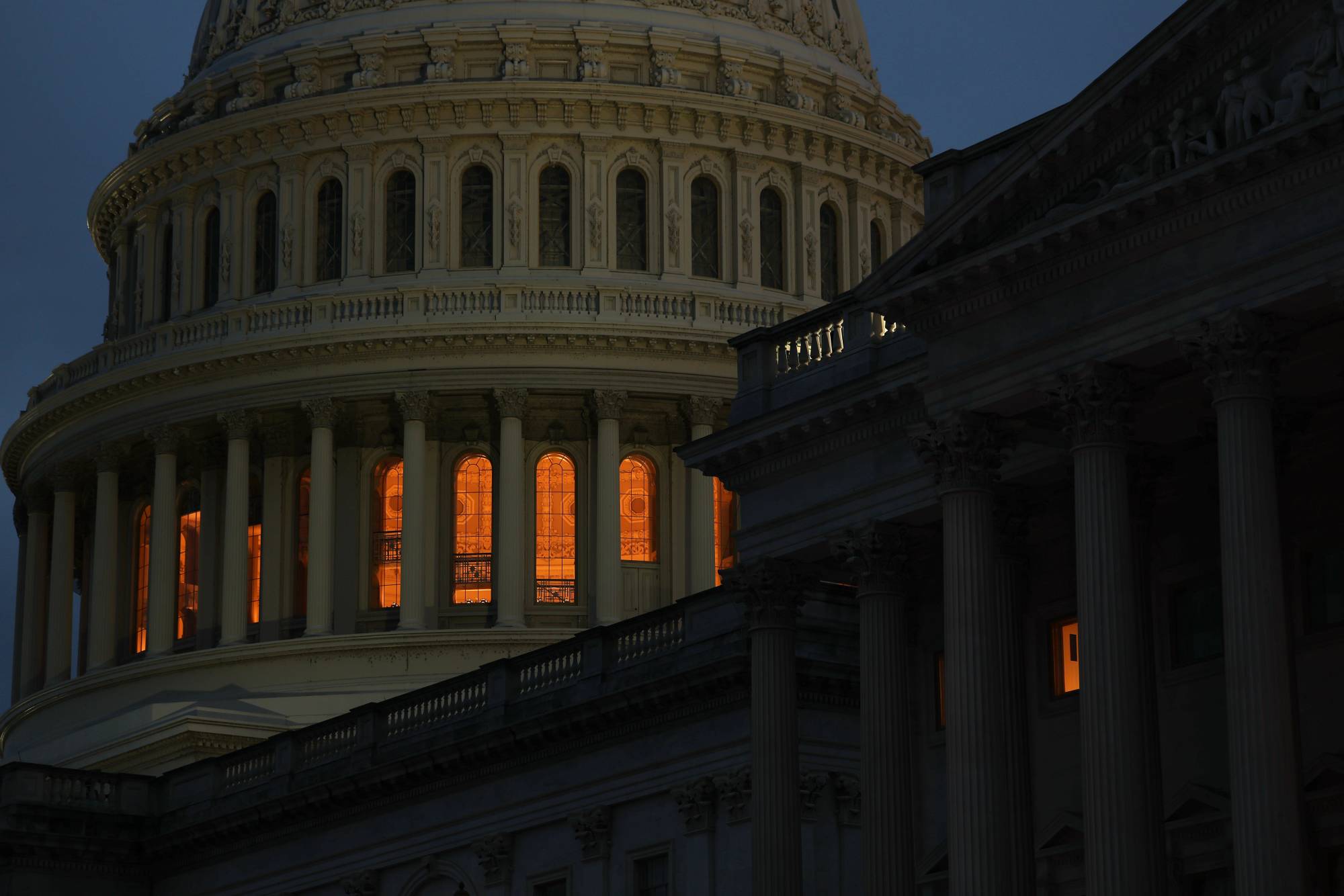
"caption": "WASHINGTON, DC - SEPTEMBER 29: A view of the U.S. Capitol as the sun sets on September 29, 2025 in Washington, DC. House and Senate leadership met with President Donald Trump earlier in the day at the White House to try and avoid a government shutdown at midnight September 30. When the shutdown started at 12:01 a.m., thousands of the region’s federal workers were furloughed and many services ground to a halt.",
"credit": "Photo by Anna Moneymaker/Getty Images",
"altTag": null,
"description": null,
"imgSizes": {
"medium": {
"file": "https://cdn.kqed.org/wp-content/uploads/sites/10/2025/10/GettyImages-2238183191-2000x1334.jpg",
"width": 2000,
"height": 1334,
"mimeType": "image/jpeg"
},
"large": {
"file": "https://cdn.kqed.org/wp-content/uploads/sites/10/2025/10/GettyImages-2238183191-2000x1334.jpg",
"width": 2000,
"height": 1334,
"mimeType": "image/jpeg"
},
"thumbnail": {
"file": "https://cdn.kqed.org/wp-content/uploads/sites/10/2025/10/GettyImages-2238183191-160x107.jpg",
"width": 160,
"height": 107,
"mimeType": "image/jpeg"
},
"1536x1536": {
"file": "https://cdn.kqed.org/wp-content/uploads/sites/10/2025/10/GettyImages-2238183191-1536x1024.jpg",
"width": 1536,
"height": 1024,
"mimeType": "image/jpeg"
},
"2048x2048": {
"file": "https://cdn.kqed.org/wp-content/uploads/sites/10/2025/10/GettyImages-2238183191-2048x1366.jpg",
"width": 2048,
"height": 1366,
"mimeType": "image/jpeg"
},
"post-thumbnail": {
"file": "https://cdn.kqed.org/wp-content/uploads/sites/10/2025/10/GettyImages-2238183191-672x372.jpg",
"width": 672,
"height": 372,
"mimeType": "image/jpeg"
},
"twentyfourteen-full-width": {
"file": "https://cdn.kqed.org/wp-content/uploads/sites/10/2025/10/GettyImages-2238183191-1038x576.jpg",
"width": 1038,
"height": 576,
"mimeType": "image/jpeg"
},
"full-width": {
"file": "https://cdn.kqed.org/wp-content/uploads/sites/10/2025/10/GettyImages-2238183191-2000x1334.jpg",
"width": 2000,
"height": 1334,
"mimeType": "image/jpeg"
},
"kqedFullSize": {
"file": "https://cdn.kqed.org/wp-content/uploads/sites/10/2025/10/GettyImages-2238183191-scaled.jpg",
"width": 2560,
"height": 1707
}
},
"isLoading": false,
"fetchFailed": false
},
"news_12057927": {
"type": "attachments",
"id": "news_12057927",
"meta": {
"index": "attachments_1716263798",
"site": "news",
"id": "12057927",
"found": true
},
"title": "The United States Capitol building",
"publishDate": 1759163172,
"status": "inherit",
"parent": 12057777,
"modified": 1759165647,
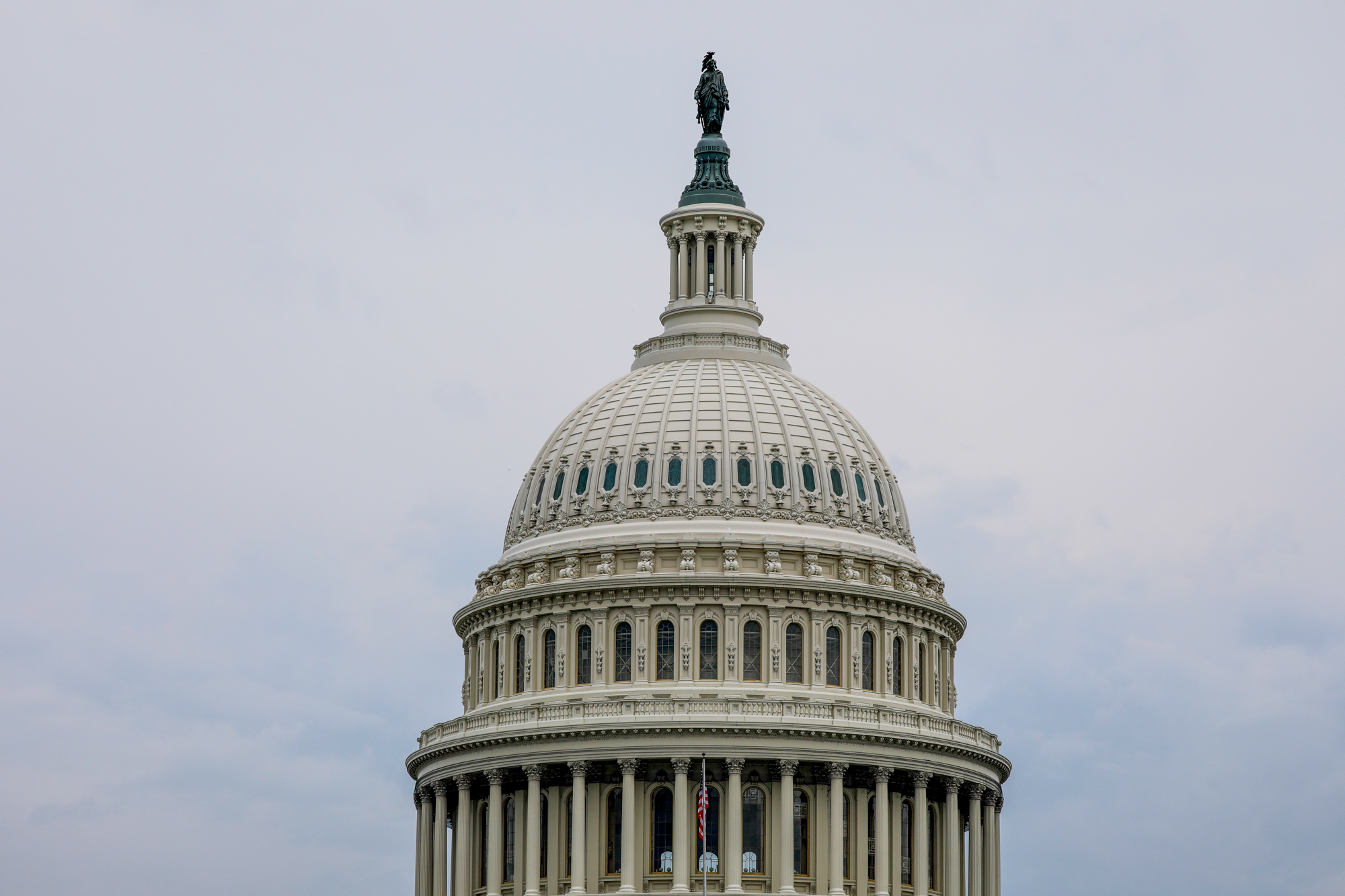
"caption": "The United States Capitol building in Washington, D.C., on Sept. 24, 2025.",
"credit": "Yasin Ozturk/Anadolu via Getty Images",
"altTag": null,
"description": null,
"imgSizes": {
"thumbnail": {
"file": "https://cdn.kqed.org/wp-content/uploads/sites/10/2025/09/GETTYIMAGES-2236770685-KQED_1-160x107.jpg",
"width": 160,
"height": 107,
"mimeType": "image/jpeg"
},
"1536x1536": {
"file": "https://cdn.kqed.org/wp-content/uploads/sites/10/2025/09/GETTYIMAGES-2236770685-KQED_1-1536x1024.jpg",
"width": 1536,
"height": 1024,
"mimeType": "image/jpeg"
},
"post-thumbnail": {
"file": "https://cdn.kqed.org/wp-content/uploads/sites/10/2025/09/GETTYIMAGES-2236770685-KQED_1-672x372.jpg",
"width": 672,
"height": 372,
"mimeType": "image/jpeg"
},
"twentyfourteen-full-width": {
"file": "https://cdn.kqed.org/wp-content/uploads/sites/10/2025/09/GETTYIMAGES-2236770685-KQED_1-1038x576.jpg",
"width": 1038,
"height": 576,
"mimeType": "image/jpeg"
},
"kqedFullSize": {
"file": "https://cdn.kqed.org/wp-content/uploads/sites/10/2025/09/GETTYIMAGES-2236770685-KQED_1.jpg",
"width": 2000,
"height": 1333
}
},
"isLoading": false,
"fetchFailed": false
},
"news_12058063": {
"type": "attachments",
"id": "news_12058063",
"meta": {
"index": "attachments_1716263798",
"site": "news",
"id": "12058063",
"found": true
},
"title": "Calif. Democratic convention",
"publishDate": 1759189030,
"status": "inherit",
"parent": 12058028,
"modified": 1759189079,
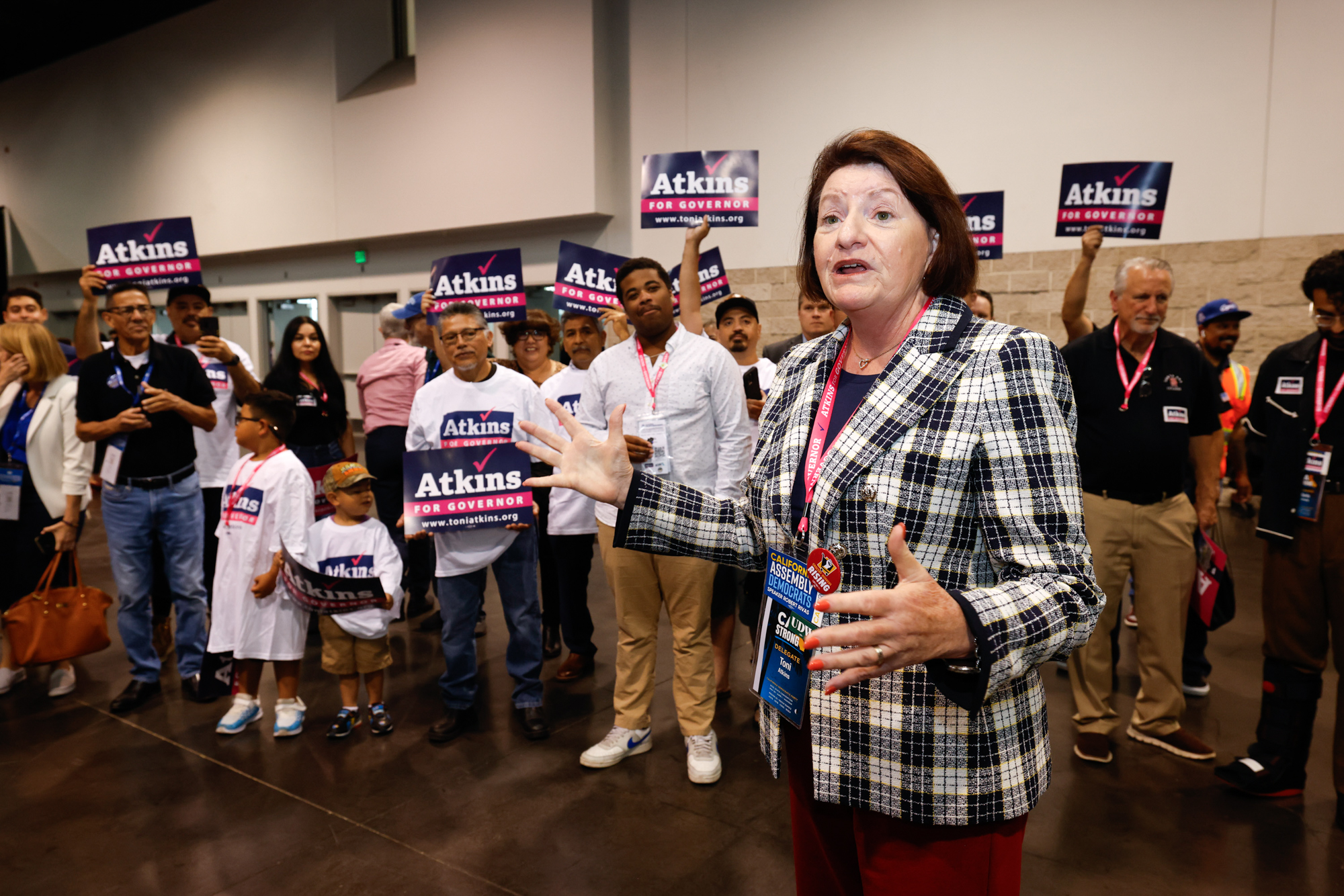
"caption": "Toni Atkins speaks to supporters at the California Democratic convention at the Anaheim Convention Center on May 31, 2025 in Los Angeles.",
"credit": "Carlin Stiehl / Los Angeles Times via Getty Images",
"altTag": null,
"description": null,
"imgSizes": {
"thumbnail": {
"file": "https://cdn.kqed.org/wp-content/uploads/sites/10/2025/09/GETTYIMAGES-2217377508-KQED-160x107.jpg",
"width": 160,
"height": 107,
"mimeType": "image/jpeg"
},
"1536x1536": {
"file": "https://cdn.kqed.org/wp-content/uploads/sites/10/2025/09/GETTYIMAGES-2217377508-KQED-1536x1025.jpg",
"width": 1536,
"height": 1025,
"mimeType": "image/jpeg"
},
"post-thumbnail": {
"file": "https://cdn.kqed.org/wp-content/uploads/sites/10/2025/09/GETTYIMAGES-2217377508-KQED-672x372.jpg",
"width": 672,
"height": 372,
"mimeType": "image/jpeg"
},
"twentyfourteen-full-width": {
"file": "https://cdn.kqed.org/wp-content/uploads/sites/10/2025/09/GETTYIMAGES-2217377508-KQED-1038x576.jpg",
"width": 1038,
"height": 576,
"mimeType": "image/jpeg"
},
"kqedFullSize": {
"file": "https://cdn.kqed.org/wp-content/uploads/sites/10/2025/09/GETTYIMAGES-2217377508-KQED.jpg",
"width": 2000,
"height": 1334
}
},
"isLoading": false,
"fetchFailed": false
},
"news_12053921": {
"type": "attachments",
"id": "news_12053921",
"meta": {
"index": "attachments_1716263798",
"site": "news",
"id": "12053921",
"found": true
},
"title": "250826_SFHARMREDUCTION00437_TV-KQED-1",
"publishDate": 1756325702,
"status": "inherit",
"parent": 0,
"modified": 1756326063,
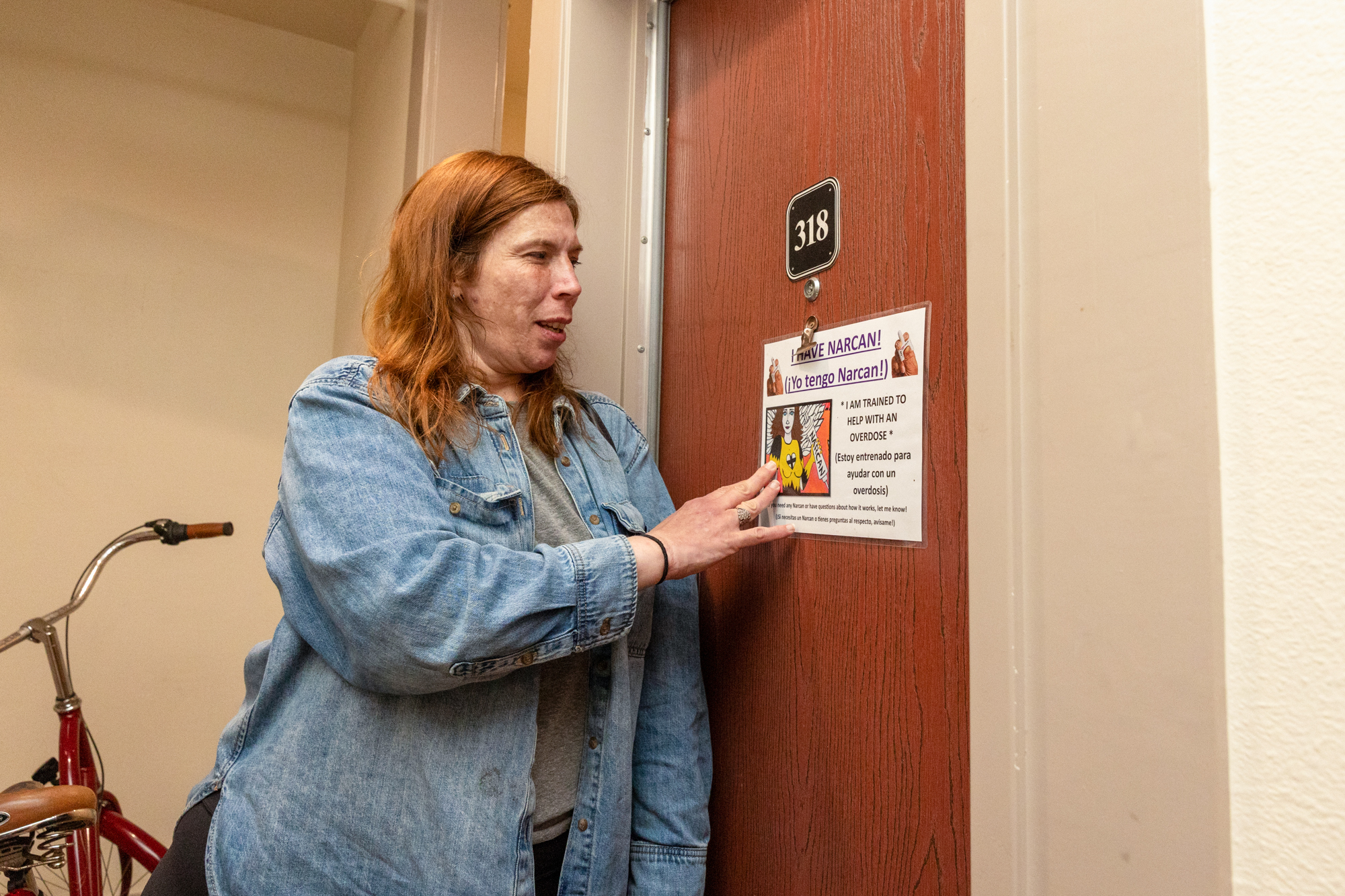
"caption": "Nicole Flores, a peer responder for Delivering Innovation in Supportive Housing, stands outside her unit at The Auburn in San Francisco on Aug. 20, 2025. San Francisco has scaled back harm reduction programs, but in housing units such as The Margot, the city is expanding access to harm reduction efforts.",
"credit": "Tâm Vũ/KQED",
"altTag": null,
"description": null,
"imgSizes": {
"thumbnail": {
"file": "https://cdn.kqed.org/wp-content/uploads/sites/10/2025/08/250826_SFHARMREDUCTION00437_TV-KQED-1-160x107.jpg",
"width": 160,
"height": 107,
"mimeType": "image/jpeg"
},
"1536x1536": {
"file": "https://cdn.kqed.org/wp-content/uploads/sites/10/2025/08/250826_SFHARMREDUCTION00437_TV-KQED-1-1536x1024.jpg",
"width": 1536,
"height": 1024,
"mimeType": "image/jpeg"
},
"post-thumbnail": {
"file": "https://cdn.kqed.org/wp-content/uploads/sites/10/2025/08/250826_SFHARMREDUCTION00437_TV-KQED-1-672x372.jpg",
"width": 672,
"height": 372,
"mimeType": "image/jpeg"
},
"twentyfourteen-full-width": {
"file": "https://cdn.kqed.org/wp-content/uploads/sites/10/2025/08/250826_SFHARMREDUCTION00437_TV-KQED-1-1038x576.jpg",
"width": 1038,
"height": 576,
"mimeType": "image/jpeg"
},
"kqedFullSize": {
"file": "https://cdn.kqed.org/wp-content/uploads/sites/10/2025/08/250826_SFHARMREDUCTION00437_TV-KQED-1.jpg",
"width": 2000,
"height": 1333
}
},
"isLoading": false,
"fetchFailed": false
},
"news_12057835": {
"type": "attachments",
"id": "news_12057835",
"meta": {
"index": "attachments_1716263798",
"site": "news",
"id": "12057835",
"found": true
},
"title": "20250926_StarbucksClosures_GC-2_qed",
"publishDate": 1758930403,
"status": "inherit",
"parent": 0,
"modified": 1758930507,
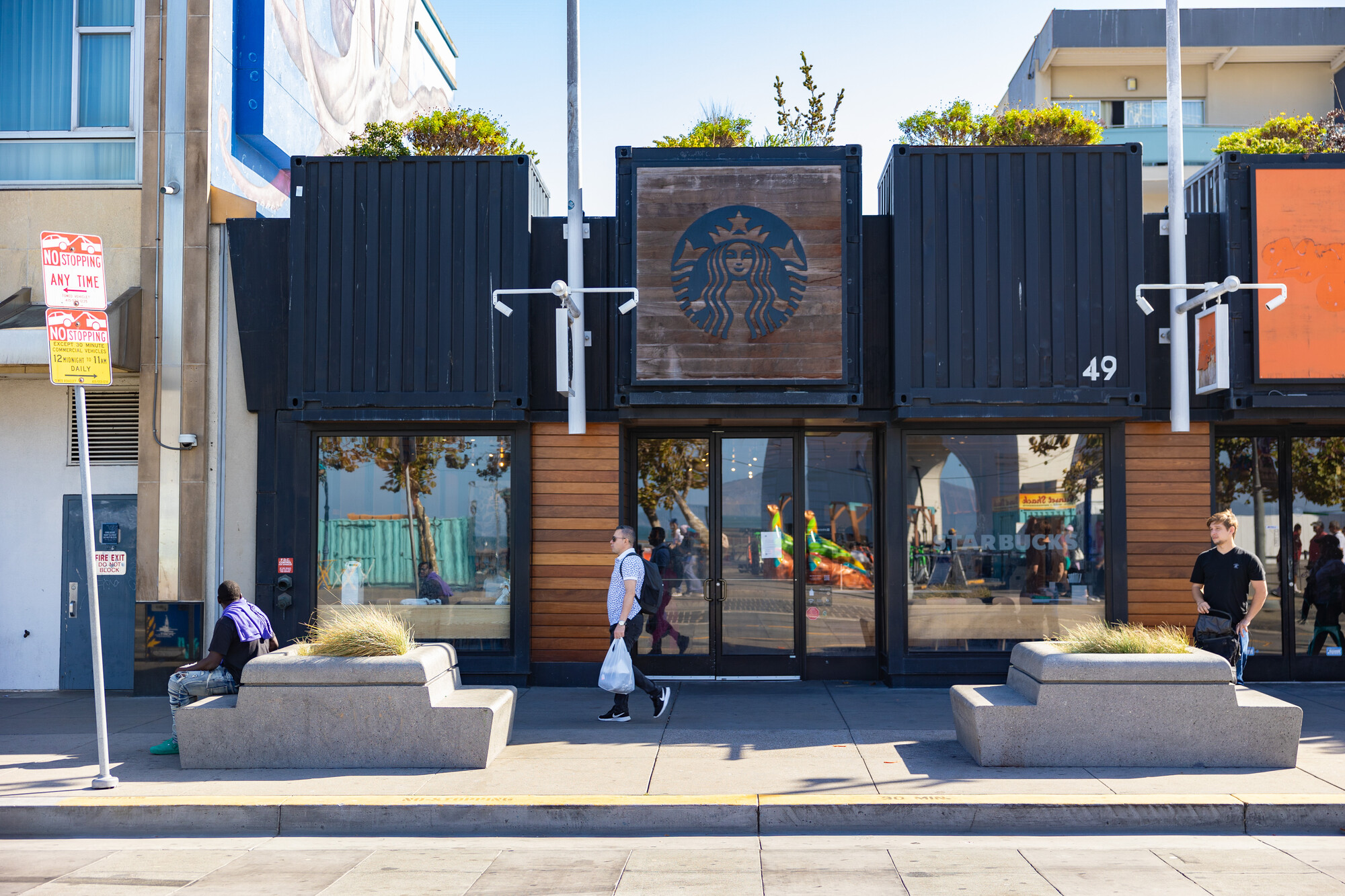
"caption": "The Starbucks on 49 Jefferson St. in Fisherman’s Wharf, which will permanently close, on Sept. 26, 2025.",
"credit": "Gina Castro/KQED",
"altTag": null,
"description": null,
"imgSizes": {
"thumbnail": {
"file": "https://cdn.kqed.org/wp-content/uploads/sites/10/2025/09/20250926_StarbucksClosures_GC-2_qed-160x107.jpg",
"width": 160,
"height": 107,
"mimeType": "image/jpeg"
},
"1536x1536": {
"file": "https://cdn.kqed.org/wp-content/uploads/sites/10/2025/09/20250926_StarbucksClosures_GC-2_qed-1536x1024.jpg",
"width": 1536,
"height": 1024,
"mimeType": "image/jpeg"
},
"post-thumbnail": {
"file": "https://cdn.kqed.org/wp-content/uploads/sites/10/2025/09/20250926_StarbucksClosures_GC-2_qed-672x372.jpg",
"width": 672,
"height": 372,
"mimeType": "image/jpeg"
},
"twentyfourteen-full-width": {
"file": "https://cdn.kqed.org/wp-content/uploads/sites/10/2025/09/20250926_StarbucksClosures_GC-2_qed-1038x576.jpg",
"width": 1038,
"height": 576,
"mimeType": "image/jpeg"
},
"kqedFullSize": {
"file": "https://cdn.kqed.org/wp-content/uploads/sites/10/2025/09/20250926_StarbucksClosures_GC-2_qed.jpg",
"width": 2000,
"height": 1333
}
},
"isLoading": false,
"fetchFailed": false
},
"news_12057746": {
"type": "attachments",
"id": "news_12057746",
"meta": {
"index": "attachments_1716263798",
"site": "news",
"id": "12057746",
"found": true
},
"title": "President Trump Signs Executive Order At The White House",
"publishDate": 1758907661,
"status": "inherit",
"parent": 12057742,
"modified": 1758917101,
"caption": "A poster of the \"Trump Gold Card\" is seen as President Donald Trump signs an executive order in the Oval Office at the White House on Sept. 19, 2025 in Washington, DC. KQED’s Forum spoke to experts about how H-1B visa holders in the Bay Area are reacting to the latest White House order.",
"credit": "Andrew Harnik/Getty Images",
"altTag": null,
"description": null,
"imgSizes": {
"medium": {
"file": "https://cdn.kqed.org/wp-content/uploads/sites/10/2025/09/GettyImages-2236329361-2000x1333.jpg",
"width": 2000,
"height": 1333,
"mimeType": "image/jpeg"
},
"large": {
"file": "https://cdn.kqed.org/wp-content/uploads/sites/10/2025/09/GettyImages-2236329361-2000x1333.jpg",
"width": 2000,
"height": 1333,
"mimeType": "image/jpeg"
},
"thumbnail": {
"file": "https://cdn.kqed.org/wp-content/uploads/sites/10/2025/09/GettyImages-2236329361-160x107.jpg",
"width": 160,
"height": 107,
"mimeType": "image/jpeg"
},
"1536x1536": {
"file": "https://cdn.kqed.org/wp-content/uploads/sites/10/2025/09/GettyImages-2236329361-1536x1024.jpg",
"width": 1536,
"height": 1024,
"mimeType": "image/jpeg"
},
"2048x2048": {
"file": "https://cdn.kqed.org/wp-content/uploads/sites/10/2025/09/GettyImages-2236329361-2048x1365.jpg",
"width": 2048,
"height": 1365,
"mimeType": "image/jpeg"
},
"post-thumbnail": {
"file": "https://cdn.kqed.org/wp-content/uploads/sites/10/2025/09/GettyImages-2236329361-672x372.jpg",
"width": 672,
"height": 372,
"mimeType": "image/jpeg"
},
"twentyfourteen-full-width": {
"file": "https://cdn.kqed.org/wp-content/uploads/sites/10/2025/09/GettyImages-2236329361-1038x576.jpg",
"width": 1038,
"height": 576,
"mimeType": "image/jpeg"
},
"full-width": {
"file": "https://cdn.kqed.org/wp-content/uploads/sites/10/2025/09/GettyImages-2236329361-2000x1333.jpg",
"width": 2000,
"height": 1333,
"mimeType": "image/jpeg"
},
"kqedFullSize": {
"file": "https://cdn.kqed.org/wp-content/uploads/sites/10/2025/09/GettyImages-2236329361-scaled-e1760568167148.jpg",
"width": 2000,
"height": 1333
}
},
"isLoading": false,
"fetchFailed": false
},
"news_12051122": {
"type": "attachments",
"id": "news_12051122",
"meta": {
"index": "attachments_1716263798",
"site": "news",
"id": "12051122",
"found": true
},
"title": "250805-MARINEBIKES-03-KQED-1",
"publishDate": 1754502561,
"status": "inherit",
"parent": 0,
"modified": 1755804186,
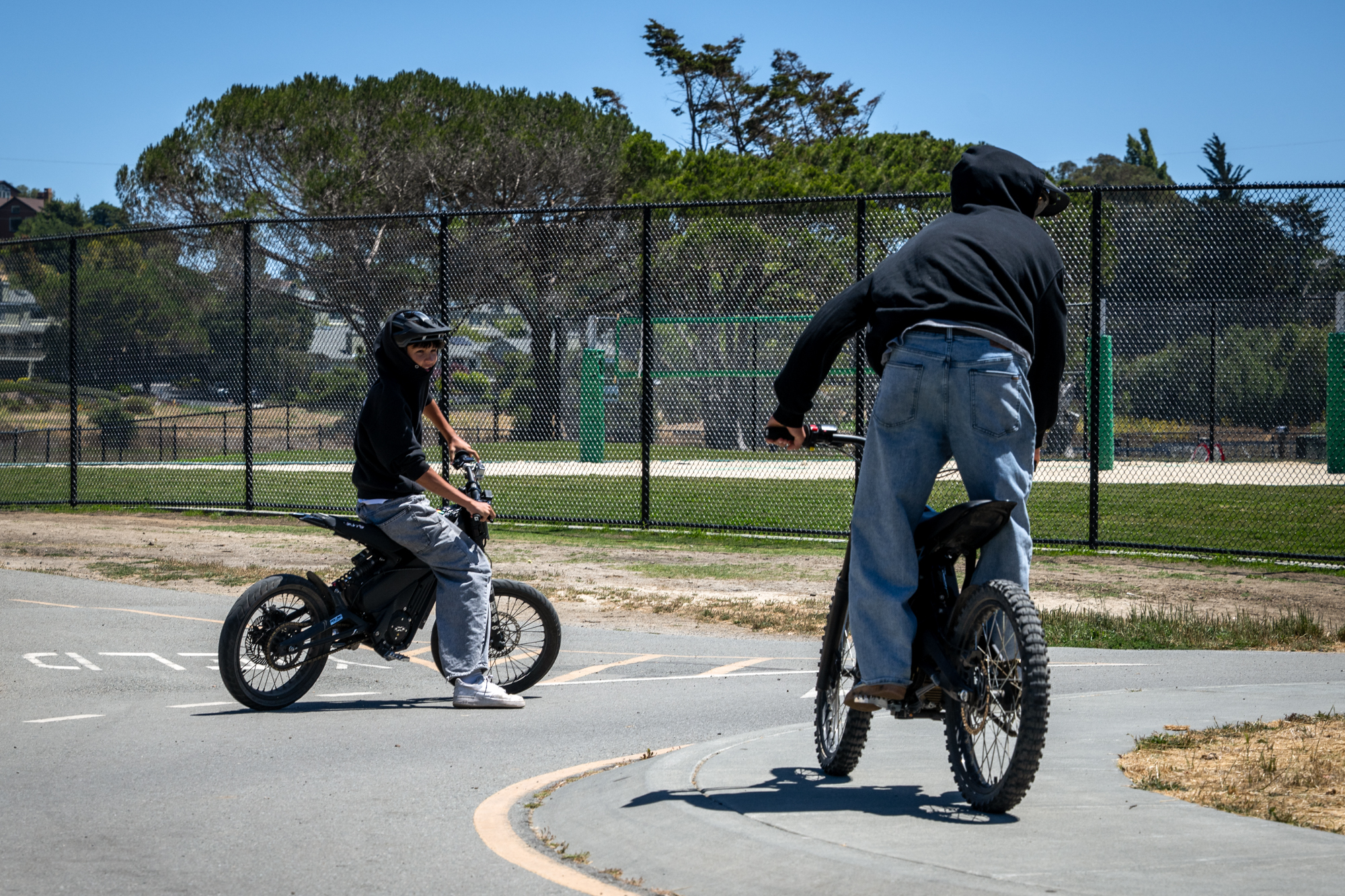
"caption": "Children ride electric dirt bikes at the Mill Valley Bike Path Circle in Mill Valley on Aug. 5, 2025.",
"credit": "Beth LaBerge/KQED",
"altTag": null,
"description": null,
"imgSizes": {
"thumbnail": {
"file": "https://cdn.kqed.org/wp-content/uploads/sites/10/2025/08/250805-MARINEBIKES-03-KQED-1-160x107.jpg",
"width": 160,
"height": 107,
"mimeType": "image/jpeg"
},
"1536x1536": {
"file": "https://cdn.kqed.org/wp-content/uploads/sites/10/2025/08/250805-MARINEBIKES-03-KQED-1-1536x1024.jpg",
"width": 1536,
"height": 1024,
"mimeType": "image/jpeg"
},
"post-thumbnail": {
"file": "https://cdn.kqed.org/wp-content/uploads/sites/10/2025/08/250805-MARINEBIKES-03-KQED-1-672x372.jpg",
"width": 672,
"height": 372,
"mimeType": "image/jpeg"
},
"twentyfourteen-full-width": {
"file": "https://cdn.kqed.org/wp-content/uploads/sites/10/2025/08/250805-MARINEBIKES-03-KQED-1-1038x576.jpg",
"width": 1038,
"height": 576,
"mimeType": "image/jpeg"
},
"kqedFullSize": {
"file": "https://cdn.kqed.org/wp-content/uploads/sites/10/2025/08/250805-MARINEBIKES-03-KQED-1.jpg",
"width": 2000,
"height": 1333
}
},
"isLoading": false,
"fetchFailed": false
},
"news_12057602": {
"type": "attachments",
"id": "news_12057602",
"meta": {
"index": "attachments_1716263798",
"site": "news",
"id": "12057602",
"found": true
},
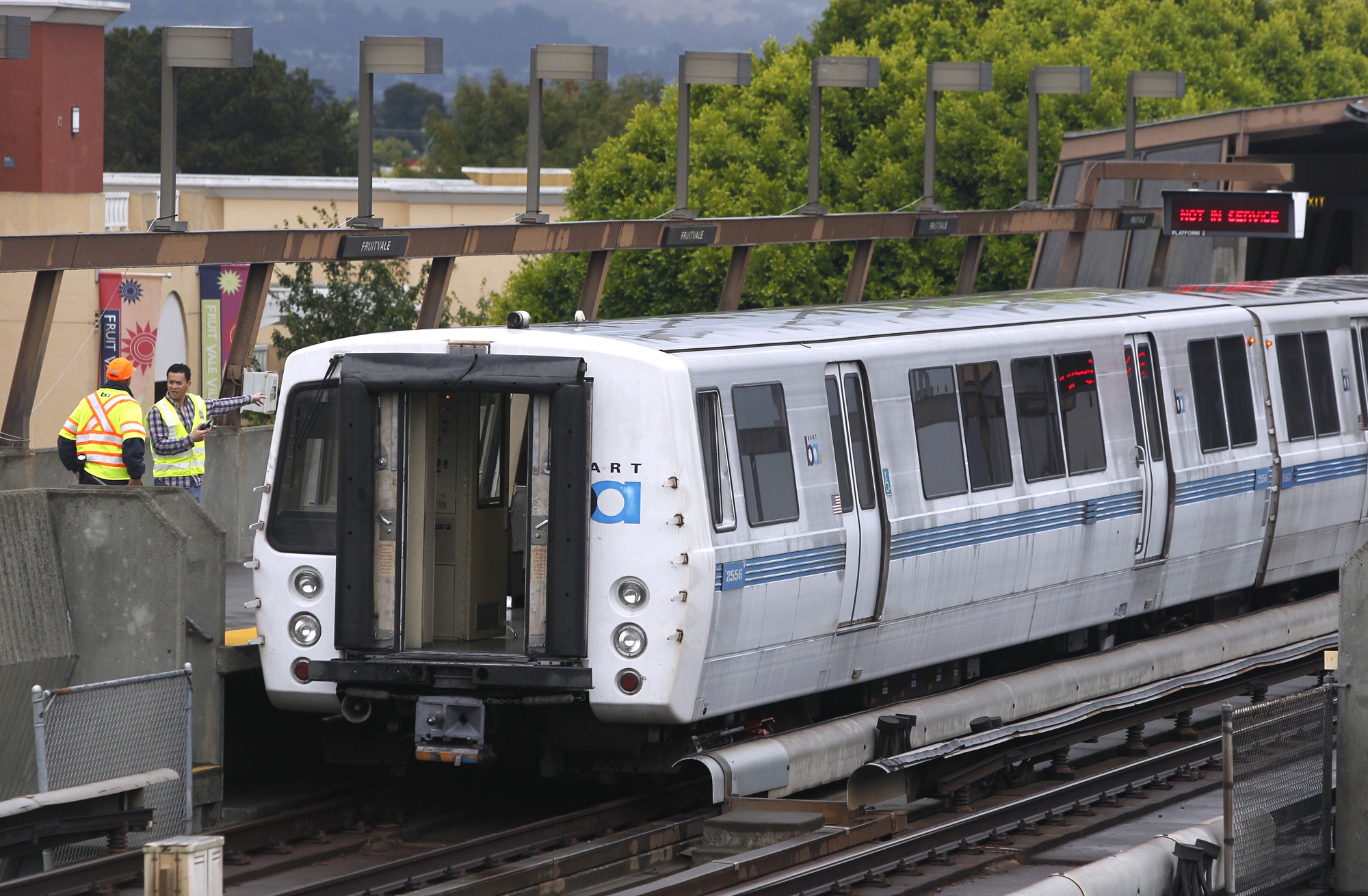
"title": "BART employees stand outside a damaged 3-car train at the Fruitvale station in Oakland, Calif. on Thursday, July 9, 2015 after an early morning fire below the train between the Coliseum and Fruitvale stations disrupted the morning commute. At least three",
"publishDate": 1758821425,
"status": "inherit",
"parent": 12057594,
"modified": 1769128187,
"caption": "BART employees stand outside a damaged three-car train at the Fruitvale station in Oakland, California, on July 9, 2015.",
"credit": "Paul Chinn/The San Francisco Chronicle via Getty Images",
"altTag": null,
"description": null,
"imgSizes": {
"thumbnail": {
"file": "https://cdn.kqed.org/wp-content/uploads/sites/10/2025/09/BARTEmployeesGetty-160x105.jpg",
"width": 160,
"height": 105,
"mimeType": "image/jpeg"
},
"1536x1536": {
"file": "https://cdn.kqed.org/wp-content/uploads/sites/10/2025/09/BARTEmployeesGetty-1536x1006.jpg",
"width": 1536,
"height": 1006,
"mimeType": "image/jpeg"
},
"post-thumbnail": {
"file": "https://cdn.kqed.org/wp-content/uploads/sites/10/2025/09/BARTEmployeesGetty-672x372.jpg",
"width": 672,
"height": 372,
"mimeType": "image/jpeg"
},
"twentyfourteen-full-width": {
"file": "https://cdn.kqed.org/wp-content/uploads/sites/10/2025/09/BARTEmployeesGetty-1038x576.jpg",
"width": 1038,
"height": 576,
"mimeType": "image/jpeg"
},
"kqedFullSize": {
"file": "https://cdn.kqed.org/wp-content/uploads/sites/10/2025/09/BARTEmployeesGetty.jpg",
"width": 2000,
"height": 1310
}
},
"isLoading": false,
"fetchFailed": false
},
"news_12057645": {
"type": "attachments",
"id": "news_12057645",
"meta": {
"index": "attachments_1716263798",
"site": "news",
"id": "12057645",
"found": true
},
"title": "250925-SQUIRREL ATTACK-01",
"publishDate": 1758834235,
"status": "inherit",
"parent": 0,
"modified": 1758837503,
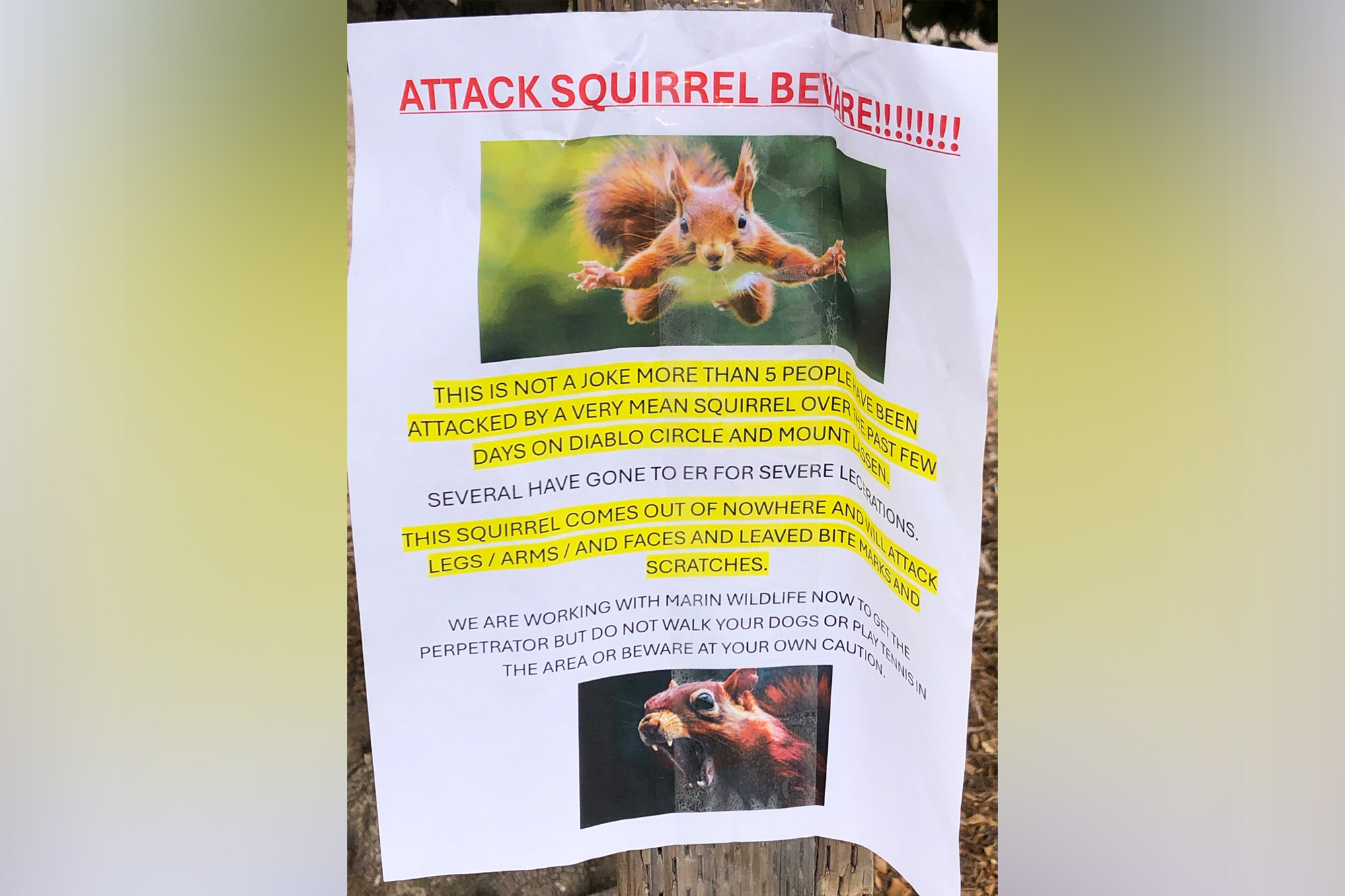
"caption": "In this photo provided by Joan Heblack, a flyer warning of an aggressive squirrel is taped up in San Rafael, Calif., Wednesday, Sept. 24, 2025.",
"credit": "Photo courtesy of Joan Heblack",
"altTag": null,
"description": null,
"imgSizes": {
"thumbnail": {
"file": "https://cdn.kqed.org/wp-content/uploads/sites/10/2025/09/250925-SQUIRREL-ATTACK-01-160x107.jpg",
"width": 160,
"height": 107,
"mimeType": "image/jpeg"
},
"1536x1536": {
"file": "https://cdn.kqed.org/wp-content/uploads/sites/10/2025/09/250925-SQUIRREL-ATTACK-01-1536x1024.jpg",
"width": 1536,
"height": 1024,
"mimeType": "image/jpeg"
},
"post-thumbnail": {
"file": "https://cdn.kqed.org/wp-content/uploads/sites/10/2025/09/250925-SQUIRREL-ATTACK-01-672x372.jpg",
"width": 672,
"height": 372,
"mimeType": "image/jpeg"
},
"twentyfourteen-full-width": {
"file": "https://cdn.kqed.org/wp-content/uploads/sites/10/2025/09/250925-SQUIRREL-ATTACK-01-1038x576.jpg",
"width": 1038,
"height": 576,
"mimeType": "image/jpeg"
},
"kqedFullSize": {
"file": "https://cdn.kqed.org/wp-content/uploads/sites/10/2025/09/250925-SQUIRREL-ATTACK-01.jpg",
"width": 2000,
"height": 1333
}
},
"isLoading": false,
"fetchFailed": false
},
"news_12057504": {
"type": "attachments",
"id": "news_12057504",
"meta": {
"index": "attachments_1716263798",
"site": "news",
"id": "12057504",
"found": true
},
"title": "Lede image Twilight Anna Vignet",
"publishDate": 1758752901,
"status": "inherit",
"parent": 12057009,
"modified": 1758752946,
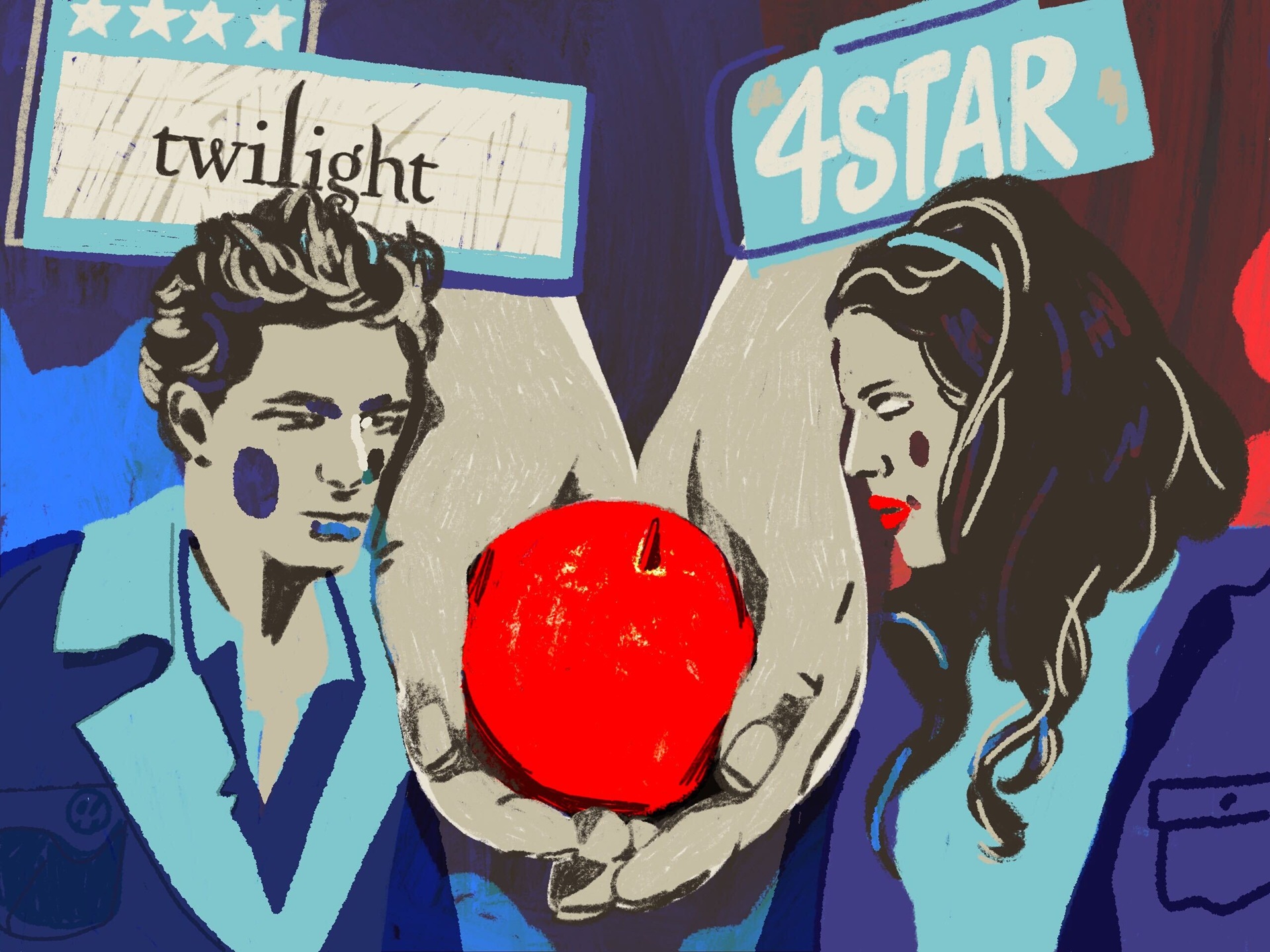
"caption": "What has made the ‘Twilight’ saga endure for 20 years?",
"credit": "Anna Vignet/KQED",
"altTag": null,
"description": null,
"imgSizes": {
"thumbnail": {
"file": "https://cdn.kqed.org/wp-content/uploads/sites/10/2025/09/Lede-image-Twilight-Anna-Vignet-160x120.jpg",
"width": 160,
"height": 120,
"mimeType": "image/jpeg"
},
"1536x1536": {
"file": "https://cdn.kqed.org/wp-content/uploads/sites/10/2025/09/Lede-image-Twilight-Anna-Vignet-1536x1152.jpg",
"width": 1536,
"height": 1152,
"mimeType": "image/jpeg"
},
"post-thumbnail": {
"file": "https://cdn.kqed.org/wp-content/uploads/sites/10/2025/09/Lede-image-Twilight-Anna-Vignet-672x372.jpg",
"width": 672,
"height": 372,
"mimeType": "image/jpeg"
},
"twentyfourteen-full-width": {
"file": "https://cdn.kqed.org/wp-content/uploads/sites/10/2025/09/Lede-image-Twilight-Anna-Vignet-1038x576.jpg",
"width": 1038,
"height": 576,
"mimeType": "image/jpeg"
},
"kqedFullSize": {
"file": "https://cdn.kqed.org/wp-content/uploads/sites/10/2025/09/Lede-image-Twilight-Anna-Vignet.jpg",
"width": 1920,
"height": 1440
}
},
"isLoading": false,
"fetchFailed": false
},
"news_12057246": {
"type": "attachments",
"id": "news_12057246",
"meta": {
"index": "attachments_1716263798",
"site": "news",
"id": "12057246",
"found": true
},
"title": "250922-KIRKVIGIL00438_TV-KQED",
"publishDate": 1758648837,
"status": "inherit",
"parent": 0,
"modified": 1758649093,
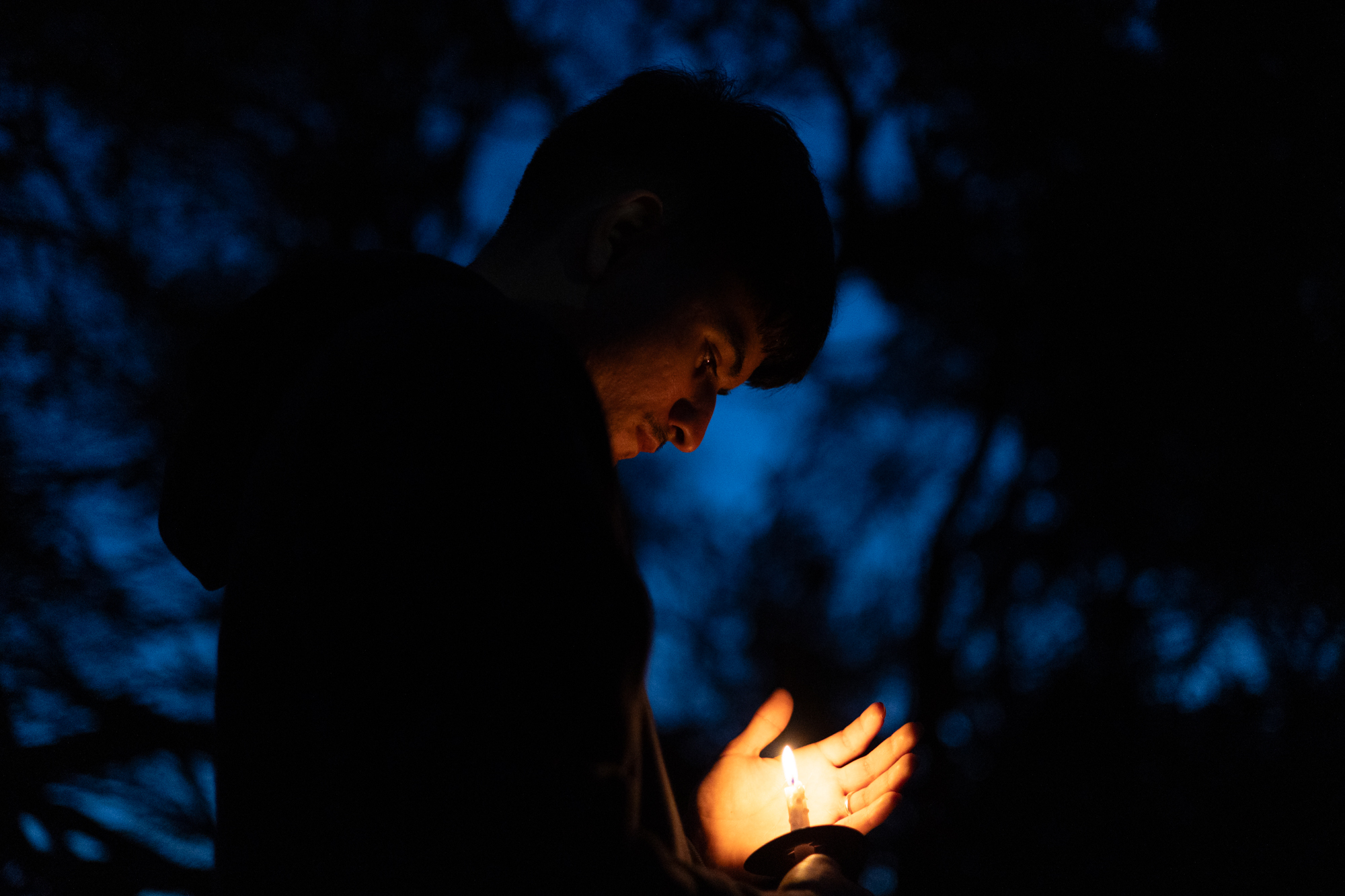
"caption": "Luis Viramontes, a Santa Rosa Junior College student, holds a candlelight at a vigil for Charlie Kirk hosted by the San Francisco State University chapter of Turning Point USA at Fort Funston in San Francisco on Sept. 22, 2025. The San Francisco State University Chapter of Turning Point USA hosts a vigil for Charlie Kirk who was shot and killed on Sept. 10, 2025.",
"credit": "Tâm Vũ/KQED",
"altTag": null,
"description": null,
"imgSizes": {
"thumbnail": {
"file": "https://cdn.kqed.org/wp-content/uploads/sites/10/2025/09/250922-KIRKVIGIL00438_TV-KQED-160x107.jpg",
"width": 160,
"height": 107,
"mimeType": "image/jpeg"
},
"1536x1536": {
"file": "https://cdn.kqed.org/wp-content/uploads/sites/10/2025/09/250922-KIRKVIGIL00438_TV-KQED-1536x1024.jpg",
"width": 1536,
"height": 1024,
"mimeType": "image/jpeg"
},
"post-thumbnail": {
"file": "https://cdn.kqed.org/wp-content/uploads/sites/10/2025/09/250922-KIRKVIGIL00438_TV-KQED-672x372.jpg",
"width": 672,
"height": 372,
"mimeType": "image/jpeg"
},
"twentyfourteen-full-width": {
"file": "https://cdn.kqed.org/wp-content/uploads/sites/10/2025/09/250922-KIRKVIGIL00438_TV-KQED-1038x576.jpg",
"width": 1038,
"height": 576,
"mimeType": "image/jpeg"
},
"kqedFullSize": {
"file": "https://cdn.kqed.org/wp-content/uploads/sites/10/2025/09/250922-KIRKVIGIL00438_TV-KQED.jpg",
"width": 2000,
"height": 1333
}
},
"isLoading": false,
"fetchFailed": false
},
"news_12057475": {
"type": "attachments",
"id": "news_12057475",
"meta": {
"index": "attachments_1716263798",
"site": "news",
"id": "12057475",
"found": true
},
"title": "250325-ApartmentsonWestside-21-BL_qed",
"publishDate": 1758749930,
"status": "inherit",
"parent": 12057465,
"modified": 1758749939,
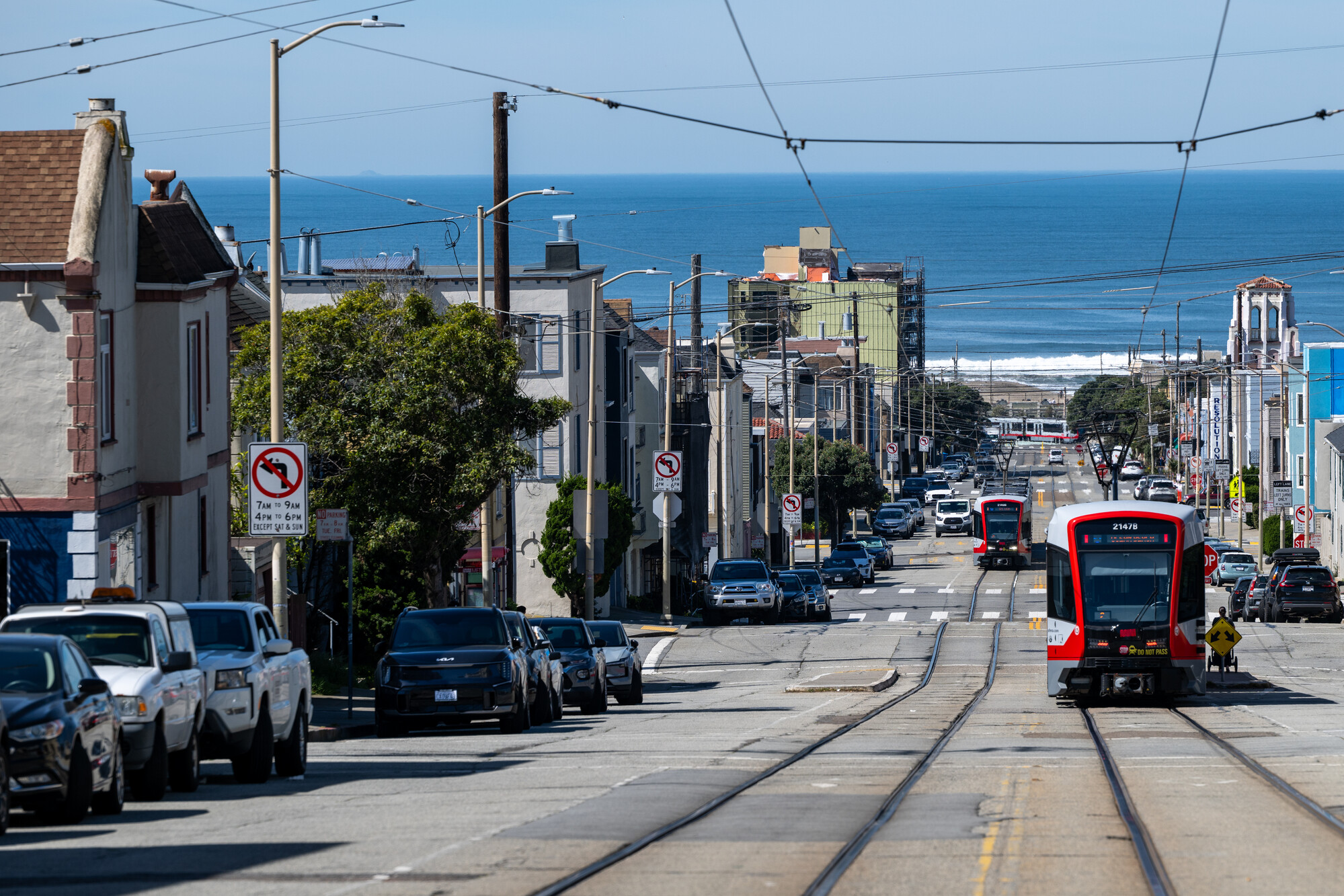
"caption": "Muni Metro cars runs along Judah Street in San Francisco’s Sunset District on March 25, 2025.",
"credit": "Beth LaBerge/KQED",
"altTag": null,
"description": null,
"imgSizes": {
"thumbnail": {
"file": "https://cdn.kqed.org/wp-content/uploads/sites/10/2025/09/250325-ApartmentsonWestside-21-BL_qed-160x107.jpg",
"width": 160,
"height": 107,
"mimeType": "image/jpeg"
},
"1536x1536": {
"file": "https://cdn.kqed.org/wp-content/uploads/sites/10/2025/09/250325-ApartmentsonWestside-21-BL_qed-1536x1024.jpg",
"width": 1536,
"height": 1024,
"mimeType": "image/jpeg"
},
"post-thumbnail": {
"file": "https://cdn.kqed.org/wp-content/uploads/sites/10/2025/09/250325-ApartmentsonWestside-21-BL_qed-672x372.jpg",
"width": 672,
"height": 372,
"mimeType": "image/jpeg"
},
"twentyfourteen-full-width": {
"file": "https://cdn.kqed.org/wp-content/uploads/sites/10/2025/09/250325-ApartmentsonWestside-21-BL_qed-1038x576.jpg",
"width": 1038,
"height": 576,
"mimeType": "image/jpeg"
},
"kqedFullSize": {
"file": "https://cdn.kqed.org/wp-content/uploads/sites/10/2025/09/250325-ApartmentsonWestside-21-BL_qed.jpg",
"width": 1999,
"height": 1333
}
},
"isLoading": false,
"fetchFailed": false
}
},
"audioPlayerReducer": {
"postId": "stream_live",
"isPaused": true,
"isPlaying": false,
"pfsActive": false,
"pledgeModalIsOpen": true,
"playerDrawerIsOpen": false,
"liveAudioPlayStartedAt": 0,
"liveAudioPlayContext": ""
},
"authorsReducer": {
"gmarzorati": {
"type": "authors",
"id": "227",
"meta": {
"index": "authors_1716337520",
"id": "227",
"found": true
},
"name": "Guy Marzorati",
"firstName": "Guy",
"lastName": "Marzorati",
"slug": "gmarzorati",
"email": "gmarzorati@KQED.org",
"display_author_email": true,
"staff_mastheads": [
"news"
],
"title": "Correspondent",
"bio": "Guy Marzorati is a correspondent on KQED's California Politics and Government Desk, based in San Jose. A graduate of Santa Clara University, Guy joined KQED in 2013. He reports on state and local politics and produces KQED's digital voter guide.",
"avatar": "https://secure.gravatar.com/avatar/e7038b8dbfd55b104369b76b1cd0b9de?s=600&d=blank&r=g",
"twitter": "guymarzorati",
"facebook": null,
"instagram": null,
"linkedin": null,
"sites": [
{
"site": "",
"roles": [
"editor"
]
},
{
"site": "news",
"roles": [
"editor"
]
},
{
"site": "science",
"roles": [
"editor"
]
},
{
"site": "forum",
"roles": [
"editor"
]
},
{
"site": "elections",
"roles": [
"editor"
]
},
{
"site": "liveblog",
"roles": [
"editor"
]
}
],
"headData": {
"title": "Guy Marzorati | KQED",
"description": "Correspondent",
"ogImgSrc": "https://secure.gravatar.com/avatar/e7038b8dbfd55b104369b76b1cd0b9de?s=600&d=blank&r=g",
"twImgSrc": "https://secure.gravatar.com/avatar/e7038b8dbfd55b104369b76b1cd0b9de?s=600&d=blank&r=g"
},
"isLoading": false,
"link": "/author/gmarzorati"
},
"abandlamudi": {
"type": "authors",
"id": "11672",
"meta": {
"index": "authors_1716337520",
"id": "11672",
"found": true
},
"name": "Adhiti Bandlamudi",
"firstName": "Adhiti",
"lastName": "Bandlamudi",
"slug": "abandlamudi",
"email": "abandlamudi@kqed.org",
"display_author_email": false,
"staff_mastheads": [
"news"
],
"title": "KQED Housing Reporter",
"bio": "Adhiti Bandlamudi reports for KQED's Housing desk. She focuses on how housing gets built across the Bay Area. Before joining KQED in 2020, she reported for WUNC in Durham, North Carolina, WABE in Atlanta, Georgia and Capital Public Radio in Sacramento. In 2017, she was awarded a Kroc Fellowship at NPR where she reported on everything from sprinkles to the Golden State Killer's arrest. When she's not reporting, she's baking new recipes in her kitchen or watching movies with friends and family. She's originally from Georgia and has strong opinions about Great British Bake Off.",
"avatar": "https://secure.gravatar.com/avatar/868129c8b257bb99a3500e2c86a65400?s=600&d=mm&r=g",
"twitter": "oddity_adhiti",
"facebook": null,
"instagram": null,
"linkedin": null,
"sites": [
{
"site": "arts",
"roles": [
"author"
]
},
{
"site": "news",
"roles": [
"editor"
]
},
{
"site": "liveblog",
"roles": [
"author"
]
}
],
"headData": {
"title": "Adhiti Bandlamudi | KQED",
"description": "KQED Housing Reporter",
"ogImgSrc": "https://secure.gravatar.com/avatar/868129c8b257bb99a3500e2c86a65400?s=600&d=mm&r=g",
"twImgSrc": "https://secure.gravatar.com/avatar/868129c8b257bb99a3500e2c86a65400?s=600&d=mm&r=g"
},
"isLoading": false,
"link": "/author/abandlamudi"
},
"amadrigal": {
"type": "authors",
"id": "11757",
"meta": {
"index": "authors_1716337520",
"id": "11757",
"found": true
},
"name": "Alexis Madrigal",
"firstName": "Alexis",
"lastName": "Madrigal",
"slug": "amadrigal",
"email": "amadrigal@kqed.org",
"display_author_email": true,
"staff_mastheads": [],
"title": "Co-Host Forum",
"bio": "Alexis Madrigal is the co-host of Forum. He is also a contributing writer at \u003cem>The Atlantic \u003c/em>and the co-founder of the COVID Tracking Project. He's the creator of the podcast, \u003cem>Containers\u003c/em>, and has been a staff writer at \u003cem>Wired. \u003c/em>He was a visiting scholar at UC Berkeley's Information School, and is working on a book about Oakland and the Bay Area's revolutionary ideas.",
"avatar": "https://secure.gravatar.com/avatar/ffeee1fe99a3e31957381f377ca63502bdcc0c3dbccaaa701e579a10aa0c5e1f?s=600&d=blank&r=g",
"twitter": "alexismadrigal",
"bluesky": null,
"facebook": null,
"instagram": null,
"linkedin": null,
"sites": [
{
"site": "arts",
"roles": [
"editor"
]
},
{
"site": "news",
"roles": [
"editor"
]
},
{
"site": "forum",
"roles": [
"editor"
]
}
],
"headData": {
"title": "Alexis Madrigal | KQED",
"description": "Co-Host Forum",
"ogImgSrc": "https://secure.gravatar.com/avatar/ffeee1fe99a3e31957381f377ca63502bdcc0c3dbccaaa701e579a10aa0c5e1f?s=600&d=blank&r=g",
"twImgSrc": "https://secure.gravatar.com/avatar/ffeee1fe99a3e31957381f377ca63502bdcc0c3dbccaaa701e579a10aa0c5e1f?s=600&d=blank&r=g"
},
"isLoading": false,
"link": "/author/amadrigal"
},
"jlara": {
"type": "authors",
"id": "11761",
"meta": {
"index": "authors_1716337520",
"id": "11761",
"found": true
},
"name": "Juan Carlos Lara",
"firstName": "Juan Carlos",
"lastName": "Lara",
"slug": "jlara",
"email": "jlara@kqed.org",
"display_author_email": false,
"staff_mastheads": [],
"title": "KQED Contributor",
"bio": null,
"avatar": "https://secure.gravatar.com/avatar/19e2052b9b05657c5ff2af2121846e9c?s=600&d=blank&r=g",
"twitter": null,
"facebook": null,
"instagram": null,
"linkedin": null,
"sites": [
{
"site": "arts",
"roles": [
"editor"
]
},
{
"site": "news",
"roles": [
"editor"
]
},
{
"site": "forum",
"roles": [
"editor"
]
},
{
"site": "liveblog",
"roles": [
"contributor"
]
}
],
"headData": {
"title": "Juan Carlos Lara | KQED",
"description": "KQED Contributor",
"ogImgSrc": "https://secure.gravatar.com/avatar/19e2052b9b05657c5ff2af2121846e9c?s=600&d=blank&r=g",
"twImgSrc": "https://secure.gravatar.com/avatar/19e2052b9b05657c5ff2af2121846e9c?s=600&d=blank&r=g"
},
"isLoading": false,
"link": "/author/jlara"
},
"adahlstromeckman": {
"type": "authors",
"id": "11785",
"meta": {
"index": "authors_1716337520",
"id": "11785",
"found": true
},
"name": "Azul Dahlstrom-Eckman",
"firstName": "Azul",
"lastName": "Dahlstrom-Eckman",
"slug": "adahlstromeckman",
"email": "adahlstrom-eckman@kqed.org",
"display_author_email": true,
"staff_mastheads": [],
"title": "Reporter",
"bio": "Azul is a reporter for KQED focusing on transportation and features. He joined KQED in 2021 as an alumna of KALW's Audio Academy radio journalism training program.",
"avatar": "https://secure.gravatar.com/avatar/9cb750298435add7815a777f55bf1f46845c1386bb8452555c60a7b820b5aba3?s=600&d=blank&r=g",
"twitter": "@zuliemann",
"bluesky": "@azul415.bsky.social",
"facebook": null,
"instagram": null,
"linkedin": null,
"sites": [
{
"site": "arts",
"roles": [
"editor"
]
},
{
"site": "news",
"roles": [
"editor"
]
},
{
"site": "science",
"roles": [
"editor"
]
},
{
"site": "liveblog",
"roles": [
"author"
]
}
],
"headData": {
"title": "Azul Dahlstrom-Eckman | KQED",
"description": "Reporter",
"ogImgSrc": "https://secure.gravatar.com/avatar/9cb750298435add7815a777f55bf1f46845c1386bb8452555c60a7b820b5aba3?s=600&d=blank&r=g",
"twImgSrc": "https://secure.gravatar.com/avatar/9cb750298435add7815a777f55bf1f46845c1386bb8452555c60a7b820b5aba3?s=600&d=blank&r=g"
},
"isLoading": false,
"link": "/author/adahlstromeckman"
},
"sjohnson": {
"type": "authors",
"id": "11840",
"meta": {
"index": "authors_1716337520",
"id": "11840",
"found": true
},
"name": "Sydney Johnson",
"firstName": "Sydney",
"lastName": "Johnson",
"slug": "sjohnson",
"email": "sjohnson@kqed.org",
"display_author_email": false,
"staff_mastheads": [
"news"
],
"title": "KQED Reporter",
"bio": "Sydney Johnson is a general assignment reporter at KQED. She previously reported on public health and city government at the San Francisco Examiner, and before that, she covered statewide education policy for EdSource. Her reporting has won multiple local, state and national awards. Sydney is a graduate of the University of California, Berkeley and lives in San Francisco.",
"avatar": "https://secure.gravatar.com/avatar/97855f2719b72ad6190b7c535fe642c8?s=600&d=blank&r=g",
"twitter": "sydneyfjohnson",
"facebook": null,
"instagram": null,
"linkedin": null,
"sites": [
{
"site": "news",
"roles": [
"editor"
]
}
],
"headData": {
"title": "Sydney Johnson | KQED",
"description": "KQED Reporter",
"ogImgSrc": "https://secure.gravatar.com/avatar/97855f2719b72ad6190b7c535fe642c8?s=600&d=blank&r=g",
"twImgSrc": "https://secure.gravatar.com/avatar/97855f2719b72ad6190b7c535fe642c8?s=600&d=blank&r=g"
},
"isLoading": false,
"link": "/author/sjohnson"
},
"nkhan": {
"type": "authors",
"id": "11867",
"meta": {
"index": "authors_1716337520",
"id": "11867",
"found": true
},
"name": "Nisa Khan",
"firstName": "Nisa",
"lastName": "Khan",
"slug": "nkhan",
"email": "nkhan@kqed.org",
"display_author_email": false,
"staff_mastheads": [],
"title": "KQED Contributor",
"bio": "Nisa Khan is a reporter for KQED's Audience News Desk. She was formerly a data reporter at Michigan Radio. She earned a Bachelor of Science in Information from the University of Michigan and a Master of Arts in Communication from Stanford University.",
"avatar": "https://secure.gravatar.com/avatar/8720459eef081ff64582b3506b124d58523e80e120704a0cbd9892533c914991?s=600&d=blank&r=g",
"twitter": "mnisakhan",
"bluesky": null,
"facebook": null,
"instagram": null,
"linkedin": null,
"sites": [
{
"site": "arts",
"roles": [
"editor"
]
},
{
"site": "news",
"roles": [
"editor"
]
},
{
"site": "science",
"roles": [
"editor",
"author"
]
},
{
"site": "forum",
"roles": [
"editor"
]
},
{
"site": "liveblog",
"roles": [
"contributor"
]
}
],
"headData": {
"title": "Nisa Khan | KQED",
"description": "KQED Contributor",
"ogImgSrc": "https://secure.gravatar.com/avatar/8720459eef081ff64582b3506b124d58523e80e120704a0cbd9892533c914991?s=600&d=blank&r=g",
"twImgSrc": "https://secure.gravatar.com/avatar/8720459eef081ff64582b3506b124d58523e80e120704a0cbd9892533c914991?s=600&d=blank&r=g"
},
"isLoading": false,
"link": "/author/nkhan"
},
"kdebenedetti": {
"type": "authors",
"id": "11913",
"meta": {
"index": "authors_1716337520",
"id": "11913",
"found": true
},
"name": "Katie DeBenedetti",
"firstName": "Katie",
"lastName": "DeBenedetti",
"slug": "kdebenedetti",
"email": "kdebenedetti@kqed.org",
"display_author_email": false,
"staff_mastheads": [
"news",
"science"
],
"title": "KQED Contributor",
"bio": "Katie DeBenedetti is a digital reporter covering daily news for the Express Desk. Prior to joining KQED as a culture reporting intern in January 2024, she covered education and city government for the Napa Valley Register.",
"avatar": "https://secure.gravatar.com/avatar/6e31073cb8f7e4214ab03f42771d0f45?s=600&d=blank&r=g",
"twitter": null,
"facebook": null,
"instagram": null,
"linkedin": null,
"sites": [
{
"site": "news",
"roles": [
"author"
]
},
{
"site": "science",
"roles": [
"author"
]
},
{
"site": "liveblog",
"roles": [
"author"
]
}
],
"headData": {
"title": "Katie DeBenedetti | KQED",
"description": "KQED Contributor",
"ogImgSrc": "https://secure.gravatar.com/avatar/6e31073cb8f7e4214ab03f42771d0f45?s=600&d=blank&r=g",
"twImgSrc": "https://secure.gravatar.com/avatar/6e31073cb8f7e4214ab03f42771d0f45?s=600&d=blank&r=g"
},
"isLoading": false,
"link": "/author/kdebenedetti"
},
"sarahwright": {
"type": "authors",
"id": "11956",
"meta": {
"index": "authors_1716337520",
"id": "11956",
"found": true
},
"name": "Sarah Wright",
"firstName": "Sarah",
"lastName": "Wright",
"slug": "sarahwright",
"email": "swright@kqed.org",
"display_author_email": true,
"staff_mastheads": [],
"title": "Outdoors Engagement Reporter",
"bio": "Sarah Wright is KQED's Outdoors Engagement Reporter. Originally from Lake Tahoe, she completed a thru-hike of the Pacific Crest Trail in 2019 and was a U.S. Fulbright Program grantee to Argentina in 2023. Her journalism has appeared in The Guardian, The San Francisco Standard, The Palo Alto Weekly and the Half Moon Bay Review.",
"avatar": "https://secure.gravatar.com/avatar/c161a3d6441865cba25e6db4fa561099ad665799e9432e34da2b84d7e371524c?s=600&d=blank&r=g",
"twitter": null,
"bluesky": null,
"facebook": null,
"instagram": null,
"linkedin": null,
"sites": [
{
"site": "arts",
"roles": [
"editor"
]
},
{
"site": "news",
"roles": [
"editor"
]
},
{
"site": "science",
"roles": [
"contributor",
"author"
]
},
{
"site": "forum",
"roles": [
"editor"
]
}
],
"headData": {
"title": "Sarah Wright | KQED",
"description": "Outdoors Engagement Reporter",
"ogImgSrc": "https://secure.gravatar.com/avatar/c161a3d6441865cba25e6db4fa561099ad665799e9432e34da2b84d7e371524c?s=600&d=blank&r=g",
"twImgSrc": "https://secure.gravatar.com/avatar/c161a3d6441865cba25e6db4fa561099ad665799e9432e34da2b84d7e371524c?s=600&d=blank&r=g"
},
"isLoading": false,
"link": "/author/sarahwright"
}
},
"pagesReducer": {
"news_tag_bay-area": {
"type": "terms",
"id": "news_1386",
"meta": {
"index": "terms_1716263798",
"site": "news",
"id": "1386",
"score": 7.788453
},
"featImg": null,
"name": "Bay Area",
"description": null,
"taxonomy": "tag",
"headData": {
"twImgId": null,
"twTitle": null,
"ogTitle": null,
"ogImgId": null,
"twDescription": null,
"description": null,
"title": "Bay Area Archives | KQED News",
"ogDescription": null
},
"ttid": 1398,
"slug": "bay-area",
"isLoading": false,
"title": "Bay Area",
"pageMeta": {
"site": "news",
"WpPageTemplate": "page-topic-editorial",
"currentPage": 51
},
"blocks": [
{
"blockName": "kqed/post-list",
"attrs": {
"layout": "cardArticle2",
"query": "posts/news?tag=bay-area",
"seeMore": false,
"paginated": true,
"page": 51
}
},
{
"blockName": "kqed/ad"
}
]
}
},
"pfsSessionReducer": {},
"postsReducer": {
"stream_live": {
"type": "live",
"id": "stream_live",
"audioUrl": "https://streams.kqed.org/kqedradio",
"title": "Live Stream",
"excerpt": "Live Stream information currently unavailable.",
"link": "/radio",
"featImg": "",
"label": {
"name": "KQED Live",
"link": "/"
}
},
"stream_kqedNewscast": {
"type": "posts",
"id": "stream_kqedNewscast",
"audioUrl": "https://www.kqed.org/.stream/anon/radio/RDnews/newscast.mp3?_=1",
"title": "KQED Newscast",
"featImg": "",
"label": {
"name": "88.5 FM",
"link": "/"
}
},
"news_12058294": {
"type": "posts",
"id": "news_12058294",
"meta": {
"index": "posts_1716263798",
"site": "news",
"id": "12058294",
"score": null,
"sort": [
1759361718000
]
},
"guestAuthors": [],
"slug": "its-going-to-be-painful-day-one-of-government-shutdown-hits-the-bay-area",
"title": "‘It’s Going to Be Painful’: Day 1 of Government Shutdown Hits the Bay Area",
"publishDate": 1759361718,
"format": "standard",
"headTitle": "‘It’s Going to Be Painful’: Day 1 of Government Shutdown Hits the Bay Area | KQED",
"labelTerm": {
"site": "news"
},
"content": "\u003cp>Many in the Bay Area woke up Wednesday bracing for what could be an extended \u003ca href=\"https://www.kqed.org/news/12057777/\">government shutdown\u003c/a> that began overnight, spurred by a deadlock on spending bills in the Senate.\u003c/p>\n\u003cp>Already, the effects are being felt.\u003c/p>\n\u003cp>When the shutdown started at 12:01 a.m., thousands of the region’s federal workers were furloughed and many government services ground to a halt.\u003c/p>\n\u003cp>[ad fullwidth]\u003c/p>\n\u003cp>MT Snyder, a San Francisco-based federal worker and member of the city’s union chapter representing employees at the National Labor Relations Board, woke up suspended from her job, per the board’s shutdown contingency plan. After going into work to set an out-of-office email response and cancel all upcoming appointments on her calendar, she said, she was no longer permitted to work.\u003c/p>\n\u003cp>For the NLRB, which ensures that private sector workers are able to unionize in line with the National Labor Relations Act, the shutdown means all pending votes and negotiations for workers going through the unionization process in San Francisco will be put on hold.\u003c/p>\n\u003cfigure id=\"attachment_12058315\" class=\"wp-caption aligncenter\" style=\"max-width: 2560px\">\u003ca href=\"https://cdn.kqed.org/wp-content/uploads/sites/10/2025/10/GettyImages-2238026667-scaled.jpg\">\u003cimg loading=\"lazy\" decoding=\"async\" class=\"size-full wp-image-12058315\" src=\"https://cdn.kqed.org/wp-content/uploads/sites/10/2025/10/GettyImages-2238026667-scaled.jpg\" alt=\"\" width=\"2560\" height=\"1706\" srcset=\"https://cdn.kqed.org/wp-content/uploads/sites/10/2025/10/GettyImages-2238026667-scaled.jpg 2560w, https://cdn.kqed.org/wp-content/uploads/sites/10/2025/10/GettyImages-2238026667-2000x1333.jpg 2000w, https://cdn.kqed.org/wp-content/uploads/sites/10/2025/10/GettyImages-2238026667-160x107.jpg 160w, https://cdn.kqed.org/wp-content/uploads/sites/10/2025/10/GettyImages-2238026667-1536x1024.jpg 1536w, https://cdn.kqed.org/wp-content/uploads/sites/10/2025/10/GettyImages-2238026667-2048x1365.jpg 2048w\" sizes=\"auto, (max-width: 2560px) 100vw, 2560px\">\u003c/a>\u003cfigcaption class=\"wp-caption-text\">Maintenance workers are seen just after midnight at the U.S. Capitol on Oct. 1, 2025, in Washington, D.C. The government shut down early Wednesday after Congress failed to reach a funding deal. \u003ccite>(Photo by Kent Nishimura/Getty Images)\u003c/cite>\u003c/figcaption>\u003c/figure>\n\u003cp>“All of the workers right now who have come to the National Labor Relations Board and said, ‘Hey, we want to have an election, we want to vote on whether or not to have the union’ — none of those elections can happen,” she told KQED.\u003c/p>\n\u003cp>Additionally, any local workers who believe that their employer has violated the NLRA won’t be able to request an investigation and support from the board.\u003c/p>\n\u003cp>“If a worker says, ‘I was fired for unionizing,’ they come to us … they file a complaint and then the board investigates and can get a remedy for them, can ensure that their rights are upheld,” she said. “There is no other place for them to go if we’re shut down.”\u003c/p>\n\u003cp>Many other agencies halted operations that weren’t deemed “essential,” in line with contingency plans they all have for lapses in federal appropriations.\u003c/p>\n\u003cp>Across the Bay Area, \u003ca href=\"https://www.kqed.org/news/12058137/government-shutdown-2025-national-parks-planning-memo\">national parks\u003c/a> that can be blocked from public access, such as Muir Woods, are closed, and 9,000 parks employees have been furloughed.\u003c/p>\n\u003cp>Alcatraz and Fort Point are open, while some bathrooms are locked. Ocean, Stinson and Muir beaches — all part of the Golden Gate National Recreation Area — are accessible and have open bathrooms, but their public parking lots are shuttered.[aside postID=news_12019327 hero='https://cdn.kqed.org/wp-content/uploads/sites/10/2024/12/Government-ShutdownAP-1020x679.jpg']NASA’s Ames Research Center in Mountain View has also ceased most operations, according to Jonas Dino, president of the Ames Federal Employees Union, though certain employees are exempt and will continue working, including those in safety, cybersecurity and any mission-critical operations.\u003c/p>\n\u003cp>“We are trying to provide our members with as much [information] for resources like shutdown assistance loans with the SRI Federal Credit Union and union activities,” he said.\u003c/p>\n\u003cp>The Air National Guard facility at Moffett Field remains open and “fully operational,” according to Jeffrey Nelan, deputy communications director for the California Military Department. He noted that personnel continue to carry out duties.\u003c/p>\n\u003cp>Although the Moffett Field Museum is privately funded and also remains open, confusion over the government shutdown is likely to hurt business, executive director Jeff Wasel said. In previous shutdowns, people have assumed the museum was closed, he said.\u003c/p>\n\u003cp>“Shutdowns [are] kind of double-edged swords in that sense,” he said. “We do, at the beginning, suffer a little bit of a downturn, but sometimes that downturn [has been] made up by government employees that have spare time to come in and visit the museum.”\u003c/p>\n\u003cp>He is expecting a 20% to 30% decline in revenues while the shutdown is in effect.\u003c/p>\n\u003cfigure id=\"attachment_12029189\" class=\"wp-caption aligncenter\" style=\"max-width: 2000px\">\u003ca href=\"https://cdn.kqed.org/wp-content/uploads/sites/10/2025/02/NOAAGetty.jpg\">\u003cimg loading=\"lazy\" decoding=\"async\" class=\"size-full wp-image-12029189\" src=\"https://cdn.kqed.org/wp-content/uploads/sites/10/2025/02/NOAAGetty.jpg\" alt=\"\" width=\"2000\" height=\"1333\" srcset=\"https://cdn.kqed.org/wp-content/uploads/sites/10/2025/02/NOAAGetty.jpg 2000w, https://cdn.kqed.org/wp-content/uploads/sites/10/2025/02/NOAAGetty-800x533.jpg 800w, https://cdn.kqed.org/wp-content/uploads/sites/10/2025/02/NOAAGetty-1020x680.jpg 1020w, https://cdn.kqed.org/wp-content/uploads/sites/10/2025/02/NOAAGetty-160x107.jpg 160w, https://cdn.kqed.org/wp-content/uploads/sites/10/2025/02/NOAAGetty-1536x1024.jpg 1536w, https://cdn.kqed.org/wp-content/uploads/sites/10/2025/02/NOAAGetty-1920x1280.jpg 1920w\" sizes=\"auto, (max-width: 2000px) 100vw, 2000px\">\u003c/a>\u003cfigcaption class=\"wp-caption-text\">National Oceanic & Atmospheric Administration Earth System Research Laboratory in Boulder, Colorado. \u003ccite>(Byunghwan Lim/Getty Images)\u003c/cite>\u003c/figcaption>\u003c/figure>\n\u003cp>The National Oceanic and Atmospheric Administration and the National Weather Service will continue weather forecasting, emergency responses and some satellite operations, but tours, most research and other services deemed unessential, like fishery monitoring, survey work and stock assessment, will cease.\u003c/p>\n\u003cp>NOAA said it also won’t regularly update its social media pages, which people often check during weather emergencies.\u003c/p>\n\u003cp>“NOAA is unable to respond to emails or voicemails that are not mission-critical,” the communications office said Wednesday.\u003c/p>\n\u003cp>The \u003ca href=\"https://www.epa.gov/system/files/documents/2025-09/epa-contingency-plan-9_29_25.pdf\">Environmental Protection Agency is operating similarly\u003c/a>, pausing most research and issuance of new grants, permits, guidance and regulations.\u003c/p>\n\u003cp>While the effects of paused “non-essential” work might not be felt right away, they could become more obvious if the shutdown drags on, which Rep. Mark DeSaulnier said is likely.[aside postID=news_12058260 hero='https://cdn.kqed.org/wp-content/uploads/sites/10/2025/10/GettyImages-903911876-2000x1333.jpg']Speaking on KQED’s \u003cem>Forum\u003c/em> on Wednesday morning, the East Bay Democrat said he was\u003ca href=\"https://www.kqed.org/forum/2010101911415/federal-government-shutdown-looms-large-ahead-of-midnight-deadline\"> prepared for a shutdown that rivaled\u003c/a> the record 35-day lapse in appropriations during President Trump’s first term.\u003c/p>\n\u003cp>“It’s going to be painful,” he said.\u003c/p>\n\u003cp>Depending on just how long it lasts, more services that are still operating as of Oct. 1 could also face disruptions.\u003c/p>\n\u003cp>CalFresh, California’s iteration of the federal Supplemental Nutrition Assistance Program, has enough funding to continue providing food stamps to residents who qualify for about a month, according to DeSaulnier.\u003c/p>\n\u003cp>Federal courts have enough money to continue paying for operations for \u003ca href=\"https://www.uscourts.gov/data-news/judiciary-news/2025/10/01/judiciary-still-operating-shutdown-starts\">a little over two weeks\u003c/a>, according to the judiciary. After that, they will continue to operate under the Anti-Deficiency Act, but like all federal employees deemed “essential,” court workers won’t be paid until the shutdown ends.\u003c/p>\n\u003cp>If the shutdown drags on, government agencies that remain open under the Anti-Deficiency Act — including the U.S. Postal Service, the Transportation Security Administration and the Federal Aviation Administration — could fall into chaos.\u003c/p>\n\u003cp>In 2019, travel at LaGuardia Airport in New York \u003ca href=\"https://www.cnn.com/2019/02/06/politics/ten-air-traffic-controllers-shutdown\">was temporarily paused\u003c/a> and other major airports experienced significant delays after unpaid air traffic controllers called in sick to work on the 35th day of that federal shutdown. \u003cem>SFGate\u003c/em> reported at the time that Bay Area airports \u003ca href=\"https://www.sfgate.com/travel/article/California-airports-unaffected-by-government-13533315.php\">were largely unaffected\u003c/a>. TSA workers at SFO are not federal employees.\u003c/p>\n\u003cfigure id=\"attachment_12058317\" class=\"wp-caption aligncenter\" style=\"max-width: 2560px\">\u003ca href=\"https://cdn.kqed.org/wp-content/uploads/sites/10/2025/10/GettyImages-2238159587-scaled.jpg\">\u003cimg loading=\"lazy\" decoding=\"async\" class=\"size-full wp-image-12058317\" src=\"https://cdn.kqed.org/wp-content/uploads/sites/10/2025/10/GettyImages-2238159587-scaled.jpg\" alt=\"\" width=\"2560\" height=\"1765\" srcset=\"https://cdn.kqed.org/wp-content/uploads/sites/10/2025/10/GettyImages-2238159587-scaled.jpg 2560w, https://cdn.kqed.org/wp-content/uploads/sites/10/2025/10/GettyImages-2238159587-2000x1379.jpg 2000w, https://cdn.kqed.org/wp-content/uploads/sites/10/2025/10/GettyImages-2238159587-160x110.jpg 160w, https://cdn.kqed.org/wp-content/uploads/sites/10/2025/10/GettyImages-2238159587-1536x1059.jpg 1536w, https://cdn.kqed.org/wp-content/uploads/sites/10/2025/10/GettyImages-2238159587-2048x1412.jpg 2048w\" sizes=\"auto, (max-width: 2560px) 100vw, 2560px\">\u003c/a>\u003cfigcaption class=\"wp-caption-text\">U.S. House Minority Leader Hakeem Jeffries, D-NY, (L) and Senate Minority Leader Charles Schumer, D-NY, deliver remarks following a meeting with U.S. President Donald Trump at the White House on Sept. 29, 2025, in Washington, D.C. The Democratic leaders met with President Trump to negotiate funding legislation to avoid a government shutdown. \u003ccite>(Photo by Win McNamee/Getty Images)\u003c/cite>\u003c/figcaption>\u003c/figure>\n\u003cp>Not long after the air traffic controllers’ sickout, Trump backed a stopgap spending bill to end that shutdown amid mounting pressure. It’s hard to know how long this one could last.\u003c/p>\n\u003cp>Despite Republican control of Congress and the White House, federal agency websites are blaming Democrats for the disruption. On the Department of Housing and Urban Development’s homepage, a banner reads: “The Radical Left in Congress shut down the government. HUD will use available resources to help Americans in need.”\u003c/p>\n\u003cp>Democrats refused to sign a Republican-led spending plan for the new fiscal year beginning Oct. 1 in order to try to force the restoration of health care subsidies through the Affordable Care Act, which are set to expire at the end of the year.\u003c/p>\n\u003cp>On Tuesday, both Democrat and Republican-based stopgap funding plans \u003ca href=\"https://www.npr.org/2025/09/30/g-s1-91217/government-shutdown-midnight\">failed in the Senate\u003c/a>, and DeSaulnier said last-ditch negotiations in the House were unproductive after Republican members didn’t show up to negotiate.\u003c/p>\n\u003cp>It’s unclear if and when that might change.\u003c/p>\n\u003cp>“They’re not talking to us. They’re being told by the president not to talk to us,” DeSaulnier said.\u003c/p>\n\u003cp>In March, Senate Minority Leader Chuck Schumer and a handful of other Democrats broke with the party to pass a Republican spending bill and avoid a government shutdown — inviting\u003ca href=\"https://www.nytimes.com/2025/03/16/us/politics/absolutely-ridiculous-democrats-seethe-at-schumer-for-backing-gop-spending-bill.html\"> pushback from leaders\u003c/a> like Speaker Emerita Nancy Pelosi and House Minority Leader Hakeem Jeffries (D–N.Y.).\u003c/p>\n\u003cp>But it appears that now, the party is more united behind the idea that a shutdown is a rare bargaining chip with the Trump administration.\u003c/p>\n\u003cp>“This is the way [Trump] negotiates,” DeSaulnier said Wednesday. “And we’re not having it because every time we try, he wants more. The cost is to the American public and in this instance to the health of this country.”\u003c/p>\n\u003cp>\u003cem>KQED’s \u003c/em>\u003ca href=\"https://www.kqed.org/author/abandlamudi\">\u003cem>Adhiti Bandlamudi\u003c/em>\u003c/a>\u003cem> and \u003c/em>\u003ca href=\"https://www.kqed.org/author/bwatt\">\u003cem>Brian Watt\u003c/em>\u003c/a>\u003cem> contributed to this report. \u003c/em>\u003c/p>\n\u003cp>[ad floatright]\u003c/p>\n",
"blocks": [],
"excerpt": "When the government shutdown started at 12:01 a.m., thousands of the region’s federal workers were furloughed and many services ground to a halt.",
"status": "publish",
"parent": 0,
"modified": 1759423380,
"stats": {
"hasAudio": false,
"hasVideo": false,
"hasChartOrMap": false,
"iframeSrcs": [],
"hasGoogleForm": false,
"hasGallery": false,
"hasHearkenModule": false,
"hasPolis": false,
"paragraphCount": 39,
"wordCount": 1490
},
"headData": {
"title": "‘It’s Going to Be Painful’: Day 1 of Government Shutdown Hits the Bay Area | KQED",
"description": "When the government shutdown started at 12:01 a.m., thousands of the region’s federal workers were furloughed and many services ground to a halt.",
"ogTitle": "",
"ogDescription": "",
"ogImgId": "",
"twTitle": "",
"twDescription": "",
"twImgId": "",
"schema": {
"@context": "https://schema.org",
"@type": "NewsArticle",
"headline": "‘It’s Going to Be Painful’: Day 1 of Government Shutdown Hits the Bay Area",
"datePublished": "2025-10-01T16:35:18-07:00",
"dateModified": "2025-10-02T09:43:00-07:00",
"image": "https://cdn.kqed.org/wp-content/uploads/2020/02/KQED-OG-Image@1x.png",
"isAccessibleForFree": "True",
"publisher": {
"@type": "NewsMediaOrganization",
"@id": "https://www.kqed.org/#organization",
"name": "KQED",
"logo": "https://cdn.kqed.org/wp-content/uploads/2020/02/KQED-OG-Image@1x.png",
"url": "https://www.kqed.org",
"sameAs": [
"https://www.facebook.com/KQED",
"https://twitter.com/KQED",
"https://www.instagram.com/kqed/",
"https://www.tiktok.com/@kqedofficial",
"https://www.linkedin.com/company/kqed",
"https://www.youtube.com/channel/UCeC0IOo7i1P_61zVUWbJ4nw"
]
}
}
},
"primaryCategory": {
"termId": 13,
"slug": "politics",
"name": "Politics"
},
"audioUrl": "https://traffic.omny.fm/d/clips/0af137ef-751e-4b19-a055-aaef00d2d578/ffca7e9f-6831-41c5-bcaf-aaef00f5a073/2e9ea018-b3cb-4eaa-98b4-b36a010ce8e7/audio.mp3",
"sticky": false,
"WpOldSlug": "with-a-government-shutdown-looming-heres-how-the-bay-area-could-be-affected",
"nprStoryId": "kqed-12058294",
"templateType": "standard",
"featuredImageType": "standard",
"excludeFromSiteSearch": "Include",
"articleAge": "0",
"path": "/news/12058294/its-going-to-be-painful-day-one-of-government-shutdown-hits-the-bay-area",
"audioTrackLength": null,
"parsedContent": [
{
"type": "contentString",
"content": "\u003cdiv class=\"post-body\">\u003cp>\u003cp>Many in the Bay Area woke up Wednesday bracing for what could be an extended \u003ca href=\"https://www.kqed.org/news/12057777/\">government shutdown\u003c/a> that began overnight, spurred by a deadlock on spending bills in the Senate.\u003c/p>\n\u003cp>Already, the effects are being felt.\u003c/p>\n\u003cp>When the shutdown started at 12:01 a.m., thousands of the region’s federal workers were furloughed and many government services ground to a halt.\u003c/p>\n\u003cp>\u003c/p>\u003c/div>",
"attributes": {
"named": {},
"numeric": []
}
},
{
"type": "component",
"content": "",
"name": "ad",
"attributes": {
"named": {
"label": "fullwidth"
},
"numeric": [
"fullwidth"
]
}
},
{
"type": "contentString",
"content": "\u003cdiv class=\"post-body\">\u003cp>\u003c/p>\n\u003cp>MT Snyder, a San Francisco-based federal worker and member of the city’s union chapter representing employees at the National Labor Relations Board, woke up suspended from her job, per the board’s shutdown contingency plan. After going into work to set an out-of-office email response and cancel all upcoming appointments on her calendar, she said, she was no longer permitted to work.\u003c/p>\n\u003cp>For the NLRB, which ensures that private sector workers are able to unionize in line with the National Labor Relations Act, the shutdown means all pending votes and negotiations for workers going through the unionization process in San Francisco will be put on hold.\u003c/p>\n\u003cfigure id=\"attachment_12058315\" class=\"wp-caption aligncenter\" style=\"max-width: 2560px\">\u003ca href=\"https://cdn.kqed.org/wp-content/uploads/sites/10/2025/10/GettyImages-2238026667-scaled.jpg\">\u003cimg loading=\"lazy\" decoding=\"async\" class=\"size-full wp-image-12058315\" src=\"https://cdn.kqed.org/wp-content/uploads/sites/10/2025/10/GettyImages-2238026667-scaled.jpg\" alt=\"\" width=\"2560\" height=\"1706\" srcset=\"https://cdn.kqed.org/wp-content/uploads/sites/10/2025/10/GettyImages-2238026667-scaled.jpg 2560w, https://cdn.kqed.org/wp-content/uploads/sites/10/2025/10/GettyImages-2238026667-2000x1333.jpg 2000w, https://cdn.kqed.org/wp-content/uploads/sites/10/2025/10/GettyImages-2238026667-160x107.jpg 160w, https://cdn.kqed.org/wp-content/uploads/sites/10/2025/10/GettyImages-2238026667-1536x1024.jpg 1536w, https://cdn.kqed.org/wp-content/uploads/sites/10/2025/10/GettyImages-2238026667-2048x1365.jpg 2048w\" sizes=\"auto, (max-width: 2560px) 100vw, 2560px\">\u003c/a>\u003cfigcaption class=\"wp-caption-text\">Maintenance workers are seen just after midnight at the U.S. Capitol on Oct. 1, 2025, in Washington, D.C. The government shut down early Wednesday after Congress failed to reach a funding deal. \u003ccite>(Photo by Kent Nishimura/Getty Images)\u003c/cite>\u003c/figcaption>\u003c/figure>\n\u003cp>“All of the workers right now who have come to the National Labor Relations Board and said, ‘Hey, we want to have an election, we want to vote on whether or not to have the union’ — none of those elections can happen,” she told KQED.\u003c/p>\n\u003cp>Additionally, any local workers who believe that their employer has violated the NLRA won’t be able to request an investigation and support from the board.\u003c/p>\n\u003cp>“If a worker says, ‘I was fired for unionizing,’ they come to us … they file a complaint and then the board investigates and can get a remedy for them, can ensure that their rights are upheld,” she said. “There is no other place for them to go if we’re shut down.”\u003c/p>\n\u003cp>Many other agencies halted operations that weren’t deemed “essential,” in line with contingency plans they all have for lapses in federal appropriations.\u003c/p>\n\u003cp>Across the Bay Area, \u003ca href=\"https://www.kqed.org/news/12058137/government-shutdown-2025-national-parks-planning-memo\">national parks\u003c/a> that can be blocked from public access, such as Muir Woods, are closed, and 9,000 parks employees have been furloughed.\u003c/p>\n\u003cp>Alcatraz and Fort Point are open, while some bathrooms are locked. Ocean, Stinson and Muir beaches — all part of the Golden Gate National Recreation Area — are accessible and have open bathrooms, but their public parking lots are shuttered.\u003c/p>\u003c/div>",
"attributes": {
"named": {},
"numeric": []
}
},
{
"type": "component",
"content": "",
"name": "aside",
"attributes": {
"named": {
"postid": "news_12019327",
"hero": "https://cdn.kqed.org/wp-content/uploads/sites/10/2024/12/Government-ShutdownAP-1020x679.jpg",
"label": ""
},
"numeric": []
}
},
{
"type": "contentString",
"content": "\u003cdiv class=\"post-body\">\u003cp>NASA’s Ames Research Center in Mountain View has also ceased most operations, according to Jonas Dino, president of the Ames Federal Employees Union, though certain employees are exempt and will continue working, including those in safety, cybersecurity and any mission-critical operations.\u003c/p>\n\u003cp>“We are trying to provide our members with as much [information] for resources like shutdown assistance loans with the SRI Federal Credit Union and union activities,” he said.\u003c/p>\n\u003cp>The Air National Guard facility at Moffett Field remains open and “fully operational,” according to Jeffrey Nelan, deputy communications director for the California Military Department. He noted that personnel continue to carry out duties.\u003c/p>\n\u003cp>Although the Moffett Field Museum is privately funded and also remains open, confusion over the government shutdown is likely to hurt business, executive director Jeff Wasel said. In previous shutdowns, people have assumed the museum was closed, he said.\u003c/p>\n\u003cp>“Shutdowns [are] kind of double-edged swords in that sense,” he said. “We do, at the beginning, suffer a little bit of a downturn, but sometimes that downturn [has been] made up by government employees that have spare time to come in and visit the museum.”\u003c/p>\n\u003cp>He is expecting a 20% to 30% decline in revenues while the shutdown is in effect.\u003c/p>\n\u003cfigure id=\"attachment_12029189\" class=\"wp-caption aligncenter\" style=\"max-width: 2000px\">\u003ca href=\"https://cdn.kqed.org/wp-content/uploads/sites/10/2025/02/NOAAGetty.jpg\">\u003cimg loading=\"lazy\" decoding=\"async\" class=\"size-full wp-image-12029189\" src=\"https://cdn.kqed.org/wp-content/uploads/sites/10/2025/02/NOAAGetty.jpg\" alt=\"\" width=\"2000\" height=\"1333\" srcset=\"https://cdn.kqed.org/wp-content/uploads/sites/10/2025/02/NOAAGetty.jpg 2000w, https://cdn.kqed.org/wp-content/uploads/sites/10/2025/02/NOAAGetty-800x533.jpg 800w, https://cdn.kqed.org/wp-content/uploads/sites/10/2025/02/NOAAGetty-1020x680.jpg 1020w, https://cdn.kqed.org/wp-content/uploads/sites/10/2025/02/NOAAGetty-160x107.jpg 160w, https://cdn.kqed.org/wp-content/uploads/sites/10/2025/02/NOAAGetty-1536x1024.jpg 1536w, https://cdn.kqed.org/wp-content/uploads/sites/10/2025/02/NOAAGetty-1920x1280.jpg 1920w\" sizes=\"auto, (max-width: 2000px) 100vw, 2000px\">\u003c/a>\u003cfigcaption class=\"wp-caption-text\">National Oceanic & Atmospheric Administration Earth System Research Laboratory in Boulder, Colorado. \u003ccite>(Byunghwan Lim/Getty Images)\u003c/cite>\u003c/figcaption>\u003c/figure>\n\u003cp>The National Oceanic and Atmospheric Administration and the National Weather Service will continue weather forecasting, emergency responses and some satellite operations, but tours, most research and other services deemed unessential, like fishery monitoring, survey work and stock assessment, will cease.\u003c/p>\n\u003cp>NOAA said it also won’t regularly update its social media pages, which people often check during weather emergencies.\u003c/p>\n\u003cp>“NOAA is unable to respond to emails or voicemails that are not mission-critical,” the communications office said Wednesday.\u003c/p>\n\u003cp>The \u003ca href=\"https://www.epa.gov/system/files/documents/2025-09/epa-contingency-plan-9_29_25.pdf\">Environmental Protection Agency is operating similarly\u003c/a>, pausing most research and issuance of new grants, permits, guidance and regulations.\u003c/p>\n\u003cp>While the effects of paused “non-essential” work might not be felt right away, they could become more obvious if the shutdown drags on, which Rep. Mark DeSaulnier said is likely.\u003c/p>\u003c/div>",
"attributes": {
"named": {},
"numeric": []
}
},
{
"type": "component",
"content": "",
"name": "aside",
"attributes": {
"named": {
"postid": "news_12058260",
"hero": "https://cdn.kqed.org/wp-content/uploads/sites/10/2025/10/GettyImages-903911876-2000x1333.jpg",
"label": ""
},
"numeric": []
}
},
{
"type": "contentString",
"content": "\u003cdiv class=\"post-body\">\u003cp>Speaking on KQED’s \u003cem>Forum\u003c/em> on Wednesday morning, the East Bay Democrat said he was\u003ca href=\"https://www.kqed.org/forum/2010101911415/federal-government-shutdown-looms-large-ahead-of-midnight-deadline\"> prepared for a shutdown that rivaled\u003c/a> the record 35-day lapse in appropriations during President Trump’s first term.\u003c/p>\n\u003cp>“It’s going to be painful,” he said.\u003c/p>\n\u003cp>Depending on just how long it lasts, more services that are still operating as of Oct. 1 could also face disruptions.\u003c/p>\n\u003cp>CalFresh, California’s iteration of the federal Supplemental Nutrition Assistance Program, has enough funding to continue providing food stamps to residents who qualify for about a month, according to DeSaulnier.\u003c/p>\n\u003cp>Federal courts have enough money to continue paying for operations for \u003ca href=\"https://www.uscourts.gov/data-news/judiciary-news/2025/10/01/judiciary-still-operating-shutdown-starts\">a little over two weeks\u003c/a>, according to the judiciary. After that, they will continue to operate under the Anti-Deficiency Act, but like all federal employees deemed “essential,” court workers won’t be paid until the shutdown ends.\u003c/p>\n\u003cp>If the shutdown drags on, government agencies that remain open under the Anti-Deficiency Act — including the U.S. Postal Service, the Transportation Security Administration and the Federal Aviation Administration — could fall into chaos.\u003c/p>\n\u003cp>In 2019, travel at LaGuardia Airport in New York \u003ca href=\"https://www.cnn.com/2019/02/06/politics/ten-air-traffic-controllers-shutdown\">was temporarily paused\u003c/a> and other major airports experienced significant delays after unpaid air traffic controllers called in sick to work on the 35th day of that federal shutdown. \u003cem>SFGate\u003c/em> reported at the time that Bay Area airports \u003ca href=\"https://www.sfgate.com/travel/article/California-airports-unaffected-by-government-13533315.php\">were largely unaffected\u003c/a>. TSA workers at SFO are not federal employees.\u003c/p>\n\u003cfigure id=\"attachment_12058317\" class=\"wp-caption aligncenter\" style=\"max-width: 2560px\">\u003ca href=\"https://cdn.kqed.org/wp-content/uploads/sites/10/2025/10/GettyImages-2238159587-scaled.jpg\">\u003cimg loading=\"lazy\" decoding=\"async\" class=\"size-full wp-image-12058317\" src=\"https://cdn.kqed.org/wp-content/uploads/sites/10/2025/10/GettyImages-2238159587-scaled.jpg\" alt=\"\" width=\"2560\" height=\"1765\" srcset=\"https://cdn.kqed.org/wp-content/uploads/sites/10/2025/10/GettyImages-2238159587-scaled.jpg 2560w, https://cdn.kqed.org/wp-content/uploads/sites/10/2025/10/GettyImages-2238159587-2000x1379.jpg 2000w, https://cdn.kqed.org/wp-content/uploads/sites/10/2025/10/GettyImages-2238159587-160x110.jpg 160w, https://cdn.kqed.org/wp-content/uploads/sites/10/2025/10/GettyImages-2238159587-1536x1059.jpg 1536w, https://cdn.kqed.org/wp-content/uploads/sites/10/2025/10/GettyImages-2238159587-2048x1412.jpg 2048w\" sizes=\"auto, (max-width: 2560px) 100vw, 2560px\">\u003c/a>\u003cfigcaption class=\"wp-caption-text\">U.S. House Minority Leader Hakeem Jeffries, D-NY, (L) and Senate Minority Leader Charles Schumer, D-NY, deliver remarks following a meeting with U.S. President Donald Trump at the White House on Sept. 29, 2025, in Washington, D.C. The Democratic leaders met with President Trump to negotiate funding legislation to avoid a government shutdown. \u003ccite>(Photo by Win McNamee/Getty Images)\u003c/cite>\u003c/figcaption>\u003c/figure>\n\u003cp>Not long after the air traffic controllers’ sickout, Trump backed a stopgap spending bill to end that shutdown amid mounting pressure. It’s hard to know how long this one could last.\u003c/p>\n\u003cp>Despite Republican control of Congress and the White House, federal agency websites are blaming Democrats for the disruption. On the Department of Housing and Urban Development’s homepage, a banner reads: “The Radical Left in Congress shut down the government. HUD will use available resources to help Americans in need.”\u003c/p>\n\u003cp>Democrats refused to sign a Republican-led spending plan for the new fiscal year beginning Oct. 1 in order to try to force the restoration of health care subsidies through the Affordable Care Act, which are set to expire at the end of the year.\u003c/p>\n\u003cp>On Tuesday, both Democrat and Republican-based stopgap funding plans \u003ca href=\"https://www.npr.org/2025/09/30/g-s1-91217/government-shutdown-midnight\">failed in the Senate\u003c/a>, and DeSaulnier said last-ditch negotiations in the House were unproductive after Republican members didn’t show up to negotiate.\u003c/p>\n\u003cp>It’s unclear if and when that might change.\u003c/p>\n\u003cp>“They’re not talking to us. They’re being told by the president not to talk to us,” DeSaulnier said.\u003c/p>\n\u003cp>In March, Senate Minority Leader Chuck Schumer and a handful of other Democrats broke with the party to pass a Republican spending bill and avoid a government shutdown — inviting\u003ca href=\"https://www.nytimes.com/2025/03/16/us/politics/absolutely-ridiculous-democrats-seethe-at-schumer-for-backing-gop-spending-bill.html\"> pushback from leaders\u003c/a> like Speaker Emerita Nancy Pelosi and House Minority Leader Hakeem Jeffries (D–N.Y.).\u003c/p>\n\u003cp>But it appears that now, the party is more united behind the idea that a shutdown is a rare bargaining chip with the Trump administration.\u003c/p>\n\u003cp>“This is the way [Trump] negotiates,” DeSaulnier said Wednesday. “And we’re not having it because every time we try, he wants more. The cost is to the American public and in this instance to the health of this country.”\u003c/p>\n\u003cp>\u003cem>KQED’s \u003c/em>\u003ca href=\"https://www.kqed.org/author/abandlamudi\">\u003cem>Adhiti Bandlamudi\u003c/em>\u003c/a>\u003cem> and \u003c/em>\u003ca href=\"https://www.kqed.org/author/bwatt\">\u003cem>Brian Watt\u003c/em>\u003c/a>\u003cem> contributed to this report. \u003c/em>\u003c/p>\n\u003cp>\u003c/p>\u003c/div>",
"attributes": {
"named": {},
"numeric": []
}
},
{
"type": "component",
"content": "",
"name": "ad",
"attributes": {
"named": {
"label": "floatright"
},
"numeric": [
"floatright"
]
}
},
{
"type": "contentString",
"content": "\u003cdiv class=\"post-body\">\u003cp>\u003c/p>\n\u003c/div>\u003c/p>",
"attributes": {
"named": {},
"numeric": []
}
}
],
"link": "/news/12058294/its-going-to-be-painful-day-one-of-government-shutdown-hits-the-bay-area",
"authors": [
"11913"
],
"categories": [
"news_34165",
"news_34168",
"news_34551",
"news_8",
"news_13"
],
"tags": [
"news_20281",
"news_32707",
"news_1386",
"news_18538",
"news_1323",
"news_34974",
"news_1204",
"news_19904",
"news_355",
"news_17996",
"news_2905",
"news_17968"
],
"featImg": "news_12058324",
"label": "news"
},
"news_12057777": {
"type": "posts",
"id": "news_12057777",
"meta": {
"index": "posts_1716263798",
"site": "news",
"id": "12057777",
"score": null,
"sort": [
1759335651000
]
},
"guestAuthors": [],
"slug": "government-shutdown-who-affected-bay-area-california-social-security-airports-national-parks-courts-fleet-week-sf",
"title": "A Government Shutdown is Here. How Will the Bay Area Be Affected?",
"publishDate": 1759335651,
"format": "standard",
"headTitle": "A Government Shutdown is Here. How Will the Bay Area Be Affected? | KQED",
"labelTerm": {
"site": "news"
},
"content": "\u003cp>It’s official: \u003ca href=\"https://www.kqed.org/forum/2010101911415/federal-government-shutdown-looms-large-ahead-of-midnight-deadline\">The federal government shut down\u003c/a> at 12:01 a.m. Wednesday after Congress failed to pass a \u003ca href=\"https://www.kqed.org/news/tag/government-shutdown\">stopgap funding bill\u003c/a> by Tuesday’s deadline.\u003c/p>\n\u003cp>Keep reading for how we know local agencies were preparing for the shutdown — and how life in the Bay Area could be impacted this week. We’ll keep updating this guide with more information when we have it.\u003c/p>\n\u003cp>\u003cstrong>Jump straight to how a shutdown will affect:\u003c/strong>\u003c/p>\n\u003cul>\n\u003cli>\u003cstrong>\u003ca href=\"#Social\">Social services\u003c/a>\u003c/strong>\u003c/li>\n\u003cli>\u003cstrong>\u003ca href=\"#Air\">Air travel\u003c/a>\u003c/strong>\u003c/li>\n\u003cli>\u003cstrong>\u003ca href=\"#Parks\">National parks\u003c/a>\u003c/strong>\u003c/li>\n\u003cli>\u003cstrong>\u003ca href=\"#government-shutdown-courts\">Court dates\u003c/a>\u003c/strong>\u003c/li>\n\u003cli>\u003cstrong>\u003ca href=\"#government-shutdown-fleet-week-sf\">Fleet Week\u003c/a>\u003c/strong>\u003c/li>\n\u003c/ul>\n\u003cp>[ad fullwidth]\u003c/p>\n\u003ch2>\u003cstrong>The impact on federal workers in California and the Bay Area\u003c/strong>\u003c/h2>\n\u003cp>A report based on 2024 estimates by the \u003ca href=\"https://democrats-budget.house.gov/legislation/MAGAshutdown\">House Budget Committee\u003c/a> found that the federal government employs more than 187,000 Californians, making up about 1% of the state’s total workforce.\u003c/p>\n\u003cp>That ratio is roughly the same in the Bay Area, said Jeff Bellisario, executive director for the Bay Area Council Economic Institute. “The federal government’s reach into the state of California is one that’s already relatively limited,” he said. “I don’t necessarily see this [shutdown] as being a huge impact there.”\u003c/p>\n\u003cp>According to other experts, the scale of a shutdown’s impact will rely heavily on how President Donald Trump’s administration handles the shutdown.\u003c/p>\n\u003cp>[aside postID=news_12019327 hero='https://cdn.kqed.org/wp-content/uploads/sites/10/2024/12/Government-ShutdownAP-1020x679.jpg']\u003c/p>\n\u003cp>The government decides which federal workers are designated essential — “which means they are expected to continue to work at their job despite the fact that they’re not going to get paid,” said Christopher Thornberg, the founding partner of economic research firm Beacon Economics. “Much of it depends on exactly what [jobs] Trump decides to call essential versus non-essential.”\u003c/p>\n\u003cp>Usually, the U.S. Office of Management and Budget determines that distinction. Last week, OMB Director Russell Vought released a \u003ca href=\"https://www.politico.com/f/?id=00000199-7e8f-ddde-a199-fedf6c5d0000\">memo\u003c/a> threatening mass layoffs for federal employees working in programs that are “not consistent with the president’s priorities,” should a shutdown occur.\u003c/p>\n\u003cp>And when it comes to federal workers who \u003cem>aren’t \u003c/em>laid off but who still have their paychecks stopped, many families around the state will be financially affected.\u003c/p>\n\u003ch2>\u003cstrong>\u003ca id=\"Social\">\u003c/a>Social services during a shutdown\u003c/strong>\u003c/h2>\n\u003cp>According to the \u003ca href=\"https://endhomelessness.org/blog/potential-government-shutdown-what-you-need-to-know/\">National Alliance to End Homelessness\u003c/a>, people receiving health care coverage through Medicaid, Medicare and the Affordable Care Act can expect regular service, even during a shutdown. Social Security payments will likely still be issued. And those awarded homeless assistance grants through the Department of Housing and Urban Development can expect to continue receiving assistance.\u003c/p>\n\u003cp>But other programs could be in jeopardy, depending on how long the shutdown lasts. Steve Berg, the nonprofit’s chief policy officer, said any other social service programs that require attention from federal officials might be impacted.\u003c/p>\n\u003cp>If nonprofits are trying to get grants or yearly contracts renewed while the government is shut down, those programs could also be halted, said Berg.\u003c/p>\n\u003cp>“If the people who you go back and forth with about doing that aren’t in the office,” he said, an organization’s funding “could be delayed as a result of the shutdown.”\u003c/p>\n\u003cfigure id=\"attachment_12057897\" class=\"wp-caption aligncenter\" style=\"max-width: 1998px\">\u003cimg loading=\"lazy\" decoding=\"async\" class=\"size-full wp-image-12057897\" src=\"https://cdn.kqed.org/wp-content/uploads/sites/10/2025/09/image3.jpg\" alt=\"\" width=\"1998\" height=\"1332\" srcset=\"https://cdn.kqed.org/wp-content/uploads/sites/10/2025/09/image3.jpg 1998w, https://cdn.kqed.org/wp-content/uploads/sites/10/2025/09/image3-160x107.jpg 160w, https://cdn.kqed.org/wp-content/uploads/sites/10/2025/09/image3-1536x1024.jpg 1536w\" sizes=\"auto, (max-width: 1998px) 100vw, 1998px\">\u003cfigcaption class=\"wp-caption-text\">Lester Johnson (left), a restaurant owner in Richmond, Virginia, stands next to a sign that reads “Affordable Care Act Premiums Will Rise More Than 75%” during a news conference to call on Republicans to pass Affordable Care Act tax breaks on Capitol Hill on Sept. 16, 2025 in Washington, DC. \u003ccite>(Andrew Harnik/Getty Images)\u003c/cite>\u003c/figcaption>\u003c/figure>\n\u003cp>During the first Trump administration, the United States experienced the longest government shutdown in history, clocking in at 35 days. Officials working for Congressman Mark DeSaulnier (D-10) told KQED that in the event of another shutdown of this length, 5 million Californians who are beneficiaries of the Supplemental Nutrition Assistance Program (SNAP) could eventually lose access to their funds. WIC, another nutrition program geared toward women, infants and children — which serves more than 972,400 Californians — could also be impacted in that scenario.\u003c/p>\n\u003cp>Berg said that if you’re receiving assistance from federal programs, you should reach out to your local office for more clarity on what to expect.\u003c/p>\n\u003ch2>\u003ca id=\"government-shutdown-courts\">\u003c/a>Court dates during a possible shutdown\u003c/h2>\n\u003cp>According to a \u003ca href=\"https://fingfx.thomsonreuters.com/gfx/legaldocs/gkvlaeeydpb/09242025shutdown.pdf\">memo\u003c/a> released last week by Judge Robert Conrad, director of the Administrative Office of the U.S. Courts, the Judiciary could sustain operations only through Friday, relying on fee balances and appropriations.\u003c/p>\n\u003cfigure id=\"attachment_11720740\" class=\"wp-caption aligncenter\" style=\"max-width: 1920px\">\u003cimg loading=\"lazy\" decoding=\"async\" class=\"size-full wp-image-11720740\" src=\"https://cdn.kqed.org/wp-content/uploads/sites/10/2019/01/RS13793_Waiting-at-Court-e1548365526566.png\" alt=\"Young immigrants wait to enter a San Francisco courtroom for a hearing in 2014.\" width=\"1920\" height=\"1080\">\u003cfigcaption class=\"wp-caption-text\">Young immigrants wait to enter a San Francisco courtroom for a hearing in 2014. \u003ccite>(Jeremy Raff/KQED)\u003c/cite>\u003c/figcaption>\u003c/figure>\n\u003cp>In previous shutdowns, the \u003ca href=\"https://www.aila.org/library/government-shuts-down\">American Immigration Lawyers Association\u003c/a> has encouraged people to check with local lawyers and legal groups, particularly regarding ICE enforcement, hearings and removal operations.\u003c/p>\n\u003cp>KQED has previously reported that \u003ca href=\"https://www.kqed.org/news/11962810/government-shutdown-from-national-parks-and-air-travel-to-immigration-how-california-could-be-affected\">courts already have a backlog\u003c/a> of immigration cases nationally. When case hearings have to be rescheduled, it only furthers that backlog and could impact an immigrant’s ability to mount a successful defense against deportation.\u003c/p>\n\u003ch2>\u003cstrong>\u003ca id=\"Air\">\u003c/a>Air travel during a possible shutdown\u003c/strong>\u003c/h2>\n\u003cp>A TSA spokesperson told KQED Wednesday that around around 61,000 of the agency’s 64,000 employees “are considered excepted or exempt and TSA will continue operations to keep the travelling public safe” — with the agency’s remaining employees temporarily furloughed.\u003c/p>\n\u003cp>“While TSA is prepared to continue screening about 2.5M passengers a day, an extended shutdown could mean longer wait times at airports,” warned the spokesperson.\u003c/p>\n\u003cp>Officials at the Bay Area’s major airports said they are relying on distinctions made during previous shutdowns. Doug Yakel, a spokesperson for the San Francisco International Airport (SFO), told KQED last week that federal workers within the airport like air traffic controllers and customs agents — as well as health workers with the Centers for Disease Control and Prevention and agents with the Federal Bureau of Investigation — would be considered “essential” and would have to continue working without pay.\u003c/p>\n\u003cp>As KQED has \u003ca href=\"https://www.kqed.org/news/11962810/government-shutdown-from-national-parks-and-air-travel-to-immigration-how-california-could-be-affected\">reported during previous shutdown threats\u003c/a>, this does raise the possibility that these staff may call in sick, potentially causing delays.\u003c/p>\n\u003cfigure id=\"attachment_12057833\" class=\"wp-caption aligncenter\" style=\"max-width: 1999px\">\u003cimg loading=\"lazy\" decoding=\"async\" class=\"size-full wp-image-12057833\" src=\"https://cdn.kqed.org/wp-content/uploads/sites/10/2025/09/240412-OAKAirport-027-BL_qed.jpg\" alt=\"\" width=\"1999\" height=\"1333\" srcset=\"https://cdn.kqed.org/wp-content/uploads/sites/10/2025/09/240412-OAKAirport-027-BL_qed.jpg 1999w, https://cdn.kqed.org/wp-content/uploads/sites/10/2025/09/240412-OAKAirport-027-BL_qed-160x107.jpg 160w, https://cdn.kqed.org/wp-content/uploads/sites/10/2025/09/240412-OAKAirport-027-BL_qed-1536x1024.jpg 1536w\" sizes=\"auto, (max-width: 1999px) 100vw, 1999px\">\u003cfigcaption class=\"wp-caption-text\">Passengers walk in to the Oakland International Airport in Oakland on April 12, 2024. \u003ccite>(Beth LaBerge/KQED)\u003c/cite>\u003c/figcaption>\u003c/figure>\n\u003cp>Because SFO’s bagging and screening is done by \u003ca href=\"https://www.flysfo.com/about/airport-operations/safety-security#:~:text=Security%20Screening,website%20for%20helpful%20travel%20tips.\">a private company under contract with TSA, \u003c/a>those workers will continue to be paid during the shutdown.\u003c/p>\n\u003cp>The Oakland San Francisco Bay Airport (OAK) is following similar guidelines. “We don’t expect any screening or air traffic control services to be interrupted,” OAK spokesperson David DeWitt said.\u003c/p>\n\u003cp>San José Mineta International Airport (SJC) spokesperson Julie Jarrett told KQED that the airport currently had “no information indicating that SJC will be impacted by a potential government shutdown,” but that staff were “staying in close contact with our local partners and monitoring the situation closely as it unfolds.”\u003c/p>\n\u003cp>According to the Federal Aviation Agency, field training of air traffic controllers, random drug testing, financial operations and other activities would halt during a government shutdown.\u003c/p>\n\u003ch2>\u003cstrong>\u003ca id=\"Parks\">\u003c/a>Visiting national parks during a shutdown\u003c/strong>\u003c/h2>\n\u003cp>On Tuesday, hours ahead of a possible shutdown, \u003ca href=\"https://www.kqed.org/news/12058137/government-shutdown-2025-national-parks-planning-memo\">the National Park Service informed staff of its contingency plans\u003c/a>.\u003c/p>\n\u003cp>According to an internal NPS memo by email obtained by KQED, national park sites that \u003cem>can\u003c/em> be made physically inaccessible to the public will be closed, while sites with roads and trails that are accessible to the public will remain open.\u003c/p>\n\u003cp>\u003ca href=\"https://www.doi.gov/sites/default/files/documents/2025-09/doi-nps-lapse-plan2025930508.pdf\">An expanded version of the NPS plan\u003c/a> posted online Tuesday estimated more than 9,000 of the agency’s 14,500 employees are expected to be furloughed in the event of a shutdown.\u003c/p>\n\u003cp>The Golden Gate National Recreation Area, which manages many of the Bay Area’s national park sites, has released a list of \u003ca href=\"https://www.nps.gov/goga/planyourvisit/park-status-during-2025-lapse.htm\">which parks are closed as of Wednesday and which will remain open.\u003c/a> They include:\u003c/p>\n\u003cul>\n\u003cli>Muir Woods National Monument: Closed\u003c/li>\n\u003cli>Alcatraz Island: Temporarily closed Wednesday but “reopening for its regular schedule on October 2 with all facilities OPEN”\u003c/li>\n\u003cli>Fort Point: Interior, parking lot and Long Avenue and Marine Drive closed, with restrooms open\u003c/li>\n\u003cli>China Beach: Closed\u003c/li>\n\u003cli>Ocean Beach: Sloat Blvd parking lot closed, with bathrooms open\u003c/li>\n\u003cli>Stinson Beach: Parking lot closed, with bathrooms open\u003c/li>\n\u003cli>Muir Beach and Muir Beach Overlook: Parking lot closed, with bathrooms open.\u003c/li>\n\u003c/ul>\n\u003cp>Point Reyes National Seashore is open but with \u003ca href=\"https://www.nps.gov/pore/planyourvisit/conditions.htm\">certain bathroom closures\u003c/a>.\u003c/p>\n\u003cp>A spokesperson for the Presidio, which is financially independent from NPS, said that site would remain fully open to the public.\u003c/p>\n\u003cp>Advocates for America’s national parks have expressed alarm at the last-minute nature of this planning for park closures. Superintendents were only informed during a meeting late Tuesday afternoon about which sites would remain open — followed by the email memo shortly after — according to Jesse Chakrin, executive director of the Fund for People in Parks, an advocacy group that works with small or lesser-known parks in the West.\u003c/p>\n\u003cp>Chakrin said this is the tightest turnaround for shutdown planning he’s seen by a large margin. “They’re asking for each park unit to make a plan, including staffing numbers and associated costs for a shutdown, which is happening in hours,” he said.\u003c/p>\n\u003cfigure id=\"attachment_12057891\" class=\"wp-caption aligncenter\" style=\"max-width: 1998px\">\u003cimg loading=\"lazy\" decoding=\"async\" class=\"size-full wp-image-12057891\" src=\"https://cdn.kqed.org/wp-content/uploads/sites/10/2025/09/image1.jpg\" alt=\"\" width=\"1998\" height=\"1329\" srcset=\"https://cdn.kqed.org/wp-content/uploads/sites/10/2025/09/image1.jpg 1998w, https://cdn.kqed.org/wp-content/uploads/sites/10/2025/09/image1-160x106.jpg 160w, https://cdn.kqed.org/wp-content/uploads/sites/10/2025/09/image1-1536x1022.jpg 1536w\" sizes=\"auto, (max-width: 1998px) 100vw, 1998px\">\u003cfigcaption class=\"wp-caption-text\">US Park Rangers stand at the closed gate to Joshua Tree National Park, in Joshua Tree, California, on Oct. 2, 2013, the second day of a US government shutdown. \u003ccite>(Robyn Beck/AFP via Getty Images)\u003c/cite>\u003c/figcaption>\u003c/figure>\n\u003cp>Emily Thompson, executive director of the \u003ca href=\"https://protectnps.org/\">Coalition to Protect America’s National Parks\u003c/a>, said she and other advocates were concerned the Trump administration would try to keep all parks open through any 2025 shutdown. That prompted the group to \u003ca href=\"https://protectnps.org/2025/09/25/former-nps-superintendents-urge-secretary-burgum-to-close-national-parks-if-government-shuts-down/\">author a letter,\u003c/a> signed by 40 former National Park superintendents, calling for parks to be closed.[aside postID=news_12019327 hero='https://cdn.kqed.org/wp-content/uploads/sites/10/2024/12/Government-ShutdownAP-1020x679.jpg']“Leaving national parks open without National Park staff to help protect visitors and resources is not only irresponsible — it’s dangerous,” Thompson wrote in a statement to KQED. “We don’t leave museums open without curators, or airports without air traffic controllers and we should not leave our National Parks open without NPS employees.”\u003c/p>\n\u003cp>“Without adequate staff, if somebody gets in trouble in the backcountry, for instance, it’s going to take a lot longer to get to them and deal with it,” said Bill Wade, executive director of the Association of National Park Rangers.\u003c/p>\n\u003cp>With NPS \u003ca href=\"https://www.nytimes.com/2025/08/27/us/politics/trump-cuts-national-parks.html?unlocked_article_code=1.hU8.ZRdY.Ld_Yk_s1WCA6&smid=url-share\">staffing already down by an estimated 24% at parks\u003c/a>, the likelihood of poaching and vandalism would rise even further in the event of an unstaffed shutdown, said Wade, pointing to \u003ca href=\"https://www.nytimes.com/2019/01/29/us/joshua-tree-shutdown.html\">destruction of trees at Joshua Tree National Park\u003c/a> during the 2019 shutdown. Wade said he’s also worried that parks staff won’t just get furloughed, but are also at risk of being fired outright, after Trump directed agencies to\u003ca href=\"https://www.politico.com/news/2025/09/24/white-house-firings-shutdown-00579909\"> prepare for mass firings\u003c/a> should the shutdown occur.\u003c/p>\n\u003ch2>\u003ca id=\"government-shutdown-fleet-week-sf\">\u003c/a>Attending Fleet Week during a shutdown\u003c/h2>\n\u003cp>\u003ca href=\"https://www.kqed.org/news/12058113/government-shutdown-could-stop-blue-angels-from-flying-in-sf-fleet-week\">San Francisco’s Fleet Week celebration — scheduled to start Sunday — will go on during the shutdown\u003c/a>. But it could lose some of its premier guests: the Blue Angels, as well as visiting Navy and Marine Corps officers.\u003c/p>\n\u003cp>If the shutdown continues into the weekend, military participation in the annual event would be paused according to the U.S. Navy, which was supposed to celebrate its 250th anniversary at Fleet Week.\u003c/p>\n\u003cp>San Francisco Mayor Daniel Lurie said his office is “monitoring” the shutdown and remains in contact with federal leaders on any updates.\u003c/p>\n\u003cp>If the shutdown is quickly resolved, the Navy said its service members might still make the event. But otherwise, officers, aircraft and ships will not be allowed to participate in Fleet Week or make any other public appearances.\u003c/p>\n\u003cp>“Our Sailors and Marines look forward to participating in the unparalleled training and outreach events Fleet Week provides,” the Navy said in a statement, adding that the branch of the armed forces would be disappointed if it has to sit out the event.\u003c/p>\n\u003cp>“Our hope is for a swift decision on a funding bill.”\u003c/p>\n\u003cp>\u003cem>KQED’s \u003ca href=\"https://www.kqed.org/author/carlysevern\">Carly Severn\u003c/a>, \u003ca href=\"https://www.kqed.org/author/scottshafer\">Scott Shafer\u003c/a> and \u003ca href=\"https://www.kqed.org/author/mlagos\">Marisa Lagos\u003c/a> contributed reporting to this story.\u003c/em>\u003c/p>\n\u003cp>[ad floatright]\u003c/p>\n",
"blocks": [],
"excerpt": "Now the federal government shutdown is here, what can the Bay Area expect? From social services and courts to national parks and Fleet Week, here's what we know.",
"status": "publish",
"parent": 0,
"modified": 1761760780,
"stats": {
"hasAudio": false,
"hasVideo": false,
"hasChartOrMap": false,
"iframeSrcs": [],
"hasGoogleForm": false,
"hasGallery": false,
"hasHearkenModule": false,
"hasPolis": false,
"paragraphCount": 47,
"wordCount": 2061
},
"headData": {
"title": "A Government Shutdown is Here. How Will the Bay Area Be Affected? | KQED",
"description": "Now the federal government shutdown is here, what can the Bay Area expect? From social services and courts to national parks and Fleet Week, here's what we know.",
"ogTitle": "",
"ogDescription": "",
"ogImgId": "",
"twTitle": "",
"twDescription": "",
"twImgId": "",
"schema": {
"@context": "https://schema.org",
"@type": "NewsArticle",
"headline": "A Government Shutdown is Here. How Will the Bay Area Be Affected?",
"datePublished": "2025-10-01T09:20:51-07:00",
"dateModified": "2025-10-29T10:59:40-07:00",
"image": "https://cdn.kqed.org/wp-content/uploads/2020/02/KQED-OG-Image@1x.png",
"isAccessibleForFree": "True",
"publisher": {
"@type": "NewsMediaOrganization",
"@id": "https://www.kqed.org/#organization",
"name": "KQED",
"logo": "https://cdn.kqed.org/wp-content/uploads/2020/02/KQED-OG-Image@1x.png",
"url": "https://www.kqed.org",
"sameAs": [
"https://www.facebook.com/KQED",
"https://twitter.com/KQED",
"https://www.instagram.com/kqed/",
"https://www.tiktok.com/@kqedofficial",
"https://www.linkedin.com/company/kqed",
"https://www.youtube.com/channel/UCeC0IOo7i1P_61zVUWbJ4nw"
]
}
}
},
"primaryCategory": {
"termId": 8,
"slug": "news",
"name": "News"
},
"sticky": false,
"WpOldSlug": "with-a-government-shutdown-looming-heres-how-the-bay-area-could-be-affected",
"nprStoryId": "kqed-12057777",
"templateType": "standard",
"featuredImageType": "standard",
"excludeFromSiteSearch": "Include",
"articleAge": "0",
"path": "/news/12057777/government-shutdown-who-affected-bay-area-california-social-security-airports-national-parks-courts-fleet-week-sf",
"audioTrackLength": null,
"parsedContent": [
{
"type": "contentString",
"content": "\u003cdiv class=\"post-body\">\u003cp>\u003cp>It’s official: \u003ca href=\"https://www.kqed.org/forum/2010101911415/federal-government-shutdown-looms-large-ahead-of-midnight-deadline\">The federal government shut down\u003c/a> at 12:01 a.m. Wednesday after Congress failed to pass a \u003ca href=\"https://www.kqed.org/news/tag/government-shutdown\">stopgap funding bill\u003c/a> by Tuesday’s deadline.\u003c/p>\n\u003cp>Keep reading for how we know local agencies were preparing for the shutdown — and how life in the Bay Area could be impacted this week. We’ll keep updating this guide with more information when we have it.\u003c/p>\n\u003cp>\u003cstrong>Jump straight to how a shutdown will affect:\u003c/strong>\u003c/p>\n\u003cul>\n\u003cli>\u003cstrong>\u003ca href=\"#Social\">Social services\u003c/a>\u003c/strong>\u003c/li>\n\u003cli>\u003cstrong>\u003ca href=\"#Air\">Air travel\u003c/a>\u003c/strong>\u003c/li>\n\u003cli>\u003cstrong>\u003ca href=\"#Parks\">National parks\u003c/a>\u003c/strong>\u003c/li>\n\u003cli>\u003cstrong>\u003ca href=\"#government-shutdown-courts\">Court dates\u003c/a>\u003c/strong>\u003c/li>\n\u003cli>\u003cstrong>\u003ca href=\"#government-shutdown-fleet-week-sf\">Fleet Week\u003c/a>\u003c/strong>\u003c/li>\n\u003c/ul>\n\u003cp>\u003c/p>\u003c/div>",
"attributes": {
"named": {},
"numeric": []
}
},
{
"type": "component",
"content": "",
"name": "ad",
"attributes": {
"named": {
"label": "fullwidth"
},
"numeric": [
"fullwidth"
]
}
},
{
"type": "contentString",
"content": "\u003cdiv class=\"post-body\">\u003cp>\u003c/p>\n\u003ch2>\u003cstrong>The impact on federal workers in California and the Bay Area\u003c/strong>\u003c/h2>\n\u003cp>A report based on 2024 estimates by the \u003ca href=\"https://democrats-budget.house.gov/legislation/MAGAshutdown\">House Budget Committee\u003c/a> found that the federal government employs more than 187,000 Californians, making up about 1% of the state’s total workforce.\u003c/p>\n\u003cp>That ratio is roughly the same in the Bay Area, said Jeff Bellisario, executive director for the Bay Area Council Economic Institute. “The federal government’s reach into the state of California is one that’s already relatively limited,” he said. “I don’t necessarily see this [shutdown] as being a huge impact there.”\u003c/p>\n\u003cp>According to other experts, the scale of a shutdown’s impact will rely heavily on how President Donald Trump’s administration handles the shutdown.\u003c/p>\n\u003cp>\u003c/p>\u003c/div>",
"attributes": {
"named": {},
"numeric": []
}
},
{
"type": "component",
"content": "",
"name": "aside",
"attributes": {
"named": {
"postid": "news_12019327",
"hero": "https://cdn.kqed.org/wp-content/uploads/sites/10/2024/12/Government-ShutdownAP-1020x679.jpg",
"label": ""
},
"numeric": []
}
},
{
"type": "contentString",
"content": "\u003cdiv class=\"post-body\">\u003cp>\u003c/p>\n\u003cp>The government decides which federal workers are designated essential — “which means they are expected to continue to work at their job despite the fact that they’re not going to get paid,” said Christopher Thornberg, the founding partner of economic research firm Beacon Economics. “Much of it depends on exactly what [jobs] Trump decides to call essential versus non-essential.”\u003c/p>\n\u003cp>Usually, the U.S. Office of Management and Budget determines that distinction. Last week, OMB Director Russell Vought released a \u003ca href=\"https://www.politico.com/f/?id=00000199-7e8f-ddde-a199-fedf6c5d0000\">memo\u003c/a> threatening mass layoffs for federal employees working in programs that are “not consistent with the president’s priorities,” should a shutdown occur.\u003c/p>\n\u003cp>And when it comes to federal workers who \u003cem>aren’t \u003c/em>laid off but who still have their paychecks stopped, many families around the state will be financially affected.\u003c/p>\n\u003ch2>\u003cstrong>\u003ca id=\"Social\">\u003c/a>Social services during a shutdown\u003c/strong>\u003c/h2>\n\u003cp>According to the \u003ca href=\"https://endhomelessness.org/blog/potential-government-shutdown-what-you-need-to-know/\">National Alliance to End Homelessness\u003c/a>, people receiving health care coverage through Medicaid, Medicare and the Affordable Care Act can expect regular service, even during a shutdown. Social Security payments will likely still be issued. And those awarded homeless assistance grants through the Department of Housing and Urban Development can expect to continue receiving assistance.\u003c/p>\n\u003cp>But other programs could be in jeopardy, depending on how long the shutdown lasts. Steve Berg, the nonprofit’s chief policy officer, said any other social service programs that require attention from federal officials might be impacted.\u003c/p>\n\u003cp>If nonprofits are trying to get grants or yearly contracts renewed while the government is shut down, those programs could also be halted, said Berg.\u003c/p>\n\u003cp>“If the people who you go back and forth with about doing that aren’t in the office,” he said, an organization’s funding “could be delayed as a result of the shutdown.”\u003c/p>\n\u003cfigure id=\"attachment_12057897\" class=\"wp-caption aligncenter\" style=\"max-width: 1998px\">\u003cimg loading=\"lazy\" decoding=\"async\" class=\"size-full wp-image-12057897\" src=\"https://cdn.kqed.org/wp-content/uploads/sites/10/2025/09/image3.jpg\" alt=\"\" width=\"1998\" height=\"1332\" srcset=\"https://cdn.kqed.org/wp-content/uploads/sites/10/2025/09/image3.jpg 1998w, https://cdn.kqed.org/wp-content/uploads/sites/10/2025/09/image3-160x107.jpg 160w, https://cdn.kqed.org/wp-content/uploads/sites/10/2025/09/image3-1536x1024.jpg 1536w\" sizes=\"auto, (max-width: 1998px) 100vw, 1998px\">\u003cfigcaption class=\"wp-caption-text\">Lester Johnson (left), a restaurant owner in Richmond, Virginia, stands next to a sign that reads “Affordable Care Act Premiums Will Rise More Than 75%” during a news conference to call on Republicans to pass Affordable Care Act tax breaks on Capitol Hill on Sept. 16, 2025 in Washington, DC. \u003ccite>(Andrew Harnik/Getty Images)\u003c/cite>\u003c/figcaption>\u003c/figure>\n\u003cp>During the first Trump administration, the United States experienced the longest government shutdown in history, clocking in at 35 days. Officials working for Congressman Mark DeSaulnier (D-10) told KQED that in the event of another shutdown of this length, 5 million Californians who are beneficiaries of the Supplemental Nutrition Assistance Program (SNAP) could eventually lose access to their funds. WIC, another nutrition program geared toward women, infants and children — which serves more than 972,400 Californians — could also be impacted in that scenario.\u003c/p>\n\u003cp>Berg said that if you’re receiving assistance from federal programs, you should reach out to your local office for more clarity on what to expect.\u003c/p>\n\u003ch2>\u003ca id=\"government-shutdown-courts\">\u003c/a>Court dates during a possible shutdown\u003c/h2>\n\u003cp>According to a \u003ca href=\"https://fingfx.thomsonreuters.com/gfx/legaldocs/gkvlaeeydpb/09242025shutdown.pdf\">memo\u003c/a> released last week by Judge Robert Conrad, director of the Administrative Office of the U.S. Courts, the Judiciary could sustain operations only through Friday, relying on fee balances and appropriations.\u003c/p>\n\u003cfigure id=\"attachment_11720740\" class=\"wp-caption aligncenter\" style=\"max-width: 1920px\">\u003cimg loading=\"lazy\" decoding=\"async\" class=\"size-full wp-image-11720740\" src=\"https://cdn.kqed.org/wp-content/uploads/sites/10/2019/01/RS13793_Waiting-at-Court-e1548365526566.png\" alt=\"Young immigrants wait to enter a San Francisco courtroom for a hearing in 2014.\" width=\"1920\" height=\"1080\">\u003cfigcaption class=\"wp-caption-text\">Young immigrants wait to enter a San Francisco courtroom for a hearing in 2014. \u003ccite>(Jeremy Raff/KQED)\u003c/cite>\u003c/figcaption>\u003c/figure>\n\u003cp>In previous shutdowns, the \u003ca href=\"https://www.aila.org/library/government-shuts-down\">American Immigration Lawyers Association\u003c/a> has encouraged people to check with local lawyers and legal groups, particularly regarding ICE enforcement, hearings and removal operations.\u003c/p>\n\u003cp>KQED has previously reported that \u003ca href=\"https://www.kqed.org/news/11962810/government-shutdown-from-national-parks-and-air-travel-to-immigration-how-california-could-be-affected\">courts already have a backlog\u003c/a> of immigration cases nationally. When case hearings have to be rescheduled, it only furthers that backlog and could impact an immigrant’s ability to mount a successful defense against deportation.\u003c/p>\n\u003ch2>\u003cstrong>\u003ca id=\"Air\">\u003c/a>Air travel during a possible shutdown\u003c/strong>\u003c/h2>\n\u003cp>A TSA spokesperson told KQED Wednesday that around around 61,000 of the agency’s 64,000 employees “are considered excepted or exempt and TSA will continue operations to keep the travelling public safe” — with the agency’s remaining employees temporarily furloughed.\u003c/p>\n\u003cp>“While TSA is prepared to continue screening about 2.5M passengers a day, an extended shutdown could mean longer wait times at airports,” warned the spokesperson.\u003c/p>\n\u003cp>Officials at the Bay Area’s major airports said they are relying on distinctions made during previous shutdowns. Doug Yakel, a spokesperson for the San Francisco International Airport (SFO), told KQED last week that federal workers within the airport like air traffic controllers and customs agents — as well as health workers with the Centers for Disease Control and Prevention and agents with the Federal Bureau of Investigation — would be considered “essential” and would have to continue working without pay.\u003c/p>\n\u003cp>As KQED has \u003ca href=\"https://www.kqed.org/news/11962810/government-shutdown-from-national-parks-and-air-travel-to-immigration-how-california-could-be-affected\">reported during previous shutdown threats\u003c/a>, this does raise the possibility that these staff may call in sick, potentially causing delays.\u003c/p>\n\u003cfigure id=\"attachment_12057833\" class=\"wp-caption aligncenter\" style=\"max-width: 1999px\">\u003cimg loading=\"lazy\" decoding=\"async\" class=\"size-full wp-image-12057833\" src=\"https://cdn.kqed.org/wp-content/uploads/sites/10/2025/09/240412-OAKAirport-027-BL_qed.jpg\" alt=\"\" width=\"1999\" height=\"1333\" srcset=\"https://cdn.kqed.org/wp-content/uploads/sites/10/2025/09/240412-OAKAirport-027-BL_qed.jpg 1999w, https://cdn.kqed.org/wp-content/uploads/sites/10/2025/09/240412-OAKAirport-027-BL_qed-160x107.jpg 160w, https://cdn.kqed.org/wp-content/uploads/sites/10/2025/09/240412-OAKAirport-027-BL_qed-1536x1024.jpg 1536w\" sizes=\"auto, (max-width: 1999px) 100vw, 1999px\">\u003cfigcaption class=\"wp-caption-text\">Passengers walk in to the Oakland International Airport in Oakland on April 12, 2024. \u003ccite>(Beth LaBerge/KQED)\u003c/cite>\u003c/figcaption>\u003c/figure>\n\u003cp>Because SFO’s bagging and screening is done by \u003ca href=\"https://www.flysfo.com/about/airport-operations/safety-security#:~:text=Security%20Screening,website%20for%20helpful%20travel%20tips.\">a private company under contract with TSA, \u003c/a>those workers will continue to be paid during the shutdown.\u003c/p>\n\u003cp>The Oakland San Francisco Bay Airport (OAK) is following similar guidelines. “We don’t expect any screening or air traffic control services to be interrupted,” OAK spokesperson David DeWitt said.\u003c/p>\n\u003cp>San José Mineta International Airport (SJC) spokesperson Julie Jarrett told KQED that the airport currently had “no information indicating that SJC will be impacted by a potential government shutdown,” but that staff were “staying in close contact with our local partners and monitoring the situation closely as it unfolds.”\u003c/p>\n\u003cp>According to the Federal Aviation Agency, field training of air traffic controllers, random drug testing, financial operations and other activities would halt during a government shutdown.\u003c/p>\n\u003ch2>\u003cstrong>\u003ca id=\"Parks\">\u003c/a>Visiting national parks during a shutdown\u003c/strong>\u003c/h2>\n\u003cp>On Tuesday, hours ahead of a possible shutdown, \u003ca href=\"https://www.kqed.org/news/12058137/government-shutdown-2025-national-parks-planning-memo\">the National Park Service informed staff of its contingency plans\u003c/a>.\u003c/p>\n\u003cp>According to an internal NPS memo by email obtained by KQED, national park sites that \u003cem>can\u003c/em> be made physically inaccessible to the public will be closed, while sites with roads and trails that are accessible to the public will remain open.\u003c/p>\n\u003cp>\u003ca href=\"https://www.doi.gov/sites/default/files/documents/2025-09/doi-nps-lapse-plan2025930508.pdf\">An expanded version of the NPS plan\u003c/a> posted online Tuesday estimated more than 9,000 of the agency’s 14,500 employees are expected to be furloughed in the event of a shutdown.\u003c/p>\n\u003cp>The Golden Gate National Recreation Area, which manages many of the Bay Area’s national park sites, has released a list of \u003ca href=\"https://www.nps.gov/goga/planyourvisit/park-status-during-2025-lapse.htm\">which parks are closed as of Wednesday and which will remain open.\u003c/a> They include:\u003c/p>\n\u003cul>\n\u003cli>Muir Woods National Monument: Closed\u003c/li>\n\u003cli>Alcatraz Island: Temporarily closed Wednesday but “reopening for its regular schedule on October 2 with all facilities OPEN”\u003c/li>\n\u003cli>Fort Point: Interior, parking lot and Long Avenue and Marine Drive closed, with restrooms open\u003c/li>\n\u003cli>China Beach: Closed\u003c/li>\n\u003cli>Ocean Beach: Sloat Blvd parking lot closed, with bathrooms open\u003c/li>\n\u003cli>Stinson Beach: Parking lot closed, with bathrooms open\u003c/li>\n\u003cli>Muir Beach and Muir Beach Overlook: Parking lot closed, with bathrooms open.\u003c/li>\n\u003c/ul>\n\u003cp>Point Reyes National Seashore is open but with \u003ca href=\"https://www.nps.gov/pore/planyourvisit/conditions.htm\">certain bathroom closures\u003c/a>.\u003c/p>\n\u003cp>A spokesperson for the Presidio, which is financially independent from NPS, said that site would remain fully open to the public.\u003c/p>\n\u003cp>Advocates for America’s national parks have expressed alarm at the last-minute nature of this planning for park closures. Superintendents were only informed during a meeting late Tuesday afternoon about which sites would remain open — followed by the email memo shortly after — according to Jesse Chakrin, executive director of the Fund for People in Parks, an advocacy group that works with small or lesser-known parks in the West.\u003c/p>\n\u003cp>Chakrin said this is the tightest turnaround for shutdown planning he’s seen by a large margin. “They’re asking for each park unit to make a plan, including staffing numbers and associated costs for a shutdown, which is happening in hours,” he said.\u003c/p>\n\u003cfigure id=\"attachment_12057891\" class=\"wp-caption aligncenter\" style=\"max-width: 1998px\">\u003cimg loading=\"lazy\" decoding=\"async\" class=\"size-full wp-image-12057891\" src=\"https://cdn.kqed.org/wp-content/uploads/sites/10/2025/09/image1.jpg\" alt=\"\" width=\"1998\" height=\"1329\" srcset=\"https://cdn.kqed.org/wp-content/uploads/sites/10/2025/09/image1.jpg 1998w, https://cdn.kqed.org/wp-content/uploads/sites/10/2025/09/image1-160x106.jpg 160w, https://cdn.kqed.org/wp-content/uploads/sites/10/2025/09/image1-1536x1022.jpg 1536w\" sizes=\"auto, (max-width: 1998px) 100vw, 1998px\">\u003cfigcaption class=\"wp-caption-text\">US Park Rangers stand at the closed gate to Joshua Tree National Park, in Joshua Tree, California, on Oct. 2, 2013, the second day of a US government shutdown. \u003ccite>(Robyn Beck/AFP via Getty Images)\u003c/cite>\u003c/figcaption>\u003c/figure>\n\u003cp>Emily Thompson, executive director of the \u003ca href=\"https://protectnps.org/\">Coalition to Protect America’s National Parks\u003c/a>, said she and other advocates were concerned the Trump administration would try to keep all parks open through any 2025 shutdown. That prompted the group to \u003ca href=\"https://protectnps.org/2025/09/25/former-nps-superintendents-urge-secretary-burgum-to-close-national-parks-if-government-shuts-down/\">author a letter,\u003c/a> signed by 40 former National Park superintendents, calling for parks to be closed.\u003c/p>\u003c/div>",
"attributes": {
"named": {},
"numeric": []
}
},
{
"type": "component",
"content": "",
"name": "aside",
"attributes": {
"named": {
"postid": "news_12019327",
"hero": "https://cdn.kqed.org/wp-content/uploads/sites/10/2024/12/Government-ShutdownAP-1020x679.jpg",
"label": ""
},
"numeric": []
}
},
{
"type": "contentString",
"content": "\u003cdiv class=\"post-body\">\u003cp>“Leaving national parks open without National Park staff to help protect visitors and resources is not only irresponsible — it’s dangerous,” Thompson wrote in a statement to KQED. “We don’t leave museums open without curators, or airports without air traffic controllers and we should not leave our National Parks open without NPS employees.”\u003c/p>\n\u003cp>“Without adequate staff, if somebody gets in trouble in the backcountry, for instance, it’s going to take a lot longer to get to them and deal with it,” said Bill Wade, executive director of the Association of National Park Rangers.\u003c/p>\n\u003cp>With NPS \u003ca href=\"https://www.nytimes.com/2025/08/27/us/politics/trump-cuts-national-parks.html?unlocked_article_code=1.hU8.ZRdY.Ld_Yk_s1WCA6&smid=url-share\">staffing already down by an estimated 24% at parks\u003c/a>, the likelihood of poaching and vandalism would rise even further in the event of an unstaffed shutdown, said Wade, pointing to \u003ca href=\"https://www.nytimes.com/2019/01/29/us/joshua-tree-shutdown.html\">destruction of trees at Joshua Tree National Park\u003c/a> during the 2019 shutdown. Wade said he’s also worried that parks staff won’t just get furloughed, but are also at risk of being fired outright, after Trump directed agencies to\u003ca href=\"https://www.politico.com/news/2025/09/24/white-house-firings-shutdown-00579909\"> prepare for mass firings\u003c/a> should the shutdown occur.\u003c/p>\n\u003ch2>\u003ca id=\"government-shutdown-fleet-week-sf\">\u003c/a>Attending Fleet Week during a shutdown\u003c/h2>\n\u003cp>\u003ca href=\"https://www.kqed.org/news/12058113/government-shutdown-could-stop-blue-angels-from-flying-in-sf-fleet-week\">San Francisco’s Fleet Week celebration — scheduled to start Sunday — will go on during the shutdown\u003c/a>. But it could lose some of its premier guests: the Blue Angels, as well as visiting Navy and Marine Corps officers.\u003c/p>\n\u003cp>If the shutdown continues into the weekend, military participation in the annual event would be paused according to the U.S. Navy, which was supposed to celebrate its 250th anniversary at Fleet Week.\u003c/p>\n\u003cp>San Francisco Mayor Daniel Lurie said his office is “monitoring” the shutdown and remains in contact with federal leaders on any updates.\u003c/p>\n\u003cp>If the shutdown is quickly resolved, the Navy said its service members might still make the event. But otherwise, officers, aircraft and ships will not be allowed to participate in Fleet Week or make any other public appearances.\u003c/p>\n\u003cp>“Our Sailors and Marines look forward to participating in the unparalleled training and outreach events Fleet Week provides,” the Navy said in a statement, adding that the branch of the armed forces would be disappointed if it has to sit out the event.\u003c/p>\n\u003cp>“Our hope is for a swift decision on a funding bill.”\u003c/p>\n\u003cp>\u003cem>KQED’s \u003ca href=\"https://www.kqed.org/author/carlysevern\">Carly Severn\u003c/a>, \u003ca href=\"https://www.kqed.org/author/scottshafer\">Scott Shafer\u003c/a> and \u003ca href=\"https://www.kqed.org/author/mlagos\">Marisa Lagos\u003c/a> contributed reporting to this story.\u003c/em>\u003c/p>\n\u003cp>\u003c/p>\u003c/div>",
"attributes": {
"named": {},
"numeric": []
}
},
{
"type": "component",
"content": "",
"name": "ad",
"attributes": {
"named": {
"label": "floatright"
},
"numeric": [
"floatright"
]
}
},
{
"type": "contentString",
"content": "\u003cdiv class=\"post-body\">\u003cp>\u003c/p>\n\u003c/div>\u003c/p>",
"attributes": {
"named": {},
"numeric": []
}
}
],
"link": "/news/12057777/government-shutdown-who-affected-bay-area-california-social-security-airports-national-parks-courts-fleet-week-sf",
"authors": [
"11672",
"11956",
"11913"
],
"categories": [
"news_34165",
"news_34168",
"news_34551",
"news_8",
"news_13"
],
"tags": [
"news_20281",
"news_32707",
"news_36020",
"news_1386",
"news_34974",
"news_1204",
"news_17996",
"news_2905"
],
"featImg": "news_12057927",
"label": "news"
},
"news_12058028": {
"type": "posts",
"id": "news_12058028",
"meta": {
"index": "posts_1716263798",
"site": "news",
"id": "12058028",
"score": null,
"sort": [
1759188111000
]
},
"guestAuthors": [],
"slug": "toni-atkins-drops-out-california-governors-race-ahead-of-2026-primary",
"title": "Toni Atkins Drops Out of California Governor’s Race Ahead of 2026 Primary",
"publishDate": 1759188111,
"format": "standard",
"headTitle": "Toni Atkins Drops Out of California Governor’s Race Ahead of 2026 Primary | KQED",
"labelTerm": {
"site": "news"
},
"content": "\u003cp>Toni Atkins, the \u003ca href=\"https://www.kqed.org/news/11972317/senate-president-pro-tem-toni-atkins-on-why-its-time-for-a-woman-governor\">former speaker of the California Assembly\u003c/a> and president pro tem of the state Senate, ended her campaign for governor Monday.\u003c/p>\n\u003cp>Atkins, a San Diego Democrat, entered the race with \u003ca href=\"https://www.kqed.org/news/11656891/5-things-to-know-about-toni-atkins-californias-next-senate-leader\">years of Capitol experience\u003c/a> and fundraising prowess, but admitted in a letter to supporters that “there is simply no viable path forward to victory.” Her move further solidifies the crowded field of candidates vying for the state’s top job in 2026.\u003c/p>\n\u003cp>“From my time on the San Diego City Council and as Acting Mayor, to serving as Speaker of the Assembly, and later leading the State Senate, we’ve gotten a lot done,” Atkins wrote. “My intention was to build on that progress, to bring real solutions from day one, and to do good work for the people.”\u003c/p>\n\u003cp>[ad fullwidth]\u003c/p>\n\u003cp>“That’s why it’s with such a heavy heart that I’m stepping aside today as a candidate for governor,” she added.\u003c/p>\n\u003cp>Atkins launched her campaign in early 2024, hoping her prolific legislative career and humble roots would appeal to Democrats searching for fixes to the state’s most intractable problems, such as housing affordability. But she struggled to gain traction in a governor’s race consumed by a focus on national politics.\u003c/p>\n\u003cfigure id=\"attachment_11980990\" class=\"wp-caption aligncenter\" style=\"max-width: 2000px\">\u003ca href=\"https://cdn.kqed.org/wp-content/uploads/sites/10/2024/03/022924_Newsom-Prop-1_KC_CM_21.jpg\">\u003cimg loading=\"lazy\" decoding=\"async\" class=\"size-full wp-image-11980990\" src=\"https://cdn.kqed.org/wp-content/uploads/sites/10/2024/03/022924_Newsom-Prop-1_KC_CM_21.jpg\" alt=\"A white man in a business suit with his hands up by a podium stands next to two other men.\" width=\"2000\" height=\"1333\" srcset=\"https://cdn.kqed.org/wp-content/uploads/sites/10/2024/03/022924_Newsom-Prop-1_KC_CM_21.jpg 2000w, https://cdn.kqed.org/wp-content/uploads/sites/10/2024/03/022924_Newsom-Prop-1_KC_CM_21-800x533.jpg 800w, https://cdn.kqed.org/wp-content/uploads/sites/10/2024/03/022924_Newsom-Prop-1_KC_CM_21-1020x680.jpg 1020w, https://cdn.kqed.org/wp-content/uploads/sites/10/2024/03/022924_Newsom-Prop-1_KC_CM_21-160x107.jpg 160w, https://cdn.kqed.org/wp-content/uploads/sites/10/2024/03/022924_Newsom-Prop-1_KC_CM_21-1536x1024.jpg 1536w, https://cdn.kqed.org/wp-content/uploads/sites/10/2024/03/022924_Newsom-Prop-1_KC_CM_21-1920x1280.jpg 1920w\" sizes=\"auto, (max-width: 2000px) 100vw, 2000px\">\u003c/a>\u003cfigcaption class=\"wp-caption-text\">Senate President Pro Tem Toni Atkins stands with Gov. Gavin Newsom, along with Attorney General Rob Bonta, during a press conference in San Diego on Feb. 29, 2024. \u003ccite>(Kristian Carreon/CalMatters)\u003c/cite>\u003c/figcaption>\u003c/figure>\n\u003cp>Born in rural Virginia to a seamstress and a coal miner, Atkins \u003ca href=\"https://www.kqed.org/news/11692120/state-senate-president-toni-atkins-on-her-appalachian-roots-san-diegos-political-culture-and-leadership-in-the-metoo-era\">told\u003c/a> KQED’s Political Breakdown in 2018 that her early childhood home had no bathroom — just an outhouse.\u003c/p>\n\u003cp>“We had no running water,” she recalled. “My mom cooked on a wood stove.”\u003c/p>\n\u003cp>Atkins moved to California in the 1980s and was elected to two terms on the San Diego City Council. After two years as Assembly speaker, she became the first woman and first LGBTQ person to serve as Senate president pro tem when she ascended to the post in 2018.\u003c/p>\n\u003cp>During her six years as leader of the Senate, Atkins wrote bills to ease housing construction, ban state travel to states with anti-LGBT policies and enshrine abortion protections in the constitution — a measure that won wide approval from California voters.\u003c/p>\n\u003cp>In her campaign for governor, Atkins built up a hefty financial warchest of over $4 million. Her support of pro-housing bills in the Legislature won her the early support of the state’s carpenters union and San Francisco state Sen. Scott Wiener.[aside postID=news_12052104 hero='https://cdn.kqed.org/wp-content/uploads/sites/10/2025/05/GETTYIMAGES-2212828202-KQED-1020x676.jpg']“I’m really sad that Toni dropped out, she’s fantastic. She’s a really great, smart, thoughtful leader for California and it would have been great to see her as governor,” Wiener told KQED. “But I understand you have to make assessments about the state of the campaign.”\u003c/p>\n\u003cp>In the months since former Vice President Kamala Harris \u003ca href=\"https://www.kqed.org/news/12050425/kamala-harris-wont-run-for-governor-opening-up-the-field\">passed on the race\u003c/a>, many of the leading Democrats running for governor — including former Congresswoman Katie Porter and former Attorney General Xavier Becerra — have \u003ca href=\"https://www.kqed.org/news/12054200/top-challengers-for-californias-gubernatorial-race\">escalated their promises\u003c/a> to spearhead a resistance to President Donald Trump if elected.\u003c/p>\n\u003cp>By contrast, Atkins ran on a platform of pragmatism and hoped to connect with residents of small towns and cities through a statewide listening tour. But her significant clout in the Capitol failed to gain her recognition among the wider electorate.\u003c/p>\n\u003cp>An \u003ca href=\"https://escholarship.org/uc/item/0ph594n5\">August survey\u003c/a> from the Berkeley Institute for Governmental Studies found Atkins near the bottom of the field, with just 1% of registered voters naming her as their first choice for governor.\u003c/p>\n\u003cp>Atkins’ departure from the race is the latest shakeup ahead of the June 2026 primary. Lt. Gov. Eleni Kounalakis \u003ca href=\"https://www.kqed.org/forum/2010101910873/california-governors-race-shifts-as-harris-kounalakis-say-theyre-not-running\">bowed out\u003c/a> of the race this summer to pursue a run for treasurer. And just last week Ian Calderon, a former Assembly member who was the first millennial elected to the Legislature, announced he is entering the race.\u003c/p>\n\u003cp>\u003cem>KQED’s \u003c/em>\u003ca href=\"https://www.kqed.org/author/mlagos\">\u003cem>Marisa Lagos\u003c/em>\u003c/a>\u003cem> contributed to this report. \u003c/em>\u003c/p>\n\u003cp>\u003c/p>\n",
"blocks": [],
"excerpt": "The San Diego Democrat and state Senate leader ended her bid after struggling to gain traction in a crowded field. ",
"status": "publish",
"parent": 0,
"modified": 1759189220,
"stats": {
"hasAudio": false,
"hasVideo": false,
"hasChartOrMap": false,
"iframeSrcs": [],
"hasGoogleForm": false,
"hasGallery": false,
"hasHearkenModule": false,
"hasPolis": false,
"paragraphCount": 17,
"wordCount": 703
},
"headData": {
"title": "Toni Atkins Drops Out of California Governor’s Race Ahead of 2026 Primary | KQED",
"description": "The San Diego Democrat and state Senate leader ended her bid after struggling to gain traction in a crowded field. ",
"ogTitle": "",
"ogDescription": "",
"ogImgId": "",
"twTitle": "",
"twDescription": "",
"twImgId": "",
"schema": {
"@context": "https://schema.org",
"@type": "NewsArticle",
"headline": "Toni Atkins Drops Out of California Governor’s Race Ahead of 2026 Primary",
"datePublished": "2025-09-29T16:21:51-07:00",
"dateModified": "2025-09-29T16:40:20-07:00",
"image": "https://cdn.kqed.org/wp-content/uploads/2020/02/KQED-OG-Image@1x.png",
"isAccessibleForFree": "True",
"publisher": {
"@type": "NewsMediaOrganization",
"@id": "https://www.kqed.org/#organization",
"name": "KQED",
"logo": "https://cdn.kqed.org/wp-content/uploads/2020/02/KQED-OG-Image@1x.png",
"url": "https://www.kqed.org",
"sameAs": [
"https://www.facebook.com/KQED",
"https://twitter.com/KQED",
"https://www.instagram.com/kqed/",
"https://www.tiktok.com/@kqedofficial",
"https://www.linkedin.com/company/kqed",
"https://www.youtube.com/channel/UCeC0IOo7i1P_61zVUWbJ4nw"
]
}
}
},
"primaryCategory": {
"termId": 13,
"slug": "politics",
"name": "Politics"
},
"sticky": false,
"nprStoryId": "kqed-12058028",
"templateType": "standard",
"featuredImageType": "standard",
"excludeFromSiteSearch": "Include",
"articleAge": "0",
"path": "/news/12058028/toni-atkins-drops-out-california-governors-race-ahead-of-2026-primary",
"audioTrackLength": null,
"parsedContent": [
{
"type": "contentString",
"content": "\u003cdiv class=\"post-body\">\u003cp>\u003cp>Toni Atkins, the \u003ca href=\"https://www.kqed.org/news/11972317/senate-president-pro-tem-toni-atkins-on-why-its-time-for-a-woman-governor\">former speaker of the California Assembly\u003c/a> and president pro tem of the state Senate, ended her campaign for governor Monday.\u003c/p>\n\u003cp>Atkins, a San Diego Democrat, entered the race with \u003ca href=\"https://www.kqed.org/news/11656891/5-things-to-know-about-toni-atkins-californias-next-senate-leader\">years of Capitol experience\u003c/a> and fundraising prowess, but admitted in a letter to supporters that “there is simply no viable path forward to victory.” Her move further solidifies the crowded field of candidates vying for the state’s top job in 2026.\u003c/p>\n\u003cp>“From my time on the San Diego City Council and as Acting Mayor, to serving as Speaker of the Assembly, and later leading the State Senate, we’ve gotten a lot done,” Atkins wrote. “My intention was to build on that progress, to bring real solutions from day one, and to do good work for the people.”\u003c/p>\n\u003cp>\u003c/p>\u003c/div>",
"attributes": {
"named": {},
"numeric": []
}
},
{
"type": "component",
"content": "",
"name": "ad",
"attributes": {
"named": {
"label": "fullwidth"
},
"numeric": [
"fullwidth"
]
}
},
{
"type": "contentString",
"content": "\u003cdiv class=\"post-body\">\u003cp>\u003c/p>\n\u003cp>“That’s why it’s with such a heavy heart that I’m stepping aside today as a candidate for governor,” she added.\u003c/p>\n\u003cp>Atkins launched her campaign in early 2024, hoping her prolific legislative career and humble roots would appeal to Democrats searching for fixes to the state’s most intractable problems, such as housing affordability. But she struggled to gain traction in a governor’s race consumed by a focus on national politics.\u003c/p>\n\u003cfigure id=\"attachment_11980990\" class=\"wp-caption aligncenter\" style=\"max-width: 2000px\">\u003ca href=\"https://cdn.kqed.org/wp-content/uploads/sites/10/2024/03/022924_Newsom-Prop-1_KC_CM_21.jpg\">\u003cimg loading=\"lazy\" decoding=\"async\" class=\"size-full wp-image-11980990\" src=\"https://cdn.kqed.org/wp-content/uploads/sites/10/2024/03/022924_Newsom-Prop-1_KC_CM_21.jpg\" alt=\"A white man in a business suit with his hands up by a podium stands next to two other men.\" width=\"2000\" height=\"1333\" srcset=\"https://cdn.kqed.org/wp-content/uploads/sites/10/2024/03/022924_Newsom-Prop-1_KC_CM_21.jpg 2000w, https://cdn.kqed.org/wp-content/uploads/sites/10/2024/03/022924_Newsom-Prop-1_KC_CM_21-800x533.jpg 800w, https://cdn.kqed.org/wp-content/uploads/sites/10/2024/03/022924_Newsom-Prop-1_KC_CM_21-1020x680.jpg 1020w, https://cdn.kqed.org/wp-content/uploads/sites/10/2024/03/022924_Newsom-Prop-1_KC_CM_21-160x107.jpg 160w, https://cdn.kqed.org/wp-content/uploads/sites/10/2024/03/022924_Newsom-Prop-1_KC_CM_21-1536x1024.jpg 1536w, https://cdn.kqed.org/wp-content/uploads/sites/10/2024/03/022924_Newsom-Prop-1_KC_CM_21-1920x1280.jpg 1920w\" sizes=\"auto, (max-width: 2000px) 100vw, 2000px\">\u003c/a>\u003cfigcaption class=\"wp-caption-text\">Senate President Pro Tem Toni Atkins stands with Gov. Gavin Newsom, along with Attorney General Rob Bonta, during a press conference in San Diego on Feb. 29, 2024. \u003ccite>(Kristian Carreon/CalMatters)\u003c/cite>\u003c/figcaption>\u003c/figure>\n\u003cp>Born in rural Virginia to a seamstress and a coal miner, Atkins \u003ca href=\"https://www.kqed.org/news/11692120/state-senate-president-toni-atkins-on-her-appalachian-roots-san-diegos-political-culture-and-leadership-in-the-metoo-era\">told\u003c/a> KQED’s Political Breakdown in 2018 that her early childhood home had no bathroom — just an outhouse.\u003c/p>\n\u003cp>“We had no running water,” she recalled. “My mom cooked on a wood stove.”\u003c/p>\n\u003cp>Atkins moved to California in the 1980s and was elected to two terms on the San Diego City Council. After two years as Assembly speaker, she became the first woman and first LGBTQ person to serve as Senate president pro tem when she ascended to the post in 2018.\u003c/p>\n\u003cp>During her six years as leader of the Senate, Atkins wrote bills to ease housing construction, ban state travel to states with anti-LGBT policies and enshrine abortion protections in the constitution — a measure that won wide approval from California voters.\u003c/p>\n\u003cp>In her campaign for governor, Atkins built up a hefty financial warchest of over $4 million. Her support of pro-housing bills in the Legislature won her the early support of the state’s carpenters union and San Francisco state Sen. Scott Wiener.\u003c/p>\u003c/div>",
"attributes": {
"named": {},
"numeric": []
}
},
{
"type": "component",
"content": "",
"name": "aside",
"attributes": {
"named": {
"postid": "news_12052104",
"hero": "https://cdn.kqed.org/wp-content/uploads/sites/10/2025/05/GETTYIMAGES-2212828202-KQED-1020x676.jpg",
"label": ""
},
"numeric": []
}
},
{
"type": "contentString",
"content": "\u003cdiv class=\"post-body\">\u003cp>“I’m really sad that Toni dropped out, she’s fantastic. She’s a really great, smart, thoughtful leader for California and it would have been great to see her as governor,” Wiener told KQED. “But I understand you have to make assessments about the state of the campaign.”\u003c/p>\n\u003cp>In the months since former Vice President Kamala Harris \u003ca href=\"https://www.kqed.org/news/12050425/kamala-harris-wont-run-for-governor-opening-up-the-field\">passed on the race\u003c/a>, many of the leading Democrats running for governor — including former Congresswoman Katie Porter and former Attorney General Xavier Becerra — have \u003ca href=\"https://www.kqed.org/news/12054200/top-challengers-for-californias-gubernatorial-race\">escalated their promises\u003c/a> to spearhead a resistance to President Donald Trump if elected.\u003c/p>\n\u003cp>By contrast, Atkins ran on a platform of pragmatism and hoped to connect with residents of small towns and cities through a statewide listening tour. But her significant clout in the Capitol failed to gain her recognition among the wider electorate.\u003c/p>\n\u003cp>An \u003ca href=\"https://escholarship.org/uc/item/0ph594n5\">August survey\u003c/a> from the Berkeley Institute for Governmental Studies found Atkins near the bottom of the field, with just 1% of registered voters naming her as their first choice for governor.\u003c/p>\n\u003cp>Atkins’ departure from the race is the latest shakeup ahead of the June 2026 primary. Lt. Gov. Eleni Kounalakis \u003ca href=\"https://www.kqed.org/forum/2010101910873/california-governors-race-shifts-as-harris-kounalakis-say-theyre-not-running\">bowed out\u003c/a> of the race this summer to pursue a run for treasurer. And just last week Ian Calderon, a former Assembly member who was the first millennial elected to the Legislature, announced he is entering the race.\u003c/p>\n\u003cp>\u003cem>KQED’s \u003c/em>\u003ca href=\"https://www.kqed.org/author/mlagos\">\u003cem>Marisa Lagos\u003c/em>\u003c/a>\u003cem> contributed to this report. \u003c/em>\u003c/p>\n\u003cp>\u003c/p>\n\u003c/div>\u003c/p>",
"attributes": {
"named": {},
"numeric": []
}
}
],
"link": "/news/12058028/toni-atkins-drops-out-california-governors-race-ahead-of-2026-primary",
"authors": [
"227"
],
"categories": [
"news_31795",
"news_28250",
"news_8",
"news_13"
],
"tags": [
"news_35700",
"news_1386",
"news_18538",
"news_27626",
"news_34377",
"news_17968",
"news_386",
"news_4486"
],
"featImg": "news_12058063",
"label": "news"
},
"news_12057616": {
"type": "posts",
"id": "news_12057616",
"meta": {
"index": "posts_1716263798",
"site": "news",
"id": "12057616",
"score": null,
"sort": [
1759154407000
]
},
"guestAuthors": [],
"slug": "how-san-francisco-harm-reduction-strategies-are-changing-under-mayor-lurie",
"title": "How San Francisco's Harm Reduction Strategies Are Changing Under Mayor Lurie",
"publishDate": 1759154407,
"format": "standard",
"headTitle": "How San Francisco’s Harm Reduction Strategies Are Changing Under Mayor Lurie | KQED",
"labelTerm": {
"site": "news"
},
"content": "\u003cp>Dimitri Clark is everywhere in his South of Market apartment building. Greeting residents in the lobby, checking in on floormates and keeping a door open for others to come by the tiny studio he shares with two affectionate terriers, Porcupine and Panda.\u003c/p>\n\u003cp>He’s doing it all to promote safer drug use and reduce overdoses as part of a broader public health program that the city is now expanding within permanent supportive housing buildings. But it comes as San Francisco is \u003ca href=\"https://www.kqed.org/news/12032239/overdoses-climb-lurie-orders-scaling-back-harm-reduction-programs\">scaling back other harm reduction programs\u003c/a>, and as high overdose rates in the city persist.\u003c/p>\n\u003cp>Nearly 460 people died of overdose from January to August 2025, according to the most recently available \u003ca href=\"https://www.sf.gov/data--preliminary-unintentional-drug-overdose-deaths\">public data\u003c/a>, putting the city on pace to exceed last year’s total.\u003c/p>\n\u003cp>[ad fullwidth]\u003c/p>\n\u003cp>“There are people who use drugs—that’s just part of human nature—and a lot of people want to isolate themselves, and that’s often when they’ll experience an overdose,” said Clark, who has been in recovery for about a year. “We talk to people about it, take the shame away.”\u003c/p>\n\u003cp>The city’s Public Health Department recently gave the peer responder program Clark is part of a boost: $600,000 over the next five years to expand its work in San Francisco.\u003c/p>\n\u003cfigure id=\"attachment_12053915\" class=\"wp-caption aligncenter\" style=\"max-width: 2000px\">\u003cimg loading=\"lazy\" decoding=\"async\" class=\"wp-image-12053915 size-full\" src=\"https://cdn.kqed.org/wp-content/uploads/sites/10/2025/08/250826_SFHARMREDUCTION00371_TV-KQED.jpg\" alt=\"\" width=\"2000\" height=\"1333\" srcset=\"https://cdn.kqed.org/wp-content/uploads/sites/10/2025/08/250826_SFHARMREDUCTION00371_TV-KQED.jpg 2000w, https://cdn.kqed.org/wp-content/uploads/sites/10/2025/08/250826_SFHARMREDUCTION00371_TV-KQED-160x107.jpg 160w, https://cdn.kqed.org/wp-content/uploads/sites/10/2025/08/250826_SFHARMREDUCTION00371_TV-KQED-1536x1024.jpg 1536w\" sizes=\"auto, (max-width: 2000px) 100vw, 2000px\">\u003cfigcaption class=\"wp-caption-text\">Dimitri Clark, a peer responder for Delivering Innovation in Supportive Housing, hugs his dog in his room at The Margot in San Francisco on Aug. 20, 2025. \u003ccite>(Tâm Vũ/KQED)\u003c/cite>\u003c/figcaption>\u003c/figure>\n\u003cp>As a peer responder, Clark guides neighbors through safer drug use practices and ways to prevent an overdose. For a couple of hours each week, he posts up in his building lobby to talk about overdose prevention and hands out safety supplies like oxygen masks, sanitizing wipes and information on how to get help for anyone ready—or even just curious—about quitting. He also frequently gives out \u003ca href=\"https://www.kqed.org/news/11947448/there-to-save-a-life-san-francisco-bars-fight-fentanyl-overdoses-with-narcan\">drug test kits and the opioid overdose-reversal medicine naloxone\u003c/a>.\u003c/p>\n\u003cp>The program started in 2021 with five people, including Clark, at his former South of Market residence, the Minna Lee. Overdoses were soaring during the pandemic, so the building’s service provider, a nonprofit called Delivering Innovation in Supportive Housing (DISH SF), decided to train residents with experience using drugs on life-saving strategies to help their neighbors.\u003c/p>\n\u003cp>Suddenly, overdoses at the Minna Lee began dropping.[aside postID=news_12038907 hero='https://cdn.kqed.org/wp-content/uploads/sites/10/2025/05/240109-SFCeasefireVote-10-BL_qed-1020x680.jpg']“We had multiple years of zero fatal overdoses at the Minna Lee, specifically due to, I would argue, that intervention,” said Mattie Loyce, senior manager of community development at DISH SF.\u003c/p>\n\u003cp>DISH SF has been training more peer responders ever since. This spring, 25 peer responders graduated from the program that is now operating in seven permanent supportive housing buildings.\u003c/p>\n\u003cp>To help incentivize residents to join, the program offers peer responders a $600 stipend. It’s hardly enough to cover a single month’s rent, but several members said the 14-week training program provided tools to change their own relationship to substances, help others and build confidence in other areas of their lives.\u003c/p>\n\u003cp>During the three-month training program, participants take classes on everything from how to respond to an overdose to where to direct people for treatment, as well as different substances’ potencies and effects on the mind and body.\u003c/p>\n\u003cp>“I actually didn’t know before I started this program how many overdoses were happening in our buildings,” said Nicole Flores, another peer responder in the program, who said she is still navigating her own relationship with drugs. “A lot of these resources I didn’t know were available, not just harm reduction supplies, but also wound care and other programs for our community.”\u003c/p>\n\u003cfigure id=\"attachment_12057624\" class=\"wp-caption aligncenter\" style=\"max-width: 2000px\">\u003cimg loading=\"lazy\" decoding=\"async\" class=\"size-full wp-image-12057624\" src=\"https://cdn.kqed.org/wp-content/uploads/sites/10/2025/09/250826_sfharmreduction00450_TV_qed.jpg\" alt=\"\" width=\"2000\" height=\"1333\" srcset=\"https://cdn.kqed.org/wp-content/uploads/sites/10/2025/09/250826_sfharmreduction00450_TV_qed.jpg 2000w, https://cdn.kqed.org/wp-content/uploads/sites/10/2025/09/250826_sfharmreduction00450_TV_qed-160x107.jpg 160w, https://cdn.kqed.org/wp-content/uploads/sites/10/2025/09/250826_sfharmreduction00450_TV_qed-1536x1024.jpg 1536w\" sizes=\"auto, (max-width: 2000px) 100vw, 2000px\">\u003cfigcaption class=\"wp-caption-text\">Nicole Flores, a peer responder for Delivering Innovation in Supportive Housing, stands outside her unit at The Auburn in San Francisco on Aug. 20, 2025. \u003ccite>(Tâm Vũ/KQED)\u003c/cite>\u003c/figcaption>\u003c/figure>\n\u003cp>Peer responders have crafted overdose prevention safety plans with dozens of residents already. Harm reduction, a method backed by \u003ca href=\"https://www.cdc.gov/overdose-prevention/media/pdfs/OD2A-Case-Studies-Harm-Reduction-508.pdf\">scientific research\u003c/a> to reduce overdose risk and other negative consequences of drug use, is just one element of the city’s approach. San Francisco also sends medical professionals into supportive housing buildings to \u003ca href=\"https://www.kqed.org/news/11945418/san-francisco-has-doubled-participants-of-this-opioid-treatment-heres-why\">deliver drug treatment\u003c/a> options like buprenorphine, a medication that can reduce opioid cravings and withdrawal.\u003c/p>\n\u003cp>“I would like for people to start looking at this community and seeing an asset, instead of seeing a problem, because there’s a lot of potential,” said Katie O’Bryant, manager of the peer responder program. “There’s lot of transferable skills that people learn in this lifestyle that can be replicated for all kinds of good in other instances.”\u003c/p>\n\u003cp>Mayor Daniel Lurie made reducing overdoses, and particularly the most visible street-level drug use and dealing, a central part of his campaign. As part of the mayor’s “Breaking the Cycle” initiative, the city has opened a stabilization center at \u003ca href=\"https://www.kqed.org/news/12038376/tenderloin-welcomes-mental-health-clinic-demands-broader-city-action-on-homelessness\">822 Geary\u003c/a> St., reorganized street response teams and increased policing of outdoor drug use and dealing.[aside postID=news_12034214 hero='https://cdn.kqed.org/wp-content/uploads/sites/10/2025/04/250218-SFDowntown-07-BL_qed-1020x680.jpg']Last spring, Lurie \u003ca href=\"https://www.kqed.org/news/12034214/san-francisco-ends-health-programs-for-drug-users-not-active-in-treatment\">controversially ended public health programs\u003c/a> that handed out clean smoking supplies to drug users on the street, and the city now requires people to participate in counseling in order to obtain any safer drug use supplies, like clean needles, from city-funded public health providers.\u003c/p>\n\u003cp>Critics of the city’s approach to harm reduction applauded the shift, including Stanford professor Keith Humphreys, \u003ca href=\"https://www.kqed.org/forum/2010101909499/san-francisco-scales-back-harm-reduction-policy\">who told KQED\u003c/a> it previously had not done enough to connect people to treatment.\u003c/p>\n\u003cp>One group of anonymous residents is \u003ca href=\"https://storage.courtlistener.com/recap/gov.uscourts.cand.426452/gov.uscourts.cand.426452.101.0.pdf\">suing the city\u003c/a> over its harm reduction practices, saying they have led to litter and concentration of dangerous drug activity in neighborhoods like the Tenderloin.\u003c/p>\n\u003cp>Other addiction experts like Tyler TerMeer, who leads the San Francisco Aids Foundation, \u003ca href=\"https://www.kqed.org/forum/2010101909499/san-francisco-scales-back-harm-reduction-policy\">raised concern over the change\u003c/a>, however. He warned it could strip medically vulnerable people of connections to health workers and push drug users toward tainted supplies, increasing chances of disease spread, riskier use, like injection, or overdose.\u003c/p>\n\u003cp>Fatal overdoses have slightly decreased in recent months, after several months of increasing, according to \u003ca href=\"https://www.sf.gov/data--preliminary-unintentional-drug-overdose-deaths\">city data\u003c/a>. It’s good news, yet addiction treatment providers are raising concerns about other changes they’re noticing after the city cut back on outdoor harm reduction efforts.\u003c/p>\n\u003cfigure id=\"attachment_12053919\" class=\"wp-caption aligncenter\" style=\"max-width: 2000px\">\u003cimg loading=\"lazy\" decoding=\"async\" class=\"size-full wp-image-12053919\" src=\"https://cdn.kqed.org/wp-content/uploads/sites/10/2025/08/250826_SFHARMREDUCTION00459_TV-KQED.jpg\" alt=\"\" width=\"2000\" height=\"1333\" srcset=\"https://cdn.kqed.org/wp-content/uploads/sites/10/2025/08/250826_SFHARMREDUCTION00459_TV-KQED.jpg 2000w, https://cdn.kqed.org/wp-content/uploads/sites/10/2025/08/250826_SFHARMREDUCTION00459_TV-KQED-160x107.jpg 160w, https://cdn.kqed.org/wp-content/uploads/sites/10/2025/08/250826_SFHARMREDUCTION00459_TV-KQED-1536x1024.jpg 1536w\" sizes=\"auto, (max-width: 2000px) 100vw, 2000px\">\u003cfigcaption class=\"wp-caption-text\">Opioid emergency kits containing Narcan are placed throughout The Auburn in San Francisco on Aug. 20, 2025. \u003ccite>(Tâm Vũ/KQED)\u003c/cite>\u003c/figcaption>\u003c/figure>\n\u003cp>“Our clients are letting us know that when it’s harder to get smoking supplies, they feel a pressure to inject or share equipment. It’s not large numbers, but we have been hearing that,” said Anna Berg, director of the Harm Reduction Therapy Center. She said the center is also handing out far less naloxone now that they distribute at fewer street-based sites following the policy change.\u003c/p>\n\u003cp>The residential peer responder program happens mostly indoors and is one area where San Francisco is investing more in harm reduction.\u003c/p>\n\u003cp>Berg has clients in treatment who are also participants in the city’s peer responder program, who tell her it works.\u003c/p>\n\u003cp>“They really take it seriously,” Berg said. “These are the kinds of interventions that really work; you need community and to lead with care and support in as many places as possible.”\u003c/p>\n\u003cp>For Flores, who has been in and out of rehabilitation programs, \u003ca href=\"https://www.kqed.org/news/12034006/san-francisco-mans-housing-struggle-relapse-put-him-back-on-streets\">strict abstinence-based requirements made it harder\u003c/a> to work through already difficult relapse periods. Having access to housing allowed her to stabilize, something she said was positively life-changing, but it didn’t wipe away her challenges with drug use.\u003c/p>\n\u003cfigure id=\"attachment_12053920\" class=\"wp-caption aligncenter\" style=\"max-width: 2000px\">\u003cimg loading=\"lazy\" decoding=\"async\" class=\"size-full wp-image-12053920\" src=\"https://cdn.kqed.org/wp-content/uploads/sites/10/2025/08/250826_SFHARMREDUCTION00466_TV-KQED.jpg\" alt=\"\" width=\"2000\" height=\"1333\" srcset=\"https://cdn.kqed.org/wp-content/uploads/sites/10/2025/08/250826_SFHARMREDUCTION00466_TV-KQED.jpg 2000w, https://cdn.kqed.org/wp-content/uploads/sites/10/2025/08/250826_SFHARMREDUCTION00466_TV-KQED-160x107.jpg 160w, https://cdn.kqed.org/wp-content/uploads/sites/10/2025/08/250826_SFHARMREDUCTION00466_TV-KQED-1536x1024.jpg 1536w\" sizes=\"auto, (max-width: 2000px) 100vw, 2000px\">\u003cfigcaption class=\"wp-caption-text\">The Auburn, a housing project under Delivering Innovation in Supportive Housing, is located in SoMa in San Francisco on Aug. 20, 2025. San Francisco has scaled back harm reduction programs, but in housing units such as The Margot, the city is expanding access to harm reduction efforts. \u003ccite>(Tâm Vũ/KQED)\u003c/cite>\u003c/figcaption>\u003c/figure>\n\u003cp>“Abstinence-based programs don’t make it easy for people to reach out,” during a relapse, Flores said. “And I think that this peer responder program does make it feel very safe to reach out in those circumstances, to just come hang out in the same room so that somebody’s there if they overdose.”\u003c/p>\n\u003cp>Rob Hoffman of the city’s Office of Overdose Prevention said the goal of growing the peer responder program is “to leverage the community to connect with other people and break down isolation.”\u003c/p>\n\u003cp>That’s already beginning to happen, and people like Flores and Clark are saving lives.\u003c/p>\n\u003cp>“I know of two of our clients who have successfully reversed overdoses as part of that program,” Berg said.\u003c/p>\n\u003cp>Flores met one of her floormates after stepping into the role. She’s helped treat his wounds and said she’ll sometimes go over to his room while he is using drugs to offer support if something goes awry.\u003c/p>\n\u003cfigure id=\"attachment_12053916\" class=\"wp-caption aligncenter\" style=\"max-width: 2000px\">\u003cimg loading=\"lazy\" decoding=\"async\" class=\"size-full wp-image-12053916\" src=\"https://cdn.kqed.org/wp-content/uploads/sites/10/2025/08/250826_SFHARMREDUCTION00397_TV-KQED.jpg\" alt=\"\" width=\"2000\" height=\"1333\" srcset=\"https://cdn.kqed.org/wp-content/uploads/sites/10/2025/08/250826_SFHARMREDUCTION00397_TV-KQED.jpg 2000w, https://cdn.kqed.org/wp-content/uploads/sites/10/2025/08/250826_SFHARMREDUCTION00397_TV-KQED-160x107.jpg 160w, https://cdn.kqed.org/wp-content/uploads/sites/10/2025/08/250826_SFHARMREDUCTION00397_TV-KQED-1536x1024.jpg 1536w\" sizes=\"auto, (max-width: 2000px) 100vw, 2000px\">\u003cfigcaption class=\"wp-caption-text\">The Minna Lee, a housing project under Delivering Innovation in Supportive Housing, is located in SoMa in San Francisco on Aug. 20, 2025. \u003ccite>(Tâm Vũ/KQED)\u003c/cite>\u003c/figcaption>\u003c/figure>\n\u003cp>“He has vision problems and other health problems, and just the knowledge that I’ve gained from helping him has been helpful in other areas of my life, too,” Flores said. “It means a lot to me that people trust me enough to come in. I would consider him one of my best friends now.”\u003c/p>\n\u003cp>Clark has occasionally given out clean needles when someone needs them. But due to legal and political challenges, the peer responder program does not fund the distribution of safe-use supplies like needles and does not describe its work as drug-use supervision. Peers themselves entirely lead those efforts..\u003c/p>\n\u003cp>“This program focuses specifically on overdose prevention, and the supplies we give out are CPR masks, naloxone and linkage to care. But the safer-use supplies, that is, the direct advocacy of peers themselves,” said Loyce, with DISH SF. “We don’t give that out, but you know we also support their inclination toward whatever types of resources they want to carry for themselves.”\u003c/p>\n\u003cp>Lurie’s changes this year aren’t the first time the city has pulled back on harm reduction, an approach pioneered in San Francisco during the AIDS crisis. In 2021, the city pulled the plug on a \u003ca href=\"https://www.kqed.org/news/11915870/inside-san-franciscos-tenderloin-center-that-serves-hundreds-every-day\">safe consumption site\u003c/a> following legal concerns and complaints from neighbors and local businesses over long lines outside the facility, which was located in United Nations Plaza.\u003c/p>\n\u003cfigure id=\"attachment_12053923\" class=\"wp-caption aligncenter\" style=\"max-width: 2000px\">\u003cimg loading=\"lazy\" decoding=\"async\" class=\"size-full wp-image-12053923\" src=\"https://cdn.kqed.org/wp-content/uploads/sites/10/2025/08/250826_SFHARMREDUCTION00241_TV-KQED.jpg\" alt=\"\" width=\"2000\" height=\"1333\" srcset=\"https://cdn.kqed.org/wp-content/uploads/sites/10/2025/08/250826_SFHARMREDUCTION00241_TV-KQED.jpg 2000w, https://cdn.kqed.org/wp-content/uploads/sites/10/2025/08/250826_SFHARMREDUCTION00241_TV-KQED-160x107.jpg 160w, https://cdn.kqed.org/wp-content/uploads/sites/10/2025/08/250826_SFHARMREDUCTION00241_TV-KQED-1536x1024.jpg 1536w\" sizes=\"auto, (max-width: 2000px) 100vw, 2000px\">\u003cfigcaption class=\"wp-caption-text\">Dimitri Clark, a peer responder for Delivering Innovation in Supportive Housing, sets up his distribution station at The Margot in San Francisco on Aug. 20, 2025. \u003ccite>(Tâm Vũ/KQED)\u003c/cite>\u003c/figcaption>\u003c/figure>\n\u003cp>Thousands of people visited the site for support. More than 300 overdoses were reversed at the facility, and no one died of an overdose on site during the program’s nearly 10-month run.\u003c/p>\n\u003cp>Berg said the disparity between what peer responders are allowed to do with the program and what neighbors come to them needing reveals a gap in the continuum of care.\u003c/p>\n\u003cp>“We have safe consumption sites all over the place, they’re just not necessarily sanctioned. It is things like neighbors looking out for each other. That is not a new concept. And the reason it sticks around is that it works,” Berg said. “What would it be like to allow people to do things that work? How many people are we losing every month in San Francisco? How many of those folks, if they had somebody there, could have a different outcome?”\u003c/p>\n\u003cp>For Clark, a simple tool is being around when someone needs him.\u003c/p>\n\u003cp>“What’s so nice about this is it’s not forceful,” Clark said. “It’s the isolation, you know, and fundamentally we have to overcome that.”\u003c/p>\n\u003cp>[ad floatright]\u003c/p>\n",
"blocks": [],
"excerpt": "San Francisco is expanding a harm reduction program inside permanent supportive housing while cutting back on street-level safe supply distribution. ",
"status": "publish",
"parent": 0,
"modified": 1759167906,
"stats": {
"hasAudio": false,
"hasVideo": false,
"hasChartOrMap": false,
"iframeSrcs": [],
"hasGoogleForm": false,
"hasGallery": false,
"hasHearkenModule": false,
"hasPolis": false,
"paragraphCount": 40,
"wordCount": 2066
},
"headData": {
"title": "How San Francisco's Harm Reduction Strategies Are Changing Under Mayor Lurie | KQED",
"description": "San Francisco is expanding a harm reduction program inside permanent supportive housing while cutting back on street-level safe supply distribution. ",
"ogTitle": "",
"ogDescription": "",
"ogImgId": "",
"twTitle": "",
"twDescription": "",
"twImgId": "",
"schema": {
"@context": "https://schema.org",
"@type": "NewsArticle",
"headline": "How San Francisco's Harm Reduction Strategies Are Changing Under Mayor Lurie",
"datePublished": "2025-09-29T07:00:07-07:00",
"dateModified": "2025-09-29T10:45:06-07:00",
"image": "https://cdn.kqed.org/wp-content/uploads/2020/02/KQED-OG-Image@1x.png",
"isAccessibleForFree": "True",
"publisher": {
"@type": "NewsMediaOrganization",
"@id": "https://www.kqed.org/#organization",
"name": "KQED",
"logo": "https://cdn.kqed.org/wp-content/uploads/2020/02/KQED-OG-Image@1x.png",
"url": "https://www.kqed.org",
"sameAs": [
"https://www.facebook.com/KQED",
"https://twitter.com/KQED",
"https://www.instagram.com/kqed/",
"https://www.tiktok.com/@kqedofficial",
"https://www.linkedin.com/company/kqed",
"https://www.youtube.com/channel/UCeC0IOo7i1P_61zVUWbJ4nw"
]
}
}
},
"primaryCategory": {
"termId": 457,
"slug": "health",
"name": "Health"
},
"audioUrl": "https://traffic.omny.fm/d/clips/0af137ef-751e-4b19-a055-aaef00d2d578/ffca7e9f-6831-41c5-bcaf-aaef00f5a073/018d1e6a-bb1b-4c79-86dc-b3670109646b/audio.mp3",
"sticky": false,
"nprStoryId": "kqed-12057616",
"templateType": "standard",
"featuredImageType": "standard",
"excludeFromSiteSearch": "Include",
"articleAge": "0",
"path": "/news/12057616/how-san-francisco-harm-reduction-strategies-are-changing-under-mayor-lurie",
"audioTrackLength": null,
"parsedContent": [
{
"type": "contentString",
"content": "\u003cdiv class=\"post-body\">\u003cp>\u003cp>Dimitri Clark is everywhere in his South of Market apartment building. Greeting residents in the lobby, checking in on floormates and keeping a door open for others to come by the tiny studio he shares with two affectionate terriers, Porcupine and Panda.\u003c/p>\n\u003cp>He’s doing it all to promote safer drug use and reduce overdoses as part of a broader public health program that the city is now expanding within permanent supportive housing buildings. But it comes as San Francisco is \u003ca href=\"https://www.kqed.org/news/12032239/overdoses-climb-lurie-orders-scaling-back-harm-reduction-programs\">scaling back other harm reduction programs\u003c/a>, and as high overdose rates in the city persist.\u003c/p>\n\u003cp>Nearly 460 people died of overdose from January to August 2025, according to the most recently available \u003ca href=\"https://www.sf.gov/data--preliminary-unintentional-drug-overdose-deaths\">public data\u003c/a>, putting the city on pace to exceed last year’s total.\u003c/p>\n\u003cp>\u003c/p>\u003c/div>",
"attributes": {
"named": {},
"numeric": []
}
},
{
"type": "component",
"content": "",
"name": "ad",
"attributes": {
"named": {
"label": "fullwidth"
},
"numeric": [
"fullwidth"
]
}
},
{
"type": "contentString",
"content": "\u003cdiv class=\"post-body\">\u003cp>\u003c/p>\n\u003cp>“There are people who use drugs—that’s just part of human nature—and a lot of people want to isolate themselves, and that’s often when they’ll experience an overdose,” said Clark, who has been in recovery for about a year. “We talk to people about it, take the shame away.”\u003c/p>\n\u003cp>The city’s Public Health Department recently gave the peer responder program Clark is part of a boost: $600,000 over the next five years to expand its work in San Francisco.\u003c/p>\n\u003cfigure id=\"attachment_12053915\" class=\"wp-caption aligncenter\" style=\"max-width: 2000px\">\u003cimg loading=\"lazy\" decoding=\"async\" class=\"wp-image-12053915 size-full\" src=\"https://cdn.kqed.org/wp-content/uploads/sites/10/2025/08/250826_SFHARMREDUCTION00371_TV-KQED.jpg\" alt=\"\" width=\"2000\" height=\"1333\" srcset=\"https://cdn.kqed.org/wp-content/uploads/sites/10/2025/08/250826_SFHARMREDUCTION00371_TV-KQED.jpg 2000w, https://cdn.kqed.org/wp-content/uploads/sites/10/2025/08/250826_SFHARMREDUCTION00371_TV-KQED-160x107.jpg 160w, https://cdn.kqed.org/wp-content/uploads/sites/10/2025/08/250826_SFHARMREDUCTION00371_TV-KQED-1536x1024.jpg 1536w\" sizes=\"auto, (max-width: 2000px) 100vw, 2000px\">\u003cfigcaption class=\"wp-caption-text\">Dimitri Clark, a peer responder for Delivering Innovation in Supportive Housing, hugs his dog in his room at The Margot in San Francisco on Aug. 20, 2025. \u003ccite>(Tâm Vũ/KQED)\u003c/cite>\u003c/figcaption>\u003c/figure>\n\u003cp>As a peer responder, Clark guides neighbors through safer drug use practices and ways to prevent an overdose. For a couple of hours each week, he posts up in his building lobby to talk about overdose prevention and hands out safety supplies like oxygen masks, sanitizing wipes and information on how to get help for anyone ready—or even just curious—about quitting. He also frequently gives out \u003ca href=\"https://www.kqed.org/news/11947448/there-to-save-a-life-san-francisco-bars-fight-fentanyl-overdoses-with-narcan\">drug test kits and the opioid overdose-reversal medicine naloxone\u003c/a>.\u003c/p>\n\u003cp>The program started in 2021 with five people, including Clark, at his former South of Market residence, the Minna Lee. Overdoses were soaring during the pandemic, so the building’s service provider, a nonprofit called Delivering Innovation in Supportive Housing (DISH SF), decided to train residents with experience using drugs on life-saving strategies to help their neighbors.\u003c/p>\n\u003cp>Suddenly, overdoses at the Minna Lee began dropping.\u003c/p>\u003c/div>",
"attributes": {
"named": {},
"numeric": []
}
},
{
"type": "component",
"content": "",
"name": "aside",
"attributes": {
"named": {
"postid": "news_12038907",
"hero": "https://cdn.kqed.org/wp-content/uploads/sites/10/2025/05/240109-SFCeasefireVote-10-BL_qed-1020x680.jpg",
"label": ""
},
"numeric": []
}
},
{
"type": "contentString",
"content": "\u003cdiv class=\"post-body\">\u003cp>“We had multiple years of zero fatal overdoses at the Minna Lee, specifically due to, I would argue, that intervention,” said Mattie Loyce, senior manager of community development at DISH SF.\u003c/p>\n\u003cp>DISH SF has been training more peer responders ever since. This spring, 25 peer responders graduated from the program that is now operating in seven permanent supportive housing buildings.\u003c/p>\n\u003cp>To help incentivize residents to join, the program offers peer responders a $600 stipend. It’s hardly enough to cover a single month’s rent, but several members said the 14-week training program provided tools to change their own relationship to substances, help others and build confidence in other areas of their lives.\u003c/p>\n\u003cp>During the three-month training program, participants take classes on everything from how to respond to an overdose to where to direct people for treatment, as well as different substances’ potencies and effects on the mind and body.\u003c/p>\n\u003cp>“I actually didn’t know before I started this program how many overdoses were happening in our buildings,” said Nicole Flores, another peer responder in the program, who said she is still navigating her own relationship with drugs. “A lot of these resources I didn’t know were available, not just harm reduction supplies, but also wound care and other programs for our community.”\u003c/p>\n\u003cfigure id=\"attachment_12057624\" class=\"wp-caption aligncenter\" style=\"max-width: 2000px\">\u003cimg loading=\"lazy\" decoding=\"async\" class=\"size-full wp-image-12057624\" src=\"https://cdn.kqed.org/wp-content/uploads/sites/10/2025/09/250826_sfharmreduction00450_TV_qed.jpg\" alt=\"\" width=\"2000\" height=\"1333\" srcset=\"https://cdn.kqed.org/wp-content/uploads/sites/10/2025/09/250826_sfharmreduction00450_TV_qed.jpg 2000w, https://cdn.kqed.org/wp-content/uploads/sites/10/2025/09/250826_sfharmreduction00450_TV_qed-160x107.jpg 160w, https://cdn.kqed.org/wp-content/uploads/sites/10/2025/09/250826_sfharmreduction00450_TV_qed-1536x1024.jpg 1536w\" sizes=\"auto, (max-width: 2000px) 100vw, 2000px\">\u003cfigcaption class=\"wp-caption-text\">Nicole Flores, a peer responder for Delivering Innovation in Supportive Housing, stands outside her unit at The Auburn in San Francisco on Aug. 20, 2025. \u003ccite>(Tâm Vũ/KQED)\u003c/cite>\u003c/figcaption>\u003c/figure>\n\u003cp>Peer responders have crafted overdose prevention safety plans with dozens of residents already. Harm reduction, a method backed by \u003ca href=\"https://www.cdc.gov/overdose-prevention/media/pdfs/OD2A-Case-Studies-Harm-Reduction-508.pdf\">scientific research\u003c/a> to reduce overdose risk and other negative consequences of drug use, is just one element of the city’s approach. San Francisco also sends medical professionals into supportive housing buildings to \u003ca href=\"https://www.kqed.org/news/11945418/san-francisco-has-doubled-participants-of-this-opioid-treatment-heres-why\">deliver drug treatment\u003c/a> options like buprenorphine, a medication that can reduce opioid cravings and withdrawal.\u003c/p>\n\u003cp>“I would like for people to start looking at this community and seeing an asset, instead of seeing a problem, because there’s a lot of potential,” said Katie O’Bryant, manager of the peer responder program. “There’s lot of transferable skills that people learn in this lifestyle that can be replicated for all kinds of good in other instances.”\u003c/p>\n\u003cp>Mayor Daniel Lurie made reducing overdoses, and particularly the most visible street-level drug use and dealing, a central part of his campaign. As part of the mayor’s “Breaking the Cycle” initiative, the city has opened a stabilization center at \u003ca href=\"https://www.kqed.org/news/12038376/tenderloin-welcomes-mental-health-clinic-demands-broader-city-action-on-homelessness\">822 Geary\u003c/a> St., reorganized street response teams and increased policing of outdoor drug use and dealing.\u003c/p>\u003c/div>",
"attributes": {
"named": {},
"numeric": []
}
},
{
"type": "component",
"content": "",
"name": "aside",
"attributes": {
"named": {
"postid": "news_12034214",
"hero": "https://cdn.kqed.org/wp-content/uploads/sites/10/2025/04/250218-SFDowntown-07-BL_qed-1020x680.jpg",
"label": ""
},
"numeric": []
}
},
{
"type": "contentString",
"content": "\u003cdiv class=\"post-body\">\u003cp>Last spring, Lurie \u003ca href=\"https://www.kqed.org/news/12034214/san-francisco-ends-health-programs-for-drug-users-not-active-in-treatment\">controversially ended public health programs\u003c/a> that handed out clean smoking supplies to drug users on the street, and the city now requires people to participate in counseling in order to obtain any safer drug use supplies, like clean needles, from city-funded public health providers.\u003c/p>\n\u003cp>Critics of the city’s approach to harm reduction applauded the shift, including Stanford professor Keith Humphreys, \u003ca href=\"https://www.kqed.org/forum/2010101909499/san-francisco-scales-back-harm-reduction-policy\">who told KQED\u003c/a> it previously had not done enough to connect people to treatment.\u003c/p>\n\u003cp>One group of anonymous residents is \u003ca href=\"https://storage.courtlistener.com/recap/gov.uscourts.cand.426452/gov.uscourts.cand.426452.101.0.pdf\">suing the city\u003c/a> over its harm reduction practices, saying they have led to litter and concentration of dangerous drug activity in neighborhoods like the Tenderloin.\u003c/p>\n\u003cp>Other addiction experts like Tyler TerMeer, who leads the San Francisco Aids Foundation, \u003ca href=\"https://www.kqed.org/forum/2010101909499/san-francisco-scales-back-harm-reduction-policy\">raised concern over the change\u003c/a>, however. He warned it could strip medically vulnerable people of connections to health workers and push drug users toward tainted supplies, increasing chances of disease spread, riskier use, like injection, or overdose.\u003c/p>\n\u003cp>Fatal overdoses have slightly decreased in recent months, after several months of increasing, according to \u003ca href=\"https://www.sf.gov/data--preliminary-unintentional-drug-overdose-deaths\">city data\u003c/a>. It’s good news, yet addiction treatment providers are raising concerns about other changes they’re noticing after the city cut back on outdoor harm reduction efforts.\u003c/p>\n\u003cfigure id=\"attachment_12053919\" class=\"wp-caption aligncenter\" style=\"max-width: 2000px\">\u003cimg loading=\"lazy\" decoding=\"async\" class=\"size-full wp-image-12053919\" src=\"https://cdn.kqed.org/wp-content/uploads/sites/10/2025/08/250826_SFHARMREDUCTION00459_TV-KQED.jpg\" alt=\"\" width=\"2000\" height=\"1333\" srcset=\"https://cdn.kqed.org/wp-content/uploads/sites/10/2025/08/250826_SFHARMREDUCTION00459_TV-KQED.jpg 2000w, https://cdn.kqed.org/wp-content/uploads/sites/10/2025/08/250826_SFHARMREDUCTION00459_TV-KQED-160x107.jpg 160w, https://cdn.kqed.org/wp-content/uploads/sites/10/2025/08/250826_SFHARMREDUCTION00459_TV-KQED-1536x1024.jpg 1536w\" sizes=\"auto, (max-width: 2000px) 100vw, 2000px\">\u003cfigcaption class=\"wp-caption-text\">Opioid emergency kits containing Narcan are placed throughout The Auburn in San Francisco on Aug. 20, 2025. \u003ccite>(Tâm Vũ/KQED)\u003c/cite>\u003c/figcaption>\u003c/figure>\n\u003cp>“Our clients are letting us know that when it’s harder to get smoking supplies, they feel a pressure to inject or share equipment. It’s not large numbers, but we have been hearing that,” said Anna Berg, director of the Harm Reduction Therapy Center. She said the center is also handing out far less naloxone now that they distribute at fewer street-based sites following the policy change.\u003c/p>\n\u003cp>The residential peer responder program happens mostly indoors and is one area where San Francisco is investing more in harm reduction.\u003c/p>\n\u003cp>Berg has clients in treatment who are also participants in the city’s peer responder program, who tell her it works.\u003c/p>\n\u003cp>“They really take it seriously,” Berg said. “These are the kinds of interventions that really work; you need community and to lead with care and support in as many places as possible.”\u003c/p>\n\u003cp>For Flores, who has been in and out of rehabilitation programs, \u003ca href=\"https://www.kqed.org/news/12034006/san-francisco-mans-housing-struggle-relapse-put-him-back-on-streets\">strict abstinence-based requirements made it harder\u003c/a> to work through already difficult relapse periods. Having access to housing allowed her to stabilize, something she said was positively life-changing, but it didn’t wipe away her challenges with drug use.\u003c/p>\n\u003cfigure id=\"attachment_12053920\" class=\"wp-caption aligncenter\" style=\"max-width: 2000px\">\u003cimg loading=\"lazy\" decoding=\"async\" class=\"size-full wp-image-12053920\" src=\"https://cdn.kqed.org/wp-content/uploads/sites/10/2025/08/250826_SFHARMREDUCTION00466_TV-KQED.jpg\" alt=\"\" width=\"2000\" height=\"1333\" srcset=\"https://cdn.kqed.org/wp-content/uploads/sites/10/2025/08/250826_SFHARMREDUCTION00466_TV-KQED.jpg 2000w, https://cdn.kqed.org/wp-content/uploads/sites/10/2025/08/250826_SFHARMREDUCTION00466_TV-KQED-160x107.jpg 160w, https://cdn.kqed.org/wp-content/uploads/sites/10/2025/08/250826_SFHARMREDUCTION00466_TV-KQED-1536x1024.jpg 1536w\" sizes=\"auto, (max-width: 2000px) 100vw, 2000px\">\u003cfigcaption class=\"wp-caption-text\">The Auburn, a housing project under Delivering Innovation in Supportive Housing, is located in SoMa in San Francisco on Aug. 20, 2025. San Francisco has scaled back harm reduction programs, but in housing units such as The Margot, the city is expanding access to harm reduction efforts. \u003ccite>(Tâm Vũ/KQED)\u003c/cite>\u003c/figcaption>\u003c/figure>\n\u003cp>“Abstinence-based programs don’t make it easy for people to reach out,” during a relapse, Flores said. “And I think that this peer responder program does make it feel very safe to reach out in those circumstances, to just come hang out in the same room so that somebody’s there if they overdose.”\u003c/p>\n\u003cp>Rob Hoffman of the city’s Office of Overdose Prevention said the goal of growing the peer responder program is “to leverage the community to connect with other people and break down isolation.”\u003c/p>\n\u003cp>That’s already beginning to happen, and people like Flores and Clark are saving lives.\u003c/p>\n\u003cp>“I know of two of our clients who have successfully reversed overdoses as part of that program,” Berg said.\u003c/p>\n\u003cp>Flores met one of her floormates after stepping into the role. She’s helped treat his wounds and said she’ll sometimes go over to his room while he is using drugs to offer support if something goes awry.\u003c/p>\n\u003cfigure id=\"attachment_12053916\" class=\"wp-caption aligncenter\" style=\"max-width: 2000px\">\u003cimg loading=\"lazy\" decoding=\"async\" class=\"size-full wp-image-12053916\" src=\"https://cdn.kqed.org/wp-content/uploads/sites/10/2025/08/250826_SFHARMREDUCTION00397_TV-KQED.jpg\" alt=\"\" width=\"2000\" height=\"1333\" srcset=\"https://cdn.kqed.org/wp-content/uploads/sites/10/2025/08/250826_SFHARMREDUCTION00397_TV-KQED.jpg 2000w, https://cdn.kqed.org/wp-content/uploads/sites/10/2025/08/250826_SFHARMREDUCTION00397_TV-KQED-160x107.jpg 160w, https://cdn.kqed.org/wp-content/uploads/sites/10/2025/08/250826_SFHARMREDUCTION00397_TV-KQED-1536x1024.jpg 1536w\" sizes=\"auto, (max-width: 2000px) 100vw, 2000px\">\u003cfigcaption class=\"wp-caption-text\">The Minna Lee, a housing project under Delivering Innovation in Supportive Housing, is located in SoMa in San Francisco on Aug. 20, 2025. \u003ccite>(Tâm Vũ/KQED)\u003c/cite>\u003c/figcaption>\u003c/figure>\n\u003cp>“He has vision problems and other health problems, and just the knowledge that I’ve gained from helping him has been helpful in other areas of my life, too,” Flores said. “It means a lot to me that people trust me enough to come in. I would consider him one of my best friends now.”\u003c/p>\n\u003cp>Clark has occasionally given out clean needles when someone needs them. But due to legal and political challenges, the peer responder program does not fund the distribution of safe-use supplies like needles and does not describe its work as drug-use supervision. Peers themselves entirely lead those efforts..\u003c/p>\n\u003cp>“This program focuses specifically on overdose prevention, and the supplies we give out are CPR masks, naloxone and linkage to care. But the safer-use supplies, that is, the direct advocacy of peers themselves,” said Loyce, with DISH SF. “We don’t give that out, but you know we also support their inclination toward whatever types of resources they want to carry for themselves.”\u003c/p>\n\u003cp>Lurie’s changes this year aren’t the first time the city has pulled back on harm reduction, an approach pioneered in San Francisco during the AIDS crisis. In 2021, the city pulled the plug on a \u003ca href=\"https://www.kqed.org/news/11915870/inside-san-franciscos-tenderloin-center-that-serves-hundreds-every-day\">safe consumption site\u003c/a> following legal concerns and complaints from neighbors and local businesses over long lines outside the facility, which was located in United Nations Plaza.\u003c/p>\n\u003cfigure id=\"attachment_12053923\" class=\"wp-caption aligncenter\" style=\"max-width: 2000px\">\u003cimg loading=\"lazy\" decoding=\"async\" class=\"size-full wp-image-12053923\" src=\"https://cdn.kqed.org/wp-content/uploads/sites/10/2025/08/250826_SFHARMREDUCTION00241_TV-KQED.jpg\" alt=\"\" width=\"2000\" height=\"1333\" srcset=\"https://cdn.kqed.org/wp-content/uploads/sites/10/2025/08/250826_SFHARMREDUCTION00241_TV-KQED.jpg 2000w, https://cdn.kqed.org/wp-content/uploads/sites/10/2025/08/250826_SFHARMREDUCTION00241_TV-KQED-160x107.jpg 160w, https://cdn.kqed.org/wp-content/uploads/sites/10/2025/08/250826_SFHARMREDUCTION00241_TV-KQED-1536x1024.jpg 1536w\" sizes=\"auto, (max-width: 2000px) 100vw, 2000px\">\u003cfigcaption class=\"wp-caption-text\">Dimitri Clark, a peer responder for Delivering Innovation in Supportive Housing, sets up his distribution station at The Margot in San Francisco on Aug. 20, 2025. \u003ccite>(Tâm Vũ/KQED)\u003c/cite>\u003c/figcaption>\u003c/figure>\n\u003cp>Thousands of people visited the site for support. More than 300 overdoses were reversed at the facility, and no one died of an overdose on site during the program’s nearly 10-month run.\u003c/p>\n\u003cp>Berg said the disparity between what peer responders are allowed to do with the program and what neighbors come to them needing reveals a gap in the continuum of care.\u003c/p>\n\u003cp>“We have safe consumption sites all over the place, they’re just not necessarily sanctioned. It is things like neighbors looking out for each other. That is not a new concept. And the reason it sticks around is that it works,” Berg said. “What would it be like to allow people to do things that work? How many people are we losing every month in San Francisco? How many of those folks, if they had somebody there, could have a different outcome?”\u003c/p>\n\u003cp>For Clark, a simple tool is being around when someone needs him.\u003c/p>\n\u003cp>“What’s so nice about this is it’s not forceful,” Clark said. “It’s the isolation, you know, and fundamentally we have to overcome that.”\u003c/p>\n\u003cp>\u003c/p>\u003c/div>",
"attributes": {
"named": {},
"numeric": []
}
},
{
"type": "component",
"content": "",
"name": "ad",
"attributes": {
"named": {
"label": "floatright"
},
"numeric": [
"floatright"
]
}
},
{
"type": "contentString",
"content": "\u003cdiv class=\"post-body\">\u003cp>\u003c/p>\n\u003c/div>\u003c/p>",
"attributes": {
"named": {},
"numeric": []
}
}
],
"link": "/news/12057616/how-san-francisco-harm-reduction-strategies-are-changing-under-mayor-lurie",
"authors": [
"11840"
],
"categories": [
"news_457",
"news_28250",
"news_8",
"news_13"
],
"tags": [
"news_21434",
"news_28991",
"news_1386",
"news_34055",
"news_27626",
"news_34377",
"news_34405",
"news_18543",
"news_17968",
"news_19960",
"news_38"
],
"featImg": "news_12053921",
"label": "news"
},
"news_12057789": {
"type": "posts",
"id": "news_12057789",
"meta": {
"index": "posts_1716263798",
"site": "news",
"id": "12057789",
"score": null,
"sort": [
1758928196000
]
},
"guestAuthors": [],
"slug": "starbucks-to-shutter-san-francisco-stores-as-part-of-nationwide-restructuring-plan",
"title": "Starbucks to Shutter San Francisco Stores as Part of Nationwide Restructuring Plan",
"publishDate": 1758928196,
"format": "standard",
"headTitle": "Starbucks to Shutter San Francisco Stores as Part of Nationwide Restructuring Plan | KQED",
"labelTerm": {
"site": "news"
},
"content": "\u003cp>At least two \u003ca href=\"https://www.kqed.org/news/tag/san-francisco\">San Francisco\u003c/a> Starbucks locations are permanently closing, and more will be closed next week as the company undergoes nationwide restructuring.\u003c/p>\n\u003cp>A Jefferson Street store near Fisherman’s Wharf and an 18th Street store in the heart of the Castro both had identical posted signs Friday announcing their closures.\u003c/p>\n\u003cp>“We’ve made the incredibly difficult decision to close this Starbucks location by the end of the week. We know this may be hard to hear,” the signs read.\u003c/p>\n\u003cp>[ad fullwidth]\u003c/p>\n\u003cp>Starbucks CEO \u003ca href=\"https://about.starbucks.com/press/2025/message-from-brian-an-important-update/\">Brian Niccol said Thursday\u003c/a> the company expects to end the fiscal year, which closes Sunday, with roughly 400 fewer stores in North America than it had at the end of June.\u003c/p>\n\u003cp>“We identified coffeehouses where we’re unable to create the physical environment our customers and partners expect, or where we don’t see a path to financial performance, and these locations will be closed,” Niccol wrote.\u003c/p>\n\u003cfigure id=\"attachment_12057834\" class=\"wp-caption aligncenter\" style=\"max-width: 1952px\">\u003ca href=\"https://cdn.kqed.org/wp-content/uploads/sites/10/2025/09/20250926_StarbucksClosures_GC-1_qed.jpg\">\u003cimg loading=\"lazy\" decoding=\"async\" class=\"size-full wp-image-12057834\" src=\"https://cdn.kqed.org/wp-content/uploads/sites/10/2025/09/20250926_StarbucksClosures_GC-1_qed.jpg\" alt=\"\" width=\"1952\" height=\"1333\" srcset=\"https://cdn.kqed.org/wp-content/uploads/sites/10/2025/09/20250926_StarbucksClosures_GC-1_qed.jpg 1952w, https://cdn.kqed.org/wp-content/uploads/sites/10/2025/09/20250926_StarbucksClosures_GC-1_qed-160x109.jpg 160w, https://cdn.kqed.org/wp-content/uploads/sites/10/2025/09/20250926_StarbucksClosures_GC-1_qed-1536x1049.jpg 1536w\" sizes=\"auto, (max-width: 1952px) 100vw, 1952px\">\u003c/a>\u003cfigcaption class=\"wp-caption-text\">A sign is posted informing customers that this location will permanently close is posted at the Starbucks on 49 Jefferson St. in Fisherman’s Wharf on Sept. 26, 2025. \u003ccite>(Gina Castro/KQED)\u003c/cite>\u003c/figcaption>\u003c/figure>\n\u003cp>The company has not released a list of closures, but an \u003ca href=\"https://www.starbucks.com/store-locator?map=37.740845,-122.43827,13z&place=18th%20St,%20San%20Francisco,%20CA,%20USA\">online store locator\u003c/a> shows over a dozen locations in the Bay Area set to be closed all next week.\u003c/p>\n\u003cp>In San Francisco, those include the Fisherman’s Wharf and Castro locations — the latter notable as the first unionized store in the city — as well as:\u003c/p>\n\u003cul>\n\u003cli>350 Rhode Island St.\u003c/li>\n\u003cli>1501 Fillmore St.\u003c/li>\n\u003cli>462 Powell St.\u003c/li>\n\u003cli>689 Townsend St.\u003c/li>\n\u003cli>44 Montgomery St.\u003c/li>\n\u003c/ul>\n\u003cp>San Mateo County locations listed as closed next week:\u003c/p>\n\u003cul>\n\u003cli>321 Gellert Blvd., Daly City\u003c/li>\n\u003cli>1391 Saratoga Dr., San Mateo\u003c/li>\n\u003c/ul>\n\u003cp>East Bay locations listed as closed next week:\u003c/p>\n\u003cul>\n\u003cli>200 Broadway, Oakland\u003c/li>\n\u003cli>3013 Broadway, Oakland\u003c/li>\n\u003cli>470 Lake Park Ave., Oakland\u003c/li>\n\u003cli>3839 Emery St., Emeryville\u003c/li>\n\u003cli>1799 Solano Ave., Berkeley\u003c/li>\n\u003cli>41093 Fremont Blvd., Fremont\u003c/li>\n\u003cli>38012 Mission Blvd., Fremont\u003c/li>\n\u003cli>4251 Livermore Outlets Dr., Livermore\u003c/li>\n\u003cli>223 S. Vasco Rd., Livermore\u003c/li>\n\u003cli>1900 Contra Costa Blvd., Pleasant Hill\u003c/li>\n\u003cli>398 Hartz Ave., Danville\u003c/li>\n\u003cli>11000 Crow Canyon Rd., Danville\u003c/li>\n\u003cli>799 A St., Hayward\u003c/li>\n\u003cli>6000 Bollinger Canyon Rd., San Ramon\u003c/li>\n\u003cli>1601 Mt. Diablo Blvd., Walnut Creek\u003c/li>\n\u003c/ul>\n\u003cp>In the North Bay, \u003cem>The Press Democrat\u003c/em> reports \u003ca href=\"https://www.pressdemocrat.com/2025/09/26/starbucks-closures-which-locations-are-shutting-down-in-sonoma-and-napa/\">at least six planned closures\u003c/a>:\u003c/p>\n\u003cul>\n\u003cli>801 Gravenstein Highway, Sebastopol\u003c/li>\n\u003cli>2755 Yulupa Ave., Santa Rosa\u003c/li>\n\u003cli>125 Petaluma Blvd. N., Petaluma\u003c/li>\n\u003cli>3350 California Blvd., Napa\u003c/li>\n\u003cli>1200 Lincoln Ave., Napa\u003c/li>\n\u003cli>1340 Trancas St., Napa\u003c/li>\n\u003c/ul>\n\u003cp>“This announcement makes it clear things are only going Backwards at Starbucks under Brian Niccol’s leadership,” Starbucks Workers United said in a statement. “Yet again, we’re experiencing new policies and major decisions being made with zero barista input.”[aside postID=news_12019704 hero='https://cdn.kqed.org/wp-content/uploads/sites/10/2024/12/121924_Amazon_Strike_SF-02-CM-copy-1020x680.jpg']The push to unionize Starbucks has surged in recent years. Baristas formed Starbucks Workers United in New York in December of 2021, and by the following May, California employees had organized four locations in a single week. Earlier this month, the union announced its 650th successful vote nationwide.\u003c/p>\n\u003cp>A Starbucks spokesperson said unionized status was not considered when deciding which stores to close. Niccol said the company plans to offer transfers to employees at shuttered stores and severance packages for those who can’t be reassigned. Starbucks will also cut about 900 non-retail jobs and eliminate some open positions.\u003c/p>\n\u003cp>\u003c/p>\n",
"blocks": [],
"excerpt": "Several Bay Area Starbucks locations, including unionized stores, face closures amid cost-cutting moves. \r\n",
"status": "publish",
"parent": 0,
"modified": 1758930663,
"stats": {
"hasAudio": false,
"hasVideo": false,
"hasChartOrMap": false,
"iframeSrcs": [],
"hasGoogleForm": false,
"hasGallery": false,
"hasHearkenModule": false,
"hasPolis": false,
"paragraphCount": 14,
"wordCount": 569
},
"headData": {
"title": "Starbucks to Shutter San Francisco Stores as Part of Nationwide Restructuring Plan | KQED",
"description": "Several Bay Area Starbucks locations, including unionized stores, face closures amid cost-cutting moves. \r\n",
"ogTitle": "",
"ogDescription": "",
"ogImgId": "",
"twTitle": "",
"twDescription": "",
"twImgId": "",
"schema": {
"@context": "https://schema.org",
"@type": "NewsArticle",
"headline": "Starbucks to Shutter San Francisco Stores as Part of Nationwide Restructuring Plan",
"datePublished": "2025-09-26T16:09:56-07:00",
"dateModified": "2025-09-26T16:51:03-07:00",
"image": "https://cdn.kqed.org/wp-content/uploads/2020/02/KQED-OG-Image@1x.png",
"isAccessibleForFree": "True",
"publisher": {
"@type": "NewsMediaOrganization",
"@id": "https://www.kqed.org/#organization",
"name": "KQED",
"logo": "https://cdn.kqed.org/wp-content/uploads/2020/02/KQED-OG-Image@1x.png",
"url": "https://www.kqed.org",
"sameAs": [
"https://www.facebook.com/KQED",
"https://twitter.com/KQED",
"https://www.instagram.com/kqed/",
"https://www.tiktok.com/@kqedofficial",
"https://www.linkedin.com/company/kqed",
"https://www.youtube.com/channel/UCeC0IOo7i1P_61zVUWbJ4nw"
]
}
}
},
"primaryCategory": {
"termId": 8,
"slug": "news",
"name": "News"
},
"sticky": false,
"nprStoryId": "kqed-12057789",
"templateType": "standard",
"featuredImageType": "standard",
"excludeFromSiteSearch": "Include",
"articleAge": "0",
"path": "/news/12057789/starbucks-to-shutter-san-francisco-stores-as-part-of-nationwide-restructuring-plan",
"audioTrackLength": null,
"parsedContent": [
{
"type": "contentString",
"content": "\u003cdiv class=\"post-body\">\u003cp>\u003cp>At least two \u003ca href=\"https://www.kqed.org/news/tag/san-francisco\">San Francisco\u003c/a> Starbucks locations are permanently closing, and more will be closed next week as the company undergoes nationwide restructuring.\u003c/p>\n\u003cp>A Jefferson Street store near Fisherman’s Wharf and an 18th Street store in the heart of the Castro both had identical posted signs Friday announcing their closures.\u003c/p>\n\u003cp>“We’ve made the incredibly difficult decision to close this Starbucks location by the end of the week. We know this may be hard to hear,” the signs read.\u003c/p>\n\u003cp>\u003c/p>\u003c/div>",
"attributes": {
"named": {},
"numeric": []
}
},
{
"type": "component",
"content": "",
"name": "ad",
"attributes": {
"named": {
"label": "fullwidth"
},
"numeric": [
"fullwidth"
]
}
},
{
"type": "contentString",
"content": "\u003cdiv class=\"post-body\">\u003cp>\u003c/p>\n\u003cp>Starbucks CEO \u003ca href=\"https://about.starbucks.com/press/2025/message-from-brian-an-important-update/\">Brian Niccol said Thursday\u003c/a> the company expects to end the fiscal year, which closes Sunday, with roughly 400 fewer stores in North America than it had at the end of June.\u003c/p>\n\u003cp>“We identified coffeehouses where we’re unable to create the physical environment our customers and partners expect, or where we don’t see a path to financial performance, and these locations will be closed,” Niccol wrote.\u003c/p>\n\u003cfigure id=\"attachment_12057834\" class=\"wp-caption aligncenter\" style=\"max-width: 1952px\">\u003ca href=\"https://cdn.kqed.org/wp-content/uploads/sites/10/2025/09/20250926_StarbucksClosures_GC-1_qed.jpg\">\u003cimg loading=\"lazy\" decoding=\"async\" class=\"size-full wp-image-12057834\" src=\"https://cdn.kqed.org/wp-content/uploads/sites/10/2025/09/20250926_StarbucksClosures_GC-1_qed.jpg\" alt=\"\" width=\"1952\" height=\"1333\" srcset=\"https://cdn.kqed.org/wp-content/uploads/sites/10/2025/09/20250926_StarbucksClosures_GC-1_qed.jpg 1952w, https://cdn.kqed.org/wp-content/uploads/sites/10/2025/09/20250926_StarbucksClosures_GC-1_qed-160x109.jpg 160w, https://cdn.kqed.org/wp-content/uploads/sites/10/2025/09/20250926_StarbucksClosures_GC-1_qed-1536x1049.jpg 1536w\" sizes=\"auto, (max-width: 1952px) 100vw, 1952px\">\u003c/a>\u003cfigcaption class=\"wp-caption-text\">A sign is posted informing customers that this location will permanently close is posted at the Starbucks on 49 Jefferson St. in Fisherman’s Wharf on Sept. 26, 2025. \u003ccite>(Gina Castro/KQED)\u003c/cite>\u003c/figcaption>\u003c/figure>\n\u003cp>The company has not released a list of closures, but an \u003ca href=\"https://www.starbucks.com/store-locator?map=37.740845,-122.43827,13z&place=18th%20St,%20San%20Francisco,%20CA,%20USA\">online store locator\u003c/a> shows over a dozen locations in the Bay Area set to be closed all next week.\u003c/p>\n\u003cp>In San Francisco, those include the Fisherman’s Wharf and Castro locations — the latter notable as the first unionized store in the city — as well as:\u003c/p>\n\u003cul>\n\u003cli>350 Rhode Island St.\u003c/li>\n\u003cli>1501 Fillmore St.\u003c/li>\n\u003cli>462 Powell St.\u003c/li>\n\u003cli>689 Townsend St.\u003c/li>\n\u003cli>44 Montgomery St.\u003c/li>\n\u003c/ul>\n\u003cp>San Mateo County locations listed as closed next week:\u003c/p>\n\u003cul>\n\u003cli>321 Gellert Blvd., Daly City\u003c/li>\n\u003cli>1391 Saratoga Dr., San Mateo\u003c/li>\n\u003c/ul>\n\u003cp>East Bay locations listed as closed next week:\u003c/p>\n\u003cul>\n\u003cli>200 Broadway, Oakland\u003c/li>\n\u003cli>3013 Broadway, Oakland\u003c/li>\n\u003cli>470 Lake Park Ave., Oakland\u003c/li>\n\u003cli>3839 Emery St., Emeryville\u003c/li>\n\u003cli>1799 Solano Ave., Berkeley\u003c/li>\n\u003cli>41093 Fremont Blvd., Fremont\u003c/li>\n\u003cli>38012 Mission Blvd., Fremont\u003c/li>\n\u003cli>4251 Livermore Outlets Dr., Livermore\u003c/li>\n\u003cli>223 S. Vasco Rd., Livermore\u003c/li>\n\u003cli>1900 Contra Costa Blvd., Pleasant Hill\u003c/li>\n\u003cli>398 Hartz Ave., Danville\u003c/li>\n\u003cli>11000 Crow Canyon Rd., Danville\u003c/li>\n\u003cli>799 A St., Hayward\u003c/li>\n\u003cli>6000 Bollinger Canyon Rd., San Ramon\u003c/li>\n\u003cli>1601 Mt. Diablo Blvd., Walnut Creek\u003c/li>\n\u003c/ul>\n\u003cp>In the North Bay, \u003cem>The Press Democrat\u003c/em> reports \u003ca href=\"https://www.pressdemocrat.com/2025/09/26/starbucks-closures-which-locations-are-shutting-down-in-sonoma-and-napa/\">at least six planned closures\u003c/a>:\u003c/p>\n\u003cul>\n\u003cli>801 Gravenstein Highway, Sebastopol\u003c/li>\n\u003cli>2755 Yulupa Ave., Santa Rosa\u003c/li>\n\u003cli>125 Petaluma Blvd. N., Petaluma\u003c/li>\n\u003cli>3350 California Blvd., Napa\u003c/li>\n\u003cli>1200 Lincoln Ave., Napa\u003c/li>\n\u003cli>1340 Trancas St., Napa\u003c/li>\n\u003c/ul>\n\u003cp>“This announcement makes it clear things are only going Backwards at Starbucks under Brian Niccol’s leadership,” Starbucks Workers United said in a statement. “Yet again, we’re experiencing new policies and major decisions being made with zero barista input.”\u003c/p>\u003c/div>",
"attributes": {
"named": {},
"numeric": []
}
},
{
"type": "component",
"content": "",
"name": "aside",
"attributes": {
"named": {
"postid": "news_12019704",
"hero": "https://cdn.kqed.org/wp-content/uploads/sites/10/2024/12/121924_Amazon_Strike_SF-02-CM-copy-1020x680.jpg",
"label": ""
},
"numeric": []
}
},
{
"type": "contentString",
"content": "\u003cdiv class=\"post-body\">\u003cp>The push to unionize Starbucks has surged in recent years. Baristas formed Starbucks Workers United in New York in December of 2021, and by the following May, California employees had organized four locations in a single week. Earlier this month, the union announced its 650th successful vote nationwide.\u003c/p>\n\u003cp>A Starbucks spokesperson said unionized status was not considered when deciding which stores to close. Niccol said the company plans to offer transfers to employees at shuttered stores and severance packages for those who can’t be reassigned. Starbucks will also cut about 900 non-retail jobs and eliminate some open positions.\u003c/p>\n\u003cp>\u003c/p>\n\u003c/div>\u003c/p>",
"attributes": {
"named": {},
"numeric": []
}
}
],
"link": "/news/12057789/starbucks-to-shutter-san-francisco-stores-as-part-of-nationwide-restructuring-plan",
"authors": [
"11761"
],
"categories": [
"news_31795",
"news_34551",
"news_28250",
"news_8"
],
"tags": [
"news_1386",
"news_34215",
"news_27626",
"news_333",
"news_19904",
"news_20482",
"news_38",
"news_794"
],
"featImg": "news_12057835",
"label": "news"
},
"news_12057742": {
"type": "posts",
"id": "news_12057742",
"meta": {
"index": "posts_1716263798",
"site": "news",
"id": "12057742",
"score": null,
"sort": [
1758910468000
]
},
"guestAuthors": [],
"slug": "h1b-visa-executive-order-trump-green-card-citizenship-september-19",
"title": "‘A Big Shock’: How Trump’s $100,000 H-1B Executive Order Unfolded — and What Might Be Next",
"publishDate": 1758910468,
"format": "standard",
"headTitle": "‘A Big Shock’: How Trump’s $100,000 H-1B Executive Order Unfolded — and What Might Be Next | KQED",
"labelTerm": {
"site": "news"
},
"content": "\u003cp>On Sept. 19, panic struck an evening Emirates flight on the runway at SFO International Airport that was about to depart for India — as news spread in the cabin of \u003ca href=\"https://www.kqed.org/forum/2010101911349/trump-dropped-a-100000-fee-on-h-1b-visas-and-sent-silicon-valley-spinning\">President Donald Trump’s executive order concerning H-1B visas.\u003c/a>\u003c/p>\n\u003cp>According to \u003ca href=\"https://www.businessinsider.com/trump-h-1b-visa-fee-silicon-valley-tech-hiring-2025-9\">Business Insider\u003c/a>, \u003ca href=\"https://x.com/fl360aero/status/1969474540674720093?s=46&t=7BBzFwo6eYLzJIVfAlumEQ\">passengers began to stand up\u003c/a> and leave the plane after receiving alerts and calls on their phones. Zarna Joshi, a U.S. citizen on the flight, said passengers had “already been onboard for two hours, and there were no updates — just more people leaving.”\u003c/p>\n\u003cp>[ad fullwidth]\u003c/p>\n\u003cp>\u003ca href=\"https://www.whitehouse.gov/presidential-actions/2025/09/restriction-on-entry-of-certain-nonimmigrant-workers/\">Trump’s executive order \u003c/a>had demanded companies pay $100,000 to supplement a single H-1B visa — a type of temporary visa category that allows employers to hire foreign workers in \u003ca href=\"https://www.americanimmigrationcouncil.org/fact-sheet/h1b-visa-program-fact-sheet/\">“specialty occupations”\u003c/a> that usually require at least a bachelor’s degree. Previously, companies usually paid around \u003ca href=\"https://www.americanimmigrationcouncil.org/blog/trump-100000-fee-h1b-visa/\">$2,000 to $5,000\u003c/a> per H-1B visa.\u003c/p>\n\u003cp>Companies like Microsoft began \u003ca href=\"https://www.businessinsider.com/read-memos-sent-big-tech-trump-h-1b-changes-2025-9\">sending urgent memos to their employees\u003c/a>, recommending H-1B visa holders cancel any upcoming international travel and remain in the United States, or return immediately if they were currently abroad.\u003c/p>\n\u003cp>It took a day for \u003ca href=\"https://www.npr.org/2025/09/20/nx-s1-5548568/h1b-visa-fee-trump-tech\">the White House to clarify\u003c/a> that the $100,000 fee only applied to new visas, and would not actually affect current visa holders or renewals.\u003c/p>\n\u003ch2>Confusion, concern and $100,000\u003c/h2>\n\u003cp>The White House claimed the measures would address what it called a “large-scale replacement of American workers through systemic abuse” of the H-1B program, which “has undermined both our economic and national security.” Many economists have historically pushed back on this claim, emphasizing that visa restrictions actually encourage companies to \u003ca href=\"https://www.americanimmigrationcouncil.org/fact-sheet/h1b-visa-program-fact-sheet/\">expand operations\u003c/a> in other countries.\u003c/p>\n\u003cp>Nevertheless, Trump’s order is another part of the \u003ca href=\"https://www.kqed.org/immigration\">anti-immigration policies\u003c/a> enacted since his inauguration in January.[aside postID=news_12057638 hero='https://cdn.kqed.org/wp-content/uploads/sites/10/2025/03/AP25069706250720-1020x680.jpg']The H-1B visa system is \u003ca href=\"https://www.boundless.com/immigration-resources/the-h-1b-visa-explained/\">notoriously difficult\u003c/a> for applicants to navigate. There is also a limit to the number of visas given out in a year, resulting in long waits and a major backlog.\u003c/p>\n\u003cp>The executive order has already had a major impact in California, a state with the most visa approvals at nearly \u003ca href=\"https://www.uscis.gov/tools/reports-and-studies/h-1b-employer-data-hub\">62,000 visa beneficiaries\u003c/a> in the current fiscal year. According to the \u003cem>Wall Street Journal, \u003c/em>nearly \u003ca href=\"https://www.wsj.com/economy/jobs/h1b-visas-workers-charts-cb81493c\">two-thirds of visa holders\u003c/a> work in tech companies like Amazon and Google — with Amazon alone approving over \u003ca href=\"https://www.uscis.gov/tools/reports-and-studies/h-1b-employer-data-hub\">10,000 visa beneficiaries\u003c/a> in the current fiscal year.\u003c/p>\n\u003cp>A vast majority of visa holders also come from India. In 2024, \u003ca href=\"https://www.wsj.com/economy/jobs/h1b-visas-workers-charts-cb81493c\">71% of approved H-1B visa petitions\u003c/a> were for people born in India. In comparison, people from China made up almost 12% of approved applicants.\u003c/p>\n\u003cp>To understand how communities in the Bay are reacting, \u003ca href=\"https://www.kqed.org/forum/2010101911349/trump-dropped-a-100000-fee-on-h-1b-visas-and-sent-silicon-valley-spinning\">KQED \u003cem>Forum\u003c/em>\u003c/a> spoke with lawyer Emily Neumann and journalists Pranav Dixit and Tanay Gokhale.\u003c/p>\n\u003cp>\u003cem>This interview has been edited for brevity and clarity.\u003c/em>\u003c/p>\n\u003ch2>The scale and scope of the H-1B program\u003c/h2>\n\u003cp>\u003cstrong>Emily Neumann:\u003c/strong> We’re talking about 85,000 visas per year. Every year, that’s the cap: We have 65,000 for regular or bachelor’s degree holders and an extra 20,000 for master’s degree holders.\u003c/p>\n\u003cp>Now, we do have a larger population than that, because these visas are granted for three-year increments and can be extended for a total of six years. So we have six years’ worth of people in the country on this visa.[aside postID=news_12057368 hero='https://cdn.kqed.org/wp-content/uploads/sites/10/2018/08/RS24077_Courthouse-closeup-qut-1180x664.jpg']On top of that, because of green card problems [and] backlogs, because there’s a \u003cem>per-country\u003c/em> cap, we have certain countries where H-1B holders can extend beyond that six-year limit because they’re waiting for their green card. And that is a very large population. There are hundreds of thousands of people in that situation.\u003c/p>\n\u003cp>That’s where it seems like there are so many H-1B holders out there, even though we only give out 85,000 a year.\u003c/p>\n\u003cp>\u003cstrong>Pranav Dixit:\u003c/strong> There are certain rules that even the H-1Bs are subject to. It’s not just “hire whoever you want on an H-1B.”\u003c/p>\n\u003cp>H-1B workers still have to be paid what is known as a prevailing wage. They can’t be paid way less than anybody else in that field makes. So there are already checks and balances in the system.\u003c/p>\n\u003cp>The central argument that tech companies have always made is: “This kind of visa gives us the freedom to hire for roles that we just cannot find American workers for.” Some of that has been challenged in the last couple of years with the thousands of layoffs across the tech industry. There are certainly lots of Americans who are out of jobs in the tech industry. But [there] has always been the central argument that these visas are used to fill roles that there’s just not enough STEM talent in this country for.\u003c/p>\n\u003cp>\u003cstrong>Tanay Gokhale\u003c/strong>: There \u003cem>are \u003c/em>legitimate problems with the H-1B visa system: the way the lottery is run, the way outsourcing has become a bigger problem over the past few years. In fact, before the current administration’s attack on H-1B started, Bernie Sanders wrote about it in \u003ca href=\"https://x.com/sensanders/status/1874918027982172626?s=46\">a Senate report\u003c/a> in February, speaking about the same issues that the current administration is speaking about.\u003c/p>\n\u003cfigure id=\"attachment_11848802\" class=\"wp-caption aligncenter\" style=\"max-width: 1920px\">\u003ca href=\"https://cdn.kqed.org/wp-content/uploads/sites/10/2020/11/iStock-1130785257_1_1920x.jpg\">\u003cimg loading=\"lazy\" decoding=\"async\" class=\"size-full wp-image-11848802\" src=\"https://cdn.kqed.org/wp-content/uploads/sites/10/2020/11/iStock-1130785257_1_1920x.jpg\" alt=\"Biometric passport with visa stamp for United States\" width=\"1920\" height=\"1281\" srcset=\"https://cdn.kqed.org/wp-content/uploads/sites/10/2020/11/iStock-1130785257_1_1920x.jpg 1920w, https://cdn.kqed.org/wp-content/uploads/sites/10/2020/11/iStock-1130785257_1_1920x-800x534.jpg 800w, https://cdn.kqed.org/wp-content/uploads/sites/10/2020/11/iStock-1130785257_1_1920x-1020x681.jpg 1020w, https://cdn.kqed.org/wp-content/uploads/sites/10/2020/11/iStock-1130785257_1_1920x-160x107.jpg 160w, https://cdn.kqed.org/wp-content/uploads/sites/10/2020/11/iStock-1130785257_1_1920x-1536x1025.jpg 1536w\" sizes=\"auto, (max-width: 1920px) 100vw, 1920px\">\u003c/a>\u003cfigcaption class=\"wp-caption-text\">An H-1B visa issued Nov. 30, 2010. KQED’s Forum spoke to experts about how H-1B visa holders in the Bay Area are reacting to the latest White House order. \u003ccite>(iStock)\u003c/cite>\u003c/figcaption>\u003c/figure>\n\u003cp>But on the flip side … if there really is a shortage of domestic workers — and I’ve been hearing that in some cases there is — [it’s] really a sort of supply issue. [If] tomorrow, you just cut off all foreign workers [from] being able to work in these tech companies, these companies will have a hard time. It is really a bigger issue for firms that do not have the resources of the really big tech companies.\u003c/p>\n\u003cp>I understand that there are legitimate concerns. But the sheer volume of workers that are staffing firms in the US, the volume of foreign workers … it just demands a little more thought and a little bit more concerted policy changes.\u003c/p>\n\u003ch2>How the H-1B executive order unfolded\u003c/h2>\n\u003cp>\u003cstrong>Dixit:\u003c/strong> It definitely came as a big shock, right when everyone was trying to wrap up their week and get ready for the weekend. I think the initial chaos stemmed from the way the proclamation was written originally. Everyone felt that even current visa holders might be banned from reentry unless their employers paid $100,000. It was effectively a travel ban for anybody on an H-1B.\u003c/p>\n\u003cp>\u003ca href=\"https://www.pbs.org/newshour/politics/white-house-clarifies-100k-h-1b-visa-fee-wont-apply-to-existing-holders-as-trump-stirs-anxiety\">Within a day\u003c/a>, the White House clarified that the fee doesn’t apply to anyone with an existing visa or anybody who’s renewing a visa, and then things calmed down a little.[aside postID=news_12055606 hero='https://cdn.kqed.org/wp-content/uploads/sites/10/2025/09/USImmigrationCustomsEnforcementHQGetty.jpg']\u003cstrong>Neumann:\u003c/strong> The first email I got was from an HR director saying, “Hey, our CEO is hearing something about a $100,000 fee. How is this going to impact us? Is this true?”\u003c/p>\n\u003cp>And so then we’re scrambling to find out what is going to be in this executive order. We’re listening live, as he’s signing this order, and we have someone saying that this is going to apply to everyone, every H-1B, every year. And \u003cem>then \u003c/em>a few minutes later, we get the actual text of it, which sounds quite different, but also sounds like it applies to everyone. And \u003cem>then \u003c/em>we start getting these clarifications, coming on Twitter of all places, rather than anything official.\u003c/p>\n\u003cp>But \u003cem>then \u003c/em>we have three different agencies posting fact sheets and FAQs, and still we have questions. But at least we know: People who are outside the U.S. could still travel back in. And those that were in the U.S., leaving, were still safe to go out and come back in.\u003c/p>\n\u003cp>In my mind, what [Trump’s] done just now is just the beginning. This is not the only restriction they have planned. We’ve got more coming.\u003c/p>\n\u003ch2>Silicon Valley’s reaction\u003c/h2>\n\u003cp>\u003cstrong>Dixit:\u003c/strong> I thought that \u003ca href=\"https://x.com/reedhastings/status/1969828972688248953\">Reed Hastings’ comment\u003c/a> was really interesting, but I feel like he may also have been a bit of an outlier. [The Netflix chairman and co-founder called the $100,000 fee \u003ca href=\"https://x.com/reedhastings/status/1969828972688248953\">“a great solution”\u003c/a> and said that H-1B will be “used just for very high value jobs.”]\u003c/p>\n\u003cp>H-1B visas are central to the way that most tech companies have hired international workers for more than three decades at this point, for roles that they say they just can’t fill with American workers alone.[aside postID=news_12056762 hero='https://cdn.kqed.org/wp-content/uploads/sites/10/2025/09/250715-ImmigrationCourtProtests-16-BL_qed.jpg']Most H-1B visas are used by the big tech companies: the Microsofts, the Googles, the Apples, and the Amazons. But also a large chunk of them go to the IT consulting and outsourcing firms.\u003c/p>\n\u003cp>There’s a lot of sentiment in the Valley that, “Hey, there are genuine problems with this program right now.” But in the long term, if this fee sticks, it is going to impact the ability of almost everyone to hire for roles that they may not find American workers for.\u003c/p>\n\u003cp>\u003cstrong>Neumann:\u003c/strong> The companies I work with constantly talk about how we have these positions that are going unfilled. Not necessarily the big tech companies, but small, mid-sized companies. They do hire engineers, not just in tech, and all the time we hear about, “We can’t find someone to do this work.”\u003c/p>\n\u003cp>The process itself, the fact that we’re choosing people based on a lottery … because we have these caps that were set before the internet even existed. We also have this green card backlog that impacts the H-1B, because people are stuck on an H-1B for years and years and years based on their country of birth. There are a lot of problems with the program, but I think companies are not happy about this $100,000 fee for sure. I don’t know of any company I’ve come across that is willing to pay it. I think they will hopefully be looking for an exemption.\u003c/p>\n\u003cp>Otherwise, they will look at only sponsoring individuals who are in the U.S., who we think would not be subject to this fee.\u003c/p>\n\u003ch2>The H-1B impact on health care in the US — and who might be exempt\u003c/h2>\n\u003cp>\u003cstrong>Neumann:\u003c/strong> \u003ca href=\"https://www.reuters.com/business/healthcare-pharmaceuticals/trumps-h-1b-visa-fee-increase-raises-us-doctor-shortage-concerns-2025-09-24/\">Universities, hospitals, medical facilities tend to sponsor people\u003c/a> who are outside the U.S. Because most of these are cap-exempt institutions, they can file all year round. They don’t have to worry about this lottery in March and filing in April. And so they do bring a lot of people in [who] are outside the country.[aside postID=news_12055552 hero='https://cdn.kqed.org/wp-content/uploads/sites/10/2025/09/kvcr-mental-health-68c2d0da5f736.jpg']This $100,000 fee applies to \u003cem>any \u003c/em>petition being filed for someone who’s outside the county. The only filings happening right now are going to be these cap-exempt institutions. Which are for our doctors, for our nurses, for our researchers. So it’s really shooting us in the foot.\u003c/p>\n\u003cp>\u003cstrong>Dixit:\u003c/strong> I did hear about an exemption for people like doctors. I think this stuff is changing so rapidly at this point that it’s really hard to tell. I think it’s a wait-and-watch at this time.\u003c/p>\n\u003cp>\u003cstrong>Neumann:\u003c/strong> The Secretary of Homeland Security will get to decide whether an individual is going to be in the national interest, or a particular company, or a particular industry. We have zero information on what factors they will consider.\u003c/p>\n\u003cp>We have a little bit of prior experience with these national interest exemptions from the previous travel ban, but we don’t know if they’re going to be the same. We don’t know if maybe the companies that are liking this provision have already been told behind the scenes that they’re going to get an exemption. We don’t know what the factors are going to be, and there’s no guidance yet.\u003c/p>\n\u003ch2>The legalities — and possible long-term impacts — of the executive order\u003c/h2>\n\u003cp>\u003cstrong>Neumann:\u003c/strong> [Trump’s] authority comes from \u003ca href=\"https://www.americanimmigrationcouncil.org/fact-sheet/understanding-ina-section-212f-president-authority-suspend-entry-migrants/\">the Immigration and Nationality Act, Section 212F\u003c/a>. That’s an entry ban. He can block anyone from entering if he feels it’s in the national interest.\u003c/p>\n\u003cp>He does \u003cem>not \u003c/em>have the ability to impose a $100,000 fee. Fees are set by Congress. And they can be adjusted based on inflation through the regulatory process, but it’s not something the president can unilaterally impose. There’s going to be litigation on that for sure.[aside postID=news_12057569 hero='https://cdn.kqed.org/wp-content/uploads/sites/10/2025/09/healthcare-68d54870be6a1.jpg']We’re also going to have to see how these exemptions work. If they allow for a lot of exemptions where this isn’t that big of an issue for most U.S. companies, it might be workable. But it definitely impacts the overall path for people who are currently in the U.S., as well as those who might be considering the U.S. as a destination. We saw, during the previous Trump administration, that people were looking to Canada, looking to other countries to make their home because of such uncertainty with the H-1B and the path to the green card. So I think we’re going to see that again, we’re going to start losing talent if we continue these types of restrictions.\u003c/p>\n\u003cp>\u003cstrong>Dixit:\u003c/strong> I think people who would have looked at immigrating as a complete no-brainer are increasingly rethinking that decision. They’re increasingly choosing to spend their lives in Canada or Mexico or India.\u003c/p>\n\u003cp>Tech companies are responding to that. We’ve seen lots of offshoring to these countries in the last few years. I remember it was 2023, when Canada opened a special visa for 10,000 U.S. H-1B workers, and \u003ca href=\"https://www.bbc.com/news/articles/cx27lj39e99o\">it filled up in [24] hours\u003c/a>. People are increasingly getting tired of the constant instability.\u003c/p>\n\u003cp>If this sticks — and I think there is a big “if” [around] this $100,000 fee, with litigation and everything — I think companies are going to rethink hiring in the U.S. More than hiring locally, it’s going to lead to an offshoring of jobs to Canada, Mexico, India and maybe other places around the world.\u003c/p>\n\u003ch2>The effect on Bay Area communities\u003c/h2>\n\u003cp>\u003cstrong>Gokhale: \u003c/strong>In the short term, there was obviously panic among visa holders who are outside the country or planning to travel outside the country. And even after the clarification — though there was some amount of relief that “we are not in immediate danger” — the big emotion that has emerged from this is uncertainty and confusion among international workers, [and also] international students, many of whom hope to apply next year for the H-1B.[aside postID=news_12057384 hero='https://cdn.kqed.org/wp-content/uploads/sites/10/2025/09/250905-ADOPTACORNER_00805_TV-KQED.jpg']There is definitely concern about, “Even if they haven’t come for us right now, will they eventually come for us in the next few months, in the next year?” It’s thrown a lot of things into a tailspin for a lot of people who have planned to live their life here, to set up a family, to set up a career in this country.\u003c/p>\n\u003cp>I’ve had conversations in the past few days that signaled to me that there’s a sense of disillusionment with the “H-1B, green card, citizenship” pipeline of the American dream. There just seems to be a massive reevaluation of whether the United States is still a good option to invest your future.\u003c/p>\n\u003cp>I definitely see a lot of anti-Indian hate in general on social media. Reddit, Instagram, TikTok, any social media channel of your choice. There’s a lot of new, sometimes really wild, disturbing stuff coming out about Indians, Indian stereotypes — which I thought were on the way out — are suddenly making a resurgence.\u003c/p>\n\u003cp>I’ve personally covered hate crimes where there’s some \u003ca href=\"https://indiacurrents.com/ca-v-hate-crime-racism-islamophobia-homphobia/\">pretty graphic anti-H-1B graffiti on a public park bathroom\u003c/a>, which is something that I think can only happen in Silicon Valley or in the Bay Area.\u003c/p>\n\u003cp>I don’t think the U.S. is the only place where this is happening. We’re seeing an anti-immigrant sort of sentiment in Australia, specifically targeted toward South Asians, in \u003ca href=\"https://www.newstatesman.com/politics/northern-ireland/2025/06/irelands-anti-immigrant-rage-will-not-go-away\">Ireland\u003c/a>, in \u003ca href=\"https://www.latimes.com/world-nation/story/2024-12-12/housing-crisis-economic-woes-and-trump-how-canada-turned-against-immigrants\">Canada\u003c/a>.\u003c/p>\n\u003cp>It’s a global trend that we’re seeing: \u003ca href=\"https://www.theguardian.com/world/2024/sep/27/anti-immigration-mood-sweeping-eu-capitals-puts-strain-on-blocs-unity\">anti-immigrant sentiment\u003c/a> in general.\u003c/p>\n\u003cp>[ad floatright]\u003c/p>\n",
"blocks": [],
"excerpt": "KQED’s Forum spoke to experts about how H-1B visa holders in the Bay Area are reacting to the latest White House order.",
"status": "publish",
"parent": 0,
"modified": 1758918851,
"stats": {
"hasAudio": false,
"hasVideo": false,
"hasChartOrMap": false,
"iframeSrcs": [],
"hasGoogleForm": false,
"hasGallery": false,
"hasHearkenModule": false,
"hasPolis": false,
"paragraphCount": 48,
"wordCount": 2918
},
"headData": {
"title": "‘A Big Shock’: How Trump’s $100,000 H-1B Executive Order Unfolded — and What Might Be Next | KQED",
"description": "KQED’s Forum spoke to experts about how H-1B visa holders in the Bay Area are reacting to the latest White House order.",
"ogTitle": "",
"ogDescription": "",
"ogImgId": "",
"twTitle": "",
"twDescription": "",
"twImgId": "",
"schema": {
"@context": "https://schema.org",
"@type": "NewsArticle",
"headline": "‘A Big Shock’: How Trump’s $100,000 H-1B Executive Order Unfolded — and What Might Be Next",
"datePublished": "2025-09-26T11:14:28-07:00",
"dateModified": "2025-09-26T13:34:11-07:00",
"image": "https://cdn.kqed.org/wp-content/uploads/2020/02/KQED-OG-Image@1x.png",
"isAccessibleForFree": "True",
"publisher": {
"@type": "NewsMediaOrganization",
"@id": "https://www.kqed.org/#organization",
"name": "KQED",
"logo": "https://cdn.kqed.org/wp-content/uploads/2020/02/KQED-OG-Image@1x.png",
"url": "https://www.kqed.org",
"sameAs": [
"https://www.facebook.com/KQED",
"https://twitter.com/KQED",
"https://www.instagram.com/kqed/",
"https://www.tiktok.com/@kqedofficial",
"https://www.linkedin.com/company/kqed",
"https://www.youtube.com/channel/UCeC0IOo7i1P_61zVUWbJ4nw"
]
}
}
},
"primaryCategory": {
"termId": 1169,
"slug": "immigration",
"name": "Immigration"
},
"sticky": false,
"nprStoryId": "kqed-12057742",
"templateType": "standard",
"featuredImageType": "standard",
"excludeFromSiteSearch": "Include",
"articleAge": "0",
"path": "/news/12057742/h1b-visa-executive-order-trump-green-card-citizenship-september-19",
"audioTrackLength": null,
"parsedContent": [
{
"type": "contentString",
"content": "\u003cdiv class=\"post-body\">\u003cp>\u003cp>On Sept. 19, panic struck an evening Emirates flight on the runway at SFO International Airport that was about to depart for India — as news spread in the cabin of \u003ca href=\"https://www.kqed.org/forum/2010101911349/trump-dropped-a-100000-fee-on-h-1b-visas-and-sent-silicon-valley-spinning\">President Donald Trump’s executive order concerning H-1B visas.\u003c/a>\u003c/p>\n\u003cp>According to \u003ca href=\"https://www.businessinsider.com/trump-h-1b-visa-fee-silicon-valley-tech-hiring-2025-9\">Business Insider\u003c/a>, \u003ca href=\"https://x.com/fl360aero/status/1969474540674720093?s=46&t=7BBzFwo6eYLzJIVfAlumEQ\">passengers began to stand up\u003c/a> and leave the plane after receiving alerts and calls on their phones. Zarna Joshi, a U.S. citizen on the flight, said passengers had “already been onboard for two hours, and there were no updates — just more people leaving.”\u003c/p>\n\u003cp>\u003c/p>\u003c/div>",
"attributes": {
"named": {},
"numeric": []
}
},
{
"type": "component",
"content": "",
"name": "ad",
"attributes": {
"named": {
"label": "fullwidth"
},
"numeric": [
"fullwidth"
]
}
},
{
"type": "contentString",
"content": "\u003cdiv class=\"post-body\">\u003cp>\u003c/p>\n\u003cp>\u003ca href=\"https://www.whitehouse.gov/presidential-actions/2025/09/restriction-on-entry-of-certain-nonimmigrant-workers/\">Trump’s executive order \u003c/a>had demanded companies pay $100,000 to supplement a single H-1B visa — a type of temporary visa category that allows employers to hire foreign workers in \u003ca href=\"https://www.americanimmigrationcouncil.org/fact-sheet/h1b-visa-program-fact-sheet/\">“specialty occupations”\u003c/a> that usually require at least a bachelor’s degree. Previously, companies usually paid around \u003ca href=\"https://www.americanimmigrationcouncil.org/blog/trump-100000-fee-h1b-visa/\">$2,000 to $5,000\u003c/a> per H-1B visa.\u003c/p>\n\u003cp>Companies like Microsoft began \u003ca href=\"https://www.businessinsider.com/read-memos-sent-big-tech-trump-h-1b-changes-2025-9\">sending urgent memos to their employees\u003c/a>, recommending H-1B visa holders cancel any upcoming international travel and remain in the United States, or return immediately if they were currently abroad.\u003c/p>\n\u003cp>It took a day for \u003ca href=\"https://www.npr.org/2025/09/20/nx-s1-5548568/h1b-visa-fee-trump-tech\">the White House to clarify\u003c/a> that the $100,000 fee only applied to new visas, and would not actually affect current visa holders or renewals.\u003c/p>\n\u003ch2>Confusion, concern and $100,000\u003c/h2>\n\u003cp>The White House claimed the measures would address what it called a “large-scale replacement of American workers through systemic abuse” of the H-1B program, which “has undermined both our economic and national security.” Many economists have historically pushed back on this claim, emphasizing that visa restrictions actually encourage companies to \u003ca href=\"https://www.americanimmigrationcouncil.org/fact-sheet/h1b-visa-program-fact-sheet/\">expand operations\u003c/a> in other countries.\u003c/p>\n\u003cp>Nevertheless, Trump’s order is another part of the \u003ca href=\"https://www.kqed.org/immigration\">anti-immigration policies\u003c/a> enacted since his inauguration in January.\u003c/p>\u003c/div>",
"attributes": {
"named": {},
"numeric": []
}
},
{
"type": "component",
"content": "",
"name": "aside",
"attributes": {
"named": {
"postid": "news_12057638",
"hero": "https://cdn.kqed.org/wp-content/uploads/sites/10/2025/03/AP25069706250720-1020x680.jpg",
"label": ""
},
"numeric": []
}
},
{
"type": "contentString",
"content": "\u003cdiv class=\"post-body\">\u003cp>The H-1B visa system is \u003ca href=\"https://www.boundless.com/immigration-resources/the-h-1b-visa-explained/\">notoriously difficult\u003c/a> for applicants to navigate. There is also a limit to the number of visas given out in a year, resulting in long waits and a major backlog.\u003c/p>\n\u003cp>The executive order has already had a major impact in California, a state with the most visa approvals at nearly \u003ca href=\"https://www.uscis.gov/tools/reports-and-studies/h-1b-employer-data-hub\">62,000 visa beneficiaries\u003c/a> in the current fiscal year. According to the \u003cem>Wall Street Journal, \u003c/em>nearly \u003ca href=\"https://www.wsj.com/economy/jobs/h1b-visas-workers-charts-cb81493c\">two-thirds of visa holders\u003c/a> work in tech companies like Amazon and Google — with Amazon alone approving over \u003ca href=\"https://www.uscis.gov/tools/reports-and-studies/h-1b-employer-data-hub\">10,000 visa beneficiaries\u003c/a> in the current fiscal year.\u003c/p>\n\u003cp>A vast majority of visa holders also come from India. In 2024, \u003ca href=\"https://www.wsj.com/economy/jobs/h1b-visas-workers-charts-cb81493c\">71% of approved H-1B visa petitions\u003c/a> were for people born in India. In comparison, people from China made up almost 12% of approved applicants.\u003c/p>\n\u003cp>To understand how communities in the Bay are reacting, \u003ca href=\"https://www.kqed.org/forum/2010101911349/trump-dropped-a-100000-fee-on-h-1b-visas-and-sent-silicon-valley-spinning\">KQED \u003cem>Forum\u003c/em>\u003c/a> spoke with lawyer Emily Neumann and journalists Pranav Dixit and Tanay Gokhale.\u003c/p>\n\u003cp>\u003cem>This interview has been edited for brevity and clarity.\u003c/em>\u003c/p>\n\u003ch2>The scale and scope of the H-1B program\u003c/h2>\n\u003cp>\u003cstrong>Emily Neumann:\u003c/strong> We’re talking about 85,000 visas per year. Every year, that’s the cap: We have 65,000 for regular or bachelor’s degree holders and an extra 20,000 for master’s degree holders.\u003c/p>\n\u003cp>Now, we do have a larger population than that, because these visas are granted for three-year increments and can be extended for a total of six years. So we have six years’ worth of people in the country on this visa.\u003c/p>\u003c/div>",
"attributes": {
"named": {},
"numeric": []
}
},
{
"type": "component",
"content": "",
"name": "aside",
"attributes": {
"named": {
"postid": "news_12057368",
"hero": "https://cdn.kqed.org/wp-content/uploads/sites/10/2018/08/RS24077_Courthouse-closeup-qut-1180x664.jpg",
"label": ""
},
"numeric": []
}
},
{
"type": "contentString",
"content": "\u003cdiv class=\"post-body\">\u003cp>On top of that, because of green card problems [and] backlogs, because there’s a \u003cem>per-country\u003c/em> cap, we have certain countries where H-1B holders can extend beyond that six-year limit because they’re waiting for their green card. And that is a very large population. There are hundreds of thousands of people in that situation.\u003c/p>\n\u003cp>That’s where it seems like there are so many H-1B holders out there, even though we only give out 85,000 a year.\u003c/p>\n\u003cp>\u003cstrong>Pranav Dixit:\u003c/strong> There are certain rules that even the H-1Bs are subject to. It’s not just “hire whoever you want on an H-1B.”\u003c/p>\n\u003cp>H-1B workers still have to be paid what is known as a prevailing wage. They can’t be paid way less than anybody else in that field makes. So there are already checks and balances in the system.\u003c/p>\n\u003cp>The central argument that tech companies have always made is: “This kind of visa gives us the freedom to hire for roles that we just cannot find American workers for.” Some of that has been challenged in the last couple of years with the thousands of layoffs across the tech industry. There are certainly lots of Americans who are out of jobs in the tech industry. But [there] has always been the central argument that these visas are used to fill roles that there’s just not enough STEM talent in this country for.\u003c/p>\n\u003cp>\u003cstrong>Tanay Gokhale\u003c/strong>: There \u003cem>are \u003c/em>legitimate problems with the H-1B visa system: the way the lottery is run, the way outsourcing has become a bigger problem over the past few years. In fact, before the current administration’s attack on H-1B started, Bernie Sanders wrote about it in \u003ca href=\"https://x.com/sensanders/status/1874918027982172626?s=46\">a Senate report\u003c/a> in February, speaking about the same issues that the current administration is speaking about.\u003c/p>\n\u003cfigure id=\"attachment_11848802\" class=\"wp-caption aligncenter\" style=\"max-width: 1920px\">\u003ca href=\"https://cdn.kqed.org/wp-content/uploads/sites/10/2020/11/iStock-1130785257_1_1920x.jpg\">\u003cimg loading=\"lazy\" decoding=\"async\" class=\"size-full wp-image-11848802\" src=\"https://cdn.kqed.org/wp-content/uploads/sites/10/2020/11/iStock-1130785257_1_1920x.jpg\" alt=\"Biometric passport with visa stamp for United States\" width=\"1920\" height=\"1281\" srcset=\"https://cdn.kqed.org/wp-content/uploads/sites/10/2020/11/iStock-1130785257_1_1920x.jpg 1920w, https://cdn.kqed.org/wp-content/uploads/sites/10/2020/11/iStock-1130785257_1_1920x-800x534.jpg 800w, https://cdn.kqed.org/wp-content/uploads/sites/10/2020/11/iStock-1130785257_1_1920x-1020x681.jpg 1020w, https://cdn.kqed.org/wp-content/uploads/sites/10/2020/11/iStock-1130785257_1_1920x-160x107.jpg 160w, https://cdn.kqed.org/wp-content/uploads/sites/10/2020/11/iStock-1130785257_1_1920x-1536x1025.jpg 1536w\" sizes=\"auto, (max-width: 1920px) 100vw, 1920px\">\u003c/a>\u003cfigcaption class=\"wp-caption-text\">An H-1B visa issued Nov. 30, 2010. KQED’s Forum spoke to experts about how H-1B visa holders in the Bay Area are reacting to the latest White House order. \u003ccite>(iStock)\u003c/cite>\u003c/figcaption>\u003c/figure>\n\u003cp>But on the flip side … if there really is a shortage of domestic workers — and I’ve been hearing that in some cases there is — [it’s] really a sort of supply issue. [If] tomorrow, you just cut off all foreign workers [from] being able to work in these tech companies, these companies will have a hard time. It is really a bigger issue for firms that do not have the resources of the really big tech companies.\u003c/p>\n\u003cp>I understand that there are legitimate concerns. But the sheer volume of workers that are staffing firms in the US, the volume of foreign workers … it just demands a little more thought and a little bit more concerted policy changes.\u003c/p>\n\u003ch2>How the H-1B executive order unfolded\u003c/h2>\n\u003cp>\u003cstrong>Dixit:\u003c/strong> It definitely came as a big shock, right when everyone was trying to wrap up their week and get ready for the weekend. I think the initial chaos stemmed from the way the proclamation was written originally. Everyone felt that even current visa holders might be banned from reentry unless their employers paid $100,000. It was effectively a travel ban for anybody on an H-1B.\u003c/p>\n\u003cp>\u003ca href=\"https://www.pbs.org/newshour/politics/white-house-clarifies-100k-h-1b-visa-fee-wont-apply-to-existing-holders-as-trump-stirs-anxiety\">Within a day\u003c/a>, the White House clarified that the fee doesn’t apply to anyone with an existing visa or anybody who’s renewing a visa, and then things calmed down a little.\u003c/p>\u003c/div>",
"attributes": {
"named": {},
"numeric": []
}
},
{
"type": "component",
"content": "",
"name": "aside",
"attributes": {
"named": {
"postid": "news_12055606",
"hero": "https://cdn.kqed.org/wp-content/uploads/sites/10/2025/09/USImmigrationCustomsEnforcementHQGetty.jpg",
"label": ""
},
"numeric": []
}
},
{
"type": "contentString",
"content": "\u003cdiv class=\"post-body\">\u003cp>\u003cstrong>Neumann:\u003c/strong> The first email I got was from an HR director saying, “Hey, our CEO is hearing something about a $100,000 fee. How is this going to impact us? Is this true?”\u003c/p>\n\u003cp>And so then we’re scrambling to find out what is going to be in this executive order. We’re listening live, as he’s signing this order, and we have someone saying that this is going to apply to everyone, every H-1B, every year. And \u003cem>then \u003c/em>a few minutes later, we get the actual text of it, which sounds quite different, but also sounds like it applies to everyone. And \u003cem>then \u003c/em>we start getting these clarifications, coming on Twitter of all places, rather than anything official.\u003c/p>\n\u003cp>But \u003cem>then \u003c/em>we have three different agencies posting fact sheets and FAQs, and still we have questions. But at least we know: People who are outside the U.S. could still travel back in. And those that were in the U.S., leaving, were still safe to go out and come back in.\u003c/p>\n\u003cp>In my mind, what [Trump’s] done just now is just the beginning. This is not the only restriction they have planned. We’ve got more coming.\u003c/p>\n\u003ch2>Silicon Valley’s reaction\u003c/h2>\n\u003cp>\u003cstrong>Dixit:\u003c/strong> I thought that \u003ca href=\"https://x.com/reedhastings/status/1969828972688248953\">Reed Hastings’ comment\u003c/a> was really interesting, but I feel like he may also have been a bit of an outlier. [The Netflix chairman and co-founder called the $100,000 fee \u003ca href=\"https://x.com/reedhastings/status/1969828972688248953\">“a great solution”\u003c/a> and said that H-1B will be “used just for very high value jobs.”]\u003c/p>\n\u003cp>H-1B visas are central to the way that most tech companies have hired international workers for more than three decades at this point, for roles that they say they just can’t fill with American workers alone.\u003c/p>\u003c/div>",
"attributes": {
"named": {},
"numeric": []
}
},
{
"type": "component",
"content": "",
"name": "aside",
"attributes": {
"named": {
"postid": "news_12056762",
"hero": "https://cdn.kqed.org/wp-content/uploads/sites/10/2025/09/250715-ImmigrationCourtProtests-16-BL_qed.jpg",
"label": ""
},
"numeric": []
}
},
{
"type": "contentString",
"content": "\u003cdiv class=\"post-body\">\u003cp>Most H-1B visas are used by the big tech companies: the Microsofts, the Googles, the Apples, and the Amazons. But also a large chunk of them go to the IT consulting and outsourcing firms.\u003c/p>\n\u003cp>There’s a lot of sentiment in the Valley that, “Hey, there are genuine problems with this program right now.” But in the long term, if this fee sticks, it is going to impact the ability of almost everyone to hire for roles that they may not find American workers for.\u003c/p>\n\u003cp>\u003cstrong>Neumann:\u003c/strong> The companies I work with constantly talk about how we have these positions that are going unfilled. Not necessarily the big tech companies, but small, mid-sized companies. They do hire engineers, not just in tech, and all the time we hear about, “We can’t find someone to do this work.”\u003c/p>\n\u003cp>The process itself, the fact that we’re choosing people based on a lottery … because we have these caps that were set before the internet even existed. We also have this green card backlog that impacts the H-1B, because people are stuck on an H-1B for years and years and years based on their country of birth. There are a lot of problems with the program, but I think companies are not happy about this $100,000 fee for sure. I don’t know of any company I’ve come across that is willing to pay it. I think they will hopefully be looking for an exemption.\u003c/p>\n\u003cp>Otherwise, they will look at only sponsoring individuals who are in the U.S., who we think would not be subject to this fee.\u003c/p>\n\u003ch2>The H-1B impact on health care in the US — and who might be exempt\u003c/h2>\n\u003cp>\u003cstrong>Neumann:\u003c/strong> \u003ca href=\"https://www.reuters.com/business/healthcare-pharmaceuticals/trumps-h-1b-visa-fee-increase-raises-us-doctor-shortage-concerns-2025-09-24/\">Universities, hospitals, medical facilities tend to sponsor people\u003c/a> who are outside the U.S. Because most of these are cap-exempt institutions, they can file all year round. They don’t have to worry about this lottery in March and filing in April. And so they do bring a lot of people in [who] are outside the country.\u003c/p>\u003c/div>",
"attributes": {
"named": {},
"numeric": []
}
},
{
"type": "component",
"content": "",
"name": "aside",
"attributes": {
"named": {
"postid": "news_12055552",
"hero": "https://cdn.kqed.org/wp-content/uploads/sites/10/2025/09/kvcr-mental-health-68c2d0da5f736.jpg",
"label": ""
},
"numeric": []
}
},
{
"type": "contentString",
"content": "\u003cdiv class=\"post-body\">\u003cp>This $100,000 fee applies to \u003cem>any \u003c/em>petition being filed for someone who’s outside the county. The only filings happening right now are going to be these cap-exempt institutions. Which are for our doctors, for our nurses, for our researchers. So it’s really shooting us in the foot.\u003c/p>\n\u003cp>\u003cstrong>Dixit:\u003c/strong> I did hear about an exemption for people like doctors. I think this stuff is changing so rapidly at this point that it’s really hard to tell. I think it’s a wait-and-watch at this time.\u003c/p>\n\u003cp>\u003cstrong>Neumann:\u003c/strong> The Secretary of Homeland Security will get to decide whether an individual is going to be in the national interest, or a particular company, or a particular industry. We have zero information on what factors they will consider.\u003c/p>\n\u003cp>We have a little bit of prior experience with these national interest exemptions from the previous travel ban, but we don’t know if they’re going to be the same. We don’t know if maybe the companies that are liking this provision have already been told behind the scenes that they’re going to get an exemption. We don’t know what the factors are going to be, and there’s no guidance yet.\u003c/p>\n\u003ch2>The legalities — and possible long-term impacts — of the executive order\u003c/h2>\n\u003cp>\u003cstrong>Neumann:\u003c/strong> [Trump’s] authority comes from \u003ca href=\"https://www.americanimmigrationcouncil.org/fact-sheet/understanding-ina-section-212f-president-authority-suspend-entry-migrants/\">the Immigration and Nationality Act, Section 212F\u003c/a>. That’s an entry ban. He can block anyone from entering if he feels it’s in the national interest.\u003c/p>\n\u003cp>He does \u003cem>not \u003c/em>have the ability to impose a $100,000 fee. Fees are set by Congress. And they can be adjusted based on inflation through the regulatory process, but it’s not something the president can unilaterally impose. There’s going to be litigation on that for sure.\u003c/p>\u003c/div>",
"attributes": {
"named": {},
"numeric": []
}
},
{
"type": "component",
"content": "",
"name": "aside",
"attributes": {
"named": {
"postid": "news_12057569",
"hero": "https://cdn.kqed.org/wp-content/uploads/sites/10/2025/09/healthcare-68d54870be6a1.jpg",
"label": ""
},
"numeric": []
}
},
{
"type": "contentString",
"content": "\u003cdiv class=\"post-body\">\u003cp>We’re also going to have to see how these exemptions work. If they allow for a lot of exemptions where this isn’t that big of an issue for most U.S. companies, it might be workable. But it definitely impacts the overall path for people who are currently in the U.S., as well as those who might be considering the U.S. as a destination. We saw, during the previous Trump administration, that people were looking to Canada, looking to other countries to make their home because of such uncertainty with the H-1B and the path to the green card. So I think we’re going to see that again, we’re going to start losing talent if we continue these types of restrictions.\u003c/p>\n\u003cp>\u003cstrong>Dixit:\u003c/strong> I think people who would have looked at immigrating as a complete no-brainer are increasingly rethinking that decision. They’re increasingly choosing to spend their lives in Canada or Mexico or India.\u003c/p>\n\u003cp>Tech companies are responding to that. We’ve seen lots of offshoring to these countries in the last few years. I remember it was 2023, when Canada opened a special visa for 10,000 U.S. H-1B workers, and \u003ca href=\"https://www.bbc.com/news/articles/cx27lj39e99o\">it filled up in [24] hours\u003c/a>. People are increasingly getting tired of the constant instability.\u003c/p>\n\u003cp>If this sticks — and I think there is a big “if” [around] this $100,000 fee, with litigation and everything — I think companies are going to rethink hiring in the U.S. More than hiring locally, it’s going to lead to an offshoring of jobs to Canada, Mexico, India and maybe other places around the world.\u003c/p>\n\u003ch2>The effect on Bay Area communities\u003c/h2>\n\u003cp>\u003cstrong>Gokhale: \u003c/strong>In the short term, there was obviously panic among visa holders who are outside the country or planning to travel outside the country. And even after the clarification — though there was some amount of relief that “we are not in immediate danger” — the big emotion that has emerged from this is uncertainty and confusion among international workers, [and also] international students, many of whom hope to apply next year for the H-1B.\u003c/p>\u003c/div>",
"attributes": {
"named": {},
"numeric": []
}
},
{
"type": "component",
"content": "",
"name": "aside",
"attributes": {
"named": {
"postid": "news_12057384",
"hero": "https://cdn.kqed.org/wp-content/uploads/sites/10/2025/09/250905-ADOPTACORNER_00805_TV-KQED.jpg",
"label": ""
},
"numeric": []
}
},
{
"type": "contentString",
"content": "\u003cdiv class=\"post-body\">\u003cp>There is definitely concern about, “Even if they haven’t come for us right now, will they eventually come for us in the next few months, in the next year?” It’s thrown a lot of things into a tailspin for a lot of people who have planned to live their life here, to set up a family, to set up a career in this country.\u003c/p>\n\u003cp>I’ve had conversations in the past few days that signaled to me that there’s a sense of disillusionment with the “H-1B, green card, citizenship” pipeline of the American dream. There just seems to be a massive reevaluation of whether the United States is still a good option to invest your future.\u003c/p>\n\u003cp>I definitely see a lot of anti-Indian hate in general on social media. Reddit, Instagram, TikTok, any social media channel of your choice. There’s a lot of new, sometimes really wild, disturbing stuff coming out about Indians, Indian stereotypes — which I thought were on the way out — are suddenly making a resurgence.\u003c/p>\n\u003cp>I’ve personally covered hate crimes where there’s some \u003ca href=\"https://indiacurrents.com/ca-v-hate-crime-racism-islamophobia-homphobia/\">pretty graphic anti-H-1B graffiti on a public park bathroom\u003c/a>, which is something that I think can only happen in Silicon Valley or in the Bay Area.\u003c/p>\n\u003cp>I don’t think the U.S. is the only place where this is happening. We’re seeing an anti-immigrant sort of sentiment in Australia, specifically targeted toward South Asians, in \u003ca href=\"https://www.newstatesman.com/politics/northern-ireland/2025/06/irelands-anti-immigrant-rage-will-not-go-away\">Ireland\u003c/a>, in \u003ca href=\"https://www.latimes.com/world-nation/story/2024-12-12/housing-crisis-economic-woes-and-trump-how-canada-turned-against-immigrants\">Canada\u003c/a>.\u003c/p>\n\u003cp>It’s a global trend that we’re seeing: \u003ca href=\"https://www.theguardian.com/world/2024/sep/27/anti-immigration-mood-sweeping-eu-capitals-puts-strain-on-blocs-unity\">anti-immigrant sentiment\u003c/a> in general.\u003c/p>\n\u003cp>\u003c/p>\u003c/div>",
"attributes": {
"named": {},
"numeric": []
}
},
{
"type": "component",
"content": "",
"name": "ad",
"attributes": {
"named": {
"label": "floatright"
},
"numeric": [
"floatright"
]
}
},
{
"type": "contentString",
"content": "\u003cdiv class=\"post-body\">\u003cp>\u003c/p>\n\u003c/div>\u003c/p>",
"attributes": {
"named": {},
"numeric": []
}
}
],
"link": "/news/12057742/h1b-visa-executive-order-trump-green-card-citizenship-september-19",
"authors": [
"11867",
"11757"
],
"categories": [
"news_31795",
"news_34168",
"news_1169",
"news_34551",
"news_28250",
"news_8"
],
"tags": [
"news_1386",
"news_1323",
"news_35888",
"news_28145",
"news_20202",
"news_19904",
"news_17996"
],
"featImg": "news_12057746",
"label": "news"
},
"news_12050242": {
"type": "posts",
"id": "news_12050242",
"meta": {
"index": "posts_1716263798",
"site": "news",
"id": "12050242",
"score": null,
"sort": [
1758902421000
]
},
"guestAuthors": [],
"slug": "marin-moves-forward-with-ban-on-some-e-bikes-for-youth-as-research-into-safety-continues",
"title": "Speed Hacks and Safety Fears: Marin Cracks Down on Kids’ E-Bikes",
"publishDate": 1758902421,
"format": "standard",
"headTitle": "Speed Hacks and Safety Fears: Marin Cracks Down on Kids’ E-Bikes | KQED",
"labelTerm": {
"site": "news"
},
"content": "\u003cp>On a recent sunny afternoon, Dylan Nussbaum and his friends cruised over to a shopping center \u003ca href=\"https://www.kqed.org/news/tag/mill-valley\">in Mill Valley\u003c/a>, where the parking lot serves as a makeshift bike park. The kids popped wheelies — making the most, as generations of pre-teens before them, of summer weather.\u003c/p>\n\u003cp>“I started biking a lot more when I got here. It’s a fun way to get around faster,” said Nussbaum, 12, riding a traditional mountain bike, while some of his friends rode electric bicycles, or e-bikes, which had thick tires, wide seats and battery-powered motors.\u003c/p>\n\u003cp>Nussbaum, whose family moved from Oakland to Mill Valley at the start of his fifth-grade year, noticed that getting around on two wheels is a huge part of the culture, even among his peers.\u003c/p>\n\u003cp>[ad fullwidth]\u003c/p>\n\u003cp>Marin County is considered the birthplace of modern mountain biking. He said his former school, Mill Valley Middle, was full of shiny new e-bikes.\u003c/p>\n\u003cp>“[In] sixth grade, I remember right after Christmas, there were so many more,” he said.\u003c/p>\n\u003cp>Like some adults who customize their cars, many of his middle school peers learned to trick out their e-bikes.\u003c/p>\n\u003cfigure id=\"attachment_12051116\" class=\"wp-caption aligncenter\" style=\"max-width: 2000px\">\u003cimg loading=\"lazy\" decoding=\"async\" class=\"size-full wp-image-12051116\" src=\"https://cdn.kqed.org/wp-content/uploads/sites/10/2025/08/250724-MARIN-EBIKES-MD-07-KQED.jpg\" alt=\"\" width=\"2000\" height=\"1334\" srcset=\"https://cdn.kqed.org/wp-content/uploads/sites/10/2025/08/250724-MARIN-EBIKES-MD-07-KQED.jpg 2000w, https://cdn.kqed.org/wp-content/uploads/sites/10/2025/08/250724-MARIN-EBIKES-MD-07-KQED-160x107.jpg 160w, https://cdn.kqed.org/wp-content/uploads/sites/10/2025/08/250724-MARIN-EBIKES-MD-07-KQED-1536x1025.jpg 1536w\" sizes=\"auto, (max-width: 2000px) 100vw, 2000px\">\u003cfigcaption class=\"wp-caption-text\">An e-bike parked in Mill Valley on July 24, 2025. \u003ccite>(Martin do Nascimento/KQED)\u003c/cite>\u003c/figcaption>\u003c/figure>\n\u003cp>“I jail-broke my Sur-ron. It’s called ‘mudding’ it,” one of Nussbaum’s friends said, referring to overriding the speed limiter on e-bikes to reach speeds of 40 to 50 mph — far above the legal limit in California.\u003c/p>\n\u003cp>Another kid, sitting atop an e-dirt bike, told me it’s capable of going 55 mph.\u003c/p>\n\u003cp>“ The cops used to not care, but they’re enforcing the law now,” he said. “So I just avoid main roads.”\u003c/p>\n\u003cp>Nussbaum wants an e-bike, too. But his parents, worried about his safety, are reluctant to buy him one. As kids head back to school in the Bay Area, more of them are riding e-bikes, which have become \u003ca href=\"https://www.grandviewresearch.com/industry-analysis/us-e-bike-market-report\">more accessible\u003c/a> in recent years. But Marin County policymakers have been trying to sound the alarm about one downside to this growth.\u003c/p>\n\u003cp>According to the county’s Department of Health and Human Services, \u003ca href=\"https://www.marinhhs.org/bicycle-safety\">serious accidents\u003c/a> associated with e-bikes, particularly among 10- to 15-year-olds, have been on the rise for years, so the county began closely tracking the problem in 2023.[aside postID=news_12049286 hero='https://cdn.kqed.org/wp-content/uploads/sites/10/2019/10/GettyImages-947735006-1020x682.jpg']In response, the county has enacted a pilot program that bans anyone under 16 years old from riding Class II e-bikes, which, in California, are classified as having a motor that boosts riders up to speeds of 20 mph and can be operated using a throttle or pedal-assist.\u003c/p>\n\u003cp>Kids found in violation can expect a $25 ticket. Several school districts in the area have also moved to prohibit kids under 16 from parking Class II e-bikes on school property, implementing registration programs for the bikes.\u003c/p>\n\u003cp>Local police officers will enforce the law as a secondary infraction, meaning children will not be stopped based on their perceived age, according to Talia Smith, the director of legislative and intergovernmental affairs for the county.\u003c/p>\n\u003cp>The pilot also mandates that anyone, regardless of age, wear a helmet on a Class II e-bike.\u003c/p>\n\u003cp>While the county law, which went into effect in June, applies only to unincorporated areas, copycat ordinances are already in effect in the majority of Marin’s towns, as well. Novato’s ordinance will go into effect on Friday. Ross and San Rafael are expected to have theirs in effect by mid-October, at which point the ban will reach the entire county. Municipalities will only hand out warnings for the first 60 days the law is in effect.\u003c/p>\n\u003cp>The pilot represents the latest attempt by local governments to regulate e-bikes. The effort has been building at the state level for years, amid concerns about safety risks. However, critics argue that the county law is premature, lacks sufficient data and threatens to hamstring a promising transportation alternative that has been gaining traction around the country.\u003c/p>\n\u003ch2>The crash heard around the county\u003c/h2>\n\u003cp>The COVID-19 pandemic was a boon for the bike industry. Many people, stuck at home and restricted by bans on indoor gatherings, turned to bikes as a way to recreate and socialize safely. Between 2019 and 2020, \u003ca href=\"https://www.weforum.org/stories/2021/03/electric-bicycles-sales-growth/\">e-bike sales rose 145%\u003c/a> in the United States. E-bikes can be pricier than traditional bikes, with models that cost anywhere from $1,000 to $10,000.\u003c/p>\n\u003cp>More e-bikes hit the roads, especially in Marin County, where the median household income is $139,643 — 46% higher than the statewide average. Dr. John Maa, a general surgeon at MarinHealth Medical Center, said the rise in e-bike use precipitated two waves of crashes in the county: the first involving mainly people over 50, followed by an increase in injuries among minors.\u003c/p>\n\u003cfigure id=\"attachment_12051115\" class=\"wp-caption aligncenter\" style=\"max-width: 2000px\">\u003cimg loading=\"lazy\" decoding=\"async\" class=\"size-full wp-image-12051115\" src=\"https://cdn.kqed.org/wp-content/uploads/sites/10/2025/08/250724-MARIN-EBIKES-MD-01-KQED.jpg\" alt=\"\" width=\"2000\" height=\"1333\" srcset=\"https://cdn.kqed.org/wp-content/uploads/sites/10/2025/08/250724-MARIN-EBIKES-MD-01-KQED.jpg 2000w, https://cdn.kqed.org/wp-content/uploads/sites/10/2025/08/250724-MARIN-EBIKES-MD-01-KQED-160x107.jpg 160w, https://cdn.kqed.org/wp-content/uploads/sites/10/2025/08/250724-MARIN-EBIKES-MD-01-KQED-1536x1024.jpg 1536w\" sizes=\"auto, (max-width: 2000px) 100vw, 2000px\">\u003cfigcaption class=\"wp-caption-text\">A young person rides an e-bike through Mill Valley on July 24, 2025. \u003ccite>(Martin do Nascimento/KQED)\u003c/cite>\u003c/figcaption>\u003c/figure>\n\u003cp>According to \u003ca href=\"https://www.marinhhs.org/bicycle-safety\">county data\u003c/a> on crashes since October 2023, e-bike riders between 10 and 15 years old have had five times the accident rate compared to any other age group on e-bikes.\u003c/p>\n\u003cp>One e-bike crash, in particular, galvanized the county to act.\u003c/p>\n\u003cp>In 2023, 15-year-old Amelia Stafford of San Rafael was riding a Class II e-bike when she fell off, suffering a severe head injury. She spent two months in intensive care units all around the Bay Area, undergoing three brain surgeries to save her life.\u003c/p>\n\u003cp>“ She was actually the first teenage child that I had personally cared for, and she was clearly the most seriously injured of the children,” said Maa, who stressed that e-bike injuries tend to be more serious than those from a conventional bicycle accident.[aside postID=news_12051292 hero='https://cdn.kqed.org/wp-content/uploads/sites/10/2025/08/250808-Casual-Carpool-MD-11.jpg']He and Stafford joined forces and helped advocate for \u003ca href=\"https://leginfo.legislature.ca.gov/faces/billNavClient.xhtml?bill_id=202320240AB1778\">AB 1778\u003c/a>, authored by North Bay Assemblymember Damon Connolly, which authorized Marin County to enact the E-bike Safety Pilot until Jan. 1, 2029.\u003c/p>\n\u003cp>“ I don’t remember anything from my accident or from the first two months I spent in intensive care units. I know my family and friends had doubts I’d ever be back to normal, lift a finger or even survive,” Stafford, testifying before California’s Senate Transportation Committee in May 2024 in support of the bill.\u003c/p>\n\u003cp>One dangerous aspect of some Class II e-bikes is that they can be easily manipulated to go well over the state-mandated 20 mph speed limit, Marin County’s Smith said.\u003c/p>\n\u003cp>“ There’s even some manufacturers that sell the bikes with a QR code to download an app to change the maximum speed,” the official said.\u003c/p>\n\u003cp>There are \u003ca href=\"https://www.youtube.com/watch?time_continue=1&v=04-p1ekQJjM&embeds_referring_euri=https%3A%2F%2Fwww.google.com%2Fsearch%3Fq%3Djailbreak%2Ba%2Bsuper%2B73%26sca_esv%3D5bd00a03620829d0%26rlz%3D1C1GCHA_enUS1144US1144%26ei%3DH1WeaMrbO8fG0PEPupKC&source_ve_path=Mjg2NjY\">YouTube videos\u003c/a> that explain how to “jailbreak” some of the e-bikes that many kids are commonly riding across Marin.\u003c/p>\n\u003ch2>Is Marin pedaling policy too fast?\u003c/h2>\n\u003cp>Robin Pam, the San Francisco director for Streets For All, a nonprofit advocacy group, is among the critics who opposed AB 1778. She called the pilot “premature” and characterized the county’s data as incomplete.\u003c/p>\n\u003cp>Pam said it’s not clear from the county’s data which kind of e-bike is involved in a collision.\u003c/p>\n\u003cp>“We don’t have any evidence that kids on Class II e-bikes are sustaining injuries at a higher rate than any other group,” she said.\u003c/p>\n\u003cfigure id=\"attachment_12051120\" class=\"wp-caption aligncenter\" style=\"max-width: 2000px\">\u003cimg loading=\"lazy\" decoding=\"async\" class=\"size-full wp-image-12051120\" src=\"https://cdn.kqed.org/wp-content/uploads/sites/10/2025/08/250803-MARINEBIKES_00326_TV-KQED.jpg\" alt=\"\" width=\"2000\" height=\"1333\" srcset=\"https://cdn.kqed.org/wp-content/uploads/sites/10/2025/08/250803-MARINEBIKES_00326_TV-KQED.jpg 2000w, https://cdn.kqed.org/wp-content/uploads/sites/10/2025/08/250803-MARINEBIKES_00326_TV-KQED-160x107.jpg 160w, https://cdn.kqed.org/wp-content/uploads/sites/10/2025/08/250803-MARINEBIKES_00326_TV-KQED-1536x1024.jpg 1536w\" sizes=\"auto, (max-width: 2000px) 100vw, 2000px\">\u003cfigcaption class=\"wp-caption-text\">A kid walks their bike in Mill Valley on Aug. 3, 2025. \u003ccite>(Tâm Vũ/KQED)\u003c/cite>\u003c/figcaption>\u003c/figure>\n\u003cp>Pam said kids and families need \u003ca href=\"https://www.kqed.org/news/12051245/deadly-electric-motor-vehicle-collisions-in-san-francisco-prompt-calls-for-regulation\">clear statewide standards rather than patchwork policies\u003c/a> that vary by jurisdiction. California has already commissioned a report, expected in November, which is charged with recommending best practices to promote the safe use of e-bikes.\u003c/p>\n\u003cp>The report is a result of a \u003ca href=\"https://leginfo.legislature.ca.gov/faces/billTextClient.xhtml?bill_id=202320240SB381\">2023 bill\u003c/a> authored by Rep. Dave Min, D-Orange County, that directed the Mineta Transportation Institute at San José State University to analyze data on injuries, crashes, emergency room visits and deaths related to bicycles and e-bikes.\u003c/p>\n\u003cp>Asha Weinstein Agrawal, the principal investigator on the study, said some draft findings of the report contradict Marin County’s data: Drawing on a sample of emergency room patients nationwide between 2020 and 2022, e-bike patients were less likely to be children, and more likely to be older than 50, as compared to patients who rode bicycles or scooters.\u003c/p>\n\u003cp>According to Agrawal, an analysis of 2023 California hospital patient data found that 4,757 patients were injured in incidents involving e-bikes, but nine times more were injured with conventional bicycles. (Patient-specific information, such as age, is not included in that publicly available data.)\u003c/p>\n\u003cp>“ [Worldwide] there’s very poor quality data on even just how many people use bicycles or e-bikes, let alone [whether they are] traveling one mile a week or 30 miles a day,” Agrawal said.\u003c/p>\n\u003cfigure id=\"attachment_12051119\" class=\"wp-caption aligncenter\" style=\"max-width: 2000px\">\u003cimg loading=\"lazy\" decoding=\"async\" class=\"size-full wp-image-12051119\" src=\"https://cdn.kqed.org/wp-content/uploads/sites/10/2025/08/250731-MARINEBIKES-01-KQED.jpg\" alt=\"\" width=\"2000\" height=\"1333\" srcset=\"https://cdn.kqed.org/wp-content/uploads/sites/10/2025/08/250731-MARINEBIKES-01-KQED.jpg 2000w, https://cdn.kqed.org/wp-content/uploads/sites/10/2025/08/250731-MARINEBIKES-01-KQED-160x107.jpg 160w, https://cdn.kqed.org/wp-content/uploads/sites/10/2025/08/250731-MARINEBIKES-01-KQED-1536x1024.jpg 1536w\" sizes=\"auto, (max-width: 2000px) 100vw, 2000px\">\u003cfigcaption class=\"wp-caption-text\">Professor Asha Weinstein Agrawal stands near her home in Palo Alto on July 31, 2025. She researches e-bike safety and policy as part of her work at San José State University’s Mineta Transportation Institute. \u003ccite>(Beth LaBerge/KQED)\u003c/cite>\u003c/figcaption>\u003c/figure>\n\u003cp>Without knowing the number of people who ride conventional bikes or e-bikes in Marin, it’s difficult to ascertain the exact cause for the rise in e-bike crashes, Agrawal said.\u003c/p>\n\u003cp>“ It’s possible that the number of e-bike injuries has gone up over three years, but there’s been an explosion 20 times greater of people using e-bikes,” she said. “It doesn’t tell us anything about how risky riding an e-bike is to a pedal-bike, comparatively. We just don’t have the data.”\u003c/p>\n\u003cp>In defining “rate of accidents,” Marin used the total number of bike accidents per 100,000 people in a given age category, which doesn’t indicate how many of those people use e-bikes specifically.\u003c/p>\n\u003cp>Since October 2023, 44 children aged 10 to 15 have had an e-bike accident that sent them to the hospital, according to county data. For the 60 and older age group, that number is only slightly lower — at 40.\u003c/p>\n\u003cp>Marin County also does not currently list which class of e-bike is involved in a crash.\u003c/p>\n\u003cfigure id=\"attachment_12052959\" class=\"wp-caption aligncenter\" style=\"max-width: 2000px\">\u003cimg loading=\"lazy\" decoding=\"async\" class=\"size-full wp-image-12052959\" src=\"https://cdn.kqed.org/wp-content/uploads/sites/10/2025/08/250805-MarinEBikes-05_qed.jpg\" alt=\"\" width=\"2000\" height=\"1333\" srcset=\"https://cdn.kqed.org/wp-content/uploads/sites/10/2025/08/250805-MarinEBikes-05_qed.jpg 2000w, https://cdn.kqed.org/wp-content/uploads/sites/10/2025/08/250805-MarinEBikes-05_qed-160x107.jpg 160w, https://cdn.kqed.org/wp-content/uploads/sites/10/2025/08/250805-MarinEBikes-05_qed-1536x1024.jpg 1536w\" sizes=\"auto, (max-width: 2000px) 100vw, 2000px\">\u003cfigcaption class=\"wp-caption-text\">A child rides an electric moped along the Mill Valley Bike Path in Mill Valley on Aug. 5, 2025. \u003ccite>(Beth LaBerge/KQED)\u003c/cite>\u003c/figcaption>\u003c/figure>\n\u003cp>“Our public health team has started working with first responders this past year, though, to collect e-bike class data, and while there is not enough data to publish yet, they’ve noted the vast majority of 911 accidents involved throttle e-bikes,” Smith said.\u003c/p>\n\u003cp>Agrawal said one way to address the problem would be to modify the e-bike classification system in California from three classes, based on motor speed and operation, to a two-class system, like in some European countries.\u003c/p>\n\u003cp>One category would be for e-bikes that are only pedal-assist, and travel at a slower rate of speed — basically, similar to a conventional bicycle. These slower e-bikes would have similar regulations to conventional bicycles.\u003c/p>\n\u003cp>The other category would be for e-bikes that are operated by a throttle and operate like motorcycles or mopeds. To operate these faster e-bikes, riders would need to follow similar rules, like a minimum age, insurance requirements and a licensing test.\u003c/p>\n\u003ch2>The canary in the coal mine\u003c/h2>\n\u003cp>Smith admits the issue of children riding souped-up e-bikes, with price tags in the thousands of dollars, is more of a “wealthy, resourced community issue.” She warned, however, that as the technology becomes more widespread and affordable, more local governments could face the issue.\u003c/p>\n\u003cp>In recent years, a rise in e-bike collisions has led Encinitas and Carlsbad in Southern California to declare states of emergency.\u003c/p>\n\u003cp>“ I just keep calling us the canary in the coal mine,” Smith said.\u003c/p>\n\u003cfigure id=\"attachment_12051118\" class=\"wp-caption aligncenter\" style=\"max-width: 2000px\">\u003cimg loading=\"lazy\" decoding=\"async\" class=\"size-full wp-image-12051118\" src=\"https://cdn.kqed.org/wp-content/uploads/sites/10/2025/08/250729-MARINEBIKES-03-KQED.jpg\" alt=\"\" width=\"2000\" height=\"1333\" srcset=\"https://cdn.kqed.org/wp-content/uploads/sites/10/2025/08/250729-MARINEBIKES-03-KQED.jpg 2000w, https://cdn.kqed.org/wp-content/uploads/sites/10/2025/08/250729-MARINEBIKES-03-KQED-160x107.jpg 160w, https://cdn.kqed.org/wp-content/uploads/sites/10/2025/08/250729-MARINEBIKES-03-KQED-1536x1024.jpg 1536w\" sizes=\"auto, (max-width: 2000px) 100vw, 2000px\">\u003cfigcaption class=\"wp-caption-text\">An electric bicycle sits on display at Tam Bikes in Mill Valley on July 29, 2025. \u003ccite>(Beth LaBerge/KQED)\u003c/cite>\u003c/figcaption>\u003c/figure>\n\u003cp>The E-bike Safety Pilot is set to expire on Jan. 1, 2029. A year before that, Marin County must submit a report to the state Legislature detailing the total number of traffic stops initiated for violations, among other metrics.\u003c/p>\n\u003cp>For parents like Todd Fitzgerald of San Anselmo, the county’s pilot ban means his 14-year-old son, Brooks, is stuck with a bike he can’t ride.\u003c/p>\n\u003cp>“ He’s pretty bummed,” Fitzgerald said, adding that Brooks saved his own money to purchase the bike, which he used to ride around with his friends or get to lacrosse practice.[aside postID=news_12052424 hero='https://cdn.kqed.org/wp-content/uploads/sites/10/2025/08/20241204-BART-JY-023_qed.jpg']Fitzgerald said he believes whether a bike is appropriate for a child is ultimately up to parents.\u003c/p>\n\u003cp>But he admits he is surprised by how often he has seen packs of kids doing wheelies in the middle of busy roads in San Anselmo, traveling what he estimates could be 50 miles per hour.\u003c/p>\n\u003cp>“It stinks for my kid, because he rides his bike appropriately. But if kids are getting really hurt, something has to be done,” said Fitzgerald, who suggests a licensing test or a training course for youth to ride e-bikes might be an alternative to the countywide ban.\u003c/p>\n\u003cp>Over the summer, Dylan Nussbaum and his family left Marin and moved farther north to Petaluma. His father, Aron, said his son faced a lot of peer pressure to get faster e-bikes. He said he didn’t feel safe putting his 12-year-old on one, despite Dylan’s pleas.\u003c/p>\n\u003cp>Aron Nussbaum hopes that Marin County’s law gets traction and expands to his new home and across the Bay.\u003c/p>\n\u003cp>“ Now that conversation comes back and we have to deal with it again,” Nussbaum said. “You can just say we’re not going to talk about this.”\u003c/p>\n\u003cp>[ad floatright]\u003c/p>\n",
"blocks": [],
"excerpt": "Marin County officials say kids on electric bikes get into accidents at far higher rates than other age groups. Critics, however, say crash data doesn’t tell the full story. ",
"status": "publish",
"parent": 0,
"modified": 1769198732,
"stats": {
"hasAudio": false,
"hasVideo": false,
"hasChartOrMap": false,
"iframeSrcs": [],
"hasGoogleForm": false,
"hasGallery": false,
"hasHearkenModule": false,
"hasPolis": false,
"paragraphCount": 56,
"wordCount": 2426
},
"headData": {
"title": "Speed Hacks and Safety Fears: Marin Cracks Down on Kids’ E-Bikes | KQED",
"description": "Marin County officials say kids on electric bikes get into accidents at far higher rates than other age groups. Critics, however, say crash data doesn’t tell the full story. ",
"ogTitle": "",
"ogDescription": "",
"ogImgId": "",
"twTitle": "",
"twDescription": "",
"twImgId": "",
"schema": {
"@context": "https://schema.org",
"@type": "NewsArticle",
"headline": "Speed Hacks and Safety Fears: Marin Cracks Down on Kids’ E-Bikes",
"datePublished": "2025-09-26T09:00:21-07:00",
"dateModified": "2026-01-23T12:05:32-08:00",
"image": "https://cdn.kqed.org/wp-content/uploads/2020/02/KQED-OG-Image@1x.png",
"isAccessibleForFree": "True",
"publisher": {
"@type": "NewsMediaOrganization",
"@id": "https://www.kqed.org/#organization",
"name": "KQED",
"logo": "https://cdn.kqed.org/wp-content/uploads/2020/02/KQED-OG-Image@1x.png",
"url": "https://www.kqed.org",
"sameAs": [
"https://www.facebook.com/KQED",
"https://twitter.com/KQED",
"https://www.instagram.com/kqed/",
"https://www.tiktok.com/@kqedofficial",
"https://www.linkedin.com/company/kqed",
"https://www.youtube.com/channel/UCeC0IOo7i1P_61zVUWbJ4nw"
]
}
}
},
"primaryCategory": {
"termId": 8,
"slug": "news",
"name": "News"
},
"audioUrl": "https://traffic.omny.fm/d/clips/0af137ef-751e-4b19-a055-aaef00d2d578/ffca7e9f-6831-41c5-bcaf-aaef00f5a073/4eaac223-a1a5-4633-ad48-b33f01101f6d/audio.mp3",
"sticky": false,
"nprStoryId": "kqed-12050242",
"templateType": "standard",
"featuredImageType": "standard",
"excludeFromSiteSearch": "Include",
"articleAge": "0",
"path": "/news/12050242/marin-moves-forward-with-ban-on-some-e-bikes-for-youth-as-research-into-safety-continues",
"audioTrackLength": null,
"parsedContent": [
{
"type": "contentString",
"content": "\u003cdiv class=\"post-body\">\u003cp>\u003cp>On a recent sunny afternoon, Dylan Nussbaum and his friends cruised over to a shopping center \u003ca href=\"https://www.kqed.org/news/tag/mill-valley\">in Mill Valley\u003c/a>, where the parking lot serves as a makeshift bike park. The kids popped wheelies — making the most, as generations of pre-teens before them, of summer weather.\u003c/p>\n\u003cp>“I started biking a lot more when I got here. It’s a fun way to get around faster,” said Nussbaum, 12, riding a traditional mountain bike, while some of his friends rode electric bicycles, or e-bikes, which had thick tires, wide seats and battery-powered motors.\u003c/p>\n\u003cp>Nussbaum, whose family moved from Oakland to Mill Valley at the start of his fifth-grade year, noticed that getting around on two wheels is a huge part of the culture, even among his peers.\u003c/p>\n\u003cp>\u003c/p>\u003c/div>",
"attributes": {
"named": {},
"numeric": []
}
},
{
"type": "component",
"content": "",
"name": "ad",
"attributes": {
"named": {
"label": "fullwidth"
},
"numeric": [
"fullwidth"
]
}
},
{
"type": "contentString",
"content": "\u003cdiv class=\"post-body\">\u003cp>\u003c/p>\n\u003cp>Marin County is considered the birthplace of modern mountain biking. He said his former school, Mill Valley Middle, was full of shiny new e-bikes.\u003c/p>\n\u003cp>“[In] sixth grade, I remember right after Christmas, there were so many more,” he said.\u003c/p>\n\u003cp>Like some adults who customize their cars, many of his middle school peers learned to trick out their e-bikes.\u003c/p>\n\u003cfigure id=\"attachment_12051116\" class=\"wp-caption aligncenter\" style=\"max-width: 2000px\">\u003cimg loading=\"lazy\" decoding=\"async\" class=\"size-full wp-image-12051116\" src=\"https://cdn.kqed.org/wp-content/uploads/sites/10/2025/08/250724-MARIN-EBIKES-MD-07-KQED.jpg\" alt=\"\" width=\"2000\" height=\"1334\" srcset=\"https://cdn.kqed.org/wp-content/uploads/sites/10/2025/08/250724-MARIN-EBIKES-MD-07-KQED.jpg 2000w, https://cdn.kqed.org/wp-content/uploads/sites/10/2025/08/250724-MARIN-EBIKES-MD-07-KQED-160x107.jpg 160w, https://cdn.kqed.org/wp-content/uploads/sites/10/2025/08/250724-MARIN-EBIKES-MD-07-KQED-1536x1025.jpg 1536w\" sizes=\"auto, (max-width: 2000px) 100vw, 2000px\">\u003cfigcaption class=\"wp-caption-text\">An e-bike parked in Mill Valley on July 24, 2025. \u003ccite>(Martin do Nascimento/KQED)\u003c/cite>\u003c/figcaption>\u003c/figure>\n\u003cp>“I jail-broke my Sur-ron. It’s called ‘mudding’ it,” one of Nussbaum’s friends said, referring to overriding the speed limiter on e-bikes to reach speeds of 40 to 50 mph — far above the legal limit in California.\u003c/p>\n\u003cp>Another kid, sitting atop an e-dirt bike, told me it’s capable of going 55 mph.\u003c/p>\n\u003cp>“ The cops used to not care, but they’re enforcing the law now,” he said. “So I just avoid main roads.”\u003c/p>\n\u003cp>Nussbaum wants an e-bike, too. But his parents, worried about his safety, are reluctant to buy him one. As kids head back to school in the Bay Area, more of them are riding e-bikes, which have become \u003ca href=\"https://www.grandviewresearch.com/industry-analysis/us-e-bike-market-report\">more accessible\u003c/a> in recent years. But Marin County policymakers have been trying to sound the alarm about one downside to this growth.\u003c/p>\n\u003cp>According to the county’s Department of Health and Human Services, \u003ca href=\"https://www.marinhhs.org/bicycle-safety\">serious accidents\u003c/a> associated with e-bikes, particularly among 10- to 15-year-olds, have been on the rise for years, so the county began closely tracking the problem in 2023.\u003c/p>\u003c/div>",
"attributes": {
"named": {},
"numeric": []
}
},
{
"type": "component",
"content": "",
"name": "aside",
"attributes": {
"named": {
"postid": "news_12049286",
"hero": "https://cdn.kqed.org/wp-content/uploads/sites/10/2019/10/GettyImages-947735006-1020x682.jpg",
"label": ""
},
"numeric": []
}
},
{
"type": "contentString",
"content": "\u003cdiv class=\"post-body\">\u003cp>In response, the county has enacted a pilot program that bans anyone under 16 years old from riding Class II e-bikes, which, in California, are classified as having a motor that boosts riders up to speeds of 20 mph and can be operated using a throttle or pedal-assist.\u003c/p>\n\u003cp>Kids found in violation can expect a $25 ticket. Several school districts in the area have also moved to prohibit kids under 16 from parking Class II e-bikes on school property, implementing registration programs for the bikes.\u003c/p>\n\u003cp>Local police officers will enforce the law as a secondary infraction, meaning children will not be stopped based on their perceived age, according to Talia Smith, the director of legislative and intergovernmental affairs for the county.\u003c/p>\n\u003cp>The pilot also mandates that anyone, regardless of age, wear a helmet on a Class II e-bike.\u003c/p>\n\u003cp>While the county law, which went into effect in June, applies only to unincorporated areas, copycat ordinances are already in effect in the majority of Marin’s towns, as well. Novato’s ordinance will go into effect on Friday. Ross and San Rafael are expected to have theirs in effect by mid-October, at which point the ban will reach the entire county. Municipalities will only hand out warnings for the first 60 days the law is in effect.\u003c/p>\n\u003cp>The pilot represents the latest attempt by local governments to regulate e-bikes. The effort has been building at the state level for years, amid concerns about safety risks. However, critics argue that the county law is premature, lacks sufficient data and threatens to hamstring a promising transportation alternative that has been gaining traction around the country.\u003c/p>\n\u003ch2>The crash heard around the county\u003c/h2>\n\u003cp>The COVID-19 pandemic was a boon for the bike industry. Many people, stuck at home and restricted by bans on indoor gatherings, turned to bikes as a way to recreate and socialize safely. Between 2019 and 2020, \u003ca href=\"https://www.weforum.org/stories/2021/03/electric-bicycles-sales-growth/\">e-bike sales rose 145%\u003c/a> in the United States. E-bikes can be pricier than traditional bikes, with models that cost anywhere from $1,000 to $10,000.\u003c/p>\n\u003cp>More e-bikes hit the roads, especially in Marin County, where the median household income is $139,643 — 46% higher than the statewide average. Dr. John Maa, a general surgeon at MarinHealth Medical Center, said the rise in e-bike use precipitated two waves of crashes in the county: the first involving mainly people over 50, followed by an increase in injuries among minors.\u003c/p>\n\u003cfigure id=\"attachment_12051115\" class=\"wp-caption aligncenter\" style=\"max-width: 2000px\">\u003cimg loading=\"lazy\" decoding=\"async\" class=\"size-full wp-image-12051115\" src=\"https://cdn.kqed.org/wp-content/uploads/sites/10/2025/08/250724-MARIN-EBIKES-MD-01-KQED.jpg\" alt=\"\" width=\"2000\" height=\"1333\" srcset=\"https://cdn.kqed.org/wp-content/uploads/sites/10/2025/08/250724-MARIN-EBIKES-MD-01-KQED.jpg 2000w, https://cdn.kqed.org/wp-content/uploads/sites/10/2025/08/250724-MARIN-EBIKES-MD-01-KQED-160x107.jpg 160w, https://cdn.kqed.org/wp-content/uploads/sites/10/2025/08/250724-MARIN-EBIKES-MD-01-KQED-1536x1024.jpg 1536w\" sizes=\"auto, (max-width: 2000px) 100vw, 2000px\">\u003cfigcaption class=\"wp-caption-text\">A young person rides an e-bike through Mill Valley on July 24, 2025. \u003ccite>(Martin do Nascimento/KQED)\u003c/cite>\u003c/figcaption>\u003c/figure>\n\u003cp>According to \u003ca href=\"https://www.marinhhs.org/bicycle-safety\">county data\u003c/a> on crashes since October 2023, e-bike riders between 10 and 15 years old have had five times the accident rate compared to any other age group on e-bikes.\u003c/p>\n\u003cp>One e-bike crash, in particular, galvanized the county to act.\u003c/p>\n\u003cp>In 2023, 15-year-old Amelia Stafford of San Rafael was riding a Class II e-bike when she fell off, suffering a severe head injury. She spent two months in intensive care units all around the Bay Area, undergoing three brain surgeries to save her life.\u003c/p>\n\u003cp>“ She was actually the first teenage child that I had personally cared for, and she was clearly the most seriously injured of the children,” said Maa, who stressed that e-bike injuries tend to be more serious than those from a conventional bicycle accident.\u003c/p>\u003c/div>",
"attributes": {
"named": {},
"numeric": []
}
},
{
"type": "component",
"content": "",
"name": "aside",
"attributes": {
"named": {
"postid": "news_12051292",
"hero": "https://cdn.kqed.org/wp-content/uploads/sites/10/2025/08/250808-Casual-Carpool-MD-11.jpg",
"label": ""
},
"numeric": []
}
},
{
"type": "contentString",
"content": "\u003cdiv class=\"post-body\">\u003cp>He and Stafford joined forces and helped advocate for \u003ca href=\"https://leginfo.legislature.ca.gov/faces/billNavClient.xhtml?bill_id=202320240AB1778\">AB 1778\u003c/a>, authored by North Bay Assemblymember Damon Connolly, which authorized Marin County to enact the E-bike Safety Pilot until Jan. 1, 2029.\u003c/p>\n\u003cp>“ I don’t remember anything from my accident or from the first two months I spent in intensive care units. I know my family and friends had doubts I’d ever be back to normal, lift a finger or even survive,” Stafford, testifying before California’s Senate Transportation Committee in May 2024 in support of the bill.\u003c/p>\n\u003cp>One dangerous aspect of some Class II e-bikes is that they can be easily manipulated to go well over the state-mandated 20 mph speed limit, Marin County’s Smith said.\u003c/p>\n\u003cp>“ There’s even some manufacturers that sell the bikes with a QR code to download an app to change the maximum speed,” the official said.\u003c/p>\n\u003cp>There are \u003ca href=\"https://www.youtube.com/watch?time_continue=1&v=04-p1ekQJjM&embeds_referring_euri=https%3A%2F%2Fwww.google.com%2Fsearch%3Fq%3Djailbreak%2Ba%2Bsuper%2B73%26sca_esv%3D5bd00a03620829d0%26rlz%3D1C1GCHA_enUS1144US1144%26ei%3DH1WeaMrbO8fG0PEPupKC&source_ve_path=Mjg2NjY\">YouTube videos\u003c/a> that explain how to “jailbreak” some of the e-bikes that many kids are commonly riding across Marin.\u003c/p>\n\u003ch2>Is Marin pedaling policy too fast?\u003c/h2>\n\u003cp>Robin Pam, the San Francisco director for Streets For All, a nonprofit advocacy group, is among the critics who opposed AB 1778. She called the pilot “premature” and characterized the county’s data as incomplete.\u003c/p>\n\u003cp>Pam said it’s not clear from the county’s data which kind of e-bike is involved in a collision.\u003c/p>\n\u003cp>“We don’t have any evidence that kids on Class II e-bikes are sustaining injuries at a higher rate than any other group,” she said.\u003c/p>\n\u003cfigure id=\"attachment_12051120\" class=\"wp-caption aligncenter\" style=\"max-width: 2000px\">\u003cimg loading=\"lazy\" decoding=\"async\" class=\"size-full wp-image-12051120\" src=\"https://cdn.kqed.org/wp-content/uploads/sites/10/2025/08/250803-MARINEBIKES_00326_TV-KQED.jpg\" alt=\"\" width=\"2000\" height=\"1333\" srcset=\"https://cdn.kqed.org/wp-content/uploads/sites/10/2025/08/250803-MARINEBIKES_00326_TV-KQED.jpg 2000w, https://cdn.kqed.org/wp-content/uploads/sites/10/2025/08/250803-MARINEBIKES_00326_TV-KQED-160x107.jpg 160w, https://cdn.kqed.org/wp-content/uploads/sites/10/2025/08/250803-MARINEBIKES_00326_TV-KQED-1536x1024.jpg 1536w\" sizes=\"auto, (max-width: 2000px) 100vw, 2000px\">\u003cfigcaption class=\"wp-caption-text\">A kid walks their bike in Mill Valley on Aug. 3, 2025. \u003ccite>(Tâm Vũ/KQED)\u003c/cite>\u003c/figcaption>\u003c/figure>\n\u003cp>Pam said kids and families need \u003ca href=\"https://www.kqed.org/news/12051245/deadly-electric-motor-vehicle-collisions-in-san-francisco-prompt-calls-for-regulation\">clear statewide standards rather than patchwork policies\u003c/a> that vary by jurisdiction. California has already commissioned a report, expected in November, which is charged with recommending best practices to promote the safe use of e-bikes.\u003c/p>\n\u003cp>The report is a result of a \u003ca href=\"https://leginfo.legislature.ca.gov/faces/billTextClient.xhtml?bill_id=202320240SB381\">2023 bill\u003c/a> authored by Rep. Dave Min, D-Orange County, that directed the Mineta Transportation Institute at San José State University to analyze data on injuries, crashes, emergency room visits and deaths related to bicycles and e-bikes.\u003c/p>\n\u003cp>Asha Weinstein Agrawal, the principal investigator on the study, said some draft findings of the report contradict Marin County’s data: Drawing on a sample of emergency room patients nationwide between 2020 and 2022, e-bike patients were less likely to be children, and more likely to be older than 50, as compared to patients who rode bicycles or scooters.\u003c/p>\n\u003cp>According to Agrawal, an analysis of 2023 California hospital patient data found that 4,757 patients were injured in incidents involving e-bikes, but nine times more were injured with conventional bicycles. (Patient-specific information, such as age, is not included in that publicly available data.)\u003c/p>\n\u003cp>“ [Worldwide] there’s very poor quality data on even just how many people use bicycles or e-bikes, let alone [whether they are] traveling one mile a week or 30 miles a day,” Agrawal said.\u003c/p>\n\u003cfigure id=\"attachment_12051119\" class=\"wp-caption aligncenter\" style=\"max-width: 2000px\">\u003cimg loading=\"lazy\" decoding=\"async\" class=\"size-full wp-image-12051119\" src=\"https://cdn.kqed.org/wp-content/uploads/sites/10/2025/08/250731-MARINEBIKES-01-KQED.jpg\" alt=\"\" width=\"2000\" height=\"1333\" srcset=\"https://cdn.kqed.org/wp-content/uploads/sites/10/2025/08/250731-MARINEBIKES-01-KQED.jpg 2000w, https://cdn.kqed.org/wp-content/uploads/sites/10/2025/08/250731-MARINEBIKES-01-KQED-160x107.jpg 160w, https://cdn.kqed.org/wp-content/uploads/sites/10/2025/08/250731-MARINEBIKES-01-KQED-1536x1024.jpg 1536w\" sizes=\"auto, (max-width: 2000px) 100vw, 2000px\">\u003cfigcaption class=\"wp-caption-text\">Professor Asha Weinstein Agrawal stands near her home in Palo Alto on July 31, 2025. She researches e-bike safety and policy as part of her work at San José State University’s Mineta Transportation Institute. \u003ccite>(Beth LaBerge/KQED)\u003c/cite>\u003c/figcaption>\u003c/figure>\n\u003cp>Without knowing the number of people who ride conventional bikes or e-bikes in Marin, it’s difficult to ascertain the exact cause for the rise in e-bike crashes, Agrawal said.\u003c/p>\n\u003cp>“ It’s possible that the number of e-bike injuries has gone up over three years, but there’s been an explosion 20 times greater of people using e-bikes,” she said. “It doesn’t tell us anything about how risky riding an e-bike is to a pedal-bike, comparatively. We just don’t have the data.”\u003c/p>\n\u003cp>In defining “rate of accidents,” Marin used the total number of bike accidents per 100,000 people in a given age category, which doesn’t indicate how many of those people use e-bikes specifically.\u003c/p>\n\u003cp>Since October 2023, 44 children aged 10 to 15 have had an e-bike accident that sent them to the hospital, according to county data. For the 60 and older age group, that number is only slightly lower — at 40.\u003c/p>\n\u003cp>Marin County also does not currently list which class of e-bike is involved in a crash.\u003c/p>\n\u003cfigure id=\"attachment_12052959\" class=\"wp-caption aligncenter\" style=\"max-width: 2000px\">\u003cimg loading=\"lazy\" decoding=\"async\" class=\"size-full wp-image-12052959\" src=\"https://cdn.kqed.org/wp-content/uploads/sites/10/2025/08/250805-MarinEBikes-05_qed.jpg\" alt=\"\" width=\"2000\" height=\"1333\" srcset=\"https://cdn.kqed.org/wp-content/uploads/sites/10/2025/08/250805-MarinEBikes-05_qed.jpg 2000w, https://cdn.kqed.org/wp-content/uploads/sites/10/2025/08/250805-MarinEBikes-05_qed-160x107.jpg 160w, https://cdn.kqed.org/wp-content/uploads/sites/10/2025/08/250805-MarinEBikes-05_qed-1536x1024.jpg 1536w\" sizes=\"auto, (max-width: 2000px) 100vw, 2000px\">\u003cfigcaption class=\"wp-caption-text\">A child rides an electric moped along the Mill Valley Bike Path in Mill Valley on Aug. 5, 2025. \u003ccite>(Beth LaBerge/KQED)\u003c/cite>\u003c/figcaption>\u003c/figure>\n\u003cp>“Our public health team has started working with first responders this past year, though, to collect e-bike class data, and while there is not enough data to publish yet, they’ve noted the vast majority of 911 accidents involved throttle e-bikes,” Smith said.\u003c/p>\n\u003cp>Agrawal said one way to address the problem would be to modify the e-bike classification system in California from three classes, based on motor speed and operation, to a two-class system, like in some European countries.\u003c/p>\n\u003cp>One category would be for e-bikes that are only pedal-assist, and travel at a slower rate of speed — basically, similar to a conventional bicycle. These slower e-bikes would have similar regulations to conventional bicycles.\u003c/p>\n\u003cp>The other category would be for e-bikes that are operated by a throttle and operate like motorcycles or mopeds. To operate these faster e-bikes, riders would need to follow similar rules, like a minimum age, insurance requirements and a licensing test.\u003c/p>\n\u003ch2>The canary in the coal mine\u003c/h2>\n\u003cp>Smith admits the issue of children riding souped-up e-bikes, with price tags in the thousands of dollars, is more of a “wealthy, resourced community issue.” She warned, however, that as the technology becomes more widespread and affordable, more local governments could face the issue.\u003c/p>\n\u003cp>In recent years, a rise in e-bike collisions has led Encinitas and Carlsbad in Southern California to declare states of emergency.\u003c/p>\n\u003cp>“ I just keep calling us the canary in the coal mine,” Smith said.\u003c/p>\n\u003cfigure id=\"attachment_12051118\" class=\"wp-caption aligncenter\" style=\"max-width: 2000px\">\u003cimg loading=\"lazy\" decoding=\"async\" class=\"size-full wp-image-12051118\" src=\"https://cdn.kqed.org/wp-content/uploads/sites/10/2025/08/250729-MARINEBIKES-03-KQED.jpg\" alt=\"\" width=\"2000\" height=\"1333\" srcset=\"https://cdn.kqed.org/wp-content/uploads/sites/10/2025/08/250729-MARINEBIKES-03-KQED.jpg 2000w, https://cdn.kqed.org/wp-content/uploads/sites/10/2025/08/250729-MARINEBIKES-03-KQED-160x107.jpg 160w, https://cdn.kqed.org/wp-content/uploads/sites/10/2025/08/250729-MARINEBIKES-03-KQED-1536x1024.jpg 1536w\" sizes=\"auto, (max-width: 2000px) 100vw, 2000px\">\u003cfigcaption class=\"wp-caption-text\">An electric bicycle sits on display at Tam Bikes in Mill Valley on July 29, 2025. \u003ccite>(Beth LaBerge/KQED)\u003c/cite>\u003c/figcaption>\u003c/figure>\n\u003cp>The E-bike Safety Pilot is set to expire on Jan. 1, 2029. A year before that, Marin County must submit a report to the state Legislature detailing the total number of traffic stops initiated for violations, among other metrics.\u003c/p>\n\u003cp>For parents like Todd Fitzgerald of San Anselmo, the county’s pilot ban means his 14-year-old son, Brooks, is stuck with a bike he can’t ride.\u003c/p>\n\u003cp>“ He’s pretty bummed,” Fitzgerald said, adding that Brooks saved his own money to purchase the bike, which he used to ride around with his friends or get to lacrosse practice.\u003c/p>\u003c/div>",
"attributes": {
"named": {},
"numeric": []
}
},
{
"type": "component",
"content": "",
"name": "aside",
"attributes": {
"named": {
"postid": "news_12052424",
"hero": "https://cdn.kqed.org/wp-content/uploads/sites/10/2025/08/20241204-BART-JY-023_qed.jpg",
"label": ""
},
"numeric": []
}
},
{
"type": "contentString",
"content": "\u003cdiv class=\"post-body\">\u003cp>Fitzgerald said he believes whether a bike is appropriate for a child is ultimately up to parents.\u003c/p>\n\u003cp>But he admits he is surprised by how often he has seen packs of kids doing wheelies in the middle of busy roads in San Anselmo, traveling what he estimates could be 50 miles per hour.\u003c/p>\n\u003cp>“It stinks for my kid, because he rides his bike appropriately. But if kids are getting really hurt, something has to be done,” said Fitzgerald, who suggests a licensing test or a training course for youth to ride e-bikes might be an alternative to the countywide ban.\u003c/p>\n\u003cp>Over the summer, Dylan Nussbaum and his family left Marin and moved farther north to Petaluma. His father, Aron, said his son faced a lot of peer pressure to get faster e-bikes. He said he didn’t feel safe putting his 12-year-old on one, despite Dylan’s pleas.\u003c/p>\n\u003cp>Aron Nussbaum hopes that Marin County’s law gets traction and expands to his new home and across the Bay.\u003c/p>\n\u003cp>“ Now that conversation comes back and we have to deal with it again,” Nussbaum said. “You can just say we’re not going to talk about this.”\u003c/p>\n\u003cp>\u003c/p>\u003c/div>",
"attributes": {
"named": {},
"numeric": []
}
},
{
"type": "component",
"content": "",
"name": "ad",
"attributes": {
"named": {
"label": "floatright"
},
"numeric": [
"floatright"
]
}
},
{
"type": "contentString",
"content": "\u003cdiv class=\"post-body\">\u003cp>\u003c/p>\n\u003c/div>\u003c/p>",
"attributes": {
"named": {},
"numeric": []
}
}
],
"link": "/news/12050242/marin-moves-forward-with-ban-on-some-e-bikes-for-youth-as-research-into-safety-continues",
"authors": [
"11785"
],
"categories": [
"news_31795",
"news_8",
"news_1397"
],
"tags": [
"news_1386",
"news_2852",
"news_6505",
"news_3729",
"news_22456",
"news_20385",
"news_20517"
],
"featImg": "news_12051122",
"label": "news"
},
"news_12057594": {
"type": "posts",
"id": "news_12057594",
"meta": {
"index": "posts_1716263798",
"site": "news",
"id": "12057594",
"score": null,
"sort": [
1758847425000
]
},
"guestAuthors": [],
"slug": "bart-audit-flags-overtime-costs-weak-controls-as-agency-spends-96-million",
"title": "BART Audit Flags Overtime Costs, Weak Controls as Agency Spends $96 Million",
"publishDate": 1758847425,
"format": "standard",
"headTitle": "BART Audit Flags Overtime Costs, Weak Controls as Agency Spends $96 Million | KQED",
"labelTerm": {
"site": "news"
},
"content": "\u003cp>Rigid union rules. Persistent staffing gaps. Outdated timekeeping systems.\u003c/p>\n\u003cp>Those are among the factors \u003ca href=\"https://www.kqed.org/news/tag/bart\">BART’s\u003c/a> inspector general pointed to in explaining why the transit agency continues to spend a growing share of its budget on overtime.\u003c/p>\n\u003cp>According to the watchdog office’s \u003ca href=\"https://www.bartoig.org/files/d8c036b58/BART+Overtime+Risks+Can+be+Reduced+by+Strategic+Improvements+in+Oversight+and+Management+June+13+-+2025.pdf\">recently published report\u003c/a>, overtime accounted for 14% of BART’s budget last year, with 57 employees doubling their base salaries through extra hours. While the trend dipped slightly last year, the report showed spending escalated from 2021 to 2023, when the agency paid about $96 million in overtime.\u003c/p>\n\u003cp>[ad fullwidth]\u003c/p>\n\u003cp>“Overtime is gonna happen — you can’t run BART without overtime,” Inspector General Claudette Biemeret told the Board of Directors on Wednesday. “But at the end of the fiscal year, you wanna have your costs pretty close to what your budget was and not having these huge variances.”\u003c/p>\n\u003cp>BART staff said the pandemic played a large role in the staffing shortages. In 2021 alone, the agency lost 567 employees, 287 of whom retired after an incentive program was approved by the board. Others left after the agency implemented a \u003ca href=\"https://www.bart.gov/sites/default/files/docs/Memo%20Vaccine%20Mandate%20for%20Consultants%20%20Contractors_10.29.2021.pdf\">COVID-19 vaccine mandate\u003c/a>. Since then, however, BART has steadily hired, growing its workforce by 11.5%.\u003c/p>\n\u003cp>Still, overtime spending grew through 2023.\u003c/p>\n\u003cfigure id=\"attachment_12054821\" class=\"wp-caption aligncenter\" style=\"max-width: 2000px\">\u003cimg loading=\"lazy\" decoding=\"async\" class=\"size-full wp-image-12054821\" src=\"https://cdn.kqed.org/wp-content/uploads/sites/10/2025/09/250905-BARTOutage-03-BL_qed.jpg\" alt=\"\" width=\"2000\" height=\"1333\" srcset=\"https://cdn.kqed.org/wp-content/uploads/sites/10/2025/09/250905-BARTOutage-03-BL_qed.jpg 2000w, https://cdn.kqed.org/wp-content/uploads/sites/10/2025/09/250905-BARTOutage-03-BL_qed-160x107.jpg 160w, https://cdn.kqed.org/wp-content/uploads/sites/10/2025/09/250905-BARTOutage-03-BL_qed-1536x1024.jpg 1536w\" sizes=\"auto, (max-width: 2000px) 100vw, 2000px\">\u003cfigcaption class=\"wp-caption-text\">Tape blocks the entrance to the 24th Street BART Station in San Francisco during an outage on Sept. 5, 2025. \u003ccite>(Beth LaBerge/KQED)\u003c/cite>\u003c/figcaption>\u003c/figure>\n\u003cp>Biemeret said her office tried to identify the root causes but struggled to access key information in BART’s timekeeping system. Employees are required to file timesheets with overtime codes.\u003c/p>\n\u003cp>“But there is one field that [is] just a basic comment field — it’s freeform — you can type whatever you want in it, where people might put in the reason why they worked overtime,” she said. “Someone called out sick, there was an emergency, there was some sort of unexpected problem, whatever that may be. We could not get that information out of the system.”\u003c/p>\n\u003cp>Later in Wednesday’s meeting, BART’s Chief Financial Officer Joseph Beach contradicted Biemeret.[aside postID=news_12052690 hero='https://cdn.kqed.org/wp-content/uploads/sites/10/2025/08/20241204-BART-JY-023_qed.jpg']“Actually, we do have that information available that can come out of the system,” he said. “It’s just data in the system; there should be no reason we shouldn’t get that for you.”\u003c/p>\n\u003cp>Biemeret said it was a surprise to hear that, since her staff had worked extensively to obtain the data, but were told it was inaccessible.\u003c/p>\n\u003cp>The report recommended several reforms, including stronger data collection, tighter overtime approval controls and better anti-fraud tools.\u003c/p>\n\u003cp>Although the audit did not uncover fraud, Biemeret said BART’s current data collection system was not robust enough to detect inconsistencies or red flags.\u003c/p>\n\u003cp>During public comment, SEIU 1021 President John Arantes, who represents 1,700 BART employees, blasted the report as “totally slanderous” to workers.\u003c/p>\n\u003cp>\u003cstrong>“\u003c/strong>If you gave us enough [of a] raise to live in the Bay Area, we [would] not need to work overtime,” he said. “We are not slaves or indentured servants. We have rights. We work overtime, and you shall pay us for the work that we do.”\u003c/p>\n\u003cp>Biemeret and board members stressed the audit was not to determine whether overtime should be allowed or paid, but rather to help BART manage costs.\u003c/p>\n\u003cp>The board instructed staff to begin implementing some recommendations while the inspector general’s office continues its review.\u003c/p>\n\u003cp>\u003cem>\u003cstrong>Clarification:\u003c/strong> A photo in a Sept. 25 story about a BART audit was miscaptioned. The image showed SFMTA employees assisting passengers at the 24th Street BART station on Sept. 5, not BART employees as originally stated.\u003c/em>\u003c/p>\n\u003cp>\u003c/p>\n",
"blocks": [],
"excerpt": "A new watchdog report reveals BART spent nearly $100 million on overtime in recent years, raising concerns about staffing, weak data systems and long-term financial management.",
"status": "publish",
"parent": 0,
"modified": 1759341625,
"stats": {
"hasAudio": false,
"hasVideo": false,
"hasChartOrMap": false,
"iframeSrcs": [],
"hasGoogleForm": false,
"hasGallery": false,
"hasHearkenModule": false,
"hasPolis": false,
"paragraphCount": 19,
"wordCount": 641
},
"headData": {
"title": "BART Audit Flags Overtime Costs, Weak Controls as Agency Spends $96 Million | KQED",
"description": "A new watchdog report reveals BART spent nearly $100 million on overtime in recent years, raising concerns about staffing, weak data systems and long-term financial management.",
"ogTitle": "",
"ogDescription": "",
"ogImgId": "",
"twTitle": "",
"twDescription": "",
"twImgId": "",
"schema": {
"@context": "https://schema.org",
"@type": "NewsArticle",
"headline": "BART Audit Flags Overtime Costs, Weak Controls as Agency Spends $96 Million",
"datePublished": "2025-09-25T17:43:45-07:00",
"dateModified": "2025-10-01T11:00:25-07:00",
"image": "https://cdn.kqed.org/wp-content/uploads/2020/02/KQED-OG-Image@1x.png",
"isAccessibleForFree": "True",
"publisher": {
"@type": "NewsMediaOrganization",
"@id": "https://www.kqed.org/#organization",
"name": "KQED",
"logo": "https://cdn.kqed.org/wp-content/uploads/2020/02/KQED-OG-Image@1x.png",
"url": "https://www.kqed.org",
"sameAs": [
"https://www.facebook.com/KQED",
"https://twitter.com/KQED",
"https://www.instagram.com/kqed/",
"https://www.tiktok.com/@kqedofficial",
"https://www.linkedin.com/company/kqed",
"https://www.youtube.com/channel/UCeC0IOo7i1P_61zVUWbJ4nw"
]
}
}
},
"primaryCategory": {
"termId": 34551,
"slug": "labor",
"name": "Labor"
},
"sticky": false,
"nprStoryId": "kqed-12057594",
"templateType": "standard",
"featuredImageType": "standard",
"excludeFromSiteSearch": "Include",
"articleAge": "0",
"path": "/news/12057594/bart-audit-flags-overtime-costs-weak-controls-as-agency-spends-96-million",
"audioTrackLength": null,
"parsedContent": [
{
"type": "contentString",
"content": "\u003cdiv class=\"post-body\">\u003cp>\u003cp>Rigid union rules. Persistent staffing gaps. Outdated timekeeping systems.\u003c/p>\n\u003cp>Those are among the factors \u003ca href=\"https://www.kqed.org/news/tag/bart\">BART’s\u003c/a> inspector general pointed to in explaining why the transit agency continues to spend a growing share of its budget on overtime.\u003c/p>\n\u003cp>According to the watchdog office’s \u003ca href=\"https://www.bartoig.org/files/d8c036b58/BART+Overtime+Risks+Can+be+Reduced+by+Strategic+Improvements+in+Oversight+and+Management+June+13+-+2025.pdf\">recently published report\u003c/a>, overtime accounted for 14% of BART’s budget last year, with 57 employees doubling their base salaries through extra hours. While the trend dipped slightly last year, the report showed spending escalated from 2021 to 2023, when the agency paid about $96 million in overtime.\u003c/p>\n\u003cp>\u003c/p>\u003c/div>",
"attributes": {
"named": {},
"numeric": []
}
},
{
"type": "component",
"content": "",
"name": "ad",
"attributes": {
"named": {
"label": "fullwidth"
},
"numeric": [
"fullwidth"
]
}
},
{
"type": "contentString",
"content": "\u003cdiv class=\"post-body\">\u003cp>\u003c/p>\n\u003cp>“Overtime is gonna happen — you can’t run BART without overtime,” Inspector General Claudette Biemeret told the Board of Directors on Wednesday. “But at the end of the fiscal year, you wanna have your costs pretty close to what your budget was and not having these huge variances.”\u003c/p>\n\u003cp>BART staff said the pandemic played a large role in the staffing shortages. In 2021 alone, the agency lost 567 employees, 287 of whom retired after an incentive program was approved by the board. Others left after the agency implemented a \u003ca href=\"https://www.bart.gov/sites/default/files/docs/Memo%20Vaccine%20Mandate%20for%20Consultants%20%20Contractors_10.29.2021.pdf\">COVID-19 vaccine mandate\u003c/a>. Since then, however, BART has steadily hired, growing its workforce by 11.5%.\u003c/p>\n\u003cp>Still, overtime spending grew through 2023.\u003c/p>\n\u003cfigure id=\"attachment_12054821\" class=\"wp-caption aligncenter\" style=\"max-width: 2000px\">\u003cimg loading=\"lazy\" decoding=\"async\" class=\"size-full wp-image-12054821\" src=\"https://cdn.kqed.org/wp-content/uploads/sites/10/2025/09/250905-BARTOutage-03-BL_qed.jpg\" alt=\"\" width=\"2000\" height=\"1333\" srcset=\"https://cdn.kqed.org/wp-content/uploads/sites/10/2025/09/250905-BARTOutage-03-BL_qed.jpg 2000w, https://cdn.kqed.org/wp-content/uploads/sites/10/2025/09/250905-BARTOutage-03-BL_qed-160x107.jpg 160w, https://cdn.kqed.org/wp-content/uploads/sites/10/2025/09/250905-BARTOutage-03-BL_qed-1536x1024.jpg 1536w\" sizes=\"auto, (max-width: 2000px) 100vw, 2000px\">\u003cfigcaption class=\"wp-caption-text\">Tape blocks the entrance to the 24th Street BART Station in San Francisco during an outage on Sept. 5, 2025. \u003ccite>(Beth LaBerge/KQED)\u003c/cite>\u003c/figcaption>\u003c/figure>\n\u003cp>Biemeret said her office tried to identify the root causes but struggled to access key information in BART’s timekeeping system. Employees are required to file timesheets with overtime codes.\u003c/p>\n\u003cp>“But there is one field that [is] just a basic comment field — it’s freeform — you can type whatever you want in it, where people might put in the reason why they worked overtime,” she said. “Someone called out sick, there was an emergency, there was some sort of unexpected problem, whatever that may be. We could not get that information out of the system.”\u003c/p>\n\u003cp>Later in Wednesday’s meeting, BART’s Chief Financial Officer Joseph Beach contradicted Biemeret.\u003c/p>\u003c/div>",
"attributes": {
"named": {},
"numeric": []
}
},
{
"type": "component",
"content": "",
"name": "aside",
"attributes": {
"named": {
"postid": "news_12052690",
"hero": "https://cdn.kqed.org/wp-content/uploads/sites/10/2025/08/20241204-BART-JY-023_qed.jpg",
"label": ""
},
"numeric": []
}
},
{
"type": "contentString",
"content": "\u003cdiv class=\"post-body\">\u003cp>“Actually, we do have that information available that can come out of the system,” he said. “It’s just data in the system; there should be no reason we shouldn’t get that for you.”\u003c/p>\n\u003cp>Biemeret said it was a surprise to hear that, since her staff had worked extensively to obtain the data, but were told it was inaccessible.\u003c/p>\n\u003cp>The report recommended several reforms, including stronger data collection, tighter overtime approval controls and better anti-fraud tools.\u003c/p>\n\u003cp>Although the audit did not uncover fraud, Biemeret said BART’s current data collection system was not robust enough to detect inconsistencies or red flags.\u003c/p>\n\u003cp>During public comment, SEIU 1021 President John Arantes, who represents 1,700 BART employees, blasted the report as “totally slanderous” to workers.\u003c/p>\n\u003cp>\u003cstrong>“\u003c/strong>If you gave us enough [of a] raise to live in the Bay Area, we [would] not need to work overtime,” he said. “We are not slaves or indentured servants. We have rights. We work overtime, and you shall pay us for the work that we do.”\u003c/p>\n\u003cp>Biemeret and board members stressed the audit was not to determine whether overtime should be allowed or paid, but rather to help BART manage costs.\u003c/p>\n\u003cp>The board instructed staff to begin implementing some recommendations while the inspector general’s office continues its review.\u003c/p>\n\u003cp>\u003cem>\u003cstrong>Clarification:\u003c/strong> A photo in a Sept. 25 story about a BART audit was miscaptioned. The image showed SFMTA employees assisting passengers at the 24th Street BART station on Sept. 5, not BART employees as originally stated.\u003c/em>\u003c/p>\n\u003cp>\u003c/p>\n\u003c/div>\u003c/p>",
"attributes": {
"named": {},
"numeric": []
}
}
],
"link": "/news/12057594/bart-audit-flags-overtime-costs-weak-controls-as-agency-spends-96-million",
"authors": [
"11672"
],
"categories": [
"news_34551",
"news_28250",
"news_8",
"news_1397"
],
"tags": [
"news_269",
"news_1386",
"news_27626",
"news_19904",
"news_1764",
"news_20517"
],
"featImg": "news_12057602",
"label": "news"
},
"news_12057604": {
"type": "posts",
"id": "news_12057604",
"meta": {
"index": "posts_1716263798",
"site": "news",
"id": "12057604",
"score": null,
"sort": [
1758836904000
]
},
"guestAuthors": [],
"slug": "squirrels-gone-wild-marin-county-attack-squirrel-sends-at-least-3-to-the-er",
"title": "Squirrels Gone Wild: Marin County ‘Attack Squirrel’ Sends at Least 3 to the ER",
"publishDate": 1758836904,
"format": "standard",
"headTitle": "Squirrels Gone Wild: Marin County ‘Attack Squirrel’ Sends at Least 3 to the ER | KQED",
"labelTerm": {
"site": "news"
},
"content": "\u003cp>They may be cute, but don’t pet or feed your local squirrels.\u003c/p>\n\u003cp>Residents in the North Bay learned this the hard way this month after squirrel attacks in one neighborhood sent at least three people to the emergency room.\u003c/p>\n\u003cp>Joe and Marie Ayoob were examining a newly-trimmed tree in their San Rafael backyard earlier this month when they first laid eyes on a friendly-looking squirrel.\u003c/p>\n\u003cp>[ad fullwidth]\u003c/p>\n\u003cp>“She kept on coming towards us, and we thought that was kind of interesting, because they usually run away,” Ayoob recalled.\u003c/p>\n\u003cp>The squirrel jumped up on the ledge of the couple’s wooden fence, close enough for Marie to snap a photo. Then, things got dicey.\u003c/p>\n\u003cp>The squirrel began gnawing at the fence, chipping away big chunks of wood.\u003c/p>\n\u003cp>Joe yelled for it to scram and swatted at it with his baseball cap, his wife said.\u003c/p>\n\u003cfigure id=\"attachment_12057644\" class=\"wp-caption alignleft\" style=\"max-width: 800px\">\u003cimg loading=\"lazy\" decoding=\"async\" class=\"size-full wp-image-12057644\" src=\"https://cdn.kqed.org/wp-content/uploads/sites/10/2025/09/250925-SQUIRREL-ATTACK-02.jpg\" alt=\"\" width=\"800\" height=\"800\" srcset=\"https://cdn.kqed.org/wp-content/uploads/sites/10/2025/09/250925-SQUIRREL-ATTACK-02.jpg 800w, https://cdn.kqed.org/wp-content/uploads/sites/10/2025/09/250925-SQUIRREL-ATTACK-02-160x160.jpg 160w\" sizes=\"auto, (max-width: 800px) 100vw, 800px\">\u003cfigcaption class=\"wp-caption-text\">Marie Ayoob snapped this photo of a squirrel in her background in San Rafael on Sept. 25, 2025, before it attacked her husband. \u003ccite>(Courtesy of Marie Ayoob )\u003c/cite>\u003c/figcaption>\u003c/figure>\n\u003cp>“She jumped on his head, scratched his ear and then landed on his leg,” Marie said. “He pushed her off, and she finally scurried away.”\u003c/p>\n\u003cp>The couple went to the emergency room to make sure the scratches weren’t dangerous. Squirrels don’t carry rabies, she was told, and Joe was sent home with a clean bill of health.\u003c/p>\n\u003cp>But the next day, the same squirrel, they said, returned to the scene of the crime — to chomp at a mop lying in the Ayoobs’ backyard — and, it seems, terrorize other neighbors in the Lucas Valley neighborhood north of San Rafael.\u003c/p>\n\u003cp>A flyer posted around the neighborhood, notifying residents of a “very mean squirrel,” warned, “This is not a joke five people have been attacked.”\u003c/p>\n\u003cp>Joan Heblack was out for her usual morning walk last Sunday when she felt something heavy glom onto her leg.\u003c/p>\n\u003cp>“I didn’t see it come from anywhere, I wasn’t by any trees or bushes — I was walking in the middle of the street,” she told KQED. “I was trying to bat it off, but it wouldn’t get off. It just clung more, and I was swinging my leg around and screaming.”\u003c/p>\n\u003cp>She said she jogged home, told her husband and went to the emergency room to get the bleeding scratches on her legs examined. Heblack was prescribed an antibiotic for her wounds.\u003c/p>\n\u003cp>Heblack said that she had heard from a neighbor that a day before her attack, another woman was bitten by — they believe — the same squirrel.\u003c/p>\n\u003cp>“I heard about that incident, and it happened on the [same] street, but I just thought, ‘It’s not going to happen to me.’”[aside postID=news_12042615 hero='https://cdn.kqed.org/wp-content/uploads/sites/10/2025/06/E.-CSL-Quly-left-and-Togozees_release_8-4-23_photo-by-Bill-Hunnewell-%C2%A9-The-Marine-Mammal-Center-2-1020x754.jpg']Heblack said she was fine after the incident, and returned to her regular walking route that day.\u003c/p>\n\u003cp>Animal experts in Marin County say that a squirrel gone wild isn’t actually as unusual as people might think.\u003c/p>\n\u003cp>“We’ve seen this happen before,” said Alison Hermance, the director of marketing for WildCare, a wildlife hospital in the North Bay.\u003c/p>\n\u003cp>“This is almost certainly a young squirrel that had probably fallen from his nest, landed on the ground [and] was found by people who took him in and tried to raise him themselves,” she told KQED.\u003c/p>\n\u003cp>The squirrel likely got used to being fed and cared for, and ended up confused when it returned to the wild.\u003c/p>\n\u003cp>“As he got older, got more squirrely, the animal either escaped from the caretakers or they decided to let him go … and the squirrel doesn’t understand what has changed,” Hermance said.\u003c/p>\n\u003cp>She said the squirrel doesn’t immediately understand why others aren’t feeding it, and will likely take matters into its own hands.\u003c/p>\n\u003cp>“The squirrel will jump on the person, clawing at them, biting them, desperate for the food that they are expecting a human to provide,” Hermance explained. “It’s actually a really sad situation.”\u003c/p>\n\u003cp>And, she said, a clear “lesson of why you shouldn’t feed wildlife.”\u003c/p>\n\u003cp>\u003c/p>\n",
"blocks": [],
"excerpt": "No one in the U.S. has ever gotten rabies from a squirrel, but multiple attacks by one squirrel have sent three Marin County residents to the hospital. ",
"status": "publish",
"parent": 0,
"modified": 1759423413,
"stats": {
"hasAudio": false,
"hasVideo": false,
"hasChartOrMap": false,
"iframeSrcs": [],
"hasGoogleForm": false,
"hasGallery": false,
"hasHearkenModule": false,
"hasPolis": false,
"paragraphCount": 26,
"wordCount": 756
},
"headData": {
"title": "Squirrels Gone Wild: Marin County ‘Attack Squirrel’ Sends at Least 3 to the ER | KQED",
"description": "No one in the U.S. has ever gotten rabies from a squirrel, but multiple attacks by one squirrel have sent three Marin County residents to the hospital. ",
"ogTitle": "",
"ogDescription": "",
"ogImgId": "",
"twTitle": "",
"twDescription": "",
"twImgId": "",
"schema": {
"@context": "https://schema.org",
"@type": "NewsArticle",
"headline": "Squirrels Gone Wild: Marin County ‘Attack Squirrel’ Sends at Least 3 to the ER",
"datePublished": "2025-09-25T14:48:24-07:00",
"dateModified": "2025-10-02T09:43:33-07:00",
"image": "https://cdn.kqed.org/wp-content/uploads/2020/02/KQED-OG-Image@1x.png",
"isAccessibleForFree": "True",
"publisher": {
"@type": "NewsMediaOrganization",
"@id": "https://www.kqed.org/#organization",
"name": "KQED",
"logo": "https://cdn.kqed.org/wp-content/uploads/2020/02/KQED-OG-Image@1x.png",
"url": "https://www.kqed.org",
"sameAs": [
"https://www.facebook.com/KQED",
"https://twitter.com/KQED",
"https://www.instagram.com/kqed/",
"https://www.tiktok.com/@kqedofficial",
"https://www.linkedin.com/company/kqed",
"https://www.youtube.com/channel/UCeC0IOo7i1P_61zVUWbJ4nw"
]
}
}
},
"primaryCategory": {
"termId": 28250,
"slug": "local",
"name": "Local"
},
"audioUrl": "https://traffic.omny.fm/d/clips/0af137ef-751e-4b19-a055-aaef00d2d578/ffca7e9f-6831-41c5-bcaf-aaef00f5a073/5178e82b-0ea4-4b38-b314-b36a010ce8e6/audio.mp3",
"sticky": false,
"nprStoryId": "kqed-12057604",
"templateType": "standard",
"featuredImageType": "standard",
"excludeFromSiteSearch": "Include",
"articleAge": "0",
"path": "/news/12057604/squirrels-gone-wild-marin-county-attack-squirrel-sends-at-least-3-to-the-er",
"audioTrackLength": null,
"parsedContent": [
{
"type": "contentString",
"content": "\u003cdiv class=\"post-body\">\u003cp>\u003cp>They may be cute, but don’t pet or feed your local squirrels.\u003c/p>\n\u003cp>Residents in the North Bay learned this the hard way this month after squirrel attacks in one neighborhood sent at least three people to the emergency room.\u003c/p>\n\u003cp>Joe and Marie Ayoob were examining a newly-trimmed tree in their San Rafael backyard earlier this month when they first laid eyes on a friendly-looking squirrel.\u003c/p>\n\u003cp>\u003c/p>\u003c/div>",
"attributes": {
"named": {},
"numeric": []
}
},
{
"type": "component",
"content": "",
"name": "ad",
"attributes": {
"named": {
"label": "fullwidth"
},
"numeric": [
"fullwidth"
]
}
},
{
"type": "contentString",
"content": "\u003cdiv class=\"post-body\">\u003cp>\u003c/p>\n\u003cp>“She kept on coming towards us, and we thought that was kind of interesting, because they usually run away,” Ayoob recalled.\u003c/p>\n\u003cp>The squirrel jumped up on the ledge of the couple’s wooden fence, close enough for Marie to snap a photo. Then, things got dicey.\u003c/p>\n\u003cp>The squirrel began gnawing at the fence, chipping away big chunks of wood.\u003c/p>\n\u003cp>Joe yelled for it to scram and swatted at it with his baseball cap, his wife said.\u003c/p>\n\u003cfigure id=\"attachment_12057644\" class=\"wp-caption alignleft\" style=\"max-width: 800px\">\u003cimg loading=\"lazy\" decoding=\"async\" class=\"size-full wp-image-12057644\" src=\"https://cdn.kqed.org/wp-content/uploads/sites/10/2025/09/250925-SQUIRREL-ATTACK-02.jpg\" alt=\"\" width=\"800\" height=\"800\" srcset=\"https://cdn.kqed.org/wp-content/uploads/sites/10/2025/09/250925-SQUIRREL-ATTACK-02.jpg 800w, https://cdn.kqed.org/wp-content/uploads/sites/10/2025/09/250925-SQUIRREL-ATTACK-02-160x160.jpg 160w\" sizes=\"auto, (max-width: 800px) 100vw, 800px\">\u003cfigcaption class=\"wp-caption-text\">Marie Ayoob snapped this photo of a squirrel in her background in San Rafael on Sept. 25, 2025, before it attacked her husband. \u003ccite>(Courtesy of Marie Ayoob )\u003c/cite>\u003c/figcaption>\u003c/figure>\n\u003cp>“She jumped on his head, scratched his ear and then landed on his leg,” Marie said. “He pushed her off, and she finally scurried away.”\u003c/p>\n\u003cp>The couple went to the emergency room to make sure the scratches weren’t dangerous. Squirrels don’t carry rabies, she was told, and Joe was sent home with a clean bill of health.\u003c/p>\n\u003cp>But the next day, the same squirrel, they said, returned to the scene of the crime — to chomp at a mop lying in the Ayoobs’ backyard — and, it seems, terrorize other neighbors in the Lucas Valley neighborhood north of San Rafael.\u003c/p>\n\u003cp>A flyer posted around the neighborhood, notifying residents of a “very mean squirrel,” warned, “This is not a joke five people have been attacked.”\u003c/p>\n\u003cp>Joan Heblack was out for her usual morning walk last Sunday when she felt something heavy glom onto her leg.\u003c/p>\n\u003cp>“I didn’t see it come from anywhere, I wasn’t by any trees or bushes — I was walking in the middle of the street,” she told KQED. “I was trying to bat it off, but it wouldn’t get off. It just clung more, and I was swinging my leg around and screaming.”\u003c/p>\n\u003cp>She said she jogged home, told her husband and went to the emergency room to get the bleeding scratches on her legs examined. Heblack was prescribed an antibiotic for her wounds.\u003c/p>\n\u003cp>Heblack said that she had heard from a neighbor that a day before her attack, another woman was bitten by — they believe — the same squirrel.\u003c/p>\n\u003cp>“I heard about that incident, and it happened on the [same] street, but I just thought, ‘It’s not going to happen to me.’”\u003c/p>\u003c/div>",
"attributes": {
"named": {},
"numeric": []
}
},
{
"type": "component",
"content": "",
"name": "aside",
"attributes": {
"named": {
"postid": "news_12042615",
"hero": "https://cdn.kqed.org/wp-content/uploads/sites/10/2025/06/E.-CSL-Quly-left-and-Togozees_release_8-4-23_photo-by-Bill-Hunnewell-%C2%A9-The-Marine-Mammal-Center-2-1020x754.jpg",
"label": ""
},
"numeric": []
}
},
{
"type": "contentString",
"content": "\u003cdiv class=\"post-body\">\u003cp>Heblack said she was fine after the incident, and returned to her regular walking route that day.\u003c/p>\n\u003cp>Animal experts in Marin County say that a squirrel gone wild isn’t actually as unusual as people might think.\u003c/p>\n\u003cp>“We’ve seen this happen before,” said Alison Hermance, the director of marketing for WildCare, a wildlife hospital in the North Bay.\u003c/p>\n\u003cp>“This is almost certainly a young squirrel that had probably fallen from his nest, landed on the ground [and] was found by people who took him in and tried to raise him themselves,” she told KQED.\u003c/p>\n\u003cp>The squirrel likely got used to being fed and cared for, and ended up confused when it returned to the wild.\u003c/p>\n\u003cp>“As he got older, got more squirrely, the animal either escaped from the caretakers or they decided to let him go … and the squirrel doesn’t understand what has changed,” Hermance said.\u003c/p>\n\u003cp>She said the squirrel doesn’t immediately understand why others aren’t feeding it, and will likely take matters into its own hands.\u003c/p>\n\u003cp>“The squirrel will jump on the person, clawing at them, biting them, desperate for the food that they are expecting a human to provide,” Hermance explained. “It’s actually a really sad situation.”\u003c/p>\n\u003cp>And, she said, a clear “lesson of why you shouldn’t feed wildlife.”\u003c/p>\n\u003cp>\u003c/p>\n\u003c/div>\u003c/p>",
"attributes": {
"named": {},
"numeric": []
}
}
],
"link": "/news/12057604/squirrels-gone-wild-marin-county-attack-squirrel-sends-at-least-3-to-the-er",
"authors": [
"11913"
],
"categories": [
"news_31795",
"news_28250",
"news_8"
],
"tags": [
"news_18132",
"news_1386",
"news_1467",
"news_18352",
"news_22456",
"news_32382",
"news_3901",
"news_1421"
],
"featImg": "news_12057645",
"label": "news"
},
"news_12057009": {
"type": "posts",
"id": "news_12057009",
"meta": {
"index": "posts_1716263798",
"site": "news",
"id": "12057009",
"score": null,
"sort": [
1758826813000
]
},
"guestAuthors": [],
"slug": "twilight-movies-saga-20-years-anniversary-stephanie-meyer-robert-pattinson-kristen-stewart",
"title": "Long Live ‘Twilight’: Bay Area Fans Memorialize The Messy, Beautiful Legacy of Vampire Romance",
"publishDate": 1758826813,
"format": "standard",
"headTitle": "Long Live ‘Twilight’: Bay Area Fans Memorialize The Messy, Beautiful Legacy of Vampire Romance | KQED",
"labelTerm": {
"site": "news"
},
"content": "\u003cp>The date was Nov. 10, 2008. Barack Obama had just become America’s first Black president. A new artist named Lady Gaga had released her debut album\u003cem>. \u003c/em>The U.S. was just one month from an official recession.\u003c/p>\n\u003cp>And in San Francisco, the city’s Stonestown Galleria mall was brimming with the anxious energy of \u003ca href=\"https://www.eastbaytimes.com/2008/11/10/twilight-star-robert-pattinson-sparks-pandemonium-at-stonestown-galleria-in-s-f/\">three thousand fans\u003c/a> of the \u003cem>Twilight \u003c/em>book series by Stephenie Meyer.\u003c/p>\n\u003cp>The crowd had gathered to meet the actor playing the lead in a brand-new movie adaptation: Robert Pattinson. But only the first few hundred would be able to actually meet the aloof British actor — who wasn’t yet a star \u003cem>— \u003c/em>in the mall’s relatively tiny Hot Topic.\u003c/p>\n\u003cp>[ad fullwidth]\u003c/p>\n\u003cp>\u003ca href=\"https://www.tmz.com/2008/11/10/bloodsuckers-trample-kids-at-twilight-signing/\">As TMZ reported\u003c/a>, mayhem ensued as attendees began pushing forward, hoping to be the lucky first few. In what ABC 7 described as \u003ca href=\"https://abc7news.com/archive/7108032/\">“near rioting,” \u003c/a>the crowd collided, with fans being trampled and one girl reportedly breaking her nose. The event was promptly canceled.\u003c/p>\n\u003cfigure id=\"attachment_12057506\" class=\"wp-caption aligncenter\" style=\"max-width: 1920px\">\u003cimg loading=\"lazy\" decoding=\"async\" class=\"size-full wp-image-12057506\" src=\"https://cdn.kqed.org/wp-content/uploads/sites/10/2025/09/TMZ_resized.jpg\" alt=\"\" width=\"1920\" height=\"1280\" srcset=\"https://cdn.kqed.org/wp-content/uploads/sites/10/2025/09/TMZ_resized.jpg 1920w, https://cdn.kqed.org/wp-content/uploads/sites/10/2025/09/TMZ_resized-160x107.jpg 160w, https://cdn.kqed.org/wp-content/uploads/sites/10/2025/09/TMZ_resized-1536x1024.jpg 1536w\" sizes=\"auto, (max-width: 1920px) 100vw, 1920px\">\u003cfigcaption class=\"wp-caption-text\">Entertainment outlet TMZ reported on the Stonestown Galleria ‘Twilight’ fan incident in 2008. \u003ccite>(Screenshot via TMZ.com)\u003c/cite>\u003c/figcaption>\u003c/figure>\n\u003cp>“I remember seeing the girl on the news, ‘I love ‘\u003cem>Twilight\u003c/em>’ so much,’ blood coming out of her nostrils,” Pattinson — who has admittedly owned up \u003ca href=\"https://variety.com/2024/film/news/robert-pattinson-lied-interview-clown-death-explosion-1236234848/\">to lying in press interviews out of boredom\u003c/a> — told \u003ca href=\"https://datebook.sfchronicle.com/movies-tv/robert-pattinson-recalls-stonestown-mall-riot-and-getting-weird-in-lighthouse\">SFGATE in 2019\u003c/a>. “It was spectacular, you couldn’t have paid for better promotion.”\u003c/p>\n\u003cp>Throwing caution to the wind, Stonestown Galleria dared to hold another \u003cem>Twilight \u003c/em>meet-and-greet the following year to celebrate the release of the sequel, \u003cem>New Moon\u003c/em>, featuring two members of the supporting cast. Relying on \u003ca href=\"https://abc7chicago.com/archive/7108032/\">extra security\u003c/a>, the mall avoided a repeat of the 2008 crush.\u003c/p>\n\u003ch2>Jump straight to: \u003ca href=\"#ahostofTwilightthemedeventslocally\">\u003cem>Twilight\u003c/em>-themed events around the Bay Area\u003c/a>\u003c/h2>\n\u003cp>One of the fans in attendance, 16-year-old Kathalina Lopez of Richmond, told \u003ca href=\"https://www.sfgate.com/bayarea/article/twilight-stars-thrill-hundreds-in-s-f-3281369.php\">SFGate\u003c/a> that \u003cem>she \u003c/em>heard the girl who got hurt in 2008 got to meet Pattinson that day after all. “I want to get trampled now,” Lopez said wistfully.\u003c/p>\n\u003cfigure id=\"attachment_12057472\" class=\"wp-caption aligncenter\" style=\"max-width: 1998px\">\u003cimg loading=\"lazy\" decoding=\"async\" class=\"size-full wp-image-12057472\" src=\"https://cdn.kqed.org/wp-content/uploads/sites/10/2025/09/twilight1.jpg\" alt=\"\" width=\"1998\" height=\"1332\" srcset=\"https://cdn.kqed.org/wp-content/uploads/sites/10/2025/09/twilight1.jpg 1998w, https://cdn.kqed.org/wp-content/uploads/sites/10/2025/09/twilight1-160x107.jpg 160w, https://cdn.kqed.org/wp-content/uploads/sites/10/2025/09/twilight1-1536x1024.jpg 1536w\" sizes=\"auto, (max-width: 1998px) 100vw, 1998px\">\u003cfigcaption class=\"wp-caption-text\">The newest installment of the “Twilight” movie series comes out later this month. And one of the stars, Kellan Lutz, signed an autograph in the parking lot of the Stonestown Mall in San Francisco, California, on Monday, Nov. 9, 2009. \u003ccite>(\tSan Francisco Chronicle/Hearst Newspapers/Contributor)\u003c/cite>\u003c/figcaption>\u003c/figure>\n\u003cp>This October will mark 20 years since Meyer’s first \u003cem>Twilight \u003c/em>book was published, spawning three more novels and launching the wildly popular film franchise starring Pattinson and Kristen Stewart. In honor of the anniversary, \u003ca href=\"#thefilmswillreturntotheaters\"> the films will return to theaters, accompanied by\u003c/a>\u003ca href=\"#ahostofTwilightthemedeventslocally\"> a host of \u003cem>Twilight-\u003c/em>themed events locally that include\u003c/a>\u003ca href=\"https://www.ticketmaster.com/twilight-in-concert-san-jose-california-09-26-2025/event/1C0062B0B14A5BA2\"> a San Jose screening on Friday, accompanied by a live orchestra.\u003c/a>\u003c/p>\n\u003cp>But here in the Bay Area, affection for the vampire romance saga — and the meaning fans drew from it — never truly died.\u003c/p>\n\u003ch2>Twenty years of \u003cem>Twilight\u003c/em>\u003c/h2>\n\u003cp>The initial fandom sparked by Meyer’s books — following shy teen Bella Swan as she falls in love with brooding fellow student Edward, who is in fact a century-old vampire — went supernova in 2008 with the release of the first film adaptation, \u003cem>Twilight\u003c/em>.[aside postID=arts_13981344 hero='https://cdn.kqed.org/wp-content/uploads/sites/2/2025/09/Bullitt-at-Presidio-Sundown-Cinema_6.14.2024_Marlene-Sanchez_-_19.png']Directed by Catherine Hardwicke of rebellious-\u003ca href=\"https://girlsontopstees.com/en-us/blogs/read-me/we-owe-our-girlhood-to-catherine-hardwicke?srsltid=AfmBOooCke_bhQWQDwLyYYj05Go5kGnPAknUBhoOLxlCf-YMH0O3IZJA\">girlhood blueprint \u003cem>Thirteen\u003c/em>\u003c/a>, the movie’s mix of longing, emo-meets-goth-meets-Livejournal-entry \u003ca href=\"https://www.instyle.com/twilight-bella-swan-fall-fashion-trend-tiktok-8719317\">aesthetics\u003c/a> and \u003ca href=\"https://www.tiktok.com/@letterboxd/video/7534776041483635998\">2000s aquamarine filters \u003c/a>immediately found its audience.\u003c/p>\n\u003cp>In the years that followed, four more sequels from three different (male) directors ensued through 2012, bringing plots that expanded beyond supernatural high school romance into European vampire cabals and werewolf battles. The saga also ignited \u003ca href=\"https://www.netflix.com/title/70143860\">a paranormal\u003c/a> romance trend and launched the careers of Pattinson and Kristen Stewart, whose doomed \u003ca href=\"https://people.com/kristen-stewart-robert-pattinson-relationship-timeline-7503049\">real-life romance\u003c/a> only fueled fans’ feverish interest.\u003c/p>\n\u003cp>Eight years later, the films’ \u003ca href=\"https://www.refinery29.com/en-gb/twilight-renaissance\">popular resurgence\u003c/a> arrived during the early days of the COVID-19 pandemic — and boosted hugely by the availability of all five movies on streaming platforms when most of the United States was under stay-at-home orders. As my San Francisco friend Jenny George notes, suddenly, many more people could relate to the scene in \u003cem>New Moon\u003c/em>, where a forlorn Bella sits statue-still in her room as the months and seasons pass by her.\u003c/p>\n\u003cp>https://twitter.com/twilightreborn/status/1366175454042931203\u003c/p>\n\u003cp>“It’s kind of how [depression] goes sometimes,” George, who recalls streaming the movies back-to-back during lockdown. “I thought it was a pretty astute way to show how empty she was.”\u003c/p>\n\u003cp>Social media during this period had evolved into something very different from the 2010s landscape the movies were first born into, with Twitter, \u003ca href=\"https://www.reddit.com/media?url=https%3A%2F%2Fi.redd.it%2F8jotfjccyjv11.jpg\">Tumblr\u003c/a>, Reddit and \u003ca href=\"https://www.tiktok.com/@roppongi52/video/7540858691138931981\">TikTok \u003c/a>generating and spreading \u003ca href=\"https://encrypted-tbn0.gstatic.com/images?q=tbn:ANd9GcThqxr0gbZ2RR871ex22ujpShKu0_Px4_ILpg&s\">memes \u003c/a>like wildfire.\u003c/p>\n\u003cp>https://twitter.com/mushypeagirl/status/1241092850844082182\u003c/p>\n\u003cp>And the movies – achingly sincere and embracing the rollercoaster of emotions that come with being a teenager in love – were a goldmine for social media content: Edward declaring, \u003ca href=\"https://www.youtube.com/watch?v=QHse6q92lb0\">“This is the skin of a killer, Bella.”\u003c/a> A vampires-play-baseball scene soundtracked to Muse’s \u003ca href=\"https://www.youtube.com/watch?v=DbMLXZsJ1P8\">“Supermassive Blackhole”\u003c/a>. An uncanny CGI \u003ca href=\"https://www.youtube.com/watch?v=bgI_oMMIU0E\">vampire-human hybrid baby\u003c/a>.\u003c/p>\n\u003cblockquote class=\"tiktok-embed\" style=\"max-width: 605px; min-width: 325px;\" cite=\"https://www.tiktok.com/@caiticlare89/video/7302233520729115935\" data-video-id=\"7302233520729115935\">\n\u003csection>\u003ca title=\"@caiticlare89\" href=\"https://www.tiktok.com/@caiticlare89?refer=embed\" target=\"_blank\" rel=\"noopener\">@caiticlare89\u003c/a> Mask off \u003ca title=\"titussburgess\" href=\"https://www.tiktok.com/tag/titussburgess?refer=embed\" target=\"_blank\" rel=\"noopener\">#titussburgess\u003c/a> \u003ca title=\"tituss\" href=\"https://www.tiktok.com/tag/tituss?refer=embed\" target=\"_blank\" rel=\"noopener\">#tituss\u003c/a> \u003ca title=\"twilight\" href=\"https://www.tiktok.com/tag/twilight?refer=embed\" target=\"_blank\" rel=\"noopener\">#twilight\u003c/a> \u003ca title=\"twilightsaga\" href=\"https://www.tiktok.com/tag/twilightsaga?refer=embed\" target=\"_blank\" rel=\"noopener\">#twilightsaga\u003c/a> \u003ca title=\"twilighttiktok\" href=\"https://www.tiktok.com/tag/twilighttiktok?refer=embed\" target=\"_blank\" rel=\"noopener\">#twilighttiktok\u003c/a> \u003ca title=\"renesmee\" href=\"https://www.tiktok.com/tag/renesmee?refer=embed\" target=\"_blank\" rel=\"noopener\">#renesmee\u003c/a> \u003ca title=\"bellaswan\" href=\"https://www.tiktok.com/tag/bellaswan?refer=embed\" target=\"_blank\" rel=\"noopener\">#bellaswan\u003c/a> \u003ca title=\"edwardcullen\" href=\"https://www.tiktok.com/tag/edwardcullen?refer=embed\" target=\"_blank\" rel=\"noopener\">#edwardcullen\u003c/a> \u003ca title=\"jacobblack\" href=\"https://www.tiktok.com/tag/jacobblack?refer=embed\" target=\"_blank\" rel=\"noopener\">#jacobblack\u003c/a> \u003ca title=\"♬ original sound - Bleak Salvation\" href=\"https://www.tiktok.com/music/original-sound-7302233522868161310?refer=embed\" target=\"_blank\" rel=\"noopener\">♬ original sound – Bleak Salvation\u003c/a>\u003c/section>\n\u003c/blockquote>\n\u003cp>[tiktok]\u003c/p>\n\u003cp>Suddenly, the \u003cem>Twilight \u003c/em>saga was seen as something of a camp masterpiece. \u003ca href=\"https://buggirl200.com/blogs/news/a-t-shirt-shop-for-the-semi-ironic-twilight-fan\">Semi-ironic\u003c/a> merchandise sold out online. Rowdy drag screenings took over venues like San Francisco’s \u003ca href=\"https://roxie.com/film/twilight-2008/\">Roxie Theater\u003c/a>. Even \u003ca href=\"https://www.tiktok.com/t/ZTMJaXuRe/\">Pattinson, a famous hater of his own franchise,\u003c/a> gave credit to \u003ca href=\"https://www.billboard.com/culture/tv-film/robert-pattinson-interview-twilight-soundtracks-8505754/\">its excellent soundtrack\u003c/a>. \u003cem>Twilight\u003c/em> fan Sophie Kim, an assistant producer at KQED, noted that fans who were too young when the movies first came out are now selling old \u003cem>Twilight\u003c/em> items on resale app Depop “like it’s Balenciaga.”\u003c/p>\n\u003cfigure id=\"attachment_12057507\" class=\"wp-caption aligncenter\" style=\"max-width: 1920px\">\u003cimg loading=\"lazy\" decoding=\"async\" class=\"size-full wp-image-12057507\" src=\"https://cdn.kqed.org/wp-content/uploads/sites/10/2025/09/Olivia-Rodrigo_resized.jpg\" alt=\"\" width=\"1920\" height=\"1280\" srcset=\"https://cdn.kqed.org/wp-content/uploads/sites/10/2025/09/Olivia-Rodrigo_resized.jpg 1920w, https://cdn.kqed.org/wp-content/uploads/sites/10/2025/09/Olivia-Rodrigo_resized-160x107.jpg 160w, https://cdn.kqed.org/wp-content/uploads/sites/10/2025/09/Olivia-Rodrigo_resized-1536x1024.jpg 1536w\" sizes=\"auto, (max-width: 1920px) 100vw, 1920px\">\u003cfigcaption class=\"wp-caption-text\">An Instagram post from Olivia Rodrigo displaying an Edward and Bella-themed purse. \u003ccite>(Olivia Rodrigo/Instagram)\u003c/cite>\u003c/figcaption>\u003c/figure>\n\u003cp>KQED’s Vicky Chung, who grew up watching the movies in Sunnyvale theaters, has the books on her desk and a \u003ca href=\"https://www.tiktok.com/@bexterhexter/video/7530218141532622102\">“Where the hell have you been loca?”\u003c/a> mug in hand, proudly: because people just \u003cem>get it\u003c/em> now.\u003c/p>\n\u003cp>“There’s no point in feeling a little guilty about my guilty pleasure,” she said.\u003c/p>\n\u003ch2>\u003cstrong>Reclaiming \u003cem>Twilight\u003c/em>\u003c/strong>\u003c/h2>\n\u003cp>Despite the movies making billions of dollars upon release, \u003ca href=\"https://www.tmz.com/2008/11/10/bloodsuckers-trample-kids-at-twilight-signing/\">contemporary coverage\u003c/a> of moments like the 2008 Stonestown Galleria incident exemplifies how the mostly young, mostly female “Twihard” fandom was originally \u003ca href=\"https://www.flowjournal.org/2009/12/rabid-obsessed-and-frenzied-understanding-twilight-fangirls-and-the-gendered-politics-of-fandom-melissa-click-university-of-missouri/\">mocked or derided\u003c/a>.\u003c/p>\n\u003cp>Carrying signs that read \u003ca href=\"https://www.theguardian.com/culture/2009/jul/29/comic-con-2009-revenge-nerds\">“\u003cem>Twilight\u003c/em> has RUINED Comic-Con,” \u003c/a>male comic book fans protested the Twihards at the annual San Diego fandom convention — unaware that \u003ca href=\"https://x.com/cjsocrayzee/status/1943795663227302259?s=46&t=7BBzFwo6eYLzJIVfAlumEQ\">Pattinson would cross over into their fandom \u003c/a>to become \u003ca href=\"https://en.wikipedia.org/wiki/The_Batman_(film)\">their Batman \u003c/a>within a mere 13 years. And KQED’s Kim, who grew up in Orange County, recalled that growing up, for every girl reading the book in her school cafeteria to look “really mysterious,” there was a teenage boy mocking her interests.\u003c/p>\n\u003cblockquote class=\"tiktok-embed\" style=\"max-width: 605px; min-width: 325px;\" cite=\"https://www.tiktok.com/@netflixlat/video/7351273567100734726\" data-video-id=\"7351273567100734726\">\n\u003csection>\u003ca title=\"@netflixlat\" href=\"https://www.tiktok.com/@netflixlat?refer=embed\" target=\"_blank\" rel=\"noopener\">@netflixlat\u003c/a> Esta escena es icónica en cualquier idioma 🐺 \u003ca title=\"crepusculo\" href=\"https://www.tiktok.com/tag/crepusculo?refer=embed\" target=\"_blank\" rel=\"noopener\">#Crepusculo\u003c/a> \u003ca title=\"lunanueva\" href=\"https://www.tiktok.com/tag/lunanueva?refer=embed\" target=\"_blank\" rel=\"noopener\">#LunaNueva\u003c/a> \u003ca title=\"crepusculolunanueva\" href=\"https://www.tiktok.com/tag/crepusculolunanueva?refer=embed\" target=\"_blank\" rel=\"noopener\">#CrepusculoLunaNueva\u003c/a> \u003ca title=\"twilight\" href=\"https://www.tiktok.com/tag/twilight?refer=embed\" target=\"_blank\" rel=\"noopener\">#Twilight\u003c/a> \u003ca title=\"twilightnewmoon\" href=\"https://www.tiktok.com/tag/twilightnewmoon?refer=embed\" target=\"_blank\" rel=\"noopener\">#TwilightNewMoon\u003c/a> \u003ca title=\"jacob\" href=\"https://www.tiktok.com/tag/jacob?refer=embed\" target=\"_blank\" rel=\"noopener\">#Jacob\u003c/a> \u003ca title=\"jacobblack\" href=\"https://www.tiktok.com/tag/jacobblack?refer=embed\" target=\"_blank\" rel=\"noopener\">#JacobBlack\u003c/a> \u003ca title=\"bella\" href=\"https://www.tiktok.com/tag/bella?refer=embed\" target=\"_blank\" rel=\"noopener\">#Bella\u003c/a> \u003ca title=\"bellaswan\" href=\"https://www.tiktok.com/tag/bellaswan?refer=embed\" target=\"_blank\" rel=\"noopener\">#BellaSwan\u003c/a> \u003ca title=\"loca\" href=\"https://www.tiktok.com/tag/loca?refer=embed\" target=\"_blank\" rel=\"noopener\">#Loca\u003c/a> \u003ca title=\"wherehaveyoubeenloca\" href=\"https://www.tiktok.com/tag/wherehaveyoubeenloca?refer=embed\" target=\"_blank\" rel=\"noopener\">#WhereHaveYouBeenLoca\u003c/a> \u003ca title=\"meme\" href=\"https://www.tiktok.com/tag/meme?refer=embed\" target=\"_blank\" rel=\"noopener\">#Meme\u003c/a> \u003ca title=\"idiomas\" href=\"https://www.tiktok.com/tag/idiomas?refer=embed\" target=\"_blank\" rel=\"noopener\">#Idiomas\u003c/a> \u003ca title=\"tiktokmehizover\" href=\"https://www.tiktok.com/tag/tiktokmehizover?refer=embed\" target=\"_blank\" rel=\"noopener\">#TikTokMeHizoVer\u003c/a> \u003ca title=\"peliculas\" href=\"https://www.tiktok.com/tag/peliculas?refer=embed\" target=\"_blank\" rel=\"noopener\">#Peliculas\u003c/a> \u003ca title=\"netflix\" href=\"https://www.tiktok.com/tag/netflix?refer=embed\" target=\"_blank\" rel=\"noopener\">#Netflix\u003c/a> \u003ca title=\"parati\" href=\"https://www.tiktok.com/tag/parati?refer=embed\" target=\"_blank\" rel=\"noopener\">#ParaTi\u003c/a> \u003ca title=\"♬ Dónde rayos te has metido loca. Crepúsculo. - Netflix Latinoamérica\" href=\"https://www.tiktok.com/music/D%C3%B3nde-rayos-te-has-metido-loca-Crep%C3%BAsculo-7351273603133917958?refer=embed\" target=\"_blank\" rel=\"noopener\">♬ Dónde rayos te has metido loca. Crepúsculo. – Netflix Latinoamérica\u003c/a>\u003c/section>\n\u003c/blockquote>\n\u003cp>[tiktok]\u003c/p>\n\u003cp>But in the intervening years, culture enjoyed by young women and their mothers became (\u003ca href=\"https://www.youtube.com/watch?v=8O06tMbIKh0\">something) less of a popular punching bag\u003c/a>. 2023 \u003ca href=\"https://www.npr.org/2023/12/27/1221483930/girl-economy-taylor-swift-beyonce-barbie-2023\">was even declared\u003c/a> by \u003ca href=\"https://mashable.com/article/2023-girl-trends-barbie\">some outlets\u003c/a> as the \u003ca href=\"https://www.instagram.com/p/C4l5yHdpT-b/\">‘Year of The Girl,’\u003c/a> in recognition of the phenomenal cultural — and economic — impact of \u003cem>Barbie,\u003c/em> along with high-grossing stadium tours from Taylor Swift and Beyoncé. The \u003cem>Twilight \u003c/em>saga was, Kim said, “just too ahead of its time.”\u003c/p>\n\u003cfigure id=\"attachment_12057479\" class=\"wp-caption aligncenter\" style=\"max-width: 1920px\">\u003cimg loading=\"lazy\" decoding=\"async\" class=\"size-full wp-image-12057479\" src=\"https://cdn.kqed.org/wp-content/uploads/sites/10/2025/09/Twilight-Photo-Collage.jpg\" alt=\"\" width=\"1920\" height=\"1240\" srcset=\"https://cdn.kqed.org/wp-content/uploads/sites/10/2025/09/Twilight-Photo-Collage.jpg 1920w, https://cdn.kqed.org/wp-content/uploads/sites/10/2025/09/Twilight-Photo-Collage-160x103.jpg 160w, https://cdn.kqed.org/wp-content/uploads/sites/10/2025/09/Twilight-Photo-Collage-1536x992.jpg 1536w\" sizes=\"auto, (max-width: 1920px) 100vw, 1920px\">\u003cfigcaption class=\"wp-caption-text\">Eden Crowhurst growing up in Livermore, right, Twilight memorabilia from KQED’s Vicky Chung, left. \u003ccite>(Darren Tu/KQED)\u003c/cite>\u003c/figcaption>\u003c/figure>\n\u003cp>\u003cem>Twilight’\u003c/em>s popular reclamation has also been driven in large part by recognition of its queer credentials. Actor Stewart, who came out as queer in 2017, told \u003ca href=\"https://variety.com/2024/film/features/kristen-stewart-coming-out-twilight-gay-sundance-sex-scenes-1235867627/\">\u003cem>Variety\u003c/em>\u003c/a> that “it’s such a gay movie,” and that its themes of dangerous desire are “a very Gothic, gay inclination that I love.”\u003c/p>\n\u003cp>Daly City artist and \u003cem>Twilight \u003c/em>fan Amie Sarazan agrees wholeheartedly, calling the series “a foundational work of bisexual panic.” For Sarazan, the saga is “at once, this pop cultural juggernaut and also this bizarre indie movie that shouldn’t be as weird as it is.”\u003c/p>\n\u003cfigure id=\"attachment_12057508\" class=\"wp-caption aligncenter\" style=\"max-width: 1920px\">\u003cimg loading=\"lazy\" decoding=\"async\" class=\"size-full wp-image-12057508\" src=\"https://cdn.kqed.org/wp-content/uploads/sites/10/2025/09/I-survived_resized.jpg\" alt=\"\" width=\"1920\" height=\"1280\" srcset=\"https://cdn.kqed.org/wp-content/uploads/sites/10/2025/09/I-survived_resized.jpg 1920w, https://cdn.kqed.org/wp-content/uploads/sites/10/2025/09/I-survived_resized-160x107.jpg 160w, https://cdn.kqed.org/wp-content/uploads/sites/10/2025/09/I-survived_resized-1536x1024.jpg 1536w\" sizes=\"auto, (max-width: 1920px) 100vw, 1920px\">\u003cfigcaption class=\"wp-caption-text\">An Instagram post from buggirl200brand of a Twilight-themed shirt.\u003c/figcaption>\u003c/figure>\n\u003cp>Sarazan, a costume designer for stars like Trixie Mattel and Peaches Christ, watches the \u003cem>Twilight \u003c/em>movies on a loop while sewing for their drag clientele. And for their birthday last year, they convinced Bay Area collective \u003ca href=\"https://mediameltdown.tv/\">Media Meltdown\u003c/a> to turn the retro 4-Star Theater in San Francisco’s Richmond District into an adoring \u003cem>Twilight \u003c/em>drag tribute.\u003c/p>\n\u003cp>During the party, performer \u003ca href=\"https://www.instagram.com/cheetahbiscotti/?hl=en\">Cheetah Biscotti\u003c/a> strutted down the aisle, ripping off their shirt like the scorned werewolf Jacob Black. \u003ca href=\"https://www.instagram.com/piranha_psychotronica/?hl=en\">Piranha Psychotronica\u003c/a> touched Sarazan’s hand and read their mind – mimicking the saga’s \u003ca href=\"https://www.youtube.com/watch?v=-ZrvflNZPCM\">unhinged villain Aro \u003c/a>portrayed by Martin Sheen – as \u003cem>Twilight \u003c/em>erotica blared in the background. \u003ca href=\"https://www.instagram.com/kafka.drag/?hl=en\">Kafka X\u003c/a> bit Sarazan’s neck, making them “forever 39.”\u003c/p>\n\u003cp>Sarazan was even dressed as Vampire Bella herself in a dark navy blue dress with tinted sunglasses to mimic blood-red eyes.\u003c/p>\n\u003cfigure id=\"attachment_12057509\" class=\"wp-caption aligncenter\" style=\"max-width: 1920px\">\u003cimg loading=\"lazy\" decoding=\"async\" class=\"wp-image-12057509 size-full\" src=\"https://cdn.kqed.org/wp-content/uploads/sites/10/2025/09/Amie-photoshoot_resized.jpg\" alt=\"\" width=\"1920\" height=\"1280\" srcset=\"https://cdn.kqed.org/wp-content/uploads/sites/10/2025/09/Amie-photoshoot_resized.jpg 1920w, https://cdn.kqed.org/wp-content/uploads/sites/10/2025/09/Amie-photoshoot_resized-160x107.jpg 160w, https://cdn.kqed.org/wp-content/uploads/sites/10/2025/09/Amie-photoshoot_resized-1536x1024.jpg 1536w\" sizes=\"auto, (max-width: 1920px) 100vw, 1920px\">\u003cfigcaption class=\"wp-caption-text\">An image from Amie Sarazan’s ‘Twilight’-themed birthday photoshoot. Photo provided by Nicole Fraser-Herron.\u003c/figcaption>\u003c/figure>\n\u003cp>Afterward, Sarazan cued up that night’s screening: the fourth installment of the saga, \u003cem>Breaking Dawn: Part 1. \u003c/em>They recall being “in full delight” watching their friends scream during the film’s wilder moments, including a pregnant Bella receiving an emergency C-section from her vampire husband using his teeth.\u003c/p>\n\u003cp>“Because my experience in a female body has been one of body horror,” they said, “I like to inflict that on my friends.”\u003c/p>\n\u003ch2>‘Twilight’ as text\u003c/h2>\n\u003cp>Twenty years after the \u003cem>Twilight \u003c/em>book series was released into the world, the novels and the movies they spawned have also become the focus of academic study — opening up the thornier aspects of the saga to critical appraisal from fans and students alike.\u003c/p>\n\u003cp>Recent graduate Eden Crowhurst, who taught a student class on the \u003cem>Twilight \u003c/em>saga at UC Berkeley, said she was compelled to create this course after seeing franchises deemed more “acceptable for boys to read” be the center of other classes.\u003c/p>\n\u003cp>Crowhurst, whose appreciation for the saga was cultivated by her \u003cem>Twilight\u003c/em>-loving family, wanted to prove that a series with a mostly female fanbase could be discussed in an academic sense.\u003c/p>\n\u003cp>After all, for many, \u003cem>Twilight \u003c/em>is a truly \u003ca href=\"https://womensenews.org/2025/06/watching-twilight-in-a-post-roe-america-hits-differently/\">loaded text\u003c/a>, with a lot to dissect even after all of these years, she said — everything from innocence and love to sex and chastity, interwoven with themes from Meyer’s own Mormon faith. There’s also an upholding of whiteness – especially among vampires, who are described as incredibly pale and beautiful – and the depictions of an indigenous tribe that Meyer “Christianizes” in “every sense of the word,” Crowhurst said.\u003c/p>\n\u003cblockquote class=\"tiktok-embed\" style=\"max-width: 605px; min-width: 325px;\" cite=\"https://www.tiktok.com/@dantehotsauce/video/7420595982489947422\" data-video-id=\"7420595982489947422\">\n\u003csection>\u003ca title=\"@dantehotsauce\" href=\"https://www.tiktok.com/@dantehotsauce?refer=embed\" target=\"_blank\" rel=\"noopener\">@dantehotsauce\u003c/a> i cant escape mormonism \u003ca title=\"twilight\" href=\"https://www.tiktok.com/tag/twilight?refer=embed\" target=\"_blank\" rel=\"noopener\">#twilight\u003c/a> \u003ca title=\"twilightsaga\" href=\"https://www.tiktok.com/tag/twilightsaga?refer=embed\" target=\"_blank\" rel=\"noopener\">#twilightsaga\u003c/a> \u003ca title=\"♬ Originalton - moetdaddy\" href=\"https://www.tiktok.com/music/Originalton-7317970034784422689?refer=embed\" target=\"_blank\" rel=\"noopener\">♬ Originalton – moetdaddy\u003c/a>\u003c/section>\n\u003c/blockquote>\n\u003cp>[tiktok]\u003c/p>\n\u003cp>Noting the “perfect bad media” aspect of \u003cem>Twilight’s \u003c/em>resurgence, Crowhurst stresses the escapism inherent in the \u003ca href=\"https://www.youtube.com/watch?v=8O06tMbIKh0\">much-derided romance genre\u003c/a> of which the series is a part, despite its horror trappings. It’s no accident that the series found true popularity during the 2008 recession, she said — with hero Edward providing a fantasy of protecting Bella physically and financially.\u003c/p>\n\u003cp>“Romance is the one place where women can really be like, ‘No, this is what I want,'” Crowhurst said. “And \u003cem>Twilight \u003c/em>is kind of the blueprint for these things.”\u003c/p>\n\u003cp>But Crowhurst wants her fellow students to critically engage with \u003cem>Twilight’\u003c/em>s myriad contradictions, too. “It’s such a weird book series because again, it toes the line,” she said. “The reception can be feminist, but also the content is very conservative.”\u003c/p>\n\u003cp>And ultimately, for Crowhurst, this complexity holds true for the saga’s legacy itself. “People take \u003cem>Twilight \u003c/em>nowadays more seriously — and less seriously,” she said.\u003c/p>\n\u003ch2>How you can observe 20 years of \u003cem>Twilight\u003c/em> in the Bay Area\u003c/h2>\n\u003cp>\u003cstrong>Internalize the \u003cem>Twilight \u003c/em>vibe\u003c/strong>\u003c/p>\n\u003cp>First off, listen to Sarazan: Washington-set \u003cem>Twilight \u003c/em>is not a “Halloween movie” but \u003ca href=\"https://www.youtube.com/watch?v=fjGLNDuhTc0\">“a rainy season movie”\u003c/a> — and the Bay has \u003cem>plenty \u003c/em>of gloomy,\u003cem> “\u003c/em>\u003ca href=\"https://www.youtube.com/shorts/-XUZgrCCjzo\">\u003cem>hoa-hoa-hoa-hoa\u003c/em>\u003c/a>” brooding spots here if you want to observe the 20th anniversary properly.\u003c/p>\n\u003cp>KQED has a \u003ca href=\"https://www.kqed.org/news/12049568/best-bay-area-hikes-for-cold-gloomy-weather\">round-up of spaces\u003c/a> perfect for overcast days, including Tomales Bay in Point Reyes and the eucalyptus groves in El Granada. Just be sure to bring your \u003ca href=\"https://www.amazon.com/ASVP-Shop-Original-Twilight-Filter/dp/B0CDNMYZM7\">\u003cem>Twilight \u003c/em>filter lens\u003c/a>.\u003c/p>\n\u003cp>\u003ca id=\"thefilmswillreturntotheaters\">\u003c/a> \u003cstrong>Attend a \u003cem>Twilight\u003c/em> movie screening\u003c/strong>\u003c/p>\n\u003cp>To mark the 20th anniversary of the \u003cem>Twilight \u003c/em>book series’ publication, studio Lionsgate is \u003ca href=\"https://www.facebook.com/reel/1185872683714959\">bringing\u003c/a> the entire \u003cem>Twilight \u003c/em>series back to theaters.\u003c/p>\n\u003cp>Major chains across the Bay Area are showing each movie in \u003cem>The Twilight Saga\u003c/em>, mostly from Oct. 29 to Nov. 2:\u003c/p>\n\u003cp>\u003cem>San Francisco screenings: \u003c/em>\u003ca href=\"https://www.fandango.com/amc-metreon-16-aanem/theater-page?format=all&date=2025-10-29\">AMC Metreon 16\u003c/a> in San Francisco\u003c/p>\n\u003cp>\u003cem>East Bay screenings:\u003c/em> AMC Bay Street 16 in Emeryville; \u003ca href=\"https://www.fandango.com/cinemark-century-hilltop-16-aaqal/theater-page?format=all&date=2025-11-02\">Cinemark Century Hilltop 16\u003c/a> in Richmond; \u003ca href=\"https://www.fandango.com/cinemark-century-bayfair-mall-16-aapic/theater-page?format=all&date=2025-11-02\">Cinemark Century Bayfair Mall 16\u003c/a> in San Leandro; \u003ca href=\"https://www.fandango.com/cinemark-century-at-hayward-aavac/theater-page?format=all&date=2025-10-29\">Cinemark Century\u003c/a> in Hayward; \u003ca href=\"https://www.fandango.com/cinemark-century-walnut-creek-14-and-xd-aarar/theater-page?format=all&date=2025-10-29\">Cinemark Century Walnut Creek 14\u003c/a> in Walnut Creek; \u003ca href=\"https://www.fandango.com/cinemark-century-downtown-pleasant-hill-16-and-xd-aaqam/theater-page?format=all&date=2025-10-29\">Cinemark Century Downtown Pleasant Hill 16\u003c/a> in Pleasant Hill; \u003ca href=\"https://www.fandango.com/cinemark-century-union-landing-25-and-xd-aanay/theater-page?format=all\">Cinemark Century\u003c/a> in Union City; \u003ca href=\"https://www.amctheatres.com/movies/the-twilight-saga-new-moon-2009-re-81105/showtimes?date=2025-10-30\">AMC NewPark 12\u003c/a> in Newark; \u003ca href=\"https://www.amctheatres.com/movies/the-twilight-saga-new-moon-2009-re-81105/showtimes?date=2025-10-30\">AMC Brentwood 14\u003c/a> in Brentwood; \u003ca href=\"https://www.fandango.com/regal-hacienda-crossings-screenx-imax-and-rpx-aaopk/theater-page?format=all&date=2025-10-29\">Regal Hacienda Crossings\u003c/a> in Dublin; \u003ca href=\"https://www.fandango.com/cinemark-century-vallejo-14-aapis/theater-page?format=all\">Cinemark Century\u003c/a> in Vallejo\u003c/p>\n\u003cp>\u003cem>North Bay screenings: \u003c/em>\u003ca href=\"https://www.fandango.com/regal-edwards-fairfield-and-imax-aandk/theater-page?format=all&date=2025-10-29\">Regal Edwards\u003c/a> in Fairfield; \u003ca href=\"https://www.fandango.com/cinemark-century-great-mall-20-xd-and-screenx-aapcg/theater-page?format=all&date=2025-10-29\">Cinemark Century Great Mall\u003c/a> in Milpitas; \u003ca href=\"https://www.fandango.com/cinemark-century-napa-valley-and-xd-aawtt/theater-page?format=all&date=2025-10-29\">Cinemark Century\u003c/a> in Napa\u003c/p>\n\u003cp>\u003cem>South Bay screenings: \u003c/em>\u003ca href=\"https://www.fandango.com/cinemark-century-daly-city-20-xd-and-imax-aaqlt/theater-page?format=all&date=2025-10-29\">Cinemark Century Daly City 20\u003c/a> in Daly City; \u003ca href=\"https://www.cinemark.com/theatres/ca-san-mateo/cinemark-century-san-mateo-12\">Cinemark Century\u003c/a> in San Mateo; \u003ca href=\"https://www.fandango.com/cinepolis-luxury-cinemas-san-mateo-aayrv/theater-page?format=all&date=2025-10-29\">Cinépolis Luxury Cinemas\u003c/a> in San Mateo; \u003ca href=\"https://www.fandango.com/cinemark-century-redwood-downtown-20-and-xd-aaubf/theater-page?format=all&date=2025-10-29\">Cinemark Century\u003c/a> in Redwood City; \u003ca href=\"https://www.amctheatres.com/movies/the-twilight-saga-new-moon-2009-re-81105/showtimes?date=2025-10-30\">AMC Mercado 20\u003c/a> in Santa Clara; \u003ca href=\"https://www.fandango.com/cinemark-century-mountain-view-16-aacfx/theater-page?format=all&date=2025-10-29\">Cinemark Century\u003c/a> in Mountain View; \u003ca href=\"https://www.fandango.com/cinemark-century-at-pacific-commons-and-xd-aawqb/theater-page?format=all\">Cinemark Century at Pacific Commons\u003c/a> in Fremont; \u003ca href=\"https://www.amctheatres.com/movies/the-twilight-saga-new-moon-2009-re-81105/showtimes?date=2025-10-30\">AMC Saratoga 14\u003c/a> in San Jose; \u003ca href=\"https://www.amctheatres.com/movies/the-twilight-saga-new-moon-2009-re-81105/showtimes?date=2025-10-30\">AMC Eastridge 15\u003c/a> in San Jose\u003c/p>\n\u003cp>If you’d like to host your own screening, be prepared to pay around $4 for an online rental: the movies have \u003ca href=\"https://www.yahoo.com/entertainment/articles/twilight-leaving-netflix-where-watch-163000433.html\">recently been pulled from Netflix\u003c/a>. But according to KQED Education’s own Janelle Kim, this could be a great opportunity for a drinking game. Her suggestions include: a shot every time a vampire sparkles, or when Kristen Stewart has a dramatic Acting Moment (screaming Jacob’s name, scoffing, etc.) Try not to pass out.\u003c/p>\n\u003cp>\u003ca id=\"ahostofTwilightthemedeventslocally\">\u003c/a> \u003cstrong>Go to a \u003cem>Twilight\u003c/em> concert or party\u003c/strong>\u003c/p>\n\u003cul>\n\u003cli>\u003cem>Twilight in Concert\u003c/em>, with live orchestra accompaniment, has a San Jose stop on Sept. 26. Tickets range from \u003cem>\u003ca href=\"https://www.ticketmaster.com/twilight-in-concert-san-jose-california-09-26-2025/event/1C0062B0B14A5BA2\">$59 to $253\u003c/a>\u003c/em>.\u003c/li>\n\u003cli>\u003ca href=\"https://www.instagram.com/reel/DNEzBPIJFnr/\">The Midway\u003c/a> in San Francisco is holding a \u003cem>Twilight \u003c/em>rave on Oct. 18. Tickets on \u003ca href=\"https://www.tixr.com/groups/midwaysf/events/twilight-rave-149504?fbclid=PAQ0xDSwLKxi5leHRuA2FlbQIxMQABp9miL9NrJYR-NGf7BYt0jl2PNYrkS_KanDSOxRNOoI6LUTfdUWUNb86HgWNt_aem_Lr2EzHfI5CCps5yTCjebAQ\">the website\u003c/a> are sold out, but there is a chance that some of those people will drop out by mid-October.\u003c/li>\n\u003cli>\u003ca href=\"https://www.eventbrite.com/e/twilight-night-at-books-inc-mountain-view-tickets-1471255367409\">Books Inc.\u003c/a> in Mountain View is hosting a free \u003cem>Twilight \u003c/em>party on Oct. 25.\u003c/li>\n\u003c/ul>\n\u003cp>For any \u003cem>Twilight\u003c/em> fans who cross over with Anne Rice’s \u003cem>Interview with the Vampire\u003c/em>, you can take the pilgrim to \u003ca href=\"https://www.lexlawgroup.com/our-office/\">the Nob Hill house\u003c/a> where the book takes place.\u003c/p>\n\u003cp>[ad floatright]\u003c/p>\n",
"blocks": [],
"excerpt": "October marks 20 years since the first Twilight book was released. Bay Area fans reflect on the series' legacy and fandom.",
"status": "publish",
"parent": 0,
"modified": 1758827064,
"stats": {
"hasAudio": false,
"hasVideo": false,
"hasChartOrMap": false,
"iframeSrcs": [],
"hasGoogleForm": false,
"hasGallery": false,
"hasHearkenModule": false,
"hasPolis": false,
"paragraphCount": 54,
"wordCount": 2563
},
"headData": {
"title": "Long Live ‘Twilight’: Bay Area Fans Memorialize The Messy, Beautiful Legacy of Vampire Romance | KQED",
"description": "October marks 20 years since the first Twilight book was released. Bay Area fans reflect on the series' legacy and fandom.",
"ogTitle": "",
"ogDescription": "",
"ogImgId": "",
"twTitle": "",
"twDescription": "",
"twImgId": "",
"schema": {
"@context": "https://schema.org",
"@type": "NewsArticle",
"headline": "Long Live ‘Twilight’: Bay Area Fans Memorialize The Messy, Beautiful Legacy of Vampire Romance",
"datePublished": "2025-09-25T12:00:13-07:00",
"dateModified": "2025-09-25T12:04:24-07:00",
"image": "https://cdn.kqed.org/wp-content/uploads/2020/02/KQED-OG-Image@1x.png",
"isAccessibleForFree": "True",
"publisher": {
"@type": "NewsMediaOrganization",
"@id": "https://www.kqed.org/#organization",
"name": "KQED",
"logo": "https://cdn.kqed.org/wp-content/uploads/2020/02/KQED-OG-Image@1x.png",
"url": "https://www.kqed.org",
"sameAs": [
"https://www.facebook.com/KQED",
"https://twitter.com/KQED",
"https://www.instagram.com/kqed/",
"https://www.tiktok.com/@kqedofficial",
"https://www.linkedin.com/company/kqed",
"https://www.youtube.com/channel/UCeC0IOo7i1P_61zVUWbJ4nw"
]
}
}
},
"primaryCategory": {
"termId": 223,
"slug": "arts-and-culture",
"name": "Arts and Culture"
},
"sticky": false,
"nprStoryId": "kqed-12057009",
"templateType": "standard",
"featuredImageType": "standard",
"excludeFromSiteSearch": "Include",
"articleAge": "0",
"path": "/news/12057009/twilight-movies-saga-20-years-anniversary-stephanie-meyer-robert-pattinson-kristen-stewart",
"audioTrackLength": null,
"parsedContent": [
{
"type": "contentString",
"content": "\u003cdiv class=\"post-body\">\u003cp>\u003cp>The date was Nov. 10, 2008. Barack Obama had just become America’s first Black president. A new artist named Lady Gaga had released her debut album\u003cem>. \u003c/em>The U.S. was just one month from an official recession.\u003c/p>\n\u003cp>And in San Francisco, the city’s Stonestown Galleria mall was brimming with the anxious energy of \u003ca href=\"https://www.eastbaytimes.com/2008/11/10/twilight-star-robert-pattinson-sparks-pandemonium-at-stonestown-galleria-in-s-f/\">three thousand fans\u003c/a> of the \u003cem>Twilight \u003c/em>book series by Stephenie Meyer.\u003c/p>\n\u003cp>The crowd had gathered to meet the actor playing the lead in a brand-new movie adaptation: Robert Pattinson. But only the first few hundred would be able to actually meet the aloof British actor — who wasn’t yet a star \u003cem>— \u003c/em>in the mall’s relatively tiny Hot Topic.\u003c/p>\n\u003cp>\u003c/p>\u003c/div>",
"attributes": {
"named": {},
"numeric": []
}
},
{
"type": "component",
"content": "",
"name": "ad",
"attributes": {
"named": {
"label": "fullwidth"
},
"numeric": [
"fullwidth"
]
}
},
{
"type": "contentString",
"content": "\u003cdiv class=\"post-body\">\u003cp>\u003c/p>\n\u003cp>\u003ca href=\"https://www.tmz.com/2008/11/10/bloodsuckers-trample-kids-at-twilight-signing/\">As TMZ reported\u003c/a>, mayhem ensued as attendees began pushing forward, hoping to be the lucky first few. In what ABC 7 described as \u003ca href=\"https://abc7news.com/archive/7108032/\">“near rioting,” \u003c/a>the crowd collided, with fans being trampled and one girl reportedly breaking her nose. The event was promptly canceled.\u003c/p>\n\u003cfigure id=\"attachment_12057506\" class=\"wp-caption aligncenter\" style=\"max-width: 1920px\">\u003cimg loading=\"lazy\" decoding=\"async\" class=\"size-full wp-image-12057506\" src=\"https://cdn.kqed.org/wp-content/uploads/sites/10/2025/09/TMZ_resized.jpg\" alt=\"\" width=\"1920\" height=\"1280\" srcset=\"https://cdn.kqed.org/wp-content/uploads/sites/10/2025/09/TMZ_resized.jpg 1920w, https://cdn.kqed.org/wp-content/uploads/sites/10/2025/09/TMZ_resized-160x107.jpg 160w, https://cdn.kqed.org/wp-content/uploads/sites/10/2025/09/TMZ_resized-1536x1024.jpg 1536w\" sizes=\"auto, (max-width: 1920px) 100vw, 1920px\">\u003cfigcaption class=\"wp-caption-text\">Entertainment outlet TMZ reported on the Stonestown Galleria ‘Twilight’ fan incident in 2008. \u003ccite>(Screenshot via TMZ.com)\u003c/cite>\u003c/figcaption>\u003c/figure>\n\u003cp>“I remember seeing the girl on the news, ‘I love ‘\u003cem>Twilight\u003c/em>’ so much,’ blood coming out of her nostrils,” Pattinson — who has admittedly owned up \u003ca href=\"https://variety.com/2024/film/news/robert-pattinson-lied-interview-clown-death-explosion-1236234848/\">to lying in press interviews out of boredom\u003c/a> — told \u003ca href=\"https://datebook.sfchronicle.com/movies-tv/robert-pattinson-recalls-stonestown-mall-riot-and-getting-weird-in-lighthouse\">SFGATE in 2019\u003c/a>. “It was spectacular, you couldn’t have paid for better promotion.”\u003c/p>\n\u003cp>Throwing caution to the wind, Stonestown Galleria dared to hold another \u003cem>Twilight \u003c/em>meet-and-greet the following year to celebrate the release of the sequel, \u003cem>New Moon\u003c/em>, featuring two members of the supporting cast. Relying on \u003ca href=\"https://abc7chicago.com/archive/7108032/\">extra security\u003c/a>, the mall avoided a repeat of the 2008 crush.\u003c/p>\n\u003ch2>Jump straight to: \u003ca href=\"#ahostofTwilightthemedeventslocally\">\u003cem>Twilight\u003c/em>-themed events around the Bay Area\u003c/a>\u003c/h2>\n\u003cp>One of the fans in attendance, 16-year-old Kathalina Lopez of Richmond, told \u003ca href=\"https://www.sfgate.com/bayarea/article/twilight-stars-thrill-hundreds-in-s-f-3281369.php\">SFGate\u003c/a> that \u003cem>she \u003c/em>heard the girl who got hurt in 2008 got to meet Pattinson that day after all. “I want to get trampled now,” Lopez said wistfully.\u003c/p>\n\u003cfigure id=\"attachment_12057472\" class=\"wp-caption aligncenter\" style=\"max-width: 1998px\">\u003cimg loading=\"lazy\" decoding=\"async\" class=\"size-full wp-image-12057472\" src=\"https://cdn.kqed.org/wp-content/uploads/sites/10/2025/09/twilight1.jpg\" alt=\"\" width=\"1998\" height=\"1332\" srcset=\"https://cdn.kqed.org/wp-content/uploads/sites/10/2025/09/twilight1.jpg 1998w, https://cdn.kqed.org/wp-content/uploads/sites/10/2025/09/twilight1-160x107.jpg 160w, https://cdn.kqed.org/wp-content/uploads/sites/10/2025/09/twilight1-1536x1024.jpg 1536w\" sizes=\"auto, (max-width: 1998px) 100vw, 1998px\">\u003cfigcaption class=\"wp-caption-text\">The newest installment of the “Twilight” movie series comes out later this month. And one of the stars, Kellan Lutz, signed an autograph in the parking lot of the Stonestown Mall in San Francisco, California, on Monday, Nov. 9, 2009. \u003ccite>(\tSan Francisco Chronicle/Hearst Newspapers/Contributor)\u003c/cite>\u003c/figcaption>\u003c/figure>\n\u003cp>This October will mark 20 years since Meyer’s first \u003cem>Twilight \u003c/em>book was published, spawning three more novels and launching the wildly popular film franchise starring Pattinson and Kristen Stewart. In honor of the anniversary, \u003ca href=\"#thefilmswillreturntotheaters\"> the films will return to theaters, accompanied by\u003c/a>\u003ca href=\"#ahostofTwilightthemedeventslocally\"> a host of \u003cem>Twilight-\u003c/em>themed events locally that include\u003c/a>\u003ca href=\"https://www.ticketmaster.com/twilight-in-concert-san-jose-california-09-26-2025/event/1C0062B0B14A5BA2\"> a San Jose screening on Friday, accompanied by a live orchestra.\u003c/a>\u003c/p>\n\u003cp>But here in the Bay Area, affection for the vampire romance saga — and the meaning fans drew from it — never truly died.\u003c/p>\n\u003ch2>Twenty years of \u003cem>Twilight\u003c/em>\u003c/h2>\n\u003cp>The initial fandom sparked by Meyer’s books — following shy teen Bella Swan as she falls in love with brooding fellow student Edward, who is in fact a century-old vampire — went supernova in 2008 with the release of the first film adaptation, \u003cem>Twilight\u003c/em>.\u003c/p>\u003c/div>",
"attributes": {
"named": {},
"numeric": []
}
},
{
"type": "component",
"content": "",
"name": "aside",
"attributes": {
"named": {
"postid": "arts_13981344",
"hero": "https://cdn.kqed.org/wp-content/uploads/sites/2/2025/09/Bullitt-at-Presidio-Sundown-Cinema_6.14.2024_Marlene-Sanchez_-_19.png",
"label": ""
},
"numeric": []
}
},
{
"type": "contentString",
"content": "\u003cdiv class=\"post-body\">\u003cp>Directed by Catherine Hardwicke of rebellious-\u003ca href=\"https://girlsontopstees.com/en-us/blogs/read-me/we-owe-our-girlhood-to-catherine-hardwicke?srsltid=AfmBOooCke_bhQWQDwLyYYj05Go5kGnPAknUBhoOLxlCf-YMH0O3IZJA\">girlhood blueprint \u003cem>Thirteen\u003c/em>\u003c/a>, the movie’s mix of longing, emo-meets-goth-meets-Livejournal-entry \u003ca href=\"https://www.instyle.com/twilight-bella-swan-fall-fashion-trend-tiktok-8719317\">aesthetics\u003c/a> and \u003ca href=\"https://www.tiktok.com/@letterboxd/video/7534776041483635998\">2000s aquamarine filters \u003c/a>immediately found its audience.\u003c/p>\n\u003cp>In the years that followed, four more sequels from three different (male) directors ensued through 2012, bringing plots that expanded beyond supernatural high school romance into European vampire cabals and werewolf battles. The saga also ignited \u003ca href=\"https://www.netflix.com/title/70143860\">a paranormal\u003c/a> romance trend and launched the careers of Pattinson and Kristen Stewart, whose doomed \u003ca href=\"https://people.com/kristen-stewart-robert-pattinson-relationship-timeline-7503049\">real-life romance\u003c/a> only fueled fans’ feverish interest.\u003c/p>\n\u003cp>Eight years later, the films’ \u003ca href=\"https://www.refinery29.com/en-gb/twilight-renaissance\">popular resurgence\u003c/a> arrived during the early days of the COVID-19 pandemic — and boosted hugely by the availability of all five movies on streaming platforms when most of the United States was under stay-at-home orders. As my San Francisco friend Jenny George notes, suddenly, many more people could relate to the scene in \u003cem>New Moon\u003c/em>, where a forlorn Bella sits statue-still in her room as the months and seasons pass by her.\u003c/p>\u003c/p>\u003c/div>",
"attributes": {
"named": {},
"numeric": []
}
},
{
"type": "component",
"content": "",
"name": "singleTwitterStatus",
"attributes": {
"named": {
"id": "1366175454042931203"
},
"numeric": []
}
},
{
"type": "contentString",
"content": "\u003cdiv class=\"post-body\">\u003cp>\n\u003cp>“It’s kind of how [depression] goes sometimes,” George, who recalls streaming the movies back-to-back during lockdown. “I thought it was a pretty astute way to show how empty she was.”\u003c/p>\n\u003cp>Social media during this period had evolved into something very different from the 2010s landscape the movies were first born into, with Twitter, \u003ca href=\"https://www.reddit.com/media?url=https%3A%2F%2Fi.redd.it%2F8jotfjccyjv11.jpg\">Tumblr\u003c/a>, Reddit and \u003ca href=\"https://www.tiktok.com/@roppongi52/video/7540858691138931981\">TikTok \u003c/a>generating and spreading \u003ca href=\"https://encrypted-tbn0.gstatic.com/images?q=tbn:ANd9GcThqxr0gbZ2RR871ex22ujpShKu0_Px4_ILpg&s\">memes \u003c/a>like wildfire.\u003c/p>\u003c/p>\u003c/div>",
"attributes": {
"named": {},
"numeric": []
}
},
{
"type": "component",
"content": "",
"name": "singleTwitterStatus",
"attributes": {
"named": {
"id": "1241092850844082182"
},
"numeric": []
}
},
{
"type": "contentString",
"content": "\u003cdiv class=\"post-body\">\u003cp>\n\u003cp>And the movies – achingly sincere and embracing the rollercoaster of emotions that come with being a teenager in love – were a goldmine for social media content: Edward declaring, \u003ca href=\"https://www.youtube.com/watch?v=QHse6q92lb0\">“This is the skin of a killer, Bella.”\u003c/a> A vampires-play-baseball scene soundtracked to Muse’s \u003ca href=\"https://www.youtube.com/watch?v=DbMLXZsJ1P8\">“Supermassive Blackhole”\u003c/a>. An uncanny CGI \u003ca href=\"https://www.youtube.com/watch?v=bgI_oMMIU0E\">vampire-human hybrid baby\u003c/a>.\u003c/p>\n\u003cblockquote class=\"tiktok-embed\" style=\"max-width: 605px; min-width: 325px;\" cite=\"https://www.tiktok.com/@caiticlare89/video/7302233520729115935\" data-video-id=\"7302233520729115935\">\n\u003csection>\u003ca title=\"@caiticlare89\" href=\"https://www.tiktok.com/@caiticlare89?refer=embed\" target=\"_blank\" rel=\"noopener\">@caiticlare89\u003c/a> Mask off \u003ca title=\"titussburgess\" href=\"https://www.tiktok.com/tag/titussburgess?refer=embed\" target=\"_blank\" rel=\"noopener\">#titussburgess\u003c/a> \u003ca title=\"tituss\" href=\"https://www.tiktok.com/tag/tituss?refer=embed\" target=\"_blank\" rel=\"noopener\">#tituss\u003c/a> \u003ca title=\"twilight\" href=\"https://www.tiktok.com/tag/twilight?refer=embed\" target=\"_blank\" rel=\"noopener\">#twilight\u003c/a> \u003ca title=\"twilightsaga\" href=\"https://www.tiktok.com/tag/twilightsaga?refer=embed\" target=\"_blank\" rel=\"noopener\">#twilightsaga\u003c/a> \u003ca title=\"twilighttiktok\" href=\"https://www.tiktok.com/tag/twilighttiktok?refer=embed\" target=\"_blank\" rel=\"noopener\">#twilighttiktok\u003c/a> \u003ca title=\"renesmee\" href=\"https://www.tiktok.com/tag/renesmee?refer=embed\" target=\"_blank\" rel=\"noopener\">#renesmee\u003c/a> \u003ca title=\"bellaswan\" href=\"https://www.tiktok.com/tag/bellaswan?refer=embed\" target=\"_blank\" rel=\"noopener\">#bellaswan\u003c/a> \u003ca title=\"edwardcullen\" href=\"https://www.tiktok.com/tag/edwardcullen?refer=embed\" target=\"_blank\" rel=\"noopener\">#edwardcullen\u003c/a> \u003ca title=\"jacobblack\" href=\"https://www.tiktok.com/tag/jacobblack?refer=embed\" target=\"_blank\" rel=\"noopener\">#jacobblack\u003c/a> \u003ca title=\"♬ original sound - Bleak Salvation\" href=\"https://www.tiktok.com/music/original-sound-7302233522868161310?refer=embed\" target=\"_blank\" rel=\"noopener\">♬ original sound – Bleak Salvation\u003c/a>\u003c/section>\n\u003c/blockquote>\n\u003cp>\u003c/p>\u003c/div>",
"attributes": {
"named": {},
"numeric": []
}
},
{
"type": "component",
"content": "",
"name": "tiktok",
"attributes": {
"named": {
"label": ""
},
"numeric": []
}
},
{
"type": "contentString",
"content": "\u003cdiv class=\"post-body\">\u003cp>\u003c/p>\n\u003cp>Suddenly, the \u003cem>Twilight \u003c/em>saga was seen as something of a camp masterpiece. \u003ca href=\"https://buggirl200.com/blogs/news/a-t-shirt-shop-for-the-semi-ironic-twilight-fan\">Semi-ironic\u003c/a> merchandise sold out online. Rowdy drag screenings took over venues like San Francisco’s \u003ca href=\"https://roxie.com/film/twilight-2008/\">Roxie Theater\u003c/a>. Even \u003ca href=\"https://www.tiktok.com/t/ZTMJaXuRe/\">Pattinson, a famous hater of his own franchise,\u003c/a> gave credit to \u003ca href=\"https://www.billboard.com/culture/tv-film/robert-pattinson-interview-twilight-soundtracks-8505754/\">its excellent soundtrack\u003c/a>. \u003cem>Twilight\u003c/em> fan Sophie Kim, an assistant producer at KQED, noted that fans who were too young when the movies first came out are now selling old \u003cem>Twilight\u003c/em> items on resale app Depop “like it’s Balenciaga.”\u003c/p>\n\u003cfigure id=\"attachment_12057507\" class=\"wp-caption aligncenter\" style=\"max-width: 1920px\">\u003cimg loading=\"lazy\" decoding=\"async\" class=\"size-full wp-image-12057507\" src=\"https://cdn.kqed.org/wp-content/uploads/sites/10/2025/09/Olivia-Rodrigo_resized.jpg\" alt=\"\" width=\"1920\" height=\"1280\" srcset=\"https://cdn.kqed.org/wp-content/uploads/sites/10/2025/09/Olivia-Rodrigo_resized.jpg 1920w, https://cdn.kqed.org/wp-content/uploads/sites/10/2025/09/Olivia-Rodrigo_resized-160x107.jpg 160w, https://cdn.kqed.org/wp-content/uploads/sites/10/2025/09/Olivia-Rodrigo_resized-1536x1024.jpg 1536w\" sizes=\"auto, (max-width: 1920px) 100vw, 1920px\">\u003cfigcaption class=\"wp-caption-text\">An Instagram post from Olivia Rodrigo displaying an Edward and Bella-themed purse. \u003ccite>(Olivia Rodrigo/Instagram)\u003c/cite>\u003c/figcaption>\u003c/figure>\n\u003cp>KQED’s Vicky Chung, who grew up watching the movies in Sunnyvale theaters, has the books on her desk and a \u003ca href=\"https://www.tiktok.com/@bexterhexter/video/7530218141532622102\">“Where the hell have you been loca?”\u003c/a> mug in hand, proudly: because people just \u003cem>get it\u003c/em> now.\u003c/p>\n\u003cp>“There’s no point in feeling a little guilty about my guilty pleasure,” she said.\u003c/p>\n\u003ch2>\u003cstrong>Reclaiming \u003cem>Twilight\u003c/em>\u003c/strong>\u003c/h2>\n\u003cp>Despite the movies making billions of dollars upon release, \u003ca href=\"https://www.tmz.com/2008/11/10/bloodsuckers-trample-kids-at-twilight-signing/\">contemporary coverage\u003c/a> of moments like the 2008 Stonestown Galleria incident exemplifies how the mostly young, mostly female “Twihard” fandom was originally \u003ca href=\"https://www.flowjournal.org/2009/12/rabid-obsessed-and-frenzied-understanding-twilight-fangirls-and-the-gendered-politics-of-fandom-melissa-click-university-of-missouri/\">mocked or derided\u003c/a>.\u003c/p>\n\u003cp>Carrying signs that read \u003ca href=\"https://www.theguardian.com/culture/2009/jul/29/comic-con-2009-revenge-nerds\">“\u003cem>Twilight\u003c/em> has RUINED Comic-Con,” \u003c/a>male comic book fans protested the Twihards at the annual San Diego fandom convention — unaware that \u003ca href=\"https://x.com/cjsocrayzee/status/1943795663227302259?s=46&t=7BBzFwo6eYLzJIVfAlumEQ\">Pattinson would cross over into their fandom \u003c/a>to become \u003ca href=\"https://en.wikipedia.org/wiki/The_Batman_(film)\">their Batman \u003c/a>within a mere 13 years. And KQED’s Kim, who grew up in Orange County, recalled that growing up, for every girl reading the book in her school cafeteria to look “really mysterious,” there was a teenage boy mocking her interests.\u003c/p>\n\u003cblockquote class=\"tiktok-embed\" style=\"max-width: 605px; min-width: 325px;\" cite=\"https://www.tiktok.com/@netflixlat/video/7351273567100734726\" data-video-id=\"7351273567100734726\">\n\u003csection>\u003ca title=\"@netflixlat\" href=\"https://www.tiktok.com/@netflixlat?refer=embed\" target=\"_blank\" rel=\"noopener\">@netflixlat\u003c/a> Esta escena es icónica en cualquier idioma 🐺 \u003ca title=\"crepusculo\" href=\"https://www.tiktok.com/tag/crepusculo?refer=embed\" target=\"_blank\" rel=\"noopener\">#Crepusculo\u003c/a> \u003ca title=\"lunanueva\" href=\"https://www.tiktok.com/tag/lunanueva?refer=embed\" target=\"_blank\" rel=\"noopener\">#LunaNueva\u003c/a> \u003ca title=\"crepusculolunanueva\" href=\"https://www.tiktok.com/tag/crepusculolunanueva?refer=embed\" target=\"_blank\" rel=\"noopener\">#CrepusculoLunaNueva\u003c/a> \u003ca title=\"twilight\" href=\"https://www.tiktok.com/tag/twilight?refer=embed\" target=\"_blank\" rel=\"noopener\">#Twilight\u003c/a> \u003ca title=\"twilightnewmoon\" href=\"https://www.tiktok.com/tag/twilightnewmoon?refer=embed\" target=\"_blank\" rel=\"noopener\">#TwilightNewMoon\u003c/a> \u003ca title=\"jacob\" href=\"https://www.tiktok.com/tag/jacob?refer=embed\" target=\"_blank\" rel=\"noopener\">#Jacob\u003c/a> \u003ca title=\"jacobblack\" href=\"https://www.tiktok.com/tag/jacobblack?refer=embed\" target=\"_blank\" rel=\"noopener\">#JacobBlack\u003c/a> \u003ca title=\"bella\" href=\"https://www.tiktok.com/tag/bella?refer=embed\" target=\"_blank\" rel=\"noopener\">#Bella\u003c/a> \u003ca title=\"bellaswan\" href=\"https://www.tiktok.com/tag/bellaswan?refer=embed\" target=\"_blank\" rel=\"noopener\">#BellaSwan\u003c/a> \u003ca title=\"loca\" href=\"https://www.tiktok.com/tag/loca?refer=embed\" target=\"_blank\" rel=\"noopener\">#Loca\u003c/a> \u003ca title=\"wherehaveyoubeenloca\" href=\"https://www.tiktok.com/tag/wherehaveyoubeenloca?refer=embed\" target=\"_blank\" rel=\"noopener\">#WhereHaveYouBeenLoca\u003c/a> \u003ca title=\"meme\" href=\"https://www.tiktok.com/tag/meme?refer=embed\" target=\"_blank\" rel=\"noopener\">#Meme\u003c/a> \u003ca title=\"idiomas\" href=\"https://www.tiktok.com/tag/idiomas?refer=embed\" target=\"_blank\" rel=\"noopener\">#Idiomas\u003c/a> \u003ca title=\"tiktokmehizover\" href=\"https://www.tiktok.com/tag/tiktokmehizover?refer=embed\" target=\"_blank\" rel=\"noopener\">#TikTokMeHizoVer\u003c/a> \u003ca title=\"peliculas\" href=\"https://www.tiktok.com/tag/peliculas?refer=embed\" target=\"_blank\" rel=\"noopener\">#Peliculas\u003c/a> \u003ca title=\"netflix\" href=\"https://www.tiktok.com/tag/netflix?refer=embed\" target=\"_blank\" rel=\"noopener\">#Netflix\u003c/a> \u003ca title=\"parati\" href=\"https://www.tiktok.com/tag/parati?refer=embed\" target=\"_blank\" rel=\"noopener\">#ParaTi\u003c/a> \u003ca title=\"♬ Dónde rayos te has metido loca. Crepúsculo. - Netflix Latinoamérica\" href=\"https://www.tiktok.com/music/D%C3%B3nde-rayos-te-has-metido-loca-Crep%C3%BAsculo-7351273603133917958?refer=embed\" target=\"_blank\" rel=\"noopener\">♬ Dónde rayos te has metido loca. Crepúsculo. – Netflix Latinoamérica\u003c/a>\u003c/section>\n\u003c/blockquote>\n\u003cp>\u003c/p>\u003c/div>",
"attributes": {
"named": {},
"numeric": []
}
},
{
"type": "component",
"content": "",
"name": "tiktok",
"attributes": {
"named": {
"label": ""
},
"numeric": []
}
},
{
"type": "contentString",
"content": "\u003cdiv class=\"post-body\">\u003cp>\u003c/p>\n\u003cp>But in the intervening years, culture enjoyed by young women and their mothers became (\u003ca href=\"https://www.youtube.com/watch?v=8O06tMbIKh0\">something) less of a popular punching bag\u003c/a>. 2023 \u003ca href=\"https://www.npr.org/2023/12/27/1221483930/girl-economy-taylor-swift-beyonce-barbie-2023\">was even declared\u003c/a> by \u003ca href=\"https://mashable.com/article/2023-girl-trends-barbie\">some outlets\u003c/a> as the \u003ca href=\"https://www.instagram.com/p/C4l5yHdpT-b/\">‘Year of The Girl,’\u003c/a> in recognition of the phenomenal cultural — and economic — impact of \u003cem>Barbie,\u003c/em> along with high-grossing stadium tours from Taylor Swift and Beyoncé. The \u003cem>Twilight \u003c/em>saga was, Kim said, “just too ahead of its time.”\u003c/p>\n\u003cfigure id=\"attachment_12057479\" class=\"wp-caption aligncenter\" style=\"max-width: 1920px\">\u003cimg loading=\"lazy\" decoding=\"async\" class=\"size-full wp-image-12057479\" src=\"https://cdn.kqed.org/wp-content/uploads/sites/10/2025/09/Twilight-Photo-Collage.jpg\" alt=\"\" width=\"1920\" height=\"1240\" srcset=\"https://cdn.kqed.org/wp-content/uploads/sites/10/2025/09/Twilight-Photo-Collage.jpg 1920w, https://cdn.kqed.org/wp-content/uploads/sites/10/2025/09/Twilight-Photo-Collage-160x103.jpg 160w, https://cdn.kqed.org/wp-content/uploads/sites/10/2025/09/Twilight-Photo-Collage-1536x992.jpg 1536w\" sizes=\"auto, (max-width: 1920px) 100vw, 1920px\">\u003cfigcaption class=\"wp-caption-text\">Eden Crowhurst growing up in Livermore, right, Twilight memorabilia from KQED’s Vicky Chung, left. \u003ccite>(Darren Tu/KQED)\u003c/cite>\u003c/figcaption>\u003c/figure>\n\u003cp>\u003cem>Twilight’\u003c/em>s popular reclamation has also been driven in large part by recognition of its queer credentials. Actor Stewart, who came out as queer in 2017, told \u003ca href=\"https://variety.com/2024/film/features/kristen-stewart-coming-out-twilight-gay-sundance-sex-scenes-1235867627/\">\u003cem>Variety\u003c/em>\u003c/a> that “it’s such a gay movie,” and that its themes of dangerous desire are “a very Gothic, gay inclination that I love.”\u003c/p>\n\u003cp>Daly City artist and \u003cem>Twilight \u003c/em>fan Amie Sarazan agrees wholeheartedly, calling the series “a foundational work of bisexual panic.” For Sarazan, the saga is “at once, this pop cultural juggernaut and also this bizarre indie movie that shouldn’t be as weird as it is.”\u003c/p>\n\u003cfigure id=\"attachment_12057508\" class=\"wp-caption aligncenter\" style=\"max-width: 1920px\">\u003cimg loading=\"lazy\" decoding=\"async\" class=\"size-full wp-image-12057508\" src=\"https://cdn.kqed.org/wp-content/uploads/sites/10/2025/09/I-survived_resized.jpg\" alt=\"\" width=\"1920\" height=\"1280\" srcset=\"https://cdn.kqed.org/wp-content/uploads/sites/10/2025/09/I-survived_resized.jpg 1920w, https://cdn.kqed.org/wp-content/uploads/sites/10/2025/09/I-survived_resized-160x107.jpg 160w, https://cdn.kqed.org/wp-content/uploads/sites/10/2025/09/I-survived_resized-1536x1024.jpg 1536w\" sizes=\"auto, (max-width: 1920px) 100vw, 1920px\">\u003cfigcaption class=\"wp-caption-text\">An Instagram post from buggirl200brand of a Twilight-themed shirt.\u003c/figcaption>\u003c/figure>\n\u003cp>Sarazan, a costume designer for stars like Trixie Mattel and Peaches Christ, watches the \u003cem>Twilight \u003c/em>movies on a loop while sewing for their drag clientele. And for their birthday last year, they convinced Bay Area collective \u003ca href=\"https://mediameltdown.tv/\">Media Meltdown\u003c/a> to turn the retro 4-Star Theater in San Francisco’s Richmond District into an adoring \u003cem>Twilight \u003c/em>drag tribute.\u003c/p>\n\u003cp>During the party, performer \u003ca href=\"https://www.instagram.com/cheetahbiscotti/?hl=en\">Cheetah Biscotti\u003c/a> strutted down the aisle, ripping off their shirt like the scorned werewolf Jacob Black. \u003ca href=\"https://www.instagram.com/piranha_psychotronica/?hl=en\">Piranha Psychotronica\u003c/a> touched Sarazan’s hand and read their mind – mimicking the saga’s \u003ca href=\"https://www.youtube.com/watch?v=-ZrvflNZPCM\">unhinged villain Aro \u003c/a>portrayed by Martin Sheen – as \u003cem>Twilight \u003c/em>erotica blared in the background. \u003ca href=\"https://www.instagram.com/kafka.drag/?hl=en\">Kafka X\u003c/a> bit Sarazan’s neck, making them “forever 39.”\u003c/p>\n\u003cp>Sarazan was even dressed as Vampire Bella herself in a dark navy blue dress with tinted sunglasses to mimic blood-red eyes.\u003c/p>\n\u003cfigure id=\"attachment_12057509\" class=\"wp-caption aligncenter\" style=\"max-width: 1920px\">\u003cimg loading=\"lazy\" decoding=\"async\" class=\"wp-image-12057509 size-full\" src=\"https://cdn.kqed.org/wp-content/uploads/sites/10/2025/09/Amie-photoshoot_resized.jpg\" alt=\"\" width=\"1920\" height=\"1280\" srcset=\"https://cdn.kqed.org/wp-content/uploads/sites/10/2025/09/Amie-photoshoot_resized.jpg 1920w, https://cdn.kqed.org/wp-content/uploads/sites/10/2025/09/Amie-photoshoot_resized-160x107.jpg 160w, https://cdn.kqed.org/wp-content/uploads/sites/10/2025/09/Amie-photoshoot_resized-1536x1024.jpg 1536w\" sizes=\"auto, (max-width: 1920px) 100vw, 1920px\">\u003cfigcaption class=\"wp-caption-text\">An image from Amie Sarazan’s ‘Twilight’-themed birthday photoshoot. Photo provided by Nicole Fraser-Herron.\u003c/figcaption>\u003c/figure>\n\u003cp>Afterward, Sarazan cued up that night’s screening: the fourth installment of the saga, \u003cem>Breaking Dawn: Part 1. \u003c/em>They recall being “in full delight” watching their friends scream during the film’s wilder moments, including a pregnant Bella receiving an emergency C-section from her vampire husband using his teeth.\u003c/p>\n\u003cp>“Because my experience in a female body has been one of body horror,” they said, “I like to inflict that on my friends.”\u003c/p>\n\u003ch2>‘Twilight’ as text\u003c/h2>\n\u003cp>Twenty years after the \u003cem>Twilight \u003c/em>book series was released into the world, the novels and the movies they spawned have also become the focus of academic study — opening up the thornier aspects of the saga to critical appraisal from fans and students alike.\u003c/p>\n\u003cp>Recent graduate Eden Crowhurst, who taught a student class on the \u003cem>Twilight \u003c/em>saga at UC Berkeley, said she was compelled to create this course after seeing franchises deemed more “acceptable for boys to read” be the center of other classes.\u003c/p>\n\u003cp>Crowhurst, whose appreciation for the saga was cultivated by her \u003cem>Twilight\u003c/em>-loving family, wanted to prove that a series with a mostly female fanbase could be discussed in an academic sense.\u003c/p>\n\u003cp>After all, for many, \u003cem>Twilight \u003c/em>is a truly \u003ca href=\"https://womensenews.org/2025/06/watching-twilight-in-a-post-roe-america-hits-differently/\">loaded text\u003c/a>, with a lot to dissect even after all of these years, she said — everything from innocence and love to sex and chastity, interwoven with themes from Meyer’s own Mormon faith. There’s also an upholding of whiteness – especially among vampires, who are described as incredibly pale and beautiful – and the depictions of an indigenous tribe that Meyer “Christianizes” in “every sense of the word,” Crowhurst said.\u003c/p>\n\u003cblockquote class=\"tiktok-embed\" style=\"max-width: 605px; min-width: 325px;\" cite=\"https://www.tiktok.com/@dantehotsauce/video/7420595982489947422\" data-video-id=\"7420595982489947422\">\n\u003csection>\u003ca title=\"@dantehotsauce\" href=\"https://www.tiktok.com/@dantehotsauce?refer=embed\" target=\"_blank\" rel=\"noopener\">@dantehotsauce\u003c/a> i cant escape mormonism \u003ca title=\"twilight\" href=\"https://www.tiktok.com/tag/twilight?refer=embed\" target=\"_blank\" rel=\"noopener\">#twilight\u003c/a> \u003ca title=\"twilightsaga\" href=\"https://www.tiktok.com/tag/twilightsaga?refer=embed\" target=\"_blank\" rel=\"noopener\">#twilightsaga\u003c/a> \u003ca title=\"♬ Originalton - moetdaddy\" href=\"https://www.tiktok.com/music/Originalton-7317970034784422689?refer=embed\" target=\"_blank\" rel=\"noopener\">♬ Originalton – moetdaddy\u003c/a>\u003c/section>\n\u003c/blockquote>\n\u003cp>\u003c/p>\u003c/div>",
"attributes": {
"named": {},
"numeric": []
}
},
{
"type": "component",
"content": "",
"name": "tiktok",
"attributes": {
"named": {
"label": ""
},
"numeric": []
}
},
{
"type": "contentString",
"content": "\u003cdiv class=\"post-body\">\u003cp>\u003c/p>\n\u003cp>Noting the “perfect bad media” aspect of \u003cem>Twilight’s \u003c/em>resurgence, Crowhurst stresses the escapism inherent in the \u003ca href=\"https://www.youtube.com/watch?v=8O06tMbIKh0\">much-derided romance genre\u003c/a> of which the series is a part, despite its horror trappings. It’s no accident that the series found true popularity during the 2008 recession, she said — with hero Edward providing a fantasy of protecting Bella physically and financially.\u003c/p>\n\u003cp>“Romance is the one place where women can really be like, ‘No, this is what I want,'” Crowhurst said. “And \u003cem>Twilight \u003c/em>is kind of the blueprint for these things.”\u003c/p>\n\u003cp>But Crowhurst wants her fellow students to critically engage with \u003cem>Twilight’\u003c/em>s myriad contradictions, too. “It’s such a weird book series because again, it toes the line,” she said. “The reception can be feminist, but also the content is very conservative.”\u003c/p>\n\u003cp>And ultimately, for Crowhurst, this complexity holds true for the saga’s legacy itself. “People take \u003cem>Twilight \u003c/em>nowadays more seriously — and less seriously,” she said.\u003c/p>\n\u003ch2>How you can observe 20 years of \u003cem>Twilight\u003c/em> in the Bay Area\u003c/h2>\n\u003cp>\u003cstrong>Internalize the \u003cem>Twilight \u003c/em>vibe\u003c/strong>\u003c/p>\n\u003cp>First off, listen to Sarazan: Washington-set \u003cem>Twilight \u003c/em>is not a “Halloween movie” but \u003ca href=\"https://www.youtube.com/watch?v=fjGLNDuhTc0\">“a rainy season movie”\u003c/a> — and the Bay has \u003cem>plenty \u003c/em>of gloomy,\u003cem> “\u003c/em>\u003ca href=\"https://www.youtube.com/shorts/-XUZgrCCjzo\">\u003cem>hoa-hoa-hoa-hoa\u003c/em>\u003c/a>” brooding spots here if you want to observe the 20th anniversary properly.\u003c/p>\n\u003cp>KQED has a \u003ca href=\"https://www.kqed.org/news/12049568/best-bay-area-hikes-for-cold-gloomy-weather\">round-up of spaces\u003c/a> perfect for overcast days, including Tomales Bay in Point Reyes and the eucalyptus groves in El Granada. Just be sure to bring your \u003ca href=\"https://www.amazon.com/ASVP-Shop-Original-Twilight-Filter/dp/B0CDNMYZM7\">\u003cem>Twilight \u003c/em>filter lens\u003c/a>.\u003c/p>\n\u003cp>\u003ca id=\"thefilmswillreturntotheaters\">\u003c/a> \u003cstrong>Attend a \u003cem>Twilight\u003c/em> movie screening\u003c/strong>\u003c/p>\n\u003cp>To mark the 20th anniversary of the \u003cem>Twilight \u003c/em>book series’ publication, studio Lionsgate is \u003ca href=\"https://www.facebook.com/reel/1185872683714959\">bringing\u003c/a> the entire \u003cem>Twilight \u003c/em>series back to theaters.\u003c/p>\n\u003cp>Major chains across the Bay Area are showing each movie in \u003cem>The Twilight Saga\u003c/em>, mostly from Oct. 29 to Nov. 2:\u003c/p>\n\u003cp>\u003cem>San Francisco screenings: \u003c/em>\u003ca href=\"https://www.fandango.com/amc-metreon-16-aanem/theater-page?format=all&date=2025-10-29\">AMC Metreon 16\u003c/a> in San Francisco\u003c/p>\n\u003cp>\u003cem>East Bay screenings:\u003c/em> AMC Bay Street 16 in Emeryville; \u003ca href=\"https://www.fandango.com/cinemark-century-hilltop-16-aaqal/theater-page?format=all&date=2025-11-02\">Cinemark Century Hilltop 16\u003c/a> in Richmond; \u003ca href=\"https://www.fandango.com/cinemark-century-bayfair-mall-16-aapic/theater-page?format=all&date=2025-11-02\">Cinemark Century Bayfair Mall 16\u003c/a> in San Leandro; \u003ca href=\"https://www.fandango.com/cinemark-century-at-hayward-aavac/theater-page?format=all&date=2025-10-29\">Cinemark Century\u003c/a> in Hayward; \u003ca href=\"https://www.fandango.com/cinemark-century-walnut-creek-14-and-xd-aarar/theater-page?format=all&date=2025-10-29\">Cinemark Century Walnut Creek 14\u003c/a> in Walnut Creek; \u003ca href=\"https://www.fandango.com/cinemark-century-downtown-pleasant-hill-16-and-xd-aaqam/theater-page?format=all&date=2025-10-29\">Cinemark Century Downtown Pleasant Hill 16\u003c/a> in Pleasant Hill; \u003ca href=\"https://www.fandango.com/cinemark-century-union-landing-25-and-xd-aanay/theater-page?format=all\">Cinemark Century\u003c/a> in Union City; \u003ca href=\"https://www.amctheatres.com/movies/the-twilight-saga-new-moon-2009-re-81105/showtimes?date=2025-10-30\">AMC NewPark 12\u003c/a> in Newark; \u003ca href=\"https://www.amctheatres.com/movies/the-twilight-saga-new-moon-2009-re-81105/showtimes?date=2025-10-30\">AMC Brentwood 14\u003c/a> in Brentwood; \u003ca href=\"https://www.fandango.com/regal-hacienda-crossings-screenx-imax-and-rpx-aaopk/theater-page?format=all&date=2025-10-29\">Regal Hacienda Crossings\u003c/a> in Dublin; \u003ca href=\"https://www.fandango.com/cinemark-century-vallejo-14-aapis/theater-page?format=all\">Cinemark Century\u003c/a> in Vallejo\u003c/p>\n\u003cp>\u003cem>North Bay screenings: \u003c/em>\u003ca href=\"https://www.fandango.com/regal-edwards-fairfield-and-imax-aandk/theater-page?format=all&date=2025-10-29\">Regal Edwards\u003c/a> in Fairfield; \u003ca href=\"https://www.fandango.com/cinemark-century-great-mall-20-xd-and-screenx-aapcg/theater-page?format=all&date=2025-10-29\">Cinemark Century Great Mall\u003c/a> in Milpitas; \u003ca href=\"https://www.fandango.com/cinemark-century-napa-valley-and-xd-aawtt/theater-page?format=all&date=2025-10-29\">Cinemark Century\u003c/a> in Napa\u003c/p>\n\u003cp>\u003cem>South Bay screenings: \u003c/em>\u003ca href=\"https://www.fandango.com/cinemark-century-daly-city-20-xd-and-imax-aaqlt/theater-page?format=all&date=2025-10-29\">Cinemark Century Daly City 20\u003c/a> in Daly City; \u003ca href=\"https://www.cinemark.com/theatres/ca-san-mateo/cinemark-century-san-mateo-12\">Cinemark Century\u003c/a> in San Mateo; \u003ca href=\"https://www.fandango.com/cinepolis-luxury-cinemas-san-mateo-aayrv/theater-page?format=all&date=2025-10-29\">Cinépolis Luxury Cinemas\u003c/a> in San Mateo; \u003ca href=\"https://www.fandango.com/cinemark-century-redwood-downtown-20-and-xd-aaubf/theater-page?format=all&date=2025-10-29\">Cinemark Century\u003c/a> in Redwood City; \u003ca href=\"https://www.amctheatres.com/movies/the-twilight-saga-new-moon-2009-re-81105/showtimes?date=2025-10-30\">AMC Mercado 20\u003c/a> in Santa Clara; \u003ca href=\"https://www.fandango.com/cinemark-century-mountain-view-16-aacfx/theater-page?format=all&date=2025-10-29\">Cinemark Century\u003c/a> in Mountain View; \u003ca href=\"https://www.fandango.com/cinemark-century-at-pacific-commons-and-xd-aawqb/theater-page?format=all\">Cinemark Century at Pacific Commons\u003c/a> in Fremont; \u003ca href=\"https://www.amctheatres.com/movies/the-twilight-saga-new-moon-2009-re-81105/showtimes?date=2025-10-30\">AMC Saratoga 14\u003c/a> in San Jose; \u003ca href=\"https://www.amctheatres.com/movies/the-twilight-saga-new-moon-2009-re-81105/showtimes?date=2025-10-30\">AMC Eastridge 15\u003c/a> in San Jose\u003c/p>\n\u003cp>If you’d like to host your own screening, be prepared to pay around $4 for an online rental: the movies have \u003ca href=\"https://www.yahoo.com/entertainment/articles/twilight-leaving-netflix-where-watch-163000433.html\">recently been pulled from Netflix\u003c/a>. But according to KQED Education’s own Janelle Kim, this could be a great opportunity for a drinking game. Her suggestions include: a shot every time a vampire sparkles, or when Kristen Stewart has a dramatic Acting Moment (screaming Jacob’s name, scoffing, etc.) Try not to pass out.\u003c/p>\n\u003cp>\u003ca id=\"ahostofTwilightthemedeventslocally\">\u003c/a> \u003cstrong>Go to a \u003cem>Twilight\u003c/em> concert or party\u003c/strong>\u003c/p>\n\u003cul>\n\u003cli>\u003cem>Twilight in Concert\u003c/em>, with live orchestra accompaniment, has a San Jose stop on Sept. 26. Tickets range from \u003cem>\u003ca href=\"https://www.ticketmaster.com/twilight-in-concert-san-jose-california-09-26-2025/event/1C0062B0B14A5BA2\">$59 to $253\u003c/a>\u003c/em>.\u003c/li>\n\u003cli>\u003ca href=\"https://www.instagram.com/reel/DNEzBPIJFnr/\">The Midway\u003c/a> in San Francisco is holding a \u003cem>Twilight \u003c/em>rave on Oct. 18. Tickets on \u003ca href=\"https://www.tixr.com/groups/midwaysf/events/twilight-rave-149504?fbclid=PAQ0xDSwLKxi5leHRuA2FlbQIxMQABp9miL9NrJYR-NGf7BYt0jl2PNYrkS_KanDSOxRNOoI6LUTfdUWUNb86HgWNt_aem_Lr2EzHfI5CCps5yTCjebAQ\">the website\u003c/a> are sold out, but there is a chance that some of those people will drop out by mid-October.\u003c/li>\n\u003cli>\u003ca href=\"https://www.eventbrite.com/e/twilight-night-at-books-inc-mountain-view-tickets-1471255367409\">Books Inc.\u003c/a> in Mountain View is hosting a free \u003cem>Twilight \u003c/em>party on Oct. 25.\u003c/li>\n\u003c/ul>\n\u003cp>For any \u003cem>Twilight\u003c/em> fans who cross over with Anne Rice’s \u003cem>Interview with the Vampire\u003c/em>, you can take the pilgrim to \u003ca href=\"https://www.lexlawgroup.com/our-office/\">the Nob Hill house\u003c/a> where the book takes place.\u003c/p>\n\u003cp>\u003c/p>\u003c/div>",
"attributes": {
"named": {},
"numeric": []
}
},
{
"type": "component",
"content": "",
"name": "ad",
"attributes": {
"named": {
"label": "floatright"
},
"numeric": [
"floatright"
]
}
},
{
"type": "contentString",
"content": "\u003cdiv class=\"post-body\">\u003cp>\u003c/p>\n\u003c/div>\u003c/p>",
"attributes": {
"named": {},
"numeric": []
}
}
],
"link": "/news/12057009/twilight-movies-saga-20-years-anniversary-stephanie-meyer-robert-pattinson-kristen-stewart",
"authors": [
"11867"
],
"categories": [
"news_223",
"news_31795",
"news_34169",
"news_28250",
"news_8"
],
"tags": [
"news_32662",
"news_32707",
"news_1386",
"news_35888",
"news_27626",
"news_701",
"news_17996",
"news_4731"
],
"featImg": "news_12057504",
"label": "news"
},
"news_12055641": {
"type": "posts",
"id": "news_12055641",
"meta": {
"index": "posts_1716263798",
"site": "news",
"id": "12055641",
"score": null,
"sort": [
1758805259000
]
},
"guestAuthors": [],
"slug": "after-kirks-death-trump-targets-critics-in-expanding-free-speech-fight",
"title": "After Kirk’s Death, Trump Targets Critics in Expanding Free Speech Fight",
"publishDate": 1758805259,
"format": "standard",
"headTitle": "After Kirk’s Death, Trump Targets Critics in Expanding Free Speech Fight | KQED",
"labelTerm": {
"site": "news"
},
"content": "\u003cp>Four months \u003ca href=\"https://www.kqed.org/news/12056113/charlie-kirks-assassination-and-the-rise-of-political-violence\">before he was assassinated\u003c/a> at Utah Valley University on Sept. 10, Charlie Kirk staged one of his trademark “American Comeback” tour stops at San Francisco State University.\u003c/p>\n\u003cp>Under a white tent, with a stack of MAGA hats at his side and a raucous student crowd in front of him, the scene looked eerily like the one where he would later be killed. The video of that day, \u003ca href=\"https://www.youtube.com/watch?v=oH4BhA2UY08\">posted on YouTube\u003c/a>, is titled “Charlie Kirk & Riley Gaines Take on Freaky San Francisco.” In it, Kirk sipped tea from a Peet’s Coffee cup as he debated students. He folded his arms and looked down as he listened to each new question.\u003c/p>\n\u003cp>In response to a question about why America is so politically divided, Kirk said, “The left is the one dividing this country,” adding, “We heal this country by defeating the left.”\u003c/p>\n\u003cp>[ad fullwidth]\u003c/p>\n\u003cp>In the days since Kirk’s killing, President Donald Trump and his administration have seized on the moment to justify a broader crackdown on political dissent. Trump officials have launched investigations, pressured universities to hand over student information and promised to target what they call a left-wing domestic terror network — raising fears that the free speech movement Kirk claimed to defend is now being undermined in his name.\u003c/p>\n\u003cp>“ I think they’re seeing an opportunity here to do something they’ve wanted to do for quite some time, which is silence criticisms of their movement, get rid of some of their political enemies and send a chilling effect that silences critics or potential protesters,” said Nolan Higdon, a political and media analyst at UC Santa Cruz. He pointed in a \u003ca href=\"https://nolanhigdon.substack.com/p/charlie-kirks-death\">blog post\u003c/a> to the recent firing of MSNBC pundit Matthew Dowd and a Florida reporter for their observations while covering Kirk’s killing.\u003c/p>\n\u003cfigure id=\"attachment_12057240\" class=\"wp-caption aligncenter\" style=\"max-width: 2000px\">\u003cimg loading=\"lazy\" decoding=\"async\" class=\"size-full wp-image-12057240\" src=\"https://cdn.kqed.org/wp-content/uploads/sites/10/2025/09/250922-KIRKVIGIL00001_TV-KQED.jpg\" alt=\"\" width=\"2000\" height=\"1333\" srcset=\"https://cdn.kqed.org/wp-content/uploads/sites/10/2025/09/250922-KIRKVIGIL00001_TV-KQED.jpg 2000w, https://cdn.kqed.org/wp-content/uploads/sites/10/2025/09/250922-KIRKVIGIL00001_TV-KQED-160x107.jpg 160w, https://cdn.kqed.org/wp-content/uploads/sites/10/2025/09/250922-KIRKVIGIL00001_TV-KQED-1536x1024.jpg 1536w\" sizes=\"auto, (max-width: 2000px) 100vw, 2000px\">\u003cfigcaption class=\"wp-caption-text\">Flowers surround a framed photo of Charlie Kirk at a vigil hosted by the San Francisco State University chapter of Turning Point USA at Fort Funston in San Francisco on Sept. 22, 2025. The San Francisco State University Chapter of Turning Point USA hosts a vigil for Charlie Kirk, who was shot and killed on Sept. 10, 2025. \u003ccite>(Tâm Vũ/KQED)\u003c/cite>\u003c/figcaption>\u003c/figure>\n\u003cp>ABC pulled comedian Jimmy Kimmel’s show last week after a Sept. 15 monologue, following FCC Chair Brendan Carr’s podcast comments that called Kimmel’s remarks as “the sickest conduct possible” and warned the network could face regulatory consequences.\u003c/p>\n\u003cp>Kimmel, who returned Tuesday night, had said that Trump’s supporters were eager to characterize Kirk’s accused assassin “as anything other than one of them.”[aside postID=news_12055470 hero='https://cdn.kqed.org/wp-content/uploads/sites/10/2025/09/CharlieKirkAP2.jpg']On Tuesday, Kimmel said “it was never my intention to make light of the murder of a young man” and used most of his monologue to accuse the Trump administration of attacking the First Amendment. Trump has also called for the termination of late-night hosts Jimmy Fallon and Seth Meyers.\u003c/p>\n\u003cp>“Our government cannot be allowed to control what we do and do not say on television, and we have to stand up for it,” Kimmel said.\u003c/p>\n\u003cp>Kirk rose to national prominence as the co-founder of Turning Point USA, a nonprofit organization that promotes conservative values on high school and college campuses, in 2012. TPUSA, which created a website identifying college instructors it claimed discriminated against conservative students, expanded beyond campus activism to become a major engine for Trump’s 2024 campaign, using its nationwide network of student chapters to energize young conservatives.\u003c/p>\n\u003cp>A popular podcaster, Kirk used social media and his college campus events to argue that free speech was under attack at American universities because of liberal bias among students and faculty. Although Kirk’s campus events were billed as forums for respectful debate, they often devolved into name-calling and shouting matches. In 2023, he called San Francisco State an “island of totalitarianism.”\u003c/p>\n\u003cp>https://www.youtube.com/watch?v=oH4BhA2UY08\u003c/p>\n\u003cp>Speaking at a memorial service for Kirk in Glendale, Arizona, on Sunday, Trump pledged to defend free speech “at all costs.”\u003c/p>\n\u003cp>“The tradition of reason and open debate that Charlie practiced is not a pillar of our democracy; in many ways, it’s the basis of our entire society,” Trump said to an audience of tens of thousands of people.\u003c/p>\n\u003cp>But Trump has made a cottage industry of suing U.S. media outlets over coverage he deems unfavorable. In December 2024, ABC News contributed $15 million to Trump’s planned presidential library as part of a settlement in a defamation case. The lawsuit stemmed from anchor George Stephanopoulos’ inaccurate on-air claim that Trump had been found civilly liable for raping writer E. Jean Carroll. Trump was found liable for sexual abuse and defamation.\u003c/p>\n\u003cp>In July, Paramount, the parent company of CBS, agreed to donate $16 million to Trump’s presidential library to settle a lawsuit over coverage on CBS’s \u003cem>60 Minutes\u003c/em>. Last Friday, a federal judge dismissed a $15 billion defamation lawsuit against \u003cem>The New York Times\u003c/em>.\u003c/p>\n\u003cfigure id=\"attachment_12057242\" class=\"wp-caption aligncenter\" style=\"max-width: 2000px\">\u003cimg loading=\"lazy\" decoding=\"async\" class=\"size-full wp-image-12057242\" src=\"https://cdn.kqed.org/wp-content/uploads/sites/10/2025/09/250922-KIRKVIGIL00085_TV-KQED.jpg\" alt=\"\" width=\"2000\" height=\"1333\" srcset=\"https://cdn.kqed.org/wp-content/uploads/sites/10/2025/09/250922-KIRKVIGIL00085_TV-KQED.jpg 2000w, https://cdn.kqed.org/wp-content/uploads/sites/10/2025/09/250922-KIRKVIGIL00085_TV-KQED-160x107.jpg 160w, https://cdn.kqed.org/wp-content/uploads/sites/10/2025/09/250922-KIRKVIGIL00085_TV-KQED-1536x1024.jpg 1536w\" sizes=\"auto, (max-width: 2000px) 100vw, 2000px\">\u003cfigcaption class=\"wp-caption-text\">Takumi Sugawara, center, president of the San Francisco State University chapter of Turning Point USA, leads a prayer with his fellow members before starting a vigil for Charlie Kirk at Fort Funston in San Francisco on Sept. 22, 2025. The San Francisco State University Chapter of Turning Point USA hosts a vigil for Charlie Kirk, who was shot and killed on Sept. 10, 2025. \u003ccite>(Tâm Vũ/KQED)\u003c/cite>\u003c/figcaption>\u003c/figure>\n\u003cp>UC Berkeley, where Kirk spoke in 2022 and had reportedly planned to return later this year, is one target of a sprawling antisemitism investigation launched by the Trump administration earlier this year.\u003c/p>\n\u003cp>Just two days after Kirk’s death, on Sept. 12, the university announced it had turned over\u003ca href=\"https://www.kqed.org/news/12055827/uc-berkeley-gives-trump-administration-160-names-in-antisemitism-investigation\"> information of more than 160 students and faculty\u003c/a> to administration officials after a request by the Department of Education’s Office for Civil Rights. The investigation largely centers on \u003ca href=\"https://www.kqed.org/news/11986306/uc-berkeley-encampment-is-packing-up-for-merced-heres-what-admin-agreed-to\">pro-Palestinian protests\u003c/a> that erupted on university campuses following the Hamas-led attack on Israel on Oct. 7, 2023, and the ongoing retaliation by Israel that has followed.\u003c/p>\n\u003cp>UC Berkeley’s decision to cooperate with the investigation has rattled some on campus, who say the school — long celebrated as the \u003ca href=\"https://www.kqed.org/news/12032030/uc-berkeley-faculty-rally-to-defend-free-speech-and-protest-cuts\">birthplace of the free speech movement\u003c/a> — is failing to defend its own students and faculty.\u003c/p>\n\u003cfigure id=\"attachment_12057243\" class=\"wp-caption aligncenter\" style=\"max-width: 2000px\">\u003cimg loading=\"lazy\" decoding=\"async\" class=\"size-full wp-image-12057243\" src=\"https://cdn.kqed.org/wp-content/uploads/sites/10/2025/09/250922-KIRKVIGIL00109_TV-KQED.jpg\" alt=\"\" width=\"2000\" height=\"1333\" srcset=\"https://cdn.kqed.org/wp-content/uploads/sites/10/2025/09/250922-KIRKVIGIL00109_TV-KQED.jpg 2000w, https://cdn.kqed.org/wp-content/uploads/sites/10/2025/09/250922-KIRKVIGIL00109_TV-KQED-160x107.jpg 160w, https://cdn.kqed.org/wp-content/uploads/sites/10/2025/09/250922-KIRKVIGIL00109_TV-KQED-1536x1024.jpg 1536w\" sizes=\"auto, (max-width: 2000px) 100vw, 2000px\">\u003cfigcaption class=\"wp-caption-text\">Attendees listen to opening remarks at a vigil for Charlie Kirk hosted by the San Francisco State University chapter of Turning Point USA at Fort Funston in San Francisco on Sept. 22, 2025. The San Francisco State University Chapter of Turning Point USA hosts a vigil for Charlie Kirk, who was shot and killed on Sept. 10, 2025. \u003ccite>(Tâm Vũ/KQED)\u003c/cite>\u003c/figcaption>\u003c/figure>\n\u003cp>“The administration has not been honest with its own community, and it has broken trust with the community … knowing full well that the consequences [of forwarding these names] could be deportation, harassment, detention, loss of employment, limitations imposed on passports, congressional hearings, vilification, abduction,” said Judith Butler, a distinguished professor in UC Berkeley’s graduate school. “All of these things have happened to students at other universities.”\u003c/p>\n\u003cp>By debating students and posting the clips online, Kirk helped swell the ranks of the Republican Party and turn Turning Point USA into a kingmaker in the American conservative movement. California — and the Bay Area in particular — proved especially useful foils.\u003c/p>\n\u003cp>“This is also a guy who was trying to make money off the internet. He knew his audience was MAGA folks, and one of the biggest villains of that movement is the state of California, whether it be Nancy Pelosi, Gavin Newsom and his lockdowns, or the ‘blue-haired liberals’ they make fun of,” Higdon said. “So coming out here and recording videos that make you look intellectually superior to California’s college youth plays really well with that audience.\u003c/p>\n\u003cp>“I don’t think it’s surprising that Kirk would choose California as a location for that.”\u003c/p>\n\u003cfigure id=\"attachment_12057245\" class=\"wp-caption aligncenter\" style=\"max-width: 2000px\">\u003cimg loading=\"lazy\" decoding=\"async\" class=\"size-full wp-image-12057245\" src=\"https://cdn.kqed.org/wp-content/uploads/sites/10/2025/09/250922-KIRKVIGIL00429_TV-KQED.jpg\" alt=\"\" width=\"2000\" height=\"1333\" srcset=\"https://cdn.kqed.org/wp-content/uploads/sites/10/2025/09/250922-KIRKVIGIL00429_TV-KQED.jpg 2000w, https://cdn.kqed.org/wp-content/uploads/sites/10/2025/09/250922-KIRKVIGIL00429_TV-KQED-160x107.jpg 160w, https://cdn.kqed.org/wp-content/uploads/sites/10/2025/09/250922-KIRKVIGIL00429_TV-KQED-1536x1024.jpg 1536w\" sizes=\"auto, (max-width: 2000px) 100vw, 2000px\">\u003cfigcaption class=\"wp-caption-text\">Jan Kulisek (center), a Concord resident, holds a candlelight at a vigil for Charlie Kirk hosted by the San Francisco State University chapter of Turning Point USA at Fort Funston in San Francisco on Sept. 22, 2025. The San Francisco State University Chapter of Turning Point USA hosts a vigil for Charlie Kirk, who was shot and killed on Sept. 10, 2025. \u003ccite>(Tâm Vũ/KQED)\u003c/cite>\u003c/figcaption>\u003c/figure>\n\u003cp>Takumi Sugawara, president of the San Francisco State University chapter of Turning Point USA, said it still “doesn’t feel real” that Kirk is dead.\u003c/p>\n\u003cp>“He was so relevant to my life. I listened to his podcast, I tuned into his show like every morning,” Sugawara said, adding that he joined Turning Point USA because he wanted to promote free speech on campus. “ I wanted to foster this environment where people can agree to disagree, but still call each other fellow Americans and fellow free speech lovers.”\u003c/p>\n\u003cp>He said he opposed ABC’s decision to suspend \u003cem>Jimmy Kimmel Live\u003c/em> over comments Kimmel made in a monologue following Kirk’s death.\u003c/p>\n\u003cfigure id=\"attachment_12057244\" class=\"wp-caption aligncenter\" style=\"max-width: 2000px\">\u003cimg loading=\"lazy\" decoding=\"async\" class=\"size-full wp-image-12057244\" src=\"https://cdn.kqed.org/wp-content/uploads/sites/10/2025/09/250922-KIRKVIGIL00296_TV-KQED.jpg\" alt=\"\" width=\"2000\" height=\"1333\" srcset=\"https://cdn.kqed.org/wp-content/uploads/sites/10/2025/09/250922-KIRKVIGIL00296_TV-KQED.jpg 2000w, https://cdn.kqed.org/wp-content/uploads/sites/10/2025/09/250922-KIRKVIGIL00296_TV-KQED-160x107.jpg 160w, https://cdn.kqed.org/wp-content/uploads/sites/10/2025/09/250922-KIRKVIGIL00296_TV-KQED-1536x1024.jpg 1536w\" sizes=\"auto, (max-width: 2000px) 100vw, 2000px\">\u003cfigcaption class=\"wp-caption-text\">An attendee grabs a candlelight at a vigil for Charlie Kirk hosted by the San Francisco State University chapter of Turning Point USA at Fort Funston in San Francisco on Sept. 22, 2025. The San Francisco State University Chapter of Turning Point USA hosts a vigil for Charlie Kirk, who was shot and killed on Sept. 10, 2025. \u003ccite>(Tâm Vũ/KQED)\u003c/cite>\u003c/figcaption>\u003c/figure>\n\u003cp>“ As long as you’re not inciting violence or directly threatening someone, all speeches are protected,” Sugawara said, adding that he has seen an increased interest from people wanting to join SFSU’s TPUSA chapter meetings. “I truly believe that as long as I have the right to speak my mind, you get to do the same.”\u003c/p>\n\u003cp>On Tuesday, during an emotional opening monologue, Kimmel urged his audience to speak out against the Trump administration. Trump criticized the network’s decision to reinstate Kimmel, saying it amounted to an illegal campaign contribution to the Democrats, and threatened legal action against ABC and its parent company, Disney.\u003c/p>\n\u003cp>“This show is not important,” Kimmel said. “What is important is that we get to live in a country that allows us to have a show like this.”\u003c/p>\n\u003cp>\u003cem>KQED’s \u003c/em>\u003ca href=\"https://www.kqed.org/author/bkrans\">\u003cem>Brian Krans\u003c/em>\u003c/a>\u003cem> and \u003c/em>\u003ca href=\"https://www.kqed.org/author/emanoukian\">\u003cem>Elize Manoukian\u003c/em>\u003c/a>\u003cem> contributed to this report\u003c/em>.\u003c/p>\n\u003cp>[ad floatright]\u003c/p>\n",
"blocks": [],
"excerpt": "Following Charlie Kirk’s assassination, President Trump and his administration have intensified efforts to suppress dissent, threatening legal action against media figures, universities and individuals critical of the conservative activist, raising concerns over First Amendment rights.",
"status": "publish",
"parent": 0,
"modified": 1762537512,
"stats": {
"hasAudio": false,
"hasVideo": true,
"hasChartOrMap": false,
"iframeSrcs": [],
"hasGoogleForm": false,
"hasGallery": false,
"hasHearkenModule": false,
"hasPolis": false,
"paragraphCount": 30,
"wordCount": 1801
},
"headData": {
"title": "After Kirk’s Death, Trump Targets Critics in Expanding Free Speech Fight | KQED",
"description": "Following Charlie Kirk’s assassination, President Trump and his administration have intensified efforts to suppress dissent, threatening legal action against media figures, universities and individuals critical of the conservative activist, raising concerns over First Amendment rights.",
"ogTitle": "",
"ogDescription": "",
"ogImgId": "",
"twTitle": "",
"twDescription": "",
"twImgId": "",
"schema": {
"@context": "https://schema.org",
"@type": "NewsArticle",
"headline": "After Kirk’s Death, Trump Targets Critics in Expanding Free Speech Fight",
"datePublished": "2025-09-25T06:00:59-07:00",
"dateModified": "2025-11-07T09:45:12-08:00",
"image": "https://cdn.kqed.org/wp-content/uploads/2020/02/KQED-OG-Image@1x.png",
"isAccessibleForFree": "True",
"publisher": {
"@type": "NewsMediaOrganization",
"@id": "https://www.kqed.org/#organization",
"name": "KQED",
"logo": "https://cdn.kqed.org/wp-content/uploads/2020/02/KQED-OG-Image@1x.png",
"url": "https://www.kqed.org",
"sameAs": [
"https://www.facebook.com/KQED",
"https://twitter.com/KQED",
"https://www.instagram.com/kqed/",
"https://www.tiktok.com/@kqedofficial",
"https://www.linkedin.com/company/kqed",
"https://www.youtube.com/channel/UCeC0IOo7i1P_61zVUWbJ4nw"
]
}
}
},
"primaryCategory": {
"termId": 13,
"slug": "politics",
"name": "Politics"
},
"sticky": false,
"nprStoryId": "kqed-12055641",
"templateType": "standard",
"featuredImageType": "standard",
"excludeFromSiteSearch": "Include",
"articleAge": "0",
"path": "/news/12055641/after-kirks-death-trump-targets-critics-in-expanding-free-speech-fight",
"audioTrackLength": null,
"parsedContent": [
{
"type": "contentString",
"content": "\u003cdiv class=\"post-body\">\u003cp>\u003cp>Four months \u003ca href=\"https://www.kqed.org/news/12056113/charlie-kirks-assassination-and-the-rise-of-political-violence\">before he was assassinated\u003c/a> at Utah Valley University on Sept. 10, Charlie Kirk staged one of his trademark “American Comeback” tour stops at San Francisco State University.\u003c/p>\n\u003cp>Under a white tent, with a stack of MAGA hats at his side and a raucous student crowd in front of him, the scene looked eerily like the one where he would later be killed. The video of that day, \u003ca href=\"https://www.youtube.com/watch?v=oH4BhA2UY08\">posted on YouTube\u003c/a>, is titled “Charlie Kirk & Riley Gaines Take on Freaky San Francisco.” In it, Kirk sipped tea from a Peet’s Coffee cup as he debated students. He folded his arms and looked down as he listened to each new question.\u003c/p>\n\u003cp>In response to a question about why America is so politically divided, Kirk said, “The left is the one dividing this country,” adding, “We heal this country by defeating the left.”\u003c/p>\n\u003cp>\u003c/p>\u003c/div>",
"attributes": {
"named": {},
"numeric": []
}
},
{
"type": "component",
"content": "",
"name": "ad",
"attributes": {
"named": {
"label": "fullwidth"
},
"numeric": [
"fullwidth"
]
}
},
{
"type": "contentString",
"content": "\u003cdiv class=\"post-body\">\u003cp>\u003c/p>\n\u003cp>In the days since Kirk’s killing, President Donald Trump and his administration have seized on the moment to justify a broader crackdown on political dissent. Trump officials have launched investigations, pressured universities to hand over student information and promised to target what they call a left-wing domestic terror network — raising fears that the free speech movement Kirk claimed to defend is now being undermined in his name.\u003c/p>\n\u003cp>“ I think they’re seeing an opportunity here to do something they’ve wanted to do for quite some time, which is silence criticisms of their movement, get rid of some of their political enemies and send a chilling effect that silences critics or potential protesters,” said Nolan Higdon, a political and media analyst at UC Santa Cruz. He pointed in a \u003ca href=\"https://nolanhigdon.substack.com/p/charlie-kirks-death\">blog post\u003c/a> to the recent firing of MSNBC pundit Matthew Dowd and a Florida reporter for their observations while covering Kirk’s killing.\u003c/p>\n\u003cfigure id=\"attachment_12057240\" class=\"wp-caption aligncenter\" style=\"max-width: 2000px\">\u003cimg loading=\"lazy\" decoding=\"async\" class=\"size-full wp-image-12057240\" src=\"https://cdn.kqed.org/wp-content/uploads/sites/10/2025/09/250922-KIRKVIGIL00001_TV-KQED.jpg\" alt=\"\" width=\"2000\" height=\"1333\" srcset=\"https://cdn.kqed.org/wp-content/uploads/sites/10/2025/09/250922-KIRKVIGIL00001_TV-KQED.jpg 2000w, https://cdn.kqed.org/wp-content/uploads/sites/10/2025/09/250922-KIRKVIGIL00001_TV-KQED-160x107.jpg 160w, https://cdn.kqed.org/wp-content/uploads/sites/10/2025/09/250922-KIRKVIGIL00001_TV-KQED-1536x1024.jpg 1536w\" sizes=\"auto, (max-width: 2000px) 100vw, 2000px\">\u003cfigcaption class=\"wp-caption-text\">Flowers surround a framed photo of Charlie Kirk at a vigil hosted by the San Francisco State University chapter of Turning Point USA at Fort Funston in San Francisco on Sept. 22, 2025. The San Francisco State University Chapter of Turning Point USA hosts a vigil for Charlie Kirk, who was shot and killed on Sept. 10, 2025. \u003ccite>(Tâm Vũ/KQED)\u003c/cite>\u003c/figcaption>\u003c/figure>\n\u003cp>ABC pulled comedian Jimmy Kimmel’s show last week after a Sept. 15 monologue, following FCC Chair Brendan Carr’s podcast comments that called Kimmel’s remarks as “the sickest conduct possible” and warned the network could face regulatory consequences.\u003c/p>\n\u003cp>Kimmel, who returned Tuesday night, had said that Trump’s supporters were eager to characterize Kirk’s accused assassin “as anything other than one of them.”\u003c/p>\u003c/div>",
"attributes": {
"named": {},
"numeric": []
}
},
{
"type": "component",
"content": "",
"name": "aside",
"attributes": {
"named": {
"postid": "news_12055470",
"hero": "https://cdn.kqed.org/wp-content/uploads/sites/10/2025/09/CharlieKirkAP2.jpg",
"label": ""
},
"numeric": []
}
},
{
"type": "contentString",
"content": "\u003cdiv class=\"post-body\">\u003cp>On Tuesday, Kimmel said “it was never my intention to make light of the murder of a young man” and used most of his monologue to accuse the Trump administration of attacking the First Amendment. Trump has also called for the termination of late-night hosts Jimmy Fallon and Seth Meyers.\u003c/p>\n\u003cp>“Our government cannot be allowed to control what we do and do not say on television, and we have to stand up for it,” Kimmel said.\u003c/p>\n\u003cp>Kirk rose to national prominence as the co-founder of Turning Point USA, a nonprofit organization that promotes conservative values on high school and college campuses, in 2012. TPUSA, which created a website identifying college instructors it claimed discriminated against conservative students, expanded beyond campus activism to become a major engine for Trump’s 2024 campaign, using its nationwide network of student chapters to energize young conservatives.\u003c/p>\n\u003cp>A popular podcaster, Kirk used social media and his college campus events to argue that free speech was under attack at American universities because of liberal bias among students and faculty. Although Kirk’s campus events were billed as forums for respectful debate, they often devolved into name-calling and shouting matches. In 2023, he called San Francisco State an “island of totalitarianism.”\u003c/p>\u003c/p>\u003cp>\u003cspan class='utils-parseShortcode-shortcodes-__youtubeShortcode__embedYoutube'>\n \u003cspan class='utils-parseShortcode-shortcodes-__youtubeShortcode__embedYoutubeInside'>\n \u003ciframe\n loading='lazy'\n class='utils-parseShortcode-shortcodes-__youtubeShortcode__youtubePlayer'\n type='text/html'\n src='//www.youtube.com/embed/oH4BhA2UY08'\n title='//www.youtube.com/embed/oH4BhA2UY08'\n allowfullscreen='true'\n style='border:0;'>\u003c/iframe>\n \u003c/span>\n \u003c/span>\u003c/p>\u003cp>\u003cp>Speaking at a memorial service for Kirk in Glendale, Arizona, on Sunday, Trump pledged to defend free speech “at all costs.”\u003c/p>\n\u003cp>“The tradition of reason and open debate that Charlie practiced is not a pillar of our democracy; in many ways, it’s the basis of our entire society,” Trump said to an audience of tens of thousands of people.\u003c/p>\n\u003cp>But Trump has made a cottage industry of suing U.S. media outlets over coverage he deems unfavorable. In December 2024, ABC News contributed $15 million to Trump’s planned presidential library as part of a settlement in a defamation case. The lawsuit stemmed from anchor George Stephanopoulos’ inaccurate on-air claim that Trump had been found civilly liable for raping writer E. Jean Carroll. Trump was found liable for sexual abuse and defamation.\u003c/p>\n\u003cp>In July, Paramount, the parent company of CBS, agreed to donate $16 million to Trump’s presidential library to settle a lawsuit over coverage on CBS’s \u003cem>60 Minutes\u003c/em>. Last Friday, a federal judge dismissed a $15 billion defamation lawsuit against \u003cem>The New York Times\u003c/em>.\u003c/p>\n\u003cfigure id=\"attachment_12057242\" class=\"wp-caption aligncenter\" style=\"max-width: 2000px\">\u003cimg loading=\"lazy\" decoding=\"async\" class=\"size-full wp-image-12057242\" src=\"https://cdn.kqed.org/wp-content/uploads/sites/10/2025/09/250922-KIRKVIGIL00085_TV-KQED.jpg\" alt=\"\" width=\"2000\" height=\"1333\" srcset=\"https://cdn.kqed.org/wp-content/uploads/sites/10/2025/09/250922-KIRKVIGIL00085_TV-KQED.jpg 2000w, https://cdn.kqed.org/wp-content/uploads/sites/10/2025/09/250922-KIRKVIGIL00085_TV-KQED-160x107.jpg 160w, https://cdn.kqed.org/wp-content/uploads/sites/10/2025/09/250922-KIRKVIGIL00085_TV-KQED-1536x1024.jpg 1536w\" sizes=\"auto, (max-width: 2000px) 100vw, 2000px\">\u003cfigcaption class=\"wp-caption-text\">Takumi Sugawara, center, president of the San Francisco State University chapter of Turning Point USA, leads a prayer with his fellow members before starting a vigil for Charlie Kirk at Fort Funston in San Francisco on Sept. 22, 2025. The San Francisco State University Chapter of Turning Point USA hosts a vigil for Charlie Kirk, who was shot and killed on Sept. 10, 2025. \u003ccite>(Tâm Vũ/KQED)\u003c/cite>\u003c/figcaption>\u003c/figure>\n\u003cp>UC Berkeley, where Kirk spoke in 2022 and had reportedly planned to return later this year, is one target of a sprawling antisemitism investigation launched by the Trump administration earlier this year.\u003c/p>\n\u003cp>Just two days after Kirk’s death, on Sept. 12, the university announced it had turned over\u003ca href=\"https://www.kqed.org/news/12055827/uc-berkeley-gives-trump-administration-160-names-in-antisemitism-investigation\"> information of more than 160 students and faculty\u003c/a> to administration officials after a request by the Department of Education’s Office for Civil Rights. The investigation largely centers on \u003ca href=\"https://www.kqed.org/news/11986306/uc-berkeley-encampment-is-packing-up-for-merced-heres-what-admin-agreed-to\">pro-Palestinian protests\u003c/a> that erupted on university campuses following the Hamas-led attack on Israel on Oct. 7, 2023, and the ongoing retaliation by Israel that has followed.\u003c/p>\n\u003cp>UC Berkeley’s decision to cooperate with the investigation has rattled some on campus, who say the school — long celebrated as the \u003ca href=\"https://www.kqed.org/news/12032030/uc-berkeley-faculty-rally-to-defend-free-speech-and-protest-cuts\">birthplace of the free speech movement\u003c/a> — is failing to defend its own students and faculty.\u003c/p>\n\u003cfigure id=\"attachment_12057243\" class=\"wp-caption aligncenter\" style=\"max-width: 2000px\">\u003cimg loading=\"lazy\" decoding=\"async\" class=\"size-full wp-image-12057243\" src=\"https://cdn.kqed.org/wp-content/uploads/sites/10/2025/09/250922-KIRKVIGIL00109_TV-KQED.jpg\" alt=\"\" width=\"2000\" height=\"1333\" srcset=\"https://cdn.kqed.org/wp-content/uploads/sites/10/2025/09/250922-KIRKVIGIL00109_TV-KQED.jpg 2000w, https://cdn.kqed.org/wp-content/uploads/sites/10/2025/09/250922-KIRKVIGIL00109_TV-KQED-160x107.jpg 160w, https://cdn.kqed.org/wp-content/uploads/sites/10/2025/09/250922-KIRKVIGIL00109_TV-KQED-1536x1024.jpg 1536w\" sizes=\"auto, (max-width: 2000px) 100vw, 2000px\">\u003cfigcaption class=\"wp-caption-text\">Attendees listen to opening remarks at a vigil for Charlie Kirk hosted by the San Francisco State University chapter of Turning Point USA at Fort Funston in San Francisco on Sept. 22, 2025. The San Francisco State University Chapter of Turning Point USA hosts a vigil for Charlie Kirk, who was shot and killed on Sept. 10, 2025. \u003ccite>(Tâm Vũ/KQED)\u003c/cite>\u003c/figcaption>\u003c/figure>\n\u003cp>“The administration has not been honest with its own community, and it has broken trust with the community … knowing full well that the consequences [of forwarding these names] could be deportation, harassment, detention, loss of employment, limitations imposed on passports, congressional hearings, vilification, abduction,” said Judith Butler, a distinguished professor in UC Berkeley’s graduate school. “All of these things have happened to students at other universities.”\u003c/p>\n\u003cp>By debating students and posting the clips online, Kirk helped swell the ranks of the Republican Party and turn Turning Point USA into a kingmaker in the American conservative movement. California — and the Bay Area in particular — proved especially useful foils.\u003c/p>\n\u003cp>“This is also a guy who was trying to make money off the internet. He knew his audience was MAGA folks, and one of the biggest villains of that movement is the state of California, whether it be Nancy Pelosi, Gavin Newsom and his lockdowns, or the ‘blue-haired liberals’ they make fun of,” Higdon said. “So coming out here and recording videos that make you look intellectually superior to California’s college youth plays really well with that audience.\u003c/p>\n\u003cp>“I don’t think it’s surprising that Kirk would choose California as a location for that.”\u003c/p>\n\u003cfigure id=\"attachment_12057245\" class=\"wp-caption aligncenter\" style=\"max-width: 2000px\">\u003cimg loading=\"lazy\" decoding=\"async\" class=\"size-full wp-image-12057245\" src=\"https://cdn.kqed.org/wp-content/uploads/sites/10/2025/09/250922-KIRKVIGIL00429_TV-KQED.jpg\" alt=\"\" width=\"2000\" height=\"1333\" srcset=\"https://cdn.kqed.org/wp-content/uploads/sites/10/2025/09/250922-KIRKVIGIL00429_TV-KQED.jpg 2000w, https://cdn.kqed.org/wp-content/uploads/sites/10/2025/09/250922-KIRKVIGIL00429_TV-KQED-160x107.jpg 160w, https://cdn.kqed.org/wp-content/uploads/sites/10/2025/09/250922-KIRKVIGIL00429_TV-KQED-1536x1024.jpg 1536w\" sizes=\"auto, (max-width: 2000px) 100vw, 2000px\">\u003cfigcaption class=\"wp-caption-text\">Jan Kulisek (center), a Concord resident, holds a candlelight at a vigil for Charlie Kirk hosted by the San Francisco State University chapter of Turning Point USA at Fort Funston in San Francisco on Sept. 22, 2025. The San Francisco State University Chapter of Turning Point USA hosts a vigil for Charlie Kirk, who was shot and killed on Sept. 10, 2025. \u003ccite>(Tâm Vũ/KQED)\u003c/cite>\u003c/figcaption>\u003c/figure>\n\u003cp>Takumi Sugawara, president of the San Francisco State University chapter of Turning Point USA, said it still “doesn’t feel real” that Kirk is dead.\u003c/p>\n\u003cp>“He was so relevant to my life. I listened to his podcast, I tuned into his show like every morning,” Sugawara said, adding that he joined Turning Point USA because he wanted to promote free speech on campus. “ I wanted to foster this environment where people can agree to disagree, but still call each other fellow Americans and fellow free speech lovers.”\u003c/p>\n\u003cp>He said he opposed ABC’s decision to suspend \u003cem>Jimmy Kimmel Live\u003c/em> over comments Kimmel made in a monologue following Kirk’s death.\u003c/p>\n\u003cfigure id=\"attachment_12057244\" class=\"wp-caption aligncenter\" style=\"max-width: 2000px\">\u003cimg loading=\"lazy\" decoding=\"async\" class=\"size-full wp-image-12057244\" src=\"https://cdn.kqed.org/wp-content/uploads/sites/10/2025/09/250922-KIRKVIGIL00296_TV-KQED.jpg\" alt=\"\" width=\"2000\" height=\"1333\" srcset=\"https://cdn.kqed.org/wp-content/uploads/sites/10/2025/09/250922-KIRKVIGIL00296_TV-KQED.jpg 2000w, https://cdn.kqed.org/wp-content/uploads/sites/10/2025/09/250922-KIRKVIGIL00296_TV-KQED-160x107.jpg 160w, https://cdn.kqed.org/wp-content/uploads/sites/10/2025/09/250922-KIRKVIGIL00296_TV-KQED-1536x1024.jpg 1536w\" sizes=\"auto, (max-width: 2000px) 100vw, 2000px\">\u003cfigcaption class=\"wp-caption-text\">An attendee grabs a candlelight at a vigil for Charlie Kirk hosted by the San Francisco State University chapter of Turning Point USA at Fort Funston in San Francisco on Sept. 22, 2025. The San Francisco State University Chapter of Turning Point USA hosts a vigil for Charlie Kirk, who was shot and killed on Sept. 10, 2025. \u003ccite>(Tâm Vũ/KQED)\u003c/cite>\u003c/figcaption>\u003c/figure>\n\u003cp>“ As long as you’re not inciting violence or directly threatening someone, all speeches are protected,” Sugawara said, adding that he has seen an increased interest from people wanting to join SFSU’s TPUSA chapter meetings. “I truly believe that as long as I have the right to speak my mind, you get to do the same.”\u003c/p>\n\u003cp>On Tuesday, during an emotional opening monologue, Kimmel urged his audience to speak out against the Trump administration. Trump criticized the network’s decision to reinstate Kimmel, saying it amounted to an illegal campaign contribution to the Democrats, and threatened legal action against ABC and its parent company, Disney.\u003c/p>\n\u003cp>“This show is not important,” Kimmel said. “What is important is that we get to live in a country that allows us to have a show like this.”\u003c/p>\n\u003cp>\u003cem>KQED’s \u003c/em>\u003ca href=\"https://www.kqed.org/author/bkrans\">\u003cem>Brian Krans\u003c/em>\u003c/a>\u003cem> and \u003c/em>\u003ca href=\"https://www.kqed.org/author/emanoukian\">\u003cem>Elize Manoukian\u003c/em>\u003c/a>\u003cem> contributed to this report\u003c/em>.\u003c/p>\n\u003cp>\u003c/p>\u003c/div>",
"attributes": {
"named": {},
"numeric": []
}
},
{
"type": "component",
"content": "",
"name": "ad",
"attributes": {
"named": {
"label": "floatright"
},
"numeric": [
"floatright"
]
}
},
{
"type": "contentString",
"content": "\u003cdiv class=\"post-body\">\u003cp>\u003c/p>\n\u003c/div>\u003c/p>",
"attributes": {
"named": {},
"numeric": []
}
}
],
"link": "/news/12055641/after-kirks-death-trump-targets-critics-in-expanding-free-speech-fight",
"authors": [
"11785"
],
"categories": [
"news_31795",
"news_34167",
"news_18540",
"news_28250",
"news_8",
"news_13"
],
"tags": [
"news_1386",
"news_18538",
"news_33638",
"news_3976",
"news_35881",
"news_17725",
"news_1323",
"news_20013",
"news_27626",
"news_34377",
"news_17968",
"news_386",
"news_38",
"news_2200",
"news_697"
],
"featImg": "news_12057246",
"label": "news"
},
"news_12057465": {
"type": "posts",
"id": "news_12057465",
"meta": {
"index": "posts_1716263798",
"site": "news",
"id": "12057465",
"score": null,
"sort": [
1758750118000
]
},
"guestAuthors": [],
"slug": "sf-muni-riders-say-morning-train-barreled-through-stop-felt-like-it-could-derail",
"title": "SF Muni Riders Say Morning Train Barreled Through Stop, Felt Like It Could Derail",
"publishDate": 1758750118,
"format": "standard",
"headTitle": "SF Muni Riders Say Morning Train Barreled Through Stop, Felt Like It Could Derail | KQED",
"labelTerm": {
"site": "news"
},
"content": "\u003cp>\u003ca href=\"https://www.kqed.org/news/tag/san-francisco-muni\">San Francisco’s Muni\u003c/a> is investigating after riders on the N Judah train reported a frightening Wednesday morning commute that they said seemed to go largely unaddressed.\u003c/p>\n\u003cp>About 8:38 a.m., a train headed east coming out of the Sunset Tunnel barreled through its usual stop at Duboce Avenue and Noe Street, making multiple S curves along the track at abnormal speeds. Many passengers standing in its packed aisles were knocked over, according to people on the train.\u003c/p>\n\u003cp>“It was definitely scary. I had people fall on me as we were going around the first curve. There were a couple loud yells, but then the train didn’t really stop immediately,” said Jack Logar, whose usual work commute on the N Judah was interrupted by the incident. “It definitely seemed like for at least five seconds, maybe longer, the train was just flying.”\u003c/p>\n\u003cp>[ad fullwidth]\u003c/p>\n\u003cp>Logar and other riders said the train came to an abrupt stop about half a block past its usual drop-off point, where all of the passengers exited. After it was cleared, the train moved a bit farther toward the station at Duboce and Church Street, where Muni attendants were seen boarding and assessing it.\u003c/p>\n\u003cp>The train was put on hold, and Muni was investigating, according to spokesperson Erica Kato. She said there were no reports of injuries.\u003c/p>\n\u003cfigure id=\"attachment_12057471\" class=\"wp-caption aligncenter\" style=\"max-width: 1999px\">\u003cimg loading=\"lazy\" decoding=\"async\" class=\"size-full wp-image-12057471\" src=\"https://cdn.kqed.org/wp-content/uploads/sites/10/2025/09/20231128-Muni-011-JY_qed.jpg\" alt=\"\" width=\"1999\" height=\"1333\" srcset=\"https://cdn.kqed.org/wp-content/uploads/sites/10/2025/09/20231128-Muni-011-JY_qed.jpg 1999w, https://cdn.kqed.org/wp-content/uploads/sites/10/2025/09/20231128-Muni-011-JY_qed-160x107.jpg 160w, https://cdn.kqed.org/wp-content/uploads/sites/10/2025/09/20231128-Muni-011-JY_qed-1536x1024.jpg 1536w\" sizes=\"auto, (max-width: 1999px) 100vw, 1999px\">\u003cfigcaption class=\"wp-caption-text\">Passengers wait for the train at West Portal Station in San Francisco on Nov. 28, 2023. \u003ccite>(Juliana Yamada/KQED)\u003c/cite>\u003c/figcaption>\u003c/figure>\n\u003cp>Logar said it felt like the driver didn’t apply any brakes until about 100 yards past the station, in front of Duboce Park Cafe. Another rider said that as the train was going through the tunnel, they heard a loud sound and the train picked up speed rapidly as it went downhill. It took two curves at high speeds, jerking and knocking people forward.\u003c/p>\n\u003cp>“It seems like we were pretty close to derailing, and it seems like we narrowly avoided what could have been a major accident,” Logar said. “It was definitely out of control.”\u003c/p>\n\u003cp>As the train came out of the tunnel, it blew past its usual stop onto Duboce Avenue. Kenny Sandon, another rider en route to work, wrote via email, “thank goodness no pedestrians or cars were hit as that is a shared roadway.”[aside postID=news_12056134 hero='https://cdn.kqed.org/wp-content/uploads/sites/10/2025/05/GETTYIMAGES-1788126569-KQED-1020x680.jpg']One person commenting on a \u003ca href=\"https://www.reddit.com/r/sanfrancisco/comments/1npg9xs/anyone_know_what_happened_with_the_muni_n_at/\">Reddit thread about the morning’s incident\u003c/a> said that given the busy intersection where the close call occurred, “I’m surprised someone’s Tesla didn’t get t-boned.”\u003c/p>\n\u003cp>“Perhaps SF needs more funding for Muni maintenance and less free concerts,” another said.\u003c/p>\n\u003cp>Logar and other riders told KQED that there wasn’t any announcement from a train attendant when the vehicle came to a stop, but when the doors opened, riders took it as a cue to get off. One said they smelled burning plastic.\u003c/p>\n\u003cp>Sandon said the driver exited the vehicle, visibly shaken and was saying in passing that the train wouldn’t stop.\u003c/p>\n\u003cp>As of midday, there hadn’t been any report on the Muni Alert website, but a number of riders said they had submitted complaints to the agency. Logar said he didn’t expect any acknowledgement from the Municipal Transportation Agency.\u003c/p>\n\u003cp>“A lot of people would agree that San Francisco city departments have a lot of trouble self-regulating,” he told KQED. “I was very doubtful about any reports to Muni actually leading to any change or removing a driver if they acted inappropriately. This is clearly a very unsafe event, and I honestly doubt Muni and [San Francisco’s] ability to self-police.”\u003c/p>\n\u003cp>\u003c/p>\n",
"blocks": [],
"excerpt": "San Francisco’s Muni is investigating after riders on an eastbound N Judah train said it sped through the Sunset Tunnel, missed its station and then came to an abrupt stop.",
"status": "publish",
"parent": 0,
"modified": 1758753831,
"stats": {
"hasAudio": false,
"hasVideo": false,
"hasChartOrMap": false,
"iframeSrcs": [],
"hasGoogleForm": false,
"hasGallery": false,
"hasHearkenModule": false,
"hasPolis": false,
"paragraphCount": 15,
"wordCount": 645
},
"headData": {
"title": "SF Muni Riders Say Morning Train Barreled Through Stop, Felt Like It Could Derail | KQED",
"description": "San Francisco’s Muni is investigating after riders on an eastbound N Judah train said it sped through the Sunset Tunnel, missed its station and then came to an abrupt stop.",
"ogTitle": "",
"ogDescription": "",
"ogImgId": "",
"twTitle": "",
"twDescription": "",
"twImgId": "",
"schema": {
"@context": "https://schema.org",
"@type": "NewsArticle",
"headline": "SF Muni Riders Say Morning Train Barreled Through Stop, Felt Like It Could Derail",
"datePublished": "2025-09-24T14:41:58-07:00",
"dateModified": "2025-09-24T15:43:51-07:00",
"image": "https://cdn.kqed.org/wp-content/uploads/2020/02/KQED-OG-Image@1x.png",
"isAccessibleForFree": "True",
"publisher": {
"@type": "NewsMediaOrganization",
"@id": "https://www.kqed.org/#organization",
"name": "KQED",
"logo": "https://cdn.kqed.org/wp-content/uploads/2020/02/KQED-OG-Image@1x.png",
"url": "https://www.kqed.org",
"sameAs": [
"https://www.facebook.com/KQED",
"https://twitter.com/KQED",
"https://www.instagram.com/kqed/",
"https://www.tiktok.com/@kqedofficial",
"https://www.linkedin.com/company/kqed",
"https://www.youtube.com/channel/UCeC0IOo7i1P_61zVUWbJ4nw"
]
}
}
},
"primaryCategory": {
"termId": 1397,
"slug": "transportation",
"name": "Transportation"
},
"sticky": false,
"nprStoryId": "kqed-12057465",
"templateType": "standard",
"featuredImageType": "standard",
"excludeFromSiteSearch": "Include",
"articleAge": "0",
"path": "/news/12057465/sf-muni-riders-say-morning-train-barreled-through-stop-felt-like-it-could-derail",
"audioTrackLength": null,
"parsedContent": [
{
"type": "contentString",
"content": "\u003cdiv class=\"post-body\">\u003cp>\u003cp>\u003ca href=\"https://www.kqed.org/news/tag/san-francisco-muni\">San Francisco’s Muni\u003c/a> is investigating after riders on the N Judah train reported a frightening Wednesday morning commute that they said seemed to go largely unaddressed.\u003c/p>\n\u003cp>About 8:38 a.m., a train headed east coming out of the Sunset Tunnel barreled through its usual stop at Duboce Avenue and Noe Street, making multiple S curves along the track at abnormal speeds. Many passengers standing in its packed aisles were knocked over, according to people on the train.\u003c/p>\n\u003cp>“It was definitely scary. I had people fall on me as we were going around the first curve. There were a couple loud yells, but then the train didn’t really stop immediately,” said Jack Logar, whose usual work commute on the N Judah was interrupted by the incident. “It definitely seemed like for at least five seconds, maybe longer, the train was just flying.”\u003c/p>\n\u003cp>\u003c/p>\u003c/div>",
"attributes": {
"named": {},
"numeric": []
}
},
{
"type": "component",
"content": "",
"name": "ad",
"attributes": {
"named": {
"label": "fullwidth"
},
"numeric": [
"fullwidth"
]
}
},
{
"type": "contentString",
"content": "\u003cdiv class=\"post-body\">\u003cp>\u003c/p>\n\u003cp>Logar and other riders said the train came to an abrupt stop about half a block past its usual drop-off point, where all of the passengers exited. After it was cleared, the train moved a bit farther toward the station at Duboce and Church Street, where Muni attendants were seen boarding and assessing it.\u003c/p>\n\u003cp>The train was put on hold, and Muni was investigating, according to spokesperson Erica Kato. She said there were no reports of injuries.\u003c/p>\n\u003cfigure id=\"attachment_12057471\" class=\"wp-caption aligncenter\" style=\"max-width: 1999px\">\u003cimg loading=\"lazy\" decoding=\"async\" class=\"size-full wp-image-12057471\" src=\"https://cdn.kqed.org/wp-content/uploads/sites/10/2025/09/20231128-Muni-011-JY_qed.jpg\" alt=\"\" width=\"1999\" height=\"1333\" srcset=\"https://cdn.kqed.org/wp-content/uploads/sites/10/2025/09/20231128-Muni-011-JY_qed.jpg 1999w, https://cdn.kqed.org/wp-content/uploads/sites/10/2025/09/20231128-Muni-011-JY_qed-160x107.jpg 160w, https://cdn.kqed.org/wp-content/uploads/sites/10/2025/09/20231128-Muni-011-JY_qed-1536x1024.jpg 1536w\" sizes=\"auto, (max-width: 1999px) 100vw, 1999px\">\u003cfigcaption class=\"wp-caption-text\">Passengers wait for the train at West Portal Station in San Francisco on Nov. 28, 2023. \u003ccite>(Juliana Yamada/KQED)\u003c/cite>\u003c/figcaption>\u003c/figure>\n\u003cp>Logar said it felt like the driver didn’t apply any brakes until about 100 yards past the station, in front of Duboce Park Cafe. Another rider said that as the train was going through the tunnel, they heard a loud sound and the train picked up speed rapidly as it went downhill. It took two curves at high speeds, jerking and knocking people forward.\u003c/p>\n\u003cp>“It seems like we were pretty close to derailing, and it seems like we narrowly avoided what could have been a major accident,” Logar said. “It was definitely out of control.”\u003c/p>\n\u003cp>As the train came out of the tunnel, it blew past its usual stop onto Duboce Avenue. Kenny Sandon, another rider en route to work, wrote via email, “thank goodness no pedestrians or cars were hit as that is a shared roadway.”\u003c/p>\u003c/div>",
"attributes": {
"named": {},
"numeric": []
}
},
{
"type": "component",
"content": "",
"name": "aside",
"attributes": {
"named": {
"postid": "news_12056134",
"hero": "https://cdn.kqed.org/wp-content/uploads/sites/10/2025/05/GETTYIMAGES-1788126569-KQED-1020x680.jpg",
"label": ""
},
"numeric": []
}
},
{
"type": "contentString",
"content": "\u003cdiv class=\"post-body\">\u003cp>One person commenting on a \u003ca href=\"https://www.reddit.com/r/sanfrancisco/comments/1npg9xs/anyone_know_what_happened_with_the_muni_n_at/\">Reddit thread about the morning’s incident\u003c/a> said that given the busy intersection where the close call occurred, “I’m surprised someone’s Tesla didn’t get t-boned.”\u003c/p>\n\u003cp>“Perhaps SF needs more funding for Muni maintenance and less free concerts,” another said.\u003c/p>\n\u003cp>Logar and other riders told KQED that there wasn’t any announcement from a train attendant when the vehicle came to a stop, but when the doors opened, riders took it as a cue to get off. One said they smelled burning plastic.\u003c/p>\n\u003cp>Sandon said the driver exited the vehicle, visibly shaken and was saying in passing that the train wouldn’t stop.\u003c/p>\n\u003cp>As of midday, there hadn’t been any report on the Muni Alert website, but a number of riders said they had submitted complaints to the agency. Logar said he didn’t expect any acknowledgement from the Municipal Transportation Agency.\u003c/p>\n\u003cp>“A lot of people would agree that San Francisco city departments have a lot of trouble self-regulating,” he told KQED. “I was very doubtful about any reports to Muni actually leading to any change or removing a driver if they acted inappropriately. This is clearly a very unsafe event, and I honestly doubt Muni and [San Francisco’s] ability to self-police.”\u003c/p>\n\u003cp>\u003c/p>\n\u003c/div>\u003c/p>",
"attributes": {
"named": {},
"numeric": []
}
}
],
"link": "/news/12057465/sf-muni-riders-say-morning-train-barreled-through-stop-felt-like-it-could-derail",
"authors": [
"11913"
],
"categories": [
"news_28250",
"news_8",
"news_1397"
],
"tags": [
"news_1386",
"news_17768",
"news_18352",
"news_320",
"news_22456",
"news_1764",
"news_1533",
"news_38",
"news_20517"
],
"featImg": "news_12057475",
"label": "news"
}
},
"podcastsReducer": {
"isFetching": false,
"fetchFailed": false,
"hasFetched": false,
"podcasts": {}
},
"radioProgramsReducer": {
"isFetching": false,
"fetchFailed": false,
"hasFetched": false,
"radioPrograms": {}
},
"radioSearchSegmentsReducer": {},
"programsReducer": {
"all-things-considered": {
"id": "all-things-considered",
"title": "All Things Considered",
"info": "Every weekday, \u003cem>All Things Considered\u003c/em> hosts Robert Siegel, Audie Cornish, Ari Shapiro, and Kelly McEvers present the program's trademark mix of news, interviews, commentaries, reviews, and offbeat features. Michel Martin hosts on the weekends.",
"airtime": "MON-FRI 1pm-2pm, 4:30pm-6:30pm\u003cbr />SAT-SUN 5pm-6pm",
"imageSrc": "https://cdn.kqed.org/wp-content/uploads/2024/04/All-Things-Considered-Podcast-Tile-360x360-1.jpg",
"officialWebsiteLink": "https://www.npr.org/programs/all-things-considered/",
"meta": {
"site": "news",
"source": "npr"
},
"link": "/radio/program/all-things-considered"
},
"american-suburb-podcast": {
"id": "american-suburb-podcast",
"title": "American Suburb: The Podcast",
"tagline": "The flip side of gentrification, told through one town",
"info": "Gentrification is changing cities across America, forcing people from neighborhoods they have long called home. Call them the displaced. Now those priced out of the Bay Area are looking for a better life in an unlikely place. American Suburb follows this migration to one California town along the Delta, 45 miles from San Francisco. But is this once sleepy suburb ready for them?",
"imageSrc": "https://cdn.kqed.org/wp-content/uploads/2024/04/American-Suburb-Podcast-Tile-703x703-1.jpg",
"officialWebsiteLink": "/news/series/american-suburb-podcast",
"meta": {
"site": "news",
"source": "kqed",
"order": 19
},
"link": "/news/series/american-suburb-podcast/",
"subscribe": {
"npr": "https://rpb3r.app.goo.gl/RBrW",
"apple": "https://itunes.apple.com/WebObjects/MZStore.woa/wa/viewPodcast?mt=2&id=1287748328",
"tuneIn": "https://tunein.com/radio/American-Suburb-p1086805/",
"rss": "https://ww2.kqed.org/news/series/american-suburb-podcast/feed/podcast",
"google": "https://podcasts.google.com/feed/aHR0cHM6Ly9mZWVkcy5tZWdhcGhvbmUuZm0vS1FJTkMzMDExODgxNjA5"
}
},
"baycurious": {
"id": "baycurious",
"title": "Bay Curious",
"tagline": "Exploring the Bay Area, one question at a time",
"info": "KQED’s new podcast, Bay Curious, gets to the bottom of the mysteries — both profound and peculiar — that give the Bay Area its unique identity. And we’ll do it with your help! You ask the questions. You decide what Bay Curious investigates. And you join us on the journey to find the answers.",
"imageSrc": "https://cdn.kqed.org/wp-content/uploads/2024/04/Bay-Curious-Podcast-Tile-703x703-1.jpg",
"imageAlt": "KQED Bay Curious",
"officialWebsiteLink": "/news/series/baycurious",
"meta": {
"site": "news",
"source": "kqed",
"order": 3
},
"link": "/podcasts/baycurious",
"subscribe": {
"apple": "https://podcasts.apple.com/us/podcast/bay-curious/id1172473406",
"npr": "https://www.npr.org/podcasts/500557090/bay-curious",
"rss": "https://ww2.kqed.org/news/category/bay-curious-podcast/feed/podcast",
"amazon": "https://music.amazon.com/podcasts/9a90d476-aa04-455d-9a4c-0871ed6216d4/bay-curious",
"stitcher": "https://www.stitcher.com/podcast/kqed/bay-curious",
"spotify": "https://open.spotify.com/show/6O76IdmhixfijmhTZLIJ8k"
}
},
"bbc-world-service": {
"id": "bbc-world-service",
"title": "BBC World Service",
"info": "The day's top stories from BBC News compiled twice daily in the week, once at weekends.",
"airtime": "MON-FRI 9pm-10pm, TUE-FRI 1am-2am",
"imageSrc": "https://cdn.kqed.org/wp-content/uploads/2024/04/BBC-World-Service-Podcast-Tile-360x360-1.jpg",
"officialWebsiteLink": "https://www.bbc.co.uk/sounds/play/live:bbc_world_service",
"meta": {
"site": "news",
"source": "BBC World Service"
},
"link": "/radio/program/bbc-world-service",
"subscribe": {
"apple": "https://itunes.apple.com/us/podcast/global-news-podcast/id135067274?mt=2",
"tuneIn": "https://tunein.com/radio/BBC-World-Service-p455581/",
"rss": "https://podcasts.files.bbci.co.uk/p02nq0gn.rss"
}
},
"californiareport": {
"id": "californiareport",
"title": "The California Report",
"tagline": "California, day by day",
"info": "KQED’s statewide radio news program providing daily coverage of issues, trends and public policy decisions.",
"imageSrc": "https://cdn.kqed.org/wp-content/uploads/2024/04/The-California-Report-Podcast-Tile-703x703-1.jpg",
"imageAlt": "KQED The California Report",
"officialWebsiteLink": "/californiareport",
"meta": {
"site": "news",
"source": "kqed",
"order": 8
},
"link": "/californiareport",
"subscribe": {
"apple": "https://podcasts.apple.com/us/podcast/kqeds-the-california-report/id79681292",
"amazon": "https://music.amazon.com/podcasts/26099305-72af-4542-9dde-ac1807fe36d5/kqed-s-the-california-report",
"npr": "https://www.npr.org/podcasts/432285393/the-california-report",
"stitcher": "https://www.stitcher.com/podcast/kqedfm-kqeds-the-california-report-podcast-8838",
"rss": "https://ww2.kqed.org/news/tag/tcram/feed/podcast"
}
},
"californiareportmagazine": {
"id": "californiareportmagazine",
"title": "The California Report Magazine",
"tagline": "Your state, your stories",
"info": "Every week, The California Report Magazine takes you on a road trip for the ears: to visit the places and meet the people who make California unique. The in-depth storytelling podcast from the California Report.",
"airtime": "FRI 4:30pm-5pm, 6:30pm-7pm, 11pm-11:30pm",
"imageSrc": "https://cdn.kqed.org/wp-content/uploads/2024/04/The-California-Report-Magazine-Podcast-Tile-703x703-1.jpg",
"imageAlt": "KQED The California Report Magazine",
"officialWebsiteLink": "/californiareportmagazine",
"meta": {
"site": "news",
"source": "kqed",
"order": 10
},
"link": "/californiareportmagazine",
"subscribe": {
"apple": "https://podcasts.apple.com/us/podcast/the-california-report-magazine/id1314750545",
"google": "https://podcasts.google.com/feed/aHR0cHM6Ly9mZWVkcy5tZWdhcGhvbmUuZm0vS1FJTkM3NjkwNjk1OTAz",
"npr": "https://www.npr.org/podcasts/564733126/the-california-report-magazine",
"stitcher": "https://www.stitcher.com/podcast/kqed/the-california-report-magazine",
"rss": "https://ww2.kqed.org/news/tag/tcrmag/feed/podcast"
}
},
"city-arts": {
"id": "city-arts",
"title": "City Arts & Lectures",
"info": "A one-hour radio program to hear celebrated writers, artists and thinkers address contemporary ideas and values, often discussing the creative process. Please note: tapes or transcripts are not available",
"imageSrc": "https://ww2.kqed.org/radio/wp-content/uploads/sites/50/2018/05/cityartsandlecture-300x300.jpg",
"officialWebsiteLink": "https://www.cityarts.net/",
"airtime": "SUN 1pm-2pm, TUE 10pm, WED 1am",
"meta": {
"site": "news",
"source": "City Arts & Lectures"
},
"link": "https://www.cityarts.net",
"subscribe": {
"tuneIn": "https://tunein.com/radio/City-Arts-and-Lectures-p692/",
"rss": "https://www.cityarts.net/feed/"
}
},
"closealltabs": {
"id": "closealltabs",
"title": "Close All Tabs",
"tagline": "Your irreverent guide to the trends redefining our world",
"info": "Close All Tabs breaks down how digital culture shapes our world through thoughtful insights and irreverent humor.",
"imageSrc": "https://cdn.kqed.org/wp-content/uploads/2025/02/CAT_2_Tile-scaled.jpg",
"imageAlt": "KQED Close All Tabs",
"officialWebsiteLink": "/podcasts/closealltabs",
"meta": {
"site": "news",
"source": "kqed",
"order": 1
},
"link": "/podcasts/closealltabs",
"subscribe": {
"apple": "https://podcasts.apple.com/us/podcast/close-all-tabs/id214663465",
"rss": "https://feeds.megaphone.fm/KQINC6993880386",
"amazon": "https://music.amazon.com/podcasts/92d9d4ac-67a3-4eed-b10a-fb45d45b1ef2/close-all-tabs",
"spotify": "https://open.spotify.com/show/6LAJFHnGK1pYXYzv6SIol6?si=deb0cae19813417c"
}
},
"code-switch-life-kit": {
"id": "code-switch-life-kit",
"title": "Code Switch / Life Kit",
"info": "\u003cem>Code Switch\u003c/em>, which listeners will hear in the first part of the hour, has fearless and much-needed conversations about race. Hosted by journalists of color, the show tackles the subject of race head-on, exploring how it impacts every part of society — from politics and pop culture to history, sports and more.\u003cbr />\u003cbr />\u003cem>Life Kit\u003c/em>, which will be in the second part of the hour, guides you through spaces and feelings no one prepares you for — from finances to mental health, from workplace microaggressions to imposter syndrome, from relationships to parenting. The show features experts with real world experience and shares their knowledge. Because everyone needs a little help being human.\u003cbr />\u003cbr />\u003ca href=\"https://www.npr.org/podcasts/510312/codeswitch\">\u003cem>Code Switch\u003c/em> offical site and podcast\u003c/a>\u003cbr />\u003ca href=\"https://www.npr.org/lifekit\">\u003cem>Life Kit\u003c/em> offical site and podcast\u003c/a>\u003cbr />",
"airtime": "SUN 9pm-10pm",
"imageSrc": "https://cdn.kqed.org/wp-content/uploads/2024/04/Code-Switch-Life-Kit-Podcast-Tile-360x360-1.jpg",
"meta": {
"site": "radio",
"source": "npr"
},
"link": "/radio/program/code-switch-life-kit",
"subscribe": {
"apple": "https://podcasts.apple.com/podcast/1112190608?mt=2&at=11l79Y&ct=nprdirectory",
"google": "https://podcasts.google.com/feed/aHR0cHM6Ly93d3cubnByLm9yZy9yc3MvcG9kY2FzdC5waHA_aWQ9NTEwMzEy",
"spotify": "https://open.spotify.com/show/3bExJ9JQpkwNhoHvaIIuyV",
"rss": "https://feeds.npr.org/510312/podcast.xml"
}
},
"commonwealth-club": {
"id": "commonwealth-club",
"title": "Commonwealth Club of California Podcast",
"info": "The Commonwealth Club of California is the nation's oldest and largest public affairs forum. As a non-partisan forum, The Club brings to the public airwaves diverse viewpoints on important topics. The Club's weekly radio broadcast - the oldest in the U.S., dating back to 1924 - is carried across the nation on public radio stations and is now podcasting. Our website archive features audio of our recent programs, as well as selected speeches from our long and distinguished history. This podcast feed is usually updated twice a week and is always un-edited.",
"airtime": "THU 10pm, FRI 1am",
"imageSrc": "https://cdn.kqed.org/wp-content/uploads/2024/04/Commonwealth-Club-Podcast-Tile-360x360-1.jpg",
"officialWebsiteLink": "https://www.commonwealthclub.org/podcasts",
"meta": {
"site": "news",
"source": "Commonwealth Club of California"
},
"link": "/radio/program/commonwealth-club",
"subscribe": {
"apple": "https://itunes.apple.com/us/podcast/commonwealth-club-of-california-podcast/id976334034?mt=2",
"google": "https://podcasts.google.com/feed/aHR0cDovL3d3dy5jb21tb253ZWFsdGhjbHViLm9yZy9hdWRpby9wb2RjYXN0L3dlZWtseS54bWw",
"tuneIn": "https://tunein.com/radio/Commonwealth-Club-of-California-p1060/"
}
},
"forum": {
"id": "forum",
"title": "Forum",
"tagline": "The conversation starts here",
"info": "KQED’s live call-in program discussing local, state, national and international issues, as well as in-depth interviews.",
"airtime": "MON-FRI 9am-11am, 10pm-11pm",
"imageSrc": "https://cdn.kqed.org/wp-content/uploads/2024/04/Forum-Podcast-Tile-703x703-1.jpg",
"imageAlt": "KQED Forum with Mina Kim and Alexis Madrigal",
"officialWebsiteLink": "/forum",
"meta": {
"site": "news",
"source": "kqed",
"order": 9
},
"link": "/forum",
"subscribe": {
"apple": "https://podcasts.apple.com/us/podcast/kqeds-forum/id73329719",
"google": "https://podcasts.google.com/feed/aHR0cHM6Ly9mZWVkcy5tZWdhcGhvbmUuZm0vS1FJTkM5NTU3MzgxNjMz",
"npr": "https://www.npr.org/podcasts/432307980/forum",
"stitcher": "https://www.stitcher.com/podcast/kqedfm-kqeds-forum-podcast",
"rss": "https://feeds.megaphone.fm/KQINC9557381633"
}
},
"freakonomics-radio": {
"id": "freakonomics-radio",
"title": "Freakonomics Radio",
"info": "Freakonomics Radio is a one-hour award-winning podcast and public-radio project hosted by Stephen Dubner, with co-author Steve Levitt as a regular guest. It is produced in partnership with WNYC.",
"imageSrc": "https://ww2.kqed.org/news/wp-content/uploads/sites/10/2018/05/freakonomicsRadio.png",
"officialWebsiteLink": "http://freakonomics.com/",
"airtime": "SUN 1am-2am, SAT 3pm-4pm",
"meta": {
"site": "radio",
"source": "WNYC"
},
"link": "/radio/program/freakonomics-radio",
"subscribe": {
"npr": "https://rpb3r.app.goo.gl/4s8b",
"apple": "https://itunes.apple.com/us/podcast/freakonomics-radio/id354668519",
"tuneIn": "https://tunein.com/podcasts/WNYC-Podcasts/Freakonomics-Radio-p272293/",
"rss": "https://feeds.feedburner.com/freakonomicsradio"
}
},
"fresh-air": {
"id": "fresh-air",
"title": "Fresh Air",
"info": "Hosted by Terry Gross, \u003cem>Fresh Air from WHYY\u003c/em> is the Peabody Award-winning weekday magazine of contemporary arts and issues. One of public radio's most popular programs, Fresh Air features intimate conversations with today's biggest luminaries.",
"airtime": "MON-FRI 7pm-8pm",
"imageSrc": "https://cdn.kqed.org/wp-content/uploads/2024/04/Fresh-Air-Podcast-Tile-360x360-1.jpg",
"officialWebsiteLink": "https://www.npr.org/programs/fresh-air/",
"meta": {
"site": "radio",
"source": "npr"
},
"link": "/radio/program/fresh-air",
"subscribe": {
"npr": "https://rpb3r.app.goo.gl/4s8b",
"apple": "https://itunes.apple.com/WebObjects/MZStore.woa/wa/viewPodcast?s=143441&mt=2&id=214089682&at=11l79Y&ct=nprdirectory",
"tuneIn": "https://tunein.com/radio/Fresh-Air-p17/",
"rss": "https://feeds.npr.org/381444908/podcast.xml"
}
},
"here-and-now": {
"id": "here-and-now",
"title": "Here & Now",
"info": "A live production of NPR and WBUR Boston, in collaboration with stations across the country, Here & Now reflects the fluid world of news as it's happening in the middle of the day, with timely, in-depth news, interviews and conversation. Hosted by Robin Young, Jeremy Hobson and Tonya Mosley.",
"airtime": "MON-THU 11am-12pm",
"imageSrc": "https://cdn.kqed.org/wp-content/uploads/2024/04/Here-And-Now-Podcast-Tile-360x360-1.jpg",
"officialWebsiteLink": "http://www.wbur.org/hereandnow",
"meta": {
"site": "news",
"source": "npr"
},
"link": "/radio/program/here-and-now",
"subsdcribe": {
"apple": "https://itunes.apple.com/WebObjects/MZStore.woa/wa/viewPodcast?mt=2&id=426698661",
"tuneIn": "https://tunein.com/radio/Here--Now-p211/",
"rss": "https://feeds.npr.org/510051/podcast.xml"
}
},
"hidden-brain": {
"id": "hidden-brain",
"title": "Hidden Brain",
"info": "Shankar Vedantam uses science and storytelling to reveal the unconscious patterns that drive human behavior, shape our choices and direct our relationships.",
"imageSrc": "https://ww2.kqed.org/radio/wp-content/uploads/sites/50/2018/05/hiddenbrain.jpg",
"officialWebsiteLink": "https://www.npr.org/series/423302056/hidden-brain",
"airtime": "SUN 7pm-8pm",
"meta": {
"site": "news",
"source": "NPR"
},
"link": "/radio/program/hidden-brain",
"subscribe": {
"apple": "https://itunes.apple.com/us/podcast/hidden-brain/id1028908750?mt=2",
"tuneIn": "https://tunein.com/podcasts/Science-Podcasts/Hidden-Brain-p787503/",
"rss": "https://feeds.npr.org/510308/podcast.xml"
}
},
"how-i-built-this": {
"id": "how-i-built-this",
"title": "How I Built This with Guy Raz",
"info": "Guy Raz dives into the stories behind some of the world's best known companies. How I Built This weaves a narrative journey about innovators, entrepreneurs and idealists—and the movements they built.",
"imageSrc": "https://ww2.kqed.org/news/wp-content/uploads/sites/10/2018/05/howIBuiltThis.png",
"officialWebsiteLink": "https://www.npr.org/podcasts/510313/how-i-built-this",
"airtime": "SUN 7:30pm-8pm",
"meta": {
"site": "news",
"source": "npr"
},
"link": "/radio/program/how-i-built-this",
"subscribe": {
"npr": "https://rpb3r.app.goo.gl/3zxy",
"apple": "https://itunes.apple.com/us/podcast/how-i-built-this-with-guy-raz/id1150510297?mt=2",
"tuneIn": "https://tunein.com/podcasts/Arts--Culture-Podcasts/How-I-Built-This-p910896/",
"rss": "https://feeds.npr.org/510313/podcast.xml"
}
},
"hyphenacion": {
"id": "hyphenacion",
"title": "Hyphenación",
"tagline": "Where conversation and cultura meet",
"info": "What kind of no sabo word is Hyphenación? For us, it’s about living within a hyphenation. Like being a third-gen Mexican-American from the Texas border now living that Bay Area Chicano life. Like Xorje! Each week we bring together a couple of hyphenated Latinos to talk all about personal life choices: family, careers, relationships, belonging … everything is on the table. ",
"imageSrc": "https://cdn.kqed.org/wp-content/uploads/2025/03/Hyphenacion_FinalAssets_PodcastTile.png",
"imageAlt": "KQED Hyphenación",
"officialWebsiteLink": "/podcasts/hyphenacion",
"meta": {
"site": "news",
"source": "kqed",
"order": 15
},
"link": "/podcasts/hyphenacion",
"subscribe": {
"apple": "https://podcasts.apple.com/us/podcast/hyphenaci%C3%B3n/id1191591838",
"spotify": "https://open.spotify.com/show/2p3Fifq96nw9BPcmFdIq0o?si=39209f7b25774f38",
"youtube": "https://www.youtube.com/c/kqedarts",
"amazon": "https://music.amazon.com/podcasts/6c3dd23c-93fb-4aab-97ba-1725fa6315f1/hyphenaci%C3%B3n",
"rss": "https://feeds.megaphone.fm/KQINC2275451163"
}
},
"jerrybrown": {
"id": "jerrybrown",
"title": "The Political Mind of Jerry Brown",
"tagline": "Lessons from a lifetime in politics",
"info": "The Political Mind of Jerry Brown brings listeners the wisdom of the former Governor, Mayor, and presidential candidate. Scott Shafer interviewed Brown for more than 40 hours, covering the former governor's life and half-century in the political game – and Brown has some lessons he'd like to share. ",
"imageSrc": "https://cdn.kqed.org/wp-content/uploads/2024/04/The-Political-Mind-of-Jerry-Brown-Podcast-Tile-703x703-1.jpg",
"imageAlt": "KQED The Political Mind of Jerry Brown",
"officialWebsiteLink": "/podcasts/jerrybrown",
"meta": {
"site": "news",
"source": "kqed",
"order": 18
},
"link": "/podcasts/jerrybrown",
"subscribe": {
"npr": "https://www.npr.org/podcasts/790253322/the-political-mind-of-jerry-brown",
"apple": "https://itunes.apple.com/us/podcast/id1492194549",
"rss": "https://ww2.kqed.org/news/series/jerrybrown/feed/podcast/",
"tuneIn": "http://tun.in/pjGcK",
"stitcher": "https://www.stitcher.com/podcast/kqed/the-political-mind-of-jerry-brown",
"spotify": "https://open.spotify.com/show/54C1dmuyFyKMFttY6X2j6r?si=K8SgRCoISNK6ZbjpXrX5-w",
"amazon": "https://music.amazon.com/podcasts/44420f75-3b0e-4301-ab3b-16da6b09e543/the-political-mind-of-jerry-brown"
}
},
"latino-usa": {
"id": "latino-usa",
"title": "Latino USA",
"airtime": "MON 1am-2am, SUN 6pm-7pm",
"info": "Latino USA, the radio journal of news and culture, is the only national, English-language radio program produced from a Latino perspective.",
"imageSrc": "https://ww2.kqed.org/radio/wp-content/uploads/sites/50/2018/04/latinoUsa.jpg",
"officialWebsiteLink": "http://latinousa.org/",
"meta": {
"site": "news",
"source": "npr"
},
"link": "/radio/program/latino-usa",
"subscribe": {
"npr": "https://rpb3r.app.goo.gl/xtTd",
"apple": "https://itunes.apple.com/WebObjects/MZStore.woa/wa/viewPodcast?s=143441&mt=2&id=79681317&at=11l79Y&ct=nprdirectory",
"tuneIn": "https://tunein.com/radio/Latino-USA-p621/",
"rss": "https://feeds.npr.org/510016/podcast.xml"
}
},
"marketplace": {
"id": "marketplace",
"title": "Marketplace",
"info": "Our flagship program, helmed by Kai Ryssdal, examines what the day in money delivered, through stories, conversations, newsworthy numbers and more. Updated Monday through Friday at about 3:30 p.m. PT.",
"airtime": "MON-FRI 4pm-4:30pm, MON-WED 6:30pm-7pm",
"imageSrc": "https://cdn.kqed.org/wp-content/uploads/2024/04/Marketplace-Podcast-Tile-360x360-1.jpg",
"officialWebsiteLink": "https://www.marketplace.org/",
"meta": {
"site": "news",
"source": "American Public Media"
},
"link": "/radio/program/marketplace",
"subscribe": {
"apple": "https://itunes.apple.com/WebObjects/MZStore.woa/wa/viewPodcast?s=143441&mt=2&id=201853034&at=11l79Y&ct=nprdirectory",
"tuneIn": "https://tunein.com/radio/APM-Marketplace-p88/",
"rss": "https://feeds.publicradio.org/public_feeds/marketplace-pm/rss/rss"
}
},
"masters-of-scale": {
"id": "masters-of-scale",
"title": "Masters of Scale",
"info": "Masters of Scale is an original podcast in which LinkedIn co-founder and Greylock Partner Reid Hoffman sets out to describe and prove theories that explain how great entrepreneurs take their companies from zero to a gazillion in ingenious fashion.",
"airtime": "Every other Wednesday June 12 through October 16 at 8pm (repeats Thursdays at 2am)",
"imageSrc": "https://cdn.kqed.org/wp-content/uploads/2024/04/Masters-of-Scale-Podcast-Tile-360x360-1.jpg",
"officialWebsiteLink": "https://mastersofscale.com/",
"meta": {
"site": "radio",
"source": "WaitWhat"
},
"link": "/radio/program/masters-of-scale",
"subscribe": {
"apple": "http://mastersofscale.app.link/",
"rss": "https://rss.art19.com/masters-of-scale"
}
},
"mindshift": {
"id": "mindshift",
"title": "MindShift",
"tagline": "A podcast about the future of learning and how we raise our kids",
"info": "The MindShift podcast explores the innovations in education that are shaping how kids learn. Hosts Ki Sung and Katrina Schwartz introduce listeners to educators, researchers, parents and students who are developing effective ways to improve how kids learn. We cover topics like how fed-up administrators are developing surprising tactics to deal with classroom disruptions; how listening to podcasts are helping kids develop reading skills; the consequences of overparenting; and why interdisciplinary learning can engage students on all ends of the traditional achievement spectrum. This podcast is part of the MindShift education site, a division of KQED News. KQED is an NPR/PBS member station based in San Francisco. You can also visit the MindShift website for episodes and supplemental blog posts or tweet us \u003ca href=\"https://twitter.com/MindShiftKQED\">@MindShiftKQED\u003c/a> or visit us at \u003ca href=\"/mindshift\">MindShift.KQED.org\u003c/a>",
"imageSrc": "https://cdn.kqed.org/wp-content/uploads/2024/04/Mindshift-Podcast-Tile-703x703-1.jpg",
"imageAlt": "KQED MindShift: How We Will Learn",
"officialWebsiteLink": "/mindshift/",
"meta": {
"site": "news",
"source": "kqed",
"order": 12
},
"link": "/podcasts/mindshift",
"subscribe": {
"apple": "https://podcasts.apple.com/us/podcast/mindshift-podcast/id1078765985",
"google": "https://podcasts.google.com/feed/aHR0cHM6Ly9mZWVkcy5tZWdhcGhvbmUuZm0vS1FJTkM1NzY0NjAwNDI5",
"npr": "https://www.npr.org/podcasts/464615685/mind-shift-podcast",
"stitcher": "https://www.stitcher.com/podcast/kqed/stories-teachers-share",
"spotify": "https://open.spotify.com/show/0MxSpNYZKNprFLCl7eEtyx"
}
},
"morning-edition": {
"id": "morning-edition",
"title": "Morning Edition",
"info": "\u003cem>Morning Edition\u003c/em> takes listeners around the country and the world with multi-faceted stories and commentaries every weekday. Hosts Steve Inskeep, David Greene and Rachel Martin bring you the latest breaking news and features to prepare you for the day.",
"airtime": "MON-FRI 3am-9am",
"imageSrc": "https://cdn.kqed.org/wp-content/uploads/2024/04/Morning-Edition-Podcast-Tile-360x360-1.jpg",
"officialWebsiteLink": "https://www.npr.org/programs/morning-edition/",
"meta": {
"site": "news",
"source": "npr"
},
"link": "/radio/program/morning-edition"
},
"onourwatch": {
"id": "onourwatch",
"title": "On Our Watch",
"tagline": "Deeply-reported investigative journalism",
"info": "For decades, the process for how police police themselves has been inconsistent – if not opaque. In some states, like California, these proceedings were completely hidden. After a new police transparency law unsealed scores of internal affairs files, our reporters set out to examine these cases and the shadow world of police discipline. On Our Watch brings listeners into the rooms where officers are questioned and witnesses are interrogated to find out who this system is really protecting. Is it the officers, or the public they've sworn to serve?",
"imageSrc": "https://cdn.kqed.org/wp-content/uploads/2024/04/On-Our-Watch-Podcast-Tile-703x703-1.jpg",
"imageAlt": "On Our Watch from NPR and KQED",
"officialWebsiteLink": "/podcasts/onourwatch",
"meta": {
"site": "news",
"source": "kqed",
"order": 11
},
"link": "/podcasts/onourwatch",
"subscribe": {
"apple": "https://podcasts.apple.com/podcast/id1567098962",
"google": "https://podcasts.google.com/feed/aHR0cHM6Ly9mZWVkcy5ucHIub3JnLzUxMDM2MC9wb2RjYXN0LnhtbD9zYz1nb29nbGVwb2RjYXN0cw",
"npr": "https://rpb3r.app.goo.gl/onourwatch",
"spotify": "https://open.spotify.com/show/0OLWoyizopu6tY1XiuX70x",
"tuneIn": "https://tunein.com/radio/On-Our-Watch-p1436229/",
"stitcher": "https://www.stitcher.com/show/on-our-watch",
"rss": "https://feeds.npr.org/510360/podcast.xml"
}
},
"on-the-media": {
"id": "on-the-media",
"title": "On The Media",
"info": "Our weekly podcast explores how the media 'sausage' is made, casts an incisive eye on fluctuations in the marketplace of ideas, and examines threats to the freedom of information and expression in America and abroad. For one hour a week, the show tries to lift the veil from the process of \"making media,\" especially news media, because it's through that lens that we see the world and the world sees us",
"airtime": "SUN 2pm-3pm, MON 12am-1am",
"imageSrc": "https://ww2.kqed.org/radio/wp-content/uploads/sites/50/2018/04/onTheMedia.png",
"officialWebsiteLink": "https://www.wnycstudios.org/shows/otm",
"meta": {
"site": "news",
"source": "wnyc"
},
"link": "/radio/program/on-the-media",
"subscribe": {
"apple": "https://itunes.apple.com/us/podcast/on-the-media/id73330715?mt=2",
"tuneIn": "https://tunein.com/radio/On-the-Media-p69/",
"rss": "http://feeds.wnyc.org/onthemedia"
}
},
"pbs-newshour": {
"id": "pbs-newshour",
"title": "PBS NewsHour",
"info": "Analysis, background reports and updates from the PBS NewsHour putting today's news in context.",
"airtime": "MON-FRI 3pm-4pm",
"imageSrc": "https://cdn.kqed.org/wp-content/uploads/2024/04/PBS-News-Hour-Podcast-Tile-360x360-1.jpg",
"officialWebsiteLink": "https://www.pbs.org/newshour/",
"meta": {
"site": "news",
"source": "pbs"
},
"link": "/radio/program/pbs-newshour",
"subscribe": {
"apple": "https://itunes.apple.com/us/podcast/pbs-newshour-full-show/id394432287?mt=2",
"tuneIn": "https://tunein.com/radio/PBS-NewsHour---Full-Show-p425698/",
"rss": "https://www.pbs.org/newshour/feeds/rss/podcasts/show"
}
},
"perspectives": {
"id": "perspectives",
"title": "Perspectives",
"tagline": "KQED's series of daily listener commentaries since 1991",
"info": "KQED's series of daily listener commentaries since 1991.",
"imageSrc": "https://cdn.kqed.org/wp-content/uploads/2025/01/Perspectives_Tile_Final.jpg",
"imageAlt": "KQED Perspectives",
"officialWebsiteLink": "/perspectives/",
"meta": {
"site": "radio",
"source": "kqed",
"order": 14
},
"link": "/perspectives",
"subscribe": {
"apple": "https://podcasts.apple.com/us/podcast/id73801135",
"npr": "https://www.npr.org/podcasts/432309616/perspectives",
"rss": "https://ww2.kqed.org/perspectives/category/perspectives/feed/",
"google": "https://podcasts.google.com/feed/aHR0cHM6Ly93dzIua3FlZC5vcmcvcGVyc3BlY3RpdmVzL2NhdGVnb3J5L3BlcnNwZWN0aXZlcy9mZWVkLw"
}
},
"planet-money": {
"id": "planet-money",
"title": "Planet Money",
"info": "The economy explained. Imagine you could call up a friend and say, Meet me at the bar and tell me what's going on with the economy. Now imagine that's actually a fun evening.",
"airtime": "SUN 3pm-4pm",
"imageSrc": "https://ww2.kqed.org/radio/wp-content/uploads/sites/50/2018/04/planetmoney.jpg",
"officialWebsiteLink": "https://www.npr.org/sections/money/",
"meta": {
"site": "news",
"source": "npr"
},
"link": "/radio/program/planet-money",
"subscribe": {
"npr": "https://rpb3r.app.goo.gl/M4f5",
"apple": "https://itunes.apple.com/us/podcast/planet-money/id290783428?mt=2",
"tuneIn": "https://tunein.com/podcasts/Business--Economics-Podcasts/Planet-Money-p164680/",
"rss": "https://feeds.npr.org/510289/podcast.xml"
}
},
"politicalbreakdown": {
"id": "politicalbreakdown",
"title": "Political Breakdown",
"tagline": "Politics from a personal perspective",
"info": "Political Breakdown is a new series that explores the political intersection of California and the nation. Each week hosts Scott Shafer and Marisa Lagos are joined with a new special guest to unpack politics -- with personality — and offer an insider’s glimpse at how politics happens.",
"airtime": "THU 6:30pm-7pm",
"imageSrc": "https://cdn.kqed.org/wp-content/uploads/2024/04/Political-Breakdown-2024-Podcast-Tile-703x703-1.jpg",
"imageAlt": "KQED Political Breakdown",
"officialWebsiteLink": "/podcasts/politicalbreakdown",
"meta": {
"site": "radio",
"source": "kqed",
"order": 5
},
"link": "/podcasts/politicalbreakdown",
"subscribe": {
"apple": "https://podcasts.apple.com/us/podcast/political-breakdown/id1327641087",
"amazon": "https://music.amazon.com/podcasts/e0c2d153-ad36-4c8d-901d-f1da6a724824/political-breakdown",
"npr": "https://www.npr.org/podcasts/572155894/political-breakdown",
"stitcher": "https://www.stitcher.com/podcast/kqed/political-breakdown",
"spotify": "https://open.spotify.com/show/07RVyIjIdk2WDuVehvBMoN",
"rss": "https://ww2.kqed.org/news/tag/political-breakdown/feed/podcast"
}
},
"possible": {
"id": "possible",
"title": "Possible",
"info": "Possible is hosted by entrepreneur Reid Hoffman and writer Aria Finger. Together in Possible, Hoffman and Finger lead enlightening discussions about building a brighter collective future. The show features interviews with visionary guests like Trevor Noah, Sam Altman and Janette Sadik-Khan. Possible paints an optimistic portrait of the world we can create through science, policy, business, art and our shared humanity. It asks: What if everything goes right for once? How can we get there? Each episode also includes a short fiction story generated by advanced AI GPT-4, serving as a thought-provoking springboard to speculate how humanity could leverage technology for good.",
"airtime": "SUN 2pm",
"imageSrc": "https://cdn.kqed.org/wp-content/uploads/2024/04/Possible-Podcast-Tile-360x360-1.jpg",
"officialWebsiteLink": "https://www.possible.fm/",
"meta": {
"site": "news",
"source": "Possible"
},
"link": "/radio/program/possible",
"subscribe": {
"apple": "https://podcasts.apple.com/us/podcast/possible/id1677184070",
"spotify": "https://open.spotify.com/show/730YpdUSNlMyPQwNnyjp4k"
}
},
"pri-the-world": {
"id": "pri-the-world",
"title": "PRI's The World: Latest Edition",
"info": "Each weekday, host Marco Werman and his team of producers bring you the world's most interesting stories in an hour of radio that reminds us just how small our planet really is.",
"airtime": "MON-FRI 2pm-3pm",
"imageSrc": "https://cdn.kqed.org/wp-content/uploads/2024/04/The-World-Podcast-Tile-360x360-1.jpg",
"officialWebsiteLink": "https://www.pri.org/programs/the-world",
"meta": {
"site": "news",
"source": "PRI"
},
"link": "/radio/program/pri-the-world",
"subscribe": {
"apple": "https://itunes.apple.com/us/podcast/pris-the-world-latest-edition/id278196007?mt=2",
"tuneIn": "https://tunein.com/podcasts/News--Politics-Podcasts/PRIs-The-World-p24/",
"rss": "http://feeds.feedburner.com/pri/theworld"
}
},
"radiolab": {
"id": "radiolab",
"title": "Radiolab",
"info": "A two-time Peabody Award-winner, Radiolab is an investigation told through sounds and stories, and centered around one big idea. In the Radiolab world, information sounds like music and science and culture collide. Hosted by Jad Abumrad and Robert Krulwich, the show is designed for listeners who demand skepticism, but appreciate wonder. WNYC Studios is the producer of other leading podcasts including Freakonomics Radio, Death, Sex & Money, On the Media and many more.",
"airtime": "SUN 12am-1am, SAT 2pm-3pm",
"imageSrc": "https://ww2.kqed.org/radio/wp-content/uploads/sites/50/2018/04/radiolab1400.png",
"officialWebsiteLink": "https://www.wnycstudios.org/shows/radiolab/",
"meta": {
"site": "science",
"source": "WNYC"
},
"link": "/radio/program/radiolab",
"subscribe": {
"apple": "https://itunes.apple.com/us/podcast/radiolab/id152249110?mt=2",
"tuneIn": "https://tunein.com/radio/RadioLab-p68032/",
"rss": "https://feeds.wnyc.org/radiolab"
}
},
"reveal": {
"id": "reveal",
"title": "Reveal",
"info": "Created by The Center for Investigative Reporting and PRX, Reveal is public radios first one-hour weekly radio show and podcast dedicated to investigative reporting. Credible, fact based and without a partisan agenda, Reveal combines the power and artistry of driveway moment storytelling with data-rich reporting on critically important issues. The result is stories that inform and inspire, arming our listeners with information to right injustices, hold the powerful accountable and improve lives.Reveal is hosted by Al Letson and showcases the award-winning work of CIR and newsrooms large and small across the nation. In a radio and podcast market crowded with choices, Reveal focuses on important and often surprising stories that illuminate the world for our listeners.",
"airtime": "SAT 4pm-5pm",
"imageSrc": "https://ww2.kqed.org/radio/wp-content/uploads/sites/50/2018/04/reveal300px.png",
"officialWebsiteLink": "https://www.revealnews.org/episodes/",
"meta": {
"site": "news",
"source": "npr"
},
"link": "/radio/program/reveal",
"subscribe": {
"apple": "https://itunes.apple.com/us/podcast/reveal/id886009669",
"tuneIn": "https://tunein.com/radio/Reveal-p679597/",
"rss": "http://feeds.revealradio.org/revealpodcast"
}
},
"rightnowish": {
"id": "rightnowish",
"title": "Rightnowish",
"tagline": "Art is where you find it",
"info": "Rightnowish digs into life in the Bay Area right now… ish. Journalist Pendarvis Harshaw takes us to galleries painted on the sides of liquor stores in West Oakland. We'll dance in warehouses in the Bayview, make smoothies with kids in South Berkeley, and listen to classical music in a 1984 Cutlass Supreme in Richmond. Every week, Pen talks to movers and shakers about how the Bay Area shapes what they create, and how they shape the place we call home.",
"imageSrc": "https://cdn.kqed.org/wp-content/uploads/2024/04/Rightnowish-Podcast-Tile-500x500-1.jpg",
"imageAlt": "KQED Rightnowish with Pendarvis Harshaw",
"officialWebsiteLink": "/podcasts/rightnowish",
"meta": {
"site": "arts",
"source": "kqed",
"order": 16
},
"link": "/podcasts/rightnowish",
"subscribe": {
"npr": "https://www.npr.org/podcasts/721590300/rightnowish",
"rss": "https://ww2.kqed.org/arts/programs/rightnowish/feed/podcast",
"apple": "https://podcasts.apple.com/us/podcast/rightnowish/id1482187648",
"stitcher": "https://www.stitcher.com/podcast/kqed/rightnowish",
"google": "https://podcasts.google.com/feed/aHR0cHM6Ly9mZWVkcy5tZWdhcGhvbmUuZm0vS1FJTkMxMjU5MTY3NDc4",
"spotify": "https://open.spotify.com/show/7kEJuafTzTVan7B78ttz1I"
}
},
"science-friday": {
"id": "science-friday",
"title": "Science Friday",
"info": "Science Friday is a weekly science talk show, broadcast live over public radio stations nationwide. Each week, the show focuses on science topics that are in the news and tries to bring an educated, balanced discussion to bear on the scientific issues at hand. Panels of expert guests join host Ira Flatow, a veteran science journalist, to discuss science and to take questions from listeners during the call-in portion of the program.",
"airtime": "FRI 11am-1pm",
"imageSrc": "https://cdn.kqed.org/wp-content/uploads/2024/04/Science-Friday-Podcast-Tile-360x360-1.jpg",
"officialWebsiteLink": "https://www.wnycstudios.org/shows/science-friday",
"meta": {
"site": "news",
"source": "npr"
},
"link": "/radio/program/science-friday",
"subscribe": {
"apple": "https://itunes.apple.com/WebObjects/MZStore.woa/wa/viewPodcast?s=143441&mt=2&id=73329284&at=11l79Y&ct=nprdirectory",
"tuneIn": "https://tunein.com/radio/Science-Friday-p394/",
"rss": "http://feeds.wnyc.org/science-friday"
}
},
"snap-judgment": {
"id": "snap-judgment",
"title": "Snap Judgment",
"tagline": "Real stories with killer beats",
"info": "The Snap Judgment radio show and podcast mixes real stories with killer beats to produce cinematic, dramatic radio. Snap's musical brand of storytelling dares listeners to see the world through the eyes of another. This is storytelling... with a BEAT!! Snap first aired on public radio stations nationwide in July 2010. Today, Snap Judgment airs on over 450 public radio stations and is brought to the airwaves by KQED & PRX.",
"airtime": "SAT 1pm-2pm, 9pm-10pm",
"imageSrc": "https://cdn.kqed.org/wp-content/uploads/2024/05/Snap-Judgment-Podcast-Tile-703x703-1.jpg",
"imageAlt": "KQED Snap Judgment",
"officialWebsiteLink": "https://snapjudgment.org",
"meta": {
"site": "arts",
"source": "kqed",
"order": 4
},
"link": "https://snapjudgment.org",
"subscribe": {
"apple": "https://podcasts.apple.com/us/podcast/snap-judgment/id283657561",
"npr": "https://www.npr.org/podcasts/449018144/snap-judgment",
"stitcher": "https://www.pandora.com/podcast/snap-judgment/PC:241?source=stitcher-sunset",
"spotify": "https://open.spotify.com/show/3Cct7ZWmxHNAtLgBTqjC5v",
"rss": "https://snap.feed.snapjudgment.org/"
}
},
"soldout": {
"id": "soldout",
"title": "SOLD OUT: Rethinking Housing in America",
"tagline": "A new future for housing",
"info": "Sold Out: Rethinking Housing in America",
"imageSrc": "https://cdn.kqed.org/wp-content/uploads/2024/04/Sold-Out-Podcast-Tile-703x703-1.jpg",
"imageAlt": "KQED Sold Out: Rethinking Housing in America",
"officialWebsiteLink": "/podcasts/soldout",
"meta": {
"site": "news",
"source": "kqed",
"order": 13
},
"link": "/podcasts/soldout",
"subscribe": {
"npr": "https://www.npr.org/podcasts/911586047/s-o-l-d-o-u-t-a-new-future-for-housing",
"apple": "https://podcasts.apple.com/us/podcast/introducing-sold-out-rethinking-housing-in-america/id1531354937",
"rss": "https://feeds.megaphone.fm/soldout",
"spotify": "https://open.spotify.com/show/38dTBSk2ISFoPiyYNoKn1X",
"stitcher": "https://www.stitcher.com/podcast/kqed/sold-out-rethinking-housing-in-america",
"tunein": "https://tunein.com/radio/SOLD-OUT-Rethinking-Housing-in-America-p1365871/"
}
},
"spooked": {
"id": "spooked",
"title": "Spooked",
"tagline": "True-life supernatural stories",
"info": "",
"imageSrc": "https://cdn.kqed.org/wp-content/uploads/2024/10/Spooked-Podcast-Tile-703x703-1.jpg",
"imageAlt": "KQED Spooked",
"officialWebsiteLink": "https://spookedpodcast.org/",
"meta": {
"site": "news",
"source": "kqed",
"order": 7
},
"link": "https://spookedpodcast.org/",
"subscribe": {
"apple": "https://podcasts.apple.com/us/podcast/spooked/id1279361017",
"npr": "https://www.npr.org/podcasts/549547848/snap-judgment-presents-spooked",
"spotify": "https://open.spotify.com/show/76571Rfl3m7PLJQZKQIGCT",
"rss": "https://feeds.simplecast.com/TBotaapn"
}
},
"tech-nation": {
"id": "tech-nation",
"title": "Tech Nation Radio Podcast",
"info": "Tech Nation is a weekly public radio program, hosted by Dr. Moira Gunn. Founded in 1993, it has grown from a simple interview show to a multi-faceted production, featuring conversations with noted technology and science leaders, and a weekly science and technology-related commentary.",
"airtime": "FRI 10pm",
"imageSrc": "https://cdn.kqed.org/wp-content/uploads/2024/04/Tech-Nation-Radio-Podcast-Tile-360x360-1.jpg",
"officialWebsiteLink": "http://technation.podomatic.com/",
"meta": {
"site": "science",
"source": "Tech Nation Media"
},
"link": "/radio/program/tech-nation",
"subscribe": {
"rss": "https://technation.podomatic.com/rss2.xml"
}
},
"ted-radio-hour": {
"id": "ted-radio-hour",
"title": "TED Radio Hour",
"info": "The TED Radio Hour is a journey through fascinating ideas, astonishing inventions, fresh approaches to old problems, and new ways to think and create.",
"airtime": "SUN 3pm-4pm, SAT 10pm-11pm",
"imageSrc": "https://ww2.kqed.org/radio/wp-content/uploads/sites/50/2018/04/tedRadioHour.jpg",
"officialWebsiteLink": "https://www.npr.org/programs/ted-radio-hour/?showDate=2018-06-22",
"meta": {
"site": "news",
"source": "npr"
},
"link": "/radio/program/ted-radio-hour",
"subscribe": {
"npr": "https://rpb3r.app.goo.gl/8vsS",
"apple": "https://itunes.apple.com/WebObjects/MZStore.woa/wa/viewPodcast?s=143441&mt=2&id=523121474&at=11l79Y&ct=nprdirectory",
"tuneIn": "https://tunein.com/radio/TED-Radio-Hour-p418021/",
"rss": "https://feeds.npr.org/510298/podcast.xml"
}
},
"thebay": {
"id": "thebay",
"title": "The Bay",
"tagline": "Local news to keep you rooted",
"info": "Host Devin Katayama walks you through the biggest story of the day with reporters and newsmakers.",
"imageSrc": "https://cdn.kqed.org/wp-content/uploads/2024/04/The-Bay-Podcast-Tile-703x703-1.jpg",
"imageAlt": "KQED The Bay",
"officialWebsiteLink": "/podcasts/thebay",
"meta": {
"site": "radio",
"source": "kqed",
"order": 2
},
"link": "/podcasts/thebay",
"subscribe": {
"apple": "https://podcasts.apple.com/us/podcast/the-bay/id1350043452",
"amazon": "https://music.amazon.com/podcasts/d800ea4c-7a2c-42f2-b861-edaf78a5db0b/the-bay",
"npr": "https://www.npr.org/podcasts/586725995/the-bay",
"stitcher": "https://www.stitcher.com/podcast/kqed/the-bay",
"spotify": "https://open.spotify.com/show/4BIKBKIujizLHlIlBNaAqQ",
"rss": "https://feeds.megaphone.fm/KQINC8259786327"
}
},
"thelatest": {
"id": "thelatest",
"title": "The Latest",
"tagline": "Trusted local news in real time",
"info": "",
"imageSrc": "https://cdn.kqed.org/wp-content/uploads/2025/05/The-Latest-2025-Podcast-Tile-703x703-1.jpg",
"imageAlt": "KQED The Latest",
"officialWebsiteLink": "/thelatest",
"meta": {
"site": "news",
"source": "kqed",
"order": 6
},
"link": "/thelatest",
"subscribe": {
"apple": "https://podcasts.apple.com/us/podcast/the-latest-from-kqed/id1197721799",
"npr": "https://www.npr.org/podcasts/1257949365/the-latest-from-k-q-e-d",
"spotify": "https://open.spotify.com/show/5KIIXMgM9GTi5AepwOYvIZ?si=bd3053fec7244dba",
"rss": "https://feeds.megaphone.fm/KQINC9137121918"
}
},
"theleap": {
"id": "theleap",
"title": "The Leap",
"tagline": "What if you closed your eyes, and jumped?",
"info": "Stories about people making dramatic, risky changes, told by award-winning public radio reporter Judy Campbell.",
"imageSrc": "https://cdn.kqed.org/wp-content/uploads/2024/04/The-Leap-Podcast-Tile-703x703-1.jpg",
"imageAlt": "KQED The Leap",
"officialWebsiteLink": "/podcasts/theleap",
"meta": {
"site": "news",
"source": "kqed",
"order": 17
},
"link": "/podcasts/theleap",
"subscribe": {
"apple": "https://podcasts.apple.com/us/podcast/the-leap/id1046668171",
"npr": "https://www.npr.org/podcasts/447248267/the-leap",
"stitcher": "https://www.stitcher.com/podcast/kqed/the-leap",
"spotify": "https://open.spotify.com/show/3sSlVHHzU0ytLwuGs1SD1U",
"rss": "https://ww2.kqed.org/news/programs/the-leap/feed/podcast"
}
},
"the-moth-radio-hour": {
"id": "the-moth-radio-hour",
"title": "The Moth Radio Hour",
"info": "Since its launch in 1997, The Moth has presented thousands of true stories, told live and without notes, to standing-room-only crowds worldwide. Moth storytellers stand alone, under a spotlight, with only a microphone and a roomful of strangers. The storyteller and the audience embark on a high-wire act of shared experience which is both terrifying and exhilarating. Since 2008, The Moth podcast has featured many of our favorite stories told live on Moth stages around the country. For information on all of our programs and live events, visit themoth.org.",
"airtime": "SAT 8pm-9pm and SUN 11am-12pm",
"imageSrc": "https://ww2.kqed.org/radio/wp-content/uploads/sites/50/2018/04/theMoth.jpg",
"officialWebsiteLink": "https://themoth.org/",
"meta": {
"site": "arts",
"source": "prx"
},
"link": "/radio/program/the-moth-radio-hour",
"subscribe": {
"apple": "https://itunes.apple.com/us/podcast/the-moth-podcast/id275699983?mt=2",
"tuneIn": "https://tunein.com/radio/The-Moth-p273888/",
"rss": "http://feeds.themoth.org/themothpodcast"
}
},
"the-new-yorker-radio-hour": {
"id": "the-new-yorker-radio-hour",
"title": "The New Yorker Radio Hour",
"info": "The New Yorker Radio Hour is a weekly program presented by the magazine's editor, David Remnick, and produced by WNYC Studios and The New Yorker. Each episode features a diverse mix of interviews, profiles, storytelling, and an occasional burst of humor inspired by the magazine, and shaped by its writers, artists, and editors. This isn't a radio version of a magazine, but something all its own, reflecting the rich possibilities of audio storytelling and conversation. Theme music for the show was composed and performed by Merrill Garbus of tUnE-YArDs.",
"airtime": "SAT 10am-11am",
"imageSrc": "https://cdn.kqed.org/wp-content/uploads/2024/04/The-New-Yorker-Podcast-Tile-360x360-1.jpg",
"officialWebsiteLink": "https://www.wnycstudios.org/shows/tnyradiohour",
"meta": {
"site": "arts",
"source": "WNYC"
},
"link": "/radio/program/the-new-yorker-radio-hour",
"subscribe": {
"apple": "https://itunes.apple.com/us/podcast/id1050430296",
"tuneIn": "https://tunein.com/podcasts/WNYC-Podcasts/New-Yorker-Radio-Hour-p803804/",
"rss": "https://feeds.feedburner.com/newyorkerradiohour"
}
},
"the-sam-sanders-show": {
"id": "the-sam-sanders-show",
"title": "The Sam Sanders Show",
"info": "One of public radio's most dynamic voices, Sam Sanders helped launch The NPR Politics Podcast and hosted NPR's hit show It's Been A Minute. Now, the award-winning host returns with something brand new, The Sam Sanders Show. Every week, Sam Sanders and friends dig into the culture that shapes our lives: what's driving the biggest trends, how artists really think, and even the memes you can't stop scrolling past. Sam is beloved for his way of unpacking the world and bringing you up close to fresh currents and engaging conversations. The Sam Sanders Show is smart, funny and always a good time.",
"airtime": "FRI 12-1pm AND SAT 11am-12pm",
"imageSrc": "https://cdn.kqed.org/wp-content/uploads/2025/11/The-Sam-Sanders-Show-Podcast-Tile-400x400-1.jpg",
"officialWebsiteLink": "https://www.kcrw.com/shows/the-sam-sanders-show/latest",
"meta": {
"site": "arts",
"source": "KCRW"
},
"link": "https://www.kcrw.com/shows/the-sam-sanders-show/latest",
"subscribe": {
"rss": "https://feed.cdnstream1.com/zjb/feed/download/ac/28/59/ac28594c-e1d0-4231-8728-61865cdc80e8.xml"
}
},
"the-splendid-table": {
"id": "the-splendid-table",
"title": "The Splendid Table",
"info": "\u003cem>The Splendid Table\u003c/em> hosts our nation's conversations about cooking, sustainability and food culture.",
"imageSrc": "https://cdn.kqed.org/wp-content/uploads/2024/04/The-Splendid-Table-Podcast-Tile-360x360-1.jpg",
"officialWebsiteLink": "https://www.splendidtable.org/",
"airtime": "SUN 10-11 pm",
"meta": {
"site": "radio",
"source": "npr"
},
"link": "/radio/program/the-splendid-table"
},
"this-american-life": {
"id": "this-american-life",
"title": "This American Life",
"info": "This American Life is a weekly public radio show, heard by 2.2 million people on more than 500 stations. Another 2.5 million people download the weekly podcast. It is hosted by Ira Glass, produced in collaboration with Chicago Public Media, delivered to stations by PRX The Public Radio Exchange, and has won all of the major broadcasting awards.",
"airtime": "SAT 12pm-1pm, 7pm-8pm",
"imageSrc": "https://ww2.kqed.org/radio/wp-content/uploads/sites/50/2018/04/thisAmericanLife.png",
"officialWebsiteLink": "https://www.thisamericanlife.org/",
"meta": {
"site": "news",
"source": "wbez"
},
"link": "/radio/program/this-american-life",
"subscribe": {
"apple": "https://itunes.apple.com/WebObjects/MZStore.woa/wa/viewPodcast?s=143441&mt=2&id=201671138&at=11l79Y&ct=nprdirectory",
"rss": "https://www.thisamericanlife.org/podcast/rss.xml"
}
},
"tinydeskradio": {
"id": "tinydeskradio",
"title": "Tiny Desk Radio",
"info": "We're bringing the best of Tiny Desk to the airwaves, only on public radio.",
"airtime": "SUN 8pm and SAT 9pm",
"imageSrc": "https://cdn.kqed.org/wp-content/uploads/2025/04/300x300-For-Member-Station-Logo-Tiny-Desk-Radio-@2x.png",
"officialWebsiteLink": "https://www.npr.org/series/g-s1-52030/tiny-desk-radio",
"meta": {
"site": "news",
"source": "npr"
},
"link": "/radio/program/tinydeskradio",
"subscribe": {
"rss": "https://feeds.npr.org/g-s1-52030/rss.xml"
}
},
"wait-wait-dont-tell-me": {
"id": "wait-wait-dont-tell-me",
"title": "Wait Wait... Don't Tell Me!",
"info": "Peter Sagal and Bill Kurtis host the weekly NPR News quiz show alongside some of the best and brightest news and entertainment personalities.",
"airtime": "SUN 10am-11am, SAT 11am-12pm, SAT 6pm-7pm",
"imageSrc": "https://cdn.kqed.org/wp-content/uploads/2024/04/Wait-Wait-Podcast-Tile-300x300-1.jpg",
"officialWebsiteLink": "https://www.npr.org/programs/wait-wait-dont-tell-me/",
"meta": {
"site": "news",
"source": "npr"
},
"link": "/radio/program/wait-wait-dont-tell-me",
"subscribe": {
"npr": "https://rpb3r.app.goo.gl/Xogv",
"apple": "https://itunes.apple.com/WebObjects/MZStore.woa/wa/viewPodcast?s=143441&mt=2&id=121493804&at=11l79Y&ct=nprdirectory",
"tuneIn": "https://tunein.com/radio/Wait-Wait-Dont-Tell-Me-p46/",
"rss": "https://feeds.npr.org/344098539/podcast.xml"
}
},
"weekend-edition-saturday": {
"id": "weekend-edition-saturday",
"title": "Weekend Edition Saturday",
"info": "Weekend Edition Saturday wraps up the week's news and offers a mix of analysis and features on a wide range of topics, including arts, sports, entertainment, and human interest stories. The two-hour program is hosted by NPR's Peabody Award-winning Scott Simon.",
"airtime": "SAT 5am-10am",
"imageSrc": "https://cdn.kqed.org/wp-content/uploads/2024/04/Weekend-Edition-Podcast-Tile-360x360-1.jpg",
"officialWebsiteLink": "https://www.npr.org/programs/weekend-edition-saturday/",
"meta": {
"site": "news",
"source": "npr"
},
"link": "/radio/program/weekend-edition-saturday"
},
"weekend-edition-sunday": {
"id": "weekend-edition-sunday",
"title": "Weekend Edition Sunday",
"info": "Weekend Edition Sunday features interviews with newsmakers, artists, scientists, politicians, musicians, writers, theologians and historians. The program has covered news events from Nelson Mandela's 1990 release from a South African prison to the capture of Saddam Hussein.",
"airtime": "SUN 5am-10am",
"imageSrc": "https://cdn.kqed.org/wp-content/uploads/2024/04/Weekend-Edition-Podcast-Tile-360x360-1.jpg",
"officialWebsiteLink": "https://www.npr.org/programs/weekend-edition-sunday/",
"meta": {
"site": "news",
"source": "npr"
},
"link": "/radio/program/weekend-edition-sunday"
}
},
"racesReducer": {},
"racesGenElectionReducer": {},
"racesGenElection2026Reducer": {},
"radioSchedulesReducer": {},
"listsReducer": {
"posts/news?tag=bay-area": {
"isFetching": false,
"latestQuery": {
"from": 600,
"size": 12
},
"vitalsOnly": false,
"totalRequested": 12,
"isLoading": false,
"isLoadingMore": true,
"total": {
"value": 1215,
"relation": "eq"
},
"items": [
"news_12058294",
"news_12057777",
"news_12058028",
"news_12057616",
"news_12057789",
"news_12057742",
"news_12050242",
"news_12057594",
"news_12057604",
"news_12057009",
"news_12055641",
"news_12057465"
],
"complete": true
}
},
"recallGuideReducer": {
"intros": {},
"policy": {},
"candidates": {}
},
"savedArticleReducer": {
"articles": [],
"status": {}
},
"newslettersReducer": {
"isFetching": false,
"fetchFailed": false,
"hasFetched": false,
"newsletters": {},
"isSubscribing": false,
"isUnsubscribing": false,
"subscribedNewsletters": {}
},
"termsReducer": {
"about": {
"name": "About",
"type": "terms",
"id": "about",
"slug": "about",
"link": "/about",
"taxonomy": "site"
},
"arts": {
"name": "Arts & Culture",
"grouping": [
"arts",
"pop",
"trulyca"
],
"description": "KQED Arts provides daily in-depth coverage of the Bay Area's music, art, film, performing arts, literature and arts news, as well as cultural commentary and criticism.",
"type": "terms",
"id": "arts",
"slug": "arts",
"link": "/arts",
"taxonomy": "site"
},
"artschool": {
"name": "Art School",
"parent": "arts",
"type": "terms",
"id": "artschool",
"slug": "artschool",
"link": "/artschool",
"taxonomy": "site"
},
"bayareabites": {
"name": "KQED food",
"grouping": [
"food",
"bayareabites",
"checkplease"
],
"parent": "food",
"type": "terms",
"id": "bayareabites",
"slug": "bayareabites",
"link": "/food",
"taxonomy": "site"
},
"bayareahiphop": {
"name": "Bay Area Hiphop",
"type": "terms",
"id": "bayareahiphop",
"slug": "bayareahiphop",
"link": "/bayareahiphop",
"taxonomy": "site"
},
"campaign21": {
"name": "Campaign 21",
"type": "terms",
"id": "campaign21",
"slug": "campaign21",
"link": "/campaign21",
"taxonomy": "site"
},
"careers": {
"name": "Careers",
"type": "terms",
"id": "careers",
"slug": "careers",
"link": "/careers",
"taxonomy": "site"
},
"checkplease": {
"name": "KQED food",
"grouping": [
"food",
"bayareabites",
"checkplease"
],
"parent": "food",
"type": "terms",
"id": "checkplease",
"slug": "checkplease",
"link": "/food",
"taxonomy": "site"
},
"education": {
"name": "Education",
"grouping": [
"education"
],
"type": "terms",
"id": "education",
"slug": "education",
"link": "/education",
"taxonomy": "site"
},
"elections": {
"name": "Elections",
"type": "terms",
"id": "elections",
"slug": "elections",
"link": "/elections",
"taxonomy": "site"
},
"events": {
"name": "Events",
"type": "terms",
"id": "events",
"slug": "events",
"link": "/events",
"taxonomy": "site"
},
"event": {
"name": "Event",
"alias": "events",
"type": "terms",
"id": "event",
"slug": "event",
"link": "/event",
"taxonomy": "site"
},
"filmschoolshorts": {
"name": "Film School Shorts",
"type": "terms",
"id": "filmschoolshorts",
"slug": "filmschoolshorts",
"link": "/filmschoolshorts",
"taxonomy": "site"
},
"food": {
"name": "KQED food",
"grouping": [
"food",
"bayareabites",
"checkplease"
],
"type": "terms",
"id": "food",
"slug": "food",
"link": "/food",
"taxonomy": "site"
},
"forum": {
"name": "Forum",
"relatedContentQuery": "posts/forum?",
"parent": "news",
"type": "terms",
"id": "forum",
"slug": "forum",
"link": "/forum",
"taxonomy": "site"
},
"futureofyou": {
"name": "Future of You",
"grouping": [
"science",
"futureofyou"
],
"parent": "science",
"type": "terms",
"id": "futureofyou",
"slug": "futureofyou",
"link": "/futureofyou",
"taxonomy": "site"
},
"jpepinheart": {
"name": "KQED food",
"relatedContentQuery": "posts/food,bayareabites,checkplease",
"parent": "food",
"type": "terms",
"id": "jpepinheart",
"slug": "jpepinheart",
"link": "/food",
"taxonomy": "site"
},
"liveblog": {
"name": "Live Blog",
"type": "terms",
"id": "liveblog",
"slug": "liveblog",
"link": "/liveblog",
"taxonomy": "site"
},
"livetv": {
"name": "Live TV",
"parent": "tv",
"type": "terms",
"id": "livetv",
"slug": "livetv",
"link": "/livetv",
"taxonomy": "site"
},
"lowdown": {
"name": "The Lowdown",
"relatedContentQuery": "posts/lowdown?",
"parent": "news",
"type": "terms",
"id": "lowdown",
"slug": "lowdown",
"link": "/lowdown",
"taxonomy": "site"
},
"mindshift": {
"name": "Mindshift",
"parent": "news",
"description": "MindShift explores the future of education by highlighting the innovative – and sometimes counterintuitive – ways educators and parents are helping all children succeed.",
"type": "terms",
"id": "mindshift",
"slug": "mindshift",
"link": "/mindshift",
"taxonomy": "site"
},
"news": {
"name": "News",
"grouping": [
"news",
"forum"
],
"type": "terms",
"id": "news",
"slug": "news",
"link": "/news",
"taxonomy": "site"
},
"newsletters": {
"name": "newsletters",
"type": "terms",
"id": "newsletters",
"slug": "newsletters",
"link": "/newsletters",
"taxonomy": "site"
},
"perspectives": {
"name": "Perspectives",
"parent": "radio",
"type": "terms",
"id": "perspectives",
"slug": "perspectives",
"link": "/perspectives",
"taxonomy": "site"
},
"podcasts": {
"name": "Podcasts",
"type": "terms",
"id": "podcasts",
"slug": "podcasts",
"link": "/podcasts",
"taxonomy": "site"
},
"pop": {
"name": "Pop",
"parent": "arts",
"type": "terms",
"id": "pop",
"slug": "pop",
"link": "/pop",
"taxonomy": "site"
},
"pressroom": {
"name": "Pressroom",
"type": "terms",
"id": "pressroom",
"slug": "pressroom",
"link": "/pressroom",
"taxonomy": "site"
},
"quest": {
"name": "Quest",
"parent": "science",
"type": "terms",
"id": "quest",
"slug": "quest",
"link": "/quest",
"taxonomy": "site"
},
"radio": {
"name": "Radio",
"grouping": [
"forum",
"perspectives"
],
"description": "Listen to KQED Public Radio – home of Forum and The California Report – on 88.5 FM in San Francisco, 89.3 FM in Sacramento, 88.3 FM in Santa Rosa and 88.1 FM in Martinez.",
"type": "terms",
"id": "radio",
"slug": "radio",
"link": "/radio",
"taxonomy": "site"
},
"root": {
"name": "KQED",
"image": "https://ww2.kqed.org/app/uploads/2020/02/KQED-OG-Image@1x.png",
"imageWidth": 1200,
"imageHeight": 630,
"headData": {
"title": "KQED | News, Radio, Podcasts, TV | Public Media for Northern California",
"description": "KQED provides public radio, television, and independent reporting on issues that matter to the Bay Area. We’re the NPR and PBS member station for Northern California."
},
"type": "terms",
"id": "root",
"slug": "root",
"link": "/root",
"taxonomy": "site"
},
"science": {
"name": "Science",
"grouping": [
"science",
"futureofyou"
],
"description": "KQED Science brings you award-winning science and environment coverage from the Bay Area and beyond.",
"type": "terms",
"id": "science",
"slug": "science",
"link": "/science",
"taxonomy": "site"
},
"stateofhealth": {
"name": "State of Health",
"parent": "science",
"type": "terms",
"id": "stateofhealth",
"slug": "stateofhealth",
"link": "/stateofhealth",
"taxonomy": "site"
},
"support": {
"name": "Support",
"type": "terms",
"id": "support",
"slug": "support",
"link": "/support",
"taxonomy": "site"
},
"thedolist": {
"name": "The Do List",
"parent": "arts",
"type": "terms",
"id": "thedolist",
"slug": "thedolist",
"link": "/thedolist",
"taxonomy": "site"
},
"trulyca": {
"name": "Truly CA",
"grouping": [
"arts",
"pop",
"trulyca"
],
"parent": "arts",
"type": "terms",
"id": "trulyca",
"slug": "trulyca",
"link": "/trulyca",
"taxonomy": "site"
},
"tv": {
"name": "TV",
"type": "terms",
"id": "tv",
"slug": "tv",
"link": "/tv",
"taxonomy": "site"
},
"voterguide": {
"name": "Voter Guide",
"parent": "elections",
"alias": "elections",
"type": "terms",
"id": "voterguide",
"slug": "voterguide",
"link": "/voterguide",
"taxonomy": "site"
},
"guiaelectoral": {
"name": "Guia Electoral",
"parent": "elections",
"alias": "elections",
"type": "terms",
"id": "guiaelectoral",
"slug": "guiaelectoral",
"link": "/guiaelectoral",
"taxonomy": "site"
},
"news_tag_bay-area": {
"isLoading": true
},
"news_1386": {
"type": "terms",
"id": "news_1386",
"meta": {
"index": "terms_1716263798",
"site": "news",
"id": "1386",
"found": true
},
"relationships": {},
"featImg": null,
"name": "Bay Area",
"description": null,
"taxonomy": "tag",
"headData": {
"twImgId": null,
"twTitle": null,
"ogTitle": null,
"ogImgId": null,
"twDescription": null,
"description": null,
"title": "Bay Area Archives | KQED News",
"ogDescription": null
},
"ttid": 1398,
"slug": "bay-area",
"isLoading": false,
"link": "/news/tag/bay-area"
},
"news_34165": {
"type": "terms",
"id": "news_34165",
"meta": {
"index": "terms_1716263798",
"site": "news",
"id": "34165",
"found": true
},
"relationships": {},
"name": "Climate",
"slug": "climate",
"taxonomy": "category",
"description": null,
"featImg": null,
"headData": {
"title": "Climate Archives | KQED News",
"description": null,
"ogTitle": null,
"ogDescription": null,
"ogImgId": null,
"twTitle": null,
"twDescription": null,
"twImgId": null
},
"ttid": 34182,
"isLoading": false,
"link": "/news/category/climate"
},
"news_34168": {
"type": "terms",
"id": "news_34168",
"meta": {
"index": "terms_1716263798",
"site": "news",
"id": "34168",
"found": true
},
"relationships": {},
"name": "Guides and Explainers",
"slug": "guides-and-explainers",
"taxonomy": "category",
"description": null,
"featImg": null,
"headData": {
"title": "Guides and Explainers Archives | KQED News",
"description": null,
"ogTitle": null,
"ogDescription": null,
"ogImgId": null,
"twTitle": null,
"twDescription": null,
"twImgId": null
},
"ttid": 34185,
"isLoading": false,
"link": "/news/category/guides-and-explainers"
},
"news_34551": {
"type": "terms",
"id": "news_34551",
"meta": {
"index": "terms_1716263798",
"site": "news",
"id": "34551",
"found": true
},
"relationships": {},
"name": "Labor",
"slug": "labor",
"taxonomy": "category",
"description": "We examine worker safety, workplace regulation, employment trends and union organizing.",
"featImg": null,
"headData": {
"title": "Labor | KQED News",
"description": "We examine worker safety, workplace regulation, employment trends and union organizing.",
"ogTitle": null,
"ogDescription": null,
"ogImgId": null,
"twTitle": null,
"twDescription": null,
"twImgId": null
},
"ttid": 34568,
"isLoading": false,
"link": "/news/category/labor"
},
"news_8": {
"type": "terms",
"id": "news_8",
"meta": {
"index": "terms_1716263798",
"site": "news",
"id": "8",
"found": true
},
"relationships": {},
"featImg": null,
"name": "News",
"description": null,
"taxonomy": "category",
"headData": {
"twImgId": null,
"twTitle": null,
"ogTitle": null,
"ogImgId": null,
"twDescription": null,
"description": null,
"title": "News Archives | KQED News",
"ogDescription": null
},
"ttid": 8,
"slug": "news",
"isLoading": false,
"link": "/news/category/news"
},
"news_13": {
"type": "terms",
"id": "news_13",
"meta": {
"index": "terms_1716263798",
"site": "news",
"id": "13",
"found": true
},
"relationships": {},
"name": "Politics",
"slug": "politics",
"taxonomy": "category",
"description": null,
"featImg": null,
"headData": {
"title": "Politics | KQED News",
"description": null,
"ogTitle": null,
"ogDescription": null,
"ogImgId": null,
"twTitle": null,
"twDescription": null,
"twImgId": null
},
"ttid": 13,
"isLoading": false,
"link": "/news/category/politics"
},
"news_20281": {
"type": "terms",
"id": "news_20281",
"meta": {
"index": "terms_1716263798",
"site": "news",
"id": "20281",
"found": true
},
"relationships": {},
"featImg": null,
"name": "air travel",
"description": null,
"taxonomy": "tag",
"headData": {
"twImgId": null,
"twTitle": null,
"ogTitle": null,
"ogImgId": null,
"twDescription": null,
"description": null,
"title": "air travel Archives | KQED News",
"ogDescription": null
},
"ttid": 20298,
"slug": "air-travel",
"isLoading": false,
"link": "/news/tag/air-travel"
},
"news_32707": {
"type": "terms",
"id": "news_32707",
"meta": {
"index": "terms_1716263798",
"site": "news",
"id": "32707",
"found": true
},
"relationships": {},
"featImg": null,
"name": "audience-news",
"description": null,
"taxonomy": "tag",
"headData": {
"twImgId": null,
"twTitle": null,
"ogTitle": null,
"ogImgId": null,
"twDescription": null,
"description": null,
"title": "audience-news Archives | KQED News",
"ogDescription": null
},
"ttid": 32724,
"slug": "audience-news",
"isLoading": false,
"link": "/news/tag/audience-news"
},
"news_18538": {
"type": "terms",
"id": "news_18538",
"meta": {
"index": "terms_1716263798",
"site": "news",
"id": "18538",
"found": true
},
"relationships": {},
"featImg": null,
"name": "California",
"description": null,
"taxonomy": "tag",
"headData": {
"twImgId": null,
"twTitle": null,
"ogTitle": null,
"ogImgId": null,
"twDescription": null,
"description": null,
"title": "California Archives | KQED News",
"ogDescription": null
},
"ttid": 31,
"slug": "california",
"isLoading": false,
"link": "/news/tag/california"
},
"news_1323": {
"type": "terms",
"id": "news_1323",
"meta": {
"index": "terms_1716263798",
"site": "news",
"id": "1323",
"found": true
},
"relationships": {},
"featImg": null,
"name": "Donald Trump",
"description": null,
"taxonomy": "tag",
"headData": {
"twImgId": null,
"twTitle": null,
"ogTitle": null,
"ogImgId": null,
"twDescription": null,
"description": null,
"title": "Donald Trump Archives | KQED News",
"ogDescription": null
},
"ttid": 1335,
"slug": "donald-trump",
"isLoading": false,
"link": "/news/tag/donald-trump"
},
"news_34974": {
"type": "terms",
"id": "news_34974",
"meta": {
"index": "terms_1716263798",
"site": "news",
"id": "34974",
"found": true
},
"relationships": {},
"name": "federal workers",
"slug": "federal-workers",
"taxonomy": "tag",
"description": null,
"featImg": null,
"headData": {
"title": "federal workers | KQED News",
"description": null,
"ogTitle": null,
"ogDescription": null,
"ogImgId": null,
"twTitle": null,
"twDescription": null,
"twImgId": null
},
"ttid": 34991,
"isLoading": false,
"link": "/news/tag/federal-workers"
},
"news_1204": {
"type": "terms",
"id": "news_1204",
"meta": {
"index": "terms_1716263798",
"site": "news",
"id": "1204",
"found": true
},
"relationships": {},
"featImg": null,
"name": "government shutdown",
"description": null,
"taxonomy": "tag",
"headData": {
"twImgId": null,
"twTitle": null,
"ogTitle": null,
"ogImgId": null,
"twDescription": null,
"description": null,
"title": "government shutdown Archives | KQED News",
"ogDescription": null
},
"ttid": 1216,
"slug": "government-shutdown",
"isLoading": false,
"link": "/news/tag/government-shutdown"
},
"news_19904": {
"type": "terms",
"id": "news_19904",
"meta": {
"index": "terms_1716263798",
"site": "news",
"id": "19904",
"found": true
},
"relationships": {},
"name": "Labor",
"slug": "labor",
"taxonomy": "tag",
"description": null,
"featImg": null,
"headData": {
"title": "Labor | KQED News",
"description": null,
"ogTitle": null,
"ogDescription": null,
"ogImgId": null,
"twTitle": null,
"twDescription": null,
"twImgId": null
},
"ttid": 19921,
"isLoading": false,
"link": "/news/tag/labor"
},
"news_355": {
"type": "terms",
"id": "news_355",
"meta": {
"index": "terms_1716263798",
"site": "news",
"id": "355",
"found": true
},
"relationships": {},
"featImg": null,
"name": "NASA",
"description": null,
"taxonomy": "tag",
"headData": {
"twImgId": null,
"twTitle": null,
"ogTitle": null,
"ogImgId": null,
"twDescription": null,
"description": null,
"title": "NASA Archives | KQED News",
"ogDescription": null
},
"ttid": 363,
"slug": "nasa",
"isLoading": false,
"link": "/news/tag/nasa"
},
"news_17996": {
"type": "terms",
"id": "news_17996",
"meta": {
"index": "terms_1716263798",
"site": "news",
"id": "17996",
"found": true
},
"relationships": {},
"featImg": null,
"name": "News",
"description": null,
"taxonomy": "tag",
"headData": {
"twImgId": null,
"twTitle": null,
"ogTitle": null,
"ogImgId": null,
"twDescription": null,
"description": null,
"title": "News Archives | KQED News",
"ogDescription": null
},
"ttid": 18030,
"slug": "news",
"isLoading": false,
"link": "/news/tag/news"
},
"news_2905": {
"type": "terms",
"id": "news_2905",
"meta": {
"index": "terms_1716263798",
"site": "news",
"id": "2905",
"found": true
},
"relationships": {},
"featImg": null,
"name": "parks",
"description": null,
"taxonomy": "tag",
"headData": {
"twImgId": null,
"twTitle": null,
"ogTitle": null,
"ogImgId": null,
"twDescription": null,
"description": null,
"title": "parks Archives | KQED News",
"ogDescription": null
},
"ttid": 2923,
"slug": "parks",
"isLoading": false,
"link": "/news/tag/parks"
},
"news_17968": {
"type": "terms",
"id": "news_17968",
"meta": {
"index": "terms_1716263798",
"site": "news",
"id": "17968",
"found": true
},
"relationships": {},
"name": "Politics",
"slug": "politics",
"taxonomy": "tag",
"description": null,
"featImg": null,
"headData": {
"title": "Politics | KQED News",
"description": null,
"ogTitle": null,
"ogDescription": null,
"ogImgId": null,
"twTitle": null,
"twDescription": null,
"twImgId": null
},
"ttid": 18002,
"isLoading": false,
"link": "/news/tag/politics"
},
"news_33738": {
"type": "terms",
"id": "news_33738",
"meta": {
"index": "terms_1716263798",
"site": "news",
"id": "33738",
"found": true
},
"relationships": {},
"featImg": null,
"name": "California",
"description": null,
"taxonomy": "interest",
"headData": {
"twImgId": null,
"twTitle": null,
"ogTitle": null,
"ogImgId": null,
"twDescription": null,
"description": null,
"title": "California Archives | KQED News",
"ogDescription": null
},
"ttid": 33755,
"slug": "california",
"isLoading": false,
"link": "/news/interest/california"
},
"news_33750": {
"type": "terms",
"id": "news_33750",
"meta": {
"index": "terms_1716263798",
"site": "news",
"id": "33750",
"found": true
},
"relationships": {},
"featImg": null,
"name": "Climate",
"description": null,
"taxonomy": "interest",
"headData": {
"twImgId": null,
"twTitle": null,
"ogTitle": null,
"ogImgId": null,
"twDescription": null,
"description": null,
"title": "Climate Archives | KQED News",
"ogDescription": null
},
"ttid": 33767,
"slug": "climate",
"isLoading": false,
"link": "/news/interest/climate"
},
"news_33733": {
"type": "terms",
"id": "news_33733",
"meta": {
"index": "terms_1716263798",
"site": "news",
"id": "33733",
"found": true
},
"relationships": {},
"featImg": null,
"name": "News",
"description": null,
"taxonomy": "interest",
"headData": {
"twImgId": null,
"twTitle": null,
"ogTitle": null,
"ogImgId": null,
"twDescription": null,
"description": null,
"title": "News Archives | KQED News",
"ogDescription": null
},
"ttid": 33750,
"slug": "news",
"isLoading": false,
"link": "/news/interest/news"
},
"news_36020": {
"type": "terms",
"id": "news_36020",
"meta": {
"index": "terms_1716263798",
"site": "news",
"id": "36020",
"found": true
},
"relationships": {},
"name": "audience-shutdown",
"slug": "audience-shutdown",
"taxonomy": "tag",
"description": null,
"featImg": null,
"headData": {
"title": "audience-shutdown | KQED News",
"description": null,
"ogTitle": null,
"ogDescription": null,
"ogImgId": null,
"twTitle": null,
"twDescription": null,
"twImgId": null
},
"ttid": 36037,
"isLoading": false,
"link": "/news/tag/audience-shutdown"
},
"news_31795": {
"type": "terms",
"id": "news_31795",
"meta": {
"index": "terms_1716263798",
"site": "news",
"id": "31795",
"found": true
},
"relationships": {},
"featImg": null,
"name": "California",
"description": null,
"taxonomy": "category",
"headData": {
"twImgId": null,
"twTitle": null,
"ogTitle": null,
"ogImgId": null,
"twDescription": null,
"description": null,
"title": "California Archives | KQED News",
"ogDescription": null
},
"ttid": 31812,
"slug": "california",
"isLoading": false,
"link": "/news/category/california"
},
"news_28250": {
"type": "terms",
"id": "news_28250",
"meta": {
"index": "terms_1716263798",
"site": "news",
"id": "28250",
"found": true
},
"relationships": {},
"featImg": null,
"name": "Local",
"description": null,
"taxonomy": "category",
"headData": {
"twImgId": null,
"twTitle": null,
"ogTitle": null,
"ogImgId": null,
"twDescription": null,
"description": null,
"title": "Local Archives | KQED News",
"ogDescription": null
},
"ttid": 28267,
"slug": "local",
"isLoading": false,
"link": "/news/category/local"
},
"news_35700": {
"type": "terms",
"id": "news_35700",
"meta": {
"index": "terms_1716263798",
"site": "news",
"id": "35700",
"found": true
},
"relationships": {},
"name": "2026 governor's race",
"slug": "2026-governors-race",
"taxonomy": "tag",
"description": null,
"featImg": null,
"headData": {
"title": "2026 governor's race | KQED News",
"description": null,
"ogTitle": null,
"ogDescription": null,
"ogImgId": null,
"twTitle": null,
"twDescription": null,
"twImgId": null
},
"ttid": 35717,
"isLoading": false,
"link": "/news/tag/2026-governors-race"
},
"news_27626": {
"type": "terms",
"id": "news_27626",
"meta": {
"index": "terms_1716263798",
"site": "news",
"id": "27626",
"found": true
},
"relationships": {},
"featImg": null,
"name": "featured-news",
"description": null,
"taxonomy": "tag",
"headData": {
"twImgId": null,
"twTitle": null,
"ogTitle": null,
"ogImgId": null,
"twDescription": null,
"description": null,
"title": "featured-news Archives | KQED News",
"ogDescription": null
},
"ttid": 27643,
"slug": "featured-news",
"isLoading": false,
"link": "/news/tag/featured-news"
},
"news_34377": {
"type": "terms",
"id": "news_34377",
"meta": {
"index": "terms_1716263798",
"site": "news",
"id": "34377",
"found": true
},
"relationships": {},
"name": "featured-politics",
"slug": "featured-politics",
"taxonomy": "tag",
"description": null,
"featImg": null,
"headData": {
"title": "featured-politics Archives | KQED News",
"description": null,
"ogTitle": null,
"ogDescription": null,
"ogImgId": null,
"twTitle": null,
"twDescription": null,
"twImgId": null
},
"ttid": 34394,
"isLoading": false,
"link": "/news/tag/featured-politics"
},
"news_386": {
"type": "terms",
"id": "news_386",
"meta": {
"index": "terms_1716263798",
"site": "news",
"id": "386",
"found": true
},
"relationships": {},
"featImg": null,
"name": "Republicans",
"description": null,
"taxonomy": "tag",
"headData": {
"twImgId": null,
"twTitle": null,
"ogTitle": null,
"ogImgId": null,
"twDescription": null,
"description": null,
"title": "Republicans Archives | KQED News",
"ogDescription": null
},
"ttid": 394,
"slug": "republicans",
"isLoading": false,
"link": "/news/tag/republicans"
},
"news_4486": {
"type": "terms",
"id": "news_4486",
"meta": {
"index": "terms_1716263798",
"site": "news",
"id": "4486",
"found": true
},
"relationships": {},
"featImg": null,
"name": "San Diego",
"description": null,
"taxonomy": "tag",
"headData": {
"twImgId": null,
"twTitle": null,
"ogTitle": null,
"ogImgId": null,
"twDescription": null,
"description": null,
"title": "San Diego Archives | KQED News",
"ogDescription": null
},
"ttid": 4505,
"slug": "san-diego",
"isLoading": false,
"link": "/news/tag/san-diego"
},
"news_33734": {
"type": "terms",
"id": "news_33734",
"meta": {
"index": "terms_1716263798",
"site": "news",
"id": "33734",
"found": true
},
"relationships": {},
"featImg": null,
"name": "Local Politics",
"description": null,
"taxonomy": "interest",
"headData": {
"twImgId": null,
"twTitle": null,
"ogTitle": null,
"ogImgId": null,
"twDescription": null,
"description": null,
"title": "Local Politics Archives | KQED News",
"ogDescription": null
},
"ttid": 33751,
"slug": "local-politics",
"isLoading": false,
"link": "/news/interest/local-politics"
},
"news_457": {
"type": "terms",
"id": "news_457",
"meta": {
"index": "terms_1716263798",
"site": "news",
"id": "457",
"found": true
},
"relationships": {},
"featImg": null,
"name": "Health",
"description": null,
"taxonomy": "category",
"headData": {
"twImgId": null,
"twTitle": null,
"ogTitle": null,
"ogImgId": null,
"twDescription": null,
"description": null,
"title": "Health Archives | KQED News",
"ogDescription": null
},
"ttid": 16998,
"slug": "health",
"isLoading": false,
"link": "/news/category/health"
},
"news_21434": {
"type": "terms",
"id": "news_21434",
"meta": {
"index": "terms_1716263798",
"site": "news",
"id": "21434",
"found": true
},
"relationships": {},
"featImg": null,
"name": "addiction",
"description": null,
"taxonomy": "tag",
"headData": {
"twImgId": null,
"twTitle": null,
"ogTitle": null,
"ogImgId": null,
"twDescription": null,
"description": null,
"title": "addiction Archives | KQED News",
"ogDescription": null
},
"ttid": 21451,
"slug": "addiction",
"isLoading": false,
"link": "/news/tag/addiction"
},
"news_28991": {
"type": "terms",
"id": "news_28991",
"meta": {
"index": "terms_1716263798",
"site": "news",
"id": "28991",
"found": true
},
"relationships": {},
"featImg": null,
"name": "addiction treatment",
"description": null,
"taxonomy": "tag",
"headData": {
"twImgId": null,
"twTitle": null,
"ogTitle": null,
"ogImgId": null,
"twDescription": null,
"description": null,
"title": "addiction treatment Archives | KQED News",
"ogDescription": null
},
"ttid": 29008,
"slug": "addiction-treatment",
"isLoading": false,
"link": "/news/tag/addiction-treatment"
},
"news_34055": {
"type": "terms",
"id": "news_34055",
"meta": {
"index": "terms_1716263798",
"site": "news",
"id": "34055",
"found": true
},
"relationships": {},
"name": "Daniel Lurie",
"slug": "daniel-lurie",
"taxonomy": "tag",
"description": null,
"featImg": null,
"headData": {
"title": "Daniel Lurie | KQED News",
"description": null,
"ogTitle": null,
"ogDescription": null,
"ogImgId": null,
"twTitle": null,
"twDescription": null,
"twImgId": null
},
"ttid": 34072,
"isLoading": false,
"link": "/news/tag/daniel-lurie"
},
"news_34405": {
"type": "terms",
"id": "news_34405",
"meta": {
"index": "terms_1716263798",
"site": "news",
"id": "34405",
"found": true
},
"relationships": {},
"name": "harm reduction",
"slug": "harm-reduction",
"taxonomy": "tag",
"description": null,
"featImg": null,
"headData": {
"title": "harm reduction Archives | KQED News",
"description": null,
"ogTitle": null,
"ogDescription": null,
"ogImgId": null,
"twTitle": null,
"twDescription": null,
"twImgId": null
},
"ttid": 34422,
"isLoading": false,
"link": "/news/tag/harm-reduction"
},
"news_18543": {
"type": "terms",
"id": "news_18543",
"meta": {
"index": "terms_1716263798",
"site": "news",
"id": "18543",
"found": true
},
"relationships": {},
"featImg": null,
"name": "Health",
"description": null,
"taxonomy": "tag",
"headData": {
"twImgId": null,
"twTitle": null,
"ogTitle": null,
"ogImgId": null,
"twDescription": null,
"description": null,
"title": "Health Archives | KQED News",
"ogDescription": null
},
"ttid": 466,
"slug": "health",
"isLoading": false,
"link": "/news/tag/health"
},
"news_19960": {
"type": "terms",
"id": "news_19960",
"meta": {
"index": "terms_1716263798",
"site": "news",
"id": "19960",
"found": true
},
"relationships": {},
"featImg": null,
"name": "public health",
"description": null,
"taxonomy": "tag",
"headData": {
"twImgId": null,
"twTitle": null,
"ogTitle": null,
"ogImgId": null,
"twDescription": null,
"description": null,
"title": "public health Archives | KQED News",
"ogDescription": null
},
"ttid": 19977,
"slug": "public-health",
"isLoading": false,
"link": "/news/tag/public-health"
},
"news_38": {
"type": "terms",
"id": "news_38",
"meta": {
"index": "terms_1716263798",
"site": "news",
"id": "38",
"found": true
},
"relationships": {},
"featImg": null,
"name": "San Francisco",
"description": null,
"taxonomy": "tag",
"headData": {
"twImgId": null,
"twTitle": null,
"ogTitle": null,
"ogImgId": null,
"twDescription": null,
"description": null,
"title": "San Francisco Archives | KQED News",
"ogDescription": null
},
"ttid": 58,
"slug": "san-francisco",
"isLoading": false,
"link": "/news/tag/san-francisco"
},
"news_33729": {
"type": "terms",
"id": "news_33729",
"meta": {
"index": "terms_1716263798",
"site": "news",
"id": "33729",
"found": true
},
"relationships": {},
"featImg": null,
"name": "San Francisco",
"description": null,
"taxonomy": "interest",
"headData": {
"twImgId": null,
"twTitle": null,
"ogTitle": null,
"ogImgId": null,
"twDescription": null,
"description": null,
"title": "San Francisco Archives | KQED News",
"ogDescription": null
},
"ttid": 33746,
"slug": "san-francisco",
"isLoading": false,
"link": "/news/interest/san-francisco"
},
"news_34215": {
"type": "terms",
"id": "news_34215",
"meta": {
"index": "terms_1716263798",
"site": "news",
"id": "34215",
"found": true
},
"relationships": {},
"name": "coffee",
"slug": "coffee",
"taxonomy": "tag",
"description": null,
"featImg": null,
"headData": {
"title": "coffee Archives | KQED News",
"description": null,
"ogTitle": null,
"ogDescription": null,
"ogImgId": null,
"twTitle": null,
"twDescription": null,
"twImgId": null
},
"ttid": 34232,
"isLoading": false,
"link": "/news/tag/coffee"
},
"news_333": {
"type": "terms",
"id": "news_333",
"meta": {
"index": "terms_1716263798",
"site": "news",
"id": "333",
"found": true
},
"relationships": {},
"featImg": null,
"name": "Food",
"description": null,
"taxonomy": "tag",
"headData": {
"twImgId": null,
"twTitle": null,
"ogTitle": null,
"ogImgId": null,
"twDescription": null,
"description": null,
"title": "Food Archives | KQED News",
"ogDescription": null
},
"ttid": 341,
"slug": "food",
"isLoading": false,
"link": "/news/tag/food"
},
"news_20482": {
"type": "terms",
"id": "news_20482",
"meta": {
"index": "terms_1716263798",
"site": "news",
"id": "20482",
"found": true
},
"relationships": {},
"featImg": null,
"name": "labor unions",
"description": null,
"taxonomy": "tag",
"headData": {
"twImgId": null,
"twTitle": null,
"ogTitle": null,
"ogImgId": null,
"twDescription": null,
"description": null,
"title": "labor unions Archives | KQED News",
"ogDescription": null
},
"ttid": 20499,
"slug": "labor-unions",
"isLoading": false,
"link": "/news/tag/labor-unions"
},
"news_794": {
"type": "terms",
"id": "news_794",
"meta": {
"index": "terms_1716263798",
"site": "news",
"id": "794",
"found": true
},
"relationships": {},
"name": "Unions",
"slug": "unions",
"taxonomy": "tag",
"description": null,
"featImg": null,
"headData": {
"title": "Unions | KQED News",
"description": null,
"ogTitle": null,
"ogDescription": null,
"ogImgId": null,
"twTitle": null,
"twDescription": null,
"twImgId": null
},
"ttid": 804,
"isLoading": false,
"link": "/news/tag/unions"
},
"news_33735": {
"type": "terms",
"id": "news_33735",
"meta": {
"index": "terms_1716263798",
"site": "news",
"id": "33735",
"found": true
},
"relationships": {},
"featImg": null,
"name": "Food and Drink",
"description": null,
"taxonomy": "interest",
"headData": {
"twImgId": null,
"twTitle": null,
"ogTitle": null,
"ogImgId": null,
"twDescription": null,
"description": null,
"title": "Food and Drink Archives | KQED News",
"ogDescription": null
},
"ttid": 33752,
"slug": "food-and-drink",
"isLoading": false,
"link": "/news/interest/food-and-drink"
},
"news_1169": {
"type": "terms",
"id": "news_1169",
"meta": {
"index": "terms_1716263798",
"site": "news",
"id": "1169",
"found": true
},
"relationships": {},
"featImg": null,
"name": "Immigration",
"description": null,
"taxonomy": "category",
"headData": {
"twImgId": null,
"twTitle": null,
"ogTitle": null,
"ogImgId": null,
"twDescription": null,
"description": null,
"title": "Immigration Archives | KQED News",
"ogDescription": null
},
"ttid": 1180,
"slug": "immigration",
"isLoading": false,
"link": "/news/category/immigration"
},
"news_35888": {
"type": "terms",
"id": "news_35888",
"meta": {
"index": "terms_1716263798",
"site": "news",
"id": "35888",
"found": true
},
"relationships": {},
"name": "featured-audience-news",
"slug": "featured-audience-news",
"taxonomy": "tag",
"description": null,
"featImg": null,
"headData": {
"title": "featured-audience-news | KQED News",
"description": null,
"ogTitle": null,
"ogDescription": null,
"ogImgId": null,
"twTitle": null,
"twDescription": null,
"twImgId": null
},
"ttid": 35905,
"isLoading": false,
"link": "/news/tag/featured-audience-news"
},
"news_28145": {
"type": "terms",
"id": "news_28145",
"meta": {
"index": "terms_1716263798",
"site": "news",
"id": "28145",
"found": true
},
"relationships": {},
"featImg": null,
"name": "H1B visas",
"description": null,
"taxonomy": "tag",
"headData": {
"twImgId": null,
"twTitle": null,
"ogTitle": null,
"ogImgId": null,
"twDescription": null,
"description": null,
"title": "H1B visas Archives | KQED News",
"ogDescription": null
},
"ttid": 28162,
"slug": "h1b-visas",
"isLoading": false,
"link": "/news/tag/h1b-visas"
},
"news_20202": {
"type": "terms",
"id": "news_20202",
"meta": {
"index": "terms_1716263798",
"site": "news",
"id": "20202",
"found": true
},
"relationships": {},
"featImg": null,
"name": "immigration",
"description": null,
"taxonomy": "tag",
"headData": {
"twImgId": null,
"twTitle": null,
"ogTitle": null,
"ogImgId": null,
"twDescription": null,
"description": null,
"title": "immigration Archives | KQED News",
"ogDescription": null
},
"ttid": 20219,
"slug": "immigration",
"isLoading": false,
"link": "/news/tag/immigration"
},
"news_33748": {
"type": "terms",
"id": "news_33748",
"meta": {
"index": "terms_1716263798",
"site": "news",
"id": "33748",
"found": true
},
"relationships": {},
"featImg": null,
"name": "Immigration",
"description": null,
"taxonomy": "interest",
"headData": {
"twImgId": null,
"twTitle": null,
"ogTitle": null,
"ogImgId": null,
"twDescription": null,
"description": null,
"title": "Immigration Archives | KQED News",
"ogDescription": null
},
"ttid": 33765,
"slug": "immigration",
"isLoading": false,
"link": "/news/interest/immigration"
},
"news_1397": {
"type": "terms",
"id": "news_1397",
"meta": {
"index": "terms_1716263798",
"site": "news",
"id": "1397",
"found": true
},
"relationships": {},
"featImg": null,
"name": "Transportation",
"description": null,
"taxonomy": "category",
"headData": {
"twImgId": null,
"twTitle": null,
"ogTitle": null,
"ogImgId": null,
"twDescription": null,
"description": null,
"title": "Transportation Archives | KQED News",
"ogDescription": null
},
"ttid": 1409,
"slug": "transportation",
"isLoading": false,
"link": "/news/category/transportation"
},
"news_2852": {
"type": "terms",
"id": "news_2852",
"meta": {
"index": "terms_1716263798",
"site": "news",
"id": "2852",
"found": true
},
"relationships": {},
"featImg": null,
"name": "bikes",
"description": null,
"taxonomy": "tag",
"headData": {
"twImgId": null,
"twTitle": null,
"ogTitle": null,
"ogImgId": null,
"twDescription": null,
"description": null,
"title": "bikes Archives | KQED News",
"ogDescription": null
},
"ttid": 2870,
"slug": "bikes",
"isLoading": false,
"link": "/news/tag/bikes"
},
"news_6505": {
"type": "terms",
"id": "news_6505",
"meta": {
"index": "terms_1716263798",
"site": "news",
"id": "6505",
"found": true
},
"relationships": {},
"featImg": null,
"name": "Marin",
"description": null,
"taxonomy": "tag",
"headData": {
"twImgId": null,
"twTitle": null,
"ogTitle": null,
"ogImgId": null,
"twDescription": null,
"description": null,
"title": "Marin Archives | KQED News",
"ogDescription": null
},
"ttid": 6529,
"slug": "marin",
"isLoading": false,
"link": "/news/tag/marin"
},
"news_3729": {
"type": "terms",
"id": "news_3729",
"meta": {
"index": "terms_1716263798",
"site": "news",
"id": "3729",
"found": true
},
"relationships": {},
"featImg": null,
"name": "Marin County",
"description": null,
"taxonomy": "tag",
"headData": {
"twImgId": null,
"twTitle": null,
"ogTitle": null,
"ogImgId": null,
"twDescription": null,
"description": null,
"title": "Marin County Archives | KQED News",
"ogDescription": null
},
"ttid": 3747,
"slug": "marin-county",
"isLoading": false,
"link": "/news/tag/marin-county"
},
"news_22456": {
"type": "terms",
"id": "news_22456",
"meta": {
"index": "terms_1716263798",
"site": "news",
"id": "22456",
"found": true
},
"relationships": {},
"featImg": null,
"name": "public safety",
"description": null,
"taxonomy": "tag",
"headData": {
"twImgId": null,
"twTitle": null,
"ogTitle": null,
"ogImgId": null,
"twDescription": null,
"description": null,
"title": "public safety Archives | KQED News",
"ogDescription": null
},
"ttid": 22473,
"slug": "public-safety",
"isLoading": false,
"link": "/news/tag/public-safety"
},
"news_20385": {
"type": "terms",
"id": "news_20385",
"meta": {
"index": "terms_1716263798",
"site": "news",
"id": "20385",
"found": true
},
"relationships": {},
"featImg": null,
"name": "teens",
"description": null,
"taxonomy": "tag",
"headData": {
"twImgId": null,
"twTitle": null,
"ogTitle": null,
"ogImgId": null,
"twDescription": null,
"description": null,
"title": "teens Archives | KQED News",
"ogDescription": null
},
"ttid": 20402,
"slug": "teens",
"isLoading": false,
"link": "/news/tag/teens"
},
"news_20517": {
"type": "terms",
"id": "news_20517",
"meta": {
"index": "terms_1716263798",
"site": "news",
"id": "20517",
"found": true
},
"relationships": {},
"featImg": null,
"name": "transportation",
"description": null,
"taxonomy": "tag",
"headData": {
"twImgId": null,
"twTitle": null,
"ogTitle": null,
"ogImgId": null,
"twDescription": null,
"description": null,
"title": "transportation Archives | KQED News",
"ogDescription": null
},
"ttid": 20534,
"slug": "transportation",
"isLoading": false,
"link": "/news/tag/transportation"
},
"news_33747": {
"type": "terms",
"id": "news_33747",
"meta": {
"index": "terms_1716263798",
"site": "news",
"id": "33747",
"found": true
},
"relationships": {},
"featImg": null,
"name": "Health",
"description": null,
"taxonomy": "interest",
"headData": {
"twImgId": null,
"twTitle": null,
"ogTitle": null,
"ogImgId": null,
"twDescription": null,
"description": null,
"title": "Health Archives | KQED News",
"ogDescription": null
},
"ttid": 33764,
"slug": "health",
"isLoading": false,
"link": "/news/interest/health"
},
"news_269": {
"type": "terms",
"id": "news_269",
"meta": {
"index": "terms_1716263798",
"site": "news",
"id": "269",
"found": true
},
"relationships": {},
"featImg": null,
"name": "BART",
"description": null,
"taxonomy": "tag",
"headData": {
"twImgId": null,
"twTitle": null,
"ogTitle": null,
"ogImgId": null,
"twDescription": null,
"description": null,
"title": "BART Archives | KQED News",
"ogDescription": null
},
"ttid": 277,
"slug": "bart",
"isLoading": false,
"link": "/news/tag/bart"
},
"news_1764": {
"type": "terms",
"id": "news_1764",
"meta": {
"index": "terms_1716263798",
"site": "news",
"id": "1764",
"found": true
},
"relationships": {},
"featImg": null,
"name": "public transit",
"description": null,
"taxonomy": "tag",
"headData": {
"twImgId": null,
"twTitle": null,
"ogTitle": null,
"ogImgId": null,
"twDescription": null,
"description": null,
"title": "public transit Archives | KQED News",
"ogDescription": null
},
"ttid": 1777,
"slug": "public-transit",
"isLoading": false,
"link": "/news/tag/public-transit"
},
"news_33741": {
"type": "terms",
"id": "news_33741",
"meta": {
"index": "terms_1716263798",
"site": "news",
"id": "33741",
"found": true
},
"relationships": {},
"featImg": null,
"name": "East Bay",
"description": null,
"taxonomy": "interest",
"headData": {
"twImgId": null,
"twTitle": null,
"ogTitle": null,
"ogImgId": null,
"twDescription": null,
"description": null,
"title": "East Bay Archives | KQED News",
"ogDescription": null
},
"ttid": 33758,
"slug": "east-bay",
"isLoading": false,
"link": "/news/interest/east-bay"
},
"news_18132": {
"type": "terms",
"id": "news_18132",
"meta": {
"index": "terms_1716263798",
"site": "news",
"id": "18132",
"found": true
},
"relationships": {},
"featImg": null,
"name": "animals",
"description": null,
"taxonomy": "tag",
"headData": {
"twImgId": null,
"twTitle": null,
"ogTitle": null,
"ogImgId": null,
"twDescription": null,
"description": null,
"title": "animals Archives | KQED News",
"ogDescription": null
},
"ttid": 18166,
"slug": "animals",
"isLoading": false,
"link": "/news/tag/animals"
},
"news_1467": {
"type": "terms",
"id": "news_1467",
"meta": {
"index": "terms_1716263798",
"site": "news",
"id": "1467",
"found": true
},
"relationships": {},
"featImg": null,
"name": "Contra Costa County",
"description": null,
"taxonomy": "tag",
"headData": {
"twImgId": null,
"twTitle": null,
"ogTitle": null,
"ogImgId": null,
"twDescription": null,
"description": null,
"title": "Contra Costa County Archives | KQED News",
"ogDescription": null
},
"ttid": 1479,
"slug": "contra-costa-county",
"isLoading": false,
"link": "/news/tag/contra-costa-county"
},
"news_18352": {
"type": "terms",
"id": "news_18352",
"meta": {
"index": "terms_1716263798",
"site": "news",
"id": "18352",
"found": true
},
"relationships": {},
"featImg": null,
"name": "East Bay",
"description": null,
"taxonomy": "tag",
"headData": {
"twImgId": null,
"twTitle": null,
"ogTitle": null,
"ogImgId": null,
"twDescription": null,
"description": null,
"title": "East Bay Archives | KQED News",
"ogDescription": null
},
"ttid": 18386,
"slug": "east-bay",
"isLoading": false,
"link": "/news/tag/east-bay"
},
"news_32382": {
"type": "terms",
"id": "news_32382",
"meta": {
"index": "terms_1716263798",
"site": "news",
"id": "32382",
"found": true
},
"relationships": {},
"name": "squirrels",
"slug": "squirrels",
"taxonomy": "tag",
"description": null,
"featImg": null,
"headData": {
"title": "squirrels | KQED News",
"description": null,
"ogTitle": null,
"ogDescription": null,
"ogImgId": null,
"twTitle": null,
"twDescription": null,
"twImgId": null,
"metaRobotsNoIndex": "noindex"
},
"ttid": 32399,
"isLoading": false,
"link": "/news/tag/squirrels"
},
"news_3901": {
"type": "terms",
"id": "news_3901",
"meta": {
"index": "terms_1716263798",
"site": "news",
"id": "3901",
"found": true
},
"relationships": {},
"featImg": null,
"name": "urban wildlife",
"description": null,
"taxonomy": "tag",
"headData": {
"twImgId": null,
"twTitle": null,
"ogTitle": null,
"ogImgId": null,
"twDescription": null,
"description": null,
"title": "urban wildlife Archives | KQED News",
"ogDescription": null
},
"ttid": 3920,
"slug": "urban-wildlife",
"isLoading": false,
"link": "/news/tag/urban-wildlife"
},
"news_1421": {
"type": "terms",
"id": "news_1421",
"meta": {
"index": "terms_1716263798",
"site": "news",
"id": "1421",
"found": true
},
"relationships": {},
"featImg": null,
"name": "wildlife",
"description": null,
"taxonomy": "tag",
"headData": {
"twImgId": null,
"twTitle": null,
"ogTitle": null,
"ogImgId": null,
"twDescription": null,
"description": null,
"title": "wildlife Archives | KQED News",
"ogDescription": null
},
"ttid": 1433,
"slug": "wildlife",
"isLoading": false,
"link": "/news/tag/wildlife"
},
"news_223": {
"type": "terms",
"id": "news_223",
"meta": {
"index": "terms_1716263798",
"site": "news",
"id": "223",
"found": true
},
"relationships": {},
"featImg": null,
"name": "Arts and Culture",
"description": null,
"taxonomy": "category",
"headData": {
"twImgId": null,
"twTitle": null,
"ogTitle": null,
"ogImgId": null,
"twDescription": null,
"description": null,
"title": "Arts and Culture Archives | KQED News",
"ogDescription": null
},
"ttid": 231,
"slug": "arts-and-culture",
"isLoading": false,
"link": "/news/category/arts-and-culture"
},
"news_34169": {
"type": "terms",
"id": "news_34169",
"meta": {
"index": "terms_1716263798",
"site": "news",
"id": "34169",
"found": true
},
"relationships": {},
"name": "Cultural Commentary",
"slug": "cultural-commentary",
"taxonomy": "category",
"description": null,
"featImg": null,
"headData": {
"title": "Cultural Commentary Archives | KQED News",
"description": null,
"ogTitle": null,
"ogDescription": null,
"ogImgId": null,
"twTitle": null,
"twDescription": null,
"twImgId": null
},
"ttid": 34186,
"isLoading": false,
"link": "/news/category/cultural-commentary"
},
"news_32662": {
"type": "terms",
"id": "news_32662",
"meta": {
"index": "terms_1716263798",
"site": "news",
"id": "32662",
"found": true
},
"relationships": {},
"featImg": null,
"name": "arts and culture",
"description": null,
"taxonomy": "tag",
"headData": {
"twImgId": null,
"twTitle": null,
"ogTitle": null,
"ogImgId": null,
"twDescription": null,
"description": null,
"title": "arts and culture Archives | KQED News",
"ogDescription": null
},
"ttid": 32679,
"slug": "arts-and-culture",
"isLoading": false,
"link": "/news/tag/arts-and-culture"
},
"news_701": {
"type": "terms",
"id": "news_701",
"meta": {
"index": "terms_1716263798",
"site": "news",
"id": "701",
"found": true
},
"relationships": {},
"featImg": null,
"name": "movies",
"description": null,
"taxonomy": "tag",
"headData": {
"twImgId": null,
"twTitle": null,
"ogTitle": null,
"ogImgId": null,
"twDescription": null,
"description": null,
"title": "movies Archives | KQED News",
"ogDescription": null
},
"ttid": 710,
"slug": "movies",
"isLoading": false,
"link": "/news/tag/movies"
},
"news_4731": {
"type": "terms",
"id": "news_4731",
"meta": {
"index": "terms_1716263798",
"site": "news",
"id": "4731",
"found": true
},
"relationships": {},
"featImg": null,
"name": "Theater",
"description": null,
"taxonomy": "tag",
"headData": {
"twImgId": null,
"twTitle": null,
"ogTitle": null,
"ogImgId": null,
"twDescription": null,
"description": null,
"title": "Theater Archives | KQED News",
"ogDescription": null
},
"ttid": 4750,
"slug": "theater",
"isLoading": false,
"link": "/news/tag/theater"
},
"news_33736": {
"type": "terms",
"id": "news_33736",
"meta": {
"index": "terms_1716263798",
"site": "news",
"id": "33736",
"found": true
},
"relationships": {},
"featImg": null,
"name": "Arts and Culture",
"description": null,
"taxonomy": "interest",
"headData": {
"twImgId": null,
"twTitle": null,
"ogTitle": null,
"ogImgId": null,
"twDescription": null,
"description": null,
"title": "Arts and Culture Archives | KQED News",
"ogDescription": null
},
"ttid": 33753,
"slug": "arts-and-culture",
"isLoading": false,
"link": "/news/interest/arts-and-culture"
},
"news_33749": {
"type": "terms",
"id": "news_33749",
"meta": {
"index": "terms_1716263798",
"site": "news",
"id": "33749",
"found": true
},
"relationships": {},
"featImg": null,
"name": "Entertainment",
"description": null,
"taxonomy": "interest",
"headData": {
"twImgId": null,
"twTitle": null,
"ogTitle": null,
"ogImgId": null,
"twDescription": null,
"description": null,
"title": "Entertainment Archives | KQED News",
"ogDescription": null
},
"ttid": 33766,
"slug": "entertainment",
"isLoading": false,
"link": "/news/interest/entertainment"
},
"news_34167": {
"type": "terms",
"id": "news_34167",
"meta": {
"index": "terms_1716263798",
"site": "news",
"id": "34167",
"found": true
},
"relationships": {},
"name": "Criminal Justice",
"slug": "criminal-justice",
"taxonomy": "category",
"description": null,
"featImg": null,
"headData": {
"title": "Criminal Justice Archives | KQED News",
"description": null,
"ogTitle": null,
"ogDescription": null,
"ogImgId": null,
"twTitle": null,
"twDescription": null,
"twImgId": null
},
"ttid": 34184,
"isLoading": false,
"link": "/news/category/criminal-justice"
},
"news_18540": {
"type": "terms",
"id": "news_18540",
"meta": {
"index": "terms_1716263798",
"site": "news",
"id": "18540",
"found": true
},
"relationships": {},
"featImg": null,
"name": "Education",
"description": null,
"taxonomy": "category",
"headData": {
"twImgId": null,
"twTitle": null,
"ogTitle": null,
"ogImgId": null,
"twDescription": null,
"description": null,
"title": "Education Archives | KQED News",
"ogDescription": null
},
"ttid": 2595,
"slug": "education",
"isLoading": false,
"link": "/news/category/education"
},
"news_33638": {
"type": "terms",
"id": "news_33638",
"meta": {
"index": "terms_1716263798",
"site": "news",
"id": "33638",
"found": true
},
"relationships": {},
"featImg": null,
"name": "california colleges",
"description": null,
"taxonomy": "tag",
"headData": {
"twImgId": null,
"twTitle": null,
"ogTitle": null,
"ogImgId": null,
"twDescription": null,
"description": null,
"title": "california colleges Archives | KQED News",
"ogDescription": null
},
"ttid": 33655,
"slug": "california-colleges",
"isLoading": false,
"link": "/news/tag/california-colleges"
},
"news_3976": {
"type": "terms",
"id": "news_3976",
"meta": {
"index": "terms_1716263798",
"site": "news",
"id": "3976",
"found": true
},
"relationships": {},
"featImg": null,
"name": "California Republicans",
"description": null,
"taxonomy": "tag",
"headData": {
"twImgId": null,
"twTitle": null,
"ogTitle": null,
"ogImgId": null,
"twDescription": null,
"description": null,
"title": "California Republicans Archives | KQED News",
"ogDescription": null
},
"ttid": 3995,
"slug": "california-republicans",
"isLoading": false,
"link": "/news/tag/california-republicans"
},
"news_35881": {
"type": "terms",
"id": "news_35881",
"meta": {
"index": "terms_1716263798",
"site": "news",
"id": "35881",
"found": true
},
"relationships": {},
"name": "charlie kirk",
"slug": "charlie-kirk",
"taxonomy": "tag",
"description": null,
"featImg": null,
"headData": {
"title": "charlie kirk | KQED News",
"description": null,
"ogTitle": null,
"ogDescription": null,
"ogImgId": null,
"twTitle": null,
"twDescription": null,
"twImgId": null
},
"ttid": 35898,
"isLoading": false,
"link": "/news/tag/charlie-kirk"
},
"news_17725": {
"type": "terms",
"id": "news_17725",
"meta": {
"index": "terms_1716263798",
"site": "news",
"id": "17725",
"found": true
},
"relationships": {},
"featImg": null,
"name": "criminal justice",
"description": null,
"taxonomy": "tag",
"headData": {
"twImgId": null,
"twTitle": null,
"ogTitle": null,
"ogImgId": null,
"twDescription": null,
"description": null,
"title": "criminal justice Archives | KQED News",
"ogDescription": null
},
"ttid": 17759,
"slug": "criminal-justice",
"isLoading": false,
"link": "/news/tag/criminal-justice"
},
"news_20013": {
"type": "terms",
"id": "news_20013",
"meta": {
"index": "terms_1716263798",
"site": "news",
"id": "20013",
"found": true
},
"relationships": {},
"featImg": null,
"name": "education",
"description": null,
"taxonomy": "tag",
"headData": {
"twImgId": null,
"twTitle": null,
"ogTitle": null,
"ogImgId": null,
"twDescription": null,
"description": null,
"title": "education Archives | KQED News",
"ogDescription": null
},
"ttid": 20030,
"slug": "education",
"isLoading": false,
"link": "/news/tag/education"
},
"news_2200": {
"type": "terms",
"id": "news_2200",
"meta": {
"index": "terms_1716263798",
"site": "news",
"id": "2200",
"found": true
},
"relationships": {},
"featImg": null,
"name": "San Francisco State University",
"description": null,
"taxonomy": "tag",
"headData": {
"twImgId": null,
"twTitle": null,
"ogTitle": null,
"ogImgId": null,
"twDescription": null,
"description": null,
"title": "San Francisco State University Archives | KQED News",
"ogDescription": null
},
"ttid": 2215,
"slug": "san-francisco-state-university",
"isLoading": false,
"link": "/news/tag/san-francisco-state-university"
},
"news_697": {
"type": "terms",
"id": "news_697",
"meta": {
"index": "terms_1716263798",
"site": "news",
"id": "697",
"found": true
},
"relationships": {},
"featImg": null,
"name": "UC Davis",
"description": null,
"taxonomy": "tag",
"headData": {
"twImgId": null,
"twTitle": null,
"ogTitle": null,
"ogImgId": null,
"twDescription": null,
"description": null,
"title": "UC Davis Archives | KQED News",
"ogDescription": null
},
"ttid": 706,
"slug": "uc-davis",
"isLoading": false,
"link": "/news/tag/uc-davis"
},
"news_17768": {
"type": "terms",
"id": "news_17768",
"meta": {
"index": "terms_1716263798",
"site": "news",
"id": "17768",
"found": true
},
"relationships": {},
"featImg": null,
"name": "commuting",
"description": null,
"taxonomy": "tag",
"headData": {
"twImgId": null,
"twTitle": null,
"ogTitle": null,
"ogImgId": null,
"twDescription": null,
"description": null,
"title": "commuting Archives | KQED News",
"ogDescription": null
},
"ttid": 17802,
"slug": "commuting",
"isLoading": false,
"link": "/news/tag/commuting"
},
"news_320": {
"type": "terms",
"id": "news_320",
"meta": {
"index": "terms_1716263798",
"site": "news",
"id": "320",
"found": true
},
"relationships": {},
"featImg": null,
"name": "Muni",
"description": null,
"taxonomy": "tag",
"headData": {
"twImgId": null,
"twTitle": null,
"ogTitle": null,
"ogImgId": null,
"twDescription": null,
"description": null,
"title": "Muni Archives | KQED News",
"ogDescription": null
},
"ttid": 328,
"slug": "muni",
"isLoading": false,
"link": "/news/tag/muni"
},
"news_1533": {
"type": "terms",
"id": "news_1533",
"meta": {
"index": "terms_1716263798",
"site": "news",
"id": "1533",
"found": true
},
"relationships": {},
"featImg": null,
"name": "public transportation",
"description": null,
"taxonomy": "tag",
"headData": {
"twImgId": null,
"twTitle": null,
"ogTitle": null,
"ogImgId": null,
"twDescription": null,
"description": null,
"title": "public transportation Archives | KQED News",
"ogDescription": null
},
"ttid": 1545,
"slug": "public-transportation",
"isLoading": false,
"link": "/news/tag/public-transportation"
}
},
"userPermissionsReducer": {
"wpLoggedIn": false
},
"eventsReducer": {},
"fssReducer": {},
"tvDailyScheduleReducer": {},
"tvWeeklyScheduleReducer": {},
"tvPrimetimeScheduleReducer": {},
"tvMonthlyScheduleReducer": {},
"userAccountReducer": {
"user": {
"email": null,
"emailStatus": "EMAIL_UNVALIDATED",
"loggedStatus": "LOGGED_OUT",
"loggingChecked": false,
"articles": [],
"firstName": null,
"lastName": null,
"phoneNumber": null,
"fetchingMembership": false,
"membershipError": false,
"memberships": [
{
"id": null,
"startDate": null,
"firstName": null,
"lastName": null,
"familyNumber": null,
"memberNumber": null,
"memberSince": null,
"expirationDate": null,
"pfsEligible": false,
"isSustaining": false,
"membershipLevel": "Prospect",
"membershipStatus": "Non Member",
"lastGiftDate": null,
"renewalDate": null,
"lastDonationAmount": null
}
]
},
"authModal": {
"isOpen": false,
"view": "LANDING_VIEW"
},
"error": null
},
"youthMediaReducer": {},
"checkPleaseReducer": {
"filterData": {
"region": {
"key": "Restaurant Region",
"filters": [
"Any Region"
]
},
"cuisine": {
"key": "Restaurant Cuisine",
"filters": [
"Any Cuisine"
]
}
},
"restaurantDataById": {},
"restaurantIdsSorted": [],
"error": null
},
"userAgentReducer": {
"userAgent": "Mozilla/5.0 AppleWebKit/537.36 (KHTML, like Gecko; compatible; ClaudeBot/1.0; +claudebot@anthropic.com)",
"isBot": true
},
"requestOutcomesReducer": {
"notFound": []
}
}