window.__IS_SSR__=true
window.__INITIAL_STATE__={
"attachmentsReducer": {
"audio_0": {
"type": "attachments",
"id": "audio_0",
"imgSizes": {
"kqedFullSize": {
"file": "https://ww2.kqed.org/news/wp-content/themes/KQED-unified/img/audio_bgs/background0.jpg"
}
}
},
"audio_1": {
"type": "attachments",
"id": "audio_1",
"imgSizes": {
"kqedFullSize": {
"file": "https://ww2.kqed.org/news/wp-content/themes/KQED-unified/img/audio_bgs/background1.jpg"
}
}
},
"audio_2": {
"type": "attachments",
"id": "audio_2",
"imgSizes": {
"kqedFullSize": {
"file": "https://ww2.kqed.org/news/wp-content/themes/KQED-unified/img/audio_bgs/background2.jpg"
}
}
},
"audio_3": {
"type": "attachments",
"id": "audio_3",
"imgSizes": {
"kqedFullSize": {
"file": "https://ww2.kqed.org/news/wp-content/themes/KQED-unified/img/audio_bgs/background3.jpg"
}
}
},
"audio_4": {
"type": "attachments",
"id": "audio_4",
"imgSizes": {
"kqedFullSize": {
"file": "https://ww2.kqed.org/news/wp-content/themes/KQED-unified/img/audio_bgs/background4.jpg"
}
}
},
"placeholder": {
"type": "attachments",
"id": "placeholder",
"imgSizes": {
"thumbnail": {
"file": "https://cdn.kqed.org/wp-content/uploads/2024/12/KQED-Default-Image-816638274-2000x1333-1-160x107.jpg",
"width": 160,
"height": 107,
"mimeType": "image/jpeg"
},
"medium": {
"file": "https://cdn.kqed.org/wp-content/uploads/2024/12/KQED-Default-Image-816638274-2000x1333-1-800x533.jpg",
"width": 800,
"height": 533,
"mimeType": "image/jpeg"
},
"medium_large": {
"file": "https://cdn.kqed.org/wp-content/uploads/2024/12/KQED-Default-Image-816638274-2000x1333-1-768x512.jpg",
"width": 768,
"height": 512,
"mimeType": "image/jpeg"
},
"large": {
"file": "https://cdn.kqed.org/wp-content/uploads/2024/12/KQED-Default-Image-816638274-2000x1333-1-1020x680.jpg",
"width": 1020,
"height": 680,
"mimeType": "image/jpeg"
},
"1536x1536": {
"file": "https://cdn.kqed.org/wp-content/uploads/2024/12/KQED-Default-Image-816638274-2000x1333-1-1536x1024.jpg",
"width": 1536,
"height": 1024,
"mimeType": "image/jpeg"
},
"fd-lrg": {
"file": "https://cdn.kqed.org/wp-content/uploads/2024/12/KQED-Default-Image-816638274-2000x1333-1-1536x1024.jpg",
"width": 1536,
"height": 1024,
"mimeType": "image/jpeg"
},
"fd-med": {
"file": "https://cdn.kqed.org/wp-content/uploads/2024/12/KQED-Default-Image-816638274-2000x1333-1-1020x680.jpg",
"width": 1020,
"height": 680,
"mimeType": "image/jpeg"
},
"fd-sm": {
"file": "https://cdn.kqed.org/wp-content/uploads/2024/12/KQED-Default-Image-816638274-2000x1333-1-800x533.jpg",
"width": 800,
"height": 533,
"mimeType": "image/jpeg"
},
"post-thumbnail": {
"file": "https://cdn.kqed.org/wp-content/uploads/2024/12/KQED-Default-Image-816638274-2000x1333-1-672x372.jpg",
"width": 672,
"height": 372,
"mimeType": "image/jpeg"
},
"twentyfourteen-full-width": {
"file": "https://cdn.kqed.org/wp-content/uploads/2024/12/KQED-Default-Image-816638274-2000x1333-1-1038x576.jpg",
"width": 1038,
"height": 576,
"mimeType": "image/jpeg"
},
"xxsmall": {
"file": "https://cdn.kqed.org/wp-content/uploads/2024/12/KQED-Default-Image-816638274-2000x1333-1-160x107.jpg",
"width": 160,
"height": 107,
"mimeType": "image/jpeg"
},
"xsmall": {
"file": "https://cdn.kqed.org/wp-content/uploads/2024/12/KQED-Default-Image-816638274-2000x1333-1-672x372.jpg",
"width": 672,
"height": 372,
"mimeType": "image/jpeg"
},
"small": {
"file": "https://cdn.kqed.org/wp-content/uploads/2024/12/KQED-Default-Image-816638274-2000x1333-1-672x372.jpg",
"width": 672,
"height": 372,
"mimeType": "image/jpeg"
},
"xlarge": {
"file": "https://cdn.kqed.org/wp-content/uploads/2024/12/KQED-Default-Image-816638274-2000x1333-1-1020x680.jpg",
"width": 1020,
"height": 680,
"mimeType": "image/jpeg"
},
"full-width": {
"file": "https://cdn.kqed.org/wp-content/uploads/2024/12/KQED-Default-Image-816638274-2000x1333-1-1920x1280.jpg",
"width": 1920,
"height": 1280,
"mimeType": "image/jpeg"
},
"guest-author-32": {
"file": "https://cdn.kqed.org/wp-content/uploads/2025/01/KQED-Default-Image-816638274-1333x1333-1-160x160.jpg",
"width": 32,
"height": 32,
"mimeType": "image/jpeg"
},
"guest-author-50": {
"file": "https://cdn.kqed.org/wp-content/uploads/2025/01/KQED-Default-Image-816638274-1333x1333-1-160x160.jpg",
"width": 50,
"height": 50,
"mimeType": "image/jpeg"
},
"guest-author-64": {
"file": "https://cdn.kqed.org/wp-content/uploads/2025/01/KQED-Default-Image-816638274-1333x1333-1-160x160.jpg",
"width": 64,
"height": 64,
"mimeType": "image/jpeg"
},
"guest-author-96": {
"file": "https://cdn.kqed.org/wp-content/uploads/2025/01/KQED-Default-Image-816638274-1333x1333-1-160x160.jpg",
"width": 96,
"height": 96,
"mimeType": "image/jpeg"
},
"guest-author-128": {
"file": "https://cdn.kqed.org/wp-content/uploads/2025/01/KQED-Default-Image-816638274-1333x1333-1-160x160.jpg",
"width": 128,
"height": 128,
"mimeType": "image/jpeg"
},
"detail": {
"file": "https://cdn.kqed.org/wp-content/uploads/2025/01/KQED-Default-Image-816638274-1333x1333-1-160x160.jpg",
"width": 160,
"height": 160,
"mimeType": "image/jpeg"
},
"kqedFullSize": {
"file": "https://cdn.kqed.org/wp-content/uploads/2024/12/KQED-Default-Image-816638274-2000x1333-1.jpg",
"width": 2000,
"height": 1333
}
}
},
"news_11700366": {
"type": "attachments",
"id": "news_11700366",
"meta": {
"index": "attachments_1716263798",
"site": "news",
"id": "11700366",
"found": true
},
"parent": 11700361,
"imgSizes": {
"small": {
"file": "https://ww2.kqed.org/app/uploads/sites/10/2018/10/migrant-caravan-8_slide-e298cd91150b0e5461d045079063230dcac7d5ad-520x347.jpg",
"width": 520,
"mimeType": "image/jpeg",
"height": 347
},
"twentyfourteen-full-width": {
"file": "https://ww2.kqed.org/app/uploads/sites/10/2018/10/migrant-caravan-8_slide-e298cd91150b0e5461d045079063230dcac7d5ad-1038x576.jpg",
"width": 1038,
"mimeType": "image/jpeg",
"height": 576
},
"thumbnail": {
"file": "https://ww2.kqed.org/app/uploads/sites/10/2018/10/migrant-caravan-8_slide-e298cd91150b0e5461d045079063230dcac7d5ad-160x107.jpg",
"width": 160,
"mimeType": "image/jpeg",
"height": 107
},
"fd-sm": {
"file": "https://ww2.kqed.org/app/uploads/sites/10/2018/10/migrant-caravan-8_slide-e298cd91150b0e5461d045079063230dcac7d5ad-960x640.jpg",
"width": 960,
"mimeType": "image/jpeg",
"height": 640
},
"post-thumbnail": {
"file": "https://ww2.kqed.org/app/uploads/sites/10/2018/10/migrant-caravan-8_slide-e298cd91150b0e5461d045079063230dcac7d5ad-672x372.jpg",
"width": 672,
"mimeType": "image/jpeg",
"height": 372
},
"xsmall": {
"file": "https://ww2.kqed.org/app/uploads/sites/10/2018/10/migrant-caravan-8_slide-e298cd91150b0e5461d045079063230dcac7d5ad-375x250.jpg",
"width": 375,
"mimeType": "image/jpeg",
"height": 250
},
"kqedFullSize": {
"file": "https://ww2.kqed.org/app/uploads/sites/10/2018/10/migrant-caravan-8_slide-e298cd91150b0e5461d045079063230dcac7d5ad-e1540241592865.jpg",
"width": 1920,
"height": 1280
},
"large": {
"file": "https://ww2.kqed.org/app/uploads/sites/10/2018/10/migrant-caravan-8_slide-e298cd91150b0e5461d045079063230dcac7d5ad-1020x680.jpg",
"width": 1020,
"mimeType": "image/jpeg",
"height": 680
},
"xlarge": {
"file": "https://ww2.kqed.org/app/uploads/sites/10/2018/10/migrant-caravan-8_slide-e298cd91150b0e5461d045079063230dcac7d5ad-1180x787.jpg",
"width": 1180,
"mimeType": "image/jpeg",
"height": 787
},
"complete_open_graph": {
"file": "https://ww2.kqed.org/app/uploads/sites/10/2018/10/migrant-caravan-8_slide-e298cd91150b0e5461d045079063230dcac7d5ad-1200x800.jpg",
"width": 1200,
"mimeType": "image/jpeg",
"height": 800
},
"guest-author-50": {
"file": "https://ww2.kqed.org/app/uploads/sites/10/2018/10/migrant-caravan-8_slide-e298cd91150b0e5461d045079063230dcac7d5ad-50x50.jpg",
"width": 50,
"mimeType": "image/jpeg",
"height": 50
},
"guest-author-96": {
"file": "https://ww2.kqed.org/app/uploads/sites/10/2018/10/migrant-caravan-8_slide-e298cd91150b0e5461d045079063230dcac7d5ad-96x96.jpg",
"width": 96,
"mimeType": "image/jpeg",
"height": 96
},
"medium": {
"file": "https://ww2.kqed.org/app/uploads/sites/10/2018/10/migrant-caravan-8_slide-e298cd91150b0e5461d045079063230dcac7d5ad-800x533.jpg",
"width": 800,
"mimeType": "image/jpeg",
"height": 533
},
"guest-author-64": {
"file": "https://ww2.kqed.org/app/uploads/sites/10/2018/10/migrant-caravan-8_slide-e298cd91150b0e5461d045079063230dcac7d5ad-64x64.jpg",
"width": 64,
"mimeType": "image/jpeg",
"height": 64
},
"guest-author-32": {
"file": "https://ww2.kqed.org/app/uploads/sites/10/2018/10/migrant-caravan-8_slide-e298cd91150b0e5461d045079063230dcac7d5ad-32x32.jpg",
"width": 32,
"mimeType": "image/jpeg",
"height": 32
},
"fd-lrg": {
"file": "https://ww2.kqed.org/app/uploads/sites/10/2018/10/migrant-caravan-8_slide-e298cd91150b0e5461d045079063230dcac7d5ad-1920x1280.jpg",
"width": 1920,
"mimeType": "image/jpeg",
"height": 1280
},
"fd-med": {
"file": "https://ww2.kqed.org/app/uploads/sites/10/2018/10/migrant-caravan-8_slide-e298cd91150b0e5461d045079063230dcac7d5ad-1180x787.jpg",
"width": 1180,
"mimeType": "image/jpeg",
"height": 787
},
"full-width": {
"file": "https://ww2.kqed.org/app/uploads/sites/10/2018/10/migrant-caravan-8_slide-e298cd91150b0e5461d045079063230dcac7d5ad-1920x1280.jpg",
"width": 1920,
"mimeType": "image/jpeg",
"height": 1280
},
"detail": {
"file": "https://ww2.kqed.org/app/uploads/sites/10/2018/10/migrant-caravan-8_slide-e298cd91150b0e5461d045079063230dcac7d5ad-150x150.jpg",
"width": 150,
"mimeType": "image/jpeg",
"height": 150
},
"guest-author-128": {
"file": "https://ww2.kqed.org/app/uploads/sites/10/2018/10/migrant-caravan-8_slide-e298cd91150b0e5461d045079063230dcac7d5ad-128x128.jpg",
"width": 128,
"mimeType": "image/jpeg",
"height": 128
},
"xxsmall": {
"file": "https://ww2.kqed.org/app/uploads/sites/10/2018/10/migrant-caravan-8_slide-e298cd91150b0e5461d045079063230dcac7d5ad-240x160.jpg",
"width": 240,
"mimeType": "image/jpeg",
"height": 160
}
},
"publishDate": 1540238783,
"modified": 1540241622,
"caption": "Members of a migrant caravan carry their children on the walk deeper into Mexico after crossing the Guatemalan border Sunday.",
"description": "Members of a migrant caravan walk into the interior of Mexico after crossing the Guatemalan border on Sunday near Ciudad Hidalgo, Mexic",
"title": "Members of a migrant caravan carry their children on the walk deeper into Mexico after crossing the Guatemalan border Sunday.",
"credit": "John Moore/Getty Images",
"status": "inherit",
"isLoading": false,
"fetchFailed": false
},
"news_11699974": {
"type": "attachments",
"id": "news_11699974",
"meta": {
"index": "attachments_1716263798",
"site": "news",
"id": "11699974",
"found": true
},
"parent": 11695081,
"imgSizes": {
"small": {
"file": "https://ww2.kqed.org/app/uploads/sites/10/2018/10/RS33010_IMG_1807-qut-520x347.jpg",
"width": 520,
"mimeType": "image/jpeg",
"height": 347
},
"twentyfourteen-full-width": {
"file": "https://ww2.kqed.org/app/uploads/sites/10/2018/10/RS33010_IMG_1807-qut-1038x576.jpg",
"width": 1038,
"mimeType": "image/jpeg",
"height": 576
},
"thumbnail": {
"file": "https://ww2.kqed.org/app/uploads/sites/10/2018/10/RS33010_IMG_1807-qut-160x107.jpg",
"width": 160,
"mimeType": "image/jpeg",
"height": 107
},
"fd-sm": {
"file": "https://ww2.kqed.org/app/uploads/sites/10/2018/10/RS33010_IMG_1807-qut-960x640.jpg",
"width": 960,
"mimeType": "image/jpeg",
"height": 640
},
"post-thumbnail": {
"file": "https://ww2.kqed.org/app/uploads/sites/10/2018/10/RS33010_IMG_1807-qut-672x372.jpg",
"width": 672,
"mimeType": "image/jpeg",
"height": 372
},
"xsmall": {
"file": "https://ww2.kqed.org/app/uploads/sites/10/2018/10/RS33010_IMG_1807-qut-375x250.jpg",
"width": 375,
"mimeType": "image/jpeg",
"height": 250
},
"kqedFullSize": {
"file": "https://ww2.kqed.org/app/uploads/sites/10/2018/10/RS33010_IMG_1807-qut.jpg",
"width": 1920,
"height": 1280
},
"large": {
"file": "https://ww2.kqed.org/app/uploads/sites/10/2018/10/RS33010_IMG_1807-qut-1020x680.jpg",
"width": 1020,
"mimeType": "image/jpeg",
"height": 680
},
"xlarge": {
"file": "https://ww2.kqed.org/app/uploads/sites/10/2018/10/RS33010_IMG_1807-qut-1180x787.jpg",
"width": 1180,
"mimeType": "image/jpeg",
"height": 787
},
"complete_open_graph": {
"file": "https://ww2.kqed.org/app/uploads/sites/10/2018/10/RS33010_IMG_1807-qut-1200x800.jpg",
"width": 1200,
"mimeType": "image/jpeg",
"height": 800
},
"guest-author-50": {
"file": "https://ww2.kqed.org/app/uploads/sites/10/2018/10/RS33010_IMG_1807-qut-50x50.jpg",
"width": 50,
"mimeType": "image/jpeg",
"height": 50
},
"guest-author-96": {
"file": "https://ww2.kqed.org/app/uploads/sites/10/2018/10/RS33010_IMG_1807-qut-96x96.jpg",
"width": 96,
"mimeType": "image/jpeg",
"height": 96
},
"medium": {
"file": "https://ww2.kqed.org/app/uploads/sites/10/2018/10/RS33010_IMG_1807-qut-800x533.jpg",
"width": 800,
"mimeType": "image/jpeg",
"height": 533
},
"guest-author-64": {
"file": "https://ww2.kqed.org/app/uploads/sites/10/2018/10/RS33010_IMG_1807-qut-64x64.jpg",
"width": 64,
"mimeType": "image/jpeg",
"height": 64
},
"guest-author-32": {
"file": "https://ww2.kqed.org/app/uploads/sites/10/2018/10/RS33010_IMG_1807-qut-32x32.jpg",
"width": 32,
"mimeType": "image/jpeg",
"height": 32
},
"fd-lrg": {
"file": "https://ww2.kqed.org/app/uploads/sites/10/2018/10/RS33010_IMG_1807-qut-1920x1280.jpg",
"width": 1920,
"mimeType": "image/jpeg",
"height": 1280
},
"fd-med": {
"file": "https://ww2.kqed.org/app/uploads/sites/10/2018/10/RS33010_IMG_1807-qut-1180x787.jpg",
"width": 1180,
"mimeType": "image/jpeg",
"height": 787
},
"full-width": {
"file": "https://ww2.kqed.org/app/uploads/sites/10/2018/10/RS33010_IMG_1807-qut-1920x1280.jpg",
"width": 1920,
"mimeType": "image/jpeg",
"height": 1280
},
"detail": {
"file": "https://ww2.kqed.org/app/uploads/sites/10/2018/10/RS33010_IMG_1807-qut-150x150.jpg",
"width": 150,
"mimeType": "image/jpeg",
"height": 150
},
"guest-author-128": {
"file": "https://ww2.kqed.org/app/uploads/sites/10/2018/10/RS33010_IMG_1807-qut-128x128.jpg",
"width": 128,
"mimeType": "image/jpeg",
"height": 128
},
"xxsmall": {
"file": "https://ww2.kqed.org/app/uploads/sites/10/2018/10/RS33010_IMG_1807-qut-240x160.jpg",
"width": 240,
"mimeType": "image/jpeg",
"height": 160
}
},
"publishDate": 1539976653,
"modified": 1539977849,
"caption": "Ismael Gastelum Valencia stands by the entrance of the Casa del Migrante shelter in Tijuana, Mexico on July 30, 2018. Gastelum Valencia was detained by U.S. authorities after crossing the border illegally, and deported.",
"description": null,
"title": "RS33010_IMG_1807-qut",
"credit": "Farida Jhabvala Romero/KQED",
"status": "inherit",
"isLoading": false,
"fetchFailed": false
},
"news_11698575": {
"type": "attachments",
"id": "news_11698575",
"meta": {
"index": "attachments_1716263798",
"site": "news",
"id": "11698575",
"found": true
},
"parent": 11698560,
"imgSizes": {
"small": {
"file": "https://ww2.kqed.org/app/uploads/sites/10/2018/10/reunification_101218_final-520x356.jpg",
"width": 520,
"mimeType": "image/jpeg",
"height": 356
},
"twentyfourteen-full-width": {
"file": "https://ww2.kqed.org/app/uploads/sites/10/2018/10/reunification_101218_final-1038x576.jpg",
"width": 1038,
"mimeType": "image/jpeg",
"height": 576
},
"thumbnail": {
"file": "https://ww2.kqed.org/app/uploads/sites/10/2018/10/reunification_101218_final-160x110.jpg",
"width": 160,
"mimeType": "image/jpeg",
"height": 110
},
"fd-sm": {
"file": "https://ww2.kqed.org/app/uploads/sites/10/2018/10/reunification_101218_final-960x658.jpg",
"width": 960,
"mimeType": "image/jpeg",
"height": 658
},
"post-thumbnail": {
"file": "https://ww2.kqed.org/app/uploads/sites/10/2018/10/reunification_101218_final-672x372.jpg",
"width": 672,
"mimeType": "image/jpeg",
"height": 372
},
"xsmall": {
"file": "https://ww2.kqed.org/app/uploads/sites/10/2018/10/reunification_101218_final-375x257.jpg",
"width": 375,
"mimeType": "image/jpeg",
"height": 257
},
"kqedFullSize": {
"file": "https://ww2.kqed.org/app/uploads/sites/10/2018/10/reunification_101218_final.jpg",
"width": 1920,
"height": 1315
},
"large": {
"file": "https://ww2.kqed.org/app/uploads/sites/10/2018/10/reunification_101218_final-1020x699.jpg",
"width": 1020,
"mimeType": "image/jpeg",
"height": 699
},
"xlarge": {
"file": "https://ww2.kqed.org/app/uploads/sites/10/2018/10/reunification_101218_final-1180x808.jpg",
"width": 1180,
"mimeType": "image/jpeg",
"height": 808
},
"complete_open_graph": {
"file": "https://ww2.kqed.org/app/uploads/sites/10/2018/10/reunification_101218_final-1200x822.jpg",
"width": 1200,
"mimeType": "image/jpeg",
"height": 822
},
"guest-author-50": {
"file": "https://ww2.kqed.org/app/uploads/sites/10/2018/10/reunification_101218_final-50x50.jpg",
"width": 50,
"mimeType": "image/jpeg",
"height": 50
},
"guest-author-96": {
"file": "https://ww2.kqed.org/app/uploads/sites/10/2018/10/reunification_101218_final-96x96.jpg",
"width": 96,
"mimeType": "image/jpeg",
"height": 96
},
"medium": {
"file": "https://ww2.kqed.org/app/uploads/sites/10/2018/10/reunification_101218_final-800x548.jpg",
"width": 800,
"mimeType": "image/jpeg",
"height": 548
},
"guest-author-64": {
"file": "https://ww2.kqed.org/app/uploads/sites/10/2018/10/reunification_101218_final-64x64.jpg",
"width": 64,
"mimeType": "image/jpeg",
"height": 64
},
"guest-author-32": {
"file": "https://ww2.kqed.org/app/uploads/sites/10/2018/10/reunification_101218_final-32x32.jpg",
"width": 32,
"mimeType": "image/jpeg",
"height": 32
},
"fd-lrg": {
"file": "https://ww2.kqed.org/app/uploads/sites/10/2018/10/reunification_101218_final-1920x1315.jpg",
"width": 1920,
"mimeType": "image/jpeg",
"height": 1315
},
"fd-med": {
"file": "https://ww2.kqed.org/app/uploads/sites/10/2018/10/reunification_101218_final-1180x808.jpg",
"width": 1180,
"mimeType": "image/jpeg",
"height": 808
},
"full-width": {
"file": "https://ww2.kqed.org/app/uploads/sites/10/2018/10/reunification_101218_final-1920x1315.jpg",
"width": 1920,
"mimeType": "image/jpeg",
"height": 1315
},
"detail": {
"file": "https://ww2.kqed.org/app/uploads/sites/10/2018/10/reunification_101218_final-150x150.jpg",
"width": 150,
"mimeType": "image/jpeg",
"height": 150
},
"guest-author-128": {
"file": "https://ww2.kqed.org/app/uploads/sites/10/2018/10/reunification_101218_final-128x128.jpg",
"width": 128,
"mimeType": "image/jpeg",
"height": 128
},
"xxsmall": {
"file": "https://ww2.kqed.org/app/uploads/sites/10/2018/10/reunification_101218_final-240x164.jpg",
"width": 240,
"mimeType": "image/jpeg",
"height": 164
}
},
"publishDate": 1539383738,
"modified": 1539383759,
"caption": null,
"description": null,
"title": "reunification_101218_final",
"credit": null,
"status": "inherit",
"isLoading": false,
"fetchFailed": false
},
"news_11695291": {
"type": "attachments",
"id": "news_11695291",
"meta": {
"index": "attachments_1716263798",
"site": "news",
"id": "11695291",
"found": true
},
"title": "CBPSanYsidro",
"publishDate": 1538162985,
"status": "inherit",
"parent": 11695281,
"modified": 1738714180,
"caption": "A U.S. Customs and Border Protection (CBP) officer at the San Ysidro port of entry. ",
"credit": "Mario Tama/Getty Images",
"altTag": "A U.S. Customs and Border Protection officer at the San Ysidro port of entry. One of the U.S.-citizen children separated recently is a seven-year-old boy who was taken from his Mexican mother at the San Ysidro port of entry after the two presented themselves legally and asked for asylum.",
"description": null,
"imgSizes": {
"thumbnail": {
"file": "https://cdn.kqed.org/wp-content/uploads/sites/10/2018/09/CBPSanYsidro-160x107.jpg",
"width": 160,
"height": 107,
"mimeType": "image/jpeg"
},
"medium": {
"file": "https://cdn.kqed.org/wp-content/uploads/sites/10/2018/09/CBPSanYsidro-800x533.jpg",
"width": 800,
"height": 533,
"mimeType": "image/jpeg"
},
"large": {
"file": "https://cdn.kqed.org/wp-content/uploads/sites/10/2018/09/CBPSanYsidro-1020x680.jpg",
"width": 1020,
"height": 680,
"mimeType": "image/jpeg"
},
"complete_open_graph": {
"file": "https://cdn.kqed.org/wp-content/uploads/sites/10/2018/09/CBPSanYsidro-1200x800.jpg",
"width": 1200,
"height": 800,
"mimeType": "image/jpeg"
},
"fd-lrg": {
"file": "https://cdn.kqed.org/wp-content/uploads/sites/10/2018/09/CBPSanYsidro-1920x1280.jpg",
"width": 1920,
"height": 1280,
"mimeType": "image/jpeg"
},
"fd-med": {
"file": "https://cdn.kqed.org/wp-content/uploads/sites/10/2018/09/CBPSanYsidro-1180x787.jpg",
"width": 1180,
"height": 787,
"mimeType": "image/jpeg"
},
"fd-sm": {
"file": "https://cdn.kqed.org/wp-content/uploads/sites/10/2018/09/CBPSanYsidro-960x640.jpg",
"width": 960,
"height": 640,
"mimeType": "image/jpeg"
},
"post-thumbnail": {
"file": "https://cdn.kqed.org/wp-content/uploads/sites/10/2018/09/CBPSanYsidro-672x372.jpg",
"width": 672,
"height": 372,
"mimeType": "image/jpeg"
},
"twentyfourteen-full-width": {
"file": "https://cdn.kqed.org/wp-content/uploads/sites/10/2018/09/CBPSanYsidro-1038x576.jpg",
"width": 1038,
"height": 576,
"mimeType": "image/jpeg"
},
"xxsmall": {
"file": "https://cdn.kqed.org/wp-content/uploads/sites/10/2018/09/CBPSanYsidro-240x160.jpg",
"width": 240,
"height": 160,
"mimeType": "image/jpeg"
},
"xsmall": {
"file": "https://cdn.kqed.org/wp-content/uploads/sites/10/2018/09/CBPSanYsidro-375x250.jpg",
"width": 375,
"height": 250,
"mimeType": "image/jpeg"
},
"small": {
"file": "https://cdn.kqed.org/wp-content/uploads/sites/10/2018/09/CBPSanYsidro-520x347.jpg",
"width": 520,
"height": 347,
"mimeType": "image/jpeg"
},
"xlarge": {
"file": "https://cdn.kqed.org/wp-content/uploads/sites/10/2018/09/CBPSanYsidro-1180x787.jpg",
"width": 1180,
"height": 787,
"mimeType": "image/jpeg"
},
"full-width": {
"file": "https://cdn.kqed.org/wp-content/uploads/sites/10/2018/09/CBPSanYsidro-1920x1280.jpg",
"width": 1920,
"height": 1280,
"mimeType": "image/jpeg"
},
"guest-author-32": {
"file": "https://cdn.kqed.org/wp-content/uploads/sites/10/2018/09/CBPSanYsidro-32x32.jpg",
"width": 32,
"height": 32,
"mimeType": "image/jpeg"
},
"guest-author-50": {
"file": "https://cdn.kqed.org/wp-content/uploads/sites/10/2018/09/CBPSanYsidro-50x50.jpg",
"width": 50,
"height": 50,
"mimeType": "image/jpeg"
},
"guest-author-64": {
"file": "https://cdn.kqed.org/wp-content/uploads/sites/10/2018/09/CBPSanYsidro-64x64.jpg",
"width": 64,
"height": 64,
"mimeType": "image/jpeg"
},
"guest-author-96": {
"file": "https://cdn.kqed.org/wp-content/uploads/sites/10/2018/09/CBPSanYsidro-96x96.jpg",
"width": 96,
"height": 96,
"mimeType": "image/jpeg"
},
"guest-author-128": {
"file": "https://cdn.kqed.org/wp-content/uploads/sites/10/2018/09/CBPSanYsidro-128x128.jpg",
"width": 128,
"height": 128,
"mimeType": "image/jpeg"
},
"detail": {
"file": "https://cdn.kqed.org/wp-content/uploads/sites/10/2018/09/CBPSanYsidro-150x150.jpg",
"width": 150,
"height": 150,
"mimeType": "image/jpeg"
},
"kqedFullSize": {
"file": "https://cdn.kqed.org/wp-content/uploads/sites/10/2018/09/CBPSanYsidro.jpg",
"width": 1920,
"height": 1280
}
},
"isLoading": false,
"fetchFailed": false
},
"news_11693694": {
"type": "attachments",
"id": "news_11693694",
"meta": {
"index": "attachments_1716263798",
"site": "news",
"id": "11693694",
"found": true
},
"parent": 11693682,
"imgSizes": {
"small": {
"file": "https://ww2.kqed.org/app/uploads/sites/10/2018/09/MigrantKidSleeping-520x351.jpg",
"width": 520,
"mimeType": "image/jpeg",
"height": 351
},
"twentyfourteen-full-width": {
"file": "https://ww2.kqed.org/app/uploads/sites/10/2018/09/MigrantKidSleeping-1038x576.jpg",
"width": 1038,
"mimeType": "image/jpeg",
"height": 576
},
"thumbnail": {
"file": "https://ww2.kqed.org/app/uploads/sites/10/2018/09/MigrantKidSleeping-160x108.jpg",
"width": 160,
"mimeType": "image/jpeg",
"height": 108
},
"fd-sm": {
"file": "https://ww2.kqed.org/app/uploads/sites/10/2018/09/MigrantKidSleeping-960x648.jpg",
"width": 960,
"mimeType": "image/jpeg",
"height": 648
},
"post-thumbnail": {
"file": "https://ww2.kqed.org/app/uploads/sites/10/2018/09/MigrantKidSleeping-672x372.jpg",
"width": 672,
"mimeType": "image/jpeg",
"height": 372
},
"xsmall": {
"file": "https://ww2.kqed.org/app/uploads/sites/10/2018/09/MigrantKidSleeping-375x253.jpg",
"width": 375,
"mimeType": "image/jpeg",
"height": 253
},
"kqedFullSize": {
"file": "https://ww2.kqed.org/app/uploads/sites/10/2018/09/MigrantKidSleeping.jpg",
"width": 1920,
"height": 1296
},
"large": {
"file": "https://ww2.kqed.org/app/uploads/sites/10/2018/09/MigrantKidSleeping-1020x689.jpg",
"width": 1020,
"mimeType": "image/jpeg",
"height": 689
},
"xlarge": {
"file": "https://ww2.kqed.org/app/uploads/sites/10/2018/09/MigrantKidSleeping-1180x797.jpg",
"width": 1180,
"mimeType": "image/jpeg",
"height": 797
},
"complete_open_graph": {
"file": "https://ww2.kqed.org/app/uploads/sites/10/2018/09/MigrantKidSleeping-1200x810.jpg",
"width": 1200,
"mimeType": "image/jpeg",
"height": 810
},
"guest-author-50": {
"file": "https://ww2.kqed.org/app/uploads/sites/10/2018/09/MigrantKidSleeping-50x50.jpg",
"width": 50,
"mimeType": "image/jpeg",
"height": 50
},
"guest-author-96": {
"file": "https://ww2.kqed.org/app/uploads/sites/10/2018/09/MigrantKidSleeping-96x96.jpg",
"width": 96,
"mimeType": "image/jpeg",
"height": 96
},
"medium": {
"file": "https://ww2.kqed.org/app/uploads/sites/10/2018/09/MigrantKidSleeping-800x540.jpg",
"width": 800,
"mimeType": "image/jpeg",
"height": 540
},
"guest-author-64": {
"file": "https://ww2.kqed.org/app/uploads/sites/10/2018/09/MigrantKidSleeping-64x64.jpg",
"width": 64,
"mimeType": "image/jpeg",
"height": 64
},
"guest-author-32": {
"file": "https://ww2.kqed.org/app/uploads/sites/10/2018/09/MigrantKidSleeping-32x32.jpg",
"width": 32,
"mimeType": "image/jpeg",
"height": 32
},
"fd-lrg": {
"file": "https://ww2.kqed.org/app/uploads/sites/10/2018/09/MigrantKidSleeping-1920x1296.jpg",
"width": 1920,
"mimeType": "image/jpeg",
"height": 1296
},
"fd-med": {
"file": "https://ww2.kqed.org/app/uploads/sites/10/2018/09/MigrantKidSleeping-1180x797.jpg",
"width": 1180,
"mimeType": "image/jpeg",
"height": 797
},
"full-width": {
"file": "https://ww2.kqed.org/app/uploads/sites/10/2018/09/MigrantKidSleeping-1920x1296.jpg",
"width": 1920,
"mimeType": "image/jpeg",
"height": 1296
},
"detail": {
"file": "https://ww2.kqed.org/app/uploads/sites/10/2018/09/MigrantKidSleeping-150x150.jpg",
"width": 150,
"mimeType": "image/jpeg",
"height": 150
},
"guest-author-128": {
"file": "https://ww2.kqed.org/app/uploads/sites/10/2018/09/MigrantKidSleeping-128x128.jpg",
"width": 128,
"mimeType": "image/jpeg",
"height": 128
},
"xxsmall": {
"file": "https://ww2.kqed.org/app/uploads/sites/10/2018/09/MigrantKidSleeping-240x162.jpg",
"width": 240,
"mimeType": "image/jpeg",
"height": 162
}
},
"publishDate": 1537478605,
"modified": 1537482890,
"caption": "Asylum-seeking Central American migrants sleep outside the El Chaparral port of entry while waiting to be received by U.S. authorities in Tijuana, Mexico, on April 30, 2018.",
"description": "Asylum-seeking Central American migrants sleep outside the El Chaparral port of entry while waiting to be received by U.S. authorities in Tijuana, Mexico on April 30, 2018.",
"title": "MigrantKidSleeping",
"credit": "GUILLERMO ARIAS/AFP/Getty Images",
"status": "inherit",
"isLoading": false,
"fetchFailed": false
},
"news_11683702": {
"type": "attachments",
"id": "news_11683702",
"meta": {
"index": "attachments_1716263798",
"site": "news",
"id": "11683702",
"found": true
},
"parent": 11683618,
"imgSizes": {
"small": {
"file": "https://ww2.kqed.org/app/uploads/sites/10/2018/07/GettyImages-1005223924-520x347.jpg",
"width": 520,
"mimeType": "image/jpeg",
"height": 347
},
"twentyfourteen-full-width": {
"file": "https://ww2.kqed.org/app/uploads/sites/10/2018/07/GettyImages-1005223924-1038x576.jpg",
"width": 1038,
"mimeType": "image/jpeg",
"height": 576
},
"thumbnail": {
"file": "https://ww2.kqed.org/app/uploads/sites/10/2018/07/GettyImages-1005223924-160x107.jpg",
"width": 160,
"mimeType": "image/jpeg",
"height": 107
},
"fd-sm": {
"file": "https://ww2.kqed.org/app/uploads/sites/10/2018/07/GettyImages-1005223924-960x640.jpg",
"width": 960,
"mimeType": "image/jpeg",
"height": 640
},
"post-thumbnail": {
"file": "https://ww2.kqed.org/app/uploads/sites/10/2018/07/GettyImages-1005223924-672x372.jpg",
"width": 672,
"mimeType": "image/jpeg",
"height": 372
},
"xsmall": {
"file": "https://ww2.kqed.org/app/uploads/sites/10/2018/07/GettyImages-1005223924-375x250.jpg",
"width": 375,
"mimeType": "image/jpeg",
"height": 250
},
"kqedFullSize": {
"file": "https://ww2.kqed.org/app/uploads/sites/10/2018/07/GettyImages-1005223924-e1532974960641.jpg",
"width": 1920,
"height": 1280
},
"large": {
"file": "https://ww2.kqed.org/app/uploads/sites/10/2018/07/GettyImages-1005223924-1020x680.jpg",
"width": 1020,
"mimeType": "image/jpeg",
"height": 680
},
"xlarge": {
"file": "https://ww2.kqed.org/app/uploads/sites/10/2018/07/GettyImages-1005223924-1180x787.jpg",
"width": 1180,
"mimeType": "image/jpeg",
"height": 787
},
"complete_open_graph": {
"file": "https://ww2.kqed.org/app/uploads/sites/10/2018/07/GettyImages-1005223924-1200x800.jpg",
"width": 1200,
"mimeType": "image/jpeg",
"height": 800
},
"guest-author-50": {
"file": "https://ww2.kqed.org/app/uploads/sites/10/2018/07/GettyImages-1005223924-50x50.jpg",
"width": 50,
"mimeType": "image/jpeg",
"height": 50
},
"guest-author-96": {
"file": "https://ww2.kqed.org/app/uploads/sites/10/2018/07/GettyImages-1005223924-96x96.jpg",
"width": 96,
"mimeType": "image/jpeg",
"height": 96
},
"medium": {
"file": "https://ww2.kqed.org/app/uploads/sites/10/2018/07/GettyImages-1005223924-800x533.jpg",
"width": 800,
"mimeType": "image/jpeg",
"height": 533
},
"guest-author-64": {
"file": "https://ww2.kqed.org/app/uploads/sites/10/2018/07/GettyImages-1005223924-64x64.jpg",
"width": 64,
"mimeType": "image/jpeg",
"height": 64
},
"guest-author-32": {
"file": "https://ww2.kqed.org/app/uploads/sites/10/2018/07/GettyImages-1005223924-32x32.jpg",
"width": 32,
"mimeType": "image/jpeg",
"height": 32
},
"fd-lrg": {
"file": "https://ww2.kqed.org/app/uploads/sites/10/2018/07/GettyImages-1005223924-1920x1280.jpg",
"width": 1920,
"mimeType": "image/jpeg",
"height": 1280
},
"fd-med": {
"file": "https://ww2.kqed.org/app/uploads/sites/10/2018/07/GettyImages-1005223924-1180x787.jpg",
"width": 1180,
"mimeType": "image/jpeg",
"height": 787
},
"full-width": {
"file": "https://ww2.kqed.org/app/uploads/sites/10/2018/07/GettyImages-1005223924-1920x1280.jpg",
"width": 1920,
"mimeType": "image/jpeg",
"height": 1280
},
"detail": {
"file": "https://ww2.kqed.org/app/uploads/sites/10/2018/07/GettyImages-1005223924-150x150.jpg",
"width": 150,
"mimeType": "image/jpeg",
"height": 150
},
"guest-author-128": {
"file": "https://ww2.kqed.org/app/uploads/sites/10/2018/07/GettyImages-1005223924-128x128.jpg",
"width": 128,
"mimeType": "image/jpeg",
"height": 128
},
"xxsmall": {
"file": "https://ww2.kqed.org/app/uploads/sites/10/2018/07/GettyImages-1005223924-240x160.jpg",
"width": 240,
"mimeType": "image/jpeg",
"height": 160
}
},
"publishDate": 1532974807,
"modified": 1532993723,
"caption": "A man, identified only as Renan, has a quiet moment as he spends time with his son, Nathan, 11, as they are cared for in an Annunciation House facility after they were reunited on July 25, 2018, in El Paso, Texas. Renan and Nathan, originally from Honduras, were reunited at an ICE processing center about two months after the two were separated when they tried to cross into the United States.",
"description": "A man, identified only as Renan, has a quiet moment as he spends time with his son, Nathan, 11, as they are cared for in an Annunciation House facility after they were reunited with each other on July 25, 2018 in El Paso, Texas. Renan and Nathan, originally from Honduras, were reunited at an I.C.E processing center about two months after the two were separated when they tried to cross into the United States.",
"title": "Immigrants Reunited With Their Children After Release From Detention In TX",
"credit": "Joe Raedle/Getty Images",
"status": "inherit",
"isLoading": false,
"fetchFailed": false
},
"news_11681729": {
"type": "attachments",
"id": "news_11681729",
"meta": {
"index": "attachments_1716263798",
"site": "news",
"id": "11681729",
"found": true
},
"parent": 11681568,
"imgSizes": {
"small": {
"file": "https://ww2.kqed.org/app/uploads/sites/10/2018/07/HoldingBaby-520x366.jpg",
"width": 520,
"mimeType": "image/jpeg",
"height": 366
},
"twentyfourteen-full-width": {
"file": "https://ww2.kqed.org/app/uploads/sites/10/2018/07/HoldingBaby-1038x576.jpg",
"width": 1038,
"mimeType": "image/jpeg",
"height": 576
},
"thumbnail": {
"file": "https://ww2.kqed.org/app/uploads/sites/10/2018/07/HoldingBaby-160x113.jpg",
"width": 160,
"mimeType": "image/jpeg",
"height": 113
},
"fd-sm": {
"file": "https://ww2.kqed.org/app/uploads/sites/10/2018/07/HoldingBaby-960x675.jpg",
"width": 960,
"mimeType": "image/jpeg",
"height": 675
},
"post-thumbnail": {
"file": "https://ww2.kqed.org/app/uploads/sites/10/2018/07/HoldingBaby-672x372.jpg",
"width": 672,
"mimeType": "image/jpeg",
"height": 372
},
"xsmall": {
"file": "https://ww2.kqed.org/app/uploads/sites/10/2018/07/HoldingBaby-375x264.jpg",
"width": 375,
"mimeType": "image/jpeg",
"height": 264
},
"kqedFullSize": {
"file": "https://ww2.kqed.org/app/uploads/sites/10/2018/07/HoldingBaby.jpg",
"width": 1920,
"height": 1350
},
"large": {
"file": "https://ww2.kqed.org/app/uploads/sites/10/2018/07/HoldingBaby-1020x717.jpg",
"width": 1020,
"mimeType": "image/jpeg",
"height": 717
},
"xlarge": {
"file": "https://ww2.kqed.org/app/uploads/sites/10/2018/07/HoldingBaby-1180x830.jpg",
"width": 1180,
"mimeType": "image/jpeg",
"height": 830
},
"complete_open_graph": {
"file": "https://ww2.kqed.org/app/uploads/sites/10/2018/07/HoldingBaby-1200x844.jpg",
"width": 1200,
"mimeType": "image/jpeg",
"height": 844
},
"guest-author-50": {
"file": "https://ww2.kqed.org/app/uploads/sites/10/2018/07/HoldingBaby-50x50.jpg",
"width": 50,
"mimeType": "image/jpeg",
"height": 50
},
"guest-author-96": {
"file": "https://ww2.kqed.org/app/uploads/sites/10/2018/07/HoldingBaby-96x96.jpg",
"width": 96,
"mimeType": "image/jpeg",
"height": 96
},
"medium": {
"file": "https://ww2.kqed.org/app/uploads/sites/10/2018/07/HoldingBaby-800x563.jpg",
"width": 800,
"mimeType": "image/jpeg",
"height": 563
},
"guest-author-64": {
"file": "https://ww2.kqed.org/app/uploads/sites/10/2018/07/HoldingBaby-64x64.jpg",
"width": 64,
"mimeType": "image/jpeg",
"height": 64
},
"guest-author-32": {
"file": "https://ww2.kqed.org/app/uploads/sites/10/2018/07/HoldingBaby-32x32.jpg",
"width": 32,
"mimeType": "image/jpeg",
"height": 32
},
"fd-lrg": {
"file": "https://ww2.kqed.org/app/uploads/sites/10/2018/07/HoldingBaby-1920x1350.jpg",
"width": 1920,
"mimeType": "image/jpeg",
"height": 1350
},
"fd-med": {
"file": "https://ww2.kqed.org/app/uploads/sites/10/2018/07/HoldingBaby-1180x830.jpg",
"width": 1180,
"mimeType": "image/jpeg",
"height": 830
},
"full-width": {
"file": "https://ww2.kqed.org/app/uploads/sites/10/2018/07/HoldingBaby-1920x1350.jpg",
"width": 1920,
"mimeType": "image/jpeg",
"height": 1350
},
"detail": {
"file": "https://ww2.kqed.org/app/uploads/sites/10/2018/07/HoldingBaby-150x150.jpg",
"width": 150,
"mimeType": "image/jpeg",
"height": 150
},
"guest-author-128": {
"file": "https://ww2.kqed.org/app/uploads/sites/10/2018/07/HoldingBaby-128x128.jpg",
"width": 128,
"mimeType": "image/jpeg",
"height": 128
},
"xxsmall": {
"file": "https://ww2.kqed.org/app/uploads/sites/10/2018/07/HoldingBaby-240x169.jpg",
"width": 240,
"mimeType": "image/jpeg",
"height": 169
}
},
"publishDate": 1532124911,
"modified": 1532134577,
"caption": "Elizabet holds her one-year-old son in a family member's living room in Mexico as she and her husband and three children prepared to request asylum at the U.S.-Mexico border.",
"description": "Elizabet holds her one-year-old son in a family member's living room in Mexico as she and her husband and three children prepared to request asylum at the U.S.-Mexico border.",
"title": "HoldingBaby",
"credit": "Alexandra Hall/KQED",
"status": "inherit",
"isLoading": false,
"fetchFailed": false
},
"news_11681347": {
"type": "attachments",
"id": "news_11681347",
"meta": {
"index": "attachments_1716263798",
"site": "news",
"id": "11681347",
"found": true
},
"parent": 11681284,
"imgSizes": {
"small": {
"file": "https://ww2.kqed.org/app/uploads/sites/10/2018/07/AsylumMain-520x347.jpg",
"width": 520,
"mimeType": "image/jpeg",
"height": 347
},
"twentyfourteen-full-width": {
"file": "https://ww2.kqed.org/app/uploads/sites/10/2018/07/AsylumMain-1038x576.jpg",
"width": 1038,
"mimeType": "image/jpeg",
"height": 576
},
"thumbnail": {
"file": "https://ww2.kqed.org/app/uploads/sites/10/2018/07/AsylumMain-160x107.jpg",
"width": 160,
"mimeType": "image/jpeg",
"height": 107
},
"fd-sm": {
"file": "https://ww2.kqed.org/app/uploads/sites/10/2018/07/AsylumMain-960x640.jpg",
"width": 960,
"mimeType": "image/jpeg",
"height": 640
},
"post-thumbnail": {
"file": "https://ww2.kqed.org/app/uploads/sites/10/2018/07/AsylumMain-672x372.jpg",
"width": 672,
"mimeType": "image/jpeg",
"height": 372
},
"xsmall": {
"file": "https://ww2.kqed.org/app/uploads/sites/10/2018/07/AsylumMain-375x250.jpg",
"width": 375,
"mimeType": "image/jpeg",
"height": 250
},
"kqedFullSize": {
"file": "https://ww2.kqed.org/app/uploads/sites/10/2018/07/AsylumMain.jpg",
"width": 1920,
"height": 1280
},
"large": {
"file": "https://ww2.kqed.org/app/uploads/sites/10/2018/07/AsylumMain-1020x680.jpg",
"width": 1020,
"mimeType": "image/jpeg",
"height": 680
},
"xlarge": {
"file": "https://ww2.kqed.org/app/uploads/sites/10/2018/07/AsylumMain-1180x787.jpg",
"width": 1180,
"mimeType": "image/jpeg",
"height": 787
},
"complete_open_graph": {
"file": "https://ww2.kqed.org/app/uploads/sites/10/2018/07/AsylumMain-1200x800.jpg",
"width": 1200,
"mimeType": "image/jpeg",
"height": 800
},
"guest-author-50": {
"file": "https://ww2.kqed.org/app/uploads/sites/10/2018/07/AsylumMain-50x50.jpg",
"width": 50,
"mimeType": "image/jpeg",
"height": 50
},
"guest-author-96": {
"file": "https://ww2.kqed.org/app/uploads/sites/10/2018/07/AsylumMain-96x96.jpg",
"width": 96,
"mimeType": "image/jpeg",
"height": 96
},
"medium": {
"file": "https://ww2.kqed.org/app/uploads/sites/10/2018/07/AsylumMain-800x533.jpg",
"width": 800,
"mimeType": "image/jpeg",
"height": 533
},
"guest-author-64": {
"file": "https://ww2.kqed.org/app/uploads/sites/10/2018/07/AsylumMain-64x64.jpg",
"width": 64,
"mimeType": "image/jpeg",
"height": 64
},
"guest-author-32": {
"file": "https://ww2.kqed.org/app/uploads/sites/10/2018/07/AsylumMain-32x32.jpg",
"width": 32,
"mimeType": "image/jpeg",
"height": 32
},
"fd-lrg": {
"file": "https://ww2.kqed.org/app/uploads/sites/10/2018/07/AsylumMain-1920x1280.jpg",
"width": 1920,
"mimeType": "image/jpeg",
"height": 1280
},
"fd-med": {
"file": "https://ww2.kqed.org/app/uploads/sites/10/2018/07/AsylumMain-1180x787.jpg",
"width": 1180,
"mimeType": "image/jpeg",
"height": 787
},
"full-width": {
"file": "https://ww2.kqed.org/app/uploads/sites/10/2018/07/AsylumMain-1920x1280.jpg",
"width": 1920,
"mimeType": "image/jpeg",
"height": 1280
},
"detail": {
"file": "https://ww2.kqed.org/app/uploads/sites/10/2018/07/AsylumMain-150x150.jpg",
"width": 150,
"mimeType": "image/jpeg",
"height": 150
},
"guest-author-128": {
"file": "https://ww2.kqed.org/app/uploads/sites/10/2018/07/AsylumMain-128x128.jpg",
"width": 128,
"mimeType": "image/jpeg",
"height": 128
},
"xxsmall": {
"file": "https://ww2.kqed.org/app/uploads/sites/10/2018/07/AsylumMain-240x160.jpg",
"width": 240,
"mimeType": "image/jpeg",
"height": 160
}
},
"publishDate": 1531965341,
"modified": 1532034479,
"caption": "Children play as their parents wait on the Mexican side of the border, in the hopes of entering the U.S. legally by applying for asylum. The families waiting underwent arduous journeys from multiple continents, many spending their life savings to get here.",
"description": "Children play as their parents wait on the Mexican side of the border, in the hopes of entering the U.S. legally by applying for asylum. The families waiting underwent arduous journeys from multiple continents, many spending their life savings to get here.",
"title": "AsylumMain",
"credit": "Ariana Dreshler/KQED",
"status": "inherit",
"isLoading": false,
"fetchFailed": false
},
"news_11679913": {
"type": "attachments",
"id": "news_11679913",
"meta": {
"index": "attachments_1716263798",
"site": "news",
"id": "11679913",
"found": true
},
"parent": 11679893,
"imgSizes": {
"small": {
"file": "https://ww2.kqed.org/app/uploads/sites/10/2018/07/tortured_071018_final-1-520x331.jpg",
"width": 520,
"mimeType": "image/jpeg",
"height": 331
},
"twentyfourteen-full-width": {
"file": "https://ww2.kqed.org/app/uploads/sites/10/2018/07/tortured_071018_final-1-1038x576.jpg",
"width": 1038,
"mimeType": "image/jpeg",
"height": 576
},
"thumbnail": {
"file": "https://ww2.kqed.org/app/uploads/sites/10/2018/07/tortured_071018_final-1-160x102.jpg",
"width": 160,
"mimeType": "image/jpeg",
"height": 102
},
"fd-sm": {
"file": "https://ww2.kqed.org/app/uploads/sites/10/2018/07/tortured_071018_final-1-960x612.jpg",
"width": 960,
"mimeType": "image/jpeg",
"height": 612
},
"post-thumbnail": {
"file": "https://ww2.kqed.org/app/uploads/sites/10/2018/07/tortured_071018_final-1-672x372.jpg",
"width": 672,
"mimeType": "image/jpeg",
"height": 372
},
"xsmall": {
"file": "https://ww2.kqed.org/app/uploads/sites/10/2018/07/tortured_071018_final-1-375x239.jpg",
"width": 375,
"mimeType": "image/jpeg",
"height": 239
},
"kqedFullSize": {
"file": "https://ww2.kqed.org/app/uploads/sites/10/2018/07/tortured_071018_final-1.jpg",
"width": 1920,
"height": 1223
},
"large": {
"file": "https://ww2.kqed.org/app/uploads/sites/10/2018/07/tortured_071018_final-1-1020x650.jpg",
"width": 1020,
"mimeType": "image/jpeg",
"height": 650
},
"xlarge": {
"file": "https://ww2.kqed.org/app/uploads/sites/10/2018/07/tortured_071018_final-1-1180x752.jpg",
"width": 1180,
"mimeType": "image/jpeg",
"height": 752
},
"complete_open_graph": {
"file": "https://ww2.kqed.org/app/uploads/sites/10/2018/07/tortured_071018_final-1-1200x764.jpg",
"width": 1200,
"mimeType": "image/jpeg",
"height": 764
},
"guest-author-50": {
"file": "https://ww2.kqed.org/app/uploads/sites/10/2018/07/tortured_071018_final-1-50x50.jpg",
"width": 50,
"mimeType": "image/jpeg",
"height": 50
},
"guest-author-96": {
"file": "https://ww2.kqed.org/app/uploads/sites/10/2018/07/tortured_071018_final-1-96x96.jpg",
"width": 96,
"mimeType": "image/jpeg",
"height": 96
},
"medium": {
"file": "https://ww2.kqed.org/app/uploads/sites/10/2018/07/tortured_071018_final-1-800x510.jpg",
"width": 800,
"mimeType": "image/jpeg",
"height": 510
},
"guest-author-64": {
"file": "https://ww2.kqed.org/app/uploads/sites/10/2018/07/tortured_071018_final-1-64x64.jpg",
"width": 64,
"mimeType": "image/jpeg",
"height": 64
},
"guest-author-32": {
"file": "https://ww2.kqed.org/app/uploads/sites/10/2018/07/tortured_071018_final-1-32x32.jpg",
"width": 32,
"mimeType": "image/jpeg",
"height": 32
},
"fd-lrg": {
"file": "https://ww2.kqed.org/app/uploads/sites/10/2018/07/tortured_071018_final-1-1920x1223.jpg",
"width": 1920,
"mimeType": "image/jpeg",
"height": 1223
},
"fd-med": {
"file": "https://ww2.kqed.org/app/uploads/sites/10/2018/07/tortured_071018_final-1-1180x752.jpg",
"width": 1180,
"mimeType": "image/jpeg",
"height": 752
},
"full-width": {
"file": "https://ww2.kqed.org/app/uploads/sites/10/2018/07/tortured_071018_final-1-1920x1223.jpg",
"width": 1920,
"mimeType": "image/jpeg",
"height": 1223
},
"detail": {
"file": "https://ww2.kqed.org/app/uploads/sites/10/2018/07/tortured_071018_final-1-150x150.jpg",
"width": 150,
"mimeType": "image/jpeg",
"height": 150
},
"guest-author-128": {
"file": "https://ww2.kqed.org/app/uploads/sites/10/2018/07/tortured_071018_final-1-128x128.jpg",
"width": 128,
"mimeType": "image/jpeg",
"height": 128
},
"xxsmall": {
"file": "https://ww2.kqed.org/app/uploads/sites/10/2018/07/tortured_071018_final-1-240x153.jpg",
"width": 240,
"mimeType": "image/jpeg",
"height": 153
}
},
"publishDate": 1531261148,
"modified": 1531261168,
"caption": null,
"description": null,
"title": "tortured_071018_final",
"credit": null,
"status": "inherit",
"isLoading": false,
"fetchFailed": false
},
"futureofyou_443206": {
"type": "attachments",
"id": "futureofyou_443206",
"meta": {
"index": "attachments_1716263798",
"site": "futureofyou",
"id": "443206",
"found": true
},
"parent": 443202,
"imgSizes": {
"small": {
"file": "https://ww2.kqed.org/app/uploads/sites/13/2018/07/GettyImages-975078470-1200x800-1-520x347.jpg",
"width": 520,
"mimeType": "image/jpeg",
"height": 347
},
"twentyfourteen-full-width": {
"file": "https://ww2.kqed.org/app/uploads/sites/13/2018/07/GettyImages-975078470-1200x800-1-1038x576.jpg",
"width": 1038,
"mimeType": "image/jpeg",
"height": 576
},
"thumbnail": {
"file": "https://ww2.kqed.org/app/uploads/sites/13/2018/07/GettyImages-975078470-1200x800-1-160x107.jpg",
"width": 160,
"mimeType": "image/jpeg",
"height": 107
},
"fd-sm": {
"file": "https://ww2.kqed.org/app/uploads/sites/13/2018/07/GettyImages-975078470-1200x800-1-960x640.jpg",
"width": 960,
"mimeType": "image/jpeg",
"height": 640
},
"post-thumbnail": {
"file": "https://ww2.kqed.org/app/uploads/sites/13/2018/07/GettyImages-975078470-1200x800-1-672x372.jpg",
"width": 672,
"mimeType": "image/jpeg",
"height": 372
},
"xsmall": {
"file": "https://ww2.kqed.org/app/uploads/sites/13/2018/07/GettyImages-975078470-1200x800-1-375x250.jpg",
"width": 375,
"mimeType": "image/jpeg",
"height": 250
},
"kqedFullSize": {
"file": "https://ww2.kqed.org/app/uploads/sites/13/2018/07/GettyImages-975078470-1200x800-1.jpg",
"width": 1200,
"height": 800
},
"large": {
"file": "https://ww2.kqed.org/app/uploads/sites/13/2018/07/GettyImages-975078470-1200x800-1-1020x680.jpg",
"width": 1020,
"mimeType": "image/jpeg",
"height": 680
},
"xlarge": {
"file": "https://ww2.kqed.org/app/uploads/sites/13/2018/07/GettyImages-975078470-1200x800-1-1180x787.jpg",
"width": 1180,
"mimeType": "image/jpeg",
"height": 787
},
"complete_open_graph": {
"file": "https://ww2.kqed.org/app/uploads/sites/13/2018/07/GettyImages-975078470-1200x800-1-1200x800.jpg",
"width": 1200,
"mimeType": "image/jpeg",
"height": 800
},
"guest-author-50": {
"file": "https://ww2.kqed.org/app/uploads/sites/13/2018/07/GettyImages-975078470-1200x800-1-50x50.jpg",
"width": 50,
"mimeType": "image/jpeg",
"height": 50
},
"guest-author-96": {
"file": "https://ww2.kqed.org/app/uploads/sites/13/2018/07/GettyImages-975078470-1200x800-1-96x96.jpg",
"width": 96,
"mimeType": "image/jpeg",
"height": 96
},
"medium": {
"file": "https://ww2.kqed.org/app/uploads/sites/13/2018/07/GettyImages-975078470-1200x800-1-800x533.jpg",
"width": 800,
"mimeType": "image/jpeg",
"height": 533
},
"guest-author-64": {
"file": "https://ww2.kqed.org/app/uploads/sites/13/2018/07/GettyImages-975078470-1200x800-1-64x64.jpg",
"width": 64,
"mimeType": "image/jpeg",
"height": 64
},
"guest-author-32": {
"file": "https://ww2.kqed.org/app/uploads/sites/13/2018/07/GettyImages-975078470-1200x800-1-32x32.jpg",
"width": 32,
"mimeType": "image/jpeg",
"height": 32
},
"fd-med": {
"file": "https://ww2.kqed.org/app/uploads/sites/13/2018/07/GettyImages-975078470-1200x800-1-1180x787.jpg",
"width": 1180,
"mimeType": "image/jpeg",
"height": 787
},
"detail": {
"file": "https://ww2.kqed.org/app/uploads/sites/13/2018/07/GettyImages-975078470-1200x800-1-150x150.jpg",
"width": 150,
"mimeType": "image/jpeg",
"height": 150
},
"medium_large": {
"file": "https://ww2.kqed.org/app/uploads/sites/13/2018/07/GettyImages-975078470-1200x800-1-768x512.jpg",
"width": 768,
"mimeType": "image/jpeg",
"height": 512
},
"guest-author-128": {
"file": "https://ww2.kqed.org/app/uploads/sites/13/2018/07/GettyImages-975078470-1200x800-1-128x128.jpg",
"width": 128,
"mimeType": "image/jpeg",
"height": 128
},
"xxsmall": {
"file": "https://ww2.kqed.org/app/uploads/sites/13/2018/07/GettyImages-975078470-1200x800-1-240x160.jpg",
"width": 240,
"mimeType": "image/jpeg",
"height": 160
}
},
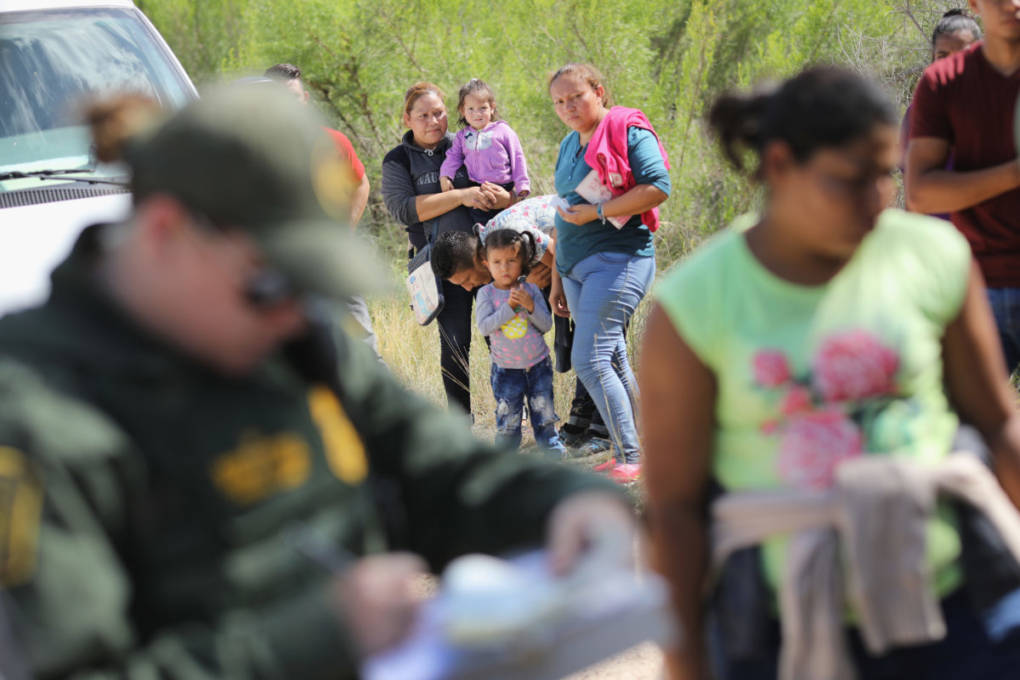
"publishDate": 1530853328,
"modified": 1530853380,
"caption": "Central American asylum seekers wait as U.S. Border Patrol agents take them into custody on June 12, 2018 near McAllen, Texas. ",
"description": null,
"title": "Border Patrol Agents Detain Migrants Near US-Mexico Border",
"credit": "John Moore/Getty Images",
"status": "inherit",
"isLoading": false,
"fetchFailed": false
},
"news_11678674": {
"type": "attachments",
"id": "news_11678674",
"meta": {
"index": "attachments_1716263798",
"site": "news",
"id": "11678674",
"found": true
},
"parent": 11678669,
"imgSizes": {
"small": {
"file": "https://ww2.kqed.org/app/uploads/sites/10/2018/07/IMG_0945_t800-520x390.jpg",
"width": 520,
"mimeType": "image/jpeg",
"height": 390
},
"twentyfourteen-full-width": {
"file": "https://ww2.kqed.org/app/uploads/sites/10/2018/07/IMG_0945_t800-800x576.jpg",
"width": 800,
"mimeType": "image/jpeg",
"height": 576
},
"thumbnail": {
"file": "https://ww2.kqed.org/app/uploads/sites/10/2018/07/IMG_0945_t800-160x120.jpg",
"width": 160,
"mimeType": "image/jpeg",
"height": 120
},
"post-thumbnail": {
"file": "https://ww2.kqed.org/app/uploads/sites/10/2018/07/IMG_0945_t800-672x372.jpg",
"width": 672,
"mimeType": "image/jpeg",
"height": 372
},
"xsmall": {
"file": "https://ww2.kqed.org/app/uploads/sites/10/2018/07/IMG_0945_t800-375x281.jpg",
"width": 375,
"mimeType": "image/jpeg",
"height": 281
},
"kqedFullSize": {
"file": "https://ww2.kqed.org/app/uploads/sites/10/2018/07/IMG_0945_t800.jpg",
"width": 800,
"height": 600
},
"guest-author-50": {
"file": "https://ww2.kqed.org/app/uploads/sites/10/2018/07/IMG_0945_t800-50x50.jpg",
"width": 50,
"mimeType": "image/jpeg",
"height": 50
},
"guest-author-96": {
"file": "https://ww2.kqed.org/app/uploads/sites/10/2018/07/IMG_0945_t800-96x96.jpg",
"width": 96,
"mimeType": "image/jpeg",
"height": 96
},
"medium": {
"file": "https://ww2.kqed.org/app/uploads/sites/10/2018/07/IMG_0945_t800-800x600.jpg",
"width": 800,
"mimeType": "image/jpeg",
"height": 600
},
"guest-author-64": {
"file": "https://ww2.kqed.org/app/uploads/sites/10/2018/07/IMG_0945_t800-64x64.jpg",
"width": 64,
"mimeType": "image/jpeg",
"height": 64
},
"guest-author-32": {
"file": "https://ww2.kqed.org/app/uploads/sites/10/2018/07/IMG_0945_t800-32x32.jpg",
"width": 32,
"mimeType": "image/jpeg",
"height": 32
},
"detail": {
"file": "https://ww2.kqed.org/app/uploads/sites/10/2018/07/IMG_0945_t800-150x150.jpg",
"width": 150,
"mimeType": "image/jpeg",
"height": 150
},
"guest-author-128": {
"file": "https://ww2.kqed.org/app/uploads/sites/10/2018/07/IMG_0945_t800-128x128.jpg",
"width": 128,
"mimeType": "image/jpeg",
"height": 128
},
"xxsmall": {
"file": "https://ww2.kqed.org/app/uploads/sites/10/2018/07/IMG_0945_t800-240x180.jpg",
"width": 240,
"mimeType": "image/jpeg",
"height": 180
}
},
"publishDate": 1530556761,
"modified": 1530556811,
"caption": "Hadidja Fousseni, 3, waits her turn to play in the donated Little Tikes car where Naara Vasquez, 5, plays in front of the Christ United Methodist Church & Ministry Center in San Diego on Wednesday, June 27, 2018.",
"description": null,
"title": "IMG_0945_t800",
"credit": "Katie Schoolov/KPBS",
"status": "inherit",
"isLoading": false,
"fetchFailed": false
},
"news_11686765": {
"type": "attachments",
"id": "news_11686765",
"meta": {
"index": "attachments_1716263798",
"site": "news",
"id": "11686765",
"found": true
},
"parent": 11677170,
"imgSizes": {
"small": {
"file": "https://ww2.kqed.org/app/uploads/sites/10/2018/06/filomenas_flight_social_updated01-520x333.jpg",
"width": 520,
"mimeType": "image/jpeg",
"height": 333
},
"twentyfourteen-full-width": {
"file": "https://ww2.kqed.org/app/uploads/sites/10/2018/06/filomenas_flight_social_updated01-1038x576.jpg",
"width": 1038,
"mimeType": "image/jpeg",
"height": 576
},
"thumbnail": {
"file": "https://ww2.kqed.org/app/uploads/sites/10/2018/06/filomenas_flight_social_updated01-160x103.jpg",
"width": 160,
"mimeType": "image/jpeg",
"height": 103
},
"fd-sm": {
"file": "https://ww2.kqed.org/app/uploads/sites/10/2018/06/filomenas_flight_social_updated01-960x616.jpg",
"width": 960,
"mimeType": "image/jpeg",
"height": 616
},
"post-thumbnail": {
"file": "https://ww2.kqed.org/app/uploads/sites/10/2018/06/filomenas_flight_social_updated01-672x372.jpg",
"width": 672,
"mimeType": "image/jpeg",
"height": 372
},
"xsmall": {
"file": "https://ww2.kqed.org/app/uploads/sites/10/2018/06/filomenas_flight_social_updated01-375x240.jpg",
"width": 375,
"mimeType": "image/jpeg",
"height": 240
},
"kqedFullSize": {
"file": "https://ww2.kqed.org/app/uploads/sites/10/2018/06/filomenas_flight_social_updated01.jpg",
"width": 1920,
"height": 1231
},
"large": {
"file": "https://ww2.kqed.org/app/uploads/sites/10/2018/06/filomenas_flight_social_updated01-1020x654.jpg",
"width": 1020,
"mimeType": "image/jpeg",
"height": 654
},
"xlarge": {
"file": "https://ww2.kqed.org/app/uploads/sites/10/2018/06/filomenas_flight_social_updated01-1180x757.jpg",
"width": 1180,
"mimeType": "image/jpeg",
"height": 757
},
"complete_open_graph": {
"file": "https://ww2.kqed.org/app/uploads/sites/10/2018/06/filomenas_flight_social_updated01-1200x769.jpg",
"width": 1200,
"mimeType": "image/jpeg",
"height": 769
},
"guest-author-50": {
"file": "https://ww2.kqed.org/app/uploads/sites/10/2018/06/filomenas_flight_social_updated01-50x50.jpg",
"width": 50,
"mimeType": "image/jpeg",
"height": 50
},
"guest-author-96": {
"file": "https://ww2.kqed.org/app/uploads/sites/10/2018/06/filomenas_flight_social_updated01-96x96.jpg",
"width": 96,
"mimeType": "image/jpeg",
"height": 96
},
"medium": {
"file": "https://ww2.kqed.org/app/uploads/sites/10/2018/06/filomenas_flight_social_updated01-800x513.jpg",
"width": 800,
"mimeType": "image/jpeg",
"height": 513
},
"guest-author-64": {
"file": "https://ww2.kqed.org/app/uploads/sites/10/2018/06/filomenas_flight_social_updated01-64x64.jpg",
"width": 64,
"mimeType": "image/jpeg",
"height": 64
},
"guest-author-32": {
"file": "https://ww2.kqed.org/app/uploads/sites/10/2018/06/filomenas_flight_social_updated01-32x32.jpg",
"width": 32,
"mimeType": "image/jpeg",
"height": 32
},
"fd-lrg": {
"file": "https://ww2.kqed.org/app/uploads/sites/10/2018/06/filomenas_flight_social_updated01-1920x1231.jpg",
"width": 1920,
"mimeType": "image/jpeg",
"height": 1231
},
"fd-med": {
"file": "https://ww2.kqed.org/app/uploads/sites/10/2018/06/filomenas_flight_social_updated01-1180x757.jpg",
"width": 1180,
"mimeType": "image/jpeg",
"height": 757
},
"full-width": {
"file": "https://ww2.kqed.org/app/uploads/sites/10/2018/06/filomenas_flight_social_updated01-1920x1231.jpg",
"width": 1920,
"mimeType": "image/jpeg",
"height": 1231
},
"detail": {
"file": "https://ww2.kqed.org/app/uploads/sites/10/2018/06/filomenas_flight_social_updated01-150x150.jpg",
"width": 150,
"mimeType": "image/jpeg",
"height": 150
},
"guest-author-128": {
"file": "https://ww2.kqed.org/app/uploads/sites/10/2018/06/filomenas_flight_social_updated01-128x128.jpg",
"width": 128,
"mimeType": "image/jpeg",
"height": 128
},
"xxsmall": {
"file": "https://ww2.kqed.org/app/uploads/sites/10/2018/06/filomenas_flight_social_updated01-240x154.jpg",
"width": 240,
"mimeType": "image/jpeg",
"height": 154
}
},
"publishDate": 1534199951,
"modified": 1534199980,
"caption": null,
"description": null,
"title": "filomenas_flight_social_updated01",
"credit": null,
"status": "inherit",
"isLoading": false,
"fetchFailed": false
}
},
"audioPlayerReducer": {
"postId": "stream_live",
"isPaused": true,
"isPlaying": false,
"pfsActive": false,
"pledgeModalIsOpen": true,
"playerDrawerIsOpen": false,
"liveAudioPlayStartedAt": 0,
"liveAudioPlayContext": ""
},
"authorsReducer": {
"byline_news_11695281": {
"type": "authors",
"id": "byline_news_11695281",
"meta": {
"override": true
},
"slug": "byline_news_11695281",
"name": "\u003cstrong>\u003ca href=\"https://www.kpbs.org/staff/jean-guerrero/\">Jean Guerrero\u003c/a>\u003c/strong>",
"isLoading": false
},
"byline_news_11693682": {
"type": "authors",
"id": "byline_news_11693682",
"meta": {
"override": true
},
"slug": "byline_news_11693682",
"name": "\u003cstrong>\u003ca href=\"https://www.kpbs.org/staff/jean-guerrero/\">Jean Guerrero\u003c/a>\u003c/strong>",
"isLoading": false
},
"byline_futureofyou_443202": {
"type": "authors",
"id": "byline_futureofyou_443202",
"meta": {
"override": true
},
"slug": "byline_futureofyou_443202",
"name": "Lisa Desjardins\u003cbr />Joshua Barajas\u003cbr />Daniel Bush\u003cbr />PBS Health NewsHour",
"isLoading": false
},
"byline_news_11678669": {
"type": "authors",
"id": "byline_news_11678669",
"meta": {
"override": true
},
"slug": "byline_news_11678669",
"name": "\u003cstrong>\u003ca href=\"http://www.kpbs.org/staff/jean-guerrero/\">Jean Guerrero\u003c/a>\u003cbr />\u003ca href=\"http://www.kpbs.org/\">KPBS\u003c/a>\u003c/strong>",
"isLoading": false
},
"markfiore": {
"type": "authors",
"id": "3236",
"meta": {
"index": "authors_1716337520",
"id": "3236",
"found": true
},
"name": "Mark Fiore",
"firstName": "Mark",
"lastName": "Fiore",
"slug": "markfiore",
"email": "mark@markfiore.com",
"display_author_email": false,
"staff_mastheads": [
"news"
],
"title": "KQED News Cartoonist",
"bio": "\u003ca href=\"http://www.MarkFiore.com\">MarkFiore.com\u003c/a> | \u003ca href=\"https://twitter.com/markfiore\">Follow on Twitter\u003c/a> | \u003ca href=\"https://www.facebook.com/pages/Mark-Fiore-Animated-Political-Cartoons/94451707396?ref=bookmarks\">Facebook\u003c/a> | \u003ca href=\"mailto:mark@markfiore.com\">email\u003c/a>\r\n\r\nPulitzer Prize-winner, Mark Fiore, who the Wall Street Journal has called “the undisputed guru of the form,” creates animated political cartoons in San Francisco, where his work has been featured regularly on the San Francisco Chronicle’s web site, SFGate.com. His work has appeared on Newsweek.com, Slate.com, CBSNews.com, MotherJones.com, DailyKos.com and NPR’s web site. Fiore’s political animation has appeared on CNN, Frontline, Bill Moyers Journal, Salon.com and cable and broadcast outlets across the globe.\r\n\r\nBeginning his professional life by drawing traditional political cartoons for newspapers, Fiore’s work appeared in publications ranging from the Washington Post to the Los Angeles Times. In the late 1990s, he began to experiment with animating political cartoons and, after a short stint at the San Jose Mercury News as their staff cartoonist, Fiore devoted all his energies to animation.\r\nGrowing up in California, Fiore also spent a good portion of his life in the backwoods of Idaho. It was this combination that shaped him politically. Mark majored in political science at Colorado College, where, in a perfect send-off for a cartoonist, he received his diploma in 1991 as commencement speaker Dick Cheney smiled approvingly.\r\nMark Fiore was awarded the Pulitzer Prize for political cartooning in 2010, a Robert F. Kennedy Journalism Award in 2004 and has twice received an Online Journalism Award for commentary from the Online News Association (2002, 2008). Fiore has received two awards for his work in new media from the National Cartoonists Society (2001, 2002), and in 2006 received The James Madison Freedom of Information Award from The Society of Professional Journalists.",
"avatar": "https://secure.gravatar.com/avatar/fc4e2a612b15b67bad0c6f0e1db4ca9b?s=600&d=blank&r=g",
"twitter": "MarkFiore",
"facebook": null,
"instagram": "https://www.instagram.com/markfiore/?hl=en",
"linkedin": null,
"sites": [
{
"site": "arts",
"roles": [
"contributor"
]
},
{
"site": "news",
"roles": [
"editor"
]
},
{
"site": "futureofyou",
"roles": [
"editor"
]
},
{
"site": "science",
"roles": [
"editor"
]
}
],
"headData": {
"title": "Mark Fiore | KQED",
"description": "KQED News Cartoonist",
"ogImgSrc": "https://secure.gravatar.com/avatar/fc4e2a612b15b67bad0c6f0e1db4ca9b?s=600&d=blank&r=g",
"twImgSrc": "https://secure.gravatar.com/avatar/fc4e2a612b15b67bad0c6f0e1db4ca9b?s=600&d=blank&r=g"
},
"isLoading": false,
"link": "/author/markfiore"
},
"jsmall": {
"type": "authors",
"id": "6625",
"meta": {
"index": "authors_1716337520",
"id": "6625",
"found": true
},
"name": "Julie Small",
"firstName": "Julie",
"lastName": "Small",
"slug": "jsmall",
"email": "jsmall@kqed.org",
"display_author_email": true,
"staff_mastheads": [
"news"
],
"title": "KQED Contributor",
"bio": "Julie Small reports on criminal justice and immigration.\r\n\r\nShe was part of a team at KQED awarded a regional 2019 Edward R. Murrow award for continuing coverage of the Trump Administration's family separation policy.\r\n\r\nThe Society for Professional Journalists recognized Julie's 2018 \u003ca href=\"https://www.kqed.org/news/11636262/the-officer-tased-him-31-times-the-sheriff-called-his-death-an-accident\">reporting\u003c/a> on the San Joaquin County Sheriff's \u003ca href=\"https://www.kqed.org/news/11634689/autopsy-doctors-sheriff-overrode-death-findings-to-protect-law-enforcement\">interference\u003c/a> in death investigations with an Excellence in Journalism Award for Ongoing Coverage.\r\n\r\nJulie's\u003ca href=\"https://www.kqed.org/news/11039666/two-mentally-ill-inmates-died-one-month-in-santa-clara\"> reporting\u003c/a> with Lisa Pickoff-White on the treatment of mentally ill offenders in California jails earned a 2017 regional Edward R. Murrow Award for news reporting and an investigative reporting award from the SPJ of Northern California.\r\n\r\nBefore joining KQED, Julie covered government and politics in Sacramento for Southern California Public Radio (SCPR). Her 2010 \u003ca href=\"https://www.scpr.org/specials/prisonmedical/\">series\u003c/a> on lapses in California’s prison medical care also won a regional Edward R. Murrow Award for investigative reporting and a Golden Mic Award from the RTNDA of Southern California.\r\n\r\nJulie began her career in journalism in 2000 as the deputy foreign editor for public radio's \u003cem>Marketplace, \u003c/em>while earning her master's degree in journalism from USC’s Annenberg School of Communication.",
"avatar": "https://secure.gravatar.com/avatar/4baedf201468df97be97c2a9dd7585d0?s=600&d=blank&r=g",
"twitter": "@SmallRadio2",
"facebook": null,
"instagram": null,
"linkedin": null,
"sites": [
{
"site": "news",
"roles": [
"editor"
]
},
{
"site": "stateofhealth",
"roles": [
"author"
]
},
{
"site": "science",
"roles": [
"author"
]
}
],
"headData": {
"title": "Julie Small | KQED",
"description": "KQED Contributor",
"ogImgSrc": "https://secure.gravatar.com/avatar/4baedf201468df97be97c2a9dd7585d0?s=600&d=blank&r=g",
"twImgSrc": "https://secure.gravatar.com/avatar/4baedf201468df97be97c2a9dd7585d0?s=600&d=blank&r=g"
},
"isLoading": false,
"link": "/author/jsmall"
},
"fjhabvala": {
"type": "authors",
"id": "8659",
"meta": {
"index": "authors_1716337520",
"id": "8659",
"found": true
},
"name": "Farida Jhabvala Romero",
"firstName": "Farida",
"lastName": "Jhabvala Romero",
"slug": "fjhabvala",
"email": "fjhabvala@kqed.org",
"display_author_email": true,
"staff_mastheads": [
"news"
],
"title": "KQED Contributor",
"bio": "Farida Jhabvala Romero is a Labor Correspondent for KQED. She previously covered immigration. Farida was \u003ca href=\"https://www.ccnma.org/2022-most-influential-latina-journalists\">named\u003c/a> one of the 10 Most Influential Latina Journalists in California in 2022 by the California Chicano News Media Association. Her work has won awards from the Society of Professional Journalists (Northern California), as well as a national and regional Edward M. Murrow Award for the collaborative reporting projects “Dangerous Air” and “Graying California.” Before joining KQED, Farida worked as a producer at Radio Bilingüe, a national public radio network. Farida earned her master’s degree in journalism from Stanford University.",
"avatar": "https://secure.gravatar.com/avatar/f9f022d4e2609741874222a1e9d41f48fea74011aa7c615eef91d9a50c944ebe?s=600&d=blank&r=g",
"twitter": "FaridaJhabvala",
"bluesky": null,
"facebook": null,
"instagram": null,
"linkedin": "https://www.linkedin.com/in/faridajhabvala/",
"sites": [
{
"site": "news",
"roles": [
"editor"
]
},
{
"site": "stateofhealth",
"roles": [
"author"
]
},
{
"site": "liveblog",
"roles": [
"author"
]
}
],
"headData": {
"title": "Farida Jhabvala Romero | KQED",
"description": "KQED Contributor",
"ogImgSrc": "https://secure.gravatar.com/avatar/f9f022d4e2609741874222a1e9d41f48fea74011aa7c615eef91d9a50c944ebe?s=600&d=blank&r=g",
"twImgSrc": "https://secure.gravatar.com/avatar/f9f022d4e2609741874222a1e9d41f48fea74011aa7c615eef91d9a50c944ebe?s=600&d=blank&r=g"
},
"isLoading": false,
"link": "/author/fjhabvala"
},
"jsepulvado": {
"type": "authors",
"id": "11298",
"meta": {
"index": "authors_1716337520",
"id": "11298",
"found": true
},
"name": "John Sepulvado",
"firstName": "John",
"lastName": "Sepulvado",
"slug": "jsepulvado",
"email": "jsepulvado@KQED.org",
"display_author_email": false,
"staff_mastheads": [],
"title": null,
"bio": "John Sepulvado is a former morning host of \u003cem>The California Report\u003c/em>. Prior to joining KQED in September 2016, John was the local host of NPR’s \u003cem>Weekend Edition\u003c/em> at Oregon Public Broadcasting (OPB). He has also served as a producer for America Public Media’s \u003cem>Marketplace Weekend\u003c/em> and worked as a national correspondent for CNN and as news director at WUSF in Tampa, Florida. John has earned prestigious RTDNA Murrow and PRNDI awards for investigative reporting, and helped CNN take home a Peabody Award for coverage of the 2010 Gulf oil spill. John attended Florida A&M in Tallahassee and is also a member of Phi Theta Kappa. He left KQED in 2019.",
"avatar": "https://secure.gravatar.com/avatar/b976d3c4cf11750a793b670e5acb7a1c?s=600&d=blank&r=g",
"twitter": null,
"facebook": null,
"instagram": null,
"linkedin": null,
"sites": [
{
"site": "news",
"roles": [
"author",
"edit_others_posts"
]
}
],
"headData": {
"title": "John Sepulvado | KQED",
"description": null,
"ogImgSrc": "https://secure.gravatar.com/avatar/b976d3c4cf11750a793b670e5acb7a1c?s=600&d=blank&r=g",
"twImgSrc": "https://secure.gravatar.com/avatar/b976d3c4cf11750a793b670e5acb7a1c?s=600&d=blank&r=g"
},
"isLoading": false,
"link": "/author/jsepulvado"
},
"ahall": {
"type": "authors",
"id": "11490",
"meta": {
"index": "authors_1716337520",
"id": "11490",
"found": true
},
"name": "Alex Hall",
"firstName": "Alex",
"lastName": "Hall",
"slug": "ahall",
"email": "ahall@kqed.org",
"display_author_email": false,
"staff_mastheads": [
"news"
],
"title": "KQED Enterprise & Accountability Reporter",
"bio": "Alex Hall is KQED's Enterprise and Accountability Reporter. She previously covered the Central Valley for five years from KQED's bureau in Fresno. Before joining KQED, Alex was an investigative reporting fellow at Wisconsin Public Radio and the Wisconsin Center for Investigative Journalism. She has also worked as a bilingual producer for NPR's investigative unit and freelance video producer for Reuters TV on the Latin America desk. She got her start in journalism in South America, where she worked as a radio producer and Spanish-English translator for CNN Chile. Her documentary and investigation into the series of deadly COVID-19 outbreaks at Foster Farms won a national Edward R. Murrow award and was named an Investigative Reporters & Editors award finalist. Alex's reporting for Reveal on the Wisconsin dairy industry's reliance on undocumented immigrant labor was made into a film, Los Lecheros, which won a regional Edward R. Murrow award for best news documentary.",
"avatar": "https://secure.gravatar.com/avatar/defcbeb88b0bf591ff9af41f22644051?s=600&d=blank&r=g",
"twitter": "@chalexhall",
"facebook": null,
"instagram": null,
"linkedin": null,
"sites": [
{
"site": "news",
"roles": [
"editor"
]
},
{
"site": "liveblog",
"roles": [
"author"
]
}
],
"headData": {
"title": "Alex Hall | KQED",
"description": "KQED Enterprise & Accountability Reporter",
"ogImgSrc": "https://secure.gravatar.com/avatar/defcbeb88b0bf591ff9af41f22644051?s=600&d=blank&r=g",
"twImgSrc": "https://secure.gravatar.com/avatar/defcbeb88b0bf591ff9af41f22644051?s=600&d=blank&r=g"
},
"isLoading": false,
"link": "/author/ahall"
}
},
"pagesReducer": {
"news_tag_asylum": {
"type": "terms",
"id": "news_23087",
"meta": {
"index": "terms_1716263798",
"site": "news",
"id": "23087",
"score": 9.892343
},
"featImg": null,
"name": "Asylum",
"description": null,
"taxonomy": "tag",
"headData": {
"twImgId": null,
"twTitle": null,
"ogTitle": null,
"ogImgId": null,
"twDescription": null,
"description": null,
"title": "Asylum Archives | KQED News",
"ogDescription": null
},
"ttid": 23104,
"slug": "asylum",
"isLoading": false,
"title": "Asylum",
"pageMeta": {
"site": "news",
"WpPageTemplate": "page-topic-editorial",
"currentPage": 9
},
"blocks": [
{
"blockName": "kqed/post-list",
"attrs": {
"layout": "cardArticle2",
"query": "posts/news?tag=asylum",
"seeMore": false,
"paginated": true,
"page": 9
}
},
{
"blockName": "kqed/ad"
}
]
}
},
"pfsSessionReducer": {},
"postsReducer": {
"stream_live": {
"type": "live",
"id": "stream_live",
"audioUrl": "https://streams.kqed.org/kqedradio",
"title": "Live Stream",
"excerpt": "Live Stream information currently unavailable.",
"link": "/radio",
"featImg": "",
"label": {
"name": "KQED Live",
"link": "/"
}
},
"stream_kqedNewscast": {
"type": "posts",
"id": "stream_kqedNewscast",
"audioUrl": "https://www.kqed.org/.stream/anon/radio/RDnews/newscast.mp3?_=1",
"title": "KQED Newscast",
"featImg": "",
"label": {
"name": "88.5 FM",
"link": "/"
}
},
"news_11701728": {
"type": "posts",
"id": "news_11701728",
"meta": {
"index": "posts_1716263798",
"site": "news",
"id": "11701728",
"score": null,
"sort": [
1540623665000
]
},
"parent": 0,
"labelTerm": {
"site": "news",
"term": 72
},
"blocks": [],
"publishDate": 1540623665,
"format": "standard",
"disqusTitle": "Advocates Question Timing of Change in Migrant Family Release Policy",
"title": "Advocates Question Timing of Change in Migrant Family Release Policy",
"headTitle": "The California Report | KQED News",
"content": "\u003cp>Advocates for immigrants along the U.S.-Mexico border say a Tuesday decision by U.S. Immigration and Customs Enforcement to no longer provide assistance to migrant families being released from detention may be more rhetorical than real.\u003c/p>\n\u003cp>Until this week, ICE had a policy of conducting “post-release planning” to ensure that migrant families being released in the U.S. had transportation arrangements.\u003c/p>\n\u003cp>But on Tuesday, ICE abandoned the policy, ostensibly in order to release families from detention more quickly and adhere to court orders on the treatment of migrant children.\u003c/p>\n\u003cp>“To mitigate the risk of holding family units past the time frame allotted to the government, ICE began curtailing all reviews of post-release plans from families apprehended along the southwest border,” ICE Deputy Press Secretary Sarah Rodriguez said in a statement shared with KQED Thursday.\u003c/p>\n\u003cp>Immigrant rights advocates say they learned about the policy change only after it was implemented.\u003c/p>\n\u003cp>[ad fullwidth]\u003c/p>\n\u003cp>A Catholic church group in El Paso, Texas, that provides temporary housing for hundreds of migrant families released from local detention facilities each week, expressed concern. In an email to supporters, Annunciation House warned that the group’s shelters could be overwhelmed.\u003c/p>\n\u003cp>“Annunciation House is committed to increasing its network of hospitality centers so as to prevent releases to the street,\" the email says. \"Right now we are not there yet and so I expect that we will start seeing families with their children on the street in the coming days.” \u003c/p>\n\u003cp>But Vicki Gaubeca with the Southern Border Communities Coalition in Tucson, Arizona, said that in recent years ICE has already been making large-scale releases of families without ensuring they have transportation arrangements from border detention facilities.\u003c/p>\n\u003cp>“It's not an unusual event,” Gaubeca said. “But it is part of the enhanced political theater … that's in essence trying to rally the Republican base to come out and vote through a narrative of fear.”\u003c/p>\n\u003cp>Gaubeca said the ICE policy change seems calculated to give an impression that migrants seeking refuge in the U.S. will overwhelm border communities. But, she said, that has never been the case.\u003c/p>\n\u003cp>Gaubeca speculated that the ICE announcement was related to an executive order the president is expected to announce next week, aimed at blocking a caravan of thousands of Central Americans seeking asylum in the U.S.\u003c/p>\n\u003cp>In San Diego, advocates also said they had seen no changes to the number and manner of family releases since the government’s announcement.\u003c/p>\n\u003cp>Lauren Cusitello with Crossroads Justice Center, a nonprofit group that provides legal services to migrants, said community organizations in the San Diego can provide a lot of support to migrant families.\u003c/p>\n\u003cp>“There are resources available to make sure that that they are safe and healthy,” Cusitello said.\u003c/p>\n\u003cp>But she worried that if ICE stops reviewing families’ post-release plans, the burden will shift to nonprofit and church groups to locate families and ensure their safety. And that could mean some people don’t get help.\u003c/p>\n\u003cp>“There may be people whose needs go unmet even though there are providers in the community,” Cusitello said. \u003c/p>\n\u003cp>In her statement, ICE’s Rodriguez said: “The government remains severely constrained in its ability to detain and promptly remove families with no legal basis to remain in the U.S.”\u003c/p>\n\u003cp>She went on: “[D]ue to the recent uptick in family units presenting themselves along the Southwest border, ICE no longer has the capacity to conduct … reviews without risking violation of the Flores limitations on lengths of stay for families in both [U.S. Customs and Border Patrol] and ICE custody.”\u003c/p>\n\u003cp>The 1997 Flores Settlement Agreement requires migrant children to be kept in the least restrictive environment possible and released from custody as soon as possible. Children who cannot be released, must be transferred to a state-licensed child care facility, usually within 72 hours. A federal judge has ruled that the agreement applies to children with a known parent as well as those who arrive at the border without their parents.\u003c/p>\n\u003cp>Carlos Holguín, one of the plaintiffs’ attorneys in the Flores case, said the change in ICE policy is “not necessary” to comply with the settlement agreement. That’s because the number of migrant kids has been high in recent years, triggering an exemption to the 72-hour rule.\u003c/p>\n\u003cp>According to Holguín, the government must simply release children from unlicensed immigration facilities along the border “as expeditiously as possible.” \u003c/p>\n\u003cp>\u003c/p>\n\u003cp>“The only hard limit on family detention right now is the capacity of the three family detention centers,” Holguín said. “Inasmuch as those are not full, ICE’s statements appear aimed at spreading disinformation.”\u003c/p>\n\n",
"disqusIdentifier": "11701728 https://ww2.kqed.org/news/?p=11701728",
"disqusUrl": "https://ww2.kqed.org/news/2018/10/27/advocates-question-timing-of-change-in-migrant-families-releases/",
"stats": {
"hasVideo": false,
"hasChartOrMap": false,
"hasAudio": false,
"hasPolis": false,
"wordCount": 813,
"hasGoogleForm": false,
"hasGallery": false,
"hasHearkenModule": false,
"iframeSrcs": [],
"paragraphCount": 24
},
"modified": 1540619067,
"excerpt": "Immigrant advocates question the timing of a policy change that could result in families seeking asylum being released to the street without food or shelter.",
"headData": {
"twImgId": "",
"twTitle": "",
"ogTitle": "",
"ogImgId": "",
"twDescription": "",
"description": "Immigrant advocates question the timing of a policy change that could result in families seeking asylum being released to the street without food or shelter.",
"title": "Advocates Question Timing of Change in Migrant Family Release Policy | KQED",
"ogDescription": "",
"schema": {
"@context": "https://schema.org",
"@type": "NewsArticle",
"headline": "Advocates Question Timing of Change in Migrant Family Release Policy",
"datePublished": "2018-10-27T00:01:05-07:00",
"dateModified": "2018-10-26T22:44:27-07:00",
"image": "https://cdn.kqed.org/wp-content/uploads/2020/02/KQED-OG-Image@1x.png",
"isAccessibleForFree": "True",
"publisher": {
"@type": "NewsMediaOrganization",
"@id": "https://www.kqed.org/#organization",
"name": "KQED",
"logo": "https://cdn.kqed.org/wp-content/uploads/2020/02/KQED-OG-Image@1x.png",
"url": "https://www.kqed.org",
"sameAs": [
"https://www.facebook.com/KQED",
"https://twitter.com/KQED",
"https://www.instagram.com/kqed/",
"https://www.tiktok.com/@kqedofficial",
"https://www.linkedin.com/company/kqed",
"https://www.youtube.com/channel/UCeC0IOo7i1P_61zVUWbJ4nw"
]
}
}
},
"guestAuthors": [],
"slug": "advocates-question-timing-of-change-in-migrant-families-releases",
"status": "publish",
"path": "/news/11701728/advocates-question-timing-of-change-in-migrant-families-releases",
"audioTrackLength": null,
"parsedContent": [
{
"type": "contentString",
"content": "\u003cdiv class=\"post-body\">\u003cp>\u003cp>Advocates for immigrants along the U.S.-Mexico border say a Tuesday decision by U.S. Immigration and Customs Enforcement to no longer provide assistance to migrant families being released from detention may be more rhetorical than real.\u003c/p>\n\u003cp>Until this week, ICE had a policy of conducting “post-release planning” to ensure that migrant families being released in the U.S. had transportation arrangements.\u003c/p>\n\u003cp>But on Tuesday, ICE abandoned the policy, ostensibly in order to release families from detention more quickly and adhere to court orders on the treatment of migrant children.\u003c/p>\n\u003cp>“To mitigate the risk of holding family units past the time frame allotted to the government, ICE began curtailing all reviews of post-release plans from families apprehended along the southwest border,” ICE Deputy Press Secretary Sarah Rodriguez said in a statement shared with KQED Thursday.\u003c/p>\n\u003cp>Immigrant rights advocates say they learned about the policy change only after it was implemented.\u003c/p>\n\u003cp>\u003c/p>\u003c/div>",
"attributes": {
"named": {},
"numeric": []
}
},
{
"type": "component",
"content": "",
"name": "ad",
"attributes": {
"named": {
"label": "fullwidth"
},
"numeric": [
"fullwidth"
]
}
},
{
"type": "contentString",
"content": "\u003cdiv class=\"post-body\">\u003cp>\u003c/p>\n\u003cp>A Catholic church group in El Paso, Texas, that provides temporary housing for hundreds of migrant families released from local detention facilities each week, expressed concern. In an email to supporters, Annunciation House warned that the group’s shelters could be overwhelmed.\u003c/p>\n\u003cp>“Annunciation House is committed to increasing its network of hospitality centers so as to prevent releases to the street,\" the email says. \"Right now we are not there yet and so I expect that we will start seeing families with their children on the street in the coming days.” \u003c/p>\n\u003cp>But Vicki Gaubeca with the Southern Border Communities Coalition in Tucson, Arizona, said that in recent years ICE has already been making large-scale releases of families without ensuring they have transportation arrangements from border detention facilities.\u003c/p>\n\u003cp>“It's not an unusual event,” Gaubeca said. “But it is part of the enhanced political theater … that's in essence trying to rally the Republican base to come out and vote through a narrative of fear.”\u003c/p>\n\u003cp>Gaubeca said the ICE policy change seems calculated to give an impression that migrants seeking refuge in the U.S. will overwhelm border communities. But, she said, that has never been the case.\u003c/p>\n\u003cp>Gaubeca speculated that the ICE announcement was related to an executive order the president is expected to announce next week, aimed at blocking a caravan of thousands of Central Americans seeking asylum in the U.S.\u003c/p>\n\u003cp>In San Diego, advocates also said they had seen no changes to the number and manner of family releases since the government’s announcement.\u003c/p>\n\u003cp>Lauren Cusitello with Crossroads Justice Center, a nonprofit group that provides legal services to migrants, said community organizations in the San Diego can provide a lot of support to migrant families.\u003c/p>\n\u003cp>“There are resources available to make sure that that they are safe and healthy,” Cusitello said.\u003c/p>\n\u003cp>But she worried that if ICE stops reviewing families’ post-release plans, the burden will shift to nonprofit and church groups to locate families and ensure their safety. And that could mean some people don’t get help.\u003c/p>\n\u003cp>“There may be people whose needs go unmet even though there are providers in the community,” Cusitello said. \u003c/p>\n\u003cp>In her statement, ICE’s Rodriguez said: “The government remains severely constrained in its ability to detain and promptly remove families with no legal basis to remain in the U.S.”\u003c/p>\n\u003cp>She went on: “[D]ue to the recent uptick in family units presenting themselves along the Southwest border, ICE no longer has the capacity to conduct … reviews without risking violation of the Flores limitations on lengths of stay for families in both [U.S. Customs and Border Patrol] and ICE custody.”\u003c/p>\n\u003cp>The 1997 Flores Settlement Agreement requires migrant children to be kept in the least restrictive environment possible and released from custody as soon as possible. Children who cannot be released, must be transferred to a state-licensed child care facility, usually within 72 hours. A federal judge has ruled that the agreement applies to children with a known parent as well as those who arrive at the border without their parents.\u003c/p>\n\u003cp>Carlos Holguín, one of the plaintiffs’ attorneys in the Flores case, said the change in ICE policy is “not necessary” to comply with the settlement agreement. That’s because the number of migrant kids has been high in recent years, triggering an exemption to the 72-hour rule.\u003c/p>\n\u003cp>According to Holguín, the government must simply release children from unlicensed immigration facilities along the border “as expeditiously as possible.” \u003c/p>\n\u003cp>\u003c/p>\n\u003cp>“The only hard limit on family detention right now is the capacity of the three family detention centers,” Holguín said. “Inasmuch as those are not full, ICE’s statements appear aimed at spreading disinformation.”\u003c/p>\n\n\u003c/div>\u003c/p>",
"attributes": {
"named": {},
"numeric": []
}
}
],
"link": "/news/11701728/advocates-question-timing-of-change-in-migrant-families-releases",
"authors": [
"6625"
],
"programs": [
"news_72"
],
"categories": [
"news_1169",
"news_6188",
"news_8",
"news_13"
],
"tags": [
"news_23087",
"news_23653",
"news_20458",
"news_1323",
"news_19542",
"news_17041",
"news_20529",
"news_21038",
"news_244"
],
"featImg": "news_11700366",
"label": "news_72"
},
"news_11695081": {
"type": "posts",
"id": "news_11695081",
"meta": {
"index": "posts_1716263798",
"site": "news",
"id": "11695081",
"score": null,
"sort": [
1539997223000
]
},
"parent": 0,
"labelTerm": {
"site": "news",
"term": 72
},
"blocks": [],
"publishDate": 1539997223,
"format": "standard",
"disqusTitle": "Dispatches from Tijuana: U.S. Immigration Policy Through the Lives of Deportees",
"title": "Dispatches from Tijuana: U.S. Immigration Policy Through the Lives of Deportees",
"headTitle": "The California Report | KQED News",
"content": "\u003cp>At a migrant shelter in Tijuana, Mexico, less than three miles away from the metal border fence, Sergio Saucedo, 47, was reeling from his deportation from the United States, where he had spent over half of his life.\u003c/p>\n\u003cp>Three days earlier, U.S. immigration authorities had handed him to their Mexican counterparts at the border crossing, Saucedo said, with just the clothes he was wearing and some paperwork from his deportation. When Immigration and Customs Enforcement agents arrested him in Los Angeles, Saucedo said he didn’t have his wallet or cell phone. Now, he wished he had enough money to call his children, back home in California.\u003c/p>\n\u003cp>\"I spent so many years in California. Practically speaking, my life is there,\" said Saucedo, who lived in the Los Angeles area for 27 years and worked as a restaurant cook. “Now I can’t see my family.”\u003c/p>\n\u003cp>The experiences of recent deportees like Saucedo highlight ways the Trump administration has reshaped immigration policies affecting hundreds of thousands of people. Under President Trump, the federal government \u003ca href=\"https://www.ice.gov/removal-statistics/2017\" target=\"_blank\" rel=\"noopener\">stepped up deportations\u003c/a> of non-citizens without criminal violations, and \u003ca href=\"https://www.justice.gov/eoir/page/file/1061526/download\" target=\"_blank\" rel=\"noopener\">rejected more\u003c/a> asylum applicants than in any year in the last decade. Such changes, ordered by Trump during his first weeks in office, are in stark contrast to immigration enforcement under the latter years of the Obama administration.\u003c/p>\n\u003cp>Mexicans deported from California often end up first in Tijuana, a city local leaders say is absorbing thousands of deportees and also migrants from other countries who were drawn to the U.S. border.\u003c/p>\n\u003cp>[ad fullwidth]\u003c/p>\n\u003cp>\u003cstrong>'We Don't Have Those Bad Hombres'\u003c/strong>\u003c/p>\n\u003cp>Every day, \u003ca href=\"https://casadelmigrantetijuana.com/en/\" target=\"_blank\" rel=\"noopener\">Casa del Migrante\u003c/a> provides shelter and meals to about 120 people, said Gilberto Martinez, who manages the Catholic non-profit which opened its doors in 1987.\u003c/p>\n\u003cp>In recent months, Martinez is seeing more deportees who have a long history in the U.S. and no significant criminal records.\u003c/p>\n\u003cp>\"We don't have those bad hombres that Trump was talking about. We have regular people who don't even have a traffic ticket,” said Martinez, who has worked at the shelter for two decades. “It’s a lot of people who arrived in the U.S. 20, 30 years ago and have done nothing but work and work.”\u003c/p>\n\u003cp>Most of the immigrants deported last year after living in the U.S. do have a criminal conviction, \u003ca href=\"https://www.ice.gov/removal-statistics/2017\" target=\"_blank\" rel=\"noopener\">according to ICE\u003c/a>, but immigration officials are also deporting thousands more people with no criminal records. Among ICE detainees with convictions, the most common offenses were traffic, drug and immigration violations.\u003c/p>\n\u003cp>As the Trump administration has broadened its scope for immigration enforcement, ICE agents are detaining unauthorized immigrants in community locations including at courthouses. That’s where Saucedo said he was arrested by ICE.\u003c/p>\n\u003cfigure id=\"attachment_11699975\" class=\"wp-caption aligncenter\" style=\"max-width: 1920px\">\u003cimg class=\"size-full wp-image-11699975\" src=\"https://ww2.kqed.org/news/wp-content/uploads/sites/10/2018/10/RS33012_IMG_1866-qut.jpg\" alt=\"\" width=\"1920\" height=\"1280\" srcset=\"https://ww2.kqed.org/app/uploads/sites/10/2018/10/RS33012_IMG_1866-qut.jpg 1920w, https://ww2.kqed.org/app/uploads/sites/10/2018/10/RS33012_IMG_1866-qut-160x107.jpg 160w, https://ww2.kqed.org/app/uploads/sites/10/2018/10/RS33012_IMG_1866-qut-800x533.jpg 800w, https://ww2.kqed.org/app/uploads/sites/10/2018/10/RS33012_IMG_1866-qut-1020x680.jpg 1020w, https://ww2.kqed.org/app/uploads/sites/10/2018/10/RS33012_IMG_1866-qut-1200x800.jpg 1200w, https://ww2.kqed.org/app/uploads/sites/10/2018/10/RS33012_IMG_1866-qut-1180x787.jpg 1180w, https://ww2.kqed.org/app/uploads/sites/10/2018/10/RS33012_IMG_1866-qut-960x640.jpg 960w, https://ww2.kqed.org/app/uploads/sites/10/2018/10/RS33012_IMG_1866-qut-240x160.jpg 240w, https://ww2.kqed.org/app/uploads/sites/10/2018/10/RS33012_IMG_1866-qut-375x250.jpg 375w, https://ww2.kqed.org/app/uploads/sites/10/2018/10/RS33012_IMG_1866-qut-520x347.jpg 520w\" sizes=\"(max-width: 1920px) 100vw, 1920px\">\u003cfigcaption class=\"wp-caption-text\">Sergio Saucedo at the Casa del Migrante shelter in Tijuana on July 31, 2018. Saucedo lived in the Los Angeles area for 27 years. \u003ccite>(Farida Jhabvala Romero/KQED)\u003c/cite>\u003c/figcaption>\u003c/figure>\n\u003cp>Back in July, Saucedo was eating at a fried chicken restaurant in Long Beach when a fight broke out next to him, he said. The police officers who arrived at the scene also detained him, possibly because of an old bench warrant after he failed to appear in court for a 2008 misdemeanor charge of vandalism. Saucedo said he appeared before a judge in Los Angeles County Superior Court and was released on probation. But as he was leaving the courthouse, he said, two ICE agents approached him in the hallway.\u003c/p>\n\u003cp>“They asked if I was Sergio Saucedo, and they said I had to go with them,” remembered Saucedo, as he sat hunched on a folding chair at the Casa del Migrante shelter.\u003c/p>\n\u003cp>He said he worried for his wife and two kids, ages 7 and 15, in Southern California.\u003c/p>\n\u003cp>“I’m devastated,” said Saucedo. “How are they going to manage?”\u003c/p>\n\u003cp>Saucedo and others like him are in mourning, said Beatriz Barrera, a psychologist at the shelter. She said the first week of deportation can be especially stressful for people who lived in the U.S. for decades.\u003c/p>\n\u003cp>\"They don't just lose their families, they lost a way of life,\" said Barrera. “And for those who grew up in the U.S., maybe they don’t speak Spanish that well, so they are really scared and confused.”\u003c/p>\n\u003cp>[audio src=\"https://www.kqed.org/.stream/anon/radio/tcr/2018/09/TCRAM20180924JhabvalaRomeroTijuanaShelter.mp3\" Image=\" https://ww2.kqed.org/news/wp-content/uploads/sites/10/2018/10/IMG_1862.jpg\" Title=\"Shelter\" program=\"The California Report\"]\u003c/p>\n\u003cp>Shelter staff help residents get new Mexican ID cards and find work, so they can begin to move on with their lives. But equally important are the shelter’s counseling sessions and weekly meditation workshops to manage stress and depression. She said she’ll often ask participants to raise their hand if they feel stressed and lonely. Many do.\u003c/p>\n\u003cp>“They realize they are not alone. Here they are in a group who understands what they are going through,” said Barrera. “And we are not here to judge them.”\u003c/p>\n\u003cp>\u003cstrong>A Jail Arrest Despite Sanctuary Law\u003c/strong>\u003c/p>\n\u003cp>Another man coping with a recent deportation at the shelter was Ricardo Padron. It was his 43rd birthday, but Padron said there was little to celebrate after his arrest by U.S. immigration authorities a week before in Richmond, California.\u003c/p>\n\u003cp>“I lost everything,” said Padron, a father of two. “Now I’m here in Tijuana and I don’t know what to do.\"\u003c/p>\n\u003cp>Padron said he arrived in the U.S. on a temporary visa 21 years ago, but overstayed. He worked under the table as a landscaper and DJ in the San Francisco Bay Area. He got married and started a family.\u003c/p>\n\u003cfigure id=\"attachment_11699979\" class=\"wp-caption aligncenter\" style=\"max-width: 1920px\">\u003cimg class=\"size-full wp-image-11699979\" src=\"https://ww2.kqed.org/news/wp-content/uploads/sites/10/2018/10/RS33011_IMG_1813-qut.jpg\" alt=\"\" width=\"1920\" height=\"1280\" srcset=\"https://ww2.kqed.org/app/uploads/sites/10/2018/10/RS33011_IMG_1813-qut.jpg 1920w, https://ww2.kqed.org/app/uploads/sites/10/2018/10/RS33011_IMG_1813-qut-160x107.jpg 160w, https://ww2.kqed.org/app/uploads/sites/10/2018/10/RS33011_IMG_1813-qut-800x533.jpg 800w, https://ww2.kqed.org/app/uploads/sites/10/2018/10/RS33011_IMG_1813-qut-1020x680.jpg 1020w, https://ww2.kqed.org/app/uploads/sites/10/2018/10/RS33011_IMG_1813-qut-1200x800.jpg 1200w, https://ww2.kqed.org/app/uploads/sites/10/2018/10/RS33011_IMG_1813-qut-1180x787.jpg 1180w, https://ww2.kqed.org/app/uploads/sites/10/2018/10/RS33011_IMG_1813-qut-960x640.jpg 960w, https://ww2.kqed.org/app/uploads/sites/10/2018/10/RS33011_IMG_1813-qut-240x160.jpg 240w, https://ww2.kqed.org/app/uploads/sites/10/2018/10/RS33011_IMG_1813-qut-375x250.jpg 375w, https://ww2.kqed.org/app/uploads/sites/10/2018/10/RS33011_IMG_1813-qut-520x347.jpg 520w\" sizes=\"(max-width: 1920px) 100vw, 1920px\">\u003cfigcaption class=\"wp-caption-text\">Ricardo Padron spent his 43rd birthday on July 30, 2018 in Tijuana. The father of two U.S. citizen children lived in the San Francisco Bay Area for 21 years. \u003ccite>(Farida Jhabvala Romero/KQED)\u003c/cite>\u003c/figcaption>\u003c/figure>\n\u003cp>In July, Padron was convicted of a misdemeanor for drug possession. After he spent 10 days at the West County Detention Facility in Richmond, a judge released him on probation, according to court records. But just as happened to Saucedo in a courthouse, two ICE agents approached Padron as he was about to leave the jail, he said.\u003c/p>\n\u003cp>\"They knew who I was. So they say ‘Mr. Padron, could you give me a minute?’\" he said.\u003c/p>\n\u003cp>Immigration agents have long made \u003ca href=\"http://trac.syr.edu/immigration/reports/529/\" target=\"_blank\" rel=\"noopener\">most of their arrests\u003c/a> at jails and prisons. But during the Obama administration, enforcement became \u003ca href=\"https://bipartisanpolicy.org/blog/comparing-trump-and-obamas-deportation-priorities/\" target=\"_blank\" rel=\"noopener\">focused on\u003c/a> national security threats, recent border crossers and serious criminals.\u003c/p>\n\u003cp>Last year, California passed a landmark sanctuary law to protect non-violent, low-level offenders like Padron from the Trump administration’s aggressive immigration enforcement. Many sheriffs opposed the law, arguing it would shield criminals. And several sheriffs began making public all inmate release dates after its passage, including in Contra Costa, the county where Padron was arrested.\u003c/p>\n\u003cp>Richard Rocha, a spokesman for ICE, declined to comment on how the agency tracked Padron. But he said ICE uses multiple sources.\u003c/p>\n\u003cp>“We use a variety of law enforcement databases and others provided to us to identify individuals that may be subject for arrest,” said Rocha.\u003c/p>\n\u003cp>[audio src=\"https://www.kqed.org/.stream/anon/radio/tcr/2018/09/TCRAM20180925JhabvalaRomeroTijuanaJail.mp3\" Image=\" https://ww2.kqed.org/news/wp-content/uploads/sites/10/2018/10/IMG_1814-e1539993332596.jpg\" Title=\"No Sanctuary\" program=\"The California Report\"]\u003c/p>\n\u003cp>During dinner time at the Tijuana shelter, Padron volunteered to say grace before dozens of men sitting at long wooden tables. After the prayer, forks clinked on plates filled with beans and rice, and chatter filled the room. Padron said he would probably move to Mexico City, where he grew up.\u003c/p>\n\u003cp>“I’m going to start a new life here, because I'm not going back. I don't have a chance to fix my situation and I don't want to cross illegally,” said Padron.\u003c/p>\n\u003cp>He said he hopes his two U.S.-born children, ages 8 and 10, will be able to visit him for Christmas.\u003c/p>\n\u003cp>\u003cstrong>Asylum Seeker Rejected After Months in Detention\u003c/strong>\u003c/p>\n\u003cp>After dinner, a 24-year-old Guatemalan with a different migration story leaned against a wall near the shelter’s front gate. Luna Guzman was also deported from California this year, but unlike Saucedo and Padron, her only experience of living in the U.S. was inside detention centers.\u003c/p>\n\u003cp>Guzman, who identifies as transgender, was raised as a boy in a town north of Guatemala’s capital. She said she suffered death threats and heavy discrimination because of her gender identity.\u003c/p>\n\u003cp>“I wouldn’t leave my house because people would throw water and stones at me on the street,” Guzman said in Spanish. “I could not live there anymore.”\u003c/p>\n\u003cp>Guzman fled north, and described a treacherous journey across Mexico, riding atop cargo trains. She said she arrived in Tijuana and, in August 2017, walked up to U.S. border authorities and sought asylum. She was placed in ICE custody to await a hearing in immigration court, she said.\u003c/p>\n\u003cfigure id=\"attachment_11699985\" class=\"wp-caption aligncenter\" style=\"max-width: 1920px\">\u003cimg class=\"size-full wp-image-11699985\" src=\"https://ww2.kqed.org/news/wp-content/uploads/sites/10/2018/10/RS33322_IMG_1872-qut.jpg\" alt=\"\" width=\"1920\" height=\"1280\" srcset=\"https://ww2.kqed.org/app/uploads/sites/10/2018/10/RS33322_IMG_1872-qut.jpg 1920w, https://ww2.kqed.org/app/uploads/sites/10/2018/10/RS33322_IMG_1872-qut-160x107.jpg 160w, https://ww2.kqed.org/app/uploads/sites/10/2018/10/RS33322_IMG_1872-qut-800x533.jpg 800w, https://ww2.kqed.org/app/uploads/sites/10/2018/10/RS33322_IMG_1872-qut-1020x680.jpg 1020w, https://ww2.kqed.org/app/uploads/sites/10/2018/10/RS33322_IMG_1872-qut-1200x800.jpg 1200w, https://ww2.kqed.org/app/uploads/sites/10/2018/10/RS33322_IMG_1872-qut-1180x787.jpg 1180w, https://ww2.kqed.org/app/uploads/sites/10/2018/10/RS33322_IMG_1872-qut-960x640.jpg 960w, https://ww2.kqed.org/app/uploads/sites/10/2018/10/RS33322_IMG_1872-qut-240x160.jpg 240w, https://ww2.kqed.org/app/uploads/sites/10/2018/10/RS33322_IMG_1872-qut-375x250.jpg 375w, https://ww2.kqed.org/app/uploads/sites/10/2018/10/RS33322_IMG_1872-qut-520x347.jpg 520w\" sizes=\"(max-width: 1920px) 100vw, 1920px\">\u003cfigcaption class=\"wp-caption-text\">Luna Guzman, 24, returned to Casa del Migrante after working at a recycling plant on July 31, 2018. Guzman, who identifies as transgender, said she fled death threats and discrimination in her native Guatemala. \u003ccite>(Farida Jhabvala Romero/KQED)\u003c/cite>\u003c/figcaption>\u003c/figure>\n\u003cp>Asylum seekers like Guzman can often win protection if they are represented by an attorney, said Elizabeth Camarena, an associate director with Casa Cornelia Law Center in San Diego.\u003c/p>\n\u003cp>“We represent the LGBT community on a regular basis and we are successful,” said Camarena, whose non-profit specializes asylum cases. “Accessing protections under asylum law is very hard. It’s not an easy proposition.”\u003c/p>\n\u003cp>But Guzman, like most immigration detainees, did not have an attorney. She said a friend she made at the detention center helped her fill out her asylum application. An immigration judge set a $25,000 bond, but Guzman couldn’t pay, so she remained in ICE detention for eight months, where other detainees beat her up, she said.\u003c/p>\n\u003cp>“I had never been jailed before,” she said. “To be far away from your country, with no friends, with no money, with no help, you feel that your world is ending.”\u003c/p>\n\u003cp>In his first month as president, Trump \u003ca href=\"https://www.whitehouse.gov/presidential-actions/executive-order-border-security-immigration-enforcement-improvements/\" target=\"_blank\" rel=\"noopener\">ordered\u003c/a> immigration authorities to keep asylum applicants and others arrested at the border in detention. Previously, people seeking asylum \u003ca href=\"https://www.americanactionforum.org/insight/overview-president-trumps-executive-actions-immigration/#ixzz5UJHzy5ll\" target=\"_blank\" rel=\"noopener\">could be released\u003c/a> into the U.S. and monitored as they awaited interviews or court dates. But Trump officials argue that release encourages fraud, and current rates of detention are \u003ca href=\"https://www.americanprogress.org/issues/immigration/reports/2018/06/13/452025/asylum-trump-era/\" target=\"_blank\" rel=\"noopener\">unprecedented\u003c/a>.\u003c/p>\n\u003cp>San Diego attorney Camarena said many of her clients have given up valid asylum claims just to get out of ICE detention.\u003c/p>\n\u003cp>“It is a very harsh environment, and not many people can withstand that,” she said. “And of course, somebody who has been victimized in the past enters the facility and can be re-traumatized.”\u003c/p>\n\u003cp>Guzman said that in April 2018, Immigration Judge Olga Attia denied her asylum claim, saying she hadn’t presented enough evidence.\u003c/p>\n\u003cp>“I burst into tears,” Guzman said. “It felt like a fatal blow.”\u003c/p>\n\u003cp>Guzman became one of the 19,219 asylum seekers whose claims were rejected in the first six months of 2018, more than in any year in the last decade, according to Justice Department \u003ca href=\"https://www.justice.gov/eoir/page/file/1061526/download\" target=\"_blank\" rel=\"noopener\">figures\u003c/a>.\u003c/p>\n\u003cp>Guzman could have appealed, but she said the judge told her she would have to remain locked up for another year and a half. Guzman said she couldn’t bear that prospect, so she signed her deportation to Guatemala.\u003c/p>\n\u003cp>[audio src=\"https://www.kqed.org/.stream/anon/radio/tcr/2018/10/RomeroTijuanaAsylumSeeker.mp3\" Image=\" https://ww2.kqed.org/news/wp-content/uploads/sites/10/2018/10/RS33322_IMG_1872-qut.jpg\" Title=\"Asylum Elusive\" program=\"The California Report\"]\u003c/p>\n\u003cp>Back home, discrimination and threats continued, she said, so she made the arduous journey to the U.S. border once again.\u003c/p>\n\u003cp>“I didn’t leave to get rich,” said Guzman, “but to live with a little dignity.”\u003c/p>\n\u003cp>Resting at the Tijuana shelter, after a day’s work sorting trash at a recycling center, Guzman said she still hopes for protection across the border in the U.S. But she said she would only try applying if she could find legal help.\u003c/p>\n\u003cp>\u003cstrong>Tijuana Jobs Offer Hope\u003c/strong>\u003c/p>\n\u003cp>While she figures out her next steps, the recycling job offers Guzman a little stability. Other deportees at the Casa del Migrante have also found work quickly and, with it, a glimmer of hope.\u003c/p>\n\u003cp>In recent years, Tijuana has become home, at least temporarily, to thousands of nationals from countries like Haiti and India who are hoping to eventually emigrate to the U.S., said Bernabe Esquer Peraza who head’s Tijuana’s economic development agency.\u003c/p>\n\u003cp>Some deported Mexicans are also settling there, to stay close to relatives in California. The city is struggling with a \u003ca href=\"https://justiceinmexico.org/wp-content/uploads/2018/02/180205_TJViolence.pdf\" target=\"_blank\" rel=\"noopener\">resurgence\u003c/a> in drug-related violence, but Tijuana’s economy seems increasingly able to absorb new workers.\u003c/p>\n\u003cp>“We have a lot of industry,” said Esquer Peraza. “We build a lot of medical devices, televisions, we build Toyotas that sell around the world.” He said his agency has 8,000 job openings listed.\u003c/p>\n\u003cp>[audio src=\" https://www.kqed.org/.stream/anon/radio/tcr/2018/10/TCRAM20181015JhabvalaRomeroTijuanaMigrantJobs.mp3\" Image=\" https://ww2.kqed.org/news/wp-content/uploads/sites/10/2018/10/RS33010_IMG_1807-qut-1180x787.jpg\" Title=\"Jobs Waiting\" program=\"The California Report\"]\u003c/p>\n\u003cp>Tijuana has attracted more than $5.6 billion in global investment since 2012 and employment in global companies has grown steadily in the city, according to a 2017 \u003ca href=\"https://usmex.ucsd.edu/_files/frontera-friday/tijuana-regional-profile-2017.pdf\" target=\"_blank\" rel=\"noopener\">report\u003c/a> by the non-profit San Diego Regional Economic Development Corporation. And the city is in the midst of a \u003ca href=\"https://calbizjournal.com/tijuana-condo-boom-new-san-diego/\" target=\"_blank\" rel=\"noopener\">building boom\u003c/a>.\u003c/p>\n\u003cp>“A lot of people that get deported, they have construction experience,\" Esquer Peraza said. \"They can work immediately.\"\u003c/p>\n\u003cp>Sergio Saucedo said that three days after his deportation, he found work as cook at a casino in downtown Tijuana. He believes he was hired because of his 10 years of experience cooking for restaurants in the Los Angeles area.\u003c/p>\n\u003cp>His first priority, he said, will be to save money to buy a cell phone so he can call his two children in the U.S.\u003c/p>\n\u003cp>[ad floatright]\u003c/p>\n\u003cp>“I know there’s still a chance to move forward,” Saucedo said.\u003c/p>\n\n",
"disqusIdentifier": "11695081 https://ww2.kqed.org/news/?p=11695081",
"disqusUrl": "https://ww2.kqed.org/news/2018/10/19/dispatches-from-tijuana-u-s-immigration-policy-through-the-lives-of-deportees/",
"stats": {
"hasVideo": false,
"hasChartOrMap": false,
"hasAudio": true,
"hasPolis": false,
"wordCount": 2446,
"hasGoogleForm": false,
"hasGallery": false,
"hasHearkenModule": false,
"iframeSrcs": [],
"paragraphCount": 63
},
"modified": 1539997812,
"excerpt": "The stories of three recently deported people reveal the impacts of President Trump’s crackdown on long-time U.S. residents and asylum seekers.\r\n",
"headData": {
"twImgId": "",
"twTitle": "",
"ogTitle": "",
"ogImgId": "",
"twDescription": "",
"description": "The stories of three recently deported people reveal the impacts of President Trump’s crackdown on long-time U.S. residents and asylum seekers.\r\n",
"title": "Dispatches from Tijuana: U.S. Immigration Policy Through the Lives of Deportees | KQED",
"ogDescription": "",
"schema": {
"@context": "https://schema.org",
"@type": "NewsArticle",
"headline": "Dispatches from Tijuana: U.S. Immigration Policy Through the Lives of Deportees",
"datePublished": "2018-10-19T18:00:23-07:00",
"dateModified": "2018-10-19T18:10:12-07:00",
"image": "https://cdn.kqed.org/wp-content/uploads/2020/02/KQED-OG-Image@1x.png",
"isAccessibleForFree": "True",
"publisher": {
"@type": "NewsMediaOrganization",
"@id": "https://www.kqed.org/#organization",
"name": "KQED",
"logo": "https://cdn.kqed.org/wp-content/uploads/2020/02/KQED-OG-Image@1x.png",
"url": "https://www.kqed.org",
"sameAs": [
"https://www.facebook.com/KQED",
"https://twitter.com/KQED",
"https://www.instagram.com/kqed/",
"https://www.tiktok.com/@kqedofficial",
"https://www.linkedin.com/company/kqed",
"https://www.youtube.com/channel/UCeC0IOo7i1P_61zVUWbJ4nw"
]
}
}
},
"guestAuthors": [],
"slug": "dispatches-from-tijuana-u-s-immigration-policy-through-the-lives-of-deportees",
"status": "publish",
"path": "/news/11695081/dispatches-from-tijuana-u-s-immigration-policy-through-the-lives-of-deportees",
"audioTrackLength": null,
"parsedContent": [
{
"type": "contentString",
"content": "\u003cdiv class=\"post-body\">\u003cp>\u003cp>At a migrant shelter in Tijuana, Mexico, less than three miles away from the metal border fence, Sergio Saucedo, 47, was reeling from his deportation from the United States, where he had spent over half of his life.\u003c/p>\n\u003cp>Three days earlier, U.S. immigration authorities had handed him to their Mexican counterparts at the border crossing, Saucedo said, with just the clothes he was wearing and some paperwork from his deportation. When Immigration and Customs Enforcement agents arrested him in Los Angeles, Saucedo said he didn’t have his wallet or cell phone. Now, he wished he had enough money to call his children, back home in California.\u003c/p>\n\u003cp>\"I spent so many years in California. Practically speaking, my life is there,\" said Saucedo, who lived in the Los Angeles area for 27 years and worked as a restaurant cook. “Now I can’t see my family.”\u003c/p>\n\u003cp>The experiences of recent deportees like Saucedo highlight ways the Trump administration has reshaped immigration policies affecting hundreds of thousands of people. Under President Trump, the federal government \u003ca href=\"https://www.ice.gov/removal-statistics/2017\" target=\"_blank\" rel=\"noopener\">stepped up deportations\u003c/a> of non-citizens without criminal violations, and \u003ca href=\"https://www.justice.gov/eoir/page/file/1061526/download\" target=\"_blank\" rel=\"noopener\">rejected more\u003c/a> asylum applicants than in any year in the last decade. Such changes, ordered by Trump during his first weeks in office, are in stark contrast to immigration enforcement under the latter years of the Obama administration.\u003c/p>\n\u003cp>Mexicans deported from California often end up first in Tijuana, a city local leaders say is absorbing thousands of deportees and also migrants from other countries who were drawn to the U.S. border.\u003c/p>\n\u003cp>\u003c/p>\u003c/div>",
"attributes": {
"named": {},
"numeric": []
}
},
{
"type": "component",
"content": "",
"name": "ad",
"attributes": {
"named": {
"label": "fullwidth"
},
"numeric": [
"fullwidth"
]
}
},
{
"type": "contentString",
"content": "\u003cdiv class=\"post-body\">\u003cp>\u003c/p>\n\u003cp>\u003cstrong>'We Don't Have Those Bad Hombres'\u003c/strong>\u003c/p>\n\u003cp>Every day, \u003ca href=\"https://casadelmigrantetijuana.com/en/\" target=\"_blank\" rel=\"noopener\">Casa del Migrante\u003c/a> provides shelter and meals to about 120 people, said Gilberto Martinez, who manages the Catholic non-profit which opened its doors in 1987.\u003c/p>\n\u003cp>In recent months, Martinez is seeing more deportees who have a long history in the U.S. and no significant criminal records.\u003c/p>\n\u003cp>\"We don't have those bad hombres that Trump was talking about. We have regular people who don't even have a traffic ticket,” said Martinez, who has worked at the shelter for two decades. “It’s a lot of people who arrived in the U.S. 20, 30 years ago and have done nothing but work and work.”\u003c/p>\n\u003cp>Most of the immigrants deported last year after living in the U.S. do have a criminal conviction, \u003ca href=\"https://www.ice.gov/removal-statistics/2017\" target=\"_blank\" rel=\"noopener\">according to ICE\u003c/a>, but immigration officials are also deporting thousands more people with no criminal records. Among ICE detainees with convictions, the most common offenses were traffic, drug and immigration violations.\u003c/p>\n\u003cp>As the Trump administration has broadened its scope for immigration enforcement, ICE agents are detaining unauthorized immigrants in community locations including at courthouses. That’s where Saucedo said he was arrested by ICE.\u003c/p>\n\u003cfigure id=\"attachment_11699975\" class=\"wp-caption aligncenter\" style=\"max-width: 1920px\">\u003cimg class=\"size-full wp-image-11699975\" src=\"https://ww2.kqed.org/news/wp-content/uploads/sites/10/2018/10/RS33012_IMG_1866-qut.jpg\" alt=\"\" width=\"1920\" height=\"1280\" srcset=\"https://ww2.kqed.org/app/uploads/sites/10/2018/10/RS33012_IMG_1866-qut.jpg 1920w, https://ww2.kqed.org/app/uploads/sites/10/2018/10/RS33012_IMG_1866-qut-160x107.jpg 160w, https://ww2.kqed.org/app/uploads/sites/10/2018/10/RS33012_IMG_1866-qut-800x533.jpg 800w, https://ww2.kqed.org/app/uploads/sites/10/2018/10/RS33012_IMG_1866-qut-1020x680.jpg 1020w, https://ww2.kqed.org/app/uploads/sites/10/2018/10/RS33012_IMG_1866-qut-1200x800.jpg 1200w, https://ww2.kqed.org/app/uploads/sites/10/2018/10/RS33012_IMG_1866-qut-1180x787.jpg 1180w, https://ww2.kqed.org/app/uploads/sites/10/2018/10/RS33012_IMG_1866-qut-960x640.jpg 960w, https://ww2.kqed.org/app/uploads/sites/10/2018/10/RS33012_IMG_1866-qut-240x160.jpg 240w, https://ww2.kqed.org/app/uploads/sites/10/2018/10/RS33012_IMG_1866-qut-375x250.jpg 375w, https://ww2.kqed.org/app/uploads/sites/10/2018/10/RS33012_IMG_1866-qut-520x347.jpg 520w\" sizes=\"(max-width: 1920px) 100vw, 1920px\">\u003cfigcaption class=\"wp-caption-text\">Sergio Saucedo at the Casa del Migrante shelter in Tijuana on July 31, 2018. Saucedo lived in the Los Angeles area for 27 years. \u003ccite>(Farida Jhabvala Romero/KQED)\u003c/cite>\u003c/figcaption>\u003c/figure>\n\u003cp>Back in July, Saucedo was eating at a fried chicken restaurant in Long Beach when a fight broke out next to him, he said. The police officers who arrived at the scene also detained him, possibly because of an old bench warrant after he failed to appear in court for a 2008 misdemeanor charge of vandalism. Saucedo said he appeared before a judge in Los Angeles County Superior Court and was released on probation. But as he was leaving the courthouse, he said, two ICE agents approached him in the hallway.\u003c/p>\n\u003cp>“They asked if I was Sergio Saucedo, and they said I had to go with them,” remembered Saucedo, as he sat hunched on a folding chair at the Casa del Migrante shelter.\u003c/p>\n\u003cp>He said he worried for his wife and two kids, ages 7 and 15, in Southern California.\u003c/p>\n\u003cp>“I’m devastated,” said Saucedo. “How are they going to manage?”\u003c/p>\n\u003cp>Saucedo and others like him are in mourning, said Beatriz Barrera, a psychologist at the shelter. She said the first week of deportation can be especially stressful for people who lived in the U.S. for decades.\u003c/p>\n\u003cp>\"They don't just lose their families, they lost a way of life,\" said Barrera. “And for those who grew up in the U.S., maybe they don’t speak Spanish that well, so they are really scared and confused.”\u003c/p>\n\u003cp>\u003c/p>\u003c/div>",
"attributes": {
"named": {},
"numeric": []
}
},
{
"type": "component",
"content": "",
"name": "audio",
"attributes": {
"named": {
"src": "https://www.kqed.org/.stream/anon/radio/tcr/2018/09/TCRAM20180924JhabvalaRomeroTijuanaShelter.mp3",
"image": " https://ww2.kqed.org/news/wp-content/uploads/sites/10/2018/10/IMG_1862.jpg",
"title": "Shelter",
"program": "The California Report",
"label": ""
},
"numeric": []
}
},
{
"type": "contentString",
"content": "\u003cdiv class=\"post-body\">\u003cp>\u003c/p>\n\u003cp>Shelter staff help residents get new Mexican ID cards and find work, so they can begin to move on with their lives. But equally important are the shelter’s counseling sessions and weekly meditation workshops to manage stress and depression. She said she’ll often ask participants to raise their hand if they feel stressed and lonely. Many do.\u003c/p>\n\u003cp>“They realize they are not alone. Here they are in a group who understands what they are going through,” said Barrera. “And we are not here to judge them.”\u003c/p>\n\u003cp>\u003cstrong>A Jail Arrest Despite Sanctuary Law\u003c/strong>\u003c/p>\n\u003cp>Another man coping with a recent deportation at the shelter was Ricardo Padron. It was his 43rd birthday, but Padron said there was little to celebrate after his arrest by U.S. immigration authorities a week before in Richmond, California.\u003c/p>\n\u003cp>“I lost everything,” said Padron, a father of two. “Now I’m here in Tijuana and I don’t know what to do.\"\u003c/p>\n\u003cp>Padron said he arrived in the U.S. on a temporary visa 21 years ago, but overstayed. He worked under the table as a landscaper and DJ in the San Francisco Bay Area. He got married and started a family.\u003c/p>\n\u003cfigure id=\"attachment_11699979\" class=\"wp-caption aligncenter\" style=\"max-width: 1920px\">\u003cimg class=\"size-full wp-image-11699979\" src=\"https://ww2.kqed.org/news/wp-content/uploads/sites/10/2018/10/RS33011_IMG_1813-qut.jpg\" alt=\"\" width=\"1920\" height=\"1280\" srcset=\"https://ww2.kqed.org/app/uploads/sites/10/2018/10/RS33011_IMG_1813-qut.jpg 1920w, https://ww2.kqed.org/app/uploads/sites/10/2018/10/RS33011_IMG_1813-qut-160x107.jpg 160w, https://ww2.kqed.org/app/uploads/sites/10/2018/10/RS33011_IMG_1813-qut-800x533.jpg 800w, https://ww2.kqed.org/app/uploads/sites/10/2018/10/RS33011_IMG_1813-qut-1020x680.jpg 1020w, https://ww2.kqed.org/app/uploads/sites/10/2018/10/RS33011_IMG_1813-qut-1200x800.jpg 1200w, https://ww2.kqed.org/app/uploads/sites/10/2018/10/RS33011_IMG_1813-qut-1180x787.jpg 1180w, https://ww2.kqed.org/app/uploads/sites/10/2018/10/RS33011_IMG_1813-qut-960x640.jpg 960w, https://ww2.kqed.org/app/uploads/sites/10/2018/10/RS33011_IMG_1813-qut-240x160.jpg 240w, https://ww2.kqed.org/app/uploads/sites/10/2018/10/RS33011_IMG_1813-qut-375x250.jpg 375w, https://ww2.kqed.org/app/uploads/sites/10/2018/10/RS33011_IMG_1813-qut-520x347.jpg 520w\" sizes=\"(max-width: 1920px) 100vw, 1920px\">\u003cfigcaption class=\"wp-caption-text\">Ricardo Padron spent his 43rd birthday on July 30, 2018 in Tijuana. The father of two U.S. citizen children lived in the San Francisco Bay Area for 21 years. \u003ccite>(Farida Jhabvala Romero/KQED)\u003c/cite>\u003c/figcaption>\u003c/figure>\n\u003cp>In July, Padron was convicted of a misdemeanor for drug possession. After he spent 10 days at the West County Detention Facility in Richmond, a judge released him on probation, according to court records. But just as happened to Saucedo in a courthouse, two ICE agents approached Padron as he was about to leave the jail, he said.\u003c/p>\n\u003cp>\"They knew who I was. So they say ‘Mr. Padron, could you give me a minute?’\" he said.\u003c/p>\n\u003cp>Immigration agents have long made \u003ca href=\"http://trac.syr.edu/immigration/reports/529/\" target=\"_blank\" rel=\"noopener\">most of their arrests\u003c/a> at jails and prisons. But during the Obama administration, enforcement became \u003ca href=\"https://bipartisanpolicy.org/blog/comparing-trump-and-obamas-deportation-priorities/\" target=\"_blank\" rel=\"noopener\">focused on\u003c/a> national security threats, recent border crossers and serious criminals.\u003c/p>\n\u003cp>Last year, California passed a landmark sanctuary law to protect non-violent, low-level offenders like Padron from the Trump administration’s aggressive immigration enforcement. Many sheriffs opposed the law, arguing it would shield criminals. And several sheriffs began making public all inmate release dates after its passage, including in Contra Costa, the county where Padron was arrested.\u003c/p>\n\u003cp>Richard Rocha, a spokesman for ICE, declined to comment on how the agency tracked Padron. But he said ICE uses multiple sources.\u003c/p>\n\u003cp>“We use a variety of law enforcement databases and others provided to us to identify individuals that may be subject for arrest,” said Rocha.\u003c/p>\n\u003cp>\u003c/p>\u003c/div>",
"attributes": {
"named": {},
"numeric": []
}
},
{
"type": "component",
"content": "",
"name": "audio",
"attributes": {
"named": {
"src": "https://www.kqed.org/.stream/anon/radio/tcr/2018/09/TCRAM20180925JhabvalaRomeroTijuanaJail.mp3",
"image": " https://ww2.kqed.org/news/wp-content/uploads/sites/10/2018/10/IMG_1814-e1539993332596.jpg",
"title": "No Sanctuary",
"program": "The California Report",
"label": ""
},
"numeric": []
}
},
{
"type": "contentString",
"content": "\u003cdiv class=\"post-body\">\u003cp>\u003c/p>\n\u003cp>During dinner time at the Tijuana shelter, Padron volunteered to say grace before dozens of men sitting at long wooden tables. After the prayer, forks clinked on plates filled with beans and rice, and chatter filled the room. Padron said he would probably move to Mexico City, where he grew up.\u003c/p>\n\u003cp>“I’m going to start a new life here, because I'm not going back. I don't have a chance to fix my situation and I don't want to cross illegally,” said Padron.\u003c/p>\n\u003cp>He said he hopes his two U.S.-born children, ages 8 and 10, will be able to visit him for Christmas.\u003c/p>\n\u003cp>\u003cstrong>Asylum Seeker Rejected After Months in Detention\u003c/strong>\u003c/p>\n\u003cp>After dinner, a 24-year-old Guatemalan with a different migration story leaned against a wall near the shelter’s front gate. Luna Guzman was also deported from California this year, but unlike Saucedo and Padron, her only experience of living in the U.S. was inside detention centers.\u003c/p>\n\u003cp>Guzman, who identifies as transgender, was raised as a boy in a town north of Guatemala’s capital. She said she suffered death threats and heavy discrimination because of her gender identity.\u003c/p>\n\u003cp>“I wouldn’t leave my house because people would throw water and stones at me on the street,” Guzman said in Spanish. “I could not live there anymore.”\u003c/p>\n\u003cp>Guzman fled north, and described a treacherous journey across Mexico, riding atop cargo trains. She said she arrived in Tijuana and, in August 2017, walked up to U.S. border authorities and sought asylum. She was placed in ICE custody to await a hearing in immigration court, she said.\u003c/p>\n\u003cfigure id=\"attachment_11699985\" class=\"wp-caption aligncenter\" style=\"max-width: 1920px\">\u003cimg class=\"size-full wp-image-11699985\" src=\"https://ww2.kqed.org/news/wp-content/uploads/sites/10/2018/10/RS33322_IMG_1872-qut.jpg\" alt=\"\" width=\"1920\" height=\"1280\" srcset=\"https://ww2.kqed.org/app/uploads/sites/10/2018/10/RS33322_IMG_1872-qut.jpg 1920w, https://ww2.kqed.org/app/uploads/sites/10/2018/10/RS33322_IMG_1872-qut-160x107.jpg 160w, https://ww2.kqed.org/app/uploads/sites/10/2018/10/RS33322_IMG_1872-qut-800x533.jpg 800w, https://ww2.kqed.org/app/uploads/sites/10/2018/10/RS33322_IMG_1872-qut-1020x680.jpg 1020w, https://ww2.kqed.org/app/uploads/sites/10/2018/10/RS33322_IMG_1872-qut-1200x800.jpg 1200w, https://ww2.kqed.org/app/uploads/sites/10/2018/10/RS33322_IMG_1872-qut-1180x787.jpg 1180w, https://ww2.kqed.org/app/uploads/sites/10/2018/10/RS33322_IMG_1872-qut-960x640.jpg 960w, https://ww2.kqed.org/app/uploads/sites/10/2018/10/RS33322_IMG_1872-qut-240x160.jpg 240w, https://ww2.kqed.org/app/uploads/sites/10/2018/10/RS33322_IMG_1872-qut-375x250.jpg 375w, https://ww2.kqed.org/app/uploads/sites/10/2018/10/RS33322_IMG_1872-qut-520x347.jpg 520w\" sizes=\"(max-width: 1920px) 100vw, 1920px\">\u003cfigcaption class=\"wp-caption-text\">Luna Guzman, 24, returned to Casa del Migrante after working at a recycling plant on July 31, 2018. Guzman, who identifies as transgender, said she fled death threats and discrimination in her native Guatemala. \u003ccite>(Farida Jhabvala Romero/KQED)\u003c/cite>\u003c/figcaption>\u003c/figure>\n\u003cp>Asylum seekers like Guzman can often win protection if they are represented by an attorney, said Elizabeth Camarena, an associate director with Casa Cornelia Law Center in San Diego.\u003c/p>\n\u003cp>“We represent the LGBT community on a regular basis and we are successful,” said Camarena, whose non-profit specializes asylum cases. “Accessing protections under asylum law is very hard. It’s not an easy proposition.”\u003c/p>\n\u003cp>But Guzman, like most immigration detainees, did not have an attorney. She said a friend she made at the detention center helped her fill out her asylum application. An immigration judge set a $25,000 bond, but Guzman couldn’t pay, so she remained in ICE detention for eight months, where other detainees beat her up, she said.\u003c/p>\n\u003cp>“I had never been jailed before,” she said. “To be far away from your country, with no friends, with no money, with no help, you feel that your world is ending.”\u003c/p>\n\u003cp>In his first month as president, Trump \u003ca href=\"https://www.whitehouse.gov/presidential-actions/executive-order-border-security-immigration-enforcement-improvements/\" target=\"_blank\" rel=\"noopener\">ordered\u003c/a> immigration authorities to keep asylum applicants and others arrested at the border in detention. Previously, people seeking asylum \u003ca href=\"https://www.americanactionforum.org/insight/overview-president-trumps-executive-actions-immigration/#ixzz5UJHzy5ll\" target=\"_blank\" rel=\"noopener\">could be released\u003c/a> into the U.S. and monitored as they awaited interviews or court dates. But Trump officials argue that release encourages fraud, and current rates of detention are \u003ca href=\"https://www.americanprogress.org/issues/immigration/reports/2018/06/13/452025/asylum-trump-era/\" target=\"_blank\" rel=\"noopener\">unprecedented\u003c/a>.\u003c/p>\n\u003cp>San Diego attorney Camarena said many of her clients have given up valid asylum claims just to get out of ICE detention.\u003c/p>\n\u003cp>“It is a very harsh environment, and not many people can withstand that,” she said. “And of course, somebody who has been victimized in the past enters the facility and can be re-traumatized.”\u003c/p>\n\u003cp>Guzman said that in April 2018, Immigration Judge Olga Attia denied her asylum claim, saying she hadn’t presented enough evidence.\u003c/p>\n\u003cp>“I burst into tears,” Guzman said. “It felt like a fatal blow.”\u003c/p>\n\u003cp>Guzman became one of the 19,219 asylum seekers whose claims were rejected in the first six months of 2018, more than in any year in the last decade, according to Justice Department \u003ca href=\"https://www.justice.gov/eoir/page/file/1061526/download\" target=\"_blank\" rel=\"noopener\">figures\u003c/a>.\u003c/p>\n\u003cp>Guzman could have appealed, but she said the judge told her she would have to remain locked up for another year and a half. Guzman said she couldn’t bear that prospect, so she signed her deportation to Guatemala.\u003c/p>\n\u003cp>\u003c/p>\u003c/div>",
"attributes": {
"named": {},
"numeric": []
}
},
{
"type": "component",
"content": "",
"name": "audio",
"attributes": {
"named": {
"src": "https://www.kqed.org/.stream/anon/radio/tcr/2018/10/RomeroTijuanaAsylumSeeker.mp3",
"image": " https://ww2.kqed.org/news/wp-content/uploads/sites/10/2018/10/RS33322_IMG_1872-qut.jpg",
"title": "Asylum Elusive",
"program": "The California Report",
"label": ""
},
"numeric": []
}
},
{
"type": "contentString",
"content": "\u003cdiv class=\"post-body\">\u003cp>\u003c/p>\n\u003cp>Back home, discrimination and threats continued, she said, so she made the arduous journey to the U.S. border once again.\u003c/p>\n\u003cp>“I didn’t leave to get rich,” said Guzman, “but to live with a little dignity.”\u003c/p>\n\u003cp>Resting at the Tijuana shelter, after a day’s work sorting trash at a recycling center, Guzman said she still hopes for protection across the border in the U.S. But she said she would only try applying if she could find legal help.\u003c/p>\n\u003cp>\u003cstrong>Tijuana Jobs Offer Hope\u003c/strong>\u003c/p>\n\u003cp>While she figures out her next steps, the recycling job offers Guzman a little stability. Other deportees at the Casa del Migrante have also found work quickly and, with it, a glimmer of hope.\u003c/p>\n\u003cp>In recent years, Tijuana has become home, at least temporarily, to thousands of nationals from countries like Haiti and India who are hoping to eventually emigrate to the U.S., said Bernabe Esquer Peraza who head’s Tijuana’s economic development agency.\u003c/p>\n\u003cp>Some deported Mexicans are also settling there, to stay close to relatives in California. The city is struggling with a \u003ca href=\"https://justiceinmexico.org/wp-content/uploads/2018/02/180205_TJViolence.pdf\" target=\"_blank\" rel=\"noopener\">resurgence\u003c/a> in drug-related violence, but Tijuana’s economy seems increasingly able to absorb new workers.\u003c/p>\n\u003cp>“We have a lot of industry,” said Esquer Peraza. “We build a lot of medical devices, televisions, we build Toyotas that sell around the world.” He said his agency has 8,000 job openings listed.\u003c/p>\n\u003cp>\u003c/p>\u003c/div>",
"attributes": {
"named": {},
"numeric": []
}
},
{
"type": "component",
"content": "",
"name": "audio",
"attributes": {
"named": {
"src": " https://www.kqed.org/.stream/anon/radio/tcr/2018/10/TCRAM20181015JhabvalaRomeroTijuanaMigrantJobs.mp3",
"image": " https://ww2.kqed.org/news/wp-content/uploads/sites/10/2018/10/RS33010_IMG_1807-qut-1180x787.jpg",
"title": "Jobs Waiting",
"program": "The California Report",
"label": ""
},
"numeric": []
}
},
{
"type": "contentString",
"content": "\u003cdiv class=\"post-body\">\u003cp>\u003c/p>\n\u003cp>Tijuana has attracted more than $5.6 billion in global investment since 2012 and employment in global companies has grown steadily in the city, according to a 2017 \u003ca href=\"https://usmex.ucsd.edu/_files/frontera-friday/tijuana-regional-profile-2017.pdf\" target=\"_blank\" rel=\"noopener\">report\u003c/a> by the non-profit San Diego Regional Economic Development Corporation. And the city is in the midst of a \u003ca href=\"https://calbizjournal.com/tijuana-condo-boom-new-san-diego/\" target=\"_blank\" rel=\"noopener\">building boom\u003c/a>.\u003c/p>\n\u003cp>“A lot of people that get deported, they have construction experience,\" Esquer Peraza said. \"They can work immediately.\"\u003c/p>\n\u003cp>Sergio Saucedo said that three days after his deportation, he found work as cook at a casino in downtown Tijuana. He believes he was hired because of his 10 years of experience cooking for restaurants in the Los Angeles area.\u003c/p>\n\u003cp>His first priority, he said, will be to save money to buy a cell phone so he can call his two children in the U.S.\u003c/p>\n\u003cp>\u003c/p>\u003c/div>",
"attributes": {
"named": {},
"numeric": []
}
},
{
"type": "component",
"content": "",
"name": "ad",
"attributes": {
"named": {
"label": "floatright"
},
"numeric": [
"floatright"
]
}
},
{
"type": "contentString",
"content": "\u003cdiv class=\"post-body\">\u003cp>\u003c/p>\n\u003cp>“I know there’s still a chance to move forward,” Saucedo said.\u003c/p>\n\n\u003c/div>\u003c/p>",
"attributes": {
"named": {},
"numeric": []
}
}
],
"link": "/news/11695081/dispatches-from-tijuana-u-s-immigration-policy-through-the-lives-of-deportees",
"authors": [
"8659"
],
"programs": [
"news_72"
],
"categories": [
"news_1169",
"news_8"
],
"tags": [
"news_23087",
"news_18123",
"news_20611",
"news_18121"
],
"featImg": "news_11699974",
"label": "news_72"
},
"news_11698560": {
"type": "posts",
"id": "news_11698560",
"meta": {
"index": "posts_1716263798",
"site": "news",
"id": "11698560",
"score": null,
"sort": [
1539390430000
]
},
"guestAuthors": [],
"slug": "families-remain-separated",
"title": "Families Remain Separated, Parents Face Dire Choice",
"publishDate": 1539390430,
"format": "standard",
"headTitle": "Families Remain Separated, Parents Face Dire Choice | KQED",
"labelTerm": {
"term": 18515,
"site": "news"
},
"content": "\u003cp>Months after President Trump issued an executive order declaring an end to family separation at the border, hundreds of migrant children are still separated from their families.\u003c/p>\n\u003cp>Many parents say they were coerced into signing their own removal orders after government officials told them that was only way they would be reunited with their children.\u003c/p>\n\u003cp>Under a settlement provisionally approved this week, \u003ca href=\"https://www.kqed.org/news/11698629/parents-deported-without-their-kids-face-untenable-choice\" rel=\"noopener\" target=\"_blank\">those parents face an untenable choice\u003c/a>: bring their children back to violence the family fled, or leave the children in the U.S. and risk never seeing them again.\u003c/p>\n\u003cp>Court documents show that 414 parents were deported without their children.\u003c/p>\n\u003cp>[ad fullwidth]\u003c/p>\u003cp>\u003c/p>\n",
"blocks": [],
"excerpt": "Months after President Trump issued an executive order declaring an end to family separation, hundreds of children are still separated from their families.",
"status": "publish",
"parent": 0,
"modified": 1738180179,
"stats": {
"hasAudio": false,
"hasVideo": false,
"hasChartOrMap": false,
"iframeSrcs": [],
"hasGoogleForm": false,
"hasGallery": false,
"hasHearkenModule": false,
"hasPolis": false,
"paragraphCount": 6,
"wordCount": 104
},
"headData": {
"title": "Families Remain Separated, Parents Face Dire Choice | KQED",
"description": "Months after President Trump issued an executive order declaring an end to family separation, hundreds of children are still separated from their families.",
"ogTitle": "",
"ogDescription": "",
"ogImgId": "",
"twTitle": "",
"twDescription": "",
"twImgId": "",
"schema": {
"@context": "https://schema.org",
"@type": "NewsArticle",
"headline": "Families Remain Separated, Parents Face Dire Choice",
"datePublished": "2018-10-12T17:27:10-07:00",
"dateModified": "2025-01-29T11:49:39-08:00",
"image": "https://cdn.kqed.org/wp-content/uploads/2020/02/KQED-OG-Image@1x.png",
"isAccessibleForFree": "True",
"publisher": {
"@type": "NewsMediaOrganization",
"@id": "https://www.kqed.org/#organization",
"name": "KQED",
"logo": "https://cdn.kqed.org/wp-content/uploads/2020/02/KQED-OG-Image@1x.png",
"url": "https://www.kqed.org",
"sameAs": [
"https://www.facebook.com/KQED",
"https://twitter.com/KQED",
"https://www.instagram.com/kqed/",
"https://www.tiktok.com/@kqedofficial",
"https://www.linkedin.com/company/kqed",
"https://www.youtube.com/channel/UCeC0IOo7i1P_61zVUWbJ4nw"
]
}
}
},
"sticky": false,
"path": "/news/11698560/families-remain-separated",
"audioTrackLength": null,
"parsedContent": [
{
"type": "contentString",
"content": "\u003cdiv class=\"post-body\">\u003cp>\u003cp>Months after President Trump issued an executive order declaring an end to family separation at the border, hundreds of migrant children are still separated from their families.\u003c/p>\n\u003cp>Many parents say they were coerced into signing their own removal orders after government officials told them that was only way they would be reunited with their children.\u003c/p>\n\u003cp>Under a settlement provisionally approved this week, \u003ca href=\"https://www.kqed.org/news/11698629/parents-deported-without-their-kids-face-untenable-choice\" rel=\"noopener\" target=\"_blank\">those parents face an untenable choice\u003c/a>: bring their children back to violence the family fled, or leave the children in the U.S. and risk never seeing them again.\u003c/p>\n\u003cp>Court documents show that 414 parents were deported without their children.\u003c/p>\n\u003cp>\u003c/p>\u003c/div>",
"attributes": {
"named": {},
"numeric": []
}
},
{
"type": "component",
"content": "",
"name": "ad",
"attributes": {
"named": {
"label": "fullwidth"
},
"numeric": [
"fullwidth"
]
}
},
{
"type": "contentString",
"content": "\u003cdiv class=\"post-body\">\u003cp>\u003c/p>\u003cp>\u003c/p>\n\u003c/div>\u003c/p>",
"attributes": {
"named": {},
"numeric": []
}
}
],
"link": "/news/11698560/families-remain-separated",
"authors": [
"3236"
],
"series": [
"news_18515"
],
"categories": [
"news_1169",
"news_6188",
"news_8",
"news_13"
],
"tags": [
"news_23087",
"news_1323",
"news_20466",
"news_23456",
"news_24303",
"news_20949",
"news_19006",
"news_23457"
],
"featImg": "news_11698575",
"label": "news_18515"
},
"news_11695281": {
"type": "posts",
"id": "news_11695281",
"meta": {
"index": "posts_1716263798",
"site": "news",
"id": "11695281",
"score": null,
"sort": [
1538164273000
]
},
"parent": 0,
"labelTerm": {},
"blocks": [],
"publishDate": 1538164273,
"format": "audio",
"disqusTitle": "U.S. Still Separating Families at Border When Children Are U.S. Citizens",
"title": "U.S. Still Separating Families at Border When Children Are U.S. Citizens",
"headTitle": "The California Report | KQED News",
"content": "\u003cp>The U.S. government is still separating families at the U.S.-Mexico border when children involved are U.S. citizens.\u003c/p>\n\u003cp>KPBS has obtained data from San Diego County showing that since July, at least 54 U.S.-citizen children have been transferred to Child Welfare Services by law enforcement agencies as \"asylum referrals.\"\u003c/p>\n\u003cp>This applies mostly to boys and girls separated from asylum-seeking parents at the border, including at ports of entry, said county protective services manager Lilian Nguyen. One recent case involves a seven-year-old boy separated from his asylum-seeking mother at the San Ysidro Port of Entry.\u003c/p>\n\u003cp>President Trump said he was \u003ca href=\"https://www.npr.org/2018/06/20/621798823/speaker-ryan-plans-immigration-votes-amid-doubts-that-bills-can-pas\">stopping the widely condemned family separation policy\u003c/a> this June, but neither the language in his executive order nor the language in a San Diego federal \u003ca href=\"https://www.npr.org/2018/06/27/623788648/federal-judge-in-san-diego-bars-migrant-family-separations\">judge's ruling\u003c/a> against separations provide protection for unique instances when asylum-seekers enter with U.S.-citizen children. Both orders seek to maintain family unity when both the parents and the children are foreign nationals.\u003c/p>\n\u003cp>U.S. Customs and Border Protection provided this statement in response to a KPBS inquiry:\u003c/p>\n\u003cblockquote>\u003cp>If an inadmissible foreign national arrives with a United States citizen minor, and the foreign national will be detained for an immigration violation, they may be separated as CBP and ICE are unable to detain United States citizens in these instances. CBP officials make every attempt to turn U.S. citizen minors over to the custody of a family member. At times, we use Child Welfare Services to assist with an appropriate placement.\u003c/p>\u003c/blockquote>\n\u003cp>The Department of Homeland Security said it still has a policy of separating \"for the best interest of the child, for health or medical reasons, or for criminal background of the adult,\" according to spokeswoman Katie Waldman.\u003c/p>\n\u003cp>[ad fullwidth]\u003c/p>\n\u003cp>The legal services organization \u003ca href=\"https://alotrolado.org/\">Al Otro Lado\u003c/a> said it's not unusual for asylum-seeking adults to have U.S.-citizen children after having lived some time in the U.S. For every 20 asylum-seekers who present themselves at ports of entry, at least one has a U.S.-citizen child with them, said Al Otro Lado attorney Erika Pinheiro.\u003c/p>\n\u003cp>\"U.S.-citizen children come with asylum-seeking parents every single day to the border,\" Pinheiro said.\u003c/p>\n\u003cp>She said family separations that involve U.S.-citizen children are \"worse\" than separations that involve only foreign nationals. \u003c/p>\n\u003caside class=\"alignright\">\n\u003ch3>\u003ca href=\"https://www.kqed.org/news/tag/family-separation\">Full Coverage: Family Separation at the Border\u003c/a>\u003c/h3>\n\u003cfigure>\u003ca href=\"https://www.kqed.org/news/tag/family-separation\">\u003cimg src=\"https://ww2.kqed.org/news/wp-content/uploads/sites/10/2018/09/MigrantKidSleeping-1180x797.jpg\" alt=\"\">\u003c/a>\u003c/figure>\n\u003c/aside>\n\u003cp>Unlike foreign national minors who go into the custody of the Office of Refugee Resettlement, U.S.-citizen children go into foster care unless Child Welfare Services can find them relatives in the U.S. who can take them in. If the child is put up for adoption, a biological parent could permanently lose custody of the child.\u003c/p>\n\u003cp>One of the children separated recently is a seven-year-old boy who was taken from his Mexican mother at the San Ysidro Port of Entry after the two presented themselves legally and asked for asylum last Thursday.\u003c/p>\n\u003cp>KPBS is not releasing the family's names because they are escaping an extreme domestic violence situation in southern Mexico, according to Pinheiro, who is providing pro bono services to the family.\u003c/p>\n\u003cp>But the boy, a U.S. citizen, is with Child Welfare Services in San Diego County and a social worker is having trouble finding a home for him, Pinheiro said. The boy was born in the U.S. while his mother was living here for a few years.\u003c/p>\n\u003cp>Pinheiro said Customs and Border Protection should have released the mother on parole with a notice to appear in court in order to avoid separating the family. She said that is what usually happens when asylum-seekers enter with U.S.-citizen children, and added that Pinheiro had no prior removal orders or a criminal record.\u003c/p>\n\u003cp>\"They've essentially stripped (this mother) of her parental rights without any due process even though she's followed all the rules,\" Pinheiro said. \"She's sought asylum legally and she should be with her son right now.\"\u003c/p>\n\u003cp>Customs and Border Protection did not respond to repeated requests for comment as to why this particular family was separated.\u003c/p>\n\u003cp>On Wednesday, Pinheiro visited the San Ysidro Port of Entry to determine the status of her client and to request that her client be released on parole for the well-being of her son. Pinheiro was repeatedly denied information despite having filed the necessary paperwork, as witnessed by KPBS.\u003c/p>\n\u003caside class=\"alignright\">\n\u003ch3>\u003ca href=\"https://www.kqed.org/news/11694816/judge-in-san-francisco-could-preserve-humanitarian-immigrant-protections-for-now\">Judge in San Francisco Could Preserve Humanitarian Immigrant Protections, for Now\u003c/a>\u003c/h3>\n\u003cfigure>\u003ca href=\"https://www.kqed.org/news/11694816/judge-in-san-francisco-could-preserve-humanitarian-immigrant-protections-for-now\">\u003cimg src=\"https://ww2.kqed.org/news/wp-content/uploads/sites/10/2018/09/RS32979_IMG_2084-qut-1180x885.jpg\" alt=\"\">\u003c/a>\u003c/figure>\n\u003c/aside>\n\u003cp>Customs and Border Protection would not confirm that the woman was in custody at the port of entry. But U.S. Immigration and Customs Enforcement told KPBS she was still with the latter agency, which usually transfers detainees to ICE after a few days.\u003c/p>\n\u003cp>In a memo on Wednesday, Al Otro Lado told California Attorney General Xavier Becerra that the Department of Homeland Security is violating state child welfare laws and the \u003ca href=\"https://www.npr.org/2018/06/22/622678753/the-history-of-the-flores-settlement-and-its-effects-on-immigration\">Flores settlement\u003c/a> by continuing to separate families at the border, and asked the attorney general to \"intervene to ensure that both parents’ and children’s rights are protected.\"\u003c/p>\n\u003cp>Attorney General Becerra's office declined to comment.\u003c/p>\n\u003cp>In June, about a week after Trump revoked his family separation policy, several states including California \u003ca href=\"https://www.documentcloud.org/documents/4560684-Complaint-for-Declaratory-and-Injunctive-Relief.html\">filed a lawsuit\u003c/a> against the Trump administration stating that separations were an \"affront to States' sovereign interests.\" The lawsuit cited \"fiscal impacts\" experienced by child welfare services and other state programs.\u003c/p>\n\u003cp>A day later, a San Diego-based federal judge \u003ca href=\"https://www.npr.org/2018/06/27/623788648/federal-judge-in-san-diego-bars-migrant-family-separations\">ordered a stop to family separations\u003c/a> and the reunification of nearly 3,000 children separated from parents. Hundreds remain separated in the ongoing litigation. That lawsuit was filed by the American Civil Liberties Union. Judge Dana Sabraw's ruling applies to foreign national parents with foreign national children.\u003c/p>\n\u003cp>ACLU attorney Lee Gelernt said \"the combination of the executive order and the judge's ruling should give the government pause about ever separating a parent and a child, particularly where that child is young and of a tender age.\"\u003c/p>\n\u003cp>He added, \"If the parent is not a flight risk or a danger in any significant way, the government should be doing everything they can to parole these families so the child does not end up in a child protective services situation or with a foster family. They're doing too much damage to young children by separating families.\"\u003c/p>\n\u003cp>[ad floatright]\u003c/p>\n\u003cp>https://www.youtube.com/watch?v=0TJ0ZxOvqQw\u003c/p>\n\n",
"disqusIdentifier": "11695281 https://ww2.kqed.org/news/?p=11695281",
"disqusUrl": "https://ww2.kqed.org/news/2018/09/28/u-s-still-separating-families-at-border-when-children-are-u-s-citizens/",
"stats": {
"hasVideo": true,
"hasChartOrMap": false,
"hasAudio": false,
"hasPolis": false,
"wordCount": 1082,
"hasGoogleForm": false,
"hasGallery": false,
"hasHearkenModule": false,
"iframeSrcs": [],
"paragraphCount": 27
},
"modified": 1538164273,
"excerpt": "San Diego County data obtained by KPBS show that since July, at least 54 U.S.-citizen children have been transferred to Child Welfare Services by law enforcement agencies as 'asylum referrals.'",
"headData": {
"twImgId": "",
"twTitle": "",
"ogTitle": "",
"ogImgId": "",
"twDescription": "",
"description": "San Diego County data obtained by KPBS show that since July, at least 54 U.S.-citizen children have been transferred to Child Welfare Services by law enforcement agencies as 'asylum referrals.'",
"title": "U.S. Still Separating Families at Border When Children Are U.S. Citizens | KQED",
"ogDescription": "",
"schema": {
"@context": "https://schema.org",
"@type": "NewsArticle",
"headline": "U.S. Still Separating Families at Border When Children Are U.S. Citizens",
"datePublished": "2018-09-28T12:51:13-07:00",
"dateModified": "2018-09-28T12:51:13-07:00",
"image": "https://cdn.kqed.org/wp-content/uploads/2020/02/KQED-OG-Image@1x.png",
"isAccessibleForFree": "True",
"publisher": {
"@type": "NewsMediaOrganization",
"@id": "https://www.kqed.org/#organization",
"name": "KQED",
"logo": "https://cdn.kqed.org/wp-content/uploads/2020/02/KQED-OG-Image@1x.png",
"url": "https://www.kqed.org",
"sameAs": [
"https://www.facebook.com/KQED",
"https://twitter.com/KQED",
"https://www.instagram.com/kqed/",
"https://www.tiktok.com/@kqedofficial",
"https://www.linkedin.com/company/kqed",
"https://www.youtube.com/channel/UCeC0IOo7i1P_61zVUWbJ4nw"
]
}
}
},
"guestAuthors": [],
"slug": "u-s-still-separating-families-at-border-when-children-are-u-s-citizens",
"status": "publish",
"sourceUrl": "https://www.kpbs.org/",
"audioUrl": "https://www.kqed.org/.stream/anon/radio/tcr/2018/09/GuerreroUSCitizenKidsSeparatedTCRAM180928.mp3",
"nprByline": "\u003cstrong>\u003ca href=\"https://www.kpbs.org/staff/jean-guerrero/\">Jean Guerrero\u003c/a>\u003c/strong>",
"audioTrackLength": 119,
"source": "KPBS",
"path": "/news/11695281/u-s-still-separating-families-at-border-when-children-are-u-s-citizens",
"audioDuration": 133000,
"parsedContent": [
{
"type": "contentString",
"content": "\u003cdiv class=\"post-body\">\u003cp>\u003cp>The U.S. government is still separating families at the U.S.-Mexico border when children involved are U.S. citizens.\u003c/p>\n\u003cp>KPBS has obtained data from San Diego County showing that since July, at least 54 U.S.-citizen children have been transferred to Child Welfare Services by law enforcement agencies as \"asylum referrals.\"\u003c/p>\n\u003cp>This applies mostly to boys and girls separated from asylum-seeking parents at the border, including at ports of entry, said county protective services manager Lilian Nguyen. One recent case involves a seven-year-old boy separated from his asylum-seeking mother at the San Ysidro Port of Entry.\u003c/p>\n\u003cp>President Trump said he was \u003ca href=\"https://www.npr.org/2018/06/20/621798823/speaker-ryan-plans-immigration-votes-amid-doubts-that-bills-can-pas\">stopping the widely condemned family separation policy\u003c/a> this June, but neither the language in his executive order nor the language in a San Diego federal \u003ca href=\"https://www.npr.org/2018/06/27/623788648/federal-judge-in-san-diego-bars-migrant-family-separations\">judge's ruling\u003c/a> against separations provide protection for unique instances when asylum-seekers enter with U.S.-citizen children. Both orders seek to maintain family unity when both the parents and the children are foreign nationals.\u003c/p>\n\u003cp>U.S. Customs and Border Protection provided this statement in response to a KPBS inquiry:\u003c/p>\n\u003cblockquote>\u003cp>If an inadmissible foreign national arrives with a United States citizen minor, and the foreign national will be detained for an immigration violation, they may be separated as CBP and ICE are unable to detain United States citizens in these instances. CBP officials make every attempt to turn U.S. citizen minors over to the custody of a family member. At times, we use Child Welfare Services to assist with an appropriate placement.\u003c/p>\u003c/blockquote>\n\u003cp>The Department of Homeland Security said it still has a policy of separating \"for the best interest of the child, for health or medical reasons, or for criminal background of the adult,\" according to spokeswoman Katie Waldman.\u003c/p>\n\u003cp>\u003c/p>\u003c/div>",
"attributes": {
"named": {},
"numeric": []
}
},
{
"type": "component",
"content": "",
"name": "ad",
"attributes": {
"named": {
"label": "fullwidth"
},
"numeric": [
"fullwidth"
]
}
},
{
"type": "contentString",
"content": "\u003cdiv class=\"post-body\">\u003cp>\u003c/p>\n\u003cp>The legal services organization \u003ca href=\"https://alotrolado.org/\">Al Otro Lado\u003c/a> said it's not unusual for asylum-seeking adults to have U.S.-citizen children after having lived some time in the U.S. For every 20 asylum-seekers who present themselves at ports of entry, at least one has a U.S.-citizen child with them, said Al Otro Lado attorney Erika Pinheiro.\u003c/p>\n\u003cp>\"U.S.-citizen children come with asylum-seeking parents every single day to the border,\" Pinheiro said.\u003c/p>\n\u003cp>She said family separations that involve U.S.-citizen children are \"worse\" than separations that involve only foreign nationals. \u003c/p>\n\u003caside class=\"alignright\">\n\u003ch3>\u003ca href=\"https://www.kqed.org/news/tag/family-separation\">Full Coverage: Family Separation at the Border\u003c/a>\u003c/h3>\n\u003cfigure>\u003ca href=\"https://www.kqed.org/news/tag/family-separation\">\u003cimg src=\"https://ww2.kqed.org/news/wp-content/uploads/sites/10/2018/09/MigrantKidSleeping-1180x797.jpg\" alt=\"\">\u003c/a>\u003c/figure>\n\u003c/aside>\n\u003cp>Unlike foreign national minors who go into the custody of the Office of Refugee Resettlement, U.S.-citizen children go into foster care unless Child Welfare Services can find them relatives in the U.S. who can take them in. If the child is put up for adoption, a biological parent could permanently lose custody of the child.\u003c/p>\n\u003cp>One of the children separated recently is a seven-year-old boy who was taken from his Mexican mother at the San Ysidro Port of Entry after the two presented themselves legally and asked for asylum last Thursday.\u003c/p>\n\u003cp>KPBS is not releasing the family's names because they are escaping an extreme domestic violence situation in southern Mexico, according to Pinheiro, who is providing pro bono services to the family.\u003c/p>\n\u003cp>But the boy, a U.S. citizen, is with Child Welfare Services in San Diego County and a social worker is having trouble finding a home for him, Pinheiro said. The boy was born in the U.S. while his mother was living here for a few years.\u003c/p>\n\u003cp>Pinheiro said Customs and Border Protection should have released the mother on parole with a notice to appear in court in order to avoid separating the family. She said that is what usually happens when asylum-seekers enter with U.S.-citizen children, and added that Pinheiro had no prior removal orders or a criminal record.\u003c/p>\n\u003cp>\"They've essentially stripped (this mother) of her parental rights without any due process even though she's followed all the rules,\" Pinheiro said. \"She's sought asylum legally and she should be with her son right now.\"\u003c/p>\n\u003cp>Customs and Border Protection did not respond to repeated requests for comment as to why this particular family was separated.\u003c/p>\n\u003cp>On Wednesday, Pinheiro visited the San Ysidro Port of Entry to determine the status of her client and to request that her client be released on parole for the well-being of her son. Pinheiro was repeatedly denied information despite having filed the necessary paperwork, as witnessed by KPBS.\u003c/p>\n\u003caside class=\"alignright\">\n\u003ch3>\u003ca href=\"https://www.kqed.org/news/11694816/judge-in-san-francisco-could-preserve-humanitarian-immigrant-protections-for-now\">Judge in San Francisco Could Preserve Humanitarian Immigrant Protections, for Now\u003c/a>\u003c/h3>\n\u003cfigure>\u003ca href=\"https://www.kqed.org/news/11694816/judge-in-san-francisco-could-preserve-humanitarian-immigrant-protections-for-now\">\u003cimg src=\"https://ww2.kqed.org/news/wp-content/uploads/sites/10/2018/09/RS32979_IMG_2084-qut-1180x885.jpg\" alt=\"\">\u003c/a>\u003c/figure>\n\u003c/aside>\n\u003cp>Customs and Border Protection would not confirm that the woman was in custody at the port of entry. But U.S. Immigration and Customs Enforcement told KPBS she was still with the latter agency, which usually transfers detainees to ICE after a few days.\u003c/p>\n\u003cp>In a memo on Wednesday, Al Otro Lado told California Attorney General Xavier Becerra that the Department of Homeland Security is violating state child welfare laws and the \u003ca href=\"https://www.npr.org/2018/06/22/622678753/the-history-of-the-flores-settlement-and-its-effects-on-immigration\">Flores settlement\u003c/a> by continuing to separate families at the border, and asked the attorney general to \"intervene to ensure that both parents’ and children’s rights are protected.\"\u003c/p>\n\u003cp>Attorney General Becerra's office declined to comment.\u003c/p>\n\u003cp>In June, about a week after Trump revoked his family separation policy, several states including California \u003ca href=\"https://www.documentcloud.org/documents/4560684-Complaint-for-Declaratory-and-Injunctive-Relief.html\">filed a lawsuit\u003c/a> against the Trump administration stating that separations were an \"affront to States' sovereign interests.\" The lawsuit cited \"fiscal impacts\" experienced by child welfare services and other state programs.\u003c/p>\n\u003cp>A day later, a San Diego-based federal judge \u003ca href=\"https://www.npr.org/2018/06/27/623788648/federal-judge-in-san-diego-bars-migrant-family-separations\">ordered a stop to family separations\u003c/a> and the reunification of nearly 3,000 children separated from parents. Hundreds remain separated in the ongoing litigation. That lawsuit was filed by the American Civil Liberties Union. Judge Dana Sabraw's ruling applies to foreign national parents with foreign national children.\u003c/p>\n\u003cp>ACLU attorney Lee Gelernt said \"the combination of the executive order and the judge's ruling should give the government pause about ever separating a parent and a child, particularly where that child is young and of a tender age.\"\u003c/p>\n\u003cp>He added, \"If the parent is not a flight risk or a danger in any significant way, the government should be doing everything they can to parole these families so the child does not end up in a child protective services situation or with a foster family. They're doing too much damage to young children by separating families.\"\u003c/p>\n\u003cp>\u003c/p>\u003c/div>",
"attributes": {
"named": {},
"numeric": []
}
},
{
"type": "component",
"content": "",
"name": "ad",
"attributes": {
"named": {
"label": "floatright"
},
"numeric": [
"floatright"
]
}
},
{
"type": "contentString",
"content": "\u003cdiv class=\"post-body\">\u003cp>\u003c/p>\u003c/p>\u003cp>\u003cspan class='utils-parseShortcode-shortcodes-__youtubeShortcode__embedYoutube'>\n \u003cspan class='utils-parseShortcode-shortcodes-__youtubeShortcode__embedYoutubeInside'>\n \u003ciframe\n loading='lazy'\n class='utils-parseShortcode-shortcodes-__youtubeShortcode__youtubePlayer'\n type='text/html'\n src='//www.youtube.com/embed/0TJ0ZxOvqQw'\n title='//www.youtube.com/embed/0TJ0ZxOvqQw'\n allowfullscreen='true'\n style='border:0;'>\u003c/iframe>\n \u003c/span>\n \u003c/span>\u003c/p>\u003cp>\n\u003c/div>\u003c/p>",
"attributes": {
"named": {},
"numeric": []
}
}
],
"link": "/news/11695281/u-s-still-separating-families-at-border-when-children-are-u-s-citizens",
"authors": [
"byline_news_11695281"
],
"programs": [
"news_72"
],
"categories": [
"news_1169",
"news_6188",
"news_8",
"news_13"
],
"tags": [
"news_23087",
"news_23456",
"news_6904",
"news_4486",
"news_21038",
"news_244"
],
"affiliates": [
"news_7054"
],
"featImg": "news_11695291",
"label": "source_news_11695281"
},
"news_11693682": {
"type": "posts",
"id": "news_11693682",
"meta": {
"index": "posts_1716263798",
"site": "news",
"id": "11693682",
"score": null,
"sort": [
1537479541000
]
},
"parent": 0,
"labelTerm": {},
"blocks": [],
"publishDate": 1537479541,
"format": "standard",
"disqusTitle": "Jeff Sessions Considers Limiting Bond Hearings for Certain Asylum-Seekers",
"title": "Jeff Sessions Considers Limiting Bond Hearings for Certain Asylum-Seekers",
"headTitle": "The California Report | KQED News",
"content": "\u003cp>U.S. Attorney General Jeff Sessions \u003ca href=\"https://www.justice.gov/eoir/page/file/1095056/download\">plans to review\u003c/a> a case that allows asylum-seekers who enter the U.S. without inspection to have a bond hearing with an immigration judge.\u003c/p>\n\u003cp>If Sessions overrules this case — which he stayed on Tuesday — most asylum-seekers could end up waiting in detention centers indefinitely while their asylum claims are processed.\u003c/p>\n\u003cp>The Department of Justice declined a request for comment from KPBS.\u003c/p>\n\u003cp>As things stand, asylum-seekers who cross the border illegally don’t always have to remain in detention. Based on the case \"\u003ca href=\"https://www.justice.gov/sites/default/files/eoir/legacy/2014/07/25/3510.pdf\">Matter of X-K-\u003c/a>,\" they can request a release on bond if they pass a “credible fear” interview. This applies to anyone apprehended by Border Patrol within 100 miles of the border within 14 days of arrival.\u003c/p>\n\u003cp>But Sessions has referred \"Matter of X-K-\" to himself, just like he has with other Board of Immigration Appeals cases, \u003ca href=\"https://www.npr.org/2018/06/11/618988483/attorney-general-denies-asylum-to-victims-of-domestic-abuse-gang-violence\">such as one\u003c/a> where he revoked the right to asylum based on gang and domestic violence.\u003c/p>\n\u003cp>[ad fullwidth]\u003c/p>\n\u003cp>Sessions asked for briefs from both parties that \"shall not exceed 15,000 words and shall be filed on or before October 9.\"\u003c/p>\n\u003cp>He said requests for extensions were \"disfavored.\"\u003c/p>\n\u003cp>Sessions' decisions are not the \"be all, end all,\" because they can be challenged in federal circuit courts, said immigration attorney Ginger Jacobs. But she said Sessions' decisions have been making it a lot harder for people to win their asylum cases.\u003c/p>\n\u003cp>“We’ve seen him do this now with about a half a dozen cases — he’s starting to pick up speed in going through these cases and referring them to himself so he can basically assert his interpretation of the law,\" Jacobs said.\u003c/p>\n\u003cp>The Board of Immigration Appeals exists within the Department of Justice's Executive Office for Immigration Review.\u003c/p>\n\u003cp>Asylum-seekers who present themselves at ports of entry instead of crossing the border illegally already do not have a right to a bond hearing.\u003c/p>\n\u003cp>\u003c/p>\n\u003cp>They can be released from detention centers on parole or bond at the discretion of U.S. Immigration and Customs Enforcement (ICE), but the agency is decreasingly exercising that discretion under the Trump administration.\u003c/p>\n\n",
"disqusIdentifier": "11693682 https://ww2.kqed.org/news/?p=11693682",
"disqusUrl": "https://ww2.kqed.org/news/2018/09/20/jeff-sessions-considers-limiting-bond-hearings-for-certain-asylum-seekers/",
"stats": {
"hasVideo": false,
"hasChartOrMap": false,
"hasAudio": false,
"hasPolis": false,
"wordCount": 371,
"hasGoogleForm": false,
"hasGallery": false,
"hasHearkenModule": false,
"iframeSrcs": [],
"paragraphCount": 14
},
"modified": 1537483002,
"excerpt": "If Attorney General Sessions overrules a case called “Matter of X-K-,” most asylum-seekers could end up waiting in detention centers indefinitely while their asylum claims are processed.",
"headData": {
"twImgId": "",
"twTitle": "",
"ogTitle": "",
"ogImgId": "",
"twDescription": "",
"description": "If Attorney General Sessions overrules a case called “Matter of X-K-,” most asylum-seekers could end up waiting in detention centers indefinitely while their asylum claims are processed.",
"title": "Jeff Sessions Considers Limiting Bond Hearings for Certain Asylum-Seekers | KQED",
"ogDescription": "",
"schema": {
"@context": "https://schema.org",
"@type": "NewsArticle",
"headline": "Jeff Sessions Considers Limiting Bond Hearings for Certain Asylum-Seekers",
"datePublished": "2018-09-20T14:39:01-07:00",
"dateModified": "2018-09-20T15:36:42-07:00",
"image": "https://cdn.kqed.org/wp-content/uploads/2020/02/KQED-OG-Image@1x.png",
"isAccessibleForFree": "True",
"publisher": {
"@type": "NewsMediaOrganization",
"@id": "https://www.kqed.org/#organization",
"name": "KQED",
"logo": "https://cdn.kqed.org/wp-content/uploads/2020/02/KQED-OG-Image@1x.png",
"url": "https://www.kqed.org",
"sameAs": [
"https://www.facebook.com/KQED",
"https://twitter.com/KQED",
"https://www.instagram.com/kqed/",
"https://www.tiktok.com/@kqedofficial",
"https://www.linkedin.com/company/kqed",
"https://www.youtube.com/channel/UCeC0IOo7i1P_61zVUWbJ4nw"
]
}
}
},
"guestAuthors": [],
"slug": "jeff-sessions-considers-limiting-bond-hearings-for-certain-asylum-seekers",
"status": "publish",
"sourceUrl": "https://www.kpbs.org/",
"nprByline": "\u003cstrong>\u003ca href=\"https://www.kpbs.org/staff/jean-guerrero/\">Jean Guerrero\u003c/a>\u003c/strong>",
"source": "KPBS",
"path": "/news/11693682/jeff-sessions-considers-limiting-bond-hearings-for-certain-asylum-seekers",
"audioTrackLength": null,
"parsedContent": [
{
"type": "contentString",
"content": "\u003cdiv class=\"post-body\">\u003cp>\u003cp>U.S. Attorney General Jeff Sessions \u003ca href=\"https://www.justice.gov/eoir/page/file/1095056/download\">plans to review\u003c/a> a case that allows asylum-seekers who enter the U.S. without inspection to have a bond hearing with an immigration judge.\u003c/p>\n\u003cp>If Sessions overrules this case — which he stayed on Tuesday — most asylum-seekers could end up waiting in detention centers indefinitely while their asylum claims are processed.\u003c/p>\n\u003cp>The Department of Justice declined a request for comment from KPBS.\u003c/p>\n\u003cp>As things stand, asylum-seekers who cross the border illegally don’t always have to remain in detention. Based on the case \"\u003ca href=\"https://www.justice.gov/sites/default/files/eoir/legacy/2014/07/25/3510.pdf\">Matter of X-K-\u003c/a>,\" they can request a release on bond if they pass a “credible fear” interview. This applies to anyone apprehended by Border Patrol within 100 miles of the border within 14 days of arrival.\u003c/p>\n\u003cp>But Sessions has referred \"Matter of X-K-\" to himself, just like he has with other Board of Immigration Appeals cases, \u003ca href=\"https://www.npr.org/2018/06/11/618988483/attorney-general-denies-asylum-to-victims-of-domestic-abuse-gang-violence\">such as one\u003c/a> where he revoked the right to asylum based on gang and domestic violence.\u003c/p>\n\u003cp>\u003c/p>\u003c/div>",
"attributes": {
"named": {},
"numeric": []
}
},
{
"type": "component",
"content": "",
"name": "ad",
"attributes": {
"named": {
"label": "fullwidth"
},
"numeric": [
"fullwidth"
]
}
},
{
"type": "contentString",
"content": "\u003cdiv class=\"post-body\">\u003cp>\u003c/p>\n\u003cp>Sessions asked for briefs from both parties that \"shall not exceed 15,000 words and shall be filed on or before October 9.\"\u003c/p>\n\u003cp>He said requests for extensions were \"disfavored.\"\u003c/p>\n\u003cp>Sessions' decisions are not the \"be all, end all,\" because they can be challenged in federal circuit courts, said immigration attorney Ginger Jacobs. But she said Sessions' decisions have been making it a lot harder for people to win their asylum cases.\u003c/p>\n\u003cp>“We’ve seen him do this now with about a half a dozen cases — he’s starting to pick up speed in going through these cases and referring them to himself so he can basically assert his interpretation of the law,\" Jacobs said.\u003c/p>\n\u003cp>The Board of Immigration Appeals exists within the Department of Justice's Executive Office for Immigration Review.\u003c/p>\n\u003cp>Asylum-seekers who present themselves at ports of entry instead of crossing the border illegally already do not have a right to a bond hearing.\u003c/p>\n\u003cp>\u003c/p>\n\u003cp>They can be released from detention centers on parole or bond at the discretion of U.S. Immigration and Customs Enforcement (ICE), but the agency is decreasingly exercising that discretion under the Trump administration.\u003c/p>\n\n\u003c/div>\u003c/p>",
"attributes": {
"named": {},
"numeric": []
}
}
],
"link": "/news/11693682/jeff-sessions-considers-limiting-bond-hearings-for-certain-asylum-seekers",
"authors": [
"byline_news_11693682"
],
"programs": [
"news_72"
],
"categories": [
"news_1169",
"news_6188",
"news_8",
"news_13"
],
"tags": [
"news_23087",
"news_23653",
"news_20575",
"news_24082",
"news_23456",
"news_20377",
"news_2403",
"news_23524",
"news_20529",
"news_244"
],
"affiliates": [
"news_7054"
],
"featImg": "news_11693694",
"label": "source_news_11693682"
},
"news_11683618": {
"type": "posts",
"id": "news_11683618",
"meta": {
"index": "posts_1716263798",
"site": "news",
"id": "11683618",
"score": null,
"sort": [
1532991893000
]
},
"parent": 0,
"labelTerm": {
"site": "news",
"term": 72
},
"blocks": [],
"publishDate": 1532991893,
"format": "standard",
"disqusTitle": "Judge Orders Reunification Plan for Deported Parents, ACLU Presents Evidence of ICE Coercion",
"title": "Judge Orders Reunification Plan for Deported Parents, ACLU Presents Evidence of ICE Coercion",
"headTitle": "The California Report | KQED News",
"content": "\u003cp>On Monday, U.S. District Judge Dana Sabraw ordered the federal government to produce a plan that reunifies migrant children in the United States with their deported parents. The order is the latest development in the ongoing family separation case prompted by President Trump's zero tolerance immigration policy.\u003c/p>\n\u003cp>The American Civil Liberties Union (ACLU) will also have to produce a plan that would reunify the 431 migrant children still in the U.S. with their parents, who have already been deported.\u003c/p>\n\u003cp>The ruling effectively continues a moratorium on deportations of separated and reunited families, which Sabraw implemented as he waits to get updates on the progress of family separations. The government has agreed to halt deportations for the time being as another case involving family separation works its way through a federal court in Washington, D.C. Sabraw’s ruling came despite arguments from government officials that the San Diego-based judge did not have the authority to halt deportations.\u003c/p>\n\u003cp>Sabraw’s ruling follows two affidavits filed by the ACLU alleging U.S. Immigration and Customs Enforcement (ICE) officers are \u003ca href=\"https://www.kqed.org/news/11682633/chaos-coercion-alleged-as-u-s-government-prepares-to-deport-many-separated-migrant-families\" target=\"_blank\" rel=\"noopener\">purposely misleading migrant parents\u003c/a> separated from their children into agreeing to deportation.\u003c/p>\n\u003cp>According to an affidavit provided by attorney Laila Arand under penalty of perjury, four parents separated in Texas were handed forms by ICE agents with three options: parents could either choose to be deported immediately with their children, to be deported without their children -- should they lose their immigration case -- or to talk to an attorney before deciding what to do.\u003c/p>\n\u003cp>[ad fullwidth]\u003c/p>\n\u003cp>The forms were put in front of the parents on a bus. According to the affidavit, ICE loaded the parents on the bus with promises of reunification, before stopping it 10 minutes into the journey and turning around to the El Paso deportation center. Then, as parents wondered whether the reunifications with their children had been canceled, ICE agents handed out the forms to the worried parents.\u003c/p>\n\u003cp>The affidavit states that ICE officers pressured the parents to agree to deportation. Arand reports that ICE officers told one parent if he did not sign the forms agreeing to deportation, he would “never see his child again.”\u003c/p>\n\u003cp>Meanwhile, the forms were already filled out before the parents received them, with the first option -- deportation -- selected. All four parents Arand spoke with refused to sign the forms, and none of the parents were given a copy of the form ICE required them to sign.\u003c/p>\n\u003cp>In another affidavit, Oregon-based attorney Stephen Manning stated that children should have their own “credible fear” interviews for asylum independent of their parents. He stated that this has been the practice conducted by ICE in the past for families held in detention together and facing expedited removal.\u003c/p>\n\u003cp>As in the past, if any member of the family -- parent or child -- passes a credible fear interview, the whole family goes into regular immigration proceedings, instead of the fast-tracked expedited removal process. Manning said that had the families not been separated, both the parents and the kids would have had a chance to pass these credible fear interviews, and parents would not have been forced to choose between staying with their child or letting their child pursue asylum on their own.\u003c/p>\n\u003cp>\u003c/p>\n\u003cp>These new claims come after a federal attorney argued on Friday that such coercive tactics were not happening, and that halting deportations was unnecessary and would lead to burdensome logistical problems for government officers.\u003c/p>\n\n",
"disqusIdentifier": "11683618 https://ww2.kqed.org/news/?p=11683618",
"disqusUrl": "https://ww2.kqed.org/news/2018/07/30/judge-orders-reunification-plan-for-deported-parents-aclu-presents-evidence-of-ice-coercion/",
"stats": {
"hasVideo": false,
"hasChartOrMap": false,
"hasAudio": false,
"hasPolis": false,
"wordCount": 578,
"hasGoogleForm": false,
"hasGallery": false,
"hasHearkenModule": false,
"iframeSrcs": [],
"paragraphCount": 13
},
"modified": 1532993851,
"excerpt": "On Monday, federal judge Dana Sabraw ordered the government to produce a plan to reunify migrant children in the U.S. with their deported parents. The ruling follows two ACLU affidavits alleging ICE officers are purposely misleading migrant parents into agreeing to deportation.",
"headData": {
"twImgId": "",
"twTitle": "",
"ogTitle": "",
"ogImgId": "",
"twDescription": "",
"description": "On Monday, federal judge Dana Sabraw ordered the government to produce a plan to reunify migrant children in the U.S. with their deported parents. The ruling follows two ACLU affidavits alleging ICE officers are purposely misleading migrant parents into agreeing to deportation.",
"title": "Judge Orders Reunification Plan for Deported Parents, ACLU Presents Evidence of ICE Coercion | KQED",
"ogDescription": "",
"schema": {
"@context": "https://schema.org",
"@type": "NewsArticle",
"headline": "Judge Orders Reunification Plan for Deported Parents, ACLU Presents Evidence of ICE Coercion",
"datePublished": "2018-07-30T16:04:53-07:00",
"dateModified": "2018-07-30T16:37:31-07:00",
"image": "https://cdn.kqed.org/wp-content/uploads/2020/02/KQED-OG-Image@1x.png",
"isAccessibleForFree": "True",
"publisher": {
"@type": "NewsMediaOrganization",
"@id": "https://www.kqed.org/#organization",
"name": "KQED",
"logo": "https://cdn.kqed.org/wp-content/uploads/2020/02/KQED-OG-Image@1x.png",
"url": "https://www.kqed.org",
"sameAs": [
"https://www.facebook.com/KQED",
"https://twitter.com/KQED",
"https://www.instagram.com/kqed/",
"https://www.tiktok.com/@kqedofficial",
"https://www.linkedin.com/company/kqed",
"https://www.youtube.com/channel/UCeC0IOo7i1P_61zVUWbJ4nw"
]
}
}
},
"guestAuthors": [],
"slug": "judge-orders-reunification-plan-for-deported-parents-aclu-presents-evidence-of-ice-coercion",
"status": "publish",
"path": "/news/11683618/judge-orders-reunification-plan-for-deported-parents-aclu-presents-evidence-of-ice-coercion",
"audioTrackLength": null,
"parsedContent": [
{
"type": "contentString",
"content": "\u003cdiv class=\"post-body\">\u003cp>\u003cp>On Monday, U.S. District Judge Dana Sabraw ordered the federal government to produce a plan that reunifies migrant children in the United States with their deported parents. The order is the latest development in the ongoing family separation case prompted by President Trump's zero tolerance immigration policy.\u003c/p>\n\u003cp>The American Civil Liberties Union (ACLU) will also have to produce a plan that would reunify the 431 migrant children still in the U.S. with their parents, who have already been deported.\u003c/p>\n\u003cp>The ruling effectively continues a moratorium on deportations of separated and reunited families, which Sabraw implemented as he waits to get updates on the progress of family separations. The government has agreed to halt deportations for the time being as another case involving family separation works its way through a federal court in Washington, D.C. Sabraw’s ruling came despite arguments from government officials that the San Diego-based judge did not have the authority to halt deportations.\u003c/p>\n\u003cp>Sabraw’s ruling follows two affidavits filed by the ACLU alleging U.S. Immigration and Customs Enforcement (ICE) officers are \u003ca href=\"https://www.kqed.org/news/11682633/chaos-coercion-alleged-as-u-s-government-prepares-to-deport-many-separated-migrant-families\" target=\"_blank\" rel=\"noopener\">purposely misleading migrant parents\u003c/a> separated from their children into agreeing to deportation.\u003c/p>\n\u003cp>According to an affidavit provided by attorney Laila Arand under penalty of perjury, four parents separated in Texas were handed forms by ICE agents with three options: parents could either choose to be deported immediately with their children, to be deported without their children -- should they lose their immigration case -- or to talk to an attorney before deciding what to do.\u003c/p>\n\u003cp>\u003c/p>\u003c/div>",
"attributes": {
"named": {},
"numeric": []
}
},
{
"type": "component",
"content": "",
"name": "ad",
"attributes": {
"named": {
"label": "fullwidth"
},
"numeric": [
"fullwidth"
]
}
},
{
"type": "contentString",
"content": "\u003cdiv class=\"post-body\">\u003cp>\u003c/p>\n\u003cp>The forms were put in front of the parents on a bus. According to the affidavit, ICE loaded the parents on the bus with promises of reunification, before stopping it 10 minutes into the journey and turning around to the El Paso deportation center. Then, as parents wondered whether the reunifications with their children had been canceled, ICE agents handed out the forms to the worried parents.\u003c/p>\n\u003cp>The affidavit states that ICE officers pressured the parents to agree to deportation. Arand reports that ICE officers told one parent if he did not sign the forms agreeing to deportation, he would “never see his child again.”\u003c/p>\n\u003cp>Meanwhile, the forms were already filled out before the parents received them, with the first option -- deportation -- selected. All four parents Arand spoke with refused to sign the forms, and none of the parents were given a copy of the form ICE required them to sign.\u003c/p>\n\u003cp>In another affidavit, Oregon-based attorney Stephen Manning stated that children should have their own “credible fear” interviews for asylum independent of their parents. He stated that this has been the practice conducted by ICE in the past for families held in detention together and facing expedited removal.\u003c/p>\n\u003cp>As in the past, if any member of the family -- parent or child -- passes a credible fear interview, the whole family goes into regular immigration proceedings, instead of the fast-tracked expedited removal process. Manning said that had the families not been separated, both the parents and the kids would have had a chance to pass these credible fear interviews, and parents would not have been forced to choose between staying with their child or letting their child pursue asylum on their own.\u003c/p>\n\u003cp>\u003c/p>\n\u003cp>These new claims come after a federal attorney argued on Friday that such coercive tactics were not happening, and that halting deportations was unnecessary and would lead to burdensome logistical problems for government officers.\u003c/p>\n\n\u003c/div>\u003c/p>",
"attributes": {
"named": {},
"numeric": []
}
}
],
"link": "/news/11683618/judge-orders-reunification-plan-for-deported-parents-aclu-presents-evidence-of-ice-coercion",
"authors": [
"11298"
],
"programs": [
"news_72"
],
"categories": [
"news_1169",
"news_6188",
"news_8",
"news_13"
],
"tags": [
"news_350",
"news_23087",
"news_23725",
"news_18123",
"news_23456",
"news_23744",
"news_20529",
"news_244",
"news_23457"
],
"featImg": "news_11683702",
"label": "news_72"
},
"news_11681568": {
"type": "posts",
"id": "news_11681568",
"meta": {
"index": "posts_1716263798",
"site": "news",
"id": "11681568",
"score": null,
"sort": [
1532135175000
]
},
"parent": 0,
"labelTerm": {
"site": "news",
"term": 72
},
"blocks": [],
"publishDate": 1532135175,
"format": "audio",
"disqusTitle": "Do You Risk Losing Your Kids at the Border, or Face Death Threats Back Home?",
"title": "Do You Risk Losing Your Kids at the Border, or Face Death Threats Back Home?",
"headTitle": "The California Report | KQED News",
"content": "\u003cp>A Mexican woman held in U.S. Customs and Border Protection custody for six days beginning in late June described poor conditions and warnings that her children could be taken from her at the Calexico West Port of Entry -- two hours east of San Diego -- where she was detained with other migrant families waiting for their asylum claims to be processed. The warnings came more than a week after President Trump signed an executive order ending family separations.\u003c/p>\n\u003cp>Thirty-year-old Elizabet, her husband and their three children -- ages 1, 5 and 9 -- fled their home in the Mexican state of Michoacán earlier this summer after criminals murdered her brother and later threatened to kill her, too. KQED is not disclosing the family’s full names because they fear criminal groups could trace them to their current location in Mexico.\u003c/p>\n\u003cp>Elizabet and her family approached CBP officers at the port of entry in Mexicali on June 28 and asked for asylum. Elizabet said the family was then taken in for processing. She and her children were housed in a large room with other women and children. Most were also seeking asylum.\u003c/p>\n\u003caside class=\"alignright\">\n\u003ch3>\u003ca href=\"https://www.kqed.org/news/11681284/asylum-requested-asylum-denied-the-families-waiting-to-be-waitlisted-in-mexico\">Asylum Requested, Asylum Denied: the Families in Limbo at the U.S.-Mexico Border\u003c/a>\u003c/h3>\n\u003cfigure>\u003ca href=\"https://www.kqed.org/news/11681284/asylum-requested-asylum-denied-the-families-waiting-to-be-waitlisted-in-mexico\">\u003cimg src=\"https://ww2.kqed.org/news/wp-content/uploads/sites/10/2018/07/AsylumMain-1038x576.jpg\" alt=\"\">\u003c/a>\u003c/figure>\n\u003c/aside>\n\u003cp>According to Elizabet, she and her children were fed spaghetti with meatballs that smelled “horrible,” and bread so stale that it couldn’t be stabbed with a fork. She said detainees slept on bug-infested mats on the floor and were allowed only one blanket per person, despite bitter temperatures due to the air conditioner blasting cold air throughout the day and night.\u003c/p>\n\u003cp>Elizabet said her children got diarrhea from eating the food they received. She said she saw another child who appeared to have a skin irritation around his groin and abdomen. One mother asked officers to turn down the air conditioning because the children had sore throats, but the officer declined.\u003c/p>\n\u003cp>[ad fullwidth]\u003c/p>\n\u003cp>She also said CBP officers told the women that if they moved forward with their asylum claims, they would likely be sent to U.S. Immigration and Customs Enforcement (ICE) detention centers, possibly without their children, for a year or more.\u003c/p>\n\u003cp>One day, she said, agents came in and told a woman whose husband had been kidnapped, back in Mexico, that her 7-year-old son was being sent to a shelter -- without her.\u003c/p>\n\u003cp>\"The woman and her son were crying. She was telling them, ‘Don’t take us, I’ll sign whatever you want.' \"\u003c/p>\n\u003cfigure id=\"attachment_11681730\" class=\"wp-caption aligncenter\" style=\"max-width: 800px\">\u003cimg class=\"size-medium wp-image-11681730\" src=\"https://ww2.kqed.org/news/wp-content/uploads/sites/10/2018/07/KidsFeet-800x540.jpg\" alt=\"Elizabet’s five and nine-year-old sons’ shoes. The boys repeatedly told their mother they were hungry while in Customs and Border Protection custody at the Calexico West border facility.\" width=\"800\" height=\"540\" srcset=\"https://ww2.kqed.org/app/uploads/sites/10/2018/07/KidsFeet-800x540.jpg 800w, https://ww2.kqed.org/app/uploads/sites/10/2018/07/KidsFeet-160x108.jpg 160w, https://ww2.kqed.org/app/uploads/sites/10/2018/07/KidsFeet-1020x688.jpg 1020w, https://ww2.kqed.org/app/uploads/sites/10/2018/07/KidsFeet-1200x809.jpg 1200w, https://ww2.kqed.org/app/uploads/sites/10/2018/07/KidsFeet.jpg 1920w, https://ww2.kqed.org/app/uploads/sites/10/2018/07/KidsFeet-1180x796.jpg 1180w, https://ww2.kqed.org/app/uploads/sites/10/2018/07/KidsFeet-960x648.jpg 960w, https://ww2.kqed.org/app/uploads/sites/10/2018/07/KidsFeet-240x162.jpg 240w, https://ww2.kqed.org/app/uploads/sites/10/2018/07/KidsFeet-375x253.jpg 375w, https://ww2.kqed.org/app/uploads/sites/10/2018/07/KidsFeet-520x351.jpg 520w\" sizes=\"(max-width: 800px) 100vw, 800px\">\u003cfigcaption class=\"wp-caption-text\">Elizabet’s five and nine-year-old sons’ shoes. The boys repeatedly told their mother they were hungry while in Customs and Border Protection custody at the Calexico West border facility. \u003ccite>(Alexandra Hall/KQED)\u003c/cite>\u003c/figcaption>\u003c/figure>\n\u003cp>Elizabet said the mother and son were taken away, but she doesn’t know where. This was nearly two weeks after President Trump signed an executive order on June 20 ending family separation.\u003c/p>\n\u003cp>A spokeswoman for CBP told KQED that the woman that Elizabet described was transported to an ICE facility \u003ci>with\u003c/i> her son. She added that minors are separated from adults when the children are at risk, and when the agency is unable to prove family ties.\u003c/p>\n\u003ch2>'What do you want? Dead kids or skinny kids?'\u003c/h2>\n\u003cp>The conditions Elizabet described echo a \u003ca href=\"https://www.documentcloud.org/documents/4609538-Flores-0716-459-4.html\">report\u003c/a> filed in federal court in Los Angeles this week that includes statements from some 200 detained children and parents. The individuals interviewed describe inadequate food, a lack of clean water and frigid temperatures at immigration detention facilities along the border.\u003c/p>\n\u003cp>Elizabet said her children weren’t getting enough food in detention and they started to lose weight. She asked a CBP officer for solid food for her 1-year-old, who'd had only baby formula.\u003c/p>\n\u003cp>Elizabet said the officer replied, “This isn’t a seven-star hotel. What do you want? Dead kids or skinny kids?”\u003c/p>\n\u003cp>Elizabet said she had heard stories of family separation, but they weren’t enough to deter her from asking for asylum.\u003c/p>\n\u003cp>\"I'm more scared of staying here [in Mexico] and risking that they do something to me or kill one of my kids,\" she told a KQED reporter before requesting asylum. \"If they’re going to separate us, we’ll be safer over there than here.\"\u003c/p>\n\u003cfigure id=\"attachment_11681733\" class=\"wp-caption aligncenter\" style=\"max-width: 800px\">\u003cimg class=\"size-medium wp-image-11681733\" src=\"https://ww2.kqed.org/news/wp-content/uploads/sites/10/2018/07/HeadsDown-800x568.jpg\" alt=\"Elizabet’s husband and her two older sons wait in a family member’s living room in Mexico while they get ready to ask U.S. officials for asylum at the border.\" width=\"800\" height=\"568\" srcset=\"https://ww2.kqed.org/app/uploads/sites/10/2018/07/HeadsDown-800x568.jpg 800w, https://ww2.kqed.org/app/uploads/sites/10/2018/07/HeadsDown-160x114.jpg 160w, https://ww2.kqed.org/app/uploads/sites/10/2018/07/HeadsDown-1020x724.jpg 1020w, https://ww2.kqed.org/app/uploads/sites/10/2018/07/HeadsDown-1200x851.jpg 1200w, https://ww2.kqed.org/app/uploads/sites/10/2018/07/HeadsDown.jpg 1920w, https://ww2.kqed.org/app/uploads/sites/10/2018/07/HeadsDown-1180x837.jpg 1180w, https://ww2.kqed.org/app/uploads/sites/10/2018/07/HeadsDown-960x681.jpg 960w, https://ww2.kqed.org/app/uploads/sites/10/2018/07/HeadsDown-240x170.jpg 240w, https://ww2.kqed.org/app/uploads/sites/10/2018/07/HeadsDown-375x266.jpg 375w, https://ww2.kqed.org/app/uploads/sites/10/2018/07/HeadsDown-520x369.jpg 520w\" sizes=\"(max-width: 800px) 100vw, 800px\">\u003cfigcaption class=\"wp-caption-text\">Elizabet’s husband and her two older sons wait in a family member’s living room in Mexico while they get ready to ask U.S. officials for asylum at the border. \u003ccite>(Alexandra Hall/KQED)\u003c/cite>\u003c/figcaption>\u003c/figure>\n\u003cp>On the family’s fifth night in CBP custody, Elizabet said her 5-year-old son peed in his pants from the cold. In the morning, she gave up and voluntarily withdrew her application for asylum.\u003c/p>\n\u003cp>She said an officer gave her a blank piece of paper, not an official form, and told her to write down why she had chosen to withdraw her asylum claim.\u003c/p>\n\u003cp>In response to KQED’s questions about conditions inside the Calexico port of entry, a CBP spokeswoman sent a government \u003ca href=\"https://www.documentcloud.org/documents/4613714-Flores-June2018Complaint-CBP-031128287173-1.html\">inspector’s report\u003c/a> showing that such federal facilities meet the required standards for detaining immigrant children, adding that the agency “maintains a high standard of care for individuals in its custody.”\u003c/p>\n\u003cp>The spokeswoman also said that it’s rare for asylum applicants to withdraw their claims. But Elizabet said that of the nine other mothers held alongside her, six or seven gave up their asylum claims, too.\u003c/p>\n\u003cp>“It’s very difficult, as a mother, to see your kids go through that,” Elizabet said.\u003c/p>\n\u003cp>\u003c/p>\n\u003cp>“If this is what happened to them in six days, imagine what could happen if they were locked up for a year or two? They could die,” she said.\u003c/p>\n\n",
"disqusIdentifier": "11681568 https://ww2.kqed.org/news/?p=11681568",
"disqusUrl": "https://ww2.kqed.org/news/2018/07/20/do-you-risk-losing-your-kids-at-the-border-or-face-death-threats-back-home/",
"stats": {
"hasVideo": false,
"hasChartOrMap": false,
"hasAudio": false,
"hasPolis": false,
"wordCount": 972,
"hasGoogleForm": false,
"hasGallery": false,
"hasHearkenModule": false,
"iframeSrcs": [],
"paragraphCount": 23
},
"modified": 1547235865,
"excerpt": "Elizabet and her family fled their home in Mexico after criminals murdered her brother. Fearing for their lives, they decided to apply for asylum in the U.S. But the Calexico facility where they were detained made them reconsider.",
"headData": {
"twImgId": "",
"twTitle": "",
"ogTitle": "",
"ogImgId": "",
"twDescription": "",
"description": "Elizabet and her family fled their home in Mexico after criminals murdered her brother. Fearing for their lives, they decided to apply for asylum in the U.S. But the Calexico facility where they were detained made them reconsider.",
"title": "Do You Risk Losing Your Kids at the Border, or Face Death Threats Back Home? | KQED",
"ogDescription": "",
"schema": {
"@context": "https://schema.org",
"@type": "NewsArticle",
"headline": "Do You Risk Losing Your Kids at the Border, or Face Death Threats Back Home?",
"datePublished": "2018-07-20T18:06:15-07:00",
"dateModified": "2019-01-11T11:44:25-08:00",
"image": "https://cdn.kqed.org/wp-content/uploads/2020/02/KQED-OG-Image@1x.png",
"isAccessibleForFree": "True",
"publisher": {
"@type": "NewsMediaOrganization",
"@id": "https://www.kqed.org/#organization",
"name": "KQED",
"logo": "https://cdn.kqed.org/wp-content/uploads/2020/02/KQED-OG-Image@1x.png",
"url": "https://www.kqed.org",
"sameAs": [
"https://www.facebook.com/KQED",
"https://twitter.com/KQED",
"https://www.instagram.com/kqed/",
"https://www.tiktok.com/@kqedofficial",
"https://www.linkedin.com/company/kqed",
"https://www.youtube.com/channel/UCeC0IOo7i1P_61zVUWbJ4nw"
]
}
}
},
"guestAuthors": [],
"slug": "do-you-risk-losing-your-kids-at-the-border-or-face-death-threats-back-home",
"status": "publish",
"audioUrl": "https://www.kqed.org/.stream/anon/radio//2019/01/AudioforMichoacanFamilyAsylum1.mp3",
"audioTrackLength": 153,
"path": "/news/11681568/do-you-risk-losing-your-kids-at-the-border-or-face-death-threats-back-home",
"audioDuration": 153000,
"parsedContent": [
{
"type": "contentString",
"content": "\u003cdiv class=\"post-body\">\u003cp>\u003cp>A Mexican woman held in U.S. Customs and Border Protection custody for six days beginning in late June described poor conditions and warnings that her children could be taken from her at the Calexico West Port of Entry -- two hours east of San Diego -- where she was detained with other migrant families waiting for their asylum claims to be processed. The warnings came more than a week after President Trump signed an executive order ending family separations.\u003c/p>\n\u003cp>Thirty-year-old Elizabet, her husband and their three children -- ages 1, 5 and 9 -- fled their home in the Mexican state of Michoacán earlier this summer after criminals murdered her brother and later threatened to kill her, too. KQED is not disclosing the family’s full names because they fear criminal groups could trace them to their current location in Mexico.\u003c/p>\n\u003cp>Elizabet and her family approached CBP officers at the port of entry in Mexicali on June 28 and asked for asylum. Elizabet said the family was then taken in for processing. She and her children were housed in a large room with other women and children. Most were also seeking asylum.\u003c/p>\n\u003caside class=\"alignright\">\n\u003ch3>\u003ca href=\"https://www.kqed.org/news/11681284/asylum-requested-asylum-denied-the-families-waiting-to-be-waitlisted-in-mexico\">Asylum Requested, Asylum Denied: the Families in Limbo at the U.S.-Mexico Border\u003c/a>\u003c/h3>\n\u003cfigure>\u003ca href=\"https://www.kqed.org/news/11681284/asylum-requested-asylum-denied-the-families-waiting-to-be-waitlisted-in-mexico\">\u003cimg src=\"https://ww2.kqed.org/news/wp-content/uploads/sites/10/2018/07/AsylumMain-1038x576.jpg\" alt=\"\">\u003c/a>\u003c/figure>\n\u003c/aside>\n\u003cp>According to Elizabet, she and her children were fed spaghetti with meatballs that smelled “horrible,” and bread so stale that it couldn’t be stabbed with a fork. She said detainees slept on bug-infested mats on the floor and were allowed only one blanket per person, despite bitter temperatures due to the air conditioner blasting cold air throughout the day and night.\u003c/p>\n\u003cp>Elizabet said her children got diarrhea from eating the food they received. She said she saw another child who appeared to have a skin irritation around his groin and abdomen. One mother asked officers to turn down the air conditioning because the children had sore throats, but the officer declined.\u003c/p>\n\u003cp>\u003c/p>\u003c/div>",
"attributes": {
"named": {},
"numeric": []
}
},
{
"type": "component",
"content": "",
"name": "ad",
"attributes": {
"named": {
"label": "fullwidth"
},
"numeric": [
"fullwidth"
]
}
},
{
"type": "contentString",
"content": "\u003cdiv class=\"post-body\">\u003cp>\u003c/p>\n\u003cp>She also said CBP officers told the women that if they moved forward with their asylum claims, they would likely be sent to U.S. Immigration and Customs Enforcement (ICE) detention centers, possibly without their children, for a year or more.\u003c/p>\n\u003cp>One day, she said, agents came in and told a woman whose husband had been kidnapped, back in Mexico, that her 7-year-old son was being sent to a shelter -- without her.\u003c/p>\n\u003cp>\"The woman and her son were crying. She was telling them, ‘Don’t take us, I’ll sign whatever you want.' \"\u003c/p>\n\u003cfigure id=\"attachment_11681730\" class=\"wp-caption aligncenter\" style=\"max-width: 800px\">\u003cimg class=\"size-medium wp-image-11681730\" src=\"https://ww2.kqed.org/news/wp-content/uploads/sites/10/2018/07/KidsFeet-800x540.jpg\" alt=\"Elizabet’s five and nine-year-old sons’ shoes. The boys repeatedly told their mother they were hungry while in Customs and Border Protection custody at the Calexico West border facility.\" width=\"800\" height=\"540\" srcset=\"https://ww2.kqed.org/app/uploads/sites/10/2018/07/KidsFeet-800x540.jpg 800w, https://ww2.kqed.org/app/uploads/sites/10/2018/07/KidsFeet-160x108.jpg 160w, https://ww2.kqed.org/app/uploads/sites/10/2018/07/KidsFeet-1020x688.jpg 1020w, https://ww2.kqed.org/app/uploads/sites/10/2018/07/KidsFeet-1200x809.jpg 1200w, https://ww2.kqed.org/app/uploads/sites/10/2018/07/KidsFeet.jpg 1920w, https://ww2.kqed.org/app/uploads/sites/10/2018/07/KidsFeet-1180x796.jpg 1180w, https://ww2.kqed.org/app/uploads/sites/10/2018/07/KidsFeet-960x648.jpg 960w, https://ww2.kqed.org/app/uploads/sites/10/2018/07/KidsFeet-240x162.jpg 240w, https://ww2.kqed.org/app/uploads/sites/10/2018/07/KidsFeet-375x253.jpg 375w, https://ww2.kqed.org/app/uploads/sites/10/2018/07/KidsFeet-520x351.jpg 520w\" sizes=\"(max-width: 800px) 100vw, 800px\">\u003cfigcaption class=\"wp-caption-text\">Elizabet’s five and nine-year-old sons’ shoes. The boys repeatedly told their mother they were hungry while in Customs and Border Protection custody at the Calexico West border facility. \u003ccite>(Alexandra Hall/KQED)\u003c/cite>\u003c/figcaption>\u003c/figure>\n\u003cp>Elizabet said the mother and son were taken away, but she doesn’t know where. This was nearly two weeks after President Trump signed an executive order on June 20 ending family separation.\u003c/p>\n\u003cp>A spokeswoman for CBP told KQED that the woman that Elizabet described was transported to an ICE facility \u003ci>with\u003c/i> her son. She added that minors are separated from adults when the children are at risk, and when the agency is unable to prove family ties.\u003c/p>\n\u003ch2>'What do you want? Dead kids or skinny kids?'\u003c/h2>\n\u003cp>The conditions Elizabet described echo a \u003ca href=\"https://www.documentcloud.org/documents/4609538-Flores-0716-459-4.html\">report\u003c/a> filed in federal court in Los Angeles this week that includes statements from some 200 detained children and parents. The individuals interviewed describe inadequate food, a lack of clean water and frigid temperatures at immigration detention facilities along the border.\u003c/p>\n\u003cp>Elizabet said her children weren’t getting enough food in detention and they started to lose weight. She asked a CBP officer for solid food for her 1-year-old, who'd had only baby formula.\u003c/p>\n\u003cp>Elizabet said the officer replied, “This isn’t a seven-star hotel. What do you want? Dead kids or skinny kids?”\u003c/p>\n\u003cp>Elizabet said she had heard stories of family separation, but they weren’t enough to deter her from asking for asylum.\u003c/p>\n\u003cp>\"I'm more scared of staying here [in Mexico] and risking that they do something to me or kill one of my kids,\" she told a KQED reporter before requesting asylum. \"If they’re going to separate us, we’ll be safer over there than here.\"\u003c/p>\n\u003cfigure id=\"attachment_11681733\" class=\"wp-caption aligncenter\" style=\"max-width: 800px\">\u003cimg class=\"size-medium wp-image-11681733\" src=\"https://ww2.kqed.org/news/wp-content/uploads/sites/10/2018/07/HeadsDown-800x568.jpg\" alt=\"Elizabet’s husband and her two older sons wait in a family member’s living room in Mexico while they get ready to ask U.S. officials for asylum at the border.\" width=\"800\" height=\"568\" srcset=\"https://ww2.kqed.org/app/uploads/sites/10/2018/07/HeadsDown-800x568.jpg 800w, https://ww2.kqed.org/app/uploads/sites/10/2018/07/HeadsDown-160x114.jpg 160w, https://ww2.kqed.org/app/uploads/sites/10/2018/07/HeadsDown-1020x724.jpg 1020w, https://ww2.kqed.org/app/uploads/sites/10/2018/07/HeadsDown-1200x851.jpg 1200w, https://ww2.kqed.org/app/uploads/sites/10/2018/07/HeadsDown.jpg 1920w, https://ww2.kqed.org/app/uploads/sites/10/2018/07/HeadsDown-1180x837.jpg 1180w, https://ww2.kqed.org/app/uploads/sites/10/2018/07/HeadsDown-960x681.jpg 960w, https://ww2.kqed.org/app/uploads/sites/10/2018/07/HeadsDown-240x170.jpg 240w, https://ww2.kqed.org/app/uploads/sites/10/2018/07/HeadsDown-375x266.jpg 375w, https://ww2.kqed.org/app/uploads/sites/10/2018/07/HeadsDown-520x369.jpg 520w\" sizes=\"(max-width: 800px) 100vw, 800px\">\u003cfigcaption class=\"wp-caption-text\">Elizabet’s husband and her two older sons wait in a family member’s living room in Mexico while they get ready to ask U.S. officials for asylum at the border. \u003ccite>(Alexandra Hall/KQED)\u003c/cite>\u003c/figcaption>\u003c/figure>\n\u003cp>On the family’s fifth night in CBP custody, Elizabet said her 5-year-old son peed in his pants from the cold. In the morning, she gave up and voluntarily withdrew her application for asylum.\u003c/p>\n\u003cp>She said an officer gave her a blank piece of paper, not an official form, and told her to write down why she had chosen to withdraw her asylum claim.\u003c/p>\n\u003cp>In response to KQED’s questions about conditions inside the Calexico port of entry, a CBP spokeswoman sent a government \u003ca href=\"https://www.documentcloud.org/documents/4613714-Flores-June2018Complaint-CBP-031128287173-1.html\">inspector’s report\u003c/a> showing that such federal facilities meet the required standards for detaining immigrant children, adding that the agency “maintains a high standard of care for individuals in its custody.”\u003c/p>\n\u003cp>The spokeswoman also said that it’s rare for asylum applicants to withdraw their claims. But Elizabet said that of the nine other mothers held alongside her, six or seven gave up their asylum claims, too.\u003c/p>\n\u003cp>“It’s very difficult, as a mother, to see your kids go through that,” Elizabet said.\u003c/p>\n\u003cp>\u003c/p>\n\u003cp>“If this is what happened to them in six days, imagine what could happen if they were locked up for a year or two? They could die,” she said.\u003c/p>\n\n\u003c/div>\u003c/p>",
"attributes": {
"named": {},
"numeric": []
}
}
],
"link": "/news/11681568/do-you-risk-losing-your-kids-at-the-border-or-face-death-threats-back-home",
"authors": [
"11490"
],
"programs": [
"news_72"
],
"categories": [
"news_1169",
"news_6188",
"news_8",
"news_13"
],
"tags": [
"news_23087",
"news_23653",
"news_21200",
"news_23456",
"news_21027",
"news_17041",
"news_20529"
],
"featImg": "news_11681729",
"label": "news_72"
},
"news_11681284": {
"type": "posts",
"id": "news_11681284",
"meta": {
"index": "posts_1716263798",
"site": "news",
"id": "11681284",
"score": null,
"sort": [
1532036930000
]
},
"guestAuthors": [],
"slug": "asylum-requested-asylum-denied-the-families-waiting-to-be-waitlisted-in-mexico",
"title": "Asylum Requested, Asylum Denied: the Families in Limbo at the U.S.-Mexico Border",
"publishDate": 1532036930,
"format": "image",
"headTitle": "Asylum Requested, Asylum Denied: the Families in Limbo at the U.S.-Mexico Border | KQED",
"labelTerm": {
"term": 72,
"site": "news"
},
"content": "\u003cp>The story begins at the San Ysidro Port of Entry where, on the Mexican side, there is a plaza that for much of the day acts as an impromptu playground.\u003c/p>\n\u003cp>Women sit at the edges of this plaza in the shade of a high metal border fence. Their children play soccer and tag in the middle of the plaza, their faces dirty and their clothes torn.\u003c/p>\n\u003cp>This is where people wait to legally enter the United States and ask for asylum.\u003c/p>\n\u003ch2>Heat, Thirst, Boredom and Delay\u003c/h2>\n\u003cp>By midafternoon at the plaza, the sun is high and there is no shade.\u003c/p>\n\u003cp>It’s too hot to nap, and the kids are too hungry to play. But they’re bored and restless, and there is no apparent end to their wait. So the children who are old enough to venture by themselves group up, and slowly walk back and forth between a white metal fence and the street. They examine the ground, they pick at the cigarette butts, candy wrappers and leaves.\u003c/p>\n\u003cp>[ad fullwidth]\u003c/p>\n\u003cp>The toddlers also group up, but stay closer to their mothers. They sit in a circle — some cross-legged, some on their knees — and roll small tangerines on the ground.\u003c/p>\n\u003cp>Other toddlers sit by themselves, staring off toward a beige-colored stucco wall.\u003c/p>\n\u003cp>The women — most of them mothers — sit with their heads buried in their hands, or their laps, or the hood of their jackets. Some nurse infants. Some ration out water to their children from gallon jugs. A lucky few lay on a handful of cardboard boxes and are sleeping.\u003c/p>\n\u003cp>Meanwhile, those with papers and passports allowing them to enter the U.S. walk past to the San Ysidro Port of Entry, often looking past the children and families.\u003c/p>\n\u003cp>A man walks over from the pharmacy across the street, bringing a box of water, Gatorade, candy bars, bread and apples. All of a sudden, the entire plaza awakens. Teenagers and toddlers swarm the man, even before he can lay the box on the ground. Within a minute, the entire box is gone. The man turns to get another box of supplies. He is swarmed in the middle of the street. A toddler cries out that they didn’t get a drink, and a teenage boy hands him their Gatorade.\u003c/p>\n\u003cp>For a group of families who have spent their life savings and traveled from four continents to get to this plaza, this has been their life for almost a month. They are essentially waiting to get on a waitlist so they can apply to enter the United States \u003cem>legally\u003c/em>.\u003c/p>\n\u003cp>And many of them say they have been turned away by U.S. Border Patrol officers multiple times, which, if true, would mean federal officers are refusing to enforce federal law.\u003c/p>\n\u003cfigure id=\"attachment_11681476\" class=\"wp-caption aligncenter\" style=\"max-width: 800px\">\u003cimg loading=\"lazy\" decoding=\"async\" class=\"size-medium wp-image-11681476\" src=\"https://ww2.kqed.org/news/wp-content/uploads/sites/10/2018/07/WomenWaitingBorder-800x533.jpg\" alt=\"Women, most of them mothers, wait on the Mexican side of the border in the hopes of getting on a waitlist for an asylum interview.\" width=\"800\" height=\"533\" srcset=\"https://cdn.kqed.org/wp-content/uploads/sites/10/2018/07/WomenWaitingBorder-800x533.jpg 800w, https://cdn.kqed.org/wp-content/uploads/sites/10/2018/07/WomenWaitingBorder-160x107.jpg 160w, https://cdn.kqed.org/wp-content/uploads/sites/10/2018/07/WomenWaitingBorder-1020x680.jpg 1020w, https://cdn.kqed.org/wp-content/uploads/sites/10/2018/07/WomenWaitingBorder-1200x800.jpg 1200w, https://cdn.kqed.org/wp-content/uploads/sites/10/2018/07/WomenWaitingBorder.jpg 1920w, https://cdn.kqed.org/wp-content/uploads/sites/10/2018/07/WomenWaitingBorder-1180x787.jpg 1180w, https://cdn.kqed.org/wp-content/uploads/sites/10/2018/07/WomenWaitingBorder-960x640.jpg 960w, https://cdn.kqed.org/wp-content/uploads/sites/10/2018/07/WomenWaitingBorder-240x160.jpg 240w, https://cdn.kqed.org/wp-content/uploads/sites/10/2018/07/WomenWaitingBorder-375x250.jpg 375w, https://cdn.kqed.org/wp-content/uploads/sites/10/2018/07/WomenWaitingBorder-520x347.jpg 520w\" sizes=\"(max-width: 800px) 100vw, 800px\">\u003cfigcaption class=\"wp-caption-text\">Women, most of them mothers, wait on the Mexican side of the border in the hopes of getting on a waitlist for an asylum interview. \u003ccite>(Ariana Dreshler/KQED)\u003c/cite>\u003c/figcaption>\u003c/figure>\n\u003ch2>Fleeing Personal, Criminal and Political Violence\u003c/h2>\n\u003cp>As part of the Trump administration’s zero tolerance immigration policies, U.S. Attorney General Jeff Sessions announced the government will no longer consider asylum cases based on domestic violence claims, or to flee gang or crime warfare. Political refugees are still being considered.\u003c/p>\n\u003cp>Whether intentional or not, the policy has reduced Central Americans and other Latino families to second-class residents of the asylum plaza. The line here is on a gradient of skin colors — Russians and Eastern Europeans move to the front of the plaza line, closest to the gate. They are followed by men of Asian descent (all of whom refused to comment), and then by several mothers fleeing political upheaval from Congo.\u003c/p>\n\u003cp>At the edge of the plaza are the Central Americans and Mexicans who are hoping to be given a wait number.\u003c/p>\n\u003caside class=\"pullquote alignright\">‘If we are killed at home, does it matter why?’\u003ccite>A Mexican asylum-seeker whose husband was killed after refusing to let a cartel use their home\u003c/cite>\u003c/aside>\n\u003cp>The people at the front have numbers, and are waiting for them to be called. Those lucky few include a Russian family. A man explains that he worked for the Investigative Committee, the Russian equivalent of the FBI. The man says that, as an investigator, he began referring local politicians for prosecution because of alleged corruption.\u003c/p>\n\u003cp>Then one day, he came home to find his apartment burned to the ground.\u003c/p>\n\u003cp>“I thought, where is my child?” he said. “Where is my wife? I panicked, I could not find them for two days.”\u003c/p>\n\u003cp>His wife and newborn daughter escaped, and were hiding with a family member. The man said when he found his family, he cashed his entire life savings and fled to China. From there, he bought a ticket to Brazil. For three months, his family traveled by bus to Tijuana to apply for asylum. Now, they have a number, and at night stay at a nearby motel.\u003c/p>\n\u003cp>“I think we have a good chance,” he said. “I think we will be allowed to stay. We cannot go home. We will be killed.”\u003c/p>\n\u003cfigure id=\"attachment_11681469\" class=\"wp-caption aligncenter\" style=\"max-width: 800px\">\u003cimg loading=\"lazy\" decoding=\"async\" class=\"size-medium wp-image-11681469\" src=\"https://ww2.kqed.org/news/wp-content/uploads/sites/10/2018/07/KidsSoccerMexicoSide-800x536.jpg\" alt=\"Children play soccer on the Mexican side of the San Ysidro port of entry. Many of the families waiting here spent their life savings to get here, in the hopes of legally entering the U.S. by applying for asylum.\" width=\"800\" height=\"536\" srcset=\"https://cdn.kqed.org/wp-content/uploads/sites/10/2018/07/KidsSoccerMexicoSide-800x536.jpg 800w, https://cdn.kqed.org/wp-content/uploads/sites/10/2018/07/KidsSoccerMexicoSide-160x107.jpg 160w, https://cdn.kqed.org/wp-content/uploads/sites/10/2018/07/KidsSoccerMexicoSide-1020x683.jpg 1020w, https://cdn.kqed.org/wp-content/uploads/sites/10/2018/07/KidsSoccerMexicoSide-1200x804.jpg 1200w, https://cdn.kqed.org/wp-content/uploads/sites/10/2018/07/KidsSoccerMexicoSide.jpg 1920w, https://cdn.kqed.org/wp-content/uploads/sites/10/2018/07/KidsSoccerMexicoSide-1180x790.jpg 1180w, https://cdn.kqed.org/wp-content/uploads/sites/10/2018/07/KidsSoccerMexicoSide-960x643.jpg 960w, https://cdn.kqed.org/wp-content/uploads/sites/10/2018/07/KidsSoccerMexicoSide-240x161.jpg 240w, https://cdn.kqed.org/wp-content/uploads/sites/10/2018/07/KidsSoccerMexicoSide-375x251.jpg 375w, https://cdn.kqed.org/wp-content/uploads/sites/10/2018/07/KidsSoccerMexicoSide-520x348.jpg 520w\" sizes=\"(max-width: 800px) 100vw, 800px\">\u003cfigcaption class=\"wp-caption-text\">Children play soccer on the Mexican side of the San Ysidro Port of Entry. Many of the families waiting here spent their life savings to get here, in the hopes of legally entering the U.S. by applying for asylum. \u003ccite>(Ariana Dreshler/KQED)\u003c/cite>\u003c/figcaption>\u003c/figure>\n\u003cp>A Congolese woman also traveled from Brazil, arriving the same day as the Russian family. She, too, had been given a number. Visibly pregnant, the woman said she fled after a rival political clan killed her husband at their home. The political marauders then took turns raping the woman, she said, leaving her bloody and near death. She believes the baby she is carrying was conceived during that rape.\u003c/p>\n\u003cp>“I could not return even if it was safe,” she said. “All my money has been used to get here.”\u003c/p>\n\u003cp>Further down the line, a Mexican woman from Guadalajara nurses an infant. She, too, left her home after her husband was killed. She said three men in masks broke into their home a few days after her husband refused to let a cartel use the house. She fled, taking her children with her, and came to Tijuana to apply for asylum. She had not been given a number. She said Border Patrol agents turned her away.\u003c/p>\n\u003cp>“Why does the Russian get in, the Russian children get to enter, but my family does not?” she asked, bouncing her baby on her knee. “If we are killed at home, does it matter why?”\u003c/p>\n\u003cp>But in his ruling explaining the decision, Attorney General Jeff Sessions wrote that asylum should not include “private violence,” as that creates a “powerful incentive” to “come here illegally and claim a fear of return.”\u003c/p>\n\u003cp>“The asylum statute does not provide redress for all misfortune,” Sessions continued. “I understand that many victims of domestic violence may seek to flee from their home countries to extricate themselves from a dire situation or to give themselves the opportunity for a better life. But the asylum statute is not a general hardship statute.”\u003c/p>\n\u003ch2>An Unlucky 13 Get ‘Turned Around’\u003c/h2>\n\u003cp>Sessions — \u003ca href=\"https://www.justice.gov/eoir/page/file/1070866/download\">as he writes in his June ruling\u003c/a> — is trying to limit asylum migration from Mexico and Central America.\u003c/p>\n\u003cp>He specifically cites multiple cases from Guatemala and El Salvador as examples of asylum cases that should have been rejected. These cases do not fit what Sessions ruled as “the prototypical refugee,” who flees “… her home country because the government has persecuted her.”\u003c/p>\n\u003cp>Specifically, Sessions ruled that “married women in Guatemala who are unable to leave their relationship” should not be eligible for asylum.\u003c/p>\n\u003cp>The result of that decision, according to immigration advocates and attorneys, is that asylum cases are being “turned around” without the granting of due process.\u003c/p>\n\u003cfigure id=\"attachment_11681481\" class=\"wp-caption aligncenter\" style=\"max-width: 800px\">\u003cimg loading=\"lazy\" decoding=\"async\" class=\"size-medium wp-image-11681481\" src=\"https://ww2.kqed.org/news/wp-content/uploads/sites/10/2018/07/BorderPoliceOfficer-800x555.jpg\" alt=\"A U.S. Customs and Border Protection officer stands guard as pedestrians enter the United States at the San Ysidro port of entry.\" width=\"800\" height=\"555\" srcset=\"https://cdn.kqed.org/wp-content/uploads/sites/10/2018/07/BorderPoliceOfficer-800x555.jpg 800w, https://cdn.kqed.org/wp-content/uploads/sites/10/2018/07/BorderPoliceOfficer-160x111.jpg 160w, https://cdn.kqed.org/wp-content/uploads/sites/10/2018/07/BorderPoliceOfficer-1020x708.jpg 1020w, https://cdn.kqed.org/wp-content/uploads/sites/10/2018/07/BorderPoliceOfficer-1200x833.jpg 1200w, https://cdn.kqed.org/wp-content/uploads/sites/10/2018/07/BorderPoliceOfficer.jpg 1920w, https://cdn.kqed.org/wp-content/uploads/sites/10/2018/07/BorderPoliceOfficer-1180x819.jpg 1180w, https://cdn.kqed.org/wp-content/uploads/sites/10/2018/07/BorderPoliceOfficer-960x667.jpg 960w, https://cdn.kqed.org/wp-content/uploads/sites/10/2018/07/BorderPoliceOfficer-240x167.jpg 240w, https://cdn.kqed.org/wp-content/uploads/sites/10/2018/07/BorderPoliceOfficer-375x260.jpg 375w, https://cdn.kqed.org/wp-content/uploads/sites/10/2018/07/BorderPoliceOfficer-520x361.jpg 520w\" sizes=\"(max-width: 800px) 100vw, 800px\">\u003cfigcaption class=\"wp-caption-text\">A U.S. Customs and Border Protection officer stands guard as pedestrians enter the United States at the San Ysidro Port of Entry. \u003ccite>(Mario Tama/Getty Images)\u003c/cite>\u003c/figcaption>\u003c/figure>\n\u003cp>A KQED reporter witnessed such a turnaround at the asylum plaza during the weekend of June 23. A group of 13 mothers, organized by lawyers from Pittsburgh and San Diego, presented themselves to a Border Patrol agent for an asylum claim. It appeared that the request was organized just a few hours before.\u003c/p>\n\u003cp>The group did not make it past this first step.\u003c/p>\n\u003cp>As they walked toward the U.S. Port of Entry, a Border Patrol agent greeted them in a long corridor. He told them the U.S. does not accept asylum claims anymore. After two lawyers identified themselves and demanded the officer begin the asylum process, he turned around and walked into a room in the border corridor. Shortly after, a private security guard came out and demanded everyone leave.\u003c/p>\n\u003cp>After this exchange, the KQED reporter walked over to the station headquarters and asked to speak with a supervisor. The Border Patrol agent at the desk refused and said, “It’s weird you care about asylum.\u003c/p>\n\u003cp>“Are you applying for asylum?” he continued. “Because we don’t process those anymore. And I’m not answering any of your questions.”\u003c/p>\n\u003cp>KQED has since asked for comments from Customs and Border Protection multiple times. CBP has refused that request.\u003c/p>\n\u003caside class=\"alignright\">\n\u003ch3>\u003ca href=\"https://www.kqed.org/news/11681371/governments-new-plan-could-hasten-migrant-family-reunifications\">Government’s New Plan Could Hasten Migrant Family Reunifications\u003c/a>\u003c/h3>\n\u003cfigure>\u003ca href=\"https://www.kqed.org/news/11681371/governments-new-plan-could-hasten-migrant-family-reunifications\">\u003cimg decoding=\"async\" src=\"https://ww2.kqed.org/news/wp-content/uploads/sites/10/2018/07/kpcc1.jpg\" alt=\"\">\u003c/a>\u003c/figure>\n\u003c/aside>\n\u003cp>Immigration advocates said such “turnarounds” are not new, and have happened in limited cases since the Clinton administration. But according to Bardis Vakili of the San Diego ACLU, these “turnarounds” have taken on a “sharper edge.”\u003c/p>\n\u003cp>“It’s heartlessness and cruelty compounded by ineptitude,” said Vakili. “This is a suffering population who we need to process in some fair way. These are people who are desperate for protection and to protect their children.”\u003c/p>\n\u003cp>Janet Napolitano, former Department of Homeland Security chief (and the former governor of a border state), said that even if immigration judges ultimately deny the asylum claims, all people who present themselves at a U.S. port of entry are entitled by federal law to be put on the list for a “credible fear interview.”\u003c/p>\n\u003cp>“What that Border Patrol agent said [about not accepting asylum cases] is absolutely wrong,” said Napolitano, who is now president of the University of California. “It’s not the law. I don’t know where he got that.”\u003c/p>\n\u003cp>In the end, the mothers returned to the plaza, setting up against the white metallic border fence to wait for a new chance to ask for asylum.\u003c/p>\n\u003cp>The evening sun cast a long shadow, and the women positioned themselves to get covered by a thin slice of shade. Several new families had turned up by then.\u003c/p>\n\u003cfigure id=\"attachment_11681484\" class=\"wp-caption aligncenter\" style=\"max-width: 800px\">\u003cimg loading=\"lazy\" decoding=\"async\" class=\"size-medium wp-image-11681484\" src=\"https://ww2.kqed.org/news/wp-content/uploads/sites/10/2018/07/BibleAndDocs-800x565.jpg\" alt=\"Birth certificates, IDs, prayer cards and a bible are among the items carried by those waiting to apply for asylum.\" width=\"800\" height=\"565\" srcset=\"https://cdn.kqed.org/wp-content/uploads/sites/10/2018/07/BibleAndDocs-800x565.jpg 800w, https://cdn.kqed.org/wp-content/uploads/sites/10/2018/07/BibleAndDocs-160x113.jpg 160w, https://cdn.kqed.org/wp-content/uploads/sites/10/2018/07/BibleAndDocs-1020x720.jpg 1020w, https://cdn.kqed.org/wp-content/uploads/sites/10/2018/07/BibleAndDocs-1200x847.jpg 1200w, https://cdn.kqed.org/wp-content/uploads/sites/10/2018/07/BibleAndDocs.jpg 1920w, https://cdn.kqed.org/wp-content/uploads/sites/10/2018/07/BibleAndDocs-1180x833.jpg 1180w, https://cdn.kqed.org/wp-content/uploads/sites/10/2018/07/BibleAndDocs-960x678.jpg 960w, https://cdn.kqed.org/wp-content/uploads/sites/10/2018/07/BibleAndDocs-240x169.jpg 240w, https://cdn.kqed.org/wp-content/uploads/sites/10/2018/07/BibleAndDocs-375x265.jpg 375w, https://cdn.kqed.org/wp-content/uploads/sites/10/2018/07/BibleAndDocs-520x367.jpg 520w\" sizes=\"(max-width: 800px) 100vw, 800px\">\u003cfigcaption class=\"wp-caption-text\">Birth certificates, IDs, prayer cards and a Bible are among the items carried by those waiting to apply for asylum. \u003ccite>(Ariana Dreshler/KQED)\u003c/cite>\u003c/figcaption>\u003c/figure>\n\u003cp>One woman had white crust on her lips from apparent dehydration. A teenager carried a Ziploc bag full of birth certificates, a Bible and prayer cards. Another woman from the Congo arrived. She carried a big binder full of legal documents.\u003c/p>\n\u003cp>[ad floatright]\u003c/p>\n\u003cp>She took her place in line, sitting on the edge of the plaza between the Russian family and a group of Central Americans.\u003c/p>\n\n",
"blocks": [],
"excerpt": "In a hot plaza on the Mexican side of San Ysidro, families from four continents wait in hopes of legally entering the U.S. Many have fled violence and spent their life savings to get here. But they don’t all have the same chances.",
"status": "publish",
"parent": 0,
"modified": 1721117008,
"stats": {
"hasAudio": false,
"hasVideo": false,
"hasChartOrMap": false,
"iframeSrcs": [],
"hasGoogleForm": false,
"hasGallery": false,
"hasHearkenModule": false,
"hasPolis": false,
"paragraphCount": 46,
"wordCount": 1925
},
"headData": {
"title": "Asylum Requested, Asylum Denied: the Families in Limbo at the U.S.-Mexico Border | KQED",
"description": "In a hot plaza on the Mexican side of San Ysidro, families from four continents wait in hopes of legally entering the U.S. Many have fled violence and spent their life savings to get here. But they don’t all have the same chances.",
"ogTitle": "",
"ogDescription": "",
"ogImgId": "",
"twTitle": "",
"twDescription": "",
"twImgId": "",
"schema": {
"@context": "https://schema.org",
"@type": "NewsArticle",
"headline": "Asylum Requested, Asylum Denied: the Families in Limbo at the U.S.-Mexico Border",
"datePublished": "2018-07-19T14:48:50-07:00",
"dateModified": "2024-07-16T01:03:28-07:00",
"image": "https://cdn.kqed.org/wp-content/uploads/2020/02/KQED-OG-Image@1x.png",
"isAccessibleForFree": "True",
"publisher": {
"@type": "NewsMediaOrganization",
"@id": "https://www.kqed.org/#organization",
"name": "KQED",
"logo": "https://cdn.kqed.org/wp-content/uploads/2020/02/KQED-OG-Image@1x.png",
"url": "https://www.kqed.org",
"sameAs": [
"https://www.facebook.com/KQED",
"https://twitter.com/KQED",
"https://www.instagram.com/kqed/",
"https://www.tiktok.com/@kqedofficial",
"https://www.linkedin.com/company/kqed",
"https://www.youtube.com/channel/UCeC0IOo7i1P_61zVUWbJ4nw"
]
}
}
},
"audioUrl": "https://www.kqed.org/.stream/anon/radio/tcr/2018/07/SepulvadoAsylumSeekersTCRAM180718.mp3",
"sticky": false,
"path": "/news/11681284/asylum-requested-asylum-denied-the-families-waiting-to-be-waitlisted-in-mexico",
"audioDuration": 196000,
"audioTrackLength": null,
"parsedContent": [
{
"type": "contentString",
"content": "\u003cdiv class=\"post-body\">\u003cp>\u003cp>The story begins at the San Ysidro Port of Entry where, on the Mexican side, there is a plaza that for much of the day acts as an impromptu playground.\u003c/p>\n\u003cp>Women sit at the edges of this plaza in the shade of a high metal border fence. Their children play soccer and tag in the middle of the plaza, their faces dirty and their clothes torn.\u003c/p>\n\u003cp>This is where people wait to legally enter the United States and ask for asylum.\u003c/p>\n\u003ch2>Heat, Thirst, Boredom and Delay\u003c/h2>\n\u003cp>By midafternoon at the plaza, the sun is high and there is no shade.\u003c/p>\n\u003cp>It’s too hot to nap, and the kids are too hungry to play. But they’re bored and restless, and there is no apparent end to their wait. So the children who are old enough to venture by themselves group up, and slowly walk back and forth between a white metal fence and the street. They examine the ground, they pick at the cigarette butts, candy wrappers and leaves.\u003c/p>\n\u003cp>\u003c/p>\u003c/div>",
"attributes": {
"named": {},
"numeric": []
}
},
{
"type": "component",
"content": "",
"name": "ad",
"attributes": {
"named": {
"label": "fullwidth"
},
"numeric": [
"fullwidth"
]
}
},
{
"type": "contentString",
"content": "\u003cdiv class=\"post-body\">\u003cp>\u003c/p>\n\u003cp>The toddlers also group up, but stay closer to their mothers. They sit in a circle — some cross-legged, some on their knees — and roll small tangerines on the ground.\u003c/p>\n\u003cp>Other toddlers sit by themselves, staring off toward a beige-colored stucco wall.\u003c/p>\n\u003cp>The women — most of them mothers — sit with their heads buried in their hands, or their laps, or the hood of their jackets. Some nurse infants. Some ration out water to their children from gallon jugs. A lucky few lay on a handful of cardboard boxes and are sleeping.\u003c/p>\n\u003cp>Meanwhile, those with papers and passports allowing them to enter the U.S. walk past to the San Ysidro Port of Entry, often looking past the children and families.\u003c/p>\n\u003cp>A man walks over from the pharmacy across the street, bringing a box of water, Gatorade, candy bars, bread and apples. All of a sudden, the entire plaza awakens. Teenagers and toddlers swarm the man, even before he can lay the box on the ground. Within a minute, the entire box is gone. The man turns to get another box of supplies. He is swarmed in the middle of the street. A toddler cries out that they didn’t get a drink, and a teenage boy hands him their Gatorade.\u003c/p>\n\u003cp>For a group of families who have spent their life savings and traveled from four continents to get to this plaza, this has been their life for almost a month. They are essentially waiting to get on a waitlist so they can apply to enter the United States \u003cem>legally\u003c/em>.\u003c/p>\n\u003cp>And many of them say they have been turned away by U.S. Border Patrol officers multiple times, which, if true, would mean federal officers are refusing to enforce federal law.\u003c/p>\n\u003cfigure id=\"attachment_11681476\" class=\"wp-caption aligncenter\" style=\"max-width: 800px\">\u003cimg loading=\"lazy\" decoding=\"async\" class=\"size-medium wp-image-11681476\" src=\"https://ww2.kqed.org/news/wp-content/uploads/sites/10/2018/07/WomenWaitingBorder-800x533.jpg\" alt=\"Women, most of them mothers, wait on the Mexican side of the border in the hopes of getting on a waitlist for an asylum interview.\" width=\"800\" height=\"533\" srcset=\"https://cdn.kqed.org/wp-content/uploads/sites/10/2018/07/WomenWaitingBorder-800x533.jpg 800w, https://cdn.kqed.org/wp-content/uploads/sites/10/2018/07/WomenWaitingBorder-160x107.jpg 160w, https://cdn.kqed.org/wp-content/uploads/sites/10/2018/07/WomenWaitingBorder-1020x680.jpg 1020w, https://cdn.kqed.org/wp-content/uploads/sites/10/2018/07/WomenWaitingBorder-1200x800.jpg 1200w, https://cdn.kqed.org/wp-content/uploads/sites/10/2018/07/WomenWaitingBorder.jpg 1920w, https://cdn.kqed.org/wp-content/uploads/sites/10/2018/07/WomenWaitingBorder-1180x787.jpg 1180w, https://cdn.kqed.org/wp-content/uploads/sites/10/2018/07/WomenWaitingBorder-960x640.jpg 960w, https://cdn.kqed.org/wp-content/uploads/sites/10/2018/07/WomenWaitingBorder-240x160.jpg 240w, https://cdn.kqed.org/wp-content/uploads/sites/10/2018/07/WomenWaitingBorder-375x250.jpg 375w, https://cdn.kqed.org/wp-content/uploads/sites/10/2018/07/WomenWaitingBorder-520x347.jpg 520w\" sizes=\"(max-width: 800px) 100vw, 800px\">\u003cfigcaption class=\"wp-caption-text\">Women, most of them mothers, wait on the Mexican side of the border in the hopes of getting on a waitlist for an asylum interview. \u003ccite>(Ariana Dreshler/KQED)\u003c/cite>\u003c/figcaption>\u003c/figure>\n\u003ch2>Fleeing Personal, Criminal and Political Violence\u003c/h2>\n\u003cp>As part of the Trump administration’s zero tolerance immigration policies, U.S. Attorney General Jeff Sessions announced the government will no longer consider asylum cases based on domestic violence claims, or to flee gang or crime warfare. Political refugees are still being considered.\u003c/p>\n\u003cp>Whether intentional or not, the policy has reduced Central Americans and other Latino families to second-class residents of the asylum plaza. The line here is on a gradient of skin colors — Russians and Eastern Europeans move to the front of the plaza line, closest to the gate. They are followed by men of Asian descent (all of whom refused to comment), and then by several mothers fleeing political upheaval from Congo.\u003c/p>\n\u003cp>At the edge of the plaza are the Central Americans and Mexicans who are hoping to be given a wait number.\u003c/p>\n\u003caside class=\"pullquote alignright\">‘If we are killed at home, does it matter why?’\u003ccite>A Mexican asylum-seeker whose husband was killed after refusing to let a cartel use their home\u003c/cite>\u003c/aside>\n\u003cp>The people at the front have numbers, and are waiting for them to be called. Those lucky few include a Russian family. A man explains that he worked for the Investigative Committee, the Russian equivalent of the FBI. The man says that, as an investigator, he began referring local politicians for prosecution because of alleged corruption.\u003c/p>\n\u003cp>Then one day, he came home to find his apartment burned to the ground.\u003c/p>\n\u003cp>“I thought, where is my child?” he said. “Where is my wife? I panicked, I could not find them for two days.”\u003c/p>\n\u003cp>His wife and newborn daughter escaped, and were hiding with a family member. The man said when he found his family, he cashed his entire life savings and fled to China. From there, he bought a ticket to Brazil. For three months, his family traveled by bus to Tijuana to apply for asylum. Now, they have a number, and at night stay at a nearby motel.\u003c/p>\n\u003cp>“I think we have a good chance,” he said. “I think we will be allowed to stay. We cannot go home. We will be killed.”\u003c/p>\n\u003cfigure id=\"attachment_11681469\" class=\"wp-caption aligncenter\" style=\"max-width: 800px\">\u003cimg loading=\"lazy\" decoding=\"async\" class=\"size-medium wp-image-11681469\" src=\"https://ww2.kqed.org/news/wp-content/uploads/sites/10/2018/07/KidsSoccerMexicoSide-800x536.jpg\" alt=\"Children play soccer on the Mexican side of the San Ysidro port of entry. Many of the families waiting here spent their life savings to get here, in the hopes of legally entering the U.S. by applying for asylum.\" width=\"800\" height=\"536\" srcset=\"https://cdn.kqed.org/wp-content/uploads/sites/10/2018/07/KidsSoccerMexicoSide-800x536.jpg 800w, https://cdn.kqed.org/wp-content/uploads/sites/10/2018/07/KidsSoccerMexicoSide-160x107.jpg 160w, https://cdn.kqed.org/wp-content/uploads/sites/10/2018/07/KidsSoccerMexicoSide-1020x683.jpg 1020w, https://cdn.kqed.org/wp-content/uploads/sites/10/2018/07/KidsSoccerMexicoSide-1200x804.jpg 1200w, https://cdn.kqed.org/wp-content/uploads/sites/10/2018/07/KidsSoccerMexicoSide.jpg 1920w, https://cdn.kqed.org/wp-content/uploads/sites/10/2018/07/KidsSoccerMexicoSide-1180x790.jpg 1180w, https://cdn.kqed.org/wp-content/uploads/sites/10/2018/07/KidsSoccerMexicoSide-960x643.jpg 960w, https://cdn.kqed.org/wp-content/uploads/sites/10/2018/07/KidsSoccerMexicoSide-240x161.jpg 240w, https://cdn.kqed.org/wp-content/uploads/sites/10/2018/07/KidsSoccerMexicoSide-375x251.jpg 375w, https://cdn.kqed.org/wp-content/uploads/sites/10/2018/07/KidsSoccerMexicoSide-520x348.jpg 520w\" sizes=\"(max-width: 800px) 100vw, 800px\">\u003cfigcaption class=\"wp-caption-text\">Children play soccer on the Mexican side of the San Ysidro Port of Entry. Many of the families waiting here spent their life savings to get here, in the hopes of legally entering the U.S. by applying for asylum. \u003ccite>(Ariana Dreshler/KQED)\u003c/cite>\u003c/figcaption>\u003c/figure>\n\u003cp>A Congolese woman also traveled from Brazil, arriving the same day as the Russian family. She, too, had been given a number. Visibly pregnant, the woman said she fled after a rival political clan killed her husband at their home. The political marauders then took turns raping the woman, she said, leaving her bloody and near death. She believes the baby she is carrying was conceived during that rape.\u003c/p>\n\u003cp>“I could not return even if it was safe,” she said. “All my money has been used to get here.”\u003c/p>\n\u003cp>Further down the line, a Mexican woman from Guadalajara nurses an infant. She, too, left her home after her husband was killed. She said three men in masks broke into their home a few days after her husband refused to let a cartel use the house. She fled, taking her children with her, and came to Tijuana to apply for asylum. She had not been given a number. She said Border Patrol agents turned her away.\u003c/p>\n\u003cp>“Why does the Russian get in, the Russian children get to enter, but my family does not?” she asked, bouncing her baby on her knee. “If we are killed at home, does it matter why?”\u003c/p>\n\u003cp>But in his ruling explaining the decision, Attorney General Jeff Sessions wrote that asylum should not include “private violence,” as that creates a “powerful incentive” to “come here illegally and claim a fear of return.”\u003c/p>\n\u003cp>“The asylum statute does not provide redress for all misfortune,” Sessions continued. “I understand that many victims of domestic violence may seek to flee from their home countries to extricate themselves from a dire situation or to give themselves the opportunity for a better life. But the asylum statute is not a general hardship statute.”\u003c/p>\n\u003ch2>An Unlucky 13 Get ‘Turned Around’\u003c/h2>\n\u003cp>Sessions — \u003ca href=\"https://www.justice.gov/eoir/page/file/1070866/download\">as he writes in his June ruling\u003c/a> — is trying to limit asylum migration from Mexico and Central America.\u003c/p>\n\u003cp>He specifically cites multiple cases from Guatemala and El Salvador as examples of asylum cases that should have been rejected. These cases do not fit what Sessions ruled as “the prototypical refugee,” who flees “… her home country because the government has persecuted her.”\u003c/p>\n\u003cp>Specifically, Sessions ruled that “married women in Guatemala who are unable to leave their relationship” should not be eligible for asylum.\u003c/p>\n\u003cp>The result of that decision, according to immigration advocates and attorneys, is that asylum cases are being “turned around” without the granting of due process.\u003c/p>\n\u003cfigure id=\"attachment_11681481\" class=\"wp-caption aligncenter\" style=\"max-width: 800px\">\u003cimg loading=\"lazy\" decoding=\"async\" class=\"size-medium wp-image-11681481\" src=\"https://ww2.kqed.org/news/wp-content/uploads/sites/10/2018/07/BorderPoliceOfficer-800x555.jpg\" alt=\"A U.S. Customs and Border Protection officer stands guard as pedestrians enter the United States at the San Ysidro port of entry.\" width=\"800\" height=\"555\" srcset=\"https://cdn.kqed.org/wp-content/uploads/sites/10/2018/07/BorderPoliceOfficer-800x555.jpg 800w, https://cdn.kqed.org/wp-content/uploads/sites/10/2018/07/BorderPoliceOfficer-160x111.jpg 160w, https://cdn.kqed.org/wp-content/uploads/sites/10/2018/07/BorderPoliceOfficer-1020x708.jpg 1020w, https://cdn.kqed.org/wp-content/uploads/sites/10/2018/07/BorderPoliceOfficer-1200x833.jpg 1200w, https://cdn.kqed.org/wp-content/uploads/sites/10/2018/07/BorderPoliceOfficer.jpg 1920w, https://cdn.kqed.org/wp-content/uploads/sites/10/2018/07/BorderPoliceOfficer-1180x819.jpg 1180w, https://cdn.kqed.org/wp-content/uploads/sites/10/2018/07/BorderPoliceOfficer-960x667.jpg 960w, https://cdn.kqed.org/wp-content/uploads/sites/10/2018/07/BorderPoliceOfficer-240x167.jpg 240w, https://cdn.kqed.org/wp-content/uploads/sites/10/2018/07/BorderPoliceOfficer-375x260.jpg 375w, https://cdn.kqed.org/wp-content/uploads/sites/10/2018/07/BorderPoliceOfficer-520x361.jpg 520w\" sizes=\"(max-width: 800px) 100vw, 800px\">\u003cfigcaption class=\"wp-caption-text\">A U.S. Customs and Border Protection officer stands guard as pedestrians enter the United States at the San Ysidro Port of Entry. \u003ccite>(Mario Tama/Getty Images)\u003c/cite>\u003c/figcaption>\u003c/figure>\n\u003cp>A KQED reporter witnessed such a turnaround at the asylum plaza during the weekend of June 23. A group of 13 mothers, organized by lawyers from Pittsburgh and San Diego, presented themselves to a Border Patrol agent for an asylum claim. It appeared that the request was organized just a few hours before.\u003c/p>\n\u003cp>The group did not make it past this first step.\u003c/p>\n\u003cp>As they walked toward the U.S. Port of Entry, a Border Patrol agent greeted them in a long corridor. He told them the U.S. does not accept asylum claims anymore. After two lawyers identified themselves and demanded the officer begin the asylum process, he turned around and walked into a room in the border corridor. Shortly after, a private security guard came out and demanded everyone leave.\u003c/p>\n\u003cp>After this exchange, the KQED reporter walked over to the station headquarters and asked to speak with a supervisor. The Border Patrol agent at the desk refused and said, “It’s weird you care about asylum.\u003c/p>\n\u003cp>“Are you applying for asylum?” he continued. “Because we don’t process those anymore. And I’m not answering any of your questions.”\u003c/p>\n\u003cp>KQED has since asked for comments from Customs and Border Protection multiple times. CBP has refused that request.\u003c/p>\n\u003caside class=\"alignright\">\n\u003ch3>\u003ca href=\"https://www.kqed.org/news/11681371/governments-new-plan-could-hasten-migrant-family-reunifications\">Government’s New Plan Could Hasten Migrant Family Reunifications\u003c/a>\u003c/h3>\n\u003cfigure>\u003ca href=\"https://www.kqed.org/news/11681371/governments-new-plan-could-hasten-migrant-family-reunifications\">\u003cimg decoding=\"async\" src=\"https://ww2.kqed.org/news/wp-content/uploads/sites/10/2018/07/kpcc1.jpg\" alt=\"\">\u003c/a>\u003c/figure>\n\u003c/aside>\n\u003cp>Immigration advocates said such “turnarounds” are not new, and have happened in limited cases since the Clinton administration. But according to Bardis Vakili of the San Diego ACLU, these “turnarounds” have taken on a “sharper edge.”\u003c/p>\n\u003cp>“It’s heartlessness and cruelty compounded by ineptitude,” said Vakili. “This is a suffering population who we need to process in some fair way. These are people who are desperate for protection and to protect their children.”\u003c/p>\n\u003cp>Janet Napolitano, former Department of Homeland Security chief (and the former governor of a border state), said that even if immigration judges ultimately deny the asylum claims, all people who present themselves at a U.S. port of entry are entitled by federal law to be put on the list for a “credible fear interview.”\u003c/p>\n\u003cp>“What that Border Patrol agent said [about not accepting asylum cases] is absolutely wrong,” said Napolitano, who is now president of the University of California. “It’s not the law. I don’t know where he got that.”\u003c/p>\n\u003cp>In the end, the mothers returned to the plaza, setting up against the white metallic border fence to wait for a new chance to ask for asylum.\u003c/p>\n\u003cp>The evening sun cast a long shadow, and the women positioned themselves to get covered by a thin slice of shade. Several new families had turned up by then.\u003c/p>\n\u003cfigure id=\"attachment_11681484\" class=\"wp-caption aligncenter\" style=\"max-width: 800px\">\u003cimg loading=\"lazy\" decoding=\"async\" class=\"size-medium wp-image-11681484\" src=\"https://ww2.kqed.org/news/wp-content/uploads/sites/10/2018/07/BibleAndDocs-800x565.jpg\" alt=\"Birth certificates, IDs, prayer cards and a bible are among the items carried by those waiting to apply for asylum.\" width=\"800\" height=\"565\" srcset=\"https://cdn.kqed.org/wp-content/uploads/sites/10/2018/07/BibleAndDocs-800x565.jpg 800w, https://cdn.kqed.org/wp-content/uploads/sites/10/2018/07/BibleAndDocs-160x113.jpg 160w, https://cdn.kqed.org/wp-content/uploads/sites/10/2018/07/BibleAndDocs-1020x720.jpg 1020w, https://cdn.kqed.org/wp-content/uploads/sites/10/2018/07/BibleAndDocs-1200x847.jpg 1200w, https://cdn.kqed.org/wp-content/uploads/sites/10/2018/07/BibleAndDocs.jpg 1920w, https://cdn.kqed.org/wp-content/uploads/sites/10/2018/07/BibleAndDocs-1180x833.jpg 1180w, https://cdn.kqed.org/wp-content/uploads/sites/10/2018/07/BibleAndDocs-960x678.jpg 960w, https://cdn.kqed.org/wp-content/uploads/sites/10/2018/07/BibleAndDocs-240x169.jpg 240w, https://cdn.kqed.org/wp-content/uploads/sites/10/2018/07/BibleAndDocs-375x265.jpg 375w, https://cdn.kqed.org/wp-content/uploads/sites/10/2018/07/BibleAndDocs-520x367.jpg 520w\" sizes=\"(max-width: 800px) 100vw, 800px\">\u003cfigcaption class=\"wp-caption-text\">Birth certificates, IDs, prayer cards and a Bible are among the items carried by those waiting to apply for asylum. \u003ccite>(Ariana Dreshler/KQED)\u003c/cite>\u003c/figcaption>\u003c/figure>\n\u003cp>One woman had white crust on her lips from apparent dehydration. A teenager carried a Ziploc bag full of birth certificates, a Bible and prayer cards. Another woman from the Congo arrived. She carried a big binder full of legal documents.\u003c/p>\n\u003cp>\u003c/p>\u003c/div>",
"attributes": {
"named": {},
"numeric": []
}
},
{
"type": "component",
"content": "",
"name": "ad",
"attributes": {
"named": {
"label": "floatright"
},
"numeric": [
"floatright"
]
}
},
{
"type": "contentString",
"content": "\u003cdiv class=\"post-body\">\u003cp>\u003c/p>\n\u003cp>She took her place in line, sitting on the edge of the plaza between the Russian family and a group of Central Americans.\u003c/p>\n\n\u003c/div>\u003c/p>",
"attributes": {
"named": {},
"numeric": []
}
}
],
"link": "/news/11681284/asylum-requested-asylum-denied-the-families-waiting-to-be-waitlisted-in-mexico",
"authors": [
"11298"
],
"programs": [
"news_72"
],
"categories": [
"news_1169",
"news_6188",
"news_8",
"news_13"
],
"tags": [
"news_23087",
"news_1323",
"news_23456",
"news_19542",
"news_20202",
"news_20377",
"news_17041",
"news_21038",
"news_244",
"news_23457"
],
"featImg": "news_11681347",
"label": "news_72"
},
"news_11679893": {
"type": "posts",
"id": "news_11679893",
"meta": {
"index": "posts_1716263798",
"site": "news",
"id": "11679893",
"score": null,
"sort": [
1531262858000
]
},
"guestAuthors": [],
"slug": "family-indefinite-detention-blocked",
"title": "Family Indefinite Detention Blocked",
"publishDate": 1531262858,
"format": "standard",
"headTitle": "Family Indefinite Detention Blocked | KQED",
"labelTerm": {
"term": 72,
"site": "news"
},
"content": "\u003cp>U.S. District Judge Dolly Gee said the U.S. Department of Justice relied on a “\u003ca href=\"http://bit.ly/fioreruling\" target=\"_blank\" rel=\"noopener\">tortured interpretation\u003c/a>” of an agreement that limits detention of immigrant children to 20 days.\u003c/p>\n\u003cp>Monday’s ruling dealt a significant blow to the Trump administration’s “zero tolerance” immigration policy.\u003c/p>\n\u003cp>Last month President Trump \u003ca href=\"https://www.kqed.org/news/11675975/speaker-ryan-plans-immigration-votes-amid-doubts-that-bills-can-pass\" target=\"_blank\" rel=\"noopener\">signed an executive order\u003c/a> that attempted to end the policy of family separation and replace it with indefinite detention for immigrant families who crossed the border illegally.\u003c/p>\n\u003cp>Thousands of children — including around 50 under 5-years-old — still have not been reunited with their parents because of a policy the president of the \u003ca href=\"https://www.aap.org/en-us/about-the-aap/aap-press-room/Pages/StatementOpposingSeparationofChildrenandParents.aspx\" target=\"_blank\" rel=\"noopener\">American Academy of Pediatrics\u003c/a> called “government-sanctioned child abuse.”\u003c/p>\n\u003cp>[ad fullwidth]\u003c/p>\u003cp>\u003c/p>\n",
"blocks": [],
"excerpt": "A federal judge said the Department of Justice relied on a \"tortured interpretation\" of an agreement that limits detention of immigrant children to 20 days.",
"status": "publish",
"parent": 0,
"modified": 1738716046,
"stats": {
"hasAudio": false,
"hasVideo": false,
"hasChartOrMap": false,
"iframeSrcs": [],
"hasGoogleForm": false,
"hasGallery": false,
"hasHearkenModule": false,
"hasPolis": false,
"paragraphCount": 6,
"wordCount": 124
},
"headData": {
"title": "Family Indefinite Detention Blocked | KQED",
"description": "A federal judge said the Department of Justice relied on a "tortured interpretation" of an agreement that limits detention of immigrant children to 20 days.",
"ogTitle": "",
"ogDescription": "",
"ogImgId": "",
"twTitle": "",
"twDescription": "",
"twImgId": "",
"schema": {
"@context": "https://schema.org",
"@type": "NewsArticle",
"headline": "Family Indefinite Detention Blocked",
"datePublished": "2018-07-10T15:47:38-07:00",
"dateModified": "2025-02-04T16:40:46-08:00",
"image": "https://cdn.kqed.org/wp-content/uploads/2020/02/KQED-OG-Image@1x.png",
"isAccessibleForFree": "True",
"publisher": {
"@type": "NewsMediaOrganization",
"@id": "https://www.kqed.org/#organization",
"name": "KQED",
"logo": "https://cdn.kqed.org/wp-content/uploads/2020/02/KQED-OG-Image@1x.png",
"url": "https://www.kqed.org",
"sameAs": [
"https://www.facebook.com/KQED",
"https://twitter.com/KQED",
"https://www.instagram.com/kqed/",
"https://www.tiktok.com/@kqedofficial",
"https://www.linkedin.com/company/kqed",
"https://www.youtube.com/channel/UCeC0IOo7i1P_61zVUWbJ4nw"
]
}
}
},
"sticky": false,
"path": "/news/11679893/family-indefinite-detention-blocked",
"audioTrackLength": null,
"parsedContent": [
{
"type": "contentString",
"content": "\u003cdiv class=\"post-body\">\u003cp>\u003cp>U.S. District Judge Dolly Gee said the U.S. Department of Justice relied on a “\u003ca href=\"http://bit.ly/fioreruling\" target=\"_blank\" rel=\"noopener\">tortured interpretation\u003c/a>” of an agreement that limits detention of immigrant children to 20 days.\u003c/p>\n\u003cp>Monday’s ruling dealt a significant blow to the Trump administration’s “zero tolerance” immigration policy.\u003c/p>\n\u003cp>Last month President Trump \u003ca href=\"https://www.kqed.org/news/11675975/speaker-ryan-plans-immigration-votes-amid-doubts-that-bills-can-pass\" target=\"_blank\" rel=\"noopener\">signed an executive order\u003c/a> that attempted to end the policy of family separation and replace it with indefinite detention for immigrant families who crossed the border illegally.\u003c/p>\n\u003cp>Thousands of children — including around 50 under 5-years-old — still have not been reunited with their parents because of a policy the president of the \u003ca href=\"https://www.aap.org/en-us/about-the-aap/aap-press-room/Pages/StatementOpposingSeparationofChildrenandParents.aspx\" target=\"_blank\" rel=\"noopener\">American Academy of Pediatrics\u003c/a> called “government-sanctioned child abuse.”\u003c/p>\n\u003cp>\u003c/p>\u003c/div>",
"attributes": {
"named": {},
"numeric": []
}
},
{
"type": "component",
"content": "",
"name": "ad",
"attributes": {
"named": {
"label": "fullwidth"
},
"numeric": [
"fullwidth"
]
}
},
{
"type": "contentString",
"content": "\u003cdiv class=\"post-body\">\u003cp>\u003c/p>\u003cp>\u003c/p>\n\u003c/div>\u003c/p>",
"attributes": {
"named": {},
"numeric": []
}
}
],
"link": "/news/11679893/family-indefinite-detention-blocked",
"authors": [
"3236"
],
"programs": [
"news_72"
],
"series": [
"news_18515"
],
"categories": [
"news_1169",
"news_6188",
"news_8",
"news_33520",
"news_13"
],
"tags": [
"news_23087",
"news_23653",
"news_21200",
"news_1323",
"news_23573",
"news_23456",
"news_21027",
"news_20202"
],
"featImg": "news_11679913",
"label": "news_72"
},
"futureofyou_443202": {
"type": "posts",
"id": "futureofyou_443202",
"meta": {
"index": "posts_1716263798",
"site": "futureofyou",
"id": "443202",
"score": null,
"sort": [
1530892837000
]
},
"parent": 0,
"labelTerm": {},
"blocks": [],
"publishDate": 1530892837,
"format": "standard",
"disqusTitle": "New Testimony Paints Bleak Picture of Family Separation",
"title": "New Testimony Paints Bleak Picture of Family Separation",
"headTitle": "KQED Future of You | KQED Science",
"content": "\u003cp>Last week, Democratic attorneys general in 17 states and the District of Columbia \u003ca href=\"https://agportal-s3bucket.s3.amazonaws.com/uploadedfiles/Another/News/Press_Releases/complaint_6.pdf\">filed a lawsuit\u003c/a> against the Trump administration, arguing that its family separation policy violated the due process and equal protection clauses of the Fifth Amendment. Now, in a new filing, they’re asking the federal government to provide more immediate information and access to those detained under the policy on an “expedited schedule.”[contextly_sidebar id=\"Ia0vmAO4LjpX4fPD28WIz4H7lzlRAfCw\"]\u003c/p>\n\u003cp>The motion \u003ca href=\"https://ag.ny.gov/sites/default/files/child_declarations.pdf\">filed Monday\u003c/a> came with more than 900 pages of declarations that included personal testimonies from parents, children and other family members who were directly impacted by the Trump policy. It also included declarations from the state attorneys general offices, elected representatives, advocates and child and immigration experts who have dealt with families separated at the border.\u003c/p>\n\u003cp>Trump signed an executive order on June 20, halting the separation practice and ordering families to be detained together instead. But in a statement, the attorneys general criticized the administration’s response. “Hundreds of separated parents are in federal custody and the Administration can move them to other facilities at any time without notice,” they said in the statement.\u003c/p>\n\u003caside>\u003c/aside>\n\u003cp>The PBS NewsHour reached out to the federal agencies involved in the separation of families at the border — the Departments of Homeland Security and Health and Human Services; U.S. Customs and Border Protection, and U.S. Immigration and Customs Enforcement — for a response. All said they were unable to comment on ongoing litigation. The Department of Justice also declined to comment.\u003c/p>\n\u003cp>Health and Human Services Secretary Alex Azar said Thursday the agency was prepared to reunite separated children with their parents, and would prioritize children under age 5 starting next week. But Azar, speaking to reporters, said families that have been reunited could still experience long stays in detention.\u003c/p>\n\u003cp>[ad fullwidth]\u003c/p>\n\u003cp>It’s unclear how the lawsuit filed by the attorneys general would impact the administration’s efforts to reunify separated families.\u003c/p>\n\u003cp>The NewsHour read through all 99 declarations and pulled 12 that offer a window into what’s has been happening under the family separation policy.\u003c/p>\n\u003cp>\u003cstrong>What Parents Say\u003c/strong>\u003c/p>\n\u003cp>\u003cstrong>“(My son) is not the same since we were reunited. I thought that, because he is so young he would not be traumatized by this experience, but he does not separate from me. He cries when he does not see me. That behavior is not normal. In El Salvador he would stay with his dad or my sister and not cry. Now he cries for fear of being alone.”\u003c/strong>\u003c/p>\n\u003cp>— Olivia Caceres was separated from her 1-year-old son in November at a legal point of entry. The boy’s father, who was seeking asylum, remains detained, Caceres said. It took three months for Caceres to get her son back from government custody. According to her testimony, she said that after reuniting with her toddler, “he continued to cry when we got home and would hold on to my leg and would not let me go. When I took off his clothes he was full of dirt and lice. It seemed like they had not bathed him the 85 days he was away from us.”[contextly_sidebar id=\"1wKaQAyAkuqMNlxTuDwuLOdhBF0iL0do\"]\u003c/p>\n\u003cp>\u003cstrong>“They told me to sign a consent form to take my daughter, but that it did not matter whether or not I signed, because they were going to take her either way.”\u003c/strong>\u003c/p>\n\u003cp>— Angelica Rebeca Gonzalez-Garcia was apprehended and separated from her 7-year-old daughter in May. She hasn’t seen her since. She said officers at the border told her she would never see her daughter again, and that she had “‘endangered’ her by bringing her here,” she wrote. “I cannot express the pain and fear I felt at that point,” she wrote. Gonzalez-Garcia said she has spoken by phone to her daughter, who is currently in a shelter and said that she had been hit by a boy, was bruised and had gotten sick there.\u003c/p>\n\u003cp>“…One of the officers asked me, “In Guatemala do they celebrate Mother’s Day?” When I answered yes he said, “then Happy Mother’s Day” because the next Sunday was Mother’s Day. I lowered my head so that my daughter would not see the tears forming in my eyes. That particular act of cruelty astonished me then as it does now. I could not understand why they hated me so much, or wanted to hurt me so much,” she wrote as part of her statement.\u003c/p>\n\u003cp>\u003cstrong>“For eight days I was held in a small room with over 60 men. We called it The Freezer because the air conditioning was so strong that we felt like ice. The men got sick inside and we had to sleep, use the toilet, and pass the time all in the same tiny room.”\u003c/strong>\u003c/p>\n\u003cp>— “L. Doe,” the father to a 5-year-old son and 1.5-year-old daughter, wrote that he and his family presented themselves at a port of entry to apply for asylum. They were separated immediately. He remains in detention. “My thoughts run in circles, and I feel as though I am going to lose my mind. I need to see my family and take care of them.”\u003c/p>\n\u003cp>\u003cstrong>“[The children] did not have shoes or blankets in the detention center, and there were people in the cells that had to sleep standing up. They did not have enough to eat either, and could not drink the water, because of the chlorine they added to it … the incarcerated children were insulted – called named such as “animals” and “donkeys.”\u003c/strong>\u003c/p>\n\u003cp>— Ludin Jimenez said she was separated from her children, age 9 and 17, when she crossed the border in May seeking asylum. The family was reunited June 28 in Boston. She wrote that she was kept in a cell with nearly 50 other mothers. “The officers told them that they could not eat because they were asking about their children. There was a pregnant woman who fainted from hunger.”[contextly_sidebar id=\"kgvbnXUJ4dTVqfuwXPRufwHcqHZbww8t\"]\u003c/p>\n\u003cp>According to her statement, Jimenez was not allowed “to bathe or brush her teeth for the eight days that she spent in the ‘dog pound.’”\u003c/p>\n\u003cp>“There was an immigration officer who was a good person. He said that he understood what was going on, but could not help. He brought them cookies, since he knew they did not get enough to eat.”\u003c/p>\n\u003cp>\u003cstrong>“I am worried about M.’s mental health when he learns that we have to start the process again and that he is not going to be released soon.”\u003c/strong>\u003c/p>\n\u003cp>— Francisco Serrano, a Washington, D.C., resident whose niece Maria crossed the U.S. border at San Ysidro in Southern California with her two children, age 2 and 7, as part of a caravan. A week later, a shelter called Serrano, informing him that Maria was going to separated from her children, and that she had asked for Serrano to be a sponsor. Serrano describes trying to become an approved sponsor as a process marked by complications and insufficient communication. In June, he said a social worker told him he would have to restart the sponsorship process again “because the rules changed.” Maria is on her way to Washington, D.C., but the boys are still in custody.\u003c/p>\n\u003cp>The 7-year-old, identified in the declaration as “M.”, “asked me why I had not picked him up yet,” Serrano wrote. “The social worker told me that [he] is depressed and asked me for words of encouragement to cheer him up.”\u003c/p>\n\u003cp>\u003cstrong>What Officials Say\u003c/strong>\u003c/p>\n\u003cp>\u003cstrong>“The guards would wake all the girls up at 4 a.m. to count them by kicking on their mats. … G cried when she told me she kept hoping her mother would show up to take her out of that horrible place, but that never happened. … G overheard a girl asking to make a phone call to her family, but she was told they did not allow girls to make phone calls while detained.\"\u003c/strong>\u003c/p>\n\u003cp>— Alma Poletti, an investigator for Washington’s attorney general, interviewed eight children who were separated from their families and sent to the Seattle area for care and detention. “The place was freezing …The girls placed their mats in the floor very close to one another, since there was not enough space to fit them more comfortably. Girls as young as 3 years old were detained in this place and without their mothers,” Poletti wrote. She said one girl, 14, referred to as “G,” “felt hungry most of the time she was there because the food they provided her wasn’t good in quality or quantity.” “G” couldn’t sleep through the night, Poletti added.[contextly_sidebar id=\"tuJ0OrkOp5NgO3h12FPqNLMIK4Avv8wi\"]\u003c/p>\n\u003cp>\u003cstrong>“The placement of children with sponsors who have not been subject to the degree of evaluation and screening required by New Jersey law in all other circumstances substantially increases the risk that such children will be abuse or neglected.”\u003c/strong>\u003c/p>\n\u003cp>— Christine Norbut-Beyer, the commissioner of the New Jersey Department of Children and Families, said the Office of Refugee Resettlement’s rules for taking care of children placed in foster care are less rigorous than state laws in New Jersey. “The home study requirements in ORR policy also fall short of requirements imposed by New Jersey law on all other foster care or adoptive placements in the state,” she wrote. “This is important because it shows that a child’s conditions in custody under ORR might meet federal guidelines, but don’t meet state laws.”\u003c/p>\n\u003cp>\u003cstrong>“ORR does not provide information to [relevant state agencies] about the specific location or placement of unaccompanied minors.\u003c/strong>\u003c/p>\n\u003cp>— Marcela Ruiz, the chief of the Immigration and Refugees Program Branch of the California Department of Social Services, added in her statement that “state-funded programs that serve unaccompanied minors in California rely on the State’s funding to support outreach, identification, and referral services.”\u003c/p>\n\u003cp>\u003cstrong>What Advocates Say\u003c/strong>\u003c/p>\n\u003cp>\u003cstrong>“I simply cannot believe that my government could have done this to these people.”\u003c/strong>\u003c/p>\n\u003cp>— Taylor Levy, the legal coordinator for the nonprofit Annunciation House, testified that he had worked with asylum seekers at the border for nine years. “I have borne witness to countless stories of rape, torture and murder. Despite all of this, I have never been as emotionally impacted by anything as intensely as I have been working with these mothers and fathers as they desperately struggle to be reunited with their minor children.”[contextly_sidebar id=\"eILFCrc43gQ59B9CldIZ5zJbSKdKYrsu\"]\u003c/p>\n\u003cp>\u003cstrong>“It is evident to [Kids in Need of Defense] that there is no consistent policy for ensuring communication among separated children and parents.”\u003c/strong>\u003c/p>\n\u003cp>— Jennifer Podkul, policy director for KIND, which provides legal assistance to children in immigration court.\u003c/p>\n\u003cp>\u003cstrong>What Medical Experts Say\u003c/strong>\u003c/p>\n\u003cp>\u003cstrong>“Prolonged stress (also known as toxic stress) can permanently disrupt the structure and function of a child’s developing brain. These changes can manifest as greater likelihood of adopting unhealthy behaviors (e.g., smoking and illicit drug use), increased risk of diseases (e.g., obesity, heart disease and cancer), depression and socioeconomic inequalities.”[contextly_sidebar id=\"9mLnptrV4HdboTqxlLswdf057Cx9ZcrZ\"]\u003c/strong>\u003c/p>\n\u003cp>— Howard Zucker, the Commissioner of the New York State Department of Health. In a separate testimony, Mitchell Katz, president and CEO of New York City’s public health care system, said that “NYC Health + Hospitals have treated several children who, based upon information provided to us in the course of taking patient histories, were separated from their families at the southwestern United States border … for such condition as asthma, strep throat, and suicidal ideation.”\u003c/p>\n\u003cp>\u003cstrong>What Lawmakers Say\u003c/strong>\u003c/p>\n\u003cp>\u003cstrong>“Both men visibly struggled to maintain their composure while recounting the trauma that they experienced since coming to the United States and ultimately broke down into tears. Our interpreter too broke down into tears, finding their stories too painful to bear.”\u003c/strong>\u003c/p>\n\u003cp>— Rep. C.A. Dutch Ruppersberger, a Democratic congressman for Maryland, visited a detention center last month in Glen Burnie, Maryland, while the Trump administration was still separating children under its “zero tolerance” policy. There, he met two men who had been separated from their children under the policy. One of the men, identified as Carlos, fled Honduras with his 7-year-old son and reached the U.S. border at El Paso, Texas. He was arrested by border agents in March. The father, who said he was fleeing gang violence, wanted to claim asylum at the port of entry. Days later, Carlos was separated from his son. “Three months passed before Carlos was able to speak to his son again,” according to Ruppersberger’s testimony.\u003c/p>\n\u003cp>[ad floatright]\u003c/p>\n\u003cp>“Carlos had the foresight to make his son memorize a relative’s phone number before they left Honduras. As a result, his son was able to contact the relative, who connected him to another family member in the United States. Carlos still did not know when he would be able to see his son again,” the congressman added.\u003c/p>\n\n",
"disqusIdentifier": "443202 https://ww2.kqed.org/futureofyou/?p=443202",
"disqusUrl": "https://ww2.kqed.org/futureofyou/2018/07/06/my-son-is-not-the-same-new-testimony-paints-bleak-picture-of-family-separation/",
"stats": {
"hasVideo": false,
"hasChartOrMap": false,
"hasAudio": false,
"hasPolis": false,
"wordCount": 2259,
"hasGoogleForm": false,
"hasGallery": false,
"hasHearkenModule": false,
"iframeSrcs": [],
"paragraphCount": 43
},
"modified": 1530853768,
"excerpt": "Spotlighting 12 stories that offer a window into what’s has been happening under the family separation policy.",
"headData": {
"twImgId": "",
"twTitle": "",
"ogTitle": "",
"ogImgId": "",
"twDescription": "",
"description": "Spotlighting 12 stories that offer a window into what’s has been happening under the family separation policy.",
"title": "New Testimony Paints Bleak Picture of Family Separation | KQED",
"ogDescription": "",
"schema": {
"@context": "https://schema.org",
"@type": "Article",
"headline": "New Testimony Paints Bleak Picture of Family Separation",
"datePublished": "2018-07-06T09:00:37-07:00",
"dateModified": "2018-07-05T22:09:28-07:00",
"image": "https://cdn.kqed.org/wp-content/uploads/2020/02/KQED-OG-Image@1x.png"
}
},
"guestAuthors": [],
"slug": "my-son-is-not-the-same-new-testimony-paints-bleak-picture-of-family-separation",
"status": "publish",
"nprByline": "Lisa Desjardins\u003cbr />Joshua Barajas\u003cbr />Daniel Bush\u003cbr />PBS Health NewsHour",
"source": "Health",
"path": "/futureofyou/443202/my-son-is-not-the-same-new-testimony-paints-bleak-picture-of-family-separation",
"audioTrackLength": null,
"parsedContent": [
{
"type": "contentString",
"content": "\u003cdiv class=\"post-body\">\u003cp>\u003cp>Last week, Democratic attorneys general in 17 states and the District of Columbia \u003ca href=\"https://agportal-s3bucket.s3.amazonaws.com/uploadedfiles/Another/News/Press_Releases/complaint_6.pdf\">filed a lawsuit\u003c/a> against the Trump administration, arguing that its family separation policy violated the due process and equal protection clauses of the Fifth Amendment. Now, in a new filing, they’re asking the federal government to provide more immediate information and access to those detained under the policy on an “expedited schedule.”\u003c/p>\u003cp>\u003c/p>\u003cp>\u003c/p>\n\u003cp>The motion \u003ca href=\"https://ag.ny.gov/sites/default/files/child_declarations.pdf\">filed Monday\u003c/a> came with more than 900 pages of declarations that included personal testimonies from parents, children and other family members who were directly impacted by the Trump policy. It also included declarations from the state attorneys general offices, elected representatives, advocates and child and immigration experts who have dealt with families separated at the border.\u003c/p>\n\u003cp>Trump signed an executive order on June 20, halting the separation practice and ordering families to be detained together instead. But in a statement, the attorneys general criticized the administration’s response. “Hundreds of separated parents are in federal custody and the Administration can move them to other facilities at any time without notice,” they said in the statement.\u003c/p>\n\u003caside>\u003c/aside>\n\u003cp>The PBS NewsHour reached out to the federal agencies involved in the separation of families at the border — the Departments of Homeland Security and Health and Human Services; U.S. Customs and Border Protection, and U.S. Immigration and Customs Enforcement — for a response. All said they were unable to comment on ongoing litigation. The Department of Justice also declined to comment.\u003c/p>\n\u003cp>Health and Human Services Secretary Alex Azar said Thursday the agency was prepared to reunite separated children with their parents, and would prioritize children under age 5 starting next week. But Azar, speaking to reporters, said families that have been reunited could still experience long stays in detention.\u003c/p>\n\u003cp>\u003c/p>\u003c/div>",
"attributes": {
"named": {},
"numeric": []
}
},
{
"type": "component",
"content": "",
"name": "ad",
"attributes": {
"named": {
"label": "fullwidth"
},
"numeric": [
"fullwidth"
]
}
},
{
"type": "contentString",
"content": "\u003cdiv class=\"post-body\">\u003cp>\u003c/p>\n\u003cp>It’s unclear how the lawsuit filed by the attorneys general would impact the administration’s efforts to reunify separated families.\u003c/p>\n\u003cp>The NewsHour read through all 99 declarations and pulled 12 that offer a window into what’s has been happening under the family separation policy.\u003c/p>\n\u003cp>\u003cstrong>What Parents Say\u003c/strong>\u003c/p>\n\u003cp>\u003cstrong>“(My son) is not the same since we were reunited. I thought that, because he is so young he would not be traumatized by this experience, but he does not separate from me. He cries when he does not see me. That behavior is not normal. In El Salvador he would stay with his dad or my sister and not cry. Now he cries for fear of being alone.”\u003c/strong>\u003c/p>\n\u003cp>— Olivia Caceres was separated from her 1-year-old son in November at a legal point of entry. The boy’s father, who was seeking asylum, remains detained, Caceres said. It took three months for Caceres to get her son back from government custody. According to her testimony, she said that after reuniting with her toddler, “he continued to cry when we got home and would hold on to my leg and would not let me go. When I took off his clothes he was full of dirt and lice. It seemed like they had not bathed him the 85 days he was away from us.”\u003c/p>\u003cp>\u003c/p>\u003cp>\u003c/p>\n\u003cp>\u003cstrong>“They told me to sign a consent form to take my daughter, but that it did not matter whether or not I signed, because they were going to take her either way.”\u003c/strong>\u003c/p>\n\u003cp>— Angelica Rebeca Gonzalez-Garcia was apprehended and separated from her 7-year-old daughter in May. She hasn’t seen her since. She said officers at the border told her she would never see her daughter again, and that she had “‘endangered’ her by bringing her here,” she wrote. “I cannot express the pain and fear I felt at that point,” she wrote. Gonzalez-Garcia said she has spoken by phone to her daughter, who is currently in a shelter and said that she had been hit by a boy, was bruised and had gotten sick there.\u003c/p>\n\u003cp>“…One of the officers asked me, “In Guatemala do they celebrate Mother’s Day?” When I answered yes he said, “then Happy Mother’s Day” because the next Sunday was Mother’s Day. I lowered my head so that my daughter would not see the tears forming in my eyes. That particular act of cruelty astonished me then as it does now. I could not understand why they hated me so much, or wanted to hurt me so much,” she wrote as part of her statement.\u003c/p>\n\u003cp>\u003cstrong>“For eight days I was held in a small room with over 60 men. We called it The Freezer because the air conditioning was so strong that we felt like ice. The men got sick inside and we had to sleep, use the toilet, and pass the time all in the same tiny room.”\u003c/strong>\u003c/p>\n\u003cp>— “L. Doe,” the father to a 5-year-old son and 1.5-year-old daughter, wrote that he and his family presented themselves at a port of entry to apply for asylum. They were separated immediately. He remains in detention. “My thoughts run in circles, and I feel as though I am going to lose my mind. I need to see my family and take care of them.”\u003c/p>\n\u003cp>\u003cstrong>“[The children] did not have shoes or blankets in the detention center, and there were people in the cells that had to sleep standing up. They did not have enough to eat either, and could not drink the water, because of the chlorine they added to it … the incarcerated children were insulted – called named such as “animals” and “donkeys.”\u003c/strong>\u003c/p>\n\u003cp>— Ludin Jimenez said she was separated from her children, age 9 and 17, when she crossed the border in May seeking asylum. The family was reunited June 28 in Boston. She wrote that she was kept in a cell with nearly 50 other mothers. “The officers told them that they could not eat because they were asking about their children. There was a pregnant woman who fainted from hunger.”\u003c/p>\u003cp>\u003c/p>\u003cp>\u003c/p>\n\u003cp>According to her statement, Jimenez was not allowed “to bathe or brush her teeth for the eight days that she spent in the ‘dog pound.’”\u003c/p>\n\u003cp>“There was an immigration officer who was a good person. He said that he understood what was going on, but could not help. He brought them cookies, since he knew they did not get enough to eat.”\u003c/p>\n\u003cp>\u003cstrong>“I am worried about M.’s mental health when he learns that we have to start the process again and that he is not going to be released soon.”\u003c/strong>\u003c/p>\n\u003cp>— Francisco Serrano, a Washington, D.C., resident whose niece Maria crossed the U.S. border at San Ysidro in Southern California with her two children, age 2 and 7, as part of a caravan. A week later, a shelter called Serrano, informing him that Maria was going to separated from her children, and that she had asked for Serrano to be a sponsor. Serrano describes trying to become an approved sponsor as a process marked by complications and insufficient communication. In June, he said a social worker told him he would have to restart the sponsorship process again “because the rules changed.” Maria is on her way to Washington, D.C., but the boys are still in custody.\u003c/p>\n\u003cp>The 7-year-old, identified in the declaration as “M.”, “asked me why I had not picked him up yet,” Serrano wrote. “The social worker told me that [he] is depressed and asked me for words of encouragement to cheer him up.”\u003c/p>\n\u003cp>\u003cstrong>What Officials Say\u003c/strong>\u003c/p>\n\u003cp>\u003cstrong>“The guards would wake all the girls up at 4 a.m. to count them by kicking on their mats. … G cried when she told me she kept hoping her mother would show up to take her out of that horrible place, but that never happened. … G overheard a girl asking to make a phone call to her family, but she was told they did not allow girls to make phone calls while detained.\"\u003c/strong>\u003c/p>\n\u003cp>— Alma Poletti, an investigator for Washington’s attorney general, interviewed eight children who were separated from their families and sent to the Seattle area for care and detention. “The place was freezing …The girls placed their mats in the floor very close to one another, since there was not enough space to fit them more comfortably. Girls as young as 3 years old were detained in this place and without their mothers,” Poletti wrote. She said one girl, 14, referred to as “G,” “felt hungry most of the time she was there because the food they provided her wasn’t good in quality or quantity.” “G” couldn’t sleep through the night, Poletti added.\u003c/p>\u003cp>\u003c/p>\u003cp>\u003c/p>\n\u003cp>\u003cstrong>“The placement of children with sponsors who have not been subject to the degree of evaluation and screening required by New Jersey law in all other circumstances substantially increases the risk that such children will be abuse or neglected.”\u003c/strong>\u003c/p>\n\u003cp>— Christine Norbut-Beyer, the commissioner of the New Jersey Department of Children and Families, said the Office of Refugee Resettlement’s rules for taking care of children placed in foster care are less rigorous than state laws in New Jersey. “The home study requirements in ORR policy also fall short of requirements imposed by New Jersey law on all other foster care or adoptive placements in the state,” she wrote. “This is important because it shows that a child’s conditions in custody under ORR might meet federal guidelines, but don’t meet state laws.”\u003c/p>\n\u003cp>\u003cstrong>“ORR does not provide information to [relevant state agencies] about the specific location or placement of unaccompanied minors.\u003c/strong>\u003c/p>\n\u003cp>— Marcela Ruiz, the chief of the Immigration and Refugees Program Branch of the California Department of Social Services, added in her statement that “state-funded programs that serve unaccompanied minors in California rely on the State’s funding to support outreach, identification, and referral services.”\u003c/p>\n\u003cp>\u003cstrong>What Advocates Say\u003c/strong>\u003c/p>\n\u003cp>\u003cstrong>“I simply cannot believe that my government could have done this to these people.”\u003c/strong>\u003c/p>\n\u003cp>— Taylor Levy, the legal coordinator for the nonprofit Annunciation House, testified that he had worked with asylum seekers at the border for nine years. “I have borne witness to countless stories of rape, torture and murder. Despite all of this, I have never been as emotionally impacted by anything as intensely as I have been working with these mothers and fathers as they desperately struggle to be reunited with their minor children.”\u003c/p>\u003cp>\u003c/p>\u003cp>\u003c/p>\n\u003cp>\u003cstrong>“It is evident to [Kids in Need of Defense] that there is no consistent policy for ensuring communication among separated children and parents.”\u003c/strong>\u003c/p>\n\u003cp>— Jennifer Podkul, policy director for KIND, which provides legal assistance to children in immigration court.\u003c/p>\n\u003cp>\u003cstrong>What Medical Experts Say\u003c/strong>\u003c/p>\n\u003cp>\u003cstrong>“Prolonged stress (also known as toxic stress) can permanently disrupt the structure and function of a child’s developing brain. These changes can manifest as greater likelihood of adopting unhealthy behaviors (e.g., smoking and illicit drug use), increased risk of diseases (e.g., obesity, heart disease and cancer), depression and socioeconomic inequalities.”\u003c/p>\u003cp>\u003c/p>\u003cp>\u003c/strong>\u003c/p>\n\u003cp>— Howard Zucker, the Commissioner of the New York State Department of Health. In a separate testimony, Mitchell Katz, president and CEO of New York City’s public health care system, said that “NYC Health + Hospitals have treated several children who, based upon information provided to us in the course of taking patient histories, were separated from their families at the southwestern United States border … for such condition as asthma, strep throat, and suicidal ideation.”\u003c/p>\n\u003cp>\u003cstrong>What Lawmakers Say\u003c/strong>\u003c/p>\n\u003cp>\u003cstrong>“Both men visibly struggled to maintain their composure while recounting the trauma that they experienced since coming to the United States and ultimately broke down into tears. Our interpreter too broke down into tears, finding their stories too painful to bear.”\u003c/strong>\u003c/p>\n\u003cp>— Rep. C.A. Dutch Ruppersberger, a Democratic congressman for Maryland, visited a detention center last month in Glen Burnie, Maryland, while the Trump administration was still separating children under its “zero tolerance” policy. There, he met two men who had been separated from their children under the policy. One of the men, identified as Carlos, fled Honduras with his 7-year-old son and reached the U.S. border at El Paso, Texas. He was arrested by border agents in March. The father, who said he was fleeing gang violence, wanted to claim asylum at the port of entry. Days later, Carlos was separated from his son. “Three months passed before Carlos was able to speak to his son again,” according to Ruppersberger’s testimony.\u003c/p>\n\u003cp>\u003c/p>\u003c/div>",
"attributes": {
"named": {},
"numeric": []
}
},
{
"type": "component",
"content": "",
"name": "ad",
"attributes": {
"named": {
"label": "floatright"
},
"numeric": [
"floatright"
]
}
},
{
"type": "contentString",
"content": "\u003cdiv class=\"post-body\">\u003cp>\u003c/p>\n\u003cp>“Carlos had the foresight to make his son memorize a relative’s phone number before they left Honduras. As a result, his son was able to contact the relative, who connected him to another family member in the United States. Carlos still did not know when he would be able to see his son again,” the congressman added.\u003c/p>\n\n\u003c/div>\u003c/p>",
"attributes": {
"named": {},
"numeric": []
}
}
],
"link": "/futureofyou/443202/my-son-is-not-the-same-new-testimony-paints-bleak-picture-of-family-separation",
"authors": [
"byline_futureofyou_443202"
],
"categories": [
"futureofyou_73"
],
"tags": [
"futureofyou_491",
"futureofyou_1176",
"futureofyou_466",
"futureofyou_1177",
"futureofyou_204"
],
"featImg": "futureofyou_443206",
"label": "source_futureofyou_443202"
},
"news_11678669": {
"type": "posts",
"id": "news_11678669",
"meta": {
"index": "posts_1716263798",
"site": "news",
"id": "11678669",
"score": null,
"sort": [
1530557306000
]
},
"parent": 0,
"labelTerm": {},
"blocks": [],
"publishDate": 1530557306,
"format": "standard",
"disqusTitle": "San Diego Church to Launch Temporary Housing Network for Asylum-Seekers",
"title": "San Diego Church to Launch Temporary Housing Network for Asylum-Seekers",
"headTitle": "The California Report | KQED News",
"content": "\u003cp>Public outrage over the Trump administration's practice of \u003ca href=\"https://www.npr.org/2018/06/19/621065383/what-we-know-family-separation-and-zero-tolerance-at-the-border\" target=\"_blank\" rel=\"noopener\">separating immigrant children\u003c/a> from their parents is spurring the creation of a network of churches and homes providing temporary beds for asylum-seekers across San Diego County.\u003c/p>\n\u003cp>A religious nonprofit in Normal Heights is formally launching the \u003ca href=\"https://www.safeharbors.net/\" target=\"_blank\" rel=\"noopener\">Safe Harbors Network\u003c/a> this week after finishing up some last-minute details, such as hiring a background-checking firm for the vetting process of homes, pastor and director Bill Jenkins told KPBS.\u003c/p>\n\u003cp>\"This is evil. This is evil to take a baby from a mother's arms. It's something people are seeing and saying, 'This is not what we are as Americans,' \" he said.\u003c/p>\n\u003cp>The Christ United Methodist Ministry Center has helped about 6,000 asylum-seekers since a \u003ca href=\"http://www.kpbs.org/news/2016/aug/02/haitian-migrants-find-shelter-san-diego/\" target=\"_blank\" rel=\"noopener\">2016 surge of Haitian migrants\u003c/a>, Jenkins said. It is one of nine immigrant shelters along the U.S.-Mexico border recognized by the \u003ca href=\"http://www.unhcr.org/en-us/\" target=\"_blank\" rel=\"noopener\">United Nations High Commissioner for Refugees\u003c/a>.\u003c/p>\n\u003cp>Jenkins said he is launching the network because so many people have offered to help amid an increased awareness about the plight of asylum-seekers.\u003c/p>\n\u003cp>[ad fullwidth]\u003c/p>\n\u003cp>He said he is mostly sheltering mothers with children from Haiti, Central America and various African countries, and is not yet housing any of the separated families.\u003c/p>\n\u003cp>But he said he expects to start sheltering separated parents released on parole now that a San Diego federal judge \u003ca href=\"http://www.kpbs.org/news/2018/jun/27/judge-bars-migrant-family-separations-orders/\" target=\"_blank\" rel=\"noopener\">has ordered family reunification within 30 days\u003c/a>. He said the center will work with immigration officials to reunite those parents with their children.\u003c/p>\n\u003cp>\"There's this perception out there that asylum-seekers are 'illegal aliens,' as they call them — I hate that term,\" Jenkins said. \"These are people who are trying as best they can, fleeing for their lives, being persecuted, being threatened, and they're coming across the border in accordance with U.S. and international humanitarian laws.\"\u003c/p>\n\u003cp>https://youtu.be/iUamZMMtXkg\u003c/p>\n\u003cp>Already, about a dozen churches and homes have offered to join the network to help asylum-seekers while they await their days in court. Jenkins said those who can't provide beds can help with donations, including diapers, toys and hygiene items.\u003c/p>\n\u003cp>One of the asylum-seekers at the center is Isatu Mansaray, a 25-year-old woman who said she fled Sierra Leone after she refused an arranged marriage.\u003c/p>\n\u003cp>\"The guy was 87 years old, and I say, 'I'm too young to get married to old person because of money.' I said no,\" she said.\u003c/p>\n\u003cp>Mansaray said that after refusing the marriage, her father threatened to kill her for not accepting the proposal because he believed the family needed the money. She showed KPBS some welts on her arms where she said her father beat her with a red-hot iron he had held over a fire.\u003c/p>\n\u003cp>She said she fled to the U.S. and asked for asylum at the San Ysidro Port of Entry. Immigration officials released her on parole and dropped her off at the Christ United Methodist Ministry Center, where a church volunteer promised help.\u003c/p>\n\u003cp>\"He said, 'I will do everything possible for you because I know you're a strong woman,' \" she said.\u003c/p>\n\u003cp>Other women spoke on condition of anonymity because they feared retaliation. One Honduran woman said she's worried about the Trump administration's push to exclude gang violence and domestic violence from the U.S. asylum process because that's what she and a majority of Central Americans are fleeing.\u003c/p>\n\u003cp>\"Every day they change the laws,\" she said, sighing. \"I try not to watch the news anymore because it upsets me.\"\u003c/p>\n\u003cp>But she said she is grateful, at least, to have a place to sleep. The network has also connected her with human rights organizations that have pro bono attorneys.\u003c/p>\n\u003cp>\u003c/p>\n\u003cp>\"When I entered here, I had nothing,\" she said. \"I didn't have anywhere to go. I had nothing ... they've helped me a lot.\"\u003c/p>\n\n",
"disqusIdentifier": "11678669 https://ww2.kqed.org/news/?p=11678669",
"disqusUrl": "https://ww2.kqed.org/news/2018/07/02/san-diego-church-to-launch-temporary-housing-network-for-asylum-seekers/",
"stats": {
"hasVideo": false,
"hasChartOrMap": false,
"hasAudio": false,
"hasPolis": false,
"wordCount": 648,
"hasGoogleForm": false,
"hasGallery": false,
"hasHearkenModule": false,
"iframeSrcs": [],
"paragraphCount": 20
},
"modified": 1530570467,
"excerpt": "A religious nonprofit is formally launching the Safe Harbors Network this week after finishing up some last-minute details, such as hiring a background checking firm for the vetting process of homes.",
"headData": {
"twImgId": "",
"twTitle": "",
"ogTitle": "",
"ogImgId": "",
"twDescription": "",
"description": "A religious nonprofit is formally launching the Safe Harbors Network this week after finishing up some last-minute details, such as hiring a background checking firm for the vetting process of homes.",
"title": "San Diego Church to Launch Temporary Housing Network for Asylum-Seekers | KQED",
"ogDescription": "",
"schema": {
"@context": "https://schema.org",
"@type": "NewsArticle",
"headline": "San Diego Church to Launch Temporary Housing Network for Asylum-Seekers",
"datePublished": "2018-07-02T11:48:26-07:00",
"dateModified": "2018-07-02T15:27:47-07:00",
"image": "https://cdn.kqed.org/wp-content/uploads/2020/02/KQED-OG-Image@1x.png",
"isAccessibleForFree": "True",
"publisher": {
"@type": "NewsMediaOrganization",
"@id": "https://www.kqed.org/#organization",
"name": "KQED",
"logo": "https://cdn.kqed.org/wp-content/uploads/2020/02/KQED-OG-Image@1x.png",
"url": "https://www.kqed.org",
"sameAs": [
"https://www.facebook.com/KQED",
"https://twitter.com/KQED",
"https://www.instagram.com/kqed/",
"https://www.tiktok.com/@kqedofficial",
"https://www.linkedin.com/company/kqed",
"https://www.youtube.com/channel/UCeC0IOo7i1P_61zVUWbJ4nw"
]
}
}
},
"guestAuthors": [],
"slug": "san-diego-church-to-launch-temporary-housing-network-for-asylum-seekers",
"status": "publish",
"sourceUrl": "http://www.kpbs.org/",
"nprByline": "\u003cstrong>\u003ca href=\"http://www.kpbs.org/staff/jean-guerrero/\">Jean Guerrero\u003c/a>\u003cbr />\u003ca href=\"http://www.kpbs.org/\">KPBS\u003c/a>\u003c/strong>",
"source": "KPBS",
"path": "/news/11678669/san-diego-church-to-launch-temporary-housing-network-for-asylum-seekers",
"audioTrackLength": null,
"parsedContent": [
{
"type": "contentString",
"content": "\u003cdiv class=\"post-body\">\u003cp>\u003cp>Public outrage over the Trump administration's practice of \u003ca href=\"https://www.npr.org/2018/06/19/621065383/what-we-know-family-separation-and-zero-tolerance-at-the-border\" target=\"_blank\" rel=\"noopener\">separating immigrant children\u003c/a> from their parents is spurring the creation of a network of churches and homes providing temporary beds for asylum-seekers across San Diego County.\u003c/p>\n\u003cp>A religious nonprofit in Normal Heights is formally launching the \u003ca href=\"https://www.safeharbors.net/\" target=\"_blank\" rel=\"noopener\">Safe Harbors Network\u003c/a> this week after finishing up some last-minute details, such as hiring a background-checking firm for the vetting process of homes, pastor and director Bill Jenkins told KPBS.\u003c/p>\n\u003cp>\"This is evil. This is evil to take a baby from a mother's arms. It's something people are seeing and saying, 'This is not what we are as Americans,' \" he said.\u003c/p>\n\u003cp>The Christ United Methodist Ministry Center has helped about 6,000 asylum-seekers since a \u003ca href=\"http://www.kpbs.org/news/2016/aug/02/haitian-migrants-find-shelter-san-diego/\" target=\"_blank\" rel=\"noopener\">2016 surge of Haitian migrants\u003c/a>, Jenkins said. It is one of nine immigrant shelters along the U.S.-Mexico border recognized by the \u003ca href=\"http://www.unhcr.org/en-us/\" target=\"_blank\" rel=\"noopener\">United Nations High Commissioner for Refugees\u003c/a>.\u003c/p>\n\u003cp>Jenkins said he is launching the network because so many people have offered to help amid an increased awareness about the plight of asylum-seekers.\u003c/p>\n\u003cp>\u003c/p>\u003c/div>",
"attributes": {
"named": {},
"numeric": []
}
},
{
"type": "component",
"content": "",
"name": "ad",
"attributes": {
"named": {
"label": "fullwidth"
},
"numeric": [
"fullwidth"
]
}
},
{
"type": "contentString",
"content": "\u003cdiv class=\"post-body\">\u003cp>\u003c/p>\n\u003cp>He said he is mostly sheltering mothers with children from Haiti, Central America and various African countries, and is not yet housing any of the separated families.\u003c/p>\n\u003cp>But he said he expects to start sheltering separated parents released on parole now that a San Diego federal judge \u003ca href=\"http://www.kpbs.org/news/2018/jun/27/judge-bars-migrant-family-separations-orders/\" target=\"_blank\" rel=\"noopener\">has ordered family reunification within 30 days\u003c/a>. He said the center will work with immigration officials to reunite those parents with their children.\u003c/p>\n\u003cp>\"There's this perception out there that asylum-seekers are 'illegal aliens,' as they call them — I hate that term,\" Jenkins said. \"These are people who are trying as best they can, fleeing for their lives, being persecuted, being threatened, and they're coming across the border in accordance with U.S. and international humanitarian laws.\"\u003c/p>\u003c/p>\u003cp>\u003cspan class='utils-parseShortcode-shortcodes-__youtubeShortcode__embedYoutube'>\n \u003cspan class='utils-parseShortcode-shortcodes-__youtubeShortcode__embedYoutubeInside'>\n \u003ciframe\n loading='lazy'\n class='utils-parseShortcode-shortcodes-__youtubeShortcode__youtubePlayer'\n type='text/html'\n src='//www.youtube.com/embed/iUamZMMtXkg'\n title='//www.youtube.com/embed/iUamZMMtXkg'\n allowfullscreen='true'\n style='border:0;'>\u003c/iframe>\n \u003c/span>\n \u003c/span>\u003c/p>\u003cp>\u003cp>Already, about a dozen churches and homes have offered to join the network to help asylum-seekers while they await their days in court. Jenkins said those who can't provide beds can help with donations, including diapers, toys and hygiene items.\u003c/p>\n\u003cp>One of the asylum-seekers at the center is Isatu Mansaray, a 25-year-old woman who said she fled Sierra Leone after she refused an arranged marriage.\u003c/p>\n\u003cp>\"The guy was 87 years old, and I say, 'I'm too young to get married to old person because of money.' I said no,\" she said.\u003c/p>\n\u003cp>Mansaray said that after refusing the marriage, her father threatened to kill her for not accepting the proposal because he believed the family needed the money. She showed KPBS some welts on her arms where she said her father beat her with a red-hot iron he had held over a fire.\u003c/p>\n\u003cp>She said she fled to the U.S. and asked for asylum at the San Ysidro Port of Entry. Immigration officials released her on parole and dropped her off at the Christ United Methodist Ministry Center, where a church volunteer promised help.\u003c/p>\n\u003cp>\"He said, 'I will do everything possible for you because I know you're a strong woman,' \" she said.\u003c/p>\n\u003cp>Other women spoke on condition of anonymity because they feared retaliation. One Honduran woman said she's worried about the Trump administration's push to exclude gang violence and domestic violence from the U.S. asylum process because that's what she and a majority of Central Americans are fleeing.\u003c/p>\n\u003cp>\"Every day they change the laws,\" she said, sighing. \"I try not to watch the news anymore because it upsets me.\"\u003c/p>\n\u003cp>But she said she is grateful, at least, to have a place to sleep. The network has also connected her with human rights organizations that have pro bono attorneys.\u003c/p>\n\u003cp>\u003c/p>\n\u003cp>\"When I entered here, I had nothing,\" she said. \"I didn't have anywhere to go. I had nothing ... they've helped me a lot.\"\u003c/p>\n\n\u003c/div>\u003c/p>",
"attributes": {
"named": {},
"numeric": []
}
}
],
"link": "/news/11678669/san-diego-church-to-launch-temporary-housing-network-for-asylum-seekers",
"authors": [
"byline_news_11678669"
],
"programs": [
"news_72"
],
"categories": [
"news_1169",
"news_6188",
"news_8"
],
"tags": [
"news_23087",
"news_4486"
],
"affiliates": [
"news_7054"
],
"featImg": "news_11678674",
"label": "source_news_11678669"
},
"news_11677170": {
"type": "posts",
"id": "news_11677170",
"meta": {
"index": "posts_1716263798",
"site": "news",
"id": "11677170",
"score": null,
"sort": [
1530017361000
]
},
"guestAuthors": [],
"slug": "one-familys-story-of-separation-a-cartoon-account",
"title": "One Family's Story of Separation: A Cartoon Account",
"publishDate": 1530017361,
"format": "aside",
"headTitle": "One Family’s Story of Separation: A Cartoon Account | KQED",
"labelTerm": {
"term": 72,
"site": "news"
},
"content": "\u003cp>For more about what happened to Filomena and her dad when they crossed the border seeking asylum in the United States, check out \u003ca href=\"https://www.kqed.org/news/11677196/one-migrant-familys-story-of-separation-at-the-border\" target=\"_blank\" rel=\"noopener\">the reporting of KQED’s Tyche Hendricks\u003c/a>.\u003cbr>\n\u003cimg loading=\"lazy\" decoding=\"async\" class=\"alignnone wp-image-11686766 size-medium\" src=\"https://ww2.kqed.org/news/wp-content/uploads/sites/10/2018/06/filomenas_flight_updated01-800x1600.jpg\" alt=\"Filomena's Flight page 01\" width=\"800\" height=\"1600\" srcset=\"https://cdn.kqed.org/wp-content/uploads/sites/10/2018/06/filomenas_flight_updated01-800x1600.jpg 800w, https://cdn.kqed.org/wp-content/uploads/sites/10/2018/06/filomenas_flight_updated01-160x320.jpg 160w, https://cdn.kqed.org/wp-content/uploads/sites/10/2018/06/filomenas_flight_updated01-1020x2040.jpg 1020w, https://cdn.kqed.org/wp-content/uploads/sites/10/2018/06/filomenas_flight_updated01-600x1200.jpg 600w, https://cdn.kqed.org/wp-content/uploads/sites/10/2018/06/filomenas_flight_updated01.jpg 1920w, https://cdn.kqed.org/wp-content/uploads/sites/10/2018/06/filomenas_flight_updated01-1180x2360.jpg 1180w, https://cdn.kqed.org/wp-content/uploads/sites/10/2018/06/filomenas_flight_updated01-960x1920.jpg 960w, https://cdn.kqed.org/wp-content/uploads/sites/10/2018/06/filomenas_flight_updated01-240x480.jpg 240w, https://cdn.kqed.org/wp-content/uploads/sites/10/2018/06/filomenas_flight_updated01-375x750.jpg 375w, https://cdn.kqed.org/wp-content/uploads/sites/10/2018/06/filomenas_flight_updated01-520x1040.jpg 520w\" sizes=\"auto, (max-width: 800px) 100vw, 800px\">\u003c/p>\n\u003cp>\u003cimg loading=\"lazy\" decoding=\"async\" class=\"alignnone wp-image-11686768 size-medium\" src=\"https://ww2.kqed.org/news/wp-content/uploads/sites/10/2018/06/filomenas_flight_updated02-800x1920.jpg\" alt=\"Filomena's Flight page 02\" width=\"800\" height=\"1920\" srcset=\"https://cdn.kqed.org/wp-content/uploads/sites/10/2018/06/filomenas_flight_updated02-800x1920.jpg 800w, https://cdn.kqed.org/wp-content/uploads/sites/10/2018/06/filomenas_flight_updated02-160x384.jpg 160w, https://cdn.kqed.org/wp-content/uploads/sites/10/2018/06/filomenas_flight_updated02-1020x2448.jpg 1020w, https://cdn.kqed.org/wp-content/uploads/sites/10/2018/06/filomenas_flight_updated02-500x1200.jpg 500w, https://cdn.kqed.org/wp-content/uploads/sites/10/2018/06/filomenas_flight_updated02.jpg 1920w, https://cdn.kqed.org/wp-content/uploads/sites/10/2018/06/filomenas_flight_updated02-1180x2832.jpg 1180w, https://cdn.kqed.org/wp-content/uploads/sites/10/2018/06/filomenas_flight_updated02-960x2304.jpg 960w, https://cdn.kqed.org/wp-content/uploads/sites/10/2018/06/filomenas_flight_updated02-240x576.jpg 240w, https://cdn.kqed.org/wp-content/uploads/sites/10/2018/06/filomenas_flight_updated02-375x900.jpg 375w, https://cdn.kqed.org/wp-content/uploads/sites/10/2018/06/filomenas_flight_updated02-520x1248.jpg 520w\" sizes=\"auto, (max-width: 800px) 100vw, 800px\">\u003c/p>\n\u003cp>\u003cimg loading=\"lazy\" decoding=\"async\" class=\"alignnone wp-image-11686769 size-medium\" src=\"https://ww2.kqed.org/news/wp-content/uploads/sites/10/2018/06/filomenas_flight_updated03-800x2360.jpg\" alt=\"Filomena's Flight page 03\" width=\"800\" height=\"2360\" srcset=\"https://cdn.kqed.org/wp-content/uploads/sites/10/2018/06/filomenas_flight_updated03-800x2360.jpg 800w, https://cdn.kqed.org/wp-content/uploads/sites/10/2018/06/filomenas_flight_updated03-160x472.jpg 160w, https://cdn.kqed.org/wp-content/uploads/sites/10/2018/06/filomenas_flight_updated03-1020x3009.jpg 1020w, https://cdn.kqed.org/wp-content/uploads/sites/10/2018/06/filomenas_flight_updated03-407x1200.jpg 407w, https://cdn.kqed.org/wp-content/uploads/sites/10/2018/06/filomenas_flight_updated03.jpg 1920w, https://cdn.kqed.org/wp-content/uploads/sites/10/2018/06/filomenas_flight_updated03-1180x3481.jpg 1180w, https://cdn.kqed.org/wp-content/uploads/sites/10/2018/06/filomenas_flight_updated03-960x2832.jpg 960w, https://cdn.kqed.org/wp-content/uploads/sites/10/2018/06/filomenas_flight_updated03-240x708.jpg 240w, https://cdn.kqed.org/wp-content/uploads/sites/10/2018/06/filomenas_flight_updated03-375x1106.jpg 375w, https://cdn.kqed.org/wp-content/uploads/sites/10/2018/06/filomenas_flight_updated03-520x1534.jpg 520w\" sizes=\"auto, (max-width: 800px) 100vw, 800px\">\u003c/p>\n\u003cp>\u003cimg loading=\"lazy\" decoding=\"async\" class=\"alignnone wp-image-11686770 size-medium\" src=\"https://ww2.kqed.org/news/wp-content/uploads/sites/10/2018/06/filomenas_flight_updated04-800x2920.jpg\" alt=\"Filomena's Flight page 04\" width=\"800\" height=\"2920\" srcset=\"https://cdn.kqed.org/wp-content/uploads/sites/10/2018/06/filomenas_flight_updated04-800x2920.jpg 800w, https://cdn.kqed.org/wp-content/uploads/sites/10/2018/06/filomenas_flight_updated04-160x584.jpg 160w, https://cdn.kqed.org/wp-content/uploads/sites/10/2018/06/filomenas_flight_updated04-1020x3723.jpg 1020w, https://cdn.kqed.org/wp-content/uploads/sites/10/2018/06/filomenas_flight_updated04-329x1200.jpg 329w, https://cdn.kqed.org/wp-content/uploads/sites/10/2018/06/filomenas_flight_updated04.jpg 1920w, https://cdn.kqed.org/wp-content/uploads/sites/10/2018/06/filomenas_flight_updated04-1180x4307.jpg 1180w, https://cdn.kqed.org/wp-content/uploads/sites/10/2018/06/filomenas_flight_updated04-960x3504.jpg 960w, https://cdn.kqed.org/wp-content/uploads/sites/10/2018/06/filomenas_flight_updated04-240x876.jpg 240w, https://cdn.kqed.org/wp-content/uploads/sites/10/2018/06/filomenas_flight_updated04-375x1369.jpg 375w, https://cdn.kqed.org/wp-content/uploads/sites/10/2018/06/filomenas_flight_updated04-520x1898.jpg 520w\" sizes=\"auto, (max-width: 800px) 100vw, 800px\">\u003c/p>\n\u003cp>\u003cem>NOTE: KQED originally spelled Filomena’s name Filemona, as it appeared on a U.S. court document filed by her father. In fact, her name is spelled Filomena and appears that way on her Guatemalan birth certificate.\u003c/em>\u003c/p>\n\u003cp>[ad fullwidth]\u003c/p>\u003cp>\u003c/p>\n",
"blocks": [],
"excerpt": "Filomena and her dad were separated when they crossed the border seeking asylum in the United States. This is a cartoon account of what happened to them.",
"status": "publish",
"parent": 0,
"modified": 1738716059,
"stats": {
"hasAudio": false,
"hasVideo": false,
"hasChartOrMap": false,
"iframeSrcs": [],
"hasGoogleForm": false,
"hasGallery": false,
"hasHearkenModule": false,
"hasPolis": false,
"paragraphCount": 7,
"wordCount": 72
},
"headData": {
"title": "One Family's Story of Separation: A Cartoon Account | KQED",
"description": "Filomena and her dad were separated when they crossed the border seeking asylum in the United States. This is a cartoon account of what happened to them.",
"ogTitle": "",
"ogDescription": "",
"ogImgId": "",
"twTitle": "",
"twDescription": "",
"twImgId": "",
"schema": {
"@context": "https://schema.org",
"@type": "NewsArticle",
"headline": "One Family's Story of Separation: A Cartoon Account",
"datePublished": "2018-06-26T05:49:21-07:00",
"dateModified": "2025-02-04T16:40:59-08:00",
"image": "https://cdn.kqed.org/wp-content/uploads/2020/02/KQED-OG-Image@1x.png",
"isAccessibleForFree": "True",
"publisher": {
"@type": "NewsMediaOrganization",
"@id": "https://www.kqed.org/#organization",
"name": "KQED",
"logo": "https://cdn.kqed.org/wp-content/uploads/2020/02/KQED-OG-Image@1x.png",
"url": "https://www.kqed.org",
"sameAs": [
"https://www.facebook.com/KQED",
"https://twitter.com/KQED",
"https://www.instagram.com/kqed/",
"https://www.tiktok.com/@kqedofficial",
"https://www.linkedin.com/company/kqed",
"https://www.youtube.com/channel/UCeC0IOo7i1P_61zVUWbJ4nw"
]
}
}
},
"sticky": false,
"audioTrackLength": 200,
"path": "/news/11677170/one-familys-story-of-separation-a-cartoon-account",
"parsedContent": [
{
"type": "contentString",
"content": "\u003cdiv class=\"post-body\">\u003cp>\u003cp>For more about what happened to Filomena and her dad when they crossed the border seeking asylum in the United States, check out \u003ca href=\"https://www.kqed.org/news/11677196/one-migrant-familys-story-of-separation-at-the-border\" target=\"_blank\" rel=\"noopener\">the reporting of KQED’s Tyche Hendricks\u003c/a>.\u003cbr>\n\u003cimg loading=\"lazy\" decoding=\"async\" class=\"alignnone wp-image-11686766 size-medium\" src=\"https://ww2.kqed.org/news/wp-content/uploads/sites/10/2018/06/filomenas_flight_updated01-800x1600.jpg\" alt=\"Filomena's Flight page 01\" width=\"800\" height=\"1600\" srcset=\"https://cdn.kqed.org/wp-content/uploads/sites/10/2018/06/filomenas_flight_updated01-800x1600.jpg 800w, https://cdn.kqed.org/wp-content/uploads/sites/10/2018/06/filomenas_flight_updated01-160x320.jpg 160w, https://cdn.kqed.org/wp-content/uploads/sites/10/2018/06/filomenas_flight_updated01-1020x2040.jpg 1020w, https://cdn.kqed.org/wp-content/uploads/sites/10/2018/06/filomenas_flight_updated01-600x1200.jpg 600w, https://cdn.kqed.org/wp-content/uploads/sites/10/2018/06/filomenas_flight_updated01.jpg 1920w, https://cdn.kqed.org/wp-content/uploads/sites/10/2018/06/filomenas_flight_updated01-1180x2360.jpg 1180w, https://cdn.kqed.org/wp-content/uploads/sites/10/2018/06/filomenas_flight_updated01-960x1920.jpg 960w, https://cdn.kqed.org/wp-content/uploads/sites/10/2018/06/filomenas_flight_updated01-240x480.jpg 240w, https://cdn.kqed.org/wp-content/uploads/sites/10/2018/06/filomenas_flight_updated01-375x750.jpg 375w, https://cdn.kqed.org/wp-content/uploads/sites/10/2018/06/filomenas_flight_updated01-520x1040.jpg 520w\" sizes=\"auto, (max-width: 800px) 100vw, 800px\">\u003c/p>\n\u003cp>\u003cimg loading=\"lazy\" decoding=\"async\" class=\"alignnone wp-image-11686768 size-medium\" src=\"https://ww2.kqed.org/news/wp-content/uploads/sites/10/2018/06/filomenas_flight_updated02-800x1920.jpg\" alt=\"Filomena's Flight page 02\" width=\"800\" height=\"1920\" srcset=\"https://cdn.kqed.org/wp-content/uploads/sites/10/2018/06/filomenas_flight_updated02-800x1920.jpg 800w, https://cdn.kqed.org/wp-content/uploads/sites/10/2018/06/filomenas_flight_updated02-160x384.jpg 160w, https://cdn.kqed.org/wp-content/uploads/sites/10/2018/06/filomenas_flight_updated02-1020x2448.jpg 1020w, https://cdn.kqed.org/wp-content/uploads/sites/10/2018/06/filomenas_flight_updated02-500x1200.jpg 500w, https://cdn.kqed.org/wp-content/uploads/sites/10/2018/06/filomenas_flight_updated02.jpg 1920w, https://cdn.kqed.org/wp-content/uploads/sites/10/2018/06/filomenas_flight_updated02-1180x2832.jpg 1180w, https://cdn.kqed.org/wp-content/uploads/sites/10/2018/06/filomenas_flight_updated02-960x2304.jpg 960w, https://cdn.kqed.org/wp-content/uploads/sites/10/2018/06/filomenas_flight_updated02-240x576.jpg 240w, https://cdn.kqed.org/wp-content/uploads/sites/10/2018/06/filomenas_flight_updated02-375x900.jpg 375w, https://cdn.kqed.org/wp-content/uploads/sites/10/2018/06/filomenas_flight_updated02-520x1248.jpg 520w\" sizes=\"auto, (max-width: 800px) 100vw, 800px\">\u003c/p>\n\u003cp>\u003cimg loading=\"lazy\" decoding=\"async\" class=\"alignnone wp-image-11686769 size-medium\" src=\"https://ww2.kqed.org/news/wp-content/uploads/sites/10/2018/06/filomenas_flight_updated03-800x2360.jpg\" alt=\"Filomena's Flight page 03\" width=\"800\" height=\"2360\" srcset=\"https://cdn.kqed.org/wp-content/uploads/sites/10/2018/06/filomenas_flight_updated03-800x2360.jpg 800w, https://cdn.kqed.org/wp-content/uploads/sites/10/2018/06/filomenas_flight_updated03-160x472.jpg 160w, https://cdn.kqed.org/wp-content/uploads/sites/10/2018/06/filomenas_flight_updated03-1020x3009.jpg 1020w, https://cdn.kqed.org/wp-content/uploads/sites/10/2018/06/filomenas_flight_updated03-407x1200.jpg 407w, https://cdn.kqed.org/wp-content/uploads/sites/10/2018/06/filomenas_flight_updated03.jpg 1920w, https://cdn.kqed.org/wp-content/uploads/sites/10/2018/06/filomenas_flight_updated03-1180x3481.jpg 1180w, https://cdn.kqed.org/wp-content/uploads/sites/10/2018/06/filomenas_flight_updated03-960x2832.jpg 960w, https://cdn.kqed.org/wp-content/uploads/sites/10/2018/06/filomenas_flight_updated03-240x708.jpg 240w, https://cdn.kqed.org/wp-content/uploads/sites/10/2018/06/filomenas_flight_updated03-375x1106.jpg 375w, https://cdn.kqed.org/wp-content/uploads/sites/10/2018/06/filomenas_flight_updated03-520x1534.jpg 520w\" sizes=\"auto, (max-width: 800px) 100vw, 800px\">\u003c/p>\n\u003cp>\u003cimg loading=\"lazy\" decoding=\"async\" class=\"alignnone wp-image-11686770 size-medium\" src=\"https://ww2.kqed.org/news/wp-content/uploads/sites/10/2018/06/filomenas_flight_updated04-800x2920.jpg\" alt=\"Filomena's Flight page 04\" width=\"800\" height=\"2920\" srcset=\"https://cdn.kqed.org/wp-content/uploads/sites/10/2018/06/filomenas_flight_updated04-800x2920.jpg 800w, https://cdn.kqed.org/wp-content/uploads/sites/10/2018/06/filomenas_flight_updated04-160x584.jpg 160w, https://cdn.kqed.org/wp-content/uploads/sites/10/2018/06/filomenas_flight_updated04-1020x3723.jpg 1020w, https://cdn.kqed.org/wp-content/uploads/sites/10/2018/06/filomenas_flight_updated04-329x1200.jpg 329w, https://cdn.kqed.org/wp-content/uploads/sites/10/2018/06/filomenas_flight_updated04.jpg 1920w, https://cdn.kqed.org/wp-content/uploads/sites/10/2018/06/filomenas_flight_updated04-1180x4307.jpg 1180w, https://cdn.kqed.org/wp-content/uploads/sites/10/2018/06/filomenas_flight_updated04-960x3504.jpg 960w, https://cdn.kqed.org/wp-content/uploads/sites/10/2018/06/filomenas_flight_updated04-240x876.jpg 240w, https://cdn.kqed.org/wp-content/uploads/sites/10/2018/06/filomenas_flight_updated04-375x1369.jpg 375w, https://cdn.kqed.org/wp-content/uploads/sites/10/2018/06/filomenas_flight_updated04-520x1898.jpg 520w\" sizes=\"auto, (max-width: 800px) 100vw, 800px\">\u003c/p>\n\u003cp>\u003cem>NOTE: KQED originally spelled Filomena’s name Filemona, as it appeared on a U.S. court document filed by her father. In fact, her name is spelled Filomena and appears that way on her Guatemalan birth certificate.\u003c/em>\u003c/p>\n\u003cp>\u003c/p>\u003c/div>",
"attributes": {
"named": {},
"numeric": []
}
},
{
"type": "component",
"content": "",
"name": "ad",
"attributes": {
"named": {
"label": "fullwidth"
},
"numeric": [
"fullwidth"
]
}
},
{
"type": "contentString",
"content": "\u003cdiv class=\"post-body\">\u003cp>\u003c/p>\u003cp>\u003c/p>\n\u003c/div>\u003c/p>",
"attributes": {
"named": {},
"numeric": []
}
}
],
"link": "/news/11677170/one-familys-story-of-separation-a-cartoon-account",
"authors": [
"3236"
],
"programs": [
"news_72"
],
"categories": [
"news_1169",
"news_8",
"news_33520"
],
"tags": [
"news_23087",
"news_20595",
"news_21200",
"news_23456",
"news_21027",
"news_20202"
],
"featImg": "news_11686765",
"label": "news_72"
}
},
"podcastsReducer": {
"isFetching": false,
"fetchFailed": false,
"hasFetched": false,
"podcasts": {}
},
"radioProgramsReducer": {
"isFetching": false,
"fetchFailed": false,
"hasFetched": false,
"radioPrograms": {}
},
"radioSearchSegmentsReducer": {},
"programsReducer": {
"all-things-considered": {
"id": "all-things-considered",
"title": "All Things Considered",
"info": "Every weekday, \u003cem>All Things Considered\u003c/em> hosts Robert Siegel, Audie Cornish, Ari Shapiro, and Kelly McEvers present the program's trademark mix of news, interviews, commentaries, reviews, and offbeat features. Michel Martin hosts on the weekends.",
"airtime": "MON-FRI 1pm-2pm, 4:30pm-6:30pm\u003cbr />SAT-SUN 5pm-6pm",
"imageSrc": "https://cdn.kqed.org/wp-content/uploads/2024/04/All-Things-Considered-Podcast-Tile-360x360-1.jpg",
"officialWebsiteLink": "https://www.npr.org/programs/all-things-considered/",
"meta": {
"site": "news",
"source": "npr"
},
"link": "/radio/program/all-things-considered"
},
"american-suburb-podcast": {
"id": "american-suburb-podcast",
"title": "American Suburb: The Podcast",
"tagline": "The flip side of gentrification, told through one town",
"info": "Gentrification is changing cities across America, forcing people from neighborhoods they have long called home. Call them the displaced. Now those priced out of the Bay Area are looking for a better life in an unlikely place. American Suburb follows this migration to one California town along the Delta, 45 miles from San Francisco. But is this once sleepy suburb ready for them?",
"imageSrc": "https://cdn.kqed.org/wp-content/uploads/2024/04/American-Suburb-Podcast-Tile-703x703-1.jpg",
"officialWebsiteLink": "/news/series/american-suburb-podcast",
"meta": {
"site": "news",
"source": "kqed",
"order": 19
},
"link": "/news/series/american-suburb-podcast/",
"subscribe": {
"npr": "https://rpb3r.app.goo.gl/RBrW",
"apple": "https://itunes.apple.com/WebObjects/MZStore.woa/wa/viewPodcast?mt=2&id=1287748328",
"tuneIn": "https://tunein.com/radio/American-Suburb-p1086805/",
"rss": "https://ww2.kqed.org/news/series/american-suburb-podcast/feed/podcast",
"google": "https://podcasts.google.com/feed/aHR0cHM6Ly9mZWVkcy5tZWdhcGhvbmUuZm0vS1FJTkMzMDExODgxNjA5"
}
},
"baycurious": {
"id": "baycurious",
"title": "Bay Curious",
"tagline": "Exploring the Bay Area, one question at a time",
"info": "KQED’s new podcast, Bay Curious, gets to the bottom of the mysteries — both profound and peculiar — that give the Bay Area its unique identity. And we’ll do it with your help! You ask the questions. You decide what Bay Curious investigates. And you join us on the journey to find the answers.",
"imageSrc": "https://cdn.kqed.org/wp-content/uploads/2024/04/Bay-Curious-Podcast-Tile-703x703-1.jpg",
"imageAlt": "KQED Bay Curious",
"officialWebsiteLink": "/news/series/baycurious",
"meta": {
"site": "news",
"source": "kqed",
"order": 3
},
"link": "/podcasts/baycurious",
"subscribe": {
"apple": "https://podcasts.apple.com/us/podcast/bay-curious/id1172473406",
"npr": "https://www.npr.org/podcasts/500557090/bay-curious",
"rss": "https://ww2.kqed.org/news/category/bay-curious-podcast/feed/podcast",
"amazon": "https://music.amazon.com/podcasts/9a90d476-aa04-455d-9a4c-0871ed6216d4/bay-curious",
"stitcher": "https://www.stitcher.com/podcast/kqed/bay-curious",
"spotify": "https://open.spotify.com/show/6O76IdmhixfijmhTZLIJ8k"
}
},
"bbc-world-service": {
"id": "bbc-world-service",
"title": "BBC World Service",
"info": "The day's top stories from BBC News compiled twice daily in the week, once at weekends.",
"airtime": "MON-FRI 9pm-10pm, TUE-FRI 1am-2am",
"imageSrc": "https://cdn.kqed.org/wp-content/uploads/2024/04/BBC-World-Service-Podcast-Tile-360x360-1.jpg",
"officialWebsiteLink": "https://www.bbc.co.uk/sounds/play/live:bbc_world_service",
"meta": {
"site": "news",
"source": "BBC World Service"
},
"link": "/radio/program/bbc-world-service",
"subscribe": {
"apple": "https://itunes.apple.com/us/podcast/global-news-podcast/id135067274?mt=2",
"tuneIn": "https://tunein.com/radio/BBC-World-Service-p455581/",
"rss": "https://podcasts.files.bbci.co.uk/p02nq0gn.rss"
}
},
"californiareport": {
"id": "californiareport",
"title": "The California Report",
"tagline": "California, day by day",
"info": "KQED’s statewide radio news program providing daily coverage of issues, trends and public policy decisions.",
"imageSrc": "https://cdn.kqed.org/wp-content/uploads/2024/04/The-California-Report-Podcast-Tile-703x703-1.jpg",
"imageAlt": "KQED The California Report",
"officialWebsiteLink": "/californiareport",
"meta": {
"site": "news",
"source": "kqed",
"order": 8
},
"link": "/californiareport",
"subscribe": {
"apple": "https://podcasts.apple.com/us/podcast/kqeds-the-california-report/id79681292",
"amazon": "https://music.amazon.com/podcasts/26099305-72af-4542-9dde-ac1807fe36d5/kqed-s-the-california-report",
"npr": "https://www.npr.org/podcasts/432285393/the-california-report",
"stitcher": "https://www.stitcher.com/podcast/kqedfm-kqeds-the-california-report-podcast-8838",
"rss": "https://ww2.kqed.org/news/tag/tcram/feed/podcast"
}
},
"californiareportmagazine": {
"id": "californiareportmagazine",
"title": "The California Report Magazine",
"tagline": "Your state, your stories",
"info": "Every week, The California Report Magazine takes you on a road trip for the ears: to visit the places and meet the people who make California unique. The in-depth storytelling podcast from the California Report.",
"airtime": "FRI 4:30pm-5pm, 6:30pm-7pm, 11pm-11:30pm",
"imageSrc": "https://cdn.kqed.org/wp-content/uploads/2024/04/The-California-Report-Magazine-Podcast-Tile-703x703-1.jpg",
"imageAlt": "KQED The California Report Magazine",
"officialWebsiteLink": "/californiareportmagazine",
"meta": {
"site": "news",
"source": "kqed",
"order": 10
},
"link": "/californiareportmagazine",
"subscribe": {
"apple": "https://podcasts.apple.com/us/podcast/the-california-report-magazine/id1314750545",
"google": "https://podcasts.google.com/feed/aHR0cHM6Ly9mZWVkcy5tZWdhcGhvbmUuZm0vS1FJTkM3NjkwNjk1OTAz",
"npr": "https://www.npr.org/podcasts/564733126/the-california-report-magazine",
"stitcher": "https://www.stitcher.com/podcast/kqed/the-california-report-magazine",
"rss": "https://ww2.kqed.org/news/tag/tcrmag/feed/podcast"
}
},
"city-arts": {
"id": "city-arts",
"title": "City Arts & Lectures",
"info": "A one-hour radio program to hear celebrated writers, artists and thinkers address contemporary ideas and values, often discussing the creative process. Please note: tapes or transcripts are not available",
"imageSrc": "https://ww2.kqed.org/radio/wp-content/uploads/sites/50/2018/05/cityartsandlecture-300x300.jpg",
"officialWebsiteLink": "https://www.cityarts.net/",
"airtime": "SUN 1pm-2pm, TUE 10pm, WED 1am",
"meta": {
"site": "news",
"source": "City Arts & Lectures"
},
"link": "https://www.cityarts.net",
"subscribe": {
"tuneIn": "https://tunein.com/radio/City-Arts-and-Lectures-p692/",
"rss": "https://www.cityarts.net/feed/"
}
},
"closealltabs": {
"id": "closealltabs",
"title": "Close All Tabs",
"tagline": "Your irreverent guide to the trends redefining our world",
"info": "Close All Tabs breaks down how digital culture shapes our world through thoughtful insights and irreverent humor.",
"imageSrc": "https://cdn.kqed.org/wp-content/uploads/2025/02/CAT_2_Tile-scaled.jpg",
"imageAlt": "KQED Close All Tabs",
"officialWebsiteLink": "/podcasts/closealltabs",
"meta": {
"site": "news",
"source": "kqed",
"order": 1
},
"link": "/podcasts/closealltabs",
"subscribe": {
"apple": "https://podcasts.apple.com/us/podcast/close-all-tabs/id214663465",
"rss": "https://feeds.megaphone.fm/KQINC6993880386",
"amazon": "https://music.amazon.com/podcasts/92d9d4ac-67a3-4eed-b10a-fb45d45b1ef2/close-all-tabs",
"spotify": "https://open.spotify.com/show/6LAJFHnGK1pYXYzv6SIol6?si=deb0cae19813417c"
}
},
"code-switch-life-kit": {
"id": "code-switch-life-kit",
"title": "Code Switch / Life Kit",
"info": "\u003cem>Code Switch\u003c/em>, which listeners will hear in the first part of the hour, has fearless and much-needed conversations about race. Hosted by journalists of color, the show tackles the subject of race head-on, exploring how it impacts every part of society — from politics and pop culture to history, sports and more.\u003cbr />\u003cbr />\u003cem>Life Kit\u003c/em>, which will be in the second part of the hour, guides you through spaces and feelings no one prepares you for — from finances to mental health, from workplace microaggressions to imposter syndrome, from relationships to parenting. The show features experts with real world experience and shares their knowledge. Because everyone needs a little help being human.\u003cbr />\u003cbr />\u003ca href=\"https://www.npr.org/podcasts/510312/codeswitch\">\u003cem>Code Switch\u003c/em> offical site and podcast\u003c/a>\u003cbr />\u003ca href=\"https://www.npr.org/lifekit\">\u003cem>Life Kit\u003c/em> offical site and podcast\u003c/a>\u003cbr />",
"airtime": "SUN 9pm-10pm",
"imageSrc": "https://cdn.kqed.org/wp-content/uploads/2024/04/Code-Switch-Life-Kit-Podcast-Tile-360x360-1.jpg",
"meta": {
"site": "radio",
"source": "npr"
},
"link": "/radio/program/code-switch-life-kit",
"subscribe": {
"apple": "https://podcasts.apple.com/podcast/1112190608?mt=2&at=11l79Y&ct=nprdirectory",
"google": "https://podcasts.google.com/feed/aHR0cHM6Ly93d3cubnByLm9yZy9yc3MvcG9kY2FzdC5waHA_aWQ9NTEwMzEy",
"spotify": "https://open.spotify.com/show/3bExJ9JQpkwNhoHvaIIuyV",
"rss": "https://feeds.npr.org/510312/podcast.xml"
}
},
"commonwealth-club": {
"id": "commonwealth-club",
"title": "Commonwealth Club of California Podcast",
"info": "The Commonwealth Club of California is the nation's oldest and largest public affairs forum. As a non-partisan forum, The Club brings to the public airwaves diverse viewpoints on important topics. The Club's weekly radio broadcast - the oldest in the U.S., dating back to 1924 - is carried across the nation on public radio stations and is now podcasting. Our website archive features audio of our recent programs, as well as selected speeches from our long and distinguished history. This podcast feed is usually updated twice a week and is always un-edited.",
"airtime": "THU 10pm, FRI 1am",
"imageSrc": "https://cdn.kqed.org/wp-content/uploads/2024/04/Commonwealth-Club-Podcast-Tile-360x360-1.jpg",
"officialWebsiteLink": "https://www.commonwealthclub.org/podcasts",
"meta": {
"site": "news",
"source": "Commonwealth Club of California"
},
"link": "/radio/program/commonwealth-club",
"subscribe": {
"apple": "https://itunes.apple.com/us/podcast/commonwealth-club-of-california-podcast/id976334034?mt=2",
"google": "https://podcasts.google.com/feed/aHR0cDovL3d3dy5jb21tb253ZWFsdGhjbHViLm9yZy9hdWRpby9wb2RjYXN0L3dlZWtseS54bWw",
"tuneIn": "https://tunein.com/radio/Commonwealth-Club-of-California-p1060/"
}
},
"forum": {
"id": "forum",
"title": "Forum",
"tagline": "The conversation starts here",
"info": "KQED’s live call-in program discussing local, state, national and international issues, as well as in-depth interviews.",
"airtime": "MON-FRI 9am-11am, 10pm-11pm",
"imageSrc": "https://cdn.kqed.org/wp-content/uploads/2024/04/Forum-Podcast-Tile-703x703-1.jpg",
"imageAlt": "KQED Forum with Mina Kim and Alexis Madrigal",
"officialWebsiteLink": "/forum",
"meta": {
"site": "news",
"source": "kqed",
"order": 9
},
"link": "/forum",
"subscribe": {
"apple": "https://podcasts.apple.com/us/podcast/kqeds-forum/id73329719",
"google": "https://podcasts.google.com/feed/aHR0cHM6Ly9mZWVkcy5tZWdhcGhvbmUuZm0vS1FJTkM5NTU3MzgxNjMz",
"npr": "https://www.npr.org/podcasts/432307980/forum",
"stitcher": "https://www.stitcher.com/podcast/kqedfm-kqeds-forum-podcast",
"rss": "https://feeds.megaphone.fm/KQINC9557381633"
}
},
"freakonomics-radio": {
"id": "freakonomics-radio",
"title": "Freakonomics Radio",
"info": "Freakonomics Radio is a one-hour award-winning podcast and public-radio project hosted by Stephen Dubner, with co-author Steve Levitt as a regular guest. It is produced in partnership with WNYC.",
"imageSrc": "https://ww2.kqed.org/news/wp-content/uploads/sites/10/2018/05/freakonomicsRadio.png",
"officialWebsiteLink": "http://freakonomics.com/",
"airtime": "SUN 1am-2am, SAT 3pm-4pm",
"meta": {
"site": "radio",
"source": "WNYC"
},
"link": "/radio/program/freakonomics-radio",
"subscribe": {
"npr": "https://rpb3r.app.goo.gl/4s8b",
"apple": "https://itunes.apple.com/us/podcast/freakonomics-radio/id354668519",
"tuneIn": "https://tunein.com/podcasts/WNYC-Podcasts/Freakonomics-Radio-p272293/",
"rss": "https://feeds.feedburner.com/freakonomicsradio"
}
},
"fresh-air": {
"id": "fresh-air",
"title": "Fresh Air",
"info": "Hosted by Terry Gross, \u003cem>Fresh Air from WHYY\u003c/em> is the Peabody Award-winning weekday magazine of contemporary arts and issues. One of public radio's most popular programs, Fresh Air features intimate conversations with today's biggest luminaries.",
"airtime": "MON-FRI 7pm-8pm",
"imageSrc": "https://cdn.kqed.org/wp-content/uploads/2024/04/Fresh-Air-Podcast-Tile-360x360-1.jpg",
"officialWebsiteLink": "https://www.npr.org/programs/fresh-air/",
"meta": {
"site": "radio",
"source": "npr"
},
"link": "/radio/program/fresh-air",
"subscribe": {
"npr": "https://rpb3r.app.goo.gl/4s8b",
"apple": "https://itunes.apple.com/WebObjects/MZStore.woa/wa/viewPodcast?s=143441&mt=2&id=214089682&at=11l79Y&ct=nprdirectory",
"tuneIn": "https://tunein.com/radio/Fresh-Air-p17/",
"rss": "https://feeds.npr.org/381444908/podcast.xml"
}
},
"here-and-now": {
"id": "here-and-now",
"title": "Here & Now",
"info": "A live production of NPR and WBUR Boston, in collaboration with stations across the country, Here & Now reflects the fluid world of news as it's happening in the middle of the day, with timely, in-depth news, interviews and conversation. Hosted by Robin Young, Jeremy Hobson and Tonya Mosley.",
"airtime": "MON-THU 11am-12pm",
"imageSrc": "https://cdn.kqed.org/wp-content/uploads/2024/04/Here-And-Now-Podcast-Tile-360x360-1.jpg",
"officialWebsiteLink": "http://www.wbur.org/hereandnow",
"meta": {
"site": "news",
"source": "npr"
},
"link": "/radio/program/here-and-now",
"subsdcribe": {
"apple": "https://itunes.apple.com/WebObjects/MZStore.woa/wa/viewPodcast?mt=2&id=426698661",
"tuneIn": "https://tunein.com/radio/Here--Now-p211/",
"rss": "https://feeds.npr.org/510051/podcast.xml"
}
},
"hidden-brain": {
"id": "hidden-brain",
"title": "Hidden Brain",
"info": "Shankar Vedantam uses science and storytelling to reveal the unconscious patterns that drive human behavior, shape our choices and direct our relationships.",
"imageSrc": "https://ww2.kqed.org/radio/wp-content/uploads/sites/50/2018/05/hiddenbrain.jpg",
"officialWebsiteLink": "https://www.npr.org/series/423302056/hidden-brain",
"airtime": "SUN 7pm-8pm",
"meta": {
"site": "news",
"source": "NPR"
},
"link": "/radio/program/hidden-brain",
"subscribe": {
"apple": "https://itunes.apple.com/us/podcast/hidden-brain/id1028908750?mt=2",
"tuneIn": "https://tunein.com/podcasts/Science-Podcasts/Hidden-Brain-p787503/",
"rss": "https://feeds.npr.org/510308/podcast.xml"
}
},
"how-i-built-this": {
"id": "how-i-built-this",
"title": "How I Built This with Guy Raz",
"info": "Guy Raz dives into the stories behind some of the world's best known companies. How I Built This weaves a narrative journey about innovators, entrepreneurs and idealists—and the movements they built.",
"imageSrc": "https://ww2.kqed.org/news/wp-content/uploads/sites/10/2018/05/howIBuiltThis.png",
"officialWebsiteLink": "https://www.npr.org/podcasts/510313/how-i-built-this",
"airtime": "SUN 7:30pm-8pm",
"meta": {
"site": "news",
"source": "npr"
},
"link": "/radio/program/how-i-built-this",
"subscribe": {
"npr": "https://rpb3r.app.goo.gl/3zxy",
"apple": "https://itunes.apple.com/us/podcast/how-i-built-this-with-guy-raz/id1150510297?mt=2",
"tuneIn": "https://tunein.com/podcasts/Arts--Culture-Podcasts/How-I-Built-This-p910896/",
"rss": "https://feeds.npr.org/510313/podcast.xml"
}
},
"hyphenacion": {
"id": "hyphenacion",
"title": "Hyphenación",
"tagline": "Where conversation and cultura meet",
"info": "What kind of no sabo word is Hyphenación? For us, it’s about living within a hyphenation. Like being a third-gen Mexican-American from the Texas border now living that Bay Area Chicano life. Like Xorje! Each week we bring together a couple of hyphenated Latinos to talk all about personal life choices: family, careers, relationships, belonging … everything is on the table. ",
"imageSrc": "https://cdn.kqed.org/wp-content/uploads/2025/03/Hyphenacion_FinalAssets_PodcastTile.png",
"imageAlt": "KQED Hyphenación",
"officialWebsiteLink": "/podcasts/hyphenacion",
"meta": {
"site": "news",
"source": "kqed",
"order": 15
},
"link": "/podcasts/hyphenacion",
"subscribe": {
"apple": "https://podcasts.apple.com/us/podcast/hyphenaci%C3%B3n/id1191591838",
"spotify": "https://open.spotify.com/show/2p3Fifq96nw9BPcmFdIq0o?si=39209f7b25774f38",
"youtube": "https://www.youtube.com/c/kqedarts",
"amazon": "https://music.amazon.com/podcasts/6c3dd23c-93fb-4aab-97ba-1725fa6315f1/hyphenaci%C3%B3n",
"rss": "https://feeds.megaphone.fm/KQINC2275451163"
}
},
"jerrybrown": {
"id": "jerrybrown",
"title": "The Political Mind of Jerry Brown",
"tagline": "Lessons from a lifetime in politics",
"info": "The Political Mind of Jerry Brown brings listeners the wisdom of the former Governor, Mayor, and presidential candidate. Scott Shafer interviewed Brown for more than 40 hours, covering the former governor's life and half-century in the political game – and Brown has some lessons he'd like to share. ",
"imageSrc": "https://cdn.kqed.org/wp-content/uploads/2024/04/The-Political-Mind-of-Jerry-Brown-Podcast-Tile-703x703-1.jpg",
"imageAlt": "KQED The Political Mind of Jerry Brown",
"officialWebsiteLink": "/podcasts/jerrybrown",
"meta": {
"site": "news",
"source": "kqed",
"order": 18
},
"link": "/podcasts/jerrybrown",
"subscribe": {
"npr": "https://www.npr.org/podcasts/790253322/the-political-mind-of-jerry-brown",
"apple": "https://itunes.apple.com/us/podcast/id1492194549",
"rss": "https://ww2.kqed.org/news/series/jerrybrown/feed/podcast/",
"tuneIn": "http://tun.in/pjGcK",
"stitcher": "https://www.stitcher.com/podcast/kqed/the-political-mind-of-jerry-brown",
"spotify": "https://open.spotify.com/show/54C1dmuyFyKMFttY6X2j6r?si=K8SgRCoISNK6ZbjpXrX5-w",
"amazon": "https://music.amazon.com/podcasts/44420f75-3b0e-4301-ab3b-16da6b09e543/the-political-mind-of-jerry-brown"
}
},
"latino-usa": {
"id": "latino-usa",
"title": "Latino USA",
"airtime": "MON 1am-2am, SUN 6pm-7pm",
"info": "Latino USA, the radio journal of news and culture, is the only national, English-language radio program produced from a Latino perspective.",
"imageSrc": "https://ww2.kqed.org/radio/wp-content/uploads/sites/50/2018/04/latinoUsa.jpg",
"officialWebsiteLink": "http://latinousa.org/",
"meta": {
"site": "news",
"source": "npr"
},
"link": "/radio/program/latino-usa",
"subscribe": {
"npr": "https://rpb3r.app.goo.gl/xtTd",
"apple": "https://itunes.apple.com/WebObjects/MZStore.woa/wa/viewPodcast?s=143441&mt=2&id=79681317&at=11l79Y&ct=nprdirectory",
"tuneIn": "https://tunein.com/radio/Latino-USA-p621/",
"rss": "https://feeds.npr.org/510016/podcast.xml"
}
},
"marketplace": {
"id": "marketplace",
"title": "Marketplace",
"info": "Our flagship program, helmed by Kai Ryssdal, examines what the day in money delivered, through stories, conversations, newsworthy numbers and more. Updated Monday through Friday at about 3:30 p.m. PT.",
"airtime": "MON-FRI 4pm-4:30pm, MON-WED 6:30pm-7pm",
"imageSrc": "https://cdn.kqed.org/wp-content/uploads/2024/04/Marketplace-Podcast-Tile-360x360-1.jpg",
"officialWebsiteLink": "https://www.marketplace.org/",
"meta": {
"site": "news",
"source": "American Public Media"
},
"link": "/radio/program/marketplace",
"subscribe": {
"apple": "https://itunes.apple.com/WebObjects/MZStore.woa/wa/viewPodcast?s=143441&mt=2&id=201853034&at=11l79Y&ct=nprdirectory",
"tuneIn": "https://tunein.com/radio/APM-Marketplace-p88/",
"rss": "https://feeds.publicradio.org/public_feeds/marketplace-pm/rss/rss"
}
},
"masters-of-scale": {
"id": "masters-of-scale",
"title": "Masters of Scale",
"info": "Masters of Scale is an original podcast in which LinkedIn co-founder and Greylock Partner Reid Hoffman sets out to describe and prove theories that explain how great entrepreneurs take their companies from zero to a gazillion in ingenious fashion.",
"airtime": "Every other Wednesday June 12 through October 16 at 8pm (repeats Thursdays at 2am)",
"imageSrc": "https://cdn.kqed.org/wp-content/uploads/2024/04/Masters-of-Scale-Podcast-Tile-360x360-1.jpg",
"officialWebsiteLink": "https://mastersofscale.com/",
"meta": {
"site": "radio",
"source": "WaitWhat"
},
"link": "/radio/program/masters-of-scale",
"subscribe": {
"apple": "http://mastersofscale.app.link/",
"rss": "https://rss.art19.com/masters-of-scale"
}
},
"mindshift": {
"id": "mindshift",
"title": "MindShift",
"tagline": "A podcast about the future of learning and how we raise our kids",
"info": "The MindShift podcast explores the innovations in education that are shaping how kids learn. Hosts Ki Sung and Katrina Schwartz introduce listeners to educators, researchers, parents and students who are developing effective ways to improve how kids learn. We cover topics like how fed-up administrators are developing surprising tactics to deal with classroom disruptions; how listening to podcasts are helping kids develop reading skills; the consequences of overparenting; and why interdisciplinary learning can engage students on all ends of the traditional achievement spectrum. This podcast is part of the MindShift education site, a division of KQED News. KQED is an NPR/PBS member station based in San Francisco. You can also visit the MindShift website for episodes and supplemental blog posts or tweet us \u003ca href=\"https://twitter.com/MindShiftKQED\">@MindShiftKQED\u003c/a> or visit us at \u003ca href=\"/mindshift\">MindShift.KQED.org\u003c/a>",
"imageSrc": "https://cdn.kqed.org/wp-content/uploads/2024/04/Mindshift-Podcast-Tile-703x703-1.jpg",
"imageAlt": "KQED MindShift: How We Will Learn",
"officialWebsiteLink": "/mindshift/",
"meta": {
"site": "news",
"source": "kqed",
"order": 12
},
"link": "/podcasts/mindshift",
"subscribe": {
"apple": "https://podcasts.apple.com/us/podcast/mindshift-podcast/id1078765985",
"google": "https://podcasts.google.com/feed/aHR0cHM6Ly9mZWVkcy5tZWdhcGhvbmUuZm0vS1FJTkM1NzY0NjAwNDI5",
"npr": "https://www.npr.org/podcasts/464615685/mind-shift-podcast",
"stitcher": "https://www.stitcher.com/podcast/kqed/stories-teachers-share",
"spotify": "https://open.spotify.com/show/0MxSpNYZKNprFLCl7eEtyx"
}
},
"morning-edition": {
"id": "morning-edition",
"title": "Morning Edition",
"info": "\u003cem>Morning Edition\u003c/em> takes listeners around the country and the world with multi-faceted stories and commentaries every weekday. Hosts Steve Inskeep, David Greene and Rachel Martin bring you the latest breaking news and features to prepare you for the day.",
"airtime": "MON-FRI 3am-9am",
"imageSrc": "https://cdn.kqed.org/wp-content/uploads/2024/04/Morning-Edition-Podcast-Tile-360x360-1.jpg",
"officialWebsiteLink": "https://www.npr.org/programs/morning-edition/",
"meta": {
"site": "news",
"source": "npr"
},
"link": "/radio/program/morning-edition"
},
"onourwatch": {
"id": "onourwatch",
"title": "On Our Watch",
"tagline": "Deeply-reported investigative journalism",
"info": "For decades, the process for how police police themselves has been inconsistent – if not opaque. In some states, like California, these proceedings were completely hidden. After a new police transparency law unsealed scores of internal affairs files, our reporters set out to examine these cases and the shadow world of police discipline. On Our Watch brings listeners into the rooms where officers are questioned and witnesses are interrogated to find out who this system is really protecting. Is it the officers, or the public they've sworn to serve?",
"imageSrc": "https://cdn.kqed.org/wp-content/uploads/2024/04/On-Our-Watch-Podcast-Tile-703x703-1.jpg",
"imageAlt": "On Our Watch from NPR and KQED",
"officialWebsiteLink": "/podcasts/onourwatch",
"meta": {
"site": "news",
"source": "kqed",
"order": 11
},
"link": "/podcasts/onourwatch",
"subscribe": {
"apple": "https://podcasts.apple.com/podcast/id1567098962",
"google": "https://podcasts.google.com/feed/aHR0cHM6Ly9mZWVkcy5ucHIub3JnLzUxMDM2MC9wb2RjYXN0LnhtbD9zYz1nb29nbGVwb2RjYXN0cw",
"npr": "https://rpb3r.app.goo.gl/onourwatch",
"spotify": "https://open.spotify.com/show/0OLWoyizopu6tY1XiuX70x",
"tuneIn": "https://tunein.com/radio/On-Our-Watch-p1436229/",
"stitcher": "https://www.stitcher.com/show/on-our-watch",
"rss": "https://feeds.npr.org/510360/podcast.xml"
}
},
"on-the-media": {
"id": "on-the-media",
"title": "On The Media",
"info": "Our weekly podcast explores how the media 'sausage' is made, casts an incisive eye on fluctuations in the marketplace of ideas, and examines threats to the freedom of information and expression in America and abroad. For one hour a week, the show tries to lift the veil from the process of \"making media,\" especially news media, because it's through that lens that we see the world and the world sees us",
"airtime": "SUN 2pm-3pm, MON 12am-1am",
"imageSrc": "https://ww2.kqed.org/radio/wp-content/uploads/sites/50/2018/04/onTheMedia.png",
"officialWebsiteLink": "https://www.wnycstudios.org/shows/otm",
"meta": {
"site": "news",
"source": "wnyc"
},
"link": "/radio/program/on-the-media",
"subscribe": {
"apple": "https://itunes.apple.com/us/podcast/on-the-media/id73330715?mt=2",
"tuneIn": "https://tunein.com/radio/On-the-Media-p69/",
"rss": "http://feeds.wnyc.org/onthemedia"
}
},
"pbs-newshour": {
"id": "pbs-newshour",
"title": "PBS NewsHour",
"info": "Analysis, background reports and updates from the PBS NewsHour putting today's news in context.",
"airtime": "MON-FRI 3pm-4pm",
"imageSrc": "https://cdn.kqed.org/wp-content/uploads/2024/04/PBS-News-Hour-Podcast-Tile-360x360-1.jpg",
"officialWebsiteLink": "https://www.pbs.org/newshour/",
"meta": {
"site": "news",
"source": "pbs"
},
"link": "/radio/program/pbs-newshour",
"subscribe": {
"apple": "https://itunes.apple.com/us/podcast/pbs-newshour-full-show/id394432287?mt=2",
"tuneIn": "https://tunein.com/radio/PBS-NewsHour---Full-Show-p425698/",
"rss": "https://www.pbs.org/newshour/feeds/rss/podcasts/show"
}
},
"perspectives": {
"id": "perspectives",
"title": "Perspectives",
"tagline": "KQED's series of daily listener commentaries since 1991",
"info": "KQED's series of daily listener commentaries since 1991.",
"imageSrc": "https://cdn.kqed.org/wp-content/uploads/2025/01/Perspectives_Tile_Final.jpg",
"imageAlt": "KQED Perspectives",
"officialWebsiteLink": "/perspectives/",
"meta": {
"site": "radio",
"source": "kqed",
"order": 14
},
"link": "/perspectives",
"subscribe": {
"apple": "https://podcasts.apple.com/us/podcast/id73801135",
"npr": "https://www.npr.org/podcasts/432309616/perspectives",
"rss": "https://ww2.kqed.org/perspectives/category/perspectives/feed/",
"google": "https://podcasts.google.com/feed/aHR0cHM6Ly93dzIua3FlZC5vcmcvcGVyc3BlY3RpdmVzL2NhdGVnb3J5L3BlcnNwZWN0aXZlcy9mZWVkLw"
}
},
"planet-money": {
"id": "planet-money",
"title": "Planet Money",
"info": "The economy explained. Imagine you could call up a friend and say, Meet me at the bar and tell me what's going on with the economy. Now imagine that's actually a fun evening.",
"airtime": "SUN 3pm-4pm",
"imageSrc": "https://ww2.kqed.org/radio/wp-content/uploads/sites/50/2018/04/planetmoney.jpg",
"officialWebsiteLink": "https://www.npr.org/sections/money/",
"meta": {
"site": "news",
"source": "npr"
},
"link": "/radio/program/planet-money",
"subscribe": {
"npr": "https://rpb3r.app.goo.gl/M4f5",
"apple": "https://itunes.apple.com/us/podcast/planet-money/id290783428?mt=2",
"tuneIn": "https://tunein.com/podcasts/Business--Economics-Podcasts/Planet-Money-p164680/",
"rss": "https://feeds.npr.org/510289/podcast.xml"
}
},
"politicalbreakdown": {
"id": "politicalbreakdown",
"title": "Political Breakdown",
"tagline": "Politics from a personal perspective",
"info": "Political Breakdown is a new series that explores the political intersection of California and the nation. Each week hosts Scott Shafer and Marisa Lagos are joined with a new special guest to unpack politics -- with personality — and offer an insider’s glimpse at how politics happens.",
"airtime": "THU 6:30pm-7pm",
"imageSrc": "https://cdn.kqed.org/wp-content/uploads/2024/04/Political-Breakdown-2024-Podcast-Tile-703x703-1.jpg",
"imageAlt": "KQED Political Breakdown",
"officialWebsiteLink": "/podcasts/politicalbreakdown",
"meta": {
"site": "radio",
"source": "kqed",
"order": 5
},
"link": "/podcasts/politicalbreakdown",
"subscribe": {
"apple": "https://podcasts.apple.com/us/podcast/political-breakdown/id1327641087",
"amazon": "https://music.amazon.com/podcasts/e0c2d153-ad36-4c8d-901d-f1da6a724824/political-breakdown",
"npr": "https://www.npr.org/podcasts/572155894/political-breakdown",
"stitcher": "https://www.stitcher.com/podcast/kqed/political-breakdown",
"spotify": "https://open.spotify.com/show/07RVyIjIdk2WDuVehvBMoN",
"rss": "https://ww2.kqed.org/news/tag/political-breakdown/feed/podcast"
}
},
"possible": {
"id": "possible",
"title": "Possible",
"info": "Possible is hosted by entrepreneur Reid Hoffman and writer Aria Finger. Together in Possible, Hoffman and Finger lead enlightening discussions about building a brighter collective future. The show features interviews with visionary guests like Trevor Noah, Sam Altman and Janette Sadik-Khan. Possible paints an optimistic portrait of the world we can create through science, policy, business, art and our shared humanity. It asks: What if everything goes right for once? How can we get there? Each episode also includes a short fiction story generated by advanced AI GPT-4, serving as a thought-provoking springboard to speculate how humanity could leverage technology for good.",
"airtime": "SUN 2pm",
"imageSrc": "https://cdn.kqed.org/wp-content/uploads/2024/04/Possible-Podcast-Tile-360x360-1.jpg",
"officialWebsiteLink": "https://www.possible.fm/",
"meta": {
"site": "news",
"source": "Possible"
},
"link": "/radio/program/possible",
"subscribe": {
"apple": "https://podcasts.apple.com/us/podcast/possible/id1677184070",
"spotify": "https://open.spotify.com/show/730YpdUSNlMyPQwNnyjp4k"
}
},
"pri-the-world": {
"id": "pri-the-world",
"title": "PRI's The World: Latest Edition",
"info": "Each weekday, host Marco Werman and his team of producers bring you the world's most interesting stories in an hour of radio that reminds us just how small our planet really is.",
"airtime": "MON-FRI 2pm-3pm",
"imageSrc": "https://cdn.kqed.org/wp-content/uploads/2024/04/The-World-Podcast-Tile-360x360-1.jpg",
"officialWebsiteLink": "https://www.pri.org/programs/the-world",
"meta": {
"site": "news",
"source": "PRI"
},
"link": "/radio/program/pri-the-world",
"subscribe": {
"apple": "https://itunes.apple.com/us/podcast/pris-the-world-latest-edition/id278196007?mt=2",
"tuneIn": "https://tunein.com/podcasts/News--Politics-Podcasts/PRIs-The-World-p24/",
"rss": "http://feeds.feedburner.com/pri/theworld"
}
},
"radiolab": {
"id": "radiolab",
"title": "Radiolab",
"info": "A two-time Peabody Award-winner, Radiolab is an investigation told through sounds and stories, and centered around one big idea. In the Radiolab world, information sounds like music and science and culture collide. Hosted by Jad Abumrad and Robert Krulwich, the show is designed for listeners who demand skepticism, but appreciate wonder. WNYC Studios is the producer of other leading podcasts including Freakonomics Radio, Death, Sex & Money, On the Media and many more.",
"airtime": "SUN 12am-1am, SAT 2pm-3pm",
"imageSrc": "https://ww2.kqed.org/radio/wp-content/uploads/sites/50/2018/04/radiolab1400.png",
"officialWebsiteLink": "https://www.wnycstudios.org/shows/radiolab/",
"meta": {
"site": "science",
"source": "WNYC"
},
"link": "/radio/program/radiolab",
"subscribe": {
"apple": "https://itunes.apple.com/us/podcast/radiolab/id152249110?mt=2",
"tuneIn": "https://tunein.com/radio/RadioLab-p68032/",
"rss": "https://feeds.wnyc.org/radiolab"
}
},
"reveal": {
"id": "reveal",
"title": "Reveal",
"info": "Created by The Center for Investigative Reporting and PRX, Reveal is public radios first one-hour weekly radio show and podcast dedicated to investigative reporting. Credible, fact based and without a partisan agenda, Reveal combines the power and artistry of driveway moment storytelling with data-rich reporting on critically important issues. The result is stories that inform and inspire, arming our listeners with information to right injustices, hold the powerful accountable and improve lives.Reveal is hosted by Al Letson and showcases the award-winning work of CIR and newsrooms large and small across the nation. In a radio and podcast market crowded with choices, Reveal focuses on important and often surprising stories that illuminate the world for our listeners.",
"airtime": "SAT 4pm-5pm",
"imageSrc": "https://ww2.kqed.org/radio/wp-content/uploads/sites/50/2018/04/reveal300px.png",
"officialWebsiteLink": "https://www.revealnews.org/episodes/",
"meta": {
"site": "news",
"source": "npr"
},
"link": "/radio/program/reveal",
"subscribe": {
"apple": "https://itunes.apple.com/us/podcast/reveal/id886009669",
"tuneIn": "https://tunein.com/radio/Reveal-p679597/",
"rss": "http://feeds.revealradio.org/revealpodcast"
}
},
"rightnowish": {
"id": "rightnowish",
"title": "Rightnowish",
"tagline": "Art is where you find it",
"info": "Rightnowish digs into life in the Bay Area right now… ish. Journalist Pendarvis Harshaw takes us to galleries painted on the sides of liquor stores in West Oakland. We'll dance in warehouses in the Bayview, make smoothies with kids in South Berkeley, and listen to classical music in a 1984 Cutlass Supreme in Richmond. Every week, Pen talks to movers and shakers about how the Bay Area shapes what they create, and how they shape the place we call home.",
"imageSrc": "https://cdn.kqed.org/wp-content/uploads/2024/04/Rightnowish-Podcast-Tile-500x500-1.jpg",
"imageAlt": "KQED Rightnowish with Pendarvis Harshaw",
"officialWebsiteLink": "/podcasts/rightnowish",
"meta": {
"site": "arts",
"source": "kqed",
"order": 16
},
"link": "/podcasts/rightnowish",
"subscribe": {
"npr": "https://www.npr.org/podcasts/721590300/rightnowish",
"rss": "https://ww2.kqed.org/arts/programs/rightnowish/feed/podcast",
"apple": "https://podcasts.apple.com/us/podcast/rightnowish/id1482187648",
"stitcher": "https://www.stitcher.com/podcast/kqed/rightnowish",
"google": "https://podcasts.google.com/feed/aHR0cHM6Ly9mZWVkcy5tZWdhcGhvbmUuZm0vS1FJTkMxMjU5MTY3NDc4",
"spotify": "https://open.spotify.com/show/7kEJuafTzTVan7B78ttz1I"
}
},
"science-friday": {
"id": "science-friday",
"title": "Science Friday",
"info": "Science Friday is a weekly science talk show, broadcast live over public radio stations nationwide. Each week, the show focuses on science topics that are in the news and tries to bring an educated, balanced discussion to bear on the scientific issues at hand. Panels of expert guests join host Ira Flatow, a veteran science journalist, to discuss science and to take questions from listeners during the call-in portion of the program.",
"airtime": "FRI 11am-1pm",
"imageSrc": "https://cdn.kqed.org/wp-content/uploads/2024/04/Science-Friday-Podcast-Tile-360x360-1.jpg",
"officialWebsiteLink": "https://www.wnycstudios.org/shows/science-friday",
"meta": {
"site": "news",
"source": "npr"
},
"link": "/radio/program/science-friday",
"subscribe": {
"apple": "https://itunes.apple.com/WebObjects/MZStore.woa/wa/viewPodcast?s=143441&mt=2&id=73329284&at=11l79Y&ct=nprdirectory",
"tuneIn": "https://tunein.com/radio/Science-Friday-p394/",
"rss": "http://feeds.wnyc.org/science-friday"
}
},
"snap-judgment": {
"id": "snap-judgment",
"title": "Snap Judgment",
"tagline": "Real stories with killer beats",
"info": "The Snap Judgment radio show and podcast mixes real stories with killer beats to produce cinematic, dramatic radio. Snap's musical brand of storytelling dares listeners to see the world through the eyes of another. This is storytelling... with a BEAT!! Snap first aired on public radio stations nationwide in July 2010. Today, Snap Judgment airs on over 450 public radio stations and is brought to the airwaves by KQED & PRX.",
"airtime": "SAT 1pm-2pm, 9pm-10pm",
"imageSrc": "https://cdn.kqed.org/wp-content/uploads/2024/05/Snap-Judgment-Podcast-Tile-703x703-1.jpg",
"imageAlt": "KQED Snap Judgment",
"officialWebsiteLink": "https://snapjudgment.org",
"meta": {
"site": "arts",
"source": "kqed",
"order": 4
},
"link": "https://snapjudgment.org",
"subscribe": {
"apple": "https://podcasts.apple.com/us/podcast/snap-judgment/id283657561",
"npr": "https://www.npr.org/podcasts/449018144/snap-judgment",
"stitcher": "https://www.pandora.com/podcast/snap-judgment/PC:241?source=stitcher-sunset",
"spotify": "https://open.spotify.com/show/3Cct7ZWmxHNAtLgBTqjC5v",
"rss": "https://snap.feed.snapjudgment.org/"
}
},
"soldout": {
"id": "soldout",
"title": "SOLD OUT: Rethinking Housing in America",
"tagline": "A new future for housing",
"info": "Sold Out: Rethinking Housing in America",
"imageSrc": "https://cdn.kqed.org/wp-content/uploads/2024/04/Sold-Out-Podcast-Tile-703x703-1.jpg",
"imageAlt": "KQED Sold Out: Rethinking Housing in America",
"officialWebsiteLink": "/podcasts/soldout",
"meta": {
"site": "news",
"source": "kqed",
"order": 13
},
"link": "/podcasts/soldout",
"subscribe": {
"npr": "https://www.npr.org/podcasts/911586047/s-o-l-d-o-u-t-a-new-future-for-housing",
"apple": "https://podcasts.apple.com/us/podcast/introducing-sold-out-rethinking-housing-in-america/id1531354937",
"rss": "https://feeds.megaphone.fm/soldout",
"spotify": "https://open.spotify.com/show/38dTBSk2ISFoPiyYNoKn1X",
"stitcher": "https://www.stitcher.com/podcast/kqed/sold-out-rethinking-housing-in-america",
"tunein": "https://tunein.com/radio/SOLD-OUT-Rethinking-Housing-in-America-p1365871/"
}
},
"spooked": {
"id": "spooked",
"title": "Spooked",
"tagline": "True-life supernatural stories",
"info": "",
"imageSrc": "https://cdn.kqed.org/wp-content/uploads/2024/10/Spooked-Podcast-Tile-703x703-1.jpg",
"imageAlt": "KQED Spooked",
"officialWebsiteLink": "https://spookedpodcast.org/",
"meta": {
"site": "news",
"source": "kqed",
"order": 7
},
"link": "https://spookedpodcast.org/",
"subscribe": {
"apple": "https://podcasts.apple.com/us/podcast/spooked/id1279361017",
"npr": "https://www.npr.org/podcasts/549547848/snap-judgment-presents-spooked",
"spotify": "https://open.spotify.com/show/76571Rfl3m7PLJQZKQIGCT",
"rss": "https://feeds.simplecast.com/TBotaapn"
}
},
"tech-nation": {
"id": "tech-nation",
"title": "Tech Nation Radio Podcast",
"info": "Tech Nation is a weekly public radio program, hosted by Dr. Moira Gunn. Founded in 1993, it has grown from a simple interview show to a multi-faceted production, featuring conversations with noted technology and science leaders, and a weekly science and technology-related commentary.",
"airtime": "FRI 10pm",
"imageSrc": "https://cdn.kqed.org/wp-content/uploads/2024/04/Tech-Nation-Radio-Podcast-Tile-360x360-1.jpg",
"officialWebsiteLink": "http://technation.podomatic.com/",
"meta": {
"site": "science",
"source": "Tech Nation Media"
},
"link": "/radio/program/tech-nation",
"subscribe": {
"rss": "https://technation.podomatic.com/rss2.xml"
}
},
"ted-radio-hour": {
"id": "ted-radio-hour",
"title": "TED Radio Hour",
"info": "The TED Radio Hour is a journey through fascinating ideas, astonishing inventions, fresh approaches to old problems, and new ways to think and create.",
"airtime": "SUN 3pm-4pm, SAT 10pm-11pm",
"imageSrc": "https://ww2.kqed.org/radio/wp-content/uploads/sites/50/2018/04/tedRadioHour.jpg",
"officialWebsiteLink": "https://www.npr.org/programs/ted-radio-hour/?showDate=2018-06-22",
"meta": {
"site": "news",
"source": "npr"
},
"link": "/radio/program/ted-radio-hour",
"subscribe": {
"npr": "https://rpb3r.app.goo.gl/8vsS",
"apple": "https://itunes.apple.com/WebObjects/MZStore.woa/wa/viewPodcast?s=143441&mt=2&id=523121474&at=11l79Y&ct=nprdirectory",
"tuneIn": "https://tunein.com/radio/TED-Radio-Hour-p418021/",
"rss": "https://feeds.npr.org/510298/podcast.xml"
}
},
"thebay": {
"id": "thebay",
"title": "The Bay",
"tagline": "Local news to keep you rooted",
"info": "Host Devin Katayama walks you through the biggest story of the day with reporters and newsmakers.",
"imageSrc": "https://cdn.kqed.org/wp-content/uploads/2024/04/The-Bay-Podcast-Tile-703x703-1.jpg",
"imageAlt": "KQED The Bay",
"officialWebsiteLink": "/podcasts/thebay",
"meta": {
"site": "radio",
"source": "kqed",
"order": 2
},
"link": "/podcasts/thebay",
"subscribe": {
"apple": "https://podcasts.apple.com/us/podcast/the-bay/id1350043452",
"amazon": "https://music.amazon.com/podcasts/d800ea4c-7a2c-42f2-b861-edaf78a5db0b/the-bay",
"npr": "https://www.npr.org/podcasts/586725995/the-bay",
"stitcher": "https://www.stitcher.com/podcast/kqed/the-bay",
"spotify": "https://open.spotify.com/show/4BIKBKIujizLHlIlBNaAqQ",
"rss": "https://feeds.megaphone.fm/KQINC8259786327"
}
},
"thelatest": {
"id": "thelatest",
"title": "The Latest",
"tagline": "Trusted local news in real time",
"info": "",
"imageSrc": "https://cdn.kqed.org/wp-content/uploads/2025/05/The-Latest-2025-Podcast-Tile-703x703-1.jpg",
"imageAlt": "KQED The Latest",
"officialWebsiteLink": "/thelatest",
"meta": {
"site": "news",
"source": "kqed",
"order": 6
},
"link": "/thelatest",
"subscribe": {
"apple": "https://podcasts.apple.com/us/podcast/the-latest-from-kqed/id1197721799",
"npr": "https://www.npr.org/podcasts/1257949365/the-latest-from-k-q-e-d",
"spotify": "https://open.spotify.com/show/5KIIXMgM9GTi5AepwOYvIZ?si=bd3053fec7244dba",
"rss": "https://feeds.megaphone.fm/KQINC9137121918"
}
},
"theleap": {
"id": "theleap",
"title": "The Leap",
"tagline": "What if you closed your eyes, and jumped?",
"info": "Stories about people making dramatic, risky changes, told by award-winning public radio reporter Judy Campbell.",
"imageSrc": "https://cdn.kqed.org/wp-content/uploads/2024/04/The-Leap-Podcast-Tile-703x703-1.jpg",
"imageAlt": "KQED The Leap",
"officialWebsiteLink": "/podcasts/theleap",
"meta": {
"site": "news",
"source": "kqed",
"order": 17
},
"link": "/podcasts/theleap",
"subscribe": {
"apple": "https://podcasts.apple.com/us/podcast/the-leap/id1046668171",
"npr": "https://www.npr.org/podcasts/447248267/the-leap",
"stitcher": "https://www.stitcher.com/podcast/kqed/the-leap",
"spotify": "https://open.spotify.com/show/3sSlVHHzU0ytLwuGs1SD1U",
"rss": "https://ww2.kqed.org/news/programs/the-leap/feed/podcast"
}
},
"the-moth-radio-hour": {
"id": "the-moth-radio-hour",
"title": "The Moth Radio Hour",
"info": "Since its launch in 1997, The Moth has presented thousands of true stories, told live and without notes, to standing-room-only crowds worldwide. Moth storytellers stand alone, under a spotlight, with only a microphone and a roomful of strangers. The storyteller and the audience embark on a high-wire act of shared experience which is both terrifying and exhilarating. Since 2008, The Moth podcast has featured many of our favorite stories told live on Moth stages around the country. For information on all of our programs and live events, visit themoth.org.",
"airtime": "SAT 8pm-9pm and SUN 11am-12pm",
"imageSrc": "https://ww2.kqed.org/radio/wp-content/uploads/sites/50/2018/04/theMoth.jpg",
"officialWebsiteLink": "https://themoth.org/",
"meta": {
"site": "arts",
"source": "prx"
},
"link": "/radio/program/the-moth-radio-hour",
"subscribe": {
"apple": "https://itunes.apple.com/us/podcast/the-moth-podcast/id275699983?mt=2",
"tuneIn": "https://tunein.com/radio/The-Moth-p273888/",
"rss": "http://feeds.themoth.org/themothpodcast"
}
},
"the-new-yorker-radio-hour": {
"id": "the-new-yorker-radio-hour",
"title": "The New Yorker Radio Hour",
"info": "The New Yorker Radio Hour is a weekly program presented by the magazine's editor, David Remnick, and produced by WNYC Studios and The New Yorker. Each episode features a diverse mix of interviews, profiles, storytelling, and an occasional burst of humor inspired by the magazine, and shaped by its writers, artists, and editors. This isn't a radio version of a magazine, but something all its own, reflecting the rich possibilities of audio storytelling and conversation. Theme music for the show was composed and performed by Merrill Garbus of tUnE-YArDs.",
"airtime": "SAT 10am-11am",
"imageSrc": "https://cdn.kqed.org/wp-content/uploads/2024/04/The-New-Yorker-Podcast-Tile-360x360-1.jpg",
"officialWebsiteLink": "https://www.wnycstudios.org/shows/tnyradiohour",
"meta": {
"site": "arts",
"source": "WNYC"
},
"link": "/radio/program/the-new-yorker-radio-hour",
"subscribe": {
"apple": "https://itunes.apple.com/us/podcast/id1050430296",
"tuneIn": "https://tunein.com/podcasts/WNYC-Podcasts/New-Yorker-Radio-Hour-p803804/",
"rss": "https://feeds.feedburner.com/newyorkerradiohour"
}
},
"the-sam-sanders-show": {
"id": "the-sam-sanders-show",
"title": "The Sam Sanders Show",
"info": "One of public radio's most dynamic voices, Sam Sanders helped launch The NPR Politics Podcast and hosted NPR's hit show It's Been A Minute. Now, the award-winning host returns with something brand new, The Sam Sanders Show. Every week, Sam Sanders and friends dig into the culture that shapes our lives: what's driving the biggest trends, how artists really think, and even the memes you can't stop scrolling past. Sam is beloved for his way of unpacking the world and bringing you up close to fresh currents and engaging conversations. The Sam Sanders Show is smart, funny and always a good time.",
"airtime": "FRI 12-1pm AND SAT 11am-12pm",
"imageSrc": "https://cdn.kqed.org/wp-content/uploads/2025/11/The-Sam-Sanders-Show-Podcast-Tile-400x400-1.jpg",
"officialWebsiteLink": "https://www.kcrw.com/shows/the-sam-sanders-show/latest",
"meta": {
"site": "arts",
"source": "KCRW"
},
"link": "https://www.kcrw.com/shows/the-sam-sanders-show/latest",
"subscribe": {
"rss": "https://feed.cdnstream1.com/zjb/feed/download/ac/28/59/ac28594c-e1d0-4231-8728-61865cdc80e8.xml"
}
},
"the-splendid-table": {
"id": "the-splendid-table",
"title": "The Splendid Table",
"info": "\u003cem>The Splendid Table\u003c/em> hosts our nation's conversations about cooking, sustainability and food culture.",
"imageSrc": "https://cdn.kqed.org/wp-content/uploads/2024/04/The-Splendid-Table-Podcast-Tile-360x360-1.jpg",
"officialWebsiteLink": "https://www.splendidtable.org/",
"airtime": "SUN 10-11 pm",
"meta": {
"site": "radio",
"source": "npr"
},
"link": "/radio/program/the-splendid-table"
},
"this-american-life": {
"id": "this-american-life",
"title": "This American Life",
"info": "This American Life is a weekly public radio show, heard by 2.2 million people on more than 500 stations. Another 2.5 million people download the weekly podcast. It is hosted by Ira Glass, produced in collaboration with Chicago Public Media, delivered to stations by PRX The Public Radio Exchange, and has won all of the major broadcasting awards.",
"airtime": "SAT 12pm-1pm, 7pm-8pm",
"imageSrc": "https://ww2.kqed.org/radio/wp-content/uploads/sites/50/2018/04/thisAmericanLife.png",
"officialWebsiteLink": "https://www.thisamericanlife.org/",
"meta": {
"site": "news",
"source": "wbez"
},
"link": "/radio/program/this-american-life",
"subscribe": {
"apple": "https://itunes.apple.com/WebObjects/MZStore.woa/wa/viewPodcast?s=143441&mt=2&id=201671138&at=11l79Y&ct=nprdirectory",
"rss": "https://www.thisamericanlife.org/podcast/rss.xml"
}
},
"tinydeskradio": {
"id": "tinydeskradio",
"title": "Tiny Desk Radio",
"info": "We're bringing the best of Tiny Desk to the airwaves, only on public radio.",
"airtime": "SUN 8pm and SAT 9pm",
"imageSrc": "https://cdn.kqed.org/wp-content/uploads/2025/04/300x300-For-Member-Station-Logo-Tiny-Desk-Radio-@2x.png",
"officialWebsiteLink": "https://www.npr.org/series/g-s1-52030/tiny-desk-radio",
"meta": {
"site": "news",
"source": "npr"
},
"link": "/radio/program/tinydeskradio",
"subscribe": {
"rss": "https://feeds.npr.org/g-s1-52030/rss.xml"
}
},
"wait-wait-dont-tell-me": {
"id": "wait-wait-dont-tell-me",
"title": "Wait Wait... Don't Tell Me!",
"info": "Peter Sagal and Bill Kurtis host the weekly NPR News quiz show alongside some of the best and brightest news and entertainment personalities.",
"airtime": "SUN 10am-11am, SAT 11am-12pm, SAT 6pm-7pm",
"imageSrc": "https://cdn.kqed.org/wp-content/uploads/2024/04/Wait-Wait-Podcast-Tile-300x300-1.jpg",
"officialWebsiteLink": "https://www.npr.org/programs/wait-wait-dont-tell-me/",
"meta": {
"site": "news",
"source": "npr"
},
"link": "/radio/program/wait-wait-dont-tell-me",
"subscribe": {
"npr": "https://rpb3r.app.goo.gl/Xogv",
"apple": "https://itunes.apple.com/WebObjects/MZStore.woa/wa/viewPodcast?s=143441&mt=2&id=121493804&at=11l79Y&ct=nprdirectory",
"tuneIn": "https://tunein.com/radio/Wait-Wait-Dont-Tell-Me-p46/",
"rss": "https://feeds.npr.org/344098539/podcast.xml"
}
},
"weekend-edition-saturday": {
"id": "weekend-edition-saturday",
"title": "Weekend Edition Saturday",
"info": "Weekend Edition Saturday wraps up the week's news and offers a mix of analysis and features on a wide range of topics, including arts, sports, entertainment, and human interest stories. The two-hour program is hosted by NPR's Peabody Award-winning Scott Simon.",
"airtime": "SAT 5am-10am",
"imageSrc": "https://cdn.kqed.org/wp-content/uploads/2024/04/Weekend-Edition-Podcast-Tile-360x360-1.jpg",
"officialWebsiteLink": "https://www.npr.org/programs/weekend-edition-saturday/",
"meta": {
"site": "news",
"source": "npr"
},
"link": "/radio/program/weekend-edition-saturday"
},
"weekend-edition-sunday": {
"id": "weekend-edition-sunday",
"title": "Weekend Edition Sunday",
"info": "Weekend Edition Sunday features interviews with newsmakers, artists, scientists, politicians, musicians, writers, theologians and historians. The program has covered news events from Nelson Mandela's 1990 release from a South African prison to the capture of Saddam Hussein.",
"airtime": "SUN 5am-10am",
"imageSrc": "https://cdn.kqed.org/wp-content/uploads/2024/04/Weekend-Edition-Podcast-Tile-360x360-1.jpg",
"officialWebsiteLink": "https://www.npr.org/programs/weekend-edition-sunday/",
"meta": {
"site": "news",
"source": "npr"
},
"link": "/radio/program/weekend-edition-sunday"
}
},
"racesReducer": {},
"racesGenElectionReducer": {},
"racesGenElection2026Reducer": {},
"radioSchedulesReducer": {},
"listsReducer": {
"posts/news?tag=asylum": {
"isFetching": false,
"latestQuery": {
"from": 96,
"size": 12
},
"vitalsOnly": false,
"totalRequested": 12,
"isLoading": false,
"isLoadingMore": true,
"total": {
"value": 111,
"relation": "eq"
},
"items": [
"news_11701728",
"news_11695081",
"news_11698560",
"news_11695281",
"news_11693682",
"news_11683618",
"news_11681568",
"news_11681284",
"news_11679893",
"futureofyou_443202",
"news_11678669",
"news_11677170"
],
"complete": true
}
},
"recallGuideReducer": {
"intros": {},
"policy": {},
"candidates": {}
},
"savedArticleReducer": {
"articles": [],
"status": {}
},
"newslettersReducer": {
"isFetching": false,
"fetchFailed": false,
"hasFetched": false,
"newsletters": {},
"isSubscribing": false,
"isUnsubscribing": false,
"subscribedNewsletters": {}
},
"termsReducer": {
"about": {
"name": "About",
"type": "terms",
"id": "about",
"slug": "about",
"link": "/about",
"taxonomy": "site"
},
"arts": {
"name": "Arts & Culture",
"grouping": [
"arts",
"pop",
"trulyca"
],
"description": "KQED Arts provides daily in-depth coverage of the Bay Area's music, art, film, performing arts, literature and arts news, as well as cultural commentary and criticism.",
"type": "terms",
"id": "arts",
"slug": "arts",
"link": "/arts",
"taxonomy": "site"
},
"artschool": {
"name": "Art School",
"parent": "arts",
"type": "terms",
"id": "artschool",
"slug": "artschool",
"link": "/artschool",
"taxonomy": "site"
},
"bayareabites": {
"name": "KQED food",
"grouping": [
"food",
"bayareabites",
"checkplease"
],
"parent": "food",
"type": "terms",
"id": "bayareabites",
"slug": "bayareabites",
"link": "/food",
"taxonomy": "site"
},
"bayareahiphop": {
"name": "Bay Area Hiphop",
"type": "terms",
"id": "bayareahiphop",
"slug": "bayareahiphop",
"link": "/bayareahiphop",
"taxonomy": "site"
},
"campaign21": {
"name": "Campaign 21",
"type": "terms",
"id": "campaign21",
"slug": "campaign21",
"link": "/campaign21",
"taxonomy": "site"
},
"careers": {
"name": "Careers",
"type": "terms",
"id": "careers",
"slug": "careers",
"link": "/careers",
"taxonomy": "site"
},
"checkplease": {
"name": "KQED food",
"grouping": [
"food",
"bayareabites",
"checkplease"
],
"parent": "food",
"type": "terms",
"id": "checkplease",
"slug": "checkplease",
"link": "/food",
"taxonomy": "site"
},
"education": {
"name": "Education",
"grouping": [
"education"
],
"type": "terms",
"id": "education",
"slug": "education",
"link": "/education",
"taxonomy": "site"
},
"elections": {
"name": "Elections",
"type": "terms",
"id": "elections",
"slug": "elections",
"link": "/elections",
"taxonomy": "site"
},
"events": {
"name": "Events",
"type": "terms",
"id": "events",
"slug": "events",
"link": "/events",
"taxonomy": "site"
},
"event": {
"name": "Event",
"alias": "events",
"type": "terms",
"id": "event",
"slug": "event",
"link": "/event",
"taxonomy": "site"
},
"filmschoolshorts": {
"name": "Film School Shorts",
"type": "terms",
"id": "filmschoolshorts",
"slug": "filmschoolshorts",
"link": "/filmschoolshorts",
"taxonomy": "site"
},
"food": {
"name": "KQED food",
"grouping": [
"food",
"bayareabites",
"checkplease"
],
"type": "terms",
"id": "food",
"slug": "food",
"link": "/food",
"taxonomy": "site"
},
"forum": {
"name": "Forum",
"relatedContentQuery": "posts/forum?",
"parent": "news",
"type": "terms",
"id": "forum",
"slug": "forum",
"link": "/forum",
"taxonomy": "site"
},
"futureofyou": {
"name": "Future of You",
"grouping": [
"science",
"futureofyou"
],
"parent": "science",
"type": "terms",
"id": "futureofyou",
"slug": "futureofyou",
"link": "/futureofyou",
"taxonomy": "site"
},
"jpepinheart": {
"name": "KQED food",
"relatedContentQuery": "posts/food,bayareabites,checkplease",
"parent": "food",
"type": "terms",
"id": "jpepinheart",
"slug": "jpepinheart",
"link": "/food",
"taxonomy": "site"
},
"liveblog": {
"name": "Live Blog",
"type": "terms",
"id": "liveblog",
"slug": "liveblog",
"link": "/liveblog",
"taxonomy": "site"
},
"livetv": {
"name": "Live TV",
"parent": "tv",
"type": "terms",
"id": "livetv",
"slug": "livetv",
"link": "/livetv",
"taxonomy": "site"
},
"lowdown": {
"name": "The Lowdown",
"relatedContentQuery": "posts/lowdown?",
"parent": "news",
"type": "terms",
"id": "lowdown",
"slug": "lowdown",
"link": "/lowdown",
"taxonomy": "site"
},
"mindshift": {
"name": "Mindshift",
"parent": "news",
"description": "MindShift explores the future of education by highlighting the innovative – and sometimes counterintuitive – ways educators and parents are helping all children succeed.",
"type": "terms",
"id": "mindshift",
"slug": "mindshift",
"link": "/mindshift",
"taxonomy": "site"
},
"news": {
"name": "News",
"grouping": [
"news",
"forum"
],
"type": "terms",
"id": "news",
"slug": "news",
"link": "/news",
"taxonomy": "site"
},
"newsletters": {
"name": "newsletters",
"type": "terms",
"id": "newsletters",
"slug": "newsletters",
"link": "/newsletters",
"taxonomy": "site"
},
"perspectives": {
"name": "Perspectives",
"parent": "radio",
"type": "terms",
"id": "perspectives",
"slug": "perspectives",
"link": "/perspectives",
"taxonomy": "site"
},
"podcasts": {
"name": "Podcasts",
"type": "terms",
"id": "podcasts",
"slug": "podcasts",
"link": "/podcasts",
"taxonomy": "site"
},
"pop": {
"name": "Pop",
"parent": "arts",
"type": "terms",
"id": "pop",
"slug": "pop",
"link": "/pop",
"taxonomy": "site"
},
"pressroom": {
"name": "Pressroom",
"type": "terms",
"id": "pressroom",
"slug": "pressroom",
"link": "/pressroom",
"taxonomy": "site"
},
"quest": {
"name": "Quest",
"parent": "science",
"type": "terms",
"id": "quest",
"slug": "quest",
"link": "/quest",
"taxonomy": "site"
},
"radio": {
"name": "Radio",
"grouping": [
"forum",
"perspectives"
],
"description": "Listen to KQED Public Radio – home of Forum and The California Report – on 88.5 FM in San Francisco, 89.3 FM in Sacramento, 88.3 FM in Santa Rosa and 88.1 FM in Martinez.",
"type": "terms",
"id": "radio",
"slug": "radio",
"link": "/radio",
"taxonomy": "site"
},
"root": {
"name": "KQED",
"image": "https://ww2.kqed.org/app/uploads/2020/02/KQED-OG-Image@1x.png",
"imageWidth": 1200,
"imageHeight": 630,
"headData": {
"title": "KQED | News, Radio, Podcasts, TV | Public Media for Northern California",
"description": "KQED provides public radio, television, and independent reporting on issues that matter to the Bay Area. We’re the NPR and PBS member station for Northern California."
},
"type": "terms",
"id": "root",
"slug": "root",
"link": "/root",
"taxonomy": "site"
},
"science": {
"name": "Science",
"grouping": [
"science",
"futureofyou"
],
"description": "KQED Science brings you award-winning science and environment coverage from the Bay Area and beyond.",
"type": "terms",
"id": "science",
"slug": "science",
"link": "/science",
"taxonomy": "site"
},
"stateofhealth": {
"name": "State of Health",
"parent": "science",
"type": "terms",
"id": "stateofhealth",
"slug": "stateofhealth",
"link": "/stateofhealth",
"taxonomy": "site"
},
"support": {
"name": "Support",
"type": "terms",
"id": "support",
"slug": "support",
"link": "/support",
"taxonomy": "site"
},
"thedolist": {
"name": "The Do List",
"parent": "arts",
"type": "terms",
"id": "thedolist",
"slug": "thedolist",
"link": "/thedolist",
"taxonomy": "site"
},
"trulyca": {
"name": "Truly CA",
"grouping": [
"arts",
"pop",
"trulyca"
],
"parent": "arts",
"type": "terms",
"id": "trulyca",
"slug": "trulyca",
"link": "/trulyca",
"taxonomy": "site"
},
"tv": {
"name": "TV",
"type": "terms",
"id": "tv",
"slug": "tv",
"link": "/tv",
"taxonomy": "site"
},
"voterguide": {
"name": "Voter Guide",
"parent": "elections",
"alias": "elections",
"type": "terms",
"id": "voterguide",
"slug": "voterguide",
"link": "/voterguide",
"taxonomy": "site"
},
"guiaelectoral": {
"name": "Guia Electoral",
"parent": "elections",
"alias": "elections",
"type": "terms",
"id": "guiaelectoral",
"slug": "guiaelectoral",
"link": "/guiaelectoral",
"taxonomy": "site"
},
"news_tag_asylum": {
"isLoading": true
},
"news_23087": {
"type": "terms",
"id": "news_23087",
"meta": {
"index": "terms_1716263798",
"site": "news",
"id": "23087",
"found": true
},
"relationships": {},
"featImg": null,
"name": "Asylum",
"description": null,
"taxonomy": "tag",
"headData": {
"twImgId": null,
"twTitle": null,
"ogTitle": null,
"ogImgId": null,
"twDescription": null,
"description": null,
"title": "Asylum Archives | KQED News",
"ogDescription": null
},
"ttid": 23104,
"slug": "asylum",
"isLoading": false,
"link": "/news/tag/asylum"
},
"source_news_11695281": {
"type": "terms",
"id": "source_news_11695281",
"meta": {
"override": true
},
"name": "KPBS",
"link": "https://www.kpbs.org/",
"isLoading": false
},
"source_news_11693682": {
"type": "terms",
"id": "source_news_11693682",
"meta": {
"override": true
},
"name": "KPBS",
"link": "https://www.kpbs.org/",
"isLoading": false
},
"source_futureofyou_443202": {
"type": "terms",
"id": "source_futureofyou_443202",
"meta": {
"override": true
},
"name": "Health",
"isLoading": false
},
"source_news_11678669": {
"type": "terms",
"id": "source_news_11678669",
"meta": {
"override": true
},
"name": "KPBS",
"link": "http://www.kpbs.org/",
"isLoading": false
},
"news_72": {
"type": "terms",
"id": "news_72",
"meta": {
"index": "terms_1716263798",
"site": "news",
"id": "72",
"found": true
},
"relationships": {},
"featImg": "https://ww2.kqed.org/app/uploads/sites/10/2014/10/TCR-2-Logo-Web-Banners-03.png",
"name": "The California Report",
"description": null,
"taxonomy": "program",
"headData": {
"twImgId": null,
"twTitle": null,
"ogTitle": null,
"ogImgId": null,
"twDescription": null,
"description": null,
"title": "The California Report Archives | KQED News",
"ogDescription": null
},
"ttid": 6969,
"slug": "the-california-report",
"isLoading": false,
"link": "/news/program/the-california-report"
},
"news_1169": {
"type": "terms",
"id": "news_1169",
"meta": {
"index": "terms_1716263798",
"site": "news",
"id": "1169",
"found": true
},
"relationships": {},
"featImg": null,
"name": "Immigration",
"description": null,
"taxonomy": "category",
"headData": {
"twImgId": null,
"twTitle": null,
"ogTitle": null,
"ogImgId": null,
"twDescription": null,
"description": null,
"title": "Immigration Archives | KQED News",
"ogDescription": null
},
"ttid": 1180,
"slug": "immigration",
"isLoading": false,
"link": "/news/category/immigration"
},
"news_6188": {
"type": "terms",
"id": "news_6188",
"meta": {
"index": "terms_1716263798",
"site": "news",
"id": "6188",
"found": true
},
"relationships": {},
"featImg": null,
"name": "Law and Justice",
"description": null,
"taxonomy": "category",
"headData": {
"twImgId": null,
"twTitle": null,
"ogTitle": null,
"ogImgId": null,
"twDescription": null,
"description": null,
"title": "Law and Justice Archives | KQED News",
"ogDescription": null
},
"ttid": 6212,
"slug": "law-and-justice",
"isLoading": false,
"link": "/news/category/law-and-justice"
},
"news_8": {
"type": "terms",
"id": "news_8",
"meta": {
"index": "terms_1716263798",
"site": "news",
"id": "8",
"found": true
},
"relationships": {},
"featImg": null,
"name": "News",
"description": null,
"taxonomy": "category",
"headData": {
"twImgId": null,
"twTitle": null,
"ogTitle": null,
"ogImgId": null,
"twDescription": null,
"description": null,
"title": "News Archives | KQED News",
"ogDescription": null
},
"ttid": 8,
"slug": "news",
"isLoading": false,
"link": "/news/category/news"
},
"news_13": {
"type": "terms",
"id": "news_13",
"meta": {
"index": "terms_1716263798",
"site": "news",
"id": "13",
"found": true
},
"relationships": {},
"name": "Politics",
"slug": "politics",
"taxonomy": "category",
"description": null,
"featImg": null,
"headData": {
"title": "Politics | KQED News",
"description": null,
"ogTitle": null,
"ogDescription": null,
"ogImgId": null,
"twTitle": null,
"twDescription": null,
"twImgId": null
},
"ttid": 13,
"isLoading": false,
"link": "/news/category/politics"
},
"news_23653": {
"type": "terms",
"id": "news_23653",
"meta": {
"index": "terms_1716263798",
"site": "news",
"id": "23653",
"found": true
},
"relationships": {},
"featImg": null,
"name": "Asylum-seekers",
"description": null,
"taxonomy": "tag",
"headData": {
"twImgId": null,
"twTitle": null,
"ogTitle": null,
"ogImgId": null,
"twDescription": null,
"description": null,
"title": "Asylum-seekers Archives | KQED News",
"ogDescription": null
},
"ttid": 23670,
"slug": "asylum-seekers",
"isLoading": false,
"link": "/news/tag/asylum-seekers"
},
"news_20458": {
"type": "terms",
"id": "news_20458",
"meta": {
"index": "terms_1716263798",
"site": "news",
"id": "20458",
"found": true
},
"relationships": {},
"featImg": null,
"name": "border",
"description": null,
"taxonomy": "tag",
"headData": {
"twImgId": null,
"twTitle": null,
"ogTitle": null,
"ogImgId": null,
"twDescription": null,
"description": null,
"title": "border Archives | KQED News",
"ogDescription": null
},
"ttid": 20475,
"slug": "border",
"isLoading": false,
"link": "/news/tag/border"
},
"news_1323": {
"type": "terms",
"id": "news_1323",
"meta": {
"index": "terms_1716263798",
"site": "news",
"id": "1323",
"found": true
},
"relationships": {},
"featImg": null,
"name": "Donald Trump",
"description": null,
"taxonomy": "tag",
"headData": {
"twImgId": null,
"twTitle": null,
"ogTitle": null,
"ogImgId": null,
"twDescription": null,
"description": null,
"title": "Donald Trump Archives | KQED News",
"ogDescription": null
},
"ttid": 1335,
"slug": "donald-trump",
"isLoading": false,
"link": "/news/tag/donald-trump"
},
"news_19542": {
"type": "terms",
"id": "news_19542",
"meta": {
"index": "terms_1716263798",
"site": "news",
"id": "19542",
"found": true
},
"relationships": {},
"featImg": null,
"name": "featured",
"description": null,
"taxonomy": "tag",
"headData": {
"twImgId": null,
"twTitle": null,
"ogTitle": null,
"ogImgId": null,
"twDescription": null,
"description": null,
"title": "featured Archives | KQED News",
"ogDescription": null
},
"ttid": 19559,
"slug": "featured",
"isLoading": false,
"link": "/news/tag/featured"
},
"news_17041": {
"type": "terms",
"id": "news_17041",
"meta": {
"index": "terms_1716263798",
"site": "news",
"id": "17041",
"found": true
},
"relationships": {},
"featImg": null,
"name": "the-california-report-featured",
"description": null,
"taxonomy": "tag",
"headData": {
"twImgId": null,
"twTitle": null,
"ogTitle": null,
"ogImgId": null,
"twDescription": null,
"description": null,
"title": "the-california-report-featured Archives | KQED News",
"ogDescription": null
},
"ttid": 17067,
"slug": "the-california-report-featured",
"isLoading": false,
"link": "/news/tag/the-california-report-featured"
},
"news_20529": {
"type": "terms",
"id": "news_20529",
"meta": {
"index": "terms_1716263798",
"site": "news",
"id": "20529",
"found": true
},
"relationships": {},
"featImg": null,
"name": "U.S. Immigration and Customs Enforcement",
"description": null,
"taxonomy": "tag",
"headData": {
"twImgId": null,
"twTitle": null,
"ogTitle": null,
"ogImgId": null,
"twDescription": null,
"description": null,
"title": "U.S. Immigration and Customs Enforcement Archives | KQED News",
"ogDescription": null
},
"ttid": 20546,
"slug": "u-s-immigration-and-customs-enforcement",
"isLoading": false,
"link": "/news/tag/u-s-immigration-and-customs-enforcement"
},
"news_21038": {
"type": "terms",
"id": "news_21038",
"meta": {
"index": "terms_1716263798",
"site": "news",
"id": "21038",
"found": true
},
"relationships": {},
"featImg": null,
"name": "U.S. Mexico border",
"description": null,
"taxonomy": "tag",
"headData": {
"twImgId": null,
"twTitle": null,
"ogTitle": null,
"ogImgId": null,
"twDescription": null,
"description": null,
"title": "U.S. Mexico border Archives | KQED News",
"ogDescription": null
},
"ttid": 21055,
"slug": "u-s-mexico-border",
"isLoading": false,
"link": "/news/tag/u-s-mexico-border"
},
"news_244": {
"type": "terms",
"id": "news_244",
"meta": {
"index": "terms_1716263798",
"site": "news",
"id": "244",
"found": true
},
"relationships": {},
"featImg": null,
"name": "undocumented immigrants",
"description": null,
"taxonomy": "tag",
"headData": {
"twImgId": null,
"twTitle": null,
"ogTitle": null,
"ogImgId": null,
"twDescription": null,
"description": null,
"title": "undocumented immigrants Archives | KQED News",
"ogDescription": null
},
"ttid": 252,
"slug": "undocumented-immigrants",
"isLoading": false,
"link": "/news/tag/undocumented-immigrants"
},
"news_18123": {
"type": "terms",
"id": "news_18123",
"meta": {
"index": "terms_1716263798",
"site": "news",
"id": "18123",
"found": true
},
"relationships": {},
"featImg": null,
"name": "deportation",
"description": null,
"taxonomy": "tag",
"headData": {
"twImgId": null,
"twTitle": null,
"ogTitle": null,
"ogImgId": null,
"twDescription": null,
"description": null,
"title": "deportation Archives | KQED News",
"ogDescription": null
},
"ttid": 18157,
"slug": "deportation",
"isLoading": false,
"link": "/news/tag/deportation"
},
"news_20611": {
"type": "terms",
"id": "news_20611",
"meta": {
"index": "terms_1716263798",
"site": "news",
"id": "20611",
"found": true
},
"relationships": {},
"featImg": null,
"name": "immigrant",
"description": null,
"taxonomy": "tag",
"headData": {
"twImgId": null,
"twTitle": null,
"ogTitle": null,
"ogImgId": null,
"twDescription": null,
"description": null,
"title": "immigrant Archives | KQED News",
"ogDescription": null
},
"ttid": 20628,
"slug": "immigrant",
"isLoading": false,
"link": "/news/tag/immigrant"
},
"news_18121": {
"type": "terms",
"id": "news_18121",
"meta": {
"index": "terms_1716263798",
"site": "news",
"id": "18121",
"found": true
},
"relationships": {},
"featImg": null,
"name": "Tijuana",
"description": null,
"taxonomy": "tag",
"headData": {
"twImgId": null,
"twTitle": null,
"ogTitle": null,
"ogImgId": null,
"twDescription": null,
"description": null,
"title": "Tijuana Archives | KQED News",
"ogDescription": null
},
"ttid": 18155,
"slug": "tijuana",
"isLoading": false,
"link": "/news/tag/tijuana"
},
"news_18515": {
"type": "terms",
"id": "news_18515",
"meta": {
"index": "terms_1716263798",
"site": "news",
"id": "18515",
"found": true
},
"relationships": {},
"featImg": "https://ww2.kqed.org/app/uploads/sites/10/2015/09/DrawnBayHeader.jpg",
"name": "Mark Fiore: Drawn to the Bay",
"description": "\"Mark Fiore: Drawn to the Bay\" is a look at the Bay Area through the eyes of a longtime local cartoonist. Sometimes current, sometimes quirky, always interesting and engaging, you can find Drawn to the Bay here and on KQED’s Facebook, Twitter and Instagram feeds Monday through Friday. Mark Fiore is a Pulitzer Prize-winning political animator and cartoonist who hatched in California before the Intertubes were even invented.\r\n",
"taxonomy": "series",
"headData": {
"twImgId": null,
"twTitle": null,
"ogTitle": null,
"ogImgId": null,
"twDescription": null,
"description": "\"Mark Fiore: Drawn to the Bay\" is a look at the Bay Area through the eyes of a longtime local cartoonist. Sometimes current, sometimes quirky, always interesting and engaging, you can find Drawn to the Bay here and on KQED’s Facebook, Twitter and Instagram feeds Monday through Friday. Mark Fiore is a Pulitzer Prize-winning political animator and cartoonist who hatched in California before the Intertubes were even invented.",
"title": "Mark Fiore: Drawn to the Bay Archives | KQED News",
"ogDescription": null
},
"ttid": 18549,
"slug": "mark-fiore-drawn-to-the-bay",
"isLoading": false,
"link": "/news/series/mark-fiore-drawn-to-the-bay"
},
"news_20466": {
"type": "terms",
"id": "news_20466",
"meta": {
"index": "terms_1716263798",
"site": "news",
"id": "20466",
"found": true
},
"relationships": {},
"featImg": null,
"name": "Executive Order",
"description": null,
"taxonomy": "tag",
"headData": {
"twImgId": null,
"twTitle": null,
"ogTitle": null,
"ogImgId": null,
"twDescription": null,
"description": null,
"title": "Executive Order Archives | KQED News",
"ogDescription": null
},
"ttid": 20483,
"slug": "executive-order",
"isLoading": false,
"link": "/news/tag/executive-order"
},
"news_23456": {
"type": "terms",
"id": "news_23456",
"meta": {
"index": "terms_1716263798",
"site": "news",
"id": "23456",
"found": true
},
"relationships": {},
"featImg": null,
"name": "family separation",
"description": null,
"taxonomy": "tag",
"headData": {
"twImgId": null,
"twTitle": null,
"ogTitle": null,
"ogImgId": null,
"twDescription": null,
"description": null,
"title": "family separation Archives | KQED News",
"ogDescription": null
},
"ttid": 23473,
"slug": "family-separation",
"isLoading": false,
"link": "/news/tag/family-separation"
},
"news_24303": {
"type": "terms",
"id": "news_24303",
"meta": {
"index": "terms_1716263798",
"site": "news",
"id": "24303",
"found": true
},
"relationships": {},
"featImg": null,
"name": "immigration policy",
"description": null,
"taxonomy": "tag",
"headData": {
"twImgId": null,
"twTitle": null,
"ogTitle": null,
"ogImgId": null,
"twDescription": null,
"description": null,
"title": "immigration policy Archives | KQED News",
"ogDescription": null
},
"ttid": 24320,
"slug": "immigration-policy",
"isLoading": false,
"link": "/news/tag/immigration-policy"
},
"news_20949": {
"type": "terms",
"id": "news_20949",
"meta": {
"index": "terms_1716263798",
"site": "news",
"id": "20949",
"found": true
},
"relationships": {},
"featImg": null,
"name": "mark-fiore-drawn-to-the-bay-featured",
"description": null,
"taxonomy": "tag",
"headData": {
"twImgId": null,
"twTitle": null,
"ogTitle": null,
"ogImgId": null,
"twDescription": null,
"description": null,
"title": "mark-fiore-drawn-to-the-bay-featured Archives | KQED News",
"ogDescription": null
},
"ttid": 20966,
"slug": "mark-fiore-drawn-to-the-bay-featured",
"isLoading": false,
"link": "/news/tag/mark-fiore-drawn-to-the-bay-featured"
},
"news_19006": {
"type": "terms",
"id": "news_19006",
"meta": {
"index": "terms_1716263798",
"site": "news",
"id": "19006",
"found": true
},
"relationships": {},
"featImg": null,
"name": "refugees",
"description": null,
"taxonomy": "tag",
"headData": {
"twImgId": null,
"twTitle": null,
"ogTitle": null,
"ogImgId": null,
"twDescription": null,
"description": null,
"title": "refugees Archives | KQED News",
"ogDescription": null
},
"ttid": 19023,
"slug": "refugees",
"isLoading": false,
"link": "/news/tag/refugees"
},
"news_23457": {
"type": "terms",
"id": "news_23457",
"meta": {
"index": "terms_1716263798",
"site": "news",
"id": "23457",
"found": true
},
"relationships": {},
"featImg": null,
"name": "zero tolerance",
"description": null,
"taxonomy": "tag",
"headData": {
"twImgId": null,
"twTitle": null,
"ogTitle": null,
"ogImgId": null,
"twDescription": null,
"description": null,
"title": "zero tolerance Archives | KQED News",
"ogDescription": null
},
"ttid": 23474,
"slug": "zero-tolerance",
"isLoading": false,
"link": "/news/tag/zero-tolerance"
},
"news_6904": {
"type": "terms",
"id": "news_6904",
"meta": {
"index": "terms_1716263798",
"site": "news",
"id": "6904",
"found": true
},
"relationships": {},
"featImg": null,
"name": "immigrant children",
"description": null,
"taxonomy": "tag",
"headData": {
"twImgId": null,
"twTitle": null,
"ogTitle": null,
"ogImgId": null,
"twDescription": null,
"description": null,
"title": "immigrant children Archives | KQED News",
"ogDescription": null
},
"ttid": 6928,
"slug": "immigrant-children",
"isLoading": false,
"link": "/news/tag/immigrant-children"
},
"news_4486": {
"type": "terms",
"id": "news_4486",
"meta": {
"index": "terms_1716263798",
"site": "news",
"id": "4486",
"found": true
},
"relationships": {},
"featImg": null,
"name": "San Diego",
"description": null,
"taxonomy": "tag",
"headData": {
"twImgId": null,
"twTitle": null,
"ogTitle": null,
"ogImgId": null,
"twDescription": null,
"description": null,
"title": "San Diego Archives | KQED News",
"ogDescription": null
},
"ttid": 4505,
"slug": "san-diego",
"isLoading": false,
"link": "/news/tag/san-diego"
},
"news_7054": {
"type": "terms",
"id": "news_7054",
"meta": {
"index": "terms_1716263798",
"site": "news",
"id": "7054",
"found": true
},
"relationships": {},
"featImg": null,
"name": "KPBS",
"description": null,
"taxonomy": "affiliate",
"headData": {
"twImgId": null,
"twTitle": null,
"ogTitle": null,
"ogImgId": null,
"twDescription": null,
"description": null,
"title": "KPBS Archives | KQED Arts",
"ogDescription": null
},
"ttid": 7081,
"slug": "kpbs",
"isLoading": false,
"link": "/news/affiliate/kpbs"
},
"news_20575": {
"type": "terms",
"id": "news_20575",
"meta": {
"index": "terms_1716263798",
"site": "news",
"id": "20575",
"found": true
},
"relationships": {},
"featImg": null,
"name": "Central America",
"description": null,
"taxonomy": "tag",
"headData": {
"twImgId": null,
"twTitle": null,
"ogTitle": null,
"ogImgId": null,
"twDescription": null,
"description": null,
"title": "Central America Archives | KQED News",
"ogDescription": null
},
"ttid": 20592,
"slug": "central-america",
"isLoading": false,
"link": "/news/tag/central-america"
},
"news_24082": {
"type": "terms",
"id": "news_24082",
"meta": {
"index": "terms_1716263798",
"site": "news",
"id": "24082",
"found": true
},
"relationships": {},
"featImg": null,
"name": "child migrants",
"description": null,
"taxonomy": "tag",
"headData": {
"twImgId": null,
"twTitle": null,
"ogTitle": null,
"ogImgId": null,
"twDescription": null,
"description": null,
"title": "child migrants Archives | KQED News",
"ogDescription": null
},
"ttid": 24099,
"slug": "child-migrants",
"isLoading": false,
"link": "/news/tag/child-migrants"
},
"news_20377": {
"type": "terms",
"id": "news_20377",
"meta": {
"index": "terms_1716263798",
"site": "news",
"id": "20377",
"found": true
},
"relationships": {},
"featImg": null,
"name": "jeff sessions",
"description": null,
"taxonomy": "tag",
"headData": {
"twImgId": null,
"twTitle": null,
"ogTitle": null,
"ogImgId": null,
"twDescription": null,
"description": null,
"title": "jeff sessions Archives | KQED News",
"ogDescription": null
},
"ttid": 20394,
"slug": "jeff-sessions",
"isLoading": false,
"link": "/news/tag/jeff-sessions"
},
"news_2403": {
"type": "terms",
"id": "news_2403",
"meta": {
"index": "terms_1716263798",
"site": "news",
"id": "2403",
"found": true
},
"relationships": {},
"featImg": null,
"name": "Mexico",
"description": null,
"taxonomy": "tag",
"headData": {
"twImgId": null,
"twTitle": null,
"ogTitle": null,
"ogImgId": null,
"twDescription": null,
"description": null,
"title": "Mexico Archives | KQED News",
"ogDescription": null
},
"ttid": 2418,
"slug": "mexico",
"isLoading": false,
"link": "/news/tag/mexico"
},
"news_23524": {
"type": "terms",
"id": "news_23524",
"meta": {
"index": "terms_1716263798",
"site": "news",
"id": "23524",
"found": true
},
"relationships": {},
"featImg": null,
"name": "migrant children",
"description": null,
"taxonomy": "tag",
"headData": {
"twImgId": null,
"twTitle": null,
"ogTitle": null,
"ogImgId": null,
"twDescription": null,
"description": null,
"title": "migrant children Archives | KQED News",
"ogDescription": null
},
"ttid": 23541,
"slug": "migrant-children",
"isLoading": false,
"link": "/news/tag/migrant-children"
},
"news_350": {
"type": "terms",
"id": "news_350",
"meta": {
"index": "terms_1716263798",
"site": "news",
"id": "350",
"found": true
},
"relationships": {},
"featImg": null,
"name": "ACLU",
"description": null,
"taxonomy": "tag",
"headData": {
"twImgId": null,
"twTitle": null,
"ogTitle": null,
"ogImgId": null,
"twDescription": null,
"description": null,
"title": "ACLU Archives | KQED News",
"ogDescription": null
},
"ttid": 358,
"slug": "aclu",
"isLoading": false,
"link": "/news/tag/aclu"
},
"news_23725": {
"type": "terms",
"id": "news_23725",
"meta": {
"index": "terms_1716263798",
"site": "news",
"id": "23725",
"found": true
},
"relationships": {},
"featImg": null,
"name": "Dana Sabraw",
"description": null,
"taxonomy": "tag",
"headData": {
"twImgId": null,
"twTitle": null,
"ogTitle": null,
"ogImgId": null,
"twDescription": null,
"description": null,
"title": "Dana Sabraw Archives | KQED News",
"ogDescription": null
},
"ttid": 23742,
"slug": "dana-sabraw",
"isLoading": false,
"link": "/news/tag/dana-sabraw"
},
"news_23744": {
"type": "terms",
"id": "news_23744",
"meta": {
"index": "terms_1716263798",
"site": "news",
"id": "23744",
"found": true
},
"relationships": {},
"featImg": null,
"name": "U.S. Customs and Border Enforcement",
"description": null,
"taxonomy": "tag",
"headData": {
"twImgId": null,
"twTitle": null,
"ogTitle": null,
"ogImgId": null,
"twDescription": null,
"description": null,
"title": "U.S. Customs and Border Enforcement Archives | KQED News",
"ogDescription": null
},
"ttid": 23761,
"slug": "u-s-customs-and-border-enforcement",
"isLoading": false,
"link": "/news/tag/u-s-customs-and-border-enforcement"
},
"news_21200": {
"type": "terms",
"id": "news_21200",
"meta": {
"index": "terms_1716263798",
"site": "news",
"id": "21200",
"found": true
},
"relationships": {},
"featImg": null,
"name": "Customs and Border Protection",
"description": null,
"taxonomy": "tag",
"headData": {
"twImgId": null,
"twTitle": null,
"ogTitle": null,
"ogImgId": null,
"twDescription": null,
"description": null,
"title": "Customs and Border Protection Archives | KQED News",
"ogDescription": null
},
"ttid": 21217,
"slug": "customs-and-border-protection",
"isLoading": false,
"link": "/news/tag/customs-and-border-protection"
},
"news_21027": {
"type": "terms",
"id": "news_21027",
"meta": {
"index": "terms_1716263798",
"site": "news",
"id": "21027",
"found": true
},
"relationships": {},
"featImg": null,
"name": "ICE",
"description": null,
"taxonomy": "tag",
"headData": {
"twImgId": null,
"twTitle": null,
"ogTitle": null,
"ogImgId": null,
"twDescription": null,
"description": null,
"title": "ICE Archives | KQED News",
"ogDescription": null
},
"ttid": 21044,
"slug": "ice",
"isLoading": false,
"link": "/news/tag/ice"
},
"news_20202": {
"type": "terms",
"id": "news_20202",
"meta": {
"index": "terms_1716263798",
"site": "news",
"id": "20202",
"found": true
},
"relationships": {},
"featImg": null,
"name": "immigration",
"description": null,
"taxonomy": "tag",
"headData": {
"twImgId": null,
"twTitle": null,
"ogTitle": null,
"ogImgId": null,
"twDescription": null,
"description": null,
"title": "immigration Archives | KQED News",
"ogDescription": null
},
"ttid": 20219,
"slug": "immigration",
"isLoading": false,
"link": "/news/tag/immigration"
},
"news_33520": {
"type": "terms",
"id": "news_33520",
"meta": {
"index": "terms_1716263798",
"site": "news",
"id": "33520",
"found": true
},
"relationships": {},
"featImg": null,
"name": "Podcast",
"description": null,
"taxonomy": "category",
"headData": {
"twImgId": null,
"twTitle": null,
"ogTitle": null,
"ogImgId": null,
"twDescription": null,
"description": null,
"title": "Podcast Archives | KQED News",
"ogDescription": null
},
"ttid": 33537,
"slug": "podcast",
"isLoading": false,
"link": "/news/category/podcast"
},
"news_23573": {
"type": "terms",
"id": "news_23573",
"meta": {
"index": "terms_1716263798",
"site": "news",
"id": "23573",
"found": true
},
"relationships": {},
"featImg": null,
"name": "family detention",
"description": null,
"taxonomy": "tag",
"headData": {
"twImgId": null,
"twTitle": null,
"ogTitle": null,
"ogImgId": null,
"twDescription": null,
"description": null,
"title": "family detention Archives | KQED News",
"ogDescription": null
},
"ttid": 23590,
"slug": "family-detention",
"isLoading": false,
"link": "/news/tag/family-detention"
},
"futureofyou_73": {
"type": "terms",
"id": "futureofyou_73",
"meta": {
"index": "terms_1716263798",
"site": "futureofyou",
"id": "73",
"found": true
},
"relationships": {},
"featImg": null,
"name": "KQED News",
"description": null,
"taxonomy": "category",
"headData": {
"twImgId": null,
"twTitle": null,
"ogTitle": null,
"ogImgId": null,
"twDescription": null,
"description": null,
"title": "KQED News Archives | KQED Arts",
"ogDescription": null
},
"ttid": 73,
"slug": "kqed-news",
"isLoading": false,
"link": "/futureofyou/category/kqed-news"
},
"futureofyou_491": {
"type": "terms",
"id": "futureofyou_491",
"meta": {
"index": "terms_1716263798",
"site": "futureofyou",
"id": "491",
"found": true
},
"relationships": {},
"featImg": null,
"name": "children",
"description": null,
"taxonomy": "tag",
"headData": {
"twImgId": null,
"twTitle": null,
"ogTitle": null,
"ogImgId": null,
"twDescription": null,
"description": null,
"title": "children Archives | KQED Arts",
"ogDescription": null
},
"ttid": 491,
"slug": "children",
"isLoading": false,
"link": "/futureofyou/tag/children"
},
"futureofyou_1176": {
"type": "terms",
"id": "futureofyou_1176",
"meta": {
"index": "terms_1716263798",
"site": "futureofyou",
"id": "1176",
"found": true
},
"relationships": {},
"featImg": null,
"name": "Donald Trump",
"description": null,
"taxonomy": "tag",
"headData": {
"twImgId": null,
"twTitle": null,
"ogTitle": null,
"ogImgId": null,
"twDescription": null,
"description": null,
"title": "Donald Trump Archives | KQED Arts",
"ogDescription": null
},
"ttid": 1176,
"slug": "donald-trump",
"isLoading": false,
"link": "/futureofyou/tag/donald-trump"
},
"futureofyou_466": {
"type": "terms",
"id": "futureofyou_466",
"meta": {
"index": "terms_1716263798",
"site": "futureofyou",
"id": "466",
"found": true
},
"relationships": {},
"featImg": null,
"name": "family",
"description": null,
"taxonomy": "tag",
"headData": {
"twImgId": null,
"twTitle": null,
"ogTitle": null,
"ogImgId": null,
"twDescription": null,
"description": null,
"title": "family Archives | KQED Arts",
"ogDescription": null
},
"ttid": 466,
"slug": "family",
"isLoading": false,
"link": "/futureofyou/tag/family"
},
"futureofyou_1177": {
"type": "terms",
"id": "futureofyou_1177",
"meta": {
"index": "terms_1716263798",
"site": "futureofyou",
"id": "1177",
"found": true
},
"relationships": {},
"featImg": null,
"name": "immigration",
"description": null,
"taxonomy": "tag",
"headData": {
"twImgId": null,
"twTitle": null,
"ogTitle": null,
"ogImgId": null,
"twDescription": null,
"description": null,
"title": "immigration Archives | KQED Arts",
"ogDescription": null
},
"ttid": 1177,
"slug": "immigration",
"isLoading": false,
"link": "/futureofyou/tag/immigration"
},
"futureofyou_204": {
"type": "terms",
"id": "futureofyou_204",
"meta": {
"index": "terms_1716263798",
"site": "futureofyou",
"id": "204",
"found": true
},
"relationships": {},
"featImg": null,
"name": "mental health",
"description": null,
"taxonomy": "tag",
"headData": {
"twImgId": null,
"twTitle": null,
"ogTitle": null,
"ogImgId": null,
"twDescription": null,
"description": null,
"title": "mental health Archives | KQED Arts",
"ogDescription": null
},
"ttid": 204,
"slug": "mental-health",
"isLoading": false,
"link": "/futureofyou/tag/mental-health"
},
"news_20595": {
"type": "terms",
"id": "news_20595",
"meta": {
"index": "terms_1716263798",
"site": "news",
"id": "20595",
"found": true
},
"relationships": {},
"featImg": null,
"name": "border patrol",
"description": null,
"taxonomy": "tag",
"headData": {
"twImgId": null,
"twTitle": null,
"ogTitle": null,
"ogImgId": null,
"twDescription": null,
"description": null,
"title": "border patrol Archives | KQED News",
"ogDescription": null
},
"ttid": 20612,
"slug": "border-patrol",
"isLoading": false,
"link": "/news/tag/border-patrol"
}
},
"userPermissionsReducer": {
"wpLoggedIn": false
},
"eventsReducer": {},
"fssReducer": {},
"tvDailyScheduleReducer": {},
"tvWeeklyScheduleReducer": {},
"tvPrimetimeScheduleReducer": {},
"tvMonthlyScheduleReducer": {},
"userAccountReducer": {
"user": {
"email": null,
"emailStatus": "EMAIL_UNVALIDATED",
"loggedStatus": "LOGGED_OUT",
"loggingChecked": false,
"articles": [],
"firstName": null,
"lastName": null,
"phoneNumber": null,
"fetchingMembership": false,
"membershipError": false,
"memberships": [
{
"id": null,
"startDate": null,
"firstName": null,
"lastName": null,
"familyNumber": null,
"memberNumber": null,
"memberSince": null,
"expirationDate": null,
"pfsEligible": false,
"isSustaining": false,
"membershipLevel": "Prospect",
"membershipStatus": "Non Member",
"lastGiftDate": null,
"renewalDate": null,
"lastDonationAmount": null
}
]
},
"authModal": {
"isOpen": false,
"view": "LANDING_VIEW"
},
"error": null
},
"youthMediaReducer": {},
"checkPleaseReducer": {
"filterData": {
"region": {
"key": "Restaurant Region",
"filters": [
"Any Region"
]
},
"cuisine": {
"key": "Restaurant Cuisine",
"filters": [
"Any Cuisine"
]
}
},
"restaurantDataById": {},
"restaurantIdsSorted": [],
"error": null
},
"userAgentReducer": {
"userAgent": "Mozilla/5.0 AppleWebKit/537.36 (KHTML, like Gecko; compatible; ClaudeBot/1.0; +claudebot@anthropic.com)",
"isBot": true
},
"requestOutcomesReducer": {
"notFound": []
}
}