window.__IS_SSR__=true
window.__INITIAL_STATE__={
"attachmentsReducer": {
"audio_0": {
"type": "attachments",
"id": "audio_0",
"imgSizes": {
"kqedFullSize": {
"file": "https://ww2.kqed.org/news/wp-content/themes/KQED-unified/img/audio_bgs/background0.jpg"
}
}
},
"audio_1": {
"type": "attachments",
"id": "audio_1",
"imgSizes": {
"kqedFullSize": {
"file": "https://ww2.kqed.org/news/wp-content/themes/KQED-unified/img/audio_bgs/background1.jpg"
}
}
},
"audio_2": {
"type": "attachments",
"id": "audio_2",
"imgSizes": {
"kqedFullSize": {
"file": "https://ww2.kqed.org/news/wp-content/themes/KQED-unified/img/audio_bgs/background2.jpg"
}
}
},
"audio_3": {
"type": "attachments",
"id": "audio_3",
"imgSizes": {
"kqedFullSize": {
"file": "https://ww2.kqed.org/news/wp-content/themes/KQED-unified/img/audio_bgs/background3.jpg"
}
}
},
"audio_4": {
"type": "attachments",
"id": "audio_4",
"imgSizes": {
"kqedFullSize": {
"file": "https://ww2.kqed.org/news/wp-content/themes/KQED-unified/img/audio_bgs/background4.jpg"
}
}
},
"placeholder": {
"type": "attachments",
"id": "placeholder",
"imgSizes": {
"thumbnail": {
"file": "https://cdn.kqed.org/wp-content/uploads/2024/12/KQED-Default-Image-816638274-2000x1333-1-160x107.jpg",
"width": 160,
"height": 107,
"mimeType": "image/jpeg"
},
"medium": {
"file": "https://cdn.kqed.org/wp-content/uploads/2024/12/KQED-Default-Image-816638274-2000x1333-1-800x533.jpg",
"width": 800,
"height": 533,
"mimeType": "image/jpeg"
},
"medium_large": {
"file": "https://cdn.kqed.org/wp-content/uploads/2024/12/KQED-Default-Image-816638274-2000x1333-1-768x512.jpg",
"width": 768,
"height": 512,
"mimeType": "image/jpeg"
},
"large": {
"file": "https://cdn.kqed.org/wp-content/uploads/2024/12/KQED-Default-Image-816638274-2000x1333-1-1020x680.jpg",
"width": 1020,
"height": 680,
"mimeType": "image/jpeg"
},
"1536x1536": {
"file": "https://cdn.kqed.org/wp-content/uploads/2024/12/KQED-Default-Image-816638274-2000x1333-1-1536x1024.jpg",
"width": 1536,
"height": 1024,
"mimeType": "image/jpeg"
},
"fd-lrg": {
"file": "https://cdn.kqed.org/wp-content/uploads/2024/12/KQED-Default-Image-816638274-2000x1333-1-1536x1024.jpg",
"width": 1536,
"height": 1024,
"mimeType": "image/jpeg"
},
"fd-med": {
"file": "https://cdn.kqed.org/wp-content/uploads/2024/12/KQED-Default-Image-816638274-2000x1333-1-1020x680.jpg",
"width": 1020,
"height": 680,
"mimeType": "image/jpeg"
},
"fd-sm": {
"file": "https://cdn.kqed.org/wp-content/uploads/2024/12/KQED-Default-Image-816638274-2000x1333-1-800x533.jpg",
"width": 800,
"height": 533,
"mimeType": "image/jpeg"
},
"post-thumbnail": {
"file": "https://cdn.kqed.org/wp-content/uploads/2024/12/KQED-Default-Image-816638274-2000x1333-1-672x372.jpg",
"width": 672,
"height": 372,
"mimeType": "image/jpeg"
},
"twentyfourteen-full-width": {
"file": "https://cdn.kqed.org/wp-content/uploads/2024/12/KQED-Default-Image-816638274-2000x1333-1-1038x576.jpg",
"width": 1038,
"height": 576,
"mimeType": "image/jpeg"
},
"xxsmall": {
"file": "https://cdn.kqed.org/wp-content/uploads/2024/12/KQED-Default-Image-816638274-2000x1333-1-160x107.jpg",
"width": 160,
"height": 107,
"mimeType": "image/jpeg"
},
"xsmall": {
"file": "https://cdn.kqed.org/wp-content/uploads/2024/12/KQED-Default-Image-816638274-2000x1333-1-672x372.jpg",
"width": 672,
"height": 372,
"mimeType": "image/jpeg"
},
"small": {
"file": "https://cdn.kqed.org/wp-content/uploads/2024/12/KQED-Default-Image-816638274-2000x1333-1-672x372.jpg",
"width": 672,
"height": 372,
"mimeType": "image/jpeg"
},
"xlarge": {
"file": "https://cdn.kqed.org/wp-content/uploads/2024/12/KQED-Default-Image-816638274-2000x1333-1-1020x680.jpg",
"width": 1020,
"height": 680,
"mimeType": "image/jpeg"
},
"full-width": {
"file": "https://cdn.kqed.org/wp-content/uploads/2024/12/KQED-Default-Image-816638274-2000x1333-1-1920x1280.jpg",
"width": 1920,
"height": 1280,
"mimeType": "image/jpeg"
},
"guest-author-32": {
"file": "https://cdn.kqed.org/wp-content/uploads/2025/01/KQED-Default-Image-816638274-1333x1333-1-160x160.jpg",
"width": 32,
"height": 32,
"mimeType": "image/jpeg"
},
"guest-author-50": {
"file": "https://cdn.kqed.org/wp-content/uploads/2025/01/KQED-Default-Image-816638274-1333x1333-1-160x160.jpg",
"width": 50,
"height": 50,
"mimeType": "image/jpeg"
},
"guest-author-64": {
"file": "https://cdn.kqed.org/wp-content/uploads/2025/01/KQED-Default-Image-816638274-1333x1333-1-160x160.jpg",
"width": 64,
"height": 64,
"mimeType": "image/jpeg"
},
"guest-author-96": {
"file": "https://cdn.kqed.org/wp-content/uploads/2025/01/KQED-Default-Image-816638274-1333x1333-1-160x160.jpg",
"width": 96,
"height": 96,
"mimeType": "image/jpeg"
},
"guest-author-128": {
"file": "https://cdn.kqed.org/wp-content/uploads/2025/01/KQED-Default-Image-816638274-1333x1333-1-160x160.jpg",
"width": 128,
"height": 128,
"mimeType": "image/jpeg"
},
"detail": {
"file": "https://cdn.kqed.org/wp-content/uploads/2025/01/KQED-Default-Image-816638274-1333x1333-1-160x160.jpg",
"width": 160,
"height": 160,
"mimeType": "image/jpeg"
},
"kqedFullSize": {
"file": "https://cdn.kqed.org/wp-content/uploads/2024/12/KQED-Default-Image-816638274-2000x1333-1.jpg",
"width": 2000,
"height": 1333
}
}
},
"news_11991006": {
"type": "attachments",
"id": "news_11991006",
"meta": {
"index": "attachments_1716263798",
"site": "news",
"id": "11991006",
"found": true
},
"title": "CowellRanchStateBeach-9_qut",
"publishDate": 1718751039,
"status": "inherit",
"parent": 11990997,
"modified": 1718756541,
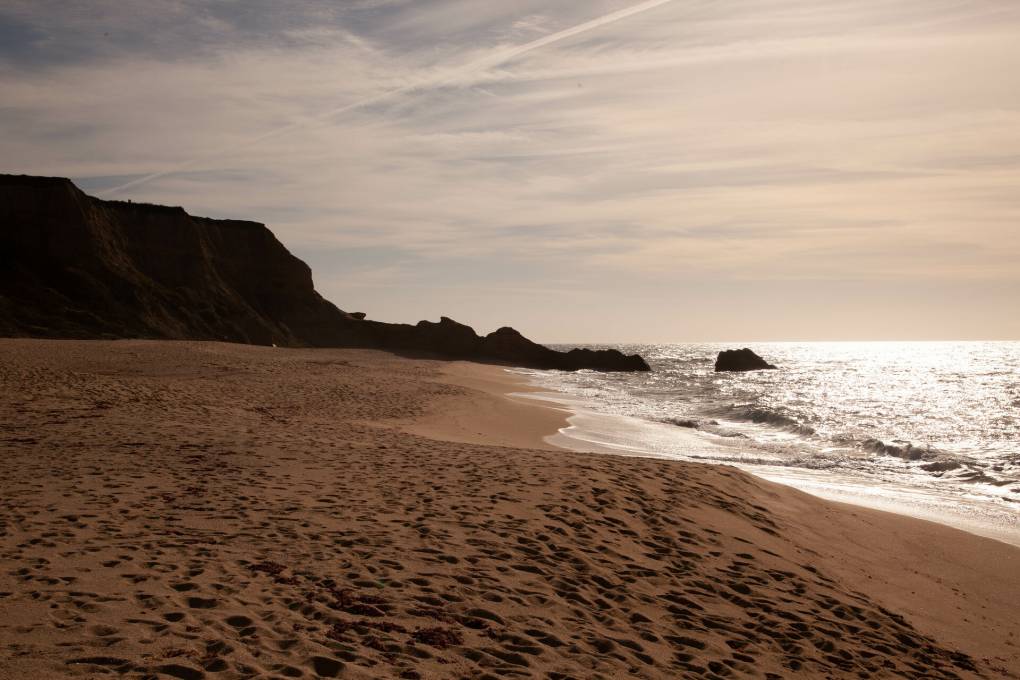
"caption": "Cowell Ranch State Beach in Half Moon Bay, California, on Nov. 23, 2021. A young humpback whale that washed up onto the shore over the weekend was recovered Monday, June 17, 2024. It was the second dead whale to be found in Bay Area waters this year.",
"credit": "Joyce Tsai/KQED",
"altTag": null,
"description": null,
"imgSizes": {
"medium": {
"file": "https://cdn.kqed.org/wp-content/uploads/sites/10/2024/06/CowellRanchStateBeach-9_qut-800x533.jpg",
"width": 800,
"height": 533,
"mimeType": "image/jpeg"
},
"large": {
"file": "https://cdn.kqed.org/wp-content/uploads/sites/10/2024/06/CowellRanchStateBeach-9_qut-1020x680.jpg",
"width": 1020,
"height": 680,
"mimeType": "image/jpeg"
},
"thumbnail": {
"file": "https://cdn.kqed.org/wp-content/uploads/sites/10/2024/06/CowellRanchStateBeach-9_qut-160x107.jpg",
"width": 160,
"height": 107,
"mimeType": "image/jpeg"
},
"1536x1536": {
"file": "https://cdn.kqed.org/wp-content/uploads/sites/10/2024/06/CowellRanchStateBeach-9_qut-1536x1024.jpg",
"width": 1536,
"height": 1024,
"mimeType": "image/jpeg"
},
"post-thumbnail": {
"file": "https://cdn.kqed.org/wp-content/uploads/sites/10/2024/06/CowellRanchStateBeach-9_qut-672x372.jpg",
"width": 672,
"height": 372,
"mimeType": "image/jpeg"
},
"twentyfourteen-full-width": {
"file": "https://cdn.kqed.org/wp-content/uploads/sites/10/2024/06/CowellRanchStateBeach-9_qut-1038x576.jpg",
"width": 1038,
"height": 576,
"mimeType": "image/jpeg"
},
"kqedFullSize": {
"file": "https://cdn.kqed.org/wp-content/uploads/sites/10/2024/06/CowellRanchStateBeach-9_qut.jpg",
"width": 1920,
"height": 1280
}
},
"isLoading": false,
"fetchFailed": false
},
"news_11988482": {
"type": "attachments",
"id": "news_11988482",
"meta": {
"index": "attachments_1716263798",
"site": "news",
"id": "11988482",
"found": true
},
"title": "SPCADoge",
"publishDate": 1717191059,
"status": "inherit",
"parent": 0,
"modified": 1717191163,
"caption": "June 1 is California's first-ever Adopt-a-Pet Day, featuring free adoptions at dozens of shelters throughout the state amid significant overcrowding. Adoptions of larger dogs are especially needed.",
"credit": "Courtesy San Francisco SPCA",
"altTag": null,
"description": null,
"imgSizes": {
"medium": {
"file": "https://cdn.kqed.org/wp-content/uploads/sites/10/2024/05/SPCADoge-800x533.jpg",
"width": 800,
"height": 533,
"mimeType": "image/jpeg"
},
"large": {
"file": "https://cdn.kqed.org/wp-content/uploads/sites/10/2024/05/SPCADoge-1020x680.jpg",
"width": 1020,
"height": 680,
"mimeType": "image/jpeg"
},
"thumbnail": {
"file": "https://cdn.kqed.org/wp-content/uploads/sites/10/2024/05/SPCADoge-160x107.jpg",
"width": 160,
"height": 107,
"mimeType": "image/jpeg"
},
"1536x1536": {
"file": "https://cdn.kqed.org/wp-content/uploads/sites/10/2024/05/SPCADoge-1536x1024.jpg",
"width": 1536,
"height": 1024,
"mimeType": "image/jpeg"
},
"post-thumbnail": {
"file": "https://cdn.kqed.org/wp-content/uploads/sites/10/2024/05/SPCADoge-672x372.jpg",
"width": 672,
"height": 372,
"mimeType": "image/jpeg"
},
"twentyfourteen-full-width": {
"file": "https://cdn.kqed.org/wp-content/uploads/sites/10/2024/05/SPCADoge-1038x576.jpg",
"width": 1038,
"height": 576,
"mimeType": "image/jpeg"
},
"kqedFullSize": {
"file": "https://cdn.kqed.org/wp-content/uploads/sites/10/2024/05/SPCADoge.jpg",
"width": 1920,
"height": 1280
}
},
"isLoading": false,
"fetchFailed": false
},
"news_11985401": {
"type": "attachments",
"id": "news_11985401",
"meta": {
"index": "attachments_1716263798",
"site": "news",
"id": "11985401",
"found": true
},
"parent": 11985399,
"imgSizes": {
"twentyfourteen-full-width": {
"file": "https://cdn.kqed.org/wp-content/uploads/sites/10/2024/05/SealsPier39_006_qut-1038x576.jpg",
"width": 1038,
"mimeType": "image/jpeg",
"height": 576
},
"thumbnail": {
"file": "https://cdn.kqed.org/wp-content/uploads/sites/10/2024/05/SealsPier39_006_qut-160x109.jpg",
"width": 160,
"mimeType": "image/jpeg",
"height": 109
},
"post-thumbnail": {
"file": "https://cdn.kqed.org/wp-content/uploads/sites/10/2024/05/SealsPier39_006_qut-672x372.jpg",
"width": 672,
"mimeType": "image/jpeg",
"height": 372
},
"kqedFullSize": {
"file": "https://cdn.kqed.org/wp-content/uploads/sites/10/2024/05/SealsPier39_006_qut.jpg",
"width": 1920,
"height": 1310
},
"large": {
"file": "https://cdn.kqed.org/wp-content/uploads/sites/10/2024/05/SealsPier39_006_qut-1020x696.jpg",
"width": 1020,
"mimeType": "image/jpeg",
"height": 696
},
"1536x1536": {
"file": "https://cdn.kqed.org/wp-content/uploads/sites/10/2024/05/SealsPier39_006_qut-1536x1048.jpg",
"width": 1536,
"mimeType": "image/jpeg",
"height": 1048
},
"medium": {
"file": "https://cdn.kqed.org/wp-content/uploads/sites/10/2024/05/SealsPier39_006_qut-800x546.jpg",
"width": 800,
"mimeType": "image/jpeg",
"height": 546
}
},
"publishDate": 1715199652,
"modified": 1715203972,
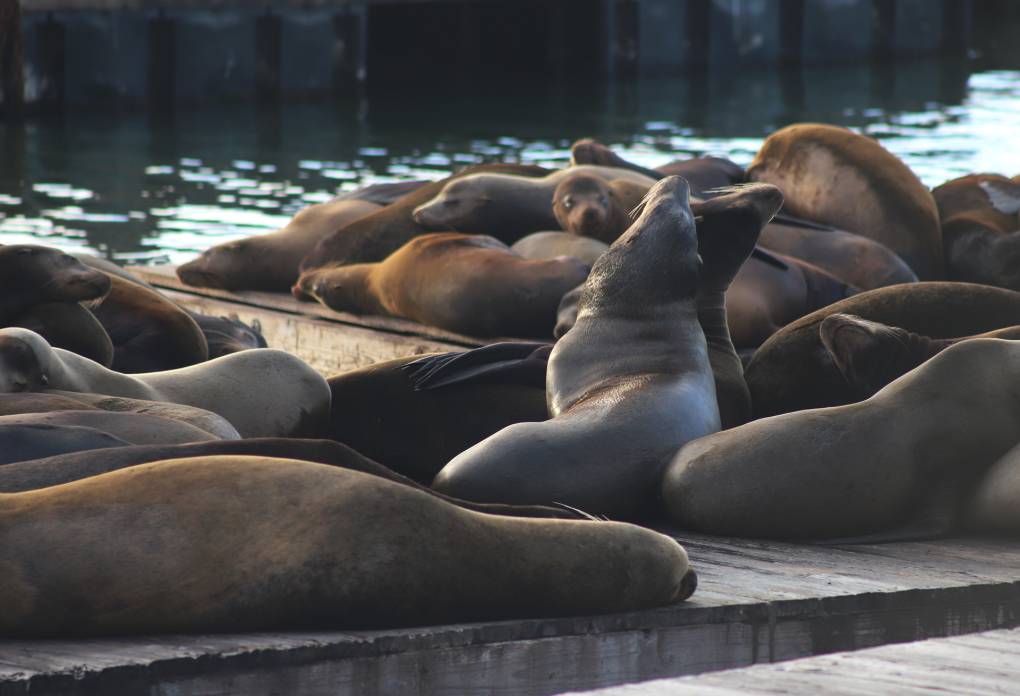
"caption": "Seals gathered at the docks in groups at Pier 39 in San Francisco on Feb. 11, 2019.",
"description": null,
"title": "SealsPier39_006_qut",
"credit": "Lindsey Moore/KQED",
"status": "inherit",
"altTag": null,
"isLoading": false,
"fetchFailed": false
},
"news_11977640": {
"type": "attachments",
"id": "news_11977640",
"meta": {
"index": "attachments_1716263798",
"site": "news",
"id": "11977640",
"found": true
},
"parent": 11977629,
"imgSizes": {
"twentyfourteen-full-width": {
"file": "https://cdn.kqed.org/wp-content/uploads/sites/10/2024/02/GettyImages-1237566410-1038x576.jpg",
"width": 1038,
"mimeType": "image/jpeg",
"height": 576
},
"thumbnail": {
"file": "https://cdn.kqed.org/wp-content/uploads/sites/10/2024/02/GettyImages-1237566410-160x111.jpg",
"width": 160,
"mimeType": "image/jpeg",
"height": 111
},
"post-thumbnail": {
"file": "https://cdn.kqed.org/wp-content/uploads/sites/10/2024/02/GettyImages-1237566410-672x372.jpg",
"width": 672,
"mimeType": "image/jpeg",
"height": 372
},
"kqedFullSize": {
"file": "https://cdn.kqed.org/wp-content/uploads/sites/10/2024/02/GettyImages-1237566410-scaled.jpg",
"width": 2560,
"height": 1782
},
"2048x2048": {
"file": "https://cdn.kqed.org/wp-content/uploads/sites/10/2024/02/GettyImages-1237566410-2048x1425.jpg",
"width": 2048,
"mimeType": "image/jpeg",
"height": 1425
},
"large": {
"file": "https://cdn.kqed.org/wp-content/uploads/sites/10/2024/02/GettyImages-1237566410-1020x710.jpg",
"width": 1020,
"mimeType": "image/jpeg",
"height": 710
},
"1536x1536": {
"file": "https://cdn.kqed.org/wp-content/uploads/sites/10/2024/02/GettyImages-1237566410-1536x1069.jpg",
"width": 1536,
"mimeType": "image/jpeg",
"height": 1069
},
"full-width": {
"file": "https://cdn.kqed.org/wp-content/uploads/sites/10/2024/02/GettyImages-1237566410-1920x1336.jpg",
"width": 1920,
"mimeType": "image/jpeg",
"height": 1336
},
"medium": {
"file": "https://cdn.kqed.org/wp-content/uploads/sites/10/2024/02/GettyImages-1237566410-800x557.jpg",
"width": 800,
"mimeType": "image/jpeg",
"height": 557
}
},
"publishDate": 1709243722,
"modified": 1709248095,
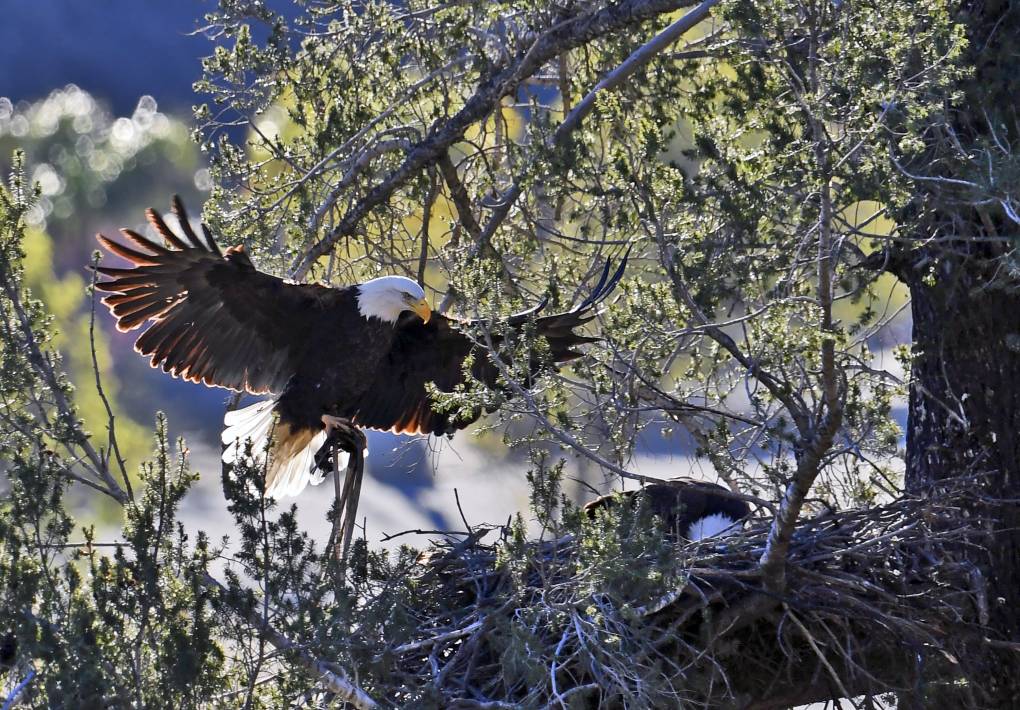
"caption": "Three bald eagle chicks could emerge this week from eggs laid in a nest atop a tree that overlooks Big Bear Lake in the San Bernardino Mountains in Southern California. A nest camera set up by Friends of Big Bear Valley monitors the eagles and draws lots of views from wildlife enthusiasts. ",
"description": null,
"title": "Contributor Archive - Travel Features 2022",
"credit": "Nick Ut/Getty Images",
"status": "inherit",
"altTag": "A bald eagle flies toward a tree where another is currently nested.",
"isLoading": false,
"fetchFailed": false
},
"news_11974344": {
"type": "attachments",
"id": "news_11974344",
"meta": {
"index": "attachments_1716263798",
"site": "news",
"id": "11974344",
"found": true
},
"parent": 11974327,
"imgSizes": {
"twentyfourteen-full-width": {
"file": "https://cdn.kqed.org/wp-content/uploads/sites/10/2024/01/GettyImages-1693228262-1024x576.jpg",
"width": 1024,
"mimeType": "image/jpeg",
"height": 576
},
"thumbnail": {
"file": "https://cdn.kqed.org/wp-content/uploads/sites/10/2024/01/GettyImages-1693228262-160x108.jpg",
"width": 160,
"mimeType": "image/jpeg",
"height": 108
},
"post-thumbnail": {
"file": "https://cdn.kqed.org/wp-content/uploads/sites/10/2024/01/GettyImages-1693228262-672x372.jpg",
"width": 672,
"mimeType": "image/jpeg",
"height": 372
},
"kqedFullSize": {
"file": "https://cdn.kqed.org/wp-content/uploads/sites/10/2024/01/GettyImages-1693228262.jpg",
"width": 1024,
"height": 688
},
"large": {
"file": "https://cdn.kqed.org/wp-content/uploads/sites/10/2024/01/GettyImages-1693228262-1020x685.jpg",
"width": 1020,
"mimeType": "image/jpeg",
"height": 685
},
"medium": {
"file": "https://cdn.kqed.org/wp-content/uploads/sites/10/2024/01/GettyImages-1693228262-800x538.jpg",
"width": 800,
"mimeType": "image/jpeg",
"height": 538
}
},
"publishDate": 1706731962,
"modified": 1706736351,
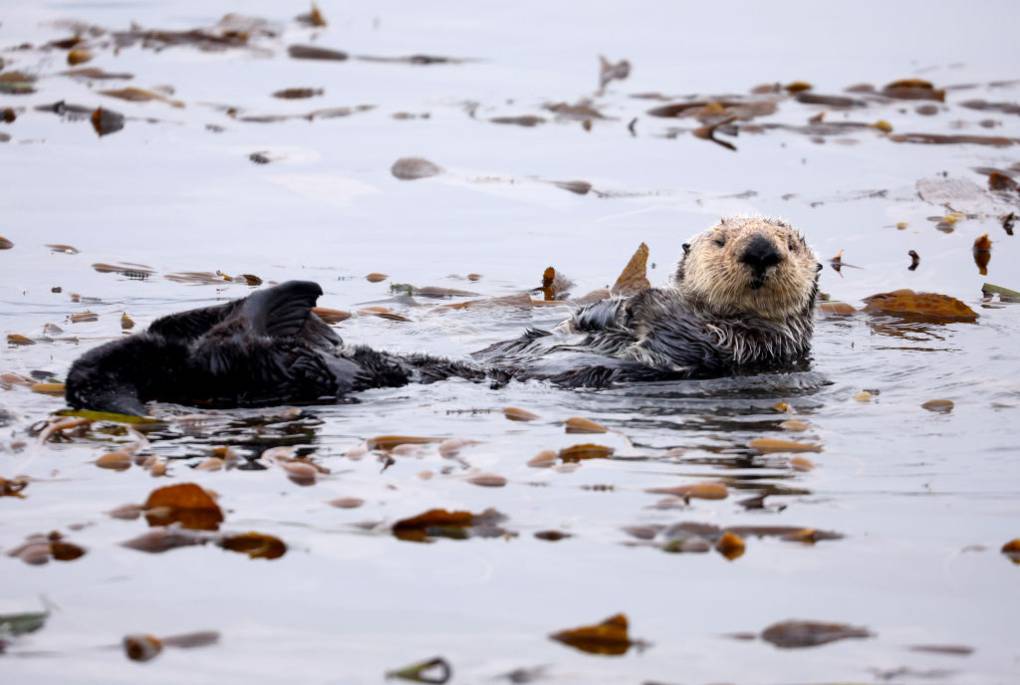
"caption": "A sea otter grooms in a kelp bed in a marine area, which is currently recommended for exclusion from the proposed Chumash Heritage National Marine Sanctuary along California’s Central Coast on Sept. 20, 2023, in Morro Bay. The sanctuary would be the first national marine sanctuary in the country nominated by an Indigenous tribe and will protect ocean ecosystems, marine life and cultural sites while prohibiting energy development. ",
"description": null,
"title": "Biden Administration Close To Naming First National Marine Sanctuary Site Designated By A Tribe, Chumash Heritage National Marine Sanctuary",
"credit": "Mario Tama/Getty Images",
"status": "inherit",
"altTag": "A sea otter in the water surrounded by leaves.",
"isLoading": false,
"fetchFailed": false
},
"news_11969925": {
"type": "attachments",
"id": "news_11969925",
"meta": {
"index": "attachments_1716263798",
"site": "news",
"id": "11969925",
"found": true
},
"parent": 0,
"imgSizes": {
"twentyfourteen-full-width": {
"file": "https://cdn.kqed.org/wp-content/uploads/sites/10/2023/12/231214-AVIAN-FLU-GETTY-MT-KQED-1038x576.jpg",
"width": 1038,
"mimeType": "image/jpeg",
"height": 576
},
"thumbnail": {
"file": "https://cdn.kqed.org/wp-content/uploads/sites/10/2023/12/231214-AVIAN-FLU-GETTY-MT-KQED-160x102.jpg",
"width": 160,
"mimeType": "image/jpeg",
"height": 102
},
"post-thumbnail": {
"file": "https://cdn.kqed.org/wp-content/uploads/sites/10/2023/12/231214-AVIAN-FLU-GETTY-MT-KQED-672x372.jpg",
"width": 672,
"mimeType": "image/jpeg",
"height": 372
},
"kqedFullSize": {
"file": "https://cdn.kqed.org/wp-content/uploads/sites/10/2023/12/231214-AVIAN-FLU-GETTY-MT-KQED.jpg",
"width": 2000,
"height": 1277
},
"large": {
"file": "https://cdn.kqed.org/wp-content/uploads/sites/10/2023/12/231214-AVIAN-FLU-GETTY-MT-KQED-1020x651.jpg",
"width": 1020,
"mimeType": "image/jpeg",
"height": 651
},
"1536x1536": {
"file": "https://cdn.kqed.org/wp-content/uploads/sites/10/2023/12/231214-AVIAN-FLU-GETTY-MT-KQED-1536x981.jpg",
"width": 1536,
"mimeType": "image/jpeg",
"height": 981
},
"full-width": {
"file": "https://cdn.kqed.org/wp-content/uploads/sites/10/2023/12/231214-AVIAN-FLU-GETTY-MT-KQED-1920x1226.jpg",
"width": 1920,
"mimeType": "image/jpeg",
"height": 1226
},
"medium": {
"file": "https://cdn.kqed.org/wp-content/uploads/sites/10/2023/12/231214-AVIAN-FLU-GETTY-MT-KQED-800x511.jpg",
"width": 800,
"mimeType": "image/jpeg",
"height": 511
}
},
"publishDate": 1702602082,
"modified": 1702602163,
"caption": "Chickens in an aviary in Acton on Oct. 5, 2022. ",
"description": null,
"title": "Southern California Hit With Historic Avian Flu Outbreak",
"credit": "Mario Tama/Getty Images",
"status": "inherit",
"altTag": "A group of four differently colored chickens.",
"isLoading": false,
"fetchFailed": false
},
"news_11962403": {
"type": "attachments",
"id": "news_11962403",
"meta": {
"index": "attachments_1716263798",
"site": "news",
"id": "11962403",
"found": true
},
"parent": 11962399,
"imgSizes": {
"twentyfourteen-full-width": {
"file": "https://ww2.kqed.org/app/uploads/sites/10/2023/09/NPSPhoto_GavinEmmons_CACO-692-726-High-Peaks-1038x576.jpg",
"width": 1038,
"mimeType": "image/jpeg",
"height": 576
},
"thumbnail": {
"file": "https://ww2.kqed.org/app/uploads/sites/10/2023/09/NPSPhoto_GavinEmmons_CACO-692-726-High-Peaks-160x107.jpg",
"width": 160,
"mimeType": "image/jpeg",
"height": 107
},
"post-thumbnail": {
"file": "https://ww2.kqed.org/app/uploads/sites/10/2023/09/NPSPhoto_GavinEmmons_CACO-692-726-High-Peaks-672x372.jpg",
"width": 672,
"mimeType": "image/jpeg",
"height": 372
},
"kqedFullSize": {
"file": "https://ww2.kqed.org/app/uploads/sites/10/2023/09/NPSPhoto_GavinEmmons_CACO-692-726-High-Peaks.jpg",
"width": 1800,
"height": 1200
},
"large": {
"file": "https://ww2.kqed.org/app/uploads/sites/10/2023/09/NPSPhoto_GavinEmmons_CACO-692-726-High-Peaks-1020x680.jpg",
"width": 1020,
"mimeType": "image/jpeg",
"height": 680
},
"1536x1536": {
"file": "https://ww2.kqed.org/app/uploads/sites/10/2023/09/NPSPhoto_GavinEmmons_CACO-692-726-High-Peaks-1536x1024.jpg",
"width": 1536,
"mimeType": "image/jpeg",
"height": 1024
},
"medium": {
"file": "https://ww2.kqed.org/app/uploads/sites/10/2023/09/NPSPhoto_GavinEmmons_CACO-692-726-High-Peaks-800x533.jpg",
"width": 800,
"mimeType": "image/jpeg",
"height": 533
}
},
"publishDate": 1695678928,
"modified": 1695750298,
"caption": "California condors 692 and 726 are part of the group that flew north from San Benito County to the northern Diablo Range in early September. Condor 692 flew the closest to Mount Diablo — he passed a mile or 2 west of the summit. ",
"description": null,
"title": "NPSPhoto_GavinEmmons_CACO 692 726 High Peaks",
"credit": "Gavin Emmons/National Park Service",
"status": "inherit",
"altTag": "Two condors seen at a high altitude. The bird on the left is flying while the bird on the right is perched on a rock.",
"isLoading": false,
"fetchFailed": false
},
"news_11955986": {
"type": "attachments",
"id": "news_11955986",
"meta": {
"index": "attachments_1716263798",
"site": "news",
"id": "11955986",
"found": true
},
"parent": 0,
"imgSizes": {
"twentyfourteen-full-width": {
"file": "https://ww2.kqed.org/app/uploads/sites/10/2023/07/condor-1038x576.jpg",
"width": 1038,
"mimeType": "image/jpeg",
"height": 576
},
"thumbnail": {
"file": "https://ww2.kqed.org/app/uploads/sites/10/2023/07/condor-160x90.jpg",
"width": 160,
"mimeType": "image/jpeg",
"height": 90
},
"post-thumbnail": {
"file": "https://ww2.kqed.org/app/uploads/sites/10/2023/07/condor-672x372.jpg",
"width": 672,
"mimeType": "image/jpeg",
"height": 372
},
"kqedFullSize": {
"file": "https://ww2.kqed.org/app/uploads/sites/10/2023/07/condor.jpg",
"width": 1920,
"height": 1080
},
"large": {
"file": "https://ww2.kqed.org/app/uploads/sites/10/2023/07/condor-1020x574.jpg",
"width": 1020,
"mimeType": "image/jpeg",
"height": 574
},
"1536x1536": {
"file": "https://ww2.kqed.org/app/uploads/sites/10/2023/07/condor-1536x864.jpg",
"width": 1536,
"mimeType": "image/jpeg",
"height": 864
},
"medium": {
"file": "https://ww2.kqed.org/app/uploads/sites/10/2023/07/condor-800x450.jpg",
"width": 800,
"mimeType": "image/jpeg",
"height": 450
}
},
"publishDate": 1689785334,
"modified": 1689886971,
"caption": "Image of a California condor captured by a wildfire camera on Kern County's Blue Mountain, July 18, 2023. The camera depicted as many as 10 condors visiting the site. The species was declared endangered in 1967 and was near extinction in the 1980s when the handful of remaining wild birds were captured for a captive breeding program. About 350 free-flying California condors are in flocks in California, Utah, Arizona and northern Mexico.",
"description": null,
"title": "California Condor on wildfire camera",
"credit": "Courtesy ALERTCalifornia/UC San Diego",
"status": "inherit",
"altTag": "A roosting California condor spreads its wings with mountain scenery in the background.",
"isLoading": false,
"fetchFailed": false
},
"news_11955605": {
"type": "attachments",
"id": "news_11955605",
"meta": {
"index": "attachments_1716263798",
"site": "news",
"id": "11955605",
"found": true
},
"parent": 11955604,
"imgSizes": {
"twentyfourteen-full-width": {
"file": "https://ww2.kqed.org/app/uploads/sites/10/2023/07/dsc_8878-179b05bfdf1b0aa6579866e8f9e2136b149e274b-1038x576.jpg",
"width": 1038,
"mimeType": "image/jpeg",
"height": 576
},
"thumbnail": {
"file": "https://ww2.kqed.org/app/uploads/sites/10/2023/07/dsc_8878-179b05bfdf1b0aa6579866e8f9e2136b149e274b-160x120.jpg",
"width": 160,
"mimeType": "image/jpeg",
"height": 120
},
"post-thumbnail": {
"file": "https://ww2.kqed.org/app/uploads/sites/10/2023/07/dsc_8878-179b05bfdf1b0aa6579866e8f9e2136b149e274b-672x372.jpg",
"width": 672,
"mimeType": "image/jpeg",
"height": 372
},
"kqedFullSize": {
"file": "https://ww2.kqed.org/app/uploads/sites/10/2023/07/dsc_8878-179b05bfdf1b0aa6579866e8f9e2136b149e274b.jpg",
"width": 1480,
"height": 1110
},
"large": {
"file": "https://ww2.kqed.org/app/uploads/sites/10/2023/07/dsc_8878-179b05bfdf1b0aa6579866e8f9e2136b149e274b-1020x765.jpg",
"width": 1020,
"mimeType": "image/jpeg",
"height": 765
},
"medium": {
"file": "https://ww2.kqed.org/app/uploads/sites/10/2023/07/dsc_8878-179b05bfdf1b0aa6579866e8f9e2136b149e274b-800x600.jpg",
"width": 800,
"mimeType": "image/jpeg",
"height": 600
}
},
"publishDate": 1689271930,
"modified": 1689272535,
"caption": "A southern otter in Santa Cruz catches a wave after stealing a surfer's board.",
"description": null,
"title": "A southern otter in Santa Cruz, Calif., catches a wave after stealing a surfer's board.",
"credit": "Mark Woodward/@NativeSantaCruz",
"status": "inherit",
"altTag": "Bright blue surfboard slides along a small wave while a dark brown sea otter sits in the middle, facing away from the camera",
"isLoading": false,
"fetchFailed": false
},
"news_11953815": {
"type": "attachments",
"id": "news_11953815",
"meta": {
"index": "attachments_1716263798",
"site": "news",
"id": "11953815",
"found": true
},
"parent": 0,
"imgSizes": {
"twentyfourteen-full-width": {
"file": "https://ww2.kqed.org/app/uploads/sites/10/2023/06/230622-ORCAS-KILLER-WHALES-GETTY-FG-KQED-1038x576.jpg",
"width": 1038,
"mimeType": "image/jpeg",
"height": 576
},
"thumbnail": {
"file": "https://ww2.kqed.org/app/uploads/sites/10/2023/06/230622-ORCAS-KILLER-WHALES-GETTY-FG-KQED-160x107.jpg",
"width": 160,
"mimeType": "image/jpeg",
"height": 107
},
"post-thumbnail": {
"file": "https://ww2.kqed.org/app/uploads/sites/10/2023/06/230622-ORCAS-KILLER-WHALES-GETTY-FG-KQED-672x372.jpg",
"width": 672,
"mimeType": "image/jpeg",
"height": 372
},
"kqedFullSize": {
"file": "https://ww2.kqed.org/app/uploads/sites/10/2023/06/230622-ORCAS-KILLER-WHALES-GETTY-FG-KQED.jpg",
"width": 2000,
"height": 1333
},
"large": {
"file": "https://ww2.kqed.org/app/uploads/sites/10/2023/06/230622-ORCAS-KILLER-WHALES-GETTY-FG-KQED-1020x680.jpg",
"width": 1020,
"mimeType": "image/jpeg",
"height": 680
},
"1536x1536": {
"file": "https://ww2.kqed.org/app/uploads/sites/10/2023/06/230622-ORCAS-KILLER-WHALES-GETTY-FG-KQED-1536x1024.jpg",
"width": 1536,
"mimeType": "image/jpeg",
"height": 1024
},
"full-width": {
"file": "https://ww2.kqed.org/app/uploads/sites/10/2023/06/230622-ORCAS-KILLER-WHALES-GETTY-FG-KQED-1920x1280.jpg",
"width": 1920,
"mimeType": "image/jpeg",
"height": 1280
},
"medium": {
"file": "https://ww2.kqed.org/app/uploads/sites/10/2023/06/230622-ORCAS-KILLER-WHALES-GETTY-FG-KQED-800x533.jpg",
"width": 800,
"mimeType": "image/jpeg",
"height": 533
}
},
"publishDate": 1687477094,
"modified": 1687542812,
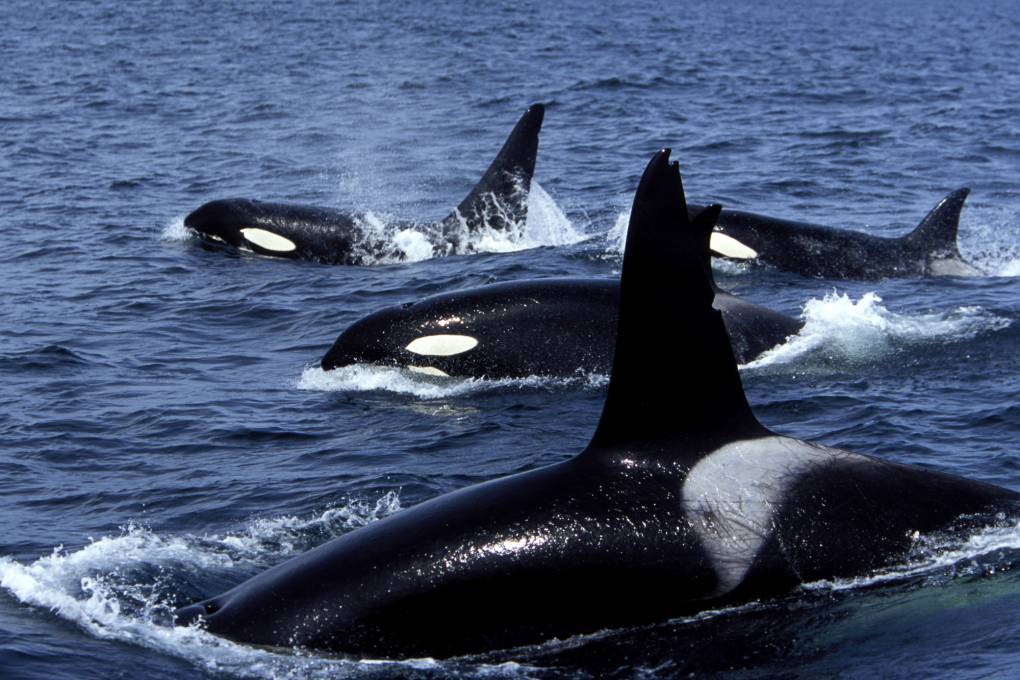
"caption": "A pod of transient killer whales in Monterey Bay.",
"description": null,
"title": "Killer Whales - DZ 538",
"credit": "Francois Gohier/VW Pics/Universal Images Group via Getty Images",
"status": "inherit",
"altTag": "Photo shows four killer whales swimming together in the ocean.",
"isLoading": false,
"fetchFailed": false
},
"news_11951084": {
"type": "attachments",
"id": "news_11951084",
"meta": {
"index": "attachments_1716263798",
"site": "news",
"id": "11951084",
"found": true
},
"parent": 11951075,
"imgSizes": {
"twentyfourteen-full-width": {
"file": "https://ww2.kqed.org/app/uploads/sites/10/2023/05/AP23146789236681-1038x576.jpg",
"width": 1038,
"mimeType": "image/jpeg",
"height": 576
},
"thumbnail": {
"file": "https://ww2.kqed.org/app/uploads/sites/10/2023/05/AP23146789236681-160x107.jpg",
"width": 160,
"mimeType": "image/jpeg",
"height": 107
},
"post-thumbnail": {
"file": "https://ww2.kqed.org/app/uploads/sites/10/2023/05/AP23146789236681-672x372.jpg",
"width": 672,
"mimeType": "image/jpeg",
"height": 372
},
"kqedFullSize": {
"file": "https://ww2.kqed.org/app/uploads/sites/10/2023/05/AP23146789236681-scaled.jpg",
"width": 2560,
"height": 1707
},
"2048x2048": {
"file": "https://ww2.kqed.org/app/uploads/sites/10/2023/05/AP23146789236681-2048x1365.jpg",
"width": 2048,
"mimeType": "image/jpeg",
"height": 1365
},
"large": {
"file": "https://ww2.kqed.org/app/uploads/sites/10/2023/05/AP23146789236681-1020x680.jpg",
"width": 1020,
"mimeType": "image/jpeg",
"height": 680
},
"1536x1536": {
"file": "https://ww2.kqed.org/app/uploads/sites/10/2023/05/AP23146789236681-1536x1024.jpg",
"width": 1536,
"mimeType": "image/jpeg",
"height": 1024
},
"full-width": {
"file": "https://ww2.kqed.org/app/uploads/sites/10/2023/05/AP23146789236681-1920x1280.jpg",
"width": 1920,
"mimeType": "image/jpeg",
"height": 1280
},
"medium": {
"file": "https://ww2.kqed.org/app/uploads/sites/10/2023/05/AP23146789236681-800x533.jpg",
"width": 800,
"mimeType": "image/jpeg",
"height": 533
}
},
"publishDate": 1685472860,
"modified": 1685473529,
"caption": "Jason Puopolo, parks superintendent for City of West Sacramento, and Tim Arrowsmith, owner of Western Grazers, look at a herd of grazing sheep in West Sacramento, on May 17, 2023.",
"description": null,
"title": "Wildfires Grazing Goats",
"credit": "Terry Chea/The Associated Press",
"status": "inherit",
"altTag": "Two white mean wearing collared shirts. brown and denim pants and dark shoes look at goats separated by a small fence.",
"isLoading": false,
"fetchFailed": false
},
"news_11936894": {
"type": "attachments",
"id": "news_11936894",
"meta": {
"index": "attachments_1716263798",
"site": "news",
"id": "11936894",
"found": true
},
"parent": 11936802,
"imgSizes": {
"twentyfourteen-full-width": {
"file": "https://ww2.kqed.org/app/uploads/sites/10/2023/01/Cows-in-Point-Reyes-1038x576.jpg",
"width": 1038,
"mimeType": "image/jpeg",
"height": 576
},
"thumbnail": {
"file": "https://ww2.kqed.org/app/uploads/sites/10/2023/01/Cows-in-Point-Reyes-160x85.jpg",
"width": 160,
"mimeType": "image/jpeg",
"height": 85
},
"post-thumbnail": {
"file": "https://ww2.kqed.org/app/uploads/sites/10/2023/01/Cows-in-Point-Reyes-672x372.jpg",
"width": 672,
"mimeType": "image/jpeg",
"height": 372
},
"kqedFullSize": {
"file": "https://ww2.kqed.org/app/uploads/sites/10/2023/01/Cows-in-Point-Reyes-e1672879647911.jpg",
"width": 1920,
"height": 1023
},
"large": {
"file": "https://ww2.kqed.org/app/uploads/sites/10/2023/01/Cows-in-Point-Reyes-1020x543.jpg",
"width": 1020,
"mimeType": "image/jpeg",
"height": 543
},
"1536x1536": {
"file": "https://ww2.kqed.org/app/uploads/sites/10/2023/01/Cows-in-Point-Reyes-1536x818.jpg",
"width": 1536,
"mimeType": "image/jpeg",
"height": 818
},
"full-width": {
"file": "https://ww2.kqed.org/app/uploads/sites/10/2023/01/Cows-in-Point-Reyes-1920x1023.jpg",
"width": 1920,
"mimeType": "image/jpeg",
"height": 1023
},
"medium": {
"file": "https://ww2.kqed.org/app/uploads/sites/10/2023/01/Cows-in-Point-Reyes-800x426.jpg",
"width": 800,
"mimeType": "image/jpeg",
"height": 426
}
},
"publishDate": 1672879621,
"modified": 1672895850,
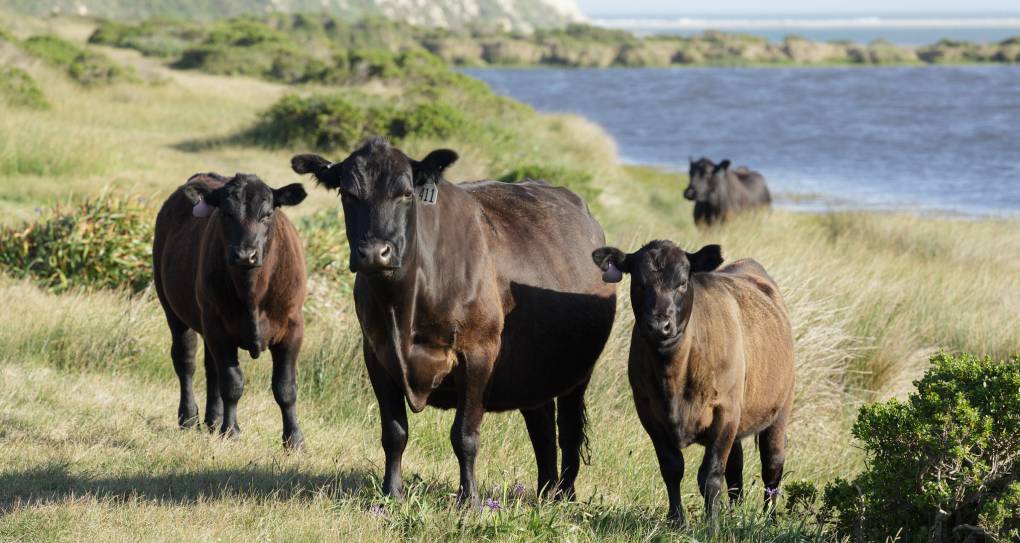
"caption": "Cattle graze at Point Reyes National Seashore, where some areas are designated wilderness zones and others pastoral zones.",
"description": null,
"title": "Cows in Point Reyes",
"credit": "John Loo/flickr",
"status": "inherit",
"altTag": "A group of dark brown cows stare at the photographer in a grassy area near the beach",
"isLoading": false,
"fetchFailed": false
}
},
"audioPlayerReducer": {
"postId": "stream_live",
"isPaused": true,
"isPlaying": false,
"pfsActive": false,
"pledgeModalIsOpen": true,
"playerDrawerIsOpen": false,
"liveAudioPlayStartedAt": 0,
"liveAudioPlayContext": ""
},
"authorsReducer": {
"byline_news_11985399": {
"type": "authors",
"id": "byline_news_11985399",
"meta": {
"override": true
},
"slug": "byline_news_11985399",
"name": "\u003ca href=\"https://twitter.com/katie_debe?lang=en\">Katie DeBenedetti\u003c/a>",
"isLoading": false
},
"byline_news_11977629": {
"type": "authors",
"id": "byline_news_11977629",
"meta": {
"override": true
},
"slug": "byline_news_11977629",
"name": "\u003ca href=\"https://apnews.com/\">AP News\u003c/a>",
"isLoading": false
},
"byline_news_11974327": {
"type": "authors",
"id": "byline_news_11974327",
"meta": {
"override": true
},
"slug": "byline_news_11974327",
"name": "Christina Larson\u003cbr>The Associated Press\u003c/br>",
"isLoading": false
},
"byline_news_11962399": {
"type": "authors",
"id": "byline_news_11962399",
"meta": {
"override": true
},
"slug": "byline_news_11962399",
"name": "Tony Hicks, Bay City News",
"isLoading": false
},
"byline_news_11955604": {
"type": "authors",
"id": "byline_news_11955604",
"meta": {
"override": true
},
"slug": "byline_news_11955604",
"name": "\u003ca href=\"https://www.npr.org/people/963390115/dustin-jones\">Dustin Jones\u003c/a>",
"isLoading": false
},
"byline_news_11951075": {
"type": "authors",
"id": "byline_news_11951075",
"meta": {
"override": true
},
"slug": "byline_news_11951075",
"name": "Terry Chea\u003cbr>The Associated Press\u003c/br>",
"isLoading": false
},
"danbrekke": {
"type": "authors",
"id": "222",
"meta": {
"index": "authors_1716337520",
"id": "222",
"found": true
},
"name": "Dan Brekke",
"firstName": "Dan",
"lastName": "Brekke",
"slug": "danbrekke",
"email": "dbrekke@kqed.org",
"display_author_email": true,
"staff_mastheads": [
"news",
"science"
],
"title": "KQED Editor and Reporter",
"bio": "Dan Brekke is a reporter and editor for KQED News, responsible for coverage of topics ranging from California water issues to the Bay Area's transportation challenges. In a newsroom career that began in Chicago in 1972, Dan has worked for \u003cem>The San Francisco Examiner,\u003c/em> Wired and TechTV and has been published in The New York Times, The New York Times Magazine, Business 2.0, Salon and elsewhere.\r\n\r\nSince joining KQED in 2007, Dan has reported, edited and produced both radio and online features and breaking news pieces. He has shared as both editor and reporter in four Society of Professional Journalists Norcal Excellence in Journalism awards and one Edward R. Murrow regional award. He was chosen for a spring 2017 residency at the Mesa Refuge to advance his research on California salmon.\r\n\r\nEmail Dan at: \u003ca href=\"mailto:dbrekke@kqed.org\">dbrekke@kqed.org\u003c/a>\r\n\r\n\u003cstrong>Twitter:\u003c/strong> \u003ca href=\"https://twitter.com/danbrekke\" rel=\"noopener noreferrer\">twitter.com/danbrekke\u003c/a>\r\n\u003cstrong>Facebook:\u003c/strong> \u003ca href=\"https://www.facebook.com/danbrekke\" rel=\"noopener noreferrer\">www.facebook.com/danbrekke\u003c/a>\r\n\u003cstrong>LinkedIn:\u003c/strong> \u003ca href=\"https://www.linkedin.com/in/danbrekke\" rel=\"noopener noreferrer\">www.linkedin.com/in/danbrekke\u003c/a>",
"avatar": "https://secure.gravatar.com/avatar/c8126230345efca3f7aa89b1a402be45?s=600&d=mm&r=g",
"twitter": "danbrekke",
"facebook": null,
"instagram": "https://www.instagram.com/dan.brekke/",
"linkedin": "https://www.linkedin.com/in/danbrekke/",
"sites": [
{
"site": "news",
"roles": [
"administrator",
"create_posts"
]
},
{
"site": "stateofhealth",
"roles": [
"editor"
]
},
{
"site": "science",
"roles": [
"editor"
]
},
{
"site": "quest",
"roles": [
"contributor"
]
},
{
"site": "food",
"roles": [
"contributor"
]
},
{
"site": "forum",
"roles": [
"contributor"
]
},
{
"site": "liveblog",
"roles": [
"editor"
]
}
],
"headData": {
"title": "Dan Brekke | KQED",
"description": "KQED Editor and Reporter",
"ogImgSrc": "https://secure.gravatar.com/avatar/c8126230345efca3f7aa89b1a402be45?s=600&d=mm&r=g",
"twImgSrc": "https://secure.gravatar.com/avatar/c8126230345efca3f7aa89b1a402be45?s=600&d=mm&r=g"
},
"isLoading": false,
"link": "/author/danbrekke"
},
"katrinaschwartz": {
"type": "authors",
"id": "234",
"meta": {
"index": "authors_1716337520",
"id": "234",
"found": true
},
"name": "Katrina Schwartz",
"firstName": "Katrina",
"lastName": "Schwartz",
"slug": "katrinaschwartz",
"email": "kschwartz@kqed.org",
"display_author_email": false,
"staff_mastheads": [
"news"
],
"title": "Producer",
"bio": "Katrina Schwartz is a journalist based in San Francisco. She's worked at KPCC public radio in LA and has reported on air and online for KQED since 2010. She covered how teaching and learning is changing for MindShift between 2012 and 2020. She is the co-host of the MindShift podcast and now produces KQED's Bay Curious podcast.",
"avatar": "https://secure.gravatar.com/avatar/edb4ee79070447a018538c9aae6eeecf28786515b8a0c30e43b6b7dce5aa44c8?s=600&d=blank&r=g",
"twitter": "kschwart",
"bluesky": null,
"facebook": null,
"instagram": null,
"linkedin": null,
"sites": [
{
"site": "",
"roles": [
"editor"
]
},
{
"site": "news",
"roles": [
"editor"
]
},
{
"site": "mindshift",
"roles": [
"administrator"
]
},
{
"site": "stateofhealth",
"roles": [
"author"
]
},
{
"site": "science",
"roles": [
"editor"
]
}
],
"headData": {
"title": "Katrina Schwartz | KQED",
"description": "Producer",
"ogImgSrc": "https://secure.gravatar.com/avatar/edb4ee79070447a018538c9aae6eeecf28786515b8a0c30e43b6b7dce5aa44c8?s=600&d=blank&r=g",
"twImgSrc": "https://secure.gravatar.com/avatar/edb4ee79070447a018538c9aae6eeecf28786515b8a0c30e43b6b7dce5aa44c8?s=600&d=blank&r=g"
},
"isLoading": false,
"link": "/author/katrinaschwartz"
},
"kdomara": {
"type": "authors",
"id": "1459",
"meta": {
"index": "authors_1716337520",
"id": "1459",
"found": true
},
"name": "Kelly O'Mara",
"firstName": "Kelly",
"lastName": "O'Mara",
"slug": "kdomara",
"email": "komara@kqed.org",
"display_author_email": false,
"staff_mastheads": [
"news"
],
"title": "KQED Contributor",
"bio": "Kelly O'Mara is a writer and reporter in the San Francisco Bay Area. She writes about food, health, sports, travel, business and California news. Her work has appeared on KQED, online for Outside Magazine, epsnW, VICE and in Competitor Magazine, among others. Follow Kelly on Twitter \u003ca href=\"https://twitter.com/kellydomara\">@kellydomara\u003c/a>.",
"avatar": "https://secure.gravatar.com/avatar/768fec7412028b72f13bdd0f5f9d8186?s=600&d=blank&r=g",
"twitter": null,
"facebook": null,
"instagram": null,
"linkedin": null,
"sites": [
{
"site": "arts",
"roles": []
},
{
"site": "news",
"roles": []
},
{
"site": "bayareabites",
"roles": []
},
{
"site": "stateofhealth",
"roles": []
},
{
"site": "science",
"roles": []
},
{
"site": "checkplease",
"roles": [
"editor"
]
},
{
"site": "food",
"roles": []
},
{
"site": "forum",
"roles": [
"editor"
]
},
{
"site": "liveblog",
"roles": [
"editor"
]
}
],
"headData": {
"title": "Kelly O'Mara | KQED",
"description": "KQED Contributor",
"ogImgSrc": "https://secure.gravatar.com/avatar/768fec7412028b72f13bdd0f5f9d8186?s=600&d=blank&r=g",
"twImgSrc": "https://secure.gravatar.com/avatar/768fec7412028b72f13bdd0f5f9d8186?s=600&d=blank&r=g"
},
"isLoading": false,
"link": "/author/kdomara"
},
"jrodriguez": {
"type": "authors",
"id": "11690",
"meta": {
"index": "authors_1716337520",
"id": "11690",
"found": true
},
"name": "Joe Fitzgerald Rodriguez",
"firstName": "Joe",
"lastName": "Fitzgerald Rodriguez",
"slug": "jrodriguez",
"email": "jrodriguez@kqed.org",
"display_author_email": true,
"staff_mastheads": [
"news"
],
"title": "Reporter and Producer",
"bio": "Joe Fitzgerald Rodriguez is a reporter and digital producer for KQED covering politics. Joe most recently wrote for the \u003cem>San Francisco Examiner\u003c/em> as a political columnist covering The City. He was raised in San Francisco and has spent his reporting career in his beloved, foggy, city by the bay. Joe was 12-years-old when he conducted his first interview in journalism, grilling former San Francisco Mayor Willie Brown for the Marina Middle School newspaper, \u003cem>The Penguin Press, \u003c/em>and he continues to report on the San Francisco Bay Area to this day.",
"avatar": "https://secure.gravatar.com/avatar/2247beb0564c1e9c62228d5649d2edac?s=600&d=blank&r=g",
"twitter": "FitztheReporter",
"facebook": null,
"instagram": "https://www.instagram.com/fitzthereporter/",
"linkedin": null,
"sites": [
{
"site": "",
"roles": [
"editor"
]
},
{
"site": "arts",
"roles": [
"editor"
]
},
{
"site": "news",
"roles": [
"editor"
]
},
{
"site": "science",
"roles": [
"editor"
]
},
{
"site": "elections",
"roles": [
"editor"
]
},
{
"site": "liveblog",
"roles": [
"editor"
]
}
],
"headData": {
"title": "Joe Fitzgerald Rodriguez | KQED",
"description": "Reporter and Producer",
"ogImgSrc": "https://secure.gravatar.com/avatar/2247beb0564c1e9c62228d5649d2edac?s=600&d=blank&r=g",
"twImgSrc": "https://secure.gravatar.com/avatar/2247beb0564c1e9c62228d5649d2edac?s=600&d=blank&r=g"
},
"isLoading": false,
"link": "/author/jrodriguez"
},
"jlara": {
"type": "authors",
"id": "11761",
"meta": {
"index": "authors_1716337520",
"id": "11761",
"found": true
},
"name": "Juan Carlos Lara",
"firstName": "Juan Carlos",
"lastName": "Lara",
"slug": "jlara",
"email": "jlara@kqed.org",
"display_author_email": false,
"staff_mastheads": [],
"title": "KQED Contributor",
"bio": null,
"avatar": "https://secure.gravatar.com/avatar/19e2052b9b05657c5ff2af2121846e9c?s=600&d=blank&r=g",
"twitter": null,
"facebook": null,
"instagram": null,
"linkedin": null,
"sites": [
{
"site": "arts",
"roles": [
"editor"
]
},
{
"site": "news",
"roles": [
"editor"
]
},
{
"site": "forum",
"roles": [
"editor"
]
},
{
"site": "liveblog",
"roles": [
"contributor"
]
}
],
"headData": {
"title": "Juan Carlos Lara | KQED",
"description": "KQED Contributor",
"ogImgSrc": "https://secure.gravatar.com/avatar/19e2052b9b05657c5ff2af2121846e9c?s=600&d=blank&r=g",
"twImgSrc": "https://secure.gravatar.com/avatar/19e2052b9b05657c5ff2af2121846e9c?s=600&d=blank&r=g"
},
"isLoading": false,
"link": "/author/jlara"
},
"kdebenedetti": {
"type": "authors",
"id": "11913",
"meta": {
"index": "authors_1716337520",
"id": "11913",
"found": true
},
"name": "Katie DeBenedetti",
"firstName": "Katie",
"lastName": "DeBenedetti",
"slug": "kdebenedetti",
"email": "kdebenedetti@kqed.org",
"display_author_email": false,
"staff_mastheads": [
"news",
"science"
],
"title": "KQED Contributor",
"bio": "Katie DeBenedetti is a digital reporter covering daily news for the Express Desk. Prior to joining KQED as a culture reporting intern in January 2024, she covered education and city government for the Napa Valley Register.",
"avatar": "https://secure.gravatar.com/avatar/6e31073cb8f7e4214ab03f42771d0f45?s=600&d=blank&r=g",
"twitter": null,
"facebook": null,
"instagram": null,
"linkedin": null,
"sites": [
{
"site": "news",
"roles": [
"author"
]
},
{
"site": "science",
"roles": [
"author"
]
},
{
"site": "liveblog",
"roles": [
"author"
]
}
],
"headData": {
"title": "Katie DeBenedetti | KQED",
"description": "KQED Contributor",
"ogImgSrc": "https://secure.gravatar.com/avatar/6e31073cb8f7e4214ab03f42771d0f45?s=600&d=blank&r=g",
"twImgSrc": "https://secure.gravatar.com/avatar/6e31073cb8f7e4214ab03f42771d0f45?s=600&d=blank&r=g"
},
"isLoading": false,
"link": "/author/kdebenedetti"
}
},
"pagesReducer": {
"news_tag_animals": {
"type": "terms",
"id": "news_18132",
"meta": {
"index": "terms_1716263798",
"site": "news",
"id": "18132",
"score": 8.282905
},
"featImg": null,
"name": "animals",
"description": null,
"taxonomy": "tag",
"headData": {
"twImgId": null,
"twTitle": null,
"ogTitle": null,
"ogImgId": null,
"twDescription": null,
"description": null,
"title": "animals Archives | KQED News",
"ogDescription": null
},
"ttid": 18166,
"slug": "animals",
"isLoading": false,
"title": "animals",
"pageMeta": {
"site": "news",
"WpPageTemplate": "page-topic-editorial",
"currentPage": 5
},
"blocks": [
{
"blockName": "kqed/post-list",
"attrs": {
"layout": "cardArticle2",
"query": "posts/news?tag=animals",
"seeMore": false,
"paginated": true,
"page": 5
}
},
{
"blockName": "kqed/ad"
}
]
}
},
"pfsSessionReducer": {},
"postsReducer": {
"stream_live": {
"type": "live",
"id": "stream_live",
"audioUrl": "https://streams.kqed.org/kqedradio",
"title": "Live Stream",
"excerpt": "Live Stream information currently unavailable.",
"link": "/radio",
"featImg": "",
"label": {
"name": "KQED Live",
"link": "/"
}
},
"stream_kqedNewscast": {
"type": "posts",
"id": "stream_kqedNewscast",
"audioUrl": "https://www.kqed.org/.stream/anon/radio/RDnews/newscast.mp3?_=1",
"title": "KQED Newscast",
"featImg": "",
"label": {
"name": "88.5 FM",
"link": "/"
}
},
"news_11990997": {
"type": "posts",
"id": "news_11990997",
"meta": {
"index": "posts_1716263798",
"site": "news",
"id": "11990997",
"score": null,
"sort": [
1718751395000
]
},
"guestAuthors": [],
"slug": "young-humpback-washes-ashore-in-2nd-bay-area-whale-death-of-the-year",
"title": "Young Humpback Washes Ashore in 2nd Bay Area Whale Death of the Year",
"publishDate": 1718751395,
"format": "standard",
"headTitle": "Young Humpback Washes Ashore in 2nd Bay Area Whale Death of the Year | KQED",
"labelTerm": {
"site": "news"
},
"content": "\u003cp>A young humpback that washed up on a Half Moon Bay beach over the weekend was the second dead whale to be found in Bay Area waters so far this year.\u003c/p>\n\u003cp>The cetacean was recovered Monday at Cowell Ranch State Beach, about 6 miles north of Eel Rock, where the dead whale was reportedly first seen rolling in the surf on May 28, according to Liz Lindqwister, a spokesperson for the California Academy of Sciences.\u003c/p>\n\u003cp>[ad fullwidth]\u003c/p>\n\u003cp>The rescuers from the California Academy of Sciences and the Marine Mammal Center weren’t able to conduct a necropsy due to the beach’s conditions, Lindqwister said. Using photos taken atop the beach’s bluffs, though, they determined that the whale, which measured between 25 and 30 feet in length, was likely not an adult.\u003c/p>\n\u003cfigure id=\"attachment_11991232\" class=\"wp-caption alignleft\" style=\"max-width: 640px\">\u003cimg loading=\"lazy\" decoding=\"async\" class=\"size-large wp-image-11991232\" src=\"https://cdn.kqed.org/wp-content/uploads/sites/10/2024/06/IMG_5654-1020x1360.jpg\" alt=\"\" width=\"640\" height=\"853\" srcset=\"https://cdn.kqed.org/wp-content/uploads/sites/10/2024/06/IMG_5654-1020x1360.jpg 1020w, https://cdn.kqed.org/wp-content/uploads/sites/10/2024/06/IMG_5654-800x1067.jpg 800w, https://cdn.kqed.org/wp-content/uploads/sites/10/2024/06/IMG_5654-160x213.jpg 160w, https://cdn.kqed.org/wp-content/uploads/sites/10/2024/06/IMG_5654-1152x1536.jpg 1152w, https://cdn.kqed.org/wp-content/uploads/sites/10/2024/06/IMG_5654-1536x2048.jpg 1536w, https://cdn.kqed.org/wp-content/uploads/sites/10/2024/06/IMG_5654-scaled.jpg 1920w\" sizes=\"(max-width: 640px) 100vw, 640px\">\u003cfigcaption class=\"wp-caption-text\">A young humpback whale washed up on Cowell Ranch State Beach near Half Moon Bay on Monday, June 17, 2024. It’s the second dead whale found in Bay Area waters this year, according to the California Academy of Sciences. \u003ccite>(Ezra David Romero/KQED)\u003c/cite>\u003c/figcaption>\u003c/figure>\n\u003cp>While the cause of death is currently unknown, “Academy scientists and responders plan to continue monitoring this whale in the coming days,” Lindqwister told KQED via email.\u003c/p>\n\u003cp>It is hard to say how unusual this death is, she said. Young humpback deaths are not unheard of in the Bay Area — in the fall of 2022, two juvenile humpback whales washed up on the shores of Fort Bragg, farther north on the California coast, according to the \u003cem>Press Democrat\u003c/em>. Earlier that year, \u003cem>The San Francisco Chronicle\u003c/em> reported that another young humpback washed onto a Pacifica beach.\u003c/p>\n\u003cp>More humpback whales tend to hang around the California coast between \u003ca href=\"https://www.santacruzwhalewatching.com/whale-watching-monterey-bay-california\">April and November\u003c/a>, returning from their winter mating spot off the Baja Coast to spend the summer resting and feeding.\u003c/p>\n\u003cp>In late April, a 40-foot gray whale was the first dead whale found in the Bay Area this year. The cetacean found off the coast of Robert W. Crown Memorial State Beach in Alameda was likely killed by blunt force trauma due to a vessel strike, according to a \u003ca href=\"https://www.calacademy.org/press/releases/vessel-strike-is-likely-cause-of-death-for-gray-whale-near-alameda#:~:text=The%20animal's%20death%20marks%20this,consistent%20with%20blunt%20force%20trauma.\">report\u003c/a> from the California Academy of Sciences and the Marine Mammal Center.\u003c/p>\n\u003cp>\u003c/p>\n",
"blocks": [],
"excerpt": "Rescue teams recovered the whale’s body at Cowell Ranch State Beach in Half Moon Bay.",
"status": "publish",
"parent": 0,
"modified": 1721106061,
"stats": {
"hasAudio": false,
"hasVideo": false,
"hasChartOrMap": false,
"iframeSrcs": [],
"hasGoogleForm": false,
"hasGallery": false,
"hasHearkenModule": false,
"hasPolis": false,
"paragraphCount": 9,
"wordCount": 372
},
"headData": {
"title": "Young Humpback Washes Ashore in 2nd Bay Area Whale Death of the Year | KQED",
"description": "Rescue teams recovered the whale’s body at Cowell Ranch State Beach in Half Moon Bay.",
"ogTitle": "",
"ogDescription": "",
"ogImgId": "",
"twTitle": "",
"twDescription": "",
"twImgId": "",
"schema": {
"@context": "https://schema.org",
"@type": "NewsArticle",
"headline": "Young Humpback Washes Ashore in 2nd Bay Area Whale Death of the Year",
"datePublished": "2024-06-18T15:56:35-07:00",
"dateModified": "2024-07-15T22:01:01-07:00",
"image": "https://cdn.kqed.org/wp-content/uploads/2020/02/KQED-OG-Image@1x.png",
"isAccessibleForFree": "True",
"publisher": {
"@type": "NewsMediaOrganization",
"@id": "https://www.kqed.org/#organization",
"name": "KQED",
"logo": "https://cdn.kqed.org/wp-content/uploads/2020/02/KQED-OG-Image@1x.png",
"url": "https://www.kqed.org",
"sameAs": [
"https://www.facebook.com/KQED",
"https://twitter.com/KQED",
"https://www.instagram.com/kqed/",
"https://www.tiktok.com/@kqedofficial",
"https://www.linkedin.com/company/kqed",
"https://www.youtube.com/channel/UCeC0IOo7i1P_61zVUWbJ4nw"
]
}
}
},
"sticky": false,
"nprStoryId": "kqed-11990997",
"excludeFromSiteSearch": "Include",
"showOnAuthorArchivePages": "No",
"articleAge": "0",
"path": "/news/11990997/young-humpback-washes-ashore-in-2nd-bay-area-whale-death-of-the-year",
"audioTrackLength": null,
"parsedContent": [
{
"type": "contentString",
"content": "\u003cdiv class=\"post-body\">\u003cp>\u003cp>A young humpback that washed up on a Half Moon Bay beach over the weekend was the second dead whale to be found in Bay Area waters so far this year.\u003c/p>\n\u003cp>The cetacean was recovered Monday at Cowell Ranch State Beach, about 6 miles north of Eel Rock, where the dead whale was reportedly first seen rolling in the surf on May 28, according to Liz Lindqwister, a spokesperson for the California Academy of Sciences.\u003c/p>\n\u003cp>\u003c/p>\u003c/div>",
"attributes": {
"named": {},
"numeric": []
}
},
{
"type": "component",
"content": "",
"name": "ad",
"attributes": {
"named": {
"label": "fullwidth"
},
"numeric": [
"fullwidth"
]
}
},
{
"type": "contentString",
"content": "\u003cdiv class=\"post-body\">\u003cp>\u003c/p>\n\u003cp>The rescuers from the California Academy of Sciences and the Marine Mammal Center weren’t able to conduct a necropsy due to the beach’s conditions, Lindqwister said. Using photos taken atop the beach’s bluffs, though, they determined that the whale, which measured between 25 and 30 feet in length, was likely not an adult.\u003c/p>\n\u003cfigure id=\"attachment_11991232\" class=\"wp-caption alignleft\" style=\"max-width: 640px\">\u003cimg loading=\"lazy\" decoding=\"async\" class=\"size-large wp-image-11991232\" src=\"https://cdn.kqed.org/wp-content/uploads/sites/10/2024/06/IMG_5654-1020x1360.jpg\" alt=\"\" width=\"640\" height=\"853\" srcset=\"https://cdn.kqed.org/wp-content/uploads/sites/10/2024/06/IMG_5654-1020x1360.jpg 1020w, https://cdn.kqed.org/wp-content/uploads/sites/10/2024/06/IMG_5654-800x1067.jpg 800w, https://cdn.kqed.org/wp-content/uploads/sites/10/2024/06/IMG_5654-160x213.jpg 160w, https://cdn.kqed.org/wp-content/uploads/sites/10/2024/06/IMG_5654-1152x1536.jpg 1152w, https://cdn.kqed.org/wp-content/uploads/sites/10/2024/06/IMG_5654-1536x2048.jpg 1536w, https://cdn.kqed.org/wp-content/uploads/sites/10/2024/06/IMG_5654-scaled.jpg 1920w\" sizes=\"(max-width: 640px) 100vw, 640px\">\u003cfigcaption class=\"wp-caption-text\">A young humpback whale washed up on Cowell Ranch State Beach near Half Moon Bay on Monday, June 17, 2024. It’s the second dead whale found in Bay Area waters this year, according to the California Academy of Sciences. \u003ccite>(Ezra David Romero/KQED)\u003c/cite>\u003c/figcaption>\u003c/figure>\n\u003cp>While the cause of death is currently unknown, “Academy scientists and responders plan to continue monitoring this whale in the coming days,” Lindqwister told KQED via email.\u003c/p>\n\u003cp>It is hard to say how unusual this death is, she said. Young humpback deaths are not unheard of in the Bay Area — in the fall of 2022, two juvenile humpback whales washed up on the shores of Fort Bragg, farther north on the California coast, according to the \u003cem>Press Democrat\u003c/em>. Earlier that year, \u003cem>The San Francisco Chronicle\u003c/em> reported that another young humpback washed onto a Pacifica beach.\u003c/p>\n\u003cp>More humpback whales tend to hang around the California coast between \u003ca href=\"https://www.santacruzwhalewatching.com/whale-watching-monterey-bay-california\">April and November\u003c/a>, returning from their winter mating spot off the Baja Coast to spend the summer resting and feeding.\u003c/p>\n\u003cp>In late April, a 40-foot gray whale was the first dead whale found in the Bay Area this year. The cetacean found off the coast of Robert W. Crown Memorial State Beach in Alameda was likely killed by blunt force trauma due to a vessel strike, according to a \u003ca href=\"https://www.calacademy.org/press/releases/vessel-strike-is-likely-cause-of-death-for-gray-whale-near-alameda#:~:text=The%20animal's%20death%20marks%20this,consistent%20with%20blunt%20force%20trauma.\">report\u003c/a> from the California Academy of Sciences and the Marine Mammal Center.\u003c/p>\n\u003cp>\u003c/p>\n\u003c/div>\u003c/p>",
"attributes": {
"named": {},
"numeric": []
}
}
],
"link": "/news/11990997/young-humpback-washes-ashore-in-2nd-bay-area-whale-death-of-the-year",
"authors": [
"11913"
],
"categories": [
"news_8"
],
"tags": [
"news_18132",
"news_18538",
"news_34076",
"news_1164",
"news_2052"
],
"featImg": "news_11991006",
"label": "news"
},
"news_11988548": {
"type": "posts",
"id": "news_11988548",
"meta": {
"index": "posts_1716263798",
"site": "news",
"id": "11988548",
"score": null,
"sort": [
1717250416000
]
},
"guestAuthors": [],
"slug": "first-california-adopt-a-pet-day-hopes-to-ease-shelter-overcrowding",
"title": "First California Adopt-a-Pet Day Hopes to Ease Shelter Overcrowding",
"publishDate": 1717250416,
"format": "standard",
"headTitle": "First California Adopt-a-Pet Day Hopes to Ease Shelter Overcrowding | KQED",
"labelTerm": {
"site": "news"
},
"content": "\u003cp>With more than 20 years of experience in veterinary medicine, Dr. Jennifer Scarlett has seen a lot. The booming numbers of animals surrendered to shelters statewide shouldn’t faze her, shouldn’t surprise her, shouldn’t rock her professional veneer.\u003c/p>\n\u003cp>But one image shook her.\u003c/p>\n\u003cp>“Boxes of puppies, abandoned in orchards and given up all over the place,” Scarlett, CEO of the San Francisco Society for the Prevention of Cruelty for Animals, told KQED. “There’s just so many puppies. Just boxes and boxes of German shepherds and huskies coming in.”\u003c/p>\n\u003cp>In a bid to ease those jam-packed shelters, the SF SPCA, the American Society for the Prevention of Cruelty to Animals and the nonprofit California Animal Welfare Association are partnering to launch the first California Adopt-a-Pet Day on Saturday.\u003c/p>\n\u003cp>Adoption fees for dogs and cats at more than 150 California animal welfare organizations will be dropped, and \u003ca href=\"https://caadoptapetday.org/find-a-shelter\">a new web tool will help people find participating shelters\u003c/a>. The ASPCA and its partners will pick up the tab of an estimated $500,000 for shelters, which will depend on adoption fees as part of their revenue.\u003c/p>\n\u003cp>[ad fullwidth]\u003c/p>\n\u003cp>“We want to remove those barriers, and we want to remind Californians that there are wonderful animals in the shelter,” said Matthew Bershadker, president and CEO of the ASPCA.\u003c/p>\n\u003cp>“Nothing would make me happier to spend more,” he said. “If we can save more lives, the ASPCA would be happy to reimburse those shelters those adoption fees.”\u003c/p>\n\u003cp>The organizations have set a goal of 2,024 adoptions for the event, according to Jill Tucker, CEO of CalAnimals.\u003c/p>\n\u003cp>“I have a hunch we’re going to blow past that,” she said. “I’m very optimistic about it.”\u003c/p>\n\u003cp>The stakes are high. Shelters across California are overwhelmed.[aside label=\"More Stories\" tag=\"pets\"]They’re receiving too many dogs – and, to a lesser extent, cats – due to a population boom driven by an acute national veterinarian shortage, which has lessened the availability of spay and neuter appointments. In California, 60% of animal welfare organizations have unfilled veterinary positions, \u003ca href=\"https://storymaps.arcgis.com/stories/5ae46f84f8c3438d9c32126d54681936\">according to an SF SPCA survey last year of 111 organizations\u003c/a>.\u003c/p>\n\u003cp>Spay and neuter appointments were also deferred during the pandemic.\u003c/p>\n\u003cp>“You’re looking at thousands and thousands of animals entering the community that would not have had we not had to shut down,” Scarlett said.\u003c/p>\n\u003cp>At the same time, a post-pandemic economy, coupled with rising housing instability, has prompted many Californians to give up their pets, Tucker said. Housing issues are the “number one reason” given for surrendering pets, she told KQED.\u003c/p>\n\u003cp>“Behind every animal is a human, and that human story as to why that animal landed in a shelter,” she said. “And that is the most heartbreaking thing; we want more than anything for people to be able to keep their pets.”\u003c/p>\n\u003cp>Year-to-year data showing the number of animals in California shelters is difficult to compare for a number of reasons: Data collection is voluntary, and the rules around how many dogs and cats a shelter will accept can change each year. Some shelters began raising requirements for accepting animals as overcrowding rose after 2020, for instance.\u003c/p>\n\u003cp>Those caveats aside, \u003ca href=\"https://www.shelteranimalscount.org/stats\">Shelter Animals Count\u003c/a>, a national database, has some available comparisons nationally. About 690,000 animals were euthanized in the United States last year, 52% of which were dogs and 48% of which were cats. That’s a 15% increase since 2022.\u003c/p>\n\u003cp>In places like \u003ca href=\"https://tcanimalservices.org/animalservices/\">Tulare County\u003c/a> in the Central Valley, Scarlett said puppies are being surrendered more frequently amid a shortage of available veterinarians to spay and neuter animals.\u003c/p>\n\u003cp>In 2019, Tulare County Animal Services took in 5,585 dogs, and in 2024, that had dropped to 2,442 dogs under new “managed intake” rules, such as requiring owners to have an appointment to surrender their pets and limiting feral dog intakes. Meanwhile, puppies are making up a larger share of those dogs. The agency accepted 1,126 puppies this year, which is projected to reach 2,700 by the end of the year, a 30% increase since 2019.\u003c/p>\n\u003cp>The number of dogs Tulare County Animal Services euthanized in 2019 was 1,332, up from 1,483 last year. This year’s number is set to outpace 2023.\u003c/p>\n\u003cp>While the rise in dogs surrendered to shelters, and particularly puppies, is disheartening, Scarlett said the California Adopt-a-Pet Day could make a difference.\u003c/p>\n\u003cp>\u003c/p>\n\u003cp>“There’s so much in the world that we can’t control,” she said. “But we can affect this.”\u003c/p>\n\n",
"blocks": [],
"excerpt": "Organizers have a goal of 2,024 pet adoptions for California's first-ever Adopt-a-Pet Day on June 1.",
"status": "publish",
"parent": 0,
"modified": 1717438701,
"stats": {
"hasAudio": false,
"hasVideo": false,
"hasChartOrMap": false,
"iframeSrcs": [],
"hasGoogleForm": false,
"hasGallery": false,
"hasHearkenModule": false,
"hasPolis": false,
"paragraphCount": 23,
"wordCount": 797
},
"headData": {
"title": "First California Adopt-a-Pet Day Hopes to Ease Shelter Overcrowding | KQED",
"description": "Organizers have a goal of 2,024 pet adoptions for California's first-ever Adopt-a-Pet Day on June 1.",
"ogTitle": "",
"ogDescription": "",
"ogImgId": "",
"twTitle": "",
"twDescription": "",
"twImgId": "",
"schema": {
"@context": "https://schema.org",
"@type": "NewsArticle",
"headline": "First California Adopt-a-Pet Day Hopes to Ease Shelter Overcrowding",
"datePublished": "2024-06-01T07:00:16-07:00",
"dateModified": "2024-06-03T11:18:21-07:00",
"image": "https://cdn.kqed.org/wp-content/uploads/2020/02/KQED-OG-Image@1x.png",
"isAccessibleForFree": "True",
"publisher": {
"@type": "NewsMediaOrganization",
"@id": "https://www.kqed.org/#organization",
"name": "KQED",
"logo": "https://cdn.kqed.org/wp-content/uploads/2020/02/KQED-OG-Image@1x.png",
"url": "https://www.kqed.org",
"sameAs": [
"https://www.facebook.com/KQED",
"https://twitter.com/KQED",
"https://www.instagram.com/kqed/",
"https://www.tiktok.com/@kqedofficial",
"https://www.linkedin.com/company/kqed",
"https://www.youtube.com/channel/UCeC0IOo7i1P_61zVUWbJ4nw"
]
}
}
},
"sticky": false,
"nprStoryId": "kqed-11988548",
"excludeFromSiteSearch": "Include",
"articleAge": "0",
"path": "/news/11988548/first-california-adopt-a-pet-day-hopes-to-ease-shelter-overcrowding",
"audioTrackLength": null,
"parsedContent": [
{
"type": "contentString",
"content": "\u003cdiv class=\"post-body\">\u003cp>\u003cp>With more than 20 years of experience in veterinary medicine, Dr. Jennifer Scarlett has seen a lot. The booming numbers of animals surrendered to shelters statewide shouldn’t faze her, shouldn’t surprise her, shouldn’t rock her professional veneer.\u003c/p>\n\u003cp>But one image shook her.\u003c/p>\n\u003cp>“Boxes of puppies, abandoned in orchards and given up all over the place,” Scarlett, CEO of the San Francisco Society for the Prevention of Cruelty for Animals, told KQED. “There’s just so many puppies. Just boxes and boxes of German shepherds and huskies coming in.”\u003c/p>\n\u003cp>In a bid to ease those jam-packed shelters, the SF SPCA, the American Society for the Prevention of Cruelty to Animals and the nonprofit California Animal Welfare Association are partnering to launch the first California Adopt-a-Pet Day on Saturday.\u003c/p>\n\u003cp>Adoption fees for dogs and cats at more than 150 California animal welfare organizations will be dropped, and \u003ca href=\"https://caadoptapetday.org/find-a-shelter\">a new web tool will help people find participating shelters\u003c/a>. The ASPCA and its partners will pick up the tab of an estimated $500,000 for shelters, which will depend on adoption fees as part of their revenue.\u003c/p>\n\u003cp>\u003c/p>\u003c/div>",
"attributes": {
"named": {},
"numeric": []
}
},
{
"type": "component",
"content": "",
"name": "ad",
"attributes": {
"named": {
"label": "fullwidth"
},
"numeric": [
"fullwidth"
]
}
},
{
"type": "contentString",
"content": "\u003cdiv class=\"post-body\">\u003cp>\u003c/p>\n\u003cp>“We want to remove those barriers, and we want to remind Californians that there are wonderful animals in the shelter,” said Matthew Bershadker, president and CEO of the ASPCA.\u003c/p>\n\u003cp>“Nothing would make me happier to spend more,” he said. “If we can save more lives, the ASPCA would be happy to reimburse those shelters those adoption fees.”\u003c/p>\n\u003cp>The organizations have set a goal of 2,024 adoptions for the event, according to Jill Tucker, CEO of CalAnimals.\u003c/p>\n\u003cp>“I have a hunch we’re going to blow past that,” she said. “I’m very optimistic about it.”\u003c/p>\n\u003cp>The stakes are high. Shelters across California are overwhelmed.\u003c/p>\u003c/div>",
"attributes": {
"named": {},
"numeric": []
}
},
{
"type": "component",
"content": "",
"name": "aside",
"attributes": {
"named": {
"label": "More Stories ",
"tag": "pets"
},
"numeric": []
}
},
{
"type": "contentString",
"content": "\u003cdiv class=\"post-body\">\u003cp>They’re receiving too many dogs – and, to a lesser extent, cats – due to a population boom driven by an acute national veterinarian shortage, which has lessened the availability of spay and neuter appointments. In California, 60% of animal welfare organizations have unfilled veterinary positions, \u003ca href=\"https://storymaps.arcgis.com/stories/5ae46f84f8c3438d9c32126d54681936\">according to an SF SPCA survey last year of 111 organizations\u003c/a>.\u003c/p>\n\u003cp>Spay and neuter appointments were also deferred during the pandemic.\u003c/p>\n\u003cp>“You’re looking at thousands and thousands of animals entering the community that would not have had we not had to shut down,” Scarlett said.\u003c/p>\n\u003cp>At the same time, a post-pandemic economy, coupled with rising housing instability, has prompted many Californians to give up their pets, Tucker said. Housing issues are the “number one reason” given for surrendering pets, she told KQED.\u003c/p>\n\u003cp>“Behind every animal is a human, and that human story as to why that animal landed in a shelter,” she said. “And that is the most heartbreaking thing; we want more than anything for people to be able to keep their pets.”\u003c/p>\n\u003cp>Year-to-year data showing the number of animals in California shelters is difficult to compare for a number of reasons: Data collection is voluntary, and the rules around how many dogs and cats a shelter will accept can change each year. Some shelters began raising requirements for accepting animals as overcrowding rose after 2020, for instance.\u003c/p>\n\u003cp>Those caveats aside, \u003ca href=\"https://www.shelteranimalscount.org/stats\">Shelter Animals Count\u003c/a>, a national database, has some available comparisons nationally. About 690,000 animals were euthanized in the United States last year, 52% of which were dogs and 48% of which were cats. That’s a 15% increase since 2022.\u003c/p>\n\u003cp>In places like \u003ca href=\"https://tcanimalservices.org/animalservices/\">Tulare County\u003c/a> in the Central Valley, Scarlett said puppies are being surrendered more frequently amid a shortage of available veterinarians to spay and neuter animals.\u003c/p>\n\u003cp>In 2019, Tulare County Animal Services took in 5,585 dogs, and in 2024, that had dropped to 2,442 dogs under new “managed intake” rules, such as requiring owners to have an appointment to surrender their pets and limiting feral dog intakes. Meanwhile, puppies are making up a larger share of those dogs. The agency accepted 1,126 puppies this year, which is projected to reach 2,700 by the end of the year, a 30% increase since 2019.\u003c/p>\n\u003cp>The number of dogs Tulare County Animal Services euthanized in 2019 was 1,332, up from 1,483 last year. This year’s number is set to outpace 2023.\u003c/p>\n\u003cp>While the rise in dogs surrendered to shelters, and particularly puppies, is disheartening, Scarlett said the California Adopt-a-Pet Day could make a difference.\u003c/p>\n\u003cp>\u003c/p>\n\u003cp>“There’s so much in the world that we can’t control,” she said. “But we can affect this.”\u003c/p>\n\n\u003c/div>\u003c/p>",
"attributes": {
"named": {},
"numeric": []
}
}
],
"link": "/news/11988548/first-california-adopt-a-pet-day-hopes-to-ease-shelter-overcrowding",
"authors": [
"11690"
],
"categories": [
"news_8"
],
"tags": [
"news_18132",
"news_6244"
],
"featImg": "news_11988482",
"label": "news"
},
"news_11985399": {
"type": "posts",
"id": "news_11985399",
"meta": {
"index": "posts_1716263798",
"site": "news",
"id": "11985399",
"score": null,
"sort": [
1715200304000
]
},
"guestAuthors": [],
"slug": "sfs-biggest-sea-lion-gathering-in-years-is-broken-up-by-dock-work",
"title": "SF's Biggest Sea Lion Gathering in Years is Broken Up by Dock Work",
"publishDate": 1715200304,
"format": "standard",
"headTitle": "SF’s Biggest Sea Lion Gathering in Years is Broken Up by Dock Work | KQED",
"labelTerm": {
"site": "news"
},
"content": "\u003cp>Last week, more than a thousand sea lions sunned on the docks at San Francisco’s Fisherman’s Wharf, forming the largest herd in over a decade. On Tuesday, though, the area was noticeably devoid of their barks.\u003c/p>\n\u003cp>According to Sue Muzzin, vice president of public relations for Pier 39, the sea lions were temporarily spurred away by marina staff tightening bolts on multiple floating docks as part of routine maintenance work — though it’s possible all that extra weight over the last week put more wear and tear on the docks.\u003c/p>\n\u003cp>“The sea lions jump into the water, they don’t freak out, they’re used to this,” Muzzin told KQED. “It’s a regular routine maintenance check that we always do. And — there’s a little bit more stress on the floats these days.”\u003c/p>\n\u003cp>By Wednesday morning, \u003ca href=\"https://www.pier39.com/sealions/\">Pier 39’s live webcam\u003c/a> showed the sea lions back to their normal behavior, though in slightly lower numbers than last week.\u003c/p>\n\u003cp>The pier typically hosts between 300 and 400 sea lions in the winter and up to 700 in the summer, harbormaster Sheila Candor \u003ca href=\"https://apnews.com/article/sea-lions-san-francisco-pier-a55d8e3627e6c23eb550e60937a15510\">told the Associated Press\u003c/a>. Last week’s surge to over 1,000 is the highest recorded number at the site in the last 15 years.\u003c/p>\n\u003cp>[ad fullwidth]\u003c/p>\n\u003cp>Why did so many pinnipeds decide to take a pit stop at Pier 39 this year? A large school of anchovies swimming by the Farallon Island, it seems.\u003c/p>\n\u003cp>The San Francisco Bay is often a rest stop for male sea lions migrating south for summer’s mating season in the Channel Islands, according to Adam Ratner, the director of conservation engagement at the Marine Mammal Center in Sausalito.\u003c/p>\n\u003cp>“Pier 39 provides a good place to rest, relax and take in the sun, and it’s just a quick swim from where there’s lots of yummy food,” Ratner said. “Right now, we’re seeing the animals kind of fattening up, getting ready for that breeding season.”\u003c/p>\n\u003cp>[aside label='More Science Coverage' tag='science']This year, they’ve found more food than normal close to the pier. Why there are so many anchovies present is a “great mystery,” the Marine Mammal Center’s team is still trying to figure out, according to Ratner.\u003c/p>\n\u003cp>“It could be that there are more fish, and that’s just great for the health of the ecosystem. Or, it could be that it’s not that there’s more fish, but the fish are in a different location than usual, closer to shore,” Ratner said.\u003c/p>\n\u003cp>The latter could be a bad sign — it might mean that more of the anchovy population is congregating in one place, increasing competition for food down in the Channel Islands, where the sea lions are heading.\u003c/p>\n\u003cp>\u003c/p>\n\u003cp>“If there’s no food down there, we’re going to see a lot of animals that are actually struggling to find food and washing up on the shores sick and in need of help. But it’s hard to make that judgment call right now,” Ratner said.\u003c/p>\n\n",
"blocks": [],
"excerpt": "More than 1,000 sea lions had gathered at Pier 39, but on Tuesday, marina crews needed to tighten bolts on the floating docks. By Wednesday, many of the sea lions had returned.",
"status": "publish",
"parent": 0,
"modified": 1721155652,
"stats": {
"hasAudio": false,
"hasVideo": false,
"hasChartOrMap": false,
"iframeSrcs": [],
"hasGoogleForm": false,
"hasGallery": false,
"hasHearkenModule": false,
"hasPolis": false,
"paragraphCount": 14,
"wordCount": 542
},
"headData": {
"title": "SF's Biggest Sea Lion Gathering in Years is Broken Up by Dock Work | KQED",
"description": "More than 1,000 sea lions had gathered at Pier 39, but on Tuesday, marina crews needed to tighten bolts on the floating docks. By Wednesday, many of the sea lions had returned.",
"ogTitle": "",
"ogDescription": "",
"ogImgId": "",
"twTitle": "",
"twDescription": "",
"twImgId": "",
"schema": {
"@context": "https://schema.org",
"@type": "NewsArticle",
"headline": "SF's Biggest Sea Lion Gathering in Years is Broken Up by Dock Work",
"datePublished": "2024-05-08T13:31:44-07:00",
"dateModified": "2024-07-16T11:47:32-07:00",
"image": "https://cdn.kqed.org/wp-content/uploads/2020/02/KQED-OG-Image@1x.png",
"isAccessibleForFree": "True",
"publisher": {
"@type": "NewsMediaOrganization",
"@id": "https://www.kqed.org/#organization",
"name": "KQED",
"logo": "https://cdn.kqed.org/wp-content/uploads/2020/02/KQED-OG-Image@1x.png",
"url": "https://www.kqed.org",
"sameAs": [
"https://www.facebook.com/KQED",
"https://twitter.com/KQED",
"https://www.instagram.com/kqed/",
"https://www.tiktok.com/@kqedofficial",
"https://www.linkedin.com/company/kqed",
"https://www.youtube.com/channel/UCeC0IOo7i1P_61zVUWbJ4nw"
]
}
}
},
"sticky": false,
"nprByline": "\u003ca href=\"https://twitter.com/katie_debe?lang=en\">Katie DeBenedetti\u003c/a>",
"nprStoryId": "kqed-11985399",
"excludeFromSiteSearch": "Include",
"showOnAuthorArchivePages": "No",
"articleAge": "0",
"path": "/news/11985399/sfs-biggest-sea-lion-gathering-in-years-is-broken-up-by-dock-work",
"audioTrackLength": null,
"parsedContent": [
{
"type": "contentString",
"content": "\u003cdiv class=\"post-body\">\u003cp>\u003cp>Last week, more than a thousand sea lions sunned on the docks at San Francisco’s Fisherman’s Wharf, forming the largest herd in over a decade. On Tuesday, though, the area was noticeably devoid of their barks.\u003c/p>\n\u003cp>According to Sue Muzzin, vice president of public relations for Pier 39, the sea lions were temporarily spurred away by marina staff tightening bolts on multiple floating docks as part of routine maintenance work — though it’s possible all that extra weight over the last week put more wear and tear on the docks.\u003c/p>\n\u003cp>“The sea lions jump into the water, they don’t freak out, they’re used to this,” Muzzin told KQED. “It’s a regular routine maintenance check that we always do. And — there’s a little bit more stress on the floats these days.”\u003c/p>\n\u003cp>By Wednesday morning, \u003ca href=\"https://www.pier39.com/sealions/\">Pier 39’s live webcam\u003c/a> showed the sea lions back to their normal behavior, though in slightly lower numbers than last week.\u003c/p>\n\u003cp>The pier typically hosts between 300 and 400 sea lions in the winter and up to 700 in the summer, harbormaster Sheila Candor \u003ca href=\"https://apnews.com/article/sea-lions-san-francisco-pier-a55d8e3627e6c23eb550e60937a15510\">told the Associated Press\u003c/a>. Last week’s surge to over 1,000 is the highest recorded number at the site in the last 15 years.\u003c/p>\n\u003cp>\u003c/p>\u003c/div>",
"attributes": {
"named": {},
"numeric": []
}
},
{
"type": "component",
"content": "",
"name": "ad",
"attributes": {
"named": {
"label": "fullwidth"
},
"numeric": [
"fullwidth"
]
}
},
{
"type": "contentString",
"content": "\u003cdiv class=\"post-body\">\u003cp>\u003c/p>\n\u003cp>Why did so many pinnipeds decide to take a pit stop at Pier 39 this year? A large school of anchovies swimming by the Farallon Island, it seems.\u003c/p>\n\u003cp>The San Francisco Bay is often a rest stop for male sea lions migrating south for summer’s mating season in the Channel Islands, according to Adam Ratner, the director of conservation engagement at the Marine Mammal Center in Sausalito.\u003c/p>\n\u003cp>“Pier 39 provides a good place to rest, relax and take in the sun, and it’s just a quick swim from where there’s lots of yummy food,” Ratner said. “Right now, we’re seeing the animals kind of fattening up, getting ready for that breeding season.”\u003c/p>\n\u003cp>\u003c/p>\u003c/div>",
"attributes": {
"named": {},
"numeric": []
}
},
{
"type": "component",
"content": "",
"name": "aside",
"attributes": {
"named": {
"label": "More Science Coverage ",
"tag": "science"
},
"numeric": []
}
},
{
"type": "contentString",
"content": "\u003cdiv class=\"post-body\">\u003cp>This year, they’ve found more food than normal close to the pier. Why there are so many anchovies present is a “great mystery,” the Marine Mammal Center’s team is still trying to figure out, according to Ratner.\u003c/p>\n\u003cp>“It could be that there are more fish, and that’s just great for the health of the ecosystem. Or, it could be that it’s not that there’s more fish, but the fish are in a different location than usual, closer to shore,” Ratner said.\u003c/p>\n\u003cp>The latter could be a bad sign — it might mean that more of the anchovy population is congregating in one place, increasing competition for food down in the Channel Islands, where the sea lions are heading.\u003c/p>\n\u003cp>\u003c/p>\n\u003cp>“If there’s no food down there, we’re going to see a lot of animals that are actually struggling to find food and washing up on the shores sick and in need of help. But it’s hard to make that judgment call right now,” Ratner said.\u003c/p>\n\n\u003c/div>\u003c/p>",
"attributes": {
"named": {},
"numeric": []
}
}
],
"link": "/news/11985399/sfs-biggest-sea-lion-gathering-in-years-is-broken-up-by-dock-work",
"authors": [
"byline_news_11985399"
],
"categories": [
"news_19906",
"news_8"
],
"tags": [
"news_18132",
"news_18538",
"news_17996",
"news_38"
],
"featImg": "news_11985401",
"label": "news"
},
"news_11977629": {
"type": "posts",
"id": "news_11977629",
"meta": {
"index": "posts_1716263798",
"site": "news",
"id": "11977629",
"score": null,
"sort": [
1709294442000
]
},
"parent": 0,
"labelTerm": {
"site": "news"
},
"blocks": [],
"publishDate": 1709294442,
"format": "standard",
"title": "Watch 3 Bald Eagle Chicks in Southern California Hatch Live This Week",
"headTitle": "Watch 3 Bald Eagle Chicks in Southern California Hatch Live This Week | KQED",
"content": "\u003cp>Hatch watch is underway in the Southern California mountains. Three bald eagle chicks could emerge this week from eggs laid in a nest monitored by nature lovers via \u003ca href=\"https://www.youtube.com/watch?v=B4-L2nfGcuE\">a popular online camera feed\u003c/a>.\u003c/p>\n\u003cp>The mother, Jackie, laid the eggs in late January atop a tree overlooking Big Bear Lake high in the San Bernardino Mountains east of Los Angeles. She diligently sat on the eggs for more than two and a half days straight when a recent winter storm blanketed the nest with snow. [pullquote size=\"medium\" align=\"right\" citation=\"Friends of Big Bear Valley\"]‘This is the longest time she has ever stayed on the nest incubating her eggs without a break! Sixty-one hours 58 minutes!’[/pullquote]“This is the longest time she has ever stayed on the nest incubating her eggs without a break! Sixty-one hours 58 minutes!” said the nonprofit \u003ca href=\"https://www.friendsofbigbearvalley.org/\">Friends of Big Bear Valley\u003c/a>, which installed the nest camera in 2015 and documents the successes and failures of each breeding season.\u003c/p>\n\u003cp>Since the storm, Jackie has shared incubating duties with the watchful father, Shadow. Biologists expect the eaglets to begin to hatch on Thursday or Friday. The process of chicks breaking out of their shells is also known as pipping.\u003c/p>\n\u003cp>Among those monitoring the eggs’ progress from afar is biologist Kelly Sorenson, executive director of the Ventana Wildlife Society in central California. While his group is not involved with the Big Bear eagles, he sees their breeding as emblematic of the comeback the species has made in the state over the past decades. [aside postID=news_11962399 hero='https://ww2.kqed.org/app/uploads/sites/10/2023/09/NPSPhoto_GavinEmmons_CACO-692-726-High-Peaks-1020x680.jpg']American bald eagles teetered on the brink of extinction until the pesticide DDT was banned in the 1970s and other protections were established, leading the species to rebound.\u003c/p>\n\u003cp>“We love keeping track of nesting pairs like this,” he said Wednesday. “They show that conservation works and that the habitat is intact.”\u003c/p>\n\u003cp>Jackie has been using the nest, built by other eagles, since 2017. Last year, she laid eggs in January and spent weeks incubating them. The eagle pair then began leaving them unattended. In March, ravens breached the eggs, revealing no obvious development, according to Friends of Big Bear Valley.\u003c/p>\n\u003cp>[ad fullwidth]\u003c/p>\n\u003cp>\u003c/p>\n",
"stats": {
"hasVideo": false,
"hasChartOrMap": false,
"hasAudio": false,
"hasPolis": false,
"wordCount": 391,
"hasGoogleForm": false,
"hasGallery": false,
"hasHearkenModule": false,
"iframeSrcs": [],
"paragraphCount": 8
},
"modified": 1709253651,
"excerpt": "Hatch watch is underway in the Southern California mountains. Three bald eagle chicks could emerge this week from eggs laid in a nest monitored by nature lovers via a popular online camera feed.",
"headData": {
"twImgId": "",
"twTitle": "",
"ogTitle": "",
"ogImgId": "",
"twDescription": "",
"description": "Hatch watch is underway in the Southern California mountains. Three bald eagle chicks could emerge this week from eggs laid in a nest monitored by nature lovers via a popular online camera feed.",
"title": "Watch 3 Bald Eagle Chicks in Southern California Hatch Live This Week | KQED",
"ogDescription": "",
"schema": {
"@context": "https://schema.org",
"@type": "NewsArticle",
"headline": "Watch 3 Bald Eagle Chicks in Southern California Hatch Live This Week",
"datePublished": "2024-03-01T04:00:42-08:00",
"dateModified": "2024-02-29T16:40:51-08:00",
"image": "https://cdn.kqed.org/wp-content/uploads/2020/02/KQED-OG-Image@1x.png",
"isAccessibleForFree": "True",
"publisher": {
"@type": "NewsMediaOrganization",
"@id": "https://www.kqed.org/#organization",
"name": "KQED",
"logo": "https://cdn.kqed.org/wp-content/uploads/2020/02/KQED-OG-Image@1x.png",
"url": "https://www.kqed.org",
"sameAs": [
"https://www.facebook.com/KQED",
"https://twitter.com/KQED",
"https://www.instagram.com/kqed/",
"https://www.tiktok.com/@kqedofficial",
"https://www.linkedin.com/company/kqed",
"https://www.youtube.com/channel/UCeC0IOo7i1P_61zVUWbJ4nw"
]
}
}
},
"guestAuthors": [],
"slug": "watch-3-bald-eagle-chicks-in-southern-california-hatch-live-this-week",
"status": "publish",
"nprByline": "\u003ca href=\"https://apnews.com/\">AP News\u003c/a>",
"excludeFromSiteSearch": "Include",
"sticky": false,
"showOnAuthorArchivePages": "No",
"articleAge": "0",
"path": "/news/11977629/watch-3-bald-eagle-chicks-in-southern-california-hatch-live-this-week",
"audioTrackLength": null,
"parsedContent": [
{
"type": "contentString",
"content": "\u003cdiv class=\"post-body\">\u003cp>\u003cp>Hatch watch is underway in the Southern California mountains. Three bald eagle chicks could emerge this week from eggs laid in a nest monitored by nature lovers via \u003ca href=\"https://www.youtube.com/watch?v=B4-L2nfGcuE\">a popular online camera feed\u003c/a>.\u003c/p>\n\u003cp>The mother, Jackie, laid the eggs in late January atop a tree overlooking Big Bear Lake high in the San Bernardino Mountains east of Los Angeles. She diligently sat on the eggs for more than two and a half days straight when a recent winter storm blanketed the nest with snow. \u003c/p>\u003c/div>",
"attributes": {
"named": {},
"numeric": []
}
},
{
"type": "component",
"content": "‘This is the longest time she has ever stayed on the nest incubating her eggs without a break! Sixty-one hours 58 minutes!’",
"name": "pullquote",
"attributes": {
"named": {
"size": "medium",
"align": "right",
"citation": "Friends of Big Bear Valley",
"label": ""
},
"numeric": []
}
},
{
"type": "contentString",
"content": "\u003cdiv class=\"post-body\">\u003cp>“This is the longest time she has ever stayed on the nest incubating her eggs without a break! Sixty-one hours 58 minutes!” said the nonprofit \u003ca href=\"https://www.friendsofbigbearvalley.org/\">Friends of Big Bear Valley\u003c/a>, which installed the nest camera in 2015 and documents the successes and failures of each breeding season.\u003c/p>\n\u003cp>Since the storm, Jackie has shared incubating duties with the watchful father, Shadow. Biologists expect the eaglets to begin to hatch on Thursday or Friday. The process of chicks breaking out of their shells is also known as pipping.\u003c/p>\n\u003cp>Among those monitoring the eggs’ progress from afar is biologist Kelly Sorenson, executive director of the Ventana Wildlife Society in central California. While his group is not involved with the Big Bear eagles, he sees their breeding as emblematic of the comeback the species has made in the state over the past decades. \u003c/p>\u003c/div>",
"attributes": {
"named": {},
"numeric": []
}
},
{
"type": "component",
"content": "",
"name": "aside",
"attributes": {
"named": {
"postid": "news_11962399",
"hero": "https://ww2.kqed.org/app/uploads/sites/10/2023/09/NPSPhoto_GavinEmmons_CACO-692-726-High-Peaks-1020x680.jpg",
"label": ""
},
"numeric": []
}
},
{
"type": "contentString",
"content": "\u003cdiv class=\"post-body\">\u003cp>American bald eagles teetered on the brink of extinction until the pesticide DDT was banned in the 1970s and other protections were established, leading the species to rebound.\u003c/p>\n\u003cp>“We love keeping track of nesting pairs like this,” he said Wednesday. “They show that conservation works and that the habitat is intact.”\u003c/p>\n\u003cp>Jackie has been using the nest, built by other eagles, since 2017. Last year, she laid eggs in January and spent weeks incubating them. The eagle pair then began leaving them unattended. In March, ravens breached the eggs, revealing no obvious development, according to Friends of Big Bear Valley.\u003c/p>\n\u003cp>\u003c/p>\u003c/div>",
"attributes": {
"named": {},
"numeric": []
}
},
{
"type": "component",
"content": "",
"name": "ad",
"attributes": {
"named": {
"label": "fullwidth"
},
"numeric": [
"fullwidth"
]
}
},
{
"type": "contentString",
"content": "\u003cdiv class=\"post-body\">\u003cp>\u003c/p>\n\u003cp>\u003c/p>\n\u003c/div>\u003c/p>",
"attributes": {
"named": {},
"numeric": []
}
}
],
"link": "/news/11977629/watch-3-bald-eagle-chicks-in-southern-california-hatch-live-this-week",
"authors": [
"byline_news_11977629"
],
"categories": [
"news_8",
"news_356"
],
"tags": [
"news_18132",
"news_31359",
"news_18538",
"news_3187",
"news_18355",
"news_1421"
],
"featImg": "news_11977640",
"label": "news"
},
"news_11974327": {
"type": "posts",
"id": "news_11974327",
"meta": {
"index": "posts_1716263798",
"site": "news",
"id": "11974327",
"score": null,
"sort": [
1706738445000
]
},
"guestAuthors": [],
"slug": "crab-eating-sea-otters-help-protect-californias-marshlands-study-finds",
"title": "Crab-Eating Sea Otters Help Protect California's Marshlands, Study Finds",
"publishDate": 1706738445,
"format": "standard",
"headTitle": "Crab-Eating Sea Otters Help Protect California’s Marshlands, Study Finds | KQED",
"labelTerm": {
"site": "news"
},
"content": "\u003cp>The return of \u003ca href=\"https://apnews.com/article/monterey-north-america-us-news-ap-top-news-environment-04ca611714a246d3b7878c4481137c24\">sea otters\u003c/a> and their voracious appetites has helped rescue a section of California marshland, a new study shows.\u003c/p>\n\u003cp>Sea otters eat constantly, and one of their favorite snacks is the striped shore crab. These crabs dig burrows and also nibble away the roots of the marsh grass pickleweed that holds dirt in place.\u003c/p>\n\u003cp>[pullquote size=\"medium\" align=\"right\" citation=\"Brent Hughes, marine ecologist, Sonoma State University\"]‘They don’t completely reverse erosion, but slow it down to natural levels.’[/pullquote]Left unchecked, the crabs turn the marsh banks “into Swiss cheese,” which can collapse when big waves or storms hit, said Brent Hughes, a Sonoma State University marine ecologist and co-author of the new study published Wednesday \u003ca href=\"https://www.nature.com/articles/s41586-023-06959-9\">in the journal \u003cem>Nature\u003c/em>.\u003c/a>\u003c/p>\n\u003cp>Researchers found that the return of the crab-eating sea otters to a tidal estuary near Monterey, California, helped curb erosion.\u003c/p>\n\u003cp>“They don’t completely reverse erosion, but slow it down to natural levels,” Hughes said.\u003c/p>\n\u003cp>For many years, there weren’t any sea otters in Elkhorn Slough.\u003c/p>\n\u003cp>[ad fullwidth]\u003c/p>\n\u003cp>The 19th-century fur trade decimated their global population, which once stretched from Alaska to California, as well as into Russia and Japan. At one point, as few as 2,000 animals remained, mostly in Alaska.\u003c/p>\n\u003cp>Hunting bans and habitat restoration efforts helped sea otters recover some of their former range. The first returnees were spotted in Elkhorn Slough in 1984. The Monterey Bay Aquarium’s program for raising and releasing orphaned sea otters also boosted the estuary’s population.\u003c/p>\n\u003cp>[aside postID=\"news_11955604\" label=\"Related Story\"]For the new study, researchers analyzed historic erosion rates dating back to the 1930s to assess the impact of sea otters’ return. They also set up fenced areas to keep otters away from some creek sections for three years — those creek banks eroded much faster.\u003c/p>\n\u003cp>Past studies about the return of top predators to various habitats — most famously, the reintroduction of gray wolves to Yellowstone National Park — show how such species maintain ecosystem stability. Wolves curbed the number of elk and moose that ate saplings and slowed riverbank erosion.\u003c/p>\n\u003cp>Many past studies relied on observations, but the design of the latest research left no doubt as to the sea otters’ impact, said Johan Eklöf, a Stockholm University marine biologist who was not involved in the new study.\u003c/p>\n\u003cp>Other research has shown that \u003ca href=\"https://journals.plos.org/climate/article?id=10.1371/journal.pclm.0000290\">sea otters help kelp forests\u003c/a> regrow by controlling the number of sea urchins that munch kelp.\u003c/p>\n\u003cp>Sea otters “are amazing finders and eaters,” said Brian Silliman, a Duke University coastal ecologist and co-author of the latest study.\u003c/p>\n\u003cp>\u003c/p>\n",
"blocks": [],
"excerpt": "Researchers found that the return of the crab-eating sea otters to a tidal estuary near Monterey since the 1980s has helped curb erosion.",
"status": "publish",
"parent": 0,
"modified": 1721102080,
"stats": {
"hasAudio": false,
"hasVideo": false,
"hasChartOrMap": false,
"iframeSrcs": [],
"hasGoogleForm": false,
"hasGallery": false,
"hasHearkenModule": false,
"hasPolis": false,
"paragraphCount": 15,
"wordCount": 451
},
"headData": {
"title": "Crab-Eating Sea Otters Help Protect California's Marshlands, Study Finds | KQED",
"description": "Researchers found that the return of the crab-eating sea otters to a tidal estuary near Monterey since the 1980s has helped curb erosion.",
"ogTitle": "",
"ogDescription": "",
"ogImgId": "",
"twTitle": "",
"twDescription": "",
"twImgId": "",
"schema": {
"@context": "https://schema.org",
"@type": "NewsArticle",
"headline": "Crab-Eating Sea Otters Help Protect California's Marshlands, Study Finds",
"datePublished": "2024-01-31T14:00:45-08:00",
"dateModified": "2024-07-15T20:54:40-07:00",
"image": "https://cdn.kqed.org/wp-content/uploads/2020/02/KQED-OG-Image@1x.png",
"isAccessibleForFree": "True",
"publisher": {
"@type": "NewsMediaOrganization",
"@id": "https://www.kqed.org/#organization",
"name": "KQED",
"logo": "https://cdn.kqed.org/wp-content/uploads/2020/02/KQED-OG-Image@1x.png",
"url": "https://www.kqed.org",
"sameAs": [
"https://www.facebook.com/KQED",
"https://twitter.com/KQED",
"https://www.instagram.com/kqed/",
"https://www.tiktok.com/@kqedofficial",
"https://www.linkedin.com/company/kqed",
"https://www.youtube.com/channel/UCeC0IOo7i1P_61zVUWbJ4nw"
]
}
}
},
"sticky": false,
"nprByline": "Christina Larson\u003cbr>The Associated Press\u003c/br>",
"excludeFromSiteSearch": "Include",
"showOnAuthorArchivePages": "No",
"articleAge": "0",
"path": "/news/11974327/crab-eating-sea-otters-help-protect-californias-marshlands-study-finds",
"audioTrackLength": null,
"parsedContent": [
{
"type": "contentString",
"content": "\u003cdiv class=\"post-body\">\u003cp>\u003cp>The return of \u003ca href=\"https://apnews.com/article/monterey-north-america-us-news-ap-top-news-environment-04ca611714a246d3b7878c4481137c24\">sea otters\u003c/a> and their voracious appetites has helped rescue a section of California marshland, a new study shows.\u003c/p>\n\u003cp>Sea otters eat constantly, and one of their favorite snacks is the striped shore crab. These crabs dig burrows and also nibble away the roots of the marsh grass pickleweed that holds dirt in place.\u003c/p>\n\u003cp>\u003c/p>\u003c/div>",
"attributes": {
"named": {},
"numeric": []
}
},
{
"type": "component",
"content": "‘They don’t completely reverse erosion, but slow it down to natural levels.’",
"name": "pullquote",
"attributes": {
"named": {
"size": "medium",
"align": "right",
"citation": "Brent Hughes, marine ecologist, Sonoma State University",
"label": ""
},
"numeric": []
}
},
{
"type": "contentString",
"content": "\u003cdiv class=\"post-body\">\u003cp>Left unchecked, the crabs turn the marsh banks “into Swiss cheese,” which can collapse when big waves or storms hit, said Brent Hughes, a Sonoma State University marine ecologist and co-author of the new study published Wednesday \u003ca href=\"https://www.nature.com/articles/s41586-023-06959-9\">in the journal \u003cem>Nature\u003c/em>.\u003c/a>\u003c/p>\n\u003cp>Researchers found that the return of the crab-eating sea otters to a tidal estuary near Monterey, California, helped curb erosion.\u003c/p>\n\u003cp>“They don’t completely reverse erosion, but slow it down to natural levels,” Hughes said.\u003c/p>\n\u003cp>For many years, there weren’t any sea otters in Elkhorn Slough.\u003c/p>\n\u003cp>\u003c/p>\u003c/div>",
"attributes": {
"named": {},
"numeric": []
}
},
{
"type": "component",
"content": "",
"name": "ad",
"attributes": {
"named": {
"label": "fullwidth"
},
"numeric": [
"fullwidth"
]
}
},
{
"type": "contentString",
"content": "\u003cdiv class=\"post-body\">\u003cp>\u003c/p>\n\u003cp>The 19th-century fur trade decimated their global population, which once stretched from Alaska to California, as well as into Russia and Japan. At one point, as few as 2,000 animals remained, mostly in Alaska.\u003c/p>\n\u003cp>Hunting bans and habitat restoration efforts helped sea otters recover some of their former range. The first returnees were spotted in Elkhorn Slough in 1984. The Monterey Bay Aquarium’s program for raising and releasing orphaned sea otters also boosted the estuary’s population.\u003c/p>\n\u003cp>\u003c/p>\u003c/div>",
"attributes": {
"named": {},
"numeric": []
}
},
{
"type": "component",
"content": "",
"name": "aside",
"attributes": {
"named": {
"postid": "news_11955604",
"label": "Related Story "
},
"numeric": []
}
},
{
"type": "contentString",
"content": "\u003cdiv class=\"post-body\">\u003cp>For the new study, researchers analyzed historic erosion rates dating back to the 1930s to assess the impact of sea otters’ return. They also set up fenced areas to keep otters away from some creek sections for three years — those creek banks eroded much faster.\u003c/p>\n\u003cp>Past studies about the return of top predators to various habitats — most famously, the reintroduction of gray wolves to Yellowstone National Park — show how such species maintain ecosystem stability. Wolves curbed the number of elk and moose that ate saplings and slowed riverbank erosion.\u003c/p>\n\u003cp>Many past studies relied on observations, but the design of the latest research left no doubt as to the sea otters’ impact, said Johan Eklöf, a Stockholm University marine biologist who was not involved in the new study.\u003c/p>\n\u003cp>Other research has shown that \u003ca href=\"https://journals.plos.org/climate/article?id=10.1371/journal.pclm.0000290\">sea otters help kelp forests\u003c/a> regrow by controlling the number of sea urchins that munch kelp.\u003c/p>\n\u003cp>Sea otters “are amazing finders and eaters,” said Brian Silliman, a Duke University coastal ecologist and co-author of the latest study.\u003c/p>\n\u003cp>\u003c/p>\n\u003c/div>\u003c/p>",
"attributes": {
"named": {},
"numeric": []
}
}
],
"link": "/news/11974327/crab-eating-sea-otters-help-protect-californias-marshlands-study-finds",
"authors": [
"byline_news_11974327"
],
"categories": [
"news_19906",
"news_8",
"news_356"
],
"tags": [
"news_18132"
],
"featImg": "news_11974344",
"label": "news"
},
"news_11969913": {
"type": "posts",
"id": "news_11969913",
"meta": {
"index": "posts_1716263798",
"site": "news",
"id": "11969913",
"score": null,
"sort": [
1702670443000
]
},
"guestAuthors": [],
"slug": "bird-flu-outbreak-hitting-sonoma-county-poultry-producers-hard",
"title": "Bird Flu Outbreak Hitting Sonoma County Poultry Producers Hard",
"publishDate": 1702670443,
"format": "standard",
"headTitle": "Bird Flu Outbreak Hitting Sonoma County Poultry Producers Hard | KQED",
"labelTerm": {
"site": "news"
},
"content": "\u003cp>A fatal strain of bird flu is tearing through Sonoma County poultry populations, leading to mass euthanization efforts as farmers work to stop the spread of the virus.\u003c/p>\n\u003cp>In less than a month, four Sonoma County farms have detected the highly pathogenic avian influenza strain that’s been found in bird populations across the state, country and world. [pullquote size=\"medium\" align=\"right\" citation=\"Jennifer Reichardt, chief operating officer, Liberty Ducks\"]‘There was never going to be a good time for this to hit, but during the holidays, it is especially hard.’[/pullquote]More than half a million ducks and hens have been affected at those four farms experiencing outbreaks, according to an \u003ca href=\"https://www.aphis.usda.gov/aphis/ourfocus/animalhealth/animal-disease-information/avian/avian-influenza/hpai-2022/2022-hpai-commercial-backyard-flocks\">online infection tracker by the U.S. Department of Agriculture.\u003c/a> Across California, the number is more than 1.3 million.\u003c/p>\n\u003cp>Dayna Ghirardelli, executive director of the Sonoma County Farm Bureau, said the outbreaks are a devastating hit to farms in the area.\u003c/p>\n\u003cp>“Everyone’s doing all they can and just praying daily and losing sleep, hoping that we’ve seen the worst of it and, you know, that it doesn’t continue to spread in our area or anywhere for that matter,” Ghirardelli said.\u003c/p>\n\u003cp>Because of the highly contagious nature of the virus, all birds in a commercial flock where avian flu is detected must be euthanized. According to the USDA, commercial flocks are operations with 1,000 or more birds (domestic poultry).\u003c/p>\n\u003cp>[ad fullwidth]\u003c/p>\n\u003cp>Bill Mattos, president of the California Poultry Federation, says prices could go up soon as hundreds of thousands of birds are euthanized and others at nearby farms are quarantined.\u003c/p>\n\u003cp>“Because we’ve lost so many ducks and we have a small duck population in California, that could affect pricing more at restaurants than anywhere else,” Mattos said.\u003c/p>\n\u003cp>The first reported outbreak occurred in late November at a duck breeding facility where nearly 170,000 ducks were affected. [pullquote size=\"medium\" align=\"right\" citation=\"Bill Mattos, president, California Poultry Federation\"]‘Because we’ve lost so many ducks and we have a small duck population in California, that could affect pricing more at restaurants than anywhere else.’[/pullquote]Then last week, Liberty Ducks Chief Operating Officer Jennifer Reichardt announced on\u003ca href=\"https://www.gofundme.com/f/save-the-liberty-ducks-family-farm\"> a GoFundMe page\u003c/a> that one of their farm locations detected the virus among a population of nearly 5,000 ducks.\u003c/p>\n\u003cp>Liberty Ducks is a supplier to several fine dining restaurants in Sonoma and other parts of the Bay Area.\u003c/p>\n\u003cp>“There was never going to be a good time for this to hit, but during the holidays, it is especially hard,” Reichardt said in an email. “These should have been our biggest three weeks of the year, and it’s been severely crippled with the outbreak.”\u003c/p>\n\u003cp>Mattos also warned about the possibility of rising egg prices, as has occurred in previous years when avian flu numbers were high.\u003c/p>\n\u003cp>“The price of eggs could change if we lose more [egg] layers in California. … We just saw 3 million layer chickens in Ohio have bird flu and have to be depopulated,” Mattos said. “And a lot of the Ohio birds come into California because they meet our cage-free standards. So the price will depend on if this affects more than California.” [aside label='More Stories on Farmworkers' tag='farmworkers']Mattos made those remarks before the discovery of the latest Sonoma County outbreak at an unnamed egg-laying operation where 270,000 birds were affected, the largest single outbreak in California in the past two months.\u003c/p>\n\u003cp>This Eurasian H5N1 strain of the avian flu has been in California since 2022 and was first detected among waterfowl populations, which are often responsible for spreading the virus to new areas. Now, cases are on the rise again as wild birds embark on their annual migration south, according to the California Department of Fish and Wildlife.\u003c/p>\n\u003cp>Peter Tira, a CDFW public information officer, said infection numbers among wild bird populations don’t seem to be as high as last fall. But he added that the migration is beginning later than usual this year, meaning more birds, possibly more infected birds, are on the way.\u003c/p>\n\u003cp>Tira said once the winter passes and birds begin to migrate north again, the disease should begin to dissipate again.\u003c/p>\n\u003cp>Though even if cases subside, this avian flu strain could be sticking around for a while. [pullquote size=\"medium\" align=\"right\" citation=\"Maurice Pitesky, professor, UC Davis School of Veterinary Medicine-Cooperative Extension\"]‘… We’re probably going to be in some kind of persistent cycle with this specific strain of influenza for a while.’[/pullquote]Maurice Pitesky, a professor at the UC Davis School of Veterinary Medicine-Cooperative Extension, said the outbreak is akin to a global pandemic among poultry.\u003c/p>\n\u003cp>According to the \u003ca href=\"https://www.aphis.usda.gov/aphis/ourfocus/animalhealth/animal-disease-information/avian/avian-influenza/hpai-2022/2022-hpai-commercial-backyard-flocks\">USDA\u003c/a>, over 4.6 million birds have been killed so far this year compared to the almost 58 million birds killed last year when the outbreak began. The disease has been found in dozens of countries across five continents, according to the World Health Organization.\u003c/p>\n\u003cp>“I think most people at this point view the virus as somewhat endemic in the waterfowl population,” Pitesky said. “As long as the virus infects the ducklings and goslings that these adults are hatching, we’re probably going to be in some kind of persistent cycle with this specific strain of influenza for a while.”\u003c/p>\n\u003cp>\u003c/p>\n",
"blocks": [],
"excerpt": "A deadly avian flu strain is sweeping through Sonoma County's poultry populations, prompting mass euthanasia measures as farmers work quickly to stop the spread.",
"status": "publish",
"parent": 0,
"modified": 1726004443,
"stats": {
"hasAudio": false,
"hasVideo": false,
"hasChartOrMap": false,
"iframeSrcs": [],
"hasGoogleForm": false,
"hasGallery": false,
"hasHearkenModule": false,
"hasPolis": false,
"paragraphCount": 20,
"wordCount": 921
},
"headData": {
"title": "Bird Flu Outbreak Hitting Sonoma County Poultry Producers Hard | KQED",
"description": "A deadly avian flu strain is sweeping through Sonoma County's poultry populations, prompting mass euthanasia measures as farmers work quickly to stop the spread.",
"ogTitle": "",
"ogDescription": "",
"ogImgId": "",
"twTitle": "",
"twDescription": "",
"twImgId": "",
"schema": {
"@context": "https://schema.org",
"@type": "NewsArticle",
"headline": "Bird Flu Outbreak Hitting Sonoma County Poultry Producers Hard",
"datePublished": "2023-12-15T12:00:43-08:00",
"dateModified": "2024-09-10T14:40:43-07:00",
"image": "https://cdn.kqed.org/wp-content/uploads/2020/02/KQED-OG-Image@1x.png",
"isAccessibleForFree": "True",
"publisher": {
"@type": "NewsMediaOrganization",
"@id": "https://www.kqed.org/#organization",
"name": "KQED",
"logo": "https://cdn.kqed.org/wp-content/uploads/2020/02/KQED-OG-Image@1x.png",
"url": "https://www.kqed.org",
"sameAs": [
"https://www.facebook.com/KQED",
"https://twitter.com/KQED",
"https://www.instagram.com/kqed/",
"https://www.tiktok.com/@kqedofficial",
"https://www.linkedin.com/company/kqed",
"https://www.youtube.com/channel/UCeC0IOo7i1P_61zVUWbJ4nw"
]
}
}
},
"sticky": false,
"excludeFromSiteSearch": "Include",
"articleAge": "0",
"path": "/news/11969913/bird-flu-outbreak-hitting-sonoma-county-poultry-producers-hard",
"audioTrackLength": null,
"parsedContent": [
{
"type": "contentString",
"content": "\u003cdiv class=\"post-body\">\u003cp>\u003cp>A fatal strain of bird flu is tearing through Sonoma County poultry populations, leading to mass euthanization efforts as farmers work to stop the spread of the virus.\u003c/p>\n\u003cp>In less than a month, four Sonoma County farms have detected the highly pathogenic avian influenza strain that’s been found in bird populations across the state, country and world. \u003c/p>\u003c/div>",
"attributes": {
"named": {},
"numeric": []
}
},
{
"type": "component",
"content": "‘There was never going to be a good time for this to hit, but during the holidays, it is especially hard.’",
"name": "pullquote",
"attributes": {
"named": {
"size": "medium",
"align": "right",
"citation": "Jennifer Reichardt, chief operating officer, Liberty Ducks",
"label": ""
},
"numeric": []
}
},
{
"type": "contentString",
"content": "\u003cdiv class=\"post-body\">\u003cp>More than half a million ducks and hens have been affected at those four farms experiencing outbreaks, according to an \u003ca href=\"https://www.aphis.usda.gov/aphis/ourfocus/animalhealth/animal-disease-information/avian/avian-influenza/hpai-2022/2022-hpai-commercial-backyard-flocks\">online infection tracker by the U.S. Department of Agriculture.\u003c/a> Across California, the number is more than 1.3 million.\u003c/p>\n\u003cp>Dayna Ghirardelli, executive director of the Sonoma County Farm Bureau, said the outbreaks are a devastating hit to farms in the area.\u003c/p>\n\u003cp>“Everyone’s doing all they can and just praying daily and losing sleep, hoping that we’ve seen the worst of it and, you know, that it doesn’t continue to spread in our area or anywhere for that matter,” Ghirardelli said.\u003c/p>\n\u003cp>Because of the highly contagious nature of the virus, all birds in a commercial flock where avian flu is detected must be euthanized. According to the USDA, commercial flocks are operations with 1,000 or more birds (domestic poultry).\u003c/p>\n\u003cp>\u003c/p>\u003c/div>",
"attributes": {
"named": {},
"numeric": []
}
},
{
"type": "component",
"content": "",
"name": "ad",
"attributes": {
"named": {
"label": "fullwidth"
},
"numeric": [
"fullwidth"
]
}
},
{
"type": "contentString",
"content": "\u003cdiv class=\"post-body\">\u003cp>\u003c/p>\n\u003cp>Bill Mattos, president of the California Poultry Federation, says prices could go up soon as hundreds of thousands of birds are euthanized and others at nearby farms are quarantined.\u003c/p>\n\u003cp>“Because we’ve lost so many ducks and we have a small duck population in California, that could affect pricing more at restaurants than anywhere else,” Mattos said.\u003c/p>\n\u003cp>The first reported outbreak occurred in late November at a duck breeding facility where nearly 170,000 ducks were affected. \u003c/p>\u003c/div>",
"attributes": {
"named": {},
"numeric": []
}
},
{
"type": "component",
"content": "‘Because we’ve lost so many ducks and we have a small duck population in California, that could affect pricing more at restaurants than anywhere else.’",
"name": "pullquote",
"attributes": {
"named": {
"size": "medium",
"align": "right",
"citation": "Bill Mattos, president, California Poultry Federation",
"label": ""
},
"numeric": []
}
},
{
"type": "contentString",
"content": "\u003cdiv class=\"post-body\">\u003cp>Then last week, Liberty Ducks Chief Operating Officer Jennifer Reichardt announced on\u003ca href=\"https://www.gofundme.com/f/save-the-liberty-ducks-family-farm\"> a GoFundMe page\u003c/a> that one of their farm locations detected the virus among a population of nearly 5,000 ducks.\u003c/p>\n\u003cp>Liberty Ducks is a supplier to several fine dining restaurants in Sonoma and other parts of the Bay Area.\u003c/p>\n\u003cp>“There was never going to be a good time for this to hit, but during the holidays, it is especially hard,” Reichardt said in an email. “These should have been our biggest three weeks of the year, and it’s been severely crippled with the outbreak.”\u003c/p>\n\u003cp>Mattos also warned about the possibility of rising egg prices, as has occurred in previous years when avian flu numbers were high.\u003c/p>\n\u003cp>“The price of eggs could change if we lose more [egg] layers in California. … We just saw 3 million layer chickens in Ohio have bird flu and have to be depopulated,” Mattos said. “And a lot of the Ohio birds come into California because they meet our cage-free standards. So the price will depend on if this affects more than California.” \u003c/p>\u003c/div>",
"attributes": {
"named": {},
"numeric": []
}
},
{
"type": "component",
"content": "",
"name": "aside",
"attributes": {
"named": {
"label": "More Stories on Farmworkers ",
"tag": "farmworkers"
},
"numeric": []
}
},
{
"type": "contentString",
"content": "\u003cdiv class=\"post-body\">\u003cp>Mattos made those remarks before the discovery of the latest Sonoma County outbreak at an unnamed egg-laying operation where 270,000 birds were affected, the largest single outbreak in California in the past two months.\u003c/p>\n\u003cp>This Eurasian H5N1 strain of the avian flu has been in California since 2022 and was first detected among waterfowl populations, which are often responsible for spreading the virus to new areas. Now, cases are on the rise again as wild birds embark on their annual migration south, according to the California Department of Fish and Wildlife.\u003c/p>\n\u003cp>Peter Tira, a CDFW public information officer, said infection numbers among wild bird populations don’t seem to be as high as last fall. But he added that the migration is beginning later than usual this year, meaning more birds, possibly more infected birds, are on the way.\u003c/p>\n\u003cp>Tira said once the winter passes and birds begin to migrate north again, the disease should begin to dissipate again.\u003c/p>\n\u003cp>Though even if cases subside, this avian flu strain could be sticking around for a while. \u003c/p>\u003c/div>",
"attributes": {
"named": {},
"numeric": []
}
},
{
"type": "component",
"content": "‘… We’re probably going to be in some kind of persistent cycle with this specific strain of influenza for a while.’",
"name": "pullquote",
"attributes": {
"named": {
"size": "medium",
"align": "right",
"citation": "Maurice Pitesky, professor, UC Davis School of Veterinary Medicine-Cooperative Extension",
"label": ""
},
"numeric": []
}
},
{
"type": "contentString",
"content": "\u003cdiv class=\"post-body\">\u003cp>Maurice Pitesky, a professor at the UC Davis School of Veterinary Medicine-Cooperative Extension, said the outbreak is akin to a global pandemic among poultry.\u003c/p>\n\u003cp>According to the \u003ca href=\"https://www.aphis.usda.gov/aphis/ourfocus/animalhealth/animal-disease-information/avian/avian-influenza/hpai-2022/2022-hpai-commercial-backyard-flocks\">USDA\u003c/a>, over 4.6 million birds have been killed so far this year compared to the almost 58 million birds killed last year when the outbreak began. The disease has been found in dozens of countries across five continents, according to the World Health Organization.\u003c/p>\n\u003cp>“I think most people at this point view the virus as somewhat endemic in the waterfowl population,” Pitesky said. “As long as the virus infects the ducklings and goslings that these adults are hatching, we’re probably going to be in some kind of persistent cycle with this specific strain of influenza for a while.”\u003c/p>\n\u003cp>\u003c/p>\n\u003c/div>\u003c/p>",
"attributes": {
"named": {},
"numeric": []
}
}
],
"link": "/news/11969913/bird-flu-outbreak-hitting-sonoma-county-poultry-producers-hard",
"authors": [
"11761"
],
"categories": [
"news_457",
"news_8"
],
"tags": [
"news_18132",
"news_33648",
"news_18269",
"news_27626",
"news_18543",
"news_20202"
],
"featImg": "news_11969925",
"label": "news"
},
"news_11962399": {
"type": "posts",
"id": "news_11962399",
"meta": {
"index": "posts_1716263798",
"site": "news",
"id": "11962399",
"score": null,
"sort": [
1695682446000
]
},
"guestAuthors": [],
"slug": "california-condor-flock-soars-over-contra-costa-county-for-first-time-in-100-years",
"title": "California Condor Flock Soars Over Contra Costa County for First Time in 100 Years",
"publishDate": 1695682446,
"format": "standard",
"headTitle": "California Condor Flock Soars Over Contra Costa County for First Time in 100 Years | KQED",
"labelTerm": {
"site": "news"
},
"content": "\u003cp>Winged visitors alien to the area have been casting their large shadows over Contra Costa and Stanislaus counties recently. Preservation group Save Mount Diablo said in a statement Monday they’ve tracked the paths of six California condors soaring through the skies above Round Valley and Morgan Territory regional preserves, with one even flying a mile or two west of Mount Diablo’s summit.\u003c/p>\n\u003cp>[pullquote size=\"medium\" align=\"right\" citation=\"Alacia Welch, condor program manager, Pinnacles National Park\"]‘We are excited to see more California condors from Pinnacles National Park continue to expand their range as they explore Mount Diablo and surrounding mountains.’[/pullquote]“This is amazing news,” said Seth Adams, Save Mount Diablo’s land conservation director. “This is the first flock of California condors to visit Contra Costa in 100 years, and the first record of one flying west of Diablo’s peaks.”\u003c/p>\n\u003cp>Adams said he’s been “chasing condors” for 40 years, since the recovery program began. In the 1970s, biologists found only a few dozen condors remained in the wild, thanks to human activity. Lead poisoning in dead animals shot with human-made bullets has been a major factor in the condors’ decline. Condors are scavengers and may accidentally ingest lead bullets in carrion.\u003c/p>\n\u003cp>A major conservation project was started to save the California condor from extinction in 1980. According to the California Department of Fish and Wildlife website, wild eggs were collected and hatched at the Los Angeles Zoo and San Diego Wild Animal Park to help increase the population. A few condors were taken to the zoos for captive breeding.\u003c/p>\n\u003cp>But the efforts didn’t stop the decline in the wild bird population, so the strategy turned to capturing the rest of the wild population. The population was down to 22 birds at one point. The last wild condor was captured in 1987.\u003c/p>\n\u003cp>Captive breeding worked and the program began releasing condors back to the wild in 1992, mostly in the state’s central and southern coastal areas. The population grew from 27 birds in 1987 to 446 by 2016.\u003c/p>\n\u003cfigure id=\"attachment_11962402\" class=\"wp-caption aligncenter\" style=\"max-width: 800px\">\u003ca href=\"https://ww2.kqed.org/app/uploads/sites/10/2023/09/DiabloRangeCondorsSept2023-scaled.jpg\">\u003cimg loading=\"lazy\" decoding=\"async\" class=\"size-medium wp-image-11962402\" src=\"https://ww2.kqed.org/app/uploads/sites/10/2023/09/DiabloRangeCondorsSept2023-800x1035.jpg\" alt=\"A map that shows the locations of condors in California.\" width=\"800\" height=\"1035\" srcset=\"https://cdn.kqed.org/wp-content/uploads/sites/10/2023/09/DiabloRangeCondorsSept2023-800x1035.jpg 800w, https://cdn.kqed.org/wp-content/uploads/sites/10/2023/09/DiabloRangeCondorsSept2023-1020x1320.jpg 1020w, https://cdn.kqed.org/wp-content/uploads/sites/10/2023/09/DiabloRangeCondorsSept2023-160x207.jpg 160w, https://cdn.kqed.org/wp-content/uploads/sites/10/2023/09/DiabloRangeCondorsSept2023-1187x1536.jpg 1187w, https://cdn.kqed.org/wp-content/uploads/sites/10/2023/09/DiabloRangeCondorsSept2023-1583x2048.jpg 1583w, https://cdn.kqed.org/wp-content/uploads/sites/10/2023/09/DiabloRangeCondorsSept2023-1920x2485.jpg 1920w, https://cdn.kqed.org/wp-content/uploads/sites/10/2023/09/DiabloRangeCondorsSept2023-scaled.jpg 1978w\" sizes=\"(max-width: 800px) 100vw, 800px\">\u003c/a>\u003cfigcaption class=\"wp-caption-text\">A map of 6 California condors’ locations on Sept. 6 and 7, 2023 as tracked by GPS units. \u003ccite>(Photo Courtesy of National Park Service)\u003c/cite>\u003c/figcaption>\u003c/figure>\n\u003cp>“I’ve been hoping the birds would reclaim Mount Diablo,” Adams said, “Now they are. This kind of good news is happening again and again. But what it really highlights is the importance of the giant Diablo Range as habitat for the birds — 200 miles north-south and 3.5 million acres of high-quality intact habitat.”\u003c/p>\n\u003cp>Save Mount Diablo said in recent years condors have explored the northern Diablo Range, lengthening their flights northward as they fly closer and closer to Mount Diablo.\u003c/p>\n\u003cp>[aside postID=\"news_11956021,science_1982698\" label=\"Related Stories\"]In 2021, a California condor flew into Contra Costa County for the first time in more than 100 years, taking an exploratory flight into new territory in the Round Valley-Morgan Territory area.\u003c/p>\n\u003cp>Last year, another condor was tracked soaring over Brushy Peak Regional Preserve in June, making it the second known California condor in the Mount Diablo area in more than 100 years.\u003c/p>\n\u003cp>Save Mount Diablo said radio tags or GPS transmitters are placed on all condors, because there are so few, and each one is important to the overall population. The GPS transmitters and subscription service were partially funded by grants from Save Mount Diablo’s Mary Bowerman Science and Research Program.\u003c/p>\n\u003cp>Officially, condors 692, 726, 943 and 1021 have flown close to Mount Diablo in Contra Costa County, spending several hours over Round Valley and Morgan Territory regional preserves. Condor 692 flew the closest to Mount Diablo, passing a mile or two west of its summit.\u003c/p>\n\u003cp>Condor 692 (a 10-year-old male originally released at Pinnacles National Park) and condor 726 (a 9-year-old female originally released in Big Sur) are regularly seen at Pinnacles National Park and have nested there since 2019.\u003c/p>\n\u003cp>[ad fullwidth]\u003c/p>\n\u003cp>Of the six condors that flew near Mount Diablo, three have been treated for lead poisoning at some point in their lives. In 2021, Condor 943 was seen with a beer can stuck over his lower beak that he could not get off and made it impossible for him to eat. Biologists were able to trap him after more than two weeks and remove the can.\u003c/p>\n\u003cp>Save Mount Diablo said the incident reinforced the importance of the “Leave No Trace” ethic in wild places.\u003c/p>\n\u003cp>“We are excited to see more California condors from Pinnacles National Park continue to expand their range as they explore Mount Diablo and surrounding mountains. A number of condors are outfitted with GPS trackers and that is how we know when they fly great distances from Pinnacles,” said Alacia Welch, the condor program manager for Pinnacles National Park, in the statement.\u003c/p>\n\u003cp>In 2019, new laws took effect in California banning lead ammunition when hunting wildlife throughout the state.\u003c/p>\n\u003cp>These flights could be the first step towards the condors expanding their range further north, though Save Mount Diablo said it might be years before condors nest in Contra Costa County.\u003c/p>\n\u003cp>Condors need cavities for nesting, so they look for cliffs, large rocky areas or mature redwood trees with large hollows. They also require good foraging habitat (relatively undeveloped areas, including rangelands) and water to thrive.\u003c/p>\n\u003cp>Save Mount Diablo said the six condors ended their day by flying back down south to roost on a communications tower at Mount Oso, north of Del Puerto Canyon in Stanislaus County, where several of the other juvenile condors were flying around.\u003c/p>\n\u003cp>\u003c/p>\n",
"blocks": [],
"excerpt": "Preservation group Save Mount Diablo said on Monday they've tracked the paths of 6 California condors soaring through the skies above Round Valley and Morgan Territory regional preserves.",
"status": "publish",
"parent": 0,
"modified": 1721106769,
"stats": {
"hasAudio": false,
"hasVideo": false,
"hasChartOrMap": false,
"iframeSrcs": [],
"hasGoogleForm": false,
"hasGallery": false,
"hasHearkenModule": false,
"hasPolis": false,
"paragraphCount": 22,
"wordCount": 959
},
"headData": {
"title": "California Condor Flock Soars Over Contra Costa County for First Time in 100 Years | KQED",
"description": "Preservation group Save Mount Diablo said on Monday they've tracked the paths of 6 California condors soaring through the skies above Round Valley and Morgan Territory regional preserves.",
"ogTitle": "",
"ogDescription": "",
"ogImgId": "",
"twTitle": "",
"twDescription": "",
"twImgId": "",
"schema": {
"@context": "https://schema.org",
"@type": "NewsArticle",
"headline": "California Condor Flock Soars Over Contra Costa County for First Time in 100 Years",
"datePublished": "2023-09-25T15:54:06-07:00",
"dateModified": "2024-07-15T22:12:49-07:00",
"image": "https://cdn.kqed.org/wp-content/uploads/2020/02/KQED-OG-Image@1x.png",
"isAccessibleForFree": "True",
"publisher": {
"@type": "NewsMediaOrganization",
"@id": "https://www.kqed.org/#organization",
"name": "KQED",
"logo": "https://cdn.kqed.org/wp-content/uploads/2020/02/KQED-OG-Image@1x.png",
"url": "https://www.kqed.org",
"sameAs": [
"https://www.facebook.com/KQED",
"https://twitter.com/KQED",
"https://www.instagram.com/kqed/",
"https://www.tiktok.com/@kqedofficial",
"https://www.linkedin.com/company/kqed",
"https://www.youtube.com/channel/UCeC0IOo7i1P_61zVUWbJ4nw"
]
}
}
},
"sticky": false,
"nprByline": "Tony Hicks, Bay City News",
"excludeFromSiteSearch": "Include",
"showOnAuthorArchivePages": "No",
"articleAge": "0",
"path": "/news/11962399/california-condor-flock-soars-over-contra-costa-county-for-first-time-in-100-years",
"audioTrackLength": null,
"parsedContent": [
{
"type": "contentString",
"content": "\u003cdiv class=\"post-body\">\u003cp>\u003cp>Winged visitors alien to the area have been casting their large shadows over Contra Costa and Stanislaus counties recently. Preservation group Save Mount Diablo said in a statement Monday they’ve tracked the paths of six California condors soaring through the skies above Round Valley and Morgan Territory regional preserves, with one even flying a mile or two west of Mount Diablo’s summit.\u003c/p>\n\u003cp>\u003c/p>\u003c/div>",
"attributes": {
"named": {},
"numeric": []
}
},
{
"type": "component",
"content": "‘We are excited to see more California condors from Pinnacles National Park continue to expand their range as they explore Mount Diablo and surrounding mountains.’",
"name": "pullquote",
"attributes": {
"named": {
"size": "medium",
"align": "right",
"citation": "Alacia Welch, condor program manager, Pinnacles National Park",
"label": ""
},
"numeric": []
}
},
{
"type": "contentString",
"content": "\u003cdiv class=\"post-body\">\u003cp>“This is amazing news,” said Seth Adams, Save Mount Diablo’s land conservation director. “This is the first flock of California condors to visit Contra Costa in 100 years, and the first record of one flying west of Diablo’s peaks.”\u003c/p>\n\u003cp>Adams said he’s been “chasing condors” for 40 years, since the recovery program began. In the 1970s, biologists found only a few dozen condors remained in the wild, thanks to human activity. Lead poisoning in dead animals shot with human-made bullets has been a major factor in the condors’ decline. Condors are scavengers and may accidentally ingest lead bullets in carrion.\u003c/p>\n\u003cp>A major conservation project was started to save the California condor from extinction in 1980. According to the California Department of Fish and Wildlife website, wild eggs were collected and hatched at the Los Angeles Zoo and San Diego Wild Animal Park to help increase the population. A few condors were taken to the zoos for captive breeding.\u003c/p>\n\u003cp>But the efforts didn’t stop the decline in the wild bird population, so the strategy turned to capturing the rest of the wild population. The population was down to 22 birds at one point. The last wild condor was captured in 1987.\u003c/p>\n\u003cp>Captive breeding worked and the program began releasing condors back to the wild in 1992, mostly in the state’s central and southern coastal areas. The population grew from 27 birds in 1987 to 446 by 2016.\u003c/p>\n\u003cfigure id=\"attachment_11962402\" class=\"wp-caption aligncenter\" style=\"max-width: 800px\">\u003ca href=\"https://ww2.kqed.org/app/uploads/sites/10/2023/09/DiabloRangeCondorsSept2023-scaled.jpg\">\u003cimg loading=\"lazy\" decoding=\"async\" class=\"size-medium wp-image-11962402\" src=\"https://ww2.kqed.org/app/uploads/sites/10/2023/09/DiabloRangeCondorsSept2023-800x1035.jpg\" alt=\"A map that shows the locations of condors in California.\" width=\"800\" height=\"1035\" srcset=\"https://cdn.kqed.org/wp-content/uploads/sites/10/2023/09/DiabloRangeCondorsSept2023-800x1035.jpg 800w, https://cdn.kqed.org/wp-content/uploads/sites/10/2023/09/DiabloRangeCondorsSept2023-1020x1320.jpg 1020w, https://cdn.kqed.org/wp-content/uploads/sites/10/2023/09/DiabloRangeCondorsSept2023-160x207.jpg 160w, https://cdn.kqed.org/wp-content/uploads/sites/10/2023/09/DiabloRangeCondorsSept2023-1187x1536.jpg 1187w, https://cdn.kqed.org/wp-content/uploads/sites/10/2023/09/DiabloRangeCondorsSept2023-1583x2048.jpg 1583w, https://cdn.kqed.org/wp-content/uploads/sites/10/2023/09/DiabloRangeCondorsSept2023-1920x2485.jpg 1920w, https://cdn.kqed.org/wp-content/uploads/sites/10/2023/09/DiabloRangeCondorsSept2023-scaled.jpg 1978w\" sizes=\"(max-width: 800px) 100vw, 800px\">\u003c/a>\u003cfigcaption class=\"wp-caption-text\">A map of 6 California condors’ locations on Sept. 6 and 7, 2023 as tracked by GPS units. \u003ccite>(Photo Courtesy of National Park Service)\u003c/cite>\u003c/figcaption>\u003c/figure>\n\u003cp>“I’ve been hoping the birds would reclaim Mount Diablo,” Adams said, “Now they are. This kind of good news is happening again and again. But what it really highlights is the importance of the giant Diablo Range as habitat for the birds — 200 miles north-south and 3.5 million acres of high-quality intact habitat.”\u003c/p>\n\u003cp>Save Mount Diablo said in recent years condors have explored the northern Diablo Range, lengthening their flights northward as they fly closer and closer to Mount Diablo.\u003c/p>\n\u003cp>\u003c/p>\u003c/div>",
"attributes": {
"named": {},
"numeric": []
}
},
{
"type": "component",
"content": "",
"name": "aside",
"attributes": {
"named": {
"postid": "news_11956021,science_1982698",
"label": "Related Stories "
},
"numeric": []
}
},
{
"type": "contentString",
"content": "\u003cdiv class=\"post-body\">\u003cp>In 2021, a California condor flew into Contra Costa County for the first time in more than 100 years, taking an exploratory flight into new territory in the Round Valley-Morgan Territory area.\u003c/p>\n\u003cp>Last year, another condor was tracked soaring over Brushy Peak Regional Preserve in June, making it the second known California condor in the Mount Diablo area in more than 100 years.\u003c/p>\n\u003cp>Save Mount Diablo said radio tags or GPS transmitters are placed on all condors, because there are so few, and each one is important to the overall population. The GPS transmitters and subscription service were partially funded by grants from Save Mount Diablo’s Mary Bowerman Science and Research Program.\u003c/p>\n\u003cp>Officially, condors 692, 726, 943 and 1021 have flown close to Mount Diablo in Contra Costa County, spending several hours over Round Valley and Morgan Territory regional preserves. Condor 692 flew the closest to Mount Diablo, passing a mile or two west of its summit.\u003c/p>\n\u003cp>Condor 692 (a 10-year-old male originally released at Pinnacles National Park) and condor 726 (a 9-year-old female originally released in Big Sur) are regularly seen at Pinnacles National Park and have nested there since 2019.\u003c/p>\n\u003cp>\u003c/p>\u003c/div>",
"attributes": {
"named": {},
"numeric": []
}
},
{
"type": "component",
"content": "",
"name": "ad",
"attributes": {
"named": {
"label": "fullwidth"
},
"numeric": [
"fullwidth"
]
}
},
{
"type": "contentString",
"content": "\u003cdiv class=\"post-body\">\u003cp>\u003c/p>\n\u003cp>Of the six condors that flew near Mount Diablo, three have been treated for lead poisoning at some point in their lives. In 2021, Condor 943 was seen with a beer can stuck over his lower beak that he could not get off and made it impossible for him to eat. Biologists were able to trap him after more than two weeks and remove the can.\u003c/p>\n\u003cp>Save Mount Diablo said the incident reinforced the importance of the “Leave No Trace” ethic in wild places.\u003c/p>\n\u003cp>“We are excited to see more California condors from Pinnacles National Park continue to expand their range as they explore Mount Diablo and surrounding mountains. A number of condors are outfitted with GPS trackers and that is how we know when they fly great distances from Pinnacles,” said Alacia Welch, the condor program manager for Pinnacles National Park, in the statement.\u003c/p>\n\u003cp>In 2019, new laws took effect in California banning lead ammunition when hunting wildlife throughout the state.\u003c/p>\n\u003cp>These flights could be the first step towards the condors expanding their range further north, though Save Mount Diablo said it might be years before condors nest in Contra Costa County.\u003c/p>\n\u003cp>Condors need cavities for nesting, so they look for cliffs, large rocky areas or mature redwood trees with large hollows. They also require good foraging habitat (relatively undeveloped areas, including rangelands) and water to thrive.\u003c/p>\n\u003cp>Save Mount Diablo said the six condors ended their day by flying back down south to roost on a communications tower at Mount Oso, north of Del Puerto Canyon in Stanislaus County, where several of the other juvenile condors were flying around.\u003c/p>\n\u003cp>\u003c/p>\n\u003c/div>\u003c/p>",
"attributes": {
"named": {},
"numeric": []
}
}
],
"link": "/news/11962399/california-condor-flock-soars-over-contra-costa-county-for-first-time-in-100-years",
"authors": [
"byline_news_11962399"
],
"categories": [
"news_8"
],
"tags": [
"news_18132",
"news_4794",
"news_1421"
],
"featImg": "news_11962403",
"label": "news"
},
"news_11956021": {
"type": "posts",
"id": "news_11956021",
"meta": {
"index": "posts_1716263798",
"site": "news",
"id": "11956021",
"score": null,
"sort": [
1689805380000
]
},
"guestAuthors": [],
"slug": "critically-endangered-but-not-shy-camera-spots-bunch-of-condors-just-hanging-out",
"title": "Critically Endangered, but Not Shy: Camera Spots Bunch of Condors Just Hanging Out",
"publishDate": 1689805380,
"format": "standard",
"headTitle": "Critically Endangered, but Not Shy: Camera Spots Bunch of Condors Just Hanging Out | KQED",
"labelTerm": {
"site": "news"
},
"content": "\u003cp>\u003cem>Updated 2 p.m. Thursday\u003c/em>\u003c/p>\n\u003cp>[dropcap]U[/dropcap]p in the higher reaches of the southern Sierra Nevada foothills, a cool piece of modern technology is giving a close-up look at an ancient marvel of California’s skies.\u003c/p>\n\u003cp>On Tuesday, \u003ca href=\"https://twitter.com/ALERTCalifornia/status/1681422597693771776\" target=\"_blank\" rel=\"noopener\">a wildfire camera\u003c/a> on a mountaintop 30 miles northeast of downtown Bakersfield captured a group of as many as 10 California condors roosting at a communications tower there. \u003c/p>\n\u003cp>One bird in particular, a 7-year-old female designated alternately as Condor 811 or “Lulutti,” put on a bit of a show. She stared straight into the camera at one point to show off her naked, wrinkled, pinkish-red head. Later, she displayed her impressive wingspan and jet-black plumage.\u003c/p>\n\u003cp>Another member of the flock, a 14-year-old male prosaically named Condor 509, eyeballed the camera as the sun rose over the Sierra Wednesday morning.\u003c/p>\n\u003cfigure id=\"attachment_11955988\" class=\"wp-caption alignnone\" style=\"max-width: 800px\">\u003ca href=\"https://ww2.kqed.org/app/uploads/sites/10/2023/07/230719-PGE-CONDORS-KQED.jpg\">\u003cimg loading=\"lazy\" decoding=\"async\" class=\"size-medium wp-image-11955988\" src=\"https://ww2.kqed.org/app/uploads/sites/10/2023/07/230719-PGE-CONDORS-KQED-800x533.jpg\" alt=\"A large metal framed tower with several birds sitting on it.\" width=\"800\" height=\"533\" srcset=\"https://cdn.kqed.org/wp-content/uploads/sites/10/2023/07/230719-PGE-CONDORS-KQED-800x533.jpg 800w, https://cdn.kqed.org/wp-content/uploads/sites/10/2023/07/230719-PGE-CONDORS-KQED-1020x680.jpg 1020w, https://cdn.kqed.org/wp-content/uploads/sites/10/2023/07/230719-PGE-CONDORS-KQED-160x107.jpg 160w, https://cdn.kqed.org/wp-content/uploads/sites/10/2023/07/230719-PGE-CONDORS-KQED-1536x1024.jpg 1536w, https://cdn.kqed.org/wp-content/uploads/sites/10/2023/07/230719-PGE-CONDORS-KQED-1920x1280.jpg 1920w, https://cdn.kqed.org/wp-content/uploads/sites/10/2023/07/230719-PGE-CONDORS-KQED.jpg 2000w\" sizes=\"(max-width: 800px) 100vw, 800px\">\u003c/a>\u003cfigcaption class=\"wp-caption-text\">A wildfire camera captured several California condors on Blue Mountain in Kern County on July 19, 2023. \u003ccite>(ALERTCalifornia/UC San Diego)\u003c/cite>\u003c/figcaption>\u003c/figure>\n\u003cp>Then he and others perching on steel towers festooned with cell transponders and other electronics glided off, presumably to look for a meal. Which, if you’re not familiar with condors’ gastronomic programming, consisted of dead meat. Later Wednesday, at least 14 of the birds had returned to the towers. \u003c/p>\n\u003cp>(How do we know anything about these wild birds’ biographies? Each of them has a color-coded, numbered tag that allows the casual web condor watcher — or anyone lucky enough to spot Gymnogyps californianus on the wing — to confirm a bird’s identity, life history and family ties on \u003ca href=\"https://www.condorspotter.com/\" target=\"_blank\" rel=\"noopener\">an online database\u003c/a>.)\u003c/p>\n\u003cp>https://twitter.com/ALERTCalifornia/status/1681430243960299520\u003c/p>\n\u003cp>The U.S. Fish and Wildlife Service, the agency managing the long-running \u003ca href=\"https://www.fws.gov/program/california-condor-recovery\" rel=\"noopener\" target=\"_blank\">California Condor Recovery Program\u003c/a>, said the site is a known roosting spot for the birds. According to agency spokesperson Joanna Gilkeson, a condor hangout like the one on Blue Mountain “is not unusual. California condors are highly social birds and are known to congregate in this way.” \u003c/p>\n\u003cp>[dropcap]T[/dropcap]he camera atop Kern County’s Blue Mountain, elevation 4,813 feet, is part of a network managed and put online by a UC San Diego project called \u003ca href=\"https://alertcalifornia.org/\" target=\"_blank\" rel=\"noopener\">ALERTCalifornia\u003c/a>. The instrument shows the birds with startling clarity. But it barely hints at what a wonder those winged creatures represent: an iconic raptor, one of the biggest birds anywhere on Earth, brought back from the edge of extinction.\u003c/p>\n\u003cp>The bird was once found from northwestern Mexico to British Columbia and across the country as far east as Florida. Like many other species, it did not mix well with the civilization that colonized and remade the continent. Hunting, lead poisoning and habitat destruction took a seemingly irreversible toll.\u003c/p>\n\u003cp>Then, as the bird’s range shrank to a patch of wilderness in southern Central California, federal wildlife officials in 1967 declared it an endangered species. But the population continued to shrink, and by the early 1980s just over a dozen wild California condors remained. The Fish and Wildlife Service moved to take the few remaining wild birds into captivity — with the last captured in April 1987.\u003c/p>\n\u003cp>Working with the San Diego and Los Angeles zoos, the agency launched an effort to breed condors with the aim of restoring them to the wild. In 1992, the program released a pair of condors back into their native range in Ventura County.\u003c/p>\n\u003cp>[ad fullwidth]\u003c/p>\n\u003cp>So where are we today?\u003c/p>\n\u003cp>At the end of 2022, the Fish and Wildlife Service put \u003ca href=\"https://www.nps.gov/articles/000/caco-world-2022.htm\" target=\"_blank\" rel=\"noopener\">the total population of California condors\u003c/a> — both free-flying and in captivity — at 561. The condors roosting on Kern County’s Blue Mountain this week — perhaps as many as 10 at a time — are among the 347 free-flying birds in the wild today.\u003c/p>\n\u003cp>Those include both captive-bred condors, like 811/Lulutti, and birds bred and reared entirely in the wild, like Condor 509. Free-flying flocks have been established in Southern and Central California, Arizona, Utah and northwestern Mexico. The newest wild releases are in Northern California, \u003ca target=\"_blank\" rel=\"noopener\">a restoration effort involving the Yurok Tribe\u003c/a>.\u003c/p>\n\u003cp>Despite the overall success of the program to date, it’s far too early to assume the California condor has been saved. In late 2020, the Fish and Wildlife Service reported that \u003ca href=\"https://www.fws.gov/sites/default/files/documents/2020-California-Condor-Population-Status.pdf\">309 free-flying condors had died since releases began in 1992 (PDF)\u003c/a>.\u003c/p>\n\u003cp>The cause of death is listed for 213 of those birds, and it’s a catalog of all the many ways our world remains hostile to fragile life: 11 condors were shot, 19 more ran afoul of power lines, 9 died in a Monterey County wildfire. More than half, 107, died of lead poisoning, generally assumed to be the result of eating dead game contaminated by lead bullets.\u003c/p>\n\u003cp>Climate change will also inevitably present challenging odds for condors’ long-term survival. And that’s not all: Federal officials are currently racing to test a vaccine against \u003ca href=\"https://www.aphis.usda.gov/aphis/newsroom/stakeholder-info/sa_by_date/sa-2023/ca-condor-hpai\" target=\"_blank\" rel=\"noopener\">an unusually deadly strain of avian influenza\u003c/a> that has spread through both wild and domestic flocks of many species of birds in California over the past year or so. The virus has already killed more than a dozen California condors.\u003c/p>\n\u003cp>So the condor’s future? Yes, uncertain.\u003c/p>\n\u003cp>Its present? We’re still checking on the view from Blue Mountain, and we’re still amazed at the enormous feathered apparitions that’ve shown up on camera.\u003c/p>\n\u003cp>\u003c/p>\n",
"blocks": [],
"excerpt": "As many as 10 California condors made an appearance on an online wildfire camera positioned in the Sierra Nevada foothills northeast of Bakersfield.",
"status": "publish",
"parent": 0,
"modified": 1721112108,
"stats": {
"hasAudio": false,
"hasVideo": false,
"hasChartOrMap": false,
"iframeSrcs": [],
"hasGoogleForm": false,
"hasGallery": false,
"hasHearkenModule": false,
"hasPolis": false,
"paragraphCount": 22,
"wordCount": 920
},
"headData": {
"title": "Critically Endangered, but Not Shy: Camera Spots Bunch of Condors Just Hanging Out | KQED",
"description": "As many as 10 California condors made an appearance on an online wildfire camera positioned in the Sierra Nevada foothills northeast of Bakersfield.",
"ogTitle": "",
"ogDescription": "",
"ogImgId": "",
"twTitle": "",
"twDescription": "",
"twImgId": "",
"schema": {
"@context": "https://schema.org",
"@type": "NewsArticle",
"headline": "Critically Endangered, but Not Shy: Camera Spots Bunch of Condors Just Hanging Out",
"datePublished": "2023-07-19T15:23:00-07:00",
"dateModified": "2024-07-15T23:41:48-07:00",
"image": "https://cdn.kqed.org/wp-content/uploads/2020/02/KQED-OG-Image@1x.png",
"isAccessibleForFree": "True",
"publisher": {
"@type": "NewsMediaOrganization",
"@id": "https://www.kqed.org/#organization",
"name": "KQED",
"logo": "https://cdn.kqed.org/wp-content/uploads/2020/02/KQED-OG-Image@1x.png",
"url": "https://www.kqed.org",
"sameAs": [
"https://www.facebook.com/KQED",
"https://twitter.com/KQED",
"https://www.instagram.com/kqed/",
"https://www.tiktok.com/@kqedofficial",
"https://www.linkedin.com/company/kqed",
"https://www.youtube.com/channel/UCeC0IOo7i1P_61zVUWbJ4nw"
]
}
}
},
"sticky": false,
"excludeFromSiteSearch": "Include",
"articleAge": "0",
"path": "/news/11956021/critically-endangered-but-not-shy-camera-spots-bunch-of-condors-just-hanging-out",
"audioTrackLength": null,
"parsedContent": [
{
"type": "contentString",
"content": "\u003cdiv class=\"post-body\">\u003cp>\u003cp>\u003cem>Updated 2 p.m. Thursday\u003c/em>\u003c/p>\n\u003cp>\u003c/p>\u003cp>\u003cspan class=\"utils-parseShortcode-shortcodes-__dropcapShortcode__dropcap\">U\u003c/span>\u003c/p>\u003cp>p in the higher reaches of the southern Sierra Nevada foothills, a cool piece of modern technology is giving a close-up look at an ancient marvel of California’s skies.\u003c/p>\n\u003cp>On Tuesday, \u003ca href=\"https://twitter.com/ALERTCalifornia/status/1681422597693771776\" target=\"_blank\" rel=\"noopener\">a wildfire camera\u003c/a> on a mountaintop 30 miles northeast of downtown Bakersfield captured a group of as many as 10 California condors roosting at a communications tower there. \u003c/p>\n\u003cp>One bird in particular, a 7-year-old female designated alternately as Condor 811 or “Lulutti,” put on a bit of a show. She stared straight into the camera at one point to show off her naked, wrinkled, pinkish-red head. Later, she displayed her impressive wingspan and jet-black plumage.\u003c/p>\n\u003cp>Another member of the flock, a 14-year-old male prosaically named Condor 509, eyeballed the camera as the sun rose over the Sierra Wednesday morning.\u003c/p>\n\u003cfigure id=\"attachment_11955988\" class=\"wp-caption alignnone\" style=\"max-width: 800px\">\u003ca href=\"https://ww2.kqed.org/app/uploads/sites/10/2023/07/230719-PGE-CONDORS-KQED.jpg\">\u003cimg loading=\"lazy\" decoding=\"async\" class=\"size-medium wp-image-11955988\" src=\"https://ww2.kqed.org/app/uploads/sites/10/2023/07/230719-PGE-CONDORS-KQED-800x533.jpg\" alt=\"A large metal framed tower with several birds sitting on it.\" width=\"800\" height=\"533\" srcset=\"https://cdn.kqed.org/wp-content/uploads/sites/10/2023/07/230719-PGE-CONDORS-KQED-800x533.jpg 800w, https://cdn.kqed.org/wp-content/uploads/sites/10/2023/07/230719-PGE-CONDORS-KQED-1020x680.jpg 1020w, https://cdn.kqed.org/wp-content/uploads/sites/10/2023/07/230719-PGE-CONDORS-KQED-160x107.jpg 160w, https://cdn.kqed.org/wp-content/uploads/sites/10/2023/07/230719-PGE-CONDORS-KQED-1536x1024.jpg 1536w, https://cdn.kqed.org/wp-content/uploads/sites/10/2023/07/230719-PGE-CONDORS-KQED-1920x1280.jpg 1920w, https://cdn.kqed.org/wp-content/uploads/sites/10/2023/07/230719-PGE-CONDORS-KQED.jpg 2000w\" sizes=\"(max-width: 800px) 100vw, 800px\">\u003c/a>\u003cfigcaption class=\"wp-caption-text\">A wildfire camera captured several California condors on Blue Mountain in Kern County on July 19, 2023. \u003ccite>(ALERTCalifornia/UC San Diego)\u003c/cite>\u003c/figcaption>\u003c/figure>\n\u003cp>Then he and others perching on steel towers festooned with cell transponders and other electronics glided off, presumably to look for a meal. Which, if you’re not familiar with condors’ gastronomic programming, consisted of dead meat. Later Wednesday, at least 14 of the birds had returned to the towers. \u003c/p>\n\u003cp>(How do we know anything about these wild birds’ biographies? Each of them has a color-coded, numbered tag that allows the casual web condor watcher — or anyone lucky enough to spot Gymnogyps californianus on the wing — to confirm a bird’s identity, life history and family ties on \u003ca href=\"https://www.condorspotter.com/\" target=\"_blank\" rel=\"noopener\">an online database\u003c/a>.)\u003c/p>\u003c/p>\u003c/div>",
"attributes": {
"named": {},
"numeric": []
}
},
{
"type": "component",
"content": "",
"name": "singleTwitterStatus",
"attributes": {
"named": {
"id": "1681430243960299520"
},
"numeric": []
}
},
{
"type": "contentString",
"content": "\u003cdiv class=\"post-body\">\u003cp>\n\u003cp>The U.S. Fish and Wildlife Service, the agency managing the long-running \u003ca href=\"https://www.fws.gov/program/california-condor-recovery\" rel=\"noopener\" target=\"_blank\">California Condor Recovery Program\u003c/a>, said the site is a known roosting spot for the birds. According to agency spokesperson Joanna Gilkeson, a condor hangout like the one on Blue Mountain “is not unusual. California condors are highly social birds and are known to congregate in this way.” \u003c/p>\n\u003cp>\u003c/p>\u003cp>\u003cspan class=\"utils-parseShortcode-shortcodes-__dropcapShortcode__dropcap\">T\u003c/span>\u003c/p>\u003cp>he camera atop Kern County’s Blue Mountain, elevation 4,813 feet, is part of a network managed and put online by a UC San Diego project called \u003ca href=\"https://alertcalifornia.org/\" target=\"_blank\" rel=\"noopener\">ALERTCalifornia\u003c/a>. The instrument shows the birds with startling clarity. But it barely hints at what a wonder those winged creatures represent: an iconic raptor, one of the biggest birds anywhere on Earth, brought back from the edge of extinction.\u003c/p>\n\u003cp>The bird was once found from northwestern Mexico to British Columbia and across the country as far east as Florida. Like many other species, it did not mix well with the civilization that colonized and remade the continent. Hunting, lead poisoning and habitat destruction took a seemingly irreversible toll.\u003c/p>\n\u003cp>Then, as the bird’s range shrank to a patch of wilderness in southern Central California, federal wildlife officials in 1967 declared it an endangered species. But the population continued to shrink, and by the early 1980s just over a dozen wild California condors remained. The Fish and Wildlife Service moved to take the few remaining wild birds into captivity — with the last captured in April 1987.\u003c/p>\n\u003cp>Working with the San Diego and Los Angeles zoos, the agency launched an effort to breed condors with the aim of restoring them to the wild. In 1992, the program released a pair of condors back into their native range in Ventura County.\u003c/p>\n\u003cp>\u003c/p>\u003c/div>",
"attributes": {
"named": {},
"numeric": []
}
},
{
"type": "component",
"content": "",
"name": "ad",
"attributes": {
"named": {
"label": "fullwidth"
},
"numeric": [
"fullwidth"
]
}
},
{
"type": "contentString",
"content": "\u003cdiv class=\"post-body\">\u003cp>\u003c/p>\n\u003cp>So where are we today?\u003c/p>\n\u003cp>At the end of 2022, the Fish and Wildlife Service put \u003ca href=\"https://www.nps.gov/articles/000/caco-world-2022.htm\" target=\"_blank\" rel=\"noopener\">the total population of California condors\u003c/a> — both free-flying and in captivity — at 561. The condors roosting on Kern County’s Blue Mountain this week — perhaps as many as 10 at a time — are among the 347 free-flying birds in the wild today.\u003c/p>\n\u003cp>Those include both captive-bred condors, like 811/Lulutti, and birds bred and reared entirely in the wild, like Condor 509. Free-flying flocks have been established in Southern and Central California, Arizona, Utah and northwestern Mexico. The newest wild releases are in Northern California, \u003ca target=\"_blank\" rel=\"noopener\">a restoration effort involving the Yurok Tribe\u003c/a>.\u003c/p>\n\u003cp>Despite the overall success of the program to date, it’s far too early to assume the California condor has been saved. In late 2020, the Fish and Wildlife Service reported that \u003ca href=\"https://www.fws.gov/sites/default/files/documents/2020-California-Condor-Population-Status.pdf\">309 free-flying condors had died since releases began in 1992 (PDF)\u003c/a>.\u003c/p>\n\u003cp>The cause of death is listed for 213 of those birds, and it’s a catalog of all the many ways our world remains hostile to fragile life: 11 condors were shot, 19 more ran afoul of power lines, 9 died in a Monterey County wildfire. More than half, 107, died of lead poisoning, generally assumed to be the result of eating dead game contaminated by lead bullets.\u003c/p>\n\u003cp>Climate change will also inevitably present challenging odds for condors’ long-term survival. And that’s not all: Federal officials are currently racing to test a vaccine against \u003ca href=\"https://www.aphis.usda.gov/aphis/newsroom/stakeholder-info/sa_by_date/sa-2023/ca-condor-hpai\" target=\"_blank\" rel=\"noopener\">an unusually deadly strain of avian influenza\u003c/a> that has spread through both wild and domestic flocks of many species of birds in California over the past year or so. The virus has already killed more than a dozen California condors.\u003c/p>\n\u003cp>So the condor’s future? Yes, uncertain.\u003c/p>\n\u003cp>Its present? We’re still checking on the view from Blue Mountain, and we’re still amazed at the enormous feathered apparitions that’ve shown up on camera.\u003c/p>\n\u003cp>\u003c/p>\n\u003c/div>\u003c/p>",
"attributes": {
"named": {},
"numeric": []
}
}
],
"link": "/news/11956021/critically-endangered-but-not-shy-camera-spots-bunch-of-condors-just-hanging-out",
"authors": [
"222"
],
"categories": [
"news_19906",
"news_8",
"news_356"
],
"tags": [
"news_18132",
"news_2426",
"news_18245",
"news_27626"
],
"featImg": "news_11955986",
"label": "news"
},
"news_11955604": {
"type": "posts",
"id": "news_11955604",
"meta": {
"index": "posts_1716263798",
"site": "news",
"id": "11955604",
"score": null,
"sort": [
1689273288000
]
},
"guestAuthors": [],
"slug": "this-otter-is-hassling-santa-cruz-surfers-and-stealing-their-boards",
"title": "This Otter Is Hassling Santa Cruz Surfers — and Stealing Their Boards",
"publishDate": 1689273288,
"format": "standard",
"headTitle": "This Otter Is Hassling Santa Cruz Surfers — and Stealing Their Boards | KQED",
"labelTerm": {},
"content": "\u003cp>An aggressive sea otter in California is hassling locals by riding boards she stole from surfers in the lineup.\u003c/p>\n\u003cp>Steamer Lane is a legendary point break nestled along the rocky shores of Santa Cruz, home to swaths of experienced surfers, as well as a 5-year-old female sea otter with a growing reputation for repeatedly confronting surfers and kayakers.\u003c/p>\n\u003cp>\u003ca href=\"https://www.instagram.com/p/CuiOma5rRWT/?hl=en\">Videos across social media\u003c/a> show the otter hoisting itself out of the ocean and onto boards while surfers sit back in awe. At times she’s chewed on the boards or forced surfers to surrender their boards altogether.\u003c/p>\n\u003cp>https://www.instagram.com/p/CuiOma5rRWT\u003c/p>\n\u003cp>Onlookers in the videos can be heard laughing in jest at surfers’ misfortune, but officials with the U.S. Fish and Wildlife Service say the otter poses a public safety risk.\u003c/p>\n\u003cp>“While there have been no confirmed reports of injury, due to the highly unusual behavior of this otter, kayakers, surfers, and others recreating in the area should not approach the otter or encourage the otter’s interactions,” the USFWS said in a statement.\u003c/p>\n\u003cp>Sixty-year-old Santa Cruz native and photographer Mark Woodward said he has photographed hundreds of otters over the years, but has never seen something like this. He’s witnessed the otter bully surfers three times in less than a week.\u003c/p>\n\u003cp>“I saw the first incident on June 18 and I didn’t know what was happening,” Woodward told NPR. “… It was quite astounding.”\u003c/p>\n\u003cfigure id=\"attachment_11955606\" class=\"wp-caption aligncenter\" style=\"max-width: 1464px\">\u003cimg loading=\"lazy\" decoding=\"async\" class=\"size-full wp-image-11955606\" src=\"https://ww2.kqed.org/app/uploads/sites/10/2023/07/dsc_8874-b39a539e52ced1b99245c7d9733c10d36381b32c.jpg\" alt=\"a large sea otter sits at one end of a blue surfboard while a surfer lays under the board with their feet up on either side\" width=\"1464\" height=\"1098\" srcset=\"https://cdn.kqed.org/wp-content/uploads/sites/10/2023/07/dsc_8874-b39a539e52ced1b99245c7d9733c10d36381b32c.jpg 1464w, https://cdn.kqed.org/wp-content/uploads/sites/10/2023/07/dsc_8874-b39a539e52ced1b99245c7d9733c10d36381b32c-800x600.jpg 800w, https://cdn.kqed.org/wp-content/uploads/sites/10/2023/07/dsc_8874-b39a539e52ced1b99245c7d9733c10d36381b32c-1020x765.jpg 1020w, https://cdn.kqed.org/wp-content/uploads/sites/10/2023/07/dsc_8874-b39a539e52ced1b99245c7d9733c10d36381b32c-160x120.jpg 160w\" sizes=\"(max-width: 1464px) 100vw, 1464px\">\u003cfigcaption class=\"wp-caption-text\">An otter at a popular surf break in Santa Cruz has been confronting surfers, going as far as stealing their boards and riding waves. \u003ccite>(Mark Woodward/@NativeSantaCruz)\u003c/cite>\u003c/figcaption>\u003c/figure>\n\u003cp>The USFWS said the otter’s behavior is “concerning and unusual,” and though the exact cause is unknown, officials said it could be associated with hormonal surges or being fed by humans.\u003c/p>\n\u003cp>Southern sea otters are listed as threatened under the Endangered Species Act and are protected under the Marine Mammal Act as well as California law, the USFWS said. After being hunted to near extinction for their fur in the 1700s and 1800s, the population has rebounded since becoming a protected species and is a key predator in California’s coastal ecosystems.\u003c/p>\n\u003cp>A team from the California Department of Fish and Wildlife (CDFW) and the Monterey Bay Aquarium is looking for the otter to catch and rehome her. Unfortunately once the otter is caught, Monterey Bay Aquarium spokesperson Kevin Connor told NPR, she won’t be able to return to the wild.\u003c/p>\n\u003cp>[ad fullwidth]\u003c/p>\n\u003cp>The animal, officially known as otter 841, was born in captivity — because it’s mother had also been too friendly with humans — and then successfully released into the wild in June 2020, Connor told NPR. It wasn’t until September 2022 that she started exhibiting her bizarre behavior at Steamer Lane.\u003c/p>\n\u003cp>At the time, CDFW and aquarium staff were able to drive the animal out of the area, a process called \u003ca href=\"https://icwdm.org/hazing/\">hazing\u003c/a>, in hopes of deterring her from interacting with people. But her most recent interactions show she’s no longer afraid of humans, Connor said.\u003c/p>\n\u003cfigure id=\"attachment_11955607\" class=\"wp-caption aligncenter\" style=\"max-width: 1223px\">\u003cimg loading=\"lazy\" decoding=\"async\" class=\"size-full wp-image-11955607\" src=\"https://ww2.kqed.org/app/uploads/sites/10/2023/07/dsc_9001-763dc99e7f319773a2605a89e6015a89cddc3dd4.jpg\" alt=\"A surfer with a concerned look on their face holds their upside down surfboard in the water while a large otter swims towards them\" width=\"1223\" height=\"917\" srcset=\"https://cdn.kqed.org/wp-content/uploads/sites/10/2023/07/dsc_9001-763dc99e7f319773a2605a89e6015a89cddc3dd4.jpg 1223w, https://cdn.kqed.org/wp-content/uploads/sites/10/2023/07/dsc_9001-763dc99e7f319773a2605a89e6015a89cddc3dd4-800x600.jpg 800w, https://cdn.kqed.org/wp-content/uploads/sites/10/2023/07/dsc_9001-763dc99e7f319773a2605a89e6015a89cddc3dd4-1020x765.jpg 1020w, https://cdn.kqed.org/wp-content/uploads/sites/10/2023/07/dsc_9001-763dc99e7f319773a2605a89e6015a89cddc3dd4-160x120.jpg 160w\" sizes=\"(max-width: 1223px) 100vw, 1223px\">\u003cfigcaption class=\"wp-caption-text\">The otter at Steamer Lane will live out the rest of its life in captivity once caught by the USFWS and aquarium staff. She’s no longer afraid of humans, and if the otter were to bite or harm a person, she would have to be euthanized. \u003ccite>(Mark Woodward/@NativeSantaCruz)\u003c/cite>\u003c/figcaption>\u003c/figure>\n\u003cp>“Trying to recapture the otter is an effort to avoid anything more drastic. If the otter were to harm or bite a person, the USFW, which is responsible for managing the population of these animals, would have to begin discussions of euthanizing the animal,” Connor said. “That’s the reality, and nobody wants to see that.”\u003c/p>\n\u003cp>Once caught, she will be taken to the aquarium for an exam before being moved into her forever home at an USFWS-approved location. Like her mother before her, otter 841 has been deemed un-releasable, Connor said.\u003c/p>\n\u003cp>The southern sea otter was believed to be gone forever, until a family of 50 were found in Big Sur in 1938, Connor said. Today, they number approximately 3,000, a mere 30% of what scientists believe the original population was before their near brush with extinction.\u003c/p>\n\u003cdiv class=\"fullattribution\">Copyright 2023 NPR.\u003cimg decoding=\"async\" src=\"https://www.google-analytics.com/__utm.gif?utmac=UA-5828686-4&utmdt=An+otter+in+Santa+Cruz+is+hassling+surfers+%E2%80%94+and+stealing+their+boards&utme=8(APIKey)9(MDAxOTAwOTE4MDEyMTkxMDAzNjczZDljZA004)\">\u003c/div>\n\u003cp>\u003c/p>\n",
"blocks": [],
"excerpt": "Videos across social media show the otter hoisting herself onto boards while surfers sit back in awe. At times, she's forced surfers to surrender their boards altogether.",
"status": "publish",
"parent": 0,
"modified": 1721106047,
"stats": {
"hasAudio": false,
"hasVideo": false,
"hasChartOrMap": false,
"iframeSrcs": [],
"hasGoogleForm": false,
"hasGallery": false,
"hasHearkenModule": false,
"hasPolis": false,
"paragraphCount": 17,
"wordCount": 732
},
"headData": {
"title": "This Otter Is Hassling Santa Cruz Surfers — and Stealing Their Boards | KQED",
"description": "Videos across social media show the otter hoisting herself onto boards while surfers sit back in awe. At times, she's forced surfers to surrender their boards altogether.",
"ogTitle": "",
"ogDescription": "",
"ogImgId": "",
"twTitle": "",
"twDescription": "",
"twImgId": "",
"schema": {
"@context": "https://schema.org",
"@type": "NewsArticle",
"headline": "This Otter Is Hassling Santa Cruz Surfers — and Stealing Their Boards",
"datePublished": "2023-07-13T11:34:48-07:00",
"dateModified": "2024-07-15T22:00:47-07:00",
"image": "https://cdn.kqed.org/wp-content/uploads/2020/02/KQED-OG-Image@1x.png",
"isAccessibleForFree": "True",
"publisher": {
"@type": "NewsMediaOrganization",
"@id": "https://www.kqed.org/#organization",
"name": "KQED",
"logo": "https://cdn.kqed.org/wp-content/uploads/2020/02/KQED-OG-Image@1x.png",
"url": "https://www.kqed.org",
"sameAs": [
"https://www.facebook.com/KQED",
"https://twitter.com/KQED",
"https://www.instagram.com/kqed/",
"https://www.tiktok.com/@kqedofficial",
"https://www.linkedin.com/company/kqed",
"https://www.youtube.com/channel/UCeC0IOo7i1P_61zVUWbJ4nw"
]
}
}
},
"source": "NPR",
"sourceUrl": "https://www.npr.org/",
"sticky": false,
"nprByline": "\u003ca href=\"https://www.npr.org/people/963390115/dustin-jones\">Dustin Jones\u003c/a>",
"nprImageAgency": "Mark Woodward/@NativeSantaCruz",
"nprStoryId": "1187295769",
"nprApiLink": "http://api.npr.org/query?id=1187295769&apiKey=MDAxOTAwOTE4MDEyMTkxMDAzNjczZDljZA004",
"nprHtmlLink": "https://www.npr.org/2023/07/13/1187295769/otter-santa-cruz-surfboard-surfers-california?ft=nprml&f=1187295769",
"nprRetrievedStory": "1",
"nprPubDate": "Thu, 13 Jul 2023 05:04:00 -0400",
"nprStoryDate": "Thu, 13 Jul 2023 05:04:23 -0400",
"nprLastModifiedDate": "Thu, 13 Jul 2023 05:04:23 -0400",
"excludeFromSiteSearch": "Include",
"showOnAuthorArchivePages": "No",
"articleAge": "0",
"path": "/news/11955604/this-otter-is-hassling-santa-cruz-surfers-and-stealing-their-boards",
"audioTrackLength": null,
"parsedContent": [
{
"type": "contentString",
"content": "\u003cdiv class=\"post-body\">\u003cp>\u003cp>An aggressive sea otter in California is hassling locals by riding boards she stole from surfers in the lineup.\u003c/p>\n\u003cp>Steamer Lane is a legendary point break nestled along the rocky shores of Santa Cruz, home to swaths of experienced surfers, as well as a 5-year-old female sea otter with a growing reputation for repeatedly confronting surfers and kayakers.\u003c/p>\n\u003cp>\u003ca href=\"https://www.instagram.com/p/CuiOma5rRWT/?hl=en\">Videos across social media\u003c/a> show the otter hoisting itself out of the ocean and onto boards while surfers sit back in awe. At times she’s chewed on the boards or forced surfers to surrender their boards altogether.\u003c/p>\u003c/p>\u003c/div>",
"attributes": {
"named": {},
"numeric": []
}
},
{
"type": "component",
"content": "",
"name": "instagramLink",
"attributes": {
"named": {
"instagramUrl": "https://www.instagram.com/p/CuiOma5rRWT"
},
"numeric": []
}
},
{
"type": "contentString",
"content": "\u003cdiv class=\"post-body\">\u003cp>\u003cp>Onlookers in the videos can be heard laughing in jest at surfers’ misfortune, but officials with the U.S. Fish and Wildlife Service say the otter poses a public safety risk.\u003c/p>\n\u003cp>“While there have been no confirmed reports of injury, due to the highly unusual behavior of this otter, kayakers, surfers, and others recreating in the area should not approach the otter or encourage the otter’s interactions,” the USFWS said in a statement.\u003c/p>\n\u003cp>Sixty-year-old Santa Cruz native and photographer Mark Woodward said he has photographed hundreds of otters over the years, but has never seen something like this. He’s witnessed the otter bully surfers three times in less than a week.\u003c/p>\n\u003cp>“I saw the first incident on June 18 and I didn’t know what was happening,” Woodward told NPR. “… It was quite astounding.”\u003c/p>\n\u003cfigure id=\"attachment_11955606\" class=\"wp-caption aligncenter\" style=\"max-width: 1464px\">\u003cimg loading=\"lazy\" decoding=\"async\" class=\"size-full wp-image-11955606\" src=\"https://ww2.kqed.org/app/uploads/sites/10/2023/07/dsc_8874-b39a539e52ced1b99245c7d9733c10d36381b32c.jpg\" alt=\"a large sea otter sits at one end of a blue surfboard while a surfer lays under the board with their feet up on either side\" width=\"1464\" height=\"1098\" srcset=\"https://cdn.kqed.org/wp-content/uploads/sites/10/2023/07/dsc_8874-b39a539e52ced1b99245c7d9733c10d36381b32c.jpg 1464w, https://cdn.kqed.org/wp-content/uploads/sites/10/2023/07/dsc_8874-b39a539e52ced1b99245c7d9733c10d36381b32c-800x600.jpg 800w, https://cdn.kqed.org/wp-content/uploads/sites/10/2023/07/dsc_8874-b39a539e52ced1b99245c7d9733c10d36381b32c-1020x765.jpg 1020w, https://cdn.kqed.org/wp-content/uploads/sites/10/2023/07/dsc_8874-b39a539e52ced1b99245c7d9733c10d36381b32c-160x120.jpg 160w\" sizes=\"(max-width: 1464px) 100vw, 1464px\">\u003cfigcaption class=\"wp-caption-text\">An otter at a popular surf break in Santa Cruz has been confronting surfers, going as far as stealing their boards and riding waves. \u003ccite>(Mark Woodward/@NativeSantaCruz)\u003c/cite>\u003c/figcaption>\u003c/figure>\n\u003cp>The USFWS said the otter’s behavior is “concerning and unusual,” and though the exact cause is unknown, officials said it could be associated with hormonal surges or being fed by humans.\u003c/p>\n\u003cp>Southern sea otters are listed as threatened under the Endangered Species Act and are protected under the Marine Mammal Act as well as California law, the USFWS said. After being hunted to near extinction for their fur in the 1700s and 1800s, the population has rebounded since becoming a protected species and is a key predator in California’s coastal ecosystems.\u003c/p>\n\u003cp>A team from the California Department of Fish and Wildlife (CDFW) and the Monterey Bay Aquarium is looking for the otter to catch and rehome her. Unfortunately once the otter is caught, Monterey Bay Aquarium spokesperson Kevin Connor told NPR, she won’t be able to return to the wild.\u003c/p>\n\u003cp>\u003c/p>\u003c/div>",
"attributes": {
"named": {},
"numeric": []
}
},
{
"type": "component",
"content": "",
"name": "ad",
"attributes": {
"named": {
"label": "fullwidth"
},
"numeric": [
"fullwidth"
]
}
},
{
"type": "contentString",
"content": "\u003cdiv class=\"post-body\">\u003cp>\u003c/p>\n\u003cp>The animal, officially known as otter 841, was born in captivity — because it’s mother had also been too friendly with humans — and then successfully released into the wild in June 2020, Connor told NPR. It wasn’t until September 2022 that she started exhibiting her bizarre behavior at Steamer Lane.\u003c/p>\n\u003cp>At the time, CDFW and aquarium staff were able to drive the animal out of the area, a process called \u003ca href=\"https://icwdm.org/hazing/\">hazing\u003c/a>, in hopes of deterring her from interacting with people. But her most recent interactions show she’s no longer afraid of humans, Connor said.\u003c/p>\n\u003cfigure id=\"attachment_11955607\" class=\"wp-caption aligncenter\" style=\"max-width: 1223px\">\u003cimg loading=\"lazy\" decoding=\"async\" class=\"size-full wp-image-11955607\" src=\"https://ww2.kqed.org/app/uploads/sites/10/2023/07/dsc_9001-763dc99e7f319773a2605a89e6015a89cddc3dd4.jpg\" alt=\"A surfer with a concerned look on their face holds their upside down surfboard in the water while a large otter swims towards them\" width=\"1223\" height=\"917\" srcset=\"https://cdn.kqed.org/wp-content/uploads/sites/10/2023/07/dsc_9001-763dc99e7f319773a2605a89e6015a89cddc3dd4.jpg 1223w, https://cdn.kqed.org/wp-content/uploads/sites/10/2023/07/dsc_9001-763dc99e7f319773a2605a89e6015a89cddc3dd4-800x600.jpg 800w, https://cdn.kqed.org/wp-content/uploads/sites/10/2023/07/dsc_9001-763dc99e7f319773a2605a89e6015a89cddc3dd4-1020x765.jpg 1020w, https://cdn.kqed.org/wp-content/uploads/sites/10/2023/07/dsc_9001-763dc99e7f319773a2605a89e6015a89cddc3dd4-160x120.jpg 160w\" sizes=\"(max-width: 1223px) 100vw, 1223px\">\u003cfigcaption class=\"wp-caption-text\">The otter at Steamer Lane will live out the rest of its life in captivity once caught by the USFWS and aquarium staff. She’s no longer afraid of humans, and if the otter were to bite or harm a person, she would have to be euthanized. \u003ccite>(Mark Woodward/@NativeSantaCruz)\u003c/cite>\u003c/figcaption>\u003c/figure>\n\u003cp>“Trying to recapture the otter is an effort to avoid anything more drastic. If the otter were to harm or bite a person, the USFW, which is responsible for managing the population of these animals, would have to begin discussions of euthanizing the animal,” Connor said. “That’s the reality, and nobody wants to see that.”\u003c/p>\n\u003cp>Once caught, she will be taken to the aquarium for an exam before being moved into her forever home at an USFWS-approved location. Like her mother before her, otter 841 has been deemed un-releasable, Connor said.\u003c/p>\n\u003cp>The southern sea otter was believed to be gone forever, until a family of 50 were found in Big Sur in 1938, Connor said. Today, they number approximately 3,000, a mere 30% of what scientists believe the original population was before their near brush with extinction.\u003c/p>\n\u003cdiv class=\"fullattribution\">Copyright 2023 NPR.\u003cimg decoding=\"async\" src=\"https://www.google-analytics.com/__utm.gif?utmac=UA-5828686-4&utmdt=An+otter+in+Santa+Cruz+is+hassling+surfers+%E2%80%94+and+stealing+their+boards&utme=8(APIKey)9(MDAxOTAwOTE4MDEyMTkxMDAzNjczZDljZA004)\">\u003c/div>\n\u003cp>\u003c/p>\n\u003c/div>\u003c/p>",
"attributes": {
"named": {},
"numeric": []
}
}
],
"link": "/news/11955604/this-otter-is-hassling-santa-cruz-surfers-and-stealing-their-boards",
"authors": [
"byline_news_11955604"
],
"categories": [
"news_29992",
"news_223",
"news_19906",
"news_8"
],
"tags": [
"news_18132",
"news_721",
"news_1071",
"news_1421"
],
"featImg": "news_11955605",
"label": "source_news_11955604"
},
"news_11953794": {
"type": "posts",
"id": "news_11953794",
"meta": {
"index": "posts_1716263798",
"site": "news",
"id": "11953794",
"score": null,
"sort": [
1687542240000
]
},
"guestAuthors": [],
"slug": "where-can-i-see-whales-around-the-bay-area",
"title": "Spot Whales Near You: Your Bay Area Whale Watching Guide",
"publishDate": 1687542240,
"format": "standard",
"headTitle": "Spot Whales Near You: Your Bay Area Whale Watching Guide | KQED",
"labelTerm": {
"site": "news"
},
"content": "\u003cp>Orcas aren’t just in the news lately for \u003ca href=\"https://www.latimes.com/environment/story/2023-06-19/why-are-killer-whales-going-moby-dick-on-yachts-suddenly\">attacking boats\u003c/a>. In May, a whale-watching tour by the Farallon Islands experienced something rare: a sighting of 20 orcas (or killer whales). Then, just last week, many of those same orcas, plus a few new ones, were spotted by Monterey in an \u003ca href=\"https://abc7news.com/orca-whales-killer-whale-sighting-monterey-bay-california-ocean/13382311/\">even bigger group of over 30\u003c/a>.\u003c/p>\n\u003cul>\n\u003cli>\u003cb>Jump to: \u003ca href=\"#jump\">Where to see whales around the Bay Area\u003c/a>\u003c/b>\u003c/li>\n\u003c/ul>\n\u003cp>“They were socializing, playing, very playful,” said Nancy Black, founder of the \u003ca href=\"https://www.californiakillerwhaleproject.org/\">California Killer Whale Project\u003c/a>. It was like a giant family gathering: Orcas typically travel in smaller family groups of two to seven whales, but multiple families will meet up for hunting or, in this case, fun. Black, who has been studying orcas near Monterey for 30 years, said that sightings that large are incredibly rare. But it’s been oddly frequent in recent weeks.\u003c/p>\n\u003ch2>Why are we seeing so many orcas right now?\u003c/h2>\n\u003cp>It’s mostly luck, said Black.\u003c/p>\n\u003cp>“We don’t get to see them all that often,” said Michael Pierson of the \u003ca href=\"https://www.oceanicsociety.org/\">Oceanic Society\u003c/a>, who was leading the boat tour that spotted the first group of orcas out near the Farallons. He’ll see orcas near San Francisco maybe two or three times per year, he said, \u003ca href=\"https://www.kqed.org/news/11916632/its-like-youre-on-a-different-planet-in-search-of-whales-and-other-creatures-at-the-mysterious-farallon-islands\">all out by the Farallons\u003c/a>.\u003c/p>\n\u003cp>https://www.youtube.com/watch?v=mIj1dQjBoiE\u003c/p>\n\u003cp>Near Monterey, it happens more frequently, because of the topography of the ocean, and whale migration and hunting patterns.\u003c/p>\n\u003cp>Orcas tend to stay in deeper water. Different orca families range from Baja all the way up to Alaska, but Black said the 120 orcas around Monterey and the Bay Area tend to move constantly from Southern California to British Columbia. However, they’re all mostly swimming out at the edge of the continental shelf. A quick look at \u003ca href=\"https://usa.fishermap.org/depth-map/pacific-ocean/#map\">a coastal ocean depth map\u003c/a> will show that the shallow water around San Francisco extends about 26 miles, past the Farallon Islands.[aside postID=\"news_11916632\" label=\"Related Coverage\"]\u003c/p>\n\u003cp>But down by Monterey there’s something called \u003ca href=\"https://www.mbari.org/know-your-ocean/monterey-canyon/\">the Monterey Canyon\u003c/a>. It’s one of the deepest ocean canyons on the West Coast, starting near Moss Landing and extending out across Monterey Bay.\u003c/p>\n\u003cp>There are a few types of orcas. The transient orcas, which feed on mammals, tend to prey on seals, sea lions, sea otters, porpoises and also baby whales from other species. That means orcas hunt during sea lion and seal pupping season, which is happening right now at the Farallon Islands, said Pierson — and could explain some of the higher level of activity there.\u003c/p>\n\u003cp>They also hunt during humpback and gray whale migration season. The humpbacks and gray whales stay close to shore, in shallower water, to protect their babies. Where they need to cross the deep water channel, or get near the deep water in Monterey Bay, orcas can pick off their babies. That’s also happening right now. (Because of this, humpbacks really don’t like orcas; \u003ca href=\"https://www.science.org/content/article/why-did-humpback-whale-just-save-seals-life\">they have even been known to save other animals\u003c/a>, like seals, from orcas.)\u003c/p>\n\u003cp>[ad fullwidth]So far, whale experts don’t think there’s a larger trend happening, although climate change has certainly affected gray whales’ ability to eat enough in Alaska — warmer waters are making the shrimp they dine on rare, and that’s caused a recent increase in gray whales dying during the trip. But the best explanation for all the orca activity near shore lately is it’s just been a great hunting period.\u003c/p>\n\u003cp>“It looks like they just had a really good season while the gray whales head north,” said Beth Scrutton with the \u003ca href=\"https://www.montereybayaquarium.org/\">Monterey Bay Aquarium\u003c/a>.\u003c/p>\n\u003cul>\n\u003cli>\u003cstrong>\u003ca href=\"#tellus\">Tell us: What else do you need information about right now?\u003c/a>\u003c/strong>\u003c/li>\n\u003c/ul>\n\u003ch2>When is whale-watching season?\u003c/h2>\n\u003cp>“Whale-watching season on the California Coast is practically all year round, just different whales and different times of year,” said Scrutton. Mostly, we get humpback and gray whales. Sometimes, there are orcas or blue whales. “Recently, we’ve been seeing [whales] daily in Monterey,” she said.\u003c/p>\n\u003cp>Here are the best times to see the following whales:\u003c/p>\n\u003cp>\u003ca href=\"https://www.montereybayaquarium.org/animals/animals-a-to-z/gray-whale\">\u003cb>Gray whales\u003c/b>\u003c/a>\u003c/p>\n\u003cp>Gray whales make a 12,000-mile round trip every year, summering in Alaska and then traveling to Mexico to winter off the coast of Baja, where they give birth in protected lagoons before heading back. They’re typically found around Monterey and the Bay Area from December to February, and then from April to May, although they’re not all on the same schedule.\u003c/p>\n\u003cp>\u003ca href=\"https://www.montereybayaquarium.org/animals/animals-a-to-z/humpback-whale\">\u003cb>Humpback whales\u003c/b>\u003c/a>\u003c/p>\n\u003cp>The humpback whales that winter in Mexico tend to spend their summers around here or in Oregon. Often, whole pods feed throughout the summer in Monterey Bay, and can be seen from April or May through October or November. Activity can be especially high in August and September, said Scrutton. “They’re the most acrobatic of whales we see,” she said.\u003c/p>\n\u003cp>\u003ca href=\"https://www.montereybayaquarium.org/animals/animals-a-to-z/blue-whale\">\u003cb>Blue whales\u003c/b>\u003c/a>\u003c/p>\n\u003cp>The largest animal on earth, blue whales are also incredibly rare to spot. They tend to live in deeper waters, but feed off Monterey in the summer from June to October.\u003c/p>\n\u003cp>\u003cstrong>\u003ca href=\"https://www.montereybayaquarium.org/animals/animals-a-to-z/orca\">Orcas (aka killer whales)\u003c/a>\u003c/strong>\u003c/p>\n\u003cp>While orcas are constantly on the move, ranging all up and down the West Coast, there is typically more activity around the Bay Area during the spring when gray whales are migrating, because that’s a good time to catch a calf for eating. However, because orcas constantly go where the food is, they don’t tend to spend more than a few days in one place — though they will travel and come back.\u003c/p>\n\u003ch2 id=\"jump\">Where can I see whales in the Bay Area?\u003c/h2>\n\u003cp>Unfortunately, it’s very rare to see orcas near San Francisco, even at this time of year, because of our shallow water. While humpback whales might occasionally come into the bay to feed, Black said she had never heard of orcas coming into the San Francisco Bay.\u003c/p>\n\u003cp>It’s also a math problem. There are, by Black’s estimate, about 120 killer whales that regularly frequent the waters off Monterey and the Bay Area. (One unique thing that likely contributed to recent sightings was a group of orcas that typically live in Canada traveling to become part of the large groups spotted here.) By comparison, there are about 5,000 humpback whales that make the migration. So your odds of seeing humpbacks are better.\u003c/p>\n\u003ch2>Whale watching from shore\u003c/h2>\n\u003cp>Your best bets from shore, said Pierson, are places with high vantage points, like near the lighthouses at Point Reyes or Point Bonita. Lands End, in the city, can be good, if you look out in the distance. Or go where deep water comes close to shore down at Point Lobos or near the Monterey Bay Aquarium. Still, it’s really just luck.\u003c/p>\n\u003ch2>Whale watching from a boat\u003c/h2>\n\u003cp>You’re much more likely to see whales if you head out to where they are.\u003c/p>\n\u003cp>Both Pierson and Black run whale-watching tours, with the \u003ca href=\"https://www.oceanicsociety.org/\">Oceanic Society\u003c/a> and \u003ca href=\"https://montereybaywhalewatch.com/trips.htm\">Monterey Bay Whale Watch\u003c/a>, respectively. In the Bay Area, the \u003ca href=\"https://www.oceanicsociety.org/expedition/farallon-islands-wildlife-expedition/\">Oceanic Society goes out to the Farallons\u003c/a> every Saturday and Sunday; right now, you can also see 300,000 to 500,000 birds during their nesting season. (\u003ca href=\"https://sanfranciscowhaletours.com/whale-watching/golden-gate-whale-watch/\">San Francisco Whale Tours\u003c/a> also takes boats out to the Farallons.)\u003c/p>\n\u003cp>How do the tours find whales? By looking for spouts or spray far off in the distance. Using smell on foggy days is another way to find them, said Pierson. It “smells like rotten broccoli and fish,” he said. “Once you smell it, you never forget the smell.”\u003c/p>\n\u003ch2>\u003ca id=\"tellus\">\u003c/a>Tell us: What else do you need information about?\u003c/h2>\n\u003cp>At KQED News, we know that it can sometimes be hard to track down the answers to navigate life in the Bay Area in 2023. We’ve published \u003ca href=\"https://www.kqed.org/news/tag/coronavirus-resources-and-explainers\">clear, practical explainers and guides about COVID\u003c/a>, \u003ca href=\"https://www.kqed.org/news/11936674/how-to-prepare-for-this-weeks-atmospheric-river-storm-sandbags-emergency-kits-and-more\">how to cope with intense winter weather\u003c/a> and \u003ca href=\"https://www.kqed.org/news/11821950/how-to-safely-attend-a-protest-in-the-bay-area\">how to exercise your right to protest safely\u003c/a>.\u003c/p>\n\u003cp>So tell us: What do you need to know more about? Tell us, and you could see your question answered online or on social media. What you submit will make our reporting stronger, and help us decide what to cover here on our site, and on KQED Public Radio, too.\u003c/p>\n\u003cp>[hearken id=\"10483\" src=\"https://modules.wearehearken.com/kqed/embed/10483.js\"]\u003c/p>\n\u003cp>[ad floatright]\u003c/p>\n",
"blocks": [],
"excerpt": "While orca attacks on boats may be in the news right now, whales have been making headlines locally for a different reason — their presence around the San Francisco Bay. Here's how to spot them.",
"status": "publish",
"parent": 0,
"modified": 1746603638,
"stats": {
"hasAudio": false,
"hasVideo": true,
"hasChartOrMap": false,
"iframeSrcs": [],
"hasGoogleForm": false,
"hasGallery": false,
"hasHearkenModule": true,
"hasPolis": false,
"paragraphCount": 31,
"wordCount": 1415
},
"headData": {
"title": "Bay Area Whale Watching Guide: Best Spots & Times | KQED",
"description": "Want to see whales? Know the top locations around the Bay Area for whale watching. Find out the best times and places to spot these majestic creatures.",
"ogTitle": "",
"ogDescription": "",
"ogImgId": "",
"twTitle": "",
"twDescription": "",
"twImgId": "",
"socialTitle": "Bay Area Whale Watching Guide: Best Spots & Times | KQED",
"socialDescription": "Want to see whales? Know the top locations around the Bay Area for whale watching. Find out the best times and places to spot these majestic creatures.",
"schema": {
"@context": "https://schema.org",
"@type": "NewsArticle",
"headline": "Spot Whales Near You: Your Bay Area Whale Watching Guide",
"datePublished": "2023-06-23T10:44:00-07:00",
"dateModified": "2025-05-07T00:40:38-07:00",
"image": "https://cdn.kqed.org/wp-content/uploads/2020/02/KQED-OG-Image@1x.png",
"isAccessibleForFree": "True",
"publisher": {
"@type": "NewsMediaOrganization",
"@id": "https://www.kqed.org/#organization",
"name": "KQED",
"logo": "https://cdn.kqed.org/wp-content/uploads/2020/02/KQED-OG-Image@1x.png",
"url": "https://www.kqed.org",
"sameAs": [
"https://www.facebook.com/KQED",
"https://twitter.com/KQED",
"https://www.instagram.com/kqed/",
"https://www.tiktok.com/@kqedofficial",
"https://www.linkedin.com/company/kqed",
"https://www.youtube.com/channel/UCeC0IOo7i1P_61zVUWbJ4nw"
]
}
}
},
"sticky": false,
"templateType": "standard",
"featuredImageType": "standard",
"excludeFromSiteSearch": "Include",
"articleAge": "0",
"path": "/news/11953794/where-can-i-see-whales-around-the-bay-area",
"audioTrackLength": null,
"parsedContent": [
{
"type": "contentString",
"content": "\u003cdiv class=\"post-body\">\u003cp>\u003cp>Orcas aren’t just in the news lately for \u003ca href=\"https://www.latimes.com/environment/story/2023-06-19/why-are-killer-whales-going-moby-dick-on-yachts-suddenly\">attacking boats\u003c/a>. In May, a whale-watching tour by the Farallon Islands experienced something rare: a sighting of 20 orcas (or killer whales). Then, just last week, many of those same orcas, plus a few new ones, were spotted by Monterey in an \u003ca href=\"https://abc7news.com/orca-whales-killer-whale-sighting-monterey-bay-california-ocean/13382311/\">even bigger group of over 30\u003c/a>.\u003c/p>\n\u003cul>\n\u003cli>\u003cb>Jump to: \u003ca href=\"#jump\">Where to see whales around the Bay Area\u003c/a>\u003c/b>\u003c/li>\n\u003c/ul>\n\u003cp>“They were socializing, playing, very playful,” said Nancy Black, founder of the \u003ca href=\"https://www.californiakillerwhaleproject.org/\">California Killer Whale Project\u003c/a>. It was like a giant family gathering: Orcas typically travel in smaller family groups of two to seven whales, but multiple families will meet up for hunting or, in this case, fun. Black, who has been studying orcas near Monterey for 30 years, said that sightings that large are incredibly rare. But it’s been oddly frequent in recent weeks.\u003c/p>\n\u003ch2>Why are we seeing so many orcas right now?\u003c/h2>\n\u003cp>It’s mostly luck, said Black.\u003c/p>\n\u003cp>“We don’t get to see them all that often,” said Michael Pierson of the \u003ca href=\"https://www.oceanicsociety.org/\">Oceanic Society\u003c/a>, who was leading the boat tour that spotted the first group of orcas out near the Farallons. He’ll see orcas near San Francisco maybe two or three times per year, he said, \u003ca href=\"https://www.kqed.org/news/11916632/its-like-youre-on-a-different-planet-in-search-of-whales-and-other-creatures-at-the-mysterious-farallon-islands\">all out by the Farallons\u003c/a>.\u003c/p>\u003c/p>\u003cp>\u003cspan class='utils-parseShortcode-shortcodes-__youtubeShortcode__embedYoutube'>\n \u003cspan class='utils-parseShortcode-shortcodes-__youtubeShortcode__embedYoutubeInside'>\n \u003ciframe\n loading='lazy'\n class='utils-parseShortcode-shortcodes-__youtubeShortcode__youtubePlayer'\n type='text/html'\n src='//www.youtube.com/embed/mIj1dQjBoiE'\n title='//www.youtube.com/embed/mIj1dQjBoiE'\n allowfullscreen='true'\n style='border:0;'>\u003c/iframe>\n \u003c/span>\n \u003c/span>\u003c/p>\u003cp>\u003cp>Near Monterey, it happens more frequently, because of the topography of the ocean, and whale migration and hunting patterns.\u003c/p>\n\u003cp>Orcas tend to stay in deeper water. Different orca families range from Baja all the way up to Alaska, but Black said the 120 orcas around Monterey and the Bay Area tend to move constantly from Southern California to British Columbia. However, they’re all mostly swimming out at the edge of the continental shelf. A quick look at \u003ca href=\"https://usa.fishermap.org/depth-map/pacific-ocean/#map\">a coastal ocean depth map\u003c/a> will show that the shallow water around San Francisco extends about 26 miles, past the Farallon Islands.\u003c/p>\u003c/div>",
"attributes": {
"named": {},
"numeric": []
}
},
{
"type": "component",
"content": "",
"name": "aside",
"attributes": {
"named": {
"postid": "news_11916632",
"label": "Related Coverage "
},
"numeric": []
}
},
{
"type": "contentString",
"content": "\u003cdiv class=\"post-body\">\u003cp>\u003c/p>\n\u003cp>But down by Monterey there’s something called \u003ca href=\"https://www.mbari.org/know-your-ocean/monterey-canyon/\">the Monterey Canyon\u003c/a>. It’s one of the deepest ocean canyons on the West Coast, starting near Moss Landing and extending out across Monterey Bay.\u003c/p>\n\u003cp>There are a few types of orcas. The transient orcas, which feed on mammals, tend to prey on seals, sea lions, sea otters, porpoises and also baby whales from other species. That means orcas hunt during sea lion and seal pupping season, which is happening right now at the Farallon Islands, said Pierson — and could explain some of the higher level of activity there.\u003c/p>\n\u003cp>They also hunt during humpback and gray whale migration season. The humpbacks and gray whales stay close to shore, in shallower water, to protect their babies. Where they need to cross the deep water channel, or get near the deep water in Monterey Bay, orcas can pick off their babies. That’s also happening right now. (Because of this, humpbacks really don’t like orcas; \u003ca href=\"https://www.science.org/content/article/why-did-humpback-whale-just-save-seals-life\">they have even been known to save other animals\u003c/a>, like seals, from orcas.)\u003c/p>\n\u003cp>\u003c/p>\u003c/div>",
"attributes": {
"named": {},
"numeric": []
}
},
{
"type": "component",
"content": "",
"name": "ad",
"attributes": {
"named": {
"label": "fullwidth"
},
"numeric": [
"fullwidth"
]
}
},
{
"type": "contentString",
"content": "\u003cdiv class=\"post-body\">\u003cp>So far, whale experts don’t think there’s a larger trend happening, although climate change has certainly affected gray whales’ ability to eat enough in Alaska — warmer waters are making the shrimp they dine on rare, and that’s caused a recent increase in gray whales dying during the trip. But the best explanation for all the orca activity near shore lately is it’s just been a great hunting period.\u003c/p>\n\u003cp>“It looks like they just had a really good season while the gray whales head north,” said Beth Scrutton with the \u003ca href=\"https://www.montereybayaquarium.org/\">Monterey Bay Aquarium\u003c/a>.\u003c/p>\n\u003cul>\n\u003cli>\u003cstrong>\u003ca href=\"#tellus\">Tell us: What else do you need information about right now?\u003c/a>\u003c/strong>\u003c/li>\n\u003c/ul>\n\u003ch2>When is whale-watching season?\u003c/h2>\n\u003cp>“Whale-watching season on the California Coast is practically all year round, just different whales and different times of year,” said Scrutton. Mostly, we get humpback and gray whales. Sometimes, there are orcas or blue whales. “Recently, we’ve been seeing [whales] daily in Monterey,” she said.\u003c/p>\n\u003cp>Here are the best times to see the following whales:\u003c/p>\n\u003cp>\u003ca href=\"https://www.montereybayaquarium.org/animals/animals-a-to-z/gray-whale\">\u003cb>Gray whales\u003c/b>\u003c/a>\u003c/p>\n\u003cp>Gray whales make a 12,000-mile round trip every year, summering in Alaska and then traveling to Mexico to winter off the coast of Baja, where they give birth in protected lagoons before heading back. They’re typically found around Monterey and the Bay Area from December to February, and then from April to May, although they’re not all on the same schedule.\u003c/p>\n\u003cp>\u003ca href=\"https://www.montereybayaquarium.org/animals/animals-a-to-z/humpback-whale\">\u003cb>Humpback whales\u003c/b>\u003c/a>\u003c/p>\n\u003cp>The humpback whales that winter in Mexico tend to spend their summers around here or in Oregon. Often, whole pods feed throughout the summer in Monterey Bay, and can be seen from April or May through October or November. Activity can be especially high in August and September, said Scrutton. “They’re the most acrobatic of whales we see,” she said.\u003c/p>\n\u003cp>\u003ca href=\"https://www.montereybayaquarium.org/animals/animals-a-to-z/blue-whale\">\u003cb>Blue whales\u003c/b>\u003c/a>\u003c/p>\n\u003cp>The largest animal on earth, blue whales are also incredibly rare to spot. They tend to live in deeper waters, but feed off Monterey in the summer from June to October.\u003c/p>\n\u003cp>\u003cstrong>\u003ca href=\"https://www.montereybayaquarium.org/animals/animals-a-to-z/orca\">Orcas (aka killer whales)\u003c/a>\u003c/strong>\u003c/p>\n\u003cp>While orcas are constantly on the move, ranging all up and down the West Coast, there is typically more activity around the Bay Area during the spring when gray whales are migrating, because that’s a good time to catch a calf for eating. However, because orcas constantly go where the food is, they don’t tend to spend more than a few days in one place — though they will travel and come back.\u003c/p>\n\u003ch2 id=\"jump\">Where can I see whales in the Bay Area?\u003c/h2>\n\u003cp>Unfortunately, it’s very rare to see orcas near San Francisco, even at this time of year, because of our shallow water. While humpback whales might occasionally come into the bay to feed, Black said she had never heard of orcas coming into the San Francisco Bay.\u003c/p>\n\u003cp>It’s also a math problem. There are, by Black’s estimate, about 120 killer whales that regularly frequent the waters off Monterey and the Bay Area. (One unique thing that likely contributed to recent sightings was a group of orcas that typically live in Canada traveling to become part of the large groups spotted here.) By comparison, there are about 5,000 humpback whales that make the migration. So your odds of seeing humpbacks are better.\u003c/p>\n\u003ch2>Whale watching from shore\u003c/h2>\n\u003cp>Your best bets from shore, said Pierson, are places with high vantage points, like near the lighthouses at Point Reyes or Point Bonita. Lands End, in the city, can be good, if you look out in the distance. Or go where deep water comes close to shore down at Point Lobos or near the Monterey Bay Aquarium. Still, it’s really just luck.\u003c/p>\n\u003ch2>Whale watching from a boat\u003c/h2>\n\u003cp>You’re much more likely to see whales if you head out to where they are.\u003c/p>\n\u003cp>Both Pierson and Black run whale-watching tours, with the \u003ca href=\"https://www.oceanicsociety.org/\">Oceanic Society\u003c/a> and \u003ca href=\"https://montereybaywhalewatch.com/trips.htm\">Monterey Bay Whale Watch\u003c/a>, respectively. In the Bay Area, the \u003ca href=\"https://www.oceanicsociety.org/expedition/farallon-islands-wildlife-expedition/\">Oceanic Society goes out to the Farallons\u003c/a> every Saturday and Sunday; right now, you can also see 300,000 to 500,000 birds during their nesting season. (\u003ca href=\"https://sanfranciscowhaletours.com/whale-watching/golden-gate-whale-watch/\">San Francisco Whale Tours\u003c/a> also takes boats out to the Farallons.)\u003c/p>\n\u003cp>How do the tours find whales? By looking for spouts or spray far off in the distance. Using smell on foggy days is another way to find them, said Pierson. It “smells like rotten broccoli and fish,” he said. “Once you smell it, you never forget the smell.”\u003c/p>\n\u003ch2>\u003ca id=\"tellus\">\u003c/a>Tell us: What else do you need information about?\u003c/h2>\n\u003cp>At KQED News, we know that it can sometimes be hard to track down the answers to navigate life in the Bay Area in 2023. We’ve published \u003ca href=\"https://www.kqed.org/news/tag/coronavirus-resources-and-explainers\">clear, practical explainers and guides about COVID\u003c/a>, \u003ca href=\"https://www.kqed.org/news/11936674/how-to-prepare-for-this-weeks-atmospheric-river-storm-sandbags-emergency-kits-and-more\">how to cope with intense winter weather\u003c/a> and \u003ca href=\"https://www.kqed.org/news/11821950/how-to-safely-attend-a-protest-in-the-bay-area\">how to exercise your right to protest safely\u003c/a>.\u003c/p>\n\u003cp>So tell us: What do you need to know more about? Tell us, and you could see your question answered online or on social media. What you submit will make our reporting stronger, and help us decide what to cover here on our site, and on KQED Public Radio, too.\u003c/p>\n\u003cp>\u003c/p>\u003c/div>",
"attributes": {
"named": {},
"numeric": []
}
},
{
"type": "component",
"content": "",
"name": "hearken",
"attributes": {
"named": {
"id": "10483",
"src": "https://modules.wearehearken.com/kqed/embed/10483.js",
"label": ""
},
"numeric": []
}
},
{
"type": "contentString",
"content": "\u003cdiv class=\"post-body\">\u003cp>\u003c/p>\n\u003cp>\u003c/p>\u003c/div>",
"attributes": {
"named": {},
"numeric": []
}
},
{
"type": "component",
"content": "",
"name": "ad",
"attributes": {
"named": {
"label": "floatright"
},
"numeric": [
"floatright"
]
}
},
{
"type": "contentString",
"content": "\u003cdiv class=\"post-body\">\u003cp>\u003c/p>\n\u003c/div>\u003c/p>",
"attributes": {
"named": {},
"numeric": []
}
}
],
"link": "/news/11953794/where-can-i-see-whales-around-the-bay-area",
"authors": [
"1459"
],
"categories": [
"news_19906",
"news_8"
],
"tags": [
"news_18132",
"news_32707",
"news_23288",
"news_2052",
"news_3788",
"news_1861",
"news_841"
],
"featImg": "news_11953815",
"label": "news"
},
"news_11951075": {
"type": "posts",
"id": "news_11951075",
"meta": {
"index": "posts_1716263798",
"site": "news",
"id": "11951075",
"score": null,
"sort": [
1685475058000
]
},
"guestAuthors": [],
"slug": "you-herd-it-here-goat-grazing-services-may-be-threatened-under-new-state-overtime-law",
"title": "You Herd It Here: Goat-Grazing Services May Be Threatened Under New State Overtime Law",
"publishDate": 1685475058,
"format": "standard",
"headTitle": "You Herd It Here: Goat-Grazing Services May Be Threatened Under New State Overtime Law | KQED",
"labelTerm": {
"site": "news"
},
"content": "\u003cp>Hundreds of goats munch on long blades of yellow grass on a hillside next to a sprawling townhouse complex. They were hired to clear vegetation that could fuel wildfires as temperatures rise this summer.\u003c/p>\n\u003cp>These voracious herbivores are in high demand to devour weeds and shrubs that have proliferated across California after \u003ca href=\"https://apnews.com/article/california-drought-winter-storms-7da559be4ee7cd8285468d80ce000040\">a drought-busting winter\u003c/a> of \u003ca href=\"https://apnews.com/article/california-too-much-rain-snow-e1b4e0af3111a14f0059a7ba205a9203\">heavy rain and snow\u003c/a>.\u003c/p>\n\u003cp>“It’s a huge fuel source. If it was left untamed, it can grow very high. And then when the summer dries everything out, it’s perfect fuel for a fire,” said Jason Puopolo, parks superintendent for the city of West Sacramento, where goats grazed on a recent afternoon.\u003c/p>\n\u003cp>[pullquote size=\"medium\" align=\"right\" citation=\"Brian Shobe, deputy policy director, California Climate and Agriculture Network\"]‘We fully support increasing wages for herders, but $14,000 a month is not realistic. So we need to address that in order to allow these goat-grazing operations to exist.’[/pullquote]Targeted grazing is part of California’s strategy to reduce wildfire risk because goats can eat a wide variety of vegetation and graze in steep, rocky terrain that’s hard to access. Backers say they’re an eco-friendly alternative to chemical herbicides or weed-wacking machines that make noise and increase pollution.\u003c/p>\n\u003cp>But new state labor regulations are making it more expensive to provide goat-grazing services, and herding companies say the rules threaten to put them out of business. The changes could raise the monthly salary of herders from about $3,730 to $14,000, according to the California Farm Bureau.\u003c/p>\n\u003cp>[ad fullwidth]\u003c/p>\n\u003cp>Companies typically put about one herder in charge of 400 goats. Many of the herders in California are from Peru and live in employer-provided trailers near grazing sites. Labor advocates say the state should investigate the working and living conditions of goatherds before making changes to the law, especially since the state is funding goat-grazing to reduce wildfire risk.\u003c/p>\n\u003cfigure id=\"attachment_11951085\" class=\"wp-caption aligncenter\" style=\"max-width: 800px\">\u003ca href=\"https://ww2.kqed.org/app/uploads/sites/10/2023/05/AP23146789252776-scaled.jpg\">\u003cimg loading=\"lazy\" decoding=\"async\" class=\"size-medium wp-image-11951085\" src=\"https://ww2.kqed.org/app/uploads/sites/10/2023/05/AP23146789252776-800x533.jpg\" alt=\"A closeup of a herd of goats.\" width=\"800\" height=\"533\" srcset=\"https://cdn.kqed.org/wp-content/uploads/sites/10/2023/05/AP23146789252776-800x533.jpg 800w, https://cdn.kqed.org/wp-content/uploads/sites/10/2023/05/AP23146789252776-1020x680.jpg 1020w, https://cdn.kqed.org/wp-content/uploads/sites/10/2023/05/AP23146789252776-160x107.jpg 160w, https://cdn.kqed.org/wp-content/uploads/sites/10/2023/05/AP23146789252776-1536x1024.jpg 1536w, https://cdn.kqed.org/wp-content/uploads/sites/10/2023/05/AP23146789252776-2048x1365.jpg 2048w, https://cdn.kqed.org/wp-content/uploads/sites/10/2023/05/AP23146789252776-1920x1280.jpg 1920w\" sizes=\"(max-width: 800px) 100vw, 800px\">\u003c/a>\u003cfigcaption class=\"wp-caption-text\">Goats graze on dry grass next to a housing complex in West Sacramento. Goats are in high demand to clear vegetation as California prepares for the wildfire season, but a farmworker overtime law threatens the grazing business. \u003ccite>(Terry Chea/The Associated Press)\u003c/cite>\u003c/figcaption>\u003c/figure>\n\u003cp>California is investing heavily in wildfire prevention after the state was ravaged by several years of destructive flames that scorched millions of acres, destroyed thousands of homes and killed dozens of people. Goats have been used to clear fuels around Lake Oroville, along Highway 101 and \u003ca href=\"https://apnews.com/article/fires-us-news-ap-top-news-ca-state-wire-los-angeles-801090af71c14dba976549932bf4c79e\">near the Ronald Reagan Presidential Library\u003c/a>.\u003c/p>\n\u003cp>“My phone rings off the hook this time of year,” said Tim Arrowsmith, owner of Western Grazers, which is providing grazing services to West Sacramento. “The demand has grown year after year after year.”\u003c/p>\n\u003cp>His company, based in the Northern California city of Red Bluff, has about 4,000 goats for hire to clear vegetation for government agencies and private landowners across Northern California. Without a fix to the new regulations, “we will be forced to sell these goats to slaughter and to the auction yards, and we’ll be forced out of business and probably file for bankruptcy,” Arrowsmith said.\u003c/p>\n\u003cp>Companies have historically been allowed to pay goatherds and shepherds a monthly minimum salary rather than an hourly minimum wage, because their jobs require them to be on-call 24 hours a day, seven days a week; a study from the Department of Labor explains “it is imperative for herders to be available on a 24/7 ‘on call’ basis for maintaining herd integrity and predator control” but says herders are “not expected to and don’t work 24/7.”\u003c/p>\n\u003cp>Still, legislation signed in 2016 also entitles them to overtime pay. It effectively boosted the herders’ minimum monthly pay from $1,955 in 2019 to $3,730 this year. It’s set to hit $4,381 in 2025, according to the California Department of Industrial Relations.\u003c/p>\n\u003cp>So far the herding companies, which have sued over the law, have passed along most of the increased labor costs to their customers.\u003c/p>\n\u003cp>But in January, those labor costs are set to jump sharply again. Goatherds and shepherds have always followed the same set of labor rules until last year. But a state agency has ruled that’s no longer allowed, meaning goatherds would be subject to the same labor laws as other farmworkers.\u003c/p>\n\u003cp>That would mean goatherds would be entitled to ever higher pay — up to $14,000 a month. Last year a budget trailer bill delayed that pay requirement for one year, but it’s set to take effect on Jan. 1 if nothing is done to change the law.\u003c/p>\n\u003cp>Goatherding companies say they can’t afford to pay herders that much. They would have to drastically raise their rates, which would make it unaffordable to provide goat-grazing services.\u003c/p>\n\u003cfigure id=\"attachment_11951077\" class=\"wp-caption aligncenter\" style=\"max-width: 800px\">\u003ca href=\"https://ww2.kqed.org/app/uploads/sites/10/2023/05/AP23146788660123-scaled.jpg\">\u003cimg loading=\"lazy\" decoding=\"async\" class=\"size-medium wp-image-11951077\" src=\"https://ww2.kqed.org/app/uploads/sites/10/2023/05/AP23146788660123-800x533.jpg\" alt=\"An aerial view of large herd of goats on the countryside.\" width=\"800\" height=\"533\" srcset=\"https://cdn.kqed.org/wp-content/uploads/sites/10/2023/05/AP23146788660123-800x533.jpg 800w, https://cdn.kqed.org/wp-content/uploads/sites/10/2023/05/AP23146788660123-1020x680.jpg 1020w, https://cdn.kqed.org/wp-content/uploads/sites/10/2023/05/AP23146788660123-160x107.jpg 160w, https://cdn.kqed.org/wp-content/uploads/sites/10/2023/05/AP23146788660123-1536x1024.jpg 1536w, https://cdn.kqed.org/wp-content/uploads/sites/10/2023/05/AP23146788660123-2048x1365.jpg 2048w, https://cdn.kqed.org/wp-content/uploads/sites/10/2023/05/AP23146788660123-1920x1280.jpg 1920w\" sizes=\"(max-width: 800px) 100vw, 800px\">\u003c/a>\u003cfigcaption class=\"wp-caption-text\">Goats graze on dry grass next to a housing complex in West Sacramento. \u003ccite>(Terry Chea/The Associated Press)\u003c/cite>\u003c/figcaption>\u003c/figure>\n\u003cp>“We fully support increasing wages for herders, but $14,000 a month is not realistic. So we need to address that in order to allow these goat-grazing operations to exist,” said Brian Shobe, deputy policy director for the California Climate and Agriculture Network.\u003c/p>\n\u003cp>The goat-grazing industry is pushing the Legislature to approve legislation that would treat goatherds the same as shepherds. A bill to do so hasn’t yet received a public hearing.\u003c/p>\n\u003cp>Lorena Gonzalez Fletcher, who heads the California Labor Federation, said goatherds are among the “most vulnerable workers in America” because they are on temporary work visas and can be fired and sent back to their home country anytime. Most of them work in isolation, speak minimal English and don’t have the same rights as U.S. citizens or green-card holders.\u003c/p>\n\u003cp>“We have a responsibility as a public to ensure that every worker who’s working in California is treated with dignity and respect, and that includes these goatherders,” said Gonzalez Fletcher, who sponsored the farmworker overtime bill when she was a state Assemblymember representing San Diego.\u003c/p>\n\u003cp>Arrowsmith employs seven goatherds from Peru under the H-2A visa program for temporary farmworkers. He said the herders are paid about $4,000 a month and don’t have to pay for food, housing or phones.\u003c/p>\n\u003cp>[ad floatright]\u003c/p>\n\u003cp>“I can’t pay $14,000 a month to an employee starting Jan. 1. There’s just not enough money. The cities can’t absorb that kind of cost,” Arrowsmith said. “What’s at stake for the public is your house could burn up because we can’t fire-mitigate.”\u003c/p>\n\n",
"blocks": [],
"excerpt": "Grazing goats are in high demand to devour wild grass and shrubs that are proliferating across California after a drought-busting winter of heavy rain and snow. When the summer heat arrives, that vegetation will dry out and provide fresh tinder for wildfires.",
"status": "publish",
"parent": 0,
"modified": 1721120286,
"stats": {
"hasAudio": false,
"hasVideo": false,
"hasChartOrMap": false,
"iframeSrcs": [],
"hasGoogleForm": false,
"hasGallery": false,
"hasHearkenModule": false,
"hasPolis": false,
"paragraphCount": 23,
"wordCount": 1135
},
"headData": {
"title": "You Herd It Here: Goat-Grazing Services May Be Threatened Under New State Overtime Law | KQED",
"description": "Grazing goats are in high demand to devour wild grass and shrubs that are proliferating across California after a drought-busting winter of heavy rain and snow. When the summer heat arrives, that vegetation will dry out and provide fresh tinder for wildfires.",
"ogTitle": "",
"ogDescription": "",
"ogImgId": "",
"twTitle": "",
"twDescription": "",
"twImgId": "",
"schema": {
"@context": "https://schema.org",
"@type": "NewsArticle",
"headline": "You Herd It Here: Goat-Grazing Services May Be Threatened Under New State Overtime Law",
"datePublished": "2023-05-30T12:30:58-07:00",
"dateModified": "2024-07-16T01:58:06-07:00",
"image": "https://cdn.kqed.org/wp-content/uploads/2020/02/KQED-OG-Image@1x.png",
"isAccessibleForFree": "True",
"publisher": {
"@type": "NewsMediaOrganization",
"@id": "https://www.kqed.org/#organization",
"name": "KQED",
"logo": "https://cdn.kqed.org/wp-content/uploads/2020/02/KQED-OG-Image@1x.png",
"url": "https://www.kqed.org",
"sameAs": [
"https://www.facebook.com/KQED",
"https://twitter.com/KQED",
"https://www.instagram.com/kqed/",
"https://www.tiktok.com/@kqedofficial",
"https://www.linkedin.com/company/kqed",
"https://www.youtube.com/channel/UCeC0IOo7i1P_61zVUWbJ4nw"
]
}
}
},
"sticky": false,
"nprByline": "Terry Chea\u003cbr>The Associated Press\u003c/br>",
"excludeFromSiteSearch": "Include",
"showOnAuthorArchivePages": "No",
"articleAge": "0",
"path": "/news/11951075/you-herd-it-here-goat-grazing-services-may-be-threatened-under-new-state-overtime-law",
"audioTrackLength": null,
"parsedContent": [
{
"type": "contentString",
"content": "\u003cdiv class=\"post-body\">\u003cp>\u003cp>Hundreds of goats munch on long blades of yellow grass on a hillside next to a sprawling townhouse complex. They were hired to clear vegetation that could fuel wildfires as temperatures rise this summer.\u003c/p>\n\u003cp>These voracious herbivores are in high demand to devour weeds and shrubs that have proliferated across California after \u003ca href=\"https://apnews.com/article/california-drought-winter-storms-7da559be4ee7cd8285468d80ce000040\">a drought-busting winter\u003c/a> of \u003ca href=\"https://apnews.com/article/california-too-much-rain-snow-e1b4e0af3111a14f0059a7ba205a9203\">heavy rain and snow\u003c/a>.\u003c/p>\n\u003cp>“It’s a huge fuel source. If it was left untamed, it can grow very high. And then when the summer dries everything out, it’s perfect fuel for a fire,” said Jason Puopolo, parks superintendent for the city of West Sacramento, where goats grazed on a recent afternoon.\u003c/p>\n\u003cp>\u003c/p>\u003c/div>",
"attributes": {
"named": {},
"numeric": []
}
},
{
"type": "component",
"content": "‘We fully support increasing wages for herders, but $14,000 a month is not realistic. So we need to address that in order to allow these goat-grazing operations to exist.’",
"name": "pullquote",
"attributes": {
"named": {
"size": "medium",
"align": "right",
"citation": "Brian Shobe, deputy policy director, California Climate and Agriculture Network",
"label": ""
},
"numeric": []
}
},
{
"type": "contentString",
"content": "\u003cdiv class=\"post-body\">\u003cp>Targeted grazing is part of California’s strategy to reduce wildfire risk because goats can eat a wide variety of vegetation and graze in steep, rocky terrain that’s hard to access. Backers say they’re an eco-friendly alternative to chemical herbicides or weed-wacking machines that make noise and increase pollution.\u003c/p>\n\u003cp>But new state labor regulations are making it more expensive to provide goat-grazing services, and herding companies say the rules threaten to put them out of business. The changes could raise the monthly salary of herders from about $3,730 to $14,000, according to the California Farm Bureau.\u003c/p>\n\u003cp>\u003c/p>\u003c/div>",
"attributes": {
"named": {},
"numeric": []
}
},
{
"type": "component",
"content": "",
"name": "ad",
"attributes": {
"named": {
"label": "fullwidth"
},
"numeric": [
"fullwidth"
]
}
},
{
"type": "contentString",
"content": "\u003cdiv class=\"post-body\">\u003cp>\u003c/p>\n\u003cp>Companies typically put about one herder in charge of 400 goats. Many of the herders in California are from Peru and live in employer-provided trailers near grazing sites. Labor advocates say the state should investigate the working and living conditions of goatherds before making changes to the law, especially since the state is funding goat-grazing to reduce wildfire risk.\u003c/p>\n\u003cfigure id=\"attachment_11951085\" class=\"wp-caption aligncenter\" style=\"max-width: 800px\">\u003ca href=\"https://ww2.kqed.org/app/uploads/sites/10/2023/05/AP23146789252776-scaled.jpg\">\u003cimg loading=\"lazy\" decoding=\"async\" class=\"size-medium wp-image-11951085\" src=\"https://ww2.kqed.org/app/uploads/sites/10/2023/05/AP23146789252776-800x533.jpg\" alt=\"A closeup of a herd of goats.\" width=\"800\" height=\"533\" srcset=\"https://cdn.kqed.org/wp-content/uploads/sites/10/2023/05/AP23146789252776-800x533.jpg 800w, https://cdn.kqed.org/wp-content/uploads/sites/10/2023/05/AP23146789252776-1020x680.jpg 1020w, https://cdn.kqed.org/wp-content/uploads/sites/10/2023/05/AP23146789252776-160x107.jpg 160w, https://cdn.kqed.org/wp-content/uploads/sites/10/2023/05/AP23146789252776-1536x1024.jpg 1536w, https://cdn.kqed.org/wp-content/uploads/sites/10/2023/05/AP23146789252776-2048x1365.jpg 2048w, https://cdn.kqed.org/wp-content/uploads/sites/10/2023/05/AP23146789252776-1920x1280.jpg 1920w\" sizes=\"(max-width: 800px) 100vw, 800px\">\u003c/a>\u003cfigcaption class=\"wp-caption-text\">Goats graze on dry grass next to a housing complex in West Sacramento. Goats are in high demand to clear vegetation as California prepares for the wildfire season, but a farmworker overtime law threatens the grazing business. \u003ccite>(Terry Chea/The Associated Press)\u003c/cite>\u003c/figcaption>\u003c/figure>\n\u003cp>California is investing heavily in wildfire prevention after the state was ravaged by several years of destructive flames that scorched millions of acres, destroyed thousands of homes and killed dozens of people. Goats have been used to clear fuels around Lake Oroville, along Highway 101 and \u003ca href=\"https://apnews.com/article/fires-us-news-ap-top-news-ca-state-wire-los-angeles-801090af71c14dba976549932bf4c79e\">near the Ronald Reagan Presidential Library\u003c/a>.\u003c/p>\n\u003cp>“My phone rings off the hook this time of year,” said Tim Arrowsmith, owner of Western Grazers, which is providing grazing services to West Sacramento. “The demand has grown year after year after year.”\u003c/p>\n\u003cp>His company, based in the Northern California city of Red Bluff, has about 4,000 goats for hire to clear vegetation for government agencies and private landowners across Northern California. Without a fix to the new regulations, “we will be forced to sell these goats to slaughter and to the auction yards, and we’ll be forced out of business and probably file for bankruptcy,” Arrowsmith said.\u003c/p>\n\u003cp>Companies have historically been allowed to pay goatherds and shepherds a monthly minimum salary rather than an hourly minimum wage, because their jobs require them to be on-call 24 hours a day, seven days a week; a study from the Department of Labor explains “it is imperative for herders to be available on a 24/7 ‘on call’ basis for maintaining herd integrity and predator control” but says herders are “not expected to and don’t work 24/7.”\u003c/p>\n\u003cp>Still, legislation signed in 2016 also entitles them to overtime pay. It effectively boosted the herders’ minimum monthly pay from $1,955 in 2019 to $3,730 this year. It’s set to hit $4,381 in 2025, according to the California Department of Industrial Relations.\u003c/p>\n\u003cp>So far the herding companies, which have sued over the law, have passed along most of the increased labor costs to their customers.\u003c/p>\n\u003cp>But in January, those labor costs are set to jump sharply again. Goatherds and shepherds have always followed the same set of labor rules until last year. But a state agency has ruled that’s no longer allowed, meaning goatherds would be subject to the same labor laws as other farmworkers.\u003c/p>\n\u003cp>That would mean goatherds would be entitled to ever higher pay — up to $14,000 a month. Last year a budget trailer bill delayed that pay requirement for one year, but it’s set to take effect on Jan. 1 if nothing is done to change the law.\u003c/p>\n\u003cp>Goatherding companies say they can’t afford to pay herders that much. They would have to drastically raise their rates, which would make it unaffordable to provide goat-grazing services.\u003c/p>\n\u003cfigure id=\"attachment_11951077\" class=\"wp-caption aligncenter\" style=\"max-width: 800px\">\u003ca href=\"https://ww2.kqed.org/app/uploads/sites/10/2023/05/AP23146788660123-scaled.jpg\">\u003cimg loading=\"lazy\" decoding=\"async\" class=\"size-medium wp-image-11951077\" src=\"https://ww2.kqed.org/app/uploads/sites/10/2023/05/AP23146788660123-800x533.jpg\" alt=\"An aerial view of large herd of goats on the countryside.\" width=\"800\" height=\"533\" srcset=\"https://cdn.kqed.org/wp-content/uploads/sites/10/2023/05/AP23146788660123-800x533.jpg 800w, https://cdn.kqed.org/wp-content/uploads/sites/10/2023/05/AP23146788660123-1020x680.jpg 1020w, https://cdn.kqed.org/wp-content/uploads/sites/10/2023/05/AP23146788660123-160x107.jpg 160w, https://cdn.kqed.org/wp-content/uploads/sites/10/2023/05/AP23146788660123-1536x1024.jpg 1536w, https://cdn.kqed.org/wp-content/uploads/sites/10/2023/05/AP23146788660123-2048x1365.jpg 2048w, https://cdn.kqed.org/wp-content/uploads/sites/10/2023/05/AP23146788660123-1920x1280.jpg 1920w\" sizes=\"(max-width: 800px) 100vw, 800px\">\u003c/a>\u003cfigcaption class=\"wp-caption-text\">Goats graze on dry grass next to a housing complex in West Sacramento. \u003ccite>(Terry Chea/The Associated Press)\u003c/cite>\u003c/figcaption>\u003c/figure>\n\u003cp>“We fully support increasing wages for herders, but $14,000 a month is not realistic. So we need to address that in order to allow these goat-grazing operations to exist,” said Brian Shobe, deputy policy director for the California Climate and Agriculture Network.\u003c/p>\n\u003cp>The goat-grazing industry is pushing the Legislature to approve legislation that would treat goatherds the same as shepherds. A bill to do so hasn’t yet received a public hearing.\u003c/p>\n\u003cp>Lorena Gonzalez Fletcher, who heads the California Labor Federation, said goatherds are among the “most vulnerable workers in America” because they are on temporary work visas and can be fired and sent back to their home country anytime. Most of them work in isolation, speak minimal English and don’t have the same rights as U.S. citizens or green-card holders.\u003c/p>\n\u003cp>“We have a responsibility as a public to ensure that every worker who’s working in California is treated with dignity and respect, and that includes these goatherders,” said Gonzalez Fletcher, who sponsored the farmworker overtime bill when she was a state Assemblymember representing San Diego.\u003c/p>\n\u003cp>Arrowsmith employs seven goatherds from Peru under the H-2A visa program for temporary farmworkers. He said the herders are paid about $4,000 a month and don’t have to pay for food, housing or phones.\u003c/p>\n\u003cp>\u003c/p>\u003c/div>",
"attributes": {
"named": {},
"numeric": []
}
},
{
"type": "component",
"content": "",
"name": "ad",
"attributes": {
"named": {
"label": "floatright"
},
"numeric": [
"floatright"
]
}
},
{
"type": "contentString",
"content": "\u003cdiv class=\"post-body\">\u003cp>\u003c/p>\n\u003cp>“I can’t pay $14,000 a month to an employee starting Jan. 1. There’s just not enough money. The cities can’t absorb that kind of cost,” Arrowsmith said. “What’s at stake for the public is your house could burn up because we can’t fire-mitigate.”\u003c/p>\n\n\u003c/div>\u003c/p>",
"attributes": {
"named": {},
"numeric": []
}
}
],
"link": "/news/11951075/you-herd-it-here-goat-grazing-services-may-be-threatened-under-new-state-overtime-law",
"authors": [
"byline_news_11951075"
],
"categories": [
"news_8"
],
"tags": [
"news_18132",
"news_4463"
],
"featImg": "news_11951084",
"label": "news"
},
"news_11936802": {
"type": "posts",
"id": "news_11936802",
"meta": {
"index": "posts_1716263798",
"site": "news",
"id": "11936802",
"score": null,
"sort": [
1672916417000
]
},
"guestAuthors": [],
"slug": "cattle-ranching-is-at-the-center-of-a-battle-brewing-in-point-reyes",
"title": "Cattle Ranching Is at the Center of a Battle Brewing in Point Reyes",
"publishDate": 1672916417,
"format": "audio",
"headTitle": "Cattle Ranching Is at the Center of a Battle Brewing in Point Reyes | KQED",
"labelTerm": {},
"content": "\u003cp>\u003ca href=\"https://bit.ly/3QhozaD\">\u003cem>Read a transcript of this episode here.\u003c/em>\u003c/a>\u003c/p>\n\u003cp>\u003cem>This story is inspired by a question from Bay Curious listener Beth Touchette. She asked, “How did we end up allowing cattle in Point Reyes National Seashore?”\u003c/em>\u003c/p>\n\u003cp>[dropcap]S[/dropcap]aturday, Aug. 28, 2021, brought a dramatic scene to the normally peaceful, windblown hills of Tomales Point in Point Reyes National Seashore. Dozens of people, from small children to older adults, hauled jugs of water over hills and through valleys only to dump their precious cargo into nearly dry ponds.\u003c/p>\n\u003cp>[baycuriouspodcastinfo]\u003c/p>\n\u003cp>The volunteers were trying to keep the Tule elk that live on a fenced preserve alive during one of California’s longest droughts. In 2019, nearly a third of the herd died from a shortage of water and malnutrition — in part because they could not roam beyond the tall fence that contained them.\u003c/p>\n\u003cp>[ad fullwidth]\u003c/p>\n\u003cp>The \u003ca href=\"https://wildlife.ca.gov/Conservation/Mammals/Elk/Tule-Elk\">Tule elk\u003c/a> are an endemic species found only in California. They were hunted almost to extinction in the 1800s, but have been making a comeback in places like Point Reyes. The elk are big, averaging around 400 pounds, and need room to roam and forage. But this herd is isolated behind the fence to keep them away from another animal grazing in the park — an animal that some environmentalists say is being given priority: cattle.\u003c/p>\n\u003cp>Since Point Reyes National Seashore was established in 1962, it’s been a lot of things to a lot of people. To the general public, it’s a beloved park that offers beautiful coastline, lush forests and windswept grassy hills. To environmentalists, it’s a habitat worth preserving. To ranchers, it’s the land their livelihoods depend on. To the area’s Native people, it’s long been a homeland with sacred sites.\u003c/p>\n\u003cp>At one time, these competing interests could exist in relative harmony on the 70,000 acres that make up the park — but increasing demands on the land have caused things to sour.\u003c/p>\n\u003cfigure id=\"attachment_11936864\" class=\"wp-caption aligncenter\" style=\"max-width: 800px\">\u003ca href=\"https://ww2.kqed.org/app/uploads/sites/10/2023/01/DSC5101-scaled-e1672874259984.jpg\">\u003cimg loading=\"lazy\" decoding=\"async\" class=\"size-medium wp-image-11936864\" src=\"https://ww2.kqed.org/app/uploads/sites/10/2023/01/DSC5101-800x553.jpg\" alt=\"A group of female Tule elk lounge on a green hillside. The rugged California coastline and ocean are visible in the background.\" width=\"800\" height=\"553\">\u003c/a>\u003cfigcaption class=\"wp-caption-text\">Once abundant in Point Reyes, Tule elk were nearly hunted to extinction. \u003ccite>(Amanda Font/KQED)\u003c/cite>\u003c/figcaption>\u003c/figure>\n\u003ch2>How cattle came to graze on Point Reyes\u003c/h2>\n\u003cp>The Point Reyes peninsula is the homeland of the Coast Miwok people, who lived here for generations alongside the Tule elk. When Spanish missionaries colonized the area, they brought cows with them. Although the missionaries were based in San Rafael, their cows would roam as far west as the Point Reyes peninsula. Later, when Spain granted the land to Mexico, rancheros divided up the peninsula and continued to run cattle. After the Mexican-American war, California changed hands once again to become part of the United States. In the chaotic transition period, the boundaries of the Mexican ranches on the peninsula were challenged.\u003c/p>\n\u003cp>“If you look at some of the Spanish land grants, they literally said from the tree to the rock,” said Loretta Farley, a former park ranger at Point Reyes National Seashore. “So that’s really open to interpretation.”\u003c/p>\n\u003cp>Squatters moved in and settled on the land. The Mexican rancheros took them to court, but lost because they didn’t have the paperwork to demarcate the boundaries of their land. The legal battles were many and complicated, but when the dust settled in 1857, the law firm of Shafter, Shafter, Park and Heydenfeldt emerged as primary owners of the peninsula we now know as Point Reyes.\u003c/p>\n\u003cp>“After a series of tremendous fights we have beaten our adversaries at all points and, what is more, have humbled the strongest and the proudest of them,” \u003ca href=\"http://npshistory.com/publications/pore/hrs-ranching.pdf\">wrote Oscar Shafter (PDF)\u003c/a>.\u003c/p>\n\u003cfigure id=\"attachment_11936882\" class=\"wp-caption alignleft\" style=\"max-width: 637px\">\u003ca href=\"https://ww2.kqed.org/app/uploads/sites/10/2023/01/Alphabet-Ranch-Map.jpg\">\u003cimg loading=\"lazy\" decoding=\"async\" class=\"size-full wp-image-11936882\" src=\"https://ww2.kqed.org/app/uploads/sites/10/2023/01/Alphabet-Ranch-Map.jpg\" alt=\"\" width=\"637\" height=\"881\" srcset=\"https://cdn.kqed.org/wp-content/uploads/sites/10/2023/01/Alphabet-Ranch-Map.jpg 637w, https://cdn.kqed.org/wp-content/uploads/sites/10/2023/01/Alphabet-Ranch-Map-160x221.jpg 160w\" sizes=\"(max-width: 637px) 100vw, 637px\">\u003c/a>\u003cfigcaption class=\"wp-caption-text\">A historic map of the alphabet ranch parcels in Point Reyes.\u003c/figcaption>\u003c/figure>\n\u003cp>The Shafter brothers divided their property into more than 30 sections and leased the land to immigrants flooding into the area from places like Ireland, Switzerland and the Azores, in Portugal. The Shafters named the ranches from A to Z, what we now call the historic alphabet ranches, and developed a flourishing dairy business.\u003c/p>\n\u003cp>San Francisco was growing rapidly and people were hungry for the butter and cheese produced at the dairy farms. Later, when refrigeration was invented, the farms would also ship milk. At one point, the Point Reyes dairies produced more butter than anywhere else in the state.\u003c/p>\n\u003cp>In the early 1900s, the Shafter families sold some of their land to the farmers who had been leasing it from them. Some of those families are still operating beef and dairy ranches to this day.\u003c/p>\n\u003ch2>Home of the Coast Miwok\u003c/h2>\n\u003cp>Many of the laborers on those early dairy ranches were Coast Miwok people who had been enslaved by Spanish missionaries, but returned to their homes along Tomales Bay if they were able. Their way of life had been completely upended, and now white ranchers owned the land and offered some of the only employment around.\u003c/p>\n\u003cp>“My grandmother was a ranch cook,” said Theresa Harlan. “My uncles worked on ranches as ranch hands.” Harlan is now the founder and director of the \u003ca href=\"https://www.alliance4felixcove.org/\">Alliance for Felix Cove\u003c/a>; the cove is known as Laird’s Landing on maps. Harlan’s mother is Tomalko (Coast Miwok Tomales Bay) and grew up in a small wooden cabin here.\u003c/p>\n\u003cp>“My family would row a small skiff across the bay to get mail or supplies that they couldn’t make themselves,” she said. “They say it was a 30-minute row.”\u003c/p>\n\u003cp>Harlan’s family was evicted in the 1950s by the white dairy farmers who owned the land at the time, Sayles Turney and James Lundgren. Harlan’s family tried to fight the eviction, saying they’d been there since the 1800s, and the case went all the way to the state Supreme Court. Her family ultimately lost.\u003c/p>\n\u003cfigure id=\"attachment_11936854\" class=\"wp-caption aligncenter\" style=\"max-width: 800px\">\u003ca href=\"https://ww2.kqed.org/app/uploads/sites/10/2023/01/IMG_2299-scaled-e1672872337625.jpg\">\u003cimg loading=\"lazy\" decoding=\"async\" class=\"size-medium wp-image-11936854\" src=\"https://ww2.kqed.org/app/uploads/sites/10/2023/01/IMG_2299-800x600.jpg\" alt=\"A couple stands below the porch of an old wooden cabin\" width=\"800\" height=\"600\">\u003c/a>\u003cfigcaption class=\"wp-caption-text\">Theresa Harlan and her husband, Ken Tiger, pose in front of the wood cabin her great-grandfather Joe Felix built. \u003ccite>(Katrina Schwartz/KQED)\u003c/cite>\u003c/figcaption>\u003c/figure>\n\u003cp>“This is a historic site,” Harlan said. “This needs to be protected. This little house sits neglected. Why? Why? Because it was the home of Tomalko people, California Indian people?”\u003c/p>\n\u003cp>She’s been pushing the National Park Service and the \u003ca href=\"https://gratonrancheria.com/\">Federated Indians of Graton Rancheria\u003c/a>, the federally recognized tribe with whom it partners to preserve Coast Miwok sites, to do more to explain and protect her family’s legacy here. In particular, she wants visitors to know that as recently as the 1950s Tomalko people lived here, but were pushed out, repeating the violent history of Indigenous people throughout California. This is family lore to her, not ancient history.\u003c/p>\n\u003cp>There are other Coast Miwok archaeological sites in Point Reyes, but many of them are kept confidential because they are sacred. The cabins in Felix Cove represent a more modern side of Native American history here, one that existed alongside the ranching history, which has already been designated as historic. Still, far fewer people know about Theresa Harlan’s family than about the \u003ca href=\"https://www.nps.gov/pore/learn/news/newsreleases_20181113_ranches_national_register_of_historic_places.htm\">historic alphabet ranches\u003c/a>.\u003c/p>\n\u003ch2>From private ranch land to national park\u003c/h2>\n\u003cp>For decades, West Marin remained quite rural, with the ranches dominating local life and culture. But after World War II, when the Bay Area population was booming and demand for housing was high, real estate speculators started eyeing the Point Reyes peninsula for subdivision and development. Conservationists and local residents didn’t want to see that happen. They rallied together to advocate for a national seashore that would preserve the coastline for the public in perpetuity.\u003c/p>\n\u003cp>A local U.S. representative, Clem Miller, was the primary force advocating for the national seashore in Washington, D.C. To achieve the dream, park advocates had to convince the ranchers to sell their land to the federal government. At first, many ranchers were adamantly opposed to the idea, but they also saw that if it wanted to, the government could use eminent domain to take their land, so instead they made a deal.\u003c/p>\n\u003cp>At the time, the government was most interested in preserving the coastline. So, they \u003ca href=\"https://www.nps.gov/pore/getinvolved/upload/planning_gmp_ea_goga_pore_1980_map_management_zoning.pdf\">divided the park into pastoral zones and wilderness areas (PDF)\u003c/a>. The ranchers sold their land to the government, but retained the right to ranch the land in the pastoral zones. It took years for the federal government to acquire the land, but by 1978, most of the ranchers had signed 25-year leases. At the end of the lease, the Park Service could decide whether to renew or not.\u003c/p>\n\u003cp>The arrangement made most parties happy. Conservationists were proud to have saved the area for the public. And the ranchers had earned a chunk of cash, while retaining the right to lease their lands from the government. \u003ca href=\"https://www.nps.gov/pore/learn/historyculture/people_coastmiwok.htm\">The Coast Miwok, however, continued to struggle for recognition.\u003c/a>\u003c/p>\n\u003cp>The original 25-year leases have long expired, but for decades the Park Service has renewed them on a five-year basis. This longevity has made the ranches an important part of the economy and culture of West Marin, as well as key players in the local organic food scene.\u003c/p>\n\u003ch2>Recent controversies challenge the status quo\u003c/h2>\n\u003cp>In 2014, the National Park Service, which manages Point Reyes National Seashore, started a public process to update its Ranch Comprehensive Management Plan. Environmental groups watching the process believed the Park Service was heading down a road that would give ranchers more of what they wanted, without considering the rest of the park’s needs. So in 2016, a coalition of environmental groups sued the Park Service. They pointed out that the \u003ca href=\"https://www.nps.gov/pore/learn/management/upload/planning_gmp_1980.pdf\">Point Reyes General Management Plan (PDF)\u003c/a>, the document that governs park activities, hadn’t been updated since 1980. Awareness of sensitive habitats, endangered species, climate change and the impacts of cattle on ecosystems had evolved since then, they said.\u003c/p>\n\u003cp>The parties came to a \u003ca href=\"https://www.nps.gov/pore/getinvolved/upload/planning_ranch_cmp_settlement_agreement_final_170714.pdf\">court-approved settlement agreement (PDF)\u003c/a> that required the Park Service to amend its general management plan with an emphasis on the 28,000 acres affected by ranching activities. They had to come up with several scenarios, including one that would eliminate all ranching from the park. They also had to detail the environmental impacts of their preferred option, which involved several rounds of public comment and a presentation before the California Coastal Commission, which safeguards the state’s coastline and is concerned with the health of the waterways that run into the ocean.\u003c/p>\n\u003cfigure id=\"attachment_11936897\" class=\"wp-caption aligncenter\" style=\"max-width: 800px\">\u003ca href=\"https://ww2.kqed.org/app/uploads/sites/10/2023/01/Point-Reyes-Protest.jpg\">\u003cimg loading=\"lazy\" decoding=\"async\" class=\"size-medium wp-image-11936897\" src=\"https://ww2.kqed.org/app/uploads/sites/10/2023/01/Point-Reyes-Protest-800x600.jpg\" alt='Protesters hold signs that say \"Save the Elk\" and \"Protect the Herd.\"' width=\"800\" height=\"600\" srcset=\"https://cdn.kqed.org/wp-content/uploads/sites/10/2023/01/Point-Reyes-Protest-800x600.jpg 800w, https://cdn.kqed.org/wp-content/uploads/sites/10/2023/01/Point-Reyes-Protest-1020x765.jpg 1020w, https://cdn.kqed.org/wp-content/uploads/sites/10/2023/01/Point-Reyes-Protest-160x120.jpg 160w, https://cdn.kqed.org/wp-content/uploads/sites/10/2023/01/Point-Reyes-Protest-1536x1152.jpg 1536w, https://cdn.kqed.org/wp-content/uploads/sites/10/2023/01/Point-Reyes-Protest-1920x1440.jpg 1920w, https://cdn.kqed.org/wp-content/uploads/sites/10/2023/01/Point-Reyes-Protest.jpg 2048w\" sizes=\"(max-width: 800px) 100vw, 800px\">\u003c/a>\u003cfigcaption class=\"wp-caption-text\">People protest the National Park Service over a plan to cull Tule elk at Point Reyes National Seashore in Northern California. \u003ccite>(Peg Hunter/flickr)\u003c/cite>\u003c/figcaption>\u003c/figure>\n\u003cp>Over the past several years, in public comment and through advocacy, environmentalists have argued that it’s time for cattle ranching to end in Point Reyes National Seashore. They say cattle suppress endemic plant species and endanger protected animals like the \u003ca href=\"https://www.biologicaldiversity.org/species/amphibians/California_red-legged_frog/index.html\">California red-legged frog\u003c/a> when their manure gets into waterways. And, they’re concerned that as climate change worsens, drier conditions will be the norm, further upsetting ecosystems. If water and grass are scarce in Point Reyes, they say, it should go to the endemic flora and fauna, not cattle raised by private businesses.\u003c/p>\n\u003cp>Complicating the matter are the Tule elk, which have no natural predators now that grizzly bears no longer roam the area. Current management practices used throughout the state call for \u003ca href=\"https://nrm.dfg.ca.gov/FileHandler.ashx?DocumentID=162912&inline\">lethal termination to keep herd sizes in check (PDF)\u003c/a>. But in the 1990s, the Park Service got major pushback from the public when they proposed killing some of the Tule elk behind the fence once their numbers had grown too large.\u003c/p>\n\u003cp>Instead, in 1998, the Park Service moved some of the elk from behind the fence to a wilderness area near Limantour Beach. In the early 2000s, some of those elk migrated to an area near Drakes Beach, creating another herd.* These free-roaming herds have increasingly created problems for the ranchers, knocking down fences and competing for the same grass cattle eat. The Park Service has said it will actively keep these unfenced herds at specific sizes, terminating elk if need be.\u003c/p>\n\u003cfigure id=\"attachment_11936879\" class=\"wp-caption aligncenter\" style=\"max-width: 800px\">\u003ca href=\"https://ww2.kqed.org/app/uploads/sites/10/2023/01/DSC5237-scaled-e1672877098790.jpg\">\u003cimg loading=\"lazy\" decoding=\"async\" class=\"size-medium wp-image-11936879\" src=\"https://ww2.kqed.org/app/uploads/sites/10/2023/01/DSC5237-800x533.jpg\" alt=\"Four male elk walk down a grassy hillside\" width=\"800\" height=\"533\">\u003c/a>\u003cfigcaption class=\"wp-caption-text\">In the ’70s, the Park Service designated the northern tip of Point Reyes as an elk preserve. \u003ccite>(Amanda Font/KQED)\u003c/cite>\u003c/figcaption>\u003c/figure>\n\u003cp>The elk situation has increasingly called attention to the Park Service’s management of the national seashore. Some Bay Area residents, like our question-asker this week, Beth Touchette, are wondering whether ranching is still appropriate there.\u003c/p>\n\u003cp>“[Cattle ranching] never really bothered me until the drought got really bad,” she said. “There’s just limited resources and it’s like, well, how do we decide who gets this limited water? Should it be cattle ranching or should it be trying to keep the wildlife in the national park?”\u003c/p>\n\u003cp>Ranching advocates and the National Park Service say the issue needn’t be so cut-and-dried. While they admit they do need to plan for more extreme dry conditions in the future, they contend there are ways for the agency to balance ecological diversity with the direction from Congress and the Department of the Interior to continue to grant leases to ranchers. They say they are committed to more monitoring and regulation of the ranches in the park to ensure high environmental standards are met. In public comment, the ranchers also have committed to complying with environmental requirements. The Secretary of the interior could decide to end the decades long agreement, but so far each one, including \u003ca href=\"https://www.doi.gov/office-of-the-secretary\">the current Secretary Deb Haaland,\u003c/a> have not chosen to exercise that authority.\u003c/p>\n\u003ch2>All eyes on what’s next\u003c/h2>\n\u003cp>History is at the heart of the debate about the future of Point Reyes National Seashore. The Coast Miwok were pushed off this land by Spanish colonizers, and again by ranchers decades later. Environmentalists and ranchers once found middle ground to create this 70,000-acre park. That ground has gotten shaky. How and if the Park Service can balance the interests of all parties going forward is yet to be seen. But the economic future of part of the community, the health of the environment and the very spirit of this land are at stake. Everyone will be watching what happens here next.\u003c/p>\n\u003cp>\u003cem>*An earlier version of this story said the NPS created the Drakes Bay herd, when in fact the second herd was a product of the original elk migrating to a new area. We regret the error.\u003c/em>\u003c/p>\n\u003cp>[ad floatright]\u003c/p>\n\u003cp>[baycuriousquestion]\u003c/p>\n\n",
"blocks": [],
"excerpt": "Visitors searching for tule elk in Point Reyes are sometimes surprised to find cattle grazing on commercial ranches. This week on we explore the legacy of ranching on this land, and hear from those who want it to end.",
"status": "publish",
"parent": 0,
"modified": 1728943801,
"stats": {
"hasAudio": false,
"hasVideo": false,
"hasChartOrMap": false,
"iframeSrcs": [],
"hasGoogleForm": false,
"hasGallery": false,
"hasHearkenModule": true,
"hasPolis": false,
"paragraphCount": 40,
"wordCount": 2406
},
"headData": {
"title": "Cattle Ranching Is at the Center of a Battle Brewing in Point Reyes | KQED",
"description": "Visitors searching for tule elk in Point Reyes are sometimes surprised to find cattle grazing on commercial ranches. This week on we explore the legacy of ranching on this land, and hear from those who want it to end.",
"ogTitle": "",
"ogDescription": "",
"ogImgId": "",
"twTitle": "",
"twDescription": "",
"twImgId": "",
"schema": {
"@context": "https://schema.org",
"@type": "NewsArticle",
"headline": "Cattle Ranching Is at the Center of a Battle Brewing in Point Reyes",
"datePublished": "2023-01-05T03:00:17-08:00",
"dateModified": "2024-10-14T15:10:01-07:00",
"image": "https://cdn.kqed.org/wp-content/uploads/2020/02/KQED-OG-Image@1x.png",
"isAccessibleForFree": "True",
"publisher": {
"@type": "NewsMediaOrganization",
"@id": "https://www.kqed.org/#organization",
"name": "KQED",
"logo": "https://cdn.kqed.org/wp-content/uploads/2020/02/KQED-OG-Image@1x.png",
"url": "https://www.kqed.org",
"sameAs": [
"https://www.facebook.com/KQED",
"https://twitter.com/KQED",
"https://www.instagram.com/kqed/",
"https://www.tiktok.com/@kqedofficial",
"https://www.linkedin.com/company/kqed",
"https://www.youtube.com/channel/UCeC0IOo7i1P_61zVUWbJ4nw"
]
}
}
},
"source": "Bay Curious",
"sourceUrl": "https://www.kqed.org/podcasts/baycurious",
"audioUrl": "https://www.podtrac.com/pts/redirect.mp3/chrt.fm/track/EBCBFA/traffic.megaphone.fm/KQINC5399481021.mp3?updated=1672875097",
"sticky": false,
"excludeFromSiteSearch": "Include",
"articleAge": "0",
"path": "/news/11936802/cattle-ranching-is-at-the-center-of-a-battle-brewing-in-point-reyes",
"audioTrackLength": null,
"parsedContent": [
{
"type": "contentString",
"content": "\u003cdiv class=\"post-body\">\u003cp>\u003cp>\u003ca href=\"https://bit.ly/3QhozaD\">\u003cem>Read a transcript of this episode here.\u003c/em>\u003c/a>\u003c/p>\n\u003cp>\u003cem>This story is inspired by a question from Bay Curious listener Beth Touchette. She asked, “How did we end up allowing cattle in Point Reyes National Seashore?”\u003c/em>\u003c/p>\n\u003cp>\u003c/p>\u003cp>\u003cspan class=\"utils-parseShortcode-shortcodes-__dropcapShortcode__dropcap\">S\u003c/span>\u003c/p>\u003cp>aturday, Aug. 28, 2021, brought a dramatic scene to the normally peaceful, windblown hills of Tomales Point in Point Reyes National Seashore. Dozens of people, from small children to older adults, hauled jugs of water over hills and through valleys only to dump their precious cargo into nearly dry ponds.\u003c/p>\n\u003cp>\u003c/p>\u003cp>\u003caside class=\"alignleft utils-parseShortcode-shortcodes-__bayCuriousPodcastShortcode__bayCurious\">\u003cimg src=https://cdn.kqed.org/wp-content/uploads/2023/02/bayCuriousLogo.png alt=\"Bay Curious Podcast\" loading=\"lazy\" />\n \u003ca href=\"/news/series/baycurious\">Bay Curious\u003c/a> is a podcast that answers your questions about the Bay Area.\n Subscribe on \u003ca href=\"https://itunes.apple.com/us/podcast/bay-curious/id1172473406\" target=\"_blank\" rel=\"noopener noreferrer\">Apple Podcasts\u003c/a>,\n \u003ca href=\"http://www.npr.org/podcasts/500557090/bay-curious\" target=\"_blank\" rel=\"noopener noreferrer\">NPR One\u003c/a> or your favorite podcast platform.\u003c/aside>\u003c/p>\u003cp>\u003c/p>\n\u003cp>The volunteers were trying to keep the Tule elk that live on a fenced preserve alive during one of California’s longest droughts. In 2019, nearly a third of the herd died from a shortage of water and malnutrition — in part because they could not roam beyond the tall fence that contained them.\u003c/p>\n\u003cp>\u003c/p>\u003c/div>",
"attributes": {
"named": {},
"numeric": []
}
},
{
"type": "component",
"content": "",
"name": "ad",
"attributes": {
"named": {
"label": "fullwidth"
},
"numeric": [
"fullwidth"
]
}
},
{
"type": "contentString",
"content": "\u003cdiv class=\"post-body\">\u003cp>\u003c/p>\n\u003cp>The \u003ca href=\"https://wildlife.ca.gov/Conservation/Mammals/Elk/Tule-Elk\">Tule elk\u003c/a> are an endemic species found only in California. They were hunted almost to extinction in the 1800s, but have been making a comeback in places like Point Reyes. The elk are big, averaging around 400 pounds, and need room to roam and forage. But this herd is isolated behind the fence to keep them away from another animal grazing in the park — an animal that some environmentalists say is being given priority: cattle.\u003c/p>\n\u003cp>Since Point Reyes National Seashore was established in 1962, it’s been a lot of things to a lot of people. To the general public, it’s a beloved park that offers beautiful coastline, lush forests and windswept grassy hills. To environmentalists, it’s a habitat worth preserving. To ranchers, it’s the land their livelihoods depend on. To the area’s Native people, it’s long been a homeland with sacred sites.\u003c/p>\n\u003cp>At one time, these competing interests could exist in relative harmony on the 70,000 acres that make up the park — but increasing demands on the land have caused things to sour.\u003c/p>\n\u003cfigure id=\"attachment_11936864\" class=\"wp-caption aligncenter\" style=\"max-width: 800px\">\u003ca href=\"https://ww2.kqed.org/app/uploads/sites/10/2023/01/DSC5101-scaled-e1672874259984.jpg\">\u003cimg loading=\"lazy\" decoding=\"async\" class=\"size-medium wp-image-11936864\" src=\"https://ww2.kqed.org/app/uploads/sites/10/2023/01/DSC5101-800x553.jpg\" alt=\"A group of female Tule elk lounge on a green hillside. The rugged California coastline and ocean are visible in the background.\" width=\"800\" height=\"553\">\u003c/a>\u003cfigcaption class=\"wp-caption-text\">Once abundant in Point Reyes, Tule elk were nearly hunted to extinction. \u003ccite>(Amanda Font/KQED)\u003c/cite>\u003c/figcaption>\u003c/figure>\n\u003ch2>How cattle came to graze on Point Reyes\u003c/h2>\n\u003cp>The Point Reyes peninsula is the homeland of the Coast Miwok people, who lived here for generations alongside the Tule elk. When Spanish missionaries colonized the area, they brought cows with them. Although the missionaries were based in San Rafael, their cows would roam as far west as the Point Reyes peninsula. Later, when Spain granted the land to Mexico, rancheros divided up the peninsula and continued to run cattle. After the Mexican-American war, California changed hands once again to become part of the United States. In the chaotic transition period, the boundaries of the Mexican ranches on the peninsula were challenged.\u003c/p>\n\u003cp>“If you look at some of the Spanish land grants, they literally said from the tree to the rock,” said Loretta Farley, a former park ranger at Point Reyes National Seashore. “So that’s really open to interpretation.”\u003c/p>\n\u003cp>Squatters moved in and settled on the land. The Mexican rancheros took them to court, but lost because they didn’t have the paperwork to demarcate the boundaries of their land. The legal battles were many and complicated, but when the dust settled in 1857, the law firm of Shafter, Shafter, Park and Heydenfeldt emerged as primary owners of the peninsula we now know as Point Reyes.\u003c/p>\n\u003cp>“After a series of tremendous fights we have beaten our adversaries at all points and, what is more, have humbled the strongest and the proudest of them,” \u003ca href=\"http://npshistory.com/publications/pore/hrs-ranching.pdf\">wrote Oscar Shafter (PDF)\u003c/a>.\u003c/p>\n\u003cfigure id=\"attachment_11936882\" class=\"wp-caption alignleft\" style=\"max-width: 637px\">\u003ca href=\"https://ww2.kqed.org/app/uploads/sites/10/2023/01/Alphabet-Ranch-Map.jpg\">\u003cimg loading=\"lazy\" decoding=\"async\" class=\"size-full wp-image-11936882\" src=\"https://ww2.kqed.org/app/uploads/sites/10/2023/01/Alphabet-Ranch-Map.jpg\" alt=\"\" width=\"637\" height=\"881\" srcset=\"https://cdn.kqed.org/wp-content/uploads/sites/10/2023/01/Alphabet-Ranch-Map.jpg 637w, https://cdn.kqed.org/wp-content/uploads/sites/10/2023/01/Alphabet-Ranch-Map-160x221.jpg 160w\" sizes=\"(max-width: 637px) 100vw, 637px\">\u003c/a>\u003cfigcaption class=\"wp-caption-text\">A historic map of the alphabet ranch parcels in Point Reyes.\u003c/figcaption>\u003c/figure>\n\u003cp>The Shafter brothers divided their property into more than 30 sections and leased the land to immigrants flooding into the area from places like Ireland, Switzerland and the Azores, in Portugal. The Shafters named the ranches from A to Z, what we now call the historic alphabet ranches, and developed a flourishing dairy business.\u003c/p>\n\u003cp>San Francisco was growing rapidly and people were hungry for the butter and cheese produced at the dairy farms. Later, when refrigeration was invented, the farms would also ship milk. At one point, the Point Reyes dairies produced more butter than anywhere else in the state.\u003c/p>\n\u003cp>In the early 1900s, the Shafter families sold some of their land to the farmers who had been leasing it from them. Some of those families are still operating beef and dairy ranches to this day.\u003c/p>\n\u003ch2>Home of the Coast Miwok\u003c/h2>\n\u003cp>Many of the laborers on those early dairy ranches were Coast Miwok people who had been enslaved by Spanish missionaries, but returned to their homes along Tomales Bay if they were able. Their way of life had been completely upended, and now white ranchers owned the land and offered some of the only employment around.\u003c/p>\n\u003cp>“My grandmother was a ranch cook,” said Theresa Harlan. “My uncles worked on ranches as ranch hands.” Harlan is now the founder and director of the \u003ca href=\"https://www.alliance4felixcove.org/\">Alliance for Felix Cove\u003c/a>; the cove is known as Laird’s Landing on maps. Harlan’s mother is Tomalko (Coast Miwok Tomales Bay) and grew up in a small wooden cabin here.\u003c/p>\n\u003cp>“My family would row a small skiff across the bay to get mail or supplies that they couldn’t make themselves,” she said. “They say it was a 30-minute row.”\u003c/p>\n\u003cp>Harlan’s family was evicted in the 1950s by the white dairy farmers who owned the land at the time, Sayles Turney and James Lundgren. Harlan’s family tried to fight the eviction, saying they’d been there since the 1800s, and the case went all the way to the state Supreme Court. Her family ultimately lost.\u003c/p>\n\u003cfigure id=\"attachment_11936854\" class=\"wp-caption aligncenter\" style=\"max-width: 800px\">\u003ca href=\"https://ww2.kqed.org/app/uploads/sites/10/2023/01/IMG_2299-scaled-e1672872337625.jpg\">\u003cimg loading=\"lazy\" decoding=\"async\" class=\"size-medium wp-image-11936854\" src=\"https://ww2.kqed.org/app/uploads/sites/10/2023/01/IMG_2299-800x600.jpg\" alt=\"A couple stands below the porch of an old wooden cabin\" width=\"800\" height=\"600\">\u003c/a>\u003cfigcaption class=\"wp-caption-text\">Theresa Harlan and her husband, Ken Tiger, pose in front of the wood cabin her great-grandfather Joe Felix built. \u003ccite>(Katrina Schwartz/KQED)\u003c/cite>\u003c/figcaption>\u003c/figure>\n\u003cp>“This is a historic site,” Harlan said. “This needs to be protected. This little house sits neglected. Why? Why? Because it was the home of Tomalko people, California Indian people?”\u003c/p>\n\u003cp>She’s been pushing the National Park Service and the \u003ca href=\"https://gratonrancheria.com/\">Federated Indians of Graton Rancheria\u003c/a>, the federally recognized tribe with whom it partners to preserve Coast Miwok sites, to do more to explain and protect her family’s legacy here. In particular, she wants visitors to know that as recently as the 1950s Tomalko people lived here, but were pushed out, repeating the violent history of Indigenous people throughout California. This is family lore to her, not ancient history.\u003c/p>\n\u003cp>There are other Coast Miwok archaeological sites in Point Reyes, but many of them are kept confidential because they are sacred. The cabins in Felix Cove represent a more modern side of Native American history here, one that existed alongside the ranching history, which has already been designated as historic. Still, far fewer people know about Theresa Harlan’s family than about the \u003ca href=\"https://www.nps.gov/pore/learn/news/newsreleases_20181113_ranches_national_register_of_historic_places.htm\">historic alphabet ranches\u003c/a>.\u003c/p>\n\u003ch2>From private ranch land to national park\u003c/h2>\n\u003cp>For decades, West Marin remained quite rural, with the ranches dominating local life and culture. But after World War II, when the Bay Area population was booming and demand for housing was high, real estate speculators started eyeing the Point Reyes peninsula for subdivision and development. Conservationists and local residents didn’t want to see that happen. They rallied together to advocate for a national seashore that would preserve the coastline for the public in perpetuity.\u003c/p>\n\u003cp>A local U.S. representative, Clem Miller, was the primary force advocating for the national seashore in Washington, D.C. To achieve the dream, park advocates had to convince the ranchers to sell their land to the federal government. At first, many ranchers were adamantly opposed to the idea, but they also saw that if it wanted to, the government could use eminent domain to take their land, so instead they made a deal.\u003c/p>\n\u003cp>At the time, the government was most interested in preserving the coastline. So, they \u003ca href=\"https://www.nps.gov/pore/getinvolved/upload/planning_gmp_ea_goga_pore_1980_map_management_zoning.pdf\">divided the park into pastoral zones and wilderness areas (PDF)\u003c/a>. The ranchers sold their land to the government, but retained the right to ranch the land in the pastoral zones. It took years for the federal government to acquire the land, but by 1978, most of the ranchers had signed 25-year leases. At the end of the lease, the Park Service could decide whether to renew or not.\u003c/p>\n\u003cp>The arrangement made most parties happy. Conservationists were proud to have saved the area for the public. And the ranchers had earned a chunk of cash, while retaining the right to lease their lands from the government. \u003ca href=\"https://www.nps.gov/pore/learn/historyculture/people_coastmiwok.htm\">The Coast Miwok, however, continued to struggle for recognition.\u003c/a>\u003c/p>\n\u003cp>The original 25-year leases have long expired, but for decades the Park Service has renewed them on a five-year basis. This longevity has made the ranches an important part of the economy and culture of West Marin, as well as key players in the local organic food scene.\u003c/p>\n\u003ch2>Recent controversies challenge the status quo\u003c/h2>\n\u003cp>In 2014, the National Park Service, which manages Point Reyes National Seashore, started a public process to update its Ranch Comprehensive Management Plan. Environmental groups watching the process believed the Park Service was heading down a road that would give ranchers more of what they wanted, without considering the rest of the park’s needs. So in 2016, a coalition of environmental groups sued the Park Service. They pointed out that the \u003ca href=\"https://www.nps.gov/pore/learn/management/upload/planning_gmp_1980.pdf\">Point Reyes General Management Plan (PDF)\u003c/a>, the document that governs park activities, hadn’t been updated since 1980. Awareness of sensitive habitats, endangered species, climate change and the impacts of cattle on ecosystems had evolved since then, they said.\u003c/p>\n\u003cp>The parties came to a \u003ca href=\"https://www.nps.gov/pore/getinvolved/upload/planning_ranch_cmp_settlement_agreement_final_170714.pdf\">court-approved settlement agreement (PDF)\u003c/a> that required the Park Service to amend its general management plan with an emphasis on the 28,000 acres affected by ranching activities. They had to come up with several scenarios, including one that would eliminate all ranching from the park. They also had to detail the environmental impacts of their preferred option, which involved several rounds of public comment and a presentation before the California Coastal Commission, which safeguards the state’s coastline and is concerned with the health of the waterways that run into the ocean.\u003c/p>\n\u003cfigure id=\"attachment_11936897\" class=\"wp-caption aligncenter\" style=\"max-width: 800px\">\u003ca href=\"https://ww2.kqed.org/app/uploads/sites/10/2023/01/Point-Reyes-Protest.jpg\">\u003cimg loading=\"lazy\" decoding=\"async\" class=\"size-medium wp-image-11936897\" src=\"https://ww2.kqed.org/app/uploads/sites/10/2023/01/Point-Reyes-Protest-800x600.jpg\" alt='Protesters hold signs that say \"Save the Elk\" and \"Protect the Herd.\"' width=\"800\" height=\"600\" srcset=\"https://cdn.kqed.org/wp-content/uploads/sites/10/2023/01/Point-Reyes-Protest-800x600.jpg 800w, https://cdn.kqed.org/wp-content/uploads/sites/10/2023/01/Point-Reyes-Protest-1020x765.jpg 1020w, https://cdn.kqed.org/wp-content/uploads/sites/10/2023/01/Point-Reyes-Protest-160x120.jpg 160w, https://cdn.kqed.org/wp-content/uploads/sites/10/2023/01/Point-Reyes-Protest-1536x1152.jpg 1536w, https://cdn.kqed.org/wp-content/uploads/sites/10/2023/01/Point-Reyes-Protest-1920x1440.jpg 1920w, https://cdn.kqed.org/wp-content/uploads/sites/10/2023/01/Point-Reyes-Protest.jpg 2048w\" sizes=\"(max-width: 800px) 100vw, 800px\">\u003c/a>\u003cfigcaption class=\"wp-caption-text\">People protest the National Park Service over a plan to cull Tule elk at Point Reyes National Seashore in Northern California. \u003ccite>(Peg Hunter/flickr)\u003c/cite>\u003c/figcaption>\u003c/figure>\n\u003cp>Over the past several years, in public comment and through advocacy, environmentalists have argued that it’s time for cattle ranching to end in Point Reyes National Seashore. They say cattle suppress endemic plant species and endanger protected animals like the \u003ca href=\"https://www.biologicaldiversity.org/species/amphibians/California_red-legged_frog/index.html\">California red-legged frog\u003c/a> when their manure gets into waterways. And, they’re concerned that as climate change worsens, drier conditions will be the norm, further upsetting ecosystems. If water and grass are scarce in Point Reyes, they say, it should go to the endemic flora and fauna, not cattle raised by private businesses.\u003c/p>\n\u003cp>Complicating the matter are the Tule elk, which have no natural predators now that grizzly bears no longer roam the area. Current management practices used throughout the state call for \u003ca href=\"https://nrm.dfg.ca.gov/FileHandler.ashx?DocumentID=162912&inline\">lethal termination to keep herd sizes in check (PDF)\u003c/a>. But in the 1990s, the Park Service got major pushback from the public when they proposed killing some of the Tule elk behind the fence once their numbers had grown too large.\u003c/p>\n\u003cp>Instead, in 1998, the Park Service moved some of the elk from behind the fence to a wilderness area near Limantour Beach. In the early 2000s, some of those elk migrated to an area near Drakes Beach, creating another herd.* These free-roaming herds have increasingly created problems for the ranchers, knocking down fences and competing for the same grass cattle eat. The Park Service has said it will actively keep these unfenced herds at specific sizes, terminating elk if need be.\u003c/p>\n\u003cfigure id=\"attachment_11936879\" class=\"wp-caption aligncenter\" style=\"max-width: 800px\">\u003ca href=\"https://ww2.kqed.org/app/uploads/sites/10/2023/01/DSC5237-scaled-e1672877098790.jpg\">\u003cimg loading=\"lazy\" decoding=\"async\" class=\"size-medium wp-image-11936879\" src=\"https://ww2.kqed.org/app/uploads/sites/10/2023/01/DSC5237-800x533.jpg\" alt=\"Four male elk walk down a grassy hillside\" width=\"800\" height=\"533\">\u003c/a>\u003cfigcaption class=\"wp-caption-text\">In the ’70s, the Park Service designated the northern tip of Point Reyes as an elk preserve. \u003ccite>(Amanda Font/KQED)\u003c/cite>\u003c/figcaption>\u003c/figure>\n\u003cp>The elk situation has increasingly called attention to the Park Service’s management of the national seashore. Some Bay Area residents, like our question-asker this week, Beth Touchette, are wondering whether ranching is still appropriate there.\u003c/p>\n\u003cp>“[Cattle ranching] never really bothered me until the drought got really bad,” she said. “There’s just limited resources and it’s like, well, how do we decide who gets this limited water? Should it be cattle ranching or should it be trying to keep the wildlife in the national park?”\u003c/p>\n\u003cp>Ranching advocates and the National Park Service say the issue needn’t be so cut-and-dried. While they admit they do need to plan for more extreme dry conditions in the future, they contend there are ways for the agency to balance ecological diversity with the direction from Congress and the Department of the Interior to continue to grant leases to ranchers. They say they are committed to more monitoring and regulation of the ranches in the park to ensure high environmental standards are met. In public comment, the ranchers also have committed to complying with environmental requirements. The Secretary of the interior could decide to end the decades long agreement, but so far each one, including \u003ca href=\"https://www.doi.gov/office-of-the-secretary\">the current Secretary Deb Haaland,\u003c/a> have not chosen to exercise that authority.\u003c/p>\n\u003ch2>All eyes on what’s next\u003c/h2>\n\u003cp>History is at the heart of the debate about the future of Point Reyes National Seashore. The Coast Miwok were pushed off this land by Spanish colonizers, and again by ranchers decades later. Environmentalists and ranchers once found middle ground to create this 70,000-acre park. That ground has gotten shaky. How and if the Park Service can balance the interests of all parties going forward is yet to be seen. But the economic future of part of the community, the health of the environment and the very spirit of this land are at stake. Everyone will be watching what happens here next.\u003c/p>\n\u003cp>\u003cem>*An earlier version of this story said the NPS created the Drakes Bay herd, when in fact the second herd was a product of the original elk migrating to a new area. We regret the error.\u003c/em>\u003c/p>\n\u003cp>\u003c/p>\u003c/div>",
"attributes": {
"named": {},
"numeric": []
}
},
{
"type": "component",
"content": "",
"name": "ad",
"attributes": {
"named": {
"label": "floatright"
},
"numeric": [
"floatright"
]
}
},
{
"type": "contentString",
"content": "\u003cdiv class=\"post-body\">\u003cp>\u003c/p>\n\u003cp>\u003c/p>\u003c/div>",
"attributes": {
"named": {},
"numeric": []
}
},
{
"type": "component",
"content": "",
"name": "baycuriousquestion",
"attributes": {
"named": {
"label": ""
},
"numeric": []
}
},
{
"type": "contentString",
"content": "\u003cdiv class=\"post-body\">\u003cp>\u003c/p>\n\n\u003c/div>\u003c/p>",
"attributes": {
"named": {},
"numeric": []
}
}
],
"link": "/news/11936802/cattle-ranching-is-at-the-center-of-a-battle-brewing-in-point-reyes",
"authors": [
"234"
],
"programs": [
"news_28779",
"news_34552",
"news_33523"
],
"series": [
"news_17986"
],
"categories": [
"news_8",
"news_33520"
],
"tags": [
"news_18132",
"news_18334",
"news_21074",
"news_27966",
"news_1262",
"news_3286",
"news_3287"
],
"featImg": "news_11936894",
"label": "source_news_11936802"
}
},
"podcastsReducer": {
"isFetching": false,
"fetchFailed": false,
"hasFetched": false,
"podcasts": {}
},
"radioProgramsReducer": {
"isFetching": false,
"fetchFailed": false,
"hasFetched": false,
"radioPrograms": {}
},
"radioSearchSegmentsReducer": {},
"programsReducer": {
"all-things-considered": {
"id": "all-things-considered",
"title": "All Things Considered",
"info": "Every weekday, \u003cem>All Things Considered\u003c/em> hosts Robert Siegel, Audie Cornish, Ari Shapiro, and Kelly McEvers present the program's trademark mix of news, interviews, commentaries, reviews, and offbeat features. Michel Martin hosts on the weekends.",
"airtime": "MON-FRI 1pm-2pm, 4:30pm-6:30pm\u003cbr />SAT-SUN 5pm-6pm",
"imageSrc": "https://cdn.kqed.org/wp-content/uploads/2024/04/All-Things-Considered-Podcast-Tile-360x360-1.jpg",
"officialWebsiteLink": "https://www.npr.org/programs/all-things-considered/",
"meta": {
"site": "news",
"source": "npr"
},
"link": "/radio/program/all-things-considered"
},
"american-suburb-podcast": {
"id": "american-suburb-podcast",
"title": "American Suburb: The Podcast",
"tagline": "The flip side of gentrification, told through one town",
"info": "Gentrification is changing cities across America, forcing people from neighborhoods they have long called home. Call them the displaced. Now those priced out of the Bay Area are looking for a better life in an unlikely place. American Suburb follows this migration to one California town along the Delta, 45 miles from San Francisco. But is this once sleepy suburb ready for them?",
"imageSrc": "https://cdn.kqed.org/wp-content/uploads/2024/04/American-Suburb-Podcast-Tile-703x703-1.jpg",
"officialWebsiteLink": "/news/series/american-suburb-podcast",
"meta": {
"site": "news",
"source": "kqed",
"order": 19
},
"link": "/news/series/american-suburb-podcast/",
"subscribe": {
"npr": "https://rpb3r.app.goo.gl/RBrW",
"apple": "https://itunes.apple.com/WebObjects/MZStore.woa/wa/viewPodcast?mt=2&id=1287748328",
"tuneIn": "https://tunein.com/radio/American-Suburb-p1086805/",
"rss": "https://ww2.kqed.org/news/series/american-suburb-podcast/feed/podcast",
"google": "https://podcasts.google.com/feed/aHR0cHM6Ly9mZWVkcy5tZWdhcGhvbmUuZm0vS1FJTkMzMDExODgxNjA5"
}
},
"baycurious": {
"id": "baycurious",
"title": "Bay Curious",
"tagline": "Exploring the Bay Area, one question at a time",
"info": "KQED’s new podcast, Bay Curious, gets to the bottom of the mysteries — both profound and peculiar — that give the Bay Area its unique identity. And we’ll do it with your help! You ask the questions. You decide what Bay Curious investigates. And you join us on the journey to find the answers.",
"imageSrc": "https://cdn.kqed.org/wp-content/uploads/2024/04/Bay-Curious-Podcast-Tile-703x703-1.jpg",
"imageAlt": "KQED Bay Curious",
"officialWebsiteLink": "/news/series/baycurious",
"meta": {
"site": "news",
"source": "kqed",
"order": 3
},
"link": "/podcasts/baycurious",
"subscribe": {
"apple": "https://podcasts.apple.com/us/podcast/bay-curious/id1172473406",
"npr": "https://www.npr.org/podcasts/500557090/bay-curious",
"rss": "https://ww2.kqed.org/news/category/bay-curious-podcast/feed/podcast",
"amazon": "https://music.amazon.com/podcasts/9a90d476-aa04-455d-9a4c-0871ed6216d4/bay-curious",
"stitcher": "https://www.stitcher.com/podcast/kqed/bay-curious",
"spotify": "https://open.spotify.com/show/6O76IdmhixfijmhTZLIJ8k"
}
},
"bbc-world-service": {
"id": "bbc-world-service",
"title": "BBC World Service",
"info": "The day's top stories from BBC News compiled twice daily in the week, once at weekends.",
"airtime": "MON-FRI 9pm-10pm, TUE-FRI 1am-2am",
"imageSrc": "https://cdn.kqed.org/wp-content/uploads/2024/04/BBC-World-Service-Podcast-Tile-360x360-1.jpg",
"officialWebsiteLink": "https://www.bbc.co.uk/sounds/play/live:bbc_world_service",
"meta": {
"site": "news",
"source": "BBC World Service"
},
"link": "/radio/program/bbc-world-service",
"subscribe": {
"apple": "https://itunes.apple.com/us/podcast/global-news-podcast/id135067274?mt=2",
"tuneIn": "https://tunein.com/radio/BBC-World-Service-p455581/",
"rss": "https://podcasts.files.bbci.co.uk/p02nq0gn.rss"
}
},
"californiareport": {
"id": "californiareport",
"title": "The California Report",
"tagline": "California, day by day",
"info": "KQED’s statewide radio news program providing daily coverage of issues, trends and public policy decisions.",
"imageSrc": "https://cdn.kqed.org/wp-content/uploads/2024/04/The-California-Report-Podcast-Tile-703x703-1.jpg",
"imageAlt": "KQED The California Report",
"officialWebsiteLink": "/californiareport",
"meta": {
"site": "news",
"source": "kqed",
"order": 8
},
"link": "/californiareport",
"subscribe": {
"apple": "https://podcasts.apple.com/us/podcast/kqeds-the-california-report/id79681292",
"amazon": "https://music.amazon.com/podcasts/26099305-72af-4542-9dde-ac1807fe36d5/kqed-s-the-california-report",
"npr": "https://www.npr.org/podcasts/432285393/the-california-report",
"stitcher": "https://www.stitcher.com/podcast/kqedfm-kqeds-the-california-report-podcast-8838",
"rss": "https://ww2.kqed.org/news/tag/tcram/feed/podcast"
}
},
"californiareportmagazine": {
"id": "californiareportmagazine",
"title": "The California Report Magazine",
"tagline": "Your state, your stories",
"info": "Every week, The California Report Magazine takes you on a road trip for the ears: to visit the places and meet the people who make California unique. The in-depth storytelling podcast from the California Report.",
"airtime": "FRI 4:30pm-5pm, 6:30pm-7pm, 11pm-11:30pm",
"imageSrc": "https://cdn.kqed.org/wp-content/uploads/2024/04/The-California-Report-Magazine-Podcast-Tile-703x703-1.jpg",
"imageAlt": "KQED The California Report Magazine",
"officialWebsiteLink": "/californiareportmagazine",
"meta": {
"site": "news",
"source": "kqed",
"order": 10
},
"link": "/californiareportmagazine",
"subscribe": {
"apple": "https://podcasts.apple.com/us/podcast/the-california-report-magazine/id1314750545",
"google": "https://podcasts.google.com/feed/aHR0cHM6Ly9mZWVkcy5tZWdhcGhvbmUuZm0vS1FJTkM3NjkwNjk1OTAz",
"npr": "https://www.npr.org/podcasts/564733126/the-california-report-magazine",
"stitcher": "https://www.stitcher.com/podcast/kqed/the-california-report-magazine",
"rss": "https://ww2.kqed.org/news/tag/tcrmag/feed/podcast"
}
},
"city-arts": {
"id": "city-arts",
"title": "City Arts & Lectures",
"info": "A one-hour radio program to hear celebrated writers, artists and thinkers address contemporary ideas and values, often discussing the creative process. Please note: tapes or transcripts are not available",
"imageSrc": "https://ww2.kqed.org/radio/wp-content/uploads/sites/50/2018/05/cityartsandlecture-300x300.jpg",
"officialWebsiteLink": "https://www.cityarts.net/",
"airtime": "SUN 1pm-2pm, TUE 10pm, WED 1am",
"meta": {
"site": "news",
"source": "City Arts & Lectures"
},
"link": "https://www.cityarts.net",
"subscribe": {
"tuneIn": "https://tunein.com/radio/City-Arts-and-Lectures-p692/",
"rss": "https://www.cityarts.net/feed/"
}
},
"closealltabs": {
"id": "closealltabs",
"title": "Close All Tabs",
"tagline": "Your irreverent guide to the trends redefining our world",
"info": "Close All Tabs breaks down how digital culture shapes our world through thoughtful insights and irreverent humor.",
"imageSrc": "https://cdn.kqed.org/wp-content/uploads/2025/02/CAT_2_Tile-scaled.jpg",
"imageAlt": "KQED Close All Tabs",
"officialWebsiteLink": "/podcasts/closealltabs",
"meta": {
"site": "news",
"source": "kqed",
"order": 1
},
"link": "/podcasts/closealltabs",
"subscribe": {
"apple": "https://podcasts.apple.com/us/podcast/close-all-tabs/id214663465",
"rss": "https://feeds.megaphone.fm/KQINC6993880386",
"amazon": "https://music.amazon.com/podcasts/92d9d4ac-67a3-4eed-b10a-fb45d45b1ef2/close-all-tabs",
"spotify": "https://open.spotify.com/show/6LAJFHnGK1pYXYzv6SIol6?si=deb0cae19813417c"
}
},
"code-switch-life-kit": {
"id": "code-switch-life-kit",
"title": "Code Switch / Life Kit",
"info": "\u003cem>Code Switch\u003c/em>, which listeners will hear in the first part of the hour, has fearless and much-needed conversations about race. Hosted by journalists of color, the show tackles the subject of race head-on, exploring how it impacts every part of society — from politics and pop culture to history, sports and more.\u003cbr />\u003cbr />\u003cem>Life Kit\u003c/em>, which will be in the second part of the hour, guides you through spaces and feelings no one prepares you for — from finances to mental health, from workplace microaggressions to imposter syndrome, from relationships to parenting. The show features experts with real world experience and shares their knowledge. Because everyone needs a little help being human.\u003cbr />\u003cbr />\u003ca href=\"https://www.npr.org/podcasts/510312/codeswitch\">\u003cem>Code Switch\u003c/em> offical site and podcast\u003c/a>\u003cbr />\u003ca href=\"https://www.npr.org/lifekit\">\u003cem>Life Kit\u003c/em> offical site and podcast\u003c/a>\u003cbr />",
"airtime": "SUN 9pm-10pm",
"imageSrc": "https://cdn.kqed.org/wp-content/uploads/2024/04/Code-Switch-Life-Kit-Podcast-Tile-360x360-1.jpg",
"meta": {
"site": "radio",
"source": "npr"
},
"link": "/radio/program/code-switch-life-kit",
"subscribe": {
"apple": "https://podcasts.apple.com/podcast/1112190608?mt=2&at=11l79Y&ct=nprdirectory",
"google": "https://podcasts.google.com/feed/aHR0cHM6Ly93d3cubnByLm9yZy9yc3MvcG9kY2FzdC5waHA_aWQ9NTEwMzEy",
"spotify": "https://open.spotify.com/show/3bExJ9JQpkwNhoHvaIIuyV",
"rss": "https://feeds.npr.org/510312/podcast.xml"
}
},
"commonwealth-club": {
"id": "commonwealth-club",
"title": "Commonwealth Club of California Podcast",
"info": "The Commonwealth Club of California is the nation's oldest and largest public affairs forum. As a non-partisan forum, The Club brings to the public airwaves diverse viewpoints on important topics. The Club's weekly radio broadcast - the oldest in the U.S., dating back to 1924 - is carried across the nation on public radio stations and is now podcasting. Our website archive features audio of our recent programs, as well as selected speeches from our long and distinguished history. This podcast feed is usually updated twice a week and is always un-edited.",
"airtime": "THU 10pm, FRI 1am",
"imageSrc": "https://cdn.kqed.org/wp-content/uploads/2024/04/Commonwealth-Club-Podcast-Tile-360x360-1.jpg",
"officialWebsiteLink": "https://www.commonwealthclub.org/podcasts",
"meta": {
"site": "news",
"source": "Commonwealth Club of California"
},
"link": "/radio/program/commonwealth-club",
"subscribe": {
"apple": "https://itunes.apple.com/us/podcast/commonwealth-club-of-california-podcast/id976334034?mt=2",
"google": "https://podcasts.google.com/feed/aHR0cDovL3d3dy5jb21tb253ZWFsdGhjbHViLm9yZy9hdWRpby9wb2RjYXN0L3dlZWtseS54bWw",
"tuneIn": "https://tunein.com/radio/Commonwealth-Club-of-California-p1060/"
}
},
"forum": {
"id": "forum",
"title": "Forum",
"tagline": "The conversation starts here",
"info": "KQED’s live call-in program discussing local, state, national and international issues, as well as in-depth interviews.",
"airtime": "MON-FRI 9am-11am, 10pm-11pm",
"imageSrc": "https://cdn.kqed.org/wp-content/uploads/2024/04/Forum-Podcast-Tile-703x703-1.jpg",
"imageAlt": "KQED Forum with Mina Kim and Alexis Madrigal",
"officialWebsiteLink": "/forum",
"meta": {
"site": "news",
"source": "kqed",
"order": 9
},
"link": "/forum",
"subscribe": {
"apple": "https://podcasts.apple.com/us/podcast/kqeds-forum/id73329719",
"google": "https://podcasts.google.com/feed/aHR0cHM6Ly9mZWVkcy5tZWdhcGhvbmUuZm0vS1FJTkM5NTU3MzgxNjMz",
"npr": "https://www.npr.org/podcasts/432307980/forum",
"stitcher": "https://www.stitcher.com/podcast/kqedfm-kqeds-forum-podcast",
"rss": "https://feeds.megaphone.fm/KQINC9557381633"
}
},
"freakonomics-radio": {
"id": "freakonomics-radio",
"title": "Freakonomics Radio",
"info": "Freakonomics Radio is a one-hour award-winning podcast and public-radio project hosted by Stephen Dubner, with co-author Steve Levitt as a regular guest. It is produced in partnership with WNYC.",
"imageSrc": "https://ww2.kqed.org/news/wp-content/uploads/sites/10/2018/05/freakonomicsRadio.png",
"officialWebsiteLink": "http://freakonomics.com/",
"airtime": "SUN 1am-2am, SAT 3pm-4pm",
"meta": {
"site": "radio",
"source": "WNYC"
},
"link": "/radio/program/freakonomics-radio",
"subscribe": {
"npr": "https://rpb3r.app.goo.gl/4s8b",
"apple": "https://itunes.apple.com/us/podcast/freakonomics-radio/id354668519",
"tuneIn": "https://tunein.com/podcasts/WNYC-Podcasts/Freakonomics-Radio-p272293/",
"rss": "https://feeds.feedburner.com/freakonomicsradio"
}
},
"fresh-air": {
"id": "fresh-air",
"title": "Fresh Air",
"info": "Hosted by Terry Gross, \u003cem>Fresh Air from WHYY\u003c/em> is the Peabody Award-winning weekday magazine of contemporary arts and issues. One of public radio's most popular programs, Fresh Air features intimate conversations with today's biggest luminaries.",
"airtime": "MON-FRI 7pm-8pm",
"imageSrc": "https://cdn.kqed.org/wp-content/uploads/2024/04/Fresh-Air-Podcast-Tile-360x360-1.jpg",
"officialWebsiteLink": "https://www.npr.org/programs/fresh-air/",
"meta": {
"site": "radio",
"source": "npr"
},
"link": "/radio/program/fresh-air",
"subscribe": {
"npr": "https://rpb3r.app.goo.gl/4s8b",
"apple": "https://itunes.apple.com/WebObjects/MZStore.woa/wa/viewPodcast?s=143441&mt=2&id=214089682&at=11l79Y&ct=nprdirectory",
"tuneIn": "https://tunein.com/radio/Fresh-Air-p17/",
"rss": "https://feeds.npr.org/381444908/podcast.xml"
}
},
"here-and-now": {
"id": "here-and-now",
"title": "Here & Now",
"info": "A live production of NPR and WBUR Boston, in collaboration with stations across the country, Here & Now reflects the fluid world of news as it's happening in the middle of the day, with timely, in-depth news, interviews and conversation. Hosted by Robin Young, Jeremy Hobson and Tonya Mosley.",
"airtime": "MON-THU 11am-12pm",
"imageSrc": "https://cdn.kqed.org/wp-content/uploads/2024/04/Here-And-Now-Podcast-Tile-360x360-1.jpg",
"officialWebsiteLink": "http://www.wbur.org/hereandnow",
"meta": {
"site": "news",
"source": "npr"
},
"link": "/radio/program/here-and-now",
"subsdcribe": {
"apple": "https://itunes.apple.com/WebObjects/MZStore.woa/wa/viewPodcast?mt=2&id=426698661",
"tuneIn": "https://tunein.com/radio/Here--Now-p211/",
"rss": "https://feeds.npr.org/510051/podcast.xml"
}
},
"hidden-brain": {
"id": "hidden-brain",
"title": "Hidden Brain",
"info": "Shankar Vedantam uses science and storytelling to reveal the unconscious patterns that drive human behavior, shape our choices and direct our relationships.",
"imageSrc": "https://ww2.kqed.org/radio/wp-content/uploads/sites/50/2018/05/hiddenbrain.jpg",
"officialWebsiteLink": "https://www.npr.org/series/423302056/hidden-brain",
"airtime": "SUN 7pm-8pm",
"meta": {
"site": "news",
"source": "NPR"
},
"link": "/radio/program/hidden-brain",
"subscribe": {
"apple": "https://itunes.apple.com/us/podcast/hidden-brain/id1028908750?mt=2",
"tuneIn": "https://tunein.com/podcasts/Science-Podcasts/Hidden-Brain-p787503/",
"rss": "https://feeds.npr.org/510308/podcast.xml"
}
},
"how-i-built-this": {
"id": "how-i-built-this",
"title": "How I Built This with Guy Raz",
"info": "Guy Raz dives into the stories behind some of the world's best known companies. How I Built This weaves a narrative journey about innovators, entrepreneurs and idealists—and the movements they built.",
"imageSrc": "https://ww2.kqed.org/news/wp-content/uploads/sites/10/2018/05/howIBuiltThis.png",
"officialWebsiteLink": "https://www.npr.org/podcasts/510313/how-i-built-this",
"airtime": "SUN 7:30pm-8pm",
"meta": {
"site": "news",
"source": "npr"
},
"link": "/radio/program/how-i-built-this",
"subscribe": {
"npr": "https://rpb3r.app.goo.gl/3zxy",
"apple": "https://itunes.apple.com/us/podcast/how-i-built-this-with-guy-raz/id1150510297?mt=2",
"tuneIn": "https://tunein.com/podcasts/Arts--Culture-Podcasts/How-I-Built-This-p910896/",
"rss": "https://feeds.npr.org/510313/podcast.xml"
}
},
"hyphenacion": {
"id": "hyphenacion",
"title": "Hyphenación",
"tagline": "Where conversation and cultura meet",
"info": "What kind of no sabo word is Hyphenación? For us, it’s about living within a hyphenation. Like being a third-gen Mexican-American from the Texas border now living that Bay Area Chicano life. Like Xorje! Each week we bring together a couple of hyphenated Latinos to talk all about personal life choices: family, careers, relationships, belonging … everything is on the table. ",
"imageSrc": "https://cdn.kqed.org/wp-content/uploads/2025/03/Hyphenacion_FinalAssets_PodcastTile.png",
"imageAlt": "KQED Hyphenación",
"officialWebsiteLink": "/podcasts/hyphenacion",
"meta": {
"site": "news",
"source": "kqed",
"order": 15
},
"link": "/podcasts/hyphenacion",
"subscribe": {
"apple": "https://podcasts.apple.com/us/podcast/hyphenaci%C3%B3n/id1191591838",
"spotify": "https://open.spotify.com/show/2p3Fifq96nw9BPcmFdIq0o?si=39209f7b25774f38",
"youtube": "https://www.youtube.com/c/kqedarts",
"amazon": "https://music.amazon.com/podcasts/6c3dd23c-93fb-4aab-97ba-1725fa6315f1/hyphenaci%C3%B3n",
"rss": "https://feeds.megaphone.fm/KQINC2275451163"
}
},
"jerrybrown": {
"id": "jerrybrown",
"title": "The Political Mind of Jerry Brown",
"tagline": "Lessons from a lifetime in politics",
"info": "The Political Mind of Jerry Brown brings listeners the wisdom of the former Governor, Mayor, and presidential candidate. Scott Shafer interviewed Brown for more than 40 hours, covering the former governor's life and half-century in the political game – and Brown has some lessons he'd like to share. ",
"imageSrc": "https://cdn.kqed.org/wp-content/uploads/2024/04/The-Political-Mind-of-Jerry-Brown-Podcast-Tile-703x703-1.jpg",
"imageAlt": "KQED The Political Mind of Jerry Brown",
"officialWebsiteLink": "/podcasts/jerrybrown",
"meta": {
"site": "news",
"source": "kqed",
"order": 18
},
"link": "/podcasts/jerrybrown",
"subscribe": {
"npr": "https://www.npr.org/podcasts/790253322/the-political-mind-of-jerry-brown",
"apple": "https://itunes.apple.com/us/podcast/id1492194549",
"rss": "https://ww2.kqed.org/news/series/jerrybrown/feed/podcast/",
"tuneIn": "http://tun.in/pjGcK",
"stitcher": "https://www.stitcher.com/podcast/kqed/the-political-mind-of-jerry-brown",
"spotify": "https://open.spotify.com/show/54C1dmuyFyKMFttY6X2j6r?si=K8SgRCoISNK6ZbjpXrX5-w",
"amazon": "https://music.amazon.com/podcasts/44420f75-3b0e-4301-ab3b-16da6b09e543/the-political-mind-of-jerry-brown"
}
},
"latino-usa": {
"id": "latino-usa",
"title": "Latino USA",
"airtime": "MON 1am-2am, SUN 6pm-7pm",
"info": "Latino USA, the radio journal of news and culture, is the only national, English-language radio program produced from a Latino perspective.",
"imageSrc": "https://ww2.kqed.org/radio/wp-content/uploads/sites/50/2018/04/latinoUsa.jpg",
"officialWebsiteLink": "http://latinousa.org/",
"meta": {
"site": "news",
"source": "npr"
},
"link": "/radio/program/latino-usa",
"subscribe": {
"npr": "https://rpb3r.app.goo.gl/xtTd",
"apple": "https://itunes.apple.com/WebObjects/MZStore.woa/wa/viewPodcast?s=143441&mt=2&id=79681317&at=11l79Y&ct=nprdirectory",
"tuneIn": "https://tunein.com/radio/Latino-USA-p621/",
"rss": "https://feeds.npr.org/510016/podcast.xml"
}
},
"marketplace": {
"id": "marketplace",
"title": "Marketplace",
"info": "Our flagship program, helmed by Kai Ryssdal, examines what the day in money delivered, through stories, conversations, newsworthy numbers and more. Updated Monday through Friday at about 3:30 p.m. PT.",
"airtime": "MON-FRI 4pm-4:30pm, MON-WED 6:30pm-7pm",
"imageSrc": "https://cdn.kqed.org/wp-content/uploads/2024/04/Marketplace-Podcast-Tile-360x360-1.jpg",
"officialWebsiteLink": "https://www.marketplace.org/",
"meta": {
"site": "news",
"source": "American Public Media"
},
"link": "/radio/program/marketplace",
"subscribe": {
"apple": "https://itunes.apple.com/WebObjects/MZStore.woa/wa/viewPodcast?s=143441&mt=2&id=201853034&at=11l79Y&ct=nprdirectory",
"tuneIn": "https://tunein.com/radio/APM-Marketplace-p88/",
"rss": "https://feeds.publicradio.org/public_feeds/marketplace-pm/rss/rss"
}
},
"masters-of-scale": {
"id": "masters-of-scale",
"title": "Masters of Scale",
"info": "Masters of Scale is an original podcast in which LinkedIn co-founder and Greylock Partner Reid Hoffman sets out to describe and prove theories that explain how great entrepreneurs take their companies from zero to a gazillion in ingenious fashion.",
"airtime": "Every other Wednesday June 12 through October 16 at 8pm (repeats Thursdays at 2am)",
"imageSrc": "https://cdn.kqed.org/wp-content/uploads/2024/04/Masters-of-Scale-Podcast-Tile-360x360-1.jpg",
"officialWebsiteLink": "https://mastersofscale.com/",
"meta": {
"site": "radio",
"source": "WaitWhat"
},
"link": "/radio/program/masters-of-scale",
"subscribe": {
"apple": "http://mastersofscale.app.link/",
"rss": "https://rss.art19.com/masters-of-scale"
}
},
"mindshift": {
"id": "mindshift",
"title": "MindShift",
"tagline": "A podcast about the future of learning and how we raise our kids",
"info": "The MindShift podcast explores the innovations in education that are shaping how kids learn. Hosts Ki Sung and Katrina Schwartz introduce listeners to educators, researchers, parents and students who are developing effective ways to improve how kids learn. We cover topics like how fed-up administrators are developing surprising tactics to deal with classroom disruptions; how listening to podcasts are helping kids develop reading skills; the consequences of overparenting; and why interdisciplinary learning can engage students on all ends of the traditional achievement spectrum. This podcast is part of the MindShift education site, a division of KQED News. KQED is an NPR/PBS member station based in San Francisco. You can also visit the MindShift website for episodes and supplemental blog posts or tweet us \u003ca href=\"https://twitter.com/MindShiftKQED\">@MindShiftKQED\u003c/a> or visit us at \u003ca href=\"/mindshift\">MindShift.KQED.org\u003c/a>",
"imageSrc": "https://cdn.kqed.org/wp-content/uploads/2024/04/Mindshift-Podcast-Tile-703x703-1.jpg",
"imageAlt": "KQED MindShift: How We Will Learn",
"officialWebsiteLink": "/mindshift/",
"meta": {
"site": "news",
"source": "kqed",
"order": 12
},
"link": "/podcasts/mindshift",
"subscribe": {
"apple": "https://podcasts.apple.com/us/podcast/mindshift-podcast/id1078765985",
"google": "https://podcasts.google.com/feed/aHR0cHM6Ly9mZWVkcy5tZWdhcGhvbmUuZm0vS1FJTkM1NzY0NjAwNDI5",
"npr": "https://www.npr.org/podcasts/464615685/mind-shift-podcast",
"stitcher": "https://www.stitcher.com/podcast/kqed/stories-teachers-share",
"spotify": "https://open.spotify.com/show/0MxSpNYZKNprFLCl7eEtyx"
}
},
"morning-edition": {
"id": "morning-edition",
"title": "Morning Edition",
"info": "\u003cem>Morning Edition\u003c/em> takes listeners around the country and the world with multi-faceted stories and commentaries every weekday. Hosts Steve Inskeep, David Greene and Rachel Martin bring you the latest breaking news and features to prepare you for the day.",
"airtime": "MON-FRI 3am-9am",
"imageSrc": "https://cdn.kqed.org/wp-content/uploads/2024/04/Morning-Edition-Podcast-Tile-360x360-1.jpg",
"officialWebsiteLink": "https://www.npr.org/programs/morning-edition/",
"meta": {
"site": "news",
"source": "npr"
},
"link": "/radio/program/morning-edition"
},
"onourwatch": {
"id": "onourwatch",
"title": "On Our Watch",
"tagline": "Deeply-reported investigative journalism",
"info": "For decades, the process for how police police themselves has been inconsistent – if not opaque. In some states, like California, these proceedings were completely hidden. After a new police transparency law unsealed scores of internal affairs files, our reporters set out to examine these cases and the shadow world of police discipline. On Our Watch brings listeners into the rooms where officers are questioned and witnesses are interrogated to find out who this system is really protecting. Is it the officers, or the public they've sworn to serve?",
"imageSrc": "https://cdn.kqed.org/wp-content/uploads/2024/04/On-Our-Watch-Podcast-Tile-703x703-1.jpg",
"imageAlt": "On Our Watch from NPR and KQED",
"officialWebsiteLink": "/podcasts/onourwatch",
"meta": {
"site": "news",
"source": "kqed",
"order": 11
},
"link": "/podcasts/onourwatch",
"subscribe": {
"apple": "https://podcasts.apple.com/podcast/id1567098962",
"google": "https://podcasts.google.com/feed/aHR0cHM6Ly9mZWVkcy5ucHIub3JnLzUxMDM2MC9wb2RjYXN0LnhtbD9zYz1nb29nbGVwb2RjYXN0cw",
"npr": "https://rpb3r.app.goo.gl/onourwatch",
"spotify": "https://open.spotify.com/show/0OLWoyizopu6tY1XiuX70x",
"tuneIn": "https://tunein.com/radio/On-Our-Watch-p1436229/",
"stitcher": "https://www.stitcher.com/show/on-our-watch",
"rss": "https://feeds.npr.org/510360/podcast.xml"
}
},
"on-the-media": {
"id": "on-the-media",
"title": "On The Media",
"info": "Our weekly podcast explores how the media 'sausage' is made, casts an incisive eye on fluctuations in the marketplace of ideas, and examines threats to the freedom of information and expression in America and abroad. For one hour a week, the show tries to lift the veil from the process of \"making media,\" especially news media, because it's through that lens that we see the world and the world sees us",
"airtime": "SUN 2pm-3pm, MON 12am-1am",
"imageSrc": "https://ww2.kqed.org/radio/wp-content/uploads/sites/50/2018/04/onTheMedia.png",
"officialWebsiteLink": "https://www.wnycstudios.org/shows/otm",
"meta": {
"site": "news",
"source": "wnyc"
},
"link": "/radio/program/on-the-media",
"subscribe": {
"apple": "https://itunes.apple.com/us/podcast/on-the-media/id73330715?mt=2",
"tuneIn": "https://tunein.com/radio/On-the-Media-p69/",
"rss": "http://feeds.wnyc.org/onthemedia"
}
},
"pbs-newshour": {
"id": "pbs-newshour",
"title": "PBS NewsHour",
"info": "Analysis, background reports and updates from the PBS NewsHour putting today's news in context.",
"airtime": "MON-FRI 3pm-4pm",
"imageSrc": "https://cdn.kqed.org/wp-content/uploads/2024/04/PBS-News-Hour-Podcast-Tile-360x360-1.jpg",
"officialWebsiteLink": "https://www.pbs.org/newshour/",
"meta": {
"site": "news",
"source": "pbs"
},
"link": "/radio/program/pbs-newshour",
"subscribe": {
"apple": "https://itunes.apple.com/us/podcast/pbs-newshour-full-show/id394432287?mt=2",
"tuneIn": "https://tunein.com/radio/PBS-NewsHour---Full-Show-p425698/",
"rss": "https://www.pbs.org/newshour/feeds/rss/podcasts/show"
}
},
"perspectives": {
"id": "perspectives",
"title": "Perspectives",
"tagline": "KQED's series of daily listener commentaries since 1991",
"info": "KQED's series of daily listener commentaries since 1991.",
"imageSrc": "https://cdn.kqed.org/wp-content/uploads/2025/01/Perspectives_Tile_Final.jpg",
"imageAlt": "KQED Perspectives",
"officialWebsiteLink": "/perspectives/",
"meta": {
"site": "radio",
"source": "kqed",
"order": 14
},
"link": "/perspectives",
"subscribe": {
"apple": "https://podcasts.apple.com/us/podcast/id73801135",
"npr": "https://www.npr.org/podcasts/432309616/perspectives",
"rss": "https://ww2.kqed.org/perspectives/category/perspectives/feed/",
"google": "https://podcasts.google.com/feed/aHR0cHM6Ly93dzIua3FlZC5vcmcvcGVyc3BlY3RpdmVzL2NhdGVnb3J5L3BlcnNwZWN0aXZlcy9mZWVkLw"
}
},
"planet-money": {
"id": "planet-money",
"title": "Planet Money",
"info": "The economy explained. Imagine you could call up a friend and say, Meet me at the bar and tell me what's going on with the economy. Now imagine that's actually a fun evening.",
"airtime": "SUN 3pm-4pm",
"imageSrc": "https://ww2.kqed.org/radio/wp-content/uploads/sites/50/2018/04/planetmoney.jpg",
"officialWebsiteLink": "https://www.npr.org/sections/money/",
"meta": {
"site": "news",
"source": "npr"
},
"link": "/radio/program/planet-money",
"subscribe": {
"npr": "https://rpb3r.app.goo.gl/M4f5",
"apple": "https://itunes.apple.com/us/podcast/planet-money/id290783428?mt=2",
"tuneIn": "https://tunein.com/podcasts/Business--Economics-Podcasts/Planet-Money-p164680/",
"rss": "https://feeds.npr.org/510289/podcast.xml"
}
},
"politicalbreakdown": {
"id": "politicalbreakdown",
"title": "Political Breakdown",
"tagline": "Politics from a personal perspective",
"info": "Political Breakdown is a new series that explores the political intersection of California and the nation. Each week hosts Scott Shafer and Marisa Lagos are joined with a new special guest to unpack politics -- with personality — and offer an insider’s glimpse at how politics happens.",
"airtime": "THU 6:30pm-7pm",
"imageSrc": "https://cdn.kqed.org/wp-content/uploads/2024/04/Political-Breakdown-2024-Podcast-Tile-703x703-1.jpg",
"imageAlt": "KQED Political Breakdown",
"officialWebsiteLink": "/podcasts/politicalbreakdown",
"meta": {
"site": "radio",
"source": "kqed",
"order": 5
},
"link": "/podcasts/politicalbreakdown",
"subscribe": {
"apple": "https://podcasts.apple.com/us/podcast/political-breakdown/id1327641087",
"amazon": "https://music.amazon.com/podcasts/e0c2d153-ad36-4c8d-901d-f1da6a724824/political-breakdown",
"npr": "https://www.npr.org/podcasts/572155894/political-breakdown",
"stitcher": "https://www.stitcher.com/podcast/kqed/political-breakdown",
"spotify": "https://open.spotify.com/show/07RVyIjIdk2WDuVehvBMoN",
"rss": "https://ww2.kqed.org/news/tag/political-breakdown/feed/podcast"
}
},
"possible": {
"id": "possible",
"title": "Possible",
"info": "Possible is hosted by entrepreneur Reid Hoffman and writer Aria Finger. Together in Possible, Hoffman and Finger lead enlightening discussions about building a brighter collective future. The show features interviews with visionary guests like Trevor Noah, Sam Altman and Janette Sadik-Khan. Possible paints an optimistic portrait of the world we can create through science, policy, business, art and our shared humanity. It asks: What if everything goes right for once? How can we get there? Each episode also includes a short fiction story generated by advanced AI GPT-4, serving as a thought-provoking springboard to speculate how humanity could leverage technology for good.",
"airtime": "SUN 2pm",
"imageSrc": "https://cdn.kqed.org/wp-content/uploads/2024/04/Possible-Podcast-Tile-360x360-1.jpg",
"officialWebsiteLink": "https://www.possible.fm/",
"meta": {
"site": "news",
"source": "Possible"
},
"link": "/radio/program/possible",
"subscribe": {
"apple": "https://podcasts.apple.com/us/podcast/possible/id1677184070",
"spotify": "https://open.spotify.com/show/730YpdUSNlMyPQwNnyjp4k"
}
},
"pri-the-world": {
"id": "pri-the-world",
"title": "PRI's The World: Latest Edition",
"info": "Each weekday, host Marco Werman and his team of producers bring you the world's most interesting stories in an hour of radio that reminds us just how small our planet really is.",
"airtime": "MON-FRI 2pm-3pm",
"imageSrc": "https://cdn.kqed.org/wp-content/uploads/2024/04/The-World-Podcast-Tile-360x360-1.jpg",
"officialWebsiteLink": "https://www.pri.org/programs/the-world",
"meta": {
"site": "news",
"source": "PRI"
},
"link": "/radio/program/pri-the-world",
"subscribe": {
"apple": "https://itunes.apple.com/us/podcast/pris-the-world-latest-edition/id278196007?mt=2",
"tuneIn": "https://tunein.com/podcasts/News--Politics-Podcasts/PRIs-The-World-p24/",
"rss": "http://feeds.feedburner.com/pri/theworld"
}
},
"radiolab": {
"id": "radiolab",
"title": "Radiolab",
"info": "A two-time Peabody Award-winner, Radiolab is an investigation told through sounds and stories, and centered around one big idea. In the Radiolab world, information sounds like music and science and culture collide. Hosted by Jad Abumrad and Robert Krulwich, the show is designed for listeners who demand skepticism, but appreciate wonder. WNYC Studios is the producer of other leading podcasts including Freakonomics Radio, Death, Sex & Money, On the Media and many more.",
"airtime": "SUN 12am-1am, SAT 2pm-3pm",
"imageSrc": "https://ww2.kqed.org/radio/wp-content/uploads/sites/50/2018/04/radiolab1400.png",
"officialWebsiteLink": "https://www.wnycstudios.org/shows/radiolab/",
"meta": {
"site": "science",
"source": "WNYC"
},
"link": "/radio/program/radiolab",
"subscribe": {
"apple": "https://itunes.apple.com/us/podcast/radiolab/id152249110?mt=2",
"tuneIn": "https://tunein.com/radio/RadioLab-p68032/",
"rss": "https://feeds.wnyc.org/radiolab"
}
},
"reveal": {
"id": "reveal",
"title": "Reveal",
"info": "Created by The Center for Investigative Reporting and PRX, Reveal is public radios first one-hour weekly radio show and podcast dedicated to investigative reporting. Credible, fact based and without a partisan agenda, Reveal combines the power and artistry of driveway moment storytelling with data-rich reporting on critically important issues. The result is stories that inform and inspire, arming our listeners with information to right injustices, hold the powerful accountable and improve lives.Reveal is hosted by Al Letson and showcases the award-winning work of CIR and newsrooms large and small across the nation. In a radio and podcast market crowded with choices, Reveal focuses on important and often surprising stories that illuminate the world for our listeners.",
"airtime": "SAT 4pm-5pm",
"imageSrc": "https://ww2.kqed.org/radio/wp-content/uploads/sites/50/2018/04/reveal300px.png",
"officialWebsiteLink": "https://www.revealnews.org/episodes/",
"meta": {
"site": "news",
"source": "npr"
},
"link": "/radio/program/reveal",
"subscribe": {
"apple": "https://itunes.apple.com/us/podcast/reveal/id886009669",
"tuneIn": "https://tunein.com/radio/Reveal-p679597/",
"rss": "http://feeds.revealradio.org/revealpodcast"
}
},
"rightnowish": {
"id": "rightnowish",
"title": "Rightnowish",
"tagline": "Art is where you find it",
"info": "Rightnowish digs into life in the Bay Area right now… ish. Journalist Pendarvis Harshaw takes us to galleries painted on the sides of liquor stores in West Oakland. We'll dance in warehouses in the Bayview, make smoothies with kids in South Berkeley, and listen to classical music in a 1984 Cutlass Supreme in Richmond. Every week, Pen talks to movers and shakers about how the Bay Area shapes what they create, and how they shape the place we call home.",
"imageSrc": "https://cdn.kqed.org/wp-content/uploads/2024/04/Rightnowish-Podcast-Tile-500x500-1.jpg",
"imageAlt": "KQED Rightnowish with Pendarvis Harshaw",
"officialWebsiteLink": "/podcasts/rightnowish",
"meta": {
"site": "arts",
"source": "kqed",
"order": 16
},
"link": "/podcasts/rightnowish",
"subscribe": {
"npr": "https://www.npr.org/podcasts/721590300/rightnowish",
"rss": "https://ww2.kqed.org/arts/programs/rightnowish/feed/podcast",
"apple": "https://podcasts.apple.com/us/podcast/rightnowish/id1482187648",
"stitcher": "https://www.stitcher.com/podcast/kqed/rightnowish",
"google": "https://podcasts.google.com/feed/aHR0cHM6Ly9mZWVkcy5tZWdhcGhvbmUuZm0vS1FJTkMxMjU5MTY3NDc4",
"spotify": "https://open.spotify.com/show/7kEJuafTzTVan7B78ttz1I"
}
},
"science-friday": {
"id": "science-friday",
"title": "Science Friday",
"info": "Science Friday is a weekly science talk show, broadcast live over public radio stations nationwide. Each week, the show focuses on science topics that are in the news and tries to bring an educated, balanced discussion to bear on the scientific issues at hand. Panels of expert guests join host Ira Flatow, a veteran science journalist, to discuss science and to take questions from listeners during the call-in portion of the program.",
"airtime": "FRI 11am-1pm",
"imageSrc": "https://cdn.kqed.org/wp-content/uploads/2024/04/Science-Friday-Podcast-Tile-360x360-1.jpg",
"officialWebsiteLink": "https://www.wnycstudios.org/shows/science-friday",
"meta": {
"site": "news",
"source": "npr"
},
"link": "/radio/program/science-friday",
"subscribe": {
"apple": "https://itunes.apple.com/WebObjects/MZStore.woa/wa/viewPodcast?s=143441&mt=2&id=73329284&at=11l79Y&ct=nprdirectory",
"tuneIn": "https://tunein.com/radio/Science-Friday-p394/",
"rss": "http://feeds.wnyc.org/science-friday"
}
},
"snap-judgment": {
"id": "snap-judgment",
"title": "Snap Judgment",
"tagline": "Real stories with killer beats",
"info": "The Snap Judgment radio show and podcast mixes real stories with killer beats to produce cinematic, dramatic radio. Snap's musical brand of storytelling dares listeners to see the world through the eyes of another. This is storytelling... with a BEAT!! Snap first aired on public radio stations nationwide in July 2010. Today, Snap Judgment airs on over 450 public radio stations and is brought to the airwaves by KQED & PRX.",
"airtime": "SAT 1pm-2pm, 9pm-10pm",
"imageSrc": "https://cdn.kqed.org/wp-content/uploads/2024/05/Snap-Judgment-Podcast-Tile-703x703-1.jpg",
"imageAlt": "KQED Snap Judgment",
"officialWebsiteLink": "https://snapjudgment.org",
"meta": {
"site": "arts",
"source": "kqed",
"order": 4
},
"link": "https://snapjudgment.org",
"subscribe": {
"apple": "https://podcasts.apple.com/us/podcast/snap-judgment/id283657561",
"npr": "https://www.npr.org/podcasts/449018144/snap-judgment",
"stitcher": "https://www.pandora.com/podcast/snap-judgment/PC:241?source=stitcher-sunset",
"spotify": "https://open.spotify.com/show/3Cct7ZWmxHNAtLgBTqjC5v",
"rss": "https://snap.feed.snapjudgment.org/"
}
},
"soldout": {
"id": "soldout",
"title": "SOLD OUT: Rethinking Housing in America",
"tagline": "A new future for housing",
"info": "Sold Out: Rethinking Housing in America",
"imageSrc": "https://cdn.kqed.org/wp-content/uploads/2024/04/Sold-Out-Podcast-Tile-703x703-1.jpg",
"imageAlt": "KQED Sold Out: Rethinking Housing in America",
"officialWebsiteLink": "/podcasts/soldout",
"meta": {
"site": "news",
"source": "kqed",
"order": 13
},
"link": "/podcasts/soldout",
"subscribe": {
"npr": "https://www.npr.org/podcasts/911586047/s-o-l-d-o-u-t-a-new-future-for-housing",
"apple": "https://podcasts.apple.com/us/podcast/introducing-sold-out-rethinking-housing-in-america/id1531354937",
"rss": "https://feeds.megaphone.fm/soldout",
"spotify": "https://open.spotify.com/show/38dTBSk2ISFoPiyYNoKn1X",
"stitcher": "https://www.stitcher.com/podcast/kqed/sold-out-rethinking-housing-in-america",
"tunein": "https://tunein.com/radio/SOLD-OUT-Rethinking-Housing-in-America-p1365871/"
}
},
"spooked": {
"id": "spooked",
"title": "Spooked",
"tagline": "True-life supernatural stories",
"info": "",
"imageSrc": "https://cdn.kqed.org/wp-content/uploads/2024/10/Spooked-Podcast-Tile-703x703-1.jpg",
"imageAlt": "KQED Spooked",
"officialWebsiteLink": "https://spookedpodcast.org/",
"meta": {
"site": "news",
"source": "kqed",
"order": 7
},
"link": "https://spookedpodcast.org/",
"subscribe": {
"apple": "https://podcasts.apple.com/us/podcast/spooked/id1279361017",
"npr": "https://www.npr.org/podcasts/549547848/snap-judgment-presents-spooked",
"spotify": "https://open.spotify.com/show/76571Rfl3m7PLJQZKQIGCT",
"rss": "https://feeds.simplecast.com/TBotaapn"
}
},
"tech-nation": {
"id": "tech-nation",
"title": "Tech Nation Radio Podcast",
"info": "Tech Nation is a weekly public radio program, hosted by Dr. Moira Gunn. Founded in 1993, it has grown from a simple interview show to a multi-faceted production, featuring conversations with noted technology and science leaders, and a weekly science and technology-related commentary.",
"airtime": "FRI 10pm",
"imageSrc": "https://cdn.kqed.org/wp-content/uploads/2024/04/Tech-Nation-Radio-Podcast-Tile-360x360-1.jpg",
"officialWebsiteLink": "http://technation.podomatic.com/",
"meta": {
"site": "science",
"source": "Tech Nation Media"
},
"link": "/radio/program/tech-nation",
"subscribe": {
"rss": "https://technation.podomatic.com/rss2.xml"
}
},
"ted-radio-hour": {
"id": "ted-radio-hour",
"title": "TED Radio Hour",
"info": "The TED Radio Hour is a journey through fascinating ideas, astonishing inventions, fresh approaches to old problems, and new ways to think and create.",
"airtime": "SUN 3pm-4pm, SAT 10pm-11pm",
"imageSrc": "https://ww2.kqed.org/radio/wp-content/uploads/sites/50/2018/04/tedRadioHour.jpg",
"officialWebsiteLink": "https://www.npr.org/programs/ted-radio-hour/?showDate=2018-06-22",
"meta": {
"site": "news",
"source": "npr"
},
"link": "/radio/program/ted-radio-hour",
"subscribe": {
"npr": "https://rpb3r.app.goo.gl/8vsS",
"apple": "https://itunes.apple.com/WebObjects/MZStore.woa/wa/viewPodcast?s=143441&mt=2&id=523121474&at=11l79Y&ct=nprdirectory",
"tuneIn": "https://tunein.com/radio/TED-Radio-Hour-p418021/",
"rss": "https://feeds.npr.org/510298/podcast.xml"
}
},
"thebay": {
"id": "thebay",
"title": "The Bay",
"tagline": "Local news to keep you rooted",
"info": "Host Devin Katayama walks you through the biggest story of the day with reporters and newsmakers.",
"imageSrc": "https://cdn.kqed.org/wp-content/uploads/2024/04/The-Bay-Podcast-Tile-703x703-1.jpg",
"imageAlt": "KQED The Bay",
"officialWebsiteLink": "/podcasts/thebay",
"meta": {
"site": "radio",
"source": "kqed",
"order": 2
},
"link": "/podcasts/thebay",
"subscribe": {
"apple": "https://podcasts.apple.com/us/podcast/the-bay/id1350043452",
"amazon": "https://music.amazon.com/podcasts/d800ea4c-7a2c-42f2-b861-edaf78a5db0b/the-bay",
"npr": "https://www.npr.org/podcasts/586725995/the-bay",
"stitcher": "https://www.stitcher.com/podcast/kqed/the-bay",
"spotify": "https://open.spotify.com/show/4BIKBKIujizLHlIlBNaAqQ",
"rss": "https://feeds.megaphone.fm/KQINC8259786327"
}
},
"thelatest": {
"id": "thelatest",
"title": "The Latest",
"tagline": "Trusted local news in real time",
"info": "",
"imageSrc": "https://cdn.kqed.org/wp-content/uploads/2025/05/The-Latest-2025-Podcast-Tile-703x703-1.jpg",
"imageAlt": "KQED The Latest",
"officialWebsiteLink": "/thelatest",
"meta": {
"site": "news",
"source": "kqed",
"order": 6
},
"link": "/thelatest",
"subscribe": {
"apple": "https://podcasts.apple.com/us/podcast/the-latest-from-kqed/id1197721799",
"npr": "https://www.npr.org/podcasts/1257949365/the-latest-from-k-q-e-d",
"spotify": "https://open.spotify.com/show/5KIIXMgM9GTi5AepwOYvIZ?si=bd3053fec7244dba",
"rss": "https://feeds.megaphone.fm/KQINC9137121918"
}
},
"theleap": {
"id": "theleap",
"title": "The Leap",
"tagline": "What if you closed your eyes, and jumped?",
"info": "Stories about people making dramatic, risky changes, told by award-winning public radio reporter Judy Campbell.",
"imageSrc": "https://cdn.kqed.org/wp-content/uploads/2024/04/The-Leap-Podcast-Tile-703x703-1.jpg",
"imageAlt": "KQED The Leap",
"officialWebsiteLink": "/podcasts/theleap",
"meta": {
"site": "news",
"source": "kqed",
"order": 17
},
"link": "/podcasts/theleap",
"subscribe": {
"apple": "https://podcasts.apple.com/us/podcast/the-leap/id1046668171",
"npr": "https://www.npr.org/podcasts/447248267/the-leap",
"stitcher": "https://www.stitcher.com/podcast/kqed/the-leap",
"spotify": "https://open.spotify.com/show/3sSlVHHzU0ytLwuGs1SD1U",
"rss": "https://ww2.kqed.org/news/programs/the-leap/feed/podcast"
}
},
"the-moth-radio-hour": {
"id": "the-moth-radio-hour",
"title": "The Moth Radio Hour",
"info": "Since its launch in 1997, The Moth has presented thousands of true stories, told live and without notes, to standing-room-only crowds worldwide. Moth storytellers stand alone, under a spotlight, with only a microphone and a roomful of strangers. The storyteller and the audience embark on a high-wire act of shared experience which is both terrifying and exhilarating. Since 2008, The Moth podcast has featured many of our favorite stories told live on Moth stages around the country. For information on all of our programs and live events, visit themoth.org.",
"airtime": "SAT 8pm-9pm and SUN 11am-12pm",
"imageSrc": "https://ww2.kqed.org/radio/wp-content/uploads/sites/50/2018/04/theMoth.jpg",
"officialWebsiteLink": "https://themoth.org/",
"meta": {
"site": "arts",
"source": "prx"
},
"link": "/radio/program/the-moth-radio-hour",
"subscribe": {
"apple": "https://itunes.apple.com/us/podcast/the-moth-podcast/id275699983?mt=2",
"tuneIn": "https://tunein.com/radio/The-Moth-p273888/",
"rss": "http://feeds.themoth.org/themothpodcast"
}
},
"the-new-yorker-radio-hour": {
"id": "the-new-yorker-radio-hour",
"title": "The New Yorker Radio Hour",
"info": "The New Yorker Radio Hour is a weekly program presented by the magazine's editor, David Remnick, and produced by WNYC Studios and The New Yorker. Each episode features a diverse mix of interviews, profiles, storytelling, and an occasional burst of humor inspired by the magazine, and shaped by its writers, artists, and editors. This isn't a radio version of a magazine, but something all its own, reflecting the rich possibilities of audio storytelling and conversation. Theme music for the show was composed and performed by Merrill Garbus of tUnE-YArDs.",
"airtime": "SAT 10am-11am",
"imageSrc": "https://cdn.kqed.org/wp-content/uploads/2024/04/The-New-Yorker-Podcast-Tile-360x360-1.jpg",
"officialWebsiteLink": "https://www.wnycstudios.org/shows/tnyradiohour",
"meta": {
"site": "arts",
"source": "WNYC"
},
"link": "/radio/program/the-new-yorker-radio-hour",
"subscribe": {
"apple": "https://itunes.apple.com/us/podcast/id1050430296",
"tuneIn": "https://tunein.com/podcasts/WNYC-Podcasts/New-Yorker-Radio-Hour-p803804/",
"rss": "https://feeds.feedburner.com/newyorkerradiohour"
}
},
"the-sam-sanders-show": {
"id": "the-sam-sanders-show",
"title": "The Sam Sanders Show",
"info": "One of public radio's most dynamic voices, Sam Sanders helped launch The NPR Politics Podcast and hosted NPR's hit show It's Been A Minute. Now, the award-winning host returns with something brand new, The Sam Sanders Show. Every week, Sam Sanders and friends dig into the culture that shapes our lives: what's driving the biggest trends, how artists really think, and even the memes you can't stop scrolling past. Sam is beloved for his way of unpacking the world and bringing you up close to fresh currents and engaging conversations. The Sam Sanders Show is smart, funny and always a good time.",
"airtime": "FRI 12-1pm AND SAT 11am-12pm",
"imageSrc": "https://cdn.kqed.org/wp-content/uploads/2025/11/The-Sam-Sanders-Show-Podcast-Tile-400x400-1.jpg",
"officialWebsiteLink": "https://www.kcrw.com/shows/the-sam-sanders-show/latest",
"meta": {
"site": "arts",
"source": "KCRW"
},
"link": "https://www.kcrw.com/shows/the-sam-sanders-show/latest",
"subscribe": {
"rss": "https://feed.cdnstream1.com/zjb/feed/download/ac/28/59/ac28594c-e1d0-4231-8728-61865cdc80e8.xml"
}
},
"the-splendid-table": {
"id": "the-splendid-table",
"title": "The Splendid Table",
"info": "\u003cem>The Splendid Table\u003c/em> hosts our nation's conversations about cooking, sustainability and food culture.",
"imageSrc": "https://cdn.kqed.org/wp-content/uploads/2024/04/The-Splendid-Table-Podcast-Tile-360x360-1.jpg",
"officialWebsiteLink": "https://www.splendidtable.org/",
"airtime": "SUN 10-11 pm",
"meta": {
"site": "radio",
"source": "npr"
},
"link": "/radio/program/the-splendid-table"
},
"this-american-life": {
"id": "this-american-life",
"title": "This American Life",
"info": "This American Life is a weekly public radio show, heard by 2.2 million people on more than 500 stations. Another 2.5 million people download the weekly podcast. It is hosted by Ira Glass, produced in collaboration with Chicago Public Media, delivered to stations by PRX The Public Radio Exchange, and has won all of the major broadcasting awards.",
"airtime": "SAT 12pm-1pm, 7pm-8pm",
"imageSrc": "https://ww2.kqed.org/radio/wp-content/uploads/sites/50/2018/04/thisAmericanLife.png",
"officialWebsiteLink": "https://www.thisamericanlife.org/",
"meta": {
"site": "news",
"source": "wbez"
},
"link": "/radio/program/this-american-life",
"subscribe": {
"apple": "https://itunes.apple.com/WebObjects/MZStore.woa/wa/viewPodcast?s=143441&mt=2&id=201671138&at=11l79Y&ct=nprdirectory",
"rss": "https://www.thisamericanlife.org/podcast/rss.xml"
}
},
"tinydeskradio": {
"id": "tinydeskradio",
"title": "Tiny Desk Radio",
"info": "We're bringing the best of Tiny Desk to the airwaves, only on public radio.",
"airtime": "SUN 8pm and SAT 9pm",
"imageSrc": "https://cdn.kqed.org/wp-content/uploads/2025/04/300x300-For-Member-Station-Logo-Tiny-Desk-Radio-@2x.png",
"officialWebsiteLink": "https://www.npr.org/series/g-s1-52030/tiny-desk-radio",
"meta": {
"site": "news",
"source": "npr"
},
"link": "/radio/program/tinydeskradio",
"subscribe": {
"rss": "https://feeds.npr.org/g-s1-52030/rss.xml"
}
},
"wait-wait-dont-tell-me": {
"id": "wait-wait-dont-tell-me",
"title": "Wait Wait... Don't Tell Me!",
"info": "Peter Sagal and Bill Kurtis host the weekly NPR News quiz show alongside some of the best and brightest news and entertainment personalities.",
"airtime": "SUN 10am-11am, SAT 11am-12pm, SAT 6pm-7pm",
"imageSrc": "https://cdn.kqed.org/wp-content/uploads/2024/04/Wait-Wait-Podcast-Tile-300x300-1.jpg",
"officialWebsiteLink": "https://www.npr.org/programs/wait-wait-dont-tell-me/",
"meta": {
"site": "news",
"source": "npr"
},
"link": "/radio/program/wait-wait-dont-tell-me",
"subscribe": {
"npr": "https://rpb3r.app.goo.gl/Xogv",
"apple": "https://itunes.apple.com/WebObjects/MZStore.woa/wa/viewPodcast?s=143441&mt=2&id=121493804&at=11l79Y&ct=nprdirectory",
"tuneIn": "https://tunein.com/radio/Wait-Wait-Dont-Tell-Me-p46/",
"rss": "https://feeds.npr.org/344098539/podcast.xml"
}
},
"weekend-edition-saturday": {
"id": "weekend-edition-saturday",
"title": "Weekend Edition Saturday",
"info": "Weekend Edition Saturday wraps up the week's news and offers a mix of analysis and features on a wide range of topics, including arts, sports, entertainment, and human interest stories. The two-hour program is hosted by NPR's Peabody Award-winning Scott Simon.",
"airtime": "SAT 5am-10am",
"imageSrc": "https://cdn.kqed.org/wp-content/uploads/2024/04/Weekend-Edition-Podcast-Tile-360x360-1.jpg",
"officialWebsiteLink": "https://www.npr.org/programs/weekend-edition-saturday/",
"meta": {
"site": "news",
"source": "npr"
},
"link": "/radio/program/weekend-edition-saturday"
},
"weekend-edition-sunday": {
"id": "weekend-edition-sunday",
"title": "Weekend Edition Sunday",
"info": "Weekend Edition Sunday features interviews with newsmakers, artists, scientists, politicians, musicians, writers, theologians and historians. The program has covered news events from Nelson Mandela's 1990 release from a South African prison to the capture of Saddam Hussein.",
"airtime": "SUN 5am-10am",
"imageSrc": "https://cdn.kqed.org/wp-content/uploads/2024/04/Weekend-Edition-Podcast-Tile-360x360-1.jpg",
"officialWebsiteLink": "https://www.npr.org/programs/weekend-edition-sunday/",
"meta": {
"site": "news",
"source": "npr"
},
"link": "/radio/program/weekend-edition-sunday"
}
},
"racesReducer": {},
"racesGenElectionReducer": {},
"racesGenElection2026Reducer": {},
"radioSchedulesReducer": {},
"listsReducer": {
"posts/news?tag=animals": {
"isFetching": false,
"latestQuery": {
"from": 48,
"size": 12
},
"vitalsOnly": false,
"totalRequested": 12,
"isLoading": false,
"isLoadingMore": true,
"total": {
"value": 248,
"relation": "eq"
},
"items": [
"news_11990997",
"news_11988548",
"news_11985399",
"news_11977629",
"news_11974327",
"news_11969913",
"news_11962399",
"news_11956021",
"news_11955604",
"news_11953794",
"news_11951075",
"news_11936802"
],
"complete": true
}
},
"recallGuideReducer": {
"intros": {},
"policy": {},
"candidates": {}
},
"savedArticleReducer": {
"articles": [],
"status": {}
},
"newslettersReducer": {
"isFetching": false,
"fetchFailed": false,
"hasFetched": false,
"newsletters": {},
"isSubscribing": false,
"isUnsubscribing": false,
"subscribedNewsletters": {}
},
"termsReducer": {
"about": {
"name": "About",
"type": "terms",
"id": "about",
"slug": "about",
"link": "/about",
"taxonomy": "site"
},
"arts": {
"name": "Arts & Culture",
"grouping": [
"arts",
"pop",
"trulyca"
],
"description": "KQED Arts provides daily in-depth coverage of the Bay Area's music, art, film, performing arts, literature and arts news, as well as cultural commentary and criticism.",
"type": "terms",
"id": "arts",
"slug": "arts",
"link": "/arts",
"taxonomy": "site"
},
"artschool": {
"name": "Art School",
"parent": "arts",
"type": "terms",
"id": "artschool",
"slug": "artschool",
"link": "/artschool",
"taxonomy": "site"
},
"bayareabites": {
"name": "KQED food",
"grouping": [
"food",
"bayareabites",
"checkplease"
],
"parent": "food",
"type": "terms",
"id": "bayareabites",
"slug": "bayareabites",
"link": "/food",
"taxonomy": "site"
},
"bayareahiphop": {
"name": "Bay Area Hiphop",
"type": "terms",
"id": "bayareahiphop",
"slug": "bayareahiphop",
"link": "/bayareahiphop",
"taxonomy": "site"
},
"campaign21": {
"name": "Campaign 21",
"type": "terms",
"id": "campaign21",
"slug": "campaign21",
"link": "/campaign21",
"taxonomy": "site"
},
"careers": {
"name": "Careers",
"type": "terms",
"id": "careers",
"slug": "careers",
"link": "/careers",
"taxonomy": "site"
},
"checkplease": {
"name": "KQED food",
"grouping": [
"food",
"bayareabites",
"checkplease"
],
"parent": "food",
"type": "terms",
"id": "checkplease",
"slug": "checkplease",
"link": "/food",
"taxonomy": "site"
},
"education": {
"name": "Education",
"grouping": [
"education"
],
"type": "terms",
"id": "education",
"slug": "education",
"link": "/education",
"taxonomy": "site"
},
"elections": {
"name": "Elections",
"type": "terms",
"id": "elections",
"slug": "elections",
"link": "/elections",
"taxonomy": "site"
},
"events": {
"name": "Events",
"type": "terms",
"id": "events",
"slug": "events",
"link": "/events",
"taxonomy": "site"
},
"event": {
"name": "Event",
"alias": "events",
"type": "terms",
"id": "event",
"slug": "event",
"link": "/event",
"taxonomy": "site"
},
"filmschoolshorts": {
"name": "Film School Shorts",
"type": "terms",
"id": "filmschoolshorts",
"slug": "filmschoolshorts",
"link": "/filmschoolshorts",
"taxonomy": "site"
},
"food": {
"name": "KQED food",
"grouping": [
"food",
"bayareabites",
"checkplease"
],
"type": "terms",
"id": "food",
"slug": "food",
"link": "/food",
"taxonomy": "site"
},
"forum": {
"name": "Forum",
"relatedContentQuery": "posts/forum?",
"parent": "news",
"type": "terms",
"id": "forum",
"slug": "forum",
"link": "/forum",
"taxonomy": "site"
},
"futureofyou": {
"name": "Future of You",
"grouping": [
"science",
"futureofyou"
],
"parent": "science",
"type": "terms",
"id": "futureofyou",
"slug": "futureofyou",
"link": "/futureofyou",
"taxonomy": "site"
},
"jpepinheart": {
"name": "KQED food",
"relatedContentQuery": "posts/food,bayareabites,checkplease",
"parent": "food",
"type": "terms",
"id": "jpepinheart",
"slug": "jpepinheart",
"link": "/food",
"taxonomy": "site"
},
"liveblog": {
"name": "Live Blog",
"type": "terms",
"id": "liveblog",
"slug": "liveblog",
"link": "/liveblog",
"taxonomy": "site"
},
"livetv": {
"name": "Live TV",
"parent": "tv",
"type": "terms",
"id": "livetv",
"slug": "livetv",
"link": "/livetv",
"taxonomy": "site"
},
"lowdown": {
"name": "The Lowdown",
"relatedContentQuery": "posts/lowdown?",
"parent": "news",
"type": "terms",
"id": "lowdown",
"slug": "lowdown",
"link": "/lowdown",
"taxonomy": "site"
},
"mindshift": {
"name": "Mindshift",
"parent": "news",
"description": "MindShift explores the future of education by highlighting the innovative – and sometimes counterintuitive – ways educators and parents are helping all children succeed.",
"type": "terms",
"id": "mindshift",
"slug": "mindshift",
"link": "/mindshift",
"taxonomy": "site"
},
"news": {
"name": "News",
"grouping": [
"news",
"forum"
],
"type": "terms",
"id": "news",
"slug": "news",
"link": "/news",
"taxonomy": "site"
},
"newsletters": {
"name": "newsletters",
"type": "terms",
"id": "newsletters",
"slug": "newsletters",
"link": "/newsletters",
"taxonomy": "site"
},
"perspectives": {
"name": "Perspectives",
"parent": "radio",
"type": "terms",
"id": "perspectives",
"slug": "perspectives",
"link": "/perspectives",
"taxonomy": "site"
},
"podcasts": {
"name": "Podcasts",
"type": "terms",
"id": "podcasts",
"slug": "podcasts",
"link": "/podcasts",
"taxonomy": "site"
},
"pop": {
"name": "Pop",
"parent": "arts",
"type": "terms",
"id": "pop",
"slug": "pop",
"link": "/pop",
"taxonomy": "site"
},
"pressroom": {
"name": "Pressroom",
"type": "terms",
"id": "pressroom",
"slug": "pressroom",
"link": "/pressroom",
"taxonomy": "site"
},
"quest": {
"name": "Quest",
"parent": "science",
"type": "terms",
"id": "quest",
"slug": "quest",
"link": "/quest",
"taxonomy": "site"
},
"radio": {
"name": "Radio",
"grouping": [
"forum",
"perspectives"
],
"description": "Listen to KQED Public Radio – home of Forum and The California Report – on 88.5 FM in San Francisco, 89.3 FM in Sacramento, 88.3 FM in Santa Rosa and 88.1 FM in Martinez.",
"type": "terms",
"id": "radio",
"slug": "radio",
"link": "/radio",
"taxonomy": "site"
},
"root": {
"name": "KQED",
"image": "https://ww2.kqed.org/app/uploads/2020/02/KQED-OG-Image@1x.png",
"imageWidth": 1200,
"imageHeight": 630,
"headData": {
"title": "KQED | News, Radio, Podcasts, TV | Public Media for Northern California",
"description": "KQED provides public radio, television, and independent reporting on issues that matter to the Bay Area. We’re the NPR and PBS member station for Northern California."
},
"type": "terms",
"id": "root",
"slug": "root",
"link": "/root",
"taxonomy": "site"
},
"science": {
"name": "Science",
"grouping": [
"science",
"futureofyou"
],
"description": "KQED Science brings you award-winning science and environment coverage from the Bay Area and beyond.",
"type": "terms",
"id": "science",
"slug": "science",
"link": "/science",
"taxonomy": "site"
},
"stateofhealth": {
"name": "State of Health",
"parent": "science",
"type": "terms",
"id": "stateofhealth",
"slug": "stateofhealth",
"link": "/stateofhealth",
"taxonomy": "site"
},
"support": {
"name": "Support",
"type": "terms",
"id": "support",
"slug": "support",
"link": "/support",
"taxonomy": "site"
},
"thedolist": {
"name": "The Do List",
"parent": "arts",
"type": "terms",
"id": "thedolist",
"slug": "thedolist",
"link": "/thedolist",
"taxonomy": "site"
},
"trulyca": {
"name": "Truly CA",
"grouping": [
"arts",
"pop",
"trulyca"
],
"parent": "arts",
"type": "terms",
"id": "trulyca",
"slug": "trulyca",
"link": "/trulyca",
"taxonomy": "site"
},
"tv": {
"name": "TV",
"type": "terms",
"id": "tv",
"slug": "tv",
"link": "/tv",
"taxonomy": "site"
},
"voterguide": {
"name": "Voter Guide",
"parent": "elections",
"alias": "elections",
"type": "terms",
"id": "voterguide",
"slug": "voterguide",
"link": "/voterguide",
"taxonomy": "site"
},
"guiaelectoral": {
"name": "Guia Electoral",
"parent": "elections",
"alias": "elections",
"type": "terms",
"id": "guiaelectoral",
"slug": "guiaelectoral",
"link": "/guiaelectoral",
"taxonomy": "site"
},
"news_tag_animals": {
"isLoading": true
},
"news_18132": {
"type": "terms",
"id": "news_18132",
"meta": {
"index": "terms_1716263798",
"site": "news",
"id": "18132",
"found": true
},
"relationships": {},
"featImg": null,
"name": "animals",
"description": null,
"taxonomy": "tag",
"headData": {
"twImgId": null,
"twTitle": null,
"ogTitle": null,
"ogImgId": null,
"twDescription": null,
"description": null,
"title": "animals Archives | KQED News",
"ogDescription": null
},
"ttid": 18166,
"slug": "animals",
"isLoading": false,
"link": "/news/tag/animals"
},
"source_news_11955604": {
"type": "terms",
"id": "source_news_11955604",
"meta": {
"override": true
},
"name": "NPR",
"link": "https://www.npr.org/",
"isLoading": false
},
"source_news_11936802": {
"type": "terms",
"id": "source_news_11936802",
"meta": {
"override": true
},
"name": "Bay Curious",
"link": "https://www.kqed.org/podcasts/baycurious",
"isLoading": false
},
"news_8": {
"type": "terms",
"id": "news_8",
"meta": {
"index": "terms_1716263798",
"site": "news",
"id": "8",
"found": true
},
"relationships": {},
"featImg": null,
"name": "News",
"description": null,
"taxonomy": "category",
"headData": {
"twImgId": null,
"twTitle": null,
"ogTitle": null,
"ogImgId": null,
"twDescription": null,
"description": null,
"title": "News Archives | KQED News",
"ogDescription": null
},
"ttid": 8,
"slug": "news",
"isLoading": false,
"link": "/news/category/news"
},
"news_18538": {
"type": "terms",
"id": "news_18538",
"meta": {
"index": "terms_1716263798",
"site": "news",
"id": "18538",
"found": true
},
"relationships": {},
"featImg": null,
"name": "California",
"description": null,
"taxonomy": "tag",
"headData": {
"twImgId": null,
"twTitle": null,
"ogTitle": null,
"ogImgId": null,
"twDescription": null,
"description": null,
"title": "California Archives | KQED News",
"ogDescription": null
},
"ttid": 31,
"slug": "california",
"isLoading": false,
"link": "/news/tag/california"
},
"news_34076": {
"type": "terms",
"id": "news_34076",
"meta": {
"index": "terms_1716263798",
"site": "news",
"id": "34076",
"found": true
},
"relationships": {},
"featImg": null,
"name": "California coast",
"description": null,
"taxonomy": "tag",
"headData": {
"twImgId": null,
"twTitle": null,
"ogTitle": null,
"ogImgId": null,
"twDescription": null,
"description": null,
"title": "California coast Archives | KQED News",
"ogDescription": null
},
"ttid": 34093,
"slug": "california-coast",
"isLoading": false,
"link": "/news/tag/california-coast"
},
"news_1164": {
"type": "terms",
"id": "news_1164",
"meta": {
"index": "terms_1716263798",
"site": "news",
"id": "1164",
"found": true
},
"relationships": {},
"featImg": null,
"name": "Half Moon Bay",
"description": null,
"taxonomy": "tag",
"headData": {
"twImgId": null,
"twTitle": null,
"ogTitle": null,
"ogImgId": null,
"twDescription": null,
"description": null,
"title": "Half Moon Bay Archives | KQED News",
"ogDescription": null
},
"ttid": 1175,
"slug": "half-moon-bay",
"isLoading": false,
"link": "/news/tag/half-moon-bay"
},
"news_2052": {
"type": "terms",
"id": "news_2052",
"meta": {
"index": "terms_1716263798",
"site": "news",
"id": "2052",
"found": true
},
"relationships": {},
"featImg": null,
"name": "humpback whales",
"description": null,
"taxonomy": "tag",
"headData": {
"twImgId": null,
"twTitle": null,
"ogTitle": null,
"ogImgId": null,
"twDescription": null,
"description": null,
"title": "humpback whales Archives | KQED News",
"ogDescription": null
},
"ttid": 2067,
"slug": "humpback-whales",
"isLoading": false,
"link": "/news/tag/humpback-whales"
},
"news_33733": {
"type": "terms",
"id": "news_33733",
"meta": {
"index": "terms_1716263798",
"site": "news",
"id": "33733",
"found": true
},
"relationships": {},
"featImg": null,
"name": "News",
"description": null,
"taxonomy": "interest",
"headData": {
"twImgId": null,
"twTitle": null,
"ogTitle": null,
"ogImgId": null,
"twDescription": null,
"description": null,
"title": "News Archives | KQED News",
"ogDescription": null
},
"ttid": 33750,
"slug": "news",
"isLoading": false,
"link": "/news/interest/news"
},
"news_6244": {
"type": "terms",
"id": "news_6244",
"meta": {
"index": "terms_1716263798",
"site": "news",
"id": "6244",
"found": true
},
"relationships": {},
"featImg": null,
"name": "pets",
"description": null,
"taxonomy": "tag",
"headData": {
"twImgId": null,
"twTitle": null,
"ogTitle": null,
"ogImgId": null,
"twDescription": null,
"description": null,
"title": "pets Archives | KQED News",
"ogDescription": null
},
"ttid": 6268,
"slug": "pets",
"isLoading": false,
"link": "/news/tag/pets"
},
"news_19906": {
"type": "terms",
"id": "news_19906",
"meta": {
"index": "terms_1716263798",
"site": "news",
"id": "19906",
"found": true
},
"relationships": {},
"featImg": null,
"name": "Environment",
"description": null,
"taxonomy": "category",
"headData": {
"twImgId": null,
"twTitle": null,
"ogTitle": null,
"ogImgId": null,
"twDescription": null,
"description": null,
"title": "Environment Archives | KQED News",
"ogDescription": null
},
"ttid": 19923,
"slug": "environment",
"isLoading": false,
"link": "/news/category/environment"
},
"news_17996": {
"type": "terms",
"id": "news_17996",
"meta": {
"index": "terms_1716263798",
"site": "news",
"id": "17996",
"found": true
},
"relationships": {},
"featImg": null,
"name": "News",
"description": null,
"taxonomy": "tag",
"headData": {
"twImgId": null,
"twTitle": null,
"ogTitle": null,
"ogImgId": null,
"twDescription": null,
"description": null,
"title": "News Archives | KQED News",
"ogDescription": null
},
"ttid": 18030,
"slug": "news",
"isLoading": false,
"link": "/news/tag/news"
},
"news_38": {
"type": "terms",
"id": "news_38",
"meta": {
"index": "terms_1716263798",
"site": "news",
"id": "38",
"found": true
},
"relationships": {},
"featImg": null,
"name": "San Francisco",
"description": null,
"taxonomy": "tag",
"headData": {
"twImgId": null,
"twTitle": null,
"ogTitle": null,
"ogImgId": null,
"twDescription": null,
"description": null,
"title": "San Francisco Archives | KQED News",
"ogDescription": null
},
"ttid": 58,
"slug": "san-francisco",
"isLoading": false,
"link": "/news/tag/san-francisco"
},
"news_33738": {
"type": "terms",
"id": "news_33738",
"meta": {
"index": "terms_1716263798",
"site": "news",
"id": "33738",
"found": true
},
"relationships": {},
"featImg": null,
"name": "California",
"description": null,
"taxonomy": "interest",
"headData": {
"twImgId": null,
"twTitle": null,
"ogTitle": null,
"ogImgId": null,
"twDescription": null,
"description": null,
"title": "California Archives | KQED News",
"ogDescription": null
},
"ttid": 33755,
"slug": "california",
"isLoading": false,
"link": "/news/interest/california"
},
"news_33729": {
"type": "terms",
"id": "news_33729",
"meta": {
"index": "terms_1716263798",
"site": "news",
"id": "33729",
"found": true
},
"relationships": {},
"featImg": null,
"name": "San Francisco",
"description": null,
"taxonomy": "interest",
"headData": {
"twImgId": null,
"twTitle": null,
"ogTitle": null,
"ogImgId": null,
"twDescription": null,
"description": null,
"title": "San Francisco Archives | KQED News",
"ogDescription": null
},
"ttid": 33746,
"slug": "san-francisco",
"isLoading": false,
"link": "/news/interest/san-francisco"
},
"news_356": {
"type": "terms",
"id": "news_356",
"meta": {
"index": "terms_1716263798",
"site": "news",
"id": "356",
"found": true
},
"relationships": {},
"featImg": null,
"name": "Science",
"description": null,
"taxonomy": "category",
"headData": {
"twImgId": null,
"twTitle": null,
"ogTitle": null,
"ogImgId": null,
"twDescription": null,
"description": null,
"title": "Science Archives | KQED News",
"ogDescription": null
},
"ttid": 364,
"slug": "science",
"isLoading": false,
"link": "/news/category/science"
},
"news_31359": {
"type": "terms",
"id": "news_31359",
"meta": {
"index": "terms_1716263798",
"site": "news",
"id": "31359",
"found": true
},
"relationships": {},
"featImg": null,
"name": "Big Bear Lake",
"description": null,
"taxonomy": "tag",
"headData": {
"twImgId": null,
"twTitle": null,
"ogTitle": null,
"ogImgId": null,
"twDescription": null,
"description": null,
"title": "Big Bear Lake Archives | KQED News",
"ogDescription": null
},
"ttid": 31376,
"slug": "big-bear-lake",
"isLoading": false,
"link": "/news/tag/big-bear-lake"
},
"news_3187": {
"type": "terms",
"id": "news_3187",
"meta": {
"index": "terms_1716263798",
"site": "news",
"id": "3187",
"found": true
},
"relationships": {},
"featImg": null,
"name": "science",
"description": null,
"taxonomy": "tag",
"headData": {
"twImgId": null,
"twTitle": null,
"ogTitle": null,
"ogImgId": null,
"twDescription": null,
"description": null,
"title": "science Archives | KQED News",
"ogDescription": null
},
"ttid": 3205,
"slug": "science-2",
"isLoading": false,
"link": "/news/tag/science-2"
},
"news_18355": {
"type": "terms",
"id": "news_18355",
"meta": {
"index": "terms_1716263798",
"site": "news",
"id": "18355",
"found": true
},
"relationships": {},
"featImg": null,
"name": "Southern California",
"description": null,
"taxonomy": "tag",
"headData": {
"twImgId": null,
"twTitle": null,
"ogTitle": null,
"ogImgId": null,
"twDescription": null,
"description": null,
"title": "Southern California Archives | KQED News",
"ogDescription": null
},
"ttid": 18389,
"slug": "southern-california",
"isLoading": false,
"link": "/news/tag/southern-california"
},
"news_1421": {
"type": "terms",
"id": "news_1421",
"meta": {
"index": "terms_1716263798",
"site": "news",
"id": "1421",
"found": true
},
"relationships": {},
"featImg": null,
"name": "wildlife",
"description": null,
"taxonomy": "tag",
"headData": {
"twImgId": null,
"twTitle": null,
"ogTitle": null,
"ogImgId": null,
"twDescription": null,
"description": null,
"title": "wildlife Archives | KQED News",
"ogDescription": null
},
"ttid": 1433,
"slug": "wildlife",
"isLoading": false,
"link": "/news/tag/wildlife"
},
"news_33737": {
"type": "terms",
"id": "news_33737",
"meta": {
"index": "terms_1716263798",
"site": "news",
"id": "33737",
"found": true
},
"relationships": {},
"featImg": null,
"name": "Science",
"description": null,
"taxonomy": "interest",
"headData": {
"twImgId": null,
"twTitle": null,
"ogTitle": null,
"ogImgId": null,
"twDescription": null,
"description": null,
"title": "Science Archives | KQED News",
"ogDescription": null
},
"ttid": 33754,
"slug": "science",
"isLoading": false,
"link": "/news/interest/science"
},
"news_457": {
"type": "terms",
"id": "news_457",
"meta": {
"index": "terms_1716263798",
"site": "news",
"id": "457",
"found": true
},
"relationships": {},
"featImg": null,
"name": "Health",
"description": null,
"taxonomy": "category",
"headData": {
"twImgId": null,
"twTitle": null,
"ogTitle": null,
"ogImgId": null,
"twDescription": null,
"description": null,
"title": "Health Archives | KQED News",
"ogDescription": null
},
"ttid": 16998,
"slug": "health",
"isLoading": false,
"link": "/news/category/health"
},
"news_33648": {
"type": "terms",
"id": "news_33648",
"meta": {
"index": "terms_1716263798",
"site": "news",
"id": "33648",
"found": true
},
"relationships": {},
"featImg": null,
"name": "bird flu",
"description": null,
"taxonomy": "tag",
"headData": {
"twImgId": null,
"twTitle": null,
"ogTitle": null,
"ogImgId": null,
"twDescription": null,
"description": null,
"title": "bird flu Archives | KQED News",
"ogDescription": null
},
"ttid": 33665,
"slug": "bird-flu",
"isLoading": false,
"link": "/news/tag/bird-flu"
},
"news_18269": {
"type": "terms",
"id": "news_18269",
"meta": {
"index": "terms_1716263798",
"site": "news",
"id": "18269",
"found": true
},
"relationships": {},
"featImg": null,
"name": "farmworkers",
"description": null,
"taxonomy": "tag",
"headData": {
"twImgId": null,
"twTitle": null,
"ogTitle": null,
"ogImgId": null,
"twDescription": null,
"description": null,
"title": "farmworkers Archives | KQED News",
"ogDescription": null
},
"ttid": 18303,
"slug": "farmworkers",
"isLoading": false,
"link": "/news/tag/farmworkers"
},
"news_27626": {
"type": "terms",
"id": "news_27626",
"meta": {
"index": "terms_1716263798",
"site": "news",
"id": "27626",
"found": true
},
"relationships": {},
"featImg": null,
"name": "featured-news",
"description": null,
"taxonomy": "tag",
"headData": {
"twImgId": null,
"twTitle": null,
"ogTitle": null,
"ogImgId": null,
"twDescription": null,
"description": null,
"title": "featured-news Archives | KQED News",
"ogDescription": null
},
"ttid": 27643,
"slug": "featured-news",
"isLoading": false,
"link": "/news/tag/featured-news"
},
"news_18543": {
"type": "terms",
"id": "news_18543",
"meta": {
"index": "terms_1716263798",
"site": "news",
"id": "18543",
"found": true
},
"relationships": {},
"featImg": null,
"name": "Health",
"description": null,
"taxonomy": "tag",
"headData": {
"twImgId": null,
"twTitle": null,
"ogTitle": null,
"ogImgId": null,
"twDescription": null,
"description": null,
"title": "Health Archives | KQED News",
"ogDescription": null
},
"ttid": 466,
"slug": "health",
"isLoading": false,
"link": "/news/tag/health"
},
"news_20202": {
"type": "terms",
"id": "news_20202",
"meta": {
"index": "terms_1716263798",
"site": "news",
"id": "20202",
"found": true
},
"relationships": {},
"featImg": null,
"name": "immigration",
"description": null,
"taxonomy": "tag",
"headData": {
"twImgId": null,
"twTitle": null,
"ogTitle": null,
"ogImgId": null,
"twDescription": null,
"description": null,
"title": "immigration Archives | KQED News",
"ogDescription": null
},
"ttid": 20219,
"slug": "immigration",
"isLoading": false,
"link": "/news/tag/immigration"
},
"news_4794": {
"type": "terms",
"id": "news_4794",
"meta": {
"index": "terms_1716263798",
"site": "news",
"id": "4794",
"found": true
},
"relationships": {},
"featImg": null,
"name": "mount diablo",
"description": null,
"taxonomy": "tag",
"headData": {
"twImgId": null,
"twTitle": null,
"ogTitle": null,
"ogImgId": null,
"twDescription": null,
"description": null,
"title": "mount diablo Archives | KQED News",
"ogDescription": null
},
"ttid": 4813,
"slug": "mount-diablo",
"isLoading": false,
"link": "/news/tag/mount-diablo"
},
"news_2426": {
"type": "terms",
"id": "news_2426",
"meta": {
"index": "terms_1716263798",
"site": "news",
"id": "2426",
"found": true
},
"relationships": {},
"featImg": null,
"name": "birds",
"description": null,
"taxonomy": "tag",
"headData": {
"twImgId": null,
"twTitle": null,
"ogTitle": null,
"ogImgId": null,
"twDescription": null,
"description": null,
"title": "birds Archives | KQED News",
"ogDescription": null
},
"ttid": 2441,
"slug": "birds",
"isLoading": false,
"link": "/news/tag/birds"
},
"news_18245": {
"type": "terms",
"id": "news_18245",
"meta": {
"index": "terms_1716263798",
"site": "news",
"id": "18245",
"found": true
},
"relationships": {},
"featImg": null,
"name": "endangered species",
"description": null,
"taxonomy": "tag",
"headData": {
"twImgId": null,
"twTitle": null,
"ogTitle": null,
"ogImgId": null,
"twDescription": null,
"description": null,
"title": "endangered species Archives | KQED News",
"ogDescription": null
},
"ttid": 18279,
"slug": "endangered-species",
"isLoading": false,
"link": "/news/tag/endangered-species"
},
"news_29992": {
"type": "terms",
"id": "news_29992",
"meta": {
"index": "terms_1716263798",
"site": "news",
"id": "29992",
"found": true
},
"relationships": {},
"featImg": null,
"name": "Arts",
"description": null,
"taxonomy": "category",
"headData": {
"twImgId": null,
"twTitle": null,
"ogTitle": null,
"ogImgId": null,
"twDescription": null,
"description": null,
"title": "Arts Archives | KQED News",
"ogDescription": null
},
"ttid": 30009,
"slug": "arts",
"isLoading": false,
"link": "/news/category/arts"
},
"news_223": {
"type": "terms",
"id": "news_223",
"meta": {
"index": "terms_1716263798",
"site": "news",
"id": "223",
"found": true
},
"relationships": {},
"featImg": null,
"name": "Arts and Culture",
"description": null,
"taxonomy": "category",
"headData": {
"twImgId": null,
"twTitle": null,
"ogTitle": null,
"ogImgId": null,
"twDescription": null,
"description": null,
"title": "Arts and Culture Archives | KQED News",
"ogDescription": null
},
"ttid": 231,
"slug": "arts-and-culture",
"isLoading": false,
"link": "/news/category/arts-and-culture"
},
"news_721": {
"type": "terms",
"id": "news_721",
"meta": {
"index": "terms_1716263798",
"site": "news",
"id": "721",
"found": true
},
"relationships": {},
"featImg": null,
"name": "Santa Cruz",
"description": null,
"taxonomy": "tag",
"headData": {
"twImgId": null,
"twTitle": null,
"ogTitle": null,
"ogImgId": null,
"twDescription": null,
"description": null,
"title": "Santa Cruz Archives | KQED News",
"ogDescription": null
},
"ttid": 730,
"slug": "santa-cruz",
"isLoading": false,
"link": "/news/tag/santa-cruz"
},
"news_1071": {
"type": "terms",
"id": "news_1071",
"meta": {
"index": "terms_1716263798",
"site": "news",
"id": "1071",
"found": true
},
"relationships": {},
"featImg": null,
"name": "surfing",
"description": null,
"taxonomy": "tag",
"headData": {
"twImgId": null,
"twTitle": null,
"ogTitle": null,
"ogImgId": null,
"twDescription": null,
"description": null,
"title": "surfing Archives | KQED News",
"ogDescription": null
},
"ttid": 1082,
"slug": "surfing",
"isLoading": false,
"link": "/news/tag/surfing"
},
"news_32707": {
"type": "terms",
"id": "news_32707",
"meta": {
"index": "terms_1716263798",
"site": "news",
"id": "32707",
"found": true
},
"relationships": {},
"featImg": null,
"name": "audience-news",
"description": null,
"taxonomy": "tag",
"headData": {
"twImgId": null,
"twTitle": null,
"ogTitle": null,
"ogImgId": null,
"twDescription": null,
"description": null,
"title": "audience-news Archives | KQED News",
"ogDescription": null
},
"ttid": 32724,
"slug": "audience-news",
"isLoading": false,
"link": "/news/tag/audience-news"
},
"news_23288": {
"type": "terms",
"id": "news_23288",
"meta": {
"index": "terms_1716263798",
"site": "news",
"id": "23288",
"found": true
},
"relationships": {},
"featImg": null,
"name": "gray whale",
"description": null,
"taxonomy": "tag",
"headData": {
"twImgId": null,
"twTitle": null,
"ogTitle": null,
"ogImgId": null,
"twDescription": null,
"description": null,
"title": "gray whale Archives | KQED News",
"ogDescription": null
},
"ttid": 23305,
"slug": "gray-whale",
"isLoading": false,
"link": "/news/tag/gray-whale"
},
"news_3788": {
"type": "terms",
"id": "news_3788",
"meta": {
"index": "terms_1716263798",
"site": "news",
"id": "3788",
"found": true
},
"relationships": {},
"featImg": null,
"name": "Monterey",
"description": null,
"taxonomy": "tag",
"headData": {
"twImgId": null,
"twTitle": null,
"ogTitle": null,
"ogImgId": null,
"twDescription": null,
"description": null,
"title": "Monterey Archives | KQED News",
"ogDescription": null
},
"ttid": 3806,
"slug": "monterey",
"isLoading": false,
"link": "/news/tag/monterey"
},
"news_1861": {
"type": "terms",
"id": "news_1861",
"meta": {
"index": "terms_1716263798",
"site": "news",
"id": "1861",
"found": true
},
"relationships": {},
"featImg": null,
"name": "San Francisco Bay",
"description": null,
"taxonomy": "tag",
"headData": {
"twImgId": null,
"twTitle": null,
"ogTitle": null,
"ogImgId": null,
"twDescription": null,
"description": null,
"title": "San Francisco Bay Archives | KQED News",
"ogDescription": null
},
"ttid": 1876,
"slug": "san-francisco-bay",
"isLoading": false,
"link": "/news/tag/san-francisco-bay"
},
"news_841": {
"type": "terms",
"id": "news_841",
"meta": {
"index": "terms_1716263798",
"site": "news",
"id": "841",
"found": true
},
"relationships": {},
"featImg": null,
"name": "whales",
"description": null,
"taxonomy": "tag",
"headData": {
"twImgId": null,
"twTitle": null,
"ogTitle": null,
"ogImgId": null,
"twDescription": null,
"description": null,
"title": "whales Archives | KQED News",
"ogDescription": null
},
"ttid": 851,
"slug": "whales",
"isLoading": false,
"link": "/news/tag/whales"
},
"news_4463": {
"type": "terms",
"id": "news_4463",
"meta": {
"index": "terms_1716263798",
"site": "news",
"id": "4463",
"found": true
},
"relationships": {},
"featImg": null,
"name": "wildfires",
"description": null,
"taxonomy": "tag",
"headData": {
"twImgId": null,
"twTitle": null,
"ogTitle": null,
"ogImgId": null,
"twDescription": null,
"description": null,
"title": "wildfires Archives | KQED News",
"ogDescription": null
},
"ttid": 4482,
"slug": "wildfires",
"isLoading": false,
"link": "/news/tag/wildfires"
},
"news_28779": {
"type": "terms",
"id": "news_28779",
"meta": {
"index": "terms_1716263798",
"site": "news",
"id": "28779",
"found": true
},
"relationships": {},
"featImg": null,
"name": "The Bay",
"description": null,
"taxonomy": "program",
"headData": {
"twImgId": null,
"twTitle": null,
"ogTitle": null,
"ogImgId": null,
"twDescription": null,
"description": "The Bay is a daily news and culture program from KQED that covers the latest headlines, trends, and stories that matter to the Bay Area.",
"title": "The Bay Area Archives | KQED",
"ogDescription": null
},
"ttid": 28796,
"slug": "the-bay",
"isLoading": false,
"link": "/news/program/the-bay"
},
"news_34552": {
"type": "terms",
"id": "news_34552",
"meta": {
"index": "terms_1716263798",
"site": "news",
"id": "34552",
"found": true
},
"relationships": {},
"name": "baycurious",
"slug": "baycurious",
"taxonomy": "program",
"description": null,
"featImg": null,
"headData": {
"title": "baycurious | KQED News",
"description": null,
"ogTitle": null,
"ogDescription": null,
"ogImgId": null,
"twTitle": null,
"twDescription": null,
"twImgId": null
},
"ttid": 34569,
"isLoading": false,
"link": "/news/program/baycurious"
},
"news_33523": {
"type": "terms",
"id": "news_33523",
"meta": {
"index": "terms_1716263798",
"site": "news",
"id": "33523",
"found": true
},
"relationships": {},
"featImg": null,
"name": "Bay Curious",
"description": null,
"taxonomy": "program",
"headData": {
"twImgId": null,
"twTitle": null,
"ogTitle": null,
"ogImgId": null,
"twDescription": null,
"description": null,
"title": "Bay Curious Archives | KQED News",
"ogDescription": null
},
"ttid": 33540,
"slug": "bay-curious",
"isLoading": false,
"link": "/news/program/bay-curious"
},
"news_17986": {
"type": "terms",
"id": "news_17986",
"meta": {
"index": "terms_1716263798",
"site": "news",
"id": "17986",
"found": true
},
"relationships": {},
"featImg": "https://ww2.kqed.org/app/uploads/sites/10/2016/11/BayCuriousLogoFinal01-e1493662037229.png",
"name": "Bay Curious",
"description": "\u003ch2>A podcast exploring the Bay Area one question at a time\u003c/h2>\r\n\r\n\u003caside>\r\n\u003cdiv style=\"width: 100%; padding-right: 20px;\">\r\n\r\nKQED’s \u003cstrong>Bay Curious\u003c/strong> gets to the bottom of the mysteries — both profound and peculiar — that give the Bay Area its unique identity. And we’ll do it with your help! You ask the questions. You decide what Bay Curious investigates. And you join us on the journey to find the answers.\r\n\u003cbr />\r\n\u003cspan class=\"alignleft\">\u003ca href=\"https://itunes.apple.com/us/podcast/id1172473406\">\u003cimg width=\"75px\" src=\"https://ww2.kqed.org/news/wp-content/uploads/sites/10/2016/11/DownloadOniTunes_100x100.png\">\u003c/a> \u003ca href=\"https://goo.gl/app/playmusic?ibi=com.google.PlayMusic&isi=691797987&ius=googleplaymusic&link=https://play.google.com/music/m/Ipi2mc5aqfen4nr2daayiziiyuy?t%3DBay_Curious\">\u003cimg width=\"75px\" src=\"https://ww2.kqed.org/news/wp-content/uploads/sites/10/2016/11/Google_Play_100x100.png\">\u003c/a>\u003c/span>\u003c/div>\r\n\u003c/aside> \r\n\u003ch2>What's your question?\u003c/h2>\r\n\u003cdiv id=\"huxq6\" class=\"curiosity-module\" data-pym-src=\"//modules.wearehearken.com/kqed/curiosity_modules/133\">\u003c/div>\r\n\u003cscript src=\"//assets.wearehearken.com/production/thirdparty/p.m.js\">\u003c/script>\r\n\u003ch2>Bay Curious monthly newsletter\u003c/h2>\r\nWe're launching it soon! \u003ca href=\"https://docs.google.com/forms/d/e/1FAIpQLSdEtzbyNbSQkRHCCAkKhoGiAl3Bd0zWxhk0ZseJ1KH_o_ZDjQ/viewform\" target=\"_blank\">Sign up\u003c/a> so you don't miss it when it drops.\r\n",
"taxonomy": "series",
"headData": {
"twImgId": null,
"twTitle": null,
"ogTitle": null,
"ogImgId": null,
"twDescription": null,
"description": "A podcast exploring the Bay Area one question at a time KQED’s Bay Curious gets to the bottom of the mysteries — both profound and peculiar — that give the Bay Area its unique identity. And we’ll do it with your help! You ask the questions. You decide what Bay Curious investigates. And you join us on the journey to find the answers. What's your question? Bay Curious monthly newsletter We're launching it soon! Sign up so you don't miss it when it drops.",
"title": "Bay Curious Archives | KQED News",
"ogDescription": null
},
"ttid": 18020,
"slug": "baycurious",
"isLoading": false,
"link": "/news/series/baycurious"
},
"news_33520": {
"type": "terms",
"id": "news_33520",
"meta": {
"index": "terms_1716263798",
"site": "news",
"id": "33520",
"found": true
},
"relationships": {},
"featImg": null,
"name": "Podcast",
"description": null,
"taxonomy": "category",
"headData": {
"twImgId": null,
"twTitle": null,
"ogTitle": null,
"ogImgId": null,
"twDescription": null,
"description": null,
"title": "Podcast Archives | KQED News",
"ogDescription": null
},
"ttid": 33537,
"slug": "podcast",
"isLoading": false,
"link": "/news/category/podcast"
},
"news_18334": {
"type": "terms",
"id": "news_18334",
"meta": {
"index": "terms_1716263798",
"site": "news",
"id": "18334",
"found": true
},
"relationships": {},
"featImg": null,
"name": "cattle ranchers",
"description": null,
"taxonomy": "tag",
"headData": {
"twImgId": null,
"twTitle": null,
"ogTitle": null,
"ogImgId": null,
"twDescription": null,
"description": null,
"title": "cattle ranchers Archives | KQED News",
"ogDescription": null
},
"ttid": 18368,
"slug": "cattle-ranchers",
"isLoading": false,
"link": "/news/tag/cattle-ranchers"
},
"news_21074": {
"type": "terms",
"id": "news_21074",
"meta": {
"index": "terms_1716263798",
"site": "news",
"id": "21074",
"found": true
},
"relationships": {},
"featImg": null,
"name": "Conservation",
"description": null,
"taxonomy": "tag",
"headData": {
"twImgId": null,
"twTitle": null,
"ogTitle": null,
"ogImgId": null,
"twDescription": null,
"description": null,
"title": "Conservation Archives | KQED News",
"ogDescription": null
},
"ttid": 21091,
"slug": "conservation",
"isLoading": false,
"link": "/news/tag/conservation"
},
"news_27966": {
"type": "terms",
"id": "news_27966",
"meta": {
"index": "terms_1716263798",
"site": "news",
"id": "27966",
"found": true
},
"relationships": {},
"featImg": null,
"name": "indigenous",
"description": null,
"taxonomy": "tag",
"headData": {
"twImgId": null,
"twTitle": null,
"ogTitle": null,
"ogImgId": null,
"twDescription": null,
"description": null,
"title": "indigenous Archives | KQED News",
"ogDescription": null
},
"ttid": 27983,
"slug": "indigenous",
"isLoading": false,
"link": "/news/tag/indigenous"
},
"news_1262": {
"type": "terms",
"id": "news_1262",
"meta": {
"index": "terms_1716263798",
"site": "news",
"id": "1262",
"found": true
},
"relationships": {},
"featImg": null,
"name": "native americans",
"description": null,
"taxonomy": "tag",
"headData": {
"twImgId": null,
"twTitle": null,
"ogTitle": null,
"ogImgId": null,
"twDescription": null,
"description": null,
"title": "native americans Archives | KQED News",
"ogDescription": null
},
"ttid": 1274,
"slug": "native-americans",
"isLoading": false,
"link": "/news/tag/native-americans"
},
"news_3286": {
"type": "terms",
"id": "news_3286",
"meta": {
"index": "terms_1716263798",
"site": "news",
"id": "3286",
"found": true
},
"relationships": {},
"featImg": null,
"name": "Point Reyes",
"description": null,
"taxonomy": "tag",
"headData": {
"twImgId": null,
"twTitle": null,
"ogTitle": null,
"ogImgId": null,
"twDescription": null,
"description": null,
"title": "Point Reyes Archives | KQED News",
"ogDescription": null
},
"ttid": 3304,
"slug": "point-reyes",
"isLoading": false,
"link": "/news/tag/point-reyes"
},
"news_3287": {
"type": "terms",
"id": "news_3287",
"meta": {
"index": "terms_1716263798",
"site": "news",
"id": "3287",
"found": true
},
"relationships": {},
"featImg": null,
"name": "Point Reyes National Seashore",
"description": null,
"taxonomy": "tag",
"headData": {
"twImgId": null,
"twTitle": null,
"ogTitle": null,
"ogImgId": null,
"twDescription": null,
"description": null,
"title": "Point Reyes National Seashore Archives | KQED News",
"ogDescription": null
},
"ttid": 3305,
"slug": "point-reyes-national-seashore",
"isLoading": false,
"link": "/news/tag/point-reyes-national-seashore"
}
},
"userPermissionsReducer": {
"wpLoggedIn": false
},
"eventsReducer": {},
"fssReducer": {},
"tvDailyScheduleReducer": {},
"tvWeeklyScheduleReducer": {},
"tvPrimetimeScheduleReducer": {},
"tvMonthlyScheduleReducer": {},
"userAccountReducer": {
"user": {
"email": null,
"emailStatus": "EMAIL_UNVALIDATED",
"loggedStatus": "LOGGED_OUT",
"loggingChecked": false,
"articles": [],
"firstName": null,
"lastName": null,
"phoneNumber": null,
"fetchingMembership": false,
"membershipError": false,
"memberships": [
{
"id": null,
"startDate": null,
"firstName": null,
"lastName": null,
"familyNumber": null,
"memberNumber": null,
"memberSince": null,
"expirationDate": null,
"pfsEligible": false,
"isSustaining": false,
"membershipLevel": "Prospect",
"membershipStatus": "Non Member",
"lastGiftDate": null,
"renewalDate": null,
"lastDonationAmount": null
}
]
},
"authModal": {
"isOpen": false,
"view": "LANDING_VIEW"
},
"error": null
},
"youthMediaReducer": {},
"checkPleaseReducer": {
"filterData": {
"region": {
"key": "Restaurant Region",
"filters": [
"Any Region"
]
},
"cuisine": {
"key": "Restaurant Cuisine",
"filters": [
"Any Cuisine"
]
}
},
"restaurantDataById": {},
"restaurantIdsSorted": [],
"error": null
},
"userAgentReducer": {
"userAgent": "Mozilla/5.0 AppleWebKit/537.36 (KHTML, like Gecko; compatible; ClaudeBot/1.0; +claudebot@anthropic.com)",
"isBot": true
},
"requestOutcomesReducer": {
"notFound": []
}
}