window.__IS_SSR__=true
window.__INITIAL_STATE__={
"attachmentsReducer": {
"audio_0": {
"type": "attachments",
"id": "audio_0",
"imgSizes": {
"kqedFullSize": {
"file": "https://ww2.kqed.org/news/wp-content/themes/KQED-unified/img/audio_bgs/background0.jpg"
}
}
},
"audio_1": {
"type": "attachments",
"id": "audio_1",
"imgSizes": {
"kqedFullSize": {
"file": "https://ww2.kqed.org/news/wp-content/themes/KQED-unified/img/audio_bgs/background1.jpg"
}
}
},
"audio_2": {
"type": "attachments",
"id": "audio_2",
"imgSizes": {
"kqedFullSize": {
"file": "https://ww2.kqed.org/news/wp-content/themes/KQED-unified/img/audio_bgs/background2.jpg"
}
}
},
"audio_3": {
"type": "attachments",
"id": "audio_3",
"imgSizes": {
"kqedFullSize": {
"file": "https://ww2.kqed.org/news/wp-content/themes/KQED-unified/img/audio_bgs/background3.jpg"
}
}
},
"audio_4": {
"type": "attachments",
"id": "audio_4",
"imgSizes": {
"kqedFullSize": {
"file": "https://ww2.kqed.org/news/wp-content/themes/KQED-unified/img/audio_bgs/background4.jpg"
}
}
},
"placeholder": {
"type": "attachments",
"id": "placeholder",
"imgSizes": {
"thumbnail": {
"file": "https://cdn.kqed.org/wp-content/uploads/2024/12/KQED-Default-Image-816638274-2000x1333-1-160x107.jpg",
"width": 160,
"height": 107,
"mimeType": "image/jpeg"
},
"medium": {
"file": "https://cdn.kqed.org/wp-content/uploads/2024/12/KQED-Default-Image-816638274-2000x1333-1-800x533.jpg",
"width": 800,
"height": 533,
"mimeType": "image/jpeg"
},
"medium_large": {
"file": "https://cdn.kqed.org/wp-content/uploads/2024/12/KQED-Default-Image-816638274-2000x1333-1-768x512.jpg",
"width": 768,
"height": 512,
"mimeType": "image/jpeg"
},
"large": {
"file": "https://cdn.kqed.org/wp-content/uploads/2024/12/KQED-Default-Image-816638274-2000x1333-1-1020x680.jpg",
"width": 1020,
"height": 680,
"mimeType": "image/jpeg"
},
"1536x1536": {
"file": "https://cdn.kqed.org/wp-content/uploads/2024/12/KQED-Default-Image-816638274-2000x1333-1-1536x1024.jpg",
"width": 1536,
"height": 1024,
"mimeType": "image/jpeg"
},
"fd-lrg": {
"file": "https://cdn.kqed.org/wp-content/uploads/2024/12/KQED-Default-Image-816638274-2000x1333-1-1536x1024.jpg",
"width": 1536,
"height": 1024,
"mimeType": "image/jpeg"
},
"fd-med": {
"file": "https://cdn.kqed.org/wp-content/uploads/2024/12/KQED-Default-Image-816638274-2000x1333-1-1020x680.jpg",
"width": 1020,
"height": 680,
"mimeType": "image/jpeg"
},
"fd-sm": {
"file": "https://cdn.kqed.org/wp-content/uploads/2024/12/KQED-Default-Image-816638274-2000x1333-1-800x533.jpg",
"width": 800,
"height": 533,
"mimeType": "image/jpeg"
},
"post-thumbnail": {
"file": "https://cdn.kqed.org/wp-content/uploads/2024/12/KQED-Default-Image-816638274-2000x1333-1-672x372.jpg",
"width": 672,
"height": 372,
"mimeType": "image/jpeg"
},
"twentyfourteen-full-width": {
"file": "https://cdn.kqed.org/wp-content/uploads/2024/12/KQED-Default-Image-816638274-2000x1333-1-1038x576.jpg",
"width": 1038,
"height": 576,
"mimeType": "image/jpeg"
},
"xxsmall": {
"file": "https://cdn.kqed.org/wp-content/uploads/2024/12/KQED-Default-Image-816638274-2000x1333-1-160x107.jpg",
"width": 160,
"height": 107,
"mimeType": "image/jpeg"
},
"xsmall": {
"file": "https://cdn.kqed.org/wp-content/uploads/2024/12/KQED-Default-Image-816638274-2000x1333-1-672x372.jpg",
"width": 672,
"height": 372,
"mimeType": "image/jpeg"
},
"small": {
"file": "https://cdn.kqed.org/wp-content/uploads/2024/12/KQED-Default-Image-816638274-2000x1333-1-672x372.jpg",
"width": 672,
"height": 372,
"mimeType": "image/jpeg"
},
"xlarge": {
"file": "https://cdn.kqed.org/wp-content/uploads/2024/12/KQED-Default-Image-816638274-2000x1333-1-1020x680.jpg",
"width": 1020,
"height": 680,
"mimeType": "image/jpeg"
},
"full-width": {
"file": "https://cdn.kqed.org/wp-content/uploads/2024/12/KQED-Default-Image-816638274-2000x1333-1-1920x1280.jpg",
"width": 1920,
"height": 1280,
"mimeType": "image/jpeg"
},
"guest-author-32": {
"file": "https://cdn.kqed.org/wp-content/uploads/2025/01/KQED-Default-Image-816638274-1333x1333-1-160x160.jpg",
"width": 32,
"height": 32,
"mimeType": "image/jpeg"
},
"guest-author-50": {
"file": "https://cdn.kqed.org/wp-content/uploads/2025/01/KQED-Default-Image-816638274-1333x1333-1-160x160.jpg",
"width": 50,
"height": 50,
"mimeType": "image/jpeg"
},
"guest-author-64": {
"file": "https://cdn.kqed.org/wp-content/uploads/2025/01/KQED-Default-Image-816638274-1333x1333-1-160x160.jpg",
"width": 64,
"height": 64,
"mimeType": "image/jpeg"
},
"guest-author-96": {
"file": "https://cdn.kqed.org/wp-content/uploads/2025/01/KQED-Default-Image-816638274-1333x1333-1-160x160.jpg",
"width": 96,
"height": 96,
"mimeType": "image/jpeg"
},
"guest-author-128": {
"file": "https://cdn.kqed.org/wp-content/uploads/2025/01/KQED-Default-Image-816638274-1333x1333-1-160x160.jpg",
"width": 128,
"height": 128,
"mimeType": "image/jpeg"
},
"detail": {
"file": "https://cdn.kqed.org/wp-content/uploads/2025/01/KQED-Default-Image-816638274-1333x1333-1-160x160.jpg",
"width": 160,
"height": 160,
"mimeType": "image/jpeg"
},
"kqedFullSize": {
"file": "https://cdn.kqed.org/wp-content/uploads/2024/12/KQED-Default-Image-816638274-2000x1333-1.jpg",
"width": 2000,
"height": 1333
}
}
},
"news_10564355": {
"type": "attachments",
"id": "news_10564355",
"meta": {
"index": "attachments_1716263798",
"site": "news",
"id": "10564355",
"found": true
},
"parent": 10564227,
"imgSizes": {
"twentyfourteen-full-width": {
"file": "https://ww2.kqed.org/app/uploads/sites/10/2015/06/RS15476_IMG_0887-qut-1038x576.jpg",
"width": 1038,
"mimeType": "image/jpeg",
"height": 576
},
"thumbnail": {
"file": "https://ww2.kqed.org/app/uploads/sites/10/2015/06/RS15476_IMG_0887-qut-400x300.jpg",
"width": 400,
"mimeType": "image/jpeg",
"height": 300
},
"fd-sm": {
"file": "https://ww2.kqed.org/app/uploads/sites/10/2015/06/RS15476_IMG_0887-qut-960x720.jpg",
"width": 960,
"mimeType": "image/jpeg",
"height": 720
},
"post-thumbnail": {
"file": "https://ww2.kqed.org/app/uploads/sites/10/2015/06/RS15476_IMG_0887-qut-672x372.jpg",
"width": 672,
"mimeType": "image/jpeg",
"height": 372
},
"kqedFullSize": {
"file": "https://ww2.kqed.org/app/uploads/sites/10/2015/06/RS15476_IMG_0887-qut.jpg",
"width": 1920,
"height": 1440
},
"large": {
"file": "https://ww2.kqed.org/app/uploads/sites/10/2015/06/RS15476_IMG_0887-qut-1440x1080.jpg",
"width": 1440,
"mimeType": "image/jpeg",
"height": 1080
},
"guest-author-96": {
"file": "https://ww2.kqed.org/app/uploads/sites/10/2015/06/RS15476_IMG_0887-qut-96x96.jpg",
"width": 96,
"mimeType": "image/jpeg",
"height": 96
},
"medium": {
"file": "https://ww2.kqed.org/app/uploads/sites/10/2015/06/RS15476_IMG_0887-qut-800x600.jpg",
"width": 800,
"mimeType": "image/jpeg",
"height": 600
},
"guest-author-64": {
"file": "https://ww2.kqed.org/app/uploads/sites/10/2015/06/RS15476_IMG_0887-qut-64x64.jpg",
"width": 64,
"mimeType": "image/jpeg",
"height": 64
},
"guest-author-32": {
"file": "https://ww2.kqed.org/app/uploads/sites/10/2015/06/RS15476_IMG_0887-qut-32x32.jpg",
"width": 32,
"mimeType": "image/jpeg",
"height": 32
},
"jmtc-small-thumb": {
"file": "https://ww2.kqed.org/app/uploads/sites/10/2015/06/RS15476_IMG_0887-qut-280x150.jpg",
"width": 280,
"mimeType": "image/jpeg",
"height": 150
},
"fd-med": {
"file": "https://ww2.kqed.org/app/uploads/sites/10/2015/06/RS15476_IMG_0887-qut-1180x885.jpg",
"width": 1180,
"mimeType": "image/jpeg",
"height": 885
},
"detail": {
"file": "https://ww2.kqed.org/app/uploads/sites/10/2015/06/RS15476_IMG_0887-qut-75x75.jpg",
"width": 75,
"mimeType": "image/jpeg",
"height": 75
},
"guest-author-128": {
"file": "https://ww2.kqed.org/app/uploads/sites/10/2015/06/RS15476_IMG_0887-qut-128x128.jpg",
"width": 128,
"mimeType": "image/jpeg",
"height": 128
}
},
"publishDate": 1434397508,
"modified": 1434398020,
"caption": "One South Market, one of the newest additions to San Jose's downtown skyline. Under a law upheld by the state Supreme Court, San Jose can require new developers to set aside some of their units for sale below market value.",
"description": "One South Market, one of the newest additions to San Jose's downtown skyline. Under a law upheld by the state Supreme Court, San Jose can require new developers to set aside some of their units for sale below market value.",
"title": "RS15476_IMG_0887-qut",
"credit": "Rachael Myrow/KQED",
"status": "inherit",
"isLoading": false,
"fetchFailed": false
},
"news_10558214": {
"type": "attachments",
"id": "news_10558214",
"meta": {
"index": "attachments_1716263798",
"site": "news",
"id": "10558214",
"found": true
},
"parent": 10558213,
"imgSizes": {
"twentyfourteen-full-width": {
"file": "https://ww2.kqed.org/app/uploads/sites/10/2015/06/2015-06-10-11.07.39-1038x576.jpg",
"width": 1038,
"mimeType": "image/jpeg",
"height": 576
},
"thumbnail": {
"file": "https://ww2.kqed.org/app/uploads/sites/10/2015/06/2015-06-10-11.07.39-400x400.jpg",
"width": 400,
"mimeType": "image/jpeg",
"height": 400
},
"fd-sm": {
"file": "https://ww2.kqed.org/app/uploads/sites/10/2015/06/2015-06-10-11.07.39-960x960.jpg",
"width": 960,
"mimeType": "image/jpeg",
"height": 960
},
"post-thumbnail": {
"file": "https://ww2.kqed.org/app/uploads/sites/10/2015/06/2015-06-10-11.07.39-672x372.jpg",
"width": 672,
"mimeType": "image/jpeg",
"height": 372
},
"kqedFullSize": {
"file": "https://ww2.kqed.org/app/uploads/sites/10/2015/06/2015-06-10-11.07.39.jpg",
"width": 2448,
"height": 2448
},
"large": {
"file": "https://ww2.kqed.org/app/uploads/sites/10/2015/06/2015-06-10-11.07.39-1440x1440.jpg",
"width": 1440,
"mimeType": "image/jpeg",
"height": 1440
},
"guest-author-96": {
"file": "https://ww2.kqed.org/app/uploads/sites/10/2015/06/2015-06-10-11.07.39-96x96.jpg",
"width": 96,
"mimeType": "image/jpeg",
"height": 96
},
"medium": {
"file": "https://ww2.kqed.org/app/uploads/sites/10/2015/06/2015-06-10-11.07.39-800x800.jpg",
"width": 800,
"mimeType": "image/jpeg",
"height": 800
},
"guest-author-64": {
"file": "https://ww2.kqed.org/app/uploads/sites/10/2015/06/2015-06-10-11.07.39-64x64.jpg",
"width": 64,
"mimeType": "image/jpeg",
"height": 64
},
"guest-author-32": {
"file": "https://ww2.kqed.org/app/uploads/sites/10/2015/06/2015-06-10-11.07.39-32x32.jpg",
"width": 32,
"mimeType": "image/jpeg",
"height": 32
},
"fd-med": {
"file": "https://ww2.kqed.org/app/uploads/sites/10/2015/06/2015-06-10-11.07.39-1180x1180.jpg",
"width": 1180,
"mimeType": "image/jpeg",
"height": 1180
},
"detail": {
"file": "https://ww2.kqed.org/app/uploads/sites/10/2015/06/2015-06-10-11.07.39-75x75.jpg",
"width": 75,
"mimeType": "image/jpeg",
"height": 75
},
"guest-author-128": {
"file": "https://ww2.kqed.org/app/uploads/sites/10/2015/06/2015-06-10-11.07.39-128x128.jpg",
"width": 128,
"mimeType": "image/jpeg",
"height": 128
}
},
"publishDate": 1433976898,
"modified": 1434058819,
"caption": "San Francisco Mayor Ed Lee and Supervisor Malia Cohen propose new homeownership investment.",
"description": null,
"title": "2015-06-10 11.07.39",
"credit": "Stephanie Martin Taylor",
"status": "inherit",
"isLoading": false,
"fetchFailed": false
},
"news_10499482": {
"type": "attachments",
"id": "news_10499482",
"meta": {
"index": "attachments_1716263798",
"site": "news",
"id": "10499482",
"found": true
},
"parent": 10498134,
"imgSizes": {
"twentyfourteen-full-width": {
"file": "https://ww2.kqed.org/app/uploads/sites/10/2015/04/HOUSING-SK-mural-JP1-1038x576.jpg",
"width": 1038,
"mimeType": "image/jpeg",
"height": 576
},
"thumbnail": {
"file": "https://ww2.kqed.org/app/uploads/sites/10/2015/04/HOUSING-SK-mural-JP1-400x233.jpg",
"width": 400,
"mimeType": "image/jpeg",
"height": 233
},
"fd-sm": {
"file": "https://ww2.kqed.org/app/uploads/sites/10/2015/04/HOUSING-SK-mural-JP1-960x560.jpg",
"width": 960,
"mimeType": "image/jpeg",
"height": 560
},
"post-thumbnail": {
"file": "https://ww2.kqed.org/app/uploads/sites/10/2015/04/HOUSING-SK-mural-JP1-672x372.jpg",
"width": 672,
"mimeType": "image/jpeg",
"height": 372
},
"kqedFullSize": {
"file": "https://ww2.kqed.org/app/uploads/sites/10/2015/04/HOUSING-SK-mural-JP1.jpg",
"width": 1920,
"height": 1120
},
"large": {
"file": "https://ww2.kqed.org/app/uploads/sites/10/2015/04/HOUSING-SK-mural-JP1-1440x840.jpg",
"width": 1440,
"mimeType": "image/jpeg",
"height": 840
},
"guest-author-96": {
"file": "https://ww2.kqed.org/app/uploads/sites/10/2015/04/HOUSING-SK-mural-JP1-96x96.jpg",
"width": 96,
"mimeType": "image/jpeg",
"height": 96
},
"medium": {
"file": "https://ww2.kqed.org/app/uploads/sites/10/2015/04/HOUSING-SK-mural-JP1-800x467.jpg",
"width": 800,
"mimeType": "image/jpeg",
"height": 467
},
"guest-author-64": {
"file": "https://ww2.kqed.org/app/uploads/sites/10/2015/04/HOUSING-SK-mural-JP1-64x64.jpg",
"width": 64,
"mimeType": "image/jpeg",
"height": 64
},
"guest-author-32": {
"file": "https://ww2.kqed.org/app/uploads/sites/10/2015/04/HOUSING-SK-mural-JP1-32x32.jpg",
"width": 32,
"mimeType": "image/jpeg",
"height": 32
},
"fd-med": {
"file": "https://ww2.kqed.org/app/uploads/sites/10/2015/04/HOUSING-SK-mural-JP1-1180x688.jpg",
"width": 1180,
"mimeType": "image/jpeg",
"height": 688
},
"detail": {
"file": "https://ww2.kqed.org/app/uploads/sites/10/2015/04/HOUSING-SK-mural-JP1-75x75.jpg",
"width": 75,
"mimeType": "image/jpeg",
"height": 75
},
"guest-author-128": {
"file": "https://ww2.kqed.org/app/uploads/sites/10/2015/04/HOUSING-SK-mural-JP1-128x128.jpg",
"width": 128,
"mimeType": "image/jpeg",
"height": 128
}
},
"publishDate": 1429756939,
"modified": 1429756987,
"caption": "Activist Jeff Page on San Julian Street in Skid Row, site of an ongoing mural project he spearheaded. ",
"description": "Activist Jeff Page on San Julian Street in Skid Row, site of an ongoing mural project he spearheaded. ",
"title": "HOUSING-SK-mural-JP",
"credit": "Steven Cuevas KQED",
"status": "inherit",
"isLoading": false,
"fetchFailed": false
},
"news_10453776": {
"type": "attachments",
"id": "news_10453776",
"meta": {
"index": "attachments_1716263798",
"site": "news",
"id": "10453776",
"found": true
},
"parent": 10453771,
"imgSizes": {
"twentyfourteen-full-width": {
"file": "https://ww2.kqed.org/app/uploads/sites/10/2015/03/garage-for-rent-1038x576.jpg",
"width": 1038,
"mimeType": "image/jpeg",
"height": 576
},
"thumbnail": {
"file": "https://ww2.kqed.org/app/uploads/sites/10/2015/03/garage-for-rent-400x236.jpg",
"width": 400,
"mimeType": "image/jpeg",
"height": 236
},
"fd-sm": {
"file": "https://ww2.kqed.org/app/uploads/sites/10/2015/03/garage-for-rent-320x189.jpg",
"width": 320,
"mimeType": "image/jpeg",
"height": 189
},
"post-thumbnail": {
"file": "https://ww2.kqed.org/app/uploads/sites/10/2015/03/garage-for-rent-672x372.jpg",
"width": 672,
"mimeType": "image/jpeg",
"height": 372
},
"kqedFullSize": {
"file": "https://ww2.kqed.org/app/uploads/sites/10/2015/03/garage-for-rent.jpg",
"width": 3202,
"height": 1888
},
"large": {
"file": "https://ww2.kqed.org/app/uploads/sites/10/2015/03/garage-for-rent-1440x849.jpg",
"width": 1440,
"mimeType": "image/jpeg",
"height": 849
},
"guest-author-96": {
"file": "https://ww2.kqed.org/app/uploads/sites/10/2015/03/garage-for-rent-96x96.jpg",
"width": 96,
"mimeType": "image/jpeg",
"height": 96
},
"medium": {
"file": "https://ww2.kqed.org/app/uploads/sites/10/2015/03/garage-for-rent-800x472.jpg",
"width": 800,
"mimeType": "image/jpeg",
"height": 472
},
"guest-author-64": {
"file": "https://ww2.kqed.org/app/uploads/sites/10/2015/03/garage-for-rent-64x64.jpg",
"width": 64,
"mimeType": "image/jpeg",
"height": 64
},
"guest-author-32": {
"file": "https://ww2.kqed.org/app/uploads/sites/10/2015/03/garage-for-rent-32x32.jpg",
"width": 32,
"mimeType": "image/jpeg",
"height": 32
},
"fd-lrg": {
"file": "https://ww2.kqed.org/app/uploads/sites/10/2015/03/garage-for-rent-1180x696.jpg",
"width": 1180,
"mimeType": "image/jpeg",
"height": 696
},
"fd-med": {
"file": "https://ww2.kqed.org/app/uploads/sites/10/2015/03/garage-for-rent-768x453.jpg",
"width": 768,
"mimeType": "image/jpeg",
"height": 453
},
"detail": {
"file": "https://ww2.kqed.org/app/uploads/sites/10/2015/03/garage-for-rent-75x75.jpg",
"width": 75,
"mimeType": "image/jpeg",
"height": 75
},
"guest-author-128": {
"file": "https://ww2.kqed.org/app/uploads/sites/10/2015/03/garage-for-rent-128x128.jpg",
"width": 128,
"mimeType": "image/jpeg",
"height": 128
}
},
"publishDate": 1426190773,
"modified": 1426190798,
"caption": "A billboard at a Belle Haven grocery store advertises garages for rent on Jan. 13, 2015. Prices can go over $1,000, even though most garages here are illegally converted, according to Menlo Park Police. ",
"description": "A billboard at a Belle Haven grocery store advertises garages for rent on Jan. 13, 2015. Prices can go over $1,000, even though most garages here are illegally converted, according to Menlo Park Police. ",
"title": "garage for rent",
"credit": "Farida Jhabvala Romero/ Peninsula Press",
"status": "inherit",
"isLoading": false,
"fetchFailed": false
},
"news_10453766": {
"type": "attachments",
"id": "news_10453766",
"meta": {
"index": "attachments_1716263798",
"site": "news",
"id": "10453766",
"found": true
},
"parent": 10453765,
"imgSizes": {
"thumbnail": {
"file": "https://ww2.kqed.org/app/uploads/sites/10/2015/03/mobile-home-map-400x242.png",
"width": 400,
"mimeType": "image/png",
"height": 242
},
"fd-sm": {
"file": "https://ww2.kqed.org/app/uploads/sites/10/2015/03/mobile-home-map-320x194.png",
"width": 320,
"mimeType": "image/png",
"height": 194
},
"post-thumbnail": {
"file": "https://ww2.kqed.org/app/uploads/sites/10/2015/03/mobile-home-map-672x372.png",
"width": 672,
"mimeType": "image/png",
"height": 372
},
"kqedFullSize": {
"file": "https://ww2.kqed.org/app/uploads/sites/10/2015/03/mobile-home-map.png",
"width": 686,
"height": 415
},
"guest-author-96": {
"file": "https://ww2.kqed.org/app/uploads/sites/10/2015/03/mobile-home-map-96x96.png",
"width": 96,
"mimeType": "image/png",
"height": 96
},
"guest-author-64": {
"file": "https://ww2.kqed.org/app/uploads/sites/10/2015/03/mobile-home-map-64x64.png",
"width": 64,
"mimeType": "image/png",
"height": 64
},
"detail": {
"file": "https://ww2.kqed.org/app/uploads/sites/10/2015/03/mobile-home-map-75x75.png",
"width": 75,
"mimeType": "image/png",
"height": 75
},
"guest-author-32": {
"file": "https://ww2.kqed.org/app/uploads/sites/10/2015/03/mobile-home-map-32x32.png",
"width": 32,
"mimeType": "image/png",
"height": 32
},
"guest-author-128": {
"file": "https://ww2.kqed.org/app/uploads/sites/10/2015/03/mobile-home-map-128x128.png",
"width": 128,
"mimeType": "image/png",
"height": 128
}
},
"publishDate": 1426189427,
"modified": 1426189478,
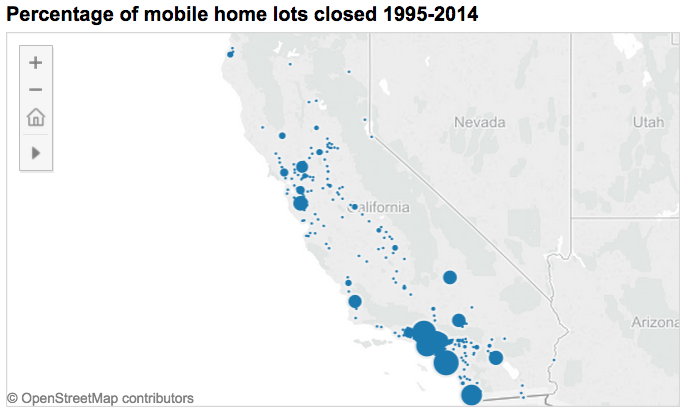
"caption": "Mobile home lots closed across California. \u003ca href=\"https://public.tableau.com/profile/publish/MobileHomeStoryVis/Dashboard1#!/publish-confirm\">CLICK\u003c/a> to launch full interactive graphic. ",
"description": null,
"title": "mobile home map",
"credit": "(Data visualization by Katie Kramon/Peninsula Press)",
"status": "inherit",
"isLoading": false,
"fetchFailed": false
},
"news_10443121": {
"type": "attachments",
"id": "news_10443121",
"meta": {
"index": "attachments_1716263798",
"site": "news",
"id": "10443121",
"found": true
},
"parent": 10443064,
"imgSizes": {
"twentyfourteen-full-width": {
"file": "https://ww2.kqed.org/app/uploads/sites/10/2015/02/RS7721_housing_0002_web-1038x576.jpg",
"width": 1038,
"mimeType": "image/jpeg",
"height": 576
},
"thumbnail": {
"file": "https://ww2.kqed.org/app/uploads/sites/10/2015/02/RS7721_housing_0002_web-400x267.jpg",
"width": 400,
"mimeType": "image/jpeg",
"height": 267
},
"post-thumbnail": {
"file": "https://ww2.kqed.org/app/uploads/sites/10/2015/02/RS7721_housing_0002_web-672x372.jpg",
"width": 672,
"mimeType": "image/jpeg",
"height": 372
},
"kqedFullSize": {
"file": "https://ww2.kqed.org/app/uploads/sites/10/2015/02/RS7721_housing_0002_web.jpg",
"width": 1500,
"height": 1000
},
"large": {
"file": "https://ww2.kqed.org/app/uploads/sites/10/2015/02/RS7721_housing_0002_web-1440x960.jpg",
"width": 1440,
"mimeType": "image/jpeg",
"height": 960
},
"guest-author-96": {
"file": "https://ww2.kqed.org/app/uploads/sites/10/2015/02/RS7721_housing_0002_web-96x96.jpg",
"width": 96,
"mimeType": "image/jpeg",
"height": 96
},
"medium": {
"file": "https://ww2.kqed.org/app/uploads/sites/10/2015/02/RS7721_housing_0002_web-800x533.jpg",
"width": 800,
"mimeType": "image/jpeg",
"height": 533
},
"guest-author-64": {
"file": "https://ww2.kqed.org/app/uploads/sites/10/2015/02/RS7721_housing_0002_web-64x64.jpg",
"width": 64,
"mimeType": "image/jpeg",
"height": 64
},
"detail": {
"file": "https://ww2.kqed.org/app/uploads/sites/10/2015/02/RS7721_housing_0002_web-75x75.jpg",
"width": 75,
"mimeType": "image/jpeg",
"height": 75
},
"guest-author-32": {
"file": "https://ww2.kqed.org/app/uploads/sites/10/2015/02/RS7721_housing_0002_web-32x32.jpg",
"width": 32,
"mimeType": "image/jpeg",
"height": 32
},
"guest-author-128": {
"file": "https://ww2.kqed.org/app/uploads/sites/10/2015/02/RS7721_housing_0002_web-128x128.jpg",
"width": 128,
"mimeType": "image/jpeg",
"height": 128
}
},
"publishDate": 1424898360,
"modified": 1424898371,
"caption": null,
"description": null,
"title": "An empty storefront near Noe and 14th streets has been leased.",
"credit": "Sara Bloomberg/KQED",
"status": "inherit",
"isLoading": false,
"fetchFailed": false
},
"news_10435649": {
"type": "attachments",
"id": "news_10435649",
"meta": {
"index": "attachments_1716263798",
"site": "news",
"id": "10435649",
"found": true
},
"parent": 10435597,
"imgSizes": {
"twentyfourteen-full-width": {
"file": "https://ww2.kqed.org/app/uploads/sites/10/2015/02/RS9378_IMG_1112-copy-lpr-1038x576.jpg",
"width": 1038,
"mimeType": "image/jpeg",
"height": 576
},
"thumbnail": {
"file": "https://ww2.kqed.org/app/uploads/sites/10/2015/02/RS9378_IMG_1112-copy-lpr-400x267.jpg",
"width": 400,
"mimeType": "image/jpeg",
"height": 267
},
"post-thumbnail": {
"file": "https://ww2.kqed.org/app/uploads/sites/10/2015/02/RS9378_IMG_1112-copy-lpr-672x372.jpg",
"width": 672,
"mimeType": "image/jpeg",
"height": 372
},
"kqedFullSize": {
"file": "https://ww2.kqed.org/app/uploads/sites/10/2015/02/RS9378_IMG_1112-copy-lpr.jpg",
"width": 2000,
"height": 1333
},
"large": {
"file": "https://ww2.kqed.org/app/uploads/sites/10/2015/02/RS9378_IMG_1112-copy-lpr-1440x960.jpg",
"width": 1440,
"mimeType": "image/jpeg",
"height": 960
},
"guest-author-96": {
"file": "https://ww2.kqed.org/app/uploads/sites/10/2015/02/RS9378_IMG_1112-copy-lpr-96x96.jpg",
"width": 96,
"mimeType": "image/jpeg",
"height": 96
},
"medium": {
"file": "https://ww2.kqed.org/app/uploads/sites/10/2015/02/RS9378_IMG_1112-copy-lpr-800x533.jpg",
"width": 800,
"mimeType": "image/jpeg",
"height": 533
},
"guest-author-64": {
"file": "https://ww2.kqed.org/app/uploads/sites/10/2015/02/RS9378_IMG_1112-copy-lpr-64x64.jpg",
"width": 64,
"mimeType": "image/jpeg",
"height": 64
},
"detail": {
"file": "https://ww2.kqed.org/app/uploads/sites/10/2015/02/RS9378_IMG_1112-copy-lpr-75x75.jpg",
"width": 75,
"mimeType": "image/jpeg",
"height": 75
},
"guest-author-32": {
"file": "https://ww2.kqed.org/app/uploads/sites/10/2015/02/RS9378_IMG_1112-copy-lpr-32x32.jpg",
"width": 32,
"mimeType": "image/jpeg",
"height": 32
},
"guest-author-128": {
"file": "https://ww2.kqed.org/app/uploads/sites/10/2015/02/RS9378_IMG_1112-copy-lpr-128x128.jpg",
"width": 128,
"mimeType": "image/jpeg",
"height": 128
}
},
"publishDate": 1424212055,
"modified": 1424212160,
"caption": "Will building more be enough to alleviate housing pressures? (Mark Andrew Boyer/KQED)",
"description": "Will building more be enough to alleviate housing pressures? (Mark Andrew Boyer/KQED)",
"title": "RS9378_IMG_1112 copy-lpr",
"credit": null,
"status": "inherit",
"isLoading": false,
"fetchFailed": false
},
"news_10411639": {
"type": "attachments",
"id": "news_10411639",
"meta": {
"index": "attachments_1716263798",
"site": "news",
"id": "10411639",
"found": true
},
"parent": 0,
"imgSizes": {
"twentyfourteen-full-width": {
"file": "https://ww2.kqed.org/app/uploads/sites/10/2015/01/driverplaza-1038x576.jpg",
"width": 1038,
"mimeType": "image/jpeg",
"height": 576
},
"thumbnail": {
"file": "https://ww2.kqed.org/app/uploads/sites/10/2015/01/driverplaza-400x225.jpg",
"width": 400,
"mimeType": "image/jpeg",
"height": 225
},
"post-thumbnail": {
"file": "https://ww2.kqed.org/app/uploads/sites/10/2015/01/driverplaza-672x372.jpg",
"width": 672,
"mimeType": "image/jpeg",
"height": 372
},
"kqedFullSize": {
"file": "https://ww2.kqed.org/app/uploads/sites/10/2015/01/driverplaza.jpg",
"width": 1440,
"height": 811
},
"guest-author-96": {
"file": "https://ww2.kqed.org/app/uploads/sites/10/2015/01/driverplaza-96x96.jpg",
"width": 96,
"mimeType": "image/jpeg",
"height": 96
},
"medium": {
"file": "https://ww2.kqed.org/app/uploads/sites/10/2015/01/driverplaza-800x450.jpg",
"width": 800,
"mimeType": "image/jpeg",
"height": 450
},
"guest-author-64": {
"file": "https://ww2.kqed.org/app/uploads/sites/10/2015/01/driverplaza-64x64.jpg",
"width": 64,
"mimeType": "image/jpeg",
"height": 64
},
"detail": {
"file": "https://ww2.kqed.org/app/uploads/sites/10/2015/01/driverplaza-75x75.jpg",
"width": 75,
"mimeType": "image/jpeg",
"height": 75
},
"guest-author-32": {
"file": "https://ww2.kqed.org/app/uploads/sites/10/2015/01/driverplaza-32x32.jpg",
"width": 32,
"mimeType": "image/jpeg",
"height": 32
},
"guest-author-128": {
"file": "https://ww2.kqed.org/app/uploads/sites/10/2015/01/driverplaza-128x128.jpg",
"width": 128,
"mimeType": "image/jpeg",
"height": 128
}
},
"publishDate": 1421785641,
"modified": 1421786811,
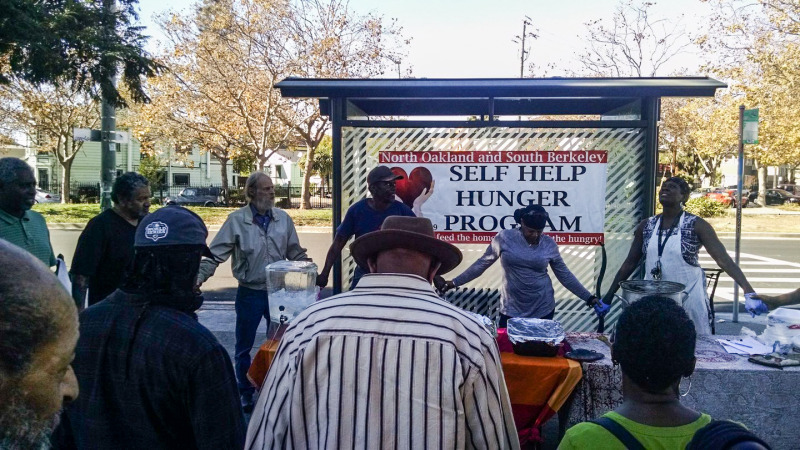
"caption": "Aunti Frances Moore, right, leads a prayer before a Tuesday meal at North Oakland's Driver Plaza.",
"description": "Aunti Frances Michelle Moore, right, leads a prayer before a Tuesday meal at North Oakland's Driver Plaza.",
"title": "driverplaza",
"credit": "Andrew Stelzer/KQED",
"status": "inherit",
"isLoading": false,
"fetchFailed": false
},
"news_10405315": {
"type": "attachments",
"id": "news_10405315",
"meta": {
"index": "attachments_1716263798",
"site": "news",
"id": "10405315",
"found": true
},
"parent": 10404475,
"imgSizes": {
"twentyfourteen-full-width": {
"file": "https://ww2.kqed.org/app/uploads/sites/10/2015/01/13978_transform-1038x576.jpg",
"width": 1038,
"mimeType": "image/jpeg",
"height": 576
},
"thumbnail": {
"file": "https://ww2.kqed.org/app/uploads/sites/10/2015/01/13978_transform-400x305.jpg",
"width": 400,
"mimeType": "image/jpeg",
"height": 305
},
"post-thumbnail": {
"file": "https://ww2.kqed.org/app/uploads/sites/10/2015/01/13978_transform-672x372.jpg",
"width": 672,
"mimeType": "image/jpeg",
"height": 372
},
"kqedFullSize": {
"file": "https://ww2.kqed.org/app/uploads/sites/10/2015/01/13978_transform.jpg",
"width": 1440,
"height": 1098
},
"guest-author-96": {
"file": "https://ww2.kqed.org/app/uploads/sites/10/2015/01/13978_transform-96x96.jpg",
"width": 96,
"mimeType": "image/jpeg",
"height": 96
},
"medium": {
"file": "https://ww2.kqed.org/app/uploads/sites/10/2015/01/13978_transform-800x610.jpg",
"width": 800,
"mimeType": "image/jpeg",
"height": 610
},
"guest-author-64": {
"file": "https://ww2.kqed.org/app/uploads/sites/10/2015/01/13978_transform-64x64.jpg",
"width": 64,
"mimeType": "image/jpeg",
"height": 64
},
"detail": {
"file": "https://ww2.kqed.org/app/uploads/sites/10/2015/01/13978_transform-75x75.jpg",
"width": 75,
"mimeType": "image/jpeg",
"height": 75
},
"guest-author-32": {
"file": "https://ww2.kqed.org/app/uploads/sites/10/2015/01/13978_transform-32x32.jpg",
"width": 32,
"mimeType": "image/jpeg",
"height": 32
},
"guest-author-128": {
"file": "https://ww2.kqed.org/app/uploads/sites/10/2015/01/13978_transform-128x128.jpg",
"width": 128,
"mimeType": "image/jpeg",
"height": 128
}
},
"publishDate": 1421185034,
"modified": 1421185047,
"caption": "Azalea Renfield (left) works with volunteers to help teachers find housing.",
"description": "Azalea Renfield (left) works with volunteers to help teachers find housing.",
"title": "13978_transform",
"credit": "Stephanie Martin Taylor/KQED",
"status": "inherit",
"isLoading": false,
"fetchFailed": false
},
"news_10355980": {
"type": "attachments",
"id": "news_10355980",
"meta": {
"index": "attachments_1716263798",
"site": "news",
"id": "10355980",
"found": true
},
"parent": 10355979,
"imgSizes": {
"twentyfourteen-full-width": {
"file": "https://ww2.kqed.org/app/uploads/sites/10/2014/11/MV-affordable-1024x576.jpg",
"width": 1024,
"mimeType": "image/jpeg",
"height": 576
},
"thumbnail": {
"file": "https://ww2.kqed.org/app/uploads/sites/10/2014/11/MV-affordable-400x266.jpg",
"width": 400,
"mimeType": "image/jpeg",
"height": 266
},
"post-thumbnail": {
"file": "https://ww2.kqed.org/app/uploads/sites/10/2014/11/MV-affordable-672x372.jpg",
"width": 672,
"mimeType": "image/jpeg",
"height": 372
},
"kqedFullSize": {
"file": "https://ww2.kqed.org/app/uploads/sites/10/2014/11/MV-affordable.jpg",
"width": 1024,
"height": 682
},
"guest-author-96": {
"file": "https://ww2.kqed.org/app/uploads/sites/10/2014/11/MV-affordable-96x96.jpg",
"width": 96,
"mimeType": "image/jpeg",
"height": 96
},
"medium": {
"file": "https://ww2.kqed.org/app/uploads/sites/10/2014/11/MV-affordable-800x532.jpg",
"width": 800,
"mimeType": "image/jpeg",
"height": 532
},
"guest-author-64": {
"file": "https://ww2.kqed.org/app/uploads/sites/10/2014/11/MV-affordable-64x64.jpg",
"width": 64,
"mimeType": "image/jpeg",
"height": 64
},
"detail": {
"file": "https://ww2.kqed.org/app/uploads/sites/10/2014/11/MV-affordable-75x75.jpg",
"width": 75,
"mimeType": "image/jpeg",
"height": 75
},
"guest-author-32": {
"file": "https://ww2.kqed.org/app/uploads/sites/10/2014/11/MV-affordable-32x32.jpg",
"width": 32,
"mimeType": "image/jpeg",
"height": 32
},
"guest-author-128": {
"file": "https://ww2.kqed.org/app/uploads/sites/10/2014/11/MV-affordable-128x128.jpg",
"width": 128,
"mimeType": "image/jpeg",
"height": 128
}
},
"publishDate": 1416943822,
"modified": 1416943843,
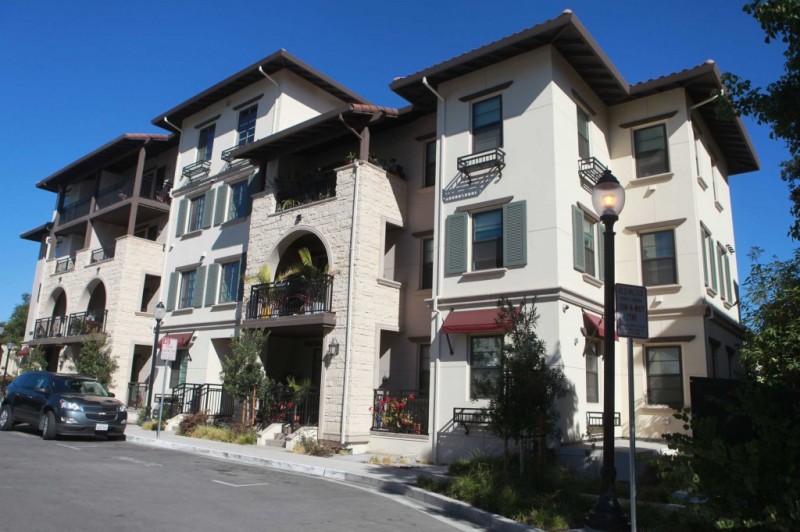
"caption": "Franklin Street Apartments is the most recent affordable housing project in Mountain View, pictured here on Oct. 19, 2014. It provides 51 rental units for families. (Yuqing Pan/Peninsula Press)",
"description": "Franklin Street Apartments is the most recent affordable housing project in Mountain View, pictured here on Oct. 19, 2014. It provides 51 rental units for families. (Yuqing Pan/Peninsula Press)",
"title": "MV-affordable",
"credit": null,
"status": "inherit",
"isLoading": false,
"fetchFailed": false
},
"news_10346716": {
"type": "attachments",
"id": "news_10346716",
"meta": {
"index": "attachments_1716263798",
"site": "news",
"id": "10346716",
"found": true
},
"parent": 10346512,
"imgSizes": {
"twentyfourteen-full-width": {
"file": "https://ww2.kqed.org/app/uploads/sites/10/2014/11/pollingbooths-1440-1038x576.jpg",
"width": 1038,
"mimeType": "image/jpeg",
"height": 576
},
"thumbnail": {
"file": "https://ww2.kqed.org/app/uploads/sites/10/2014/11/pollingbooths-1440-400x250.jpg",
"width": 400,
"mimeType": "image/jpeg",
"height": 250
},
"post-thumbnail": {
"file": "https://ww2.kqed.org/app/uploads/sites/10/2014/11/pollingbooths-1440-672x372.jpg",
"width": 672,
"mimeType": "image/jpeg",
"height": 372
},
"kqedFullSize": {
"file": "https://ww2.kqed.org/app/uploads/sites/10/2014/11/pollingbooths-1440.jpg",
"width": 1440,
"height": 900
},
"guest-author-96": {
"file": "https://ww2.kqed.org/app/uploads/sites/10/2014/11/pollingbooths-1440-96x96.jpg",
"width": 96,
"mimeType": "image/jpeg",
"height": 96
},
"medium": {
"file": "https://ww2.kqed.org/app/uploads/sites/10/2014/11/pollingbooths-1440-800x500.jpg",
"width": 800,
"mimeType": "image/jpeg",
"height": 500
},
"guest-author-64": {
"file": "https://ww2.kqed.org/app/uploads/sites/10/2014/11/pollingbooths-1440-64x64.jpg",
"width": 64,
"mimeType": "image/jpeg",
"height": 64
},
"detail": {
"file": "https://ww2.kqed.org/app/uploads/sites/10/2014/11/pollingbooths-1440-75x75.jpg",
"width": 75,
"mimeType": "image/jpeg",
"height": 75
},
"guest-author-32": {
"file": "https://ww2.kqed.org/app/uploads/sites/10/2014/11/pollingbooths-1440-32x32.jpg",
"width": 32,
"mimeType": "image/jpeg",
"height": 32
},
"guest-author-128": {
"file": "https://ww2.kqed.org/app/uploads/sites/10/2014/11/pollingbooths-1440-128x128.jpg",
"width": 128,
"mimeType": "image/jpeg",
"height": 128
}
},
"publishDate": 1415061127,
"modified": 1415210293,
"caption": "Voting booths (Getty Images)",
"description": null,
"title": "pollingbooths-1440",
"credit": null,
"status": "inherit",
"isLoading": false,
"fetchFailed": false
},
"news_10345764": {
"type": "attachments",
"id": "news_10345764",
"meta": {
"index": "attachments_1716263798",
"site": "news",
"id": "10345764",
"found": true
},
"parent": 10345763,
"imgSizes": {
"twentyfourteen-full-width": {
"file": "https://ww2.kqed.org/app/uploads/sites/10/2014/10/western-map-1038x576.png",
"width": 1038,
"mimeType": "image/png",
"height": 576
},
"thumbnail": {
"file": "https://ww2.kqed.org/app/uploads/sites/10/2014/10/western-map-400x302.png",
"width": 400,
"mimeType": "image/png",
"height": 302
},
"post-thumbnail": {
"file": "https://ww2.kqed.org/app/uploads/sites/10/2014/10/western-map-672x372.png",
"width": 672,
"mimeType": "image/png",
"height": 372
},
"kqedFullSize": {
"file": "https://ww2.kqed.org/app/uploads/sites/10/2014/10/western-map.png",
"width": 1087,
"height": 823
},
"guest-author-96": {
"file": "https://ww2.kqed.org/app/uploads/sites/10/2014/10/western-map-96x96.png",
"width": 96,
"mimeType": "image/png",
"height": 96
},
"medium": {
"file": "https://ww2.kqed.org/app/uploads/sites/10/2014/10/western-map-800x605.png",
"width": 800,
"mimeType": "image/png",
"height": 605
},
"guest-author-64": {
"file": "https://ww2.kqed.org/app/uploads/sites/10/2014/10/western-map-64x64.png",
"width": 64,
"mimeType": "image/png",
"height": 64
},
"detail": {
"file": "https://ww2.kqed.org/app/uploads/sites/10/2014/10/western-map-75x75.png",
"width": 75,
"mimeType": "image/png",
"height": 75
},
"guest-author-32": {
"file": "https://ww2.kqed.org/app/uploads/sites/10/2014/10/western-map-32x32.png",
"width": 32,
"mimeType": "image/png",
"height": 32
},
"guest-author-128": {
"file": "https://ww2.kqed.org/app/uploads/sites/10/2014/10/western-map-128x128.png",
"width": 128,
"mimeType": "image/png",
"height": 128
}
},
"publishDate": 1414608202,
"modified": 1414608271,
"caption": "This map shows where about 5,500 new homes could be built (on blue parcels) under existing laws, along major transit corridors (in red, along Taraval, Noriega and Irving streets). But developers could build even more if regulations shifted slightly. (Erika Rae Langdon, SF Public Press and Stamen Maps)",
"description": "This map shows where about 5,500 new homes could be built (on blue parcels) under existing laws, along major transit corridors (in red, along Taraval, Noriega and Irving streets). But developers could build even more if regulations shifted slightly. (Erika Rae Langdon, SF Public Press and Stamen Maps)",
"title": "western map",
"credit": null,
"status": "inherit",
"isLoading": false,
"fetchFailed": false
}
},
"audioPlayerReducer": {
"postId": "stream_live",
"isPaused": true,
"isPlaying": false,
"pfsActive": false,
"pledgeModalIsOpen": true,
"playerDrawerIsOpen": false,
"liveAudioPlayStartedAt": 0,
"liveAudioPlayContext": ""
},
"authorsReducer": {
"byline_news_10453771": {
"type": "authors",
"id": "byline_news_10453771",
"meta": {
"override": true
},
"slug": "byline_news_10453771",
"name": "\u003ca href=\"http://peninsulapress.com/author/faridajhabvalaromero/\">Farida Jhabvala Romero\u003c/a>\u003cbr>Peninsula Press",
"isLoading": false
},
"byline_news_10453765": {
"type": "authors",
"id": "byline_news_10453765",
"meta": {
"override": true
},
"slug": "byline_news_10453765",
"name": "\u003ca href=\"http://peninsulapress.com/author/katiekramon/\">Katie Kramon\u003c/a>\u003cbr>Peninsula Press",
"isLoading": false
},
"byline_news_10435597": {
"type": "authors",
"id": "byline_news_10435597",
"meta": {
"override": true
},
"slug": "byline_news_10435597",
"name": "\u003cstrong>Lisa Morehouse and Casey Miner\u003c/strong>\u003cbr />KQED News",
"isLoading": false
},
"byline_news_10355979": {
"type": "authors",
"id": "byline_news_10355979",
"meta": {
"override": true
},
"slug": "byline_news_10355979",
"name": "\u003ca href=\"http://peninsulapress.com/author/yuqingpan/\">Yuqing Pan\u003c/a>\u003cbr>Peninsula Press",
"isLoading": false
},
"byline_news_10345763": {
"type": "authors",
"id": "byline_news_10345763",
"meta": {
"override": true
},
"slug": "byline_news_10345763",
"name": "Evelyn Wang\u003cbr />\u003ca href=\"http://sfpublicpress.org/\">San Francisco Public Press\u003c/a>",
"isLoading": false
},
"smartin": {
"type": "authors",
"id": "89",
"meta": {
"index": "authors_1716337520",
"id": "89",
"found": true
},
"name": "Stephanie Martin Taylor",
"firstName": "Stephanie Martin",
"lastName": "Taylor",
"slug": "smartin",
"email": "smartin@kqed.org",
"display_author_email": false,
"staff_mastheads": [],
"title": null,
"bio": "Stephanie Martin is a radio news reporter and anchor, and an occasional host of the \u003cem>KQED Newsroom \u003c/em>television program. While she currently focuses on housing and development issues, she has also reported on topics ranging from state and local politics to religion to arts and culture.\r\n\r\nPrior to joining KQED in 2005, Stephanie was an anchor and reporter for WFDD, the NPR affiliate in Winston-Salem, NC. She also spent several years as a television anchor, reporter and producer at various stations around the country.\r\n\r\nStephanie has received numerous awards for her reporting, including two National Headliner Awards, the Religion Newswriters Association's Best Radio Reporting Award and honors from the Associated Press and the Radio and Television Digital News Association. A series she produced from Iraq in 2005 earned a Best of Radio Award from the Society of Professional Journalists.\r\n\r\nStephanie received a graduate degree in Journalism from Columbia University. As an undergraduate at Colgate University, she worked and studied in Paris and Dijon, France, and spent a summer interning in the White House Press Office.\r\n\r\nStephanie grew up in Dallas, TX, and now lives with her husband in San Francisco.",
"avatar": "https://secure.gravatar.com/avatar/9fd3f8e9af01e14afde39822c19646e0?s=600&d=blank&r=g",
"twitter": "SMartinTaylor",
"facebook": null,
"instagram": null,
"linkedin": null,
"sites": [
{
"site": "arts",
"roles": [
"Contributor",
"subscriber"
]
},
{
"site": "news",
"roles": [
"subscriber"
]
},
{
"site": "stateofhealth",
"roles": [
"subscriber"
]
}
],
"headData": {
"title": "Stephanie Martin Taylor | KQED",
"description": null,
"ogImgSrc": "https://secure.gravatar.com/avatar/9fd3f8e9af01e14afde39822c19646e0?s=600&d=blank&r=g",
"twImgSrc": "https://secure.gravatar.com/avatar/9fd3f8e9af01e14afde39822c19646e0?s=600&d=blank&r=g"
},
"isLoading": false,
"link": "/author/smartin"
},
"andrewstelzer": {
"type": "authors",
"id": "213",
"meta": {
"index": "authors_1716337520",
"id": "213",
"found": true
},
"name": "Andrew Stelzer",
"firstName": "Andrew",
"lastName": "Stelzer",
"slug": "andrewstelzer",
"email": "andrewstelzer@gmail.com",
"display_author_email": false,
"staff_mastheads": [],
"title": null,
"bio": "Andrew Stelzer has been reporting for KQED since 2010, and is a producer at \u003ca href=\"http://www.radioproject.org\" target=\"_blank\">Making Contact\u003c/a> in Oakland.. His work has been featured on programs including \u003ca href=\"http://www.npr.org/templates/story/story.php?storyId=5010\" target=\"_blank\">NPR’s Weekend Edition\u003c/a>, \u003ca href=\"http://www.theworld.org/\" target=\"_blank\">PRI’s The World\u003c/a>, \u003ca href=\"http://www.studio360.org/\" target=\"_blank\">Studio 360\u003c/a>, \u003ca href=\"http://marketplace.publicradio.org/\" target=\"_blank\">Marketplace\u003c/a>,\u003ca href=\"http://www.loe.org/\" target=\"_blank\">Living on Earth\u003c/a>, \u003ca href=\"http://www.onthemedia.org/\" target=\"_blank\">On the Media\u003c/a>, \u003ca href=\"http://www.latinousa.org/index.html\" target=\"_blank\">Latino USA,\u003c/a> \u003ca href=\"http://www.onlyagame.org/\" rel=\"tag\">Only a Game,\u003c/a> \u003ca href=\"http://www.tswi.org/\" target=\"_blank\">Radio Netherlands,\u003c/a> \u003ca href=\"http://worldradio.ch/index.shtml\" target=\"_blank\">World Radio Switzerland,\u003c/a> and \u003ca href=\"http://www.rfi.fr/langues/statiques/rfi_anglais.asp\" target=\"_blank\">Radio France International\u003c/a>. Andrew has written for publications including \u003ca href=\"http://www.inthesetimes.com/site/about/author/2369\" target=\"_blank\">In These Times\u003c/a>, \u003ca href=\"http://www.progressive.org/\" target=\"_blank\">The Progressive\u003c/a>, \u003ca href=\"http://ipsnews.net/\" target=\"_blank\">Interpress Service\u003c/a>, \u003ca href=\"http://www.tampabay.com/\" target=\"_blank\">The St. Petersburg Times\u003c/a>, and \u003ca href=\"http://www.eastbayexpress.com/ebx/Home\" target=\"_blank\">The East Bay Express\u003c/a>.\r\n\r\nAndrew’s work has received numerous awards from the Society of Professional Journalists, the National Lesbian and Gay Journalists Association, and the National Council on Crime and Delinquency.\r\n\r\nHe previously was a reporter at \u003ca href=\"http://www.wmnf.org/\" target=\"_blank\">WMNF\u003c/a> radio in Tampa, FL, and reporter and youth advocate st \u003ca href=\"http://www.kboo.org/\" target=\"_blank\">KBOO \u003c/a> in Portland, Oregon. Andrew has conducted radio production trainings around the world, from Algeria, to New Orleans, to the desert of Southern Jordan.",
"avatar": "https://secure.gravatar.com/avatar/14c7e75469395cb2468d45c9f6896ca9?s=600&d=blank&r=g",
"twitter": null,
"facebook": null,
"instagram": null,
"linkedin": null,
"sites": [
{
"site": "arts",
"roles": [
"contributor"
]
},
{
"site": "news",
"roles": [
"author"
]
},
{
"site": "stateofhealth",
"roles": [
"author"
]
}
],
"headData": {
"title": "Andrew Stelzer | KQED",
"description": null,
"ogImgSrc": "https://secure.gravatar.com/avatar/14c7e75469395cb2468d45c9f6896ca9?s=600&d=blank&r=g",
"twImgSrc": "https://secure.gravatar.com/avatar/14c7e75469395cb2468d45c9f6896ca9?s=600&d=blank&r=g"
},
"isLoading": false,
"link": "/author/andrewstelzer"
},
"kqed": {
"type": "authors",
"id": "236",
"meta": {
"index": "authors_1716337520",
"id": "236",
"found": true
},
"name": "KQED News Staff",
"firstName": "KQED News Staff",
"lastName": null,
"slug": "kqed",
"email": "faq@kqed.org",
"display_author_email": false,
"staff_mastheads": [],
"title": null,
"bio": null,
"avatar": "https://secure.gravatar.com/avatar/ef0e801a68c4c54afa9180db14084167?s=600&d=blank&r=g",
"twitter": null,
"facebook": null,
"instagram": null,
"linkedin": null,
"sites": [
{
"site": "arts",
"roles": [
"contributor"
]
},
{
"site": "news",
"roles": [
"editor"
]
},
{
"site": "futureofyou",
"roles": [
"author"
]
}
],
"headData": {
"title": "KQED News Staff | KQED",
"description": null,
"ogImgSrc": "https://secure.gravatar.com/avatar/ef0e801a68c4c54afa9180db14084167?s=600&d=blank&r=g",
"twImgSrc": "https://secure.gravatar.com/avatar/ef0e801a68c4c54afa9180db14084167?s=600&d=blank&r=g"
},
"isLoading": false,
"link": "/author/kqed"
},
"rachael-myrow": {
"type": "authors",
"id": "251",
"meta": {
"index": "authors_1716337520",
"id": "251",
"found": true
},
"name": "Rachael Myrow",
"firstName": "Rachael",
"lastName": "Myrow",
"slug": "rachael-myrow",
"email": "rmyrow@kqed.org",
"display_author_email": true,
"staff_mastheads": [
"news"
],
"title": "Senior Editor of KQED's Silicon Valley News Desk",
"bio": "• I write and edit stories about how Silicon Valley power and policies shape everyday life in California. I’m also passionate about making Bay Area history and culture more accessible to a broad public. • I’ve been a journalist for most of my life, starting in high school with The Franklin Press in Los Angeles, where I grew up. While earning my first degree in English at UC Berkeley, I got my start in public radio at KALX-FM. After completing a second degree in journalism at Cal, I landed my first professional job at Marketplace, then moved on to KPCC (now LAist), and then KQED, where I hosted The California Report for more than seven years. • My reporting has appeared on NPR, The World, WBUR’s \u003ci>Here & Now\u003c/i>, and the BBC. I also guest host for KQED’s \u003ci>Forum\u003c/i>, as well as the Commonwealth Club in San Francisco. • I speak periodically on media, democracy and technology issues, and do voiceover work for documentaries and educational video projects. • Outside of the studio, you'll find me hiking Bay Area trails and whipping up Insta-ready meals in my kitchen. • I do not accept gifts, money, or favors from anyone connected to my reporting, I don't pay people for information, and I do not support or donate to political causes. • I strive to treat the people I report on with fairness, honesty, and respect. I also recognize there are often multiple sides to a story and work to verify information through multiple sources and documentation. If I get something wrong, I correct it.",
"avatar": "https://secure.gravatar.com/avatar/3ed8a3c5f26025e4a805ba634cda8cd764906b97438a6d9ce216b044e340da4e?s=600&d=blank&r=g",
"twitter": "rachaelmyrow",
"bluesky": null,
"facebook": null,
"instagram": null,
"linkedin": "https://www.linkedin.com/in/rachaelmyrow/",
"sites": [
{
"site": "arts",
"roles": [
"administrator"
]
},
{
"site": "news",
"roles": [
"edit_others_posts",
"editor"
]
},
{
"site": "futureofyou",
"roles": [
"editor"
]
},
{
"site": "bayareabites",
"roles": [
"editor"
]
},
{
"site": "stateofhealth",
"roles": [
"editor"
]
},
{
"site": "science",
"roles": [
"editor"
]
},
{
"site": "food",
"roles": [
"editor"
]
},
{
"site": "forum",
"roles": [
"editor"
]
},
{
"site": "liveblog",
"roles": [
"author"
]
}
],
"headData": {
"title": "Rachael Myrow | KQED",
"description": "Senior Editor of KQED's Silicon Valley News Desk",
"ogImgSrc": "https://secure.gravatar.com/avatar/3ed8a3c5f26025e4a805ba634cda8cd764906b97438a6d9ce216b044e340da4e?s=600&d=blank&r=g",
"twImgSrc": "https://secure.gravatar.com/avatar/3ed8a3c5f26025e4a805ba634cda8cd764906b97438a6d9ce216b044e340da4e?s=600&d=blank&r=g"
},
"isLoading": false,
"link": "/author/rachael-myrow"
},
"scuevas": {
"type": "authors",
"id": "2600",
"meta": {
"index": "authors_1716337520",
"id": "2600",
"found": true
},
"name": "Steven Cuevas",
"firstName": "Steven",
"lastName": "Cuevas",
"slug": "scuevas",
"email": "scuevas@kqed.org",
"display_author_email": false,
"staff_mastheads": [],
"title": "KQED Contributor",
"bio": "Steven is a former Los Angeles bureau chief for The California Report.\r\n\r\nHe reports on an array of issues across the Southland, from immigration and regional politics to religion, the performing arts and pop culture.\r\n\r\nPrior to joining KQED in 2012, Steven covered Inland southern California for KPCC in Pasadena. He also helped establish the first newsroom at \u003ca href=\"http://kut.org/\">KUT\u003c/a> in Austin, Texas where he was a general assignment reporter.\r\n\r\nSteven has received numerous awards for his reporting including an RTNDA Edward R. Murrow Award for investigative reporting in addition to awards from the LA Press Club, the Associated Press and the Society for Professional Journalists.\r\n\r\nSteven grew up in and around San Francisco and now lives in Pasadena just a short jog from the foot of the San Gabriel Mountains.",
"avatar": "https://secure.gravatar.com/avatar/2d253580794f8e026100fae05cfabbbd4889b4fe15146146cacb82a01974c538?s=600&d=blank&r=g",
"twitter": null,
"bluesky": null,
"facebook": null,
"instagram": null,
"linkedin": null,
"sites": [
{
"site": "news",
"roles": [
"subscriber"
]
}
],
"headData": {
"title": "Steven Cuevas | KQED",
"description": "KQED Contributor",
"ogImgSrc": "https://secure.gravatar.com/avatar/2d253580794f8e026100fae05cfabbbd4889b4fe15146146cacb82a01974c538?s=600&d=blank&r=g",
"twImgSrc": "https://secure.gravatar.com/avatar/2d253580794f8e026100fae05cfabbbd4889b4fe15146146cacb82a01974c538?s=600&d=blank&r=g"
},
"isLoading": false,
"link": "/author/scuevas"
},
"mlagos": {
"type": "authors",
"id": "3239",
"meta": {
"index": "authors_1716337520",
"id": "3239",
"found": true
},
"name": "Marisa Lagos",
"firstName": "Marisa",
"lastName": "Lagos",
"slug": "mlagos",
"email": "mlagos@kqed.org",
"display_author_email": false,
"staff_mastheads": [
"news"
],
"title": "KQED Contributor",
"bio": "Marisa Lagos is a correspondent for KQED’s California Politics and Government Desk and co-hosts the award-winning show and podcast, Political Breakdown. At KQED, Lagos also conducts reporting, analysis and investigations into state, local and national politics for radio, TV, online and onstage. In 2022, she and co-host, Scott Shafer, moderated the only gubernatorial debate in California. In 2020, the \u003ci>Washington Post\u003c/i> named her one of the top political journalists in California; she was nominated for a Peabody and won several other awards for her work investigating the 2017 California wildfires. She has worked at the \u003ci>San Francisco Chronicle\u003c/i>, \u003ci>San Francisco Examiner\u003c/i> and \u003ci>Los Angeles Times\u003c/i>. A UC Santa Barbara graduate, she lives in San Francisco with her two sons and husband.",
"avatar": "https://secure.gravatar.com/avatar/a261a0d3696fc066871ef96b85b5e7d2?s=600&d=blank&r=g",
"twitter": "@mlagos",
"facebook": null,
"instagram": null,
"linkedin": null,
"sites": [
{
"site": "arts",
"roles": [
"author"
]
},
{
"site": "news",
"roles": [
"editor"
]
},
{
"site": "science",
"roles": [
"editor"
]
},
{
"site": "forum",
"roles": [
"author"
]
},
{
"site": "liveblog",
"roles": [
"author"
]
}
],
"headData": {
"title": "Marisa Lagos | KQED",
"description": "KQED Contributor",
"ogImgSrc": "https://secure.gravatar.com/avatar/a261a0d3696fc066871ef96b85b5e7d2?s=600&d=blank&r=g",
"twImgSrc": "https://secure.gravatar.com/avatar/a261a0d3696fc066871ef96b85b5e7d2?s=600&d=blank&r=g"
},
"isLoading": false,
"link": "/author/mlagos"
}
},
"pagesReducer": {
"news_tag_affordable-housing": {
"type": "terms",
"id": "news_3921",
"meta": {
"index": "terms_1716263798",
"site": "news",
"id": "3921",
"score": 9.304616
},
"featImg": null,
"name": "affordable housing",
"description": null,
"taxonomy": "tag",
"headData": {
"twImgId": null,
"twTitle": null,
"ogTitle": null,
"ogImgId": null,
"twDescription": null,
"description": null,
"title": "affordable housing Archives | KQED News",
"ogDescription": null
},
"ttid": 3940,
"slug": "affordable-housing",
"isLoading": false,
"title": "affordable housing",
"pageMeta": {
"site": "news",
"WpPageTemplate": "page-topic-editorial",
"currentPage": 50
},
"blocks": [
{
"blockName": "kqed/post-list",
"attrs": {
"layout": "cardArticle2",
"query": "posts/news?tag=affordable-housing",
"seeMore": false,
"paginated": true,
"page": 50
}
},
{
"blockName": "kqed/ad"
}
]
}
},
"pfsSessionReducer": {},
"postsReducer": {
"stream_live": {
"type": "live",
"id": "stream_live",
"audioUrl": "https://streams.kqed.org/kqedradio",
"title": "Live Stream",
"excerpt": "Live Stream information currently unavailable.",
"link": "/radio",
"featImg": "",
"label": {
"name": "KQED Live",
"link": "/"
}
},
"stream_kqedNewscast": {
"type": "posts",
"id": "stream_kqedNewscast",
"audioUrl": "https://www.kqed.org/.stream/anon/radio/RDnews/newscast.mp3?_=1",
"title": "KQED Newscast",
"featImg": "",
"label": {
"name": "88.5 FM",
"link": "/"
}
},
"news_10564227": {
"type": "posts",
"id": "news_10564227",
"meta": {
"index": "posts_1716263798",
"site": "news",
"id": "10564227",
"score": null,
"sort": [
1434409706000
]
},
"parent": 0,
"labelTerm": {
"site": "news",
"term": 6944
},
"blocks": [],
"publishDate": 1434409706,
"format": "standard",
"disqusTitle": "California Supreme Court Upholds San Jose's Affordable Housing Rules",
"title": "California Supreme Court Upholds San Jose's Affordable Housing Rules",
"headTitle": "Priced Out | News Fix | KQED News",
"content": "\u003cp>UPDATE 9/15/15: The Pacific Legal Foundation, representing the California Building Industry Association, has \u003ca href=\"http://www.pacificlegal.org/releases/release-9-15-15-CBIA-San-Jose-4-1508\" target=\"_blank\">appealed\u003c/a> \u003cem>California Building Industry Association v. City of San Jose\u003c/em> to the US Supreme Court. Legal analysts are split on whether the highest court in the land is likely to take the case.\u003c/p>\n\u003cp>In June, the California Supreme Court\u003ca href=\"http://www.courts.ca.gov/opinions/documents/S212072.PDF\" target=\"_blank\"> sided\u003c/a> with the city of San Jose in a case that could affect affordable housing rules all over the state.\u003c/p>\n\u003cp>The \u003ca href=\"https://www.cacities.org/\" target=\"_blank\">League of California Cities\u003c/a> and \u003ca href=\"http://www.counties.org/\" target=\"_blank\">California State Association of Counties\u003c/a> estimate more than 170 municipalities have some kind of ordinance on the books to tackle the fact that real estate, especially in coastal markets, has become increasingly unaffordable for many renters and would-be homeowners. Both groups backed San Jose in the case.\u003c/p>\n\u003cp>Five years ago, San Jose tried to require that all new residential developments of 20 units or more set aside 15 percent of those units for sale below the market rate. Developers could opt out of building affordable units by paying a fee. That’s pretty common, a tactic that goes by the name \"inclusionary zoning,\" but the city side-stepped the usual study showing a relationship between the development of for-sale housing and the city’s need for affordable housing.\u003c/p>\n\u003cp>\u003cstrong>San Jose Knew It Was Breaking New Ground\u003c/strong>\u003c/p>\n\u003cp>[ad fullwidth]\u003c/p>\n\u003cp>\"We were the largest city that was applying inclusionary housing citywide,\" explains San Jose’s interim Housing Director Jacky Morales-Ferrand. \"In addition to that, we used our legislative powers to impose inclusionary on developers. What we said was that because affordable housing is such a priority of the highest order, cities should have the power to legislate this requirement.\"\u003c/p>\n\u003cp>The \u003ca href=\"http://www.cbia.org/\" target=\"_blank\">California Building Industry Association\u003c/a> sued, calling the new ordinance an unconstitutional taking of property.\u003c/p>\n\u003cp>University of San Francisco law professor Tim Iglesias organized and co-wrote an amicus brief for the city of San Jose. \"Most inclusionary ordinances give developers a number of different ways to comply with the requirement. So what the opponents have done is to seize on those alternative options and say, 'Hey look: This is an exaction,' which is kind of a term of art in law that makes the city have to justify that requirement in a different, stricter way.\"\u003c/p>\n\u003cp>[soundcloud url=\"https://api.soundcloud.com/tracks/210511868\" params=\"color=ff5500&auto_play=false&hide_related=false&show_comments=true&show_user=true&show_reposts=false\" width=\"100%\" height=\"166\" iframe=\"true\" /]\u003c/p>\n\u003cp>A Santa Clara County judge invalidated San Jose's ordinance in 2012, referencing a case called \u003cem>\u003ca href=\"http://scocal.stanford.edu/opinion/san-remo-hotel-v-city-and-county-san-francisco-32243\" target=\"_blank\">San Remo Hotel L.P. v. City & County of San Francisco\u003c/a>, \u003c/em>but an appeals court rejected that reasoning a year later, and now the state Supreme Court has, too.\u003c/p>\n\u003cp>\u003cstrong>Court Cites \"Epic Proportions\" of Affording Housing Crisis\u003c/strong>\u003c/p>\n\u003cp>Noting the state's well-established scarcity of affordable housing, the ruling says: \"These problems have become more severe and have reached what might be described as epic proportions in many of the state's localities.\" The court goes on to note: \"The Court of Appeal held that the appropriate legal standard by which the validity of the ordinance is to be judged is the ordinary standard that past California decisions have uniformly applied.\"\u003c/p>\n\u003cp>The court wrote the conditions imposed by the San Jose ordinance did not constitute \"exactions\" that would bring the US or state constitutions into play. In addition, the court said enforcing those limits to address the city's affordable housing problem was \"constitutionally legitimate.\"\u003c/p>\n\u003cp>In a statement, San Jose Mayor Sam Liccardo wrote: \"I only regret that it required a Supreme Court ruling to uphold the ordinance, because we could have had the benefit of several years of implementation of this important tool.\"\u003c/p>\n\u003cp>Iglesias and Jacky Morales-Ferrand say the next step for cities and affordable housing advocates is to head to the state Legislature to allow for more expansive inclusionary zoning measures to be applied to rental housing as well as new units for sale.\u003c/p>\n\u003cp>So does the California Building Industry Association intend to appeal? Anthony Francois is a senior staff attorney at the \u003ca href=\"http://www.pacificlegal.org/\" target=\"_blank\">Pacific Legal Foundation\u003c/a>, which is representing the plaintiff. \"All options are under consideration,\" he says.\u003c/p>\n\u003cp>\"We think it's a very disappointing decision from the standpoint of property rights,\" Francois adds. \"The ruling allows local governments to impose financial penalties on anyone who provides new housing, and unfortunately, we believe that can only deter efforts by builders to ease the state's housing shortage.\"\u003c/p>\n\u003cp>\u003c/p>\n\u003cp>\u003cem>The case is CALIFORNIA BUILDING INDUSTRY ASSOCIATION v. CITY OF SAN JOSE et al. (AFFORDABLE HOUSING NETWORK OF SANTA CLARA COUNTY et al.) \u003ca href=\"http://appellatecases.courtinfo.ca.gov/search/case/mainCaseScreen.cfm?dist=0&doc_id=2051066&doc_no=S212072\" target=\"_blank\">S212072 \u003c/a>(H038563; Santa Clara County Superior Court – CV167289)\u003c/em>\u003c/p>\n\n",
"disqusIdentifier": "10564227 http://ww2.kqed.org/news/?p=10564227",
"disqusUrl": "https://ww2.kqed.org/news/2015/06/15/california-supreme-court-upholds-san-joses-affordable-housing-rules/",
"stats": {
"hasVideo": false,
"hasChartOrMap": false,
"hasAudio": false,
"hasPolis": false,
"wordCount": 785,
"hasGoogleForm": false,
"hasGallery": false,
"hasHearkenModule": false,
"iframeSrcs": [],
"paragraphCount": 20
},
"modified": 1442365775,
"excerpt": "City's victory could affect affordable housing rules all over the state. ",
"headData": {
"twImgId": "",
"twTitle": "",
"ogTitle": "",
"ogImgId": "",
"twDescription": "",
"description": "City's victory could affect affordable housing rules all over the state. ",
"title": "California Supreme Court Upholds San Jose's Affordable Housing Rules | KQED",
"ogDescription": "",
"schema": {
"@context": "https://schema.org",
"@type": "NewsArticle",
"headline": "California Supreme Court Upholds San Jose's Affordable Housing Rules",
"datePublished": "2015-06-15T16:08:26-07:00",
"dateModified": "2015-09-15T18:09:35-07:00",
"image": "https://cdn.kqed.org/wp-content/uploads/2020/02/KQED-OG-Image@1x.png",
"isAccessibleForFree": "True",
"publisher": {
"@type": "NewsMediaOrganization",
"@id": "https://www.kqed.org/#organization",
"name": "KQED",
"logo": "https://cdn.kqed.org/wp-content/uploads/2020/02/KQED-OG-Image@1x.png",
"url": "https://www.kqed.org",
"sameAs": [
"https://www.facebook.com/KQED",
"https://twitter.com/KQED",
"https://www.instagram.com/kqed/",
"https://www.tiktok.com/@kqedofficial",
"https://www.linkedin.com/company/kqed",
"https://www.youtube.com/channel/UCeC0IOo7i1P_61zVUWbJ4nw"
]
}
}
},
"guestAuthors": [],
"slug": "california-supreme-court-upholds-san-joses-affordable-housing-rules",
"status": "publish",
"path": "/news/10564227/california-supreme-court-upholds-san-joses-affordable-housing-rules",
"audioTrackLength": null,
"parsedContent": [
{
"type": "contentString",
"content": "\u003cdiv class=\"post-body\">\u003cp>\u003cp>UPDATE 9/15/15: The Pacific Legal Foundation, representing the California Building Industry Association, has \u003ca href=\"http://www.pacificlegal.org/releases/release-9-15-15-CBIA-San-Jose-4-1508\" target=\"_blank\">appealed\u003c/a> \u003cem>California Building Industry Association v. City of San Jose\u003c/em> to the US Supreme Court. Legal analysts are split on whether the highest court in the land is likely to take the case.\u003c/p>\n\u003cp>In June, the California Supreme Court\u003ca href=\"http://www.courts.ca.gov/opinions/documents/S212072.PDF\" target=\"_blank\"> sided\u003c/a> with the city of San Jose in a case that could affect affordable housing rules all over the state.\u003c/p>\n\u003cp>The \u003ca href=\"https://www.cacities.org/\" target=\"_blank\">League of California Cities\u003c/a> and \u003ca href=\"http://www.counties.org/\" target=\"_blank\">California State Association of Counties\u003c/a> estimate more than 170 municipalities have some kind of ordinance on the books to tackle the fact that real estate, especially in coastal markets, has become increasingly unaffordable for many renters and would-be homeowners. Both groups backed San Jose in the case.\u003c/p>\n\u003cp>Five years ago, San Jose tried to require that all new residential developments of 20 units or more set aside 15 percent of those units for sale below the market rate. Developers could opt out of building affordable units by paying a fee. That’s pretty common, a tactic that goes by the name \"inclusionary zoning,\" but the city side-stepped the usual study showing a relationship between the development of for-sale housing and the city’s need for affordable housing.\u003c/p>\n\u003cp>\u003cstrong>San Jose Knew It Was Breaking New Ground\u003c/strong>\u003c/p>\n\u003cp>\u003c/p>\u003c/div>",
"attributes": {
"named": {},
"numeric": []
}
},
{
"type": "component",
"content": "",
"name": "ad",
"attributes": {
"named": {
"label": "fullwidth"
},
"numeric": [
"fullwidth"
]
}
},
{
"type": "contentString",
"content": "\u003cdiv class=\"post-body\">\u003cp>\u003c/p>\n\u003cp>\"We were the largest city that was applying inclusionary housing citywide,\" explains San Jose’s interim Housing Director Jacky Morales-Ferrand. \"In addition to that, we used our legislative powers to impose inclusionary on developers. What we said was that because affordable housing is such a priority of the highest order, cities should have the power to legislate this requirement.\"\u003c/p>\n\u003cp>The \u003ca href=\"http://www.cbia.org/\" target=\"_blank\">California Building Industry Association\u003c/a> sued, calling the new ordinance an unconstitutional taking of property.\u003c/p>\n\u003cp>University of San Francisco law professor Tim Iglesias organized and co-wrote an amicus brief for the city of San Jose. \"Most inclusionary ordinances give developers a number of different ways to comply with the requirement. So what the opponents have done is to seize on those alternative options and say, 'Hey look: This is an exaction,' which is kind of a term of art in law that makes the city have to justify that requirement in a different, stricter way.\"\u003c/p>\n\u003cp>\u003c/p>\u003cp>\u003cdiv class='utils-parseShortcode-shortcodes-__shortcodes__shortcodeWrapper'>\n \u003ciframe width='100%' height='166'\n scrolling='no' frameborder='no'\n src='https://w.soundcloud.com/player/?url=https://api.soundcloud.com/tracks/210511868&visual=true&color=ff5500&auto_play=false&hide_related=false&show_comments=true&show_user=true&show_reposts=false'\n title='https://api.soundcloud.com/tracks/210511868'>\n \u003c/iframe>\n \u003c/div>\u003c/p>\u003cp>\u003c/p>\n\u003cp>A Santa Clara County judge invalidated San Jose's ordinance in 2012, referencing a case called \u003cem>\u003ca href=\"http://scocal.stanford.edu/opinion/san-remo-hotel-v-city-and-county-san-francisco-32243\" target=\"_blank\">San Remo Hotel L.P. v. City & County of San Francisco\u003c/a>, \u003c/em>but an appeals court rejected that reasoning a year later, and now the state Supreme Court has, too.\u003c/p>\n\u003cp>\u003cstrong>Court Cites \"Epic Proportions\" of Affording Housing Crisis\u003c/strong>\u003c/p>\n\u003cp>Noting the state's well-established scarcity of affordable housing, the ruling says: \"These problems have become more severe and have reached what might be described as epic proportions in many of the state's localities.\" The court goes on to note: \"The Court of Appeal held that the appropriate legal standard by which the validity of the ordinance is to be judged is the ordinary standard that past California decisions have uniformly applied.\"\u003c/p>\n\u003cp>The court wrote the conditions imposed by the San Jose ordinance did not constitute \"exactions\" that would bring the US or state constitutions into play. In addition, the court said enforcing those limits to address the city's affordable housing problem was \"constitutionally legitimate.\"\u003c/p>\n\u003cp>In a statement, San Jose Mayor Sam Liccardo wrote: \"I only regret that it required a Supreme Court ruling to uphold the ordinance, because we could have had the benefit of several years of implementation of this important tool.\"\u003c/p>\n\u003cp>Iglesias and Jacky Morales-Ferrand say the next step for cities and affordable housing advocates is to head to the state Legislature to allow for more expansive inclusionary zoning measures to be applied to rental housing as well as new units for sale.\u003c/p>\n\u003cp>So does the California Building Industry Association intend to appeal? Anthony Francois is a senior staff attorney at the \u003ca href=\"http://www.pacificlegal.org/\" target=\"_blank\">Pacific Legal Foundation\u003c/a>, which is representing the plaintiff. \"All options are under consideration,\" he says.\u003c/p>\n\u003cp>\"We think it's a very disappointing decision from the standpoint of property rights,\" Francois adds. \"The ruling allows local governments to impose financial penalties on anyone who provides new housing, and unfortunately, we believe that can only deter efforts by builders to ease the state's housing shortage.\"\u003c/p>\n\u003cp>\u003c/p>\n\u003cp>\u003cem>The case is CALIFORNIA BUILDING INDUSTRY ASSOCIATION v. CITY OF SAN JOSE et al. (AFFORDABLE HOUSING NETWORK OF SANTA CLARA COUNTY et al.) \u003ca href=\"http://appellatecases.courtinfo.ca.gov/search/case/mainCaseScreen.cfm?dist=0&doc_id=2051066&doc_no=S212072\" target=\"_blank\">S212072 \u003c/a>(H038563; Santa Clara County Superior Court – CV167289)\u003c/em>\u003c/p>\n\n\u003c/div>\u003c/p>",
"attributes": {
"named": {},
"numeric": []
}
}
],
"link": "/news/10564227/california-supreme-court-upholds-san-joses-affordable-housing-rules",
"authors": [
"251"
],
"programs": [
"news_6944"
],
"series": [
"news_18549"
],
"categories": [
"news_1758",
"news_6266",
"news_6188",
"news_8"
],
"tags": [
"news_3921",
"news_129",
"news_548",
"news_2520",
"news_803",
"news_137",
"news_38",
"news_18541",
"news_18226"
],
"featImg": "news_10564355",
"label": "news_6944"
},
"news_10558213": {
"type": "posts",
"id": "news_10558213",
"meta": {
"index": "posts_1716263798",
"site": "news",
"id": "10558213",
"score": null,
"sort": [
1434041285000
]
},
"parent": 0,
"labelTerm": {
"site": "news",
"term": 6944
},
"blocks": [],
"publishDate": 1434041285,
"format": "standard",
"disqusTitle": "New San Francisco Proposal Would Aid 'Middle-Class' Homebuyers",
"title": "New San Francisco Proposal Would Aid 'Middle-Class' Homebuyers",
"headTitle": "Boomtown | News Fix | KQED News",
"content": "\u003cp>San Francisco Mayor Ed Lee and Supervisor Malia Cohen are urging administrators of San Francisco's public employee pension system to consider middle-income families as they develop the system's investment portfolio.\u003c/p>\n\u003cp>On Wednesday, Lee and Cohen \u003ca href=\"http://www.sfmayor.org/index.aspx?recordid=897&page=846\" target=\"_blank\">announced a resolution\u003c/a> calling for a $125 million investment over the next 10 years in loans for those who currently make too much money to qualify for the city's \u003ca href=\"http://www.sf-moh.org/index.aspx?page=737\" target=\"_blank\">Downpayment Assistance Loan Program (DALP)\u003c/a>.\u003c/p>\n\u003cp>\"These are what we define as middle-income families,\" Lee said. \"They are teachers, they are nurses. They're janitors, they're firefighters, they're police officers.\"\u003c/p>\n\u003cp>For example, he said, a family of four making about $178,000 a year would qualify under the expanded DALP program, administered by the Mayor's Office of Housing and Community Development. Households of two people making about $143,000 would also make the cut.\u003c/p>\n\u003cp>Lee said the resolution is designed to assist up to 1,500 families. It's expected to go before the San Francisco Retirement Board for approval next month.\u003c/p>\n\u003cp>[ad fullwidth]\u003c/p>\n\u003cp>Cohen, who is also vice president of the retirement board, described the existing DALP loans as an extremely safe investment, with a loss rate of less than 1 percent. She said the new proposal will be structured to ensure a reasonable rate of return.\u003c/p>\n\u003cp>\u003c/p>\n\u003cp>\"Not only are we making investments in China, in other developing parts of the world, but we also need to be taking a critical look at the resources we have here right in our own backyard,\" she said.\u003c/p>\n\n",
"disqusIdentifier": "10558213 http://ww2.kqed.org/news/?p=10558213",
"disqusUrl": "https://ww2.kqed.org/news/2015/06/11/new-san-francisco-proposal-would-aid-middle-class-homebuyers/",
"stats": {
"hasVideo": false,
"hasChartOrMap": false,
"hasAudio": false,
"hasPolis": false,
"wordCount": 260,
"hasGoogleForm": false,
"hasGallery": false,
"hasHearkenModule": false,
"iframeSrcs": [],
"paragraphCount": 9
},
"modified": 1434059083,
"excerpt": "Under plan, city-run pension fund would invest in loans to higher-earning families priced out of market.\r\n",
"headData": {
"twImgId": "",
"twTitle": "",
"ogTitle": "",
"ogImgId": "",
"twDescription": "",
"description": "Under plan, city-run pension fund would invest in loans to higher-earning families priced out of market.\r\n",
"title": "New San Francisco Proposal Would Aid 'Middle-Class' Homebuyers | KQED",
"ogDescription": "",
"schema": {
"@context": "https://schema.org",
"@type": "NewsArticle",
"headline": "New San Francisco Proposal Would Aid 'Middle-Class' Homebuyers",
"datePublished": "2015-06-11T09:48:05-07:00",
"dateModified": "2015-06-11T14:44:43-07:00",
"image": "https://cdn.kqed.org/wp-content/uploads/2020/02/KQED-OG-Image@1x.png",
"isAccessibleForFree": "True",
"publisher": {
"@type": "NewsMediaOrganization",
"@id": "https://www.kqed.org/#organization",
"name": "KQED",
"logo": "https://cdn.kqed.org/wp-content/uploads/2020/02/KQED-OG-Image@1x.png",
"url": "https://www.kqed.org",
"sameAs": [
"https://www.facebook.com/KQED",
"https://twitter.com/KQED",
"https://www.instagram.com/kqed/",
"https://www.tiktok.com/@kqedofficial",
"https://www.linkedin.com/company/kqed",
"https://www.youtube.com/channel/UCeC0IOo7i1P_61zVUWbJ4nw"
]
}
}
},
"guestAuthors": [],
"slug": "new-san-francisco-proposal-would-aid-middle-class-homebuyers",
"status": "publish",
"path": "/news/10558213/new-san-francisco-proposal-would-aid-middle-class-homebuyers",
"audioTrackLength": null,
"parsedContent": [
{
"type": "contentString",
"content": "\u003cdiv class=\"post-body\">\u003cp>\u003cp>San Francisco Mayor Ed Lee and Supervisor Malia Cohen are urging administrators of San Francisco's public employee pension system to consider middle-income families as they develop the system's investment portfolio.\u003c/p>\n\u003cp>On Wednesday, Lee and Cohen \u003ca href=\"http://www.sfmayor.org/index.aspx?recordid=897&page=846\" target=\"_blank\">announced a resolution\u003c/a> calling for a $125 million investment over the next 10 years in loans for those who currently make too much money to qualify for the city's \u003ca href=\"http://www.sf-moh.org/index.aspx?page=737\" target=\"_blank\">Downpayment Assistance Loan Program (DALP)\u003c/a>.\u003c/p>\n\u003cp>\"These are what we define as middle-income families,\" Lee said. \"They are teachers, they are nurses. They're janitors, they're firefighters, they're police officers.\"\u003c/p>\n\u003cp>For example, he said, a family of four making about $178,000 a year would qualify under the expanded DALP program, administered by the Mayor's Office of Housing and Community Development. Households of two people making about $143,000 would also make the cut.\u003c/p>\n\u003cp>Lee said the resolution is designed to assist up to 1,500 families. It's expected to go before the San Francisco Retirement Board for approval next month.\u003c/p>\n\u003cp>\u003c/p>\u003c/div>",
"attributes": {
"named": {},
"numeric": []
}
},
{
"type": "component",
"content": "",
"name": "ad",
"attributes": {
"named": {
"label": "fullwidth"
},
"numeric": [
"fullwidth"
]
}
},
{
"type": "contentString",
"content": "\u003cdiv class=\"post-body\">\u003cp>\u003c/p>\n\u003cp>Cohen, who is also vice president of the retirement board, described the existing DALP loans as an extremely safe investment, with a loss rate of less than 1 percent. She said the new proposal will be structured to ensure a reasonable rate of return.\u003c/p>\n\u003cp>\u003c/p>\n\u003cp>\"Not only are we making investments in China, in other developing parts of the world, but we also need to be taking a critical look at the resources we have here right in our own backyard,\" she said.\u003c/p>\n\n\u003c/div>\u003c/p>",
"attributes": {
"named": {},
"numeric": []
}
}
],
"link": "/news/10558213/new-san-francisco-proposal-would-aid-middle-class-homebuyers",
"authors": [
"89"
],
"programs": [
"news_6944"
],
"series": [
"news_17411"
],
"categories": [
"news_6266"
],
"tags": [
"news_3921",
"news_543",
"news_2819",
"news_5008"
],
"featImg": "news_10558214",
"label": "news_6944"
},
"news_10498134": {
"type": "posts",
"id": "news_10498134",
"meta": {
"index": "posts_1716263798",
"site": "news",
"id": "10498134",
"score": null,
"sort": [
1429801238000
]
},
"parent": 0,
"labelTerm": {
"site": "news",
"term": 72
},
"blocks": [],
"publishDate": 1429801238,
"format": "standard",
"disqusTitle": "Skid Row Land Rush: Now It's One of the Pricier Sections of L.A.",
"title": "Skid Row Land Rush: Now It's One of the Pricier Sections of L.A.",
"headTitle": "The California Report | KQED News",
"content": "\u003cp>If the barefooted woman pushing a shopping cart down the sidewalk or the guy brushing his teeth outside a tattered blue tent doesn’t tell you where you are, the enormous \"Welcome to Skid Row\" mural should.\u003c/p>\n\u003cp>[soundcloud url=\"https://api.soundcloud.com/tracks/200650548\" params=\"color=ff5500&auto_play=false&hide_related=false&show_comments=true&show_user=true&show_reposts=false\" width=\"100%\" height=\"166\" iframe=\"true\" /]\u003c/p>\n\u003cp>“It’s basically a city-limits sign, typical green with the white trim like ‘now entering such-and-such a place,’ ” explains \u003ca title=\"Jeff Page FB PAGE\" href=\"https://www.facebook.com/pages/General-Jeff/106807136010057\">Jeff Page\u003c/a>.\u003c/p>\n\u003cp>“And then on the left of the sign it says, ‘Population: too many’ because there’s definitely too many people living in this condition like this.”\u003c/p>\n\u003cp>Page is a Skid Row resident and activist behind a mural project along San Julian Street, a grimy back alley surrounded by homeless encampments, shelters and a host of other homeless services.\u003c/p>\n\u003cp>[ad fullwidth]\u003c/p>\n\u003cp>Page says he’s trying to create a splash of Technicolor in an otherwise bleak environment that many people prefer to ignore.\u003c/p>\n\u003cp>“This is our effort to try to be recognized as a community,” says Page. “That way, people will see it more than just some transitional place for hobos and drug addicts, that we just have people who suffer from poverty.\"\u003c/p>\n\u003cp>So what’s spurring this quest for community recognition? Is it a crackdown by the cops? Stricter rules about sidewalk camping? No.\u003c/p>\n\u003cp>It’s $9 ice cream cones.\u003c/p>\n\u003cp>Just a couple blocks from the mural is an upscale ice cream shop called Peddler’s Creamery. It’s the kind of place that embodies the changing face of L.A.’s historic core -- the neighborhood that rubs right up against the hard stubble of Skid Row.\u003c/p>\n\u003cp>I stop by the place with Mike Alvirez.\u003c/p>\n\u003cp>“It’s organically grown, sustainably farmed ingredients that he uses in his ice cream by peddling on his bicycle,” says Alvirez, beaming at the site of the Rube Goldberg-esque bicycle-powered ice cream churn.\u003c/p>\n\u003cp>Alvirez is chief of the \u003ca title=\"SKid Row Housing Trust\" href=\"http://skidrow.org/\">Skid Row Housing Trust\u003c/a>. The nonprofit owns around two dozen buildings, including the New Genesis, also home to Peddler’s Creamery.\u003c/p>\n\u003cfigure id=\"attachment_10498179\" class=\"wp-caption alignleft\" style=\"max-width: 800px\">\u003ca href=\"http://ww2.kqed.org/news/wp-content/uploads/sites/10/2015/04/HOUSING-SK-NewGen-exterior.jpg\">\u003cimg class=\"size-medium wp-image-10498179\" src=\"http://ww2.kqed.org/news/wp-content/uploads/sites/10/2015/04/HOUSING-SK-NewGen-exterior-800x494.jpg\" alt=\"Exterior of the New Genesis apartments on the border of Skid Row and L.A.’s rapidly changing Historic Core. \" width=\"800\" height=\"494\" srcset=\"https://ww2.kqed.org/app/uploads/sites/10/2015/04/HOUSING-SK-NewGen-exterior-800x494.jpg 800w, https://ww2.kqed.org/app/uploads/sites/10/2015/04/HOUSING-SK-NewGen-exterior-400x247.jpg 400w, https://ww2.kqed.org/app/uploads/sites/10/2015/04/HOUSING-SK-NewGen-exterior-1440x890.jpg 1440w, https://ww2.kqed.org/app/uploads/sites/10/2015/04/HOUSING-SK-NewGen-exterior-1180x729.jpg 1180w, https://ww2.kqed.org/app/uploads/sites/10/2015/04/HOUSING-SK-NewGen-exterior-768x474.jpg 768w, https://ww2.kqed.org/app/uploads/sites/10/2015/04/HOUSING-SK-NewGen-exterior-320x198.jpg 320w, https://ww2.kqed.org/app/uploads/sites/10/2015/04/HOUSING-SK-NewGen-exterior.jpg 1920w\" sizes=\"(max-width: 800px) 100vw, 800px\">\u003c/a>\u003cfigcaption class=\"wp-caption-text\">Exterior of the New Genesis apartments on the border of Skid Row and L.A.’s rapidly changing Historic Core. \u003ccite>(Steven Cuevas KQED)\u003c/cite>\u003c/figcaption>\u003c/figure>\n\u003cp>The top floors of the New Genesis are reserved for low-income housing. And in a controversial move, the Trust created spaces on the ground floor for a couple of retailers that cater to the area’s more affluent newcomers.\u003c/p>\n\u003cp>“It’s a double-edged sword. It does obviously create more pressure on homeless folks for those who want to see them get swept away,” says Alvirez.\u003c/p>\n\u003cp>“But at the same time I think many of the downtown residents who have chosen to live in downtown, understanding that there is this population in Skid Row, want to see something done about it.”\u003c/p>\n\u003cp>There are a lot of homeless people and a lot of desperation packed into one 70-square-block sliver of Skid Row. One thing that’s woefully lacking is low-income housing.\u003c/p>\n\u003cp>Skid Row has been losing cheap housing for years, as the neighborhood’s old residence hotels and apartment buildings were torn down or transformed into market-rate apartments.\u003c/p>\n\u003cfigure id=\"attachment_10498180\" class=\"wp-caption aligncenter\" style=\"max-width: 800px\">\u003ca href=\"http://ww2.kqed.org/news/wp-content/uploads/sites/10/2015/04/HOUSING-SK-StarApts.jpg\">\u003cimg class=\"wp-image-10498180 size-medium\" src=\"http://ww2.kqed.org/news/wp-content/uploads/sites/10/2015/04/HOUSING-SK-StarApts-800x528.jpg\" alt=\"HOUSING SK StarApts\" width=\"800\" height=\"528\" srcset=\"https://ww2.kqed.org/app/uploads/sites/10/2015/04/HOUSING-SK-StarApts-800x528.jpg 800w, https://ww2.kqed.org/app/uploads/sites/10/2015/04/HOUSING-SK-StarApts-400x264.jpg 400w, https://ww2.kqed.org/app/uploads/sites/10/2015/04/HOUSING-SK-StarApts-1440x950.jpg 1440w, https://ww2.kqed.org/app/uploads/sites/10/2015/04/HOUSING-SK-StarApts-1180x779.jpg 1180w, https://ww2.kqed.org/app/uploads/sites/10/2015/04/HOUSING-SK-StarApts-768x507.jpg 768w, https://ww2.kqed.org/app/uploads/sites/10/2015/04/HOUSING-SK-StarApts-320x211.jpg 320w, https://ww2.kqed.org/app/uploads/sites/10/2015/04/HOUSING-SK-StarApts.jpg 1920w\" sizes=\"(max-width: 800px) 100vw, 800px\">\u003c/a>\u003cfigcaption class=\"wp-caption-text\">Exterior of the modular and modernist Star Apartments, built two years ago in the heart of Skid Row\u003c/figcaption>\u003c/figure>\n\u003cp>These days there are a little more than 3,000 low-income housing units in the Skid Row area, and more than double the number of people living on the streets on any given day.\u003c/p>\n\u003cp>At one time, that kind of thing would have been enough to scare off the most hardened of urban dwellers.\u003c/p>\n\u003cp>Not so much anymore.\u003c/p>\n\u003cp>“I live in, technically, the boundaries of Skid Row,” says real estate agent Blair Besten.\u003c/p>\n\u003cp>She chose to move to the Skid Row area when she took a job as director of the \u003ca href=\"https://www.google.com/search?sourceid=navclient&ie=UTF-8&rlz=1T4NDKB_enUS581US581&q=Historic+Core+Business+Improvement+District%20\">Historic Core Business Improvement District, \u003c/a>an organization that represents downtown merchants, developers and residents.\u003c/p>\n\u003cp>“A great many of them come down here and find out maybe it’s a little bit of an edgier experience than they were expecting,” says Besten of many of the area’s new denizens.\u003c/p>\n\u003cfigure id=\"attachment_10498182\" class=\"wp-caption alignright\" style=\"max-width: 800px\">\u003ca href=\"http://ww2.kqed.org/news/wp-content/uploads/sites/10/2015/04/HOUSING-SK-BukKeroWaits.jpg\">\u003cimg class=\"wp-image-10498182 size-medium\" src=\"http://ww2.kqed.org/news/wp-content/uploads/sites/10/2015/04/HOUSING-SK-BukKeroWaits-800x526.jpg\" alt=\"HOUSING SK BukKeroWaits\" width=\"800\" height=\"526\" srcset=\"https://ww2.kqed.org/app/uploads/sites/10/2015/04/HOUSING-SK-BukKeroWaits-800x526.jpg 800w, https://ww2.kqed.org/app/uploads/sites/10/2015/04/HOUSING-SK-BukKeroWaits-400x263.jpg 400w, https://ww2.kqed.org/app/uploads/sites/10/2015/04/HOUSING-SK-BukKeroWaits-1440x947.jpg 1440w, https://ww2.kqed.org/app/uploads/sites/10/2015/04/HOUSING-SK-BukKeroWaits-1180x776.jpg 1180w, https://ww2.kqed.org/app/uploads/sites/10/2015/04/HOUSING-SK-BukKeroWaits-768x505.jpg 768w, https://ww2.kqed.org/app/uploads/sites/10/2015/04/HOUSING-SK-BukKeroWaits-320x211.jpg 320w, https://ww2.kqed.org/app/uploads/sites/10/2015/04/HOUSING-SK-BukKeroWaits.jpg 1920w\" sizes=\"(max-width: 800px) 100vw, 800px\">\u003c/a>\u003cfigcaption class=\"wp-caption-text\">The cultural ‘patron saints’ of Skid Row: Images of Tom Waits, Charles Bukowski and John Fante are stenciled on the wall of an alley behind the New Genesis apartments.\u003c/figcaption>\u003c/figure>\n\u003cp>“Because we do find ourselves adjunct to Skid Row, and we do have a considerable homeless population here.”\u003c/p>\n\u003cp>Besten lives in a building on the edge of Skid Row.\u003c/p>\n\u003cp>She’s raising a family there, too. She does worry about the proliferation of sidewalk encampments, which the police essentially ignore. A number of ordinances and court rulings handcuff their ability to seize a person’s belongings. Besten is sympathetic yet frustrated.\u003c/p>\n\u003cp>“What is someone’s personal property really needs to be defined because five shopping carts filled with garbage and tents and tarps dedicated to one individual probably isn’t making their lives any better,” says Besten.\u003c/p>\n\u003cp>“I think people need to be integrated in their own communities rather than being pushed out of them.”\u003c/p>\n\u003cp>Ryan Navales agrees that other cities need to do more to help the homeless in their own communities. Navales is a community outreach coordinator with the \u003ca title=\"Midnight Mission\" href=\"http://www.midnightmission.org/%20\">Midnight Mission\u003c/a>, one of Skid Row’s oldest and biggest shelters and service providers.\u003c/p>\n\u003cp>“Homelessness doesn’t have any city barriers, and there’s a real need for the services to be regionalized,” says Navales.\u003c/p>\n\u003cfigure id=\"attachment_10498183\" class=\"wp-caption alignleft\" style=\"max-width: 800px\">\u003ca href=\"http://ww2.kqed.org/news/wp-content/uploads/sites/10/2015/04/HOUSING-SK-signage.jpg\">\u003cimg class=\"size-medium wp-image-10498183\" src=\"http://ww2.kqed.org/news/wp-content/uploads/sites/10/2015/04/HOUSING-SK-signage-800x569.jpg\" alt=\"A sign on the window of the SRO Housing Corporation in Skid Row\" width=\"800\" height=\"569\" srcset=\"https://ww2.kqed.org/app/uploads/sites/10/2015/04/HOUSING-SK-signage-800x569.jpg 800w, https://ww2.kqed.org/app/uploads/sites/10/2015/04/HOUSING-SK-signage-400x285.jpg 400w, https://ww2.kqed.org/app/uploads/sites/10/2015/04/HOUSING-SK-signage-1440x1025.jpg 1440w, https://ww2.kqed.org/app/uploads/sites/10/2015/04/HOUSING-SK-signage-1180x840.jpg 1180w, https://ww2.kqed.org/app/uploads/sites/10/2015/04/HOUSING-SK-signage-768x546.jpg 768w, https://ww2.kqed.org/app/uploads/sites/10/2015/04/HOUSING-SK-signage-320x228.jpg 320w, https://ww2.kqed.org/app/uploads/sites/10/2015/04/HOUSING-SK-signage.jpg 1920w\" sizes=\"(max-width: 800px) 100vw, 800px\">\u003c/a>\u003cfigcaption class=\"wp-caption-text\">A sign on the window of the SRO Housing Corp. in Skid Row \u003ccite>(Steven Cuevas KQED)\u003c/cite>\u003c/figcaption>\u003c/figure>\n\u003cp>“You can’t have all that down here, it just stresses the system. There’s already a lack of housing, so that’s what you’re facing is a housing crisis.”\u003c/p>\n\u003cp>The affordable housing apartments that currently do exist on Skid Row cannot be converted to market rates. A 2008 ordinance shields them from commercial development.\u003c/p>\n\u003cp>The challenge is adding more affordable housing units to an area that’s becoming one of the hottest real estate markets in town.\u003c/p>\n\u003cp>“We have allowed this to persist for decades and it’s shameful,” says Alvirez. “It should have never gotten to this point. We can’t solve it unless we own it. This is our problem that we have to fix.”\u003c/p>\n\u003cp>[ad floatright]\u003c/p>\n\u003cp>With competition for any slice of available real estate looking only to get fiercer, and homeless services slowly expanding in other places, Los Angeles could be facing what once seemed unimaginable: the gradual shrinking of Skid Row.\u003c/p>\n\n",
"disqusIdentifier": "10498134 http://ww2.kqed.org/news/?p=10498134",
"disqusUrl": "https://ww2.kqed.org/news/2015/04/23/skid-row-land-rush-now-its-one-of-the-pricier-sections-of-l-a/",
"stats": {
"hasVideo": false,
"hasChartOrMap": false,
"hasAudio": false,
"hasPolis": false,
"wordCount": 1165,
"hasGoogleForm": false,
"hasGallery": false,
"hasHearkenModule": false,
"iframeSrcs": [],
"paragraphCount": 38
},
"modified": 1429757348,
"excerpt": "More affordable housing is needed, as real estate market heats up in an edgy but changing part of town.",
"headData": {
"twImgId": "",
"twTitle": "",
"ogTitle": "",
"ogImgId": "",
"twDescription": "",
"description": "More affordable housing is needed, as real estate market heats up in an edgy but changing part of town.",
"title": "Skid Row Land Rush: Now It's One of the Pricier Sections of L.A. | KQED",
"ogDescription": "",
"schema": {
"@context": "https://schema.org",
"@type": "NewsArticle",
"headline": "Skid Row Land Rush: Now It's One of the Pricier Sections of L.A.",
"datePublished": "2015-04-23T08:00:38-07:00",
"dateModified": "2015-04-22T19:49:08-07:00",
"image": "https://cdn.kqed.org/wp-content/uploads/2020/02/KQED-OG-Image@1x.png",
"isAccessibleForFree": "True",
"publisher": {
"@type": "NewsMediaOrganization",
"@id": "https://www.kqed.org/#organization",
"name": "KQED",
"logo": "https://cdn.kqed.org/wp-content/uploads/2020/02/KQED-OG-Image@1x.png",
"url": "https://www.kqed.org",
"sameAs": [
"https://www.facebook.com/KQED",
"https://twitter.com/KQED",
"https://www.instagram.com/kqed/",
"https://www.tiktok.com/@kqedofficial",
"https://www.linkedin.com/company/kqed",
"https://www.youtube.com/channel/UCeC0IOo7i1P_61zVUWbJ4nw"
]
}
}
},
"guestAuthors": [],
"slug": "skid-row-land-rush-now-its-one-of-the-pricier-sections-of-l-a",
"status": "publish",
"path": "/news/10498134/skid-row-land-rush-now-its-one-of-the-pricier-sections-of-l-a",
"audioTrackLength": null,
"parsedContent": [
{
"type": "contentString",
"content": "\u003cdiv class=\"post-body\">\u003cp>\u003cp>If the barefooted woman pushing a shopping cart down the sidewalk or the guy brushing his teeth outside a tattered blue tent doesn’t tell you where you are, the enormous \"Welcome to Skid Row\" mural should.\u003c/p>\n\u003cp>\u003c/p>\u003cp>\u003cdiv class='utils-parseShortcode-shortcodes-__shortcodes__shortcodeWrapper'>\n \u003ciframe width='100%' height='166'\n scrolling='no' frameborder='no'\n src='https://w.soundcloud.com/player/?url=https://api.soundcloud.com/tracks/200650548&visual=true&color=ff5500&auto_play=false&hide_related=false&show_comments=true&show_user=true&show_reposts=false'\n title='https://api.soundcloud.com/tracks/200650548'>\n \u003c/iframe>\n \u003c/div>\u003c/p>\u003cp>\u003c/p>\n\u003cp>“It’s basically a city-limits sign, typical green with the white trim like ‘now entering such-and-such a place,’ ” explains \u003ca title=\"Jeff Page FB PAGE\" href=\"https://www.facebook.com/pages/General-Jeff/106807136010057\">Jeff Page\u003c/a>.\u003c/p>\n\u003cp>“And then on the left of the sign it says, ‘Population: too many’ because there’s definitely too many people living in this condition like this.”\u003c/p>\n\u003cp>Page is a Skid Row resident and activist behind a mural project along San Julian Street, a grimy back alley surrounded by homeless encampments, shelters and a host of other homeless services.\u003c/p>\n\u003cp>\u003c/p>\u003c/div>",
"attributes": {
"named": {},
"numeric": []
}
},
{
"type": "component",
"content": "",
"name": "ad",
"attributes": {
"named": {
"label": "fullwidth"
},
"numeric": [
"fullwidth"
]
}
},
{
"type": "contentString",
"content": "\u003cdiv class=\"post-body\">\u003cp>\u003c/p>\n\u003cp>Page says he’s trying to create a splash of Technicolor in an otherwise bleak environment that many people prefer to ignore.\u003c/p>\n\u003cp>“This is our effort to try to be recognized as a community,” says Page. “That way, people will see it more than just some transitional place for hobos and drug addicts, that we just have people who suffer from poverty.\"\u003c/p>\n\u003cp>So what’s spurring this quest for community recognition? Is it a crackdown by the cops? Stricter rules about sidewalk camping? No.\u003c/p>\n\u003cp>It’s $9 ice cream cones.\u003c/p>\n\u003cp>Just a couple blocks from the mural is an upscale ice cream shop called Peddler’s Creamery. It’s the kind of place that embodies the changing face of L.A.’s historic core -- the neighborhood that rubs right up against the hard stubble of Skid Row.\u003c/p>\n\u003cp>I stop by the place with Mike Alvirez.\u003c/p>\n\u003cp>“It’s organically grown, sustainably farmed ingredients that he uses in his ice cream by peddling on his bicycle,” says Alvirez, beaming at the site of the Rube Goldberg-esque bicycle-powered ice cream churn.\u003c/p>\n\u003cp>Alvirez is chief of the \u003ca title=\"SKid Row Housing Trust\" href=\"http://skidrow.org/\">Skid Row Housing Trust\u003c/a>. The nonprofit owns around two dozen buildings, including the New Genesis, also home to Peddler’s Creamery.\u003c/p>\n\u003cfigure id=\"attachment_10498179\" class=\"wp-caption alignleft\" style=\"max-width: 800px\">\u003ca href=\"http://ww2.kqed.org/news/wp-content/uploads/sites/10/2015/04/HOUSING-SK-NewGen-exterior.jpg\">\u003cimg class=\"size-medium wp-image-10498179\" src=\"http://ww2.kqed.org/news/wp-content/uploads/sites/10/2015/04/HOUSING-SK-NewGen-exterior-800x494.jpg\" alt=\"Exterior of the New Genesis apartments on the border of Skid Row and L.A.’s rapidly changing Historic Core. \" width=\"800\" height=\"494\" srcset=\"https://ww2.kqed.org/app/uploads/sites/10/2015/04/HOUSING-SK-NewGen-exterior-800x494.jpg 800w, https://ww2.kqed.org/app/uploads/sites/10/2015/04/HOUSING-SK-NewGen-exterior-400x247.jpg 400w, https://ww2.kqed.org/app/uploads/sites/10/2015/04/HOUSING-SK-NewGen-exterior-1440x890.jpg 1440w, https://ww2.kqed.org/app/uploads/sites/10/2015/04/HOUSING-SK-NewGen-exterior-1180x729.jpg 1180w, https://ww2.kqed.org/app/uploads/sites/10/2015/04/HOUSING-SK-NewGen-exterior-768x474.jpg 768w, https://ww2.kqed.org/app/uploads/sites/10/2015/04/HOUSING-SK-NewGen-exterior-320x198.jpg 320w, https://ww2.kqed.org/app/uploads/sites/10/2015/04/HOUSING-SK-NewGen-exterior.jpg 1920w\" sizes=\"(max-width: 800px) 100vw, 800px\">\u003c/a>\u003cfigcaption class=\"wp-caption-text\">Exterior of the New Genesis apartments on the border of Skid Row and L.A.’s rapidly changing Historic Core. \u003ccite>(Steven Cuevas KQED)\u003c/cite>\u003c/figcaption>\u003c/figure>\n\u003cp>The top floors of the New Genesis are reserved for low-income housing. And in a controversial move, the Trust created spaces on the ground floor for a couple of retailers that cater to the area’s more affluent newcomers.\u003c/p>\n\u003cp>“It’s a double-edged sword. It does obviously create more pressure on homeless folks for those who want to see them get swept away,” says Alvirez.\u003c/p>\n\u003cp>“But at the same time I think many of the downtown residents who have chosen to live in downtown, understanding that there is this population in Skid Row, want to see something done about it.”\u003c/p>\n\u003cp>There are a lot of homeless people and a lot of desperation packed into one 70-square-block sliver of Skid Row. One thing that’s woefully lacking is low-income housing.\u003c/p>\n\u003cp>Skid Row has been losing cheap housing for years, as the neighborhood’s old residence hotels and apartment buildings were torn down or transformed into market-rate apartments.\u003c/p>\n\u003cfigure id=\"attachment_10498180\" class=\"wp-caption aligncenter\" style=\"max-width: 800px\">\u003ca href=\"http://ww2.kqed.org/news/wp-content/uploads/sites/10/2015/04/HOUSING-SK-StarApts.jpg\">\u003cimg class=\"wp-image-10498180 size-medium\" src=\"http://ww2.kqed.org/news/wp-content/uploads/sites/10/2015/04/HOUSING-SK-StarApts-800x528.jpg\" alt=\"HOUSING SK StarApts\" width=\"800\" height=\"528\" srcset=\"https://ww2.kqed.org/app/uploads/sites/10/2015/04/HOUSING-SK-StarApts-800x528.jpg 800w, https://ww2.kqed.org/app/uploads/sites/10/2015/04/HOUSING-SK-StarApts-400x264.jpg 400w, https://ww2.kqed.org/app/uploads/sites/10/2015/04/HOUSING-SK-StarApts-1440x950.jpg 1440w, https://ww2.kqed.org/app/uploads/sites/10/2015/04/HOUSING-SK-StarApts-1180x779.jpg 1180w, https://ww2.kqed.org/app/uploads/sites/10/2015/04/HOUSING-SK-StarApts-768x507.jpg 768w, https://ww2.kqed.org/app/uploads/sites/10/2015/04/HOUSING-SK-StarApts-320x211.jpg 320w, https://ww2.kqed.org/app/uploads/sites/10/2015/04/HOUSING-SK-StarApts.jpg 1920w\" sizes=\"(max-width: 800px) 100vw, 800px\">\u003c/a>\u003cfigcaption class=\"wp-caption-text\">Exterior of the modular and modernist Star Apartments, built two years ago in the heart of Skid Row\u003c/figcaption>\u003c/figure>\n\u003cp>These days there are a little more than 3,000 low-income housing units in the Skid Row area, and more than double the number of people living on the streets on any given day.\u003c/p>\n\u003cp>At one time, that kind of thing would have been enough to scare off the most hardened of urban dwellers.\u003c/p>\n\u003cp>Not so much anymore.\u003c/p>\n\u003cp>“I live in, technically, the boundaries of Skid Row,” says real estate agent Blair Besten.\u003c/p>\n\u003cp>She chose to move to the Skid Row area when she took a job as director of the \u003ca href=\"https://www.google.com/search?sourceid=navclient&ie=UTF-8&rlz=1T4NDKB_enUS581US581&q=Historic+Core+Business+Improvement+District%20\">Historic Core Business Improvement District, \u003c/a>an organization that represents downtown merchants, developers and residents.\u003c/p>\n\u003cp>“A great many of them come down here and find out maybe it’s a little bit of an edgier experience than they were expecting,” says Besten of many of the area’s new denizens.\u003c/p>\n\u003cfigure id=\"attachment_10498182\" class=\"wp-caption alignright\" style=\"max-width: 800px\">\u003ca href=\"http://ww2.kqed.org/news/wp-content/uploads/sites/10/2015/04/HOUSING-SK-BukKeroWaits.jpg\">\u003cimg class=\"wp-image-10498182 size-medium\" src=\"http://ww2.kqed.org/news/wp-content/uploads/sites/10/2015/04/HOUSING-SK-BukKeroWaits-800x526.jpg\" alt=\"HOUSING SK BukKeroWaits\" width=\"800\" height=\"526\" srcset=\"https://ww2.kqed.org/app/uploads/sites/10/2015/04/HOUSING-SK-BukKeroWaits-800x526.jpg 800w, https://ww2.kqed.org/app/uploads/sites/10/2015/04/HOUSING-SK-BukKeroWaits-400x263.jpg 400w, https://ww2.kqed.org/app/uploads/sites/10/2015/04/HOUSING-SK-BukKeroWaits-1440x947.jpg 1440w, https://ww2.kqed.org/app/uploads/sites/10/2015/04/HOUSING-SK-BukKeroWaits-1180x776.jpg 1180w, https://ww2.kqed.org/app/uploads/sites/10/2015/04/HOUSING-SK-BukKeroWaits-768x505.jpg 768w, https://ww2.kqed.org/app/uploads/sites/10/2015/04/HOUSING-SK-BukKeroWaits-320x211.jpg 320w, https://ww2.kqed.org/app/uploads/sites/10/2015/04/HOUSING-SK-BukKeroWaits.jpg 1920w\" sizes=\"(max-width: 800px) 100vw, 800px\">\u003c/a>\u003cfigcaption class=\"wp-caption-text\">The cultural ‘patron saints’ of Skid Row: Images of Tom Waits, Charles Bukowski and John Fante are stenciled on the wall of an alley behind the New Genesis apartments.\u003c/figcaption>\u003c/figure>\n\u003cp>“Because we do find ourselves adjunct to Skid Row, and we do have a considerable homeless population here.”\u003c/p>\n\u003cp>Besten lives in a building on the edge of Skid Row.\u003c/p>\n\u003cp>She’s raising a family there, too. She does worry about the proliferation of sidewalk encampments, which the police essentially ignore. A number of ordinances and court rulings handcuff their ability to seize a person’s belongings. Besten is sympathetic yet frustrated.\u003c/p>\n\u003cp>“What is someone’s personal property really needs to be defined because five shopping carts filled with garbage and tents and tarps dedicated to one individual probably isn’t making their lives any better,” says Besten.\u003c/p>\n\u003cp>“I think people need to be integrated in their own communities rather than being pushed out of them.”\u003c/p>\n\u003cp>Ryan Navales agrees that other cities need to do more to help the homeless in their own communities. Navales is a community outreach coordinator with the \u003ca title=\"Midnight Mission\" href=\"http://www.midnightmission.org/%20\">Midnight Mission\u003c/a>, one of Skid Row’s oldest and biggest shelters and service providers.\u003c/p>\n\u003cp>“Homelessness doesn’t have any city barriers, and there’s a real need for the services to be regionalized,” says Navales.\u003c/p>\n\u003cfigure id=\"attachment_10498183\" class=\"wp-caption alignleft\" style=\"max-width: 800px\">\u003ca href=\"http://ww2.kqed.org/news/wp-content/uploads/sites/10/2015/04/HOUSING-SK-signage.jpg\">\u003cimg class=\"size-medium wp-image-10498183\" src=\"http://ww2.kqed.org/news/wp-content/uploads/sites/10/2015/04/HOUSING-SK-signage-800x569.jpg\" alt=\"A sign on the window of the SRO Housing Corporation in Skid Row\" width=\"800\" height=\"569\" srcset=\"https://ww2.kqed.org/app/uploads/sites/10/2015/04/HOUSING-SK-signage-800x569.jpg 800w, https://ww2.kqed.org/app/uploads/sites/10/2015/04/HOUSING-SK-signage-400x285.jpg 400w, https://ww2.kqed.org/app/uploads/sites/10/2015/04/HOUSING-SK-signage-1440x1025.jpg 1440w, https://ww2.kqed.org/app/uploads/sites/10/2015/04/HOUSING-SK-signage-1180x840.jpg 1180w, https://ww2.kqed.org/app/uploads/sites/10/2015/04/HOUSING-SK-signage-768x546.jpg 768w, https://ww2.kqed.org/app/uploads/sites/10/2015/04/HOUSING-SK-signage-320x228.jpg 320w, https://ww2.kqed.org/app/uploads/sites/10/2015/04/HOUSING-SK-signage.jpg 1920w\" sizes=\"(max-width: 800px) 100vw, 800px\">\u003c/a>\u003cfigcaption class=\"wp-caption-text\">A sign on the window of the SRO Housing Corp. in Skid Row \u003ccite>(Steven Cuevas KQED)\u003c/cite>\u003c/figcaption>\u003c/figure>\n\u003cp>“You can’t have all that down here, it just stresses the system. There’s already a lack of housing, so that’s what you’re facing is a housing crisis.”\u003c/p>\n\u003cp>The affordable housing apartments that currently do exist on Skid Row cannot be converted to market rates. A 2008 ordinance shields them from commercial development.\u003c/p>\n\u003cp>The challenge is adding more affordable housing units to an area that’s becoming one of the hottest real estate markets in town.\u003c/p>\n\u003cp>“We have allowed this to persist for decades and it’s shameful,” says Alvirez. “It should have never gotten to this point. We can’t solve it unless we own it. This is our problem that we have to fix.”\u003c/p>\n\u003cp>\u003c/p>\u003c/div>",
"attributes": {
"named": {},
"numeric": []
}
},
{
"type": "component",
"content": "",
"name": "ad",
"attributes": {
"named": {
"label": "floatright"
},
"numeric": [
"floatright"
]
}
},
{
"type": "contentString",
"content": "\u003cdiv class=\"post-body\">\u003cp>\u003c/p>\n\u003cp>With competition for any slice of available real estate looking only to get fiercer, and homeless services slowly expanding in other places, Los Angeles could be facing what once seemed unimaginable: the gradual shrinking of Skid Row.\u003c/p>\n\n\u003c/div>\u003c/p>",
"attributes": {
"named": {},
"numeric": []
}
}
],
"link": "/news/10498134/skid-row-land-rush-now-its-one-of-the-pricier-sections-of-l-a",
"authors": [
"2600"
],
"programs": [
"news_72"
],
"categories": [
"news_6266",
"news_8"
],
"tags": [
"news_3921",
"news_4613",
"news_4",
"news_17954",
"news_17286",
"news_17041"
],
"featImg": "news_10499482",
"label": "news_72"
},
"news_10453771": {
"type": "posts",
"id": "news_10453771",
"meta": {
"index": "posts_1716263798",
"site": "news",
"id": "10453771",
"score": null,
"sort": [
1426431650000
]
},
"parent": 0,
"labelTerm": {
"site": "news",
"term": 6944
},
"blocks": [],
"publishDate": 1426431650,
"format": "standard",
"disqusTitle": "Renters Struggle to Keep Up in Menlo Park’s Belle Haven Neighborhood",
"title": "Renters Struggle to Keep Up in Menlo Park’s Belle Haven Neighborhood",
"headTitle": "Priced Out | News Fix | KQED News",
"content": "\u003cp>Like many renters in Menlo Park’s Belle Haven neighborhood, Maria Contreras believes Facebook’s presence here has pushed up rents, making it harder for working-class families to find decent places to live.\u003c/p>\n\u003cp>Contreras and her husband, who works in construction, saw their rent increase by $200 last November for their three-bedroom house. To afford the $2,700 monthly rent, the couple shares a room with their children and sublets the other two bedrooms. Still, Contreras says her family’s living situation is far better than in years past, when their home was a rented garage without a kitchen or heat.\u003c/p>\n\u003cp>“It’s very hard. Children don’t have room to play, and one doesn’t have enough space either,” said Contreras, adding that she knows more local families living in similar conditions.\u003c/p>\n\u003cp>Most garages here are illegally converted to rentals and represent a health and fire hazard, according to city police. But demand is strong and supply is widespread. On a recent afternoon, a bulletin board at a local grocery store down the road from Facebook featured three handwritten ads in Spanish offering garages for rent. Prices go from about $400 to over $1,000, according to the ads, residents and police.\u003c/p>\n\u003cfigure id=\"attachment_10453772\" class=\"wp-caption alignright\" style=\"max-width: 475px\">\u003ca href=\"http://ww2.kqed.org/news/wp-content/uploads/sites/10/2015/03/interactive-job-growth.png\">\u003cimg class=\"size-full wp-image-10453772\" src=\"http://ww2.kqed.org/news/wp-content/uploads/sites/10/2015/03/interactive-job-growth.png\" alt=\"How much are the new jobs in the area paying? Click to launch full interactive graphic that shows what fraction of the new jobs will pay enough to afford housing in Silicon Valley.\" width=\"475\" height=\"357\" srcset=\"https://ww2.kqed.org/app/uploads/sites/10/2015/03/interactive-job-growth.png 475w, https://ww2.kqed.org/app/uploads/sites/10/2015/03/interactive-job-growth-400x301.png 400w, https://ww2.kqed.org/app/uploads/sites/10/2015/03/interactive-job-growth-320x241.png 320w\" sizes=\"(max-width: 475px) 100vw, 475px\">\u003c/a>\u003cfigcaption class=\"wp-caption-text\">How much are the new jobs in the area paying? \u003ca href=\"https://public.tableau.com/profile/publish/Job_growth_SV_and_nearby/Finalforpub#!/publish-confirm\">Click to launch full interactive graphic\u003c/a> that shows what fraction of the new jobs will pay enough to afford housing in Silicon Valley. \u003ccite>(Data visualization by Farida Jhabvala Romero/Peninsula Press))\u003c/cite>\u003c/figcaption>\u003c/figure>\n\u003cp>Silicon Valley’s technology-fueled economy is exacerbating a regional housing deficit that is pushing low-income residents particularly to move out of the region to more affordable cities or stay put in tough living conditions.\u003c/p>\n\u003cp>[ad fullwidth]\u003c/p>\n\u003cp>Real estate developers, advocates and residents say a long building hiatus in Menlo Park, the city’s hot real estate market and Facebook’s expansion in Belle Haven — the city’s poorest neighborhood — put enormous pressures on Facebook’s working-class neighbors.\u003c/p>\n\u003cp>Most of the city’s Latino and African-American residents live in this part of town, east of Highway 101.\u003c/p>\n\u003cp>“People are seeing their neighbors leave,” said Jennifer Martinez, executive director of Peninsula Interfaith Action, which advocates for affordable housing. “People are seeing investors buy up those properties in the hopes that a Facebook person will come and purchase them for a higher amount of money.”\u003c/p>\n\u003cp>Facebook’s second campus in Belle Haven is set to open this spring for 4,000 additional employees, some of them looking for housing nearby. The company is Menlo Park’s largest employer and landowner. It’s not uncommon to spot tourists posing for pictures at the company’s thumbs-up “like” sign in front of its headquarters on Bayfront Expressway.\u003c/p>\n\u003cp>[contextly_sidebar id=\"MLbkNKld363CXkQUT6dZR8HlmS8r1gQ1\"]\u003c/p>\n\u003cp>Facebook’s success, with a net income of $2.9 billion last year, has arguably increased nearby property values. Rentals listed on Craigslist and real estate websites frequently tout closeness to Facebook as a plus.\u003c/p>\n\u003cp>Since mid-2011 when the company moved here, the median rental price for a two-bedroom apartment in Menlo Park rose 42 percent to $3,700, according to the real estate website Zillow. The median home price is $1.6 million and the city is now among the top 10 in the nation with the fastest increasing home values, says a recent NerdWallet report.\u003c/p>\n\u003cp>\u003cstrong>A history of inaction\u003c/strong>\u003c/p>\n\u003cp>Affordable housing tends to be located in apartment buildings rather than houses. But for over three decades beginning in the 1970s, Menlo Park did not build any large multi-family housing, said Menlo Park City Manager Alex McIntyre.\u003c/p>\n\u003cp>In 2012, Peninsula Interfaith Action and two other nonprofits sued the city for failing for two decades to comply with a state law which mandates planning for affordable and market-rate housing.\u003c/p>\n\u003cfigure id=\"attachment_10453773\" class=\"wp-caption alignleft\" style=\"max-width: 640px\">\u003ca href=\"http://ww2.kqed.org/news/wp-content/uploads/sites/10/2015/03/Dorsey-Nunn.jpg\">\u003cimg class=\"size-large wp-image-10453773\" src=\"http://ww2.kqed.org/news/wp-content/uploads/sites/10/2015/03/Dorsey-Nunn-1440x1080.jpg\" alt=\"Dorsey Nunn stands in front of his house in Belle Haven on Jan. 16, 2015. Nunn’s parents purchased the property in 1968. He estimates the three-bedroom house is now worth over $570,000, in part thanks to its proximity to Facebook. \" width=\"640\" height=\"480\" srcset=\"https://ww2.kqed.org/app/uploads/sites/10/2015/03/Dorsey-Nunn-1440x1080.jpg 1440w, https://ww2.kqed.org/app/uploads/sites/10/2015/03/Dorsey-Nunn-400x300.jpg 400w, https://ww2.kqed.org/app/uploads/sites/10/2015/03/Dorsey-Nunn-800x600.jpg 800w, https://ww2.kqed.org/app/uploads/sites/10/2015/03/Dorsey-Nunn-1180x885.jpg 1180w, https://ww2.kqed.org/app/uploads/sites/10/2015/03/Dorsey-Nunn-768x576.jpg 768w, https://ww2.kqed.org/app/uploads/sites/10/2015/03/Dorsey-Nunn-320x240.jpg 320w\" sizes=\"(max-width: 640px) 100vw, 640px\">\u003c/a>\u003cfigcaption class=\"wp-caption-text\">Dorsey Nunn stands in front of his house in Belle Haven on Jan. 16, 2015. Nunn’s parents purchased the property in 1968. He estimates the three-bedroom house is now worth over $570,000, in part thanks to its proximity to Facebook. \u003ccite>(Farida Jhabvala Romero/Peninsula Press)\u003c/cite>\u003c/figcaption>\u003c/figure>\n\u003cp>If the lawsuit went to trial, the city would have lost its ability to approve real estate developments — including Facebook’s new campus — and Menlo Park settled, said Richard Marcantonio, who represented the plaintiffs in the case.\u003c/p>\n\u003cp>The city acknowledges it fell behind in affordable housing — a combination of lack of political will and not enough resources, said City Manager McIntyre, who started the job in 2012, the same year the city was sued.\u003c/p>\n\u003cp>“To build affordable housing on land that is so incredibly expensive on an economy that’s on fire here, it’s like a double whammy to actually create affordable housing,” McIntyre said.\u003c/p>\n\u003cp>Since then, following the settlement, Menlo Park updated its housing plan to allow for the potential construction of up to 1,000 affordable units. It also has committed $8.6 million in the last fiscal year towards housing for low-income residents.\u003c/p>\n\u003cp>The city is reviewing plans to build 372 market-rate apartments that would set aside 5 percent — or 19 apartments — for low-income residents in Menlo Park’s downtown.\u003c/p>\n\u003cp>“This is really making up for lost time,” McIntyre said. “We are in a housing boom, the needs are very clear.”\u003c/p>\n\u003cp>Still the breakdown is stark. Most of the 795 apartments under construction are market-rate units in upscale complexes, while just 96 apartments — 12 percent — are slated for low-income residents. More than a third of those affordable units are being built by Facebook.\u003c/p>\n\u003cp>The company, which bought an adjacent 56 acres of land in February, says it strives to be a good neighbor and listen to the concerns of the community. Facebook’s director of community engagement, Susan Gonzales, says the company has created internships for local students and donated significant funds for local schools and nonprofits.\u003c/p>\n\u003cp>Facebook also funds the salary of a city police officer dedicated to keeping youth in school and out of gangs. Last year, the company paid for the costs for remodeling and furnishing a new police substation in Belle Haven, right next to its new campus.\u003c/p>\n\u003cp>\u003cstrong>Residents Reaction\u003c/strong>\u003c/p>\n\u003cp>Dorsey Nunn, a lifelong resident of Belle Haven, has followed Facebook’s efforts but he isn’t impressed. Its contributions are “crumbs,” he said, noting that the company’s programs to improve public safety and education don’t tackle the main issue in his community: the fast-paced displacement of poor residents.\u003c/p>\n\u003cfigure id=\"attachment_10453774\" class=\"wp-caption alignright\" style=\"max-width: 640px\">\u003ca href=\"http://ww2.kqed.org/news/wp-content/uploads/sites/10/2015/03/Matt-Franklin.jpg\">\u003cimg class=\"size-large wp-image-10453774\" src=\"http://ww2.kqed.org/news/wp-content/uploads/sites/10/2015/03/Matt-Franklin-1440x1080.jpg\" alt=\"Matt Franklin, president of MidPen Housing Corporation, oversees an affordable housing property in Belle Haven on Jan. 20, 2015. MidPen plans to build 78 new apartments for low-income residents in Belle Haven with funding from the city. \" width=\"640\" height=\"480\" srcset=\"https://ww2.kqed.org/app/uploads/sites/10/2015/03/Matt-Franklin-1440x1080.jpg 1440w, https://ww2.kqed.org/app/uploads/sites/10/2015/03/Matt-Franklin-400x300.jpg 400w, https://ww2.kqed.org/app/uploads/sites/10/2015/03/Matt-Franklin-800x600.jpg 800w, https://ww2.kqed.org/app/uploads/sites/10/2015/03/Matt-Franklin-1180x885.jpg 1180w, https://ww2.kqed.org/app/uploads/sites/10/2015/03/Matt-Franklin-768x576.jpg 768w, https://ww2.kqed.org/app/uploads/sites/10/2015/03/Matt-Franklin-320x240.jpg 320w\" sizes=\"(max-width: 640px) 100vw, 640px\">\u003c/a>\u003cfigcaption class=\"wp-caption-text\">Matt Franklin, president of MidPen Housing Corporation, oversees an affordable housing property in Belle Haven on Jan. 20, 2015. MidPen plans to build 78 new apartments for low-income residents in Belle Haven with funding from the city. \u003ccite>(Farida Jhabvala Romero/Peninsula Press)\u003c/cite>\u003c/figcaption>\u003c/figure>\n\u003cp>Nunn is quick to point that it’s not just Facebook’s fault that his neighbors are moving out to more affordable cities over 50 miles away, such as Modesto and Tracy. He also faults poor planning by elected officials and the biting wealth disparities in the region.\u003c/p>\n\u003cp>“Where is the equity in terms of a multimillion dollar corporation moving to a poor area?” asked Nunn, as he stood on his front lawn down the road from Facebook’s new campus. “Where I live is probably 10 miles from some of the most prosperous corporations in the world. And some of my neighbors will not necessarily make it through college.”\u003c/p>\n\u003cp>Nunn and advocates such as Jennifer Martinez believe that Facebook — because of its expansion in Belle Haven — could do more to tackle the negative impacts of gentrification, such as contributing to the county affordable housing fund.\u003c/p>\n\u003cp>“My children and grandchildren will not be able to stay in this community,” Nunn added.\u003c/p>\n\u003cp>\u003cstrong>Where will most workers live?\u003c/strong>\u003c/p>\n\u003cp>To afford an average two-bedroom apartment in San Mateo County, where Menlo Park sits, a family of four would have to earn about $106,000 annually, according to county estimates.\u003c/p>\n\u003cp>But most of the new jobs in the region will pay less than half of that amount. Between 51 and 62 percent of jobs created by 2020 in San Mateo, Santa Clara, San Francisco, Marin and San Benito counties will pay less than $50,000, according to state estimates.\u003c/p>\n\u003cp>Matt Franklin, former director of the California Department of Housing and Community Development, sees the trend in housing affordability as disastrous for the region’s economy.\u003c/p>\n\u003cp>“It’s not sustainable for the new jobs created here to be commuting from Tracy or Antioch,” said Franklin, who now leads the nonprofit developer MidPen Housing. “It’s putting all sorts of pressures on the family lives of workers and their budgets, putting pressure on the transportation system and it’s fouling our environment.”\u003c/p>\n\u003cp>Last year, the city of Menlo Park promised $3.2 million towards MidPen’s project to build 78 affordable units next year in Belle Haven.\u003c/p>\n\u003cp>“It’s in our economic interest to make these investments,” said Franklin, adding that cities and landowners must increase their efforts. “This isn’t altruism. It’s more than anything an economic necessity. If we are going to have a healthy sustainable economy, we have to find a way to house our workers.”\u003c/p>\n\u003cp>[ad floatright]\u003c/p>\n\u003cp>\u003cem>CLARIFICATION – Editor’s Note (4/3/2015): In this story originally published March 11, 2015, Peninsula Press misstated that Facebook “paid for the construction” of a new police substation. This updated story clarifies that Facebook specifically contributed toward the costs of a remodel and furnishings for the new police substation, not the initial construction of the building. City officials said Facebook’s costs amounted to at least $140,000.\u003c/em>\u003c/p>\n\n",
"disqusIdentifier": "10453771 http://ww2.kqed.org/news/?p=10453771",
"disqusUrl": "https://ww2.kqed.org/news/2015/03/15/renters-struggle-to-keep-up-in-menlo-parks-belle-haven-neighborhood/",
"stats": {
"hasVideo": false,
"hasChartOrMap": false,
"hasAudio": false,
"hasPolis": false,
"wordCount": 1694,
"hasGoogleForm": false,
"hasGallery": false,
"hasHearkenModule": false,
"iframeSrcs": [],
"paragraphCount": 40
},
"modified": 1428172237,
"excerpt": "Facebook's presence in the area has made it hard for working-class families to find affordable housing.",
"headData": {
"twImgId": "",
"twTitle": "",
"ogTitle": "",
"ogImgId": "",
"twDescription": "",
"description": "Facebook's presence in the area has made it hard for working-class families to find affordable housing.",
"title": "Renters Struggle to Keep Up in Menlo Park’s Belle Haven Neighborhood | KQED",
"ogDescription": "",
"schema": {
"@context": "https://schema.org",
"@type": "NewsArticle",
"headline": "Renters Struggle to Keep Up in Menlo Park’s Belle Haven Neighborhood",
"datePublished": "2015-03-15T08:00:50-07:00",
"dateModified": "2015-04-04T11:30:37-07:00",
"image": "https://cdn.kqed.org/wp-content/uploads/2020/02/KQED-OG-Image@1x.png",
"isAccessibleForFree": "True",
"publisher": {
"@type": "NewsMediaOrganization",
"@id": "https://www.kqed.org/#organization",
"name": "KQED",
"logo": "https://cdn.kqed.org/wp-content/uploads/2020/02/KQED-OG-Image@1x.png",
"url": "https://www.kqed.org",
"sameAs": [
"https://www.facebook.com/KQED",
"https://twitter.com/KQED",
"https://www.instagram.com/kqed/",
"https://www.tiktok.com/@kqedofficial",
"https://www.linkedin.com/company/kqed",
"https://www.youtube.com/channel/UCeC0IOo7i1P_61zVUWbJ4nw"
]
}
}
},
"guestAuthors": [],
"slug": "renters-struggle-to-keep-up-in-menlo-parks-belle-haven-neighborhood",
"status": "publish",
"customPermalink": "2015/03/15/renters-struggle-to-keep-up-in-menlo-parks-belle-haven-neighborhood/",
"nprByline": "\u003ca href=\"http://peninsulapress.com/author/faridajhabvalaromero/\">Farida Jhabvala Romero\u003c/a>\u003cbr>Peninsula Press",
"path": "/news/10453771/renters-struggle-to-keep-up-in-menlo-parks-belle-haven-neighborhood",
"audioTrackLength": null,
"parsedContent": [
{
"type": "contentString",
"content": "\u003cdiv class=\"post-body\">\u003cp>\u003cp>Like many renters in Menlo Park’s Belle Haven neighborhood, Maria Contreras believes Facebook’s presence here has pushed up rents, making it harder for working-class families to find decent places to live.\u003c/p>\n\u003cp>Contreras and her husband, who works in construction, saw their rent increase by $200 last November for their three-bedroom house. To afford the $2,700 monthly rent, the couple shares a room with their children and sublets the other two bedrooms. Still, Contreras says her family’s living situation is far better than in years past, when their home was a rented garage without a kitchen or heat.\u003c/p>\n\u003cp>“It’s very hard. Children don’t have room to play, and one doesn’t have enough space either,” said Contreras, adding that she knows more local families living in similar conditions.\u003c/p>\n\u003cp>Most garages here are illegally converted to rentals and represent a health and fire hazard, according to city police. But demand is strong and supply is widespread. On a recent afternoon, a bulletin board at a local grocery store down the road from Facebook featured three handwritten ads in Spanish offering garages for rent. Prices go from about $400 to over $1,000, according to the ads, residents and police.\u003c/p>\n\u003cfigure id=\"attachment_10453772\" class=\"wp-caption alignright\" style=\"max-width: 475px\">\u003ca href=\"http://ww2.kqed.org/news/wp-content/uploads/sites/10/2015/03/interactive-job-growth.png\">\u003cimg class=\"size-full wp-image-10453772\" src=\"http://ww2.kqed.org/news/wp-content/uploads/sites/10/2015/03/interactive-job-growth.png\" alt=\"How much are the new jobs in the area paying? Click to launch full interactive graphic that shows what fraction of the new jobs will pay enough to afford housing in Silicon Valley.\" width=\"475\" height=\"357\" srcset=\"https://ww2.kqed.org/app/uploads/sites/10/2015/03/interactive-job-growth.png 475w, https://ww2.kqed.org/app/uploads/sites/10/2015/03/interactive-job-growth-400x301.png 400w, https://ww2.kqed.org/app/uploads/sites/10/2015/03/interactive-job-growth-320x241.png 320w\" sizes=\"(max-width: 475px) 100vw, 475px\">\u003c/a>\u003cfigcaption class=\"wp-caption-text\">How much are the new jobs in the area paying? \u003ca href=\"https://public.tableau.com/profile/publish/Job_growth_SV_and_nearby/Finalforpub#!/publish-confirm\">Click to launch full interactive graphic\u003c/a> that shows what fraction of the new jobs will pay enough to afford housing in Silicon Valley. \u003ccite>(Data visualization by Farida Jhabvala Romero/Peninsula Press))\u003c/cite>\u003c/figcaption>\u003c/figure>\n\u003cp>Silicon Valley’s technology-fueled economy is exacerbating a regional housing deficit that is pushing low-income residents particularly to move out of the region to more affordable cities or stay put in tough living conditions.\u003c/p>\n\u003cp>\u003c/p>\u003c/div>",
"attributes": {
"named": {},
"numeric": []
}
},
{
"type": "component",
"content": "",
"name": "ad",
"attributes": {
"named": {
"label": "fullwidth"
},
"numeric": [
"fullwidth"
]
}
},
{
"type": "contentString",
"content": "\u003cdiv class=\"post-body\">\u003cp>\u003c/p>\n\u003cp>Real estate developers, advocates and residents say a long building hiatus in Menlo Park, the city’s hot real estate market and Facebook’s expansion in Belle Haven — the city’s poorest neighborhood — put enormous pressures on Facebook’s working-class neighbors.\u003c/p>\n\u003cp>Most of the city’s Latino and African-American residents live in this part of town, east of Highway 101.\u003c/p>\n\u003cp>“People are seeing their neighbors leave,” said Jennifer Martinez, executive director of Peninsula Interfaith Action, which advocates for affordable housing. “People are seeing investors buy up those properties in the hopes that a Facebook person will come and purchase them for a higher amount of money.”\u003c/p>\n\u003cp>Facebook’s second campus in Belle Haven is set to open this spring for 4,000 additional employees, some of them looking for housing nearby. The company is Menlo Park’s largest employer and landowner. It’s not uncommon to spot tourists posing for pictures at the company’s thumbs-up “like” sign in front of its headquarters on Bayfront Expressway.\u003c/p>\n\u003cp>\u003c/p>\u003cp>\u003c/p>\u003cp>\u003c/p>\n\u003cp>Facebook’s success, with a net income of $2.9 billion last year, has arguably increased nearby property values. Rentals listed on Craigslist and real estate websites frequently tout closeness to Facebook as a plus.\u003c/p>\n\u003cp>Since mid-2011 when the company moved here, the median rental price for a two-bedroom apartment in Menlo Park rose 42 percent to $3,700, according to the real estate website Zillow. The median home price is $1.6 million and the city is now among the top 10 in the nation with the fastest increasing home values, says a recent NerdWallet report.\u003c/p>\n\u003cp>\u003cstrong>A history of inaction\u003c/strong>\u003c/p>\n\u003cp>Affordable housing tends to be located in apartment buildings rather than houses. But for over three decades beginning in the 1970s, Menlo Park did not build any large multi-family housing, said Menlo Park City Manager Alex McIntyre.\u003c/p>\n\u003cp>In 2012, Peninsula Interfaith Action and two other nonprofits sued the city for failing for two decades to comply with a state law which mandates planning for affordable and market-rate housing.\u003c/p>\n\u003cfigure id=\"attachment_10453773\" class=\"wp-caption alignleft\" style=\"max-width: 640px\">\u003ca href=\"http://ww2.kqed.org/news/wp-content/uploads/sites/10/2015/03/Dorsey-Nunn.jpg\">\u003cimg class=\"size-large wp-image-10453773\" src=\"http://ww2.kqed.org/news/wp-content/uploads/sites/10/2015/03/Dorsey-Nunn-1440x1080.jpg\" alt=\"Dorsey Nunn stands in front of his house in Belle Haven on Jan. 16, 2015. Nunn’s parents purchased the property in 1968. He estimates the three-bedroom house is now worth over $570,000, in part thanks to its proximity to Facebook. \" width=\"640\" height=\"480\" srcset=\"https://ww2.kqed.org/app/uploads/sites/10/2015/03/Dorsey-Nunn-1440x1080.jpg 1440w, https://ww2.kqed.org/app/uploads/sites/10/2015/03/Dorsey-Nunn-400x300.jpg 400w, https://ww2.kqed.org/app/uploads/sites/10/2015/03/Dorsey-Nunn-800x600.jpg 800w, https://ww2.kqed.org/app/uploads/sites/10/2015/03/Dorsey-Nunn-1180x885.jpg 1180w, https://ww2.kqed.org/app/uploads/sites/10/2015/03/Dorsey-Nunn-768x576.jpg 768w, https://ww2.kqed.org/app/uploads/sites/10/2015/03/Dorsey-Nunn-320x240.jpg 320w\" sizes=\"(max-width: 640px) 100vw, 640px\">\u003c/a>\u003cfigcaption class=\"wp-caption-text\">Dorsey Nunn stands in front of his house in Belle Haven on Jan. 16, 2015. Nunn’s parents purchased the property in 1968. He estimates the three-bedroom house is now worth over $570,000, in part thanks to its proximity to Facebook. \u003ccite>(Farida Jhabvala Romero/Peninsula Press)\u003c/cite>\u003c/figcaption>\u003c/figure>\n\u003cp>If the lawsuit went to trial, the city would have lost its ability to approve real estate developments — including Facebook’s new campus — and Menlo Park settled, said Richard Marcantonio, who represented the plaintiffs in the case.\u003c/p>\n\u003cp>The city acknowledges it fell behind in affordable housing — a combination of lack of political will and not enough resources, said City Manager McIntyre, who started the job in 2012, the same year the city was sued.\u003c/p>\n\u003cp>“To build affordable housing on land that is so incredibly expensive on an economy that’s on fire here, it’s like a double whammy to actually create affordable housing,” McIntyre said.\u003c/p>\n\u003cp>Since then, following the settlement, Menlo Park updated its housing plan to allow for the potential construction of up to 1,000 affordable units. It also has committed $8.6 million in the last fiscal year towards housing for low-income residents.\u003c/p>\n\u003cp>The city is reviewing plans to build 372 market-rate apartments that would set aside 5 percent — or 19 apartments — for low-income residents in Menlo Park’s downtown.\u003c/p>\n\u003cp>“This is really making up for lost time,” McIntyre said. “We are in a housing boom, the needs are very clear.”\u003c/p>\n\u003cp>Still the breakdown is stark. Most of the 795 apartments under construction are market-rate units in upscale complexes, while just 96 apartments — 12 percent — are slated for low-income residents. More than a third of those affordable units are being built by Facebook.\u003c/p>\n\u003cp>The company, which bought an adjacent 56 acres of land in February, says it strives to be a good neighbor and listen to the concerns of the community. Facebook’s director of community engagement, Susan Gonzales, says the company has created internships for local students and donated significant funds for local schools and nonprofits.\u003c/p>\n\u003cp>Facebook also funds the salary of a city police officer dedicated to keeping youth in school and out of gangs. Last year, the company paid for the costs for remodeling and furnishing a new police substation in Belle Haven, right next to its new campus.\u003c/p>\n\u003cp>\u003cstrong>Residents Reaction\u003c/strong>\u003c/p>\n\u003cp>Dorsey Nunn, a lifelong resident of Belle Haven, has followed Facebook’s efforts but he isn’t impressed. Its contributions are “crumbs,” he said, noting that the company’s programs to improve public safety and education don’t tackle the main issue in his community: the fast-paced displacement of poor residents.\u003c/p>\n\u003cfigure id=\"attachment_10453774\" class=\"wp-caption alignright\" style=\"max-width: 640px\">\u003ca href=\"http://ww2.kqed.org/news/wp-content/uploads/sites/10/2015/03/Matt-Franklin.jpg\">\u003cimg class=\"size-large wp-image-10453774\" src=\"http://ww2.kqed.org/news/wp-content/uploads/sites/10/2015/03/Matt-Franklin-1440x1080.jpg\" alt=\"Matt Franklin, president of MidPen Housing Corporation, oversees an affordable housing property in Belle Haven on Jan. 20, 2015. MidPen plans to build 78 new apartments for low-income residents in Belle Haven with funding from the city. \" width=\"640\" height=\"480\" srcset=\"https://ww2.kqed.org/app/uploads/sites/10/2015/03/Matt-Franklin-1440x1080.jpg 1440w, https://ww2.kqed.org/app/uploads/sites/10/2015/03/Matt-Franklin-400x300.jpg 400w, https://ww2.kqed.org/app/uploads/sites/10/2015/03/Matt-Franklin-800x600.jpg 800w, https://ww2.kqed.org/app/uploads/sites/10/2015/03/Matt-Franklin-1180x885.jpg 1180w, https://ww2.kqed.org/app/uploads/sites/10/2015/03/Matt-Franklin-768x576.jpg 768w, https://ww2.kqed.org/app/uploads/sites/10/2015/03/Matt-Franklin-320x240.jpg 320w\" sizes=\"(max-width: 640px) 100vw, 640px\">\u003c/a>\u003cfigcaption class=\"wp-caption-text\">Matt Franklin, president of MidPen Housing Corporation, oversees an affordable housing property in Belle Haven on Jan. 20, 2015. MidPen plans to build 78 new apartments for low-income residents in Belle Haven with funding from the city. \u003ccite>(Farida Jhabvala Romero/Peninsula Press)\u003c/cite>\u003c/figcaption>\u003c/figure>\n\u003cp>Nunn is quick to point that it’s not just Facebook’s fault that his neighbors are moving out to more affordable cities over 50 miles away, such as Modesto and Tracy. He also faults poor planning by elected officials and the biting wealth disparities in the region.\u003c/p>\n\u003cp>“Where is the equity in terms of a multimillion dollar corporation moving to a poor area?” asked Nunn, as he stood on his front lawn down the road from Facebook’s new campus. “Where I live is probably 10 miles from some of the most prosperous corporations in the world. And some of my neighbors will not necessarily make it through college.”\u003c/p>\n\u003cp>Nunn and advocates such as Jennifer Martinez believe that Facebook — because of its expansion in Belle Haven — could do more to tackle the negative impacts of gentrification, such as contributing to the county affordable housing fund.\u003c/p>\n\u003cp>“My children and grandchildren will not be able to stay in this community,” Nunn added.\u003c/p>\n\u003cp>\u003cstrong>Where will most workers live?\u003c/strong>\u003c/p>\n\u003cp>To afford an average two-bedroom apartment in San Mateo County, where Menlo Park sits, a family of four would have to earn about $106,000 annually, according to county estimates.\u003c/p>\n\u003cp>But most of the new jobs in the region will pay less than half of that amount. Between 51 and 62 percent of jobs created by 2020 in San Mateo, Santa Clara, San Francisco, Marin and San Benito counties will pay less than $50,000, according to state estimates.\u003c/p>\n\u003cp>Matt Franklin, former director of the California Department of Housing and Community Development, sees the trend in housing affordability as disastrous for the region’s economy.\u003c/p>\n\u003cp>“It’s not sustainable for the new jobs created here to be commuting from Tracy or Antioch,” said Franklin, who now leads the nonprofit developer MidPen Housing. “It’s putting all sorts of pressures on the family lives of workers and their budgets, putting pressure on the transportation system and it’s fouling our environment.”\u003c/p>\n\u003cp>Last year, the city of Menlo Park promised $3.2 million towards MidPen’s project to build 78 affordable units next year in Belle Haven.\u003c/p>\n\u003cp>“It’s in our economic interest to make these investments,” said Franklin, adding that cities and landowners must increase their efforts. “This isn’t altruism. It’s more than anything an economic necessity. If we are going to have a healthy sustainable economy, we have to find a way to house our workers.”\u003c/p>\n\u003cp>\u003c/p>\u003c/div>",
"attributes": {
"named": {},
"numeric": []
}
},
{
"type": "component",
"content": "",
"name": "ad",
"attributes": {
"named": {
"label": "floatright"
},
"numeric": [
"floatright"
]
}
},
{
"type": "contentString",
"content": "\u003cdiv class=\"post-body\">\u003cp>\u003c/p>\n\u003cp>\u003cem>CLARIFICATION – Editor’s Note (4/3/2015): In this story originally published March 11, 2015, Peninsula Press misstated that Facebook “paid for the construction” of a new police substation. This updated story clarifies that Facebook specifically contributed toward the costs of a remodel and furnishings for the new police substation, not the initial construction of the building. City officials said Facebook’s costs amounted to at least $140,000.\u003c/em>\u003c/p>\n\n\u003c/div>\u003c/p>",
"attributes": {
"named": {},
"numeric": []
}
}
],
"link": "/news/10453771/renters-struggle-to-keep-up-in-menlo-parks-belle-haven-neighborhood",
"authors": [
"byline_news_10453771"
],
"programs": [
"news_6944"
],
"series": [
"news_17411",
"news_18549"
],
"categories": [
"news_6266"
],
"tags": [
"news_3921",
"news_249"
],
"affiliates": [
"news_5933"
],
"featImg": "news_10453776",
"label": "news_6944"
},
"news_10453765": {
"type": "posts",
"id": "news_10453765",
"meta": {
"index": "posts_1716263798",
"site": "news",
"id": "10453765",
"score": null,
"sort": [
1426345251000
]
},
"parent": 0,
"labelTerm": {
"site": "news",
"term": 6944
},
"blocks": [],
"publishDate": 1426345251,
"format": "standard",
"disqusTitle": "Mobile Home Parks: A Vanishing Source of Affordable Housing",
"title": "Mobile Home Parks: A Vanishing Source of Affordable Housing",
"headTitle": "Priced Out | News Fix | KQED News",
"content": "\u003cp>Affordable housing for middle- and lower-income families is drying up by the month in California. Among the hardest hit are those living in mobile home parks. In the last decade, 4,792 mobile home lots in the state have vanished from the map, according to data from the California Department of Housing and Community Development, with even more expected to disappear.\u003c/p>\n\u003cp>“Affordable housing is like the spotted owl or the tiger. If we don’t go out of our way to save what we have, then we’ll lose it forever,” said Winter Dellenbach, founder of Friends of Buena Vista, a local community group.\u003c/p>\n\u003caside class=\"pullquote alignright\">'California is at risk of losing 57,000 federally subsidized affordable apartments through conversion to market rate in the next five years, 35,000 in the next year.'\u003ccite>California Department of Housing and Community Development report\u003c/cite>\u003c/aside>\n\u003cp>Buena Vista is a case study of the challenges in saving the mobile home parks. For the last three years, the 400 residents of Palo Alto’s Buena Vista Mobile Home Park, located off El Camino about a mile from the Stanford campus, have fought eviction and demolition of their homes to make way for higher-end housing for tech workers.\u003c/p>\n\u003cp>Buena Vista has caught the attention of the Palo Alto community, as well as a community on the Stanford campus — the Buena Vista Action Committee, a branch of the Students for Education Reform group.\u003c/p>\n\u003cp>So far, $16 million has been allotted to saving the park from the city and a housing fund donated by Stanford University, according to the Santa Clara County Board of Supervisors and an announcement by City Manager James Keene.\u003c/p>\n\u003cp>[ad fullwidth]\u003c/p>\n\u003cp>This represents a little more than half of what is required to prevent the park from being sold — about $30 million, according to student representative Molly Seligman.\u003c/p>\n\u003cp>\u003cstrong>Statewide Problem\u003c/strong>\u003c/p>\n\u003cp>The plight of residents in Buena Vista is similar to those in affordable housing throughout the state, based on an analysis on the loss of such housing by the California Department of Housing and Community Development that was published in 2012.\u003c/p>\n\u003cp>“California is at risk of losing 57,000 federally subsidized affordable apartments through conversion to market rate in the next five years, 35,000 in the next year,” that report said.\u003c/p>\n\u003cp>Palo Alto is in Santa Clara County — the fifth-most-at-risk in California for losing affordable housing. In the next 15 years, another 74,000 affordable housing apartments are at risk of disappearing in the state, according to the report.\u003c/p>\n\u003cp>The city has very little land, and what’s left is some of the most expensive land in the nation, Dellenbach said. Buena Vista has 4 acres, all privately owned and more profitable without the presence of the mobile home park.\u003c/p>\n\u003cp>Friends of Buena Vista and some Palo Alto community members argue, however, that places like Buena Vista have a different kind of value. “We’ve never known a dispossession like this in our town. It’s enormous, it’s unique,” Dellenbach said.\u003c/p>\n\u003cp>\u003cstrong>It's Worst in Mountain View\u003cbr>\n\u003c/strong>\u003c/p>\n\u003cp>But it’s not unique — at least not for California, and especially for the Bay Area and greater Los Angeles area. Mountain View lost the most mobile home lots of any one city — 307 lots in the past two decades. Over 400 mobile home parks have closed in the state over the last 20 years. Laguna Beach, another notoriously expensive Zip code, lost 294 lots.\u003c/p>\n\u003cp>And much of the change is yet to occur. According to Evan Gerberding, director of external relations at the California Department of Housing and Community Development: “California’s economic recovery during the last year, while ahead of the nation, has been uneven -- with nuanced growth in coastal zones, and inland areas lagging behind,” leaving many repairs to the state of affordable housing in the Bay Area and L.A. far from complete.\u003c/p>\n\u003cp>In some cases, entire mobile home parks have been sold and then shuttered. In other instances, mobile home residents were gradually pushed out. For example, residents of Mission Valley Village in San Diego, a mobile home park for seniors, were slowly pushed out due to rising rent and decaying conditions, according to a San Diego Reader article in 2010. Either way, the number of mobile home lots available for lower-income Californians has continued to shrink.\u003c/p>\n\u003cp>Some think this is just the beginning. Don Barr — a Palo Alto resident since 1990, Stanford professor and member of the Community Working Group involved in Buena Vista and other local projects — has noticed the disappearance of affordable housing, especially in the last decade.\u003c/p>\n\u003cp>“Gradually, one by one, they (mobile home parks in California) are going to be shut down,” Barr said. “It’s not feasible financially to create new ones.”\u003c/p>\n\u003cp>Top five at-risk counties for the disappearance of affordable housing:\u003c/p>\n\u003cul>\n\u003cli>Los Angeles: 24,739 units\u003c/li>\n\u003cli> San Diego: 5,392 units\u003c/li>\n\u003cli> Orange: 4,112 units\u003c/li>\n\u003cli> San Francisco: 3,997 units\u003c/li>\n\u003cli> Santa Clara: 2,380 units\u003c/li>\n\u003c/ul>\n\u003cp>\u003c/p>\n\u003cp>\u003cem>(Source: California Department of Housing and Community Development)\u003c/em>\u003c/p>\n\n",
"disqusIdentifier": "10453765 http://ww2.kqed.org/news/?p=10453765",
"disqusUrl": "https://ww2.kqed.org/news/2015/03/14/mobile-home-parks-a-vanishing-source-of-affordable-housing/",
"stats": {
"hasVideo": false,
"hasChartOrMap": false,
"hasAudio": false,
"hasPolis": false,
"wordCount": 868,
"hasGoogleForm": false,
"hasGallery": false,
"hasHearkenModule": false,
"iframeSrcs": [],
"paragraphCount": 22
},
"modified": 1426208051,
"excerpt": "Over 400 mobile home parks have closed in the state over the last 20 years. One in Palo Alto hangs on.",
"headData": {
"twImgId": "",
"twTitle": "",
"ogTitle": "",
"ogImgId": "",
"twDescription": "",
"description": "Over 400 mobile home parks have closed in the state over the last 20 years. One in Palo Alto hangs on.",
"title": "Mobile Home Parks: A Vanishing Source of Affordable Housing | KQED",
"ogDescription": "",
"schema": {
"@context": "https://schema.org",
"@type": "NewsArticle",
"headline": "Mobile Home Parks: A Vanishing Source of Affordable Housing",
"datePublished": "2015-03-14T08:00:51-07:00",
"dateModified": "2015-03-12T17:54:11-07:00",
"image": "https://cdn.kqed.org/wp-content/uploads/2020/02/KQED-OG-Image@1x.png",
"isAccessibleForFree": "True",
"publisher": {
"@type": "NewsMediaOrganization",
"@id": "https://www.kqed.org/#organization",
"name": "KQED",
"logo": "https://cdn.kqed.org/wp-content/uploads/2020/02/KQED-OG-Image@1x.png",
"url": "https://www.kqed.org",
"sameAs": [
"https://www.facebook.com/KQED",
"https://twitter.com/KQED",
"https://www.instagram.com/kqed/",
"https://www.tiktok.com/@kqedofficial",
"https://www.linkedin.com/company/kqed",
"https://www.youtube.com/channel/UCeC0IOo7i1P_61zVUWbJ4nw"
]
}
}
},
"guestAuthors": [],
"slug": "mobile-home-parks-a-vanishing-source-of-affordable-housing",
"status": "publish",
"customPermalink": "2015/03/14/mobile-home-parks-a-vanishing-source-of-affordable-housing/",
"nprByline": "\u003ca href=\"http://peninsulapress.com/author/katiekramon/\">Katie Kramon\u003c/a>\u003cbr>Peninsula Press",
"path": "/news/10453765/mobile-home-parks-a-vanishing-source-of-affordable-housing",
"audioTrackLength": null,
"parsedContent": [
{
"type": "contentString",
"content": "\u003cdiv class=\"post-body\">\u003cp>\u003cp>Affordable housing for middle- and lower-income families is drying up by the month in California. Among the hardest hit are those living in mobile home parks. In the last decade, 4,792 mobile home lots in the state have vanished from the map, according to data from the California Department of Housing and Community Development, with even more expected to disappear.\u003c/p>\n\u003cp>“Affordable housing is like the spotted owl or the tiger. If we don’t go out of our way to save what we have, then we’ll lose it forever,” said Winter Dellenbach, founder of Friends of Buena Vista, a local community group.\u003c/p>\n\u003caside class=\"pullquote alignright\">'California is at risk of losing 57,000 federally subsidized affordable apartments through conversion to market rate in the next five years, 35,000 in the next year.'\u003ccite>California Department of Housing and Community Development report\u003c/cite>\u003c/aside>\n\u003cp>Buena Vista is a case study of the challenges in saving the mobile home parks. For the last three years, the 400 residents of Palo Alto’s Buena Vista Mobile Home Park, located off El Camino about a mile from the Stanford campus, have fought eviction and demolition of their homes to make way for higher-end housing for tech workers.\u003c/p>\n\u003cp>Buena Vista has caught the attention of the Palo Alto community, as well as a community on the Stanford campus — the Buena Vista Action Committee, a branch of the Students for Education Reform group.\u003c/p>\n\u003cp>So far, $16 million has been allotted to saving the park from the city and a housing fund donated by Stanford University, according to the Santa Clara County Board of Supervisors and an announcement by City Manager James Keene.\u003c/p>\n\u003cp>\u003c/p>\u003c/div>",
"attributes": {
"named": {},
"numeric": []
}
},
{
"type": "component",
"content": "",
"name": "ad",
"attributes": {
"named": {
"label": "fullwidth"
},
"numeric": [
"fullwidth"
]
}
},
{
"type": "contentString",
"content": "\u003cdiv class=\"post-body\">\u003cp>\u003c/p>\n\u003cp>This represents a little more than half of what is required to prevent the park from being sold — about $30 million, according to student representative Molly Seligman.\u003c/p>\n\u003cp>\u003cstrong>Statewide Problem\u003c/strong>\u003c/p>\n\u003cp>The plight of residents in Buena Vista is similar to those in affordable housing throughout the state, based on an analysis on the loss of such housing by the California Department of Housing and Community Development that was published in 2012.\u003c/p>\n\u003cp>“California is at risk of losing 57,000 federally subsidized affordable apartments through conversion to market rate in the next five years, 35,000 in the next year,” that report said.\u003c/p>\n\u003cp>Palo Alto is in Santa Clara County — the fifth-most-at-risk in California for losing affordable housing. In the next 15 years, another 74,000 affordable housing apartments are at risk of disappearing in the state, according to the report.\u003c/p>\n\u003cp>The city has very little land, and what’s left is some of the most expensive land in the nation, Dellenbach said. Buena Vista has 4 acres, all privately owned and more profitable without the presence of the mobile home park.\u003c/p>\n\u003cp>Friends of Buena Vista and some Palo Alto community members argue, however, that places like Buena Vista have a different kind of value. “We’ve never known a dispossession like this in our town. It’s enormous, it’s unique,” Dellenbach said.\u003c/p>\n\u003cp>\u003cstrong>It's Worst in Mountain View\u003cbr>\n\u003c/strong>\u003c/p>\n\u003cp>But it’s not unique — at least not for California, and especially for the Bay Area and greater Los Angeles area. Mountain View lost the most mobile home lots of any one city — 307 lots in the past two decades. Over 400 mobile home parks have closed in the state over the last 20 years. Laguna Beach, another notoriously expensive Zip code, lost 294 lots.\u003c/p>\n\u003cp>And much of the change is yet to occur. According to Evan Gerberding, director of external relations at the California Department of Housing and Community Development: “California’s economic recovery during the last year, while ahead of the nation, has been uneven -- with nuanced growth in coastal zones, and inland areas lagging behind,” leaving many repairs to the state of affordable housing in the Bay Area and L.A. far from complete.\u003c/p>\n\u003cp>In some cases, entire mobile home parks have been sold and then shuttered. In other instances, mobile home residents were gradually pushed out. For example, residents of Mission Valley Village in San Diego, a mobile home park for seniors, were slowly pushed out due to rising rent and decaying conditions, according to a San Diego Reader article in 2010. Either way, the number of mobile home lots available for lower-income Californians has continued to shrink.\u003c/p>\n\u003cp>Some think this is just the beginning. Don Barr — a Palo Alto resident since 1990, Stanford professor and member of the Community Working Group involved in Buena Vista and other local projects — has noticed the disappearance of affordable housing, especially in the last decade.\u003c/p>\n\u003cp>“Gradually, one by one, they (mobile home parks in California) are going to be shut down,” Barr said. “It’s not feasible financially to create new ones.”\u003c/p>\n\u003cp>Top five at-risk counties for the disappearance of affordable housing:\u003c/p>\n\u003cul>\n\u003cli>Los Angeles: 24,739 units\u003c/li>\n\u003cli> San Diego: 5,392 units\u003c/li>\n\u003cli> Orange: 4,112 units\u003c/li>\n\u003cli> San Francisco: 3,997 units\u003c/li>\n\u003cli> Santa Clara: 2,380 units\u003c/li>\n\u003c/ul>\n\u003cp>\u003c/p>\n\u003cp>\u003cem>(Source: California Department of Housing and Community Development)\u003c/em>\u003c/p>\n\n\u003c/div>\u003c/p>",
"attributes": {
"named": {},
"numeric": []
}
}
],
"link": "/news/10453765/mobile-home-parks-a-vanishing-source-of-affordable-housing",
"authors": [
"byline_news_10453765"
],
"programs": [
"news_6944"
],
"series": [
"news_17411",
"news_18549"
],
"categories": [
"news_6266"
],
"tags": [
"news_3921"
],
"affiliates": [
"news_5933"
],
"featImg": "news_10453766",
"label": "news_6944"
},
"news_10443064": {
"type": "posts",
"id": "news_10443064",
"meta": {
"index": "posts_1716263798",
"site": "news",
"id": "10443064",
"score": null,
"sort": [
1424898044000
]
},
"parent": 0,
"labelTerm": {
"site": "news",
"term": 7051
},
"blocks": [],
"publishDate": 1424898044,
"format": "standard",
"disqusTitle": "Assembly Democrats Want Real Estate Fees, Tax Credits for Affordable Housing",
"title": "Assembly Democrats Want Real Estate Fees, Tax Credits for Affordable Housing",
"headTitle": "FaultLines | KQED News",
"content": "\u003cp>The leader of the state Assembly is unveiling an ambitious affordable housing proposal, one that could pump more than $600 million a year into development at the local level.\u003c/p>\n\u003cp>Assembly Speaker Toni Atkins (D-San Diego) was joined Wednesday afternoon by a wide range of prominent Democrats in Los Angeles, including state Treasurer John Chiang and Los Angeles Mayor Eric Garcetti, to announce her plan. At its center: A proposal to institute a new transfer fee on real estate transactions, one Atkins' staff characterizes as small; and expanding legislation \u003ca href=\"http://asmdc.org/members/a17/pdf/AB-35-factsheet.pdf\" target=\"_blank\">proposed by Assemblyman David Chiu\u003c/a> (D-San Francisco) to increase the tax credit that real estate developers can claim when they build affordable housing.\u003c/p>\n\u003cp>\"The bottom line is that every Californian deserves a stable, safe place to live,\" Atkins said.\u003c/p>\n\u003cp>As we reported this morning, local officials have been scrambling to plug the $1 billion annual hole left by Gov. Jerry Brown's dissolution of redevelopment agencies four years ago.\u003c/p>\n\u003cp>[soundcloud url=\"https://api.soundcloud.com/tracks/193012985\" params=\"color=ff5500&auto_play=false&hide_related=false&show_comments=true&show_user=true&show_reposts=false\" width=\"100%\" height=\"166\" iframe=\"true\" /]\u003c/p>\n\u003cp>They aren't new ideas. In 2013, former Bay Area state Sen. \u003ca href=\"https://desaulnier.house.gov/\" target=\"_blank\">Mark DeSaulnier\u003c/a>, now a member of Congress, first floated the idea of a $75 transfer tax to fund affordable housing. \u003ca href=\"http://leginfo.legislature.ca.gov/faces/billNavClient.xhtml?bill_id=201320140SB391\" target=\"_blank\">SB391 died in the Assembly\u003c/a>, but early estimates projected it could raise $300 million to $700 million a year at the $75 rate. Many business groups backed the proposal.\u003c/p>\n\u003cp>[ad fullwidth]\u003c/p>\n\u003cp>Assemblyman Chiu \u003ca href=\"http://asmdc.org/members/a17/news-room/press-releases/david-chiu-takes-oath-as-new-assemblymember-introduces-first-bill\" target=\"_blank\">proposed a $40 million tax credit for affordable housing development\u003c/a> in December. Atkins' package, which Chiu supports, would expand the size of that tax credit program to $300 million a year.\u003c/p>\n\u003cp>She argued that the proposals make economic sense, saying that on average, counties spend $2,900 a month on medical care and criminal justice resources on each homeless Californian. Kids who live in unstable homes also have higher rates of depression, behavioral problems and issues at school, she said.\u003c/p>\n\u003cp>\"Increasing affordable housing is good for the economy and it's good for the budget,\" Atkins said. \"It makes sense across the board as a way to boost the economy, shore up infrastructure as a source of middle-class jobs and as a way to lift Californians out of poverty.\"\u003c/p>\n\u003cp>She's also proposing using some of the cash \u003ca href=\"http://ballotpedia.org/California_Proposition_47,_Reduced_Penalties_for_Some_Crimes_Initiative_%282014%29\" target=\"_blank\">expected to be generated by prison savings through Proposition 47\u003c/a> -- the law approved by voters last fall to shift some petty crimes from felonies to misdemeanors -- to subsidize housing for formerly incarcerated citizens.\u003c/p>\n\u003cp>Chiu, who has seen San Francisco be hit hard by rising housing prices, said the proposals could \"help families stay in the communities they have called home for decades\"\u003c/p>\n\u003cp>\u003c/p>\n\u003cp>“Having a roof over your head should not be a luxury,” he said, adding that the funding plan \"will build more affordable housing, create jobs all over the state, and .... help us fix California’s future.”\u003c/p>\n\n",
"disqusIdentifier": "10443064 http://ww2.kqed.org/news/?p=10443064",
"disqusUrl": "https://ww2.kqed.org/news/2015/02/25/assembly-democrats-want-real-estate-fees-tax-credits-for-affordable-housing/",
"stats": {
"hasVideo": false,
"hasChartOrMap": false,
"hasAudio": false,
"hasPolis": false,
"wordCount": 516,
"hasGoogleForm": false,
"hasGallery": false,
"hasHearkenModule": false,
"iframeSrcs": [],
"paragraphCount": 14
},
"modified": 1432324248,
"excerpt": "Assembly speaker pushes for more than $600 million in new funding for affordable housing. ",
"headData": {
"twImgId": "",
"twTitle": "",
"ogTitle": "",
"ogImgId": "",
"twDescription": "",
"description": "Assembly speaker pushes for more than $600 million in new funding for affordable housing. ",
"title": "Assembly Democrats Want Real Estate Fees, Tax Credits for Affordable Housing | KQED",
"ogDescription": "",
"schema": {
"@context": "https://schema.org",
"@type": "NewsArticle",
"headline": "Assembly Democrats Want Real Estate Fees, Tax Credits for Affordable Housing",
"datePublished": "2015-02-25T13:00:44-08:00",
"dateModified": "2015-05-22T12:50:48-07:00",
"image": "https://cdn.kqed.org/wp-content/uploads/2020/02/KQED-OG-Image@1x.png",
"isAccessibleForFree": "True",
"publisher": {
"@type": "NewsMediaOrganization",
"@id": "https://www.kqed.org/#organization",
"name": "KQED",
"logo": "https://cdn.kqed.org/wp-content/uploads/2020/02/KQED-OG-Image@1x.png",
"url": "https://www.kqed.org",
"sameAs": [
"https://www.facebook.com/KQED",
"https://twitter.com/KQED",
"https://www.instagram.com/kqed/",
"https://www.tiktok.com/@kqedofficial",
"https://www.linkedin.com/company/kqed",
"https://www.youtube.com/channel/UCeC0IOo7i1P_61zVUWbJ4nw"
]
}
}
},
"guestAuthors": [],
"slug": "assembly-democrats-want-real-estate-fees-tax-credits-for-affordable-housing",
"status": "publish",
"customPermalink": "2015/02/25/assembly-democrats-want-real-estate-fees-and-tax-credits-to-fund-affordable-housing/",
"path": "/news/10443064/assembly-democrats-want-real-estate-fees-tax-credits-for-affordable-housing",
"audioTrackLength": null,
"parsedContent": [
{
"type": "contentString",
"content": "\u003cdiv class=\"post-body\">\u003cp>\u003cp>The leader of the state Assembly is unveiling an ambitious affordable housing proposal, one that could pump more than $600 million a year into development at the local level.\u003c/p>\n\u003cp>Assembly Speaker Toni Atkins (D-San Diego) was joined Wednesday afternoon by a wide range of prominent Democrats in Los Angeles, including state Treasurer John Chiang and Los Angeles Mayor Eric Garcetti, to announce her plan. At its center: A proposal to institute a new transfer fee on real estate transactions, one Atkins' staff characterizes as small; and expanding legislation \u003ca href=\"http://asmdc.org/members/a17/pdf/AB-35-factsheet.pdf\" target=\"_blank\">proposed by Assemblyman David Chiu\u003c/a> (D-San Francisco) to increase the tax credit that real estate developers can claim when they build affordable housing.\u003c/p>\n\u003cp>\"The bottom line is that every Californian deserves a stable, safe place to live,\" Atkins said.\u003c/p>\n\u003cp>As we reported this morning, local officials have been scrambling to plug the $1 billion annual hole left by Gov. Jerry Brown's dissolution of redevelopment agencies four years ago.\u003c/p>\n\u003cp>\u003c/p>\u003cp>\u003cdiv class='utils-parseShortcode-shortcodes-__shortcodes__shortcodeWrapper'>\n \u003ciframe width='100%' height='166'\n scrolling='no' frameborder='no'\n src='https://w.soundcloud.com/player/?url=https://api.soundcloud.com/tracks/193012985&visual=true&color=ff5500&auto_play=false&hide_related=false&show_comments=true&show_user=true&show_reposts=false'\n title='https://api.soundcloud.com/tracks/193012985'>\n \u003c/iframe>\n \u003c/div>\u003c/p>\u003cp>\u003c/p>\n\u003cp>They aren't new ideas. In 2013, former Bay Area state Sen. \u003ca href=\"https://desaulnier.house.gov/\" target=\"_blank\">Mark DeSaulnier\u003c/a>, now a member of Congress, first floated the idea of a $75 transfer tax to fund affordable housing. \u003ca href=\"http://leginfo.legislature.ca.gov/faces/billNavClient.xhtml?bill_id=201320140SB391\" target=\"_blank\">SB391 died in the Assembly\u003c/a>, but early estimates projected it could raise $300 million to $700 million a year at the $75 rate. Many business groups backed the proposal.\u003c/p>\n\u003cp>\u003c/p>\u003c/div>",
"attributes": {
"named": {},
"numeric": []
}
},
{
"type": "component",
"content": "",
"name": "ad",
"attributes": {
"named": {
"label": "fullwidth"
},
"numeric": [
"fullwidth"
]
}
},
{
"type": "contentString",
"content": "\u003cdiv class=\"post-body\">\u003cp>\u003c/p>\n\u003cp>Assemblyman Chiu \u003ca href=\"http://asmdc.org/members/a17/news-room/press-releases/david-chiu-takes-oath-as-new-assemblymember-introduces-first-bill\" target=\"_blank\">proposed a $40 million tax credit for affordable housing development\u003c/a> in December. Atkins' package, which Chiu supports, would expand the size of that tax credit program to $300 million a year.\u003c/p>\n\u003cp>She argued that the proposals make economic sense, saying that on average, counties spend $2,900 a month on medical care and criminal justice resources on each homeless Californian. Kids who live in unstable homes also have higher rates of depression, behavioral problems and issues at school, she said.\u003c/p>\n\u003cp>\"Increasing affordable housing is good for the economy and it's good for the budget,\" Atkins said. \"It makes sense across the board as a way to boost the economy, shore up infrastructure as a source of middle-class jobs and as a way to lift Californians out of poverty.\"\u003c/p>\n\u003cp>She's also proposing using some of the cash \u003ca href=\"http://ballotpedia.org/California_Proposition_47,_Reduced_Penalties_for_Some_Crimes_Initiative_%282014%29\" target=\"_blank\">expected to be generated by prison savings through Proposition 47\u003c/a> -- the law approved by voters last fall to shift some petty crimes from felonies to misdemeanors -- to subsidize housing for formerly incarcerated citizens.\u003c/p>\n\u003cp>Chiu, who has seen San Francisco be hit hard by rising housing prices, said the proposals could \"help families stay in the communities they have called home for decades\"\u003c/p>\n\u003cp>\u003c/p>\n\u003cp>“Having a roof over your head should not be a luxury,” he said, adding that the funding plan \"will build more affordable housing, create jobs all over the state, and .... help us fix California’s future.”\u003c/p>\n\n\u003c/div>\u003c/p>",
"attributes": {
"named": {},
"numeric": []
}
}
],
"link": "/news/10443064/assembly-democrats-want-real-estate-fees-tax-credits-for-affordable-housing",
"authors": [
"3239"
],
"programs": [
"news_7051"
],
"categories": [
"news_6266",
"news_8",
"news_13"
],
"tags": [
"news_3921",
"news_167",
"news_17286",
"news_17041",
"news_5986"
],
"featImg": "news_10443121",
"label": "news_7051"
},
"news_10435597": {
"type": "posts",
"id": "news_10435597",
"meta": {
"index": "posts_1716263798",
"site": "news",
"id": "10435597",
"score": null,
"sort": [
1424275224000
]
},
"parent": 0,
"labelTerm": {
"site": "news",
"term": 6944
},
"blocks": [],
"publishDate": 1424275224,
"format": "standard",
"disqusTitle": "Is the Bay Area in a Bubble and Will it Burst?",
"title": "Is the Bay Area in a Bubble and Will it Burst?",
"headTitle": "What Should KQED Investigate? | News Fix | KQED News",
"content": "\u003cp>\u003cem>As part of our series, \u003ca href=\"http://ww2.kqed.org/news/series/boomtown\" target=\"_blank\">Boomtown\u003c/a>, we’re \u003ca href=\"http://ww2.kqed.org/news/series/questions\" target=\"_blank\">answering questions\u003c/a> from KQED listeners and readers. Our third one comes from N’Jeri Eaton, a documentary filmmaker based in Oakland, who asks\u003c/em>:\u003c/p>\n\u003cfigure id=\"attachment_10435669\" class=\"wp-caption alignleft\" style=\"max-width: 200px\">\u003ca href=\"http://ww2.kqed.org/news/wp-content/uploads/sites/10/2015/02/NJeri-Portrait.jpg\">\u003cimg class=\"size-full wp-image-10435669\" src=\"http://ww2.kqed.org/news/wp-content/uploads/sites/10/2015/02/NJeri-Portrait.jpg\" alt=\"N'Jeri Eaton (Courtesy of Kaleb Welch)\" width=\"200\" height=\"275\">\u003c/a>\u003cfigcaption class=\"wp-caption-text\">N'Jeri Eaton (Courtesy of Kaleb Welch)\u003c/figcaption>\u003c/figure>\n\u003cp>\u003cstrong>Are we in a bubble? Is it going to burst? And if not, what do I do?\u003c/strong>\u003c/p>\n\u003cp>N’Jeri Eaton lives in Oakland’s Eastlake neighborhood. “Funktown,” she told us. “It’s amazing.”\u003c/p>\n\u003cp>It’s part of what she loves most about Oakland, where she has lived for 10 years. She remembers her first visit to the Grand Lake Farmers Market near Lake Merritt -- she couldn’t believe how diverse it was.\u003c/p>\n\u003cp>“Seeing white Rastafarians and Ethiopians and Vietnamese musicians playing for the crowd … it was just everyone. Oakland felt like a real-life version of United Colors of Benetton,” she said. “This is the first place that has felt like home ever in my entire life.”\u003c/p>\n\u003caside class=\"pullquote alignright\">'I want to have kids someday soon, and I can’t have a kid in this apartment.'\u003ccite>N’Jeri Eaton, documentary filmmaker\u003c/cite>\u003c/aside>\n\u003cp>Eaton loves her cozy apartment and would like to stay here forever, but she’s worried that she won’t be able to. She’s in her 30s, with a full-time job in documentary film. Her life can stay the way it is only if absolutely nothing changes -- not her job, not her rent, not the number of people living in her apartment. And, of course, that’s not realistic.\u003c/p>\n\u003cp>[ad fullwidth]\u003c/p>\n\u003cp>“I just feel vulnerable,” says Eaton, who grew up outside Chicago and has lived many places in the Midwest and on the East Coast. “And I want control of my own space. I want to have kids someday soon, and I can’t have a kid in this apartment and have a healthy semblance of a life.\"\u003c/p>\n\u003ch3>So Is It a Bubble?\u003c/h3>\n\u003cp>“This is \u003cem>not\u003c/em> a bubble,” says \u003ca href=\"https://beaconecon.com/people/bio/christopher_thornberg\" target=\"_blank\">Chris Thornberg\u003c/a>, an economist in Los Angeles.\u003c/p>\n\u003cp>Though he’s just one guy, we called him because he has the dubious distinction of having predicted the 2008 market crash. His colleagues used to call him “\u003cem>Dr. Doom\u003c/em>.”\u003c/p>\n\u003cp>He says that the money flooding the Bay Area isn’t built on speculation like the last boom.\u003c/p>\n\u003cp>“These are people with real money, with real incomes,” he says. \"They have enough money to live in whatever cities and neighborhoods they want, so if there’s not enough high-end housing, they’ll just gentrify lower-income neighborhoods.\"\u003c/p>\n\u003cp>[soundcloud url=\"https://api.soundcloud.com/tracks/191622601\" params=\"color=ff5500&auto_play=false&hide_related=false&show_comments=true&show_user=true&show_reposts=false\" width=\"100%\" height=\"166\" iframe=\"true\" /]\u003c/p>\n\u003cp>And while the growth may slow, it won’t stop, Thornberg predicts. He believes the solution is a matter of adding to the housing supply. As more units come on the market, prices become more reasonable for everybody, he says.\u003c/p>\n\u003cp>But others argue that without policies making sure some of the housing is affordable, it’s not going to make any difference for middle-class and poor people.\u003c/p>\n\u003cp>“That’s completely wrong,” Thornberg says. “The evidence tends to suggest that for the most part, when you start layering rule after rule after rule on real estate developers, ultimately you end up simply hurting the supply worse.\"\u003c/p>\n\u003cp>So what should Eaton do?\u003c/p>\n\u003cp>Thornberg's answer? Buy now. Anything you can get.\u003c/p>\n\u003ch3>The Bigger Problem\u003c/h3>\n\u003cp>“Did you tell him what I do for a living?” Eaton said, laughing, when we told her Thornberg’s advice. “I can’t just plop down $200K for a condo in deep East Oakland. That’s great advice for someone who has a lot of equity and doesn’t work in nonprofits.”\u003c/p>\n\u003cp>Eaton reached a troubling conclusion: “It’s time for me to leave.\"\u003c/p>\n\u003cp>But is that really her only hope?\u003c/p>\n\u003cp>\u003ca href=\"http://www.saffo.com/\" target=\"_blank\">Paul Saffo\u003c/a> is a technology forecaster who thinks about the future of the Bay Area for a living. He said he’d understand if someone like Eaton chose to leave, but he thinks we should try really, really hard to keep her here.\u003c/p>\n\u003cp>“I’m less concerned about your caller’s problem than the region’s problem,” he says.\u003c/p>\n\u003cp>[contextly_sidebar id=\"ouN5IsBQmUqEimpNI7mwjC181P36H1iz\"]\u003c/p>\n\u003cp>More and denser housing alone isn’t going to keep people like Eaton here, says Saffo. We also have to build better transit, bend outdated rules and think creatively about how the region works.\u003c/p>\n\u003cp>Some work on this front is already underway. People have proposed new rules for in-law apartments, and some are banding together to buy buildings cooperatively through structures like co-ops and land trusts.\u003c/p>\n\u003cp>Saffo says we all need to start thinking cooperatively -- to see the Bay Area as a city-state. Even if this isn’t a bubble, the reality is that single-industry booms don’t last forever, he says.\u003c/p>\n\u003cp>“I think the danger today is becoming a monoculture,” said Saffo. “So we need to keep thinking about diversity in the ecological sense of lots of different kinds of people, lots of different kinds of industries, lots of different kinds of housing. That’s what protects us when booms go bust.”\u003c/p>\n\u003cp>\u003ca href=\"http://ww2.kqed.org/news/series/questions\" target=\"_blank\">Submit a question\u003c/a> you’d like us to answer as part of our \u003ca href=\"http://ww2.kqed.org/news/series/boomtown\" target=\"_blank\">Boomtown series.\u003c/a>\u003c/p>\n\u003cp>\u003c/p>\n\u003cp>\u003cem>Disclaimer: N’Jeri Eaton is a friend of Casey Miner. She asked KQED her question before Miner received the assignment to answer it.\u003c/em>\u003c/p>\n\n",
"disqusIdentifier": "10435597 http://ww2.kqed.org/news/?p=10435597",
"disqusUrl": "https://ww2.kqed.org/news/2015/02/18/is-the-bay-area-in-a-bubble-and-will-it-burst/",
"stats": {
"hasVideo": false,
"hasChartOrMap": false,
"hasAudio": false,
"hasPolis": false,
"wordCount": 989,
"hasGoogleForm": false,
"hasGallery": false,
"hasHearkenModule": false,
"iframeSrcs": [],
"paragraphCount": 31
},
"modified": 1428954703,
"excerpt": "A KQED reader who lives in Oakland and makes films is considering whether she can stay in the Bay Area.",
"headData": {
"twImgId": "",
"twTitle": "",
"ogTitle": "",
"ogImgId": "",
"twDescription": "",
"description": "A KQED reader who lives in Oakland and makes films is considering whether she can stay in the Bay Area.",
"title": "Is the Bay Area in a Bubble and Will it Burst? | KQED",
"ogDescription": "",
"schema": {
"@context": "https://schema.org",
"@type": "NewsArticle",
"headline": "Is the Bay Area in a Bubble and Will it Burst?",
"datePublished": "2015-02-18T08:00:24-08:00",
"dateModified": "2015-04-13T12:51:43-07:00",
"image": "https://cdn.kqed.org/wp-content/uploads/2020/02/KQED-OG-Image@1x.png",
"isAccessibleForFree": "True",
"publisher": {
"@type": "NewsMediaOrganization",
"@id": "https://www.kqed.org/#organization",
"name": "KQED",
"logo": "https://cdn.kqed.org/wp-content/uploads/2020/02/KQED-OG-Image@1x.png",
"url": "https://www.kqed.org",
"sameAs": [
"https://www.facebook.com/KQED",
"https://twitter.com/KQED",
"https://www.instagram.com/kqed/",
"https://www.tiktok.com/@kqedofficial",
"https://www.linkedin.com/company/kqed",
"https://www.youtube.com/channel/UCeC0IOo7i1P_61zVUWbJ4nw"
]
}
}
},
"guestAuthors": [],
"slug": "is-the-bay-area-in-a-bubble-and-will-it-burst",
"status": "publish",
"nprByline": "\u003cstrong>Lisa Morehouse and Casey Miner\u003c/strong>\u003cbr />KQED News",
"path": "/news/10435597/is-the-bay-area-in-a-bubble-and-will-it-burst",
"audioTrackLength": null,
"parsedContent": [
{
"type": "contentString",
"content": "\u003cdiv class=\"post-body\">\u003cp>\u003cp>\u003cem>As part of our series, \u003ca href=\"http://ww2.kqed.org/news/series/boomtown\" target=\"_blank\">Boomtown\u003c/a>, we’re \u003ca href=\"http://ww2.kqed.org/news/series/questions\" target=\"_blank\">answering questions\u003c/a> from KQED listeners and readers. Our third one comes from N’Jeri Eaton, a documentary filmmaker based in Oakland, who asks\u003c/em>:\u003c/p>\n\u003cfigure id=\"attachment_10435669\" class=\"wp-caption alignleft\" style=\"max-width: 200px\">\u003ca href=\"http://ww2.kqed.org/news/wp-content/uploads/sites/10/2015/02/NJeri-Portrait.jpg\">\u003cimg class=\"size-full wp-image-10435669\" src=\"http://ww2.kqed.org/news/wp-content/uploads/sites/10/2015/02/NJeri-Portrait.jpg\" alt=\"N'Jeri Eaton (Courtesy of Kaleb Welch)\" width=\"200\" height=\"275\">\u003c/a>\u003cfigcaption class=\"wp-caption-text\">N'Jeri Eaton (Courtesy of Kaleb Welch)\u003c/figcaption>\u003c/figure>\n\u003cp>\u003cstrong>Are we in a bubble? Is it going to burst? And if not, what do I do?\u003c/strong>\u003c/p>\n\u003cp>N’Jeri Eaton lives in Oakland’s Eastlake neighborhood. “Funktown,” she told us. “It’s amazing.”\u003c/p>\n\u003cp>It’s part of what she loves most about Oakland, where she has lived for 10 years. She remembers her first visit to the Grand Lake Farmers Market near Lake Merritt -- she couldn’t believe how diverse it was.\u003c/p>\n\u003cp>“Seeing white Rastafarians and Ethiopians and Vietnamese musicians playing for the crowd … it was just everyone. Oakland felt like a real-life version of United Colors of Benetton,” she said. “This is the first place that has felt like home ever in my entire life.”\u003c/p>\n\u003caside class=\"pullquote alignright\">'I want to have kids someday soon, and I can’t have a kid in this apartment.'\u003ccite>N’Jeri Eaton, documentary filmmaker\u003c/cite>\u003c/aside>\n\u003cp>Eaton loves her cozy apartment and would like to stay here forever, but she’s worried that she won’t be able to. She’s in her 30s, with a full-time job in documentary film. Her life can stay the way it is only if absolutely nothing changes -- not her job, not her rent, not the number of people living in her apartment. And, of course, that’s not realistic.\u003c/p>\n\u003cp>\u003c/p>\u003c/div>",
"attributes": {
"named": {},
"numeric": []
}
},
{
"type": "component",
"content": "",
"name": "ad",
"attributes": {
"named": {
"label": "fullwidth"
},
"numeric": [
"fullwidth"
]
}
},
{
"type": "contentString",
"content": "\u003cdiv class=\"post-body\">\u003cp>\u003c/p>\n\u003cp>“I just feel vulnerable,” says Eaton, who grew up outside Chicago and has lived many places in the Midwest and on the East Coast. “And I want control of my own space. I want to have kids someday soon, and I can’t have a kid in this apartment and have a healthy semblance of a life.\"\u003c/p>\n\u003ch3>So Is It a Bubble?\u003c/h3>\n\u003cp>“This is \u003cem>not\u003c/em> a bubble,” says \u003ca href=\"https://beaconecon.com/people/bio/christopher_thornberg\" target=\"_blank\">Chris Thornberg\u003c/a>, an economist in Los Angeles.\u003c/p>\n\u003cp>Though he’s just one guy, we called him because he has the dubious distinction of having predicted the 2008 market crash. His colleagues used to call him “\u003cem>Dr. Doom\u003c/em>.”\u003c/p>\n\u003cp>He says that the money flooding the Bay Area isn’t built on speculation like the last boom.\u003c/p>\n\u003cp>“These are people with real money, with real incomes,” he says. \"They have enough money to live in whatever cities and neighborhoods they want, so if there’s not enough high-end housing, they’ll just gentrify lower-income neighborhoods.\"\u003c/p>\n\u003cp>\u003c/p>\u003cp>\u003cdiv class='utils-parseShortcode-shortcodes-__shortcodes__shortcodeWrapper'>\n \u003ciframe width='100%' height='166'\n scrolling='no' frameborder='no'\n src='https://w.soundcloud.com/player/?url=https://api.soundcloud.com/tracks/191622601&visual=true&color=ff5500&auto_play=false&hide_related=false&show_comments=true&show_user=true&show_reposts=false'\n title='https://api.soundcloud.com/tracks/191622601'>\n \u003c/iframe>\n \u003c/div>\u003c/p>\u003cp>\u003c/p>\n\u003cp>And while the growth may slow, it won’t stop, Thornberg predicts. He believes the solution is a matter of adding to the housing supply. As more units come on the market, prices become more reasonable for everybody, he says.\u003c/p>\n\u003cp>But others argue that without policies making sure some of the housing is affordable, it’s not going to make any difference for middle-class and poor people.\u003c/p>\n\u003cp>“That’s completely wrong,” Thornberg says. “The evidence tends to suggest that for the most part, when you start layering rule after rule after rule on real estate developers, ultimately you end up simply hurting the supply worse.\"\u003c/p>\n\u003cp>So what should Eaton do?\u003c/p>\n\u003cp>Thornberg's answer? Buy now. Anything you can get.\u003c/p>\n\u003ch3>The Bigger Problem\u003c/h3>\n\u003cp>“Did you tell him what I do for a living?” Eaton said, laughing, when we told her Thornberg’s advice. “I can’t just plop down $200K for a condo in deep East Oakland. That’s great advice for someone who has a lot of equity and doesn’t work in nonprofits.”\u003c/p>\n\u003cp>Eaton reached a troubling conclusion: “It’s time for me to leave.\"\u003c/p>\n\u003cp>But is that really her only hope?\u003c/p>\n\u003cp>\u003ca href=\"http://www.saffo.com/\" target=\"_blank\">Paul Saffo\u003c/a> is a technology forecaster who thinks about the future of the Bay Area for a living. He said he’d understand if someone like Eaton chose to leave, but he thinks we should try really, really hard to keep her here.\u003c/p>\n\u003cp>“I’m less concerned about your caller’s problem than the region’s problem,” he says.\u003c/p>\n\u003cp>\u003c/p>\u003cp>\u003c/p>\u003cp>\u003c/p>\n\u003cp>More and denser housing alone isn’t going to keep people like Eaton here, says Saffo. We also have to build better transit, bend outdated rules and think creatively about how the region works.\u003c/p>\n\u003cp>Some work on this front is already underway. People have proposed new rules for in-law apartments, and some are banding together to buy buildings cooperatively through structures like co-ops and land trusts.\u003c/p>\n\u003cp>Saffo says we all need to start thinking cooperatively -- to see the Bay Area as a city-state. Even if this isn’t a bubble, the reality is that single-industry booms don’t last forever, he says.\u003c/p>\n\u003cp>“I think the danger today is becoming a monoculture,” said Saffo. “So we need to keep thinking about diversity in the ecological sense of lots of different kinds of people, lots of different kinds of industries, lots of different kinds of housing. That’s what protects us when booms go bust.”\u003c/p>\n\u003cp>\u003ca href=\"http://ww2.kqed.org/news/series/questions\" target=\"_blank\">Submit a question\u003c/a> you’d like us to answer as part of our \u003ca href=\"http://ww2.kqed.org/news/series/boomtown\" target=\"_blank\">Boomtown series.\u003c/a>\u003c/p>\n\u003cp>\u003c/p>\n\u003cp>\u003cem>Disclaimer: N’Jeri Eaton is a friend of Casey Miner. She asked KQED her question before Miner received the assignment to answer it.\u003c/em>\u003c/p>\n\n\u003c/div>\u003c/p>",
"attributes": {
"named": {},
"numeric": []
}
}
],
"link": "/news/10435597/is-the-bay-area-in-a-bubble-and-will-it-burst",
"authors": [
"byline_news_10435597"
],
"programs": [
"news_6944"
],
"series": [
"news_17986",
"news_17411",
"news_17539"
],
"categories": [
"news_1758",
"news_6266",
"news_8"
],
"tags": [
"news_3921",
"news_137"
],
"featImg": "news_10435649",
"label": "news_6944"
},
"news_10368955": {
"type": "posts",
"id": "news_10368955",
"meta": {
"index": "posts_1716263798",
"site": "news",
"id": "10368955",
"score": null,
"sort": [
1421786304000
]
},
"parent": 0,
"labelTerm": {
"site": "news",
"term": 6944
},
"blocks": [],
"publishDate": 1421786304,
"format": "standard",
"disqusTitle": "Battle Over a Sliver of Land in Changing Oakland Neighborhood",
"title": "Battle Over a Sliver of Land in Changing Oakland Neighborhood",
"headTitle": "Boomtown | News Fix | KQED News",
"content": "\u003cp>It's Tuesday afternoon, and a couple dozen people are standing in a circle holding hands on what looks like a traffic median in North Oakland, saying grace.\u003c/p>\n\u003cp>Frances Michelle Moore, locally known as \u003ca href=\"https://www.facebook.com/auntifrances\">Aunti Frances\u003c/a>, asks for silence so the group can say a blessing. She's serving up a free hot meal, as she's done every week for the past five years.\u003c/p>\n\u003cp>The crowd is mostly older black men. And most of them come here every Tuesday. They're also here at Driver Plaza -- \u003ca href=\"https://www.google.com/maps/@37.845785,-122.272705,3a,75y,327.42h,81.15t/data=!3m4!1e1!3m2!1sOYCZCQPlkN7JN0xt9ydQZQ!2e0\">a tiny wedge of a park\u003c/a> between Stanford Avenue and Adeline Street, at 61st Street -- throughout the week. That’s why Moore decided to serve meals here.\u003c/p>\n\u003cp>\u003c!-- iframe plugin v.4.3 wordpress.org/plugins/iframe/ -->\u003cbr>\n\u003ciframe width=\"100%\" height=\"166\" scrolling=\"no\" frameborder=\"no\" src=\"https://w.soundcloud.com/player/?url=https%3A//api.soundcloud.com/tracks/186982292&color=ff5500&auto_play=false&hide_related=false&show_comments=true&show_user=true&show_reposts=false\" class=\"iframe-class\">\u003c/iframe>\u003c/p>\n\u003cp>“This has always been a gathering point,\" she says. \"It is a mixture of people. Some people are homeless, some people are indoors, but we’re all low income. So hey, we got to eat and what better way to show community but by breaking bread?”\u003c/p>\n\u003cp>[ad fullwidth]\u003c/p>\n\u003cp>But when Moore isn’t around, the scene can be a little different. How different? That’s a matter of whom you ask.\u003c/p>\n\u003cp>“I pick up the garbage every day when I go out there. Today, there was four pint bottles. I picked up some broken glass and things like that,” says Fiona Wilmot, who moved to the neighborhood last year. Wilmot is part of a wave of new arrivals. Many came as the mortgage meltdown made homes more affordable in Oakland, especially compared with San Francisco's high prices.\u003c/p>\n\u003cp>“I often see people drinking with open containers,\" says Wilmot, who lives only a few houses away from the plaza. \"After about an hour and a half, two hours, things get very loud. ... It may calm down sometimes after dark, sometimes not.”\u003c/p>\n\u003cp>The city’s Department of Public Works has received almost two dozen complaints about the plaza in the past year and a half, and that doesn’t include complaints handled by other departments.\u003c/p>\n\u003cp>To address some of those issues, Moore and some supporters paid to have a portable toilet installed at the plaza. But they didn’t have a permit. In fact, the city doesn't grant permits for permanent portable toilets, according to Joe Devries, assistant to Oakland’s city administrator. So, the city has forced the toilet's removal on two occasions.\u003c/p>\n\u003cp>“Short of having not filled out a permit or going through any of the right procedures even for a temporary Porta-Potty ... we kinda need to see that before we could even entertain something long term,\" Devries said. \"And based on the neighbors' concerns, I don’t know that they would get it granted.\"\u003c/p>\n\u003cfigure id=\"attachment_10380979\" class=\"wp-caption alignright\" style=\"max-width: 400px\">\u003ca href=\"http://ww2.kqed.org/news/wp-content/uploads/sites/10/2014/12/RS13336_Francis-barks-bullhorn-qut.jpg\">\u003cimg class=\"size-thumbnail wp-image-10380979\" src=\"http://ww2.kqed.org/news/wp-content/uploads/sites/10/2014/12/RS13336_Francis-barks-bullhorn-qut-400x225.jpg\" alt=\"Aunti Frances Moore led a City Hall protest last fall demanding a portable toilet at Driver Plaza.\" width=\"400\" height=\"225\" srcset=\"https://ww2.kqed.org/app/uploads/sites/10/2014/12/RS13336_Francis-barks-bullhorn-qut-400x225.jpg 400w, https://ww2.kqed.org/app/uploads/sites/10/2014/12/RS13336_Francis-barks-bullhorn-qut-800x450.jpg 800w, https://ww2.kqed.org/app/uploads/sites/10/2014/12/RS13336_Francis-barks-bullhorn-qut.jpg 1440w\" sizes=\"(max-width: 400px) 100vw, 400px\">\u003c/a>\u003cfigcaption class=\"wp-caption-text\">Aunti Frances Moore led a City Hall protest last fall demanding a portable toilet at Driver Plaza. \u003ccite>(Andrew Stelzer/KQED)\u003c/cite>\u003c/figcaption>\u003c/figure>\n\u003cp>In October, Moore and others protested outside City Hall, chanting, \"We want the Porta-Potty back!\" and holding signs saying, \"Where can we pee?\" The group has met with city officials, but thus far there are no plans for a temporary or permanent toilet.\u003c/p>\n\u003cp>For plaza regulars like Dwight Hill, the toilet isn't really the issue. It’s about the continued existence of their longtime cultural space, in a neighborhood that dropped from 53 percent African-American in 2000 to 36 percent in 2010.\u003c/p>\n\u003cp>“This is a losing thing. We’re gonna lose,“ said Hill, while digging into some of Moore's roasted potatoes.\u003c/p>\n\u003cp>“Why would anyone want a Porta-Potty out in front of their apartment complex, or their condo? Why would anyone want someone who ain’t got a job, ain’t generating no money, ain’t contributing nothing to society, just hanging around?” he added.\u003c/p>\n\u003cp>A lot of people out here on Driver Plaza feel that the newer, often non-black, residents have a vision for the neighborhood that doesn’t include them.\u003c/p>\n\u003cp>Stuck somewhere in the middle is Nate Williams, director at \u003ca href=\"https://www.facebook.com/groups/genoastreet/?ref=br_tf\">Santa Fe CAN\u003c/a>, the local neighborhood association. He would like to see the space improved for the whole community, with trees, benches and tables. But when he looked into the permits and legal requirements, he put those plans on hold.\u003c/p>\n\u003cp>“It sometimes feels inevitable about gentrification, and there’s always gonna be tension between the newer and the older residents that are around,” Williams says.\u003c/p>\n\u003cp>\"Sometimes I think those issues are much bigger than we, as residents or volunteers, can handle,” he adds.\u003c/p>\n\u003cp>On a rainy afternoon, Kedar Akbar was one of at least a half-dozen men sitting on benches and rolling office chairs. He said that when he was in fifth grade, there were some barbecues and a play structure out here. Now he comes to learn from his elders.\u003c/p>\n\u003cp>“There’s a lot of wisdom that is also here that you can’t get in books or you can’t Google it. Because racism isn’t just social, it’s structural. So we don’t have these things intact for us, and this is one of the ways, unfortunately, that it’s preserved, is through the oratory things and them telling stories. A lot of these people are from Mississippi, they’ve gone through the '60s. This is a \u003ca href=\"http://creosotejournal.com/2011/07/black-panthers-guide-to-oakland/\" target=\"_blank\">Black Panther\u003c/a> neighborhood, Nation of Islam and all of these -- and \u003ca href=\"http://www.ibiblio.org/sncc/\" target=\"_blank\">SNCC\u003c/a> and things like that.”\u003c/p>\n\u003cp>Akbar said the city could at least install a water fountain to make it feel like a park. But even that would take a while to get permitted and built. Meanwhile, the porta-potty is gone and the neighborhood continues to change. A three-bedroom home is listed for sale up the street \u003ca href=\"https://www.redfin.com/zipcode/94608/real-estate\">for $700,000.\u003c/a>\u003c/p>\n\u003cp>\u003c/p>\n\u003cp>\u003cem>Curious about the boom/bust cycle that is reshaping the Bay Area? Check out our \u003ca href=\"http://www.kqed.org/boomtown\" target=\"_blank\">Boomtown series\u003c/a>.\u003c/em>\u003c/p>\n\n",
"disqusIdentifier": "10368955 http://ww2.kqed.org/news/?p=10368955",
"disqusUrl": "https://ww2.kqed.org/news/2015/01/20/battle-over-a-sliver-of-land-in-gentrifying-oakland-neighborhood/",
"stats": {
"hasVideo": false,
"hasChartOrMap": false,
"hasAudio": true,
"hasPolis": false,
"wordCount": 1004,
"hasGoogleForm": false,
"hasGallery": false,
"hasHearkenModule": false,
"iframeSrcs": [],
"paragraphCount": 25
},
"modified": 1421965432,
"excerpt": "Longtime neighborhood gathering spot is seen by newer residents as a trash-strewn lot that needs fixing.",
"headData": {
"twImgId": "",
"twTitle": "",
"ogTitle": "",
"ogImgId": "",
"twDescription": "",
"description": "Longtime neighborhood gathering spot is seen by newer residents as a trash-strewn lot that needs fixing.",
"title": "Battle Over a Sliver of Land in Changing Oakland Neighborhood | KQED",
"ogDescription": "",
"schema": {
"@context": "https://schema.org",
"@type": "NewsArticle",
"headline": "Battle Over a Sliver of Land in Changing Oakland Neighborhood",
"datePublished": "2015-01-20T12:38:24-08:00",
"dateModified": "2015-01-22T14:23:52-08:00",
"image": "https://cdn.kqed.org/wp-content/uploads/2020/02/KQED-OG-Image@1x.png",
"isAccessibleForFree": "True",
"publisher": {
"@type": "NewsMediaOrganization",
"@id": "https://www.kqed.org/#organization",
"name": "KQED",
"logo": "https://cdn.kqed.org/wp-content/uploads/2020/02/KQED-OG-Image@1x.png",
"url": "https://www.kqed.org",
"sameAs": [
"https://www.facebook.com/KQED",
"https://twitter.com/KQED",
"https://www.instagram.com/kqed/",
"https://www.tiktok.com/@kqedofficial",
"https://www.linkedin.com/company/kqed",
"https://www.youtube.com/channel/UCeC0IOo7i1P_61zVUWbJ4nw"
]
}
}
},
"guestAuthors": [],
"slug": "battle-over-a-sliver-of-land-in-gentrifying-oakland-neighborhood",
"status": "publish",
"path": "/news/10368955/battle-over-a-sliver-of-land-in-gentrifying-oakland-neighborhood",
"audioTrackLength": null,
"parsedContent": [
{
"type": "contentString",
"content": "\u003cdiv class=\"post-body\">\u003cp>\u003cp>It's Tuesday afternoon, and a couple dozen people are standing in a circle holding hands on what looks like a traffic median in North Oakland, saying grace.\u003c/p>\n\u003cp>Frances Michelle Moore, locally known as \u003ca href=\"https://www.facebook.com/auntifrances\">Aunti Frances\u003c/a>, asks for silence so the group can say a blessing. She's serving up a free hot meal, as she's done every week for the past five years.\u003c/p>\n\u003cp>The crowd is mostly older black men. And most of them come here every Tuesday. They're also here at Driver Plaza -- \u003ca href=\"https://www.google.com/maps/@37.845785,-122.272705,3a,75y,327.42h,81.15t/data=!3m4!1e1!3m2!1sOYCZCQPlkN7JN0xt9ydQZQ!2e0\">a tiny wedge of a park\u003c/a> between Stanford Avenue and Adeline Street, at 61st Street -- throughout the week. That’s why Moore decided to serve meals here.\u003c/p>\n\u003cp>\u003c!-- iframe plugin v.4.3 wordpress.org/plugins/iframe/ -->\u003cbr>\n\u003ciframe width=\"100%\" height=\"166\" scrolling=\"no\" frameborder=\"no\" src=\"https://w.soundcloud.com/player/?url=https%3A//api.soundcloud.com/tracks/186982292&color=ff5500&auto_play=false&hide_related=false&show_comments=true&show_user=true&show_reposts=false\" class=\"iframe-class\">\u003c/iframe>\u003c/p>\n\u003cp>“This has always been a gathering point,\" she says. \"It is a mixture of people. Some people are homeless, some people are indoors, but we’re all low income. So hey, we got to eat and what better way to show community but by breaking bread?”\u003c/p>\n\u003cp>\u003c/p>\u003c/div>",
"attributes": {
"named": {},
"numeric": []
}
},
{
"type": "component",
"content": "",
"name": "ad",
"attributes": {
"named": {
"label": "fullwidth"
},
"numeric": [
"fullwidth"
]
}
},
{
"type": "contentString",
"content": "\u003cdiv class=\"post-body\">\u003cp>\u003c/p>\n\u003cp>But when Moore isn’t around, the scene can be a little different. How different? That’s a matter of whom you ask.\u003c/p>\n\u003cp>“I pick up the garbage every day when I go out there. Today, there was four pint bottles. I picked up some broken glass and things like that,” says Fiona Wilmot, who moved to the neighborhood last year. Wilmot is part of a wave of new arrivals. Many came as the mortgage meltdown made homes more affordable in Oakland, especially compared with San Francisco's high prices.\u003c/p>\n\u003cp>“I often see people drinking with open containers,\" says Wilmot, who lives only a few houses away from the plaza. \"After about an hour and a half, two hours, things get very loud. ... It may calm down sometimes after dark, sometimes not.”\u003c/p>\n\u003cp>The city’s Department of Public Works has received almost two dozen complaints about the plaza in the past year and a half, and that doesn’t include complaints handled by other departments.\u003c/p>\n\u003cp>To address some of those issues, Moore and some supporters paid to have a portable toilet installed at the plaza. But they didn’t have a permit. In fact, the city doesn't grant permits for permanent portable toilets, according to Joe Devries, assistant to Oakland’s city administrator. So, the city has forced the toilet's removal on two occasions.\u003c/p>\n\u003cp>“Short of having not filled out a permit or going through any of the right procedures even for a temporary Porta-Potty ... we kinda need to see that before we could even entertain something long term,\" Devries said. \"And based on the neighbors' concerns, I don’t know that they would get it granted.\"\u003c/p>\n\u003cfigure id=\"attachment_10380979\" class=\"wp-caption alignright\" style=\"max-width: 400px\">\u003ca href=\"http://ww2.kqed.org/news/wp-content/uploads/sites/10/2014/12/RS13336_Francis-barks-bullhorn-qut.jpg\">\u003cimg class=\"size-thumbnail wp-image-10380979\" src=\"http://ww2.kqed.org/news/wp-content/uploads/sites/10/2014/12/RS13336_Francis-barks-bullhorn-qut-400x225.jpg\" alt=\"Aunti Frances Moore led a City Hall protest last fall demanding a portable toilet at Driver Plaza.\" width=\"400\" height=\"225\" srcset=\"https://ww2.kqed.org/app/uploads/sites/10/2014/12/RS13336_Francis-barks-bullhorn-qut-400x225.jpg 400w, https://ww2.kqed.org/app/uploads/sites/10/2014/12/RS13336_Francis-barks-bullhorn-qut-800x450.jpg 800w, https://ww2.kqed.org/app/uploads/sites/10/2014/12/RS13336_Francis-barks-bullhorn-qut.jpg 1440w\" sizes=\"(max-width: 400px) 100vw, 400px\">\u003c/a>\u003cfigcaption class=\"wp-caption-text\">Aunti Frances Moore led a City Hall protest last fall demanding a portable toilet at Driver Plaza. \u003ccite>(Andrew Stelzer/KQED)\u003c/cite>\u003c/figcaption>\u003c/figure>\n\u003cp>In October, Moore and others protested outside City Hall, chanting, \"We want the Porta-Potty back!\" and holding signs saying, \"Where can we pee?\" The group has met with city officials, but thus far there are no plans for a temporary or permanent toilet.\u003c/p>\n\u003cp>For plaza regulars like Dwight Hill, the toilet isn't really the issue. It’s about the continued existence of their longtime cultural space, in a neighborhood that dropped from 53 percent African-American in 2000 to 36 percent in 2010.\u003c/p>\n\u003cp>“This is a losing thing. We’re gonna lose,“ said Hill, while digging into some of Moore's roasted potatoes.\u003c/p>\n\u003cp>“Why would anyone want a Porta-Potty out in front of their apartment complex, or their condo? Why would anyone want someone who ain’t got a job, ain’t generating no money, ain’t contributing nothing to society, just hanging around?” he added.\u003c/p>\n\u003cp>A lot of people out here on Driver Plaza feel that the newer, often non-black, residents have a vision for the neighborhood that doesn’t include them.\u003c/p>\n\u003cp>Stuck somewhere in the middle is Nate Williams, director at \u003ca href=\"https://www.facebook.com/groups/genoastreet/?ref=br_tf\">Santa Fe CAN\u003c/a>, the local neighborhood association. He would like to see the space improved for the whole community, with trees, benches and tables. But when he looked into the permits and legal requirements, he put those plans on hold.\u003c/p>\n\u003cp>“It sometimes feels inevitable about gentrification, and there’s always gonna be tension between the newer and the older residents that are around,” Williams says.\u003c/p>\n\u003cp>\"Sometimes I think those issues are much bigger than we, as residents or volunteers, can handle,” he adds.\u003c/p>\n\u003cp>On a rainy afternoon, Kedar Akbar was one of at least a half-dozen men sitting on benches and rolling office chairs. He said that when he was in fifth grade, there were some barbecues and a play structure out here. Now he comes to learn from his elders.\u003c/p>\n\u003cp>“There’s a lot of wisdom that is also here that you can’t get in books or you can’t Google it. Because racism isn’t just social, it’s structural. So we don’t have these things intact for us, and this is one of the ways, unfortunately, that it’s preserved, is through the oratory things and them telling stories. A lot of these people are from Mississippi, they’ve gone through the '60s. This is a \u003ca href=\"http://creosotejournal.com/2011/07/black-panthers-guide-to-oakland/\" target=\"_blank\">Black Panther\u003c/a> neighborhood, Nation of Islam and all of these -- and \u003ca href=\"http://www.ibiblio.org/sncc/\" target=\"_blank\">SNCC\u003c/a> and things like that.”\u003c/p>\n\u003cp>Akbar said the city could at least install a water fountain to make it feel like a park. But even that would take a while to get permitted and built. Meanwhile, the porta-potty is gone and the neighborhood continues to change. A three-bedroom home is listed for sale up the street \u003ca href=\"https://www.redfin.com/zipcode/94608/real-estate\">for $700,000.\u003c/a>\u003c/p>\n\u003cp>\u003c/p>\n\u003cp>\u003cem>Curious about the boom/bust cycle that is reshaping the Bay Area? Check out our \u003ca href=\"http://www.kqed.org/boomtown\" target=\"_blank\">Boomtown series\u003c/a>.\u003c/em>\u003c/p>\n\n\u003c/div>\u003c/p>",
"attributes": {
"named": {},
"numeric": []
}
}
],
"link": "/news/10368955/battle-over-a-sliver-of-land-in-gentrifying-oakland-neighborhood",
"authors": [
"213"
],
"programs": [
"news_6944"
],
"series": [
"news_17411"
],
"categories": [
"news_1758",
"news_6266"
],
"tags": [
"news_3921",
"news_4613",
"news_18"
],
"featImg": "news_10411639",
"label": "news_6944"
},
"news_10404475": {
"type": "posts",
"id": "news_10404475",
"meta": {
"index": "posts_1716263798",
"site": "news",
"id": "10404475",
"score": null,
"sort": [
1421244919000
]
},
"parent": 0,
"labelTerm": {
"site": "news",
"term": 6944
},
"blocks": [],
"publishDate": 1421244919,
"format": "standard",
"disqusTitle": "Bay Area Affordability Crisis Spurs Young Activists to Fight for Teacher Housing",
"title": "Bay Area Affordability Crisis Spurs Young Activists to Fight for Teacher Housing",
"headTitle": "Boomtown | News Fix | KQED News",
"content": "\u003cp>About a dozen volunteers -- mostly in their 20s and 30s -- are gathered around a dining table in a sleek high-rise apartment near downtown San Francisco.\u003c/p>\n\u003cp>Among those eating pizza and settling in for the evening's meeting are recent college graduates, a business executive and a few real estate professionals. Several had parents who were public school teachers.\u003c/p>\n\u003cp>\"None of us are teachers, but everybody in this room -- a teacher has touched their life,\" explained Azalea\u003cbr>\nRenfield, 32. \"That's the common thing that keeps us all together.\"\u003c/p>\n\u003cp>[soundcloud url=\"https://api.soundcloud.com/tracks/186030402\" params=\"color=ff5500&auto_play=false&hide_related=false&show_comments=true&show_user=true&show_reposts=false\" width=\"100%\" height=\"166\" iframe=\"true\" /]\u003c/p>\n\u003cp>Renfield is the leader of this fledgling nonprofit, called \u003ca href=\"https://www.ueaah.org/\">United Educators Association for Affordable Housing (UEAAH)\u003c/a>. She said she started it because she believes teachers deserve to live in or near the communities they serve, even if it's pricy San Francisco or Silicon Valley.\u003c/p>\n\u003cp>[ad fullwidth]\u003c/p>\n\u003cp>UEAAH members ultimately want to develop and oversee several teacher housing programs. For example, one would help find low-interest home loans; another would connect teachers with landlords willing to give educators a break on rent. Right now, their primary concern is boosting their tiny budget. Ready or not, though, the group is already hearing from teachers who need help.\u003c/p>\n\u003cp>\u003cstrong>Cindy's Story\u003c/strong>\u003c/p>\n\u003cp>Cindy Lundberg said she was feeling pretty panicked when she first contacted UEAAH this fall. Lundberg is the mother of three girls, is separated from her husband and works at \u003ca href=\"http://graham.mvwsd.org/\">Graham Middle School\u003c/a> in Mountain View.\u003c/p>\n\u003cp>[contextly_sidebar id=\"5iICCFdvmNNpNGuAO5HEU2HmLd0JQLhL\"]\u003c/p>\n\u003cp>The average teacher salary in this district is $65,000 -- not bad in many parts of the country. But in \u003ca href=\"http://www.mountainview.gov/\">Google's hometown\u003c/a>, the median home value is $1 million and the average rent is just under $3,000 a month.\u003c/p>\n\u003cp>There's no rent control in Mountain View either. Lundberg said she learned that the hard way, when her apartment complex posted a note on her door informing her that her monthly rent was going up -- by about 30 percent.\u003c/p>\n\u003cp>\"It just made me cry, because I was like, 'How can someone do this to me? How can they just raise the rent that dramatically and put a little note on your door?' It just felt really cold,\" Lundberg said.\u003c/p>\n\u003cp>Apartment managers wouldn't negotiate, she said. But the receptionist was sympathetic and passed along a business card from Renfield's organization.\u003c/p>\n\u003cp>\"I was starting to get panicked because I knew I had a month to get out,\" Lundberg said. \"And I was like, 'I can't find a place and maybe these guys can help me.' \"\u003c/p>\n\u003cp>UEAAH volunteer Olivia Casey spoke with Lundberg about where she wanted to look and then jumped in with the search.\u003c/p>\n\u003cp>\"She was mainly looking at Craigslist, and I helped her look at some other places and some other websites I knew about in Mountain View,\" Casey said.\u003c/p>\n\u003cp>They ran into roadblock after roadblock: Rents were too high, landlords wouldn't negotiate and the competition for rental properties was intense.\u003c/p>\n\u003cfigure id=\"attachment_10405309\" class=\"wp-caption alignleft\" style=\"max-width: 800px\">\u003ca href=\"http://ww2.kqed.org/news/wp-content/uploads/sites/10/2015/01/RS13975_2014-11-24-21.20.44-scr.jpg\">\u003cimg class=\"size-medium wp-image-10405309\" src=\"http://ww2.kqed.org/news/wp-content/uploads/sites/10/2015/01/RS13975_2014-11-24-21.20.44-scr-800x600.jpg\" alt=\"Rising rents in Mountain View pushed school teacher Cindy Lundberg out of her apartment complex.\" width=\"800\" height=\"600\" srcset=\"https://ww2.kqed.org/app/uploads/sites/10/2015/01/RS13975_2014-11-24-21.20.44-scr-800x600.jpg 800w, https://ww2.kqed.org/app/uploads/sites/10/2015/01/RS13975_2014-11-24-21.20.44-scr-400x300.jpg 400w, https://ww2.kqed.org/app/uploads/sites/10/2015/01/RS13975_2014-11-24-21.20.44-scr.jpg 1440w\" sizes=\"(max-width: 800px) 100vw, 800px\">\u003c/a>\u003cfigcaption class=\"wp-caption-text\">Rising rents in Mountain View pushed school teacher Cindy Lundberg out of her apartment complex. \u003ccite>(Stephanie Martin Taylor/KQED)\u003c/cite>\u003c/figcaption>\u003c/figure>\n\u003cp>Lundberg worried that she might have to move out of the area altogether. Graham Middle School Principal Kim Thompson said, unfortunately, that's not unusual in Mountain View. A special education teacher recently left for Sacramento because she wanted to buy a house and couldn't find anything nearby.\u003c/p>\n\u003cp>\"She was a solid, solid special ed, which are hard to come by,\" Thompson said. \"It's hard on me, it's hard on kids when you find someone of top quality and they're wanting a house,\" she added.\u003c/p>\n\u003cp>In the end, Lundberg met a landlord in nearby Cupertino who agreed to negotiate a lower rent. She found the place herself but, she said, she's still really grateful for the extra help.\u003c/p>\n\u003cp>\"I thought it was really neat that there was an organization out there that wanted to reach out to teachers like that,\" Lundberg said. \"I thought that was really, really powerful and great to see.\"\u003c/p>\n\u003cp>The group admits it doesn't yet have the power to help every teacher -- it still needs a lot of money and support to make its work sustainable. Renfield said their most ambitious goal reaches far beyond the Bay Area: They want to convince Congress to give every public school teacher a basic housing stipend,\u003ca href=\"http://militarypay.defense.gov/pay/bah/index.html\"> just as it does with the military\u003c/a>.\u003c/p>\n\u003cp>\u003cstrong>Texas Boomtown Tries Teacher Stipends\u003c/strong>\u003c/p>\n\u003cp>In 2013, public school teachers in Midland, Texas, were facing a similar housing crunch -- although it was the booming oil and gas industry, not technology, pushing apartment rents out of reach. Unable to recruit enough new teachers, especially in math and science, the superintendent called on a group of local business and nonprofit leaders to come up with a solution.\u003c/p>\n\u003cp>\"They sat around a table and, almost like a poker game, the people who could make those decisions anted up,\" said Jami Owen, executive director of the Midland Education Foundation.\u003c/p>\n\u003cp>Thanks to a successful fundraising campaign, Midland's new teachers are now offered a choice between a $10,000 signing bonus or a one-year housing allowance of $500 a month.\u003c/p>\n\u003cp>\"The plan is working,\" Owen said. \"We needed 400 teachers at the beginning of last year, and we had 2,500 candidates apply. We don't have to fight over math and science teachers anymore for the high schools and the secondary level.\"\u003c/p>\n\u003cp>\u003c/p>\n\u003cp>\u003cem>Curious about the boom/bust cycle that is reshaping the Bay Area? Check out our \u003ca href=\"http://kqed.org/boomtown\" target=\"_blank\">Boomtown series.\u003c/a>\u003c/em>\u003c/p>\n\n",
"disqusIdentifier": "10404475 http://ww2.kqed.org/news/?p=10404475",
"disqusUrl": "https://ww2.kqed.org/news/2015/01/14/bay-area-affordability-crisis-spurs-young-activists-to-fight-for-teacher-housing/",
"stats": {
"hasVideo": false,
"hasChartOrMap": false,
"hasAudio": false,
"hasPolis": false,
"wordCount": 947,
"hasGoogleForm": false,
"hasGallery": false,
"hasHearkenModule": false,
"iframeSrcs": [],
"paragraphCount": 30
},
"modified": 1421288867,
"excerpt": "Fledgling nonprofit is already hearing from worried educators who need help finding shelter.",
"headData": {
"twImgId": "",
"twTitle": "",
"ogTitle": "",
"ogImgId": "",
"twDescription": "",
"description": "Fledgling nonprofit is already hearing from worried educators who need help finding shelter.",
"title": "Bay Area Affordability Crisis Spurs Young Activists to Fight for Teacher Housing | KQED",
"ogDescription": "",
"schema": {
"@context": "https://schema.org",
"@type": "NewsArticle",
"headline": "Bay Area Affordability Crisis Spurs Young Activists to Fight for Teacher Housing",
"datePublished": "2015-01-14T06:15:19-08:00",
"dateModified": "2015-01-14T18:27:47-08:00",
"image": "https://cdn.kqed.org/wp-content/uploads/2020/02/KQED-OG-Image@1x.png",
"isAccessibleForFree": "True",
"publisher": {
"@type": "NewsMediaOrganization",
"@id": "https://www.kqed.org/#organization",
"name": "KQED",
"logo": "https://cdn.kqed.org/wp-content/uploads/2020/02/KQED-OG-Image@1x.png",
"url": "https://www.kqed.org",
"sameAs": [
"https://www.facebook.com/KQED",
"https://twitter.com/KQED",
"https://www.instagram.com/kqed/",
"https://www.tiktok.com/@kqedofficial",
"https://www.linkedin.com/company/kqed",
"https://www.youtube.com/channel/UCeC0IOo7i1P_61zVUWbJ4nw"
]
}
}
},
"guestAuthors": [],
"slug": "bay-area-affordability-crisis-spurs-young-activists-to-fight-for-teacher-housing",
"status": "publish",
"path": "/news/10404475/bay-area-affordability-crisis-spurs-young-activists-to-fight-for-teacher-housing",
"audioTrackLength": null,
"parsedContent": [
{
"type": "contentString",
"content": "\u003cdiv class=\"post-body\">\u003cp>\u003cp>About a dozen volunteers -- mostly in their 20s and 30s -- are gathered around a dining table in a sleek high-rise apartment near downtown San Francisco.\u003c/p>\n\u003cp>Among those eating pizza and settling in for the evening's meeting are recent college graduates, a business executive and a few real estate professionals. Several had parents who were public school teachers.\u003c/p>\n\u003cp>\"None of us are teachers, but everybody in this room -- a teacher has touched their life,\" explained Azalea\u003cbr>\nRenfield, 32. \"That's the common thing that keeps us all together.\"\u003c/p>\n\u003cp>\u003c/p>\u003cp>\u003cdiv class='utils-parseShortcode-shortcodes-__shortcodes__shortcodeWrapper'>\n \u003ciframe width='100%' height='166'\n scrolling='no' frameborder='no'\n src='https://w.soundcloud.com/player/?url=https://api.soundcloud.com/tracks/186030402&visual=true&color=ff5500&auto_play=false&hide_related=false&show_comments=true&show_user=true&show_reposts=false'\n title='https://api.soundcloud.com/tracks/186030402'>\n \u003c/iframe>\n \u003c/div>\u003c/p>\u003cp>\u003c/p>\n\u003cp>Renfield is the leader of this fledgling nonprofit, called \u003ca href=\"https://www.ueaah.org/\">United Educators Association for Affordable Housing (UEAAH)\u003c/a>. She said she started it because she believes teachers deserve to live in or near the communities they serve, even if it's pricy San Francisco or Silicon Valley.\u003c/p>\n\u003cp>\u003c/p>\u003c/div>",
"attributes": {
"named": {},
"numeric": []
}
},
{
"type": "component",
"content": "",
"name": "ad",
"attributes": {
"named": {
"label": "fullwidth"
},
"numeric": [
"fullwidth"
]
}
},
{
"type": "contentString",
"content": "\u003cdiv class=\"post-body\">\u003cp>\u003c/p>\n\u003cp>UEAAH members ultimately want to develop and oversee several teacher housing programs. For example, one would help find low-interest home loans; another would connect teachers with landlords willing to give educators a break on rent. Right now, their primary concern is boosting their tiny budget. Ready or not, though, the group is already hearing from teachers who need help.\u003c/p>\n\u003cp>\u003cstrong>Cindy's Story\u003c/strong>\u003c/p>\n\u003cp>Cindy Lundberg said she was feeling pretty panicked when she first contacted UEAAH this fall. Lundberg is the mother of three girls, is separated from her husband and works at \u003ca href=\"http://graham.mvwsd.org/\">Graham Middle School\u003c/a> in Mountain View.\u003c/p>\n\u003cp>\u003c/p>\u003cp>\u003c/p>\u003cp>\u003c/p>\n\u003cp>The average teacher salary in this district is $65,000 -- not bad in many parts of the country. But in \u003ca href=\"http://www.mountainview.gov/\">Google's hometown\u003c/a>, the median home value is $1 million and the average rent is just under $3,000 a month.\u003c/p>\n\u003cp>There's no rent control in Mountain View either. Lundberg said she learned that the hard way, when her apartment complex posted a note on her door informing her that her monthly rent was going up -- by about 30 percent.\u003c/p>\n\u003cp>\"It just made me cry, because I was like, 'How can someone do this to me? How can they just raise the rent that dramatically and put a little note on your door?' It just felt really cold,\" Lundberg said.\u003c/p>\n\u003cp>Apartment managers wouldn't negotiate, she said. But the receptionist was sympathetic and passed along a business card from Renfield's organization.\u003c/p>\n\u003cp>\"I was starting to get panicked because I knew I had a month to get out,\" Lundberg said. \"And I was like, 'I can't find a place and maybe these guys can help me.' \"\u003c/p>\n\u003cp>UEAAH volunteer Olivia Casey spoke with Lundberg about where she wanted to look and then jumped in with the search.\u003c/p>\n\u003cp>\"She was mainly looking at Craigslist, and I helped her look at some other places and some other websites I knew about in Mountain View,\" Casey said.\u003c/p>\n\u003cp>They ran into roadblock after roadblock: Rents were too high, landlords wouldn't negotiate and the competition for rental properties was intense.\u003c/p>\n\u003cfigure id=\"attachment_10405309\" class=\"wp-caption alignleft\" style=\"max-width: 800px\">\u003ca href=\"http://ww2.kqed.org/news/wp-content/uploads/sites/10/2015/01/RS13975_2014-11-24-21.20.44-scr.jpg\">\u003cimg class=\"size-medium wp-image-10405309\" src=\"http://ww2.kqed.org/news/wp-content/uploads/sites/10/2015/01/RS13975_2014-11-24-21.20.44-scr-800x600.jpg\" alt=\"Rising rents in Mountain View pushed school teacher Cindy Lundberg out of her apartment complex.\" width=\"800\" height=\"600\" srcset=\"https://ww2.kqed.org/app/uploads/sites/10/2015/01/RS13975_2014-11-24-21.20.44-scr-800x600.jpg 800w, https://ww2.kqed.org/app/uploads/sites/10/2015/01/RS13975_2014-11-24-21.20.44-scr-400x300.jpg 400w, https://ww2.kqed.org/app/uploads/sites/10/2015/01/RS13975_2014-11-24-21.20.44-scr.jpg 1440w\" sizes=\"(max-width: 800px) 100vw, 800px\">\u003c/a>\u003cfigcaption class=\"wp-caption-text\">Rising rents in Mountain View pushed school teacher Cindy Lundberg out of her apartment complex. \u003ccite>(Stephanie Martin Taylor/KQED)\u003c/cite>\u003c/figcaption>\u003c/figure>\n\u003cp>Lundberg worried that she might have to move out of the area altogether. Graham Middle School Principal Kim Thompson said, unfortunately, that's not unusual in Mountain View. A special education teacher recently left for Sacramento because she wanted to buy a house and couldn't find anything nearby.\u003c/p>\n\u003cp>\"She was a solid, solid special ed, which are hard to come by,\" Thompson said. \"It's hard on me, it's hard on kids when you find someone of top quality and they're wanting a house,\" she added.\u003c/p>\n\u003cp>In the end, Lundberg met a landlord in nearby Cupertino who agreed to negotiate a lower rent. She found the place herself but, she said, she's still really grateful for the extra help.\u003c/p>\n\u003cp>\"I thought it was really neat that there was an organization out there that wanted to reach out to teachers like that,\" Lundberg said. \"I thought that was really, really powerful and great to see.\"\u003c/p>\n\u003cp>The group admits it doesn't yet have the power to help every teacher -- it still needs a lot of money and support to make its work sustainable. Renfield said their most ambitious goal reaches far beyond the Bay Area: They want to convince Congress to give every public school teacher a basic housing stipend,\u003ca href=\"http://militarypay.defense.gov/pay/bah/index.html\"> just as it does with the military\u003c/a>.\u003c/p>\n\u003cp>\u003cstrong>Texas Boomtown Tries Teacher Stipends\u003c/strong>\u003c/p>\n\u003cp>In 2013, public school teachers in Midland, Texas, were facing a similar housing crunch -- although it was the booming oil and gas industry, not technology, pushing apartment rents out of reach. Unable to recruit enough new teachers, especially in math and science, the superintendent called on a group of local business and nonprofit leaders to come up with a solution.\u003c/p>\n\u003cp>\"They sat around a table and, almost like a poker game, the people who could make those decisions anted up,\" said Jami Owen, executive director of the Midland Education Foundation.\u003c/p>\n\u003cp>Thanks to a successful fundraising campaign, Midland's new teachers are now offered a choice between a $10,000 signing bonus or a one-year housing allowance of $500 a month.\u003c/p>\n\u003cp>\"The plan is working,\" Owen said. \"We needed 400 teachers at the beginning of last year, and we had 2,500 candidates apply. We don't have to fight over math and science teachers anymore for the high schools and the secondary level.\"\u003c/p>\n\u003cp>\u003c/p>\n\u003cp>\u003cem>Curious about the boom/bust cycle that is reshaping the Bay Area? Check out our \u003ca href=\"http://kqed.org/boomtown\" target=\"_blank\">Boomtown series.\u003c/a>\u003c/em>\u003c/p>\n\n\u003c/div>\u003c/p>",
"attributes": {
"named": {},
"numeric": []
}
}
],
"link": "/news/10404475/bay-area-affordability-crisis-spurs-young-activists-to-fight-for-teacher-housing",
"authors": [
"89"
],
"programs": [
"news_6944"
],
"series": [
"news_17411"
],
"categories": [
"news_1758",
"news_6266"
],
"tags": [
"news_3921",
"news_638",
"news_2044"
],
"featImg": "news_10405315",
"label": "news_6944"
},
"news_10355979": {
"type": "posts",
"id": "news_10355979",
"meta": {
"index": "posts_1716263798",
"site": "news",
"id": "10355979",
"score": null,
"sort": [
1417278644000
]
},
"parent": 0,
"labelTerm": {
"site": "news",
"term": 6944
},
"blocks": [],
"publishDate": 1417278644,
"format": "standard",
"disqusTitle": "Mountain View May Raise Developer Fees to Fund Affordable Housing",
"title": "Mountain View May Raise Developer Fees to Fund Affordable Housing",
"headTitle": "Priced Out | News Fix | KQED News",
"content": "\u003cp>Mountain View is considering raising fees on new construction to fund affordable housing, a move developers say would shift projects to other towns. But City Council members say the move is necessary because of a decrease in government funding for the projects.\u003c/p>\n\u003cp>Last month, the City Council proposed increasing a range of affordable housing fees and is now gathering community input ahead of a public hearing on Dec. 9. The city requires that developers pay the fees to help build more affordable houses for low-income residents.\u003c/p>\n\u003cp>Fees for affordable housing construction are already generating resistance from developers. \u003cspan id=\"mn_Global\">\u003cspan id=\"MNGiSection\">The California Supreme Court is expected to rule on a legal challenge to a San Jose ordinance that had required housing developers to include affordable units for low-income buyers on new projects. \u003c/span>\u003c/span> Some Mountain View City Council members have suggested that the city wait until that ruling before adjusting their own fees, but other members think the city shouldn’t wait.\u003c/p>\n\u003cp>“We should at least begin the process of upping those fees now. If the Supreme Court comes down and says ‘no,’ then we suspend the rule. But if we don’t [increase the fees] now, we are going to lose another two years worth of fees,” City Councilman Mike Kasperzak said.\u003c/p>\n\u003cp>Mountain View attempted to increase affordable housing fees during the last housing boom in 2005, but the effort failed.\u003c/p>\n\u003cp>[ad fullwidth]\u003c/p>\n\u003cp>\u003ca href=\"http://ww2.kqed.org/news/wp-content/uploads/sites/10/2014/11/fees.png\">\u003cimg class=\"alignright size-full wp-image-10355981\" src=\"http://ww2.kqed.org/news/wp-content/uploads/sites/10/2014/11/fees.png\" alt=\"fees\" width=\"613\" height=\"218\" srcset=\"https://ww2.kqed.org/app/uploads/sites/10/2014/11/fees.png 613w, https://ww2.kqed.org/app/uploads/sites/10/2014/11/fees-400x142.png 400w\" sizes=\"(max-width: 613px) 100vw, 613px\">\u003c/a>\u003c/p>\n\u003cp>For new office construction, the council is considering roughly doubling the $10.26 fee per square foot. Fees on for-sale housing and rental apartment buildings could also see a rise.\u003c/p>\n\u003cp>“We need more affordable housing,” said City Council member Ronit Bryant. “Housing prices in Mountain View have been so high for so long, the city is losing its diversity, in terms of people at different income levels.”\u003c/p>\n\u003cp>Bryant is advocating taking advantage of the building boom to support affordable housing. The city is currently reviewing more than 20 new development projects.\u003c/p>\n\u003cp>But Patricia Sausedo — a policy consultant at the Building Industry Association of the Bay Area, a coalition of developers — said it was unfair for the city to just look “at development industries to resolve what is really a social issue in Silicon Valley.”\u003c/p>\n\u003cp>Sausedo warned that a fee hike could discourage developers from building more houses in Mountain View, where there is already an inadequate supply to meet demand.\u003c/p>\n\u003cp>“Developers will go to locations where there isn’t such a fee. If you look at all the cities in the Bay Area, there are many cities that have no impact fees,” she said in an interview.\u003c/p>\n\u003cp>It could mean higher housing prices in the future, Sausedo said.\u003c/p>\n\u003cfigure id=\"attachment_10355982\" class=\"wp-caption aligncenter\" style=\"max-width: 1024px\">\u003ca href=\"http://ww2.kqed.org/news/wp-content/uploads/sites/10/2014/11/affordable-complex.jpg\">\u003cimg class=\"size-full wp-image-10355982\" src=\"http://ww2.kqed.org/news/wp-content/uploads/sites/10/2014/11/affordable-complex.jpg\" alt=\"An affordable housing complex under construction on El Camino Real in Mountain View, on Nov. 6, 2014. The complex will provide 26 studio units for developmentally disabled individuals. (Yuqing Pan/Peninsula Press)\" width=\"1024\" height=\"682\" srcset=\"https://ww2.kqed.org/app/uploads/sites/10/2014/11/affordable-complex.jpg 1024w, https://ww2.kqed.org/app/uploads/sites/10/2014/11/affordable-complex-400x266.jpg 400w, https://ww2.kqed.org/app/uploads/sites/10/2014/11/affordable-complex-800x532.jpg 800w\" sizes=\"(max-width: 1024px) 100vw, 1024px\">\u003c/a>\u003cfigcaption class=\"wp-caption-text\">An affordable housing complex under construction on El Camino Real in Mountain View, on Nov. 6, 2014. The complex will provide 26 studio units for developmentally disabled individuals. (Yuqing Pan/Peninsula Press)\u003c/figcaption>\u003c/figure>\n\u003cp>Kasperzak said he believed developers would continue to build in Mountain View regardless of the fee.\u003c/p>\n\u003cp>“It is possible that developers may think it’s too expensive to build, but right now there’s still too much money to be made in housing around here,” Kasperzak said.\u003c/p>\n\u003cp>Mountain View isn’t the only city that has affordable housing fees. Cupertino, Palo Alto and Sunnyvale also implement similar fees, with Palo Alto being the most aggressive.\u003c/p>\n\u003cp>“It’s simply that the developers are going to take less profits, honestly,” said Lydia Tan, senior vice president of real estate advisor Bentall Kennedy (US) LP, who has 25 years of experience developing affordable housing.\u003c/p>\n\u003cp>The question then becomes a matter of balance between the need to provide more affordable housing and how much developers can bear. Tan suggested that the city scale up the fees over time to give developers some leeway.\u003c/p>\n\u003cp>Kevin Zwick — CEO of Housing Trust Silicon Valley, a nonprofit organization that loans money to affordable housing projects — said he was glad to see Mountain View taking the need for affordable housing seriously.\u003c/p>\n\u003cfigure id=\"attachment_10355983\" class=\"wp-caption aligncenter\" style=\"max-width: 1024px\">\u003ca href=\"http://ww2.kqed.org/news/wp-content/uploads/sites/10/2014/11/mtv-subsidized-housing-1024x868.jpg\">\u003cimg class=\"size-full wp-image-10355983\" src=\"http://ww2.kqed.org/news/wp-content/uploads/sites/10/2014/11/mtv-subsidized-housing-1024x868.jpg\" alt=\"This map shows all the subsidized rental complexes in Mountain View. (Graphic by Yuqing Pan/Peninsula Press)\" width=\"1024\" height=\"868\" srcset=\"https://ww2.kqed.org/app/uploads/sites/10/2014/11/mtv-subsidized-housing-1024x868.jpg 1024w, https://ww2.kqed.org/app/uploads/sites/10/2014/11/mtv-subsidized-housing-1024x868-400x339.jpg 400w, https://ww2.kqed.org/app/uploads/sites/10/2014/11/mtv-subsidized-housing-1024x868-800x678.jpg 800w\" sizes=\"(max-width: 1024px) 100vw, 1024px\">\u003c/a>\u003cfigcaption class=\"wp-caption-text\">This map shows all the subsidized rental complexes in Mountain View. (Graphic by Yuqing Pan/Peninsula Press)\u003c/figcaption>\u003c/figure>\n\u003cp>Mountain View is also the only city in Santa Clara County that charges a fee on rental housing, which started in 2012.\u003c/p>\n\u003cp>“Mountain View is leading the way in our county in showing that you can both raise a significant amount of funding for affordable housing, while at the same time making sure that residential and commercial development still happen,” Zwick said.\u003c/p>\n\u003cp>Affordable housing fees became crucial when both state and federal funds were slashed in recent years.\u003c/p>\n\u003cp>State redevelopment agencies provided nearly $1 billion every year for local affordable housing projects across California before they were disbanded in 2012, according to Zwick.\u003c/p>\n\u003cp>Mountain View was able to use $10.6 million of redevelopment money to build the Franklin Street Apartments before the dissolution. The complex has seen more than 400 applications competing for 51 units — so many that the city had to close the wait list.\u003c/p>\n\u003cp>Elena Pacheco, 56, a part-time teacher in Mountain View, said she had been on the waitlist for affordable housing for seven years, but still has no clue when she could get it. Until then, she rents an apartment on California Street for $3,000 a month and shares it with two roommates to afford the rent.\u003c/p>\n\u003cp>But last December, Pacheco got an eviction note from her landlord, giving her two months to move out. Several days after receiving the note, Pacheco passed out at work and was later diagnosed with a brain tumor. After a legal fight with her landlord, she was able to stay, but was given a $700 rent increase.\u003c/p>\n\u003cp>“When you talk about Mountain View, people think you are so lucky. All these giant companies, and everything is so cool. Not for me, not for my hardworking people,” Pacheco said.\u003c/p>\n\u003cp>\u003cstrong>Hear more about resident Elena Pacheco’s story:\u003c/strong>\u003c/p>\n\u003cp>\u003c/p>\n\u003cp>\u003c!-- iframe plugin v.4.3 wordpress.org/plugins/iframe/ -->\u003cbr>\n\u003ciframe width=\"853\" height=\"480\" src=\"//www.youtube-nocookie.com/embed/duALOM6dxlg?rel=0\" frameborder=\"0\" scrolling=\"yes\" class=\"iframe-class\">\u003c/iframe>\u003c/p>\n\n",
"disqusIdentifier": "10355979 http://ww2.kqed.org/news/?p=10355979",
"disqusUrl": "https://ww2.kqed.org/news/2014/11/29/mountain-view-may-raise-developer-fees-to-fund-affordable-housing/",
"stats": {
"hasVideo": false,
"hasChartOrMap": false,
"hasAudio": false,
"hasPolis": false,
"wordCount": 1006,
"hasGoogleForm": false,
"hasGallery": false,
"hasHearkenModule": false,
"iframeSrcs": [],
"paragraphCount": 31
},
"modified": 1417045327,
"excerpt": "Developers say the plan would shift projects to other towns, a claim disputed by others involved.",
"headData": {
"twImgId": "",
"twTitle": "",
"ogTitle": "",
"ogImgId": "",
"twDescription": "",
"description": "Developers say the plan would shift projects to other towns, a claim disputed by others involved.",
"title": "Mountain View May Raise Developer Fees to Fund Affordable Housing | KQED",
"ogDescription": "",
"schema": {
"@context": "https://schema.org",
"@type": "NewsArticle",
"headline": "Mountain View May Raise Developer Fees to Fund Affordable Housing",
"datePublished": "2014-11-29T08:30:44-08:00",
"dateModified": "2014-11-26T15:42:07-08:00",
"image": "https://cdn.kqed.org/wp-content/uploads/2020/02/KQED-OG-Image@1x.png",
"isAccessibleForFree": "True",
"publisher": {
"@type": "NewsMediaOrganization",
"@id": "https://www.kqed.org/#organization",
"name": "KQED",
"logo": "https://cdn.kqed.org/wp-content/uploads/2020/02/KQED-OG-Image@1x.png",
"url": "https://www.kqed.org",
"sameAs": [
"https://www.facebook.com/KQED",
"https://twitter.com/KQED",
"https://www.instagram.com/kqed/",
"https://www.tiktok.com/@kqedofficial",
"https://www.linkedin.com/company/kqed",
"https://www.youtube.com/channel/UCeC0IOo7i1P_61zVUWbJ4nw"
]
}
}
},
"guestAuthors": [],
"slug": "mountain-view-may-raise-developer-fees-to-fund-affordable-housing",
"status": "publish",
"nprByline": "\u003ca href=\"http://peninsulapress.com/author/yuqingpan/\">Yuqing Pan\u003c/a>\u003cbr>Peninsula Press",
"path": "/news/10355979/mountain-view-may-raise-developer-fees-to-fund-affordable-housing",
"audioTrackLength": null,
"parsedContent": [
{
"type": "contentString",
"content": "\u003cdiv class=\"post-body\">\u003cp>\u003cp>Mountain View is considering raising fees on new construction to fund affordable housing, a move developers say would shift projects to other towns. But City Council members say the move is necessary because of a decrease in government funding for the projects.\u003c/p>\n\u003cp>Last month, the City Council proposed increasing a range of affordable housing fees and is now gathering community input ahead of a public hearing on Dec. 9. The city requires that developers pay the fees to help build more affordable houses for low-income residents.\u003c/p>\n\u003cp>Fees for affordable housing construction are already generating resistance from developers. \u003cspan id=\"mn_Global\">\u003cspan id=\"MNGiSection\">The California Supreme Court is expected to rule on a legal challenge to a San Jose ordinance that had required housing developers to include affordable units for low-income buyers on new projects. \u003c/span>\u003c/span> Some Mountain View City Council members have suggested that the city wait until that ruling before adjusting their own fees, but other members think the city shouldn’t wait.\u003c/p>\n\u003cp>“We should at least begin the process of upping those fees now. If the Supreme Court comes down and says ‘no,’ then we suspend the rule. But if we don’t [increase the fees] now, we are going to lose another two years worth of fees,” City Councilman Mike Kasperzak said.\u003c/p>\n\u003cp>Mountain View attempted to increase affordable housing fees during the last housing boom in 2005, but the effort failed.\u003c/p>\n\u003cp>\u003c/p>\u003c/div>",
"attributes": {
"named": {},
"numeric": []
}
},
{
"type": "component",
"content": "",
"name": "ad",
"attributes": {
"named": {
"label": "fullwidth"
},
"numeric": [
"fullwidth"
]
}
},
{
"type": "contentString",
"content": "\u003cdiv class=\"post-body\">\u003cp>\u003c/p>\n\u003cp>\u003ca href=\"http://ww2.kqed.org/news/wp-content/uploads/sites/10/2014/11/fees.png\">\u003cimg class=\"alignright size-full wp-image-10355981\" src=\"http://ww2.kqed.org/news/wp-content/uploads/sites/10/2014/11/fees.png\" alt=\"fees\" width=\"613\" height=\"218\" srcset=\"https://ww2.kqed.org/app/uploads/sites/10/2014/11/fees.png 613w, https://ww2.kqed.org/app/uploads/sites/10/2014/11/fees-400x142.png 400w\" sizes=\"(max-width: 613px) 100vw, 613px\">\u003c/a>\u003c/p>\n\u003cp>For new office construction, the council is considering roughly doubling the $10.26 fee per square foot. Fees on for-sale housing and rental apartment buildings could also see a rise.\u003c/p>\n\u003cp>“We need more affordable housing,” said City Council member Ronit Bryant. “Housing prices in Mountain View have been so high for so long, the city is losing its diversity, in terms of people at different income levels.”\u003c/p>\n\u003cp>Bryant is advocating taking advantage of the building boom to support affordable housing. The city is currently reviewing more than 20 new development projects.\u003c/p>\n\u003cp>But Patricia Sausedo — a policy consultant at the Building Industry Association of the Bay Area, a coalition of developers — said it was unfair for the city to just look “at development industries to resolve what is really a social issue in Silicon Valley.”\u003c/p>\n\u003cp>Sausedo warned that a fee hike could discourage developers from building more houses in Mountain View, where there is already an inadequate supply to meet demand.\u003c/p>\n\u003cp>“Developers will go to locations where there isn’t such a fee. If you look at all the cities in the Bay Area, there are many cities that have no impact fees,” she said in an interview.\u003c/p>\n\u003cp>It could mean higher housing prices in the future, Sausedo said.\u003c/p>\n\u003cfigure id=\"attachment_10355982\" class=\"wp-caption aligncenter\" style=\"max-width: 1024px\">\u003ca href=\"http://ww2.kqed.org/news/wp-content/uploads/sites/10/2014/11/affordable-complex.jpg\">\u003cimg class=\"size-full wp-image-10355982\" src=\"http://ww2.kqed.org/news/wp-content/uploads/sites/10/2014/11/affordable-complex.jpg\" alt=\"An affordable housing complex under construction on El Camino Real in Mountain View, on Nov. 6, 2014. The complex will provide 26 studio units for developmentally disabled individuals. (Yuqing Pan/Peninsula Press)\" width=\"1024\" height=\"682\" srcset=\"https://ww2.kqed.org/app/uploads/sites/10/2014/11/affordable-complex.jpg 1024w, https://ww2.kqed.org/app/uploads/sites/10/2014/11/affordable-complex-400x266.jpg 400w, https://ww2.kqed.org/app/uploads/sites/10/2014/11/affordable-complex-800x532.jpg 800w\" sizes=\"(max-width: 1024px) 100vw, 1024px\">\u003c/a>\u003cfigcaption class=\"wp-caption-text\">An affordable housing complex under construction on El Camino Real in Mountain View, on Nov. 6, 2014. The complex will provide 26 studio units for developmentally disabled individuals. (Yuqing Pan/Peninsula Press)\u003c/figcaption>\u003c/figure>\n\u003cp>Kasperzak said he believed developers would continue to build in Mountain View regardless of the fee.\u003c/p>\n\u003cp>“It is possible that developers may think it’s too expensive to build, but right now there’s still too much money to be made in housing around here,” Kasperzak said.\u003c/p>\n\u003cp>Mountain View isn’t the only city that has affordable housing fees. Cupertino, Palo Alto and Sunnyvale also implement similar fees, with Palo Alto being the most aggressive.\u003c/p>\n\u003cp>“It’s simply that the developers are going to take less profits, honestly,” said Lydia Tan, senior vice president of real estate advisor Bentall Kennedy (US) LP, who has 25 years of experience developing affordable housing.\u003c/p>\n\u003cp>The question then becomes a matter of balance between the need to provide more affordable housing and how much developers can bear. Tan suggested that the city scale up the fees over time to give developers some leeway.\u003c/p>\n\u003cp>Kevin Zwick — CEO of Housing Trust Silicon Valley, a nonprofit organization that loans money to affordable housing projects — said he was glad to see Mountain View taking the need for affordable housing seriously.\u003c/p>\n\u003cfigure id=\"attachment_10355983\" class=\"wp-caption aligncenter\" style=\"max-width: 1024px\">\u003ca href=\"http://ww2.kqed.org/news/wp-content/uploads/sites/10/2014/11/mtv-subsidized-housing-1024x868.jpg\">\u003cimg class=\"size-full wp-image-10355983\" src=\"http://ww2.kqed.org/news/wp-content/uploads/sites/10/2014/11/mtv-subsidized-housing-1024x868.jpg\" alt=\"This map shows all the subsidized rental complexes in Mountain View. (Graphic by Yuqing Pan/Peninsula Press)\" width=\"1024\" height=\"868\" srcset=\"https://ww2.kqed.org/app/uploads/sites/10/2014/11/mtv-subsidized-housing-1024x868.jpg 1024w, https://ww2.kqed.org/app/uploads/sites/10/2014/11/mtv-subsidized-housing-1024x868-400x339.jpg 400w, https://ww2.kqed.org/app/uploads/sites/10/2014/11/mtv-subsidized-housing-1024x868-800x678.jpg 800w\" sizes=\"(max-width: 1024px) 100vw, 1024px\">\u003c/a>\u003cfigcaption class=\"wp-caption-text\">This map shows all the subsidized rental complexes in Mountain View. (Graphic by Yuqing Pan/Peninsula Press)\u003c/figcaption>\u003c/figure>\n\u003cp>Mountain View is also the only city in Santa Clara County that charges a fee on rental housing, which started in 2012.\u003c/p>\n\u003cp>“Mountain View is leading the way in our county in showing that you can both raise a significant amount of funding for affordable housing, while at the same time making sure that residential and commercial development still happen,” Zwick said.\u003c/p>\n\u003cp>Affordable housing fees became crucial when both state and federal funds were slashed in recent years.\u003c/p>\n\u003cp>State redevelopment agencies provided nearly $1 billion every year for local affordable housing projects across California before they were disbanded in 2012, according to Zwick.\u003c/p>\n\u003cp>Mountain View was able to use $10.6 million of redevelopment money to build the Franklin Street Apartments before the dissolution. The complex has seen more than 400 applications competing for 51 units — so many that the city had to close the wait list.\u003c/p>\n\u003cp>Elena Pacheco, 56, a part-time teacher in Mountain View, said she had been on the waitlist for affordable housing for seven years, but still has no clue when she could get it. Until then, she rents an apartment on California Street for $3,000 a month and shares it with two roommates to afford the rent.\u003c/p>\n\u003cp>But last December, Pacheco got an eviction note from her landlord, giving her two months to move out. Several days after receiving the note, Pacheco passed out at work and was later diagnosed with a brain tumor. After a legal fight with her landlord, she was able to stay, but was given a $700 rent increase.\u003c/p>\n\u003cp>“When you talk about Mountain View, people think you are so lucky. All these giant companies, and everything is so cool. Not for me, not for my hardworking people,” Pacheco said.\u003c/p>\n\u003cp>\u003cstrong>Hear more about resident Elena Pacheco’s story:\u003c/strong>\u003c/p>\n\u003cp>\u003c/p>\n\u003cp>\u003c!-- iframe plugin v.4.3 wordpress.org/plugins/iframe/ -->\u003cbr>\n\u003ciframe width=\"853\" height=\"480\" src=\"//www.youtube-nocookie.com/embed/duALOM6dxlg?rel=0\" frameborder=\"0\" scrolling=\"yes\" class=\"iframe-class\">\u003c/iframe>\u003c/p>\n\n\u003c/div>\u003c/p>",
"attributes": {
"named": {},
"numeric": []
}
}
],
"link": "/news/10355979/mountain-view-may-raise-developer-fees-to-fund-affordable-housing",
"authors": [
"byline_news_10355979"
],
"programs": [
"news_6944"
],
"series": [
"news_18549"
],
"categories": [
"news_6266"
],
"tags": [
"news_3921",
"news_638"
],
"affiliates": [
"news_5933"
],
"featImg": "news_10355980",
"label": "news_6944"
},
"news_10346512": {
"type": "posts",
"id": "news_10346512",
"meta": {
"index": "posts_1716263798",
"site": "news",
"id": "10346512",
"score": null,
"sort": [
1415206836000
]
},
"guestAuthors": [],
"slug": "california-election-watch-2014-bay-area-measures-and-propositions-were-following",
"title": "California Election Watch 2014: Bay Area Measures We're Following",
"publishDate": 1415206836,
"format": "standard",
"headTitle": "California Election Watch 2014: Bay Area Measures We’re Following | KQED",
"labelTerm": {
"term": 6944,
"site": "news"
},
"content": "\u003cp>\u003cstrong>Update, 5:30 p.m. Wednesday (Nov. 5)\u003c/strong>\u003c/p>\n\u003cp>\u003cem>Note: The voting outcomes below are unofficial and don’t include all vote-by-mail ballots. The City and County of San Francisco plans to continue to release updated counts each day at 4 p.m. The Santa Clara County registrar of voters updated election results at 5 p.m. today, and Alameda County updates are expected at 5 p.m. on Thursday.\u003cbr>\n\u003c/em>\u003c/p>\n\u003cp>From soda taxes to minimum wage hikes, Bay Area voters had a lot to weigh in on. We’ve selected some of the most important and interesting local ballot measures below.\u003c/p>\n\u003cp>For other races, check out our \u003ca href=\"http://ww2.kqed.org/news/series/election-watch-2014\" target=\"_blank\" rel=\"noopener\">Election Watch\u003c/a> page.\u003c/p>\n\u003ch2>\u003cstrong>\u003ca href=\"http://www.acgov.org/rov/elections/20141104/\" target=\"_blank\" rel=\"noopener\">Alameda County Ballot Measures\u003c/a>\u003c/strong>\u003c/h2>\n\u003cp>There are 30 ballot measures in Alameda County. Find election results for all measures at the \u003ca href=\"http://www.acgov.org/rov/current_election/226/index.htm\" target=\"_blank\" rel=\"noopener\">Alameda County election page.\u003c/a>\u003c/p>\n\u003cp>[ad fullwidth]\u003c/p>\n\u003cp>According to the Alameda County Registrar, updated results are expected to be announced by 5 p.m. Thursday.\u003c/p>\n\u003cp>\u003cstrong>\u003ca href=\"http://www.acgov.org/rov/elections/20141104/documents/MeasureBB-v5.pdf\" target=\"_blank\" rel=\"noopener\">Measure BB, Alameda County Transportation Sales Tax\u003c/a>\u003c/strong>, appears to have \u003cstrong>passed with 70 percent approval\u003c/strong>, doubling the transportation sales tax to 1 percent.\u003c/p>\n\u003cp>\u003ca href=\"http://ww2.kqed.org/news/wp-content/uploads/sites/10/2014/11/bart-bb.jpg\">\u003cimg loading=\"lazy\" decoding=\"async\" class=\"alignleft size-full wp-image-10346537\" src=\"http://ww2.kqed.org/news/wp-content/uploads/sites/10/2014/11/bart-bb.jpg\" alt=\"bart-bb\" width=\"200\" height=\"200\" srcset=\"https://cdn.kqed.org/wp-content/uploads/sites/10/2014/11/bart-bb.jpg 400w, https://cdn.kqed.org/wp-content/uploads/sites/10/2014/11/bart-bb-32x32.jpg 32w, https://cdn.kqed.org/wp-content/uploads/sites/10/2014/11/bart-bb-64x64.jpg 64w, https://cdn.kqed.org/wp-content/uploads/sites/10/2014/11/bart-bb-96x96.jpg 96w, https://cdn.kqed.org/wp-content/uploads/sites/10/2014/11/bart-bb-128x128.jpg 128w, https://cdn.kqed.org/wp-content/uploads/sites/10/2014/11/bart-bb-75x75.jpg 75w\" sizes=\"(max-width: 200px) 100vw, 200px\">\u003c/a>\u003c/p>\n\u003cp>The money raised from Measure BB will go to Alameda County’s 30-Year Transportation Expenditure Plan, which will expand and modernize BART in Alameda County; improve transit connections to jobs and schools; fix roads, improve highways and increase bicycle and pedestrian safety; reduce traffic congestion and improve air quality; and keep senior, student and disabled fares affordable. The measure needed two-thirds approval to pass.\u003c/p>\n\u003cp>\u003cstrong>\u003ca href=\"http://www.acgov.org/rov/elections/20141104/documents/MeasureD-v6.pdf\" target=\"_blank\" rel=\"noopener\">Measure D, City of Berkeley Soda Tax. \u003c/a>\u003c/strong>\u003ca href=\"http://blogs.kqed.org/stateofhealth/2014/11/04/will-berkeley-and-san-francisco-soda-tax-measures-set-precedent/\" target=\"_blank\" rel=\"noopener\">Voters in Berkeley have passed the nation’s first soda tax\u003c/a> with a \u003cstrong>resounding 75 percent of the vote\u003c/strong>. The measure needed a simple majority approval to pass.\u003c/p>\n\u003cp>More than 30 cities and states across the country have attempted such a tax, but have failed, at least in part because of big spending by the soda industry to defeat these measures.\u003c/p>\n\u003cp>\u003ca href=\"http://ww2.kqed.org/news/wp-content/uploads/sites/10/2014/11/sodatax-d.jpg\">\u003cimg loading=\"lazy\" decoding=\"async\" class=\"alignleft size-full wp-image-10346549\" src=\"http://ww2.kqed.org/news/wp-content/uploads/sites/10/2014/11/sodatax-d.jpg\" alt=\"sodatax-d\" width=\"200\" height=\"200\" srcset=\"https://cdn.kqed.org/wp-content/uploads/sites/10/2014/11/sodatax-d.jpg 400w, https://cdn.kqed.org/wp-content/uploads/sites/10/2014/11/sodatax-d-32x32.jpg 32w, https://cdn.kqed.org/wp-content/uploads/sites/10/2014/11/sodatax-d-64x64.jpg 64w, https://cdn.kqed.org/wp-content/uploads/sites/10/2014/11/sodatax-d-96x96.jpg 96w, https://cdn.kqed.org/wp-content/uploads/sites/10/2014/11/sodatax-d-128x128.jpg 128w, https://cdn.kqed.org/wp-content/uploads/sites/10/2014/11/sodatax-d-75x75.jpg 75w\" sizes=\"(max-width: 200px) 100vw, 200px\">\u003c/a>\u003c/p>\n\u003cp>By approving Measure D, a 1 cent ($0.01) per ounce general tax on sugar-sweetened beverages will be imposed in Berkeley. The tax will affect sales of sodas, energy drinks and presweetened teas. The tax exempts sweeteners, such as sugar, honey and syrups, typically distributed to grocery stores. It also exempts diet drinks, milk products, 100 percent juice, baby formula, alcohol or drinks taken for medical reasons. Learn more about \u003ca href=\"http://ww2.kqed.org/news/tag/soda-tax\" target=\"_blank\" rel=\"noopener\">“soda taxes.”\u003c/a>\u003c/p>\n\u003cp>On Wednesday, the No on Measure D campaign released a statement criticizing the measure:\u003c/p>\n\u003cp>“Soda tax activists have been venue shopping for more than five years … Berkeley was low-hanging fruit, and doesn’t look like mainstream America. If politicians want to stake their reputations on what Berkeley did, they do so at their own risk.”\u003c/p>\n\u003cp>\u003cstrong>\u003ca href=\"http://www.acgov.org/rov/elections/20141104/documents/MeasureZ-V3.pdf\" target=\"_blank\" rel=\"noopener\">Measure Z, A City Of Oakland Proposed Ordinance to Maintain a Parcel Tax and a Parking Tax Surcharge to Improve Public Safety\u003c/a>\u003c/strong>, has unofficially \u003cstrong>passed with 77 percent approval\u003c/strong>. The measure needed two-thirds approval to pass.\u003c/p>\n\u003cp>\u003ca href=\"http://ww2.kqed.org/news/wp-content/uploads/sites/10/2014/11/police-z.jpg\">\u003cimg loading=\"lazy\" decoding=\"async\" class=\"alignleft size-full wp-image-10346566\" src=\"http://ww2.kqed.org/news/wp-content/uploads/sites/10/2014/11/police-z.jpg\" alt=\"police-z\" width=\"200\" height=\"200\" srcset=\"https://cdn.kqed.org/wp-content/uploads/sites/10/2014/11/police-z.jpg 400w, https://cdn.kqed.org/wp-content/uploads/sites/10/2014/11/police-z-32x32.jpg 32w, https://cdn.kqed.org/wp-content/uploads/sites/10/2014/11/police-z-64x64.jpg 64w, https://cdn.kqed.org/wp-content/uploads/sites/10/2014/11/police-z-96x96.jpg 96w, https://cdn.kqed.org/wp-content/uploads/sites/10/2014/11/police-z-128x128.jpg 128w, https://cdn.kqed.org/wp-content/uploads/sites/10/2014/11/police-z-75x75.jpg 75w\" sizes=\"(max-width: 200px) 100vw, 200px\">\u003c/a>\u003c/p>\n\u003cp>By approving Measure Z, an existing parcel tax and parking tax will be extended for 10 years to improve public safety in Oakland. The money will be used to fund programs aimed at reducing gun violence, robberies and homicides, as well as funding improving 9-1-1 response times and supporting at-risk youth and young adults. \u003c/p>\n\u003cp>Money from the measure is also slated to improve police, fire and emergency response services and fund proven community programs such as school dropout prevention, crisis intervention and job placement and training. \u003c/p>\n\u003cp>\u003ca href=\"http://www.acgov.org/rov/elections/20141104/documents/MeasureFF-V3.pdf\" target=\"_blank\" rel=\"noopener\">\u003cstrong>Measure FF, City of Oakland Proposed Amendment to Establish a Minimum Wage\u003c/strong>\u003c/a>, has unofficially \u003cstrong>passed with 81 percent approval\u003c/strong>. A simple majority approval was needed to pass.\u003c/p>\n\u003cp>\u003ca href=\"http://ww2.kqed.org/news/wp-content/uploads/sites/10/2014/11/minimumwage-ff.jpg\">\u003cimg loading=\"lazy\" decoding=\"async\" class=\"alignleft size-full wp-image-10346580\" src=\"http://ww2.kqed.org/news/wp-content/uploads/sites/10/2014/11/minimumwage-ff.jpg\" alt=\"minimumwage-ff\" width=\"200\" height=\"200\" srcset=\"https://cdn.kqed.org/wp-content/uploads/sites/10/2014/11/minimumwage-ff.jpg 400w, https://cdn.kqed.org/wp-content/uploads/sites/10/2014/11/minimumwage-ff-32x32.jpg 32w, https://cdn.kqed.org/wp-content/uploads/sites/10/2014/11/minimumwage-ff-64x64.jpg 64w, https://cdn.kqed.org/wp-content/uploads/sites/10/2014/11/minimumwage-ff-96x96.jpg 96w, https://cdn.kqed.org/wp-content/uploads/sites/10/2014/11/minimumwage-ff-128x128.jpg 128w, https://cdn.kqed.org/wp-content/uploads/sites/10/2014/11/minimumwage-ff-75x75.jpg 75w\" sizes=\"(max-width: 200px) 100vw, 200px\">\u003c/a>\u003c/p>\n\u003cp>With the approval of Measure FF, Oakland will establish a minimum wage of $12.25 per hour beginning on March 2, 2015. The minimum wage will increase yearly on January 1, based on increases in the cost of living.\u003c/p>\n\u003cp>Under the new law, employers will be required to provide employees paid sick leave. Hotel, restaurant and banquet facility operators will also have to pay service charges, like room service or portage charges, to the employees providing those services. The proposition also gives employees the right to bring a lawsuit against employers for violation of this ordinance. \u003c/p>\n\u003cp>Based on unofficial results Wednesday morning, it appears \u003cstrong>Oakland voters have also approved Measure CC\u003c/strong>, strengthening the city’s Public Ethics Commission, with 72 percent approval, \u003cstrong>and Measure DD\u003c/strong>, which creates an independent redistricting commission in the city, with 60 percent approval.\u003c/p>\n\u003ch2>\u003cstrong>\u003ca href=\"http://sfgov2.org/index.aspx?page=4414\" target=\"_blank\" rel=\"noopener\">San Francisco Ballot Propositions\u003c/a>\u003c/strong>\u003c/h2>\n\u003cp>There are 12 ballot measures in the City and County of San Francisco. Find the latest election results for all measures \u003ca href=\"http://sfgov2.org/ftp/uploadedfiles/elections/ElectionsArchives/2014/Nov/Summary4.pdf\" target=\"_blank\" rel=\"noopener\">here\u003c/a>.\u003c/p>\n\u003cp>The San Francisco Department of Elections plans to update results at 4 p.m. throughout the rest of the week. \u003c/p>\n\u003cp>\u003cstrong>\u003ca href=\"http://sfgov2.org/ftp/uploadedfiles/elections/candidates/Nov2014/Nov2014_SugarSweetenedBeverages.pdf\" target=\"_blank\" rel=\"noopener\">\u003cstrong>Measure E, Tax on Sugar-Sweetened Beverages,\u003c/strong>\u003c/a>\u003c/strong> appears \u003cstrong>to have failed to reach the two-thirds approval needed\u003c/strong>, with 54.41 percent voting in favor and 45.59 percent against.\u003c/p>\n\u003cp>\u003ca href=\"http://ww2.kqed.org/news/wp-content/uploads/sites/10/2014/11/soda-e.jpg\">\u003cimg loading=\"lazy\" decoding=\"async\" class=\"alignleft size-full wp-image-10346636\" src=\"http://ww2.kqed.org/news/wp-content/uploads/sites/10/2014/11/soda-e.jpg\" alt=\"soda-e\" width=\"200\" height=\"200\" srcset=\"https://cdn.kqed.org/wp-content/uploads/sites/10/2014/11/soda-e.jpg 400w, https://cdn.kqed.org/wp-content/uploads/sites/10/2014/11/soda-e-32x32.jpg 32w, https://cdn.kqed.org/wp-content/uploads/sites/10/2014/11/soda-e-64x64.jpg 64w, https://cdn.kqed.org/wp-content/uploads/sites/10/2014/11/soda-e-96x96.jpg 96w, https://cdn.kqed.org/wp-content/uploads/sites/10/2014/11/soda-e-128x128.jpg 128w, https://cdn.kqed.org/wp-content/uploads/sites/10/2014/11/soda-e-75x75.jpg 75w\" sizes=\"(max-width: 200px) 100vw, 200px\">\u003c/a>\u003c/p>\n\u003cp>While \u003ca href=\"http://blogs.kqed.org/stateofhealth/2014/11/04/will-berkeley-and-san-francisco-soda-tax-measures-set-precedent/\" target=\"_blank\" rel=\"noopener\">the proposition did not pass\u003c/a>, supporters in San Francisco declared a victory of their own: more than half the voters approved the tax despite millions spent by the American Beverage Association to defeat it.\u003c/p>\n\u003cp>“The fact that we were able to overcome $10 million dollars,” said Proposition E co-author Supervisor Scott Wiener, “and it looks like a majority of San Franciscans — despite that $10 million — will vote ‘yes,’ is pretty extraordinary.” \u003c/p>\n\u003cp>Had Measure E passed, San Francisco would have collected a tax of 2 cents ($0.02) per ounce from the distribution of sugar-sweetened beverages. The tax would then have been used to fund health, physical education and active recreation programs. A similar measure passed in Berkeley (Measure D).\u003c/p>\n\u003cp>\u003cstrong>\u003ca href=\"http://sfgov2.org/ftp/uploadedfiles/elections/candidates/Nov2014/Nov2014_BusinessandTaxCode.pdf\" target=\"_blank\" rel=\"noopener\">Measure G, Additional Transfer Tax on Residential Property Sold Within 5 Years of Purchase\u003c/a>\u003c/strong>, \u003cstrong>appears to have failed\u003c/strong> to reach the simple majority needed for approval, with 45.71 percent voting yes compared to 54.29 percent voting no.\u003c/p>\n\u003cp>\u003ca href=\"http://ww2.kqed.org/news/wp-content/uploads/sites/10/2014/11/housing-g.jpg\">\u003cimg loading=\"lazy\" decoding=\"async\" class=\"alignleft size-full wp-image-10346642\" src=\"http://ww2.kqed.org/news/wp-content/uploads/sites/10/2014/11/housing-g.jpg\" alt=\"housing-g\" width=\"200\" height=\"200\" srcset=\"https://cdn.kqed.org/wp-content/uploads/sites/10/2014/11/housing-g.jpg 400w, https://cdn.kqed.org/wp-content/uploads/sites/10/2014/11/housing-g-32x32.jpg 32w, https://cdn.kqed.org/wp-content/uploads/sites/10/2014/11/housing-g-64x64.jpg 64w, https://cdn.kqed.org/wp-content/uploads/sites/10/2014/11/housing-g-96x96.jpg 96w, https://cdn.kqed.org/wp-content/uploads/sites/10/2014/11/housing-g-128x128.jpg 128w, https://cdn.kqed.org/wp-content/uploads/sites/10/2014/11/housing-g-75x75.jpg 75w\" sizes=\"(max-width: 200px) 100vw, 200px\">\u003c/a>\u003c/p>\n\u003cp>Measure G called for an additional tax between 14 percent and 24 percent on the total sale price of certain multiunit residential properties that are sold within five years of purchase or transfer. The additional tax would have applied to property sales on or after Jan. 1, 2015, with certain exceptions. Learn more information about \u003ca href=\"http://ww2.kqed.org/news/2014/10/17/san-francisco-ballot-measures-address-housing-affordability\" target=\"_blank\" rel=\"noopener\">Proposition G from KQED\u003c/a>.\u003c/p>\n\u003cp>\u003cstrong>\u003ca href=\"http://sfgov2.org/ftp/uploadedfiles/elections/candidates/Nov2014/Nov2014_AdministrativeMinimumWage.pdf\" target=\"_blank\" rel=\"noopener\">Measure J, Minimum Wage Increase,\u003cbr>\n\u003c/a>\u003c/strong>, appears to have \u003cstrong>passed with 76.76 percent approval\u003c/strong>. The measure needed only a simple majority approval to pass.\u003c/p>\n\u003cp>\u003ca href=\"http://ww2.kqed.org/news/wp-content/uploads/sites/10/2014/11/money-j.jpg\">\u003cimg loading=\"lazy\" decoding=\"async\" class=\"alignleft size-full wp-image-10346658\" src=\"http://ww2.kqed.org/news/wp-content/uploads/sites/10/2014/11/money-j.jpg\" alt=\"money-j\" width=\"200\" height=\"200\" srcset=\"https://cdn.kqed.org/wp-content/uploads/sites/10/2014/11/money-j.jpg 400w, https://cdn.kqed.org/wp-content/uploads/sites/10/2014/11/money-j-32x32.jpg 32w, https://cdn.kqed.org/wp-content/uploads/sites/10/2014/11/money-j-64x64.jpg 64w, https://cdn.kqed.org/wp-content/uploads/sites/10/2014/11/money-j-96x96.jpg 96w, https://cdn.kqed.org/wp-content/uploads/sites/10/2014/11/money-j-128x128.jpg 128w, https://cdn.kqed.org/wp-content/uploads/sites/10/2014/11/money-j-75x75.jpg 75w\" sizes=\"(max-width: 200px) 100vw, 200px\">\u003c/a>\u003c/p>\n\u003cp>By passing Measure J, San Francisco’s minimum wage will increase to $12.25 per hour on May 1, 2015, and then increase every July until it reaches $15 on July 1, 2018. The minimum wage would then increase annually based on inflation beginning on July 1, 2019. A similar minimum wage measure (FF) was also approved in Oakland. \u003c/p>\n\u003cp>\u003cstrong>\u003ca href=\"http://sfgov2.org/ftp/uploadedfiles/elections/candidates/Nov2014/Nov2014_AffordableHousing.pdf\" target=\"_blank\" rel=\"noopener\">Measure K, Affordable Housing,\u003cbr>\n\u003c/a>\u003c/strong> appears to have \u003cstrong>passed with 64.91 percent approval\u003c/strong>. The measure needed a simple majority approval to pass.\u003c/p>\n\u003cp>\u003ca href=\"http://ww2.kqed.org/news/wp-content/uploads/sites/10/2014/11/sf-k.jpg\">\u003cimg loading=\"lazy\" decoding=\"async\" class=\"alignleft size-full wp-image-10346678\" src=\"http://ww2.kqed.org/news/wp-content/uploads/sites/10/2014/11/sf-k.jpg\" alt=\"sf-k\" width=\"200\" height=\"200\" srcset=\"https://cdn.kqed.org/wp-content/uploads/sites/10/2014/11/sf-k.jpg 400w, https://cdn.kqed.org/wp-content/uploads/sites/10/2014/11/sf-k-32x32.jpg 32w, https://cdn.kqed.org/wp-content/uploads/sites/10/2014/11/sf-k-64x64.jpg 64w, https://cdn.kqed.org/wp-content/uploads/sites/10/2014/11/sf-k-96x96.jpg 96w, https://cdn.kqed.org/wp-content/uploads/sites/10/2014/11/sf-k-128x128.jpg 128w, https://cdn.kqed.org/wp-content/uploads/sites/10/2014/11/sf-k-75x75.jpg 75w\" sizes=\"(max-width: 200px) 100vw, 200px\">\u003c/a>\u003c/p>\n\u003cp>According to Measure K, San Francisco will construct or rehabilitate at least 30,000 homes by 2020. More than 50 percent are required to be affordable for middle-class households, with more than 33 percent affordable for low- and moderate-income households.\u003c/p>\n\u003cp>For more information about Proposition K from KQED, visit \u003ca href=\"http://ww2.kqed.org/news/2014/10/17/san-francisco-ballot-measures-address-housing-affordability\" target=\"_blank\" rel=\"noopener\">here\u003c/a>.\u003c/p>\n\u003cp>San Francisco voters also appear to have \u003cstrong>rejected Proposition H\u003c/strong>, and \u003cstrong>approved Proposition I\u003c/strong>, clearing a path for the installation of artificial turf and nighttime lighting at athletic fields in Golden Gate Park. Proposition H, which sought to block a multimillion dollar project at the park, was rejected by 54.29 percent of voters. Proposition I, a dueling measure which allows for the installation of lights and turf during park renovation, was approved by roughly 55 percent of voters.\u003c/p>\n\u003ch2>Santa Clara County\u003c/h2>\n\u003cp>There are 18 measures in Santa Clara County. Find election results for all measures at the \u003ca href=\"http://results.enr.clarityelections.com/CA/Santa_Clara/54209/144518/Web01/en/summary.html\" target=\"_blank\" rel=\"noopener\">Santa Clara County page\u003c/a>.\u003c/p>\n\u003cp>\u003cstrong>\u003ca href=\"http://votersedge.org/santa-clara-county-open-space-authority/ballot-measures/2014/november/measure-q?ed=2014-11-04&county=Santa%20Clara&jurisdictions=O1055.O1056.O1058.O1059.O1060.O1062.O1121.1.O1540.O2074.8.O2658.O2659.O2660.11.O60.O61.O62.O64.O2731.178.228.231.233.234.O2771.962.963.964.O2748.O2749.966.968.969.970.O2765.O2732.O2733.O2734.O2735.O2736.O2737.O2738.O2739.O2740.O2741.1094.1095.1096.O2746.O2747.1098.1099.1100.1101.1102.1103.1104.1105.1106.1107.1108.1109.1110.1111.1112.O2661.O2662.1113.O2768.O2769.1115.1116.M338.M339.M340.M341.M342.M343.M344.M345.M346.M347.M348.M349.M350.M351.M352.28.28-upper-ca#.VFg-KvTF_lo\" target=\"_blank\" rel=\"noopener\">Measure Q, Santa Clara Open Space Authority Parcel Tax\u003c/a>\u003c/strong>, is \u003cstrong>still barely passing\u003c/strong>. As of 5 p.m. Wednesday, voter approval of the measure grew slightly, now at 67.11 percent. The race remains too close to call, needing two-thirds approval to pass.\u003c/p>\n\u003cp>If voters approve Measure Q, the Santa Clara County Open Space Authority will levy a special tax of $24 annually per parcel for 15 years to protect and preserve natural open space areas for future generations by: improving parks, open spaces and trails; protecting land around creeks, rivers and streams to prevent pollution and improve local water quality; preserving wildlife habitat; expanding public access; enhancing environmental education; and protecting scenic hillsides. The measure need a two-thirds supermajority to pass.\u003c/p>\n\u003cp>[ad floatright]\u003c/p>\n\u003cp>For the remaining Bay Area counties, find information and election results below.\u003c/p>\n\u003cul>\n\u003cli>\u003ca href=\"http://www.cocovote.us/upcoming-election-05162014/?electionId=35#Election\" target=\"_blank\" rel=\"noopener\">Contra Costa County\u003c/a>\u003c/li>\n\u003cli>\u003ca href=\"http://www.marincounty.org/depts/rv/election-info/election-schedule\" target=\"_blank\" rel=\"noopener\">Marin County\u003c/a>\u003c/li>\n\u003cli>\u003ca href=\"http://www.countyofnapa.org/electionresults/\" target=\"_blank\" rel=\"noopener\">Napa County\u003c/a>\u003c/li>\n\u003cli>\u003ca href=\"https://www.shapethefuture.org/\" target=\"_blank\" rel=\"noopener\">San Mateo County\u003c/a>\u003c/li>\n\u003cli>\u003ca href=\"http://www.solanocounty.com/depts/rov/november_4th_2014___general_election/election_results/default.asp\" target=\"_blank\" rel=\"noopener\">Solano County\u003c/a>\u003c/li>\n\u003cli>\u003ca href=\"http://vote.sonoma-county.org/\" target=\"_blank\" rel=\"noopener\">Sonoma County\u003c/a>\u003c/li>\n\u003c/ul>\n\n",
"blocks": [],
"excerpt": "From soda taxes to minimum-wage increases, there are some important issues on Bay Area ballots.",
"status": "publish",
"parent": 0,
"modified": 1727987582,
"stats": {
"hasAudio": false,
"hasVideo": false,
"hasChartOrMap": false,
"iframeSrcs": [],
"hasGoogleForm": false,
"hasGallery": false,
"hasHearkenModule": false,
"hasPolis": false,
"paragraphCount": 48,
"wordCount": 1457
},
"headData": {
"title": "California Election Watch 2014: Bay Area Measures We're Following | KQED",
"description": "From soda taxes to minimum-wage increases, there are some important issues on Bay Area ballots.",
"ogTitle": "",
"ogDescription": "",
"ogImgId": "",
"twTitle": "",
"twDescription": "",
"twImgId": "",
"schema": {
"@context": "https://schema.org",
"@type": "NewsArticle",
"headline": "California Election Watch 2014: Bay Area Measures We're Following",
"datePublished": "2014-11-05T09:00:36-08:00",
"dateModified": "2024-10-03T13:33:02-07:00",
"image": "https://cdn.kqed.org/wp-content/uploads/2020/02/KQED-OG-Image@1x.png",
"isAccessibleForFree": "True",
"publisher": {
"@type": "NewsMediaOrganization",
"@id": "https://www.kqed.org/#organization",
"name": "KQED",
"logo": "https://cdn.kqed.org/wp-content/uploads/2020/02/KQED-OG-Image@1x.png",
"url": "https://www.kqed.org",
"sameAs": [
"https://www.facebook.com/KQED",
"https://twitter.com/KQED",
"https://www.instagram.com/kqed/",
"https://www.tiktok.com/@kqedofficial",
"https://www.linkedin.com/company/kqed",
"https://www.youtube.com/channel/UCeC0IOo7i1P_61zVUWbJ4nw"
]
}
}
},
"sticky": false,
"customPermalink": "2014/11/04/california-election-watch-2014-bay-area-measures-and-propositions-were-following/",
"path": "/news/10346512/california-election-watch-2014-bay-area-measures-and-propositions-were-following",
"audioTrackLength": null,
"parsedContent": [
{
"type": "contentString",
"content": "\u003cdiv class=\"post-body\">\u003cp>\u003cp>\u003cstrong>Update, 5:30 p.m. Wednesday (Nov. 5)\u003c/strong>\u003c/p>\n\u003cp>\u003cem>Note: The voting outcomes below are unofficial and don’t include all vote-by-mail ballots. The City and County of San Francisco plans to continue to release updated counts each day at 4 p.m. The Santa Clara County registrar of voters updated election results at 5 p.m. today, and Alameda County updates are expected at 5 p.m. on Thursday.\u003cbr>\n\u003c/em>\u003c/p>\n\u003cp>From soda taxes to minimum wage hikes, Bay Area voters had a lot to weigh in on. We’ve selected some of the most important and interesting local ballot measures below.\u003c/p>\n\u003cp>For other races, check out our \u003ca href=\"http://ww2.kqed.org/news/series/election-watch-2014\" target=\"_blank\" rel=\"noopener\">Election Watch\u003c/a> page.\u003c/p>\n\u003ch2>\u003cstrong>\u003ca href=\"http://www.acgov.org/rov/elections/20141104/\" target=\"_blank\" rel=\"noopener\">Alameda County Ballot Measures\u003c/a>\u003c/strong>\u003c/h2>\n\u003cp>There are 30 ballot measures in Alameda County. Find election results for all measures at the \u003ca href=\"http://www.acgov.org/rov/current_election/226/index.htm\" target=\"_blank\" rel=\"noopener\">Alameda County election page.\u003c/a>\u003c/p>\n\u003cp>\u003c/p>\u003c/div>",
"attributes": {
"named": {},
"numeric": []
}
},
{
"type": "component",
"content": "",
"name": "ad",
"attributes": {
"named": {
"label": "fullwidth"
},
"numeric": [
"fullwidth"
]
}
},
{
"type": "contentString",
"content": "\u003cdiv class=\"post-body\">\u003cp>\u003c/p>\n\u003cp>According to the Alameda County Registrar, updated results are expected to be announced by 5 p.m. Thursday.\u003c/p>\n\u003cp>\u003cstrong>\u003ca href=\"http://www.acgov.org/rov/elections/20141104/documents/MeasureBB-v5.pdf\" target=\"_blank\" rel=\"noopener\">Measure BB, Alameda County Transportation Sales Tax\u003c/a>\u003c/strong>, appears to have \u003cstrong>passed with 70 percent approval\u003c/strong>, doubling the transportation sales tax to 1 percent.\u003c/p>\n\u003cp>\u003ca href=\"http://ww2.kqed.org/news/wp-content/uploads/sites/10/2014/11/bart-bb.jpg\">\u003cimg loading=\"lazy\" decoding=\"async\" class=\"alignleft size-full wp-image-10346537\" src=\"http://ww2.kqed.org/news/wp-content/uploads/sites/10/2014/11/bart-bb.jpg\" alt=\"bart-bb\" width=\"200\" height=\"200\" srcset=\"https://cdn.kqed.org/wp-content/uploads/sites/10/2014/11/bart-bb.jpg 400w, https://cdn.kqed.org/wp-content/uploads/sites/10/2014/11/bart-bb-32x32.jpg 32w, https://cdn.kqed.org/wp-content/uploads/sites/10/2014/11/bart-bb-64x64.jpg 64w, https://cdn.kqed.org/wp-content/uploads/sites/10/2014/11/bart-bb-96x96.jpg 96w, https://cdn.kqed.org/wp-content/uploads/sites/10/2014/11/bart-bb-128x128.jpg 128w, https://cdn.kqed.org/wp-content/uploads/sites/10/2014/11/bart-bb-75x75.jpg 75w\" sizes=\"(max-width: 200px) 100vw, 200px\">\u003c/a>\u003c/p>\n\u003cp>The money raised from Measure BB will go to Alameda County’s 30-Year Transportation Expenditure Plan, which will expand and modernize BART in Alameda County; improve transit connections to jobs and schools; fix roads, improve highways and increase bicycle and pedestrian safety; reduce traffic congestion and improve air quality; and keep senior, student and disabled fares affordable. The measure needed two-thirds approval to pass.\u003c/p>\n\u003cp>\u003cstrong>\u003ca href=\"http://www.acgov.org/rov/elections/20141104/documents/MeasureD-v6.pdf\" target=\"_blank\" rel=\"noopener\">Measure D, City of Berkeley Soda Tax. \u003c/a>\u003c/strong>\u003ca href=\"http://blogs.kqed.org/stateofhealth/2014/11/04/will-berkeley-and-san-francisco-soda-tax-measures-set-precedent/\" target=\"_blank\" rel=\"noopener\">Voters in Berkeley have passed the nation’s first soda tax\u003c/a> with a \u003cstrong>resounding 75 percent of the vote\u003c/strong>. The measure needed a simple majority approval to pass.\u003c/p>\n\u003cp>More than 30 cities and states across the country have attempted such a tax, but have failed, at least in part because of big spending by the soda industry to defeat these measures.\u003c/p>\n\u003cp>\u003ca href=\"http://ww2.kqed.org/news/wp-content/uploads/sites/10/2014/11/sodatax-d.jpg\">\u003cimg loading=\"lazy\" decoding=\"async\" class=\"alignleft size-full wp-image-10346549\" src=\"http://ww2.kqed.org/news/wp-content/uploads/sites/10/2014/11/sodatax-d.jpg\" alt=\"sodatax-d\" width=\"200\" height=\"200\" srcset=\"https://cdn.kqed.org/wp-content/uploads/sites/10/2014/11/sodatax-d.jpg 400w, https://cdn.kqed.org/wp-content/uploads/sites/10/2014/11/sodatax-d-32x32.jpg 32w, https://cdn.kqed.org/wp-content/uploads/sites/10/2014/11/sodatax-d-64x64.jpg 64w, https://cdn.kqed.org/wp-content/uploads/sites/10/2014/11/sodatax-d-96x96.jpg 96w, https://cdn.kqed.org/wp-content/uploads/sites/10/2014/11/sodatax-d-128x128.jpg 128w, https://cdn.kqed.org/wp-content/uploads/sites/10/2014/11/sodatax-d-75x75.jpg 75w\" sizes=\"(max-width: 200px) 100vw, 200px\">\u003c/a>\u003c/p>\n\u003cp>By approving Measure D, a 1 cent ($0.01) per ounce general tax on sugar-sweetened beverages will be imposed in Berkeley. The tax will affect sales of sodas, energy drinks and presweetened teas. The tax exempts sweeteners, such as sugar, honey and syrups, typically distributed to grocery stores. It also exempts diet drinks, milk products, 100 percent juice, baby formula, alcohol or drinks taken for medical reasons. Learn more about \u003ca href=\"http://ww2.kqed.org/news/tag/soda-tax\" target=\"_blank\" rel=\"noopener\">“soda taxes.”\u003c/a>\u003c/p>\n\u003cp>On Wednesday, the No on Measure D campaign released a statement criticizing the measure:\u003c/p>\n\u003cp>“Soda tax activists have been venue shopping for more than five years … Berkeley was low-hanging fruit, and doesn’t look like mainstream America. If politicians want to stake their reputations on what Berkeley did, they do so at their own risk.”\u003c/p>\n\u003cp>\u003cstrong>\u003ca href=\"http://www.acgov.org/rov/elections/20141104/documents/MeasureZ-V3.pdf\" target=\"_blank\" rel=\"noopener\">Measure Z, A City Of Oakland Proposed Ordinance to Maintain a Parcel Tax and a Parking Tax Surcharge to Improve Public Safety\u003c/a>\u003c/strong>, has unofficially \u003cstrong>passed with 77 percent approval\u003c/strong>. The measure needed two-thirds approval to pass.\u003c/p>\n\u003cp>\u003ca href=\"http://ww2.kqed.org/news/wp-content/uploads/sites/10/2014/11/police-z.jpg\">\u003cimg loading=\"lazy\" decoding=\"async\" class=\"alignleft size-full wp-image-10346566\" src=\"http://ww2.kqed.org/news/wp-content/uploads/sites/10/2014/11/police-z.jpg\" alt=\"police-z\" width=\"200\" height=\"200\" srcset=\"https://cdn.kqed.org/wp-content/uploads/sites/10/2014/11/police-z.jpg 400w, https://cdn.kqed.org/wp-content/uploads/sites/10/2014/11/police-z-32x32.jpg 32w, https://cdn.kqed.org/wp-content/uploads/sites/10/2014/11/police-z-64x64.jpg 64w, https://cdn.kqed.org/wp-content/uploads/sites/10/2014/11/police-z-96x96.jpg 96w, https://cdn.kqed.org/wp-content/uploads/sites/10/2014/11/police-z-128x128.jpg 128w, https://cdn.kqed.org/wp-content/uploads/sites/10/2014/11/police-z-75x75.jpg 75w\" sizes=\"(max-width: 200px) 100vw, 200px\">\u003c/a>\u003c/p>\n\u003cp>By approving Measure Z, an existing parcel tax and parking tax will be extended for 10 years to improve public safety in Oakland. The money will be used to fund programs aimed at reducing gun violence, robberies and homicides, as well as funding improving 9-1-1 response times and supporting at-risk youth and young adults. \u003c/p>\n\u003cp>Money from the measure is also slated to improve police, fire and emergency response services and fund proven community programs such as school dropout prevention, crisis intervention and job placement and training. \u003c/p>\n\u003cp>\u003ca href=\"http://www.acgov.org/rov/elections/20141104/documents/MeasureFF-V3.pdf\" target=\"_blank\" rel=\"noopener\">\u003cstrong>Measure FF, City of Oakland Proposed Amendment to Establish a Minimum Wage\u003c/strong>\u003c/a>, has unofficially \u003cstrong>passed with 81 percent approval\u003c/strong>. A simple majority approval was needed to pass.\u003c/p>\n\u003cp>\u003ca href=\"http://ww2.kqed.org/news/wp-content/uploads/sites/10/2014/11/minimumwage-ff.jpg\">\u003cimg loading=\"lazy\" decoding=\"async\" class=\"alignleft size-full wp-image-10346580\" src=\"http://ww2.kqed.org/news/wp-content/uploads/sites/10/2014/11/minimumwage-ff.jpg\" alt=\"minimumwage-ff\" width=\"200\" height=\"200\" srcset=\"https://cdn.kqed.org/wp-content/uploads/sites/10/2014/11/minimumwage-ff.jpg 400w, https://cdn.kqed.org/wp-content/uploads/sites/10/2014/11/minimumwage-ff-32x32.jpg 32w, https://cdn.kqed.org/wp-content/uploads/sites/10/2014/11/minimumwage-ff-64x64.jpg 64w, https://cdn.kqed.org/wp-content/uploads/sites/10/2014/11/minimumwage-ff-96x96.jpg 96w, https://cdn.kqed.org/wp-content/uploads/sites/10/2014/11/minimumwage-ff-128x128.jpg 128w, https://cdn.kqed.org/wp-content/uploads/sites/10/2014/11/minimumwage-ff-75x75.jpg 75w\" sizes=\"(max-width: 200px) 100vw, 200px\">\u003c/a>\u003c/p>\n\u003cp>With the approval of Measure FF, Oakland will establish a minimum wage of $12.25 per hour beginning on March 2, 2015. The minimum wage will increase yearly on January 1, based on increases in the cost of living.\u003c/p>\n\u003cp>Under the new law, employers will be required to provide employees paid sick leave. Hotel, restaurant and banquet facility operators will also have to pay service charges, like room service or portage charges, to the employees providing those services. The proposition also gives employees the right to bring a lawsuit against employers for violation of this ordinance. \u003c/p>\n\u003cp>Based on unofficial results Wednesday morning, it appears \u003cstrong>Oakland voters have also approved Measure CC\u003c/strong>, strengthening the city’s Public Ethics Commission, with 72 percent approval, \u003cstrong>and Measure DD\u003c/strong>, which creates an independent redistricting commission in the city, with 60 percent approval.\u003c/p>\n\u003ch2>\u003cstrong>\u003ca href=\"http://sfgov2.org/index.aspx?page=4414\" target=\"_blank\" rel=\"noopener\">San Francisco Ballot Propositions\u003c/a>\u003c/strong>\u003c/h2>\n\u003cp>There are 12 ballot measures in the City and County of San Francisco. Find the latest election results for all measures \u003ca href=\"http://sfgov2.org/ftp/uploadedfiles/elections/ElectionsArchives/2014/Nov/Summary4.pdf\" target=\"_blank\" rel=\"noopener\">here\u003c/a>.\u003c/p>\n\u003cp>The San Francisco Department of Elections plans to update results at 4 p.m. throughout the rest of the week. \u003c/p>\n\u003cp>\u003cstrong>\u003ca href=\"http://sfgov2.org/ftp/uploadedfiles/elections/candidates/Nov2014/Nov2014_SugarSweetenedBeverages.pdf\" target=\"_blank\" rel=\"noopener\">\u003cstrong>Measure E, Tax on Sugar-Sweetened Beverages,\u003c/strong>\u003c/a>\u003c/strong> appears \u003cstrong>to have failed to reach the two-thirds approval needed\u003c/strong>, with 54.41 percent voting in favor and 45.59 percent against.\u003c/p>\n\u003cp>\u003ca href=\"http://ww2.kqed.org/news/wp-content/uploads/sites/10/2014/11/soda-e.jpg\">\u003cimg loading=\"lazy\" decoding=\"async\" class=\"alignleft size-full wp-image-10346636\" src=\"http://ww2.kqed.org/news/wp-content/uploads/sites/10/2014/11/soda-e.jpg\" alt=\"soda-e\" width=\"200\" height=\"200\" srcset=\"https://cdn.kqed.org/wp-content/uploads/sites/10/2014/11/soda-e.jpg 400w, https://cdn.kqed.org/wp-content/uploads/sites/10/2014/11/soda-e-32x32.jpg 32w, https://cdn.kqed.org/wp-content/uploads/sites/10/2014/11/soda-e-64x64.jpg 64w, https://cdn.kqed.org/wp-content/uploads/sites/10/2014/11/soda-e-96x96.jpg 96w, https://cdn.kqed.org/wp-content/uploads/sites/10/2014/11/soda-e-128x128.jpg 128w, https://cdn.kqed.org/wp-content/uploads/sites/10/2014/11/soda-e-75x75.jpg 75w\" sizes=\"(max-width: 200px) 100vw, 200px\">\u003c/a>\u003c/p>\n\u003cp>While \u003ca href=\"http://blogs.kqed.org/stateofhealth/2014/11/04/will-berkeley-and-san-francisco-soda-tax-measures-set-precedent/\" target=\"_blank\" rel=\"noopener\">the proposition did not pass\u003c/a>, supporters in San Francisco declared a victory of their own: more than half the voters approved the tax despite millions spent by the American Beverage Association to defeat it.\u003c/p>\n\u003cp>“The fact that we were able to overcome $10 million dollars,” said Proposition E co-author Supervisor Scott Wiener, “and it looks like a majority of San Franciscans — despite that $10 million — will vote ‘yes,’ is pretty extraordinary.” \u003c/p>\n\u003cp>Had Measure E passed, San Francisco would have collected a tax of 2 cents ($0.02) per ounce from the distribution of sugar-sweetened beverages. The tax would then have been used to fund health, physical education and active recreation programs. A similar measure passed in Berkeley (Measure D).\u003c/p>\n\u003cp>\u003cstrong>\u003ca href=\"http://sfgov2.org/ftp/uploadedfiles/elections/candidates/Nov2014/Nov2014_BusinessandTaxCode.pdf\" target=\"_blank\" rel=\"noopener\">Measure G, Additional Transfer Tax on Residential Property Sold Within 5 Years of Purchase\u003c/a>\u003c/strong>, \u003cstrong>appears to have failed\u003c/strong> to reach the simple majority needed for approval, with 45.71 percent voting yes compared to 54.29 percent voting no.\u003c/p>\n\u003cp>\u003ca href=\"http://ww2.kqed.org/news/wp-content/uploads/sites/10/2014/11/housing-g.jpg\">\u003cimg loading=\"lazy\" decoding=\"async\" class=\"alignleft size-full wp-image-10346642\" src=\"http://ww2.kqed.org/news/wp-content/uploads/sites/10/2014/11/housing-g.jpg\" alt=\"housing-g\" width=\"200\" height=\"200\" srcset=\"https://cdn.kqed.org/wp-content/uploads/sites/10/2014/11/housing-g.jpg 400w, https://cdn.kqed.org/wp-content/uploads/sites/10/2014/11/housing-g-32x32.jpg 32w, https://cdn.kqed.org/wp-content/uploads/sites/10/2014/11/housing-g-64x64.jpg 64w, https://cdn.kqed.org/wp-content/uploads/sites/10/2014/11/housing-g-96x96.jpg 96w, https://cdn.kqed.org/wp-content/uploads/sites/10/2014/11/housing-g-128x128.jpg 128w, https://cdn.kqed.org/wp-content/uploads/sites/10/2014/11/housing-g-75x75.jpg 75w\" sizes=\"(max-width: 200px) 100vw, 200px\">\u003c/a>\u003c/p>\n\u003cp>Measure G called for an additional tax between 14 percent and 24 percent on the total sale price of certain multiunit residential properties that are sold within five years of purchase or transfer. The additional tax would have applied to property sales on or after Jan. 1, 2015, with certain exceptions. Learn more information about \u003ca href=\"http://ww2.kqed.org/news/2014/10/17/san-francisco-ballot-measures-address-housing-affordability\" target=\"_blank\" rel=\"noopener\">Proposition G from KQED\u003c/a>.\u003c/p>\n\u003cp>\u003cstrong>\u003ca href=\"http://sfgov2.org/ftp/uploadedfiles/elections/candidates/Nov2014/Nov2014_AdministrativeMinimumWage.pdf\" target=\"_blank\" rel=\"noopener\">Measure J, Minimum Wage Increase,\u003cbr>\n\u003c/a>\u003c/strong>, appears to have \u003cstrong>passed with 76.76 percent approval\u003c/strong>. The measure needed only a simple majority approval to pass.\u003c/p>\n\u003cp>\u003ca href=\"http://ww2.kqed.org/news/wp-content/uploads/sites/10/2014/11/money-j.jpg\">\u003cimg loading=\"lazy\" decoding=\"async\" class=\"alignleft size-full wp-image-10346658\" src=\"http://ww2.kqed.org/news/wp-content/uploads/sites/10/2014/11/money-j.jpg\" alt=\"money-j\" width=\"200\" height=\"200\" srcset=\"https://cdn.kqed.org/wp-content/uploads/sites/10/2014/11/money-j.jpg 400w, https://cdn.kqed.org/wp-content/uploads/sites/10/2014/11/money-j-32x32.jpg 32w, https://cdn.kqed.org/wp-content/uploads/sites/10/2014/11/money-j-64x64.jpg 64w, https://cdn.kqed.org/wp-content/uploads/sites/10/2014/11/money-j-96x96.jpg 96w, https://cdn.kqed.org/wp-content/uploads/sites/10/2014/11/money-j-128x128.jpg 128w, https://cdn.kqed.org/wp-content/uploads/sites/10/2014/11/money-j-75x75.jpg 75w\" sizes=\"(max-width: 200px) 100vw, 200px\">\u003c/a>\u003c/p>\n\u003cp>By passing Measure J, San Francisco’s minimum wage will increase to $12.25 per hour on May 1, 2015, and then increase every July until it reaches $15 on July 1, 2018. The minimum wage would then increase annually based on inflation beginning on July 1, 2019. A similar minimum wage measure (FF) was also approved in Oakland. \u003c/p>\n\u003cp>\u003cstrong>\u003ca href=\"http://sfgov2.org/ftp/uploadedfiles/elections/candidates/Nov2014/Nov2014_AffordableHousing.pdf\" target=\"_blank\" rel=\"noopener\">Measure K, Affordable Housing,\u003cbr>\n\u003c/a>\u003c/strong> appears to have \u003cstrong>passed with 64.91 percent approval\u003c/strong>. The measure needed a simple majority approval to pass.\u003c/p>\n\u003cp>\u003ca href=\"http://ww2.kqed.org/news/wp-content/uploads/sites/10/2014/11/sf-k.jpg\">\u003cimg loading=\"lazy\" decoding=\"async\" class=\"alignleft size-full wp-image-10346678\" src=\"http://ww2.kqed.org/news/wp-content/uploads/sites/10/2014/11/sf-k.jpg\" alt=\"sf-k\" width=\"200\" height=\"200\" srcset=\"https://cdn.kqed.org/wp-content/uploads/sites/10/2014/11/sf-k.jpg 400w, https://cdn.kqed.org/wp-content/uploads/sites/10/2014/11/sf-k-32x32.jpg 32w, https://cdn.kqed.org/wp-content/uploads/sites/10/2014/11/sf-k-64x64.jpg 64w, https://cdn.kqed.org/wp-content/uploads/sites/10/2014/11/sf-k-96x96.jpg 96w, https://cdn.kqed.org/wp-content/uploads/sites/10/2014/11/sf-k-128x128.jpg 128w, https://cdn.kqed.org/wp-content/uploads/sites/10/2014/11/sf-k-75x75.jpg 75w\" sizes=\"(max-width: 200px) 100vw, 200px\">\u003c/a>\u003c/p>\n\u003cp>According to Measure K, San Francisco will construct or rehabilitate at least 30,000 homes by 2020. More than 50 percent are required to be affordable for middle-class households, with more than 33 percent affordable for low- and moderate-income households.\u003c/p>\n\u003cp>For more information about Proposition K from KQED, visit \u003ca href=\"http://ww2.kqed.org/news/2014/10/17/san-francisco-ballot-measures-address-housing-affordability\" target=\"_blank\" rel=\"noopener\">here\u003c/a>.\u003c/p>\n\u003cp>San Francisco voters also appear to have \u003cstrong>rejected Proposition H\u003c/strong>, and \u003cstrong>approved Proposition I\u003c/strong>, clearing a path for the installation of artificial turf and nighttime lighting at athletic fields in Golden Gate Park. Proposition H, which sought to block a multimillion dollar project at the park, was rejected by 54.29 percent of voters. Proposition I, a dueling measure which allows for the installation of lights and turf during park renovation, was approved by roughly 55 percent of voters.\u003c/p>\n\u003ch2>Santa Clara County\u003c/h2>\n\u003cp>There are 18 measures in Santa Clara County. Find election results for all measures at the \u003ca href=\"http://results.enr.clarityelections.com/CA/Santa_Clara/54209/144518/Web01/en/summary.html\" target=\"_blank\" rel=\"noopener\">Santa Clara County page\u003c/a>.\u003c/p>\n\u003cp>\u003cstrong>\u003ca href=\"http://votersedge.org/santa-clara-county-open-space-authority/ballot-measures/2014/november/measure-q?ed=2014-11-04&county=Santa%20Clara&jurisdictions=O1055.O1056.O1058.O1059.O1060.O1062.O1121.1.O1540.O2074.8.O2658.O2659.O2660.11.O60.O61.O62.O64.O2731.178.228.231.233.234.O2771.962.963.964.O2748.O2749.966.968.969.970.O2765.O2732.O2733.O2734.O2735.O2736.O2737.O2738.O2739.O2740.O2741.1094.1095.1096.O2746.O2747.1098.1099.1100.1101.1102.1103.1104.1105.1106.1107.1108.1109.1110.1111.1112.O2661.O2662.1113.O2768.O2769.1115.1116.M338.M339.M340.M341.M342.M343.M344.M345.M346.M347.M348.M349.M350.M351.M352.28.28-upper-ca#.VFg-KvTF_lo\" target=\"_blank\" rel=\"noopener\">Measure Q, Santa Clara Open Space Authority Parcel Tax\u003c/a>\u003c/strong>, is \u003cstrong>still barely passing\u003c/strong>. As of 5 p.m. Wednesday, voter approval of the measure grew slightly, now at 67.11 percent. The race remains too close to call, needing two-thirds approval to pass.\u003c/p>\n\u003cp>If voters approve Measure Q, the Santa Clara County Open Space Authority will levy a special tax of $24 annually per parcel for 15 years to protect and preserve natural open space areas for future generations by: improving parks, open spaces and trails; protecting land around creeks, rivers and streams to prevent pollution and improve local water quality; preserving wildlife habitat; expanding public access; enhancing environmental education; and protecting scenic hillsides. The measure need a two-thirds supermajority to pass.\u003c/p>\n\u003cp>\u003c/p>\u003c/div>",
"attributes": {
"named": {},
"numeric": []
}
},
{
"type": "component",
"content": "",
"name": "ad",
"attributes": {
"named": {
"label": "floatright"
},
"numeric": [
"floatright"
]
}
},
{
"type": "contentString",
"content": "\u003cdiv class=\"post-body\">\u003cp>\u003c/p>\n\u003cp>For the remaining Bay Area counties, find information and election results below.\u003c/p>\n\u003cul>\n\u003cli>\u003ca href=\"http://www.cocovote.us/upcoming-election-05162014/?electionId=35#Election\" target=\"_blank\" rel=\"noopener\">Contra Costa County\u003c/a>\u003c/li>\n\u003cli>\u003ca href=\"http://www.marincounty.org/depts/rv/election-info/election-schedule\" target=\"_blank\" rel=\"noopener\">Marin County\u003c/a>\u003c/li>\n\u003cli>\u003ca href=\"http://www.countyofnapa.org/electionresults/\" target=\"_blank\" rel=\"noopener\">Napa County\u003c/a>\u003c/li>\n\u003cli>\u003ca href=\"https://www.shapethefuture.org/\" target=\"_blank\" rel=\"noopener\">San Mateo County\u003c/a>\u003c/li>\n\u003cli>\u003ca href=\"http://www.solanocounty.com/depts/rov/november_4th_2014___general_election/election_results/default.asp\" target=\"_blank\" rel=\"noopener\">Solano County\u003c/a>\u003c/li>\n\u003cli>\u003ca href=\"http://vote.sonoma-county.org/\" target=\"_blank\" rel=\"noopener\">Sonoma County\u003c/a>\u003c/li>\n\u003c/ul>\n\n\u003c/div>\u003c/p>",
"attributes": {
"named": {},
"numeric": []
}
}
],
"link": "/news/10346512/california-election-watch-2014-bay-area-measures-and-propositions-were-following",
"authors": [
"236"
],
"programs": [
"news_6944"
],
"series": [
"news_6304"
],
"categories": [
"news_6266",
"news_8",
"news_13"
],
"tags": [
"news_3921",
"news_2141",
"news_19960",
"news_3448",
"news_423"
],
"featImg": "news_10346716",
"label": "news_6944"
},
"news_10345763": {
"type": "posts",
"id": "news_10345763",
"meta": {
"index": "posts_1716263798",
"site": "news",
"id": "10345763",
"score": null,
"sort": [
1414860116000
]
},
"parent": 0,
"labelTerm": {
"site": "news",
"term": 6944
},
"blocks": [],
"publishDate": 1414860116,
"format": "standard",
"disqusTitle": "Increasing Density on San Francisco's West Side Could Allay Housing Woes",
"title": "Increasing Density on San Francisco's West Side Could Allay Housing Woes",
"headTitle": "Priced Out | News Fix | KQED News",
"content": "\u003cp>For nearly four decades, residents of the western half of San Francisco have succeeded in blocking any local zoning changes, saying that adding higher-density and affordable housing options would harm the neighborhoods’ residential character.\u003c/p>\n\u003cp>But as rental prices skyrocket, the city could add thousands of new apartments without increasing parking problems by carefully tweaking housing regulations in the west — an area largely untouched by the recent construction boom.\u003c/p>\n\u003cp>Joshua Switzky, the acting director of the citywide planning division of the San Francisco Planning Department, said that rezoning along a few key transit corridors in the Sunset and Richmond neighborhoods could add roughly 7,000 new apartment units. To do this, a few key commercial streets served by public transportation would need to be rezoned to increase the housing density by 25 to 30 percent. He emphasized that these estimates are based on his planning experience and not on any formal analysis.\u003c/p>\n\u003cp>Even under existing building height and density limits, the west side could fit approximately 5,500 additional housing units near Muni lines and retail districts, Switzky said. This estimate excludes the planned developments around Parkmerced and San Francisco State University.\u003c/p>\n\u003cp>If the Planning Department rezoned the west side to remove existing density limits, developers could build four or five units per lot, instead of the current limit of three. That would require changing some areas from the Neighborhood Commercial District designation to, for example, Neighborhood Commercial Transit District.\u003c/p>\n\u003cp>[ad fullwidth]\u003c/p>\n\u003cp>But in a part of the city that is ferociously against changes that would bring newcomers or exacerbate parking shortages, rezoning is easier said than done.\u003c/p>\n\u003cp>The last time a city official proposed denser residential development along busy transit corridors, the idea was nixed.\u003c/p>\n\u003cp>Amit Ghosh, then the city’s chief planner, drafted a citywide plan for the 2004 Housing Element that would have increased density and removed parking along many major commercial strips well served by public transit.\u003c/p>\n\u003cp>The backlash was overwhelming.\u003c/p>\n\u003cp>Neighborhood groups threatened legal action, and then-mayoral candidate Gavin Newsom promised to replace the leadership at the Planning Department and rewrite the whole plan. Opponents said the city should have performed an environmental impact report and sought their participation.\u003c/p>\n\u003cp>It became clear that before city planners could even contemplate altering the west side, they would need widespread support from the people who lived there.\u003c/p>\n\u003cp>Rezoning the western neighborhoods would require dramatically improving transit, city officials and neighbors say. That requires analysis of each corridor in a cohesive western neighborhoods area plan that addresses concerns about neighborhood character and displacement because of rapidly rising rents and evictions in the neighborhood.\u003c/p>\n\u003cp>AnMarie Rodgers, a senior policy adviser at the Planning Department, said the Market and Octavia plan in the Western Addition succeeded in increasing density and height limits because the old zoning no longer fit the neighborhood. Community involvement produced changes that “basically kept the neighborhood the same,” she said.\u003c/p>\n\u003cp>“When we talk about changing the character of a neighborhood, we have to talk about how the change will serve those who live there,” Rodgers wrote in an email.\u003c/p>\n\u003cp>(Rodgers presented her thoughts on western neighborhood rezoning at \u003ca href=\"http://sfpublicpress.org/housinghack\" target=\"_blank\">Hack the Housing Crisis\u003c/a>, a one-day conference in June organized by the San Francisco Public Press, Shareable and the Impact Hub Bay Area.)\u003c/p>\n\u003cp>One massive project has only just overcome years of neighorhood push-back. In 2011, the Board of Supervisors approved plans to build almost 5,700 new housing units in the Parkmerced neighborhood, but residents opposed it out of concern that it would displace existing tenants and sully the area’s historic character. This August, the First District Court of Appeals gave the 20-year project the green light, and construction could begin by next fall, the \u003ca href=\"http://www.bizjournals.com/sanfrancisco/blog/2014/10/parkmerced-investors-properties-lake-merced-sfsu.html\" target=\"_blank\">San Francisco Business Times reported\u003c/a>.\u003c/p>\n\u003cp>\u003cstrong>Charges of NIMBYism\u003c/strong>\u003c/p>\n\u003cp>The Sunset and Richmond districts have resisted change more than many other areas of San Francisco. Zoning in the eastern neighborhoods, by contrast, has changed two or three times in the last 15 years.\u003c/p>\n\u003cp>C. William Domhoff, a sociologist at the University of California, Santa Cruz, \u003ca href=\"http://www2.ucsc.edu/whorulesamerica/local/san_francisco.html\" target=\"_blank\">wrote\u003c/a> that local groups across San Francisco started to have success opposing growth efforts since 1965, when Western Addition activists stopped the city from building a highway across the neighborhood.\u003c/p>\n\u003cp>Then in 1972, 47 neighborhood groups formed the Coalition for San Francisco Neighborhoods after the Planning Department rejected their appeals to reduce allowable building height and bulk. Four years later, the mayor reached out to these groups to include them in decision-making.\u003c/p>\n\u003cp>In 1996, Proposition G reinstated district-by-district elections for the Board of Supervisors leading activists and neighborhood groups to shape the board’s composition in 2000.\u003c/p>\n\u003cp>Paavo Monkkonen, an assistant professor of urban affairs at the University of California, Los Angeles, said efforts to keep out newcomers, especially renters, are economically motivated.\u003c/p>\n\u003cp>“Cities want to keep prices high because homeowners are the people who vote, and they want their houses to be expensive, and that’s their big asset,” Monkkonen said.\u003c/p>\n\u003cp>William Fischel, an economist at Dartmouth College, called this the “home-voter hypothesis.” He said that in most cities, homeowners are the most active slice of the electorate.\u003c/p>\n\u003cp>“It is the most concealed motivation around,” Fischel said. “It’s gauche for people to get up and say at a public meeting, ‘My home value is going to go down if they build apartments across the street.’ They’ll talk about the effects of traffic and noise, good schools.” Economists say this can affect the value of homes, he said.\u003c/p>\n\u003cp>While new development does not necessarily harm real estate values, neighbors oppose these plans because of the chance that it might, Fischel said. Restricting housing supply tends to prop up home resale prices.\u003c/p>\n\u003cp>But western neighbors have valid reasons to oppose rezoning, said Mary Gallagher, San Francisco’s former assistant director of planning. Increasing housing in low-density areas leads to the nuisance of construction and demolition, residential and business displacement, traffic congestion, parking problems and a change in the character of the neighborhood. This would all come in exchange for a modest number of affordable housing units.\u003c/p>\n\u003cp>\u003cstrong>Displacement Worries\u003c/strong>\u003c/p>\n\u003cp>Displacement of long-term renters is a big concern in the western neighborhoods, which have large middle-income populations. But recent census data show a rapidly shrinking middle class.\u003c/p>\n\u003cp>Hiroshi Fukuda, land use and housing chair of the Coalition for San Francisco Neighborhoods, said that if large-scale development produced mostly market-rate apartments, it could displace established residents paying lower rents.\u003c/p>\n\u003cp>Developers are required to set aside only 12 percent of new housing units affordable for low- and moderate-income households through the city’s Inclusionary Housing Program.\u003c/p>\n\u003cp>So while many of these residents cannot afford market-rate housing, they also do not qualify for low-income housing. Yet San Francisco has built or entitled only about 27.5 percent of the moderate-income housing it needs, compared with 56.8 percent of low-income housing, according to the \u003ca href=\"http://www.sf-planning.org/ftp/files/publications_reports/residential-pipeline-quarterly-dashboard/2014Q1.pdf\" target=\"_blank\">Planning Department’s first-quarter 2014 pipeline report\u003c/a>.\u003c/p>\n\u003cp>Meanwhile, it is getting harder for average residents to buy homes. Only 14 percent of for-sale homes are affordable to the middle class, real estate website Trulia reported in May 2014.\u003c/p>\n\u003cp>Gallagher said rezoning might not be the most straightforward solution to the housing shortage. In an area zoned primarily for buildings of one-to-three units, a corridor of high-rises would degrade the small-scale feel and walkability of the neighborhood.\u003c/p>\n\u003cp>To complicate things, one estimate puts the number of vacant apartments citywide at about \u003ca href=\"http://kalw.org/post/growing-number-san-francisco-landlords-not-renting\" target=\"_blank\">10,000 homes\u003c/a>. KALW News reported that landlords keep them empty because they want to avoid combative tenants, or they cannot charge high enough rent because of the limitations of rent control laws.\u003c/p>\n\u003cp>“New units being built does not mean they will be lived in,” said Rose Hillson, a Coalition for San Francisco Neighborhoods activist. “The cycle of needing more housing will perpetuate. The city will never be able to build itself out of the affordable housing crisis.”\u003c/p>\n\u003cp>\u003cstrong>Changing Political Climate\u003c/strong>\u003c/p>\n\u003cp>Some within the San Francisco Neighborhoods Coalition say they are open to allowing growth within current zoning limits. Affordability for middle-income residents, not “densification,” is their biggest concern.\u003c/p>\n\u003cp>“They’re building the wrong type of housing for people who don’t even live here,” Fukuda said.\u003c/p>\n\u003cp>According to a survey by Civinomics, a startup public policy research company, 40 percent of polled western neighborhood residents said they “strongly support” or “somewhat support” rezoning of their block for higher density.\u003c/p>\n\u003cp>“For someone who’s not a native, my wife and I chose deliberately to raise our children in the city, so I don’t want a suburban existence,” said Ike Kwon, who bought a home when he moved to the Sunset District with his family six years ago. “A city is rich when it’s very diverse. You want to be in a dense area. Otherwise, go somewhere else.”\u003c/p>\n\u003cp>District 4 Supervisor Katy Tang supports additional development up to the existing 40-foot height limit. She recently published a \u003ca href=\"http://www.sfbos.org/Modules/ShowDocument.aspx?documentid=49717\" target=\"_blank\">Sunset District Blueprint\u003c/a> in consultation with community groups, developers and the Planning Department. Most of this new housing would be built above retail space, in the transit and commercial corridors.\u003c/p>\n\u003cp>The city has already targeted many of these corridors for business district improvements. The \u003ca href=\"http://investsf.org/\" target=\"_blank\">Invest in Neighborhoods Initiative\u003c/a> aims to distribute resources from city agencies and nonprofit groups to boost commercial growth.\u003c/p>\n\u003cp>Increased density would provide more customers for older commercial corridors, and a report from SPUR, a local urban policy research organization, said mixed-use projects with housing above retail could improve the streetscape, add new public spaces and enhance shopping choices.\u003c/p>\n\u003cp>A more robust retail corridor could also reduce automobile trips, said Tom Radulovich, a member of the BART board of directors and the executive director of \u003ca href=\"http://livablecity.org/samplepage/\" target=\"_blank\">Livable Cities\u003c/a>.\u003c/p>\n\u003cp>\u003cstrong>Western Neighborhoods Planning\u003c/strong>\u003c/p>\n\u003cp>While city planners have crafted neighborhoodwide construction plans for other areas of the city, they have never extended that to the west — even though doing so could facilitate housing construction.\u003c/p>\n\u003cp>Developers must submit environmental impact reports for large projects, which can then become mired in red tape. But a western neighborhoods plan could assess the impacts of multiple projects at once, unifying them under a single comprehensive impact report and exempting each developer from filing independently.\u003c/p>\n\u003cp>That would speed up the construction process. It would also enable city staff to address community concerns and plan new affordable housing at the neighborhood level, instead of a project-by-project basis.\u003c/p>\n\u003cp>It would save “tons of time and money,” Switzky said, adding that areas that use combined environmental impact reports “get through the process a lot faster and with a lot more certainty.”\u003c/p>\n\u003cp>And the west’s geography is inherently unattractive to developers who would prefer to build on a large scale. Compared with the available land in the city’s southeast sectors, western parcels are tiny. A developer might want to buy one if it could be combined with an adjacent parcel, but that process is difficult, Switzky said.\u003c/p>\n\u003cp>One option is to allow planned-unit developments, an approach that relaxes guidelines for smaller parcels. SPUR and the San Francisco Housing Action Coalition have \u003ca href=\"http://www.sfhac.org/invest-neighborhoods-yes-heres/\" target=\"_blank\">endorsed this idea\u003c/a>. It would require developers to include more below-market-rate housing than that under current inclusionary housing rules. The Eastern Neighborhoods Program requires 15 percent of new apartments in large buildings to be set aside as affordable, as opposed to the citywide mandate of 12 percent.\u003c/p>\n\u003cp>While developers would clearly benefit, homeowners outside rezoned corridors are a different story.\u003c/p>\n\u003cp>“If you rezone selectively around the transit areas, then the properties of the owners around where you rezone are going to make a lot of money,” Monkkonen said. “But everyone else doesn’t make any money off it and bear the cost of having more transit.”\u003c/p>\n\u003cp>Monkkonen said that one way to help out homeowners would be to redistribute some of the higher property taxes in the rezoned areas by reducing the tax burden on properties on side streets.\u003c/p>\n\u003cp>“It’s really hard, especially in neighborhoods that are like the western neighborhoods, to drive down the price of housing to make it more affordable by building more,” said Robert Hickey, a senior research associate at the National Housing Conference and the Center for Housing Policy, who wrote a report on \u003ca href=\"http://www.nhc.org/Inclusionary-Upzoning.pdf\" target=\"_blank\">“upzoning” for affordable housing\u003c/a>.\u003c/p>\n\u003cp>And a plan could allay displacement concerns as well. At the Public Press’ public event in June that focused on housing solutions, Hack the Housing Crisis, Rodgers from the Planning Department proposed rezoning the western neighborhoods for higher density on the condition that current residents would get to live on-site.\u003c/p>\n\u003cp>\u003cstrong>Transportation Problems\u003c/strong>\u003c/p>\n\u003cp>Because cars are so essential to western neighborhood residents, it would be politically unpopular to increase housing density by dropping parking requirements in new housing.\u003c/p>\n\u003cp>That could explain why one modest zoning change, which Switzky described, has not happened yet: eliminating all parking requirements for new developments. That would force new residents with cars to find street parking, a precious commodity in the city, potentially threatening its availability. About 93 percent of the Outer Sunset’s parking spaces are unmetered street parking, a higher percentage than in any other neighborhood, according to the San Francisco Municipal Transportation Agency’s Parking Census, published in May.\u003c/p>\n\u003cp>Housing construction is booming in San Francisco’s eastern neighborhoods, where a robust public transit system has allowed walkable neighborhoods to absorb waves of new residents.\u003c/p>\n\u003cp>But the nature of the western suburbs makes it hard for experts to envision new housing without also bolstering public transportation.\u003c/p>\n\u003cp>Sparse and infrequent buses mean that trips downtown can take a long time. Right now, residents in these neighborhoods depend on their cars. In the Outer Sunset, 63 percent of adults drive to work, many more than the city average of 46 percent, according to a 2011 San Francisco Neighborhoods Socio-Economic Profiles report.\u003c/p>\n\u003cp>For years, the city has been promoting its Transit Effectiveness Project, which includes a bus rapid-transit system, featuring dedicated transit lanes and other infrastructure innovations on Geary Boulevard. But in expectation of that expensive project, the city has shelved other, smaller fixes to the system, Radulovich said.\u003c/p>\n\u003cp>“Just tuning up the service, getting things running faster is something that they could have done years ago,” he said.\u003c/p>\n\u003cp>[ad floatright]\u003c/p>\n\u003cp>\u003cem>This article originally appeared as part of a special \u003ca href=\"http://sfpublicpress.org/housingsolutions\" target=\"_blank\">San Francisco Public Press edition on solutions for housing affordability\u003c/a>.\u003c/em>\u003c/p>\n\n",
"disqusIdentifier": "10345763 http://ww2.kqed.org/news/?p=10345763",
"disqusUrl": "https://ww2.kqed.org/news/2014/11/01/increasing-density-on-san-franciscos-west-side-could-allay-housing-woes/",
"stats": {
"hasVideo": false,
"hasChartOrMap": false,
"hasAudio": false,
"hasPolis": false,
"wordCount": 2475,
"hasGoogleForm": false,
"hasGallery": false,
"hasHearkenModule": false,
"iframeSrcs": [],
"paragraphCount": 68
},
"modified": 1414687333,
"excerpt": "There may be more solutions to San Francisco's housing crises than politicians are actively considering.",
"headData": {
"twImgId": "",
"twTitle": "",
"ogTitle": "",
"ogImgId": "",
"twDescription": "",
"description": "There may be more solutions to San Francisco's housing crises than politicians are actively considering.",
"title": "Increasing Density on San Francisco's West Side Could Allay Housing Woes | KQED",
"ogDescription": "",
"schema": {
"@context": "https://schema.org",
"@type": "NewsArticle",
"headline": "Increasing Density on San Francisco's West Side Could Allay Housing Woes",
"datePublished": "2014-11-01T09:41:56-07:00",
"dateModified": "2014-10-30T09:42:13-07:00",
"image": "https://cdn.kqed.org/wp-content/uploads/2020/02/KQED-OG-Image@1x.png",
"isAccessibleForFree": "True",
"publisher": {
"@type": "NewsMediaOrganization",
"@id": "https://www.kqed.org/#organization",
"name": "KQED",
"logo": "https://cdn.kqed.org/wp-content/uploads/2020/02/KQED-OG-Image@1x.png",
"url": "https://www.kqed.org",
"sameAs": [
"https://www.facebook.com/KQED",
"https://twitter.com/KQED",
"https://www.instagram.com/kqed/",
"https://www.tiktok.com/@kqedofficial",
"https://www.linkedin.com/company/kqed",
"https://www.youtube.com/channel/UCeC0IOo7i1P_61zVUWbJ4nw"
]
}
}
},
"guestAuthors": [],
"slug": "increasing-density-on-san-franciscos-west-side-could-allay-housing-woes",
"status": "publish",
"customPermalink": "2014/11/01/San-Francisco-housing-crises-affordable-solutions/",
"nprByline": "Evelyn Wang\u003cbr />\u003ca href=\"http://sfpublicpress.org/\">San Francisco Public Press\u003c/a>",
"path": "/news/10345763/increasing-density-on-san-franciscos-west-side-could-allay-housing-woes",
"audioTrackLength": null,
"parsedContent": [
{
"type": "contentString",
"content": "\u003cdiv class=\"post-body\">\u003cp>\u003cp>For nearly four decades, residents of the western half of San Francisco have succeeded in blocking any local zoning changes, saying that adding higher-density and affordable housing options would harm the neighborhoods’ residential character.\u003c/p>\n\u003cp>But as rental prices skyrocket, the city could add thousands of new apartments without increasing parking problems by carefully tweaking housing regulations in the west — an area largely untouched by the recent construction boom.\u003c/p>\n\u003cp>Joshua Switzky, the acting director of the citywide planning division of the San Francisco Planning Department, said that rezoning along a few key transit corridors in the Sunset and Richmond neighborhoods could add roughly 7,000 new apartment units. To do this, a few key commercial streets served by public transportation would need to be rezoned to increase the housing density by 25 to 30 percent. He emphasized that these estimates are based on his planning experience and not on any formal analysis.\u003c/p>\n\u003cp>Even under existing building height and density limits, the west side could fit approximately 5,500 additional housing units near Muni lines and retail districts, Switzky said. This estimate excludes the planned developments around Parkmerced and San Francisco State University.\u003c/p>\n\u003cp>If the Planning Department rezoned the west side to remove existing density limits, developers could build four or five units per lot, instead of the current limit of three. That would require changing some areas from the Neighborhood Commercial District designation to, for example, Neighborhood Commercial Transit District.\u003c/p>\n\u003cp>\u003c/p>\u003c/div>",
"attributes": {
"named": {},
"numeric": []
}
},
{
"type": "component",
"content": "",
"name": "ad",
"attributes": {
"named": {
"label": "fullwidth"
},
"numeric": [
"fullwidth"
]
}
},
{
"type": "contentString",
"content": "\u003cdiv class=\"post-body\">\u003cp>\u003c/p>\n\u003cp>But in a part of the city that is ferociously against changes that would bring newcomers or exacerbate parking shortages, rezoning is easier said than done.\u003c/p>\n\u003cp>The last time a city official proposed denser residential development along busy transit corridors, the idea was nixed.\u003c/p>\n\u003cp>Amit Ghosh, then the city’s chief planner, drafted a citywide plan for the 2004 Housing Element that would have increased density and removed parking along many major commercial strips well served by public transit.\u003c/p>\n\u003cp>The backlash was overwhelming.\u003c/p>\n\u003cp>Neighborhood groups threatened legal action, and then-mayoral candidate Gavin Newsom promised to replace the leadership at the Planning Department and rewrite the whole plan. Opponents said the city should have performed an environmental impact report and sought their participation.\u003c/p>\n\u003cp>It became clear that before city planners could even contemplate altering the west side, they would need widespread support from the people who lived there.\u003c/p>\n\u003cp>Rezoning the western neighborhoods would require dramatically improving transit, city officials and neighbors say. That requires analysis of each corridor in a cohesive western neighborhoods area plan that addresses concerns about neighborhood character and displacement because of rapidly rising rents and evictions in the neighborhood.\u003c/p>\n\u003cp>AnMarie Rodgers, a senior policy adviser at the Planning Department, said the Market and Octavia plan in the Western Addition succeeded in increasing density and height limits because the old zoning no longer fit the neighborhood. Community involvement produced changes that “basically kept the neighborhood the same,” she said.\u003c/p>\n\u003cp>“When we talk about changing the character of a neighborhood, we have to talk about how the change will serve those who live there,” Rodgers wrote in an email.\u003c/p>\n\u003cp>(Rodgers presented her thoughts on western neighborhood rezoning at \u003ca href=\"http://sfpublicpress.org/housinghack\" target=\"_blank\">Hack the Housing Crisis\u003c/a>, a one-day conference in June organized by the San Francisco Public Press, Shareable and the Impact Hub Bay Area.)\u003c/p>\n\u003cp>One massive project has only just overcome years of neighorhood push-back. In 2011, the Board of Supervisors approved plans to build almost 5,700 new housing units in the Parkmerced neighborhood, but residents opposed it out of concern that it would displace existing tenants and sully the area’s historic character. This August, the First District Court of Appeals gave the 20-year project the green light, and construction could begin by next fall, the \u003ca href=\"http://www.bizjournals.com/sanfrancisco/blog/2014/10/parkmerced-investors-properties-lake-merced-sfsu.html\" target=\"_blank\">San Francisco Business Times reported\u003c/a>.\u003c/p>\n\u003cp>\u003cstrong>Charges of NIMBYism\u003c/strong>\u003c/p>\n\u003cp>The Sunset and Richmond districts have resisted change more than many other areas of San Francisco. Zoning in the eastern neighborhoods, by contrast, has changed two or three times in the last 15 years.\u003c/p>\n\u003cp>C. William Domhoff, a sociologist at the University of California, Santa Cruz, \u003ca href=\"http://www2.ucsc.edu/whorulesamerica/local/san_francisco.html\" target=\"_blank\">wrote\u003c/a> that local groups across San Francisco started to have success opposing growth efforts since 1965, when Western Addition activists stopped the city from building a highway across the neighborhood.\u003c/p>\n\u003cp>Then in 1972, 47 neighborhood groups formed the Coalition for San Francisco Neighborhoods after the Planning Department rejected their appeals to reduce allowable building height and bulk. Four years later, the mayor reached out to these groups to include them in decision-making.\u003c/p>\n\u003cp>In 1996, Proposition G reinstated district-by-district elections for the Board of Supervisors leading activists and neighborhood groups to shape the board’s composition in 2000.\u003c/p>\n\u003cp>Paavo Monkkonen, an assistant professor of urban affairs at the University of California, Los Angeles, said efforts to keep out newcomers, especially renters, are economically motivated.\u003c/p>\n\u003cp>“Cities want to keep prices high because homeowners are the people who vote, and they want their houses to be expensive, and that’s their big asset,” Monkkonen said.\u003c/p>\n\u003cp>William Fischel, an economist at Dartmouth College, called this the “home-voter hypothesis.” He said that in most cities, homeowners are the most active slice of the electorate.\u003c/p>\n\u003cp>“It is the most concealed motivation around,” Fischel said. “It’s gauche for people to get up and say at a public meeting, ‘My home value is going to go down if they build apartments across the street.’ They’ll talk about the effects of traffic and noise, good schools.” Economists say this can affect the value of homes, he said.\u003c/p>\n\u003cp>While new development does not necessarily harm real estate values, neighbors oppose these plans because of the chance that it might, Fischel said. Restricting housing supply tends to prop up home resale prices.\u003c/p>\n\u003cp>But western neighbors have valid reasons to oppose rezoning, said Mary Gallagher, San Francisco’s former assistant director of planning. Increasing housing in low-density areas leads to the nuisance of construction and demolition, residential and business displacement, traffic congestion, parking problems and a change in the character of the neighborhood. This would all come in exchange for a modest number of affordable housing units.\u003c/p>\n\u003cp>\u003cstrong>Displacement Worries\u003c/strong>\u003c/p>\n\u003cp>Displacement of long-term renters is a big concern in the western neighborhoods, which have large middle-income populations. But recent census data show a rapidly shrinking middle class.\u003c/p>\n\u003cp>Hiroshi Fukuda, land use and housing chair of the Coalition for San Francisco Neighborhoods, said that if large-scale development produced mostly market-rate apartments, it could displace established residents paying lower rents.\u003c/p>\n\u003cp>Developers are required to set aside only 12 percent of new housing units affordable for low- and moderate-income households through the city’s Inclusionary Housing Program.\u003c/p>\n\u003cp>So while many of these residents cannot afford market-rate housing, they also do not qualify for low-income housing. Yet San Francisco has built or entitled only about 27.5 percent of the moderate-income housing it needs, compared with 56.8 percent of low-income housing, according to the \u003ca href=\"http://www.sf-planning.org/ftp/files/publications_reports/residential-pipeline-quarterly-dashboard/2014Q1.pdf\" target=\"_blank\">Planning Department’s first-quarter 2014 pipeline report\u003c/a>.\u003c/p>\n\u003cp>Meanwhile, it is getting harder for average residents to buy homes. Only 14 percent of for-sale homes are affordable to the middle class, real estate website Trulia reported in May 2014.\u003c/p>\n\u003cp>Gallagher said rezoning might not be the most straightforward solution to the housing shortage. In an area zoned primarily for buildings of one-to-three units, a corridor of high-rises would degrade the small-scale feel and walkability of the neighborhood.\u003c/p>\n\u003cp>To complicate things, one estimate puts the number of vacant apartments citywide at about \u003ca href=\"http://kalw.org/post/growing-number-san-francisco-landlords-not-renting\" target=\"_blank\">10,000 homes\u003c/a>. KALW News reported that landlords keep them empty because they want to avoid combative tenants, or they cannot charge high enough rent because of the limitations of rent control laws.\u003c/p>\n\u003cp>“New units being built does not mean they will be lived in,” said Rose Hillson, a Coalition for San Francisco Neighborhoods activist. “The cycle of needing more housing will perpetuate. The city will never be able to build itself out of the affordable housing crisis.”\u003c/p>\n\u003cp>\u003cstrong>Changing Political Climate\u003c/strong>\u003c/p>\n\u003cp>Some within the San Francisco Neighborhoods Coalition say they are open to allowing growth within current zoning limits. Affordability for middle-income residents, not “densification,” is their biggest concern.\u003c/p>\n\u003cp>“They’re building the wrong type of housing for people who don’t even live here,” Fukuda said.\u003c/p>\n\u003cp>According to a survey by Civinomics, a startup public policy research company, 40 percent of polled western neighborhood residents said they “strongly support” or “somewhat support” rezoning of their block for higher density.\u003c/p>\n\u003cp>“For someone who’s not a native, my wife and I chose deliberately to raise our children in the city, so I don’t want a suburban existence,” said Ike Kwon, who bought a home when he moved to the Sunset District with his family six years ago. “A city is rich when it’s very diverse. You want to be in a dense area. Otherwise, go somewhere else.”\u003c/p>\n\u003cp>District 4 Supervisor Katy Tang supports additional development up to the existing 40-foot height limit. She recently published a \u003ca href=\"http://www.sfbos.org/Modules/ShowDocument.aspx?documentid=49717\" target=\"_blank\">Sunset District Blueprint\u003c/a> in consultation with community groups, developers and the Planning Department. Most of this new housing would be built above retail space, in the transit and commercial corridors.\u003c/p>\n\u003cp>The city has already targeted many of these corridors for business district improvements. The \u003ca href=\"http://investsf.org/\" target=\"_blank\">Invest in Neighborhoods Initiative\u003c/a> aims to distribute resources from city agencies and nonprofit groups to boost commercial growth.\u003c/p>\n\u003cp>Increased density would provide more customers for older commercial corridors, and a report from SPUR, a local urban policy research organization, said mixed-use projects with housing above retail could improve the streetscape, add new public spaces and enhance shopping choices.\u003c/p>\n\u003cp>A more robust retail corridor could also reduce automobile trips, said Tom Radulovich, a member of the BART board of directors and the executive director of \u003ca href=\"http://livablecity.org/samplepage/\" target=\"_blank\">Livable Cities\u003c/a>.\u003c/p>\n\u003cp>\u003cstrong>Western Neighborhoods Planning\u003c/strong>\u003c/p>\n\u003cp>While city planners have crafted neighborhoodwide construction plans for other areas of the city, they have never extended that to the west — even though doing so could facilitate housing construction.\u003c/p>\n\u003cp>Developers must submit environmental impact reports for large projects, which can then become mired in red tape. But a western neighborhoods plan could assess the impacts of multiple projects at once, unifying them under a single comprehensive impact report and exempting each developer from filing independently.\u003c/p>\n\u003cp>That would speed up the construction process. It would also enable city staff to address community concerns and plan new affordable housing at the neighborhood level, instead of a project-by-project basis.\u003c/p>\n\u003cp>It would save “tons of time and money,” Switzky said, adding that areas that use combined environmental impact reports “get through the process a lot faster and with a lot more certainty.”\u003c/p>\n\u003cp>And the west’s geography is inherently unattractive to developers who would prefer to build on a large scale. Compared with the available land in the city’s southeast sectors, western parcels are tiny. A developer might want to buy one if it could be combined with an adjacent parcel, but that process is difficult, Switzky said.\u003c/p>\n\u003cp>One option is to allow planned-unit developments, an approach that relaxes guidelines for smaller parcels. SPUR and the San Francisco Housing Action Coalition have \u003ca href=\"http://www.sfhac.org/invest-neighborhoods-yes-heres/\" target=\"_blank\">endorsed this idea\u003c/a>. It would require developers to include more below-market-rate housing than that under current inclusionary housing rules. The Eastern Neighborhoods Program requires 15 percent of new apartments in large buildings to be set aside as affordable, as opposed to the citywide mandate of 12 percent.\u003c/p>\n\u003cp>While developers would clearly benefit, homeowners outside rezoned corridors are a different story.\u003c/p>\n\u003cp>“If you rezone selectively around the transit areas, then the properties of the owners around where you rezone are going to make a lot of money,” Monkkonen said. “But everyone else doesn’t make any money off it and bear the cost of having more transit.”\u003c/p>\n\u003cp>Monkkonen said that one way to help out homeowners would be to redistribute some of the higher property taxes in the rezoned areas by reducing the tax burden on properties on side streets.\u003c/p>\n\u003cp>“It’s really hard, especially in neighborhoods that are like the western neighborhoods, to drive down the price of housing to make it more affordable by building more,” said Robert Hickey, a senior research associate at the National Housing Conference and the Center for Housing Policy, who wrote a report on \u003ca href=\"http://www.nhc.org/Inclusionary-Upzoning.pdf\" target=\"_blank\">“upzoning” for affordable housing\u003c/a>.\u003c/p>\n\u003cp>And a plan could allay displacement concerns as well. At the Public Press’ public event in June that focused on housing solutions, Hack the Housing Crisis, Rodgers from the Planning Department proposed rezoning the western neighborhoods for higher density on the condition that current residents would get to live on-site.\u003c/p>\n\u003cp>\u003cstrong>Transportation Problems\u003c/strong>\u003c/p>\n\u003cp>Because cars are so essential to western neighborhood residents, it would be politically unpopular to increase housing density by dropping parking requirements in new housing.\u003c/p>\n\u003cp>That could explain why one modest zoning change, which Switzky described, has not happened yet: eliminating all parking requirements for new developments. That would force new residents with cars to find street parking, a precious commodity in the city, potentially threatening its availability. About 93 percent of the Outer Sunset’s parking spaces are unmetered street parking, a higher percentage than in any other neighborhood, according to the San Francisco Municipal Transportation Agency’s Parking Census, published in May.\u003c/p>\n\u003cp>Housing construction is booming in San Francisco’s eastern neighborhoods, where a robust public transit system has allowed walkable neighborhoods to absorb waves of new residents.\u003c/p>\n\u003cp>But the nature of the western suburbs makes it hard for experts to envision new housing without also bolstering public transportation.\u003c/p>\n\u003cp>Sparse and infrequent buses mean that trips downtown can take a long time. Right now, residents in these neighborhoods depend on their cars. In the Outer Sunset, 63 percent of adults drive to work, many more than the city average of 46 percent, according to a 2011 San Francisco Neighborhoods Socio-Economic Profiles report.\u003c/p>\n\u003cp>For years, the city has been promoting its Transit Effectiveness Project, which includes a bus rapid-transit system, featuring dedicated transit lanes and other infrastructure innovations on Geary Boulevard. But in expectation of that expensive project, the city has shelved other, smaller fixes to the system, Radulovich said.\u003c/p>\n\u003cp>“Just tuning up the service, getting things running faster is something that they could have done years ago,” he said.\u003c/p>\n\u003cp>\u003c/p>\u003c/div>",
"attributes": {
"named": {},
"numeric": []
}
},
{
"type": "component",
"content": "",
"name": "ad",
"attributes": {
"named": {
"label": "floatright"
},
"numeric": [
"floatright"
]
}
},
{
"type": "contentString",
"content": "\u003cdiv class=\"post-body\">\u003cp>\u003c/p>\n\u003cp>\u003cem>This article originally appeared as part of a special \u003ca href=\"http://sfpublicpress.org/housingsolutions\" target=\"_blank\">San Francisco Public Press edition on solutions for housing affordability\u003c/a>.\u003c/em>\u003c/p>\n\n\u003c/div>\u003c/p>",
"attributes": {
"named": {},
"numeric": []
}
}
],
"link": "/news/10345763/increasing-density-on-san-franciscos-west-side-could-allay-housing-woes",
"authors": [
"byline_news_10345763"
],
"programs": [
"news_6944"
],
"series": [
"news_18549"
],
"categories": [
"news_6266"
],
"tags": [
"news_3921"
],
"affiliates": [
"news_1832"
],
"featImg": "news_10345764",
"label": "news_6944"
}
},
"podcastsReducer": {
"isFetching": false,
"fetchFailed": false,
"hasFetched": false,
"podcasts": {}
},
"radioProgramsReducer": {
"isFetching": false,
"fetchFailed": false,
"hasFetched": false,
"radioPrograms": {}
},
"radioSearchSegmentsReducer": {},
"programsReducer": {
"all-things-considered": {
"id": "all-things-considered",
"title": "All Things Considered",
"info": "Every weekday, \u003cem>All Things Considered\u003c/em> hosts Robert Siegel, Audie Cornish, Ari Shapiro, and Kelly McEvers present the program's trademark mix of news, interviews, commentaries, reviews, and offbeat features. Michel Martin hosts on the weekends.",
"airtime": "MON-FRI 1pm-2pm, 4:30pm-6:30pm\u003cbr />SAT-SUN 5pm-6pm",
"imageSrc": "https://cdn.kqed.org/wp-content/uploads/2024/04/All-Things-Considered-Podcast-Tile-360x360-1.jpg",
"officialWebsiteLink": "https://www.npr.org/programs/all-things-considered/",
"meta": {
"site": "news",
"source": "npr"
},
"link": "/radio/program/all-things-considered"
},
"american-suburb-podcast": {
"id": "american-suburb-podcast",
"title": "American Suburb: The Podcast",
"tagline": "The flip side of gentrification, told through one town",
"info": "Gentrification is changing cities across America, forcing people from neighborhoods they have long called home. Call them the displaced. Now those priced out of the Bay Area are looking for a better life in an unlikely place. American Suburb follows this migration to one California town along the Delta, 45 miles from San Francisco. But is this once sleepy suburb ready for them?",
"imageSrc": "https://cdn.kqed.org/wp-content/uploads/2024/04/American-Suburb-Podcast-Tile-703x703-1.jpg",
"officialWebsiteLink": "/news/series/american-suburb-podcast",
"meta": {
"site": "news",
"source": "kqed",
"order": 19
},
"link": "/news/series/american-suburb-podcast/",
"subscribe": {
"npr": "https://rpb3r.app.goo.gl/RBrW",
"apple": "https://itunes.apple.com/WebObjects/MZStore.woa/wa/viewPodcast?mt=2&id=1287748328",
"tuneIn": "https://tunein.com/radio/American-Suburb-p1086805/",
"rss": "https://ww2.kqed.org/news/series/american-suburb-podcast/feed/podcast",
"google": "https://podcasts.google.com/feed/aHR0cHM6Ly9mZWVkcy5tZWdhcGhvbmUuZm0vS1FJTkMzMDExODgxNjA5"
}
},
"baycurious": {
"id": "baycurious",
"title": "Bay Curious",
"tagline": "Exploring the Bay Area, one question at a time",
"info": "KQED’s new podcast, Bay Curious, gets to the bottom of the mysteries — both profound and peculiar — that give the Bay Area its unique identity. And we’ll do it with your help! You ask the questions. You decide what Bay Curious investigates. And you join us on the journey to find the answers.",
"imageSrc": "https://cdn.kqed.org/wp-content/uploads/2024/04/Bay-Curious-Podcast-Tile-703x703-1.jpg",
"imageAlt": "KQED Bay Curious",
"officialWebsiteLink": "/news/series/baycurious",
"meta": {
"site": "news",
"source": "kqed",
"order": 3
},
"link": "/podcasts/baycurious",
"subscribe": {
"apple": "https://podcasts.apple.com/us/podcast/bay-curious/id1172473406",
"npr": "https://www.npr.org/podcasts/500557090/bay-curious",
"rss": "https://ww2.kqed.org/news/category/bay-curious-podcast/feed/podcast",
"amazon": "https://music.amazon.com/podcasts/9a90d476-aa04-455d-9a4c-0871ed6216d4/bay-curious",
"stitcher": "https://www.stitcher.com/podcast/kqed/bay-curious",
"spotify": "https://open.spotify.com/show/6O76IdmhixfijmhTZLIJ8k"
}
},
"bbc-world-service": {
"id": "bbc-world-service",
"title": "BBC World Service",
"info": "The day's top stories from BBC News compiled twice daily in the week, once at weekends.",
"airtime": "MON-FRI 9pm-10pm, TUE-FRI 1am-2am",
"imageSrc": "https://cdn.kqed.org/wp-content/uploads/2024/04/BBC-World-Service-Podcast-Tile-360x360-1.jpg",
"officialWebsiteLink": "https://www.bbc.co.uk/sounds/play/live:bbc_world_service",
"meta": {
"site": "news",
"source": "BBC World Service"
},
"link": "/radio/program/bbc-world-service",
"subscribe": {
"apple": "https://itunes.apple.com/us/podcast/global-news-podcast/id135067274?mt=2",
"tuneIn": "https://tunein.com/radio/BBC-World-Service-p455581/",
"rss": "https://podcasts.files.bbci.co.uk/p02nq0gn.rss"
}
},
"californiareport": {
"id": "californiareport",
"title": "The California Report",
"tagline": "California, day by day",
"info": "KQED’s statewide radio news program providing daily coverage of issues, trends and public policy decisions.",
"imageSrc": "https://cdn.kqed.org/wp-content/uploads/2024/04/The-California-Report-Podcast-Tile-703x703-1.jpg",
"imageAlt": "KQED The California Report",
"officialWebsiteLink": "/californiareport",
"meta": {
"site": "news",
"source": "kqed",
"order": 8
},
"link": "/californiareport",
"subscribe": {
"apple": "https://podcasts.apple.com/us/podcast/kqeds-the-california-report/id79681292",
"amazon": "https://music.amazon.com/podcasts/26099305-72af-4542-9dde-ac1807fe36d5/kqed-s-the-california-report",
"npr": "https://www.npr.org/podcasts/432285393/the-california-report",
"stitcher": "https://www.stitcher.com/podcast/kqedfm-kqeds-the-california-report-podcast-8838",
"rss": "https://ww2.kqed.org/news/tag/tcram/feed/podcast"
}
},
"californiareportmagazine": {
"id": "californiareportmagazine",
"title": "The California Report Magazine",
"tagline": "Your state, your stories",
"info": "Every week, The California Report Magazine takes you on a road trip for the ears: to visit the places and meet the people who make California unique. The in-depth storytelling podcast from the California Report.",
"airtime": "FRI 4:30pm-5pm, 6:30pm-7pm, 11pm-11:30pm",
"imageSrc": "https://cdn.kqed.org/wp-content/uploads/2024/04/The-California-Report-Magazine-Podcast-Tile-703x703-1.jpg",
"imageAlt": "KQED The California Report Magazine",
"officialWebsiteLink": "/californiareportmagazine",
"meta": {
"site": "news",
"source": "kqed",
"order": 10
},
"link": "/californiareportmagazine",
"subscribe": {
"apple": "https://podcasts.apple.com/us/podcast/the-california-report-magazine/id1314750545",
"google": "https://podcasts.google.com/feed/aHR0cHM6Ly9mZWVkcy5tZWdhcGhvbmUuZm0vS1FJTkM3NjkwNjk1OTAz",
"npr": "https://www.npr.org/podcasts/564733126/the-california-report-magazine",
"stitcher": "https://www.stitcher.com/podcast/kqed/the-california-report-magazine",
"rss": "https://ww2.kqed.org/news/tag/tcrmag/feed/podcast"
}
},
"city-arts": {
"id": "city-arts",
"title": "City Arts & Lectures",
"info": "A one-hour radio program to hear celebrated writers, artists and thinkers address contemporary ideas and values, often discussing the creative process. Please note: tapes or transcripts are not available",
"imageSrc": "https://ww2.kqed.org/radio/wp-content/uploads/sites/50/2018/05/cityartsandlecture-300x300.jpg",
"officialWebsiteLink": "https://www.cityarts.net/",
"airtime": "SUN 1pm-2pm, TUE 10pm, WED 1am",
"meta": {
"site": "news",
"source": "City Arts & Lectures"
},
"link": "https://www.cityarts.net",
"subscribe": {
"tuneIn": "https://tunein.com/radio/City-Arts-and-Lectures-p692/",
"rss": "https://www.cityarts.net/feed/"
}
},
"closealltabs": {
"id": "closealltabs",
"title": "Close All Tabs",
"tagline": "Your irreverent guide to the trends redefining our world",
"info": "Close All Tabs breaks down how digital culture shapes our world through thoughtful insights and irreverent humor.",
"imageSrc": "https://cdn.kqed.org/wp-content/uploads/2025/02/CAT_2_Tile-scaled.jpg",
"imageAlt": "KQED Close All Tabs",
"officialWebsiteLink": "/podcasts/closealltabs",
"meta": {
"site": "news",
"source": "kqed",
"order": 1
},
"link": "/podcasts/closealltabs",
"subscribe": {
"apple": "https://podcasts.apple.com/us/podcast/close-all-tabs/id214663465",
"rss": "https://feeds.megaphone.fm/KQINC6993880386",
"amazon": "https://music.amazon.com/podcasts/92d9d4ac-67a3-4eed-b10a-fb45d45b1ef2/close-all-tabs",
"spotify": "https://open.spotify.com/show/6LAJFHnGK1pYXYzv6SIol6?si=deb0cae19813417c"
}
},
"code-switch-life-kit": {
"id": "code-switch-life-kit",
"title": "Code Switch / Life Kit",
"info": "\u003cem>Code Switch\u003c/em>, which listeners will hear in the first part of the hour, has fearless and much-needed conversations about race. Hosted by journalists of color, the show tackles the subject of race head-on, exploring how it impacts every part of society — from politics and pop culture to history, sports and more.\u003cbr />\u003cbr />\u003cem>Life Kit\u003c/em>, which will be in the second part of the hour, guides you through spaces and feelings no one prepares you for — from finances to mental health, from workplace microaggressions to imposter syndrome, from relationships to parenting. The show features experts with real world experience and shares their knowledge. Because everyone needs a little help being human.\u003cbr />\u003cbr />\u003ca href=\"https://www.npr.org/podcasts/510312/codeswitch\">\u003cem>Code Switch\u003c/em> offical site and podcast\u003c/a>\u003cbr />\u003ca href=\"https://www.npr.org/lifekit\">\u003cem>Life Kit\u003c/em> offical site and podcast\u003c/a>\u003cbr />",
"airtime": "SUN 9pm-10pm",
"imageSrc": "https://cdn.kqed.org/wp-content/uploads/2024/04/Code-Switch-Life-Kit-Podcast-Tile-360x360-1.jpg",
"meta": {
"site": "radio",
"source": "npr"
},
"link": "/radio/program/code-switch-life-kit",
"subscribe": {
"apple": "https://podcasts.apple.com/podcast/1112190608?mt=2&at=11l79Y&ct=nprdirectory",
"google": "https://podcasts.google.com/feed/aHR0cHM6Ly93d3cubnByLm9yZy9yc3MvcG9kY2FzdC5waHA_aWQ9NTEwMzEy",
"spotify": "https://open.spotify.com/show/3bExJ9JQpkwNhoHvaIIuyV",
"rss": "https://feeds.npr.org/510312/podcast.xml"
}
},
"commonwealth-club": {
"id": "commonwealth-club",
"title": "Commonwealth Club of California Podcast",
"info": "The Commonwealth Club of California is the nation's oldest and largest public affairs forum. As a non-partisan forum, The Club brings to the public airwaves diverse viewpoints on important topics. The Club's weekly radio broadcast - the oldest in the U.S., dating back to 1924 - is carried across the nation on public radio stations and is now podcasting. Our website archive features audio of our recent programs, as well as selected speeches from our long and distinguished history. This podcast feed is usually updated twice a week and is always un-edited.",
"airtime": "THU 10pm, FRI 1am",
"imageSrc": "https://cdn.kqed.org/wp-content/uploads/2024/04/Commonwealth-Club-Podcast-Tile-360x360-1.jpg",
"officialWebsiteLink": "https://www.commonwealthclub.org/podcasts",
"meta": {
"site": "news",
"source": "Commonwealth Club of California"
},
"link": "/radio/program/commonwealth-club",
"subscribe": {
"apple": "https://itunes.apple.com/us/podcast/commonwealth-club-of-california-podcast/id976334034?mt=2",
"google": "https://podcasts.google.com/feed/aHR0cDovL3d3dy5jb21tb253ZWFsdGhjbHViLm9yZy9hdWRpby9wb2RjYXN0L3dlZWtseS54bWw",
"tuneIn": "https://tunein.com/radio/Commonwealth-Club-of-California-p1060/"
}
},
"forum": {
"id": "forum",
"title": "Forum",
"tagline": "The conversation starts here",
"info": "KQED’s live call-in program discussing local, state, national and international issues, as well as in-depth interviews.",
"airtime": "MON-FRI 9am-11am, 10pm-11pm",
"imageSrc": "https://cdn.kqed.org/wp-content/uploads/2024/04/Forum-Podcast-Tile-703x703-1.jpg",
"imageAlt": "KQED Forum with Mina Kim and Alexis Madrigal",
"officialWebsiteLink": "/forum",
"meta": {
"site": "news",
"source": "kqed",
"order": 9
},
"link": "/forum",
"subscribe": {
"apple": "https://podcasts.apple.com/us/podcast/kqeds-forum/id73329719",
"google": "https://podcasts.google.com/feed/aHR0cHM6Ly9mZWVkcy5tZWdhcGhvbmUuZm0vS1FJTkM5NTU3MzgxNjMz",
"npr": "https://www.npr.org/podcasts/432307980/forum",
"stitcher": "https://www.stitcher.com/podcast/kqedfm-kqeds-forum-podcast",
"rss": "https://feeds.megaphone.fm/KQINC9557381633"
}
},
"freakonomics-radio": {
"id": "freakonomics-radio",
"title": "Freakonomics Radio",
"info": "Freakonomics Radio is a one-hour award-winning podcast and public-radio project hosted by Stephen Dubner, with co-author Steve Levitt as a regular guest. It is produced in partnership with WNYC.",
"imageSrc": "https://ww2.kqed.org/news/wp-content/uploads/sites/10/2018/05/freakonomicsRadio.png",
"officialWebsiteLink": "http://freakonomics.com/",
"airtime": "SUN 1am-2am, SAT 3pm-4pm",
"meta": {
"site": "radio",
"source": "WNYC"
},
"link": "/radio/program/freakonomics-radio",
"subscribe": {
"npr": "https://rpb3r.app.goo.gl/4s8b",
"apple": "https://itunes.apple.com/us/podcast/freakonomics-radio/id354668519",
"tuneIn": "https://tunein.com/podcasts/WNYC-Podcasts/Freakonomics-Radio-p272293/",
"rss": "https://feeds.feedburner.com/freakonomicsradio"
}
},
"fresh-air": {
"id": "fresh-air",
"title": "Fresh Air",
"info": "Hosted by Terry Gross, \u003cem>Fresh Air from WHYY\u003c/em> is the Peabody Award-winning weekday magazine of contemporary arts and issues. One of public radio's most popular programs, Fresh Air features intimate conversations with today's biggest luminaries.",
"airtime": "MON-FRI 7pm-8pm",
"imageSrc": "https://cdn.kqed.org/wp-content/uploads/2024/04/Fresh-Air-Podcast-Tile-360x360-1.jpg",
"officialWebsiteLink": "https://www.npr.org/programs/fresh-air/",
"meta": {
"site": "radio",
"source": "npr"
},
"link": "/radio/program/fresh-air",
"subscribe": {
"npr": "https://rpb3r.app.goo.gl/4s8b",
"apple": "https://itunes.apple.com/WebObjects/MZStore.woa/wa/viewPodcast?s=143441&mt=2&id=214089682&at=11l79Y&ct=nprdirectory",
"tuneIn": "https://tunein.com/radio/Fresh-Air-p17/",
"rss": "https://feeds.npr.org/381444908/podcast.xml"
}
},
"here-and-now": {
"id": "here-and-now",
"title": "Here & Now",
"info": "A live production of NPR and WBUR Boston, in collaboration with stations across the country, Here & Now reflects the fluid world of news as it's happening in the middle of the day, with timely, in-depth news, interviews and conversation. Hosted by Robin Young, Jeremy Hobson and Tonya Mosley.",
"airtime": "MON-THU 11am-12pm",
"imageSrc": "https://cdn.kqed.org/wp-content/uploads/2024/04/Here-And-Now-Podcast-Tile-360x360-1.jpg",
"officialWebsiteLink": "http://www.wbur.org/hereandnow",
"meta": {
"site": "news",
"source": "npr"
},
"link": "/radio/program/here-and-now",
"subsdcribe": {
"apple": "https://itunes.apple.com/WebObjects/MZStore.woa/wa/viewPodcast?mt=2&id=426698661",
"tuneIn": "https://tunein.com/radio/Here--Now-p211/",
"rss": "https://feeds.npr.org/510051/podcast.xml"
}
},
"hidden-brain": {
"id": "hidden-brain",
"title": "Hidden Brain",
"info": "Shankar Vedantam uses science and storytelling to reveal the unconscious patterns that drive human behavior, shape our choices and direct our relationships.",
"imageSrc": "https://ww2.kqed.org/radio/wp-content/uploads/sites/50/2018/05/hiddenbrain.jpg",
"officialWebsiteLink": "https://www.npr.org/series/423302056/hidden-brain",
"airtime": "SUN 7pm-8pm",
"meta": {
"site": "news",
"source": "NPR"
},
"link": "/radio/program/hidden-brain",
"subscribe": {
"apple": "https://itunes.apple.com/us/podcast/hidden-brain/id1028908750?mt=2",
"tuneIn": "https://tunein.com/podcasts/Science-Podcasts/Hidden-Brain-p787503/",
"rss": "https://feeds.npr.org/510308/podcast.xml"
}
},
"how-i-built-this": {
"id": "how-i-built-this",
"title": "How I Built This with Guy Raz",
"info": "Guy Raz dives into the stories behind some of the world's best known companies. How I Built This weaves a narrative journey about innovators, entrepreneurs and idealists—and the movements they built.",
"imageSrc": "https://ww2.kqed.org/news/wp-content/uploads/sites/10/2018/05/howIBuiltThis.png",
"officialWebsiteLink": "https://www.npr.org/podcasts/510313/how-i-built-this",
"airtime": "SUN 7:30pm-8pm",
"meta": {
"site": "news",
"source": "npr"
},
"link": "/radio/program/how-i-built-this",
"subscribe": {
"npr": "https://rpb3r.app.goo.gl/3zxy",
"apple": "https://itunes.apple.com/us/podcast/how-i-built-this-with-guy-raz/id1150510297?mt=2",
"tuneIn": "https://tunein.com/podcasts/Arts--Culture-Podcasts/How-I-Built-This-p910896/",
"rss": "https://feeds.npr.org/510313/podcast.xml"
}
},
"hyphenacion": {
"id": "hyphenacion",
"title": "Hyphenación",
"tagline": "Where conversation and cultura meet",
"info": "What kind of no sabo word is Hyphenación? For us, it’s about living within a hyphenation. Like being a third-gen Mexican-American from the Texas border now living that Bay Area Chicano life. Like Xorje! Each week we bring together a couple of hyphenated Latinos to talk all about personal life choices: family, careers, relationships, belonging … everything is on the table. ",
"imageSrc": "https://cdn.kqed.org/wp-content/uploads/2025/03/Hyphenacion_FinalAssets_PodcastTile.png",
"imageAlt": "KQED Hyphenación",
"officialWebsiteLink": "/podcasts/hyphenacion",
"meta": {
"site": "news",
"source": "kqed",
"order": 15
},
"link": "/podcasts/hyphenacion",
"subscribe": {
"apple": "https://podcasts.apple.com/us/podcast/hyphenaci%C3%B3n/id1191591838",
"spotify": "https://open.spotify.com/show/2p3Fifq96nw9BPcmFdIq0o?si=39209f7b25774f38",
"youtube": "https://www.youtube.com/c/kqedarts",
"amazon": "https://music.amazon.com/podcasts/6c3dd23c-93fb-4aab-97ba-1725fa6315f1/hyphenaci%C3%B3n",
"rss": "https://feeds.megaphone.fm/KQINC2275451163"
}
},
"jerrybrown": {
"id": "jerrybrown",
"title": "The Political Mind of Jerry Brown",
"tagline": "Lessons from a lifetime in politics",
"info": "The Political Mind of Jerry Brown brings listeners the wisdom of the former Governor, Mayor, and presidential candidate. Scott Shafer interviewed Brown for more than 40 hours, covering the former governor's life and half-century in the political game – and Brown has some lessons he'd like to share. ",
"imageSrc": "https://cdn.kqed.org/wp-content/uploads/2024/04/The-Political-Mind-of-Jerry-Brown-Podcast-Tile-703x703-1.jpg",
"imageAlt": "KQED The Political Mind of Jerry Brown",
"officialWebsiteLink": "/podcasts/jerrybrown",
"meta": {
"site": "news",
"source": "kqed",
"order": 18
},
"link": "/podcasts/jerrybrown",
"subscribe": {
"npr": "https://www.npr.org/podcasts/790253322/the-political-mind-of-jerry-brown",
"apple": "https://itunes.apple.com/us/podcast/id1492194549",
"rss": "https://ww2.kqed.org/news/series/jerrybrown/feed/podcast/",
"tuneIn": "http://tun.in/pjGcK",
"stitcher": "https://www.stitcher.com/podcast/kqed/the-political-mind-of-jerry-brown",
"spotify": "https://open.spotify.com/show/54C1dmuyFyKMFttY6X2j6r?si=K8SgRCoISNK6ZbjpXrX5-w",
"amazon": "https://music.amazon.com/podcasts/44420f75-3b0e-4301-ab3b-16da6b09e543/the-political-mind-of-jerry-brown"
}
},
"latino-usa": {
"id": "latino-usa",
"title": "Latino USA",
"airtime": "MON 1am-2am, SUN 6pm-7pm",
"info": "Latino USA, the radio journal of news and culture, is the only national, English-language radio program produced from a Latino perspective.",
"imageSrc": "https://ww2.kqed.org/radio/wp-content/uploads/sites/50/2018/04/latinoUsa.jpg",
"officialWebsiteLink": "http://latinousa.org/",
"meta": {
"site": "news",
"source": "npr"
},
"link": "/radio/program/latino-usa",
"subscribe": {
"npr": "https://rpb3r.app.goo.gl/xtTd",
"apple": "https://itunes.apple.com/WebObjects/MZStore.woa/wa/viewPodcast?s=143441&mt=2&id=79681317&at=11l79Y&ct=nprdirectory",
"tuneIn": "https://tunein.com/radio/Latino-USA-p621/",
"rss": "https://feeds.npr.org/510016/podcast.xml"
}
},
"marketplace": {
"id": "marketplace",
"title": "Marketplace",
"info": "Our flagship program, helmed by Kai Ryssdal, examines what the day in money delivered, through stories, conversations, newsworthy numbers and more. Updated Monday through Friday at about 3:30 p.m. PT.",
"airtime": "MON-FRI 4pm-4:30pm, MON-WED 6:30pm-7pm",
"imageSrc": "https://cdn.kqed.org/wp-content/uploads/2024/04/Marketplace-Podcast-Tile-360x360-1.jpg",
"officialWebsiteLink": "https://www.marketplace.org/",
"meta": {
"site": "news",
"source": "American Public Media"
},
"link": "/radio/program/marketplace",
"subscribe": {
"apple": "https://itunes.apple.com/WebObjects/MZStore.woa/wa/viewPodcast?s=143441&mt=2&id=201853034&at=11l79Y&ct=nprdirectory",
"tuneIn": "https://tunein.com/radio/APM-Marketplace-p88/",
"rss": "https://feeds.publicradio.org/public_feeds/marketplace-pm/rss/rss"
}
},
"masters-of-scale": {
"id": "masters-of-scale",
"title": "Masters of Scale",
"info": "Masters of Scale is an original podcast in which LinkedIn co-founder and Greylock Partner Reid Hoffman sets out to describe and prove theories that explain how great entrepreneurs take their companies from zero to a gazillion in ingenious fashion.",
"airtime": "Every other Wednesday June 12 through October 16 at 8pm (repeats Thursdays at 2am)",
"imageSrc": "https://cdn.kqed.org/wp-content/uploads/2024/04/Masters-of-Scale-Podcast-Tile-360x360-1.jpg",
"officialWebsiteLink": "https://mastersofscale.com/",
"meta": {
"site": "radio",
"source": "WaitWhat"
},
"link": "/radio/program/masters-of-scale",
"subscribe": {
"apple": "http://mastersofscale.app.link/",
"rss": "https://rss.art19.com/masters-of-scale"
}
},
"mindshift": {
"id": "mindshift",
"title": "MindShift",
"tagline": "A podcast about the future of learning and how we raise our kids",
"info": "The MindShift podcast explores the innovations in education that are shaping how kids learn. Hosts Ki Sung and Katrina Schwartz introduce listeners to educators, researchers, parents and students who are developing effective ways to improve how kids learn. We cover topics like how fed-up administrators are developing surprising tactics to deal with classroom disruptions; how listening to podcasts are helping kids develop reading skills; the consequences of overparenting; and why interdisciplinary learning can engage students on all ends of the traditional achievement spectrum. This podcast is part of the MindShift education site, a division of KQED News. KQED is an NPR/PBS member station based in San Francisco. You can also visit the MindShift website for episodes and supplemental blog posts or tweet us \u003ca href=\"https://twitter.com/MindShiftKQED\">@MindShiftKQED\u003c/a> or visit us at \u003ca href=\"/mindshift\">MindShift.KQED.org\u003c/a>",
"imageSrc": "https://cdn.kqed.org/wp-content/uploads/2024/04/Mindshift-Podcast-Tile-703x703-1.jpg",
"imageAlt": "KQED MindShift: How We Will Learn",
"officialWebsiteLink": "/mindshift/",
"meta": {
"site": "news",
"source": "kqed",
"order": 12
},
"link": "/podcasts/mindshift",
"subscribe": {
"apple": "https://podcasts.apple.com/us/podcast/mindshift-podcast/id1078765985",
"google": "https://podcasts.google.com/feed/aHR0cHM6Ly9mZWVkcy5tZWdhcGhvbmUuZm0vS1FJTkM1NzY0NjAwNDI5",
"npr": "https://www.npr.org/podcasts/464615685/mind-shift-podcast",
"stitcher": "https://www.stitcher.com/podcast/kqed/stories-teachers-share",
"spotify": "https://open.spotify.com/show/0MxSpNYZKNprFLCl7eEtyx"
}
},
"morning-edition": {
"id": "morning-edition",
"title": "Morning Edition",
"info": "\u003cem>Morning Edition\u003c/em> takes listeners around the country and the world with multi-faceted stories and commentaries every weekday. Hosts Steve Inskeep, David Greene and Rachel Martin bring you the latest breaking news and features to prepare you for the day.",
"airtime": "MON-FRI 3am-9am",
"imageSrc": "https://cdn.kqed.org/wp-content/uploads/2024/04/Morning-Edition-Podcast-Tile-360x360-1.jpg",
"officialWebsiteLink": "https://www.npr.org/programs/morning-edition/",
"meta": {
"site": "news",
"source": "npr"
},
"link": "/radio/program/morning-edition"
},
"onourwatch": {
"id": "onourwatch",
"title": "On Our Watch",
"tagline": "Deeply-reported investigative journalism",
"info": "For decades, the process for how police police themselves has been inconsistent – if not opaque. In some states, like California, these proceedings were completely hidden. After a new police transparency law unsealed scores of internal affairs files, our reporters set out to examine these cases and the shadow world of police discipline. On Our Watch brings listeners into the rooms where officers are questioned and witnesses are interrogated to find out who this system is really protecting. Is it the officers, or the public they've sworn to serve?",
"imageSrc": "https://cdn.kqed.org/wp-content/uploads/2024/04/On-Our-Watch-Podcast-Tile-703x703-1.jpg",
"imageAlt": "On Our Watch from NPR and KQED",
"officialWebsiteLink": "/podcasts/onourwatch",
"meta": {
"site": "news",
"source": "kqed",
"order": 11
},
"link": "/podcasts/onourwatch",
"subscribe": {
"apple": "https://podcasts.apple.com/podcast/id1567098962",
"google": "https://podcasts.google.com/feed/aHR0cHM6Ly9mZWVkcy5ucHIub3JnLzUxMDM2MC9wb2RjYXN0LnhtbD9zYz1nb29nbGVwb2RjYXN0cw",
"npr": "https://rpb3r.app.goo.gl/onourwatch",
"spotify": "https://open.spotify.com/show/0OLWoyizopu6tY1XiuX70x",
"tuneIn": "https://tunein.com/radio/On-Our-Watch-p1436229/",
"stitcher": "https://www.stitcher.com/show/on-our-watch",
"rss": "https://feeds.npr.org/510360/podcast.xml"
}
},
"on-the-media": {
"id": "on-the-media",
"title": "On The Media",
"info": "Our weekly podcast explores how the media 'sausage' is made, casts an incisive eye on fluctuations in the marketplace of ideas, and examines threats to the freedom of information and expression in America and abroad. For one hour a week, the show tries to lift the veil from the process of \"making media,\" especially news media, because it's through that lens that we see the world and the world sees us",
"airtime": "SUN 2pm-3pm, MON 12am-1am",
"imageSrc": "https://ww2.kqed.org/radio/wp-content/uploads/sites/50/2018/04/onTheMedia.png",
"officialWebsiteLink": "https://www.wnycstudios.org/shows/otm",
"meta": {
"site": "news",
"source": "wnyc"
},
"link": "/radio/program/on-the-media",
"subscribe": {
"apple": "https://itunes.apple.com/us/podcast/on-the-media/id73330715?mt=2",
"tuneIn": "https://tunein.com/radio/On-the-Media-p69/",
"rss": "http://feeds.wnyc.org/onthemedia"
}
},
"pbs-newshour": {
"id": "pbs-newshour",
"title": "PBS NewsHour",
"info": "Analysis, background reports and updates from the PBS NewsHour putting today's news in context.",
"airtime": "MON-FRI 3pm-4pm",
"imageSrc": "https://cdn.kqed.org/wp-content/uploads/2024/04/PBS-News-Hour-Podcast-Tile-360x360-1.jpg",
"officialWebsiteLink": "https://www.pbs.org/newshour/",
"meta": {
"site": "news",
"source": "pbs"
},
"link": "/radio/program/pbs-newshour",
"subscribe": {
"apple": "https://itunes.apple.com/us/podcast/pbs-newshour-full-show/id394432287?mt=2",
"tuneIn": "https://tunein.com/radio/PBS-NewsHour---Full-Show-p425698/",
"rss": "https://www.pbs.org/newshour/feeds/rss/podcasts/show"
}
},
"perspectives": {
"id": "perspectives",
"title": "Perspectives",
"tagline": "KQED's series of daily listener commentaries since 1991",
"info": "KQED's series of daily listener commentaries since 1991.",
"imageSrc": "https://cdn.kqed.org/wp-content/uploads/2025/01/Perspectives_Tile_Final.jpg",
"imageAlt": "KQED Perspectives",
"officialWebsiteLink": "/perspectives/",
"meta": {
"site": "radio",
"source": "kqed",
"order": 14
},
"link": "/perspectives",
"subscribe": {
"apple": "https://podcasts.apple.com/us/podcast/id73801135",
"npr": "https://www.npr.org/podcasts/432309616/perspectives",
"rss": "https://ww2.kqed.org/perspectives/category/perspectives/feed/",
"google": "https://podcasts.google.com/feed/aHR0cHM6Ly93dzIua3FlZC5vcmcvcGVyc3BlY3RpdmVzL2NhdGVnb3J5L3BlcnNwZWN0aXZlcy9mZWVkLw"
}
},
"planet-money": {
"id": "planet-money",
"title": "Planet Money",
"info": "The economy explained. Imagine you could call up a friend and say, Meet me at the bar and tell me what's going on with the economy. Now imagine that's actually a fun evening.",
"airtime": "SUN 3pm-4pm",
"imageSrc": "https://ww2.kqed.org/radio/wp-content/uploads/sites/50/2018/04/planetmoney.jpg",
"officialWebsiteLink": "https://www.npr.org/sections/money/",
"meta": {
"site": "news",
"source": "npr"
},
"link": "/radio/program/planet-money",
"subscribe": {
"npr": "https://rpb3r.app.goo.gl/M4f5",
"apple": "https://itunes.apple.com/us/podcast/planet-money/id290783428?mt=2",
"tuneIn": "https://tunein.com/podcasts/Business--Economics-Podcasts/Planet-Money-p164680/",
"rss": "https://feeds.npr.org/510289/podcast.xml"
}
},
"politicalbreakdown": {
"id": "politicalbreakdown",
"title": "Political Breakdown",
"tagline": "Politics from a personal perspective",
"info": "Political Breakdown is a new series that explores the political intersection of California and the nation. Each week hosts Scott Shafer and Marisa Lagos are joined with a new special guest to unpack politics -- with personality — and offer an insider’s glimpse at how politics happens.",
"airtime": "THU 6:30pm-7pm",
"imageSrc": "https://cdn.kqed.org/wp-content/uploads/2024/04/Political-Breakdown-2024-Podcast-Tile-703x703-1.jpg",
"imageAlt": "KQED Political Breakdown",
"officialWebsiteLink": "/podcasts/politicalbreakdown",
"meta": {
"site": "radio",
"source": "kqed",
"order": 5
},
"link": "/podcasts/politicalbreakdown",
"subscribe": {
"apple": "https://podcasts.apple.com/us/podcast/political-breakdown/id1327641087",
"amazon": "https://music.amazon.com/podcasts/e0c2d153-ad36-4c8d-901d-f1da6a724824/political-breakdown",
"npr": "https://www.npr.org/podcasts/572155894/political-breakdown",
"stitcher": "https://www.stitcher.com/podcast/kqed/political-breakdown",
"spotify": "https://open.spotify.com/show/07RVyIjIdk2WDuVehvBMoN",
"rss": "https://ww2.kqed.org/news/tag/political-breakdown/feed/podcast"
}
},
"possible": {
"id": "possible",
"title": "Possible",
"info": "Possible is hosted by entrepreneur Reid Hoffman and writer Aria Finger. Together in Possible, Hoffman and Finger lead enlightening discussions about building a brighter collective future. The show features interviews with visionary guests like Trevor Noah, Sam Altman and Janette Sadik-Khan. Possible paints an optimistic portrait of the world we can create through science, policy, business, art and our shared humanity. It asks: What if everything goes right for once? How can we get there? Each episode also includes a short fiction story generated by advanced AI GPT-4, serving as a thought-provoking springboard to speculate how humanity could leverage technology for good.",
"airtime": "SUN 2pm",
"imageSrc": "https://cdn.kqed.org/wp-content/uploads/2024/04/Possible-Podcast-Tile-360x360-1.jpg",
"officialWebsiteLink": "https://www.possible.fm/",
"meta": {
"site": "news",
"source": "Possible"
},
"link": "/radio/program/possible",
"subscribe": {
"apple": "https://podcasts.apple.com/us/podcast/possible/id1677184070",
"spotify": "https://open.spotify.com/show/730YpdUSNlMyPQwNnyjp4k"
}
},
"pri-the-world": {
"id": "pri-the-world",
"title": "PRI's The World: Latest Edition",
"info": "Each weekday, host Marco Werman and his team of producers bring you the world's most interesting stories in an hour of radio that reminds us just how small our planet really is.",
"airtime": "MON-FRI 2pm-3pm",
"imageSrc": "https://cdn.kqed.org/wp-content/uploads/2024/04/The-World-Podcast-Tile-360x360-1.jpg",
"officialWebsiteLink": "https://www.pri.org/programs/the-world",
"meta": {
"site": "news",
"source": "PRI"
},
"link": "/radio/program/pri-the-world",
"subscribe": {
"apple": "https://itunes.apple.com/us/podcast/pris-the-world-latest-edition/id278196007?mt=2",
"tuneIn": "https://tunein.com/podcasts/News--Politics-Podcasts/PRIs-The-World-p24/",
"rss": "http://feeds.feedburner.com/pri/theworld"
}
},
"radiolab": {
"id": "radiolab",
"title": "Radiolab",
"info": "A two-time Peabody Award-winner, Radiolab is an investigation told through sounds and stories, and centered around one big idea. In the Radiolab world, information sounds like music and science and culture collide. Hosted by Jad Abumrad and Robert Krulwich, the show is designed for listeners who demand skepticism, but appreciate wonder. WNYC Studios is the producer of other leading podcasts including Freakonomics Radio, Death, Sex & Money, On the Media and many more.",
"airtime": "SUN 12am-1am, SAT 2pm-3pm",
"imageSrc": "https://ww2.kqed.org/radio/wp-content/uploads/sites/50/2018/04/radiolab1400.png",
"officialWebsiteLink": "https://www.wnycstudios.org/shows/radiolab/",
"meta": {
"site": "science",
"source": "WNYC"
},
"link": "/radio/program/radiolab",
"subscribe": {
"apple": "https://itunes.apple.com/us/podcast/radiolab/id152249110?mt=2",
"tuneIn": "https://tunein.com/radio/RadioLab-p68032/",
"rss": "https://feeds.wnyc.org/radiolab"
}
},
"reveal": {
"id": "reveal",
"title": "Reveal",
"info": "Created by The Center for Investigative Reporting and PRX, Reveal is public radios first one-hour weekly radio show and podcast dedicated to investigative reporting. Credible, fact based and without a partisan agenda, Reveal combines the power and artistry of driveway moment storytelling with data-rich reporting on critically important issues. The result is stories that inform and inspire, arming our listeners with information to right injustices, hold the powerful accountable and improve lives.Reveal is hosted by Al Letson and showcases the award-winning work of CIR and newsrooms large and small across the nation. In a radio and podcast market crowded with choices, Reveal focuses on important and often surprising stories that illuminate the world for our listeners.",
"airtime": "SAT 4pm-5pm",
"imageSrc": "https://ww2.kqed.org/radio/wp-content/uploads/sites/50/2018/04/reveal300px.png",
"officialWebsiteLink": "https://www.revealnews.org/episodes/",
"meta": {
"site": "news",
"source": "npr"
},
"link": "/radio/program/reveal",
"subscribe": {
"apple": "https://itunes.apple.com/us/podcast/reveal/id886009669",
"tuneIn": "https://tunein.com/radio/Reveal-p679597/",
"rss": "http://feeds.revealradio.org/revealpodcast"
}
},
"rightnowish": {
"id": "rightnowish",
"title": "Rightnowish",
"tagline": "Art is where you find it",
"info": "Rightnowish digs into life in the Bay Area right now… ish. Journalist Pendarvis Harshaw takes us to galleries painted on the sides of liquor stores in West Oakland. We'll dance in warehouses in the Bayview, make smoothies with kids in South Berkeley, and listen to classical music in a 1984 Cutlass Supreme in Richmond. Every week, Pen talks to movers and shakers about how the Bay Area shapes what they create, and how they shape the place we call home.",
"imageSrc": "https://cdn.kqed.org/wp-content/uploads/2024/04/Rightnowish-Podcast-Tile-500x500-1.jpg",
"imageAlt": "KQED Rightnowish with Pendarvis Harshaw",
"officialWebsiteLink": "/podcasts/rightnowish",
"meta": {
"site": "arts",
"source": "kqed",
"order": 16
},
"link": "/podcasts/rightnowish",
"subscribe": {
"npr": "https://www.npr.org/podcasts/721590300/rightnowish",
"rss": "https://ww2.kqed.org/arts/programs/rightnowish/feed/podcast",
"apple": "https://podcasts.apple.com/us/podcast/rightnowish/id1482187648",
"stitcher": "https://www.stitcher.com/podcast/kqed/rightnowish",
"google": "https://podcasts.google.com/feed/aHR0cHM6Ly9mZWVkcy5tZWdhcGhvbmUuZm0vS1FJTkMxMjU5MTY3NDc4",
"spotify": "https://open.spotify.com/show/7kEJuafTzTVan7B78ttz1I"
}
},
"science-friday": {
"id": "science-friday",
"title": "Science Friday",
"info": "Science Friday is a weekly science talk show, broadcast live over public radio stations nationwide. Each week, the show focuses on science topics that are in the news and tries to bring an educated, balanced discussion to bear on the scientific issues at hand. Panels of expert guests join host Ira Flatow, a veteran science journalist, to discuss science and to take questions from listeners during the call-in portion of the program.",
"airtime": "FRI 11am-1pm",
"imageSrc": "https://cdn.kqed.org/wp-content/uploads/2024/04/Science-Friday-Podcast-Tile-360x360-1.jpg",
"officialWebsiteLink": "https://www.wnycstudios.org/shows/science-friday",
"meta": {
"site": "news",
"source": "npr"
},
"link": "/radio/program/science-friday",
"subscribe": {
"apple": "https://itunes.apple.com/WebObjects/MZStore.woa/wa/viewPodcast?s=143441&mt=2&id=73329284&at=11l79Y&ct=nprdirectory",
"tuneIn": "https://tunein.com/radio/Science-Friday-p394/",
"rss": "http://feeds.wnyc.org/science-friday"
}
},
"snap-judgment": {
"id": "snap-judgment",
"title": "Snap Judgment",
"tagline": "Real stories with killer beats",
"info": "The Snap Judgment radio show and podcast mixes real stories with killer beats to produce cinematic, dramatic radio. Snap's musical brand of storytelling dares listeners to see the world through the eyes of another. This is storytelling... with a BEAT!! Snap first aired on public radio stations nationwide in July 2010. Today, Snap Judgment airs on over 450 public radio stations and is brought to the airwaves by KQED & PRX.",
"airtime": "SAT 1pm-2pm, 9pm-10pm",
"imageSrc": "https://cdn.kqed.org/wp-content/uploads/2024/05/Snap-Judgment-Podcast-Tile-703x703-1.jpg",
"imageAlt": "KQED Snap Judgment",
"officialWebsiteLink": "https://snapjudgment.org",
"meta": {
"site": "arts",
"source": "kqed",
"order": 4
},
"link": "https://snapjudgment.org",
"subscribe": {
"apple": "https://podcasts.apple.com/us/podcast/snap-judgment/id283657561",
"npr": "https://www.npr.org/podcasts/449018144/snap-judgment",
"stitcher": "https://www.pandora.com/podcast/snap-judgment/PC:241?source=stitcher-sunset",
"spotify": "https://open.spotify.com/show/3Cct7ZWmxHNAtLgBTqjC5v",
"rss": "https://snap.feed.snapjudgment.org/"
}
},
"soldout": {
"id": "soldout",
"title": "SOLD OUT: Rethinking Housing in America",
"tagline": "A new future for housing",
"info": "Sold Out: Rethinking Housing in America",
"imageSrc": "https://cdn.kqed.org/wp-content/uploads/2024/04/Sold-Out-Podcast-Tile-703x703-1.jpg",
"imageAlt": "KQED Sold Out: Rethinking Housing in America",
"officialWebsiteLink": "/podcasts/soldout",
"meta": {
"site": "news",
"source": "kqed",
"order": 13
},
"link": "/podcasts/soldout",
"subscribe": {
"npr": "https://www.npr.org/podcasts/911586047/s-o-l-d-o-u-t-a-new-future-for-housing",
"apple": "https://podcasts.apple.com/us/podcast/introducing-sold-out-rethinking-housing-in-america/id1531354937",
"rss": "https://feeds.megaphone.fm/soldout",
"spotify": "https://open.spotify.com/show/38dTBSk2ISFoPiyYNoKn1X",
"stitcher": "https://www.stitcher.com/podcast/kqed/sold-out-rethinking-housing-in-america",
"tunein": "https://tunein.com/radio/SOLD-OUT-Rethinking-Housing-in-America-p1365871/"
}
},
"spooked": {
"id": "spooked",
"title": "Spooked",
"tagline": "True-life supernatural stories",
"info": "",
"imageSrc": "https://cdn.kqed.org/wp-content/uploads/2024/10/Spooked-Podcast-Tile-703x703-1.jpg",
"imageAlt": "KQED Spooked",
"officialWebsiteLink": "https://spookedpodcast.org/",
"meta": {
"site": "news",
"source": "kqed",
"order": 7
},
"link": "https://spookedpodcast.org/",
"subscribe": {
"apple": "https://podcasts.apple.com/us/podcast/spooked/id1279361017",
"npr": "https://www.npr.org/podcasts/549547848/snap-judgment-presents-spooked",
"spotify": "https://open.spotify.com/show/76571Rfl3m7PLJQZKQIGCT",
"rss": "https://feeds.simplecast.com/TBotaapn"
}
},
"tech-nation": {
"id": "tech-nation",
"title": "Tech Nation Radio Podcast",
"info": "Tech Nation is a weekly public radio program, hosted by Dr. Moira Gunn. Founded in 1993, it has grown from a simple interview show to a multi-faceted production, featuring conversations with noted technology and science leaders, and a weekly science and technology-related commentary.",
"airtime": "FRI 10pm",
"imageSrc": "https://cdn.kqed.org/wp-content/uploads/2024/04/Tech-Nation-Radio-Podcast-Tile-360x360-1.jpg",
"officialWebsiteLink": "http://technation.podomatic.com/",
"meta": {
"site": "science",
"source": "Tech Nation Media"
},
"link": "/radio/program/tech-nation",
"subscribe": {
"rss": "https://technation.podomatic.com/rss2.xml"
}
},
"ted-radio-hour": {
"id": "ted-radio-hour",
"title": "TED Radio Hour",
"info": "The TED Radio Hour is a journey through fascinating ideas, astonishing inventions, fresh approaches to old problems, and new ways to think and create.",
"airtime": "SUN 3pm-4pm, SAT 10pm-11pm",
"imageSrc": "https://ww2.kqed.org/radio/wp-content/uploads/sites/50/2018/04/tedRadioHour.jpg",
"officialWebsiteLink": "https://www.npr.org/programs/ted-radio-hour/?showDate=2018-06-22",
"meta": {
"site": "news",
"source": "npr"
},
"link": "/radio/program/ted-radio-hour",
"subscribe": {
"npr": "https://rpb3r.app.goo.gl/8vsS",
"apple": "https://itunes.apple.com/WebObjects/MZStore.woa/wa/viewPodcast?s=143441&mt=2&id=523121474&at=11l79Y&ct=nprdirectory",
"tuneIn": "https://tunein.com/radio/TED-Radio-Hour-p418021/",
"rss": "https://feeds.npr.org/510298/podcast.xml"
}
},
"thebay": {
"id": "thebay",
"title": "The Bay",
"tagline": "Local news to keep you rooted",
"info": "Host Devin Katayama walks you through the biggest story of the day with reporters and newsmakers.",
"imageSrc": "https://cdn.kqed.org/wp-content/uploads/2024/04/The-Bay-Podcast-Tile-703x703-1.jpg",
"imageAlt": "KQED The Bay",
"officialWebsiteLink": "/podcasts/thebay",
"meta": {
"site": "radio",
"source": "kqed",
"order": 2
},
"link": "/podcasts/thebay",
"subscribe": {
"apple": "https://podcasts.apple.com/us/podcast/the-bay/id1350043452",
"amazon": "https://music.amazon.com/podcasts/d800ea4c-7a2c-42f2-b861-edaf78a5db0b/the-bay",
"npr": "https://www.npr.org/podcasts/586725995/the-bay",
"stitcher": "https://www.stitcher.com/podcast/kqed/the-bay",
"spotify": "https://open.spotify.com/show/4BIKBKIujizLHlIlBNaAqQ",
"rss": "https://feeds.megaphone.fm/KQINC8259786327"
}
},
"thelatest": {
"id": "thelatest",
"title": "The Latest",
"tagline": "Trusted local news in real time",
"info": "",
"imageSrc": "https://cdn.kqed.org/wp-content/uploads/2025/05/The-Latest-2025-Podcast-Tile-703x703-1.jpg",
"imageAlt": "KQED The Latest",
"officialWebsiteLink": "/thelatest",
"meta": {
"site": "news",
"source": "kqed",
"order": 6
},
"link": "/thelatest",
"subscribe": {
"apple": "https://podcasts.apple.com/us/podcast/the-latest-from-kqed/id1197721799",
"npr": "https://www.npr.org/podcasts/1257949365/the-latest-from-k-q-e-d",
"spotify": "https://open.spotify.com/show/5KIIXMgM9GTi5AepwOYvIZ?si=bd3053fec7244dba",
"rss": "https://feeds.megaphone.fm/KQINC9137121918"
}
},
"theleap": {
"id": "theleap",
"title": "The Leap",
"tagline": "What if you closed your eyes, and jumped?",
"info": "Stories about people making dramatic, risky changes, told by award-winning public radio reporter Judy Campbell.",
"imageSrc": "https://cdn.kqed.org/wp-content/uploads/2024/04/The-Leap-Podcast-Tile-703x703-1.jpg",
"imageAlt": "KQED The Leap",
"officialWebsiteLink": "/podcasts/theleap",
"meta": {
"site": "news",
"source": "kqed",
"order": 17
},
"link": "/podcasts/theleap",
"subscribe": {
"apple": "https://podcasts.apple.com/us/podcast/the-leap/id1046668171",
"npr": "https://www.npr.org/podcasts/447248267/the-leap",
"stitcher": "https://www.stitcher.com/podcast/kqed/the-leap",
"spotify": "https://open.spotify.com/show/3sSlVHHzU0ytLwuGs1SD1U",
"rss": "https://ww2.kqed.org/news/programs/the-leap/feed/podcast"
}
},
"the-moth-radio-hour": {
"id": "the-moth-radio-hour",
"title": "The Moth Radio Hour",
"info": "Since its launch in 1997, The Moth has presented thousands of true stories, told live and without notes, to standing-room-only crowds worldwide. Moth storytellers stand alone, under a spotlight, with only a microphone and a roomful of strangers. The storyteller and the audience embark on a high-wire act of shared experience which is both terrifying and exhilarating. Since 2008, The Moth podcast has featured many of our favorite stories told live on Moth stages around the country. For information on all of our programs and live events, visit themoth.org.",
"airtime": "SAT 8pm-9pm and SUN 11am-12pm",
"imageSrc": "https://ww2.kqed.org/radio/wp-content/uploads/sites/50/2018/04/theMoth.jpg",
"officialWebsiteLink": "https://themoth.org/",
"meta": {
"site": "arts",
"source": "prx"
},
"link": "/radio/program/the-moth-radio-hour",
"subscribe": {
"apple": "https://itunes.apple.com/us/podcast/the-moth-podcast/id275699983?mt=2",
"tuneIn": "https://tunein.com/radio/The-Moth-p273888/",
"rss": "http://feeds.themoth.org/themothpodcast"
}
},
"the-new-yorker-radio-hour": {
"id": "the-new-yorker-radio-hour",
"title": "The New Yorker Radio Hour",
"info": "The New Yorker Radio Hour is a weekly program presented by the magazine's editor, David Remnick, and produced by WNYC Studios and The New Yorker. Each episode features a diverse mix of interviews, profiles, storytelling, and an occasional burst of humor inspired by the magazine, and shaped by its writers, artists, and editors. This isn't a radio version of a magazine, but something all its own, reflecting the rich possibilities of audio storytelling and conversation. Theme music for the show was composed and performed by Merrill Garbus of tUnE-YArDs.",
"airtime": "SAT 10am-11am",
"imageSrc": "https://cdn.kqed.org/wp-content/uploads/2024/04/The-New-Yorker-Podcast-Tile-360x360-1.jpg",
"officialWebsiteLink": "https://www.wnycstudios.org/shows/tnyradiohour",
"meta": {
"site": "arts",
"source": "WNYC"
},
"link": "/radio/program/the-new-yorker-radio-hour",
"subscribe": {
"apple": "https://itunes.apple.com/us/podcast/id1050430296",
"tuneIn": "https://tunein.com/podcasts/WNYC-Podcasts/New-Yorker-Radio-Hour-p803804/",
"rss": "https://feeds.feedburner.com/newyorkerradiohour"
}
},
"the-sam-sanders-show": {
"id": "the-sam-sanders-show",
"title": "The Sam Sanders Show",
"info": "One of public radio's most dynamic voices, Sam Sanders helped launch The NPR Politics Podcast and hosted NPR's hit show It's Been A Minute. Now, the award-winning host returns with something brand new, The Sam Sanders Show. Every week, Sam Sanders and friends dig into the culture that shapes our lives: what's driving the biggest trends, how artists really think, and even the memes you can't stop scrolling past. Sam is beloved for his way of unpacking the world and bringing you up close to fresh currents and engaging conversations. The Sam Sanders Show is smart, funny and always a good time.",
"airtime": "FRI 12-1pm AND SAT 11am-12pm",
"imageSrc": "https://cdn.kqed.org/wp-content/uploads/2025/11/The-Sam-Sanders-Show-Podcast-Tile-400x400-1.jpg",
"officialWebsiteLink": "https://www.kcrw.com/shows/the-sam-sanders-show/latest",
"meta": {
"site": "arts",
"source": "KCRW"
},
"link": "https://www.kcrw.com/shows/the-sam-sanders-show/latest",
"subscribe": {
"rss": "https://feed.cdnstream1.com/zjb/feed/download/ac/28/59/ac28594c-e1d0-4231-8728-61865cdc80e8.xml"
}
},
"the-splendid-table": {
"id": "the-splendid-table",
"title": "The Splendid Table",
"info": "\u003cem>The Splendid Table\u003c/em> hosts our nation's conversations about cooking, sustainability and food culture.",
"imageSrc": "https://cdn.kqed.org/wp-content/uploads/2024/04/The-Splendid-Table-Podcast-Tile-360x360-1.jpg",
"officialWebsiteLink": "https://www.splendidtable.org/",
"airtime": "SUN 10-11 pm",
"meta": {
"site": "radio",
"source": "npr"
},
"link": "/radio/program/the-splendid-table"
},
"this-american-life": {
"id": "this-american-life",
"title": "This American Life",
"info": "This American Life is a weekly public radio show, heard by 2.2 million people on more than 500 stations. Another 2.5 million people download the weekly podcast. It is hosted by Ira Glass, produced in collaboration with Chicago Public Media, delivered to stations by PRX The Public Radio Exchange, and has won all of the major broadcasting awards.",
"airtime": "SAT 12pm-1pm, 7pm-8pm",
"imageSrc": "https://ww2.kqed.org/radio/wp-content/uploads/sites/50/2018/04/thisAmericanLife.png",
"officialWebsiteLink": "https://www.thisamericanlife.org/",
"meta": {
"site": "news",
"source": "wbez"
},
"link": "/radio/program/this-american-life",
"subscribe": {
"apple": "https://itunes.apple.com/WebObjects/MZStore.woa/wa/viewPodcast?s=143441&mt=2&id=201671138&at=11l79Y&ct=nprdirectory",
"rss": "https://www.thisamericanlife.org/podcast/rss.xml"
}
},
"tinydeskradio": {
"id": "tinydeskradio",
"title": "Tiny Desk Radio",
"info": "We're bringing the best of Tiny Desk to the airwaves, only on public radio.",
"airtime": "SUN 8pm and SAT 9pm",
"imageSrc": "https://cdn.kqed.org/wp-content/uploads/2025/04/300x300-For-Member-Station-Logo-Tiny-Desk-Radio-@2x.png",
"officialWebsiteLink": "https://www.npr.org/series/g-s1-52030/tiny-desk-radio",
"meta": {
"site": "news",
"source": "npr"
},
"link": "/radio/program/tinydeskradio",
"subscribe": {
"rss": "https://feeds.npr.org/g-s1-52030/rss.xml"
}
},
"wait-wait-dont-tell-me": {
"id": "wait-wait-dont-tell-me",
"title": "Wait Wait... Don't Tell Me!",
"info": "Peter Sagal and Bill Kurtis host the weekly NPR News quiz show alongside some of the best and brightest news and entertainment personalities.",
"airtime": "SUN 10am-11am, SAT 11am-12pm, SAT 6pm-7pm",
"imageSrc": "https://cdn.kqed.org/wp-content/uploads/2024/04/Wait-Wait-Podcast-Tile-300x300-1.jpg",
"officialWebsiteLink": "https://www.npr.org/programs/wait-wait-dont-tell-me/",
"meta": {
"site": "news",
"source": "npr"
},
"link": "/radio/program/wait-wait-dont-tell-me",
"subscribe": {
"npr": "https://rpb3r.app.goo.gl/Xogv",
"apple": "https://itunes.apple.com/WebObjects/MZStore.woa/wa/viewPodcast?s=143441&mt=2&id=121493804&at=11l79Y&ct=nprdirectory",
"tuneIn": "https://tunein.com/radio/Wait-Wait-Dont-Tell-Me-p46/",
"rss": "https://feeds.npr.org/344098539/podcast.xml"
}
},
"weekend-edition-saturday": {
"id": "weekend-edition-saturday",
"title": "Weekend Edition Saturday",
"info": "Weekend Edition Saturday wraps up the week's news and offers a mix of analysis and features on a wide range of topics, including arts, sports, entertainment, and human interest stories. The two-hour program is hosted by NPR's Peabody Award-winning Scott Simon.",
"airtime": "SAT 5am-10am",
"imageSrc": "https://cdn.kqed.org/wp-content/uploads/2024/04/Weekend-Edition-Podcast-Tile-360x360-1.jpg",
"officialWebsiteLink": "https://www.npr.org/programs/weekend-edition-saturday/",
"meta": {
"site": "news",
"source": "npr"
},
"link": "/radio/program/weekend-edition-saturday"
},
"weekend-edition-sunday": {
"id": "weekend-edition-sunday",
"title": "Weekend Edition Sunday",
"info": "Weekend Edition Sunday features interviews with newsmakers, artists, scientists, politicians, musicians, writers, theologians and historians. The program has covered news events from Nelson Mandela's 1990 release from a South African prison to the capture of Saddam Hussein.",
"airtime": "SUN 5am-10am",
"imageSrc": "https://cdn.kqed.org/wp-content/uploads/2024/04/Weekend-Edition-Podcast-Tile-360x360-1.jpg",
"officialWebsiteLink": "https://www.npr.org/programs/weekend-edition-sunday/",
"meta": {
"site": "news",
"source": "npr"
},
"link": "/radio/program/weekend-edition-sunday"
}
},
"racesReducer": {},
"racesGenElectionReducer": {},
"racesGenElection2026Reducer": {},
"radioSchedulesReducer": {},
"listsReducer": {
"posts/news?tag=affordable-housing": {
"isFetching": false,
"latestQuery": {
"from": 588,
"size": 12
},
"vitalsOnly": false,
"totalRequested": 12,
"isLoading": false,
"isLoadingMore": true,
"total": {
"value": 646,
"relation": "eq"
},
"items": [
"news_10564227",
"news_10558213",
"news_10498134",
"news_10453771",
"news_10453765",
"news_10443064",
"news_10435597",
"news_10368955",
"news_10404475",
"news_10355979",
"news_10346512",
"news_10345763"
],
"complete": true
}
},
"recallGuideReducer": {
"intros": {},
"policy": {},
"candidates": {}
},
"savedArticleReducer": {
"articles": [],
"status": {}
},
"newslettersReducer": {
"isFetching": false,
"fetchFailed": false,
"hasFetched": false,
"newsletters": {},
"isSubscribing": false,
"isUnsubscribing": false,
"subscribedNewsletters": {}
},
"termsReducer": {
"about": {
"name": "About",
"type": "terms",
"id": "about",
"slug": "about",
"link": "/about",
"taxonomy": "site"
},
"arts": {
"name": "Arts & Culture",
"grouping": [
"arts",
"pop",
"trulyca"
],
"description": "KQED Arts provides daily in-depth coverage of the Bay Area's music, art, film, performing arts, literature and arts news, as well as cultural commentary and criticism.",
"type": "terms",
"id": "arts",
"slug": "arts",
"link": "/arts",
"taxonomy": "site"
},
"artschool": {
"name": "Art School",
"parent": "arts",
"type": "terms",
"id": "artschool",
"slug": "artschool",
"link": "/artschool",
"taxonomy": "site"
},
"bayareabites": {
"name": "KQED food",
"grouping": [
"food",
"bayareabites",
"checkplease"
],
"parent": "food",
"type": "terms",
"id": "bayareabites",
"slug": "bayareabites",
"link": "/food",
"taxonomy": "site"
},
"bayareahiphop": {
"name": "Bay Area Hiphop",
"type": "terms",
"id": "bayareahiphop",
"slug": "bayareahiphop",
"link": "/bayareahiphop",
"taxonomy": "site"
},
"campaign21": {
"name": "Campaign 21",
"type": "terms",
"id": "campaign21",
"slug": "campaign21",
"link": "/campaign21",
"taxonomy": "site"
},
"careers": {
"name": "Careers",
"type": "terms",
"id": "careers",
"slug": "careers",
"link": "/careers",
"taxonomy": "site"
},
"checkplease": {
"name": "KQED food",
"grouping": [
"food",
"bayareabites",
"checkplease"
],
"parent": "food",
"type": "terms",
"id": "checkplease",
"slug": "checkplease",
"link": "/food",
"taxonomy": "site"
},
"education": {
"name": "Education",
"grouping": [
"education"
],
"type": "terms",
"id": "education",
"slug": "education",
"link": "/education",
"taxonomy": "site"
},
"elections": {
"name": "Elections",
"type": "terms",
"id": "elections",
"slug": "elections",
"link": "/elections",
"taxonomy": "site"
},
"events": {
"name": "Events",
"type": "terms",
"id": "events",
"slug": "events",
"link": "/events",
"taxonomy": "site"
},
"event": {
"name": "Event",
"alias": "events",
"type": "terms",
"id": "event",
"slug": "event",
"link": "/event",
"taxonomy": "site"
},
"filmschoolshorts": {
"name": "Film School Shorts",
"type": "terms",
"id": "filmschoolshorts",
"slug": "filmschoolshorts",
"link": "/filmschoolshorts",
"taxonomy": "site"
},
"food": {
"name": "KQED food",
"grouping": [
"food",
"bayareabites",
"checkplease"
],
"type": "terms",
"id": "food",
"slug": "food",
"link": "/food",
"taxonomy": "site"
},
"forum": {
"name": "Forum",
"relatedContentQuery": "posts/forum?",
"parent": "news",
"type": "terms",
"id": "forum",
"slug": "forum",
"link": "/forum",
"taxonomy": "site"
},
"futureofyou": {
"name": "Future of You",
"grouping": [
"science",
"futureofyou"
],
"parent": "science",
"type": "terms",
"id": "futureofyou",
"slug": "futureofyou",
"link": "/futureofyou",
"taxonomy": "site"
},
"jpepinheart": {
"name": "KQED food",
"relatedContentQuery": "posts/food,bayareabites,checkplease",
"parent": "food",
"type": "terms",
"id": "jpepinheart",
"slug": "jpepinheart",
"link": "/food",
"taxonomy": "site"
},
"liveblog": {
"name": "Live Blog",
"type": "terms",
"id": "liveblog",
"slug": "liveblog",
"link": "/liveblog",
"taxonomy": "site"
},
"livetv": {
"name": "Live TV",
"parent": "tv",
"type": "terms",
"id": "livetv",
"slug": "livetv",
"link": "/livetv",
"taxonomy": "site"
},
"lowdown": {
"name": "The Lowdown",
"relatedContentQuery": "posts/lowdown?",
"parent": "news",
"type": "terms",
"id": "lowdown",
"slug": "lowdown",
"link": "/lowdown",
"taxonomy": "site"
},
"mindshift": {
"name": "Mindshift",
"parent": "news",
"description": "MindShift explores the future of education by highlighting the innovative – and sometimes counterintuitive – ways educators and parents are helping all children succeed.",
"type": "terms",
"id": "mindshift",
"slug": "mindshift",
"link": "/mindshift",
"taxonomy": "site"
},
"news": {
"name": "News",
"grouping": [
"news",
"forum"
],
"type": "terms",
"id": "news",
"slug": "news",
"link": "/news",
"taxonomy": "site"
},
"newsletters": {
"name": "newsletters",
"type": "terms",
"id": "newsletters",
"slug": "newsletters",
"link": "/newsletters",
"taxonomy": "site"
},
"perspectives": {
"name": "Perspectives",
"parent": "radio",
"type": "terms",
"id": "perspectives",
"slug": "perspectives",
"link": "/perspectives",
"taxonomy": "site"
},
"podcasts": {
"name": "Podcasts",
"type": "terms",
"id": "podcasts",
"slug": "podcasts",
"link": "/podcasts",
"taxonomy": "site"
},
"pop": {
"name": "Pop",
"parent": "arts",
"type": "terms",
"id": "pop",
"slug": "pop",
"link": "/pop",
"taxonomy": "site"
},
"pressroom": {
"name": "Pressroom",
"type": "terms",
"id": "pressroom",
"slug": "pressroom",
"link": "/pressroom",
"taxonomy": "site"
},
"quest": {
"name": "Quest",
"parent": "science",
"type": "terms",
"id": "quest",
"slug": "quest",
"link": "/quest",
"taxonomy": "site"
},
"radio": {
"name": "Radio",
"grouping": [
"forum",
"perspectives"
],
"description": "Listen to KQED Public Radio – home of Forum and The California Report – on 88.5 FM in San Francisco, 89.3 FM in Sacramento, 88.3 FM in Santa Rosa and 88.1 FM in Martinez.",
"type": "terms",
"id": "radio",
"slug": "radio",
"link": "/radio",
"taxonomy": "site"
},
"root": {
"name": "KQED",
"image": "https://ww2.kqed.org/app/uploads/2020/02/KQED-OG-Image@1x.png",
"imageWidth": 1200,
"imageHeight": 630,
"headData": {
"title": "KQED | News, Radio, Podcasts, TV | Public Media for Northern California",
"description": "KQED provides public radio, television, and independent reporting on issues that matter to the Bay Area. We’re the NPR and PBS member station for Northern California."
},
"type": "terms",
"id": "root",
"slug": "root",
"link": "/root",
"taxonomy": "site"
},
"science": {
"name": "Science",
"grouping": [
"science",
"futureofyou"
],
"description": "KQED Science brings you award-winning science and environment coverage from the Bay Area and beyond.",
"type": "terms",
"id": "science",
"slug": "science",
"link": "/science",
"taxonomy": "site"
},
"stateofhealth": {
"name": "State of Health",
"parent": "science",
"type": "terms",
"id": "stateofhealth",
"slug": "stateofhealth",
"link": "/stateofhealth",
"taxonomy": "site"
},
"support": {
"name": "Support",
"type": "terms",
"id": "support",
"slug": "support",
"link": "/support",
"taxonomy": "site"
},
"thedolist": {
"name": "The Do List",
"parent": "arts",
"type": "terms",
"id": "thedolist",
"slug": "thedolist",
"link": "/thedolist",
"taxonomy": "site"
},
"trulyca": {
"name": "Truly CA",
"grouping": [
"arts",
"pop",
"trulyca"
],
"parent": "arts",
"type": "terms",
"id": "trulyca",
"slug": "trulyca",
"link": "/trulyca",
"taxonomy": "site"
},
"tv": {
"name": "TV",
"type": "terms",
"id": "tv",
"slug": "tv",
"link": "/tv",
"taxonomy": "site"
},
"voterguide": {
"name": "Voter Guide",
"parent": "elections",
"alias": "elections",
"type": "terms",
"id": "voterguide",
"slug": "voterguide",
"link": "/voterguide",
"taxonomy": "site"
},
"guiaelectoral": {
"name": "Guia Electoral",
"parent": "elections",
"alias": "elections",
"type": "terms",
"id": "guiaelectoral",
"slug": "guiaelectoral",
"link": "/guiaelectoral",
"taxonomy": "site"
},
"news_tag_affordable-housing": {
"isLoading": true
},
"news_3921": {
"type": "terms",
"id": "news_3921",
"meta": {
"index": "terms_1716263798",
"site": "news",
"id": "3921",
"found": true
},
"relationships": {},
"featImg": null,
"name": "affordable housing",
"description": null,
"taxonomy": "tag",
"headData": {
"twImgId": null,
"twTitle": null,
"ogTitle": null,
"ogImgId": null,
"twDescription": null,
"description": null,
"title": "affordable housing Archives | KQED News",
"ogDescription": null
},
"ttid": 3940,
"slug": "affordable-housing",
"isLoading": false,
"link": "/news/tag/affordable-housing"
},
"news_6944": {
"type": "terms",
"id": "news_6944",
"meta": {
"index": "terms_1716263798",
"site": "news",
"id": "6944",
"found": true
},
"relationships": {},
"featImg": "https://ww2.kqed.org/app/uploads/sites/10/2014/10/News-Fix-Logo-Web-Banners-04.png",
"name": "News Fix",
"description": null,
"taxonomy": "program",
"headData": {
"twImgId": null,
"twTitle": null,
"ogTitle": null,
"ogImgId": null,
"twDescription": null,
"description": "The News Fix is a daily news podcast from KQED that breaks down the latest headlines and provides in-depth analysis of the stories that matter to the Bay Area.",
"title": "News Fix - Daily Dose of Bay Area News | KQED",
"ogDescription": null
},
"ttid": 6968,
"slug": "news-fix",
"isLoading": false,
"link": "/news/program/news-fix"
},
"news_18549": {
"type": "terms",
"id": "news_18549",
"meta": {
"index": "terms_1716263798",
"site": "news",
"id": "18549",
"found": true
},
"relationships": {},
"featImg": null,
"name": "Priced Out",
"description": "It seems that almost everyone in the Bay Area has a housing horror story to tell. Anecdotes abound of renters spending months looking for a new place, and the pound of flesh extracted when they do find one. Equally scary are the stories from aspiring, seemingly qualified homeowners who are turned away by banks. \r\n \r\nThroughout 2014, KQED brought out the facts and stories behind the Bay Area housing crisis as part of our series called ‘Priced Out.’ We told the stories of people struggling and surviving amidst the increasing cost of living. We examined the changing neighborhoods and cities in the Bay Area, looked at who is getting evicted and why, as well as the potential solutions that have emerged.",
"taxonomy": "series",
"headData": {
"twImgId": null,
"twTitle": null,
"ogTitle": null,
"ogImgId": null,
"twDescription": null,
"description": "It seems that almost everyone in the Bay Area has a housing horror story to tell. Anecdotes abound of renters spending months looking for a new place, and the pound of flesh extracted when they do find one. Equally scary are the stories from aspiring, seemingly qualified homeowners who are turned away by banks. Throughout 2014, KQED brought out the facts and stories behind the Bay Area housing crisis as part of our series called ‘Priced Out.’ We told the stories of people struggling and surviving amidst the increasing cost of living. We examined the changing neighborhoods and cities in the Bay Area, looked at who is getting evicted and why, as well as the potential solutions that have emerged.",
"title": "Priced Out Archives | KQED News",
"ogDescription": null
},
"ttid": 5066,
"slug": "priced-out",
"isLoading": false,
"link": "/news/series/priced-out"
},
"news_1758": {
"type": "terms",
"id": "news_1758",
"meta": {
"index": "terms_1716263798",
"site": "news",
"id": "1758",
"found": true
},
"relationships": {},
"featImg": null,
"name": "Economy",
"description": null,
"taxonomy": "category",
"headData": {
"twImgId": null,
"twTitle": null,
"ogTitle": null,
"ogImgId": null,
"twDescription": null,
"description": "Full coverage of the economy",
"title": "Economy Archives | KQED News",
"ogDescription": null
},
"ttid": 2648,
"slug": "economy",
"isLoading": false,
"link": "/news/category/economy"
},
"news_6266": {
"type": "terms",
"id": "news_6266",
"meta": {
"index": "terms_1716263798",
"site": "news",
"id": "6266",
"found": true
},
"relationships": {},
"featImg": null,
"name": "Housing",
"description": null,
"taxonomy": "category",
"headData": {
"twImgId": null,
"twTitle": null,
"ogTitle": null,
"ogImgId": null,
"twDescription": null,
"description": null,
"title": "Housing Archives | KQED News",
"ogDescription": null
},
"ttid": 6290,
"slug": "housing",
"isLoading": false,
"link": "/news/category/housing"
},
"news_6188": {
"type": "terms",
"id": "news_6188",
"meta": {
"index": "terms_1716263798",
"site": "news",
"id": "6188",
"found": true
},
"relationships": {},
"featImg": null,
"name": "Law and Justice",
"description": null,
"taxonomy": "category",
"headData": {
"twImgId": null,
"twTitle": null,
"ogTitle": null,
"ogImgId": null,
"twDescription": null,
"description": null,
"title": "Law and Justice Archives | KQED News",
"ogDescription": null
},
"ttid": 6212,
"slug": "law-and-justice",
"isLoading": false,
"link": "/news/category/law-and-justice"
},
"news_8": {
"type": "terms",
"id": "news_8",
"meta": {
"index": "terms_1716263798",
"site": "news",
"id": "8",
"found": true
},
"relationships": {},
"featImg": null,
"name": "News",
"description": null,
"taxonomy": "category",
"headData": {
"twImgId": null,
"twTitle": null,
"ogTitle": null,
"ogImgId": null,
"twDescription": null,
"description": null,
"title": "News Archives | KQED News",
"ogDescription": null
},
"ttid": 8,
"slug": "news",
"isLoading": false,
"link": "/news/category/news"
},
"news_129": {
"type": "terms",
"id": "news_129",
"meta": {
"index": "terms_1716263798",
"site": "news",
"id": "129",
"found": true
},
"relationships": {},
"featImg": null,
"name": "Berkeley",
"description": null,
"taxonomy": "tag",
"headData": {
"twImgId": null,
"twTitle": null,
"ogTitle": null,
"ogImgId": null,
"twDescription": null,
"description": null,
"title": "Berkeley Archives | KQED News",
"ogDescription": null
},
"ttid": 133,
"slug": "berkeley",
"isLoading": false,
"link": "/news/tag/berkeley"
},
"news_548": {
"type": "terms",
"id": "news_548",
"meta": {
"index": "terms_1716263798",
"site": "news",
"id": "548",
"found": true
},
"relationships": {},
"featImg": null,
"name": "California Supreme Court",
"description": null,
"taxonomy": "tag",
"headData": {
"twImgId": null,
"twTitle": null,
"ogTitle": null,
"ogImgId": null,
"twDescription": null,
"description": null,
"title": "California Supreme Court Archives | KQED News",
"ogDescription": null
},
"ttid": 557,
"slug": "california-supreme-court",
"isLoading": false,
"link": "/news/tag/california-supreme-court"
},
"news_2520": {
"type": "terms",
"id": "news_2520",
"meta": {
"index": "terms_1716263798",
"site": "news",
"id": "2520",
"found": true
},
"relationships": {},
"featImg": null,
"name": "Napa",
"description": null,
"taxonomy": "tag",
"headData": {
"twImgId": null,
"twTitle": null,
"ogTitle": null,
"ogImgId": null,
"twDescription": null,
"description": null,
"title": "Napa Archives | KQED News",
"ogDescription": null
},
"ttid": 2535,
"slug": "napa",
"isLoading": false,
"link": "/news/tag/napa"
},
"news_803": {
"type": "terms",
"id": "news_803",
"meta": {
"index": "terms_1716263798",
"site": "news",
"id": "803",
"found": true
},
"relationships": {},
"featImg": null,
"name": "Palo Alto",
"description": null,
"taxonomy": "tag",
"headData": {
"twImgId": null,
"twTitle": null,
"ogTitle": null,
"ogImgId": null,
"twDescription": null,
"description": null,
"title": "Palo Alto Archives | KQED News",
"ogDescription": null
},
"ttid": 813,
"slug": "palo-alto",
"isLoading": false,
"link": "/news/tag/palo-alto"
},
"news_137": {
"type": "terms",
"id": "news_137",
"meta": {
"index": "terms_1716263798",
"site": "news",
"id": "137",
"found": true
},
"relationships": {},
"featImg": null,
"name": "real estate",
"description": null,
"taxonomy": "tag",
"headData": {
"twImgId": null,
"twTitle": null,
"ogTitle": null,
"ogImgId": null,
"twDescription": null,
"description": null,
"title": "real estate Archives | KQED News",
"ogDescription": null
},
"ttid": 141,
"slug": "real-estate",
"isLoading": false,
"link": "/news/tag/real-estate"
},
"news_38": {
"type": "terms",
"id": "news_38",
"meta": {
"index": "terms_1716263798",
"site": "news",
"id": "38",
"found": true
},
"relationships": {},
"featImg": null,
"name": "San Francisco",
"description": null,
"taxonomy": "tag",
"headData": {
"twImgId": null,
"twTitle": null,
"ogTitle": null,
"ogImgId": null,
"twDescription": null,
"description": null,
"title": "San Francisco Archives | KQED News",
"ogDescription": null
},
"ttid": 58,
"slug": "san-francisco",
"isLoading": false,
"link": "/news/tag/san-francisco"
},
"news_18541": {
"type": "terms",
"id": "news_18541",
"meta": {
"index": "terms_1716263798",
"site": "news",
"id": "18541",
"found": true
},
"relationships": {},
"featImg": null,
"name": "San Jose",
"description": null,
"taxonomy": "tag",
"headData": {
"twImgId": null,
"twTitle": null,
"ogTitle": null,
"ogImgId": null,
"twDescription": null,
"description": null,
"title": "San Jose Archives | KQED News",
"ogDescription": null
},
"ttid": 91,
"slug": "san-jose",
"isLoading": false,
"link": "/news/tag/san-jose"
},
"news_18226": {
"type": "terms",
"id": "news_18226",
"meta": {
"index": "terms_1716263798",
"site": "news",
"id": "18226",
"found": true
},
"relationships": {},
"featImg": null,
"name": "Santa Monica",
"description": null,
"taxonomy": "tag",
"headData": {
"twImgId": null,
"twTitle": null,
"ogTitle": null,
"ogImgId": null,
"twDescription": null,
"description": null,
"title": "Santa Monica Archives | KQED News",
"ogDescription": null
},
"ttid": 18260,
"slug": "santa-monica",
"isLoading": false,
"link": "/news/tag/santa-monica"
},
"news_17411": {
"type": "terms",
"id": "news_17411",
"meta": {
"index": "terms_1716263798",
"site": "news",
"id": "17411",
"found": true
},
"relationships": {},
"featImg": "https://ww2.kqed.org/app/uploads/sites/10/2014/12/boomtown-logo-series.jpg",
"name": "Boomtown",
"description": "Boom-bust. Starting with the Gold Rush in 1849, the Bay Area has experienced dramatic up-and-down cycles that generate tremendous new wealth for some and trouble for others. Exhibit A is the current tech boom.\r\n\r\nKQED’s “Boomtown” series seeks to identify not only what is happening in real time in this boom but drawing out the causes and possible solutions to the conflicts and pressures between the old and the new.",
"taxonomy": "series",
"headData": {
"twImgId": null,
"twTitle": null,
"ogTitle": null,
"ogImgId": null,
"twDescription": null,
"description": "Boom-bust. Starting with the Gold Rush in 1849, the Bay Area has experienced dramatic up-and-down cycles that generate tremendous new wealth for some and trouble for others. Exhibit A is the current tech boom. KQED’s “Boomtown” series seeks to identify not only what is happening in real time in this boom but drawing out the causes and possible solutions to the conflicts and pressures between the old and the new.",
"title": "Boomtown Archives | KQED News",
"ogDescription": null
},
"ttid": 17444,
"slug": "boomtown",
"isLoading": false,
"link": "/news/series/boomtown"
},
"news_543": {
"type": "terms",
"id": "news_543",
"meta": {
"index": "terms_1716263798",
"site": "news",
"id": "543",
"found": true
},
"relationships": {},
"featImg": null,
"name": "Ed Lee",
"description": null,
"taxonomy": "tag",
"headData": {
"twImgId": null,
"twTitle": null,
"ogTitle": null,
"ogImgId": null,
"twDescription": null,
"description": null,
"title": "Ed Lee Archives | KQED News",
"ogDescription": null
},
"ttid": 552,
"slug": "ed-lee",
"isLoading": false,
"link": "/news/tag/ed-lee"
},
"news_2819": {
"type": "terms",
"id": "news_2819",
"meta": {
"index": "terms_1716263798",
"site": "news",
"id": "2819",
"found": true
},
"relationships": {},
"featImg": null,
"name": "Malia Cohen",
"description": null,
"taxonomy": "tag",
"headData": {
"twImgId": null,
"twTitle": null,
"ogTitle": null,
"ogImgId": null,
"twDescription": null,
"description": null,
"title": "Malia Cohen Archives | KQED News",
"ogDescription": null
},
"ttid": 2837,
"slug": "malia-cohen",
"isLoading": false,
"link": "/news/tag/malia-cohen"
},
"news_5008": {
"type": "terms",
"id": "news_5008",
"meta": {
"index": "terms_1716263798",
"site": "news",
"id": "5008",
"found": true
},
"relationships": {},
"featImg": null,
"name": "Priced Out",
"description": "\u003cimg src=\"http://u.s.kqed.net/2013/10/30/pricedoutlogo.jpg\" width=\"640\" height=\"200\" alt=\" Priced Out logo\" border=\"0\">\r\n\r\n\u003cp>It seems that almost everyone in the Bay Area has a housing horror story to tell. Anecdotes abound of renters spending months looking for a new place, and the pound of flesh extracted when they do find one. Equally scary are the stories from aspiring, seemingly qualified homeowners who are turned away by banks.\u003c/p>\r\n\r\n\u003cp>Over the coming months KQED will bring you the facts and stories of the Bay Area housing crisis. We'll tell the stories of people struggling and surviving amidst the increasing cost of living. We'll take you into changing neighborhoods and cities, look at who is getting evicted and why, as well as show you what possible solutions look like.\u003c/p>",
"taxonomy": "tag",
"headData": {
"twImgId": null,
"twTitle": null,
"ogTitle": null,
"ogImgId": null,
"twDescription": null,
"description": "It seems that almost everyone in the Bay Area has a housing horror story to tell. Anecdotes abound of renters spending months looking for a new place, and the pound of flesh extracted when they do find one. Equally scary are the stories from aspiring, seemingly qualified homeowners who are turned away by banks. Over the coming months KQED will bring you the facts and stories of the Bay Area housing crisis. We'll tell the stories of people struggling and surviving amidst the increasing cost of living. We'll take you into changing neighborhoods and cities, look at who is getting evicted and why, as well as show you what possible solutions look like.",
"title": "Priced Out Archives | KQED News",
"ogDescription": null
},
"ttid": 5027,
"slug": "priced-out",
"isLoading": false,
"link": "/news/tag/priced-out"
},
"news_72": {
"type": "terms",
"id": "news_72",
"meta": {
"index": "terms_1716263798",
"site": "news",
"id": "72",
"found": true
},
"relationships": {},
"featImg": "https://ww2.kqed.org/app/uploads/sites/10/2014/10/TCR-2-Logo-Web-Banners-03.png",
"name": "The California Report",
"description": null,
"taxonomy": "program",
"headData": {
"twImgId": null,
"twTitle": null,
"ogTitle": null,
"ogImgId": null,
"twDescription": null,
"description": null,
"title": "The California Report Archives | KQED News",
"ogDescription": null
},
"ttid": 6969,
"slug": "the-california-report",
"isLoading": false,
"link": "/news/program/the-california-report"
},
"news_4613": {
"type": "terms",
"id": "news_4613",
"meta": {
"index": "terms_1716263798",
"site": "news",
"id": "4613",
"found": true
},
"relationships": {},
"featImg": null,
"name": "gentrification",
"description": null,
"taxonomy": "tag",
"headData": {
"twImgId": null,
"twTitle": null,
"ogTitle": null,
"ogImgId": null,
"twDescription": null,
"description": null,
"title": "gentrification Archives | KQED News",
"ogDescription": null
},
"ttid": 4632,
"slug": "gentrification",
"isLoading": false,
"link": "/news/tag/gentrification"
},
"news_4": {
"type": "terms",
"id": "news_4",
"meta": {
"index": "terms_1716263798",
"site": "news",
"id": "4",
"found": true
},
"relationships": {},
"featImg": null,
"name": "los angeles",
"description": null,
"taxonomy": "tag",
"headData": {
"twImgId": null,
"twTitle": null,
"ogTitle": null,
"ogImgId": null,
"twDescription": null,
"description": null,
"title": "los angeles Archives | KQED News",
"ogDescription": null
},
"ttid": 4,
"slug": "los-angeles",
"isLoading": false,
"link": "/news/tag/los-angeles"
},
"news_17954": {
"type": "terms",
"id": "news_17954",
"meta": {
"index": "terms_1716263798",
"site": "news",
"id": "17954",
"found": true
},
"relationships": {},
"featImg": null,
"name": "Skid Row",
"description": null,
"taxonomy": "tag",
"headData": {
"twImgId": null,
"twTitle": null,
"ogTitle": null,
"ogImgId": null,
"twDescription": null,
"description": null,
"title": "Skid Row Archives | KQED News",
"ogDescription": null
},
"ttid": 17988,
"slug": "skid-row",
"isLoading": false,
"link": "/news/tag/skid-row"
},
"news_17286": {
"type": "terms",
"id": "news_17286",
"meta": {
"index": "terms_1716263798",
"site": "news",
"id": "17286",
"found": true
},
"relationships": {},
"featImg": null,
"name": "tcr",
"description": null,
"taxonomy": "tag",
"headData": {
"twImgId": null,
"twTitle": null,
"ogTitle": null,
"ogImgId": null,
"twDescription": null,
"description": null,
"title": "tcr Archives | KQED News",
"ogDescription": null
},
"ttid": 17318,
"slug": "tcr",
"isLoading": false,
"link": "/news/tag/tcr"
},
"news_17041": {
"type": "terms",
"id": "news_17041",
"meta": {
"index": "terms_1716263798",
"site": "news",
"id": "17041",
"found": true
},
"relationships": {},
"featImg": null,
"name": "the-california-report-featured",
"description": null,
"taxonomy": "tag",
"headData": {
"twImgId": null,
"twTitle": null,
"ogTitle": null,
"ogImgId": null,
"twDescription": null,
"description": null,
"title": "the-california-report-featured Archives | KQED News",
"ogDescription": null
},
"ttid": 17067,
"slug": "the-california-report-featured",
"isLoading": false,
"link": "/news/tag/the-california-report-featured"
},
"news_249": {
"type": "terms",
"id": "news_249",
"meta": {
"index": "terms_1716263798",
"site": "news",
"id": "249",
"found": true
},
"relationships": {},
"featImg": null,
"name": "Facebook",
"description": null,
"taxonomy": "tag",
"headData": {
"twImgId": null,
"twTitle": null,
"ogTitle": null,
"ogImgId": null,
"twDescription": null,
"description": null,
"title": "Facebook Archives | KQED News",
"ogDescription": null
},
"ttid": 257,
"slug": "facebook",
"isLoading": false,
"link": "/news/tag/facebook"
},
"news_5933": {
"type": "terms",
"id": "news_5933",
"meta": {
"index": "terms_1716263798",
"site": "news",
"id": "5933",
"found": true
},
"relationships": {},
"featImg": null,
"name": "Peninsula Press",
"description": null,
"taxonomy": "affiliate",
"headData": {
"twImgId": null,
"twTitle": null,
"ogTitle": null,
"ogImgId": null,
"twDescription": null,
"description": null,
"title": "Peninsula Press Archives | KQED Arts",
"ogDescription": null
},
"ttid": 7088,
"slug": "peninsula-press",
"isLoading": false,
"link": "/news/affiliate/peninsula-press"
},
"news_7051": {
"type": "terms",
"id": "news_7051",
"meta": {
"index": "terms_1716263798",
"site": "news",
"id": "7051",
"found": true
},
"relationships": {},
"featImg": "https://ww2.kqed.org/app/uploads/sites/10/2014/10/Faultlines-2.png",
"name": "FaultLines",
"description": null,
"taxonomy": "program",
"headData": {
"twImgId": null,
"twTitle": null,
"ogTitle": null,
"ogImgId": null,
"twDescription": null,
"description": null,
"title": "FaultLines Archives | KQED News",
"ogDescription": null
},
"ttid": 7077,
"slug": "faultlines",
"isLoading": false,
"link": "/news/program/faultlines"
},
"news_13": {
"type": "terms",
"id": "news_13",
"meta": {
"index": "terms_1716263798",
"site": "news",
"id": "13",
"found": true
},
"relationships": {},
"name": "Politics",
"slug": "politics",
"taxonomy": "category",
"description": null,
"featImg": null,
"headData": {
"title": "Politics | KQED News",
"description": null,
"ogTitle": null,
"ogDescription": null,
"ogImgId": null,
"twTitle": null,
"twDescription": null,
"twImgId": null
},
"ttid": 13,
"isLoading": false,
"link": "/news/category/politics"
},
"news_167": {
"type": "terms",
"id": "news_167",
"meta": {
"index": "terms_1716263798",
"site": "news",
"id": "167",
"found": true
},
"relationships": {},
"featImg": null,
"name": "David Chiu",
"description": null,
"taxonomy": "tag",
"headData": {
"twImgId": null,
"twTitle": null,
"ogTitle": null,
"ogImgId": null,
"twDescription": null,
"description": null,
"title": "David Chiu Archives | KQED News",
"ogDescription": null
},
"ttid": 174,
"slug": "david-chiu",
"isLoading": false,
"link": "/news/tag/david-chiu"
},
"news_5986": {
"type": "terms",
"id": "news_5986",
"meta": {
"index": "terms_1716263798",
"site": "news",
"id": "5986",
"found": true
},
"relationships": {},
"featImg": null,
"name": "Toni Atkins",
"description": null,
"taxonomy": "tag",
"headData": {
"twImgId": null,
"twTitle": null,
"ogTitle": null,
"ogImgId": null,
"twDescription": null,
"description": null,
"title": "Toni Atkins Archives | KQED News",
"ogDescription": null
},
"ttid": 6010,
"slug": "toni-atkins",
"isLoading": false,
"link": "/news/tag/toni-atkins"
},
"news_17986": {
"type": "terms",
"id": "news_17986",
"meta": {
"index": "terms_1716263798",
"site": "news",
"id": "17986",
"found": true
},
"relationships": {},
"featImg": "https://ww2.kqed.org/app/uploads/sites/10/2016/11/BayCuriousLogoFinal01-e1493662037229.png",
"name": "Bay Curious",
"description": "\u003ch2>A podcast exploring the Bay Area one question at a time\u003c/h2>\r\n\r\n\u003caside>\r\n\u003cdiv style=\"width: 100%; padding-right: 20px;\">\r\n\r\nKQED’s \u003cstrong>Bay Curious\u003c/strong> gets to the bottom of the mysteries — both profound and peculiar — that give the Bay Area its unique identity. And we’ll do it with your help! You ask the questions. You decide what Bay Curious investigates. And you join us on the journey to find the answers.\r\n\u003cbr />\r\n\u003cspan class=\"alignleft\">\u003ca href=\"https://itunes.apple.com/us/podcast/id1172473406\">\u003cimg width=\"75px\" src=\"https://ww2.kqed.org/news/wp-content/uploads/sites/10/2016/11/DownloadOniTunes_100x100.png\">\u003c/a> \u003ca href=\"https://goo.gl/app/playmusic?ibi=com.google.PlayMusic&isi=691797987&ius=googleplaymusic&link=https://play.google.com/music/m/Ipi2mc5aqfen4nr2daayiziiyuy?t%3DBay_Curious\">\u003cimg width=\"75px\" src=\"https://ww2.kqed.org/news/wp-content/uploads/sites/10/2016/11/Google_Play_100x100.png\">\u003c/a>\u003c/span>\u003c/div>\r\n\u003c/aside> \r\n\u003ch2>What's your question?\u003c/h2>\r\n\u003cdiv id=\"huxq6\" class=\"curiosity-module\" data-pym-src=\"//modules.wearehearken.com/kqed/curiosity_modules/133\">\u003c/div>\r\n\u003cscript src=\"//assets.wearehearken.com/production/thirdparty/p.m.js\">\u003c/script>\r\n\u003ch2>Bay Curious monthly newsletter\u003c/h2>\r\nWe're launching it soon! \u003ca href=\"https://docs.google.com/forms/d/e/1FAIpQLSdEtzbyNbSQkRHCCAkKhoGiAl3Bd0zWxhk0ZseJ1KH_o_ZDjQ/viewform\" target=\"_blank\">Sign up\u003c/a> so you don't miss it when it drops.\r\n",
"taxonomy": "series",
"headData": {
"twImgId": null,
"twTitle": null,
"ogTitle": null,
"ogImgId": null,
"twDescription": null,
"description": "A podcast exploring the Bay Area one question at a time KQED’s Bay Curious gets to the bottom of the mysteries — both profound and peculiar — that give the Bay Area its unique identity. And we’ll do it with your help! You ask the questions. You decide what Bay Curious investigates. And you join us on the journey to find the answers. What's your question? Bay Curious monthly newsletter We're launching it soon! Sign up so you don't miss it when it drops.",
"title": "Bay Curious Archives | KQED News",
"ogDescription": null
},
"ttid": 18020,
"slug": "baycurious",
"isLoading": false,
"link": "/news/series/baycurious"
},
"news_17539": {
"type": "terms",
"id": "news_17539",
"meta": {
"index": "terms_1716263798",
"site": "news",
"id": "17539",
"found": true
},
"relationships": {},
"featImg": "https://ww2.kqed.org/app/uploads/sites/10/2015/01/questions3.jpg",
"name": "What Should KQED Investigate?",
"description": "\u003ca href=\"http://ww2.kqed.org/news/series/boomtown\" target=\"_blank\">Boom-bust\u003c/a>. Starting with the Gold Rush in 1849, the Bay Area has experienced dramatic up-and-down cycles that generate tremendous new wealth for some and trouble for others. KQED wants to investigate your questions about our changing region.\r\n\r\n[iframe src=\"https://docs.google.com/forms/d/1ViRhsrJIythN0WMOJByhB7a9PpZI5c0YLz2ldvdg0YY/viewform?embedded=true\" width=\"700\" height=\"550\" frameborder=\"0\" marginheight=\"0\" marginwidth=\"0\" scrolling=\"yes\"]\r\n",
"taxonomy": "series",
"headData": {
"twImgId": null,
"twTitle": null,
"ogTitle": null,
"ogImgId": null,
"twDescription": null,
"description": "Boom-bust. Starting with the Gold Rush in 1849, the Bay Area has experienced dramatic up-and-down cycles that generate tremendous new wealth for some and trouble for others. KQED wants to investigate your questions about our changing region. [iframe src=\"https://docs.google.com/forms/d/1ViRhsrJIythN0WMOJByhB7a9PpZI5c0YLz2ldvdg0YY/viewform?embedded=true\" width=\"700\" height=\"550\" frameborder=\"0\" marginheight=\"0\" marginwidth=\"0\" scrolling=\"yes\"]",
"title": "What Should KQED Investigate? Archives | KQED News",
"ogDescription": null
},
"ttid": 17573,
"slug": "questions",
"isLoading": false,
"link": "/news/series/questions"
},
"news_638": {
"type": "terms",
"id": "news_638",
"meta": {
"index": "terms_1716263798",
"site": "news",
"id": "638",
"found": true
},
"relationships": {},
"featImg": null,
"name": "Mountain View",
"description": null,
"taxonomy": "tag",
"headData": {
"twImgId": null,
"twTitle": null,
"ogTitle": null,
"ogImgId": null,
"twDescription": null,
"description": null,
"title": "Mountain View Archives | KQED News",
"ogDescription": null
},
"ttid": 647,
"slug": "mountain-view",
"isLoading": false,
"link": "/news/tag/mountain-view"
},
"news_2044": {
"type": "terms",
"id": "news_2044",
"meta": {
"index": "terms_1716263798",
"site": "news",
"id": "2044",
"found": true
},
"relationships": {},
"featImg": null,
"name": "teachers",
"description": null,
"taxonomy": "tag",
"headData": {
"twImgId": null,
"twTitle": null,
"ogTitle": null,
"ogImgId": null,
"twDescription": null,
"description": null,
"title": "teachers Archives | KQED News",
"ogDescription": null
},
"ttid": 2059,
"slug": "teachers",
"isLoading": false,
"link": "/news/tag/teachers"
},
"news_6304": {
"type": "terms",
"id": "news_6304",
"meta": {
"index": "terms_1716263798",
"site": "news",
"id": "6304",
"found": true
},
"relationships": {},
"featImg": null,
"name": "California Election Watch 2014",
"description": "\u003cstyle>\r\n.column-left{ float: left; width: 33%; }\r\n.column-right{ float: right; width: 33%; }\r\n.column-center{ display: inline-block; width: 33%; }\r\n.archive-title{display:none;}\r\n@media screen and (max-width: 680px) {\r\n.column-left, .column-right, .column-center { float: none; width: auto; }\r\n}\r\n\u003c/style>\r\n\u003cimg class=\"aligncenter size-medium wp-image-10343791\" src=\"http://u.s.kqed.net/2014/10/14/cewseries.png\" alt=\"\" width=\"500px\" />\r\n\u003cdiv class=\"column-left\">\r\n\u003ch3>Get The Latest\u003c/h3>\r\n\u003cul>\r\n\u003cli>\u003ca href=\"https://twitter.com/kqednews\" target=\"_blank\">Follow @KQEDNews\u003c/a>\u003c/li>\r\n\u003c/ul>\r\n\u003ch3>Propositions\u003c/h3>\r\n\u003cul>\r\n\u003cli>\u003ca href=\"http://ww2.kqed.org/news/tag/proposition-1/\" target=\"_blank\">Prop 1\u003c/a>\u003c/li>\r\n\u003cli>\u003ca href=\"http://ww2.kqed.org/news/tag/proposition-2/\" target=\"_blank\">Prop 2\u003c/a>\u003c/li>\r\n\u003cli>\u003ca href=\"http://ww2.kqed.org/news/tag/proposition-45/\" target=\"_blank\">Prop 45\u003c/a>\u003c/li>\r\n\u003cli>\u003ca href=\"http://ww2.kqed.org/news/tag/proposition-46/\" target=\"_blank\">Prop 46\u003c/a>\u003c/li>\r\n\u003cli>\u003ca href=\"http://ww2.kqed.org/news/tag/proposition-47/\" target=\"_blank\">Prop 47\u003c/a>\u003c/li>\r\n\u003cli>\u003ca href=\"http://ww2.kqed.org/news/tag/proposition-48/\" target=\"_blank\">Prop 48\u003c/a>\u003c/li>\r\n\u003c/ul>\r\n\u003c/div>\r\n\u003cdiv class=\"column-center\">\r\n\u003ch3>Statewide Races\u003c/h3>\r\n\u003cul>\r\n\u003cli>\u003ca href=\"http://ww2.kqed.org/news/tag/governor/\" target=\"_blank\">Governor\u003c/a>\u003c/li>\r\n\u003cli>\u003ca href=\"http://ww2.kqed.org/news/tag/lieutenant-governor/\" target=\"_blank\">Lieutenant Governor\u003c/a>\u003c/li>\r\n\u003cli>\u003ca href=\"http://ww2.kqed.org/news/tag/attorney-general/\" target=\"_blank\">Attorney General\u003c/a>\u003c/li>\r\n\u003cli>\u003ca href=\"http://ww2.kqed.org/news/tag/secretary-of-state\" target=\"_blank\">Secretary of State\u003c/a>\u003c/li>\r\n\u003cli>\u003ca href=\"http://ww2.kqed.org/news/tag/controller\" target=\"_blank\">Controller\u003c/a>\u003c/li>\r\n\u003cli>\u003ca href=\"http://ww2.kqed.org/news/tag/treasurer\" target=\"_blank\">Treasurer\u003c/a>\u003c/li>\r\n\u003cli>\u003ca href=\"http://ww2.kqed.org/news/tag/insurance-commissioner\" target=\"_blank\">Insurance Commissioner\u003c/a>\u003c/li>\r\n\u003cli>\u003ca href=\"http://ww2.kqed.org/news/tag/Superintendent-of-Public-Instruction\" target=\"_blank\">Superintendent of Public Instruction\u003c/a>\u003c/li>\r\n\u003c/ul>\r\n\u003c/div>\r\n\u003cdiv class=\"column-right\">\r\n\u003ch3>Local Measures & Races\u003c/h3>\r\n\u003cul>\r\n\u003cli>\u003ca href=\"http://ww2.kqed.org/news/tag/soda-tax\" target=\"_blank\">Soda Tax\u003c/a>\u003c/li>\r\n\u003cli>\u003ca href=\"http://ww2.kqed.org/news/tag/17th-congressional-district\" target=\"_blank\">Congressional District 17\u003c/a>\u003c/li>\r\n\u003cli>\u003ca href=\"http://ww2.kqed.org/news/tag/district-17\" target=\"_blank\">Assembly District 17\u003c/a>\u003c/li>\r\n\u003cli>\u003ca href=\"http://ww2.kqed.org/news/tag/oakland-mayor\" target=\"_blank\">Oakland Mayoral\u003c/a>\u003c/li>\r\n\u003cli>\u003ca href=\"http://ww2.kqed.org/news/tag/san-jose-mayor\" target=\"_blank\">San Jose Mayoral\u003c/a>\u003c/li>\r\n\u003c/ul>\r\n\u003ch3>Guides\u003c/h3>\r\n\u003cul>\r\n\u003cli>\u003ca href=\"http://ww2.kqed.org/news/2014/10/03/california-watch-2014-election-guide\" target=\"_blank\">KQED Election Guide\u003c/a>\u003c/li>\r\n\u003cbr />\r\n\u003c/ul>\r\n\u003c/div>\r\n\u003ch2>Latest Coverage\u003c/h2>",
"taxonomy": "series",
"headData": {
"twImgId": null,
"twTitle": null,
"ogTitle": null,
"ogImgId": null,
"twDescription": null,
"description": "Get The Latest Follow @KQEDNews Propositions Prop 1 Prop 2 Prop 45 Prop 46 Prop 47 Prop 48 Statewide Races Governor Lieutenant Governor Attorney General Secretary of State Controller Treasurer Insurance Commissioner Superintendent of Public Instruction Local Measures & Races Soda Tax Congressional District 17 Assembly District 17 Oakland Mayoral San Jose Mayoral Guides KQED Election Guide Latest Coverage",
"title": "California Election Watch 2014 Archives | KQED News",
"ogDescription": null
},
"ttid": 6328,
"slug": "election-watch-2014",
"isLoading": false,
"link": "/news/series/election-watch-2014"
},
"news_2141": {
"type": "terms",
"id": "news_2141",
"meta": {
"index": "terms_1716263798",
"site": "news",
"id": "2141",
"found": true
},
"relationships": {},
"featImg": null,
"name": "minimum wage",
"description": null,
"taxonomy": "tag",
"headData": {
"twImgId": null,
"twTitle": null,
"ogTitle": null,
"ogImgId": null,
"twDescription": null,
"description": null,
"title": "minimum wage Archives | KQED News",
"ogDescription": null
},
"ttid": 2156,
"slug": "minimum-wage",
"isLoading": false,
"link": "/news/tag/minimum-wage"
},
"news_19960": {
"type": "terms",
"id": "news_19960",
"meta": {
"index": "terms_1716263798",
"site": "news",
"id": "19960",
"found": true
},
"relationships": {},
"featImg": null,
"name": "public health",
"description": null,
"taxonomy": "tag",
"headData": {
"twImgId": null,
"twTitle": null,
"ogTitle": null,
"ogImgId": null,
"twDescription": null,
"description": null,
"title": "public health Archives | KQED News",
"ogDescription": null
},
"ttid": 19977,
"slug": "public-health",
"isLoading": false,
"link": "/news/tag/public-health"
},
"news_3448": {
"type": "terms",
"id": "news_3448",
"meta": {
"index": "terms_1716263798",
"site": "news",
"id": "3448",
"found": true
},
"relationships": {},
"featImg": null,
"name": "soda tax",
"description": "Berkeley will became the first city in America to impose a soda tax after the passage of Measure D. A similar measure was defeated in San Francisco. ",
"taxonomy": "tag",
"headData": {
"twImgId": null,
"twTitle": null,
"ogTitle": null,
"ogImgId": null,
"twDescription": null,
"description": "Berkeley will became the first city in America to impose a soda tax after the passage of Measure D. A similar measure was defeated in San Francisco.",
"title": "soda tax Archives | KQED News",
"ogDescription": null
},
"ttid": 3466,
"slug": "soda-tax",
"isLoading": false,
"link": "/news/tag/soda-tax"
},
"news_423": {
"type": "terms",
"id": "news_423",
"meta": {
"index": "terms_1716263798",
"site": "news",
"id": "423",
"found": true
},
"relationships": {},
"featImg": null,
"name": "taxes",
"description": null,
"taxonomy": "tag",
"headData": {
"twImgId": null,
"twTitle": null,
"ogTitle": null,
"ogImgId": null,
"twDescription": null,
"description": null,
"title": "taxes Archives | KQED News",
"ogDescription": null
},
"ttid": 432,
"slug": "taxes",
"isLoading": false,
"link": "/news/tag/taxes"
},
"news_1832": {
"type": "terms",
"id": "news_1832",
"meta": {
"index": "terms_1716263798",
"site": "news",
"id": "1832",
"found": true
},
"relationships": {},
"featImg": "https://ww2.kqed.org/app/uploads/sites/10/2014/09/SF-Public-Press-Big-Logo.jpg",
"name": "SF Public Press",
"description": null,
"taxonomy": "affiliate",
"headData": {
"twImgId": null,
"twTitle": null,
"ogTitle": null,
"ogImgId": null,
"twDescription": null,
"description": null,
"title": "SF Public Press Archives | KQED Arts",
"ogDescription": null
},
"ttid": 7085,
"slug": "sf-public-press",
"isLoading": false,
"link": "/news/affiliate/sf-public-press"
}
},
"userPermissionsReducer": {
"wpLoggedIn": false
},
"eventsReducer": {},
"fssReducer": {},
"tvDailyScheduleReducer": {},
"tvWeeklyScheduleReducer": {},
"tvPrimetimeScheduleReducer": {},
"tvMonthlyScheduleReducer": {},
"userAccountReducer": {
"user": {
"email": null,
"emailStatus": "EMAIL_UNVALIDATED",
"loggedStatus": "LOGGED_OUT",
"loggingChecked": false,
"articles": [],
"firstName": null,
"lastName": null,
"phoneNumber": null,
"fetchingMembership": false,
"membershipError": false,
"memberships": [
{
"id": null,
"startDate": null,
"firstName": null,
"lastName": null,
"familyNumber": null,
"memberNumber": null,
"memberSince": null,
"expirationDate": null,
"pfsEligible": false,
"isSustaining": false,
"membershipLevel": "Prospect",
"membershipStatus": "Non Member",
"lastGiftDate": null,
"renewalDate": null,
"lastDonationAmount": null
}
]
},
"authModal": {
"isOpen": false,
"view": "LANDING_VIEW"
},
"error": null
},
"youthMediaReducer": {},
"checkPleaseReducer": {
"filterData": {
"region": {
"key": "Restaurant Region",
"filters": [
"Any Region"
]
},
"cuisine": {
"key": "Restaurant Cuisine",
"filters": [
"Any Cuisine"
]
}
},
"restaurantDataById": {},
"restaurantIdsSorted": [],
"error": null
},
"userAgentReducer": {
"userAgent": "Mozilla/5.0 AppleWebKit/537.36 (KHTML, like Gecko; compatible; ClaudeBot/1.0; +claudebot@anthropic.com)",
"isBot": true
},
"requestOutcomesReducer": {
"notFound": []
}
}