window.__IS_SSR__=true
window.__INITIAL_STATE__={
"attachmentsReducer": {
"audio_0": {
"type": "attachments",
"id": "audio_0",
"imgSizes": {
"kqedFullSize": {
"file": "https://ww2.kqed.org/news/wp-content/themes/KQED-unified/img/audio_bgs/background0.jpg"
}
}
},
"audio_1": {
"type": "attachments",
"id": "audio_1",
"imgSizes": {
"kqedFullSize": {
"file": "https://ww2.kqed.org/news/wp-content/themes/KQED-unified/img/audio_bgs/background1.jpg"
}
}
},
"audio_2": {
"type": "attachments",
"id": "audio_2",
"imgSizes": {
"kqedFullSize": {
"file": "https://ww2.kqed.org/news/wp-content/themes/KQED-unified/img/audio_bgs/background2.jpg"
}
}
},
"audio_3": {
"type": "attachments",
"id": "audio_3",
"imgSizes": {
"kqedFullSize": {
"file": "https://ww2.kqed.org/news/wp-content/themes/KQED-unified/img/audio_bgs/background3.jpg"
}
}
},
"audio_4": {
"type": "attachments",
"id": "audio_4",
"imgSizes": {
"kqedFullSize": {
"file": "https://ww2.kqed.org/news/wp-content/themes/KQED-unified/img/audio_bgs/background4.jpg"
}
}
},
"placeholder": {
"type": "attachments",
"id": "placeholder",
"imgSizes": {
"thumbnail": {
"file": "https://cdn.kqed.org/wp-content/uploads/2024/12/KQED-Default-Image-816638274-2000x1333-1-160x107.jpg",
"width": 160,
"height": 107,
"mimeType": "image/jpeg"
},
"medium": {
"file": "https://cdn.kqed.org/wp-content/uploads/2024/12/KQED-Default-Image-816638274-2000x1333-1-800x533.jpg",
"width": 800,
"height": 533,
"mimeType": "image/jpeg"
},
"medium_large": {
"file": "https://cdn.kqed.org/wp-content/uploads/2024/12/KQED-Default-Image-816638274-2000x1333-1-768x512.jpg",
"width": 768,
"height": 512,
"mimeType": "image/jpeg"
},
"large": {
"file": "https://cdn.kqed.org/wp-content/uploads/2024/12/KQED-Default-Image-816638274-2000x1333-1-1020x680.jpg",
"width": 1020,
"height": 680,
"mimeType": "image/jpeg"
},
"1536x1536": {
"file": "https://cdn.kqed.org/wp-content/uploads/2024/12/KQED-Default-Image-816638274-2000x1333-1-1536x1024.jpg",
"width": 1536,
"height": 1024,
"mimeType": "image/jpeg"
},
"fd-lrg": {
"file": "https://cdn.kqed.org/wp-content/uploads/2024/12/KQED-Default-Image-816638274-2000x1333-1-1536x1024.jpg",
"width": 1536,
"height": 1024,
"mimeType": "image/jpeg"
},
"fd-med": {
"file": "https://cdn.kqed.org/wp-content/uploads/2024/12/KQED-Default-Image-816638274-2000x1333-1-1020x680.jpg",
"width": 1020,
"height": 680,
"mimeType": "image/jpeg"
},
"fd-sm": {
"file": "https://cdn.kqed.org/wp-content/uploads/2024/12/KQED-Default-Image-816638274-2000x1333-1-800x533.jpg",
"width": 800,
"height": 533,
"mimeType": "image/jpeg"
},
"post-thumbnail": {
"file": "https://cdn.kqed.org/wp-content/uploads/2024/12/KQED-Default-Image-816638274-2000x1333-1-672x372.jpg",
"width": 672,
"height": 372,
"mimeType": "image/jpeg"
},
"twentyfourteen-full-width": {
"file": "https://cdn.kqed.org/wp-content/uploads/2024/12/KQED-Default-Image-816638274-2000x1333-1-1038x576.jpg",
"width": 1038,
"height": 576,
"mimeType": "image/jpeg"
},
"xxsmall": {
"file": "https://cdn.kqed.org/wp-content/uploads/2024/12/KQED-Default-Image-816638274-2000x1333-1-160x107.jpg",
"width": 160,
"height": 107,
"mimeType": "image/jpeg"
},
"xsmall": {
"file": "https://cdn.kqed.org/wp-content/uploads/2024/12/KQED-Default-Image-816638274-2000x1333-1-672x372.jpg",
"width": 672,
"height": 372,
"mimeType": "image/jpeg"
},
"small": {
"file": "https://cdn.kqed.org/wp-content/uploads/2024/12/KQED-Default-Image-816638274-2000x1333-1-672x372.jpg",
"width": 672,
"height": 372,
"mimeType": "image/jpeg"
},
"xlarge": {
"file": "https://cdn.kqed.org/wp-content/uploads/2024/12/KQED-Default-Image-816638274-2000x1333-1-1020x680.jpg",
"width": 1020,
"height": 680,
"mimeType": "image/jpeg"
},
"full-width": {
"file": "https://cdn.kqed.org/wp-content/uploads/2024/12/KQED-Default-Image-816638274-2000x1333-1-1920x1280.jpg",
"width": 1920,
"height": 1280,
"mimeType": "image/jpeg"
},
"guest-author-32": {
"file": "https://cdn.kqed.org/wp-content/uploads/2025/01/KQED-Default-Image-816638274-1333x1333-1-160x160.jpg",
"width": 32,
"height": 32,
"mimeType": "image/jpeg"
},
"guest-author-50": {
"file": "https://cdn.kqed.org/wp-content/uploads/2025/01/KQED-Default-Image-816638274-1333x1333-1-160x160.jpg",
"width": 50,
"height": 50,
"mimeType": "image/jpeg"
},
"guest-author-64": {
"file": "https://cdn.kqed.org/wp-content/uploads/2025/01/KQED-Default-Image-816638274-1333x1333-1-160x160.jpg",
"width": 64,
"height": 64,
"mimeType": "image/jpeg"
},
"guest-author-96": {
"file": "https://cdn.kqed.org/wp-content/uploads/2025/01/KQED-Default-Image-816638274-1333x1333-1-160x160.jpg",
"width": 96,
"height": 96,
"mimeType": "image/jpeg"
},
"guest-author-128": {
"file": "https://cdn.kqed.org/wp-content/uploads/2025/01/KQED-Default-Image-816638274-1333x1333-1-160x160.jpg",
"width": 128,
"height": 128,
"mimeType": "image/jpeg"
},
"detail": {
"file": "https://cdn.kqed.org/wp-content/uploads/2025/01/KQED-Default-Image-816638274-1333x1333-1-160x160.jpg",
"width": 160,
"height": 160,
"mimeType": "image/jpeg"
},
"kqedFullSize": {
"file": "https://cdn.kqed.org/wp-content/uploads/2024/12/KQED-Default-Image-816638274-2000x1333-1.jpg",
"width": 2000,
"height": 1333
}
}
},
"news_10904000": {
"type": "attachments",
"id": "news_10904000",
"meta": {
"index": "attachments_1716263798",
"site": "news",
"id": "10904000",
"found": true
},
"parent": 10903998,
"imgSizes": {
"twentyfourteen-full-width": {
"file": "https://ww2.kqed.org/app/uploads/sites/10/2016/03/youth-radio-01_custom-be326287ff6896974d12f0216c5502937354e1d5-1038x576.jpg",
"width": 1038,
"mimeType": "image/jpeg",
"height": 576
},
"thumbnail": {
"file": "https://ww2.kqed.org/app/uploads/sites/10/2016/03/youth-radio-01_custom-be326287ff6896974d12f0216c5502937354e1d5-400x266.jpg",
"width": 400,
"mimeType": "image/jpeg",
"height": 266
},
"fd-sm": {
"file": "https://ww2.kqed.org/app/uploads/sites/10/2016/03/youth-radio-01_custom-be326287ff6896974d12f0216c5502937354e1d5-960x639.jpg",
"width": 960,
"mimeType": "image/jpeg",
"height": 639
},
"post-thumbnail": {
"file": "https://ww2.kqed.org/app/uploads/sites/10/2016/03/youth-radio-01_custom-be326287ff6896974d12f0216c5502937354e1d5-672x372.jpg",
"width": 672,
"mimeType": "image/jpeg",
"height": 372
},
"kqedFullSize": {
"file": "https://ww2.kqed.org/app/uploads/sites/10/2016/03/youth-radio-01_custom-be326287ff6896974d12f0216c5502937354e1d5.jpg",
"width": 3000,
"height": 1998
},
"large": {
"file": "https://ww2.kqed.org/app/uploads/sites/10/2016/03/youth-radio-01_custom-be326287ff6896974d12f0216c5502937354e1d5-1920x1279.jpg",
"width": 1920,
"mimeType": "image/jpeg",
"height": 1279
},
"guest-author-96": {
"file": "https://ww2.kqed.org/app/uploads/sites/10/2016/03/youth-radio-01_custom-be326287ff6896974d12f0216c5502937354e1d5-96x96.jpg",
"width": 96,
"mimeType": "image/jpeg",
"height": 96
},
"medium": {
"file": "https://ww2.kqed.org/app/uploads/sites/10/2016/03/youth-radio-01_custom-be326287ff6896974d12f0216c5502937354e1d5-800x533.jpg",
"width": 800,
"mimeType": "image/jpeg",
"height": 533
},
"guest-author-64": {
"file": "https://ww2.kqed.org/app/uploads/sites/10/2016/03/youth-radio-01_custom-be326287ff6896974d12f0216c5502937354e1d5-64x64.jpg",
"width": 64,
"mimeType": "image/jpeg",
"height": 64
},
"guest-author-32": {
"file": "https://ww2.kqed.org/app/uploads/sites/10/2016/03/youth-radio-01_custom-be326287ff6896974d12f0216c5502937354e1d5-32x32.jpg",
"width": 32,
"mimeType": "image/jpeg",
"height": 32
},
"jmtc-small-thumb": {
"file": "https://ww2.kqed.org/app/uploads/sites/10/2016/03/youth-radio-01_custom-be326287ff6896974d12f0216c5502937354e1d5-280x150.jpg",
"width": 280,
"mimeType": "image/jpeg",
"height": 150
},
"fd-lrg": {
"file": "https://ww2.kqed.org/app/uploads/sites/10/2016/03/youth-radio-01_custom-be326287ff6896974d12f0216c5502937354e1d5-1920x1279.jpg",
"width": 1920,
"mimeType": "image/jpeg",
"height": 1279
},
"fd-med": {
"file": "https://ww2.kqed.org/app/uploads/sites/10/2016/03/youth-radio-01_custom-be326287ff6896974d12f0216c5502937354e1d5-1180x786.jpg",
"width": 1180,
"mimeType": "image/jpeg",
"height": 786
},
"detail": {
"file": "https://ww2.kqed.org/app/uploads/sites/10/2016/03/youth-radio-01_custom-be326287ff6896974d12f0216c5502937354e1d5-75x75.jpg",
"width": 75,
"mimeType": "image/jpeg",
"height": 75
},
"guest-author-128": {
"file": "https://ww2.kqed.org/app/uploads/sites/10/2016/03/youth-radio-01_custom-be326287ff6896974d12f0216c5502937354e1d5-128x128.jpg",
"width": 128,
"mimeType": "image/jpeg",
"height": 128
}
},
"publishDate": 1458586133,
"modified": 1458595961,
"caption": "Mercy, a San Francisco-based nonprofit, provides subsidized affordable housing for low-income residents, including 25 apartments reserved for 18- to 24-year-olds.",
"description": "Mercy, a San Francisco-based nonprofit, provides subsidized affordable housing for low-income residents, including 25 apartments reserved for 18- to 24-year-olds.",
"title": "Mercy, a San Francisco-based nonprofit, provides subsidized affordable housing for low-income residents, including 25 apartments reserved for 18- to 24-year-olds.",
"credit": "Shawn Wen/Youth Radio",
"status": "inherit",
"isLoading": false,
"fetchFailed": false
},
"news_10852409": {
"type": "attachments",
"id": "news_10852409",
"meta": {
"index": "attachments_1716263798",
"site": "news",
"id": "10852409",
"found": true
},
"parent": 10852340,
"imgSizes": {
"twentyfourteen-full-width": {
"file": "https://ww2.kqed.org/app/uploads/sites/10/2016/02/California_Hotel-704x576.jpg",
"width": 704,
"mimeType": "image/jpeg",
"height": 576
},
"jmtc-small-thumb": {
"file": "https://ww2.kqed.org/app/uploads/sites/10/2016/02/California_Hotel-280x150.jpg",
"width": 280,
"mimeType": "image/jpeg",
"height": 150
},
"thumbnail": {
"file": "https://ww2.kqed.org/app/uploads/sites/10/2016/02/California_Hotel-400x341.jpg",
"width": 400,
"mimeType": "image/jpeg",
"height": 341
},
"post-thumbnail": {
"file": "https://ww2.kqed.org/app/uploads/sites/10/2016/02/California_Hotel-672x372.jpg",
"width": 672,
"mimeType": "image/jpeg",
"height": 372
},
"kqedFullSize": {
"file": "https://ww2.kqed.org/app/uploads/sites/10/2016/02/California_Hotel.jpg",
"width": 704,
"height": 600
},
"guest-author-96": {
"file": "https://ww2.kqed.org/app/uploads/sites/10/2016/02/California_Hotel-96x96.jpg",
"width": 96,
"mimeType": "image/jpeg",
"height": 96
},
"guest-author-64": {
"file": "https://ww2.kqed.org/app/uploads/sites/10/2016/02/California_Hotel-64x64.jpg",
"width": 64,
"mimeType": "image/jpeg",
"height": 64
},
"detail": {
"file": "https://ww2.kqed.org/app/uploads/sites/10/2016/02/California_Hotel-75x75.jpg",
"width": 75,
"mimeType": "image/jpeg",
"height": 75
},
"guest-author-32": {
"file": "https://ww2.kqed.org/app/uploads/sites/10/2016/02/California_Hotel-32x32.jpg",
"width": 32,
"mimeType": "image/jpeg",
"height": 32
},
"guest-author-128": {
"file": "https://ww2.kqed.org/app/uploads/sites/10/2016/02/California_Hotel-128x128.jpg",
"width": 128,
"mimeType": "image/jpeg",
"height": 128
}
},
"publishDate": 1454437402,
"modified": 1454437553,
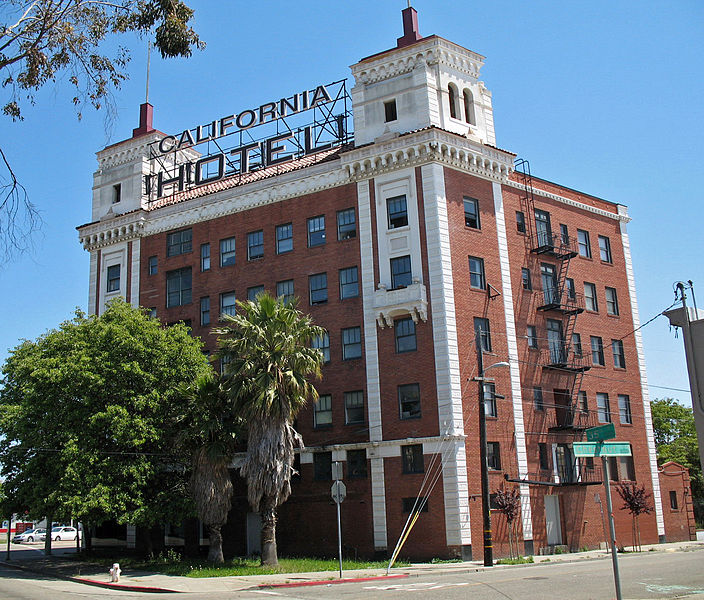
"caption": "The California Hotel was bought by EBALDC and renovated in 2012.",
"description": null,
"title": "California_Hotel",
"credit": "Sanfranman59/Wikimedia Commons",
"status": "inherit",
"isLoading": false,
"fetchFailed": false
},
"news_10881897": {
"type": "attachments",
"id": "news_10881897",
"meta": {
"index": "attachments_1716263798",
"site": "news",
"id": "10881897",
"found": true
},
"parent": 10881846,
"imgSizes": {
"twentyfourteen-full-width": {
"file": "https://ww2.kqed.org/app/uploads/sites/10/2016/02/RS15476_IMG_0887-qut-1038x576.jpg",
"width": 1038,
"mimeType": "image/jpeg",
"height": 576
},
"thumbnail": {
"file": "https://ww2.kqed.org/app/uploads/sites/10/2016/02/RS15476_IMG_0887-qut-400x300.jpg",
"width": 400,
"mimeType": "image/jpeg",
"height": 300
},
"fd-sm": {
"file": "https://ww2.kqed.org/app/uploads/sites/10/2016/02/RS15476_IMG_0887-qut-960x720.jpg",
"width": 960,
"mimeType": "image/jpeg",
"height": 720
},
"post-thumbnail": {
"file": "https://ww2.kqed.org/app/uploads/sites/10/2016/02/RS15476_IMG_0887-qut-672x372.jpg",
"width": 672,
"mimeType": "image/jpeg",
"height": 372
},
"kqedFullSize": {
"file": "https://ww2.kqed.org/app/uploads/sites/10/2016/02/RS15476_IMG_0887-qut.jpg",
"width": 1920,
"height": 1440
},
"large": {
"file": "https://ww2.kqed.org/app/uploads/sites/10/2016/02/RS15476_IMG_0887-qut-1920x1440.jpg",
"width": 1920,
"mimeType": "image/jpeg",
"height": 1440
},
"guest-author-96": {
"file": "https://ww2.kqed.org/app/uploads/sites/10/2016/02/RS15476_IMG_0887-qut-96x96.jpg",
"width": 96,
"mimeType": "image/jpeg",
"height": 96
},
"medium": {
"file": "https://ww2.kqed.org/app/uploads/sites/10/2016/02/RS15476_IMG_0887-qut-800x600.jpg",
"width": 800,
"mimeType": "image/jpeg",
"height": 600
},
"guest-author-64": {
"file": "https://ww2.kqed.org/app/uploads/sites/10/2016/02/RS15476_IMG_0887-qut-64x64.jpg",
"width": 64,
"mimeType": "image/jpeg",
"height": 64
},
"guest-author-32": {
"file": "https://ww2.kqed.org/app/uploads/sites/10/2016/02/RS15476_IMG_0887-qut-32x32.jpg",
"width": 32,
"mimeType": "image/jpeg",
"height": 32
},
"jmtc-small-thumb": {
"file": "https://ww2.kqed.org/app/uploads/sites/10/2016/02/RS15476_IMG_0887-qut-280x150.jpg",
"width": 280,
"mimeType": "image/jpeg",
"height": 150
},
"fd-lrg": {
"file": "https://ww2.kqed.org/app/uploads/sites/10/2016/02/RS15476_IMG_0887-qut-1920x1440.jpg",
"width": 1920,
"mimeType": "image/jpeg",
"height": 1440
},
"fd-med": {
"file": "https://ww2.kqed.org/app/uploads/sites/10/2016/02/RS15476_IMG_0887-qut-1180x885.jpg",
"width": 1180,
"mimeType": "image/jpeg",
"height": 885
},
"detail": {
"file": "https://ww2.kqed.org/app/uploads/sites/10/2016/02/RS15476_IMG_0887-qut-75x75.jpg",
"width": 75,
"mimeType": "image/jpeg",
"height": 75
},
"guest-author-128": {
"file": "https://ww2.kqed.org/app/uploads/sites/10/2016/02/RS15476_IMG_0887-qut-128x128.jpg",
"width": 128,
"mimeType": "image/jpeg",
"height": 128
}
},
"publishDate": 1456778108,
"modified": 1456784619,
"caption": "One South Market is one of the newest additions to San Jose's downtown skyline. Because of a Supreme Court ruling Monday, San Jose can still require new developers to set aside some of their units for sale below market value.",
"description": null,
"title": "RS15476_IMG_0887-qut",
"credit": "Rachael Myrow/KQED",
"status": "inherit",
"isLoading": false,
"fetchFailed": false
},
"news_10858476": {
"type": "attachments",
"id": "news_10858476",
"meta": {
"index": "attachments_1716263798",
"site": "news",
"id": "10858476",
"found": true
},
"parent": 10858352,
"imgSizes": {
"jmtc-small-thumb": {
"file": "https://ww2.kqed.org/app/uploads/sites/10/2016/02/Marea-Alta2-280x150.jpg",
"width": 280,
"mimeType": "image/jpeg",
"height": 150
},
"thumbnail": {
"file": "https://ww2.kqed.org/app/uploads/sites/10/2016/02/Marea-Alta2-400x259.jpg",
"width": 400,
"mimeType": "image/jpeg",
"height": 259
},
"kqedFullSize": {
"file": "https://ww2.kqed.org/app/uploads/sites/10/2016/02/Marea-Alta2.jpg",
"width": 538,
"height": 348
},
"guest-author-96": {
"file": "https://ww2.kqed.org/app/uploads/sites/10/2016/02/Marea-Alta2-96x96.jpg",
"width": 96,
"mimeType": "image/jpeg",
"height": 96
},
"guest-author-64": {
"file": "https://ww2.kqed.org/app/uploads/sites/10/2016/02/Marea-Alta2-64x64.jpg",
"width": 64,
"mimeType": "image/jpeg",
"height": 64
},
"detail": {
"file": "https://ww2.kqed.org/app/uploads/sites/10/2016/02/Marea-Alta2-75x75.jpg",
"width": 75,
"mimeType": "image/jpeg",
"height": 75
},
"guest-author-32": {
"file": "https://ww2.kqed.org/app/uploads/sites/10/2016/02/Marea-Alta2-32x32.jpg",
"width": 32,
"mimeType": "image/jpeg",
"height": 32
},
"guest-author-128": {
"file": "https://ww2.kqed.org/app/uploads/sites/10/2016/02/Marea-Alta2-128x128.jpg",
"width": 128,
"mimeType": "image/jpeg",
"height": 128
}
},
"publishDate": 1454972147,
"modified": 1454980411,
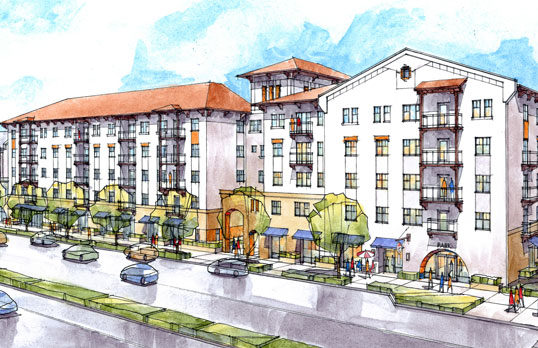
"caption": "Roughly 18,000 people have expressed interest in the Marea Alta affordable housing development in San Leandro.",
"description": null,
"title": "Marea Alta2",
"credit": "Courtesy of Bridge Housing",
"status": "inherit",
"isLoading": false,
"fetchFailed": false
},
"news_10833593": {
"type": "attachments",
"id": "news_10833593",
"meta": {
"index": "attachments_1716263798",
"site": "news",
"id": "10833593",
"found": true
},
"parent": 10833592,
"imgSizes": {
"twentyfourteen-full-width": {
"file": "https://ww2.kqed.org/app/uploads/sites/10/2016/01/RS18096_IMG_8710.JPG-qut-1038x576.jpg",
"width": 1038,
"mimeType": "image/jpeg",
"height": 576
},
"thumbnail": {
"file": "https://ww2.kqed.org/app/uploads/sites/10/2016/01/RS18096_IMG_8710.JPG-qut-400x300.jpg",
"width": 400,
"mimeType": "image/jpeg",
"height": 300
},
"fd-sm": {
"file": "https://ww2.kqed.org/app/uploads/sites/10/2016/01/RS18096_IMG_8710.JPG-qut-960x720.jpg",
"width": 960,
"mimeType": "image/jpeg",
"height": 720
},
"post-thumbnail": {
"file": "https://ww2.kqed.org/app/uploads/sites/10/2016/01/RS18096_IMG_8710.JPG-qut-672x372.jpg",
"width": 672,
"mimeType": "image/jpeg",
"height": 372
},
"kqedFullSize": {
"file": "https://ww2.kqed.org/app/uploads/sites/10/2016/01/RS18096_IMG_8710.JPG-qut.jpg",
"width": 1920,
"height": 1440
},
"large": {
"file": "https://ww2.kqed.org/app/uploads/sites/10/2016/01/RS18096_IMG_8710.JPG-qut-1440x1080.jpg",
"width": 1440,
"mimeType": "image/jpeg",
"height": 1080
},
"guest-author-96": {
"file": "https://ww2.kqed.org/app/uploads/sites/10/2016/01/RS18096_IMG_8710.JPG-qut-96x96.jpg",
"width": 96,
"mimeType": "image/jpeg",
"height": 96
},
"medium": {
"file": "https://ww2.kqed.org/app/uploads/sites/10/2016/01/RS18096_IMG_8710.JPG-qut-800x600.jpg",
"width": 800,
"mimeType": "image/jpeg",
"height": 600
},
"guest-author-64": {
"file": "https://ww2.kqed.org/app/uploads/sites/10/2016/01/RS18096_IMG_8710.JPG-qut-64x64.jpg",
"width": 64,
"mimeType": "image/jpeg",
"height": 64
},
"guest-author-32": {
"file": "https://ww2.kqed.org/app/uploads/sites/10/2016/01/RS18096_IMG_8710.JPG-qut-32x32.jpg",
"width": 32,
"mimeType": "image/jpeg",
"height": 32
},
"jmtc-small-thumb": {
"file": "https://ww2.kqed.org/app/uploads/sites/10/2016/01/RS18096_IMG_8710.JPG-qut-280x150.jpg",
"width": 280,
"mimeType": "image/jpeg",
"height": 150
},
"fd-lrg": {
"file": "https://ww2.kqed.org/app/uploads/sites/10/2016/01/RS18096_IMG_8710.JPG-qut-1920x1440.jpg",
"width": 1920,
"mimeType": "image/jpeg",
"height": 1440
},
"fd-med": {
"file": "https://ww2.kqed.org/app/uploads/sites/10/2016/01/RS18096_IMG_8710.JPG-qut-1180x885.jpg",
"width": 1180,
"mimeType": "image/jpeg",
"height": 885
},
"detail": {
"file": "https://ww2.kqed.org/app/uploads/sites/10/2016/01/RS18096_IMG_8710.JPG-qut-75x75.jpg",
"width": 75,
"mimeType": "image/jpeg",
"height": 75
},
"medium_large": {
"file": "https://ww2.kqed.org/app/uploads/sites/10/2016/01/RS18096_IMG_8710.JPG-qut-768x576.jpg",
"width": 768,
"mimeType": "image/jpeg",
"height": 576
},
"guest-author-128": {
"file": "https://ww2.kqed.org/app/uploads/sites/10/2016/01/RS18096_IMG_8710.JPG-qut-128x128.jpg",
"width": 128,
"mimeType": "image/jpeg",
"height": 128
}
},
"publishDate": 1452886450,
"modified": 1453224113,
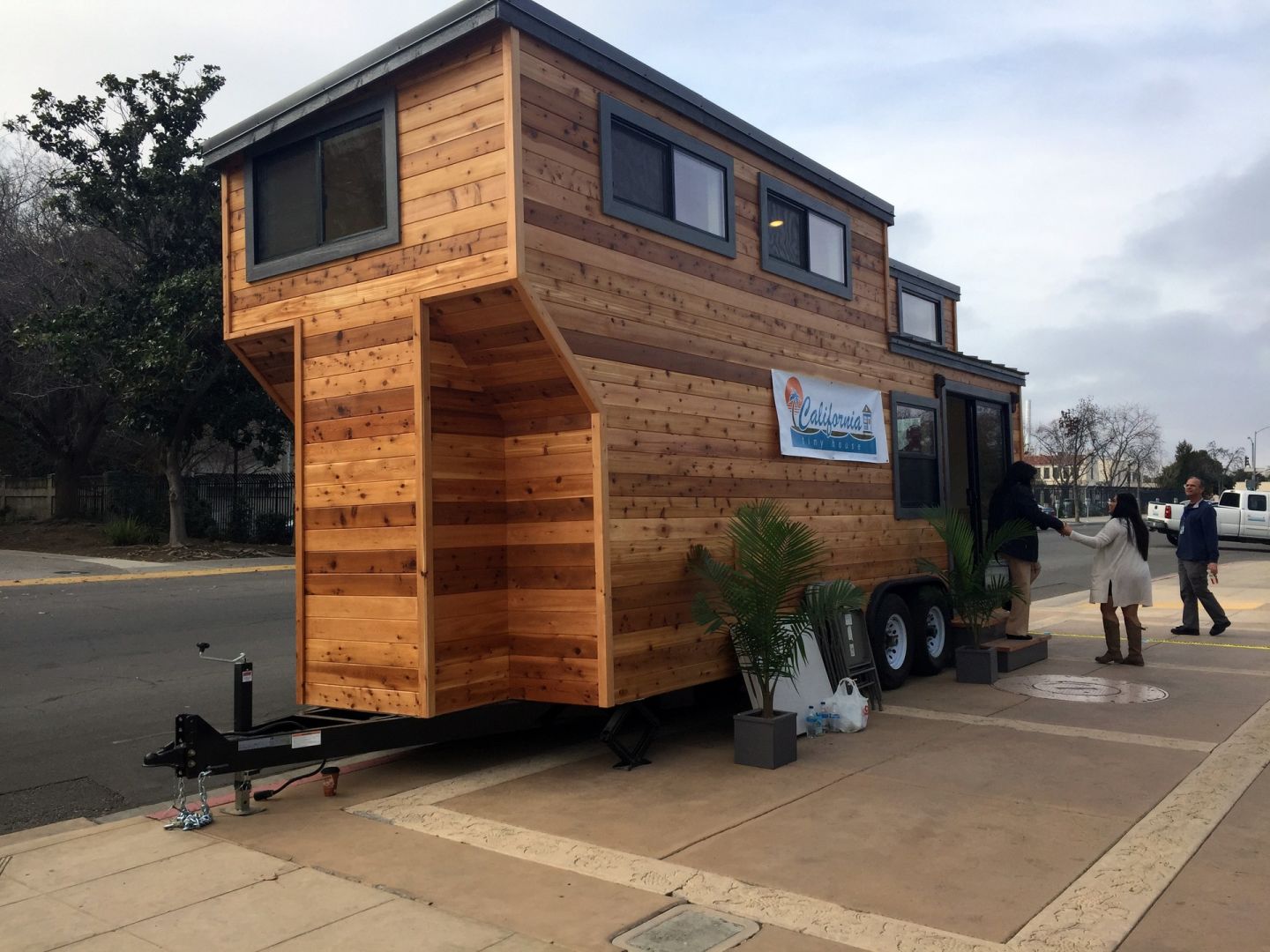
"caption": "A 'tiny house' parked in front of Fresno City Hall. Fresno recently updated its development code to legalize these kinds of homes on wheels as permanent structures adjoining a residence. ",
"description": null,
"title": "RS18096_IMG_8710.JPG-qut",
"credit": "Sasha Khokha/KQED",
"status": "inherit",
"isLoading": false,
"fetchFailed": false
},
"news_10762231": {
"type": "attachments",
"id": "news_10762231",
"meta": {
"index": "attachments_1716263798",
"site": "news",
"id": "10762231",
"found": true
},
"parent": 10761651,
"imgSizes": {
"twentyfourteen-full-width": {
"file": "https://ww2.kqed.org/app/uploads/sites/10/2015/11/20151111_homeless_jt-7-1038x576.jpg",
"width": 1038,
"mimeType": "image/jpeg",
"height": 576
},
"thumbnail": {
"file": "https://ww2.kqed.org/app/uploads/sites/10/2015/11/20151111_homeless_jt-7-400x287.jpg",
"width": 400,
"mimeType": "image/jpeg",
"height": 287
},
"fd-sm": {
"file": "https://ww2.kqed.org/app/uploads/sites/10/2015/11/20151111_homeless_jt-7-960x689.jpg",
"width": 960,
"mimeType": "image/jpeg",
"height": 689
},
"post-thumbnail": {
"file": "https://ww2.kqed.org/app/uploads/sites/10/2015/11/20151111_homeless_jt-7-672x372.jpg",
"width": 672,
"mimeType": "image/jpeg",
"height": 372
},
"kqedFullSize": {
"file": "https://ww2.kqed.org/app/uploads/sites/10/2015/11/20151111_homeless_jt-7.jpg",
"width": 2800,
"height": 2009
},
"large": {
"file": "https://ww2.kqed.org/app/uploads/sites/10/2015/11/20151111_homeless_jt-7-1440x1033.jpg",
"width": 1440,
"mimeType": "image/jpeg",
"height": 1033
},
"guest-author-96": {
"file": "https://ww2.kqed.org/app/uploads/sites/10/2015/11/20151111_homeless_jt-7-96x96.jpg",
"width": 96,
"mimeType": "image/jpeg",
"height": 96
},
"medium": {
"file": "https://ww2.kqed.org/app/uploads/sites/10/2015/11/20151111_homeless_jt-7-800x574.jpg",
"width": 800,
"mimeType": "image/jpeg",
"height": 574
},
"guest-author-64": {
"file": "https://ww2.kqed.org/app/uploads/sites/10/2015/11/20151111_homeless_jt-7-64x64.jpg",
"width": 64,
"mimeType": "image/jpeg",
"height": 64
},
"guest-author-32": {
"file": "https://ww2.kqed.org/app/uploads/sites/10/2015/11/20151111_homeless_jt-7-32x32.jpg",
"width": 32,
"mimeType": "image/jpeg",
"height": 32
},
"jmtc-small-thumb": {
"file": "https://ww2.kqed.org/app/uploads/sites/10/2015/11/20151111_homeless_jt-7-280x150.jpg",
"width": 280,
"mimeType": "image/jpeg",
"height": 150
},
"fd-lrg": {
"file": "https://ww2.kqed.org/app/uploads/sites/10/2015/11/20151111_homeless_jt-7-1920x1378.jpg",
"width": 1920,
"mimeType": "image/jpeg",
"height": 1378
},
"fd-med": {
"file": "https://ww2.kqed.org/app/uploads/sites/10/2015/11/20151111_homeless_jt-7-1180x847.jpg",
"width": 1180,
"mimeType": "image/jpeg",
"height": 847
},
"detail": {
"file": "https://ww2.kqed.org/app/uploads/sites/10/2015/11/20151111_homeless_jt-7-75x75.jpg",
"width": 75,
"mimeType": "image/jpeg",
"height": 75
},
"guest-author-128": {
"file": "https://ww2.kqed.org/app/uploads/sites/10/2015/11/20151111_homeless_jt-7-128x128.jpg",
"width": 128,
"mimeType": "image/jpeg",
"height": 128
}
},
"publishDate": 1447778919,
"modified": 1447778946,
"caption": "Brian and Andrea Rodriguez have been living on San Jose's streets and creeks for the better part of two years now, keeping each other's spirits up as they fight to get back into paying jobs and permanent housing.",
"description": "Brian and Andrea Rodriguez have been living on San Jose's streets and creeks for the better part of two years now, keeping each other's spirits up as they fight to get back into paying jobs and permanent housing.",
"title": "20151111_homeless_jt-7",
"credit": "James Tensuan/KQED",
"status": "inherit",
"isLoading": false,
"fetchFailed": false
},
"news_10761874": {
"type": "attachments",
"id": "news_10761874",
"meta": {
"index": "attachments_1716263798",
"site": "news",
"id": "10761874",
"found": true
},
"parent": 10761830,
"imgSizes": {
"twentyfourteen-full-width": {
"file": "https://ww2.kqed.org/app/uploads/sites/10/2015/11/IMG_0652-1038x576.jpg",
"width": 1038,
"mimeType": "image/jpeg",
"height": 576
},
"thumbnail": {
"file": "https://ww2.kqed.org/app/uploads/sites/10/2015/11/IMG_0652-400x300.jpg",
"width": 400,
"mimeType": "image/jpeg",
"height": 300
},
"fd-sm": {
"file": "https://ww2.kqed.org/app/uploads/sites/10/2015/11/IMG_0652-960x720.jpg",
"width": 960,
"mimeType": "image/jpeg",
"height": 720
},
"post-thumbnail": {
"file": "https://ww2.kqed.org/app/uploads/sites/10/2015/11/IMG_0652-672x372.jpg",
"width": 672,
"mimeType": "image/jpeg",
"height": 372
},
"kqedFullSize": {
"file": "https://ww2.kqed.org/app/uploads/sites/10/2015/11/IMG_0652-e1447861443103.jpg",
"width": 1920,
"height": 1440
},
"large": {
"file": "https://ww2.kqed.org/app/uploads/sites/10/2015/11/IMG_0652-1440x1080.jpg",
"width": 1440,
"mimeType": "image/jpeg",
"height": 1080
},
"guest-author-96": {
"file": "https://ww2.kqed.org/app/uploads/sites/10/2015/11/IMG_0652-96x96.jpg",
"width": 96,
"mimeType": "image/jpeg",
"height": 96
},
"medium": {
"file": "https://ww2.kqed.org/app/uploads/sites/10/2015/11/IMG_0652-800x600.jpg",
"width": 800,
"mimeType": "image/jpeg",
"height": 600
},
"guest-author-64": {
"file": "https://ww2.kqed.org/app/uploads/sites/10/2015/11/IMG_0652-64x64.jpg",
"width": 64,
"mimeType": "image/jpeg",
"height": 64
},
"guest-author-32": {
"file": "https://ww2.kqed.org/app/uploads/sites/10/2015/11/IMG_0652-32x32.jpg",
"width": 32,
"mimeType": "image/jpeg",
"height": 32
},
"jmtc-small-thumb": {
"file": "https://ww2.kqed.org/app/uploads/sites/10/2015/11/IMG_0652-280x150.jpg",
"width": 280,
"mimeType": "image/jpeg",
"height": 150
},
"fd-lrg": {
"file": "https://ww2.kqed.org/app/uploads/sites/10/2015/11/IMG_0652-1920x1440.jpg",
"width": 1920,
"mimeType": "image/jpeg",
"height": 1440
},
"fd-med": {
"file": "https://ww2.kqed.org/app/uploads/sites/10/2015/11/IMG_0652-1180x885.jpg",
"width": 1180,
"mimeType": "image/jpeg",
"height": 885
},
"detail": {
"file": "https://ww2.kqed.org/app/uploads/sites/10/2015/11/IMG_0652-75x75.jpg",
"width": 75,
"mimeType": "image/jpeg",
"height": 75
},
"guest-author-128": {
"file": "https://ww2.kqed.org/app/uploads/sites/10/2015/11/IMG_0652-128x128.jpg",
"width": 128,
"mimeType": "image/jpeg",
"height": 128
}
},
"publishDate": 1447750194,
"modified": 1447861465,
"caption": "Some neighbors wonder why the building at 2530 Ninth Ave. has been vacant for 10 years when Oakland is experiencing its greatest demand for housing in recent history.",
"description": "Some neighbors wonder why the building at 2530 9th Ave. has been vacant for 10 years when Oakland is experiencing its greatest demand for housing in recent history.",
"title": "Oakland Housing-Ninth Avenue",
"credit": "Devin Katayama/KQED",
"status": "inherit",
"isLoading": false,
"fetchFailed": false
},
"news_10760422": {
"type": "attachments",
"id": "news_10760422",
"meta": {
"index": "attachments_1716263798",
"site": "news",
"id": "10760422",
"found": true
},
"parent": 10760323,
"imgSizes": {
"twentyfourteen-full-width": {
"file": "https://ww2.kqed.org/app/uploads/sites/10/2015/11/IMG_0729-1038x576.jpg",
"width": 1038,
"mimeType": "image/jpeg",
"height": 576
},
"thumbnail": {
"file": "https://ww2.kqed.org/app/uploads/sites/10/2015/11/IMG_0729-400x300.jpg",
"width": 400,
"mimeType": "image/jpeg",
"height": 300
},
"fd-sm": {
"file": "https://ww2.kqed.org/app/uploads/sites/10/2015/11/IMG_0729-960x720.jpg",
"width": 960,
"mimeType": "image/jpeg",
"height": 720
},
"post-thumbnail": {
"file": "https://ww2.kqed.org/app/uploads/sites/10/2015/11/IMG_0729-672x372.jpg",
"width": 672,
"mimeType": "image/jpeg",
"height": 372
},
"kqedFullSize": {
"file": "https://ww2.kqed.org/app/uploads/sites/10/2015/11/IMG_0729.jpg",
"width": 3264,
"height": 2448
},
"large": {
"file": "https://ww2.kqed.org/app/uploads/sites/10/2015/11/IMG_0729-1440x1080.jpg",
"width": 1440,
"mimeType": "image/jpeg",
"height": 1080
},
"guest-author-96": {
"file": "https://ww2.kqed.org/app/uploads/sites/10/2015/11/IMG_0729-96x96.jpg",
"width": 96,
"mimeType": "image/jpeg",
"height": 96
},
"medium": {
"file": "https://ww2.kqed.org/app/uploads/sites/10/2015/11/IMG_0729-800x600.jpg",
"width": 800,
"mimeType": "image/jpeg",
"height": 600
},
"guest-author-64": {
"file": "https://ww2.kqed.org/app/uploads/sites/10/2015/11/IMG_0729-64x64.jpg",
"width": 64,
"mimeType": "image/jpeg",
"height": 64
},
"guest-author-32": {
"file": "https://ww2.kqed.org/app/uploads/sites/10/2015/11/IMG_0729-32x32.jpg",
"width": 32,
"mimeType": "image/jpeg",
"height": 32
},
"jmtc-small-thumb": {
"file": "https://ww2.kqed.org/app/uploads/sites/10/2015/11/IMG_0729-280x150.jpg",
"width": 280,
"mimeType": "image/jpeg",
"height": 150
},
"fd-lrg": {
"file": "https://ww2.kqed.org/app/uploads/sites/10/2015/11/IMG_0729-1920x1440.jpg",
"width": 1920,
"mimeType": "image/jpeg",
"height": 1440
},
"fd-med": {
"file": "https://ww2.kqed.org/app/uploads/sites/10/2015/11/IMG_0729-1180x885.jpg",
"width": 1180,
"mimeType": "image/jpeg",
"height": 885
},
"detail": {
"file": "https://ww2.kqed.org/app/uploads/sites/10/2015/11/IMG_0729-75x75.jpg",
"width": 75,
"mimeType": "image/jpeg",
"height": 75
},
"guest-author-128": {
"file": "https://ww2.kqed.org/app/uploads/sites/10/2015/11/IMG_0729-128x128.jpg",
"width": 128,
"mimeType": "image/jpeg",
"height": 128
}
},
"publishDate": 1447653983,
"modified": 1447654080,
"caption": "Jordan says he comes across apartments that are just out of reach for what his voucher is worth. The new fair market rent caps could benefit Jordan's search.",
"description": "Jordan says he comes across apartments that are just out of reach for what his voucher is worth. The new fair market rent caps could benefit Jordan's search.",
"title": "Jordan/Junior",
"credit": "Devin Katayama/KQED",
"status": "inherit",
"isLoading": false,
"fetchFailed": false
},
"news_10642065": {
"type": "attachments",
"id": "news_10642065",
"meta": {
"index": "attachments_1716263798",
"site": "news",
"id": "10642065",
"found": true
},
"parent": 10641763,
"imgSizes": {
"twentyfourteen-full-width": {
"file": "https://ww2.kqed.org/app/uploads/sites/10/2015/08/petsurrender1-1038x576.jpg",
"width": 1038,
"mimeType": "image/jpeg",
"height": 576
},
"thumbnail": {
"file": "https://ww2.kqed.org/app/uploads/sites/10/2015/08/petsurrender1-400x267.jpg",
"width": 400,
"mimeType": "image/jpeg",
"height": 267
},
"fd-sm": {
"file": "https://ww2.kqed.org/app/uploads/sites/10/2015/08/petsurrender1-960x640.jpg",
"width": 960,
"mimeType": "image/jpeg",
"height": 640
},
"post-thumbnail": {
"file": "https://ww2.kqed.org/app/uploads/sites/10/2015/08/petsurrender1-672x372.jpg",
"width": 672,
"mimeType": "image/jpeg",
"height": 372
},
"kqedFullSize": {
"file": "https://ww2.kqed.org/app/uploads/sites/10/2015/08/petsurrender1.jpg",
"width": 1920,
"height": 1280
},
"large": {
"file": "https://ww2.kqed.org/app/uploads/sites/10/2015/08/petsurrender1-1440x960.jpg",
"width": 1440,
"mimeType": "image/jpeg",
"height": 960
},
"guest-author-96": {
"file": "https://ww2.kqed.org/app/uploads/sites/10/2015/08/petsurrender1-96x96.jpg",
"width": 96,
"mimeType": "image/jpeg",
"height": 96
},
"medium": {
"file": "https://ww2.kqed.org/app/uploads/sites/10/2015/08/petsurrender1-800x533.jpg",
"width": 800,
"mimeType": "image/jpeg",
"height": 533
},
"guest-author-64": {
"file": "https://ww2.kqed.org/app/uploads/sites/10/2015/08/petsurrender1-64x64.jpg",
"width": 64,
"mimeType": "image/jpeg",
"height": 64
},
"guest-author-32": {
"file": "https://ww2.kqed.org/app/uploads/sites/10/2015/08/petsurrender1-32x32.jpg",
"width": 32,
"mimeType": "image/jpeg",
"height": 32
},
"jmtc-small-thumb": {
"file": "https://ww2.kqed.org/app/uploads/sites/10/2015/08/petsurrender1-280x150.jpg",
"width": 280,
"mimeType": "image/jpeg",
"height": 150
},
"fd-lrg": {
"file": "https://ww2.kqed.org/app/uploads/sites/10/2015/08/petsurrender1-1920x1280.jpg",
"width": 1920,
"mimeType": "image/jpeg",
"height": 1280
},
"fd-med": {
"file": "https://ww2.kqed.org/app/uploads/sites/10/2015/08/petsurrender1-1180x787.jpg",
"width": 1180,
"mimeType": "image/jpeg",
"height": 787
},
"detail": {
"file": "https://ww2.kqed.org/app/uploads/sites/10/2015/08/petsurrender1-75x75.jpg",
"width": 75,
"mimeType": "image/jpeg",
"height": 75
},
"guest-author-128": {
"file": "https://ww2.kqed.org/app/uploads/sites/10/2015/08/petsurrender1-128x128.jpg",
"width": 128,
"mimeType": "image/jpeg",
"height": 128
}
},
"publishDate": 1439504394,
"modified": 1439831878,
"caption": "Chavo, a 1-year-old terrier mix, was surrendered to San Francisco Animal Care and Control when his owner was evicted. He was eventually adopted from the SF SPCA.",
"description": "Chavo, a 1-year-old terrier mix, was surrendered to San Francisco Animal Care and Control when his owner was evicted. He was eventually adopted from the SF SPCA.",
"title": "petsurrender1",
"credit": "Susan Cohen/KQED",
"status": "inherit",
"isLoading": false,
"fetchFailed": false
},
"news_10614695": {
"type": "attachments",
"id": "news_10614695",
"meta": {
"index": "attachments_1716263798",
"site": "news",
"id": "10614695",
"found": true
},
"parent": 10614640,
"imgSizes": {
"twentyfourteen-full-width": {
"file": "https://ww2.kqed.org/app/uploads/sites/10/2015/07/15480_transform-e1438010969227-1038x576.jpg",
"width": 1038,
"mimeType": "image/jpeg",
"height": 576
},
"thumbnail": {
"file": "https://ww2.kqed.org/app/uploads/sites/10/2015/07/15480_transform-e1438010969227-400x227.jpg",
"width": 400,
"mimeType": "image/jpeg",
"height": 227
},
"fd-sm": {
"file": "https://ww2.kqed.org/app/uploads/sites/10/2015/07/15480_transform-e1438010969227-960x545.jpg",
"width": 960,
"mimeType": "image/jpeg",
"height": 545
},
"post-thumbnail": {
"file": "https://ww2.kqed.org/app/uploads/sites/10/2015/07/15480_transform-e1438010969227-672x372.jpg",
"width": 672,
"mimeType": "image/jpeg",
"height": 372
},
"kqedFullSize": {
"file": "https://ww2.kqed.org/app/uploads/sites/10/2015/07/15480_transform-e1438010969227.jpg",
"width": 1920,
"height": 1089
},
"large": {
"file": "https://ww2.kqed.org/app/uploads/sites/10/2015/07/15480_transform-e1438010969227-1440x817.jpg",
"width": 1440,
"mimeType": "image/jpeg",
"height": 817
},
"guest-author-96": {
"file": "https://ww2.kqed.org/app/uploads/sites/10/2015/07/15480_transform-e1438010969227-96x96.jpg",
"width": 96,
"mimeType": "image/jpeg",
"height": 96
},
"medium": {
"file": "https://ww2.kqed.org/app/uploads/sites/10/2015/07/15480_transform-e1438010969227-800x454.jpg",
"width": 800,
"mimeType": "image/jpeg",
"height": 454
},
"guest-author-64": {
"file": "https://ww2.kqed.org/app/uploads/sites/10/2015/07/15480_transform-e1438010969227-64x64.jpg",
"width": 64,
"mimeType": "image/jpeg",
"height": 64
},
"guest-author-32": {
"file": "https://ww2.kqed.org/app/uploads/sites/10/2015/07/15480_transform-e1438010969227-32x32.jpg",
"width": 32,
"mimeType": "image/jpeg",
"height": 32
},
"jmtc-small-thumb": {
"file": "https://ww2.kqed.org/app/uploads/sites/10/2015/07/15480_transform-e1438010969227-280x150.jpg",
"width": 280,
"mimeType": "image/jpeg",
"height": 150
},
"fd-lrg": {
"file": "https://ww2.kqed.org/app/uploads/sites/10/2015/07/15480_transform-e1438010969227-1400x794.jpg",
"width": 1400,
"mimeType": "image/jpeg",
"height": 794
},
"fd-med": {
"file": "https://ww2.kqed.org/app/uploads/sites/10/2015/07/15480_transform-e1438010969227-1180x669.jpg",
"width": 1180,
"mimeType": "image/jpeg",
"height": 669
},
"detail": {
"file": "https://ww2.kqed.org/app/uploads/sites/10/2015/07/15480_transform-e1438010969227-75x75.jpg",
"width": 75,
"mimeType": "image/jpeg",
"height": 75
},
"guest-author-128": {
"file": "https://ww2.kqed.org/app/uploads/sites/10/2015/07/15480_transform-e1438010969227-128x128.jpg",
"width": 128,
"mimeType": "image/jpeg",
"height": 128
}
},
"publishDate": 1437783513,
"modified": 1438010898,
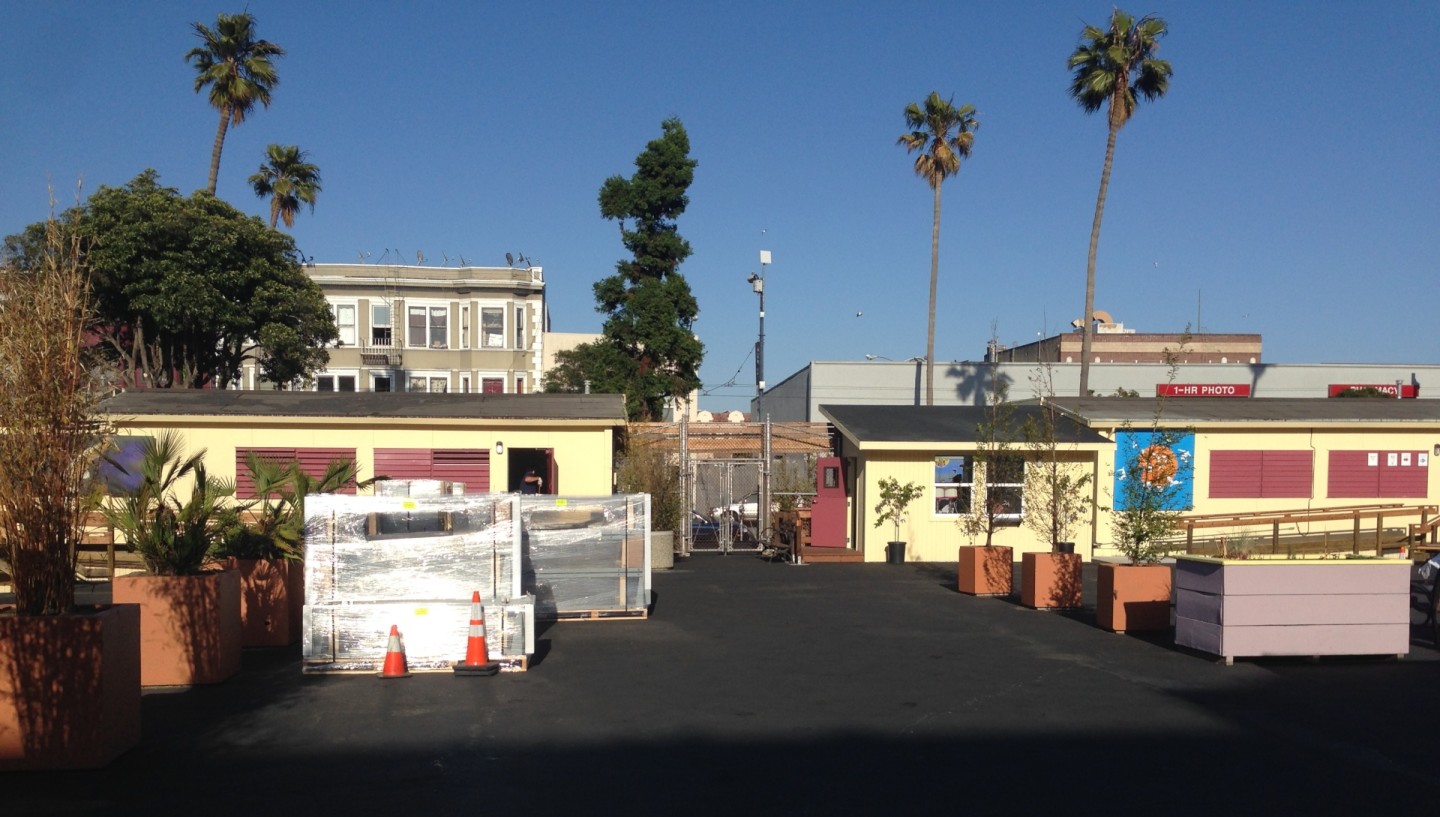
"caption": "1950 Mission St. is currently serving as the Navigation Center, providing aid and services for San Franciscans without homes.",
"description": null,
"title": "Homeless Navigation Center",
"credit": "Sam Harnett/KQED",
"status": "inherit",
"isLoading": false,
"fetchFailed": false
},
"news_10600513": {
"type": "attachments",
"id": "news_10600513",
"meta": {
"index": "attachments_1716263798",
"site": "news",
"id": "10600513",
"found": true
},
"parent": 10599630,
"imgSizes": {
"twentyfourteen-full-width": {
"file": "https://ww2.kqed.org/app/uploads/sites/10/2015/07/sfbuilding-1038x576.jpg",
"width": 1038,
"mimeType": "image/jpeg",
"height": 576
},
"thumbnail": {
"file": "https://ww2.kqed.org/app/uploads/sites/10/2015/07/sfbuilding-400x293.jpg",
"width": 400,
"mimeType": "image/jpeg",
"height": 293
},
"fd-sm": {
"file": "https://ww2.kqed.org/app/uploads/sites/10/2015/07/sfbuilding-960x702.jpg",
"width": 960,
"mimeType": "image/jpeg",
"height": 702
},
"post-thumbnail": {
"file": "https://ww2.kqed.org/app/uploads/sites/10/2015/07/sfbuilding-672x372.jpg",
"width": 672,
"mimeType": "image/jpeg",
"height": 372
},
"kqedFullSize": {
"file": "https://ww2.kqed.org/app/uploads/sites/10/2015/07/sfbuilding-e1436890855798.jpg",
"width": 1920,
"height": 1405
},
"large": {
"file": "https://ww2.kqed.org/app/uploads/sites/10/2015/07/sfbuilding-1440x1053.jpg",
"width": 1440,
"mimeType": "image/jpeg",
"height": 1053
},
"guest-author-96": {
"file": "https://ww2.kqed.org/app/uploads/sites/10/2015/07/sfbuilding-96x96.jpg",
"width": 96,
"mimeType": "image/jpeg",
"height": 96
},
"medium": {
"file": "https://ww2.kqed.org/app/uploads/sites/10/2015/07/sfbuilding-800x585.jpg",
"width": 800,
"mimeType": "image/jpeg",
"height": 585
},
"guest-author-64": {
"file": "https://ww2.kqed.org/app/uploads/sites/10/2015/07/sfbuilding-64x64.jpg",
"width": 64,
"mimeType": "image/jpeg",
"height": 64
},
"guest-author-32": {
"file": "https://ww2.kqed.org/app/uploads/sites/10/2015/07/sfbuilding-32x32.jpg",
"width": 32,
"mimeType": "image/jpeg",
"height": 32
},
"jmtc-small-thumb": {
"file": "https://ww2.kqed.org/app/uploads/sites/10/2015/07/sfbuilding-280x150.jpg",
"width": 280,
"mimeType": "image/jpeg",
"height": 150
},
"fd-med": {
"file": "https://ww2.kqed.org/app/uploads/sites/10/2015/07/sfbuilding-1180x863.jpg",
"width": 1180,
"mimeType": "image/jpeg",
"height": 863
},
"detail": {
"file": "https://ww2.kqed.org/app/uploads/sites/10/2015/07/sfbuilding-75x75.jpg",
"width": 75,
"mimeType": "image/jpeg",
"height": 75
},
"guest-author-128": {
"file": "https://ww2.kqed.org/app/uploads/sites/10/2015/07/sfbuilding-128x128.jpg",
"width": 128,
"mimeType": "image/jpeg",
"height": 128
}
},
"publishDate": 1436890760,
"modified": 1436890921,
"caption": "New market-rate housing under construction at Eighth and Harrison streets in San Francisco. ",
"description": null,
"title": "San Francisco-Housing",
"credit": "Dan Brekke/KQED",
"status": "inherit",
"isLoading": false,
"fetchFailed": false
},
"news_10577349": {
"type": "attachments",
"id": "news_10577349",
"meta": {
"index": "attachments_1716263798",
"site": "news",
"id": "10577349",
"found": true
},
"parent": 10577128,
"imgSizes": {
"twentyfourteen-full-width": {
"file": "https://ww2.kqed.org/app/uploads/sites/10/2015/06/RS14661_IMG_8324-qut-1038x576.jpg",
"width": 1038,
"mimeType": "image/jpeg",
"height": 576
},
"thumbnail": {
"file": "https://ww2.kqed.org/app/uploads/sites/10/2015/06/RS14661_IMG_8324-qut-400x267.jpg",
"width": 400,
"mimeType": "image/jpeg",
"height": 267
},
"fd-sm": {
"file": "https://ww2.kqed.org/app/uploads/sites/10/2015/06/RS14661_IMG_8324-qut-960x640.jpg",
"width": 960,
"mimeType": "image/jpeg",
"height": 640
},
"post-thumbnail": {
"file": "https://ww2.kqed.org/app/uploads/sites/10/2015/06/RS14661_IMG_8324-qut-672x372.jpg",
"width": 672,
"mimeType": "image/jpeg",
"height": 372
},
"kqedFullSize": {
"file": "https://ww2.kqed.org/app/uploads/sites/10/2015/06/RS14661_IMG_8324-qut.jpg",
"width": 1920,
"height": 1280
},
"large": {
"file": "https://ww2.kqed.org/app/uploads/sites/10/2015/06/RS14661_IMG_8324-qut-1440x960.jpg",
"width": 1440,
"mimeType": "image/jpeg",
"height": 960
},
"guest-author-96": {
"file": "https://ww2.kqed.org/app/uploads/sites/10/2015/06/RS14661_IMG_8324-qut-96x96.jpg",
"width": 96,
"mimeType": "image/jpeg",
"height": 96
},
"medium": {
"file": "https://ww2.kqed.org/app/uploads/sites/10/2015/06/RS14661_IMG_8324-qut-800x533.jpg",
"width": 800,
"mimeType": "image/jpeg",
"height": 533
},
"guest-author-64": {
"file": "https://ww2.kqed.org/app/uploads/sites/10/2015/06/RS14661_IMG_8324-qut-64x64.jpg",
"width": 64,
"mimeType": "image/jpeg",
"height": 64
},
"guest-author-32": {
"file": "https://ww2.kqed.org/app/uploads/sites/10/2015/06/RS14661_IMG_8324-qut-32x32.jpg",
"width": 32,
"mimeType": "image/jpeg",
"height": 32
},
"jmtc-small-thumb": {
"file": "https://ww2.kqed.org/app/uploads/sites/10/2015/06/RS14661_IMG_8324-qut-280x150.jpg",
"width": 280,
"mimeType": "image/jpeg",
"height": 150
},
"fd-med": {
"file": "https://ww2.kqed.org/app/uploads/sites/10/2015/06/RS14661_IMG_8324-qut-1180x787.jpg",
"width": 1180,
"mimeType": "image/jpeg",
"height": 787
},
"detail": {
"file": "https://ww2.kqed.org/app/uploads/sites/10/2015/06/RS14661_IMG_8324-qut-75x75.jpg",
"width": 75,
"mimeType": "image/jpeg",
"height": 75
},
"guest-author-128": {
"file": "https://ww2.kqed.org/app/uploads/sites/10/2015/06/RS14661_IMG_8324-qut-128x128.jpg",
"width": 128,
"mimeType": "image/jpeg",
"height": 128
}
},
"publishDate": 1435277072,
"modified": 1435277192,
"caption": "The San Francisco skyline September 2013.",
"description": "The San Francisco skyline September 2013.",
"title": "RS14661_IMG_8324-qut",
"credit": "Alex Emslie/KQED",
"status": "inherit",
"isLoading": false,
"fetchFailed": false
}
},
"audioPlayerReducer": {
"postId": "stream_live",
"isPaused": true,
"isPlaying": false,
"pfsActive": false,
"pledgeModalIsOpen": true,
"playerDrawerIsOpen": false,
"liveAudioPlayStartedAt": 0,
"liveAudioPlayContext": ""
},
"authorsReducer": {
"byline_news_10903998": {
"type": "authors",
"id": "byline_news_10903998",
"meta": {
"override": true
},
"slug": "byline_news_10903998",
"name": "\u003cstrong>\u003ca href=\"https://youthradio.org/staff/kasey-saeturn/\">Kasey Saeturn\u003c/a>\u003cbr>\u003ca href=\"https://youthradio.org/\">Youth Radio\u003c/a>\u003c/strong>",
"isLoading": false
},
"smartin": {
"type": "authors",
"id": "89",
"meta": {
"index": "authors_1716337520",
"id": "89",
"found": true
},
"name": "Stephanie Martin Taylor",
"firstName": "Stephanie Martin",
"lastName": "Taylor",
"slug": "smartin",
"email": "smartin@kqed.org",
"display_author_email": false,
"staff_mastheads": [],
"title": null,
"bio": "Stephanie Martin is a radio news reporter and anchor, and an occasional host of the \u003cem>KQED Newsroom \u003c/em>television program. While she currently focuses on housing and development issues, she has also reported on topics ranging from state and local politics to religion to arts and culture.\r\n\r\nPrior to joining KQED in 2005, Stephanie was an anchor and reporter for WFDD, the NPR affiliate in Winston-Salem, NC. She also spent several years as a television anchor, reporter and producer at various stations around the country.\r\n\r\nStephanie has received numerous awards for her reporting, including two National Headliner Awards, the Religion Newswriters Association's Best Radio Reporting Award and honors from the Associated Press and the Radio and Television Digital News Association. A series she produced from Iraq in 2005 earned a Best of Radio Award from the Society of Professional Journalists.\r\n\r\nStephanie received a graduate degree in Journalism from Columbia University. As an undergraduate at Colgate University, she worked and studied in Paris and Dijon, France, and spent a summer interning in the White House Press Office.\r\n\r\nStephanie grew up in Dallas, TX, and now lives with her husband in San Francisco.",
"avatar": "https://secure.gravatar.com/avatar/9fd3f8e9af01e14afde39822c19646e0?s=600&d=blank&r=g",
"twitter": "SMartinTaylor",
"facebook": null,
"instagram": null,
"linkedin": null,
"sites": [
{
"site": "arts",
"roles": [
"Contributor",
"subscriber"
]
},
{
"site": "news",
"roles": [
"subscriber"
]
},
{
"site": "stateofhealth",
"roles": [
"subscriber"
]
}
],
"headData": {
"title": "Stephanie Martin Taylor | KQED",
"description": null,
"ogImgSrc": "https://secure.gravatar.com/avatar/9fd3f8e9af01e14afde39822c19646e0?s=600&d=blank&r=g",
"twImgSrc": "https://secure.gravatar.com/avatar/9fd3f8e9af01e14afde39822c19646e0?s=600&d=blank&r=g"
},
"isLoading": false,
"link": "/author/smartin"
},
"lisapickoffwhite-2": {
"type": "authors",
"id": "199",
"meta": {
"index": "authors_1716337520",
"id": "199",
"found": true
},
"name": "Lisa Pickoff-White",
"firstName": "Lisa",
"lastName": "Pickoff-White",
"slug": "lisapickoffwhite-2",
"email": "lpickoffwhite@kqed.org",
"display_author_email": false,
"staff_mastheads": [
"news"
],
"title": "Data Journalist, Senior Producer",
"bio": "Lisa Pickoff-White is KQED's data reporter. Lisa specializes in simplifying complex topics and bringing them to life through compelling visuals, including photography and data visualizations. She previously has worked at the Center for Investigative Reporting and other national outlets. Her work has been honored with awards from the Online News Association, Investigative Reporters and Editors, the Society of Professional Journalists and SXSW Interactive. \u003cstrong> \u003c/strong>",
"avatar": "https://secure.gravatar.com/avatar/5513c5f3967df792aa65bee2501e84d6?s=600&d=blank&r=g",
"twitter": "pickoffwhite",
"facebook": null,
"instagram": null,
"linkedin": null,
"sites": [
{
"site": "",
"roles": [
"editor"
]
},
{
"site": "arts",
"roles": []
},
{
"site": "news",
"roles": [
"administrator"
]
},
{
"site": "about",
"roles": [
"editor"
]
},
{
"site": "stateofhealth",
"roles": [
"administrator"
]
},
{
"site": "science",
"roles": [
"editor"
]
},
{
"site": "quest",
"roles": [
"editor"
]
},
{
"site": "forum",
"roles": [
"editor"
]
}
],
"headData": {
"title": "Lisa Pickoff-White | KQED",
"description": "Data Journalist, Senior Producer",
"ogImgSrc": "https://secure.gravatar.com/avatar/5513c5f3967df792aa65bee2501e84d6?s=600&d=blank&r=g",
"twImgSrc": "https://secure.gravatar.com/avatar/5513c5f3967df792aa65bee2501e84d6?s=600&d=blank&r=g"
},
"isLoading": false,
"link": "/author/lisapickoffwhite-2"
},
"bgoebel": {
"type": "authors",
"id": "214",
"meta": {
"index": "authors_1716337520",
"id": "214",
"found": true
},
"name": "Bryan Goebel",
"firstName": "Bryan",
"lastName": "Goebel",
"slug": "bgoebel",
"email": "bgoebel@kqed.org",
"display_author_email": false,
"staff_mastheads": [],
"title": null,
"bio": "Bryan Goebel is a reporter focused on transportation and housing issues. He was previously the editor of Streetsblog San Francisco, and an anchor/editor at KCBS Radio. He's a lifelong Californian and has also worked at radio stations in Barstow, Redding and Sacramento.",
"avatar": "https://secure.gravatar.com/avatar/7fdd6b065bfe9a23a71bcfa80848df88?s=600&d=blank&r=g",
"twitter": "velobry",
"facebook": null,
"instagram": null,
"linkedin": null,
"sites": [
{
"site": "news",
"roles": [
"subscriber"
]
},
{
"site": "stateofhealth",
"roles": [
"subscriber"
]
}
],
"headData": {
"title": "Bryan Goebel | KQED",
"description": null,
"ogImgSrc": "https://secure.gravatar.com/avatar/7fdd6b065bfe9a23a71bcfa80848df88?s=600&d=blank&r=g",
"twImgSrc": "https://secure.gravatar.com/avatar/7fdd6b065bfe9a23a71bcfa80848df88?s=600&d=blank&r=g"
},
"isLoading": false,
"link": "/author/bgoebel"
},
"rachael-myrow": {
"type": "authors",
"id": "251",
"meta": {
"index": "authors_1716337520",
"id": "251",
"found": true
},
"name": "Rachael Myrow",
"firstName": "Rachael",
"lastName": "Myrow",
"slug": "rachael-myrow",
"email": "rmyrow@kqed.org",
"display_author_email": true,
"staff_mastheads": [
"news"
],
"title": "Senior Editor of KQED's Silicon Valley News Desk",
"bio": "• I write and edit stories about how Silicon Valley power and policies shape everyday life in California. I’m also passionate about making Bay Area history and culture more accessible to a broad public. • I’ve been a journalist for most of my life, starting in high school with The Franklin Press in Los Angeles, where I grew up. While earning my first degree in English at UC Berkeley, I got my start in public radio at KALX-FM. After completing a second degree in journalism at Cal, I landed my first professional job at Marketplace, then moved on to KPCC (now LAist), and then KQED, where I hosted The California Report for more than seven years. • My reporting has appeared on NPR, The World, WBUR’s \u003ci>Here & Now\u003c/i>, and the BBC. I also guest host for KQED’s \u003ci>Forum\u003c/i>, as well as the Commonwealth Club in San Francisco. • I speak periodically on media, democracy and technology issues, and do voiceover work for documentaries and educational video projects. • Outside of the studio, you'll find me hiking Bay Area trails and whipping up Insta-ready meals in my kitchen. • I do not accept gifts, money, or favors from anyone connected to my reporting, I don't pay people for information, and I do not support or donate to political causes. • I strive to treat the people I report on with fairness, honesty, and respect. I also recognize there are often multiple sides to a story and work to verify information through multiple sources and documentation. If I get something wrong, I correct it.",
"avatar": "https://secure.gravatar.com/avatar/3ed8a3c5f26025e4a805ba634cda8cd764906b97438a6d9ce216b044e340da4e?s=600&d=blank&r=g",
"twitter": "rachaelmyrow",
"bluesky": null,
"facebook": null,
"instagram": null,
"linkedin": "https://www.linkedin.com/in/rachaelmyrow/",
"sites": [
{
"site": "arts",
"roles": [
"administrator"
]
},
{
"site": "news",
"roles": [
"edit_others_posts",
"editor"
]
},
{
"site": "futureofyou",
"roles": [
"editor"
]
},
{
"site": "bayareabites",
"roles": [
"editor"
]
},
{
"site": "stateofhealth",
"roles": [
"editor"
]
},
{
"site": "science",
"roles": [
"editor"
]
},
{
"site": "food",
"roles": [
"editor"
]
},
{
"site": "forum",
"roles": [
"editor"
]
},
{
"site": "liveblog",
"roles": [
"author"
]
}
],
"headData": {
"title": "Rachael Myrow | KQED",
"description": "Senior Editor of KQED's Silicon Valley News Desk",
"ogImgSrc": "https://secure.gravatar.com/avatar/3ed8a3c5f26025e4a805ba634cda8cd764906b97438a6d9ce216b044e340da4e?s=600&d=blank&r=g",
"twImgSrc": "https://secure.gravatar.com/avatar/3ed8a3c5f26025e4a805ba634cda8cd764906b97438a6d9ce216b044e340da4e?s=600&d=blank&r=g"
},
"isLoading": false,
"link": "/author/rachael-myrow"
},
"sasha-khokha": {
"type": "authors",
"id": "254",
"meta": {
"index": "authors_1716337520",
"id": "254",
"found": true
},
"name": "Sasha Khokha",
"firstName": "Sasha",
"lastName": "Khokha",
"slug": "sasha-khokha",
"email": "skhokha@kqed.org",
"display_author_email": true,
"staff_mastheads": [
"news"
],
"title": "Host, The California Report Magazine",
"bio": "Sasha Khokha is the host of \u003cem>The California Report's \u003c/em> weekly magazine program, which takes listeners on sound-rich excursions to meet the people that make the Golden State unique -- through audio documentaries and long-form stories. As \u003cem>The California Report's\u003c/em> Central Valley Bureau Chief based in Fresno for nearly a dozen years, Sasha brought the lives and concerns of rural Californians to listeners around the state. Her reporting helped expose the hidden price immigrant women janitors and farmworkers may pay to keep their jobs: sexual assault at work. It inspired two new California laws to protect them from sexual harassment. She was a key member of the reporting team for the Frontline film \u003cem>Rape on the Night Shift, \u003c/em>which was nominated for two national Emmys. Sasha has also won a national Edward R. Murrow and a national PRNDI award for investigative reporting, as well as multiple prizes from the Society for Professional Journalists. Sasha is a proud alum of the UC Berkeley Graduate School of Journalism and Brown University and a member of the South Asian Journalists Association.",
"avatar": "https://secure.gravatar.com/avatar/e4b5e1541aaeea2aa356aa1fb2a68950?s=600&d=blank&r=g",
"twitter": "KQEDSashaKhokha",
"facebook": null,
"instagram": null,
"linkedin": null,
"sites": [
{
"site": "news",
"roles": [
"editor"
]
},
{
"site": "stateofhealth",
"roles": [
"author"
]
},
{
"site": "science",
"roles": [
"author"
]
},
{
"site": "quest",
"roles": [
"subscriber"
]
}
],
"headData": {
"title": "Sasha Khokha | KQED",
"description": "Host, The California Report Magazine",
"ogImgSrc": "https://secure.gravatar.com/avatar/e4b5e1541aaeea2aa356aa1fb2a68950?s=600&d=blank&r=g",
"twImgSrc": "https://secure.gravatar.com/avatar/e4b5e1541aaeea2aa356aa1fb2a68950?s=600&d=blank&r=g"
},
"isLoading": false,
"link": "/author/sasha-khokha"
},
"aemslie": {
"type": "authors",
"id": "3206",
"meta": {
"index": "authors_1716337520",
"id": "3206",
"found": true
},
"name": "Alex Emslie",
"firstName": "Alex",
"lastName": "Emslie",
"slug": "aemslie",
"email": "aemslie@kqed.org",
"display_author_email": true,
"staff_mastheads": [
"news"
],
"title": "KQED Senior Editor",
"bio": "Alex Emslie is senior editor of talent and development at KQED, where he manages dozens of early career journalists and oversees news department internships.\r\n\r\nHe is a former carpenter and proud graduate of City College of San Francisco and San Francisco State University, where he studied journalism and criminal justice before joining KQED in 2013.\r\n\r\nAlex produced investigative journalism focused on \u003ca href=\"https://www.kqed.org/news/11667594/the-trials-of-marvin-mutch-video\">criminal justice\u003c/a> and policing for most of a decade. He has broken major stories about \u003ca href=\"https://www.kqed.org/news/135682/amid-a-series-of-vallejo-police-shootings-one-officers-name-stands-out\">police use of deadly force\u003c/a>, \u003ca href=\"https://www.kqed.org/news/10454955/racist-texts-prompt-sfpd-internal-investigation\">officer misconduct\u003c/a> and \u003ca href=\"https://www.kqed.org/news/11712239/terrorist-or-troll-judge-to-weigh-whether-oakland-man-really-intended-to-attack-bay-area\">other\u003c/a> \u003ca href=\"https://www.kqed.org/news/11221414/hayward-paid-159000-to-husband-of-retired-police-chief-documents-show\">high\u003c/a>-\u003ca href=\"https://www.kqed.org/news/10622762/the-forgotten-tracking-two-homicides-in-san-francisco-public-housing\">profile\u003c/a> \u003ca href=\"https://www.kqed.org/news/11624516/federal-agency-promoted-ranger-just-months-after-his-gun-was-stolen-and-used-in-steinle-killing\">cases\u003c/a>. He co-founded the \u003ca href=\"https://projects.scpr.org/california-reporting-project/\">California Reporting Project\u003c/a> in 2019 to obtain and report on previously confidential police internal investigations. The effort produced well over 100 original stories and changed the course of multiple criminal cases.\r\n\r\nHis work has been recognized with numerous journalism awards, including a national Edward R. Murrow award for several years of \u003ca href=\"https://www.kqed.org/news/11688481/sfpd-officers-in-mario-woods-case-recount-shooting-in-newly-filed-depositions\">reporting\u003c/a> on the San Francisco Police shooting of Mario Woods. His \u003ca href=\"https://www.kqed.org/news/147854/half-of-those-killed-by-san-francisco-police-are-mentally-ill\">reporting\u003c/a> on police killings of people in psychiatric crisis was cited in amicus briefs before the U.S. Supreme Court.\r\n\r\nAlex now enjoys mentoring the next generation of journalists at KQED.",
"avatar": "https://secure.gravatar.com/avatar/e691e65209f20e9da202bd730ead5663?s=600&d=blank&r=g",
"twitter": "SFNewsReporter",
"facebook": null,
"instagram": null,
"linkedin": null,
"sites": [
{
"site": "arts",
"roles": [
"editor"
]
},
{
"site": "news",
"roles": [
"editor"
]
},
{
"site": "mindshift",
"roles": [
"editor"
]
},
{
"site": "stateofhealth",
"roles": [
"editor"
]
},
{
"site": "science",
"roles": [
"administrator"
]
}
],
"headData": {
"title": "Alex Emslie | KQED",
"description": "KQED Senior Editor",
"ogImgSrc": "https://secure.gravatar.com/avatar/e691e65209f20e9da202bd730ead5663?s=600&d=blank&r=g",
"twImgSrc": "https://secure.gravatar.com/avatar/e691e65209f20e9da202bd730ead5663?s=600&d=blank&r=g"
},
"isLoading": false,
"link": "/author/aemslie"
},
"dkatayama": {
"type": "authors",
"id": "7240",
"meta": {
"index": "authors_1716337520",
"id": "7240",
"found": true
},
"name": "Devin Katayama",
"firstName": "Devin",
"lastName": "Katayama",
"slug": "dkatayama",
"email": "dkatayama@kqed.org",
"display_author_email": true,
"staff_mastheads": [
"news"
],
"title": "Editor of Talent and Development",
"bio": "Devin Katayama is former Editor of Talent and Development for KQED. He supported our internship program and on-call staff by looking for equitable opportunities to improve the newsroom.\r\n\r\nHe previously hosted The Bay and American Suburb podcasts from KQED News. Prior to returning to the Bay Area in 2015, Devin was the education reporter for WFPL in Louisville and worked as a producer with radio stations in Chicago and Portland, OR. His work has appeared on NPR’s \u003cem>Morning Edition, All Things Considered, The Takeaway\u003c/em> and \u003cem>Here and Now.\u003c/em>\r\n\r\nDevin earned his MA in Journalism from Columbia College Chicago, where he was a Follett Fellow and the recipient of the 2011 Studs Terkel Community Media Workshop Scholarship for his story on Chicago's homeless youth. He won WBUR's 2014 Daniel Schorr award and a regional RTNDA Edward R. Murrow Award for his documentary \"At Risk\" that looked at issues facing some of Louisville's students. Devin has also received numerous local awards from the Associated Press and the Society of Professional Journalists.",
"avatar": "https://secure.gravatar.com/avatar/d0d2978a31002fb2de107921a8e18405?s=600&d=blank&r=g",
"twitter": "RadioDevin",
"facebook": null,
"instagram": null,
"linkedin": null,
"sites": [
{
"site": "arts",
"roles": []
},
{
"site": "news",
"roles": [
"author"
]
},
{
"site": "stateofhealth",
"roles": [
"author"
]
},
{
"site": "forum",
"roles": [
"editor"
]
},
{
"site": "perspectives",
"roles": [
"editor"
]
}
],
"headData": {
"title": "Devin Katayama | KQED",
"description": "Editor of Talent and Development",
"ogImgSrc": "https://secure.gravatar.com/avatar/d0d2978a31002fb2de107921a8e18405?s=600&d=blank&r=g",
"twImgSrc": "https://secure.gravatar.com/avatar/d0d2978a31002fb2de107921a8e18405?s=600&d=blank&r=g"
},
"isLoading": false,
"link": "/author/dkatayama"
},
"scohen": {
"type": "authors",
"id": "8644",
"meta": {
"index": "authors_1716337520",
"id": "8644",
"found": true
},
"name": "Susan Cohen",
"firstName": "Susan",
"lastName": "Cohen",
"slug": "scohen",
"email": "scohen@kqed.org",
"display_author_email": false,
"staff_mastheads": [],
"title": "KQED Contributor",
"bio": "Susan Cohen is an award-winning journalist who recently completed a master’s degree in documentary production at the UC Berkeley Graduate School of Journalism. Before making the switch to video, Susan spent four years at the \u003cem>Charleston City Pape\u003c/em>r, a South Carolina alt-weekly, where she wrote more than 20 cover stories on everything from doomsday preppers to quidditch to world-class chefs. Her writing has also been featured in the \u003cem>East Bay Express\u003c/em>, This Recording, and the Hairpin, and she just finished her first short documentary, \u003cem>Today I am a Man\u003c/em>.",
"avatar": "https://secure.gravatar.com/avatar/92af56fb2aef065ab75ba56aac1f4a42125d3e997a8ea381ca3c9f2139e80995?s=600&d=blank&r=g",
"twitter": null,
"bluesky": null,
"facebook": null,
"instagram": null,
"linkedin": null,
"sites": [
{
"site": "arts",
"roles": [
"subscriber"
]
},
{
"site": "news",
"roles": [
"subscriber"
]
}
],
"headData": {
"title": "Susan Cohen | KQED",
"description": "KQED Contributor",
"ogImgSrc": "https://secure.gravatar.com/avatar/92af56fb2aef065ab75ba56aac1f4a42125d3e997a8ea381ca3c9f2139e80995?s=600&d=blank&r=g",
"twImgSrc": "https://secure.gravatar.com/avatar/92af56fb2aef065ab75ba56aac1f4a42125d3e997a8ea381ca3c9f2139e80995?s=600&d=blank&r=g"
},
"isLoading": false,
"link": "/author/scohen"
}
},
"pagesReducer": {
"news_tag_affordable-housing": {
"type": "terms",
"id": "news_3921",
"meta": {
"index": "terms_1716263798",
"site": "news",
"id": "3921",
"score": 9.304595
},
"featImg": null,
"name": "affordable housing",
"description": null,
"taxonomy": "tag",
"headData": {
"twImgId": null,
"twTitle": null,
"ogTitle": null,
"ogImgId": null,
"twDescription": null,
"description": null,
"title": "affordable housing Archives | KQED News",
"ogDescription": null
},
"ttid": 3940,
"slug": "affordable-housing",
"isLoading": false,
"title": "affordable housing",
"pageMeta": {
"site": "news",
"WpPageTemplate": "page-topic-editorial",
"currentPage": 49
},
"blocks": [
{
"blockName": "kqed/post-list",
"attrs": {
"layout": "cardArticle2",
"query": "posts/news?tag=affordable-housing",
"seeMore": false,
"paginated": true,
"page": 49
}
},
{
"blockName": "kqed/ad"
}
]
}
},
"pfsSessionReducer": {},
"postsReducer": {
"stream_live": {
"type": "live",
"id": "stream_live",
"audioUrl": "https://streams.kqed.org/kqedradio",
"title": "Live Stream",
"excerpt": "Live Stream information currently unavailable.",
"link": "/radio",
"featImg": "",
"label": {
"name": "KQED Live",
"link": "/"
}
},
"stream_kqedNewscast": {
"type": "posts",
"id": "stream_kqedNewscast",
"audioUrl": "https://www.kqed.org/.stream/anon/radio/RDnews/newscast.mp3?_=1",
"title": "KQED Newscast",
"featImg": "",
"label": {
"name": "88.5 FM",
"link": "/"
}
},
"news_10903998": {
"type": "posts",
"id": "news_10903998",
"meta": {
"index": "posts_1716263798",
"site": "news",
"id": "10903998",
"score": null,
"sort": [
1458587167000
]
},
"parent": 0,
"labelTerm": {},
"blocks": [],
"publishDate": 1458587167,
"format": "standard",
"disqusTitle": "In San Francisco, an Affordable Housing Solution That Helps Millennials",
"title": "In San Francisco, an Affordable Housing Solution That Helps Millennials",
"headTitle": "Priced Out | News Fix | KQED News",
"content": "\u003cp>It's normal for millennials to still live at home these days. But what if you're a millennial who doesn't have a home to go back to?\u003c/p>\n\u003cp>Growing up, Alkeisha Porter says, she didn't like her mom's husband, and her dad had a drug problem. So at 16, she moved out and became homeless.\u003c/p>\n\u003cp>\"I was basically just house-hopping from friends to some family members. Hey, it was comfortable to me. It wasn't cold. I wasn't sleeping outside,\" says Porter, now 23.\u003c/p>\n\u003cp>Young people — 18- to 24-year-olds — make up one of the \u003ca href=\"http://homeless.samhsa.gov/Channel/Youth-31.aspx\">fastest-growing homeless populations in the country\u003c/a>. In many big cities, like New York, Los Angeles and San Francisco, where housing is at a premium, finding affordable housing is especially hard.\u003c/p>\n\u003cp>\u003c!-- iframe plugin v.4.3 wordpress.org/plugins/iframe/ -->\u003cbr>\n\u003ciframe src=\"http://www.npr.org/player/embed/470876718/471233396\" width=\"100%\" height=\"290\" frameborder=\"0\" scrolling=\"no\" title=\"NPR embedded audio player\" class=\"iframe-class\">\u003c/iframe>\u003c/p>\n\u003cp>[ad fullwidth]\u003c/p>\n\u003cp>In San Francisco, one-bedroom apartment rents average $3,490 a month. There are about 1,600 homeless young adults in the city on any given night, and public housing is out of reach for many of them.\u003c/p>\n\u003cp>Porter found an apartment for herself and her baby on San Francisco's Ocean Avenue, in a building run by \u003ca href=\"https://www.mercyhousing.org/CA-1100-Ocean\">Mercy Housing\u003c/a>. The nonprofit provides subsidized affordable housing for low-income residents, including 25 apartments reserved for 18- to 24-year-olds.\u003c/p>\n\u003cp>Cinthia Mendoza is one of Porter's neighbors.\u003c/p>\n\u003cp>\"This is my first dream, to be on my own, in my own apartment, paying rent, paying bills like a normal adult does,\" said the 21-year-old Mendoza.\u003c/p>\n\u003cp>Domestic violence forced her out of her home and into foster care when she was 17.\u003c/p>\n\u003cp>\"Behind the door there's a refrigerator, a huge one, which I've never had in my life. And then a microwave, and then I have a big stove, and it's brand-new. Everything was brand-new when I got here,\" she said.\u003c/p>\n\u003cp>Mendoza is one of the lucky ones. There are way more low-income youth who need housing than there are subsidized apartments available. Technically, Mendoza and Porter could qualify for federal public housing instead of living at Mercy.\u003c/p>\n\u003cp>[contextly_sidebar id=\"AM9Cm2SJYmeVyzTHpc80TLFZ6RP1MZ9f\"]\u003c/p>\n\u003cp>\"It's very simple,\" says Ron Ashford, director of Public Housing Supportive Services at HUD. \"[Young adults looking for public housing] just need to find their local housing authority, go to the housing authority and apply.\"\u003c/p>\n\u003cp>But for young adults, the problem isn't applying. It's getting in. Their demographic is considered a lower priority.\u003c/p>\n\u003cp>\"Remember that you are competing against families who do not have a home and who are looking for public housing,\" Ashord says. \"When I was in the New York City Housing Authority some 20 years ago, the waiting list was more than 10 years.\"\u003c/p>\n\u003cp>In San Francisco, the waiting list for public housing is so long that it's closed for the time being. There's another obstacle specific to young adults: Being enrolled in college classes presents extra rules that limit access to Section 8 federal housing.\u003c/p>\n\u003cp>\"We need to be rethinking some of these rules around housing for students,\" says Eric Rice, a professor of social work at the University of Southern California.\u003c/p>\n\u003cp>Rice's work includes a focus on homeless youth. He says he's frustrated that taking a few courses can jeopardize a young person's ability to get housing.\u003c/p>\n\u003cp>\"Because if we have students who are homeless, who are low-income, they need higher education as a long-term solution for alleviating their situation with respect to poverty,\" Rice says. \"And we want to make that easier, not harder.\"\u003c/p>\n\u003cp>Before 2005, students didn't have to meet such strict rules when it came to public housing. But then a scandal broke, in which well-off college athletes in schools across the country were caught living in Section 8 public housing. This controversy prompted a change in \u003ca href=\"https://www.federalregister.gov/articles/2008/08/21/E8-19435/eligibility-of-students-for-assisted-housing-under-section-8-of-the-us-housing-act-of-1937\">the rules\u003c/a>, affecting most full- and part-time students.\u003c/p>\n\u003cp>This is just one reason local solutions like Mercy Housing have popped up, to provide alternatives for 18- to 24-year-olds. The nonprofit welcomes students but has to limit student residents to part-timers to qualify for federal tax credits. These tax credits make it possible to build this sort of public housing alternative in the first place.\u003c/p>\n\u003cp>The Mercy Housing apartments on Ocean Avenue are situated right across the street from San Francisco City College. This was an intentional decision on the part of Mercy, to make it easier for the young residents to enroll if they choose to.\u003c/p>\n\u003cp>These student residents don't have to worry about being kicked out of their homes just for taking a few classes.\u003c/p>\n\u003cp>\u003cem>This story was produced by \u003c/em>\u003ca href=\"http://www.youthradio.org/\">\u003cem>Youth Radio\u003c/em>\u003c/a>\u003cem>.\u003c/em>\u003c/p>\n\u003cp>\u003c/p>\n\u003cp>Copyright 2016 Youth Radio.\u003c/p>\n\n",
"disqusIdentifier": "10903998 http://ww2.kqed.org/news/?p=10903998",
"disqusUrl": "https://ww2.kqed.org/news/2016/03/21/in-san-francisco-an-affordable-housing-solution-that-helps-millennials/",
"stats": {
"hasVideo": false,
"hasChartOrMap": false,
"hasAudio": false,
"hasPolis": false,
"wordCount": 784,
"hasGoogleForm": false,
"hasGallery": false,
"hasHearkenModule": false,
"iframeSrcs": [],
"paragraphCount": 28
},
"modified": 1458596744,
"excerpt": "Eighteen- to 24-year-olds are one of the fastest-growing homeless populations. For many, public housing is out of reach. Enter a nonprofit that offers subsidized apartments to young adults.",
"headData": {
"twImgId": "",
"twTitle": "",
"ogTitle": "",
"ogImgId": "",
"twDescription": "",
"description": "Eighteen- to 24-year-olds are one of the fastest-growing homeless populations. For many, public housing is out of reach. Enter a nonprofit that offers subsidized apartments to young adults.",
"title": "In San Francisco, an Affordable Housing Solution That Helps Millennials | KQED",
"ogDescription": "",
"schema": {
"@context": "https://schema.org",
"@type": "NewsArticle",
"headline": "In San Francisco, an Affordable Housing Solution That Helps Millennials",
"datePublished": "2016-03-21T12:06:07-07:00",
"dateModified": "2016-03-21T14:45:44-07:00",
"image": "https://cdn.kqed.org/wp-content/uploads/2020/02/KQED-OG-Image@1x.png",
"isAccessibleForFree": "True",
"publisher": {
"@type": "NewsMediaOrganization",
"@id": "https://www.kqed.org/#organization",
"name": "KQED",
"logo": "https://cdn.kqed.org/wp-content/uploads/2020/02/KQED-OG-Image@1x.png",
"url": "https://www.kqed.org",
"sameAs": [
"https://www.facebook.com/KQED",
"https://twitter.com/KQED",
"https://www.instagram.com/kqed/",
"https://www.tiktok.com/@kqedofficial",
"https://www.linkedin.com/company/kqed",
"https://www.youtube.com/channel/UCeC0IOo7i1P_61zVUWbJ4nw"
]
}
}
},
"guestAuthors": [],
"slug": "in-san-francisco-an-affordable-housing-solution-that-helps-millennials",
"status": "publish",
"nprApiLink": "http://api.npr.org/query?id=470876718&apiKey=MDAxOTAwOTE4MDEyMTkxMDAzNjczZDljZA004",
"nprStoryDate": "Mon, 21 Mar 2016 05:04:00 -0400",
"nprLastModifiedDate": "Mon, 21 Mar 2016 10:39:07 -0400",
"nprHtmlLink": "http://www.npr.org/2016/03/21/470876718/in-san-francisco-an-affordable-housing-solution-that-helps-millennials?ft=nprml&f=470876718",
"nprAudio": "http://pd.npr.org/anon.npr-mp3/npr/me/2016/03/20160321_me_in_san_francisco_an_affordable_housing_solution_that_helps_millennials.mp3?orgId=181596702&topicId=1091&aggIds=4692815&d=422&p=3&story=470876718&t=progseg&e=471233381&seg=3&ft=nprml&f=470876718",
"nprImageAgency": "Shawn Wen/Youth Radio",
"source": "NPR",
"nprAudioM3u": "http://api.npr.org/m3u/1471233396-4d2d75.m3u?orgId=181596702&topicId=1091&aggIds=4692815&d=422&p=3&story=470876718&t=progseg&e=471233381&seg=3&ft=nprml&f=470876718",
"nprStoryId": "470876718",
"sourceUrl": "http://www.npr.org/",
"nprByline": "\u003cstrong>\u003ca href=\"https://youthradio.org/staff/kasey-saeturn/\">Kasey Saeturn\u003c/a>\u003cbr>\u003ca href=\"https://youthradio.org/\">Youth Radio\u003c/a>\u003c/strong>",
"nprRetrievedStory": "1",
"nprPubDate": "Mon, 21 Mar 2016 10:39:00 -0400",
"path": "/news/10903998/in-san-francisco-an-affordable-housing-solution-that-helps-millennials",
"audioUrl": "http://pd.npr.org/anon.npr-mp3/npr/me/2016/03/20160321_me_in_san_francisco_an_affordable_housing_solution_that_helps_millennials.mp3?orgId=181596702&topicId=1091&aggIds=4692815&d=422&p=3&story=470876718&t=progseg&e=471233381&seg=3&ft=nprml&f=470876718",
"audioTrackLength": null,
"parsedContent": [
{
"type": "contentString",
"content": "\u003cdiv class=\"post-body\">\u003cp>\u003cp>It's normal for millennials to still live at home these days. But what if you're a millennial who doesn't have a home to go back to?\u003c/p>\n\u003cp>Growing up, Alkeisha Porter says, she didn't like her mom's husband, and her dad had a drug problem. So at 16, she moved out and became homeless.\u003c/p>\n\u003cp>\"I was basically just house-hopping from friends to some family members. Hey, it was comfortable to me. It wasn't cold. I wasn't sleeping outside,\" says Porter, now 23.\u003c/p>\n\u003cp>Young people — 18- to 24-year-olds — make up one of the \u003ca href=\"http://homeless.samhsa.gov/Channel/Youth-31.aspx\">fastest-growing homeless populations in the country\u003c/a>. In many big cities, like New York, Los Angeles and San Francisco, where housing is at a premium, finding affordable housing is especially hard.\u003c/p>\n\u003cp>\u003c!-- iframe plugin v.4.3 wordpress.org/plugins/iframe/ -->\u003cbr>\n\u003ciframe src=\"http://www.npr.org/player/embed/470876718/471233396\" width=\"100%\" height=\"290\" frameborder=\"0\" scrolling=\"no\" title=\"NPR embedded audio player\" class=\"iframe-class\">\u003c/iframe>\u003c/p>\n\u003cp>\u003c/p>\u003c/div>",
"attributes": {
"named": {},
"numeric": []
}
},
{
"type": "component",
"content": "",
"name": "ad",
"attributes": {
"named": {
"label": "fullwidth"
},
"numeric": [
"fullwidth"
]
}
},
{
"type": "contentString",
"content": "\u003cdiv class=\"post-body\">\u003cp>\u003c/p>\n\u003cp>In San Francisco, one-bedroom apartment rents average $3,490 a month. There are about 1,600 homeless young adults in the city on any given night, and public housing is out of reach for many of them.\u003c/p>\n\u003cp>Porter found an apartment for herself and her baby on San Francisco's Ocean Avenue, in a building run by \u003ca href=\"https://www.mercyhousing.org/CA-1100-Ocean\">Mercy Housing\u003c/a>. The nonprofit provides subsidized affordable housing for low-income residents, including 25 apartments reserved for 18- to 24-year-olds.\u003c/p>\n\u003cp>Cinthia Mendoza is one of Porter's neighbors.\u003c/p>\n\u003cp>\"This is my first dream, to be on my own, in my own apartment, paying rent, paying bills like a normal adult does,\" said the 21-year-old Mendoza.\u003c/p>\n\u003cp>Domestic violence forced her out of her home and into foster care when she was 17.\u003c/p>\n\u003cp>\"Behind the door there's a refrigerator, a huge one, which I've never had in my life. And then a microwave, and then I have a big stove, and it's brand-new. Everything was brand-new when I got here,\" she said.\u003c/p>\n\u003cp>Mendoza is one of the lucky ones. There are way more low-income youth who need housing than there are subsidized apartments available. Technically, Mendoza and Porter could qualify for federal public housing instead of living at Mercy.\u003c/p>\n\u003cp>\u003c/p>\u003cp>\u003c/p>\u003cp>\u003c/p>\n\u003cp>\"It's very simple,\" says Ron Ashford, director of Public Housing Supportive Services at HUD. \"[Young adults looking for public housing] just need to find their local housing authority, go to the housing authority and apply.\"\u003c/p>\n\u003cp>But for young adults, the problem isn't applying. It's getting in. Their demographic is considered a lower priority.\u003c/p>\n\u003cp>\"Remember that you are competing against families who do not have a home and who are looking for public housing,\" Ashord says. \"When I was in the New York City Housing Authority some 20 years ago, the waiting list was more than 10 years.\"\u003c/p>\n\u003cp>In San Francisco, the waiting list for public housing is so long that it's closed for the time being. There's another obstacle specific to young adults: Being enrolled in college classes presents extra rules that limit access to Section 8 federal housing.\u003c/p>\n\u003cp>\"We need to be rethinking some of these rules around housing for students,\" says Eric Rice, a professor of social work at the University of Southern California.\u003c/p>\n\u003cp>Rice's work includes a focus on homeless youth. He says he's frustrated that taking a few courses can jeopardize a young person's ability to get housing.\u003c/p>\n\u003cp>\"Because if we have students who are homeless, who are low-income, they need higher education as a long-term solution for alleviating their situation with respect to poverty,\" Rice says. \"And we want to make that easier, not harder.\"\u003c/p>\n\u003cp>Before 2005, students didn't have to meet such strict rules when it came to public housing. But then a scandal broke, in which well-off college athletes in schools across the country were caught living in Section 8 public housing. This controversy prompted a change in \u003ca href=\"https://www.federalregister.gov/articles/2008/08/21/E8-19435/eligibility-of-students-for-assisted-housing-under-section-8-of-the-us-housing-act-of-1937\">the rules\u003c/a>, affecting most full- and part-time students.\u003c/p>\n\u003cp>This is just one reason local solutions like Mercy Housing have popped up, to provide alternatives for 18- to 24-year-olds. The nonprofit welcomes students but has to limit student residents to part-timers to qualify for federal tax credits. These tax credits make it possible to build this sort of public housing alternative in the first place.\u003c/p>\n\u003cp>The Mercy Housing apartments on Ocean Avenue are situated right across the street from San Francisco City College. This was an intentional decision on the part of Mercy, to make it easier for the young residents to enroll if they choose to.\u003c/p>\n\u003cp>These student residents don't have to worry about being kicked out of their homes just for taking a few classes.\u003c/p>\n\u003cp>\u003cem>This story was produced by \u003c/em>\u003ca href=\"http://www.youthradio.org/\">\u003cem>Youth Radio\u003c/em>\u003c/a>\u003cem>.\u003c/em>\u003c/p>\n\u003cp>\u003c/p>\n\u003cp>Copyright 2016 Youth Radio.\u003c/p>\n\n\u003c/div>\u003c/p>",
"attributes": {
"named": {},
"numeric": []
}
}
],
"link": "/news/10903998/in-san-francisco-an-affordable-housing-solution-that-helps-millennials",
"authors": [
"byline_news_10903998"
],
"programs": [
"news_6944"
],
"series": [
"news_18549"
],
"categories": [
"news_6266",
"news_8"
],
"tags": [
"news_3921",
"news_4020",
"news_5813"
],
"affiliates": [
"news_253"
],
"featImg": "news_10904000",
"label": "source_news_10903998"
},
"news_10852340": {
"type": "posts",
"id": "news_10852340",
"meta": {
"index": "posts_1716263798",
"site": "news",
"id": "10852340",
"score": null,
"sort": [
1457107241000
]
},
"guestAuthors": [],
"slug": "one-affordable-housing-development-in-oakland-you-need-to-watch",
"title": "One Affordable Housing Development in Oakland You Need to Watch",
"publishDate": 1457107241,
"format": "standard",
"headTitle": "One Affordable Housing Development in Oakland You Need to Watch | KQED",
"labelTerm": {
"term": 6944,
"site": "news"
},
"content": "\u003cp>Kokavulu Lumukanda is a history buff who likes chatting about how his family moved to Oakland from Texas during the first half of the 20th century. First it was his aunt in the ’30s, then his uncle in the ’40s. Lumukanda moved from Dallas to Oakland in 1968 when he was 21 and eventually found himself living in West Oakland — a part of the city that has felt a lot of pressure from gentrification.\u003c/p>\n\u003cp>Given that his family has roots in Oakland, he takes personally the displacement of the city’s African-American population — which has dropped 10 percent in the last decade.\u003c/p>\n\u003cp>“I haven’t found a place I can really call home yet in this American wilderness,” he says.\u003c/p>\n\u003cp>[soundcloud url=”https://api.soundcloud.com/tracks/250047618″ params=”color=ff5500&auto_play=false&hide_related=false&show_comments=true&show_user=true&show_reposts=false” width=”100%” height=’166′ iframe=”true” /]\u003c/p>\n\u003cp>Lumukanda, 68, raised his children in a West Oakland home with the help of housing vouchers and had to leave when his landlord died and the property was sold. Last summer, he moved into the historic California Hotel, an affordable housing building near the Emeryville border. He doesn’t want to leave the neighborhood, a place where he was politically active many years ago, but it’s likely a “foregone conclusion,” he says.\u003c/p>\n\u003cfigure id=\"attachment_10883888\" class=\"wp-caption alignright\" style=\"max-width: 800px\">\u003cimg loading=\"lazy\" decoding=\"async\" class=\"wp-image-10883888 size-medium\" src=\"http://ww2.kqed.org/news/wp-content/uploads/sites/10/2016/03/IMG_0868-800x600.jpg\" alt=\"Kukavulu Lumakanda, once politically active in West Oakland, says he's already lost his battle with gentrification.\" width=\"800\" height=\"600\" srcset=\"https://cdn.kqed.org/wp-content/uploads/sites/10/2016/03/IMG_0868-800x600.jpg 800w, https://cdn.kqed.org/wp-content/uploads/sites/10/2016/03/IMG_0868-400x300.jpg 400w, https://cdn.kqed.org/wp-content/uploads/sites/10/2016/03/IMG_0868-1920x1440.jpg 1920w, https://cdn.kqed.org/wp-content/uploads/sites/10/2016/03/IMG_0868-1180x885.jpg 1180w, https://cdn.kqed.org/wp-content/uploads/sites/10/2016/03/IMG_0868-960x720.jpg 960w\" sizes=\"(max-width: 800px) 100vw, 800px\">\u003cfigcaption class=\"wp-caption-text\">Kukavulu Lumukanda, once politically active in West Oakland, says he’s already lost his battle with gentrification. \u003ccite>(Devin Katayama/KQED)\u003c/cite>\u003c/figcaption>\u003c/figure>\n\u003cp>Oakland talks about keeping longtime residents from moving away, but the city is struggling to find ways to make that happen. The nonprofit in charge of the California Hotel recently bought the vacant lot next door to build more affordable housing, and has been trying to re-engineer the larger neighborhood — a part of town that hasn’t seen the heavy investment and new development going on elsewhere — with the help of numerous partners and the community.\u003c/p>\n\u003cp>[ad fullwidth]\u003c/p>\n\u003cp>But will it work?\u003c/p>\n\u003cp>The California Hotel is an anchor in the corridor that runs along San Pablo Avenue from Emeryville toward downtown. The hotel was once \u003cem>the\u003c/em> place for African-American musicians and entertainers in the ’50s and ’60s, like \u003ca href=\"http://focus.nps.gov/pdfhost/docs/NRHP/Text/88000969.pdf\">Ray Charles and Richard Pryor\u003c/a>. It now serves 149 residents in 137 units through Section 8 housing subsidies.\u003c/p>\n\u003cp>The East Bay Asian Local Development Corp. bought and renovated the hotel in 2012 (it has been used for affordable housing for decades) after its previous owners let it fall into disrepair. The California Hotel now has case managers on hand and psych services, a computer lab and a community garden. Plus , residents in the building can hear live music every third Friday in the hotel lobby.\u003c/p>\n\u003cp>\u003cspan style=\"font-weight: 400\">“That’s what these people need. They need the whole package. Not just one piece of it,” says resident Raymond Maurice Edwards.\u003c/span>\u003c/p>\n\u003cp>“When you look out the window and you walk down the street and you see 20 needles and things like that, that’s not a conducive environment to do constructive things,” he says.\u003c/p>\n\u003cp>Edwards, 48, has noticed dramatic changes in West Oakland, such as new residents. But he hasn’t seen many of the benefits to his neighborhood that are often brought on when big money moves in. That’s why he applauds EBALDC’s commitment to work with the community.\u003c/p>\n\u003cp>Chief Operating Officer Charise Fong points out mounds of fresh dirt and new plants on the San Pablo Avenue median. She says that last summer her organization held a series of community meetings during which it received input from residents and community groups.\u003c/p>\n\u003cfigure id=\"attachment_10884130\" class=\"wp-caption alignright\" style=\"max-width: 800px\">\u003cimg loading=\"lazy\" decoding=\"async\" class=\"size-medium wp-image-10884130\" src=\"http://ww2.kqed.org/news/wp-content/uploads/sites/10/2016/03/IMG_1478-800x600.jpg\" alt=\"EBALDC held community meetings last year and asked residents what type of quick turnaround projects they wanted to see. Improving the street median was one project that came from those meetings.\" width=\"800\" height=\"600\" srcset=\"https://cdn.kqed.org/wp-content/uploads/sites/10/2016/03/IMG_1478-800x600.jpg 800w, https://cdn.kqed.org/wp-content/uploads/sites/10/2016/03/IMG_1478-400x300.jpg 400w, https://cdn.kqed.org/wp-content/uploads/sites/10/2016/03/IMG_1478-1180x885.jpg 1180w, https://cdn.kqed.org/wp-content/uploads/sites/10/2016/03/IMG_1478-960x720.jpg 960w, https://cdn.kqed.org/wp-content/uploads/sites/10/2016/03/IMG_1478.jpg 1632w\" sizes=\"(max-width: 800px) 100vw, 800px\">\u003cfigcaption class=\"wp-caption-text\">EBALDC held community meetings last year and asked residents what type of quick turnaround projects they wanted to see. Improving the street median was one project that came from those meetings. \u003ccite>(Devin Katayama/KQED)\u003c/cite>\u003c/figcaption>\u003c/figure>\n\u003cp>“The residents came together with a design team to think about what are some quick guerrilla-style projects that they could turn around and beautify,” she says.\u003c/p>\n\u003cp>Ray Kidd, co-chair of West Oakland Neighbors, attended a couple of these meetings and was part of the team that helped improve the median.\u003c/p>\n\u003cp>“There was actually more volunteers than there were tools,” he says.\u003c/p>\n\u003cp>Kidd says that EBALDC coming to the neighborhood and buying up the California Hotel was a game changer, but he doesn’t think the hotel alone is enough to prevent market forces and private development from having a larger impact, as it has in other areas of the city.\u003c/p>\n\u003cp>Adjacent to the hotel is the vacant lot where EBALDC plans to build about 55 new low-income apartments, many of which will be for families, Fong says. In the meantime, a $1 million grant from the San Francisco Foundation will help pay for programs and “pop-up” events on the site, she says.\u003c/p>\n\u003cfigure id=\"attachment_10852375\" class=\"wp-caption alignright\" style=\"max-width: 800px\">\u003cimg loading=\"lazy\" decoding=\"async\" class=\"wp-image-10852375 size-medium\" src=\"http://ww2.kqed.org/news/wp-content/uploads/sites/10/2016/02/IMG_0873-800x600.jpg\" alt=\"East Bay Asian Local Development Corporation bought the lot adjacent to the hotel and will build more affordable housing on the site.\" width=\"800\" height=\"600\" srcset=\"https://cdn.kqed.org/wp-content/uploads/sites/10/2016/02/IMG_0873-800x600.jpg 800w, https://cdn.kqed.org/wp-content/uploads/sites/10/2016/02/IMG_0873-400x300.jpg 400w, https://cdn.kqed.org/wp-content/uploads/sites/10/2016/02/IMG_0873-768x576.jpg 768w, https://cdn.kqed.org/wp-content/uploads/sites/10/2016/02/IMG_0873-1440x1080.jpg 1440w, https://cdn.kqed.org/wp-content/uploads/sites/10/2016/02/IMG_0873-1920x1440.jpg 1920w, https://cdn.kqed.org/wp-content/uploads/sites/10/2016/02/IMG_0873-1180x885.jpg 1180w, https://cdn.kqed.org/wp-content/uploads/sites/10/2016/02/IMG_0873-960x720.jpg 960w\" sizes=\"(max-width: 800px) 100vw, 800px\">\u003cfigcaption class=\"wp-caption-text\">East Bay Asian Local Development Corp. bought the lot adjacent to the hotel and will build more affordable housing on the site. \u003ccite>(Devin Katayama/KQED)\u003c/cite>\u003c/figcaption>\u003c/figure>\n\u003cp>“We’re actually going to turn that into a temporary community gathering space,” she says.\u003c/p>\n\u003cp>It’s a place where EBALDC can experiment, Fong says, including having pop-up markets where residents can try out small business ideas. There may be a performance space with a temporary stage when the weather gets nicer, she says.\u003c/p>\n\u003cp>Events will coincide with First Fridays, which are held on Telegraph Avenue, and will have general themes, like the arts or education.\u003c/p>\n\u003cp>EBALDC is also helping lead a larger neighborhood initiative through a partnership called the San Pablo Area Revitalization Collaborative (SPARC), which focuses on improving the health, economy and safety of the area.\u003c/p>\n\u003cp>“I think there is a groundswell frankly in the country — certainly in the Bay Area because of all the pressures on people, particularly in low-income communities — to bring everybody on board to figure it out,” says Fong.\u003c/p>\n\u003cp>Part of the SPARC collaborative includes other nonprofits and public agencies chipping in to provide services. For example, every week Heather Smith serves food in the lobby and sets up a makeshift health care clinic where hotel residents can come and get blood pressure readings.\u003c/p>\n\u003cp>“They can get information here, and we sit down and build relationships and trust in the community,” says Smith.\u003c/p>\n\u003cp>\u003cspan style=\"line-height: 1.5\">Most affordable housing developments have residential services on-site, but this is resident services times 10, says Amber Lamason, EBALDC’s neighborhood and economic development manager.\u003c/span>\u003c/p>\n\u003cp>EBALDC, which has been around since the 1970s, is known mostly for affordable housing. The group was able to pull together to raise the $40 million to renovate the California Hotel apartments. Now the nonprofit will take the next couple of years to raise between $25 million to $30 million to pay for the new development.\u003c/p>\n\u003cp>Lumukanda says what EBALDC is trying to do is good. But he recognizes that everyone who wants to see this part of West Oakland improve for the people who live there now is up against a city grappling with rapid change.\u003c/p>\n\u003cp>“We need two or three more California Hotel-size residential places,” says Lumukanda. “It’s as though these economic pressures will overtake us and our memory of what had gone before will pass.”\u003c/p>\n\u003cp>[ad floatright]\u003c/p>\n\u003cp>If this experiment works, it may represent one of the few models of how an Oakland neighborhood was able to grow from the ground up.\u003c/p>\n\n",
"blocks": [],
"excerpt": "One nonprofit is trying to turn around an Oakland neighborhood with help from others. But will it work?",
"status": "publish",
"parent": 0,
"modified": 1725927712,
"stats": {
"hasAudio": false,
"hasVideo": false,
"hasChartOrMap": false,
"iframeSrcs": [],
"hasGoogleForm": false,
"hasGallery": false,
"hasHearkenModule": false,
"hasPolis": false,
"paragraphCount": 32,
"wordCount": 1303
},
"headData": {
"title": "One Affordable Housing Development in Oakland You Need to Watch | KQED",
"description": "One nonprofit is trying to turn around an Oakland neighborhood with help from others. But will it work?",
"ogTitle": "",
"ogDescription": "",
"ogImgId": "",
"twTitle": "",
"twDescription": "",
"twImgId": "",
"schema": {
"@context": "https://schema.org",
"@type": "NewsArticle",
"headline": "One Affordable Housing Development in Oakland You Need to Watch",
"datePublished": "2016-03-04T08:00:41-08:00",
"dateModified": "2024-09-09T17:21:52-07:00",
"image": "https://cdn.kqed.org/wp-content/uploads/2020/02/KQED-OG-Image@1x.png",
"isAccessibleForFree": "True",
"publisher": {
"@type": "NewsMediaOrganization",
"@id": "https://www.kqed.org/#organization",
"name": "KQED",
"logo": "https://cdn.kqed.org/wp-content/uploads/2020/02/KQED-OG-Image@1x.png",
"url": "https://www.kqed.org",
"sameAs": [
"https://www.facebook.com/KQED",
"https://twitter.com/KQED",
"https://www.instagram.com/kqed/",
"https://www.tiktok.com/@kqedofficial",
"https://www.linkedin.com/company/kqed",
"https://www.youtube.com/channel/UCeC0IOo7i1P_61zVUWbJ4nw"
]
}
}
},
"sticky": false,
"path": "/news/10852340/one-affordable-housing-development-in-oakland-you-need-to-watch",
"audioTrackLength": null,
"parsedContent": [
{
"type": "contentString",
"content": "\u003cdiv class=\"post-body\">\u003cp>\u003cp>Kokavulu Lumukanda is a history buff who likes chatting about how his family moved to Oakland from Texas during the first half of the 20th century. First it was his aunt in the ’30s, then his uncle in the ’40s. Lumukanda moved from Dallas to Oakland in 1968 when he was 21 and eventually found himself living in West Oakland — a part of the city that has felt a lot of pressure from gentrification.\u003c/p>\n\u003cp>Given that his family has roots in Oakland, he takes personally the displacement of the city’s African-American population — which has dropped 10 percent in the last decade.\u003c/p>\n\u003cp>“I haven’t found a place I can really call home yet in this American wilderness,” he says.\u003c/p>\n\u003cp>\u003c/p>\u003cp>\u003cdiv class='utils-parseShortcode-shortcodes-__shortcodes__shortcodeWrapper'>\n \u003ciframe width='”100%”' height='’166′'\n scrolling='no' frameborder='no'\n src='https://w.soundcloud.com/player/?url=”https://api.soundcloud.com/tracks/250047618″&visual=true&”color=ff5500&auto_play=false&hide_related=false&show_comments=true&show_user=true&show_reposts=false”'\n title='”https://api.soundcloud.com/tracks/250047618″'>\n \u003c/iframe>\n \u003c/div>\u003c/p>\u003cp>\u003c/p>\n\u003cp>Lumukanda, 68, raised his children in a West Oakland home with the help of housing vouchers and had to leave when his landlord died and the property was sold. Last summer, he moved into the historic California Hotel, an affordable housing building near the Emeryville border. He doesn’t want to leave the neighborhood, a place where he was politically active many years ago, but it’s likely a “foregone conclusion,” he says.\u003c/p>\n\u003cfigure id=\"attachment_10883888\" class=\"wp-caption alignright\" style=\"max-width: 800px\">\u003cimg loading=\"lazy\" decoding=\"async\" class=\"wp-image-10883888 size-medium\" src=\"http://ww2.kqed.org/news/wp-content/uploads/sites/10/2016/03/IMG_0868-800x600.jpg\" alt=\"Kukavulu Lumakanda, once politically active in West Oakland, says he's already lost his battle with gentrification.\" width=\"800\" height=\"600\" srcset=\"https://cdn.kqed.org/wp-content/uploads/sites/10/2016/03/IMG_0868-800x600.jpg 800w, https://cdn.kqed.org/wp-content/uploads/sites/10/2016/03/IMG_0868-400x300.jpg 400w, https://cdn.kqed.org/wp-content/uploads/sites/10/2016/03/IMG_0868-1920x1440.jpg 1920w, https://cdn.kqed.org/wp-content/uploads/sites/10/2016/03/IMG_0868-1180x885.jpg 1180w, https://cdn.kqed.org/wp-content/uploads/sites/10/2016/03/IMG_0868-960x720.jpg 960w\" sizes=\"(max-width: 800px) 100vw, 800px\">\u003cfigcaption class=\"wp-caption-text\">Kukavulu Lumukanda, once politically active in West Oakland, says he’s already lost his battle with gentrification. \u003ccite>(Devin Katayama/KQED)\u003c/cite>\u003c/figcaption>\u003c/figure>\n\u003cp>Oakland talks about keeping longtime residents from moving away, but the city is struggling to find ways to make that happen. The nonprofit in charge of the California Hotel recently bought the vacant lot next door to build more affordable housing, and has been trying to re-engineer the larger neighborhood — a part of town that hasn’t seen the heavy investment and new development going on elsewhere — with the help of numerous partners and the community.\u003c/p>\n\u003cp>\u003c/p>\u003c/div>",
"attributes": {
"named": {},
"numeric": []
}
},
{
"type": "component",
"content": "",
"name": "ad",
"attributes": {
"named": {
"label": "fullwidth"
},
"numeric": [
"fullwidth"
]
}
},
{
"type": "contentString",
"content": "\u003cdiv class=\"post-body\">\u003cp>\u003c/p>\n\u003cp>But will it work?\u003c/p>\n\u003cp>The California Hotel is an anchor in the corridor that runs along San Pablo Avenue from Emeryville toward downtown. The hotel was once \u003cem>the\u003c/em> place for African-American musicians and entertainers in the ’50s and ’60s, like \u003ca href=\"http://focus.nps.gov/pdfhost/docs/NRHP/Text/88000969.pdf\">Ray Charles and Richard Pryor\u003c/a>. It now serves 149 residents in 137 units through Section 8 housing subsidies.\u003c/p>\n\u003cp>The East Bay Asian Local Development Corp. bought and renovated the hotel in 2012 (it has been used for affordable housing for decades) after its previous owners let it fall into disrepair. The California Hotel now has case managers on hand and psych services, a computer lab and a community garden. Plus , residents in the building can hear live music every third Friday in the hotel lobby.\u003c/p>\n\u003cp>\u003cspan style=\"font-weight: 400\">“That’s what these people need. They need the whole package. Not just one piece of it,” says resident Raymond Maurice Edwards.\u003c/span>\u003c/p>\n\u003cp>“When you look out the window and you walk down the street and you see 20 needles and things like that, that’s not a conducive environment to do constructive things,” he says.\u003c/p>\n\u003cp>Edwards, 48, has noticed dramatic changes in West Oakland, such as new residents. But he hasn’t seen many of the benefits to his neighborhood that are often brought on when big money moves in. That’s why he applauds EBALDC’s commitment to work with the community.\u003c/p>\n\u003cp>Chief Operating Officer Charise Fong points out mounds of fresh dirt and new plants on the San Pablo Avenue median. She says that last summer her organization held a series of community meetings during which it received input from residents and community groups.\u003c/p>\n\u003cfigure id=\"attachment_10884130\" class=\"wp-caption alignright\" style=\"max-width: 800px\">\u003cimg loading=\"lazy\" decoding=\"async\" class=\"size-medium wp-image-10884130\" src=\"http://ww2.kqed.org/news/wp-content/uploads/sites/10/2016/03/IMG_1478-800x600.jpg\" alt=\"EBALDC held community meetings last year and asked residents what type of quick turnaround projects they wanted to see. Improving the street median was one project that came from those meetings.\" width=\"800\" height=\"600\" srcset=\"https://cdn.kqed.org/wp-content/uploads/sites/10/2016/03/IMG_1478-800x600.jpg 800w, https://cdn.kqed.org/wp-content/uploads/sites/10/2016/03/IMG_1478-400x300.jpg 400w, https://cdn.kqed.org/wp-content/uploads/sites/10/2016/03/IMG_1478-1180x885.jpg 1180w, https://cdn.kqed.org/wp-content/uploads/sites/10/2016/03/IMG_1478-960x720.jpg 960w, https://cdn.kqed.org/wp-content/uploads/sites/10/2016/03/IMG_1478.jpg 1632w\" sizes=\"(max-width: 800px) 100vw, 800px\">\u003cfigcaption class=\"wp-caption-text\">EBALDC held community meetings last year and asked residents what type of quick turnaround projects they wanted to see. Improving the street median was one project that came from those meetings. \u003ccite>(Devin Katayama/KQED)\u003c/cite>\u003c/figcaption>\u003c/figure>\n\u003cp>“The residents came together with a design team to think about what are some quick guerrilla-style projects that they could turn around and beautify,” she says.\u003c/p>\n\u003cp>Ray Kidd, co-chair of West Oakland Neighbors, attended a couple of these meetings and was part of the team that helped improve the median.\u003c/p>\n\u003cp>“There was actually more volunteers than there were tools,” he says.\u003c/p>\n\u003cp>Kidd says that EBALDC coming to the neighborhood and buying up the California Hotel was a game changer, but he doesn’t think the hotel alone is enough to prevent market forces and private development from having a larger impact, as it has in other areas of the city.\u003c/p>\n\u003cp>Adjacent to the hotel is the vacant lot where EBALDC plans to build about 55 new low-income apartments, many of which will be for families, Fong says. In the meantime, a $1 million grant from the San Francisco Foundation will help pay for programs and “pop-up” events on the site, she says.\u003c/p>\n\u003cfigure id=\"attachment_10852375\" class=\"wp-caption alignright\" style=\"max-width: 800px\">\u003cimg loading=\"lazy\" decoding=\"async\" class=\"wp-image-10852375 size-medium\" src=\"http://ww2.kqed.org/news/wp-content/uploads/sites/10/2016/02/IMG_0873-800x600.jpg\" alt=\"East Bay Asian Local Development Corporation bought the lot adjacent to the hotel and will build more affordable housing on the site.\" width=\"800\" height=\"600\" srcset=\"https://cdn.kqed.org/wp-content/uploads/sites/10/2016/02/IMG_0873-800x600.jpg 800w, https://cdn.kqed.org/wp-content/uploads/sites/10/2016/02/IMG_0873-400x300.jpg 400w, https://cdn.kqed.org/wp-content/uploads/sites/10/2016/02/IMG_0873-768x576.jpg 768w, https://cdn.kqed.org/wp-content/uploads/sites/10/2016/02/IMG_0873-1440x1080.jpg 1440w, https://cdn.kqed.org/wp-content/uploads/sites/10/2016/02/IMG_0873-1920x1440.jpg 1920w, https://cdn.kqed.org/wp-content/uploads/sites/10/2016/02/IMG_0873-1180x885.jpg 1180w, https://cdn.kqed.org/wp-content/uploads/sites/10/2016/02/IMG_0873-960x720.jpg 960w\" sizes=\"(max-width: 800px) 100vw, 800px\">\u003cfigcaption class=\"wp-caption-text\">East Bay Asian Local Development Corp. bought the lot adjacent to the hotel and will build more affordable housing on the site. \u003ccite>(Devin Katayama/KQED)\u003c/cite>\u003c/figcaption>\u003c/figure>\n\u003cp>“We’re actually going to turn that into a temporary community gathering space,” she says.\u003c/p>\n\u003cp>It’s a place where EBALDC can experiment, Fong says, including having pop-up markets where residents can try out small business ideas. There may be a performance space with a temporary stage when the weather gets nicer, she says.\u003c/p>\n\u003cp>Events will coincide with First Fridays, which are held on Telegraph Avenue, and will have general themes, like the arts or education.\u003c/p>\n\u003cp>EBALDC is also helping lead a larger neighborhood initiative through a partnership called the San Pablo Area Revitalization Collaborative (SPARC), which focuses on improving the health, economy and safety of the area.\u003c/p>\n\u003cp>“I think there is a groundswell frankly in the country — certainly in the Bay Area because of all the pressures on people, particularly in low-income communities — to bring everybody on board to figure it out,” says Fong.\u003c/p>\n\u003cp>Part of the SPARC collaborative includes other nonprofits and public agencies chipping in to provide services. For example, every week Heather Smith serves food in the lobby and sets up a makeshift health care clinic where hotel residents can come and get blood pressure readings.\u003c/p>\n\u003cp>“They can get information here, and we sit down and build relationships and trust in the community,” says Smith.\u003c/p>\n\u003cp>\u003cspan style=\"line-height: 1.5\">Most affordable housing developments have residential services on-site, but this is resident services times 10, says Amber Lamason, EBALDC’s neighborhood and economic development manager.\u003c/span>\u003c/p>\n\u003cp>EBALDC, which has been around since the 1970s, is known mostly for affordable housing. The group was able to pull together to raise the $40 million to renovate the California Hotel apartments. Now the nonprofit will take the next couple of years to raise between $25 million to $30 million to pay for the new development.\u003c/p>\n\u003cp>Lumukanda says what EBALDC is trying to do is good. But he recognizes that everyone who wants to see this part of West Oakland improve for the people who live there now is up against a city grappling with rapid change.\u003c/p>\n\u003cp>“We need two or three more California Hotel-size residential places,” says Lumukanda. “It’s as though these economic pressures will overtake us and our memory of what had gone before will pass.”\u003c/p>\n\u003cp>\u003c/p>\u003c/div>",
"attributes": {
"named": {},
"numeric": []
}
},
{
"type": "component",
"content": "",
"name": "ad",
"attributes": {
"named": {
"label": "floatright"
},
"numeric": [
"floatright"
]
}
},
{
"type": "contentString",
"content": "\u003cdiv class=\"post-body\">\u003cp>\u003c/p>\n\u003cp>If this experiment works, it may represent one of the few models of how an Oakland neighborhood was able to grow from the ground up.\u003c/p>\n\n\u003c/div>\u003c/p>",
"attributes": {
"named": {},
"numeric": []
}
}
],
"link": "/news/10852340/one-affordable-housing-development-in-oakland-you-need-to-watch",
"authors": [
"7240"
],
"programs": [
"news_6944"
],
"categories": [
"news_6266",
"news_8"
],
"tags": [
"news_3921",
"news_4613",
"news_2318"
],
"featImg": "news_10852409",
"label": "news_6944"
},
"news_10881846": {
"type": "posts",
"id": "news_10881846",
"meta": {
"index": "posts_1716263798",
"site": "news",
"id": "10881846",
"score": null,
"sort": [
1456779069000
]
},
"parent": 0,
"labelTerm": {
"site": "news",
"term": 6944
},
"blocks": [],
"publishDate": 1456779069,
"format": "standard",
"disqusTitle": "U.S. Supreme Court Lets San Jose Affordable Housing Law Stand",
"title": "U.S. Supreme Court Lets San Jose Affordable Housing Law Stand",
"headTitle": "News Fix | KQED News",
"content": "\u003cp>The U.S. Supreme Court declined Monday to take up a challenge to San Jose's affordable housing law.\u003c/p>\n\u003cp>In 2010, San Jose required that all new residential developments of 20 units or more set aside 15 percent of those units for sale below market rate. Developers could also pay a fee in lieu of creating affordable units. That's a pretty common tactic, known as \"inclusionary zoning.\"\u003c/p>\n\u003cp>The League of California Cities and California State Association of Counties estimate that more than 170 municipalities have some kind of inclusionary zoning ordinance on the books. Both groups backed San Jose in the case.\u003c/p>\n\u003cp>The \u003ca href=\"http://www.cbia.org/\" target=\"_blank\">California Building Industry Association\u003c/a> sued, arguing that the ordinance amounted to an unconstitutional taking of property. Last year, the \u003ca href=\"http://ww2.kqed.org/news/2015/06/15/california-supreme-court-upholds-san-joses-affordable-housing-rules\" target=\"_blank\">California Supreme Court upheld\u003c/a> the law and the building association appealed to the U.S. Supreme Court.\u003c/p>\n\u003cp>Since the U.S. Supreme Court declined to take the case, the state ruling upholding inclusionary zoning stands.\u003c/p>\n\u003cp>[ad fullwidth]\u003c/p>\n\u003cp>Justice Clarence Thomas wrote in the dismissal that the law remains \"unsettled\" but that the technicalities of the case made it difficult to try.\u003c/p>\n\u003cp>\"Until we decide this issue, property owners and local governments are left uncertain about what legal standard governs legislative ordinances and whether cities can legislatively impose exactions that would not pass muster if done administratively,\" Thomas wrote.\u003c/p>\n\u003cp>The Pacific Legal Foundation, which represented the building association, released a statement saying that law penalizes developers and raises overall home prices:\u003c/p>\n\u003cblockquote>\u003cp>\"As a practical matter, San Jose’s costly demands on homebuilders mean that fewer homes get built, and the price of market-rate homes goes up, squeezing more and more buyers out of the market. As a constitutional matter, there is no excuse for forcing property owners — in this case, the builders of new homes — to foot the bill for problems they didn’t cause, such as the affordable housing shortage.\"\u003c/p>\u003c/blockquote>\n\u003cp>City officials are celebrating the decision.\u003c/p>\n\u003cp>\"I’m happy to see that we can finally implement inclusionary housing city wide,\" Liccardo told KQED's Peter Jon Shuler.\u003c/p>\n\u003cp>Read the Supreme Court's dismissal:\u003c/p>\n\u003cp>\u003c/p>\n\u003cp>[scribd id=301266052 key=key-2tomR1U3guFV2xm4lKTD mode=scroll]\u003c/p>\n\n",
"disqusIdentifier": "10881846 http://ww2.kqed.org/news/?p=10881846",
"disqusUrl": "https://ww2.kqed.org/news/2016/02/29/u-s-supreme-court-lets-san-jose-affordable-housing-law-stand/",
"stats": {
"hasVideo": false,
"hasChartOrMap": false,
"hasAudio": false,
"hasPolis": false,
"wordCount": 360,
"hasGoogleForm": false,
"hasGallery": false,
"hasHearkenModule": false,
"iframeSrcs": [],
"paragraphCount": 15
},
"modified": 1456786199,
"excerpt": "High court declines to take the case, to dismay of developers. State ruling upholding inclusionary zoning stands.",
"headData": {
"twImgId": "",
"twTitle": "",
"ogTitle": "",
"ogImgId": "",
"twDescription": "",
"description": "High court declines to take the case, to dismay of developers. State ruling upholding inclusionary zoning stands.",
"title": "U.S. Supreme Court Lets San Jose Affordable Housing Law Stand | KQED",
"ogDescription": "",
"schema": {
"@context": "https://schema.org",
"@type": "NewsArticle",
"headline": "U.S. Supreme Court Lets San Jose Affordable Housing Law Stand",
"datePublished": "2016-02-29T12:51:09-08:00",
"dateModified": "2016-02-29T14:49:59-08:00",
"image": "https://cdn.kqed.org/wp-content/uploads/2020/02/KQED-OG-Image@1x.png",
"isAccessibleForFree": "True",
"publisher": {
"@type": "NewsMediaOrganization",
"@id": "https://www.kqed.org/#organization",
"name": "KQED",
"logo": "https://cdn.kqed.org/wp-content/uploads/2020/02/KQED-OG-Image@1x.png",
"url": "https://www.kqed.org",
"sameAs": [
"https://www.facebook.com/KQED",
"https://twitter.com/KQED",
"https://www.instagram.com/kqed/",
"https://www.tiktok.com/@kqedofficial",
"https://www.linkedin.com/company/kqed",
"https://www.youtube.com/channel/UCeC0IOo7i1P_61zVUWbJ4nw"
]
}
}
},
"guestAuthors": [],
"slug": "u-s-supreme-court-lets-san-jose-affordable-housing-law-stand",
"status": "publish",
"path": "/news/10881846/u-s-supreme-court-lets-san-jose-affordable-housing-law-stand",
"audioTrackLength": null,
"parsedContent": [
{
"type": "contentString",
"content": "\u003cdiv class=\"post-body\">\u003cp>\u003cp>The U.S. Supreme Court declined Monday to take up a challenge to San Jose's affordable housing law.\u003c/p>\n\u003cp>In 2010, San Jose required that all new residential developments of 20 units or more set aside 15 percent of those units for sale below market rate. Developers could also pay a fee in lieu of creating affordable units. That's a pretty common tactic, known as \"inclusionary zoning.\"\u003c/p>\n\u003cp>The League of California Cities and California State Association of Counties estimate that more than 170 municipalities have some kind of inclusionary zoning ordinance on the books. Both groups backed San Jose in the case.\u003c/p>\n\u003cp>The \u003ca href=\"http://www.cbia.org/\" target=\"_blank\">California Building Industry Association\u003c/a> sued, arguing that the ordinance amounted to an unconstitutional taking of property. Last year, the \u003ca href=\"http://ww2.kqed.org/news/2015/06/15/california-supreme-court-upholds-san-joses-affordable-housing-rules\" target=\"_blank\">California Supreme Court upheld\u003c/a> the law and the building association appealed to the U.S. Supreme Court.\u003c/p>\n\u003cp>Since the U.S. Supreme Court declined to take the case, the state ruling upholding inclusionary zoning stands.\u003c/p>\n\u003cp>\u003c/p>\u003c/div>",
"attributes": {
"named": {},
"numeric": []
}
},
{
"type": "component",
"content": "",
"name": "ad",
"attributes": {
"named": {
"label": "fullwidth"
},
"numeric": [
"fullwidth"
]
}
},
{
"type": "contentString",
"content": "\u003cdiv class=\"post-body\">\u003cp>\u003c/p>\n\u003cp>Justice Clarence Thomas wrote in the dismissal that the law remains \"unsettled\" but that the technicalities of the case made it difficult to try.\u003c/p>\n\u003cp>\"Until we decide this issue, property owners and local governments are left uncertain about what legal standard governs legislative ordinances and whether cities can legislatively impose exactions that would not pass muster if done administratively,\" Thomas wrote.\u003c/p>\n\u003cp>The Pacific Legal Foundation, which represented the building association, released a statement saying that law penalizes developers and raises overall home prices:\u003c/p>\n\u003cblockquote>\u003cp>\"As a practical matter, San Jose’s costly demands on homebuilders mean that fewer homes get built, and the price of market-rate homes goes up, squeezing more and more buyers out of the market. As a constitutional matter, there is no excuse for forcing property owners — in this case, the builders of new homes — to foot the bill for problems they didn’t cause, such as the affordable housing shortage.\"\u003c/p>\u003c/blockquote>\n\u003cp>City officials are celebrating the decision.\u003c/p>\n\u003cp>\"I’m happy to see that we can finally implement inclusionary housing city wide,\" Liccardo told KQED's Peter Jon Shuler.\u003c/p>\n\u003cp>Read the Supreme Court's dismissal:\u003c/p>\n\u003cp>\u003c/p>\n\u003cp>\u003c/p>\u003cp>\u003ciframe\n class=\"scribd_iframe_embed\"\n src=\"//www.scribd.com/embeds/301266052/content?start_page=1&view_mode=&access_key=key-2tomR1U3guFV2xm4lKTD\"\n title=\"http://www.scribd.com/doc/301266052\"\n data-auto-height=\"true\" scrolling=\"no\" id=\"scribd_301266052\"\n width=\"100%\" height=\"500\" frameborder=\"0\">\u003c/iframe>\n \u003ca class=\"utils-parseShortcode-shortcodes-__scribdShortcode__scribd_footer\"\n href=\"http://www.scribd.com/doc/301266052\"\n target=\"_blank\" rel=\"noopener noreferrer\">View this document on Scribd\u003c/a>\u003c/p>\u003cp>\u003c/p>\n\n\u003c/div>\u003c/p>",
"attributes": {
"named": {},
"numeric": []
}
}
],
"link": "/news/10881846/u-s-supreme-court-lets-san-jose-affordable-housing-law-stand",
"authors": [
"199"
],
"programs": [
"news_6944"
],
"categories": [
"news_6266",
"news_8"
],
"tags": [
"news_3921",
"news_18541"
],
"featImg": "news_10881897",
"label": "news_6944"
},
"news_10858352": {
"type": "posts",
"id": "news_10858352",
"meta": {
"index": "posts_1716263798",
"site": "news",
"id": "10858352",
"score": null,
"sort": [
1455030058000
]
},
"parent": 0,
"labelTerm": {
"site": "news",
"term": 6944
},
"blocks": [],
"publishDate": 1455030058,
"format": "standard",
"disqusTitle": "In San Leandro, 115 Affordable Units and 18,000 Lined Up to Get In",
"title": "In San Leandro, 115 Affordable Units and 18,000 Lined Up to Get In",
"headTitle": "Boomtown | News Fix | KQED News",
"content": "\u003cp>If you're not convinced yet of the desperate demand for affordable housing in the Bay Area, consider San Leandro's Marea Alta development: Roughly 18,000 prospective tenants say they'd like one of the building's 115 affordable units.\u003c/p>\n\u003cp>That works out to 156 people vying for each apartment being built.\u003c/p>\n\u003cp>“It just speaks volumes to the extent of the affordability crisis in the Bay Area,” says Adhi Nagraj, director of development for BRIDGE Housing, which is behind the project.\u003c/p>\n\u003cp>And it's not just BRIDGE Housing that is seeing more people who want affordable apartments but can't get them. Throughout the Bay Area, waitlists are thousands of people long.\u003c/p>\n\u003cfigure id=\"attachment_10858579\" class=\"wp-caption alignright\" style=\"max-width: 800px\">\u003cimg class=\"wp-image-10858579 size-medium\" src=\"http://ww2.kqed.org/news/wp-content/uploads/sites/10/2016/02/IMG_6467-800x600.jpg\" alt=\"The Marea Alta affordable housing development in San Leandro is a modular construction, meaning the units are built off site and then assembled together with a large crane on site.\" width=\"800\" height=\"600\" srcset=\"https://ww2.kqed.org/app/uploads/sites/10/2016/02/IMG_6467-800x600.jpg 800w, https://ww2.kqed.org/app/uploads/sites/10/2016/02/IMG_6467-400x300.jpg 400w, https://ww2.kqed.org/app/uploads/sites/10/2016/02/IMG_6467-768x576.jpg 768w, https://ww2.kqed.org/app/uploads/sites/10/2016/02/IMG_6467-1440x1080.jpg 1440w, https://ww2.kqed.org/app/uploads/sites/10/2016/02/IMG_6467-1180x885.jpg 1180w, https://ww2.kqed.org/app/uploads/sites/10/2016/02/IMG_6467-960x720.jpg 960w, https://ww2.kqed.org/app/uploads/sites/10/2016/02/IMG_6467.jpg 1632w\" sizes=\"(max-width: 800px) 100vw, 800px\">\u003cfigcaption class=\"wp-caption-text\">The Marea Alta affordable housing development in San Leandro is a modular construction, meaning the units are built off-site and then assembled together with a large crane on-site. \u003ccite>(Courtesy of Bridge Housing)\u003c/cite>\u003c/figcaption>\u003c/figure>\n\u003cp>For example, around 40 people were vying for every affordable unit built by MidPen Housing at one of its developments in Fremont in 2011, says communications specialist Kim Ish.\u003c/p>\n\u003cp>[ad fullwidth]\u003c/p>\n\u003cp>The number of people expected to apply for the nonprofit's most recent Fremont building would blow that out of the water. Roughly 7,000 names are on the \"interest list\" for 64 affordable apartments, she says.\u003c/p>\n\u003cp>In El Cerrito, Resources for Community Development received 1,088 applications for 57 units in its recently completed Ohlone Gardens building.\u003c/p>\n\u003cp>Around 10,000 people expressed interest for affordable apartment buildings near MacArthur BART Station and Lake Merritt, according to BRIDGE Housing officials. When the time came to apply, each received roughly 5,000 applications.\u003c/p>\n\u003cp>After an affordable housing development is leased up, waitlists can still have thousands of people on them. That's the case for East Bay Asian Local Development Corp. properties. A spokesperson for the nonprofit says waitlists often range between 2,000 and 3,000 applicants.\u003c/p>\n\u003cp>The demand for affordable housing doesn't leave much room for optimism when your name is pitted against thousands of others. In many instances it comes down to a lottery.\u003c/p>\n\u003cp>That was true for DeJana Curry, 26, who just received the keys to her new affordable apartment near Oakland's Lake Merritt. She told KQED recently that she believes having her own place will improve her relationship with her mother and with her own 5-year-old girl, Londyn.\u003c/p>\n\u003cp>[soundcloud url=\"https://api.soundcloud.com/tracks/245690436\" params=\"color=ff5500&auto_play=false&hide_related=false&show_comments=true&show_user=true&show_reposts=false\" width=\"100%\" height='166' iframe=\"true\" /]\u003c/p>\n\u003cp>Some of the roughly 18,000 people who have expressed interest in BRIDGE Housing's Marea Alta building near San Leandro BART will have a chance to apply for an apartment this spring, says Nagraj.\u003c/p>\n\u003cp>Marea Alta will have studios and apartments with one, two or three bedrooms with monthly rents ranging between $493 and $1,155, depending on income and apartment size.\u003c/p>\n\u003cp>Preference will be given to individuals or families who live or work in San Leandro. There will be a lottery to determine which applications get viewed first, Nagraj says.\u003c/p>\n\u003cp>\u003c/p>\n\u003cp>Only 115 families will get a spot. Most people will have to wait.\u003c/p>\n\n",
"disqusIdentifier": "10858352 http://ww2.kqed.org/news/?p=10858352",
"disqusUrl": "https://ww2.kqed.org/news/2016/02/09/18000-people-say-they-want-to-live-here/",
"stats": {
"hasVideo": false,
"hasChartOrMap": false,
"hasAudio": false,
"hasPolis": false,
"wordCount": 542,
"hasGoogleForm": false,
"hasGallery": false,
"hasHearkenModule": false,
"iframeSrcs": [],
"paragraphCount": 18
},
"modified": 1455036579,
"excerpt": "Project in East Bay city is just one example of the growing need for -- and short supply of -- affordable housing throughout the region. ",
"headData": {
"twImgId": "",
"twTitle": "",
"ogTitle": "",
"ogImgId": "",
"twDescription": "",
"description": "Project in East Bay city is just one example of the growing need for -- and short supply of -- affordable housing throughout the region. ",
"title": "In San Leandro, 115 Affordable Units and 18,000 Lined Up to Get In | KQED",
"ogDescription": "",
"schema": {
"@context": "https://schema.org",
"@type": "NewsArticle",
"headline": "In San Leandro, 115 Affordable Units and 18,000 Lined Up to Get In",
"datePublished": "2016-02-09T07:00:58-08:00",
"dateModified": "2016-02-09T08:49:39-08:00",
"image": "https://cdn.kqed.org/wp-content/uploads/2020/02/KQED-OG-Image@1x.png",
"isAccessibleForFree": "True",
"publisher": {
"@type": "NewsMediaOrganization",
"@id": "https://www.kqed.org/#organization",
"name": "KQED",
"logo": "https://cdn.kqed.org/wp-content/uploads/2020/02/KQED-OG-Image@1x.png",
"url": "https://www.kqed.org",
"sameAs": [
"https://www.facebook.com/KQED",
"https://twitter.com/KQED",
"https://www.instagram.com/kqed/",
"https://www.tiktok.com/@kqedofficial",
"https://www.linkedin.com/company/kqed",
"https://www.youtube.com/channel/UCeC0IOo7i1P_61zVUWbJ4nw"
]
}
}
},
"guestAuthors": [],
"slug": "18000-people-say-they-want-to-live-here",
"status": "publish",
"customPermalink": "2016/02/09/east-bay-san-leandro-affordable-housing-demand/",
"nprStoryId": "466135893",
"path": "/news/10858352/18000-people-say-they-want-to-live-here",
"audioTrackLength": null,
"parsedContent": [
{
"type": "contentString",
"content": "\u003cdiv class=\"post-body\">\u003cp>\u003cp>If you're not convinced yet of the desperate demand for affordable housing in the Bay Area, consider San Leandro's Marea Alta development: Roughly 18,000 prospective tenants say they'd like one of the building's 115 affordable units.\u003c/p>\n\u003cp>That works out to 156 people vying for each apartment being built.\u003c/p>\n\u003cp>“It just speaks volumes to the extent of the affordability crisis in the Bay Area,” says Adhi Nagraj, director of development for BRIDGE Housing, which is behind the project.\u003c/p>\n\u003cp>And it's not just BRIDGE Housing that is seeing more people who want affordable apartments but can't get them. Throughout the Bay Area, waitlists are thousands of people long.\u003c/p>\n\u003cfigure id=\"attachment_10858579\" class=\"wp-caption alignright\" style=\"max-width: 800px\">\u003cimg class=\"wp-image-10858579 size-medium\" src=\"http://ww2.kqed.org/news/wp-content/uploads/sites/10/2016/02/IMG_6467-800x600.jpg\" alt=\"The Marea Alta affordable housing development in San Leandro is a modular construction, meaning the units are built off site and then assembled together with a large crane on site.\" width=\"800\" height=\"600\" srcset=\"https://ww2.kqed.org/app/uploads/sites/10/2016/02/IMG_6467-800x600.jpg 800w, https://ww2.kqed.org/app/uploads/sites/10/2016/02/IMG_6467-400x300.jpg 400w, https://ww2.kqed.org/app/uploads/sites/10/2016/02/IMG_6467-768x576.jpg 768w, https://ww2.kqed.org/app/uploads/sites/10/2016/02/IMG_6467-1440x1080.jpg 1440w, https://ww2.kqed.org/app/uploads/sites/10/2016/02/IMG_6467-1180x885.jpg 1180w, https://ww2.kqed.org/app/uploads/sites/10/2016/02/IMG_6467-960x720.jpg 960w, https://ww2.kqed.org/app/uploads/sites/10/2016/02/IMG_6467.jpg 1632w\" sizes=\"(max-width: 800px) 100vw, 800px\">\u003cfigcaption class=\"wp-caption-text\">The Marea Alta affordable housing development in San Leandro is a modular construction, meaning the units are built off-site and then assembled together with a large crane on-site. \u003ccite>(Courtesy of Bridge Housing)\u003c/cite>\u003c/figcaption>\u003c/figure>\n\u003cp>For example, around 40 people were vying for every affordable unit built by MidPen Housing at one of its developments in Fremont in 2011, says communications specialist Kim Ish.\u003c/p>\n\u003cp>\u003c/p>\u003c/div>",
"attributes": {
"named": {},
"numeric": []
}
},
{
"type": "component",
"content": "",
"name": "ad",
"attributes": {
"named": {
"label": "fullwidth"
},
"numeric": [
"fullwidth"
]
}
},
{
"type": "contentString",
"content": "\u003cdiv class=\"post-body\">\u003cp>\u003c/p>\n\u003cp>The number of people expected to apply for the nonprofit's most recent Fremont building would blow that out of the water. Roughly 7,000 names are on the \"interest list\" for 64 affordable apartments, she says.\u003c/p>\n\u003cp>In El Cerrito, Resources for Community Development received 1,088 applications for 57 units in its recently completed Ohlone Gardens building.\u003c/p>\n\u003cp>Around 10,000 people expressed interest for affordable apartment buildings near MacArthur BART Station and Lake Merritt, according to BRIDGE Housing officials. When the time came to apply, each received roughly 5,000 applications.\u003c/p>\n\u003cp>After an affordable housing development is leased up, waitlists can still have thousands of people on them. That's the case for East Bay Asian Local Development Corp. properties. A spokesperson for the nonprofit says waitlists often range between 2,000 and 3,000 applicants.\u003c/p>\n\u003cp>The demand for affordable housing doesn't leave much room for optimism when your name is pitted against thousands of others. In many instances it comes down to a lottery.\u003c/p>\n\u003cp>That was true for DeJana Curry, 26, who just received the keys to her new affordable apartment near Oakland's Lake Merritt. She told KQED recently that she believes having her own place will improve her relationship with her mother and with her own 5-year-old girl, Londyn.\u003c/p>\n\u003cp>\u003c/p>\u003cp>\u003cdiv class='utils-parseShortcode-shortcodes-__shortcodes__shortcodeWrapper'>\n \u003ciframe width='100%' height='166'\n scrolling='no' frameborder='no'\n src='https://w.soundcloud.com/player/?url=https://api.soundcloud.com/tracks/245690436&visual=true&color=ff5500&auto_play=false&hide_related=false&show_comments=true&show_user=true&show_reposts=false'\n title='https://api.soundcloud.com/tracks/245690436'>\n \u003c/iframe>\n \u003c/div>\u003c/p>\u003cp>\u003c/p>\n\u003cp>Some of the roughly 18,000 people who have expressed interest in BRIDGE Housing's Marea Alta building near San Leandro BART will have a chance to apply for an apartment this spring, says Nagraj.\u003c/p>\n\u003cp>Marea Alta will have studios and apartments with one, two or three bedrooms with monthly rents ranging between $493 and $1,155, depending on income and apartment size.\u003c/p>\n\u003cp>Preference will be given to individuals or families who live or work in San Leandro. There will be a lottery to determine which applications get viewed first, Nagraj says.\u003c/p>\n\u003cp>\u003c/p>\n\u003cp>Only 115 families will get a spot. Most people will have to wait.\u003c/p>\n\n\u003c/div>\u003c/p>",
"attributes": {
"named": {},
"numeric": []
}
}
],
"link": "/news/10858352/18000-people-say-they-want-to-live-here",
"authors": [
"7240"
],
"programs": [
"news_6944"
],
"series": [
"news_17411"
],
"categories": [
"news_1758",
"news_6266"
],
"tags": [
"news_3921"
],
"featImg": "news_10858476",
"label": "news_6944"
},
"news_10833592": {
"type": "posts",
"id": "news_10833592",
"meta": {
"index": "posts_1716263798",
"site": "news",
"id": "10833592",
"score": null,
"sort": [
1453190724000
]
},
"parent": 0,
"labelTerm": {
"site": "news",
"term": 72
},
"blocks": [],
"publishDate": 1453190724,
"format": "standard",
"disqusTitle": "Fresno Passes Groundbreaking 'Tiny House' Rules",
"title": "Fresno Passes Groundbreaking 'Tiny House' Rules",
"headTitle": "The California Report | KQED News",
"content": "\u003cp>It may seem surprising that Fresno, better known for sprawling new developments, is paving the way when it comes to rules for eco-conscious tiny houses.\u003c/p>\n\u003cp>\"We are the first city in the nation to actually write into its development code authorization for 'tiny homes,' \" says Mayor Ashley Swearingen. \"If there’s one thing that Californians should know about Fresno, it’s that we are full of surprises. And just when you’ve think you’ve pegged us to be one type of community, we’ll surprise you.\"\u003c/p>\n\u003cp>[soundcloud url=\"https://api.soundcloud.com/tracks/242766126\" params=\"color=ff5500&auto_play=false&hide_related=false&show_comments=true&show_user=true&show_reposts=false\" width=\"100%\" height=\"166\" iframe=\"true\" /]\u003c/p>\n\u003cp>Fresno's \u003ca href=\"http://www.californiatinyhouse.com/new-zoning-code/\">new rules\u003c/a> specifically pertain to tiny homes on wheels, which are often treated like RVs in other cities. So that means there are limits on where and how long they can be parked. That's angered some tiny-house activists, like the folks at \"\u003ca href=\"https://www.flickr.com/photos/faircompanies/sets/72157656780625856/\">Containertopia\u003c/a>\" in the Bay Area. I spoke with them recently for a \u003ca href=\"http://ww2.kqed.org/science/2015/12/08/local-warming-radio-documentary-captures-california-attitudes-toward-climate-change/\">BBC documentary\u003c/a> about reducing Californians' carbon footprint.\u003c/p>\n\u003cp>Some counties, like Alameda, Contra Costa and Napa, allow cottages on wheels as caregiver dwellings in the backyard of someone who needs assistance. \u003ca href=\"http://americantinyhouseassociation.org/tiny-houses-on-wheels-allowed-as-backyard-cottages-in-california/\">Here's a list \u003c/a>of California rules from the \u003ca href=\"http://americantinyhouseassociation.org/\">American Tiny House Association\u003c/a>.\u003c/p>\n\u003cp>[ad fullwidth]\u003c/p>\n\u003cp>\"This is an important step forward for the tiny house movement because it sets a precedent for other jurisdictions nationwide,\" says Amy Turnbull, one of the directors of the American Tiny House Association. \"This ordinance sends a clear message: we need to adapt our codes to accommodate new housing models and we need to do it quickly and decisively.\"\u003c/p>\n\u003cp>[gallery type=\"rectangular\" ids=\"10838203,10838204,10838205\"]\u003c/p>\n\u003cp>Fresno’s zoning code now allows any homeowner to park this kind of tiny home on wheels as a permanent second dwelling, either for use by the homeowner or as a rental unit.\u003c/p>\n\u003cp>\"This is a hot new trend in the United States housing market,\" says Swearingen. \"It attracts people who are drawn to the prospect of a simpler lifestyle with less stuff, and more financial freedom.\"\u003c/p>\n\u003cp>Some of Swearingen's motivation comes from wanting to support local jobs and manufacturing. A new Fresno company, \u003ca href=\"http://www.californiatinyhouse.com/\">California Tiny House\u003c/a>, is now building these custom homes for people all over the state. It recently held an unusual open house to celebrate Fresno's new rules, parking a 270-square-foot cottage on wheels in front of City Hall.\u003c/p>\n\u003cp>Nick Mosley is the 28-year-old entrepreneur behind California Tiny House. He gave me the five-minute complete tour, featuring the compact fridge, composting toilet and combined washer-dryer.\u003c/p>\n\u003cp>[contextly_sidebar id=\"H9BQXQlWDrM8cGuH40zV6F1U8XlAoRDe\"]\u003c/p>\n\u003cp>\"It does the whole cycle, washes and dries,\" Mosley explained. \"All the water that you use through the house goes back to the water table. It’s all gray water.\"\u003c/p>\n\u003cp>I nearly bumped into Fresno resident Cheryl Spencer as I stooped to check out the tiny upstairs loft with a built-in bed.\u003c/p>\n\u003cp>\"You’re not intimidated that your head could hit the ceiling?\" I asked her. \"No, 'cuz I’m short,\" she laughed.\u003c/p>\n\u003cp>Spencer says the fact that new custom-built tiny homes like these start at $45,000 could really be a game-changer, especially in a city that was hit hard during the foreclosure crisis.\u003c/p>\n\u003cp>\"More and more families are having to combine into one household,\" Spencer told me as she admired the built-in cupboards. \"This is ideal, a way a lot of people could afford a home that otherwise couldn’t. \"\u003c/p>\n\u003cp>\u003c/p>\n\u003cp>That’s not to say Fresno is a tiny-house mecca yet. So far, all the tiny houses manufactured here have gone to Santa Cruz, Napa and other California cities.\u003c/p>\n\n",
"disqusIdentifier": "10833592 http://ww2.kqed.org/news/?p=10833592",
"disqusUrl": "https://ww2.kqed.org/news/2016/01/19/fresno-passes-groundbreaking-tiny-house-rules/",
"stats": {
"hasVideo": false,
"hasChartOrMap": false,
"hasAudio": false,
"hasPolis": false,
"wordCount": 655,
"hasGoogleForm": false,
"hasGallery": true,
"hasHearkenModule": false,
"iframeSrcs": [],
"paragraphCount": 20
},
"modified": 1453420469,
"excerpt": "Fresno’s zoning code now allows any homeowner to park a tiny home on wheels as a permanent second dwelling for use by the homeowner or as a rental unit.",
"headData": {
"twImgId": "",
"twTitle": "",
"ogTitle": "",
"ogImgId": "",
"twDescription": "",
"description": "Fresno’s zoning code now allows any homeowner to park a tiny home on wheels as a permanent second dwelling for use by the homeowner or as a rental unit.",
"title": "Fresno Passes Groundbreaking 'Tiny House' Rules | KQED",
"ogDescription": "",
"schema": {
"@context": "https://schema.org",
"@type": "NewsArticle",
"headline": "Fresno Passes Groundbreaking 'Tiny House' Rules",
"datePublished": "2016-01-19T00:05:24-08:00",
"dateModified": "2016-01-21T15:54:29-08:00",
"image": "https://cdn.kqed.org/wp-content/uploads/2020/02/KQED-OG-Image@1x.png",
"isAccessibleForFree": "True",
"publisher": {
"@type": "NewsMediaOrganization",
"@id": "https://www.kqed.org/#organization",
"name": "KQED",
"logo": "https://cdn.kqed.org/wp-content/uploads/2020/02/KQED-OG-Image@1x.png",
"url": "https://www.kqed.org",
"sameAs": [
"https://www.facebook.com/KQED",
"https://twitter.com/KQED",
"https://www.instagram.com/kqed/",
"https://www.tiktok.com/@kqedofficial",
"https://www.linkedin.com/company/kqed",
"https://www.youtube.com/channel/UCeC0IOo7i1P_61zVUWbJ4nw"
]
}
}
},
"guestAuthors": [],
"slug": "fresno-passes-groundbreaking-tiny-house-rules",
"status": "publish",
"nprStoryId": "463546658",
"path": "/news/10833592/fresno-passes-groundbreaking-tiny-house-rules",
"audioTrackLength": null,
"parsedContent": [
{
"type": "contentString",
"content": "\u003cdiv class=\"post-body\">\u003cp>\u003cp>It may seem surprising that Fresno, better known for sprawling new developments, is paving the way when it comes to rules for eco-conscious tiny houses.\u003c/p>\n\u003cp>\"We are the first city in the nation to actually write into its development code authorization for 'tiny homes,' \" says Mayor Ashley Swearingen. \"If there’s one thing that Californians should know about Fresno, it’s that we are full of surprises. And just when you’ve think you’ve pegged us to be one type of community, we’ll surprise you.\"\u003c/p>\n\u003cp>\u003c/p>\u003cp>\u003cdiv class='utils-parseShortcode-shortcodes-__shortcodes__shortcodeWrapper'>\n \u003ciframe width='100%' height='166'\n scrolling='no' frameborder='no'\n src='https://w.soundcloud.com/player/?url=https://api.soundcloud.com/tracks/242766126&visual=true&color=ff5500&auto_play=false&hide_related=false&show_comments=true&show_user=true&show_reposts=false'\n title='https://api.soundcloud.com/tracks/242766126'>\n \u003c/iframe>\n \u003c/div>\u003c/p>\u003cp>\u003c/p>\n\u003cp>Fresno's \u003ca href=\"http://www.californiatinyhouse.com/new-zoning-code/\">new rules\u003c/a> specifically pertain to tiny homes on wheels, which are often treated like RVs in other cities. So that means there are limits on where and how long they can be parked. That's angered some tiny-house activists, like the folks at \"\u003ca href=\"https://www.flickr.com/photos/faircompanies/sets/72157656780625856/\">Containertopia\u003c/a>\" in the Bay Area. I spoke with them recently for a \u003ca href=\"http://ww2.kqed.org/science/2015/12/08/local-warming-radio-documentary-captures-california-attitudes-toward-climate-change/\">BBC documentary\u003c/a> about reducing Californians' carbon footprint.\u003c/p>\n\u003cp>Some counties, like Alameda, Contra Costa and Napa, allow cottages on wheels as caregiver dwellings in the backyard of someone who needs assistance. \u003ca href=\"http://americantinyhouseassociation.org/tiny-houses-on-wheels-allowed-as-backyard-cottages-in-california/\">Here's a list \u003c/a>of California rules from the \u003ca href=\"http://americantinyhouseassociation.org/\">American Tiny House Association\u003c/a>.\u003c/p>\n\u003cp>\u003c/p>\u003c/div>",
"attributes": {
"named": {},
"numeric": []
}
},
{
"type": "component",
"content": "",
"name": "ad",
"attributes": {
"named": {
"label": "fullwidth"
},
"numeric": [
"fullwidth"
]
}
},
{
"type": "contentString",
"content": "\u003cdiv class=\"post-body\">\u003cp>\u003c/p>\n\u003cp>\"This is an important step forward for the tiny house movement because it sets a precedent for other jurisdictions nationwide,\" says Amy Turnbull, one of the directors of the American Tiny House Association. \"This ordinance sends a clear message: we need to adapt our codes to accommodate new housing models and we need to do it quickly and decisively.\"\u003c/p>\n\u003cp>\u003c/p>\u003c/div>",
"attributes": {
"named": {},
"numeric": []
}
},
{
"type": "component",
"content": "",
"name": "gallery",
"attributes": {
"named": {
"type": "rectangular",
"ids": "10838203,10838204,10838205",
"label": ""
},
"numeric": []
}
},
{
"type": "contentString",
"content": "\u003cdiv class=\"post-body\">\u003cp>\u003c/p>\n\u003cp>Fresno’s zoning code now allows any homeowner to park this kind of tiny home on wheels as a permanent second dwelling, either for use by the homeowner or as a rental unit.\u003c/p>\n\u003cp>\"This is a hot new trend in the United States housing market,\" says Swearingen. \"It attracts people who are drawn to the prospect of a simpler lifestyle with less stuff, and more financial freedom.\"\u003c/p>\n\u003cp>Some of Swearingen's motivation comes from wanting to support local jobs and manufacturing. A new Fresno company, \u003ca href=\"http://www.californiatinyhouse.com/\">California Tiny House\u003c/a>, is now building these custom homes for people all over the state. It recently held an unusual open house to celebrate Fresno's new rules, parking a 270-square-foot cottage on wheels in front of City Hall.\u003c/p>\n\u003cp>Nick Mosley is the 28-year-old entrepreneur behind California Tiny House. He gave me the five-minute complete tour, featuring the compact fridge, composting toilet and combined washer-dryer.\u003c/p>\n\u003cp>\u003c/p>\u003cp>\u003c/p>\u003cp>\u003c/p>\n\u003cp>\"It does the whole cycle, washes and dries,\" Mosley explained. \"All the water that you use through the house goes back to the water table. It’s all gray water.\"\u003c/p>\n\u003cp>I nearly bumped into Fresno resident Cheryl Spencer as I stooped to check out the tiny upstairs loft with a built-in bed.\u003c/p>\n\u003cp>\"You’re not intimidated that your head could hit the ceiling?\" I asked her. \"No, 'cuz I’m short,\" she laughed.\u003c/p>\n\u003cp>Spencer says the fact that new custom-built tiny homes like these start at $45,000 could really be a game-changer, especially in a city that was hit hard during the foreclosure crisis.\u003c/p>\n\u003cp>\"More and more families are having to combine into one household,\" Spencer told me as she admired the built-in cupboards. \"This is ideal, a way a lot of people could afford a home that otherwise couldn’t. \"\u003c/p>\n\u003cp>\u003c/p>\n\u003cp>That’s not to say Fresno is a tiny-house mecca yet. So far, all the tiny houses manufactured here have gone to Santa Cruz, Napa and other California cities.\u003c/p>\n\n\u003c/div>\u003c/p>",
"attributes": {
"named": {},
"numeric": []
}
}
],
"link": "/news/10833592/fresno-passes-groundbreaking-tiny-house-rules",
"authors": [
"254"
],
"programs": [
"news_72"
],
"categories": [
"news_6266",
"news_8"
],
"tags": [
"news_3921",
"news_37",
"news_18743",
"news_17286",
"news_17041",
"news_19083"
],
"featImg": "news_10833593",
"label": "news_72"
},
"news_10761651": {
"type": "posts",
"id": "news_10761651",
"meta": {
"index": "posts_1716263798",
"site": "news",
"id": "10761651",
"score": null,
"sort": [
1448035205000
]
},
"guestAuthors": [],
"slug": "a-year-after-the-jungle-san-joses-new-approach-to-homelessness",
"title": "A Year After 'The Jungle,' San Jose's New Approach to Homelessness",
"publishDate": 1448035205,
"format": "standard",
"headTitle": "A Year After ‘The Jungle,’ San Jose’s New Approach to Homelessness | KQED",
"labelTerm": {
"term": 72,
"site": "news"
},
"content": "\u003cp>As the winter turns wet and cold, it’s hard not to notice the people living on the streets. Around this time last year, San Jose shut down “The Jungle,” one of the largest homeless encampments in the nation. The forced exit of more than 300 people living along the banks of Coyote Creek garnered international headlines, as well as local coverage.\u003c/p>\n\u003cp>A year later, The Jungle is fenced off, but thousands of people are still camping out in creekbeds and freeway underpasses all over the city. In the most recent \u003ca href=\"https://www.sccgov.org/sites/opa/nr/Documents/SantaClaraCounty_HomelessReport_2015_FINAL.pdf\" target=\"_blank\" rel=\"noopener noreferrer\">point-in-time survey\u003c/a> conducted for the Department of Housing and Urban Development, Santa Clara County had 6,556 homeless people. That represents a drop of more than 1,000 people from 2014, but it’s still a substantial population. San Jose’s share of that was 4,063.\u003c/p>\n\u003cp>[soundcloud url=”https://api.soundcloud.com/tracks/234020500″ params=”color=ff5500&auto_play=false&hide_related=false&show_comments=true&show_user=true&show_reposts=false” width=”100%” height=”166″ iframe=”true” /]\u003c/p>\n\u003cp>And while Silicon Valley’s explosive economic growth didn’t create the homeless problem, experts say it made it worse for the homeless — and the working poor, who struggle to pay the cost of rising rents. Many of the working poor are just one job loss or health crisis away from becoming homeless themselves.\u003c/p>\n\u003cp>\u003cstrong>The Chronically Homeless\u003cbr>\n\u003c/strong>\u003c/p>\n\u003cp>[ad fullwidth]\u003c/p>\n\u003cp>Brian and Andrea Rodriquez fell into that situation. They used to own a five-bedroom house in San Jose. But a complicated series of job and health setbacks led them from that home to motel rooms, then a car, and then the creeks, including The Jungle.\u003c/p>\n\u003cp>Brian recalls that day they first wandered into The Jungle. “My wife was clinging to me, but we had nowhere to go,” he says.\u003c/p>\n\u003cp>He’s 50, she’s 49, and they’ve been homeless for the better part of two years now. These days, you’ll find them camping on the grounds around \u003ca href=\"http://www.graceinsanjose.org/\" target=\"_blank\" rel=\"noopener noreferrer\">Grace Baptist Church\u003c/a>. Depending on the weather, up to 20 people camp out on this busy streetcorner in return for signing a promise not to drink or take drugs.\u003c/p>\n\u003cfigure id=\"attachment_10763488\" class=\"wp-caption aligncenter\" style=\"max-width: 800px\">\u003ca href=\"http://ww2.kqed.org/news/wp-content/uploads/sites/10/2015/11/HomelessGraceChurch.jpg\">\u003cimg loading=\"lazy\" decoding=\"async\" class=\"size-medium wp-image-10763488\" src=\"http://ww2.kqed.org/news/wp-content/uploads/sites/10/2015/11/HomelessGraceChurch-800x534.jpg\" alt=\"Grace Baptist Church in San Jose set up a shed on the side of the property for the homeless to store their belongings.\" width=\"800\" height=\"534\" srcset=\"https://cdn.kqed.org/wp-content/uploads/sites/10/2015/11/HomelessGraceChurch-800x534.jpg 800w, https://cdn.kqed.org/wp-content/uploads/sites/10/2015/11/HomelessGraceChurch-400x267.jpg 400w, https://cdn.kqed.org/wp-content/uploads/sites/10/2015/11/HomelessGraceChurch-1440x961.jpg 1440w, https://cdn.kqed.org/wp-content/uploads/sites/10/2015/11/HomelessGraceChurch-1920x1282.jpg 1920w, https://cdn.kqed.org/wp-content/uploads/sites/10/2015/11/HomelessGraceChurch-1180x788.jpg 1180w, https://cdn.kqed.org/wp-content/uploads/sites/10/2015/11/HomelessGraceChurch-960x641.jpg 960w\" sizes=\"(max-width: 800px) 100vw, 800px\">\u003c/a>\u003cfigcaption class=\"wp-caption-text\">Grace Baptist Church in San Jose set up a shed on the side of the property for the homeless to store their belongings. \u003ccite>(James Tensuan/KQED)\u003c/cite>\u003c/figcaption>\u003c/figure>\n\u003cp>Andrea has advanced arthritis. She needs to replace her knees, but even though she has Medi-Cal, she has no place to recuperate from the operations. Brian has Medi-Cal, too. He can’t refrigerate the insulin he takes for diabetes. He’s learned the hard way: If insulin cooks in the South Bay heat, it’s no good.\u003c/p>\n\u003cp>“He’s been in the hospital several times,” says Andrea\u003c/p>\n\u003cp>The challenge facing Andrea and Brian is not to become “chronically homeless.” Unlike people who dip in and out of homelessness, the chronically homeless are stuck on the streets, in large part because of serious physical and mental health issues.\u003c/p>\n\u003cp>To address this problem, many California cities with large homeless populations — Los Angeles, San Francisco and San Diego — have committed to a strategy called “housing first.” The idea is that providing a chronically homeless person a place to live is less expensive for the government in the long run, not to mention a more compassionate approach. Housing first is one of the key concepts in the recently adopted \u003ca href=\"https://www.sccgov.org/sites/oah/coc/census/Documents/2015%20Homeless%20Count%20press%20release%206-22-15.pdf\" target=\"_blank\" rel=\"noopener noreferrer\">Community Plan to End Homelessness in Santa Clara County\u003c/a> 2015-2020.\u003c/p>\n\u003cp>“For that population, it costs anywhere from $60,000 or $70,000 a person \u003cem>not\u003c/em> to be housed,” says Geoff Morgan, president of San Jose-based First Community Housing. “They go to the emergency rooms, sometimes 80 or more times in a year. Or there are police calls. There’s a lot of criminalization of the homeless. People are out on a park bench, and they’re cited for being on a park bench.\u003cstrong>“\u003c/strong>\u003c/p>\n\u003cfigure id=\"attachment_10763500\" class=\"wp-caption aligncenter\" style=\"max-width: 800px\">\u003ca href=\"http://ww2.kqed.org/news/wp-content/uploads/sites/10/2015/11/RS17474_FullSizeRender-qut.jpg\">\u003cimg loading=\"lazy\" decoding=\"async\" class=\"wp-image-10763500 size-medium\" src=\"http://ww2.kqed.org/news/wp-content/uploads/sites/10/2015/11/RS17474_FullSizeRender-qut-800x600.jpg\" alt=\"A homeless man’s belongings sit outside the fenced pit where First Community Housing plans to build an apartment complex entirely dedicated to housing the homeless.\" width=\"800\" height=\"600\" srcset=\"https://cdn.kqed.org/wp-content/uploads/sites/10/2015/11/RS17474_FullSizeRender-qut-800x600.jpg 800w, https://cdn.kqed.org/wp-content/uploads/sites/10/2015/11/RS17474_FullSizeRender-qut-400x300.jpg 400w, https://cdn.kqed.org/wp-content/uploads/sites/10/2015/11/RS17474_FullSizeRender-qut-1440x1080.jpg 1440w, https://cdn.kqed.org/wp-content/uploads/sites/10/2015/11/RS17474_FullSizeRender-qut.jpg 1920w, https://cdn.kqed.org/wp-content/uploads/sites/10/2015/11/RS17474_FullSizeRender-qut-1180x885.jpg 1180w, https://cdn.kqed.org/wp-content/uploads/sites/10/2015/11/RS17474_FullSizeRender-qut-960x720.jpg 960w\" sizes=\"(max-width: 800px) 100vw, 800px\">\u003c/a>\u003cfigcaption class=\"wp-caption-text\">A homeless man’s belongings sit outside the fenced pit where First Community Housing plans to build an apartment complex entirely dedicated to housing the homeless. \u003ccite>(Rachael Myrow/KQED)\u003c/cite>\u003c/figcaption>\u003c/figure>\n\u003cp>First Community Housing is one of several nonprofits in California that build and manage housing developments specifically for people who would otherwise be chronically homeless. Two blocks from where Brian and Andrea camp, First Community plans to build Second Street Studios: 134 apartments dedicated to permanent supportive housing for the chronically homeless in Santa Clara County. It would be the city’s first housing project totally dedicated to the homeless.\u003c/p>\n\u003cp>“Permanent” marks a key strategy shift away from emergency shelter beds and transitional housing. “Supportive” also marks a shift. \u003ca href=\"http://www.firsthousing.com/blog/2009/05/08/secondstreet/\" target=\"_blank\" rel=\"noopener noreferrer\">Second Street Studios\u003c/a> will have nearly 9,000 square feet of ground-floor space for a health clinic and office space for case managers, one for every 20 residents.\u003c/p>\n\u003cp>“It’s more efficient, frankly, for service providers to come in and do what they do. They don’t have to travel to individual homes or to people out on the street,” says Morgan.\u003c/p>\n\u003cp>Permanent supportive housing may be relatively new to San Jose — there are roughly 50 such units in the city now — but you can find numerous examples in California’s other big homeless population centers. They include \u003ca href=\"http://www.sdconnections.org/SD/about_2.html\" target=\"_blank\" rel=\"noopener noreferrer\">Connections Housing\u003c/a> in San Diego, \u003ca href=\"http://www.lampcommunity.org/housing.php\" target=\"_blank\" rel=\"noopener noreferrer\">Lamp Lodge\u003c/a> in Los Angeles and the \u003ca href=\"http://www.chcsb.com/about.html\" target=\"_blank\" rel=\"noopener noreferrer\">Faulding Hotel\u003c/a> in Santa Barbara.\u003c/p>\n\u003cfigure id=\"attachment_10763491\" class=\"wp-caption alignnone\" style=\"max-width: 800px\">\u003ca href=\"http://ww2.kqed.org/news/wp-content/uploads/sites/10/2015/11/RS17471_HomelessSanJoseCityHall.JPG-qut.jpg\">\u003cimg loading=\"lazy\" decoding=\"async\" class=\"wp-image-10763491 size-medium\" src=\"http://ww2.kqed.org/news/wp-content/uploads/sites/10/2015/11/RS17471_HomelessSanJoseCityHall.JPG-qut-800x600.jpg\" alt=\"A homeless man's belongings city on the grounds of San Jose City Hall.\" width=\"800\" height=\"600\" srcset=\"https://cdn.kqed.org/wp-content/uploads/sites/10/2015/11/RS17471_HomelessSanJoseCityHall.JPG-qut-800x600.jpg 800w, https://cdn.kqed.org/wp-content/uploads/sites/10/2015/11/RS17471_HomelessSanJoseCityHall.JPG-qut-400x300.jpg 400w, https://cdn.kqed.org/wp-content/uploads/sites/10/2015/11/RS17471_HomelessSanJoseCityHall.JPG-qut-1440x1080.jpg 1440w, https://cdn.kqed.org/wp-content/uploads/sites/10/2015/11/RS17471_HomelessSanJoseCityHall.JPG-qut.jpg 1920w, https://cdn.kqed.org/wp-content/uploads/sites/10/2015/11/RS17471_HomelessSanJoseCityHall.JPG-qut-1180x885.jpg 1180w, https://cdn.kqed.org/wp-content/uploads/sites/10/2015/11/RS17471_HomelessSanJoseCityHall.JPG-qut-960x720.jpg 960w\" sizes=\"(max-width: 800px) 100vw, 800px\">\u003c/a>\u003cfigcaption class=\"wp-caption-text\">A homeless man’s belongings city on the grounds of San Jose City Hall. \u003ccite>(Rachael Myrow/KQED)\u003c/cite>\u003c/figcaption>\u003c/figure>\n\u003cp>Ray Bramson, who heads the \u003ca href=\"https://www.sanjoseca.gov/index.aspx?NID=738\" target=\"_blank\" rel=\"noopener noreferrer\">Homelessness Response Team for San Jose, \u003c/a>says this year San Jose plans to commit more than $40 million to nearly 600 units of interim housing and permanent supportive housing.\u003c/p>\n\u003cp>That’s enough money to get the ball rolling, but not enough money to meet the demand. San Jose is still home to 1,400 chronically homeless people. You’d need 10 Second Street Studios to accommodate that population.\u003c/p>\n\u003cp>\u003cstrong>What the Neighbors Think\u003c/strong>\u003c/p>\n\u003cp>The housing-first approach has support from some in the neighborhood. Aurelia Sanchez, president of the Spartan Keyes Association, says she wants the homeless housed. “You’ll get no argument from me there,” she says.\u003c/p>\n\u003cp>She supports the construction of Second Street Studios, especially since First Community Housing promised to install security cameras and provide 24/7 front-desk service.\u003c/p>\n\u003cfigure id=\"attachment_10763495\" class=\"wp-caption alignnone\" style=\"max-width: 800px\">\u003ca href=\"http://ww2.kqed.org/news/wp-content/uploads/sites/10/2015/11/Aurelia.jpg\">\u003cimg loading=\"lazy\" decoding=\"async\" class=\"wp-image-10763495 size-medium\" src=\"http://ww2.kqed.org/news/wp-content/uploads/sites/10/2015/11/Aurelia-800x600.jpg\" alt=\"Aurelia Sanchez is president of the Spartan Keyes Association, the area once home to the Jungle. “Maybe if people had them in their creek and their neighborhood they would be telling their cities “You know what? Let’s do something about this.”\" width=\"800\" height=\"600\" srcset=\"https://cdn.kqed.org/wp-content/uploads/sites/10/2015/11/Aurelia-800x600.jpg 800w, https://cdn.kqed.org/wp-content/uploads/sites/10/2015/11/Aurelia-400x300.jpg 400w, https://cdn.kqed.org/wp-content/uploads/sites/10/2015/11/Aurelia-1440x1080.jpg 1440w, https://cdn.kqed.org/wp-content/uploads/sites/10/2015/11/Aurelia-1920x1440.jpg 1920w, https://cdn.kqed.org/wp-content/uploads/sites/10/2015/11/Aurelia-1180x885.jpg 1180w, https://cdn.kqed.org/wp-content/uploads/sites/10/2015/11/Aurelia-960x720.jpg 960w, https://cdn.kqed.org/wp-content/uploads/sites/10/2015/11/Aurelia.jpg 2048w\" sizes=\"(max-width: 800px) 100vw, 800px\">\u003c/a>\u003cfigcaption class=\"wp-caption-text\">Aurelia Sanchez is president of the Spartan Keyes Association, the area once home to The Jungle. “Maybe if people had them in their creek and their neighborhood they would be telling their cities, ‘You know what? Let’s do something about this.’ ” \u003ccite>(Rachael Myrow/KQED)\u003c/cite>\u003c/figcaption>\u003c/figure>\n\u003cp>Sanchez is concerned, however, that her neighborhood not be overly burdened with services and homes for the homeless. She says other neighborhoods have to share in the solutions.\u003c/p>\n\u003cp>Jennifer Loving can sympathize with Sanchez. “Frankly, no city in our county is doing their fair share of supportive housing,” says the executive director of \u003ca href=\"http://destinationhomescc.org/\" target=\"_blank\" rel=\"noopener noreferrer\">Destination: Home\u003c/a>. “This is a strategy that’s been employed for only four, five years, so it’s just getting underway. We’ve built a lot of affordable housing and it’s still not enough.”\u003c/p>\n\u003cp>[ad floatright]\u003c/p>\n\u003cp>So what’s to become of Brian and Andrea Rodriguez? Is an apartment at Second Street Studios in their future? They hope not. The development doesn’t expect to open its doors until 2018, and the couple hopes to be off the streets long before then. Brian still has a valid commercial driver’s license, and he’s actively looking for work. Ideally, he’ll find something before the rains of El Niño hit.\u003c/p>\n\u003cfigure id=\"attachment_10762599\" class=\"wp-caption aligncenter\" style=\"max-width: 800px\">\u003ca href=\"http://ww2.kqed.org/news/wp-content/uploads/sites/10/2015/11/RS17469_Cost-study-infographic-4-qut.jpg\">\u003cimg loading=\"lazy\" decoding=\"async\" class=\"size-medium wp-image-10762599\" src=\"http://ww2.kqed.org/news/wp-content/uploads/sites/10/2015/11/RS17469_Cost-study-infographic-4-qut-800x1035.jpg\" alt=\"A recent study by the San Jose-based non-profit Destination: Home tracked more than 104,000 homeless people to examine their cost to Santa Clara County over six years.\" width=\"800\" height=\"1035\" srcset=\"https://cdn.kqed.org/wp-content/uploads/sites/10/2015/11/RS17469_Cost-study-infographic-4-qut-800x1035.jpg 800w, https://cdn.kqed.org/wp-content/uploads/sites/10/2015/11/RS17469_Cost-study-infographic-4-qut-400x518.jpg 400w, https://cdn.kqed.org/wp-content/uploads/sites/10/2015/11/RS17469_Cost-study-infographic-4-qut-1440x1864.jpg 1440w, https://cdn.kqed.org/wp-content/uploads/sites/10/2015/11/RS17469_Cost-study-infographic-4-qut-1180x1527.jpg 1180w, https://cdn.kqed.org/wp-content/uploads/sites/10/2015/11/RS17469_Cost-study-infographic-4-qut-960x1242.jpg 960w, https://cdn.kqed.org/wp-content/uploads/sites/10/2015/11/RS17469_Cost-study-infographic-4-qut.jpg 1700w\" sizes=\"(max-width: 800px) 100vw, 800px\">\u003c/a>\u003cfigcaption class=\"wp-caption-text\">A recent study by the San Jose-based nonprofit Destination: Home tracked more than 104,000 homeless people to examine their cost to Santa Clara County over six years. \u003ccite>(Courtesy of Destination: Home)\u003c/cite>\u003c/figcaption>\u003c/figure>\n\n",
"blocks": [],
"excerpt": "Second Street Studios would be city's first apartment complex totally dedicated to the chronically homeless.",
"status": "publish",
"parent": 0,
"modified": 1729029680,
"stats": {
"hasAudio": false,
"hasVideo": false,
"hasChartOrMap": false,
"iframeSrcs": [],
"hasGoogleForm": false,
"hasGallery": false,
"hasHearkenModule": false,
"hasPolis": false,
"paragraphCount": 27,
"wordCount": 1389
},
"headData": {
"title": "A Year After 'The Jungle,' San Jose's New Approach to Homelessness | KQED",
"description": "Second Street Studios would be city's first apartment complex totally dedicated to the chronically homeless.",
"ogTitle": "",
"ogDescription": "",
"ogImgId": "",
"twTitle": "",
"twDescription": "",
"twImgId": "",
"schema": {
"@context": "https://schema.org",
"@type": "NewsArticle",
"headline": "A Year After 'The Jungle,' San Jose's New Approach to Homelessness",
"datePublished": "2015-11-20T08:00:05-08:00",
"dateModified": "2024-10-15T15:01:20-07:00",
"image": "https://cdn.kqed.org/wp-content/uploads/2020/02/KQED-OG-Image@1x.png",
"isAccessibleForFree": "True",
"publisher": {
"@type": "NewsMediaOrganization",
"@id": "https://www.kqed.org/#organization",
"name": "KQED",
"logo": "https://cdn.kqed.org/wp-content/uploads/2020/02/KQED-OG-Image@1x.png",
"url": "https://www.kqed.org",
"sameAs": [
"https://www.facebook.com/KQED",
"https://twitter.com/KQED",
"https://www.instagram.com/kqed/",
"https://www.tiktok.com/@kqedofficial",
"https://www.linkedin.com/company/kqed",
"https://www.youtube.com/channel/UCeC0IOo7i1P_61zVUWbJ4nw"
]
}
}
},
"sticky": false,
"path": "/news/10761651/a-year-after-the-jungle-san-joses-new-approach-to-homelessness",
"audioTrackLength": null,
"parsedContent": [
{
"type": "contentString",
"content": "\u003cdiv class=\"post-body\">\u003cp>\u003cp>As the winter turns wet and cold, it’s hard not to notice the people living on the streets. Around this time last year, San Jose shut down “The Jungle,” one of the largest homeless encampments in the nation. The forced exit of more than 300 people living along the banks of Coyote Creek garnered international headlines, as well as local coverage.\u003c/p>\n\u003cp>A year later, The Jungle is fenced off, but thousands of people are still camping out in creekbeds and freeway underpasses all over the city. In the most recent \u003ca href=\"https://www.sccgov.org/sites/opa/nr/Documents/SantaClaraCounty_HomelessReport_2015_FINAL.pdf\" target=\"_blank\" rel=\"noopener noreferrer\">point-in-time survey\u003c/a> conducted for the Department of Housing and Urban Development, Santa Clara County had 6,556 homeless people. That represents a drop of more than 1,000 people from 2014, but it’s still a substantial population. San Jose’s share of that was 4,063.\u003c/p>\n\u003cp>\u003c/p>\u003cp>\u003cdiv class='utils-parseShortcode-shortcodes-__shortcodes__shortcodeWrapper'>\n \u003ciframe width='”100%”' height='”166″'\n scrolling='no' frameborder='no'\n src='https://w.soundcloud.com/player/?url=”https://api.soundcloud.com/tracks/234020500″&visual=true&”color=ff5500&auto_play=false&hide_related=false&show_comments=true&show_user=true&show_reposts=false”'\n title='”https://api.soundcloud.com/tracks/234020500″'>\n \u003c/iframe>\n \u003c/div>\u003c/p>\u003cp>\u003c/p>\n\u003cp>And while Silicon Valley’s explosive economic growth didn’t create the homeless problem, experts say it made it worse for the homeless — and the working poor, who struggle to pay the cost of rising rents. Many of the working poor are just one job loss or health crisis away from becoming homeless themselves.\u003c/p>\n\u003cp>\u003cstrong>The Chronically Homeless\u003cbr>\n\u003c/strong>\u003c/p>\n\u003cp>\u003c/p>\u003c/div>",
"attributes": {
"named": {},
"numeric": []
}
},
{
"type": "component",
"content": "",
"name": "ad",
"attributes": {
"named": {
"label": "fullwidth"
},
"numeric": [
"fullwidth"
]
}
},
{
"type": "contentString",
"content": "\u003cdiv class=\"post-body\">\u003cp>\u003c/p>\n\u003cp>Brian and Andrea Rodriquez fell into that situation. They used to own a five-bedroom house in San Jose. But a complicated series of job and health setbacks led them from that home to motel rooms, then a car, and then the creeks, including The Jungle.\u003c/p>\n\u003cp>Brian recalls that day they first wandered into The Jungle. “My wife was clinging to me, but we had nowhere to go,” he says.\u003c/p>\n\u003cp>He’s 50, she’s 49, and they’ve been homeless for the better part of two years now. These days, you’ll find them camping on the grounds around \u003ca href=\"http://www.graceinsanjose.org/\" target=\"_blank\" rel=\"noopener noreferrer\">Grace Baptist Church\u003c/a>. Depending on the weather, up to 20 people camp out on this busy streetcorner in return for signing a promise not to drink or take drugs.\u003c/p>\n\u003cfigure id=\"attachment_10763488\" class=\"wp-caption aligncenter\" style=\"max-width: 800px\">\u003ca href=\"http://ww2.kqed.org/news/wp-content/uploads/sites/10/2015/11/HomelessGraceChurch.jpg\">\u003cimg loading=\"lazy\" decoding=\"async\" class=\"size-medium wp-image-10763488\" src=\"http://ww2.kqed.org/news/wp-content/uploads/sites/10/2015/11/HomelessGraceChurch-800x534.jpg\" alt=\"Grace Baptist Church in San Jose set up a shed on the side of the property for the homeless to store their belongings.\" width=\"800\" height=\"534\" srcset=\"https://cdn.kqed.org/wp-content/uploads/sites/10/2015/11/HomelessGraceChurch-800x534.jpg 800w, https://cdn.kqed.org/wp-content/uploads/sites/10/2015/11/HomelessGraceChurch-400x267.jpg 400w, https://cdn.kqed.org/wp-content/uploads/sites/10/2015/11/HomelessGraceChurch-1440x961.jpg 1440w, https://cdn.kqed.org/wp-content/uploads/sites/10/2015/11/HomelessGraceChurch-1920x1282.jpg 1920w, https://cdn.kqed.org/wp-content/uploads/sites/10/2015/11/HomelessGraceChurch-1180x788.jpg 1180w, https://cdn.kqed.org/wp-content/uploads/sites/10/2015/11/HomelessGraceChurch-960x641.jpg 960w\" sizes=\"(max-width: 800px) 100vw, 800px\">\u003c/a>\u003cfigcaption class=\"wp-caption-text\">Grace Baptist Church in San Jose set up a shed on the side of the property for the homeless to store their belongings. \u003ccite>(James Tensuan/KQED)\u003c/cite>\u003c/figcaption>\u003c/figure>\n\u003cp>Andrea has advanced arthritis. She needs to replace her knees, but even though she has Medi-Cal, she has no place to recuperate from the operations. Brian has Medi-Cal, too. He can’t refrigerate the insulin he takes for diabetes. He’s learned the hard way: If insulin cooks in the South Bay heat, it’s no good.\u003c/p>\n\u003cp>“He’s been in the hospital several times,” says Andrea\u003c/p>\n\u003cp>The challenge facing Andrea and Brian is not to become “chronically homeless.” Unlike people who dip in and out of homelessness, the chronically homeless are stuck on the streets, in large part because of serious physical and mental health issues.\u003c/p>\n\u003cp>To address this problem, many California cities with large homeless populations — Los Angeles, San Francisco and San Diego — have committed to a strategy called “housing first.” The idea is that providing a chronically homeless person a place to live is less expensive for the government in the long run, not to mention a more compassionate approach. Housing first is one of the key concepts in the recently adopted \u003ca href=\"https://www.sccgov.org/sites/oah/coc/census/Documents/2015%20Homeless%20Count%20press%20release%206-22-15.pdf\" target=\"_blank\" rel=\"noopener noreferrer\">Community Plan to End Homelessness in Santa Clara County\u003c/a> 2015-2020.\u003c/p>\n\u003cp>“For that population, it costs anywhere from $60,000 or $70,000 a person \u003cem>not\u003c/em> to be housed,” says Geoff Morgan, president of San Jose-based First Community Housing. “They go to the emergency rooms, sometimes 80 or more times in a year. Or there are police calls. There’s a lot of criminalization of the homeless. People are out on a park bench, and they’re cited for being on a park bench.\u003cstrong>“\u003c/strong>\u003c/p>\n\u003cfigure id=\"attachment_10763500\" class=\"wp-caption aligncenter\" style=\"max-width: 800px\">\u003ca href=\"http://ww2.kqed.org/news/wp-content/uploads/sites/10/2015/11/RS17474_FullSizeRender-qut.jpg\">\u003cimg loading=\"lazy\" decoding=\"async\" class=\"wp-image-10763500 size-medium\" src=\"http://ww2.kqed.org/news/wp-content/uploads/sites/10/2015/11/RS17474_FullSizeRender-qut-800x600.jpg\" alt=\"A homeless man’s belongings sit outside the fenced pit where First Community Housing plans to build an apartment complex entirely dedicated to housing the homeless.\" width=\"800\" height=\"600\" srcset=\"https://cdn.kqed.org/wp-content/uploads/sites/10/2015/11/RS17474_FullSizeRender-qut-800x600.jpg 800w, https://cdn.kqed.org/wp-content/uploads/sites/10/2015/11/RS17474_FullSizeRender-qut-400x300.jpg 400w, https://cdn.kqed.org/wp-content/uploads/sites/10/2015/11/RS17474_FullSizeRender-qut-1440x1080.jpg 1440w, https://cdn.kqed.org/wp-content/uploads/sites/10/2015/11/RS17474_FullSizeRender-qut.jpg 1920w, https://cdn.kqed.org/wp-content/uploads/sites/10/2015/11/RS17474_FullSizeRender-qut-1180x885.jpg 1180w, https://cdn.kqed.org/wp-content/uploads/sites/10/2015/11/RS17474_FullSizeRender-qut-960x720.jpg 960w\" sizes=\"(max-width: 800px) 100vw, 800px\">\u003c/a>\u003cfigcaption class=\"wp-caption-text\">A homeless man’s belongings sit outside the fenced pit where First Community Housing plans to build an apartment complex entirely dedicated to housing the homeless. \u003ccite>(Rachael Myrow/KQED)\u003c/cite>\u003c/figcaption>\u003c/figure>\n\u003cp>First Community Housing is one of several nonprofits in California that build and manage housing developments specifically for people who would otherwise be chronically homeless. Two blocks from where Brian and Andrea camp, First Community plans to build Second Street Studios: 134 apartments dedicated to permanent supportive housing for the chronically homeless in Santa Clara County. It would be the city’s first housing project totally dedicated to the homeless.\u003c/p>\n\u003cp>“Permanent” marks a key strategy shift away from emergency shelter beds and transitional housing. “Supportive” also marks a shift. \u003ca href=\"http://www.firsthousing.com/blog/2009/05/08/secondstreet/\" target=\"_blank\" rel=\"noopener noreferrer\">Second Street Studios\u003c/a> will have nearly 9,000 square feet of ground-floor space for a health clinic and office space for case managers, one for every 20 residents.\u003c/p>\n\u003cp>“It’s more efficient, frankly, for service providers to come in and do what they do. They don’t have to travel to individual homes or to people out on the street,” says Morgan.\u003c/p>\n\u003cp>Permanent supportive housing may be relatively new to San Jose — there are roughly 50 such units in the city now — but you can find numerous examples in California’s other big homeless population centers. They include \u003ca href=\"http://www.sdconnections.org/SD/about_2.html\" target=\"_blank\" rel=\"noopener noreferrer\">Connections Housing\u003c/a> in San Diego, \u003ca href=\"http://www.lampcommunity.org/housing.php\" target=\"_blank\" rel=\"noopener noreferrer\">Lamp Lodge\u003c/a> in Los Angeles and the \u003ca href=\"http://www.chcsb.com/about.html\" target=\"_blank\" rel=\"noopener noreferrer\">Faulding Hotel\u003c/a> in Santa Barbara.\u003c/p>\n\u003cfigure id=\"attachment_10763491\" class=\"wp-caption alignnone\" style=\"max-width: 800px\">\u003ca href=\"http://ww2.kqed.org/news/wp-content/uploads/sites/10/2015/11/RS17471_HomelessSanJoseCityHall.JPG-qut.jpg\">\u003cimg loading=\"lazy\" decoding=\"async\" class=\"wp-image-10763491 size-medium\" src=\"http://ww2.kqed.org/news/wp-content/uploads/sites/10/2015/11/RS17471_HomelessSanJoseCityHall.JPG-qut-800x600.jpg\" alt=\"A homeless man's belongings city on the grounds of San Jose City Hall.\" width=\"800\" height=\"600\" srcset=\"https://cdn.kqed.org/wp-content/uploads/sites/10/2015/11/RS17471_HomelessSanJoseCityHall.JPG-qut-800x600.jpg 800w, https://cdn.kqed.org/wp-content/uploads/sites/10/2015/11/RS17471_HomelessSanJoseCityHall.JPG-qut-400x300.jpg 400w, https://cdn.kqed.org/wp-content/uploads/sites/10/2015/11/RS17471_HomelessSanJoseCityHall.JPG-qut-1440x1080.jpg 1440w, https://cdn.kqed.org/wp-content/uploads/sites/10/2015/11/RS17471_HomelessSanJoseCityHall.JPG-qut.jpg 1920w, https://cdn.kqed.org/wp-content/uploads/sites/10/2015/11/RS17471_HomelessSanJoseCityHall.JPG-qut-1180x885.jpg 1180w, https://cdn.kqed.org/wp-content/uploads/sites/10/2015/11/RS17471_HomelessSanJoseCityHall.JPG-qut-960x720.jpg 960w\" sizes=\"(max-width: 800px) 100vw, 800px\">\u003c/a>\u003cfigcaption class=\"wp-caption-text\">A homeless man’s belongings city on the grounds of San Jose City Hall. \u003ccite>(Rachael Myrow/KQED)\u003c/cite>\u003c/figcaption>\u003c/figure>\n\u003cp>Ray Bramson, who heads the \u003ca href=\"https://www.sanjoseca.gov/index.aspx?NID=738\" target=\"_blank\" rel=\"noopener noreferrer\">Homelessness Response Team for San Jose, \u003c/a>says this year San Jose plans to commit more than $40 million to nearly 600 units of interim housing and permanent supportive housing.\u003c/p>\n\u003cp>That’s enough money to get the ball rolling, but not enough money to meet the demand. San Jose is still home to 1,400 chronically homeless people. You’d need 10 Second Street Studios to accommodate that population.\u003c/p>\n\u003cp>\u003cstrong>What the Neighbors Think\u003c/strong>\u003c/p>\n\u003cp>The housing-first approach has support from some in the neighborhood. Aurelia Sanchez, president of the Spartan Keyes Association, says she wants the homeless housed. “You’ll get no argument from me there,” she says.\u003c/p>\n\u003cp>She supports the construction of Second Street Studios, especially since First Community Housing promised to install security cameras and provide 24/7 front-desk service.\u003c/p>\n\u003cfigure id=\"attachment_10763495\" class=\"wp-caption alignnone\" style=\"max-width: 800px\">\u003ca href=\"http://ww2.kqed.org/news/wp-content/uploads/sites/10/2015/11/Aurelia.jpg\">\u003cimg loading=\"lazy\" decoding=\"async\" class=\"wp-image-10763495 size-medium\" src=\"http://ww2.kqed.org/news/wp-content/uploads/sites/10/2015/11/Aurelia-800x600.jpg\" alt=\"Aurelia Sanchez is president of the Spartan Keyes Association, the area once home to the Jungle. “Maybe if people had them in their creek and their neighborhood they would be telling their cities “You know what? Let’s do something about this.”\" width=\"800\" height=\"600\" srcset=\"https://cdn.kqed.org/wp-content/uploads/sites/10/2015/11/Aurelia-800x600.jpg 800w, https://cdn.kqed.org/wp-content/uploads/sites/10/2015/11/Aurelia-400x300.jpg 400w, https://cdn.kqed.org/wp-content/uploads/sites/10/2015/11/Aurelia-1440x1080.jpg 1440w, https://cdn.kqed.org/wp-content/uploads/sites/10/2015/11/Aurelia-1920x1440.jpg 1920w, https://cdn.kqed.org/wp-content/uploads/sites/10/2015/11/Aurelia-1180x885.jpg 1180w, https://cdn.kqed.org/wp-content/uploads/sites/10/2015/11/Aurelia-960x720.jpg 960w, https://cdn.kqed.org/wp-content/uploads/sites/10/2015/11/Aurelia.jpg 2048w\" sizes=\"(max-width: 800px) 100vw, 800px\">\u003c/a>\u003cfigcaption class=\"wp-caption-text\">Aurelia Sanchez is president of the Spartan Keyes Association, the area once home to The Jungle. “Maybe if people had them in their creek and their neighborhood they would be telling their cities, ‘You know what? Let’s do something about this.’ ” \u003ccite>(Rachael Myrow/KQED)\u003c/cite>\u003c/figcaption>\u003c/figure>\n\u003cp>Sanchez is concerned, however, that her neighborhood not be overly burdened with services and homes for the homeless. She says other neighborhoods have to share in the solutions.\u003c/p>\n\u003cp>Jennifer Loving can sympathize with Sanchez. “Frankly, no city in our county is doing their fair share of supportive housing,” says the executive director of \u003ca href=\"http://destinationhomescc.org/\" target=\"_blank\" rel=\"noopener noreferrer\">Destination: Home\u003c/a>. “This is a strategy that’s been employed for only four, five years, so it’s just getting underway. We’ve built a lot of affordable housing and it’s still not enough.”\u003c/p>\n\u003cp>\u003c/p>\u003c/div>",
"attributes": {
"named": {},
"numeric": []
}
},
{
"type": "component",
"content": "",
"name": "ad",
"attributes": {
"named": {
"label": "floatright"
},
"numeric": [
"floatright"
]
}
},
{
"type": "contentString",
"content": "\u003cdiv class=\"post-body\">\u003cp>\u003c/p>\n\u003cp>So what’s to become of Brian and Andrea Rodriguez? Is an apartment at Second Street Studios in their future? They hope not. The development doesn’t expect to open its doors until 2018, and the couple hopes to be off the streets long before then. Brian still has a valid commercial driver’s license, and he’s actively looking for work. Ideally, he’ll find something before the rains of El Niño hit.\u003c/p>\n\u003cfigure id=\"attachment_10762599\" class=\"wp-caption aligncenter\" style=\"max-width: 800px\">\u003ca href=\"http://ww2.kqed.org/news/wp-content/uploads/sites/10/2015/11/RS17469_Cost-study-infographic-4-qut.jpg\">\u003cimg loading=\"lazy\" decoding=\"async\" class=\"size-medium wp-image-10762599\" src=\"http://ww2.kqed.org/news/wp-content/uploads/sites/10/2015/11/RS17469_Cost-study-infographic-4-qut-800x1035.jpg\" alt=\"A recent study by the San Jose-based non-profit Destination: Home tracked more than 104,000 homeless people to examine their cost to Santa Clara County over six years.\" width=\"800\" height=\"1035\" srcset=\"https://cdn.kqed.org/wp-content/uploads/sites/10/2015/11/RS17469_Cost-study-infographic-4-qut-800x1035.jpg 800w, https://cdn.kqed.org/wp-content/uploads/sites/10/2015/11/RS17469_Cost-study-infographic-4-qut-400x518.jpg 400w, https://cdn.kqed.org/wp-content/uploads/sites/10/2015/11/RS17469_Cost-study-infographic-4-qut-1440x1864.jpg 1440w, https://cdn.kqed.org/wp-content/uploads/sites/10/2015/11/RS17469_Cost-study-infographic-4-qut-1180x1527.jpg 1180w, https://cdn.kqed.org/wp-content/uploads/sites/10/2015/11/RS17469_Cost-study-infographic-4-qut-960x1242.jpg 960w, https://cdn.kqed.org/wp-content/uploads/sites/10/2015/11/RS17469_Cost-study-infographic-4-qut.jpg 1700w\" sizes=\"(max-width: 800px) 100vw, 800px\">\u003c/a>\u003cfigcaption class=\"wp-caption-text\">A recent study by the San Jose-based nonprofit Destination: Home tracked more than 104,000 homeless people to examine their cost to Santa Clara County over six years. \u003ccite>(Courtesy of Destination: Home)\u003c/cite>\u003c/figcaption>\u003c/figure>\n\n\u003c/div>\u003c/p>",
"attributes": {
"named": {},
"numeric": []
}
}
],
"link": "/news/10761651/a-year-after-the-jungle-san-joses-new-approach-to-homelessness",
"authors": [
"251"
],
"programs": [
"news_6944",
"news_72"
],
"series": [
"news_19491"
],
"categories": [
"news_1758",
"news_6266",
"news_8",
"news_33520",
"news_13",
"news_248"
],
"tags": [
"news_3921",
"news_4020",
"news_1775",
"news_2011",
"news_18541",
"news_17286",
"news_1631"
],
"featImg": "news_10762231",
"label": "news_72"
},
"news_10761830": {
"type": "posts",
"id": "news_10761830",
"meta": {
"index": "posts_1716263798",
"site": "news",
"id": "10761830",
"score": null,
"sort": [
1447861551000
]
},
"guestAuthors": [],
"slug": "why-one-affordable-housing-complex-in-oakland-has-been-vacant-for-10-years",
"title": "Why One Affordable Housing Complex in Oakland Has Been Vacant for 10 Years",
"publishDate": 1447861551,
"format": "standard",
"headTitle": "Why One Affordable Housing Complex in Oakland Has Been Vacant for 10 Years | KQED",
"labelTerm": {
"term": 6944,
"site": "news"
},
"content": "\u003cp>\u003cem>Updated, 11:15 a.m. Wednesday\u003c/em>\u003c/p>\n\u003cp>From his apartment complex, Ashburn Dancy can see the unique string of palm trees over his fence lining Ninth Avenue in Oakland’s Bella Vista neighborhood. The trees stand in the foreground of the city’s skyline, about a mile away.\u003c/p>\n\u003cp>The former boxer also has another view — a beige, boarded-up apartment complex that has been quietly vacant for nearly a decade.\u003c/p>\n\u003cp>“What a waste, man,” Dancy says.\u003c/p>\n\u003cp>For some in Bella Vista, the building has been an eyesore. They remember that it failed when it was public housing for low-income families. Others have become so used to the building that they say it has just become part of the neighborhood’s backdrop. Now the owners want to reopen it and make some units affordable, though there’s no guarantee this will happen.\u003c/p>\n\u003cp>[ad fullwidth]\u003c/p>\n\u003cp>But Bella Vista, which is southeast of Lake Merritt and close to Highland Hospital, is the type of neighborhood the city talks about preserving. It’s working class, the average family income is below average for the region and it’s diverse.\u003c/p>\n\u003cp>“Down over here, it’s mixed up pretty good,” says Dancy.\u003c/p>\n\u003cfigure id=\"attachment_10761967\" class=\"wp-caption alignright\" style=\"max-width: 800px\">\u003ca href=\"http://ww2.kqed.org/news/wp-content/uploads/sites/10/2015/11/IMG_0656.jpg\">\u003cimg loading=\"lazy\" decoding=\"async\" class=\"wp-image-10761967 size-medium\" src=\"http://ww2.kqed.org/news/wp-content/uploads/sites/10/2015/11/IMG_0656-800x600.jpg\" alt=\"IMG_0656\" width=\"800\" height=\"600\" srcset=\"https://cdn.kqed.org/wp-content/uploads/sites/10/2015/11/IMG_0656-800x600.jpg 800w, https://cdn.kqed.org/wp-content/uploads/sites/10/2015/11/IMG_0656-400x300.jpg 400w, https://cdn.kqed.org/wp-content/uploads/sites/10/2015/11/IMG_0656-1440x1080.jpg 1440w, https://cdn.kqed.org/wp-content/uploads/sites/10/2015/11/IMG_0656-1920x1440.jpg 1920w, https://cdn.kqed.org/wp-content/uploads/sites/10/2015/11/IMG_0656-1180x885.jpg 1180w, https://cdn.kqed.org/wp-content/uploads/sites/10/2015/11/IMG_0656-960x720.jpg 960w\" sizes=\"(max-width: 800px) 100vw, 800px\">\u003c/a>\u003cfigcaption class=\"wp-caption-text\">Ashburn Dancy says he would like the 2530 Ninth Ave. building to become homes for low-income families who are ‘going to stick around.’\u003c/figcaption>\u003c/figure>\n\u003cp>Still, Bella Vista is not immune to the gentrification happening in Oakland — a city trying to write its own narrative in the shadow of San Francisco, which has an uncontrollable housing market that has been defined by money and tech.\u003c/p>\n\u003cp>That has heightened many residents’ \u003ca href=\"http://ww2.kqed.org/news/2015/05/06/activists-take-over-oakland-city-council-meeting-prevent-vote-on-condo-project\">sensitivity toward housing development in Oakland\u003c/a>, and people are taking notice when property is being bought and sold. The building at 2530 Ninth Ave. has just 15 family units. It’s not going to fix the city’s housing shortage.\u003c/p>\n\u003cp>But the Ninth Avenue property is a microcosm of the kinds of decisions and reactions that occur when people are getting priced out and market forces take hold. Its owners say it likely can’t reopen as housing for low-income families because it’s not sustainable — and many Bella Vista neighbors seem to understand. The next question is who will live in these units.\u003c/p>\n\u003cp>“That’s a big old complex. It has all those rooms and stuff,” says Dancy. “Why is it closed down anyway?”\u003c/p>\n\u003cp>\u003cstrong>Why the Building Closed\u003c/strong>\u003c/p>\n\u003cp>The apartment house was built in the late 1970s to serve 15 low-income families. The Oakland Housing Authority was in charge of the complex, but OHA couldn’t maintain the property because it was being underfunded by the federal government, says Executive Director Eric Johnson.\u003c/p>\n\u003cp>So the building deteriorated and was vacated by the end of 2005, he says.\u003c/p>\n\u003cp>In 2012, the Oakland Housing Authority submitted a request to the federal Department of Housing and Urban Development to allow it to sell the property to an affiliated nonprofit that OHA had created, which also contracts with HUD. That request was approved and the property was sold for the appraised value of $1.2 million in 2013.\u003c/p>\n\u003cp>Johnson also serves as CEO of the nonprofit, the \u003ca href=\"http://www.cahi-oakland.org/\">California Affordable Housing Initiatives\u003c/a>, or CAHI. He says that CAHI’s purchase of the Ninth Avenue property kept it in the hands of people who want to preserve affordable housing. But it has been tough to put a deal together, and when the recession hit there wasn’t a lot of building going on, he says.\u003c/p>\n\u003cp>Now that there’s a lot of demand for affordable housing at all income levels, CAHI wants to fill the “workforce” housing niche, Johnson says. Workforce housing is for people with moderate income, such as teachers, who are also being priced out of Oakland, he says.\u003c/p>\n\u003cp>The Ninth Avenue property in Bella Vista is the group’s first attempt to make this work, Johnson says.\u003c/p>\n\u003cp>\u003cb>Building Affordable Housing Is a Challenge Even With Owned Land\u003c/b>\u003c/p>\n\u003cp>Since Gov. Jerry Brown cut redevelopment funding in 2012, Oakland’s \u003ca href=\"http://ww2.kqed.org/news/2014/02/24/redevelopment-hurt-affordable-housing/\">affordable housing developers have had to scramble\u003c/a> to piece together money to see projects through.\u003c/p>\n\u003cp>Most of the larger affordable housing developers are working on projects that include dozens of units, says Johnson. The Ninth Avenue building has only 15 units, with the potential to add just a few more.\u003c/p>\n\u003cp>“The issue is nobody wants to get invested in a 15-unit property,” he says.\u003c/p>\n\u003cp>CAHI opened up a request for proposals to develop the property. Two of Oakland’s largest affordable housing developers, Bridge Housing and East Bay Asian Local Development Corp., confirmed that they did not submit an RFP application.\u003c/p>\n\u003cp>But CAHI, unlike OHA, is not required to partner with or sell the land to an affordable housing developer. This allows CAHI to be more flexible and creative with how it funds and develops the Ninth Avenue building. But it could be sold to a market-rate developer, which happened earlier this year with another, much smaller CAHI property nearby, Johnson says.\u003c/p>\n\u003cp>Income from the sale will go toward CAHI’s mission to build or preserve affordable housing projects in the future, but it also could mean one less parcel available for affordable housing now.\u003c/p>\n\u003cp>Some neighbors and housing activists have argued that any land where housing can be built is sacred land and should be used for affordable housing — especially land owned by an affordable housing nonprofit like CAHI.\u003c/p>\n\u003cp>“Oakland really does need housing for our lowest-income residents,” says Amy Vanderwarker, co-founder of Eastlake United for Justice, which formed after the city tried selling a parcel of land on East 12th Street to a market-rate developer.\u003c/p>\n\u003cfigure id=\"attachment_10762592\" class=\"wp-caption alignright\" style=\"max-width: 800px\">\u003ca href=\"http://ww2.kqed.org/news/wp-content/uploads/sites/10/2015/11/RS15092_IMG_0388.JPG-qut.jpg\">\u003cimg loading=\"lazy\" decoding=\"async\" class=\"size-medium wp-image-10762592\" src=\"http://ww2.kqed.org/news/wp-content/uploads/sites/10/2015/11/RS15092_IMG_0388.JPG-qut-800x600.jpg\" alt=\"Activists shut down May 5 Oakland City Council meeting to protest development of a market-rate tower near Lake Merritt. \" width=\"800\" height=\"600\" srcset=\"https://cdn.kqed.org/wp-content/uploads/sites/10/2015/11/RS15092_IMG_0388.JPG-qut-800x600.jpg 800w, https://cdn.kqed.org/wp-content/uploads/sites/10/2015/11/RS15092_IMG_0388.JPG-qut-400x300.jpg 400w, https://cdn.kqed.org/wp-content/uploads/sites/10/2015/11/RS15092_IMG_0388.JPG-qut-1440x1080.jpg 1440w, https://cdn.kqed.org/wp-content/uploads/sites/10/2015/11/RS15092_IMG_0388.JPG-qut.jpg 1920w, https://cdn.kqed.org/wp-content/uploads/sites/10/2015/11/RS15092_IMG_0388.JPG-qut-1180x885.jpg 1180w, https://cdn.kqed.org/wp-content/uploads/sites/10/2015/11/RS15092_IMG_0388.JPG-qut-960x720.jpg 960w\" sizes=\"(max-width: 800px) 100vw, 800px\">\u003c/a>\u003cfigcaption class=\"wp-caption-text\">Activists shut down a May 5 Oakland City Council meeting to protest development of a market-rate tower near Lake Merritt. \u003ccite>(Devin Katayama/KQED)\u003c/cite>\u003c/figcaption>\u003c/figure>\n\u003cp>But Vanderwarker says it’s hard to find the funding to make any affordable housing project work, even for more moderate-income people, like CAHI wants to do.\u003c/p>\n\u003cp>“It takes a lot of creative thinking,” she says.\u003c/p>\n\u003cp>Part of the challenge is that projects at that level don’t get federal tax credits that are aimed at housing for the lowest-income residents.\u003c/p>\n\u003cp>Plus, Johnson says that whoever develops the Ninth Avenue property needs to ensure its future maintenance. He points to the building’s deterioration when it was last used for public housing.\u003c/p>\n\u003cp>\u003cstrong>At Least One Option Would Keep the Land Affordable\u003c/strong>\u003c/p>\n\u003cp>Earlier this year, CAHI received four proposals to develop the property. Johnson says the nonprofit has chosen its finalist but won’t say who it is just yet. The decision will likely be announced by the end of the year.\u003c/p>\n\u003cp>One of the four proposals came from the \u003ca href=\"http://oakclt.org/about/people/\">Oakland Community Land Trust\u003c/a>, which purchases land to keep it affordable. So far, the trust has focused its efforts on developing 18 single-family homes around Oakland. The Ninth Avenue project would be its first venture into a larger-scale development, says Executive Director Steve King.\u003c/p>\n\u003cp>“Over the past few years it has been increasingly difficult for us to compete in the single-family market,” he says.\u003c/p>\n\u003cp>The land trust wants to turn the 15 units into a permanently affordable rental cooperative, King says. It would be similar to the tactic being used by other affordable housing developers in Oakland to purchase property in order to stabilize rents and housing costs.\u003c/p>\n\u003cp>“It’s essentially resident-controlled housing over community-controlled land,” he says.\u003c/p>\n\u003cp>King presented his plan to a group of Bella Vista neighbors, some of whom I spoke with and who say they support his plan.\u003c/p>\n\u003cp>But CAHI gets to decide who leases or owns the Ninth Avenue property, and Johnson says his group rarely agrees to a deal where it gives up ownership of the land. A ground lease may be more likely, he says, in which the nonprofit maintains ownership of the land but a developer gets to build on it.\u003c/p>\n\u003cp>Johnson says CAHI wants a certain number of affordable units, but he can’t guarantee any number. It’s unlikely that it will be 100 percent housing for extremely low-income residents or high-income residents.\u003c/p>\n\u003cp>Whatever the building becomes, Ashburn Dancy says he wants families that are going to stick around. He comes from a military family and moved around a lot as a kid. It wasn’t good, he says.\u003c/p>\n\u003cp>“I want some low-income families that are going to stay there for the duration,” he says. “Some young kids that are going to be there. Not somebody that’s going to go in and out, in and out. That messes up the neighborhood.”\u003c/p>\n\u003cp>[ad floatright]\u003c/p>\n\u003cp>Other neighbors agree. Whatever goes in, they want people who are going to be a part of this community — one that’s changing rapidly and that could look different soon.\u003c/p>\n\n",
"blocks": [],
"excerpt": "The owners of a building that once served as public housing are trying to renovate it. But for whom?",
"status": "publish",
"parent": 0,
"modified": 1725927715,
"stats": {
"hasAudio": false,
"hasVideo": false,
"hasChartOrMap": false,
"iframeSrcs": [],
"hasGoogleForm": false,
"hasGallery": false,
"hasHearkenModule": false,
"hasPolis": false,
"paragraphCount": 45,
"wordCount": 1557
},
"headData": {
"title": "Why One Affordable Housing Complex in Oakland Has Been Vacant for 10 Years | KQED",
"description": "The owners of a building that once served as public housing are trying to renovate it. But for whom?",
"ogTitle": "",
"ogDescription": "",
"ogImgId": "",
"twTitle": "",
"twDescription": "",
"twImgId": "",
"schema": {
"@context": "https://schema.org",
"@type": "NewsArticle",
"headline": "Why One Affordable Housing Complex in Oakland Has Been Vacant for 10 Years",
"datePublished": "2015-11-18T07:45:51-08:00",
"dateModified": "2024-09-09T17:21:55-07:00",
"image": "https://cdn.kqed.org/wp-content/uploads/2020/02/KQED-OG-Image@1x.png",
"isAccessibleForFree": "True",
"publisher": {
"@type": "NewsMediaOrganization",
"@id": "https://www.kqed.org/#organization",
"name": "KQED",
"logo": "https://cdn.kqed.org/wp-content/uploads/2020/02/KQED-OG-Image@1x.png",
"url": "https://www.kqed.org",
"sameAs": [
"https://www.facebook.com/KQED",
"https://twitter.com/KQED",
"https://www.instagram.com/kqed/",
"https://www.tiktok.com/@kqedofficial",
"https://www.linkedin.com/company/kqed",
"https://www.youtube.com/channel/UCeC0IOo7i1P_61zVUWbJ4nw"
]
}
}
},
"sticky": false,
"path": "/news/10761830/why-one-affordable-housing-complex-in-oakland-has-been-vacant-for-10-years",
"audioTrackLength": null,
"parsedContent": [
{
"type": "contentString",
"content": "\u003cdiv class=\"post-body\">\u003cp>\u003cp>\u003cem>Updated, 11:15 a.m. Wednesday\u003c/em>\u003c/p>\n\u003cp>From his apartment complex, Ashburn Dancy can see the unique string of palm trees over his fence lining Ninth Avenue in Oakland’s Bella Vista neighborhood. The trees stand in the foreground of the city’s skyline, about a mile away.\u003c/p>\n\u003cp>The former boxer also has another view — a beige, boarded-up apartment complex that has been quietly vacant for nearly a decade.\u003c/p>\n\u003cp>“What a waste, man,” Dancy says.\u003c/p>\n\u003cp>For some in Bella Vista, the building has been an eyesore. They remember that it failed when it was public housing for low-income families. Others have become so used to the building that they say it has just become part of the neighborhood’s backdrop. Now the owners want to reopen it and make some units affordable, though there’s no guarantee this will happen.\u003c/p>\n\u003cp>\u003c/p>\u003c/div>",
"attributes": {
"named": {},
"numeric": []
}
},
{
"type": "component",
"content": "",
"name": "ad",
"attributes": {
"named": {
"label": "fullwidth"
},
"numeric": [
"fullwidth"
]
}
},
{
"type": "contentString",
"content": "\u003cdiv class=\"post-body\">\u003cp>\u003c/p>\n\u003cp>But Bella Vista, which is southeast of Lake Merritt and close to Highland Hospital, is the type of neighborhood the city talks about preserving. It’s working class, the average family income is below average for the region and it’s diverse.\u003c/p>\n\u003cp>“Down over here, it’s mixed up pretty good,” says Dancy.\u003c/p>\n\u003cfigure id=\"attachment_10761967\" class=\"wp-caption alignright\" style=\"max-width: 800px\">\u003ca href=\"http://ww2.kqed.org/news/wp-content/uploads/sites/10/2015/11/IMG_0656.jpg\">\u003cimg loading=\"lazy\" decoding=\"async\" class=\"wp-image-10761967 size-medium\" src=\"http://ww2.kqed.org/news/wp-content/uploads/sites/10/2015/11/IMG_0656-800x600.jpg\" alt=\"IMG_0656\" width=\"800\" height=\"600\" srcset=\"https://cdn.kqed.org/wp-content/uploads/sites/10/2015/11/IMG_0656-800x600.jpg 800w, https://cdn.kqed.org/wp-content/uploads/sites/10/2015/11/IMG_0656-400x300.jpg 400w, https://cdn.kqed.org/wp-content/uploads/sites/10/2015/11/IMG_0656-1440x1080.jpg 1440w, https://cdn.kqed.org/wp-content/uploads/sites/10/2015/11/IMG_0656-1920x1440.jpg 1920w, https://cdn.kqed.org/wp-content/uploads/sites/10/2015/11/IMG_0656-1180x885.jpg 1180w, https://cdn.kqed.org/wp-content/uploads/sites/10/2015/11/IMG_0656-960x720.jpg 960w\" sizes=\"(max-width: 800px) 100vw, 800px\">\u003c/a>\u003cfigcaption class=\"wp-caption-text\">Ashburn Dancy says he would like the 2530 Ninth Ave. building to become homes for low-income families who are ‘going to stick around.’\u003c/figcaption>\u003c/figure>\n\u003cp>Still, Bella Vista is not immune to the gentrification happening in Oakland — a city trying to write its own narrative in the shadow of San Francisco, which has an uncontrollable housing market that has been defined by money and tech.\u003c/p>\n\u003cp>That has heightened many residents’ \u003ca href=\"http://ww2.kqed.org/news/2015/05/06/activists-take-over-oakland-city-council-meeting-prevent-vote-on-condo-project\">sensitivity toward housing development in Oakland\u003c/a>, and people are taking notice when property is being bought and sold. The building at 2530 Ninth Ave. has just 15 family units. It’s not going to fix the city’s housing shortage.\u003c/p>\n\u003cp>But the Ninth Avenue property is a microcosm of the kinds of decisions and reactions that occur when people are getting priced out and market forces take hold. Its owners say it likely can’t reopen as housing for low-income families because it’s not sustainable — and many Bella Vista neighbors seem to understand. The next question is who will live in these units.\u003c/p>\n\u003cp>“That’s a big old complex. It has all those rooms and stuff,” says Dancy. “Why is it closed down anyway?”\u003c/p>\n\u003cp>\u003cstrong>Why the Building Closed\u003c/strong>\u003c/p>\n\u003cp>The apartment house was built in the late 1970s to serve 15 low-income families. The Oakland Housing Authority was in charge of the complex, but OHA couldn’t maintain the property because it was being underfunded by the federal government, says Executive Director Eric Johnson.\u003c/p>\n\u003cp>So the building deteriorated and was vacated by the end of 2005, he says.\u003c/p>\n\u003cp>In 2012, the Oakland Housing Authority submitted a request to the federal Department of Housing and Urban Development to allow it to sell the property to an affiliated nonprofit that OHA had created, which also contracts with HUD. That request was approved and the property was sold for the appraised value of $1.2 million in 2013.\u003c/p>\n\u003cp>Johnson also serves as CEO of the nonprofit, the \u003ca href=\"http://www.cahi-oakland.org/\">California Affordable Housing Initiatives\u003c/a>, or CAHI. He says that CAHI’s purchase of the Ninth Avenue property kept it in the hands of people who want to preserve affordable housing. But it has been tough to put a deal together, and when the recession hit there wasn’t a lot of building going on, he says.\u003c/p>\n\u003cp>Now that there’s a lot of demand for affordable housing at all income levels, CAHI wants to fill the “workforce” housing niche, Johnson says. Workforce housing is for people with moderate income, such as teachers, who are also being priced out of Oakland, he says.\u003c/p>\n\u003cp>The Ninth Avenue property in Bella Vista is the group’s first attempt to make this work, Johnson says.\u003c/p>\n\u003cp>\u003cb>Building Affordable Housing Is a Challenge Even With Owned Land\u003c/b>\u003c/p>\n\u003cp>Since Gov. Jerry Brown cut redevelopment funding in 2012, Oakland’s \u003ca href=\"http://ww2.kqed.org/news/2014/02/24/redevelopment-hurt-affordable-housing/\">affordable housing developers have had to scramble\u003c/a> to piece together money to see projects through.\u003c/p>\n\u003cp>Most of the larger affordable housing developers are working on projects that include dozens of units, says Johnson. The Ninth Avenue building has only 15 units, with the potential to add just a few more.\u003c/p>\n\u003cp>“The issue is nobody wants to get invested in a 15-unit property,” he says.\u003c/p>\n\u003cp>CAHI opened up a request for proposals to develop the property. Two of Oakland’s largest affordable housing developers, Bridge Housing and East Bay Asian Local Development Corp., confirmed that they did not submit an RFP application.\u003c/p>\n\u003cp>But CAHI, unlike OHA, is not required to partner with or sell the land to an affordable housing developer. This allows CAHI to be more flexible and creative with how it funds and develops the Ninth Avenue building. But it could be sold to a market-rate developer, which happened earlier this year with another, much smaller CAHI property nearby, Johnson says.\u003c/p>\n\u003cp>Income from the sale will go toward CAHI’s mission to build or preserve affordable housing projects in the future, but it also could mean one less parcel available for affordable housing now.\u003c/p>\n\u003cp>Some neighbors and housing activists have argued that any land where housing can be built is sacred land and should be used for affordable housing — especially land owned by an affordable housing nonprofit like CAHI.\u003c/p>\n\u003cp>“Oakland really does need housing for our lowest-income residents,” says Amy Vanderwarker, co-founder of Eastlake United for Justice, which formed after the city tried selling a parcel of land on East 12th Street to a market-rate developer.\u003c/p>\n\u003cfigure id=\"attachment_10762592\" class=\"wp-caption alignright\" style=\"max-width: 800px\">\u003ca href=\"http://ww2.kqed.org/news/wp-content/uploads/sites/10/2015/11/RS15092_IMG_0388.JPG-qut.jpg\">\u003cimg loading=\"lazy\" decoding=\"async\" class=\"size-medium wp-image-10762592\" src=\"http://ww2.kqed.org/news/wp-content/uploads/sites/10/2015/11/RS15092_IMG_0388.JPG-qut-800x600.jpg\" alt=\"Activists shut down May 5 Oakland City Council meeting to protest development of a market-rate tower near Lake Merritt. \" width=\"800\" height=\"600\" srcset=\"https://cdn.kqed.org/wp-content/uploads/sites/10/2015/11/RS15092_IMG_0388.JPG-qut-800x600.jpg 800w, https://cdn.kqed.org/wp-content/uploads/sites/10/2015/11/RS15092_IMG_0388.JPG-qut-400x300.jpg 400w, https://cdn.kqed.org/wp-content/uploads/sites/10/2015/11/RS15092_IMG_0388.JPG-qut-1440x1080.jpg 1440w, https://cdn.kqed.org/wp-content/uploads/sites/10/2015/11/RS15092_IMG_0388.JPG-qut.jpg 1920w, https://cdn.kqed.org/wp-content/uploads/sites/10/2015/11/RS15092_IMG_0388.JPG-qut-1180x885.jpg 1180w, https://cdn.kqed.org/wp-content/uploads/sites/10/2015/11/RS15092_IMG_0388.JPG-qut-960x720.jpg 960w\" sizes=\"(max-width: 800px) 100vw, 800px\">\u003c/a>\u003cfigcaption class=\"wp-caption-text\">Activists shut down a May 5 Oakland City Council meeting to protest development of a market-rate tower near Lake Merritt. \u003ccite>(Devin Katayama/KQED)\u003c/cite>\u003c/figcaption>\u003c/figure>\n\u003cp>But Vanderwarker says it’s hard to find the funding to make any affordable housing project work, even for more moderate-income people, like CAHI wants to do.\u003c/p>\n\u003cp>“It takes a lot of creative thinking,” she says.\u003c/p>\n\u003cp>Part of the challenge is that projects at that level don’t get federal tax credits that are aimed at housing for the lowest-income residents.\u003c/p>\n\u003cp>Plus, Johnson says that whoever develops the Ninth Avenue property needs to ensure its future maintenance. He points to the building’s deterioration when it was last used for public housing.\u003c/p>\n\u003cp>\u003cstrong>At Least One Option Would Keep the Land Affordable\u003c/strong>\u003c/p>\n\u003cp>Earlier this year, CAHI received four proposals to develop the property. Johnson says the nonprofit has chosen its finalist but won’t say who it is just yet. The decision will likely be announced by the end of the year.\u003c/p>\n\u003cp>One of the four proposals came from the \u003ca href=\"http://oakclt.org/about/people/\">Oakland Community Land Trust\u003c/a>, which purchases land to keep it affordable. So far, the trust has focused its efforts on developing 18 single-family homes around Oakland. The Ninth Avenue project would be its first venture into a larger-scale development, says Executive Director Steve King.\u003c/p>\n\u003cp>“Over the past few years it has been increasingly difficult for us to compete in the single-family market,” he says.\u003c/p>\n\u003cp>The land trust wants to turn the 15 units into a permanently affordable rental cooperative, King says. It would be similar to the tactic being used by other affordable housing developers in Oakland to purchase property in order to stabilize rents and housing costs.\u003c/p>\n\u003cp>“It’s essentially resident-controlled housing over community-controlled land,” he says.\u003c/p>\n\u003cp>King presented his plan to a group of Bella Vista neighbors, some of whom I spoke with and who say they support his plan.\u003c/p>\n\u003cp>But CAHI gets to decide who leases or owns the Ninth Avenue property, and Johnson says his group rarely agrees to a deal where it gives up ownership of the land. A ground lease may be more likely, he says, in which the nonprofit maintains ownership of the land but a developer gets to build on it.\u003c/p>\n\u003cp>Johnson says CAHI wants a certain number of affordable units, but he can’t guarantee any number. It’s unlikely that it will be 100 percent housing for extremely low-income residents or high-income residents.\u003c/p>\n\u003cp>Whatever the building becomes, Ashburn Dancy says he wants families that are going to stick around. He comes from a military family and moved around a lot as a kid. It wasn’t good, he says.\u003c/p>\n\u003cp>“I want some low-income families that are going to stay there for the duration,” he says. “Some young kids that are going to be there. Not somebody that’s going to go in and out, in and out. That messes up the neighborhood.”\u003c/p>\n\u003cp>\u003c/p>\u003c/div>",
"attributes": {
"named": {},
"numeric": []
}
},
{
"type": "component",
"content": "",
"name": "ad",
"attributes": {
"named": {
"label": "floatright"
},
"numeric": [
"floatright"
]
}
},
{
"type": "contentString",
"content": "\u003cdiv class=\"post-body\">\u003cp>\u003c/p>\n\u003cp>Other neighbors agree. Whatever goes in, they want people who are going to be a part of this community — one that’s changing rapidly and that could look different soon.\u003c/p>\n\n\u003c/div>\u003c/p>",
"attributes": {
"named": {},
"numeric": []
}
}
],
"link": "/news/10761830/why-one-affordable-housing-complex-in-oakland-has-been-vacant-for-10-years",
"authors": [
"7240"
],
"programs": [
"news_6944"
],
"categories": [
"news_6266",
"news_8"
],
"tags": [
"news_3921",
"news_20013"
],
"featImg": "news_10761874",
"label": "news_6944"
},
"news_10760323": {
"type": "posts",
"id": "news_10760323",
"meta": {
"index": "posts_1716263798",
"site": "news",
"id": "10760323",
"score": null,
"sort": [
1447770659000
]
},
"parent": 0,
"labelTerm": {
"site": "news",
"term": 6944
},
"blocks": [],
"publishDate": 1447770659,
"format": "standard",
"disqusTitle": "For One Man, Looking for Housing Means Putting Fatherhood on Hold",
"title": "For One Man, Looking for Housing Means Putting Fatherhood on Hold",
"headTitle": "News Fix | KQED News",
"content": "\u003cp>Marvin Jordan is a father, has gold in his teeth, wears a Raiders cap and is left-handed when he writes this note, which begins:\u003c/p>\n\u003cp>\u003cem>“To Whom It May Concern: My name is Marvin Jordan Sr. I’m a 54-year-old homeless man raising a three-year-old and looking for housing.”\u003c/em>\u003c/p>\n\u003cp>He slips the note through a small crack in the window of a work truck, which sits outside an apartment building in Berkeley. Through a window, Jordan can tell one apartment is empty except for a few tools that signal to him the room hasn’t been rented out yet. Jordan tells me he’d rather be taking his son, Marvin Jr., to the park instead of walking around the East Bay looking for a home.\u003c/p>\n\u003cp>Jordan has been searching for housing since May, after being jailed for a DUI, completing an alcohol abuse program through Highland Hospital and then receiving a housing voucher.\u003c/p>\n\u003cp>“I felt relieved at the time,” he says. “But I didn’t know the battle was just really beginning.”\u003c/p>\n\u003cfigure id=\"attachment_10760416\" class=\"wp-caption aligncenter\" style=\"max-width: 800px\">\u003ca href=\"http://ww2.kqed.org/news/wp-content/uploads/sites/10/2015/11/IMG_9206.jpg\">\u003cimg class=\"wp-image-10760416 size-medium\" src=\"http://ww2.kqed.org/news/wp-content/uploads/sites/10/2015/11/IMG_9206-800x533.jpg\" alt=\"Jordan\" width=\"800\" height=\"533\" srcset=\"https://ww2.kqed.org/app/uploads/sites/10/2015/11/IMG_9206-800x533.jpg 800w, https://ww2.kqed.org/app/uploads/sites/10/2015/11/IMG_9206-400x267.jpg 400w, https://ww2.kqed.org/app/uploads/sites/10/2015/11/IMG_9206-1440x960.jpg 1440w, https://ww2.kqed.org/app/uploads/sites/10/2015/11/IMG_9206-1920x1280.jpg 1920w, https://ww2.kqed.org/app/uploads/sites/10/2015/11/IMG_9206-1180x787.jpg 1180w, https://ww2.kqed.org/app/uploads/sites/10/2015/11/IMG_9206-960x640.jpg 960w\" sizes=\"(max-width: 800px) 100vw, 800px\">\u003c/a>\u003cfigcaption class=\"wp-caption-text\">Marvin Jordan says he wants landlords to know the adversity and challenges in life that he's had to overcome. He thinks that may convince someone who empathizes with his situation, he says.\u003c/figcaption>\u003c/figure>\n\u003cp>Jordan is among the hundreds of Section 8 and other voucher holders who are having a hard time finding housing in the East Bay. Housing agencies here report fewer landlords participating in these voluntary programs because the private market is providing a bigger return. For some, this has caused longer search periods; others are forced to find different options.\u003c/p>\n\u003cp>[ad fullwidth]\u003c/p>\n\u003cp>Most nights, Jordan sleeps next to Junior on a twin bed at his sister’s house in Richmond. When Jordan is not sleeping there, he’s riding trains or buses all night. He received joint custody of Junior, and right now he says Junior is his top priority. But not having a place to call home makes it tough to be a good father, he says.\u003c/p>\n\u003cp>\u003cstrong>Just Out of Reach\u003c/strong>\u003c/p>\n\u003cp>When he first started searching for housing, Jordan was running into common problems that many apartment hunters experience. There was fierce competition at open houses from dozens of other applicants. Plus, there were fees just to apply.\u003c/p>\n\u003cp>Jordan’s voucher means that he will receive help for a two-bedroom apartment listed up to $1,585. He would pay 30 percent of his own monthly income, derived from Social Security Disability benefits tied to his peroneal nerve palsy, and the rest would be taken care of.\u003c/p>\n\u003cp>These caps are known as fair market rent and are set annually by the federal Department of Housing and Urban Development, which pays local housing authorities to administer the voucher program. But as the housing market has soared across the Bay Area, these caps haven't kept pace and are making it hard for people with vouchers to compete for housing.\u003c/p>\n\u003cp>HUD recently announced it would allow East Bay housing authorities to increase rent caps. This means Jordan's current two-bedroom voucher, capped at $1,585, will increase to $1,952.50.\u003c/p>\n\u003cp>But HUD is not providing the authorities with any more money, which means each of the East Bay's eight local authorities has to decide whether to raise the caps but serve fewer people.\u003c/p>\n\u003cfigure id=\"attachment_10760411\" class=\"wp-caption alignright\" style=\"max-width: 800px\">\u003ca href=\"http://ww2.kqed.org/news/wp-content/uploads/sites/10/2015/11/IMG_0725.jpg\">\u003cimg class=\"size-medium wp-image-10760411\" src=\"http://ww2.kqed.org/news/wp-content/uploads/sites/10/2015/11/IMG_0725-800x600.jpg\" alt=\"Marvin Jordan leaves a note at an apartment in Berkeley to try and convince a landlord to rent to him using his Section 8 voucher.\" width=\"800\" height=\"600\" srcset=\"https://ww2.kqed.org/app/uploads/sites/10/2015/11/IMG_0725-800x600.jpg 800w, https://ww2.kqed.org/app/uploads/sites/10/2015/11/IMG_0725-400x300.jpg 400w, https://ww2.kqed.org/app/uploads/sites/10/2015/11/IMG_0725-1440x1080.jpg 1440w, https://ww2.kqed.org/app/uploads/sites/10/2015/11/IMG_0725-1920x1440.jpg 1920w, https://ww2.kqed.org/app/uploads/sites/10/2015/11/IMG_0725-1180x885.jpg 1180w, https://ww2.kqed.org/app/uploads/sites/10/2015/11/IMG_0725-960x720.jpg 960w\" sizes=\"(max-width: 800px) 100vw, 800px\">\u003c/a>\u003cfigcaption class=\"wp-caption-text\">Marvin Jordan leaves a note at an apartment in Berkeley to try and convince a landlord to rent to him using his Section 8 voucher. \u003ccite>(Devin Katayama/KQED )\u003c/cite>\u003c/figcaption>\u003c/figure>\n\u003cp>The authorities from Contra Costa and Alameda counties have commissioned their own rent survey to challenge HUD's fair market rent, which they did successfully in 2013. HUD officials say they recognize that their agency is limited by using older data and that they look forward to what the rent survey will find.\u003c/p>\n\u003cp>“I think the department realizes that this is something we need to be looking at,” says Ophelia Basgal, regional director for HUD.\u003c/p>\n\u003cp>HUD officials tell KQED the challenge by Alameda and Contra Costa county housing authorities will likely influence any fair market rent increases.\u003c/p>\n\u003cp>\u003cstrong>Thousands Still on \u003c/strong>\u003cb>Wait Lists\u003c/b>\u003c/p>\n\u003cp>But the question remains whether any changes will be enough to keep or attract landlords to Section 8 and other voucher programs. Voucher holders are taking more than three months to find a place on average, according to a letter sent by East Bay housing authorities to HUD in September. That’s longer than the 90-day period most vouchers are good for. Many voucher holders ask for extensions, while thousands of people in the region are on waiting lists.\u003c/p>\n\u003cp>“We have more vouchers to put on the street. We’re just waiting to put them on the street for the current people looking to be successful,” says Eric Johnson, executive director of the Oakland Housing Authority.\u003c/p>\n\u003cp>If you hand out all the vouchers available, it would flood the market and make it harder for people to find a place, he says. At any given time, around 200 people with Section 8 vouchers from OHA are looking for an apartment. OHA has to give out about 600 more vouchers, says Johnson.\u003c/p>\n\u003cp>Voucher holders in Oakland are finding some success, though. In September around 110 families did find housing, Johnson says. But the same month, 120 landlords quit participating in the program, he says.\u003c/p>\n\u003cp>\u003cstrong>Landlords Dropping Out of Section 8 Across the East Bay\u003c/strong>\u003c/p>\n\u003cp>In Berkeley, voucher holders are given a free report that lists available Section 8 housing. In 2012, that list averaged seven to 10 units at any given time. For the past 18 months, the city averages zero to one unit, according to Tia Ingram, executive director of Berkeley Housing Authority.\u003c/p>\n\u003cp>“It has been extremely difficult to have 10 excited families in the room awaiting receipt of their voucher and have to advise, ‘Sorry there are no suitable units in the report’; best of luck in your search,” she wrote in an email.\u003c/p>\n\u003cp>The Housing Authority of the County of Alameda (HACA), which does not represent Berkeley, Oakland, Livermore or the city of Alameda, has seen a 10 percent drop since 2012 in the number of landlords participating in the voucher program, according to Ron Dion, deputy director for programs.\u003c/p>\n\u003cp>Perhaps more telling, Dion says, is the number of landlords participating in the voluntary online database where landlords and property management groups can list available units. In 2012, HACA averaged 58 available rental units on the first of each month, he says. Each year that number has dropped, and the average so far for 2015 is only seven per month.\u003c/p>\n\u003cp>\u003cstrong>Even With an Advocate It's Tough to Find a Home\u003c/strong>\u003c/p>\n\u003cp>On a Wednesday in mid-October, Rachel Cole-Jansen, with Operation Dignity’s homeless outreach program, meets with Marvin Jordan. She helped him get his voucher earlier this year and has, at times, been his advocate -- even searching Craigslist and making calls to landlords on his behalf.\u003c/p>\n\u003cp>She's frustrated because the free website that lists available Section 8 housing doesn't update regularly. And too often she'll call and someone on the other end will say there's nothing available, she says.\u003c/p>\n\u003cp>When she does connect with a property manager it’s for an apartment in a neighborhood where Jordan doesn’t feel safe.\u003c/p>\n\u003cp>“A lot of folks with Section 8 vouchers are being concentrated in a lot of these neighborhoods,” says Cole-Jansen.\u003c/p>\n\u003cp>But Jordan says he’s getting desperate.\u003c/p>\n\u003cp>He's looking in areas where he initially refused to look. Still, nothing. He often calls Ryan Norris, with Marquardt Property Management, because Norris told Jordan once that you have to just keep calling, every day.\u003c/p>\n\u003cfigure id=\"attachment_10760420\" class=\"wp-caption aligncenter\" style=\"max-width: 800px\">\u003ca href=\"http://ww2.kqed.org/news/wp-content/uploads/sites/10/2015/11/IMG_0795.jpg\">\u003cimg class=\"wp-image-10760420 size-medium\" src=\"http://ww2.kqed.org/news/wp-content/uploads/sites/10/2015/11/IMG_0795-800x600.jpg\" alt=\"“To be honest I think Marvin is a rare case. He’s very polite so that makes [it] very easy to talk to him. He’s persistent in a good way.” - Ryan Norris with Marquardt Property Management\" width=\"800\" height=\"600\" srcset=\"https://ww2.kqed.org/app/uploads/sites/10/2015/11/IMG_0795-800x600.jpg 800w, https://ww2.kqed.org/app/uploads/sites/10/2015/11/IMG_0795-400x300.jpg 400w, https://ww2.kqed.org/app/uploads/sites/10/2015/11/IMG_0795-1440x1080.jpg 1440w, https://ww2.kqed.org/app/uploads/sites/10/2015/11/IMG_0795-1920x1440.jpg 1920w, https://ww2.kqed.org/app/uploads/sites/10/2015/11/IMG_0795-1180x885.jpg 1180w, https://ww2.kqed.org/app/uploads/sites/10/2015/11/IMG_0795-960x720.jpg 960w\" sizes=\"(max-width: 800px) 100vw, 800px\">\u003c/a>\u003cfigcaption class=\"wp-caption-text\">'To be honest I think Marvin is a rare case. He’s very polite so that makes [it] very easy to talk to him. He’s persistent in a good way,' says Ryan Norris with Marquardt Property Management\u003c/figcaption>\u003c/figure>\n\u003cp>I meet Jordan one morning at his sister's apartment in Richmond. It’s dark -- Junior is still sleeping on a twin bed in the living room. Jordan begins making breakfast and slowly wakes up his son.\u003c/p>\n\u003cp>Today, Junior is going house hunting with dad, which means everything will take a little longer and be a little more challenging. Jordan would rather be doing things that fathers do with their sons, like going to the park, he says. Instead he focuses on the smaller things he can do -- like helping him brush his teeth or making him breakfast before they both head out the door to search for a new home.\u003c/p>\n\u003cp>[ad floatright]\u003c/p>\n\u003cp>And when he finally does find a place, Jordan says he looks forward to getting Junior back into preschool, and having more time to teach him about life and getting his toys out of storage.\u003c/p>\n\n",
"disqusIdentifier": "10760323 http://ww2.kqed.org/news/?p=10760323",
"disqusUrl": "https://ww2.kqed.org/news/2015/11/17/for-one-man-looking-for-housing-means-putting-fatherhood-on-hold/",
"stats": {
"hasVideo": false,
"hasChartOrMap": false,
"hasAudio": false,
"hasPolis": false,
"wordCount": 1511,
"hasGoogleForm": false,
"hasGallery": false,
"hasHearkenModule": false,
"iframeSrcs": [],
"paragraphCount": 38
},
"modified": 1447779967,
"excerpt": "He's among many people with Section 8 vouchers having a hard time finding a place to live in the East Bay. ",
"headData": {
"twImgId": "",
"twTitle": "",
"ogTitle": "",
"ogImgId": "",
"twDescription": "",
"description": "He's among many people with Section 8 vouchers having a hard time finding a place to live in the East Bay. ",
"title": "For One Man, Looking for Housing Means Putting Fatherhood on Hold | KQED",
"ogDescription": "",
"schema": {
"@context": "https://schema.org",
"@type": "NewsArticle",
"headline": "For One Man, Looking for Housing Means Putting Fatherhood on Hold",
"datePublished": "2015-11-17T06:30:59-08:00",
"dateModified": "2015-11-17T09:06:07-08:00",
"image": "https://cdn.kqed.org/wp-content/uploads/2020/02/KQED-OG-Image@1x.png",
"isAccessibleForFree": "True",
"publisher": {
"@type": "NewsMediaOrganization",
"@id": "https://www.kqed.org/#organization",
"name": "KQED",
"logo": "https://cdn.kqed.org/wp-content/uploads/2020/02/KQED-OG-Image@1x.png",
"url": "https://www.kqed.org",
"sameAs": [
"https://www.facebook.com/KQED",
"https://twitter.com/KQED",
"https://www.instagram.com/kqed/",
"https://www.tiktok.com/@kqedofficial",
"https://www.linkedin.com/company/kqed",
"https://www.youtube.com/channel/UCeC0IOo7i1P_61zVUWbJ4nw"
]
}
}
},
"guestAuthors": [],
"slug": "for-one-man-looking-for-housing-means-putting-fatherhood-on-hold",
"status": "publish",
"path": "/news/10760323/for-one-man-looking-for-housing-means-putting-fatherhood-on-hold",
"audioTrackLength": null,
"parsedContent": [
{
"type": "contentString",
"content": "\u003cdiv class=\"post-body\">\u003cp>\u003cp>Marvin Jordan is a father, has gold in his teeth, wears a Raiders cap and is left-handed when he writes this note, which begins:\u003c/p>\n\u003cp>\u003cem>“To Whom It May Concern: My name is Marvin Jordan Sr. I’m a 54-year-old homeless man raising a three-year-old and looking for housing.”\u003c/em>\u003c/p>\n\u003cp>He slips the note through a small crack in the window of a work truck, which sits outside an apartment building in Berkeley. Through a window, Jordan can tell one apartment is empty except for a few tools that signal to him the room hasn’t been rented out yet. Jordan tells me he’d rather be taking his son, Marvin Jr., to the park instead of walking around the East Bay looking for a home.\u003c/p>\n\u003cp>Jordan has been searching for housing since May, after being jailed for a DUI, completing an alcohol abuse program through Highland Hospital and then receiving a housing voucher.\u003c/p>\n\u003cp>“I felt relieved at the time,” he says. “But I didn’t know the battle was just really beginning.”\u003c/p>\n\u003cfigure id=\"attachment_10760416\" class=\"wp-caption aligncenter\" style=\"max-width: 800px\">\u003ca href=\"http://ww2.kqed.org/news/wp-content/uploads/sites/10/2015/11/IMG_9206.jpg\">\u003cimg class=\"wp-image-10760416 size-medium\" src=\"http://ww2.kqed.org/news/wp-content/uploads/sites/10/2015/11/IMG_9206-800x533.jpg\" alt=\"Jordan\" width=\"800\" height=\"533\" srcset=\"https://ww2.kqed.org/app/uploads/sites/10/2015/11/IMG_9206-800x533.jpg 800w, https://ww2.kqed.org/app/uploads/sites/10/2015/11/IMG_9206-400x267.jpg 400w, https://ww2.kqed.org/app/uploads/sites/10/2015/11/IMG_9206-1440x960.jpg 1440w, https://ww2.kqed.org/app/uploads/sites/10/2015/11/IMG_9206-1920x1280.jpg 1920w, https://ww2.kqed.org/app/uploads/sites/10/2015/11/IMG_9206-1180x787.jpg 1180w, https://ww2.kqed.org/app/uploads/sites/10/2015/11/IMG_9206-960x640.jpg 960w\" sizes=\"(max-width: 800px) 100vw, 800px\">\u003c/a>\u003cfigcaption class=\"wp-caption-text\">Marvin Jordan says he wants landlords to know the adversity and challenges in life that he's had to overcome. He thinks that may convince someone who empathizes with his situation, he says.\u003c/figcaption>\u003c/figure>\n\u003cp>Jordan is among the hundreds of Section 8 and other voucher holders who are having a hard time finding housing in the East Bay. Housing agencies here report fewer landlords participating in these voluntary programs because the private market is providing a bigger return. For some, this has caused longer search periods; others are forced to find different options.\u003c/p>\n\u003cp>\u003c/p>\u003c/div>",
"attributes": {
"named": {},
"numeric": []
}
},
{
"type": "component",
"content": "",
"name": "ad",
"attributes": {
"named": {
"label": "fullwidth"
},
"numeric": [
"fullwidth"
]
}
},
{
"type": "contentString",
"content": "\u003cdiv class=\"post-body\">\u003cp>\u003c/p>\n\u003cp>Most nights, Jordan sleeps next to Junior on a twin bed at his sister’s house in Richmond. When Jordan is not sleeping there, he’s riding trains or buses all night. He received joint custody of Junior, and right now he says Junior is his top priority. But not having a place to call home makes it tough to be a good father, he says.\u003c/p>\n\u003cp>\u003cstrong>Just Out of Reach\u003c/strong>\u003c/p>\n\u003cp>When he first started searching for housing, Jordan was running into common problems that many apartment hunters experience. There was fierce competition at open houses from dozens of other applicants. Plus, there were fees just to apply.\u003c/p>\n\u003cp>Jordan’s voucher means that he will receive help for a two-bedroom apartment listed up to $1,585. He would pay 30 percent of his own monthly income, derived from Social Security Disability benefits tied to his peroneal nerve palsy, and the rest would be taken care of.\u003c/p>\n\u003cp>These caps are known as fair market rent and are set annually by the federal Department of Housing and Urban Development, which pays local housing authorities to administer the voucher program. But as the housing market has soared across the Bay Area, these caps haven't kept pace and are making it hard for people with vouchers to compete for housing.\u003c/p>\n\u003cp>HUD recently announced it would allow East Bay housing authorities to increase rent caps. This means Jordan's current two-bedroom voucher, capped at $1,585, will increase to $1,952.50.\u003c/p>\n\u003cp>But HUD is not providing the authorities with any more money, which means each of the East Bay's eight local authorities has to decide whether to raise the caps but serve fewer people.\u003c/p>\n\u003cfigure id=\"attachment_10760411\" class=\"wp-caption alignright\" style=\"max-width: 800px\">\u003ca href=\"http://ww2.kqed.org/news/wp-content/uploads/sites/10/2015/11/IMG_0725.jpg\">\u003cimg class=\"size-medium wp-image-10760411\" src=\"http://ww2.kqed.org/news/wp-content/uploads/sites/10/2015/11/IMG_0725-800x600.jpg\" alt=\"Marvin Jordan leaves a note at an apartment in Berkeley to try and convince a landlord to rent to him using his Section 8 voucher.\" width=\"800\" height=\"600\" srcset=\"https://ww2.kqed.org/app/uploads/sites/10/2015/11/IMG_0725-800x600.jpg 800w, https://ww2.kqed.org/app/uploads/sites/10/2015/11/IMG_0725-400x300.jpg 400w, https://ww2.kqed.org/app/uploads/sites/10/2015/11/IMG_0725-1440x1080.jpg 1440w, https://ww2.kqed.org/app/uploads/sites/10/2015/11/IMG_0725-1920x1440.jpg 1920w, https://ww2.kqed.org/app/uploads/sites/10/2015/11/IMG_0725-1180x885.jpg 1180w, https://ww2.kqed.org/app/uploads/sites/10/2015/11/IMG_0725-960x720.jpg 960w\" sizes=\"(max-width: 800px) 100vw, 800px\">\u003c/a>\u003cfigcaption class=\"wp-caption-text\">Marvin Jordan leaves a note at an apartment in Berkeley to try and convince a landlord to rent to him using his Section 8 voucher. \u003ccite>(Devin Katayama/KQED )\u003c/cite>\u003c/figcaption>\u003c/figure>\n\u003cp>The authorities from Contra Costa and Alameda counties have commissioned their own rent survey to challenge HUD's fair market rent, which they did successfully in 2013. HUD officials say they recognize that their agency is limited by using older data and that they look forward to what the rent survey will find.\u003c/p>\n\u003cp>“I think the department realizes that this is something we need to be looking at,” says Ophelia Basgal, regional director for HUD.\u003c/p>\n\u003cp>HUD officials tell KQED the challenge by Alameda and Contra Costa county housing authorities will likely influence any fair market rent increases.\u003c/p>\n\u003cp>\u003cstrong>Thousands Still on \u003c/strong>\u003cb>Wait Lists\u003c/b>\u003c/p>\n\u003cp>But the question remains whether any changes will be enough to keep or attract landlords to Section 8 and other voucher programs. Voucher holders are taking more than three months to find a place on average, according to a letter sent by East Bay housing authorities to HUD in September. That’s longer than the 90-day period most vouchers are good for. Many voucher holders ask for extensions, while thousands of people in the region are on waiting lists.\u003c/p>\n\u003cp>“We have more vouchers to put on the street. We’re just waiting to put them on the street for the current people looking to be successful,” says Eric Johnson, executive director of the Oakland Housing Authority.\u003c/p>\n\u003cp>If you hand out all the vouchers available, it would flood the market and make it harder for people to find a place, he says. At any given time, around 200 people with Section 8 vouchers from OHA are looking for an apartment. OHA has to give out about 600 more vouchers, says Johnson.\u003c/p>\n\u003cp>Voucher holders in Oakland are finding some success, though. In September around 110 families did find housing, Johnson says. But the same month, 120 landlords quit participating in the program, he says.\u003c/p>\n\u003cp>\u003cstrong>Landlords Dropping Out of Section 8 Across the East Bay\u003c/strong>\u003c/p>\n\u003cp>In Berkeley, voucher holders are given a free report that lists available Section 8 housing. In 2012, that list averaged seven to 10 units at any given time. For the past 18 months, the city averages zero to one unit, according to Tia Ingram, executive director of Berkeley Housing Authority.\u003c/p>\n\u003cp>“It has been extremely difficult to have 10 excited families in the room awaiting receipt of their voucher and have to advise, ‘Sorry there are no suitable units in the report’; best of luck in your search,” she wrote in an email.\u003c/p>\n\u003cp>The Housing Authority of the County of Alameda (HACA), which does not represent Berkeley, Oakland, Livermore or the city of Alameda, has seen a 10 percent drop since 2012 in the number of landlords participating in the voucher program, according to Ron Dion, deputy director for programs.\u003c/p>\n\u003cp>Perhaps more telling, Dion says, is the number of landlords participating in the voluntary online database where landlords and property management groups can list available units. In 2012, HACA averaged 58 available rental units on the first of each month, he says. Each year that number has dropped, and the average so far for 2015 is only seven per month.\u003c/p>\n\u003cp>\u003cstrong>Even With an Advocate It's Tough to Find a Home\u003c/strong>\u003c/p>\n\u003cp>On a Wednesday in mid-October, Rachel Cole-Jansen, with Operation Dignity’s homeless outreach program, meets with Marvin Jordan. She helped him get his voucher earlier this year and has, at times, been his advocate -- even searching Craigslist and making calls to landlords on his behalf.\u003c/p>\n\u003cp>She's frustrated because the free website that lists available Section 8 housing doesn't update regularly. And too often she'll call and someone on the other end will say there's nothing available, she says.\u003c/p>\n\u003cp>When she does connect with a property manager it’s for an apartment in a neighborhood where Jordan doesn’t feel safe.\u003c/p>\n\u003cp>“A lot of folks with Section 8 vouchers are being concentrated in a lot of these neighborhoods,” says Cole-Jansen.\u003c/p>\n\u003cp>But Jordan says he’s getting desperate.\u003c/p>\n\u003cp>He's looking in areas where he initially refused to look. Still, nothing. He often calls Ryan Norris, with Marquardt Property Management, because Norris told Jordan once that you have to just keep calling, every day.\u003c/p>\n\u003cfigure id=\"attachment_10760420\" class=\"wp-caption aligncenter\" style=\"max-width: 800px\">\u003ca href=\"http://ww2.kqed.org/news/wp-content/uploads/sites/10/2015/11/IMG_0795.jpg\">\u003cimg class=\"wp-image-10760420 size-medium\" src=\"http://ww2.kqed.org/news/wp-content/uploads/sites/10/2015/11/IMG_0795-800x600.jpg\" alt=\"“To be honest I think Marvin is a rare case. He’s very polite so that makes [it] very easy to talk to him. He’s persistent in a good way.” - Ryan Norris with Marquardt Property Management\" width=\"800\" height=\"600\" srcset=\"https://ww2.kqed.org/app/uploads/sites/10/2015/11/IMG_0795-800x600.jpg 800w, https://ww2.kqed.org/app/uploads/sites/10/2015/11/IMG_0795-400x300.jpg 400w, https://ww2.kqed.org/app/uploads/sites/10/2015/11/IMG_0795-1440x1080.jpg 1440w, https://ww2.kqed.org/app/uploads/sites/10/2015/11/IMG_0795-1920x1440.jpg 1920w, https://ww2.kqed.org/app/uploads/sites/10/2015/11/IMG_0795-1180x885.jpg 1180w, https://ww2.kqed.org/app/uploads/sites/10/2015/11/IMG_0795-960x720.jpg 960w\" sizes=\"(max-width: 800px) 100vw, 800px\">\u003c/a>\u003cfigcaption class=\"wp-caption-text\">'To be honest I think Marvin is a rare case. He’s very polite so that makes [it] very easy to talk to him. He’s persistent in a good way,' says Ryan Norris with Marquardt Property Management\u003c/figcaption>\u003c/figure>\n\u003cp>I meet Jordan one morning at his sister's apartment in Richmond. It’s dark -- Junior is still sleeping on a twin bed in the living room. Jordan begins making breakfast and slowly wakes up his son.\u003c/p>\n\u003cp>Today, Junior is going house hunting with dad, which means everything will take a little longer and be a little more challenging. Jordan would rather be doing things that fathers do with their sons, like going to the park, he says. Instead he focuses on the smaller things he can do -- like helping him brush his teeth or making him breakfast before they both head out the door to search for a new home.\u003c/p>\n\u003cp>\u003c/p>\u003c/div>",
"attributes": {
"named": {},
"numeric": []
}
},
{
"type": "component",
"content": "",
"name": "ad",
"attributes": {
"named": {
"label": "floatright"
},
"numeric": [
"floatright"
]
}
},
{
"type": "contentString",
"content": "\u003cdiv class=\"post-body\">\u003cp>\u003c/p>\n\u003cp>And when he finally does find a place, Jordan says he looks forward to getting Junior back into preschool, and having more time to teach him about life and getting his toys out of storage.\u003c/p>\n\n\u003c/div>\u003c/p>",
"attributes": {
"named": {},
"numeric": []
}
}
],
"link": "/news/10760323/for-one-man-looking-for-housing-means-putting-fatherhood-on-hold",
"authors": [
"7240"
],
"programs": [
"news_6944"
],
"categories": [
"news_6266",
"news_8"
],
"tags": [
"news_3921",
"news_18"
],
"featImg": "news_10760422",
"label": "news_6944"
},
"news_10641763": {
"type": "posts",
"id": "news_10641763",
"meta": {
"index": "posts_1716263798",
"site": "news",
"id": "10641763",
"score": null,
"sort": [
1439836019000
]
},
"parent": 0,
"labelTerm": {
"site": "news",
"term": 6944
},
"blocks": [],
"publishDate": 1439836019,
"format": "standard",
"disqusTitle": "Bay Area Animal Shelters See More Owner Surrenders Due to Housing Crisis",
"title": "Bay Area Animal Shelters See More Owner Surrenders Due to Housing Crisis",
"headTitle": "Priced Out | News Fix | KQED News",
"content": "\u003cp>Rose could be anywhere from 10 to 12 years old. The stray Chihuahua showed up one day in Amanda Smulevitz’s Oakland neighborhood, and the woman eventually took the dog in. A few years later, Smulevitz adopted Lily, a soon-to-be-6-year-old of the same breed, saving her from a home where she'd been mistreated.\u003c/p>\n\u003cp>A retired and disabled mother of a special-needs son, Smulevitz has lived in Oakland for almost 50 years. But she was forced to leave her pet-friendly apartment earlier this year, when the building’s new owner refused to give her a new lease. Though she qualifies for Section 8 housing, after months of searching, Smulevitz still hasn’t found a place to live, let alone one that will accommodate her two dogs. For now, she and her son sleep on friends’ living room floors. Rose and Lily sleep with strangers.\u003c/p>\n\u003cp>“I was the lady in the neighborhood who was always fussing at people, ‘Oh, I’d never give up my dogs just because a place didn’t take animals, and I’d find another place,’” Smulevitz said. “But I’ve eaten my words a hundred fold now.”\u003c/p>\n\u003cp>As the Bay Area’s housing crisis worsens, many animal shelters across the region have seen a recent uptick in owner surrenders -- mostly dogs, but also cats and other pets. Finding affordable housing is hard enough; finding affordable housing that accommodates pets can be impossible.\u003c/p>\n\u003cp>\u003cstrong>No Solid Answers\u003c/strong>\u003c/p>\n\u003cp>[ad fullwidth]\u003c/p>\n\u003cp>After getting priced out of San Francisco, Lisa Bassi moved to San Pablo, the only place where she could find affordable housing that would accommodate her three dogs. She now commutes to her job as the client contact center manager at the \u003ca href=\"https://www.sfspca.org/?gclid=CIGhnsHdsMcCFQoKaQodsGMBJA\" target=\"_blank\">San Francisco SPCA\u003c/a>, where she fields calls from pet owners dealing with the same types of problems.\u003c/p>\n\u003cp>Currently, housing woes are responsible for a quarter of all surrenders at the SF SPCA, making it the single most common reason for giving up a pet. Most of the surrenders come from residents in the Bayview-Hunter’s Point and Mission neighborhoods, where Zillow reports a 17-20 percent rent increase since this time last year.\u003c/p>\n\u003cp>Over the last year-and-a-half, the SF SPCA’s Surrender Division has worked hard to keep pets and owners together, diverting about 30 percent of the calls they receive. If a pet has behavioral issues, they can provide training resources and hopefully solve the problem. But “for housing, it’s tricky because there just isn’t a lot out there,” Bassi said. “We don’t have any solid answers or solid help.”\u003c/p>\n\u003cp>Instead, the best the SF SPCA can offer is well-worn advice: Check Craigslist for pet-friendly housing and try to re-home with family or friends. The organization's Krista Maloney suggests preparing a “pet resume,” complete with description, photos and references from past landlords who can vouch for the animals.\u003c/p>\n\u003cp>“It sounds crazy, but we’re in a really crazy market right now,” Maloney said.\u003c/p>\n\u003cfigure id=\"attachment_10646959\" class=\"wp-caption alignnone\" style=\"max-width: 800px\">\u003ca href=\"http://ww2.kqed.org/news/wp-content/uploads/sites/10/2015/08/petsurrender3.jpg\">\u003cimg class=\"size-medium wp-image-10646959\" src=\"http://ww2.kqed.org/news/wp-content/uploads/sites/10/2015/08/petsurrender3-800x533.jpg\" alt=\"At the San Francisco SPCA's client contact center, operators field calls from owners facing pet surrender.\" width=\"800\" height=\"533\" srcset=\"https://ww2.kqed.org/app/uploads/sites/10/2015/08/petsurrender3-800x533.jpg 800w, https://ww2.kqed.org/app/uploads/sites/10/2015/08/petsurrender3-400x267.jpg 400w, https://ww2.kqed.org/app/uploads/sites/10/2015/08/petsurrender3-1440x960.jpg 1440w, https://ww2.kqed.org/app/uploads/sites/10/2015/08/petsurrender3.jpg 1920w, https://ww2.kqed.org/app/uploads/sites/10/2015/08/petsurrender3-1180x787.jpg 1180w, https://ww2.kqed.org/app/uploads/sites/10/2015/08/petsurrender3-960x640.jpg 960w\" sizes=\"(max-width: 800px) 100vw, 800px\">\u003c/a>\u003cfigcaption class=\"wp-caption-text\">At the San Francisco SPCA's client contact center, operators field calls from owners facing pet surrender. \u003ccite>(Susan Cohen/KQED)\u003c/cite>\u003c/figcaption>\u003c/figure>\n\u003cp>In the East Bay, Rebecca Katz heads up \u003ca href=\"http://oaklandanimalservices.org/\" target=\"_blank\">Oakland Animal Services\u003c/a>, the city’s public shelter. Compared to last year, Katz says, there’s been a significant increase in the number of animals surrendered to the facility, particularly from East Oakland owners.\u003c/p>\n\u003cp>OAS is now at 200 percent capacity. The shelter’s resources and staff are stretched, but “at the end of the day it’s better than the alternative, which is putting animals down that deserve a chance,” Katz said.\u003c/p>\n\u003cp>While Katz can’t point to hard statistics as to why owners are surrendering their pets, she says she hears from many owners who blame their housing situation.\u003c/p>\n\u003cp>“Oakland is going through changes, while in many respects are great, for every action there’s an opposite and equal reaction. And the reaction here is people are losing their homes and having to give up their animals.”\u003c/p>\n\u003cp>Like at SF SPCA, when it comes to housing, there isn’t too much OAS can do for pet owners. Sometimes it can offer to hold the animals temporarily. As a firm believer in the health benefits of pet ownership, Katz encourages owners to look into having their pets prescribed as emotional support animals when appropriate, which, under the Fair Housing Act, would prevent landlords from keeping the animals out.\u003c/p>\n\u003cp>OAS is also working to educate landlords on the benefits of renting to pet owners, who Katz believes “will be more responsible and steady because it is so hard to find housing.”\u003c/p>\n\u003cp>“Really the best we can do is just be empathetic and really not have any sort of judgment,” Katz said. “It’s a really hard place to be in. It’s not the pet’s fault, it’s not the pet’s parent’s fault.”\u003c/p>\n\u003cp>Amanda Smulevitz is having a hard time finding that kind of empathy as she looks for new housing, but she admits she’s been luckier than most people in her position. With months to prepare before she had to move out of her apartment, Smulevitz found foster homes through \u003ca href=\"http://www.palseastbay.org/\" target=\"_blank\">PALS East Bay\u003c/a>. Among other goals, the nonprofit assists struggling pet owners who are trying to keep their animals, sometimes providing financial assistance for temporary boarding.\u003c/p>\n\u003cp>“I can say this anecdotally: Amanda’s story is pretty common,” said Nicole Perelman, director of PALS and a volunteer at OAS. “I definitely think there’s something going on in the wider Bay Area ecosystem, just in terms of the economy and the housing market.”\u003c/p>\n\u003cp>PALS regularly puts out calls for pet-friendly-apartment leads on its Facebook page, and it keeps a word-of-mouth list of dog-friendly buildings, especially ones that allow large breeds. But there isn’t much else it can do.\u003c/p>\n\u003cp>“It’s tough even for people who don’t have pets and have means to find a place to rent,” Perelman said. “So if you’ve got pets, it’s a strike against you. If you’re someone like Amanda and you’re low-income and you have pets, then you’re really in trouble.”\u003c/p>\n\u003cp>\u003cstrong>Holding Onto a Miracle\u003c/strong>\u003c/p>\n\u003cp>For now, Smulevitz keeps tabs on Rose and Lily through Facebook, where she’s connected to their foster parents. But so far, her housing search has not succeeded. Smulevitz has turned up only a handful of places that would accommodate her Section 8 voucher plus her pets. Some had weight limits, others would only allow one in the household.\u003c/p>\n\u003cp>“I came to terms months and months ago that it’s possible that I might not be able to live with my dogs again or with any pets, which is not a place I ever envisioned myself being,” she said.\u003c/p>\n\u003cp>And she’ll have to act soon. Lily’s foster parents are leaving the Bay Area, and there is a family in Walnut Creek eager to adopt her, leaving Smulevitz with a difficult choice to make.\u003c/p>\n\u003cp>“Do I want to surrender her completely and let someone adopt her or keep holding onto a miracle?” she says. As hard as that decision may be, ultimately, she admits the best thing to do would be to let Lily go. That way, she can at least focus on trying to keep Rose.\u003c/p>\n\u003cp>[ad floatright]\u003c/p>\n\u003cp>“[Lily’s] up there in Walnut Creek in a place I’ve never been able to afford to live,” Smulevitz said through tears. “She’s living better than me and my son have ever lived. Might as well let her have that.”\u003c/p>\n\n",
"disqusIdentifier": "10641763 http://ww2.kqed.org/news/?p=10641763",
"disqusUrl": "https://ww2.kqed.org/news/2015/08/17/bay-area-animal-shelters-see-more-owner-surrenders-due-to-housing-crisis/",
"stats": {
"hasVideo": false,
"hasChartOrMap": false,
"hasAudio": false,
"hasPolis": false,
"wordCount": 1362,
"hasGoogleForm": false,
"hasGallery": false,
"hasHearkenModule": false,
"iframeSrcs": [],
"paragraphCount": 29
},
"modified": 1439842767,
"excerpt": "As more Bay Area residents struggle to find housing, some are forced to give up their pets.",
"headData": {
"twImgId": "",
"twTitle": "",
"ogTitle": "",
"ogImgId": "",
"twDescription": "",
"description": "As more Bay Area residents struggle to find housing, some are forced to give up their pets.",
"title": "Bay Area Animal Shelters See More Owner Surrenders Due to Housing Crisis | KQED",
"ogDescription": "",
"schema": {
"@context": "https://schema.org",
"@type": "NewsArticle",
"headline": "Bay Area Animal Shelters See More Owner Surrenders Due to Housing Crisis",
"datePublished": "2015-08-17T11:26:59-07:00",
"dateModified": "2015-08-17T13:19:27-07:00",
"image": "https://cdn.kqed.org/wp-content/uploads/2020/02/KQED-OG-Image@1x.png",
"isAccessibleForFree": "True",
"publisher": {
"@type": "NewsMediaOrganization",
"@id": "https://www.kqed.org/#organization",
"name": "KQED",
"logo": "https://cdn.kqed.org/wp-content/uploads/2020/02/KQED-OG-Image@1x.png",
"url": "https://www.kqed.org",
"sameAs": [
"https://www.facebook.com/KQED",
"https://twitter.com/KQED",
"https://www.instagram.com/kqed/",
"https://www.tiktok.com/@kqedofficial",
"https://www.linkedin.com/company/kqed",
"https://www.youtube.com/channel/UCeC0IOo7i1P_61zVUWbJ4nw"
]
}
}
},
"guestAuthors": [],
"slug": "bay-area-animal-shelters-see-more-owner-surrenders-due-to-housing-crisis",
"status": "publish",
"path": "/news/10641763/bay-area-animal-shelters-see-more-owner-surrenders-due-to-housing-crisis",
"audioTrackLength": null,
"parsedContent": [
{
"type": "contentString",
"content": "\u003cdiv class=\"post-body\">\u003cp>\u003cp>Rose could be anywhere from 10 to 12 years old. The stray Chihuahua showed up one day in Amanda Smulevitz’s Oakland neighborhood, and the woman eventually took the dog in. A few years later, Smulevitz adopted Lily, a soon-to-be-6-year-old of the same breed, saving her from a home where she'd been mistreated.\u003c/p>\n\u003cp>A retired and disabled mother of a special-needs son, Smulevitz has lived in Oakland for almost 50 years. But she was forced to leave her pet-friendly apartment earlier this year, when the building’s new owner refused to give her a new lease. Though she qualifies for Section 8 housing, after months of searching, Smulevitz still hasn’t found a place to live, let alone one that will accommodate her two dogs. For now, she and her son sleep on friends’ living room floors. Rose and Lily sleep with strangers.\u003c/p>\n\u003cp>“I was the lady in the neighborhood who was always fussing at people, ‘Oh, I’d never give up my dogs just because a place didn’t take animals, and I’d find another place,’” Smulevitz said. “But I’ve eaten my words a hundred fold now.”\u003c/p>\n\u003cp>As the Bay Area’s housing crisis worsens, many animal shelters across the region have seen a recent uptick in owner surrenders -- mostly dogs, but also cats and other pets. Finding affordable housing is hard enough; finding affordable housing that accommodates pets can be impossible.\u003c/p>\n\u003cp>\u003cstrong>No Solid Answers\u003c/strong>\u003c/p>\n\u003cp>\u003c/p>\u003c/div>",
"attributes": {
"named": {},
"numeric": []
}
},
{
"type": "component",
"content": "",
"name": "ad",
"attributes": {
"named": {
"label": "fullwidth"
},
"numeric": [
"fullwidth"
]
}
},
{
"type": "contentString",
"content": "\u003cdiv class=\"post-body\">\u003cp>\u003c/p>\n\u003cp>After getting priced out of San Francisco, Lisa Bassi moved to San Pablo, the only place where she could find affordable housing that would accommodate her three dogs. She now commutes to her job as the client contact center manager at the \u003ca href=\"https://www.sfspca.org/?gclid=CIGhnsHdsMcCFQoKaQodsGMBJA\" target=\"_blank\">San Francisco SPCA\u003c/a>, where she fields calls from pet owners dealing with the same types of problems.\u003c/p>\n\u003cp>Currently, housing woes are responsible for a quarter of all surrenders at the SF SPCA, making it the single most common reason for giving up a pet. Most of the surrenders come from residents in the Bayview-Hunter’s Point and Mission neighborhoods, where Zillow reports a 17-20 percent rent increase since this time last year.\u003c/p>\n\u003cp>Over the last year-and-a-half, the SF SPCA’s Surrender Division has worked hard to keep pets and owners together, diverting about 30 percent of the calls they receive. If a pet has behavioral issues, they can provide training resources and hopefully solve the problem. But “for housing, it’s tricky because there just isn’t a lot out there,” Bassi said. “We don’t have any solid answers or solid help.”\u003c/p>\n\u003cp>Instead, the best the SF SPCA can offer is well-worn advice: Check Craigslist for pet-friendly housing and try to re-home with family or friends. The organization's Krista Maloney suggests preparing a “pet resume,” complete with description, photos and references from past landlords who can vouch for the animals.\u003c/p>\n\u003cp>“It sounds crazy, but we’re in a really crazy market right now,” Maloney said.\u003c/p>\n\u003cfigure id=\"attachment_10646959\" class=\"wp-caption alignnone\" style=\"max-width: 800px\">\u003ca href=\"http://ww2.kqed.org/news/wp-content/uploads/sites/10/2015/08/petsurrender3.jpg\">\u003cimg class=\"size-medium wp-image-10646959\" src=\"http://ww2.kqed.org/news/wp-content/uploads/sites/10/2015/08/petsurrender3-800x533.jpg\" alt=\"At the San Francisco SPCA's client contact center, operators field calls from owners facing pet surrender.\" width=\"800\" height=\"533\" srcset=\"https://ww2.kqed.org/app/uploads/sites/10/2015/08/petsurrender3-800x533.jpg 800w, https://ww2.kqed.org/app/uploads/sites/10/2015/08/petsurrender3-400x267.jpg 400w, https://ww2.kqed.org/app/uploads/sites/10/2015/08/petsurrender3-1440x960.jpg 1440w, https://ww2.kqed.org/app/uploads/sites/10/2015/08/petsurrender3.jpg 1920w, https://ww2.kqed.org/app/uploads/sites/10/2015/08/petsurrender3-1180x787.jpg 1180w, https://ww2.kqed.org/app/uploads/sites/10/2015/08/petsurrender3-960x640.jpg 960w\" sizes=\"(max-width: 800px) 100vw, 800px\">\u003c/a>\u003cfigcaption class=\"wp-caption-text\">At the San Francisco SPCA's client contact center, operators field calls from owners facing pet surrender. \u003ccite>(Susan Cohen/KQED)\u003c/cite>\u003c/figcaption>\u003c/figure>\n\u003cp>In the East Bay, Rebecca Katz heads up \u003ca href=\"http://oaklandanimalservices.org/\" target=\"_blank\">Oakland Animal Services\u003c/a>, the city’s public shelter. Compared to last year, Katz says, there’s been a significant increase in the number of animals surrendered to the facility, particularly from East Oakland owners.\u003c/p>\n\u003cp>OAS is now at 200 percent capacity. The shelter’s resources and staff are stretched, but “at the end of the day it’s better than the alternative, which is putting animals down that deserve a chance,” Katz said.\u003c/p>\n\u003cp>While Katz can’t point to hard statistics as to why owners are surrendering their pets, she says she hears from many owners who blame their housing situation.\u003c/p>\n\u003cp>“Oakland is going through changes, while in many respects are great, for every action there’s an opposite and equal reaction. And the reaction here is people are losing their homes and having to give up their animals.”\u003c/p>\n\u003cp>Like at SF SPCA, when it comes to housing, there isn’t too much OAS can do for pet owners. Sometimes it can offer to hold the animals temporarily. As a firm believer in the health benefits of pet ownership, Katz encourages owners to look into having their pets prescribed as emotional support animals when appropriate, which, under the Fair Housing Act, would prevent landlords from keeping the animals out.\u003c/p>\n\u003cp>OAS is also working to educate landlords on the benefits of renting to pet owners, who Katz believes “will be more responsible and steady because it is so hard to find housing.”\u003c/p>\n\u003cp>“Really the best we can do is just be empathetic and really not have any sort of judgment,” Katz said. “It’s a really hard place to be in. It’s not the pet’s fault, it’s not the pet’s parent’s fault.”\u003c/p>\n\u003cp>Amanda Smulevitz is having a hard time finding that kind of empathy as she looks for new housing, but she admits she’s been luckier than most people in her position. With months to prepare before she had to move out of her apartment, Smulevitz found foster homes through \u003ca href=\"http://www.palseastbay.org/\" target=\"_blank\">PALS East Bay\u003c/a>. Among other goals, the nonprofit assists struggling pet owners who are trying to keep their animals, sometimes providing financial assistance for temporary boarding.\u003c/p>\n\u003cp>“I can say this anecdotally: Amanda’s story is pretty common,” said Nicole Perelman, director of PALS and a volunteer at OAS. “I definitely think there’s something going on in the wider Bay Area ecosystem, just in terms of the economy and the housing market.”\u003c/p>\n\u003cp>PALS regularly puts out calls for pet-friendly-apartment leads on its Facebook page, and it keeps a word-of-mouth list of dog-friendly buildings, especially ones that allow large breeds. But there isn’t much else it can do.\u003c/p>\n\u003cp>“It’s tough even for people who don’t have pets and have means to find a place to rent,” Perelman said. “So if you’ve got pets, it’s a strike against you. If you’re someone like Amanda and you’re low-income and you have pets, then you’re really in trouble.”\u003c/p>\n\u003cp>\u003cstrong>Holding Onto a Miracle\u003c/strong>\u003c/p>\n\u003cp>For now, Smulevitz keeps tabs on Rose and Lily through Facebook, where she’s connected to their foster parents. But so far, her housing search has not succeeded. Smulevitz has turned up only a handful of places that would accommodate her Section 8 voucher plus her pets. Some had weight limits, others would only allow one in the household.\u003c/p>\n\u003cp>“I came to terms months and months ago that it’s possible that I might not be able to live with my dogs again or with any pets, which is not a place I ever envisioned myself being,” she said.\u003c/p>\n\u003cp>And she’ll have to act soon. Lily’s foster parents are leaving the Bay Area, and there is a family in Walnut Creek eager to adopt her, leaving Smulevitz with a difficult choice to make.\u003c/p>\n\u003cp>“Do I want to surrender her completely and let someone adopt her or keep holding onto a miracle?” she says. As hard as that decision may be, ultimately, she admits the best thing to do would be to let Lily go. That way, she can at least focus on trying to keep Rose.\u003c/p>\n\u003cp>\u003c/p>\u003c/div>",
"attributes": {
"named": {},
"numeric": []
}
},
{
"type": "component",
"content": "",
"name": "ad",
"attributes": {
"named": {
"label": "floatright"
},
"numeric": [
"floatright"
]
}
},
{
"type": "contentString",
"content": "\u003cdiv class=\"post-body\">\u003cp>\u003c/p>\n\u003cp>“[Lily’s] up there in Walnut Creek in a place I’ve never been able to afford to live,” Smulevitz said through tears. “She’s living better than me and my son have ever lived. Might as well let her have that.”\u003c/p>\n\n\u003c/div>\u003c/p>",
"attributes": {
"named": {},
"numeric": []
}
}
],
"link": "/news/10641763/bay-area-animal-shelters-see-more-owner-surrenders-due-to-housing-crisis",
"authors": [
"8644"
],
"programs": [
"news_6944"
],
"series": [
"news_18549"
],
"categories": [
"news_6266"
],
"tags": [
"news_3921",
"news_6244"
],
"featImg": "news_10642065",
"label": "news_6944"
},
"news_10614640": {
"type": "posts",
"id": "news_10614640",
"meta": {
"index": "posts_1716263798",
"site": "news",
"id": "10614640",
"score": null,
"sort": [
1438011693000
]
},
"guestAuthors": [],
"slug": "s-fs-mission-district-to-get-1st-affordable-housing-project-in-10-years",
"title": "S.F's Mission District to Get 1st Affordable Housing Project in 10 Years",
"publishDate": 1438011693,
"format": "standard",
"headTitle": "S.F’s Mission District to Get 1st Affordable Housing Project in 10 Years | KQED",
"labelTerm": {
"term": 6944,
"site": "news"
},
"content": "\u003cp>San Francisco city officials have chosen two developers to build the first affordable housing complex in the Mission District in 10 years.\u003c/p>\n\u003cp>What is now the city’s \u003ca href=\"http://ww2.kqed.org/news/2015/06/22/san-francisco-hopes-new-homeless-shelter-impresses-tech-sector\">homeless Navigation Center\u003c/a> at 1950 Mission St. is slated to become 165 units of rental housing for low-income and homeless families \u003ca href=\"http://www.sfbg.com/politics/2013/12/11/sfusd-gifts-city-115-affordable-housing-units-holidays\">on city-owned land\u003c/a> that will be leased to the developers. The site is a former school that sat vacant for years.\u003c/p>\n\u003cp>The units, according to \u003ca href=\"http://bridgehousing.com/news-media/bridge-and-mhdc-bring-165-affordable-apartments-san-franciscos-mission-district\">a press release\u003c/a>, will be available to families earning between 45 and 60 percent of the area median income. Some 20 percent of the units will be set aside for homeless families.\u003c/p>\n\u003cp>“It’s all centered around family life,” says Sam Moss, head of the \u003ca href=\"http://www.missionhousing.org/\">Mission Housing Development Corp.\u003c/a>, which will develop the project with \u003ca href=\"http://bridgehousing.com/\">Bridge Housing\u003c/a>.\u003c/p>\n\u003cp>The $81 million, eight-story complex, just north of the 16th Street BART Station, will feature a rooftop garden, artist studios and a mural walkway, along with a community kitchen and media lab.\u003c/p>\n\u003cp>[ad fullwidth]\u003c/p>\n\u003cp>“If there’s one thing I’ve learned in my years of affordable housing, it’s that the sites need to be more than just apartments,” says Moss. “It’s not just about who lives there, it’s about what the site can do to reinvigorate and support the surrounding community.”\u003c/p>\n\u003cp>The project still needs city approval and will undergo a community input process. Moss is hoping it will break ground in 2017.\u003c/p>\n\u003cp>There wouldn’t be any car parking on site because it’s located in a transit-rich neighborhood, says Moss. There would be secure bike parking available and a bike share station nearby.\u003c/p>\n\u003cp>The land is one of four city properties being planned for affordable housing in the Mission, hard hit by a housing crisis that has mobilized activists, who have been putting pressure on city officials. A \u003ca href=\"http://sfgov2.org/ftp/uploadedfiles/elections/candidates/Nov2015/MissionMoratorium_TitleSummary.pdf\">measure\u003c/a> imposing an 18-month moratorium on market-rate housing development in the Mission will be on the city’s November ballot.\u003c/p>\n\u003cp>“We’re hoping that this is a symbol of taking a step in the right direction, of saying, ‘No — no more luxury housing, no more displacement, we’re going to start building more affordable housing,’ ” says Moss.\u003c/p>\n\u003cp>Tommi Avicolli Mecca of the \u003ca href=\"http://www.hrcsf.org/\">Housing Rights Committee of San Francisco\u003c/a> says between 2,400 and 3,000 units of affordable housing need to be built in the Mission. He calls the new project “a good start.”\u003c/p>\n\u003cp>“I think this is a clear sign that City Hall has finally heard the Mission, loud and clear,” he says.\u003c/p>\n\u003cp>\u003c/p>\n\u003cp>Moss says the developers will be required to coordinate the relocation of the Navigation Center.\u003c/p>\n\n",
"blocks": [],
"excerpt": "$81 million development would provide housing for low-income residents and homeless people.",
"status": "publish",
"parent": 0,
"modified": 1721108220,
"stats": {
"hasAudio": false,
"hasVideo": false,
"hasChartOrMap": false,
"iframeSrcs": [],
"hasGoogleForm": false,
"hasGallery": false,
"hasHearkenModule": false,
"hasPolis": false,
"paragraphCount": 15,
"wordCount": 469
},
"headData": {
"title": "S.F's Mission District to Get 1st Affordable Housing Project in 10 Years | KQED",
"description": "$81 million development would provide housing for low-income residents and homeless people.",
"ogTitle": "",
"ogDescription": "",
"ogImgId": "",
"twTitle": "",
"twDescription": "",
"twImgId": "",
"schema": {
"@context": "https://schema.org",
"@type": "NewsArticle",
"headline": "S.F's Mission District to Get 1st Affordable Housing Project in 10 Years",
"datePublished": "2015-07-27T08:41:33-07:00",
"dateModified": "2024-07-15T22:37:00-07:00",
"image": "https://cdn.kqed.org/wp-content/uploads/2020/02/KQED-OG-Image@1x.png",
"isAccessibleForFree": "True",
"publisher": {
"@type": "NewsMediaOrganization",
"@id": "https://www.kqed.org/#organization",
"name": "KQED",
"logo": "https://cdn.kqed.org/wp-content/uploads/2020/02/KQED-OG-Image@1x.png",
"url": "https://www.kqed.org",
"sameAs": [
"https://www.facebook.com/KQED",
"https://twitter.com/KQED",
"https://www.instagram.com/kqed/",
"https://www.tiktok.com/@kqedofficial",
"https://www.linkedin.com/company/kqed",
"https://www.youtube.com/channel/UCeC0IOo7i1P_61zVUWbJ4nw"
]
}
}
},
"sticky": false,
"path": "/news/10614640/s-fs-mission-district-to-get-1st-affordable-housing-project-in-10-years",
"audioTrackLength": null,
"parsedContent": [
{
"type": "contentString",
"content": "\u003cdiv class=\"post-body\">\u003cp>\u003cp>San Francisco city officials have chosen two developers to build the first affordable housing complex in the Mission District in 10 years.\u003c/p>\n\u003cp>What is now the city’s \u003ca href=\"http://ww2.kqed.org/news/2015/06/22/san-francisco-hopes-new-homeless-shelter-impresses-tech-sector\">homeless Navigation Center\u003c/a> at 1950 Mission St. is slated to become 165 units of rental housing for low-income and homeless families \u003ca href=\"http://www.sfbg.com/politics/2013/12/11/sfusd-gifts-city-115-affordable-housing-units-holidays\">on city-owned land\u003c/a> that will be leased to the developers. The site is a former school that sat vacant for years.\u003c/p>\n\u003cp>The units, according to \u003ca href=\"http://bridgehousing.com/news-media/bridge-and-mhdc-bring-165-affordable-apartments-san-franciscos-mission-district\">a press release\u003c/a>, will be available to families earning between 45 and 60 percent of the area median income. Some 20 percent of the units will be set aside for homeless families.\u003c/p>\n\u003cp>“It’s all centered around family life,” says Sam Moss, head of the \u003ca href=\"http://www.missionhousing.org/\">Mission Housing Development Corp.\u003c/a>, which will develop the project with \u003ca href=\"http://bridgehousing.com/\">Bridge Housing\u003c/a>.\u003c/p>\n\u003cp>The $81 million, eight-story complex, just north of the 16th Street BART Station, will feature a rooftop garden, artist studios and a mural walkway, along with a community kitchen and media lab.\u003c/p>\n\u003cp>\u003c/p>\u003c/div>",
"attributes": {
"named": {},
"numeric": []
}
},
{
"type": "component",
"content": "",
"name": "ad",
"attributes": {
"named": {
"label": "fullwidth"
},
"numeric": [
"fullwidth"
]
}
},
{
"type": "contentString",
"content": "\u003cdiv class=\"post-body\">\u003cp>\u003c/p>\n\u003cp>“If there’s one thing I’ve learned in my years of affordable housing, it’s that the sites need to be more than just apartments,” says Moss. “It’s not just about who lives there, it’s about what the site can do to reinvigorate and support the surrounding community.”\u003c/p>\n\u003cp>The project still needs city approval and will undergo a community input process. Moss is hoping it will break ground in 2017.\u003c/p>\n\u003cp>There wouldn’t be any car parking on site because it’s located in a transit-rich neighborhood, says Moss. There would be secure bike parking available and a bike share station nearby.\u003c/p>\n\u003cp>The land is one of four city properties being planned for affordable housing in the Mission, hard hit by a housing crisis that has mobilized activists, who have been putting pressure on city officials. A \u003ca href=\"http://sfgov2.org/ftp/uploadedfiles/elections/candidates/Nov2015/MissionMoratorium_TitleSummary.pdf\">measure\u003c/a> imposing an 18-month moratorium on market-rate housing development in the Mission will be on the city’s November ballot.\u003c/p>\n\u003cp>“We’re hoping that this is a symbol of taking a step in the right direction, of saying, ‘No — no more luxury housing, no more displacement, we’re going to start building more affordable housing,’ ” says Moss.\u003c/p>\n\u003cp>Tommi Avicolli Mecca of the \u003ca href=\"http://www.hrcsf.org/\">Housing Rights Committee of San Francisco\u003c/a> says between 2,400 and 3,000 units of affordable housing need to be built in the Mission. He calls the new project “a good start.”\u003c/p>\n\u003cp>“I think this is a clear sign that City Hall has finally heard the Mission, loud and clear,” he says.\u003c/p>\n\u003cp>\u003c/p>\n\u003cp>Moss says the developers will be required to coordinate the relocation of the Navigation Center.\u003c/p>\n\n\u003c/div>\u003c/p>",
"attributes": {
"named": {},
"numeric": []
}
}
],
"link": "/news/10614640/s-fs-mission-district-to-get-1st-affordable-housing-project-in-10-years",
"authors": [
"214"
],
"programs": [
"news_6944"
],
"categories": [
"news_6266"
],
"tags": [
"news_3921",
"news_18372",
"news_3986"
],
"featImg": "news_10614695",
"label": "news_6944"
},
"news_10599630": {
"type": "posts",
"id": "news_10599630",
"meta": {
"index": "posts_1716263798",
"site": "news",
"id": "10599630",
"score": null,
"sort": [
1436891832000
]
},
"parent": 0,
"labelTerm": {
"site": "news",
"term": 6944
},
"blocks": [],
"publishDate": 1436891832,
"format": "standard",
"disqusTitle": "Report: San Francisco Spinning Its Wheels on Affordable Housing",
"title": "Report: San Francisco Spinning Its Wheels on Affordable Housing",
"headTitle": "Boomtown | News Fix | KQED News",
"content": "\u003cp>Over the last decade, San Francisco has been losing rent-controlled apartments almost as fast as it's been creating new affordable units.\u003c/p>\n\u003cp>The city's \u003ca href=\"http://www.sf-planning.org/Modules/ShowDocument.aspx?documentid=9372\">Housing Balance Report\u003c/a> -- a report card of sorts from the San Francisco Planning Department -- shows the city gained 6,559 affordable units between 2005 and 2014. But at the same time, landlords have taken some 5,470 rent-controlled apartments off the market, largely due to Ellis Act evictions and owner move-ins.\u003c/p>\n\u003cp>The report highlights the vast differences between city neighborhoods when it comes to affordable housing production.\u003c/p>\n\u003cp>Over the past decade, the report says, 3,307 units of affordable housing have been created in District 6, which includes the South of Market and Rincon Hill neighborhoods, where construction is booming. By contrast, District 2, which includes Pacific Heights and the Marina, gained only 37 new affordable units.\u003c/p>\n\u003cp>Supervisor \u003ca href=\"http://www.sfbos.org/index.aspx?page=13999\">Katy Tang\u003c/a> represents District 4, where just 15 affordable units were built over the course of a decade. She says that's largely due to the fact that the district's Sunset and Parkside neighborhoods are dominated by small, single-family homes, and many property owners want to keep it that way.\u003c/p>\n\u003cp>[ad fullwidth]\u003c/p>\n\u003cp>\"There's a high contrast between some of the people who don't want to welcome new people into our neighborhoods, and the people who see that there is a housing challenge and we need to do more to solve this problem,\" Tang says.\u003c/p>\n\u003cp>Tang is backing a plan to build about 1,000 affordable units along the area's main transit corridors. To preserve neighborhood character, she says, the new apartments would not exceed the area's current height limits.\u003c/p>\n\u003cp>\"We are not going to be seeing any high-rises anytime soon,\" she says. \"However, let's do our part to build and create new housing units on the west side of town.\"\u003c/p>\n\u003cp>To further increase her district's housing supply, Tang is also considering proposing legislation allowing property owners to build detached \"in-law\" units in their backyards.\u003c/p>\n\u003cp>\u003c/p>\n\u003cp>\"We're trying to figure out every way possible to see how we can rise to the occasion and help with our housing challenge,\" she says.\u003c/p>\n\n",
"disqusIdentifier": "10599630 http://ww2.kqed.org/news/?p=10599630",
"disqusUrl": "https://ww2.kqed.org/news/2015/07/14/report-san-francisco-spinning-its-wheels-on-affordable-housing/",
"stats": {
"hasVideo": false,
"hasChartOrMap": false,
"hasAudio": false,
"hasPolis": false,
"wordCount": 370,
"hasGoogleForm": false,
"hasGallery": false,
"hasHearkenModule": false,
"iframeSrcs": [],
"paragraphCount": 12
},
"modified": 1436908757,
"excerpt": "Over the past decade, creation of new affordable units was offset by loss of rent-controlled apartments.",
"headData": {
"twImgId": "",
"twTitle": "",
"ogTitle": "",
"ogImgId": "",
"twDescription": "",
"description": "Over the past decade, creation of new affordable units was offset by loss of rent-controlled apartments.",
"title": "Report: San Francisco Spinning Its Wheels on Affordable Housing | KQED",
"ogDescription": "",
"schema": {
"@context": "https://schema.org",
"@type": "NewsArticle",
"headline": "Report: San Francisco Spinning Its Wheels on Affordable Housing",
"datePublished": "2015-07-14T09:37:12-07:00",
"dateModified": "2015-07-14T14:19:17-07:00",
"image": "https://cdn.kqed.org/wp-content/uploads/2020/02/KQED-OG-Image@1x.png",
"isAccessibleForFree": "True",
"publisher": {
"@type": "NewsMediaOrganization",
"@id": "https://www.kqed.org/#organization",
"name": "KQED",
"logo": "https://cdn.kqed.org/wp-content/uploads/2020/02/KQED-OG-Image@1x.png",
"url": "https://www.kqed.org",
"sameAs": [
"https://www.facebook.com/KQED",
"https://twitter.com/KQED",
"https://www.instagram.com/kqed/",
"https://www.tiktok.com/@kqedofficial",
"https://www.linkedin.com/company/kqed",
"https://www.youtube.com/channel/UCeC0IOo7i1P_61zVUWbJ4nw"
]
}
}
},
"guestAuthors": [],
"slug": "report-san-francisco-spinning-its-wheels-on-affordable-housing",
"status": "publish",
"path": "/news/10599630/report-san-francisco-spinning-its-wheels-on-affordable-housing",
"audioTrackLength": null,
"parsedContent": [
{
"type": "contentString",
"content": "\u003cdiv class=\"post-body\">\u003cp>\u003cp>Over the last decade, San Francisco has been losing rent-controlled apartments almost as fast as it's been creating new affordable units.\u003c/p>\n\u003cp>The city's \u003ca href=\"http://www.sf-planning.org/Modules/ShowDocument.aspx?documentid=9372\">Housing Balance Report\u003c/a> -- a report card of sorts from the San Francisco Planning Department -- shows the city gained 6,559 affordable units between 2005 and 2014. But at the same time, landlords have taken some 5,470 rent-controlled apartments off the market, largely due to Ellis Act evictions and owner move-ins.\u003c/p>\n\u003cp>The report highlights the vast differences between city neighborhoods when it comes to affordable housing production.\u003c/p>\n\u003cp>Over the past decade, the report says, 3,307 units of affordable housing have been created in District 6, which includes the South of Market and Rincon Hill neighborhoods, where construction is booming. By contrast, District 2, which includes Pacific Heights and the Marina, gained only 37 new affordable units.\u003c/p>\n\u003cp>Supervisor \u003ca href=\"http://www.sfbos.org/index.aspx?page=13999\">Katy Tang\u003c/a> represents District 4, where just 15 affordable units were built over the course of a decade. She says that's largely due to the fact that the district's Sunset and Parkside neighborhoods are dominated by small, single-family homes, and many property owners want to keep it that way.\u003c/p>\n\u003cp>\u003c/p>\u003c/div>",
"attributes": {
"named": {},
"numeric": []
}
},
{
"type": "component",
"content": "",
"name": "ad",
"attributes": {
"named": {
"label": "fullwidth"
},
"numeric": [
"fullwidth"
]
}
},
{
"type": "contentString",
"content": "\u003cdiv class=\"post-body\">\u003cp>\u003c/p>\n\u003cp>\"There's a high contrast between some of the people who don't want to welcome new people into our neighborhoods, and the people who see that there is a housing challenge and we need to do more to solve this problem,\" Tang says.\u003c/p>\n\u003cp>Tang is backing a plan to build about 1,000 affordable units along the area's main transit corridors. To preserve neighborhood character, she says, the new apartments would not exceed the area's current height limits.\u003c/p>\n\u003cp>\"We are not going to be seeing any high-rises anytime soon,\" she says. \"However, let's do our part to build and create new housing units on the west side of town.\"\u003c/p>\n\u003cp>To further increase her district's housing supply, Tang is also considering proposing legislation allowing property owners to build detached \"in-law\" units in their backyards.\u003c/p>\n\u003cp>\u003c/p>\n\u003cp>\"We're trying to figure out every way possible to see how we can rise to the occasion and help with our housing challenge,\" she says.\u003c/p>\n\n\u003c/div>\u003c/p>",
"attributes": {
"named": {},
"numeric": []
}
}
],
"link": "/news/10599630/report-san-francisco-spinning-its-wheels-on-affordable-housing",
"authors": [
"89"
],
"programs": [
"news_6944"
],
"series": [
"news_17411"
],
"categories": [
"news_6266"
],
"tags": [
"news_3921",
"news_38"
],
"featImg": "news_10600513",
"label": "news_6944"
},
"news_10577128": {
"type": "posts",
"id": "news_10577128",
"meta": {
"index": "posts_1716263798",
"site": "news",
"id": "10577128",
"score": null,
"sort": [
1435280043000
]
},
"parent": 0,
"labelTerm": {
"site": "news",
"term": 6944
},
"blocks": [],
"publishDate": 1435280043,
"format": "image",
"disqusTitle": "Poll: Housing Scarcity Concerns Surpass Water Worries in San Francisco",
"title": "Poll: Housing Scarcity Concerns Surpass Water Worries in San Francisco",
"headTitle": "Priced Out | News Fix | KQED News",
"content": "\u003cp>A poll released Thursday by a business-backed policy organization found more than three-quarters of Bay Area residents support building more low- to middle-income housing, and a growing number of people favor greater density in their neighborhoods if it would create more places to live.\u003c/p>\n\u003cp>In San Francisco, the epicenter of housing concern for the whole Bay Area, finding an affordable place to live ranked higher than worries about California's \u003ca href=\"http://ww2.kqed.org/science/series/california-drought-watch/\" target=\"_blank\">extreme drought\u003c/a> in the 2015 Bay Area Council Poll.\u003c/p>\n\u003cp>\"Water isn’t the only thing that’s in short supply in the Bay Area,\" Bay Area Council President Jim Wunderman wrote in a \u003ca href=\"http://documents.bayareacouncil.org/RELEASE_2015%20Bay%20Area%20Council%20Poll_Housing_062515.pdf\" target=\"_blank\">statement\u003c/a>. “We need a bold regional response to our historic housing crisis that is on par with the aggressive and immediate action we’re taking to combat the drought.\"\u003c/p>\n\u003cp>Water worries surpassed housing concerns in every other corner of the Bay Area -- but not, the Bay Area Council points out, if you combine housing and cost of living. It's worth noting that lawn-scarce San Francisco has already met state-mandated water conservation goals and is \u003ca href=\"http://ww2.kqed.org/science/2015/06/23/san-francisco-requires-water-recycling/\" target=\"_blank\">taking steps\u003c/a> to use even less water.\u003c/p>\n\u003cp>But the news is not so good for the city's \u003ca href=\"http://ww2.kqed.org/news/series/priced-out\" target=\"_blank\">affordable housing crisis\u003c/a>.\u003c/p>\n\u003cfigure id=\"attachment_10577352\" class=\"wp-caption alignleft\" style=\"max-width: 550px\">\u003ca href=\"http://ww2.kqed.org/news/wp-content/uploads/sites/10/2015/06/Epicenter-Map_fix.jpg\">\u003cimg class=\"size-full wp-image-10577352\" src=\"http://ww2.kqed.org/news/wp-content/uploads/sites/10/2015/06/Epicenter-Map_fix.jpg\" alt=\"The Bay Area Council's poll included an interactive map that asked respondents to click where they thought new housing is most needed.\" width=\"550\" height=\"635\" srcset=\"https://ww2.kqed.org/app/uploads/sites/10/2015/06/Epicenter-Map_fix.jpg 550w, https://ww2.kqed.org/app/uploads/sites/10/2015/06/Epicenter-Map_fix-400x462.jpg 400w\" sizes=\"(max-width: 550px) 100vw, 550px\">\u003c/a>\u003cfigcaption class=\"wp-caption-text\">The Bay Area Council's poll included an interactive map that asked respondents to click where they thought new housing is most needed. \u003ccite>(Courtesy of EMC Research)\u003c/cite>\u003c/figcaption>\u003c/figure>\n\u003cp>\"It's pervasive,\" said Matt Regan, a Bay Area Council senior vice president of public policy who focuses on housing issues. \"The housing crisis that we currently find ourselves in is impacting every family across economic spectrums.\"\u003c/p>\n\u003cp>[ad fullwidth]\u003c/p>\n\u003cp>He said it was a first to find that half of Bay Area residents support new housing construction, even if it increases the density of their cities. Support for new housing with greater density was higher in Santa Clara (56 percent), Alameda (55 percent) and San Francisco (53 percent) counties. An even larger majority -- 61 percent -- of San Franciscans said they'd accept new housing in their neighborhood.\u003c/p>\n\u003cp>\"That’s a new phenomenon for us,\" Regan said. \"People are saying things they’ve never said before about welcoming new development in their neighborhoods.\"\u003c/p>\n\u003cp>Thursday's release was a drill-down into housing-related responses and part of the Bay Area Council's yearly poll. Oakland-based EMC Research administered the online survey of 1,000 adults, all residents of the nine-county Bay Area. Respondents were fairly evenly represented across income levels, and most live in Santa Clara, Alameda and San Francisco counties.\u003c/p>\n\u003cp>The Bay Area Council also asked questions about reducing state and local regulations that could \"hasten new housing,\" according to the group's press release. The poll noted growing support for reducing local building regulations and fees, and reforming state-level environmental impact regulations.\u003c/p>\n\u003cp>New support for increased density wasn't particularly surprising to Peter Cohen, who co-chairs the San Francisco Council of Community Housing Organizations.\u003c/p>\n\u003cp>\"I’m not surprised at all that folks are interested in a more urbanistic environment, even in their own neighborhoods,\" he said. \"I’m not surprised at all that people want low- and middle-income housing, but that does not mean the answer is to strip away regulation and let the free market run its course. That’s not what this is saying.\"\u003c/p>\n\u003cp>Cohen pointed out a question in the poll that asked whether people would support making it \"easier to build housing while still maintaining environmental protections.\"\u003c/p>\n\u003cp>\"That makes it seem like you can have your cake and eat it, too,\" he said. \"How do you do that? There’s no answer. It just sounds good.\"\u003c/p>\n\u003cp>Regan said low- and middle-income housing -- far below San Francisco's market rates -- is a \"doughnut hole\" in the region's housing policy.\u003c/p>\n\u003cp>\"There is funding for very low-income homes, and the market rate housing will obviously take care of itself,\" he said.\u003c/p>\n\u003cp>But what Regan called \"workforce housing,\" for teachers and firefighters, has slipped through the cracks.\u003c/p>\n\u003cp>\"That’s the most difficult to finance,\" he said, \"and that’s where the respondents of the poll have said we need to focus our attention.\"\u003c/p>\n\u003cp>Regan said the poll shows growing support for deregulation, so housing can be built for people at all income levels.\u003c/p>\n\u003cp>Cohen, however, sees the opposite, and believes San Francisco needs more regulation to control short-term rentals (\u003ca href=\"http://ww2.kqed.org/news/tag/airbnb\" target=\"_blank\">like \u003c/a>\u003ca href=\"https://www.airbnb.com/?af=1922719&c=A_TC%3Dm84nccm9s3%26G_MT%3De%26G_CR%3D22111491256%26G_N%3Dg%26G_K%3Dairbnb%26G_P%3D&gclid=Cj0KEQjwza6sBRCMiaaPtY_c2tIBEiQAacj5IxpNzn_abL1mG8w1BzlX5oYdLbPPHiCTet4g0TZrKZMaArYg8P8HAQ&dclid=CL6T1ZmMrMYCFW0dRQodFagLEg\">Airbnb\u003c/a>), and stem evictions from rent-controlled properties in favor of market-rate condo conversions. He said the city's regulations, like rent control, have encouraged diversity and \"created the place where everybody wants to be.\"\u003c/p>\n\u003cp>\u003c/p>\n\u003cp>\"You can't strip all that away and diminish the role of public policy and government, and still have a place that’s made San Francisco the place that it is,\" he said.\u003c/p>\n\n",
"disqusIdentifier": "10577128 http://ww2.kqed.org/news/?p=10577128",
"disqusUrl": "https://ww2.kqed.org/news/2015/06/25/poll-housing-scarcity-concerns-surpass-water-worries-in-san-francisco/",
"stats": {
"hasVideo": false,
"hasChartOrMap": false,
"hasAudio": false,
"hasPolis": false,
"wordCount": 814,
"hasGoogleForm": false,
"hasGallery": false,
"hasHearkenModule": false,
"iframeSrcs": [],
"paragraphCount": 23
},
"modified": 1435280043,
"excerpt": "Pro-business group says its poll shows support for deregulation. Community housing group disagrees.",
"headData": {
"twImgId": "",
"twTitle": "",
"ogTitle": "",
"ogImgId": "",
"twDescription": "",
"description": "Pro-business group says its poll shows support for deregulation. Community housing group disagrees.",
"title": "Poll: Housing Scarcity Concerns Surpass Water Worries in San Francisco | KQED",
"ogDescription": "",
"schema": {
"@context": "https://schema.org",
"@type": "NewsArticle",
"headline": "Poll: Housing Scarcity Concerns Surpass Water Worries in San Francisco",
"datePublished": "2015-06-25T17:54:03-07:00",
"dateModified": "2015-06-25T17:54:03-07:00",
"image": "https://cdn.kqed.org/wp-content/uploads/2020/02/KQED-OG-Image@1x.png",
"isAccessibleForFree": "True",
"publisher": {
"@type": "NewsMediaOrganization",
"@id": "https://www.kqed.org/#organization",
"name": "KQED",
"logo": "https://cdn.kqed.org/wp-content/uploads/2020/02/KQED-OG-Image@1x.png",
"url": "https://www.kqed.org",
"sameAs": [
"https://www.facebook.com/KQED",
"https://twitter.com/KQED",
"https://www.instagram.com/kqed/",
"https://www.tiktok.com/@kqedofficial",
"https://www.linkedin.com/company/kqed",
"https://www.youtube.com/channel/UCeC0IOo7i1P_61zVUWbJ4nw"
]
}
}
},
"guestAuthors": [],
"slug": "poll-housing-scarcity-concerns-surpass-water-worries-in-san-francisco",
"status": "publish",
"path": "/news/10577128/poll-housing-scarcity-concerns-surpass-water-worries-in-san-francisco",
"audioTrackLength": null,
"parsedContent": [
{
"type": "contentString",
"content": "\u003cdiv class=\"post-body\">\u003cp>\u003cp>A poll released Thursday by a business-backed policy organization found more than three-quarters of Bay Area residents support building more low- to middle-income housing, and a growing number of people favor greater density in their neighborhoods if it would create more places to live.\u003c/p>\n\u003cp>In San Francisco, the epicenter of housing concern for the whole Bay Area, finding an affordable place to live ranked higher than worries about California's \u003ca href=\"http://ww2.kqed.org/science/series/california-drought-watch/\" target=\"_blank\">extreme drought\u003c/a> in the 2015 Bay Area Council Poll.\u003c/p>\n\u003cp>\"Water isn’t the only thing that’s in short supply in the Bay Area,\" Bay Area Council President Jim Wunderman wrote in a \u003ca href=\"http://documents.bayareacouncil.org/RELEASE_2015%20Bay%20Area%20Council%20Poll_Housing_062515.pdf\" target=\"_blank\">statement\u003c/a>. “We need a bold regional response to our historic housing crisis that is on par with the aggressive and immediate action we’re taking to combat the drought.\"\u003c/p>\n\u003cp>Water worries surpassed housing concerns in every other corner of the Bay Area -- but not, the Bay Area Council points out, if you combine housing and cost of living. It's worth noting that lawn-scarce San Francisco has already met state-mandated water conservation goals and is \u003ca href=\"http://ww2.kqed.org/science/2015/06/23/san-francisco-requires-water-recycling/\" target=\"_blank\">taking steps\u003c/a> to use even less water.\u003c/p>\n\u003cp>But the news is not so good for the city's \u003ca href=\"http://ww2.kqed.org/news/series/priced-out\" target=\"_blank\">affordable housing crisis\u003c/a>.\u003c/p>\n\u003cfigure id=\"attachment_10577352\" class=\"wp-caption alignleft\" style=\"max-width: 550px\">\u003ca href=\"http://ww2.kqed.org/news/wp-content/uploads/sites/10/2015/06/Epicenter-Map_fix.jpg\">\u003cimg class=\"size-full wp-image-10577352\" src=\"http://ww2.kqed.org/news/wp-content/uploads/sites/10/2015/06/Epicenter-Map_fix.jpg\" alt=\"The Bay Area Council's poll included an interactive map that asked respondents to click where they thought new housing is most needed.\" width=\"550\" height=\"635\" srcset=\"https://ww2.kqed.org/app/uploads/sites/10/2015/06/Epicenter-Map_fix.jpg 550w, https://ww2.kqed.org/app/uploads/sites/10/2015/06/Epicenter-Map_fix-400x462.jpg 400w\" sizes=\"(max-width: 550px) 100vw, 550px\">\u003c/a>\u003cfigcaption class=\"wp-caption-text\">The Bay Area Council's poll included an interactive map that asked respondents to click where they thought new housing is most needed. \u003ccite>(Courtesy of EMC Research)\u003c/cite>\u003c/figcaption>\u003c/figure>\n\u003cp>\"It's pervasive,\" said Matt Regan, a Bay Area Council senior vice president of public policy who focuses on housing issues. \"The housing crisis that we currently find ourselves in is impacting every family across economic spectrums.\"\u003c/p>\n\u003cp>\u003c/p>\u003c/div>",
"attributes": {
"named": {},
"numeric": []
}
},
{
"type": "component",
"content": "",
"name": "ad",
"attributes": {
"named": {
"label": "fullwidth"
},
"numeric": [
"fullwidth"
]
}
},
{
"type": "contentString",
"content": "\u003cdiv class=\"post-body\">\u003cp>\u003c/p>\n\u003cp>He said it was a first to find that half of Bay Area residents support new housing construction, even if it increases the density of their cities. Support for new housing with greater density was higher in Santa Clara (56 percent), Alameda (55 percent) and San Francisco (53 percent) counties. An even larger majority -- 61 percent -- of San Franciscans said they'd accept new housing in their neighborhood.\u003c/p>\n\u003cp>\"That’s a new phenomenon for us,\" Regan said. \"People are saying things they’ve never said before about welcoming new development in their neighborhoods.\"\u003c/p>\n\u003cp>Thursday's release was a drill-down into housing-related responses and part of the Bay Area Council's yearly poll. Oakland-based EMC Research administered the online survey of 1,000 adults, all residents of the nine-county Bay Area. Respondents were fairly evenly represented across income levels, and most live in Santa Clara, Alameda and San Francisco counties.\u003c/p>\n\u003cp>The Bay Area Council also asked questions about reducing state and local regulations that could \"hasten new housing,\" according to the group's press release. The poll noted growing support for reducing local building regulations and fees, and reforming state-level environmental impact regulations.\u003c/p>\n\u003cp>New support for increased density wasn't particularly surprising to Peter Cohen, who co-chairs the San Francisco Council of Community Housing Organizations.\u003c/p>\n\u003cp>\"I’m not surprised at all that folks are interested in a more urbanistic environment, even in their own neighborhoods,\" he said. \"I’m not surprised at all that people want low- and middle-income housing, but that does not mean the answer is to strip away regulation and let the free market run its course. That’s not what this is saying.\"\u003c/p>\n\u003cp>Cohen pointed out a question in the poll that asked whether people would support making it \"easier to build housing while still maintaining environmental protections.\"\u003c/p>\n\u003cp>\"That makes it seem like you can have your cake and eat it, too,\" he said. \"How do you do that? There’s no answer. It just sounds good.\"\u003c/p>\n\u003cp>Regan said low- and middle-income housing -- far below San Francisco's market rates -- is a \"doughnut hole\" in the region's housing policy.\u003c/p>\n\u003cp>\"There is funding for very low-income homes, and the market rate housing will obviously take care of itself,\" he said.\u003c/p>\n\u003cp>But what Regan called \"workforce housing,\" for teachers and firefighters, has slipped through the cracks.\u003c/p>\n\u003cp>\"That’s the most difficult to finance,\" he said, \"and that’s where the respondents of the poll have said we need to focus our attention.\"\u003c/p>\n\u003cp>Regan said the poll shows growing support for deregulation, so housing can be built for people at all income levels.\u003c/p>\n\u003cp>Cohen, however, sees the opposite, and believes San Francisco needs more regulation to control short-term rentals (\u003ca href=\"http://ww2.kqed.org/news/tag/airbnb\" target=\"_blank\">like \u003c/a>\u003ca href=\"https://www.airbnb.com/?af=1922719&c=A_TC%3Dm84nccm9s3%26G_MT%3De%26G_CR%3D22111491256%26G_N%3Dg%26G_K%3Dairbnb%26G_P%3D&gclid=Cj0KEQjwza6sBRCMiaaPtY_c2tIBEiQAacj5IxpNzn_abL1mG8w1BzlX5oYdLbPPHiCTet4g0TZrKZMaArYg8P8HAQ&dclid=CL6T1ZmMrMYCFW0dRQodFagLEg\">Airbnb\u003c/a>), and stem evictions from rent-controlled properties in favor of market-rate condo conversions. He said the city's regulations, like rent control, have encouraged diversity and \"created the place where everybody wants to be.\"\u003c/p>\n\u003cp>\u003c/p>\n\u003cp>\"You can't strip all that away and diminish the role of public policy and government, and still have a place that’s made San Francisco the place that it is,\" he said.\u003c/p>\n\n\u003c/div>\u003c/p>",
"attributes": {
"named": {},
"numeric": []
}
}
],
"link": "/news/10577128/poll-housing-scarcity-concerns-surpass-water-worries-in-san-francisco",
"authors": [
"3206"
],
"programs": [
"news_6944"
],
"series": [
"news_17411",
"news_18549"
],
"categories": [
"news_19906",
"news_6266"
],
"tags": [
"news_3921",
"news_1775"
],
"featImg": "news_10577349",
"label": "news_6944"
}
},
"podcastsReducer": {
"isFetching": false,
"fetchFailed": false,
"hasFetched": false,
"podcasts": {}
},
"radioProgramsReducer": {
"isFetching": false,
"fetchFailed": false,
"hasFetched": false,
"radioPrograms": {}
},
"radioSearchSegmentsReducer": {},
"programsReducer": {
"all-things-considered": {
"id": "all-things-considered",
"title": "All Things Considered",
"info": "Every weekday, \u003cem>All Things Considered\u003c/em> hosts Robert Siegel, Audie Cornish, Ari Shapiro, and Kelly McEvers present the program's trademark mix of news, interviews, commentaries, reviews, and offbeat features. Michel Martin hosts on the weekends.",
"airtime": "MON-FRI 1pm-2pm, 4:30pm-6:30pm\u003cbr />SAT-SUN 5pm-6pm",
"imageSrc": "https://cdn.kqed.org/wp-content/uploads/2024/04/All-Things-Considered-Podcast-Tile-360x360-1.jpg",
"officialWebsiteLink": "https://www.npr.org/programs/all-things-considered/",
"meta": {
"site": "news",
"source": "npr"
},
"link": "/radio/program/all-things-considered"
},
"american-suburb-podcast": {
"id": "american-suburb-podcast",
"title": "American Suburb: The Podcast",
"tagline": "The flip side of gentrification, told through one town",
"info": "Gentrification is changing cities across America, forcing people from neighborhoods they have long called home. Call them the displaced. Now those priced out of the Bay Area are looking for a better life in an unlikely place. American Suburb follows this migration to one California town along the Delta, 45 miles from San Francisco. But is this once sleepy suburb ready for them?",
"imageSrc": "https://cdn.kqed.org/wp-content/uploads/2024/04/American-Suburb-Podcast-Tile-703x703-1.jpg",
"officialWebsiteLink": "/news/series/american-suburb-podcast",
"meta": {
"site": "news",
"source": "kqed",
"order": 19
},
"link": "/news/series/american-suburb-podcast/",
"subscribe": {
"npr": "https://rpb3r.app.goo.gl/RBrW",
"apple": "https://itunes.apple.com/WebObjects/MZStore.woa/wa/viewPodcast?mt=2&id=1287748328",
"tuneIn": "https://tunein.com/radio/American-Suburb-p1086805/",
"rss": "https://ww2.kqed.org/news/series/american-suburb-podcast/feed/podcast",
"google": "https://podcasts.google.com/feed/aHR0cHM6Ly9mZWVkcy5tZWdhcGhvbmUuZm0vS1FJTkMzMDExODgxNjA5"
}
},
"baycurious": {
"id": "baycurious",
"title": "Bay Curious",
"tagline": "Exploring the Bay Area, one question at a time",
"info": "KQED’s new podcast, Bay Curious, gets to the bottom of the mysteries — both profound and peculiar — that give the Bay Area its unique identity. And we’ll do it with your help! You ask the questions. You decide what Bay Curious investigates. And you join us on the journey to find the answers.",
"imageSrc": "https://cdn.kqed.org/wp-content/uploads/2024/04/Bay-Curious-Podcast-Tile-703x703-1.jpg",
"imageAlt": "KQED Bay Curious",
"officialWebsiteLink": "/news/series/baycurious",
"meta": {
"site": "news",
"source": "kqed",
"order": 3
},
"link": "/podcasts/baycurious",
"subscribe": {
"apple": "https://podcasts.apple.com/us/podcast/bay-curious/id1172473406",
"npr": "https://www.npr.org/podcasts/500557090/bay-curious",
"rss": "https://ww2.kqed.org/news/category/bay-curious-podcast/feed/podcast",
"amazon": "https://music.amazon.com/podcasts/9a90d476-aa04-455d-9a4c-0871ed6216d4/bay-curious",
"stitcher": "https://www.stitcher.com/podcast/kqed/bay-curious",
"spotify": "https://open.spotify.com/show/6O76IdmhixfijmhTZLIJ8k"
}
},
"bbc-world-service": {
"id": "bbc-world-service",
"title": "BBC World Service",
"info": "The day's top stories from BBC News compiled twice daily in the week, once at weekends.",
"airtime": "MON-FRI 9pm-10pm, TUE-FRI 1am-2am",
"imageSrc": "https://cdn.kqed.org/wp-content/uploads/2024/04/BBC-World-Service-Podcast-Tile-360x360-1.jpg",
"officialWebsiteLink": "https://www.bbc.co.uk/sounds/play/live:bbc_world_service",
"meta": {
"site": "news",
"source": "BBC World Service"
},
"link": "/radio/program/bbc-world-service",
"subscribe": {
"apple": "https://itunes.apple.com/us/podcast/global-news-podcast/id135067274?mt=2",
"tuneIn": "https://tunein.com/radio/BBC-World-Service-p455581/",
"rss": "https://podcasts.files.bbci.co.uk/p02nq0gn.rss"
}
},
"californiareport": {
"id": "californiareport",
"title": "The California Report",
"tagline": "California, day by day",
"info": "KQED’s statewide radio news program providing daily coverage of issues, trends and public policy decisions.",
"imageSrc": "https://cdn.kqed.org/wp-content/uploads/2024/04/The-California-Report-Podcast-Tile-703x703-1.jpg",
"imageAlt": "KQED The California Report",
"officialWebsiteLink": "/californiareport",
"meta": {
"site": "news",
"source": "kqed",
"order": 8
},
"link": "/californiareport",
"subscribe": {
"apple": "https://podcasts.apple.com/us/podcast/kqeds-the-california-report/id79681292",
"amazon": "https://music.amazon.com/podcasts/26099305-72af-4542-9dde-ac1807fe36d5/kqed-s-the-california-report",
"npr": "https://www.npr.org/podcasts/432285393/the-california-report",
"stitcher": "https://www.stitcher.com/podcast/kqedfm-kqeds-the-california-report-podcast-8838",
"rss": "https://ww2.kqed.org/news/tag/tcram/feed/podcast"
}
},
"californiareportmagazine": {
"id": "californiareportmagazine",
"title": "The California Report Magazine",
"tagline": "Your state, your stories",
"info": "Every week, The California Report Magazine takes you on a road trip for the ears: to visit the places and meet the people who make California unique. The in-depth storytelling podcast from the California Report.",
"airtime": "FRI 4:30pm-5pm, 6:30pm-7pm, 11pm-11:30pm",
"imageSrc": "https://cdn.kqed.org/wp-content/uploads/2024/04/The-California-Report-Magazine-Podcast-Tile-703x703-1.jpg",
"imageAlt": "KQED The California Report Magazine",
"officialWebsiteLink": "/californiareportmagazine",
"meta": {
"site": "news",
"source": "kqed",
"order": 10
},
"link": "/californiareportmagazine",
"subscribe": {
"apple": "https://podcasts.apple.com/us/podcast/the-california-report-magazine/id1314750545",
"google": "https://podcasts.google.com/feed/aHR0cHM6Ly9mZWVkcy5tZWdhcGhvbmUuZm0vS1FJTkM3NjkwNjk1OTAz",
"npr": "https://www.npr.org/podcasts/564733126/the-california-report-magazine",
"stitcher": "https://www.stitcher.com/podcast/kqed/the-california-report-magazine",
"rss": "https://ww2.kqed.org/news/tag/tcrmag/feed/podcast"
}
},
"city-arts": {
"id": "city-arts",
"title": "City Arts & Lectures",
"info": "A one-hour radio program to hear celebrated writers, artists and thinkers address contemporary ideas and values, often discussing the creative process. Please note: tapes or transcripts are not available",
"imageSrc": "https://ww2.kqed.org/radio/wp-content/uploads/sites/50/2018/05/cityartsandlecture-300x300.jpg",
"officialWebsiteLink": "https://www.cityarts.net/",
"airtime": "SUN 1pm-2pm, TUE 10pm, WED 1am",
"meta": {
"site": "news",
"source": "City Arts & Lectures"
},
"link": "https://www.cityarts.net",
"subscribe": {
"tuneIn": "https://tunein.com/radio/City-Arts-and-Lectures-p692/",
"rss": "https://www.cityarts.net/feed/"
}
},
"closealltabs": {
"id": "closealltabs",
"title": "Close All Tabs",
"tagline": "Your irreverent guide to the trends redefining our world",
"info": "Close All Tabs breaks down how digital culture shapes our world through thoughtful insights and irreverent humor.",
"imageSrc": "https://cdn.kqed.org/wp-content/uploads/2025/02/CAT_2_Tile-scaled.jpg",
"imageAlt": "KQED Close All Tabs",
"officialWebsiteLink": "/podcasts/closealltabs",
"meta": {
"site": "news",
"source": "kqed",
"order": 1
},
"link": "/podcasts/closealltabs",
"subscribe": {
"apple": "https://podcasts.apple.com/us/podcast/close-all-tabs/id214663465",
"rss": "https://feeds.megaphone.fm/KQINC6993880386",
"amazon": "https://music.amazon.com/podcasts/92d9d4ac-67a3-4eed-b10a-fb45d45b1ef2/close-all-tabs",
"spotify": "https://open.spotify.com/show/6LAJFHnGK1pYXYzv6SIol6?si=deb0cae19813417c"
}
},
"code-switch-life-kit": {
"id": "code-switch-life-kit",
"title": "Code Switch / Life Kit",
"info": "\u003cem>Code Switch\u003c/em>, which listeners will hear in the first part of the hour, has fearless and much-needed conversations about race. Hosted by journalists of color, the show tackles the subject of race head-on, exploring how it impacts every part of society — from politics and pop culture to history, sports and more.\u003cbr />\u003cbr />\u003cem>Life Kit\u003c/em>, which will be in the second part of the hour, guides you through spaces and feelings no one prepares you for — from finances to mental health, from workplace microaggressions to imposter syndrome, from relationships to parenting. The show features experts with real world experience and shares their knowledge. Because everyone needs a little help being human.\u003cbr />\u003cbr />\u003ca href=\"https://www.npr.org/podcasts/510312/codeswitch\">\u003cem>Code Switch\u003c/em> offical site and podcast\u003c/a>\u003cbr />\u003ca href=\"https://www.npr.org/lifekit\">\u003cem>Life Kit\u003c/em> offical site and podcast\u003c/a>\u003cbr />",
"airtime": "SUN 9pm-10pm",
"imageSrc": "https://cdn.kqed.org/wp-content/uploads/2024/04/Code-Switch-Life-Kit-Podcast-Tile-360x360-1.jpg",
"meta": {
"site": "radio",
"source": "npr"
},
"link": "/radio/program/code-switch-life-kit",
"subscribe": {
"apple": "https://podcasts.apple.com/podcast/1112190608?mt=2&at=11l79Y&ct=nprdirectory",
"google": "https://podcasts.google.com/feed/aHR0cHM6Ly93d3cubnByLm9yZy9yc3MvcG9kY2FzdC5waHA_aWQ9NTEwMzEy",
"spotify": "https://open.spotify.com/show/3bExJ9JQpkwNhoHvaIIuyV",
"rss": "https://feeds.npr.org/510312/podcast.xml"
}
},
"commonwealth-club": {
"id": "commonwealth-club",
"title": "Commonwealth Club of California Podcast",
"info": "The Commonwealth Club of California is the nation's oldest and largest public affairs forum. As a non-partisan forum, The Club brings to the public airwaves diverse viewpoints on important topics. The Club's weekly radio broadcast - the oldest in the U.S., dating back to 1924 - is carried across the nation on public radio stations and is now podcasting. Our website archive features audio of our recent programs, as well as selected speeches from our long and distinguished history. This podcast feed is usually updated twice a week and is always un-edited.",
"airtime": "THU 10pm, FRI 1am",
"imageSrc": "https://cdn.kqed.org/wp-content/uploads/2024/04/Commonwealth-Club-Podcast-Tile-360x360-1.jpg",
"officialWebsiteLink": "https://www.commonwealthclub.org/podcasts",
"meta": {
"site": "news",
"source": "Commonwealth Club of California"
},
"link": "/radio/program/commonwealth-club",
"subscribe": {
"apple": "https://itunes.apple.com/us/podcast/commonwealth-club-of-california-podcast/id976334034?mt=2",
"google": "https://podcasts.google.com/feed/aHR0cDovL3d3dy5jb21tb253ZWFsdGhjbHViLm9yZy9hdWRpby9wb2RjYXN0L3dlZWtseS54bWw",
"tuneIn": "https://tunein.com/radio/Commonwealth-Club-of-California-p1060/"
}
},
"forum": {
"id": "forum",
"title": "Forum",
"tagline": "The conversation starts here",
"info": "KQED’s live call-in program discussing local, state, national and international issues, as well as in-depth interviews.",
"airtime": "MON-FRI 9am-11am, 10pm-11pm",
"imageSrc": "https://cdn.kqed.org/wp-content/uploads/2024/04/Forum-Podcast-Tile-703x703-1.jpg",
"imageAlt": "KQED Forum with Mina Kim and Alexis Madrigal",
"officialWebsiteLink": "/forum",
"meta": {
"site": "news",
"source": "kqed",
"order": 9
},
"link": "/forum",
"subscribe": {
"apple": "https://podcasts.apple.com/us/podcast/kqeds-forum/id73329719",
"google": "https://podcasts.google.com/feed/aHR0cHM6Ly9mZWVkcy5tZWdhcGhvbmUuZm0vS1FJTkM5NTU3MzgxNjMz",
"npr": "https://www.npr.org/podcasts/432307980/forum",
"stitcher": "https://www.stitcher.com/podcast/kqedfm-kqeds-forum-podcast",
"rss": "https://feeds.megaphone.fm/KQINC9557381633"
}
},
"freakonomics-radio": {
"id": "freakonomics-radio",
"title": "Freakonomics Radio",
"info": "Freakonomics Radio is a one-hour award-winning podcast and public-radio project hosted by Stephen Dubner, with co-author Steve Levitt as a regular guest. It is produced in partnership with WNYC.",
"imageSrc": "https://ww2.kqed.org/news/wp-content/uploads/sites/10/2018/05/freakonomicsRadio.png",
"officialWebsiteLink": "http://freakonomics.com/",
"airtime": "SUN 1am-2am, SAT 3pm-4pm",
"meta": {
"site": "radio",
"source": "WNYC"
},
"link": "/radio/program/freakonomics-radio",
"subscribe": {
"npr": "https://rpb3r.app.goo.gl/4s8b",
"apple": "https://itunes.apple.com/us/podcast/freakonomics-radio/id354668519",
"tuneIn": "https://tunein.com/podcasts/WNYC-Podcasts/Freakonomics-Radio-p272293/",
"rss": "https://feeds.feedburner.com/freakonomicsradio"
}
},
"fresh-air": {
"id": "fresh-air",
"title": "Fresh Air",
"info": "Hosted by Terry Gross, \u003cem>Fresh Air from WHYY\u003c/em> is the Peabody Award-winning weekday magazine of contemporary arts and issues. One of public radio's most popular programs, Fresh Air features intimate conversations with today's biggest luminaries.",
"airtime": "MON-FRI 7pm-8pm",
"imageSrc": "https://cdn.kqed.org/wp-content/uploads/2024/04/Fresh-Air-Podcast-Tile-360x360-1.jpg",
"officialWebsiteLink": "https://www.npr.org/programs/fresh-air/",
"meta": {
"site": "radio",
"source": "npr"
},
"link": "/radio/program/fresh-air",
"subscribe": {
"npr": "https://rpb3r.app.goo.gl/4s8b",
"apple": "https://itunes.apple.com/WebObjects/MZStore.woa/wa/viewPodcast?s=143441&mt=2&id=214089682&at=11l79Y&ct=nprdirectory",
"tuneIn": "https://tunein.com/radio/Fresh-Air-p17/",
"rss": "https://feeds.npr.org/381444908/podcast.xml"
}
},
"here-and-now": {
"id": "here-and-now",
"title": "Here & Now",
"info": "A live production of NPR and WBUR Boston, in collaboration with stations across the country, Here & Now reflects the fluid world of news as it's happening in the middle of the day, with timely, in-depth news, interviews and conversation. Hosted by Robin Young, Jeremy Hobson and Tonya Mosley.",
"airtime": "MON-THU 11am-12pm",
"imageSrc": "https://cdn.kqed.org/wp-content/uploads/2024/04/Here-And-Now-Podcast-Tile-360x360-1.jpg",
"officialWebsiteLink": "http://www.wbur.org/hereandnow",
"meta": {
"site": "news",
"source": "npr"
},
"link": "/radio/program/here-and-now",
"subsdcribe": {
"apple": "https://itunes.apple.com/WebObjects/MZStore.woa/wa/viewPodcast?mt=2&id=426698661",
"tuneIn": "https://tunein.com/radio/Here--Now-p211/",
"rss": "https://feeds.npr.org/510051/podcast.xml"
}
},
"hidden-brain": {
"id": "hidden-brain",
"title": "Hidden Brain",
"info": "Shankar Vedantam uses science and storytelling to reveal the unconscious patterns that drive human behavior, shape our choices and direct our relationships.",
"imageSrc": "https://ww2.kqed.org/radio/wp-content/uploads/sites/50/2018/05/hiddenbrain.jpg",
"officialWebsiteLink": "https://www.npr.org/series/423302056/hidden-brain",
"airtime": "SUN 7pm-8pm",
"meta": {
"site": "news",
"source": "NPR"
},
"link": "/radio/program/hidden-brain",
"subscribe": {
"apple": "https://itunes.apple.com/us/podcast/hidden-brain/id1028908750?mt=2",
"tuneIn": "https://tunein.com/podcasts/Science-Podcasts/Hidden-Brain-p787503/",
"rss": "https://feeds.npr.org/510308/podcast.xml"
}
},
"how-i-built-this": {
"id": "how-i-built-this",
"title": "How I Built This with Guy Raz",
"info": "Guy Raz dives into the stories behind some of the world's best known companies. How I Built This weaves a narrative journey about innovators, entrepreneurs and idealists—and the movements they built.",
"imageSrc": "https://ww2.kqed.org/news/wp-content/uploads/sites/10/2018/05/howIBuiltThis.png",
"officialWebsiteLink": "https://www.npr.org/podcasts/510313/how-i-built-this",
"airtime": "SUN 7:30pm-8pm",
"meta": {
"site": "news",
"source": "npr"
},
"link": "/radio/program/how-i-built-this",
"subscribe": {
"npr": "https://rpb3r.app.goo.gl/3zxy",
"apple": "https://itunes.apple.com/us/podcast/how-i-built-this-with-guy-raz/id1150510297?mt=2",
"tuneIn": "https://tunein.com/podcasts/Arts--Culture-Podcasts/How-I-Built-This-p910896/",
"rss": "https://feeds.npr.org/510313/podcast.xml"
}
},
"hyphenacion": {
"id": "hyphenacion",
"title": "Hyphenación",
"tagline": "Where conversation and cultura meet",
"info": "What kind of no sabo word is Hyphenación? For us, it’s about living within a hyphenation. Like being a third-gen Mexican-American from the Texas border now living that Bay Area Chicano life. Like Xorje! Each week we bring together a couple of hyphenated Latinos to talk all about personal life choices: family, careers, relationships, belonging … everything is on the table. ",
"imageSrc": "https://cdn.kqed.org/wp-content/uploads/2025/03/Hyphenacion_FinalAssets_PodcastTile.png",
"imageAlt": "KQED Hyphenación",
"officialWebsiteLink": "/podcasts/hyphenacion",
"meta": {
"site": "news",
"source": "kqed",
"order": 15
},
"link": "/podcasts/hyphenacion",
"subscribe": {
"apple": "https://podcasts.apple.com/us/podcast/hyphenaci%C3%B3n/id1191591838",
"spotify": "https://open.spotify.com/show/2p3Fifq96nw9BPcmFdIq0o?si=39209f7b25774f38",
"youtube": "https://www.youtube.com/c/kqedarts",
"amazon": "https://music.amazon.com/podcasts/6c3dd23c-93fb-4aab-97ba-1725fa6315f1/hyphenaci%C3%B3n",
"rss": "https://feeds.megaphone.fm/KQINC2275451163"
}
},
"jerrybrown": {
"id": "jerrybrown",
"title": "The Political Mind of Jerry Brown",
"tagline": "Lessons from a lifetime in politics",
"info": "The Political Mind of Jerry Brown brings listeners the wisdom of the former Governor, Mayor, and presidential candidate. Scott Shafer interviewed Brown for more than 40 hours, covering the former governor's life and half-century in the political game – and Brown has some lessons he'd like to share. ",
"imageSrc": "https://cdn.kqed.org/wp-content/uploads/2024/04/The-Political-Mind-of-Jerry-Brown-Podcast-Tile-703x703-1.jpg",
"imageAlt": "KQED The Political Mind of Jerry Brown",
"officialWebsiteLink": "/podcasts/jerrybrown",
"meta": {
"site": "news",
"source": "kqed",
"order": 18
},
"link": "/podcasts/jerrybrown",
"subscribe": {
"npr": "https://www.npr.org/podcasts/790253322/the-political-mind-of-jerry-brown",
"apple": "https://itunes.apple.com/us/podcast/id1492194549",
"rss": "https://ww2.kqed.org/news/series/jerrybrown/feed/podcast/",
"tuneIn": "http://tun.in/pjGcK",
"stitcher": "https://www.stitcher.com/podcast/kqed/the-political-mind-of-jerry-brown",
"spotify": "https://open.spotify.com/show/54C1dmuyFyKMFttY6X2j6r?si=K8SgRCoISNK6ZbjpXrX5-w",
"amazon": "https://music.amazon.com/podcasts/44420f75-3b0e-4301-ab3b-16da6b09e543/the-political-mind-of-jerry-brown"
}
},
"latino-usa": {
"id": "latino-usa",
"title": "Latino USA",
"airtime": "MON 1am-2am, SUN 6pm-7pm",
"info": "Latino USA, the radio journal of news and culture, is the only national, English-language radio program produced from a Latino perspective.",
"imageSrc": "https://ww2.kqed.org/radio/wp-content/uploads/sites/50/2018/04/latinoUsa.jpg",
"officialWebsiteLink": "http://latinousa.org/",
"meta": {
"site": "news",
"source": "npr"
},
"link": "/radio/program/latino-usa",
"subscribe": {
"npr": "https://rpb3r.app.goo.gl/xtTd",
"apple": "https://itunes.apple.com/WebObjects/MZStore.woa/wa/viewPodcast?s=143441&mt=2&id=79681317&at=11l79Y&ct=nprdirectory",
"tuneIn": "https://tunein.com/radio/Latino-USA-p621/",
"rss": "https://feeds.npr.org/510016/podcast.xml"
}
},
"marketplace": {
"id": "marketplace",
"title": "Marketplace",
"info": "Our flagship program, helmed by Kai Ryssdal, examines what the day in money delivered, through stories, conversations, newsworthy numbers and more. Updated Monday through Friday at about 3:30 p.m. PT.",
"airtime": "MON-FRI 4pm-4:30pm, MON-WED 6:30pm-7pm",
"imageSrc": "https://cdn.kqed.org/wp-content/uploads/2024/04/Marketplace-Podcast-Tile-360x360-1.jpg",
"officialWebsiteLink": "https://www.marketplace.org/",
"meta": {
"site": "news",
"source": "American Public Media"
},
"link": "/radio/program/marketplace",
"subscribe": {
"apple": "https://itunes.apple.com/WebObjects/MZStore.woa/wa/viewPodcast?s=143441&mt=2&id=201853034&at=11l79Y&ct=nprdirectory",
"tuneIn": "https://tunein.com/radio/APM-Marketplace-p88/",
"rss": "https://feeds.publicradio.org/public_feeds/marketplace-pm/rss/rss"
}
},
"masters-of-scale": {
"id": "masters-of-scale",
"title": "Masters of Scale",
"info": "Masters of Scale is an original podcast in which LinkedIn co-founder and Greylock Partner Reid Hoffman sets out to describe and prove theories that explain how great entrepreneurs take their companies from zero to a gazillion in ingenious fashion.",
"airtime": "Every other Wednesday June 12 through October 16 at 8pm (repeats Thursdays at 2am)",
"imageSrc": "https://cdn.kqed.org/wp-content/uploads/2024/04/Masters-of-Scale-Podcast-Tile-360x360-1.jpg",
"officialWebsiteLink": "https://mastersofscale.com/",
"meta": {
"site": "radio",
"source": "WaitWhat"
},
"link": "/radio/program/masters-of-scale",
"subscribe": {
"apple": "http://mastersofscale.app.link/",
"rss": "https://rss.art19.com/masters-of-scale"
}
},
"mindshift": {
"id": "mindshift",
"title": "MindShift",
"tagline": "A podcast about the future of learning and how we raise our kids",
"info": "The MindShift podcast explores the innovations in education that are shaping how kids learn. Hosts Ki Sung and Katrina Schwartz introduce listeners to educators, researchers, parents and students who are developing effective ways to improve how kids learn. We cover topics like how fed-up administrators are developing surprising tactics to deal with classroom disruptions; how listening to podcasts are helping kids develop reading skills; the consequences of overparenting; and why interdisciplinary learning can engage students on all ends of the traditional achievement spectrum. This podcast is part of the MindShift education site, a division of KQED News. KQED is an NPR/PBS member station based in San Francisco. You can also visit the MindShift website for episodes and supplemental blog posts or tweet us \u003ca href=\"https://twitter.com/MindShiftKQED\">@MindShiftKQED\u003c/a> or visit us at \u003ca href=\"/mindshift\">MindShift.KQED.org\u003c/a>",
"imageSrc": "https://cdn.kqed.org/wp-content/uploads/2024/04/Mindshift-Podcast-Tile-703x703-1.jpg",
"imageAlt": "KQED MindShift: How We Will Learn",
"officialWebsiteLink": "/mindshift/",
"meta": {
"site": "news",
"source": "kqed",
"order": 12
},
"link": "/podcasts/mindshift",
"subscribe": {
"apple": "https://podcasts.apple.com/us/podcast/mindshift-podcast/id1078765985",
"google": "https://podcasts.google.com/feed/aHR0cHM6Ly9mZWVkcy5tZWdhcGhvbmUuZm0vS1FJTkM1NzY0NjAwNDI5",
"npr": "https://www.npr.org/podcasts/464615685/mind-shift-podcast",
"stitcher": "https://www.stitcher.com/podcast/kqed/stories-teachers-share",
"spotify": "https://open.spotify.com/show/0MxSpNYZKNprFLCl7eEtyx"
}
},
"morning-edition": {
"id": "morning-edition",
"title": "Morning Edition",
"info": "\u003cem>Morning Edition\u003c/em> takes listeners around the country and the world with multi-faceted stories and commentaries every weekday. Hosts Steve Inskeep, David Greene and Rachel Martin bring you the latest breaking news and features to prepare you for the day.",
"airtime": "MON-FRI 3am-9am",
"imageSrc": "https://cdn.kqed.org/wp-content/uploads/2024/04/Morning-Edition-Podcast-Tile-360x360-1.jpg",
"officialWebsiteLink": "https://www.npr.org/programs/morning-edition/",
"meta": {
"site": "news",
"source": "npr"
},
"link": "/radio/program/morning-edition"
},
"onourwatch": {
"id": "onourwatch",
"title": "On Our Watch",
"tagline": "Deeply-reported investigative journalism",
"info": "For decades, the process for how police police themselves has been inconsistent – if not opaque. In some states, like California, these proceedings were completely hidden. After a new police transparency law unsealed scores of internal affairs files, our reporters set out to examine these cases and the shadow world of police discipline. On Our Watch brings listeners into the rooms where officers are questioned and witnesses are interrogated to find out who this system is really protecting. Is it the officers, or the public they've sworn to serve?",
"imageSrc": "https://cdn.kqed.org/wp-content/uploads/2024/04/On-Our-Watch-Podcast-Tile-703x703-1.jpg",
"imageAlt": "On Our Watch from NPR and KQED",
"officialWebsiteLink": "/podcasts/onourwatch",
"meta": {
"site": "news",
"source": "kqed",
"order": 11
},
"link": "/podcasts/onourwatch",
"subscribe": {
"apple": "https://podcasts.apple.com/podcast/id1567098962",
"google": "https://podcasts.google.com/feed/aHR0cHM6Ly9mZWVkcy5ucHIub3JnLzUxMDM2MC9wb2RjYXN0LnhtbD9zYz1nb29nbGVwb2RjYXN0cw",
"npr": "https://rpb3r.app.goo.gl/onourwatch",
"spotify": "https://open.spotify.com/show/0OLWoyizopu6tY1XiuX70x",
"tuneIn": "https://tunein.com/radio/On-Our-Watch-p1436229/",
"stitcher": "https://www.stitcher.com/show/on-our-watch",
"rss": "https://feeds.npr.org/510360/podcast.xml"
}
},
"on-the-media": {
"id": "on-the-media",
"title": "On The Media",
"info": "Our weekly podcast explores how the media 'sausage' is made, casts an incisive eye on fluctuations in the marketplace of ideas, and examines threats to the freedom of information and expression in America and abroad. For one hour a week, the show tries to lift the veil from the process of \"making media,\" especially news media, because it's through that lens that we see the world and the world sees us",
"airtime": "SUN 2pm-3pm, MON 12am-1am",
"imageSrc": "https://ww2.kqed.org/radio/wp-content/uploads/sites/50/2018/04/onTheMedia.png",
"officialWebsiteLink": "https://www.wnycstudios.org/shows/otm",
"meta": {
"site": "news",
"source": "wnyc"
},
"link": "/radio/program/on-the-media",
"subscribe": {
"apple": "https://itunes.apple.com/us/podcast/on-the-media/id73330715?mt=2",
"tuneIn": "https://tunein.com/radio/On-the-Media-p69/",
"rss": "http://feeds.wnyc.org/onthemedia"
}
},
"pbs-newshour": {
"id": "pbs-newshour",
"title": "PBS NewsHour",
"info": "Analysis, background reports and updates from the PBS NewsHour putting today's news in context.",
"airtime": "MON-FRI 3pm-4pm",
"imageSrc": "https://cdn.kqed.org/wp-content/uploads/2024/04/PBS-News-Hour-Podcast-Tile-360x360-1.jpg",
"officialWebsiteLink": "https://www.pbs.org/newshour/",
"meta": {
"site": "news",
"source": "pbs"
},
"link": "/radio/program/pbs-newshour",
"subscribe": {
"apple": "https://itunes.apple.com/us/podcast/pbs-newshour-full-show/id394432287?mt=2",
"tuneIn": "https://tunein.com/radio/PBS-NewsHour---Full-Show-p425698/",
"rss": "https://www.pbs.org/newshour/feeds/rss/podcasts/show"
}
},
"perspectives": {
"id": "perspectives",
"title": "Perspectives",
"tagline": "KQED's series of daily listener commentaries since 1991",
"info": "KQED's series of daily listener commentaries since 1991.",
"imageSrc": "https://cdn.kqed.org/wp-content/uploads/2025/01/Perspectives_Tile_Final.jpg",
"imageAlt": "KQED Perspectives",
"officialWebsiteLink": "/perspectives/",
"meta": {
"site": "radio",
"source": "kqed",
"order": 14
},
"link": "/perspectives",
"subscribe": {
"apple": "https://podcasts.apple.com/us/podcast/id73801135",
"npr": "https://www.npr.org/podcasts/432309616/perspectives",
"rss": "https://ww2.kqed.org/perspectives/category/perspectives/feed/",
"google": "https://podcasts.google.com/feed/aHR0cHM6Ly93dzIua3FlZC5vcmcvcGVyc3BlY3RpdmVzL2NhdGVnb3J5L3BlcnNwZWN0aXZlcy9mZWVkLw"
}
},
"planet-money": {
"id": "planet-money",
"title": "Planet Money",
"info": "The economy explained. Imagine you could call up a friend and say, Meet me at the bar and tell me what's going on with the economy. Now imagine that's actually a fun evening.",
"airtime": "SUN 3pm-4pm",
"imageSrc": "https://ww2.kqed.org/radio/wp-content/uploads/sites/50/2018/04/planetmoney.jpg",
"officialWebsiteLink": "https://www.npr.org/sections/money/",
"meta": {
"site": "news",
"source": "npr"
},
"link": "/radio/program/planet-money",
"subscribe": {
"npr": "https://rpb3r.app.goo.gl/M4f5",
"apple": "https://itunes.apple.com/us/podcast/planet-money/id290783428?mt=2",
"tuneIn": "https://tunein.com/podcasts/Business--Economics-Podcasts/Planet-Money-p164680/",
"rss": "https://feeds.npr.org/510289/podcast.xml"
}
},
"politicalbreakdown": {
"id": "politicalbreakdown",
"title": "Political Breakdown",
"tagline": "Politics from a personal perspective",
"info": "Political Breakdown is a new series that explores the political intersection of California and the nation. Each week hosts Scott Shafer and Marisa Lagos are joined with a new special guest to unpack politics -- with personality — and offer an insider’s glimpse at how politics happens.",
"airtime": "THU 6:30pm-7pm",
"imageSrc": "https://cdn.kqed.org/wp-content/uploads/2024/04/Political-Breakdown-2024-Podcast-Tile-703x703-1.jpg",
"imageAlt": "KQED Political Breakdown",
"officialWebsiteLink": "/podcasts/politicalbreakdown",
"meta": {
"site": "radio",
"source": "kqed",
"order": 5
},
"link": "/podcasts/politicalbreakdown",
"subscribe": {
"apple": "https://podcasts.apple.com/us/podcast/political-breakdown/id1327641087",
"amazon": "https://music.amazon.com/podcasts/e0c2d153-ad36-4c8d-901d-f1da6a724824/political-breakdown",
"npr": "https://www.npr.org/podcasts/572155894/political-breakdown",
"stitcher": "https://www.stitcher.com/podcast/kqed/political-breakdown",
"spotify": "https://open.spotify.com/show/07RVyIjIdk2WDuVehvBMoN",
"rss": "https://ww2.kqed.org/news/tag/political-breakdown/feed/podcast"
}
},
"possible": {
"id": "possible",
"title": "Possible",
"info": "Possible is hosted by entrepreneur Reid Hoffman and writer Aria Finger. Together in Possible, Hoffman and Finger lead enlightening discussions about building a brighter collective future. The show features interviews with visionary guests like Trevor Noah, Sam Altman and Janette Sadik-Khan. Possible paints an optimistic portrait of the world we can create through science, policy, business, art and our shared humanity. It asks: What if everything goes right for once? How can we get there? Each episode also includes a short fiction story generated by advanced AI GPT-4, serving as a thought-provoking springboard to speculate how humanity could leverage technology for good.",
"airtime": "SUN 2pm",
"imageSrc": "https://cdn.kqed.org/wp-content/uploads/2024/04/Possible-Podcast-Tile-360x360-1.jpg",
"officialWebsiteLink": "https://www.possible.fm/",
"meta": {
"site": "news",
"source": "Possible"
},
"link": "/radio/program/possible",
"subscribe": {
"apple": "https://podcasts.apple.com/us/podcast/possible/id1677184070",
"spotify": "https://open.spotify.com/show/730YpdUSNlMyPQwNnyjp4k"
}
},
"pri-the-world": {
"id": "pri-the-world",
"title": "PRI's The World: Latest Edition",
"info": "Each weekday, host Marco Werman and his team of producers bring you the world's most interesting stories in an hour of radio that reminds us just how small our planet really is.",
"airtime": "MON-FRI 2pm-3pm",
"imageSrc": "https://cdn.kqed.org/wp-content/uploads/2024/04/The-World-Podcast-Tile-360x360-1.jpg",
"officialWebsiteLink": "https://www.pri.org/programs/the-world",
"meta": {
"site": "news",
"source": "PRI"
},
"link": "/radio/program/pri-the-world",
"subscribe": {
"apple": "https://itunes.apple.com/us/podcast/pris-the-world-latest-edition/id278196007?mt=2",
"tuneIn": "https://tunein.com/podcasts/News--Politics-Podcasts/PRIs-The-World-p24/",
"rss": "http://feeds.feedburner.com/pri/theworld"
}
},
"radiolab": {
"id": "radiolab",
"title": "Radiolab",
"info": "A two-time Peabody Award-winner, Radiolab is an investigation told through sounds and stories, and centered around one big idea. In the Radiolab world, information sounds like music and science and culture collide. Hosted by Jad Abumrad and Robert Krulwich, the show is designed for listeners who demand skepticism, but appreciate wonder. WNYC Studios is the producer of other leading podcasts including Freakonomics Radio, Death, Sex & Money, On the Media and many more.",
"airtime": "SUN 12am-1am, SAT 2pm-3pm",
"imageSrc": "https://ww2.kqed.org/radio/wp-content/uploads/sites/50/2018/04/radiolab1400.png",
"officialWebsiteLink": "https://www.wnycstudios.org/shows/radiolab/",
"meta": {
"site": "science",
"source": "WNYC"
},
"link": "/radio/program/radiolab",
"subscribe": {
"apple": "https://itunes.apple.com/us/podcast/radiolab/id152249110?mt=2",
"tuneIn": "https://tunein.com/radio/RadioLab-p68032/",
"rss": "https://feeds.wnyc.org/radiolab"
}
},
"reveal": {
"id": "reveal",
"title": "Reveal",
"info": "Created by The Center for Investigative Reporting and PRX, Reveal is public radios first one-hour weekly radio show and podcast dedicated to investigative reporting. Credible, fact based and without a partisan agenda, Reveal combines the power and artistry of driveway moment storytelling with data-rich reporting on critically important issues. The result is stories that inform and inspire, arming our listeners with information to right injustices, hold the powerful accountable and improve lives.Reveal is hosted by Al Letson and showcases the award-winning work of CIR and newsrooms large and small across the nation. In a radio and podcast market crowded with choices, Reveal focuses on important and often surprising stories that illuminate the world for our listeners.",
"airtime": "SAT 4pm-5pm",
"imageSrc": "https://ww2.kqed.org/radio/wp-content/uploads/sites/50/2018/04/reveal300px.png",
"officialWebsiteLink": "https://www.revealnews.org/episodes/",
"meta": {
"site": "news",
"source": "npr"
},
"link": "/radio/program/reveal",
"subscribe": {
"apple": "https://itunes.apple.com/us/podcast/reveal/id886009669",
"tuneIn": "https://tunein.com/radio/Reveal-p679597/",
"rss": "http://feeds.revealradio.org/revealpodcast"
}
},
"rightnowish": {
"id": "rightnowish",
"title": "Rightnowish",
"tagline": "Art is where you find it",
"info": "Rightnowish digs into life in the Bay Area right now… ish. Journalist Pendarvis Harshaw takes us to galleries painted on the sides of liquor stores in West Oakland. We'll dance in warehouses in the Bayview, make smoothies with kids in South Berkeley, and listen to classical music in a 1984 Cutlass Supreme in Richmond. Every week, Pen talks to movers and shakers about how the Bay Area shapes what they create, and how they shape the place we call home.",
"imageSrc": "https://cdn.kqed.org/wp-content/uploads/2024/04/Rightnowish-Podcast-Tile-500x500-1.jpg",
"imageAlt": "KQED Rightnowish with Pendarvis Harshaw",
"officialWebsiteLink": "/podcasts/rightnowish",
"meta": {
"site": "arts",
"source": "kqed",
"order": 16
},
"link": "/podcasts/rightnowish",
"subscribe": {
"npr": "https://www.npr.org/podcasts/721590300/rightnowish",
"rss": "https://ww2.kqed.org/arts/programs/rightnowish/feed/podcast",
"apple": "https://podcasts.apple.com/us/podcast/rightnowish/id1482187648",
"stitcher": "https://www.stitcher.com/podcast/kqed/rightnowish",
"google": "https://podcasts.google.com/feed/aHR0cHM6Ly9mZWVkcy5tZWdhcGhvbmUuZm0vS1FJTkMxMjU5MTY3NDc4",
"spotify": "https://open.spotify.com/show/7kEJuafTzTVan7B78ttz1I"
}
},
"science-friday": {
"id": "science-friday",
"title": "Science Friday",
"info": "Science Friday is a weekly science talk show, broadcast live over public radio stations nationwide. Each week, the show focuses on science topics that are in the news and tries to bring an educated, balanced discussion to bear on the scientific issues at hand. Panels of expert guests join host Ira Flatow, a veteran science journalist, to discuss science and to take questions from listeners during the call-in portion of the program.",
"airtime": "FRI 11am-1pm",
"imageSrc": "https://cdn.kqed.org/wp-content/uploads/2024/04/Science-Friday-Podcast-Tile-360x360-1.jpg",
"officialWebsiteLink": "https://www.wnycstudios.org/shows/science-friday",
"meta": {
"site": "news",
"source": "npr"
},
"link": "/radio/program/science-friday",
"subscribe": {
"apple": "https://itunes.apple.com/WebObjects/MZStore.woa/wa/viewPodcast?s=143441&mt=2&id=73329284&at=11l79Y&ct=nprdirectory",
"tuneIn": "https://tunein.com/radio/Science-Friday-p394/",
"rss": "http://feeds.wnyc.org/science-friday"
}
},
"snap-judgment": {
"id": "snap-judgment",
"title": "Snap Judgment",
"tagline": "Real stories with killer beats",
"info": "The Snap Judgment radio show and podcast mixes real stories with killer beats to produce cinematic, dramatic radio. Snap's musical brand of storytelling dares listeners to see the world through the eyes of another. This is storytelling... with a BEAT!! Snap first aired on public radio stations nationwide in July 2010. Today, Snap Judgment airs on over 450 public radio stations and is brought to the airwaves by KQED & PRX.",
"airtime": "SAT 1pm-2pm, 9pm-10pm",
"imageSrc": "https://cdn.kqed.org/wp-content/uploads/2024/05/Snap-Judgment-Podcast-Tile-703x703-1.jpg",
"imageAlt": "KQED Snap Judgment",
"officialWebsiteLink": "https://snapjudgment.org",
"meta": {
"site": "arts",
"source": "kqed",
"order": 4
},
"link": "https://snapjudgment.org",
"subscribe": {
"apple": "https://podcasts.apple.com/us/podcast/snap-judgment/id283657561",
"npr": "https://www.npr.org/podcasts/449018144/snap-judgment",
"stitcher": "https://www.pandora.com/podcast/snap-judgment/PC:241?source=stitcher-sunset",
"spotify": "https://open.spotify.com/show/3Cct7ZWmxHNAtLgBTqjC5v",
"rss": "https://snap.feed.snapjudgment.org/"
}
},
"soldout": {
"id": "soldout",
"title": "SOLD OUT: Rethinking Housing in America",
"tagline": "A new future for housing",
"info": "Sold Out: Rethinking Housing in America",
"imageSrc": "https://cdn.kqed.org/wp-content/uploads/2024/04/Sold-Out-Podcast-Tile-703x703-1.jpg",
"imageAlt": "KQED Sold Out: Rethinking Housing in America",
"officialWebsiteLink": "/podcasts/soldout",
"meta": {
"site": "news",
"source": "kqed",
"order": 13
},
"link": "/podcasts/soldout",
"subscribe": {
"npr": "https://www.npr.org/podcasts/911586047/s-o-l-d-o-u-t-a-new-future-for-housing",
"apple": "https://podcasts.apple.com/us/podcast/introducing-sold-out-rethinking-housing-in-america/id1531354937",
"rss": "https://feeds.megaphone.fm/soldout",
"spotify": "https://open.spotify.com/show/38dTBSk2ISFoPiyYNoKn1X",
"stitcher": "https://www.stitcher.com/podcast/kqed/sold-out-rethinking-housing-in-america",
"tunein": "https://tunein.com/radio/SOLD-OUT-Rethinking-Housing-in-America-p1365871/"
}
},
"spooked": {
"id": "spooked",
"title": "Spooked",
"tagline": "True-life supernatural stories",
"info": "",
"imageSrc": "https://cdn.kqed.org/wp-content/uploads/2024/10/Spooked-Podcast-Tile-703x703-1.jpg",
"imageAlt": "KQED Spooked",
"officialWebsiteLink": "https://spookedpodcast.org/",
"meta": {
"site": "news",
"source": "kqed",
"order": 7
},
"link": "https://spookedpodcast.org/",
"subscribe": {
"apple": "https://podcasts.apple.com/us/podcast/spooked/id1279361017",
"npr": "https://www.npr.org/podcasts/549547848/snap-judgment-presents-spooked",
"spotify": "https://open.spotify.com/show/76571Rfl3m7PLJQZKQIGCT",
"rss": "https://feeds.simplecast.com/TBotaapn"
}
},
"tech-nation": {
"id": "tech-nation",
"title": "Tech Nation Radio Podcast",
"info": "Tech Nation is a weekly public radio program, hosted by Dr. Moira Gunn. Founded in 1993, it has grown from a simple interview show to a multi-faceted production, featuring conversations with noted technology and science leaders, and a weekly science and technology-related commentary.",
"airtime": "FRI 10pm",
"imageSrc": "https://cdn.kqed.org/wp-content/uploads/2024/04/Tech-Nation-Radio-Podcast-Tile-360x360-1.jpg",
"officialWebsiteLink": "http://technation.podomatic.com/",
"meta": {
"site": "science",
"source": "Tech Nation Media"
},
"link": "/radio/program/tech-nation",
"subscribe": {
"rss": "https://technation.podomatic.com/rss2.xml"
}
},
"ted-radio-hour": {
"id": "ted-radio-hour",
"title": "TED Radio Hour",
"info": "The TED Radio Hour is a journey through fascinating ideas, astonishing inventions, fresh approaches to old problems, and new ways to think and create.",
"airtime": "SUN 3pm-4pm, SAT 10pm-11pm",
"imageSrc": "https://ww2.kqed.org/radio/wp-content/uploads/sites/50/2018/04/tedRadioHour.jpg",
"officialWebsiteLink": "https://www.npr.org/programs/ted-radio-hour/?showDate=2018-06-22",
"meta": {
"site": "news",
"source": "npr"
},
"link": "/radio/program/ted-radio-hour",
"subscribe": {
"npr": "https://rpb3r.app.goo.gl/8vsS",
"apple": "https://itunes.apple.com/WebObjects/MZStore.woa/wa/viewPodcast?s=143441&mt=2&id=523121474&at=11l79Y&ct=nprdirectory",
"tuneIn": "https://tunein.com/radio/TED-Radio-Hour-p418021/",
"rss": "https://feeds.npr.org/510298/podcast.xml"
}
},
"thebay": {
"id": "thebay",
"title": "The Bay",
"tagline": "Local news to keep you rooted",
"info": "Host Devin Katayama walks you through the biggest story of the day with reporters and newsmakers.",
"imageSrc": "https://cdn.kqed.org/wp-content/uploads/2024/04/The-Bay-Podcast-Tile-703x703-1.jpg",
"imageAlt": "KQED The Bay",
"officialWebsiteLink": "/podcasts/thebay",
"meta": {
"site": "radio",
"source": "kqed",
"order": 2
},
"link": "/podcasts/thebay",
"subscribe": {
"apple": "https://podcasts.apple.com/us/podcast/the-bay/id1350043452",
"amazon": "https://music.amazon.com/podcasts/d800ea4c-7a2c-42f2-b861-edaf78a5db0b/the-bay",
"npr": "https://www.npr.org/podcasts/586725995/the-bay",
"stitcher": "https://www.stitcher.com/podcast/kqed/the-bay",
"spotify": "https://open.spotify.com/show/4BIKBKIujizLHlIlBNaAqQ",
"rss": "https://feeds.megaphone.fm/KQINC8259786327"
}
},
"thelatest": {
"id": "thelatest",
"title": "The Latest",
"tagline": "Trusted local news in real time",
"info": "",
"imageSrc": "https://cdn.kqed.org/wp-content/uploads/2025/05/The-Latest-2025-Podcast-Tile-703x703-1.jpg",
"imageAlt": "KQED The Latest",
"officialWebsiteLink": "/thelatest",
"meta": {
"site": "news",
"source": "kqed",
"order": 6
},
"link": "/thelatest",
"subscribe": {
"apple": "https://podcasts.apple.com/us/podcast/the-latest-from-kqed/id1197721799",
"npr": "https://www.npr.org/podcasts/1257949365/the-latest-from-k-q-e-d",
"spotify": "https://open.spotify.com/show/5KIIXMgM9GTi5AepwOYvIZ?si=bd3053fec7244dba",
"rss": "https://feeds.megaphone.fm/KQINC9137121918"
}
},
"theleap": {
"id": "theleap",
"title": "The Leap",
"tagline": "What if you closed your eyes, and jumped?",
"info": "Stories about people making dramatic, risky changes, told by award-winning public radio reporter Judy Campbell.",
"imageSrc": "https://cdn.kqed.org/wp-content/uploads/2024/04/The-Leap-Podcast-Tile-703x703-1.jpg",
"imageAlt": "KQED The Leap",
"officialWebsiteLink": "/podcasts/theleap",
"meta": {
"site": "news",
"source": "kqed",
"order": 17
},
"link": "/podcasts/theleap",
"subscribe": {
"apple": "https://podcasts.apple.com/us/podcast/the-leap/id1046668171",
"npr": "https://www.npr.org/podcasts/447248267/the-leap",
"stitcher": "https://www.stitcher.com/podcast/kqed/the-leap",
"spotify": "https://open.spotify.com/show/3sSlVHHzU0ytLwuGs1SD1U",
"rss": "https://ww2.kqed.org/news/programs/the-leap/feed/podcast"
}
},
"the-moth-radio-hour": {
"id": "the-moth-radio-hour",
"title": "The Moth Radio Hour",
"info": "Since its launch in 1997, The Moth has presented thousands of true stories, told live and without notes, to standing-room-only crowds worldwide. Moth storytellers stand alone, under a spotlight, with only a microphone and a roomful of strangers. The storyteller and the audience embark on a high-wire act of shared experience which is both terrifying and exhilarating. Since 2008, The Moth podcast has featured many of our favorite stories told live on Moth stages around the country. For information on all of our programs and live events, visit themoth.org.",
"airtime": "SAT 8pm-9pm and SUN 11am-12pm",
"imageSrc": "https://ww2.kqed.org/radio/wp-content/uploads/sites/50/2018/04/theMoth.jpg",
"officialWebsiteLink": "https://themoth.org/",
"meta": {
"site": "arts",
"source": "prx"
},
"link": "/radio/program/the-moth-radio-hour",
"subscribe": {
"apple": "https://itunes.apple.com/us/podcast/the-moth-podcast/id275699983?mt=2",
"tuneIn": "https://tunein.com/radio/The-Moth-p273888/",
"rss": "http://feeds.themoth.org/themothpodcast"
}
},
"the-new-yorker-radio-hour": {
"id": "the-new-yorker-radio-hour",
"title": "The New Yorker Radio Hour",
"info": "The New Yorker Radio Hour is a weekly program presented by the magazine's editor, David Remnick, and produced by WNYC Studios and The New Yorker. Each episode features a diverse mix of interviews, profiles, storytelling, and an occasional burst of humor inspired by the magazine, and shaped by its writers, artists, and editors. This isn't a radio version of a magazine, but something all its own, reflecting the rich possibilities of audio storytelling and conversation. Theme music for the show was composed and performed by Merrill Garbus of tUnE-YArDs.",
"airtime": "SAT 10am-11am",
"imageSrc": "https://cdn.kqed.org/wp-content/uploads/2024/04/The-New-Yorker-Podcast-Tile-360x360-1.jpg",
"officialWebsiteLink": "https://www.wnycstudios.org/shows/tnyradiohour",
"meta": {
"site": "arts",
"source": "WNYC"
},
"link": "/radio/program/the-new-yorker-radio-hour",
"subscribe": {
"apple": "https://itunes.apple.com/us/podcast/id1050430296",
"tuneIn": "https://tunein.com/podcasts/WNYC-Podcasts/New-Yorker-Radio-Hour-p803804/",
"rss": "https://feeds.feedburner.com/newyorkerradiohour"
}
},
"the-sam-sanders-show": {
"id": "the-sam-sanders-show",
"title": "The Sam Sanders Show",
"info": "One of public radio's most dynamic voices, Sam Sanders helped launch The NPR Politics Podcast and hosted NPR's hit show It's Been A Minute. Now, the award-winning host returns with something brand new, The Sam Sanders Show. Every week, Sam Sanders and friends dig into the culture that shapes our lives: what's driving the biggest trends, how artists really think, and even the memes you can't stop scrolling past. Sam is beloved for his way of unpacking the world and bringing you up close to fresh currents and engaging conversations. The Sam Sanders Show is smart, funny and always a good time.",
"airtime": "FRI 12-1pm AND SAT 11am-12pm",
"imageSrc": "https://cdn.kqed.org/wp-content/uploads/2025/11/The-Sam-Sanders-Show-Podcast-Tile-400x400-1.jpg",
"officialWebsiteLink": "https://www.kcrw.com/shows/the-sam-sanders-show/latest",
"meta": {
"site": "arts",
"source": "KCRW"
},
"link": "https://www.kcrw.com/shows/the-sam-sanders-show/latest",
"subscribe": {
"rss": "https://feed.cdnstream1.com/zjb/feed/download/ac/28/59/ac28594c-e1d0-4231-8728-61865cdc80e8.xml"
}
},
"the-splendid-table": {
"id": "the-splendid-table",
"title": "The Splendid Table",
"info": "\u003cem>The Splendid Table\u003c/em> hosts our nation's conversations about cooking, sustainability and food culture.",
"imageSrc": "https://cdn.kqed.org/wp-content/uploads/2024/04/The-Splendid-Table-Podcast-Tile-360x360-1.jpg",
"officialWebsiteLink": "https://www.splendidtable.org/",
"airtime": "SUN 10-11 pm",
"meta": {
"site": "radio",
"source": "npr"
},
"link": "/radio/program/the-splendid-table"
},
"this-american-life": {
"id": "this-american-life",
"title": "This American Life",
"info": "This American Life is a weekly public radio show, heard by 2.2 million people on more than 500 stations. Another 2.5 million people download the weekly podcast. It is hosted by Ira Glass, produced in collaboration with Chicago Public Media, delivered to stations by PRX The Public Radio Exchange, and has won all of the major broadcasting awards.",
"airtime": "SAT 12pm-1pm, 7pm-8pm",
"imageSrc": "https://ww2.kqed.org/radio/wp-content/uploads/sites/50/2018/04/thisAmericanLife.png",
"officialWebsiteLink": "https://www.thisamericanlife.org/",
"meta": {
"site": "news",
"source": "wbez"
},
"link": "/radio/program/this-american-life",
"subscribe": {
"apple": "https://itunes.apple.com/WebObjects/MZStore.woa/wa/viewPodcast?s=143441&mt=2&id=201671138&at=11l79Y&ct=nprdirectory",
"rss": "https://www.thisamericanlife.org/podcast/rss.xml"
}
},
"tinydeskradio": {
"id": "tinydeskradio",
"title": "Tiny Desk Radio",
"info": "We're bringing the best of Tiny Desk to the airwaves, only on public radio.",
"airtime": "SUN 8pm and SAT 9pm",
"imageSrc": "https://cdn.kqed.org/wp-content/uploads/2025/04/300x300-For-Member-Station-Logo-Tiny-Desk-Radio-@2x.png",
"officialWebsiteLink": "https://www.npr.org/series/g-s1-52030/tiny-desk-radio",
"meta": {
"site": "news",
"source": "npr"
},
"link": "/radio/program/tinydeskradio",
"subscribe": {
"rss": "https://feeds.npr.org/g-s1-52030/rss.xml"
}
},
"wait-wait-dont-tell-me": {
"id": "wait-wait-dont-tell-me",
"title": "Wait Wait... Don't Tell Me!",
"info": "Peter Sagal and Bill Kurtis host the weekly NPR News quiz show alongside some of the best and brightest news and entertainment personalities.",
"airtime": "SUN 10am-11am, SAT 11am-12pm, SAT 6pm-7pm",
"imageSrc": "https://cdn.kqed.org/wp-content/uploads/2024/04/Wait-Wait-Podcast-Tile-300x300-1.jpg",
"officialWebsiteLink": "https://www.npr.org/programs/wait-wait-dont-tell-me/",
"meta": {
"site": "news",
"source": "npr"
},
"link": "/radio/program/wait-wait-dont-tell-me",
"subscribe": {
"npr": "https://rpb3r.app.goo.gl/Xogv",
"apple": "https://itunes.apple.com/WebObjects/MZStore.woa/wa/viewPodcast?s=143441&mt=2&id=121493804&at=11l79Y&ct=nprdirectory",
"tuneIn": "https://tunein.com/radio/Wait-Wait-Dont-Tell-Me-p46/",
"rss": "https://feeds.npr.org/344098539/podcast.xml"
}
},
"weekend-edition-saturday": {
"id": "weekend-edition-saturday",
"title": "Weekend Edition Saturday",
"info": "Weekend Edition Saturday wraps up the week's news and offers a mix of analysis and features on a wide range of topics, including arts, sports, entertainment, and human interest stories. The two-hour program is hosted by NPR's Peabody Award-winning Scott Simon.",
"airtime": "SAT 5am-10am",
"imageSrc": "https://cdn.kqed.org/wp-content/uploads/2024/04/Weekend-Edition-Podcast-Tile-360x360-1.jpg",
"officialWebsiteLink": "https://www.npr.org/programs/weekend-edition-saturday/",
"meta": {
"site": "news",
"source": "npr"
},
"link": "/radio/program/weekend-edition-saturday"
},
"weekend-edition-sunday": {
"id": "weekend-edition-sunday",
"title": "Weekend Edition Sunday",
"info": "Weekend Edition Sunday features interviews with newsmakers, artists, scientists, politicians, musicians, writers, theologians and historians. The program has covered news events from Nelson Mandela's 1990 release from a South African prison to the capture of Saddam Hussein.",
"airtime": "SUN 5am-10am",
"imageSrc": "https://cdn.kqed.org/wp-content/uploads/2024/04/Weekend-Edition-Podcast-Tile-360x360-1.jpg",
"officialWebsiteLink": "https://www.npr.org/programs/weekend-edition-sunday/",
"meta": {
"site": "news",
"source": "npr"
},
"link": "/radio/program/weekend-edition-sunday"
}
},
"racesReducer": {},
"racesGenElectionReducer": {},
"racesGenElection2026Reducer": {},
"radioSchedulesReducer": {},
"listsReducer": {
"posts/news?tag=affordable-housing": {
"isFetching": false,
"latestQuery": {
"from": 576,
"size": 12
},
"vitalsOnly": false,
"totalRequested": 12,
"isLoading": false,
"isLoadingMore": true,
"total": {
"value": 646,
"relation": "eq"
},
"items": [
"news_10903998",
"news_10852340",
"news_10881846",
"news_10858352",
"news_10833592",
"news_10761651",
"news_10761830",
"news_10760323",
"news_10641763",
"news_10614640",
"news_10599630",
"news_10577128"
],
"complete": true
}
},
"recallGuideReducer": {
"intros": {},
"policy": {},
"candidates": {}
},
"savedArticleReducer": {
"articles": [],
"status": {}
},
"newslettersReducer": {
"isFetching": false,
"fetchFailed": false,
"hasFetched": false,
"newsletters": {},
"isSubscribing": false,
"isUnsubscribing": false,
"subscribedNewsletters": {}
},
"termsReducer": {
"about": {
"name": "About",
"type": "terms",
"id": "about",
"slug": "about",
"link": "/about",
"taxonomy": "site"
},
"arts": {
"name": "Arts & Culture",
"grouping": [
"arts",
"pop",
"trulyca"
],
"description": "KQED Arts provides daily in-depth coverage of the Bay Area's music, art, film, performing arts, literature and arts news, as well as cultural commentary and criticism.",
"type": "terms",
"id": "arts",
"slug": "arts",
"link": "/arts",
"taxonomy": "site"
},
"artschool": {
"name": "Art School",
"parent": "arts",
"type": "terms",
"id": "artschool",
"slug": "artschool",
"link": "/artschool",
"taxonomy": "site"
},
"bayareabites": {
"name": "KQED food",
"grouping": [
"food",
"bayareabites",
"checkplease"
],
"parent": "food",
"type": "terms",
"id": "bayareabites",
"slug": "bayareabites",
"link": "/food",
"taxonomy": "site"
},
"bayareahiphop": {
"name": "Bay Area Hiphop",
"type": "terms",
"id": "bayareahiphop",
"slug": "bayareahiphop",
"link": "/bayareahiphop",
"taxonomy": "site"
},
"campaign21": {
"name": "Campaign 21",
"type": "terms",
"id": "campaign21",
"slug": "campaign21",
"link": "/campaign21",
"taxonomy": "site"
},
"careers": {
"name": "Careers",
"type": "terms",
"id": "careers",
"slug": "careers",
"link": "/careers",
"taxonomy": "site"
},
"checkplease": {
"name": "KQED food",
"grouping": [
"food",
"bayareabites",
"checkplease"
],
"parent": "food",
"type": "terms",
"id": "checkplease",
"slug": "checkplease",
"link": "/food",
"taxonomy": "site"
},
"education": {
"name": "Education",
"grouping": [
"education"
],
"type": "terms",
"id": "education",
"slug": "education",
"link": "/education",
"taxonomy": "site"
},
"elections": {
"name": "Elections",
"type": "terms",
"id": "elections",
"slug": "elections",
"link": "/elections",
"taxonomy": "site"
},
"events": {
"name": "Events",
"type": "terms",
"id": "events",
"slug": "events",
"link": "/events",
"taxonomy": "site"
},
"event": {
"name": "Event",
"alias": "events",
"type": "terms",
"id": "event",
"slug": "event",
"link": "/event",
"taxonomy": "site"
},
"filmschoolshorts": {
"name": "Film School Shorts",
"type": "terms",
"id": "filmschoolshorts",
"slug": "filmschoolshorts",
"link": "/filmschoolshorts",
"taxonomy": "site"
},
"food": {
"name": "KQED food",
"grouping": [
"food",
"bayareabites",
"checkplease"
],
"type": "terms",
"id": "food",
"slug": "food",
"link": "/food",
"taxonomy": "site"
},
"forum": {
"name": "Forum",
"relatedContentQuery": "posts/forum?",
"parent": "news",
"type": "terms",
"id": "forum",
"slug": "forum",
"link": "/forum",
"taxonomy": "site"
},
"futureofyou": {
"name": "Future of You",
"grouping": [
"science",
"futureofyou"
],
"parent": "science",
"type": "terms",
"id": "futureofyou",
"slug": "futureofyou",
"link": "/futureofyou",
"taxonomy": "site"
},
"jpepinheart": {
"name": "KQED food",
"relatedContentQuery": "posts/food,bayareabites,checkplease",
"parent": "food",
"type": "terms",
"id": "jpepinheart",
"slug": "jpepinheart",
"link": "/food",
"taxonomy": "site"
},
"liveblog": {
"name": "Live Blog",
"type": "terms",
"id": "liveblog",
"slug": "liveblog",
"link": "/liveblog",
"taxonomy": "site"
},
"livetv": {
"name": "Live TV",
"parent": "tv",
"type": "terms",
"id": "livetv",
"slug": "livetv",
"link": "/livetv",
"taxonomy": "site"
},
"lowdown": {
"name": "The Lowdown",
"relatedContentQuery": "posts/lowdown?",
"parent": "news",
"type": "terms",
"id": "lowdown",
"slug": "lowdown",
"link": "/lowdown",
"taxonomy": "site"
},
"mindshift": {
"name": "Mindshift",
"parent": "news",
"description": "MindShift explores the future of education by highlighting the innovative – and sometimes counterintuitive – ways educators and parents are helping all children succeed.",
"type": "terms",
"id": "mindshift",
"slug": "mindshift",
"link": "/mindshift",
"taxonomy": "site"
},
"news": {
"name": "News",
"grouping": [
"news",
"forum"
],
"type": "terms",
"id": "news",
"slug": "news",
"link": "/news",
"taxonomy": "site"
},
"newsletters": {
"name": "newsletters",
"type": "terms",
"id": "newsletters",
"slug": "newsletters",
"link": "/newsletters",
"taxonomy": "site"
},
"perspectives": {
"name": "Perspectives",
"parent": "radio",
"type": "terms",
"id": "perspectives",
"slug": "perspectives",
"link": "/perspectives",
"taxonomy": "site"
},
"podcasts": {
"name": "Podcasts",
"type": "terms",
"id": "podcasts",
"slug": "podcasts",
"link": "/podcasts",
"taxonomy": "site"
},
"pop": {
"name": "Pop",
"parent": "arts",
"type": "terms",
"id": "pop",
"slug": "pop",
"link": "/pop",
"taxonomy": "site"
},
"pressroom": {
"name": "Pressroom",
"type": "terms",
"id": "pressroom",
"slug": "pressroom",
"link": "/pressroom",
"taxonomy": "site"
},
"quest": {
"name": "Quest",
"parent": "science",
"type": "terms",
"id": "quest",
"slug": "quest",
"link": "/quest",
"taxonomy": "site"
},
"radio": {
"name": "Radio",
"grouping": [
"forum",
"perspectives"
],
"description": "Listen to KQED Public Radio – home of Forum and The California Report – on 88.5 FM in San Francisco, 89.3 FM in Sacramento, 88.3 FM in Santa Rosa and 88.1 FM in Martinez.",
"type": "terms",
"id": "radio",
"slug": "radio",
"link": "/radio",
"taxonomy": "site"
},
"root": {
"name": "KQED",
"image": "https://ww2.kqed.org/app/uploads/2020/02/KQED-OG-Image@1x.png",
"imageWidth": 1200,
"imageHeight": 630,
"headData": {
"title": "KQED | News, Radio, Podcasts, TV | Public Media for Northern California",
"description": "KQED provides public radio, television, and independent reporting on issues that matter to the Bay Area. We’re the NPR and PBS member station for Northern California."
},
"type": "terms",
"id": "root",
"slug": "root",
"link": "/root",
"taxonomy": "site"
},
"science": {
"name": "Science",
"grouping": [
"science",
"futureofyou"
],
"description": "KQED Science brings you award-winning science and environment coverage from the Bay Area and beyond.",
"type": "terms",
"id": "science",
"slug": "science",
"link": "/science",
"taxonomy": "site"
},
"stateofhealth": {
"name": "State of Health",
"parent": "science",
"type": "terms",
"id": "stateofhealth",
"slug": "stateofhealth",
"link": "/stateofhealth",
"taxonomy": "site"
},
"support": {
"name": "Support",
"type": "terms",
"id": "support",
"slug": "support",
"link": "/support",
"taxonomy": "site"
},
"thedolist": {
"name": "The Do List",
"parent": "arts",
"type": "terms",
"id": "thedolist",
"slug": "thedolist",
"link": "/thedolist",
"taxonomy": "site"
},
"trulyca": {
"name": "Truly CA",
"grouping": [
"arts",
"pop",
"trulyca"
],
"parent": "arts",
"type": "terms",
"id": "trulyca",
"slug": "trulyca",
"link": "/trulyca",
"taxonomy": "site"
},
"tv": {
"name": "TV",
"type": "terms",
"id": "tv",
"slug": "tv",
"link": "/tv",
"taxonomy": "site"
},
"voterguide": {
"name": "Voter Guide",
"parent": "elections",
"alias": "elections",
"type": "terms",
"id": "voterguide",
"slug": "voterguide",
"link": "/voterguide",
"taxonomy": "site"
},
"guiaelectoral": {
"name": "Guia Electoral",
"parent": "elections",
"alias": "elections",
"type": "terms",
"id": "guiaelectoral",
"slug": "guiaelectoral",
"link": "/guiaelectoral",
"taxonomy": "site"
},
"news_tag_affordable-housing": {
"isLoading": true
},
"news_3921": {
"type": "terms",
"id": "news_3921",
"meta": {
"index": "terms_1716263798",
"site": "news",
"id": "3921",
"found": true
},
"relationships": {},
"featImg": null,
"name": "affordable housing",
"description": null,
"taxonomy": "tag",
"headData": {
"twImgId": null,
"twTitle": null,
"ogTitle": null,
"ogImgId": null,
"twDescription": null,
"description": null,
"title": "affordable housing Archives | KQED News",
"ogDescription": null
},
"ttid": 3940,
"slug": "affordable-housing",
"isLoading": false,
"link": "/news/tag/affordable-housing"
},
"source_news_10903998": {
"type": "terms",
"id": "source_news_10903998",
"meta": {
"override": true
},
"name": "NPR",
"link": "http://www.npr.org/",
"isLoading": false
},
"news_6944": {
"type": "terms",
"id": "news_6944",
"meta": {
"index": "terms_1716263798",
"site": "news",
"id": "6944",
"found": true
},
"relationships": {},
"featImg": "https://ww2.kqed.org/app/uploads/sites/10/2014/10/News-Fix-Logo-Web-Banners-04.png",
"name": "News Fix",
"description": null,
"taxonomy": "program",
"headData": {
"twImgId": null,
"twTitle": null,
"ogTitle": null,
"ogImgId": null,
"twDescription": null,
"description": "The News Fix is a daily news podcast from KQED that breaks down the latest headlines and provides in-depth analysis of the stories that matter to the Bay Area.",
"title": "News Fix - Daily Dose of Bay Area News | KQED",
"ogDescription": null
},
"ttid": 6968,
"slug": "news-fix",
"isLoading": false,
"link": "/news/program/news-fix"
},
"news_18549": {
"type": "terms",
"id": "news_18549",
"meta": {
"index": "terms_1716263798",
"site": "news",
"id": "18549",
"found": true
},
"relationships": {},
"featImg": null,
"name": "Priced Out",
"description": "It seems that almost everyone in the Bay Area has a housing horror story to tell. Anecdotes abound of renters spending months looking for a new place, and the pound of flesh extracted when they do find one. Equally scary are the stories from aspiring, seemingly qualified homeowners who are turned away by banks. \r\n \r\nThroughout 2014, KQED brought out the facts and stories behind the Bay Area housing crisis as part of our series called ‘Priced Out.’ We told the stories of people struggling and surviving amidst the increasing cost of living. We examined the changing neighborhoods and cities in the Bay Area, looked at who is getting evicted and why, as well as the potential solutions that have emerged.",
"taxonomy": "series",
"headData": {
"twImgId": null,
"twTitle": null,
"ogTitle": null,
"ogImgId": null,
"twDescription": null,
"description": "It seems that almost everyone in the Bay Area has a housing horror story to tell. Anecdotes abound of renters spending months looking for a new place, and the pound of flesh extracted when they do find one. Equally scary are the stories from aspiring, seemingly qualified homeowners who are turned away by banks. Throughout 2014, KQED brought out the facts and stories behind the Bay Area housing crisis as part of our series called ‘Priced Out.’ We told the stories of people struggling and surviving amidst the increasing cost of living. We examined the changing neighborhoods and cities in the Bay Area, looked at who is getting evicted and why, as well as the potential solutions that have emerged.",
"title": "Priced Out Archives | KQED News",
"ogDescription": null
},
"ttid": 5066,
"slug": "priced-out",
"isLoading": false,
"link": "/news/series/priced-out"
},
"news_6266": {
"type": "terms",
"id": "news_6266",
"meta": {
"index": "terms_1716263798",
"site": "news",
"id": "6266",
"found": true
},
"relationships": {},
"featImg": null,
"name": "Housing",
"description": null,
"taxonomy": "category",
"headData": {
"twImgId": null,
"twTitle": null,
"ogTitle": null,
"ogImgId": null,
"twDescription": null,
"description": null,
"title": "Housing Archives | KQED News",
"ogDescription": null
},
"ttid": 6290,
"slug": "housing",
"isLoading": false,
"link": "/news/category/housing"
},
"news_8": {
"type": "terms",
"id": "news_8",
"meta": {
"index": "terms_1716263798",
"site": "news",
"id": "8",
"found": true
},
"relationships": {},
"featImg": null,
"name": "News",
"description": null,
"taxonomy": "category",
"headData": {
"twImgId": null,
"twTitle": null,
"ogTitle": null,
"ogImgId": null,
"twDescription": null,
"description": null,
"title": "News Archives | KQED News",
"ogDescription": null
},
"ttid": 8,
"slug": "news",
"isLoading": false,
"link": "/news/category/news"
},
"news_4020": {
"type": "terms",
"id": "news_4020",
"meta": {
"index": "terms_1716263798",
"site": "news",
"id": "4020",
"found": true
},
"relationships": {},
"name": "Homelessness",
"slug": "homelessness",
"taxonomy": "tag",
"description": null,
"featImg": null,
"headData": {
"title": "Homelessness | KQED News",
"description": null,
"ogTitle": null,
"ogDescription": null,
"ogImgId": null,
"twTitle": null,
"twDescription": null,
"twImgId": null,
"metaRobotsNoIndex": "index"
},
"ttid": 4039,
"isLoading": false,
"link": "/news/tag/homelessness"
},
"news_5813": {
"type": "terms",
"id": "news_5813",
"meta": {
"index": "terms_1716263798",
"site": "news",
"id": "5813",
"found": true
},
"relationships": {},
"featImg": null,
"name": "Public Housing",
"description": null,
"taxonomy": "tag",
"headData": {
"twImgId": null,
"twTitle": null,
"ogTitle": null,
"ogImgId": null,
"twDescription": null,
"description": null,
"title": "Public Housing Archives | KQED News",
"ogDescription": null
},
"ttid": 5837,
"slug": "public-housing",
"isLoading": false,
"link": "/news/tag/public-housing"
},
"news_253": {
"type": "terms",
"id": "news_253",
"meta": {
"index": "terms_1716263798",
"site": "news",
"id": "253",
"found": true
},
"relationships": {},
"featImg": null,
"name": "NPR",
"description": null,
"taxonomy": "affiliate",
"headData": {
"twImgId": null,
"twTitle": null,
"ogTitle": null,
"ogImgId": null,
"twDescription": null,
"description": "KQED is the NPR station for the Bay Area, providing award-winning news, programming, and community engagement.",
"title": "NPR Archives - Get the Latest News and Reports from California | KQED",
"ogDescription": null
},
"ttid": 7083,
"slug": "npr",
"isLoading": false,
"link": "/news/affiliate/npr"
},
"news_4613": {
"type": "terms",
"id": "news_4613",
"meta": {
"index": "terms_1716263798",
"site": "news",
"id": "4613",
"found": true
},
"relationships": {},
"featImg": null,
"name": "gentrification",
"description": null,
"taxonomy": "tag",
"headData": {
"twImgId": null,
"twTitle": null,
"ogTitle": null,
"ogImgId": null,
"twDescription": null,
"description": null,
"title": "gentrification Archives | KQED News",
"ogDescription": null
},
"ttid": 4632,
"slug": "gentrification",
"isLoading": false,
"link": "/news/tag/gentrification"
},
"news_2318": {
"type": "terms",
"id": "news_2318",
"meta": {
"index": "terms_1716263798",
"site": "news",
"id": "2318",
"found": true
},
"relationships": {},
"featImg": null,
"name": "West Oakland",
"description": null,
"taxonomy": "tag",
"headData": {
"twImgId": null,
"twTitle": null,
"ogTitle": null,
"ogImgId": null,
"twDescription": null,
"description": null,
"title": "West Oakland Archives | KQED News",
"ogDescription": null
},
"ttid": 2333,
"slug": "west-oakland",
"isLoading": false,
"link": "/news/tag/west-oakland"
},
"news_18541": {
"type": "terms",
"id": "news_18541",
"meta": {
"index": "terms_1716263798",
"site": "news",
"id": "18541",
"found": true
},
"relationships": {},
"featImg": null,
"name": "San Jose",
"description": null,
"taxonomy": "tag",
"headData": {
"twImgId": null,
"twTitle": null,
"ogTitle": null,
"ogImgId": null,
"twDescription": null,
"description": null,
"title": "San Jose Archives | KQED News",
"ogDescription": null
},
"ttid": 91,
"slug": "san-jose",
"isLoading": false,
"link": "/news/tag/san-jose"
},
"news_17411": {
"type": "terms",
"id": "news_17411",
"meta": {
"index": "terms_1716263798",
"site": "news",
"id": "17411",
"found": true
},
"relationships": {},
"featImg": "https://ww2.kqed.org/app/uploads/sites/10/2014/12/boomtown-logo-series.jpg",
"name": "Boomtown",
"description": "Boom-bust. Starting with the Gold Rush in 1849, the Bay Area has experienced dramatic up-and-down cycles that generate tremendous new wealth for some and trouble for others. Exhibit A is the current tech boom.\r\n\r\nKQED’s “Boomtown” series seeks to identify not only what is happening in real time in this boom but drawing out the causes and possible solutions to the conflicts and pressures between the old and the new.",
"taxonomy": "series",
"headData": {
"twImgId": null,
"twTitle": null,
"ogTitle": null,
"ogImgId": null,
"twDescription": null,
"description": "Boom-bust. Starting with the Gold Rush in 1849, the Bay Area has experienced dramatic up-and-down cycles that generate tremendous new wealth for some and trouble for others. Exhibit A is the current tech boom. KQED’s “Boomtown” series seeks to identify not only what is happening in real time in this boom but drawing out the causes and possible solutions to the conflicts and pressures between the old and the new.",
"title": "Boomtown Archives | KQED News",
"ogDescription": null
},
"ttid": 17444,
"slug": "boomtown",
"isLoading": false,
"link": "/news/series/boomtown"
},
"news_1758": {
"type": "terms",
"id": "news_1758",
"meta": {
"index": "terms_1716263798",
"site": "news",
"id": "1758",
"found": true
},
"relationships": {},
"featImg": null,
"name": "Economy",
"description": null,
"taxonomy": "category",
"headData": {
"twImgId": null,
"twTitle": null,
"ogTitle": null,
"ogImgId": null,
"twDescription": null,
"description": "Full coverage of the economy",
"title": "Economy Archives | KQED News",
"ogDescription": null
},
"ttid": 2648,
"slug": "economy",
"isLoading": false,
"link": "/news/category/economy"
},
"news_72": {
"type": "terms",
"id": "news_72",
"meta": {
"index": "terms_1716263798",
"site": "news",
"id": "72",
"found": true
},
"relationships": {},
"featImg": "https://ww2.kqed.org/app/uploads/sites/10/2014/10/TCR-2-Logo-Web-Banners-03.png",
"name": "The California Report",
"description": null,
"taxonomy": "program",
"headData": {
"twImgId": null,
"twTitle": null,
"ogTitle": null,
"ogImgId": null,
"twDescription": null,
"description": null,
"title": "The California Report Archives | KQED News",
"ogDescription": null
},
"ttid": 6969,
"slug": "the-california-report",
"isLoading": false,
"link": "/news/program/the-california-report"
},
"news_37": {
"type": "terms",
"id": "news_37",
"meta": {
"index": "terms_1716263798",
"site": "news",
"id": "37",
"found": true
},
"relationships": {},
"featImg": null,
"name": "Fresno",
"description": null,
"taxonomy": "tag",
"headData": {
"twImgId": null,
"twTitle": null,
"ogTitle": null,
"ogImgId": null,
"twDescription": null,
"description": null,
"title": "Fresno Archives | KQED News",
"ogDescription": null
},
"ttid": 37,
"slug": "fresno",
"isLoading": false,
"link": "/news/tag/fresno"
},
"news_18743": {
"type": "terms",
"id": "news_18743",
"meta": {
"index": "terms_1716263798",
"site": "news",
"id": "18743",
"found": true
},
"relationships": {},
"featImg": null,
"name": "Stories Shared on Instagram",
"description": null,
"taxonomy": "tag",
"headData": {
"twImgId": null,
"twTitle": null,
"ogTitle": null,
"ogImgId": null,
"twDescription": null,
"description": null,
"title": "Stories Shared on Instagram Archives | KQED News",
"ogDescription": null
},
"ttid": 18760,
"slug": "insta",
"isLoading": false,
"link": "/news/tag/insta"
},
"news_17286": {
"type": "terms",
"id": "news_17286",
"meta": {
"index": "terms_1716263798",
"site": "news",
"id": "17286",
"found": true
},
"relationships": {},
"featImg": null,
"name": "tcr",
"description": null,
"taxonomy": "tag",
"headData": {
"twImgId": null,
"twTitle": null,
"ogTitle": null,
"ogImgId": null,
"twDescription": null,
"description": null,
"title": "tcr Archives | KQED News",
"ogDescription": null
},
"ttid": 17318,
"slug": "tcr",
"isLoading": false,
"link": "/news/tag/tcr"
},
"news_17041": {
"type": "terms",
"id": "news_17041",
"meta": {
"index": "terms_1716263798",
"site": "news",
"id": "17041",
"found": true
},
"relationships": {},
"featImg": null,
"name": "the-california-report-featured",
"description": null,
"taxonomy": "tag",
"headData": {
"twImgId": null,
"twTitle": null,
"ogTitle": null,
"ogImgId": null,
"twDescription": null,
"description": null,
"title": "the-california-report-featured Archives | KQED News",
"ogDescription": null
},
"ttid": 17067,
"slug": "the-california-report-featured",
"isLoading": false,
"link": "/news/tag/the-california-report-featured"
},
"news_19083": {
"type": "terms",
"id": "news_19083",
"meta": {
"index": "terms_1716263798",
"site": "news",
"id": "19083",
"found": true
},
"relationships": {},
"featImg": null,
"name": "Tiny Houses",
"description": null,
"taxonomy": "tag",
"headData": {
"twImgId": null,
"twTitle": null,
"ogTitle": null,
"ogImgId": null,
"twDescription": null,
"description": null,
"title": "Tiny Houses Archives | KQED News",
"ogDescription": null
},
"ttid": 19100,
"slug": "tiny-houses",
"isLoading": false,
"link": "/news/tag/tiny-houses"
},
"news_19491": {
"type": "terms",
"id": "news_19491",
"meta": {
"index": "terms_1716263798",
"site": "news",
"id": "19491",
"found": true
},
"relationships": {},
"featImg": "https://ww2.kqed.org/app/uploads/sites/10/2016/06/SFHomeless_long_Horizontal-02-e1467163328567.png",
"name": "SF Homeless Project",
"description": "Thousands of people are homeless in San Francisco, and even more throughout the Bay Area. Despite years of concern and millions of dollars of investment, the problem persists.\r\n\r\nWho are the people who live on the streets and on the edge of homelessness? Why have we failed to create lasting change? And are there solutions that offer hope for the future? \u003cstrong>As part of a collaboration with dozens of Bay Area news organizations, KQED is exploring these questions, and more.\u003c/strong>",
"taxonomy": "series",
"headData": {
"twImgId": null,
"twTitle": null,
"ogTitle": null,
"ogImgId": null,
"twDescription": null,
"description": "KQED's SF Homeless Project is an in-depth look at homelessness in SF. We explore the causes, the challenges, and the efforts being made to address this crisis.",
"title": "SF Homeless Project: Diving into Homelessness in SF | KQED",
"ogDescription": null
},
"ttid": 19508,
"slug": "sf-homeless-project",
"isLoading": false,
"link": "/news/series/sf-homeless-project"
},
"news_33520": {
"type": "terms",
"id": "news_33520",
"meta": {
"index": "terms_1716263798",
"site": "news",
"id": "33520",
"found": true
},
"relationships": {},
"featImg": null,
"name": "Podcast",
"description": null,
"taxonomy": "category",
"headData": {
"twImgId": null,
"twTitle": null,
"ogTitle": null,
"ogImgId": null,
"twDescription": null,
"description": null,
"title": "Podcast Archives | KQED News",
"ogDescription": null
},
"ttid": 33537,
"slug": "podcast",
"isLoading": false,
"link": "/news/category/podcast"
},
"news_13": {
"type": "terms",
"id": "news_13",
"meta": {
"index": "terms_1716263798",
"site": "news",
"id": "13",
"found": true
},
"relationships": {},
"name": "Politics",
"slug": "politics",
"taxonomy": "category",
"description": null,
"featImg": null,
"headData": {
"title": "Politics | KQED News",
"description": null,
"ogTitle": null,
"ogDescription": null,
"ogImgId": null,
"twTitle": null,
"twDescription": null,
"twImgId": null
},
"ttid": 13,
"isLoading": false,
"link": "/news/category/politics"
},
"news_248": {
"type": "terms",
"id": "news_248",
"meta": {
"index": "terms_1716263798",
"site": "news",
"id": "248",
"found": true
},
"relationships": {},
"featImg": null,
"name": "Technology",
"description": null,
"taxonomy": "category",
"headData": {
"twImgId": null,
"twTitle": null,
"ogTitle": null,
"ogImgId": null,
"twDescription": null,
"description": null,
"title": "Technology Archives | KQED News",
"ogDescription": null
},
"ttid": 256,
"slug": "technology",
"isLoading": false,
"link": "/news/category/technology"
},
"news_1775": {
"type": "terms",
"id": "news_1775",
"meta": {
"index": "terms_1716263798",
"site": "news",
"id": "1775",
"found": true
},
"relationships": {},
"featImg": null,
"name": "housing",
"description": null,
"taxonomy": "tag",
"headData": {
"twImgId": null,
"twTitle": null,
"ogTitle": null,
"ogImgId": null,
"twDescription": null,
"description": null,
"title": "housing Archives | KQED News",
"ogDescription": null
},
"ttid": 1790,
"slug": "housing",
"isLoading": false,
"link": "/news/tag/housing"
},
"news_2011": {
"type": "terms",
"id": "news_2011",
"meta": {
"index": "terms_1716263798",
"site": "news",
"id": "2011",
"found": true
},
"relationships": {},
"featImg": null,
"name": "Rachael Myrow",
"description": null,
"taxonomy": "tag",
"headData": {
"twImgId": null,
"twTitle": null,
"ogTitle": null,
"ogImgId": null,
"twDescription": null,
"description": null,
"title": "Rachael Myrow Archives | KQED News",
"ogDescription": null
},
"ttid": 2026,
"slug": "rachael-myrow-2",
"isLoading": false,
"link": "/news/tag/rachael-myrow-2"
},
"news_1631": {
"type": "terms",
"id": "news_1631",
"meta": {
"index": "terms_1716263798",
"site": "news",
"id": "1631",
"found": true
},
"relationships": {},
"name": "Technology",
"slug": "technology",
"taxonomy": "tag",
"description": null,
"featImg": null,
"headData": {
"title": "Technology | KQED News",
"description": null,
"ogTitle": null,
"ogDescription": null,
"ogImgId": null,
"twTitle": null,
"twDescription": null,
"twImgId": null
},
"ttid": 1643,
"isLoading": false,
"link": "/news/tag/technology"
},
"news_20013": {
"type": "terms",
"id": "news_20013",
"meta": {
"index": "terms_1716263798",
"site": "news",
"id": "20013",
"found": true
},
"relationships": {},
"featImg": null,
"name": "education",
"description": null,
"taxonomy": "tag",
"headData": {
"twImgId": null,
"twTitle": null,
"ogTitle": null,
"ogImgId": null,
"twDescription": null,
"description": null,
"title": "education Archives | KQED News",
"ogDescription": null
},
"ttid": 20030,
"slug": "education",
"isLoading": false,
"link": "/news/tag/education"
},
"news_6244": {
"type": "terms",
"id": "news_6244",
"meta": {
"index": "terms_1716263798",
"site": "news",
"id": "6244",
"found": true
},
"relationships": {},
"featImg": null,
"name": "pets",
"description": null,
"taxonomy": "tag",
"headData": {
"twImgId": null,
"twTitle": null,
"ogTitle": null,
"ogImgId": null,
"twDescription": null,
"description": null,
"title": "pets Archives | KQED News",
"ogDescription": null
},
"ttid": 6268,
"slug": "pets",
"isLoading": false,
"link": "/news/tag/pets"
},
"news_18372": {
"type": "terms",
"id": "news_18372",
"meta": {
"index": "terms_1716263798",
"site": "news",
"id": "18372",
"found": true
},
"relationships": {},
"featImg": null,
"name": "evictions",
"description": null,
"taxonomy": "tag",
"headData": {
"twImgId": null,
"twTitle": null,
"ogTitle": null,
"ogImgId": null,
"twDescription": null,
"description": null,
"title": "evictions Archives | KQED News",
"ogDescription": null
},
"ttid": 18406,
"slug": "evictions",
"isLoading": false,
"link": "/news/tag/evictions"
},
"news_3986": {
"type": "terms",
"id": "news_3986",
"meta": {
"index": "terms_1716263798",
"site": "news",
"id": "3986",
"found": true
},
"relationships": {},
"featImg": null,
"name": "Mission",
"description": null,
"taxonomy": "tag",
"headData": {
"twImgId": null,
"twTitle": null,
"ogTitle": null,
"ogImgId": null,
"twDescription": null,
"description": null,
"title": "Mission Archives | KQED News",
"ogDescription": null
},
"ttid": 4005,
"slug": "mission",
"isLoading": false,
"link": "/news/tag/mission"
},
"news_38": {
"type": "terms",
"id": "news_38",
"meta": {
"index": "terms_1716263798",
"site": "news",
"id": "38",
"found": true
},
"relationships": {},
"featImg": null,
"name": "San Francisco",
"description": null,
"taxonomy": "tag",
"headData": {
"twImgId": null,
"twTitle": null,
"ogTitle": null,
"ogImgId": null,
"twDescription": null,
"description": null,
"title": "San Francisco Archives | KQED News",
"ogDescription": null
},
"ttid": 58,
"slug": "san-francisco",
"isLoading": false,
"link": "/news/tag/san-francisco"
},
"news_19906": {
"type": "terms",
"id": "news_19906",
"meta": {
"index": "terms_1716263798",
"site": "news",
"id": "19906",
"found": true
},
"relationships": {},
"featImg": null,
"name": "Environment",
"description": null,
"taxonomy": "category",
"headData": {
"twImgId": null,
"twTitle": null,
"ogTitle": null,
"ogImgId": null,
"twDescription": null,
"description": null,
"title": "Environment Archives | KQED News",
"ogDescription": null
},
"ttid": 19923,
"slug": "environment",
"isLoading": false,
"link": "/news/category/environment"
}
},
"userPermissionsReducer": {
"wpLoggedIn": false
},
"eventsReducer": {},
"fssReducer": {},
"tvDailyScheduleReducer": {},
"tvWeeklyScheduleReducer": {},
"tvPrimetimeScheduleReducer": {},
"tvMonthlyScheduleReducer": {},
"userAccountReducer": {
"user": {
"email": null,
"emailStatus": "EMAIL_UNVALIDATED",
"loggedStatus": "LOGGED_OUT",
"loggingChecked": false,
"articles": [],
"firstName": null,
"lastName": null,
"phoneNumber": null,
"fetchingMembership": false,
"membershipError": false,
"memberships": [
{
"id": null,
"startDate": null,
"firstName": null,
"lastName": null,
"familyNumber": null,
"memberNumber": null,
"memberSince": null,
"expirationDate": null,
"pfsEligible": false,
"isSustaining": false,
"membershipLevel": "Prospect",
"membershipStatus": "Non Member",
"lastGiftDate": null,
"renewalDate": null,
"lastDonationAmount": null
}
]
},
"authModal": {
"isOpen": false,
"view": "LANDING_VIEW"
},
"error": null
},
"youthMediaReducer": {},
"checkPleaseReducer": {
"filterData": {
"region": {
"key": "Restaurant Region",
"filters": [
"Any Region"
]
},
"cuisine": {
"key": "Restaurant Cuisine",
"filters": [
"Any Cuisine"
]
}
},
"restaurantDataById": {},
"restaurantIdsSorted": [],
"error": null
},
"userAgentReducer": {
"userAgent": "Mozilla/5.0 AppleWebKit/537.36 (KHTML, like Gecko; compatible; ClaudeBot/1.0; +claudebot@anthropic.com)",
"isBot": true
},
"requestOutcomesReducer": {
"notFound": []
}
}