window.__IS_SSR__=true
window.__INITIAL_STATE__={
"attachmentsReducer": {
"audio_0": {
"type": "attachments",
"id": "audio_0",
"imgSizes": {
"kqedFullSize": {
"file": "https://ww2.kqed.org/news/wp-content/themes/KQED-unified/img/audio_bgs/background0.jpg"
}
}
},
"audio_1": {
"type": "attachments",
"id": "audio_1",
"imgSizes": {
"kqedFullSize": {
"file": "https://ww2.kqed.org/news/wp-content/themes/KQED-unified/img/audio_bgs/background1.jpg"
}
}
},
"audio_2": {
"type": "attachments",
"id": "audio_2",
"imgSizes": {
"kqedFullSize": {
"file": "https://ww2.kqed.org/news/wp-content/themes/KQED-unified/img/audio_bgs/background2.jpg"
}
}
},
"audio_3": {
"type": "attachments",
"id": "audio_3",
"imgSizes": {
"kqedFullSize": {
"file": "https://ww2.kqed.org/news/wp-content/themes/KQED-unified/img/audio_bgs/background3.jpg"
}
}
},
"audio_4": {
"type": "attachments",
"id": "audio_4",
"imgSizes": {
"kqedFullSize": {
"file": "https://ww2.kqed.org/news/wp-content/themes/KQED-unified/img/audio_bgs/background4.jpg"
}
}
},
"placeholder": {
"type": "attachments",
"id": "placeholder",
"imgSizes": {
"thumbnail": {
"file": "https://cdn.kqed.org/wp-content/uploads/2024/12/KQED-Default-Image-816638274-2000x1333-1-160x107.jpg",
"width": 160,
"height": 107,
"mimeType": "image/jpeg"
},
"medium": {
"file": "https://cdn.kqed.org/wp-content/uploads/2024/12/KQED-Default-Image-816638274-2000x1333-1-800x533.jpg",
"width": 800,
"height": 533,
"mimeType": "image/jpeg"
},
"medium_large": {
"file": "https://cdn.kqed.org/wp-content/uploads/2024/12/KQED-Default-Image-816638274-2000x1333-1-768x512.jpg",
"width": 768,
"height": 512,
"mimeType": "image/jpeg"
},
"large": {
"file": "https://cdn.kqed.org/wp-content/uploads/2024/12/KQED-Default-Image-816638274-2000x1333-1-1020x680.jpg",
"width": 1020,
"height": 680,
"mimeType": "image/jpeg"
},
"1536x1536": {
"file": "https://cdn.kqed.org/wp-content/uploads/2024/12/KQED-Default-Image-816638274-2000x1333-1-1536x1024.jpg",
"width": 1536,
"height": 1024,
"mimeType": "image/jpeg"
},
"fd-lrg": {
"file": "https://cdn.kqed.org/wp-content/uploads/2024/12/KQED-Default-Image-816638274-2000x1333-1-1536x1024.jpg",
"width": 1536,
"height": 1024,
"mimeType": "image/jpeg"
},
"fd-med": {
"file": "https://cdn.kqed.org/wp-content/uploads/2024/12/KQED-Default-Image-816638274-2000x1333-1-1020x680.jpg",
"width": 1020,
"height": 680,
"mimeType": "image/jpeg"
},
"fd-sm": {
"file": "https://cdn.kqed.org/wp-content/uploads/2024/12/KQED-Default-Image-816638274-2000x1333-1-800x533.jpg",
"width": 800,
"height": 533,
"mimeType": "image/jpeg"
},
"post-thumbnail": {
"file": "https://cdn.kqed.org/wp-content/uploads/2024/12/KQED-Default-Image-816638274-2000x1333-1-672x372.jpg",
"width": 672,
"height": 372,
"mimeType": "image/jpeg"
},
"twentyfourteen-full-width": {
"file": "https://cdn.kqed.org/wp-content/uploads/2024/12/KQED-Default-Image-816638274-2000x1333-1-1038x576.jpg",
"width": 1038,
"height": 576,
"mimeType": "image/jpeg"
},
"xxsmall": {
"file": "https://cdn.kqed.org/wp-content/uploads/2024/12/KQED-Default-Image-816638274-2000x1333-1-160x107.jpg",
"width": 160,
"height": 107,
"mimeType": "image/jpeg"
},
"xsmall": {
"file": "https://cdn.kqed.org/wp-content/uploads/2024/12/KQED-Default-Image-816638274-2000x1333-1-672x372.jpg",
"width": 672,
"height": 372,
"mimeType": "image/jpeg"
},
"small": {
"file": "https://cdn.kqed.org/wp-content/uploads/2024/12/KQED-Default-Image-816638274-2000x1333-1-672x372.jpg",
"width": 672,
"height": 372,
"mimeType": "image/jpeg"
},
"xlarge": {
"file": "https://cdn.kqed.org/wp-content/uploads/2024/12/KQED-Default-Image-816638274-2000x1333-1-1020x680.jpg",
"width": 1020,
"height": 680,
"mimeType": "image/jpeg"
},
"full-width": {
"file": "https://cdn.kqed.org/wp-content/uploads/2024/12/KQED-Default-Image-816638274-2000x1333-1-1920x1280.jpg",
"width": 1920,
"height": 1280,
"mimeType": "image/jpeg"
},
"guest-author-32": {
"file": "https://cdn.kqed.org/wp-content/uploads/2025/01/KQED-Default-Image-816638274-1333x1333-1-160x160.jpg",
"width": 32,
"height": 32,
"mimeType": "image/jpeg"
},
"guest-author-50": {
"file": "https://cdn.kqed.org/wp-content/uploads/2025/01/KQED-Default-Image-816638274-1333x1333-1-160x160.jpg",
"width": 50,
"height": 50,
"mimeType": "image/jpeg"
},
"guest-author-64": {
"file": "https://cdn.kqed.org/wp-content/uploads/2025/01/KQED-Default-Image-816638274-1333x1333-1-160x160.jpg",
"width": 64,
"height": 64,
"mimeType": "image/jpeg"
},
"guest-author-96": {
"file": "https://cdn.kqed.org/wp-content/uploads/2025/01/KQED-Default-Image-816638274-1333x1333-1-160x160.jpg",
"width": 96,
"height": 96,
"mimeType": "image/jpeg"
},
"guest-author-128": {
"file": "https://cdn.kqed.org/wp-content/uploads/2025/01/KQED-Default-Image-816638274-1333x1333-1-160x160.jpg",
"width": 128,
"height": 128,
"mimeType": "image/jpeg"
},
"detail": {
"file": "https://cdn.kqed.org/wp-content/uploads/2025/01/KQED-Default-Image-816638274-1333x1333-1-160x160.jpg",
"width": 160,
"height": 160,
"mimeType": "image/jpeg"
},
"kqedFullSize": {
"file": "https://cdn.kqed.org/wp-content/uploads/2024/12/KQED-Default-Image-816638274-2000x1333-1.jpg",
"width": 2000,
"height": 1333
}
}
},
"news_12081537": {
"type": "attachments",
"id": "news_12081537",
"meta": {
"index": "attachments_1716263798",
"site": "news",
"id": "12081537",
"found": true
},
"title": "260427-CONSTRUCTIONWORKERS-19-BL-KQED",
"publishDate": 1777323932,
"status": "inherit",
"parent": 0,
"modified": 1777331473,
"caption": "Construction workers and supporters march through Oakland to the Lion Creek Crossings, an affordable housing complex, on April 27, 2026, as part of a demonstration calling for more than $300,000 in unpaid wages from Bay Area contractors Milestone Roofing and Saarman Construction.",
"credit": "Beth LaBerge/KQED",
"altTag": null,
"description": null,
"imgSizes": {
"thumbnail": {
"file": "https://cdn.kqed.org/wp-content/uploads/sites/10/2026/04/260427-CONSTRUCTIONWORKERS-19-BL-KQED-160x107.jpg",
"width": 160,
"height": 107,
"mimeType": "image/jpeg"
},
"1536x1536": {
"file": "https://cdn.kqed.org/wp-content/uploads/sites/10/2026/04/260427-CONSTRUCTIONWORKERS-19-BL-KQED-1536x1024.jpg",
"width": 1536,
"height": 1024,
"mimeType": "image/jpeg"
},
"post-thumbnail": {
"file": "https://cdn.kqed.org/wp-content/uploads/sites/10/2026/04/260427-CONSTRUCTIONWORKERS-19-BL-KQED-672x372.jpg",
"width": 672,
"height": 372,
"mimeType": "image/jpeg"
},
"twentyfourteen-full-width": {
"file": "https://cdn.kqed.org/wp-content/uploads/sites/10/2026/04/260427-CONSTRUCTIONWORKERS-19-BL-KQED-1038x576.jpg",
"width": 1038,
"height": 576,
"mimeType": "image/jpeg"
},
"npr-cds-wide": {
"file": "https://cdn.kqed.org/wp-content/uploads/sites/10/2026/04/260427-CONSTRUCTIONWORKERS-19-BL-KQED-1200x675.jpg",
"width": 1200,
"height": 675,
"mimeType": "image/jpeg"
},
"npr-cds-square": {
"file": "https://cdn.kqed.org/wp-content/uploads/sites/10/2026/04/260427-CONSTRUCTIONWORKERS-19-BL-KQED-600x600.jpg",
"width": 600,
"height": 600,
"mimeType": "image/jpeg"
},
"kqedFullSize": {
"file": "https://cdn.kqed.org/wp-content/uploads/sites/10/2026/04/260427-CONSTRUCTIONWORKERS-19-BL-KQED.jpg",
"width": 2000,
"height": 1333
}
},
"isLoading": false,
"fetchFailed": false
},
"news_12081021": {
"type": "attachments",
"id": "news_12081021",
"meta": {
"index": "attachments_1716263798",
"site": "news",
"id": "12081021",
"found": true
},
"title": "260422-SFAFFORDABILITYHEARING00587_TV-KQED",
"publishDate": 1776899065,
"status": "inherit",
"parent": 0,
"modified": 1776968137,
"caption": "Bertha Villalobos (center right) attends a press conference hosted by SF People’s Budget Coalition, where community organizations speak out against major budget cuts to organizations that support low-income families at San Francisco City Hall in San Francisco on April 22, 2026.",
"credit": "Tâm Vũ/KQED",
"altTag": null,
"description": null,
"imgSizes": {
"thumbnail": {
"file": "https://cdn.kqed.org/wp-content/uploads/sites/10/2026/04/260422-SFAFFORDABILITYHEARING00587_TV-KQED-160x107.jpg",
"width": 160,
"height": 107,
"mimeType": "image/jpeg"
},
"1536x1536": {
"file": "https://cdn.kqed.org/wp-content/uploads/sites/10/2026/04/260422-SFAFFORDABILITYHEARING00587_TV-KQED-1536x1024.jpg",
"width": 1536,
"height": 1024,
"mimeType": "image/jpeg"
},
"post-thumbnail": {
"file": "https://cdn.kqed.org/wp-content/uploads/sites/10/2026/04/260422-SFAFFORDABILITYHEARING00587_TV-KQED-672x372.jpg",
"width": 672,
"height": 372,
"mimeType": "image/jpeg"
},
"twentyfourteen-full-width": {
"file": "https://cdn.kqed.org/wp-content/uploads/sites/10/2026/04/260422-SFAFFORDABILITYHEARING00587_TV-KQED-1038x576.jpg",
"width": 1038,
"height": 576,
"mimeType": "image/jpeg"
},
"npr-cds-wide": {
"file": "https://cdn.kqed.org/wp-content/uploads/sites/10/2026/04/260422-SFAFFORDABILITYHEARING00587_TV-KQED-1200x675.jpg",
"width": 1200,
"height": 675,
"mimeType": "image/jpeg"
},
"npr-cds-square": {
"file": "https://cdn.kqed.org/wp-content/uploads/sites/10/2026/04/260422-SFAFFORDABILITYHEARING00587_TV-KQED-600x600.jpg",
"width": 600,
"height": 600,
"mimeType": "image/jpeg"
},
"kqedFullSize": {
"file": "https://cdn.kqed.org/wp-content/uploads/sites/10/2026/04/260422-SFAFFORDABILITYHEARING00587_TV-KQED.jpg",
"width": 2000,
"height": 1333
}
},
"isLoading": false,
"fetchFailed": false
},
"news_12081084": {
"type": "attachments",
"id": "news_12081084",
"meta": {
"index": "attachments_1716263798",
"site": "news",
"id": "12081084",
"found": true
},
"title": "260120-HarmonySanPablo-03-BL",
"publishDate": 1776952215,
"status": "inherit",
"parent": 12081083,
"modified": 1776952271,
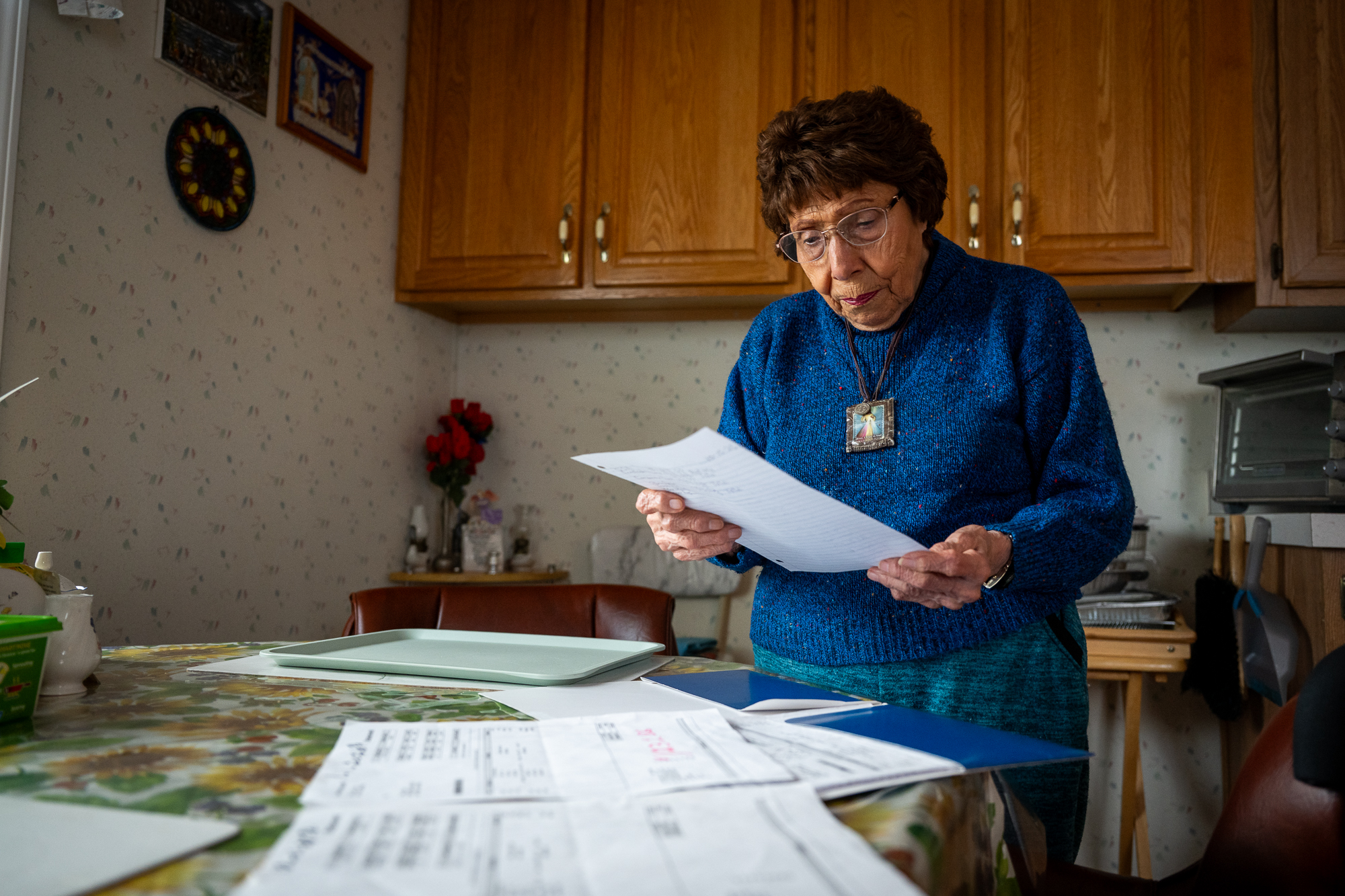
"caption": "Clara Faria, 91, looks through paperwork and notices documenting rent increases for the lot where her mobile home sits at Willow Mobile Home Park in San Pablo on Jan. 20, 2026, ahead of a San Pablo City Council meeting where she plans to give public comment about potential rent control measures.",
"credit": "Beth LaBerge, KQED",
"altTag": null,
"description": null,
"imgSizes": {
"thumbnail": {
"file": "https://cdn.kqed.org/wp-content/uploads/sites/10/2026/04/260120-HarmonySanPablo-03-BL-1-160x107.jpg",
"width": 160,
"height": 107,
"mimeType": "image/jpeg"
},
"1536x1536": {
"file": "https://cdn.kqed.org/wp-content/uploads/sites/10/2026/04/260120-HarmonySanPablo-03-BL-1-1536x1024.jpg",
"width": 1536,
"height": 1024,
"mimeType": "image/jpeg"
},
"post-thumbnail": {
"file": "https://cdn.kqed.org/wp-content/uploads/sites/10/2026/04/260120-HarmonySanPablo-03-BL-1-672x372.jpg",
"width": 672,
"height": 372,
"mimeType": "image/jpeg"
},
"twentyfourteen-full-width": {
"file": "https://cdn.kqed.org/wp-content/uploads/sites/10/2026/04/260120-HarmonySanPablo-03-BL-1-1038x576.jpg",
"width": 1038,
"height": 576,
"mimeType": "image/jpeg"
},
"npr-cds-wide": {
"file": "https://cdn.kqed.org/wp-content/uploads/sites/10/2026/04/260120-HarmonySanPablo-03-BL-1-1200x675.jpg",
"width": 1200,
"height": 675,
"mimeType": "image/jpeg"
},
"npr-cds-square": {
"file": "https://cdn.kqed.org/wp-content/uploads/sites/10/2026/04/260120-HarmonySanPablo-03-BL-1-600x600.jpg",
"width": 600,
"height": 600,
"mimeType": "image/jpeg"
},
"kqedFullSize": {
"file": "https://cdn.kqed.org/wp-content/uploads/sites/10/2026/04/260120-HarmonySanPablo-03-BL-1.jpg",
"width": 2000,
"height": 1333
}
},
"isLoading": false,
"fetchFailed": false
},
"news_12080846": {
"type": "attachments",
"id": "news_12080846",
"meta": {
"index": "attachments_1716263798",
"site": "news",
"id": "12080846",
"found": true
},
"title": "260120-HarmonySanPablo-03-BL",
"publishDate": 1776875278,
"status": "inherit",
"parent": 0,
"modified": 1776878151,
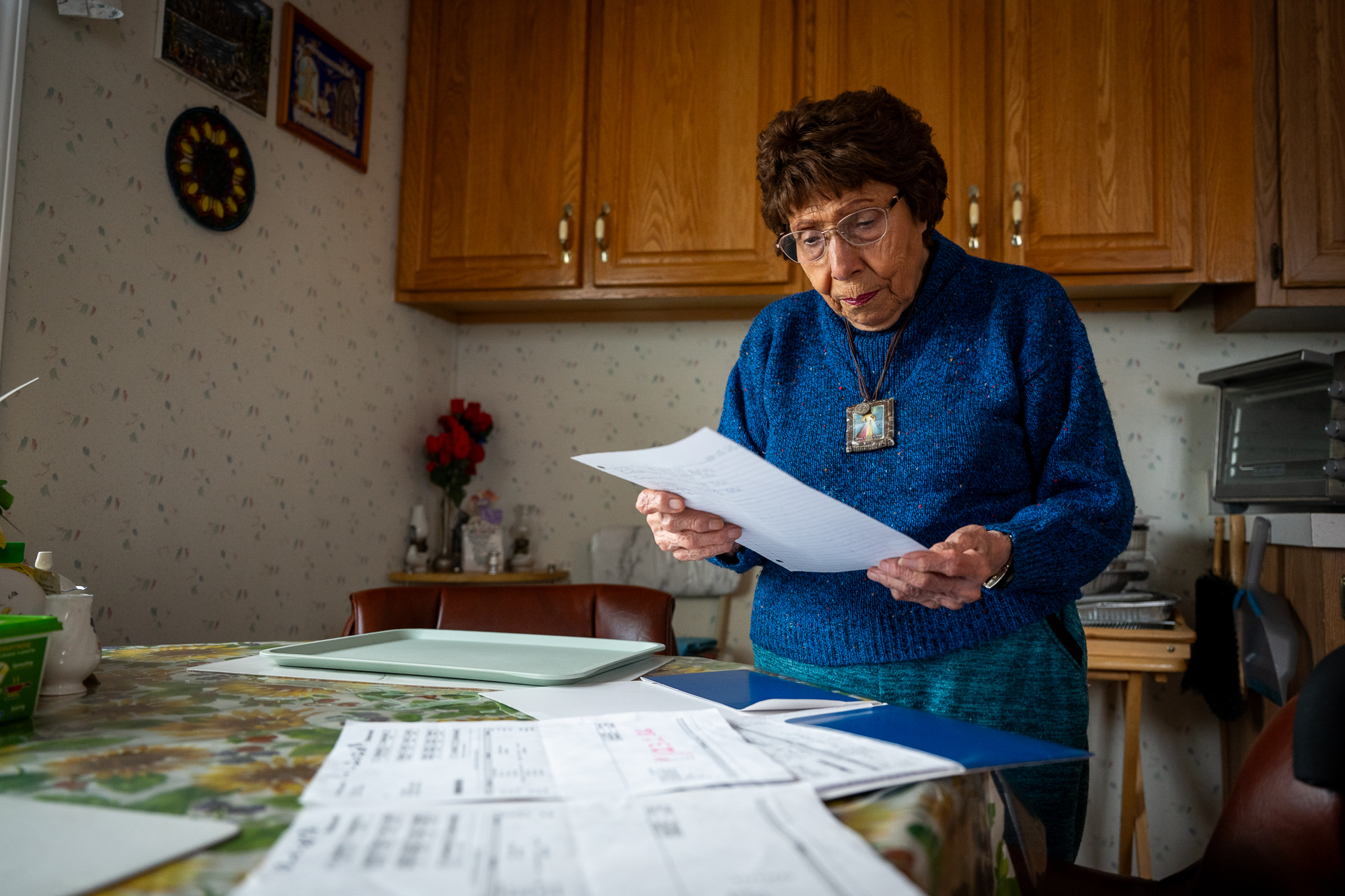
"caption": "Clara Faria, 91, looks through paperwork and notices documenting rent increases for the lot where her mobile home sits at Willow Mobile Home Park in San Pablo on Jan. 20, 2026, ahead of a San Pablo City Council meeting where she plans to give public comment about potential rent control measures.",
"credit": "Beth LaBerge/KQED",
"altTag": null,
"description": null,
"imgSizes": {
"thumbnail": {
"file": "https://cdn.kqed.org/wp-content/uploads/sites/10/2026/04/260120-HarmonySanPablo-03-BL-160x107.jpg",
"width": 160,
"height": 107,
"mimeType": "image/jpeg"
},
"1536x1536": {
"file": "https://cdn.kqed.org/wp-content/uploads/sites/10/2026/04/260120-HarmonySanPablo-03-BL-1536x1024.jpg",
"width": 1536,
"height": 1024,
"mimeType": "image/jpeg"
},
"post-thumbnail": {
"file": "https://cdn.kqed.org/wp-content/uploads/sites/10/2026/04/260120-HarmonySanPablo-03-BL-672x372.jpg",
"width": 672,
"height": 372,
"mimeType": "image/jpeg"
},
"twentyfourteen-full-width": {
"file": "https://cdn.kqed.org/wp-content/uploads/sites/10/2026/04/260120-HarmonySanPablo-03-BL-1038x576.jpg",
"width": 1038,
"height": 576,
"mimeType": "image/jpeg"
},
"npr-cds-wide": {
"file": "https://cdn.kqed.org/wp-content/uploads/sites/10/2026/04/260120-HarmonySanPablo-03-BL-1200x675.jpg",
"width": 1200,
"height": 675,
"mimeType": "image/jpeg"
},
"npr-cds-square": {
"file": "https://cdn.kqed.org/wp-content/uploads/sites/10/2026/04/260120-HarmonySanPablo-03-BL-600x600.jpg",
"width": 600,
"height": 600,
"mimeType": "image/jpeg"
},
"kqedFullSize": {
"file": "https://cdn.kqed.org/wp-content/uploads/sites/10/2026/04/260120-HarmonySanPablo-03-BL.jpg",
"width": 2000,
"height": 1333
}
},
"isLoading": false,
"fetchFailed": false
},
"news_12080887": {
"type": "attachments",
"id": "news_12080887",
"meta": {
"index": "attachments_1716263798",
"site": "news",
"id": "12080887",
"found": true
},
"title": "20251028_Immigrant Mass-_Hernandez-7_qed",
"publishDate": 1776878726,
"status": "inherit",
"parent": 12080871,
"modified": 1776878744,
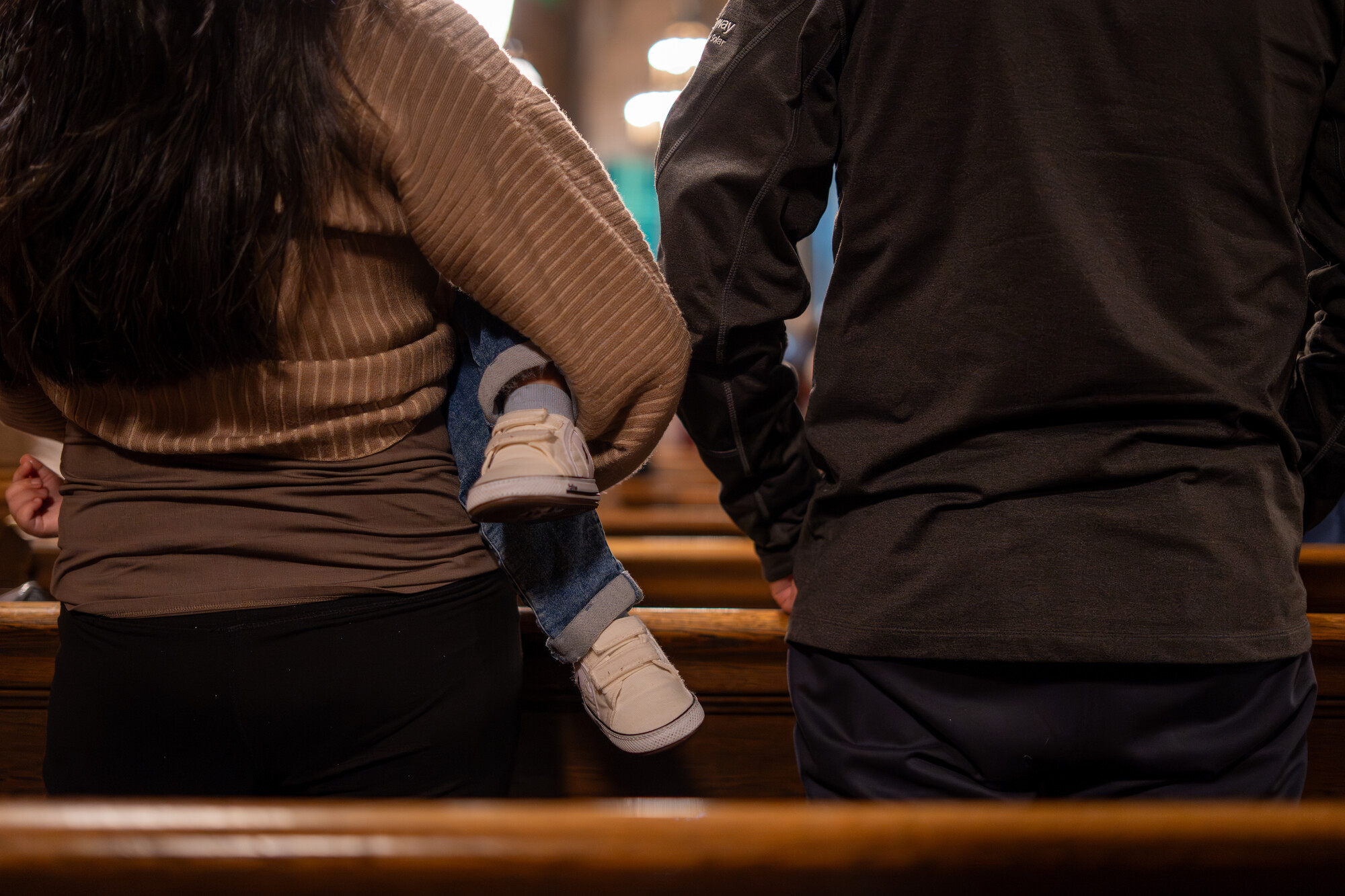
"caption": "A family attends Mass at St. Jarlath’s Church in Oakland during a vigil for immigrant families on Oct. 28, 2025.",
"credit": "Gustavo Hernandez/KQED",
"altTag": null,
"description": null,
"imgSizes": {
"thumbnail": {
"file": "https://cdn.kqed.org/wp-content/uploads/sites/10/2026/04/20251028_Immigrant-Mass-_Hernandez-7_qed-160x107.jpg",
"width": 160,
"height": 107,
"mimeType": "image/jpeg"
},
"1536x1536": {
"file": "https://cdn.kqed.org/wp-content/uploads/sites/10/2026/04/20251028_Immigrant-Mass-_Hernandez-7_qed-1536x1024.jpg",
"width": 1536,
"height": 1024,
"mimeType": "image/jpeg"
},
"post-thumbnail": {
"file": "https://cdn.kqed.org/wp-content/uploads/sites/10/2026/04/20251028_Immigrant-Mass-_Hernandez-7_qed-672x372.jpg",
"width": 672,
"height": 372,
"mimeType": "image/jpeg"
},
"twentyfourteen-full-width": {
"file": "https://cdn.kqed.org/wp-content/uploads/sites/10/2026/04/20251028_Immigrant-Mass-_Hernandez-7_qed-1038x576.jpg",
"width": 1038,
"height": 576,
"mimeType": "image/jpeg"
},
"npr-cds-wide": {
"file": "https://cdn.kqed.org/wp-content/uploads/sites/10/2026/04/20251028_Immigrant-Mass-_Hernandez-7_qed-1200x675.jpg",
"width": 1200,
"height": 675,
"mimeType": "image/jpeg"
},
"npr-cds-square": {
"file": "https://cdn.kqed.org/wp-content/uploads/sites/10/2026/04/20251028_Immigrant-Mass-_Hernandez-7_qed-600x600.jpg",
"width": 600,
"height": 600,
"mimeType": "image/jpeg"
},
"kqedFullSize": {
"file": "https://cdn.kqed.org/wp-content/uploads/sites/10/2026/04/20251028_Immigrant-Mass-_Hernandez-7_qed.jpg",
"width": 2000,
"height": 1333
}
},
"isLoading": false,
"fetchFailed": false
},
"news_11971712": {
"type": "attachments",
"id": "news_11971712",
"meta": {
"index": "attachments_1716263798",
"site": "news",
"id": "11971712",
"found": true
},
"parent": 11973071,
"imgSizes": {
"twentyfourteen-full-width": {
"file": "https://cdn.kqed.org/wp-content/uploads/sites/10/2024/01/240103-HMBFARMS-10-BL-KQED-1038x576.jpg",
"width": 1038,
"mimeType": "image/jpeg",
"height": 576
},
"thumbnail": {
"file": "https://cdn.kqed.org/wp-content/uploads/sites/10/2024/01/240103-HMBFARMS-10-BL-KQED-160x107.jpg",
"width": 160,
"mimeType": "image/jpeg",
"height": 107
},
"post-thumbnail": {
"file": "https://cdn.kqed.org/wp-content/uploads/sites/10/2024/01/240103-HMBFARMS-10-BL-KQED-672x372.jpg",
"width": 672,
"mimeType": "image/jpeg",
"height": 372
},
"kqedFullSize": {
"file": "https://cdn.kqed.org/wp-content/uploads/sites/10/2024/01/240103-HMBFARMS-10-BL-KQED.jpg",
"width": 2000,
"height": 1333
},
"large": {
"file": "https://cdn.kqed.org/wp-content/uploads/sites/10/2024/01/240103-HMBFARMS-10-BL-KQED-1020x680.jpg",
"width": 1020,
"mimeType": "image/jpeg",
"height": 680
},
"1536x1536": {
"file": "https://cdn.kqed.org/wp-content/uploads/sites/10/2024/01/240103-HMBFARMS-10-BL-KQED-1536x1024.jpg",
"width": 1536,
"mimeType": "image/jpeg",
"height": 1024
},
"full-width": {
"file": "https://cdn.kqed.org/wp-content/uploads/sites/10/2024/01/240103-HMBFARMS-10-BL-KQED-1920x1280.jpg",
"width": 1920,
"mimeType": "image/jpeg",
"height": 1280
},
"medium": {
"file": "https://cdn.kqed.org/wp-content/uploads/sites/10/2024/01/240103-HMBFARMS-10-BL-KQED-800x533.jpg",
"width": 800,
"mimeType": "image/jpeg",
"height": 533
}
},
"publishDate": 1704414534,
"modified": 1716251525,
"caption": "Concord Farms can be seen in the distance in Half Moon Bay on Jan. 3, 2024.",
"description": null,
"title": "Concord Farms can be seen in the distance in Half Moon Bay on Jan. 3, 2024.",
"credit": "Beth LaBerge/KQED",
"status": "inherit",
"altTag": "a farm seen from the road",
"isLoading": false,
"fetchFailed": false
},
"news_12080645": {
"type": "attachments",
"id": "news_12080645",
"meta": {
"index": "attachments_1716263798",
"site": "news",
"id": "12080645",
"found": true
},
"title": "260420-SLEEP PODS-MD-01-KQED_1",
"publishDate": 1776722847,
"status": "inherit",
"parent": 0,
"modified": 1776775510,
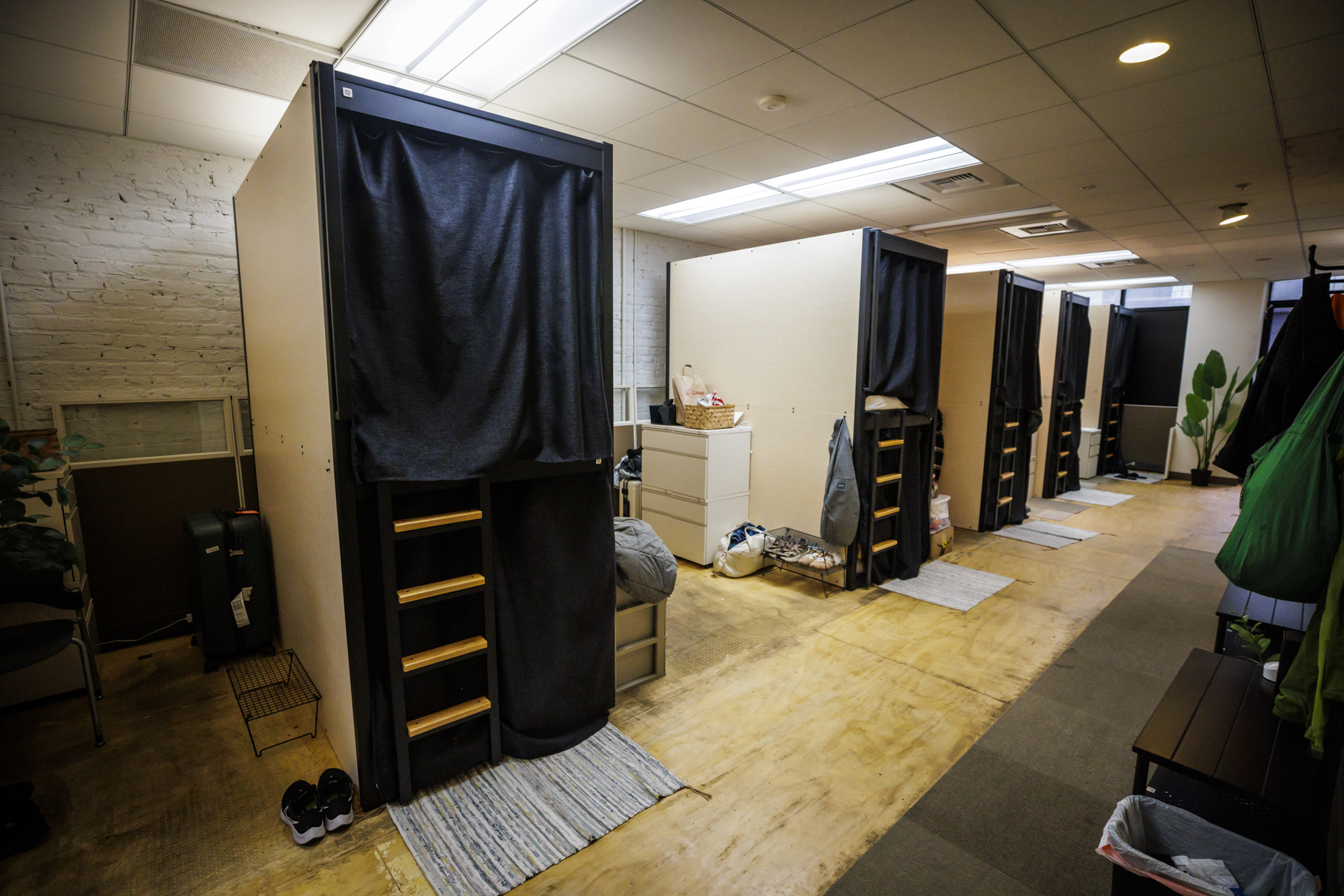
"caption": "Sleeping pods at the Brownstone Shared Housing co-living space in San Francisco on April 20, 2026.",
"credit": "Martin do Nascimento/KQED",
"altTag": null,
"description": null,
"imgSizes": {
"thumbnail": {
"file": "https://cdn.kqed.org/wp-content/uploads/sites/10/2026/04/260420-SLEEP-PODS-MD-01-KQED_1-160x107.jpg",
"width": 160,
"height": 107,
"mimeType": "image/jpeg"
},
"1536x1536": {
"file": "https://cdn.kqed.org/wp-content/uploads/sites/10/2026/04/260420-SLEEP-PODS-MD-01-KQED_1-1536x1025.jpg",
"width": 1536,
"height": 1025,
"mimeType": "image/jpeg"
},
"post-thumbnail": {
"file": "https://cdn.kqed.org/wp-content/uploads/sites/10/2026/04/260420-SLEEP-PODS-MD-01-KQED_1-672x372.jpg",
"width": 672,
"height": 372,
"mimeType": "image/jpeg"
},
"twentyfourteen-full-width": {
"file": "https://cdn.kqed.org/wp-content/uploads/sites/10/2026/04/260420-SLEEP-PODS-MD-01-KQED_1-1038x576.jpg",
"width": 1038,
"height": 576,
"mimeType": "image/jpeg"
},
"npr-cds-wide": {
"file": "https://cdn.kqed.org/wp-content/uploads/sites/10/2026/04/260420-SLEEP-PODS-MD-01-KQED_1-1200x675.jpg",
"width": 1200,
"height": 675,
"mimeType": "image/jpeg"
},
"npr-cds-square": {
"file": "https://cdn.kqed.org/wp-content/uploads/sites/10/2026/04/260420-SLEEP-PODS-MD-01-KQED_1-600x600.jpg",
"width": 600,
"height": 600,
"mimeType": "image/jpeg"
},
"kqedFullSize": {
"file": "https://cdn.kqed.org/wp-content/uploads/sites/10/2026/04/260420-SLEEP-PODS-MD-01-KQED_1.jpg",
"width": 2000,
"height": 1334
}
},
"isLoading": false,
"fetchFailed": false
},
"news_12079592": {
"type": "attachments",
"id": "news_12079592",
"meta": {
"index": "attachments_1716263798",
"site": "news",
"id": "12079592",
"found": true
},
"title": "041226Affordability series teacher housing_GH_016_qed",
"publishDate": 1776032890,
"status": "inherit",
"parent": 12079098,
"modified": 1776042478,
"caption": "Shirley Chisholm Village, is an affordable housing development that gives priority to San Francisco Unified School District educators, on April 12, 2026, in San Francisco, CA.",
"credit": "Gustavo Hernandez/KQED",
"altTag": null,
"description": null,
"imgSizes": {
"thumbnail": {
"file": "https://cdn.kqed.org/wp-content/uploads/sites/10/2026/04/041226Affordability-series-teacher-housing_GH_016_qed-160x107.jpg",
"width": 160,
"height": 107,
"mimeType": "image/jpeg"
},
"1536x1536": {
"file": "https://cdn.kqed.org/wp-content/uploads/sites/10/2026/04/041226Affordability-series-teacher-housing_GH_016_qed-1536x1024.jpg",
"width": 1536,
"height": 1024,
"mimeType": "image/jpeg"
},
"post-thumbnail": {
"file": "https://cdn.kqed.org/wp-content/uploads/sites/10/2026/04/041226Affordability-series-teacher-housing_GH_016_qed-672x372.jpg",
"width": 672,
"height": 372,
"mimeType": "image/jpeg"
},
"twentyfourteen-full-width": {
"file": "https://cdn.kqed.org/wp-content/uploads/sites/10/2026/04/041226Affordability-series-teacher-housing_GH_016_qed-1038x576.jpg",
"width": 1038,
"height": 576,
"mimeType": "image/jpeg"
},
"npr-cds-wide": {
"file": "https://cdn.kqed.org/wp-content/uploads/sites/10/2026/04/041226Affordability-series-teacher-housing_GH_016_qed-1200x675.jpg",
"width": 1200,
"height": 675,
"mimeType": "image/jpeg"
},
"npr-cds-square": {
"file": "https://cdn.kqed.org/wp-content/uploads/sites/10/2026/04/041226Affordability-series-teacher-housing_GH_016_qed-600x600.jpg",
"width": 600,
"height": 600,
"mimeType": "image/jpeg"
},
"kqedFullSize": {
"file": "https://cdn.kqed.org/wp-content/uploads/sites/10/2026/04/041226Affordability-series-teacher-housing_GH_016_qed.jpg",
"width": 2000,
"height": 1333
}
},
"isLoading": false,
"fetchFailed": false
},
"news_11986458": {
"type": "attachments",
"id": "news_11986458",
"meta": {
"index": "attachments_1716263798",
"site": "news",
"id": "11986458",
"found": true
},
"title": "Oakland federal judge rules city can clear Wood St.'s huge homeless camp",
"publishDate": 1715815949,
"status": "inherit",
"parent": 11986443,
"modified": 1776275241,
"caption": "A large tent encampment where people live in West Oakland in February 2023. ",
"credit": "Tayfun CoÅkun/Anadolu Agency via Getty Images",
"altTag": "Tents line a city street.",
"description": null,
"imgSizes": {
"medium": {
"file": "https://cdn.kqed.org/wp-content/uploads/sites/10/2024/05/GettyImages-1247572601-800x533.jpg",
"width": 800,
"height": 533,
"mimeType": "image/jpeg"
},
"large": {
"file": "https://cdn.kqed.org/wp-content/uploads/sites/10/2024/05/GettyImages-1247572601-1020x680.jpg",
"width": 1020,
"height": 680,
"mimeType": "image/jpeg"
},
"thumbnail": {
"file": "https://cdn.kqed.org/wp-content/uploads/sites/10/2024/05/GettyImages-1247572601-160x107.jpg",
"width": 160,
"height": 107,
"mimeType": "image/jpeg"
},
"1536x1536": {
"file": "https://cdn.kqed.org/wp-content/uploads/sites/10/2024/05/GettyImages-1247572601-1536x1024.jpg",
"width": 1536,
"height": 1024,
"mimeType": "image/jpeg"
},
"2048x2048": {
"file": "https://cdn.kqed.org/wp-content/uploads/sites/10/2024/05/GettyImages-1247572601-2048x1365.jpg",
"width": 2048,
"height": 1365,
"mimeType": "image/jpeg"
},
"post-thumbnail": {
"file": "https://cdn.kqed.org/wp-content/uploads/sites/10/2024/05/GettyImages-1247572601-672x372.jpg",
"width": 672,
"height": 372,
"mimeType": "image/jpeg"
},
"twentyfourteen-full-width": {
"file": "https://cdn.kqed.org/wp-content/uploads/sites/10/2024/05/GettyImages-1247572601-1038x576.jpg",
"width": 1038,
"height": 576,
"mimeType": "image/jpeg"
},
"full-width": {
"file": "https://cdn.kqed.org/wp-content/uploads/sites/10/2024/05/GettyImages-1247572601-1920x1280.jpg",
"width": 1920,
"height": 1280,
"mimeType": "image/jpeg"
},
"kqedFullSize": {
"file": "https://cdn.kqed.org/wp-content/uploads/sites/10/2024/05/GettyImages-1247572601-scaled-e1760372488675.jpg",
"width": 2000,
"height": 1334
}
},
"isLoading": false,
"fetchFailed": false
},
"news_12079586": {
"type": "attachments",
"id": "news_12079586",
"meta": {
"index": "attachments_1716263798",
"site": "news",
"id": "12079586",
"found": true
},
"title": "041226Affordability series teacher housing_GH_002_qed",
"publishDate": 1776032850,
"status": "inherit",
"parent": 0,
"modified": 1776101928,
"caption": "Shayla Putnam, a ceramics teacher at George Washington High School, in her apartment at Shirley Chisholm Village on April 12, 2026, in San Francisco.",
"credit": "Gustavo Hernandez/KQED",
"altTag": null,
"description": null,
"imgSizes": {
"thumbnail": {
"file": "https://cdn.kqed.org/wp-content/uploads/sites/10/2026/04/041226Affordability-series-teacher-housing_GH_002_qed-160x107.jpg",
"width": 160,
"height": 107,
"mimeType": "image/jpeg"
},
"1536x1536": {
"file": "https://cdn.kqed.org/wp-content/uploads/sites/10/2026/04/041226Affordability-series-teacher-housing_GH_002_qed-1536x1024.jpg",
"width": 1536,
"height": 1024,
"mimeType": "image/jpeg"
},
"post-thumbnail": {
"file": "https://cdn.kqed.org/wp-content/uploads/sites/10/2026/04/041226Affordability-series-teacher-housing_GH_002_qed-672x372.jpg",
"width": 672,
"height": 372,
"mimeType": "image/jpeg"
},
"twentyfourteen-full-width": {
"file": "https://cdn.kqed.org/wp-content/uploads/sites/10/2026/04/041226Affordability-series-teacher-housing_GH_002_qed-1038x576.jpg",
"width": 1038,
"height": 576,
"mimeType": "image/jpeg"
},
"npr-cds-wide": {
"file": "https://cdn.kqed.org/wp-content/uploads/sites/10/2026/04/041226Affordability-series-teacher-housing_GH_002_qed-1200x675.jpg",
"width": 1200,
"height": 675,
"mimeType": "image/jpeg"
},
"npr-cds-square": {
"file": "https://cdn.kqed.org/wp-content/uploads/sites/10/2026/04/041226Affordability-series-teacher-housing_GH_002_qed-600x600.jpg",
"width": 600,
"height": 600,
"mimeType": "image/jpeg"
},
"kqedFullSize": {
"file": "https://cdn.kqed.org/wp-content/uploads/sites/10/2026/04/041226Affordability-series-teacher-housing_GH_002_qed.jpg",
"width": 2000,
"height": 1333
}
},
"isLoading": false,
"fetchFailed": false
},
"news_12078431": {
"type": "attachments",
"id": "news_12078431",
"meta": {
"index": "attachments_1716263798",
"site": "news",
"id": "12078431",
"found": true
},
"title": "260320-KOGURACOMPANY00242_TV-KQED",
"publishDate": 1775137356,
"status": "inherit",
"parent": 0,
"modified": 1775234707,
"caption": "A photo of Kogura Company from 1936 is put on display at Kogura Company in San José on March 20, 2026.",
"credit": "Tâm Vũ/KQED",
"altTag": null,
"description": null,
"imgSizes": {
"thumbnail": {
"file": "https://cdn.kqed.org/wp-content/uploads/sites/10/2026/04/260320-KOGURACOMPANY00242_TV-KQED-160x107.jpg",
"width": 160,
"height": 107,
"mimeType": "image/jpeg"
},
"1536x1536": {
"file": "https://cdn.kqed.org/wp-content/uploads/sites/10/2026/04/260320-KOGURACOMPANY00242_TV-KQED-1536x1024.jpg",
"width": 1536,
"height": 1024,
"mimeType": "image/jpeg"
},
"post-thumbnail": {
"file": "https://cdn.kqed.org/wp-content/uploads/sites/10/2026/04/260320-KOGURACOMPANY00242_TV-KQED-672x372.jpg",
"width": 672,
"height": 372,
"mimeType": "image/jpeg"
},
"twentyfourteen-full-width": {
"file": "https://cdn.kqed.org/wp-content/uploads/sites/10/2026/04/260320-KOGURACOMPANY00242_TV-KQED-1038x576.jpg",
"width": 1038,
"height": 576,
"mimeType": "image/jpeg"
},
"npr-cds-wide": {
"file": "https://cdn.kqed.org/wp-content/uploads/sites/10/2026/04/260320-KOGURACOMPANY00242_TV-KQED-1200x675.jpg",
"width": 1200,
"height": 675,
"mimeType": "image/jpeg"
},
"npr-cds-square": {
"file": "https://cdn.kqed.org/wp-content/uploads/sites/10/2026/04/260320-KOGURACOMPANY00242_TV-KQED-600x600.jpg",
"width": 600,
"height": 600,
"mimeType": "image/jpeg"
},
"kqedFullSize": {
"file": "https://cdn.kqed.org/wp-content/uploads/sites/10/2026/04/260320-KOGURACOMPANY00242_TV-KQED.jpg",
"width": 2000,
"height": 1333
}
},
"isLoading": false,
"fetchFailed": false
},
"news_12078788": {
"type": "attachments",
"id": "news_12078788",
"meta": {
"index": "attachments_1716263798",
"site": "news",
"id": "12078788",
"found": true
},
"title": "San Francisco's Rents Rise To Highest In Nation",
"publishDate": 1775482035,
"status": "inherit",
"parent": 12078787,
"modified": 1789077775,
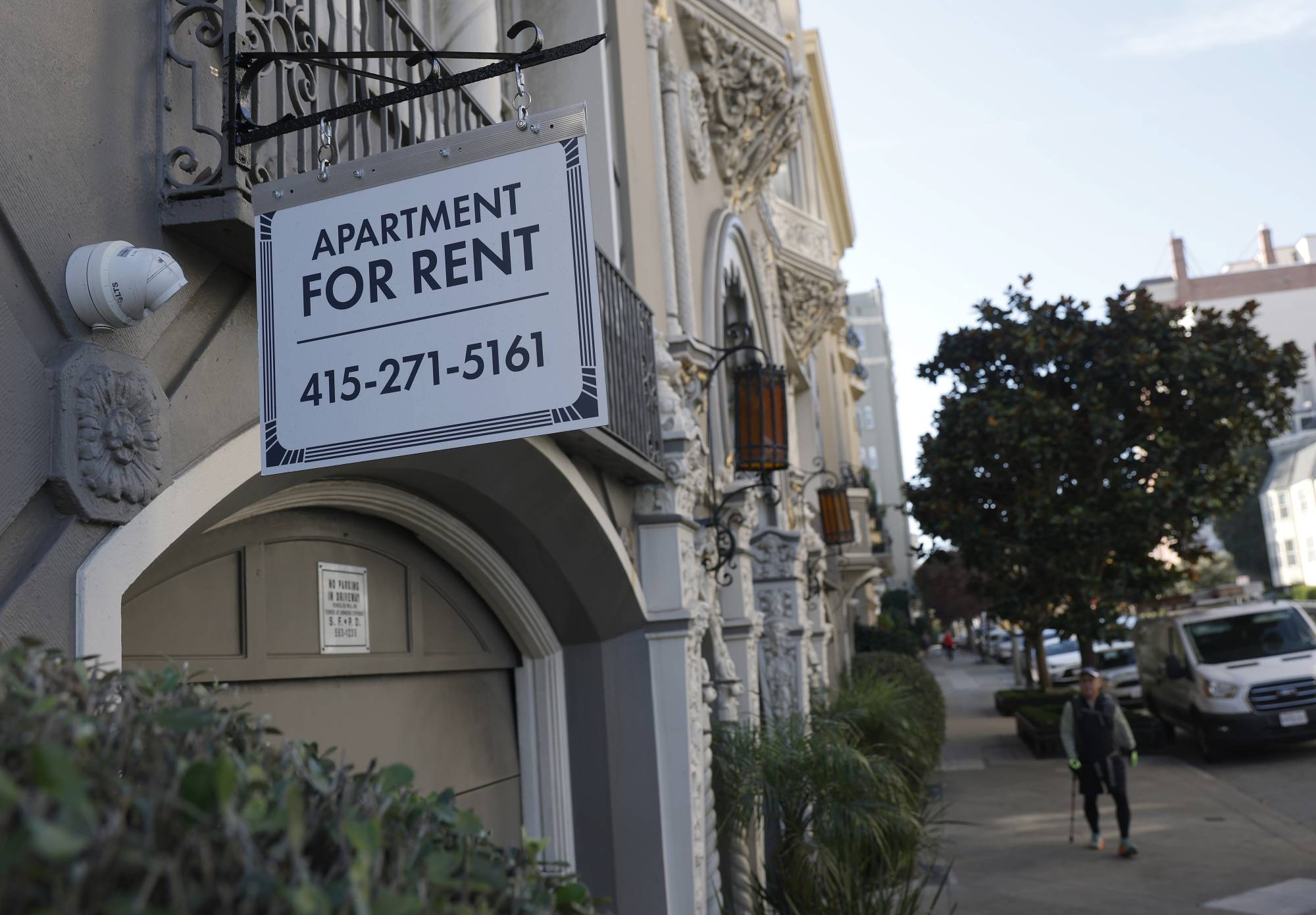
"caption": "An apartment for rent sign hangs outside of an apartment building on Dec. 4, 2025, in San Francisco, California. According to a report by Apartments.com, San Francisco is one of the most expensive cities in the U.S. for rent, with an average rent of $3,139 per month, a 6.5 percent increase over the past year and 92 percent higher than the national average rent price of $1,631 per month. ",
"credit": "Justin Sullivan/Getty Images",
"altTag": null,
"description": null,
"imgSizes": {
"medium": {
"file": "https://cdn.kqed.org/wp-content/uploads/sites/10/2026/04/GettyImages-2250030108-2000x1390.jpg",
"width": 2000,
"height": 1390,
"mimeType": "image/jpeg"
},
"large": {
"file": "https://cdn.kqed.org/wp-content/uploads/sites/10/2026/04/GettyImages-2250030108-2000x1390.jpg",
"width": 2000,
"height": 1390,
"mimeType": "image/jpeg"
},
"thumbnail": {
"file": "https://cdn.kqed.org/wp-content/uploads/sites/10/2026/04/GettyImages-2250030108-160x111.jpg",
"width": 160,
"height": 111,
"mimeType": "image/jpeg"
},
"1536x1536": {
"file": "https://cdn.kqed.org/wp-content/uploads/sites/10/2026/04/GettyImages-2250030108-1536x1068.jpg",
"width": 1536,
"height": 1068,
"mimeType": "image/jpeg"
},
"2048x2048": {
"file": "https://cdn.kqed.org/wp-content/uploads/sites/10/2026/04/GettyImages-2250030108-2048x1424.jpg",
"width": 2048,
"height": 1424,
"mimeType": "image/jpeg"
},
"post-thumbnail": {
"file": "https://cdn.kqed.org/wp-content/uploads/sites/10/2026/04/GettyImages-2250030108-672x372.jpg",
"width": 672,
"height": 372,
"mimeType": "image/jpeg"
},
"twentyfourteen-full-width": {
"file": "https://cdn.kqed.org/wp-content/uploads/sites/10/2026/04/GettyImages-2250030108-1038x576.jpg",
"width": 1038,
"height": 576,
"mimeType": "image/jpeg"
},
"full-width": {
"file": "https://cdn.kqed.org/wp-content/uploads/sites/10/2026/04/GettyImages-2250030108-2000x1390.jpg",
"width": 2000,
"height": 1390,
"mimeType": "image/jpeg"
},
"npr-cds-wide": {
"file": "https://cdn.kqed.org/wp-content/uploads/sites/10/2026/04/GettyImages-2250030108-1200x675.jpg",
"width": 1200,
"height": 675,
"mimeType": "image/jpeg"
},
"npr-cds-square": {
"file": "https://cdn.kqed.org/wp-content/uploads/sites/10/2026/04/GettyImages-2250030108-600x600.jpg",
"width": 600,
"height": 600,
"mimeType": "image/jpeg"
},
"kqedFullSize": {
"file": "https://cdn.kqed.org/wp-content/uploads/sites/10/2026/04/GettyImages-2250030108-scaled-e1789077751622.jpg",
"width": 2000,
"height": 1391
}
},
"isLoading": false,
"fetchFailed": false
}
},
"audioPlayerReducer": {
"postId": "stream_live",
"isPaused": true,
"isPlaying": false,
"pfsActive": false,
"pledgeModalIsOpen": true,
"playerDrawerIsOpen": false,
"liveAudioPlayStartedAt": 0,
"liveAudioPlayContext": ""
},
"authorsReducer": {
"ecruzguevarra": {
"type": "authors",
"id": "8654",
"meta": {
"index": "authors_1716337520",
"id": "8654",
"found": true
},
"name": "Ericka Cruz Guevarra",
"firstName": "Ericka",
"lastName": "Cruz Guevarra",
"slug": "ecruzguevarra",
"email": "ecruzguevarra@kqed.org",
"display_author_email": true,
"staff_mastheads": [
"news"
],
"title": "Producer, The Bay Podcast",
"bio": "Ericka Cruz Guevarra is host of \u003ca href=\"https://www.kqed.org/podcasts/thebay\">\u003cem>The Bay\u003c/em>\u003c/a> podcast at KQED. Before host, she was the show’s producer. Her work in that capacity includes a three-part reported series on policing in Vallejo, which won a 2020 excellence in journalism award from the Society of Professional Journalists. Ericka has worked as a breaking news reporter at Oregon Public Broadcasting, helped produce the Code Switch podcast, and was KQED’s inaugural Raul Ramirez Diversity Fund intern. She’s also an alumna of NPR’s Next Generation Radio program. Send her an email if you have strong feelings about whether Fairfield and Suisun City are the Bay. Ericka is represented by SAG-AFTRA.",
"avatar": "https://secure.gravatar.com/avatar/accefc1de4bafc7e234b69bcb9b6f6536c130fd84709bc3069ef11a78787e1bb?s=600&d=blank&r=g",
"twitter": "NotoriousECG",
"bluesky": null,
"facebook": null,
"instagram": null,
"linkedin": null,
"sites": [
{
"site": "arts",
"roles": [
"subscriber"
]
},
{
"site": "news",
"roles": [
"editor",
"manage_categories"
]
},
{
"site": "futureofyou",
"roles": [
"subscriber"
]
},
{
"site": "stateofhealth",
"roles": [
"subscriber"
]
},
{
"site": "science",
"roles": [
"editor"
]
},
{
"site": "forum",
"roles": [
"subscriber"
]
}
],
"headData": {
"title": "Ericka Cruz Guevarra | KQED",
"description": "Producer, The Bay Podcast",
"ogImgSrc": "https://secure.gravatar.com/avatar/accefc1de4bafc7e234b69bcb9b6f6536c130fd84709bc3069ef11a78787e1bb?s=600&d=blank&r=g",
"twImgSrc": "https://secure.gravatar.com/avatar/accefc1de4bafc7e234b69bcb9b6f6536c130fd84709bc3069ef11a78787e1bb?s=600&d=blank&r=g"
},
"isLoading": false,
"link": "/author/ecruzguevarra"
},
"fjhabvala": {
"type": "authors",
"id": "8659",
"meta": {
"index": "authors_1716337520",
"id": "8659",
"found": true
},
"name": "Farida Jhabvala Romero",
"firstName": "Farida",
"lastName": "Jhabvala Romero",
"slug": "fjhabvala",
"email": "fjhabvala@kqed.org",
"display_author_email": true,
"staff_mastheads": [
"news"
],
"title": "KQED Contributor",
"bio": "Farida Jhabvala Romero is a Labor Correspondent for KQED. She previously covered immigration. Farida was \u003ca href=\"https://www.ccnma.org/2022-most-influential-latina-journalists\">named\u003c/a> one of the 10 Most Influential Latina Journalists in California in 2022 by the California Chicano News Media Association. Her work has won awards from the Society of Professional Journalists (Northern California), as well as a national and regional Edward M. Murrow Award for the collaborative reporting projects “Dangerous Air” and “Graying California.” Before joining KQED, Farida worked as a producer at Radio Bilingüe, a national public radio network. Farida earned her master’s degree in journalism from Stanford University.",
"avatar": "https://secure.gravatar.com/avatar/f9f022d4e2609741874222a1e9d41f48fea74011aa7c615eef91d9a50c944ebe?s=600&d=blank&r=g",
"twitter": "FaridaJhabvala",
"bluesky": null,
"facebook": null,
"instagram": null,
"linkedin": "https://www.linkedin.com/in/faridajhabvala/",
"sites": [
{
"site": "news",
"roles": [
"editor"
]
},
{
"site": "stateofhealth",
"roles": [
"author"
]
},
{
"site": "liveblog",
"roles": [
"author"
]
}
],
"headData": {
"title": "Farida Jhabvala Romero | KQED",
"description": "KQED Contributor",
"ogImgSrc": "https://secure.gravatar.com/avatar/f9f022d4e2609741874222a1e9d41f48fea74011aa7c615eef91d9a50c944ebe?s=600&d=blank&r=g",
"twImgSrc": "https://secure.gravatar.com/avatar/f9f022d4e2609741874222a1e9d41f48fea74011aa7c615eef91d9a50c944ebe?s=600&d=blank&r=g"
},
"isLoading": false,
"link": "/author/fjhabvala"
},
"amontecillo": {
"type": "authors",
"id": "11649",
"meta": {
"index": "authors_1716337520",
"id": "11649",
"found": true
},
"name": "Alan Montecillo",
"firstName": "Alan",
"lastName": "Montecillo",
"slug": "amontecillo",
"email": "amontecillo@kqed.org",
"display_author_email": false,
"staff_mastheads": [
"news"
],
"title": "KQED Contributor",
"bio": "Alan Montecillo is the senior editor of \u003cem>\u003ca href=\"http://kqed.org/thebay\">The Bay\u003c/a>, \u003c/em> KQED's local news podcast. Before moving to the Bay Area, he worked as a senior talk show producer for WILL in Champaign-Urbana, Illinois and at Oregon Public Broadcasting in Portland, Oregon. He has won journalism awards from the Society of Professional Journalists Northern California, the Public Media Journalists Association, The Signal Awards, and has also received a regional Edward R. Murrow award. Alan is a Filipino American from Hong Kong and a graduate of Reed College.",
"avatar": "https://secure.gravatar.com/avatar/268f53a2066899ea9efdd8a5900218b17c822d9862cbc9326cccec53ef41d349?s=600&d=blank&r=g",
"twitter": "alanmontecillo",
"bluesky": null,
"facebook": null,
"instagram": null,
"linkedin": null,
"sites": [
{
"site": "",
"roles": [
"editor"
]
},
{
"site": "news",
"roles": [
"editor",
"manage_categories"
]
}
],
"headData": {
"title": "Alan Montecillo | KQED",
"description": "KQED Contributor",
"ogImgSrc": "https://secure.gravatar.com/avatar/268f53a2066899ea9efdd8a5900218b17c822d9862cbc9326cccec53ef41d349?s=600&d=blank&r=g",
"twImgSrc": "https://secure.gravatar.com/avatar/268f53a2066899ea9efdd8a5900218b17c822d9862cbc9326cccec53ef41d349?s=600&d=blank&r=g"
},
"isLoading": false,
"link": "/author/amontecillo"
},
"abandlamudi": {
"type": "authors",
"id": "11672",
"meta": {
"index": "authors_1716337520",
"id": "11672",
"found": true
},
"name": "Adhiti Bandlamudi",
"firstName": "Adhiti",
"lastName": "Bandlamudi",
"slug": "abandlamudi",
"email": "abandlamudi@kqed.org",
"display_author_email": false,
"staff_mastheads": [
"news"
],
"title": "KQED Housing Reporter",
"bio": "Adhiti Bandlamudi reports for KQED's Housing desk. She focuses on how housing gets built across the Bay Area. Before joining KQED in 2020, she reported for WUNC in Durham, North Carolina, WABE in Atlanta, Georgia and Capital Public Radio in Sacramento. In 2017, she was awarded a Kroc Fellowship at NPR where she reported on everything from sprinkles to the Golden State Killer's arrest. When she's not reporting, she's baking new recipes in her kitchen or watching movies with friends and family. She's originally from Georgia and has strong opinions about Great British Bake Off.",
"avatar": "https://secure.gravatar.com/avatar/868129c8b257bb99a3500e2c86a65400?s=600&d=mm&r=g",
"twitter": "oddity_adhiti",
"facebook": null,
"instagram": null,
"linkedin": null,
"sites": [
{
"site": "arts",
"roles": [
"author"
]
},
{
"site": "news",
"roles": [
"editor"
]
},
{
"site": "liveblog",
"roles": [
"author"
]
}
],
"headData": {
"title": "Adhiti Bandlamudi | KQED",
"description": "KQED Housing Reporter",
"ogImgSrc": "https://secure.gravatar.com/avatar/868129c8b257bb99a3500e2c86a65400?s=600&d=mm&r=g",
"twImgSrc": "https://secure.gravatar.com/avatar/868129c8b257bb99a3500e2c86a65400?s=600&d=mm&r=g"
},
"isLoading": false,
"link": "/author/abandlamudi"
},
"kmizuguchi": {
"type": "authors",
"id": "11739",
"meta": {
"index": "authors_1716337520",
"id": "11739",
"found": true
},
"name": "Keith Mizuguchi",
"firstName": "Keith",
"lastName": "Mizuguchi",
"slug": "kmizuguchi",
"email": "kmizuguchi@kqed.org",
"display_author_email": false,
"staff_mastheads": [],
"title": "KQED Contributor",
"bio": null,
"avatar": "https://secure.gravatar.com/avatar/64d8a7de0723d4099b9fe4e915136103febcc20809abce228ee4415bcb237023?s=600&d=blank&r=g",
"twitter": null,
"bluesky": null,
"facebook": null,
"instagram": null,
"linkedin": null,
"sites": [
{
"site": "news",
"roles": [
"editor"
]
},
{
"site": "science",
"roles": [
"editor"
]
}
],
"headData": {
"title": "Keith Mizuguchi | KQED",
"description": "KQED Contributor",
"ogImgSrc": "https://secure.gravatar.com/avatar/64d8a7de0723d4099b9fe4e915136103febcc20809abce228ee4415bcb237023?s=600&d=blank&r=g",
"twImgSrc": "https://secure.gravatar.com/avatar/64d8a7de0723d4099b9fe4e915136103febcc20809abce228ee4415bcb237023?s=600&d=blank&r=g"
},
"isLoading": false,
"link": "/author/kmizuguchi"
},
"jessicakariisa": {
"type": "authors",
"id": "11831",
"meta": {
"index": "authors_1716337520",
"id": "11831",
"found": true
},
"name": "Jessica Kariisa",
"firstName": "Jessica",
"lastName": "Kariisa",
"slug": "jessicakariisa",
"email": "jkariisa@kqed.org",
"display_author_email": false,
"staff_mastheads": [],
"title": "Producer, The Bay",
"bio": "Jessica Kariisa is the producer of The Bay. She first joined KQED as an intern for The California Report Magazine, after which she became an on-call producer. She reported a Bay Curious episode on the use of rap lyrics in criminal trials which won a Society of Professional Journalists award in 2023 for Excellence in Features Journalism and the 2023 Signal Award for Best Conversation Starter. She’s worked on podcasts for Snap Judgment and American Public Media. Before embarking on her audio career, she was a music journalist.\r\n\r\nJessica Kariisa is represented by SAG-AFTRA.",
"avatar": "https://secure.gravatar.com/avatar/522e97b28ac0b3d411621c0fde8f3419c7b71ea2c5c262c57c4bb600963f328c?s=600&d=blank&r=g",
"twitter": null,
"bluesky": null,
"facebook": null,
"instagram": null,
"linkedin": null,
"sites": [
{
"site": "arts",
"roles": [
"author"
]
},
{
"site": "news",
"roles": [
"editor",
"manage_categories"
]
}
],
"headData": {
"title": "Jessica Kariisa | KQED",
"description": "Producer, The Bay",
"ogImgSrc": "https://secure.gravatar.com/avatar/522e97b28ac0b3d411621c0fde8f3419c7b71ea2c5c262c57c4bb600963f328c?s=600&d=blank&r=g",
"twImgSrc": "https://secure.gravatar.com/avatar/522e97b28ac0b3d411621c0fde8f3419c7b71ea2c5c262c57c4bb600963f328c?s=600&d=blank&r=g"
},
"isLoading": false,
"link": "/author/jessicakariisa"
},
"sjohnson": {
"type": "authors",
"id": "11840",
"meta": {
"index": "authors_1716337520",
"id": "11840",
"found": true
},
"name": "Sydney Johnson",
"firstName": "Sydney",
"lastName": "Johnson",
"slug": "sjohnson",
"email": "sjohnson@kqed.org",
"display_author_email": false,
"staff_mastheads": [
"news"
],
"title": "KQED Reporter",
"bio": "Sydney Johnson is a general assignment reporter at KQED. She previously reported on public health and city government at the San Francisco Examiner, and before that, she covered statewide education policy for EdSource. Her reporting has won multiple local, state and national awards. Sydney is a graduate of the University of California, Berkeley and lives in San Francisco.",
"avatar": "https://secure.gravatar.com/avatar/97855f2719b72ad6190b7c535fe642c8?s=600&d=blank&r=g",
"twitter": "sydneyfjohnson",
"facebook": null,
"instagram": null,
"linkedin": null,
"sites": [
{
"site": "news",
"roles": [
"editor"
]
}
],
"headData": {
"title": "Sydney Johnson | KQED",
"description": "KQED Reporter",
"ogImgSrc": "https://secure.gravatar.com/avatar/97855f2719b72ad6190b7c535fe642c8?s=600&d=blank&r=g",
"twImgSrc": "https://secure.gravatar.com/avatar/97855f2719b72ad6190b7c535fe642c8?s=600&d=blank&r=g"
},
"isLoading": false,
"link": "/author/sjohnson"
},
"kmonahan": {
"type": "authors",
"id": "11842",
"meta": {
"index": "authors_1716337520",
"id": "11842",
"found": true
},
"name": "Katherine Monahan",
"firstName": "Katherine",
"lastName": "Monahan",
"slug": "kmonahan",
"email": "kmonahan@kqed.org",
"display_author_email": true,
"staff_mastheads": [],
"title": "Reporter / Sound Engineer",
"bio": "I cover state and local news. I’m also a sound engineer at the station, mixing stories and running live broadcasts. I link to source materials so that readers can draw their own conclusions, and seek comment from a range of perspectives, including from people directly affected by events. Awards received include from the Society of Professional Journalists, Northern California chapter and the Alaska Press Club. I speak multiple languages and have reported and engineered in the Bay Area, Alaska, West Africa and Latin America.",
"avatar": "https://secure.gravatar.com/avatar/ff257b3a5da88893781a3d3266904b2d2f91c7f0e1bbf728f61f5fb81b74a669?s=600&d=blank&r=g",
"twitter": null,
"bluesky": null,
"facebook": null,
"instagram": null,
"linkedin": null,
"sites": [
{
"site": "news",
"roles": [
"editor"
]
},
{
"site": "science",
"roles": [
"contributor"
]
}
],
"headData": {
"title": "Katherine Monahan | KQED",
"description": "Reporter / Sound Engineer",
"ogImgSrc": "https://secure.gravatar.com/avatar/ff257b3a5da88893781a3d3266904b2d2f91c7f0e1bbf728f61f5fb81b74a669?s=600&d=blank&r=g",
"twImgSrc": "https://secure.gravatar.com/avatar/ff257b3a5da88893781a3d3266904b2d2f91c7f0e1bbf728f61f5fb81b74a669?s=600&d=blank&r=g"
},
"isLoading": false,
"link": "/author/kmonahan"
},
"mbolanos": {
"type": "authors",
"id": "11895",
"meta": {
"index": "authors_1716337520",
"id": "11895",
"found": true
},
"name": "Madi Bolaños",
"firstName": "Madi",
"lastName": "Bolaños",
"slug": "mbolanos",
"email": "mbolanos@kqed.org",
"display_author_email": false,
"staff_mastheads": [],
"title": "KQED Contributor",
"bio": null,
"avatar": "https://secure.gravatar.com/avatar/e6df5601c1f2d951e46a3fb42764330f?s=600&d=blank&r=g",
"twitter": null,
"bluesky": null,
"facebook": null,
"instagram": null,
"linkedin": null,
"sites": [
{
"site": "news",
"roles": [
"author"
]
}
],
"headData": {
"title": "Madi Bolaños | KQED",
"description": "KQED Contributor",
"ogImgSrc": "https://secure.gravatar.com/avatar/e6df5601c1f2d951e46a3fb42764330f?s=600&d=blank&r=g",
"twImgSrc": "https://secure.gravatar.com/avatar/e6df5601c1f2d951e46a3fb42764330f?s=600&d=blank&r=g"
},
"isLoading": false,
"link": "/author/mbolanos"
},
"jgeha": {
"type": "authors",
"id": "11906",
"meta": {
"index": "authors_1716337520",
"id": "11906",
"found": true
},
"name": "Joseph Geha",
"firstName": "Joseph",
"lastName": "Geha",
"slug": "jgeha",
"email": "jgeha@kqed.org",
"display_author_email": false,
"staff_mastheads": [
"news",
"science"
],
"title": "KQED Contributor",
"bio": null,
"avatar": "https://secure.gravatar.com/avatar/ea84d2b6dd93d6369d453edf19dd583f117cd1759d2d9c9c92f9de77017354fe?s=600&d=blank&r=g",
"twitter": null,
"bluesky": null,
"facebook": null,
"instagram": null,
"linkedin": null,
"sites": [
{
"site": "news",
"roles": [
"editor"
]
},
{
"site": "liveblog",
"roles": [
"author"
]
}
],
"headData": {
"title": "Joseph Geha | KQED",
"description": "KQED Contributor",
"ogImgSrc": "https://secure.gravatar.com/avatar/ea84d2b6dd93d6369d453edf19dd583f117cd1759d2d9c9c92f9de77017354fe?s=600&d=blank&r=g",
"twImgSrc": "https://secure.gravatar.com/avatar/ea84d2b6dd93d6369d453edf19dd583f117cd1759d2d9c9c92f9de77017354fe?s=600&d=blank&r=g"
},
"isLoading": false,
"link": "/author/jgeha"
},
"kdebenedetti": {
"type": "authors",
"id": "11913",
"meta": {
"index": "authors_1716337520",
"id": "11913",
"found": true
},
"name": "Katie DeBenedetti",
"firstName": "Katie",
"lastName": "DeBenedetti",
"slug": "kdebenedetti",
"email": "kdebenedetti@kqed.org",
"display_author_email": false,
"staff_mastheads": [
"news",
"science"
],
"title": "KQED Contributor",
"bio": "Katie DeBenedetti is a digital reporter covering daily news for the Express Desk. Prior to joining KQED as a culture reporting intern in January 2024, she covered education and city government for the Napa Valley Register.",
"avatar": "https://secure.gravatar.com/avatar/6e31073cb8f7e4214ab03f42771d0f45?s=600&d=blank&r=g",
"twitter": null,
"facebook": null,
"instagram": null,
"linkedin": null,
"sites": [
{
"site": "news",
"roles": [
"author"
]
},
{
"site": "science",
"roles": [
"author"
]
},
{
"site": "liveblog",
"roles": [
"author"
]
}
],
"headData": {
"title": "Katie DeBenedetti | KQED",
"description": "KQED Contributor",
"ogImgSrc": "https://secure.gravatar.com/avatar/6e31073cb8f7e4214ab03f42771d0f45?s=600&d=blank&r=g",
"twImgSrc": "https://secure.gravatar.com/avatar/6e31073cb8f7e4214ab03f42771d0f45?s=600&d=blank&r=g"
},
"isLoading": false,
"link": "/author/kdebenedetti"
},
"psibulo": {
"type": "authors",
"id": "11995",
"meta": {
"index": "authors_1716337520",
"id": "11995",
"found": true
},
"name": "Paula Sibulo",
"firstName": "Paula",
"lastName": "Sibulo",
"slug": "psibulo",
"email": "psibulo@kqed.org",
"display_author_email": false,
"staff_mastheads": [
"news"
],
"title": "KQED Contributor",
"bio": "Paula Sibulo is a reporter at KQED. She graduated from San Francisco State University, where she studied broadcast journalism and served as the editor-in-chief of its student-run newspaper, \u003cem>Golden Gate Xpress\u003c/em>. Her work has been recognized with awards from Society of Professional Journalists NorCal, College Media Association, Associated Collegiate Press, and Best of SNO.",
"avatar": "https://secure.gravatar.com/avatar/0548c07ed39b61edb3e76faad378e49a997fd03a43541c27edf5392b1e0738f6?s=600&d=blank&r=g",
"twitter": null,
"bluesky": null,
"facebook": null,
"instagram": null,
"linkedin": null,
"sites": [
{
"site": "news",
"roles": [
"contributor"
]
}
],
"headData": {
"title": "Paula Sibulo | KQED",
"description": "KQED Contributor",
"ogImgSrc": "https://secure.gravatar.com/avatar/0548c07ed39b61edb3e76faad378e49a997fd03a43541c27edf5392b1e0738f6?s=600&d=blank&r=g",
"twImgSrc": "https://secure.gravatar.com/avatar/0548c07ed39b61edb3e76faad378e49a997fd03a43541c27edf5392b1e0738f6?s=600&d=blank&r=g"
},
"isLoading": false,
"link": "/author/psibulo"
},
"ejackson": {
"type": "authors",
"id": "12003",
"meta": {
"index": "authors_1716337520",
"id": "12003",
"found": true
},
"name": "Ella Jackson",
"firstName": "Ella",
"lastName": "Jackson",
"slug": "ejackson",
"email": "ejackson@kqed.org",
"display_author_email": false,
"staff_mastheads": [],
"title": "KQED Contributor",
"bio": null,
"avatar": "https://secure.gravatar.com/avatar/3c688edc62aec1dcae096e1475956d245f72bde99cff316455871c9b22a7205b?s=600&d=blank&r=g",
"twitter": null,
"bluesky": null,
"facebook": null,
"instagram": null,
"linkedin": null,
"sites": [
{
"site": "news",
"roles": [
"author"
]
},
{
"site": "science",
"roles": [
"author"
]
}
],
"headData": {
"title": "Ella Jackson | KQED",
"description": "KQED Contributor",
"ogImgSrc": "https://secure.gravatar.com/avatar/3c688edc62aec1dcae096e1475956d245f72bde99cff316455871c9b22a7205b?s=600&d=blank&r=g",
"twImgSrc": "https://secure.gravatar.com/avatar/3c688edc62aec1dcae096e1475956d245f72bde99cff316455871c9b22a7205b?s=600&d=blank&r=g"
},
"isLoading": false,
"link": "/author/ejackson"
}
},
"pagesReducer": {
"news_tag_affordable-housing": {
"type": "terms",
"id": "news_3921",
"meta": {
"index": "terms_1716263798",
"site": "news",
"id": "3921",
"score": 9.304556
},
"featImg": null,
"name": "affordable housing",
"description": null,
"taxonomy": "tag",
"headData": {
"twImgId": null,
"twTitle": null,
"ogTitle": null,
"ogImgId": null,
"twDescription": null,
"description": null,
"title": "affordable housing Archives | KQED News",
"ogDescription": null
},
"ttid": 3940,
"slug": "affordable-housing",
"isLoading": false,
"title": "affordable housing",
"pageMeta": {
"site": "news",
"WpPageTemplate": "page-topic-editorial",
"currentPage": 3
},
"blocks": [
{
"blockName": "kqed/post-list",
"attrs": {
"layout": "cardArticle2",
"query": "posts/news?tag=affordable-housing",
"seeMore": false,
"paginated": true,
"page": 3
}
},
{
"blockName": "kqed/ad"
}
]
}
},
"pfsSessionReducer": {},
"postsReducer": {
"stream_live": {
"type": "live",
"id": "stream_live",
"audioUrl": "https://streams.kqed.org/kqedradio",
"title": "Live Stream",
"excerpt": "Live Stream information currently unavailable.",
"link": "/radio",
"featImg": "",
"label": {
"name": "KQED Live",
"link": "/"
}
},
"stream_kqedNewscast": {
"type": "posts",
"id": "stream_kqedNewscast",
"audioUrl": "https://www.kqed.org/.stream/anon/radio/RDnews/newscast.mp3?_=1",
"title": "KQED Newscast",
"featImg": "",
"label": {
"name": "88.5 FM",
"link": "/"
}
},
"news_12081466": {
"type": "posts",
"id": "news_12081466",
"meta": {
"index": "posts_1716263798",
"site": "news",
"id": "12081466",
"score": null,
"sort": [
1777336744000
]
},
"guestAuthors": [],
"slug": "oakland-laborers-allege-over-300000-in-wage-theft-at-public-housing-redevelopment",
"title": "Oakland Laborers Allege Over $300,000 in Wage Theft at Public Housing Redevelopment",
"publishDate": 1777336744,
"format": "standard",
"headTitle": "Oakland Laborers Allege Over $300,000 in Wage Theft at Public Housing Redevelopment | KQED",
"labelTerm": {
"site": "news"
},
"content": "\u003cp>In East Oakland, several construction workers allege that they are owed more than $300,000 in total wages for their roofing \u003ca href=\"https://www.kqed.org/news/tag/labor\">labor\u003c/a> on a large, publicly funded affordable housing development.\u003c/p>\n\u003cp>Partially funded by the Oakland Housing Authority, the renovation project took place last year at Lion Creek Crossings, which has hundreds of affordable housing units near the Coliseum BART station.\u003c/p>\n\u003cp>At least 21 workers said that they were underpaid for weeks, and in some cases months, by Milestone Roofing, a subcontractor of Alameda-based Saarman Construction Ltd. Since last October, more than 10 of those laborers have filed complaints with the California Labor Commissioner’s Office to try to recover pay, according to a legal aid group assisting them.\u003c/p>\n\u003cp>[ad fullwidth]\u003c/p>\n\u003cp>At a press conference on Monday, organized by the nonprofit Trabajadores Unidos Workers United, some of the workers said they struggled to support their families and were forced to deplete their savings while receiving partial or no paychecks from Milestone.\u003c/p>\n\u003cp>“It was extremely difficult when rent came due — especially when it came to paying for gas just to get to work,” said Jesus Martinez, 32, in Spanish. “At the same time, it was incredibly frustrating not having an income — particularly because I was dependent on this job.”\u003c/p>\n\u003cp>Martinez, the father of a 9-year-old girl, estimates his due wages at $18,000.\u003c/p>\n\u003cfigure id=\"attachment_12081538\" class=\"wp-caption alignnone\" style=\"max-width: 2000px\">\u003cimg loading=\"lazy\" decoding=\"async\" class=\"size-full wp-image-12081538\" src=\"https://cdn.kqed.org/wp-content/uploads/sites/10/2026/04/260427-CONSTRUCTIONWORKERS-22-BL-KQED.jpg\" alt=\"\" width=\"2000\" height=\"1333\" srcset=\"https://cdn.kqed.org/wp-content/uploads/sites/10/2026/04/260427-CONSTRUCTIONWORKERS-22-BL-KQED.jpg 2000w, https://cdn.kqed.org/wp-content/uploads/sites/10/2026/04/260427-CONSTRUCTIONWORKERS-22-BL-KQED-160x107.jpg 160w, https://cdn.kqed.org/wp-content/uploads/sites/10/2026/04/260427-CONSTRUCTIONWORKERS-22-BL-KQED-1536x1024.jpg 1536w\" sizes=\"auto, (max-width: 2000px) 100vw, 2000px\">\u003cfigcaption class=\"wp-caption-text\">Construction workers and supporters march through Oakland to the Lion Creek Crossings, an affordable housing complex, on April 27, 2026, as part of a demonstration calling for more than $300,000 in unpaid wages from Bay Area contractors Milestone Roofing and Saarman Construction. \u003ccite>(Beth LaBerge/KQED)\u003c/cite>\u003c/figcaption>\u003c/figure>\n\u003cp>His father, 54-year-old Eusebio Martinez, a foreman in the project, said he himself lost sleep and saw his diabetes worsen because of the alleged wage theft. Despite fielding questions from other roofers who were not receiving their full paychecks, Martinez said he got no clear answers.\u003c/p>\n\u003cp>“The stress made me sick…. I had such severe anxiety that the doctor prescribed medication for it,” said the elder Martinez, who has worked as a roofer for 25 years. “Wage theft is unfair; it is undignified. I felt frustrated. I had no money to bring home.”\u003c/p>\n\u003cp>As part of Monday’s announcement, more than a dozen workers and supporters marched to Saarman’s offices to deliver a follow-up letter demanding they be properly paid.\u003c/p>\n\u003cp>In a statement, a Milestone Roofing representative said the Tracy-based company is investigating the accuracy of the workers’ allegations.[aside postID=news_12046137 hero='https://cdn.kqed.org/wp-content/uploads/sites/10/2025/06/250626-OAKLAND-DAY-LABORERS-MD-06-KQED.jpg']“Negotiations with Saarman Construction, the contracting party, are ongoing,” the spokesperson said, adding that the company is “not in a position to offer further comment” until those matters are settled.\u003c/p>\n\u003cp>General contractor Saarman Construction said the workers alleging underpayment were hired by its subcontractor Milestone Roofing, not Saarman. The construction firm, founded more than 40 years ago, said that it’s also reviewing the allegations against Milestone.\u003c/p>\n\u003cp>“We take wage compliance on all our projects seriously and expect all our subcontractors to do the same,” the company said. “We are working to verify the facts and are engaging with counsel for the workers to address their claims.”\u003c/p>\n\u003cp>A spokesperson with the Labor Commissioner’s Office, which is tasked with enforcing labor laws, confirmed it has received complaints involving Saarman Construction and Milestone Roofing, but declined to comment further.\u003c/p>\n\u003cp>The roofers worked in two phases of the \u003ca href=\"https://www.relatedcalifornia.com/our-company/properties/lion-creek-crossings\">Lion Creek Crossings\u003c/a> project, involving 261 affordable housing units at the site of an older public housing complex called Coliseum Gardens. The transit-oriented development now features a large public park and community center.\u003c/p>\n\u003cp>Alexx Campbell, a senior staff attorney with Legal Aid at Work who represents some of the roofers claiming unpaid wages, said the city referred their query to the project’s private developer, Related California.\u003c/p>\n\u003cp>Campbell said that Related California seems to have deflected any responsibility to Saarman, which oversaw the project, and its subcontractor Milestone.\u003c/p>\n\u003cfigure id=\"attachment_12081535\" class=\"wp-caption aligncenter\" style=\"max-width: 2000px\">\u003cimg loading=\"lazy\" decoding=\"async\" class=\"size-full wp-image-12081535\" src=\"https://cdn.kqed.org/wp-content/uploads/sites/10/2026/04/260427-CONSTRUCTIONWORKERS-06-BL-KQED.jpg\" alt=\"\" width=\"2000\" height=\"1333\" srcset=\"https://cdn.kqed.org/wp-content/uploads/sites/10/2026/04/260427-CONSTRUCTIONWORKERS-06-BL-KQED.jpg 2000w, https://cdn.kqed.org/wp-content/uploads/sites/10/2026/04/260427-CONSTRUCTIONWORKERS-06-BL-KQED-160x107.jpg 160w, https://cdn.kqed.org/wp-content/uploads/sites/10/2026/04/260427-CONSTRUCTIONWORKERS-06-BL-KQED-1536x1024.jpg 1536w\" sizes=\"auto, (max-width: 2000px) 100vw, 2000px\">\u003cfigcaption class=\"wp-caption-text\">Construction workers and supporters march through Oakland to the Lion Creek Crossings, an affordable housing complex, on April 27, 2026, as part of a demonstration calling for more than $300,000 in unpaid wages from Bay Area contractors Milestone Roofing and Saarman Construction. \u003ccite>(Beth LaBerge/KQED)\u003c/cite>\u003c/figcaption>\u003c/figure>\n\u003cp>He added that the workers, undertaking difficult and often dangerous roofing tasks, were entitled to a prevailing wage of $74.78 per hour that they failed to receive. Employers in public works projects are required to pay \u003ca href=\"https://www.dir.ca.gov/public-works/prevailing-wage.html\">prevailing wage\u003c/a> rates set by state regulators, which are higher than the minimum wage for all other workers.\u003c/p>\n\u003cp>Campbell pointed to the publicly funded nature of the project, saying that “it used taxpayer money, and when that happens, it’s even more important that the employers who hire workers to work on that kind of project follow the law.”\u003c/p>\n\u003cp>The Oakland Housing Authority said in a statement that projects like Lion Creek Crossings provide meaningful job opportunities for Oakland workers and hundreds of affordable homes, adding that its development partners hire construction firms that operate separately from the housing authority.\u003c/p>\n\u003cp>“The Oakland Housing Authority (OHA) takes concerns about wage compliance seriously and expects all contractors and subcontractors working on developments that receive public funding to follow all applicable labor laws,” the statement said.\u003c/p>\n\u003cfigure id=\"attachment_12081534\" class=\"wp-caption aligncenter\" style=\"max-width: 2000px\">\u003cimg loading=\"lazy\" decoding=\"async\" class=\"size-full wp-image-12081534\" src=\"https://cdn.kqed.org/wp-content/uploads/sites/10/2026/04/260427-CONSTRUCTIONWORKERS-01-BL-KQED.jpg\" alt=\"\" width=\"2000\" height=\"1333\" srcset=\"https://cdn.kqed.org/wp-content/uploads/sites/10/2026/04/260427-CONSTRUCTIONWORKERS-01-BL-KQED.jpg 2000w, https://cdn.kqed.org/wp-content/uploads/sites/10/2026/04/260427-CONSTRUCTIONWORKERS-01-BL-KQED-160x107.jpg 160w, https://cdn.kqed.org/wp-content/uploads/sites/10/2026/04/260427-CONSTRUCTIONWORKERS-01-BL-KQED-1536x1024.jpg 1536w\" sizes=\"auto, (max-width: 2000px) 100vw, 2000px\">\u003cfigcaption class=\"wp-caption-text\">Construction workers and supporters march through Oakland to the Lion Creek Crossings, an affordable housing complex, on April 27, 2026, as part of a demonstration calling for more than $300,000 in unpaid wages from Bay Area contractors Milestone Roofing and Saarman Construction. \u003ccite>(Beth LaBerge/KQED)\u003c/cite>\u003c/figcaption>\u003c/figure>\n\u003cp>Saarman and Milestone have been involved in previous worker complaints, including other public works projects, Campbell said.\u003c/p>\n\u003cp>In 2023, Saarman Construction agreed to pay a $150,000 settlement to resolve a 2018 lawsuit, filed in San Francisco Superior Court by three workers who alleged that the company failed to pay them and others both prevailing and overtime wages.\u003c/p>\n\u003cp>“I would think that the city of Oakland, the Oakland Housing Authority, would want to see workers on a project like this, on a public housing project, be paid properly,” Campbell said.\u003c/p>\n\u003cp>\u003c/p>\n",
"blocks": [],
"excerpt": "More than 20 workers said they received partial or no pay over the course of weeks and months, with one complainant estimating $18,000 owed for his roofing labor.",
"status": "publish",
"parent": 0,
"modified": 1777409158,
"stats": {
"hasAudio": false,
"hasVideo": false,
"hasChartOrMap": false,
"iframeSrcs": [],
"hasGoogleForm": false,
"hasGallery": false,
"hasHearkenModule": false,
"hasPolis": false,
"paragraphCount": 25,
"wordCount": 1057
},
"headData": {
"title": "Oakland Laborers Allege Over $300,000 in Wage Theft at Public Housing Redevelopment | KQED",
"description": "More than 20 workers said they received partial or no pay over the course of weeks and months, with one complainant estimating $18,000 owed for his roofing labor.",
"ogTitle": "",
"ogDescription": "",
"ogImgId": "",
"twTitle": "",
"twDescription": "",
"twImgId": "",
"schema": {
"@context": "https://schema.org",
"@type": "NewsArticle",
"headline": "Oakland Laborers Allege Over $300,000 in Wage Theft at Public Housing Redevelopment",
"datePublished": "2026-04-27T17:39:04-07:00",
"dateModified": "2026-04-28T13:45:58-07:00",
"image": "https://cdn.kqed.org/wp-content/uploads/2020/02/KQED-OG-Image@1x.png",
"isAccessibleForFree": "True",
"publisher": {
"@type": "NewsMediaOrganization",
"@id": "https://www.kqed.org/#organization",
"name": "KQED",
"logo": "https://cdn.kqed.org/wp-content/uploads/2020/02/KQED-OG-Image@1x.png",
"url": "https://www.kqed.org",
"sameAs": [
"https://www.facebook.com/KQED",
"https://twitter.com/KQED",
"https://www.instagram.com/kqed/",
"https://www.tiktok.com/@kqedofficial",
"https://www.linkedin.com/company/kqed",
"https://www.youtube.com/channel/UCeC0IOo7i1P_61zVUWbJ4nw"
]
}
}
},
"primaryCategory": {
"termId": 34551,
"slug": "labor",
"name": "Labor"
},
"sticky": false,
"nprStoryId": "kqed-12081466",
"templateType": "standard",
"featuredImageType": "standard",
"excludeFromSiteSearch": "Include",
"articleAge": "0",
"path": "/news/12081466/oakland-laborers-allege-over-300000-in-wage-theft-at-public-housing-redevelopment",
"audioTrackLength": null,
"parsedContent": [
{
"type": "contentString",
"content": "\u003cdiv class=\"post-body\">\u003cp>\u003cp>In East Oakland, several construction workers allege that they are owed more than $300,000 in total wages for their roofing \u003ca href=\"https://www.kqed.org/news/tag/labor\">labor\u003c/a> on a large, publicly funded affordable housing development.\u003c/p>\n\u003cp>Partially funded by the Oakland Housing Authority, the renovation project took place last year at Lion Creek Crossings, which has hundreds of affordable housing units near the Coliseum BART station.\u003c/p>\n\u003cp>At least 21 workers said that they were underpaid for weeks, and in some cases months, by Milestone Roofing, a subcontractor of Alameda-based Saarman Construction Ltd. Since last October, more than 10 of those laborers have filed complaints with the California Labor Commissioner’s Office to try to recover pay, according to a legal aid group assisting them.\u003c/p>\n\u003cp>\u003c/p>\u003c/div>",
"attributes": {
"named": {},
"numeric": []
}
},
{
"type": "component",
"content": "",
"name": "ad",
"attributes": {
"named": {
"label": "fullwidth"
},
"numeric": [
"fullwidth"
]
}
},
{
"type": "contentString",
"content": "\u003cdiv class=\"post-body\">\u003cp>\u003c/p>\n\u003cp>At a press conference on Monday, organized by the nonprofit Trabajadores Unidos Workers United, some of the workers said they struggled to support their families and were forced to deplete their savings while receiving partial or no paychecks from Milestone.\u003c/p>\n\u003cp>“It was extremely difficult when rent came due — especially when it came to paying for gas just to get to work,” said Jesus Martinez, 32, in Spanish. “At the same time, it was incredibly frustrating not having an income — particularly because I was dependent on this job.”\u003c/p>\n\u003cp>Martinez, the father of a 9-year-old girl, estimates his due wages at $18,000.\u003c/p>\n\u003cfigure id=\"attachment_12081538\" class=\"wp-caption alignnone\" style=\"max-width: 2000px\">\u003cimg loading=\"lazy\" decoding=\"async\" class=\"size-full wp-image-12081538\" src=\"https://cdn.kqed.org/wp-content/uploads/sites/10/2026/04/260427-CONSTRUCTIONWORKERS-22-BL-KQED.jpg\" alt=\"\" width=\"2000\" height=\"1333\" srcset=\"https://cdn.kqed.org/wp-content/uploads/sites/10/2026/04/260427-CONSTRUCTIONWORKERS-22-BL-KQED.jpg 2000w, https://cdn.kqed.org/wp-content/uploads/sites/10/2026/04/260427-CONSTRUCTIONWORKERS-22-BL-KQED-160x107.jpg 160w, https://cdn.kqed.org/wp-content/uploads/sites/10/2026/04/260427-CONSTRUCTIONWORKERS-22-BL-KQED-1536x1024.jpg 1536w\" sizes=\"auto, (max-width: 2000px) 100vw, 2000px\">\u003cfigcaption class=\"wp-caption-text\">Construction workers and supporters march through Oakland to the Lion Creek Crossings, an affordable housing complex, on April 27, 2026, as part of a demonstration calling for more than $300,000 in unpaid wages from Bay Area contractors Milestone Roofing and Saarman Construction. \u003ccite>(Beth LaBerge/KQED)\u003c/cite>\u003c/figcaption>\u003c/figure>\n\u003cp>His father, 54-year-old Eusebio Martinez, a foreman in the project, said he himself lost sleep and saw his diabetes worsen because of the alleged wage theft. Despite fielding questions from other roofers who were not receiving their full paychecks, Martinez said he got no clear answers.\u003c/p>\n\u003cp>“The stress made me sick…. I had such severe anxiety that the doctor prescribed medication for it,” said the elder Martinez, who has worked as a roofer for 25 years. “Wage theft is unfair; it is undignified. I felt frustrated. I had no money to bring home.”\u003c/p>\n\u003cp>As part of Monday’s announcement, more than a dozen workers and supporters marched to Saarman’s offices to deliver a follow-up letter demanding they be properly paid.\u003c/p>\n\u003cp>In a statement, a Milestone Roofing representative said the Tracy-based company is investigating the accuracy of the workers’ allegations.\u003c/p>\u003c/div>",
"attributes": {
"named": {},
"numeric": []
}
},
{
"type": "component",
"content": "",
"name": "aside",
"attributes": {
"named": {
"postid": "news_12046137",
"hero": "https://cdn.kqed.org/wp-content/uploads/sites/10/2025/06/250626-OAKLAND-DAY-LABORERS-MD-06-KQED.jpg",
"label": ""
},
"numeric": []
}
},
{
"type": "contentString",
"content": "\u003cdiv class=\"post-body\">\u003cp>“Negotiations with Saarman Construction, the contracting party, are ongoing,” the spokesperson said, adding that the company is “not in a position to offer further comment” until those matters are settled.\u003c/p>\n\u003cp>General contractor Saarman Construction said the workers alleging underpayment were hired by its subcontractor Milestone Roofing, not Saarman. The construction firm, founded more than 40 years ago, said that it’s also reviewing the allegations against Milestone.\u003c/p>\n\u003cp>“We take wage compliance on all our projects seriously and expect all our subcontractors to do the same,” the company said. “We are working to verify the facts and are engaging with counsel for the workers to address their claims.”\u003c/p>\n\u003cp>A spokesperson with the Labor Commissioner’s Office, which is tasked with enforcing labor laws, confirmed it has received complaints involving Saarman Construction and Milestone Roofing, but declined to comment further.\u003c/p>\n\u003cp>The roofers worked in two phases of the \u003ca href=\"https://www.relatedcalifornia.com/our-company/properties/lion-creek-crossings\">Lion Creek Crossings\u003c/a> project, involving 261 affordable housing units at the site of an older public housing complex called Coliseum Gardens. The transit-oriented development now features a large public park and community center.\u003c/p>\n\u003cp>Alexx Campbell, a senior staff attorney with Legal Aid at Work who represents some of the roofers claiming unpaid wages, said the city referred their query to the project’s private developer, Related California.\u003c/p>\n\u003cp>Campbell said that Related California seems to have deflected any responsibility to Saarman, which oversaw the project, and its subcontractor Milestone.\u003c/p>\n\u003cfigure id=\"attachment_12081535\" class=\"wp-caption aligncenter\" style=\"max-width: 2000px\">\u003cimg loading=\"lazy\" decoding=\"async\" class=\"size-full wp-image-12081535\" src=\"https://cdn.kqed.org/wp-content/uploads/sites/10/2026/04/260427-CONSTRUCTIONWORKERS-06-BL-KQED.jpg\" alt=\"\" width=\"2000\" height=\"1333\" srcset=\"https://cdn.kqed.org/wp-content/uploads/sites/10/2026/04/260427-CONSTRUCTIONWORKERS-06-BL-KQED.jpg 2000w, https://cdn.kqed.org/wp-content/uploads/sites/10/2026/04/260427-CONSTRUCTIONWORKERS-06-BL-KQED-160x107.jpg 160w, https://cdn.kqed.org/wp-content/uploads/sites/10/2026/04/260427-CONSTRUCTIONWORKERS-06-BL-KQED-1536x1024.jpg 1536w\" sizes=\"auto, (max-width: 2000px) 100vw, 2000px\">\u003cfigcaption class=\"wp-caption-text\">Construction workers and supporters march through Oakland to the Lion Creek Crossings, an affordable housing complex, on April 27, 2026, as part of a demonstration calling for more than $300,000 in unpaid wages from Bay Area contractors Milestone Roofing and Saarman Construction. \u003ccite>(Beth LaBerge/KQED)\u003c/cite>\u003c/figcaption>\u003c/figure>\n\u003cp>He added that the workers, undertaking difficult and often dangerous roofing tasks, were entitled to a prevailing wage of $74.78 per hour that they failed to receive. Employers in public works projects are required to pay \u003ca href=\"https://www.dir.ca.gov/public-works/prevailing-wage.html\">prevailing wage\u003c/a> rates set by state regulators, which are higher than the minimum wage for all other workers.\u003c/p>\n\u003cp>Campbell pointed to the publicly funded nature of the project, saying that “it used taxpayer money, and when that happens, it’s even more important that the employers who hire workers to work on that kind of project follow the law.”\u003c/p>\n\u003cp>The Oakland Housing Authority said in a statement that projects like Lion Creek Crossings provide meaningful job opportunities for Oakland workers and hundreds of affordable homes, adding that its development partners hire construction firms that operate separately from the housing authority.\u003c/p>\n\u003cp>“The Oakland Housing Authority (OHA) takes concerns about wage compliance seriously and expects all contractors and subcontractors working on developments that receive public funding to follow all applicable labor laws,” the statement said.\u003c/p>\n\u003cfigure id=\"attachment_12081534\" class=\"wp-caption aligncenter\" style=\"max-width: 2000px\">\u003cimg loading=\"lazy\" decoding=\"async\" class=\"size-full wp-image-12081534\" src=\"https://cdn.kqed.org/wp-content/uploads/sites/10/2026/04/260427-CONSTRUCTIONWORKERS-01-BL-KQED.jpg\" alt=\"\" width=\"2000\" height=\"1333\" srcset=\"https://cdn.kqed.org/wp-content/uploads/sites/10/2026/04/260427-CONSTRUCTIONWORKERS-01-BL-KQED.jpg 2000w, https://cdn.kqed.org/wp-content/uploads/sites/10/2026/04/260427-CONSTRUCTIONWORKERS-01-BL-KQED-160x107.jpg 160w, https://cdn.kqed.org/wp-content/uploads/sites/10/2026/04/260427-CONSTRUCTIONWORKERS-01-BL-KQED-1536x1024.jpg 1536w\" sizes=\"auto, (max-width: 2000px) 100vw, 2000px\">\u003cfigcaption class=\"wp-caption-text\">Construction workers and supporters march through Oakland to the Lion Creek Crossings, an affordable housing complex, on April 27, 2026, as part of a demonstration calling for more than $300,000 in unpaid wages from Bay Area contractors Milestone Roofing and Saarman Construction. \u003ccite>(Beth LaBerge/KQED)\u003c/cite>\u003c/figcaption>\u003c/figure>\n\u003cp>Saarman and Milestone have been involved in previous worker complaints, including other public works projects, Campbell said.\u003c/p>\n\u003cp>In 2023, Saarman Construction agreed to pay a $150,000 settlement to resolve a 2018 lawsuit, filed in San Francisco Superior Court by three workers who alleged that the company failed to pay them and others both prevailing and overtime wages.\u003c/p>\n\u003cp>“I would think that the city of Oakland, the Oakland Housing Authority, would want to see workers on a project like this, on a public housing project, be paid properly,” Campbell said.\u003c/p>\n\u003cp>\u003c/p>\n\u003c/div>\u003c/p>",
"attributes": {
"named": {},
"numeric": []
}
}
],
"link": "/news/12081466/oakland-laborers-allege-over-300000-in-wage-theft-at-public-housing-redevelopment",
"authors": [
"8659"
],
"categories": [
"news_31795",
"news_6266",
"news_34551",
"news_28250",
"news_8"
],
"tags": [
"news_3921",
"news_260",
"news_1386",
"news_18538",
"news_27626",
"news_1775",
"news_19904",
"news_34054",
"news_18208",
"news_3733"
],
"featImg": "news_12081537",
"label": "news"
},
"news_12080889": {
"type": "posts",
"id": "news_12080889",
"meta": {
"index": "posts_1716263798",
"site": "news",
"id": "12080889",
"score": null,
"sort": [
1776967253000
]
},
"guestAuthors": [],
"slug": "with-cost-of-living-rising-cuts-to-housing-programs-put-san-francisco-on-edge",
"title": "With Cost of Living Rising, Cuts to Affordability Programs Put San Francisco on Edge",
"publishDate": 1776967253,
"format": "standard",
"headTitle": "With Cost of Living Rising, Cuts to Affordability Programs Put San Francisco on Edge | KQED",
"labelTerm": {
"site": "news"
},
"content": "\u003cp>Mohamed Hadjab has worked as a security guard in downtown \u003ca href=\"https://www.kqed.org/news/tag/san-francisco\">San Francisco\u003c/a> for nearly seven years. But as the cost of living has gone up, remaining in the city where he works has gotten harder and harder.\u003c/p>\n\u003cp>During difficult times, he’s turned to organizations like La Raza Community Center for support covering basic needs.\u003c/p>\n\u003cp>“When my wife had surgery, I couldn’t work full time,” he told KQED after speaking at a hearing on affordability in San Francisco at the Budget and Appropriations Committee on Wednesday. “They helped support me with a few months of rent, utilities and diapers for my three kids.”\u003c/p>\n\u003cp>[ad fullwidth]\u003c/p>\n\u003cp>But many organizations like the one Hadjab turned to are facing cuts to essential programs as the city stares down a \u003ca href=\"https://media.api.sf.gov/documents/March_Update_FY_26-27_through_FY_29-30_FINAL.pdf\">$643 million budget deficit\u003c/a> over the next two years. Mayor Daniel Lurie has directed departments to cut $400 million, including $100 million in personnel expenses.\u003c/p>\n\u003cp>The city has already issued 127 pink slip notices to workers across more than a dozen departments, and up to 500 total layoffs are expected over the coming months.\u003c/p>\n\u003cfigure id=\"attachment_12081019\" class=\"wp-caption aligncenter\" style=\"max-width: 2000px\">\u003cimg loading=\"lazy\" decoding=\"async\" class=\"size-full wp-image-12081019\" src=\"https://cdn.kqed.org/wp-content/uploads/sites/10/2026/04/260422-SFAFFORDABILITYHEARING00033_TV-KQED.jpg\" alt=\"\" width=\"2000\" height=\"1333\" srcset=\"https://cdn.kqed.org/wp-content/uploads/sites/10/2026/04/260422-SFAFFORDABILITYHEARING00033_TV-KQED.jpg 2000w, https://cdn.kqed.org/wp-content/uploads/sites/10/2026/04/260422-SFAFFORDABILITYHEARING00033_TV-KQED-160x107.jpg 160w, https://cdn.kqed.org/wp-content/uploads/sites/10/2026/04/260422-SFAFFORDABILITYHEARING00033_TV-KQED-1536x1024.jpg 1536w\" sizes=\"auto, (max-width: 2000px) 100vw, 2000px\">\u003cfigcaption class=\"wp-caption-text\">Supervisors Danny Sauter (left) and Alan Wong (right) attend a meeting in the legislative chamber where city budgets are being discussed at San Francisco City Hall in San Francisco on April 22, 2026. \u003ccite>(Tâm Vũ/KQED)\u003c/cite>\u003c/figcaption>\u003c/figure>\n\u003cp>As part of the spending reductions, the city is looking to slash \u003ca href=\"https://sfgov.legistar.com/View.ashx?M=F&ID=15407759&GUID=6538ABB9-D75F-4651-BBE0-B501E1C9108B\">$8.5 million\u003c/a> from the Mayor’s Office of Housing and Community Development budget, which funds community-based programs and also supports residents with homebuying opportunities, rental programs and other affordable housing funding.\u003c/p>\n\u003cp>Officials in the office say they have around $104 million across 12 grant funding portfolios for the upcoming fiscal year.\u003c/p>\n\u003cp>Supervisor Chyanne Chen, who led the affordability hearing, is pushing back against the proposed cuts to the city’s community-based programs.[aside postID=news_12080289 hero='https://cdn.kqed.org/wp-content/uploads/sites/10/2026/04/260420-SLEEP-PODS-MD-01-KQED_1.jpg']“I have seen firsthand how these organizations worked to stabilize working families in my district,” Chen said. “Without them, I fear that we will see increased homelessness, job loss.”\u003c/p>\n\u003cp>Nonprofit workers and service providers are also fighting the proposed cuts, which they said will only make the increasingly expensive city less affordable to low- and middle-income families, who help run many of the city’s essential services, by cutting off safety nets.\u003c/p>\n\u003cp>Leaders at La Raza said they are facing over $660,000 in proposed cuts to programs like their Family Resource Center, which provides basic needs for low-income and many immigrant families.\u003c/p>\n\u003cp>“San Francisco has increasingly become one of the most expensive cities to live in … I’ve witnessed my community, the Latino, low-income and hard-working community, continue to be pushed out and displaced from this city,” said Ethena Caldas, chief of staff at La Raza, at Wednesday’s hearing. “We help sustain these families with food, diapers, financial assistance, housing stabilization and enrollment in services that will sustain them in the long term.”\u003c/p>\n\u003cp>The budget is still up for negotiation, and Lurie has until June 1 to submit his proposal to the full Board of Supervisors.\u003c/p>\n\u003cp>The mayor has acknowledged that the proposed cuts will be difficult. But he has repeatedly said that reductions will be necessary to balance the budget, especially in light of state and federal funding cuts that have impacted the city.\u003c/p>\n\u003cfigure id=\"attachment_12081022\" class=\"wp-caption aligncenter\" style=\"max-width: 2000px\">\u003cimg loading=\"lazy\" decoding=\"async\" class=\"wp-image-12081022 size-full\" src=\"https://cdn.kqed.org/wp-content/uploads/sites/10/2026/04/260422-SFAFFORDABILITYHEARING00663_TV-KQED.jpg\" alt=\"\" width=\"2000\" height=\"1333\" srcset=\"https://cdn.kqed.org/wp-content/uploads/sites/10/2026/04/260422-SFAFFORDABILITYHEARING00663_TV-KQED.jpg 2000w, https://cdn.kqed.org/wp-content/uploads/sites/10/2026/04/260422-SFAFFORDABILITYHEARING00663_TV-KQED-160x107.jpg 160w, https://cdn.kqed.org/wp-content/uploads/sites/10/2026/04/260422-SFAFFORDABILITYHEARING00663_TV-KQED-1536x1024.jpg 1536w\" sizes=\"auto, (max-width: 2000px) 100vw, 2000px\">\u003cfigcaption class=\"wp-caption-text\">Rosemary Gardner, of the SF LGBT Center, speaks at a press conference hosted by SF People’s Budget Coalition, where community organizations speak out against major budget cuts to organizations that support low-income families at San Francisco City Hall in San Francisco on April 22, 2026. \u003ccite>(Tâm Vũ/KQED)\u003c/cite>\u003c/figcaption>\u003c/figure>\n\u003cp>“The city has to stop spending more money than we have. Temporary fixes may buy time, but tackling the structural deficit is the best thing we can do to set up our city for a broad-based, durable recovery,” Lurie said at a recent Board of Supervisors meeting. “Federal and state cuts to health care and safety net funding have set us back, and our deficit will reach one billion dollars in the coming years if we do not act further.”\u003c/p>\n\u003cp>Affordability has increasingly become a buzzword for Democrats looking to connect with their base leading up to the midterm elections this November.\u003c/p>\n\u003cp>“Our office has been continuing to advocate to push forward family affordability, affordability across San Francisco for all of our residents,” said Dan Adams, director of the Mayor’s Office of Housing and Community Development. “It’s a difficult conversation to talk about diminishing budgets, but I want to emphasize our ongoing commitment to affordability and advancing that as a goal for the city.”\u003c/p>\n\u003cp>Average rents in San Francisco, currently around \u003ca href=\"https://www.zillow.com/rental-manager/market-trends/san-francisco-ca/?bedrooms=1\">$3,600 for a one-bedroom\u003c/a>, are among the fastest-growing in the country amid a boom in artificial intelligence companies, according to the \u003ca href=\"https://media.api.sf.gov/documents/Status_of_the_San_Francisco_Economy_January_2026.pdf\">San Francisco Office of the Controller\u003c/a>. Housing prices are also increasing faster than the state average.\u003c/p>\n\u003cfigure id=\"attachment_12081023\" class=\"wp-caption aligncenter\" style=\"max-width: 2000px\">\u003cimg loading=\"lazy\" decoding=\"async\" class=\"wp-image-12081023 size-full\" src=\"https://cdn.kqed.org/wp-content/uploads/sites/10/2026/04/260422-SFAFFORDABILITYHEARING00771_TV-KQED.jpg\" alt=\"\" width=\"2000\" height=\"1333\" srcset=\"https://cdn.kqed.org/wp-content/uploads/sites/10/2026/04/260422-SFAFFORDABILITYHEARING00771_TV-KQED.jpg 2000w, https://cdn.kqed.org/wp-content/uploads/sites/10/2026/04/260422-SFAFFORDABILITYHEARING00771_TV-KQED-160x107.jpg 160w, https://cdn.kqed.org/wp-content/uploads/sites/10/2026/04/260422-SFAFFORDABILITYHEARING00771_TV-KQED-1536x1024.jpg 1536w\" sizes=\"auto, (max-width: 2000px) 100vw, 2000px\">\u003cfigcaption class=\"wp-caption-text\">Ronika McClain speaks at a press conference hosted by SF People’s Budget Coalition, where community organizations speak out against major budget cuts to organizations that support low-income families at San Francisco City Hall in San Francisco on April 22, 2026. \u003ccite>(Tâm Vũ/KQED)\u003c/cite>\u003c/figcaption>\u003c/figure>\n\u003cp>At the same time, the federal government has slashed funding for basic needs services like CalFresh and MediCal, which help thousands of San Franciscans make ends meet.\u003c/p>\n\u003cp>Last December, Lurie successfully passed one of his key legislative efforts, the Family Zoning Plan, which allows the city to build taller and more dense buildings, particularly in residential neighborhoods.\u003c/p>\n\u003cp>Supporters say the plan clears the way for developers to finally build the thousands of units that the city needs in order to remain in good standing with state mandates, while increasing housing supply to drive down the cost.\u003c/p>\n\u003cp>But critics say that the plan encourages market-rate development over affordable or public housing, risking repeating histories of displacement and gentrification that have happened during the city’s past development booms.\u003c/p>\n\u003cfigure id=\"attachment_12081020\" class=\"wp-caption aligncenter\" style=\"max-width: 2000px\">\u003cimg loading=\"lazy\" decoding=\"async\" class=\"size-full wp-image-12081020\" src=\"https://cdn.kqed.org/wp-content/uploads/sites/10/2026/04/260422-SFAFFORDABILITYHEARING00092_TV-KQED.jpg\" alt=\"\" width=\"2000\" height=\"1333\" srcset=\"https://cdn.kqed.org/wp-content/uploads/sites/10/2026/04/260422-SFAFFORDABILITYHEARING00092_TV-KQED.jpg 2000w, https://cdn.kqed.org/wp-content/uploads/sites/10/2026/04/260422-SFAFFORDABILITYHEARING00092_TV-KQED-160x107.jpg 160w, https://cdn.kqed.org/wp-content/uploads/sites/10/2026/04/260422-SFAFFORDABILITYHEARING00092_TV-KQED-1536x1024.jpg 1536w\" sizes=\"auto, (max-width: 2000px) 100vw, 2000px\">\u003cfigcaption class=\"wp-caption-text\">Supervisor Shamann Walton (center), representative of district 10, speaks at a meeting in the legislative chamber where city budgets are being discussed at San Francisco City Hall in San Francisco on April 22, 2026. \u003ccite>(Tâm Vũ/KQED)\u003c/cite>\u003c/figcaption>\u003c/figure>\n\u003cp>“The family zoning plans also encourage developers to build small units, and the requirements for larger units are insufficient,” Jeantelle Laberinto of the Racial Equity in All Planning Coalition advocacy group said at the Wednesday hearing. “Despite being touted as a main solution to the housing needs of families, the recently passed family zoning plan under our current housing element is not going to deliver the affordable housing our families need.”\u003c/p>\n\u003cp>Chen said she’s still seeking answers about the city’s longer-term strategy for its lowest-income residents who will lose access to services that keep the city affordable.\u003c/p>\n\u003cp>“It is especially important that we are considering any significant impact to the social safety net and the most vulnerable population that it serves,” she said. “The budget that we all agree to, it is a statement of our San Francisco values.”\u003c/p>\n\u003cp>[ad floatright]\u003c/p>\n",
"blocks": [],
"excerpt": "Residents and nonprofit workers who are facing cuts to basic needs services say the city could lose some of its affordability lifelines. ",
"status": "publish",
"parent": 0,
"modified": 1777310022,
"stats": {
"hasAudio": false,
"hasVideo": false,
"hasChartOrMap": false,
"iframeSrcs": [],
"hasGoogleForm": false,
"hasGallery": false,
"hasHearkenModule": false,
"hasPolis": false,
"paragraphCount": 26,
"wordCount": 1241
},
"headData": {
"title": "With Cost of Living Rising, Cuts to Affordability Programs Put San Francisco on Edge | KQED",
"description": "Residents and nonprofit workers who are facing cuts to basic needs services say the city could lose some of its affordability lifelines. ",
"ogTitle": "",
"ogDescription": "",
"ogImgId": "",
"twTitle": "",
"twDescription": "",
"twImgId": "",
"schema": {
"@context": "https://schema.org",
"@type": "NewsArticle",
"headline": "With Cost of Living Rising, Cuts to Affordability Programs Put San Francisco on Edge",
"datePublished": "2026-04-23T11:00:53-07:00",
"dateModified": "2026-04-27T10:13:42-07:00",
"image": "https://cdn.kqed.org/wp-content/uploads/2020/02/KQED-OG-Image@1x.png",
"isAccessibleForFree": "True",
"publisher": {
"@type": "NewsMediaOrganization",
"@id": "https://www.kqed.org/#organization",
"name": "KQED",
"logo": "https://cdn.kqed.org/wp-content/uploads/2020/02/KQED-OG-Image@1x.png",
"url": "https://www.kqed.org",
"sameAs": [
"https://www.facebook.com/KQED",
"https://twitter.com/KQED",
"https://www.instagram.com/kqed/",
"https://www.tiktok.com/@kqedofficial",
"https://www.linkedin.com/company/kqed",
"https://www.youtube.com/channel/UCeC0IOo7i1P_61zVUWbJ4nw"
]
}
}
},
"primaryCategory": {
"termId": 6266,
"slug": "housing",
"name": "Housing"
},
"sticky": false,
"nprStoryId": "kqed-12080889",
"templateType": "standard",
"featuredImageType": "standard",
"excludeFromSiteSearch": "Include",
"articleAge": "0",
"path": "/news/12080889/with-cost-of-living-rising-cuts-to-housing-programs-put-san-francisco-on-edge",
"audioTrackLength": null,
"parsedContent": [
{
"type": "contentString",
"content": "\u003cdiv class=\"post-body\">\u003cp>\u003cp>Mohamed Hadjab has worked as a security guard in downtown \u003ca href=\"https://www.kqed.org/news/tag/san-francisco\">San Francisco\u003c/a> for nearly seven years. But as the cost of living has gone up, remaining in the city where he works has gotten harder and harder.\u003c/p>\n\u003cp>During difficult times, he’s turned to organizations like La Raza Community Center for support covering basic needs.\u003c/p>\n\u003cp>“When my wife had surgery, I couldn’t work full time,” he told KQED after speaking at a hearing on affordability in San Francisco at the Budget and Appropriations Committee on Wednesday. “They helped support me with a few months of rent, utilities and diapers for my three kids.”\u003c/p>\n\u003cp>\u003c/p>\u003c/div>",
"attributes": {
"named": {},
"numeric": []
}
},
{
"type": "component",
"content": "",
"name": "ad",
"attributes": {
"named": {
"label": "fullwidth"
},
"numeric": [
"fullwidth"
]
}
},
{
"type": "contentString",
"content": "\u003cdiv class=\"post-body\">\u003cp>\u003c/p>\n\u003cp>But many organizations like the one Hadjab turned to are facing cuts to essential programs as the city stares down a \u003ca href=\"https://media.api.sf.gov/documents/March_Update_FY_26-27_through_FY_29-30_FINAL.pdf\">$643 million budget deficit\u003c/a> over the next two years. Mayor Daniel Lurie has directed departments to cut $400 million, including $100 million in personnel expenses.\u003c/p>\n\u003cp>The city has already issued 127 pink slip notices to workers across more than a dozen departments, and up to 500 total layoffs are expected over the coming months.\u003c/p>\n\u003cfigure id=\"attachment_12081019\" class=\"wp-caption aligncenter\" style=\"max-width: 2000px\">\u003cimg loading=\"lazy\" decoding=\"async\" class=\"size-full wp-image-12081019\" src=\"https://cdn.kqed.org/wp-content/uploads/sites/10/2026/04/260422-SFAFFORDABILITYHEARING00033_TV-KQED.jpg\" alt=\"\" width=\"2000\" height=\"1333\" srcset=\"https://cdn.kqed.org/wp-content/uploads/sites/10/2026/04/260422-SFAFFORDABILITYHEARING00033_TV-KQED.jpg 2000w, https://cdn.kqed.org/wp-content/uploads/sites/10/2026/04/260422-SFAFFORDABILITYHEARING00033_TV-KQED-160x107.jpg 160w, https://cdn.kqed.org/wp-content/uploads/sites/10/2026/04/260422-SFAFFORDABILITYHEARING00033_TV-KQED-1536x1024.jpg 1536w\" sizes=\"auto, (max-width: 2000px) 100vw, 2000px\">\u003cfigcaption class=\"wp-caption-text\">Supervisors Danny Sauter (left) and Alan Wong (right) attend a meeting in the legislative chamber where city budgets are being discussed at San Francisco City Hall in San Francisco on April 22, 2026. \u003ccite>(Tâm Vũ/KQED)\u003c/cite>\u003c/figcaption>\u003c/figure>\n\u003cp>As part of the spending reductions, the city is looking to slash \u003ca href=\"https://sfgov.legistar.com/View.ashx?M=F&ID=15407759&GUID=6538ABB9-D75F-4651-BBE0-B501E1C9108B\">$8.5 million\u003c/a> from the Mayor’s Office of Housing and Community Development budget, which funds community-based programs and also supports residents with homebuying opportunities, rental programs and other affordable housing funding.\u003c/p>\n\u003cp>Officials in the office say they have around $104 million across 12 grant funding portfolios for the upcoming fiscal year.\u003c/p>\n\u003cp>Supervisor Chyanne Chen, who led the affordability hearing, is pushing back against the proposed cuts to the city’s community-based programs.\u003c/p>\u003c/div>",
"attributes": {
"named": {},
"numeric": []
}
},
{
"type": "component",
"content": "",
"name": "aside",
"attributes": {
"named": {
"postid": "news_12080289",
"hero": "https://cdn.kqed.org/wp-content/uploads/sites/10/2026/04/260420-SLEEP-PODS-MD-01-KQED_1.jpg",
"label": ""
},
"numeric": []
}
},
{
"type": "contentString",
"content": "\u003cdiv class=\"post-body\">\u003cp>“I have seen firsthand how these organizations worked to stabilize working families in my district,” Chen said. “Without them, I fear that we will see increased homelessness, job loss.”\u003c/p>\n\u003cp>Nonprofit workers and service providers are also fighting the proposed cuts, which they said will only make the increasingly expensive city less affordable to low- and middle-income families, who help run many of the city’s essential services, by cutting off safety nets.\u003c/p>\n\u003cp>Leaders at La Raza said they are facing over $660,000 in proposed cuts to programs like their Family Resource Center, which provides basic needs for low-income and many immigrant families.\u003c/p>\n\u003cp>“San Francisco has increasingly become one of the most expensive cities to live in … I’ve witnessed my community, the Latino, low-income and hard-working community, continue to be pushed out and displaced from this city,” said Ethena Caldas, chief of staff at La Raza, at Wednesday’s hearing. “We help sustain these families with food, diapers, financial assistance, housing stabilization and enrollment in services that will sustain them in the long term.”\u003c/p>\n\u003cp>The budget is still up for negotiation, and Lurie has until June 1 to submit his proposal to the full Board of Supervisors.\u003c/p>\n\u003cp>The mayor has acknowledged that the proposed cuts will be difficult. But he has repeatedly said that reductions will be necessary to balance the budget, especially in light of state and federal funding cuts that have impacted the city.\u003c/p>\n\u003cfigure id=\"attachment_12081022\" class=\"wp-caption aligncenter\" style=\"max-width: 2000px\">\u003cimg loading=\"lazy\" decoding=\"async\" class=\"wp-image-12081022 size-full\" src=\"https://cdn.kqed.org/wp-content/uploads/sites/10/2026/04/260422-SFAFFORDABILITYHEARING00663_TV-KQED.jpg\" alt=\"\" width=\"2000\" height=\"1333\" srcset=\"https://cdn.kqed.org/wp-content/uploads/sites/10/2026/04/260422-SFAFFORDABILITYHEARING00663_TV-KQED.jpg 2000w, https://cdn.kqed.org/wp-content/uploads/sites/10/2026/04/260422-SFAFFORDABILITYHEARING00663_TV-KQED-160x107.jpg 160w, https://cdn.kqed.org/wp-content/uploads/sites/10/2026/04/260422-SFAFFORDABILITYHEARING00663_TV-KQED-1536x1024.jpg 1536w\" sizes=\"auto, (max-width: 2000px) 100vw, 2000px\">\u003cfigcaption class=\"wp-caption-text\">Rosemary Gardner, of the SF LGBT Center, speaks at a press conference hosted by SF People’s Budget Coalition, where community organizations speak out against major budget cuts to organizations that support low-income families at San Francisco City Hall in San Francisco on April 22, 2026. \u003ccite>(Tâm Vũ/KQED)\u003c/cite>\u003c/figcaption>\u003c/figure>\n\u003cp>“The city has to stop spending more money than we have. Temporary fixes may buy time, but tackling the structural deficit is the best thing we can do to set up our city for a broad-based, durable recovery,” Lurie said at a recent Board of Supervisors meeting. “Federal and state cuts to health care and safety net funding have set us back, and our deficit will reach one billion dollars in the coming years if we do not act further.”\u003c/p>\n\u003cp>Affordability has increasingly become a buzzword for Democrats looking to connect with their base leading up to the midterm elections this November.\u003c/p>\n\u003cp>“Our office has been continuing to advocate to push forward family affordability, affordability across San Francisco for all of our residents,” said Dan Adams, director of the Mayor’s Office of Housing and Community Development. “It’s a difficult conversation to talk about diminishing budgets, but I want to emphasize our ongoing commitment to affordability and advancing that as a goal for the city.”\u003c/p>\n\u003cp>Average rents in San Francisco, currently around \u003ca href=\"https://www.zillow.com/rental-manager/market-trends/san-francisco-ca/?bedrooms=1\">$3,600 for a one-bedroom\u003c/a>, are among the fastest-growing in the country amid a boom in artificial intelligence companies, according to the \u003ca href=\"https://media.api.sf.gov/documents/Status_of_the_San_Francisco_Economy_January_2026.pdf\">San Francisco Office of the Controller\u003c/a>. Housing prices are also increasing faster than the state average.\u003c/p>\n\u003cfigure id=\"attachment_12081023\" class=\"wp-caption aligncenter\" style=\"max-width: 2000px\">\u003cimg loading=\"lazy\" decoding=\"async\" class=\"wp-image-12081023 size-full\" src=\"https://cdn.kqed.org/wp-content/uploads/sites/10/2026/04/260422-SFAFFORDABILITYHEARING00771_TV-KQED.jpg\" alt=\"\" width=\"2000\" height=\"1333\" srcset=\"https://cdn.kqed.org/wp-content/uploads/sites/10/2026/04/260422-SFAFFORDABILITYHEARING00771_TV-KQED.jpg 2000w, https://cdn.kqed.org/wp-content/uploads/sites/10/2026/04/260422-SFAFFORDABILITYHEARING00771_TV-KQED-160x107.jpg 160w, https://cdn.kqed.org/wp-content/uploads/sites/10/2026/04/260422-SFAFFORDABILITYHEARING00771_TV-KQED-1536x1024.jpg 1536w\" sizes=\"auto, (max-width: 2000px) 100vw, 2000px\">\u003cfigcaption class=\"wp-caption-text\">Ronika McClain speaks at a press conference hosted by SF People’s Budget Coalition, where community organizations speak out against major budget cuts to organizations that support low-income families at San Francisco City Hall in San Francisco on April 22, 2026. \u003ccite>(Tâm Vũ/KQED)\u003c/cite>\u003c/figcaption>\u003c/figure>\n\u003cp>At the same time, the federal government has slashed funding for basic needs services like CalFresh and MediCal, which help thousands of San Franciscans make ends meet.\u003c/p>\n\u003cp>Last December, Lurie successfully passed one of his key legislative efforts, the Family Zoning Plan, which allows the city to build taller and more dense buildings, particularly in residential neighborhoods.\u003c/p>\n\u003cp>Supporters say the plan clears the way for developers to finally build the thousands of units that the city needs in order to remain in good standing with state mandates, while increasing housing supply to drive down the cost.\u003c/p>\n\u003cp>But critics say that the plan encourages market-rate development over affordable or public housing, risking repeating histories of displacement and gentrification that have happened during the city’s past development booms.\u003c/p>\n\u003cfigure id=\"attachment_12081020\" class=\"wp-caption aligncenter\" style=\"max-width: 2000px\">\u003cimg loading=\"lazy\" decoding=\"async\" class=\"size-full wp-image-12081020\" src=\"https://cdn.kqed.org/wp-content/uploads/sites/10/2026/04/260422-SFAFFORDABILITYHEARING00092_TV-KQED.jpg\" alt=\"\" width=\"2000\" height=\"1333\" srcset=\"https://cdn.kqed.org/wp-content/uploads/sites/10/2026/04/260422-SFAFFORDABILITYHEARING00092_TV-KQED.jpg 2000w, https://cdn.kqed.org/wp-content/uploads/sites/10/2026/04/260422-SFAFFORDABILITYHEARING00092_TV-KQED-160x107.jpg 160w, https://cdn.kqed.org/wp-content/uploads/sites/10/2026/04/260422-SFAFFORDABILITYHEARING00092_TV-KQED-1536x1024.jpg 1536w\" sizes=\"auto, (max-width: 2000px) 100vw, 2000px\">\u003cfigcaption class=\"wp-caption-text\">Supervisor Shamann Walton (center), representative of district 10, speaks at a meeting in the legislative chamber where city budgets are being discussed at San Francisco City Hall in San Francisco on April 22, 2026. \u003ccite>(Tâm Vũ/KQED)\u003c/cite>\u003c/figcaption>\u003c/figure>\n\u003cp>“The family zoning plans also encourage developers to build small units, and the requirements for larger units are insufficient,” Jeantelle Laberinto of the Racial Equity in All Planning Coalition advocacy group said at the Wednesday hearing. “Despite being touted as a main solution to the housing needs of families, the recently passed family zoning plan under our current housing element is not going to deliver the affordable housing our families need.”\u003c/p>\n\u003cp>Chen said she’s still seeking answers about the city’s longer-term strategy for its lowest-income residents who will lose access to services that keep the city affordable.\u003c/p>\n\u003cp>“It is especially important that we are considering any significant impact to the social safety net and the most vulnerable population that it serves,” she said. “The budget that we all agree to, it is a statement of our San Francisco values.”\u003c/p>\n\u003cp>\u003c/p>\u003c/div>",
"attributes": {
"named": {},
"numeric": []
}
},
{
"type": "component",
"content": "",
"name": "ad",
"attributes": {
"named": {
"label": "floatright"
},
"numeric": [
"floatright"
]
}
},
{
"type": "contentString",
"content": "\u003cdiv class=\"post-body\">\u003cp>\u003c/p>\n\u003c/div>\u003c/p>",
"attributes": {
"named": {},
"numeric": []
}
}
],
"link": "/news/12080889/with-cost-of-living-rising-cuts-to-housing-programs-put-san-francisco-on-edge",
"authors": [
"11840"
],
"categories": [
"news_6266",
"news_28250",
"news_8"
],
"tags": [
"news_26598",
"news_3921",
"news_3854",
"news_34055",
"news_23122",
"news_1775",
"news_27208",
"news_35718",
"news_35193",
"news_38",
"news_3733"
],
"featImg": "news_12081021",
"label": "news"
},
"news_12081083": {
"type": "posts",
"id": "news_12081083",
"meta": {
"index": "posts_1716263798",
"site": "news",
"id": "12081083",
"score": null,
"sort": [
1776955345000
]
},
"guestAuthors": [],
"slug": "tenants-in-california-mobile-home-parks-grapple-with-rent-hikes-and-evictions",
"title": "Tenants in California Mobile Home Parks Grapple with Rent Hikes and Evictions",
"publishDate": 1776955345,
"format": "standard",
"headTitle": "Tenants in California Mobile Home Parks Grapple with Rent Hikes and Evictions | KQED",
"labelTerm": {},
"content": "\u003cp>\u003cb>Here are the morning’s top stories on Thursday, April 23, 2026\u003c/b>\u003c/p>\n\u003cul>\n\u003cli style=\"font-weight: 400\">\u003cspan style=\"font-weight: 400\">Two of the nation’s largest energy companies say they’re moving forward with a planned pipeline to move fuel from the Gulf Coast and the Midwest to California. \u003c/span>\u003c/li>\n\u003cli style=\"font-weight: 400\">\u003cspan style=\"font-weight: 400\">An Oakland jury has awarded \u003c/span>\u003ca href=\"https://www.kqed.org/news/12080965/jury-awards-16-million-to-man-abused-by-east-bay-priest-as-a-child\">\u003cspan style=\"font-weight: 400\">a historic $16 million verdict\u003c/span>\u003c/a>\u003cspan style=\"font-weight: 400\"> to a man abused by a Catholic priest in the Bay Area as a child.\u003c/span>\u003c/li>\n\u003cli style=\"font-weight: 400\">\u003cspan style=\"font-weight: 400\">For many Californians, mobile home parks are one of the last affordable paths to homeownership. But some corporate investors are seeking to maximize profit, \u003c/span>\u003ca href=\"https://www.kqed.org/news/12079706/theyre-bleeding-us-dry-seniors-struggle-with-rent-hikes-evictions-in-california-mobile-home-parks\">\u003cspan style=\"font-weight: 400\">leaving homeowners vulnerable\u003c/span>\u003c/a>\u003cspan style=\"font-weight: 400\">. \u003c/span>\u003c/li>\n\u003c/ul>\n\u003ch2>\u003cb>Plans for Major Fuel Pipeline Project Move Forward\u003c/b>\u003c/h2>\n\u003cp>\u003cspan style=\"font-weight: 400\">Phillips 66 and Kinder Morgan say they’re moving ahead with the Western Gateway Pipeline project. It would move fuel from refineries in the Gulf Coast and Midwest to California, where two refineries announced plans to close in the last year.\u003c/span>\u003c/p>\n\u003cp>\u003cspan style=\"font-weight: 400\">“It will be helpful in keeping gas prices down, but on the other hand it is essentially a bet that California won’t get off gasoline anytime soon,” said Severin Borenstein, faculty director of the Energy Institute at UC Berkeley’s Haas School of Business. \u003c/span>\u003c/p>\n\u003cp>\u003cspan style=\"font-weight: 400\">The system is expected to be in service by mid 2029. \u003c/span>\u003c/p>\n\u003ch2>\u003ca href=\"https://www.kqed.org/news/12080965/jury-awards-16-million-to-man-abused-by-east-bay-priest-as-a-child\">\u003cspan style=\"font-weight: 400\">Jury Awards $16 Million to Man Abused by East Bay Priest as a Child\u003c/span>\u003c/a>\u003c/h2>\n\u003cp>\u003cspan style=\"font-weight: 400\">An Alameda County jury on Wednesday awarded $16 million in damages to a man who was \u003c/span>\u003ca href=\"https://www.kqed.org/news/12080731/bay-area-jury-to-deliberate-historic-catholic-clergy-abuse-case\">\u003cspan style=\"font-weight: 400\">sexually abused by his priest\u003c/span>\u003c/a>\u003cspan style=\"font-weight: 400\"> more than 50 years ago when he was a child, setting what will likely be a precedent used in hundreds of similar claims.\u003c/span>\u003c/p>\n\u003cp>[ad fullwidth]\u003c/p>\n\u003cp>\u003cspan style=\"font-weight: 400\">The verdict is believed to be California’s first in a Catholic clergy abuse case since a change in state law led to a flood of litigation in 2019. It is expected to have far-reaching consequences for the hundreds of cases against the Roman Catholic Diocese of Oakland that have been tied up in bankruptcy proceedings for years.\u003c/span>\u003c/p>\n\u003ch2>\u003ca href=\"https://www.kqed.org/news/12079706/theyre-bleeding-us-dry-seniors-struggle-with-rent-hikes-evictions-in-california-mobile-home-parks\">\u003cspan style=\"font-weight: 400\">‘They’re Bleeding Us Dry’: Rent Hikes, Evictions in California Mobile Home Parks\u003c/span>\u003c/a>\u003c/h2>\n\u003cp>\u003cspan style=\"font-weight: 400\">When Clara Faria read her \u003c/span>\u003ca href=\"https://www.kqed.org/news/tag/rent\">\u003cspan style=\"font-weight: 400\">rent\u003c/span>\u003c/a>\u003cspan style=\"font-weight: 400\"> statement, her heart stopped. Her monthly payment would more than triple, rising from $297 per month to $995. She had four days to make the payment or be charged a $50 late fee.\u003c/span>\u003c/p>\n\u003cp>\u003cspan style=\"font-weight: 400\">“I thought ‘I don’t have the money,’” Faria said of the statement, issued on Dec. 31, 2024, and due by Jan. 5, 2025. “I figured by the end of the year, I’m going to be homeless.”\u003c/span>\u003c/p>\n\u003cp>\u003cspan style=\"font-weight: 400\">Faria, 91, lives alone on a fixed income in a one-bedroom manufactured home at the Willow Mobile Home Park in the East Bay town of San Pablo. Old family photos, crucifixes and saints adorn her living room walls. An oversized photo of an American flag peaks out from the hallway, declaring, “The lord is my strength and my shield; my heart trusts him, and I am helped.”\u003c/span>\u003c/p>\n\u003cp>\u003c/p>\n\u003cp>\u003cspan style=\"font-weight: 400\">Faria’s experience is part of a growing pattern across California, where mobile home residents — many of whom own their homes but rent the land beneath them — are increasingly vulnerable to steep and repeated rent hikes. Harmony Communities, which manages her park in San Pablo, has faced criticism from residents, advocates and local officials for aggressive rent increases and opaque ownership structures.\u003c/span>\u003c/p>\n\n",
"blocks": [],
"excerpt": "Residents in mobile home parks are facing rent hikes and evictions.",
"status": "publish",
"parent": 0,
"modified": 1777036693,
"stats": {
"hasAudio": false,
"hasVideo": false,
"hasChartOrMap": false,
"iframeSrcs": [],
"hasGoogleForm": false,
"hasGallery": false,
"hasHearkenModule": false,
"hasPolis": false,
"paragraphCount": 12,
"wordCount": 566
},
"headData": {
"title": "Tenants in California Mobile Home Parks Grapple with Rent Hikes and Evictions | KQED",
"description": "Residents in mobile home parks are facing rent hikes and evictions.",
"ogTitle": "",
"ogDescription": "",
"ogImgId": "",
"twTitle": "",
"twDescription": "",
"twImgId": "",
"schema": {
"@context": "https://schema.org",
"@type": "NewsArticle",
"headline": "Tenants in California Mobile Home Parks Grapple with Rent Hikes and Evictions",
"datePublished": "2026-04-23T07:42:25-07:00",
"dateModified": "2026-04-24T06:18:13-07:00",
"image": "https://cdn.kqed.org/wp-content/uploads/2020/02/KQED-OG-Image@1x.png",
"isAccessibleForFree": "True",
"publisher": {
"@type": "NewsMediaOrganization",
"@id": "https://www.kqed.org/#organization",
"name": "KQED",
"logo": "https://cdn.kqed.org/wp-content/uploads/2020/02/KQED-OG-Image@1x.png",
"url": "https://www.kqed.org",
"sameAs": [
"https://www.facebook.com/KQED",
"https://twitter.com/KQED",
"https://www.instagram.com/kqed/",
"https://www.tiktok.com/@kqedofficial",
"https://www.linkedin.com/company/kqed",
"https://www.youtube.com/channel/UCeC0IOo7i1P_61zVUWbJ4nw"
]
}
}
},
"primaryCategory": {
"termId": 33520,
"slug": "podcast",
"name": "Podcast"
},
"source": "The California Report",
"sourceUrl": "https://www.kqed.org/news/tag/tcrarchive/",
"audioUrl": "https://www.podtrac.com/pts/redirect.mp3/traffic.megaphone.fm/KQINC3688353200.mp3",
"sticky": false,
"WpOldSlug": "tenants-in-california-mobile-harm-parks-grapple-with-rent-hikes-and-evictions",
"nprStoryId": "kqed-12081083",
"templateType": "standard",
"featuredImageType": "standard",
"excludeFromSiteSearch": "Include",
"articleAge": "0",
"path": "/news/12081083/tenants-in-california-mobile-home-parks-grapple-with-rent-hikes-and-evictions",
"audioTrackLength": null,
"parsedContent": [
{
"type": "contentString",
"content": "\u003cdiv class=\"post-body\">\u003cp>\u003cp>\u003cb>Here are the morning’s top stories on Thursday, April 23, 2026\u003c/b>\u003c/p>\n\u003cul>\n\u003cli style=\"font-weight: 400\">\u003cspan style=\"font-weight: 400\">Two of the nation’s largest energy companies say they’re moving forward with a planned pipeline to move fuel from the Gulf Coast and the Midwest to California. \u003c/span>\u003c/li>\n\u003cli style=\"font-weight: 400\">\u003cspan style=\"font-weight: 400\">An Oakland jury has awarded \u003c/span>\u003ca href=\"https://www.kqed.org/news/12080965/jury-awards-16-million-to-man-abused-by-east-bay-priest-as-a-child\">\u003cspan style=\"font-weight: 400\">a historic $16 million verdict\u003c/span>\u003c/a>\u003cspan style=\"font-weight: 400\"> to a man abused by a Catholic priest in the Bay Area as a child.\u003c/span>\u003c/li>\n\u003cli style=\"font-weight: 400\">\u003cspan style=\"font-weight: 400\">For many Californians, mobile home parks are one of the last affordable paths to homeownership. But some corporate investors are seeking to maximize profit, \u003c/span>\u003ca href=\"https://www.kqed.org/news/12079706/theyre-bleeding-us-dry-seniors-struggle-with-rent-hikes-evictions-in-california-mobile-home-parks\">\u003cspan style=\"font-weight: 400\">leaving homeowners vulnerable\u003c/span>\u003c/a>\u003cspan style=\"font-weight: 400\">. \u003c/span>\u003c/li>\n\u003c/ul>\n\u003ch2>\u003cb>Plans for Major Fuel Pipeline Project Move Forward\u003c/b>\u003c/h2>\n\u003cp>\u003cspan style=\"font-weight: 400\">Phillips 66 and Kinder Morgan say they’re moving ahead with the Western Gateway Pipeline project. It would move fuel from refineries in the Gulf Coast and Midwest to California, where two refineries announced plans to close in the last year.\u003c/span>\u003c/p>\n\u003cp>\u003cspan style=\"font-weight: 400\">“It will be helpful in keeping gas prices down, but on the other hand it is essentially a bet that California won’t get off gasoline anytime soon,” said Severin Borenstein, faculty director of the Energy Institute at UC Berkeley’s Haas School of Business. \u003c/span>\u003c/p>\n\u003cp>\u003cspan style=\"font-weight: 400\">The system is expected to be in service by mid 2029. \u003c/span>\u003c/p>\n\u003ch2>\u003ca href=\"https://www.kqed.org/news/12080965/jury-awards-16-million-to-man-abused-by-east-bay-priest-as-a-child\">\u003cspan style=\"font-weight: 400\">Jury Awards $16 Million to Man Abused by East Bay Priest as a Child\u003c/span>\u003c/a>\u003c/h2>\n\u003cp>\u003cspan style=\"font-weight: 400\">An Alameda County jury on Wednesday awarded $16 million in damages to a man who was \u003c/span>\u003ca href=\"https://www.kqed.org/news/12080731/bay-area-jury-to-deliberate-historic-catholic-clergy-abuse-case\">\u003cspan style=\"font-weight: 400\">sexually abused by his priest\u003c/span>\u003c/a>\u003cspan style=\"font-weight: 400\"> more than 50 years ago when he was a child, setting what will likely be a precedent used in hundreds of similar claims.\u003c/span>\u003c/p>\n\u003cp>\u003c/p>\u003c/div>",
"attributes": {
"named": {},
"numeric": []
}
},
{
"type": "component",
"content": "",
"name": "ad",
"attributes": {
"named": {
"label": "fullwidth"
},
"numeric": [
"fullwidth"
]
}
},
{
"type": "contentString",
"content": "\u003cdiv class=\"post-body\">\u003cp>\u003c/p>\n\u003cp>\u003cspan style=\"font-weight: 400\">The verdict is believed to be California’s first in a Catholic clergy abuse case since a change in state law led to a flood of litigation in 2019. It is expected to have far-reaching consequences for the hundreds of cases against the Roman Catholic Diocese of Oakland that have been tied up in bankruptcy proceedings for years.\u003c/span>\u003c/p>\n\u003ch2>\u003ca href=\"https://www.kqed.org/news/12079706/theyre-bleeding-us-dry-seniors-struggle-with-rent-hikes-evictions-in-california-mobile-home-parks\">\u003cspan style=\"font-weight: 400\">‘They’re Bleeding Us Dry’: Rent Hikes, Evictions in California Mobile Home Parks\u003c/span>\u003c/a>\u003c/h2>\n\u003cp>\u003cspan style=\"font-weight: 400\">When Clara Faria read her \u003c/span>\u003ca href=\"https://www.kqed.org/news/tag/rent\">\u003cspan style=\"font-weight: 400\">rent\u003c/span>\u003c/a>\u003cspan style=\"font-weight: 400\"> statement, her heart stopped. Her monthly payment would more than triple, rising from $297 per month to $995. She had four days to make the payment or be charged a $50 late fee.\u003c/span>\u003c/p>\n\u003cp>\u003cspan style=\"font-weight: 400\">“I thought ‘I don’t have the money,’” Faria said of the statement, issued on Dec. 31, 2024, and due by Jan. 5, 2025. “I figured by the end of the year, I’m going to be homeless.”\u003c/span>\u003c/p>\n\u003cp>\u003cspan style=\"font-weight: 400\">Faria, 91, lives alone on a fixed income in a one-bedroom manufactured home at the Willow Mobile Home Park in the East Bay town of San Pablo. Old family photos, crucifixes and saints adorn her living room walls. An oversized photo of an American flag peaks out from the hallway, declaring, “The lord is my strength and my shield; my heart trusts him, and I am helped.”\u003c/span>\u003c/p>\n\u003cp>\u003c/p>\n\u003cp>\u003cspan style=\"font-weight: 400\">Faria’s experience is part of a growing pattern across California, where mobile home residents — many of whom own their homes but rent the land beneath them — are increasingly vulnerable to steep and repeated rent hikes. Harmony Communities, which manages her park in San Pablo, has faced criticism from residents, advocates and local officials for aggressive rent increases and opaque ownership structures.\u003c/span>\u003c/p>\n\n\u003c/div>\u003c/p>",
"attributes": {
"named": {},
"numeric": []
}
}
],
"link": "/news/12081083/tenants-in-california-mobile-home-parks-grapple-with-rent-hikes-and-evictions",
"authors": [
"11842"
],
"programs": [
"news_72"
],
"categories": [
"news_33520",
"news_34018"
],
"tags": [
"news_3921",
"news_28708",
"news_25609",
"news_21998",
"news_32879"
],
"featImg": "news_12081084",
"label": "source_news_12081083"
},
"news_12079706": {
"type": "posts",
"id": "news_12079706",
"meta": {
"index": "posts_1716263798",
"site": "news",
"id": "12079706",
"score": null,
"sort": [
1776942037000
]
},
"guestAuthors": [],
"slug": "theyre-bleeding-us-dry-seniors-struggle-with-rent-hikes-evictions-in-california-mobile-home-parks",
"title": "‘They’re Bleeding Us Dry’: Rent Hikes, Evictions in California Mobile Home Parks",
"publishDate": 1776942037,
"format": "standard",
"headTitle": "‘They’re Bleeding Us Dry’: Rent Hikes, Evictions in California Mobile Home Parks | KQED",
"labelTerm": {
"site": "news"
},
"content": "\u003cp>\u003cem>This story is part of \u003c/em>\u003ca href=\"https://www.kqed.org/affordability\">\u003cem>How We Get By\u003c/em>\u003c/a>\u003cem>, a KQED series exploring how people are coping with rising costs in the Bay Area and California. Find the \u003c/em>\u003ca href=\"https://www.kqed.org/affordability\">\u003cem>full series here\u003c/em>\u003c/a>\u003cem>.\u003c/em>\u003c/p>\n\u003cp>When Clara Faria read her \u003ca href=\"https://www.kqed.org/news/tag/rent\">rent\u003c/a> statement, her heart stopped. Her monthly payment would more than triple, rising from $297 per month to $995. She had four days to make the payment or be charged a $50 late fee.\u003c/p>\n\u003cp>She sank into the brown leather chair next to her formica-coated kitchen table, where she’d opened her mail for decades. She had heard neighbors were getting rent increases, but said she hadn’t received a notice herself. She had hoped she would be spared, but the reality was worse than she had imagined.\u003c/p>\n\u003cp>“I thought ‘I don’t have the money,’” Faria said of the statement, issued on Dec. 31, 2024, and due by Jan. 5, 2025. “I figured by the end of the year, I’m going to be homeless.”\u003c/p>\n\u003cp>[ad fullwidth]\u003c/p>\n\u003cp>Faria, 91, lives alone on a fixed income in a one-bedroom manufactured home at the Willow Mobile Home Park in the East Bay town of San Pablo. Old family photos, crucifixes and saints adorn her living room walls. An oversized photo of an American flag peaks out from the hallway, declaring, “The lord is my strength and my shield; my heart trusts him, and I am helped.”\u003c/p>\n\u003cp>Faria’s experience is part of a growing pattern across California, where mobile home residents — many of whom own their homes but rent the land beneath them — are increasingly vulnerable to steep and repeated rent hikes. Harmony Communities, which manages her park in San Pablo, has faced criticism from residents, advocates and local officials for aggressive rent increases and opaque ownership structures.\u003c/p>\n\u003cfigure id=\"attachment_12080893\" class=\"wp-caption aligncenter\" style=\"max-width: 2000px\">\u003cimg loading=\"lazy\" decoding=\"async\" class=\"size-full wp-image-12080893\" src=\"https://cdn.kqed.org/wp-content/uploads/sites/10/2026/04/260120-HarmonySanPablo-11-BL.jpg\" alt=\"\" width=\"2000\" height=\"1333\" srcset=\"https://cdn.kqed.org/wp-content/uploads/sites/10/2026/04/260120-HarmonySanPablo-11-BL.jpg 2000w, https://cdn.kqed.org/wp-content/uploads/sites/10/2026/04/260120-HarmonySanPablo-11-BL-160x107.jpg 160w, https://cdn.kqed.org/wp-content/uploads/sites/10/2026/04/260120-HarmonySanPablo-11-BL-1536x1024.jpg 1536w\" sizes=\"auto, (max-width: 2000px) 100vw, 2000px\">\u003cfigcaption class=\"wp-caption-text\">Clara Faria, 91, gets help putting on her coat from a home health aid at her home in Willow Mobile Home Park in San Pablo on Jan. 20, 2026. \u003ccite>(Beth LaBerge/KQED)\u003c/cite>\u003c/figcaption>\u003c/figure>\n\u003cfigure id=\"attachment_12080847\" class=\"wp-caption aligncenter\" style=\"max-width: 2560px\">\u003cimg loading=\"lazy\" decoding=\"async\" class=\"size-full wp-image-12080847\" src=\"https://cdn.kqed.org/wp-content/uploads/sites/10/2026/04/260120-HarmonySanPablo-01-BL-scaled.jpg\" alt=\"\" width=\"2560\" height=\"848\" srcset=\"https://cdn.kqed.org/wp-content/uploads/sites/10/2026/04/260120-HarmonySanPablo-01-BL-scaled.jpg 2560w, https://cdn.kqed.org/wp-content/uploads/sites/10/2026/04/260120-HarmonySanPablo-01-BL-2000x663.jpg 2000w, https://cdn.kqed.org/wp-content/uploads/sites/10/2026/04/260120-HarmonySanPablo-01-BL-160x53.jpg 160w, https://cdn.kqed.org/wp-content/uploads/sites/10/2026/04/260120-HarmonySanPablo-01-BL-1536x509.jpg 1536w, https://cdn.kqed.org/wp-content/uploads/sites/10/2026/04/260120-HarmonySanPablo-01-BL-2048x678.jpg 2048w\" sizes=\"auto, (max-width: 2560px) 100vw, 2560px\">\u003cfigcaption class=\"wp-caption-text\">Left: Clara Faria’s kitchen at her home in Willow Mobile Home Park. Right: Photos of family fill the walls of Clara Faria’s home. \u003ccite>(Beth LaBerge/KQED)\u003c/cite>\u003c/figcaption>\u003c/figure>\n\u003cp>In a state where just \u003ca href=\"https://www.car.org/marketdata/data/haitraditional\">18% \u003c/a>of people can afford to own their homes, mobile home parks offer a rare bastion of affordable ownership. But advocates say people living in these communities have become more exposed as investors seek higher returns.\u003c/p>\n\u003cp>Faria said she moved into her home in 1997 using an insurance payout after a previous mobile home burned down, drawn by the park’s affordability and its designation for seniors.\u003c/p>\n\u003cp>That changed when the rent increase notice from Stockton-based Harmony Communities arrived. It was the first signal that more aggressive tactics were replacing the quiet stability of Willow Mobile Home Park.\u003c/p>\n\u003cp>A KQED analysis of property records reveals Harmony Communities has grown into a major player in the industry. The property-management company has managed operations of around 100 parks since 2004, and as of 2025, was actively managing roughly 80 parks statewide.\u003c/p>\n\u003cp>\u003c!-- iframe plugin v.4.3 wordpress.org/plugins/iframe/ -->\u003cbr>\n\u003ciframe loading=\"lazy\" width=\"900\" height=\"600\" frameborder=\"0\" src=\"https://arcg.is/vTef9\" scrolling=\"yes\" class=\"iframe-class\">\u003c/iframe>\u003c/p>\n\u003cp>While the company claims its practices ensure “long-term viability,” interviews with nearly two dozen residents and lawyers point to a recurring pattern: Harmony assumes control, substantially raises rents, and in some cases, employs tactics residents and advocates describe as aggressive, leaving low-income tenants susceptible to displacement.\u003c/p>\n\u003cp>While a representative from Harmony said the company sent a notice of the rent increase to Faria in September 2024, Faria maintains she did not receive it until just a few days before the rent was due.\u003c/p>\n\u003cp>Then, about nine months later, in September 2025, Harmony sent a new notice informing residents their rent would again \u003ca href=\"https://docs.google.com/spreadsheets/d/1vN9w8VJB3FWsQJavcTXiCqeBxPELlL68jzc4ME3Rsa4/edit?usp=sharing\">increase\u003c/a> in January 2026 — this time by an average of 30%, according to rent statements reviewed by KQED. Harmony said credits, in some cases, reduced the amount residents ultimately paid.\u003c/p>\n\u003cp>For Faria, the repeated increases were crippling. For residents interviewed by KQED, it was a pattern.[aside postID=news_12058015 hero='https://cdn.kqed.org/wp-content/uploads/sites/10/2025/09/250926-HARMONYSANRAFAEL00417_TV-KQED.jpg']The company disputes that these cases reflect a broader pattern and described Faria’s example as unique, adding that each case is fact-specific and shaped by complex local regulations. In an email response to KQED, company representative Nick Ubaldi said Harmony is “committed to providing safe, clean, and affordable housing that remains sustainable for the long term.”\u003c/p>\n\u003cp>“Achieving this mission requires carefully balancing all relevant factors for success,” he said. “This includes respecting tenants’ strong preference for the lowest possible rents while also ensuring property owners receive a fair and reasonable return on their investment, allowing the business to succeed.”\u003c/p>\n\u003cp>When rent increases do come, the mobile home ownership structure makes relocating extremely expensive for residents and, in some cases, impossible, said Teri Williams, a mobile home resident in southern California who leads the nonprofit Mobile Home Resident Coalition.\u003c/p>\n\u003cp>“These residents are captive,” Williams said. “We’re at the mercy of park owners, and they know it.”\u003c/p>\n\u003cp>Meanwhile, Ubaldi said park operating costs are rising rapidly, with significant increases in insurance premiums and labor, while rental income is lagging behind.\u003c/p>\n\u003cp>“California is one of the most expensive states in which to live and operate a business,” he said. “While no one wants to see residents displaced from their homes, the financial burden of addressing affordability challenges should not fall solely on individual property owners.”\u003c/p>\n\u003cfigure id=\"attachment_12080859\" class=\"wp-caption aligncenter\" style=\"max-width: 1999px\">\u003cimg loading=\"lazy\" decoding=\"async\" class=\"size-full wp-image-12080859\" src=\"https://cdn.kqed.org/wp-content/uploads/sites/10/2026/04/260117-HarmonySanPablo-09-BL_qed.jpg\" alt=\"\" width=\"1999\" height=\"1333\" srcset=\"https://cdn.kqed.org/wp-content/uploads/sites/10/2026/04/260117-HarmonySanPablo-09-BL_qed.jpg 1999w, https://cdn.kqed.org/wp-content/uploads/sites/10/2026/04/260117-HarmonySanPablo-09-BL_qed-160x107.jpg 160w, https://cdn.kqed.org/wp-content/uploads/sites/10/2026/04/260117-HarmonySanPablo-09-BL_qed-1536x1024.jpg 1536w\" sizes=\"auto, (max-width: 1999px) 100vw, 1999px\">\u003cfigcaption class=\"wp-caption-text\">Residents of Willow Mobile Home Park and the neighboring Creekside Village Mobile Home Park to discuss rent increases at the parks. Residents are calling on the city to adopt rent protections as they face rising and unpredictable rent hikes. \u003ccite>(Beth LaBerge/KQED)\u003c/cite>\u003c/figcaption>\u003c/figure>\n\u003cp>Lawmakers in Sacramento, however, are considering several proposals this year to strengthen protections for mobile home residents, including \u003ca href=\"http://billtrack50.com/billdetail/1921239\">limits on rent increases\u003c/a>. Some cities have adopted local rent caps, while residents themselves have organized tenant associations to fight rent hikes and, in some cases, are negotiating to buy the parks Harmony manages.\u003c/p>\n\u003cp>Willow residents said the second rent increase in two years was distressing, and that anxiety was compounded by confusing and conflicting messaging from Harmony.\u003c/p>\n\u003cp>Shortly after the company announced the second increase, Willow residents received \u003ca href=\"https://drive.google.com/drive/folders/1DT336OGQUmqFT1TEAPWJDBd1by8ClUSn\" target=\"_blank\" rel=\"noopener\">a new document\u003c/a> that appeared to contradict the first: “At the same time the rent increase becomes effective, the park will be issuing you a rent credit that is equal to the rent increase amount.”\u003c/p>\n\u003cp>Faria was baffled. She was initially told her rent would increase by $300. Now, it seemed her rent would stay the same. While Harmony said they had no plans to rescind the credit, it also described it as “discretionary” and said it could be “revoked or modified” with no apparent safeguards.\u003c/p>\n\u003cfigure id=\"attachment_12080856\" class=\"wp-caption aligncenter\" style=\"max-width: 2000px\">\u003cimg loading=\"lazy\" decoding=\"async\" class=\"size-full wp-image-12080856\" src=\"https://cdn.kqed.org/wp-content/uploads/sites/10/2026/04/260120-HarmonySanPablo-02-BL.jpg\" alt=\"\" width=\"2000\" height=\"1333\" srcset=\"https://cdn.kqed.org/wp-content/uploads/sites/10/2026/04/260120-HarmonySanPablo-02-BL.jpg 2000w, https://cdn.kqed.org/wp-content/uploads/sites/10/2026/04/260120-HarmonySanPablo-02-BL-160x107.jpg 160w, https://cdn.kqed.org/wp-content/uploads/sites/10/2026/04/260120-HarmonySanPablo-02-BL-1536x1024.jpg 1536w\" sizes=\"auto, (max-width: 2000px) 100vw, 2000px\">\u003cfigcaption class=\"wp-caption-text\">Clara Faria holds a note she wrote about rent increases for the lot where her mobile home sits. \u003ccite>(Beth LaBerge/KQED)\u003c/cite>\u003c/figcaption>\u003c/figure>\n\u003cp>In an emailed response to questions from KQED, Harmony Communities said some rent increases cited in notices were offset by credits or arbitration processes, resulting in lower effective rents paid by residents. The company provided tenant ledgers, which it said reflect the reduced amounts.\u003c/p>\n\u003cp>Ubaldi acknowledged the conflicting messages and said the first notice was sent in error.\u003c/p>\n\u003cp>“When we identified the issue, we promptly sent a corrected letter that clearly outlined each resident’s credit amount and net increase,” he wrote in an email to KQED. “Any confusion was not intended, and the second letter was sent to resolve it.”\u003c/p>\n\u003cp>Matthew Davies, \u003ca href=\"https://www.linkedin.com/in/matthew-davies-stockton/\">co-founder\u003c/a> of Harmony Communities, said the company purchased Willow nearly a decade ago and agreed to provide “rent subsidies” to residents for five years and has since invested “hundreds of thousands of dollars” into improvements at the park.[aside postID=news_11977464 hero='https://cdn.kqed.org/wp-content/uploads/sites/10/2024/02/IMG_2976-1020x765.jpg']Faria said that when she called Harmony about the first rent increase, she was told she’d have to pay or face eviction, an account the company did not directly address in its response to KQED’s questions. By the time the second notice arrived, followed by the mixed messaging, she felt helpless and afraid.\u003c/p>\n\u003cp>“Those people are completely bleeding us,” she said. “And they don’t care.”\u003c/p>\n\u003cp>A week later, she got a new letter in the mail.\u003c/p>\n\u003cp>This one told her that despite the credit, her rent would still increase by $100, bringing her total rent up from $995 to $1,095.\u003c/p>\n\u003cp>The letterhead listed Creekside Village MHC LLC, while contact information directed residents to Harmony Communities, reflecting a centralized management structure. Madeline Bankson, a housing researcher with the Private Equity Stakeholder Project, said this type of ownership is part of a broader industry pattern.\u003c/p>\n\u003cp>“The LLC does three things,” Bankson said. “It reduces liability, adds tax benefits under the tax code; the sort of secret added bonus is obscuring ownership.”\u003c/p>\n\u003cp>Davies started investing in mobile home parks in 2004 with his father, Bruce Davies, according to Ubaldi and a \u003ca href=\"https://www.youtube.com/watch?v=PCYLvB6HxhQ\">2024 interview\u003c/a> Matthew Davies conducted with a YouTube vlogger. Davies said Harmony had amassed a nearly $700 million portfolio in its first 20 years of operations.\u003c/p>\n\u003cp>In a 2021 interview with Multi-Housing News, Davies \u003ca href=\"https://www.multihousingnews.com/improving-manufactured-housing-communities-with-purpose/\">described \u003c/a>Harmony’s approach as improving communities while keeping housing attainable.\u003c/p>\n\u003cfigure id=\"attachment_12080872\" class=\"wp-caption aligncenter\" style=\"max-width: 2000px\">\u003cimg loading=\"lazy\" decoding=\"async\" class=\"size-full wp-image-12080872\" src=\"https://cdn.kqed.org/wp-content/uploads/sites/10/2026/04/260120-HarmonySanPablo-09-BL_qed.jpg\" alt=\"\" width=\"2000\" height=\"1333\" srcset=\"https://cdn.kqed.org/wp-content/uploads/sites/10/2026/04/260120-HarmonySanPablo-09-BL_qed.jpg 2000w, https://cdn.kqed.org/wp-content/uploads/sites/10/2026/04/260120-HarmonySanPablo-09-BL_qed-160x107.jpg 160w, https://cdn.kqed.org/wp-content/uploads/sites/10/2026/04/260120-HarmonySanPablo-09-BL_qed-1536x1024.jpg 1536w\" sizes=\"auto, (max-width: 2000px) 100vw, 2000px\">\u003cfigcaption class=\"wp-caption-text\">Clara Faria puts on makeup in her bathroom. \u003ccite>(Beth LaBerge/KQED)\u003c/cite>\u003c/figcaption>\u003c/figure>\n\u003cp>“We look for communities we think will have long-term stability in areas where there’s a strong need for affordable housing and where we believe the local jurisdictions will be supportive of our efforts,” Davies told the trade publication.\u003c/p>\n\u003cp>Harmony operates dozens of mobile home parks across California, but individual LLCs and family trusts own the parks themselves. Documents filed with the California Secretary of State show the managers and members controlling the LLCs are often family members, relatives and Harmony employees.\u003c/p>\n\u003cp>[ad fullwidth]\u003c/p>\n\u003cp>As of November 2025, Harmony listed 29 mobile home parks it manages on its website. That list has since been removed. A broader search of property records identified about 100 parks associated with the company. Those include properties that had previously been listed on its website and where the owners’ principal address matched Harmony’s Stockton headquarters.\u003c/p>\n\u003cp>An analysis of business filings with the California Secretary of State found employees and family members tied to Harmony have an ownership stake in at least 84 of those parks. That includes parks owned or co-owned by members of the Ubaldi family and the Ubaldi Living Trust, whose successor trustee is Harmony spokesperson Nick Ubaldi.\u003c/p>\n\u003cfigure id=\"attachment_12080873\" class=\"wp-caption aligncenter\" style=\"max-width: 2000px\">\u003cimg loading=\"lazy\" decoding=\"async\" class=\"size-full wp-image-12080873\" src=\"https://cdn.kqed.org/wp-content/uploads/sites/10/2026/04/260120-HarmonySanPablo-12-BL_qed.jpg\" alt=\"\" width=\"2000\" height=\"1333\" srcset=\"https://cdn.kqed.org/wp-content/uploads/sites/10/2026/04/260120-HarmonySanPablo-12-BL_qed.jpg 2000w, https://cdn.kqed.org/wp-content/uploads/sites/10/2026/04/260120-HarmonySanPablo-12-BL_qed-160x107.jpg 160w, https://cdn.kqed.org/wp-content/uploads/sites/10/2026/04/260120-HarmonySanPablo-12-BL_qed-1536x1024.jpg 1536w\" sizes=\"auto, (max-width: 2000px) 100vw, 2000px\">\u003cfigcaption class=\"wp-caption-text\">Clara Faria rearranges photos of family and friends on her refrigerator. \u003ccite>(Beth LaBerge/KQED)\u003c/cite>\u003c/figcaption>\u003c/figure>\n\u003cp>“As an employee of Harmony Communities, and as a park owner myself, I manage the day-to-day operations of these parks,” Ubaldi said. “Our involvement in the industry dates back to the early 1980s, long before Harmony existed.”\u003c/p>\n\u003cp>According to Ubaldi, Harmony is responsible for day-to-day operations, including setting rents, managing leases, maintaining properties and handling tenant issues. For many residents, the company serves as the primary point of contact.\u003c/p>\n\u003cp>Records show at least 10 LLCs managed by Molly Thompson, Davies’ ex-wife. Bruce Davies shows up as the manager for 41 LLCs.\u003c/p>\n\u003cp>Bankson said that the lack of transparency can make it harder for residents like Faria to challenge decisions or for regulators to step in, especially when ownership and management are intertwined.\u003c/p>\n\u003cfigure id=\"attachment_12080877\" class=\"wp-caption aligncenter\" style=\"max-width: 1999px\">\u003cimg loading=\"lazy\" decoding=\"async\" class=\"size-full wp-image-12080877\" src=\"https://cdn.kqed.org/wp-content/uploads/sites/10/2026/04/260120-HarmonySanPablo-15-BL_qed.jpg\" alt=\"\" width=\"1999\" height=\"1333\" srcset=\"https://cdn.kqed.org/wp-content/uploads/sites/10/2026/04/260120-HarmonySanPablo-15-BL_qed.jpg 1999w, https://cdn.kqed.org/wp-content/uploads/sites/10/2026/04/260120-HarmonySanPablo-15-BL_qed-160x107.jpg 160w, https://cdn.kqed.org/wp-content/uploads/sites/10/2026/04/260120-HarmonySanPablo-15-BL_qed-1536x1024.jpg 1536w\" sizes=\"auto, (max-width: 1999px) 100vw, 1999px\">\u003cfigcaption class=\"wp-caption-text\">Willow Mobile Home Park in San Pablo on Jan. 20, 2026. \u003ccite>(Beth LaBerge/KQED)\u003c/cite>\u003c/figcaption>\u003c/figure>\n\u003cp>Harmony said its ownership structure is standard and publicly disclosed. Willow reflects the same pattern. Creekside Village Mobile Home Park LLC owns the park. Business filings name Bruce Davies as the LLC’s manager and list the owner’s mailing address as Harmony’s headquarters.\u003c/p>\n\u003cp>As Harmony grew its portfolio, it continued to raise rents on mobile home park residents — or facilitate the sale of their parks. Meanwhile, residents and local officials from Santa Barbara to \u003ca href=\"https://www.pressdemocrat.com/2025/11/06/windsor-extends-rent-freeze-for-mobile-home-residents-facing-125-hike-as-park-owner-files-federal-lawsuit/\">Sonoma County\u003c/a> have pushed back against proposed rent increases and park closures.\u003c/p>\n\u003cp>Ubaldi said these measures often have the opposite of their intended effect: By limiting rent increases, he said, the underlying land becomes more valuable as vacant property than it is as a park. He pointed to a property in Thousand Oaks, which he said has an estimated land value of $20 million if it were cleared for redevelopment, but only $4 million as an occupied mobile home park.\u003c/p>\n\u003cp>“This dramatic disparity illustrates how such policies can incentivize park closures, sales to developers, or conversions, ultimately reducing the stock of affordable housing rather than expanding it,” he said.\u003c/p>\n\u003cfigure id=\"attachment_12080879\" class=\"wp-caption aligncenter\" style=\"max-width: 2000px\">\u003cimg loading=\"lazy\" decoding=\"async\" class=\"size-full wp-image-12080879\" src=\"https://cdn.kqed.org/wp-content/uploads/sites/10/2026/04/260117-HarmonySanPablo-07-BL_qed.jpg\" alt=\"\" width=\"2000\" height=\"1333\" srcset=\"https://cdn.kqed.org/wp-content/uploads/sites/10/2026/04/260117-HarmonySanPablo-07-BL_qed.jpg 2000w, https://cdn.kqed.org/wp-content/uploads/sites/10/2026/04/260117-HarmonySanPablo-07-BL_qed-160x107.jpg 160w, https://cdn.kqed.org/wp-content/uploads/sites/10/2026/04/260117-HarmonySanPablo-07-BL_qed-1536x1024.jpg 1536w\" sizes=\"auto, (max-width: 2000px) 100vw, 2000px\">\u003cfigcaption class=\"wp-caption-text\">Willow Mobile Home Park in San Pablo on Jan. 17, 2026. The park is a privately owned 55-and-older community owned by Harmony Communities. \u003ccite>(Beth LaBerge/KQED)\u003c/cite>\u003c/figcaption>\u003c/figure>\n\u003cp>Officials in several cities haven’t seen it that way. In San Luis Obispo County, supervisors \u003ca href=\"https://www.newtimesslo.com/slo-county-supervisors-reject-rent-increase-for-harmony-managed-mobile-home-parks/?utm_source=chatgpt.com\">unanimously rejected\u003c/a> a hardship petition filed on behalf of two Harmony-managed parks, concluding the company did not meet the standard needed to justify higher rents.\u003c/p>\n\u003cp>San José housing officials similarly \u003ca href=\"https://sanjosespotlight.com/san-jose-says-mobile-home-park-owner-cant-raise-rent/\">denied a proposed rent increase\u003c/a> at the Golden Wheel Mobile Home Park — another park owned by the Ubaldi family and managed by Harmony Communities — saying the owner failed to justify raising rents by about 10% for some of the park’s lowest-income tenants.\u003c/p>\n\u003cp>“They are a very well-known park owner, and these tactics, or this behavior, is pretty typical for them across the state,” Emily Hislop, rent stabilization and eviction prevention manager for the city, said at a \u003ca href=\"https://sanjose.legistar.com/View.ashx?M=A&ID=1281814&GUID=AA407BB7-8FAE-4DD2-9A07-07D3A2CAEDC5\">Housing and Community Development Commission\u003c/a> meeting in February 2025.\u003c/p>\n\u003cp>At Willow, Ubaldi said the two increases were intended to “bring rents to market.”\u003c/p>\n\u003cfigure id=\"attachment_12080896\" class=\"wp-caption aligncenter\" style=\"max-width: 2000px\">\u003cimg loading=\"lazy\" decoding=\"async\" class=\"wp-image-12080896 size-full\" src=\"https://cdn.kqed.org/wp-content/uploads/sites/10/2026/04/260120-HarmonySanPablo-22-BL_qed.jpg\" alt=\"\" width=\"2000\" height=\"1333\" srcset=\"https://cdn.kqed.org/wp-content/uploads/sites/10/2026/04/260120-HarmonySanPablo-22-BL_qed.jpg 2000w, https://cdn.kqed.org/wp-content/uploads/sites/10/2026/04/260120-HarmonySanPablo-22-BL_qed-160x107.jpg 160w, https://cdn.kqed.org/wp-content/uploads/sites/10/2026/04/260120-HarmonySanPablo-22-BL_qed-1536x1024.jpg 1536w\" sizes=\"auto, (max-width: 2000px) 100vw, 2000px\">\u003cfigcaption class=\"wp-caption-text\">A spokesperson for Harmony Communities gives public comment at San Pablo City Hall on Jan. 20, 2026, during a city council meeting about potential rent control measures. \u003ccite>(Beth LaBerge/KQED)\u003c/cite>\u003c/figcaption>\u003c/figure>\n\u003cp>“We do our best to review all available data and metrics, including comparable properties, occupancy rates, local economic conditions, and recent leasing and sales activity, to arrive at a fair and competitive market rent for Willow,” he said.\u003c/p>\n\u003cp>Faria and her neighbors were fed up with the higher charges and confusing messaging. They began to organize.\u003c/p>\n\u003cp>Linda Jackson, another senior at the park, was the spearhead. She learned that Creekside Mobile Home Park, another Harmony-managed property in San Pablo, was also facing increases.\u003c/p>\n\u003cp>Jackson spread the word: “I said, ‘I need five people to stand with me so that we can get [Harmony] off our backs and make it so that we can live more comfortably.’ I swear to God, the next day, I had 35 people.”\u003c/p>\n\u003cfigure id=\"attachment_12080857\" class=\"wp-caption aligncenter\" style=\"max-width: 2000px\">\u003cimg loading=\"lazy\" decoding=\"async\" class=\"size-full wp-image-12080857\" src=\"https://cdn.kqed.org/wp-content/uploads/sites/10/2026/04/260120-HarmonySanPablo-30-BL_qed.jpg\" alt=\"\" width=\"2000\" height=\"1333\" srcset=\"https://cdn.kqed.org/wp-content/uploads/sites/10/2026/04/260120-HarmonySanPablo-30-BL_qed.jpg 2000w, https://cdn.kqed.org/wp-content/uploads/sites/10/2026/04/260120-HarmonySanPablo-30-BL_qed-160x107.jpg 160w, https://cdn.kqed.org/wp-content/uploads/sites/10/2026/04/260120-HarmonySanPablo-30-BL_qed-1536x1024.jpg 1536w\" sizes=\"auto, (max-width: 2000px) 100vw, 2000px\">\u003cfigcaption class=\"wp-caption-text\">Linda Jackson (right) helps Clara Faria, 91, get back to her seat after giving public comment at San Pablo City Hall on Jan. 20, 2026, during a city council meeting about potential rent control measures. \u003ccite>(Beth LaBerge/KQED)\u003c/cite>\u003c/figcaption>\u003c/figure>\n\u003cfigure id=\"attachment_12080863\" class=\"wp-caption aligncenter\" style=\"max-width: 2560px\">\u003cimg loading=\"lazy\" decoding=\"async\" class=\"size-full wp-image-12080863\" src=\"https://cdn.kqed.org/wp-content/uploads/sites/10/2026/04/260120-HarmonySanPablo-28-BL-scaled.jpg\" alt=\"\" width=\"2560\" height=\"847\" srcset=\"https://cdn.kqed.org/wp-content/uploads/sites/10/2026/04/260120-HarmonySanPablo-28-BL-scaled.jpg 2560w, https://cdn.kqed.org/wp-content/uploads/sites/10/2026/04/260120-HarmonySanPablo-28-BL-2000x661.jpg 2000w, https://cdn.kqed.org/wp-content/uploads/sites/10/2026/04/260120-HarmonySanPablo-28-BL-160x53.jpg 160w, https://cdn.kqed.org/wp-content/uploads/sites/10/2026/04/260120-HarmonySanPablo-28-BL-1536x508.jpg 1536w, https://cdn.kqed.org/wp-content/uploads/sites/10/2026/04/260120-HarmonySanPablo-28-BL-2048x677.jpg 2048w\" sizes=\"auto, (max-width: 2560px) 100vw, 2560px\">\u003cfigcaption class=\"wp-caption-text\">Left: Linda Jackson (right) sits with Clara Faria and fellow residents of Willow Mobile Home Park and Creekside Village Mobile Home Park at San Pablo City Hall on Jan. 20, 2026, for a city council meeting where they plan to give public comment about potential rent control measures. Right: Councilmember Arturo Cruz and San Pablo mayor Elizabeth Pabon-Alvarado listen to public comment from Clara Faria. \u003ccite>(Beth LaBerge/KQED)\u003c/cite>\u003c/figcaption>\u003c/figure>\n\u003cp>Faria was one of them. She quickly became a leading voice at San Pablo City Council meetings, where residents urged local leaders to adopt a measure that would limit rent increases for mobile home park tenants.\u003c/p>\n\u003cp>“I never imagined at my age I would be choosing between paying rent, buying food and getting my medication,” Faria told council members on Dec. 1. “I cut back everything I can, but these rent hikes are more than I can bear.”\u003c/p>\n\u003cp>At the following meeting on Dec. 15, the council approved a \u003ca href=\"https://www.sanpabloca.gov/DocumentCenter/View/18565/Mobile-Home-Assistance-Guidelines\">Mobile Home Assistance Program,\u003c/a> offering a one-time, $1,000 grant to help offset rent hikes. But residents said the relief, while welcome, fell short.\u003c/p>\n\u003cp>\u003cstrong>“\u003c/strong>This Band-Aid is giving us more stress,” Jackson said.\u003c/p>\n\u003cp>With only short-term help on the horizon, Faria said it’s difficult to plan for the future.\u003c/p>\n\u003cfigure id=\"attachment_12080867\" class=\"wp-caption aligncenter\" style=\"max-width: 2000px\">\u003cimg loading=\"lazy\" decoding=\"async\" class=\"size-full wp-image-12080867\" src=\"https://cdn.kqed.org/wp-content/uploads/sites/10/2026/04/260120-HarmonySanPablo-41-BL.jpg\" alt=\"\" width=\"2000\" height=\"1333\" srcset=\"https://cdn.kqed.org/wp-content/uploads/sites/10/2026/04/260120-HarmonySanPablo-41-BL.jpg 2000w, https://cdn.kqed.org/wp-content/uploads/sites/10/2026/04/260120-HarmonySanPablo-41-BL-160x107.jpg 160w, https://cdn.kqed.org/wp-content/uploads/sites/10/2026/04/260120-HarmonySanPablo-41-BL-1536x1024.jpg 1536w\" sizes=\"auto, (max-width: 2000px) 100vw, 2000px\">\u003cfigcaption class=\"wp-caption-text\">Clara Faria stands in her home at Willow Mobile Home Park. \u003ccite>(Beth LaBerge/KQED)\u003c/cite>\u003c/figcaption>\u003c/figure>\n\u003cp>\u003cstrong>“\u003c/strong>I live on Social Security alone,” she said. “I just can’t pay that extra money.”\u003c/p>\n\u003cp>As disputes like the one at Willow unfold across California, it is drawing attention to the vulnerability of mobile home park residents and the patchwork of local protections. Some state lawmakers are working to bolster protections, even as industry groups challenge some efforts in court.\u003c/p>\n\u003cp>“It has shined an unfortunate light on the fact that the whole layer of rental opportunity has sort of gone without heightened scrutiny or a lot of targeted political action,” said Tyler Pullen with UC Berkeley’s Terner Labs.\u003c/p>\n\u003cp>Unlike most apartment renters who have a statewide rent cap and standard protections, mobile home park residents are only protected by \u003ca href=\"https://mhphoa.com/ca/rso/\">local ordinances\u003c/a> that vary widely from city to city. Some communities cap rent increases or require park owners to justify higher rents. Others have few protections, leaving residents subject to large increases.[aside postID=news_12078480 hero='https://cdn.kqed.org/wp-content/uploads/sites/10/2026/04/AffordabilitySeriesIntro_Lede.jpg']In January, state Assemblymember Sharon Quirk-Silva, D-Fullerton, introduced \u003ca href=\"https://leginfo.legislature.ca.gov/faces/billHistoryClient.xhtml?bill_id=202520260AB1543\">AB 1543\u003c/a>, a bill that would impose a statewide rent cap on all mobile home parks, limiting annual increases to the lower of 3% plus inflation or 5%.\u003c/p>\n\u003cp>\u003cstrong>“\u003c/strong>It’s designed to help the owners of these mobile homes who make that initial investment and then their rents are increased substantially more than other renters across California,” Quirk-Silva said.\u003c/p>\n\u003cp>It’s the second time she’s tried to pass such legislation. The first was \u003ca href=\"https://leginfo.legislature.ca.gov/faces/billNavClient.xhtml?bill_id=202120220AB978\">AB 978\u003c/a> in 2021, which got whittled down during committee hearings to narrowly apply to mobile home parks that straddle two jurisdictions. Only a handful exist across the state.\u003c/p>\n\u003cp>Ubaldi said rent caps are not the solution, maintaining that they discourage investment and reduce housing supply over time.\u003c/p>\n\u003cp>He recognized that tenants might see things differently and argued it should be up to local governments to fill the gap between the rising costs that park owners face and the plight of low-income tenants who can’t afford rent increases.\u003c/p>\n\u003cp>Many mobile home residents — including Faria and her neighbors — aren’t waiting for state legislation. Where local ordinances and state legislation fall short, they’re building tenant associations, challenging Harmony Communities in court, and, in at least one case, buying their park.\u003c/p>\n\u003cp>In Petaluma, residents at a mobile home park managed by Harmony faced proposed \u003ca href=\"https://www.ktvu.com/news/petaluma-mobile-home-park-residents-facing-300-rent-increase\">rent hikes\u003c/a> of up to 300% in a single year, prompting city-mandated arbitration and ongoing \u003ca href=\"https://drive.google.com/file/d/1O4xRTe48fFLb2-EmM7_fV6DvTpTgBhgd/view?usp=sharing\">legal disputes\u003c/a> involving the city, park owners and residents.\u003c/p>\n\u003cfigure id=\"attachment_12080892\" class=\"wp-caption aligncenter\" style=\"max-width: 1570px\">\u003cimg loading=\"lazy\" decoding=\"async\" class=\"size-full wp-image-12080892\" src=\"https://cdn.kqed.org/wp-content/uploads/sites/10/2026/04/260120-HarmonySanPablo-08-BL.jpg\" alt=\"\" width=\"1570\" height=\"1047\" srcset=\"https://cdn.kqed.org/wp-content/uploads/sites/10/2026/04/260120-HarmonySanPablo-08-BL.jpg 1570w, https://cdn.kqed.org/wp-content/uploads/sites/10/2026/04/260120-HarmonySanPablo-08-BL-160x107.jpg 160w, https://cdn.kqed.org/wp-content/uploads/sites/10/2026/04/260120-HarmonySanPablo-08-BL-1536x1024.jpg 1536w\" sizes=\"auto, (max-width: 1570px) 100vw, 1570px\">\u003cfigcaption class=\"wp-caption-text\">Clara Faria, 91, looks through paperwork and notices documenting rent increases for the lot where her mobile home sits at Willow Mobile Home Park in San Pablo on Jan. 20, 2026. \u003ccite>(Beth LaBerge/KQED)\u003c/cite>\u003c/figcaption>\u003c/figure>\n\u003cp>At the San Rafael RV park, owned by Harmony, residents organized a tenants union and \u003ca href=\"https://www.kqed.org/news/12058015/in-san-rafael-residents-of-a-mobile-home-park-are-fighting-to-keep-their-homes\">filed a lawsuit\u003c/a> in late 2025 alleging unlawful rent increases, harassment and retaliatory behavior.\u003c/p>\n\u003cp>At a park in Fresno County, residents took a different approach. After five years of organizing and fighting rising rents, a group of mostly Oaxacan farmworkers \u003ca href=\"https://www.kqed.org/news/11977464/to-fight-rising-rents-these-fresno-county-residents-bought-their-mobile-home-park\">purchased\u003c/a> the park from Harmony and converted it into a limited-equity housing cooperative. Harmony said the Fresno property had longstanding safety and infrastructure issues before its involvement, citing fires, code violations and government intervention.\u003c/p>\n\u003cp>In San Pablo, residents at Willow and Creekside mobile home parks are weighing their own options, including forming a formal tenants’ association. Jackson said the group is also working with the local nonprofit Rising Juntos to place a measure limiting rent increases at mobile home parks on San Pablo’s November ballot.\u003c/p>\n\u003cp>The $1,095 Faria now pays for rent, along with other fees, including sewer, trash and drainage, amounts to about 55% of her Social Security income. She considered cutting her cable TV to save money.\u003c/p>\n\u003cp>At her age, she thought she’d be settled. Instead, she said, she feels like she’s bracing for the worst.\u003c/p>\n\u003cp>In February, she wrote a letter to Harmony: “I ask God to please let me die before you evict me.”\u003c/p>\n\u003cp>As of mid-April, Faria is still waiting for a response.\u003c/p>\n\u003cp>[ad floatright]\u003c/p>\n",
"blocks": [],
"excerpt": "A KQED investigation finds California mobile home park residents — including seniors in San Pablo — face steep rent hikes from Stockton-based Harmony Communities, which has consolidated dozens of parks, forcing residents to navigate a patchwork of legal protections amid statewide affordability challenges.",
"status": "publish",
"parent": 0,
"modified": 1776970910,
"stats": {
"hasAudio": false,
"hasVideo": false,
"hasChartOrMap": true,
"iframeSrcs": [
"https://arcg.is/vTef9"
],
"hasGoogleForm": false,
"hasGallery": false,
"hasHearkenModule": false,
"hasPolis": false,
"paragraphCount": 80,
"wordCount": 3494
},
"headData": {
"title": "‘They’re Bleeding Us Dry’: Rent Hikes, Evictions in California Mobile Home Parks | KQED",
"description": "A KQED investigation finds California mobile home park residents — including seniors in San Pablo — face steep rent hikes from Stockton-based Harmony Communities, which has consolidated dozens of parks, forcing residents to navigate a patchwork of legal protections amid statewide affordability challenges.",
"ogTitle": "",
"ogDescription": "",
"ogImgId": "",
"twTitle": "",
"twDescription": "",
"twImgId": "",
"schema": {
"@context": "https://schema.org",
"@type": "NewsArticle",
"headline": "‘They’re Bleeding Us Dry’: Rent Hikes, Evictions in California Mobile Home Parks",
"datePublished": "2026-04-23T04:00:37-07:00",
"dateModified": "2026-04-23T12:01:50-07:00",
"image": "https://cdn.kqed.org/wp-content/uploads/2020/02/KQED-OG-Image@1x.png",
"isAccessibleForFree": "True",
"publisher": {
"@type": "NewsMediaOrganization",
"@id": "https://www.kqed.org/#organization",
"name": "KQED",
"logo": "https://cdn.kqed.org/wp-content/uploads/2020/02/KQED-OG-Image@1x.png",
"url": "https://www.kqed.org",
"sameAs": [
"https://www.facebook.com/KQED",
"https://twitter.com/KQED",
"https://www.instagram.com/kqed/",
"https://www.tiktok.com/@kqedofficial",
"https://www.linkedin.com/company/kqed",
"https://www.youtube.com/channel/UCeC0IOo7i1P_61zVUWbJ4nw"
]
}
}
},
"primaryCategory": {
"termId": 6266,
"slug": "housing",
"name": "Housing"
},
"audioUrl": "https://traffic.omny.fm/d/clips/0af137ef-751e-4b19-a055-aaef00d2d578/ffca7e9f-6831-41c5-bcaf-aaef00f5a073/1fded9aa-173e-4201-8abe-b4350116baa6/audio.mp3",
"sticky": false,
"nprStoryId": "kqed-12079706",
"templateType": "standard",
"featuredImageType": "standard",
"excludeFromSiteSearch": "Include",
"articleAge": "0",
"path": "/news/12079706/theyre-bleeding-us-dry-seniors-struggle-with-rent-hikes-evictions-in-california-mobile-home-parks",
"audioTrackLength": null,
"parsedContent": [
{
"type": "contentString",
"content": "\u003cdiv class=\"post-body\">\u003cp>\u003cp>\u003cem>This story is part of \u003c/em>\u003ca href=\"https://www.kqed.org/affordability\">\u003cem>How We Get By\u003c/em>\u003c/a>\u003cem>, a KQED series exploring how people are coping with rising costs in the Bay Area and California. Find the \u003c/em>\u003ca href=\"https://www.kqed.org/affordability\">\u003cem>full series here\u003c/em>\u003c/a>\u003cem>.\u003c/em>\u003c/p>\n\u003cp>When Clara Faria read her \u003ca href=\"https://www.kqed.org/news/tag/rent\">rent\u003c/a> statement, her heart stopped. Her monthly payment would more than triple, rising from $297 per month to $995. She had four days to make the payment or be charged a $50 late fee.\u003c/p>\n\u003cp>She sank into the brown leather chair next to her formica-coated kitchen table, where she’d opened her mail for decades. She had heard neighbors were getting rent increases, but said she hadn’t received a notice herself. She had hoped she would be spared, but the reality was worse than she had imagined.\u003c/p>\n\u003cp>“I thought ‘I don’t have the money,’” Faria said of the statement, issued on Dec. 31, 2024, and due by Jan. 5, 2025. “I figured by the end of the year, I’m going to be homeless.”\u003c/p>\n\u003cp>\u003c/p>\u003c/div>",
"attributes": {
"named": {},
"numeric": []
}
},
{
"type": "component",
"content": "",
"name": "ad",
"attributes": {
"named": {
"label": "fullwidth"
},
"numeric": [
"fullwidth"
]
}
},
{
"type": "contentString",
"content": "\u003cdiv class=\"post-body\">\u003cp>\u003c/p>\n\u003cp>Faria, 91, lives alone on a fixed income in a one-bedroom manufactured home at the Willow Mobile Home Park in the East Bay town of San Pablo. Old family photos, crucifixes and saints adorn her living room walls. An oversized photo of an American flag peaks out from the hallway, declaring, “The lord is my strength and my shield; my heart trusts him, and I am helped.”\u003c/p>\n\u003cp>Faria’s experience is part of a growing pattern across California, where mobile home residents — many of whom own their homes but rent the land beneath them — are increasingly vulnerable to steep and repeated rent hikes. Harmony Communities, which manages her park in San Pablo, has faced criticism from residents, advocates and local officials for aggressive rent increases and opaque ownership structures.\u003c/p>\n\u003cfigure id=\"attachment_12080893\" class=\"wp-caption aligncenter\" style=\"max-width: 2000px\">\u003cimg loading=\"lazy\" decoding=\"async\" class=\"size-full wp-image-12080893\" src=\"https://cdn.kqed.org/wp-content/uploads/sites/10/2026/04/260120-HarmonySanPablo-11-BL.jpg\" alt=\"\" width=\"2000\" height=\"1333\" srcset=\"https://cdn.kqed.org/wp-content/uploads/sites/10/2026/04/260120-HarmonySanPablo-11-BL.jpg 2000w, https://cdn.kqed.org/wp-content/uploads/sites/10/2026/04/260120-HarmonySanPablo-11-BL-160x107.jpg 160w, https://cdn.kqed.org/wp-content/uploads/sites/10/2026/04/260120-HarmonySanPablo-11-BL-1536x1024.jpg 1536w\" sizes=\"auto, (max-width: 2000px) 100vw, 2000px\">\u003cfigcaption class=\"wp-caption-text\">Clara Faria, 91, gets help putting on her coat from a home health aid at her home in Willow Mobile Home Park in San Pablo on Jan. 20, 2026. \u003ccite>(Beth LaBerge/KQED)\u003c/cite>\u003c/figcaption>\u003c/figure>\n\u003cfigure id=\"attachment_12080847\" class=\"wp-caption aligncenter\" style=\"max-width: 2560px\">\u003cimg loading=\"lazy\" decoding=\"async\" class=\"size-full wp-image-12080847\" src=\"https://cdn.kqed.org/wp-content/uploads/sites/10/2026/04/260120-HarmonySanPablo-01-BL-scaled.jpg\" alt=\"\" width=\"2560\" height=\"848\" srcset=\"https://cdn.kqed.org/wp-content/uploads/sites/10/2026/04/260120-HarmonySanPablo-01-BL-scaled.jpg 2560w, https://cdn.kqed.org/wp-content/uploads/sites/10/2026/04/260120-HarmonySanPablo-01-BL-2000x663.jpg 2000w, https://cdn.kqed.org/wp-content/uploads/sites/10/2026/04/260120-HarmonySanPablo-01-BL-160x53.jpg 160w, https://cdn.kqed.org/wp-content/uploads/sites/10/2026/04/260120-HarmonySanPablo-01-BL-1536x509.jpg 1536w, https://cdn.kqed.org/wp-content/uploads/sites/10/2026/04/260120-HarmonySanPablo-01-BL-2048x678.jpg 2048w\" sizes=\"auto, (max-width: 2560px) 100vw, 2560px\">\u003cfigcaption class=\"wp-caption-text\">Left: Clara Faria’s kitchen at her home in Willow Mobile Home Park. Right: Photos of family fill the walls of Clara Faria’s home. \u003ccite>(Beth LaBerge/KQED)\u003c/cite>\u003c/figcaption>\u003c/figure>\n\u003cp>In a state where just \u003ca href=\"https://www.car.org/marketdata/data/haitraditional\">18% \u003c/a>of people can afford to own their homes, mobile home parks offer a rare bastion of affordable ownership. But advocates say people living in these communities have become more exposed as investors seek higher returns.\u003c/p>\n\u003cp>Faria said she moved into her home in 1997 using an insurance payout after a previous mobile home burned down, drawn by the park’s affordability and its designation for seniors.\u003c/p>\n\u003cp>That changed when the rent increase notice from Stockton-based Harmony Communities arrived. It was the first signal that more aggressive tactics were replacing the quiet stability of Willow Mobile Home Park.\u003c/p>\n\u003cp>A KQED analysis of property records reveals Harmony Communities has grown into a major player in the industry. The property-management company has managed operations of around 100 parks since 2004, and as of 2025, was actively managing roughly 80 parks statewide.\u003c/p>\n\u003cp>\u003c!-- iframe plugin v.4.3 wordpress.org/plugins/iframe/ -->\u003cbr>\n\u003ciframe loading=\"lazy\" width=\"900\" height=\"600\" frameborder=\"0\" src=\"https://arcg.is/vTef9\" scrolling=\"yes\" class=\"iframe-class\">\u003c/iframe>\u003c/p>\n\u003cp>While the company claims its practices ensure “long-term viability,” interviews with nearly two dozen residents and lawyers point to a recurring pattern: Harmony assumes control, substantially raises rents, and in some cases, employs tactics residents and advocates describe as aggressive, leaving low-income tenants susceptible to displacement.\u003c/p>\n\u003cp>While a representative from Harmony said the company sent a notice of the rent increase to Faria in September 2024, Faria maintains she did not receive it until just a few days before the rent was due.\u003c/p>\n\u003cp>Then, about nine months later, in September 2025, Harmony sent a new notice informing residents their rent would again \u003ca href=\"https://docs.google.com/spreadsheets/d/1vN9w8VJB3FWsQJavcTXiCqeBxPELlL68jzc4ME3Rsa4/edit?usp=sharing\">increase\u003c/a> in January 2026 — this time by an average of 30%, according to rent statements reviewed by KQED. Harmony said credits, in some cases, reduced the amount residents ultimately paid.\u003c/p>\n\u003cp>For Faria, the repeated increases were crippling. For residents interviewed by KQED, it was a pattern.\u003c/p>\u003c/div>",
"attributes": {
"named": {},
"numeric": []
}
},
{
"type": "component",
"content": "",
"name": "aside",
"attributes": {
"named": {
"postid": "news_12058015",
"hero": "https://cdn.kqed.org/wp-content/uploads/sites/10/2025/09/250926-HARMONYSANRAFAEL00417_TV-KQED.jpg",
"label": ""
},
"numeric": []
}
},
{
"type": "contentString",
"content": "\u003cdiv class=\"post-body\">\u003cp>The company disputes that these cases reflect a broader pattern and described Faria’s example as unique, adding that each case is fact-specific and shaped by complex local regulations. In an email response to KQED, company representative Nick Ubaldi said Harmony is “committed to providing safe, clean, and affordable housing that remains sustainable for the long term.”\u003c/p>\n\u003cp>“Achieving this mission requires carefully balancing all relevant factors for success,” he said. “This includes respecting tenants’ strong preference for the lowest possible rents while also ensuring property owners receive a fair and reasonable return on their investment, allowing the business to succeed.”\u003c/p>\n\u003cp>When rent increases do come, the mobile home ownership structure makes relocating extremely expensive for residents and, in some cases, impossible, said Teri Williams, a mobile home resident in southern California who leads the nonprofit Mobile Home Resident Coalition.\u003c/p>\n\u003cp>“These residents are captive,” Williams said. “We’re at the mercy of park owners, and they know it.”\u003c/p>\n\u003cp>Meanwhile, Ubaldi said park operating costs are rising rapidly, with significant increases in insurance premiums and labor, while rental income is lagging behind.\u003c/p>\n\u003cp>“California is one of the most expensive states in which to live and operate a business,” he said. “While no one wants to see residents displaced from their homes, the financial burden of addressing affordability challenges should not fall solely on individual property owners.”\u003c/p>\n\u003cfigure id=\"attachment_12080859\" class=\"wp-caption aligncenter\" style=\"max-width: 1999px\">\u003cimg loading=\"lazy\" decoding=\"async\" class=\"size-full wp-image-12080859\" src=\"https://cdn.kqed.org/wp-content/uploads/sites/10/2026/04/260117-HarmonySanPablo-09-BL_qed.jpg\" alt=\"\" width=\"1999\" height=\"1333\" srcset=\"https://cdn.kqed.org/wp-content/uploads/sites/10/2026/04/260117-HarmonySanPablo-09-BL_qed.jpg 1999w, https://cdn.kqed.org/wp-content/uploads/sites/10/2026/04/260117-HarmonySanPablo-09-BL_qed-160x107.jpg 160w, https://cdn.kqed.org/wp-content/uploads/sites/10/2026/04/260117-HarmonySanPablo-09-BL_qed-1536x1024.jpg 1536w\" sizes=\"auto, (max-width: 1999px) 100vw, 1999px\">\u003cfigcaption class=\"wp-caption-text\">Residents of Willow Mobile Home Park and the neighboring Creekside Village Mobile Home Park to discuss rent increases at the parks. Residents are calling on the city to adopt rent protections as they face rising and unpredictable rent hikes. \u003ccite>(Beth LaBerge/KQED)\u003c/cite>\u003c/figcaption>\u003c/figure>\n\u003cp>Lawmakers in Sacramento, however, are considering several proposals this year to strengthen protections for mobile home residents, including \u003ca href=\"http://billtrack50.com/billdetail/1921239\">limits on rent increases\u003c/a>. Some cities have adopted local rent caps, while residents themselves have organized tenant associations to fight rent hikes and, in some cases, are negotiating to buy the parks Harmony manages.\u003c/p>\n\u003cp>Willow residents said the second rent increase in two years was distressing, and that anxiety was compounded by confusing and conflicting messaging from Harmony.\u003c/p>\n\u003cp>Shortly after the company announced the second increase, Willow residents received \u003ca href=\"https://drive.google.com/drive/folders/1DT336OGQUmqFT1TEAPWJDBd1by8ClUSn\" target=\"_blank\" rel=\"noopener\">a new document\u003c/a> that appeared to contradict the first: “At the same time the rent increase becomes effective, the park will be issuing you a rent credit that is equal to the rent increase amount.”\u003c/p>\n\u003cp>Faria was baffled. She was initially told her rent would increase by $300. Now, it seemed her rent would stay the same. While Harmony said they had no plans to rescind the credit, it also described it as “discretionary” and said it could be “revoked or modified” with no apparent safeguards.\u003c/p>\n\u003cfigure id=\"attachment_12080856\" class=\"wp-caption aligncenter\" style=\"max-width: 2000px\">\u003cimg loading=\"lazy\" decoding=\"async\" class=\"size-full wp-image-12080856\" src=\"https://cdn.kqed.org/wp-content/uploads/sites/10/2026/04/260120-HarmonySanPablo-02-BL.jpg\" alt=\"\" width=\"2000\" height=\"1333\" srcset=\"https://cdn.kqed.org/wp-content/uploads/sites/10/2026/04/260120-HarmonySanPablo-02-BL.jpg 2000w, https://cdn.kqed.org/wp-content/uploads/sites/10/2026/04/260120-HarmonySanPablo-02-BL-160x107.jpg 160w, https://cdn.kqed.org/wp-content/uploads/sites/10/2026/04/260120-HarmonySanPablo-02-BL-1536x1024.jpg 1536w\" sizes=\"auto, (max-width: 2000px) 100vw, 2000px\">\u003cfigcaption class=\"wp-caption-text\">Clara Faria holds a note she wrote about rent increases for the lot where her mobile home sits. \u003ccite>(Beth LaBerge/KQED)\u003c/cite>\u003c/figcaption>\u003c/figure>\n\u003cp>In an emailed response to questions from KQED, Harmony Communities said some rent increases cited in notices were offset by credits or arbitration processes, resulting in lower effective rents paid by residents. The company provided tenant ledgers, which it said reflect the reduced amounts.\u003c/p>\n\u003cp>Ubaldi acknowledged the conflicting messages and said the first notice was sent in error.\u003c/p>\n\u003cp>“When we identified the issue, we promptly sent a corrected letter that clearly outlined each resident’s credit amount and net increase,” he wrote in an email to KQED. “Any confusion was not intended, and the second letter was sent to resolve it.”\u003c/p>\n\u003cp>Matthew Davies, \u003ca href=\"https://www.linkedin.com/in/matthew-davies-stockton/\">co-founder\u003c/a> of Harmony Communities, said the company purchased Willow nearly a decade ago and agreed to provide “rent subsidies” to residents for five years and has since invested “hundreds of thousands of dollars” into improvements at the park.\u003c/p>\u003c/div>",
"attributes": {
"named": {},
"numeric": []
}
},
{
"type": "component",
"content": "",
"name": "aside",
"attributes": {
"named": {
"postid": "news_11977464",
"hero": "https://cdn.kqed.org/wp-content/uploads/sites/10/2024/02/IMG_2976-1020x765.jpg",
"label": ""
},
"numeric": []
}
},
{
"type": "contentString",
"content": "\u003cdiv class=\"post-body\">\u003cp>Faria said that when she called Harmony about the first rent increase, she was told she’d have to pay or face eviction, an account the company did not directly address in its response to KQED’s questions. By the time the second notice arrived, followed by the mixed messaging, she felt helpless and afraid.\u003c/p>\n\u003cp>“Those people are completely bleeding us,” she said. “And they don’t care.”\u003c/p>\n\u003cp>A week later, she got a new letter in the mail.\u003c/p>\n\u003cp>This one told her that despite the credit, her rent would still increase by $100, bringing her total rent up from $995 to $1,095.\u003c/p>\n\u003cp>The letterhead listed Creekside Village MHC LLC, while contact information directed residents to Harmony Communities, reflecting a centralized management structure. Madeline Bankson, a housing researcher with the Private Equity Stakeholder Project, said this type of ownership is part of a broader industry pattern.\u003c/p>\n\u003cp>“The LLC does three things,” Bankson said. “It reduces liability, adds tax benefits under the tax code; the sort of secret added bonus is obscuring ownership.”\u003c/p>\n\u003cp>Davies started investing in mobile home parks in 2004 with his father, Bruce Davies, according to Ubaldi and a \u003ca href=\"https://www.youtube.com/watch?v=PCYLvB6HxhQ\">2024 interview\u003c/a> Matthew Davies conducted with a YouTube vlogger. Davies said Harmony had amassed a nearly $700 million portfolio in its first 20 years of operations.\u003c/p>\n\u003cp>In a 2021 interview with Multi-Housing News, Davies \u003ca href=\"https://www.multihousingnews.com/improving-manufactured-housing-communities-with-purpose/\">described \u003c/a>Harmony’s approach as improving communities while keeping housing attainable.\u003c/p>\n\u003cfigure id=\"attachment_12080872\" class=\"wp-caption aligncenter\" style=\"max-width: 2000px\">\u003cimg loading=\"lazy\" decoding=\"async\" class=\"size-full wp-image-12080872\" src=\"https://cdn.kqed.org/wp-content/uploads/sites/10/2026/04/260120-HarmonySanPablo-09-BL_qed.jpg\" alt=\"\" width=\"2000\" height=\"1333\" srcset=\"https://cdn.kqed.org/wp-content/uploads/sites/10/2026/04/260120-HarmonySanPablo-09-BL_qed.jpg 2000w, https://cdn.kqed.org/wp-content/uploads/sites/10/2026/04/260120-HarmonySanPablo-09-BL_qed-160x107.jpg 160w, https://cdn.kqed.org/wp-content/uploads/sites/10/2026/04/260120-HarmonySanPablo-09-BL_qed-1536x1024.jpg 1536w\" sizes=\"auto, (max-width: 2000px) 100vw, 2000px\">\u003cfigcaption class=\"wp-caption-text\">Clara Faria puts on makeup in her bathroom. \u003ccite>(Beth LaBerge/KQED)\u003c/cite>\u003c/figcaption>\u003c/figure>\n\u003cp>“We look for communities we think will have long-term stability in areas where there’s a strong need for affordable housing and where we believe the local jurisdictions will be supportive of our efforts,” Davies told the trade publication.\u003c/p>\n\u003cp>Harmony operates dozens of mobile home parks across California, but individual LLCs and family trusts own the parks themselves. Documents filed with the California Secretary of State show the managers and members controlling the LLCs are often family members, relatives and Harmony employees.\u003c/p>\n\u003cp>\u003c/p>\u003c/div>",
"attributes": {
"named": {},
"numeric": []
}
},
{
"type": "component",
"content": "",
"name": "ad",
"attributes": {
"named": {
"label": "fullwidth"
},
"numeric": [
"fullwidth"
]
}
},
{
"type": "contentString",
"content": "\u003cdiv class=\"post-body\">\u003cp>\u003c/p>\n\u003cp>As of November 2025, Harmony listed 29 mobile home parks it manages on its website. That list has since been removed. A broader search of property records identified about 100 parks associated with the company. Those include properties that had previously been listed on its website and where the owners’ principal address matched Harmony’s Stockton headquarters.\u003c/p>\n\u003cp>An analysis of business filings with the California Secretary of State found employees and family members tied to Harmony have an ownership stake in at least 84 of those parks. That includes parks owned or co-owned by members of the Ubaldi family and the Ubaldi Living Trust, whose successor trustee is Harmony spokesperson Nick Ubaldi.\u003c/p>\n\u003cfigure id=\"attachment_12080873\" class=\"wp-caption aligncenter\" style=\"max-width: 2000px\">\u003cimg loading=\"lazy\" decoding=\"async\" class=\"size-full wp-image-12080873\" src=\"https://cdn.kqed.org/wp-content/uploads/sites/10/2026/04/260120-HarmonySanPablo-12-BL_qed.jpg\" alt=\"\" width=\"2000\" height=\"1333\" srcset=\"https://cdn.kqed.org/wp-content/uploads/sites/10/2026/04/260120-HarmonySanPablo-12-BL_qed.jpg 2000w, https://cdn.kqed.org/wp-content/uploads/sites/10/2026/04/260120-HarmonySanPablo-12-BL_qed-160x107.jpg 160w, https://cdn.kqed.org/wp-content/uploads/sites/10/2026/04/260120-HarmonySanPablo-12-BL_qed-1536x1024.jpg 1536w\" sizes=\"auto, (max-width: 2000px) 100vw, 2000px\">\u003cfigcaption class=\"wp-caption-text\">Clara Faria rearranges photos of family and friends on her refrigerator. \u003ccite>(Beth LaBerge/KQED)\u003c/cite>\u003c/figcaption>\u003c/figure>\n\u003cp>“As an employee of Harmony Communities, and as a park owner myself, I manage the day-to-day operations of these parks,” Ubaldi said. “Our involvement in the industry dates back to the early 1980s, long before Harmony existed.”\u003c/p>\n\u003cp>According to Ubaldi, Harmony is responsible for day-to-day operations, including setting rents, managing leases, maintaining properties and handling tenant issues. For many residents, the company serves as the primary point of contact.\u003c/p>\n\u003cp>Records show at least 10 LLCs managed by Molly Thompson, Davies’ ex-wife. Bruce Davies shows up as the manager for 41 LLCs.\u003c/p>\n\u003cp>Bankson said that the lack of transparency can make it harder for residents like Faria to challenge decisions or for regulators to step in, especially when ownership and management are intertwined.\u003c/p>\n\u003cfigure id=\"attachment_12080877\" class=\"wp-caption aligncenter\" style=\"max-width: 1999px\">\u003cimg loading=\"lazy\" decoding=\"async\" class=\"size-full wp-image-12080877\" src=\"https://cdn.kqed.org/wp-content/uploads/sites/10/2026/04/260120-HarmonySanPablo-15-BL_qed.jpg\" alt=\"\" width=\"1999\" height=\"1333\" srcset=\"https://cdn.kqed.org/wp-content/uploads/sites/10/2026/04/260120-HarmonySanPablo-15-BL_qed.jpg 1999w, https://cdn.kqed.org/wp-content/uploads/sites/10/2026/04/260120-HarmonySanPablo-15-BL_qed-160x107.jpg 160w, https://cdn.kqed.org/wp-content/uploads/sites/10/2026/04/260120-HarmonySanPablo-15-BL_qed-1536x1024.jpg 1536w\" sizes=\"auto, (max-width: 1999px) 100vw, 1999px\">\u003cfigcaption class=\"wp-caption-text\">Willow Mobile Home Park in San Pablo on Jan. 20, 2026. \u003ccite>(Beth LaBerge/KQED)\u003c/cite>\u003c/figcaption>\u003c/figure>\n\u003cp>Harmony said its ownership structure is standard and publicly disclosed. Willow reflects the same pattern. Creekside Village Mobile Home Park LLC owns the park. Business filings name Bruce Davies as the LLC’s manager and list the owner’s mailing address as Harmony’s headquarters.\u003c/p>\n\u003cp>As Harmony grew its portfolio, it continued to raise rents on mobile home park residents — or facilitate the sale of their parks. Meanwhile, residents and local officials from Santa Barbara to \u003ca href=\"https://www.pressdemocrat.com/2025/11/06/windsor-extends-rent-freeze-for-mobile-home-residents-facing-125-hike-as-park-owner-files-federal-lawsuit/\">Sonoma County\u003c/a> have pushed back against proposed rent increases and park closures.\u003c/p>\n\u003cp>Ubaldi said these measures often have the opposite of their intended effect: By limiting rent increases, he said, the underlying land becomes more valuable as vacant property than it is as a park. He pointed to a property in Thousand Oaks, which he said has an estimated land value of $20 million if it were cleared for redevelopment, but only $4 million as an occupied mobile home park.\u003c/p>\n\u003cp>“This dramatic disparity illustrates how such policies can incentivize park closures, sales to developers, or conversions, ultimately reducing the stock of affordable housing rather than expanding it,” he said.\u003c/p>\n\u003cfigure id=\"attachment_12080879\" class=\"wp-caption aligncenter\" style=\"max-width: 2000px\">\u003cimg loading=\"lazy\" decoding=\"async\" class=\"size-full wp-image-12080879\" src=\"https://cdn.kqed.org/wp-content/uploads/sites/10/2026/04/260117-HarmonySanPablo-07-BL_qed.jpg\" alt=\"\" width=\"2000\" height=\"1333\" srcset=\"https://cdn.kqed.org/wp-content/uploads/sites/10/2026/04/260117-HarmonySanPablo-07-BL_qed.jpg 2000w, https://cdn.kqed.org/wp-content/uploads/sites/10/2026/04/260117-HarmonySanPablo-07-BL_qed-160x107.jpg 160w, https://cdn.kqed.org/wp-content/uploads/sites/10/2026/04/260117-HarmonySanPablo-07-BL_qed-1536x1024.jpg 1536w\" sizes=\"auto, (max-width: 2000px) 100vw, 2000px\">\u003cfigcaption class=\"wp-caption-text\">Willow Mobile Home Park in San Pablo on Jan. 17, 2026. The park is a privately owned 55-and-older community owned by Harmony Communities. \u003ccite>(Beth LaBerge/KQED)\u003c/cite>\u003c/figcaption>\u003c/figure>\n\u003cp>Officials in several cities haven’t seen it that way. In San Luis Obispo County, supervisors \u003ca href=\"https://www.newtimesslo.com/slo-county-supervisors-reject-rent-increase-for-harmony-managed-mobile-home-parks/?utm_source=chatgpt.com\">unanimously rejected\u003c/a> a hardship petition filed on behalf of two Harmony-managed parks, concluding the company did not meet the standard needed to justify higher rents.\u003c/p>\n\u003cp>San José housing officials similarly \u003ca href=\"https://sanjosespotlight.com/san-jose-says-mobile-home-park-owner-cant-raise-rent/\">denied a proposed rent increase\u003c/a> at the Golden Wheel Mobile Home Park — another park owned by the Ubaldi family and managed by Harmony Communities — saying the owner failed to justify raising rents by about 10% for some of the park’s lowest-income tenants.\u003c/p>\n\u003cp>“They are a very well-known park owner, and these tactics, or this behavior, is pretty typical for them across the state,” Emily Hislop, rent stabilization and eviction prevention manager for the city, said at a \u003ca href=\"https://sanjose.legistar.com/View.ashx?M=A&ID=1281814&GUID=AA407BB7-8FAE-4DD2-9A07-07D3A2CAEDC5\">Housing and Community Development Commission\u003c/a> meeting in February 2025.\u003c/p>\n\u003cp>At Willow, Ubaldi said the two increases were intended to “bring rents to market.”\u003c/p>\n\u003cfigure id=\"attachment_12080896\" class=\"wp-caption aligncenter\" style=\"max-width: 2000px\">\u003cimg loading=\"lazy\" decoding=\"async\" class=\"wp-image-12080896 size-full\" src=\"https://cdn.kqed.org/wp-content/uploads/sites/10/2026/04/260120-HarmonySanPablo-22-BL_qed.jpg\" alt=\"\" width=\"2000\" height=\"1333\" srcset=\"https://cdn.kqed.org/wp-content/uploads/sites/10/2026/04/260120-HarmonySanPablo-22-BL_qed.jpg 2000w, https://cdn.kqed.org/wp-content/uploads/sites/10/2026/04/260120-HarmonySanPablo-22-BL_qed-160x107.jpg 160w, https://cdn.kqed.org/wp-content/uploads/sites/10/2026/04/260120-HarmonySanPablo-22-BL_qed-1536x1024.jpg 1536w\" sizes=\"auto, (max-width: 2000px) 100vw, 2000px\">\u003cfigcaption class=\"wp-caption-text\">A spokesperson for Harmony Communities gives public comment at San Pablo City Hall on Jan. 20, 2026, during a city council meeting about potential rent control measures. \u003ccite>(Beth LaBerge/KQED)\u003c/cite>\u003c/figcaption>\u003c/figure>\n\u003cp>“We do our best to review all available data and metrics, including comparable properties, occupancy rates, local economic conditions, and recent leasing and sales activity, to arrive at a fair and competitive market rent for Willow,” he said.\u003c/p>\n\u003cp>Faria and her neighbors were fed up with the higher charges and confusing messaging. They began to organize.\u003c/p>\n\u003cp>Linda Jackson, another senior at the park, was the spearhead. She learned that Creekside Mobile Home Park, another Harmony-managed property in San Pablo, was also facing increases.\u003c/p>\n\u003cp>Jackson spread the word: “I said, ‘I need five people to stand with me so that we can get [Harmony] off our backs and make it so that we can live more comfortably.’ I swear to God, the next day, I had 35 people.”\u003c/p>\n\u003cfigure id=\"attachment_12080857\" class=\"wp-caption aligncenter\" style=\"max-width: 2000px\">\u003cimg loading=\"lazy\" decoding=\"async\" class=\"size-full wp-image-12080857\" src=\"https://cdn.kqed.org/wp-content/uploads/sites/10/2026/04/260120-HarmonySanPablo-30-BL_qed.jpg\" alt=\"\" width=\"2000\" height=\"1333\" srcset=\"https://cdn.kqed.org/wp-content/uploads/sites/10/2026/04/260120-HarmonySanPablo-30-BL_qed.jpg 2000w, https://cdn.kqed.org/wp-content/uploads/sites/10/2026/04/260120-HarmonySanPablo-30-BL_qed-160x107.jpg 160w, https://cdn.kqed.org/wp-content/uploads/sites/10/2026/04/260120-HarmonySanPablo-30-BL_qed-1536x1024.jpg 1536w\" sizes=\"auto, (max-width: 2000px) 100vw, 2000px\">\u003cfigcaption class=\"wp-caption-text\">Linda Jackson (right) helps Clara Faria, 91, get back to her seat after giving public comment at San Pablo City Hall on Jan. 20, 2026, during a city council meeting about potential rent control measures. \u003ccite>(Beth LaBerge/KQED)\u003c/cite>\u003c/figcaption>\u003c/figure>\n\u003cfigure id=\"attachment_12080863\" class=\"wp-caption aligncenter\" style=\"max-width: 2560px\">\u003cimg loading=\"lazy\" decoding=\"async\" class=\"size-full wp-image-12080863\" src=\"https://cdn.kqed.org/wp-content/uploads/sites/10/2026/04/260120-HarmonySanPablo-28-BL-scaled.jpg\" alt=\"\" width=\"2560\" height=\"847\" srcset=\"https://cdn.kqed.org/wp-content/uploads/sites/10/2026/04/260120-HarmonySanPablo-28-BL-scaled.jpg 2560w, https://cdn.kqed.org/wp-content/uploads/sites/10/2026/04/260120-HarmonySanPablo-28-BL-2000x661.jpg 2000w, https://cdn.kqed.org/wp-content/uploads/sites/10/2026/04/260120-HarmonySanPablo-28-BL-160x53.jpg 160w, https://cdn.kqed.org/wp-content/uploads/sites/10/2026/04/260120-HarmonySanPablo-28-BL-1536x508.jpg 1536w, https://cdn.kqed.org/wp-content/uploads/sites/10/2026/04/260120-HarmonySanPablo-28-BL-2048x677.jpg 2048w\" sizes=\"auto, (max-width: 2560px) 100vw, 2560px\">\u003cfigcaption class=\"wp-caption-text\">Left: Linda Jackson (right) sits with Clara Faria and fellow residents of Willow Mobile Home Park and Creekside Village Mobile Home Park at San Pablo City Hall on Jan. 20, 2026, for a city council meeting where they plan to give public comment about potential rent control measures. Right: Councilmember Arturo Cruz and San Pablo mayor Elizabeth Pabon-Alvarado listen to public comment from Clara Faria. \u003ccite>(Beth LaBerge/KQED)\u003c/cite>\u003c/figcaption>\u003c/figure>\n\u003cp>Faria was one of them. She quickly became a leading voice at San Pablo City Council meetings, where residents urged local leaders to adopt a measure that would limit rent increases for mobile home park tenants.\u003c/p>\n\u003cp>“I never imagined at my age I would be choosing between paying rent, buying food and getting my medication,” Faria told council members on Dec. 1. “I cut back everything I can, but these rent hikes are more than I can bear.”\u003c/p>\n\u003cp>At the following meeting on Dec. 15, the council approved a \u003ca href=\"https://www.sanpabloca.gov/DocumentCenter/View/18565/Mobile-Home-Assistance-Guidelines\">Mobile Home Assistance Program,\u003c/a> offering a one-time, $1,000 grant to help offset rent hikes. But residents said the relief, while welcome, fell short.\u003c/p>\n\u003cp>\u003cstrong>“\u003c/strong>This Band-Aid is giving us more stress,” Jackson said.\u003c/p>\n\u003cp>With only short-term help on the horizon, Faria said it’s difficult to plan for the future.\u003c/p>\n\u003cfigure id=\"attachment_12080867\" class=\"wp-caption aligncenter\" style=\"max-width: 2000px\">\u003cimg loading=\"lazy\" decoding=\"async\" class=\"size-full wp-image-12080867\" src=\"https://cdn.kqed.org/wp-content/uploads/sites/10/2026/04/260120-HarmonySanPablo-41-BL.jpg\" alt=\"\" width=\"2000\" height=\"1333\" srcset=\"https://cdn.kqed.org/wp-content/uploads/sites/10/2026/04/260120-HarmonySanPablo-41-BL.jpg 2000w, https://cdn.kqed.org/wp-content/uploads/sites/10/2026/04/260120-HarmonySanPablo-41-BL-160x107.jpg 160w, https://cdn.kqed.org/wp-content/uploads/sites/10/2026/04/260120-HarmonySanPablo-41-BL-1536x1024.jpg 1536w\" sizes=\"auto, (max-width: 2000px) 100vw, 2000px\">\u003cfigcaption class=\"wp-caption-text\">Clara Faria stands in her home at Willow Mobile Home Park. \u003ccite>(Beth LaBerge/KQED)\u003c/cite>\u003c/figcaption>\u003c/figure>\n\u003cp>\u003cstrong>“\u003c/strong>I live on Social Security alone,” she said. “I just can’t pay that extra money.”\u003c/p>\n\u003cp>As disputes like the one at Willow unfold across California, it is drawing attention to the vulnerability of mobile home park residents and the patchwork of local protections. Some state lawmakers are working to bolster protections, even as industry groups challenge some efforts in court.\u003c/p>\n\u003cp>“It has shined an unfortunate light on the fact that the whole layer of rental opportunity has sort of gone without heightened scrutiny or a lot of targeted political action,” said Tyler Pullen with UC Berkeley’s Terner Labs.\u003c/p>\n\u003cp>Unlike most apartment renters who have a statewide rent cap and standard protections, mobile home park residents are only protected by \u003ca href=\"https://mhphoa.com/ca/rso/\">local ordinances\u003c/a> that vary widely from city to city. Some communities cap rent increases or require park owners to justify higher rents. Others have few protections, leaving residents subject to large increases.\u003c/p>\u003c/div>",
"attributes": {
"named": {},
"numeric": []
}
},
{
"type": "component",
"content": "",
"name": "aside",
"attributes": {
"named": {
"postid": "news_12078480",
"hero": "https://cdn.kqed.org/wp-content/uploads/sites/10/2026/04/AffordabilitySeriesIntro_Lede.jpg",
"label": ""
},
"numeric": []
}
},
{
"type": "contentString",
"content": "\u003cdiv class=\"post-body\">\u003cp>In January, state Assemblymember Sharon Quirk-Silva, D-Fullerton, introduced \u003ca href=\"https://leginfo.legislature.ca.gov/faces/billHistoryClient.xhtml?bill_id=202520260AB1543\">AB 1543\u003c/a>, a bill that would impose a statewide rent cap on all mobile home parks, limiting annual increases to the lower of 3% plus inflation or 5%.\u003c/p>\n\u003cp>\u003cstrong>“\u003c/strong>It’s designed to help the owners of these mobile homes who make that initial investment and then their rents are increased substantially more than other renters across California,” Quirk-Silva said.\u003c/p>\n\u003cp>It’s the second time she’s tried to pass such legislation. The first was \u003ca href=\"https://leginfo.legislature.ca.gov/faces/billNavClient.xhtml?bill_id=202120220AB978\">AB 978\u003c/a> in 2021, which got whittled down during committee hearings to narrowly apply to mobile home parks that straddle two jurisdictions. Only a handful exist across the state.\u003c/p>\n\u003cp>Ubaldi said rent caps are not the solution, maintaining that they discourage investment and reduce housing supply over time.\u003c/p>\n\u003cp>He recognized that tenants might see things differently and argued it should be up to local governments to fill the gap between the rising costs that park owners face and the plight of low-income tenants who can’t afford rent increases.\u003c/p>\n\u003cp>Many mobile home residents — including Faria and her neighbors — aren’t waiting for state legislation. Where local ordinances and state legislation fall short, they’re building tenant associations, challenging Harmony Communities in court, and, in at least one case, buying their park.\u003c/p>\n\u003cp>In Petaluma, residents at a mobile home park managed by Harmony faced proposed \u003ca href=\"https://www.ktvu.com/news/petaluma-mobile-home-park-residents-facing-300-rent-increase\">rent hikes\u003c/a> of up to 300% in a single year, prompting city-mandated arbitration and ongoing \u003ca href=\"https://drive.google.com/file/d/1O4xRTe48fFLb2-EmM7_fV6DvTpTgBhgd/view?usp=sharing\">legal disputes\u003c/a> involving the city, park owners and residents.\u003c/p>\n\u003cfigure id=\"attachment_12080892\" class=\"wp-caption aligncenter\" style=\"max-width: 1570px\">\u003cimg loading=\"lazy\" decoding=\"async\" class=\"size-full wp-image-12080892\" src=\"https://cdn.kqed.org/wp-content/uploads/sites/10/2026/04/260120-HarmonySanPablo-08-BL.jpg\" alt=\"\" width=\"1570\" height=\"1047\" srcset=\"https://cdn.kqed.org/wp-content/uploads/sites/10/2026/04/260120-HarmonySanPablo-08-BL.jpg 1570w, https://cdn.kqed.org/wp-content/uploads/sites/10/2026/04/260120-HarmonySanPablo-08-BL-160x107.jpg 160w, https://cdn.kqed.org/wp-content/uploads/sites/10/2026/04/260120-HarmonySanPablo-08-BL-1536x1024.jpg 1536w\" sizes=\"auto, (max-width: 1570px) 100vw, 1570px\">\u003cfigcaption class=\"wp-caption-text\">Clara Faria, 91, looks through paperwork and notices documenting rent increases for the lot where her mobile home sits at Willow Mobile Home Park in San Pablo on Jan. 20, 2026. \u003ccite>(Beth LaBerge/KQED)\u003c/cite>\u003c/figcaption>\u003c/figure>\n\u003cp>At the San Rafael RV park, owned by Harmony, residents organized a tenants union and \u003ca href=\"https://www.kqed.org/news/12058015/in-san-rafael-residents-of-a-mobile-home-park-are-fighting-to-keep-their-homes\">filed a lawsuit\u003c/a> in late 2025 alleging unlawful rent increases, harassment and retaliatory behavior.\u003c/p>\n\u003cp>At a park in Fresno County, residents took a different approach. After five years of organizing and fighting rising rents, a group of mostly Oaxacan farmworkers \u003ca href=\"https://www.kqed.org/news/11977464/to-fight-rising-rents-these-fresno-county-residents-bought-their-mobile-home-park\">purchased\u003c/a> the park from Harmony and converted it into a limited-equity housing cooperative. Harmony said the Fresno property had longstanding safety and infrastructure issues before its involvement, citing fires, code violations and government intervention.\u003c/p>\n\u003cp>In San Pablo, residents at Willow and Creekside mobile home parks are weighing their own options, including forming a formal tenants’ association. Jackson said the group is also working with the local nonprofit Rising Juntos to place a measure limiting rent increases at mobile home parks on San Pablo’s November ballot.\u003c/p>\n\u003cp>The $1,095 Faria now pays for rent, along with other fees, including sewer, trash and drainage, amounts to about 55% of her Social Security income. She considered cutting her cable TV to save money.\u003c/p>\n\u003cp>At her age, she thought she’d be settled. Instead, she said, she feels like she’s bracing for the worst.\u003c/p>\n\u003cp>In February, she wrote a letter to Harmony: “I ask God to please let me die before you evict me.”\u003c/p>\n\u003cp>As of mid-April, Faria is still waiting for a response.\u003c/p>\n\u003cp>\u003c/p>\u003c/div>",
"attributes": {
"named": {},
"numeric": []
}
},
{
"type": "component",
"content": "",
"name": "ad",
"attributes": {
"named": {
"label": "floatright"
},
"numeric": [
"floatright"
]
}
},
{
"type": "contentString",
"content": "\u003cdiv class=\"post-body\">\u003cp>\u003c/p>\n\u003c/div>\u003c/p>",
"attributes": {
"named": {},
"numeric": []
}
}
],
"link": "/news/12079706/theyre-bleeding-us-dry-seniors-struggle-with-rent-hikes-evictions-in-california-mobile-home-parks",
"authors": [
"11895"
],
"categories": [
"news_31795",
"news_6266",
"news_8"
],
"tags": [
"news_26598",
"news_3921",
"news_1386",
"news_18538",
"news_22072",
"news_36350",
"news_27626",
"news_1775",
"news_35920",
"news_4652",
"news_20967"
],
"featImg": "news_12080846",
"label": "news"
},
"news_12080871": {
"type": "posts",
"id": "news_12080871",
"meta": {
"index": "posts_1716263798",
"site": "news",
"id": "12080871",
"score": null,
"sort": [
1776901568000
]
},
"guestAuthors": [],
"slug": "california-demands-trump-withdraw-proposal-targeting-housing-for-mixed-status-families",
"title": "California Demands Trump Withdraw Proposal Targeting Housing for Mixed-Status Families",
"publishDate": 1776901568,
"format": "standard",
"headTitle": "California Demands Trump Withdraw Proposal Targeting Housing for Mixed-Status Families | KQED",
"labelTerm": {
"site": "news"
},
"content": "\u003cp>\u003ca href=\"https://www.kqed.org/news/tag/california\">California\u003c/a>’s Civil Rights Department is warning that the Trump administration’s crackdown on federal housing assistance for families with mixed immigration status could leave up to 30,000 people in the state at risk of eviction.\u003c/p>\n\u003cp>In a letter this week, the state agency called on the U.S. Department of Housing and Urban Development to walk back the proposal, which it said would force thousands to confront “inhumane choices” between facing eviction or separating from their loved ones.\u003c/p>\n\u003cp>‘We want them to withdraw this rule in its entirety,” CRD Director Kevin Kish said. “It doesn’t make sense. It’s going to harm people. It’s not going to help anyone.”\u003c/p>\n\u003cp>[ad fullwidth]\u003c/p>\n\u003cp>In February, HUD proposed a change to federal housing policy requiring that every person in housing that receives the assistance submit proof of U.S. citizenship or of their eligibility as a noncitizen (as a refugee, asylum seeker or lawful resident). Those unable to do so could be evicted from HUD-supported programs, like public housing or Section 8 vouchers.\u003c/p>\n\u003cp>“We have zero tolerance for pushing aside hardworking U.S. citizens while enabling others to exploit decades-old loopholes,” HUD Secretary Scott Turner said at the time, adding that currently, only about a quarter of eligible Americans have access to HUD resources.\u003c/p>\n\u003cp>On Tuesday, a coalition of nearly 20 U.S. cities and counties, including San Francisco, Oakland and Marin County, also submitted a comment opposing the change, warning it would destabilize affordable housing operations. The National Housing Conference, which also submitted a letter, said the proposal “doesn’t fix a problem — it creates one.”\u003c/p>\n\u003cfigure id=\"attachment_11738375\" class=\"wp-caption aligncenter\" style=\"max-width: 1920px\">\u003cimg loading=\"lazy\" decoding=\"async\" class=\"wp-image-11738375 size-full\" src=\"https://cdn.kqed.org/wp-content/uploads/sites/10/2019/04/RS36430_GettyImages-978854834-qut.jpg\" alt=\"A young girl holds a sign during a demonstration outside of the San Francisco office of the Immigration and Customs Enforcement (ICE) on June 19, 2018 in San Francisco over the Trump administration family separation policy.\" width=\"1920\" height=\"1276\" srcset=\"https://cdn.kqed.org/wp-content/uploads/sites/10/2019/04/RS36430_GettyImages-978854834-qut.jpg 1920w, https://cdn.kqed.org/wp-content/uploads/sites/10/2019/04/RS36430_GettyImages-978854834-qut-160x106.jpg 160w, https://cdn.kqed.org/wp-content/uploads/sites/10/2019/04/RS36430_GettyImages-978854834-qut-800x532.jpg 800w, https://cdn.kqed.org/wp-content/uploads/sites/10/2019/04/RS36430_GettyImages-978854834-qut-1020x678.jpg 1020w, https://cdn.kqed.org/wp-content/uploads/sites/10/2019/04/RS36430_GettyImages-978854834-qut-1200x798.jpg 1200w\" sizes=\"auto, (max-width: 1920px) 100vw, 1920px\">\u003cfigcaption class=\"wp-caption-text\">A young girl holds a sign during a demonstration outside of the San Francisco office of the Immigration and Customs Enforcement (ICE) on June 19, 2018, in San Francisco over the Trump administration’s family separation policy. \u003ccite>(Justin Sullivan/Getty Images)\u003c/cite>\u003c/figcaption>\u003c/figure>\n\u003cp>“It’s a step backward that undermines decades of policy precedent that already balanced statutory compliance, family stability, administrative feasibility, and prudent stewardship of scarce federal housing resources,” the letter reads.\u003c/p>\n\u003cp>HUD policy already prorates housing subsidies for mixed-status households to ensure that the benefit only applies to family members who have confirmed their immigration status. Eliminating those prorated subsidies, Kish wrote in the CDR letter on Tuesday, would cause the number and quality of public housing units to decline.\u003c/p>\n\u003cp>“HUD says that the goal is to make more housing available to eligible people, but its own analysis shows that won’t happen,” he told KQED.\u003c/p>\n\u003cp>Currently, household members who aren’t eligible for HUD assistance still contribute to the cost of housing. Kish said that HUD has estimated the proposed rule would require spending an additional $2,100 per household, which it anticipates would be paid for by reducing the number of households served by federal housing programs or by reducing the average spending on housing assistance.[aside postID=news_12079829 hero='https://cdn.kqed.org/wp-content/uploads/sites/10/2026/04/ImmigrantTaxes-GilsTaxServices.jpg']California has the highest percentage of mixed-status households in the U.S., accounting for about 36% of those that could be impacted.\u003c/p>\n\u003cp>About three-fourths of those families consist of children who are of eligible status, and parents who are not.\u003c/p>\n\u003cp>“Separation is not a viable option for these families, and they will therefore be forced out of their homes,” the letter continues.\u003c/p>\n\u003cp>In San Francisco, of an estimated 645 tenants who could be affected, about 210 are children and 40 are seniors.\u003c/p>\n\u003cp>“The federal government should be helping to prevent homelessness, not making it worse,” San Francisco City Attorney David Chiu said. “This rule would destabilize affordable housing nationwide, increase homelessness, and punish eligible people simply because of who lives in their household.”\u003c/p>\n\u003cp>Since 70% of residents in mixed-status households have an eligible immigration status, the letter from the cities argues that the policy would be most harmful to people who are eligible for housing assistance.\u003c/p>\n\u003cp>CRD also alleges that the proposed rule could lead to eligible seniors and people with disabilities losing their access to housing assistance, since all family members will have to submit to new verification procedures.\u003c/p>\n\u003cp>“Significant numbers of senior citizens, citizens of color, citizens with disabilities, transgender citizens, and citizens with low incomes may be disproportionately affected,” the letter reads.\u003c/p>\n\u003cfigure id=\"attachment_11888806\" class=\"wp-caption aligncenter\" style=\"max-width: 2000px\">\u003cimg loading=\"lazy\" decoding=\"async\" class=\"wp-image-11888806 size-full\" src=\"https://cdn.kqed.org/wp-content/uploads/sites/10/2021/09/GettyImages-1031228044-scaled-e1776901494677.jpg\" alt=\"A man and young boy hold hands as they walk in silhouette on an urban sidewalk in early morning sun.\" width=\"2000\" height=\"1334\">\u003cfigcaption class=\"wp-caption-text\">A Honduran father and his 6-year-old son walk to Sunday Mass on Sept. 9, 2018, in Oakland, California. They were one of almost 2,600 families separated due to the Trump administration’s “zero tolerance” immigration policy. \u003ccite>(Mario Tama/Getty Images)\u003c/cite>\u003c/figcaption>\u003c/figure>\n\u003cp>Kish said that the department’s intent in filing the letter is to establish a record of opposition — and require HUD to respond.\u003c/p>\n\u003cp>“We want to hear what they have to say in response to our arguments,” he said. “And then if the rule goes forward, our letter helps us set up a challenge because we also believe that the rule is unlawful.”\u003c/p>\n\u003cp>Kish wrote in his letter that the rule is unlawful under intentional discrimination and disparate impact analyses. He said what a legal challenge could look like is not yet known, and would be a conversation with the attorney general’s office.\u003c/p>\n\u003cp>“It represents a glaring example of HUD’s failure to abide by its duty under the [Fair Housing Act of 1968]to administer housing programs in ways that ‘mov[e] the nation toward a more integrated society,’” Kish wrote.\u003c/p>\n\u003cp>\u003cem>KQED’s \u003c/em>\u003ca href=\"https://www.kqed.org/author/ahall\">\u003cem>Alex Hall\u003c/em>\u003c/a>\u003cem> contributed to this report.\u003c/em>\u003c/p>\n\u003cp>\u003c/p>\n",
"blocks": [],
"excerpt": "A state civil rights agency said the proposed change to the U.S. housing assistance policy would force families with mixed-immigration status to choose between facing eviction or separation from their loved ones.",
"status": "publish",
"parent": 0,
"modified": 1776903106,
"stats": {
"hasAudio": false,
"hasVideo": false,
"hasChartOrMap": false,
"iframeSrcs": [],
"hasGoogleForm": false,
"hasGallery": false,
"hasHearkenModule": false,
"hasPolis": false,
"paragraphCount": 24,
"wordCount": 959
},
"headData": {
"title": "California Demands Trump Withdraw Proposal Targeting Housing for Mixed-Status Families | KQED",
"description": "A state civil rights agency said the proposed change to the U.S. housing assistance policy would force families with mixed-immigration status to choose between facing eviction or separation from their loved ones.",
"ogTitle": "",
"ogDescription": "",
"ogImgId": "",
"twTitle": "",
"twDescription": "",
"twImgId": "",
"schema": {
"@context": "https://schema.org",
"@type": "NewsArticle",
"headline": "California Demands Trump Withdraw Proposal Targeting Housing for Mixed-Status Families",
"datePublished": "2026-04-22T16:46:08-07:00",
"dateModified": "2026-04-22T17:11:46-07:00",
"image": "https://cdn.kqed.org/wp-content/uploads/2020/02/KQED-OG-Image@1x.png",
"isAccessibleForFree": "True",
"publisher": {
"@type": "NewsMediaOrganization",
"@id": "https://www.kqed.org/#organization",
"name": "KQED",
"logo": "https://cdn.kqed.org/wp-content/uploads/2020/02/KQED-OG-Image@1x.png",
"url": "https://www.kqed.org",
"sameAs": [
"https://www.facebook.com/KQED",
"https://twitter.com/KQED",
"https://www.instagram.com/kqed/",
"https://www.tiktok.com/@kqedofficial",
"https://www.linkedin.com/company/kqed",
"https://www.youtube.com/channel/UCeC0IOo7i1P_61zVUWbJ4nw"
]
}
}
},
"primaryCategory": {
"termId": 1169,
"slug": "immigration",
"name": "Immigration"
},
"sticky": false,
"nprStoryId": "kqed-12080871",
"templateType": "standard",
"featuredImageType": "standard",
"excludeFromSiteSearch": "Include",
"articleAge": "0",
"path": "/news/12080871/california-demands-trump-withdraw-proposal-targeting-housing-for-mixed-status-families",
"audioTrackLength": null,
"parsedContent": [
{
"type": "contentString",
"content": "\u003cdiv class=\"post-body\">\u003cp>\u003cp>\u003ca href=\"https://www.kqed.org/news/tag/california\">California\u003c/a>’s Civil Rights Department is warning that the Trump administration’s crackdown on federal housing assistance for families with mixed immigration status could leave up to 30,000 people in the state at risk of eviction.\u003c/p>\n\u003cp>In a letter this week, the state agency called on the U.S. Department of Housing and Urban Development to walk back the proposal, which it said would force thousands to confront “inhumane choices” between facing eviction or separating from their loved ones.\u003c/p>\n\u003cp>‘We want them to withdraw this rule in its entirety,” CRD Director Kevin Kish said. “It doesn’t make sense. It’s going to harm people. It’s not going to help anyone.”\u003c/p>\n\u003cp>\u003c/p>\u003c/div>",
"attributes": {
"named": {},
"numeric": []
}
},
{
"type": "component",
"content": "",
"name": "ad",
"attributes": {
"named": {
"label": "fullwidth"
},
"numeric": [
"fullwidth"
]
}
},
{
"type": "contentString",
"content": "\u003cdiv class=\"post-body\">\u003cp>\u003c/p>\n\u003cp>In February, HUD proposed a change to federal housing policy requiring that every person in housing that receives the assistance submit proof of U.S. citizenship or of their eligibility as a noncitizen (as a refugee, asylum seeker or lawful resident). Those unable to do so could be evicted from HUD-supported programs, like public housing or Section 8 vouchers.\u003c/p>\n\u003cp>“We have zero tolerance for pushing aside hardworking U.S. citizens while enabling others to exploit decades-old loopholes,” HUD Secretary Scott Turner said at the time, adding that currently, only about a quarter of eligible Americans have access to HUD resources.\u003c/p>\n\u003cp>On Tuesday, a coalition of nearly 20 U.S. cities and counties, including San Francisco, Oakland and Marin County, also submitted a comment opposing the change, warning it would destabilize affordable housing operations. The National Housing Conference, which also submitted a letter, said the proposal “doesn’t fix a problem — it creates one.”\u003c/p>\n\u003cfigure id=\"attachment_11738375\" class=\"wp-caption aligncenter\" style=\"max-width: 1920px\">\u003cimg loading=\"lazy\" decoding=\"async\" class=\"wp-image-11738375 size-full\" src=\"https://cdn.kqed.org/wp-content/uploads/sites/10/2019/04/RS36430_GettyImages-978854834-qut.jpg\" alt=\"A young girl holds a sign during a demonstration outside of the San Francisco office of the Immigration and Customs Enforcement (ICE) on June 19, 2018 in San Francisco over the Trump administration family separation policy.\" width=\"1920\" height=\"1276\" srcset=\"https://cdn.kqed.org/wp-content/uploads/sites/10/2019/04/RS36430_GettyImages-978854834-qut.jpg 1920w, https://cdn.kqed.org/wp-content/uploads/sites/10/2019/04/RS36430_GettyImages-978854834-qut-160x106.jpg 160w, https://cdn.kqed.org/wp-content/uploads/sites/10/2019/04/RS36430_GettyImages-978854834-qut-800x532.jpg 800w, https://cdn.kqed.org/wp-content/uploads/sites/10/2019/04/RS36430_GettyImages-978854834-qut-1020x678.jpg 1020w, https://cdn.kqed.org/wp-content/uploads/sites/10/2019/04/RS36430_GettyImages-978854834-qut-1200x798.jpg 1200w\" sizes=\"auto, (max-width: 1920px) 100vw, 1920px\">\u003cfigcaption class=\"wp-caption-text\">A young girl holds a sign during a demonstration outside of the San Francisco office of the Immigration and Customs Enforcement (ICE) on June 19, 2018, in San Francisco over the Trump administration’s family separation policy. \u003ccite>(Justin Sullivan/Getty Images)\u003c/cite>\u003c/figcaption>\u003c/figure>\n\u003cp>“It’s a step backward that undermines decades of policy precedent that already balanced statutory compliance, family stability, administrative feasibility, and prudent stewardship of scarce federal housing resources,” the letter reads.\u003c/p>\n\u003cp>HUD policy already prorates housing subsidies for mixed-status households to ensure that the benefit only applies to family members who have confirmed their immigration status. Eliminating those prorated subsidies, Kish wrote in the CDR letter on Tuesday, would cause the number and quality of public housing units to decline.\u003c/p>\n\u003cp>“HUD says that the goal is to make more housing available to eligible people, but its own analysis shows that won’t happen,” he told KQED.\u003c/p>\n\u003cp>Currently, household members who aren’t eligible for HUD assistance still contribute to the cost of housing. Kish said that HUD has estimated the proposed rule would require spending an additional $2,100 per household, which it anticipates would be paid for by reducing the number of households served by federal housing programs or by reducing the average spending on housing assistance.\u003c/p>\u003c/div>",
"attributes": {
"named": {},
"numeric": []
}
},
{
"type": "component",
"content": "",
"name": "aside",
"attributes": {
"named": {
"postid": "news_12079829",
"hero": "https://cdn.kqed.org/wp-content/uploads/sites/10/2026/04/ImmigrantTaxes-GilsTaxServices.jpg",
"label": ""
},
"numeric": []
}
},
{
"type": "contentString",
"content": "\u003cdiv class=\"post-body\">\u003cp>California has the highest percentage of mixed-status households in the U.S., accounting for about 36% of those that could be impacted.\u003c/p>\n\u003cp>About three-fourths of those families consist of children who are of eligible status, and parents who are not.\u003c/p>\n\u003cp>“Separation is not a viable option for these families, and they will therefore be forced out of their homes,” the letter continues.\u003c/p>\n\u003cp>In San Francisco, of an estimated 645 tenants who could be affected, about 210 are children and 40 are seniors.\u003c/p>\n\u003cp>“The federal government should be helping to prevent homelessness, not making it worse,” San Francisco City Attorney David Chiu said. “This rule would destabilize affordable housing nationwide, increase homelessness, and punish eligible people simply because of who lives in their household.”\u003c/p>\n\u003cp>Since 70% of residents in mixed-status households have an eligible immigration status, the letter from the cities argues that the policy would be most harmful to people who are eligible for housing assistance.\u003c/p>\n\u003cp>CRD also alleges that the proposed rule could lead to eligible seniors and people with disabilities losing their access to housing assistance, since all family members will have to submit to new verification procedures.\u003c/p>\n\u003cp>“Significant numbers of senior citizens, citizens of color, citizens with disabilities, transgender citizens, and citizens with low incomes may be disproportionately affected,” the letter reads.\u003c/p>\n\u003cfigure id=\"attachment_11888806\" class=\"wp-caption aligncenter\" style=\"max-width: 2000px\">\u003cimg loading=\"lazy\" decoding=\"async\" class=\"wp-image-11888806 size-full\" src=\"https://cdn.kqed.org/wp-content/uploads/sites/10/2021/09/GettyImages-1031228044-scaled-e1776901494677.jpg\" alt=\"A man and young boy hold hands as they walk in silhouette on an urban sidewalk in early morning sun.\" width=\"2000\" height=\"1334\">\u003cfigcaption class=\"wp-caption-text\">A Honduran father and his 6-year-old son walk to Sunday Mass on Sept. 9, 2018, in Oakland, California. They were one of almost 2,600 families separated due to the Trump administration’s “zero tolerance” immigration policy. \u003ccite>(Mario Tama/Getty Images)\u003c/cite>\u003c/figcaption>\u003c/figure>\n\u003cp>Kish said that the department’s intent in filing the letter is to establish a record of opposition — and require HUD to respond.\u003c/p>\n\u003cp>“We want to hear what they have to say in response to our arguments,” he said. “And then if the rule goes forward, our letter helps us set up a challenge because we also believe that the rule is unlawful.”\u003c/p>\n\u003cp>Kish wrote in his letter that the rule is unlawful under intentional discrimination and disparate impact analyses. He said what a legal challenge could look like is not yet known, and would be a conversation with the attorney general’s office.\u003c/p>\n\u003cp>“It represents a glaring example of HUD’s failure to abide by its duty under the [Fair Housing Act of 1968]to administer housing programs in ways that ‘mov[e] the nation toward a more integrated society,’” Kish wrote.\u003c/p>\n\u003cp>\u003cem>KQED’s \u003c/em>\u003ca href=\"https://www.kqed.org/author/ahall\">\u003cem>Alex Hall\u003c/em>\u003c/a>\u003cem> contributed to this report.\u003c/em>\u003c/p>\n\u003cp>\u003c/p>\n\u003c/div>\u003c/p>",
"attributes": {
"named": {},
"numeric": []
}
}
],
"link": "/news/12080871/california-demands-trump-withdraw-proposal-targeting-housing-for-mixed-status-families",
"authors": [
"11913"
],
"categories": [
"news_31795",
"news_6266",
"news_1169",
"news_8",
"news_13"
],
"tags": [
"news_3921",
"news_18538",
"news_31774",
"news_1323",
"news_1775",
"news_35718",
"news_35558",
"news_20579",
"news_20202",
"news_17968",
"news_244",
"news_23943"
],
"featImg": "news_12080887",
"label": "news"
},
"news_12080678": {
"type": "posts",
"id": "news_12080678",
"meta": {
"index": "posts_1716263798",
"site": "news",
"id": "12080678",
"score": null,
"sort": [
1776870015000
]
},
"guestAuthors": [],
"slug": "california-escalates-pressure-on-half-moon-bay-to-approve-farmworker-housing",
"title": "California Escalates Pressure on Half Moon Bay to Approve Farmworker Housing",
"publishDate": 1776870015,
"format": "standard",
"headTitle": "California Escalates Pressure on Half Moon Bay to Approve Farmworker Housing | KQED",
"labelTerm": {
"site": "news"
},
"content": "\u003cp>State officials are escalating pressure against \u003ca href=\"https://www.kqed.org/news/tag/half-moon-bay\">Half Moon Bay\u003c/a> to approve a long-delayed affordable farmworker \u003ca href=\"https://www.kqed.org/housing\">housing\u003c/a> project there.\u003c/p>\n\u003cp>The five-story, 40-unit building for seniors aging out of farm work received a boost of support following the 2023 mass shooting at a mushroom farm in the city, which spotlighted the substandard living conditions many farmworkers face.\u003c/p>\n\u003cp>But three years later, the project has yet to receive a final green light. That prompted the Housing Accountability Unit — the enforcement arm of the California Department of Housing and Community Development (HCD) — to send a \u003ca href=\"https://cdn.kqed.org/wp-content/uploads/sites/10/2026/04/Half-Moon-Bay-LOS-TA-040926-1-2.pdf\" target=\"_blank\" rel=\"noopener\">sharply toned letter\u003c/a> earlier this month to Half Moon Bay city officials with a clear message: approve the project quickly or face fines, a loss in state funding, and potential legal action.\u003c/p>\n\u003cp>[ad fullwidth]\u003c/p>\n\u003cp>“HCD strongly encourages the city to expeditiously approve the agreements necessary to facilitate the project,” the letter read. Further down, it warned officials: “If HCD finds that a city’s actions do not comply with state law, HCD may notify the California Office of the Attorney General that the local government is in violation of state law.”\u003c/p>\n\u003cp>City Manager Matthew Chidester said the city is taking the letter seriously and the city council plans to vote on the project next week. He said he felt the tone of the April 9 letter implied the city was “thumbing our nose at the state and its requirements.”\u003c/p>\n\u003cp>“We’re not indignant or not prioritizing affordable housing, but the opposite,” he said. “This project … just had more complexity [for the council] and caused a longer timeline.”\u003c/p>\n\u003cfigure id=\"attachment_12080755\" class=\"wp-caption aligncenter\" style=\"max-width: 2000px\">\u003cimg loading=\"lazy\" decoding=\"async\" class=\"size-full wp-image-12080755\" src=\"https://cdn.kqed.org/wp-content/uploads/sites/10/2026/04/HMBRendering2.jpg\" alt=\"\" width=\"2000\" height=\"1125\" srcset=\"https://cdn.kqed.org/wp-content/uploads/sites/10/2026/04/HMBRendering2.jpg 2000w, https://cdn.kqed.org/wp-content/uploads/sites/10/2026/04/HMBRendering2-160x90.jpg 160w, https://cdn.kqed.org/wp-content/uploads/sites/10/2026/04/HMBRendering2-1536x864.jpg 1536w, https://cdn.kqed.org/wp-content/uploads/sites/10/2026/04/HMBRendering2-1200x675.jpg 1200w\" sizes=\"auto, (max-width: 2000px) 100vw, 2000px\">\u003cfigcaption class=\"wp-caption-text\">The project, located at 555 Kelly Ave in Half Moon Bay, would provide 40 affordable homes for retired and current farmworkers age 55 and older. When it was initially introduced in 2022, the project received support from state and local officials. Three years later, it is stuck behind city approvals. \u003ccite>(Courtesy of Van Meter William Pollock, LLP)\u003c/cite>\u003c/figcaption>\u003c/figure>\n\u003cp>Colloquially called 555 Kelly, the project faced initial support soon after it was introduced in 2022. That support grew the following year after the city experienced the worst mass shooting in San Mateo County history, which took place at a mushroom farm and killed seven people. The shooting exposed the \u003ca href=\"https://www.kqed.org/news/11987049/half-moon-bay-farm-where-mass-shooting-took-place-settles-workplace-violations-for-nearly-400000\">substandard living conditions\u003c/a> of many farmworkers there and became a \u003ca href=\"https://www.kqed.org/news/11981087/progress-being-made-on-providing-housing-for-farmworkers-in-half-moon-bay\">call-to-action\u003c/a> for state and city leaders to make way for more affordable housing for farmworkers in particular.\u003c/p>\n\u003cp>The city’s planning commission approved the project in May 2024, but appeals were subsequently filed against the project. A month later, the City Council denied the appeals and upheld the planning commission’s approval. But since then, the project has been stuck behind negotiations surrounding its land-lease agreement. As the state faces an increasingly dire housing crisis, officials are using whatever tools they can to push cities towards approving more housing.\u003c/p>\n\u003cp>The state knows Half Moon Bay can move quickly to approve projects. A year after the mass shooting, city and county officials approved a different affordable housing development for farmworkers called \u003ca href=\"https://www.kqed.org/news/12037511/2-years-after-the-half-moon-bay-shooting-new-housing-for-farmers-starts-to-take-shape\">Stone Pine Cove\u003c/a>. That development included 47 affordable factory-built homes, and residents moved in last year.[aside postID=news_12037511 hero='https://cdn.kqed.org/wp-content/uploads/sites/10/2023/01/GettyImages-1246581187-1020x765.jpg']But Jeremy Levine, policy manager for the local pro-housing group, Housing Leadership Council of San Mateo, said that project and 555 Kelly are very different. Stone Pine Cove is located on the east side of the city. It’s directly across from the California Terra Garden, \u003ca href=\"https://www.kqed.org/news/11983338/more-than-a-year-after-shooting-half-moon-bay-is-making-progress-on-farmworker-housing\">where the mass shooting happened\u003c/a>.\u003c/p>\n\u003cp>“555 Kelly is closer to the commercial part of Half Moon Bay,” he said. “It’s more walkable, it’s more integrated into the community writ large, rather than being sort of to the side, in a corner.”\u003c/p>\n\u003cp>Its location is intentional. The development will include a community resource center, where residents can receive mental health care, case management and other services. Chidester said the project is centrally located so that residents can take advantage of the fact that the development is on a main artery leading into the city’s downtown and is across from a health clinic and a farmers market.\u003c/p>\n\u003cp>But during public meetings about the project, its location has proved controversial among some neighbors who worry that traffic and parking could be impacted by additional residents. And at five stories, it would be the tallest building in Half Moon Bay.\u003c/p>\n\u003cp>Chidester said, as city council members negotiate the land-lease agreement, which would be valid for 99 years, they want to make sure neighbors’ concerns don’t go unnoticed.\u003c/p>\n\u003cp>“The council wants to just make sure that the terms of the agreements really protect the city in the long run,” he said.\u003c/p>\n\u003cfigure id=\"attachment_11982571\" class=\"wp-caption aligncenter\" style=\"max-width: 2000px\">\u003cimg loading=\"lazy\" decoding=\"async\" class=\"size-full wp-image-11982571\" src=\"https://cdn.kqed.org/wp-content/uploads/sites/10/2024/04/240410-HMB-Farmworkers-TH-02-KQED.jpg\" alt=\"\" width=\"2000\" height=\"1333\" srcset=\"https://cdn.kqed.org/wp-content/uploads/sites/10/2024/04/240410-HMB-Farmworkers-TH-02-KQED.jpg 2000w, https://cdn.kqed.org/wp-content/uploads/sites/10/2024/04/240410-HMB-Farmworkers-TH-02-KQED-800x533.jpg 800w, https://cdn.kqed.org/wp-content/uploads/sites/10/2024/04/240410-HMB-Farmworkers-TH-02-KQED-1020x680.jpg 1020w, https://cdn.kqed.org/wp-content/uploads/sites/10/2024/04/240410-HMB-Farmworkers-TH-02-KQED-160x107.jpg 160w, https://cdn.kqed.org/wp-content/uploads/sites/10/2024/04/240410-HMB-Farmworkers-TH-02-KQED-1536x1024.jpg 1536w, https://cdn.kqed.org/wp-content/uploads/sites/10/2024/04/240410-HMB-Farmworkers-TH-02-KQED-1920x1280.jpg 1920w\" sizes=\"auto, (max-width: 2000px) 100vw, 2000px\">\u003cfigcaption class=\"wp-caption-text\">At a Half Moon Bay City Council meeting on March 14, 2024, Mayor Joaquín Jiménez speaks about the urgency of building affordable housing for farmworkers and other essential workers with low incomes. \u003ccite>(Tyche Hendricks/KQED)\u003c/cite>\u003c/figcaption>\u003c/figure>\n\u003cp>State officials are watching these negotiations play out and want to see a decision soon, but their hands are somewhat tied because the development is on city-owned land. Chris Elmendorf, a land use law professor at the University of California, Davis, said he has seen cities delay approvals on projects built on private land, but this case is different.\u003c/p>\n\u003cp>“State law doesn’t provide nearly as strong legal hooks for controlling cities’ disapproval of projects on land that they own than it does for controlling city’s disapproval of projects on privately owned land,” he said.\u003c/p>\n\u003cp>So, the state pulled the only lever it could pull: warning the city that it could be violating state housing law by delaying action on a project it promised it would build. In 2024, the city adopted a state-mandated plan to allow for more homes to compensate for growing demand. It included Stone Pine Cove and 555 Kelly Ave. as projects that would help it achieve that goal.\u003c/p>\n\u003cp>“They made some progress, but you don’t get to claim that you’re getting an A-plus because you complete half of the assignment,” Levine said. “I think we can celebrate [Stone Pine Cove] and the city’s success, while still recognizing that there are farm workers who need housing, who are living in terrible conditions, and it is the city’s responsibility to meet those needs.”\u003c/p>\n\u003cp>[ad floatright]\u003c/p>\n",
"blocks": [],
"excerpt": "Following the 2023 mass shooting at a mushroom farm in Half Moon Bay, city officials rallied around housing projects that served local farmworkers. Three years later, one project is still stuck behind city approvals.",
"status": "publish",
"parent": 0,
"modified": 1777309848,
"stats": {
"hasAudio": false,
"hasVideo": false,
"hasChartOrMap": false,
"iframeSrcs": [],
"hasGoogleForm": false,
"hasGallery": false,
"hasHearkenModule": false,
"hasPolis": false,
"paragraphCount": 20,
"wordCount": 1102
},
"headData": {
"title": "California Escalates Pressure on Half Moon Bay to Approve Farmworker Housing | KQED",
"description": "Following the 2023 mass shooting at a mushroom farm in Half Moon Bay, city officials rallied around housing projects that served local farmworkers. Three years later, one project is still stuck behind city approvals.",
"ogTitle": "",
"ogDescription": "",
"ogImgId": "",
"twTitle": "",
"twDescription": "",
"twImgId": "",
"schema": {
"@context": "https://schema.org",
"@type": "NewsArticle",
"headline": "California Escalates Pressure on Half Moon Bay to Approve Farmworker Housing",
"datePublished": "2026-04-22T08:00:15-07:00",
"dateModified": "2026-04-27T10:10:48-07:00",
"image": "https://cdn.kqed.org/wp-content/uploads/2020/02/KQED-OG-Image@1x.png",
"isAccessibleForFree": "True",
"publisher": {
"@type": "NewsMediaOrganization",
"@id": "https://www.kqed.org/#organization",
"name": "KQED",
"logo": "https://cdn.kqed.org/wp-content/uploads/2020/02/KQED-OG-Image@1x.png",
"url": "https://www.kqed.org",
"sameAs": [
"https://www.facebook.com/KQED",
"https://twitter.com/KQED",
"https://www.instagram.com/kqed/",
"https://www.tiktok.com/@kqedofficial",
"https://www.linkedin.com/company/kqed",
"https://www.youtube.com/channel/UCeC0IOo7i1P_61zVUWbJ4nw"
]
}
}
},
"primaryCategory": {
"termId": 6266,
"slug": "housing",
"name": "Housing"
},
"audioUrl": "https://traffic.omny.fm/d/clips/0af137ef-751e-4b19-a055-aaef00d2d578/ffca7e9f-6831-41c5-bcaf-aaef00f5a073/7e187060-af2f-4ab4-85ca-b439011129f7/audio.mp3",
"sticky": false,
"nprStoryId": "kqed-12080678",
"templateType": "standard",
"featuredImageType": "standard",
"excludeFromSiteSearch": "Include",
"articleAge": "0",
"path": "/news/12080678/california-escalates-pressure-on-half-moon-bay-to-approve-farmworker-housing",
"audioTrackLength": null,
"parsedContent": [
{
"type": "contentString",
"content": "\u003cdiv class=\"post-body\">\u003cp>\u003cp>State officials are escalating pressure against \u003ca href=\"https://www.kqed.org/news/tag/half-moon-bay\">Half Moon Bay\u003c/a> to approve a long-delayed affordable farmworker \u003ca href=\"https://www.kqed.org/housing\">housing\u003c/a> project there.\u003c/p>\n\u003cp>The five-story, 40-unit building for seniors aging out of farm work received a boost of support following the 2023 mass shooting at a mushroom farm in the city, which spotlighted the substandard living conditions many farmworkers face.\u003c/p>\n\u003cp>But three years later, the project has yet to receive a final green light. That prompted the Housing Accountability Unit — the enforcement arm of the California Department of Housing and Community Development (HCD) — to send a \u003ca href=\"https://cdn.kqed.org/wp-content/uploads/sites/10/2026/04/Half-Moon-Bay-LOS-TA-040926-1-2.pdf\" target=\"_blank\" rel=\"noopener\">sharply toned letter\u003c/a> earlier this month to Half Moon Bay city officials with a clear message: approve the project quickly or face fines, a loss in state funding, and potential legal action.\u003c/p>\n\u003cp>\u003c/p>\u003c/div>",
"attributes": {
"named": {},
"numeric": []
}
},
{
"type": "component",
"content": "",
"name": "ad",
"attributes": {
"named": {
"label": "fullwidth"
},
"numeric": [
"fullwidth"
]
}
},
{
"type": "contentString",
"content": "\u003cdiv class=\"post-body\">\u003cp>\u003c/p>\n\u003cp>“HCD strongly encourages the city to expeditiously approve the agreements necessary to facilitate the project,” the letter read. Further down, it warned officials: “If HCD finds that a city’s actions do not comply with state law, HCD may notify the California Office of the Attorney General that the local government is in violation of state law.”\u003c/p>\n\u003cp>City Manager Matthew Chidester said the city is taking the letter seriously and the city council plans to vote on the project next week. He said he felt the tone of the April 9 letter implied the city was “thumbing our nose at the state and its requirements.”\u003c/p>\n\u003cp>“We’re not indignant or not prioritizing affordable housing, but the opposite,” he said. “This project … just had more complexity [for the council] and caused a longer timeline.”\u003c/p>\n\u003cfigure id=\"attachment_12080755\" class=\"wp-caption aligncenter\" style=\"max-width: 2000px\">\u003cimg loading=\"lazy\" decoding=\"async\" class=\"size-full wp-image-12080755\" src=\"https://cdn.kqed.org/wp-content/uploads/sites/10/2026/04/HMBRendering2.jpg\" alt=\"\" width=\"2000\" height=\"1125\" srcset=\"https://cdn.kqed.org/wp-content/uploads/sites/10/2026/04/HMBRendering2.jpg 2000w, https://cdn.kqed.org/wp-content/uploads/sites/10/2026/04/HMBRendering2-160x90.jpg 160w, https://cdn.kqed.org/wp-content/uploads/sites/10/2026/04/HMBRendering2-1536x864.jpg 1536w, https://cdn.kqed.org/wp-content/uploads/sites/10/2026/04/HMBRendering2-1200x675.jpg 1200w\" sizes=\"auto, (max-width: 2000px) 100vw, 2000px\">\u003cfigcaption class=\"wp-caption-text\">The project, located at 555 Kelly Ave in Half Moon Bay, would provide 40 affordable homes for retired and current farmworkers age 55 and older. When it was initially introduced in 2022, the project received support from state and local officials. Three years later, it is stuck behind city approvals. \u003ccite>(Courtesy of Van Meter William Pollock, LLP)\u003c/cite>\u003c/figcaption>\u003c/figure>\n\u003cp>Colloquially called 555 Kelly, the project faced initial support soon after it was introduced in 2022. That support grew the following year after the city experienced the worst mass shooting in San Mateo County history, which took place at a mushroom farm and killed seven people. The shooting exposed the \u003ca href=\"https://www.kqed.org/news/11987049/half-moon-bay-farm-where-mass-shooting-took-place-settles-workplace-violations-for-nearly-400000\">substandard living conditions\u003c/a> of many farmworkers there and became a \u003ca href=\"https://www.kqed.org/news/11981087/progress-being-made-on-providing-housing-for-farmworkers-in-half-moon-bay\">call-to-action\u003c/a> for state and city leaders to make way for more affordable housing for farmworkers in particular.\u003c/p>\n\u003cp>The city’s planning commission approved the project in May 2024, but appeals were subsequently filed against the project. A month later, the City Council denied the appeals and upheld the planning commission’s approval. But since then, the project has been stuck behind negotiations surrounding its land-lease agreement. As the state faces an increasingly dire housing crisis, officials are using whatever tools they can to push cities towards approving more housing.\u003c/p>\n\u003cp>The state knows Half Moon Bay can move quickly to approve projects. A year after the mass shooting, city and county officials approved a different affordable housing development for farmworkers called \u003ca href=\"https://www.kqed.org/news/12037511/2-years-after-the-half-moon-bay-shooting-new-housing-for-farmers-starts-to-take-shape\">Stone Pine Cove\u003c/a>. That development included 47 affordable factory-built homes, and residents moved in last year.\u003c/p>\u003c/div>",
"attributes": {
"named": {},
"numeric": []
}
},
{
"type": "component",
"content": "",
"name": "aside",
"attributes": {
"named": {
"postid": "news_12037511",
"hero": "https://cdn.kqed.org/wp-content/uploads/sites/10/2023/01/GettyImages-1246581187-1020x765.jpg",
"label": ""
},
"numeric": []
}
},
{
"type": "contentString",
"content": "\u003cdiv class=\"post-body\">\u003cp>But Jeremy Levine, policy manager for the local pro-housing group, Housing Leadership Council of San Mateo, said that project and 555 Kelly are very different. Stone Pine Cove is located on the east side of the city. It’s directly across from the California Terra Garden, \u003ca href=\"https://www.kqed.org/news/11983338/more-than-a-year-after-shooting-half-moon-bay-is-making-progress-on-farmworker-housing\">where the mass shooting happened\u003c/a>.\u003c/p>\n\u003cp>“555 Kelly is closer to the commercial part of Half Moon Bay,” he said. “It’s more walkable, it’s more integrated into the community writ large, rather than being sort of to the side, in a corner.”\u003c/p>\n\u003cp>Its location is intentional. The development will include a community resource center, where residents can receive mental health care, case management and other services. Chidester said the project is centrally located so that residents can take advantage of the fact that the development is on a main artery leading into the city’s downtown and is across from a health clinic and a farmers market.\u003c/p>\n\u003cp>But during public meetings about the project, its location has proved controversial among some neighbors who worry that traffic and parking could be impacted by additional residents. And at five stories, it would be the tallest building in Half Moon Bay.\u003c/p>\n\u003cp>Chidester said, as city council members negotiate the land-lease agreement, which would be valid for 99 years, they want to make sure neighbors’ concerns don’t go unnoticed.\u003c/p>\n\u003cp>“The council wants to just make sure that the terms of the agreements really protect the city in the long run,” he said.\u003c/p>\n\u003cfigure id=\"attachment_11982571\" class=\"wp-caption aligncenter\" style=\"max-width: 2000px\">\u003cimg loading=\"lazy\" decoding=\"async\" class=\"size-full wp-image-11982571\" src=\"https://cdn.kqed.org/wp-content/uploads/sites/10/2024/04/240410-HMB-Farmworkers-TH-02-KQED.jpg\" alt=\"\" width=\"2000\" height=\"1333\" srcset=\"https://cdn.kqed.org/wp-content/uploads/sites/10/2024/04/240410-HMB-Farmworkers-TH-02-KQED.jpg 2000w, https://cdn.kqed.org/wp-content/uploads/sites/10/2024/04/240410-HMB-Farmworkers-TH-02-KQED-800x533.jpg 800w, https://cdn.kqed.org/wp-content/uploads/sites/10/2024/04/240410-HMB-Farmworkers-TH-02-KQED-1020x680.jpg 1020w, https://cdn.kqed.org/wp-content/uploads/sites/10/2024/04/240410-HMB-Farmworkers-TH-02-KQED-160x107.jpg 160w, https://cdn.kqed.org/wp-content/uploads/sites/10/2024/04/240410-HMB-Farmworkers-TH-02-KQED-1536x1024.jpg 1536w, https://cdn.kqed.org/wp-content/uploads/sites/10/2024/04/240410-HMB-Farmworkers-TH-02-KQED-1920x1280.jpg 1920w\" sizes=\"auto, (max-width: 2000px) 100vw, 2000px\">\u003cfigcaption class=\"wp-caption-text\">At a Half Moon Bay City Council meeting on March 14, 2024, Mayor Joaquín Jiménez speaks about the urgency of building affordable housing for farmworkers and other essential workers with low incomes. \u003ccite>(Tyche Hendricks/KQED)\u003c/cite>\u003c/figcaption>\u003c/figure>\n\u003cp>State officials are watching these negotiations play out and want to see a decision soon, but their hands are somewhat tied because the development is on city-owned land. Chris Elmendorf, a land use law professor at the University of California, Davis, said he has seen cities delay approvals on projects built on private land, but this case is different.\u003c/p>\n\u003cp>“State law doesn’t provide nearly as strong legal hooks for controlling cities’ disapproval of projects on land that they own than it does for controlling city’s disapproval of projects on privately owned land,” he said.\u003c/p>\n\u003cp>So, the state pulled the only lever it could pull: warning the city that it could be violating state housing law by delaying action on a project it promised it would build. In 2024, the city adopted a state-mandated plan to allow for more homes to compensate for growing demand. It included Stone Pine Cove and 555 Kelly Ave. as projects that would help it achieve that goal.\u003c/p>\n\u003cp>“They made some progress, but you don’t get to claim that you’re getting an A-plus because you complete half of the assignment,” Levine said. “I think we can celebrate [Stone Pine Cove] and the city’s success, while still recognizing that there are farm workers who need housing, who are living in terrible conditions, and it is the city’s responsibility to meet those needs.”\u003c/p>\n\u003cp>\u003c/p>\u003c/div>",
"attributes": {
"named": {},
"numeric": []
}
},
{
"type": "component",
"content": "",
"name": "ad",
"attributes": {
"named": {
"label": "floatright"
},
"numeric": [
"floatright"
]
}
},
{
"type": "contentString",
"content": "\u003cdiv class=\"post-body\">\u003cp>\u003c/p>\n\u003c/div>\u003c/p>",
"attributes": {
"named": {},
"numeric": []
}
}
],
"link": "/news/12080678/california-escalates-pressure-on-half-moon-bay-to-approve-farmworker-housing",
"authors": [
"11672"
],
"categories": [
"news_31795",
"news_6266",
"news_8"
],
"tags": [
"news_3921",
"news_1386",
"news_18269",
"news_1164",
"news_1775",
"news_32889"
],
"featImg": "news_11971712",
"label": "news"
},
"news_12080289": {
"type": "posts",
"id": "news_12080289",
"meta": {
"index": "posts_1716263798",
"site": "news",
"id": "12080289",
"score": null,
"sort": [
1776789649000
]
},
"guestAuthors": [],
"slug": "700-a-month-sleeping-pods-make-sf-more-affordable-but-at-what-cost",
"title": "For $700 a Month, Sleeping Pods Make SF More Affordable, but at What Cost?",
"publishDate": 1776789649,
"format": "standard",
"headTitle": "For $700 a Month, Sleeping Pods Make SF More Affordable, but at What Cost? | KQED",
"labelTerm": {
"site": "news"
},
"content": "\u003cp>\u003cem>This story is part of \u003c/em>\u003ca href=\"https://www.kqed.org/affordability\">\u003cstrong>\u003cem>How We Get By\u003c/em>\u003c/strong>\u003c/a>\u003cem>, a KQED series exploring how people are coping with rising costs in the Bay Area and California. Find the \u003c/em>\u003ca href=\"https://www.kqed.org/affordability\">\u003cem>full series here\u003c/em>\u003c/a>\u003cem>.\u003c/em>\u003c/p>\n\u003cp>For some San Franciscans, giving up space and privacy is a worthwhile trade for affordable rent. At Brownstone Shared \u003ca href=\"https://www.kqed.org/news/tag/housing\">Housing\u003c/a>, residents take that tradeoff to the extreme, paying $700 per month for a bunk bed in a room with 30 other adults in the heart of downtown.\u003c/p>\n\u003cp>Brownstone is a sleeping pod company. Pods have been around San Francisco for over a decade, but they are having a moment as droves of tech workers flock to one of the world’s most expensive cities, chasing AI fortunes. They have been characterized as everything from \u003ca href=\"https://www.independent.co.uk/news/world/americas/san-francisco-brownstone-sleeping-pods-b2885522.html\">dystopian\u003c/a> and \u003ca href=\"https://www.deanprestonsf.com/blog/are-sleeping-pods-even-legal\">potentially illegal\u003c/a> to an \u003ca href=\"https://www.cbsnews.com/sanfrancisco/news/start-up-sets-up-sleeping-pods-at-site-of-former-bank-in-san-francisco/\">affordable\u003c/a> housing solution — and they have proven popular among some young professionals, who say pods offer them an efficient, simple housing option.\u003c/p>\n\u003cp>Some housing experts are skeptical that sleeping pods can provide anything more than a short-term stopgap for a narrow group of residents navigating the housing crisis in San Francisco.\u003c/p>\n\u003cp>[ad fullwidth]\u003c/p>\n\u003cp>“It’s kind of silly to think we’re going to need a single-family home at every point of our life, from birth ‘til death,” Brownstone CEO James Stallworth said. “So that’s how I see the pods, more as a utility to fill in the gaps in life, understanding that we’ll always need shelter.”\u003c/p>\n\u003cp>At his company’s Mint Plaza location, people are sold on the simple offer. For $700, each resident is guaranteed a twin-sized sleeping pod with a privacy curtain, a thermostat and a light, as well as access to a central common area with a small kitchen, workspaces and bathrooms split between roughly 30 roommates. No deposit. No one-year lease. No background checks or proof of income.\u003c/p>\n\u003cp>The city has long been known for a variety of group living quarters, from hacker houses to hippie communes to residential hotels. But as the cost of living and a tech-fueled economy have drawn young people from all over to San Francisco in more recent years, various models of dormitory-style housing have entered a new iteration.\u003c/p>\n\u003cfigure id=\"attachment_12080130\" class=\"wp-caption aligncenter\" style=\"max-width: 2000px\">\u003cimg loading=\"lazy\" decoding=\"async\" class=\"size-full wp-image-12080130\" src=\"https://cdn.kqed.org/wp-content/uploads/sites/10/2026/04/041026AFFORDABILITY_-SLEEPING-PODS_GH_017-KQED.jpg\" alt=\"\" width=\"2000\" height=\"1333\" srcset=\"https://cdn.kqed.org/wp-content/uploads/sites/10/2026/04/041026AFFORDABILITY_-SLEEPING-PODS_GH_017-KQED.jpg 2000w, https://cdn.kqed.org/wp-content/uploads/sites/10/2026/04/041026AFFORDABILITY_-SLEEPING-PODS_GH_017-KQED-160x107.jpg 160w, https://cdn.kqed.org/wp-content/uploads/sites/10/2026/04/041026AFFORDABILITY_-SLEEPING-PODS_GH_017-KQED-1536x1024.jpg 1536w\" sizes=\"auto, (max-width: 2000px) 100vw, 2000px\">\u003cfigcaption class=\"wp-caption-text\">The exterior of Brownstone Shared Housing in San Francisco on April 10, 2026. \u003ccite>(Gustavo Hernandez/KQED)\u003c/cite>\u003c/figcaption>\u003c/figure>\n\u003cp>One of the earliest pod sites to arrive on the scene was PodShare, a co-living company founded in 2012 that has properties in San Francisco, Los Angeles and San Diego.\u003c/p>\n\u003cp>Other companies attempting something similar, like \u003ca href=\"https://www.instagram.com/haasliving/\">Haas Living\u003c/a>, have come and gone. But Brownstone is the only one looking to dramatically expand into the market with a massive 400-bed super dorm downtown. Stallworth sees the current AI boom as a potential funnel of new residents for whom pod living might be ideal.\u003c/p>\n\u003cp>“Our goal is still thousands of spots in the city, and potentially hundreds of thousands in the nation,” Stallworth said.\u003c/p>\n\u003cp>Tech workers embarking on their careers, and especially students, say they’re feeling the squeeze and looking for creative housing options.\u003c/p>\n\u003ch2>Life inside the pods\u003c/h2>\n\u003cp>Haseab Ullah first tucked his tall, broad frame into one of Brownstone’s sleeping pods, located in a former bank building in Mint Plaza, while participating in a tech incubator program in 2023. After bouncing between San Francisco and Toronto, his hometown, he’s spent about two years living in the pods and is still there.\u003c/p>\n\u003cp>He said he’s stayed because he has an “aversion” to spending the money he earns inefficiently.\u003c/p>\n\u003cp>“When I first came to San Francisco, I wasn’t ready to stay. I just came for the incubator. I didn’t feel ready, and I didn’t think I had enough money,” he said recently, in a conference room in the back of Brownstone’s main common area, a modern space with exposed brick walls, a projector screen and large cushioned chairs. Elements of the building’s former bank still remain, such as a teller counter that now functions as a row of stations where residents can work remotely.\u003c/p>\n\u003cfigure id=\"attachment_12080128\" class=\"wp-caption aligncenter\" style=\"max-width: 2000px\">\u003cimg loading=\"lazy\" decoding=\"async\" class=\"size-full wp-image-12080128\" src=\"https://cdn.kqed.org/wp-content/uploads/sites/10/2026/04/041026AFFORDABILITY_-SLEEPING-PODS_GH_012-KQED.jpg\" alt=\"\" width=\"2000\" height=\"1333\" srcset=\"https://cdn.kqed.org/wp-content/uploads/sites/10/2026/04/041026AFFORDABILITY_-SLEEPING-PODS_GH_012-KQED.jpg 2000w, https://cdn.kqed.org/wp-content/uploads/sites/10/2026/04/041026AFFORDABILITY_-SLEEPING-PODS_GH_012-KQED-160x107.jpg 160w, https://cdn.kqed.org/wp-content/uploads/sites/10/2026/04/041026AFFORDABILITY_-SLEEPING-PODS_GH_012-KQED-1536x1024.jpg 1536w\" sizes=\"auto, (max-width: 2000px) 100vw, 2000px\">\u003cfigcaption class=\"wp-caption-text\">Haseab Ullah, a resident, uses his laptop in the common area at Brownstone Shared Housing on April 10, 2026. \u003ccite>(Gustavo Hernandez/KQED)\u003c/cite>\u003c/figcaption>\u003c/figure>\n\u003cp>After seeing Brownstone online, he said he messaged the owner on several different platforms, including Facebook, Twitter and Craigslist to lock in a bed.\u003c/p>\n\u003cp>This reporter spent several nights and days living the pod life at Mint Plaza and met several residents who told KQED they arrived at Brownstone for reasons similar to Ullah’s. They were moving to the city from out of town, or out of the country, either to start or find a job, and needed a cheap place to get their footing.\u003c/p>\n\u003cp>For the most part, residents go about their days quietly and IRL interactions are friendly but brief, while the house WhatsApp group buzzes with recommendations for local tech events or occasional complaints about missing food or clothing. From what this reporter observed, the common areas were sparsely populated, with the exception of one or two people clicking away at their laptops.[aside postID=news_12079098 hero='https://cdn.kqed.org/wp-content/uploads/sites/10/2026/04/041226Affordability-series-teacher-housing_GH_002_qed.jpg']“Of course, you do have people who only need a month, and then they’re out. And then you have some who are more social and interact with people, and then you have people who just kind of keep to themselves and you never really hear from them,” Stallworth said.\u003c/p>\n\u003cp>Personal space is hard to come by. The bunk curtains offer some semblance of privacy, and first-come, first-served unlocked storage cubbies give the illusion of security, while a small room in the common space can be reserved for calls or meetings. But other private needs, like changing clothes, take place either in the pod, a restroom or between the bunk beds — a practice that quickly became uncomfortable.\u003c/p>\n\u003cp>It’s also not an ideal home for someone who enjoys cooking. A small kitchenette offers a sink, a countertop burner, a toaster oven and an air fryer. The fridge and cabinets operate on an honor system and a “use the space you can find” approach. While the lack of rules and boundaries gives people freedom to do as they please, it also means pantry items go missing on occasion.\u003c/p>\n\u003cp>Stolen leftovers are not unique to Brownstone, of course. But what sets it and other sleeping pods apart from other group living setups like co-ops or hacker houses is not only the extremely tight living quarters but their very solitary, often transient nature.\u003c/p>\n\u003cp>The average apartment in San Francisco is 716 square feet, about 8% larger than a decade ago, according to a 2025 study from \u003ca href=\"https://www.rentcafe.com/blog/rental-market/market-snapshots/national-average-apartment-size/\">RentCafe\u003c/a>, while rent on average in the city is currently at $3,650 per month, according to Zillow. Meanwhile, the pods at Brownstone in Mint Plaza have just enough space to lie down and sit up, but not fully extend both arms.\u003c/p>\n\u003cfigure id=\"attachment_12080485\" class=\"wp-caption aligncenter\" style=\"max-width: 2000px\">\u003cimg loading=\"lazy\" decoding=\"async\" class=\"size-full wp-image-12080485\" src=\"https://cdn.kqed.org/wp-content/uploads/sites/10/2026/04/260416-Sleeping-Pod-SJ-01-KQED.jpg\" alt=\"\" width=\"2000\" height=\"1500\" srcset=\"https://cdn.kqed.org/wp-content/uploads/sites/10/2026/04/260416-Sleeping-Pod-SJ-01-KQED.jpg 2000w, https://cdn.kqed.org/wp-content/uploads/sites/10/2026/04/260416-Sleeping-Pod-SJ-01-KQED-160x120.jpg 160w, https://cdn.kqed.org/wp-content/uploads/sites/10/2026/04/260416-Sleeping-Pod-SJ-01-KQED-1536x1152.jpg 1536w\" sizes=\"auto, (max-width: 2000px) 100vw, 2000px\">\u003cfigcaption class=\"wp-caption-text\">The inside of a sleeping pod at Brownstone Shared Housing on March 16, 2026. \u003ccite>(Sydney Johnson/KQED)\u003c/cite>\u003c/figcaption>\u003c/figure>\n\u003cp>Pods clearly appeal to some people; they are often near capacity at Mint Plaza with guests moving in and out. But pod life was certainly not for this 32-year-old woman, who is candidly skeptical of AI and missed sleeping with her dog.\u003c/p>\n\u003cp>And it certainly would not be suitable for all kinds of people, like those with certain disabilities or who want to live with a partner. (One Brownstone resident said he books a hotel when his girlfriend is in town, which is starting to outweigh the savings from staying in a pod.)\u003c/p>\n\u003cp>“It’s certainly not a permanent home in the sense that you expect to come and stay here for the rest of your natural life. We see it as a utility to satisfy that need at different points in life that currently aren’t served by the existing housing stock,” Stallworth said. “We have had older people use the pods if they are traveling for long-term work assignments or they got their visa, and their family isn’t here yet, so there’s all sorts of different points in life where you might need a pod.”\u003c/p>\n\u003ch2>Rebranding an old concept\u003c/h2>\n\u003cp>Fernando Martí, a housing activist who teaches at Cal Poly San Luis Obispo and the University of San Francisco, thinks pods are merely a rebranding of a centuries-old concept.\u003c/p>\n\u003cp>“Big cities have always had residential hotels. That’s where workers first came to the city and needed a place to stay,” Martí said. “I don’t think it’s anything new, other than the branding and the cost.”\u003c/p>\n\u003cfigure id=\"attachment_12080125\" class=\"wp-caption aligncenter\" style=\"max-width: 2000px\">\u003cimg loading=\"lazy\" decoding=\"async\" class=\"size-full wp-image-12080125\" src=\"https://cdn.kqed.org/wp-content/uploads/sites/10/2026/04/041026AFFORDABILITY_-SLEEPING-PODS_GH_006-KQED.jpg\" alt=\"\" width=\"2000\" height=\"1333\" srcset=\"https://cdn.kqed.org/wp-content/uploads/sites/10/2026/04/041026AFFORDABILITY_-SLEEPING-PODS_GH_006-KQED.jpg 2000w, https://cdn.kqed.org/wp-content/uploads/sites/10/2026/04/041026AFFORDABILITY_-SLEEPING-PODS_GH_006-KQED-160x107.jpg 160w, https://cdn.kqed.org/wp-content/uploads/sites/10/2026/04/041026AFFORDABILITY_-SLEEPING-PODS_GH_006-KQED-1536x1024.jpg 1536w\" sizes=\"auto, (max-width: 2000px) 100vw, 2000px\">\u003cfigcaption class=\"wp-caption-text\">James Stallworth walks toward the sleeping pod area of Brownstone Shared Housing on April 10, 2026. \u003ccite>(Gustavo Hernandez/KQED)\u003c/cite>\u003c/figcaption>\u003c/figure>\n\u003cp>Sleeping pods are not a new concept outside of California, but are often geared toward travelers looking for cheap short-term accommodations. Stallworth is trying to cultivate a longer-term clientele, whether it’s a few months or even a few years.\u003c/p>\n\u003cp>But while pods aren’t set up for seniors on fixed incomes and families with children, who bear the brunt of the housing crisis, according to Carolina Reid, a professor in affordable housing and urban policy at the University of California, Berkeley, single-room occupancy (SRO) hotels continue to serve them.[aside postID=news_12078480 hero='https://cdn.kqed.org/wp-content/uploads/sites/10/2026/04/AffordabilitySeriesIntro_Lede.jpg']These short-term micro-housing units with shared bathrooms and kitchen spaces have been a common source of affordable housing for generations of newcomers to San Francisco, and, according to a \u003ca href=\"https://www.pew.org/en/research-and-analysis/issue-briefs/2025/07/how-states-and-cities-decimated-americans-lowest-cost-housing-option\">Pew Charitable Trusts report\u003c/a>, were used to rent for as low as $100 to $300 per month in 2025 dollars. Today, monthly rent in an SRO in San Francisco costs, on \u003ca href=\"https://projects.sfplanning.org/community-stabilization/sro-hotel-protections.htm#:~:text=The%20total%20average%20rent%20for,neighborhoods%20for%20renting%20SRO%20units\">average, around $900\u003c/a>, according to the San Francisco Planning Department.\u003c/p>\n\u003cp>In stark contrast to the pods, SROs in San Francisco’s most densely packed neighborhoods have become de facto permanent housing for the city’s lowest-income residents, as the stock of extremely affordable housing has diminished.\u003c/p>\n\u003cp>“To me, there’s this question of, is [a sleeping pod] a primary residence?” said Malcolm Yeung, CEO of Chinatown Community Development Center, which manages a portfolio of SROs in San Francisco.\u003c/p>\n\u003cp>While SROs went from primarily serving as stopgap housing to a permanent place to live, Charlotte Sarfati didn’t think she could do the same in a sleeping pod. She reached her personal limit at nine months after staying in different pod buildings, like Haas Living, before moving to a one-bedroom apartment in Oakland.\u003c/p>\n\u003cp>“Especially with having a full-time job, it starts kind of getting to you just being around people and wanting privacy,” the nurse-turned-tech worker said. “Once you feel the drain of working a 9-to-5, it became a little too much for me.”\u003c/p>\n\u003ch2>Riding the AI wave\u003c/h2>\n\u003cp>With its minimalistic \u003ca href=\"https://www.theverge.com/2016/8/3/12325104/airbnb-aesthetic-global-minimalism-startup-gentrification\">AirSpace\u003c/a> aesthetic, Brownstone is actively catering to Safrati’s demographic: residents in their 20s to early 40s, with many current residents telling KQED they work in tech.\u003c/p>\n\u003cp>At the 400-pod megadorm that Brownstone is trying to launch, the same twin-sized pods would go for $1,200 per month, about $500 more than the Mint Plaza location. Stallworth said that’s simply a reflection of the market, which has seen rents go up this year in San Francisco.\u003c/p>\n\u003cp>“They’re making a lot more money per square foot than a studio would be,” Martí said. “And that’s always been the case, right? Developers make more money on studios than they do on two-bedrooms because if you can cram more little studios, you can earn a lot more.”\u003c/p>\n\u003cfigure id=\"attachment_12080129\" class=\"wp-caption aligncenter\" style=\"max-width: 2000px\">\u003cimg loading=\"lazy\" decoding=\"async\" class=\"size-full wp-image-12080129\" src=\"https://cdn.kqed.org/wp-content/uploads/sites/10/2026/04/041026AFFORDABILITY_-SLEEPING-PODS_GH_014-KQED.jpg\" alt=\"\" width=\"2000\" height=\"1333\" srcset=\"https://cdn.kqed.org/wp-content/uploads/sites/10/2026/04/041026AFFORDABILITY_-SLEEPING-PODS_GH_014-KQED.jpg 2000w, https://cdn.kqed.org/wp-content/uploads/sites/10/2026/04/041026AFFORDABILITY_-SLEEPING-PODS_GH_014-KQED-160x107.jpg 160w, https://cdn.kqed.org/wp-content/uploads/sites/10/2026/04/041026AFFORDABILITY_-SLEEPING-PODS_GH_014-KQED-1536x1024.jpg 1536w\" sizes=\"auto, (max-width: 2000px) 100vw, 2000px\">\u003cfigcaption class=\"wp-caption-text\">A common area with seating and a projector screen is seen inside Brownstone Shared Housing on April 10, 2026. \u003ccite>(Gustavo Hernandez/KQED)\u003c/cite>\u003c/figcaption>\u003c/figure>\n\u003cp>In other words, cramming more people into smaller spaces is a simple way to squeeze money out of more renters. The market for sleeping pods, currently valued at around $2.7 billion in 2026, is growing globally, according to \u003ca href=\"https://www.businessresearchinsights.com/market-reports/sleeping-pod-market-104352\">Business Research Insights\u003c/a>.\u003c/p>\n\u003cp>House prices have nearly tripled in San Francisco in the recovery following the Great Recession, according to Reid. As a result, households that are cost burdened have gone from those making under $50,000 per year to now close to $100,000.\u003c/p>\n\u003cp>“This is really making San Francisco a place that only the extremely rich can afford,” Reid said. “It means affordability pressures are moving up the income ladder, just because of the lack of both rental and affordable home ownership opportunities.”\u003c/p>\n\u003cp>Stallworth, 34, got the idea for Brownstone while he was a student at Stanford University, facing his own housing struggles in the 2010s.\u003c/p>\n\u003cfigure id=\"attachment_12080447\" class=\"wp-caption aligncenter\" style=\"max-width: 1999px\">\u003cimg loading=\"lazy\" decoding=\"async\" class=\"size-full wp-image-12080447\" src=\"https://cdn.kqed.org/wp-content/uploads/sites/10/2026/04/041026Affordability_-Sleeping-Pods_GH_002_qed.jpg\" alt=\"\" width=\"1999\" height=\"1333\" srcset=\"https://cdn.kqed.org/wp-content/uploads/sites/10/2026/04/041026Affordability_-Sleeping-Pods_GH_002_qed.jpg 1999w, https://cdn.kqed.org/wp-content/uploads/sites/10/2026/04/041026Affordability_-Sleeping-Pods_GH_002_qed-160x107.jpg 160w, https://cdn.kqed.org/wp-content/uploads/sites/10/2026/04/041026Affordability_-Sleeping-Pods_GH_002_qed-1536x1024.jpg 1536w\" sizes=\"auto, (max-width: 1999px) 100vw, 1999px\">\u003cfigcaption class=\"wp-caption-text\">James Stallworth, co-founder of Brownstone Shared Housing, on April 10, 2026. \u003ccite>(Gustavo Hernandez/KQED)\u003c/cite>\u003c/figcaption>\u003c/figure>\n\u003cp>“I was crashing on couches and trying to make it work, but it was extremely difficult,” he said.\u003c/p>\n\u003cp>Stallworth ended up living for free in the basement of a hacker house stacked with Ikea bunk beds in exchange for helping run the booking system. He met his co-founder, Christina Lennox, while working as an auditor for the state. She had experience as a landlord, and the two wanted to create an alternative to what they saw on the housing market.\u003c/p>\n\u003cp>“Housing is a barrier to opportunities,” Stallworth said. “In Silicon Valley, we like to pretend that it’s a meritocracy, but access to housing is mostly determined by money.”\u003c/p>\n\u003cp>Business hasn’t all been smooth, and the company’s relationship with the city has been rocky.[aside postID=news_12078615 hero='https://cdn.kqed.org/wp-content/uploads/sites/10/2026/04/260320-KOGURACOMPANY00242_TV-KQED.jpg']Last year, Brownstone was hit with an eviction notice after landlords of the Mint Plaza location said the startup failed to pay rent and allegedly owed more than $150,000. The case was later dismissed, and the company said it would pivot to a franchise model.\u003c/p>\n\u003cp>And, Brownstone is not officially approved to operate the 30-pod building in Mint Plaza, according to Dan Sider, chief of staff for the San Francisco Planning Department.\u003c/p>\n\u003cp>It’s now attempting to move forward with its 400-pod facility along mid-Market. \u003ca href=\"https://brownstone.live/market-street\">Video renderings\u003c/a> show rows of dozens of rectangular bunk beds in a cavernous office-like space. Sider said no permits have been sought or granted for the proposed new space, which has already faced criticism for serving more as a warehouse than housing and has raised questions about how such a site could safely and legally house so many people under one roof.\u003c/p>\n\u003cp>Still, Sider said the city is open to working with Brownstone on the project.\u003c/p>\n\u003cp>“At the end of the day, Brownstone is building new places for people to live. We support that wholeheartedly. Especially so in these cases because their projects would activate underused buildings,” Sider said. “It’s also worth noting that, regarding their Mid-Market proposal, we’ve had encouraging preliminary conversations with Brownstone that suggest a departure from the ‘ask for forgiveness rather than permission’ approach they used at Mint Plaza.”\u003c/p>\n\u003cp>New legislation that took effect last year in San Francisco waived impact fees for residential adaptive reuse projects like Brownstone’s buildings, meaning it does not have to contribute funding to the city’s overall affordable housing goals.\u003c/p>\n\u003cp>Whether Brownstone can scale up remains to be seen. One day in the Mint Plaza location, Stallworth himself was taking out trash.\u003c/p>\n\u003cfigure id=\"attachment_12080126\" class=\"wp-caption aligncenter\" style=\"max-width: 2000px\">\u003cimg loading=\"lazy\" decoding=\"async\" class=\"size-full wp-image-12080126\" src=\"https://cdn.kqed.org/wp-content/uploads/sites/10/2026/04/041026AFFORDABILITY_-SLEEPING-PODS_GH_007-KQED.jpg\" alt=\"\" width=\"2000\" height=\"1333\" srcset=\"https://cdn.kqed.org/wp-content/uploads/sites/10/2026/04/041026AFFORDABILITY_-SLEEPING-PODS_GH_007-KQED.jpg 2000w, https://cdn.kqed.org/wp-content/uploads/sites/10/2026/04/041026AFFORDABILITY_-SLEEPING-PODS_GH_007-KQED-160x107.jpg 160w, https://cdn.kqed.org/wp-content/uploads/sites/10/2026/04/041026AFFORDABILITY_-SLEEPING-PODS_GH_007-KQED-1536x1024.jpg 1536w\" sizes=\"auto, (max-width: 2000px) 100vw, 2000px\">\u003cfigcaption class=\"wp-caption-text\">A dry-erase board displaying house rules is posted near the sleeping pod area at Brownstone Shared Housing on April 10, 2026. \u003ccite>(Gustavo Hernandez/KQED)\u003c/cite>\u003c/figcaption>\u003c/figure>\n\u003cp>Another key question: Is there enough of a market for the pods, especially at a steeper price, to sustain an enterprise like Brownstone long term? While the swelling AI industry has drawn workers to San Francisco, the current bubble could just as quickly pop.\u003c/p>\n\u003cp>“The housing crisis is so severe that we need to be experimenting with lots of different models,” Reid said. “But I’m not sure that it is a long-term solution to San Francisco’s housing crisis, just because my hunch is that nobody wants to stay in a pod permanently.”\u003c/p>\n\u003cp>For residents like Ullah, who spends much of his time working on the various tech projects he has brewing, saving money is worth giving up some space. He’s not actively looking to move right now, as rents have only gone up in San Francisco in recent months. But in theory, he said, he’d take a better option if something came along.\u003c/p>\n\u003cp>“Of course, if there was a better option, if the housing situation in San Francisco was better, I would pick that option,” he said. “But I thought about it like, will I compromise on my housing right now, temporarily, in order to be successful in the future? Absolutely.”\u003c/p>\n\u003cp>[ad floatright]\u003c/p>\n",
"blocks": [],
"excerpt": "As one sleeping pod company looks to build a massive 400-bed super dorm, experts are skeptical it will provide a real solution for most residents struggling to afford housing in San Francisco. ",
"status": "publish",
"parent": 0,
"modified": 1777309634,
"stats": {
"hasAudio": false,
"hasVideo": false,
"hasChartOrMap": false,
"iframeSrcs": [],
"hasGoogleForm": false,
"hasGallery": false,
"hasHearkenModule": false,
"hasPolis": false,
"paragraphCount": 55,
"wordCount": 2923
},
"headData": {
"title": "For $700 a Month, Sleeping Pods Make SF More Affordable, but at What Cost? | KQED",
"description": "As one sleeping pod company looks to build a massive 400-bed super dorm, experts are skeptical it will provide a real solution for most residents struggling to afford housing in San Francisco. ",
"ogTitle": "",
"ogDescription": "",
"ogImgId": "",
"twTitle": "",
"twDescription": "",
"twImgId": "",
"schema": {
"@context": "https://schema.org",
"@type": "NewsArticle",
"headline": "For $700 a Month, Sleeping Pods Make SF More Affordable, but at What Cost?",
"datePublished": "2026-04-21T09:40:49-07:00",
"dateModified": "2026-04-27T10:07:14-07:00",
"image": "https://cdn.kqed.org/wp-content/uploads/2020/02/KQED-OG-Image@1x.png",
"isAccessibleForFree": "True",
"publisher": {
"@type": "NewsMediaOrganization",
"@id": "https://www.kqed.org/#organization",
"name": "KQED",
"logo": "https://cdn.kqed.org/wp-content/uploads/2020/02/KQED-OG-Image@1x.png",
"url": "https://www.kqed.org",
"sameAs": [
"https://www.facebook.com/KQED",
"https://twitter.com/KQED",
"https://www.instagram.com/kqed/",
"https://www.tiktok.com/@kqedofficial",
"https://www.linkedin.com/company/kqed",
"https://www.youtube.com/channel/UCeC0IOo7i1P_61zVUWbJ4nw"
]
}
}
},
"primaryCategory": {
"termId": 6266,
"slug": "housing",
"name": "Housing"
},
"audioUrl": "https://traffic.omny.fm/d/clips/0af137ef-751e-4b19-a055-aaef00d2d578/ffca7e9f-6831-41c5-bcaf-aaef00f5a073/ac2211ec-0d17-4a2c-8967-b439011129fe/audio.mp3",
"sticky": false,
"nprStoryId": "kqed-12080289",
"templateType": "standard",
"featuredImageType": "standard",
"excludeFromSiteSearch": "Include",
"articleAge": "0",
"path": "/news/12080289/700-a-month-sleeping-pods-make-sf-more-affordable-but-at-what-cost",
"audioTrackLength": null,
"parsedContent": [
{
"type": "contentString",
"content": "\u003cdiv class=\"post-body\">\u003cp>\u003cp>\u003cem>This story is part of \u003c/em>\u003ca href=\"https://www.kqed.org/affordability\">\u003cstrong>\u003cem>How We Get By\u003c/em>\u003c/strong>\u003c/a>\u003cem>, a KQED series exploring how people are coping with rising costs in the Bay Area and California. Find the \u003c/em>\u003ca href=\"https://www.kqed.org/affordability\">\u003cem>full series here\u003c/em>\u003c/a>\u003cem>.\u003c/em>\u003c/p>\n\u003cp>For some San Franciscans, giving up space and privacy is a worthwhile trade for affordable rent. At Brownstone Shared \u003ca href=\"https://www.kqed.org/news/tag/housing\">Housing\u003c/a>, residents take that tradeoff to the extreme, paying $700 per month for a bunk bed in a room with 30 other adults in the heart of downtown.\u003c/p>\n\u003cp>Brownstone is a sleeping pod company. Pods have been around San Francisco for over a decade, but they are having a moment as droves of tech workers flock to one of the world’s most expensive cities, chasing AI fortunes. They have been characterized as everything from \u003ca href=\"https://www.independent.co.uk/news/world/americas/san-francisco-brownstone-sleeping-pods-b2885522.html\">dystopian\u003c/a> and \u003ca href=\"https://www.deanprestonsf.com/blog/are-sleeping-pods-even-legal\">potentially illegal\u003c/a> to an \u003ca href=\"https://www.cbsnews.com/sanfrancisco/news/start-up-sets-up-sleeping-pods-at-site-of-former-bank-in-san-francisco/\">affordable\u003c/a> housing solution — and they have proven popular among some young professionals, who say pods offer them an efficient, simple housing option.\u003c/p>\n\u003cp>Some housing experts are skeptical that sleeping pods can provide anything more than a short-term stopgap for a narrow group of residents navigating the housing crisis in San Francisco.\u003c/p>\n\u003cp>\u003c/p>\u003c/div>",
"attributes": {
"named": {},
"numeric": []
}
},
{
"type": "component",
"content": "",
"name": "ad",
"attributes": {
"named": {
"label": "fullwidth"
},
"numeric": [
"fullwidth"
]
}
},
{
"type": "contentString",
"content": "\u003cdiv class=\"post-body\">\u003cp>\u003c/p>\n\u003cp>“It’s kind of silly to think we’re going to need a single-family home at every point of our life, from birth ‘til death,” Brownstone CEO James Stallworth said. “So that’s how I see the pods, more as a utility to fill in the gaps in life, understanding that we’ll always need shelter.”\u003c/p>\n\u003cp>At his company’s Mint Plaza location, people are sold on the simple offer. For $700, each resident is guaranteed a twin-sized sleeping pod with a privacy curtain, a thermostat and a light, as well as access to a central common area with a small kitchen, workspaces and bathrooms split between roughly 30 roommates. No deposit. No one-year lease. No background checks or proof of income.\u003c/p>\n\u003cp>The city has long been known for a variety of group living quarters, from hacker houses to hippie communes to residential hotels. But as the cost of living and a tech-fueled economy have drawn young people from all over to San Francisco in more recent years, various models of dormitory-style housing have entered a new iteration.\u003c/p>\n\u003cfigure id=\"attachment_12080130\" class=\"wp-caption aligncenter\" style=\"max-width: 2000px\">\u003cimg loading=\"lazy\" decoding=\"async\" class=\"size-full wp-image-12080130\" src=\"https://cdn.kqed.org/wp-content/uploads/sites/10/2026/04/041026AFFORDABILITY_-SLEEPING-PODS_GH_017-KQED.jpg\" alt=\"\" width=\"2000\" height=\"1333\" srcset=\"https://cdn.kqed.org/wp-content/uploads/sites/10/2026/04/041026AFFORDABILITY_-SLEEPING-PODS_GH_017-KQED.jpg 2000w, https://cdn.kqed.org/wp-content/uploads/sites/10/2026/04/041026AFFORDABILITY_-SLEEPING-PODS_GH_017-KQED-160x107.jpg 160w, https://cdn.kqed.org/wp-content/uploads/sites/10/2026/04/041026AFFORDABILITY_-SLEEPING-PODS_GH_017-KQED-1536x1024.jpg 1536w\" sizes=\"auto, (max-width: 2000px) 100vw, 2000px\">\u003cfigcaption class=\"wp-caption-text\">The exterior of Brownstone Shared Housing in San Francisco on April 10, 2026. \u003ccite>(Gustavo Hernandez/KQED)\u003c/cite>\u003c/figcaption>\u003c/figure>\n\u003cp>One of the earliest pod sites to arrive on the scene was PodShare, a co-living company founded in 2012 that has properties in San Francisco, Los Angeles and San Diego.\u003c/p>\n\u003cp>Other companies attempting something similar, like \u003ca href=\"https://www.instagram.com/haasliving/\">Haas Living\u003c/a>, have come and gone. But Brownstone is the only one looking to dramatically expand into the market with a massive 400-bed super dorm downtown. Stallworth sees the current AI boom as a potential funnel of new residents for whom pod living might be ideal.\u003c/p>\n\u003cp>“Our goal is still thousands of spots in the city, and potentially hundreds of thousands in the nation,” Stallworth said.\u003c/p>\n\u003cp>Tech workers embarking on their careers, and especially students, say they’re feeling the squeeze and looking for creative housing options.\u003c/p>\n\u003ch2>Life inside the pods\u003c/h2>\n\u003cp>Haseab Ullah first tucked his tall, broad frame into one of Brownstone’s sleeping pods, located in a former bank building in Mint Plaza, while participating in a tech incubator program in 2023. After bouncing between San Francisco and Toronto, his hometown, he’s spent about two years living in the pods and is still there.\u003c/p>\n\u003cp>He said he’s stayed because he has an “aversion” to spending the money he earns inefficiently.\u003c/p>\n\u003cp>“When I first came to San Francisco, I wasn’t ready to stay. I just came for the incubator. I didn’t feel ready, and I didn’t think I had enough money,” he said recently, in a conference room in the back of Brownstone’s main common area, a modern space with exposed brick walls, a projector screen and large cushioned chairs. Elements of the building’s former bank still remain, such as a teller counter that now functions as a row of stations where residents can work remotely.\u003c/p>\n\u003cfigure id=\"attachment_12080128\" class=\"wp-caption aligncenter\" style=\"max-width: 2000px\">\u003cimg loading=\"lazy\" decoding=\"async\" class=\"size-full wp-image-12080128\" src=\"https://cdn.kqed.org/wp-content/uploads/sites/10/2026/04/041026AFFORDABILITY_-SLEEPING-PODS_GH_012-KQED.jpg\" alt=\"\" width=\"2000\" height=\"1333\" srcset=\"https://cdn.kqed.org/wp-content/uploads/sites/10/2026/04/041026AFFORDABILITY_-SLEEPING-PODS_GH_012-KQED.jpg 2000w, https://cdn.kqed.org/wp-content/uploads/sites/10/2026/04/041026AFFORDABILITY_-SLEEPING-PODS_GH_012-KQED-160x107.jpg 160w, https://cdn.kqed.org/wp-content/uploads/sites/10/2026/04/041026AFFORDABILITY_-SLEEPING-PODS_GH_012-KQED-1536x1024.jpg 1536w\" sizes=\"auto, (max-width: 2000px) 100vw, 2000px\">\u003cfigcaption class=\"wp-caption-text\">Haseab Ullah, a resident, uses his laptop in the common area at Brownstone Shared Housing on April 10, 2026. \u003ccite>(Gustavo Hernandez/KQED)\u003c/cite>\u003c/figcaption>\u003c/figure>\n\u003cp>After seeing Brownstone online, he said he messaged the owner on several different platforms, including Facebook, Twitter and Craigslist to lock in a bed.\u003c/p>\n\u003cp>This reporter spent several nights and days living the pod life at Mint Plaza and met several residents who told KQED they arrived at Brownstone for reasons similar to Ullah’s. They were moving to the city from out of town, or out of the country, either to start or find a job, and needed a cheap place to get their footing.\u003c/p>\n\u003cp>For the most part, residents go about their days quietly and IRL interactions are friendly but brief, while the house WhatsApp group buzzes with recommendations for local tech events or occasional complaints about missing food or clothing. From what this reporter observed, the common areas were sparsely populated, with the exception of one or two people clicking away at their laptops.\u003c/p>\u003c/div>",
"attributes": {
"named": {},
"numeric": []
}
},
{
"type": "component",
"content": "",
"name": "aside",
"attributes": {
"named": {
"postid": "news_12079098",
"hero": "https://cdn.kqed.org/wp-content/uploads/sites/10/2026/04/041226Affordability-series-teacher-housing_GH_002_qed.jpg",
"label": ""
},
"numeric": []
}
},
{
"type": "contentString",
"content": "\u003cdiv class=\"post-body\">\u003cp>“Of course, you do have people who only need a month, and then they’re out. And then you have some who are more social and interact with people, and then you have people who just kind of keep to themselves and you never really hear from them,” Stallworth said.\u003c/p>\n\u003cp>Personal space is hard to come by. The bunk curtains offer some semblance of privacy, and first-come, first-served unlocked storage cubbies give the illusion of security, while a small room in the common space can be reserved for calls or meetings. But other private needs, like changing clothes, take place either in the pod, a restroom or between the bunk beds — a practice that quickly became uncomfortable.\u003c/p>\n\u003cp>It’s also not an ideal home for someone who enjoys cooking. A small kitchenette offers a sink, a countertop burner, a toaster oven and an air fryer. The fridge and cabinets operate on an honor system and a “use the space you can find” approach. While the lack of rules and boundaries gives people freedom to do as they please, it also means pantry items go missing on occasion.\u003c/p>\n\u003cp>Stolen leftovers are not unique to Brownstone, of course. But what sets it and other sleeping pods apart from other group living setups like co-ops or hacker houses is not only the extremely tight living quarters but their very solitary, often transient nature.\u003c/p>\n\u003cp>The average apartment in San Francisco is 716 square feet, about 8% larger than a decade ago, according to a 2025 study from \u003ca href=\"https://www.rentcafe.com/blog/rental-market/market-snapshots/national-average-apartment-size/\">RentCafe\u003c/a>, while rent on average in the city is currently at $3,650 per month, according to Zillow. Meanwhile, the pods at Brownstone in Mint Plaza have just enough space to lie down and sit up, but not fully extend both arms.\u003c/p>\n\u003cfigure id=\"attachment_12080485\" class=\"wp-caption aligncenter\" style=\"max-width: 2000px\">\u003cimg loading=\"lazy\" decoding=\"async\" class=\"size-full wp-image-12080485\" src=\"https://cdn.kqed.org/wp-content/uploads/sites/10/2026/04/260416-Sleeping-Pod-SJ-01-KQED.jpg\" alt=\"\" width=\"2000\" height=\"1500\" srcset=\"https://cdn.kqed.org/wp-content/uploads/sites/10/2026/04/260416-Sleeping-Pod-SJ-01-KQED.jpg 2000w, https://cdn.kqed.org/wp-content/uploads/sites/10/2026/04/260416-Sleeping-Pod-SJ-01-KQED-160x120.jpg 160w, https://cdn.kqed.org/wp-content/uploads/sites/10/2026/04/260416-Sleeping-Pod-SJ-01-KQED-1536x1152.jpg 1536w\" sizes=\"auto, (max-width: 2000px) 100vw, 2000px\">\u003cfigcaption class=\"wp-caption-text\">The inside of a sleeping pod at Brownstone Shared Housing on March 16, 2026. \u003ccite>(Sydney Johnson/KQED)\u003c/cite>\u003c/figcaption>\u003c/figure>\n\u003cp>Pods clearly appeal to some people; they are often near capacity at Mint Plaza with guests moving in and out. But pod life was certainly not for this 32-year-old woman, who is candidly skeptical of AI and missed sleeping with her dog.\u003c/p>\n\u003cp>And it certainly would not be suitable for all kinds of people, like those with certain disabilities or who want to live with a partner. (One Brownstone resident said he books a hotel when his girlfriend is in town, which is starting to outweigh the savings from staying in a pod.)\u003c/p>\n\u003cp>“It’s certainly not a permanent home in the sense that you expect to come and stay here for the rest of your natural life. We see it as a utility to satisfy that need at different points in life that currently aren’t served by the existing housing stock,” Stallworth said. “We have had older people use the pods if they are traveling for long-term work assignments or they got their visa, and their family isn’t here yet, so there’s all sorts of different points in life where you might need a pod.”\u003c/p>\n\u003ch2>Rebranding an old concept\u003c/h2>\n\u003cp>Fernando Martí, a housing activist who teaches at Cal Poly San Luis Obispo and the University of San Francisco, thinks pods are merely a rebranding of a centuries-old concept.\u003c/p>\n\u003cp>“Big cities have always had residential hotels. That’s where workers first came to the city and needed a place to stay,” Martí said. “I don’t think it’s anything new, other than the branding and the cost.”\u003c/p>\n\u003cfigure id=\"attachment_12080125\" class=\"wp-caption aligncenter\" style=\"max-width: 2000px\">\u003cimg loading=\"lazy\" decoding=\"async\" class=\"size-full wp-image-12080125\" src=\"https://cdn.kqed.org/wp-content/uploads/sites/10/2026/04/041026AFFORDABILITY_-SLEEPING-PODS_GH_006-KQED.jpg\" alt=\"\" width=\"2000\" height=\"1333\" srcset=\"https://cdn.kqed.org/wp-content/uploads/sites/10/2026/04/041026AFFORDABILITY_-SLEEPING-PODS_GH_006-KQED.jpg 2000w, https://cdn.kqed.org/wp-content/uploads/sites/10/2026/04/041026AFFORDABILITY_-SLEEPING-PODS_GH_006-KQED-160x107.jpg 160w, https://cdn.kqed.org/wp-content/uploads/sites/10/2026/04/041026AFFORDABILITY_-SLEEPING-PODS_GH_006-KQED-1536x1024.jpg 1536w\" sizes=\"auto, (max-width: 2000px) 100vw, 2000px\">\u003cfigcaption class=\"wp-caption-text\">James Stallworth walks toward the sleeping pod area of Brownstone Shared Housing on April 10, 2026. \u003ccite>(Gustavo Hernandez/KQED)\u003c/cite>\u003c/figcaption>\u003c/figure>\n\u003cp>Sleeping pods are not a new concept outside of California, but are often geared toward travelers looking for cheap short-term accommodations. Stallworth is trying to cultivate a longer-term clientele, whether it’s a few months or even a few years.\u003c/p>\n\u003cp>But while pods aren’t set up for seniors on fixed incomes and families with children, who bear the brunt of the housing crisis, according to Carolina Reid, a professor in affordable housing and urban policy at the University of California, Berkeley, single-room occupancy (SRO) hotels continue to serve them.\u003c/p>\u003c/div>",
"attributes": {
"named": {},
"numeric": []
}
},
{
"type": "component",
"content": "",
"name": "aside",
"attributes": {
"named": {
"postid": "news_12078480",
"hero": "https://cdn.kqed.org/wp-content/uploads/sites/10/2026/04/AffordabilitySeriesIntro_Lede.jpg",
"label": ""
},
"numeric": []
}
},
{
"type": "contentString",
"content": "\u003cdiv class=\"post-body\">\u003cp>These short-term micro-housing units with shared bathrooms and kitchen spaces have been a common source of affordable housing for generations of newcomers to San Francisco, and, according to a \u003ca href=\"https://www.pew.org/en/research-and-analysis/issue-briefs/2025/07/how-states-and-cities-decimated-americans-lowest-cost-housing-option\">Pew Charitable Trusts report\u003c/a>, were used to rent for as low as $100 to $300 per month in 2025 dollars. Today, monthly rent in an SRO in San Francisco costs, on \u003ca href=\"https://projects.sfplanning.org/community-stabilization/sro-hotel-protections.htm#:~:text=The%20total%20average%20rent%20for,neighborhoods%20for%20renting%20SRO%20units\">average, around $900\u003c/a>, according to the San Francisco Planning Department.\u003c/p>\n\u003cp>In stark contrast to the pods, SROs in San Francisco’s most densely packed neighborhoods have become de facto permanent housing for the city’s lowest-income residents, as the stock of extremely affordable housing has diminished.\u003c/p>\n\u003cp>“To me, there’s this question of, is [a sleeping pod] a primary residence?” said Malcolm Yeung, CEO of Chinatown Community Development Center, which manages a portfolio of SROs in San Francisco.\u003c/p>\n\u003cp>While SROs went from primarily serving as stopgap housing to a permanent place to live, Charlotte Sarfati didn’t think she could do the same in a sleeping pod. She reached her personal limit at nine months after staying in different pod buildings, like Haas Living, before moving to a one-bedroom apartment in Oakland.\u003c/p>\n\u003cp>“Especially with having a full-time job, it starts kind of getting to you just being around people and wanting privacy,” the nurse-turned-tech worker said. “Once you feel the drain of working a 9-to-5, it became a little too much for me.”\u003c/p>\n\u003ch2>Riding the AI wave\u003c/h2>\n\u003cp>With its minimalistic \u003ca href=\"https://www.theverge.com/2016/8/3/12325104/airbnb-aesthetic-global-minimalism-startup-gentrification\">AirSpace\u003c/a> aesthetic, Brownstone is actively catering to Safrati’s demographic: residents in their 20s to early 40s, with many current residents telling KQED they work in tech.\u003c/p>\n\u003cp>At the 400-pod megadorm that Brownstone is trying to launch, the same twin-sized pods would go for $1,200 per month, about $500 more than the Mint Plaza location. Stallworth said that’s simply a reflection of the market, which has seen rents go up this year in San Francisco.\u003c/p>\n\u003cp>“They’re making a lot more money per square foot than a studio would be,” Martí said. “And that’s always been the case, right? Developers make more money on studios than they do on two-bedrooms because if you can cram more little studios, you can earn a lot more.”\u003c/p>\n\u003cfigure id=\"attachment_12080129\" class=\"wp-caption aligncenter\" style=\"max-width: 2000px\">\u003cimg loading=\"lazy\" decoding=\"async\" class=\"size-full wp-image-12080129\" src=\"https://cdn.kqed.org/wp-content/uploads/sites/10/2026/04/041026AFFORDABILITY_-SLEEPING-PODS_GH_014-KQED.jpg\" alt=\"\" width=\"2000\" height=\"1333\" srcset=\"https://cdn.kqed.org/wp-content/uploads/sites/10/2026/04/041026AFFORDABILITY_-SLEEPING-PODS_GH_014-KQED.jpg 2000w, https://cdn.kqed.org/wp-content/uploads/sites/10/2026/04/041026AFFORDABILITY_-SLEEPING-PODS_GH_014-KQED-160x107.jpg 160w, https://cdn.kqed.org/wp-content/uploads/sites/10/2026/04/041026AFFORDABILITY_-SLEEPING-PODS_GH_014-KQED-1536x1024.jpg 1536w\" sizes=\"auto, (max-width: 2000px) 100vw, 2000px\">\u003cfigcaption class=\"wp-caption-text\">A common area with seating and a projector screen is seen inside Brownstone Shared Housing on April 10, 2026. \u003ccite>(Gustavo Hernandez/KQED)\u003c/cite>\u003c/figcaption>\u003c/figure>\n\u003cp>In other words, cramming more people into smaller spaces is a simple way to squeeze money out of more renters. The market for sleeping pods, currently valued at around $2.7 billion in 2026, is growing globally, according to \u003ca href=\"https://www.businessresearchinsights.com/market-reports/sleeping-pod-market-104352\">Business Research Insights\u003c/a>.\u003c/p>\n\u003cp>House prices have nearly tripled in San Francisco in the recovery following the Great Recession, according to Reid. As a result, households that are cost burdened have gone from those making under $50,000 per year to now close to $100,000.\u003c/p>\n\u003cp>“This is really making San Francisco a place that only the extremely rich can afford,” Reid said. “It means affordability pressures are moving up the income ladder, just because of the lack of both rental and affordable home ownership opportunities.”\u003c/p>\n\u003cp>Stallworth, 34, got the idea for Brownstone while he was a student at Stanford University, facing his own housing struggles in the 2010s.\u003c/p>\n\u003cfigure id=\"attachment_12080447\" class=\"wp-caption aligncenter\" style=\"max-width: 1999px\">\u003cimg loading=\"lazy\" decoding=\"async\" class=\"size-full wp-image-12080447\" src=\"https://cdn.kqed.org/wp-content/uploads/sites/10/2026/04/041026Affordability_-Sleeping-Pods_GH_002_qed.jpg\" alt=\"\" width=\"1999\" height=\"1333\" srcset=\"https://cdn.kqed.org/wp-content/uploads/sites/10/2026/04/041026Affordability_-Sleeping-Pods_GH_002_qed.jpg 1999w, https://cdn.kqed.org/wp-content/uploads/sites/10/2026/04/041026Affordability_-Sleeping-Pods_GH_002_qed-160x107.jpg 160w, https://cdn.kqed.org/wp-content/uploads/sites/10/2026/04/041026Affordability_-Sleeping-Pods_GH_002_qed-1536x1024.jpg 1536w\" sizes=\"auto, (max-width: 1999px) 100vw, 1999px\">\u003cfigcaption class=\"wp-caption-text\">James Stallworth, co-founder of Brownstone Shared Housing, on April 10, 2026. \u003ccite>(Gustavo Hernandez/KQED)\u003c/cite>\u003c/figcaption>\u003c/figure>\n\u003cp>“I was crashing on couches and trying to make it work, but it was extremely difficult,” he said.\u003c/p>\n\u003cp>Stallworth ended up living for free in the basement of a hacker house stacked with Ikea bunk beds in exchange for helping run the booking system. He met his co-founder, Christina Lennox, while working as an auditor for the state. She had experience as a landlord, and the two wanted to create an alternative to what they saw on the housing market.\u003c/p>\n\u003cp>“Housing is a barrier to opportunities,” Stallworth said. “In Silicon Valley, we like to pretend that it’s a meritocracy, but access to housing is mostly determined by money.”\u003c/p>\n\u003cp>Business hasn’t all been smooth, and the company’s relationship with the city has been rocky.\u003c/p>\u003c/div>",
"attributes": {
"named": {},
"numeric": []
}
},
{
"type": "component",
"content": "",
"name": "aside",
"attributes": {
"named": {
"postid": "news_12078615",
"hero": "https://cdn.kqed.org/wp-content/uploads/sites/10/2026/04/260320-KOGURACOMPANY00242_TV-KQED.jpg",
"label": ""
},
"numeric": []
}
},
{
"type": "contentString",
"content": "\u003cdiv class=\"post-body\">\u003cp>Last year, Brownstone was hit with an eviction notice after landlords of the Mint Plaza location said the startup failed to pay rent and allegedly owed more than $150,000. The case was later dismissed, and the company said it would pivot to a franchise model.\u003c/p>\n\u003cp>And, Brownstone is not officially approved to operate the 30-pod building in Mint Plaza, according to Dan Sider, chief of staff for the San Francisco Planning Department.\u003c/p>\n\u003cp>It’s now attempting to move forward with its 400-pod facility along mid-Market. \u003ca href=\"https://brownstone.live/market-street\">Video renderings\u003c/a> show rows of dozens of rectangular bunk beds in a cavernous office-like space. Sider said no permits have been sought or granted for the proposed new space, which has already faced criticism for serving more as a warehouse than housing and has raised questions about how such a site could safely and legally house so many people under one roof.\u003c/p>\n\u003cp>Still, Sider said the city is open to working with Brownstone on the project.\u003c/p>\n\u003cp>“At the end of the day, Brownstone is building new places for people to live. We support that wholeheartedly. Especially so in these cases because their projects would activate underused buildings,” Sider said. “It’s also worth noting that, regarding their Mid-Market proposal, we’ve had encouraging preliminary conversations with Brownstone that suggest a departure from the ‘ask for forgiveness rather than permission’ approach they used at Mint Plaza.”\u003c/p>\n\u003cp>New legislation that took effect last year in San Francisco waived impact fees for residential adaptive reuse projects like Brownstone’s buildings, meaning it does not have to contribute funding to the city’s overall affordable housing goals.\u003c/p>\n\u003cp>Whether Brownstone can scale up remains to be seen. One day in the Mint Plaza location, Stallworth himself was taking out trash.\u003c/p>\n\u003cfigure id=\"attachment_12080126\" class=\"wp-caption aligncenter\" style=\"max-width: 2000px\">\u003cimg loading=\"lazy\" decoding=\"async\" class=\"size-full wp-image-12080126\" src=\"https://cdn.kqed.org/wp-content/uploads/sites/10/2026/04/041026AFFORDABILITY_-SLEEPING-PODS_GH_007-KQED.jpg\" alt=\"\" width=\"2000\" height=\"1333\" srcset=\"https://cdn.kqed.org/wp-content/uploads/sites/10/2026/04/041026AFFORDABILITY_-SLEEPING-PODS_GH_007-KQED.jpg 2000w, https://cdn.kqed.org/wp-content/uploads/sites/10/2026/04/041026AFFORDABILITY_-SLEEPING-PODS_GH_007-KQED-160x107.jpg 160w, https://cdn.kqed.org/wp-content/uploads/sites/10/2026/04/041026AFFORDABILITY_-SLEEPING-PODS_GH_007-KQED-1536x1024.jpg 1536w\" sizes=\"auto, (max-width: 2000px) 100vw, 2000px\">\u003cfigcaption class=\"wp-caption-text\">A dry-erase board displaying house rules is posted near the sleeping pod area at Brownstone Shared Housing on April 10, 2026. \u003ccite>(Gustavo Hernandez/KQED)\u003c/cite>\u003c/figcaption>\u003c/figure>\n\u003cp>Another key question: Is there enough of a market for the pods, especially at a steeper price, to sustain an enterprise like Brownstone long term? While the swelling AI industry has drawn workers to San Francisco, the current bubble could just as quickly pop.\u003c/p>\n\u003cp>“The housing crisis is so severe that we need to be experimenting with lots of different models,” Reid said. “But I’m not sure that it is a long-term solution to San Francisco’s housing crisis, just because my hunch is that nobody wants to stay in a pod permanently.”\u003c/p>\n\u003cp>For residents like Ullah, who spends much of his time working on the various tech projects he has brewing, saving money is worth giving up some space. He’s not actively looking to move right now, as rents have only gone up in San Francisco in recent months. But in theory, he said, he’d take a better option if something came along.\u003c/p>\n\u003cp>“Of course, if there was a better option, if the housing situation in San Francisco was better, I would pick that option,” he said. “But I thought about it like, will I compromise on my housing right now, temporarily, in order to be successful in the future? Absolutely.”\u003c/p>\n\u003cp>\u003c/p>\u003c/div>",
"attributes": {
"named": {},
"numeric": []
}
},
{
"type": "component",
"content": "",
"name": "ad",
"attributes": {
"named": {
"label": "floatright"
},
"numeric": [
"floatright"
]
}
},
{
"type": "contentString",
"content": "\u003cdiv class=\"post-body\">\u003cp>\u003c/p>\n\u003c/div>\u003c/p>",
"attributes": {
"named": {},
"numeric": []
}
}
],
"link": "/news/12080289/700-a-month-sleeping-pods-make-sf-more-affordable-but-at-what-cost",
"authors": [
"11840"
],
"categories": [
"news_6266",
"news_28250",
"news_8"
],
"tags": [
"news_26598",
"news_3921",
"news_1386",
"news_18538",
"news_36350",
"news_27626",
"news_1775",
"news_38"
],
"featImg": "news_12080645",
"label": "news"
},
"news_12080450": {
"type": "posts",
"id": "news_12080450",
"meta": {
"index": "posts_1716263798",
"site": "news",
"id": "12080450",
"score": null,
"sort": [
1776679203000
]
},
"guestAuthors": [],
"slug": "one-way-to-keep-teachers-in-the-bay-house-them",
"title": "One Way to Keep Teachers in the Bay? House Them",
"publishDate": 1776679203,
"format": "audio",
"headTitle": "One Way to Keep Teachers in the Bay? House Them | KQED",
"labelTerm": {},
"content": "\u003cp>\u003cspan style=\"font-weight: 400\">Some school districts are now providing workforce housing, as they find themselves with vacant properties and employees who say they can’t afford to stay in the Bay Area. \u003c/span>\u003c/p>\n\u003cp>\u003cspan style=\"font-weight: 400\">Today, we meet one teacher in San Francisco who was planning to leave – until she got an apartment in a teacher housing complex.\u003c/span>\u003c/p>\n\u003cp>\u003cstrong>Links:\u003c/strong>\u003c/p>\n\u003cul>\n\u003cli style=\"font-weight: 400\">\u003ca href=\"https://www.kqed.org/news/12079098/when-teachers-cant-afford-to-live-in-the-bay-area-districts-get-into-the-housing-game\">\u003cspan style=\"font-weight: 400\">When Teachers Can’t Afford to Live in the Bay Area, Districts Get Into the Housing Game\u003c/span>\u003c/a>\u003c/li>\n\u003c/ul>\n\u003cp>\u003c!-- iframe plugin v.4.3 wordpress.org/plugins/iframe/ -->\u003cbr>\n\u003ciframe loading=\"lazy\" frameborder=\"0\" height=\"200\" scrolling=\"no\" src=\"https://playlist.megaphone.fm?e=KQINC1117496189\" width=\"100%\" class=\"iframe-class\">\u003c/iframe>\u003c/p>\n\u003cp>\u003ci>\u003cspan style=\"font-weight: 400\">Some members of the KQED podcast team are represented by The Screen Actors Guild, American Federation of Television and Radio Artists, San Francisco-Northern California Local.\u003c/span>\u003c/i>\u003c/p>\n\u003ch3>Episode transcript\u003c/h3>\n\u003cp>\u003cem>This is a computer-generated transcript. While our team has reviewed it, there may be errors.\u003c/em>\u003c/p>\n\u003cp>[ad fullwidth]\u003c/p>\n\u003cp>\u003cstrong>Ericka Cruz Guevarra \u003c/strong>[00:00:54] I’m Ericka Cruz Guevara and welcome to The Bay, local news to keep you rooted. Affordability has been a huge topic in negotiations between school districts and teachers unions, with teachers arguing that the high cost of living in the Bay Area makes it hard to stay here. One way districts are trying to help is by providing workforce housing for its educators.\u003c/p>\n\u003cp>\u003cstrong>Denise Shreve \u003c/strong>[00:01:26] It has improved their quality of life because they don’t have their long commutes and they also have mentioned that they are able to give more to their school community and their students because they aren’t.\u003c/p>\n\u003cp>\u003cstrong>Ericka Cruz Guevarra \u003c/strong>[00:01:40] School districts are getting into the affordable housing game. And for the teachers who get a spot, it can be the difference between staying or leaving. Today, how workforce housing can help Bay Area teachers. I wonder if you can start by telling me actually about Miss Hernandez, who is she, and what is her story?\u003c/p>\n\u003cp>\u003cstrong>Katie DeBenedetti \u003c/strong>[00:02:18] So Ms. Hernandez is a para educator. She’s a classroom aid in the San Francisco Unified School District.\u003c/p>\n\u003cp>\u003cstrong>Katie DeBenedetti \u003c/strong>[00:02:29] And we’re not using Ms. Hernandez’s full name because she has ongoing litigation with the previous landlord.\u003c/p>\n\u003cp>\u003cstrong>Ms. Hernandez \u003c/strong>[00:02:40] We were renting a unit with my husband and we’ve been living there for at least 10 years or so.\u003c/p>\n\u003cp>\u003cstrong>Katie DeBenedetti \u003c/strong>[00:02:49] She has been living in the Bay Area for the last 20 years, mostly in San Francisco, where we used to live.\u003c/p>\n\u003cp>\u003cstrong>Ms. Hernandez \u003c/strong>[00:02:56] To leave. The house was pretty old, needed to have some updates and so we kind of like got tired of the situation.\u003c/p>\n\u003cp>\u003cstrong>Katie DeBenedetti \u003c/strong>[00:03:06] Miss Hernandez’s son is in middle school and last year he started asking her, you know, where am I gonna go to high school? What is that gonna look like?\u003c/p>\n\u003cp>\u003cstrong>Ms. Hernandez \u003c/strong>[00:03:16] And I told him at that time, I’m sorry baby, but I don’t know, like, I don’t know if we’re gonna continue to be living in this city.\u003c/p>\n\u003cp>\u003cstrong>Katie DeBenedetti \u003c/strong>[00:03:23] She said that was really hard because her and her husband at the time were kind of weighing moving out of state because housing was just getting so unaffordable in San Francisco.\u003c/p>\n\u003cp>\u003cstrong>Ms. Hernandez \u003c/strong>[00:03:36] Sister did. She actually moved out of California. Yeah, having her move kind of made me realize, you know, maybe we need to take the step too. But then we have our son here and we were just trying really hard to to have him finish his studies here. And so it was a challenging time.\u003c/p>\n\u003cp>\u003cstrong>Katie DeBenedetti \u003c/strong>[00:03:56] She says her family was spending a lot of money on rent, about $3,000, but they still didn’t feel super secure in their place. They lived in a two-bedroom in kind of the outer mission area. And she said they were tired of struggles with their landlord. They wanted to move into a neighborhood that felt safer in a unit with better amenities, but they really hadn’t been able to find any other apartments to move into.\u003c/p>\n\u003cp>\u003cstrong>Ms. Hernandez \u003c/strong>[00:04:24] We haven’t gotten that lucky in the past with the lottery system. Even though we are like very tight in our budget, it’s not really, like we’re not considered low income. So it’s like, we’re kind of like in the middle.\u003c/p>\n\u003cp>\u003cstrong>Ericka Cruz Guevarra \u003c/strong>[00:04:43] You spent the last few weeks reporting on what is known as workforce housing for a KQED series called How We Get By, which explores the sort of creative extremes or compromises that folks make in order to live in the Bay Area. What exactly is workforce housing, Katie?\u003c/p>\n\u003cp>\u003cstrong>Katie DeBenedetti \u003c/strong>[00:05:07] So workforce housing isn’t a new concept. It’s existed for a long time. A lot of universities, for example, have programs that offer some kind of housing for their employees. Experts I spoke with even kind of said this has existed for long time in the public sector, even mentioning like the company town. One expert said even back to like building the railroads, they would have to. Build housing so that they could get employees to come work for them. It’s not uncommon for employers to do that, but it is a little bit more new for school districts. Basically, San Francisco has built a development that gives priority to teachers, but other like in Oakland, they’ve looked at buying residential buildings that already exist and transitioning those into housing for teachers. So there’s a couple of different ways of going about it, but basically it’s just providing more affordable housing to district employees in order to keep them here.\u003c/p>\n\u003cp>\u003cstrong>Ericka Cruz Guevarra \u003c/strong>[00:06:13] Does workforce housing look like in San Francisco and what kind of workforce housing is available, for example, to people like Ms. Hernandez?\u003c/p>\n\u003cp>\u003cstrong>Katie DeBenedetti \u003c/strong>[00:06:23] SFUSD, about a decade ago, announced that it was going to look into creating affordable housing for its employees in partnership with the city. And it identified a piece of property that it already owned, it used to be a school in the outer sunset for this first development, Shirley Chisholm Village. They’re funding it through both the city and the district with a combination of sources. Bonds, loans, federal tax credits, and affordable housing programs. And so it’s going through the city’s affordable housing system. And it is a four to five story building, depending on which side of the street you’re on, that has 135 housing units that are mostly filled with SFUSD employees, and they broke ground on this in 2022 and it opened in 2024. Right now, a one bedroom can be upwards of $3,500 a month versus a teacher who lives in Shirley Chisholm pays about $2,500.\u003c/p>\n\u003cp>\u003cstrong>Ericka Cruz Guevarra \u003c/strong>[00:07:40] So I know Ms. Hernandez applied to live in one of these units. What was that process like for her? How does she describe it?\u003c/p>\n\u003cp>\u003cstrong>Ms. Hernandez \u003c/strong>[00:07:50] She said it was difficult. It’s challenging because you have to be available and you have get things done almost within like three to five days.\u003c/p>\n\u003cp>\u003cstrong>Katie DeBenedetti \u003c/strong>[00:08:03] Applying to this development is kind of the same process as entering the lottery system for the city’s other affordable housing developments, which, you know, she says meant a lot of paperwork. A lot of those have long wait lists. You’re waiting for a callback to apply and then you kind of need to very quickly, you, know, tour and apply and get all the right information in.\u003c/p>\n\u003cp>\u003cstrong>Ms. Hernandez \u003c/strong>[00:08:27] So there was a lot of units that we just missed because of that. And yeah, some other units, even though we went through the process, they never called us.\u003c/p>\n\u003cp>\u003cstrong>Katie DeBenedetti \u003c/strong>[00:08:42] Thousands of people were technically on the wait list for this site because it’s not only SFUSD employees who can apply. They get priority here. Ms. Hernandez says that like over the last decade, she’s actually applied to a number of other affordable housing units through the city, but she’s never gotten one until now.\u003c/p>\n\u003cp>\u003cstrong>Ericka Cruz Guevarra \u003c/strong>[00:09:10] Coming up, how workforce housing for teachers is working in other districts around the Bay. Stay with us.\u003c/p>\n\u003cp>\u003cstrong>Ericka Cruz Guevarra \u003c/strong>[00:10:23] I want to zoom out a little bit, Katie. Is this an idea that districts in say, maybe the East Bay or other parts of the Bay Area or California are also pursuing?\u003c/p>\n\u003cp>\u003cstrong>Katie DeBenedetti \u003c/strong>[00:10:35] Yeah, actually Santa Clara Unified was one of the first school districts to build teacher housing back in the early 2000s and another district in San Mateo was one of the next to open up a pretty sizable development. Jefferson Union School District is a high school district in Pacifica and Daly City and they developed a 122 unit building that opened in 2022.\u003c/p>\n\u003cp>\u003cstrong>Denise Shreve \u003c/strong>[00:11:06] We were seeing a staff turnover rate averaging around 25% annually. So, and with being the lowest funded high school district in San Mateo County, we had to be creative.\u003c/p>\n\u003cp>\u003cstrong>Katie DeBenedetti \u003c/strong>[00:11:18] So Denise Shreve heads the housing program at Jefferson Union and she says throughout the 2010s, the district was losing and replacing about a quarter of its employees every year.\u003c/p>\n\u003cp>\u003cstrong>Denise Shreve \u003c/strong>[00:11:31] When we surveyed our staff, we found that the number one reason that they were leaving our district was long commutes and housing affordability.\u003c/p>\n\u003cp>\u003cstrong>Katie DeBenedetti \u003c/strong>[00:11:49] Jefferson Union has definitely seen success. Denise said that now a quarter of their staff lives in the staff housing and their turnover is way down.\u003c/p>\n\u003cp>\u003cstrong>Denise Shreve \u003c/strong>[00:12:00] We had classrooms that were starting the school year without a teacher. We were having challenges hiring teachers, retaining teachers, and now the fact that we have staff housing is very attractive. We have had teachers that have left our district and now come back because we have stuff housing because they didn’t wanna leave our district, but they couldn’t afford to live here anymore, but now they’ve come back.\u003c/p>\n\u003cp>\u003cstrong>Ericka Cruz Guevarra \u003c/strong>[00:12:31] You did mention San Francisco Unified really funding their workforce housing through a combination of bonds and city money. How do they do it at Jefferson Union?\u003c/p>\n\u003cp>\u003cstrong>Katie DeBenedetti \u003c/strong>[00:12:43] At Jefferson Union, they actually are not funding it with the city, it’s more independent. So they passed a bond measure in 2018 that generated about $33 million, and then borrowed an additional $40 million through certificates of participation, which is a kind of municipal financing that’s kind of used as an alternative to.\u003c/p>\n\u003cp>\u003cstrong>Ericka Cruz Guevarra \u003c/strong>[00:13:09] Do you get the sense, Katie, that this model at Jefferson Union is replicable in other districts or for?\u003c/p>\n\u003cp>\u003cstrong>Katie DeBenedetti \u003c/strong>[00:13:17] Other districts in the Bay? Yes and no. I mean, to house 25% of staff, if you go back to San Francisco would be almost 2,000 people. So that’s a lot of housing you would have to build. I think building to scale in bigger districts is a major challenge. But in smaller districts like Jefferson Union, it has proven to be quite effective.\u003c/p>\n\u003cp>\u003cstrong>Ericka Cruz Guevarra \u003c/strong>[00:13:45] Going back, Katie, to Ms. Hernandez at San Francisco Unified, she actually ended up getting a spot in the workforce housing development in San Francisco, right?\u003c/p>\n\u003cp>\u003cstrong>Katie DeBenedetti \u003c/strong>[00:13:59] Yeah, so last May she got a call that her family was selected for one of the last two bedroom units in Shirley Chisholm Village and they now live there.\u003c/p>\n\u003cp>\u003cstrong>Ms. Hernandez \u003c/strong>[00:14:17] You know, when they handed us the key and then we did the walkthrough at the beginning, I was just like, oh my god, it felt like I was dreaming. I was like, is this really our space? And then I was really happy.\u003c/p>\n\u003cp>\u003cstrong>Katie DeBenedetti \u003c/strong>[00:14:30] The apartment complex itself is in the outer sunset, it’s surrounded by a lot of restaurants and coffee shops. It’s really close to Judah and the end Judah and it has really incredible views of Ocean Beach. Definitely being close to the beach was something really nice to have. Ms. Hernandez said that that was always kind of like a dream for her and her husband to live near the beach and they feel really lucky that now they can see it out of window.\u003c/p>\n\u003cp>\u003cstrong>Ms. Hernandez \u003c/strong>[00:15:00] I mean even till this day I just don’t believe that I live here.\u003c/p>\n\u003cp>\u003cstrong>Katie DeBenedetti \u003c/strong>[00:15:09] She said there are, with most housing situations, pros and cons, it’s still quite expensive and the apartment is actually smaller than the one they were in previously.\u003c/p>\n\u003cp>\u003cstrong>Ms. Hernandez \u003c/strong>[00:15:21] I would say we probably got rid of half of our camping stuff. And then here, the bedrooms, I share a closet with my husband and it’s really tiny, so definitely smaller.\u003c/p>\n\u003cp>\u003cstrong>Katie DeBenedetti \u003c/strong>[00:15:35] But she said it feels like a home, like a permanent place for her family, and it’s hopefully going to allow them to stay in the Bay Area long enough for her son to finish school.\u003c/p>\n\u003cp>\u003cstrong>Ms. Hernandez \u003c/strong>[00:15:49] Yeah, I remember that day I picked him up from school, and then we just went to order pizza, and then, we brought him here as a surprise. We’re like, oh, guess what? This is gonna be your new house, you know? And so, he was like really happy. He couldn’t believe it.\u003c/p>\n\u003cp>\u003cstrong>Katie DeBenedetti \u003c/strong>[00:16:02] It also has a lot of great amenities. Laundry, every unit I went in had a dishwasher. It has big bathrooms and a good amount of space. She feels like it’s a very safe area. It feels kind of like a home.\u003c/p>\n\u003cp>\u003cstrong>Ms. Hernandez \u003c/strong>[00:16:21] Yes I feel happy even though it’s a smaller space but you know it’s our home so we just make it work.\u003c/p>\n\u003cp>\u003cstrong>Ericka Cruz Guevarra \u003c/strong>[00:16:31] Well, Katie, what is it gonna take to scale up workforce housing like this for teachers, not just in San Francisco, but in the broader region where, I mean, it seems like a lot of teachers and districts are really struggling with this question of affordability.\u003c/p>\n\u003cp>\u003cstrong>Katie DeBenedetti \u003c/strong>[00:16:50] That’s a good question. I think a lot of districts are kind of trying to figure out. Obviously it’s going to take more funding, which a lot of districts, are finding hard to come by right now. And also just making it easier or more enticing for developers to actually build this kind of housing. In 2019, San Francisco voters passed a proposition that amended the planning code to accelerate building affordable housing for teachers. But building in the city is still really hard. It’s expensive, it can take a long time. I mean, this has been a long-time coming. And they’re working on a second development, but it’s only gonna add another 75 units or so. There’s also other cities, like I mentioned, Oakland, considering a different route where they buy pre-existing residential buildings, which maybe means less of that building issue. BUT That is slow because it kind of relies on, over time, people moving out of their units and it being taken over by a teacher.\u003c/p>\n\u003cp>\u003cstrong>Ericka Cruz Guevarra \u003c/strong>[00:17:57] So in other words, even if you’re building housing for teachers, you’re still building housing in California, which will always take a long time. What is your sense though, Katie, from reporting on workforce housing? Is your sense that it works and that it is actually a way that districts can really keep good teachers and good educators in their districts?\u003c/p>\n\u003cp>[ad floatright]\u003c/p>\n\u003cp>\u003cstrong>Katie DeBenedetti \u003c/strong>[00:18:28] I think yes, I mean, I think when you look at Jefferson Union, they’ve clearly had a lot of success. I went in and walked around with three different San Francisco educators at their apartments and all of them said to me, you know, I was considering leaving the district, leaving my job before I found this housing. It’s only a handful of teachers right now who have these units, but they are feeling the difference.\u003c/p>\n\n",
"blocks": [],
"excerpt": "Teachers say they find it hard to stay in the Bay Area. One solution is workforce housing.",
"status": "publish",
"parent": 0,
"modified": 1776724591,
"stats": {
"hasAudio": true,
"hasVideo": false,
"hasChartOrMap": false,
"iframeSrcs": [],
"hasGoogleForm": false,
"hasGallery": false,
"hasHearkenModule": false,
"hasPolis": false,
"paragraphCount": 58,
"wordCount": 2846
},
"headData": {
"title": "One Way to Keep Teachers in the Bay? House Them | KQED",
"description": "Teachers say they find it hard to stay in the Bay Area. One solution is workforce housing.",
"ogTitle": "",
"ogDescription": "",
"ogImgId": "",
"twTitle": "",
"twDescription": "",
"twImgId": "",
"schema": {
"@context": "https://schema.org",
"@type": "NewsArticle",
"headline": "One Way to Keep Teachers in the Bay? House Them",
"datePublished": "2026-04-20T03:00:03-07:00",
"dateModified": "2026-04-20T15:36:31-07:00",
"image": "https://cdn.kqed.org/wp-content/uploads/2020/02/KQED-OG-Image@1x.png",
"isAccessibleForFree": "True",
"publisher": {
"@type": "NewsMediaOrganization",
"@id": "https://www.kqed.org/#organization",
"name": "KQED",
"logo": "https://cdn.kqed.org/wp-content/uploads/2020/02/KQED-OG-Image@1x.png",
"url": "https://www.kqed.org",
"sameAs": [
"https://www.facebook.com/KQED",
"https://twitter.com/KQED",
"https://www.instagram.com/kqed/",
"https://www.tiktok.com/@kqedofficial",
"https://www.linkedin.com/company/kqed",
"https://www.youtube.com/channel/UCeC0IOo7i1P_61zVUWbJ4nw"
]
}
}
},
"primaryCategory": {
"termId": 18540,
"slug": "education",
"name": "Education"
},
"source": "The Bay",
"sourceUrl": "https://www.kqed.org/podcasts/thebay",
"audioUrl": "https://www.podtrac.com/pts/redirect.mp3/traffic.megaphone.fm/KQINC1117496189.mp3",
"sticky": false,
"nprStoryId": "kqed-12080450",
"templateType": "standard",
"featuredImageType": "standard",
"excludeFromSiteSearch": "Include",
"articleAge": "0",
"path": "/news/12080450/one-way-to-keep-teachers-in-the-bay-house-them",
"audioTrackLength": null,
"parsedContent": [
{
"type": "contentString",
"content": "\u003cdiv class=\"post-body\">\u003cp>\u003cp>\u003cspan style=\"font-weight: 400\">Some school districts are now providing workforce housing, as they find themselves with vacant properties and employees who say they can’t afford to stay in the Bay Area. \u003c/span>\u003c/p>\n\u003cp>\u003cspan style=\"font-weight: 400\">Today, we meet one teacher in San Francisco who was planning to leave – until she got an apartment in a teacher housing complex.\u003c/span>\u003c/p>\n\u003cp>\u003cstrong>Links:\u003c/strong>\u003c/p>\n\u003cul>\n\u003cli style=\"font-weight: 400\">\u003ca href=\"https://www.kqed.org/news/12079098/when-teachers-cant-afford-to-live-in-the-bay-area-districts-get-into-the-housing-game\">\u003cspan style=\"font-weight: 400\">When Teachers Can’t Afford to Live in the Bay Area, Districts Get Into the Housing Game\u003c/span>\u003c/a>\u003c/li>\n\u003c/ul>\n\u003cp>\u003c!-- iframe plugin v.4.3 wordpress.org/plugins/iframe/ -->\u003cbr>\n\u003ciframe loading=\"lazy\" frameborder=\"0\" height=\"200\" scrolling=\"no\" src=\"https://playlist.megaphone.fm?e=KQINC1117496189\" width=\"100%\" class=\"iframe-class\">\u003c/iframe>\u003c/p>\n\u003cp>\u003ci>\u003cspan style=\"font-weight: 400\">Some members of the KQED podcast team are represented by The Screen Actors Guild, American Federation of Television and Radio Artists, San Francisco-Northern California Local.\u003c/span>\u003c/i>\u003c/p>\n\u003ch3>Episode transcript\u003c/h3>\n\u003cp>\u003cem>This is a computer-generated transcript. While our team has reviewed it, there may be errors.\u003c/em>\u003c/p>\n\u003cp>\u003c/p>\u003c/div>",
"attributes": {
"named": {},
"numeric": []
}
},
{
"type": "component",
"content": "",
"name": "ad",
"attributes": {
"named": {
"label": "fullwidth"
},
"numeric": [
"fullwidth"
]
}
},
{
"type": "contentString",
"content": "\u003cdiv class=\"post-body\">\u003cp>\u003c/p>\n\u003cp>\u003cstrong>Ericka Cruz Guevarra \u003c/strong>[00:00:54] I’m Ericka Cruz Guevara and welcome to The Bay, local news to keep you rooted. Affordability has been a huge topic in negotiations between school districts and teachers unions, with teachers arguing that the high cost of living in the Bay Area makes it hard to stay here. One way districts are trying to help is by providing workforce housing for its educators.\u003c/p>\n\u003cp>\u003cstrong>Denise Shreve \u003c/strong>[00:01:26] It has improved their quality of life because they don’t have their long commutes and they also have mentioned that they are able to give more to their school community and their students because they aren’t.\u003c/p>\n\u003cp>\u003cstrong>Ericka Cruz Guevarra \u003c/strong>[00:01:40] School districts are getting into the affordable housing game. And for the teachers who get a spot, it can be the difference between staying or leaving. Today, how workforce housing can help Bay Area teachers. I wonder if you can start by telling me actually about Miss Hernandez, who is she, and what is her story?\u003c/p>\n\u003cp>\u003cstrong>Katie DeBenedetti \u003c/strong>[00:02:18] So Ms. Hernandez is a para educator. She’s a classroom aid in the San Francisco Unified School District.\u003c/p>\n\u003cp>\u003cstrong>Katie DeBenedetti \u003c/strong>[00:02:29] And we’re not using Ms. Hernandez’s full name because she has ongoing litigation with the previous landlord.\u003c/p>\n\u003cp>\u003cstrong>Ms. Hernandez \u003c/strong>[00:02:40] We were renting a unit with my husband and we’ve been living there for at least 10 years or so.\u003c/p>\n\u003cp>\u003cstrong>Katie DeBenedetti \u003c/strong>[00:02:49] She has been living in the Bay Area for the last 20 years, mostly in San Francisco, where we used to live.\u003c/p>\n\u003cp>\u003cstrong>Ms. Hernandez \u003c/strong>[00:02:56] To leave. The house was pretty old, needed to have some updates and so we kind of like got tired of the situation.\u003c/p>\n\u003cp>\u003cstrong>Katie DeBenedetti \u003c/strong>[00:03:06] Miss Hernandez’s son is in middle school and last year he started asking her, you know, where am I gonna go to high school? What is that gonna look like?\u003c/p>\n\u003cp>\u003cstrong>Ms. Hernandez \u003c/strong>[00:03:16] And I told him at that time, I’m sorry baby, but I don’t know, like, I don’t know if we’re gonna continue to be living in this city.\u003c/p>\n\u003cp>\u003cstrong>Katie DeBenedetti \u003c/strong>[00:03:23] She said that was really hard because her and her husband at the time were kind of weighing moving out of state because housing was just getting so unaffordable in San Francisco.\u003c/p>\n\u003cp>\u003cstrong>Ms. Hernandez \u003c/strong>[00:03:36] Sister did. She actually moved out of California. Yeah, having her move kind of made me realize, you know, maybe we need to take the step too. But then we have our son here and we were just trying really hard to to have him finish his studies here. And so it was a challenging time.\u003c/p>\n\u003cp>\u003cstrong>Katie DeBenedetti \u003c/strong>[00:03:56] She says her family was spending a lot of money on rent, about $3,000, but they still didn’t feel super secure in their place. They lived in a two-bedroom in kind of the outer mission area. And she said they were tired of struggles with their landlord. They wanted to move into a neighborhood that felt safer in a unit with better amenities, but they really hadn’t been able to find any other apartments to move into.\u003c/p>\n\u003cp>\u003cstrong>Ms. Hernandez \u003c/strong>[00:04:24] We haven’t gotten that lucky in the past with the lottery system. Even though we are like very tight in our budget, it’s not really, like we’re not considered low income. So it’s like, we’re kind of like in the middle.\u003c/p>\n\u003cp>\u003cstrong>Ericka Cruz Guevarra \u003c/strong>[00:04:43] You spent the last few weeks reporting on what is known as workforce housing for a KQED series called How We Get By, which explores the sort of creative extremes or compromises that folks make in order to live in the Bay Area. What exactly is workforce housing, Katie?\u003c/p>\n\u003cp>\u003cstrong>Katie DeBenedetti \u003c/strong>[00:05:07] So workforce housing isn’t a new concept. It’s existed for a long time. A lot of universities, for example, have programs that offer some kind of housing for their employees. Experts I spoke with even kind of said this has existed for long time in the public sector, even mentioning like the company town. One expert said even back to like building the railroads, they would have to. Build housing so that they could get employees to come work for them. It’s not uncommon for employers to do that, but it is a little bit more new for school districts. Basically, San Francisco has built a development that gives priority to teachers, but other like in Oakland, they’ve looked at buying residential buildings that already exist and transitioning those into housing for teachers. So there’s a couple of different ways of going about it, but basically it’s just providing more affordable housing to district employees in order to keep them here.\u003c/p>\n\u003cp>\u003cstrong>Ericka Cruz Guevarra \u003c/strong>[00:06:13] Does workforce housing look like in San Francisco and what kind of workforce housing is available, for example, to people like Ms. Hernandez?\u003c/p>\n\u003cp>\u003cstrong>Katie DeBenedetti \u003c/strong>[00:06:23] SFUSD, about a decade ago, announced that it was going to look into creating affordable housing for its employees in partnership with the city. And it identified a piece of property that it already owned, it used to be a school in the outer sunset for this first development, Shirley Chisholm Village. They’re funding it through both the city and the district with a combination of sources. Bonds, loans, federal tax credits, and affordable housing programs. And so it’s going through the city’s affordable housing system. And it is a four to five story building, depending on which side of the street you’re on, that has 135 housing units that are mostly filled with SFUSD employees, and they broke ground on this in 2022 and it opened in 2024. Right now, a one bedroom can be upwards of $3,500 a month versus a teacher who lives in Shirley Chisholm pays about $2,500.\u003c/p>\n\u003cp>\u003cstrong>Ericka Cruz Guevarra \u003c/strong>[00:07:40] So I know Ms. Hernandez applied to live in one of these units. What was that process like for her? How does she describe it?\u003c/p>\n\u003cp>\u003cstrong>Ms. Hernandez \u003c/strong>[00:07:50] She said it was difficult. It’s challenging because you have to be available and you have get things done almost within like three to five days.\u003c/p>\n\u003cp>\u003cstrong>Katie DeBenedetti \u003c/strong>[00:08:03] Applying to this development is kind of the same process as entering the lottery system for the city’s other affordable housing developments, which, you know, she says meant a lot of paperwork. A lot of those have long wait lists. You’re waiting for a callback to apply and then you kind of need to very quickly, you, know, tour and apply and get all the right information in.\u003c/p>\n\u003cp>\u003cstrong>Ms. Hernandez \u003c/strong>[00:08:27] So there was a lot of units that we just missed because of that. And yeah, some other units, even though we went through the process, they never called us.\u003c/p>\n\u003cp>\u003cstrong>Katie DeBenedetti \u003c/strong>[00:08:42] Thousands of people were technically on the wait list for this site because it’s not only SFUSD employees who can apply. They get priority here. Ms. Hernandez says that like over the last decade, she’s actually applied to a number of other affordable housing units through the city, but she’s never gotten one until now.\u003c/p>\n\u003cp>\u003cstrong>Ericka Cruz Guevarra \u003c/strong>[00:09:10] Coming up, how workforce housing for teachers is working in other districts around the Bay. Stay with us.\u003c/p>\n\u003cp>\u003cstrong>Ericka Cruz Guevarra \u003c/strong>[00:10:23] I want to zoom out a little bit, Katie. Is this an idea that districts in say, maybe the East Bay or other parts of the Bay Area or California are also pursuing?\u003c/p>\n\u003cp>\u003cstrong>Katie DeBenedetti \u003c/strong>[00:10:35] Yeah, actually Santa Clara Unified was one of the first school districts to build teacher housing back in the early 2000s and another district in San Mateo was one of the next to open up a pretty sizable development. Jefferson Union School District is a high school district in Pacifica and Daly City and they developed a 122 unit building that opened in 2022.\u003c/p>\n\u003cp>\u003cstrong>Denise Shreve \u003c/strong>[00:11:06] We were seeing a staff turnover rate averaging around 25% annually. So, and with being the lowest funded high school district in San Mateo County, we had to be creative.\u003c/p>\n\u003cp>\u003cstrong>Katie DeBenedetti \u003c/strong>[00:11:18] So Denise Shreve heads the housing program at Jefferson Union and she says throughout the 2010s, the district was losing and replacing about a quarter of its employees every year.\u003c/p>\n\u003cp>\u003cstrong>Denise Shreve \u003c/strong>[00:11:31] When we surveyed our staff, we found that the number one reason that they were leaving our district was long commutes and housing affordability.\u003c/p>\n\u003cp>\u003cstrong>Katie DeBenedetti \u003c/strong>[00:11:49] Jefferson Union has definitely seen success. Denise said that now a quarter of their staff lives in the staff housing and their turnover is way down.\u003c/p>\n\u003cp>\u003cstrong>Denise Shreve \u003c/strong>[00:12:00] We had classrooms that were starting the school year without a teacher. We were having challenges hiring teachers, retaining teachers, and now the fact that we have staff housing is very attractive. We have had teachers that have left our district and now come back because we have stuff housing because they didn’t wanna leave our district, but they couldn’t afford to live here anymore, but now they’ve come back.\u003c/p>\n\u003cp>\u003cstrong>Ericka Cruz Guevarra \u003c/strong>[00:12:31] You did mention San Francisco Unified really funding their workforce housing through a combination of bonds and city money. How do they do it at Jefferson Union?\u003c/p>\n\u003cp>\u003cstrong>Katie DeBenedetti \u003c/strong>[00:12:43] At Jefferson Union, they actually are not funding it with the city, it’s more independent. So they passed a bond measure in 2018 that generated about $33 million, and then borrowed an additional $40 million through certificates of participation, which is a kind of municipal financing that’s kind of used as an alternative to.\u003c/p>\n\u003cp>\u003cstrong>Ericka Cruz Guevarra \u003c/strong>[00:13:09] Do you get the sense, Katie, that this model at Jefferson Union is replicable in other districts or for?\u003c/p>\n\u003cp>\u003cstrong>Katie DeBenedetti \u003c/strong>[00:13:17] Other districts in the Bay? Yes and no. I mean, to house 25% of staff, if you go back to San Francisco would be almost 2,000 people. So that’s a lot of housing you would have to build. I think building to scale in bigger districts is a major challenge. But in smaller districts like Jefferson Union, it has proven to be quite effective.\u003c/p>\n\u003cp>\u003cstrong>Ericka Cruz Guevarra \u003c/strong>[00:13:45] Going back, Katie, to Ms. Hernandez at San Francisco Unified, she actually ended up getting a spot in the workforce housing development in San Francisco, right?\u003c/p>\n\u003cp>\u003cstrong>Katie DeBenedetti \u003c/strong>[00:13:59] Yeah, so last May she got a call that her family was selected for one of the last two bedroom units in Shirley Chisholm Village and they now live there.\u003c/p>\n\u003cp>\u003cstrong>Ms. Hernandez \u003c/strong>[00:14:17] You know, when they handed us the key and then we did the walkthrough at the beginning, I was just like, oh my god, it felt like I was dreaming. I was like, is this really our space? And then I was really happy.\u003c/p>\n\u003cp>\u003cstrong>Katie DeBenedetti \u003c/strong>[00:14:30] The apartment complex itself is in the outer sunset, it’s surrounded by a lot of restaurants and coffee shops. It’s really close to Judah and the end Judah and it has really incredible views of Ocean Beach. Definitely being close to the beach was something really nice to have. Ms. Hernandez said that that was always kind of like a dream for her and her husband to live near the beach and they feel really lucky that now they can see it out of window.\u003c/p>\n\u003cp>\u003cstrong>Ms. Hernandez \u003c/strong>[00:15:00] I mean even till this day I just don’t believe that I live here.\u003c/p>\n\u003cp>\u003cstrong>Katie DeBenedetti \u003c/strong>[00:15:09] She said there are, with most housing situations, pros and cons, it’s still quite expensive and the apartment is actually smaller than the one they were in previously.\u003c/p>\n\u003cp>\u003cstrong>Ms. Hernandez \u003c/strong>[00:15:21] I would say we probably got rid of half of our camping stuff. And then here, the bedrooms, I share a closet with my husband and it’s really tiny, so definitely smaller.\u003c/p>\n\u003cp>\u003cstrong>Katie DeBenedetti \u003c/strong>[00:15:35] But she said it feels like a home, like a permanent place for her family, and it’s hopefully going to allow them to stay in the Bay Area long enough for her son to finish school.\u003c/p>\n\u003cp>\u003cstrong>Ms. Hernandez \u003c/strong>[00:15:49] Yeah, I remember that day I picked him up from school, and then we just went to order pizza, and then, we brought him here as a surprise. We’re like, oh, guess what? This is gonna be your new house, you know? And so, he was like really happy. He couldn’t believe it.\u003c/p>\n\u003cp>\u003cstrong>Katie DeBenedetti \u003c/strong>[00:16:02] It also has a lot of great amenities. Laundry, every unit I went in had a dishwasher. It has big bathrooms and a good amount of space. She feels like it’s a very safe area. It feels kind of like a home.\u003c/p>\n\u003cp>\u003cstrong>Ms. Hernandez \u003c/strong>[00:16:21] Yes I feel happy even though it’s a smaller space but you know it’s our home so we just make it work.\u003c/p>\n\u003cp>\u003cstrong>Ericka Cruz Guevarra \u003c/strong>[00:16:31] Well, Katie, what is it gonna take to scale up workforce housing like this for teachers, not just in San Francisco, but in the broader region where, I mean, it seems like a lot of teachers and districts are really struggling with this question of affordability.\u003c/p>\n\u003cp>\u003cstrong>Katie DeBenedetti \u003c/strong>[00:16:50] That’s a good question. I think a lot of districts are kind of trying to figure out. Obviously it’s going to take more funding, which a lot of districts, are finding hard to come by right now. And also just making it easier or more enticing for developers to actually build this kind of housing. In 2019, San Francisco voters passed a proposition that amended the planning code to accelerate building affordable housing for teachers. But building in the city is still really hard. It’s expensive, it can take a long time. I mean, this has been a long-time coming. And they’re working on a second development, but it’s only gonna add another 75 units or so. There’s also other cities, like I mentioned, Oakland, considering a different route where they buy pre-existing residential buildings, which maybe means less of that building issue. BUT That is slow because it kind of relies on, over time, people moving out of their units and it being taken over by a teacher.\u003c/p>\n\u003cp>\u003cstrong>Ericka Cruz Guevarra \u003c/strong>[00:17:57] So in other words, even if you’re building housing for teachers, you’re still building housing in California, which will always take a long time. What is your sense though, Katie, from reporting on workforce housing? Is your sense that it works and that it is actually a way that districts can really keep good teachers and good educators in their districts?\u003c/p>\n\u003cp>\u003c/p>\u003c/div>",
"attributes": {
"named": {},
"numeric": []
}
},
{
"type": "component",
"content": "",
"name": "ad",
"attributes": {
"named": {
"label": "floatright"
},
"numeric": [
"floatright"
]
}
},
{
"type": "contentString",
"content": "\u003cdiv class=\"post-body\">\u003cp>\u003c/p>\n\u003cp>\u003cstrong>Katie DeBenedetti \u003c/strong>[00:18:28] I think yes, I mean, I think when you look at Jefferson Union, they’ve clearly had a lot of success. I went in and walked around with three different San Francisco educators at their apartments and all of them said to me, you know, I was considering leaving the district, leaving my job before I found this housing. It’s only a handful of teachers right now who have these units, but they are feeling the difference.\u003c/p>\n\n\u003c/div>\u003c/p>",
"attributes": {
"named": {},
"numeric": []
}
}
],
"link": "/news/12080450/one-way-to-keep-teachers-in-the-bay-house-them",
"authors": [
"8654",
"11913",
"11831",
"11649"
],
"categories": [
"news_18540",
"news_8"
],
"tags": [
"news_3921",
"news_18286",
"news_27208",
"news_33812",
"news_2044",
"news_22598"
],
"featImg": "news_12079592",
"label": "source_news_12080450"
},
"news_12079903": {
"type": "posts",
"id": "news_12079903",
"meta": {
"index": "posts_1716263798",
"site": "news",
"id": "12079903",
"score": null,
"sort": [
1776273835000
]
},
"guestAuthors": [],
"slug": "oakland-passes-controversial-policy-easing-restrictions-on-encampment-sweeps",
"title": "Oakland Passes Controversial Policy Easing Restrictions on Encampment Sweeps",
"publishDate": 1776273835,
"format": "standard",
"headTitle": "Oakland Passes Controversial Policy Easing Restrictions on Encampment Sweeps | KQED",
"labelTerm": {
"site": "news"
},
"content": "\u003cp>Amid major debate in the \u003ca href=\"https://www.kqed.org/news/tag/bay-area\">Bay Area\u003c/a> on how to handle people camping in public places, the \u003ca href=\"https://www.kqed.org/news/tag/oakland-city-council\">Oakland City Council\u003c/a> enacted a controversial new encampment policy Tuesday over the objections of dozens of advocates for the unhoused.\u003c/p>\n\u003cp>The policy, which passed on a 5-1 vote, revises the way the city manages encampments and eases restrictions on sweeps. Councilmember Caroll Fife abstained, and Janani Ramachandran was excused.\u003c/p>\n\u003cp>The new policy allows Oakland to redefine “encampment” to exclude vehicles, including RVs, making it possible for the city to cite and tow inhabited vehicles.\u003c/p>\n\u003cp>It also authorizes immediate encampment closures, including tents blocking sidewalks.\u003c/p>\n\u003cp>[ad fullwidth]\u003c/p>\n\u003cp>The legislation, introduced by District 7 Councilmember Ken Houston, also expands the definition of “high sensitivity areas,” where encampments are assumed to negatively impact health and safety, and are therefore subject to more aggressive sweeping. These high-sensitivity areas already include sites like schools and hospitals and now include utilities and public transit.\u003c/p>\n\u003cp>Officials framed the new policy as a public health and safety issue aimed at reducing fires, assaults, robberies and other crimes associated with encampments.\u003c/p>\n\u003cp>More than 100 Oakland residents came to the meeting to voice their support or concerns for the measure. Some public speakers said they hoped the new rules would protect infrastructure around BART, and others came to advocate for their neighborhoods and businesses to be included in the high-sensitivity zones.\u003c/p>\n\u003cfigure id=\"attachment_12045783\" class=\"wp-caption aligncenter\" style=\"max-width: 2000px\">\u003cimg loading=\"lazy\" decoding=\"async\" class=\"size-full wp-image-12045783\" src=\"https://cdn.kqed.org/wp-content/uploads/sites/10/2025/06/250304-OaklandHighStreetEncampment-14-BL_qed.jpg\" alt=\"\" width=\"2000\" height=\"1333\" srcset=\"https://cdn.kqed.org/wp-content/uploads/sites/10/2025/06/250304-OaklandHighStreetEncampment-14-BL_qed.jpg 2000w, https://cdn.kqed.org/wp-content/uploads/sites/10/2025/06/250304-OaklandHighStreetEncampment-14-BL_qed-160x107.jpg 160w, https://cdn.kqed.org/wp-content/uploads/sites/10/2025/06/250304-OaklandHighStreetEncampment-14-BL_qed-1536x1024.jpg 1536w\" sizes=\"auto, (max-width: 2000px) 100vw, 2000px\">\u003cfigcaption class=\"wp-caption-text\">A section of an encampment on Alameda Avenue in Oakland is cleared on March 4, 2025. A shipping container barrier now surrounds the property. \u003ccite>(Beth LaBerge/KQED)\u003c/cite>\u003c/figcaption>\u003c/figure>\n\u003cp>The majority of speakers, however, called on the council to vote against the policy, saying relaxing limits on encampment sweeps amounted to “criminalizing homelessness,” and would have dire consequences.\u003c/p>\n\u003cp>Father Dominic DeMaio, a Catholic priest who works with residents of an Oakland encampment, spent the morning in the council’s chambers, where he said he saw frustration from people hoping to see more care for unhoused residents and council members trying to do their best with limited resources.\u003c/p>\n\u003cp>DeMaio said many of the people who he works with have chronic conditions and are not receiving the appropriate care.\u003c/p>\n\u003cp>“It’s not going to help to sweep them again,” DeMaio said.\u003c/p>\n\u003cp>Armando Solorzano, an advocate working with Wood Street Commons, East Oakland Collective, and Love and Justice in the Streets, told KQED that the new policy is not consistent with Mayor Barbara Lee’s \u003ca href=\"https://oaklandside.org/2026/03/04/homeless-action-plan-oakland-barbara-lee-prevention/\">proposal\u003c/a> to cut homelessness by 50%. The mayor’s plan said to “slow down the pace of sweeps to keep pace with shelter availability,” said Solorzano, but there are not more shelters available.[aside postID=news_12078480 hero='https://cdn.kqed.org/wp-content/uploads/sites/10/2026/04/AffordabilitySeriesIntro_Lede.jpg']This problem has not been helped by three Oakland shelters \u003ca href=\"http://oaklandside.org/2026/03/31/oakland-homeless-shelters-close-3rd-peralta-hceb/\">closed\u003c/a> their doors in the past few months.\u003c/p>\n\u003cp>Homelessness is on the rise in Oakland, increasing 8.5% between 2022 and 2024, according to the city’s point-in-time count. The 5,485 unhoused people in the city far outpace the number of overnight parking spots, shelter beds, transitional housing or permanent supportive housing units than the city currently provides, according to the \u003ca href=\"https://oakland.legistar.com/LegislationDetail.aspx?ID=7493872&GUID=4D7B3D3D-ED16-403A-9988-B11E206E01E7&Options=&Search=\">bill text\u003c/a>.\u003c/p>\n\u003cp>Encampment closures already skyrocketed from 240 closures in 2024 to 1,212 closures in 2025 following the Supreme Court Decision in Grant Pass v. Johnson, which permitted cities to punish people sleeping on the street even if there were no available shelter beds.\u003c/p>\n\u003cp>The city’s new abatement policy is less severe than Houston’s original text: Five council members amended the proposal to implement further notice and more safeguards for people who are at risk of displacement.\u003c/p>\n\u003cp>These include considerations for towing vehicles that house families with children and people with disabilities, allowing more time to relocate and requiring referrals to appropriate shelters that would accommodate their needs.\u003c/p>\n\u003cp>The city is also required to identify safe areas in all council districts to relocate affected individuals within 90 days of towing their vehicle.\u003c/p>\n\u003cp>Oakland’s new policy also clarifies the responsibilities of the city’s Department of Transportation and the police department, according to Houston.\u003c/p>\n\u003cfigure id=\"attachment_12038000\" class=\"wp-caption aligncenter\" style=\"max-width: 2000px\">\u003cimg loading=\"lazy\" decoding=\"async\" class=\"size-full wp-image-12038000\" src=\"https://cdn.kqed.org/wp-content/uploads/sites/10/2025/04/250428-OAKLAND-CITY-HALL-FILE-MD-02-KQED.jpg\" alt=\"\" width=\"2000\" height=\"1333\" srcset=\"https://cdn.kqed.org/wp-content/uploads/sites/10/2025/04/250428-OAKLAND-CITY-HALL-FILE-MD-02-KQED.jpg 2000w, https://cdn.kqed.org/wp-content/uploads/sites/10/2025/04/250428-OAKLAND-CITY-HALL-FILE-MD-02-KQED-800x533.jpg 800w, https://cdn.kqed.org/wp-content/uploads/sites/10/2025/04/250428-OAKLAND-CITY-HALL-FILE-MD-02-KQED-1020x680.jpg 1020w, https://cdn.kqed.org/wp-content/uploads/sites/10/2025/04/250428-OAKLAND-CITY-HALL-FILE-MD-02-KQED-160x107.jpg 160w, https://cdn.kqed.org/wp-content/uploads/sites/10/2025/04/250428-OAKLAND-CITY-HALL-FILE-MD-02-KQED-1536x1024.jpg 1536w, https://cdn.kqed.org/wp-content/uploads/sites/10/2025/04/250428-OAKLAND-CITY-HALL-FILE-MD-02-KQED-1920x1280.jpg 1920w\" sizes=\"auto, (max-width: 2000px) 100vw, 2000px\">\u003cfigcaption class=\"wp-caption-text\">Oakland City Hall in Oakland on April 28, 2025. \u003ccite>(Martin do Nascimento/KQED)\u003c/cite>\u003c/figcaption>\u003c/figure>\n\u003cp>Some public commenters at Tuesday’s meeting accused the council of trying to sneak the ordinance through with a 9:30 a.m. special meeting, outside the council’s regular schedule, because they knew how unpopular it would be.\u003c/p>\n\u003cp>Sharon Cornu, executive director of St. Mary’s Center in West Oakland, which advocates for seniors and young children, said she and her colleagues rescheduled their days to come to Tuesday’s meeting after closely tracking the policy for about nine months.\u003c/p>\n\u003cp>After the vote, Houston said he recognized Oaklanders’ frustrations around the new rules and said it was a necessary “starting point.”\u003c/p>\n\u003cp>“Most people would be happy if their policy passed. I’m not. I’m really not,” said Houston, lead sponsor of the bill. “I feel hurt that we had to come to this point to make something happen for an unhoused individual … We have to start somewhere.”\u003c/p>\n\u003cp>\u003c/p>\n",
"blocks": [],
"excerpt": "Oakland can now immediately remove tents blocking sidewalks and tow RVs occupied by unhoused residents, among other changes to the way the city manages homelessness.",
"status": "publish",
"parent": 0,
"modified": 1783641887,
"stats": {
"hasAudio": false,
"hasVideo": false,
"hasChartOrMap": false,
"iframeSrcs": [],
"hasGoogleForm": false,
"hasGallery": false,
"hasHearkenModule": false,
"hasPolis": false,
"paragraphCount": 24,
"wordCount": 877
},
"headData": {
"title": "Oakland Passes Controversial Policy Easing Restrictions on Encampment Sweeps | KQED",
"description": "Oakland can now immediately remove tents blocking sidewalks and tow RVs occupied by unhoused residents, among other changes to the way the city manages homelessness.",
"ogTitle": "",
"ogDescription": "",
"ogImgId": "",
"twTitle": "",
"twDescription": "",
"twImgId": "",
"schema": {
"@context": "https://schema.org",
"@type": "NewsArticle",
"headline": "Oakland Passes Controversial Policy Easing Restrictions on Encampment Sweeps",
"datePublished": "2026-04-15T10:23:55-07:00",
"dateModified": "2026-07-09T17:04:47-07:00",
"image": "https://cdn.kqed.org/wp-content/uploads/2020/02/KQED-OG-Image@1x.png",
"isAccessibleForFree": "True",
"publisher": {
"@type": "NewsMediaOrganization",
"@id": "https://www.kqed.org/#organization",
"name": "KQED",
"logo": "https://cdn.kqed.org/wp-content/uploads/2020/02/KQED-OG-Image@1x.png",
"url": "https://www.kqed.org",
"sameAs": [
"https://www.facebook.com/KQED",
"https://twitter.com/KQED",
"https://www.instagram.com/kqed/",
"https://www.tiktok.com/@kqedofficial",
"https://www.linkedin.com/company/kqed",
"https://www.youtube.com/channel/UCeC0IOo7i1P_61zVUWbJ4nw"
]
}
}
},
"primaryCategory": {
"termId": 6266,
"slug": "housing",
"name": "Housing"
},
"sticky": false,
"nprStoryId": "kqed-12079903",
"templateType": "standard",
"featuredImageType": "standard",
"excludeFromSiteSearch": "Include",
"showOnAuthorArchivePages": "Yes",
"articleAge": "0",
"path": "/news/12079903/oakland-passes-controversial-policy-easing-restrictions-on-encampment-sweeps",
"audioTrackLength": null,
"parsedContent": [
{
"type": "contentString",
"content": "\u003cdiv class=\"post-body\">\u003cp>\u003cp>Amid major debate in the \u003ca href=\"https://www.kqed.org/news/tag/bay-area\">Bay Area\u003c/a> on how to handle people camping in public places, the \u003ca href=\"https://www.kqed.org/news/tag/oakland-city-council\">Oakland City Council\u003c/a> enacted a controversial new encampment policy Tuesday over the objections of dozens of advocates for the unhoused.\u003c/p>\n\u003cp>The policy, which passed on a 5-1 vote, revises the way the city manages encampments and eases restrictions on sweeps. Councilmember Caroll Fife abstained, and Janani Ramachandran was excused.\u003c/p>\n\u003cp>The new policy allows Oakland to redefine “encampment” to exclude vehicles, including RVs, making it possible for the city to cite and tow inhabited vehicles.\u003c/p>\n\u003cp>It also authorizes immediate encampment closures, including tents blocking sidewalks.\u003c/p>\n\u003cp>\u003c/p>\u003c/div>",
"attributes": {
"named": {},
"numeric": []
}
},
{
"type": "component",
"content": "",
"name": "ad",
"attributes": {
"named": {
"label": "fullwidth"
},
"numeric": [
"fullwidth"
]
}
},
{
"type": "contentString",
"content": "\u003cdiv class=\"post-body\">\u003cp>\u003c/p>\n\u003cp>The legislation, introduced by District 7 Councilmember Ken Houston, also expands the definition of “high sensitivity areas,” where encampments are assumed to negatively impact health and safety, and are therefore subject to more aggressive sweeping. These high-sensitivity areas already include sites like schools and hospitals and now include utilities and public transit.\u003c/p>\n\u003cp>Officials framed the new policy as a public health and safety issue aimed at reducing fires, assaults, robberies and other crimes associated with encampments.\u003c/p>\n\u003cp>More than 100 Oakland residents came to the meeting to voice their support or concerns for the measure. Some public speakers said they hoped the new rules would protect infrastructure around BART, and others came to advocate for their neighborhoods and businesses to be included in the high-sensitivity zones.\u003c/p>\n\u003cfigure id=\"attachment_12045783\" class=\"wp-caption aligncenter\" style=\"max-width: 2000px\">\u003cimg loading=\"lazy\" decoding=\"async\" class=\"size-full wp-image-12045783\" src=\"https://cdn.kqed.org/wp-content/uploads/sites/10/2025/06/250304-OaklandHighStreetEncampment-14-BL_qed.jpg\" alt=\"\" width=\"2000\" height=\"1333\" srcset=\"https://cdn.kqed.org/wp-content/uploads/sites/10/2025/06/250304-OaklandHighStreetEncampment-14-BL_qed.jpg 2000w, https://cdn.kqed.org/wp-content/uploads/sites/10/2025/06/250304-OaklandHighStreetEncampment-14-BL_qed-160x107.jpg 160w, https://cdn.kqed.org/wp-content/uploads/sites/10/2025/06/250304-OaklandHighStreetEncampment-14-BL_qed-1536x1024.jpg 1536w\" sizes=\"auto, (max-width: 2000px) 100vw, 2000px\">\u003cfigcaption class=\"wp-caption-text\">A section of an encampment on Alameda Avenue in Oakland is cleared on March 4, 2025. A shipping container barrier now surrounds the property. \u003ccite>(Beth LaBerge/KQED)\u003c/cite>\u003c/figcaption>\u003c/figure>\n\u003cp>The majority of speakers, however, called on the council to vote against the policy, saying relaxing limits on encampment sweeps amounted to “criminalizing homelessness,” and would have dire consequences.\u003c/p>\n\u003cp>Father Dominic DeMaio, a Catholic priest who works with residents of an Oakland encampment, spent the morning in the council’s chambers, where he said he saw frustration from people hoping to see more care for unhoused residents and council members trying to do their best with limited resources.\u003c/p>\n\u003cp>DeMaio said many of the people who he works with have chronic conditions and are not receiving the appropriate care.\u003c/p>\n\u003cp>“It’s not going to help to sweep them again,” DeMaio said.\u003c/p>\n\u003cp>Armando Solorzano, an advocate working with Wood Street Commons, East Oakland Collective, and Love and Justice in the Streets, told KQED that the new policy is not consistent with Mayor Barbara Lee’s \u003ca href=\"https://oaklandside.org/2026/03/04/homeless-action-plan-oakland-barbara-lee-prevention/\">proposal\u003c/a> to cut homelessness by 50%. The mayor’s plan said to “slow down the pace of sweeps to keep pace with shelter availability,” said Solorzano, but there are not more shelters available.\u003c/p>\u003c/div>",
"attributes": {
"named": {},
"numeric": []
}
},
{
"type": "component",
"content": "",
"name": "aside",
"attributes": {
"named": {
"postid": "news_12078480",
"hero": "https://cdn.kqed.org/wp-content/uploads/sites/10/2026/04/AffordabilitySeriesIntro_Lede.jpg",
"label": ""
},
"numeric": []
}
},
{
"type": "contentString",
"content": "\u003cdiv class=\"post-body\">\u003cp>This problem has not been helped by three Oakland shelters \u003ca href=\"http://oaklandside.org/2026/03/31/oakland-homeless-shelters-close-3rd-peralta-hceb/\">closed\u003c/a> their doors in the past few months.\u003c/p>\n\u003cp>Homelessness is on the rise in Oakland, increasing 8.5% between 2022 and 2024, according to the city’s point-in-time count. The 5,485 unhoused people in the city far outpace the number of overnight parking spots, shelter beds, transitional housing or permanent supportive housing units than the city currently provides, according to the \u003ca href=\"https://oakland.legistar.com/LegislationDetail.aspx?ID=7493872&GUID=4D7B3D3D-ED16-403A-9988-B11E206E01E7&Options=&Search=\">bill text\u003c/a>.\u003c/p>\n\u003cp>Encampment closures already skyrocketed from 240 closures in 2024 to 1,212 closures in 2025 following the Supreme Court Decision in Grant Pass v. Johnson, which permitted cities to punish people sleeping on the street even if there were no available shelter beds.\u003c/p>\n\u003cp>The city’s new abatement policy is less severe than Houston’s original text: Five council members amended the proposal to implement further notice and more safeguards for people who are at risk of displacement.\u003c/p>\n\u003cp>These include considerations for towing vehicles that house families with children and people with disabilities, allowing more time to relocate and requiring referrals to appropriate shelters that would accommodate their needs.\u003c/p>\n\u003cp>The city is also required to identify safe areas in all council districts to relocate affected individuals within 90 days of towing their vehicle.\u003c/p>\n\u003cp>Oakland’s new policy also clarifies the responsibilities of the city’s Department of Transportation and the police department, according to Houston.\u003c/p>\n\u003cfigure id=\"attachment_12038000\" class=\"wp-caption aligncenter\" style=\"max-width: 2000px\">\u003cimg loading=\"lazy\" decoding=\"async\" class=\"size-full wp-image-12038000\" src=\"https://cdn.kqed.org/wp-content/uploads/sites/10/2025/04/250428-OAKLAND-CITY-HALL-FILE-MD-02-KQED.jpg\" alt=\"\" width=\"2000\" height=\"1333\" srcset=\"https://cdn.kqed.org/wp-content/uploads/sites/10/2025/04/250428-OAKLAND-CITY-HALL-FILE-MD-02-KQED.jpg 2000w, https://cdn.kqed.org/wp-content/uploads/sites/10/2025/04/250428-OAKLAND-CITY-HALL-FILE-MD-02-KQED-800x533.jpg 800w, https://cdn.kqed.org/wp-content/uploads/sites/10/2025/04/250428-OAKLAND-CITY-HALL-FILE-MD-02-KQED-1020x680.jpg 1020w, https://cdn.kqed.org/wp-content/uploads/sites/10/2025/04/250428-OAKLAND-CITY-HALL-FILE-MD-02-KQED-160x107.jpg 160w, https://cdn.kqed.org/wp-content/uploads/sites/10/2025/04/250428-OAKLAND-CITY-HALL-FILE-MD-02-KQED-1536x1024.jpg 1536w, https://cdn.kqed.org/wp-content/uploads/sites/10/2025/04/250428-OAKLAND-CITY-HALL-FILE-MD-02-KQED-1920x1280.jpg 1920w\" sizes=\"auto, (max-width: 2000px) 100vw, 2000px\">\u003cfigcaption class=\"wp-caption-text\">Oakland City Hall in Oakland on April 28, 2025. \u003ccite>(Martin do Nascimento/KQED)\u003c/cite>\u003c/figcaption>\u003c/figure>\n\u003cp>Some public commenters at Tuesday’s meeting accused the council of trying to sneak the ordinance through with a 9:30 a.m. special meeting, outside the council’s regular schedule, because they knew how unpopular it would be.\u003c/p>\n\u003cp>Sharon Cornu, executive director of St. Mary’s Center in West Oakland, which advocates for seniors and young children, said she and her colleagues rescheduled their days to come to Tuesday’s meeting after closely tracking the policy for about nine months.\u003c/p>\n\u003cp>After the vote, Houston said he recognized Oaklanders’ frustrations around the new rules and said it was a necessary “starting point.”\u003c/p>\n\u003cp>“Most people would be happy if their policy passed. I’m not. I’m really not,” said Houston, lead sponsor of the bill. “I feel hurt that we had to come to this point to make something happen for an unhoused individual … We have to start somewhere.”\u003c/p>\n\u003cp>\u003c/p>\n\u003c/div>\u003c/p>",
"attributes": {
"named": {},
"numeric": []
}
}
],
"link": "/news/12079903/oakland-passes-controversial-policy-easing-restrictions-on-encampment-sweeps",
"authors": [
"12003",
"11995"
],
"categories": [
"news_6266",
"news_28250",
"news_8"
],
"tags": [
"news_3921",
"news_260",
"news_18352",
"news_35095",
"news_21214",
"news_35213",
"news_4020",
"news_1775",
"news_34054",
"news_643",
"news_36245"
],
"featImg": "news_11986458",
"label": "news"
},
"news_12079098": {
"type": "posts",
"id": "news_12079098",
"meta": {
"index": "posts_1716263798",
"site": "news",
"id": "12079098",
"score": null,
"sort": [
1776088840000
]
},
"guestAuthors": [],
"slug": "when-teachers-cant-afford-to-live-in-the-bay-area-districts-get-into-the-housing-game",
"title": "When Teachers Can’t Afford to Live in the Bay Area, Districts Get Into the Housing Game",
"publishDate": 1776088840,
"format": "standard",
"headTitle": "When Teachers Can’t Afford to Live in the Bay Area, Districts Get Into the Housing Game | KQED",
"labelTerm": {
"site": "news"
},
"content": "\u003cp>\u003cem>This story is part of \u003c/em>\u003ca href=\"https://www.kqed.org/affordability\">\u003cstrong>\u003cem>How We Get By\u003c/em>\u003c/strong>\u003c/a>\u003cem>, a KQED series exploring how people are coping with rising costs in the Bay Area and California. Find the \u003c/em>\u003ca href=\"https://www.kqed.org/affordability\">\u003cem>full series here\u003c/em>\u003c/a>\u003cem>.\u003c/em>\u003c/p>\n\u003cp>Last year, Ms. Hernandez’s son began to ask her where he would attend high school.\u003c/p>\n\u003cp>His curiosity brought forward a bigger question looming in her mind: Was their family going to be able to stay in San Francisco at all?\u003c/p>\n\u003cp>“I’m sorry, baby, but I don’t know,” she told her middle-schooler. “I don’t know if we’re going to continue to be living in the city; things are going to be too expensive here.”\u003c/p>\n\u003cp>At the time, the \u003ca href=\"https://www.kqed.org/news/tag/san-francisco-unified-school-district\">San Francisco Unified School District\u003c/a> paraeducator and her husband had lived in the Bay Area for two decades, mostly in the city. For the last 10 years, they’d shared a two-bedroom apartment in the Outer Mission, paying about $3,000 a month in rent.\u003c/p>\n\u003cp>[ad fullwidth]\u003c/p>\n\u003cp>The building was aging, the family was growing tired of struggles with their landlord, and they wanted to be in a neighborhood that felt safer. For years, though, finding another apartment in their price range seemed impossible.\u003c/p>\n\u003cp>“At one point we even wondered if we wanted to stay here or move even across the country,” Hernandez, who asked to be identified by only her last name because of ongoing litigation with a previous landlord, told KQED.\u003c/p>\n\u003cp>Multiple affordable housing applications had gotten her no further than long waiting lists and only a few calls back to apply. Then, in May, MidPen Housing called to say her family had been selected for a unit in a new affordable housing development that gives priority to school district staff.\u003c/p>\n\u003cfigure id=\"attachment_12079592\" class=\"wp-caption aligncenter\" style=\"max-width: 2000px\">\u003cimg loading=\"lazy\" decoding=\"async\" class=\"wp-image-12079592 size-full\" src=\"https://cdn.kqed.org/wp-content/uploads/sites/10/2026/04/041226Affordability-series-teacher-housing_GH_016_qed.jpg\" alt=\"\" width=\"2000\" height=\"1333\" srcset=\"https://cdn.kqed.org/wp-content/uploads/sites/10/2026/04/041226Affordability-series-teacher-housing_GH_016_qed.jpg 2000w, https://cdn.kqed.org/wp-content/uploads/sites/10/2026/04/041226Affordability-series-teacher-housing_GH_016_qed-160x107.jpg 160w, https://cdn.kqed.org/wp-content/uploads/sites/10/2026/04/041226Affordability-series-teacher-housing_GH_016_qed-1536x1024.jpg 1536w\" sizes=\"auto, (max-width: 2000px) 100vw, 2000px\">\u003cfigcaption class=\"wp-caption-text\">Shirley Chisholm Village, an affordable housing development that gives priority to San Francisco Unified School District educators, on April 12, 2026, in San Francisco. \u003ccite>(Gustavo Hernandez/KQED)\u003c/cite>\u003c/figcaption>\u003c/figure>\n\u003cp>“I felt like I was dreaming,” she said.\u003c/p>\n\u003cp>Hernandez remembers picking her son up from school after they got the keys, ordering pizza and bringing him to the building near Ocean Beach as a surprise. “This is going to be your new house,” she told him, hopeful that he’d attend high school in their new neighborhood.\u003c/p>\n\u003cp>The new, five-story apartment building, nestled between the Sunset District’s signature two-story single-family homes and a burgeoning number of neighborhood restaurants, bookstores and coffee shops, is now home to more than 100 SFUSD employees.\u003c/p>\n\u003cp>The \u003ca href=\"https://www.midpen-housing.org/shirley-chisholm-village/\">Shirley Chisholm Village development\u003c/a> sprang from a partnership between the school district and the city’s affordable housing program that was announced in 2015. It’s part of a growing number of teacher housing projects cropping up throughout the Bay Area as the \u003ca href=\"https://www.kqed.org/affordability\">cost of living in the region continues to climb\u003c/a>, often outpacing the salaries of essential education workers.\u003c/p>\n\u003cp>According to Sarah Karlinsky, the director of research and policy at UC Berkeley’s Terner Center for Housing Innovation, the trend follows many universities and public sector employers, who have provided housing options for decades — both because of sky-high costs and a shortage of units in urban areas.[aside postID=news_12075761 hero='https://cdn.kqed.org/wp-content/uploads/sites/10/2026/04/260401-AFFORDABILITYCHILDCARE00263_TV-KQED.jpg']“Many of us are familiar with this idea of the ‘company town,’” she said. “When there’s a large-scale employer and they want to make sure they can attract talent and workers … they need to ensure their workers have housing. Even if you think about building the railroads, large infrastructure projects involve thinking about where workers might live.”\u003c/p>\n\u003cp>In recent years, even companies in higher-paying sectors like tech have sought to help house their employees because of the lack of housing stock.\u003c/p>\n\u003cp>School districts are among the latest to pursue the model as they find themselves with vacant properties and employees who say they can’t afford to live near work or, in some cases, stay in the profession.\u003c/p>\n\u003cp>Sarita Lavin, an ethnic studies teacher at George Washington High School, has worked in SFUSD for five years and lived in San Francisco for more than 10, but she said that before she moved into Shirley Chisholm Village, she was considering leaving both.\u003c/p>\n\u003cp>She’d lived with roommates for a decade, navigating the usual cohabitating strifes like dirty dishes in the sink and uninvited guests, as well as some less common circumstances — like a pet reptile on the loose.\u003c/p>\n\u003cp>“There’s nothing like opening a cabinet and having a six-foot African king snake looking at you,” Lavin said. “That was the big moment where I was like, ‘Maybe it’s time for me to really start thinking about independent living.’”\u003c/p>\n\u003cp>Lavin said the Sunset District apartment, which is considered affordable, still costs more than half of her monthly take-home income at about $2,500 a month. But it’s a far cry from the rates she saw on Craigslist and Zillow when she started looking at studios and one-bedrooms. Those, which she said could top $3,000, are “totally out of the price range for teachers.”\u003c/p>\n\u003cfigure id=\"attachment_12079591\" class=\"wp-caption aligncenter\" style=\"max-width: 2000px\">\u003cimg loading=\"lazy\" decoding=\"async\" class=\"wp-image-12079591 size-full\" src=\"https://cdn.kqed.org/wp-content/uploads/sites/10/2026/04/041226Affordability-series-teacher-housing_GH_015_qed.jpg\" alt=\"\" width=\"2000\" height=\"1333\" srcset=\"https://cdn.kqed.org/wp-content/uploads/sites/10/2026/04/041226Affordability-series-teacher-housing_GH_015_qed.jpg 2000w, https://cdn.kqed.org/wp-content/uploads/sites/10/2026/04/041226Affordability-series-teacher-housing_GH_015_qed-160x107.jpg 160w, https://cdn.kqed.org/wp-content/uploads/sites/10/2026/04/041226Affordability-series-teacher-housing_GH_015_qed-1536x1024.jpg 1536w\" sizes=\"auto, (max-width: 2000px) 100vw, 2000px\">\u003cfigcaption class=\"wp-caption-text\">Shirley Chisholm Village has units designated for various income levels between 40% to 120% of the area median income, with priority to San Francisco Unified School District educators. \u003ccite>(Gustavo Hernandez/KQED)\u003c/cite>\u003c/figcaption>\u003c/figure>\n\u003cp>She makes the cost work in part because it was important to her to stay in the city.\u003c/p>\n\u003cp>“It just felt like a place where my family had roots in the U.S.,” said Lavin, whose mother immigrated from Guatemala to Pacifica.\u003c/p>\n\u003cp>Lavin grew up in Oakland but moved to the Inland Empire at 11, after her family was priced out. She said they spent a lot of their time in San Francisco, though, so she felt drawn to move here more than a decade ago to attend college.\u003c/p>\n\u003cp>In her last apartment, Lavin paid $1,100 a month, plus about $200 to $300 in utilities, for a room with two roommates — a low outlier among city rents, because the three tenants split the cost of their space equitably based on their salaries.\u003c/p>\n\u003cp>But as she got older, it became increasingly important to have her own space.\u003c/p>\n\u003cp>“I was really thinking, if I can’t get this place, then I might want to start looking outside of San Francisco, move maybe out to the East Bay and leave SFUSD, because it’s just too unaffordable to live here,” Lavin said.\u003c/p>\n\u003cp>“Now I kind of feel like maybe I don’t need an exit strategy,” she said.\u003c/p>\n\u003ch2>Seeing results, but challenges remain\u003c/h2>\n\u003cp>Throughout the 2010s, Jefferson Union High School District was losing and replacing about 25% of its employees every year across its five campuses in Daly City and Pacifica.\u003c/p>\n\u003cp>“When we surveyed our staff, we found that the number one reason that they were leaving our district was long commutes and housing affordability,” said Denise Shreve, the district’s director of housing.\u003c/p>\n\u003cp>Jefferson Union, the lowest-funded high school district in San Mateo County, “had to be creative” to retain teachers and recruit new ones, Shreve said. That led to a plan to build affordable housing.\u003c/p>\n\u003cp>In 2018, the district was one of the first in the nation to pass a bond measure to fund affordable teacher housing, generating about $33 million. Shreve said it borrowed an additional $40 million or so through certificates of participation, a \u003ca href=\"https://www.investopedia.com/terms/c/certificateofparticipation.asp\">form of municipal financing\u003c/a> often used as an alternative to traditional voter-approved bonds.\u003c/p>\n\u003cp>The district broke ground in 2020 on a 122-unit development at its Serramonte Del Rey campus in Daly City, which opened in 2022 with all of its one- to three-bedroom units filled.\u003c/p>\n\u003cp>Just two years later, the district began the school year without any job openings. “We were completely, fully staffed. Before we had staff housing, that was unheard of,” Shreve said.\u003c/p>\n\u003cp>Other districts across the Bay Area have also pursued similar projects in recent years. Neighboring Jefferson Elementary School District opened 56 apartments for staff in 2024. Santa Clara Unified School District was one of the first in the state to provide housing for teachers, constructing 40 units in 2001 and 30 more in 2008.\u003c/p>\n\u003cp>Earlier this month, an Oakland nonprofit announced it had purchased an apartment complex that it would turn into housing for \u003ca href=\"https://www.kqed.org/news/12078453/one-way-to-help-oakland-teachers-salaries-go-further-affordable-housing\">Oakland Unified School District employees\u003c/a>, pricing units at 30% of their household income. The 33-unit building in the Temescal District is the first that the Oakland Fund for Public Innovation’s Rooted program has acquired as part of its effort to purchase 150 residential units in the next three years.\u003c/p>\n\u003cp>When SFUSD began work on the Shirley Chisholm development, it cited many of the same challenges.\u003c/p>\n\u003cp>At the time, more than 64% of district teachers surveyed said they spent more than 30% of their income on rent, and about 15% spent 50% or more.\u003c/p>\n\u003cfigure id=\"attachment_12079588\" class=\"wp-caption aligncenter\" style=\"max-width: 1999px\">\u003cimg loading=\"lazy\" decoding=\"async\" class=\"size-full wp-image-12079588\" src=\"https://cdn.kqed.org/wp-content/uploads/sites/10/2026/04/041226Affordability-series-teacher-housing_GH_009_qed.jpg\" alt=\"\" width=\"1999\" height=\"1333\" srcset=\"https://cdn.kqed.org/wp-content/uploads/sites/10/2026/04/041226Affordability-series-teacher-housing_GH_009_qed.jpg 1999w, https://cdn.kqed.org/wp-content/uploads/sites/10/2026/04/041226Affordability-series-teacher-housing_GH_009_qed-160x107.jpg 160w, https://cdn.kqed.org/wp-content/uploads/sites/10/2026/04/041226Affordability-series-teacher-housing_GH_009_qed-1536x1024.jpg 1536w\" sizes=\"auto, (max-width: 1999px) 100vw, 1999px\">\u003cfigcaption class=\"wp-caption-text\">Teacher Shayla Putnam walks through a courtyard at Shirley Chisholm Village on April 12, 2026, in San Francisco. \u003ccite>(Gustavo Hernandez/KQED)\u003c/cite>\u003c/figcaption>\u003c/figure>\n\u003cp>In a resolution committing to pursue workforce housing that was passed the previous year, the San Francisco school board said, “High housing costs are a significant contributing factor to SFUSD educators’ ability to remain in San Francisco and remain employed with SFUSD, risking dire and unpredictable negative effects on the quality of SFUSD education when educators can no longer afford to live here.”\u003c/p>\n\u003cp>Still, workforce housing has not completely solved the problem for teachers in areas with a high cost of living. For those like Lavin, even an affordable housing unit can take up a large chunk of their take-home salary. And in San Francisco, many teachers, especially those with more experience, make too much to qualify for some of the units in Shirley Chisholm Village.\u003c/p>\n\u003cp>The building has units designated for various income levels between 40% to 120% of the area median income. For a single person, that equates to an annual salary between $41,130 and $130,900.\u003c/p>\n\u003cp>This year, fully credentialed \u003ca href=\"https://www.sfusd.edu/information-employees/labor-relations/labor-partners/uesf-certificated#78271\">teacher salaries\u003c/a> ranged from $81,350 to $134,762, meaning that even entry-level teachers are ineligible for 34 of the affordable apartments. And as educators — especially those with more post-college credits — gain seniority, they surpass the income threshold for more units.\u003c/p>\n\u003cp>While SFUSD educators have priority for the building, about 10% of its units are occupied by non-SFUSD renters, most of whom have priority for specially designed ADA units. Of the 115 units that house SFUSD employees, many are occupied by support staffers who make lower salaries, such as paraeducators.\u003c/p>\n\u003cp>Because the district’s housing is operated in partnership with the city, residents have to go through San Francisco’s affordable housing lottery to apply for a unit.\u003c/p>\n\u003cp>Lavin and Hernandez said that the process took months, and they had to provide a lot of information that the district already knows, like income.\u003c/p>\n\u003cp>Some of these issues are less pervasive in districts like Jefferson Union, which operates its housing independently, with the help of a property manager. It designates about two-thirds of its units for certificated teachers, while the rest are available to paraeducators and other staff.\u003c/p>\n\u003cp>As a smaller district, it’s also able to have a bigger impact. While about a quarter of the staff lives in Jefferson Union’s workforce housing, only about 115 of more than 6,000 SFUSD employees live in its apartment complex.\u003c/p>\n\u003cp>In 2018, SFUSD set a goal of developing more than 500 housing units by 2030, and the district said it is exploring additional sites and partnerships to expand. It’s already broken ground on a second subsidized housing development in the Western Addition, which will add 75 more apartment units. And it’s identified \u003ca href=\"https://www.sfusd.edu/about-sfusd/sfusd-news/press-releases/2024-04-04-sfusd-identifies-additional-sites-educator-housing#:~:text=In%20October%202023%2C%20SFUSD%20formed,enable%20the%20development%20of%20housing.\">multiple other district-owned properties\u003c/a> throughout the city for future projects.\u003c/p>\n\u003cp>Before pursuing future projects, the district said it will conduct a “thorough analysis — including surveying staff — to understand the needs and preferences” of educators.\u003c/p>\n\u003cp>But the demand is clear. Nearly 15% of SFUSD’s workforce applied for the Shirley Chisholm Village complex, and about 395 district employees are on the waitlist.\u003c/p>\n\u003cfigure id=\"attachment_12079589\" class=\"wp-caption aligncenter\" style=\"max-width: 1999px\">\u003cimg loading=\"lazy\" decoding=\"async\" class=\"size-full wp-image-12079589\" src=\"https://cdn.kqed.org/wp-content/uploads/sites/10/2026/04/041226Affordability-series-teacher-housing_GH_010_qed.jpg\" alt=\"\" width=\"1999\" height=\"1333\" srcset=\"https://cdn.kqed.org/wp-content/uploads/sites/10/2026/04/041226Affordability-series-teacher-housing_GH_010_qed.jpg 1999w, https://cdn.kqed.org/wp-content/uploads/sites/10/2026/04/041226Affordability-series-teacher-housing_GH_010_qed-160x107.jpg 160w, https://cdn.kqed.org/wp-content/uploads/sites/10/2026/04/041226Affordability-series-teacher-housing_GH_010_qed-1536x1024.jpg 1536w\" sizes=\"auto, (max-width: 1999px) 100vw, 1999px\">\u003cfigcaption class=\"wp-caption-text\">Teacher Shayla Putnam stands outside Shirley Chisholm Village on April 12, 2026, in San Francisco. \u003ccite>(Gustavo Hernandez/KQED)\u003c/cite>\u003c/figcaption>\u003c/figure>\n\u003cp>Shayla Putnam, who teaches ceramics at George Washington High School, said securing a spot there felt like “hard work paid off.”\u003c/p>\n\u003cp>Putnam is the main earner for her and her partner, who have bounced around to one-bedroom apartments in the city for five years. Even at the below-market rates at Shirley Chisholm Village, they could only afford a one-bedroom unit, but she said amenities like a dishwasher and in-building laundry, as well as a measurably larger living space, have made a huge difference.\u003c/p>\n\u003cp>“Having the extra space does bring a quality of life that I haven’t necessarily experienced in the city,” she said.\u003c/p>\n\u003cp>Her partner, who is an artist, has a dedicated workspace, and they were able to get a kitchen table for the first time. The bathroom is also big enough to move around comfortably — “you could spin in here with your arms out,” Putnam said.\u003c/p>\n\u003cp>Plus, they save about $300 a month compared to their last apartment, which was also in the Sunset.\u003c/p>\n\u003cp>“I have a little more leeway,” Putnam said. “It’s the difference [between] literally cooking food every night versus being like, ‘We can eat out at this locally-owned business, we can have this coffee shop’ — those little things that make life worth living rather than scraping by.”\u003c/p>\n\u003cp>[ad floatright]\u003c/p>\n",
"blocks": [],
"excerpt": "A growing number of affordable housing developments meant for school staffers are cropping up around the Bay Area as the region’s cost of living continues to soar.",
"status": "publish",
"parent": 0,
"modified": 1776126315,
"stats": {
"hasAudio": false,
"hasVideo": false,
"hasChartOrMap": false,
"iframeSrcs": [],
"hasGoogleForm": false,
"hasGallery": false,
"hasHearkenModule": false,
"hasPolis": false,
"paragraphCount": 56,
"wordCount": 2341
},
"headData": {
"title": "When Teachers Can’t Afford to Live in the Bay Area, Districts Get Into the Housing Game | KQED",
"description": "A growing number of affordable housing developments meant for school staffers are cropping up around the Bay Area as the region’s cost of living continues to soar.",
"ogTitle": "",
"ogDescription": "",
"ogImgId": "",
"twTitle": "",
"twDescription": "",
"twImgId": "",
"schema": {
"@context": "https://schema.org",
"@type": "NewsArticle",
"headline": "When Teachers Can’t Afford to Live in the Bay Area, Districts Get Into the Housing Game",
"datePublished": "2026-04-13T07:00:40-07:00",
"dateModified": "2026-04-13T17:25:15-07:00",
"image": "https://cdn.kqed.org/wp-content/uploads/2020/02/KQED-OG-Image@1x.png",
"isAccessibleForFree": "True",
"publisher": {
"@type": "NewsMediaOrganization",
"@id": "https://www.kqed.org/#organization",
"name": "KQED",
"logo": "https://cdn.kqed.org/wp-content/uploads/2020/02/KQED-OG-Image@1x.png",
"url": "https://www.kqed.org",
"sameAs": [
"https://www.facebook.com/KQED",
"https://twitter.com/KQED",
"https://www.instagram.com/kqed/",
"https://www.tiktok.com/@kqedofficial",
"https://www.linkedin.com/company/kqed",
"https://www.youtube.com/channel/UCeC0IOo7i1P_61zVUWbJ4nw"
]
}
}
},
"primaryCategory": {
"termId": 6266,
"slug": "housing",
"name": "Housing"
},
"audioUrl": "https://traffic.omny.fm/d/clips/0af137ef-751e-4b19-a055-aaef00d2d578/ffca7e9f-6831-41c5-bcaf-aaef00f5a073/c8c2a58f-3692-457f-b6ef-b42c0004966f/audio.mp3",
"sticky": false,
"nprStoryId": "kqed-12079098",
"templateType": "standard",
"featuredImageType": "standard",
"excludeFromSiteSearch": "Include",
"articleAge": "0",
"path": "/news/12079098/when-teachers-cant-afford-to-live-in-the-bay-area-districts-get-into-the-housing-game",
"audioTrackLength": null,
"parsedContent": [
{
"type": "contentString",
"content": "\u003cdiv class=\"post-body\">\u003cp>\u003cp>\u003cem>This story is part of \u003c/em>\u003ca href=\"https://www.kqed.org/affordability\">\u003cstrong>\u003cem>How We Get By\u003c/em>\u003c/strong>\u003c/a>\u003cem>, a KQED series exploring how people are coping with rising costs in the Bay Area and California. Find the \u003c/em>\u003ca href=\"https://www.kqed.org/affordability\">\u003cem>full series here\u003c/em>\u003c/a>\u003cem>.\u003c/em>\u003c/p>\n\u003cp>Last year, Ms. Hernandez’s son began to ask her where he would attend high school.\u003c/p>\n\u003cp>His curiosity brought forward a bigger question looming in her mind: Was their family going to be able to stay in San Francisco at all?\u003c/p>\n\u003cp>“I’m sorry, baby, but I don’t know,” she told her middle-schooler. “I don’t know if we’re going to continue to be living in the city; things are going to be too expensive here.”\u003c/p>\n\u003cp>At the time, the \u003ca href=\"https://www.kqed.org/news/tag/san-francisco-unified-school-district\">San Francisco Unified School District\u003c/a> paraeducator and her husband had lived in the Bay Area for two decades, mostly in the city. For the last 10 years, they’d shared a two-bedroom apartment in the Outer Mission, paying about $3,000 a month in rent.\u003c/p>\n\u003cp>\u003c/p>\u003c/div>",
"attributes": {
"named": {},
"numeric": []
}
},
{
"type": "component",
"content": "",
"name": "ad",
"attributes": {
"named": {
"label": "fullwidth"
},
"numeric": [
"fullwidth"
]
}
},
{
"type": "contentString",
"content": "\u003cdiv class=\"post-body\">\u003cp>\u003c/p>\n\u003cp>The building was aging, the family was growing tired of struggles with their landlord, and they wanted to be in a neighborhood that felt safer. For years, though, finding another apartment in their price range seemed impossible.\u003c/p>\n\u003cp>“At one point we even wondered if we wanted to stay here or move even across the country,” Hernandez, who asked to be identified by only her last name because of ongoing litigation with a previous landlord, told KQED.\u003c/p>\n\u003cp>Multiple affordable housing applications had gotten her no further than long waiting lists and only a few calls back to apply. Then, in May, MidPen Housing called to say her family had been selected for a unit in a new affordable housing development that gives priority to school district staff.\u003c/p>\n\u003cfigure id=\"attachment_12079592\" class=\"wp-caption aligncenter\" style=\"max-width: 2000px\">\u003cimg loading=\"lazy\" decoding=\"async\" class=\"wp-image-12079592 size-full\" src=\"https://cdn.kqed.org/wp-content/uploads/sites/10/2026/04/041226Affordability-series-teacher-housing_GH_016_qed.jpg\" alt=\"\" width=\"2000\" height=\"1333\" srcset=\"https://cdn.kqed.org/wp-content/uploads/sites/10/2026/04/041226Affordability-series-teacher-housing_GH_016_qed.jpg 2000w, https://cdn.kqed.org/wp-content/uploads/sites/10/2026/04/041226Affordability-series-teacher-housing_GH_016_qed-160x107.jpg 160w, https://cdn.kqed.org/wp-content/uploads/sites/10/2026/04/041226Affordability-series-teacher-housing_GH_016_qed-1536x1024.jpg 1536w\" sizes=\"auto, (max-width: 2000px) 100vw, 2000px\">\u003cfigcaption class=\"wp-caption-text\">Shirley Chisholm Village, an affordable housing development that gives priority to San Francisco Unified School District educators, on April 12, 2026, in San Francisco. \u003ccite>(Gustavo Hernandez/KQED)\u003c/cite>\u003c/figcaption>\u003c/figure>\n\u003cp>“I felt like I was dreaming,” she said.\u003c/p>\n\u003cp>Hernandez remembers picking her son up from school after they got the keys, ordering pizza and bringing him to the building near Ocean Beach as a surprise. “This is going to be your new house,” she told him, hopeful that he’d attend high school in their new neighborhood.\u003c/p>\n\u003cp>The new, five-story apartment building, nestled between the Sunset District’s signature two-story single-family homes and a burgeoning number of neighborhood restaurants, bookstores and coffee shops, is now home to more than 100 SFUSD employees.\u003c/p>\n\u003cp>The \u003ca href=\"https://www.midpen-housing.org/shirley-chisholm-village/\">Shirley Chisholm Village development\u003c/a> sprang from a partnership between the school district and the city’s affordable housing program that was announced in 2015. It’s part of a growing number of teacher housing projects cropping up throughout the Bay Area as the \u003ca href=\"https://www.kqed.org/affordability\">cost of living in the region continues to climb\u003c/a>, often outpacing the salaries of essential education workers.\u003c/p>\n\u003cp>According to Sarah Karlinsky, the director of research and policy at UC Berkeley’s Terner Center for Housing Innovation, the trend follows many universities and public sector employers, who have provided housing options for decades — both because of sky-high costs and a shortage of units in urban areas.\u003c/p>\u003c/div>",
"attributes": {
"named": {},
"numeric": []
}
},
{
"type": "component",
"content": "",
"name": "aside",
"attributes": {
"named": {
"postid": "news_12075761",
"hero": "https://cdn.kqed.org/wp-content/uploads/sites/10/2026/04/260401-AFFORDABILITYCHILDCARE00263_TV-KQED.jpg",
"label": ""
},
"numeric": []
}
},
{
"type": "contentString",
"content": "\u003cdiv class=\"post-body\">\u003cp>“Many of us are familiar with this idea of the ‘company town,’” she said. “When there’s a large-scale employer and they want to make sure they can attract talent and workers … they need to ensure their workers have housing. Even if you think about building the railroads, large infrastructure projects involve thinking about where workers might live.”\u003c/p>\n\u003cp>In recent years, even companies in higher-paying sectors like tech have sought to help house their employees because of the lack of housing stock.\u003c/p>\n\u003cp>School districts are among the latest to pursue the model as they find themselves with vacant properties and employees who say they can’t afford to live near work or, in some cases, stay in the profession.\u003c/p>\n\u003cp>Sarita Lavin, an ethnic studies teacher at George Washington High School, has worked in SFUSD for five years and lived in San Francisco for more than 10, but she said that before she moved into Shirley Chisholm Village, she was considering leaving both.\u003c/p>\n\u003cp>She’d lived with roommates for a decade, navigating the usual cohabitating strifes like dirty dishes in the sink and uninvited guests, as well as some less common circumstances — like a pet reptile on the loose.\u003c/p>\n\u003cp>“There’s nothing like opening a cabinet and having a six-foot African king snake looking at you,” Lavin said. “That was the big moment where I was like, ‘Maybe it’s time for me to really start thinking about independent living.’”\u003c/p>\n\u003cp>Lavin said the Sunset District apartment, which is considered affordable, still costs more than half of her monthly take-home income at about $2,500 a month. But it’s a far cry from the rates she saw on Craigslist and Zillow when she started looking at studios and one-bedrooms. Those, which she said could top $3,000, are “totally out of the price range for teachers.”\u003c/p>\n\u003cfigure id=\"attachment_12079591\" class=\"wp-caption aligncenter\" style=\"max-width: 2000px\">\u003cimg loading=\"lazy\" decoding=\"async\" class=\"wp-image-12079591 size-full\" src=\"https://cdn.kqed.org/wp-content/uploads/sites/10/2026/04/041226Affordability-series-teacher-housing_GH_015_qed.jpg\" alt=\"\" width=\"2000\" height=\"1333\" srcset=\"https://cdn.kqed.org/wp-content/uploads/sites/10/2026/04/041226Affordability-series-teacher-housing_GH_015_qed.jpg 2000w, https://cdn.kqed.org/wp-content/uploads/sites/10/2026/04/041226Affordability-series-teacher-housing_GH_015_qed-160x107.jpg 160w, https://cdn.kqed.org/wp-content/uploads/sites/10/2026/04/041226Affordability-series-teacher-housing_GH_015_qed-1536x1024.jpg 1536w\" sizes=\"auto, (max-width: 2000px) 100vw, 2000px\">\u003cfigcaption class=\"wp-caption-text\">Shirley Chisholm Village has units designated for various income levels between 40% to 120% of the area median income, with priority to San Francisco Unified School District educators. \u003ccite>(Gustavo Hernandez/KQED)\u003c/cite>\u003c/figcaption>\u003c/figure>\n\u003cp>She makes the cost work in part because it was important to her to stay in the city.\u003c/p>\n\u003cp>“It just felt like a place where my family had roots in the U.S.,” said Lavin, whose mother immigrated from Guatemala to Pacifica.\u003c/p>\n\u003cp>Lavin grew up in Oakland but moved to the Inland Empire at 11, after her family was priced out. She said they spent a lot of their time in San Francisco, though, so she felt drawn to move here more than a decade ago to attend college.\u003c/p>\n\u003cp>In her last apartment, Lavin paid $1,100 a month, plus about $200 to $300 in utilities, for a room with two roommates — a low outlier among city rents, because the three tenants split the cost of their space equitably based on their salaries.\u003c/p>\n\u003cp>But as she got older, it became increasingly important to have her own space.\u003c/p>\n\u003cp>“I was really thinking, if I can’t get this place, then I might want to start looking outside of San Francisco, move maybe out to the East Bay and leave SFUSD, because it’s just too unaffordable to live here,” Lavin said.\u003c/p>\n\u003cp>“Now I kind of feel like maybe I don’t need an exit strategy,” she said.\u003c/p>\n\u003ch2>Seeing results, but challenges remain\u003c/h2>\n\u003cp>Throughout the 2010s, Jefferson Union High School District was losing and replacing about 25% of its employees every year across its five campuses in Daly City and Pacifica.\u003c/p>\n\u003cp>“When we surveyed our staff, we found that the number one reason that they were leaving our district was long commutes and housing affordability,” said Denise Shreve, the district’s director of housing.\u003c/p>\n\u003cp>Jefferson Union, the lowest-funded high school district in San Mateo County, “had to be creative” to retain teachers and recruit new ones, Shreve said. That led to a plan to build affordable housing.\u003c/p>\n\u003cp>In 2018, the district was one of the first in the nation to pass a bond measure to fund affordable teacher housing, generating about $33 million. Shreve said it borrowed an additional $40 million or so through certificates of participation, a \u003ca href=\"https://www.investopedia.com/terms/c/certificateofparticipation.asp\">form of municipal financing\u003c/a> often used as an alternative to traditional voter-approved bonds.\u003c/p>\n\u003cp>The district broke ground in 2020 on a 122-unit development at its Serramonte Del Rey campus in Daly City, which opened in 2022 with all of its one- to three-bedroom units filled.\u003c/p>\n\u003cp>Just two years later, the district began the school year without any job openings. “We were completely, fully staffed. Before we had staff housing, that was unheard of,” Shreve said.\u003c/p>\n\u003cp>Other districts across the Bay Area have also pursued similar projects in recent years. Neighboring Jefferson Elementary School District opened 56 apartments for staff in 2024. Santa Clara Unified School District was one of the first in the state to provide housing for teachers, constructing 40 units in 2001 and 30 more in 2008.\u003c/p>\n\u003cp>Earlier this month, an Oakland nonprofit announced it had purchased an apartment complex that it would turn into housing for \u003ca href=\"https://www.kqed.org/news/12078453/one-way-to-help-oakland-teachers-salaries-go-further-affordable-housing\">Oakland Unified School District employees\u003c/a>, pricing units at 30% of their household income. The 33-unit building in the Temescal District is the first that the Oakland Fund for Public Innovation’s Rooted program has acquired as part of its effort to purchase 150 residential units in the next three years.\u003c/p>\n\u003cp>When SFUSD began work on the Shirley Chisholm development, it cited many of the same challenges.\u003c/p>\n\u003cp>At the time, more than 64% of district teachers surveyed said they spent more than 30% of their income on rent, and about 15% spent 50% or more.\u003c/p>\n\u003cfigure id=\"attachment_12079588\" class=\"wp-caption aligncenter\" style=\"max-width: 1999px\">\u003cimg loading=\"lazy\" decoding=\"async\" class=\"size-full wp-image-12079588\" src=\"https://cdn.kqed.org/wp-content/uploads/sites/10/2026/04/041226Affordability-series-teacher-housing_GH_009_qed.jpg\" alt=\"\" width=\"1999\" height=\"1333\" srcset=\"https://cdn.kqed.org/wp-content/uploads/sites/10/2026/04/041226Affordability-series-teacher-housing_GH_009_qed.jpg 1999w, https://cdn.kqed.org/wp-content/uploads/sites/10/2026/04/041226Affordability-series-teacher-housing_GH_009_qed-160x107.jpg 160w, https://cdn.kqed.org/wp-content/uploads/sites/10/2026/04/041226Affordability-series-teacher-housing_GH_009_qed-1536x1024.jpg 1536w\" sizes=\"auto, (max-width: 1999px) 100vw, 1999px\">\u003cfigcaption class=\"wp-caption-text\">Teacher Shayla Putnam walks through a courtyard at Shirley Chisholm Village on April 12, 2026, in San Francisco. \u003ccite>(Gustavo Hernandez/KQED)\u003c/cite>\u003c/figcaption>\u003c/figure>\n\u003cp>In a resolution committing to pursue workforce housing that was passed the previous year, the San Francisco school board said, “High housing costs are a significant contributing factor to SFUSD educators’ ability to remain in San Francisco and remain employed with SFUSD, risking dire and unpredictable negative effects on the quality of SFUSD education when educators can no longer afford to live here.”\u003c/p>\n\u003cp>Still, workforce housing has not completely solved the problem for teachers in areas with a high cost of living. For those like Lavin, even an affordable housing unit can take up a large chunk of their take-home salary. And in San Francisco, many teachers, especially those with more experience, make too much to qualify for some of the units in Shirley Chisholm Village.\u003c/p>\n\u003cp>The building has units designated for various income levels between 40% to 120% of the area median income. For a single person, that equates to an annual salary between $41,130 and $130,900.\u003c/p>\n\u003cp>This year, fully credentialed \u003ca href=\"https://www.sfusd.edu/information-employees/labor-relations/labor-partners/uesf-certificated#78271\">teacher salaries\u003c/a> ranged from $81,350 to $134,762, meaning that even entry-level teachers are ineligible for 34 of the affordable apartments. And as educators — especially those with more post-college credits — gain seniority, they surpass the income threshold for more units.\u003c/p>\n\u003cp>While SFUSD educators have priority for the building, about 10% of its units are occupied by non-SFUSD renters, most of whom have priority for specially designed ADA units. Of the 115 units that house SFUSD employees, many are occupied by support staffers who make lower salaries, such as paraeducators.\u003c/p>\n\u003cp>Because the district’s housing is operated in partnership with the city, residents have to go through San Francisco’s affordable housing lottery to apply for a unit.\u003c/p>\n\u003cp>Lavin and Hernandez said that the process took months, and they had to provide a lot of information that the district already knows, like income.\u003c/p>\n\u003cp>Some of these issues are less pervasive in districts like Jefferson Union, which operates its housing independently, with the help of a property manager. It designates about two-thirds of its units for certificated teachers, while the rest are available to paraeducators and other staff.\u003c/p>\n\u003cp>As a smaller district, it’s also able to have a bigger impact. While about a quarter of the staff lives in Jefferson Union’s workforce housing, only about 115 of more than 6,000 SFUSD employees live in its apartment complex.\u003c/p>\n\u003cp>In 2018, SFUSD set a goal of developing more than 500 housing units by 2030, and the district said it is exploring additional sites and partnerships to expand. It’s already broken ground on a second subsidized housing development in the Western Addition, which will add 75 more apartment units. And it’s identified \u003ca href=\"https://www.sfusd.edu/about-sfusd/sfusd-news/press-releases/2024-04-04-sfusd-identifies-additional-sites-educator-housing#:~:text=In%20October%202023%2C%20SFUSD%20formed,enable%20the%20development%20of%20housing.\">multiple other district-owned properties\u003c/a> throughout the city for future projects.\u003c/p>\n\u003cp>Before pursuing future projects, the district said it will conduct a “thorough analysis — including surveying staff — to understand the needs and preferences” of educators.\u003c/p>\n\u003cp>But the demand is clear. Nearly 15% of SFUSD’s workforce applied for the Shirley Chisholm Village complex, and about 395 district employees are on the waitlist.\u003c/p>\n\u003cfigure id=\"attachment_12079589\" class=\"wp-caption aligncenter\" style=\"max-width: 1999px\">\u003cimg loading=\"lazy\" decoding=\"async\" class=\"size-full wp-image-12079589\" src=\"https://cdn.kqed.org/wp-content/uploads/sites/10/2026/04/041226Affordability-series-teacher-housing_GH_010_qed.jpg\" alt=\"\" width=\"1999\" height=\"1333\" srcset=\"https://cdn.kqed.org/wp-content/uploads/sites/10/2026/04/041226Affordability-series-teacher-housing_GH_010_qed.jpg 1999w, https://cdn.kqed.org/wp-content/uploads/sites/10/2026/04/041226Affordability-series-teacher-housing_GH_010_qed-160x107.jpg 160w, https://cdn.kqed.org/wp-content/uploads/sites/10/2026/04/041226Affordability-series-teacher-housing_GH_010_qed-1536x1024.jpg 1536w\" sizes=\"auto, (max-width: 1999px) 100vw, 1999px\">\u003cfigcaption class=\"wp-caption-text\">Teacher Shayla Putnam stands outside Shirley Chisholm Village on April 12, 2026, in San Francisco. \u003ccite>(Gustavo Hernandez/KQED)\u003c/cite>\u003c/figcaption>\u003c/figure>\n\u003cp>Shayla Putnam, who teaches ceramics at George Washington High School, said securing a spot there felt like “hard work paid off.”\u003c/p>\n\u003cp>Putnam is the main earner for her and her partner, who have bounced around to one-bedroom apartments in the city for five years. Even at the below-market rates at Shirley Chisholm Village, they could only afford a one-bedroom unit, but she said amenities like a dishwasher and in-building laundry, as well as a measurably larger living space, have made a huge difference.\u003c/p>\n\u003cp>“Having the extra space does bring a quality of life that I haven’t necessarily experienced in the city,” she said.\u003c/p>\n\u003cp>Her partner, who is an artist, has a dedicated workspace, and they were able to get a kitchen table for the first time. The bathroom is also big enough to move around comfortably — “you could spin in here with your arms out,” Putnam said.\u003c/p>\n\u003cp>Plus, they save about $300 a month compared to their last apartment, which was also in the Sunset.\u003c/p>\n\u003cp>“I have a little more leeway,” Putnam said. “It’s the difference [between] literally cooking food every night versus being like, ‘We can eat out at this locally-owned business, we can have this coffee shop’ — those little things that make life worth living rather than scraping by.”\u003c/p>\n\u003cp>\u003c/p>\u003c/div>",
"attributes": {
"named": {},
"numeric": []
}
},
{
"type": "component",
"content": "",
"name": "ad",
"attributes": {
"named": {
"label": "floatright"
},
"numeric": [
"floatright"
]
}
},
{
"type": "contentString",
"content": "\u003cdiv class=\"post-body\">\u003cp>\u003c/p>\n\u003c/div>\u003c/p>",
"attributes": {
"named": {},
"numeric": []
}
}
],
"link": "/news/12079098/when-teachers-cant-afford-to-live-in-the-bay-area-districts-get-into-the-housing-game",
"authors": [
"11913"
],
"categories": [
"news_6266",
"news_34551",
"news_28250",
"news_8"
],
"tags": [
"news_26598",
"news_3921",
"news_1386",
"news_18538",
"news_20013",
"news_36350",
"news_27626",
"news_1775",
"news_19904",
"news_3946",
"news_1290",
"news_2044",
"news_3733"
],
"featImg": "news_12079586",
"label": "news"
},
"news_12078615": {
"type": "posts",
"id": "news_12078615",
"meta": {
"index": "posts_1716263798",
"site": "news",
"id": "12078615",
"score": null,
"sort": [
1775570455000
]
},
"guestAuthors": [],
"slug": "how-skyrocketing-housing-costs-and-policy-choices-reshaped-the-bay-area",
"title": "Housing, Tech and Taxes: 50 Years of Unaffordability in the Bay Area",
"publishDate": 1775570455,
"format": "standard",
"headTitle": "Housing, Tech and Taxes: 50 Years of Unaffordability in the Bay Area | KQED",
"labelTerm": {
"site": "news"
},
"content": "\u003cp>\u003cem>This story is part of \u003cstrong>\u003ca href=\"https://www.kqed.org/affordability\">How We Get By\u003c/a>\u003c/strong>, a KQED series exploring how people are coping with rising costs in the Bay Area and California. Find the \u003ca href=\"https://www.kqed.org/affordability\">full series here\u003c/a>.\u003c/em>\u003c/p>\n\u003cp>The carefully curated flower pots, matcha mixing bowls and Buddhist prayer beads at Kogura Co. in \u003ca href=\"https://www.kqed.org/news/tag/san-jose\">San José’s\u003c/a> Japantown have drawn shoppers for decades.\u003c/p>\n\u003cp>Richard Kogura’s family has operated the Japanese gift and home goods store, now near the corner of Jackson and North Sixth streets, since his grandfather Kohei Kogura started the company in 1928.\u003c/p>\n\u003cp>Over the decades, the store’s inventory has shifted — from radios and sewing machines to home goods and gifts — mirroring the changes unfolding outside its doors.\u003c/p>\n\u003cp>Just as the wares have changed over the years, so has \u003ca href=\"https://www.kqed.org/arts/13904788/san-jose-japantown-changes-minato-gombei-shuei-do-santo-market\">Japantown\u003c/a>: evolving from a working-class neighborhood to a haven of high-priced apartments as handsomely paid tech workers and developers have flocked to the area.\u003c/p>\n\u003cp>[ad fullwidth]\u003c/p>\n\u003cp>“As I look at folks that are moving into our neighborhood,” Kogura said, “the only people who can afford to move into the neighborhood right now are the high-tech.”\u003c/p>\n\u003cp>Across the street from his shop is Sixth and Jackson, a 518-apartment complex opened two years ago that lists studios for rent beginning at roughly $3,000 per month, climbing to roughly $11,000 for the highest-end three-bedroom units.\u003c/p>\n\u003cp>“The sponsors of our Little League teams were the Plumbers, the Carpenters, the Teamsters,” Kogura, 70, recalled as he walked the aisles of his family’s shop on a sunny Tuesday in March and reflected on his upbringing.\u003c/p>\n\u003cfigure id=\"attachment_12077577\" class=\"wp-caption aligncenter\" style=\"max-width: 2000px\">\u003cimg loading=\"lazy\" decoding=\"async\" class=\"wp-image-12077577 size-full\" src=\"https://cdn.kqed.org/wp-content/uploads/sites/10/2026/03/260320-KOGURACOMPANY00054_TV-KQED.jpg\" alt=\"\" width=\"2000\" height=\"1333\" srcset=\"https://cdn.kqed.org/wp-content/uploads/sites/10/2026/03/260320-KOGURACOMPANY00054_TV-KQED.jpg 2000w, https://cdn.kqed.org/wp-content/uploads/sites/10/2026/03/260320-KOGURACOMPANY00054_TV-KQED-160x107.jpg 160w, https://cdn.kqed.org/wp-content/uploads/sites/10/2026/03/260320-KOGURACOMPANY00054_TV-KQED-1536x1024.jpg 1536w\" sizes=\"auto, (max-width: 2000px) 100vw, 2000px\">\u003cfigcaption class=\"wp-caption-text\">Richard Kogura, a third-generation resident of Japantown and co-owner of Kogura Company, poses for a portrait at Kogura Company in San José on March 20, 2026. \u003ccite>(Tâm Vũ/KQED)\u003c/cite>\u003c/figcaption>\u003c/figure>\n\u003cp>“If you needed a job, there was always work because of the canneries,” he said, referring to companies like Del Monte that once anchored the local economy.\u003c/p>\n\u003cp>Those jobs are gone. In their place: a \u003ca href=\"https://www.kqed.org/lowdown/category/silicon-valley\">tech-driven economy\u003c/a> that brought immense wealth — and costs that many longtime residents can no longer afford.\u003c/p>\n\u003cp>Over the past half-century, the Bay Area has transformed from a region where working- and middle-class families could build stable lives into one of the most expensive places in the country.\u003c/p>\n\u003cp>That shift was driven by the collision of explosive tech-fueled wealth with decades of constrained housing growth, shaped by local opposition to development, environmental regulation and tax policies like \u003ca href=\"https://www.kqed.org/news/tag/proposition-13\">Proposition 13\u003c/a>.\u003c/p>\n\u003cfigure id=\"attachment_12077583\" class=\"wp-caption aligncenter\" style=\"max-width: 2000px\">\u003cimg loading=\"lazy\" decoding=\"async\" class=\"wp-image-12077583 size-full\" src=\"https://cdn.kqed.org/wp-content/uploads/sites/10/2026/03/260320-KOGURACOMPANY00657_TV-KQED.jpg\" alt=\"\" width=\"2000\" height=\"1333\" srcset=\"https://cdn.kqed.org/wp-content/uploads/sites/10/2026/03/260320-KOGURACOMPANY00657_TV-KQED.jpg 2000w, https://cdn.kqed.org/wp-content/uploads/sites/10/2026/03/260320-KOGURACOMPANY00657_TV-KQED-160x107.jpg 160w, https://cdn.kqed.org/wp-content/uploads/sites/10/2026/03/260320-KOGURACOMPANY00657_TV-KQED-1536x1024.jpg 1536w\" sizes=\"auto, (max-width: 2000px) 100vw, 2000px\">\u003cfigcaption class=\"wp-caption-text\">Cards made by Tracie Kogura, Richard Kogura’s daughter, are sold at Kogura Company in San José on March 20, 2026. \u003ccite>(Tâm Vũ/KQED)\u003c/cite>\u003c/figcaption>\u003c/figure>\n\u003cp>The result is a region where soaring home prices and rents have outpaced wages, deepened inequality and pushed longtime residents to the margins or out altogether — forces now \u003ca href=\"https://www.kqed.org/arts/13952476/san-jose-japantown-photo-night-cukui\">reshaping communities like San José’s Japantown\u003c/a> and affecting the people struggling to remain in them.\u003c/p>\n\u003cp>Powered by decades of tech expansion, limited housing construction and policies that restrict turnover and development, the region’s cost of living first got out of sync with the rest of the country around 50 years ago, experts say, with more recent tech booms only furthering sky-high costs and wide disparities.\u003c/p>\n\u003cp>“The Bay Area is rich and prosperous, and that creates a very high demand for housing, and that drives up prices,” said Richard Walker, professor emeritus of geography at UC Berkeley and an expert on California history.\u003c/p>\n\u003ch2>Spurning growth\u003c/h2>\n\u003cp>Beginning in the 1970s, communities across the Bay Area pushed back against rapid development, reshaping how — and whether — new housing would be built.\u003c/p>\n\u003cp>A hard shift toward anti-growth policies and environmental regulation flourished, as residents fought displacement and sprawl caused by major urban and suburban development efforts, such as highways and commercial projects. Their effects linger today.\u003c/p>\n\u003cfigure id=\"attachment_12077579\" class=\"wp-caption aligncenter\" style=\"max-width: 2000px\">\u003cimg loading=\"lazy\" decoding=\"async\" class=\"size-full wp-image-12077579\" src=\"https://cdn.kqed.org/wp-content/uploads/sites/10/2026/03/260320-KOGURACOMPANY00483_TV-KQED.jpg\" alt=\"\" width=\"2000\" height=\"1333\" srcset=\"https://cdn.kqed.org/wp-content/uploads/sites/10/2026/03/260320-KOGURACOMPANY00483_TV-KQED.jpg 2000w, https://cdn.kqed.org/wp-content/uploads/sites/10/2026/03/260320-KOGURACOMPANY00483_TV-KQED-160x107.jpg 160w, https://cdn.kqed.org/wp-content/uploads/sites/10/2026/03/260320-KOGURACOMPANY00483_TV-KQED-1536x1024.jpg 1536w\" sizes=\"auto, (max-width: 2000px) 100vw, 2000px\">\u003cfigcaption class=\"wp-caption-text\">Customers browse at Kogura Company in San José on March 20, 2026. \u003ccite>(Tâm Vũ/KQED)\u003c/cite>\u003c/figcaption>\u003c/figure>\n\u003cp>“In the same way that California was the poster child for uncontrolled growth in the first two and a half decades of the post-war era from the mid-1940s to the mid to late 1960s, not coincidentally, it is the epicenter of the most concerted and most politically successful effort to reign in growth into the ’70s, ’80s, ’90s,” said Jacob Anbinder, a research fellow at Cornell University, who is writing a book about the roots of America’s housing crisis.\u003c/p>\n\u003cp>Until last year, when the Legislature enacted major reforms, the California Environmental Quality Act — the state’s landmark environmental law, passed in 1970 — hamstrung projects of all stripes. Meanwhile, a Byzantine patchwork of county and local policies slows down and limits new housing.\u003c/p>\n\u003cp>The region’s collective failure to build enough homes has made it tougher for everyday workers to secure reasonably priced housing. Over the last nearly 50 years, the Bay Area has had one of the lowest permitting rates for new homes per capita in the nation, compared to other major metros, according to an analysis by the \u003ca href=\"https://siepr.stanford.edu/\">Stanford Institute for Economic Policy Research\u003c/a> performed for KQED.\u003c/p>\n\u003cp>\u003c!-- iframe plugin v.4.3 wordpress.org/plugins/iframe/ -->\u003cbr>\n\u003ciframe loading=\"lazy\" title=\"Housing Permits, 1980-Present\" aria-label=\"Line chart\" id=\"datawrapper-chart-MXDLW\" src=\"https://datawrapper.dwcdn.net/MXDLW/1/\" scrolling=\"no\" frameborder=\"0\" style=\"border: none;\" width=\"800\" height=\"575\" data-external=\"1\" class=\"iframe-class\">\u003c/iframe>\u003c/p>\n\u003cp>Phil Cosentino’s livelihood has been shaped by the rise and fall of that pro-building ethos.\u003c/p>\n\u003cp>After World War II, as defense and technology companies grew and hastened the rise of Silicon Valley, developers built out suburbs that sprawled farther and farther from job centers, prompting the construction of more roads and highways to transport more workers to offices throughout San José and the Peninsula.\u003c/p>\n\u003cp>When Cosentino’s father opened a family farm in South San José 81 years ago, the property stretched 10 acres. But it was whittled to about two acres after California officials used eminent domain to buy the land in the 1950s to build what is now Highway 85, which cuts along the edge of the farm.\u003c/p>\n\u003cfigure id=\"attachment_12077607\" class=\"wp-caption aligncenter\" style=\"max-width: 2000px\">\u003cimg loading=\"lazy\" decoding=\"async\" class=\"size-full wp-image-12077607\" src=\"https://cdn.kqed.org/wp-content/uploads/sites/10/2026/03/231017-COSENTINOFARM-022-BL-KQED.jpg\" alt=\"\" width=\"2000\" height=\"1333\" srcset=\"https://cdn.kqed.org/wp-content/uploads/sites/10/2026/03/231017-COSENTINOFARM-022-BL-KQED.jpg 2000w, https://cdn.kqed.org/wp-content/uploads/sites/10/2026/03/231017-COSENTINOFARM-022-BL-KQED-160x107.jpg 160w, https://cdn.kqed.org/wp-content/uploads/sites/10/2026/03/231017-COSENTINOFARM-022-BL-KQED-1536x1024.jpg 1536w\" sizes=\"auto, (max-width: 2000px) 100vw, 2000px\">\u003cfigcaption class=\"wp-caption-text\">Heidi Shimamoto shops at J&P Cosentino Family Farm in San José on Oct. 17, 2023. \u003ccite>(Beth LaBerge/KQED)\u003c/cite>\u003c/figcaption>\u003c/figure>\n\u003cp>Now, the 96-year-old’s small farm is sandwiched between the highway and a residential neighborhood that sprouted over the decades as developers bought up neighboring farms.\u003c/p>\n\u003cp>“It was closing in, closing in, closing in, and there was nothing we could do about it,” he said.\u003c/p>\n\u003cp>Today, homes in the area sell for well above $1 million to tech workers drawn in part by easy access to the highway. The orchards that helped sustain generations of Cosentinos, however, some years fail to break even.\u003c/p>\n\u003cfigure id=\"attachment_12077605\" class=\"wp-caption aligncenter\" style=\"max-width: 2000px\">\u003cimg loading=\"lazy\" decoding=\"async\" class=\"wp-image-12077605 size-full\" src=\"https://cdn.kqed.org/wp-content/uploads/sites/10/2026/03/231017-COSENTINOFARM-005-BL-KQED.jpg\" alt=\"\" width=\"2000\" height=\"1333\" srcset=\"https://cdn.kqed.org/wp-content/uploads/sites/10/2026/03/231017-COSENTINOFARM-005-BL-KQED.jpg 2000w, https://cdn.kqed.org/wp-content/uploads/sites/10/2026/03/231017-COSENTINOFARM-005-BL-KQED-160x107.jpg 160w, https://cdn.kqed.org/wp-content/uploads/sites/10/2026/03/231017-COSENTINOFARM-005-BL-KQED-1536x1024.jpg 1536w\" sizes=\"auto, (max-width: 2000px) 100vw, 2000px\">\u003cfigcaption class=\"wp-caption-text\">A drone photo of the farm and a family photo hang on the wall at J&P Cosentino Family Farm in San José on Oct. 17, 2023. \u003ccite>(Beth LaBerge/KQED)\u003c/cite>\u003c/figcaption>\u003c/figure>\n\u003cp>“The situation we’re living in today is the product of decisions that were made not just 10, 20 years ago, but 50, 60, even 70 years ago,” Anbinder said.\u003c/p>\n\u003cp>Even as a range of factors constrained housing supply, the region’s economy continued to boom, bringing in more residents and driving up demand and prices.\u003c/p>\n\u003cp>“About 50 years ago, you can start to see a very clear upward movement in housing prices that deviates from the rest of the country by California, and also even more so by the Bay Area,” Walker said.\u003c/p>\n\u003ch2>Rising housing costs\u003c/h2>\n\u003cp>Around 1970, the median home value in the U.S. was about $20,000. In California, it was roughly $23,000, and in the Bay Area it was higher still — reaching $28,000 in San Francisco, according to the U.S. Census.\u003c/p>\n\u003cp>By 2024, the census found, the median home value in the city was around $1.4 million, compared to less than $400,000 nationally.\u003c/p>\n\u003cfigure id=\"attachment_12077584\" class=\"wp-caption aligncenter\" style=\"max-width: 2000px\">\u003cimg loading=\"lazy\" decoding=\"async\" class=\"wp-image-12077584 size-full\" src=\"https://cdn.kqed.org/wp-content/uploads/sites/10/2026/03/260320-KOGURACOMPANY00764_TV-KQED.jpg\" alt=\"\" width=\"2000\" height=\"1333\" srcset=\"https://cdn.kqed.org/wp-content/uploads/sites/10/2026/03/260320-KOGURACOMPANY00764_TV-KQED.jpg 2000w, https://cdn.kqed.org/wp-content/uploads/sites/10/2026/03/260320-KOGURACOMPANY00764_TV-KQED-160x107.jpg 160w, https://cdn.kqed.org/wp-content/uploads/sites/10/2026/03/260320-KOGURACOMPANY00764_TV-KQED-1536x1024.jpg 1536w\" sizes=\"auto, (max-width: 2000px) 100vw, 2000px\">\u003cfigcaption class=\"wp-caption-text\">Carolyn Kogura (center right), a third-generation resident of Japantown and co-owner of Kogura Company, helps customer Nick Marozick (left) at the cash register at Kogura Company in San José on March 20, 2026. \u003ccite>(Tâm Vũ/KQED)\u003c/cite>\u003c/figcaption>\u003c/figure>\n\u003cp>The \u003ca href=\"https://www.kqed.org/housing\">rise in real estate values\u003c/a> has far outstripped the growth in average wages, greatly diminishing buying power for many.\u003c/p>\n\u003cp>At the same time, the tech industry has fueled extreme wealth and financial stability for a significant number of residents capable of scooping up much of the available supply of homes.\u003c/p>\n\u003cp>“Why is our housing more expensive than anywhere in the country? It’s because we are richer than anywhere in the country, on average,” Walker said.\u003c/p>\n\u003cp>\u003c!-- iframe plugin v.4.3 wordpress.org/plugins/iframe/ -->\u003cbr>\n\u003ciframe loading=\"lazy\" title=\"Home Values on Zillow\" aria-label=\"Line chart\" id=\"datawrapper-chart-FmS51\" src=\"https://datawrapper.dwcdn.net/FmS51/1/\" scrolling=\"no\" frameborder=\"0\" style=\"border: none;\" width=\"800\" height=\"486\" data-external=\"1\" class=\"iframe-class\">\u003c/iframe>\u003c/p>\n\u003cp>Kogura and his grown children have been able to maintain family-owned homes in Japantown. But that’s largely because his grandfather and parents were able to buy and pass on properties before prices skyrocketed.\u003c/p>\n\u003cp>He doesn’t think his kids would be able to buy their own homes now due to the high prices and property taxes, which he said are exacerbated by investors who buy and sell historic buildings in the area in hopes of redeveloping them and cashing in on the neighborhood’s cachet.\u003c/p>\n\u003cp>\u003c!-- iframe plugin v.4.3 wordpress.org/plugins/iframe/ -->\u003cbr>\n\u003ciframe loading=\"lazy\" title=\"Median Income for Select Professions\" aria-label=\"Line chart\" id=\"datawrapper-chart-iiZQd\" src=\"https://datawrapper.dwcdn.net/iiZQd/1/\" scrolling=\"no\" frameborder=\"0\" style=\"border: none;\" width=\"800\" height=\"675\" data-external=\"1\" class=\"iframe-class\">\u003c/iframe>\u003c/p>\n\u003cp>Erika McEntarfer, the former head of the U.S. Bureau of Labor Statistics and a research scholar at SIEPR, said that while tech wages have long dwarfed those of other professions like nurses, teachers and retail or sales workers, a tech boom in the years following the great financial crisis of 2008 pushed compensation in that industry even higher, with direct impacts on housing.\u003c/p>\n\u003cp>“You can see it in the housing price statistics. You can see it in income data. The Bay Area starts to have housing prices that increase faster than other cities, right as the tech boom is taking off and incomes are also going way up,” McEntarfer said.\u003c/p>\n\u003cp>That takeoff in earnings didn’t happen for everybody. The latest U.S. Census data shows median Bay Area tech worker income hovering a little above $180,000 annually in 2024, compared with just over $120,000 for nurses, while teachers and sales workers earned less than half of that.\u003c/p>\n\u003ch2>Tech compensation\u003c/h2>\n\u003cp>Rachel Massaro, vice president of Joint Venture Silicon Valley, a think tank that studies the region, said inequality is “escalating exponentially” in the area.\u003c/p>\n\u003cp>What high earners are able to pay for a good or service affects what people will charge, Massaro said, which impacts everyone. Tech workers are willing and able to pay more for everyday essentials, from housing to child care, influencing costs for the whole region and exacerbating historic imbalances.[aside postID=news_12078480 hero='https://cdn.kqed.org/wp-content/uploads/sites/10/2026/04/AffordabilitySeriesIntro_Lede.jpg']This year’s \u003ca href=\"https://jointventure.org/13-publications/silicon-valley-index\">Silicon Valley Index\u003c/a>, an annual snapshot of the region published by the nonprofit, highlighted that investment income — such as dividends from stock portfolios and earnings from rental properties — is “overwhelmingly concentrated among higher-income households,” bringing in $200,000 or more each year. For households earning less than that, “investment income is nearly absent,” the report said.\u003c/p>\n\u003cp>Those investments, Massaro said, can generate much more income than wages alone.\u003c/p>\n\u003cp>In practice, those assets for tech workers can feel like bonuses, making it easier to snap up a rental property or to upgrade to a bigger home, “things that might seem out of reach for a lot of other people in our region,” Massaro said.\u003c/p>\n\u003cp>Compounding all of this is the fact that the Bay Area — in addition to being flush with well-paid product managers, engineers, programmers and marketers — has one of the highest concentrations of billionaires in the country. Executives and founders like Meta’s Mark Zuckerberg and Nvidia’s Jensen Huang are some of the 126 billionaires who call the area home.\u003c/p>\n\u003cp>“A lot of people across the country talk about the wealth gap in terms of the top 1%. But in Silicon Valley, the concentration goes way beyond that. It’s the top 0.001% alone that holds 18% of all of our liquid wealth,” Massaro said. “And the top 1% hold roughly a third. So things are different here, particularly because of billionaire liquid wealth.”\u003c/p>\n\u003cp>Other indicators reaffirm the Bay Area’s higher cost of living, including data from the Bureau of Economic Analysis, which researchers from SIEPR analyzed.\u003c/p>\n\u003cp>\u003c!-- iframe plugin v.4.3 wordpress.org/plugins/iframe/ -->\u003cbr>\n\u003ciframe loading=\"lazy\" title=\"How Far Does $100,000 Go?\" aria-label=\"Line chart\" id=\"datawrapper-chart-44DiX\" src=\"https://datawrapper.dwcdn.net/44DiX/1/\" scrolling=\"no\" frameborder=\"0\" style=\"border: none;\" width=\"800\" height=\"550\" data-external=\"1\" class=\"iframe-class\">\u003c/iframe>\u003c/p>\n\u003cp>“Between 2012 and the pandemic, prices in the Bay Area increased faster than other metros and the nation at large,” researchers at SIEPR said.\u003c/p>\n\u003cp>“One way to think of this is that if you make $100,000 in San Francisco, the purchasing power it gives you relative to living in Houston is $85,000,” McEntarfer said. “And relative to living in Birmingham, Alabama, that money would go [as far as] $110,000.”\u003c/p>\n\u003cp>Bay Area workers looking to stretch their dollars have fled San Francisco and Silicon Valley for the East Bay and beyond in search of a lower cost of living. But as more people make that move, the limited housing supply has meant rising prices in previously affordable neighborhoods, which has pushed many families out of the region entirely.\u003c/p>\n\u003ch2>Proposition 13\u003c/h2>\n\u003cp>McEntarfer said economists sometimes compare housing stock to lasagna, where layers accommodate the different circumstances people experience in their lives and careers.\u003c/p>\n\u003cp>California’s controversial Proposition 13 and high home prices have complicated that notion locally, with many older residents staying in larger homes after their children have moved out and partners have died because downsizing is too expensive.\u003c/p>\n\u003cfigure id=\"attachment_12077589\" class=\"wp-caption aligncenter\" style=\"max-width: 2000px\">\u003cimg loading=\"lazy\" decoding=\"async\" class=\"size-full wp-image-12077589\" src=\"https://cdn.kqed.org/wp-content/uploads/sites/10/2026/03/260307-CHIARAMONTEDELI00642_TV-KQED.jpg\" alt=\"\" width=\"2000\" height=\"1334\" srcset=\"https://cdn.kqed.org/wp-content/uploads/sites/10/2026/03/260307-CHIARAMONTEDELI00642_TV-KQED.jpg 2000w, https://cdn.kqed.org/wp-content/uploads/sites/10/2026/03/260307-CHIARAMONTEDELI00642_TV-KQED-160x107.jpg 160w, https://cdn.kqed.org/wp-content/uploads/sites/10/2026/03/260307-CHIARAMONTEDELI00642_TV-KQED-1536x1025.jpg 1536w\" sizes=\"auto, (max-width: 2000px) 100vw, 2000px\">\u003cfigcaption class=\"wp-caption-text\">Chiaramonte’s Deli & Sausages is located on 609 North 13th St., in San José, on March 7, 2026. \u003ccite>(Tâm Vũ/KQED)\u003c/cite>\u003c/figcaption>\u003c/figure>\n\u003cp>For those who have already secured a home in the Bay Area, especially members of the Baby Boomer generation, the nearly 50-year-old Proposition 13 has shielded them from high annual property tax increases.\u003c/p>\n\u003cp>Enacted in 1978 by California voters frustrated about unpredictable inflationary pressures and increasing property tax bills, Proposition 13 requires the state to assess properties based on their purchase price, not current market value, and caps the annual increase in assessed value at 2%.\u003c/p>\n\u003cp>It means, for instance, that the buyer of a house who purchased the property in 2022 \u003ca href=\"https://projects.scpr.org/prop-13/\">pays dramatically more\u003c/a> in property taxes than their neighbor who bought a comparable home in the 1970s.\u003c/p>\n\u003cfigure id=\"attachment_12077591\" class=\"wp-caption aligncenter\" style=\"max-width: 2000px\">\u003cimg loading=\"lazy\" decoding=\"async\" class=\"size-full wp-image-12077591\" src=\"https://cdn.kqed.org/wp-content/uploads/sites/10/2026/03/260307-CHIARAMONTEDELI00664_TV-KQED.jpg\" alt=\"\" width=\"2000\" height=\"1334\" srcset=\"https://cdn.kqed.org/wp-content/uploads/sites/10/2026/03/260307-CHIARAMONTEDELI00664_TV-KQED.jpg 2000w, https://cdn.kqed.org/wp-content/uploads/sites/10/2026/03/260307-CHIARAMONTEDELI00664_TV-KQED-160x107.jpg 160w, https://cdn.kqed.org/wp-content/uploads/sites/10/2026/03/260307-CHIARAMONTEDELI00664_TV-KQED-1536x1025.jpg 1536w\" sizes=\"auto, (max-width: 2000px) 100vw, 2000px\">\u003cfigcaption class=\"wp-caption-text\">Dried pasta and sauce are sold at Chiaramonte’s Deli & Sausages in San José on March 7, 2026. \u003ccite>(Tâm Vũ/KQED)\u003c/cite>\u003c/figcaption>\u003c/figure>\n\u003cp>The law benefits residential and commercial property owners, but disincentivizes them from moving and severely \u003ca href=\"https://www.kqed.org/news/11701044/how-proposition-13-transformed-neighborhood-public-schools-throughout-california\">limits funding for schools\u003c/a> and other municipal services, prompting officials to more frequently ask local voters for tax increases and bond measures.\u003cbr>\n\u003cstrong>\u003cbr>\n\u003c/strong>“It definitely transfers the burden of paying for all of the expensive services that we have to pay for in communities to the younger up-and-coming working families,” said Kelly Snider, a developer and professor in the Department of Urban and Regional Planning at San José State University.\u003c/p>\n\u003cfigure id=\"attachment_12077593\" class=\"wp-caption aligncenter\" style=\"max-width: 2000px\">\u003cimg loading=\"lazy\" decoding=\"async\" class=\"size-full wp-image-12077593\" src=\"https://cdn.kqed.org/wp-content/uploads/sites/10/2026/03/260307-CHIARAMONTEDELI00682_TV-KQED.jpg\" alt=\"\" width=\"2000\" height=\"1334\" srcset=\"https://cdn.kqed.org/wp-content/uploads/sites/10/2026/03/260307-CHIARAMONTEDELI00682_TV-KQED.jpg 2000w, https://cdn.kqed.org/wp-content/uploads/sites/10/2026/03/260307-CHIARAMONTEDELI00682_TV-KQED-160x107.jpg 160w, https://cdn.kqed.org/wp-content/uploads/sites/10/2026/03/260307-CHIARAMONTEDELI00682_TV-KQED-1536x1025.jpg 1536w\" sizes=\"auto, (max-width: 2000px) 100vw, 2000px\">\u003cfigcaption class=\"wp-caption-text\">Louis Chiaramonte, owner of Chiaramonte’s Deli & Sausages, poses for a portrait at Chiaramonte’s Deli & Sausages in San José on March 7, 2026. \u003ccite>(Tâm Vũ/KQED)\u003c/cite>\u003c/figcaption>\u003c/figure>\n\u003cp>Some analyses have shown that Proposition 13 \u003ca href=\"https://www.kqed.org/news/11911156/prop-13-offers-bigger-tax-breaks-to-homeowners-in-wealthy-white-neighborhoods\">disproportionately benefits white and wealthier homeowners\u003c/a> in higher-value neighborhoods because the difference between their homes’ assessed value and market value is greater.\u003c/p>\n\u003cp>The upshot, McEntarfer said, is that in the Bay Area, “even relatively well-off working professionals like the nurses, educators, people with good middle-class jobs, they can’t afford to buy a house anymore, so they’re renting.”\u003c/p>\n\u003cp>Average rental rates in the San José and San Francisco metro areas hover around $3,000 a month for apartments, and about $4,200 a month for single-family homes, the Silicon Valley index reported.\u003c/p>\n\u003cfigure id=\"attachment_12077594\" class=\"wp-caption aligncenter\" style=\"max-width: 2000px\">\u003cimg loading=\"lazy\" decoding=\"async\" class=\"size-full wp-image-12077594\" src=\"https://cdn.kqed.org/wp-content/uploads/sites/10/2026/03/260307-CHIARAMONTEDELI00690_TV-KQED.jpg\" alt=\"\" width=\"2000\" height=\"1334\" srcset=\"https://cdn.kqed.org/wp-content/uploads/sites/10/2026/03/260307-CHIARAMONTEDELI00690_TV-KQED.jpg 2000w, https://cdn.kqed.org/wp-content/uploads/sites/10/2026/03/260307-CHIARAMONTEDELI00690_TV-KQED-160x107.jpg 160w, https://cdn.kqed.org/wp-content/uploads/sites/10/2026/03/260307-CHIARAMONTEDELI00690_TV-KQED-1536x1025.jpg 1536w\" sizes=\"auto, (max-width: 2000px) 100vw, 2000px\">\u003cfigcaption class=\"wp-caption-text\">A.J. Fernandez makes a sandwich at Chiaramonte’s Deli & Sausages in San José on March 7, 2026. \u003ccite>(Tâm Vũ/KQED)\u003c/cite>\u003c/figcaption>\u003c/figure>\n\u003cp>A.J. Fernandez pays far less than that — just $600 a month.\u003c/p>\n\u003cp>He’s the grand-nephew of Louis Chiaramonte, the 81-year-old proprietor of Chiaramonte’s Deli & Sausages in San José’s Northside neighborhood, which has operated for 118 years.\u003c/p>\n\u003cp>Chiaramonte said people of his generation could buy a home “even with a regular type of job where you didn’t have to have a special education or special talents,” but Fernandez said he “couldn’t do that in my lifetime.”\u003c/p>\n\u003cp>\u003c!-- iframe plugin v.4.3 wordpress.org/plugins/iframe/ -->\u003cbr>\n\u003ciframe loading=\"lazy\" title=\"Share of Super-Commuters\" aria-label=\"Grouped column chart\" id=\"datawrapper-chart-sYKh5\" src=\"https://datawrapper.dwcdn.net/sYKh5/1/\" scrolling=\"no\" frameborder=\"0\" style=\"border: none;\" width=\"800\" height=\"601\" data-external=\"1\" class=\"iframe-class\">\u003c/iframe>\u003c/p>\n\u003cp>The 34-year-old, who works crafting the deli’s housemade Italian sausage sandwiches, rents a room in a family-owned home with his grandmother. “They charge me very modestly, and even then, it’s hard to live in the Bay Area,” he said.\u003c/p>\n\u003cp>“There’s this huge crunch in terms of how expensive it is to just simply have a roof over your head,” said Stasia Hansen, the research and policy director for \u003ca href=\"https://workingeastbay.org/\">East Bay Alliance for a Sustainable Economy\u003c/a>, a nonprofit that advocates for economic, racial, and social justice.\u003c/p>\n\u003cp>Hansen said that when the pinch of increasing housing costs pushes people farther from the region’s major job centers, it disconnects them from their families and communities and adds to their transportation costs as commutes increase.\u003c/p>\n\u003cfigure id=\"attachment_12077592\" class=\"wp-caption aligncenter\" style=\"max-width: 2000px\">\u003cimg loading=\"lazy\" decoding=\"async\" class=\"size-full wp-image-12077592\" src=\"https://cdn.kqed.org/wp-content/uploads/sites/10/2026/03/260307-CHIARAMONTEDELI00673_TV-KQED.jpg\" alt=\"\" width=\"2000\" height=\"1334\" srcset=\"https://cdn.kqed.org/wp-content/uploads/sites/10/2026/03/260307-CHIARAMONTEDELI00673_TV-KQED.jpg 2000w, https://cdn.kqed.org/wp-content/uploads/sites/10/2026/03/260307-CHIARAMONTEDELI00673_TV-KQED-160x107.jpg 160w, https://cdn.kqed.org/wp-content/uploads/sites/10/2026/03/260307-CHIARAMONTEDELI00673_TV-KQED-1536x1025.jpg 1536w\" sizes=\"auto, (max-width: 2000px) 100vw, 2000px\">\u003cfigcaption class=\"wp-caption-text\">Old photos of Chiaramonte’s Deli & Sausages from the 1920s and onward are hung on a shelf at Chiaramonte’s Deli & Sausages in San José on March 7, 2026. \u003ccite>(Tâm Vũ/KQED)\u003c/cite>\u003c/figcaption>\u003c/figure>\n\u003cp>Moving from bigger cities like Oakland to smaller burbs in Contra Costa and Solano counties also means tenants often give up renter protections, she said.\u003c/p>\n\u003cp>One consequence of all that movement has been an explosion of supercommuters, people who commute more than an hour to their workplaces. In the Bay Area in 2019, just under 9% of regional workers identified as supercommuters, according to U.S. Census data, nearly double the national rate at the time.\u003c/p>\n\u003cp>The pandemic-driven remote work wave “took the edge off of the number of supercommuters in the Bay Area,” McEntarfer said, but the percentage of these commuters in the region in 2024 was still well above the national average.\u003c/p>\n\u003ch2>Increasing strain\u003c/h2>\n\u003cp>As more people fan out in search of housing they can afford, that puts pressure on lower-income neighborhoods and the people who live there. Black workers have historically been underrepresented in tech and other white-collar sectors, Hansen said. They are also more likely, according to the index, to be paid less even when they do hold the same degrees and jobs.\u003c/p>\n\u003cp>About half of Black workers in the East Bay were considered rent burdened, meaning they paid more than 30% of their income toward rent, according to \u003ca href=\"https://www.kqed.org/news/12058985\">an October report\u003c/a> from UC Berkeley’s Labor Center. More than four in every 10 Latino workers were rent-burdened, compared to about a third of white renters.\u003c/p>\n\u003cfigure id=\"attachment_12078837\" class=\"wp-caption aligncenter\" style=\"max-width: 1999px\">\u003cimg loading=\"lazy\" decoding=\"async\" class=\"size-full wp-image-12078837\" src=\"https://cdn.kqed.org/wp-content/uploads/sites/10/2026/04/260406-kassandragutierrez00285_TV_qed.jpg\" alt=\"\" width=\"1999\" height=\"1333\" srcset=\"https://cdn.kqed.org/wp-content/uploads/sites/10/2026/04/260406-kassandragutierrez00285_TV_qed.jpg 1999w, https://cdn.kqed.org/wp-content/uploads/sites/10/2026/04/260406-kassandragutierrez00285_TV_qed-160x107.jpg 160w, https://cdn.kqed.org/wp-content/uploads/sites/10/2026/04/260406-kassandragutierrez00285_TV_qed-1536x1024.jpg 1536w\" sizes=\"auto, (max-width: 1999px) 100vw, 1999px\">\u003cfigcaption class=\"wp-caption-text\">Twenty-four-year-old Kassandra Gutierrez embraces her 4-year-old son Esteban while getting him ready for school at her mother’s home in Oakland on April 6, 2026. \u003ccite>(Tâm Vũ/KQED)\u003c/cite>\u003c/figcaption>\u003c/figure>\n\u003cp>Kassandra Gutierrez said the financial strain of trying to stay in the Bay Area has taken a huge toll on her emotional well-being. She works full-time and is a single parent to a 4-year-old.\u003c/p>\n\u003cp>“I’ve been trying to see if I can get a second job just to make sure I can maintain a roof over my son’s head. It’s very mentally frustrating, mentally draining,” she said.\u003c/p>\n\u003cp>Gutierrez, 24, is a case worker at a mental health care agency in Oakland, where she serves up to 30 clients at a time. Despite living in an affordable apartment complex in Richmond, she worries she could face eviction because she’s struggling to pay a recent $250 increase in rent.\u003c/p>\n\u003cfigure id=\"attachment_12078834\" class=\"wp-caption aligncenter\" style=\"max-width: 1999px\">\u003cimg loading=\"lazy\" decoding=\"async\" class=\"size-full wp-image-12078834\" src=\"https://cdn.kqed.org/wp-content/uploads/sites/10/2026/04/260406-kassandragutierrez00217_TV_qed.jpg\" alt=\"\" width=\"1999\" height=\"1333\" srcset=\"https://cdn.kqed.org/wp-content/uploads/sites/10/2026/04/260406-kassandragutierrez00217_TV_qed.jpg 1999w, https://cdn.kqed.org/wp-content/uploads/sites/10/2026/04/260406-kassandragutierrez00217_TV_qed-160x107.jpg 160w, https://cdn.kqed.org/wp-content/uploads/sites/10/2026/04/260406-kassandragutierrez00217_TV_qed-1536x1024.jpg 1536w\" sizes=\"auto, (max-width: 1999px) 100vw, 1999px\">\u003cfigcaption class=\"wp-caption-text\">Kassandra Gutierrez, a single mother, gets ready at her mother’s home in Oakland on April 6, 2026. \u003ccite>(Tâm Vũ/KQED)\u003c/cite>\u003c/figcaption>\u003c/figure>\n\u003cp>Raised in Oakland, she said, “everything was easier” when she was younger, and it’s been painful to see the costs of daily life spiking.\u003c/p>\n\u003cp>“When I first started driving, gas was like $2.50, so filling up [my car]\u003c/p>\n\u003cp>wasn’t such an issue. Just seeing that increase in gas, seeing an increase in groceries, just buying a pack of strawberries is already almost 10 bucks, or a gallon of milk is six bucks,” she said.\u003c/p>\n\u003cp>“It’s such a fast increase that no one can really catch up.”\u003c/p>\n\u003ch2>What comes next?\u003c/h2>\n\u003cp>Walker, the Berkeley professor emeritus, said the inequality gripping the Bay Area is difficult to escape without drastic action.\u003c/p>\n\u003cp>“What comes next? Well, nothing. It’ll just be more of the same unless you get a mass popular movement and significant political change. We need to reclaim our state and reclaim our country from the rich,” Walker said.\u003c/p>\n\u003cp>He suggested everything from higher taxes on the wealthy and corporations, to stricter AI regulation and more subsidized housing like the public housing projects of the New Deal era that helped house the burgeoning workforce of the Bay Area after WWI. A proposed one-time 5% tax on billionaires in the state has gained momentum in recent months but faces vehement opposition from the \u003ca href=\"https://www.wsj.com/business/california-billionaire-tax-ballot-opposition-6a00047d?gaa_at=eafs&gaa_n=AWEtsqcxAnMF28subEWffDfgqSmdc38fyPNQOMOVQdP7pWka8zRT2Z8xERxYnwFSNLk%3D&gaa_ts=69c6c184&gaa_sig=tcbkMNY46yjBYaXnaTCAb1Os9mLrNtN7ZWT_ZDJ86L2LPBzWIWU-my8nNz26ctCDKI4uHEyUIv61kij89en1Cw%3D%3D\">subjects of the tax\u003c/a>.[aside postID=news_12069608 hero='https://cdn.kqed.org/wp-content/uploads/sites/10/2026/01/019_KQED_RichmondHousing_08162022_qed.jpg']McEntarfer, who moved from Washington, D.C., to the Bay Area in the fall and lived in accessory dwelling units before finding an apartment, said she loves the region.\u003c/p>\n\u003cp>“It’s really easy to see why the area is in high demand,” she said. “There is great weather, natural beauty and a lot of jobs. There are very few places in the U.S. that are blessed with all three of those things.”\u003c/p>\n\u003cp>But those blessings come with a downside.\u003c/p>\n\u003cp>“Silicon Valley, San Francisco — they’ve created an enormous number of jobs, but they haven’t built enough housing to house all of those workers. And it’s pushing up prices, it’s pushing people to take very long commutes to try and find some affordable housing,” she said. “Consistently, what you hear on the East Coast about San Francisco and the Bay Area is that it’s lovely but it’s unaffordable.”\u003c/p>\n\u003cp>For Kogura, whose family business is approaching the century mark in Japantown, the rising costs are eroding the close-knit neighborhood he grew up in.\u003c/p>\n\u003cp>“Our people know each other, and it’s a real small community,” he said. “But we’re losing that, and it’s almost inevitable.”\u003c/p>\n\u003cp>\u003cem>KQED’s \u003c/em>\u003ca href=\"https://www.kqed.org/author/ebaldassari\">\u003cem>Erin Baldassari\u003c/em>\u003c/a>\u003cem> contributed to this report. \u003c/em>\u003c/p>\n\u003cp>[ad floatright]\u003c/p>\n",
"blocks": [],
"excerpt": "San José’s Japantown reveals the Bay Area housing crisis, where high costs and widening inequality are forcing longtime residents to move and reshaping neighborhoods.",
"status": "publish",
"parent": 0,
"modified": 1776338498,
"stats": {
"hasAudio": false,
"hasVideo": false,
"hasChartOrMap": true,
"iframeSrcs": [
"https://datawrapper.dwcdn.net/MXDLW/1/",
"https://datawrapper.dwcdn.net/FmS51/1/",
"https://datawrapper.dwcdn.net/iiZQd/1/",
"https://datawrapper.dwcdn.net/44DiX/1/",
"https://datawrapper.dwcdn.net/sYKh5/1/"
],
"hasGoogleForm": false,
"hasGallery": false,
"hasHearkenModule": false,
"hasPolis": false,
"paragraphCount": 92,
"wordCount": 3883
},
"headData": {
"title": "Housing, Tech and Taxes: 50 Years of Unaffordability in the Bay Area | KQED",
"description": "San José’s Japantown reveals the Bay Area housing crisis, where high costs and widening inequality are forcing longtime residents to move and reshaping neighborhoods.",
"ogTitle": "",
"ogDescription": "",
"ogImgId": "",
"twTitle": "",
"twDescription": "",
"twImgId": "",
"schema": {
"@context": "https://schema.org",
"@type": "NewsArticle",
"headline": "Housing, Tech and Taxes: 50 Years of Unaffordability in the Bay Area",
"datePublished": "2026-04-07T07:00:55-07:00",
"dateModified": "2026-04-16T04:21:38-07:00",
"image": "https://cdn.kqed.org/wp-content/uploads/2020/02/KQED-OG-Image@1x.png",
"isAccessibleForFree": "True",
"publisher": {
"@type": "NewsMediaOrganization",
"@id": "https://www.kqed.org/#organization",
"name": "KQED",
"logo": "https://cdn.kqed.org/wp-content/uploads/2020/02/KQED-OG-Image@1x.png",
"url": "https://www.kqed.org",
"sameAs": [
"https://www.facebook.com/KQED",
"https://twitter.com/KQED",
"https://www.instagram.com/kqed/",
"https://www.tiktok.com/@kqedofficial",
"https://www.linkedin.com/company/kqed",
"https://www.youtube.com/channel/UCeC0IOo7i1P_61zVUWbJ4nw"
]
}
}
},
"primaryCategory": {
"termId": 6266,
"slug": "housing",
"name": "Housing"
},
"audioUrl": "https://traffic.omny.fm/d/clips/0af137ef-751e-4b19-a055-aaef00d2d578/ffca7e9f-6831-41c5-bcaf-aaef00f5a073/3c46701c-093d-45d2-9a1a-b421014cd42a/audio.mp3",
"sticky": false,
"nprStoryId": "kqed-12078615",
"templateType": "standard",
"featuredImageType": "standard",
"excludeFromSiteSearch": "Include",
"articleAge": "0",
"path": "/news/12078615/how-skyrocketing-housing-costs-and-policy-choices-reshaped-the-bay-area",
"audioTrackLength": null,
"parsedContent": [
{
"type": "contentString",
"content": "\u003cdiv class=\"post-body\">\u003cp>\u003cp>\u003cem>This story is part of \u003cstrong>\u003ca href=\"https://www.kqed.org/affordability\">How We Get By\u003c/a>\u003c/strong>, a KQED series exploring how people are coping with rising costs in the Bay Area and California. Find the \u003ca href=\"https://www.kqed.org/affordability\">full series here\u003c/a>.\u003c/em>\u003c/p>\n\u003cp>The carefully curated flower pots, matcha mixing bowls and Buddhist prayer beads at Kogura Co. in \u003ca href=\"https://www.kqed.org/news/tag/san-jose\">San José’s\u003c/a> Japantown have drawn shoppers for decades.\u003c/p>\n\u003cp>Richard Kogura’s family has operated the Japanese gift and home goods store, now near the corner of Jackson and North Sixth streets, since his grandfather Kohei Kogura started the company in 1928.\u003c/p>\n\u003cp>Over the decades, the store’s inventory has shifted — from radios and sewing machines to home goods and gifts — mirroring the changes unfolding outside its doors.\u003c/p>\n\u003cp>Just as the wares have changed over the years, so has \u003ca href=\"https://www.kqed.org/arts/13904788/san-jose-japantown-changes-minato-gombei-shuei-do-santo-market\">Japantown\u003c/a>: evolving from a working-class neighborhood to a haven of high-priced apartments as handsomely paid tech workers and developers have flocked to the area.\u003c/p>\n\u003cp>\u003c/p>\u003c/div>",
"attributes": {
"named": {},
"numeric": []
}
},
{
"type": "component",
"content": "",
"name": "ad",
"attributes": {
"named": {
"label": "fullwidth"
},
"numeric": [
"fullwidth"
]
}
},
{
"type": "contentString",
"content": "\u003cdiv class=\"post-body\">\u003cp>\u003c/p>\n\u003cp>“As I look at folks that are moving into our neighborhood,” Kogura said, “the only people who can afford to move into the neighborhood right now are the high-tech.”\u003c/p>\n\u003cp>Across the street from his shop is Sixth and Jackson, a 518-apartment complex opened two years ago that lists studios for rent beginning at roughly $3,000 per month, climbing to roughly $11,000 for the highest-end three-bedroom units.\u003c/p>\n\u003cp>“The sponsors of our Little League teams were the Plumbers, the Carpenters, the Teamsters,” Kogura, 70, recalled as he walked the aisles of his family’s shop on a sunny Tuesday in March and reflected on his upbringing.\u003c/p>\n\u003cfigure id=\"attachment_12077577\" class=\"wp-caption aligncenter\" style=\"max-width: 2000px\">\u003cimg loading=\"lazy\" decoding=\"async\" class=\"wp-image-12077577 size-full\" src=\"https://cdn.kqed.org/wp-content/uploads/sites/10/2026/03/260320-KOGURACOMPANY00054_TV-KQED.jpg\" alt=\"\" width=\"2000\" height=\"1333\" srcset=\"https://cdn.kqed.org/wp-content/uploads/sites/10/2026/03/260320-KOGURACOMPANY00054_TV-KQED.jpg 2000w, https://cdn.kqed.org/wp-content/uploads/sites/10/2026/03/260320-KOGURACOMPANY00054_TV-KQED-160x107.jpg 160w, https://cdn.kqed.org/wp-content/uploads/sites/10/2026/03/260320-KOGURACOMPANY00054_TV-KQED-1536x1024.jpg 1536w\" sizes=\"auto, (max-width: 2000px) 100vw, 2000px\">\u003cfigcaption class=\"wp-caption-text\">Richard Kogura, a third-generation resident of Japantown and co-owner of Kogura Company, poses for a portrait at Kogura Company in San José on March 20, 2026. \u003ccite>(Tâm Vũ/KQED)\u003c/cite>\u003c/figcaption>\u003c/figure>\n\u003cp>“If you needed a job, there was always work because of the canneries,” he said, referring to companies like Del Monte that once anchored the local economy.\u003c/p>\n\u003cp>Those jobs are gone. In their place: a \u003ca href=\"https://www.kqed.org/lowdown/category/silicon-valley\">tech-driven economy\u003c/a> that brought immense wealth — and costs that many longtime residents can no longer afford.\u003c/p>\n\u003cp>Over the past half-century, the Bay Area has transformed from a region where working- and middle-class families could build stable lives into one of the most expensive places in the country.\u003c/p>\n\u003cp>That shift was driven by the collision of explosive tech-fueled wealth with decades of constrained housing growth, shaped by local opposition to development, environmental regulation and tax policies like \u003ca href=\"https://www.kqed.org/news/tag/proposition-13\">Proposition 13\u003c/a>.\u003c/p>\n\u003cfigure id=\"attachment_12077583\" class=\"wp-caption aligncenter\" style=\"max-width: 2000px\">\u003cimg loading=\"lazy\" decoding=\"async\" class=\"wp-image-12077583 size-full\" src=\"https://cdn.kqed.org/wp-content/uploads/sites/10/2026/03/260320-KOGURACOMPANY00657_TV-KQED.jpg\" alt=\"\" width=\"2000\" height=\"1333\" srcset=\"https://cdn.kqed.org/wp-content/uploads/sites/10/2026/03/260320-KOGURACOMPANY00657_TV-KQED.jpg 2000w, https://cdn.kqed.org/wp-content/uploads/sites/10/2026/03/260320-KOGURACOMPANY00657_TV-KQED-160x107.jpg 160w, https://cdn.kqed.org/wp-content/uploads/sites/10/2026/03/260320-KOGURACOMPANY00657_TV-KQED-1536x1024.jpg 1536w\" sizes=\"auto, (max-width: 2000px) 100vw, 2000px\">\u003cfigcaption class=\"wp-caption-text\">Cards made by Tracie Kogura, Richard Kogura’s daughter, are sold at Kogura Company in San José on March 20, 2026. \u003ccite>(Tâm Vũ/KQED)\u003c/cite>\u003c/figcaption>\u003c/figure>\n\u003cp>The result is a region where soaring home prices and rents have outpaced wages, deepened inequality and pushed longtime residents to the margins or out altogether — forces now \u003ca href=\"https://www.kqed.org/arts/13952476/san-jose-japantown-photo-night-cukui\">reshaping communities like San José’s Japantown\u003c/a> and affecting the people struggling to remain in them.\u003c/p>\n\u003cp>Powered by decades of tech expansion, limited housing construction and policies that restrict turnover and development, the region’s cost of living first got out of sync with the rest of the country around 50 years ago, experts say, with more recent tech booms only furthering sky-high costs and wide disparities.\u003c/p>\n\u003cp>“The Bay Area is rich and prosperous, and that creates a very high demand for housing, and that drives up prices,” said Richard Walker, professor emeritus of geography at UC Berkeley and an expert on California history.\u003c/p>\n\u003ch2>Spurning growth\u003c/h2>\n\u003cp>Beginning in the 1970s, communities across the Bay Area pushed back against rapid development, reshaping how — and whether — new housing would be built.\u003c/p>\n\u003cp>A hard shift toward anti-growth policies and environmental regulation flourished, as residents fought displacement and sprawl caused by major urban and suburban development efforts, such as highways and commercial projects. Their effects linger today.\u003c/p>\n\u003cfigure id=\"attachment_12077579\" class=\"wp-caption aligncenter\" style=\"max-width: 2000px\">\u003cimg loading=\"lazy\" decoding=\"async\" class=\"size-full wp-image-12077579\" src=\"https://cdn.kqed.org/wp-content/uploads/sites/10/2026/03/260320-KOGURACOMPANY00483_TV-KQED.jpg\" alt=\"\" width=\"2000\" height=\"1333\" srcset=\"https://cdn.kqed.org/wp-content/uploads/sites/10/2026/03/260320-KOGURACOMPANY00483_TV-KQED.jpg 2000w, https://cdn.kqed.org/wp-content/uploads/sites/10/2026/03/260320-KOGURACOMPANY00483_TV-KQED-160x107.jpg 160w, https://cdn.kqed.org/wp-content/uploads/sites/10/2026/03/260320-KOGURACOMPANY00483_TV-KQED-1536x1024.jpg 1536w\" sizes=\"auto, (max-width: 2000px) 100vw, 2000px\">\u003cfigcaption class=\"wp-caption-text\">Customers browse at Kogura Company in San José on March 20, 2026. \u003ccite>(Tâm Vũ/KQED)\u003c/cite>\u003c/figcaption>\u003c/figure>\n\u003cp>“In the same way that California was the poster child for uncontrolled growth in the first two and a half decades of the post-war era from the mid-1940s to the mid to late 1960s, not coincidentally, it is the epicenter of the most concerted and most politically successful effort to reign in growth into the ’70s, ’80s, ’90s,” said Jacob Anbinder, a research fellow at Cornell University, who is writing a book about the roots of America’s housing crisis.\u003c/p>\n\u003cp>Until last year, when the Legislature enacted major reforms, the California Environmental Quality Act — the state’s landmark environmental law, passed in 1970 — hamstrung projects of all stripes. Meanwhile, a Byzantine patchwork of county and local policies slows down and limits new housing.\u003c/p>\n\u003cp>The region’s collective failure to build enough homes has made it tougher for everyday workers to secure reasonably priced housing. Over the last nearly 50 years, the Bay Area has had one of the lowest permitting rates for new homes per capita in the nation, compared to other major metros, according to an analysis by the \u003ca href=\"https://siepr.stanford.edu/\">Stanford Institute for Economic Policy Research\u003c/a> performed for KQED.\u003c/p>\n\u003cp>\u003c!-- iframe plugin v.4.3 wordpress.org/plugins/iframe/ -->\u003cbr>\n\u003ciframe loading=\"lazy\" title=\"Housing Permits, 1980-Present\" aria-label=\"Line chart\" id=\"datawrapper-chart-MXDLW\" src=\"https://datawrapper.dwcdn.net/MXDLW/1/\" scrolling=\"no\" frameborder=\"0\" style=\"border: none;\" width=\"800\" height=\"575\" data-external=\"1\" class=\"iframe-class\">\u003c/iframe>\u003c/p>\n\u003cp>Phil Cosentino’s livelihood has been shaped by the rise and fall of that pro-building ethos.\u003c/p>\n\u003cp>After World War II, as defense and technology companies grew and hastened the rise of Silicon Valley, developers built out suburbs that sprawled farther and farther from job centers, prompting the construction of more roads and highways to transport more workers to offices throughout San José and the Peninsula.\u003c/p>\n\u003cp>When Cosentino’s father opened a family farm in South San José 81 years ago, the property stretched 10 acres. But it was whittled to about two acres after California officials used eminent domain to buy the land in the 1950s to build what is now Highway 85, which cuts along the edge of the farm.\u003c/p>\n\u003cfigure id=\"attachment_12077607\" class=\"wp-caption aligncenter\" style=\"max-width: 2000px\">\u003cimg loading=\"lazy\" decoding=\"async\" class=\"size-full wp-image-12077607\" src=\"https://cdn.kqed.org/wp-content/uploads/sites/10/2026/03/231017-COSENTINOFARM-022-BL-KQED.jpg\" alt=\"\" width=\"2000\" height=\"1333\" srcset=\"https://cdn.kqed.org/wp-content/uploads/sites/10/2026/03/231017-COSENTINOFARM-022-BL-KQED.jpg 2000w, https://cdn.kqed.org/wp-content/uploads/sites/10/2026/03/231017-COSENTINOFARM-022-BL-KQED-160x107.jpg 160w, https://cdn.kqed.org/wp-content/uploads/sites/10/2026/03/231017-COSENTINOFARM-022-BL-KQED-1536x1024.jpg 1536w\" sizes=\"auto, (max-width: 2000px) 100vw, 2000px\">\u003cfigcaption class=\"wp-caption-text\">Heidi Shimamoto shops at J&P Cosentino Family Farm in San José on Oct. 17, 2023. \u003ccite>(Beth LaBerge/KQED)\u003c/cite>\u003c/figcaption>\u003c/figure>\n\u003cp>Now, the 96-year-old’s small farm is sandwiched between the highway and a residential neighborhood that sprouted over the decades as developers bought up neighboring farms.\u003c/p>\n\u003cp>“It was closing in, closing in, closing in, and there was nothing we could do about it,” he said.\u003c/p>\n\u003cp>Today, homes in the area sell for well above $1 million to tech workers drawn in part by easy access to the highway. The orchards that helped sustain generations of Cosentinos, however, some years fail to break even.\u003c/p>\n\u003cfigure id=\"attachment_12077605\" class=\"wp-caption aligncenter\" style=\"max-width: 2000px\">\u003cimg loading=\"lazy\" decoding=\"async\" class=\"wp-image-12077605 size-full\" src=\"https://cdn.kqed.org/wp-content/uploads/sites/10/2026/03/231017-COSENTINOFARM-005-BL-KQED.jpg\" alt=\"\" width=\"2000\" height=\"1333\" srcset=\"https://cdn.kqed.org/wp-content/uploads/sites/10/2026/03/231017-COSENTINOFARM-005-BL-KQED.jpg 2000w, https://cdn.kqed.org/wp-content/uploads/sites/10/2026/03/231017-COSENTINOFARM-005-BL-KQED-160x107.jpg 160w, https://cdn.kqed.org/wp-content/uploads/sites/10/2026/03/231017-COSENTINOFARM-005-BL-KQED-1536x1024.jpg 1536w\" sizes=\"auto, (max-width: 2000px) 100vw, 2000px\">\u003cfigcaption class=\"wp-caption-text\">A drone photo of the farm and a family photo hang on the wall at J&P Cosentino Family Farm in San José on Oct. 17, 2023. \u003ccite>(Beth LaBerge/KQED)\u003c/cite>\u003c/figcaption>\u003c/figure>\n\u003cp>“The situation we’re living in today is the product of decisions that were made not just 10, 20 years ago, but 50, 60, even 70 years ago,” Anbinder said.\u003c/p>\n\u003cp>Even as a range of factors constrained housing supply, the region’s economy continued to boom, bringing in more residents and driving up demand and prices.\u003c/p>\n\u003cp>“About 50 years ago, you can start to see a very clear upward movement in housing prices that deviates from the rest of the country by California, and also even more so by the Bay Area,” Walker said.\u003c/p>\n\u003ch2>Rising housing costs\u003c/h2>\n\u003cp>Around 1970, the median home value in the U.S. was about $20,000. In California, it was roughly $23,000, and in the Bay Area it was higher still — reaching $28,000 in San Francisco, according to the U.S. Census.\u003c/p>\n\u003cp>By 2024, the census found, the median home value in the city was around $1.4 million, compared to less than $400,000 nationally.\u003c/p>\n\u003cfigure id=\"attachment_12077584\" class=\"wp-caption aligncenter\" style=\"max-width: 2000px\">\u003cimg loading=\"lazy\" decoding=\"async\" class=\"wp-image-12077584 size-full\" src=\"https://cdn.kqed.org/wp-content/uploads/sites/10/2026/03/260320-KOGURACOMPANY00764_TV-KQED.jpg\" alt=\"\" width=\"2000\" height=\"1333\" srcset=\"https://cdn.kqed.org/wp-content/uploads/sites/10/2026/03/260320-KOGURACOMPANY00764_TV-KQED.jpg 2000w, https://cdn.kqed.org/wp-content/uploads/sites/10/2026/03/260320-KOGURACOMPANY00764_TV-KQED-160x107.jpg 160w, https://cdn.kqed.org/wp-content/uploads/sites/10/2026/03/260320-KOGURACOMPANY00764_TV-KQED-1536x1024.jpg 1536w\" sizes=\"auto, (max-width: 2000px) 100vw, 2000px\">\u003cfigcaption class=\"wp-caption-text\">Carolyn Kogura (center right), a third-generation resident of Japantown and co-owner of Kogura Company, helps customer Nick Marozick (left) at the cash register at Kogura Company in San José on March 20, 2026. \u003ccite>(Tâm Vũ/KQED)\u003c/cite>\u003c/figcaption>\u003c/figure>\n\u003cp>The \u003ca href=\"https://www.kqed.org/housing\">rise in real estate values\u003c/a> has far outstripped the growth in average wages, greatly diminishing buying power for many.\u003c/p>\n\u003cp>At the same time, the tech industry has fueled extreme wealth and financial stability for a significant number of residents capable of scooping up much of the available supply of homes.\u003c/p>\n\u003cp>“Why is our housing more expensive than anywhere in the country? It’s because we are richer than anywhere in the country, on average,” Walker said.\u003c/p>\n\u003cp>\u003c!-- iframe plugin v.4.3 wordpress.org/plugins/iframe/ -->\u003cbr>\n\u003ciframe loading=\"lazy\" title=\"Home Values on Zillow\" aria-label=\"Line chart\" id=\"datawrapper-chart-FmS51\" src=\"https://datawrapper.dwcdn.net/FmS51/1/\" scrolling=\"no\" frameborder=\"0\" style=\"border: none;\" width=\"800\" height=\"486\" data-external=\"1\" class=\"iframe-class\">\u003c/iframe>\u003c/p>\n\u003cp>Kogura and his grown children have been able to maintain family-owned homes in Japantown. But that’s largely because his grandfather and parents were able to buy and pass on properties before prices skyrocketed.\u003c/p>\n\u003cp>He doesn’t think his kids would be able to buy their own homes now due to the high prices and property taxes, which he said are exacerbated by investors who buy and sell historic buildings in the area in hopes of redeveloping them and cashing in on the neighborhood’s cachet.\u003c/p>\n\u003cp>\u003c!-- iframe plugin v.4.3 wordpress.org/plugins/iframe/ -->\u003cbr>\n\u003ciframe loading=\"lazy\" title=\"Median Income for Select Professions\" aria-label=\"Line chart\" id=\"datawrapper-chart-iiZQd\" src=\"https://datawrapper.dwcdn.net/iiZQd/1/\" scrolling=\"no\" frameborder=\"0\" style=\"border: none;\" width=\"800\" height=\"675\" data-external=\"1\" class=\"iframe-class\">\u003c/iframe>\u003c/p>\n\u003cp>Erika McEntarfer, the former head of the U.S. Bureau of Labor Statistics and a research scholar at SIEPR, said that while tech wages have long dwarfed those of other professions like nurses, teachers and retail or sales workers, a tech boom in the years following the great financial crisis of 2008 pushed compensation in that industry even higher, with direct impacts on housing.\u003c/p>\n\u003cp>“You can see it in the housing price statistics. You can see it in income data. The Bay Area starts to have housing prices that increase faster than other cities, right as the tech boom is taking off and incomes are also going way up,” McEntarfer said.\u003c/p>\n\u003cp>That takeoff in earnings didn’t happen for everybody. The latest U.S. Census data shows median Bay Area tech worker income hovering a little above $180,000 annually in 2024, compared with just over $120,000 for nurses, while teachers and sales workers earned less than half of that.\u003c/p>\n\u003ch2>Tech compensation\u003c/h2>\n\u003cp>Rachel Massaro, vice president of Joint Venture Silicon Valley, a think tank that studies the region, said inequality is “escalating exponentially” in the area.\u003c/p>\n\u003cp>What high earners are able to pay for a good or service affects what people will charge, Massaro said, which impacts everyone. Tech workers are willing and able to pay more for everyday essentials, from housing to child care, influencing costs for the whole region and exacerbating historic imbalances.\u003c/p>\u003c/div>",
"attributes": {
"named": {},
"numeric": []
}
},
{
"type": "component",
"content": "",
"name": "aside",
"attributes": {
"named": {
"postid": "news_12078480",
"hero": "https://cdn.kqed.org/wp-content/uploads/sites/10/2026/04/AffordabilitySeriesIntro_Lede.jpg",
"label": ""
},
"numeric": []
}
},
{
"type": "contentString",
"content": "\u003cdiv class=\"post-body\">\u003cp>This year’s \u003ca href=\"https://jointventure.org/13-publications/silicon-valley-index\">Silicon Valley Index\u003c/a>, an annual snapshot of the region published by the nonprofit, highlighted that investment income — such as dividends from stock portfolios and earnings from rental properties — is “overwhelmingly concentrated among higher-income households,” bringing in $200,000 or more each year. For households earning less than that, “investment income is nearly absent,” the report said.\u003c/p>\n\u003cp>Those investments, Massaro said, can generate much more income than wages alone.\u003c/p>\n\u003cp>In practice, those assets for tech workers can feel like bonuses, making it easier to snap up a rental property or to upgrade to a bigger home, “things that might seem out of reach for a lot of other people in our region,” Massaro said.\u003c/p>\n\u003cp>Compounding all of this is the fact that the Bay Area — in addition to being flush with well-paid product managers, engineers, programmers and marketers — has one of the highest concentrations of billionaires in the country. Executives and founders like Meta’s Mark Zuckerberg and Nvidia’s Jensen Huang are some of the 126 billionaires who call the area home.\u003c/p>\n\u003cp>“A lot of people across the country talk about the wealth gap in terms of the top 1%. But in Silicon Valley, the concentration goes way beyond that. It’s the top 0.001% alone that holds 18% of all of our liquid wealth,” Massaro said. “And the top 1% hold roughly a third. So things are different here, particularly because of billionaire liquid wealth.”\u003c/p>\n\u003cp>Other indicators reaffirm the Bay Area’s higher cost of living, including data from the Bureau of Economic Analysis, which researchers from SIEPR analyzed.\u003c/p>\n\u003cp>\u003c!-- iframe plugin v.4.3 wordpress.org/plugins/iframe/ -->\u003cbr>\n\u003ciframe loading=\"lazy\" title=\"How Far Does $100,000 Go?\" aria-label=\"Line chart\" id=\"datawrapper-chart-44DiX\" src=\"https://datawrapper.dwcdn.net/44DiX/1/\" scrolling=\"no\" frameborder=\"0\" style=\"border: none;\" width=\"800\" height=\"550\" data-external=\"1\" class=\"iframe-class\">\u003c/iframe>\u003c/p>\n\u003cp>“Between 2012 and the pandemic, prices in the Bay Area increased faster than other metros and the nation at large,” researchers at SIEPR said.\u003c/p>\n\u003cp>“One way to think of this is that if you make $100,000 in San Francisco, the purchasing power it gives you relative to living in Houston is $85,000,” McEntarfer said. “And relative to living in Birmingham, Alabama, that money would go [as far as] $110,000.”\u003c/p>\n\u003cp>Bay Area workers looking to stretch their dollars have fled San Francisco and Silicon Valley for the East Bay and beyond in search of a lower cost of living. But as more people make that move, the limited housing supply has meant rising prices in previously affordable neighborhoods, which has pushed many families out of the region entirely.\u003c/p>\n\u003ch2>Proposition 13\u003c/h2>\n\u003cp>McEntarfer said economists sometimes compare housing stock to lasagna, where layers accommodate the different circumstances people experience in their lives and careers.\u003c/p>\n\u003cp>California’s controversial Proposition 13 and high home prices have complicated that notion locally, with many older residents staying in larger homes after their children have moved out and partners have died because downsizing is too expensive.\u003c/p>\n\u003cfigure id=\"attachment_12077589\" class=\"wp-caption aligncenter\" style=\"max-width: 2000px\">\u003cimg loading=\"lazy\" decoding=\"async\" class=\"size-full wp-image-12077589\" src=\"https://cdn.kqed.org/wp-content/uploads/sites/10/2026/03/260307-CHIARAMONTEDELI00642_TV-KQED.jpg\" alt=\"\" width=\"2000\" height=\"1334\" srcset=\"https://cdn.kqed.org/wp-content/uploads/sites/10/2026/03/260307-CHIARAMONTEDELI00642_TV-KQED.jpg 2000w, https://cdn.kqed.org/wp-content/uploads/sites/10/2026/03/260307-CHIARAMONTEDELI00642_TV-KQED-160x107.jpg 160w, https://cdn.kqed.org/wp-content/uploads/sites/10/2026/03/260307-CHIARAMONTEDELI00642_TV-KQED-1536x1025.jpg 1536w\" sizes=\"auto, (max-width: 2000px) 100vw, 2000px\">\u003cfigcaption class=\"wp-caption-text\">Chiaramonte’s Deli & Sausages is located on 609 North 13th St., in San José, on March 7, 2026. \u003ccite>(Tâm Vũ/KQED)\u003c/cite>\u003c/figcaption>\u003c/figure>\n\u003cp>For those who have already secured a home in the Bay Area, especially members of the Baby Boomer generation, the nearly 50-year-old Proposition 13 has shielded them from high annual property tax increases.\u003c/p>\n\u003cp>Enacted in 1978 by California voters frustrated about unpredictable inflationary pressures and increasing property tax bills, Proposition 13 requires the state to assess properties based on their purchase price, not current market value, and caps the annual increase in assessed value at 2%.\u003c/p>\n\u003cp>It means, for instance, that the buyer of a house who purchased the property in 2022 \u003ca href=\"https://projects.scpr.org/prop-13/\">pays dramatically more\u003c/a> in property taxes than their neighbor who bought a comparable home in the 1970s.\u003c/p>\n\u003cfigure id=\"attachment_12077591\" class=\"wp-caption aligncenter\" style=\"max-width: 2000px\">\u003cimg loading=\"lazy\" decoding=\"async\" class=\"size-full wp-image-12077591\" src=\"https://cdn.kqed.org/wp-content/uploads/sites/10/2026/03/260307-CHIARAMONTEDELI00664_TV-KQED.jpg\" alt=\"\" width=\"2000\" height=\"1334\" srcset=\"https://cdn.kqed.org/wp-content/uploads/sites/10/2026/03/260307-CHIARAMONTEDELI00664_TV-KQED.jpg 2000w, https://cdn.kqed.org/wp-content/uploads/sites/10/2026/03/260307-CHIARAMONTEDELI00664_TV-KQED-160x107.jpg 160w, https://cdn.kqed.org/wp-content/uploads/sites/10/2026/03/260307-CHIARAMONTEDELI00664_TV-KQED-1536x1025.jpg 1536w\" sizes=\"auto, (max-width: 2000px) 100vw, 2000px\">\u003cfigcaption class=\"wp-caption-text\">Dried pasta and sauce are sold at Chiaramonte’s Deli & Sausages in San José on March 7, 2026. \u003ccite>(Tâm Vũ/KQED)\u003c/cite>\u003c/figcaption>\u003c/figure>\n\u003cp>The law benefits residential and commercial property owners, but disincentivizes them from moving and severely \u003ca href=\"https://www.kqed.org/news/11701044/how-proposition-13-transformed-neighborhood-public-schools-throughout-california\">limits funding for schools\u003c/a> and other municipal services, prompting officials to more frequently ask local voters for tax increases and bond measures.\u003cbr>\n\u003cstrong>\u003cbr>\n\u003c/strong>“It definitely transfers the burden of paying for all of the expensive services that we have to pay for in communities to the younger up-and-coming working families,” said Kelly Snider, a developer and professor in the Department of Urban and Regional Planning at San José State University.\u003c/p>\n\u003cfigure id=\"attachment_12077593\" class=\"wp-caption aligncenter\" style=\"max-width: 2000px\">\u003cimg loading=\"lazy\" decoding=\"async\" class=\"size-full wp-image-12077593\" src=\"https://cdn.kqed.org/wp-content/uploads/sites/10/2026/03/260307-CHIARAMONTEDELI00682_TV-KQED.jpg\" alt=\"\" width=\"2000\" height=\"1334\" srcset=\"https://cdn.kqed.org/wp-content/uploads/sites/10/2026/03/260307-CHIARAMONTEDELI00682_TV-KQED.jpg 2000w, https://cdn.kqed.org/wp-content/uploads/sites/10/2026/03/260307-CHIARAMONTEDELI00682_TV-KQED-160x107.jpg 160w, https://cdn.kqed.org/wp-content/uploads/sites/10/2026/03/260307-CHIARAMONTEDELI00682_TV-KQED-1536x1025.jpg 1536w\" sizes=\"auto, (max-width: 2000px) 100vw, 2000px\">\u003cfigcaption class=\"wp-caption-text\">Louis Chiaramonte, owner of Chiaramonte’s Deli & Sausages, poses for a portrait at Chiaramonte’s Deli & Sausages in San José on March 7, 2026. \u003ccite>(Tâm Vũ/KQED)\u003c/cite>\u003c/figcaption>\u003c/figure>\n\u003cp>Some analyses have shown that Proposition 13 \u003ca href=\"https://www.kqed.org/news/11911156/prop-13-offers-bigger-tax-breaks-to-homeowners-in-wealthy-white-neighborhoods\">disproportionately benefits white and wealthier homeowners\u003c/a> in higher-value neighborhoods because the difference between their homes’ assessed value and market value is greater.\u003c/p>\n\u003cp>The upshot, McEntarfer said, is that in the Bay Area, “even relatively well-off working professionals like the nurses, educators, people with good middle-class jobs, they can’t afford to buy a house anymore, so they’re renting.”\u003c/p>\n\u003cp>Average rental rates in the San José and San Francisco metro areas hover around $3,000 a month for apartments, and about $4,200 a month for single-family homes, the Silicon Valley index reported.\u003c/p>\n\u003cfigure id=\"attachment_12077594\" class=\"wp-caption aligncenter\" style=\"max-width: 2000px\">\u003cimg loading=\"lazy\" decoding=\"async\" class=\"size-full wp-image-12077594\" src=\"https://cdn.kqed.org/wp-content/uploads/sites/10/2026/03/260307-CHIARAMONTEDELI00690_TV-KQED.jpg\" alt=\"\" width=\"2000\" height=\"1334\" srcset=\"https://cdn.kqed.org/wp-content/uploads/sites/10/2026/03/260307-CHIARAMONTEDELI00690_TV-KQED.jpg 2000w, https://cdn.kqed.org/wp-content/uploads/sites/10/2026/03/260307-CHIARAMONTEDELI00690_TV-KQED-160x107.jpg 160w, https://cdn.kqed.org/wp-content/uploads/sites/10/2026/03/260307-CHIARAMONTEDELI00690_TV-KQED-1536x1025.jpg 1536w\" sizes=\"auto, (max-width: 2000px) 100vw, 2000px\">\u003cfigcaption class=\"wp-caption-text\">A.J. Fernandez makes a sandwich at Chiaramonte’s Deli & Sausages in San José on March 7, 2026. \u003ccite>(Tâm Vũ/KQED)\u003c/cite>\u003c/figcaption>\u003c/figure>\n\u003cp>A.J. Fernandez pays far less than that — just $600 a month.\u003c/p>\n\u003cp>He’s the grand-nephew of Louis Chiaramonte, the 81-year-old proprietor of Chiaramonte’s Deli & Sausages in San José’s Northside neighborhood, which has operated for 118 years.\u003c/p>\n\u003cp>Chiaramonte said people of his generation could buy a home “even with a regular type of job where you didn’t have to have a special education or special talents,” but Fernandez said he “couldn’t do that in my lifetime.”\u003c/p>\n\u003cp>\u003c!-- iframe plugin v.4.3 wordpress.org/plugins/iframe/ -->\u003cbr>\n\u003ciframe loading=\"lazy\" title=\"Share of Super-Commuters\" aria-label=\"Grouped column chart\" id=\"datawrapper-chart-sYKh5\" src=\"https://datawrapper.dwcdn.net/sYKh5/1/\" scrolling=\"no\" frameborder=\"0\" style=\"border: none;\" width=\"800\" height=\"601\" data-external=\"1\" class=\"iframe-class\">\u003c/iframe>\u003c/p>\n\u003cp>The 34-year-old, who works crafting the deli’s housemade Italian sausage sandwiches, rents a room in a family-owned home with his grandmother. “They charge me very modestly, and even then, it’s hard to live in the Bay Area,” he said.\u003c/p>\n\u003cp>“There’s this huge crunch in terms of how expensive it is to just simply have a roof over your head,” said Stasia Hansen, the research and policy director for \u003ca href=\"https://workingeastbay.org/\">East Bay Alliance for a Sustainable Economy\u003c/a>, a nonprofit that advocates for economic, racial, and social justice.\u003c/p>\n\u003cp>Hansen said that when the pinch of increasing housing costs pushes people farther from the region’s major job centers, it disconnects them from their families and communities and adds to their transportation costs as commutes increase.\u003c/p>\n\u003cfigure id=\"attachment_12077592\" class=\"wp-caption aligncenter\" style=\"max-width: 2000px\">\u003cimg loading=\"lazy\" decoding=\"async\" class=\"size-full wp-image-12077592\" src=\"https://cdn.kqed.org/wp-content/uploads/sites/10/2026/03/260307-CHIARAMONTEDELI00673_TV-KQED.jpg\" alt=\"\" width=\"2000\" height=\"1334\" srcset=\"https://cdn.kqed.org/wp-content/uploads/sites/10/2026/03/260307-CHIARAMONTEDELI00673_TV-KQED.jpg 2000w, https://cdn.kqed.org/wp-content/uploads/sites/10/2026/03/260307-CHIARAMONTEDELI00673_TV-KQED-160x107.jpg 160w, https://cdn.kqed.org/wp-content/uploads/sites/10/2026/03/260307-CHIARAMONTEDELI00673_TV-KQED-1536x1025.jpg 1536w\" sizes=\"auto, (max-width: 2000px) 100vw, 2000px\">\u003cfigcaption class=\"wp-caption-text\">Old photos of Chiaramonte’s Deli & Sausages from the 1920s and onward are hung on a shelf at Chiaramonte’s Deli & Sausages in San José on March 7, 2026. \u003ccite>(Tâm Vũ/KQED)\u003c/cite>\u003c/figcaption>\u003c/figure>\n\u003cp>Moving from bigger cities like Oakland to smaller burbs in Contra Costa and Solano counties also means tenants often give up renter protections, she said.\u003c/p>\n\u003cp>One consequence of all that movement has been an explosion of supercommuters, people who commute more than an hour to their workplaces. In the Bay Area in 2019, just under 9% of regional workers identified as supercommuters, according to U.S. Census data, nearly double the national rate at the time.\u003c/p>\n\u003cp>The pandemic-driven remote work wave “took the edge off of the number of supercommuters in the Bay Area,” McEntarfer said, but the percentage of these commuters in the region in 2024 was still well above the national average.\u003c/p>\n\u003ch2>Increasing strain\u003c/h2>\n\u003cp>As more people fan out in search of housing they can afford, that puts pressure on lower-income neighborhoods and the people who live there. Black workers have historically been underrepresented in tech and other white-collar sectors, Hansen said. They are also more likely, according to the index, to be paid less even when they do hold the same degrees and jobs.\u003c/p>\n\u003cp>About half of Black workers in the East Bay were considered rent burdened, meaning they paid more than 30% of their income toward rent, according to \u003ca href=\"https://www.kqed.org/news/12058985\">an October report\u003c/a> from UC Berkeley’s Labor Center. More than four in every 10 Latino workers were rent-burdened, compared to about a third of white renters.\u003c/p>\n\u003cfigure id=\"attachment_12078837\" class=\"wp-caption aligncenter\" style=\"max-width: 1999px\">\u003cimg loading=\"lazy\" decoding=\"async\" class=\"size-full wp-image-12078837\" src=\"https://cdn.kqed.org/wp-content/uploads/sites/10/2026/04/260406-kassandragutierrez00285_TV_qed.jpg\" alt=\"\" width=\"1999\" height=\"1333\" srcset=\"https://cdn.kqed.org/wp-content/uploads/sites/10/2026/04/260406-kassandragutierrez00285_TV_qed.jpg 1999w, https://cdn.kqed.org/wp-content/uploads/sites/10/2026/04/260406-kassandragutierrez00285_TV_qed-160x107.jpg 160w, https://cdn.kqed.org/wp-content/uploads/sites/10/2026/04/260406-kassandragutierrez00285_TV_qed-1536x1024.jpg 1536w\" sizes=\"auto, (max-width: 1999px) 100vw, 1999px\">\u003cfigcaption class=\"wp-caption-text\">Twenty-four-year-old Kassandra Gutierrez embraces her 4-year-old son Esteban while getting him ready for school at her mother’s home in Oakland on April 6, 2026. \u003ccite>(Tâm Vũ/KQED)\u003c/cite>\u003c/figcaption>\u003c/figure>\n\u003cp>Kassandra Gutierrez said the financial strain of trying to stay in the Bay Area has taken a huge toll on her emotional well-being. She works full-time and is a single parent to a 4-year-old.\u003c/p>\n\u003cp>“I’ve been trying to see if I can get a second job just to make sure I can maintain a roof over my son’s head. It’s very mentally frustrating, mentally draining,” she said.\u003c/p>\n\u003cp>Gutierrez, 24, is a case worker at a mental health care agency in Oakland, where she serves up to 30 clients at a time. Despite living in an affordable apartment complex in Richmond, she worries she could face eviction because she’s struggling to pay a recent $250 increase in rent.\u003c/p>\n\u003cfigure id=\"attachment_12078834\" class=\"wp-caption aligncenter\" style=\"max-width: 1999px\">\u003cimg loading=\"lazy\" decoding=\"async\" class=\"size-full wp-image-12078834\" src=\"https://cdn.kqed.org/wp-content/uploads/sites/10/2026/04/260406-kassandragutierrez00217_TV_qed.jpg\" alt=\"\" width=\"1999\" height=\"1333\" srcset=\"https://cdn.kqed.org/wp-content/uploads/sites/10/2026/04/260406-kassandragutierrez00217_TV_qed.jpg 1999w, https://cdn.kqed.org/wp-content/uploads/sites/10/2026/04/260406-kassandragutierrez00217_TV_qed-160x107.jpg 160w, https://cdn.kqed.org/wp-content/uploads/sites/10/2026/04/260406-kassandragutierrez00217_TV_qed-1536x1024.jpg 1536w\" sizes=\"auto, (max-width: 1999px) 100vw, 1999px\">\u003cfigcaption class=\"wp-caption-text\">Kassandra Gutierrez, a single mother, gets ready at her mother’s home in Oakland on April 6, 2026. \u003ccite>(Tâm Vũ/KQED)\u003c/cite>\u003c/figcaption>\u003c/figure>\n\u003cp>Raised in Oakland, she said, “everything was easier” when she was younger, and it’s been painful to see the costs of daily life spiking.\u003c/p>\n\u003cp>“When I first started driving, gas was like $2.50, so filling up [my car]\u003c/p>\n\u003cp>wasn’t such an issue. Just seeing that increase in gas, seeing an increase in groceries, just buying a pack of strawberries is already almost 10 bucks, or a gallon of milk is six bucks,” she said.\u003c/p>\n\u003cp>“It’s such a fast increase that no one can really catch up.”\u003c/p>\n\u003ch2>What comes next?\u003c/h2>\n\u003cp>Walker, the Berkeley professor emeritus, said the inequality gripping the Bay Area is difficult to escape without drastic action.\u003c/p>\n\u003cp>“What comes next? Well, nothing. It’ll just be more of the same unless you get a mass popular movement and significant political change. We need to reclaim our state and reclaim our country from the rich,” Walker said.\u003c/p>\n\u003cp>He suggested everything from higher taxes on the wealthy and corporations, to stricter AI regulation and more subsidized housing like the public housing projects of the New Deal era that helped house the burgeoning workforce of the Bay Area after WWI. A proposed one-time 5% tax on billionaires in the state has gained momentum in recent months but faces vehement opposition from the \u003ca href=\"https://www.wsj.com/business/california-billionaire-tax-ballot-opposition-6a00047d?gaa_at=eafs&gaa_n=AWEtsqcxAnMF28subEWffDfgqSmdc38fyPNQOMOVQdP7pWka8zRT2Z8xERxYnwFSNLk%3D&gaa_ts=69c6c184&gaa_sig=tcbkMNY46yjBYaXnaTCAb1Os9mLrNtN7ZWT_ZDJ86L2LPBzWIWU-my8nNz26ctCDKI4uHEyUIv61kij89en1Cw%3D%3D\">subjects of the tax\u003c/a>.\u003c/p>\u003c/div>",
"attributes": {
"named": {},
"numeric": []
}
},
{
"type": "component",
"content": "",
"name": "aside",
"attributes": {
"named": {
"postid": "news_12069608",
"hero": "https://cdn.kqed.org/wp-content/uploads/sites/10/2026/01/019_KQED_RichmondHousing_08162022_qed.jpg",
"label": ""
},
"numeric": []
}
},
{
"type": "contentString",
"content": "\u003cdiv class=\"post-body\">\u003cp>McEntarfer, who moved from Washington, D.C., to the Bay Area in the fall and lived in accessory dwelling units before finding an apartment, said she loves the region.\u003c/p>\n\u003cp>“It’s really easy to see why the area is in high demand,” she said. “There is great weather, natural beauty and a lot of jobs. There are very few places in the U.S. that are blessed with all three of those things.”\u003c/p>\n\u003cp>But those blessings come with a downside.\u003c/p>\n\u003cp>“Silicon Valley, San Francisco — they’ve created an enormous number of jobs, but they haven’t built enough housing to house all of those workers. And it’s pushing up prices, it’s pushing people to take very long commutes to try and find some affordable housing,” she said. “Consistently, what you hear on the East Coast about San Francisco and the Bay Area is that it’s lovely but it’s unaffordable.”\u003c/p>\n\u003cp>For Kogura, whose family business is approaching the century mark in Japantown, the rising costs are eroding the close-knit neighborhood he grew up in.\u003c/p>\n\u003cp>“Our people know each other, and it’s a real small community,” he said. “But we’re losing that, and it’s almost inevitable.”\u003c/p>\n\u003cp>\u003cem>KQED’s \u003c/em>\u003ca href=\"https://www.kqed.org/author/ebaldassari\">\u003cem>Erin Baldassari\u003c/em>\u003c/a>\u003cem> contributed to this report. \u003c/em>\u003c/p>\n\u003cp>\u003c/p>\u003c/div>",
"attributes": {
"named": {},
"numeric": []
}
},
{
"type": "component",
"content": "",
"name": "ad",
"attributes": {
"named": {
"label": "floatright"
},
"numeric": [
"floatright"
]
}
},
{
"type": "contentString",
"content": "\u003cdiv class=\"post-body\">\u003cp>\u003c/p>\n\u003c/div>\u003c/p>",
"attributes": {
"named": {},
"numeric": []
}
}
],
"link": "/news/12078615/how-skyrocketing-housing-costs-and-policy-choices-reshaped-the-bay-area",
"authors": [
"11906"
],
"categories": [
"news_31795",
"news_6266",
"news_8"
],
"tags": [
"news_26598",
"news_3921",
"news_1386",
"news_18538",
"news_22973",
"news_18269",
"news_36350",
"news_27626",
"news_1775",
"news_35558",
"news_32889",
"news_23056",
"news_2672",
"news_18541",
"news_27734",
"news_21285"
],
"featImg": "news_12078431",
"label": "news"
},
"news_12078787": {
"type": "posts",
"id": "news_12078787",
"meta": {
"index": "posts_1716263798",
"site": "news",
"id": "12078787",
"score": null,
"sort": [
1775501131000
]
},
"guestAuthors": [],
"slug": "grass-is-really-greener-for-many-californians-leaving-the-state",
"title": "Grass Is Really Greener for Many Californians Leaving the State",
"publishDate": 1775501131,
"format": "standard",
"headTitle": "Grass Is Really Greener for Many Californians Leaving the State | KQED",
"labelTerm": {},
"content": "\u003cp>\u003cb>Here are the morning’s top stories on Monday, April 6, 2026\u003c/b>\u003c/p>\n\u003cul>\n\u003cli style=\"font-weight: 400\">\u003cspan style=\"font-weight: 400\">Want a better life? Move out of California. Well, sort of. According to \u003ca href=\"https://capolicylab.org/priced-out-relocation-amidst-californias-affordability-crisis/\">a new study from the California Policy Lab\u003c/a>, the Golden State’s high cost of living is still squeezing residents and pushing them out of the state.\u003c/span>\u003c/li>\n\u003cli style=\"font-weight: 400\">\u003cspan style=\"font-weight: 400\">President Trump is \u003ca href=\"https://www.kqed.org/news/12078793/trump-endorses-steve-hilton-for-california-governor-giving-gop-a-front-runner\">endorsing Republican Steve Hilton\u003c/a> in the race for California governor.\u003c/span>\u003c/li>\n\u003cli style=\"font-weight: 400\">\u003cspan style=\"font-weight: 400\">California is suing the Trump administration again, this time over the president’s executive order to give the US Postal Service new powers to \u003ca href=\"https://www.kqed.org/news/12078711/california-sues-to-block-trumps-order-on-vote-by-mail\">oversee voting by mail. \u003c/a>\u003c/span>\u003c/li>\n\u003cli style=\"font-weight: 400\">\u003cspan style=\"font-weight: 400\">An affordable housing project in Crescent City \u003ca href=\"https://www.ijpr.org/housing/2026-04-02/https-affordable-housing-project-in-crescent-city-set-to-resume-construction-after-months-of-delay\">plans to restart\u003c/a> construction soon after a series of setbacks.\u003c/span>\u003c/li>\n\u003c/ul>\n\u003ch2>\u003cstrong>California affordability challenges shaping who’s leaving the state\u003c/strong>\u003c/h2>\n\u003cp>As the cost of living continues to soar in California, more and more people are considering relocating and moving out of state.\u003c/p>\n\u003cp>A \u003ca href=\"https://capolicylab.org/priced-out-relocation-amidst-californias-affordability-crisis/\">new study from UC Berkeley’s California Policy Lab\u003c/a> examines who’s leaving, where they’re going and and what happens to their finances after they move. The findings suggest that affordability plays a major role in Californians’ relocation decisions. And Californians who leave move to much more affordable areas and see large increases in home ownership, on average.\u003c/p>\n\u003cp>“The affordability crisis in the state does seem to be impacting where people move and perhaps even the choice to move,” said California Policy Lab Executive Director Evan White. “Though when people leave the state, they are moving to much more affordable communities than the ones that they lived in in California. The housing costs in those communities are close to $700 cheaper than in the neighborhoods that they left. And then I should say the home prices in the new neighborhoods are $398,000 less.”\u003c/p>\n\u003cp>Researchers were able to track movers during the years after they leave California. And Californians who left the state were much more likely to own a home a few years later. That likelihood grows over time. Seven years after leaving California, movers were 11 percentage points (or 48%) more likely to be a homeowner than those who stayed in the state, even after controlling for age. By contrast, those who chose to move to California were only 6 percentage points (or 27%) more likely to be homeowners seven years after arriving than they were before they came to California.\u003c/p>\n\u003ch2>\u003ca href=\"https://www.kqed.org/news/12078793/trump-endorses-steve-hilton-for-california-governor-giving-gop-a-front-runner\">\u003cstrong>Trump endorses Republican Steve Hilton in governor’s race \u003c/strong>\u003c/a>\u003c/h2>\n\u003cp>President Donald Trump has endorsed Republican \u003cspan class=\"LinkEnhancement\">\u003ca class=\"Link AnClick-LinkEnhancement\" href=\"https://apnews.com/article/steve-hilton-california-governor-newsom-11c0ec5b378e8b2792721c2ff7597499\" data-gtm-enhancement-style=\"LinkEnhancementA\">Steve Hilton\u003c/a>\u003c/span> for California governor, reordering a crowded, wide-open race to lead the nation’s most populous state.\u003c/p>\n\u003cp>[ad fullwidth]\u003c/p>\n\u003cp>Trump \u003ca href=\"https://truthsocial.com/@realDonaldTrump/posts/116356081038721731\">posted late Sunday on his social media platform Truth Social\u003c/a> that he has known Hilton for years and called the conservative commentator “a truly fine man” who could turn around a state beset with notoriously high taxes. California, Trump wrote, “has gone to hell.” “With Federal help, and a Great Governor, like Steve Hilton, California can be better than ever before!” Trump added.\u003c/p>\n\u003cp>The endorsement — coming about a month before mail ballots go to voters in advance of the June 2 primary — will help Hilton coalesce conservative support in a race \u003cspan class=\"LinkEnhancement\">\u003ca class=\"Link AnClick-LinkEnhancement\" href=\"https://apnews.com/article/california-democrats-newsom-governor-trump-election-e40ca2ade2844240271daa0cb950c19f\" data-gtm-enhancement-style=\"LinkEnhancementA\">with no clear leader.\u003c/a>\u003c/span> However, Trump is widely unpopular in heavily Democratic California outside his conservative base and Trump’s backing would become a liability if Hilton faces a Democrat in the November election.\u003c/p>\n\u003cp>With a large field, Democrats have been fearful that a quirk in the state’s unusual “top two” primary system could \u003cspan class=\"LinkEnhancement\">\u003ca class=\"Link AnClick-LinkEnhancement\" href=\"https://apnews.com/article/california-republican-governor-democratic-candidates-422542e08fc8419c7101a1ebf62b4684\" data-gtm-enhancement-style=\"LinkEnhancementA\">allow only two Republicans\u003c/a>\u003c/span> to reach the November general election ballot — Hilton and GOP rival \u003cspan class=\"LinkEnhancement\">\u003ca class=\"Link AnClick-LinkEnhancement\" href=\"https://apnews.com/article/california-governor-race-riverside-county-sheriff-9f251ca0f09a16344ae3902c7ffe009e\" data-gtm-enhancement-style=\"LinkEnhancementA\">Chad Bianco,\u003c/a>\u003c/span> the Riverside County sheriff. Trump’s decision — a strong signal to undecided conservative voters — will make that outcome less likely by helping Hilton lure additional support.\u003c/p>\n\u003ch2 class=\"routes-Site-routes-Post-Title-__Title__title\">\u003ca href=\"https://www.kqed.org/news/12078711/california-sues-to-block-trumps-order-on-vote-by-mail\">\u003cstrong>California sues to block Trump’s order on vote-by-mail\u003c/strong>\u003c/a>\u003c/h2>\n\u003cp>California Attorney General \u003ca href=\"https://www.kqed.org/news/tag/rob-bonta\">Rob Bonta\u003c/a> filed suit on Friday to block President Donald Trump’s executive order that gives the United States Postal Service new power to oversee vote-by-mail.\u003c/p>\n\u003cp>Trump’s order is the latest move in his crusade to \u003ca href=\"https://www.kqed.org/news/12077491/california-vote-by-mail-faces-legal-political-challenges-from-trump-allies\">limit mail voting\u003c/a>, which he has described without evidence as a source of “massive cheating” in elections. In a lawsuit filed in federal court in Massachusetts, Bonta and nearly two dozen attorneys general argue that Trump is attempting a “shocking and unprecedented power grab” ahead of the 2026 election.\u003c/p>\n\u003cp>“The president doesn’t have authority over the time, place and manner of elections in the states, and he knows that,” Bonta said in a press call announcing the suit.\u003c/p>\n\u003cp>Since 2021, California has mailed all registered voters a ballot by default before each election. In the state’s 2025 special election, nearly 89% of voters cast a vote-by-mail ballot — which includes ballots returned to drop boxes, polling places and through the mail. Trump’s order would require the Department of Homeland Security to send each state a list of U.S. citizens who will be 18 by the next election. States would then have to send the United States Postal Service a list of eligible voters for the election. Under the order, the USPS would not return ballots from voters unless they appear on the states’ list.\u003c/p>\n\u003cp>In the lawsuit, Bonta and the other attorneys general argue that the Constitution vests the powers to regulate elections solely with the states and Congress.\u003c/p>\n\u003ch2 class=\"ArtP-headline\">\u003ca href=\"https://www.ijpr.org/housing/2026-04-02/https-affordable-housing-project-in-crescent-city-set-to-resume-construction-after-months-of-delay\">\u003cstrong>Crescent City affordable housing project plans to restart after costly setbacks\u003c/strong>\u003c/a>\u003c/h2>\n\u003cp>Construction on the Battery Point Apartments in Crescent City is expected to resume in the coming weeks after months of delays caused by storms, water damage and construction challenges.\u003c/p>\n\u003cp>Battery Point will include 162 units, with a mix of workforce housing for families, apartments for low-income seniors and two units for managers. Project leaders say the goal is to provide housing in Del Norte County, which has experienced one of the highest \u003ca class=\"Link\" href=\"https://www.census.gov/newsroom/press-releases/2026/2025-popest-metro-micro-counties.html\" target=\"_blank\" rel=\"noopener\">population declines\u003c/a> in the country.\u003c/p>\n\u003cp>Construction stalled after storms caused water damage and prevented site work. Additional delays came from unexpected seismic remediation needs, according to Bill Rice, president of \u003ca class=\"Link\" href=\"https://www.synergycdc.org/\" target=\"_blank\" rel=\"noopener\">Synergy Community Development Corp.\u003c/a>, the project’s developer. “All these things create kind of a cycle of slowing the process for what we desperately want to deliver, [which] is quality affordable housing for those senior residents because there’s huge demand for it,” he said.\u003c/p>\n\u003cp>The original geotechnical report incorrectly listed the soil conditions on the site, Rice said. That meant more work had to be done to strengthen the structures, especially the apartments for seniors, which are modular construction. Crews had to remove the entire bottom floor of each module, lift the structures so workers could reinforce them with new steel beams and then replace the flooring.\u003c/p>\n\u003cp>[ad floatright]\u003c/p>\n\u003cp>Battery Point is now about a year behind schedule. Rice said he expects to resume in the next couple of weeks, with a planned opening date in mid- to late-2027.\u003c/p>\n\n",
"blocks": [],
"excerpt": "A new study shows the high cost of living is still squeezing residents and pushing them out of the state.",
"status": "publish",
"parent": 0,
"modified": 1775501961,
"stats": {
"hasAudio": false,
"hasVideo": false,
"hasChartOrMap": false,
"iframeSrcs": [],
"hasGoogleForm": false,
"hasGallery": false,
"hasHearkenModule": false,
"hasPolis": false,
"paragraphCount": 21,
"wordCount": 1204
},
"headData": {
"title": "Grass Is Really Greener for Many Californians Leaving the State | KQED",
"description": "A new study shows the high cost of living is still squeezing residents and pushing them out of the state.",
"ogTitle": "",
"ogDescription": "",
"ogImgId": "",
"twTitle": "",
"twDescription": "",
"twImgId": "",
"schema": {
"@context": "https://schema.org",
"@type": "NewsArticle",
"headline": "Grass Is Really Greener for Many Californians Leaving the State",
"datePublished": "2026-04-06T11:45:31-07:00",
"dateModified": "2026-04-06T11:59:21-07:00",
"image": "https://cdn.kqed.org/wp-content/uploads/2020/02/KQED-OG-Image@1x.png",
"isAccessibleForFree": "True",
"publisher": {
"@type": "NewsMediaOrganization",
"@id": "https://www.kqed.org/#organization",
"name": "KQED",
"logo": "https://cdn.kqed.org/wp-content/uploads/2020/02/KQED-OG-Image@1x.png",
"url": "https://www.kqed.org",
"sameAs": [
"https://www.facebook.com/KQED",
"https://twitter.com/KQED",
"https://www.instagram.com/kqed/",
"https://www.tiktok.com/@kqedofficial",
"https://www.linkedin.com/company/kqed",
"https://www.youtube.com/channel/UCeC0IOo7i1P_61zVUWbJ4nw"
]
}
}
},
"primaryCategory": {
"termId": 33520,
"slug": "podcast",
"name": "Podcast"
},
"source": "The California Report",
"sourceUrl": "https://www.kqed.org/news/tag/tcrarchive/",
"audioUrl": "https://www.podtrac.com/pts/redirect.mp3/traffic.megaphone.fm/KQINC8864433339.mp3?updated=1775483394",
"sticky": false,
"nprStoryId": "kqed-12078787",
"templateType": "standard",
"featuredImageType": "standard",
"excludeFromSiteSearch": "Include",
"articleAge": "0",
"path": "/news/12078787/grass-is-really-greener-for-many-californians-leaving-the-state",
"audioTrackLength": null,
"parsedContent": [
{
"type": "contentString",
"content": "\u003cdiv class=\"post-body\">\u003cp>\u003cp>\u003cb>Here are the morning’s top stories on Monday, April 6, 2026\u003c/b>\u003c/p>\n\u003cul>\n\u003cli style=\"font-weight: 400\">\u003cspan style=\"font-weight: 400\">Want a better life? Move out of California. Well, sort of. According to \u003ca href=\"https://capolicylab.org/priced-out-relocation-amidst-californias-affordability-crisis/\">a new study from the California Policy Lab\u003c/a>, the Golden State’s high cost of living is still squeezing residents and pushing them out of the state.\u003c/span>\u003c/li>\n\u003cli style=\"font-weight: 400\">\u003cspan style=\"font-weight: 400\">President Trump is \u003ca href=\"https://www.kqed.org/news/12078793/trump-endorses-steve-hilton-for-california-governor-giving-gop-a-front-runner\">endorsing Republican Steve Hilton\u003c/a> in the race for California governor.\u003c/span>\u003c/li>\n\u003cli style=\"font-weight: 400\">\u003cspan style=\"font-weight: 400\">California is suing the Trump administration again, this time over the president’s executive order to give the US Postal Service new powers to \u003ca href=\"https://www.kqed.org/news/12078711/california-sues-to-block-trumps-order-on-vote-by-mail\">oversee voting by mail. \u003c/a>\u003c/span>\u003c/li>\n\u003cli style=\"font-weight: 400\">\u003cspan style=\"font-weight: 400\">An affordable housing project in Crescent City \u003ca href=\"https://www.ijpr.org/housing/2026-04-02/https-affordable-housing-project-in-crescent-city-set-to-resume-construction-after-months-of-delay\">plans to restart\u003c/a> construction soon after a series of setbacks.\u003c/span>\u003c/li>\n\u003c/ul>\n\u003ch2>\u003cstrong>California affordability challenges shaping who’s leaving the state\u003c/strong>\u003c/h2>\n\u003cp>As the cost of living continues to soar in California, more and more people are considering relocating and moving out of state.\u003c/p>\n\u003cp>A \u003ca href=\"https://capolicylab.org/priced-out-relocation-amidst-californias-affordability-crisis/\">new study from UC Berkeley’s California Policy Lab\u003c/a> examines who’s leaving, where they’re going and and what happens to their finances after they move. The findings suggest that affordability plays a major role in Californians’ relocation decisions. And Californians who leave move to much more affordable areas and see large increases in home ownership, on average.\u003c/p>\n\u003cp>“The affordability crisis in the state does seem to be impacting where people move and perhaps even the choice to move,” said California Policy Lab Executive Director Evan White. “Though when people leave the state, they are moving to much more affordable communities than the ones that they lived in in California. The housing costs in those communities are close to $700 cheaper than in the neighborhoods that they left. And then I should say the home prices in the new neighborhoods are $398,000 less.”\u003c/p>\n\u003cp>Researchers were able to track movers during the years after they leave California. And Californians who left the state were much more likely to own a home a few years later. That likelihood grows over time. Seven years after leaving California, movers were 11 percentage points (or 48%) more likely to be a homeowner than those who stayed in the state, even after controlling for age. By contrast, those who chose to move to California were only 6 percentage points (or 27%) more likely to be homeowners seven years after arriving than they were before they came to California.\u003c/p>\n\u003ch2>\u003ca href=\"https://www.kqed.org/news/12078793/trump-endorses-steve-hilton-for-california-governor-giving-gop-a-front-runner\">\u003cstrong>Trump endorses Republican Steve Hilton in governor’s race \u003c/strong>\u003c/a>\u003c/h2>\n\u003cp>President Donald Trump has endorsed Republican \u003cspan class=\"LinkEnhancement\">\u003ca class=\"Link AnClick-LinkEnhancement\" href=\"https://apnews.com/article/steve-hilton-california-governor-newsom-11c0ec5b378e8b2792721c2ff7597499\" data-gtm-enhancement-style=\"LinkEnhancementA\">Steve Hilton\u003c/a>\u003c/span> for California governor, reordering a crowded, wide-open race to lead the nation’s most populous state.\u003c/p>\n\u003cp>\u003c/p>\u003c/div>",
"attributes": {
"named": {},
"numeric": []
}
},
{
"type": "component",
"content": "",
"name": "ad",
"attributes": {
"named": {
"label": "fullwidth"
},
"numeric": [
"fullwidth"
]
}
},
{
"type": "contentString",
"content": "\u003cdiv class=\"post-body\">\u003cp>\u003c/p>\n\u003cp>Trump \u003ca href=\"https://truthsocial.com/@realDonaldTrump/posts/116356081038721731\">posted late Sunday on his social media platform Truth Social\u003c/a> that he has known Hilton for years and called the conservative commentator “a truly fine man” who could turn around a state beset with notoriously high taxes. California, Trump wrote, “has gone to hell.” “With Federal help, and a Great Governor, like Steve Hilton, California can be better than ever before!” Trump added.\u003c/p>\n\u003cp>The endorsement — coming about a month before mail ballots go to voters in advance of the June 2 primary — will help Hilton coalesce conservative support in a race \u003cspan class=\"LinkEnhancement\">\u003ca class=\"Link AnClick-LinkEnhancement\" href=\"https://apnews.com/article/california-democrats-newsom-governor-trump-election-e40ca2ade2844240271daa0cb950c19f\" data-gtm-enhancement-style=\"LinkEnhancementA\">with no clear leader.\u003c/a>\u003c/span> However, Trump is widely unpopular in heavily Democratic California outside his conservative base and Trump’s backing would become a liability if Hilton faces a Democrat in the November election.\u003c/p>\n\u003cp>With a large field, Democrats have been fearful that a quirk in the state’s unusual “top two” primary system could \u003cspan class=\"LinkEnhancement\">\u003ca class=\"Link AnClick-LinkEnhancement\" href=\"https://apnews.com/article/california-republican-governor-democratic-candidates-422542e08fc8419c7101a1ebf62b4684\" data-gtm-enhancement-style=\"LinkEnhancementA\">allow only two Republicans\u003c/a>\u003c/span> to reach the November general election ballot — Hilton and GOP rival \u003cspan class=\"LinkEnhancement\">\u003ca class=\"Link AnClick-LinkEnhancement\" href=\"https://apnews.com/article/california-governor-race-riverside-county-sheriff-9f251ca0f09a16344ae3902c7ffe009e\" data-gtm-enhancement-style=\"LinkEnhancementA\">Chad Bianco,\u003c/a>\u003c/span> the Riverside County sheriff. Trump’s decision — a strong signal to undecided conservative voters — will make that outcome less likely by helping Hilton lure additional support.\u003c/p>\n\u003ch2 class=\"routes-Site-routes-Post-Title-__Title__title\">\u003ca href=\"https://www.kqed.org/news/12078711/california-sues-to-block-trumps-order-on-vote-by-mail\">\u003cstrong>California sues to block Trump’s order on vote-by-mail\u003c/strong>\u003c/a>\u003c/h2>\n\u003cp>California Attorney General \u003ca href=\"https://www.kqed.org/news/tag/rob-bonta\">Rob Bonta\u003c/a> filed suit on Friday to block President Donald Trump’s executive order that gives the United States Postal Service new power to oversee vote-by-mail.\u003c/p>\n\u003cp>Trump’s order is the latest move in his crusade to \u003ca href=\"https://www.kqed.org/news/12077491/california-vote-by-mail-faces-legal-political-challenges-from-trump-allies\">limit mail voting\u003c/a>, which he has described without evidence as a source of “massive cheating” in elections. In a lawsuit filed in federal court in Massachusetts, Bonta and nearly two dozen attorneys general argue that Trump is attempting a “shocking and unprecedented power grab” ahead of the 2026 election.\u003c/p>\n\u003cp>“The president doesn’t have authority over the time, place and manner of elections in the states, and he knows that,” Bonta said in a press call announcing the suit.\u003c/p>\n\u003cp>Since 2021, California has mailed all registered voters a ballot by default before each election. In the state’s 2025 special election, nearly 89% of voters cast a vote-by-mail ballot — which includes ballots returned to drop boxes, polling places and through the mail. Trump’s order would require the Department of Homeland Security to send each state a list of U.S. citizens who will be 18 by the next election. States would then have to send the United States Postal Service a list of eligible voters for the election. Under the order, the USPS would not return ballots from voters unless they appear on the states’ list.\u003c/p>\n\u003cp>In the lawsuit, Bonta and the other attorneys general argue that the Constitution vests the powers to regulate elections solely with the states and Congress.\u003c/p>\n\u003ch2 class=\"ArtP-headline\">\u003ca href=\"https://www.ijpr.org/housing/2026-04-02/https-affordable-housing-project-in-crescent-city-set-to-resume-construction-after-months-of-delay\">\u003cstrong>Crescent City affordable housing project plans to restart after costly setbacks\u003c/strong>\u003c/a>\u003c/h2>\n\u003cp>Construction on the Battery Point Apartments in Crescent City is expected to resume in the coming weeks after months of delays caused by storms, water damage and construction challenges.\u003c/p>\n\u003cp>Battery Point will include 162 units, with a mix of workforce housing for families, apartments for low-income seniors and two units for managers. Project leaders say the goal is to provide housing in Del Norte County, which has experienced one of the highest \u003ca class=\"Link\" href=\"https://www.census.gov/newsroom/press-releases/2026/2025-popest-metro-micro-counties.html\" target=\"_blank\" rel=\"noopener\">population declines\u003c/a> in the country.\u003c/p>\n\u003cp>Construction stalled after storms caused water damage and prevented site work. Additional delays came from unexpected seismic remediation needs, according to Bill Rice, president of \u003ca class=\"Link\" href=\"https://www.synergycdc.org/\" target=\"_blank\" rel=\"noopener\">Synergy Community Development Corp.\u003c/a>, the project’s developer. “All these things create kind of a cycle of slowing the process for what we desperately want to deliver, [which] is quality affordable housing for those senior residents because there’s huge demand for it,” he said.\u003c/p>\n\u003cp>The original geotechnical report incorrectly listed the soil conditions on the site, Rice said. That meant more work had to be done to strengthen the structures, especially the apartments for seniors, which are modular construction. Crews had to remove the entire bottom floor of each module, lift the structures so workers could reinforce them with new steel beams and then replace the flooring.\u003c/p>\n\u003cp>\u003c/p>\u003c/div>",
"attributes": {
"named": {},
"numeric": []
}
},
{
"type": "component",
"content": "",
"name": "ad",
"attributes": {
"named": {
"label": "floatright"
},
"numeric": [
"floatright"
]
}
},
{
"type": "contentString",
"content": "\u003cdiv class=\"post-body\">\u003cp>\u003c/p>\n\u003cp>Battery Point is now about a year behind schedule. Rice said he expects to resume in the next couple of weeks, with a planned opening date in mid- to late-2027.\u003c/p>\n\n\u003c/div>\u003c/p>",
"attributes": {
"named": {},
"numeric": []
}
}
],
"link": "/news/12078787/grass-is-really-greener-for-many-californians-leaving-the-state",
"authors": [
"11739"
],
"programs": [
"news_72"
],
"categories": [
"news_33520",
"news_34018"
],
"tags": [
"news_35700",
"news_26598",
"news_3921",
"news_36703",
"news_1323",
"news_36382",
"news_36214",
"news_1775",
"news_20199",
"news_3865",
"news_35821",
"news_21998",
"news_21268",
"news_19319"
],
"featImg": "news_12078788",
"label": "source_news_12078787"
}
},
"podcastsReducer": {
"isFetching": false,
"fetchFailed": false,
"hasFetched": false,
"podcasts": {}
},
"radioProgramsReducer": {
"isFetching": false,
"fetchFailed": false,
"hasFetched": false,
"radioPrograms": {}
},
"radioSearchSegmentsReducer": {},
"programsReducer": {
"all-things-considered": {
"id": "all-things-considered",
"title": "All Things Considered",
"info": "Every weekday, \u003cem>All Things Considered\u003c/em> hosts Robert Siegel, Audie Cornish, Ari Shapiro, and Kelly McEvers present the program's trademark mix of news, interviews, commentaries, reviews, and offbeat features. Michel Martin hosts on the weekends.",
"airtime": "MON-FRI 1pm-2pm, 4:30pm-6:30pm\u003cbr />SAT-SUN 5pm-6pm",
"imageSrc": "https://cdn.kqed.org/wp-content/uploads/2024/04/All-Things-Considered-Podcast-Tile-360x360-1.jpg",
"officialWebsiteLink": "https://www.npr.org/programs/all-things-considered/",
"meta": {
"site": "news",
"source": "npr"
},
"link": "/radio/program/all-things-considered"
},
"american-suburb-podcast": {
"id": "american-suburb-podcast",
"title": "American Suburb: The Podcast",
"tagline": "The flip side of gentrification, told through one town",
"info": "Gentrification is changing cities across America, forcing people from neighborhoods they have long called home. Call them the displaced. Now those priced out of the Bay Area are looking for a better life in an unlikely place. American Suburb follows this migration to one California town along the Delta, 45 miles from San Francisco. But is this once sleepy suburb ready for them?",
"imageSrc": "https://cdn.kqed.org/wp-content/uploads/2024/04/American-Suburb-Podcast-Tile-703x703-1.jpg",
"officialWebsiteLink": "/news/series/american-suburb-podcast",
"meta": {
"site": "news",
"source": "kqed",
"order": 19
},
"link": "/news/series/american-suburb-podcast/",
"subscribe": {
"npr": "https://rpb3r.app.goo.gl/RBrW",
"apple": "https://itunes.apple.com/WebObjects/MZStore.woa/wa/viewPodcast?mt=2&id=1287748328",
"tuneIn": "https://tunein.com/radio/American-Suburb-p1086805/",
"rss": "https://ww2.kqed.org/news/series/american-suburb-podcast/feed/podcast",
"google": "https://podcasts.google.com/feed/aHR0cHM6Ly9mZWVkcy5tZWdhcGhvbmUuZm0vS1FJTkMzMDExODgxNjA5"
}
},
"baycurious": {
"id": "baycurious",
"title": "Bay Curious",
"tagline": "Exploring the Bay Area, one question at a time",
"info": "KQED’s new podcast, Bay Curious, gets to the bottom of the mysteries — both profound and peculiar — that give the Bay Area its unique identity. And we’ll do it with your help! You ask the questions. You decide what Bay Curious investigates. And you join us on the journey to find the answers.",
"imageSrc": "https://cdn.kqed.org/wp-content/uploads/2024/04/Bay-Curious-Podcast-Tile-703x703-1.jpg",
"imageAlt": "KQED Bay Curious",
"officialWebsiteLink": "/news/series/baycurious",
"meta": {
"site": "news",
"source": "kqed",
"order": 3
},
"link": "/podcasts/baycurious",
"subscribe": {
"apple": "https://podcasts.apple.com/us/podcast/bay-curious/id1172473406",
"npr": "https://www.npr.org/podcasts/500557090/bay-curious",
"rss": "https://ww2.kqed.org/news/category/bay-curious-podcast/feed/podcast",
"amazon": "https://music.amazon.com/podcasts/9a90d476-aa04-455d-9a4c-0871ed6216d4/bay-curious",
"stitcher": "https://www.stitcher.com/podcast/kqed/bay-curious",
"spotify": "https://open.spotify.com/show/6O76IdmhixfijmhTZLIJ8k"
}
},
"bbc-world-service": {
"id": "bbc-world-service",
"title": "BBC World Service",
"info": "The day's top stories from BBC News compiled twice daily in the week, once at weekends.",
"airtime": "MON-FRI 9pm-10pm, TUE-FRI 1am-2am",
"imageSrc": "https://cdn.kqed.org/wp-content/uploads/2024/04/BBC-World-Service-Podcast-Tile-360x360-1.jpg",
"officialWebsiteLink": "https://www.bbc.co.uk/sounds/play/live:bbc_world_service",
"meta": {
"site": "news",
"source": "BBC World Service"
},
"link": "/radio/program/bbc-world-service",
"subscribe": {
"apple": "https://itunes.apple.com/us/podcast/global-news-podcast/id135067274?mt=2",
"tuneIn": "https://tunein.com/radio/BBC-World-Service-p455581/",
"rss": "https://podcasts.files.bbci.co.uk/p02nq0gn.rss"
}
},
"californiareport": {
"id": "californiareport",
"title": "The California Report",
"tagline": "California, day by day",
"info": "KQED’s statewide radio news program providing daily coverage of issues, trends and public policy decisions.",
"imageSrc": "https://cdn.kqed.org/wp-content/uploads/2024/04/The-California-Report-Podcast-Tile-703x703-1.jpg",
"imageAlt": "KQED The California Report",
"officialWebsiteLink": "/californiareport",
"meta": {
"site": "news",
"source": "kqed",
"order": 8
},
"link": "/californiareport",
"subscribe": {
"apple": "https://podcasts.apple.com/us/podcast/kqeds-the-california-report/id79681292",
"amazon": "https://music.amazon.com/podcasts/26099305-72af-4542-9dde-ac1807fe36d5/kqed-s-the-california-report",
"npr": "https://www.npr.org/podcasts/432285393/the-california-report",
"stitcher": "https://www.stitcher.com/podcast/kqedfm-kqeds-the-california-report-podcast-8838",
"rss": "https://ww2.kqed.org/news/tag/tcram/feed/podcast"
}
},
"californiareportmagazine": {
"id": "californiareportmagazine",
"title": "The California Report Magazine",
"tagline": "Your state, your stories",
"info": "Every week, The California Report Magazine takes you on a road trip for the ears: to visit the places and meet the people who make California unique. The in-depth storytelling podcast from the California Report.",
"airtime": "FRI 4:30pm-5pm, 6:30pm-7pm, 11pm-11:30pm",
"imageSrc": "https://cdn.kqed.org/wp-content/uploads/2024/04/The-California-Report-Magazine-Podcast-Tile-703x703-1.jpg",
"imageAlt": "KQED The California Report Magazine",
"officialWebsiteLink": "/californiareportmagazine",
"meta": {
"site": "news",
"source": "kqed",
"order": 10
},
"link": "/californiareportmagazine",
"subscribe": {
"apple": "https://podcasts.apple.com/us/podcast/the-california-report-magazine/id1314750545",
"google": "https://podcasts.google.com/feed/aHR0cHM6Ly9mZWVkcy5tZWdhcGhvbmUuZm0vS1FJTkM3NjkwNjk1OTAz",
"npr": "https://www.npr.org/podcasts/564733126/the-california-report-magazine",
"stitcher": "https://www.stitcher.com/podcast/kqed/the-california-report-magazine",
"rss": "https://ww2.kqed.org/news/tag/tcrmag/feed/podcast"
}
},
"city-arts": {
"id": "city-arts",
"title": "City Arts & Lectures",
"info": "A one-hour radio program to hear celebrated writers, artists and thinkers address contemporary ideas and values, often discussing the creative process. Please note: tapes or transcripts are not available",
"imageSrc": "https://ww2.kqed.org/radio/wp-content/uploads/sites/50/2018/05/cityartsandlecture-300x300.jpg",
"officialWebsiteLink": "https://www.cityarts.net/",
"airtime": "SUN 1pm-2pm, TUE 10pm, WED 1am",
"meta": {
"site": "news",
"source": "City Arts & Lectures"
},
"link": "https://www.cityarts.net",
"subscribe": {
"tuneIn": "https://tunein.com/radio/City-Arts-and-Lectures-p692/",
"rss": "https://www.cityarts.net/feed/"
}
},
"closealltabs": {
"id": "closealltabs",
"title": "Close All Tabs",
"tagline": "Your irreverent guide to the trends redefining our world",
"info": "Close All Tabs breaks down how digital culture shapes our world through thoughtful insights and irreverent humor.",
"imageSrc": "https://cdn.kqed.org/wp-content/uploads/2025/02/CAT_2_Tile-scaled.jpg",
"imageAlt": "KQED Close All Tabs",
"officialWebsiteLink": "/podcasts/closealltabs",
"meta": {
"site": "news",
"source": "kqed",
"order": 1
},
"link": "/podcasts/closealltabs",
"subscribe": {
"apple": "https://podcasts.apple.com/us/podcast/close-all-tabs/id214663465",
"rss": "https://feeds.megaphone.fm/KQINC6993880386",
"amazon": "https://music.amazon.com/podcasts/92d9d4ac-67a3-4eed-b10a-fb45d45b1ef2/close-all-tabs",
"spotify": "https://open.spotify.com/show/6LAJFHnGK1pYXYzv6SIol6?si=deb0cae19813417c"
}
},
"code-switch-life-kit": {
"id": "code-switch-life-kit",
"title": "Code Switch / Life Kit",
"info": "\u003cem>Code Switch\u003c/em>, which listeners will hear in the first part of the hour, has fearless and much-needed conversations about race. Hosted by journalists of color, the show tackles the subject of race head-on, exploring how it impacts every part of society — from politics and pop culture to history, sports and more.\u003cbr />\u003cbr />\u003cem>Life Kit\u003c/em>, which will be in the second part of the hour, guides you through spaces and feelings no one prepares you for — from finances to mental health, from workplace microaggressions to imposter syndrome, from relationships to parenting. The show features experts with real world experience and shares their knowledge. Because everyone needs a little help being human.\u003cbr />\u003cbr />\u003ca href=\"https://www.npr.org/podcasts/510312/codeswitch\">\u003cem>Code Switch\u003c/em> offical site and podcast\u003c/a>\u003cbr />\u003ca href=\"https://www.npr.org/lifekit\">\u003cem>Life Kit\u003c/em> offical site and podcast\u003c/a>\u003cbr />",
"airtime": "SUN 9pm-10pm",
"imageSrc": "https://cdn.kqed.org/wp-content/uploads/2024/04/Code-Switch-Life-Kit-Podcast-Tile-360x360-1.jpg",
"meta": {
"site": "radio",
"source": "npr"
},
"link": "/radio/program/code-switch-life-kit",
"subscribe": {
"apple": "https://podcasts.apple.com/podcast/1112190608?mt=2&at=11l79Y&ct=nprdirectory",
"google": "https://podcasts.google.com/feed/aHR0cHM6Ly93d3cubnByLm9yZy9yc3MvcG9kY2FzdC5waHA_aWQ9NTEwMzEy",
"spotify": "https://open.spotify.com/show/3bExJ9JQpkwNhoHvaIIuyV",
"rss": "https://feeds.npr.org/510312/podcast.xml"
}
},
"commonwealth-club": {
"id": "commonwealth-club",
"title": "Commonwealth Club of California Podcast",
"info": "The Commonwealth Club of California is the nation's oldest and largest public affairs forum. As a non-partisan forum, The Club brings to the public airwaves diverse viewpoints on important topics. The Club's weekly radio broadcast - the oldest in the U.S., dating back to 1924 - is carried across the nation on public radio stations and is now podcasting. Our website archive features audio of our recent programs, as well as selected speeches from our long and distinguished history. This podcast feed is usually updated twice a week and is always un-edited.",
"airtime": "THU 10pm, FRI 1am",
"imageSrc": "https://cdn.kqed.org/wp-content/uploads/2024/04/Commonwealth-Club-Podcast-Tile-360x360-1.jpg",
"officialWebsiteLink": "https://www.commonwealthclub.org/podcasts",
"meta": {
"site": "news",
"source": "Commonwealth Club of California"
},
"link": "/radio/program/commonwealth-club",
"subscribe": {
"apple": "https://itunes.apple.com/us/podcast/commonwealth-club-of-california-podcast/id976334034?mt=2",
"google": "https://podcasts.google.com/feed/aHR0cDovL3d3dy5jb21tb253ZWFsdGhjbHViLm9yZy9hdWRpby9wb2RjYXN0L3dlZWtseS54bWw",
"tuneIn": "https://tunein.com/radio/Commonwealth-Club-of-California-p1060/"
}
},
"forum": {
"id": "forum",
"title": "Forum",
"tagline": "The conversation starts here",
"info": "KQED’s live call-in program discussing local, state, national and international issues, as well as in-depth interviews.",
"airtime": "MON-FRI 9am-11am, 10pm-11pm",
"imageSrc": "https://cdn.kqed.org/wp-content/uploads/2024/04/Forum-Podcast-Tile-703x703-1.jpg",
"imageAlt": "KQED Forum with Mina Kim and Alexis Madrigal",
"officialWebsiteLink": "/forum",
"meta": {
"site": "news",
"source": "kqed",
"order": 9
},
"link": "/forum",
"subscribe": {
"apple": "https://podcasts.apple.com/us/podcast/kqeds-forum/id73329719",
"google": "https://podcasts.google.com/feed/aHR0cHM6Ly9mZWVkcy5tZWdhcGhvbmUuZm0vS1FJTkM5NTU3MzgxNjMz",
"npr": "https://www.npr.org/podcasts/432307980/forum",
"stitcher": "https://www.stitcher.com/podcast/kqedfm-kqeds-forum-podcast",
"rss": "https://feeds.megaphone.fm/KQINC9557381633"
}
},
"freakonomics-radio": {
"id": "freakonomics-radio",
"title": "Freakonomics Radio",
"info": "Freakonomics Radio is a one-hour award-winning podcast and public-radio project hosted by Stephen Dubner, with co-author Steve Levitt as a regular guest. It is produced in partnership with WNYC.",
"imageSrc": "https://ww2.kqed.org/news/wp-content/uploads/sites/10/2018/05/freakonomicsRadio.png",
"officialWebsiteLink": "http://freakonomics.com/",
"airtime": "SUN 1am-2am, SAT 3pm-4pm",
"meta": {
"site": "radio",
"source": "WNYC"
},
"link": "/radio/program/freakonomics-radio",
"subscribe": {
"npr": "https://rpb3r.app.goo.gl/4s8b",
"apple": "https://itunes.apple.com/us/podcast/freakonomics-radio/id354668519",
"tuneIn": "https://tunein.com/podcasts/WNYC-Podcasts/Freakonomics-Radio-p272293/",
"rss": "https://feeds.feedburner.com/freakonomicsradio"
}
},
"fresh-air": {
"id": "fresh-air",
"title": "Fresh Air",
"info": "Hosted by Terry Gross, \u003cem>Fresh Air from WHYY\u003c/em> is the Peabody Award-winning weekday magazine of contemporary arts and issues. One of public radio's most popular programs, Fresh Air features intimate conversations with today's biggest luminaries.",
"airtime": "MON-FRI 7pm-8pm",
"imageSrc": "https://cdn.kqed.org/wp-content/uploads/2024/04/Fresh-Air-Podcast-Tile-360x360-1.jpg",
"officialWebsiteLink": "https://www.npr.org/programs/fresh-air/",
"meta": {
"site": "radio",
"source": "npr"
},
"link": "/radio/program/fresh-air",
"subscribe": {
"npr": "https://rpb3r.app.goo.gl/4s8b",
"apple": "https://itunes.apple.com/WebObjects/MZStore.woa/wa/viewPodcast?s=143441&mt=2&id=214089682&at=11l79Y&ct=nprdirectory",
"tuneIn": "https://tunein.com/radio/Fresh-Air-p17/",
"rss": "https://feeds.npr.org/381444908/podcast.xml"
}
},
"here-and-now": {
"id": "here-and-now",
"title": "Here & Now",
"info": "A live production of NPR and WBUR Boston, in collaboration with stations across the country, Here & Now reflects the fluid world of news as it's happening in the middle of the day, with timely, in-depth news, interviews and conversation. Hosted by Robin Young, Jeremy Hobson and Tonya Mosley.",
"airtime": "MON-THU 11am-12pm",
"imageSrc": "https://cdn.kqed.org/wp-content/uploads/2024/04/Here-And-Now-Podcast-Tile-360x360-1.jpg",
"officialWebsiteLink": "http://www.wbur.org/hereandnow",
"meta": {
"site": "news",
"source": "npr"
},
"link": "/radio/program/here-and-now",
"subsdcribe": {
"apple": "https://itunes.apple.com/WebObjects/MZStore.woa/wa/viewPodcast?mt=2&id=426698661",
"tuneIn": "https://tunein.com/radio/Here--Now-p211/",
"rss": "https://feeds.npr.org/510051/podcast.xml"
}
},
"hidden-brain": {
"id": "hidden-brain",
"title": "Hidden Brain",
"info": "Shankar Vedantam uses science and storytelling to reveal the unconscious patterns that drive human behavior, shape our choices and direct our relationships.",
"imageSrc": "https://ww2.kqed.org/radio/wp-content/uploads/sites/50/2018/05/hiddenbrain.jpg",
"officialWebsiteLink": "https://www.npr.org/series/423302056/hidden-brain",
"airtime": "SUN 7pm-8pm",
"meta": {
"site": "news",
"source": "NPR"
},
"link": "/radio/program/hidden-brain",
"subscribe": {
"apple": "https://itunes.apple.com/us/podcast/hidden-brain/id1028908750?mt=2",
"tuneIn": "https://tunein.com/podcasts/Science-Podcasts/Hidden-Brain-p787503/",
"rss": "https://feeds.npr.org/510308/podcast.xml"
}
},
"how-i-built-this": {
"id": "how-i-built-this",
"title": "How I Built This with Guy Raz",
"info": "Guy Raz dives into the stories behind some of the world's best known companies. How I Built This weaves a narrative journey about innovators, entrepreneurs and idealists—and the movements they built.",
"imageSrc": "https://ww2.kqed.org/news/wp-content/uploads/sites/10/2018/05/howIBuiltThis.png",
"officialWebsiteLink": "https://www.npr.org/podcasts/510313/how-i-built-this",
"airtime": "SUN 7:30pm-8pm",
"meta": {
"site": "news",
"source": "npr"
},
"link": "/radio/program/how-i-built-this",
"subscribe": {
"npr": "https://rpb3r.app.goo.gl/3zxy",
"apple": "https://itunes.apple.com/us/podcast/how-i-built-this-with-guy-raz/id1150510297?mt=2",
"tuneIn": "https://tunein.com/podcasts/Arts--Culture-Podcasts/How-I-Built-This-p910896/",
"rss": "https://feeds.npr.org/510313/podcast.xml"
}
},
"hyphenacion": {
"id": "hyphenacion",
"title": "Hyphenación",
"tagline": "Where conversation and cultura meet",
"info": "What kind of no sabo word is Hyphenación? For us, it’s about living within a hyphenation. Like being a third-gen Mexican-American from the Texas border now living that Bay Area Chicano life. Like Xorje! Each week we bring together a couple of hyphenated Latinos to talk all about personal life choices: family, careers, relationships, belonging … everything is on the table. ",
"imageSrc": "https://cdn.kqed.org/wp-content/uploads/2025/03/Hyphenacion_FinalAssets_PodcastTile.png",
"imageAlt": "KQED Hyphenación",
"officialWebsiteLink": "/podcasts/hyphenacion",
"meta": {
"site": "news",
"source": "kqed",
"order": 15
},
"link": "/podcasts/hyphenacion",
"subscribe": {
"apple": "https://podcasts.apple.com/us/podcast/hyphenaci%C3%B3n/id1191591838",
"spotify": "https://open.spotify.com/show/2p3Fifq96nw9BPcmFdIq0o?si=39209f7b25774f38",
"youtube": "https://www.youtube.com/c/kqedarts",
"amazon": "https://music.amazon.com/podcasts/6c3dd23c-93fb-4aab-97ba-1725fa6315f1/hyphenaci%C3%B3n",
"rss": "https://feeds.megaphone.fm/KQINC2275451163"
}
},
"jerrybrown": {
"id": "jerrybrown",
"title": "The Political Mind of Jerry Brown",
"tagline": "Lessons from a lifetime in politics",
"info": "The Political Mind of Jerry Brown brings listeners the wisdom of the former Governor, Mayor, and presidential candidate. Scott Shafer interviewed Brown for more than 40 hours, covering the former governor's life and half-century in the political game – and Brown has some lessons he'd like to share. ",
"imageSrc": "https://cdn.kqed.org/wp-content/uploads/2024/04/The-Political-Mind-of-Jerry-Brown-Podcast-Tile-703x703-1.jpg",
"imageAlt": "KQED The Political Mind of Jerry Brown",
"officialWebsiteLink": "/podcasts/jerrybrown",
"meta": {
"site": "news",
"source": "kqed",
"order": 18
},
"link": "/podcasts/jerrybrown",
"subscribe": {
"npr": "https://www.npr.org/podcasts/790253322/the-political-mind-of-jerry-brown",
"apple": "https://itunes.apple.com/us/podcast/id1492194549",
"rss": "https://ww2.kqed.org/news/series/jerrybrown/feed/podcast/",
"tuneIn": "http://tun.in/pjGcK",
"stitcher": "https://www.stitcher.com/podcast/kqed/the-political-mind-of-jerry-brown",
"spotify": "https://open.spotify.com/show/54C1dmuyFyKMFttY6X2j6r?si=K8SgRCoISNK6ZbjpXrX5-w",
"amazon": "https://music.amazon.com/podcasts/44420f75-3b0e-4301-ab3b-16da6b09e543/the-political-mind-of-jerry-brown"
}
},
"latino-usa": {
"id": "latino-usa",
"title": "Latino USA",
"airtime": "MON 1am-2am, SUN 6pm-7pm",
"info": "Latino USA, the radio journal of news and culture, is the only national, English-language radio program produced from a Latino perspective.",
"imageSrc": "https://ww2.kqed.org/radio/wp-content/uploads/sites/50/2018/04/latinoUsa.jpg",
"officialWebsiteLink": "http://latinousa.org/",
"meta": {
"site": "news",
"source": "npr"
},
"link": "/radio/program/latino-usa",
"subscribe": {
"npr": "https://rpb3r.app.goo.gl/xtTd",
"apple": "https://itunes.apple.com/WebObjects/MZStore.woa/wa/viewPodcast?s=143441&mt=2&id=79681317&at=11l79Y&ct=nprdirectory",
"tuneIn": "https://tunein.com/radio/Latino-USA-p621/",
"rss": "https://feeds.npr.org/510016/podcast.xml"
}
},
"marketplace": {
"id": "marketplace",
"title": "Marketplace",
"info": "Our flagship program, helmed by Kai Ryssdal, examines what the day in money delivered, through stories, conversations, newsworthy numbers and more. Updated Monday through Friday at about 3:30 p.m. PT.",
"airtime": "MON-FRI 4pm-4:30pm, MON-WED 6:30pm-7pm",
"imageSrc": "https://cdn.kqed.org/wp-content/uploads/2024/04/Marketplace-Podcast-Tile-360x360-1.jpg",
"officialWebsiteLink": "https://www.marketplace.org/",
"meta": {
"site": "news",
"source": "American Public Media"
},
"link": "/radio/program/marketplace",
"subscribe": {
"apple": "https://itunes.apple.com/WebObjects/MZStore.woa/wa/viewPodcast?s=143441&mt=2&id=201853034&at=11l79Y&ct=nprdirectory",
"tuneIn": "https://tunein.com/radio/APM-Marketplace-p88/",
"rss": "https://feeds.publicradio.org/public_feeds/marketplace-pm/rss/rss"
}
},
"masters-of-scale": {
"id": "masters-of-scale",
"title": "Masters of Scale",
"info": "Masters of Scale is an original podcast in which LinkedIn co-founder and Greylock Partner Reid Hoffman sets out to describe and prove theories that explain how great entrepreneurs take their companies from zero to a gazillion in ingenious fashion.",
"airtime": "Every other Wednesday June 12 through October 16 at 8pm (repeats Thursdays at 2am)",
"imageSrc": "https://cdn.kqed.org/wp-content/uploads/2024/04/Masters-of-Scale-Podcast-Tile-360x360-1.jpg",
"officialWebsiteLink": "https://mastersofscale.com/",
"meta": {
"site": "radio",
"source": "WaitWhat"
},
"link": "/radio/program/masters-of-scale",
"subscribe": {
"apple": "http://mastersofscale.app.link/",
"rss": "https://rss.art19.com/masters-of-scale"
}
},
"mindshift": {
"id": "mindshift",
"title": "MindShift",
"tagline": "A podcast about the future of learning and how we raise our kids",
"info": "The MindShift podcast explores the innovations in education that are shaping how kids learn. Hosts Ki Sung and Katrina Schwartz introduce listeners to educators, researchers, parents and students who are developing effective ways to improve how kids learn. We cover topics like how fed-up administrators are developing surprising tactics to deal with classroom disruptions; how listening to podcasts are helping kids develop reading skills; the consequences of overparenting; and why interdisciplinary learning can engage students on all ends of the traditional achievement spectrum. This podcast is part of the MindShift education site, a division of KQED News. KQED is an NPR/PBS member station based in San Francisco. You can also visit the MindShift website for episodes and supplemental blog posts or tweet us \u003ca href=\"https://twitter.com/MindShiftKQED\">@MindShiftKQED\u003c/a> or visit us at \u003ca href=\"/mindshift\">MindShift.KQED.org\u003c/a>",
"imageSrc": "https://cdn.kqed.org/wp-content/uploads/2024/04/Mindshift-Podcast-Tile-703x703-1.jpg",
"imageAlt": "KQED MindShift: How We Will Learn",
"officialWebsiteLink": "/mindshift/",
"meta": {
"site": "news",
"source": "kqed",
"order": 12
},
"link": "/podcasts/mindshift",
"subscribe": {
"apple": "https://podcasts.apple.com/us/podcast/mindshift-podcast/id1078765985",
"google": "https://podcasts.google.com/feed/aHR0cHM6Ly9mZWVkcy5tZWdhcGhvbmUuZm0vS1FJTkM1NzY0NjAwNDI5",
"npr": "https://www.npr.org/podcasts/464615685/mind-shift-podcast",
"stitcher": "https://www.stitcher.com/podcast/kqed/stories-teachers-share",
"spotify": "https://open.spotify.com/show/0MxSpNYZKNprFLCl7eEtyx"
}
},
"morning-edition": {
"id": "morning-edition",
"title": "Morning Edition",
"info": "\u003cem>Morning Edition\u003c/em> takes listeners around the country and the world with multi-faceted stories and commentaries every weekday. Hosts Steve Inskeep, David Greene and Rachel Martin bring you the latest breaking news and features to prepare you for the day.",
"airtime": "MON-FRI 3am-9am",
"imageSrc": "https://cdn.kqed.org/wp-content/uploads/2024/04/Morning-Edition-Podcast-Tile-360x360-1.jpg",
"officialWebsiteLink": "https://www.npr.org/programs/morning-edition/",
"meta": {
"site": "news",
"source": "npr"
},
"link": "/radio/program/morning-edition"
},
"onourwatch": {
"id": "onourwatch",
"title": "On Our Watch",
"tagline": "Deeply-reported investigative journalism",
"info": "For decades, the process for how police police themselves has been inconsistent – if not opaque. In some states, like California, these proceedings were completely hidden. After a new police transparency law unsealed scores of internal affairs files, our reporters set out to examine these cases and the shadow world of police discipline. On Our Watch brings listeners into the rooms where officers are questioned and witnesses are interrogated to find out who this system is really protecting. Is it the officers, or the public they've sworn to serve?",
"imageSrc": "https://cdn.kqed.org/wp-content/uploads/2024/04/On-Our-Watch-Podcast-Tile-703x703-1.jpg",
"imageAlt": "On Our Watch from NPR and KQED",
"officialWebsiteLink": "/podcasts/onourwatch",
"meta": {
"site": "news",
"source": "kqed",
"order": 11
},
"link": "/podcasts/onourwatch",
"subscribe": {
"apple": "https://podcasts.apple.com/podcast/id1567098962",
"google": "https://podcasts.google.com/feed/aHR0cHM6Ly9mZWVkcy5ucHIub3JnLzUxMDM2MC9wb2RjYXN0LnhtbD9zYz1nb29nbGVwb2RjYXN0cw",
"npr": "https://rpb3r.app.goo.gl/onourwatch",
"spotify": "https://open.spotify.com/show/0OLWoyizopu6tY1XiuX70x",
"tuneIn": "https://tunein.com/radio/On-Our-Watch-p1436229/",
"stitcher": "https://www.stitcher.com/show/on-our-watch",
"rss": "https://feeds.npr.org/510360/podcast.xml"
}
},
"on-the-media": {
"id": "on-the-media",
"title": "On The Media",
"info": "Our weekly podcast explores how the media 'sausage' is made, casts an incisive eye on fluctuations in the marketplace of ideas, and examines threats to the freedom of information and expression in America and abroad. For one hour a week, the show tries to lift the veil from the process of \"making media,\" especially news media, because it's through that lens that we see the world and the world sees us",
"airtime": "SUN 2pm-3pm, MON 12am-1am",
"imageSrc": "https://ww2.kqed.org/radio/wp-content/uploads/sites/50/2018/04/onTheMedia.png",
"officialWebsiteLink": "https://www.wnycstudios.org/shows/otm",
"meta": {
"site": "news",
"source": "wnyc"
},
"link": "/radio/program/on-the-media",
"subscribe": {
"apple": "https://itunes.apple.com/us/podcast/on-the-media/id73330715?mt=2",
"tuneIn": "https://tunein.com/radio/On-the-Media-p69/",
"rss": "http://feeds.wnyc.org/onthemedia"
}
},
"pbs-newshour": {
"id": "pbs-newshour",
"title": "PBS NewsHour",
"info": "Analysis, background reports and updates from the PBS NewsHour putting today's news in context.",
"airtime": "MON-FRI 3pm-4pm",
"imageSrc": "https://cdn.kqed.org/wp-content/uploads/2024/04/PBS-News-Hour-Podcast-Tile-360x360-1.jpg",
"officialWebsiteLink": "https://www.pbs.org/newshour/",
"meta": {
"site": "news",
"source": "pbs"
},
"link": "/radio/program/pbs-newshour",
"subscribe": {
"apple": "https://itunes.apple.com/us/podcast/pbs-newshour-full-show/id394432287?mt=2",
"tuneIn": "https://tunein.com/radio/PBS-NewsHour---Full-Show-p425698/",
"rss": "https://www.pbs.org/newshour/feeds/rss/podcasts/show"
}
},
"perspectives": {
"id": "perspectives",
"title": "Perspectives",
"tagline": "KQED's series of daily listener commentaries since 1991",
"info": "KQED's series of daily listener commentaries since 1991.",
"imageSrc": "https://cdn.kqed.org/wp-content/uploads/2025/01/Perspectives_Tile_Final.jpg",
"imageAlt": "KQED Perspectives",
"officialWebsiteLink": "/perspectives/",
"meta": {
"site": "radio",
"source": "kqed",
"order": 14
},
"link": "/perspectives",
"subscribe": {
"apple": "https://podcasts.apple.com/us/podcast/id73801135",
"npr": "https://www.npr.org/podcasts/432309616/perspectives",
"rss": "https://ww2.kqed.org/perspectives/category/perspectives/feed/",
"google": "https://podcasts.google.com/feed/aHR0cHM6Ly93dzIua3FlZC5vcmcvcGVyc3BlY3RpdmVzL2NhdGVnb3J5L3BlcnNwZWN0aXZlcy9mZWVkLw"
}
},
"planet-money": {
"id": "planet-money",
"title": "Planet Money",
"info": "The economy explained. Imagine you could call up a friend and say, Meet me at the bar and tell me what's going on with the economy. Now imagine that's actually a fun evening.",
"airtime": "SUN 3pm-4pm",
"imageSrc": "https://ww2.kqed.org/radio/wp-content/uploads/sites/50/2018/04/planetmoney.jpg",
"officialWebsiteLink": "https://www.npr.org/sections/money/",
"meta": {
"site": "news",
"source": "npr"
},
"link": "/radio/program/planet-money",
"subscribe": {
"npr": "https://rpb3r.app.goo.gl/M4f5",
"apple": "https://itunes.apple.com/us/podcast/planet-money/id290783428?mt=2",
"tuneIn": "https://tunein.com/podcasts/Business--Economics-Podcasts/Planet-Money-p164680/",
"rss": "https://feeds.npr.org/510289/podcast.xml"
}
},
"politicalbreakdown": {
"id": "politicalbreakdown",
"title": "Political Breakdown",
"tagline": "Politics from a personal perspective",
"info": "Political Breakdown is a new series that explores the political intersection of California and the nation. Each week hosts Scott Shafer and Marisa Lagos are joined with a new special guest to unpack politics -- with personality — and offer an insider’s glimpse at how politics happens.",
"airtime": "THU 6:30pm-7pm",
"imageSrc": "https://cdn.kqed.org/wp-content/uploads/2024/04/Political-Breakdown-2024-Podcast-Tile-703x703-1.jpg",
"imageAlt": "KQED Political Breakdown",
"officialWebsiteLink": "/podcasts/politicalbreakdown",
"meta": {
"site": "radio",
"source": "kqed",
"order": 5
},
"link": "/podcasts/politicalbreakdown",
"subscribe": {
"apple": "https://podcasts.apple.com/us/podcast/political-breakdown/id1327641087",
"amazon": "https://music.amazon.com/podcasts/e0c2d153-ad36-4c8d-901d-f1da6a724824/political-breakdown",
"npr": "https://www.npr.org/podcasts/572155894/political-breakdown",
"stitcher": "https://www.stitcher.com/podcast/kqed/political-breakdown",
"spotify": "https://open.spotify.com/show/07RVyIjIdk2WDuVehvBMoN",
"rss": "https://ww2.kqed.org/news/tag/political-breakdown/feed/podcast"
}
},
"possible": {
"id": "possible",
"title": "Possible",
"info": "Possible is hosted by entrepreneur Reid Hoffman and writer Aria Finger. Together in Possible, Hoffman and Finger lead enlightening discussions about building a brighter collective future. The show features interviews with visionary guests like Trevor Noah, Sam Altman and Janette Sadik-Khan. Possible paints an optimistic portrait of the world we can create through science, policy, business, art and our shared humanity. It asks: What if everything goes right for once? How can we get there? Each episode also includes a short fiction story generated by advanced AI GPT-4, serving as a thought-provoking springboard to speculate how humanity could leverage technology for good.",
"airtime": "SUN 2pm",
"imageSrc": "https://cdn.kqed.org/wp-content/uploads/2024/04/Possible-Podcast-Tile-360x360-1.jpg",
"officialWebsiteLink": "https://www.possible.fm/",
"meta": {
"site": "news",
"source": "Possible"
},
"link": "/radio/program/possible",
"subscribe": {
"apple": "https://podcasts.apple.com/us/podcast/possible/id1677184070",
"spotify": "https://open.spotify.com/show/730YpdUSNlMyPQwNnyjp4k"
}
},
"pri-the-world": {
"id": "pri-the-world",
"title": "PRI's The World: Latest Edition",
"info": "Each weekday, host Marco Werman and his team of producers bring you the world's most interesting stories in an hour of radio that reminds us just how small our planet really is.",
"airtime": "MON-FRI 2pm-3pm",
"imageSrc": "https://cdn.kqed.org/wp-content/uploads/2024/04/The-World-Podcast-Tile-360x360-1.jpg",
"officialWebsiteLink": "https://www.pri.org/programs/the-world",
"meta": {
"site": "news",
"source": "PRI"
},
"link": "/radio/program/pri-the-world",
"subscribe": {
"apple": "https://itunes.apple.com/us/podcast/pris-the-world-latest-edition/id278196007?mt=2",
"tuneIn": "https://tunein.com/podcasts/News--Politics-Podcasts/PRIs-The-World-p24/",
"rss": "http://feeds.feedburner.com/pri/theworld"
}
},
"radiolab": {
"id": "radiolab",
"title": "Radiolab",
"info": "A two-time Peabody Award-winner, Radiolab is an investigation told through sounds and stories, and centered around one big idea. In the Radiolab world, information sounds like music and science and culture collide. Hosted by Jad Abumrad and Robert Krulwich, the show is designed for listeners who demand skepticism, but appreciate wonder. WNYC Studios is the producer of other leading podcasts including Freakonomics Radio, Death, Sex & Money, On the Media and many more.",
"airtime": "SUN 12am-1am, SAT 2pm-3pm",
"imageSrc": "https://ww2.kqed.org/radio/wp-content/uploads/sites/50/2018/04/radiolab1400.png",
"officialWebsiteLink": "https://www.wnycstudios.org/shows/radiolab/",
"meta": {
"site": "science",
"source": "WNYC"
},
"link": "/radio/program/radiolab",
"subscribe": {
"apple": "https://itunes.apple.com/us/podcast/radiolab/id152249110?mt=2",
"tuneIn": "https://tunein.com/radio/RadioLab-p68032/",
"rss": "https://feeds.wnyc.org/radiolab"
}
},
"reveal": {
"id": "reveal",
"title": "Reveal",
"info": "Created by The Center for Investigative Reporting and PRX, Reveal is public radios first one-hour weekly radio show and podcast dedicated to investigative reporting. Credible, fact based and without a partisan agenda, Reveal combines the power and artistry of driveway moment storytelling with data-rich reporting on critically important issues. The result is stories that inform and inspire, arming our listeners with information to right injustices, hold the powerful accountable and improve lives.Reveal is hosted by Al Letson and showcases the award-winning work of CIR and newsrooms large and small across the nation. In a radio and podcast market crowded with choices, Reveal focuses on important and often surprising stories that illuminate the world for our listeners.",
"airtime": "SAT 4pm-5pm",
"imageSrc": "https://ww2.kqed.org/radio/wp-content/uploads/sites/50/2018/04/reveal300px.png",
"officialWebsiteLink": "https://www.revealnews.org/episodes/",
"meta": {
"site": "news",
"source": "npr"
},
"link": "/radio/program/reveal",
"subscribe": {
"apple": "https://itunes.apple.com/us/podcast/reveal/id886009669",
"tuneIn": "https://tunein.com/radio/Reveal-p679597/",
"rss": "http://feeds.revealradio.org/revealpodcast"
}
},
"rightnowish": {
"id": "rightnowish",
"title": "Rightnowish",
"tagline": "Art is where you find it",
"info": "Rightnowish digs into life in the Bay Area right now… ish. Journalist Pendarvis Harshaw takes us to galleries painted on the sides of liquor stores in West Oakland. We'll dance in warehouses in the Bayview, make smoothies with kids in South Berkeley, and listen to classical music in a 1984 Cutlass Supreme in Richmond. Every week, Pen talks to movers and shakers about how the Bay Area shapes what they create, and how they shape the place we call home.",
"imageSrc": "https://cdn.kqed.org/wp-content/uploads/2024/04/Rightnowish-Podcast-Tile-500x500-1.jpg",
"imageAlt": "KQED Rightnowish with Pendarvis Harshaw",
"officialWebsiteLink": "/podcasts/rightnowish",
"meta": {
"site": "arts",
"source": "kqed",
"order": 16
},
"link": "/podcasts/rightnowish",
"subscribe": {
"npr": "https://www.npr.org/podcasts/721590300/rightnowish",
"rss": "https://ww2.kqed.org/arts/programs/rightnowish/feed/podcast",
"apple": "https://podcasts.apple.com/us/podcast/rightnowish/id1482187648",
"stitcher": "https://www.stitcher.com/podcast/kqed/rightnowish",
"google": "https://podcasts.google.com/feed/aHR0cHM6Ly9mZWVkcy5tZWdhcGhvbmUuZm0vS1FJTkMxMjU5MTY3NDc4",
"spotify": "https://open.spotify.com/show/7kEJuafTzTVan7B78ttz1I"
}
},
"science-friday": {
"id": "science-friday",
"title": "Science Friday",
"info": "Science Friday is a weekly science talk show, broadcast live over public radio stations nationwide. Each week, the show focuses on science topics that are in the news and tries to bring an educated, balanced discussion to bear on the scientific issues at hand. Panels of expert guests join host Ira Flatow, a veteran science journalist, to discuss science and to take questions from listeners during the call-in portion of the program.",
"airtime": "FRI 11am-1pm",
"imageSrc": "https://cdn.kqed.org/wp-content/uploads/2024/04/Science-Friday-Podcast-Tile-360x360-1.jpg",
"officialWebsiteLink": "https://www.wnycstudios.org/shows/science-friday",
"meta": {
"site": "news",
"source": "npr"
},
"link": "/radio/program/science-friday",
"subscribe": {
"apple": "https://itunes.apple.com/WebObjects/MZStore.woa/wa/viewPodcast?s=143441&mt=2&id=73329284&at=11l79Y&ct=nprdirectory",
"tuneIn": "https://tunein.com/radio/Science-Friday-p394/",
"rss": "http://feeds.wnyc.org/science-friday"
}
},
"snap-judgment": {
"id": "snap-judgment",
"title": "Snap Judgment",
"tagline": "Real stories with killer beats",
"info": "The Snap Judgment radio show and podcast mixes real stories with killer beats to produce cinematic, dramatic radio. Snap's musical brand of storytelling dares listeners to see the world through the eyes of another. This is storytelling... with a BEAT!! Snap first aired on public radio stations nationwide in July 2010. Today, Snap Judgment airs on over 450 public radio stations and is brought to the airwaves by KQED & PRX.",
"airtime": "SAT 1pm-2pm, 9pm-10pm",
"imageSrc": "https://cdn.kqed.org/wp-content/uploads/2024/05/Snap-Judgment-Podcast-Tile-703x703-1.jpg",
"imageAlt": "KQED Snap Judgment",
"officialWebsiteLink": "https://snapjudgment.org",
"meta": {
"site": "arts",
"source": "kqed",
"order": 4
},
"link": "https://snapjudgment.org",
"subscribe": {
"apple": "https://podcasts.apple.com/us/podcast/snap-judgment/id283657561",
"npr": "https://www.npr.org/podcasts/449018144/snap-judgment",
"stitcher": "https://www.pandora.com/podcast/snap-judgment/PC:241?source=stitcher-sunset",
"spotify": "https://open.spotify.com/show/3Cct7ZWmxHNAtLgBTqjC5v",
"rss": "https://snap.feed.snapjudgment.org/"
}
},
"soldout": {
"id": "soldout",
"title": "SOLD OUT: Rethinking Housing in America",
"tagline": "A new future for housing",
"info": "Sold Out: Rethinking Housing in America",
"imageSrc": "https://cdn.kqed.org/wp-content/uploads/2024/04/Sold-Out-Podcast-Tile-703x703-1.jpg",
"imageAlt": "KQED Sold Out: Rethinking Housing in America",
"officialWebsiteLink": "/podcasts/soldout",
"meta": {
"site": "news",
"source": "kqed",
"order": 13
},
"link": "/podcasts/soldout",
"subscribe": {
"npr": "https://www.npr.org/podcasts/911586047/s-o-l-d-o-u-t-a-new-future-for-housing",
"apple": "https://podcasts.apple.com/us/podcast/introducing-sold-out-rethinking-housing-in-america/id1531354937",
"rss": "https://feeds.megaphone.fm/soldout",
"spotify": "https://open.spotify.com/show/38dTBSk2ISFoPiyYNoKn1X",
"stitcher": "https://www.stitcher.com/podcast/kqed/sold-out-rethinking-housing-in-america",
"tunein": "https://tunein.com/radio/SOLD-OUT-Rethinking-Housing-in-America-p1365871/"
}
},
"spooked": {
"id": "spooked",
"title": "Spooked",
"tagline": "True-life supernatural stories",
"info": "",
"imageSrc": "https://cdn.kqed.org/wp-content/uploads/2024/10/Spooked-Podcast-Tile-703x703-1.jpg",
"imageAlt": "KQED Spooked",
"officialWebsiteLink": "https://spookedpodcast.org/",
"meta": {
"site": "news",
"source": "kqed",
"order": 7
},
"link": "https://spookedpodcast.org/",
"subscribe": {
"apple": "https://podcasts.apple.com/us/podcast/spooked/id1279361017",
"npr": "https://www.npr.org/podcasts/549547848/snap-judgment-presents-spooked",
"spotify": "https://open.spotify.com/show/76571Rfl3m7PLJQZKQIGCT",
"rss": "https://feeds.simplecast.com/TBotaapn"
}
},
"tech-nation": {
"id": "tech-nation",
"title": "Tech Nation Radio Podcast",
"info": "Tech Nation is a weekly public radio program, hosted by Dr. Moira Gunn. Founded in 1993, it has grown from a simple interview show to a multi-faceted production, featuring conversations with noted technology and science leaders, and a weekly science and technology-related commentary.",
"airtime": "FRI 10pm",
"imageSrc": "https://cdn.kqed.org/wp-content/uploads/2024/04/Tech-Nation-Radio-Podcast-Tile-360x360-1.jpg",
"officialWebsiteLink": "http://technation.podomatic.com/",
"meta": {
"site": "science",
"source": "Tech Nation Media"
},
"link": "/radio/program/tech-nation",
"subscribe": {
"rss": "https://technation.podomatic.com/rss2.xml"
}
},
"ted-radio-hour": {
"id": "ted-radio-hour",
"title": "TED Radio Hour",
"info": "The TED Radio Hour is a journey through fascinating ideas, astonishing inventions, fresh approaches to old problems, and new ways to think and create.",
"airtime": "SUN 3pm-4pm, SAT 10pm-11pm",
"imageSrc": "https://ww2.kqed.org/radio/wp-content/uploads/sites/50/2018/04/tedRadioHour.jpg",
"officialWebsiteLink": "https://www.npr.org/programs/ted-radio-hour/?showDate=2018-06-22",
"meta": {
"site": "news",
"source": "npr"
},
"link": "/radio/program/ted-radio-hour",
"subscribe": {
"npr": "https://rpb3r.app.goo.gl/8vsS",
"apple": "https://itunes.apple.com/WebObjects/MZStore.woa/wa/viewPodcast?s=143441&mt=2&id=523121474&at=11l79Y&ct=nprdirectory",
"tuneIn": "https://tunein.com/radio/TED-Radio-Hour-p418021/",
"rss": "https://feeds.npr.org/510298/podcast.xml"
}
},
"thebay": {
"id": "thebay",
"title": "The Bay",
"tagline": "Local news to keep you rooted",
"info": "Host Devin Katayama walks you through the biggest story of the day with reporters and newsmakers.",
"imageSrc": "https://cdn.kqed.org/wp-content/uploads/2024/04/The-Bay-Podcast-Tile-703x703-1.jpg",
"imageAlt": "KQED The Bay",
"officialWebsiteLink": "/podcasts/thebay",
"meta": {
"site": "radio",
"source": "kqed",
"order": 2
},
"link": "/podcasts/thebay",
"subscribe": {
"apple": "https://podcasts.apple.com/us/podcast/the-bay/id1350043452",
"amazon": "https://music.amazon.com/podcasts/d800ea4c-7a2c-42f2-b861-edaf78a5db0b/the-bay",
"npr": "https://www.npr.org/podcasts/586725995/the-bay",
"stitcher": "https://www.stitcher.com/podcast/kqed/the-bay",
"spotify": "https://open.spotify.com/show/4BIKBKIujizLHlIlBNaAqQ",
"rss": "https://feeds.megaphone.fm/KQINC8259786327"
}
},
"thelatest": {
"id": "thelatest",
"title": "The Latest",
"tagline": "Trusted local news in real time",
"info": "",
"imageSrc": "https://cdn.kqed.org/wp-content/uploads/2025/05/The-Latest-2025-Podcast-Tile-703x703-1.jpg",
"imageAlt": "KQED The Latest",
"officialWebsiteLink": "/thelatest",
"meta": {
"site": "news",
"source": "kqed",
"order": 6
},
"link": "/thelatest",
"subscribe": {
"apple": "https://podcasts.apple.com/us/podcast/the-latest-from-kqed/id1197721799",
"npr": "https://www.npr.org/podcasts/1257949365/the-latest-from-k-q-e-d",
"spotify": "https://open.spotify.com/show/5KIIXMgM9GTi5AepwOYvIZ?si=bd3053fec7244dba",
"rss": "https://feeds.megaphone.fm/KQINC9137121918"
}
},
"theleap": {
"id": "theleap",
"title": "The Leap",
"tagline": "What if you closed your eyes, and jumped?",
"info": "Stories about people making dramatic, risky changes, told by award-winning public radio reporter Judy Campbell.",
"imageSrc": "https://cdn.kqed.org/wp-content/uploads/2024/04/The-Leap-Podcast-Tile-703x703-1.jpg",
"imageAlt": "KQED The Leap",
"officialWebsiteLink": "/podcasts/theleap",
"meta": {
"site": "news",
"source": "kqed",
"order": 17
},
"link": "/podcasts/theleap",
"subscribe": {
"apple": "https://podcasts.apple.com/us/podcast/the-leap/id1046668171",
"npr": "https://www.npr.org/podcasts/447248267/the-leap",
"stitcher": "https://www.stitcher.com/podcast/kqed/the-leap",
"spotify": "https://open.spotify.com/show/3sSlVHHzU0ytLwuGs1SD1U",
"rss": "https://ww2.kqed.org/news/programs/the-leap/feed/podcast"
}
},
"the-moth-radio-hour": {
"id": "the-moth-radio-hour",
"title": "The Moth Radio Hour",
"info": "Since its launch in 1997, The Moth has presented thousands of true stories, told live and without notes, to standing-room-only crowds worldwide. Moth storytellers stand alone, under a spotlight, with only a microphone and a roomful of strangers. The storyteller and the audience embark on a high-wire act of shared experience which is both terrifying and exhilarating. Since 2008, The Moth podcast has featured many of our favorite stories told live on Moth stages around the country. For information on all of our programs and live events, visit themoth.org.",
"airtime": "SAT 8pm-9pm and SUN 11am-12pm",
"imageSrc": "https://ww2.kqed.org/radio/wp-content/uploads/sites/50/2018/04/theMoth.jpg",
"officialWebsiteLink": "https://themoth.org/",
"meta": {
"site": "arts",
"source": "prx"
},
"link": "/radio/program/the-moth-radio-hour",
"subscribe": {
"apple": "https://itunes.apple.com/us/podcast/the-moth-podcast/id275699983?mt=2",
"tuneIn": "https://tunein.com/radio/The-Moth-p273888/",
"rss": "http://feeds.themoth.org/themothpodcast"
}
},
"the-new-yorker-radio-hour": {
"id": "the-new-yorker-radio-hour",
"title": "The New Yorker Radio Hour",
"info": "The New Yorker Radio Hour is a weekly program presented by the magazine's editor, David Remnick, and produced by WNYC Studios and The New Yorker. Each episode features a diverse mix of interviews, profiles, storytelling, and an occasional burst of humor inspired by the magazine, and shaped by its writers, artists, and editors. This isn't a radio version of a magazine, but something all its own, reflecting the rich possibilities of audio storytelling and conversation. Theme music for the show was composed and performed by Merrill Garbus of tUnE-YArDs.",
"airtime": "SAT 10am-11am",
"imageSrc": "https://cdn.kqed.org/wp-content/uploads/2024/04/The-New-Yorker-Podcast-Tile-360x360-1.jpg",
"officialWebsiteLink": "https://www.wnycstudios.org/shows/tnyradiohour",
"meta": {
"site": "arts",
"source": "WNYC"
},
"link": "/radio/program/the-new-yorker-radio-hour",
"subscribe": {
"apple": "https://itunes.apple.com/us/podcast/id1050430296",
"tuneIn": "https://tunein.com/podcasts/WNYC-Podcasts/New-Yorker-Radio-Hour-p803804/",
"rss": "https://feeds.feedburner.com/newyorkerradiohour"
}
},
"the-sam-sanders-show": {
"id": "the-sam-sanders-show",
"title": "The Sam Sanders Show",
"info": "One of public radio's most dynamic voices, Sam Sanders helped launch The NPR Politics Podcast and hosted NPR's hit show It's Been A Minute. Now, the award-winning host returns with something brand new, The Sam Sanders Show. Every week, Sam Sanders and friends dig into the culture that shapes our lives: what's driving the biggest trends, how artists really think, and even the memes you can't stop scrolling past. Sam is beloved for his way of unpacking the world and bringing you up close to fresh currents and engaging conversations. The Sam Sanders Show is smart, funny and always a good time.",
"airtime": "FRI 12-1pm AND SAT 11am-12pm",
"imageSrc": "https://cdn.kqed.org/wp-content/uploads/2025/11/The-Sam-Sanders-Show-Podcast-Tile-400x400-1.jpg",
"officialWebsiteLink": "https://www.kcrw.com/shows/the-sam-sanders-show/latest",
"meta": {
"site": "arts",
"source": "KCRW"
},
"link": "https://www.kcrw.com/shows/the-sam-sanders-show/latest",
"subscribe": {
"rss": "https://feed.cdnstream1.com/zjb/feed/download/ac/28/59/ac28594c-e1d0-4231-8728-61865cdc80e8.xml"
}
},
"the-splendid-table": {
"id": "the-splendid-table",
"title": "The Splendid Table",
"info": "\u003cem>The Splendid Table\u003c/em> hosts our nation's conversations about cooking, sustainability and food culture.",
"imageSrc": "https://cdn.kqed.org/wp-content/uploads/2024/04/The-Splendid-Table-Podcast-Tile-360x360-1.jpg",
"officialWebsiteLink": "https://www.splendidtable.org/",
"airtime": "SUN 10-11 pm",
"meta": {
"site": "radio",
"source": "npr"
},
"link": "/radio/program/the-splendid-table"
},
"this-american-life": {
"id": "this-american-life",
"title": "This American Life",
"info": "This American Life is a weekly public radio show, heard by 2.2 million people on more than 500 stations. Another 2.5 million people download the weekly podcast. It is hosted by Ira Glass, produced in collaboration with Chicago Public Media, delivered to stations by PRX The Public Radio Exchange, and has won all of the major broadcasting awards.",
"airtime": "SAT 12pm-1pm, 7pm-8pm",
"imageSrc": "https://ww2.kqed.org/radio/wp-content/uploads/sites/50/2018/04/thisAmericanLife.png",
"officialWebsiteLink": "https://www.thisamericanlife.org/",
"meta": {
"site": "news",
"source": "wbez"
},
"link": "/radio/program/this-american-life",
"subscribe": {
"apple": "https://itunes.apple.com/WebObjects/MZStore.woa/wa/viewPodcast?s=143441&mt=2&id=201671138&at=11l79Y&ct=nprdirectory",
"rss": "https://www.thisamericanlife.org/podcast/rss.xml"
}
},
"tinydeskradio": {
"id": "tinydeskradio",
"title": "Tiny Desk Radio",
"info": "We're bringing the best of Tiny Desk to the airwaves, only on public radio.",
"airtime": "SUN 8pm and SAT 9pm",
"imageSrc": "https://cdn.kqed.org/wp-content/uploads/2025/04/300x300-For-Member-Station-Logo-Tiny-Desk-Radio-@2x.png",
"officialWebsiteLink": "https://www.npr.org/series/g-s1-52030/tiny-desk-radio",
"meta": {
"site": "news",
"source": "npr"
},
"link": "/radio/program/tinydeskradio",
"subscribe": {
"rss": "https://feeds.npr.org/g-s1-52030/rss.xml"
}
},
"wait-wait-dont-tell-me": {
"id": "wait-wait-dont-tell-me",
"title": "Wait Wait... Don't Tell Me!",
"info": "Peter Sagal and Bill Kurtis host the weekly NPR News quiz show alongside some of the best and brightest news and entertainment personalities.",
"airtime": "SUN 10am-11am, SAT 11am-12pm, SAT 6pm-7pm",
"imageSrc": "https://cdn.kqed.org/wp-content/uploads/2024/04/Wait-Wait-Podcast-Tile-300x300-1.jpg",
"officialWebsiteLink": "https://www.npr.org/programs/wait-wait-dont-tell-me/",
"meta": {
"site": "news",
"source": "npr"
},
"link": "/radio/program/wait-wait-dont-tell-me",
"subscribe": {
"npr": "https://rpb3r.app.goo.gl/Xogv",
"apple": "https://itunes.apple.com/WebObjects/MZStore.woa/wa/viewPodcast?s=143441&mt=2&id=121493804&at=11l79Y&ct=nprdirectory",
"tuneIn": "https://tunein.com/radio/Wait-Wait-Dont-Tell-Me-p46/",
"rss": "https://feeds.npr.org/344098539/podcast.xml"
}
},
"weekend-edition-saturday": {
"id": "weekend-edition-saturday",
"title": "Weekend Edition Saturday",
"info": "Weekend Edition Saturday wraps up the week's news and offers a mix of analysis and features on a wide range of topics, including arts, sports, entertainment, and human interest stories. The two-hour program is hosted by NPR's Peabody Award-winning Scott Simon.",
"airtime": "SAT 5am-10am",
"imageSrc": "https://cdn.kqed.org/wp-content/uploads/2024/04/Weekend-Edition-Podcast-Tile-360x360-1.jpg",
"officialWebsiteLink": "https://www.npr.org/programs/weekend-edition-saturday/",
"meta": {
"site": "news",
"source": "npr"
},
"link": "/radio/program/weekend-edition-saturday"
},
"weekend-edition-sunday": {
"id": "weekend-edition-sunday",
"title": "Weekend Edition Sunday",
"info": "Weekend Edition Sunday features interviews with newsmakers, artists, scientists, politicians, musicians, writers, theologians and historians. The program has covered news events from Nelson Mandela's 1990 release from a South African prison to the capture of Saddam Hussein.",
"airtime": "SUN 5am-10am",
"imageSrc": "https://cdn.kqed.org/wp-content/uploads/2024/04/Weekend-Edition-Podcast-Tile-360x360-1.jpg",
"officialWebsiteLink": "https://www.npr.org/programs/weekend-edition-sunday/",
"meta": {
"site": "news",
"source": "npr"
},
"link": "/radio/program/weekend-edition-sunday"
}
},
"racesReducer": {},
"racesGenElectionReducer": {},
"racesGenElection2026Reducer": {},
"radioSchedulesReducer": {},
"listsReducer": {
"posts/news?tag=affordable-housing": {
"isFetching": false,
"latestQuery": {
"from": 24,
"size": 12
},
"vitalsOnly": false,
"totalRequested": 12,
"isLoading": false,
"isLoadingMore": true,
"total": {
"value": 645,
"relation": "eq"
},
"items": [
"news_12081466",
"news_12080889",
"news_12081083",
"news_12079706",
"news_12080871",
"news_12080678",
"news_12080289",
"news_12080450",
"news_12079903",
"news_12079098",
"news_12078615",
"news_12078787"
],
"complete": true
}
},
"recallGuideReducer": {
"intros": {},
"policy": {},
"candidates": {}
},
"savedArticleReducer": {
"articles": [],
"status": {}
},
"newslettersReducer": {
"isFetching": false,
"fetchFailed": false,
"hasFetched": false,
"newsletters": {},
"isSubscribing": false,
"isUnsubscribing": false,
"subscribedNewsletters": {}
},
"termsReducer": {
"about": {
"name": "About",
"type": "terms",
"id": "about",
"slug": "about",
"link": "/about",
"taxonomy": "site"
},
"arts": {
"name": "Arts & Culture",
"grouping": [
"arts",
"pop",
"trulyca"
],
"description": "KQED Arts provides daily in-depth coverage of the Bay Area's music, art, film, performing arts, literature and arts news, as well as cultural commentary and criticism.",
"type": "terms",
"id": "arts",
"slug": "arts",
"link": "/arts",
"taxonomy": "site"
},
"artschool": {
"name": "Art School",
"parent": "arts",
"type": "terms",
"id": "artschool",
"slug": "artschool",
"link": "/artschool",
"taxonomy": "site"
},
"bayareabites": {
"name": "KQED food",
"grouping": [
"food",
"bayareabites",
"checkplease"
],
"parent": "food",
"type": "terms",
"id": "bayareabites",
"slug": "bayareabites",
"link": "/food",
"taxonomy": "site"
},
"bayareahiphop": {
"name": "Bay Area Hiphop",
"type": "terms",
"id": "bayareahiphop",
"slug": "bayareahiphop",
"link": "/bayareahiphop",
"taxonomy": "site"
},
"campaign21": {
"name": "Campaign 21",
"type": "terms",
"id": "campaign21",
"slug": "campaign21",
"link": "/campaign21",
"taxonomy": "site"
},
"careers": {
"name": "Careers",
"type": "terms",
"id": "careers",
"slug": "careers",
"link": "/careers",
"taxonomy": "site"
},
"checkplease": {
"name": "KQED food",
"grouping": [
"food",
"bayareabites",
"checkplease"
],
"parent": "food",
"type": "terms",
"id": "checkplease",
"slug": "checkplease",
"link": "/food",
"taxonomy": "site"
},
"education": {
"name": "Education",
"grouping": [
"education"
],
"type": "terms",
"id": "education",
"slug": "education",
"link": "/education",
"taxonomy": "site"
},
"elections": {
"name": "Elections",
"type": "terms",
"id": "elections",
"slug": "elections",
"link": "/elections",
"taxonomy": "site"
},
"events": {
"name": "Events",
"type": "terms",
"id": "events",
"slug": "events",
"link": "/events",
"taxonomy": "site"
},
"event": {
"name": "Event",
"alias": "events",
"type": "terms",
"id": "event",
"slug": "event",
"link": "/event",
"taxonomy": "site"
},
"filmschoolshorts": {
"name": "Film School Shorts",
"type": "terms",
"id": "filmschoolshorts",
"slug": "filmschoolshorts",
"link": "/filmschoolshorts",
"taxonomy": "site"
},
"food": {
"name": "KQED food",
"grouping": [
"food",
"bayareabites",
"checkplease"
],
"type": "terms",
"id": "food",
"slug": "food",
"link": "/food",
"taxonomy": "site"
},
"forum": {
"name": "Forum",
"relatedContentQuery": "posts/forum?",
"parent": "news",
"type": "terms",
"id": "forum",
"slug": "forum",
"link": "/forum",
"taxonomy": "site"
},
"futureofyou": {
"name": "Future of You",
"grouping": [
"science",
"futureofyou"
],
"parent": "science",
"type": "terms",
"id": "futureofyou",
"slug": "futureofyou",
"link": "/futureofyou",
"taxonomy": "site"
},
"jpepinheart": {
"name": "KQED food",
"relatedContentQuery": "posts/food,bayareabites,checkplease",
"parent": "food",
"type": "terms",
"id": "jpepinheart",
"slug": "jpepinheart",
"link": "/food",
"taxonomy": "site"
},
"liveblog": {
"name": "Live Blog",
"type": "terms",
"id": "liveblog",
"slug": "liveblog",
"link": "/liveblog",
"taxonomy": "site"
},
"livetv": {
"name": "Live TV",
"parent": "tv",
"type": "terms",
"id": "livetv",
"slug": "livetv",
"link": "/livetv",
"taxonomy": "site"
},
"lowdown": {
"name": "The Lowdown",
"relatedContentQuery": "posts/lowdown?",
"parent": "news",
"type": "terms",
"id": "lowdown",
"slug": "lowdown",
"link": "/lowdown",
"taxonomy": "site"
},
"mindshift": {
"name": "Mindshift",
"parent": "news",
"description": "MindShift explores the future of education by highlighting the innovative – and sometimes counterintuitive – ways educators and parents are helping all children succeed.",
"type": "terms",
"id": "mindshift",
"slug": "mindshift",
"link": "/mindshift",
"taxonomy": "site"
},
"news": {
"name": "News",
"grouping": [
"news",
"forum"
],
"type": "terms",
"id": "news",
"slug": "news",
"link": "/news",
"taxonomy": "site"
},
"newsletters": {
"name": "newsletters",
"type": "terms",
"id": "newsletters",
"slug": "newsletters",
"link": "/newsletters",
"taxonomy": "site"
},
"perspectives": {
"name": "Perspectives",
"parent": "radio",
"type": "terms",
"id": "perspectives",
"slug": "perspectives",
"link": "/perspectives",
"taxonomy": "site"
},
"podcasts": {
"name": "Podcasts",
"type": "terms",
"id": "podcasts",
"slug": "podcasts",
"link": "/podcasts",
"taxonomy": "site"
},
"pop": {
"name": "Pop",
"parent": "arts",
"type": "terms",
"id": "pop",
"slug": "pop",
"link": "/pop",
"taxonomy": "site"
},
"pressroom": {
"name": "Pressroom",
"type": "terms",
"id": "pressroom",
"slug": "pressroom",
"link": "/pressroom",
"taxonomy": "site"
},
"quest": {
"name": "Quest",
"parent": "science",
"type": "terms",
"id": "quest",
"slug": "quest",
"link": "/quest",
"taxonomy": "site"
},
"radio": {
"name": "Radio",
"grouping": [
"forum",
"perspectives"
],
"description": "Listen to KQED Public Radio – home of Forum and The California Report – on 88.5 FM in San Francisco, 89.3 FM in Sacramento, 88.3 FM in Santa Rosa and 88.1 FM in Martinez.",
"type": "terms",
"id": "radio",
"slug": "radio",
"link": "/radio",
"taxonomy": "site"
},
"root": {
"name": "KQED",
"image": "https://ww2.kqed.org/app/uploads/2020/02/KQED-OG-Image@1x.png",
"imageWidth": 1200,
"imageHeight": 630,
"headData": {
"title": "KQED | News, Radio, Podcasts, TV | Public Media for Northern California",
"description": "KQED provides public radio, television, and independent reporting on issues that matter to the Bay Area. We’re the NPR and PBS member station for Northern California."
},
"type": "terms",
"id": "root",
"slug": "root",
"link": "/root",
"taxonomy": "site"
},
"science": {
"name": "Science",
"grouping": [
"science",
"futureofyou"
],
"description": "KQED Science brings you award-winning science and environment coverage from the Bay Area and beyond.",
"type": "terms",
"id": "science",
"slug": "science",
"link": "/science",
"taxonomy": "site"
},
"stateofhealth": {
"name": "State of Health",
"parent": "science",
"type": "terms",
"id": "stateofhealth",
"slug": "stateofhealth",
"link": "/stateofhealth",
"taxonomy": "site"
},
"support": {
"name": "Support",
"type": "terms",
"id": "support",
"slug": "support",
"link": "/support",
"taxonomy": "site"
},
"thedolist": {
"name": "The Do List",
"parent": "arts",
"type": "terms",
"id": "thedolist",
"slug": "thedolist",
"link": "/thedolist",
"taxonomy": "site"
},
"trulyca": {
"name": "Truly CA",
"grouping": [
"arts",
"pop",
"trulyca"
],
"parent": "arts",
"type": "terms",
"id": "trulyca",
"slug": "trulyca",
"link": "/trulyca",
"taxonomy": "site"
},
"tv": {
"name": "TV",
"type": "terms",
"id": "tv",
"slug": "tv",
"link": "/tv",
"taxonomy": "site"
},
"voterguide": {
"name": "Voter Guide",
"parent": "elections",
"alias": "elections",
"type": "terms",
"id": "voterguide",
"slug": "voterguide",
"link": "/voterguide",
"taxonomy": "site"
},
"guiaelectoral": {
"name": "Guia Electoral",
"parent": "elections",
"alias": "elections",
"type": "terms",
"id": "guiaelectoral",
"slug": "guiaelectoral",
"link": "/guiaelectoral",
"taxonomy": "site"
},
"news_tag_affordable-housing": {
"isLoading": true
},
"news_3921": {
"type": "terms",
"id": "news_3921",
"meta": {
"index": "terms_1716263798",
"site": "news",
"id": "3921",
"found": true
},
"relationships": {},
"featImg": null,
"name": "affordable housing",
"description": null,
"taxonomy": "tag",
"headData": {
"twImgId": null,
"twTitle": null,
"ogTitle": null,
"ogImgId": null,
"twDescription": null,
"description": null,
"title": "affordable housing Archives | KQED News",
"ogDescription": null
},
"ttid": 3940,
"slug": "affordable-housing",
"isLoading": false,
"link": "/news/tag/affordable-housing"
},
"source_news_12081083": {
"type": "terms",
"id": "source_news_12081083",
"meta": {
"override": true
},
"name": "The California Report",
"link": "https://www.kqed.org/news/tag/tcrarchive/",
"isLoading": false
},
"source_news_12080450": {
"type": "terms",
"id": "source_news_12080450",
"meta": {
"override": true
},
"name": "The Bay",
"link": "https://www.kqed.org/podcasts/thebay",
"isLoading": false
},
"source_news_12078787": {
"type": "terms",
"id": "source_news_12078787",
"meta": {
"override": true
},
"name": "The California Report",
"link": "https://www.kqed.org/news/tag/tcrarchive/",
"isLoading": false
},
"news_31795": {
"type": "terms",
"id": "news_31795",
"meta": {
"index": "terms_1716263798",
"site": "news",
"id": "31795",
"found": true
},
"relationships": {},
"featImg": null,
"name": "California",
"description": null,
"taxonomy": "category",
"headData": {
"twImgId": null,
"twTitle": null,
"ogTitle": null,
"ogImgId": null,
"twDescription": null,
"description": null,
"title": "California Archives | KQED News",
"ogDescription": null
},
"ttid": 31812,
"slug": "california",
"isLoading": false,
"link": "/news/category/california"
},
"news_6266": {
"type": "terms",
"id": "news_6266",
"meta": {
"index": "terms_1716263798",
"site": "news",
"id": "6266",
"found": true
},
"relationships": {},
"featImg": null,
"name": "Housing",
"description": null,
"taxonomy": "category",
"headData": {
"twImgId": null,
"twTitle": null,
"ogTitle": null,
"ogImgId": null,
"twDescription": null,
"description": null,
"title": "Housing Archives | KQED News",
"ogDescription": null
},
"ttid": 6290,
"slug": "housing",
"isLoading": false,
"link": "/news/category/housing"
},
"news_34551": {
"type": "terms",
"id": "news_34551",
"meta": {
"index": "terms_1716263798",
"site": "news",
"id": "34551",
"found": true
},
"relationships": {},
"name": "Labor",
"slug": "labor",
"taxonomy": "category",
"description": "We examine worker safety, workplace regulation, employment trends and union organizing.",
"featImg": null,
"headData": {
"title": "Labor | KQED News",
"description": "We examine worker safety, workplace regulation, employment trends and union organizing.",
"ogTitle": null,
"ogDescription": null,
"ogImgId": null,
"twTitle": null,
"twDescription": null,
"twImgId": null
},
"ttid": 34568,
"isLoading": false,
"link": "/news/category/labor"
},
"news_28250": {
"type": "terms",
"id": "news_28250",
"meta": {
"index": "terms_1716263798",
"site": "news",
"id": "28250",
"found": true
},
"relationships": {},
"featImg": null,
"name": "Local",
"description": null,
"taxonomy": "category",
"headData": {
"twImgId": null,
"twTitle": null,
"ogTitle": null,
"ogImgId": null,
"twDescription": null,
"description": null,
"title": "Local Archives | KQED News",
"ogDescription": null
},
"ttid": 28267,
"slug": "local",
"isLoading": false,
"link": "/news/category/local"
},
"news_8": {
"type": "terms",
"id": "news_8",
"meta": {
"index": "terms_1716263798",
"site": "news",
"id": "8",
"found": true
},
"relationships": {},
"featImg": null,
"name": "News",
"description": null,
"taxonomy": "category",
"headData": {
"twImgId": null,
"twTitle": null,
"ogTitle": null,
"ogImgId": null,
"twDescription": null,
"description": null,
"title": "News Archives | KQED News",
"ogDescription": null
},
"ttid": 8,
"slug": "news",
"isLoading": false,
"link": "/news/category/news"
},
"news_260": {
"type": "terms",
"id": "news_260",
"meta": {
"index": "terms_1716263798",
"site": "news",
"id": "260",
"found": true
},
"relationships": {},
"featImg": null,
"name": "Alameda County",
"description": null,
"taxonomy": "tag",
"headData": {
"twImgId": null,
"twTitle": null,
"ogTitle": null,
"ogImgId": null,
"twDescription": null,
"description": null,
"title": "Alameda County Archives | KQED News",
"ogDescription": null
},
"ttid": 268,
"slug": "alameda-county",
"isLoading": false,
"link": "/news/tag/alameda-county"
},
"news_1386": {
"type": "terms",
"id": "news_1386",
"meta": {
"index": "terms_1716263798",
"site": "news",
"id": "1386",
"found": true
},
"relationships": {},
"featImg": null,
"name": "Bay Area",
"description": null,
"taxonomy": "tag",
"headData": {
"twImgId": null,
"twTitle": null,
"ogTitle": null,
"ogImgId": null,
"twDescription": null,
"description": null,
"title": "Bay Area Archives | KQED News",
"ogDescription": null
},
"ttid": 1398,
"slug": "bay-area",
"isLoading": false,
"link": "/news/tag/bay-area"
},
"news_18538": {
"type": "terms",
"id": "news_18538",
"meta": {
"index": "terms_1716263798",
"site": "news",
"id": "18538",
"found": true
},
"relationships": {},
"featImg": null,
"name": "California",
"description": null,
"taxonomy": "tag",
"headData": {
"twImgId": null,
"twTitle": null,
"ogTitle": null,
"ogImgId": null,
"twDescription": null,
"description": null,
"title": "California Archives | KQED News",
"ogDescription": null
},
"ttid": 31,
"slug": "california",
"isLoading": false,
"link": "/news/tag/california"
},
"news_27626": {
"type": "terms",
"id": "news_27626",
"meta": {
"index": "terms_1716263798",
"site": "news",
"id": "27626",
"found": true
},
"relationships": {},
"featImg": null,
"name": "featured-news",
"description": null,
"taxonomy": "tag",
"headData": {
"twImgId": null,
"twTitle": null,
"ogTitle": null,
"ogImgId": null,
"twDescription": null,
"description": null,
"title": "featured-news Archives | KQED News",
"ogDescription": null
},
"ttid": 27643,
"slug": "featured-news",
"isLoading": false,
"link": "/news/tag/featured-news"
},
"news_1775": {
"type": "terms",
"id": "news_1775",
"meta": {
"index": "terms_1716263798",
"site": "news",
"id": "1775",
"found": true
},
"relationships": {},
"featImg": null,
"name": "housing",
"description": null,
"taxonomy": "tag",
"headData": {
"twImgId": null,
"twTitle": null,
"ogTitle": null,
"ogImgId": null,
"twDescription": null,
"description": null,
"title": "housing Archives | KQED News",
"ogDescription": null
},
"ttid": 1790,
"slug": "housing",
"isLoading": false,
"link": "/news/tag/housing"
},
"news_19904": {
"type": "terms",
"id": "news_19904",
"meta": {
"index": "terms_1716263798",
"site": "news",
"id": "19904",
"found": true
},
"relationships": {},
"name": "Labor",
"slug": "labor",
"taxonomy": "tag",
"description": null,
"featImg": null,
"headData": {
"title": "Labor | KQED News",
"description": null,
"ogTitle": null,
"ogDescription": null,
"ogImgId": null,
"twTitle": null,
"twDescription": null,
"twImgId": null
},
"ttid": 19921,
"isLoading": false,
"link": "/news/tag/labor"
},
"news_34054": {
"type": "terms",
"id": "news_34054",
"meta": {
"index": "terms_1716263798",
"site": "news",
"id": "34054",
"found": true
},
"relationships": {},
"featImg": null,
"name": "oakland",
"description": null,
"taxonomy": "tag",
"headData": {
"twImgId": null,
"twTitle": null,
"ogTitle": null,
"ogImgId": null,
"twDescription": null,
"description": null,
"title": "oakland Archives | KQED News",
"ogDescription": null
},
"ttid": 34071,
"slug": "oakland",
"isLoading": false,
"link": "/news/tag/oakland"
},
"news_18208": {
"type": "terms",
"id": "news_18208",
"meta": {
"index": "terms_1716263798",
"site": "news",
"id": "18208",
"found": true
},
"relationships": {},
"featImg": null,
"name": "wage theft",
"description": null,
"taxonomy": "tag",
"headData": {
"twImgId": null,
"twTitle": null,
"ogTitle": null,
"ogImgId": null,
"twDescription": null,
"description": null,
"title": "wage theft Archives | KQED News",
"ogDescription": null
},
"ttid": 18242,
"slug": "wage-theft",
"isLoading": false,
"link": "/news/tag/wage-theft"
},
"news_3733": {
"type": "terms",
"id": "news_3733",
"meta": {
"index": "terms_1716263798",
"site": "news",
"id": "3733",
"found": true
},
"relationships": {},
"featImg": null,
"name": "wages",
"description": null,
"taxonomy": "tag",
"headData": {
"twImgId": null,
"twTitle": null,
"ogTitle": null,
"ogImgId": null,
"twDescription": null,
"description": null,
"title": "wages Archives | KQED News",
"ogDescription": null
},
"ttid": 3751,
"slug": "wages",
"isLoading": false,
"link": "/news/tag/wages"
},
"news_33739": {
"type": "terms",
"id": "news_33739",
"meta": {
"index": "terms_1716263798",
"site": "news",
"id": "33739",
"found": true
},
"relationships": {},
"featImg": null,
"name": "Housing",
"description": null,
"taxonomy": "interest",
"headData": {
"twImgId": null,
"twTitle": null,
"ogTitle": null,
"ogImgId": null,
"twDescription": null,
"description": null,
"title": "Housing Archives | KQED News",
"ogDescription": null
},
"ttid": 33756,
"slug": "housing",
"isLoading": false,
"link": "/news/interest/housing"
},
"news_33733": {
"type": "terms",
"id": "news_33733",
"meta": {
"index": "terms_1716263798",
"site": "news",
"id": "33733",
"found": true
},
"relationships": {},
"featImg": null,
"name": "News",
"description": null,
"taxonomy": "interest",
"headData": {
"twImgId": null,
"twTitle": null,
"ogTitle": null,
"ogImgId": null,
"twDescription": null,
"description": null,
"title": "News Archives | KQED News",
"ogDescription": null
},
"ttid": 33750,
"slug": "news",
"isLoading": false,
"link": "/news/interest/news"
},
"news_33730": {
"type": "terms",
"id": "news_33730",
"meta": {
"index": "terms_1716263798",
"site": "news",
"id": "33730",
"found": true
},
"relationships": {},
"featImg": null,
"name": "Oakland",
"description": null,
"taxonomy": "interest",
"headData": {
"twImgId": null,
"twTitle": null,
"ogTitle": null,
"ogImgId": null,
"twDescription": null,
"description": null,
"title": "Oakland Archives | KQED News",
"ogDescription": null
},
"ttid": 33747,
"slug": "oakland",
"isLoading": false,
"link": "/news/interest/oakland"
},
"news_26598": {
"type": "terms",
"id": "news_26598",
"meta": {
"index": "terms_1716263798",
"site": "news",
"id": "26598",
"found": true
},
"relationships": {},
"name": "affordability",
"slug": "affordability",
"taxonomy": "tag",
"description": null,
"featImg": null,
"headData": {
"title": "affordability | KQED News",
"description": null,
"ogTitle": null,
"ogDescription": null,
"ogImgId": null,
"twTitle": null,
"twDescription": null,
"twImgId": null,
"metaRobotsNoIndex": "noindex"
},
"ttid": 26615,
"isLoading": false,
"link": "/news/tag/affordability"
},
"news_3854": {
"type": "terms",
"id": "news_3854",
"meta": {
"index": "terms_1716263798",
"site": "news",
"id": "3854",
"found": true
},
"relationships": {},
"featImg": null,
"name": "budget cuts",
"description": null,
"taxonomy": "tag",
"headData": {
"twImgId": null,
"twTitle": null,
"ogTitle": null,
"ogImgId": null,
"twDescription": null,
"description": null,
"title": "budget cuts Archives | KQED News",
"ogDescription": null
},
"ttid": 3873,
"slug": "budget-cuts",
"isLoading": false,
"link": "/news/tag/budget-cuts"
},
"news_34055": {
"type": "terms",
"id": "news_34055",
"meta": {
"index": "terms_1716263798",
"site": "news",
"id": "34055",
"found": true
},
"relationships": {},
"name": "Daniel Lurie",
"slug": "daniel-lurie",
"taxonomy": "tag",
"description": null,
"featImg": null,
"headData": {
"title": "Daniel Lurie | KQED News",
"description": null,
"ogTitle": null,
"ogDescription": null,
"ogImgId": null,
"twTitle": null,
"twDescription": null,
"twImgId": null
},
"ttid": 34072,
"isLoading": false,
"link": "/news/tag/daniel-lurie"
},
"news_23122": {
"type": "terms",
"id": "news_23122",
"meta": {
"index": "terms_1716263798",
"site": "news",
"id": "23122",
"found": true
},
"relationships": {},
"featImg": null,
"name": "food assistance",
"description": null,
"taxonomy": "tag",
"headData": {
"twImgId": null,
"twTitle": null,
"ogTitle": null,
"ogImgId": null,
"twDescription": null,
"description": null,
"title": "food assistance Archives | KQED News",
"ogDescription": null
},
"ttid": 23139,
"slug": "food-assistance",
"isLoading": false,
"link": "/news/tag/food-assistance"
},
"news_27208": {
"type": "terms",
"id": "news_27208",
"meta": {
"index": "terms_1716263798",
"site": "news",
"id": "27208",
"found": true
},
"relationships": {},
"featImg": null,
"name": "housing affordability",
"description": null,
"taxonomy": "tag",
"headData": {
"twImgId": null,
"twTitle": null,
"ogTitle": null,
"ogImgId": null,
"twDescription": null,
"description": null,
"title": "housing affordability Archives | KQED News",
"ogDescription": null
},
"ttid": 27225,
"slug": "housing-affordability",
"isLoading": false,
"link": "/news/tag/housing-affordability"
},
"news_35718": {
"type": "terms",
"id": "news_35718",
"meta": {
"index": "terms_1716263798",
"site": "news",
"id": "35718",
"found": true
},
"relationships": {},
"name": "housing assistance",
"slug": "housing-assistance",
"taxonomy": "tag",
"description": null,
"featImg": null,
"headData": {
"title": "housing assistance | KQED News",
"description": null,
"ogTitle": null,
"ogDescription": null,
"ogImgId": null,
"twTitle": null,
"twDescription": null,
"twImgId": null
},
"ttid": 35735,
"isLoading": false,
"link": "/news/tag/housing-assistance"
},
"news_35193": {
"type": "terms",
"id": "news_35193",
"meta": {
"index": "terms_1716263798",
"site": "news",
"id": "35193",
"found": true
},
"relationships": {},
"name": "rental assistance",
"slug": "rental-assistance",
"taxonomy": "tag",
"description": null,
"featImg": null,
"headData": {
"title": "rental assistance | KQED News",
"description": null,
"ogTitle": null,
"ogDescription": null,
"ogImgId": null,
"twTitle": null,
"twDescription": null,
"twImgId": null
},
"ttid": 35210,
"isLoading": false,
"link": "/news/tag/rental-assistance"
},
"news_38": {
"type": "terms",
"id": "news_38",
"meta": {
"index": "terms_1716263798",
"site": "news",
"id": "38",
"found": true
},
"relationships": {},
"featImg": null,
"name": "San Francisco",
"description": null,
"taxonomy": "tag",
"headData": {
"twImgId": null,
"twTitle": null,
"ogTitle": null,
"ogImgId": null,
"twDescription": null,
"description": null,
"title": "San Francisco Archives | KQED News",
"ogDescription": null
},
"ttid": 58,
"slug": "san-francisco",
"isLoading": false,
"link": "/news/tag/san-francisco"
},
"news_33729": {
"type": "terms",
"id": "news_33729",
"meta": {
"index": "terms_1716263798",
"site": "news",
"id": "33729",
"found": true
},
"relationships": {},
"featImg": null,
"name": "San Francisco",
"description": null,
"taxonomy": "interest",
"headData": {
"twImgId": null,
"twTitle": null,
"ogTitle": null,
"ogImgId": null,
"twDescription": null,
"description": null,
"title": "San Francisco Archives | KQED News",
"ogDescription": null
},
"ttid": 33746,
"slug": "san-francisco",
"isLoading": false,
"link": "/news/interest/san-francisco"
},
"news_72": {
"type": "terms",
"id": "news_72",
"meta": {
"index": "terms_1716263798",
"site": "news",
"id": "72",
"found": true
},
"relationships": {},
"featImg": "https://ww2.kqed.org/app/uploads/sites/10/2014/10/TCR-2-Logo-Web-Banners-03.png",
"name": "The California Report",
"description": null,
"taxonomy": "program",
"headData": {
"twImgId": null,
"twTitle": null,
"ogTitle": null,
"ogImgId": null,
"twDescription": null,
"description": null,
"title": "The California Report Archives | KQED News",
"ogDescription": null
},
"ttid": 6969,
"slug": "the-california-report",
"isLoading": false,
"link": "/news/program/the-california-report"
},
"news_33520": {
"type": "terms",
"id": "news_33520",
"meta": {
"index": "terms_1716263798",
"site": "news",
"id": "33520",
"found": true
},
"relationships": {},
"featImg": null,
"name": "Podcast",
"description": null,
"taxonomy": "category",
"headData": {
"twImgId": null,
"twTitle": null,
"ogTitle": null,
"ogImgId": null,
"twDescription": null,
"description": null,
"title": "Podcast Archives | KQED News",
"ogDescription": null
},
"ttid": 33537,
"slug": "podcast",
"isLoading": false,
"link": "/news/category/podcast"
},
"news_34018": {
"type": "terms",
"id": "news_34018",
"meta": {
"index": "terms_1716263798",
"site": "news",
"id": "34018",
"found": true
},
"relationships": {},
"featImg": null,
"name": "tcr",
"description": null,
"taxonomy": "category",
"headData": {
"twImgId": null,
"twTitle": null,
"ogTitle": null,
"ogImgId": null,
"twDescription": null,
"description": null,
"title": "tcr Archives | KQED News",
"ogDescription": null
},
"ttid": 34035,
"slug": "tcr",
"isLoading": false,
"link": "/news/category/tcr"
},
"news_28708": {
"type": "terms",
"id": "news_28708",
"meta": {
"index": "terms_1716263798",
"site": "news",
"id": "28708",
"found": true
},
"relationships": {},
"featImg": null,
"name": "california oil",
"description": null,
"taxonomy": "tag",
"headData": {
"twImgId": null,
"twTitle": null,
"ogTitle": null,
"ogImgId": null,
"twDescription": null,
"description": null,
"title": "california oil Archives | KQED News",
"ogDescription": null
},
"ttid": 28725,
"slug": "california-oil",
"isLoading": false,
"link": "/news/tag/california-oil"
},
"news_25609": {
"type": "terms",
"id": "news_25609",
"meta": {
"index": "terms_1716263798",
"site": "news",
"id": "25609",
"found": true
},
"relationships": {},
"featImg": null,
"name": "Catholic Church sexual abuse",
"description": null,
"taxonomy": "tag",
"headData": {
"twImgId": null,
"twTitle": null,
"ogTitle": null,
"ogImgId": null,
"twDescription": null,
"description": null,
"title": "Catholic Church sexual abuse Archives | KQED News",
"ogDescription": null
},
"ttid": 25626,
"slug": "catholic-church-sexual-abuse",
"isLoading": false,
"link": "/news/tag/catholic-church-sexual-abuse"
},
"news_21998": {
"type": "terms",
"id": "news_21998",
"meta": {
"index": "terms_1716263798",
"site": "news",
"id": "21998",
"found": true
},
"relationships": {},
"featImg": null,
"name": "TCRAM",
"description": null,
"taxonomy": "tag",
"headData": {
"twImgId": null,
"twTitle": null,
"ogTitle": null,
"ogImgId": null,
"twDescription": null,
"description": null,
"title": "TCRAM Archives | KQED News",
"ogDescription": null
},
"ttid": 22015,
"slug": "tcram",
"isLoading": false,
"link": "/news/tag/tcram"
},
"news_32879": {
"type": "terms",
"id": "news_32879",
"meta": {
"index": "terms_1716263798",
"site": "news",
"id": "32879",
"found": true
},
"relationships": {},
"name": "TCRAM. tcrarchive",
"slug": "tcram-tcrarchive",
"taxonomy": "tag",
"description": null,
"featImg": null,
"headData": {
"title": "TCRAM. tcrarchive | KQED News",
"description": null,
"ogTitle": null,
"ogDescription": null,
"ogImgId": null,
"twTitle": null,
"twDescription": null,
"twImgId": null,
"metaRobotsNoIndex": "noindex"
},
"ttid": 32896,
"isLoading": false,
"link": "/news/tag/tcram-tcrarchive"
},
"news_22072": {
"type": "terms",
"id": "news_22072",
"meta": {
"index": "terms_1716263798",
"site": "news",
"id": "22072",
"found": true
},
"relationships": {},
"featImg": null,
"name": "elderly",
"description": null,
"taxonomy": "tag",
"headData": {
"twImgId": null,
"twTitle": null,
"ogTitle": null,
"ogImgId": null,
"twDescription": null,
"description": null,
"title": "elderly Archives | KQED News",
"ogDescription": null
},
"ttid": 22089,
"slug": "elderly",
"isLoading": false,
"link": "/news/tag/elderly"
},
"news_36350": {
"type": "terms",
"id": "news_36350",
"meta": {
"index": "terms_1716263798",
"site": "news",
"id": "36350",
"found": true
},
"relationships": {},
"name": "featured-affordability",
"slug": "featured-affordability",
"taxonomy": "tag",
"description": null,
"featImg": null,
"headData": {
"title": "featured-affordability | KQED News",
"description": null,
"ogTitle": null,
"ogDescription": null,
"ogImgId": null,
"twTitle": null,
"twDescription": null,
"twImgId": null
},
"ttid": 36367,
"isLoading": false,
"link": "/news/tag/featured-affordability"
},
"news_35920": {
"type": "terms",
"id": "news_35920",
"meta": {
"index": "terms_1716263798",
"site": "news",
"id": "35920",
"found": true
},
"relationships": {},
"name": "mobile home park",
"slug": "mobile-home-park",
"taxonomy": "tag",
"description": null,
"featImg": null,
"headData": {
"title": "mobile home park | KQED News",
"description": null,
"ogTitle": null,
"ogDescription": null,
"ogImgId": null,
"twTitle": null,
"twDescription": null,
"twImgId": null
},
"ttid": 35937,
"isLoading": false,
"link": "/news/tag/mobile-home-park"
},
"news_4652": {
"type": "terms",
"id": "news_4652",
"meta": {
"index": "terms_1716263798",
"site": "news",
"id": "4652",
"found": true
},
"relationships": {},
"featImg": null,
"name": "mobile homes",
"description": null,
"taxonomy": "tag",
"headData": {
"twImgId": null,
"twTitle": null,
"ogTitle": null,
"ogImgId": null,
"twDescription": null,
"description": null,
"title": "mobile homes Archives | KQED News",
"ogDescription": null
},
"ttid": 4671,
"slug": "mobile-homes",
"isLoading": false,
"link": "/news/tag/mobile-homes"
},
"news_20967": {
"type": "terms",
"id": "news_20967",
"meta": {
"index": "terms_1716263798",
"site": "news",
"id": "20967",
"found": true
},
"relationships": {},
"featImg": null,
"name": "Rent",
"description": null,
"taxonomy": "tag",
"headData": {
"twImgId": null,
"twTitle": null,
"ogTitle": null,
"ogImgId": null,
"twDescription": null,
"description": null,
"title": "Rent Archives | KQED News",
"ogDescription": null
},
"ttid": 20984,
"slug": "rent",
"isLoading": false,
"link": "/news/tag/rent"
},
"news_33738": {
"type": "terms",
"id": "news_33738",
"meta": {
"index": "terms_1716263798",
"site": "news",
"id": "33738",
"found": true
},
"relationships": {},
"featImg": null,
"name": "California",
"description": null,
"taxonomy": "interest",
"headData": {
"twImgId": null,
"twTitle": null,
"ogTitle": null,
"ogImgId": null,
"twDescription": null,
"description": null,
"title": "California Archives | KQED News",
"ogDescription": null
},
"ttid": 33755,
"slug": "california",
"isLoading": false,
"link": "/news/interest/california"
},
"news_1169": {
"type": "terms",
"id": "news_1169",
"meta": {
"index": "terms_1716263798",
"site": "news",
"id": "1169",
"found": true
},
"relationships": {},
"featImg": null,
"name": "Immigration",
"description": null,
"taxonomy": "category",
"headData": {
"twImgId": null,
"twTitle": null,
"ogTitle": null,
"ogImgId": null,
"twDescription": null,
"description": null,
"title": "Immigration Archives | KQED News",
"ogDescription": null
},
"ttid": 1180,
"slug": "immigration",
"isLoading": false,
"link": "/news/category/immigration"
},
"news_13": {
"type": "terms",
"id": "news_13",
"meta": {
"index": "terms_1716263798",
"site": "news",
"id": "13",
"found": true
},
"relationships": {},
"name": "Politics",
"slug": "politics",
"taxonomy": "category",
"description": null,
"featImg": null,
"headData": {
"title": "Politics | KQED News",
"description": null,
"ogTitle": null,
"ogDescription": null,
"ogImgId": null,
"twTitle": null,
"twDescription": null,
"twImgId": null
},
"ttid": 13,
"isLoading": false,
"link": "/news/category/politics"
},
"news_31774": {
"type": "terms",
"id": "news_31774",
"meta": {
"index": "terms_1716263798",
"site": "news",
"id": "31774",
"found": true
},
"relationships": {},
"name": "Department of Housing and Urban Development",
"slug": "department-of-housing-and-urban-development",
"taxonomy": "tag",
"description": null,
"featImg": null,
"headData": {
"title": "Department of Housing and Urban Development | KQED News",
"description": null,
"ogTitle": null,
"ogDescription": null,
"ogImgId": null,
"twTitle": null,
"twDescription": null,
"twImgId": null,
"metaRobotsNoIndex": "noindex"
},
"ttid": 31791,
"isLoading": false,
"link": "/news/tag/department-of-housing-and-urban-development"
},
"news_1323": {
"type": "terms",
"id": "news_1323",
"meta": {
"index": "terms_1716263798",
"site": "news",
"id": "1323",
"found": true
},
"relationships": {},
"featImg": null,
"name": "Donald Trump",
"description": null,
"taxonomy": "tag",
"headData": {
"twImgId": null,
"twTitle": null,
"ogTitle": null,
"ogImgId": null,
"twDescription": null,
"description": null,
"title": "Donald Trump Archives | KQED News",
"ogDescription": null
},
"ttid": 1335,
"slug": "donald-trump",
"isLoading": false,
"link": "/news/tag/donald-trump"
},
"news_35558": {
"type": "terms",
"id": "news_35558",
"meta": {
"index": "terms_1716263798",
"site": "news",
"id": "35558",
"found": true
},
"relationships": {},
"name": "immigrant families",
"slug": "immigrant-families",
"taxonomy": "tag",
"description": null,
"featImg": null,
"headData": {
"title": "immigrant families | KQED News",
"description": null,
"ogTitle": null,
"ogDescription": null,
"ogImgId": null,
"twTitle": null,
"twDescription": null,
"twImgId": null
},
"ttid": 35575,
"isLoading": false,
"link": "/news/tag/immigrant-families"
},
"news_20579": {
"type": "terms",
"id": "news_20579",
"meta": {
"index": "terms_1716263798",
"site": "news",
"id": "20579",
"found": true
},
"relationships": {},
"featImg": null,
"name": "immigrant rights",
"description": null,
"taxonomy": "tag",
"headData": {
"twImgId": null,
"twTitle": null,
"ogTitle": null,
"ogImgId": null,
"twDescription": null,
"description": null,
"title": "immigrant rights Archives | KQED News",
"ogDescription": null
},
"ttid": 20596,
"slug": "immigrant-rights",
"isLoading": false,
"link": "/news/tag/immigrant-rights"
},
"news_20202": {
"type": "terms",
"id": "news_20202",
"meta": {
"index": "terms_1716263798",
"site": "news",
"id": "20202",
"found": true
},
"relationships": {},
"featImg": null,
"name": "immigration",
"description": null,
"taxonomy": "tag",
"headData": {
"twImgId": null,
"twTitle": null,
"ogTitle": null,
"ogImgId": null,
"twDescription": null,
"description": null,
"title": "immigration Archives | KQED News",
"ogDescription": null
},
"ttid": 20219,
"slug": "immigration",
"isLoading": false,
"link": "/news/tag/immigration"
},
"news_17968": {
"type": "terms",
"id": "news_17968",
"meta": {
"index": "terms_1716263798",
"site": "news",
"id": "17968",
"found": true
},
"relationships": {},
"name": "Politics",
"slug": "politics",
"taxonomy": "tag",
"description": null,
"featImg": null,
"headData": {
"title": "Politics | KQED News",
"description": null,
"ogTitle": null,
"ogDescription": null,
"ogImgId": null,
"twTitle": null,
"twDescription": null,
"twImgId": null
},
"ttid": 18002,
"isLoading": false,
"link": "/news/tag/politics"
},
"news_244": {
"type": "terms",
"id": "news_244",
"meta": {
"index": "terms_1716263798",
"site": "news",
"id": "244",
"found": true
},
"relationships": {},
"featImg": null,
"name": "undocumented immigrants",
"description": null,
"taxonomy": "tag",
"headData": {
"twImgId": null,
"twTitle": null,
"ogTitle": null,
"ogImgId": null,
"twDescription": null,
"description": null,
"title": "undocumented immigrants Archives | KQED News",
"ogDescription": null
},
"ttid": 252,
"slug": "undocumented-immigrants",
"isLoading": false,
"link": "/news/tag/undocumented-immigrants"
},
"news_23943": {
"type": "terms",
"id": "news_23943",
"meta": {
"index": "terms_1716263798",
"site": "news",
"id": "23943",
"found": true
},
"relationships": {},
"featImg": null,
"name": "US Department of Housing and Urban Development",
"description": null,
"taxonomy": "tag",
"headData": {
"twImgId": null,
"twTitle": null,
"ogTitle": null,
"ogImgId": null,
"twDescription": null,
"description": null,
"title": "US Department of Housing and Urban Development Archives | KQED News",
"ogDescription": null
},
"ttid": 23960,
"slug": "us-department-of-housing-and-urban-development",
"isLoading": false,
"link": "/news/tag/us-department-of-housing-and-urban-development"
},
"news_33748": {
"type": "terms",
"id": "news_33748",
"meta": {
"index": "terms_1716263798",
"site": "news",
"id": "33748",
"found": true
},
"relationships": {},
"featImg": null,
"name": "Immigration",
"description": null,
"taxonomy": "interest",
"headData": {
"twImgId": null,
"twTitle": null,
"ogTitle": null,
"ogImgId": null,
"twDescription": null,
"description": null,
"title": "Immigration Archives | KQED News",
"ogDescription": null
},
"ttid": 33765,
"slug": "immigration",
"isLoading": false,
"link": "/news/interest/immigration"
},
"news_18269": {
"type": "terms",
"id": "news_18269",
"meta": {
"index": "terms_1716263798",
"site": "news",
"id": "18269",
"found": true
},
"relationships": {},
"featImg": null,
"name": "farmworkers",
"description": null,
"taxonomy": "tag",
"headData": {
"twImgId": null,
"twTitle": null,
"ogTitle": null,
"ogImgId": null,
"twDescription": null,
"description": null,
"title": "farmworkers Archives | KQED News",
"ogDescription": null
},
"ttid": 18303,
"slug": "farmworkers",
"isLoading": false,
"link": "/news/tag/farmworkers"
},
"news_1164": {
"type": "terms",
"id": "news_1164",
"meta": {
"index": "terms_1716263798",
"site": "news",
"id": "1164",
"found": true
},
"relationships": {},
"featImg": null,
"name": "Half Moon Bay",
"description": null,
"taxonomy": "tag",
"headData": {
"twImgId": null,
"twTitle": null,
"ogTitle": null,
"ogImgId": null,
"twDescription": null,
"description": null,
"title": "Half Moon Bay Archives | KQED News",
"ogDescription": null
},
"ttid": 1175,
"slug": "half-moon-bay",
"isLoading": false,
"link": "/news/tag/half-moon-bay"
},
"news_32889": {
"type": "terms",
"id": "news_32889",
"meta": {
"index": "terms_1716263798",
"site": "news",
"id": "32889",
"found": true
},
"relationships": {},
"featImg": null,
"name": "immigrant farmworkers",
"description": null,
"taxonomy": "tag",
"headData": {
"twImgId": null,
"twTitle": null,
"ogTitle": null,
"ogImgId": null,
"twDescription": null,
"description": null,
"title": "immigrant farmworkers Archives | KQED News",
"ogDescription": null
},
"ttid": 32906,
"slug": "immigrant-farmworkers",
"isLoading": false,
"link": "/news/tag/immigrant-farmworkers"
},
"news_18540": {
"type": "terms",
"id": "news_18540",
"meta": {
"index": "terms_1716263798",
"site": "news",
"id": "18540",
"found": true
},
"relationships": {},
"featImg": null,
"name": "Education",
"description": null,
"taxonomy": "category",
"headData": {
"twImgId": null,
"twTitle": null,
"ogTitle": null,
"ogImgId": null,
"twDescription": null,
"description": null,
"title": "Education Archives | KQED News",
"ogDescription": null
},
"ttid": 2595,
"slug": "education",
"isLoading": false,
"link": "/news/category/education"
},
"news_18286": {
"type": "terms",
"id": "news_18286",
"meta": {
"index": "terms_1716263798",
"site": "news",
"id": "18286",
"found": true
},
"relationships": {},
"featImg": null,
"name": "California Teachers Association",
"description": null,
"taxonomy": "tag",
"headData": {
"twImgId": null,
"twTitle": null,
"ogTitle": null,
"ogImgId": null,
"twDescription": null,
"description": null,
"title": "California Teachers Association Archives | KQED News",
"ogDescription": null
},
"ttid": 18320,
"slug": "california-teachers-association",
"isLoading": false,
"link": "/news/tag/california-teachers-association"
},
"news_33812": {
"type": "terms",
"id": "news_33812",
"meta": {
"index": "terms_1716263798",
"site": "news",
"id": "33812",
"found": true
},
"relationships": {},
"featImg": null,
"name": "Interests",
"description": null,
"taxonomy": "tag",
"headData": {
"twImgId": null,
"twTitle": null,
"ogTitle": null,
"ogImgId": null,
"twDescription": null,
"description": null,
"title": "Interests Archives | KQED News",
"ogDescription": null
},
"ttid": 33829,
"slug": "interests",
"isLoading": false,
"link": "/news/tag/interests"
},
"news_2044": {
"type": "terms",
"id": "news_2044",
"meta": {
"index": "terms_1716263798",
"site": "news",
"id": "2044",
"found": true
},
"relationships": {},
"featImg": null,
"name": "teachers",
"description": null,
"taxonomy": "tag",
"headData": {
"twImgId": null,
"twTitle": null,
"ogTitle": null,
"ogImgId": null,
"twDescription": null,
"description": null,
"title": "teachers Archives | KQED News",
"ogDescription": null
},
"ttid": 2059,
"slug": "teachers",
"isLoading": false,
"link": "/news/tag/teachers"
},
"news_22598": {
"type": "terms",
"id": "news_22598",
"meta": {
"index": "terms_1716263798",
"site": "news",
"id": "22598",
"found": true
},
"relationships": {},
"featImg": null,
"name": "The Bay",
"description": "\u003cimg class=\"alignnone size-medium wp-image-11638190\" src=\"https://ww2.kqed.org/news/wp-content/uploads/sites/10/2018/02/TheBay_1200x6301.png\" alt=\"\" />\r\n\u003cbr/>\r\n\r\nEvery good story starts local. So that’s where we start. \u003ci>The Bay\u003c/i> is storytelling for daily news. KQED host Devin Katayama talks with reporters to help us make sense of what’s happening in the Bay Area. One story. One conversation. One idea.\r\n\r\n\u003cstrong>Subscribe to The Bay:\u003c/strong>\r\n\r\n\u003ca href=\"https://itunes.apple.com/us/podcast/the-bay/id1350043452?mt=2\">\u003cimg src=\"https://ww2.kqed.org/news/wp-content/uploads/sites/10/2018/01/Listen_on_Apple_Podcasts_sRGB_US-e1515635079510.png\" />\u003c/a>",
"taxonomy": "tag",
"headData": {
"twImgId": null,
"twTitle": null,
"ogTitle": null,
"ogImgId": null,
"twDescription": null,
"description": "Every good story starts local. So that’s where we start. The Bay is storytelling for daily news. KQED host Devin Katayama talks with reporters to help us make sense of what’s happening in the Bay Area. One story. One conversation. One idea. Subscribe to The Bay:",
"title": "The Bay Archives | KQED News",
"ogDescription": null
},
"ttid": 22615,
"slug": "the-bay",
"isLoading": false,
"link": "/news/tag/the-bay"
},
"news_18352": {
"type": "terms",
"id": "news_18352",
"meta": {
"index": "terms_1716263798",
"site": "news",
"id": "18352",
"found": true
},
"relationships": {},
"featImg": null,
"name": "East Bay",
"description": null,
"taxonomy": "tag",
"headData": {
"twImgId": null,
"twTitle": null,
"ogTitle": null,
"ogImgId": null,
"twDescription": null,
"description": null,
"title": "East Bay Archives | KQED News",
"ogDescription": null
},
"ttid": 18386,
"slug": "east-bay",
"isLoading": false,
"link": "/news/tag/east-bay"
},
"news_35095": {
"type": "terms",
"id": "news_35095",
"meta": {
"index": "terms_1716263798",
"site": "news",
"id": "35095",
"found": true
},
"relationships": {},
"name": "encampments",
"slug": "encampments",
"taxonomy": "tag",
"description": null,
"featImg": null,
"headData": {
"title": "encampments | KQED News",
"description": null,
"ogTitle": null,
"ogDescription": null,
"ogImgId": null,
"twTitle": null,
"twDescription": null,
"twImgId": null
},
"ttid": 35112,
"isLoading": false,
"link": "/news/tag/encampments"
},
"news_21214": {
"type": "terms",
"id": "news_21214",
"meta": {
"index": "terms_1716263798",
"site": "news",
"id": "21214",
"found": true
},
"relationships": {},
"featImg": null,
"name": "homeless encampments",
"description": null,
"taxonomy": "tag",
"headData": {
"twImgId": null,
"twTitle": null,
"ogTitle": null,
"ogImgId": null,
"twDescription": null,
"description": null,
"title": "homeless encampments Archives | KQED News",
"ogDescription": null
},
"ttid": 21231,
"slug": "homeless-encampments",
"isLoading": false,
"link": "/news/tag/homeless-encampments"
},
"news_35213": {
"type": "terms",
"id": "news_35213",
"meta": {
"index": "terms_1716263798",
"site": "news",
"id": "35213",
"found": true
},
"relationships": {},
"name": "homeless shelters",
"slug": "homeless-shelters",
"taxonomy": "tag",
"description": null,
"featImg": null,
"headData": {
"title": "homeless shelters | KQED News",
"description": null,
"ogTitle": null,
"ogDescription": null,
"ogImgId": null,
"twTitle": null,
"twDescription": null,
"twImgId": null
},
"ttid": 35230,
"isLoading": false,
"link": "/news/tag/homeless-shelters"
},
"news_4020": {
"type": "terms",
"id": "news_4020",
"meta": {
"index": "terms_1716263798",
"site": "news",
"id": "4020",
"found": true
},
"relationships": {},
"name": "Homelessness",
"slug": "homelessness",
"taxonomy": "tag",
"description": null,
"featImg": null,
"headData": {
"title": "Homelessness | KQED News",
"description": null,
"ogTitle": null,
"ogDescription": null,
"ogImgId": null,
"twTitle": null,
"twDescription": null,
"twImgId": null,
"metaRobotsNoIndex": "index"
},
"ttid": 4039,
"isLoading": false,
"link": "/news/tag/homelessness"
},
"news_643": {
"type": "terms",
"id": "news_643",
"meta": {
"index": "terms_1716263798",
"site": "news",
"id": "643",
"found": true
},
"relationships": {},
"featImg": null,
"name": "Oakland City Council",
"description": null,
"taxonomy": "tag",
"headData": {
"twImgId": null,
"twTitle": null,
"ogTitle": null,
"ogImgId": null,
"twDescription": null,
"description": null,
"title": "Oakland City Council Archives | KQED News",
"ogDescription": null
},
"ttid": 652,
"slug": "oakland-city-council",
"isLoading": false,
"link": "/news/tag/oakland-city-council"
},
"news_36245": {
"type": "terms",
"id": "news_36245",
"meta": {
"index": "terms_1716263798",
"site": "news",
"id": "36245",
"found": true
},
"relationships": {},
"name": "shelters",
"slug": "shelters",
"taxonomy": "tag",
"description": null,
"featImg": null,
"headData": {
"title": "shelters | KQED News",
"description": null,
"ogTitle": null,
"ogDescription": null,
"ogImgId": null,
"twTitle": null,
"twDescription": null,
"twImgId": null
},
"ttid": 36262,
"isLoading": false,
"link": "/news/tag/shelters"
},
"news_20013": {
"type": "terms",
"id": "news_20013",
"meta": {
"index": "terms_1716263798",
"site": "news",
"id": "20013",
"found": true
},
"relationships": {},
"featImg": null,
"name": "education",
"description": null,
"taxonomy": "tag",
"headData": {
"twImgId": null,
"twTitle": null,
"ogTitle": null,
"ogImgId": null,
"twDescription": null,
"description": null,
"title": "education Archives | KQED News",
"ogDescription": null
},
"ttid": 20030,
"slug": "education",
"isLoading": false,
"link": "/news/tag/education"
},
"news_3946": {
"type": "terms",
"id": "news_3946",
"meta": {
"index": "terms_1716263798",
"site": "news",
"id": "3946",
"found": true
},
"relationships": {},
"featImg": null,
"name": "San Francisco Unified School District",
"description": null,
"taxonomy": "tag",
"headData": {
"twImgId": null,
"twTitle": null,
"ogTitle": null,
"ogImgId": null,
"twDescription": null,
"description": null,
"title": "San Francisco Unified School District Archives | KQED News",
"ogDescription": null
},
"ttid": 3965,
"slug": "san-francisco-unified-school-district",
"isLoading": false,
"link": "/news/tag/san-francisco-unified-school-district"
},
"news_1290": {
"type": "terms",
"id": "news_1290",
"meta": {
"index": "terms_1716263798",
"site": "news",
"id": "1290",
"found": true
},
"relationships": {},
"featImg": null,
"name": "SFUSD",
"description": null,
"taxonomy": "tag",
"headData": {
"twImgId": null,
"twTitle": null,
"ogTitle": null,
"ogImgId": null,
"twDescription": null,
"description": null,
"title": "SFUSD Archives | KQED News",
"ogDescription": null
},
"ttid": 1302,
"slug": "sfusd",
"isLoading": false,
"link": "/news/tag/sfusd"
},
"news_22973": {
"type": "terms",
"id": "news_22973",
"meta": {
"index": "terms_1716263798",
"site": "news",
"id": "22973",
"found": true
},
"relationships": {},
"featImg": null,
"name": "culture",
"description": null,
"taxonomy": "tag",
"headData": {
"twImgId": null,
"twTitle": null,
"ogTitle": null,
"ogImgId": null,
"twDescription": null,
"description": null,
"title": "culture Archives | KQED News",
"ogDescription": null
},
"ttid": 22990,
"slug": "culture",
"isLoading": false,
"link": "/news/tag/culture"
},
"news_23056": {
"type": "terms",
"id": "news_23056",
"meta": {
"index": "terms_1716263798",
"site": "news",
"id": "23056",
"found": true
},
"relationships": {},
"featImg": null,
"name": "japantown",
"description": null,
"taxonomy": "tag",
"headData": {
"twImgId": null,
"twTitle": null,
"ogTitle": null,
"ogImgId": null,
"twDescription": null,
"description": null,
"title": "japantown Archives | KQED News",
"ogDescription": null
},
"ttid": 23073,
"slug": "japantown",
"isLoading": false,
"link": "/news/tag/japantown"
},
"news_2672": {
"type": "terms",
"id": "news_2672",
"meta": {
"index": "terms_1716263798",
"site": "news",
"id": "2672",
"found": true
},
"relationships": {},
"featImg": null,
"name": "Photography",
"description": "Witness the Bay Area through captivating images and compelling narratives. Explore the latest visually-driven storytelling by KQED and immerse yourself in the heart of our community.",
"taxonomy": "tag",
"headData": {
"twImgId": null,
"twTitle": null,
"ogTitle": null,
"ogImgId": null,
"twDescription": null,
"description": "Witness the Bay Area through captivating images and compelling narratives. Explore the latest visually-driven storytelling by KQED and immerse yourself in the heart of our community.",
"title": "Photography Archives | KQED News",
"ogDescription": null
},
"ttid": 2689,
"slug": "photography",
"isLoading": false,
"link": "/news/tag/photography"
},
"news_18541": {
"type": "terms",
"id": "news_18541",
"meta": {
"index": "terms_1716263798",
"site": "news",
"id": "18541",
"found": true
},
"relationships": {},
"featImg": null,
"name": "San Jose",
"description": null,
"taxonomy": "tag",
"headData": {
"twImgId": null,
"twTitle": null,
"ogTitle": null,
"ogImgId": null,
"twDescription": null,
"description": null,
"title": "San Jose Archives | KQED News",
"ogDescription": null
},
"ttid": 91,
"slug": "san-jose",
"isLoading": false,
"link": "/news/tag/san-jose"
},
"news_27734": {
"type": "terms",
"id": "news_27734",
"meta": {
"index": "terms_1716263798",
"site": "news",
"id": "27734",
"found": true
},
"relationships": {},
"featImg": null,
"name": "small businesses",
"description": null,
"taxonomy": "tag",
"headData": {
"twImgId": null,
"twTitle": null,
"ogTitle": null,
"ogImgId": null,
"twDescription": null,
"description": null,
"title": "small businesses Archives | KQED News",
"ogDescription": null
},
"ttid": 27751,
"slug": "small-businesses",
"isLoading": false,
"link": "/news/tag/small-businesses"
},
"news_21285": {
"type": "terms",
"id": "news_21285",
"meta": {
"index": "terms_1716263798",
"site": "news",
"id": "21285",
"found": true
},
"relationships": {},
"featImg": null,
"name": "South Bay",
"description": null,
"taxonomy": "tag",
"headData": {
"twImgId": null,
"twTitle": null,
"ogTitle": null,
"ogImgId": null,
"twDescription": null,
"description": null,
"title": "South Bay Archives | KQED News",
"ogDescription": null
},
"ttid": 21302,
"slug": "south-bay",
"isLoading": false,
"link": "/news/tag/south-bay"
},
"news_33731": {
"type": "terms",
"id": "news_33731",
"meta": {
"index": "terms_1716263798",
"site": "news",
"id": "33731",
"found": true
},
"relationships": {},
"featImg": null,
"name": "South Bay",
"description": null,
"taxonomy": "interest",
"headData": {
"twImgId": null,
"twTitle": null,
"ogTitle": null,
"ogImgId": null,
"twDescription": null,
"description": null,
"title": "South Bay Archives | KQED News",
"ogDescription": null
},
"ttid": 33748,
"slug": "south-bay",
"isLoading": false,
"link": "/news/interest/south-bay"
},
"news_35700": {
"type": "terms",
"id": "news_35700",
"meta": {
"index": "terms_1716263798",
"site": "news",
"id": "35700",
"found": true
},
"relationships": {},
"name": "2026 governor's race",
"slug": "2026-governors-race",
"taxonomy": "tag",
"description": null,
"featImg": null,
"headData": {
"title": "2026 governor's race | KQED News",
"description": null,
"ogTitle": null,
"ogDescription": null,
"ogImgId": null,
"twTitle": null,
"twDescription": null,
"twImgId": null
},
"ttid": 35717,
"isLoading": false,
"link": "/news/tag/2026-governors-race"
},
"news_36703": {
"type": "terms",
"id": "news_36703",
"meta": {
"index": "terms_1716263798",
"site": "news",
"id": "36703",
"found": true
},
"relationships": {},
"name": "Crescent City",
"slug": "crescent-city",
"taxonomy": "tag",
"description": null,
"featImg": null,
"headData": {
"title": "Crescent City | KQED News",
"description": null,
"ogTitle": null,
"ogDescription": null,
"ogImgId": null,
"twTitle": null,
"twDescription": null,
"twImgId": null
},
"ttid": 36720,
"isLoading": false,
"link": "/news/tag/crescent-city"
},
"news_36382": {
"type": "terms",
"id": "news_36382",
"meta": {
"index": "terms_1716263798",
"site": "news",
"id": "36382",
"found": true
},
"relationships": {},
"name": "endorsement",
"slug": "endorsement",
"taxonomy": "tag",
"description": null,
"featImg": null,
"headData": {
"title": "endorsement | KQED News",
"description": null,
"ogTitle": null,
"ogDescription": null,
"ogImgId": null,
"twTitle": null,
"twDescription": null,
"twImgId": null
},
"ttid": 36399,
"isLoading": false,
"link": "/news/tag/endorsement"
},
"news_36214": {
"type": "terms",
"id": "news_36214",
"meta": {
"index": "terms_1716263798",
"site": "news",
"id": "36214",
"found": true
},
"relationships": {},
"name": "home ownership",
"slug": "home-ownership",
"taxonomy": "tag",
"description": null,
"featImg": null,
"headData": {
"title": "home ownership | KQED News",
"description": null,
"ogTitle": null,
"ogDescription": null,
"ogImgId": null,
"twTitle": null,
"twDescription": null,
"twImgId": null
},
"ttid": 36231,
"isLoading": false,
"link": "/news/tag/home-ownership"
},
"news_20199": {
"type": "terms",
"id": "news_20199",
"meta": {
"index": "terms_1716263798",
"site": "news",
"id": "20199",
"found": true
},
"relationships": {},
"featImg": null,
"name": "lawsuit",
"description": null,
"taxonomy": "tag",
"headData": {
"twImgId": null,
"twTitle": null,
"ogTitle": null,
"ogImgId": null,
"twDescription": null,
"description": null,
"title": "lawsuit Archives | KQED News",
"ogDescription": null
},
"ttid": 20216,
"slug": "lawsuit",
"isLoading": false,
"link": "/news/tag/lawsuit"
},
"news_3865": {
"type": "terms",
"id": "news_3865",
"meta": {
"index": "terms_1716263798",
"site": "news",
"id": "3865",
"found": true
},
"relationships": {},
"name": "relocating",
"slug": "relocating",
"taxonomy": "tag",
"description": null,
"featImg": null,
"headData": {
"title": "relocating | KQED News",
"description": null,
"ogTitle": null,
"ogDescription": null,
"ogImgId": null,
"twTitle": null,
"twDescription": null,
"twImgId": null,
"metaRobotsNoIndex": "noindex"
},
"ttid": 3884,
"isLoading": false,
"link": "/news/tag/relocating"
},
"news_35821": {
"type": "terms",
"id": "news_35821",
"meta": {
"index": "terms_1716263798",
"site": "news",
"id": "35821",
"found": true
},
"relationships": {},
"name": "Steve Hilton",
"slug": "steve-hilton",
"taxonomy": "tag",
"description": null,
"featImg": null,
"headData": {
"title": "Steve Hilton | KQED News",
"description": null,
"ogTitle": null,
"ogDescription": null,
"ogImgId": null,
"twTitle": null,
"twDescription": null,
"twImgId": null
},
"ttid": 35838,
"isLoading": false,
"link": "/news/tag/steve-hilton"
},
"news_21268": {
"type": "terms",
"id": "news_21268",
"meta": {
"index": "terms_1716263798",
"site": "news",
"id": "21268",
"found": true
},
"relationships": {},
"featImg": null,
"name": "tcrarchive",
"description": null,
"taxonomy": "tag",
"headData": {
"twImgId": null,
"twTitle": null,
"ogTitle": null,
"ogImgId": null,
"twDescription": null,
"description": null,
"title": "tcrarchive Archives | KQED News",
"ogDescription": null
},
"ttid": 21285,
"slug": "tcrarchive",
"isLoading": false,
"link": "/news/tag/tcrarchive"
},
"news_19319": {
"type": "terms",
"id": "news_19319",
"meta": {
"index": "terms_1716263798",
"site": "news",
"id": "19319",
"found": true
},
"relationships": {},
"featImg": null,
"name": "vote-by-mail",
"description": null,
"taxonomy": "tag",
"headData": {
"twImgId": null,
"twTitle": null,
"ogTitle": null,
"ogImgId": null,
"twDescription": null,
"description": null,
"title": "vote-by-mail Archives | KQED News",
"ogDescription": null
},
"ttid": 19336,
"slug": "vote-by-mail",
"isLoading": false,
"link": "/news/tag/vote-by-mail"
}
},
"userPermissionsReducer": {
"wpLoggedIn": false
},
"eventsReducer": {},
"fssReducer": {},
"tvDailyScheduleReducer": {},
"tvWeeklyScheduleReducer": {},
"tvPrimetimeScheduleReducer": {},
"tvMonthlyScheduleReducer": {},
"userAccountReducer": {
"user": {
"email": null,
"emailStatus": "EMAIL_UNVALIDATED",
"loggedStatus": "LOGGED_OUT",
"loggingChecked": false,
"articles": [],
"firstName": null,
"lastName": null,
"phoneNumber": null,
"fetchingMembership": false,
"membershipError": false,
"memberships": [
{
"id": null,
"startDate": null,
"firstName": null,
"lastName": null,
"familyNumber": null,
"memberNumber": null,
"memberSince": null,
"expirationDate": null,
"pfsEligible": false,
"isSustaining": false,
"membershipLevel": "Prospect",
"membershipStatus": "Non Member",
"lastGiftDate": null,
"renewalDate": null,
"lastDonationAmount": null
}
]
},
"authModal": {
"isOpen": false,
"view": "LANDING_VIEW"
},
"error": null
},
"youthMediaReducer": {},
"checkPleaseReducer": {
"filterData": {
"region": {
"key": "Restaurant Region",
"filters": [
"Any Region"
]
},
"cuisine": {
"key": "Restaurant Cuisine",
"filters": [
"Any Cuisine"
]
}
},
"restaurantDataById": {},
"restaurantIdsSorted": [],
"error": null
},
"userAgentReducer": {
"userAgent": "Mozilla/5.0 AppleWebKit/537.36 (KHTML, like Gecko; compatible; ClaudeBot/1.0; +claudebot@anthropic.com)",
"isBot": true
},
"requestOutcomesReducer": {
"notFound": []
}
}