window.__IS_SSR__=true
window.__INITIAL_STATE__={
"attachmentsReducer": {
"audio_0": {
"type": "attachments",
"id": "audio_0",
"imgSizes": {
"kqedFullSize": {
"file": "https://ww2.kqed.org/news/wp-content/themes/KQED-unified/img/audio_bgs/background0.jpg"
}
}
},
"audio_1": {
"type": "attachments",
"id": "audio_1",
"imgSizes": {
"kqedFullSize": {
"file": "https://ww2.kqed.org/news/wp-content/themes/KQED-unified/img/audio_bgs/background1.jpg"
}
}
},
"audio_2": {
"type": "attachments",
"id": "audio_2",
"imgSizes": {
"kqedFullSize": {
"file": "https://ww2.kqed.org/news/wp-content/themes/KQED-unified/img/audio_bgs/background2.jpg"
}
}
},
"audio_3": {
"type": "attachments",
"id": "audio_3",
"imgSizes": {
"kqedFullSize": {
"file": "https://ww2.kqed.org/news/wp-content/themes/KQED-unified/img/audio_bgs/background3.jpg"
}
}
},
"audio_4": {
"type": "attachments",
"id": "audio_4",
"imgSizes": {
"kqedFullSize": {
"file": "https://ww2.kqed.org/news/wp-content/themes/KQED-unified/img/audio_bgs/background4.jpg"
}
}
},
"placeholder": {
"type": "attachments",
"id": "placeholder",
"imgSizes": {
"thumbnail": {
"file": "https://cdn.kqed.org/wp-content/uploads/2024/12/KQED-Default-Image-816638274-2000x1333-1-160x107.jpg",
"width": 160,
"height": 107,
"mimeType": "image/jpeg"
},
"medium": {
"file": "https://cdn.kqed.org/wp-content/uploads/2024/12/KQED-Default-Image-816638274-2000x1333-1-800x533.jpg",
"width": 800,
"height": 533,
"mimeType": "image/jpeg"
},
"medium_large": {
"file": "https://cdn.kqed.org/wp-content/uploads/2024/12/KQED-Default-Image-816638274-2000x1333-1-768x512.jpg",
"width": 768,
"height": 512,
"mimeType": "image/jpeg"
},
"large": {
"file": "https://cdn.kqed.org/wp-content/uploads/2024/12/KQED-Default-Image-816638274-2000x1333-1-1020x680.jpg",
"width": 1020,
"height": 680,
"mimeType": "image/jpeg"
},
"1536x1536": {
"file": "https://cdn.kqed.org/wp-content/uploads/2024/12/KQED-Default-Image-816638274-2000x1333-1-1536x1024.jpg",
"width": 1536,
"height": 1024,
"mimeType": "image/jpeg"
},
"fd-lrg": {
"file": "https://cdn.kqed.org/wp-content/uploads/2024/12/KQED-Default-Image-816638274-2000x1333-1-1536x1024.jpg",
"width": 1536,
"height": 1024,
"mimeType": "image/jpeg"
},
"fd-med": {
"file": "https://cdn.kqed.org/wp-content/uploads/2024/12/KQED-Default-Image-816638274-2000x1333-1-1020x680.jpg",
"width": 1020,
"height": 680,
"mimeType": "image/jpeg"
},
"fd-sm": {
"file": "https://cdn.kqed.org/wp-content/uploads/2024/12/KQED-Default-Image-816638274-2000x1333-1-800x533.jpg",
"width": 800,
"height": 533,
"mimeType": "image/jpeg"
},
"post-thumbnail": {
"file": "https://cdn.kqed.org/wp-content/uploads/2024/12/KQED-Default-Image-816638274-2000x1333-1-672x372.jpg",
"width": 672,
"height": 372,
"mimeType": "image/jpeg"
},
"twentyfourteen-full-width": {
"file": "https://cdn.kqed.org/wp-content/uploads/2024/12/KQED-Default-Image-816638274-2000x1333-1-1038x576.jpg",
"width": 1038,
"height": 576,
"mimeType": "image/jpeg"
},
"xxsmall": {
"file": "https://cdn.kqed.org/wp-content/uploads/2024/12/KQED-Default-Image-816638274-2000x1333-1-160x107.jpg",
"width": 160,
"height": 107,
"mimeType": "image/jpeg"
},
"xsmall": {
"file": "https://cdn.kqed.org/wp-content/uploads/2024/12/KQED-Default-Image-816638274-2000x1333-1-672x372.jpg",
"width": 672,
"height": 372,
"mimeType": "image/jpeg"
},
"small": {
"file": "https://cdn.kqed.org/wp-content/uploads/2024/12/KQED-Default-Image-816638274-2000x1333-1-672x372.jpg",
"width": 672,
"height": 372,
"mimeType": "image/jpeg"
},
"xlarge": {
"file": "https://cdn.kqed.org/wp-content/uploads/2024/12/KQED-Default-Image-816638274-2000x1333-1-1020x680.jpg",
"width": 1020,
"height": 680,
"mimeType": "image/jpeg"
},
"full-width": {
"file": "https://cdn.kqed.org/wp-content/uploads/2024/12/KQED-Default-Image-816638274-2000x1333-1-1920x1280.jpg",
"width": 1920,
"height": 1280,
"mimeType": "image/jpeg"
},
"guest-author-32": {
"file": "https://cdn.kqed.org/wp-content/uploads/2025/01/KQED-Default-Image-816638274-1333x1333-1-160x160.jpg",
"width": 32,
"height": 32,
"mimeType": "image/jpeg"
},
"guest-author-50": {
"file": "https://cdn.kqed.org/wp-content/uploads/2025/01/KQED-Default-Image-816638274-1333x1333-1-160x160.jpg",
"width": 50,
"height": 50,
"mimeType": "image/jpeg"
},
"guest-author-64": {
"file": "https://cdn.kqed.org/wp-content/uploads/2025/01/KQED-Default-Image-816638274-1333x1333-1-160x160.jpg",
"width": 64,
"height": 64,
"mimeType": "image/jpeg"
},
"guest-author-96": {
"file": "https://cdn.kqed.org/wp-content/uploads/2025/01/KQED-Default-Image-816638274-1333x1333-1-160x160.jpg",
"width": 96,
"height": 96,
"mimeType": "image/jpeg"
},
"guest-author-128": {
"file": "https://cdn.kqed.org/wp-content/uploads/2025/01/KQED-Default-Image-816638274-1333x1333-1-160x160.jpg",
"width": 128,
"height": 128,
"mimeType": "image/jpeg"
},
"detail": {
"file": "https://cdn.kqed.org/wp-content/uploads/2025/01/KQED-Default-Image-816638274-1333x1333-1-160x160.jpg",
"width": 160,
"height": 160,
"mimeType": "image/jpeg"
},
"kqedFullSize": {
"file": "https://cdn.kqed.org/wp-content/uploads/2024/12/KQED-Default-Image-816638274-2000x1333-1.jpg",
"width": 2000,
"height": 1333
}
}
},
"news_10713372": {
"type": "attachments",
"id": "news_10713372",
"meta": {
"index": "attachments_1716263798",
"site": "news",
"id": "10713372",
"found": true
},
"parent": 10713311,
"imgSizes": {
"twentyfourteen-full-width": {
"file": "https://ww2.kqed.org/app/uploads/sites/10/2015/10/RS16977_4010965162_df8eb50683_o-qut-1038x576.jpg",
"width": 1038,
"mimeType": "image/jpeg",
"height": 576
},
"thumbnail": {
"file": "https://ww2.kqed.org/app/uploads/sites/10/2015/10/RS16977_4010965162_df8eb50683_o-qut-400x300.jpg",
"width": 400,
"mimeType": "image/jpeg",
"height": 300
},
"fd-sm": {
"file": "https://ww2.kqed.org/app/uploads/sites/10/2015/10/RS16977_4010965162_df8eb50683_o-qut-960x720.jpg",
"width": 960,
"mimeType": "image/jpeg",
"height": 720
},
"post-thumbnail": {
"file": "https://ww2.kqed.org/app/uploads/sites/10/2015/10/RS16977_4010965162_df8eb50683_o-qut-672x372.jpg",
"width": 672,
"mimeType": "image/jpeg",
"height": 372
},
"kqedFullSize": {
"file": "https://ww2.kqed.org/app/uploads/sites/10/2015/10/RS16977_4010965162_df8eb50683_o-qut.jpg",
"width": 1920,
"height": 1440
},
"large": {
"file": "https://ww2.kqed.org/app/uploads/sites/10/2015/10/RS16977_4010965162_df8eb50683_o-qut-1440x1080.jpg",
"width": 1440,
"mimeType": "image/jpeg",
"height": 1080
},
"guest-author-96": {
"file": "https://ww2.kqed.org/app/uploads/sites/10/2015/10/RS16977_4010965162_df8eb50683_o-qut-96x96.jpg",
"width": 96,
"mimeType": "image/jpeg",
"height": 96
},
"medium": {
"file": "https://ww2.kqed.org/app/uploads/sites/10/2015/10/RS16977_4010965162_df8eb50683_o-qut-800x600.jpg",
"width": 800,
"mimeType": "image/jpeg",
"height": 600
},
"guest-author-64": {
"file": "https://ww2.kqed.org/app/uploads/sites/10/2015/10/RS16977_4010965162_df8eb50683_o-qut-64x64.jpg",
"width": 64,
"mimeType": "image/jpeg",
"height": 64
},
"guest-author-32": {
"file": "https://ww2.kqed.org/app/uploads/sites/10/2015/10/RS16977_4010965162_df8eb50683_o-qut-32x32.jpg",
"width": 32,
"mimeType": "image/jpeg",
"height": 32
},
"jmtc-small-thumb": {
"file": "https://ww2.kqed.org/app/uploads/sites/10/2015/10/RS16977_4010965162_df8eb50683_o-qut-280x150.jpg",
"width": 280,
"mimeType": "image/jpeg",
"height": 150
},
"fd-lrg": {
"file": "https://ww2.kqed.org/app/uploads/sites/10/2015/10/RS16977_4010965162_df8eb50683_o-qut-1920x1440.jpg",
"width": 1920,
"mimeType": "image/jpeg",
"height": 1440
},
"fd-med": {
"file": "https://ww2.kqed.org/app/uploads/sites/10/2015/10/RS16977_4010965162_df8eb50683_o-qut-1180x885.jpg",
"width": 1180,
"mimeType": "image/jpeg",
"height": 885
},
"detail": {
"file": "https://ww2.kqed.org/app/uploads/sites/10/2015/10/RS16977_4010965162_df8eb50683_o-qut-75x75.jpg",
"width": 75,
"mimeType": "image/jpeg",
"height": 75
},
"guest-author-128": {
"file": "https://ww2.kqed.org/app/uploads/sites/10/2015/10/RS16977_4010965162_df8eb50683_o-qut-128x128.jpg",
"width": 128,
"mimeType": "image/jpeg",
"height": 128
}
},
"publishDate": 1444415787,
"modified": 1444427973,
"caption": "Gov. Jerry Brown signed the California Electronic Communications Privacy Act into law Thursday, Oct. 8.",
"description": "Gov. Jerry Brown signed the California Electronic Communications Privacy Act into law Thursday, Oct. 8.",
"title": "RS16977_4010965162_df8eb50683_o-qut",
"credit": "eGuidry via \u003ca href=\"https://www.flickr.com/photos/eguidry/4010965162\" target=\"_blank\">flickr\u003c/a>",
"status": "inherit",
"isLoading": false,
"fetchFailed": false
},
"news_10702746": {
"type": "attachments",
"id": "news_10702746",
"meta": {
"index": "attachments_1716263798",
"site": "news",
"id": "10702746",
"found": true
},
"parent": 10702738,
"imgSizes": {
"twentyfourteen-full-width": {
"file": "https://ww2.kqed.org/app/uploads/sites/10/2015/09/IMG_15331-1038x576.jpg",
"width": 1038,
"mimeType": "image/jpeg",
"height": 576
},
"thumbnail": {
"file": "https://ww2.kqed.org/app/uploads/sites/10/2015/09/IMG_15331-400x300.jpg",
"width": 400,
"mimeType": "image/jpeg",
"height": 300
},
"fd-sm": {
"file": "https://ww2.kqed.org/app/uploads/sites/10/2015/09/IMG_15331-960x720.jpg",
"width": 960,
"mimeType": "image/jpeg",
"height": 720
},
"post-thumbnail": {
"file": "https://ww2.kqed.org/app/uploads/sites/10/2015/09/IMG_15331-672x372.jpg",
"width": 672,
"mimeType": "image/jpeg",
"height": 372
},
"kqedFullSize": {
"file": "https://ww2.kqed.org/app/uploads/sites/10/2015/09/IMG_15331-e1443742020338.jpg",
"width": 1920,
"height": 1440
},
"large": {
"file": "https://ww2.kqed.org/app/uploads/sites/10/2015/09/IMG_15331-1440x1080.jpg",
"width": 1440,
"mimeType": "image/jpeg",
"height": 1080
},
"guest-author-96": {
"file": "https://ww2.kqed.org/app/uploads/sites/10/2015/09/IMG_15331-96x96.jpg",
"width": 96,
"mimeType": "image/jpeg",
"height": 96
},
"medium": {
"file": "https://ww2.kqed.org/app/uploads/sites/10/2015/09/IMG_15331-800x600.jpg",
"width": 800,
"mimeType": "image/jpeg",
"height": 600
},
"guest-author-64": {
"file": "https://ww2.kqed.org/app/uploads/sites/10/2015/09/IMG_15331-64x64.jpg",
"width": 64,
"mimeType": "image/jpeg",
"height": 64
},
"guest-author-32": {
"file": "https://ww2.kqed.org/app/uploads/sites/10/2015/09/IMG_15331-32x32.jpg",
"width": 32,
"mimeType": "image/jpeg",
"height": 32
},
"jmtc-small-thumb": {
"file": "https://ww2.kqed.org/app/uploads/sites/10/2015/09/IMG_15331-280x150.jpg",
"width": 280,
"mimeType": "image/jpeg",
"height": 150
},
"fd-lrg": {
"file": "https://ww2.kqed.org/app/uploads/sites/10/2015/09/IMG_15331-1920x1440.jpg",
"width": 1920,
"mimeType": "image/jpeg",
"height": 1440
},
"fd-med": {
"file": "https://ww2.kqed.org/app/uploads/sites/10/2015/09/IMG_15331-1180x885.jpg",
"width": 1180,
"mimeType": "image/jpeg",
"height": 885
},
"detail": {
"file": "https://ww2.kqed.org/app/uploads/sites/10/2015/09/IMG_15331-75x75.jpg",
"width": 75,
"mimeType": "image/jpeg",
"height": 75
},
"guest-author-128": {
"file": "https://ww2.kqed.org/app/uploads/sites/10/2015/09/IMG_15331-128x128.jpg",
"width": 128,
"mimeType": "image/jpeg",
"height": 128
}
},
"publishDate": 1443654399,
"modified": 1443743741,
"caption": "Berkeley NAACP's Mansour Id-Deen and civil rights attorney Jim Chanin speak about data collected by Berkeley police.",
"description": "Berkeley NAACP's Mansour Id-Deen and Civil Rights attorney Jim Chanin speak on Berkeley police discrimination.",
"title": "Berkeley Police Stops",
"credit": "Amy Mostafa/KQED",
"status": "inherit",
"isLoading": false,
"fetchFailed": false
},
"news_10595279": {
"type": "attachments",
"id": "news_10595279",
"meta": {
"index": "attachments_1716263798",
"site": "news",
"id": "10595279",
"found": true
},
"parent": 10595278,
"imgSizes": {
"twentyfourteen-full-width": {
"file": "https://ww2.kqed.org/app/uploads/sites/10/2015/07/GoogleWorkers201207121920-1038x576.jpg",
"width": 1038,
"mimeType": "image/jpeg",
"height": 576
},
"thumbnail": {
"file": "https://ww2.kqed.org/app/uploads/sites/10/2015/07/GoogleWorkers201207121920-400x225.jpg",
"width": 400,
"mimeType": "image/jpeg",
"height": 225
},
"fd-sm": {
"file": "https://ww2.kqed.org/app/uploads/sites/10/2015/07/GoogleWorkers201207121920-960x540.jpg",
"width": 960,
"mimeType": "image/jpeg",
"height": 540
},
"post-thumbnail": {
"file": "https://ww2.kqed.org/app/uploads/sites/10/2015/07/GoogleWorkers201207121920-672x372.jpg",
"width": 672,
"mimeType": "image/jpeg",
"height": 372
},
"kqedFullSize": {
"file": "https://ww2.kqed.org/app/uploads/sites/10/2015/07/GoogleWorkers201207121920.jpg",
"width": 1920,
"height": 1080
},
"large": {
"file": "https://ww2.kqed.org/app/uploads/sites/10/2015/07/GoogleWorkers201207121920-1440x810.jpg",
"width": 1440,
"mimeType": "image/jpeg",
"height": 810
},
"guest-author-96": {
"file": "https://ww2.kqed.org/app/uploads/sites/10/2015/07/GoogleWorkers201207121920-96x96.jpg",
"width": 96,
"mimeType": "image/jpeg",
"height": 96
},
"medium": {
"file": "https://ww2.kqed.org/app/uploads/sites/10/2015/07/GoogleWorkers201207121920-800x450.jpg",
"width": 800,
"mimeType": "image/jpeg",
"height": 450
},
"guest-author-64": {
"file": "https://ww2.kqed.org/app/uploads/sites/10/2015/07/GoogleWorkers201207121920-64x64.jpg",
"width": 64,
"mimeType": "image/jpeg",
"height": 64
},
"guest-author-32": {
"file": "https://ww2.kqed.org/app/uploads/sites/10/2015/07/GoogleWorkers201207121920-32x32.jpg",
"width": 32,
"mimeType": "image/jpeg",
"height": 32
},
"jmtc-small-thumb": {
"file": "https://ww2.kqed.org/app/uploads/sites/10/2015/07/GoogleWorkers201207121920-280x150.jpg",
"width": 280,
"mimeType": "image/jpeg",
"height": 150
},
"fd-med": {
"file": "https://ww2.kqed.org/app/uploads/sites/10/2015/07/GoogleWorkers201207121920-1180x664.jpg",
"width": 1180,
"mimeType": "image/jpeg",
"height": 664
},
"detail": {
"file": "https://ww2.kqed.org/app/uploads/sites/10/2015/07/GoogleWorkers201207121920-75x75.jpg",
"width": 75,
"mimeType": "image/jpeg",
"height": 75
},
"guest-author-128": {
"file": "https://ww2.kqed.org/app/uploads/sites/10/2015/07/GoogleWorkers201207121920-128x128.jpg",
"width": 128,
"mimeType": "image/jpeg",
"height": 128
}
},
"publishDate": 1436515918,
"modified": 1436567084,
"caption": "Privacy advocates are trying to compel Google to honor individuals' requests for removal of content they'd prefer to hide.",
"description": "Google workers",
"title": "GoogleWorkers201207121920",
"credit": "David Paul Morris/Getty Images",
"status": "inherit",
"isLoading": false,
"fetchFailed": false
},
"news_10490370": {
"type": "attachments",
"id": "news_10490370",
"meta": {
"index": "attachments_1716263798",
"site": "news",
"id": "10490370",
"found": true
},
"parent": 10490366,
"imgSizes": {
"twentyfourteen-full-width": {
"file": "https://ww2.kqed.org/app/uploads/sites/10/2015/04/RS12714_491213158_af42d77b95_o-qut-1038x576.jpg",
"width": 1038,
"mimeType": "image/jpeg",
"height": 576
},
"thumbnail": {
"file": "https://ww2.kqed.org/app/uploads/sites/10/2015/04/RS12714_491213158_af42d77b95_o-qut-400x246.jpg",
"width": 400,
"mimeType": "image/jpeg",
"height": 246
},
"fd-sm": {
"file": "https://ww2.kqed.org/app/uploads/sites/10/2015/04/RS12714_491213158_af42d77b95_o-qut-320x197.jpg",
"width": 320,
"mimeType": "image/jpeg",
"height": 197
},
"post-thumbnail": {
"file": "https://ww2.kqed.org/app/uploads/sites/10/2015/04/RS12714_491213158_af42d77b95_o-qut-672x372.jpg",
"width": 672,
"mimeType": "image/jpeg",
"height": 372
},
"kqedFullSize": {
"file": "https://ww2.kqed.org/app/uploads/sites/10/2015/04/RS12714_491213158_af42d77b95_o-qut.jpg",
"width": 1440,
"height": 885
},
"large": {
"file": "https://ww2.kqed.org/app/uploads/sites/10/2015/04/RS12714_491213158_af42d77b95_o-qut-1440x885.jpg",
"width": 1440,
"mimeType": "image/jpeg",
"height": 885
},
"guest-author-96": {
"file": "https://ww2.kqed.org/app/uploads/sites/10/2015/04/RS12714_491213158_af42d77b95_o-qut-96x96.jpg",
"width": 96,
"mimeType": "image/jpeg",
"height": 96
},
"medium": {
"file": "https://ww2.kqed.org/app/uploads/sites/10/2015/04/RS12714_491213158_af42d77b95_o-qut-800x492.jpg",
"width": 800,
"mimeType": "image/jpeg",
"height": 492
},
"guest-author-64": {
"file": "https://ww2.kqed.org/app/uploads/sites/10/2015/04/RS12714_491213158_af42d77b95_o-qut-64x64.jpg",
"width": 64,
"mimeType": "image/jpeg",
"height": 64
},
"guest-author-32": {
"file": "https://ww2.kqed.org/app/uploads/sites/10/2015/04/RS12714_491213158_af42d77b95_o-qut-32x32.jpg",
"width": 32,
"mimeType": "image/jpeg",
"height": 32
},
"fd-lrg": {
"file": "https://ww2.kqed.org/app/uploads/sites/10/2015/04/RS12714_491213158_af42d77b95_o-qut-1180x725.jpg",
"width": 1180,
"mimeType": "image/jpeg",
"height": 725
},
"fd-med": {
"file": "https://ww2.kqed.org/app/uploads/sites/10/2015/04/RS12714_491213158_af42d77b95_o-qut-768x472.jpg",
"width": 768,
"mimeType": "image/jpeg",
"height": 472
},
"detail": {
"file": "https://ww2.kqed.org/app/uploads/sites/10/2015/04/RS12714_491213158_af42d77b95_o-qut-75x75.jpg",
"width": 75,
"mimeType": "image/jpeg",
"height": 75
},
"guest-author-128": {
"file": "https://ww2.kqed.org/app/uploads/sites/10/2015/04/RS12714_491213158_af42d77b95_o-qut-128x128.jpg",
"width": 128,
"mimeType": "image/jpeg",
"height": 128
}
},
"publishDate": 1429059249,
"modified": 1429134963,
"caption": "San Jose's Police Department is set to launch a third pilot program for body-worn cameras.",
"description": "San Jose's Police Department is set to launch a third pilot program for body worn cameras.",
"title": "RS12714_491213158_af42d77b95_o-qut",
"credit": "Isabel Angell/KQED",
"status": "inherit",
"isLoading": false,
"fetchFailed": false
},
"news_10348684": {
"type": "attachments",
"id": "news_10348684",
"meta": {
"index": "attachments_1716263798",
"site": "news",
"id": "10348684",
"found": true
},
"parent": 10348584,
"imgSizes": {
"twentyfourteen-full-width": {
"file": "https://ww2.kqed.org/app/uploads/sites/10/2014/11/Benson-1038x576.jpg",
"width": 1038,
"mimeType": "image/jpeg",
"height": 576
},
"thumbnail": {
"file": "https://ww2.kqed.org/app/uploads/sites/10/2014/11/Benson-400x263.jpg",
"width": 400,
"mimeType": "image/jpeg",
"height": 263
},
"post-thumbnail": {
"file": "https://ww2.kqed.org/app/uploads/sites/10/2014/11/Benson-672x372.jpg",
"width": 672,
"mimeType": "image/jpeg",
"height": 372
},
"kqedFullSize": {
"file": "https://ww2.kqed.org/app/uploads/sites/10/2014/11/Benson.jpg",
"width": 1440,
"height": 949
},
"guest-author-96": {
"file": "https://ww2.kqed.org/app/uploads/sites/10/2014/11/Benson-96x96.jpg",
"width": 96,
"mimeType": "image/jpeg",
"height": 96
},
"medium": {
"file": "https://ww2.kqed.org/app/uploads/sites/10/2014/11/Benson-800x527.jpg",
"width": 800,
"mimeType": "image/jpeg",
"height": 527
},
"guest-author-64": {
"file": "https://ww2.kqed.org/app/uploads/sites/10/2014/11/Benson-64x64.jpg",
"width": 64,
"mimeType": "image/jpeg",
"height": 64
},
"detail": {
"file": "https://ww2.kqed.org/app/uploads/sites/10/2014/11/Benson-75x75.jpg",
"width": 75,
"mimeType": "image/jpeg",
"height": 75
},
"guest-author-32": {
"file": "https://ww2.kqed.org/app/uploads/sites/10/2014/11/Benson-32x32.jpg",
"width": 32,
"mimeType": "image/jpeg",
"height": 32
},
"guest-author-128": {
"file": "https://ww2.kqed.org/app/uploads/sites/10/2014/11/Benson-128x128.jpg",
"width": 128,
"mimeType": "image/jpeg",
"height": 128
}
},
"publishDate": 1416013455,
"modified": 1416013466,
"caption": "BART Deputy Police Chief Benson Fairow stands in the transit system's communications center. (Scott Shafer/KQED)",
"description": "BART Deputy Police Chief Benson Fairow stands in the transit system's communications center. (Scott Shafer/KQED)",
"title": "Benson",
"credit": null,
"status": "inherit",
"isLoading": false,
"fetchFailed": false
},
"news_136706": {
"type": "attachments",
"id": "news_136706",
"meta": {
"index": "attachments_1716263798",
"site": "news",
"id": "136706",
"found": true
},
"parent": 136698,
"imgSizes": {
"kqedFullSize": {
"file": "https://ww2.kqed.org/app/uploads/sites/10/2014/05/peta-san-diego.jpg",
"width": 1024,
"height": 768
}
},
"publishDate": 1400710731,
"modified": 1400710731,
"caption": "Airport advertisement from People for the Ethical Treatment of Animals urging San Diego airport patrons to avoid SeaWorld. (PETA photo)",
"description": "Airport advertisement from People for the Ethical Treatment of Animals urging San Diego airport patrons to avoid SeaWorld. (PETA photo)",
"title": "PETA-San Diego",
"credit": null,
"status": "inherit",
"isLoading": false,
"fetchFailed": false
},
"news_36326": {
"type": "attachments",
"id": "news_36326",
"meta": {
"index": "attachments_1716263798",
"site": "news",
"id": "36326",
"found": true
},
"parent": 36322,
"imgSizes": {
"kqedFullSize": {
"file": "https://ww2.kqed.org/app/uploads/sites/10/2011/08/56788032-e1386639703481.jpg",
"width": 640,
"height": 421
}
},
"publishDate": 1312568807,
"modified": 1522706628,
"caption": null,
"description": "California law mandates that all those arrested — whether charged with a crime or not — should submit to a cheek swab. (William Thomas Cain/Getty Images)",
"title": "DNA Coffee Cafe Opens In New Jersey",
"credit": "William Thomas Cain/Getty Images",
"status": "inherit",
"isLoading": false,
"fetchFailed": false
},
"news_128386": {
"type": "attachments",
"id": "news_128386",
"meta": {
"index": "attachments_1716263798",
"site": "news",
"id": "128386",
"found": true
},
"parent": 128362,
"imgSizes": {
"kqedFullSize": {
"file": "https://ww2.kqed.org/app/uploads/sites/10/2014/03/RS8548_IMG_20140204_182442558-lpr.jpg",
"width": 1671,
"height": 941
}
},
"publishDate": 1393980397,
"modified": 1453338892,
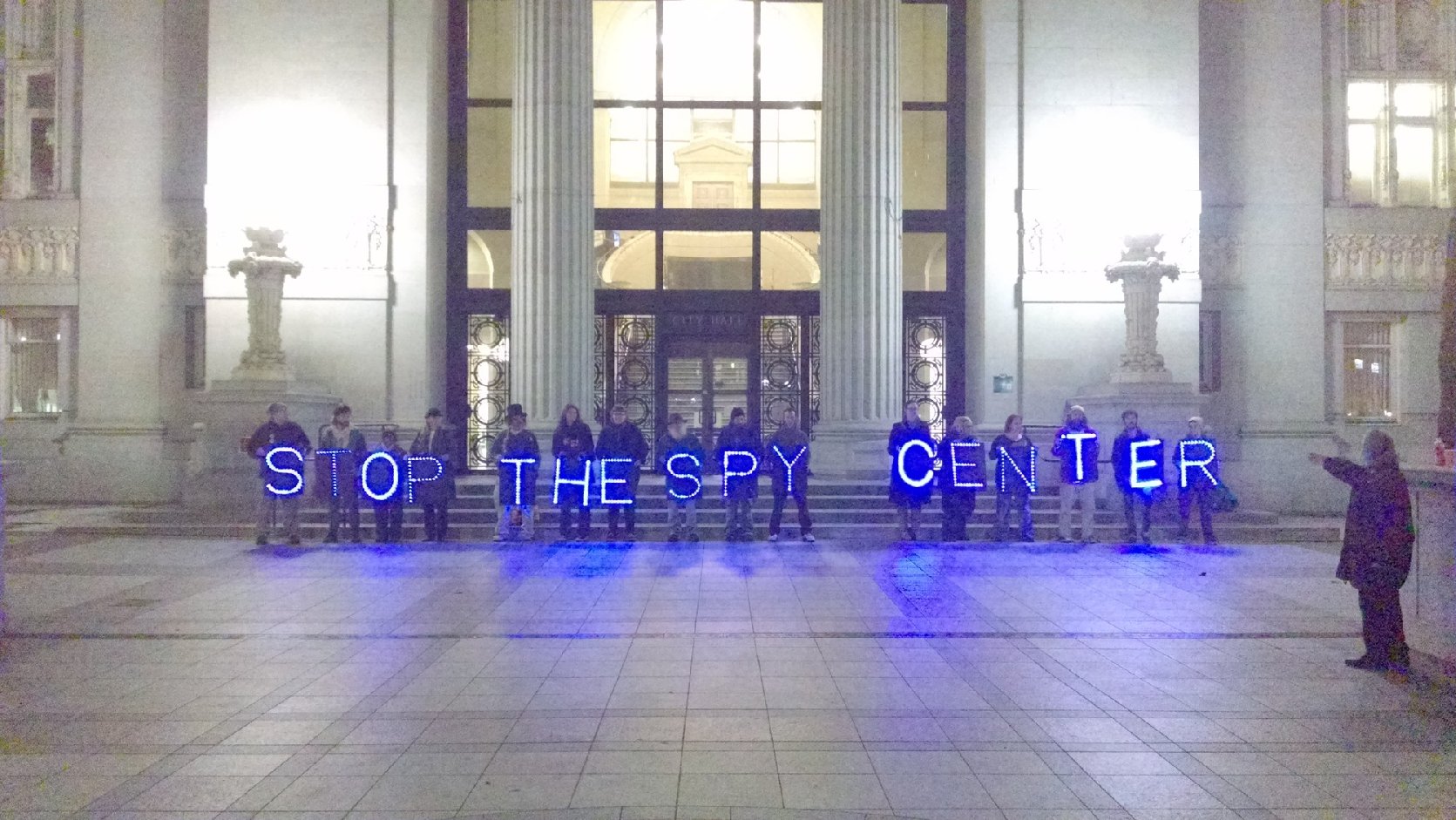
"caption": "Demonstrators protest in February 2015 against Oakland's plans for a citywide surveillance center.",
"description": "Demonstrators protest in February against Oakland's plans for a citywide surveillance center. ",
"title": "Oakland-Domain Awareness Center",
"credit": "Andrew Stelzer/KQED",
"status": "inherit",
"isLoading": false,
"fetchFailed": false
},
"news_125304": {
"type": "attachments",
"id": "news_125304",
"meta": {
"index": "attachments_1716263798",
"site": "news",
"id": "125304",
"found": true
},
"parent": 125300,
"imgSizes": {
"kqedFullSize": {
"file": "https://ww2.kqed.org/app/uploads/sites/10/2014/02/voting.jpg-e1391626792786.jpg",
"width": 640,
"height": 427
}
},
"publishDate": 1391626656,
"modified": 1423100624,
"caption": "Some Californians say they weren't registered to vote because the DMV didn't process their applications. ",
"description": "Some Californians say they weren't registered to vote because the DMV didn't process their applications. ",
"title": "voting.jpg",
"credit": "Montala Support",
"status": "inherit",
"isLoading": false,
"fetchFailed": false
}
},
"audioPlayerReducer": {
"postId": "stream_live",
"isPaused": true,
"isPlaying": false,
"pfsActive": false,
"pledgeModalIsOpen": true,
"playerDrawerIsOpen": false,
"liveAudioPlayStartedAt": 0,
"liveAudioPlayContext": ""
},
"authorsReducer": {
"byline_news_10713311": {
"type": "authors",
"id": "byline_news_10713311",
"meta": {
"override": true
},
"slug": "byline_news_10713311",
"name": "\u003ca href=\"https://twitter.com/APBreeFowler\" target=\"_blank\">Bree Fowler\u003c/a>\u003cbr />\u003cstrong>Associated Press\u003c/strong>",
"isLoading": false
},
"danbrekke": {
"type": "authors",
"id": "222",
"meta": {
"index": "authors_1716337520",
"id": "222",
"found": true
},
"name": "Dan Brekke",
"firstName": "Dan",
"lastName": "Brekke",
"slug": "danbrekke",
"email": "dbrekke@kqed.org",
"display_author_email": true,
"staff_mastheads": [
"news",
"science"
],
"title": "KQED Editor and Reporter",
"bio": "Dan Brekke is a reporter and editor for KQED News, responsible for coverage of topics ranging from California water issues to the Bay Area's transportation challenges. In a newsroom career that began in Chicago in 1972, Dan has worked for \u003cem>The San Francisco Examiner,\u003c/em> Wired and TechTV and has been published in The New York Times, The New York Times Magazine, Business 2.0, Salon and elsewhere.\r\n\r\nSince joining KQED in 2007, Dan has reported, edited and produced both radio and online features and breaking news pieces. He has shared as both editor and reporter in four Society of Professional Journalists Norcal Excellence in Journalism awards and one Edward R. Murrow regional award. He was chosen for a spring 2017 residency at the Mesa Refuge to advance his research on California salmon.\r\n\r\nEmail Dan at: \u003ca href=\"mailto:dbrekke@kqed.org\">dbrekke@kqed.org\u003c/a>\r\n\r\n\u003cstrong>Twitter:\u003c/strong> \u003ca href=\"https://twitter.com/danbrekke\" rel=\"noopener noreferrer\">twitter.com/danbrekke\u003c/a>\r\n\u003cstrong>Facebook:\u003c/strong> \u003ca href=\"https://www.facebook.com/danbrekke\" rel=\"noopener noreferrer\">www.facebook.com/danbrekke\u003c/a>\r\n\u003cstrong>LinkedIn:\u003c/strong> \u003ca href=\"https://www.linkedin.com/in/danbrekke\" rel=\"noopener noreferrer\">www.linkedin.com/in/danbrekke\u003c/a>",
"avatar": "https://secure.gravatar.com/avatar/c8126230345efca3f7aa89b1a402be45?s=600&d=mm&r=g",
"twitter": "danbrekke",
"facebook": null,
"instagram": "https://www.instagram.com/dan.brekke/",
"linkedin": "https://www.linkedin.com/in/danbrekke/",
"sites": [
{
"site": "news",
"roles": [
"administrator",
"create_posts"
]
},
{
"site": "stateofhealth",
"roles": [
"editor"
]
},
{
"site": "science",
"roles": [
"editor"
]
},
{
"site": "quest",
"roles": [
"contributor"
]
},
{
"site": "food",
"roles": [
"contributor"
]
},
{
"site": "forum",
"roles": [
"contributor"
]
},
{
"site": "liveblog",
"roles": [
"editor"
]
}
],
"headData": {
"title": "Dan Brekke | KQED",
"description": "KQED Editor and Reporter",
"ogImgSrc": "https://secure.gravatar.com/avatar/c8126230345efca3f7aa89b1a402be45?s=600&d=mm&r=g",
"twImgSrc": "https://secure.gravatar.com/avatar/c8126230345efca3f7aa89b1a402be45?s=600&d=mm&r=g"
},
"isLoading": false,
"link": "/author/danbrekke"
},
"kqednewsstaffandwires": {
"type": "authors",
"id": "237",
"meta": {
"index": "authors_1716337520",
"id": "237",
"found": true
},
"name": "KQED News Staff and Wires",
"firstName": "KQED News Staff and Wires",
"lastName": null,
"slug": "kqednewsstaffandwires",
"email": "onlinenewsstaff@kqed.org",
"display_author_email": false,
"staff_mastheads": [],
"title": null,
"bio": null,
"avatar": "https://secure.gravatar.com/avatar/72295af8ebbfbd19a4948f5271285664?s=600&d=blank&r=g",
"twitter": null,
"facebook": null,
"instagram": null,
"linkedin": null,
"sites": [
{
"site": "arts",
"roles": [
"contributor"
]
},
{
"site": "news",
"roles": [
"contributor"
]
},
{
"site": "lowdown",
"roles": [
"author"
]
},
{
"site": "stateofhealth",
"roles": [
"contributor"
]
},
{
"site": "food",
"roles": [
"author"
]
}
],
"headData": {
"title": "KQED News Staff and Wires | KQED",
"description": null,
"ogImgSrc": "https://secure.gravatar.com/avatar/72295af8ebbfbd19a4948f5271285664?s=600&d=blank&r=g",
"twImgSrc": "https://secure.gravatar.com/avatar/72295af8ebbfbd19a4948f5271285664?s=600&d=blank&r=g"
},
"isLoading": false,
"link": "/author/kqednewsstaffandwires"
},
"rachael-myrow": {
"type": "authors",
"id": "251",
"meta": {
"index": "authors_1716337520",
"id": "251",
"found": true
},
"name": "Rachael Myrow",
"firstName": "Rachael",
"lastName": "Myrow",
"slug": "rachael-myrow",
"email": "rmyrow@kqed.org",
"display_author_email": true,
"staff_mastheads": [
"news"
],
"title": "Senior Editor of KQED's Silicon Valley News Desk",
"bio": "• I write and edit stories about how Silicon Valley power and policies shape everyday life in California. I’m also passionate about making Bay Area history and culture more accessible to a broad public. • I’ve been a journalist for most of my life, starting in high school with The Franklin Press in Los Angeles, where I grew up. While earning my first degree in English at UC Berkeley, I got my start in public radio at KALX-FM. After completing a second degree in journalism at Cal, I landed my first professional job at Marketplace, then moved on to KPCC (now LAist), and then KQED, where I hosted The California Report for more than seven years. • My reporting has appeared on NPR, The World, WBUR’s \u003ci>Here & Now\u003c/i>, and the BBC. I also guest host for KQED’s \u003ci>Forum\u003c/i>, as well as the Commonwealth Club in San Francisco. • I speak periodically on media, democracy and technology issues, and do voiceover work for documentaries and educational video projects. • Outside of the studio, you'll find me hiking Bay Area trails and whipping up Insta-ready meals in my kitchen. • I do not accept gifts, money, or favors from anyone connected to my reporting, I don't pay people for information, and I do not support or donate to political causes. • I strive to treat the people I report on with fairness, honesty, and respect. I also recognize there are often multiple sides to a story and work to verify information through multiple sources and documentation. If I get something wrong, I correct it.",
"avatar": "https://secure.gravatar.com/avatar/3ed8a3c5f26025e4a805ba634cda8cd764906b97438a6d9ce216b044e340da4e?s=600&d=blank&r=g",
"twitter": "rachaelmyrow",
"bluesky": null,
"facebook": null,
"instagram": null,
"linkedin": "https://www.linkedin.com/in/rachaelmyrow/",
"sites": [
{
"site": "arts",
"roles": [
"administrator"
]
},
{
"site": "news",
"roles": [
"edit_others_posts",
"editor"
]
},
{
"site": "futureofyou",
"roles": [
"editor"
]
},
{
"site": "bayareabites",
"roles": [
"editor"
]
},
{
"site": "stateofhealth",
"roles": [
"editor"
]
},
{
"site": "science",
"roles": [
"editor"
]
},
{
"site": "food",
"roles": [
"editor"
]
},
{
"site": "forum",
"roles": [
"editor"
]
},
{
"site": "liveblog",
"roles": [
"author"
]
}
],
"headData": {
"title": "Rachael Myrow | KQED",
"description": "Senior Editor of KQED's Silicon Valley News Desk",
"ogImgSrc": "https://secure.gravatar.com/avatar/3ed8a3c5f26025e4a805ba634cda8cd764906b97438a6d9ce216b044e340da4e?s=600&d=blank&r=g",
"twImgSrc": "https://secure.gravatar.com/avatar/3ed8a3c5f26025e4a805ba634cda8cd764906b97438a6d9ce216b044e340da4e?s=600&d=blank&r=g"
},
"isLoading": false,
"link": "/author/rachael-myrow"
},
"scottshafer": {
"type": "authors",
"id": "255",
"meta": {
"index": "authors_1716337520",
"id": "255",
"found": true
},
"name": "Scott Shafer",
"firstName": "Scott",
"lastName": "Shafer",
"slug": "scottshafer",
"email": "sshafer@kqed.org",
"display_author_email": false,
"staff_mastheads": [
"news"
],
"title": "KQED Contributor",
"bio": "Scott Shafer is a senior editor with the KQED Politics and Government desk. He is co-host of Political Breakdown, the award-winning radio show and podcast with a personal take on the world of politics. Scott came to KQED in 1998 to host the statewide\u003cem> California Report\u003c/em>. Prior to that he had extended stints in politics and government\u003cem>.\u003c/em> He uses that inside experience at KQED in his, reporting, hosting and analysis for the politics desk. Scott collaborated \u003cem>Political Breakdown a\u003c/em>nd on \u003cem>The Political Mind of Jerry Brown, \u003c/em>an eight-part series about the life and extraordinary political career of the former governor. For fun, he plays water polo with the San Francisco Tsunami.",
"avatar": "https://secure.gravatar.com/avatar/a62ebae45b79d7aed1a39a0e3bf68104?s=600&d=blank&r=g",
"twitter": "scottshafer",
"bluesky": null,
"facebook": null,
"instagram": null,
"linkedin": null,
"sites": [
{
"site": "news",
"roles": [
"editor"
]
},
{
"site": "stateofhealth",
"roles": [
"author"
]
},
{
"site": "science",
"roles": [
"author"
]
},
{
"site": "forum",
"roles": [
"subscriber"
]
},
{
"site": "liveblog",
"roles": [
"author"
]
}
],
"headData": {
"title": "Scott Shafer | KQED",
"description": "KQED Contributor",
"ogImgSrc": "https://secure.gravatar.com/avatar/a62ebae45b79d7aed1a39a0e3bf68104?s=600&d=blank&r=g",
"twImgSrc": "https://secure.gravatar.com/avatar/a62ebae45b79d7aed1a39a0e3bf68104?s=600&d=blank&r=g"
},
"isLoading": false,
"link": "/author/scottshafer"
},
"lairdharrison": {
"type": "authors",
"id": "1367",
"meta": {
"index": "authors_1716337520",
"id": "1367",
"found": true
},
"name": "Laird Harrison",
"firstName": "Laird",
"lastName": "Harrison",
"slug": "lairdharrison",
"email": "laird_harrison@yahoo.com",
"display_author_email": false,
"staff_mastheads": [],
"title": null,
"bio": null,
"avatar": "https://secure.gravatar.com/avatar/cd1a94b071427a71ecfcbc115c6b0efe?s=600&d=blank&r=g",
"twitter": null,
"facebook": null,
"instagram": null,
"linkedin": null,
"sites": [
{
"site": "news",
"roles": [
"subscriber"
]
}
],
"headData": {
"title": "Laird Harrison | KQED",
"description": null,
"ogImgSrc": "https://secure.gravatar.com/avatar/cd1a94b071427a71ecfcbc115c6b0efe?s=600&d=blank&r=g",
"twImgSrc": "https://secure.gravatar.com/avatar/cd1a94b071427a71ecfcbc115c6b0efe?s=600&d=blank&r=g"
},
"isLoading": false,
"link": "/author/lairdharrison"
},
"rbowe": {
"type": "authors",
"id": "3231",
"meta": {
"index": "authors_1716337520",
"id": "3231",
"found": true
},
"name": "Rebecca Bowe",
"firstName": "Rebecca",
"lastName": "Bowe",
"slug": "rbowe",
"email": "rbowe@kqed.org",
"display_author_email": false,
"staff_mastheads": [],
"title": null,
"bio": "Rebecca Bowe is a journalist based in San Francisco. She's covered Bay Area news since 2009, and previously served as News Editor of the San Francisco Bay Guardian. Follow her on Twitter @ByRebeccaBowe.",
"avatar": "https://secure.gravatar.com/avatar/50e1da0639521639108e89c123a76c9c?s=600&d=blank&r=g",
"twitter": null,
"facebook": null,
"instagram": null,
"linkedin": null,
"sites": [
{
"site": "news",
"roles": [
"subscriber"
]
},
{
"site": "science",
"roles": [
"editor"
]
}
],
"headData": {
"title": "Rebecca Bowe | KQED",
"description": null,
"ogImgSrc": "https://secure.gravatar.com/avatar/50e1da0639521639108e89c123a76c9c?s=600&d=blank&r=g",
"twImgSrc": "https://secure.gravatar.com/avatar/50e1da0639521639108e89c123a76c9c?s=600&d=blank&r=g"
},
"isLoading": false,
"link": "/author/rbowe"
},
"amostafa": {
"type": "authors",
"id": "8645",
"meta": {
"index": "authors_1716337520",
"id": "8645",
"found": true
},
"name": "Amy Mostafa",
"firstName": "Amy",
"lastName": "Mostafa",
"slug": "amostafa",
"email": "amostafa@kqed.org",
"display_author_email": false,
"staff_mastheads": [],
"title": "KQED Contributor",
"bio": "Amy Mostafa is a former KQED Radio News intern covering Berkeley and other Bay Area issues. A Cal alumna, she currently co-produces a weekly KALX show titled \u003cem>Women Hold Up Half the Sky\u003c/em>.",
"avatar": "https://secure.gravatar.com/avatar/fef1453a70f813417b47cc64ebf662c5?s=600&d=blank&r=g",
"twitter": "amysmostafa",
"facebook": null,
"instagram": null,
"linkedin": null,
"sites": [
{
"site": "news",
"roles": [
"author"
]
},
{
"site": "futureofyou",
"roles": [
"author"
]
},
{
"site": "science",
"roles": [
"author"
]
}
],
"headData": {
"title": "Amy Mostafa | KQED",
"description": "KQED Contributor",
"ogImgSrc": "https://secure.gravatar.com/avatar/fef1453a70f813417b47cc64ebf662c5?s=600&d=blank&r=g",
"twImgSrc": "https://secure.gravatar.com/avatar/fef1453a70f813417b47cc64ebf662c5?s=600&d=blank&r=g"
},
"isLoading": false,
"link": "/author/amostafa"
}
},
"pagesReducer": {
"news_tag_aclu": {
"type": "terms",
"id": "news_350",
"meta": {
"index": "terms_1716263798",
"site": "news",
"id": "350",
"score": 9.55587
},
"featImg": null,
"name": "ACLU",
"description": null,
"taxonomy": "tag",
"headData": {
"twImgId": null,
"twTitle": null,
"ogTitle": null,
"ogImgId": null,
"twDescription": null,
"description": null,
"title": "ACLU Archives | KQED News",
"ogDescription": null
},
"ttid": 358,
"slug": "aclu",
"isLoading": false,
"title": "ACLU",
"pageMeta": {
"site": "news",
"WpPageTemplate": "page-topic-editorial",
"currentPage": 7
},
"blocks": [
{
"blockName": "kqed/post-list",
"attrs": {
"layout": "cardArticle2",
"query": "posts/news?tag=aclu",
"seeMore": false,
"paginated": true,
"page": 7
}
},
{
"blockName": "kqed/ad"
}
]
}
},
"pfsSessionReducer": {},
"postsReducer": {
"stream_live": {
"type": "live",
"id": "stream_live",
"audioUrl": "https://streams.kqed.org/kqedradio",
"title": "Live Stream",
"excerpt": "Live Stream information currently unavailable.",
"link": "/radio",
"featImg": "",
"label": {
"name": "KQED Live",
"link": "/"
}
},
"stream_kqedNewscast": {
"type": "posts",
"id": "stream_kqedNewscast",
"audioUrl": "https://www.kqed.org/.stream/anon/radio/RDnews/newscast.mp3?_=1",
"title": "KQED Newscast",
"featImg": "",
"label": {
"name": "88.5 FM",
"link": "/"
}
},
"news_10713311": {
"type": "posts",
"id": "news_10713311",
"meta": {
"index": "posts_1716263798",
"site": "news",
"id": "10713311",
"score": null,
"sort": [
1444418910000
]
},
"parent": 0,
"labelTerm": {
"site": "news",
"term": 72
},
"blocks": [],
"publishDate": 1444418910,
"format": "standard",
"disqusTitle": "New State Law Requires Warrant for Most Police Searches of Electronic Info",
"title": "New State Law Requires Warrant for Most Police Searches of Electronic Info",
"headTitle": "The California Report | KQED News",
"content": "\u003cp>California now requires police to get a court order before they can search messages, photos and other digital data stored on phones or company servers in the nation's most populous state.\u003c/p>\n\u003cp>Civil liberties advocates called the new law an important advance and said it highlights the need for similar protections at the national level.\u003c/p>\n\u003cp>The California \u003ca href=\"https://leginfo.legislature.ca.gov/faces/billNavClient.xhtml?bill_id=201520160SB178\" target=\"_blank\">Electronic Communications Privacy Act\u003c/a> was signed into law by Gov. Jerry Brown on Thursday. It's only the third of its kind in the U.S.\u003c/p>\n\u003cp>While some states guarantee some of its protections, only Maine and Utah previously had comprehensive laws on the books, noted Hanni Fakhoury, senior staff attorney for the \u003ca href=\"https://www.eff.org/deeplinks/2015/10/victory-california-gov-brown-signs-calecpa-requiring-police-get-warrant-accessing\" target=\"_blank\">Electronic Frontier Foundation\u003c/a>.\u003c/p>\n\u003cp>\"It's an expansive bill and this being California, it covers a lot of people,\" Fakhoury said of the state with a population of about 39 million. \"It's an important thing and a good development.\"\u003c/p>\n\u003cp>[ad fullwidth]\u003c/p>\n\u003cp>The digital rights group, along with the \u003ca href=\"https://www.aclunc.org/news/landmark-victory-digital-privacy-gov-brown-signs-california-electronic-communications-privacy\" target=\"_blank\">American Civil Liberties Union\u003c/a>, news organizations and tech companies worked for the bill's passage. They argued that previous California law dating back to the 1980s was in desperate need of an update given the dramatic changes in the digital world.\u003c/p>\n\u003cp>But the bill's opponents, including several California police groups, argued that the measure would hamper the ability of law enforcement to investigate child pornographers and others who commit crimes online.\u003c/p>\n\u003cp>Law enforcement requests for people's electronic information, particularly from technology companies such as Google and Twitter, have skyrocketed in recent years, said Nicole Ozer, technology and civil liberties policy director for the ACLU of California.\u003c/p>\n\u003cp>Previously, all that was generally needed to get the information was a subpoena. Now, under the new law, a warrant will be required in most cases.\u003c/p>\n\u003cp>\"It really is a true update of privacy law for the digital world, making sure that sensitive information about who we are, and where we go, and what we do, and who we know is protected from government intrusion,\" Ozer said.\u003c/p>\n\u003cp>She added that \"hopefully this will send an important message to Congress to make sure that all Americans have these important, updated privacy protections.\"\u003c/p>\n\u003cp>\u003c/p>\n\u003cp>Advocates have tried to pass legislation at the national level for years without any success. The Email Privacy Act, a proposed update to the Electronic Communications Privacy Act, has 300 sponsors in the U.S. House of Representatives, but its future remains unclear.\u003c/p>\n\n",
"disqusIdentifier": "10713311 http://ww2.kqed.org/news/?p=10713311",
"disqusUrl": "https://ww2.kqed.org/news/2015/10/09/new-state-law-requires-warrant-for-most-police-searches-of-electronic-info/",
"stats": {
"hasVideo": false,
"hasChartOrMap": false,
"hasAudio": false,
"hasPolis": false,
"wordCount": 400,
"hasGoogleForm": false,
"hasGallery": false,
"hasHearkenModule": false,
"iframeSrcs": [],
"paragraphCount": 14
},
"modified": 1444428562,
"excerpt": "Privacy advocates celebrate law's passage, push for national protections.",
"headData": {
"twImgId": "",
"twTitle": "",
"ogTitle": "",
"ogImgId": "",
"twDescription": "",
"description": "Privacy advocates celebrate law's passage, push for national protections.",
"title": "New State Law Requires Warrant for Most Police Searches of Electronic Info | KQED",
"ogDescription": "",
"schema": {
"@context": "https://schema.org",
"@type": "NewsArticle",
"headline": "New State Law Requires Warrant for Most Police Searches of Electronic Info",
"datePublished": "2015-10-09T12:28:30-07:00",
"dateModified": "2015-10-09T15:09:22-07:00",
"image": "https://cdn.kqed.org/wp-content/uploads/2020/02/KQED-OG-Image@1x.png",
"isAccessibleForFree": "True",
"publisher": {
"@type": "NewsMediaOrganization",
"@id": "https://www.kqed.org/#organization",
"name": "KQED",
"logo": "https://cdn.kqed.org/wp-content/uploads/2020/02/KQED-OG-Image@1x.png",
"url": "https://www.kqed.org",
"sameAs": [
"https://www.facebook.com/KQED",
"https://twitter.com/KQED",
"https://www.instagram.com/kqed/",
"https://www.tiktok.com/@kqedofficial",
"https://www.linkedin.com/company/kqed",
"https://www.youtube.com/channel/UCeC0IOo7i1P_61zVUWbJ4nw"
]
}
}
},
"guestAuthors": [],
"slug": "new-state-law-requires-warrant-for-most-police-searches-of-electronic-info",
"status": "publish",
"nprByline": "\u003ca href=\"https://twitter.com/APBreeFowler\" target=\"_blank\">Bree Fowler\u003c/a>\u003cbr />\u003cstrong>Associated Press\u003c/strong>",
"path": "/news/10713311/new-state-law-requires-warrant-for-most-police-searches-of-electronic-info",
"audioTrackLength": null,
"parsedContent": [
{
"type": "contentString",
"content": "\u003cdiv class=\"post-body\">\u003cp>\u003cp>California now requires police to get a court order before they can search messages, photos and other digital data stored on phones or company servers in the nation's most populous state.\u003c/p>\n\u003cp>Civil liberties advocates called the new law an important advance and said it highlights the need for similar protections at the national level.\u003c/p>\n\u003cp>The California \u003ca href=\"https://leginfo.legislature.ca.gov/faces/billNavClient.xhtml?bill_id=201520160SB178\" target=\"_blank\">Electronic Communications Privacy Act\u003c/a> was signed into law by Gov. Jerry Brown on Thursday. It's only the third of its kind in the U.S.\u003c/p>\n\u003cp>While some states guarantee some of its protections, only Maine and Utah previously had comprehensive laws on the books, noted Hanni Fakhoury, senior staff attorney for the \u003ca href=\"https://www.eff.org/deeplinks/2015/10/victory-california-gov-brown-signs-calecpa-requiring-police-get-warrant-accessing\" target=\"_blank\">Electronic Frontier Foundation\u003c/a>.\u003c/p>\n\u003cp>\"It's an expansive bill and this being California, it covers a lot of people,\" Fakhoury said of the state with a population of about 39 million. \"It's an important thing and a good development.\"\u003c/p>\n\u003cp>\u003c/p>\u003c/div>",
"attributes": {
"named": {},
"numeric": []
}
},
{
"type": "component",
"content": "",
"name": "ad",
"attributes": {
"named": {
"label": "fullwidth"
},
"numeric": [
"fullwidth"
]
}
},
{
"type": "contentString",
"content": "\u003cdiv class=\"post-body\">\u003cp>\u003c/p>\n\u003cp>The digital rights group, along with the \u003ca href=\"https://www.aclunc.org/news/landmark-victory-digital-privacy-gov-brown-signs-california-electronic-communications-privacy\" target=\"_blank\">American Civil Liberties Union\u003c/a>, news organizations and tech companies worked for the bill's passage. They argued that previous California law dating back to the 1980s was in desperate need of an update given the dramatic changes in the digital world.\u003c/p>\n\u003cp>But the bill's opponents, including several California police groups, argued that the measure would hamper the ability of law enforcement to investigate child pornographers and others who commit crimes online.\u003c/p>\n\u003cp>Law enforcement requests for people's electronic information, particularly from technology companies such as Google and Twitter, have skyrocketed in recent years, said Nicole Ozer, technology and civil liberties policy director for the ACLU of California.\u003c/p>\n\u003cp>Previously, all that was generally needed to get the information was a subpoena. Now, under the new law, a warrant will be required in most cases.\u003c/p>\n\u003cp>\"It really is a true update of privacy law for the digital world, making sure that sensitive information about who we are, and where we go, and what we do, and who we know is protected from government intrusion,\" Ozer said.\u003c/p>\n\u003cp>She added that \"hopefully this will send an important message to Congress to make sure that all Americans have these important, updated privacy protections.\"\u003c/p>\n\u003cp>\u003c/p>\n\u003cp>Advocates have tried to pass legislation at the national level for years without any success. The Email Privacy Act, a proposed update to the Electronic Communications Privacy Act, has 300 sponsors in the U.S. House of Representatives, but its future remains unclear.\u003c/p>\n\n\u003c/div>\u003c/p>",
"attributes": {
"named": {},
"numeric": []
}
}
],
"link": "/news/10713311/new-state-law-requires-warrant-for-most-police-searches-of-electronic-info",
"authors": [
"byline_news_10713311"
],
"programs": [
"news_6944",
"news_72"
],
"categories": [
"news_6188",
"news_8",
"news_13",
"news_248"
],
"tags": [
"news_350",
"news_4781",
"news_30"
],
"featImg": "news_10713372",
"label": "news_72"
},
"news_10702738": {
"type": "posts",
"id": "news_10702738",
"meta": {
"index": "posts_1716263798",
"site": "news",
"id": "10702738",
"score": null,
"sort": [
1443742094000
]
},
"parent": 0,
"labelTerm": {
"site": "news",
"term": 6944
},
"blocks": [],
"publishDate": 1443742094,
"format": "standard",
"disqusTitle": "Activists Say Berkeley Police Data Point To Racial Profiling",
"title": "Activists Say Berkeley Police Data Point To Racial Profiling",
"headTitle": "News Fix | KQED News",
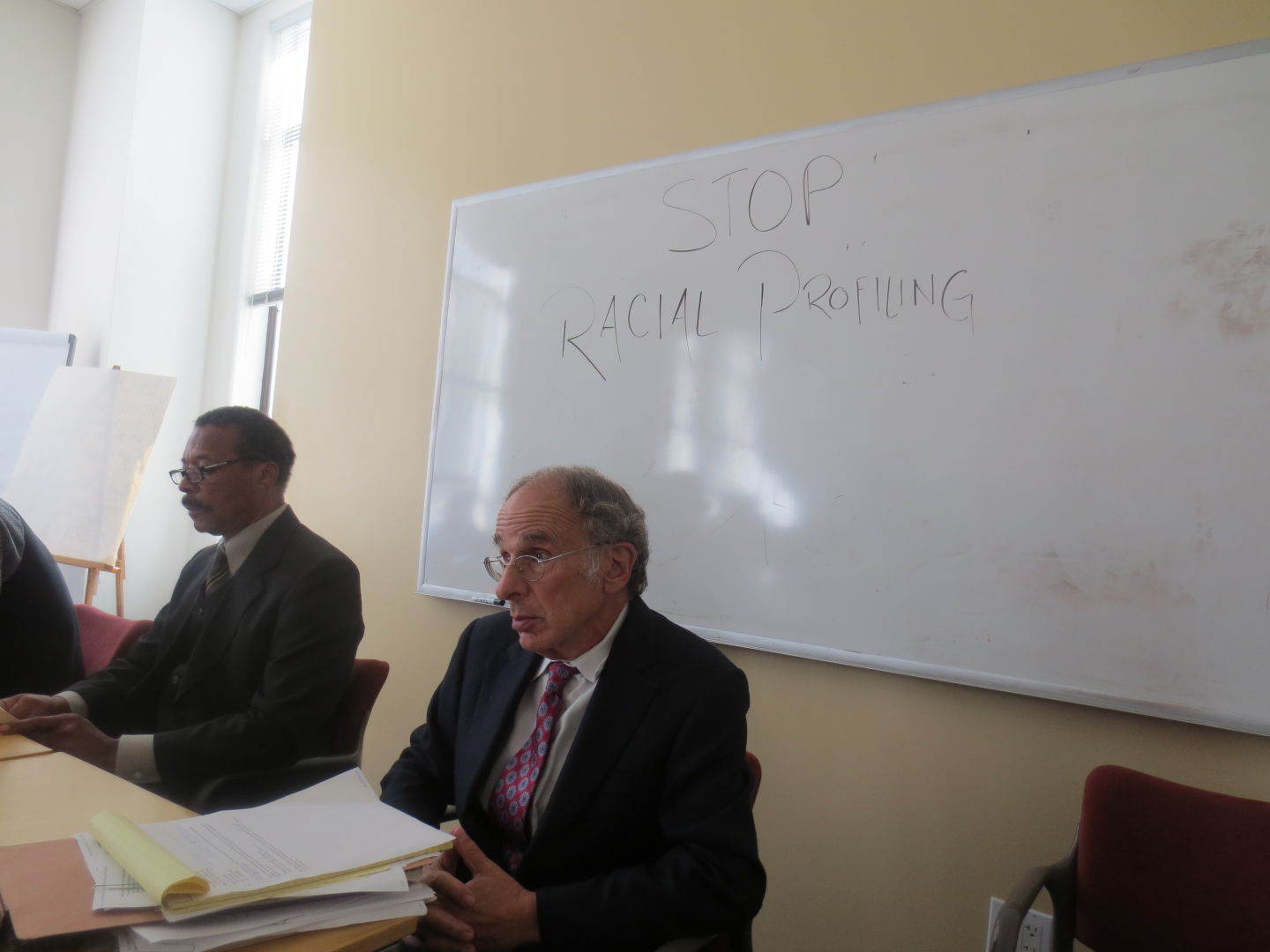
"content": "\u003cp>Police accountability advocates are calling on the Berkeley Police Department to reform its practices after reviewing traffic stop data that they say reveal a pattern of racial profiling.\u003c/p>\n\u003cp>In a report issued Tuesday, a coalition that includes the Berkeley NAACP and the National Lawyers Guild presented its analysis of data collected by Berkeley police from January to August of 2015.\u003c/p>\n\u003cp>[soundcloud url=\"https://api.soundcloud.com/tracks/230394791\" params=\"color=ff5500&auto_play=false&hide_related=false&show_comments=true&show_user=true&show_reposts=false\" width=\"100%\" height=\"166\" iframe=\"true\" /]\u003c/p>\n\u003cp>The numbers show Berkeley cops were more likely to stop African-Americans and Latinos than whites, but less likely to cite or arrest these groups for violations after pulling them over, activists concluded.\u003c/p>\n\u003cp>The statistics included demographic information on more than 4,000 people subjected to traffic stops. The information didn't include where they were stopped or whether they resided in Berkeley.\u003c/p>\n\u003cfigure id=\"attachment_10702747\" class=\"wp-caption aligncenter\" style=\"max-width: 527px\">\u003ca href=\"http://ww2.kqed.org/news/wp-content/uploads/sites/10/2015/09/Racial-Profiling-in-Berkeley-Diagram.png\">\u003cimg class=\"wp-image-10702747 \" src=\"http://ww2.kqed.org/news/wp-content/uploads/sites/10/2015/09/Racial-Profiling-in-Berkeley-Diagram.png\" alt=\"Berkeley Copwatch illustrates demographic data provided by the Berkeley Police Department on traffic stops between January 26 and August 12, 2015.\" width=\"527\" height=\"391\" srcset=\"https://ww2.kqed.org/app/uploads/sites/10/2015/09/Racial-Profiling-in-Berkeley-Diagram.png 1645w, https://ww2.kqed.org/app/uploads/sites/10/2015/09/Racial-Profiling-in-Berkeley-Diagram-400x297.png 400w, https://ww2.kqed.org/app/uploads/sites/10/2015/09/Racial-Profiling-in-Berkeley-Diagram-800x595.png 800w, https://ww2.kqed.org/app/uploads/sites/10/2015/09/Racial-Profiling-in-Berkeley-Diagram-1440x1071.png 1440w, https://ww2.kqed.org/app/uploads/sites/10/2015/09/Racial-Profiling-in-Berkeley-Diagram-1180x877.png 1180w, https://ww2.kqed.org/app/uploads/sites/10/2015/09/Racial-Profiling-in-Berkeley-Diagram-960x714.png 960w\" sizes=\"(max-width: 527px) 100vw, 527px\">\u003c/a>\u003cfigcaption class=\"wp-caption-text\">Berkeley Copwatch illustrates demographic data provided by the Berkeley Police Department on traffic stops between Jan. 26 and Aug. 12, 2015. \u003ccite>(Berkeley Copwatch)\u003c/cite>\u003c/figcaption>\u003c/figure>\n\u003cp>Although African-Americans constitute less than 8 percent of Berkeley’s population, they made up 30 percent of those stopped by police, according to the coalition's analysis.\u003c/p>\n\u003cp>[ad fullwidth]\u003c/p>\n\u003cp>And while 38 percent of whites stopped by police were released without arrest or citation, 66 percent of African-Americans and 56 percent of Latinos who were stopped were ultimately released under the same circumstances.\u003c/p>\n\u003cp>Advocates said these numbers supported the conclusion that \"when African-Americans and Latinos are stopped, very often it is for no reason.\" They said the findings confirm previous charges of \u003ca href=\"http://www.berkeleyside.com/2014/05/12/community-comes-out-for-naacp-forum-on-alleged-racial-profiling-by-police-in-berkeley/\" target=\"_blank\">racial profiling\u003c/a> on the part of the Berkeley police.\u003c/p>\n\u003cp>The Berkeley City Council mandated the collection of data on police stops in June 2014 as part of the Police Department’s \u003ca href=\"http://ww2.kqed.org/news/2014/06/19/berkeley-police-antidiscrimination-racial-profiling\" target=\"_blank\">Fair and Impartial Policing\u003c/a> policy — a model that Berkeley Police Chief Michael Meehan says he takes pride in.\u003c/p>\n\u003cp>In response to the coalition's findings, Meehan said his department has no tolerance for biased policing.\u003c/p>\n\u003cp>\"Such discrimination is illegal, it is not our practice, and it is not part of our organizational culture,” he said.\u003c/p>\n\u003cp>Marcel Jones, a Berkeley Copwatch organizer and member of the UC Berkeley Black Student Union, pointed to the experiences behind these numbers while speaking at a Tuesday press conference.\u003c/p>\n\u003cp>“When these searches happen, folks are put in handcuffs, are sitting on the curb, have to deal with that embarrassment, have to deal with that trauma,” he said.\u003c/p>\n\u003cp>Berkeley civil rights attorney Jim Chanin said he was troubled by the disparity between how often blacks and whites are cited or arrested -- a statistic known as \"yield rate.\"\u003c/p>\n\u003cp>“The yield rate needs to be the same for African-Americans and whites,\" he said. \"Because we have found that when it is, there are less African-Americans stopped -- and when they are, it’s for a good reason, and not no reason.”\u003c/p>\n\u003cp>The coalition presented \u003ca href=\"http://www.scribd.com/doc/283066052/Press-Release-Berkeley-Demographic-Results-2015#scribd\">several ideas\u003c/a> on how to achieve that.\u003c/p>\n\u003cp>In addition to demanding the city mandate the use of body cameras for all police officers, advocates are also urging the department to retrain some department members. The activist coaltion also called for more frequent demographic reports on police stops, including information about pedestrian stops.\u003c/p>\n\u003cp>Meehan said the department worked with the NAACP, ACLU and the city's Police Review Commission to undergo fair policing training just last year, and will continue to do so.\u003c/p>\n\u003cp>“We all want the same thing,\" Meehan said. \"We want a fair and equitable Police Department.”\u003c/p>\n\u003cp>\u003c/p>\n\u003cp>Meehan added the department would commission its own analysis of the data through \u003ca href=\"http://cpe.psych.ucla.edu/\" target=\"_blank\">UCLA’s Center for Policing Equity\u003c/a> in coming months.\u003c/p>\n\n",
"disqusIdentifier": "10702738 http://ww2.kqed.org/news/?p=10702738",
"disqusUrl": "https://ww2.kqed.org/news/2015/10/01/activists-say-berkeley-police-data-points-to-racial-profiling/",
"stats": {
"hasVideo": false,
"hasChartOrMap": false,
"hasAudio": false,
"hasPolis": false,
"wordCount": 625,
"hasGoogleForm": false,
"hasGallery": false,
"hasHearkenModule": false,
"iframeSrcs": [],
"paragraphCount": 22
},
"modified": 1445990812,
"excerpt": "African-Americans make up less than 8 percent of population but account for a third of traffic stops. ",
"headData": {
"twImgId": "",
"twTitle": "",
"ogTitle": "",
"ogImgId": "",
"twDescription": "",
"description": "African-Americans make up less than 8 percent of population but account for a third of traffic stops. ",
"title": "Activists Say Berkeley Police Data Point To Racial Profiling | KQED",
"ogDescription": "",
"schema": {
"@context": "https://schema.org",
"@type": "NewsArticle",
"headline": "Activists Say Berkeley Police Data Point To Racial Profiling",
"datePublished": "2015-10-01T16:28:14-07:00",
"dateModified": "2015-10-27T17:06:52-07:00",
"image": "https://cdn.kqed.org/wp-content/uploads/2020/02/KQED-OG-Image@1x.png",
"isAccessibleForFree": "True",
"publisher": {
"@type": "NewsMediaOrganization",
"@id": "https://www.kqed.org/#organization",
"name": "KQED",
"logo": "https://cdn.kqed.org/wp-content/uploads/2020/02/KQED-OG-Image@1x.png",
"url": "https://www.kqed.org",
"sameAs": [
"https://www.facebook.com/KQED",
"https://twitter.com/KQED",
"https://www.instagram.com/kqed/",
"https://www.tiktok.com/@kqedofficial",
"https://www.linkedin.com/company/kqed",
"https://www.youtube.com/channel/UCeC0IOo7i1P_61zVUWbJ4nw"
]
}
}
},
"guestAuthors": [],
"slug": "activists-say-berkeley-police-data-points-to-racial-profiling",
"status": "publish",
"path": "/news/10702738/activists-say-berkeley-police-data-points-to-racial-profiling",
"audioTrackLength": null,
"parsedContent": [
{
"type": "contentString",
"content": "\u003cdiv class=\"post-body\">\u003cp>\u003cp>Police accountability advocates are calling on the Berkeley Police Department to reform its practices after reviewing traffic stop data that they say reveal a pattern of racial profiling.\u003c/p>\n\u003cp>In a report issued Tuesday, a coalition that includes the Berkeley NAACP and the National Lawyers Guild presented its analysis of data collected by Berkeley police from January to August of 2015.\u003c/p>\n\u003cp>\u003c/p>\u003cp>\u003cdiv class='utils-parseShortcode-shortcodes-__shortcodes__shortcodeWrapper'>\n \u003ciframe width='100%' height='166'\n scrolling='no' frameborder='no'\n src='https://w.soundcloud.com/player/?url=https://api.soundcloud.com/tracks/230394791&visual=true&color=ff5500&auto_play=false&hide_related=false&show_comments=true&show_user=true&show_reposts=false'\n title='https://api.soundcloud.com/tracks/230394791'>\n \u003c/iframe>\n \u003c/div>\u003c/p>\u003cp>\u003c/p>\n\u003cp>The numbers show Berkeley cops were more likely to stop African-Americans and Latinos than whites, but less likely to cite or arrest these groups for violations after pulling them over, activists concluded.\u003c/p>\n\u003cp>The statistics included demographic information on more than 4,000 people subjected to traffic stops. The information didn't include where they were stopped or whether they resided in Berkeley.\u003c/p>\n\u003cfigure id=\"attachment_10702747\" class=\"wp-caption aligncenter\" style=\"max-width: 527px\">\u003ca href=\"http://ww2.kqed.org/news/wp-content/uploads/sites/10/2015/09/Racial-Profiling-in-Berkeley-Diagram.png\">\u003cimg class=\"wp-image-10702747 \" src=\"http://ww2.kqed.org/news/wp-content/uploads/sites/10/2015/09/Racial-Profiling-in-Berkeley-Diagram.png\" alt=\"Berkeley Copwatch illustrates demographic data provided by the Berkeley Police Department on traffic stops between January 26 and August 12, 2015.\" width=\"527\" height=\"391\" srcset=\"https://ww2.kqed.org/app/uploads/sites/10/2015/09/Racial-Profiling-in-Berkeley-Diagram.png 1645w, https://ww2.kqed.org/app/uploads/sites/10/2015/09/Racial-Profiling-in-Berkeley-Diagram-400x297.png 400w, https://ww2.kqed.org/app/uploads/sites/10/2015/09/Racial-Profiling-in-Berkeley-Diagram-800x595.png 800w, https://ww2.kqed.org/app/uploads/sites/10/2015/09/Racial-Profiling-in-Berkeley-Diagram-1440x1071.png 1440w, https://ww2.kqed.org/app/uploads/sites/10/2015/09/Racial-Profiling-in-Berkeley-Diagram-1180x877.png 1180w, https://ww2.kqed.org/app/uploads/sites/10/2015/09/Racial-Profiling-in-Berkeley-Diagram-960x714.png 960w\" sizes=\"(max-width: 527px) 100vw, 527px\">\u003c/a>\u003cfigcaption class=\"wp-caption-text\">Berkeley Copwatch illustrates demographic data provided by the Berkeley Police Department on traffic stops between Jan. 26 and Aug. 12, 2015. \u003ccite>(Berkeley Copwatch)\u003c/cite>\u003c/figcaption>\u003c/figure>\n\u003cp>Although African-Americans constitute less than 8 percent of Berkeley’s population, they made up 30 percent of those stopped by police, according to the coalition's analysis.\u003c/p>\n\u003cp>\u003c/p>\u003c/div>",
"attributes": {
"named": {},
"numeric": []
}
},
{
"type": "component",
"content": "",
"name": "ad",
"attributes": {
"named": {
"label": "fullwidth"
},
"numeric": [
"fullwidth"
]
}
},
{
"type": "contentString",
"content": "\u003cdiv class=\"post-body\">\u003cp>\u003c/p>\n\u003cp>And while 38 percent of whites stopped by police were released without arrest or citation, 66 percent of African-Americans and 56 percent of Latinos who were stopped were ultimately released under the same circumstances.\u003c/p>\n\u003cp>Advocates said these numbers supported the conclusion that \"when African-Americans and Latinos are stopped, very often it is for no reason.\" They said the findings confirm previous charges of \u003ca href=\"http://www.berkeleyside.com/2014/05/12/community-comes-out-for-naacp-forum-on-alleged-racial-profiling-by-police-in-berkeley/\" target=\"_blank\">racial profiling\u003c/a> on the part of the Berkeley police.\u003c/p>\n\u003cp>The Berkeley City Council mandated the collection of data on police stops in June 2014 as part of the Police Department’s \u003ca href=\"http://ww2.kqed.org/news/2014/06/19/berkeley-police-antidiscrimination-racial-profiling\" target=\"_blank\">Fair and Impartial Policing\u003c/a> policy — a model that Berkeley Police Chief Michael Meehan says he takes pride in.\u003c/p>\n\u003cp>In response to the coalition's findings, Meehan said his department has no tolerance for biased policing.\u003c/p>\n\u003cp>\"Such discrimination is illegal, it is not our practice, and it is not part of our organizational culture,” he said.\u003c/p>\n\u003cp>Marcel Jones, a Berkeley Copwatch organizer and member of the UC Berkeley Black Student Union, pointed to the experiences behind these numbers while speaking at a Tuesday press conference.\u003c/p>\n\u003cp>“When these searches happen, folks are put in handcuffs, are sitting on the curb, have to deal with that embarrassment, have to deal with that trauma,” he said.\u003c/p>\n\u003cp>Berkeley civil rights attorney Jim Chanin said he was troubled by the disparity between how often blacks and whites are cited or arrested -- a statistic known as \"yield rate.\"\u003c/p>\n\u003cp>“The yield rate needs to be the same for African-Americans and whites,\" he said. \"Because we have found that when it is, there are less African-Americans stopped -- and when they are, it’s for a good reason, and not no reason.”\u003c/p>\n\u003cp>The coalition presented \u003ca href=\"http://www.scribd.com/doc/283066052/Press-Release-Berkeley-Demographic-Results-2015#scribd\">several ideas\u003c/a> on how to achieve that.\u003c/p>\n\u003cp>In addition to demanding the city mandate the use of body cameras for all police officers, advocates are also urging the department to retrain some department members. The activist coaltion also called for more frequent demographic reports on police stops, including information about pedestrian stops.\u003c/p>\n\u003cp>Meehan said the department worked with the NAACP, ACLU and the city's Police Review Commission to undergo fair policing training just last year, and will continue to do so.\u003c/p>\n\u003cp>“We all want the same thing,\" Meehan said. \"We want a fair and equitable Police Department.”\u003c/p>\n\u003cp>\u003c/p>\n\u003cp>Meehan added the department would commission its own analysis of the data through \u003ca href=\"http://cpe.psych.ucla.edu/\" target=\"_blank\">UCLA’s Center for Policing Equity\u003c/a> in coming months.\u003c/p>\n\n\u003c/div>\u003c/p>",
"attributes": {
"named": {},
"numeric": []
}
}
],
"link": "/news/10702738/activists-say-berkeley-police-data-points-to-racial-profiling",
"authors": [
"8645"
],
"programs": [
"news_6944"
],
"categories": [
"news_6188"
],
"tags": [
"news_350",
"news_18199",
"news_6501"
],
"featImg": "news_10702746",
"label": "news_6944"
},
"news_10595278": {
"type": "posts",
"id": "news_10595278",
"meta": {
"index": "posts_1716263798",
"site": "news",
"id": "10595278",
"score": null,
"sort": [
1436548827000
]
},
"guestAuthors": [],
"slug": "can-privacy-advocates-force-google-to-bring-right-to-be-forgotten-to-u-s",
"title": "Can Privacy Advocates Force Google to Bring ‘Right to Be Forgotten’ to U.S.?",
"publishDate": 1436548827,
"format": "standard",
"headTitle": "Can Privacy Advocates Force Google to Bring ‘Right to Be Forgotten’ to U.S.? | KQED",
"labelTerm": {
"term": 6944,
"site": "news"
},
"content": "\u003cp>Google’s refusal to honor U.S. citizens’ requests to remove content they’d rather have hidden is “unfair and deceptive” since the company professes to be concerned about privacy, an advocacy organization charged in a formal complaint filed July 7 with the Federal Trade Commission.\u003c/p>\n\u003cp>According to Consumer Watchdog, the so-called right to be forgotten is already a “basic privacy tool” afforded to citizens of the European Union. Google created a system for reviewing requests to remove content from search results after a 2014 European Court of Justice ruling determined that individuals have a right to ask for content associated with their names to be removed if it’s “inadequate, irrelevant … or excessive.”\u003c/p>\n\u003cp>John Simpson, privacy project director at Consumer Watchdog, argued in \u003ca href=\"http://www.consumerwatchdog.org/resources/ltrftcrtbf070715.pdf\">the FTC complaint\u003c/a> that Google’s refusal to implement a similar program in the U.S. should be considered a violation of the Federal Trade Commission Act.\u003c/p>\n\u003cp>“The Internet giant aggressively and repeatedly holds itself out to users as being deeply committed to privacy,” Simpson wrote. “Without a doubt requesting the removal of a search engine link from one’s name to irrelevant data under the right to be forgotten (or right to relevancy) is an important privacy option. Describing yourself as championing users’ privacy and not offering a key privacy tool — indeed one offered all across Europe — is deceptive behavior.”\u003c/p>\n\u003cp>Consumer Watchdog offered a series of examples for why such a policy ought to be followed in the U.S. One cited a case from 2006 in which a young woman from Southern California was decapitated in an auto collision after driving her father’s sports car. Authorities didn’t allow the family to see her disfigured body after the accident, but California Highway Patrol officers leaked graphic photos of the accident scene to friends for pure shock value. The pictures began circulating on the Internet, prompting members of her family to eliminate all online activity from their lives. In 2012, they received about $2.37 million \u003ca href=\"http://articles.latimes.com/2012/jan/31/local/la-me-chp-photos-20120131\">in a settlement\u003c/a> with CHP.\u003c/p>\n\u003cp>[ad fullwidth]\u003c/p>\n\u003cp>In a recent interview with KQED Public Radio, Jill Bronfman, director of the Privacy and Technology Project at the Institute for Innovation Law at UC Hastings, explained how Google’s system for processing individuals’ requests has worked in practice.\u003c/p>\n\u003cp>[soundcloud url=”https://api.soundcloud.com/tracks/213729398″]\u003c/p>\n\u003cp>“They have kind of become a pseudo-government agency in the EU, where Google is actually functioning as an arbiter of public policy, deciding what should be online and what shouldn’t be online,” Bronfman said. “EU citizens are submitting requests and Google is deciding what to keep up and what to keep down. They’ve looked at over a million URLs so far.”\u003c/p>\n\u003cp>According to Consumer Watchdog, Google denied removal requests for nearly 59 percent of the links.\u003c/p>\n\u003cp>Expanding the system of review to the U.S. “would involve a significant expenditure of time and resources,” Bronfman noted.\u003c/p>\n\u003cp>The right to be forgotten has been polarizing in Europe. The BBC, for instance, \u003ca href=\"http://www.wired.co.uk/news/archive/2015-06/25/bbc-right-to-be-forgotten\">published a list of stories that had been purged\u003c/a> from Google, demonstrating how the policy could impact news content. The debate would likely be just as intense if the practice were implemented in the United States.\u003c/p>\n\u003cp>Critics have also derided the right to be forgotten as a tool that would make it easier for the wealthy and well-connected to hide their activities from public view or that invites censorship.\u003c/p>\n\u003cp>Google itself has made it clear it disagrees with the policy. While the search giant didn’t respond to a request for comment by press time, \u003ca href=\"http://googlepublicpolicy.blogspot.com/2014/07/searching-for-right-balance.html\">a blog post published on its website in 2014\u003c/a> spells out Google’s take on the matter:\u003c/p>\n\u003cblockquote>\u003cp>“The European Court found that people have the right to ask for information to be removed from search results that include their names if it is ‘inadequate, irrelevant or no longer relevant, or excessive.’ In deciding what to remove, search engines must also have regard to the public interest. These are, of course, very vague and subjective tests. The court also decided that search engines don’t qualify for a ‘journalistic exception.’ This means that The Guardian could have an article on its website about an individual that’s perfectly legal, but we might not legally be able to show links to it in our results when you search for that person’s name. It’s a bit like saying the book can stay in the library, it just cannot be included in the library’s card catalogue. It’s for these reasons that we disagree with the ruling. That said, we obviously respect the court’s authority and are doing our very best to comply.”\u003c/p>\u003c/blockquote>\n\u003cp>\u003c/p>\n\u003cp>Responding to a request for comment, the Northern California chapter of the American Civil Liberties Union directed KQED to a detailed white paper prepared by Chris Conley, the organization’s technology and civil liberties policy attorney. Here’s how Conley sorts out the right to be forgotten — or as he called it, the right to be deleted.\u003c/p>\n\u003cblockquote>\u003cp>“The right to privacy, a right many consider fundamental to our society, may be rendered impotent if our private actions can be reconstructed from countless permanent records. We propose that the best way to address this concern is to create a right to delete that gives individuals the ability to control their own history and thus escape it. This right comes from the idea that records are not just about a person; in our modern world, they are functionally part of our digital persona, and thus should be under our control whether we create them or not. … We have already seen some progress as companies have launched products and altered terms of service to give users the right and ability to delete their own records. Although establishing this right remains challenging, we believe it can be done.”\u003c/p>\u003c/blockquote>\n\n",
"blocks": [],
"excerpt": "They want Google to honor requests from U.S. citizens to hide content from search results.",
"status": "publish",
"parent": 0,
"modified": 1740179188,
"stats": {
"hasAudio": false,
"hasVideo": false,
"hasChartOrMap": false,
"iframeSrcs": [],
"hasGoogleForm": false,
"hasGallery": false,
"hasHearkenModule": false,
"hasPolis": false,
"paragraphCount": 18,
"wordCount": 1030
},
"headData": {
"title": "Can Privacy Advocates Force Google to Bring ‘Right to Be Forgotten’ to U.S.? | KQED",
"description": "They want Google to honor requests from U.S. citizens to hide content from search results.",
"ogTitle": "",
"ogDescription": "",
"ogImgId": "",
"twTitle": "",
"twDescription": "",
"twImgId": "",
"schema": {
"@context": "https://schema.org",
"@type": "NewsArticle",
"headline": "Can Privacy Advocates Force Google to Bring ‘Right to Be Forgotten’ to U.S.?",
"datePublished": "2015-07-10T10:20:27-07:00",
"dateModified": "2025-02-21T15:06:28-08:00",
"image": "https://cdn.kqed.org/wp-content/uploads/2020/02/KQED-OG-Image@1x.png",
"isAccessibleForFree": "True",
"publisher": {
"@type": "NewsMediaOrganization",
"@id": "https://www.kqed.org/#organization",
"name": "KQED",
"logo": "https://cdn.kqed.org/wp-content/uploads/2020/02/KQED-OG-Image@1x.png",
"url": "https://www.kqed.org",
"sameAs": [
"https://www.facebook.com/KQED",
"https://twitter.com/KQED",
"https://www.instagram.com/kqed/",
"https://www.tiktok.com/@kqedofficial",
"https://www.linkedin.com/company/kqed",
"https://www.youtube.com/channel/UCeC0IOo7i1P_61zVUWbJ4nw"
]
}
}
},
"sticky": false,
"path": "/news/10595278/can-privacy-advocates-force-google-to-bring-right-to-be-forgotten-to-u-s",
"audioTrackLength": null,
"parsedContent": [
{
"type": "contentString",
"content": "\u003cdiv class=\"post-body\">\u003cp>\u003cp>Google’s refusal to honor U.S. citizens’ requests to remove content they’d rather have hidden is “unfair and deceptive” since the company professes to be concerned about privacy, an advocacy organization charged in a formal complaint filed July 7 with the Federal Trade Commission.\u003c/p>\n\u003cp>According to Consumer Watchdog, the so-called right to be forgotten is already a “basic privacy tool” afforded to citizens of the European Union. Google created a system for reviewing requests to remove content from search results after a 2014 European Court of Justice ruling determined that individuals have a right to ask for content associated with their names to be removed if it’s “inadequate, irrelevant … or excessive.”\u003c/p>\n\u003cp>John Simpson, privacy project director at Consumer Watchdog, argued in \u003ca href=\"http://www.consumerwatchdog.org/resources/ltrftcrtbf070715.pdf\">the FTC complaint\u003c/a> that Google’s refusal to implement a similar program in the U.S. should be considered a violation of the Federal Trade Commission Act.\u003c/p>\n\u003cp>“The Internet giant aggressively and repeatedly holds itself out to users as being deeply committed to privacy,” Simpson wrote. “Without a doubt requesting the removal of a search engine link from one’s name to irrelevant data under the right to be forgotten (or right to relevancy) is an important privacy option. Describing yourself as championing users’ privacy and not offering a key privacy tool — indeed one offered all across Europe — is deceptive behavior.”\u003c/p>\n\u003cp>Consumer Watchdog offered a series of examples for why such a policy ought to be followed in the U.S. One cited a case from 2006 in which a young woman from Southern California was decapitated in an auto collision after driving her father’s sports car. Authorities didn’t allow the family to see her disfigured body after the accident, but California Highway Patrol officers leaked graphic photos of the accident scene to friends for pure shock value. The pictures began circulating on the Internet, prompting members of her family to eliminate all online activity from their lives. In 2012, they received about $2.37 million \u003ca href=\"http://articles.latimes.com/2012/jan/31/local/la-me-chp-photos-20120131\">in a settlement\u003c/a> with CHP.\u003c/p>\n\u003cp>\u003c/p>\u003c/div>",
"attributes": {
"named": {},
"numeric": []
}
},
{
"type": "component",
"content": "",
"name": "ad",
"attributes": {
"named": {
"label": "fullwidth"
},
"numeric": [
"fullwidth"
]
}
},
{
"type": "contentString",
"content": "\u003cdiv class=\"post-body\">\u003cp>\u003c/p>\n\u003cp>In a recent interview with KQED Public Radio, Jill Bronfman, director of the Privacy and Technology Project at the Institute for Innovation Law at UC Hastings, explained how Google’s system for processing individuals’ requests has worked in practice.\u003c/p>\n\u003cp>\u003c/p>\u003cp>\u003cdiv class='utils-parseShortcode-shortcodes-__shortcodes__shortcodeWrapper'>\n \u003ciframe width='undefined' height='undefined'\n scrolling='no' frameborder='no'\n src='https://w.soundcloud.com/player/?url=”https://api.soundcloud.com/tracks/213729398″&visual=true&undefined'\n title='”https://api.soundcloud.com/tracks/213729398″'>\n \u003c/iframe>\n \u003c/div>\u003c/p>\u003cp>\u003c/p>\n\u003cp>“They have kind of become a pseudo-government agency in the EU, where Google is actually functioning as an arbiter of public policy, deciding what should be online and what shouldn’t be online,” Bronfman said. “EU citizens are submitting requests and Google is deciding what to keep up and what to keep down. They’ve looked at over a million URLs so far.”\u003c/p>\n\u003cp>According to Consumer Watchdog, Google denied removal requests for nearly 59 percent of the links.\u003c/p>\n\u003cp>Expanding the system of review to the U.S. “would involve a significant expenditure of time and resources,” Bronfman noted.\u003c/p>\n\u003cp>The right to be forgotten has been polarizing in Europe. The BBC, for instance, \u003ca href=\"http://www.wired.co.uk/news/archive/2015-06/25/bbc-right-to-be-forgotten\">published a list of stories that had been purged\u003c/a> from Google, demonstrating how the policy could impact news content. The debate would likely be just as intense if the practice were implemented in the United States.\u003c/p>\n\u003cp>Critics have also derided the right to be forgotten as a tool that would make it easier for the wealthy and well-connected to hide their activities from public view or that invites censorship.\u003c/p>\n\u003cp>Google itself has made it clear it disagrees with the policy. While the search giant didn’t respond to a request for comment by press time, \u003ca href=\"http://googlepublicpolicy.blogspot.com/2014/07/searching-for-right-balance.html\">a blog post published on its website in 2014\u003c/a> spells out Google’s take on the matter:\u003c/p>\n\u003cblockquote>\u003cp>“The European Court found that people have the right to ask for information to be removed from search results that include their names if it is ‘inadequate, irrelevant or no longer relevant, or excessive.’ In deciding what to remove, search engines must also have regard to the public interest. These are, of course, very vague and subjective tests. The court also decided that search engines don’t qualify for a ‘journalistic exception.’ This means that The Guardian could have an article on its website about an individual that’s perfectly legal, but we might not legally be able to show links to it in our results when you search for that person’s name. It’s a bit like saying the book can stay in the library, it just cannot be included in the library’s card catalogue. It’s for these reasons that we disagree with the ruling. That said, we obviously respect the court’s authority and are doing our very best to comply.”\u003c/p>\u003c/blockquote>\n\u003cp>\u003c/p>\n\u003cp>Responding to a request for comment, the Northern California chapter of the American Civil Liberties Union directed KQED to a detailed white paper prepared by Chris Conley, the organization’s technology and civil liberties policy attorney. Here’s how Conley sorts out the right to be forgotten — or as he called it, the right to be deleted.\u003c/p>\n\u003cblockquote>\u003cp>“The right to privacy, a right many consider fundamental to our society, may be rendered impotent if our private actions can be reconstructed from countless permanent records. We propose that the best way to address this concern is to create a right to delete that gives individuals the ability to control their own history and thus escape it. This right comes from the idea that records are not just about a person; in our modern world, they are functionally part of our digital persona, and thus should be under our control whether we create them or not. … We have already seen some progress as companies have launched products and altered terms of service to give users the right and ability to delete their own records. Although establishing this right remains challenging, we believe it can be done.”\u003c/p>\u003c/blockquote>\n\n\u003c/div>\u003c/p>",
"attributes": {
"named": {},
"numeric": []
}
}
],
"link": "/news/10595278/can-privacy-advocates-force-google-to-bring-right-to-be-forgotten-to-u-s",
"authors": [
"3231"
],
"programs": [
"news_6944"
],
"categories": [
"news_8",
"news_248"
],
"tags": [
"news_350",
"news_93",
"news_1859",
"news_1631"
],
"featImg": "news_10595279",
"label": "news_6944"
},
"news_10490366": {
"type": "posts",
"id": "news_10490366",
"meta": {
"index": "posts_1716263798",
"site": "news",
"id": "10490366",
"score": null,
"sort": [
1429118293000
]
},
"parent": 0,
"labelTerm": {
"site": "news",
"term": 6944
},
"blocks": [],
"publishDate": 1429118293,
"format": "standard",
"disqusTitle": "San Jose City Council OKs New Police Body-Camera Pilot",
"title": "San Jose City Council OKs New Police Body-Camera Pilot",
"headTitle": "News Fix | KQED News",
"content": "\u003cp>The San Jose City Council has given a unanimous go-ahead to a third pilot program for police body cameras. The \u003ca href=\"http://sanjoseca.gov/DocumentCenter/View/41875\" target=\"_blank\">program proposed\u003c/a> by San Jose Police Chief Larry Esquivel -- involving a dozen officers -- would compare several different cameras before the department moves ahead with obtaining devices for possible deployment in late 2016.\u003c/p>\n\u003cp>It's not exactly a trend-setting move, especially as other police departments in the Bay Area and California have already deployed the cameras, including \u003ca href=\"http://sanfrancisco.cbslocal.com/2014/12/17/oakland-mayor-says-police-body-cameras-have-cut-use-of-force-incidents-by-60-in-4-years-jean-quan-oakland-police-department-opd-officer-involved-shooting/\" target=\"_blank\">Oakland\u003c/a> and \u003ca href=\"https://www.bart.gov/news/articles/2015/news20150204\" target=\"_blank\">BART\u003c/a> --- a move the transit agency made after an officer killed train passenger Oscar Grant on Jan. 1, 2009.\u003c/p>\n\u003cp>\"We recognize that police accountability is a rising concern nationwide,\" said San Jose Mayor Sam Liccardo before the vote to approve the proposal for the pilot program. But, he added, \"The technology's not cheap.\" Hundreds of cameras must be purchased, and the data collected must be stored and archived for retrieval.\u003c/p>\n\u003cp>Esquivel estimates it would cost $1 million to outfit everybody on patrol with a camera. The hope is that, with the Obama administration and some members of Congress taking up the call to equip officers with cameras, a good chunk of the money would come from the federal government\u003c/p>\n\u003cp>While some individual police officers and departments have been resistant to body-worn cameras, others see them as a protection to law enforcement. A Justice Department \u003ca href=\"http://www.justice.gov/iso/opa/resources/472014912134715246869.pdf\" target=\"_blank\">study\u003c/a> in the San Bernardino County city of Rialto found the number of citizen complaints against officers dropped by 88 percent in one year after that department started using the cameras.\u003c/p>\n\u003cp>[ad fullwidth]\u003c/p>\n\u003cp>“Whether the reduced number of complaints was because of the officers behaving better or the citizens behaving better — well, it was probably a little bit of both,\" the report quoted Rialto Police Chief William Farrar as saying.\u003c/p>\n\u003cp>Liccardo said he's looking to the bottom line as well on this score. He noted that the city gets many legal claims every year from people alleging police misconduct. (The city \u003ca href=\"http://www.sanjoseca.gov/DocumentCenter/View/42029\" target=\"_blank\">police auditor's report\u003c/a> on 2014 misconduct allegations noted 340 citizen complaints.)\u003c/p>\n\u003cp>\"Some of those claims are legitimate,\" Liccardo said. \"Some of them are from claimants who are simply looking to get paid off. We want to ensure we've got real accountability on both sides.\"\u003c/p>\n\u003cp>After initial skepticism, the American Civil Liberties Union is cautiously optimistic about body cameras, provided that the \u003ca href=\"https://www.aclu.org/police-body-mounted-cameras-right-policies-place-win-all?redirect=technology-and-liberty/police-body-mounted-cameras-right-policies-place-win-all\" target=\"_blank\">\"right\" policies are in place\u003c/a>. There are privacy concerns, especially in instances like domestic disputes or sexual violence where minors are involved. The Justice Department has been writing up guidelines for police use.\u003c/p>\n\u003cp>\u003c/p>\n\u003cp>San Jose police tested cameras in 2009 and 2012. So when the upcoming pilot is done, the city will have \u003ca href=\"http://www.sanjoseinside.com/2015/04/13/police-chief-suggests-pushing-body-camera-program-to-2016/\" target=\"_blank\">plenty of research\u003c/a> to pull from before making its final call.\u003c/p>\n\n",
"disqusIdentifier": "10490366 http://ww2.kqed.org/news/?p=10490366",
"disqusUrl": "https://ww2.kqed.org/news/2015/04/15/san-jose-city-council-oks-new-police-body-camera-pilot/",
"stats": {
"hasVideo": false,
"hasChartOrMap": false,
"hasAudio": false,
"hasPolis": false,
"wordCount": 457,
"hasGoogleForm": false,
"hasGallery": false,
"hasHearkenModule": false,
"iframeSrcs": [],
"paragraphCount": 12
},
"modified": 1429135791,
"excerpt": "A dozen officers will test a variety of devices in preparation for possible camera deployment next year.",
"headData": {
"twImgId": "",
"twTitle": "",
"ogTitle": "",
"ogImgId": "",
"twDescription": "",
"description": "A dozen officers will test a variety of devices in preparation for possible camera deployment next year.",
"title": "San Jose City Council OKs New Police Body-Camera Pilot | KQED",
"ogDescription": "",
"schema": {
"@context": "https://schema.org",
"@type": "NewsArticle",
"headline": "San Jose City Council OKs New Police Body-Camera Pilot",
"datePublished": "2015-04-15T10:18:13-07:00",
"dateModified": "2015-04-15T15:09:51-07:00",
"image": "https://cdn.kqed.org/wp-content/uploads/2020/02/KQED-OG-Image@1x.png",
"isAccessibleForFree": "True",
"publisher": {
"@type": "NewsMediaOrganization",
"@id": "https://www.kqed.org/#organization",
"name": "KQED",
"logo": "https://cdn.kqed.org/wp-content/uploads/2020/02/KQED-OG-Image@1x.png",
"url": "https://www.kqed.org",
"sameAs": [
"https://www.facebook.com/KQED",
"https://twitter.com/KQED",
"https://www.instagram.com/kqed/",
"https://www.tiktok.com/@kqedofficial",
"https://www.linkedin.com/company/kqed",
"https://www.youtube.com/channel/UCeC0IOo7i1P_61zVUWbJ4nw"
]
}
}
},
"guestAuthors": [],
"slug": "san-jose-city-council-oks-new-police-body-camera-pilot",
"status": "publish",
"path": "/news/10490366/san-jose-city-council-oks-new-police-body-camera-pilot",
"audioTrackLength": null,
"parsedContent": [
{
"type": "contentString",
"content": "\u003cdiv class=\"post-body\">\u003cp>\u003cp>The San Jose City Council has given a unanimous go-ahead to a third pilot program for police body cameras. The \u003ca href=\"http://sanjoseca.gov/DocumentCenter/View/41875\" target=\"_blank\">program proposed\u003c/a> by San Jose Police Chief Larry Esquivel -- involving a dozen officers -- would compare several different cameras before the department moves ahead with obtaining devices for possible deployment in late 2016.\u003c/p>\n\u003cp>It's not exactly a trend-setting move, especially as other police departments in the Bay Area and California have already deployed the cameras, including \u003ca href=\"http://sanfrancisco.cbslocal.com/2014/12/17/oakland-mayor-says-police-body-cameras-have-cut-use-of-force-incidents-by-60-in-4-years-jean-quan-oakland-police-department-opd-officer-involved-shooting/\" target=\"_blank\">Oakland\u003c/a> and \u003ca href=\"https://www.bart.gov/news/articles/2015/news20150204\" target=\"_blank\">BART\u003c/a> --- a move the transit agency made after an officer killed train passenger Oscar Grant on Jan. 1, 2009.\u003c/p>\n\u003cp>\"We recognize that police accountability is a rising concern nationwide,\" said San Jose Mayor Sam Liccardo before the vote to approve the proposal for the pilot program. But, he added, \"The technology's not cheap.\" Hundreds of cameras must be purchased, and the data collected must be stored and archived for retrieval.\u003c/p>\n\u003cp>Esquivel estimates it would cost $1 million to outfit everybody on patrol with a camera. The hope is that, with the Obama administration and some members of Congress taking up the call to equip officers with cameras, a good chunk of the money would come from the federal government\u003c/p>\n\u003cp>While some individual police officers and departments have been resistant to body-worn cameras, others see them as a protection to law enforcement. A Justice Department \u003ca href=\"http://www.justice.gov/iso/opa/resources/472014912134715246869.pdf\" target=\"_blank\">study\u003c/a> in the San Bernardino County city of Rialto found the number of citizen complaints against officers dropped by 88 percent in one year after that department started using the cameras.\u003c/p>\n\u003cp>\u003c/p>\u003c/div>",
"attributes": {
"named": {},
"numeric": []
}
},
{
"type": "component",
"content": "",
"name": "ad",
"attributes": {
"named": {
"label": "fullwidth"
},
"numeric": [
"fullwidth"
]
}
},
{
"type": "contentString",
"content": "\u003cdiv class=\"post-body\">\u003cp>\u003c/p>\n\u003cp>“Whether the reduced number of complaints was because of the officers behaving better or the citizens behaving better — well, it was probably a little bit of both,\" the report quoted Rialto Police Chief William Farrar as saying.\u003c/p>\n\u003cp>Liccardo said he's looking to the bottom line as well on this score. He noted that the city gets many legal claims every year from people alleging police misconduct. (The city \u003ca href=\"http://www.sanjoseca.gov/DocumentCenter/View/42029\" target=\"_blank\">police auditor's report\u003c/a> on 2014 misconduct allegations noted 340 citizen complaints.)\u003c/p>\n\u003cp>\"Some of those claims are legitimate,\" Liccardo said. \"Some of them are from claimants who are simply looking to get paid off. We want to ensure we've got real accountability on both sides.\"\u003c/p>\n\u003cp>After initial skepticism, the American Civil Liberties Union is cautiously optimistic about body cameras, provided that the \u003ca href=\"https://www.aclu.org/police-body-mounted-cameras-right-policies-place-win-all?redirect=technology-and-liberty/police-body-mounted-cameras-right-policies-place-win-all\" target=\"_blank\">\"right\" policies are in place\u003c/a>. There are privacy concerns, especially in instances like domestic disputes or sexual violence where minors are involved. The Justice Department has been writing up guidelines for police use.\u003c/p>\n\u003cp>\u003c/p>\n\u003cp>San Jose police tested cameras in 2009 and 2012. So when the upcoming pilot is done, the city will have \u003ca href=\"http://www.sanjoseinside.com/2015/04/13/police-chief-suggests-pushing-body-camera-program-to-2016/\" target=\"_blank\">plenty of research\u003c/a> to pull from before making its final call.\u003c/p>\n\n\u003c/div>\u003c/p>",
"attributes": {
"named": {},
"numeric": []
}
}
],
"link": "/news/10490366/san-jose-city-council-oks-new-police-body-camera-pilot",
"authors": [
"251"
],
"programs": [
"news_6944"
],
"categories": [
"news_6188",
"news_13",
"news_248"
],
"tags": [
"news_350",
"news_18002",
"news_667"
],
"featImg": "news_10490370",
"label": "news_6944"
},
"news_10348584": {
"type": "posts",
"id": "news_10348584",
"meta": {
"index": "posts_1716263798",
"site": "news",
"id": "10348584",
"score": null,
"sort": [
1416067228000
]
},
"parent": 0,
"labelTerm": {
"site": "news",
"term": 72
},
"blocks": [],
"publishDate": 1416067228,
"format": "standard",
"disqusTitle": "ACLU Calls for More Public Scrutiny of Surveillance Systems",
"title": "ACLU Calls for More Public Scrutiny of Surveillance Systems",
"headTitle": "State of Surveillance | The California Report | KQED News",
"content": "\u003cp>We are being \u003ci>watched\u003c/i>. When we go through an airport, drive through a toll booth or use public transit, there are cameras. Lots and lots of cameras.\u003c/p>\n\u003cp>\u003ci>\u003cb> \u003c/b>\u003c/i>During an afternoon commute this week, some riders on the Bay Area Rapid Transit, or BART, said they know they're being watched.\u003c/p>\n\u003cp>\"It's weird to be watched,\" said Heather Dickison from El Sobrante. \"But if it's for safety, then I guess part of it is because there's been a lot of violence maybe on BART and they wanna know the whole story.\"\u003c/p>\n\u003caside class=\"pullquote alignright\">'I think there’s been a certain tolerance that has developed to [surveillance] and as time goes on it wouldn’t surprise me if the tolerance increases'\u003ccite>Benson Fairow, BART deputy police chief\u003c/cite>\u003c/aside>\n\u003cp>\u003ci> \u003c/i>Commuter Loren Crippin from Oakland said he also feels ambivalent about all that surveillance.\u003c/p>\n\u003cp>\"I get nervous just seeing or hearing about cameras on all the time. On the other hand, I suppose there's an argument to be made about public safety. But it kind of makes me feel uneasy.\"\u003c/p>\n\u003cp>[ad fullwidth]\u003c/p>\n\u003cp>\u003ci>\u003cb> \u003c/b>\u003c/i>BART carries more than 400,000 riders a day. Keeping them safe requires a lot of watchful eyes, says BART Deputy Police Chief Benson Fairow.\u003c/p>\n\u003cp>\"Don't hold me to it, but there's approximately 1,600 cameras in the system, \" Fairow said this week while standing in one of BART's communication hubs. \"No way they can all be monitored in real time, all the time.\"\u003c/p>\n\u003cp>[soundcloud url=\"https://api.soundcloud.com/tracks/176977981\" params=\"color=ff5500&auto_play=false&hide_related=false&show_comments=true&show_user=true&show_reposts=false\" width=\"100%\" height=\"166\" iframe=\"true\" /]\u003c/p>\n\u003cp>As BART staff kept their eyes on five monitors with rotating images of BART stations, Fairow said that in his 20 years in law enforcement, people have slowly gotten used to being constantly recorded.\u003c/p>\n\u003cp>\"Yeah, I think there's been a certain tolerance that has developed to it and as time goes on it wouldn't surprise me if the tolerance increases,\" Fairow acknowledged.\u003c/p>\n\u003cp>And post-9/11, it's no wonder. This week the ACLU of California -- after wading through years of public meeting agendas and minutes for city councils and county legislatures -- issued a \u003ca href=\"http://ww2.kqed.org/news/wp-content/uploads/sites/10/2014/11/report1.pdf\">report\u003c/a> showing that at \u003ci>least\u003c/i> 90 local governments use some form of surveillance.\u003c/p>\n\u003cp>The ACLU's Nicole Ozer said that, in most cases, there was little or \u003ci>no\u003c/i> public input before it was used.\u003c/p>\n\u003cfigure id=\"attachment_10348690\" class=\"wp-caption alignright\" style=\"max-width: 400px\">\u003ca href=\"http://ww2.kqed.org/news/wp-content/uploads/sites/10/2014/11/TollBoothCameras.jpg\">\u003cimg src=\"http://ww2.kqed.org/news/wp-content/uploads/sites/10/2014/11/TollBoothCameras-400x258.jpg\" alt=\"Toll lane cameras at the Golden Gate Bridge toll plaza in San Francisco. (Justin Sullivan/Getty Images)\" width=\"400\" height=\"258\" class=\"size-thumbnail wp-image-10348690\" srcset=\"https://ww2.kqed.org/app/uploads/sites/10/2014/11/TollBoothCameras-400x258.jpg 400w, https://ww2.kqed.org/app/uploads/sites/10/2014/11/TollBoothCameras-800x517.jpg 800w, https://ww2.kqed.org/app/uploads/sites/10/2014/11/TollBoothCameras.jpg 1440w\" sizes=\"(max-width: 400px) 100vw, 400px\">\u003c/a>\u003cfigcaption class=\"wp-caption-text\">Toll lane cameras at the Golden Gate Bridge toll plaza in San Francisco. (Justin Sullivan/Getty Images)\u003c/figcaption>\u003c/figure>\n\u003cp>\"Communities weren't even having a public conversation about whether or not to use surveillance technology,\" Ozer says. \"Even basic transparency and accountability and oversight was the exception, not the rule, in California and it definitely needs to be the other way around.\"\u003c/p>\n\u003cp>\u003ci> \u003c/i>Ozer said that with so many concerns about snooping by the federal government, or even companies like Google and Facebook, public agencies have an obligation to implement and follow some rules on surveillance. The report found this is pretty much not happening.\u003c/p>\n\u003cp>\u003ci> \u003c/i>A prominent example of that went down earlier this year in San Jose. The city's Police Department quietly purchased a $7,000 drone with very little public discussion. The item was buried deep inside a City Council agenda with no public notice. And when word got out, there was a public uproar.\u003c/p>\n\u003cp>The SJPD backtracked a bit this week at a City Hall meeting of a citizens commission. Deputy Police Chief Dave Hober described the city's new high-tech gadget. He said it's mostly going to be used by the bomb squad to fly over suspicious packages a robot can't get to.\u003c/p>\n\u003cp>\"It is not currently in use, and will not be used,\" Hober promised, \"unless or until it is determined that this technology is right for San Jose, that the San Jose PD has obtained input from the community and stakeholders, and that the city attorney has reviewed the policies and procedures.\"\u003c/p>\n\u003cp>\u003ci> \u003c/i>There was a wide range of opinions at the meeting. Robert Sandoval came down on the side of more public safety.\u003c/p>\n\u003cfigure id=\"attachment_10348694\" class=\"wp-caption alignleft\" style=\"max-width: 400px\">\u003ca href=\"http://ww2.kqed.org/news/wp-content/uploads/sites/10/2014/11/SkySeer.jpg\">\u003cimg src=\"http://ww2.kqed.org/news/wp-content/uploads/sites/10/2014/11/SkySeer-400x248.jpg\" alt=\"In 2006, The Los Angeles Sheriff's Dept. began experimenting with SkySeer drones to carry out surveillance and rescue operations. It marked the first time unmanned aerial vehicles, long used by the military in war zones, were used by law enforcement. (ROBYN BECK/AFP/Getty Images)\" width=\"400\" height=\"248\" class=\"size-thumbnail wp-image-10348694\" srcset=\"https://ww2.kqed.org/app/uploads/sites/10/2014/11/SkySeer-400x248.jpg 400w, https://ww2.kqed.org/app/uploads/sites/10/2014/11/SkySeer-800x497.jpg 800w, https://ww2.kqed.org/app/uploads/sites/10/2014/11/SkySeer.jpg 1440w\" sizes=\"(max-width: 400px) 100vw, 400px\">\u003c/a>\u003cfigcaption class=\"wp-caption-text\">In 2006, The Los Angeles Sheriff's Dept. began experimenting with SkySeer drones to carry out surveillance and rescue operations. It marked the first time unmanned aerial vehicles, long used by the military in war zones, were used by law enforcement. (ROBYN BECK/AFP/Getty Images)\u003c/figcaption>\u003c/figure>\n\u003cp>\"I for one also, because of the high rate of crime that we have in our city currently, would support a unit like this,\" Sandoval said.\u003c/p>\n\u003cp>\u003ci> \u003c/i>But Charlotte Casey, with the San Jose Peace and Justice Center, said a drone would only make people distrust the police.\u003c/p>\n\u003cp>\"NSA spying on us. Google gathering our information. All these Big Brother scenarios also mean that the idea of a spy drone flying overhead is something that would make people wary,\" Casey warned.\u003c/p>\n\u003cp>\u003ci> \u003c/i>Deputy Chief Hober did acknowledge the obvious.\u003c/p>\n\u003cp>\"In hindsight, \" he said, \"we should have conducted stakeholder outreach prior to obtaining the (drone).\"\u003c/p>\n\u003cp>\u003ci> \u003c/i>Santa Clara County Supervisor Joe Simitian chaired a privacy committee when he was in the state Senate. Next week, he'll introduce legislation modeled on the ACLU's recommendation, guiding county acquisition of surveillance technology. Simitian said it will also spell out the kinds of question that need to be asked first. Over the phone, Simitian rattled off some of the questions that should be asked.\u003c/p>\n\u003cp>\"Do we really need the information?\" he said \"If so how are we going to use it? How are we going to protect people's privacy? How long are we going to keep it for? Who's going to have access? These are all important questions that need to be asked \u003cem>before\u003c/em> we unleash the technology, not after.\"\u003c/p>\n\u003cfigure id=\"attachment_10348698\" class=\"wp-caption alignright\" style=\"max-width: 400px\">\u003ca href=\"http://ww2.kqed.org/news/wp-content/uploads/sites/10/2014/11/SurveillanceCamStoplight.jpg\">\u003cimg src=\"http://ww2.kqed.org/news/wp-content/uploads/sites/10/2014/11/SurveillanceCamStoplight-400x469.jpg\" alt=\"A surveillance camera mounted on a stoplight. (Getty Images)\" width=\"400\" height=\"469\" class=\"size-thumbnail wp-image-10348698\" srcset=\"https://ww2.kqed.org/app/uploads/sites/10/2014/11/SurveillanceCamStoplight-400x469.jpg 400w, https://ww2.kqed.org/app/uploads/sites/10/2014/11/SurveillanceCamStoplight-800x938.jpg 800w, https://ww2.kqed.org/app/uploads/sites/10/2014/11/SurveillanceCamStoplight.jpg 1440w\" sizes=\"(max-width: 400px) 100vw, 400px\">\u003c/a>\u003cfigcaption class=\"wp-caption-text\">A surveillance camera mounted on a stoplight. (Getty Images)\u003c/figcaption>\u003c/figure>\n\u003cp>That ACLU report found that over the past 10 years, local governments in California have spent at least $65 million on high-tech security systems. Brian Jackson analyzes technology and policing for the Rand Corp. think tank. He welcomes the public scrutiny recommended this week by the ACLU.\u003c/p>\n\u003cp>\"These are the sort of trade-offs that you've got to have in a democracy, when technology is changing the capabilities of both private citizens and government organizations,\" Jackson said.\u003c/p>\n\u003cp>\u003ci> \u003c/i>Of course technology is constantly changing the way law enforcement is conducted. BART is now encouraging riders to turn their phones into crime-fighting tools. An online video describes how.\u003c/p>\n\u003cp>\"BART Police is (sic) offering a new way to discreetly report criminal and suspicion activity through a new app available both in IOS and Android is called BART Watch and is simple to use.\" The video goes on to show how the app allows riders to send photos, text information and ask for help.\u003c/p>\n\u003cp>Few BART riders even know about the app. But at least one commuter -- John Kern -- says he'd \u003ci>consider\u003c/i> using it.\u003c/p>\n\u003cp>\"I think that's awesome,\" Kern said. \"It's definitely nice to keep people safe, and something implemented like that is probably a good sign for everyone.\"\u003c/p>\n\u003cp>\u003ci> \u003c/i>BART's deputy chief, Fairow, understands the public's ambivalence about that privacy versus public safety trade-off. But it's clear where he comes down.\u003c/p>\n\u003cp>\"In the end, civil liberties are very important, privacy is very important,\" Fairow said. \"But I wouldn't want anybody to get hurt or killed either, so we need that equipment to be able to prevent that type of stuff from happening.\"\u003c/p>\n\u003cp>[ad floatright]\u003c/p>\n\u003cp>And without a doubt, that equipment is here to stay.\u003c/p>\n\n",
"disqusIdentifier": "10348584 http://ww2.kqed.org/news/?p=10348584",
"disqusUrl": "https://ww2.kqed.org/news/2014/11/15/aclu-calls-for-more-public-scrutiny-of-surveillance-systems/",
"stats": {
"hasVideo": false,
"hasChartOrMap": false,
"hasAudio": false,
"hasPolis": false,
"wordCount": 1274,
"hasGoogleForm": false,
"hasGallery": false,
"hasHearkenModule": false,
"iframeSrcs": [],
"paragraphCount": 33
},
"modified": 1416020758,
"excerpt": "Over 10 years, local governments in state have spent at least $65 million on high-tech security systems.",
"headData": {
"twImgId": "",
"twTitle": "",
"ogTitle": "",
"ogImgId": "",
"twDescription": "",
"description": "Over 10 years, local governments in state have spent at least $65 million on high-tech security systems.",
"title": "ACLU Calls for More Public Scrutiny of Surveillance Systems | KQED",
"ogDescription": "",
"schema": {
"@context": "https://schema.org",
"@type": "NewsArticle",
"headline": "ACLU Calls for More Public Scrutiny of Surveillance Systems",
"datePublished": "2014-11-15T08:00:28-08:00",
"dateModified": "2014-11-14T19:05:58-08:00",
"image": "https://cdn.kqed.org/wp-content/uploads/2020/02/KQED-OG-Image@1x.png",
"isAccessibleForFree": "True",
"publisher": {
"@type": "NewsMediaOrganization",
"@id": "https://www.kqed.org/#organization",
"name": "KQED",
"logo": "https://cdn.kqed.org/wp-content/uploads/2020/02/KQED-OG-Image@1x.png",
"url": "https://www.kqed.org",
"sameAs": [
"https://www.facebook.com/KQED",
"https://twitter.com/KQED",
"https://www.instagram.com/kqed/",
"https://www.tiktok.com/@kqedofficial",
"https://www.linkedin.com/company/kqed",
"https://www.youtube.com/channel/UCeC0IOo7i1P_61zVUWbJ4nw"
]
}
}
},
"guestAuthors": [],
"slug": "aclu-calls-for-more-public-scrutiny-of-surveillance-systems",
"status": "publish",
"customPermalink": "2014/11/15/aclu-calls-for-more-public-scrutiny-of-surveillance-systems/",
"path": "/news/10348584/aclu-calls-for-more-public-scrutiny-of-surveillance-systems",
"audioTrackLength": null,
"parsedContent": [
{
"type": "contentString",
"content": "\u003cdiv class=\"post-body\">\u003cp>\u003cp>We are being \u003ci>watched\u003c/i>. When we go through an airport, drive through a toll booth or use public transit, there are cameras. Lots and lots of cameras.\u003c/p>\n\u003cp>\u003ci>\u003cb> \u003c/b>\u003c/i>During an afternoon commute this week, some riders on the Bay Area Rapid Transit, or BART, said they know they're being watched.\u003c/p>\n\u003cp>\"It's weird to be watched,\" said Heather Dickison from El Sobrante. \"But if it's for safety, then I guess part of it is because there's been a lot of violence maybe on BART and they wanna know the whole story.\"\u003c/p>\n\u003caside class=\"pullquote alignright\">'I think there’s been a certain tolerance that has developed to [surveillance] and as time goes on it wouldn’t surprise me if the tolerance increases'\u003ccite>Benson Fairow, BART deputy police chief\u003c/cite>\u003c/aside>\n\u003cp>\u003ci> \u003c/i>Commuter Loren Crippin from Oakland said he also feels ambivalent about all that surveillance.\u003c/p>\n\u003cp>\"I get nervous just seeing or hearing about cameras on all the time. On the other hand, I suppose there's an argument to be made about public safety. But it kind of makes me feel uneasy.\"\u003c/p>\n\u003cp>\u003c/p>\u003c/div>",
"attributes": {
"named": {},
"numeric": []
}
},
{
"type": "component",
"content": "",
"name": "ad",
"attributes": {
"named": {
"label": "fullwidth"
},
"numeric": [
"fullwidth"
]
}
},
{
"type": "contentString",
"content": "\u003cdiv class=\"post-body\">\u003cp>\u003c/p>\n\u003cp>\u003ci>\u003cb> \u003c/b>\u003c/i>BART carries more than 400,000 riders a day. Keeping them safe requires a lot of watchful eyes, says BART Deputy Police Chief Benson Fairow.\u003c/p>\n\u003cp>\"Don't hold me to it, but there's approximately 1,600 cameras in the system, \" Fairow said this week while standing in one of BART's communication hubs. \"No way they can all be monitored in real time, all the time.\"\u003c/p>\n\u003cp>\u003c/p>\u003cp>\u003cdiv class='utils-parseShortcode-shortcodes-__shortcodes__shortcodeWrapper'>\n \u003ciframe width='100%' height='166'\n scrolling='no' frameborder='no'\n src='https://w.soundcloud.com/player/?url=https://api.soundcloud.com/tracks/176977981&visual=true&color=ff5500&auto_play=false&hide_related=false&show_comments=true&show_user=true&show_reposts=false'\n title='https://api.soundcloud.com/tracks/176977981'>\n \u003c/iframe>\n \u003c/div>\u003c/p>\u003cp>\u003c/p>\n\u003cp>As BART staff kept their eyes on five monitors with rotating images of BART stations, Fairow said that in his 20 years in law enforcement, people have slowly gotten used to being constantly recorded.\u003c/p>\n\u003cp>\"Yeah, I think there's been a certain tolerance that has developed to it and as time goes on it wouldn't surprise me if the tolerance increases,\" Fairow acknowledged.\u003c/p>\n\u003cp>And post-9/11, it's no wonder. This week the ACLU of California -- after wading through years of public meeting agendas and minutes for city councils and county legislatures -- issued a \u003ca href=\"http://ww2.kqed.org/news/wp-content/uploads/sites/10/2014/11/report1.pdf\">report\u003c/a> showing that at \u003ci>least\u003c/i> 90 local governments use some form of surveillance.\u003c/p>\n\u003cp>The ACLU's Nicole Ozer said that, in most cases, there was little or \u003ci>no\u003c/i> public input before it was used.\u003c/p>\n\u003cfigure id=\"attachment_10348690\" class=\"wp-caption alignright\" style=\"max-width: 400px\">\u003ca href=\"http://ww2.kqed.org/news/wp-content/uploads/sites/10/2014/11/TollBoothCameras.jpg\">\u003cimg src=\"http://ww2.kqed.org/news/wp-content/uploads/sites/10/2014/11/TollBoothCameras-400x258.jpg\" alt=\"Toll lane cameras at the Golden Gate Bridge toll plaza in San Francisco. (Justin Sullivan/Getty Images)\" width=\"400\" height=\"258\" class=\"size-thumbnail wp-image-10348690\" srcset=\"https://ww2.kqed.org/app/uploads/sites/10/2014/11/TollBoothCameras-400x258.jpg 400w, https://ww2.kqed.org/app/uploads/sites/10/2014/11/TollBoothCameras-800x517.jpg 800w, https://ww2.kqed.org/app/uploads/sites/10/2014/11/TollBoothCameras.jpg 1440w\" sizes=\"(max-width: 400px) 100vw, 400px\">\u003c/a>\u003cfigcaption class=\"wp-caption-text\">Toll lane cameras at the Golden Gate Bridge toll plaza in San Francisco. (Justin Sullivan/Getty Images)\u003c/figcaption>\u003c/figure>\n\u003cp>\"Communities weren't even having a public conversation about whether or not to use surveillance technology,\" Ozer says. \"Even basic transparency and accountability and oversight was the exception, not the rule, in California and it definitely needs to be the other way around.\"\u003c/p>\n\u003cp>\u003ci> \u003c/i>Ozer said that with so many concerns about snooping by the federal government, or even companies like Google and Facebook, public agencies have an obligation to implement and follow some rules on surveillance. The report found this is pretty much not happening.\u003c/p>\n\u003cp>\u003ci> \u003c/i>A prominent example of that went down earlier this year in San Jose. The city's Police Department quietly purchased a $7,000 drone with very little public discussion. The item was buried deep inside a City Council agenda with no public notice. And when word got out, there was a public uproar.\u003c/p>\n\u003cp>The SJPD backtracked a bit this week at a City Hall meeting of a citizens commission. Deputy Police Chief Dave Hober described the city's new high-tech gadget. He said it's mostly going to be used by the bomb squad to fly over suspicious packages a robot can't get to.\u003c/p>\n\u003cp>\"It is not currently in use, and will not be used,\" Hober promised, \"unless or until it is determined that this technology is right for San Jose, that the San Jose PD has obtained input from the community and stakeholders, and that the city attorney has reviewed the policies and procedures.\"\u003c/p>\n\u003cp>\u003ci> \u003c/i>There was a wide range of opinions at the meeting. Robert Sandoval came down on the side of more public safety.\u003c/p>\n\u003cfigure id=\"attachment_10348694\" class=\"wp-caption alignleft\" style=\"max-width: 400px\">\u003ca href=\"http://ww2.kqed.org/news/wp-content/uploads/sites/10/2014/11/SkySeer.jpg\">\u003cimg src=\"http://ww2.kqed.org/news/wp-content/uploads/sites/10/2014/11/SkySeer-400x248.jpg\" alt=\"In 2006, The Los Angeles Sheriff's Dept. began experimenting with SkySeer drones to carry out surveillance and rescue operations. It marked the first time unmanned aerial vehicles, long used by the military in war zones, were used by law enforcement. (ROBYN BECK/AFP/Getty Images)\" width=\"400\" height=\"248\" class=\"size-thumbnail wp-image-10348694\" srcset=\"https://ww2.kqed.org/app/uploads/sites/10/2014/11/SkySeer-400x248.jpg 400w, https://ww2.kqed.org/app/uploads/sites/10/2014/11/SkySeer-800x497.jpg 800w, https://ww2.kqed.org/app/uploads/sites/10/2014/11/SkySeer.jpg 1440w\" sizes=\"(max-width: 400px) 100vw, 400px\">\u003c/a>\u003cfigcaption class=\"wp-caption-text\">In 2006, The Los Angeles Sheriff's Dept. began experimenting with SkySeer drones to carry out surveillance and rescue operations. It marked the first time unmanned aerial vehicles, long used by the military in war zones, were used by law enforcement. (ROBYN BECK/AFP/Getty Images)\u003c/figcaption>\u003c/figure>\n\u003cp>\"I for one also, because of the high rate of crime that we have in our city currently, would support a unit like this,\" Sandoval said.\u003c/p>\n\u003cp>\u003ci> \u003c/i>But Charlotte Casey, with the San Jose Peace and Justice Center, said a drone would only make people distrust the police.\u003c/p>\n\u003cp>\"NSA spying on us. Google gathering our information. All these Big Brother scenarios also mean that the idea of a spy drone flying overhead is something that would make people wary,\" Casey warned.\u003c/p>\n\u003cp>\u003ci> \u003c/i>Deputy Chief Hober did acknowledge the obvious.\u003c/p>\n\u003cp>\"In hindsight, \" he said, \"we should have conducted stakeholder outreach prior to obtaining the (drone).\"\u003c/p>\n\u003cp>\u003ci> \u003c/i>Santa Clara County Supervisor Joe Simitian chaired a privacy committee when he was in the state Senate. Next week, he'll introduce legislation modeled on the ACLU's recommendation, guiding county acquisition of surveillance technology. Simitian said it will also spell out the kinds of question that need to be asked first. Over the phone, Simitian rattled off some of the questions that should be asked.\u003c/p>\n\u003cp>\"Do we really need the information?\" he said \"If so how are we going to use it? How are we going to protect people's privacy? How long are we going to keep it for? Who's going to have access? These are all important questions that need to be asked \u003cem>before\u003c/em> we unleash the technology, not after.\"\u003c/p>\n\u003cfigure id=\"attachment_10348698\" class=\"wp-caption alignright\" style=\"max-width: 400px\">\u003ca href=\"http://ww2.kqed.org/news/wp-content/uploads/sites/10/2014/11/SurveillanceCamStoplight.jpg\">\u003cimg src=\"http://ww2.kqed.org/news/wp-content/uploads/sites/10/2014/11/SurveillanceCamStoplight-400x469.jpg\" alt=\"A surveillance camera mounted on a stoplight. (Getty Images)\" width=\"400\" height=\"469\" class=\"size-thumbnail wp-image-10348698\" srcset=\"https://ww2.kqed.org/app/uploads/sites/10/2014/11/SurveillanceCamStoplight-400x469.jpg 400w, https://ww2.kqed.org/app/uploads/sites/10/2014/11/SurveillanceCamStoplight-800x938.jpg 800w, https://ww2.kqed.org/app/uploads/sites/10/2014/11/SurveillanceCamStoplight.jpg 1440w\" sizes=\"(max-width: 400px) 100vw, 400px\">\u003c/a>\u003cfigcaption class=\"wp-caption-text\">A surveillance camera mounted on a stoplight. (Getty Images)\u003c/figcaption>\u003c/figure>\n\u003cp>That ACLU report found that over the past 10 years, local governments in California have spent at least $65 million on high-tech security systems. Brian Jackson analyzes technology and policing for the Rand Corp. think tank. He welcomes the public scrutiny recommended this week by the ACLU.\u003c/p>\n\u003cp>\"These are the sort of trade-offs that you've got to have in a democracy, when technology is changing the capabilities of both private citizens and government organizations,\" Jackson said.\u003c/p>\n\u003cp>\u003ci> \u003c/i>Of course technology is constantly changing the way law enforcement is conducted. BART is now encouraging riders to turn their phones into crime-fighting tools. An online video describes how.\u003c/p>\n\u003cp>\"BART Police is (sic) offering a new way to discreetly report criminal and suspicion activity through a new app available both in IOS and Android is called BART Watch and is simple to use.\" The video goes on to show how the app allows riders to send photos, text information and ask for help.\u003c/p>\n\u003cp>Few BART riders even know about the app. But at least one commuter -- John Kern -- says he'd \u003ci>consider\u003c/i> using it.\u003c/p>\n\u003cp>\"I think that's awesome,\" Kern said. \"It's definitely nice to keep people safe, and something implemented like that is probably a good sign for everyone.\"\u003c/p>\n\u003cp>\u003ci> \u003c/i>BART's deputy chief, Fairow, understands the public's ambivalence about that privacy versus public safety trade-off. But it's clear where he comes down.\u003c/p>\n\u003cp>\"In the end, civil liberties are very important, privacy is very important,\" Fairow said. \"But I wouldn't want anybody to get hurt or killed either, so we need that equipment to be able to prevent that type of stuff from happening.\"\u003c/p>\n\u003cp>\u003c/p>\u003c/div>",
"attributes": {
"named": {},
"numeric": []
}
},
{
"type": "component",
"content": "",
"name": "ad",
"attributes": {
"named": {
"label": "floatright"
},
"numeric": [
"floatright"
]
}
},
{
"type": "contentString",
"content": "\u003cdiv class=\"post-body\">\u003cp>\u003c/p>\n\u003cp>And without a doubt, that equipment is here to stay.\u003c/p>\n\n\u003c/div>\u003c/p>",
"attributes": {
"named": {},
"numeric": []
}
}
],
"link": "/news/10348584/aclu-calls-for-more-public-scrutiny-of-surveillance-systems",
"authors": [
"255"
],
"programs": [
"news_6944",
"news_72"
],
"series": [
"news_6064"
],
"categories": [
"news_8"
],
"tags": [
"news_350",
"news_1859",
"news_4289",
"news_17041"
],
"featImg": "news_10348684",
"label": "news_72"
},
"news_136698": {
"type": "posts",
"id": "news_136698",
"meta": {
"index": "posts_1716263798",
"site": "news",
"id": "136698",
"score": null,
"sort": [
1400711076000
]
},
"guestAuthors": [],
"slug": "san-diego-airport-agrees-to-display-anti-seaworld-ad",
"title": "San Diego Airport Agrees to Display Anti-SeaWorld Ad",
"publishDate": 1400711076,
"format": "aside",
"headTitle": "San Diego Airport Agrees to Display Anti-SeaWorld Ad | KQED",
"labelTerm": {
"term": 6944,
"site": "news"
},
"content": "\u003cfigure id=\"attachment_136706\" class=\"wp-caption aligncenter\" style=\"max-width: 640px\">\u003ca href=\"http://ww2.kqed.org/news/wp-content/uploads/sites/10/2014/05/peta-san-diego.jpg\">\u003cimg loading=\"lazy\" decoding=\"async\" class=\"size-medium wp-image-136706\" src=\"http://ww2.kqed.org/news/wp-content/uploads/sites/10/2014/05/peta-san-diego-640x480.jpg\" alt=\"Airport advertisement from People for the Ethical Treatment of Animals urging San Diego airport patrons to avoid SeaWorld. (PETA photo)\" width=\"640\" height=\"480\">\u003c/a>\u003cfigcaption class=\"wp-caption-text\">Airport advertisement from People for the Ethical Treatment of Animals, urging San Diego airport patrons to avoid SeaWorld. (PETA photo)\u003c/figcaption>\u003c/figure>\n\u003cp>\u003cstrong>Associated Press\u003c/strong>\u003c/p>\n\u003cp>San Diego International Airport has agreed to post an animal rights ad urging tourists to avoid SeaWorld.\u003c/p>\n\u003cp>The \u003ca href=\"http://www.aclusocal.org/\" target=\"_blank\" rel=\"noopener\">American Civil Liberties Union of Southern California\u003c/a> announced Wednesday that airport regulators agreed to settle a lawsuit by permitting the ad to be posted for a month in a terminal.\u003c/p>\n\u003cp>\u003ca href=\"http://www.peta.org/blog/win-for-orcas-kathy-najimy-seaworld/\" target=\"_blank\" rel=\"noopener\">People for the Ethical Treatment of Animals\u003c/a> says it will unveil the ad Thursday.\u003c/p>\n\u003cp>PETA sued after the airport’s advertising vendor refused to accept $17,500 for the ad, featuring actress Kathy Najimy of the HBO show “Veep” saying, “If you love animals like I do, please avoid SeaWorld.”\u003c/p>\n\u003cp>[ad fullwidth]\u003c/p>\n\u003cp>PETA opposes the San Diego park’s use of captive killer whales.\u003c/p>\n\u003cp>It argued that the airport accepted ads from other nonprofits and from SeaWorld.\u003c/p>\n\u003cp>\u003c/p>\n\u003cp>SeaWorld didn’t immediately comment on the settlement.\u003c/p>\n\n",
"blocks": [],
"excerpt": "Officials settle lawsuit from animal rights activists campaigning against park's use of captive orcas.",
"status": "publish",
"parent": 0,
"modified": 1721106882,
"stats": {
"hasAudio": false,
"hasVideo": false,
"hasChartOrMap": false,
"iframeSrcs": [],
"hasGoogleForm": false,
"hasGallery": false,
"hasHearkenModule": false,
"hasPolis": false,
"paragraphCount": 10,
"wordCount": 162
},
"headData": {
"title": "San Diego Airport Agrees to Display Anti-SeaWorld Ad | KQED",
"description": "Officials settle lawsuit from animal rights activists campaigning against park's use of captive orcas.",
"ogTitle": "",
"ogDescription": "",
"ogImgId": "",
"twTitle": "",
"twDescription": "",
"twImgId": "",
"schema": {
"@context": "https://schema.org",
"@type": "NewsArticle",
"headline": "San Diego Airport Agrees to Display Anti-SeaWorld Ad",
"datePublished": "2014-05-21T15:24:36-07:00",
"dateModified": "2024-07-15T22:14:42-07:00",
"image": "https://cdn.kqed.org/wp-content/uploads/2020/02/KQED-OG-Image@1x.png",
"isAccessibleForFree": "True",
"publisher": {
"@type": "NewsMediaOrganization",
"@id": "https://www.kqed.org/#organization",
"name": "KQED",
"logo": "https://cdn.kqed.org/wp-content/uploads/2020/02/KQED-OG-Image@1x.png",
"url": "https://www.kqed.org",
"sameAs": [
"https://www.facebook.com/KQED",
"https://twitter.com/KQED",
"https://www.instagram.com/kqed/",
"https://www.tiktok.com/@kqedofficial",
"https://www.linkedin.com/company/kqed",
"https://www.youtube.com/channel/UCeC0IOo7i1P_61zVUWbJ4nw"
]
}
}
},
"sticky": false,
"customPermalink": "san-diego-airport-agrees-to-post-anti-seaworld-ad/",
"path": "/news/136698/san-diego-airport-agrees-to-display-anti-seaworld-ad",
"audioTrackLength": null,
"parsedContent": [
{
"type": "contentString",
"content": "\u003cdiv class=\"post-body\">\u003cp>\u003cfigure id=\"attachment_136706\" class=\"wp-caption aligncenter\" style=\"max-width: 640px\">\u003ca href=\"http://ww2.kqed.org/news/wp-content/uploads/sites/10/2014/05/peta-san-diego.jpg\">\u003cimg loading=\"lazy\" decoding=\"async\" class=\"size-medium wp-image-136706\" src=\"http://ww2.kqed.org/news/wp-content/uploads/sites/10/2014/05/peta-san-diego-640x480.jpg\" alt=\"Airport advertisement from People for the Ethical Treatment of Animals urging San Diego airport patrons to avoid SeaWorld. (PETA photo)\" width=\"640\" height=\"480\">\u003c/a>\u003cfigcaption class=\"wp-caption-text\">Airport advertisement from People for the Ethical Treatment of Animals, urging San Diego airport patrons to avoid SeaWorld. (PETA photo)\u003c/figcaption>\u003c/figure>\n\u003cp>\u003cstrong>Associated Press\u003c/strong>\u003c/p>\n\u003cp>San Diego International Airport has agreed to post an animal rights ad urging tourists to avoid SeaWorld.\u003c/p>\n\u003cp>The \u003ca href=\"http://www.aclusocal.org/\" target=\"_blank\" rel=\"noopener\">American Civil Liberties Union of Southern California\u003c/a> announced Wednesday that airport regulators agreed to settle a lawsuit by permitting the ad to be posted for a month in a terminal.\u003c/p>\n\u003cp>\u003ca href=\"http://www.peta.org/blog/win-for-orcas-kathy-najimy-seaworld/\" target=\"_blank\" rel=\"noopener\">People for the Ethical Treatment of Animals\u003c/a> says it will unveil the ad Thursday.\u003c/p>\n\u003cp>PETA sued after the airport’s advertising vendor refused to accept $17,500 for the ad, featuring actress Kathy Najimy of the HBO show “Veep” saying, “If you love animals like I do, please avoid SeaWorld.”\u003c/p>\n\u003cp>\u003c/p>\u003c/div>",
"attributes": {
"named": {},
"numeric": []
}
},
{
"type": "component",
"content": "",
"name": "ad",
"attributes": {
"named": {
"label": "fullwidth"
},
"numeric": [
"fullwidth"
]
}
},
{
"type": "contentString",
"content": "\u003cdiv class=\"post-body\">\u003cp>\u003c/p>\n\u003cp>PETA opposes the San Diego park’s use of captive killer whales.\u003c/p>\n\u003cp>It argued that the airport accepted ads from other nonprofits and from SeaWorld.\u003c/p>\n\u003cp>\u003c/p>\n\u003cp>SeaWorld didn’t immediately comment on the settlement.\u003c/p>\n\n\u003c/div>\u003c/p>",
"attributes": {
"named": {},
"numeric": []
}
}
],
"link": "/news/136698/san-diego-airport-agrees-to-display-anti-seaworld-ad",
"authors": [
"222"
],
"programs": [
"news_6944"
],
"categories": [
"news_8"
],
"tags": [
"news_350",
"news_18132"
],
"featImg": "news_136706",
"label": "news_6944"
},
"news_130002": {
"type": "posts",
"id": "news_130002",
"meta": {
"index": "posts_1716263798",
"site": "news",
"id": "130002",
"score": null,
"sort": [
1395351654000
]
},
"parent": 0,
"labelTerm": {
"site": "news",
"term": 6944
},
"blocks": [],
"publishDate": 1395351654,
"format": "aside",
"disqusTitle": "Appeals Court Upholds California's DNA Collection Law ",
"title": "Appeals Court Upholds California's DNA Collection Law ",
"headTitle": "News Fix | KQED News",
"content": "\u003cfigure id=\"attachment_36326\" class=\"wp-caption alignright\" style=\"max-width: 400px\">\u003ca href=\"http://ww2.kqed.org/news/wp-content/uploads/sites/10/2011/08/56788032-e1386639703481.jpg\">\u003cimg class=\"size-medium wp-image-36326\" src=\"http://ww2.kqed.org/news/wp-content/uploads/sites/10/2011/08/56788032-300x197.jpg\" alt=\"California law mandates that all those arrested — whether charged with a crime or not — should submit to a cheek swab. (William Thomas Cain/Getty Images)\" width=\"400\" height=\"263\">\u003c/a>\u003cfigcaption class=\"wp-caption-text\">California law mandates that all those arrested — whether charged with a crime or not — should submit to a cheek swab. (William Thomas Cain/Getty Images) \u003ccite>(William Thomas Cain/Getty Images)\u003c/cite>\u003c/figcaption>\u003c/figure>\n\u003cp>The 9th U.S. Circuit Court of Appeals has dealt civil liberties groups a setback in their attempt to overturn California's law on collecting DNA from anyone arrested for a felony.\u003c/p>\n\u003cp>\u003ca href=\"http://cdn.ca9.uscourts.gov/datastore/general/2014/03/20/10-15152_opinion.pdf\" target=\"_blank\">An 11-judge en banc panel denied an appeal for a preliminary injunction\u003c/a> in a class-action suit filed by the American Civil Liberties Union of Northern California. The panel rejected the appeal in light of \u003ca href=\"http://scholar.google.com/scholar_case?case=3234257148722545343&hl=en&as_sdt=6&as_vis=1&oi=scholarr\" target=\"_blank\">a U.S. Supreme Court decision last year\u003c/a> that upheld a Maryland law that's similar, though less sweeping, than the California statute.\u003c/p>\n\u003cp>The state law, authorized by the passage of \u003ca href=\"http://igs.berkeley.edu/library/elections/proposition-69\" target=\"_blank\">Proposition 69\u003c/a> in 2004, requires law enforcement to collect and retain DNA samples from anyone arrested for a felony offense, including attempted crimes, whether or not charges are dropped or suspects are acquitted. The DNA is then added to law enforcement DNA databases. The rationale: to make it easier for police to identify subjects and unravel unsolved crimes.\u003c/p>\n\u003cp>(How many arrestees is that? The \u003ca href=\"http://oag.ca.gov/sites/all/files/agweb/pdfs/cjsc/publications/candd/cd12/cd12.pdf?\" target=\"_blank\">most recent numbers from the state Department of Justice\u003c/a> report 429,807 felony arrests in California in 2012. \u003ca href=\"http://www.nytimes.com/2012/09/19/opinion/california-and-the-fourth-amendment.html?_r=1&\" target=\"_blank\">By one estimate\u003c/a>, about a third are not convicted or are never charged. Given those numbers, you can make a modest guess that in 2012, tens of thousands of people never found guilty of a felony had their DNA taken and stored in criminal databases.)\u003c/p>\n\u003cp>The ACLU and supporters, including San Francisco's Electronic Frontier Foundation, contend the law violates the Constitution's \u003ca href=\"http://www.law.cornell.edu/constitution/fourth_amendment\" target=\"_blank\">Fourth Amendment\u003c/a> ban on unreasonable searches and seizures — and is fundamentally different from the Maryland law — because it's so broad and because the state keeps DNA samples on file indefinitely even if suspects are never formally charged or convicted.\u003c/p>\n\u003cp>[ad fullwidth]\u003c/p>\n\u003cp>But the 9th Circuit appeals panel found that last June's Supreme Court ruling in the Maryland case undermined the ACLU's argument:\u003c/p>\n\u003cblockquote>\u003cp>Plaintiffs’ ... challenges turn on essentially the same question: Is California’s DNA collection scheme constitutional as applied to \u003cem>anyone\u003c/em> “arrested for, or charged with, a felony offense by California state or local officials?” After Maryland v. King, the answer is clearly yes.\u003c/p>\u003c/blockquote>\n\u003cp>In the Maryland case, the Supreme Court ruled that DNA identification is akin to police fingerprinting — simply an extension of a routine booking procedure with the aim of identifying suspects — and that the state's interest in effective law enforcement outweighed individual expectations of privacy under the Fourth Amendment. Maryland's law, which had been ruled \u003cem>unconstitutional\u003c/em> by the state's own high court, is applied to a smaller set of \"serious\" crimes, not any felony. Maryland destroys DNA and removes it from databases when suspects are not convicted.\u003c/p>\n\u003cp>Judge Milan Smith, a member of the panel that issued today's 9th Circuit ruling, wrote a concurring opinion that said the U.S. Supreme Court decision is \"fatal\" to the ACLU's case and that the differences it cites between the California and Maryland laws are \"illusory.\"\u003c/p>\n\u003cp>Neverthless, the appeals ruling allows the ACLU to continue litigating its case in U.S. District Court. Michael Risher, staff attorney for the ACLU of Northern California. said it's determining what its next steps will be.\u003c/p>\n\u003cp>\u003c/p>\n\u003cp>\"This ruling means our case is alive and goes forward,\" Risher told KQED's Alex Emslie. \"California's law is much broader than Maryland's law, and the 9th Circuit wants the trial court to take a look at those differences and see which of them matter and which of them don't.\"\u003c/p>\n\n",
"disqusIdentifier": "130002 http://ww2.kqed.org/news/?p=130002",
"disqusUrl": "https://ww2.kqed.org/news/2014/03/20/court-denies-appeal-of-californias-criminal-dna-collection-law/",
"stats": {
"hasVideo": false,
"hasChartOrMap": false,
"hasAudio": false,
"hasPolis": false,
"wordCount": 618,
"hasGoogleForm": false,
"hasGallery": false,
"hasHearkenModule": false,
"iframeSrcs": [],
"paragraphCount": 13
},
"modified": 1395357310,
"excerpt": "Law requires anyone arrested for a felony to give DNA samples, even if they're never formally charged. ",
"headData": {
"twImgId": "",
"twTitle": "",
"ogTitle": "",
"ogImgId": "",
"twDescription": "",
"description": "Law requires anyone arrested for a felony to give DNA samples, even if they're never formally charged. ",
"title": "Appeals Court Upholds California's DNA Collection Law | KQED",
"ogDescription": "",
"schema": {
"@context": "https://schema.org",
"@type": "NewsArticle",
"headline": "Appeals Court Upholds California's DNA Collection Law ",
"datePublished": "2014-03-20T14:40:54-07:00",
"dateModified": "2014-03-20T16:15:10-07:00",
"image": "https://cdn.kqed.org/wp-content/uploads/2020/02/KQED-OG-Image@1x.png",
"isAccessibleForFree": "True",
"publisher": {
"@type": "NewsMediaOrganization",
"@id": "https://www.kqed.org/#organization",
"name": "KQED",
"logo": "https://cdn.kqed.org/wp-content/uploads/2020/02/KQED-OG-Image@1x.png",
"url": "https://www.kqed.org",
"sameAs": [
"https://www.facebook.com/KQED",
"https://twitter.com/KQED",
"https://www.instagram.com/kqed/",
"https://www.tiktok.com/@kqedofficial",
"https://www.linkedin.com/company/kqed",
"https://www.youtube.com/channel/UCeC0IOo7i1P_61zVUWbJ4nw"
]
}
}
},
"guestAuthors": [],
"slug": "court-denies-appeal-of-californias-criminal-dna-collection-law",
"status": "publish",
"customPermalink": "2014/03/20/court-denies-appeal-of-california-dna-collection-law/",
"path": "/news/130002/court-denies-appeal-of-californias-criminal-dna-collection-law",
"audioTrackLength": null,
"parsedContent": [
{
"type": "contentString",
"content": "\u003cdiv class=\"post-body\">\u003cp>\u003cfigure id=\"attachment_36326\" class=\"wp-caption alignright\" style=\"max-width: 400px\">\u003ca href=\"http://ww2.kqed.org/news/wp-content/uploads/sites/10/2011/08/56788032-e1386639703481.jpg\">\u003cimg class=\"size-medium wp-image-36326\" src=\"http://ww2.kqed.org/news/wp-content/uploads/sites/10/2011/08/56788032-300x197.jpg\" alt=\"California law mandates that all those arrested — whether charged with a crime or not — should submit to a cheek swab. (William Thomas Cain/Getty Images)\" width=\"400\" height=\"263\">\u003c/a>\u003cfigcaption class=\"wp-caption-text\">California law mandates that all those arrested — whether charged with a crime or not — should submit to a cheek swab. (William Thomas Cain/Getty Images) \u003ccite>(William Thomas Cain/Getty Images)\u003c/cite>\u003c/figcaption>\u003c/figure>\n\u003cp>The 9th U.S. Circuit Court of Appeals has dealt civil liberties groups a setback in their attempt to overturn California's law on collecting DNA from anyone arrested for a felony.\u003c/p>\n\u003cp>\u003ca href=\"http://cdn.ca9.uscourts.gov/datastore/general/2014/03/20/10-15152_opinion.pdf\" target=\"_blank\">An 11-judge en banc panel denied an appeal for a preliminary injunction\u003c/a> in a class-action suit filed by the American Civil Liberties Union of Northern California. The panel rejected the appeal in light of \u003ca href=\"http://scholar.google.com/scholar_case?case=3234257148722545343&hl=en&as_sdt=6&as_vis=1&oi=scholarr\" target=\"_blank\">a U.S. Supreme Court decision last year\u003c/a> that upheld a Maryland law that's similar, though less sweeping, than the California statute.\u003c/p>\n\u003cp>The state law, authorized by the passage of \u003ca href=\"http://igs.berkeley.edu/library/elections/proposition-69\" target=\"_blank\">Proposition 69\u003c/a> in 2004, requires law enforcement to collect and retain DNA samples from anyone arrested for a felony offense, including attempted crimes, whether or not charges are dropped or suspects are acquitted. The DNA is then added to law enforcement DNA databases. The rationale: to make it easier for police to identify subjects and unravel unsolved crimes.\u003c/p>\n\u003cp>(How many arrestees is that? The \u003ca href=\"http://oag.ca.gov/sites/all/files/agweb/pdfs/cjsc/publications/candd/cd12/cd12.pdf?\" target=\"_blank\">most recent numbers from the state Department of Justice\u003c/a> report 429,807 felony arrests in California in 2012. \u003ca href=\"http://www.nytimes.com/2012/09/19/opinion/california-and-the-fourth-amendment.html?_r=1&\" target=\"_blank\">By one estimate\u003c/a>, about a third are not convicted or are never charged. Given those numbers, you can make a modest guess that in 2012, tens of thousands of people never found guilty of a felony had their DNA taken and stored in criminal databases.)\u003c/p>\n\u003cp>The ACLU and supporters, including San Francisco's Electronic Frontier Foundation, contend the law violates the Constitution's \u003ca href=\"http://www.law.cornell.edu/constitution/fourth_amendment\" target=\"_blank\">Fourth Amendment\u003c/a> ban on unreasonable searches and seizures — and is fundamentally different from the Maryland law — because it's so broad and because the state keeps DNA samples on file indefinitely even if suspects are never formally charged or convicted.\u003c/p>\n\u003cp>\u003c/p>\u003c/div>",
"attributes": {
"named": {},
"numeric": []
}
},
{
"type": "component",
"content": "",
"name": "ad",
"attributes": {
"named": {
"label": "fullwidth"
},
"numeric": [
"fullwidth"
]
}
},
{
"type": "contentString",
"content": "\u003cdiv class=\"post-body\">\u003cp>\u003c/p>\n\u003cp>But the 9th Circuit appeals panel found that last June's Supreme Court ruling in the Maryland case undermined the ACLU's argument:\u003c/p>\n\u003cblockquote>\u003cp>Plaintiffs’ ... challenges turn on essentially the same question: Is California’s DNA collection scheme constitutional as applied to \u003cem>anyone\u003c/em> “arrested for, or charged with, a felony offense by California state or local officials?” After Maryland v. King, the answer is clearly yes.\u003c/p>\u003c/blockquote>\n\u003cp>In the Maryland case, the Supreme Court ruled that DNA identification is akin to police fingerprinting — simply an extension of a routine booking procedure with the aim of identifying suspects — and that the state's interest in effective law enforcement outweighed individual expectations of privacy under the Fourth Amendment. Maryland's law, which had been ruled \u003cem>unconstitutional\u003c/em> by the state's own high court, is applied to a smaller set of \"serious\" crimes, not any felony. Maryland destroys DNA and removes it from databases when suspects are not convicted.\u003c/p>\n\u003cp>Judge Milan Smith, a member of the panel that issued today's 9th Circuit ruling, wrote a concurring opinion that said the U.S. Supreme Court decision is \"fatal\" to the ACLU's case and that the differences it cites between the California and Maryland laws are \"illusory.\"\u003c/p>\n\u003cp>Neverthless, the appeals ruling allows the ACLU to continue litigating its case in U.S. District Court. Michael Risher, staff attorney for the ACLU of Northern California. said it's determining what its next steps will be.\u003c/p>\n\u003cp>\u003c/p>\n\u003cp>\"This ruling means our case is alive and goes forward,\" Risher told KQED's Alex Emslie. \"California's law is much broader than Maryland's law, and the 9th Circuit wants the trial court to take a look at those differences and see which of them matter and which of them don't.\"\u003c/p>\n\n\u003c/div>\u003c/p>",
"attributes": {
"named": {},
"numeric": []
}
}
],
"link": "/news/130002/court-denies-appeal-of-californias-criminal-dna-collection-law",
"authors": [
"222"
],
"programs": [
"news_6944"
],
"categories": [
"news_6188"
],
"tags": [
"news_350",
"news_2331",
"news_6006"
],
"featImg": "news_36326",
"label": "news_6944"
},
"news_128362": {
"type": "posts",
"id": "news_128362",
"meta": {
"index": "posts_1716263798",
"site": "news",
"id": "128362",
"score": null,
"sort": [
1394037033000
]
},
"guestAuthors": [],
"slug": "oakland-mayor-suggests-scaling-back-disputed-surveillance-center",
"title": "Oakland Approves Scaled-Back Version of Disputed Surveillance Center",
"publishDate": 1394037033,
"format": "aside",
"headTitle": "Oakland Approves Scaled-Back Version of Disputed Surveillance Center | KQED",
"labelTerm": {
"term": 6944,
"site": "news"
},
"content": "\u003cfigure id=\"attachment_128386\" class=\"wp-caption aligncenter\" style=\"max-width: 640px\">\u003ca href=\"http://ww2.kqed.org/news/wp-content/uploads/sites/10/2014/03/RS8548_IMG_20140204_182442558-lpr.jpg\">\u003cimg loading=\"lazy\" decoding=\"async\" class=\"size-medium wp-image-128386\" src=\"http://ww2.kqed.org/news/wp-content/uploads/sites/10/2014/03/RS8548_IMG_20140204_182442558-lpr-640x360.jpg\" alt=\"Demonstrators protest in February against Oakland's plans for a citywide surveillance center. (Andrew Stelzer/KQED)\" width=\"640\" height=\"360\">\u003c/a>\u003cfigcaption class=\"wp-caption-text\">Demonstrators protest in February against Oakland’s plans for a citywide surveillance center. (Andrew Stelzer/KQED) \u003ccite>(Andrew Stelzer/KQED)\u003c/cite>\u003c/figcaption>\u003c/figure>\n\u003cp>\u003cstrong>8 a.m. Wednesday Update: \u003c/strong>The Oakland City Council voted to go ahead with a significantly scaled-back deployment of a surveillance system that opponents say threatens privacy and could be misused by law enforcement.\u003c/p>\n\u003cp>The Council heard from scores of public speakers Tuesday night before voting just after 1 a.m. to proceed with plans for the Domain Awareness Center — but only on Port of Oakland property and at Oakland International Airport. The system envisioned by city staff and consultants would have blended a wide array of data from traffic cameras, the city’s ShotSpotter audio monitoring system, and police and fire dispatching information. The proposal to reduce the scale of the system was put forward by Councilwoman Desley Brooks and seconded by Mayor Jean Quan.\u003c/p>\n\u003cp>The vote was 5-4, with Quan casting the tie-breaking vote. She was joined by Brooks and Council members Patricia Kernighan, Larry Reid and Dan Kalb. Council members Rebecca Kaplan, Lynette Gibson McElhaney, Libby Schaaf and Noel Gallo voted against. Most of the opponents on the Council said they wanted to see privacy and data-retention rules finalized before the center is allowed to go ahead.\u003c/p>\n\u003cp>Linda Lye, a staff attorney with the American Civil Liberties Union of Northern California, told the Oakland Tribune the vote was a major victory for the plan’s opponents:\u003c/p>\n\u003cblockquote>\u003cp>“This is a very significant win for privacy and civil liberties and for participatory democracy. It shows a City Council being responsive to the concerns of the public and not being bribed by federal grant money.”\u003c/p>\u003c/blockquote>\n\u003cp>The system will be built with funds provided by the Department of Homeland Security.\u003c/p>\n\u003cp>[ad fullwidth]\u003c/p>\n\u003cp>\u003cstrong>Original post (Tuesday):\u003c/strong> Oakland Mayor Jean Quan said she’d like to see the city scale back its planned creation of a surveillance system that civil liberties advocates and many community groups oppose.\u003c/p>\n\u003cp>The controversial Domain Awareness Center would use Department of Homeland Security funds to set up a citywide surveillance network, combining live video and data feeds from the Port of Oakland and other sources that could eventually include license-plate readers, traffic cameras and public schools.\u003c/p>\n\u003cp>The city has touted the center as a way of preparing for emergencies and fighting crime. \u003ca href=\"http://ww2.kqed.org/news/2013/12/17/oakland-domain-awareness-center-surveillance-plans/\" target=\"_blank\" rel=\"noopener\">Some reports\u003c/a> have questioned whether the system could actually be used to combat crime and whether the city is simply using that rationale to win support for the project. Domain Awareness Center opponents have pointed to the danger the system could be used to track residents’ daily activities and that it could have a disproportionate impact on people of color living in East and West Oakland.\u003c/p>\n\u003cp>The City Council is scheduled to consider the center Tuesday night. In \u003ca href=\"http://www.scribd.com/doc/210654130/Open-Letter-From-Mayor-Quan-Regarding-Domain-Awareness-Center\" target=\"_blank\" rel=\"noopener\">an open letter \u003c/a>released Tuesday afternoon, Quan argues the city does indeed need a centralized information system to help respond to emergencies like the 1989 Loma Prieta earthquake and the 1991 East Bay Hills firestorm. She cites the example of \u003ca href=\"http://www2.oaklandnet.com/oakca1/groups/police/documents/webcontent/dowd004006.pdf\" target=\"_blank\" rel=\"noopener\">Oakland police Officer John Grubensky\u003c/a>, who died while trying to lead residents to safety during the fire:\u003c/p>\n\u003cblockquote>\u003cp>… As they fled downhill on Charing Cross Road, the officer and ten residents became stuck where the road had narrowed and become impassable with abandoned cars. All eleven people perished. However, they might have survived if the officer had better, quicker, broader access to information about the safest routes out. This tragic toll is just one example that underscores the urgency of our work to prepare and organize our resources to more effectively respond when another disaster strikes.\u003c/p>\u003c/blockquote>\n\u003cp>But Quan also notes the high level of discontent expressed at a series of public meetings on the Domain Awareness Center and suggests a change in approach: first, a new effort to draft policies that would address concerns about privacy and who has access to the system’s data; and second, scaling back the launch of the center so that it operates at first only on Port of Oakland property:\u003c/p>\n\u003cblockquote>\u003cp>… We will hold off on the aspects of the project that would include cameras on city streets. We will return to those elements separately, and only when the advisory committee is satisfied that the safeguards we’ve built together with the community are sturdy and enforceable. Any new camera systems, or any other additions to the Center, would have to be proposed separately and go to our City Council in a public process.\u003c/p>\u003c/blockquote>\n\u003cp>For now, Quan’s proposal is just that — an idea that the City Council will need to go along with.\u003c/p>\n\u003cp>Linda Lye, a lawyer with the American Civil Liberties Union of Northern California, told the San Francisco Chronicle’s Will Kane she thinks Quan’s move is a step in the right direction but the city needs to go further to alleviate concern over the center:\u003c/p>\n\u003cp>While she was pleased to hear Quan was asking the City Council to slow down the process and limit the surveillance to just the port, Lye worried the city would still reach the same result.\u003c/p>\n\u003cblockquote>\u003cp>“We endorse the approach of dialing it back, but we want to make sure that the system truly reflects that principle,” Lye said. “One of the main concerns with surveillance systems is mission creep: when it is advertised for one purpose and then used for something else.”\u003c/p>\u003c/blockquote>\n\u003cp>\u003cem>Here’s Quan’s “open letter”:\u003c/em>\u003c/p>\n\u003cp>\u003c/p>\n\u003cp>\u003ciframe loading=\"lazy\" id=\"doc_71230\" src=\"//www.scribd.com/embeds/210654130/content?start_page=1&view_mode=scroll&show_recommendations=true\" frameborder=\"0\" scrolling=\"no\" width=\"100%\" height=\"600\">\u003c/iframe>\u003c/p>\n\n",
"blocks": [],
"excerpt": "After rising chorus of privacy concerns, system will cover only airport and Port of Oakland property.",
"status": "publish",
"parent": 0,
"modified": 1721149495,
"stats": {
"hasAudio": false,
"hasVideo": false,
"hasChartOrMap": true,
"iframeSrcs": [
"//www.scribd.com/embeds/210654130/content"
],
"hasGoogleForm": false,
"hasGallery": false,
"hasHearkenModule": false,
"hasPolis": false,
"paragraphCount": 21,
"wordCount": 922
},
"headData": {
"title": "Oakland Approves Scaled-Back Version of Disputed Surveillance Center | KQED",
"description": "After rising chorus of privacy concerns, system will cover only airport and Port of Oakland property.",
"ogTitle": "",
"ogDescription": "",
"ogImgId": "",
"twTitle": "",
"twDescription": "",
"twImgId": "",
"schema": {
"@context": "https://schema.org",
"@type": "NewsArticle",
"headline": "Oakland Approves Scaled-Back Version of Disputed Surveillance Center",
"datePublished": "2014-03-05T08:30:33-08:00",
"dateModified": "2024-07-16T10:04:55-07:00",
"image": "https://cdn.kqed.org/wp-content/uploads/2020/02/KQED-OG-Image@1x.png",
"isAccessibleForFree": "True",
"publisher": {
"@type": "NewsMediaOrganization",
"@id": "https://www.kqed.org/#organization",
"name": "KQED",
"logo": "https://cdn.kqed.org/wp-content/uploads/2020/02/KQED-OG-Image@1x.png",
"url": "https://www.kqed.org",
"sameAs": [
"https://www.facebook.com/KQED",
"https://twitter.com/KQED",
"https://www.instagram.com/kqed/",
"https://www.tiktok.com/@kqedofficial",
"https://www.linkedin.com/company/kqed",
"https://www.youtube.com/channel/UCeC0IOo7i1P_61zVUWbJ4nw"
]
}
}
},
"sticky": false,
"customPermalink": "2014/03/04/oakland-mayor-jean-quan-suggests-scaling-back-domain-awareness-center/",
"path": "/news/128362/oakland-mayor-suggests-scaling-back-disputed-surveillance-center",
"audioTrackLength": null,
"parsedContent": [
{
"type": "contentString",
"content": "\u003cdiv class=\"post-body\">\u003cp>\u003cfigure id=\"attachment_128386\" class=\"wp-caption aligncenter\" style=\"max-width: 640px\">\u003ca href=\"http://ww2.kqed.org/news/wp-content/uploads/sites/10/2014/03/RS8548_IMG_20140204_182442558-lpr.jpg\">\u003cimg loading=\"lazy\" decoding=\"async\" class=\"size-medium wp-image-128386\" src=\"http://ww2.kqed.org/news/wp-content/uploads/sites/10/2014/03/RS8548_IMG_20140204_182442558-lpr-640x360.jpg\" alt=\"Demonstrators protest in February against Oakland's plans for a citywide surveillance center. (Andrew Stelzer/KQED)\" width=\"640\" height=\"360\">\u003c/a>\u003cfigcaption class=\"wp-caption-text\">Demonstrators protest in February against Oakland’s plans for a citywide surveillance center. (Andrew Stelzer/KQED) \u003ccite>(Andrew Stelzer/KQED)\u003c/cite>\u003c/figcaption>\u003c/figure>\n\u003cp>\u003cstrong>8 a.m. Wednesday Update: \u003c/strong>The Oakland City Council voted to go ahead with a significantly scaled-back deployment of a surveillance system that opponents say threatens privacy and could be misused by law enforcement.\u003c/p>\n\u003cp>The Council heard from scores of public speakers Tuesday night before voting just after 1 a.m. to proceed with plans for the Domain Awareness Center — but only on Port of Oakland property and at Oakland International Airport. The system envisioned by city staff and consultants would have blended a wide array of data from traffic cameras, the city’s ShotSpotter audio monitoring system, and police and fire dispatching information. The proposal to reduce the scale of the system was put forward by Councilwoman Desley Brooks and seconded by Mayor Jean Quan.\u003c/p>\n\u003cp>The vote was 5-4, with Quan casting the tie-breaking vote. She was joined by Brooks and Council members Patricia Kernighan, Larry Reid and Dan Kalb. Council members Rebecca Kaplan, Lynette Gibson McElhaney, Libby Schaaf and Noel Gallo voted against. Most of the opponents on the Council said they wanted to see privacy and data-retention rules finalized before the center is allowed to go ahead.\u003c/p>\n\u003cp>Linda Lye, a staff attorney with the American Civil Liberties Union of Northern California, told the Oakland Tribune the vote was a major victory for the plan’s opponents:\u003c/p>\n\u003cblockquote>\u003cp>“This is a very significant win for privacy and civil liberties and for participatory democracy. It shows a City Council being responsive to the concerns of the public and not being bribed by federal grant money.”\u003c/p>\u003c/blockquote>\n\u003cp>The system will be built with funds provided by the Department of Homeland Security.\u003c/p>\n\u003cp>\u003c/p>\u003c/div>",
"attributes": {
"named": {},
"numeric": []
}
},
{
"type": "component",
"content": "",
"name": "ad",
"attributes": {
"named": {
"label": "fullwidth"
},
"numeric": [
"fullwidth"
]
}
},
{
"type": "contentString",
"content": "\u003cdiv class=\"post-body\">\u003cp>\u003c/p>\n\u003cp>\u003cstrong>Original post (Tuesday):\u003c/strong> Oakland Mayor Jean Quan said she’d like to see the city scale back its planned creation of a surveillance system that civil liberties advocates and many community groups oppose.\u003c/p>\n\u003cp>The controversial Domain Awareness Center would use Department of Homeland Security funds to set up a citywide surveillance network, combining live video and data feeds from the Port of Oakland and other sources that could eventually include license-plate readers, traffic cameras and public schools.\u003c/p>\n\u003cp>The city has touted the center as a way of preparing for emergencies and fighting crime. \u003ca href=\"http://ww2.kqed.org/news/2013/12/17/oakland-domain-awareness-center-surveillance-plans/\" target=\"_blank\" rel=\"noopener\">Some reports\u003c/a> have questioned whether the system could actually be used to combat crime and whether the city is simply using that rationale to win support for the project. Domain Awareness Center opponents have pointed to the danger the system could be used to track residents’ daily activities and that it could have a disproportionate impact on people of color living in East and West Oakland.\u003c/p>\n\u003cp>The City Council is scheduled to consider the center Tuesday night. In \u003ca href=\"http://www.scribd.com/doc/210654130/Open-Letter-From-Mayor-Quan-Regarding-Domain-Awareness-Center\" target=\"_blank\" rel=\"noopener\">an open letter \u003c/a>released Tuesday afternoon, Quan argues the city does indeed need a centralized information system to help respond to emergencies like the 1989 Loma Prieta earthquake and the 1991 East Bay Hills firestorm. She cites the example of \u003ca href=\"http://www2.oaklandnet.com/oakca1/groups/police/documents/webcontent/dowd004006.pdf\" target=\"_blank\" rel=\"noopener\">Oakland police Officer John Grubensky\u003c/a>, who died while trying to lead residents to safety during the fire:\u003c/p>\n\u003cblockquote>\u003cp>… As they fled downhill on Charing Cross Road, the officer and ten residents became stuck where the road had narrowed and become impassable with abandoned cars. All eleven people perished. However, they might have survived if the officer had better, quicker, broader access to information about the safest routes out. This tragic toll is just one example that underscores the urgency of our work to prepare and organize our resources to more effectively respond when another disaster strikes.\u003c/p>\u003c/blockquote>\n\u003cp>But Quan also notes the high level of discontent expressed at a series of public meetings on the Domain Awareness Center and suggests a change in approach: first, a new effort to draft policies that would address concerns about privacy and who has access to the system’s data; and second, scaling back the launch of the center so that it operates at first only on Port of Oakland property:\u003c/p>\n\u003cblockquote>\u003cp>… We will hold off on the aspects of the project that would include cameras on city streets. We will return to those elements separately, and only when the advisory committee is satisfied that the safeguards we’ve built together with the community are sturdy and enforceable. Any new camera systems, or any other additions to the Center, would have to be proposed separately and go to our City Council in a public process.\u003c/p>\u003c/blockquote>\n\u003cp>For now, Quan’s proposal is just that — an idea that the City Council will need to go along with.\u003c/p>\n\u003cp>Linda Lye, a lawyer with the American Civil Liberties Union of Northern California, told the San Francisco Chronicle’s Will Kane she thinks Quan’s move is a step in the right direction but the city needs to go further to alleviate concern over the center:\u003c/p>\n\u003cp>While she was pleased to hear Quan was asking the City Council to slow down the process and limit the surveillance to just the port, Lye worried the city would still reach the same result.\u003c/p>\n\u003cblockquote>\u003cp>“We endorse the approach of dialing it back, but we want to make sure that the system truly reflects that principle,” Lye said. “One of the main concerns with surveillance systems is mission creep: when it is advertised for one purpose and then used for something else.”\u003c/p>\u003c/blockquote>\n\u003cp>\u003cem>Here’s Quan’s “open letter”:\u003c/em>\u003c/p>\n\u003cp>\u003c/p>\n\u003cp>\u003ciframe loading=\"lazy\" id=\"doc_71230\" src=\"//www.scribd.com/embeds/210654130/content?start_page=1&view_mode=scroll&show_recommendations=true\" frameborder=\"0\" scrolling=\"no\" width=\"100%\" height=\"600\">\u003c/iframe>\u003c/p>\n\n\u003c/div>\u003c/p>",
"attributes": {
"named": {},
"numeric": []
}
}
],
"link": "/news/128362/oakland-mayor-suggests-scaling-back-disputed-surveillance-center",
"authors": [
"222"
],
"programs": [
"news_6944"
],
"series": [
"news_6064"
],
"categories": [
"news_6188",
"news_248"
],
"tags": [
"news_350",
"news_4750",
"news_20013",
"news_204",
"news_1859",
"news_4289"
],
"featImg": "news_128386",
"label": "news_6944"
},
"news_125300": {
"type": "posts",
"id": "news_125300",
"meta": {
"index": "posts_1716263798",
"site": "news",
"id": "125300",
"score": null,
"sort": [
1391627026000
]
},
"parent": 0,
"labelTerm": {
"site": "news",
"term": 6944
},
"blocks": [],
"publishDate": 1391627026,
"format": "aside",
"disqusTitle": "Thousands of Ex-Felons Wrongly Prevented From Voting, ACLU Says",
"title": "Thousands of Ex-Felons Wrongly Prevented From Voting, ACLU Says",
"headTitle": "News Fix | KQED News",
"content": "\u003cp>Civil rights groups say the state is illegally preventing thousands of ex-felons from voting, filing a \u003ca href=\"https://www.aclunc.org/sites/default/files/20140204-scott_v_bowen_complaint.pdf\" target=\"_blank\">lawsuit\u003c/a> that targets new categories of former inmates created under the criminal justice reform known as realignment.\u003c/p>\n\u003cfigure id=\"attachment_125304\" class=\"wp-caption alignright\" style=\"max-width: 350px\">\u003cimg class=\"size-full wp-image-125304\" src=\"http://ww2.kqed.org/news/wp-content/uploads/sites/10/2014/02/voting.jpg-e1391626792786.jpg\" alt=\"voting.jpg\" width=\"350\" height=\"234\">\u003cfigcaption class=\"wp-caption-text\">Photo by Montala Support \u003ccite>(Montala Support)\u003c/cite>\u003c/figcaption>\u003c/figure>\n\u003cp>California election law is clear that ex-felons can't vote while they're on parole. But realignment created two new categories of low-level ex-felons who never get paroled, but instead are subject to probation or community supervision.\u003c/p>\n\u003cp>Secretary of State Debra Bowen directed local election officials to treat these low-level offenders the same as parolees -- in other words, they can't vote until their supervision is done.\u003c/p>\n\u003cp>In a lawsuit filed Tuesday, the ACLU says Bowen is misinterpreting both the spirit and letter of the law. Attorney Michael Risher says realignment was intended to help ex-offenders stay out of trouble and that voting rights are part of that.\u003c/p>\n\u003cp>\"We want them to participate in civil society, to encourage them to fulfill their civic duty and vote,\" says Risher. \"We certainly don't want to stand in the way of that, particularly when the law says that they have the right to vote.\"\u003c/p>\n\u003cp>[ad fullwidth]\u003c/p>\n\u003cp>Until 1974, anyone convicted of a felony in California lost the right to vote forever. Voters changed that with a ballot measure allowing ex-felons to vote when they completed parole. Chapman Law School professor John Eastman says the creation of low-level felonies under realignment shouldn't change that.\u003c/p>\n\u003cp>\"People who have demonstrated that they're challenging the civil order by becoming felons lose something in the process, both their liberty with incarceration and some of the rights of citizenship like voting,\" says Eastman.\u003c/p>\n\u003cp>The secretary of state's office said courts have rejected previous attempts to change the directive.\u003c/p>\n\u003cp>Ultimately, says Loyola Law School professor Jessica Levinson, it may come down to what the Legislature intended when it passed realignment.\u003c/p>\n\u003cp>\"This is a real political thicket,\" says Levinson, \"and I think some of it will come down to kind of what is the spirit of what we're trying to do here?\u003c/p>\n\u003cp>So far, the Legislature has declined to clarify its intent.\u003c/p>\n\u003cp>\u003c/p>\n\u003cp>\u003ciframe src=\"https://w.soundcloud.com/player/?url=https%3A//api.soundcloud.com/tracks/133292694&color=ff5500&auto_play=false&hide_related=false&show_artwork=true\" frameborder=\"no\" scrolling=\"no\" width=\"100%\" height=\"166\">\u003c/iframe>\u003c/p>\n\n",
"disqusIdentifier": "125300 http://ww2.kqed.org/news/?p=125300",
"disqusUrl": "https://ww2.kqed.org/news/2014/02/05/thousands-of-ex-felons-wrongly-prevented-from-voting-aclu-says/",
"stats": {
"hasVideo": false,
"hasChartOrMap": false,
"hasAudio": true,
"hasPolis": false,
"wordCount": 363,
"hasGoogleForm": false,
"hasGallery": false,
"hasHearkenModule": false,
"iframeSrcs": [],
"paragraphCount": 14
},
"modified": 1398475372,
"excerpt": "Suit says California secretary of state is misinterpreting new law by barring some ex-felons from voting.",
"headData": {
"twImgId": "",
"twTitle": "",
"ogTitle": "",
"ogImgId": "",
"twDescription": "",
"description": "Suit says California secretary of state is misinterpreting new law by barring some ex-felons from voting.",
"title": "Thousands of Ex-Felons Wrongly Prevented From Voting, ACLU Says | KQED",
"ogDescription": "",
"schema": {
"@context": "https://schema.org",
"@type": "NewsArticle",
"headline": "Thousands of Ex-Felons Wrongly Prevented From Voting, ACLU Says",
"datePublished": "2014-02-05T11:03:46-08:00",
"dateModified": "2014-04-25T18:22:52-07:00",
"image": "https://cdn.kqed.org/wp-content/uploads/2020/02/KQED-OG-Image@1x.png",
"isAccessibleForFree": "True",
"publisher": {
"@type": "NewsMediaOrganization",
"@id": "https://www.kqed.org/#organization",
"name": "KQED",
"logo": "https://cdn.kqed.org/wp-content/uploads/2020/02/KQED-OG-Image@1x.png",
"url": "https://www.kqed.org",
"sameAs": [
"https://www.facebook.com/KQED",
"https://twitter.com/KQED",
"https://www.instagram.com/kqed/",
"https://www.tiktok.com/@kqedofficial",
"https://www.linkedin.com/company/kqed",
"https://www.youtube.com/channel/UCeC0IOo7i1P_61zVUWbJ4nw"
]
}
}
},
"guestAuthors": [],
"slug": "thousands-of-ex-felons-wrongly-prevented-from-voting-aclu-says",
"status": "publish",
"customPermalink": "2014/02/05/Felons+Civil+Rights+Voting/",
"path": "/news/125300/thousands-of-ex-felons-wrongly-prevented-from-voting-aclu-says",
"audioTrackLength": null,
"parsedContent": [
{
"type": "contentString",
"content": "\u003cdiv class=\"post-body\">\u003cp>\u003cp>Civil rights groups say the state is illegally preventing thousands of ex-felons from voting, filing a \u003ca href=\"https://www.aclunc.org/sites/default/files/20140204-scott_v_bowen_complaint.pdf\" target=\"_blank\">lawsuit\u003c/a> that targets new categories of former inmates created under the criminal justice reform known as realignment.\u003c/p>\n\u003cfigure id=\"attachment_125304\" class=\"wp-caption alignright\" style=\"max-width: 350px\">\u003cimg class=\"size-full wp-image-125304\" src=\"http://ww2.kqed.org/news/wp-content/uploads/sites/10/2014/02/voting.jpg-e1391626792786.jpg\" alt=\"voting.jpg\" width=\"350\" height=\"234\">\u003cfigcaption class=\"wp-caption-text\">Photo by Montala Support \u003ccite>(Montala Support)\u003c/cite>\u003c/figcaption>\u003c/figure>\n\u003cp>California election law is clear that ex-felons can't vote while they're on parole. But realignment created two new categories of low-level ex-felons who never get paroled, but instead are subject to probation or community supervision.\u003c/p>\n\u003cp>Secretary of State Debra Bowen directed local election officials to treat these low-level offenders the same as parolees -- in other words, they can't vote until their supervision is done.\u003c/p>\n\u003cp>In a lawsuit filed Tuesday, the ACLU says Bowen is misinterpreting both the spirit and letter of the law. Attorney Michael Risher says realignment was intended to help ex-offenders stay out of trouble and that voting rights are part of that.\u003c/p>\n\u003cp>\"We want them to participate in civil society, to encourage them to fulfill their civic duty and vote,\" says Risher. \"We certainly don't want to stand in the way of that, particularly when the law says that they have the right to vote.\"\u003c/p>\n\u003cp>\u003c/p>\u003c/div>",
"attributes": {
"named": {},
"numeric": []
}
},
{
"type": "component",
"content": "",
"name": "ad",
"attributes": {
"named": {
"label": "fullwidth"
},
"numeric": [
"fullwidth"
]
}
},
{
"type": "contentString",
"content": "\u003cdiv class=\"post-body\">\u003cp>\u003c/p>\n\u003cp>Until 1974, anyone convicted of a felony in California lost the right to vote forever. Voters changed that with a ballot measure allowing ex-felons to vote when they completed parole. Chapman Law School professor John Eastman says the creation of low-level felonies under realignment shouldn't change that.\u003c/p>\n\u003cp>\"People who have demonstrated that they're challenging the civil order by becoming felons lose something in the process, both their liberty with incarceration and some of the rights of citizenship like voting,\" says Eastman.\u003c/p>\n\u003cp>The secretary of state's office said courts have rejected previous attempts to change the directive.\u003c/p>\n\u003cp>Ultimately, says Loyola Law School professor Jessica Levinson, it may come down to what the Legislature intended when it passed realignment.\u003c/p>\n\u003cp>\"This is a real political thicket,\" says Levinson, \"and I think some of it will come down to kind of what is the spirit of what we're trying to do here?\u003c/p>\n\u003cp>So far, the Legislature has declined to clarify its intent.\u003c/p>\n\u003cp>\u003c/p>\n\u003cp>\u003ciframe src=\"https://w.soundcloud.com/player/?url=https%3A//api.soundcloud.com/tracks/133292694&color=ff5500&auto_play=false&hide_related=false&show_artwork=true\" frameborder=\"no\" scrolling=\"no\" width=\"100%\" height=\"166\">\u003c/iframe>\u003c/p>\n\n\u003c/div>\u003c/p>",
"attributes": {
"named": {},
"numeric": []
}
}
],
"link": "/news/125300/thousands-of-ex-felons-wrongly-prevented-from-voting-aclu-says",
"authors": [
"255"
],
"programs": [
"news_6944"
],
"categories": [
"news_6188",
"news_13"
],
"tags": [
"news_350",
"news_765"
],
"featImg": "news_125304",
"label": "news_6944"
},
"news_95215": {
"type": "posts",
"id": "news_95215",
"meta": {
"index": "posts_1716263798",
"site": "news",
"id": "95215",
"score": null,
"sort": [
1366904270000
]
},
"parent": 0,
"labelTerm": {
"site": "news",
"term": 6944
},
"blocks": [],
"publishDate": 1366904270,
"format": "aside",
"disqusTitle": "ACLU Sues California for Underserving English Language Learners",
"title": "ACLU Sues California for Underserving English Language Learners",
"headTitle": "News Fix | KQED News",
"content": "\u003cp>Southern California civil rights lawyers with the ACLU and the Asian Pacific American Legal Center sued California education officials Wednesday, alleging the state is allowing tens of thousands of English-learning students to languish without help. About one in four students in the state are considered English learners.\u003c/p>\n\u003cfigure id=\"attachment_95219\" class=\"wp-caption alignleft\" style=\"max-width: 300px\">\u003ca href=\"http://ww2.kqed.org/news/2013/04/24/aclu-sues-california-for-underserving-english-language-learners-draft/4427054677_761c2b7d23_b/\" rel=\"attachment wp-att-95219\">\u003cimg class=\"size-medium wp-image-95219\" src=\"http://ww2.kqed.org/news/wp-content/uploads/sites/10/2013/04/4427054677_761c2b7d23_b-300x200.jpg\" alt=\"Mark Rosenbaum of the ACLU of Southern California is spearheading the lawsuit against state education officials (ACLU-SC/Flickr)\" width=\"300\" height=\"200\">\u003c/a>\u003cfigcaption class=\"wp-caption-text\">Mark Rosenbaum, chief legal counsel for the ACLU of Southern California, is spearheading the lawsuit against state education officials (ACLU-SC/Flickr)\u003c/figcaption>\u003c/figure>\n\u003cp>Mark Rosenbaum of the ACLU said the state has done nothing since his group brought up the chronic statewide problem \u003ca href=\"http://www.aclu.org/racial-justice/california-failing-deliver-vital-instruction-thousands-english-learner-students\">four months ago\u003c/a>, sending a \u003ca href=\"http://apalc.org/sites/default/files/EL%20Demand%20Letter.pdf\">letter\u003c/a> to top state education officials demanding improvement.\u003c/p>\n\u003cp>\"For the past 16 years, the state of California has received and published these reports affecting millions of children, their families, and their communities, and the state of California has done nothing, nada,\" Rosenbaum told KPCC Public Radio reporter Adolfo Guzman Lopez.\u003c/p>\n\u003cp>Inadequate help, Rosenbaum said, is leading many English learners to drop out. He said that schools collect money for English language instruction yet fail to provide adequate English language education.\u003c/p>\n\u003cp>The lawsuit seeks a court order for schools to provide courses to English learners who need them, attorneys' fees for filing the suit, and unspecified further equitable relief the court finds appropriate.\u003c!--more-->\u003c/p>\n\u003cp>[ad fullwidth]\u003c/p>\n\u003cp>The suit also describes the educational struggles of three families with Spanish-speaking children in the Compton Unified School District and a San Diego 18-year-old in the Grossmont Union High School District.\u003c/p>\n\u003cp>In each case, schools identified the students as English learners but were later taken out of English language classes. Later, the suit alleges, their grades dropped dramatically in courses where they struggled to understand instruction,\u003c/p>\n\u003cp>Chief Deputy Superintendent of Public Instruction Richard Zeiger, responding to the suit, said in a statement that the state is determined to provide English learners appropriate instruction, and he encouraged parents to bring problems to the state's attention.\u003c/p>\n\u003cp>\"The Department will continue to work with local agencies to ensure compliance with districts' obligations to provide services to English learners,\" Zeiger said.\u003c/p>\n\u003cp>Zeiger also noted that a recent appellate court decision found that the department was meeting its legal obligations related to on-site monitoring of English learners.\u003c/p>\n\u003cp>\u003c/p>\n\u003cp>\u003cem>Adolfo Guzman Lopez of KPCC, Shaya Tayefe Mohajer of the AP and Rachael Marcus of KQED contributed to this report.\u003c/em>\u003c/p>\n\n",
"disqusIdentifier": "95215 http://ww2.kqed.org/news/?p=95215",
"disqusUrl": "https://ww2.kqed.org/news/2013/04/25/aclu-sues-california-for-underserving-english-language-learners/",
"stats": {
"hasVideo": false,
"hasChartOrMap": false,
"hasAudio": false,
"hasPolis": false,
"wordCount": 388,
"hasGoogleForm": false,
"hasGallery": false,
"hasHearkenModule": false,
"iframeSrcs": [],
"paragraphCount": 13
},
"modified": 1366904436,
"excerpt": null,
"headData": {
"twImgId": "",
"twTitle": "",
"ogTitle": "",
"ogImgId": "",
"twDescription": "",
"description": "Southern California civil rights lawyers with the ACLU and the Asian Pacific American Legal Center sued California education officials Wednesday, alleging the state is allowing tens of thousands of English-learning students to languish without help. About one in four students in the state are considered English learners. Mark Rosenbaum of the ACLU said the state",
"title": "ACLU Sues California for Underserving English Language Learners | KQED",
"ogDescription": "",
"schema": {
"@context": "https://schema.org",
"@type": "NewsArticle",
"headline": "ACLU Sues California for Underserving English Language Learners",
"datePublished": "2013-04-25T08:37:50-07:00",
"dateModified": "2013-04-25T08:40:36-07:00",
"image": "https://cdn.kqed.org/wp-content/uploads/2020/02/KQED-OG-Image@1x.png",
"isAccessibleForFree": "True",
"publisher": {
"@type": "NewsMediaOrganization",
"@id": "https://www.kqed.org/#organization",
"name": "KQED",
"logo": "https://cdn.kqed.org/wp-content/uploads/2020/02/KQED-OG-Image@1x.png",
"url": "https://www.kqed.org",
"sameAs": [
"https://www.facebook.com/KQED",
"https://twitter.com/KQED",
"https://www.instagram.com/kqed/",
"https://www.tiktok.com/@kqedofficial",
"https://www.linkedin.com/company/kqed",
"https://www.youtube.com/channel/UCeC0IOo7i1P_61zVUWbJ4nw"
]
}
}
},
"guestAuthors": [],
"slug": "aclu-sues-california-for-underserving-english-language-learners",
"status": "publish",
"customPermalink": "2013/04/24/aclu-sues-california-for-underserving-english-language-learners-draft/",
"path": "/news/95215/aclu-sues-california-for-underserving-english-language-learners",
"audioTrackLength": null,
"parsedContent": [
{
"type": "contentString",
"content": "\u003cdiv class=\"post-body\">\u003cp>\u003cp>Southern California civil rights lawyers with the ACLU and the Asian Pacific American Legal Center sued California education officials Wednesday, alleging the state is allowing tens of thousands of English-learning students to languish without help. About one in four students in the state are considered English learners.\u003c/p>\n\u003cfigure id=\"attachment_95219\" class=\"wp-caption alignleft\" style=\"max-width: 300px\">\u003ca href=\"http://ww2.kqed.org/news/2013/04/24/aclu-sues-california-for-underserving-english-language-learners-draft/4427054677_761c2b7d23_b/\" rel=\"attachment wp-att-95219\">\u003cimg class=\"size-medium wp-image-95219\" src=\"http://ww2.kqed.org/news/wp-content/uploads/sites/10/2013/04/4427054677_761c2b7d23_b-300x200.jpg\" alt=\"Mark Rosenbaum of the ACLU of Southern California is spearheading the lawsuit against state education officials (ACLU-SC/Flickr)\" width=\"300\" height=\"200\">\u003c/a>\u003cfigcaption class=\"wp-caption-text\">Mark Rosenbaum, chief legal counsel for the ACLU of Southern California, is spearheading the lawsuit against state education officials (ACLU-SC/Flickr)\u003c/figcaption>\u003c/figure>\n\u003cp>Mark Rosenbaum of the ACLU said the state has done nothing since his group brought up the chronic statewide problem \u003ca href=\"http://www.aclu.org/racial-justice/california-failing-deliver-vital-instruction-thousands-english-learner-students\">four months ago\u003c/a>, sending a \u003ca href=\"http://apalc.org/sites/default/files/EL%20Demand%20Letter.pdf\">letter\u003c/a> to top state education officials demanding improvement.\u003c/p>\n\u003cp>\"For the past 16 years, the state of California has received and published these reports affecting millions of children, their families, and their communities, and the state of California has done nothing, nada,\" Rosenbaum told KPCC Public Radio reporter Adolfo Guzman Lopez.\u003c/p>\n\u003cp>Inadequate help, Rosenbaum said, is leading many English learners to drop out. He said that schools collect money for English language instruction yet fail to provide adequate English language education.\u003c/p>\n\u003cp>The lawsuit seeks a court order for schools to provide courses to English learners who need them, attorneys' fees for filing the suit, and unspecified further equitable relief the court finds appropriate.\u003c!--more-->\u003c/p>\n\u003cp>\u003c/p>\u003c/div>",
"attributes": {
"named": {},
"numeric": []
}
},
{
"type": "component",
"content": "",
"name": "ad",
"attributes": {
"named": {
"label": "fullwidth"
},
"numeric": [
"fullwidth"
]
}
},
{
"type": "contentString",
"content": "\u003cdiv class=\"post-body\">\u003cp>\u003c/p>\n\u003cp>The suit also describes the educational struggles of three families with Spanish-speaking children in the Compton Unified School District and a San Diego 18-year-old in the Grossmont Union High School District.\u003c/p>\n\u003cp>In each case, schools identified the students as English learners but were later taken out of English language classes. Later, the suit alleges, their grades dropped dramatically in courses where they struggled to understand instruction,\u003c/p>\n\u003cp>Chief Deputy Superintendent of Public Instruction Richard Zeiger, responding to the suit, said in a statement that the state is determined to provide English learners appropriate instruction, and he encouraged parents to bring problems to the state's attention.\u003c/p>\n\u003cp>\"The Department will continue to work with local agencies to ensure compliance with districts' obligations to provide services to English learners,\" Zeiger said.\u003c/p>\n\u003cp>Zeiger also noted that a recent appellate court decision found that the department was meeting its legal obligations related to on-site monitoring of English learners.\u003c/p>\n\u003cp>\u003c/p>\n\u003cp>\u003cem>Adolfo Guzman Lopez of KPCC, Shaya Tayefe Mohajer of the AP and Rachael Marcus of KQED contributed to this report.\u003c/em>\u003c/p>\n\n\u003c/div>\u003c/p>",
"attributes": {
"named": {},
"numeric": []
}
}
],
"link": "/news/95215/aclu-sues-california-for-underserving-english-language-learners",
"authors": [
"237"
],
"programs": [
"news_6944"
],
"categories": [
"news_18540",
"news_6188"
],
"tags": [
"news_350"
],
"label": "news_6944"
},
"news_93789": {
"type": "posts",
"id": "news_93789",
"meta": {
"index": "posts_1716263798",
"site": "news",
"id": "93789",
"score": null,
"sort": [
1366729241000
]
},
"guestAuthors": [],
"slug": "how-license-plate-readers-track-your-movements-in-tiburon",
"title": "How Tiburon's License-Plate Readers Track Drivers--and Sometimes Track Down Criminals",
"publishDate": 1366729241,
"format": "aside",
"headTitle": "How Tiburon’s License-Plate Readers Track Drivers–and Sometimes Track Down Criminals | KQED",
"labelTerm": {
"term": 6944,
"site": "news"
},
"content": "\u003cp>If you’re going to Tiburon to commit a crime, you might want to take the ferry.\u003c/p>\n\u003cp>Walk. Bike. But whatever you do, don’t drive. Cameras mounted on the town’s exit and entry points will record your license plate. They’ll send the plate number to a police database, cross-reference it with cars linked to crimes, calculate your movements and … bam! A cruiser is on your tail in no time.\u003c/p>\n\u003cp>“It’s working magnificently,” said Capt. David Hutton of the Tiburon Police Department.\u003cbr>\n\u003cstrong>\u003cbr>\nA Long Beach, Calif., police officer demonstrates a license-plate-reading system mounted in a patrol car:\u003c/strong>\u003cbr>\nhttp://www.youtube.com/watch?v=BD0l3BdGzTU\u003c/p>\n\u003cp>The success of the system is not only of interest to Tiburon and its potential criminals. Across the bridge and down the highway, Piedmont, too, is\u003ca href=\"http://www.ci.piedmont.ca.us/html/govern/minutes/2013/2013-03-18.pdf\" target=\"_blank\" rel=\"noopener\"> looking into\u003c/a> installing cameras.\u003c!--more-->\u003c/p>\n\u003cp>That would be no small matter. While there are only two roads in and out of Tiburon, Piedmont has 24. The city got a quote of about $1 million to purchase license readers at all those locations, and that doesn’t include the cost of installation.\u003c/p>\n\u003cp>[ad fullwidth]\u003c/p>\n\u003cp>In its March 18 meeting, the Piedmont City Council considered a proposal that the license-plate readers be installed at only the most well traveled of the entrances and exits to the city. It ended by asking that the Public Safety Committee collect more information, and it put the matter on the council \u003ca href=\"http://www.ci.piedmont.ca.us/citycouncil/\" target=\"_blank\" rel=\"noopener\">agenda\u003c/a> for May 6.\u003c/p>\n\u003cp>Tiburon Police Chief Michael Cronin said the license plate-readers have brought benefits to his town. “Our crime crate has gone down since we started talking about it,” he said. “Whether we can attribute all that to the cameras, I can’t say, but I think a lot of it was due to that. The biggest impact has been as a deterrent.”\u003c/p>\n\u003cp>Those discussions started in 2008. More serious crimes (the ones that fall into Part I, the most serious category of FBI statistics) have dropped by 30 percent since then, he said.\u003c/p>\n\u003cp>Not that Tiburon sees a lot of violence. “We were getting people breaking into cars and stealing iPads and cell phones, and getting into garages,” Cronin said.\u003c/p>\n\u003cp>After Tiburon installed the cameras, theft from vehicles dropped from 50 in 2007 to 14 in 2012. The number of stolen cars went from 11 to two in that time.\u003c/p>\n\u003cp>The most famous crime documented by the cameras was the theft of a bright yellow Lamborghini, \u003ca href=\"http://www.sfgate.com/crime/article/Teen-s-tale-of-car-theft-may-be-tip-of-iceberg-3536490.php\" target=\"_blank\" rel=\"noopener\">reportedly\u003c/a> worth $200,000, from celebrity chef Guy Fieri on March 8, 2011.\u003c/p>\n\u003cp>The plate readers recorded the car entering Tiburon and then leaving it, though it was months before police arrested a suspect in the case—17-year-old \u003ca href=\"http://www.modernluxury.com/san-francisco/story/mad-max\" target=\"_blank\" rel=\"noopener\">Max Wade\u003c/a>, who grew up in town.\u003c/p>\n\u003cp>The plate-reading system cost $113,141 to purchase and $9,889 to operate, Cronin said, and he considers it well worth the money.\u003c/p>\n\u003cp>But Cronin acknowledged that Piedmont is in a different situation. “Piedmont is dealing with more serious crimes, such as home invasions,” he said. That’s where someone breaks into your house even though you are at home, peacefully watching “Mad Men” or taking a shower.\u003c/p>\n\u003cp>License-plate readers are not uncommon. Mostly they are installed in patrol cars. Putting them on poles along the street is a fairly recent innovation, though Cronin said Tiburon was not the first to hit on the idea.\u003c/p>\n\u003cp>The proposal has attracted some opposition, particularly from civil liberty and privacy advocates who fear what could be done with all the data the cameras gather.\u003c/p>\n\u003cp>Linda Lye, a staff attorney for the American Civil Liberties Union, is particularly concerned that the Piedmont proposal includes keeping the data for 12 months.\u003c/p>\n\u003cp>“How, where and with whom I spend my time is my business,” she told KQED’s Stephanie Martin. “Comprehensive location tracking, which is made possible by advances in technology such as these license-plate readers, reveal all kinds of intimate details about a person’s life. Visits to the Alcoholics Anonymous meeting, the gay bar, the union hall, the abortion clinic and so on.”\u003c/p>\n\u003cp>With all the surveillance equipment available to law enforcement agents, they can already assemble a pretty detailed picture of your movements, Lye said.\u003c/p>\n\u003cp>\u003c/p>\n\u003cp>Tiburon decided to hang onto its data for only 30 days, precisely because of these concerns, Cronin said. He doesn’t think the information is very useful after that time. “I wanted to investigate crimes reported to the police,” he said. “Not a lot of crimes are reported after 30 days.”\u003c/p>\n\n",
"blocks": [],
"excerpt": null,
"status": "publish",
"parent": 0,
"modified": 1721148735,
"stats": {
"hasAudio": false,
"hasVideo": false,
"hasChartOrMap": false,
"iframeSrcs": [],
"hasGoogleForm": false,
"hasGallery": false,
"hasHearkenModule": false,
"hasPolis": false,
"paragraphCount": 22,
"wordCount": 788
},
"headData": {
"title": "How Tiburon's License-Plate Readers Track Drivers--and Sometimes Track Down Criminals | KQED",
"description": "Cameras mounted on Tiburon's exit and entry points will record your license plate. They'll send the plate number to a police database, cross-reference it with crime cars, calculate your movements and... bam! A cruiser is on your tail in no time.",
"ogTitle": "",
"ogDescription": "",
"ogImgId": "",
"twTitle": "",
"twDescription": "",
"twImgId": "",
"socialDescription": "Cameras mounted on Tiburon's exit and entry points will record your license plate. They'll send the plate number to a police database, cross-reference it with crime cars, calculate your movements and... bam! A cruiser is on your tail in no time.",
"schema": {
"@context": "https://schema.org",
"@type": "NewsArticle",
"headline": "How Tiburon's License-Plate Readers Track Drivers--and Sometimes Track Down Criminals",
"datePublished": "2013-04-23T08:00:41-07:00",
"dateModified": "2024-07-16T09:52:15-07:00",
"image": "https://cdn.kqed.org/wp-content/uploads/2020/02/KQED-OG-Image@1x.png",
"isAccessibleForFree": "True",
"publisher": {
"@type": "NewsMediaOrganization",
"@id": "https://www.kqed.org/#organization",
"name": "KQED",
"logo": "https://cdn.kqed.org/wp-content/uploads/2020/02/KQED-OG-Image@1x.png",
"url": "https://www.kqed.org",
"sameAs": [
"https://www.facebook.com/KQED",
"https://twitter.com/KQED",
"https://www.instagram.com/kqed/",
"https://www.tiktok.com/@kqedofficial",
"https://www.linkedin.com/company/kqed",
"https://www.youtube.com/channel/UCeC0IOo7i1P_61zVUWbJ4nw"
]
}
}
},
"sticky": false,
"path": "/news/93789/how-license-plate-readers-track-your-movements-in-tiburon",
"audioTrackLength": null,
"parsedContent": [
{
"type": "contentString",
"content": "\u003cdiv class=\"post-body\">\u003cp>\u003cp>If you’re going to Tiburon to commit a crime, you might want to take the ferry.\u003c/p>\n\u003cp>Walk. Bike. But whatever you do, don’t drive. Cameras mounted on the town’s exit and entry points will record your license plate. They’ll send the plate number to a police database, cross-reference it with cars linked to crimes, calculate your movements and … bam! A cruiser is on your tail in no time.\u003c/p>\n\u003cp>“It’s working magnificently,” said Capt. David Hutton of the Tiburon Police Department.\u003cbr>\n\u003cstrong>\u003cbr>\nA Long Beach, Calif., police officer demonstrates a license-plate-reading system mounted in a patrol car:\u003c/strong>\u003cbr>\u003c/p>\u003cp>\u003cspan class='utils-parseShortcode-shortcodes-__youtubeShortcode__embedYoutube'>\n \u003cspan class='utils-parseShortcode-shortcodes-__youtubeShortcode__embedYoutubeInside'>\n \u003ciframe\n loading='lazy'\n class='utils-parseShortcode-shortcodes-__youtubeShortcode__youtubePlayer'\n type='text/html'\n src='//www.youtube.com/embed/BD0l3BdGzTU'\n title='//www.youtube.com/embed/BD0l3BdGzTU'\n allowfullscreen='true'\n style='border:0;'>\u003c/iframe>\n \u003c/span>\n \u003c/span>\u003c/p>\u003cp>\u003cp>The success of the system is not only of interest to Tiburon and its potential criminals. Across the bridge and down the highway, Piedmont, too, is\u003ca href=\"http://www.ci.piedmont.ca.us/html/govern/minutes/2013/2013-03-18.pdf\" target=\"_blank\" rel=\"noopener\"> looking into\u003c/a> installing cameras.\u003c!--more-->\u003c/p>\n\u003cp>That would be no small matter. While there are only two roads in and out of Tiburon, Piedmont has 24. The city got a quote of about $1 million to purchase license readers at all those locations, and that doesn’t include the cost of installation.\u003c/p>\n\u003cp>\u003c/p>\u003c/div>",
"attributes": {
"named": {},
"numeric": []
}
},
{
"type": "component",
"content": "",
"name": "ad",
"attributes": {
"named": {
"label": "fullwidth"
},
"numeric": [
"fullwidth"
]
}
},
{
"type": "contentString",
"content": "\u003cdiv class=\"post-body\">\u003cp>\u003c/p>\n\u003cp>In its March 18 meeting, the Piedmont City Council considered a proposal that the license-plate readers be installed at only the most well traveled of the entrances and exits to the city. It ended by asking that the Public Safety Committee collect more information, and it put the matter on the council \u003ca href=\"http://www.ci.piedmont.ca.us/citycouncil/\" target=\"_blank\" rel=\"noopener\">agenda\u003c/a> for May 6.\u003c/p>\n\u003cp>Tiburon Police Chief Michael Cronin said the license plate-readers have brought benefits to his town. “Our crime crate has gone down since we started talking about it,” he said. “Whether we can attribute all that to the cameras, I can’t say, but I think a lot of it was due to that. The biggest impact has been as a deterrent.”\u003c/p>\n\u003cp>Those discussions started in 2008. More serious crimes (the ones that fall into Part I, the most serious category of FBI statistics) have dropped by 30 percent since then, he said.\u003c/p>\n\u003cp>Not that Tiburon sees a lot of violence. “We were getting people breaking into cars and stealing iPads and cell phones, and getting into garages,” Cronin said.\u003c/p>\n\u003cp>After Tiburon installed the cameras, theft from vehicles dropped from 50 in 2007 to 14 in 2012. The number of stolen cars went from 11 to two in that time.\u003c/p>\n\u003cp>The most famous crime documented by the cameras was the theft of a bright yellow Lamborghini, \u003ca href=\"http://www.sfgate.com/crime/article/Teen-s-tale-of-car-theft-may-be-tip-of-iceberg-3536490.php\" target=\"_blank\" rel=\"noopener\">reportedly\u003c/a> worth $200,000, from celebrity chef Guy Fieri on March 8, 2011.\u003c/p>\n\u003cp>The plate readers recorded the car entering Tiburon and then leaving it, though it was months before police arrested a suspect in the case—17-year-old \u003ca href=\"http://www.modernluxury.com/san-francisco/story/mad-max\" target=\"_blank\" rel=\"noopener\">Max Wade\u003c/a>, who grew up in town.\u003c/p>\n\u003cp>The plate-reading system cost $113,141 to purchase and $9,889 to operate, Cronin said, and he considers it well worth the money.\u003c/p>\n\u003cp>But Cronin acknowledged that Piedmont is in a different situation. “Piedmont is dealing with more serious crimes, such as home invasions,” he said. That’s where someone breaks into your house even though you are at home, peacefully watching “Mad Men” or taking a shower.\u003c/p>\n\u003cp>License-plate readers are not uncommon. Mostly they are installed in patrol cars. Putting them on poles along the street is a fairly recent innovation, though Cronin said Tiburon was not the first to hit on the idea.\u003c/p>\n\u003cp>The proposal has attracted some opposition, particularly from civil liberty and privacy advocates who fear what could be done with all the data the cameras gather.\u003c/p>\n\u003cp>Linda Lye, a staff attorney for the American Civil Liberties Union, is particularly concerned that the Piedmont proposal includes keeping the data for 12 months.\u003c/p>\n\u003cp>“How, where and with whom I spend my time is my business,” she told KQED’s Stephanie Martin. “Comprehensive location tracking, which is made possible by advances in technology such as these license-plate readers, reveal all kinds of intimate details about a person’s life. Visits to the Alcoholics Anonymous meeting, the gay bar, the union hall, the abortion clinic and so on.”\u003c/p>\n\u003cp>With all the surveillance equipment available to law enforcement agents, they can already assemble a pretty detailed picture of your movements, Lye said.\u003c/p>\n\u003cp>\u003c/p>\n\u003cp>Tiburon decided to hang onto its data for only 30 days, precisely because of these concerns, Cronin said. He doesn’t think the information is very useful after that time. “I wanted to investigate crimes reported to the police,” he said. “Not a lot of crimes are reported after 30 days.”\u003c/p>\n\n\u003c/div>\u003c/p>",
"attributes": {
"named": {},
"numeric": []
}
}
],
"link": "/news/93789/how-license-plate-readers-track-your-movements-in-tiburon",
"authors": [
"1367"
],
"programs": [
"news_6944"
],
"categories": [
"news_6188"
],
"tags": [
"news_350",
"news_1573",
"news_116",
"news_1859",
"news_4289",
"news_20517"
],
"label": "news_6944"
},
"news_60635": {
"type": "posts",
"id": "news_60635",
"meta": {
"index": "posts_1716263798",
"site": "news",
"id": "60635",
"score": null,
"sort": [
1332868501000
]
},
"parent": 0,
"labelTerm": {
"site": "news",
"term": 6944
},
"blocks": [],
"publishDate": 1332868501,
"format": "aside",
"disqusTitle": "FBI Files Detail Muslims' Religious Practices",
"title": "FBI Files Detail Muslims' Religious Practices",
"headTitle": "News Fix | KQED News",
"content": "\u003cp>WASHINGTON (AP) — The American Civil Liberties Union on Tuesday released records it obtained from the FBI division in San Francisco that showed the bureau secretly used its Muslim outreach efforts to collect intelligence on religious activities protected by the Constitution.\u003c/p>\n\u003cp>Under the U.S. Privacy Act, the FBI is generally prohibited from maintaining records on how people practice their religion unless there is a clear law enforcement purpose. ACLU lawyers said the documents, which the organization obtained under the Freedom of Information Act, showed violations of that law.\u003c!--more-->\u003c/p>\n\u003cp>\"Everyone understands that the FBI has a job to do, but it is wrong and counterproductive for the bureau to target American Muslim religious groups for secret intelligence gathering and place innocents at risk of investigation as national security threats,\" ACLU attorney Hina Shamsi said in a news release.\u003c/p>\n\u003cp>The documents are from 2004 through 2008, before the FBI established a formal community outreach program and before it put in place sweeping new rules governing the collection of intelligence.\u003c/p>\n\u003cp>After reviewing the ACLU documents, the FBI said the reports that contained notes about religious activity were appropriate because the agents were meeting with members of the Muslim community for law enforcement purposes.\u003c/p>\n\u003cp>[ad fullwidth]\u003c/p>\n\u003cp>Since the 2001 terrorist attacks, the FBI has stepped up its outreach to Muslim neighborhoods and efforts to recruit sources and gather intelligence in those areas. Though the federal government says those two efforts are completely separate, civil rights lawyers and some Muslims have complained that the FBI uses one to accomplish the other. The ACLU released a similar batch of documents last year.\u003c/p>\n\u003cp>The gathering of intelligence inside mosques has been the subject of public debate recently, following an Associated Press investigation into the New York Police Department's use of undercover officers and informants to report on the contents of sermons and the conversations inside mosques. Police secretly jotted down license plate numbers and snapped pictures as worshippers arriving at services, documents show.\u003c/p>\n\u003cp>In the case of the FBI, the meetings described in the ACLU documents were all overt — meaning FBI agents identified themselves. Typically they handed out business cards and asked how the FBI could help with problems in the community. Though it is not specified in the documents, it is common practice for the FBI to take notes during such visits, meaning participants in such conversations would know the FBI was documenting its visit.\u003c/p>\n\u003cp>\"These 2004-2008 documents reflect that information was collected within the scope of an authorized law enforcement activity, whether investigation or liaison, including activities designed to strengthen relationships in various communities,\" FBI spokesman Michael Kortan said. \"Since that time, the FBI has formalized its community relations program to emphasize a greater distinction between outreach and operational activities.\"\u003c/p>\n\u003cp>Many of those whose businesses were catalogued in NYPD files said they had no problem with police collecting information, but wished the police had engaged them openly.\u003c/p>\n\u003cp>The ACLU, however, maintains that even during the FBI visits, people had no way to know that details about their religious practices were being stored.\u003c/p>\n\u003cp>\"The FBI attended the afternoon prayer as well as a sermon,\" the FBI wrote in a 2005 document from a mosque in the northern California town of Seaside, Calif. The sermon \"warned of the evils associated with the practice of earning interest on money.\"\u003c/p>\n\u003cp>\u003c/p>\n\u003cp>FBI agents are required to document their contacts and their activities. In the documents released by the ACLU, religious information was included as an aside and was not the focus of the reports. But because the information was entered into FBI files at all, it was available to be searched by investigators nationwide.\u003c/p>\n\n",
"disqusIdentifier": "60635 http://ww2.kqed.org/news/?p=60635",
"disqusUrl": "https://ww2.kqed.org/news/2012/03/27/fbi-files-detail-muslims-religious-practices/",
"stats": {
"hasVideo": false,
"hasChartOrMap": false,
"hasAudio": false,
"hasPolis": false,
"wordCount": 608,
"hasGoogleForm": false,
"hasGallery": false,
"hasHearkenModule": false,
"iframeSrcs": [],
"paragraphCount": 15
},
"modified": 1332869783,
"excerpt": null,
"headData": {
"twImgId": "",
"twTitle": "",
"ogTitle": "",
"ogImgId": "",
"twDescription": "",
"description": "WASHINGTON (AP) — The American Civil Liberties Union on Tuesday released records it obtained from the FBI division in San Francisco that showed the bureau secretly used its Muslim outreach efforts to collect intelligence on religious activities protected by the Constitution. Under the U.S. Privacy Act, the FBI is generally prohibited from maintaining records on",
"title": "FBI Files Detail Muslims' Religious Practices | KQED",
"ogDescription": "",
"schema": {
"@context": "https://schema.org",
"@type": "NewsArticle",
"headline": "FBI Files Detail Muslims' Religious Practices",
"datePublished": "2012-03-27T10:15:01-07:00",
"dateModified": "2012-03-27T10:36:23-07:00",
"image": "https://cdn.kqed.org/wp-content/uploads/2020/02/KQED-OG-Image@1x.png",
"isAccessibleForFree": "True",
"publisher": {
"@type": "NewsMediaOrganization",
"@id": "https://www.kqed.org/#organization",
"name": "KQED",
"logo": "https://cdn.kqed.org/wp-content/uploads/2020/02/KQED-OG-Image@1x.png",
"url": "https://www.kqed.org",
"sameAs": [
"https://www.facebook.com/KQED",
"https://twitter.com/KQED",
"https://www.instagram.com/kqed/",
"https://www.tiktok.com/@kqedofficial",
"https://www.linkedin.com/company/kqed",
"https://www.youtube.com/channel/UCeC0IOo7i1P_61zVUWbJ4nw"
]
}
}
},
"guestAuthors": [],
"slug": "fbi-files-detail-muslims-religious-practices",
"status": "publish",
"path": "/news/60635/fbi-files-detail-muslims-religious-practices",
"audioTrackLength": null,
"parsedContent": [
{
"type": "contentString",
"content": "\u003cdiv class=\"post-body\">\u003cp>\u003cp>WASHINGTON (AP) — The American Civil Liberties Union on Tuesday released records it obtained from the FBI division in San Francisco that showed the bureau secretly used its Muslim outreach efforts to collect intelligence on religious activities protected by the Constitution.\u003c/p>\n\u003cp>Under the U.S. Privacy Act, the FBI is generally prohibited from maintaining records on how people practice their religion unless there is a clear law enforcement purpose. ACLU lawyers said the documents, which the organization obtained under the Freedom of Information Act, showed violations of that law.\u003c!--more-->\u003c/p>\n\u003cp>\"Everyone understands that the FBI has a job to do, but it is wrong and counterproductive for the bureau to target American Muslim religious groups for secret intelligence gathering and place innocents at risk of investigation as national security threats,\" ACLU attorney Hina Shamsi said in a news release.\u003c/p>\n\u003cp>The documents are from 2004 through 2008, before the FBI established a formal community outreach program and before it put in place sweeping new rules governing the collection of intelligence.\u003c/p>\n\u003cp>After reviewing the ACLU documents, the FBI said the reports that contained notes about religious activity were appropriate because the agents were meeting with members of the Muslim community for law enforcement purposes.\u003c/p>\n\u003cp>\u003c/p>\u003c/div>",
"attributes": {
"named": {},
"numeric": []
}
},
{
"type": "component",
"content": "",
"name": "ad",
"attributes": {
"named": {
"label": "fullwidth"
},
"numeric": [
"fullwidth"
]
}
},
{
"type": "contentString",
"content": "\u003cdiv class=\"post-body\">\u003cp>\u003c/p>\n\u003cp>Since the 2001 terrorist attacks, the FBI has stepped up its outreach to Muslim neighborhoods and efforts to recruit sources and gather intelligence in those areas. Though the federal government says those two efforts are completely separate, civil rights lawyers and some Muslims have complained that the FBI uses one to accomplish the other. The ACLU released a similar batch of documents last year.\u003c/p>\n\u003cp>The gathering of intelligence inside mosques has been the subject of public debate recently, following an Associated Press investigation into the New York Police Department's use of undercover officers and informants to report on the contents of sermons and the conversations inside mosques. Police secretly jotted down license plate numbers and snapped pictures as worshippers arriving at services, documents show.\u003c/p>\n\u003cp>In the case of the FBI, the meetings described in the ACLU documents were all overt — meaning FBI agents identified themselves. Typically they handed out business cards and asked how the FBI could help with problems in the community. Though it is not specified in the documents, it is common practice for the FBI to take notes during such visits, meaning participants in such conversations would know the FBI was documenting its visit.\u003c/p>\n\u003cp>\"These 2004-2008 documents reflect that information was collected within the scope of an authorized law enforcement activity, whether investigation or liaison, including activities designed to strengthen relationships in various communities,\" FBI spokesman Michael Kortan said. \"Since that time, the FBI has formalized its community relations program to emphasize a greater distinction between outreach and operational activities.\"\u003c/p>\n\u003cp>Many of those whose businesses were catalogued in NYPD files said they had no problem with police collecting information, but wished the police had engaged them openly.\u003c/p>\n\u003cp>The ACLU, however, maintains that even during the FBI visits, people had no way to know that details about their religious practices were being stored.\u003c/p>\n\u003cp>\"The FBI attended the afternoon prayer as well as a sermon,\" the FBI wrote in a 2005 document from a mosque in the northern California town of Seaside, Calif. The sermon \"warned of the evils associated with the practice of earning interest on money.\"\u003c/p>\n\u003cp>\u003c/p>\n\u003cp>FBI agents are required to document their contacts and their activities. In the documents released by the ACLU, religious information was included as an aside and was not the focus of the reports. But because the information was entered into FBI files at all, it was available to be searched by investigators nationwide.\u003c/p>\n\n\u003c/div>\u003c/p>",
"attributes": {
"named": {},
"numeric": []
}
}
],
"link": "/news/60635/fbi-files-detail-muslims-religious-practices",
"authors": [
"237"
],
"programs": [
"news_6944"
],
"tags": [
"news_350",
"news_425",
"news_38"
],
"label": "news_6944"
}
},
"podcastsReducer": {
"isFetching": false,
"fetchFailed": false,
"hasFetched": false,
"podcasts": {}
},
"radioProgramsReducer": {
"isFetching": false,
"fetchFailed": false,
"hasFetched": false,
"radioPrograms": {}
},
"radioSearchSegmentsReducer": {},
"programsReducer": {
"all-things-considered": {
"id": "all-things-considered",
"title": "All Things Considered",
"info": "Every weekday, \u003cem>All Things Considered\u003c/em> hosts Robert Siegel, Audie Cornish, Ari Shapiro, and Kelly McEvers present the program's trademark mix of news, interviews, commentaries, reviews, and offbeat features. Michel Martin hosts on the weekends.",
"airtime": "MON-FRI 1pm-2pm, 4:30pm-6:30pm\u003cbr />SAT-SUN 5pm-6pm",
"imageSrc": "https://cdn.kqed.org/wp-content/uploads/2024/04/All-Things-Considered-Podcast-Tile-360x360-1.jpg",
"officialWebsiteLink": "https://www.npr.org/programs/all-things-considered/",
"meta": {
"site": "news",
"source": "npr"
},
"link": "/radio/program/all-things-considered"
},
"american-suburb-podcast": {
"id": "american-suburb-podcast",
"title": "American Suburb: The Podcast",
"tagline": "The flip side of gentrification, told through one town",
"info": "Gentrification is changing cities across America, forcing people from neighborhoods they have long called home. Call them the displaced. Now those priced out of the Bay Area are looking for a better life in an unlikely place. American Suburb follows this migration to one California town along the Delta, 45 miles from San Francisco. But is this once sleepy suburb ready for them?",
"imageSrc": "https://cdn.kqed.org/wp-content/uploads/2024/04/American-Suburb-Podcast-Tile-703x703-1.jpg",
"officialWebsiteLink": "/news/series/american-suburb-podcast",
"meta": {
"site": "news",
"source": "kqed",
"order": 19
},
"link": "/news/series/american-suburb-podcast/",
"subscribe": {
"npr": "https://rpb3r.app.goo.gl/RBrW",
"apple": "https://itunes.apple.com/WebObjects/MZStore.woa/wa/viewPodcast?mt=2&id=1287748328",
"tuneIn": "https://tunein.com/radio/American-Suburb-p1086805/",
"rss": "https://ww2.kqed.org/news/series/american-suburb-podcast/feed/podcast",
"google": "https://podcasts.google.com/feed/aHR0cHM6Ly9mZWVkcy5tZWdhcGhvbmUuZm0vS1FJTkMzMDExODgxNjA5"
}
},
"baycurious": {
"id": "baycurious",
"title": "Bay Curious",
"tagline": "Exploring the Bay Area, one question at a time",
"info": "KQED’s new podcast, Bay Curious, gets to the bottom of the mysteries — both profound and peculiar — that give the Bay Area its unique identity. And we’ll do it with your help! You ask the questions. You decide what Bay Curious investigates. And you join us on the journey to find the answers.",
"imageSrc": "https://cdn.kqed.org/wp-content/uploads/2024/04/Bay-Curious-Podcast-Tile-703x703-1.jpg",
"imageAlt": "KQED Bay Curious",
"officialWebsiteLink": "/news/series/baycurious",
"meta": {
"site": "news",
"source": "kqed",
"order": 3
},
"link": "/podcasts/baycurious",
"subscribe": {
"apple": "https://podcasts.apple.com/us/podcast/bay-curious/id1172473406",
"npr": "https://www.npr.org/podcasts/500557090/bay-curious",
"rss": "https://ww2.kqed.org/news/category/bay-curious-podcast/feed/podcast",
"amazon": "https://music.amazon.com/podcasts/9a90d476-aa04-455d-9a4c-0871ed6216d4/bay-curious",
"stitcher": "https://www.stitcher.com/podcast/kqed/bay-curious",
"spotify": "https://open.spotify.com/show/6O76IdmhixfijmhTZLIJ8k"
}
},
"bbc-world-service": {
"id": "bbc-world-service",
"title": "BBC World Service",
"info": "The day's top stories from BBC News compiled twice daily in the week, once at weekends.",
"airtime": "MON-FRI 9pm-10pm, TUE-FRI 1am-2am",
"imageSrc": "https://cdn.kqed.org/wp-content/uploads/2024/04/BBC-World-Service-Podcast-Tile-360x360-1.jpg",
"officialWebsiteLink": "https://www.bbc.co.uk/sounds/play/live:bbc_world_service",
"meta": {
"site": "news",
"source": "BBC World Service"
},
"link": "/radio/program/bbc-world-service",
"subscribe": {
"apple": "https://itunes.apple.com/us/podcast/global-news-podcast/id135067274?mt=2",
"tuneIn": "https://tunein.com/radio/BBC-World-Service-p455581/",
"rss": "https://podcasts.files.bbci.co.uk/p02nq0gn.rss"
}
},
"californiareport": {
"id": "californiareport",
"title": "The California Report",
"tagline": "California, day by day",
"info": "KQED’s statewide radio news program providing daily coverage of issues, trends and public policy decisions.",
"imageSrc": "https://cdn.kqed.org/wp-content/uploads/2024/04/The-California-Report-Podcast-Tile-703x703-1.jpg",
"imageAlt": "KQED The California Report",
"officialWebsiteLink": "/californiareport",
"meta": {
"site": "news",
"source": "kqed",
"order": 8
},
"link": "/californiareport",
"subscribe": {
"apple": "https://podcasts.apple.com/us/podcast/kqeds-the-california-report/id79681292",
"amazon": "https://music.amazon.com/podcasts/26099305-72af-4542-9dde-ac1807fe36d5/kqed-s-the-california-report",
"npr": "https://www.npr.org/podcasts/432285393/the-california-report",
"stitcher": "https://www.stitcher.com/podcast/kqedfm-kqeds-the-california-report-podcast-8838",
"rss": "https://ww2.kqed.org/news/tag/tcram/feed/podcast"
}
},
"californiareportmagazine": {
"id": "californiareportmagazine",
"title": "The California Report Magazine",
"tagline": "Your state, your stories",
"info": "Every week, The California Report Magazine takes you on a road trip for the ears: to visit the places and meet the people who make California unique. The in-depth storytelling podcast from the California Report.",
"airtime": "FRI 4:30pm-5pm, 6:30pm-7pm, 11pm-11:30pm",
"imageSrc": "https://cdn.kqed.org/wp-content/uploads/2024/04/The-California-Report-Magazine-Podcast-Tile-703x703-1.jpg",
"imageAlt": "KQED The California Report Magazine",
"officialWebsiteLink": "/californiareportmagazine",
"meta": {
"site": "news",
"source": "kqed",
"order": 10
},
"link": "/californiareportmagazine",
"subscribe": {
"apple": "https://podcasts.apple.com/us/podcast/the-california-report-magazine/id1314750545",
"google": "https://podcasts.google.com/feed/aHR0cHM6Ly9mZWVkcy5tZWdhcGhvbmUuZm0vS1FJTkM3NjkwNjk1OTAz",
"npr": "https://www.npr.org/podcasts/564733126/the-california-report-magazine",
"stitcher": "https://www.stitcher.com/podcast/kqed/the-california-report-magazine",
"rss": "https://ww2.kqed.org/news/tag/tcrmag/feed/podcast"
}
},
"city-arts": {
"id": "city-arts",
"title": "City Arts & Lectures",
"info": "A one-hour radio program to hear celebrated writers, artists and thinkers address contemporary ideas and values, often discussing the creative process. Please note: tapes or transcripts are not available",
"imageSrc": "https://ww2.kqed.org/radio/wp-content/uploads/sites/50/2018/05/cityartsandlecture-300x300.jpg",
"officialWebsiteLink": "https://www.cityarts.net/",
"airtime": "SUN 1pm-2pm, TUE 10pm, WED 1am",
"meta": {
"site": "news",
"source": "City Arts & Lectures"
},
"link": "https://www.cityarts.net",
"subscribe": {
"tuneIn": "https://tunein.com/radio/City-Arts-and-Lectures-p692/",
"rss": "https://www.cityarts.net/feed/"
}
},
"closealltabs": {
"id": "closealltabs",
"title": "Close All Tabs",
"tagline": "Your irreverent guide to the trends redefining our world",
"info": "Close All Tabs breaks down how digital culture shapes our world through thoughtful insights and irreverent humor.",
"imageSrc": "https://cdn.kqed.org/wp-content/uploads/2025/02/CAT_2_Tile-scaled.jpg",
"imageAlt": "KQED Close All Tabs",
"officialWebsiteLink": "/podcasts/closealltabs",
"meta": {
"site": "news",
"source": "kqed",
"order": 1
},
"link": "/podcasts/closealltabs",
"subscribe": {
"apple": "https://podcasts.apple.com/us/podcast/close-all-tabs/id214663465",
"rss": "https://feeds.megaphone.fm/KQINC6993880386",
"amazon": "https://music.amazon.com/podcasts/92d9d4ac-67a3-4eed-b10a-fb45d45b1ef2/close-all-tabs",
"spotify": "https://open.spotify.com/show/6LAJFHnGK1pYXYzv6SIol6?si=deb0cae19813417c"
}
},
"code-switch-life-kit": {
"id": "code-switch-life-kit",
"title": "Code Switch / Life Kit",
"info": "\u003cem>Code Switch\u003c/em>, which listeners will hear in the first part of the hour, has fearless and much-needed conversations about race. Hosted by journalists of color, the show tackles the subject of race head-on, exploring how it impacts every part of society — from politics and pop culture to history, sports and more.\u003cbr />\u003cbr />\u003cem>Life Kit\u003c/em>, which will be in the second part of the hour, guides you through spaces and feelings no one prepares you for — from finances to mental health, from workplace microaggressions to imposter syndrome, from relationships to parenting. The show features experts with real world experience and shares their knowledge. Because everyone needs a little help being human.\u003cbr />\u003cbr />\u003ca href=\"https://www.npr.org/podcasts/510312/codeswitch\">\u003cem>Code Switch\u003c/em> offical site and podcast\u003c/a>\u003cbr />\u003ca href=\"https://www.npr.org/lifekit\">\u003cem>Life Kit\u003c/em> offical site and podcast\u003c/a>\u003cbr />",
"airtime": "SUN 9pm-10pm",
"imageSrc": "https://cdn.kqed.org/wp-content/uploads/2024/04/Code-Switch-Life-Kit-Podcast-Tile-360x360-1.jpg",
"meta": {
"site": "radio",
"source": "npr"
},
"link": "/radio/program/code-switch-life-kit",
"subscribe": {
"apple": "https://podcasts.apple.com/podcast/1112190608?mt=2&at=11l79Y&ct=nprdirectory",
"google": "https://podcasts.google.com/feed/aHR0cHM6Ly93d3cubnByLm9yZy9yc3MvcG9kY2FzdC5waHA_aWQ9NTEwMzEy",
"spotify": "https://open.spotify.com/show/3bExJ9JQpkwNhoHvaIIuyV",
"rss": "https://feeds.npr.org/510312/podcast.xml"
}
},
"commonwealth-club": {
"id": "commonwealth-club",
"title": "Commonwealth Club of California Podcast",
"info": "The Commonwealth Club of California is the nation's oldest and largest public affairs forum. As a non-partisan forum, The Club brings to the public airwaves diverse viewpoints on important topics. The Club's weekly radio broadcast - the oldest in the U.S., dating back to 1924 - is carried across the nation on public radio stations and is now podcasting. Our website archive features audio of our recent programs, as well as selected speeches from our long and distinguished history. This podcast feed is usually updated twice a week and is always un-edited.",
"airtime": "THU 10pm, FRI 1am",
"imageSrc": "https://cdn.kqed.org/wp-content/uploads/2024/04/Commonwealth-Club-Podcast-Tile-360x360-1.jpg",
"officialWebsiteLink": "https://www.commonwealthclub.org/podcasts",
"meta": {
"site": "news",
"source": "Commonwealth Club of California"
},
"link": "/radio/program/commonwealth-club",
"subscribe": {
"apple": "https://itunes.apple.com/us/podcast/commonwealth-club-of-california-podcast/id976334034?mt=2",
"google": "https://podcasts.google.com/feed/aHR0cDovL3d3dy5jb21tb253ZWFsdGhjbHViLm9yZy9hdWRpby9wb2RjYXN0L3dlZWtseS54bWw",
"tuneIn": "https://tunein.com/radio/Commonwealth-Club-of-California-p1060/"
}
},
"forum": {
"id": "forum",
"title": "Forum",
"tagline": "The conversation starts here",
"info": "KQED’s live call-in program discussing local, state, national and international issues, as well as in-depth interviews.",
"airtime": "MON-FRI 9am-11am, 10pm-11pm",
"imageSrc": "https://cdn.kqed.org/wp-content/uploads/2024/04/Forum-Podcast-Tile-703x703-1.jpg",
"imageAlt": "KQED Forum with Mina Kim and Alexis Madrigal",
"officialWebsiteLink": "/forum",
"meta": {
"site": "news",
"source": "kqed",
"order": 9
},
"link": "/forum",
"subscribe": {
"apple": "https://podcasts.apple.com/us/podcast/kqeds-forum/id73329719",
"google": "https://podcasts.google.com/feed/aHR0cHM6Ly9mZWVkcy5tZWdhcGhvbmUuZm0vS1FJTkM5NTU3MzgxNjMz",
"npr": "https://www.npr.org/podcasts/432307980/forum",
"stitcher": "https://www.stitcher.com/podcast/kqedfm-kqeds-forum-podcast",
"rss": "https://feeds.megaphone.fm/KQINC9557381633"
}
},
"freakonomics-radio": {
"id": "freakonomics-radio",
"title": "Freakonomics Radio",
"info": "Freakonomics Radio is a one-hour award-winning podcast and public-radio project hosted by Stephen Dubner, with co-author Steve Levitt as a regular guest. It is produced in partnership with WNYC.",
"imageSrc": "https://ww2.kqed.org/news/wp-content/uploads/sites/10/2018/05/freakonomicsRadio.png",
"officialWebsiteLink": "http://freakonomics.com/",
"airtime": "SUN 1am-2am, SAT 3pm-4pm",
"meta": {
"site": "radio",
"source": "WNYC"
},
"link": "/radio/program/freakonomics-radio",
"subscribe": {
"npr": "https://rpb3r.app.goo.gl/4s8b",
"apple": "https://itunes.apple.com/us/podcast/freakonomics-radio/id354668519",
"tuneIn": "https://tunein.com/podcasts/WNYC-Podcasts/Freakonomics-Radio-p272293/",
"rss": "https://feeds.feedburner.com/freakonomicsradio"
}
},
"fresh-air": {
"id": "fresh-air",
"title": "Fresh Air",
"info": "Hosted by Terry Gross, \u003cem>Fresh Air from WHYY\u003c/em> is the Peabody Award-winning weekday magazine of contemporary arts and issues. One of public radio's most popular programs, Fresh Air features intimate conversations with today's biggest luminaries.",
"airtime": "MON-FRI 7pm-8pm",
"imageSrc": "https://cdn.kqed.org/wp-content/uploads/2024/04/Fresh-Air-Podcast-Tile-360x360-1.jpg",
"officialWebsiteLink": "https://www.npr.org/programs/fresh-air/",
"meta": {
"site": "radio",
"source": "npr"
},
"link": "/radio/program/fresh-air",
"subscribe": {
"npr": "https://rpb3r.app.goo.gl/4s8b",
"apple": "https://itunes.apple.com/WebObjects/MZStore.woa/wa/viewPodcast?s=143441&mt=2&id=214089682&at=11l79Y&ct=nprdirectory",
"tuneIn": "https://tunein.com/radio/Fresh-Air-p17/",
"rss": "https://feeds.npr.org/381444908/podcast.xml"
}
},
"here-and-now": {
"id": "here-and-now",
"title": "Here & Now",
"info": "A live production of NPR and WBUR Boston, in collaboration with stations across the country, Here & Now reflects the fluid world of news as it's happening in the middle of the day, with timely, in-depth news, interviews and conversation. Hosted by Robin Young, Jeremy Hobson and Tonya Mosley.",
"airtime": "MON-THU 11am-12pm",
"imageSrc": "https://cdn.kqed.org/wp-content/uploads/2024/04/Here-And-Now-Podcast-Tile-360x360-1.jpg",
"officialWebsiteLink": "http://www.wbur.org/hereandnow",
"meta": {
"site": "news",
"source": "npr"
},
"link": "/radio/program/here-and-now",
"subsdcribe": {
"apple": "https://itunes.apple.com/WebObjects/MZStore.woa/wa/viewPodcast?mt=2&id=426698661",
"tuneIn": "https://tunein.com/radio/Here--Now-p211/",
"rss": "https://feeds.npr.org/510051/podcast.xml"
}
},
"hidden-brain": {
"id": "hidden-brain",
"title": "Hidden Brain",
"info": "Shankar Vedantam uses science and storytelling to reveal the unconscious patterns that drive human behavior, shape our choices and direct our relationships.",
"imageSrc": "https://ww2.kqed.org/radio/wp-content/uploads/sites/50/2018/05/hiddenbrain.jpg",
"officialWebsiteLink": "https://www.npr.org/series/423302056/hidden-brain",
"airtime": "SUN 7pm-8pm",
"meta": {
"site": "news",
"source": "NPR"
},
"link": "/radio/program/hidden-brain",
"subscribe": {
"apple": "https://itunes.apple.com/us/podcast/hidden-brain/id1028908750?mt=2",
"tuneIn": "https://tunein.com/podcasts/Science-Podcasts/Hidden-Brain-p787503/",
"rss": "https://feeds.npr.org/510308/podcast.xml"
}
},
"how-i-built-this": {
"id": "how-i-built-this",
"title": "How I Built This with Guy Raz",
"info": "Guy Raz dives into the stories behind some of the world's best known companies. How I Built This weaves a narrative journey about innovators, entrepreneurs and idealists—and the movements they built.",
"imageSrc": "https://ww2.kqed.org/news/wp-content/uploads/sites/10/2018/05/howIBuiltThis.png",
"officialWebsiteLink": "https://www.npr.org/podcasts/510313/how-i-built-this",
"airtime": "SUN 7:30pm-8pm",
"meta": {
"site": "news",
"source": "npr"
},
"link": "/radio/program/how-i-built-this",
"subscribe": {
"npr": "https://rpb3r.app.goo.gl/3zxy",
"apple": "https://itunes.apple.com/us/podcast/how-i-built-this-with-guy-raz/id1150510297?mt=2",
"tuneIn": "https://tunein.com/podcasts/Arts--Culture-Podcasts/How-I-Built-This-p910896/",
"rss": "https://feeds.npr.org/510313/podcast.xml"
}
},
"hyphenacion": {
"id": "hyphenacion",
"title": "Hyphenación",
"tagline": "Where conversation and cultura meet",
"info": "What kind of no sabo word is Hyphenación? For us, it’s about living within a hyphenation. Like being a third-gen Mexican-American from the Texas border now living that Bay Area Chicano life. Like Xorje! Each week we bring together a couple of hyphenated Latinos to talk all about personal life choices: family, careers, relationships, belonging … everything is on the table. ",
"imageSrc": "https://cdn.kqed.org/wp-content/uploads/2025/03/Hyphenacion_FinalAssets_PodcastTile.png",
"imageAlt": "KQED Hyphenación",
"officialWebsiteLink": "/podcasts/hyphenacion",
"meta": {
"site": "news",
"source": "kqed",
"order": 15
},
"link": "/podcasts/hyphenacion",
"subscribe": {
"apple": "https://podcasts.apple.com/us/podcast/hyphenaci%C3%B3n/id1191591838",
"spotify": "https://open.spotify.com/show/2p3Fifq96nw9BPcmFdIq0o?si=39209f7b25774f38",
"youtube": "https://www.youtube.com/c/kqedarts",
"amazon": "https://music.amazon.com/podcasts/6c3dd23c-93fb-4aab-97ba-1725fa6315f1/hyphenaci%C3%B3n",
"rss": "https://feeds.megaphone.fm/KQINC2275451163"
}
},
"jerrybrown": {
"id": "jerrybrown",
"title": "The Political Mind of Jerry Brown",
"tagline": "Lessons from a lifetime in politics",
"info": "The Political Mind of Jerry Brown brings listeners the wisdom of the former Governor, Mayor, and presidential candidate. Scott Shafer interviewed Brown for more than 40 hours, covering the former governor's life and half-century in the political game – and Brown has some lessons he'd like to share. ",
"imageSrc": "https://cdn.kqed.org/wp-content/uploads/2024/04/The-Political-Mind-of-Jerry-Brown-Podcast-Tile-703x703-1.jpg",
"imageAlt": "KQED The Political Mind of Jerry Brown",
"officialWebsiteLink": "/podcasts/jerrybrown",
"meta": {
"site": "news",
"source": "kqed",
"order": 18
},
"link": "/podcasts/jerrybrown",
"subscribe": {
"npr": "https://www.npr.org/podcasts/790253322/the-political-mind-of-jerry-brown",
"apple": "https://itunes.apple.com/us/podcast/id1492194549",
"rss": "https://ww2.kqed.org/news/series/jerrybrown/feed/podcast/",
"tuneIn": "http://tun.in/pjGcK",
"stitcher": "https://www.stitcher.com/podcast/kqed/the-political-mind-of-jerry-brown",
"spotify": "https://open.spotify.com/show/54C1dmuyFyKMFttY6X2j6r?si=K8SgRCoISNK6ZbjpXrX5-w",
"amazon": "https://music.amazon.com/podcasts/44420f75-3b0e-4301-ab3b-16da6b09e543/the-political-mind-of-jerry-brown"
}
},
"latino-usa": {
"id": "latino-usa",
"title": "Latino USA",
"airtime": "MON 1am-2am, SUN 6pm-7pm",
"info": "Latino USA, the radio journal of news and culture, is the only national, English-language radio program produced from a Latino perspective.",
"imageSrc": "https://ww2.kqed.org/radio/wp-content/uploads/sites/50/2018/04/latinoUsa.jpg",
"officialWebsiteLink": "http://latinousa.org/",
"meta": {
"site": "news",
"source": "npr"
},
"link": "/radio/program/latino-usa",
"subscribe": {
"npr": "https://rpb3r.app.goo.gl/xtTd",
"apple": "https://itunes.apple.com/WebObjects/MZStore.woa/wa/viewPodcast?s=143441&mt=2&id=79681317&at=11l79Y&ct=nprdirectory",
"tuneIn": "https://tunein.com/radio/Latino-USA-p621/",
"rss": "https://feeds.npr.org/510016/podcast.xml"
}
},
"marketplace": {
"id": "marketplace",
"title": "Marketplace",
"info": "Our flagship program, helmed by Kai Ryssdal, examines what the day in money delivered, through stories, conversations, newsworthy numbers and more. Updated Monday through Friday at about 3:30 p.m. PT.",
"airtime": "MON-FRI 4pm-4:30pm, MON-WED 6:30pm-7pm",
"imageSrc": "https://cdn.kqed.org/wp-content/uploads/2024/04/Marketplace-Podcast-Tile-360x360-1.jpg",
"officialWebsiteLink": "https://www.marketplace.org/",
"meta": {
"site": "news",
"source": "American Public Media"
},
"link": "/radio/program/marketplace",
"subscribe": {
"apple": "https://itunes.apple.com/WebObjects/MZStore.woa/wa/viewPodcast?s=143441&mt=2&id=201853034&at=11l79Y&ct=nprdirectory",
"tuneIn": "https://tunein.com/radio/APM-Marketplace-p88/",
"rss": "https://feeds.publicradio.org/public_feeds/marketplace-pm/rss/rss"
}
},
"masters-of-scale": {
"id": "masters-of-scale",
"title": "Masters of Scale",
"info": "Masters of Scale is an original podcast in which LinkedIn co-founder and Greylock Partner Reid Hoffman sets out to describe and prove theories that explain how great entrepreneurs take their companies from zero to a gazillion in ingenious fashion.",
"airtime": "Every other Wednesday June 12 through October 16 at 8pm (repeats Thursdays at 2am)",
"imageSrc": "https://cdn.kqed.org/wp-content/uploads/2024/04/Masters-of-Scale-Podcast-Tile-360x360-1.jpg",
"officialWebsiteLink": "https://mastersofscale.com/",
"meta": {
"site": "radio",
"source": "WaitWhat"
},
"link": "/radio/program/masters-of-scale",
"subscribe": {
"apple": "http://mastersofscale.app.link/",
"rss": "https://rss.art19.com/masters-of-scale"
}
},
"mindshift": {
"id": "mindshift",
"title": "MindShift",
"tagline": "A podcast about the future of learning and how we raise our kids",
"info": "The MindShift podcast explores the innovations in education that are shaping how kids learn. Hosts Ki Sung and Katrina Schwartz introduce listeners to educators, researchers, parents and students who are developing effective ways to improve how kids learn. We cover topics like how fed-up administrators are developing surprising tactics to deal with classroom disruptions; how listening to podcasts are helping kids develop reading skills; the consequences of overparenting; and why interdisciplinary learning can engage students on all ends of the traditional achievement spectrum. This podcast is part of the MindShift education site, a division of KQED News. KQED is an NPR/PBS member station based in San Francisco. You can also visit the MindShift website for episodes and supplemental blog posts or tweet us \u003ca href=\"https://twitter.com/MindShiftKQED\">@MindShiftKQED\u003c/a> or visit us at \u003ca href=\"/mindshift\">MindShift.KQED.org\u003c/a>",
"imageSrc": "https://cdn.kqed.org/wp-content/uploads/2024/04/Mindshift-Podcast-Tile-703x703-1.jpg",
"imageAlt": "KQED MindShift: How We Will Learn",
"officialWebsiteLink": "/mindshift/",
"meta": {
"site": "news",
"source": "kqed",
"order": 12
},
"link": "/podcasts/mindshift",
"subscribe": {
"apple": "https://podcasts.apple.com/us/podcast/mindshift-podcast/id1078765985",
"google": "https://podcasts.google.com/feed/aHR0cHM6Ly9mZWVkcy5tZWdhcGhvbmUuZm0vS1FJTkM1NzY0NjAwNDI5",
"npr": "https://www.npr.org/podcasts/464615685/mind-shift-podcast",
"stitcher": "https://www.stitcher.com/podcast/kqed/stories-teachers-share",
"spotify": "https://open.spotify.com/show/0MxSpNYZKNprFLCl7eEtyx"
}
},
"morning-edition": {
"id": "morning-edition",
"title": "Morning Edition",
"info": "\u003cem>Morning Edition\u003c/em> takes listeners around the country and the world with multi-faceted stories and commentaries every weekday. Hosts Steve Inskeep, David Greene and Rachel Martin bring you the latest breaking news and features to prepare you for the day.",
"airtime": "MON-FRI 3am-9am",
"imageSrc": "https://cdn.kqed.org/wp-content/uploads/2024/04/Morning-Edition-Podcast-Tile-360x360-1.jpg",
"officialWebsiteLink": "https://www.npr.org/programs/morning-edition/",
"meta": {
"site": "news",
"source": "npr"
},
"link": "/radio/program/morning-edition"
},
"onourwatch": {
"id": "onourwatch",
"title": "On Our Watch",
"tagline": "Deeply-reported investigative journalism",
"info": "For decades, the process for how police police themselves has been inconsistent – if not opaque. In some states, like California, these proceedings were completely hidden. After a new police transparency law unsealed scores of internal affairs files, our reporters set out to examine these cases and the shadow world of police discipline. On Our Watch brings listeners into the rooms where officers are questioned and witnesses are interrogated to find out who this system is really protecting. Is it the officers, or the public they've sworn to serve?",
"imageSrc": "https://cdn.kqed.org/wp-content/uploads/2024/04/On-Our-Watch-Podcast-Tile-703x703-1.jpg",
"imageAlt": "On Our Watch from NPR and KQED",
"officialWebsiteLink": "/podcasts/onourwatch",
"meta": {
"site": "news",
"source": "kqed",
"order": 11
},
"link": "/podcasts/onourwatch",
"subscribe": {
"apple": "https://podcasts.apple.com/podcast/id1567098962",
"google": "https://podcasts.google.com/feed/aHR0cHM6Ly9mZWVkcy5ucHIub3JnLzUxMDM2MC9wb2RjYXN0LnhtbD9zYz1nb29nbGVwb2RjYXN0cw",
"npr": "https://rpb3r.app.goo.gl/onourwatch",
"spotify": "https://open.spotify.com/show/0OLWoyizopu6tY1XiuX70x",
"tuneIn": "https://tunein.com/radio/On-Our-Watch-p1436229/",
"stitcher": "https://www.stitcher.com/show/on-our-watch",
"rss": "https://feeds.npr.org/510360/podcast.xml"
}
},
"on-the-media": {
"id": "on-the-media",
"title": "On The Media",
"info": "Our weekly podcast explores how the media 'sausage' is made, casts an incisive eye on fluctuations in the marketplace of ideas, and examines threats to the freedom of information and expression in America and abroad. For one hour a week, the show tries to lift the veil from the process of \"making media,\" especially news media, because it's through that lens that we see the world and the world sees us",
"airtime": "SUN 2pm-3pm, MON 12am-1am",
"imageSrc": "https://ww2.kqed.org/radio/wp-content/uploads/sites/50/2018/04/onTheMedia.png",
"officialWebsiteLink": "https://www.wnycstudios.org/shows/otm",
"meta": {
"site": "news",
"source": "wnyc"
},
"link": "/radio/program/on-the-media",
"subscribe": {
"apple": "https://itunes.apple.com/us/podcast/on-the-media/id73330715?mt=2",
"tuneIn": "https://tunein.com/radio/On-the-Media-p69/",
"rss": "http://feeds.wnyc.org/onthemedia"
}
},
"pbs-newshour": {
"id": "pbs-newshour",
"title": "PBS NewsHour",
"info": "Analysis, background reports and updates from the PBS NewsHour putting today's news in context.",
"airtime": "MON-FRI 3pm-4pm",
"imageSrc": "https://cdn.kqed.org/wp-content/uploads/2024/04/PBS-News-Hour-Podcast-Tile-360x360-1.jpg",
"officialWebsiteLink": "https://www.pbs.org/newshour/",
"meta": {
"site": "news",
"source": "pbs"
},
"link": "/radio/program/pbs-newshour",
"subscribe": {
"apple": "https://itunes.apple.com/us/podcast/pbs-newshour-full-show/id394432287?mt=2",
"tuneIn": "https://tunein.com/radio/PBS-NewsHour---Full-Show-p425698/",
"rss": "https://www.pbs.org/newshour/feeds/rss/podcasts/show"
}
},
"perspectives": {
"id": "perspectives",
"title": "Perspectives",
"tagline": "KQED's series of daily listener commentaries since 1991",
"info": "KQED's series of daily listener commentaries since 1991.",
"imageSrc": "https://cdn.kqed.org/wp-content/uploads/2025/01/Perspectives_Tile_Final.jpg",
"imageAlt": "KQED Perspectives",
"officialWebsiteLink": "/perspectives/",
"meta": {
"site": "radio",
"source": "kqed",
"order": 14
},
"link": "/perspectives",
"subscribe": {
"apple": "https://podcasts.apple.com/us/podcast/id73801135",
"npr": "https://www.npr.org/podcasts/432309616/perspectives",
"rss": "https://ww2.kqed.org/perspectives/category/perspectives/feed/",
"google": "https://podcasts.google.com/feed/aHR0cHM6Ly93dzIua3FlZC5vcmcvcGVyc3BlY3RpdmVzL2NhdGVnb3J5L3BlcnNwZWN0aXZlcy9mZWVkLw"
}
},
"planet-money": {
"id": "planet-money",
"title": "Planet Money",
"info": "The economy explained. Imagine you could call up a friend and say, Meet me at the bar and tell me what's going on with the economy. Now imagine that's actually a fun evening.",
"airtime": "SUN 3pm-4pm",
"imageSrc": "https://ww2.kqed.org/radio/wp-content/uploads/sites/50/2018/04/planetmoney.jpg",
"officialWebsiteLink": "https://www.npr.org/sections/money/",
"meta": {
"site": "news",
"source": "npr"
},
"link": "/radio/program/planet-money",
"subscribe": {
"npr": "https://rpb3r.app.goo.gl/M4f5",
"apple": "https://itunes.apple.com/us/podcast/planet-money/id290783428?mt=2",
"tuneIn": "https://tunein.com/podcasts/Business--Economics-Podcasts/Planet-Money-p164680/",
"rss": "https://feeds.npr.org/510289/podcast.xml"
}
},
"politicalbreakdown": {
"id": "politicalbreakdown",
"title": "Political Breakdown",
"tagline": "Politics from a personal perspective",
"info": "Political Breakdown is a new series that explores the political intersection of California and the nation. Each week hosts Scott Shafer and Marisa Lagos are joined with a new special guest to unpack politics -- with personality — and offer an insider’s glimpse at how politics happens.",
"airtime": "THU 6:30pm-7pm",
"imageSrc": "https://cdn.kqed.org/wp-content/uploads/2024/04/Political-Breakdown-2024-Podcast-Tile-703x703-1.jpg",
"imageAlt": "KQED Political Breakdown",
"officialWebsiteLink": "/podcasts/politicalbreakdown",
"meta": {
"site": "radio",
"source": "kqed",
"order": 5
},
"link": "/podcasts/politicalbreakdown",
"subscribe": {
"apple": "https://podcasts.apple.com/us/podcast/political-breakdown/id1327641087",
"amazon": "https://music.amazon.com/podcasts/e0c2d153-ad36-4c8d-901d-f1da6a724824/political-breakdown",
"npr": "https://www.npr.org/podcasts/572155894/political-breakdown",
"stitcher": "https://www.stitcher.com/podcast/kqed/political-breakdown",
"spotify": "https://open.spotify.com/show/07RVyIjIdk2WDuVehvBMoN",
"rss": "https://ww2.kqed.org/news/tag/political-breakdown/feed/podcast"
}
},
"possible": {
"id": "possible",
"title": "Possible",
"info": "Possible is hosted by entrepreneur Reid Hoffman and writer Aria Finger. Together in Possible, Hoffman and Finger lead enlightening discussions about building a brighter collective future. The show features interviews with visionary guests like Trevor Noah, Sam Altman and Janette Sadik-Khan. Possible paints an optimistic portrait of the world we can create through science, policy, business, art and our shared humanity. It asks: What if everything goes right for once? How can we get there? Each episode also includes a short fiction story generated by advanced AI GPT-4, serving as a thought-provoking springboard to speculate how humanity could leverage technology for good.",
"airtime": "SUN 2pm",
"imageSrc": "https://cdn.kqed.org/wp-content/uploads/2024/04/Possible-Podcast-Tile-360x360-1.jpg",
"officialWebsiteLink": "https://www.possible.fm/",
"meta": {
"site": "news",
"source": "Possible"
},
"link": "/radio/program/possible",
"subscribe": {
"apple": "https://podcasts.apple.com/us/podcast/possible/id1677184070",
"spotify": "https://open.spotify.com/show/730YpdUSNlMyPQwNnyjp4k"
}
},
"pri-the-world": {
"id": "pri-the-world",
"title": "PRI's The World: Latest Edition",
"info": "Each weekday, host Marco Werman and his team of producers bring you the world's most interesting stories in an hour of radio that reminds us just how small our planet really is.",
"airtime": "MON-FRI 2pm-3pm",
"imageSrc": "https://cdn.kqed.org/wp-content/uploads/2024/04/The-World-Podcast-Tile-360x360-1.jpg",
"officialWebsiteLink": "https://www.pri.org/programs/the-world",
"meta": {
"site": "news",
"source": "PRI"
},
"link": "/radio/program/pri-the-world",
"subscribe": {
"apple": "https://itunes.apple.com/us/podcast/pris-the-world-latest-edition/id278196007?mt=2",
"tuneIn": "https://tunein.com/podcasts/News--Politics-Podcasts/PRIs-The-World-p24/",
"rss": "http://feeds.feedburner.com/pri/theworld"
}
},
"radiolab": {
"id": "radiolab",
"title": "Radiolab",
"info": "A two-time Peabody Award-winner, Radiolab is an investigation told through sounds and stories, and centered around one big idea. In the Radiolab world, information sounds like music and science and culture collide. Hosted by Jad Abumrad and Robert Krulwich, the show is designed for listeners who demand skepticism, but appreciate wonder. WNYC Studios is the producer of other leading podcasts including Freakonomics Radio, Death, Sex & Money, On the Media and many more.",
"airtime": "SUN 12am-1am, SAT 2pm-3pm",
"imageSrc": "https://ww2.kqed.org/radio/wp-content/uploads/sites/50/2018/04/radiolab1400.png",
"officialWebsiteLink": "https://www.wnycstudios.org/shows/radiolab/",
"meta": {
"site": "science",
"source": "WNYC"
},
"link": "/radio/program/radiolab",
"subscribe": {
"apple": "https://itunes.apple.com/us/podcast/radiolab/id152249110?mt=2",
"tuneIn": "https://tunein.com/radio/RadioLab-p68032/",
"rss": "https://feeds.wnyc.org/radiolab"
}
},
"reveal": {
"id": "reveal",
"title": "Reveal",
"info": "Created by The Center for Investigative Reporting and PRX, Reveal is public radios first one-hour weekly radio show and podcast dedicated to investigative reporting. Credible, fact based and without a partisan agenda, Reveal combines the power and artistry of driveway moment storytelling with data-rich reporting on critically important issues. The result is stories that inform and inspire, arming our listeners with information to right injustices, hold the powerful accountable and improve lives.Reveal is hosted by Al Letson and showcases the award-winning work of CIR and newsrooms large and small across the nation. In a radio and podcast market crowded with choices, Reveal focuses on important and often surprising stories that illuminate the world for our listeners.",
"airtime": "SAT 4pm-5pm",
"imageSrc": "https://ww2.kqed.org/radio/wp-content/uploads/sites/50/2018/04/reveal300px.png",
"officialWebsiteLink": "https://www.revealnews.org/episodes/",
"meta": {
"site": "news",
"source": "npr"
},
"link": "/radio/program/reveal",
"subscribe": {
"apple": "https://itunes.apple.com/us/podcast/reveal/id886009669",
"tuneIn": "https://tunein.com/radio/Reveal-p679597/",
"rss": "http://feeds.revealradio.org/revealpodcast"
}
},
"rightnowish": {
"id": "rightnowish",
"title": "Rightnowish",
"tagline": "Art is where you find it",
"info": "Rightnowish digs into life in the Bay Area right now… ish. Journalist Pendarvis Harshaw takes us to galleries painted on the sides of liquor stores in West Oakland. We'll dance in warehouses in the Bayview, make smoothies with kids in South Berkeley, and listen to classical music in a 1984 Cutlass Supreme in Richmond. Every week, Pen talks to movers and shakers about how the Bay Area shapes what they create, and how they shape the place we call home.",
"imageSrc": "https://cdn.kqed.org/wp-content/uploads/2024/04/Rightnowish-Podcast-Tile-500x500-1.jpg",
"imageAlt": "KQED Rightnowish with Pendarvis Harshaw",
"officialWebsiteLink": "/podcasts/rightnowish",
"meta": {
"site": "arts",
"source": "kqed",
"order": 16
},
"link": "/podcasts/rightnowish",
"subscribe": {
"npr": "https://www.npr.org/podcasts/721590300/rightnowish",
"rss": "https://ww2.kqed.org/arts/programs/rightnowish/feed/podcast",
"apple": "https://podcasts.apple.com/us/podcast/rightnowish/id1482187648",
"stitcher": "https://www.stitcher.com/podcast/kqed/rightnowish",
"google": "https://podcasts.google.com/feed/aHR0cHM6Ly9mZWVkcy5tZWdhcGhvbmUuZm0vS1FJTkMxMjU5MTY3NDc4",
"spotify": "https://open.spotify.com/show/7kEJuafTzTVan7B78ttz1I"
}
},
"science-friday": {
"id": "science-friday",
"title": "Science Friday",
"info": "Science Friday is a weekly science talk show, broadcast live over public radio stations nationwide. Each week, the show focuses on science topics that are in the news and tries to bring an educated, balanced discussion to bear on the scientific issues at hand. Panels of expert guests join host Ira Flatow, a veteran science journalist, to discuss science and to take questions from listeners during the call-in portion of the program.",
"airtime": "FRI 11am-1pm",
"imageSrc": "https://cdn.kqed.org/wp-content/uploads/2024/04/Science-Friday-Podcast-Tile-360x360-1.jpg",
"officialWebsiteLink": "https://www.wnycstudios.org/shows/science-friday",
"meta": {
"site": "news",
"source": "npr"
},
"link": "/radio/program/science-friday",
"subscribe": {
"apple": "https://itunes.apple.com/WebObjects/MZStore.woa/wa/viewPodcast?s=143441&mt=2&id=73329284&at=11l79Y&ct=nprdirectory",
"tuneIn": "https://tunein.com/radio/Science-Friday-p394/",
"rss": "http://feeds.wnyc.org/science-friday"
}
},
"snap-judgment": {
"id": "snap-judgment",
"title": "Snap Judgment",
"tagline": "Real stories with killer beats",
"info": "The Snap Judgment radio show and podcast mixes real stories with killer beats to produce cinematic, dramatic radio. Snap's musical brand of storytelling dares listeners to see the world through the eyes of another. This is storytelling... with a BEAT!! Snap first aired on public radio stations nationwide in July 2010. Today, Snap Judgment airs on over 450 public radio stations and is brought to the airwaves by KQED & PRX.",
"airtime": "SAT 1pm-2pm, 9pm-10pm",
"imageSrc": "https://cdn.kqed.org/wp-content/uploads/2024/05/Snap-Judgment-Podcast-Tile-703x703-1.jpg",
"imageAlt": "KQED Snap Judgment",
"officialWebsiteLink": "https://snapjudgment.org",
"meta": {
"site": "arts",
"source": "kqed",
"order": 4
},
"link": "https://snapjudgment.org",
"subscribe": {
"apple": "https://podcasts.apple.com/us/podcast/snap-judgment/id283657561",
"npr": "https://www.npr.org/podcasts/449018144/snap-judgment",
"stitcher": "https://www.pandora.com/podcast/snap-judgment/PC:241?source=stitcher-sunset",
"spotify": "https://open.spotify.com/show/3Cct7ZWmxHNAtLgBTqjC5v",
"rss": "https://snap.feed.snapjudgment.org/"
}
},
"soldout": {
"id": "soldout",
"title": "SOLD OUT: Rethinking Housing in America",
"tagline": "A new future for housing",
"info": "Sold Out: Rethinking Housing in America",
"imageSrc": "https://cdn.kqed.org/wp-content/uploads/2024/04/Sold-Out-Podcast-Tile-703x703-1.jpg",
"imageAlt": "KQED Sold Out: Rethinking Housing in America",
"officialWebsiteLink": "/podcasts/soldout",
"meta": {
"site": "news",
"source": "kqed",
"order": 13
},
"link": "/podcasts/soldout",
"subscribe": {
"npr": "https://www.npr.org/podcasts/911586047/s-o-l-d-o-u-t-a-new-future-for-housing",
"apple": "https://podcasts.apple.com/us/podcast/introducing-sold-out-rethinking-housing-in-america/id1531354937",
"rss": "https://feeds.megaphone.fm/soldout",
"spotify": "https://open.spotify.com/show/38dTBSk2ISFoPiyYNoKn1X",
"stitcher": "https://www.stitcher.com/podcast/kqed/sold-out-rethinking-housing-in-america",
"tunein": "https://tunein.com/radio/SOLD-OUT-Rethinking-Housing-in-America-p1365871/"
}
},
"spooked": {
"id": "spooked",
"title": "Spooked",
"tagline": "True-life supernatural stories",
"info": "",
"imageSrc": "https://cdn.kqed.org/wp-content/uploads/2024/10/Spooked-Podcast-Tile-703x703-1.jpg",
"imageAlt": "KQED Spooked",
"officialWebsiteLink": "https://spookedpodcast.org/",
"meta": {
"site": "news",
"source": "kqed",
"order": 7
},
"link": "https://spookedpodcast.org/",
"subscribe": {
"apple": "https://podcasts.apple.com/us/podcast/spooked/id1279361017",
"npr": "https://www.npr.org/podcasts/549547848/snap-judgment-presents-spooked",
"spotify": "https://open.spotify.com/show/76571Rfl3m7PLJQZKQIGCT",
"rss": "https://feeds.simplecast.com/TBotaapn"
}
},
"tech-nation": {
"id": "tech-nation",
"title": "Tech Nation Radio Podcast",
"info": "Tech Nation is a weekly public radio program, hosted by Dr. Moira Gunn. Founded in 1993, it has grown from a simple interview show to a multi-faceted production, featuring conversations with noted technology and science leaders, and a weekly science and technology-related commentary.",
"airtime": "FRI 10pm",
"imageSrc": "https://cdn.kqed.org/wp-content/uploads/2024/04/Tech-Nation-Radio-Podcast-Tile-360x360-1.jpg",
"officialWebsiteLink": "http://technation.podomatic.com/",
"meta": {
"site": "science",
"source": "Tech Nation Media"
},
"link": "/radio/program/tech-nation",
"subscribe": {
"rss": "https://technation.podomatic.com/rss2.xml"
}
},
"ted-radio-hour": {
"id": "ted-radio-hour",
"title": "TED Radio Hour",
"info": "The TED Radio Hour is a journey through fascinating ideas, astonishing inventions, fresh approaches to old problems, and new ways to think and create.",
"airtime": "SUN 3pm-4pm, SAT 10pm-11pm",
"imageSrc": "https://ww2.kqed.org/radio/wp-content/uploads/sites/50/2018/04/tedRadioHour.jpg",
"officialWebsiteLink": "https://www.npr.org/programs/ted-radio-hour/?showDate=2018-06-22",
"meta": {
"site": "news",
"source": "npr"
},
"link": "/radio/program/ted-radio-hour",
"subscribe": {
"npr": "https://rpb3r.app.goo.gl/8vsS",
"apple": "https://itunes.apple.com/WebObjects/MZStore.woa/wa/viewPodcast?s=143441&mt=2&id=523121474&at=11l79Y&ct=nprdirectory",
"tuneIn": "https://tunein.com/radio/TED-Radio-Hour-p418021/",
"rss": "https://feeds.npr.org/510298/podcast.xml"
}
},
"thebay": {
"id": "thebay",
"title": "The Bay",
"tagline": "Local news to keep you rooted",
"info": "Host Devin Katayama walks you through the biggest story of the day with reporters and newsmakers.",
"imageSrc": "https://cdn.kqed.org/wp-content/uploads/2024/04/The-Bay-Podcast-Tile-703x703-1.jpg",
"imageAlt": "KQED The Bay",
"officialWebsiteLink": "/podcasts/thebay",
"meta": {
"site": "radio",
"source": "kqed",
"order": 2
},
"link": "/podcasts/thebay",
"subscribe": {
"apple": "https://podcasts.apple.com/us/podcast/the-bay/id1350043452",
"amazon": "https://music.amazon.com/podcasts/d800ea4c-7a2c-42f2-b861-edaf78a5db0b/the-bay",
"npr": "https://www.npr.org/podcasts/586725995/the-bay",
"stitcher": "https://www.stitcher.com/podcast/kqed/the-bay",
"spotify": "https://open.spotify.com/show/4BIKBKIujizLHlIlBNaAqQ",
"rss": "https://feeds.megaphone.fm/KQINC8259786327"
}
},
"thelatest": {
"id": "thelatest",
"title": "The Latest",
"tagline": "Trusted local news in real time",
"info": "",
"imageSrc": "https://cdn.kqed.org/wp-content/uploads/2025/05/The-Latest-2025-Podcast-Tile-703x703-1.jpg",
"imageAlt": "KQED The Latest",
"officialWebsiteLink": "/thelatest",
"meta": {
"site": "news",
"source": "kqed",
"order": 6
},
"link": "/thelatest",
"subscribe": {
"apple": "https://podcasts.apple.com/us/podcast/the-latest-from-kqed/id1197721799",
"npr": "https://www.npr.org/podcasts/1257949365/the-latest-from-k-q-e-d",
"spotify": "https://open.spotify.com/show/5KIIXMgM9GTi5AepwOYvIZ?si=bd3053fec7244dba",
"rss": "https://feeds.megaphone.fm/KQINC9137121918"
}
},
"theleap": {
"id": "theleap",
"title": "The Leap",
"tagline": "What if you closed your eyes, and jumped?",
"info": "Stories about people making dramatic, risky changes, told by award-winning public radio reporter Judy Campbell.",
"imageSrc": "https://cdn.kqed.org/wp-content/uploads/2024/04/The-Leap-Podcast-Tile-703x703-1.jpg",
"imageAlt": "KQED The Leap",
"officialWebsiteLink": "/podcasts/theleap",
"meta": {
"site": "news",
"source": "kqed",
"order": 17
},
"link": "/podcasts/theleap",
"subscribe": {
"apple": "https://podcasts.apple.com/us/podcast/the-leap/id1046668171",
"npr": "https://www.npr.org/podcasts/447248267/the-leap",
"stitcher": "https://www.stitcher.com/podcast/kqed/the-leap",
"spotify": "https://open.spotify.com/show/3sSlVHHzU0ytLwuGs1SD1U",
"rss": "https://ww2.kqed.org/news/programs/the-leap/feed/podcast"
}
},
"the-moth-radio-hour": {
"id": "the-moth-radio-hour",
"title": "The Moth Radio Hour",
"info": "Since its launch in 1997, The Moth has presented thousands of true stories, told live and without notes, to standing-room-only crowds worldwide. Moth storytellers stand alone, under a spotlight, with only a microphone and a roomful of strangers. The storyteller and the audience embark on a high-wire act of shared experience which is both terrifying and exhilarating. Since 2008, The Moth podcast has featured many of our favorite stories told live on Moth stages around the country. For information on all of our programs and live events, visit themoth.org.",
"airtime": "SAT 8pm-9pm and SUN 11am-12pm",
"imageSrc": "https://ww2.kqed.org/radio/wp-content/uploads/sites/50/2018/04/theMoth.jpg",
"officialWebsiteLink": "https://themoth.org/",
"meta": {
"site": "arts",
"source": "prx"
},
"link": "/radio/program/the-moth-radio-hour",
"subscribe": {
"apple": "https://itunes.apple.com/us/podcast/the-moth-podcast/id275699983?mt=2",
"tuneIn": "https://tunein.com/radio/The-Moth-p273888/",
"rss": "http://feeds.themoth.org/themothpodcast"
}
},
"the-new-yorker-radio-hour": {
"id": "the-new-yorker-radio-hour",
"title": "The New Yorker Radio Hour",
"info": "The New Yorker Radio Hour is a weekly program presented by the magazine's editor, David Remnick, and produced by WNYC Studios and The New Yorker. Each episode features a diverse mix of interviews, profiles, storytelling, and an occasional burst of humor inspired by the magazine, and shaped by its writers, artists, and editors. This isn't a radio version of a magazine, but something all its own, reflecting the rich possibilities of audio storytelling and conversation. Theme music for the show was composed and performed by Merrill Garbus of tUnE-YArDs.",
"airtime": "SAT 10am-11am",
"imageSrc": "https://cdn.kqed.org/wp-content/uploads/2024/04/The-New-Yorker-Podcast-Tile-360x360-1.jpg",
"officialWebsiteLink": "https://www.wnycstudios.org/shows/tnyradiohour",
"meta": {
"site": "arts",
"source": "WNYC"
},
"link": "/radio/program/the-new-yorker-radio-hour",
"subscribe": {
"apple": "https://itunes.apple.com/us/podcast/id1050430296",
"tuneIn": "https://tunein.com/podcasts/WNYC-Podcasts/New-Yorker-Radio-Hour-p803804/",
"rss": "https://feeds.feedburner.com/newyorkerradiohour"
}
},
"the-sam-sanders-show": {
"id": "the-sam-sanders-show",
"title": "The Sam Sanders Show",
"info": "One of public radio's most dynamic voices, Sam Sanders helped launch The NPR Politics Podcast and hosted NPR's hit show It's Been A Minute. Now, the award-winning host returns with something brand new, The Sam Sanders Show. Every week, Sam Sanders and friends dig into the culture that shapes our lives: what's driving the biggest trends, how artists really think, and even the memes you can't stop scrolling past. Sam is beloved for his way of unpacking the world and bringing you up close to fresh currents and engaging conversations. The Sam Sanders Show is smart, funny and always a good time.",
"airtime": "FRI 12-1pm AND SAT 11am-12pm",
"imageSrc": "https://cdn.kqed.org/wp-content/uploads/2025/11/The-Sam-Sanders-Show-Podcast-Tile-400x400-1.jpg",
"officialWebsiteLink": "https://www.kcrw.com/shows/the-sam-sanders-show/latest",
"meta": {
"site": "arts",
"source": "KCRW"
},
"link": "https://www.kcrw.com/shows/the-sam-sanders-show/latest",
"subscribe": {
"rss": "https://feed.cdnstream1.com/zjb/feed/download/ac/28/59/ac28594c-e1d0-4231-8728-61865cdc80e8.xml"
}
},
"the-splendid-table": {
"id": "the-splendid-table",
"title": "The Splendid Table",
"info": "\u003cem>The Splendid Table\u003c/em> hosts our nation's conversations about cooking, sustainability and food culture.",
"imageSrc": "https://cdn.kqed.org/wp-content/uploads/2024/04/The-Splendid-Table-Podcast-Tile-360x360-1.jpg",
"officialWebsiteLink": "https://www.splendidtable.org/",
"airtime": "SUN 10-11 pm",
"meta": {
"site": "radio",
"source": "npr"
},
"link": "/radio/program/the-splendid-table"
},
"this-american-life": {
"id": "this-american-life",
"title": "This American Life",
"info": "This American Life is a weekly public radio show, heard by 2.2 million people on more than 500 stations. Another 2.5 million people download the weekly podcast. It is hosted by Ira Glass, produced in collaboration with Chicago Public Media, delivered to stations by PRX The Public Radio Exchange, and has won all of the major broadcasting awards.",
"airtime": "SAT 12pm-1pm, 7pm-8pm",
"imageSrc": "https://ww2.kqed.org/radio/wp-content/uploads/sites/50/2018/04/thisAmericanLife.png",
"officialWebsiteLink": "https://www.thisamericanlife.org/",
"meta": {
"site": "news",
"source": "wbez"
},
"link": "/radio/program/this-american-life",
"subscribe": {
"apple": "https://itunes.apple.com/WebObjects/MZStore.woa/wa/viewPodcast?s=143441&mt=2&id=201671138&at=11l79Y&ct=nprdirectory",
"rss": "https://www.thisamericanlife.org/podcast/rss.xml"
}
},
"tinydeskradio": {
"id": "tinydeskradio",
"title": "Tiny Desk Radio",
"info": "We're bringing the best of Tiny Desk to the airwaves, only on public radio.",
"airtime": "SUN 8pm and SAT 9pm",
"imageSrc": "https://cdn.kqed.org/wp-content/uploads/2025/04/300x300-For-Member-Station-Logo-Tiny-Desk-Radio-@2x.png",
"officialWebsiteLink": "https://www.npr.org/series/g-s1-52030/tiny-desk-radio",
"meta": {
"site": "news",
"source": "npr"
},
"link": "/radio/program/tinydeskradio",
"subscribe": {
"rss": "https://feeds.npr.org/g-s1-52030/rss.xml"
}
},
"wait-wait-dont-tell-me": {
"id": "wait-wait-dont-tell-me",
"title": "Wait Wait... Don't Tell Me!",
"info": "Peter Sagal and Bill Kurtis host the weekly NPR News quiz show alongside some of the best and brightest news and entertainment personalities.",
"airtime": "SUN 10am-11am, SAT 11am-12pm, SAT 6pm-7pm",
"imageSrc": "https://cdn.kqed.org/wp-content/uploads/2024/04/Wait-Wait-Podcast-Tile-300x300-1.jpg",
"officialWebsiteLink": "https://www.npr.org/programs/wait-wait-dont-tell-me/",
"meta": {
"site": "news",
"source": "npr"
},
"link": "/radio/program/wait-wait-dont-tell-me",
"subscribe": {
"npr": "https://rpb3r.app.goo.gl/Xogv",
"apple": "https://itunes.apple.com/WebObjects/MZStore.woa/wa/viewPodcast?s=143441&mt=2&id=121493804&at=11l79Y&ct=nprdirectory",
"tuneIn": "https://tunein.com/radio/Wait-Wait-Dont-Tell-Me-p46/",
"rss": "https://feeds.npr.org/344098539/podcast.xml"
}
},
"weekend-edition-saturday": {
"id": "weekend-edition-saturday",
"title": "Weekend Edition Saturday",
"info": "Weekend Edition Saturday wraps up the week's news and offers a mix of analysis and features on a wide range of topics, including arts, sports, entertainment, and human interest stories. The two-hour program is hosted by NPR's Peabody Award-winning Scott Simon.",
"airtime": "SAT 5am-10am",
"imageSrc": "https://cdn.kqed.org/wp-content/uploads/2024/04/Weekend-Edition-Podcast-Tile-360x360-1.jpg",
"officialWebsiteLink": "https://www.npr.org/programs/weekend-edition-saturday/",
"meta": {
"site": "news",
"source": "npr"
},
"link": "/radio/program/weekend-edition-saturday"
},
"weekend-edition-sunday": {
"id": "weekend-edition-sunday",
"title": "Weekend Edition Sunday",
"info": "Weekend Edition Sunday features interviews with newsmakers, artists, scientists, politicians, musicians, writers, theologians and historians. The program has covered news events from Nelson Mandela's 1990 release from a South African prison to the capture of Saddam Hussein.",
"airtime": "SUN 5am-10am",
"imageSrc": "https://cdn.kqed.org/wp-content/uploads/2024/04/Weekend-Edition-Podcast-Tile-360x360-1.jpg",
"officialWebsiteLink": "https://www.npr.org/programs/weekend-edition-sunday/",
"meta": {
"site": "news",
"source": "npr"
},
"link": "/radio/program/weekend-edition-sunday"
}
},
"racesReducer": {},
"racesGenElectionReducer": {},
"racesGenElection2026Reducer": {},
"radioSchedulesReducer": {},
"listsReducer": {
"posts/news?tag=aclu": {
"isFetching": false,
"latestQuery": {
"from": 72,
"size": 12
},
"vitalsOnly": false,
"totalRequested": 12,
"isLoading": false,
"isLoadingMore": true,
"total": {
"value": 86,
"relation": "eq"
},
"items": [
"news_10713311",
"news_10702738",
"news_10595278",
"news_10490366",
"news_10348584",
"news_136698",
"news_130002",
"news_128362",
"news_125300",
"news_95215",
"news_93789",
"news_60635"
],
"complete": true
}
},
"recallGuideReducer": {
"intros": {},
"policy": {},
"candidates": {}
},
"savedArticleReducer": {
"articles": [],
"status": {}
},
"newslettersReducer": {
"isFetching": false,
"fetchFailed": false,
"hasFetched": false,
"newsletters": {},
"isSubscribing": false,
"isUnsubscribing": false,
"subscribedNewsletters": {}
},
"termsReducer": {
"about": {
"name": "About",
"type": "terms",
"id": "about",
"slug": "about",
"link": "/about",
"taxonomy": "site"
},
"arts": {
"name": "Arts & Culture",
"grouping": [
"arts",
"pop",
"trulyca"
],
"description": "KQED Arts provides daily in-depth coverage of the Bay Area's music, art, film, performing arts, literature and arts news, as well as cultural commentary and criticism.",
"type": "terms",
"id": "arts",
"slug": "arts",
"link": "/arts",
"taxonomy": "site"
},
"artschool": {
"name": "Art School",
"parent": "arts",
"type": "terms",
"id": "artschool",
"slug": "artschool",
"link": "/artschool",
"taxonomy": "site"
},
"bayareabites": {
"name": "KQED food",
"grouping": [
"food",
"bayareabites",
"checkplease"
],
"parent": "food",
"type": "terms",
"id": "bayareabites",
"slug": "bayareabites",
"link": "/food",
"taxonomy": "site"
},
"bayareahiphop": {
"name": "Bay Area Hiphop",
"type": "terms",
"id": "bayareahiphop",
"slug": "bayareahiphop",
"link": "/bayareahiphop",
"taxonomy": "site"
},
"campaign21": {
"name": "Campaign 21",
"type": "terms",
"id": "campaign21",
"slug": "campaign21",
"link": "/campaign21",
"taxonomy": "site"
},
"careers": {
"name": "Careers",
"type": "terms",
"id": "careers",
"slug": "careers",
"link": "/careers",
"taxonomy": "site"
},
"checkplease": {
"name": "KQED food",
"grouping": [
"food",
"bayareabites",
"checkplease"
],
"parent": "food",
"type": "terms",
"id": "checkplease",
"slug": "checkplease",
"link": "/food",
"taxonomy": "site"
},
"education": {
"name": "Education",
"grouping": [
"education"
],
"type": "terms",
"id": "education",
"slug": "education",
"link": "/education",
"taxonomy": "site"
},
"elections": {
"name": "Elections",
"type": "terms",
"id": "elections",
"slug": "elections",
"link": "/elections",
"taxonomy": "site"
},
"events": {
"name": "Events",
"type": "terms",
"id": "events",
"slug": "events",
"link": "/events",
"taxonomy": "site"
},
"event": {
"name": "Event",
"alias": "events",
"type": "terms",
"id": "event",
"slug": "event",
"link": "/event",
"taxonomy": "site"
},
"filmschoolshorts": {
"name": "Film School Shorts",
"type": "terms",
"id": "filmschoolshorts",
"slug": "filmschoolshorts",
"link": "/filmschoolshorts",
"taxonomy": "site"
},
"food": {
"name": "KQED food",
"grouping": [
"food",
"bayareabites",
"checkplease"
],
"type": "terms",
"id": "food",
"slug": "food",
"link": "/food",
"taxonomy": "site"
},
"forum": {
"name": "Forum",
"relatedContentQuery": "posts/forum?",
"parent": "news",
"type": "terms",
"id": "forum",
"slug": "forum",
"link": "/forum",
"taxonomy": "site"
},
"futureofyou": {
"name": "Future of You",
"grouping": [
"science",
"futureofyou"
],
"parent": "science",
"type": "terms",
"id": "futureofyou",
"slug": "futureofyou",
"link": "/futureofyou",
"taxonomy": "site"
},
"jpepinheart": {
"name": "KQED food",
"relatedContentQuery": "posts/food,bayareabites,checkplease",
"parent": "food",
"type": "terms",
"id": "jpepinheart",
"slug": "jpepinheart",
"link": "/food",
"taxonomy": "site"
},
"liveblog": {
"name": "Live Blog",
"type": "terms",
"id": "liveblog",
"slug": "liveblog",
"link": "/liveblog",
"taxonomy": "site"
},
"livetv": {
"name": "Live TV",
"parent": "tv",
"type": "terms",
"id": "livetv",
"slug": "livetv",
"link": "/livetv",
"taxonomy": "site"
},
"lowdown": {
"name": "The Lowdown",
"relatedContentQuery": "posts/lowdown?",
"parent": "news",
"type": "terms",
"id": "lowdown",
"slug": "lowdown",
"link": "/lowdown",
"taxonomy": "site"
},
"mindshift": {
"name": "Mindshift",
"parent": "news",
"description": "MindShift explores the future of education by highlighting the innovative – and sometimes counterintuitive – ways educators and parents are helping all children succeed.",
"type": "terms",
"id": "mindshift",
"slug": "mindshift",
"link": "/mindshift",
"taxonomy": "site"
},
"news": {
"name": "News",
"grouping": [
"news",
"forum"
],
"type": "terms",
"id": "news",
"slug": "news",
"link": "/news",
"taxonomy": "site"
},
"newsletters": {
"name": "newsletters",
"type": "terms",
"id": "newsletters",
"slug": "newsletters",
"link": "/newsletters",
"taxonomy": "site"
},
"perspectives": {
"name": "Perspectives",
"parent": "radio",
"type": "terms",
"id": "perspectives",
"slug": "perspectives",
"link": "/perspectives",
"taxonomy": "site"
},
"podcasts": {
"name": "Podcasts",
"type": "terms",
"id": "podcasts",
"slug": "podcasts",
"link": "/podcasts",
"taxonomy": "site"
},
"pop": {
"name": "Pop",
"parent": "arts",
"type": "terms",
"id": "pop",
"slug": "pop",
"link": "/pop",
"taxonomy": "site"
},
"pressroom": {
"name": "Pressroom",
"type": "terms",
"id": "pressroom",
"slug": "pressroom",
"link": "/pressroom",
"taxonomy": "site"
},
"quest": {
"name": "Quest",
"parent": "science",
"type": "terms",
"id": "quest",
"slug": "quest",
"link": "/quest",
"taxonomy": "site"
},
"radio": {
"name": "Radio",
"grouping": [
"forum",
"perspectives"
],
"description": "Listen to KQED Public Radio – home of Forum and The California Report – on 88.5 FM in San Francisco, 89.3 FM in Sacramento, 88.3 FM in Santa Rosa and 88.1 FM in Martinez.",
"type": "terms",
"id": "radio",
"slug": "radio",
"link": "/radio",
"taxonomy": "site"
},
"root": {
"name": "KQED",
"image": "https://ww2.kqed.org/app/uploads/2020/02/KQED-OG-Image@1x.png",
"imageWidth": 1200,
"imageHeight": 630,
"headData": {
"title": "KQED | News, Radio, Podcasts, TV | Public Media for Northern California",
"description": "KQED provides public radio, television, and independent reporting on issues that matter to the Bay Area. We’re the NPR and PBS member station for Northern California."
},
"type": "terms",
"id": "root",
"slug": "root",
"link": "/root",
"taxonomy": "site"
},
"science": {
"name": "Science",
"grouping": [
"science",
"futureofyou"
],
"description": "KQED Science brings you award-winning science and environment coverage from the Bay Area and beyond.",
"type": "terms",
"id": "science",
"slug": "science",
"link": "/science",
"taxonomy": "site"
},
"stateofhealth": {
"name": "State of Health",
"parent": "science",
"type": "terms",
"id": "stateofhealth",
"slug": "stateofhealth",
"link": "/stateofhealth",
"taxonomy": "site"
},
"support": {
"name": "Support",
"type": "terms",
"id": "support",
"slug": "support",
"link": "/support",
"taxonomy": "site"
},
"thedolist": {
"name": "The Do List",
"parent": "arts",
"type": "terms",
"id": "thedolist",
"slug": "thedolist",
"link": "/thedolist",
"taxonomy": "site"
},
"trulyca": {
"name": "Truly CA",
"grouping": [
"arts",
"pop",
"trulyca"
],
"parent": "arts",
"type": "terms",
"id": "trulyca",
"slug": "trulyca",
"link": "/trulyca",
"taxonomy": "site"
},
"tv": {
"name": "TV",
"type": "terms",
"id": "tv",
"slug": "tv",
"link": "/tv",
"taxonomy": "site"
},
"voterguide": {
"name": "Voter Guide",
"parent": "elections",
"alias": "elections",
"type": "terms",
"id": "voterguide",
"slug": "voterguide",
"link": "/voterguide",
"taxonomy": "site"
},
"guiaelectoral": {
"name": "Guia Electoral",
"parent": "elections",
"alias": "elections",
"type": "terms",
"id": "guiaelectoral",
"slug": "guiaelectoral",
"link": "/guiaelectoral",
"taxonomy": "site"
},
"news_tag_aclu": {
"isLoading": true
},
"news_350": {
"type": "terms",
"id": "news_350",
"meta": {
"index": "terms_1716263798",
"site": "news",
"id": "350",
"found": true
},
"relationships": {},
"featImg": null,
"name": "ACLU",
"description": null,
"taxonomy": "tag",
"headData": {
"twImgId": null,
"twTitle": null,
"ogTitle": null,
"ogImgId": null,
"twDescription": null,
"description": null,
"title": "ACLU Archives | KQED News",
"ogDescription": null
},
"ttid": 358,
"slug": "aclu",
"isLoading": false,
"link": "/news/tag/aclu"
},
"news_6944": {
"type": "terms",
"id": "news_6944",
"meta": {
"index": "terms_1716263798",
"site": "news",
"id": "6944",
"found": true
},
"relationships": {},
"featImg": "https://ww2.kqed.org/app/uploads/sites/10/2014/10/News-Fix-Logo-Web-Banners-04.png",
"name": "News Fix",
"description": null,
"taxonomy": "program",
"headData": {
"twImgId": null,
"twTitle": null,
"ogTitle": null,
"ogImgId": null,
"twDescription": null,
"description": "The News Fix is a daily news podcast from KQED that breaks down the latest headlines and provides in-depth analysis of the stories that matter to the Bay Area.",
"title": "News Fix - Daily Dose of Bay Area News | KQED",
"ogDescription": null
},
"ttid": 6968,
"slug": "news-fix",
"isLoading": false,
"link": "/news/program/news-fix"
},
"news_72": {
"type": "terms",
"id": "news_72",
"meta": {
"index": "terms_1716263798",
"site": "news",
"id": "72",
"found": true
},
"relationships": {},
"featImg": "https://ww2.kqed.org/app/uploads/sites/10/2014/10/TCR-2-Logo-Web-Banners-03.png",
"name": "The California Report",
"description": null,
"taxonomy": "program",
"headData": {
"twImgId": null,
"twTitle": null,
"ogTitle": null,
"ogImgId": null,
"twDescription": null,
"description": null,
"title": "The California Report Archives | KQED News",
"ogDescription": null
},
"ttid": 6969,
"slug": "the-california-report",
"isLoading": false,
"link": "/news/program/the-california-report"
},
"news_6188": {
"type": "terms",
"id": "news_6188",
"meta": {
"index": "terms_1716263798",
"site": "news",
"id": "6188",
"found": true
},
"relationships": {},
"featImg": null,
"name": "Law and Justice",
"description": null,
"taxonomy": "category",
"headData": {
"twImgId": null,
"twTitle": null,
"ogTitle": null,
"ogImgId": null,
"twDescription": null,
"description": null,
"title": "Law and Justice Archives | KQED News",
"ogDescription": null
},
"ttid": 6212,
"slug": "law-and-justice",
"isLoading": false,
"link": "/news/category/law-and-justice"
},
"news_8": {
"type": "terms",
"id": "news_8",
"meta": {
"index": "terms_1716263798",
"site": "news",
"id": "8",
"found": true
},
"relationships": {},
"featImg": null,
"name": "News",
"description": null,
"taxonomy": "category",
"headData": {
"twImgId": null,
"twTitle": null,
"ogTitle": null,
"ogImgId": null,
"twDescription": null,
"description": null,
"title": "News Archives | KQED News",
"ogDescription": null
},
"ttid": 8,
"slug": "news",
"isLoading": false,
"link": "/news/category/news"
},
"news_13": {
"type": "terms",
"id": "news_13",
"meta": {
"index": "terms_1716263798",
"site": "news",
"id": "13",
"found": true
},
"relationships": {},
"name": "Politics",
"slug": "politics",
"taxonomy": "category",
"description": null,
"featImg": null,
"headData": {
"title": "Politics | KQED News",
"description": null,
"ogTitle": null,
"ogDescription": null,
"ogImgId": null,
"twTitle": null,
"twDescription": null,
"twImgId": null
},
"ttid": 13,
"isLoading": false,
"link": "/news/category/politics"
},
"news_248": {
"type": "terms",
"id": "news_248",
"meta": {
"index": "terms_1716263798",
"site": "news",
"id": "248",
"found": true
},
"relationships": {},
"featImg": null,
"name": "Technology",
"description": null,
"taxonomy": "category",
"headData": {
"twImgId": null,
"twTitle": null,
"ogTitle": null,
"ogImgId": null,
"twDescription": null,
"description": null,
"title": "Technology Archives | KQED News",
"ogDescription": null
},
"ttid": 256,
"slug": "technology",
"isLoading": false,
"link": "/news/category/technology"
},
"news_4781": {
"type": "terms",
"id": "news_4781",
"meta": {
"index": "terms_1716263798",
"site": "news",
"id": "4781",
"found": true
},
"relationships": {},
"featImg": null,
"name": "Electronic Frontier Foundation",
"description": null,
"taxonomy": "tag",
"headData": {
"twImgId": null,
"twTitle": null,
"ogTitle": null,
"ogImgId": null,
"twDescription": null,
"description": null,
"title": "Electronic Frontier Foundation Archives | KQED News",
"ogDescription": null
},
"ttid": 4800,
"slug": "electronic-frontier-foundation",
"isLoading": false,
"link": "/news/tag/electronic-frontier-foundation"
},
"news_30": {
"type": "terms",
"id": "news_30",
"meta": {
"index": "terms_1716263798",
"site": "news",
"id": "30",
"found": true
},
"relationships": {},
"featImg": null,
"name": "Jerry Brown",
"description": null,
"taxonomy": "tag",
"headData": {
"twImgId": null,
"twTitle": null,
"ogTitle": null,
"ogImgId": null,
"twDescription": null,
"description": null,
"title": "Jerry Brown Archives | KQED News",
"ogDescription": null
},
"ttid": 30,
"slug": "jerry-brown",
"isLoading": false,
"link": "/news/tag/jerry-brown"
},
"news_18199": {
"type": "terms",
"id": "news_18199",
"meta": {
"index": "terms_1716263798",
"site": "news",
"id": "18199",
"found": true
},
"relationships": {},
"featImg": null,
"name": "Berkeley Police Department",
"description": null,
"taxonomy": "tag",
"headData": {
"twImgId": null,
"twTitle": null,
"ogTitle": null,
"ogImgId": null,
"twDescription": null,
"description": null,
"title": "Berkeley Police Department Archives | KQED News",
"ogDescription": null
},
"ttid": 18233,
"slug": "berkeley-police-department",
"isLoading": false,
"link": "/news/tag/berkeley-police-department"
},
"news_6501": {
"type": "terms",
"id": "news_6501",
"meta": {
"index": "terms_1716263798",
"site": "news",
"id": "6501",
"found": true
},
"relationships": {},
"featImg": null,
"name": "racial profiling",
"description": null,
"taxonomy": "tag",
"headData": {
"twImgId": null,
"twTitle": null,
"ogTitle": null,
"ogImgId": null,
"twDescription": null,
"description": null,
"title": "racial profiling Archives | KQED News",
"ogDescription": null
},
"ttid": 6525,
"slug": "racial-profiling",
"isLoading": false,
"link": "/news/tag/racial-profiling"
},
"news_93": {
"type": "terms",
"id": "news_93",
"meta": {
"index": "terms_1716263798",
"site": "news",
"id": "93",
"found": true
},
"relationships": {},
"featImg": null,
"name": "Google",
"description": null,
"taxonomy": "tag",
"headData": {
"twImgId": null,
"twTitle": null,
"ogTitle": null,
"ogImgId": null,
"twDescription": null,
"description": null,
"title": "Google Archives | KQED News",
"ogDescription": null
},
"ttid": 96,
"slug": "google",
"isLoading": false,
"link": "/news/tag/google"
},
"news_1859": {
"type": "terms",
"id": "news_1859",
"meta": {
"index": "terms_1716263798",
"site": "news",
"id": "1859",
"found": true
},
"relationships": {},
"featImg": null,
"name": "privacy",
"description": null,
"taxonomy": "tag",
"headData": {
"twImgId": null,
"twTitle": null,
"ogTitle": null,
"ogImgId": null,
"twDescription": null,
"description": null,
"title": "privacy Archives | KQED News",
"ogDescription": null
},
"ttid": 1874,
"slug": "privacy",
"isLoading": false,
"link": "/news/tag/privacy"
},
"news_1631": {
"type": "terms",
"id": "news_1631",
"meta": {
"index": "terms_1716263798",
"site": "news",
"id": "1631",
"found": true
},
"relationships": {},
"name": "Technology",
"slug": "technology",
"taxonomy": "tag",
"description": null,
"featImg": null,
"headData": {
"title": "Technology | KQED News",
"description": null,
"ogTitle": null,
"ogDescription": null,
"ogImgId": null,
"twTitle": null,
"twDescription": null,
"twImgId": null
},
"ttid": 1643,
"isLoading": false,
"link": "/news/tag/technology"
},
"news_18002": {
"type": "terms",
"id": "news_18002",
"meta": {
"index": "terms_1716263798",
"site": "news",
"id": "18002",
"found": true
},
"relationships": {},
"featImg": null,
"name": "body cameras",
"description": null,
"taxonomy": "tag",
"headData": {
"twImgId": null,
"twTitle": null,
"ogTitle": null,
"ogImgId": null,
"twDescription": null,
"description": null,
"title": "body cameras Archives | KQED News",
"ogDescription": null
},
"ttid": 18036,
"slug": "body-cameras",
"isLoading": false,
"link": "/news/tag/body-cameras"
},
"news_667": {
"type": "terms",
"id": "news_667",
"meta": {
"index": "terms_1716263798",
"site": "news",
"id": "667",
"found": true
},
"relationships": {},
"featImg": null,
"name": "San Jose police",
"description": null,
"taxonomy": "tag",
"headData": {
"twImgId": null,
"twTitle": null,
"ogTitle": null,
"ogImgId": null,
"twDescription": null,
"description": null,
"title": "San Jose police Archives | KQED News",
"ogDescription": null
},
"ttid": 676,
"slug": "san-jose-police",
"isLoading": false,
"link": "/news/tag/san-jose-police"
},
"news_6064": {
"type": "terms",
"id": "news_6064",
"meta": {
"index": "terms_1716263798",
"site": "news",
"id": "6064",
"found": true
},
"relationships": {},
"featImg": null,
"name": "State of Surveillance",
"description": null,
"taxonomy": "series",
"headData": {
"twImgId": null,
"twTitle": null,
"ogTitle": null,
"ogImgId": null,
"twDescription": null,
"description": null,
"title": "State of Surveillance Archives | KQED News",
"ogDescription": null
},
"ttid": 6088,
"slug": "surveillance-2",
"isLoading": false,
"link": "/news/series/surveillance-2"
},
"news_4289": {
"type": "terms",
"id": "news_4289",
"meta": {
"index": "terms_1716263798",
"site": "news",
"id": "4289",
"found": true
},
"relationships": {},
"featImg": null,
"name": "surveillance",
"description": null,
"taxonomy": "tag",
"headData": {
"twImgId": null,
"twTitle": null,
"ogTitle": null,
"ogImgId": null,
"twDescription": null,
"description": null,
"title": "surveillance Archives | KQED News",
"ogDescription": null
},
"ttid": 4308,
"slug": "surveillance",
"isLoading": false,
"link": "/news/tag/surveillance"
},
"news_17041": {
"type": "terms",
"id": "news_17041",
"meta": {
"index": "terms_1716263798",
"site": "news",
"id": "17041",
"found": true
},
"relationships": {},
"featImg": null,
"name": "the-california-report-featured",
"description": null,
"taxonomy": "tag",
"headData": {
"twImgId": null,
"twTitle": null,
"ogTitle": null,
"ogImgId": null,
"twDescription": null,
"description": null,
"title": "the-california-report-featured Archives | KQED News",
"ogDescription": null
},
"ttid": 17067,
"slug": "the-california-report-featured",
"isLoading": false,
"link": "/news/tag/the-california-report-featured"
},
"news_18132": {
"type": "terms",
"id": "news_18132",
"meta": {
"index": "terms_1716263798",
"site": "news",
"id": "18132",
"found": true
},
"relationships": {},
"featImg": null,
"name": "animals",
"description": null,
"taxonomy": "tag",
"headData": {
"twImgId": null,
"twTitle": null,
"ogTitle": null,
"ogImgId": null,
"twDescription": null,
"description": null,
"title": "animals Archives | KQED News",
"ogDescription": null
},
"ttid": 18166,
"slug": "animals",
"isLoading": false,
"link": "/news/tag/animals"
},
"news_2331": {
"type": "terms",
"id": "news_2331",
"meta": {
"index": "terms_1716263798",
"site": "news",
"id": "2331",
"found": true
},
"relationships": {},
"featImg": null,
"name": "DNA",
"description": null,
"taxonomy": "tag",
"headData": {
"twImgId": null,
"twTitle": null,
"ogTitle": null,
"ogImgId": null,
"twDescription": null,
"description": null,
"title": "DNA Archives | KQED News",
"ogDescription": null
},
"ttid": 2346,
"slug": "dna",
"isLoading": false,
"link": "/news/tag/dna"
},
"news_6006": {
"type": "terms",
"id": "news_6006",
"meta": {
"index": "terms_1716263798",
"site": "news",
"id": "6006",
"found": true
},
"relationships": {},
"featImg": null,
"name": "Proposition 69",
"description": null,
"taxonomy": "tag",
"headData": {
"twImgId": null,
"twTitle": null,
"ogTitle": null,
"ogImgId": null,
"twDescription": null,
"description": null,
"title": "Proposition 69 Archives | KQED News",
"ogDescription": null
},
"ttid": 6030,
"slug": "proposition-69",
"isLoading": false,
"link": "/news/tag/proposition-69"
},
"news_4750": {
"type": "terms",
"id": "news_4750",
"meta": {
"index": "terms_1716263798",
"site": "news",
"id": "4750",
"found": true
},
"relationships": {},
"featImg": null,
"name": "civil rights",
"description": null,
"taxonomy": "tag",
"headData": {
"twImgId": null,
"twTitle": null,
"ogTitle": null,
"ogImgId": null,
"twDescription": null,
"description": null,
"title": "civil rights Archives | KQED News",
"ogDescription": null
},
"ttid": 4769,
"slug": "civil-rights",
"isLoading": false,
"link": "/news/tag/civil-rights"
},
"news_20013": {
"type": "terms",
"id": "news_20013",
"meta": {
"index": "terms_1716263798",
"site": "news",
"id": "20013",
"found": true
},
"relationships": {},
"featImg": null,
"name": "education",
"description": null,
"taxonomy": "tag",
"headData": {
"twImgId": null,
"twTitle": null,
"ogTitle": null,
"ogImgId": null,
"twDescription": null,
"description": null,
"title": "education Archives | KQED News",
"ogDescription": null
},
"ttid": 20030,
"slug": "education",
"isLoading": false,
"link": "/news/tag/education"
},
"news_204": {
"type": "terms",
"id": "news_204",
"meta": {
"index": "terms_1716263798",
"site": "news",
"id": "204",
"found": true
},
"relationships": {},
"featImg": null,
"name": "Jean Quan",
"description": null,
"taxonomy": "tag",
"headData": {
"twImgId": null,
"twTitle": null,
"ogTitle": null,
"ogImgId": null,
"twDescription": null,
"description": null,
"title": "Jean Quan Archives | KQED News",
"ogDescription": null
},
"ttid": 212,
"slug": "jean-quan",
"isLoading": false,
"link": "/news/tag/jean-quan"
},
"news_765": {
"type": "terms",
"id": "news_765",
"meta": {
"index": "terms_1716263798",
"site": "news",
"id": "765",
"found": true
},
"relationships": {},
"featImg": null,
"name": "realignment",
"description": null,
"taxonomy": "tag",
"headData": {
"twImgId": null,
"twTitle": null,
"ogTitle": null,
"ogImgId": null,
"twDescription": null,
"description": null,
"title": "realignment Archives | KQED News",
"ogDescription": null
},
"ttid": 774,
"slug": "realignment",
"isLoading": false,
"link": "/news/tag/realignment"
},
"news_18540": {
"type": "terms",
"id": "news_18540",
"meta": {
"index": "terms_1716263798",
"site": "news",
"id": "18540",
"found": true
},
"relationships": {},
"featImg": null,
"name": "Education",
"description": null,
"taxonomy": "category",
"headData": {
"twImgId": null,
"twTitle": null,
"ogTitle": null,
"ogImgId": null,
"twDescription": null,
"description": null,
"title": "Education Archives | KQED News",
"ogDescription": null
},
"ttid": 2595,
"slug": "education",
"isLoading": false,
"link": "/news/category/education"
},
"news_1573": {
"type": "terms",
"id": "news_1573",
"meta": {
"index": "terms_1716263798",
"site": "news",
"id": "1573",
"found": true
},
"relationships": {},
"name": "Piedmont",
"slug": "piedmont",
"taxonomy": "tag",
"description": null,
"featImg": null,
"headData": {
"title": "Piedmont | KQED News",
"description": null,
"ogTitle": null,
"ogDescription": null,
"ogImgId": null,
"twTitle": null,
"twDescription": null,
"twImgId": null,
"metaRobotsNoIndex": "noindex"
},
"ttid": 1585,
"isLoading": false,
"link": "/news/tag/piedmont"
},
"news_116": {
"type": "terms",
"id": "news_116",
"meta": {
"index": "terms_1716263798",
"site": "news",
"id": "116",
"found": true
},
"relationships": {},
"featImg": null,
"name": "police",
"description": null,
"taxonomy": "tag",
"headData": {
"twImgId": null,
"twTitle": null,
"ogTitle": null,
"ogImgId": null,
"twDescription": null,
"description": null,
"title": "police Archives | KQED News",
"ogDescription": null
},
"ttid": 120,
"slug": "police",
"isLoading": false,
"link": "/news/tag/police"
},
"news_20517": {
"type": "terms",
"id": "news_20517",
"meta": {
"index": "terms_1716263798",
"site": "news",
"id": "20517",
"found": true
},
"relationships": {},
"featImg": null,
"name": "transportation",
"description": null,
"taxonomy": "tag",
"headData": {
"twImgId": null,
"twTitle": null,
"ogTitle": null,
"ogImgId": null,
"twDescription": null,
"description": null,
"title": "transportation Archives | KQED News",
"ogDescription": null
},
"ttid": 20534,
"slug": "transportation",
"isLoading": false,
"link": "/news/tag/transportation"
},
"news_425": {
"type": "terms",
"id": "news_425",
"meta": {
"index": "terms_1716263798",
"site": "news",
"id": "425",
"found": true
},
"relationships": {},
"featImg": null,
"name": "FBI",
"description": null,
"taxonomy": "tag",
"headData": {
"twImgId": null,
"twTitle": null,
"ogTitle": null,
"ogImgId": null,
"twDescription": null,
"description": null,
"title": "FBI Archives | KQED News",
"ogDescription": null
},
"ttid": 434,
"slug": "fbi",
"isLoading": false,
"link": "/news/tag/fbi"
},
"news_38": {
"type": "terms",
"id": "news_38",
"meta": {
"index": "terms_1716263798",
"site": "news",
"id": "38",
"found": true
},
"relationships": {},
"featImg": null,
"name": "San Francisco",
"description": null,
"taxonomy": "tag",
"headData": {
"twImgId": null,
"twTitle": null,
"ogTitle": null,
"ogImgId": null,
"twDescription": null,
"description": null,
"title": "San Francisco Archives | KQED News",
"ogDescription": null
},
"ttid": 58,
"slug": "san-francisco",
"isLoading": false,
"link": "/news/tag/san-francisco"
}
},
"userPermissionsReducer": {
"wpLoggedIn": false
},
"eventsReducer": {},
"fssReducer": {},
"tvDailyScheduleReducer": {},
"tvWeeklyScheduleReducer": {},
"tvPrimetimeScheduleReducer": {},
"tvMonthlyScheduleReducer": {},
"userAccountReducer": {
"user": {
"email": null,
"emailStatus": "EMAIL_UNVALIDATED",
"loggedStatus": "LOGGED_OUT",
"loggingChecked": false,
"articles": [],
"firstName": null,
"lastName": null,
"phoneNumber": null,
"fetchingMembership": false,
"membershipError": false,
"memberships": [
{
"id": null,
"startDate": null,
"firstName": null,
"lastName": null,
"familyNumber": null,
"memberNumber": null,
"memberSince": null,
"expirationDate": null,
"pfsEligible": false,
"isSustaining": false,
"membershipLevel": "Prospect",
"membershipStatus": "Non Member",
"lastGiftDate": null,
"renewalDate": null,
"lastDonationAmount": null
}
]
},
"authModal": {
"isOpen": false,
"view": "LANDING_VIEW"
},
"error": null
},
"youthMediaReducer": {},
"checkPleaseReducer": {
"filterData": {
"region": {
"key": "Restaurant Region",
"filters": [
"Any Region"
]
},
"cuisine": {
"key": "Restaurant Cuisine",
"filters": [
"Any Cuisine"
]
}
},
"restaurantDataById": {},
"restaurantIdsSorted": [],
"error": null
},
"userAgentReducer": {
"userAgent": "Mozilla/5.0 AppleWebKit/537.36 (KHTML, like Gecko; compatible; ClaudeBot/1.0; +claudebot@anthropic.com)",
"isBot": true
},
"requestOutcomesReducer": {
"notFound": []
}
}