window.__IS_SSR__=true
window.__INITIAL_STATE__={
"attachmentsReducer": {
"audio_0": {
"type": "attachments",
"id": "audio_0",
"imgSizes": {
"kqedFullSize": {
"file": "https://ww2.kqed.org/news/wp-content/themes/KQED-unified/img/audio_bgs/background0.jpg"
}
}
},
"audio_1": {
"type": "attachments",
"id": "audio_1",
"imgSizes": {
"kqedFullSize": {
"file": "https://ww2.kqed.org/news/wp-content/themes/KQED-unified/img/audio_bgs/background1.jpg"
}
}
},
"audio_2": {
"type": "attachments",
"id": "audio_2",
"imgSizes": {
"kqedFullSize": {
"file": "https://ww2.kqed.org/news/wp-content/themes/KQED-unified/img/audio_bgs/background2.jpg"
}
}
},
"audio_3": {
"type": "attachments",
"id": "audio_3",
"imgSizes": {
"kqedFullSize": {
"file": "https://ww2.kqed.org/news/wp-content/themes/KQED-unified/img/audio_bgs/background3.jpg"
}
}
},
"audio_4": {
"type": "attachments",
"id": "audio_4",
"imgSizes": {
"kqedFullSize": {
"file": "https://ww2.kqed.org/news/wp-content/themes/KQED-unified/img/audio_bgs/background4.jpg"
}
}
},
"placeholder": {
"type": "attachments",
"id": "placeholder",
"imgSizes": {
"thumbnail": {
"file": "https://cdn.kqed.org/wp-content/uploads/2024/12/KQED-Default-Image-816638274-2000x1333-1-160x107.jpg",
"width": 160,
"height": 107,
"mimeType": "image/jpeg"
},
"medium": {
"file": "https://cdn.kqed.org/wp-content/uploads/2024/12/KQED-Default-Image-816638274-2000x1333-1-800x533.jpg",
"width": 800,
"height": 533,
"mimeType": "image/jpeg"
},
"medium_large": {
"file": "https://cdn.kqed.org/wp-content/uploads/2024/12/KQED-Default-Image-816638274-2000x1333-1-768x512.jpg",
"width": 768,
"height": 512,
"mimeType": "image/jpeg"
},
"large": {
"file": "https://cdn.kqed.org/wp-content/uploads/2024/12/KQED-Default-Image-816638274-2000x1333-1-1020x680.jpg",
"width": 1020,
"height": 680,
"mimeType": "image/jpeg"
},
"1536x1536": {
"file": "https://cdn.kqed.org/wp-content/uploads/2024/12/KQED-Default-Image-816638274-2000x1333-1-1536x1024.jpg",
"width": 1536,
"height": 1024,
"mimeType": "image/jpeg"
},
"fd-lrg": {
"file": "https://cdn.kqed.org/wp-content/uploads/2024/12/KQED-Default-Image-816638274-2000x1333-1-1536x1024.jpg",
"width": 1536,
"height": 1024,
"mimeType": "image/jpeg"
},
"fd-med": {
"file": "https://cdn.kqed.org/wp-content/uploads/2024/12/KQED-Default-Image-816638274-2000x1333-1-1020x680.jpg",
"width": 1020,
"height": 680,
"mimeType": "image/jpeg"
},
"fd-sm": {
"file": "https://cdn.kqed.org/wp-content/uploads/2024/12/KQED-Default-Image-816638274-2000x1333-1-800x533.jpg",
"width": 800,
"height": 533,
"mimeType": "image/jpeg"
},
"post-thumbnail": {
"file": "https://cdn.kqed.org/wp-content/uploads/2024/12/KQED-Default-Image-816638274-2000x1333-1-672x372.jpg",
"width": 672,
"height": 372,
"mimeType": "image/jpeg"
},
"twentyfourteen-full-width": {
"file": "https://cdn.kqed.org/wp-content/uploads/2024/12/KQED-Default-Image-816638274-2000x1333-1-1038x576.jpg",
"width": 1038,
"height": 576,
"mimeType": "image/jpeg"
},
"xxsmall": {
"file": "https://cdn.kqed.org/wp-content/uploads/2024/12/KQED-Default-Image-816638274-2000x1333-1-160x107.jpg",
"width": 160,
"height": 107,
"mimeType": "image/jpeg"
},
"xsmall": {
"file": "https://cdn.kqed.org/wp-content/uploads/2024/12/KQED-Default-Image-816638274-2000x1333-1-672x372.jpg",
"width": 672,
"height": 372,
"mimeType": "image/jpeg"
},
"small": {
"file": "https://cdn.kqed.org/wp-content/uploads/2024/12/KQED-Default-Image-816638274-2000x1333-1-672x372.jpg",
"width": 672,
"height": 372,
"mimeType": "image/jpeg"
},
"xlarge": {
"file": "https://cdn.kqed.org/wp-content/uploads/2024/12/KQED-Default-Image-816638274-2000x1333-1-1020x680.jpg",
"width": 1020,
"height": 680,
"mimeType": "image/jpeg"
},
"full-width": {
"file": "https://cdn.kqed.org/wp-content/uploads/2024/12/KQED-Default-Image-816638274-2000x1333-1-1920x1280.jpg",
"width": 1920,
"height": 1280,
"mimeType": "image/jpeg"
},
"guest-author-32": {
"file": "https://cdn.kqed.org/wp-content/uploads/2025/01/KQED-Default-Image-816638274-1333x1333-1-160x160.jpg",
"width": 32,
"height": 32,
"mimeType": "image/jpeg"
},
"guest-author-50": {
"file": "https://cdn.kqed.org/wp-content/uploads/2025/01/KQED-Default-Image-816638274-1333x1333-1-160x160.jpg",
"width": 50,
"height": 50,
"mimeType": "image/jpeg"
},
"guest-author-64": {
"file": "https://cdn.kqed.org/wp-content/uploads/2025/01/KQED-Default-Image-816638274-1333x1333-1-160x160.jpg",
"width": 64,
"height": 64,
"mimeType": "image/jpeg"
},
"guest-author-96": {
"file": "https://cdn.kqed.org/wp-content/uploads/2025/01/KQED-Default-Image-816638274-1333x1333-1-160x160.jpg",
"width": 96,
"height": 96,
"mimeType": "image/jpeg"
},
"guest-author-128": {
"file": "https://cdn.kqed.org/wp-content/uploads/2025/01/KQED-Default-Image-816638274-1333x1333-1-160x160.jpg",
"width": 128,
"height": 128,
"mimeType": "image/jpeg"
},
"detail": {
"file": "https://cdn.kqed.org/wp-content/uploads/2025/01/KQED-Default-Image-816638274-1333x1333-1-160x160.jpg",
"width": 160,
"height": 160,
"mimeType": "image/jpeg"
},
"kqedFullSize": {
"file": "https://cdn.kqed.org/wp-content/uploads/2024/12/KQED-Default-Image-816638274-2000x1333-1.jpg",
"width": 2000,
"height": 1333
}
}
},
"news_11711873": {
"type": "attachments",
"id": "news_11711873",
"meta": {
"index": "attachments_1716263798",
"site": "news",
"id": "11711873",
"found": true
},
"parent": 0,
"imgSizes": {
"twentyfourteen-full-width": {
"file": "https://ww2.kqed.org/app/uploads/sites/10/2018/12/Migrant-Family-Reunited-IMG_1608-e1544576284259-1038x576.jpg",
"width": 1038,
"mimeType": "image/jpeg",
"height": 576
},
"thumbnail": {
"file": "https://ww2.kqed.org/app/uploads/sites/10/2018/12/Migrant-Family-Reunited-IMG_1608-e1544576284259-160x129.jpg",
"width": 160,
"mimeType": "image/jpeg",
"height": 129
},
"post-thumbnail": {
"file": "https://ww2.kqed.org/app/uploads/sites/10/2018/12/Migrant-Family-Reunited-IMG_1608-e1544576284259-672x372.jpg",
"width": 672,
"mimeType": "image/jpeg",
"height": 372
},
"kqedFullSize": {
"file": "https://ww2.kqed.org/app/uploads/sites/10/2018/12/Migrant-Family-Reunited-IMG_1608-e1544576284259.jpg",
"width": 1913,
"height": 1548
},
"large": {
"file": "https://ww2.kqed.org/app/uploads/sites/10/2018/12/Migrant-Family-Reunited-IMG_1608-e1544576284259-1020x825.jpg",
"width": 1020,
"mimeType": "image/jpeg",
"height": 825
},
"complete_open_graph": {
"file": "https://ww2.kqed.org/app/uploads/sites/10/2018/12/Migrant-Family-Reunited-IMG_1608-e1544576284259-1200x971.jpg",
"width": 1200,
"mimeType": "image/jpeg",
"height": 971
},
"guest-author-50": {
"file": "https://ww2.kqed.org/app/uploads/sites/10/2018/12/Migrant-Family-Reunited-IMG_1608-e1544576284259-50x50.jpg",
"width": 50,
"mimeType": "image/jpeg",
"height": 50
},
"guest-author-96": {
"file": "https://ww2.kqed.org/app/uploads/sites/10/2018/12/Migrant-Family-Reunited-IMG_1608-e1544576284259-96x96.jpg",
"width": 96,
"mimeType": "image/jpeg",
"height": 96
},
"medium": {
"file": "https://ww2.kqed.org/app/uploads/sites/10/2018/12/Migrant-Family-Reunited-IMG_1608-e1544576284259-800x647.jpg",
"width": 800,
"mimeType": "image/jpeg",
"height": 647
},
"guest-author-64": {
"file": "https://ww2.kqed.org/app/uploads/sites/10/2018/12/Migrant-Family-Reunited-IMG_1608-e1544576284259-64x64.jpg",
"width": 64,
"mimeType": "image/jpeg",
"height": 64
},
"guest-author-32": {
"file": "https://ww2.kqed.org/app/uploads/sites/10/2018/12/Migrant-Family-Reunited-IMG_1608-e1544576284259-32x32.jpg",
"width": 32,
"mimeType": "image/jpeg",
"height": 32
},
"detail": {
"file": "https://ww2.kqed.org/app/uploads/sites/10/2018/12/Migrant-Family-Reunited-IMG_1608-e1544576284259-150x150.jpg",
"width": 150,
"mimeType": "image/jpeg",
"height": 150
},
"guest-author-128": {
"file": "https://ww2.kqed.org/app/uploads/sites/10/2018/12/Migrant-Family-Reunited-IMG_1608-e1544576284259-128x128.jpg",
"width": 128,
"mimeType": "image/jpeg",
"height": 128
}
},
"publishDate": 1544573065,
"modified": 1556315685,
"caption": "Recently reunited, Yvette and her son J. are staying at the Interfaith Community for Detained Immigrants shelter in Chicago.",
"description": "Recently reunited; Yvette and her son J. are staying at the Interfaith Community for Detained Immigrants shelter in Chicago.",
"title": "Migrant Family Reunited IMG_1608",
"credit": "Courtesy of the National Immigrant Justice Center",
"status": "inherit",
"isLoading": false,
"fetchFailed": false
},
"news_11660927": {
"type": "attachments",
"id": "news_11660927",
"meta": {
"index": "attachments_1716263798",
"site": "news",
"id": "11660927",
"found": true
},
"parent": 11660911,
"imgSizes": {
"small": {
"file": "https://ww2.kqed.org/app/uploads/sites/10/2018/04/RS6733_2504549-520x358.jpg",
"width": 520,
"mimeType": "image/jpeg",
"height": 358
},
"twentyfourteen-full-width": {
"file": "https://ww2.kqed.org/app/uploads/sites/10/2018/04/RS6733_2504549-1038x576.jpg",
"width": 1038,
"mimeType": "image/jpeg",
"height": 576
},
"thumbnail": {
"file": "https://ww2.kqed.org/app/uploads/sites/10/2018/04/RS6733_2504549-160x110.jpg",
"width": 160,
"mimeType": "image/jpeg",
"height": 110
},
"fd-sm": {
"file": "https://ww2.kqed.org/app/uploads/sites/10/2018/04/RS6733_2504549-960x662.jpg",
"width": 960,
"mimeType": "image/jpeg",
"height": 662
},
"post-thumbnail": {
"file": "https://ww2.kqed.org/app/uploads/sites/10/2018/04/RS6733_2504549-672x372.jpg",
"width": 672,
"mimeType": "image/jpeg",
"height": 372
},
"xsmall": {
"file": "https://ww2.kqed.org/app/uploads/sites/10/2018/04/RS6733_2504549-375x259.jpg",
"width": 375,
"mimeType": "image/jpeg",
"height": 259
},
"kqedFullSize": {
"file": "https://ww2.kqed.org/app/uploads/sites/10/2018/04/RS6733_2504549-e1523313689955.jpg",
"width": 1920,
"height": 1324
},
"large": {
"file": "https://ww2.kqed.org/app/uploads/sites/10/2018/04/RS6733_2504549-1020x703.jpg",
"width": 1020,
"mimeType": "image/jpeg",
"height": 703
},
"xlarge": {
"file": "https://ww2.kqed.org/app/uploads/sites/10/2018/04/RS6733_2504549-1180x813.jpg",
"width": 1180,
"mimeType": "image/jpeg",
"height": 813
},
"guest-author-50": {
"file": "https://ww2.kqed.org/app/uploads/sites/10/2018/04/RS6733_2504549-50x50.jpg",
"width": 50,
"mimeType": "image/jpeg",
"height": 50
},
"guest-author-96": {
"file": "https://ww2.kqed.org/app/uploads/sites/10/2018/04/RS6733_2504549-96x96.jpg",
"width": 96,
"mimeType": "image/jpeg",
"height": 96
},
"medium": {
"file": "https://ww2.kqed.org/app/uploads/sites/10/2018/04/RS6733_2504549-800x551.jpg",
"width": 800,
"mimeType": "image/jpeg",
"height": 551
},
"guest-author-64": {
"file": "https://ww2.kqed.org/app/uploads/sites/10/2018/04/RS6733_2504549-64x64.jpg",
"width": 64,
"mimeType": "image/jpeg",
"height": 64
},
"guest-author-32": {
"file": "https://ww2.kqed.org/app/uploads/sites/10/2018/04/RS6733_2504549-32x32.jpg",
"width": 32,
"mimeType": "image/jpeg",
"height": 32
},
"fd-lrg": {
"file": "https://ww2.kqed.org/app/uploads/sites/10/2018/04/RS6733_2504549-1920x1324.jpg",
"width": 1920,
"mimeType": "image/jpeg",
"height": 1324
},
"fd-med": {
"file": "https://ww2.kqed.org/app/uploads/sites/10/2018/04/RS6733_2504549-1180x813.jpg",
"width": 1180,
"mimeType": "image/jpeg",
"height": 813
},
"full-width": {
"file": "https://ww2.kqed.org/app/uploads/sites/10/2018/04/RS6733_2504549-1920x1324.jpg",
"width": 1920,
"mimeType": "image/jpeg",
"height": 1324
},
"detail": {
"file": "https://ww2.kqed.org/app/uploads/sites/10/2018/04/RS6733_2504549-150x150.jpg",
"width": 150,
"mimeType": "image/jpeg",
"height": 150
},
"guest-author-128": {
"file": "https://ww2.kqed.org/app/uploads/sites/10/2018/04/RS6733_2504549-128x128.jpg",
"width": 128,
"mimeType": "image/jpeg",
"height": 128
},
"xxsmall": {
"file": "https://ww2.kqed.org/app/uploads/sites/10/2018/04/RS6733_2504549-240x165.jpg",
"width": 240,
"mimeType": "image/jpeg",
"height": 165
}
},
"publishDate": 1523313625,
"modified": 1544658331,
"caption": "The 9th U.S. Circuit Court of Appeals in San Francisco.",
"description": "The Ninth Circuit Court of Appeals is seen September 17, 2003 in San Francisco, California. The court ruled that employers cannot pay women less than men for the same work based on difference in their salaries at previous jobs.",
"title": "RS6733_2504549",
"credit": "Justin Sullivan/Getty Images",
"status": "inherit",
"isLoading": false,
"fetchFailed": false
},
"news_11697139": {
"type": "attachments",
"id": "news_11697139",
"meta": {
"index": "attachments_1716263798",
"site": "news",
"id": "11697139",
"found": true
},
"parent": 11696870,
"imgSizes": {
"small": {
"file": "https://ww2.kqed.org/app/uploads/sites/10/2018/10/RS17233_GettyImages-450371241-qut-520x347.jpg",
"width": 520,
"mimeType": "image/jpeg",
"height": 347
},
"twentyfourteen-full-width": {
"file": "https://ww2.kqed.org/app/uploads/sites/10/2018/10/RS17233_GettyImages-450371241-qut-1038x576.jpg",
"width": 1038,
"mimeType": "image/jpeg",
"height": 576
},
"thumbnail": {
"file": "https://ww2.kqed.org/app/uploads/sites/10/2018/10/RS17233_GettyImages-450371241-qut-160x107.jpg",
"width": 160,
"mimeType": "image/jpeg",
"height": 107
},
"fd-sm": {
"file": "https://ww2.kqed.org/app/uploads/sites/10/2018/10/RS17233_GettyImages-450371241-qut-960x640.jpg",
"width": 960,
"mimeType": "image/jpeg",
"height": 640
},
"post-thumbnail": {
"file": "https://ww2.kqed.org/app/uploads/sites/10/2018/10/RS17233_GettyImages-450371241-qut-672x372.jpg",
"width": 672,
"mimeType": "image/jpeg",
"height": 372
},
"xsmall": {
"file": "https://ww2.kqed.org/app/uploads/sites/10/2018/10/RS17233_GettyImages-450371241-qut-375x250.jpg",
"width": 375,
"mimeType": "image/jpeg",
"height": 250
},
"kqedFullSize": {
"file": "https://ww2.kqed.org/app/uploads/sites/10/2018/10/RS17233_GettyImages-450371241-qut.jpg",
"width": 1920,
"height": 1280
},
"large": {
"file": "https://ww2.kqed.org/app/uploads/sites/10/2018/10/RS17233_GettyImages-450371241-qut-1020x680.jpg",
"width": 1020,
"mimeType": "image/jpeg",
"height": 680
},
"xlarge": {
"file": "https://ww2.kqed.org/app/uploads/sites/10/2018/10/RS17233_GettyImages-450371241-qut-1180x787.jpg",
"width": 1180,
"mimeType": "image/jpeg",
"height": 787
},
"complete_open_graph": {
"file": "https://ww2.kqed.org/app/uploads/sites/10/2018/10/RS17233_GettyImages-450371241-qut-1200x800.jpg",
"width": 1200,
"mimeType": "image/jpeg",
"height": 800
},
"guest-author-50": {
"file": "https://ww2.kqed.org/app/uploads/sites/10/2018/10/RS17233_GettyImages-450371241-qut-50x50.jpg",
"width": 50,
"mimeType": "image/jpeg",
"height": 50
},
"guest-author-96": {
"file": "https://ww2.kqed.org/app/uploads/sites/10/2018/10/RS17233_GettyImages-450371241-qut-96x96.jpg",
"width": 96,
"mimeType": "image/jpeg",
"height": 96
},
"medium": {
"file": "https://ww2.kqed.org/app/uploads/sites/10/2018/10/RS17233_GettyImages-450371241-qut-800x533.jpg",
"width": 800,
"mimeType": "image/jpeg",
"height": 533
},
"guest-author-64": {
"file": "https://ww2.kqed.org/app/uploads/sites/10/2018/10/RS17233_GettyImages-450371241-qut-64x64.jpg",
"width": 64,
"mimeType": "image/jpeg",
"height": 64
},
"guest-author-32": {
"file": "https://ww2.kqed.org/app/uploads/sites/10/2018/10/RS17233_GettyImages-450371241-qut-32x32.jpg",
"width": 32,
"mimeType": "image/jpeg",
"height": 32
},
"fd-lrg": {
"file": "https://ww2.kqed.org/app/uploads/sites/10/2018/10/RS17233_GettyImages-450371241-qut-1920x1280.jpg",
"width": 1920,
"mimeType": "image/jpeg",
"height": 1280
},
"fd-med": {
"file": "https://ww2.kqed.org/app/uploads/sites/10/2018/10/RS17233_GettyImages-450371241-qut-1180x787.jpg",
"width": 1180,
"mimeType": "image/jpeg",
"height": 787
},
"full-width": {
"file": "https://ww2.kqed.org/app/uploads/sites/10/2018/10/RS17233_GettyImages-450371241-qut-1920x1280.jpg",
"width": 1920,
"mimeType": "image/jpeg",
"height": 1280
},
"detail": {
"file": "https://ww2.kqed.org/app/uploads/sites/10/2018/10/RS17233_GettyImages-450371241-qut-150x150.jpg",
"width": 150,
"mimeType": "image/jpeg",
"height": 150
},
"guest-author-128": {
"file": "https://ww2.kqed.org/app/uploads/sites/10/2018/10/RS17233_GettyImages-450371241-qut-128x128.jpg",
"width": 128,
"mimeType": "image/jpeg",
"height": 128
},
"xxsmall": {
"file": "https://ww2.kqed.org/app/uploads/sites/10/2018/10/RS17233_GettyImages-450371241-qut-240x160.jpg",
"width": 240,
"mimeType": "image/jpeg",
"height": 160
}
},
"publishDate": 1538864576,
"modified": 1538864801,
"caption": "Immigrants prepare to be unshackled and set free from the Adelanto ICE Processing Center in Southern California. The Department of Homeland Security's Office of Inspector General released a scathing report on the facility in October 2018, finding medical neglect, nooses in cells and other safety lapses. California is conducting its own investigation.",
"description": "Immigrants prepare to be unshackled and set free from the Adelanto ICE Processing Center in Southern California. The Department of Homeland Security's Office of Inspector General released a scathing report on the facility in October 2018, finding medical neglect, nooses in cells and other safety lapses. California is conducting its own investigation.",
"title": "RS17233_GettyImages-450371241-qut",
"credit": "John Moore/Getty Images",
"status": "inherit",
"isLoading": false,
"fetchFailed": false
},
"news_11692190": {
"type": "attachments",
"id": "news_11692190",
"meta": {
"index": "attachments_1716263798",
"site": "news",
"id": "11692190",
"found": true
},
"title": "Asylum seekers line up at the San Ysidro port of entry in Tijuana, Mexico. The ACLU announced today a preliminary agreement with the Trump administration to allow some parents already in the U.S. but separated from their children at the border to apply for asylum.",
"publishDate": 1536864954,
"status": "inherit",
"parent": 11692189,
"modified": 1760642987,
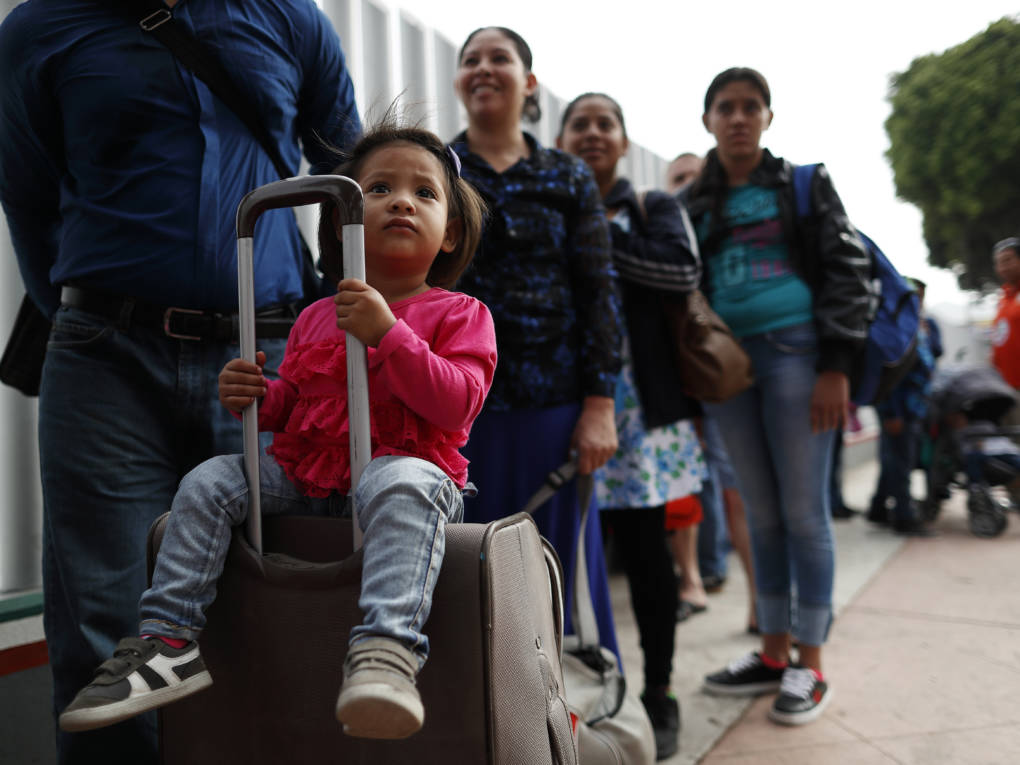
"caption": "Asylum seekers line up at the San Ysidro port of entry in Tijuana, Mexico, on Sept. 13, 2018. The ACLU announced today a preliminary agreement with the Trump administration to allow some parents already in the U.S. but separated from their children at the border to apply for asylum.",
"credit": "Gregory Bull/AP Photo",
"altTag": "Asylum seekers line up at the San Ysidro port of entry in Tijuana, Mexico. The ACLU announced today a preliminary agreement with the Trump administration to allow some parents already in the U.S. but separated from their children at the border to apply for asylum.",
"description": "Asylum seekers line up at the San Ysidro port of entry in Tijuana, Mexico. The ACLU announced today a preliminary agreement with the Trump administration to allow some parents already in the U.S. but separated from their children at the border to apply for asylum.",
"imgSizes": {
"thumbnail": {
"file": "https://cdn.kqed.org/wp-content/uploads/sites/10/2018/09/ap_18207644894177-bf4e7bceee939dda2a4262cf80ca6777a3d16a80-160x120.jpg",
"width": 160,
"height": 120,
"mimeType": "image/jpeg"
},
"medium": {
"file": "https://cdn.kqed.org/wp-content/uploads/sites/10/2018/09/ap_18207644894177-bf4e7bceee939dda2a4262cf80ca6777a3d16a80-800x600.jpg",
"width": 800,
"height": 600,
"mimeType": "image/jpeg"
},
"large": {
"file": "https://cdn.kqed.org/wp-content/uploads/sites/10/2018/09/ap_18207644894177-bf4e7bceee939dda2a4262cf80ca6777a3d16a80-1020x765.jpg",
"width": 1020,
"height": 765,
"mimeType": "image/jpeg"
},
"complete_open_graph": {
"file": "https://cdn.kqed.org/wp-content/uploads/sites/10/2018/09/ap_18207644894177-bf4e7bceee939dda2a4262cf80ca6777a3d16a80-1200x900.jpg",
"width": 1200,
"height": 900,
"mimeType": "image/jpeg"
},
"fd-lrg": {
"file": "https://cdn.kqed.org/wp-content/uploads/sites/10/2018/09/ap_18207644894177-bf4e7bceee939dda2a4262cf80ca6777a3d16a80-1920x1440.jpg",
"width": 1920,
"height": 1440,
"mimeType": "image/jpeg"
},
"fd-med": {
"file": "https://cdn.kqed.org/wp-content/uploads/sites/10/2018/09/ap_18207644894177-bf4e7bceee939dda2a4262cf80ca6777a3d16a80-1180x885.jpg",
"width": 1180,
"height": 885,
"mimeType": "image/jpeg"
},
"fd-sm": {
"file": "https://cdn.kqed.org/wp-content/uploads/sites/10/2018/09/ap_18207644894177-bf4e7bceee939dda2a4262cf80ca6777a3d16a80-960x720.jpg",
"width": 960,
"height": 720,
"mimeType": "image/jpeg"
},
"post-thumbnail": {
"file": "https://cdn.kqed.org/wp-content/uploads/sites/10/2018/09/ap_18207644894177-bf4e7bceee939dda2a4262cf80ca6777a3d16a80-672x372.jpg",
"width": 672,
"height": 372,
"mimeType": "image/jpeg"
},
"twentyfourteen-full-width": {
"file": "https://cdn.kqed.org/wp-content/uploads/sites/10/2018/09/ap_18207644894177-bf4e7bceee939dda2a4262cf80ca6777a3d16a80-1038x576.jpg",
"width": 1038,
"height": 576,
"mimeType": "image/jpeg"
},
"xxsmall": {
"file": "https://cdn.kqed.org/wp-content/uploads/sites/10/2018/09/ap_18207644894177-bf4e7bceee939dda2a4262cf80ca6777a3d16a80-240x180.jpg",
"width": 240,
"height": 180,
"mimeType": "image/jpeg"
},
"xsmall": {
"file": "https://cdn.kqed.org/wp-content/uploads/sites/10/2018/09/ap_18207644894177-bf4e7bceee939dda2a4262cf80ca6777a3d16a80-375x281.jpg",
"width": 375,
"height": 281,
"mimeType": "image/jpeg"
},
"small": {
"file": "https://cdn.kqed.org/wp-content/uploads/sites/10/2018/09/ap_18207644894177-bf4e7bceee939dda2a4262cf80ca6777a3d16a80-520x390.jpg",
"width": 520,
"height": 390,
"mimeType": "image/jpeg"
},
"xlarge": {
"file": "https://cdn.kqed.org/wp-content/uploads/sites/10/2018/09/ap_18207644894177-bf4e7bceee939dda2a4262cf80ca6777a3d16a80-1180x885.jpg",
"width": 1180,
"height": 885,
"mimeType": "image/jpeg"
},
"full-width": {
"file": "https://cdn.kqed.org/wp-content/uploads/sites/10/2018/09/ap_18207644894177-bf4e7bceee939dda2a4262cf80ca6777a3d16a80-1920x1440.jpg",
"width": 1920,
"height": 1440,
"mimeType": "image/jpeg"
},
"guest-author-32": {
"file": "https://cdn.kqed.org/wp-content/uploads/sites/10/2018/09/ap_18207644894177-bf4e7bceee939dda2a4262cf80ca6777a3d16a80-32x32.jpg",
"width": 32,
"height": 32,
"mimeType": "image/jpeg"
},
"guest-author-50": {
"file": "https://cdn.kqed.org/wp-content/uploads/sites/10/2018/09/ap_18207644894177-bf4e7bceee939dda2a4262cf80ca6777a3d16a80-50x50.jpg",
"width": 50,
"height": 50,
"mimeType": "image/jpeg"
},
"guest-author-64": {
"file": "https://cdn.kqed.org/wp-content/uploads/sites/10/2018/09/ap_18207644894177-bf4e7bceee939dda2a4262cf80ca6777a3d16a80-64x64.jpg",
"width": 64,
"height": 64,
"mimeType": "image/jpeg"
},
"guest-author-96": {
"file": "https://cdn.kqed.org/wp-content/uploads/sites/10/2018/09/ap_18207644894177-bf4e7bceee939dda2a4262cf80ca6777a3d16a80-96x96.jpg",
"width": 96,
"height": 96,
"mimeType": "image/jpeg"
},
"guest-author-128": {
"file": "https://cdn.kqed.org/wp-content/uploads/sites/10/2018/09/ap_18207644894177-bf4e7bceee939dda2a4262cf80ca6777a3d16a80-128x128.jpg",
"width": 128,
"height": 128,
"mimeType": "image/jpeg"
},
"detail": {
"file": "https://cdn.kqed.org/wp-content/uploads/sites/10/2018/09/ap_18207644894177-bf4e7bceee939dda2a4262cf80ca6777a3d16a80-150x150.jpg",
"width": 150,
"height": 150,
"mimeType": "image/jpeg"
},
"kqedFullSize": {
"file": "https://cdn.kqed.org/wp-content/uploads/sites/10/2018/09/ap_18207644894177-bf4e7bceee939dda2a4262cf80ca6777a3d16a80-e1536865057762.jpg",
"width": 1920,
"height": 1440
}
},
"isLoading": false,
"fetchFailed": false
},
"news_11684595": {
"type": "attachments",
"id": "news_11684595",
"meta": {
"index": "attachments_1716263798",
"site": "news",
"id": "11684595",
"found": true
},
"parent": 0,
"imgSizes": {
"small": {
"file": "https://ww2.kqed.org/app/uploads/sites/10/2018/08/ProtestersAtHearing-520x347.jpg",
"width": 520,
"mimeType": "image/jpeg",
"height": 347
},
"twentyfourteen-full-width": {
"file": "https://ww2.kqed.org/app/uploads/sites/10/2018/08/ProtestersAtHearing-1038x576.jpg",
"width": 1038,
"mimeType": "image/jpeg",
"height": 576
},
"thumbnail": {
"file": "https://ww2.kqed.org/app/uploads/sites/10/2018/08/ProtestersAtHearing-160x107.jpg",
"width": 160,
"mimeType": "image/jpeg",
"height": 107
},
"fd-sm": {
"file": "https://ww2.kqed.org/app/uploads/sites/10/2018/08/ProtestersAtHearing-960x640.jpg",
"width": 960,
"mimeType": "image/jpeg",
"height": 640
},
"post-thumbnail": {
"file": "https://ww2.kqed.org/app/uploads/sites/10/2018/08/ProtestersAtHearing-672x372.jpg",
"width": 672,
"mimeType": "image/jpeg",
"height": 372
},
"xsmall": {
"file": "https://ww2.kqed.org/app/uploads/sites/10/2018/08/ProtestersAtHearing-375x250.jpg",
"width": 375,
"mimeType": "image/jpeg",
"height": 250
},
"kqedFullSize": {
"file": "https://ww2.kqed.org/app/uploads/sites/10/2018/08/ProtestersAtHearing.jpg",
"width": 1920,
"height": 1280
},
"large": {
"file": "https://ww2.kqed.org/app/uploads/sites/10/2018/08/ProtestersAtHearing-1020x680.jpg",
"width": 1020,
"mimeType": "image/jpeg",
"height": 680
},
"xlarge": {
"file": "https://ww2.kqed.org/app/uploads/sites/10/2018/08/ProtestersAtHearing-1180x787.jpg",
"width": 1180,
"mimeType": "image/jpeg",
"height": 787
},
"complete_open_graph": {
"file": "https://ww2.kqed.org/app/uploads/sites/10/2018/08/ProtestersAtHearing-1200x800.jpg",
"width": 1200,
"mimeType": "image/jpeg",
"height": 800
},
"guest-author-50": {
"file": "https://ww2.kqed.org/app/uploads/sites/10/2018/08/ProtestersAtHearing-50x50.jpg",
"width": 50,
"mimeType": "image/jpeg",
"height": 50
},
"guest-author-96": {
"file": "https://ww2.kqed.org/app/uploads/sites/10/2018/08/ProtestersAtHearing-96x96.jpg",
"width": 96,
"mimeType": "image/jpeg",
"height": 96
},
"medium": {
"file": "https://ww2.kqed.org/app/uploads/sites/10/2018/08/ProtestersAtHearing-800x533.jpg",
"width": 800,
"mimeType": "image/jpeg",
"height": 533
},
"guest-author-64": {
"file": "https://ww2.kqed.org/app/uploads/sites/10/2018/08/ProtestersAtHearing-64x64.jpg",
"width": 64,
"mimeType": "image/jpeg",
"height": 64
},
"guest-author-32": {
"file": "https://ww2.kqed.org/app/uploads/sites/10/2018/08/ProtestersAtHearing-32x32.jpg",
"width": 32,
"mimeType": "image/jpeg",
"height": 32
},
"fd-lrg": {
"file": "https://ww2.kqed.org/app/uploads/sites/10/2018/08/ProtestersAtHearing-1920x1280.jpg",
"width": 1920,
"mimeType": "image/jpeg",
"height": 1280
},
"fd-med": {
"file": "https://ww2.kqed.org/app/uploads/sites/10/2018/08/ProtestersAtHearing-1180x787.jpg",
"width": 1180,
"mimeType": "image/jpeg",
"height": 787
},
"full-width": {
"file": "https://ww2.kqed.org/app/uploads/sites/10/2018/08/ProtestersAtHearing-1920x1280.jpg",
"width": 1920,
"mimeType": "image/jpeg",
"height": 1280
},
"detail": {
"file": "https://ww2.kqed.org/app/uploads/sites/10/2018/08/ProtestersAtHearing-150x150.jpg",
"width": 150,
"mimeType": "image/jpeg",
"height": 150
},
"guest-author-128": {
"file": "https://ww2.kqed.org/app/uploads/sites/10/2018/08/ProtestersAtHearing-128x128.jpg",
"width": 128,
"mimeType": "image/jpeg",
"height": 128
},
"xxsmall": {
"file": "https://ww2.kqed.org/app/uploads/sites/10/2018/08/ProtestersAtHearing-240x160.jpg",
"width": 240,
"mimeType": "image/jpeg",
"height": 160
}
},
"publishDate": 1533260041,
"modified": 1533343377,
"caption": "Representatives from faith and pro-immigration groups protest at a Senate Judiciary Committee hearing on July 31 about the separation of children from their parents at the border.",
"description": "Representatives from faith and pro-immigration groups protest at a Senate Judiciary Committee hearing about the separation of children from their parents at the border, on Capitol Hill, July 31, 2018.",
"title": "ProtestersAtHearing",
"credit": "Chip Somodevilla/Getty Images",
"status": "inherit",
"isLoading": false,
"fetchFailed": false
},
"news_11683702": {
"type": "attachments",
"id": "news_11683702",
"meta": {
"index": "attachments_1716263798",
"site": "news",
"id": "11683702",
"found": true
},
"parent": 11683618,
"imgSizes": {
"small": {
"file": "https://ww2.kqed.org/app/uploads/sites/10/2018/07/GettyImages-1005223924-520x347.jpg",
"width": 520,
"mimeType": "image/jpeg",
"height": 347
},
"twentyfourteen-full-width": {
"file": "https://ww2.kqed.org/app/uploads/sites/10/2018/07/GettyImages-1005223924-1038x576.jpg",
"width": 1038,
"mimeType": "image/jpeg",
"height": 576
},
"thumbnail": {
"file": "https://ww2.kqed.org/app/uploads/sites/10/2018/07/GettyImages-1005223924-160x107.jpg",
"width": 160,
"mimeType": "image/jpeg",
"height": 107
},
"fd-sm": {
"file": "https://ww2.kqed.org/app/uploads/sites/10/2018/07/GettyImages-1005223924-960x640.jpg",
"width": 960,
"mimeType": "image/jpeg",
"height": 640
},
"post-thumbnail": {
"file": "https://ww2.kqed.org/app/uploads/sites/10/2018/07/GettyImages-1005223924-672x372.jpg",
"width": 672,
"mimeType": "image/jpeg",
"height": 372
},
"xsmall": {
"file": "https://ww2.kqed.org/app/uploads/sites/10/2018/07/GettyImages-1005223924-375x250.jpg",
"width": 375,
"mimeType": "image/jpeg",
"height": 250
},
"kqedFullSize": {
"file": "https://ww2.kqed.org/app/uploads/sites/10/2018/07/GettyImages-1005223924-e1532974960641.jpg",
"width": 1920,
"height": 1280
},
"large": {
"file": "https://ww2.kqed.org/app/uploads/sites/10/2018/07/GettyImages-1005223924-1020x680.jpg",
"width": 1020,
"mimeType": "image/jpeg",
"height": 680
},
"xlarge": {
"file": "https://ww2.kqed.org/app/uploads/sites/10/2018/07/GettyImages-1005223924-1180x787.jpg",
"width": 1180,
"mimeType": "image/jpeg",
"height": 787
},
"complete_open_graph": {
"file": "https://ww2.kqed.org/app/uploads/sites/10/2018/07/GettyImages-1005223924-1200x800.jpg",
"width": 1200,
"mimeType": "image/jpeg",
"height": 800
},
"guest-author-50": {
"file": "https://ww2.kqed.org/app/uploads/sites/10/2018/07/GettyImages-1005223924-50x50.jpg",
"width": 50,
"mimeType": "image/jpeg",
"height": 50
},
"guest-author-96": {
"file": "https://ww2.kqed.org/app/uploads/sites/10/2018/07/GettyImages-1005223924-96x96.jpg",
"width": 96,
"mimeType": "image/jpeg",
"height": 96
},
"medium": {
"file": "https://ww2.kqed.org/app/uploads/sites/10/2018/07/GettyImages-1005223924-800x533.jpg",
"width": 800,
"mimeType": "image/jpeg",
"height": 533
},
"guest-author-64": {
"file": "https://ww2.kqed.org/app/uploads/sites/10/2018/07/GettyImages-1005223924-64x64.jpg",
"width": 64,
"mimeType": "image/jpeg",
"height": 64
},
"guest-author-32": {
"file": "https://ww2.kqed.org/app/uploads/sites/10/2018/07/GettyImages-1005223924-32x32.jpg",
"width": 32,
"mimeType": "image/jpeg",
"height": 32
},
"fd-lrg": {
"file": "https://ww2.kqed.org/app/uploads/sites/10/2018/07/GettyImages-1005223924-1920x1280.jpg",
"width": 1920,
"mimeType": "image/jpeg",
"height": 1280
},
"fd-med": {
"file": "https://ww2.kqed.org/app/uploads/sites/10/2018/07/GettyImages-1005223924-1180x787.jpg",
"width": 1180,
"mimeType": "image/jpeg",
"height": 787
},
"full-width": {
"file": "https://ww2.kqed.org/app/uploads/sites/10/2018/07/GettyImages-1005223924-1920x1280.jpg",
"width": 1920,
"mimeType": "image/jpeg",
"height": 1280
},
"detail": {
"file": "https://ww2.kqed.org/app/uploads/sites/10/2018/07/GettyImages-1005223924-150x150.jpg",
"width": 150,
"mimeType": "image/jpeg",
"height": 150
},
"guest-author-128": {
"file": "https://ww2.kqed.org/app/uploads/sites/10/2018/07/GettyImages-1005223924-128x128.jpg",
"width": 128,
"mimeType": "image/jpeg",
"height": 128
},
"xxsmall": {
"file": "https://ww2.kqed.org/app/uploads/sites/10/2018/07/GettyImages-1005223924-240x160.jpg",
"width": 240,
"mimeType": "image/jpeg",
"height": 160
}
},
"publishDate": 1532974807,
"modified": 1532993723,
"caption": "A man, identified only as Renan, has a quiet moment as he spends time with his son, Nathan, 11, as they are cared for in an Annunciation House facility after they were reunited on July 25, 2018, in El Paso, Texas. Renan and Nathan, originally from Honduras, were reunited at an ICE processing center about two months after the two were separated when they tried to cross into the United States.",
"description": "A man, identified only as Renan, has a quiet moment as he spends time with his son, Nathan, 11, as they are cared for in an Annunciation House facility after they were reunited with each other on July 25, 2018 in El Paso, Texas. Renan and Nathan, originally from Honduras, were reunited at an I.C.E processing center about two months after the two were separated when they tried to cross into the United States.",
"title": "Immigrants Reunited With Their Children After Release From Detention In TX",
"credit": "Joe Raedle/Getty Images",
"status": "inherit",
"isLoading": false,
"fetchFailed": false
},
"news_11682965": {
"type": "attachments",
"id": "news_11682965",
"meta": {
"index": "attachments_1716263798",
"site": "news",
"id": "11682965",
"found": true
},
"parent": 11682863,
"imgSizes": {
"small": {
"file": "https://ww2.kqed.org/app/uploads/sites/10/2018/07/iStock-851960058-520x347.jpg",
"width": 520,
"mimeType": "image/jpeg",
"height": 347
},
"twentyfourteen-full-width": {
"file": "https://ww2.kqed.org/app/uploads/sites/10/2018/07/iStock-851960058-1038x576.jpg",
"width": 1038,
"mimeType": "image/jpeg",
"height": 576
},
"thumbnail": {
"file": "https://ww2.kqed.org/app/uploads/sites/10/2018/07/iStock-851960058-160x107.jpg",
"width": 160,
"mimeType": "image/jpeg",
"height": 107
},
"fd-sm": {
"file": "https://ww2.kqed.org/app/uploads/sites/10/2018/07/iStock-851960058-960x640.jpg",
"width": 960,
"mimeType": "image/jpeg",
"height": 640
},
"post-thumbnail": {
"file": "https://ww2.kqed.org/app/uploads/sites/10/2018/07/iStock-851960058-672x372.jpg",
"width": 672,
"mimeType": "image/jpeg",
"height": 372
},
"xsmall": {
"file": "https://ww2.kqed.org/app/uploads/sites/10/2018/07/iStock-851960058-375x250.jpg",
"width": 375,
"mimeType": "image/jpeg",
"height": 250
},
"kqedFullSize": {
"file": "https://ww2.kqed.org/app/uploads/sites/10/2018/07/iStock-851960058-e1532646093485.jpg",
"width": 1920,
"height": 1280
},
"large": {
"file": "https://ww2.kqed.org/app/uploads/sites/10/2018/07/iStock-851960058-1020x680.jpg",
"width": 1020,
"mimeType": "image/jpeg",
"height": 680
},
"xlarge": {
"file": "https://ww2.kqed.org/app/uploads/sites/10/2018/07/iStock-851960058-1180x787.jpg",
"width": 1180,
"mimeType": "image/jpeg",
"height": 787
},
"complete_open_graph": {
"file": "https://ww2.kqed.org/app/uploads/sites/10/2018/07/iStock-851960058-1200x800.jpg",
"width": 1200,
"mimeType": "image/jpeg",
"height": 800
},
"guest-author-50": {
"file": "https://ww2.kqed.org/app/uploads/sites/10/2018/07/iStock-851960058-50x50.jpg",
"width": 50,
"mimeType": "image/jpeg",
"height": 50
},
"guest-author-96": {
"file": "https://ww2.kqed.org/app/uploads/sites/10/2018/07/iStock-851960058-96x96.jpg",
"width": 96,
"mimeType": "image/jpeg",
"height": 96
},
"medium": {
"file": "https://ww2.kqed.org/app/uploads/sites/10/2018/07/iStock-851960058-800x533.jpg",
"width": 800,
"mimeType": "image/jpeg",
"height": 533
},
"guest-author-64": {
"file": "https://ww2.kqed.org/app/uploads/sites/10/2018/07/iStock-851960058-64x64.jpg",
"width": 64,
"mimeType": "image/jpeg",
"height": 64
},
"guest-author-32": {
"file": "https://ww2.kqed.org/app/uploads/sites/10/2018/07/iStock-851960058-32x32.jpg",
"width": 32,
"mimeType": "image/jpeg",
"height": 32
},
"fd-lrg": {
"file": "https://ww2.kqed.org/app/uploads/sites/10/2018/07/iStock-851960058-1920x1280.jpg",
"width": 1920,
"mimeType": "image/jpeg",
"height": 1280
},
"fd-med": {
"file": "https://ww2.kqed.org/app/uploads/sites/10/2018/07/iStock-851960058-1180x787.jpg",
"width": 1180,
"mimeType": "image/jpeg",
"height": 787
},
"full-width": {
"file": "https://ww2.kqed.org/app/uploads/sites/10/2018/07/iStock-851960058-1920x1280.jpg",
"width": 1920,
"mimeType": "image/jpeg",
"height": 1280
},
"detail": {
"file": "https://ww2.kqed.org/app/uploads/sites/10/2018/07/iStock-851960058-150x150.jpg",
"width": 150,
"mimeType": "image/jpeg",
"height": 150
},
"guest-author-128": {
"file": "https://ww2.kqed.org/app/uploads/sites/10/2018/07/iStock-851960058-128x128.jpg",
"width": 128,
"mimeType": "image/jpeg",
"height": 128
},
"xxsmall": {
"file": "https://ww2.kqed.org/app/uploads/sites/10/2018/07/iStock-851960058-240x160.jpg",
"width": 240,
"mimeType": "image/jpeg",
"height": 160
}
},
"publishDate": 1532646023,
"modified": 1563376882,
"caption": "File photo of a facial recognition system. The ACLU used Amazon's facial recognition software, Rekognition, to compare the photos of all federal lawmakers to a database of 25,000 mugshots.",
"description": "File photo of a facial recognition system. The ACLU used Amazon's facial recognition software, Rekognition, to compare the photos of all federal lawmakers to a database of 25,000 mug shots.",
"title": "Facial Recognition System concept.",
"credit": "Getty Images",
"status": "inherit",
"isLoading": false,
"fetchFailed": false
},
"news_11680600": {
"type": "attachments",
"id": "news_11680600",
"meta": {
"index": "attachments_1716263798",
"site": "news",
"id": "11680600",
"found": true
},
"parent": 11680599,
"imgSizes": {
"small": {
"file": "https://ww2.kqed.org/app/uploads/sites/10/2018/07/GettyImages-997982480-520x347.jpg",
"width": 520,
"mimeType": "image/jpeg",
"height": 347
},
"twentyfourteen-full-width": {
"file": "https://ww2.kqed.org/app/uploads/sites/10/2018/07/GettyImages-997982480-1038x576.jpg",
"width": 1038,
"mimeType": "image/jpeg",
"height": 576
},
"thumbnail": {
"file": "https://ww2.kqed.org/app/uploads/sites/10/2018/07/GettyImages-997982480-160x107.jpg",
"width": 160,
"mimeType": "image/jpeg",
"height": 107
},
"fd-sm": {
"file": "https://ww2.kqed.org/app/uploads/sites/10/2018/07/GettyImages-997982480-960x640.jpg",
"width": 960,
"mimeType": "image/jpeg",
"height": 640
},
"post-thumbnail": {
"file": "https://ww2.kqed.org/app/uploads/sites/10/2018/07/GettyImages-997982480-672x372.jpg",
"width": 672,
"mimeType": "image/jpeg",
"height": 372
},
"xsmall": {
"file": "https://ww2.kqed.org/app/uploads/sites/10/2018/07/GettyImages-997982480-375x250.jpg",
"width": 375,
"mimeType": "image/jpeg",
"height": 250
},
"kqedFullSize": {
"file": "https://ww2.kqed.org/app/uploads/sites/10/2018/07/GettyImages-997982480-e1531596989625.jpg",
"width": 1920,
"height": 1280
},
"large": {
"file": "https://ww2.kqed.org/app/uploads/sites/10/2018/07/GettyImages-997982480-1020x680.jpg",
"width": 1020,
"mimeType": "image/jpeg",
"height": 680
},
"xlarge": {
"file": "https://ww2.kqed.org/app/uploads/sites/10/2018/07/GettyImages-997982480-1180x787.jpg",
"width": 1180,
"mimeType": "image/jpeg",
"height": 787
},
"complete_open_graph": {
"file": "https://ww2.kqed.org/app/uploads/sites/10/2018/07/GettyImages-997982480-1200x800.jpg",
"width": 1200,
"mimeType": "image/jpeg",
"height": 800
},
"guest-author-50": {
"file": "https://ww2.kqed.org/app/uploads/sites/10/2018/07/GettyImages-997982480-50x50.jpg",
"width": 50,
"mimeType": "image/jpeg",
"height": 50
},
"guest-author-96": {
"file": "https://ww2.kqed.org/app/uploads/sites/10/2018/07/GettyImages-997982480-96x96.jpg",
"width": 96,
"mimeType": "image/jpeg",
"height": 96
},
"medium": {
"file": "https://ww2.kqed.org/app/uploads/sites/10/2018/07/GettyImages-997982480-800x533.jpg",
"width": 800,
"mimeType": "image/jpeg",
"height": 533
},
"guest-author-64": {
"file": "https://ww2.kqed.org/app/uploads/sites/10/2018/07/GettyImages-997982480-64x64.jpg",
"width": 64,
"mimeType": "image/jpeg",
"height": 64
},
"guest-author-32": {
"file": "https://ww2.kqed.org/app/uploads/sites/10/2018/07/GettyImages-997982480-32x32.jpg",
"width": 32,
"mimeType": "image/jpeg",
"height": 32
},
"fd-lrg": {
"file": "https://ww2.kqed.org/app/uploads/sites/10/2018/07/GettyImages-997982480-1920x1280.jpg",
"width": 1920,
"mimeType": "image/jpeg",
"height": 1280
},
"fd-med": {
"file": "https://ww2.kqed.org/app/uploads/sites/10/2018/07/GettyImages-997982480-1180x787.jpg",
"width": 1180,
"mimeType": "image/jpeg",
"height": 787
},
"full-width": {
"file": "https://ww2.kqed.org/app/uploads/sites/10/2018/07/GettyImages-997982480-1920x1280.jpg",
"width": 1920,
"mimeType": "image/jpeg",
"height": 1280
},
"detail": {
"file": "https://ww2.kqed.org/app/uploads/sites/10/2018/07/GettyImages-997982480-150x150.jpg",
"width": 150,
"mimeType": "image/jpeg",
"height": 150
},
"guest-author-128": {
"file": "https://ww2.kqed.org/app/uploads/sites/10/2018/07/GettyImages-997982480-128x128.jpg",
"width": 128,
"mimeType": "image/jpeg",
"height": 128
},
"xxsmall": {
"file": "https://ww2.kqed.org/app/uploads/sites/10/2018/07/GettyImages-997982480-240x160.jpg",
"width": 240,
"mimeType": "image/jpeg",
"height": 160
}
},
"publishDate": 1531596944,
"modified": 1531597014,
"caption": "Yeni Maricela Gonzalez Garcia (center) stands with her children 6 year-old Deyuin (left), 9 year-old Jamelin (right) and 11 year-old Lester (back) as she and her lawyer speak with the news media after she was reunited with her children at the East Harlem Cayuga Centers on July 13, 2018 in New York City. Gonzalez Garcia, from Guatemala, drove cross-country to be reunited with her three children after they were taken from an Arizona immigration facility over eight weeks ago. Gonzalez Garcia crossed over the U.S. border with her three children on May 19, only two days before they were taken from her as part of President Donald Trump's controversial zero-tolerance policy of removing immigrant children from their parents after they are detained.",
"description": "Yeni Maricela Gonzalez Garcia (center) stands with her children 6 year-old Deyuin (left), 9 year-old Jamelin (right) and 11 year-old Lester (back) as she and her lawyer speak with the news media after she was reunited with her children at the East Harlem Cayuga Centers on July 13, 2018 in New York City. Gonzalez Garcia, from Guatemala, drove cross-country to be reunited with her three children after they were taken from an Arizona immigration facility over eight weeks ago. Gonzalez Garcia crossed over the U.S. border with her three children on May 19, only two days before they were taken from her as part of President Donald Trump's controversial zero-tolerance policy of removing immigrant children from their parents after they are detained.",
"title": "Immigrant Mother Reunited With Her Three Children After Being Detained Separately",
"credit": "Spencer Platt/Getty Images",
"status": "inherit",
"isLoading": false,
"fetchFailed": false
},
"news_11677117": {
"type": "attachments",
"id": "news_11677117",
"meta": {
"index": "attachments_1716263798",
"site": "news",
"id": "11677117",
"found": true
},
"parent": 11676972,
"imgSizes": {
"small": {
"file": "https://ww2.kqed.org/app/uploads/sites/10/2018/06/GettyImages-980563664-520x347.jpg",
"width": 520,
"mimeType": "image/jpeg",
"height": 347
},
"twentyfourteen-full-width": {
"file": "https://ww2.kqed.org/app/uploads/sites/10/2018/06/GettyImages-980563664-1024x576.jpg",
"width": 1024,
"mimeType": "image/jpeg",
"height": 576
},
"thumbnail": {
"file": "https://ww2.kqed.org/app/uploads/sites/10/2018/06/GettyImages-980563664-160x107.jpg",
"width": 160,
"mimeType": "image/jpeg",
"height": 107
},
"fd-sm": {
"file": "https://ww2.kqed.org/app/uploads/sites/10/2018/06/GettyImages-980563664-960x640.jpg",
"width": 960,
"mimeType": "image/jpeg",
"height": 640
},
"post-thumbnail": {
"file": "https://ww2.kqed.org/app/uploads/sites/10/2018/06/GettyImages-980563664-672x372.jpg",
"width": 672,
"mimeType": "image/jpeg",
"height": 372
},
"xsmall": {
"file": "https://ww2.kqed.org/app/uploads/sites/10/2018/06/GettyImages-980563664-375x250.jpg",
"width": 375,
"mimeType": "image/jpeg",
"height": 250
},
"kqedFullSize": {
"file": "https://ww2.kqed.org/app/uploads/sites/10/2018/06/GettyImages-980563664.jpg",
"width": 1024,
"height": 683
},
"large": {
"file": "https://ww2.kqed.org/app/uploads/sites/10/2018/06/GettyImages-980563664-1020x680.jpg",
"width": 1020,
"mimeType": "image/jpeg",
"height": 680
},
"guest-author-50": {
"file": "https://ww2.kqed.org/app/uploads/sites/10/2018/06/GettyImages-980563664-50x50.jpg",
"width": 50,
"mimeType": "image/jpeg",
"height": 50
},
"guest-author-96": {
"file": "https://ww2.kqed.org/app/uploads/sites/10/2018/06/GettyImages-980563664-96x96.jpg",
"width": 96,
"mimeType": "image/jpeg",
"height": 96
},
"medium": {
"file": "https://ww2.kqed.org/app/uploads/sites/10/2018/06/GettyImages-980563664-800x534.jpg",
"width": 800,
"mimeType": "image/jpeg",
"height": 534
},
"guest-author-64": {
"file": "https://ww2.kqed.org/app/uploads/sites/10/2018/06/GettyImages-980563664-64x64.jpg",
"width": 64,
"mimeType": "image/jpeg",
"height": 64
},
"guest-author-32": {
"file": "https://ww2.kqed.org/app/uploads/sites/10/2018/06/GettyImages-980563664-32x32.jpg",
"width": 32,
"mimeType": "image/jpeg",
"height": 32
},
"detail": {
"file": "https://ww2.kqed.org/app/uploads/sites/10/2018/06/GettyImages-980563664-150x150.jpg",
"width": 150,
"mimeType": "image/jpeg",
"height": 150
},
"guest-author-128": {
"file": "https://ww2.kqed.org/app/uploads/sites/10/2018/06/GettyImages-980563664-128x128.jpg",
"width": 128,
"mimeType": "image/jpeg",
"height": 128
},
"xxsmall": {
"file": "https://ww2.kqed.org/app/uploads/sites/10/2018/06/GettyImages-980563664-240x160.jpg",
"width": 240,
"mimeType": "image/jpeg",
"height": 160
}
},
"publishDate": 1529957781,
"modified": 1529957845,
"caption": "A migrant mother walks with her two daughters on their way to the port of entry to ask for asylum in the U.S. on June 21, 2018. ",
"description": "A migrant mother walks with her two daughters on their way to the port of entry to ask for asylum in the U.S. on June 21, 2018. ",
"title": "President Trump's \"Zero Tolerance\" Mexico Border Policy Stirs Controversy And Confusion",
"credit": "Mario Tama/Getty Images",
"status": "inherit",
"isLoading": false,
"fetchFailed": false
},
"news_11672656": {
"type": "attachments",
"id": "news_11672656",
"meta": {
"index": "attachments_1716263798",
"site": "news",
"id": "11672656",
"found": true
},
"parent": 11672655,
"imgSizes": {
"small": {
"file": "https://ww2.kqed.org/app/uploads/sites/10/2018/06/ap_114519075535_wide-ec3ca74e117ff7dd9ed27b146f058dc087aa638f-520x293.jpg",
"width": 520,
"mimeType": "image/jpeg",
"height": 293
},
"twentyfourteen-full-width": {
"file": "https://ww2.kqed.org/app/uploads/sites/10/2018/06/ap_114519075535_wide-ec3ca74e117ff7dd9ed27b146f058dc087aa638f-1038x576.jpg",
"width": 1038,
"mimeType": "image/jpeg",
"height": 576
},
"thumbnail": {
"file": "https://ww2.kqed.org/app/uploads/sites/10/2018/06/ap_114519075535_wide-ec3ca74e117ff7dd9ed27b146f058dc087aa638f-160x90.jpg",
"width": 160,
"mimeType": "image/jpeg",
"height": 90
},
"fd-sm": {
"file": "https://ww2.kqed.org/app/uploads/sites/10/2018/06/ap_114519075535_wide-ec3ca74e117ff7dd9ed27b146f058dc087aa638f-960x540.jpg",
"width": 960,
"mimeType": "image/jpeg",
"height": 540
},
"post-thumbnail": {
"file": "https://ww2.kqed.org/app/uploads/sites/10/2018/06/ap_114519075535_wide-ec3ca74e117ff7dd9ed27b146f058dc087aa638f-672x372.jpg",
"width": 672,
"mimeType": "image/jpeg",
"height": 372
},
"xsmall": {
"file": "https://ww2.kqed.org/app/uploads/sites/10/2018/06/ap_114519075535_wide-ec3ca74e117ff7dd9ed27b146f058dc087aa638f-375x211.jpg",
"width": 375,
"mimeType": "image/jpeg",
"height": 211
},
"kqedFullSize": {
"file": "https://ww2.kqed.org/app/uploads/sites/10/2018/06/ap_114519075535_wide-ec3ca74e117ff7dd9ed27b146f058dc087aa638f.jpg",
"width": 4896,
"height": 2754
},
"large": {
"file": "https://ww2.kqed.org/app/uploads/sites/10/2018/06/ap_114519075535_wide-ec3ca74e117ff7dd9ed27b146f058dc087aa638f-1020x574.jpg",
"width": 1020,
"mimeType": "image/jpeg",
"height": 574
},
"xlarge": {
"file": "https://ww2.kqed.org/app/uploads/sites/10/2018/06/ap_114519075535_wide-ec3ca74e117ff7dd9ed27b146f058dc087aa638f-1180x664.jpg",
"width": 1180,
"mimeType": "image/jpeg",
"height": 664
},
"complete_open_graph": {
"file": "https://ww2.kqed.org/app/uploads/sites/10/2018/06/ap_114519075535_wide-ec3ca74e117ff7dd9ed27b146f058dc087aa638f-1200x675.jpg",
"width": 1200,
"mimeType": "image/jpeg",
"height": 675
},
"guest-author-50": {
"file": "https://ww2.kqed.org/app/uploads/sites/10/2018/06/ap_114519075535_wide-ec3ca74e117ff7dd9ed27b146f058dc087aa638f-50x50.jpg",
"width": 50,
"mimeType": "image/jpeg",
"height": 50
},
"guest-author-96": {
"file": "https://ww2.kqed.org/app/uploads/sites/10/2018/06/ap_114519075535_wide-ec3ca74e117ff7dd9ed27b146f058dc087aa638f-96x96.jpg",
"width": 96,
"mimeType": "image/jpeg",
"height": 96
},
"medium": {
"file": "https://ww2.kqed.org/app/uploads/sites/10/2018/06/ap_114519075535_wide-ec3ca74e117ff7dd9ed27b146f058dc087aa638f-800x450.jpg",
"width": 800,
"mimeType": "image/jpeg",
"height": 450
},
"guest-author-64": {
"file": "https://ww2.kqed.org/app/uploads/sites/10/2018/06/ap_114519075535_wide-ec3ca74e117ff7dd9ed27b146f058dc087aa638f-64x64.jpg",
"width": 64,
"mimeType": "image/jpeg",
"height": 64
},
"guest-author-32": {
"file": "https://ww2.kqed.org/app/uploads/sites/10/2018/06/ap_114519075535_wide-ec3ca74e117ff7dd9ed27b146f058dc087aa638f-32x32.jpg",
"width": 32,
"mimeType": "image/jpeg",
"height": 32
},
"fd-lrg": {
"file": "https://ww2.kqed.org/app/uploads/sites/10/2018/06/ap_114519075535_wide-ec3ca74e117ff7dd9ed27b146f058dc087aa638f-1920x1080.jpg",
"width": 1920,
"mimeType": "image/jpeg",
"height": 1080
},
"fd-med": {
"file": "https://ww2.kqed.org/app/uploads/sites/10/2018/06/ap_114519075535_wide-ec3ca74e117ff7dd9ed27b146f058dc087aa638f-1180x664.jpg",
"width": 1180,
"mimeType": "image/jpeg",
"height": 664
},
"full-width": {
"file": "https://ww2.kqed.org/app/uploads/sites/10/2018/06/ap_114519075535_wide-ec3ca74e117ff7dd9ed27b146f058dc087aa638f-1920x1080.jpg",
"width": 1920,
"mimeType": "image/jpeg",
"height": 1080
},
"detail": {
"file": "https://ww2.kqed.org/app/uploads/sites/10/2018/06/ap_114519075535_wide-ec3ca74e117ff7dd9ed27b146f058dc087aa638f-150x150.jpg",
"width": 150,
"mimeType": "image/jpeg",
"height": 150
},
"guest-author-128": {
"file": "https://ww2.kqed.org/app/uploads/sites/10/2018/06/ap_114519075535_wide-ec3ca74e117ff7dd9ed27b146f058dc087aa638f-128x128.jpg",
"width": 128,
"mimeType": "image/jpeg",
"height": 128
},
"xxsmall": {
"file": "https://ww2.kqed.org/app/uploads/sites/10/2018/06/ap_114519075535_wide-ec3ca74e117ff7dd9ed27b146f058dc087aa638f-240x135.jpg",
"width": 240,
"mimeType": "image/jpeg",
"height": 135
}
},
"publishDate": 1528216030,
"modified": 1528216030,
"caption": null,
"description": "The wedding cake display seen at Masterpiece Cakeshop in Denver in 2013.",
"title": "The wedding cake display seen at Masterpiece Cakeshop in Denver in 2013.",
"credit": null,
"status": "inherit",
"isLoading": false,
"fetchFailed": false
},
"news_11664220": {
"type": "attachments",
"id": "news_11664220",
"meta": {
"index": "attachments_1716263798",
"site": "news",
"id": "11664220",
"found": true
},
"parent": 11664214,
"imgSizes": {
"small": {
"file": "https://ww2.kqed.org/app/uploads/sites/10/2018/04/Hannity-520x366.jpg",
"width": 520,
"mimeType": "image/jpeg",
"height": 366
},
"twentyfourteen-full-width": {
"file": "https://ww2.kqed.org/app/uploads/sites/10/2018/04/Hannity-1038x576.jpg",
"width": 1038,
"mimeType": "image/jpeg",
"height": 576
},
"thumbnail": {
"file": "https://ww2.kqed.org/app/uploads/sites/10/2018/04/Hannity-160x113.jpg",
"width": 160,
"mimeType": "image/jpeg",
"height": 113
},
"fd-sm": {
"file": "https://ww2.kqed.org/app/uploads/sites/10/2018/04/Hannity-960x676.jpg",
"width": 960,
"mimeType": "image/jpeg",
"height": 676
},
"post-thumbnail": {
"file": "https://ww2.kqed.org/app/uploads/sites/10/2018/04/Hannity-672x372.jpg",
"width": 672,
"mimeType": "image/jpeg",
"height": 372
},
"xsmall": {
"file": "https://ww2.kqed.org/app/uploads/sites/10/2018/04/Hannity-375x264.jpg",
"width": 375,
"mimeType": "image/jpeg",
"height": 264
},
"kqedFullSize": {
"file": "https://ww2.kqed.org/app/uploads/sites/10/2018/04/Hannity.jpg",
"width": 1920,
"height": 1352
},
"large": {
"file": "https://ww2.kqed.org/app/uploads/sites/10/2018/04/Hannity-1020x718.jpg",
"width": 1020,
"mimeType": "image/jpeg",
"height": 718
},
"xlarge": {
"file": "https://ww2.kqed.org/app/uploads/sites/10/2018/04/Hannity-1180x831.jpg",
"width": 1180,
"mimeType": "image/jpeg",
"height": 831
},
"complete_open_graph": {
"file": "https://ww2.kqed.org/app/uploads/sites/10/2018/04/Hannity-1200x845.jpg",
"width": 1200,
"mimeType": "image/jpeg",
"height": 845
},
"guest-author-50": {
"file": "https://ww2.kqed.org/app/uploads/sites/10/2018/04/Hannity-50x50.jpg",
"width": 50,
"mimeType": "image/jpeg",
"height": 50
},
"guest-author-96": {
"file": "https://ww2.kqed.org/app/uploads/sites/10/2018/04/Hannity-96x96.jpg",
"width": 96,
"mimeType": "image/jpeg",
"height": 96
},
"medium": {
"file": "https://ww2.kqed.org/app/uploads/sites/10/2018/04/Hannity-800x563.jpg",
"width": 800,
"mimeType": "image/jpeg",
"height": 563
},
"guest-author-64": {
"file": "https://ww2.kqed.org/app/uploads/sites/10/2018/04/Hannity-64x64.jpg",
"width": 64,
"mimeType": "image/jpeg",
"height": 64
},
"guest-author-32": {
"file": "https://ww2.kqed.org/app/uploads/sites/10/2018/04/Hannity-32x32.jpg",
"width": 32,
"mimeType": "image/jpeg",
"height": 32
},
"fd-lrg": {
"file": "https://ww2.kqed.org/app/uploads/sites/10/2018/04/Hannity-1920x1352.jpg",
"width": 1920,
"mimeType": "image/jpeg",
"height": 1352
},
"fd-med": {
"file": "https://ww2.kqed.org/app/uploads/sites/10/2018/04/Hannity-1180x831.jpg",
"width": 1180,
"mimeType": "image/jpeg",
"height": 831
},
"full-width": {
"file": "https://ww2.kqed.org/app/uploads/sites/10/2018/04/Hannity-1920x1352.jpg",
"width": 1920,
"mimeType": "image/jpeg",
"height": 1352
},
"detail": {
"file": "https://ww2.kqed.org/app/uploads/sites/10/2018/04/Hannity-150x150.jpg",
"width": 150,
"mimeType": "image/jpeg",
"height": 150
},
"guest-author-128": {
"file": "https://ww2.kqed.org/app/uploads/sites/10/2018/04/Hannity-128x128.jpg",
"width": 128,
"mimeType": "image/jpeg",
"height": 128
},
"xxsmall": {
"file": "https://ww2.kqed.org/app/uploads/sites/10/2018/04/Hannity-240x169.jpg",
"width": 240,
"mimeType": "image/jpeg",
"height": 169
}
},
"publishDate": 1524519610,
"modified": 1524519651,
"caption": "Fox News Host Sean Hannity speaks during the annual Conservative Political Action Conference (CPAC) in 2016.",
"description": "Fox News Host Sean Hannity speaks during the annual Conservative Political Action Conference (CPAC) in 2016.",
"title": "Hannity",
"credit": "SAUL LOEB/AFP/Getty Images",
"status": "inherit",
"isLoading": false,
"fetchFailed": false
},
"news_11663365": {
"type": "attachments",
"id": "news_11663365",
"meta": {
"index": "attachments_1716263798",
"site": "news",
"id": "11663365",
"found": true
},
"parent": 11663362,
"imgSizes": {
"small": {
"file": "https://ww2.kqed.org/app/uploads/sites/10/2018/04/LosAlamitos-520x389.jpg",
"width": 520,
"mimeType": "image/jpeg",
"height": 389
},
"twentyfourteen-full-width": {
"file": "https://ww2.kqed.org/app/uploads/sites/10/2018/04/LosAlamitos-1024x576.jpg",
"width": 1024,
"mimeType": "image/jpeg",
"height": 576
},
"thumbnail": {
"file": "https://ww2.kqed.org/app/uploads/sites/10/2018/04/LosAlamitos-160x120.jpg",
"width": 160,
"mimeType": "image/jpeg",
"height": 120
},
"fd-sm": {
"file": "https://ww2.kqed.org/app/uploads/sites/10/2018/04/LosAlamitos-960x719.jpg",
"width": 960,
"mimeType": "image/jpeg",
"height": 719
},
"post-thumbnail": {
"file": "https://ww2.kqed.org/app/uploads/sites/10/2018/04/LosAlamitos-672x372.jpg",
"width": 672,
"mimeType": "image/jpeg",
"height": 372
},
"xsmall": {
"file": "https://ww2.kqed.org/app/uploads/sites/10/2018/04/LosAlamitos-375x281.jpg",
"width": 375,
"mimeType": "image/jpeg",
"height": 281
},
"kqedFullSize": {
"file": "https://ww2.kqed.org/app/uploads/sites/10/2018/04/LosAlamitos.jpg",
"width": 1024,
"height": 767
},
"large": {
"file": "https://ww2.kqed.org/app/uploads/sites/10/2018/04/LosAlamitos-1020x764.jpg",
"width": 1020,
"mimeType": "image/jpeg",
"height": 764
},
"guest-author-50": {
"file": "https://ww2.kqed.org/app/uploads/sites/10/2018/04/LosAlamitos-50x50.jpg",
"width": 50,
"mimeType": "image/jpeg",
"height": 50
},
"guest-author-96": {
"file": "https://ww2.kqed.org/app/uploads/sites/10/2018/04/LosAlamitos-96x96.jpg",
"width": 96,
"mimeType": "image/jpeg",
"height": 96
},
"medium": {
"file": "https://ww2.kqed.org/app/uploads/sites/10/2018/04/LosAlamitos-800x599.jpg",
"width": 800,
"mimeType": "image/jpeg",
"height": 599
},
"guest-author-64": {
"file": "https://ww2.kqed.org/app/uploads/sites/10/2018/04/LosAlamitos-64x64.jpg",
"width": 64,
"mimeType": "image/jpeg",
"height": 64
},
"guest-author-32": {
"file": "https://ww2.kqed.org/app/uploads/sites/10/2018/04/LosAlamitos-32x32.jpg",
"width": 32,
"mimeType": "image/jpeg",
"height": 32
},
"detail": {
"file": "https://ww2.kqed.org/app/uploads/sites/10/2018/04/LosAlamitos-150x150.jpg",
"width": 150,
"mimeType": "image/jpeg",
"height": 150
},
"guest-author-128": {
"file": "https://ww2.kqed.org/app/uploads/sites/10/2018/04/LosAlamitos-128x128.jpg",
"width": 128,
"mimeType": "image/jpeg",
"height": 128
},
"xxsmall": {
"file": "https://ww2.kqed.org/app/uploads/sites/10/2018/04/LosAlamitos-240x180.jpg",
"width": 240,
"mimeType": "image/jpeg",
"height": 180
}
},
"publishDate": 1524163719,
"modified": 1524163755,
"caption": "Residents from Los Alamitos show support for immigrants during a news conference announcing a lawsuit against the city for its ordinance exempting the city from the California Values Act, also known as the state sanctuary law.",
"description": "Residents from Los Alamitos show support for immigrants during a news conference announcing a lawsuit against the city for its ordinance exempting the city from the California Values Act, also known as the state sanctuary law.",
"title": "LosAlamitos",
"credit": "Jill Replogle/KPCC",
"status": "inherit",
"isLoading": false,
"fetchFailed": false
}
},
"audioPlayerReducer": {
"postId": "stream_live",
"isPaused": true,
"isPlaying": false,
"pfsActive": false,
"pledgeModalIsOpen": true,
"playerDrawerIsOpen": false,
"liveAudioPlayStartedAt": 0,
"liveAudioPlayContext": ""
},
"authorsReducer": {
"byline_news_11692189": {
"type": "authors",
"id": "byline_news_11692189",
"meta": {
"override": true
},
"slug": "byline_news_11692189",
"name": "Joel Rose",
"isLoading": false
},
"byline_news_11680599": {
"type": "authors",
"id": "byline_news_11680599",
"meta": {
"override": true
},
"slug": "byline_news_11680599",
"name": "\u003cstrong>Elliot Spagat\u003c/strong>\u003c/br>Associated Press",
"isLoading": false
},
"byline_news_11672655": {
"type": "authors",
"id": "byline_news_11672655",
"meta": {
"override": true
},
"slug": "byline_news_11672655",
"name": "\u003cstrong>Tom Gjelten\u003cbr/>NPR\u003c/strong>",
"isLoading": false
},
"byline_news_11664214": {
"type": "authors",
"id": "byline_news_11664214",
"meta": {
"override": true
},
"slug": "byline_news_11664214",
"name": "Valerie Hamilton",
"isLoading": false
},
"byline_news_11663362": {
"type": "authors",
"id": "byline_news_11663362",
"meta": {
"override": true
},
"slug": "byline_news_11663362",
"name": "\u003cstrong>\u003ca href=\"https://www.scpr.org/about/people/staff/jill-replogle\">Jill Replogle\u003c/a>\u003c/strong>",
"isLoading": false
},
"jsmall": {
"type": "authors",
"id": "6625",
"meta": {
"index": "authors_1716337520",
"id": "6625",
"found": true
},
"name": "Julie Small",
"firstName": "Julie",
"lastName": "Small",
"slug": "jsmall",
"email": "jsmall@kqed.org",
"display_author_email": true,
"staff_mastheads": [
"news"
],
"title": "KQED Contributor",
"bio": "Julie Small reports on criminal justice and immigration.\r\n\r\nShe was part of a team at KQED awarded a regional 2019 Edward R. Murrow award for continuing coverage of the Trump Administration's family separation policy.\r\n\r\nThe Society for Professional Journalists recognized Julie's 2018 \u003ca href=\"https://www.kqed.org/news/11636262/the-officer-tased-him-31-times-the-sheriff-called-his-death-an-accident\">reporting\u003c/a> on the San Joaquin County Sheriff's \u003ca href=\"https://www.kqed.org/news/11634689/autopsy-doctors-sheriff-overrode-death-findings-to-protect-law-enforcement\">interference\u003c/a> in death investigations with an Excellence in Journalism Award for Ongoing Coverage.\r\n\r\nJulie's\u003ca href=\"https://www.kqed.org/news/11039666/two-mentally-ill-inmates-died-one-month-in-santa-clara\"> reporting\u003c/a> with Lisa Pickoff-White on the treatment of mentally ill offenders in California jails earned a 2017 regional Edward R. Murrow Award for news reporting and an investigative reporting award from the SPJ of Northern California.\r\n\r\nBefore joining KQED, Julie covered government and politics in Sacramento for Southern California Public Radio (SCPR). Her 2010 \u003ca href=\"https://www.scpr.org/specials/prisonmedical/\">series\u003c/a> on lapses in California’s prison medical care also won a regional Edward R. Murrow Award for investigative reporting and a Golden Mic Award from the RTNDA of Southern California.\r\n\r\nJulie began her career in journalism in 2000 as the deputy foreign editor for public radio's \u003cem>Marketplace, \u003c/em>while earning her master's degree in journalism from USC’s Annenberg School of Communication.",
"avatar": "https://secure.gravatar.com/avatar/4baedf201468df97be97c2a9dd7585d0?s=600&d=blank&r=g",
"twitter": "@SmallRadio2",
"facebook": null,
"instagram": null,
"linkedin": null,
"sites": [
{
"site": "news",
"roles": [
"editor"
]
},
{
"site": "stateofhealth",
"roles": [
"author"
]
},
{
"site": "science",
"roles": [
"author"
]
}
],
"headData": {
"title": "Julie Small | KQED",
"description": "KQED Contributor",
"ogImgSrc": "https://secure.gravatar.com/avatar/4baedf201468df97be97c2a9dd7585d0?s=600&d=blank&r=g",
"twImgSrc": "https://secure.gravatar.com/avatar/4baedf201468df97be97c2a9dd7585d0?s=600&d=blank&r=g"
},
"isLoading": false,
"link": "/author/jsmall"
},
"fjhabvala": {
"type": "authors",
"id": "8659",
"meta": {
"index": "authors_1716337520",
"id": "8659",
"found": true
},
"name": "Farida Jhabvala Romero",
"firstName": "Farida",
"lastName": "Jhabvala Romero",
"slug": "fjhabvala",
"email": "fjhabvala@kqed.org",
"display_author_email": true,
"staff_mastheads": [
"news"
],
"title": "KQED Contributor",
"bio": "Farida Jhabvala Romero is a Labor Correspondent for KQED. She previously covered immigration. Farida was \u003ca href=\"https://www.ccnma.org/2022-most-influential-latina-journalists\">named\u003c/a> one of the 10 Most Influential Latina Journalists in California in 2022 by the California Chicano News Media Association. Her work has won awards from the Society of Professional Journalists (Northern California), as well as a national and regional Edward M. Murrow Award for the collaborative reporting projects “Dangerous Air” and “Graying California.” Before joining KQED, Farida worked as a producer at Radio Bilingüe, a national public radio network. Farida earned her master’s degree in journalism from Stanford University.",
"avatar": "https://secure.gravatar.com/avatar/f9f022d4e2609741874222a1e9d41f48fea74011aa7c615eef91d9a50c944ebe?s=600&d=blank&r=g",
"twitter": "FaridaJhabvala",
"bluesky": null,
"facebook": null,
"instagram": null,
"linkedin": "https://www.linkedin.com/in/faridajhabvala/",
"sites": [
{
"site": "news",
"roles": [
"editor"
]
},
{
"site": "stateofhealth",
"roles": [
"author"
]
},
{
"site": "liveblog",
"roles": [
"author"
]
}
],
"headData": {
"title": "Farida Jhabvala Romero | KQED",
"description": "KQED Contributor",
"ogImgSrc": "https://secure.gravatar.com/avatar/f9f022d4e2609741874222a1e9d41f48fea74011aa7c615eef91d9a50c944ebe?s=600&d=blank&r=g",
"twImgSrc": "https://secure.gravatar.com/avatar/f9f022d4e2609741874222a1e9d41f48fea74011aa7c615eef91d9a50c944ebe?s=600&d=blank&r=g"
},
"isLoading": false,
"link": "/author/fjhabvala"
},
"jeremysiegel": {
"type": "authors",
"id": "11258",
"meta": {
"index": "authors_1716337520",
"id": "11258",
"found": true
},
"name": "Jeremy Siegel",
"firstName": "Jeremy",
"lastName": "Siegel",
"slug": "jeremysiegel",
"email": "jsiegel@kqed.org",
"display_author_email": false,
"staff_mastheads": [],
"title": "KQED Contributor",
"bio": "Jeremy Siegel is is the weekend afternoon news anchor for KQED. His reporting can be heard on KQED News, Morning Edition, All Things Considered and The California Report. Jeremy's coverage of the Camp Fire in Butte County won the 2019 Society of Professional Journalists, Northern California Chapter, Excellence in Journalism Award for Breaking News. Jeremy grew up in Cincinnati, Ohio, and graduated from UC Berkeley.",
"avatar": "https://secure.gravatar.com/avatar/3921a64ceb9ed5d0ba47d9ae9782f1ab?s=600&d=blank&r=g",
"twitter": "jersiegel",
"facebook": null,
"instagram": null,
"linkedin": null,
"sites": [
{
"site": "arts",
"roles": []
},
{
"site": "news",
"roles": [
"subscriber"
]
},
{
"site": "science",
"roles": []
}
],
"headData": {
"title": "Jeremy Siegel | KQED",
"description": "KQED Contributor",
"ogImgSrc": "https://secure.gravatar.com/avatar/3921a64ceb9ed5d0ba47d9ae9782f1ab?s=600&d=blank&r=g",
"twImgSrc": "https://secure.gravatar.com/avatar/3921a64ceb9ed5d0ba47d9ae9782f1ab?s=600&d=blank&r=g"
},
"isLoading": false,
"link": "/author/jeremysiegel"
},
"jsepulvado": {
"type": "authors",
"id": "11298",
"meta": {
"index": "authors_1716337520",
"id": "11298",
"found": true
},
"name": "John Sepulvado",
"firstName": "John",
"lastName": "Sepulvado",
"slug": "jsepulvado",
"email": "jsepulvado@KQED.org",
"display_author_email": false,
"staff_mastheads": [],
"title": null,
"bio": "John Sepulvado is a former morning host of \u003cem>The California Report\u003c/em>. Prior to joining KQED in September 2016, John was the local host of NPR’s \u003cem>Weekend Edition\u003c/em> at Oregon Public Broadcasting (OPB). He has also served as a producer for America Public Media’s \u003cem>Marketplace Weekend\u003c/em> and worked as a national correspondent for CNN and as news director at WUSF in Tampa, Florida. John has earned prestigious RTDNA Murrow and PRNDI awards for investigative reporting, and helped CNN take home a Peabody Award for coverage of the 2010 Gulf oil spill. John attended Florida A&M in Tallahassee and is also a member of Phi Theta Kappa. He left KQED in 2019.",
"avatar": "https://secure.gravatar.com/avatar/b976d3c4cf11750a793b670e5acb7a1c?s=600&d=blank&r=g",
"twitter": null,
"facebook": null,
"instagram": null,
"linkedin": null,
"sites": [
{
"site": "news",
"roles": [
"author",
"edit_others_posts"
]
}
],
"headData": {
"title": "John Sepulvado | KQED",
"description": null,
"ogImgSrc": "https://secure.gravatar.com/avatar/b976d3c4cf11750a793b670e5acb7a1c?s=600&d=blank&r=g",
"twImgSrc": "https://secure.gravatar.com/avatar/b976d3c4cf11750a793b670e5acb7a1c?s=600&d=blank&r=g"
},
"isLoading": false,
"link": "/author/jsepulvado"
}
},
"pagesReducer": {
"news_tag_aclu": {
"type": "terms",
"id": "news_350",
"meta": {
"index": "terms_1716263798",
"site": "news",
"id": "350",
"score": 9.55587
},
"featImg": null,
"name": "ACLU",
"description": null,
"taxonomy": "tag",
"headData": {
"twImgId": null,
"twTitle": null,
"ogTitle": null,
"ogImgId": null,
"twDescription": null,
"description": null,
"title": "ACLU Archives | KQED News",
"ogDescription": null
},
"ttid": 358,
"slug": "aclu",
"isLoading": false,
"title": "ACLU",
"pageMeta": {
"site": "news",
"WpPageTemplate": "page-topic-editorial",
"currentPage": 5
},
"blocks": [
{
"blockName": "kqed/post-list",
"attrs": {
"layout": "cardArticle2",
"query": "posts/news?tag=aclu",
"seeMore": false,
"paginated": true,
"page": 5
}
},
{
"blockName": "kqed/ad"
}
]
}
},
"pfsSessionReducer": {},
"postsReducer": {
"stream_live": {
"type": "live",
"id": "stream_live",
"audioUrl": "https://streams.kqed.org/kqedradio",
"title": "Live Stream",
"excerpt": "Live Stream information currently unavailable.",
"link": "/radio",
"featImg": "",
"label": {
"name": "KQED Live",
"link": "/"
}
},
"stream_kqedNewscast": {
"type": "posts",
"id": "stream_kqedNewscast",
"audioUrl": "https://www.kqed.org/.stream/anon/radio/RDnews/newscast.mp3?_=1",
"title": "KQED Newscast",
"featImg": "",
"label": {
"name": "88.5 FM",
"link": "/"
}
},
"news_11727820": {
"type": "posts",
"id": "news_11727820",
"meta": {
"index": "posts_1716263798",
"site": "news",
"id": "11727820",
"score": null,
"sort": [
1550909733000
]
},
"parent": 0,
"labelTerm": {
"site": "news"
},
"blocks": [],
"publishDate": 1550909733,
"format": "standard",
"disqusTitle": "Judge Says Families Separated in 2017 Suffered Same Injustice as More Recent Cases",
"title": "Judge Says Families Separated in 2017 Suffered Same Injustice as More Recent Cases",
"headTitle": "KQED News",
"content": "\u003cp>The U.S. Department of Homeland Security may soon have to identify, and possibly reunite, potentially thousands more families separated at the border under the Trump administration’s zero tolerance policy.\u003c/p>\n\u003cp>At a hearing in San Diego on Thursday, U.S. District Judge Dana Sabraw told government attorneys that a newly reported group of possibly thousands of migrant children taken from their parents in 2017 suffered the same alleged wrong as thousands of other children covered by a class-action lawsuit in his court (Ms. L v. ICE).\u003c/p>\n\u003cp>“When there’s an allegation of wrong on this scale, one of the most fundamental obligations of law is to determine the scope of the wrong,” Sabraw said. “It is important to recognize we are talking about human beings.”\u003c/p>\n\u003cp>Last June, Sabraw ordered the government to \u003ca href=\"https://www.kqed.org/news/11677646/judge-bars-migrant-family-separations-orders-return-of-children-within-30-days\" target=\"_blank\" rel=\"noopener\">stop separating families\u003c/a> at the border and to reunite any of the children still in U.S. custody with their parents.\u003c/p>\n\u003caside class=\"alignright\">\n\u003ch3>\u003ca href=\"https://www.kqed.org/news/tag/family-separation\">Family Separations at the Border\u003c/a>\u003c/h3>\n\u003cfigure>\u003ca href=\"https://www.kqed.org/news/tag/family-separation\">\u003cimg src=\"https://ww2.kqed.org/wp-content/uploads/sites/10/2019/02/GettyImages-1067868922-1020x680.jpg\" alt=\"\">\u003c/a>\u003c/figure>\n\u003c/aside>\n\u003cp>U.S. officials identified all the separated children in the custody of the Office of Refugee Resettlement, a division of Health and Human Services responsible for the welfare of unaccompanied immigrant children in U.S. care, as of June 26, 2018, the date Sabraw issued his injunction against unlawful family separations.\u003c/p>\n\u003cp>In July 2018, ORR reported that there were 2,654 affected children. Officials have since revised the number to 2,816, according to a status report filed with the court this week.\u003c/p>\n\u003cp>The vast majority of the kids had been released to their parents or another close relative by January when a government watchdog reported that thousands more children may have been separated from their families.\u003c/p>\n\u003cp>A Jan. 11 \u003ca href=\"https://www.oig.hhs.gov/newsroom/news-releases/2019/uac.asp\" target=\"_blank\" rel=\"noopener\">report\u003c/a> by the Inspector General for HHS found that thousands of additional children may have been taken from their parents at the border beginning in 2017, \"before the accounting required by the court.\"\u003c/p>\n\u003cp>Attorneys with the American Civil Liberties Union asked Sabraw to clarify whether they should be included in the class-action lawsuit and entitled to relief.\u003c/p>\n\u003cp>Sabraw has not issued a ruling yet on the matter, but in the court hearing made it clear that the defining common denominator for class members is whether they were wrongfully separated, not whether the child was still in U.S. custody when the judge issued his June order.\u003c/p>\n\u003cp>[ad fullwidth]\u003c/p>\n\u003cp>Sabraw said that given the recent revelations by the Inspector General for HHS — as well as investigative reporting by news agencies — using June 26, 2018, as a cutoff date for families to be eligible seems “very arbitrary.”\u003c/p>\n\u003cp>\"This would be a dramatic change in the case,\" U.S. attorney Scott Stewart told Sabraw, which would \"blow the case into some other galaxy of a task.\"\u003c/p>\n\u003cp>Identifying and reuniting additional children with parents would be costly and time-consuming, he said, but it would also be a betrayal of the government's good-faith efforts to comply with the judge's injunction.\u003c/p>\n\u003cp>\"The government, faced with a challenging preliminary injunction that we opposed vigorously, made the decision to work with the court, to work with the parties, to marshal extraordinary resources to address this difficult task of reunification,\" Stewart said. \"I'm just not sure that we can keep going that way.\"\u003c/p>\n\u003cp>“Isn’t it important to the process to have an accounting,\" Sabraw asked, \"of what happened, to whom, how many were involved, and where are they?”\u003c/p>\n\u003caside class=\"pullquote alignright\">'At the end of the day it’s about each individual kid, and if there’s one kid out there looking for their parent, we have to find them,' \u003ccite>ACLU attorney Lee Gelernt\u003c/cite>\u003c/aside>\n\u003cp>Speaking after the hearing in Sabraw’s courtroom, ACLU attorney Lee Gelernt said the government should identify and help locate all the families.\u003c/p>\n\u003cp>“At the end of the day it’s about each individual kid and if there’s one kid out there looking for their parent, we have to find them,” Gelernt said.\u003c/p>\n\u003cp>Sabraw said he would issue a decision “very soon” on what to do about the additional family separations.\u003c/p>\n\u003cp>\u003cstrong>Long-Running Allegations of Unlawful Family Separation\u003c/strong>\u003c/p>\n\u003cp>The report by the Office of Inspector General was the first official confirmation of allegations by immigrant advocates of a spike in family separations dating back to the early days of the Trump administration.\u003c/p>\n\u003cp>In December 2017 a coalition of nonprofits who work with immigrants seeking asylum asked the Office for Civil Rights and Civil Liberties and the acting inspector general for DHS to investigate whether a policy existed.\u003c/p>\n\u003cp>A Dec. 11 joint \u003ca href=\"https://www.womensrefugeecommission.org/images/zdocs/Family-Separation-Complaint-FINAL-PUBLIC-12-11-17.pdf\" target=\"_blank\" rel=\"noopener\">complaint\u003c/a> filed by several nonprofits that work with asylum-seekers said, \"Our organizations have documented numerous instances of family separation in the last several months alone,\" and urged the watchdog organizations for DHS to stop it.\u003c/p>\n\u003cp>\"DHS and its components have consistently demonstrated that they are unable to manage the separation of families in a legal and ethical manner,\" advocates warned, and lacked the ability to track such separations in a way \"to facilitate location of, contact with or release and reunification with separated family members.\"\u003c/p>\n\u003cp>\u003c/p>\n",
"disqusIdentifier": "11727820 https://ww2.kqed.org/news/?p=11727820",
"disqusUrl": "https://ww2.kqed.org/news/2019/02/23/judge-says-families-separated-in-2017-suffered-same-injustice-as-more-recent-cases/",
"stats": {
"hasVideo": false,
"hasChartOrMap": false,
"hasAudio": false,
"hasPolis": false,
"wordCount": 861,
"hasGoogleForm": false,
"hasGallery": false,
"hasHearkenModule": false,
"iframeSrcs": [],
"paragraphCount": 25
},
"modified": 1550951582,
"excerpt": "The U.S. Department of Homeland Security may soon have to identify and possibly reunite potentially thousands more migrant families separated at the border under the Trump administration’s zero tolerance policy.",
"headData": {
"twImgId": "",
"twTitle": "",
"ogTitle": "",
"ogImgId": "",
"twDescription": "",
"description": "The U.S. Department of Homeland Security may soon have to identify and possibly reunite potentially thousands more migrant families separated at the border under the Trump administration’s zero tolerance policy.",
"title": "Judge Says Families Separated in 2017 Suffered Same Injustice as More Recent Cases | KQED",
"ogDescription": "",
"schema": {
"@context": "https://schema.org",
"@type": "NewsArticle",
"headline": "Judge Says Families Separated in 2017 Suffered Same Injustice as More Recent Cases",
"datePublished": "2019-02-23T00:15:33-08:00",
"dateModified": "2019-02-23T11:53:02-08:00",
"image": "https://cdn.kqed.org/wp-content/uploads/2020/02/KQED-OG-Image@1x.png",
"isAccessibleForFree": "True",
"publisher": {
"@type": "NewsMediaOrganization",
"@id": "https://www.kqed.org/#organization",
"name": "KQED",
"logo": "https://cdn.kqed.org/wp-content/uploads/2020/02/KQED-OG-Image@1x.png",
"url": "https://www.kqed.org",
"sameAs": [
"https://www.facebook.com/KQED",
"https://twitter.com/KQED",
"https://www.instagram.com/kqed/",
"https://www.tiktok.com/@kqedofficial",
"https://www.linkedin.com/company/kqed",
"https://www.youtube.com/channel/UCeC0IOo7i1P_61zVUWbJ4nw"
]
}
}
},
"guestAuthors": [],
"slug": "judge-says-families-separated-in-2017-suffered-same-injustice-as-more-recent-cases",
"status": "publish",
"path": "/news/11727820/judge-says-families-separated-in-2017-suffered-same-injustice-as-more-recent-cases",
"audioTrackLength": null,
"parsedContent": [
{
"type": "contentString",
"content": "\u003cdiv class=\"post-body\">\u003cp>\u003cp>The U.S. Department of Homeland Security may soon have to identify, and possibly reunite, potentially thousands more families separated at the border under the Trump administration’s zero tolerance policy.\u003c/p>\n\u003cp>At a hearing in San Diego on Thursday, U.S. District Judge Dana Sabraw told government attorneys that a newly reported group of possibly thousands of migrant children taken from their parents in 2017 suffered the same alleged wrong as thousands of other children covered by a class-action lawsuit in his court (Ms. L v. ICE).\u003c/p>\n\u003cp>“When there’s an allegation of wrong on this scale, one of the most fundamental obligations of law is to determine the scope of the wrong,” Sabraw said. “It is important to recognize we are talking about human beings.”\u003c/p>\n\u003cp>Last June, Sabraw ordered the government to \u003ca href=\"https://www.kqed.org/news/11677646/judge-bars-migrant-family-separations-orders-return-of-children-within-30-days\" target=\"_blank\" rel=\"noopener\">stop separating families\u003c/a> at the border and to reunite any of the children still in U.S. custody with their parents.\u003c/p>\n\u003caside class=\"alignright\">\n\u003ch3>\u003ca href=\"https://www.kqed.org/news/tag/family-separation\">Family Separations at the Border\u003c/a>\u003c/h3>\n\u003cfigure>\u003ca href=\"https://www.kqed.org/news/tag/family-separation\">\u003cimg src=\"https://ww2.kqed.org/wp-content/uploads/sites/10/2019/02/GettyImages-1067868922-1020x680.jpg\" alt=\"\">\u003c/a>\u003c/figure>\n\u003c/aside>\n\u003cp>U.S. officials identified all the separated children in the custody of the Office of Refugee Resettlement, a division of Health and Human Services responsible for the welfare of unaccompanied immigrant children in U.S. care, as of June 26, 2018, the date Sabraw issued his injunction against unlawful family separations.\u003c/p>\n\u003cp>In July 2018, ORR reported that there were 2,654 affected children. Officials have since revised the number to 2,816, according to a status report filed with the court this week.\u003c/p>\n\u003cp>The vast majority of the kids had been released to their parents or another close relative by January when a government watchdog reported that thousands more children may have been separated from their families.\u003c/p>\n\u003cp>A Jan. 11 \u003ca href=\"https://www.oig.hhs.gov/newsroom/news-releases/2019/uac.asp\" target=\"_blank\" rel=\"noopener\">report\u003c/a> by the Inspector General for HHS found that thousands of additional children may have been taken from their parents at the border beginning in 2017, \"before the accounting required by the court.\"\u003c/p>\n\u003cp>Attorneys with the American Civil Liberties Union asked Sabraw to clarify whether they should be included in the class-action lawsuit and entitled to relief.\u003c/p>\n\u003cp>Sabraw has not issued a ruling yet on the matter, but in the court hearing made it clear that the defining common denominator for class members is whether they were wrongfully separated, not whether the child was still in U.S. custody when the judge issued his June order.\u003c/p>\n\u003cp>\u003c/p>\u003c/div>",
"attributes": {
"named": {},
"numeric": []
}
},
{
"type": "component",
"content": "",
"name": "ad",
"attributes": {
"named": {
"label": "fullwidth"
},
"numeric": [
"fullwidth"
]
}
},
{
"type": "contentString",
"content": "\u003cdiv class=\"post-body\">\u003cp>\u003c/p>\n\u003cp>Sabraw said that given the recent revelations by the Inspector General for HHS — as well as investigative reporting by news agencies — using June 26, 2018, as a cutoff date for families to be eligible seems “very arbitrary.”\u003c/p>\n\u003cp>\"This would be a dramatic change in the case,\" U.S. attorney Scott Stewart told Sabraw, which would \"blow the case into some other galaxy of a task.\"\u003c/p>\n\u003cp>Identifying and reuniting additional children with parents would be costly and time-consuming, he said, but it would also be a betrayal of the government's good-faith efforts to comply with the judge's injunction.\u003c/p>\n\u003cp>\"The government, faced with a challenging preliminary injunction that we opposed vigorously, made the decision to work with the court, to work with the parties, to marshal extraordinary resources to address this difficult task of reunification,\" Stewart said. \"I'm just not sure that we can keep going that way.\"\u003c/p>\n\u003cp>“Isn’t it important to the process to have an accounting,\" Sabraw asked, \"of what happened, to whom, how many were involved, and where are they?”\u003c/p>\n\u003caside class=\"pullquote alignright\">'At the end of the day it’s about each individual kid, and if there’s one kid out there looking for their parent, we have to find them,' \u003ccite>ACLU attorney Lee Gelernt\u003c/cite>\u003c/aside>\n\u003cp>Speaking after the hearing in Sabraw’s courtroom, ACLU attorney Lee Gelernt said the government should identify and help locate all the families.\u003c/p>\n\u003cp>“At the end of the day it’s about each individual kid and if there’s one kid out there looking for their parent, we have to find them,” Gelernt said.\u003c/p>\n\u003cp>Sabraw said he would issue a decision “very soon” on what to do about the additional family separations.\u003c/p>\n\u003cp>\u003cstrong>Long-Running Allegations of Unlawful Family Separation\u003c/strong>\u003c/p>\n\u003cp>The report by the Office of Inspector General was the first official confirmation of allegations by immigrant advocates of a spike in family separations dating back to the early days of the Trump administration.\u003c/p>\n\u003cp>In December 2017 a coalition of nonprofits who work with immigrants seeking asylum asked the Office for Civil Rights and Civil Liberties and the acting inspector general for DHS to investigate whether a policy existed.\u003c/p>\n\u003cp>A Dec. 11 joint \u003ca href=\"https://www.womensrefugeecommission.org/images/zdocs/Family-Separation-Complaint-FINAL-PUBLIC-12-11-17.pdf\" target=\"_blank\" rel=\"noopener\">complaint\u003c/a> filed by several nonprofits that work with asylum-seekers said, \"Our organizations have documented numerous instances of family separation in the last several months alone,\" and urged the watchdog organizations for DHS to stop it.\u003c/p>\n\u003cp>\"DHS and its components have consistently demonstrated that they are unable to manage the separation of families in a legal and ethical manner,\" advocates warned, and lacked the ability to track such separations in a way \"to facilitate location of, contact with or release and reunification with separated family members.\"\u003c/p>\n\u003cp>\u003c/p>\n\u003c/div>\u003c/p>",
"attributes": {
"named": {},
"numeric": []
}
}
],
"link": "/news/11727820/judge-says-families-separated-in-2017-suffered-same-injustice-as-more-recent-cases",
"authors": [
"6625"
],
"categories": [
"news_1169",
"news_6188",
"news_8",
"news_13"
],
"tags": [
"news_350",
"news_24239",
"news_23456"
],
"featImg": "news_11711873",
"label": "news"
},
"news_11711925": {
"type": "posts",
"id": "news_11711925",
"meta": {
"index": "posts_1716263798",
"site": "news",
"id": "11711925",
"score": null,
"sort": [
1544637911000
]
},
"parent": 0,
"labelTerm": {
"site": "news",
"term": 72
},
"blocks": [],
"publishDate": 1544637911,
"format": "audio",
"disqusTitle": "Federal Appeals Court in S.F. Weighs Legal Rights of Kids Facing Deportation",
"title": "Federal Appeals Court in S.F. Weighs Legal Rights of Kids Facing Deportation",
"headTitle": "The California Report | KQED News",
"content": "\u003cp>\u003cspan style=\"font-weight: 400\">In a rare move, a federal appeals court in San Francisco reheard a lawsuit Monday on whether children facing deportation have the right to a government-appointed attorney in immigration court.\u003c/span>\u003c/p>\n\u003cp>\u003cspan style=\"font-weight: 400\">The teenager at the center of the case, referred to in court documents by his initials C. J., fled Honduras at the age of 13 after a gang tried to recruit him at gunpoint, according to his attorneys. But his claim for asylum was subsequently rejected by a U.S. immigration court.\u003c/span>\u003c/p>\n\u003cp>\u003cspan style=\"font-weight: 400\">Attorneys with the \u003ca href=\"https://www.aclusocal.org/en/press-releases/federal-court-re-hear-cjlg-lawsuit-behalf-child-refugee\">American Civil Liberties Union contend\u003c/a> that the teenager did not get a fair hearing because he could not afford an attorney and the government did not provide one.\u003c/span>\u003c/p>\n\u003cp>\u003cspan style=\"font-weight: 400\">Unlike in criminal court, neither children nor adults in immigration court are entitled to a government-provided attorney if they can’t otherwise afford to obtain one.\u003c/span>\u003c/p>\n\u003cp>\u003cspan style=\"font-weight: 400\">After a three-judge panel of the 9th U.S. Circuit Court of Appeals initially rejected C.J.’s claim for a lawyer earlier this year, the boy’s legal team requested a review of the arguments by a full panel of 11 judges.\u003c/span>\u003c/p>\n\u003cp>[ad fullwidth]\u003c/p>\n\u003cp>\u003cspan style=\"font-weight: 400\">At Monday's rehearing, the full panel of judges peppered attorneys on both sides of the case -- \u003cem>C.J.L.G v. Whitaker\u003c/em> -- with rapid-fire questions. \u003c/span>\u003c/p>\n\u003cp>\u003cspan style=\"font-weight: 400\">Ahilan Arulanantham, senior counsel with the American Civil Liberties Union of Southern California, told the panel that the immigration judge who rejected C.J.’s claim failed to inform the teenager that he could be eligible for U.S. residency under the Special Immigrant Juvenile Status program. C.J.’s case, he said, is a good example of why children need attorneys in asylum proceedings. \u003c/span>\u003c/p>\n\u003cp>\u003cspan style=\"font-weight: 400\">“Most of these children are eligible for some form of relief in the current system,” Arulanantham said. “If they’re going to have any serious possibility of obtaining it, they need legal representation.” \u003c/span>\u003c/p>\n\u003cp>\u003cspan style=\"font-weight: 400\">But Deputy Assistant Attorney General Scott Stewart told the judges that minors in immigration court have no categorical right to an attorney.\u003c/span>\u003c/p>\n\u003cp>\u003cspan style=\"font-weight: 400\">“I couldn't commit to a particular case where it would be constitutionally required to appoint counsel,” Stewart said, rejecting the notion that a subset of children might require counsel in order to get a fair hearing, such as very young children or those with particularly complex cases.\u003c/span>\u003c/p>\n\u003cp>\u003cspan style=\"font-weight: 400\">“I mean, what the law requires, your honor, due process in this context, requires it's a fundamentally fair proceeding,” Stewart said.\u003c/span>\u003c/p>\n\u003cp>\u003cspan style=\"font-weight: 400\">That prompted a response of disbelief from Judge Andrew Hurwitz, an Obama appointee to the appeals court. “So in your view there can be a ‘fundamentally fair proceeding’ with a 2-year-old in front of an immigration judge, with no representation at all,” he said\u003c/span>\u003c/p>\n\u003cp>\u003cspan style=\"font-weight: 400\">Stewart argued that immigration judges are neutral arbiters, committed to the welfare of the child. And, he said, the judge in C.J.’s case had thoroughly investigated his claim before deciding to deny it.\u003c/span>\u003c/p>\n\u003cp>Just one in 10 asylum-seekers (of any age) who lack legal representation win their cases, while asylum-seekers who have lawyers win almost half the time, according to \u003ca href=\"http://trac.syr.edu/immigration/reports/491/\">research\u003c/a> by Syracuse University's Transactional Records Access Clearinghouse.\u003c/p>\n\u003cp>\u003c/p>\n\u003cp>\u003cspan style=\"font-weight: 400\">A ruling is expected in the next several months, and could affect \u003ca href=\"http://trac.syr.edu/phptools/immigration/juvenile/\">tens of thousands of children\u003c/a> seeking asylum or other protections from deportation.\u003c/span>\u003c/p>\n\n",
"disqusIdentifier": "11711925 https://ww2.kqed.org/news/?p=11711925",
"disqusUrl": "https://ww2.kqed.org/news/2018/12/12/federal-appeals-court-in-s-f-reconsiders-whether-kids-facing-deportation-have-right-to-a-lawyer/",
"stats": {
"hasVideo": false,
"hasChartOrMap": false,
"hasAudio": false,
"hasPolis": false,
"wordCount": 568,
"hasGoogleForm": false,
"hasGallery": false,
"hasHearkenModule": false,
"iframeSrcs": [],
"paragraphCount": 17
},
"modified": 1553667031,
"excerpt": "Unlike in criminal court, neither children nor adults in immigration court are entitled to a government-provided attorney if they can’t otherwise afford to obtain one.",
"headData": {
"twImgId": "",
"twTitle": "",
"ogTitle": "",
"ogImgId": "",
"twDescription": "",
"description": "Unlike in criminal court, neither children nor adults in immigration court are entitled to a government-provided attorney if they can’t otherwise afford to obtain one.",
"title": "Federal Appeals Court in S.F. Weighs Legal Rights of Kids Facing Deportation | KQED",
"ogDescription": "",
"schema": {
"@context": "https://schema.org",
"@type": "NewsArticle",
"headline": "Federal Appeals Court in S.F. Weighs Legal Rights of Kids Facing Deportation",
"datePublished": "2018-12-12T10:05:11-08:00",
"dateModified": "2019-03-26T23:10:31-07:00",
"image": "https://cdn.kqed.org/wp-content/uploads/2020/02/KQED-OG-Image@1x.png",
"isAccessibleForFree": "True",
"publisher": {
"@type": "NewsMediaOrganization",
"@id": "https://www.kqed.org/#organization",
"name": "KQED",
"logo": "https://cdn.kqed.org/wp-content/uploads/2020/02/KQED-OG-Image@1x.png",
"url": "https://www.kqed.org",
"sameAs": [
"https://www.facebook.com/KQED",
"https://twitter.com/KQED",
"https://www.instagram.com/kqed/",
"https://www.tiktok.com/@kqedofficial",
"https://www.linkedin.com/company/kqed",
"https://www.youtube.com/channel/UCeC0IOo7i1P_61zVUWbJ4nw"
]
}
}
},
"guestAuthors": [],
"slug": "federal-appeals-court-in-s-f-reconsiders-whether-kids-facing-deportation-have-right-to-a-lawyer",
"status": "publish",
"audioUrl": "https://www.kqed.org/.stream/anon/radio/tcr/2018/12/TCRAM20181211Small9thCircuit.mp3",
"audioTrackLength": 103,
"path": "/news/11711925/federal-appeals-court-in-s-f-reconsiders-whether-kids-facing-deportation-have-right-to-a-lawyer",
"parsedContent": [
{
"type": "contentString",
"content": "\u003cdiv class=\"post-body\">\u003cp>\u003cp>\u003cspan style=\"font-weight: 400\">In a rare move, a federal appeals court in San Francisco reheard a lawsuit Monday on whether children facing deportation have the right to a government-appointed attorney in immigration court.\u003c/span>\u003c/p>\n\u003cp>\u003cspan style=\"font-weight: 400\">The teenager at the center of the case, referred to in court documents by his initials C. J., fled Honduras at the age of 13 after a gang tried to recruit him at gunpoint, according to his attorneys. But his claim for asylum was subsequently rejected by a U.S. immigration court.\u003c/span>\u003c/p>\n\u003cp>\u003cspan style=\"font-weight: 400\">Attorneys with the \u003ca href=\"https://www.aclusocal.org/en/press-releases/federal-court-re-hear-cjlg-lawsuit-behalf-child-refugee\">American Civil Liberties Union contend\u003c/a> that the teenager did not get a fair hearing because he could not afford an attorney and the government did not provide one.\u003c/span>\u003c/p>\n\u003cp>\u003cspan style=\"font-weight: 400\">Unlike in criminal court, neither children nor adults in immigration court are entitled to a government-provided attorney if they can’t otherwise afford to obtain one.\u003c/span>\u003c/p>\n\u003cp>\u003cspan style=\"font-weight: 400\">After a three-judge panel of the 9th U.S. Circuit Court of Appeals initially rejected C.J.’s claim for a lawyer earlier this year, the boy’s legal team requested a review of the arguments by a full panel of 11 judges.\u003c/span>\u003c/p>\n\u003cp>\u003c/p>\u003c/div>",
"attributes": {
"named": {},
"numeric": []
}
},
{
"type": "component",
"content": "",
"name": "ad",
"attributes": {
"named": {
"label": "fullwidth"
},
"numeric": [
"fullwidth"
]
}
},
{
"type": "contentString",
"content": "\u003cdiv class=\"post-body\">\u003cp>\u003c/p>\n\u003cp>\u003cspan style=\"font-weight: 400\">At Monday's rehearing, the full panel of judges peppered attorneys on both sides of the case -- \u003cem>C.J.L.G v. Whitaker\u003c/em> -- with rapid-fire questions. \u003c/span>\u003c/p>\n\u003cp>\u003cspan style=\"font-weight: 400\">Ahilan Arulanantham, senior counsel with the American Civil Liberties Union of Southern California, told the panel that the immigration judge who rejected C.J.’s claim failed to inform the teenager that he could be eligible for U.S. residency under the Special Immigrant Juvenile Status program. C.J.’s case, he said, is a good example of why children need attorneys in asylum proceedings. \u003c/span>\u003c/p>\n\u003cp>\u003cspan style=\"font-weight: 400\">“Most of these children are eligible for some form of relief in the current system,” Arulanantham said. “If they’re going to have any serious possibility of obtaining it, they need legal representation.” \u003c/span>\u003c/p>\n\u003cp>\u003cspan style=\"font-weight: 400\">But Deputy Assistant Attorney General Scott Stewart told the judges that minors in immigration court have no categorical right to an attorney.\u003c/span>\u003c/p>\n\u003cp>\u003cspan style=\"font-weight: 400\">“I couldn't commit to a particular case where it would be constitutionally required to appoint counsel,” Stewart said, rejecting the notion that a subset of children might require counsel in order to get a fair hearing, such as very young children or those with particularly complex cases.\u003c/span>\u003c/p>\n\u003cp>\u003cspan style=\"font-weight: 400\">“I mean, what the law requires, your honor, due process in this context, requires it's a fundamentally fair proceeding,” Stewart said.\u003c/span>\u003c/p>\n\u003cp>\u003cspan style=\"font-weight: 400\">That prompted a response of disbelief from Judge Andrew Hurwitz, an Obama appointee to the appeals court. “So in your view there can be a ‘fundamentally fair proceeding’ with a 2-year-old in front of an immigration judge, with no representation at all,” he said\u003c/span>\u003c/p>\n\u003cp>\u003cspan style=\"font-weight: 400\">Stewart argued that immigration judges are neutral arbiters, committed to the welfare of the child. And, he said, the judge in C.J.’s case had thoroughly investigated his claim before deciding to deny it.\u003c/span>\u003c/p>\n\u003cp>Just one in 10 asylum-seekers (of any age) who lack legal representation win their cases, while asylum-seekers who have lawyers win almost half the time, according to \u003ca href=\"http://trac.syr.edu/immigration/reports/491/\">research\u003c/a> by Syracuse University's Transactional Records Access Clearinghouse.\u003c/p>\n\u003cp>\u003c/p>\n\u003cp>\u003cspan style=\"font-weight: 400\">A ruling is expected in the next several months, and could affect \u003ca href=\"http://trac.syr.edu/phptools/immigration/juvenile/\">tens of thousands of children\u003c/a> seeking asylum or other protections from deportation.\u003c/span>\u003c/p>\n\n\u003c/div>\u003c/p>",
"attributes": {
"named": {},
"numeric": []
}
}
],
"link": "/news/11711925/federal-appeals-court-in-s-f-reconsiders-whether-kids-facing-deportation-have-right-to-a-lawyer",
"authors": [
"6625"
],
"programs": [
"news_72"
],
"categories": [
"news_1169",
"news_6188",
"news_8"
],
"tags": [
"news_350",
"news_23653",
"news_20202",
"news_6883",
"news_17907",
"news_6886"
],
"featImg": "news_11660927",
"label": "news_72"
},
"news_11696870": {
"type": "posts",
"id": "news_11696870",
"meta": {
"index": "posts_1716263798",
"site": "news",
"id": "11696870",
"score": null,
"sort": [
1538866409000
]
},
"parent": 0,
"labelTerm": {
"site": "news",
"term": 72
},
"blocks": [],
"publishDate": 1538866409,
"format": "image",
"disqusTitle": "Scathing Report on California Immigration Jail Comes Amid Growing Calls to Improve Conditions",
"title": "Scathing Report on California Immigration Jail Comes Amid Growing Calls to Improve Conditions",
"headTitle": "The California Report | KQED News",
"content": "\u003cp>During the six months that a 31-year-old man named Mario was held at the \u003ca href=\"https://www.ice.gov/detention-facility/adelanto-ice-processing-center\" target=\"_blank\" rel=\"noopener\">Adelanto ICE Processing Center\u003c/a>, an immigrant detention facility in the Southern California desert, he repeatedly became ill with fevers. Each time, he wasn't allowed to see a doctor for many days, he said.\u003c/p>\n\u003cp>\"The medical attention is very low standard,\" said Mario, who was released from Adelanto this summer. (KQED is not disclosing his full name because he fears it could hurt his asylum claim.)\u003c/p>\n\u003cp>\"It just came to the point where we were not even putting in medical requests because we said, 'What for?'\" said Mario, who has lived in California since he was 5 years old.\u003c/p>\n\u003cp>Mario's experience is echoed in a\u003ca href=\"https://www.npr.org/2018/10/02/653802676/dhs-watchdog-trump-administration-wasnt-ready-for-family-separation\" target=\"_blank\" rel=\"noopener\"> new report\u003c/a> by federal inspectors that details inadequate medical care and other serious violations of Immigration and Customs Enforcement's own detention standards at the Adelanto facility, California's largest immigrant detention center.\u003c/p>\n\u003cp>\u003ca href=\"https://www.oig.dhs.gov/sites/default/files/assets/2018-10/OIG-18-86-Sep18.pdf\" target=\"_blank\" rel=\"noopener\">The review\u003c/a>, by the Department of Homeland Security's Office of Inspector General, shocked even veteran watchdogs of ICE and injected urgency into longstanding calls for the agency to remedy problems at the jail.\u003c/p>\n\u003cp>[ad fullwidth]\u003c/p>\n\u003cp>\"We've been long concerned about conditions at Adelanto,\" said Michael Kaufman, an attorney with the American Civil Liberties Union of Southern California. \"But I have to admit that even I had my breath taken away when I read some of the things that are documented in this report.\"\u003c/p>\n\u003cp>The review comes as California's attorney general's office is conducting its own first-ever investigation of federal immigration detention centers in the state. A 2017 state law gave the attorney general power to monitor conditions in public and private immigration jails across California.\u003c/p>\n\u003cp>The Department of Homeland Security investigators visited Adelanto unannounced in May. \u003ca href=\"https://www.oig.dhs.gov/sites/default/files/assets/2018-10/OIG-18-86-Sep18.pdf\" target=\"_blank\" rel=\"noopener\">Their findings\u003c/a> include:\u003c/p>\n\u003cul>\n\u003cli>A dentist who said detainees could use \"string from their socks to floss\" for dental hygiene, as the facility only provides floss to detainees who pay for it.\u003c/li>\n\u003cli>A disabled man who was confined to his wheelchair for nine days and nights without being allowed to sleep on a bed.\u003c/li>\n\u003cli>A blind man with limited English and more than a dozen others who were held in disciplinary segregation even though they had not been found guilty of any rule violation.\u003c/li>\n\u003cli>Detainees waiting weeks or months to see a doctor, and in some cases, more than a year to see a dentist.\u003c/li>\n\u003cli>Nooses made out of braided bed sheets hung from vents at 15 out of 20 cells inspectors visited, which could aid suicide attempts.\u003c/li>\n\u003c/ul>\n\u003cp>Inspectors were troubled by the nooses because there have been at least seven suicide attempts at the facility since 2016. In 2017, a 32-year-old Nicaraguan man, Osmar Epifanio Gonzalez Gadba, died after he was found hanging from bed sheets in an Adelanto cell, according to the report.\u003c/p>\n\u003cp>Medical care deficiencies, and the inability to see medical professionals in a timely manner, contributed to the deaths of three detainees at the Adelanto center since 2015, the report said.\u003c/p>\n\u003cp>\"ICE must take these continuing violations seriously and address them immediately,\" wrote Homeland Security investigators.\u003c/p>\n\u003cp>ICE officials agreed to conduct a full inspection of the Adelanto facility starting Oct. 10 and to ensure corrective actions are completed by Jan. 31, 2019.\u003c/p>\n\u003cp>\"The safety, rights and health of detainees in ICE’s care are of paramount concern,\" said an ICE spokesperson in a statement.\u003c/p>\n\u003cfigure id=\"attachment_11697141\" class=\"wp-caption aligncenter\" style=\"max-width: 771px\">\u003cimg class=\"size-full wp-image-11697141\" src=\"https://ww2.kqed.org/news/wp-content/uploads/sites/10/2018/10/RS33077_Adelanto_ICE_processing_center-qut.jpg\" alt=\"An aerial view of the Adelanto ICE Processing Center in Southern California. It is the state's largest immigrant detention facility.\" width=\"771\" height=\"771\" srcset=\"https://ww2.kqed.org/app/uploads/sites/10/2018/10/RS33077_Adelanto_ICE_processing_center-qut.jpg 771w, https://ww2.kqed.org/app/uploads/sites/10/2018/10/RS33077_Adelanto_ICE_processing_center-qut-160x160.jpg 160w, https://ww2.kqed.org/app/uploads/sites/10/2018/10/RS33077_Adelanto_ICE_processing_center-qut-240x240.jpg 240w, https://ww2.kqed.org/app/uploads/sites/10/2018/10/RS33077_Adelanto_ICE_processing_center-qut-375x375.jpg 375w, https://ww2.kqed.org/app/uploads/sites/10/2018/10/RS33077_Adelanto_ICE_processing_center-qut-520x520.jpg 520w, https://ww2.kqed.org/app/uploads/sites/10/2018/10/RS33077_Adelanto_ICE_processing_center-qut-32x32.jpg 32w, https://ww2.kqed.org/app/uploads/sites/10/2018/10/RS33077_Adelanto_ICE_processing_center-qut-50x50.jpg 50w, https://ww2.kqed.org/app/uploads/sites/10/2018/10/RS33077_Adelanto_ICE_processing_center-qut-64x64.jpg 64w, https://ww2.kqed.org/app/uploads/sites/10/2018/10/RS33077_Adelanto_ICE_processing_center-qut-96x96.jpg 96w, https://ww2.kqed.org/app/uploads/sites/10/2018/10/RS33077_Adelanto_ICE_processing_center-qut-128x128.jpg 128w, https://ww2.kqed.org/app/uploads/sites/10/2018/10/RS33077_Adelanto_ICE_processing_center-qut-150x150.jpg 150w\" sizes=\"(max-width: 771px) 100vw, 771px\">\u003cfigcaption class=\"wp-caption-text\">An aerial view of the Adelanto ICE Processing Center in Southern California. It is the state's largest immigrant detention facility. \u003ccite>(Department of Homeland Security, Office of the Inspector General)\u003c/cite>\u003c/figcaption>\u003c/figure>\n\u003cp>California's \u003ca href=\"https://oag.ca.gov/news/press-releases/attorney-general-becerra-senator-lara-announce-california-department-justice\" target=\"_blank\" rel=\"noopener\">first-ever investigation\u003c/a> of federal immigration detention centers began last year. The DHS inspector general's report will be considered in the state review, according to a spokeswoman for Attorney General Xavier Becerra. She declined to say whether state investigators have visited Adelanto.\u003c/p>\n\u003cp>\"We cannot comment on the specifics of our ongoing review in order to protect the integrity of that review,\" wrote the spokeswoman who declined to be named.\u003c/p>\n\u003cp>Statewide, at least eight federal detention centers hold nearly 5,000 detainees per day, according to ICE figures.\u003c/p>\n\u003cp>\"The federal government's own report is validating our concerns,\" said state Sen. Ricardo Lara, D-Bell Gardens, who authored the 2017 law requiring state inspections. \"It makes it much more important for California to have a bigger role in investigating what is really happening in the detention centers.\"\u003c/p>\n\u003cp>The Trump administration is seeking to overturn the law, \u003ca href=\"https://leginfo.legislature.ca.gov/faces/billTextClient.xhtml?bill_id=201720180AB103\" target=\"_blank\" rel=\"noopener\">AB 103,\u003c/a> in a lawsuit that also challenges the state's sanctuary law. This summer, a federal judge in Sacramento \u003ca href=\"https://www.kqed.org/news/11679106/federal-judge-upholds-californias-sanctuary-state-law-at-early-stage-in-trump-administrations-lawsuit\" target=\"_blank\" rel=\"noopener\">denied that request\u003c/a>, but the federal government has appealed.\u003c/p>\n\u003cp>Lara said the DHS inspector's review should help California win that court case.\u003c/p>\n\u003cp>\"It shows why California had to take action,\" he said.\u003c/p>\n\u003cp>But the state's review is not expected until March 2019. That's too long to wait, say immigrant rights advocates, who worry about the welfare of the non-citizens detained at Adelanto, which has more than 1,900 beds.\u003c/p>\n\u003cp>\"The lives of these people are pretty much at risk,\" said Luis Suarez, with the Inland Coalition for Immigrant Justice. Suarez visits detainees and helps them file grievances with ICE, but he said those complaints generally go \"nowhere.\"\u003c/p>\n\u003cp>ICE does not adequately follow up on problems or consistently hold facilities accountable, according to a separate \u003ca href=\"https://www.oig.dhs.gov/sites/default/files/assets/2018-06/OIG-18-67-Jun18.pdf\" target=\"_blank\" rel=\"noopener\">report\u003c/a> from the Department of Homeland Security's Office of Inspector General earlier this year. That leads to \"some deficiencies remaining unaddressed for years.\"\u003c/p>\n\u003cp>The Adelanto center is operated by the nation's largest private prison company, The GEO Group, which owns and/or manages 139 detention, correctional and community re-entry facilities nationwide.\u003c/p>\n\u003cp>Pablo Paez, a spokesman for The GEO Group, said the Florida-based company believes that some of the findings lacked \"appropriate context or were based on incomplete information.\" Still, he said, the company is taking action.\u003c/p>\n\u003cp>\"We have already taken steps to remedy areas where our processes fell short of our commitment to high-quality care,\" Paez said.\u003c/p>\n\u003cp>\"While we are proud of our record in providing safe and secure environments, we take full responsibility when faced with shortcomings and pledge to redouble our efforts to ensure safe and humane treatment in all of our facilities,\" he added.\u003c/p>\n\u003cfigure id=\"attachment_11697145\" class=\"wp-caption aligncenter\" style=\"max-width: 800px\">\u003cimg class=\"size-medium wp-image-11697145\" src=\"https://ww2.kqed.org/news/wp-content/uploads/sites/10/2018/10/RS25062_GettyImages-450371273-qut-800x533.jpg\" alt=\"Immigrant detainees talk while in a general population block at the Adelanto ICE Processing Center on November 15, 2013.\" width=\"800\" height=\"533\" srcset=\"https://ww2.kqed.org/app/uploads/sites/10/2018/10/RS25062_GettyImages-450371273-qut-800x533.jpg 800w, https://ww2.kqed.org/app/uploads/sites/10/2018/10/RS25062_GettyImages-450371273-qut-160x107.jpg 160w, https://ww2.kqed.org/app/uploads/sites/10/2018/10/RS25062_GettyImages-450371273-qut-1020x680.jpg 1020w, https://ww2.kqed.org/app/uploads/sites/10/2018/10/RS25062_GettyImages-450371273-qut-1200x800.jpg 1200w, https://ww2.kqed.org/app/uploads/sites/10/2018/10/RS25062_GettyImages-450371273-qut.jpg 1920w, https://ww2.kqed.org/app/uploads/sites/10/2018/10/RS25062_GettyImages-450371273-qut-1180x787.jpg 1180w, https://ww2.kqed.org/app/uploads/sites/10/2018/10/RS25062_GettyImages-450371273-qut-960x640.jpg 960w, https://ww2.kqed.org/app/uploads/sites/10/2018/10/RS25062_GettyImages-450371273-qut-240x160.jpg 240w, https://ww2.kqed.org/app/uploads/sites/10/2018/10/RS25062_GettyImages-450371273-qut-375x250.jpg 375w, https://ww2.kqed.org/app/uploads/sites/10/2018/10/RS25062_GettyImages-450371273-qut-520x347.jpg 520w\" sizes=\"(max-width: 800px) 100vw, 800px\">\u003cfigcaption class=\"wp-caption-text\">Immigrant detainees talk while in a general population block at the Adelanto ICE Processing Center on November 15, 2013. \u003ccite>(John Moore/Getty Images)\u003c/cite>\u003c/figcaption>\u003c/figure>\n\u003cp>ICE spends more than \u003ca href=\"https://www.npr.org/2017/11/21/565318778/big-money-as-private-immigrant-jails-boom\" target=\"_blank\" rel=\"noopener\">$2 billion a year\u003c/a> on immigrant detention through private jails, but previous reports document inadequate medical care and staff training in the private prison industry.\u003c/p>\n\u003cp>The GEO Group is not investing enough to ensure the well-being of detainees at Adelanto, said the ACLU's Michael Kaufman.\u003c/p>\n\u003cp>\"Every dollar that they save on medical care or on staffing is a dollar that they make on profit,\" said Kaufman, who said he has heard detainee complaints about the facility since it opened in 2011.\u003c/p>\n\u003cp>Kaufman said that ICE and The GEO Group have taken \"no meaningful steps\" to correct problems with timely medical care that the ACLU outlined in a \u003ca href=\"https://www.aclusocal.org/sites/default/files/wp-content/uploads/2015/05/NGO-letter-re-Adelanto-medical-care.pdf\" target=\"_blank\" rel=\"noopener\">2015 complaint\u003c/a> to ICE. And, he said, similar concerns extend to other immigrant detention facilities in the country.\u003c/p>\n\u003cp>\"Adelanto is by no means an isolated incident,\" Kaufman said. \"I think what Adelanto and many other cases make clear is that ICE is simply not taking seriously their constitutional and legal obligations to ensure the well-being of people in their custody.\"\u003c/p>\n\u003cp>A Guatemalan asylum seeker, who is transgender, said she suffered head-pounding pain from a severe ear infection while she was held at the \u003ca href=\"http://www.corecivic.com/facilities/otay-mesa-detention-center\" target=\"_blank\" rel=\"noopener\">Otay Mesa Detention Center\u003c/a> near San Diego. She said it took five days to see a doctor after she told guards she was in pain.\u003c/p>\n\u003cp>\"It was a torment for me,\" said Luna Guzman, 24, who also described being beaten and harassed by other detainees. \"You feel that the world is ending.\"\u003c/p>\n\u003cp>Guzman's asylum case was rejected, and she was deported in April 2018 after eight months of detention at Otay Mesa, which is run by another private prison company, CoreCivic.\u003c/p>\n\u003cp>Mario, the former detainee at Adelanto, said he fears being jailed there again.\u003c/p>\n\u003cp>He used to be a recipient of Deferred Action for Childhood Arrivals (DACA), which provides protection from deportation and a two-year work permit to immigrants brought illegally to the U.S. as children. But Mario was convicted of a misdemeanor DUI and was unable to renew his DACA status. Soon after, ICE agents showed up at his house and arrested him, he said.\u003c/p>\n\u003cp>Though Mario is no longer locked up, he said he wanted to speak out about the detention conditions for other people languishing at Adelanto.\u003c/p>\n\u003cp>[ad floatright]\u003c/p>\n\u003cp>\"I really want to be able to help make a change because there are a lot of people there that are still going through this,\" he said. \"It's time that people really find out what's going on.\"\u003c/p>\n\n",
"disqusIdentifier": "11696870 https://ww2.kqed.org/news/?p=11696870",
"disqusUrl": "https://ww2.kqed.org/news/2018/10/06/scathing-report-on-california-immigration-jail-comes-amid-growing-calls-to-improve-conditions/",
"stats": {
"hasVideo": false,
"hasChartOrMap": false,
"hasAudio": false,
"hasPolis": false,
"wordCount": 1504,
"hasGoogleForm": false,
"hasGallery": false,
"hasHearkenModule": false,
"iframeSrcs": [],
"paragraphCount": 41
},
"modified": 1538893482,
"excerpt": "A recent federal inspection of the Adelanto ICE Processing Center found medical neglect, nooses in cells and other safety lapses. California is conducting its own investigation.",
"headData": {
"twImgId": "",
"twTitle": "",
"ogTitle": "",
"ogImgId": "",
"twDescription": "",
"description": "A recent federal inspection of the Adelanto ICE Processing Center found medical neglect, nooses in cells and other safety lapses. California is conducting its own investigation.",
"title": "Scathing Report on California Immigration Jail Comes Amid Growing Calls to Improve Conditions | KQED",
"ogDescription": "",
"schema": {
"@context": "https://schema.org",
"@type": "NewsArticle",
"headline": "Scathing Report on California Immigration Jail Comes Amid Growing Calls to Improve Conditions",
"datePublished": "2018-10-06T15:53:29-07:00",
"dateModified": "2018-10-06T23:24:42-07:00",
"image": "https://cdn.kqed.org/wp-content/uploads/2020/02/KQED-OG-Image@1x.png",
"isAccessibleForFree": "True",
"publisher": {
"@type": "NewsMediaOrganization",
"@id": "https://www.kqed.org/#organization",
"name": "KQED",
"logo": "https://cdn.kqed.org/wp-content/uploads/2020/02/KQED-OG-Image@1x.png",
"url": "https://www.kqed.org",
"sameAs": [
"https://www.facebook.com/KQED",
"https://twitter.com/KQED",
"https://www.instagram.com/kqed/",
"https://www.tiktok.com/@kqedofficial",
"https://www.linkedin.com/company/kqed",
"https://www.youtube.com/channel/UCeC0IOo7i1P_61zVUWbJ4nw"
]
}
}
},
"guestAuthors": [],
"slug": "scathing-report-on-california-immigration-jail-comes-amid-growing-calls-to-improve-conditions",
"status": "publish",
"path": "/news/11696870/scathing-report-on-california-immigration-jail-comes-amid-growing-calls-to-improve-conditions",
"audioTrackLength": null,
"parsedContent": [
{
"type": "contentString",
"content": "\u003cdiv class=\"post-body\">\u003cp>\u003cp>During the six months that a 31-year-old man named Mario was held at the \u003ca href=\"https://www.ice.gov/detention-facility/adelanto-ice-processing-center\" target=\"_blank\" rel=\"noopener\">Adelanto ICE Processing Center\u003c/a>, an immigrant detention facility in the Southern California desert, he repeatedly became ill with fevers. Each time, he wasn't allowed to see a doctor for many days, he said.\u003c/p>\n\u003cp>\"The medical attention is very low standard,\" said Mario, who was released from Adelanto this summer. (KQED is not disclosing his full name because he fears it could hurt his asylum claim.)\u003c/p>\n\u003cp>\"It just came to the point where we were not even putting in medical requests because we said, 'What for?'\" said Mario, who has lived in California since he was 5 years old.\u003c/p>\n\u003cp>Mario's experience is echoed in a\u003ca href=\"https://www.npr.org/2018/10/02/653802676/dhs-watchdog-trump-administration-wasnt-ready-for-family-separation\" target=\"_blank\" rel=\"noopener\"> new report\u003c/a> by federal inspectors that details inadequate medical care and other serious violations of Immigration and Customs Enforcement's own detention standards at the Adelanto facility, California's largest immigrant detention center.\u003c/p>\n\u003cp>\u003ca href=\"https://www.oig.dhs.gov/sites/default/files/assets/2018-10/OIG-18-86-Sep18.pdf\" target=\"_blank\" rel=\"noopener\">The review\u003c/a>, by the Department of Homeland Security's Office of Inspector General, shocked even veteran watchdogs of ICE and injected urgency into longstanding calls for the agency to remedy problems at the jail.\u003c/p>\n\u003cp>\u003c/p>\u003c/div>",
"attributes": {
"named": {},
"numeric": []
}
},
{
"type": "component",
"content": "",
"name": "ad",
"attributes": {
"named": {
"label": "fullwidth"
},
"numeric": [
"fullwidth"
]
}
},
{
"type": "contentString",
"content": "\u003cdiv class=\"post-body\">\u003cp>\u003c/p>\n\u003cp>\"We've been long concerned about conditions at Adelanto,\" said Michael Kaufman, an attorney with the American Civil Liberties Union of Southern California. \"But I have to admit that even I had my breath taken away when I read some of the things that are documented in this report.\"\u003c/p>\n\u003cp>The review comes as California's attorney general's office is conducting its own first-ever investigation of federal immigration detention centers in the state. A 2017 state law gave the attorney general power to monitor conditions in public and private immigration jails across California.\u003c/p>\n\u003cp>The Department of Homeland Security investigators visited Adelanto unannounced in May. \u003ca href=\"https://www.oig.dhs.gov/sites/default/files/assets/2018-10/OIG-18-86-Sep18.pdf\" target=\"_blank\" rel=\"noopener\">Their findings\u003c/a> include:\u003c/p>\n\u003cul>\n\u003cli>A dentist who said detainees could use \"string from their socks to floss\" for dental hygiene, as the facility only provides floss to detainees who pay for it.\u003c/li>\n\u003cli>A disabled man who was confined to his wheelchair for nine days and nights without being allowed to sleep on a bed.\u003c/li>\n\u003cli>A blind man with limited English and more than a dozen others who were held in disciplinary segregation even though they had not been found guilty of any rule violation.\u003c/li>\n\u003cli>Detainees waiting weeks or months to see a doctor, and in some cases, more than a year to see a dentist.\u003c/li>\n\u003cli>Nooses made out of braided bed sheets hung from vents at 15 out of 20 cells inspectors visited, which could aid suicide attempts.\u003c/li>\n\u003c/ul>\n\u003cp>Inspectors were troubled by the nooses because there have been at least seven suicide attempts at the facility since 2016. In 2017, a 32-year-old Nicaraguan man, Osmar Epifanio Gonzalez Gadba, died after he was found hanging from bed sheets in an Adelanto cell, according to the report.\u003c/p>\n\u003cp>Medical care deficiencies, and the inability to see medical professionals in a timely manner, contributed to the deaths of three detainees at the Adelanto center since 2015, the report said.\u003c/p>\n\u003cp>\"ICE must take these continuing violations seriously and address them immediately,\" wrote Homeland Security investigators.\u003c/p>\n\u003cp>ICE officials agreed to conduct a full inspection of the Adelanto facility starting Oct. 10 and to ensure corrective actions are completed by Jan. 31, 2019.\u003c/p>\n\u003cp>\"The safety, rights and health of detainees in ICE’s care are of paramount concern,\" said an ICE spokesperson in a statement.\u003c/p>\n\u003cfigure id=\"attachment_11697141\" class=\"wp-caption aligncenter\" style=\"max-width: 771px\">\u003cimg class=\"size-full wp-image-11697141\" src=\"https://ww2.kqed.org/news/wp-content/uploads/sites/10/2018/10/RS33077_Adelanto_ICE_processing_center-qut.jpg\" alt=\"An aerial view of the Adelanto ICE Processing Center in Southern California. It is the state's largest immigrant detention facility.\" width=\"771\" height=\"771\" srcset=\"https://ww2.kqed.org/app/uploads/sites/10/2018/10/RS33077_Adelanto_ICE_processing_center-qut.jpg 771w, https://ww2.kqed.org/app/uploads/sites/10/2018/10/RS33077_Adelanto_ICE_processing_center-qut-160x160.jpg 160w, https://ww2.kqed.org/app/uploads/sites/10/2018/10/RS33077_Adelanto_ICE_processing_center-qut-240x240.jpg 240w, https://ww2.kqed.org/app/uploads/sites/10/2018/10/RS33077_Adelanto_ICE_processing_center-qut-375x375.jpg 375w, https://ww2.kqed.org/app/uploads/sites/10/2018/10/RS33077_Adelanto_ICE_processing_center-qut-520x520.jpg 520w, https://ww2.kqed.org/app/uploads/sites/10/2018/10/RS33077_Adelanto_ICE_processing_center-qut-32x32.jpg 32w, https://ww2.kqed.org/app/uploads/sites/10/2018/10/RS33077_Adelanto_ICE_processing_center-qut-50x50.jpg 50w, https://ww2.kqed.org/app/uploads/sites/10/2018/10/RS33077_Adelanto_ICE_processing_center-qut-64x64.jpg 64w, https://ww2.kqed.org/app/uploads/sites/10/2018/10/RS33077_Adelanto_ICE_processing_center-qut-96x96.jpg 96w, https://ww2.kqed.org/app/uploads/sites/10/2018/10/RS33077_Adelanto_ICE_processing_center-qut-128x128.jpg 128w, https://ww2.kqed.org/app/uploads/sites/10/2018/10/RS33077_Adelanto_ICE_processing_center-qut-150x150.jpg 150w\" sizes=\"(max-width: 771px) 100vw, 771px\">\u003cfigcaption class=\"wp-caption-text\">An aerial view of the Adelanto ICE Processing Center in Southern California. It is the state's largest immigrant detention facility. \u003ccite>(Department of Homeland Security, Office of the Inspector General)\u003c/cite>\u003c/figcaption>\u003c/figure>\n\u003cp>California's \u003ca href=\"https://oag.ca.gov/news/press-releases/attorney-general-becerra-senator-lara-announce-california-department-justice\" target=\"_blank\" rel=\"noopener\">first-ever investigation\u003c/a> of federal immigration detention centers began last year. The DHS inspector general's report will be considered in the state review, according to a spokeswoman for Attorney General Xavier Becerra. She declined to say whether state investigators have visited Adelanto.\u003c/p>\n\u003cp>\"We cannot comment on the specifics of our ongoing review in order to protect the integrity of that review,\" wrote the spokeswoman who declined to be named.\u003c/p>\n\u003cp>Statewide, at least eight federal detention centers hold nearly 5,000 detainees per day, according to ICE figures.\u003c/p>\n\u003cp>\"The federal government's own report is validating our concerns,\" said state Sen. Ricardo Lara, D-Bell Gardens, who authored the 2017 law requiring state inspections. \"It makes it much more important for California to have a bigger role in investigating what is really happening in the detention centers.\"\u003c/p>\n\u003cp>The Trump administration is seeking to overturn the law, \u003ca href=\"https://leginfo.legislature.ca.gov/faces/billTextClient.xhtml?bill_id=201720180AB103\" target=\"_blank\" rel=\"noopener\">AB 103,\u003c/a> in a lawsuit that also challenges the state's sanctuary law. This summer, a federal judge in Sacramento \u003ca href=\"https://www.kqed.org/news/11679106/federal-judge-upholds-californias-sanctuary-state-law-at-early-stage-in-trump-administrations-lawsuit\" target=\"_blank\" rel=\"noopener\">denied that request\u003c/a>, but the federal government has appealed.\u003c/p>\n\u003cp>Lara said the DHS inspector's review should help California win that court case.\u003c/p>\n\u003cp>\"It shows why California had to take action,\" he said.\u003c/p>\n\u003cp>But the state's review is not expected until March 2019. That's too long to wait, say immigrant rights advocates, who worry about the welfare of the non-citizens detained at Adelanto, which has more than 1,900 beds.\u003c/p>\n\u003cp>\"The lives of these people are pretty much at risk,\" said Luis Suarez, with the Inland Coalition for Immigrant Justice. Suarez visits detainees and helps them file grievances with ICE, but he said those complaints generally go \"nowhere.\"\u003c/p>\n\u003cp>ICE does not adequately follow up on problems or consistently hold facilities accountable, according to a separate \u003ca href=\"https://www.oig.dhs.gov/sites/default/files/assets/2018-06/OIG-18-67-Jun18.pdf\" target=\"_blank\" rel=\"noopener\">report\u003c/a> from the Department of Homeland Security's Office of Inspector General earlier this year. That leads to \"some deficiencies remaining unaddressed for years.\"\u003c/p>\n\u003cp>The Adelanto center is operated by the nation's largest private prison company, The GEO Group, which owns and/or manages 139 detention, correctional and community re-entry facilities nationwide.\u003c/p>\n\u003cp>Pablo Paez, a spokesman for The GEO Group, said the Florida-based company believes that some of the findings lacked \"appropriate context or were based on incomplete information.\" Still, he said, the company is taking action.\u003c/p>\n\u003cp>\"We have already taken steps to remedy areas where our processes fell short of our commitment to high-quality care,\" Paez said.\u003c/p>\n\u003cp>\"While we are proud of our record in providing safe and secure environments, we take full responsibility when faced with shortcomings and pledge to redouble our efforts to ensure safe and humane treatment in all of our facilities,\" he added.\u003c/p>\n\u003cfigure id=\"attachment_11697145\" class=\"wp-caption aligncenter\" style=\"max-width: 800px\">\u003cimg class=\"size-medium wp-image-11697145\" src=\"https://ww2.kqed.org/news/wp-content/uploads/sites/10/2018/10/RS25062_GettyImages-450371273-qut-800x533.jpg\" alt=\"Immigrant detainees talk while in a general population block at the Adelanto ICE Processing Center on November 15, 2013.\" width=\"800\" height=\"533\" srcset=\"https://ww2.kqed.org/app/uploads/sites/10/2018/10/RS25062_GettyImages-450371273-qut-800x533.jpg 800w, https://ww2.kqed.org/app/uploads/sites/10/2018/10/RS25062_GettyImages-450371273-qut-160x107.jpg 160w, https://ww2.kqed.org/app/uploads/sites/10/2018/10/RS25062_GettyImages-450371273-qut-1020x680.jpg 1020w, https://ww2.kqed.org/app/uploads/sites/10/2018/10/RS25062_GettyImages-450371273-qut-1200x800.jpg 1200w, https://ww2.kqed.org/app/uploads/sites/10/2018/10/RS25062_GettyImages-450371273-qut.jpg 1920w, https://ww2.kqed.org/app/uploads/sites/10/2018/10/RS25062_GettyImages-450371273-qut-1180x787.jpg 1180w, https://ww2.kqed.org/app/uploads/sites/10/2018/10/RS25062_GettyImages-450371273-qut-960x640.jpg 960w, https://ww2.kqed.org/app/uploads/sites/10/2018/10/RS25062_GettyImages-450371273-qut-240x160.jpg 240w, https://ww2.kqed.org/app/uploads/sites/10/2018/10/RS25062_GettyImages-450371273-qut-375x250.jpg 375w, https://ww2.kqed.org/app/uploads/sites/10/2018/10/RS25062_GettyImages-450371273-qut-520x347.jpg 520w\" sizes=\"(max-width: 800px) 100vw, 800px\">\u003cfigcaption class=\"wp-caption-text\">Immigrant detainees talk while in a general population block at the Adelanto ICE Processing Center on November 15, 2013. \u003ccite>(John Moore/Getty Images)\u003c/cite>\u003c/figcaption>\u003c/figure>\n\u003cp>ICE spends more than \u003ca href=\"https://www.npr.org/2017/11/21/565318778/big-money-as-private-immigrant-jails-boom\" target=\"_blank\" rel=\"noopener\">$2 billion a year\u003c/a> on immigrant detention through private jails, but previous reports document inadequate medical care and staff training in the private prison industry.\u003c/p>\n\u003cp>The GEO Group is not investing enough to ensure the well-being of detainees at Adelanto, said the ACLU's Michael Kaufman.\u003c/p>\n\u003cp>\"Every dollar that they save on medical care or on staffing is a dollar that they make on profit,\" said Kaufman, who said he has heard detainee complaints about the facility since it opened in 2011.\u003c/p>\n\u003cp>Kaufman said that ICE and The GEO Group have taken \"no meaningful steps\" to correct problems with timely medical care that the ACLU outlined in a \u003ca href=\"https://www.aclusocal.org/sites/default/files/wp-content/uploads/2015/05/NGO-letter-re-Adelanto-medical-care.pdf\" target=\"_blank\" rel=\"noopener\">2015 complaint\u003c/a> to ICE. And, he said, similar concerns extend to other immigrant detention facilities in the country.\u003c/p>\n\u003cp>\"Adelanto is by no means an isolated incident,\" Kaufman said. \"I think what Adelanto and many other cases make clear is that ICE is simply not taking seriously their constitutional and legal obligations to ensure the well-being of people in their custody.\"\u003c/p>\n\u003cp>A Guatemalan asylum seeker, who is transgender, said she suffered head-pounding pain from a severe ear infection while she was held at the \u003ca href=\"http://www.corecivic.com/facilities/otay-mesa-detention-center\" target=\"_blank\" rel=\"noopener\">Otay Mesa Detention Center\u003c/a> near San Diego. She said it took five days to see a doctor after she told guards she was in pain.\u003c/p>\n\u003cp>\"It was a torment for me,\" said Luna Guzman, 24, who also described being beaten and harassed by other detainees. \"You feel that the world is ending.\"\u003c/p>\n\u003cp>Guzman's asylum case was rejected, and she was deported in April 2018 after eight months of detention at Otay Mesa, which is run by another private prison company, CoreCivic.\u003c/p>\n\u003cp>Mario, the former detainee at Adelanto, said he fears being jailed there again.\u003c/p>\n\u003cp>He used to be a recipient of Deferred Action for Childhood Arrivals (DACA), which provides protection from deportation and a two-year work permit to immigrants brought illegally to the U.S. as children. But Mario was convicted of a misdemeanor DUI and was unable to renew his DACA status. Soon after, ICE agents showed up at his house and arrested him, he said.\u003c/p>\n\u003cp>Though Mario is no longer locked up, he said he wanted to speak out about the detention conditions for other people languishing at Adelanto.\u003c/p>\n\u003cp>\u003c/p>\u003c/div>",
"attributes": {
"named": {},
"numeric": []
}
},
{
"type": "component",
"content": "",
"name": "ad",
"attributes": {
"named": {
"label": "floatright"
},
"numeric": [
"floatright"
]
}
},
{
"type": "contentString",
"content": "\u003cdiv class=\"post-body\">\u003cp>\u003c/p>\n\u003cp>\"I really want to be able to help make a change because there are a lot of people there that are still going through this,\" he said. \"It's time that people really find out what's going on.\"\u003c/p>\n\n\u003c/div>\u003c/p>",
"attributes": {
"named": {},
"numeric": []
}
}
],
"link": "/news/11696870/scathing-report-on-california-immigration-jail-comes-amid-growing-calls-to-improve-conditions",
"authors": [
"8659"
],
"programs": [
"news_72"
],
"categories": [
"news_1169",
"news_6188",
"news_8"
],
"tags": [
"news_350",
"news_20901",
"news_24253",
"news_24239",
"news_19542",
"news_24238",
"news_21027",
"news_20202"
],
"featImg": "news_11697139",
"label": "news_72"
},
"news_11692189": {
"type": "posts",
"id": "news_11692189",
"meta": {
"index": "posts_1716263798",
"site": "news",
"id": "11692189",
"score": null,
"sort": [
1536867180000
]
},
"guestAuthors": [],
"slug": "agreement-would-allow-separated-families-to-seek-asylum-in-u-s",
"title": "Agreement Would Allow Separated Families to Seek Asylum in U.S.",
"publishDate": 1536867180,
"format": "standard",
"headTitle": "Agreement Would Allow Separated Families to Seek Asylum in U.S. | KQED",
"labelTerm": {},
"content": "\u003cp>\u003cstrong>Updated at 3:51 p.m. ET\u003c/strong>\u003c/p>\n\u003cp>The American Civil Liberties Union says it reached an agreement overnight with the Trump administration regarding the future of families separated at the Southwest border.\u003c/p>\n\u003cp>If approved by the court, the agreement would allow many of the parents to apply for asylum, according to the ACLU, even if they had already been issued deportation orders. The agreement would also open the door for parents who have already been deported without their children to return to the U.S. to pursue asylum claims, but only in “rare and unusual” cases.\u003c/p>\n\u003cp>The agreement lays out in detail how asylum claims can proceed, both for hundreds of families that have been reunified in the U.S., and for children whose parents were deported. In some situations, parents whose asylum claims were rejected at the earliest stage — known as the credible fear interview — will get a chance to present new information.\u003c/p>\n\u003cp>For about a thousand families, “it will get them another shot at seeking asylum,” said Lee Gelernt, the deputy director of the ACLU’s Immigrants’ Rights Project, in an interview. \u003c/p>\n\u003cp>[ad fullwidth]\u003c/p>\n\u003cp>“That’s critical, because we don’t feel like these families have these separated families have had proper asylum proceedings up until this point,” Gelernt said. \u003c/p>\n\u003cp>The Trump administration separated more than 2500 children from their parents before abandoning the policy in June. The administration has since reunited nearly 2000 migrant children with their parents after being ordered to do so by a federal judge in California. As of last week, more than 400 children remained in government custody, in most cases because their parents have already been deported to Central America.\u003c/p>\n\u003cp>In some cases, the ACLU says, parents who were deported without their children can ask the court to allow them return to the U.S. to pursue asylum claims. Cases where a parent was “misled or coerced into giving up their right to apply for asylum” might qualify, said Lee Gelernt, if the parent wishes to return to the U.S. and can make a viable asylum claim. \u003c/p>\n\u003cp>The agreement would resolve claims brought under three different lawsuits sparked by the Trump administration’s abandoned family separation policy. It\u003cstrong> \u003c/strong>still requires approval from Federal District Judge Dana Sabraw, who is overseeing the ACLU’s family reunification lawsuit. Details of the agreement are likely to be discussed at a status hearing on Friday.\u003c/p>\n\u003cp>\u003c/p>\n\u003cp>The Department of Justice declined to comment on the proposed agreement. \u003c/p>\n\u003cdiv class=\"fullattribution\">Copyright 2018 NPR. To see more, visit http://www.npr.org/.\u003cimg decoding=\"async\" src=\"https://www.google-analytics.com/__utm.gif?utmac=UA-5828686-4&utmdt=Agreement+Would+Allow+Separated+Families+To+Seek+Asylum+in+U.S.&utme=8(APIKey)9(MDAxOTAwOTE4MDEyMTkxMDAzNjczZDljZA004)\">\u003c/div>\n\n",
"blocks": [],
"excerpt": "The ACLU says a proposed agreement with the Trump administration will give many reunified families a second chance to pursue asylum claims in the U.S.",
"status": "publish",
"parent": 0,
"modified": 1739475194,
"stats": {
"hasAudio": false,
"hasVideo": false,
"hasChartOrMap": false,
"iframeSrcs": [],
"hasGoogleForm": false,
"hasGallery": false,
"hasHearkenModule": false,
"hasPolis": false,
"paragraphCount": 12,
"wordCount": 438
},
"headData": {
"title": "Agreement Would Allow Separated Families to Seek Asylum in U.S. | KQED",
"description": "The ACLU says a proposed agreement with the Trump administration will give many reunified families a second chance to pursue asylum claims in the U.S.",
"ogTitle": "",
"ogDescription": "",
"ogImgId": "",
"twTitle": "",
"twDescription": "",
"twImgId": "",
"schema": {
"@context": "https://schema.org",
"@type": "NewsArticle",
"headline": "Agreement Would Allow Separated Families to Seek Asylum in U.S.",
"datePublished": "2018-09-13T12:33:00-07:00",
"dateModified": "2025-02-13T11:33:14-08:00",
"image": "https://cdn.kqed.org/wp-content/uploads/2020/02/KQED-OG-Image@1x.png",
"isAccessibleForFree": "True",
"publisher": {
"@type": "NewsMediaOrganization",
"@id": "https://www.kqed.org/#organization",
"name": "KQED",
"logo": "https://cdn.kqed.org/wp-content/uploads/2020/02/KQED-OG-Image@1x.png",
"url": "https://www.kqed.org",
"sameAs": [
"https://www.facebook.com/KQED",
"https://twitter.com/KQED",
"https://www.instagram.com/kqed/",
"https://www.tiktok.com/@kqedofficial",
"https://www.linkedin.com/company/kqed",
"https://www.youtube.com/channel/UCeC0IOo7i1P_61zVUWbJ4nw"
]
}
}
},
"source": "NPR",
"sourceUrl": "https://www.npr.org/",
"sticky": false,
"nprImageCredit": "Gregory Bull",
"nprByline": "Joel Rose",
"nprImageAgency": "AP",
"nprStoryId": "647430277",
"nprApiLink": "http://api.npr.org/query?id=647430277&apiKey=MDAxOTAwOTE4MDEyMTkxMDAzNjczZDljZA004",
"nprHtmlLink": "https://www.npr.org/2018/09/13/647430277/agreement-would-allow-separated-families-to-seek-asylum-in-u-s?ft=nprml&f=647430277",
"nprRetrievedStory": "1",
"nprPubDate": "Thu, 13 Sep 2018 15:51:00 -0400",
"nprStoryDate": "Thu, 13 Sep 2018 12:33:00 -0400",
"nprLastModifiedDate": "Thu, 13 Sep 2018 15:51:24 -0400",
"path": "/news/11692189/agreement-would-allow-separated-families-to-seek-asylum-in-u-s",
"audioTrackLength": null,
"parsedContent": [
{
"type": "contentString",
"content": "\u003cdiv class=\"post-body\">\u003cp>\u003cp>\u003cstrong>Updated at 3:51 p.m. ET\u003c/strong>\u003c/p>\n\u003cp>The American Civil Liberties Union says it reached an agreement overnight with the Trump administration regarding the future of families separated at the Southwest border.\u003c/p>\n\u003cp>If approved by the court, the agreement would allow many of the parents to apply for asylum, according to the ACLU, even if they had already been issued deportation orders. The agreement would also open the door for parents who have already been deported without their children to return to the U.S. to pursue asylum claims, but only in “rare and unusual” cases.\u003c/p>\n\u003cp>The agreement lays out in detail how asylum claims can proceed, both for hundreds of families that have been reunified in the U.S., and for children whose parents were deported. In some situations, parents whose asylum claims were rejected at the earliest stage — known as the credible fear interview — will get a chance to present new information.\u003c/p>\n\u003cp>For about a thousand families, “it will get them another shot at seeking asylum,” said Lee Gelernt, the deputy director of the ACLU’s Immigrants’ Rights Project, in an interview. \u003c/p>\n\u003cp>\u003c/p>\u003c/div>",
"attributes": {
"named": {},
"numeric": []
}
},
{
"type": "component",
"content": "",
"name": "ad",
"attributes": {
"named": {
"label": "fullwidth"
},
"numeric": [
"fullwidth"
]
}
},
{
"type": "contentString",
"content": "\u003cdiv class=\"post-body\">\u003cp>\u003c/p>\n\u003cp>“That’s critical, because we don’t feel like these families have these separated families have had proper asylum proceedings up until this point,” Gelernt said. \u003c/p>\n\u003cp>The Trump administration separated more than 2500 children from their parents before abandoning the policy in June. The administration has since reunited nearly 2000 migrant children with their parents after being ordered to do so by a federal judge in California. As of last week, more than 400 children remained in government custody, in most cases because their parents have already been deported to Central America.\u003c/p>\n\u003cp>In some cases, the ACLU says, parents who were deported without their children can ask the court to allow them return to the U.S. to pursue asylum claims. Cases where a parent was “misled or coerced into giving up their right to apply for asylum” might qualify, said Lee Gelernt, if the parent wishes to return to the U.S. and can make a viable asylum claim. \u003c/p>\n\u003cp>The agreement would resolve claims brought under three different lawsuits sparked by the Trump administration’s abandoned family separation policy. It\u003cstrong> \u003c/strong>still requires approval from Federal District Judge Dana Sabraw, who is overseeing the ACLU’s family reunification lawsuit. Details of the agreement are likely to be discussed at a status hearing on Friday.\u003c/p>\n\u003cp>\u003c/p>\n\u003cp>The Department of Justice declined to comment on the proposed agreement. \u003c/p>\n\u003cdiv class=\"fullattribution\">Copyright 2018 NPR. To see more, visit http://www.npr.org/.\u003cimg decoding=\"async\" src=\"https://www.google-analytics.com/__utm.gif?utmac=UA-5828686-4&utmdt=Agreement+Would+Allow+Separated+Families+To+Seek+Asylum+in+U.S.&utme=8(APIKey)9(MDAxOTAwOTE4MDEyMTkxMDAzNjczZDljZA004)\">\u003c/div>\n\n\u003c/div>\u003c/p>",
"attributes": {
"named": {},
"numeric": []
}
}
],
"link": "/news/11692189/agreement-would-allow-separated-families-to-seek-asylum-in-u-s",
"authors": [
"byline_news_11692189"
],
"programs": [
"news_72"
],
"categories": [
"news_1169",
"news_6188",
"news_8",
"news_33520",
"news_13"
],
"tags": [
"news_350",
"news_24082",
"news_1323",
"news_23456",
"news_244"
],
"affiliates": [
"news_253"
],
"featImg": "news_11692190",
"label": "source_news_11692189"
},
"news_11684568": {
"type": "posts",
"id": "news_11684568",
"meta": {
"index": "posts_1716263798",
"site": "news",
"id": "11684568",
"score": null,
"sort": [
1533260509000
]
},
"parent": 0,
"labelTerm": {
"site": "news",
"term": 72
},
"blocks": [],
"publishDate": 1533260509,
"format": "audio",
"disqusTitle": "In 'Remarkable' Court Filing, Government 'Washing Their Hands' of Reuniting Deported Parents With Their Children",
"title": "In 'Remarkable' Court Filing, Government 'Washing Their Hands' of Reuniting Deported Parents With Their Children",
"headTitle": "The California Report | KQED News",
"content": "\u003cp>The Trump administration suggested in a federal court \u003ca href=\"https://www.courtlistener.com/recap/gov.uscourts.casd.564097/gov.uscourts.casd.564097.171.0_1.pdf\" target=\"_blank\" rel=\"noopener\">filing\u003c/a> Thursday that the American Civil Liberties Union and other private organizations should take responsibility for reuniting more than 400 migrant children separated from parents deported under the government's zero tolerance immigration policy.\u003c/p>\n\u003cp>The latest \u003ca href=\"https://www.courtlistener.com/recap/gov.uscourts.casd.564097/gov.uscourts.casd.564097.173.0.pdf\" target=\"_blank\" rel=\"noopener\">status report\u003c/a> in the San Diego-based federal case that compelled the government to reunite separated families says the parents of 410 children are outside the United States -- meaning they had been deported without their children, according to statements from a U.S. Immigration and Customs Enforcement official last week. That number was revised down from 431 children on July 26 -- the court's \u003ca href=\"https://ww2.kqed.org/news/2018/07/26/on-deadline-day-more-than-700-migrant-children-still-separated-from-parents/\" target=\"_blank\" rel=\"noopener\">deadline\u003c/a> for all reunifications to be completed.\u003c/p>\n\u003cp>“[ACLU Lawyers] should use their considerable resources and their network of law firms, NGO’s, volunteers and others, together with the information that [the U.S. government] ... provided (or will soon provide), to establish contact with possible class members in foreign countries,\" the Thursday government filing says.\u003c/p>\n\u003cp>U.S. District Judge Dana Sabraw ordered the government last week to work with the ACLU and come up with a plan to reunify those deported parents with their children. But Department of Justice attorneys had hinted for several days that they would not present a plan, according to the ACLU's lead attorney on the case.\u003c/p>\n\u003cp>“The court filing is remarkable,” ACLU attorney Lee Gelernt said. “The government is washing their hands of it, and saying we’ll try and do a little. They’re saying, ‘You all [the ACLU], find the parents.' \"\u003c/p>\n\u003cp>[ad fullwidth]\u003c/p>\n\u003cp>In court, attorneys representing the government have argued that the parents wanted to be removed from the country without their children, a claim reiterated by immigration officials outside court.\u003c/p>\n\u003cp>The government wrote Thursday that the ACLU should obtain “final, unequivocal, written confirmation” that parents want to be reunited with their children.\u003c/p>\n\u003cp>The ACLU has \u003ca href=\"https://www.kqed.org/news/11682633/chaos-coercion-alleged-as-u-s-government-prepares-to-deport-many-separated-migrant-families\" target=\"_blank\" rel=\"noopener\">submitted affidavits\u003c/a> from over a dozen pro bono immigration attorneys saying that federal officers employed coercive tactics to pressure immigrants to agree to deportation without their children.\u003c/p>\n\u003cp>The government denies those allegations.\u003c/p>\n\u003cp>At the apex of the separation policy, as many as 3,000 children were separated from their parents.\u003c/p>\n\u003cp>Approximately 572 children have still not been reunified. The government officials say the parents are either ineligible for reunification or unavailable -- meaning they've been deported, waived reunification, are affected by a different lawsuit, have criminal histories or background issues that prohibit reunification or have been released into the U.S. and have not yet been contacted.\u003c/p>\n\u003cp>\u003c/p>\n\u003cp>The ACLU has requested proof of criminal histories or other factors that would make a parent ineligible for reunification. The government has yet to provide it.\u003c/p>\n\n",
"disqusIdentifier": "11684568 https://ww2.kqed.org/news/?p=11684568",
"disqusUrl": "https://ww2.kqed.org/news/2018/08/02/in-remarkable-court-filing-government-washing-their-hands-of-reuniting-deported-parents-with-their-children/",
"stats": {
"hasVideo": false,
"hasChartOrMap": false,
"hasAudio": false,
"hasPolis": false,
"wordCount": 455,
"hasGoogleForm": false,
"hasGallery": false,
"hasHearkenModule": false,
"iframeSrcs": [],
"paragraphCount": 14
},
"modified": 1533343381,
"excerpt": "The Trump administration argues civil liberties group and others -- but not the government -- should be responsible for reuniting more than 400 children with parents deported under zero tolerance policy.",
"headData": {
"twImgId": "",
"twTitle": "",
"ogTitle": "",
"ogImgId": "",
"twDescription": "",
"description": "The Trump administration argues civil liberties group and others -- but not the government -- should be responsible for reuniting more than 400 children with parents deported under zero tolerance policy.",
"title": "In 'Remarkable' Court Filing, Government 'Washing Their Hands' of Reuniting Deported Parents With Their Children | KQED",
"ogDescription": "",
"schema": {
"@context": "https://schema.org",
"@type": "NewsArticle",
"headline": "In 'Remarkable' Court Filing, Government 'Washing Their Hands' of Reuniting Deported Parents With Their Children",
"datePublished": "2018-08-02T18:41:49-07:00",
"dateModified": "2018-08-03T17:43:01-07:00",
"image": "https://cdn.kqed.org/wp-content/uploads/2020/02/KQED-OG-Image@1x.png",
"isAccessibleForFree": "True",
"publisher": {
"@type": "NewsMediaOrganization",
"@id": "https://www.kqed.org/#organization",
"name": "KQED",
"logo": "https://cdn.kqed.org/wp-content/uploads/2020/02/KQED-OG-Image@1x.png",
"url": "https://www.kqed.org",
"sameAs": [
"https://www.facebook.com/KQED",
"https://twitter.com/KQED",
"https://www.instagram.com/kqed/",
"https://www.tiktok.com/@kqedofficial",
"https://www.linkedin.com/company/kqed",
"https://www.youtube.com/channel/UCeC0IOo7i1P_61zVUWbJ4nw"
]
}
}
},
"guestAuthors": [],
"slug": "in-remarkable-court-filing-government-washing-their-hands-of-reuniting-deported-parents-with-their-children",
"status": "publish",
"audioUrl": "https://www.kqed.org/.stream/anon/radio/tcr/2018/08/SepulvadoGelernt2wayTCRAM180803.mp3",
"audioTrackLength": 95,
"path": "/news/11684568/in-remarkable-court-filing-government-washing-their-hands-of-reuniting-deported-parents-with-their-children",
"audioDuration": 111000,
"parsedContent": [
{
"type": "contentString",
"content": "\u003cdiv class=\"post-body\">\u003cp>\u003cp>The Trump administration suggested in a federal court \u003ca href=\"https://www.courtlistener.com/recap/gov.uscourts.casd.564097/gov.uscourts.casd.564097.171.0_1.pdf\" target=\"_blank\" rel=\"noopener\">filing\u003c/a> Thursday that the American Civil Liberties Union and other private organizations should take responsibility for reuniting more than 400 migrant children separated from parents deported under the government's zero tolerance immigration policy.\u003c/p>\n\u003cp>The latest \u003ca href=\"https://www.courtlistener.com/recap/gov.uscourts.casd.564097/gov.uscourts.casd.564097.173.0.pdf\" target=\"_blank\" rel=\"noopener\">status report\u003c/a> in the San Diego-based federal case that compelled the government to reunite separated families says the parents of 410 children are outside the United States -- meaning they had been deported without their children, according to statements from a U.S. Immigration and Customs Enforcement official last week. That number was revised down from 431 children on July 26 -- the court's \u003ca href=\"https://ww2.kqed.org/news/2018/07/26/on-deadline-day-more-than-700-migrant-children-still-separated-from-parents/\" target=\"_blank\" rel=\"noopener\">deadline\u003c/a> for all reunifications to be completed.\u003c/p>\n\u003cp>“[ACLU Lawyers] should use their considerable resources and their network of law firms, NGO’s, volunteers and others, together with the information that [the U.S. government] ... provided (or will soon provide), to establish contact with possible class members in foreign countries,\" the Thursday government filing says.\u003c/p>\n\u003cp>U.S. District Judge Dana Sabraw ordered the government last week to work with the ACLU and come up with a plan to reunify those deported parents with their children. But Department of Justice attorneys had hinted for several days that they would not present a plan, according to the ACLU's lead attorney on the case.\u003c/p>\n\u003cp>“The court filing is remarkable,” ACLU attorney Lee Gelernt said. “The government is washing their hands of it, and saying we’ll try and do a little. They’re saying, ‘You all [the ACLU], find the parents.' \"\u003c/p>\n\u003cp>\u003c/p>\u003c/div>",
"attributes": {
"named": {},
"numeric": []
}
},
{
"type": "component",
"content": "",
"name": "ad",
"attributes": {
"named": {
"label": "fullwidth"
},
"numeric": [
"fullwidth"
]
}
},
{
"type": "contentString",
"content": "\u003cdiv class=\"post-body\">\u003cp>\u003c/p>\n\u003cp>In court, attorneys representing the government have argued that the parents wanted to be removed from the country without their children, a claim reiterated by immigration officials outside court.\u003c/p>\n\u003cp>The government wrote Thursday that the ACLU should obtain “final, unequivocal, written confirmation” that parents want to be reunited with their children.\u003c/p>\n\u003cp>The ACLU has \u003ca href=\"https://www.kqed.org/news/11682633/chaos-coercion-alleged-as-u-s-government-prepares-to-deport-many-separated-migrant-families\" target=\"_blank\" rel=\"noopener\">submitted affidavits\u003c/a> from over a dozen pro bono immigration attorneys saying that federal officers employed coercive tactics to pressure immigrants to agree to deportation without their children.\u003c/p>\n\u003cp>The government denies those allegations.\u003c/p>\n\u003cp>At the apex of the separation policy, as many as 3,000 children were separated from their parents.\u003c/p>\n\u003cp>Approximately 572 children have still not been reunified. The government officials say the parents are either ineligible for reunification or unavailable -- meaning they've been deported, waived reunification, are affected by a different lawsuit, have criminal histories or background issues that prohibit reunification or have been released into the U.S. and have not yet been contacted.\u003c/p>\n\u003cp>\u003c/p>\n\u003cp>The ACLU has requested proof of criminal histories or other factors that would make a parent ineligible for reunification. The government has yet to provide it.\u003c/p>\n\n\u003c/div>\u003c/p>",
"attributes": {
"named": {},
"numeric": []
}
}
],
"link": "/news/11684568/in-remarkable-court-filing-government-washing-their-hands-of-reuniting-deported-parents-with-their-children",
"authors": [
"11298"
],
"programs": [
"news_72"
],
"categories": [
"news_1169",
"news_6188",
"news_8",
"news_13"
],
"tags": [
"news_350",
"news_1323",
"news_23456",
"news_19542",
"news_23524",
"news_17041",
"news_244",
"news_23457"
],
"featImg": "news_11684595",
"label": "news_72"
},
"news_11683618": {
"type": "posts",
"id": "news_11683618",
"meta": {
"index": "posts_1716263798",
"site": "news",
"id": "11683618",
"score": null,
"sort": [
1532991893000
]
},
"parent": 0,
"labelTerm": {
"site": "news",
"term": 72
},
"blocks": [],
"publishDate": 1532991893,
"format": "standard",
"disqusTitle": "Judge Orders Reunification Plan for Deported Parents, ACLU Presents Evidence of ICE Coercion",
"title": "Judge Orders Reunification Plan for Deported Parents, ACLU Presents Evidence of ICE Coercion",
"headTitle": "The California Report | KQED News",
"content": "\u003cp>On Monday, U.S. District Judge Dana Sabraw ordered the federal government to produce a plan that reunifies migrant children in the United States with their deported parents. The order is the latest development in the ongoing family separation case prompted by President Trump's zero tolerance immigration policy.\u003c/p>\n\u003cp>The American Civil Liberties Union (ACLU) will also have to produce a plan that would reunify the 431 migrant children still in the U.S. with their parents, who have already been deported.\u003c/p>\n\u003cp>The ruling effectively continues a moratorium on deportations of separated and reunited families, which Sabraw implemented as he waits to get updates on the progress of family separations. The government has agreed to halt deportations for the time being as another case involving family separation works its way through a federal court in Washington, D.C. Sabraw’s ruling came despite arguments from government officials that the San Diego-based judge did not have the authority to halt deportations.\u003c/p>\n\u003cp>Sabraw’s ruling follows two affidavits filed by the ACLU alleging U.S. Immigration and Customs Enforcement (ICE) officers are \u003ca href=\"https://www.kqed.org/news/11682633/chaos-coercion-alleged-as-u-s-government-prepares-to-deport-many-separated-migrant-families\" target=\"_blank\" rel=\"noopener\">purposely misleading migrant parents\u003c/a> separated from their children into agreeing to deportation.\u003c/p>\n\u003cp>According to an affidavit provided by attorney Laila Arand under penalty of perjury, four parents separated in Texas were handed forms by ICE agents with three options: parents could either choose to be deported immediately with their children, to be deported without their children -- should they lose their immigration case -- or to talk to an attorney before deciding what to do.\u003c/p>\n\u003cp>[ad fullwidth]\u003c/p>\n\u003cp>The forms were put in front of the parents on a bus. According to the affidavit, ICE loaded the parents on the bus with promises of reunification, before stopping it 10 minutes into the journey and turning around to the El Paso deportation center. Then, as parents wondered whether the reunifications with their children had been canceled, ICE agents handed out the forms to the worried parents.\u003c/p>\n\u003cp>The affidavit states that ICE officers pressured the parents to agree to deportation. Arand reports that ICE officers told one parent if he did not sign the forms agreeing to deportation, he would “never see his child again.”\u003c/p>\n\u003cp>Meanwhile, the forms were already filled out before the parents received them, with the first option -- deportation -- selected. All four parents Arand spoke with refused to sign the forms, and none of the parents were given a copy of the form ICE required them to sign.\u003c/p>\n\u003cp>In another affidavit, Oregon-based attorney Stephen Manning stated that children should have their own “credible fear” interviews for asylum independent of their parents. He stated that this has been the practice conducted by ICE in the past for families held in detention together and facing expedited removal.\u003c/p>\n\u003cp>As in the past, if any member of the family -- parent or child -- passes a credible fear interview, the whole family goes into regular immigration proceedings, instead of the fast-tracked expedited removal process. Manning said that had the families not been separated, both the parents and the kids would have had a chance to pass these credible fear interviews, and parents would not have been forced to choose between staying with their child or letting their child pursue asylum on their own.\u003c/p>\n\u003cp>\u003c/p>\n\u003cp>These new claims come after a federal attorney argued on Friday that such coercive tactics were not happening, and that halting deportations was unnecessary and would lead to burdensome logistical problems for government officers.\u003c/p>\n\n",
"disqusIdentifier": "11683618 https://ww2.kqed.org/news/?p=11683618",
"disqusUrl": "https://ww2.kqed.org/news/2018/07/30/judge-orders-reunification-plan-for-deported-parents-aclu-presents-evidence-of-ice-coercion/",
"stats": {
"hasVideo": false,
"hasChartOrMap": false,
"hasAudio": false,
"hasPolis": false,
"wordCount": 578,
"hasGoogleForm": false,
"hasGallery": false,
"hasHearkenModule": false,
"iframeSrcs": [],
"paragraphCount": 13
},
"modified": 1532993851,
"excerpt": "On Monday, federal judge Dana Sabraw ordered the government to produce a plan to reunify migrant children in the U.S. with their deported parents. The ruling follows two ACLU affidavits alleging ICE officers are purposely misleading migrant parents into agreeing to deportation.",
"headData": {
"twImgId": "",
"twTitle": "",
"ogTitle": "",
"ogImgId": "",
"twDescription": "",
"description": "On Monday, federal judge Dana Sabraw ordered the government to produce a plan to reunify migrant children in the U.S. with their deported parents. The ruling follows two ACLU affidavits alleging ICE officers are purposely misleading migrant parents into agreeing to deportation.",
"title": "Judge Orders Reunification Plan for Deported Parents, ACLU Presents Evidence of ICE Coercion | KQED",
"ogDescription": "",
"schema": {
"@context": "https://schema.org",
"@type": "NewsArticle",
"headline": "Judge Orders Reunification Plan for Deported Parents, ACLU Presents Evidence of ICE Coercion",
"datePublished": "2018-07-30T16:04:53-07:00",
"dateModified": "2018-07-30T16:37:31-07:00",
"image": "https://cdn.kqed.org/wp-content/uploads/2020/02/KQED-OG-Image@1x.png",
"isAccessibleForFree": "True",
"publisher": {
"@type": "NewsMediaOrganization",
"@id": "https://www.kqed.org/#organization",
"name": "KQED",
"logo": "https://cdn.kqed.org/wp-content/uploads/2020/02/KQED-OG-Image@1x.png",
"url": "https://www.kqed.org",
"sameAs": [
"https://www.facebook.com/KQED",
"https://twitter.com/KQED",
"https://www.instagram.com/kqed/",
"https://www.tiktok.com/@kqedofficial",
"https://www.linkedin.com/company/kqed",
"https://www.youtube.com/channel/UCeC0IOo7i1P_61zVUWbJ4nw"
]
}
}
},
"guestAuthors": [],
"slug": "judge-orders-reunification-plan-for-deported-parents-aclu-presents-evidence-of-ice-coercion",
"status": "publish",
"path": "/news/11683618/judge-orders-reunification-plan-for-deported-parents-aclu-presents-evidence-of-ice-coercion",
"audioTrackLength": null,
"parsedContent": [
{
"type": "contentString",
"content": "\u003cdiv class=\"post-body\">\u003cp>\u003cp>On Monday, U.S. District Judge Dana Sabraw ordered the federal government to produce a plan that reunifies migrant children in the United States with their deported parents. The order is the latest development in the ongoing family separation case prompted by President Trump's zero tolerance immigration policy.\u003c/p>\n\u003cp>The American Civil Liberties Union (ACLU) will also have to produce a plan that would reunify the 431 migrant children still in the U.S. with their parents, who have already been deported.\u003c/p>\n\u003cp>The ruling effectively continues a moratorium on deportations of separated and reunited families, which Sabraw implemented as he waits to get updates on the progress of family separations. The government has agreed to halt deportations for the time being as another case involving family separation works its way through a federal court in Washington, D.C. Sabraw’s ruling came despite arguments from government officials that the San Diego-based judge did not have the authority to halt deportations.\u003c/p>\n\u003cp>Sabraw’s ruling follows two affidavits filed by the ACLU alleging U.S. Immigration and Customs Enforcement (ICE) officers are \u003ca href=\"https://www.kqed.org/news/11682633/chaos-coercion-alleged-as-u-s-government-prepares-to-deport-many-separated-migrant-families\" target=\"_blank\" rel=\"noopener\">purposely misleading migrant parents\u003c/a> separated from their children into agreeing to deportation.\u003c/p>\n\u003cp>According to an affidavit provided by attorney Laila Arand under penalty of perjury, four parents separated in Texas were handed forms by ICE agents with three options: parents could either choose to be deported immediately with their children, to be deported without their children -- should they lose their immigration case -- or to talk to an attorney before deciding what to do.\u003c/p>\n\u003cp>\u003c/p>\u003c/div>",
"attributes": {
"named": {},
"numeric": []
}
},
{
"type": "component",
"content": "",
"name": "ad",
"attributes": {
"named": {
"label": "fullwidth"
},
"numeric": [
"fullwidth"
]
}
},
{
"type": "contentString",
"content": "\u003cdiv class=\"post-body\">\u003cp>\u003c/p>\n\u003cp>The forms were put in front of the parents on a bus. According to the affidavit, ICE loaded the parents on the bus with promises of reunification, before stopping it 10 minutes into the journey and turning around to the El Paso deportation center. Then, as parents wondered whether the reunifications with their children had been canceled, ICE agents handed out the forms to the worried parents.\u003c/p>\n\u003cp>The affidavit states that ICE officers pressured the parents to agree to deportation. Arand reports that ICE officers told one parent if he did not sign the forms agreeing to deportation, he would “never see his child again.”\u003c/p>\n\u003cp>Meanwhile, the forms were already filled out before the parents received them, with the first option -- deportation -- selected. All four parents Arand spoke with refused to sign the forms, and none of the parents were given a copy of the form ICE required them to sign.\u003c/p>\n\u003cp>In another affidavit, Oregon-based attorney Stephen Manning stated that children should have their own “credible fear” interviews for asylum independent of their parents. He stated that this has been the practice conducted by ICE in the past for families held in detention together and facing expedited removal.\u003c/p>\n\u003cp>As in the past, if any member of the family -- parent or child -- passes a credible fear interview, the whole family goes into regular immigration proceedings, instead of the fast-tracked expedited removal process. Manning said that had the families not been separated, both the parents and the kids would have had a chance to pass these credible fear interviews, and parents would not have been forced to choose between staying with their child or letting their child pursue asylum on their own.\u003c/p>\n\u003cp>\u003c/p>\n\u003cp>These new claims come after a federal attorney argued on Friday that such coercive tactics were not happening, and that halting deportations was unnecessary and would lead to burdensome logistical problems for government officers.\u003c/p>\n\n\u003c/div>\u003c/p>",
"attributes": {
"named": {},
"numeric": []
}
}
],
"link": "/news/11683618/judge-orders-reunification-plan-for-deported-parents-aclu-presents-evidence-of-ice-coercion",
"authors": [
"11298"
],
"programs": [
"news_72"
],
"categories": [
"news_1169",
"news_6188",
"news_8",
"news_13"
],
"tags": [
"news_350",
"news_23087",
"news_23725",
"news_18123",
"news_23456",
"news_23744",
"news_20529",
"news_244",
"news_23457"
],
"featImg": "news_11683702",
"label": "news_72"
},
"news_11682863": {
"type": "posts",
"id": "news_11682863",
"meta": {
"index": "posts_1716263798",
"site": "news",
"id": "11682863",
"score": null,
"sort": [
1532646259000
]
},
"parent": 0,
"labelTerm": {
"site": "news",
"term": 72
},
"blocks": [],
"publishDate": 1532646259,
"format": "audio",
"disqusTitle": "ACLU: Amazon's Facial Recognition Technology Falsely Matched 28 Lawmakers With Mugshots",
"title": "ACLU: Amazon's Facial Recognition Technology Falsely Matched 28 Lawmakers With Mugshots",
"headTitle": "The California Report | KQED News",
"content": "\u003cp>The American Civil Liberties Union tested out Amazon's facial recognition technology, and they say it falsely matched 28 current members of Congress with images of people who had been charged with crimes.\u003c/p>\n\u003cp>ACLU of Northern California tech and civil liberties attorney Jacob Snow says the testing also found that Amazon's software — used by some police departments — disproportionately misidentified black and Latino people.\u003c/p>\n\u003cp>In their testing, the ACLU used \u003ca href=\"https://aws.amazon.com/rekognition/\" target=\"_blank\" rel=\"noopener\">Amazon Rekognition\u003c/a> to compare the photos of all federal lawmakers to a database of 25,000 mugshots.\u003c/p>\n\u003cp>\"We're calling for immediate action by Congress to put the brakes on this technology with a moratorium on its use by government,\" Snow said. \"We need to have a discussion about whether or not face recognition is safe for use at all.\"\u003c/p>\n\u003cp>Amazon Web Services spokeswoman Kathleen Rohde said in a statement that the civil liberty group's test results came from the fact that they used an 80 percent confidence threshold, which is lower than what they would recommend for law enforcement purposes.\u003c/p>\n\u003cp>[ad fullwidth]\u003c/p>\n\u003cp>\"While 80 percent confidence is an acceptable threshold for photos of hot dogs, chairs, animals, or other social media use cases, it wouldn’t be appropriate for identifying individuals with a reasonable level of certainty,\" she said. \"When using facial recognition for law enforcement activities, we guide customers to set a threshold of at least 95 percent or higher.\"\u003c/p>\n\u003cp>Three of the misidentified lawmakers, including East Bay congressman Mark DeSaulnier, penned \u003ca href=\"https://www.markey.senate.gov/imo/media/doc/Amazon%20Facial%20Recognition%20Tech.pdf\" target=\"_blank\" rel=\"noopener\">a letter\u003c/a> to Amazon CEO Jeff Bezos on Thursday questioning how the company has tested the technology for accuracy and bias. The lawmakers also demanded a list of government agencies that use Rekognition.\u003c/p>\n\u003cp>DeSaulnier told KQED on Thursday that he thinks the technology just isn't ready for use by law enforcement.\u003c/p>\n\u003cp>\"Our justice system is not perfect, and too many people have convicted crimes that they're innocent of,\" DeSaulnier said. \"So I just think we need to go slowly with this technology until we're sure that it actually works.\"\u003c/p>\n\u003cp>Amazon Rekognition is currently being used by the Washington County Sheriff's Office in Oregon. According to a \u003ca href=\"https://aws.amazon.com/rekognition/customers/\" target=\"_blank\" rel=\"noopener\">customer testimonial\u003c/a> posted on Amazon's website, the agency has used the technology to expedite its suspect identification process.\u003c/p>\n\u003cp>\"Within one week of going live, the solution built on Rekognition identified a suspect for a cold case that led to an arrest through due process,\" said Chris Adzima, a senior information systems analyst for Washington County Sheriff’s Office, in the testimonial.\u003c/p>\n\u003cp>Snow says the ACLU's testing mimicked the process used by the Washington County Sheriff's Office's.\u003c/p>\n\u003cp>\"This test is in parallel with those deployments,\" he said.\u003c/p>\n\u003cp>Snow says Amazon's facial recognition technology has also been used by the Orlando Police Department. \u003ca href=\"https://www.aclu.org/blog/privacy-technology/surveillance-technologies/amazon-teams-government-deploy-dangerous-new\" target=\"_blank\" rel=\"noopener\">An ACLU investigation\u003c/a> released in May found that Amazon aggressively marketed Rekognition to the OPD as a tool for surveillance.\u003c/p>\n\u003cp>\"They were saying that the Orlando police could use it for real-time tracking, and they could use it to track people as they move around the city,\" Snow said.\u003c/p>\n\u003cp>\"Technology should not be used for mass surveillance, and it shouldn't be used to track people as they go about their daily lives,\" he said.\u003c/p>\n\u003cp>\u003c/p>\n\u003cp>\u003cem>KQED's Ted Goldberg contributed to this report. \u003c/em>\u003c/p>\n\n",
"disqusIdentifier": "11682863 https://ww2.kqed.org/news/?p=11682863",
"disqusUrl": "https://ww2.kqed.org/news/2018/07/26/aclu-amazons-facial-recogntion-technology-falsely-matched-28-lawmakers-with-mugshots/",
"stats": {
"hasVideo": false,
"hasChartOrMap": false,
"hasAudio": false,
"hasPolis": false,
"wordCount": 553,
"hasGoogleForm": false,
"hasGallery": false,
"hasHearkenModule": false,
"iframeSrcs": [],
"paragraphCount": 19
},
"modified": 1532652359,
"excerpt": "'We're calling for immediate action by Congress to put the brakes on this technology with a moratorium on its use by government,' said ACLU attorney Jacob Snow. ",
"headData": {
"twImgId": "",
"twTitle": "",
"ogTitle": "",
"ogImgId": "",
"twDescription": "",
"description": "'We're calling for immediate action by Congress to put the brakes on this technology with a moratorium on its use by government,' said ACLU attorney Jacob Snow. ",
"title": "ACLU: Amazon's Facial Recognition Technology Falsely Matched 28 Lawmakers With Mugshots | KQED",
"ogDescription": "",
"schema": {
"@context": "https://schema.org",
"@type": "NewsArticle",
"headline": "ACLU: Amazon's Facial Recognition Technology Falsely Matched 28 Lawmakers With Mugshots",
"datePublished": "2018-07-26T16:04:19-07:00",
"dateModified": "2018-07-26T17:45:59-07:00",
"image": "https://cdn.kqed.org/wp-content/uploads/2020/02/KQED-OG-Image@1x.png",
"isAccessibleForFree": "True",
"publisher": {
"@type": "NewsMediaOrganization",
"@id": "https://www.kqed.org/#organization",
"name": "KQED",
"logo": "https://cdn.kqed.org/wp-content/uploads/2020/02/KQED-OG-Image@1x.png",
"url": "https://www.kqed.org",
"sameAs": [
"https://www.facebook.com/KQED",
"https://twitter.com/KQED",
"https://www.instagram.com/kqed/",
"https://www.tiktok.com/@kqedofficial",
"https://www.linkedin.com/company/kqed",
"https://www.youtube.com/channel/UCeC0IOo7i1P_61zVUWbJ4nw"
]
}
}
},
"guestAuthors": [],
"slug": "aclu-amazons-facial-recogntion-technology-falsely-matched-28-lawmakers-with-mugshots",
"status": "publish",
"audioUrl": "https://www.kqed.org/.stream/anon/radio/RDnews/2018/07/AmazonRekognition.mp3",
"audioTrackLength": 245,
"path": "/news/11682863/aclu-amazons-facial-recogntion-technology-falsely-matched-28-lawmakers-with-mugshots",
"audioDuration": 246000,
"parsedContent": [
{
"type": "contentString",
"content": "\u003cdiv class=\"post-body\">\u003cp>\u003cp>The American Civil Liberties Union tested out Amazon's facial recognition technology, and they say it falsely matched 28 current members of Congress with images of people who had been charged with crimes.\u003c/p>\n\u003cp>ACLU of Northern California tech and civil liberties attorney Jacob Snow says the testing also found that Amazon's software — used by some police departments — disproportionately misidentified black and Latino people.\u003c/p>\n\u003cp>In their testing, the ACLU used \u003ca href=\"https://aws.amazon.com/rekognition/\" target=\"_blank\" rel=\"noopener\">Amazon Rekognition\u003c/a> to compare the photos of all federal lawmakers to a database of 25,000 mugshots.\u003c/p>\n\u003cp>\"We're calling for immediate action by Congress to put the brakes on this technology with a moratorium on its use by government,\" Snow said. \"We need to have a discussion about whether or not face recognition is safe for use at all.\"\u003c/p>\n\u003cp>Amazon Web Services spokeswoman Kathleen Rohde said in a statement that the civil liberty group's test results came from the fact that they used an 80 percent confidence threshold, which is lower than what they would recommend for law enforcement purposes.\u003c/p>\n\u003cp>\u003c/p>\u003c/div>",
"attributes": {
"named": {},
"numeric": []
}
},
{
"type": "component",
"content": "",
"name": "ad",
"attributes": {
"named": {
"label": "fullwidth"
},
"numeric": [
"fullwidth"
]
}
},
{
"type": "contentString",
"content": "\u003cdiv class=\"post-body\">\u003cp>\u003c/p>\n\u003cp>\"While 80 percent confidence is an acceptable threshold for photos of hot dogs, chairs, animals, or other social media use cases, it wouldn’t be appropriate for identifying individuals with a reasonable level of certainty,\" she said. \"When using facial recognition for law enforcement activities, we guide customers to set a threshold of at least 95 percent or higher.\"\u003c/p>\n\u003cp>Three of the misidentified lawmakers, including East Bay congressman Mark DeSaulnier, penned \u003ca href=\"https://www.markey.senate.gov/imo/media/doc/Amazon%20Facial%20Recognition%20Tech.pdf\" target=\"_blank\" rel=\"noopener\">a letter\u003c/a> to Amazon CEO Jeff Bezos on Thursday questioning how the company has tested the technology for accuracy and bias. The lawmakers also demanded a list of government agencies that use Rekognition.\u003c/p>\n\u003cp>DeSaulnier told KQED on Thursday that he thinks the technology just isn't ready for use by law enforcement.\u003c/p>\n\u003cp>\"Our justice system is not perfect, and too many people have convicted crimes that they're innocent of,\" DeSaulnier said. \"So I just think we need to go slowly with this technology until we're sure that it actually works.\"\u003c/p>\n\u003cp>Amazon Rekognition is currently being used by the Washington County Sheriff's Office in Oregon. According to a \u003ca href=\"https://aws.amazon.com/rekognition/customers/\" target=\"_blank\" rel=\"noopener\">customer testimonial\u003c/a> posted on Amazon's website, the agency has used the technology to expedite its suspect identification process.\u003c/p>\n\u003cp>\"Within one week of going live, the solution built on Rekognition identified a suspect for a cold case that led to an arrest through due process,\" said Chris Adzima, a senior information systems analyst for Washington County Sheriff’s Office, in the testimonial.\u003c/p>\n\u003cp>Snow says the ACLU's testing mimicked the process used by the Washington County Sheriff's Office's.\u003c/p>\n\u003cp>\"This test is in parallel with those deployments,\" he said.\u003c/p>\n\u003cp>Snow says Amazon's facial recognition technology has also been used by the Orlando Police Department. \u003ca href=\"https://www.aclu.org/blog/privacy-technology/surveillance-technologies/amazon-teams-government-deploy-dangerous-new\" target=\"_blank\" rel=\"noopener\">An ACLU investigation\u003c/a> released in May found that Amazon aggressively marketed Rekognition to the OPD as a tool for surveillance.\u003c/p>\n\u003cp>\"They were saying that the Orlando police could use it for real-time tracking, and they could use it to track people as they move around the city,\" Snow said.\u003c/p>\n\u003cp>\"Technology should not be used for mass surveillance, and it shouldn't be used to track people as they go about their daily lives,\" he said.\u003c/p>\n\u003cp>\u003c/p>\n\u003cp>\u003cem>KQED's Ted Goldberg contributed to this report. \u003c/em>\u003c/p>\n\n\u003c/div>\u003c/p>",
"attributes": {
"named": {},
"numeric": []
}
}
],
"link": "/news/11682863/aclu-amazons-facial-recogntion-technology-falsely-matched-28-lawmakers-with-mugshots",
"authors": [
"11258"
],
"programs": [
"news_72"
],
"categories": [
"news_6188",
"news_8",
"news_13",
"news_248"
],
"tags": [
"news_350",
"news_1611",
"news_23800"
],
"featImg": "news_11682965",
"label": "news_72"
},
"news_11680599": {
"type": "posts",
"id": "news_11680599",
"meta": {
"index": "posts_1716263798",
"site": "news",
"id": "11680599",
"score": null,
"sort": [
1531597592000
]
},
"parent": 0,
"labelTerm": {},
"blocks": [],
"publishDate": 1531597592,
"format": "image",
"disqusTitle": "Judge Commends Family Reunification, Eyes Next Deadline",
"title": "Judge Commends Family Reunification, Eyes Next Deadline",
"headTitle": "The California Report | KQED News",
"content": "\u003cp>A federal judge on Friday commended Trump administration efforts to reunify young children and families separated at the border but also said he plans to watch closely as a deadline approaches involving older children.\u003c/p>\n\u003cp>U.S. District Judge Dana Sabraw said at a hearing in San Diego that the government has demonstrated good faith and largely complied with a deadline this week to reunite families with children under 5.\u003c/p>\n\u003cp>At the same time, he indicated he will be monitoring the administration's actions ahead of a July 26 deadline to reunite more than 2,500 older children with their families.\u003c/p>\n\u003cp>The judge said the administration must provide a list of names of parents in immigration custody and their children by Monday and complete background checks for them by Thursday.\u003c/p>\n\u003cp>The American Civil Liberties Union, which represents the separated families, has said the administration failed to meet last Tuesday's deadline to reunify dozens of children under 5 with their families and should therefore be closely watched as the next deadline approaches.\u003c/p>\n\u003cp>[ad fullwidth]\u003c/p>\n\u003cp>The administration disputed that characterization, saying it reunified all 58 children under 5 who were eligible and that it complied with the judge's order.\u003c/p>\n\u003cp>It acknowledged that 19 of the 58 children were reunified Wednesday and one came on Thursday — after the deadline — \"for logistical reasons specific to each case.\"\u003c/p>\n\u003cp>The administration filed a plan Friday saying it would immediately begin reuniting the older children with their families.\u003c/p>\n\u003cp>Those reunions were expected to begin \"on a rolling basis\" leading to the deadline, according to the Justice Department. The reunifications will occur at six to eight unspecified locations determined by U.S. Immigration and Customs Enforcement.\u003c/p>\n\u003cp>The government said it was using \"truncated\" procedures to verify parentage and perform background checks involving 2,551 children.\u003c/p>\n\u003cp>Officials said they were concerned the process threatened child safety but noted it was adopting the shorter procedure to comply with court orders.\u003c/p>\n\u003cp>Friday's hearing was the fourth in eight days on the issue, a sign of how closely Sabraw is monitoring the process and ruling quickly on any disputes. He scheduled four more hearings for updates over the next two weeks, including one Monday.\u003c/p>\n\u003cp>\"There will be a lot of interaction and a lot of opportunity to raise these issues, whatever may come along as we go,\" he said.\u003c/p>\n\u003cp>Late last month, Sabraw, an appointee of President George W. Bush, gave the administration 14 days to reunify children under 5 and 30 days to reunify children 5 and older.\u003c/p>\n\u003cp>The ACLU said in a joint court filing Thursday that it wants the administration to deliver a list of all children 5 and older by Monday to \"ensure that reunification plans are not formulated haphazardly at the last minute.\"\u003c/p>\n\u003cp>The administration initially provided a list of about 100 under-5 children who were believed eligible for reunification by this week's deadline but whittled it down to less than 60 by Thursday.\u003c/p>\n\u003cp>\u003c/p>\n\u003cp>It said parents of 11 children were excluded for their criminal histories and seven turned out not to be parents. Others were determined to be a danger to the child.\u003c/p>\n\n",
"disqusIdentifier": "11680599 https://ww2.kqed.org/news/?p=11680599",
"disqusUrl": "https://ww2.kqed.org/news/2018/07/14/judge-commends-family-reunification-eyes-next-deadline/",
"stats": {
"hasVideo": false,
"hasChartOrMap": false,
"hasAudio": false,
"hasPolis": false,
"wordCount": 523,
"hasGoogleForm": false,
"hasGallery": false,
"hasHearkenModule": false,
"iframeSrcs": [],
"paragraphCount": 19
},
"modified": 1531597592,
"excerpt": "The judge said the administration must provide a list of names of parents in immigration custody and their children by Monday.",
"headData": {
"twImgId": "",
"twTitle": "",
"ogTitle": "",
"ogImgId": "",
"twDescription": "",
"description": "The judge said the administration must provide a list of names of parents in immigration custody and their children by Monday.",
"title": "Judge Commends Family Reunification, Eyes Next Deadline | KQED",
"ogDescription": "",
"schema": {
"@context": "https://schema.org",
"@type": "NewsArticle",
"headline": "Judge Commends Family Reunification, Eyes Next Deadline",
"datePublished": "2018-07-14T12:46:32-07:00",
"dateModified": "2018-07-14T12:46:32-07:00",
"image": "https://cdn.kqed.org/wp-content/uploads/2020/02/KQED-OG-Image@1x.png",
"isAccessibleForFree": "True",
"publisher": {
"@type": "NewsMediaOrganization",
"@id": "https://www.kqed.org/#organization",
"name": "KQED",
"logo": "https://cdn.kqed.org/wp-content/uploads/2020/02/KQED-OG-Image@1x.png",
"url": "https://www.kqed.org",
"sameAs": [
"https://www.facebook.com/KQED",
"https://twitter.com/KQED",
"https://www.instagram.com/kqed/",
"https://www.tiktok.com/@kqedofficial",
"https://www.linkedin.com/company/kqed",
"https://www.youtube.com/channel/UCeC0IOo7i1P_61zVUWbJ4nw"
]
}
}
},
"guestAuthors": [],
"slug": "judge-commends-family-reunification-eyes-next-deadline",
"status": "publish",
"nprByline": "\u003cstrong>Elliot Spagat\u003c/strong>\u003c/br>Associated Press",
"source": "Associated Press",
"path": "/news/11680599/judge-commends-family-reunification-eyes-next-deadline",
"audioTrackLength": null,
"parsedContent": [
{
"type": "contentString",
"content": "\u003cdiv class=\"post-body\">\u003cp>\u003cp>A federal judge on Friday commended Trump administration efforts to reunify young children and families separated at the border but also said he plans to watch closely as a deadline approaches involving older children.\u003c/p>\n\u003cp>U.S. District Judge Dana Sabraw said at a hearing in San Diego that the government has demonstrated good faith and largely complied with a deadline this week to reunite families with children under 5.\u003c/p>\n\u003cp>At the same time, he indicated he will be monitoring the administration's actions ahead of a July 26 deadline to reunite more than 2,500 older children with their families.\u003c/p>\n\u003cp>The judge said the administration must provide a list of names of parents in immigration custody and their children by Monday and complete background checks for them by Thursday.\u003c/p>\n\u003cp>The American Civil Liberties Union, which represents the separated families, has said the administration failed to meet last Tuesday's deadline to reunify dozens of children under 5 with their families and should therefore be closely watched as the next deadline approaches.\u003c/p>\n\u003cp>\u003c/p>\u003c/div>",
"attributes": {
"named": {},
"numeric": []
}
},
{
"type": "component",
"content": "",
"name": "ad",
"attributes": {
"named": {
"label": "fullwidth"
},
"numeric": [
"fullwidth"
]
}
},
{
"type": "contentString",
"content": "\u003cdiv class=\"post-body\">\u003cp>\u003c/p>\n\u003cp>The administration disputed that characterization, saying it reunified all 58 children under 5 who were eligible and that it complied with the judge's order.\u003c/p>\n\u003cp>It acknowledged that 19 of the 58 children were reunified Wednesday and one came on Thursday — after the deadline — \"for logistical reasons specific to each case.\"\u003c/p>\n\u003cp>The administration filed a plan Friday saying it would immediately begin reuniting the older children with their families.\u003c/p>\n\u003cp>Those reunions were expected to begin \"on a rolling basis\" leading to the deadline, according to the Justice Department. The reunifications will occur at six to eight unspecified locations determined by U.S. Immigration and Customs Enforcement.\u003c/p>\n\u003cp>The government said it was using \"truncated\" procedures to verify parentage and perform background checks involving 2,551 children.\u003c/p>\n\u003cp>Officials said they were concerned the process threatened child safety but noted it was adopting the shorter procedure to comply with court orders.\u003c/p>\n\u003cp>Friday's hearing was the fourth in eight days on the issue, a sign of how closely Sabraw is monitoring the process and ruling quickly on any disputes. He scheduled four more hearings for updates over the next two weeks, including one Monday.\u003c/p>\n\u003cp>\"There will be a lot of interaction and a lot of opportunity to raise these issues, whatever may come along as we go,\" he said.\u003c/p>\n\u003cp>Late last month, Sabraw, an appointee of President George W. Bush, gave the administration 14 days to reunify children under 5 and 30 days to reunify children 5 and older.\u003c/p>\n\u003cp>The ACLU said in a joint court filing Thursday that it wants the administration to deliver a list of all children 5 and older by Monday to \"ensure that reunification plans are not formulated haphazardly at the last minute.\"\u003c/p>\n\u003cp>The administration initially provided a list of about 100 under-5 children who were believed eligible for reunification by this week's deadline but whittled it down to less than 60 by Thursday.\u003c/p>\n\u003cp>\u003c/p>\n\u003cp>It said parents of 11 children were excluded for their criminal histories and seven turned out not to be parents. Others were determined to be a danger to the child.\u003c/p>\n\n\u003c/div>\u003c/p>",
"attributes": {
"named": {},
"numeric": []
}
}
],
"link": "/news/11680599/judge-commends-family-reunification-eyes-next-deadline",
"authors": [
"byline_news_11680599"
],
"programs": [
"news_72"
],
"categories": [
"news_1169",
"news_6188",
"news_8",
"news_13"
],
"tags": [
"news_350",
"news_2043",
"news_23573",
"news_23720",
"news_20606",
"news_20202",
"news_20529"
],
"featImg": "news_11680600",
"label": "source_news_11680599"
},
"news_11676972": {
"type": "posts",
"id": "news_11676972",
"meta": {
"index": "posts_1716263798",
"site": "news",
"id": "11676972",
"score": null,
"sort": [
1529958100000
]
},
"guestAuthors": [],
"slug": "aclu-urges-government-to-reunite-immigrant-families-within-a-month",
"title": "ACLU Urges Government to Reunite Immigrant Families Within a Month",
"publishDate": 1529958100,
"format": "standard",
"headTitle": "ACLU Urges Government to Reunite Immigrant Families Within a Month | KQED",
"labelTerm": {
"term": 72,
"site": "news"
},
"content": "\u003cp>\u003cstrong>UPDATED: June 26, 10:36 a.m.\u003c/strong>\u003c/p>\n\u003cp>On Tuesday, the government responded to the ACLU’s complaint. \u003ca href=\"https://www.documentcloud.org/documents/4560331-US-response-to-ACLU-motion-to-reunify-families.html\" rel=\"noopener\" target=\"_blank\">Read the full response here\u003c/a>.\u003c/p>\n\u003cp>—\u003c/p>\n\u003cp>A federal judge in San Diego is expected to rule this week on what to do for roughly 2,000 immigrant children still being held in facilities far from their parents, and whether to limit future separations except with rare exceptions.\u003c/p>\n\u003cp>On Monday, \u003ca href=\"https://www.documentcloud.org/documents/4557963-ACLU-June-25-2018-Motion-Ms-L-v-ICE.html\" target=\"_blank\" rel=\"noopener\">the American Civil Liberties Union filed a proposal for the court to consider\u003c/a>. The June 25 brief urges U.S. District Judge Dana Sabraw to require the government to:\u003c/p>\n\u003col>\n\u003cli>\u003ci>Reunify all children with their parents within 30 days, and within 10 days for children under 5 years old, except where the government has clear evidence that the parent is unfit or a danger to the child, or the parent is in a criminal facility that does not house minors;\u003c/i>\u003c/li>\n\u003cli>\u003ci>Provide parents, within seven days, telephone contact with their children;\u003c/i>\u003c/li>\n\u003cli>\u003ci>Stop separating children from their parents except where there is clear evidence that the parent is unfit or a danger to the child, or the parent is in a criminal facility that does not house minors;\u003c/i>\u003c/li>\n\u003cli>\u003ci>Not remove separated parents from the United States without their children, unless the parent affirmatively, knowingly, and voluntarily waives the right to reunification before removal.\u003c/i>\u003c/li>\n\u003c/ol>\n\u003cp>Sabraw has moved up the deadline for the U.S. government to reply to the ACLU’s proposal to Tuesday at 9 a.m., suggesting he may rule on the issue this week.\u003c/p>\n\u003cp>[ad fullwidth]\u003c/p>\n\u003cp>\u003ca href=\"https://www.kqed.org/news/11676764/border-arrests-to-continue-as-family-detentions-spark-protests-at-border-and-in-san-francisco\" target=\"_blank\" rel=\"noopener\">As public protests erupted over the weekend\u003c/a>, the Department of Homeland Security issued a statement reporting the government had reunited 522 children with their parents, as of June 20, and would continue to bring families back together in the coming weeks. \u003ca href=\"https://www.kqed.org/news/11675975/speaker-ryan-plans-immigration-votes-amid-doubts-that-bills-can-pass\" target=\"_blank\" rel=\"noopener\">President Trump’s June 22 executive order\u003c/a> ended the separation of undocumented children from parents who are being prosecuted or facing deportation for illegal entry into the U.S.\u003c/p>\n\u003cp>But ACLU Attorney Lee Gelernt told KQED there’s nothing in the order that says anything about reuniting the 2,000 other children still separated from their parents.\u003c/p>\n\u003cp>“Children are crying themselves to sleep, clinging to pictures of their parents,” Gelernt said. “And you know these are the ones who even know what’s going on. Some of the kids are just babies less than a year old.”\u003c/p>\n\u003cp>The ACLU filed a \u003ca href=\"https://www.aclu.org/cases/ms-l-v-ice\" target=\"_blank\" rel=\"noopener\">complaint\u003c/a> early this year seeking strict limits on the government’s separation of immigrant families — a practice attorneys argued has become frequent and arbitrary under the Trump administration.\u003c/p>\n\u003cp>\u003cstrong>Government Defends Efforts to Reunite Families\u003c/strong>\u003c/p>\n\u003cp>In a June 23 press release, the Department of Homeland Security (DHS) said that, “The United States government knows the location of all children in its custody and is working to reunite them with their families.”\u003c/p>\n\u003caside class=\"alignright\">\n\u003ch3>Read More on Family Separation\u003c/h3>\n\u003cp> \u003c/p>\n\u003cul>\n\u003cli>\u003ca href=\"https://www.kqed.org/news/11676935/department-of-homeland-security-releases-plan-to-reunify-families\" target=\"_blank\" rel=\"noopener\">Department of Homeland Security Releases Plan to Reunify Families\u003c/a>\u003c/li>\n\u003c/ul>\n\u003cul>\n\u003cli>\u003ca href=\"https://www.kqed.org/news/11676764/border-arrests-to-continue-as-family-detentions-spark-protests-at-border-and-in-san-francisco\" target=\"_blank\" rel=\"noopener\">Border Arrests to Continue as Family Detentions Spark Protests at Border and in San Francisco\u003c/a>\u003c/li>\n\u003c/ul>\n\u003cul>\n\u003cli>\u003ca href=\"https://www.kqed.org/news/11676317/california-nine-other-states-say-theyll-sue-trump-over-family-separations\" target=\"_blank\" rel=\"noopener\">California, Nine Other States Say They’ll Sue Trump Over Family Separations\u003c/a>\u003c/li>\n\u003c/ul>\n\u003c/aside>\n\u003cp>DHS made assurances that parents know the location of their children and have “regular communication after separation to ensure that those adults who are subject to removal are reunited with their children for the purposes of removal.”\u003c/p>\n\u003cp>Immigration and Customs Enforcement (ICE) has begun tracking family members throughout the detention and removal process, according to the statement, and has special detention units for separated parent.\u003c/p>\n\u003cp>The agency also said it has worked with Health and Human Services to reunite children with parents before they depart the United States.\u003c/p>\n\u003cp>But in court documents the ACLU countered that “the evidence demonstrates that these recent steps are woefully inadequate even to allow communication between parents and children, much less to reunite them.”\u003c/p>\n\u003cp>Lawyers gave examples of parents who had tried to use a hotline number to find the children that have been taken from them, only to receive a busy signal or, in cases where they reached an operator, to be put on hold for 30 minutes. They argued that “it is infeasible for detained parents to stay on the line that long.”\u003c/p>\n\u003cp>\u003c/p>\n\u003cp>“If the government is left to follow its existing practices — which put the onus on parents to request reunification with their children, and without any reliable system in place for them to do so — the overwhelming majority of children will not be reunited any time in the near future,” concluded the ACLU. “That will mean that more and more children will suffer irreparable harm.”\u003c/p>\n\n",
"blocks": [],
"excerpt": "A ruling could come this week in a legal battle to force the federal government to reunite children separated from their immigrant parents. ",
"status": "publish",
"parent": 0,
"modified": 1738715423,
"stats": {
"hasAudio": false,
"hasVideo": false,
"hasChartOrMap": false,
"iframeSrcs": [],
"hasGoogleForm": false,
"hasGallery": false,
"hasHearkenModule": false,
"hasPolis": false,
"paragraphCount": 20,
"wordCount": 778
},
"headData": {
"title": "ACLU Urges Government to Reunite Immigrant Families Within a Month | KQED",
"description": "A ruling could come this week in a legal battle to force the federal government to reunite children separated from their immigrant parents. ",
"ogTitle": "",
"ogDescription": "",
"ogImgId": "",
"twTitle": "",
"twDescription": "",
"twImgId": "",
"schema": {
"@context": "https://schema.org",
"@type": "NewsArticle",
"headline": "ACLU Urges Government to Reunite Immigrant Families Within a Month",
"datePublished": "2018-06-25T13:21:40-07:00",
"dateModified": "2025-02-04T16:30:23-08:00",
"image": "https://cdn.kqed.org/wp-content/uploads/2020/02/KQED-OG-Image@1x.png",
"isAccessibleForFree": "True",
"publisher": {
"@type": "NewsMediaOrganization",
"@id": "https://www.kqed.org/#organization",
"name": "KQED",
"logo": "https://cdn.kqed.org/wp-content/uploads/2020/02/KQED-OG-Image@1x.png",
"url": "https://www.kqed.org",
"sameAs": [
"https://www.facebook.com/KQED",
"https://twitter.com/KQED",
"https://www.instagram.com/kqed/",
"https://www.tiktok.com/@kqedofficial",
"https://www.linkedin.com/company/kqed",
"https://www.youtube.com/channel/UCeC0IOo7i1P_61zVUWbJ4nw"
]
}
}
},
"sticky": false,
"path": "/news/11676972/aclu-urges-government-to-reunite-immigrant-families-within-a-month",
"audioTrackLength": null,
"parsedContent": [
{
"type": "contentString",
"content": "\u003cdiv class=\"post-body\">\u003cp>\u003cp>\u003cstrong>UPDATED: June 26, 10:36 a.m.\u003c/strong>\u003c/p>\n\u003cp>On Tuesday, the government responded to the ACLU’s complaint. \u003ca href=\"https://www.documentcloud.org/documents/4560331-US-response-to-ACLU-motion-to-reunify-families.html\" rel=\"noopener\" target=\"_blank\">Read the full response here\u003c/a>.\u003c/p>\n\u003cp>—\u003c/p>\n\u003cp>A federal judge in San Diego is expected to rule this week on what to do for roughly 2,000 immigrant children still being held in facilities far from their parents, and whether to limit future separations except with rare exceptions.\u003c/p>\n\u003cp>On Monday, \u003ca href=\"https://www.documentcloud.org/documents/4557963-ACLU-June-25-2018-Motion-Ms-L-v-ICE.html\" target=\"_blank\" rel=\"noopener\">the American Civil Liberties Union filed a proposal for the court to consider\u003c/a>. The June 25 brief urges U.S. District Judge Dana Sabraw to require the government to:\u003c/p>\n\u003col>\n\u003cli>\u003ci>Reunify all children with their parents within 30 days, and within 10 days for children under 5 years old, except where the government has clear evidence that the parent is unfit or a danger to the child, or the parent is in a criminal facility that does not house minors;\u003c/i>\u003c/li>\n\u003cli>\u003ci>Provide parents, within seven days, telephone contact with their children;\u003c/i>\u003c/li>\n\u003cli>\u003ci>Stop separating children from their parents except where there is clear evidence that the parent is unfit or a danger to the child, or the parent is in a criminal facility that does not house minors;\u003c/i>\u003c/li>\n\u003cli>\u003ci>Not remove separated parents from the United States without their children, unless the parent affirmatively, knowingly, and voluntarily waives the right to reunification before removal.\u003c/i>\u003c/li>\n\u003c/ol>\n\u003cp>Sabraw has moved up the deadline for the U.S. government to reply to the ACLU’s proposal to Tuesday at 9 a.m., suggesting he may rule on the issue this week.\u003c/p>\n\u003cp>\u003c/p>\u003c/div>",
"attributes": {
"named": {},
"numeric": []
}
},
{
"type": "component",
"content": "",
"name": "ad",
"attributes": {
"named": {
"label": "fullwidth"
},
"numeric": [
"fullwidth"
]
}
},
{
"type": "contentString",
"content": "\u003cdiv class=\"post-body\">\u003cp>\u003c/p>\n\u003cp>\u003ca href=\"https://www.kqed.org/news/11676764/border-arrests-to-continue-as-family-detentions-spark-protests-at-border-and-in-san-francisco\" target=\"_blank\" rel=\"noopener\">As public protests erupted over the weekend\u003c/a>, the Department of Homeland Security issued a statement reporting the government had reunited 522 children with their parents, as of June 20, and would continue to bring families back together in the coming weeks. \u003ca href=\"https://www.kqed.org/news/11675975/speaker-ryan-plans-immigration-votes-amid-doubts-that-bills-can-pass\" target=\"_blank\" rel=\"noopener\">President Trump’s June 22 executive order\u003c/a> ended the separation of undocumented children from parents who are being prosecuted or facing deportation for illegal entry into the U.S.\u003c/p>\n\u003cp>But ACLU Attorney Lee Gelernt told KQED there’s nothing in the order that says anything about reuniting the 2,000 other children still separated from their parents.\u003c/p>\n\u003cp>“Children are crying themselves to sleep, clinging to pictures of their parents,” Gelernt said. “And you know these are the ones who even know what’s going on. Some of the kids are just babies less than a year old.”\u003c/p>\n\u003cp>The ACLU filed a \u003ca href=\"https://www.aclu.org/cases/ms-l-v-ice\" target=\"_blank\" rel=\"noopener\">complaint\u003c/a> early this year seeking strict limits on the government’s separation of immigrant families — a practice attorneys argued has become frequent and arbitrary under the Trump administration.\u003c/p>\n\u003cp>\u003cstrong>Government Defends Efforts to Reunite Families\u003c/strong>\u003c/p>\n\u003cp>In a June 23 press release, the Department of Homeland Security (DHS) said that, “The United States government knows the location of all children in its custody and is working to reunite them with their families.”\u003c/p>\n\u003caside class=\"alignright\">\n\u003ch3>Read More on Family Separation\u003c/h3>\n\u003cp> \u003c/p>\n\u003cul>\n\u003cli>\u003ca href=\"https://www.kqed.org/news/11676935/department-of-homeland-security-releases-plan-to-reunify-families\" target=\"_blank\" rel=\"noopener\">Department of Homeland Security Releases Plan to Reunify Families\u003c/a>\u003c/li>\n\u003c/ul>\n\u003cul>\n\u003cli>\u003ca href=\"https://www.kqed.org/news/11676764/border-arrests-to-continue-as-family-detentions-spark-protests-at-border-and-in-san-francisco\" target=\"_blank\" rel=\"noopener\">Border Arrests to Continue as Family Detentions Spark Protests at Border and in San Francisco\u003c/a>\u003c/li>\n\u003c/ul>\n\u003cul>\n\u003cli>\u003ca href=\"https://www.kqed.org/news/11676317/california-nine-other-states-say-theyll-sue-trump-over-family-separations\" target=\"_blank\" rel=\"noopener\">California, Nine Other States Say They’ll Sue Trump Over Family Separations\u003c/a>\u003c/li>\n\u003c/ul>\n\u003c/aside>\n\u003cp>DHS made assurances that parents know the location of their children and have “regular communication after separation to ensure that those adults who are subject to removal are reunited with their children for the purposes of removal.”\u003c/p>\n\u003cp>Immigration and Customs Enforcement (ICE) has begun tracking family members throughout the detention and removal process, according to the statement, and has special detention units for separated parent.\u003c/p>\n\u003cp>The agency also said it has worked with Health and Human Services to reunite children with parents before they depart the United States.\u003c/p>\n\u003cp>But in court documents the ACLU countered that “the evidence demonstrates that these recent steps are woefully inadequate even to allow communication between parents and children, much less to reunite them.”\u003c/p>\n\u003cp>Lawyers gave examples of parents who had tried to use a hotline number to find the children that have been taken from them, only to receive a busy signal or, in cases where they reached an operator, to be put on hold for 30 minutes. They argued that “it is infeasible for detained parents to stay on the line that long.”\u003c/p>\n\u003cp>\u003c/p>\n\u003cp>“If the government is left to follow its existing practices — which put the onus on parents to request reunification with their children, and without any reliable system in place for them to do so — the overwhelming majority of children will not be reunited any time in the near future,” concluded the ACLU. “That will mean that more and more children will suffer irreparable harm.”\u003c/p>\n\n\u003c/div>\u003c/p>",
"attributes": {
"named": {},
"numeric": []
}
}
],
"link": "/news/11676972/aclu-urges-government-to-reunite-immigrant-families-within-a-month",
"authors": [
"6625"
],
"programs": [
"news_72"
],
"categories": [
"news_1169",
"news_6188",
"news_8",
"news_33520",
"news_13"
],
"tags": [
"news_350",
"news_4750",
"news_23456",
"news_6904",
"news_17708",
"news_20202",
"news_22226",
"news_23457"
],
"featImg": "news_11677117",
"label": "news_72"
},
"news_11672655": {
"type": "posts",
"id": "news_11672655",
"meta": {
"index": "posts_1716263798",
"site": "news",
"id": "11672655",
"score": null,
"sort": [
1528216270000
]
},
"parent": 0,
"labelTerm": {},
"blocks": [],
"publishDate": 1528216270,
"format": "standard",
"disqusTitle": "Court Sees 'Hostility' to Religious Beliefs in Case of Baker and Same-Sex Couple",
"title": "Court Sees 'Hostility' to Religious Beliefs in Case of Baker and Same-Sex Couple",
"headTitle": "The California Report | KQED News",
"content": "\u003cp>The U.S. Supreme Court, having legalized same-sex marriage in 2015, now clarifies that people are still free to oppose it.\u003c/p>\n\u003cp>On Monday, the court \u003ca href=\"https://www.supremecourt.gov/opinions/17pdf/16-111_j4el.pdf\">ruled\u003c/a> 7-2 in favor of a Colorado baker who refused to make a wedding cake for a gay couple, citing his religious opposition to same sex marriage.\u003c/p>\n\u003cp>Jack Phillips, owner of Masterpiece Cakeshop, was asked by a gay couple in 2012 to create a cake in celebration of their wedding. Phillips, a devout Christian, told the couple he could not accommodate their request, because he believed that God intended marriage to be the union of one man and one woman.\u003c/p>\n\u003cp>The gay couple subsequently lodged a discrimination complaint against Phillips. The complaint was upheld by the Colorado Civil Rights Commission, which ordered Phillips to \"cease and desist\" discriminating against same-sex couples in his sale of baked goods. Phillips appealed the ruling all the way to the Supreme Court, and the court on Monday agreed with him, on the grounds that he was entitled to religious freedom.\u003c/p>\n\u003cp>\"The laws and the Constitution can, and in some instances must, protect gay persons and gay couples in the exercise of their civil rights,\" the court found, \"but religious and philosophical objections to gay marriage are protected views and in some instances protected forms of expression.\"\u003c/p>\n\u003cp>[ad fullwidth]\u003c/p>\n\u003cp>The court ruling was hailed by the Alliance Defending Freedom (ADF), a conservative nonprofit organization that supported Phillips' appeal.\u003c/p>\n\u003cp>\"Jack serves all customers; he simply declines to express messages or celebrate events that violate his deeply held beliefs,\" said ADF Senior Counsel Kristen Waggoner. \"This decision makes clear that the government must respect Jack's beliefs about marriage.\"\u003c/p>\n\u003cp>The court ruling was drawn narrowly, however, and civil rights groups reacted to the decision with some relief.\u003c/p>\n\u003cp>\"The Supreme Court acknowledged that LGBTQ people are equal and have a right to live free from the indignity of discrimination,\" said Chad Griffin, president of the Human Rights Campaign. \"Anti-LGBTQ extremists did not win the sweeping 'license to discriminate' they have been hoping for.\"\u003c/p>\n\u003cp>The American Civil Liberties Union (ACLU) noted in a statement that the court's decision was based on \"concerns unique in the case\" and that it \"reaffirmed its longstanding rule that states can prevent the harms of discrimination in the marketplace,\" in the words of ACLU Deputy Legal Director Louise Melling.\u003c/p>\n\u003cp>The unique issue in the \u003cem>Masterpiece Cakeshop v. Colorado Civil Rights Commission \u003c/em>case concerned statements made by commissioners about Phillips' assertion of a right to freely exercise his religious faith in accordance with his beliefs.\u003c/p>\n\u003cp>Writing for the court majority, Justice Anthony Kennedy said some commissioners \"disparaged Phillips' faith as despicable and characterized it as merely rhetorical, and compared his invocation of his sincerely held religious beliefs to defenses of slavery and the Holocaust.\"\u003c/p>\n\u003cp>Such statements, Kennedy wrote, indicated \"clear and impermissible hostility\" toward his religious beliefs.\u003c/p>\n\u003cp>\"For Justice Kennedy, that was a warning sign that free exercise of religion and claims of free exercise of religion are not being treated fairly,\" said Charles Haynes, founding director of the nonpartisan Religious Freedom Center in Washington, D.C. \"I think he wanted to say, 'That cannot stand.'\"\u003c/p>\n\u003cp>Kennedy had also argued that dissenting views on same sex marriage should be treated respectfully when he wrote the majority opinion in the court's 2015 \u003cem>Obergefell v. Hodges \u003c/em>ruling, which legalized same-sex marriage in the United States.\u003c/p>\n\u003cp>The view that marriage is the union of a man and a woman, Kennedy wrote \u003ca href=\"https://www.supremecourt.gov/opinions/14pdf/14-556_3204.pdf\">in that ruling\u003c/a>, \"has been held—and continues to be held—in good faith by reasonable and sincere people here and throughout the world.\"\u003c/p>\n\u003cp>In the Colorado case, Kennedy noted that other bakers in the state were not punished for refusing to make cakes with messages condemning homosexuality and same-sex marriage.\u003c/p>\n\u003cp>\"The state can't play favorites,\" said ADF Senior Counsel Waggoner, speaking on a conference call with reporters. \"I think that's what the court said loud and clear today. Because it did play favorites, because it expressed hostility towards [Phillips], that's why the case was reversed.\"\u003c/p>\n\u003cp>Unresolved in the Supreme Court decision was whether disputes over same-sex weddings and religious freedom objections might be seen differently if they were handled by civil rights commissions in a more neutral manner.\u003c/p>\n\u003cp>\"There is no helpful national standard,\" says John Inazu, a professor of law at Washington University Law School who specializes in religious freedom claims. \"The court's jurisprudence means that we're going to have state-by-state norms that vary quite a bit ... about what counts as protections for religious freedom.\"\u003c/p>\n\u003cp>Liberal states may be more inclined to protect the rights of same-sex couples, while conservative states may be inclined to limit those rights in the name of protecting religious freedom.\u003c/p>\n\u003cp>\u003c/p>\n\u003cp>\"One of the consequences of this,\" Inazu says, \"is that we're going to see blue state/red state arrangements deepen rather than come together.\"\u003c/p>\n\u003cdiv class=\"fullattribution\">Copyright 2018 NPR. To see more, visit http://www.npr.org/.\u003cimg src=\"https://www.google-analytics.com/__utm.gif?utmac=UA-5828686-4&utmdt=Court+Sees+%27Hostility%27+To+Religious+Beliefs+In+Case+of+Baker+And+Same-Sex+Couple&utme=8(APIKey)9(MDAxOTAwOTE4MDEyMTkxMDAzNjczZDljZA004)\">\u003c/div>\n\n",
"disqusIdentifier": "11672655 https://ww2.kqed.org/news/?p=11672655",
"disqusUrl": "https://ww2.kqed.org/news/2018/06/05/court-sees-hostility-to-religious-beliefs-in-case-of-baker-and-same-sex-couple/",
"stats": {
"hasVideo": false,
"hasChartOrMap": false,
"hasAudio": false,
"hasPolis": false,
"wordCount": 840,
"hasGoogleForm": false,
"hasGallery": false,
"hasHearkenModule": false,
"iframeSrcs": [],
"paragraphCount": 24
},
"modified": 1528216270,
"excerpt": "By upholding the right of a baker not to make a cake for a same-sex wedding, the Supreme Court rekindled the debate over whether religious freedom claims can trump protections against discrimination.",
"headData": {
"twImgId": "",
"twTitle": "",
"ogTitle": "",
"ogImgId": "",
"twDescription": "",
"description": "By upholding the right of a baker not to make a cake for a same-sex wedding, the Supreme Court rekindled the debate over whether religious freedom claims can trump protections against discrimination.",
"title": "Court Sees 'Hostility' to Religious Beliefs in Case of Baker and Same-Sex Couple | KQED",
"ogDescription": "",
"schema": {
"@context": "https://schema.org",
"@type": "NewsArticle",
"headline": "Court Sees 'Hostility' to Religious Beliefs in Case of Baker and Same-Sex Couple",
"datePublished": "2018-06-05T09:31:10-07:00",
"dateModified": "2018-06-05T09:31:10-07:00",
"image": "https://cdn.kqed.org/wp-content/uploads/2020/02/KQED-OG-Image@1x.png",
"isAccessibleForFree": "True",
"publisher": {
"@type": "NewsMediaOrganization",
"@id": "https://www.kqed.org/#organization",
"name": "KQED",
"logo": "https://cdn.kqed.org/wp-content/uploads/2020/02/KQED-OG-Image@1x.png",
"url": "https://www.kqed.org",
"sameAs": [
"https://www.facebook.com/KQED",
"https://twitter.com/KQED",
"https://www.instagram.com/kqed/",
"https://www.tiktok.com/@kqedofficial",
"https://www.linkedin.com/company/kqed",
"https://www.youtube.com/channel/UCeC0IOo7i1P_61zVUWbJ4nw"
]
}
}
},
"guestAuthors": [],
"slug": "court-sees-hostility-to-religious-beliefs-in-case-of-baker-and-same-sex-couple",
"status": "publish",
"nprApiLink": "http://api.npr.org/query?id=617029562&apiKey=MDAxOTAwOTE4MDEyMTkxMDAzNjczZDljZA004",
"nprStoryDate": "Tue, 05 Jun 2018 05:13:00 -0400",
"nprLastModifiedDate": "Tue, 05 Jun 2018 10:47:28 -0400",
"nprHtmlLink": "https://www.npr.org/2018/06/05/617029562/colorado-bakers-supreme-court-win-revives-religious-freedom-debate?ft=nprml&f=617029562",
"nprAudio": "https://ondemand.npr.org/anon.npr-mp3/npr/me/2018/06/20180605_me_colorado_bakers_supreme_court_win_revives_religious_freedom_debate.mp3?orgId=1&topicId=1016&d=207&p=3&story=617029562&ft=nprml&f=617029562",
"nprImageAgency": "AP",
"source": "NPR",
"nprAudioM3u": "http://api.npr.org/m3u/1617029563-339951.m3u?orgId=1&topicId=1016&d=207&p=3&story=617029562&ft=nprml&f=617029562",
"nprStoryId": "617029562",
"sourceUrl": "https://www.npr.org/2018/06/05/617029562/colorado-bakers-supreme-court-win-revives-religious-freedom-debate",
"nprByline": "\u003cstrong>Tom Gjelten\u003cbr/>NPR\u003c/strong>",
"nprImageCredit": "Brennan Linsley",
"nprRetrievedStory": "1",
"nprPubDate": "Tue, 05 Jun 2018 10:47:00 -0400",
"path": "/news/11672655/court-sees-hostility-to-religious-beliefs-in-case-of-baker-and-same-sex-couple",
"audioUrl": "https://ondemand.npr.org/anon.npr-mp3/npr/me/2018/06/20180605_me_colorado_bakers_supreme_court_win_revives_religious_freedom_debate.mp3?orgId=1&topicId=1016&d=207&p=3&story=617029562&ft=nprml&f=617029562",
"audioTrackLength": null,
"parsedContent": [
{
"type": "contentString",
"content": "\u003cdiv class=\"post-body\">\u003cp>\u003cp>The U.S. Supreme Court, having legalized same-sex marriage in 2015, now clarifies that people are still free to oppose it.\u003c/p>\n\u003cp>On Monday, the court \u003ca href=\"https://www.supremecourt.gov/opinions/17pdf/16-111_j4el.pdf\">ruled\u003c/a> 7-2 in favor of a Colorado baker who refused to make a wedding cake for a gay couple, citing his religious opposition to same sex marriage.\u003c/p>\n\u003cp>Jack Phillips, owner of Masterpiece Cakeshop, was asked by a gay couple in 2012 to create a cake in celebration of their wedding. Phillips, a devout Christian, told the couple he could not accommodate their request, because he believed that God intended marriage to be the union of one man and one woman.\u003c/p>\n\u003cp>The gay couple subsequently lodged a discrimination complaint against Phillips. The complaint was upheld by the Colorado Civil Rights Commission, which ordered Phillips to \"cease and desist\" discriminating against same-sex couples in his sale of baked goods. Phillips appealed the ruling all the way to the Supreme Court, and the court on Monday agreed with him, on the grounds that he was entitled to religious freedom.\u003c/p>\n\u003cp>\"The laws and the Constitution can, and in some instances must, protect gay persons and gay couples in the exercise of their civil rights,\" the court found, \"but religious and philosophical objections to gay marriage are protected views and in some instances protected forms of expression.\"\u003c/p>\n\u003cp>\u003c/p>\u003c/div>",
"attributes": {
"named": {},
"numeric": []
}
},
{
"type": "component",
"content": "",
"name": "ad",
"attributes": {
"named": {
"label": "fullwidth"
},
"numeric": [
"fullwidth"
]
}
},
{
"type": "contentString",
"content": "\u003cdiv class=\"post-body\">\u003cp>\u003c/p>\n\u003cp>The court ruling was hailed by the Alliance Defending Freedom (ADF), a conservative nonprofit organization that supported Phillips' appeal.\u003c/p>\n\u003cp>\"Jack serves all customers; he simply declines to express messages or celebrate events that violate his deeply held beliefs,\" said ADF Senior Counsel Kristen Waggoner. \"This decision makes clear that the government must respect Jack's beliefs about marriage.\"\u003c/p>\n\u003cp>The court ruling was drawn narrowly, however, and civil rights groups reacted to the decision with some relief.\u003c/p>\n\u003cp>\"The Supreme Court acknowledged that LGBTQ people are equal and have a right to live free from the indignity of discrimination,\" said Chad Griffin, president of the Human Rights Campaign. \"Anti-LGBTQ extremists did not win the sweeping 'license to discriminate' they have been hoping for.\"\u003c/p>\n\u003cp>The American Civil Liberties Union (ACLU) noted in a statement that the court's decision was based on \"concerns unique in the case\" and that it \"reaffirmed its longstanding rule that states can prevent the harms of discrimination in the marketplace,\" in the words of ACLU Deputy Legal Director Louise Melling.\u003c/p>\n\u003cp>The unique issue in the \u003cem>Masterpiece Cakeshop v. Colorado Civil Rights Commission \u003c/em>case concerned statements made by commissioners about Phillips' assertion of a right to freely exercise his religious faith in accordance with his beliefs.\u003c/p>\n\u003cp>Writing for the court majority, Justice Anthony Kennedy said some commissioners \"disparaged Phillips' faith as despicable and characterized it as merely rhetorical, and compared his invocation of his sincerely held religious beliefs to defenses of slavery and the Holocaust.\"\u003c/p>\n\u003cp>Such statements, Kennedy wrote, indicated \"clear and impermissible hostility\" toward his religious beliefs.\u003c/p>\n\u003cp>\"For Justice Kennedy, that was a warning sign that free exercise of religion and claims of free exercise of religion are not being treated fairly,\" said Charles Haynes, founding director of the nonpartisan Religious Freedom Center in Washington, D.C. \"I think he wanted to say, 'That cannot stand.'\"\u003c/p>\n\u003cp>Kennedy had also argued that dissenting views on same sex marriage should be treated respectfully when he wrote the majority opinion in the court's 2015 \u003cem>Obergefell v. Hodges \u003c/em>ruling, which legalized same-sex marriage in the United States.\u003c/p>\n\u003cp>The view that marriage is the union of a man and a woman, Kennedy wrote \u003ca href=\"https://www.supremecourt.gov/opinions/14pdf/14-556_3204.pdf\">in that ruling\u003c/a>, \"has been held—and continues to be held—in good faith by reasonable and sincere people here and throughout the world.\"\u003c/p>\n\u003cp>In the Colorado case, Kennedy noted that other bakers in the state were not punished for refusing to make cakes with messages condemning homosexuality and same-sex marriage.\u003c/p>\n\u003cp>\"The state can't play favorites,\" said ADF Senior Counsel Waggoner, speaking on a conference call with reporters. \"I think that's what the court said loud and clear today. Because it did play favorites, because it expressed hostility towards [Phillips], that's why the case was reversed.\"\u003c/p>\n\u003cp>Unresolved in the Supreme Court decision was whether disputes over same-sex weddings and religious freedom objections might be seen differently if they were handled by civil rights commissions in a more neutral manner.\u003c/p>\n\u003cp>\"There is no helpful national standard,\" says John Inazu, a professor of law at Washington University Law School who specializes in religious freedom claims. \"The court's jurisprudence means that we're going to have state-by-state norms that vary quite a bit ... about what counts as protections for religious freedom.\"\u003c/p>\n\u003cp>Liberal states may be more inclined to protect the rights of same-sex couples, while conservative states may be inclined to limit those rights in the name of protecting religious freedom.\u003c/p>\n\u003cp>\u003c/p>\n\u003cp>\"One of the consequences of this,\" Inazu says, \"is that we're going to see blue state/red state arrangements deepen rather than come together.\"\u003c/p>\n\u003cdiv class=\"fullattribution\">Copyright 2018 NPR. To see more, visit http://www.npr.org/.\u003cimg src=\"https://www.google-analytics.com/__utm.gif?utmac=UA-5828686-4&utmdt=Court+Sees+%27Hostility%27+To+Religious+Beliefs+In+Case+of+Baker+And+Same-Sex+Couple&utme=8(APIKey)9(MDAxOTAwOTE4MDEyMTkxMDAzNjczZDljZA004)\">\u003c/div>\n\n\u003c/div>\u003c/p>",
"attributes": {
"named": {},
"numeric": []
}
}
],
"link": "/news/11672655/court-sees-hostility-to-religious-beliefs-in-case-of-baker-and-same-sex-couple",
"authors": [
"byline_news_11672655"
],
"programs": [
"news_72"
],
"categories": [
"news_6188",
"news_8"
],
"tags": [
"news_350",
"news_82",
"news_856",
"news_18037"
],
"featImg": "news_11672656",
"label": "source_news_11672655"
},
"news_11664214": {
"type": "posts",
"id": "news_11664214",
"meta": {
"index": "posts_1716263798",
"site": "news",
"id": "11664214",
"score": null,
"sort": [
1524522708000
]
},
"guestAuthors": [],
"slug": "how-sean-hannity-began-his-path-to-punditry-on-santa-barbara-community-radio",
"title": "How Sean Hannity Began His Path to Punditry on Santa Barbara Community Radio",
"publishDate": 1524522708,
"format": "audio",
"headTitle": "How Sean Hannity Began His Path to Punditry on Santa Barbara Community Radio | KQED",
"labelTerm": {
"term": 72,
"site": "news"
},
"content": "\u003cp>These days, Sean Hannity is an influential conservative commentator, known for his aggressive style, wild conspiracy claims and lately, for \u003ca href=\"https://www.npr.org/sections/thetwo-way/2018/04/18/603471930/besides-cohen-other-trump-connected-attorneys-linked-to-sean-hannity\" target=\"_blank\" rel=\"noopener\">being a secret client\u003c/a> of embattled Trump lawyer Michael Cohen.\u003c/p>\n\u003cp>But in 1989, the 27-year-old Hannity was living in Santa Barbara, working as a house painter and learning the ropes as a rookie broadcaster, with his first on-air gig as an unpaid host at UC Santa Barbara’s \u003ca href=\"http://www.kcsb-radio.dreamhosters.com/\" target=\"_blank\" rel=\"noopener\">KCSB radio station\u003c/a>.\u003c/p>\n\u003cp>It didn’t end well.\u003c/p>\n\u003cp>Station veteran Elizabeth Robinson said Hannity was given a one-hour weekly morning slot as a “shock jock,” part of a push for a more commercial sound for the station’s morning shows, at a time when loudmouth DJs like Morton Downey and Howard Stern were tearing up the airwaves in larger markets.\u003c/p>\n\u003cp>“The idea was to be angry and aggressive and insulting,” she said.\u003c/p>\n\u003cp>[ad fullwidth]\u003c/p>\n\u003cp>At that, Hannity excelled. But Santa Barbara wasn’t impressed. According to Robinson, at the time a host of KCSB’s “Third World News Review,” listeners quickly started to complain that Hannity’s call-in talk show, “The Pursuit of Happiness,” was racist, sexist and homophobic.\u003c/p>\n\u003cp>In excerpts of one broadcast from April 4, 1989, Hannity and an anti-gay activist \u003ca href=\"https://www.mediamatters.org/blog/2014/01/15/flashback-the-repulsive-anti-gay-comments-that/197597\" target=\"_blank\" rel=\"noopener\">trade inflammatory smears about gay men and homosexual sex\u003c/a>.\u003c/p>\n\u003cp>Hannity calls homosexuals “disgusting people” full of “hatred and bigotry and anti-sexual heterophobia.” When Jody May (now Jody May-Chang), the lesbian host of another KCSB show, called in to comment, Hannity and his guest insulted her — and her newborn son — with a vulgar crack about artificial insemination.\u003c/p>\n\u003cp>Robinson said that, for the station’s governing board, the attack on a fellow host was the last straw. KCSB fired Hannity that June, just weeks before the start of the next academic quarter, when he would have had to apply for renewal under the student-run station’s rules.\u003c/p>\n\u003cp>But Hannity wasn’t going to go without a fight. Robinson recalled Hannity trying to physically force his way into the studio when she and other hosts were on air countering his claims. He was repelled by students who held him back with a strategically placed cabinet, she said.\u003c/p>\n\u003caside class=\"alignright\">\n\u003ch3>\u003ca href=\"https://www.independent.com/news/2017/apr/27/sean-hannity/\">From Isla Vista to Trump’s Ear: How Santa Barbara Propelled Sean Hannity to Fame and Fortune\u003c/a>\u003c/h3>\n\u003cfigure>\u003ca href=\"https://www.independent.com/news/2017/apr/27/sean-hannity/\">\u003cimg decoding=\"async\" src=\"https://independent.media.clients.ellingtoncms.com/img/photos/2017/04/27/19890622_Indy_Sean_Hannity_KCSB_t958.jpg?fef15e12b784e9bbb22bf3f2924819218cda3d1a\" alt=\"\">\u003c/a>\u003c/figure>\n\u003c/aside>\n\u003cp>Soon after, Hannity contacted the Santa Barbara chapter of the American Civil Liberties Union (ACLU), asking for help defending his right to free speech.\u003c/p>\n\u003cp>“We had to thrash it out,” said Stewart Holden, a Santa Barbara attorney on the ACLU’s local chapter board. “But … even those who were most passionate and most focused on gay rights, we all agreed that this was a First Amendment issue.”\u003c/p>\n\u003cp>UC Santa Barbara is a public institution, and so sacking Hannity for his views amounted to suppression of free speech.\u003c/p>\n\u003cp>Ironically, Holden said, UCSB could have avoided a First Amendment case entirely had they fired Hannity for his behavior, rather than for his show’s content. But in the event, Holden took the case for the ACLU, and went back to the university, demanding Hannity’s show be reinstated.\u003c/p>\n\u003cp>He won.\u003c/p>\n\u003cp>Hannity could have gone back on the Santa Barbara airwaves — but he had other plans. He turned down the offer of a new show, and riding on the publicity from the controversy, soon landed a paid gig at Alabama’s conservative WVNN radio. The rest is history. Hired by Fox News in 1996, Hannity has become one of U.S. media’s most influential and controversial pundits, with an average 3.2 million viewers a night.\u003c/p>\n\u003cp>“Do I wish he weren’t there? Probably,” Robinson said. “Am I amused, however, when I’m covering a convention when I hear Sean shouting at me saying ‘Hey, hey, how are you?’ Although he never remembers my name, which is OK.”\u003c/p>\n\u003cp>But she sees Hannity’s tip of the hat to KCSB for launching his career as a “left-handed compliment.”\u003c/p>\n\u003cp>“He credits us for that – or discredits us, as the case may be,” she said.\u003c/p>\n\u003cp>Holden is no Hannity fan, but he describes himself as a “free speech purist” and said he’s proud of his work on the case.\u003c/p>\n\u003cp>“You know, it’s very easy to be principled when your principles are aligned with your preferences and where the speech that you’re defending is something you agree with,” he said.\u003c/p>\n\u003cp>“It’s a lot harder when it’s speech that you don’t agree with. I’m proud of our chapter for supporting Mr. Hannity, despite the fact that nobody on the chapter board liked what he had to say in this show.”\u003c/p>\n\u003cp>As for Hannity, he doesn’t deny or defend the statements that got him fired from KCSB in 1989. But he now says they do not reflect his views.\u003c/p>\n\u003cp>In a statement distributed by Fox News, Hannity recalled the incident.\u003c/p>\n\u003cp>\u003c/p>\n\u003cp>“Almost 30 years ago when I was starting out in radio in my 20’s, I interviewed a controversial guest who made several incendiary comments. I was young and stupid with no clue how to do a show. I’m actually very libertarian on social issues and people’s personal lives … and yes I freely admit the comments in my 20s were ignorant and embarrassing.”\u003c/p>\n\n",
"blocks": [],
"excerpt": "In 1989, a 27-year-old Hannity was learning the ropes as a rookie broadcaster on UC Santa Barbara's KCSB radio station. It got ugly, and it didn't end well.",
"status": "publish",
"parent": 0,
"modified": 1721115784,
"stats": {
"hasAudio": false,
"hasVideo": false,
"hasChartOrMap": false,
"iframeSrcs": [],
"hasGoogleForm": false,
"hasGallery": false,
"hasHearkenModule": false,
"hasPolis": false,
"paragraphCount": 27,
"wordCount": 946
},
"headData": {
"title": "How Sean Hannity Began His Path to Punditry on Santa Barbara Community Radio | KQED",
"description": "In 1989, a 27-year-old Hannity was learning the ropes as a rookie broadcaster on UC Santa Barbara's KCSB radio station. It got ugly, and it didn't end well.",
"ogTitle": "",
"ogDescription": "",
"ogImgId": "",
"twTitle": "",
"twDescription": "",
"twImgId": "",
"schema": {
"@context": "https://schema.org",
"@type": "NewsArticle",
"headline": "How Sean Hannity Began His Path to Punditry on Santa Barbara Community Radio",
"datePublished": "2018-04-23T15:31:48-07:00",
"dateModified": "2024-07-16T00:43:04-07:00",
"image": "https://cdn.kqed.org/wp-content/uploads/2020/02/KQED-OG-Image@1x.png",
"isAccessibleForFree": "True",
"publisher": {
"@type": "NewsMediaOrganization",
"@id": "https://www.kqed.org/#organization",
"name": "KQED",
"logo": "https://cdn.kqed.org/wp-content/uploads/2020/02/KQED-OG-Image@1x.png",
"url": "https://www.kqed.org",
"sameAs": [
"https://www.facebook.com/KQED",
"https://twitter.com/KQED",
"https://www.instagram.com/kqed/",
"https://www.tiktok.com/@kqedofficial",
"https://www.linkedin.com/company/kqed",
"https://www.youtube.com/channel/UCeC0IOo7i1P_61zVUWbJ4nw"
]
}
}
},
"audioUrl": "https://www.kqed.org/.stream/anon/radio/tcr/2018/04/HamiltonHannityinCA.mp3",
"sticky": false,
"nprByline": "Valerie Hamilton",
"path": "/news/11664214/how-sean-hannity-began-his-path-to-punditry-on-santa-barbara-community-radio",
"audioTrackLength": null,
"parsedContent": [
{
"type": "contentString",
"content": "\u003cdiv class=\"post-body\">\u003cp>\u003cp>These days, Sean Hannity is an influential conservative commentator, known for his aggressive style, wild conspiracy claims and lately, for \u003ca href=\"https://www.npr.org/sections/thetwo-way/2018/04/18/603471930/besides-cohen-other-trump-connected-attorneys-linked-to-sean-hannity\" target=\"_blank\" rel=\"noopener\">being a secret client\u003c/a> of embattled Trump lawyer Michael Cohen.\u003c/p>\n\u003cp>But in 1989, the 27-year-old Hannity was living in Santa Barbara, working as a house painter and learning the ropes as a rookie broadcaster, with his first on-air gig as an unpaid host at UC Santa Barbara’s \u003ca href=\"http://www.kcsb-radio.dreamhosters.com/\" target=\"_blank\" rel=\"noopener\">KCSB radio station\u003c/a>.\u003c/p>\n\u003cp>It didn’t end well.\u003c/p>\n\u003cp>Station veteran Elizabeth Robinson said Hannity was given a one-hour weekly morning slot as a “shock jock,” part of a push for a more commercial sound for the station’s morning shows, at a time when loudmouth DJs like Morton Downey and Howard Stern were tearing up the airwaves in larger markets.\u003c/p>\n\u003cp>“The idea was to be angry and aggressive and insulting,” she said.\u003c/p>\n\u003cp>\u003c/p>\u003c/div>",
"attributes": {
"named": {},
"numeric": []
}
},
{
"type": "component",
"content": "",
"name": "ad",
"attributes": {
"named": {
"label": "fullwidth"
},
"numeric": [
"fullwidth"
]
}
},
{
"type": "contentString",
"content": "\u003cdiv class=\"post-body\">\u003cp>\u003c/p>\n\u003cp>At that, Hannity excelled. But Santa Barbara wasn’t impressed. According to Robinson, at the time a host of KCSB’s “Third World News Review,” listeners quickly started to complain that Hannity’s call-in talk show, “The Pursuit of Happiness,” was racist, sexist and homophobic.\u003c/p>\n\u003cp>In excerpts of one broadcast from April 4, 1989, Hannity and an anti-gay activist \u003ca href=\"https://www.mediamatters.org/blog/2014/01/15/flashback-the-repulsive-anti-gay-comments-that/197597\" target=\"_blank\" rel=\"noopener\">trade inflammatory smears about gay men and homosexual sex\u003c/a>.\u003c/p>\n\u003cp>Hannity calls homosexuals “disgusting people” full of “hatred and bigotry and anti-sexual heterophobia.” When Jody May (now Jody May-Chang), the lesbian host of another KCSB show, called in to comment, Hannity and his guest insulted her — and her newborn son — with a vulgar crack about artificial insemination.\u003c/p>\n\u003cp>Robinson said that, for the station’s governing board, the attack on a fellow host was the last straw. KCSB fired Hannity that June, just weeks before the start of the next academic quarter, when he would have had to apply for renewal under the student-run station’s rules.\u003c/p>\n\u003cp>But Hannity wasn’t going to go without a fight. Robinson recalled Hannity trying to physically force his way into the studio when she and other hosts were on air countering his claims. He was repelled by students who held him back with a strategically placed cabinet, she said.\u003c/p>\n\u003caside class=\"alignright\">\n\u003ch3>\u003ca href=\"https://www.independent.com/news/2017/apr/27/sean-hannity/\">From Isla Vista to Trump’s Ear: How Santa Barbara Propelled Sean Hannity to Fame and Fortune\u003c/a>\u003c/h3>\n\u003cfigure>\u003ca href=\"https://www.independent.com/news/2017/apr/27/sean-hannity/\">\u003cimg decoding=\"async\" src=\"https://independent.media.clients.ellingtoncms.com/img/photos/2017/04/27/19890622_Indy_Sean_Hannity_KCSB_t958.jpg?fef15e12b784e9bbb22bf3f2924819218cda3d1a\" alt=\"\">\u003c/a>\u003c/figure>\n\u003c/aside>\n\u003cp>Soon after, Hannity contacted the Santa Barbara chapter of the American Civil Liberties Union (ACLU), asking for help defending his right to free speech.\u003c/p>\n\u003cp>“We had to thrash it out,” said Stewart Holden, a Santa Barbara attorney on the ACLU’s local chapter board. “But … even those who were most passionate and most focused on gay rights, we all agreed that this was a First Amendment issue.”\u003c/p>\n\u003cp>UC Santa Barbara is a public institution, and so sacking Hannity for his views amounted to suppression of free speech.\u003c/p>\n\u003cp>Ironically, Holden said, UCSB could have avoided a First Amendment case entirely had they fired Hannity for his behavior, rather than for his show’s content. But in the event, Holden took the case for the ACLU, and went back to the university, demanding Hannity’s show be reinstated.\u003c/p>\n\u003cp>He won.\u003c/p>\n\u003cp>Hannity could have gone back on the Santa Barbara airwaves — but he had other plans. He turned down the offer of a new show, and riding on the publicity from the controversy, soon landed a paid gig at Alabama’s conservative WVNN radio. The rest is history. Hired by Fox News in 1996, Hannity has become one of U.S. media’s most influential and controversial pundits, with an average 3.2 million viewers a night.\u003c/p>\n\u003cp>“Do I wish he weren’t there? Probably,” Robinson said. “Am I amused, however, when I’m covering a convention when I hear Sean shouting at me saying ‘Hey, hey, how are you?’ Although he never remembers my name, which is OK.”\u003c/p>\n\u003cp>But she sees Hannity’s tip of the hat to KCSB for launching his career as a “left-handed compliment.”\u003c/p>\n\u003cp>“He credits us for that – or discredits us, as the case may be,” she said.\u003c/p>\n\u003cp>Holden is no Hannity fan, but he describes himself as a “free speech purist” and said he’s proud of his work on the case.\u003c/p>\n\u003cp>“You know, it’s very easy to be principled when your principles are aligned with your preferences and where the speech that you’re defending is something you agree with,” he said.\u003c/p>\n\u003cp>“It’s a lot harder when it’s speech that you don’t agree with. I’m proud of our chapter for supporting Mr. Hannity, despite the fact that nobody on the chapter board liked what he had to say in this show.”\u003c/p>\n\u003cp>As for Hannity, he doesn’t deny or defend the statements that got him fired from KCSB in 1989. But he now says they do not reflect his views.\u003c/p>\n\u003cp>In a statement distributed by Fox News, Hannity recalled the incident.\u003c/p>\n\u003cp>\u003c/p>\n\u003cp>“Almost 30 years ago when I was starting out in radio in my 20’s, I interviewed a controversial guest who made several incendiary comments. I was young and stupid with no clue how to do a show. I’m actually very libertarian on social issues and people’s personal lives … and yes I freely admit the comments in my 20s were ignorant and embarrassing.”\u003c/p>\n\n\u003c/div>\u003c/p>",
"attributes": {
"named": {},
"numeric": []
}
}
],
"link": "/news/11664214/how-sean-hannity-began-his-path-to-punditry-on-santa-barbara-community-radio",
"authors": [
"byline_news_11664214"
],
"programs": [
"news_72"
],
"categories": [
"news_8",
"news_13"
],
"tags": [
"news_350",
"news_20004",
"news_205",
"news_17968",
"news_18044"
],
"featImg": "news_11664220",
"label": "news_72"
},
"news_11663362": {
"type": "posts",
"id": "news_11663362",
"meta": {
"index": "posts_1716263798",
"site": "news",
"id": "11663362",
"score": null,
"sort": [
1524164583000
]
},
"guestAuthors": [],
"slug": "aclu-sues-los-alamitos-over-anti-sanctuary-ordinance",
"title": "ACLU Sues Los Alamitos Over Anti-Sanctuary Ordinance",
"publishDate": 1524164583,
"format": "audio",
"headTitle": "ACLU Sues Los Alamitos Over Anti-Sanctuary Ordinance | KQED",
"labelTerm": {},
"content": "\u003cp>The ACLU and other groups filed a lawsuit Wednesday against the Orange County city of Los Alamitos for its new \u003ca href=\"https://www.kqed.org/news/11656951/small-city-moves-to-opt-out-of-californias-sanctuary-law\" target=\"_blank\" rel=\"noopener\">ordinance\u003c/a> barring the city from enforcing a state law that limits local cooperation with immigration enforcement.\u003c/p>\n\u003cp>The lawsuit, filed on behalf of several Los Alamitos residents and the group Los Alamitos Community United, claims the city’s ordinance violates the California Constitution and state law.\u003c/p>\n\u003cp>“The Los Alamitos City Council cannot pick and choose which state laws it follows,” ACLU attorney Sameer Ahmed said at a news conference in front of the City Council chambers, before delivering the lawsuit to city officials.\u003c/p>\n\u003cp>Just days earlier, several hundred pro-immigrant protesters had stood in the same spot in hopes of convincing the City Council to reverse its earlier vote to pass the ordinance. Those protesters were countered by a group that turned out to support the city’s defiance of the state law.\u003c/p>\n\u003cp>In the end, the council confirmed the ordinance in a 4-1 vote.\u003c/p>\n\u003cp>[ad fullwidth]\u003c/p>\n\u003cp>The move by Los Alamitos has \u003ca href=\"https://www.kqed.org/news/11662431/opposition-to-immigrant-sanctuary-spreading-in-california\" target=\"_blank\" rel=\"noopener\">sparked a wave of measures\u003c/a> in other cities in Orange County and elsewhere in the state opposing the state’s California Values Act, also known as the sanctuary law.\u003c/p>\n\u003cp>The boards of supervisors in \u003ca href=\"https://www.kqed.org/news/11658198/orange-county-considers-fighting-states-sanctuary-law\" target=\"_blank\" rel=\"noopener\">Orange\u003c/a> and \u003ca href=\"https://www.kqed.org/news/11663084/san-diego-county-supervisors-vote-to-support-trump-sanctuary-state-lawsuit\" target=\"_blank\" rel=\"noopener\">San Diego\u003c/a> counties have both voted to join the U.S. Department of Justice’s lawsuit against California over the law.\u003c/p>\n\u003cp>But Los Alamitos appears to be the only city in California to pass a law exempting itself from complying with the California Values Act. The city of Orange passed a similar resolution, which is generally weaker than an ordinance.\u003c/p>\n\u003cp>The Rev. Sam Pullen of the Community Congregational United Church of Christ of Los Alamitos said residents had a moral obligation to oppose the city’s ordinance.\u003c/p>\n\u003cp>“It not only violates the California Values Act, it also violates a deeper moral law that we are called to follow, which is to love and welcome our immigrant neighbors,” he said.\u003c/p>\n\u003cp>Los Alamitos City Councilman Warren Kusumoto, who introduced the anti-sanctuary ordinance, said in an email that he couldn’t comment on pending litigation. The mayor and city manager also declined to comment.\u003c/p>\n\u003cp>Councilwoman Shelley Hasselbrink said Monday, before casting her vote in favor of the ordinance, “I’m taking a stance on this because of my oath to uphold the Constitution of the United States.”\u003c/p>\n\u003cp>\u003c/p>\n\u003cp>She and other opponents of the California Values Act say it violates the U.S. Constitution.\u003c/p>\n\n",
"blocks": [],
"excerpt": "The city’s ordinance bars it from enforcing a state law limiting local cooperation with immigration enforcement. The ACLU's lawsuit says that violates the California Constitution.",
"status": "publish",
"parent": 0,
"modified": 1721115392,
"stats": {
"hasAudio": false,
"hasVideo": false,
"hasChartOrMap": false,
"iframeSrcs": [],
"hasGoogleForm": false,
"hasGallery": false,
"hasHearkenModule": false,
"hasPolis": false,
"paragraphCount": 15,
"wordCount": 423
},
"headData": {
"title": "ACLU Sues Los Alamitos Over Anti-Sanctuary Ordinance | KQED",
"description": "The city’s ordinance bars it from enforcing a state law limiting local cooperation with immigration enforcement. The ACLU's lawsuit says that violates the California Constitution.",
"ogTitle": "",
"ogDescription": "",
"ogImgId": "",
"twTitle": "",
"twDescription": "",
"twImgId": "",
"schema": {
"@context": "https://schema.org",
"@type": "NewsArticle",
"headline": "ACLU Sues Los Alamitos Over Anti-Sanctuary Ordinance",
"datePublished": "2018-04-19T12:03:03-07:00",
"dateModified": "2024-07-16T00:36:32-07:00",
"image": "https://cdn.kqed.org/wp-content/uploads/2020/02/KQED-OG-Image@1x.png",
"isAccessibleForFree": "True",
"publisher": {
"@type": "NewsMediaOrganization",
"@id": "https://www.kqed.org/#organization",
"name": "KQED",
"logo": "https://cdn.kqed.org/wp-content/uploads/2020/02/KQED-OG-Image@1x.png",
"url": "https://www.kqed.org",
"sameAs": [
"https://www.facebook.com/KQED",
"https://twitter.com/KQED",
"https://www.instagram.com/kqed/",
"https://www.tiktok.com/@kqedofficial",
"https://www.linkedin.com/company/kqed",
"https://www.youtube.com/channel/UCeC0IOo7i1P_61zVUWbJ4nw"
]
}
}
},
"source": "KPCC",
"sourceUrl": "https://www.scpr.org/",
"audioUrl": "https://www.kqed.org/.stream/anon/radio/tcr/2018/04/ReplogleACLUvsLosAlamitosCUT.mp3",
"sticky": false,
"nprByline": "\u003cstrong>\u003ca href=\"https://www.scpr.org/about/people/staff/jill-replogle\">Jill Replogle\u003c/a>\u003c/strong>",
"path": "/news/11663362/aclu-sues-los-alamitos-over-anti-sanctuary-ordinance",
"audioDuration": 68000,
"audioTrackLength": null,
"parsedContent": [
{
"type": "contentString",
"content": "\u003cdiv class=\"post-body\">\u003cp>\u003cp>The ACLU and other groups filed a lawsuit Wednesday against the Orange County city of Los Alamitos for its new \u003ca href=\"https://www.kqed.org/news/11656951/small-city-moves-to-opt-out-of-californias-sanctuary-law\" target=\"_blank\" rel=\"noopener\">ordinance\u003c/a> barring the city from enforcing a state law that limits local cooperation with immigration enforcement.\u003c/p>\n\u003cp>The lawsuit, filed on behalf of several Los Alamitos residents and the group Los Alamitos Community United, claims the city’s ordinance violates the California Constitution and state law.\u003c/p>\n\u003cp>“The Los Alamitos City Council cannot pick and choose which state laws it follows,” ACLU attorney Sameer Ahmed said at a news conference in front of the City Council chambers, before delivering the lawsuit to city officials.\u003c/p>\n\u003cp>Just days earlier, several hundred pro-immigrant protesters had stood in the same spot in hopes of convincing the City Council to reverse its earlier vote to pass the ordinance. Those protesters were countered by a group that turned out to support the city’s defiance of the state law.\u003c/p>\n\u003cp>In the end, the council confirmed the ordinance in a 4-1 vote.\u003c/p>\n\u003cp>\u003c/p>\u003c/div>",
"attributes": {
"named": {},
"numeric": []
}
},
{
"type": "component",
"content": "",
"name": "ad",
"attributes": {
"named": {
"label": "fullwidth"
},
"numeric": [
"fullwidth"
]
}
},
{
"type": "contentString",
"content": "\u003cdiv class=\"post-body\">\u003cp>\u003c/p>\n\u003cp>The move by Los Alamitos has \u003ca href=\"https://www.kqed.org/news/11662431/opposition-to-immigrant-sanctuary-spreading-in-california\" target=\"_blank\" rel=\"noopener\">sparked a wave of measures\u003c/a> in other cities in Orange County and elsewhere in the state opposing the state’s California Values Act, also known as the sanctuary law.\u003c/p>\n\u003cp>The boards of supervisors in \u003ca href=\"https://www.kqed.org/news/11658198/orange-county-considers-fighting-states-sanctuary-law\" target=\"_blank\" rel=\"noopener\">Orange\u003c/a> and \u003ca href=\"https://www.kqed.org/news/11663084/san-diego-county-supervisors-vote-to-support-trump-sanctuary-state-lawsuit\" target=\"_blank\" rel=\"noopener\">San Diego\u003c/a> counties have both voted to join the U.S. Department of Justice’s lawsuit against California over the law.\u003c/p>\n\u003cp>But Los Alamitos appears to be the only city in California to pass a law exempting itself from complying with the California Values Act. The city of Orange passed a similar resolution, which is generally weaker than an ordinance.\u003c/p>\n\u003cp>The Rev. Sam Pullen of the Community Congregational United Church of Christ of Los Alamitos said residents had a moral obligation to oppose the city’s ordinance.\u003c/p>\n\u003cp>“It not only violates the California Values Act, it also violates a deeper moral law that we are called to follow, which is to love and welcome our immigrant neighbors,” he said.\u003c/p>\n\u003cp>Los Alamitos City Councilman Warren Kusumoto, who introduced the anti-sanctuary ordinance, said in an email that he couldn’t comment on pending litigation. The mayor and city manager also declined to comment.\u003c/p>\n\u003cp>Councilwoman Shelley Hasselbrink said Monday, before casting her vote in favor of the ordinance, “I’m taking a stance on this because of my oath to uphold the Constitution of the United States.”\u003c/p>\n\u003cp>\u003c/p>\n\u003cp>She and other opponents of the California Values Act say it violates the U.S. Constitution.\u003c/p>\n\n\u003c/div>\u003c/p>",
"attributes": {
"named": {},
"numeric": []
}
}
],
"link": "/news/11663362/aclu-sues-los-alamitos-over-anti-sanctuary-ordinance",
"authors": [
"byline_news_11663362"
],
"programs": [
"news_72"
],
"categories": [
"news_1169",
"news_6188",
"news_8",
"news_13"
],
"tags": [
"news_350",
"news_18538",
"news_20445",
"news_22719",
"news_244"
],
"affiliates": [
"news_7055"
],
"featImg": "news_11663365",
"label": "source_news_11663362"
}
},
"podcastsReducer": {
"isFetching": false,
"fetchFailed": false,
"hasFetched": false,
"podcasts": {}
},
"radioProgramsReducer": {
"isFetching": false,
"fetchFailed": false,
"hasFetched": false,
"radioPrograms": {}
},
"radioSearchSegmentsReducer": {},
"programsReducer": {
"all-things-considered": {
"id": "all-things-considered",
"title": "All Things Considered",
"info": "Every weekday, \u003cem>All Things Considered\u003c/em> hosts Robert Siegel, Audie Cornish, Ari Shapiro, and Kelly McEvers present the program's trademark mix of news, interviews, commentaries, reviews, and offbeat features. Michel Martin hosts on the weekends.",
"airtime": "MON-FRI 1pm-2pm, 4:30pm-6:30pm\u003cbr />SAT-SUN 5pm-6pm",
"imageSrc": "https://cdn.kqed.org/wp-content/uploads/2024/04/All-Things-Considered-Podcast-Tile-360x360-1.jpg",
"officialWebsiteLink": "https://www.npr.org/programs/all-things-considered/",
"meta": {
"site": "news",
"source": "npr"
},
"link": "/radio/program/all-things-considered"
},
"american-suburb-podcast": {
"id": "american-suburb-podcast",
"title": "American Suburb: The Podcast",
"tagline": "The flip side of gentrification, told through one town",
"info": "Gentrification is changing cities across America, forcing people from neighborhoods they have long called home. Call them the displaced. Now those priced out of the Bay Area are looking for a better life in an unlikely place. American Suburb follows this migration to one California town along the Delta, 45 miles from San Francisco. But is this once sleepy suburb ready for them?",
"imageSrc": "https://cdn.kqed.org/wp-content/uploads/2024/04/American-Suburb-Podcast-Tile-703x703-1.jpg",
"officialWebsiteLink": "/news/series/american-suburb-podcast",
"meta": {
"site": "news",
"source": "kqed",
"order": 19
},
"link": "/news/series/american-suburb-podcast/",
"subscribe": {
"npr": "https://rpb3r.app.goo.gl/RBrW",
"apple": "https://itunes.apple.com/WebObjects/MZStore.woa/wa/viewPodcast?mt=2&id=1287748328",
"tuneIn": "https://tunein.com/radio/American-Suburb-p1086805/",
"rss": "https://ww2.kqed.org/news/series/american-suburb-podcast/feed/podcast",
"google": "https://podcasts.google.com/feed/aHR0cHM6Ly9mZWVkcy5tZWdhcGhvbmUuZm0vS1FJTkMzMDExODgxNjA5"
}
},
"baycurious": {
"id": "baycurious",
"title": "Bay Curious",
"tagline": "Exploring the Bay Area, one question at a time",
"info": "KQED’s new podcast, Bay Curious, gets to the bottom of the mysteries — both profound and peculiar — that give the Bay Area its unique identity. And we’ll do it with your help! You ask the questions. You decide what Bay Curious investigates. And you join us on the journey to find the answers.",
"imageSrc": "https://cdn.kqed.org/wp-content/uploads/2024/04/Bay-Curious-Podcast-Tile-703x703-1.jpg",
"imageAlt": "KQED Bay Curious",
"officialWebsiteLink": "/news/series/baycurious",
"meta": {
"site": "news",
"source": "kqed",
"order": 3
},
"link": "/podcasts/baycurious",
"subscribe": {
"apple": "https://podcasts.apple.com/us/podcast/bay-curious/id1172473406",
"npr": "https://www.npr.org/podcasts/500557090/bay-curious",
"rss": "https://ww2.kqed.org/news/category/bay-curious-podcast/feed/podcast",
"amazon": "https://music.amazon.com/podcasts/9a90d476-aa04-455d-9a4c-0871ed6216d4/bay-curious",
"stitcher": "https://www.stitcher.com/podcast/kqed/bay-curious",
"spotify": "https://open.spotify.com/show/6O76IdmhixfijmhTZLIJ8k"
}
},
"bbc-world-service": {
"id": "bbc-world-service",
"title": "BBC World Service",
"info": "The day's top stories from BBC News compiled twice daily in the week, once at weekends.",
"airtime": "MON-FRI 9pm-10pm, TUE-FRI 1am-2am",
"imageSrc": "https://cdn.kqed.org/wp-content/uploads/2024/04/BBC-World-Service-Podcast-Tile-360x360-1.jpg",
"officialWebsiteLink": "https://www.bbc.co.uk/sounds/play/live:bbc_world_service",
"meta": {
"site": "news",
"source": "BBC World Service"
},
"link": "/radio/program/bbc-world-service",
"subscribe": {
"apple": "https://itunes.apple.com/us/podcast/global-news-podcast/id135067274?mt=2",
"tuneIn": "https://tunein.com/radio/BBC-World-Service-p455581/",
"rss": "https://podcasts.files.bbci.co.uk/p02nq0gn.rss"
}
},
"californiareport": {
"id": "californiareport",
"title": "The California Report",
"tagline": "California, day by day",
"info": "KQED’s statewide radio news program providing daily coverage of issues, trends and public policy decisions.",
"imageSrc": "https://cdn.kqed.org/wp-content/uploads/2024/04/The-California-Report-Podcast-Tile-703x703-1.jpg",
"imageAlt": "KQED The California Report",
"officialWebsiteLink": "/californiareport",
"meta": {
"site": "news",
"source": "kqed",
"order": 8
},
"link": "/californiareport",
"subscribe": {
"apple": "https://podcasts.apple.com/us/podcast/kqeds-the-california-report/id79681292",
"amazon": "https://music.amazon.com/podcasts/26099305-72af-4542-9dde-ac1807fe36d5/kqed-s-the-california-report",
"npr": "https://www.npr.org/podcasts/432285393/the-california-report",
"stitcher": "https://www.stitcher.com/podcast/kqedfm-kqeds-the-california-report-podcast-8838",
"rss": "https://ww2.kqed.org/news/tag/tcram/feed/podcast"
}
},
"californiareportmagazine": {
"id": "californiareportmagazine",
"title": "The California Report Magazine",
"tagline": "Your state, your stories",
"info": "Every week, The California Report Magazine takes you on a road trip for the ears: to visit the places and meet the people who make California unique. The in-depth storytelling podcast from the California Report.",
"airtime": "FRI 4:30pm-5pm, 6:30pm-7pm, 11pm-11:30pm",
"imageSrc": "https://cdn.kqed.org/wp-content/uploads/2024/04/The-California-Report-Magazine-Podcast-Tile-703x703-1.jpg",
"imageAlt": "KQED The California Report Magazine",
"officialWebsiteLink": "/californiareportmagazine",
"meta": {
"site": "news",
"source": "kqed",
"order": 10
},
"link": "/californiareportmagazine",
"subscribe": {
"apple": "https://podcasts.apple.com/us/podcast/the-california-report-magazine/id1314750545",
"google": "https://podcasts.google.com/feed/aHR0cHM6Ly9mZWVkcy5tZWdhcGhvbmUuZm0vS1FJTkM3NjkwNjk1OTAz",
"npr": "https://www.npr.org/podcasts/564733126/the-california-report-magazine",
"stitcher": "https://www.stitcher.com/podcast/kqed/the-california-report-magazine",
"rss": "https://ww2.kqed.org/news/tag/tcrmag/feed/podcast"
}
},
"city-arts": {
"id": "city-arts",
"title": "City Arts & Lectures",
"info": "A one-hour radio program to hear celebrated writers, artists and thinkers address contemporary ideas and values, often discussing the creative process. Please note: tapes or transcripts are not available",
"imageSrc": "https://ww2.kqed.org/radio/wp-content/uploads/sites/50/2018/05/cityartsandlecture-300x300.jpg",
"officialWebsiteLink": "https://www.cityarts.net/",
"airtime": "SUN 1pm-2pm, TUE 10pm, WED 1am",
"meta": {
"site": "news",
"source": "City Arts & Lectures"
},
"link": "https://www.cityarts.net",
"subscribe": {
"tuneIn": "https://tunein.com/radio/City-Arts-and-Lectures-p692/",
"rss": "https://www.cityarts.net/feed/"
}
},
"closealltabs": {
"id": "closealltabs",
"title": "Close All Tabs",
"tagline": "Your irreverent guide to the trends redefining our world",
"info": "Close All Tabs breaks down how digital culture shapes our world through thoughtful insights and irreverent humor.",
"imageSrc": "https://cdn.kqed.org/wp-content/uploads/2025/02/CAT_2_Tile-scaled.jpg",
"imageAlt": "KQED Close All Tabs",
"officialWebsiteLink": "/podcasts/closealltabs",
"meta": {
"site": "news",
"source": "kqed",
"order": 1
},
"link": "/podcasts/closealltabs",
"subscribe": {
"apple": "https://podcasts.apple.com/us/podcast/close-all-tabs/id214663465",
"rss": "https://feeds.megaphone.fm/KQINC6993880386",
"amazon": "https://music.amazon.com/podcasts/92d9d4ac-67a3-4eed-b10a-fb45d45b1ef2/close-all-tabs",
"spotify": "https://open.spotify.com/show/6LAJFHnGK1pYXYzv6SIol6?si=deb0cae19813417c"
}
},
"code-switch-life-kit": {
"id": "code-switch-life-kit",
"title": "Code Switch / Life Kit",
"info": "\u003cem>Code Switch\u003c/em>, which listeners will hear in the first part of the hour, has fearless and much-needed conversations about race. Hosted by journalists of color, the show tackles the subject of race head-on, exploring how it impacts every part of society — from politics and pop culture to history, sports and more.\u003cbr />\u003cbr />\u003cem>Life Kit\u003c/em>, which will be in the second part of the hour, guides you through spaces and feelings no one prepares you for — from finances to mental health, from workplace microaggressions to imposter syndrome, from relationships to parenting. The show features experts with real world experience and shares their knowledge. Because everyone needs a little help being human.\u003cbr />\u003cbr />\u003ca href=\"https://www.npr.org/podcasts/510312/codeswitch\">\u003cem>Code Switch\u003c/em> offical site and podcast\u003c/a>\u003cbr />\u003ca href=\"https://www.npr.org/lifekit\">\u003cem>Life Kit\u003c/em> offical site and podcast\u003c/a>\u003cbr />",
"airtime": "SUN 9pm-10pm",
"imageSrc": "https://cdn.kqed.org/wp-content/uploads/2024/04/Code-Switch-Life-Kit-Podcast-Tile-360x360-1.jpg",
"meta": {
"site": "radio",
"source": "npr"
},
"link": "/radio/program/code-switch-life-kit",
"subscribe": {
"apple": "https://podcasts.apple.com/podcast/1112190608?mt=2&at=11l79Y&ct=nprdirectory",
"google": "https://podcasts.google.com/feed/aHR0cHM6Ly93d3cubnByLm9yZy9yc3MvcG9kY2FzdC5waHA_aWQ9NTEwMzEy",
"spotify": "https://open.spotify.com/show/3bExJ9JQpkwNhoHvaIIuyV",
"rss": "https://feeds.npr.org/510312/podcast.xml"
}
},
"commonwealth-club": {
"id": "commonwealth-club",
"title": "Commonwealth Club of California Podcast",
"info": "The Commonwealth Club of California is the nation's oldest and largest public affairs forum. As a non-partisan forum, The Club brings to the public airwaves diverse viewpoints on important topics. The Club's weekly radio broadcast - the oldest in the U.S., dating back to 1924 - is carried across the nation on public radio stations and is now podcasting. Our website archive features audio of our recent programs, as well as selected speeches from our long and distinguished history. This podcast feed is usually updated twice a week and is always un-edited.",
"airtime": "THU 10pm, FRI 1am",
"imageSrc": "https://cdn.kqed.org/wp-content/uploads/2024/04/Commonwealth-Club-Podcast-Tile-360x360-1.jpg",
"officialWebsiteLink": "https://www.commonwealthclub.org/podcasts",
"meta": {
"site": "news",
"source": "Commonwealth Club of California"
},
"link": "/radio/program/commonwealth-club",
"subscribe": {
"apple": "https://itunes.apple.com/us/podcast/commonwealth-club-of-california-podcast/id976334034?mt=2",
"google": "https://podcasts.google.com/feed/aHR0cDovL3d3dy5jb21tb253ZWFsdGhjbHViLm9yZy9hdWRpby9wb2RjYXN0L3dlZWtseS54bWw",
"tuneIn": "https://tunein.com/radio/Commonwealth-Club-of-California-p1060/"
}
},
"forum": {
"id": "forum",
"title": "Forum",
"tagline": "The conversation starts here",
"info": "KQED’s live call-in program discussing local, state, national and international issues, as well as in-depth interviews.",
"airtime": "MON-FRI 9am-11am, 10pm-11pm",
"imageSrc": "https://cdn.kqed.org/wp-content/uploads/2024/04/Forum-Podcast-Tile-703x703-1.jpg",
"imageAlt": "KQED Forum with Mina Kim and Alexis Madrigal",
"officialWebsiteLink": "/forum",
"meta": {
"site": "news",
"source": "kqed",
"order": 9
},
"link": "/forum",
"subscribe": {
"apple": "https://podcasts.apple.com/us/podcast/kqeds-forum/id73329719",
"google": "https://podcasts.google.com/feed/aHR0cHM6Ly9mZWVkcy5tZWdhcGhvbmUuZm0vS1FJTkM5NTU3MzgxNjMz",
"npr": "https://www.npr.org/podcasts/432307980/forum",
"stitcher": "https://www.stitcher.com/podcast/kqedfm-kqeds-forum-podcast",
"rss": "https://feeds.megaphone.fm/KQINC9557381633"
}
},
"freakonomics-radio": {
"id": "freakonomics-radio",
"title": "Freakonomics Radio",
"info": "Freakonomics Radio is a one-hour award-winning podcast and public-radio project hosted by Stephen Dubner, with co-author Steve Levitt as a regular guest. It is produced in partnership with WNYC.",
"imageSrc": "https://ww2.kqed.org/news/wp-content/uploads/sites/10/2018/05/freakonomicsRadio.png",
"officialWebsiteLink": "http://freakonomics.com/",
"airtime": "SUN 1am-2am, SAT 3pm-4pm",
"meta": {
"site": "radio",
"source": "WNYC"
},
"link": "/radio/program/freakonomics-radio",
"subscribe": {
"npr": "https://rpb3r.app.goo.gl/4s8b",
"apple": "https://itunes.apple.com/us/podcast/freakonomics-radio/id354668519",
"tuneIn": "https://tunein.com/podcasts/WNYC-Podcasts/Freakonomics-Radio-p272293/",
"rss": "https://feeds.feedburner.com/freakonomicsradio"
}
},
"fresh-air": {
"id": "fresh-air",
"title": "Fresh Air",
"info": "Hosted by Terry Gross, \u003cem>Fresh Air from WHYY\u003c/em> is the Peabody Award-winning weekday magazine of contemporary arts and issues. One of public radio's most popular programs, Fresh Air features intimate conversations with today's biggest luminaries.",
"airtime": "MON-FRI 7pm-8pm",
"imageSrc": "https://cdn.kqed.org/wp-content/uploads/2024/04/Fresh-Air-Podcast-Tile-360x360-1.jpg",
"officialWebsiteLink": "https://www.npr.org/programs/fresh-air/",
"meta": {
"site": "radio",
"source": "npr"
},
"link": "/radio/program/fresh-air",
"subscribe": {
"npr": "https://rpb3r.app.goo.gl/4s8b",
"apple": "https://itunes.apple.com/WebObjects/MZStore.woa/wa/viewPodcast?s=143441&mt=2&id=214089682&at=11l79Y&ct=nprdirectory",
"tuneIn": "https://tunein.com/radio/Fresh-Air-p17/",
"rss": "https://feeds.npr.org/381444908/podcast.xml"
}
},
"here-and-now": {
"id": "here-and-now",
"title": "Here & Now",
"info": "A live production of NPR and WBUR Boston, in collaboration with stations across the country, Here & Now reflects the fluid world of news as it's happening in the middle of the day, with timely, in-depth news, interviews and conversation. Hosted by Robin Young, Jeremy Hobson and Tonya Mosley.",
"airtime": "MON-THU 11am-12pm",
"imageSrc": "https://cdn.kqed.org/wp-content/uploads/2024/04/Here-And-Now-Podcast-Tile-360x360-1.jpg",
"officialWebsiteLink": "http://www.wbur.org/hereandnow",
"meta": {
"site": "news",
"source": "npr"
},
"link": "/radio/program/here-and-now",
"subsdcribe": {
"apple": "https://itunes.apple.com/WebObjects/MZStore.woa/wa/viewPodcast?mt=2&id=426698661",
"tuneIn": "https://tunein.com/radio/Here--Now-p211/",
"rss": "https://feeds.npr.org/510051/podcast.xml"
}
},
"hidden-brain": {
"id": "hidden-brain",
"title": "Hidden Brain",
"info": "Shankar Vedantam uses science and storytelling to reveal the unconscious patterns that drive human behavior, shape our choices and direct our relationships.",
"imageSrc": "https://ww2.kqed.org/radio/wp-content/uploads/sites/50/2018/05/hiddenbrain.jpg",
"officialWebsiteLink": "https://www.npr.org/series/423302056/hidden-brain",
"airtime": "SUN 7pm-8pm",
"meta": {
"site": "news",
"source": "NPR"
},
"link": "/radio/program/hidden-brain",
"subscribe": {
"apple": "https://itunes.apple.com/us/podcast/hidden-brain/id1028908750?mt=2",
"tuneIn": "https://tunein.com/podcasts/Science-Podcasts/Hidden-Brain-p787503/",
"rss": "https://feeds.npr.org/510308/podcast.xml"
}
},
"how-i-built-this": {
"id": "how-i-built-this",
"title": "How I Built This with Guy Raz",
"info": "Guy Raz dives into the stories behind some of the world's best known companies. How I Built This weaves a narrative journey about innovators, entrepreneurs and idealists—and the movements they built.",
"imageSrc": "https://ww2.kqed.org/news/wp-content/uploads/sites/10/2018/05/howIBuiltThis.png",
"officialWebsiteLink": "https://www.npr.org/podcasts/510313/how-i-built-this",
"airtime": "SUN 7:30pm-8pm",
"meta": {
"site": "news",
"source": "npr"
},
"link": "/radio/program/how-i-built-this",
"subscribe": {
"npr": "https://rpb3r.app.goo.gl/3zxy",
"apple": "https://itunes.apple.com/us/podcast/how-i-built-this-with-guy-raz/id1150510297?mt=2",
"tuneIn": "https://tunein.com/podcasts/Arts--Culture-Podcasts/How-I-Built-This-p910896/",
"rss": "https://feeds.npr.org/510313/podcast.xml"
}
},
"hyphenacion": {
"id": "hyphenacion",
"title": "Hyphenación",
"tagline": "Where conversation and cultura meet",
"info": "What kind of no sabo word is Hyphenación? For us, it’s about living within a hyphenation. Like being a third-gen Mexican-American from the Texas border now living that Bay Area Chicano life. Like Xorje! Each week we bring together a couple of hyphenated Latinos to talk all about personal life choices: family, careers, relationships, belonging … everything is on the table. ",
"imageSrc": "https://cdn.kqed.org/wp-content/uploads/2025/03/Hyphenacion_FinalAssets_PodcastTile.png",
"imageAlt": "KQED Hyphenación",
"officialWebsiteLink": "/podcasts/hyphenacion",
"meta": {
"site": "news",
"source": "kqed",
"order": 15
},
"link": "/podcasts/hyphenacion",
"subscribe": {
"apple": "https://podcasts.apple.com/us/podcast/hyphenaci%C3%B3n/id1191591838",
"spotify": "https://open.spotify.com/show/2p3Fifq96nw9BPcmFdIq0o?si=39209f7b25774f38",
"youtube": "https://www.youtube.com/c/kqedarts",
"amazon": "https://music.amazon.com/podcasts/6c3dd23c-93fb-4aab-97ba-1725fa6315f1/hyphenaci%C3%B3n",
"rss": "https://feeds.megaphone.fm/KQINC2275451163"
}
},
"jerrybrown": {
"id": "jerrybrown",
"title": "The Political Mind of Jerry Brown",
"tagline": "Lessons from a lifetime in politics",
"info": "The Political Mind of Jerry Brown brings listeners the wisdom of the former Governor, Mayor, and presidential candidate. Scott Shafer interviewed Brown for more than 40 hours, covering the former governor's life and half-century in the political game – and Brown has some lessons he'd like to share. ",
"imageSrc": "https://cdn.kqed.org/wp-content/uploads/2024/04/The-Political-Mind-of-Jerry-Brown-Podcast-Tile-703x703-1.jpg",
"imageAlt": "KQED The Political Mind of Jerry Brown",
"officialWebsiteLink": "/podcasts/jerrybrown",
"meta": {
"site": "news",
"source": "kqed",
"order": 18
},
"link": "/podcasts/jerrybrown",
"subscribe": {
"npr": "https://www.npr.org/podcasts/790253322/the-political-mind-of-jerry-brown",
"apple": "https://itunes.apple.com/us/podcast/id1492194549",
"rss": "https://ww2.kqed.org/news/series/jerrybrown/feed/podcast/",
"tuneIn": "http://tun.in/pjGcK",
"stitcher": "https://www.stitcher.com/podcast/kqed/the-political-mind-of-jerry-brown",
"spotify": "https://open.spotify.com/show/54C1dmuyFyKMFttY6X2j6r?si=K8SgRCoISNK6ZbjpXrX5-w",
"amazon": "https://music.amazon.com/podcasts/44420f75-3b0e-4301-ab3b-16da6b09e543/the-political-mind-of-jerry-brown"
}
},
"latino-usa": {
"id": "latino-usa",
"title": "Latino USA",
"airtime": "MON 1am-2am, SUN 6pm-7pm",
"info": "Latino USA, the radio journal of news and culture, is the only national, English-language radio program produced from a Latino perspective.",
"imageSrc": "https://ww2.kqed.org/radio/wp-content/uploads/sites/50/2018/04/latinoUsa.jpg",
"officialWebsiteLink": "http://latinousa.org/",
"meta": {
"site": "news",
"source": "npr"
},
"link": "/radio/program/latino-usa",
"subscribe": {
"npr": "https://rpb3r.app.goo.gl/xtTd",
"apple": "https://itunes.apple.com/WebObjects/MZStore.woa/wa/viewPodcast?s=143441&mt=2&id=79681317&at=11l79Y&ct=nprdirectory",
"tuneIn": "https://tunein.com/radio/Latino-USA-p621/",
"rss": "https://feeds.npr.org/510016/podcast.xml"
}
},
"marketplace": {
"id": "marketplace",
"title": "Marketplace",
"info": "Our flagship program, helmed by Kai Ryssdal, examines what the day in money delivered, through stories, conversations, newsworthy numbers and more. Updated Monday through Friday at about 3:30 p.m. PT.",
"airtime": "MON-FRI 4pm-4:30pm, MON-WED 6:30pm-7pm",
"imageSrc": "https://cdn.kqed.org/wp-content/uploads/2024/04/Marketplace-Podcast-Tile-360x360-1.jpg",
"officialWebsiteLink": "https://www.marketplace.org/",
"meta": {
"site": "news",
"source": "American Public Media"
},
"link": "/radio/program/marketplace",
"subscribe": {
"apple": "https://itunes.apple.com/WebObjects/MZStore.woa/wa/viewPodcast?s=143441&mt=2&id=201853034&at=11l79Y&ct=nprdirectory",
"tuneIn": "https://tunein.com/radio/APM-Marketplace-p88/",
"rss": "https://feeds.publicradio.org/public_feeds/marketplace-pm/rss/rss"
}
},
"masters-of-scale": {
"id": "masters-of-scale",
"title": "Masters of Scale",
"info": "Masters of Scale is an original podcast in which LinkedIn co-founder and Greylock Partner Reid Hoffman sets out to describe and prove theories that explain how great entrepreneurs take their companies from zero to a gazillion in ingenious fashion.",
"airtime": "Every other Wednesday June 12 through October 16 at 8pm (repeats Thursdays at 2am)",
"imageSrc": "https://cdn.kqed.org/wp-content/uploads/2024/04/Masters-of-Scale-Podcast-Tile-360x360-1.jpg",
"officialWebsiteLink": "https://mastersofscale.com/",
"meta": {
"site": "radio",
"source": "WaitWhat"
},
"link": "/radio/program/masters-of-scale",
"subscribe": {
"apple": "http://mastersofscale.app.link/",
"rss": "https://rss.art19.com/masters-of-scale"
}
},
"mindshift": {
"id": "mindshift",
"title": "MindShift",
"tagline": "A podcast about the future of learning and how we raise our kids",
"info": "The MindShift podcast explores the innovations in education that are shaping how kids learn. Hosts Ki Sung and Katrina Schwartz introduce listeners to educators, researchers, parents and students who are developing effective ways to improve how kids learn. We cover topics like how fed-up administrators are developing surprising tactics to deal with classroom disruptions; how listening to podcasts are helping kids develop reading skills; the consequences of overparenting; and why interdisciplinary learning can engage students on all ends of the traditional achievement spectrum. This podcast is part of the MindShift education site, a division of KQED News. KQED is an NPR/PBS member station based in San Francisco. You can also visit the MindShift website for episodes and supplemental blog posts or tweet us \u003ca href=\"https://twitter.com/MindShiftKQED\">@MindShiftKQED\u003c/a> or visit us at \u003ca href=\"/mindshift\">MindShift.KQED.org\u003c/a>",
"imageSrc": "https://cdn.kqed.org/wp-content/uploads/2024/04/Mindshift-Podcast-Tile-703x703-1.jpg",
"imageAlt": "KQED MindShift: How We Will Learn",
"officialWebsiteLink": "/mindshift/",
"meta": {
"site": "news",
"source": "kqed",
"order": 12
},
"link": "/podcasts/mindshift",
"subscribe": {
"apple": "https://podcasts.apple.com/us/podcast/mindshift-podcast/id1078765985",
"google": "https://podcasts.google.com/feed/aHR0cHM6Ly9mZWVkcy5tZWdhcGhvbmUuZm0vS1FJTkM1NzY0NjAwNDI5",
"npr": "https://www.npr.org/podcasts/464615685/mind-shift-podcast",
"stitcher": "https://www.stitcher.com/podcast/kqed/stories-teachers-share",
"spotify": "https://open.spotify.com/show/0MxSpNYZKNprFLCl7eEtyx"
}
},
"morning-edition": {
"id": "morning-edition",
"title": "Morning Edition",
"info": "\u003cem>Morning Edition\u003c/em> takes listeners around the country and the world with multi-faceted stories and commentaries every weekday. Hosts Steve Inskeep, David Greene and Rachel Martin bring you the latest breaking news and features to prepare you for the day.",
"airtime": "MON-FRI 3am-9am",
"imageSrc": "https://cdn.kqed.org/wp-content/uploads/2024/04/Morning-Edition-Podcast-Tile-360x360-1.jpg",
"officialWebsiteLink": "https://www.npr.org/programs/morning-edition/",
"meta": {
"site": "news",
"source": "npr"
},
"link": "/radio/program/morning-edition"
},
"onourwatch": {
"id": "onourwatch",
"title": "On Our Watch",
"tagline": "Deeply-reported investigative journalism",
"info": "For decades, the process for how police police themselves has been inconsistent – if not opaque. In some states, like California, these proceedings were completely hidden. After a new police transparency law unsealed scores of internal affairs files, our reporters set out to examine these cases and the shadow world of police discipline. On Our Watch brings listeners into the rooms where officers are questioned and witnesses are interrogated to find out who this system is really protecting. Is it the officers, or the public they've sworn to serve?",
"imageSrc": "https://cdn.kqed.org/wp-content/uploads/2024/04/On-Our-Watch-Podcast-Tile-703x703-1.jpg",
"imageAlt": "On Our Watch from NPR and KQED",
"officialWebsiteLink": "/podcasts/onourwatch",
"meta": {
"site": "news",
"source": "kqed",
"order": 11
},
"link": "/podcasts/onourwatch",
"subscribe": {
"apple": "https://podcasts.apple.com/podcast/id1567098962",
"google": "https://podcasts.google.com/feed/aHR0cHM6Ly9mZWVkcy5ucHIub3JnLzUxMDM2MC9wb2RjYXN0LnhtbD9zYz1nb29nbGVwb2RjYXN0cw",
"npr": "https://rpb3r.app.goo.gl/onourwatch",
"spotify": "https://open.spotify.com/show/0OLWoyizopu6tY1XiuX70x",
"tuneIn": "https://tunein.com/radio/On-Our-Watch-p1436229/",
"stitcher": "https://www.stitcher.com/show/on-our-watch",
"rss": "https://feeds.npr.org/510360/podcast.xml"
}
},
"on-the-media": {
"id": "on-the-media",
"title": "On The Media",
"info": "Our weekly podcast explores how the media 'sausage' is made, casts an incisive eye on fluctuations in the marketplace of ideas, and examines threats to the freedom of information and expression in America and abroad. For one hour a week, the show tries to lift the veil from the process of \"making media,\" especially news media, because it's through that lens that we see the world and the world sees us",
"airtime": "SUN 2pm-3pm, MON 12am-1am",
"imageSrc": "https://ww2.kqed.org/radio/wp-content/uploads/sites/50/2018/04/onTheMedia.png",
"officialWebsiteLink": "https://www.wnycstudios.org/shows/otm",
"meta": {
"site": "news",
"source": "wnyc"
},
"link": "/radio/program/on-the-media",
"subscribe": {
"apple": "https://itunes.apple.com/us/podcast/on-the-media/id73330715?mt=2",
"tuneIn": "https://tunein.com/radio/On-the-Media-p69/",
"rss": "http://feeds.wnyc.org/onthemedia"
}
},
"pbs-newshour": {
"id": "pbs-newshour",
"title": "PBS NewsHour",
"info": "Analysis, background reports and updates from the PBS NewsHour putting today's news in context.",
"airtime": "MON-FRI 3pm-4pm",
"imageSrc": "https://cdn.kqed.org/wp-content/uploads/2024/04/PBS-News-Hour-Podcast-Tile-360x360-1.jpg",
"officialWebsiteLink": "https://www.pbs.org/newshour/",
"meta": {
"site": "news",
"source": "pbs"
},
"link": "/radio/program/pbs-newshour",
"subscribe": {
"apple": "https://itunes.apple.com/us/podcast/pbs-newshour-full-show/id394432287?mt=2",
"tuneIn": "https://tunein.com/radio/PBS-NewsHour---Full-Show-p425698/",
"rss": "https://www.pbs.org/newshour/feeds/rss/podcasts/show"
}
},
"perspectives": {
"id": "perspectives",
"title": "Perspectives",
"tagline": "KQED's series of daily listener commentaries since 1991",
"info": "KQED's series of daily listener commentaries since 1991.",
"imageSrc": "https://cdn.kqed.org/wp-content/uploads/2025/01/Perspectives_Tile_Final.jpg",
"imageAlt": "KQED Perspectives",
"officialWebsiteLink": "/perspectives/",
"meta": {
"site": "radio",
"source": "kqed",
"order": 14
},
"link": "/perspectives",
"subscribe": {
"apple": "https://podcasts.apple.com/us/podcast/id73801135",
"npr": "https://www.npr.org/podcasts/432309616/perspectives",
"rss": "https://ww2.kqed.org/perspectives/category/perspectives/feed/",
"google": "https://podcasts.google.com/feed/aHR0cHM6Ly93dzIua3FlZC5vcmcvcGVyc3BlY3RpdmVzL2NhdGVnb3J5L3BlcnNwZWN0aXZlcy9mZWVkLw"
}
},
"planet-money": {
"id": "planet-money",
"title": "Planet Money",
"info": "The economy explained. Imagine you could call up a friend and say, Meet me at the bar and tell me what's going on with the economy. Now imagine that's actually a fun evening.",
"airtime": "SUN 3pm-4pm",
"imageSrc": "https://ww2.kqed.org/radio/wp-content/uploads/sites/50/2018/04/planetmoney.jpg",
"officialWebsiteLink": "https://www.npr.org/sections/money/",
"meta": {
"site": "news",
"source": "npr"
},
"link": "/radio/program/planet-money",
"subscribe": {
"npr": "https://rpb3r.app.goo.gl/M4f5",
"apple": "https://itunes.apple.com/us/podcast/planet-money/id290783428?mt=2",
"tuneIn": "https://tunein.com/podcasts/Business--Economics-Podcasts/Planet-Money-p164680/",
"rss": "https://feeds.npr.org/510289/podcast.xml"
}
},
"politicalbreakdown": {
"id": "politicalbreakdown",
"title": "Political Breakdown",
"tagline": "Politics from a personal perspective",
"info": "Political Breakdown is a new series that explores the political intersection of California and the nation. Each week hosts Scott Shafer and Marisa Lagos are joined with a new special guest to unpack politics -- with personality — and offer an insider’s glimpse at how politics happens.",
"airtime": "THU 6:30pm-7pm",
"imageSrc": "https://cdn.kqed.org/wp-content/uploads/2024/04/Political-Breakdown-2024-Podcast-Tile-703x703-1.jpg",
"imageAlt": "KQED Political Breakdown",
"officialWebsiteLink": "/podcasts/politicalbreakdown",
"meta": {
"site": "radio",
"source": "kqed",
"order": 5
},
"link": "/podcasts/politicalbreakdown",
"subscribe": {
"apple": "https://podcasts.apple.com/us/podcast/political-breakdown/id1327641087",
"amazon": "https://music.amazon.com/podcasts/e0c2d153-ad36-4c8d-901d-f1da6a724824/political-breakdown",
"npr": "https://www.npr.org/podcasts/572155894/political-breakdown",
"stitcher": "https://www.stitcher.com/podcast/kqed/political-breakdown",
"spotify": "https://open.spotify.com/show/07RVyIjIdk2WDuVehvBMoN",
"rss": "https://ww2.kqed.org/news/tag/political-breakdown/feed/podcast"
}
},
"possible": {
"id": "possible",
"title": "Possible",
"info": "Possible is hosted by entrepreneur Reid Hoffman and writer Aria Finger. Together in Possible, Hoffman and Finger lead enlightening discussions about building a brighter collective future. The show features interviews with visionary guests like Trevor Noah, Sam Altman and Janette Sadik-Khan. Possible paints an optimistic portrait of the world we can create through science, policy, business, art and our shared humanity. It asks: What if everything goes right for once? How can we get there? Each episode also includes a short fiction story generated by advanced AI GPT-4, serving as a thought-provoking springboard to speculate how humanity could leverage technology for good.",
"airtime": "SUN 2pm",
"imageSrc": "https://cdn.kqed.org/wp-content/uploads/2024/04/Possible-Podcast-Tile-360x360-1.jpg",
"officialWebsiteLink": "https://www.possible.fm/",
"meta": {
"site": "news",
"source": "Possible"
},
"link": "/radio/program/possible",
"subscribe": {
"apple": "https://podcasts.apple.com/us/podcast/possible/id1677184070",
"spotify": "https://open.spotify.com/show/730YpdUSNlMyPQwNnyjp4k"
}
},
"pri-the-world": {
"id": "pri-the-world",
"title": "PRI's The World: Latest Edition",
"info": "Each weekday, host Marco Werman and his team of producers bring you the world's most interesting stories in an hour of radio that reminds us just how small our planet really is.",
"airtime": "MON-FRI 2pm-3pm",
"imageSrc": "https://cdn.kqed.org/wp-content/uploads/2024/04/The-World-Podcast-Tile-360x360-1.jpg",
"officialWebsiteLink": "https://www.pri.org/programs/the-world",
"meta": {
"site": "news",
"source": "PRI"
},
"link": "/radio/program/pri-the-world",
"subscribe": {
"apple": "https://itunes.apple.com/us/podcast/pris-the-world-latest-edition/id278196007?mt=2",
"tuneIn": "https://tunein.com/podcasts/News--Politics-Podcasts/PRIs-The-World-p24/",
"rss": "http://feeds.feedburner.com/pri/theworld"
}
},
"radiolab": {
"id": "radiolab",
"title": "Radiolab",
"info": "A two-time Peabody Award-winner, Radiolab is an investigation told through sounds and stories, and centered around one big idea. In the Radiolab world, information sounds like music and science and culture collide. Hosted by Jad Abumrad and Robert Krulwich, the show is designed for listeners who demand skepticism, but appreciate wonder. WNYC Studios is the producer of other leading podcasts including Freakonomics Radio, Death, Sex & Money, On the Media and many more.",
"airtime": "SUN 12am-1am, SAT 2pm-3pm",
"imageSrc": "https://ww2.kqed.org/radio/wp-content/uploads/sites/50/2018/04/radiolab1400.png",
"officialWebsiteLink": "https://www.wnycstudios.org/shows/radiolab/",
"meta": {
"site": "science",
"source": "WNYC"
},
"link": "/radio/program/radiolab",
"subscribe": {
"apple": "https://itunes.apple.com/us/podcast/radiolab/id152249110?mt=2",
"tuneIn": "https://tunein.com/radio/RadioLab-p68032/",
"rss": "https://feeds.wnyc.org/radiolab"
}
},
"reveal": {
"id": "reveal",
"title": "Reveal",
"info": "Created by The Center for Investigative Reporting and PRX, Reveal is public radios first one-hour weekly radio show and podcast dedicated to investigative reporting. Credible, fact based and without a partisan agenda, Reveal combines the power and artistry of driveway moment storytelling with data-rich reporting on critically important issues. The result is stories that inform and inspire, arming our listeners with information to right injustices, hold the powerful accountable and improve lives.Reveal is hosted by Al Letson and showcases the award-winning work of CIR and newsrooms large and small across the nation. In a radio and podcast market crowded with choices, Reveal focuses on important and often surprising stories that illuminate the world for our listeners.",
"airtime": "SAT 4pm-5pm",
"imageSrc": "https://ww2.kqed.org/radio/wp-content/uploads/sites/50/2018/04/reveal300px.png",
"officialWebsiteLink": "https://www.revealnews.org/episodes/",
"meta": {
"site": "news",
"source": "npr"
},
"link": "/radio/program/reveal",
"subscribe": {
"apple": "https://itunes.apple.com/us/podcast/reveal/id886009669",
"tuneIn": "https://tunein.com/radio/Reveal-p679597/",
"rss": "http://feeds.revealradio.org/revealpodcast"
}
},
"rightnowish": {
"id": "rightnowish",
"title": "Rightnowish",
"tagline": "Art is where you find it",
"info": "Rightnowish digs into life in the Bay Area right now… ish. Journalist Pendarvis Harshaw takes us to galleries painted on the sides of liquor stores in West Oakland. We'll dance in warehouses in the Bayview, make smoothies with kids in South Berkeley, and listen to classical music in a 1984 Cutlass Supreme in Richmond. Every week, Pen talks to movers and shakers about how the Bay Area shapes what they create, and how they shape the place we call home.",
"imageSrc": "https://cdn.kqed.org/wp-content/uploads/2024/04/Rightnowish-Podcast-Tile-500x500-1.jpg",
"imageAlt": "KQED Rightnowish with Pendarvis Harshaw",
"officialWebsiteLink": "/podcasts/rightnowish",
"meta": {
"site": "arts",
"source": "kqed",
"order": 16
},
"link": "/podcasts/rightnowish",
"subscribe": {
"npr": "https://www.npr.org/podcasts/721590300/rightnowish",
"rss": "https://ww2.kqed.org/arts/programs/rightnowish/feed/podcast",
"apple": "https://podcasts.apple.com/us/podcast/rightnowish/id1482187648",
"stitcher": "https://www.stitcher.com/podcast/kqed/rightnowish",
"google": "https://podcasts.google.com/feed/aHR0cHM6Ly9mZWVkcy5tZWdhcGhvbmUuZm0vS1FJTkMxMjU5MTY3NDc4",
"spotify": "https://open.spotify.com/show/7kEJuafTzTVan7B78ttz1I"
}
},
"science-friday": {
"id": "science-friday",
"title": "Science Friday",
"info": "Science Friday is a weekly science talk show, broadcast live over public radio stations nationwide. Each week, the show focuses on science topics that are in the news and tries to bring an educated, balanced discussion to bear on the scientific issues at hand. Panels of expert guests join host Ira Flatow, a veteran science journalist, to discuss science and to take questions from listeners during the call-in portion of the program.",
"airtime": "FRI 11am-1pm",
"imageSrc": "https://cdn.kqed.org/wp-content/uploads/2024/04/Science-Friday-Podcast-Tile-360x360-1.jpg",
"officialWebsiteLink": "https://www.wnycstudios.org/shows/science-friday",
"meta": {
"site": "news",
"source": "npr"
},
"link": "/radio/program/science-friday",
"subscribe": {
"apple": "https://itunes.apple.com/WebObjects/MZStore.woa/wa/viewPodcast?s=143441&mt=2&id=73329284&at=11l79Y&ct=nprdirectory",
"tuneIn": "https://tunein.com/radio/Science-Friday-p394/",
"rss": "http://feeds.wnyc.org/science-friday"
}
},
"snap-judgment": {
"id": "snap-judgment",
"title": "Snap Judgment",
"tagline": "Real stories with killer beats",
"info": "The Snap Judgment radio show and podcast mixes real stories with killer beats to produce cinematic, dramatic radio. Snap's musical brand of storytelling dares listeners to see the world through the eyes of another. This is storytelling... with a BEAT!! Snap first aired on public radio stations nationwide in July 2010. Today, Snap Judgment airs on over 450 public radio stations and is brought to the airwaves by KQED & PRX.",
"airtime": "SAT 1pm-2pm, 9pm-10pm",
"imageSrc": "https://cdn.kqed.org/wp-content/uploads/2024/05/Snap-Judgment-Podcast-Tile-703x703-1.jpg",
"imageAlt": "KQED Snap Judgment",
"officialWebsiteLink": "https://snapjudgment.org",
"meta": {
"site": "arts",
"source": "kqed",
"order": 4
},
"link": "https://snapjudgment.org",
"subscribe": {
"apple": "https://podcasts.apple.com/us/podcast/snap-judgment/id283657561",
"npr": "https://www.npr.org/podcasts/449018144/snap-judgment",
"stitcher": "https://www.pandora.com/podcast/snap-judgment/PC:241?source=stitcher-sunset",
"spotify": "https://open.spotify.com/show/3Cct7ZWmxHNAtLgBTqjC5v",
"rss": "https://snap.feed.snapjudgment.org/"
}
},
"soldout": {
"id": "soldout",
"title": "SOLD OUT: Rethinking Housing in America",
"tagline": "A new future for housing",
"info": "Sold Out: Rethinking Housing in America",
"imageSrc": "https://cdn.kqed.org/wp-content/uploads/2024/04/Sold-Out-Podcast-Tile-703x703-1.jpg",
"imageAlt": "KQED Sold Out: Rethinking Housing in America",
"officialWebsiteLink": "/podcasts/soldout",
"meta": {
"site": "news",
"source": "kqed",
"order": 13
},
"link": "/podcasts/soldout",
"subscribe": {
"npr": "https://www.npr.org/podcasts/911586047/s-o-l-d-o-u-t-a-new-future-for-housing",
"apple": "https://podcasts.apple.com/us/podcast/introducing-sold-out-rethinking-housing-in-america/id1531354937",
"rss": "https://feeds.megaphone.fm/soldout",
"spotify": "https://open.spotify.com/show/38dTBSk2ISFoPiyYNoKn1X",
"stitcher": "https://www.stitcher.com/podcast/kqed/sold-out-rethinking-housing-in-america",
"tunein": "https://tunein.com/radio/SOLD-OUT-Rethinking-Housing-in-America-p1365871/"
}
},
"spooked": {
"id": "spooked",
"title": "Spooked",
"tagline": "True-life supernatural stories",
"info": "",
"imageSrc": "https://cdn.kqed.org/wp-content/uploads/2024/10/Spooked-Podcast-Tile-703x703-1.jpg",
"imageAlt": "KQED Spooked",
"officialWebsiteLink": "https://spookedpodcast.org/",
"meta": {
"site": "news",
"source": "kqed",
"order": 7
},
"link": "https://spookedpodcast.org/",
"subscribe": {
"apple": "https://podcasts.apple.com/us/podcast/spooked/id1279361017",
"npr": "https://www.npr.org/podcasts/549547848/snap-judgment-presents-spooked",
"spotify": "https://open.spotify.com/show/76571Rfl3m7PLJQZKQIGCT",
"rss": "https://feeds.simplecast.com/TBotaapn"
}
},
"tech-nation": {
"id": "tech-nation",
"title": "Tech Nation Radio Podcast",
"info": "Tech Nation is a weekly public radio program, hosted by Dr. Moira Gunn. Founded in 1993, it has grown from a simple interview show to a multi-faceted production, featuring conversations with noted technology and science leaders, and a weekly science and technology-related commentary.",
"airtime": "FRI 10pm",
"imageSrc": "https://cdn.kqed.org/wp-content/uploads/2024/04/Tech-Nation-Radio-Podcast-Tile-360x360-1.jpg",
"officialWebsiteLink": "http://technation.podomatic.com/",
"meta": {
"site": "science",
"source": "Tech Nation Media"
},
"link": "/radio/program/tech-nation",
"subscribe": {
"rss": "https://technation.podomatic.com/rss2.xml"
}
},
"ted-radio-hour": {
"id": "ted-radio-hour",
"title": "TED Radio Hour",
"info": "The TED Radio Hour is a journey through fascinating ideas, astonishing inventions, fresh approaches to old problems, and new ways to think and create.",
"airtime": "SUN 3pm-4pm, SAT 10pm-11pm",
"imageSrc": "https://ww2.kqed.org/radio/wp-content/uploads/sites/50/2018/04/tedRadioHour.jpg",
"officialWebsiteLink": "https://www.npr.org/programs/ted-radio-hour/?showDate=2018-06-22",
"meta": {
"site": "news",
"source": "npr"
},
"link": "/radio/program/ted-radio-hour",
"subscribe": {
"npr": "https://rpb3r.app.goo.gl/8vsS",
"apple": "https://itunes.apple.com/WebObjects/MZStore.woa/wa/viewPodcast?s=143441&mt=2&id=523121474&at=11l79Y&ct=nprdirectory",
"tuneIn": "https://tunein.com/radio/TED-Radio-Hour-p418021/",
"rss": "https://feeds.npr.org/510298/podcast.xml"
}
},
"thebay": {
"id": "thebay",
"title": "The Bay",
"tagline": "Local news to keep you rooted",
"info": "Host Devin Katayama walks you through the biggest story of the day with reporters and newsmakers.",
"imageSrc": "https://cdn.kqed.org/wp-content/uploads/2024/04/The-Bay-Podcast-Tile-703x703-1.jpg",
"imageAlt": "KQED The Bay",
"officialWebsiteLink": "/podcasts/thebay",
"meta": {
"site": "radio",
"source": "kqed",
"order": 2
},
"link": "/podcasts/thebay",
"subscribe": {
"apple": "https://podcasts.apple.com/us/podcast/the-bay/id1350043452",
"amazon": "https://music.amazon.com/podcasts/d800ea4c-7a2c-42f2-b861-edaf78a5db0b/the-bay",
"npr": "https://www.npr.org/podcasts/586725995/the-bay",
"stitcher": "https://www.stitcher.com/podcast/kqed/the-bay",
"spotify": "https://open.spotify.com/show/4BIKBKIujizLHlIlBNaAqQ",
"rss": "https://feeds.megaphone.fm/KQINC8259786327"
}
},
"thelatest": {
"id": "thelatest",
"title": "The Latest",
"tagline": "Trusted local news in real time",
"info": "",
"imageSrc": "https://cdn.kqed.org/wp-content/uploads/2025/05/The-Latest-2025-Podcast-Tile-703x703-1.jpg",
"imageAlt": "KQED The Latest",
"officialWebsiteLink": "/thelatest",
"meta": {
"site": "news",
"source": "kqed",
"order": 6
},
"link": "/thelatest",
"subscribe": {
"apple": "https://podcasts.apple.com/us/podcast/the-latest-from-kqed/id1197721799",
"npr": "https://www.npr.org/podcasts/1257949365/the-latest-from-k-q-e-d",
"spotify": "https://open.spotify.com/show/5KIIXMgM9GTi5AepwOYvIZ?si=bd3053fec7244dba",
"rss": "https://feeds.megaphone.fm/KQINC9137121918"
}
},
"theleap": {
"id": "theleap",
"title": "The Leap",
"tagline": "What if you closed your eyes, and jumped?",
"info": "Stories about people making dramatic, risky changes, told by award-winning public radio reporter Judy Campbell.",
"imageSrc": "https://cdn.kqed.org/wp-content/uploads/2024/04/The-Leap-Podcast-Tile-703x703-1.jpg",
"imageAlt": "KQED The Leap",
"officialWebsiteLink": "/podcasts/theleap",
"meta": {
"site": "news",
"source": "kqed",
"order": 17
},
"link": "/podcasts/theleap",
"subscribe": {
"apple": "https://podcasts.apple.com/us/podcast/the-leap/id1046668171",
"npr": "https://www.npr.org/podcasts/447248267/the-leap",
"stitcher": "https://www.stitcher.com/podcast/kqed/the-leap",
"spotify": "https://open.spotify.com/show/3sSlVHHzU0ytLwuGs1SD1U",
"rss": "https://ww2.kqed.org/news/programs/the-leap/feed/podcast"
}
},
"the-moth-radio-hour": {
"id": "the-moth-radio-hour",
"title": "The Moth Radio Hour",
"info": "Since its launch in 1997, The Moth has presented thousands of true stories, told live and without notes, to standing-room-only crowds worldwide. Moth storytellers stand alone, under a spotlight, with only a microphone and a roomful of strangers. The storyteller and the audience embark on a high-wire act of shared experience which is both terrifying and exhilarating. Since 2008, The Moth podcast has featured many of our favorite stories told live on Moth stages around the country. For information on all of our programs and live events, visit themoth.org.",
"airtime": "SAT 8pm-9pm and SUN 11am-12pm",
"imageSrc": "https://ww2.kqed.org/radio/wp-content/uploads/sites/50/2018/04/theMoth.jpg",
"officialWebsiteLink": "https://themoth.org/",
"meta": {
"site": "arts",
"source": "prx"
},
"link": "/radio/program/the-moth-radio-hour",
"subscribe": {
"apple": "https://itunes.apple.com/us/podcast/the-moth-podcast/id275699983?mt=2",
"tuneIn": "https://tunein.com/radio/The-Moth-p273888/",
"rss": "http://feeds.themoth.org/themothpodcast"
}
},
"the-new-yorker-radio-hour": {
"id": "the-new-yorker-radio-hour",
"title": "The New Yorker Radio Hour",
"info": "The New Yorker Radio Hour is a weekly program presented by the magazine's editor, David Remnick, and produced by WNYC Studios and The New Yorker. Each episode features a diverse mix of interviews, profiles, storytelling, and an occasional burst of humor inspired by the magazine, and shaped by its writers, artists, and editors. This isn't a radio version of a magazine, but something all its own, reflecting the rich possibilities of audio storytelling and conversation. Theme music for the show was composed and performed by Merrill Garbus of tUnE-YArDs.",
"airtime": "SAT 10am-11am",
"imageSrc": "https://cdn.kqed.org/wp-content/uploads/2024/04/The-New-Yorker-Podcast-Tile-360x360-1.jpg",
"officialWebsiteLink": "https://www.wnycstudios.org/shows/tnyradiohour",
"meta": {
"site": "arts",
"source": "WNYC"
},
"link": "/radio/program/the-new-yorker-radio-hour",
"subscribe": {
"apple": "https://itunes.apple.com/us/podcast/id1050430296",
"tuneIn": "https://tunein.com/podcasts/WNYC-Podcasts/New-Yorker-Radio-Hour-p803804/",
"rss": "https://feeds.feedburner.com/newyorkerradiohour"
}
},
"the-sam-sanders-show": {
"id": "the-sam-sanders-show",
"title": "The Sam Sanders Show",
"info": "One of public radio's most dynamic voices, Sam Sanders helped launch The NPR Politics Podcast and hosted NPR's hit show It's Been A Minute. Now, the award-winning host returns with something brand new, The Sam Sanders Show. Every week, Sam Sanders and friends dig into the culture that shapes our lives: what's driving the biggest trends, how artists really think, and even the memes you can't stop scrolling past. Sam is beloved for his way of unpacking the world and bringing you up close to fresh currents and engaging conversations. The Sam Sanders Show is smart, funny and always a good time.",
"airtime": "FRI 12-1pm AND SAT 11am-12pm",
"imageSrc": "https://cdn.kqed.org/wp-content/uploads/2025/11/The-Sam-Sanders-Show-Podcast-Tile-400x400-1.jpg",
"officialWebsiteLink": "https://www.kcrw.com/shows/the-sam-sanders-show/latest",
"meta": {
"site": "arts",
"source": "KCRW"
},
"link": "https://www.kcrw.com/shows/the-sam-sanders-show/latest",
"subscribe": {
"rss": "https://feed.cdnstream1.com/zjb/feed/download/ac/28/59/ac28594c-e1d0-4231-8728-61865cdc80e8.xml"
}
},
"the-splendid-table": {
"id": "the-splendid-table",
"title": "The Splendid Table",
"info": "\u003cem>The Splendid Table\u003c/em> hosts our nation's conversations about cooking, sustainability and food culture.",
"imageSrc": "https://cdn.kqed.org/wp-content/uploads/2024/04/The-Splendid-Table-Podcast-Tile-360x360-1.jpg",
"officialWebsiteLink": "https://www.splendidtable.org/",
"airtime": "SUN 10-11 pm",
"meta": {
"site": "radio",
"source": "npr"
},
"link": "/radio/program/the-splendid-table"
},
"this-american-life": {
"id": "this-american-life",
"title": "This American Life",
"info": "This American Life is a weekly public radio show, heard by 2.2 million people on more than 500 stations. Another 2.5 million people download the weekly podcast. It is hosted by Ira Glass, produced in collaboration with Chicago Public Media, delivered to stations by PRX The Public Radio Exchange, and has won all of the major broadcasting awards.",
"airtime": "SAT 12pm-1pm, 7pm-8pm",
"imageSrc": "https://ww2.kqed.org/radio/wp-content/uploads/sites/50/2018/04/thisAmericanLife.png",
"officialWebsiteLink": "https://www.thisamericanlife.org/",
"meta": {
"site": "news",
"source": "wbez"
},
"link": "/radio/program/this-american-life",
"subscribe": {
"apple": "https://itunes.apple.com/WebObjects/MZStore.woa/wa/viewPodcast?s=143441&mt=2&id=201671138&at=11l79Y&ct=nprdirectory",
"rss": "https://www.thisamericanlife.org/podcast/rss.xml"
}
},
"tinydeskradio": {
"id": "tinydeskradio",
"title": "Tiny Desk Radio",
"info": "We're bringing the best of Tiny Desk to the airwaves, only on public radio.",
"airtime": "SUN 8pm and SAT 9pm",
"imageSrc": "https://cdn.kqed.org/wp-content/uploads/2025/04/300x300-For-Member-Station-Logo-Tiny-Desk-Radio-@2x.png",
"officialWebsiteLink": "https://www.npr.org/series/g-s1-52030/tiny-desk-radio",
"meta": {
"site": "news",
"source": "npr"
},
"link": "/radio/program/tinydeskradio",
"subscribe": {
"rss": "https://feeds.npr.org/g-s1-52030/rss.xml"
}
},
"wait-wait-dont-tell-me": {
"id": "wait-wait-dont-tell-me",
"title": "Wait Wait... Don't Tell Me!",
"info": "Peter Sagal and Bill Kurtis host the weekly NPR News quiz show alongside some of the best and brightest news and entertainment personalities.",
"airtime": "SUN 10am-11am, SAT 11am-12pm, SAT 6pm-7pm",
"imageSrc": "https://cdn.kqed.org/wp-content/uploads/2024/04/Wait-Wait-Podcast-Tile-300x300-1.jpg",
"officialWebsiteLink": "https://www.npr.org/programs/wait-wait-dont-tell-me/",
"meta": {
"site": "news",
"source": "npr"
},
"link": "/radio/program/wait-wait-dont-tell-me",
"subscribe": {
"npr": "https://rpb3r.app.goo.gl/Xogv",
"apple": "https://itunes.apple.com/WebObjects/MZStore.woa/wa/viewPodcast?s=143441&mt=2&id=121493804&at=11l79Y&ct=nprdirectory",
"tuneIn": "https://tunein.com/radio/Wait-Wait-Dont-Tell-Me-p46/",
"rss": "https://feeds.npr.org/344098539/podcast.xml"
}
},
"weekend-edition-saturday": {
"id": "weekend-edition-saturday",
"title": "Weekend Edition Saturday",
"info": "Weekend Edition Saturday wraps up the week's news and offers a mix of analysis and features on a wide range of topics, including arts, sports, entertainment, and human interest stories. The two-hour program is hosted by NPR's Peabody Award-winning Scott Simon.",
"airtime": "SAT 5am-10am",
"imageSrc": "https://cdn.kqed.org/wp-content/uploads/2024/04/Weekend-Edition-Podcast-Tile-360x360-1.jpg",
"officialWebsiteLink": "https://www.npr.org/programs/weekend-edition-saturday/",
"meta": {
"site": "news",
"source": "npr"
},
"link": "/radio/program/weekend-edition-saturday"
},
"weekend-edition-sunday": {
"id": "weekend-edition-sunday",
"title": "Weekend Edition Sunday",
"info": "Weekend Edition Sunday features interviews with newsmakers, artists, scientists, politicians, musicians, writers, theologians and historians. The program has covered news events from Nelson Mandela's 1990 release from a South African prison to the capture of Saddam Hussein.",
"airtime": "SUN 5am-10am",
"imageSrc": "https://cdn.kqed.org/wp-content/uploads/2024/04/Weekend-Edition-Podcast-Tile-360x360-1.jpg",
"officialWebsiteLink": "https://www.npr.org/programs/weekend-edition-sunday/",
"meta": {
"site": "news",
"source": "npr"
},
"link": "/radio/program/weekend-edition-sunday"
}
},
"racesReducer": {},
"racesGenElectionReducer": {},
"racesGenElection2026Reducer": {},
"radioSchedulesReducer": {},
"listsReducer": {
"posts/news?tag=aclu": {
"isFetching": false,
"latestQuery": {
"from": 48,
"size": 12
},
"vitalsOnly": false,
"totalRequested": 12,
"isLoading": false,
"isLoadingMore": true,
"total": {
"value": 86,
"relation": "eq"
},
"items": [
"news_11727820",
"news_11711925",
"news_11696870",
"news_11692189",
"news_11684568",
"news_11683618",
"news_11682863",
"news_11680599",
"news_11676972",
"news_11672655",
"news_11664214",
"news_11663362"
],
"complete": true
}
},
"recallGuideReducer": {
"intros": {},
"policy": {},
"candidates": {}
},
"savedArticleReducer": {
"articles": [],
"status": {}
},
"newslettersReducer": {
"isFetching": false,
"fetchFailed": false,
"hasFetched": false,
"newsletters": {},
"isSubscribing": false,
"isUnsubscribing": false,
"subscribedNewsletters": {}
},
"termsReducer": {
"about": {
"name": "About",
"type": "terms",
"id": "about",
"slug": "about",
"link": "/about",
"taxonomy": "site"
},
"arts": {
"name": "Arts & Culture",
"grouping": [
"arts",
"pop",
"trulyca"
],
"description": "KQED Arts provides daily in-depth coverage of the Bay Area's music, art, film, performing arts, literature and arts news, as well as cultural commentary and criticism.",
"type": "terms",
"id": "arts",
"slug": "arts",
"link": "/arts",
"taxonomy": "site"
},
"artschool": {
"name": "Art School",
"parent": "arts",
"type": "terms",
"id": "artschool",
"slug": "artschool",
"link": "/artschool",
"taxonomy": "site"
},
"bayareabites": {
"name": "KQED food",
"grouping": [
"food",
"bayareabites",
"checkplease"
],
"parent": "food",
"type": "terms",
"id": "bayareabites",
"slug": "bayareabites",
"link": "/food",
"taxonomy": "site"
},
"bayareahiphop": {
"name": "Bay Area Hiphop",
"type": "terms",
"id": "bayareahiphop",
"slug": "bayareahiphop",
"link": "/bayareahiphop",
"taxonomy": "site"
},
"campaign21": {
"name": "Campaign 21",
"type": "terms",
"id": "campaign21",
"slug": "campaign21",
"link": "/campaign21",
"taxonomy": "site"
},
"careers": {
"name": "Careers",
"type": "terms",
"id": "careers",
"slug": "careers",
"link": "/careers",
"taxonomy": "site"
},
"checkplease": {
"name": "KQED food",
"grouping": [
"food",
"bayareabites",
"checkplease"
],
"parent": "food",
"type": "terms",
"id": "checkplease",
"slug": "checkplease",
"link": "/food",
"taxonomy": "site"
},
"education": {
"name": "Education",
"grouping": [
"education"
],
"type": "terms",
"id": "education",
"slug": "education",
"link": "/education",
"taxonomy": "site"
},
"elections": {
"name": "Elections",
"type": "terms",
"id": "elections",
"slug": "elections",
"link": "/elections",
"taxonomy": "site"
},
"events": {
"name": "Events",
"type": "terms",
"id": "events",
"slug": "events",
"link": "/events",
"taxonomy": "site"
},
"event": {
"name": "Event",
"alias": "events",
"type": "terms",
"id": "event",
"slug": "event",
"link": "/event",
"taxonomy": "site"
},
"filmschoolshorts": {
"name": "Film School Shorts",
"type": "terms",
"id": "filmschoolshorts",
"slug": "filmschoolshorts",
"link": "/filmschoolshorts",
"taxonomy": "site"
},
"food": {
"name": "KQED food",
"grouping": [
"food",
"bayareabites",
"checkplease"
],
"type": "terms",
"id": "food",
"slug": "food",
"link": "/food",
"taxonomy": "site"
},
"forum": {
"name": "Forum",
"relatedContentQuery": "posts/forum?",
"parent": "news",
"type": "terms",
"id": "forum",
"slug": "forum",
"link": "/forum",
"taxonomy": "site"
},
"futureofyou": {
"name": "Future of You",
"grouping": [
"science",
"futureofyou"
],
"parent": "science",
"type": "terms",
"id": "futureofyou",
"slug": "futureofyou",
"link": "/futureofyou",
"taxonomy": "site"
},
"jpepinheart": {
"name": "KQED food",
"relatedContentQuery": "posts/food,bayareabites,checkplease",
"parent": "food",
"type": "terms",
"id": "jpepinheart",
"slug": "jpepinheart",
"link": "/food",
"taxonomy": "site"
},
"liveblog": {
"name": "Live Blog",
"type": "terms",
"id": "liveblog",
"slug": "liveblog",
"link": "/liveblog",
"taxonomy": "site"
},
"livetv": {
"name": "Live TV",
"parent": "tv",
"type": "terms",
"id": "livetv",
"slug": "livetv",
"link": "/livetv",
"taxonomy": "site"
},
"lowdown": {
"name": "The Lowdown",
"relatedContentQuery": "posts/lowdown?",
"parent": "news",
"type": "terms",
"id": "lowdown",
"slug": "lowdown",
"link": "/lowdown",
"taxonomy": "site"
},
"mindshift": {
"name": "Mindshift",
"parent": "news",
"description": "MindShift explores the future of education by highlighting the innovative – and sometimes counterintuitive – ways educators and parents are helping all children succeed.",
"type": "terms",
"id": "mindshift",
"slug": "mindshift",
"link": "/mindshift",
"taxonomy": "site"
},
"news": {
"name": "News",
"grouping": [
"news",
"forum"
],
"type": "terms",
"id": "news",
"slug": "news",
"link": "/news",
"taxonomy": "site"
},
"newsletters": {
"name": "newsletters",
"type": "terms",
"id": "newsletters",
"slug": "newsletters",
"link": "/newsletters",
"taxonomy": "site"
},
"perspectives": {
"name": "Perspectives",
"parent": "radio",
"type": "terms",
"id": "perspectives",
"slug": "perspectives",
"link": "/perspectives",
"taxonomy": "site"
},
"podcasts": {
"name": "Podcasts",
"type": "terms",
"id": "podcasts",
"slug": "podcasts",
"link": "/podcasts",
"taxonomy": "site"
},
"pop": {
"name": "Pop",
"parent": "arts",
"type": "terms",
"id": "pop",
"slug": "pop",
"link": "/pop",
"taxonomy": "site"
},
"pressroom": {
"name": "Pressroom",
"type": "terms",
"id": "pressroom",
"slug": "pressroom",
"link": "/pressroom",
"taxonomy": "site"
},
"quest": {
"name": "Quest",
"parent": "science",
"type": "terms",
"id": "quest",
"slug": "quest",
"link": "/quest",
"taxonomy": "site"
},
"radio": {
"name": "Radio",
"grouping": [
"forum",
"perspectives"
],
"description": "Listen to KQED Public Radio – home of Forum and The California Report – on 88.5 FM in San Francisco, 89.3 FM in Sacramento, 88.3 FM in Santa Rosa and 88.1 FM in Martinez.",
"type": "terms",
"id": "radio",
"slug": "radio",
"link": "/radio",
"taxonomy": "site"
},
"root": {
"name": "KQED",
"image": "https://ww2.kqed.org/app/uploads/2020/02/KQED-OG-Image@1x.png",
"imageWidth": 1200,
"imageHeight": 630,
"headData": {
"title": "KQED | News, Radio, Podcasts, TV | Public Media for Northern California",
"description": "KQED provides public radio, television, and independent reporting on issues that matter to the Bay Area. We’re the NPR and PBS member station for Northern California."
},
"type": "terms",
"id": "root",
"slug": "root",
"link": "/root",
"taxonomy": "site"
},
"science": {
"name": "Science",
"grouping": [
"science",
"futureofyou"
],
"description": "KQED Science brings you award-winning science and environment coverage from the Bay Area and beyond.",
"type": "terms",
"id": "science",
"slug": "science",
"link": "/science",
"taxonomy": "site"
},
"stateofhealth": {
"name": "State of Health",
"parent": "science",
"type": "terms",
"id": "stateofhealth",
"slug": "stateofhealth",
"link": "/stateofhealth",
"taxonomy": "site"
},
"support": {
"name": "Support",
"type": "terms",
"id": "support",
"slug": "support",
"link": "/support",
"taxonomy": "site"
},
"thedolist": {
"name": "The Do List",
"parent": "arts",
"type": "terms",
"id": "thedolist",
"slug": "thedolist",
"link": "/thedolist",
"taxonomy": "site"
},
"trulyca": {
"name": "Truly CA",
"grouping": [
"arts",
"pop",
"trulyca"
],
"parent": "arts",
"type": "terms",
"id": "trulyca",
"slug": "trulyca",
"link": "/trulyca",
"taxonomy": "site"
},
"tv": {
"name": "TV",
"type": "terms",
"id": "tv",
"slug": "tv",
"link": "/tv",
"taxonomy": "site"
},
"voterguide": {
"name": "Voter Guide",
"parent": "elections",
"alias": "elections",
"type": "terms",
"id": "voterguide",
"slug": "voterguide",
"link": "/voterguide",
"taxonomy": "site"
},
"guiaelectoral": {
"name": "Guia Electoral",
"parent": "elections",
"alias": "elections",
"type": "terms",
"id": "guiaelectoral",
"slug": "guiaelectoral",
"link": "/guiaelectoral",
"taxonomy": "site"
},
"news_tag_aclu": {
"isLoading": true
},
"news_350": {
"type": "terms",
"id": "news_350",
"meta": {
"index": "terms_1716263798",
"site": "news",
"id": "350",
"found": true
},
"relationships": {},
"featImg": null,
"name": "ACLU",
"description": null,
"taxonomy": "tag",
"headData": {
"twImgId": null,
"twTitle": null,
"ogTitle": null,
"ogImgId": null,
"twDescription": null,
"description": null,
"title": "ACLU Archives | KQED News",
"ogDescription": null
},
"ttid": 358,
"slug": "aclu",
"isLoading": false,
"link": "/news/tag/aclu"
},
"source_news_11692189": {
"type": "terms",
"id": "source_news_11692189",
"meta": {
"override": true
},
"name": "NPR",
"link": "https://www.npr.org/",
"isLoading": false
},
"source_news_11680599": {
"type": "terms",
"id": "source_news_11680599",
"meta": {
"override": true
},
"name": "Associated Press",
"isLoading": false
},
"source_news_11672655": {
"type": "terms",
"id": "source_news_11672655",
"meta": {
"override": true
},
"name": "NPR",
"link": "https://www.npr.org/2018/06/05/617029562/colorado-bakers-supreme-court-win-revives-religious-freedom-debate",
"isLoading": false
},
"source_news_11663362": {
"type": "terms",
"id": "source_news_11663362",
"meta": {
"override": true
},
"name": "KPCC",
"link": "https://www.scpr.org/",
"isLoading": false
},
"news_1169": {
"type": "terms",
"id": "news_1169",
"meta": {
"index": "terms_1716263798",
"site": "news",
"id": "1169",
"found": true
},
"relationships": {},
"featImg": null,
"name": "Immigration",
"description": null,
"taxonomy": "category",
"headData": {
"twImgId": null,
"twTitle": null,
"ogTitle": null,
"ogImgId": null,
"twDescription": null,
"description": null,
"title": "Immigration Archives | KQED News",
"ogDescription": null
},
"ttid": 1180,
"slug": "immigration",
"isLoading": false,
"link": "/news/category/immigration"
},
"news_6188": {
"type": "terms",
"id": "news_6188",
"meta": {
"index": "terms_1716263798",
"site": "news",
"id": "6188",
"found": true
},
"relationships": {},
"featImg": null,
"name": "Law and Justice",
"description": null,
"taxonomy": "category",
"headData": {
"twImgId": null,
"twTitle": null,
"ogTitle": null,
"ogImgId": null,
"twDescription": null,
"description": null,
"title": "Law and Justice Archives | KQED News",
"ogDescription": null
},
"ttid": 6212,
"slug": "law-and-justice",
"isLoading": false,
"link": "/news/category/law-and-justice"
},
"news_8": {
"type": "terms",
"id": "news_8",
"meta": {
"index": "terms_1716263798",
"site": "news",
"id": "8",
"found": true
},
"relationships": {},
"featImg": null,
"name": "News",
"description": null,
"taxonomy": "category",
"headData": {
"twImgId": null,
"twTitle": null,
"ogTitle": null,
"ogImgId": null,
"twDescription": null,
"description": null,
"title": "News Archives | KQED News",
"ogDescription": null
},
"ttid": 8,
"slug": "news",
"isLoading": false,
"link": "/news/category/news"
},
"news_13": {
"type": "terms",
"id": "news_13",
"meta": {
"index": "terms_1716263798",
"site": "news",
"id": "13",
"found": true
},
"relationships": {},
"name": "Politics",
"slug": "politics",
"taxonomy": "category",
"description": null,
"featImg": null,
"headData": {
"title": "Politics | KQED News",
"description": null,
"ogTitle": null,
"ogDescription": null,
"ogImgId": null,
"twTitle": null,
"twDescription": null,
"twImgId": null
},
"ttid": 13,
"isLoading": false,
"link": "/news/category/politics"
},
"news_24239": {
"type": "terms",
"id": "news_24239",
"meta": {
"index": "terms_1716263798",
"site": "news",
"id": "24239",
"found": true
},
"relationships": {},
"featImg": null,
"name": "DHS",
"description": null,
"taxonomy": "tag",
"headData": {
"twImgId": null,
"twTitle": null,
"ogTitle": null,
"ogImgId": null,
"twDescription": null,
"description": null,
"title": "DHS Archives | KQED News",
"ogDescription": null
},
"ttid": 24256,
"slug": "dhs",
"isLoading": false,
"link": "/news/tag/dhs"
},
"news_23456": {
"type": "terms",
"id": "news_23456",
"meta": {
"index": "terms_1716263798",
"site": "news",
"id": "23456",
"found": true
},
"relationships": {},
"featImg": null,
"name": "family separation",
"description": null,
"taxonomy": "tag",
"headData": {
"twImgId": null,
"twTitle": null,
"ogTitle": null,
"ogImgId": null,
"twDescription": null,
"description": null,
"title": "family separation Archives | KQED News",
"ogDescription": null
},
"ttid": 23473,
"slug": "family-separation",
"isLoading": false,
"link": "/news/tag/family-separation"
},
"news_72": {
"type": "terms",
"id": "news_72",
"meta": {
"index": "terms_1716263798",
"site": "news",
"id": "72",
"found": true
},
"relationships": {},
"featImg": "https://ww2.kqed.org/app/uploads/sites/10/2014/10/TCR-2-Logo-Web-Banners-03.png",
"name": "The California Report",
"description": null,
"taxonomy": "program",
"headData": {
"twImgId": null,
"twTitle": null,
"ogTitle": null,
"ogImgId": null,
"twDescription": null,
"description": null,
"title": "The California Report Archives | KQED News",
"ogDescription": null
},
"ttid": 6969,
"slug": "the-california-report",
"isLoading": false,
"link": "/news/program/the-california-report"
},
"news_23653": {
"type": "terms",
"id": "news_23653",
"meta": {
"index": "terms_1716263798",
"site": "news",
"id": "23653",
"found": true
},
"relationships": {},
"featImg": null,
"name": "Asylum-seekers",
"description": null,
"taxonomy": "tag",
"headData": {
"twImgId": null,
"twTitle": null,
"ogTitle": null,
"ogImgId": null,
"twDescription": null,
"description": null,
"title": "Asylum-seekers Archives | KQED News",
"ogDescription": null
},
"ttid": 23670,
"slug": "asylum-seekers",
"isLoading": false,
"link": "/news/tag/asylum-seekers"
},
"news_20202": {
"type": "terms",
"id": "news_20202",
"meta": {
"index": "terms_1716263798",
"site": "news",
"id": "20202",
"found": true
},
"relationships": {},
"featImg": null,
"name": "immigration",
"description": null,
"taxonomy": "tag",
"headData": {
"twImgId": null,
"twTitle": null,
"ogTitle": null,
"ogImgId": null,
"twDescription": null,
"description": null,
"title": "immigration Archives | KQED News",
"ogDescription": null
},
"ttid": 20219,
"slug": "immigration",
"isLoading": false,
"link": "/news/tag/immigration"
},
"news_6883": {
"type": "terms",
"id": "news_6883",
"meta": {
"index": "terms_1716263798",
"site": "news",
"id": "6883",
"found": true
},
"relationships": {},
"featImg": null,
"name": "immigration courts",
"description": null,
"taxonomy": "tag",
"headData": {
"twImgId": null,
"twTitle": null,
"ogTitle": null,
"ogImgId": null,
"twDescription": null,
"description": null,
"title": "immigration courts Archives | KQED News",
"ogDescription": null
},
"ttid": 6907,
"slug": "immigration-courts",
"isLoading": false,
"link": "/news/tag/immigration-courts"
},
"news_17907": {
"type": "terms",
"id": "news_17907",
"meta": {
"index": "terms_1716263798",
"site": "news",
"id": "17907",
"found": true
},
"relationships": {},
"featImg": null,
"name": "U.S. 9th Circuit Court of Appeals",
"description": null,
"taxonomy": "tag",
"headData": {
"twImgId": null,
"twTitle": null,
"ogTitle": null,
"ogImgId": null,
"twDescription": null,
"description": null,
"title": "U.S. 9th Circuit Court of Appeals Archives | KQED News",
"ogDescription": null
},
"ttid": 17941,
"slug": "u-s-9th-circuit-court-of-appeals",
"isLoading": false,
"link": "/news/tag/u-s-9th-circuit-court-of-appeals"
},
"news_6886": {
"type": "terms",
"id": "news_6886",
"meta": {
"index": "terms_1716263798",
"site": "news",
"id": "6886",
"found": true
},
"relationships": {},
"featImg": null,
"name": "unaccompanied minors",
"description": null,
"taxonomy": "tag",
"headData": {
"twImgId": null,
"twTitle": null,
"ogTitle": null,
"ogImgId": null,
"twDescription": null,
"description": null,
"title": "unaccompanied minors Archives | KQED News",
"ogDescription": null
},
"ttid": 6910,
"slug": "unaccompanied-minors",
"isLoading": false,
"link": "/news/tag/unaccompanied-minors"
},
"news_20901": {
"type": "terms",
"id": "news_20901",
"meta": {
"index": "terms_1716263798",
"site": "news",
"id": "20901",
"found": true
},
"relationships": {},
"name": "Adelanto",
"slug": "adelanto",
"taxonomy": "tag",
"description": null,
"featImg": null,
"headData": {
"title": "Adelanto | KQED News",
"description": null,
"ogTitle": null,
"ogDescription": null,
"ogImgId": null,
"twTitle": null,
"twDescription": null,
"twImgId": null,
"metaRobotsNoIndex": "noindex"
},
"ttid": 20918,
"isLoading": false,
"link": "/news/tag/adelanto"
},
"news_24253": {
"type": "terms",
"id": "news_24253",
"meta": {
"index": "terms_1716263798",
"site": "news",
"id": "24253",
"found": true
},
"relationships": {},
"featImg": null,
"name": "detention",
"description": null,
"taxonomy": "tag",
"headData": {
"twImgId": null,
"twTitle": null,
"ogTitle": null,
"ogImgId": null,
"twDescription": null,
"description": null,
"title": "detention Archives | KQED News",
"ogDescription": null
},
"ttid": 24270,
"slug": "detention",
"isLoading": false,
"link": "/news/tag/detention"
},
"news_19542": {
"type": "terms",
"id": "news_19542",
"meta": {
"index": "terms_1716263798",
"site": "news",
"id": "19542",
"found": true
},
"relationships": {},
"featImg": null,
"name": "featured",
"description": null,
"taxonomy": "tag",
"headData": {
"twImgId": null,
"twTitle": null,
"ogTitle": null,
"ogImgId": null,
"twDescription": null,
"description": null,
"title": "featured Archives | KQED News",
"ogDescription": null
},
"ttid": 19559,
"slug": "featured",
"isLoading": false,
"link": "/news/tag/featured"
},
"news_24238": {
"type": "terms",
"id": "news_24238",
"meta": {
"index": "terms_1716263798",
"site": "news",
"id": "24238",
"found": true
},
"relationships": {},
"featImg": null,
"name": "GEO Group",
"description": null,
"taxonomy": "tag",
"headData": {
"twImgId": null,
"twTitle": null,
"ogTitle": null,
"ogImgId": null,
"twDescription": null,
"description": null,
"title": "GEO Group Archives | KQED News",
"ogDescription": null
},
"ttid": 24255,
"slug": "geo-group",
"isLoading": false,
"link": "/news/tag/geo-group"
},
"news_21027": {
"type": "terms",
"id": "news_21027",
"meta": {
"index": "terms_1716263798",
"site": "news",
"id": "21027",
"found": true
},
"relationships": {},
"featImg": null,
"name": "ICE",
"description": null,
"taxonomy": "tag",
"headData": {
"twImgId": null,
"twTitle": null,
"ogTitle": null,
"ogImgId": null,
"twDescription": null,
"description": null,
"title": "ICE Archives | KQED News",
"ogDescription": null
},
"ttid": 21044,
"slug": "ice",
"isLoading": false,
"link": "/news/tag/ice"
},
"news_33520": {
"type": "terms",
"id": "news_33520",
"meta": {
"index": "terms_1716263798",
"site": "news",
"id": "33520",
"found": true
},
"relationships": {},
"featImg": null,
"name": "Podcast",
"description": null,
"taxonomy": "category",
"headData": {
"twImgId": null,
"twTitle": null,
"ogTitle": null,
"ogImgId": null,
"twDescription": null,
"description": null,
"title": "Podcast Archives | KQED News",
"ogDescription": null
},
"ttid": 33537,
"slug": "podcast",
"isLoading": false,
"link": "/news/category/podcast"
},
"news_24082": {
"type": "terms",
"id": "news_24082",
"meta": {
"index": "terms_1716263798",
"site": "news",
"id": "24082",
"found": true
},
"relationships": {},
"featImg": null,
"name": "child migrants",
"description": null,
"taxonomy": "tag",
"headData": {
"twImgId": null,
"twTitle": null,
"ogTitle": null,
"ogImgId": null,
"twDescription": null,
"description": null,
"title": "child migrants Archives | KQED News",
"ogDescription": null
},
"ttid": 24099,
"slug": "child-migrants",
"isLoading": false,
"link": "/news/tag/child-migrants"
},
"news_1323": {
"type": "terms",
"id": "news_1323",
"meta": {
"index": "terms_1716263798",
"site": "news",
"id": "1323",
"found": true
},
"relationships": {},
"featImg": null,
"name": "Donald Trump",
"description": null,
"taxonomy": "tag",
"headData": {
"twImgId": null,
"twTitle": null,
"ogTitle": null,
"ogImgId": null,
"twDescription": null,
"description": null,
"title": "Donald Trump Archives | KQED News",
"ogDescription": null
},
"ttid": 1335,
"slug": "donald-trump",
"isLoading": false,
"link": "/news/tag/donald-trump"
},
"news_244": {
"type": "terms",
"id": "news_244",
"meta": {
"index": "terms_1716263798",
"site": "news",
"id": "244",
"found": true
},
"relationships": {},
"featImg": null,
"name": "undocumented immigrants",
"description": null,
"taxonomy": "tag",
"headData": {
"twImgId": null,
"twTitle": null,
"ogTitle": null,
"ogImgId": null,
"twDescription": null,
"description": null,
"title": "undocumented immigrants Archives | KQED News",
"ogDescription": null
},
"ttid": 252,
"slug": "undocumented-immigrants",
"isLoading": false,
"link": "/news/tag/undocumented-immigrants"
},
"news_253": {
"type": "terms",
"id": "news_253",
"meta": {
"index": "terms_1716263798",
"site": "news",
"id": "253",
"found": true
},
"relationships": {},
"featImg": null,
"name": "NPR",
"description": null,
"taxonomy": "affiliate",
"headData": {
"twImgId": null,
"twTitle": null,
"ogTitle": null,
"ogImgId": null,
"twDescription": null,
"description": "KQED is the NPR station for the Bay Area, providing award-winning news, programming, and community engagement.",
"title": "NPR Archives - Get the Latest News and Reports from California | KQED",
"ogDescription": null
},
"ttid": 7083,
"slug": "npr",
"isLoading": false,
"link": "/news/affiliate/npr"
},
"news_23524": {
"type": "terms",
"id": "news_23524",
"meta": {
"index": "terms_1716263798",
"site": "news",
"id": "23524",
"found": true
},
"relationships": {},
"featImg": null,
"name": "migrant children",
"description": null,
"taxonomy": "tag",
"headData": {
"twImgId": null,
"twTitle": null,
"ogTitle": null,
"ogImgId": null,
"twDescription": null,
"description": null,
"title": "migrant children Archives | KQED News",
"ogDescription": null
},
"ttid": 23541,
"slug": "migrant-children",
"isLoading": false,
"link": "/news/tag/migrant-children"
},
"news_17041": {
"type": "terms",
"id": "news_17041",
"meta": {
"index": "terms_1716263798",
"site": "news",
"id": "17041",
"found": true
},
"relationships": {},
"featImg": null,
"name": "the-california-report-featured",
"description": null,
"taxonomy": "tag",
"headData": {
"twImgId": null,
"twTitle": null,
"ogTitle": null,
"ogImgId": null,
"twDescription": null,
"description": null,
"title": "the-california-report-featured Archives | KQED News",
"ogDescription": null
},
"ttid": 17067,
"slug": "the-california-report-featured",
"isLoading": false,
"link": "/news/tag/the-california-report-featured"
},
"news_23457": {
"type": "terms",
"id": "news_23457",
"meta": {
"index": "terms_1716263798",
"site": "news",
"id": "23457",
"found": true
},
"relationships": {},
"featImg": null,
"name": "zero tolerance",
"description": null,
"taxonomy": "tag",
"headData": {
"twImgId": null,
"twTitle": null,
"ogTitle": null,
"ogImgId": null,
"twDescription": null,
"description": null,
"title": "zero tolerance Archives | KQED News",
"ogDescription": null
},
"ttid": 23474,
"slug": "zero-tolerance",
"isLoading": false,
"link": "/news/tag/zero-tolerance"
},
"news_23087": {
"type": "terms",
"id": "news_23087",
"meta": {
"index": "terms_1716263798",
"site": "news",
"id": "23087",
"found": true
},
"relationships": {},
"featImg": null,
"name": "Asylum",
"description": null,
"taxonomy": "tag",
"headData": {
"twImgId": null,
"twTitle": null,
"ogTitle": null,
"ogImgId": null,
"twDescription": null,
"description": null,
"title": "Asylum Archives | KQED News",
"ogDescription": null
},
"ttid": 23104,
"slug": "asylum",
"isLoading": false,
"link": "/news/tag/asylum"
},
"news_23725": {
"type": "terms",
"id": "news_23725",
"meta": {
"index": "terms_1716263798",
"site": "news",
"id": "23725",
"found": true
},
"relationships": {},
"featImg": null,
"name": "Dana Sabraw",
"description": null,
"taxonomy": "tag",
"headData": {
"twImgId": null,
"twTitle": null,
"ogTitle": null,
"ogImgId": null,
"twDescription": null,
"description": null,
"title": "Dana Sabraw Archives | KQED News",
"ogDescription": null
},
"ttid": 23742,
"slug": "dana-sabraw",
"isLoading": false,
"link": "/news/tag/dana-sabraw"
},
"news_18123": {
"type": "terms",
"id": "news_18123",
"meta": {
"index": "terms_1716263798",
"site": "news",
"id": "18123",
"found": true
},
"relationships": {},
"featImg": null,
"name": "deportation",
"description": null,
"taxonomy": "tag",
"headData": {
"twImgId": null,
"twTitle": null,
"ogTitle": null,
"ogImgId": null,
"twDescription": null,
"description": null,
"title": "deportation Archives | KQED News",
"ogDescription": null
},
"ttid": 18157,
"slug": "deportation",
"isLoading": false,
"link": "/news/tag/deportation"
},
"news_23744": {
"type": "terms",
"id": "news_23744",
"meta": {
"index": "terms_1716263798",
"site": "news",
"id": "23744",
"found": true
},
"relationships": {},
"featImg": null,
"name": "U.S. Customs and Border Enforcement",
"description": null,
"taxonomy": "tag",
"headData": {
"twImgId": null,
"twTitle": null,
"ogTitle": null,
"ogImgId": null,
"twDescription": null,
"description": null,
"title": "U.S. Customs and Border Enforcement Archives | KQED News",
"ogDescription": null
},
"ttid": 23761,
"slug": "u-s-customs-and-border-enforcement",
"isLoading": false,
"link": "/news/tag/u-s-customs-and-border-enforcement"
},
"news_20529": {
"type": "terms",
"id": "news_20529",
"meta": {
"index": "terms_1716263798",
"site": "news",
"id": "20529",
"found": true
},
"relationships": {},
"featImg": null,
"name": "U.S. Immigration and Customs Enforcement",
"description": null,
"taxonomy": "tag",
"headData": {
"twImgId": null,
"twTitle": null,
"ogTitle": null,
"ogImgId": null,
"twDescription": null,
"description": null,
"title": "U.S. Immigration and Customs Enforcement Archives | KQED News",
"ogDescription": null
},
"ttid": 20546,
"slug": "u-s-immigration-and-customs-enforcement",
"isLoading": false,
"link": "/news/tag/u-s-immigration-and-customs-enforcement"
},
"news_248": {
"type": "terms",
"id": "news_248",
"meta": {
"index": "terms_1716263798",
"site": "news",
"id": "248",
"found": true
},
"relationships": {},
"featImg": null,
"name": "Technology",
"description": null,
"taxonomy": "category",
"headData": {
"twImgId": null,
"twTitle": null,
"ogTitle": null,
"ogImgId": null,
"twDescription": null,
"description": null,
"title": "Technology Archives | KQED News",
"ogDescription": null
},
"ttid": 256,
"slug": "technology",
"isLoading": false,
"link": "/news/category/technology"
},
"news_1611": {
"type": "terms",
"id": "news_1611",
"meta": {
"index": "terms_1716263798",
"site": "news",
"id": "1611",
"found": true
},
"relationships": {},
"featImg": null,
"name": "Amazon",
"description": null,
"taxonomy": "tag",
"headData": {
"twImgId": null,
"twTitle": null,
"ogTitle": null,
"ogImgId": null,
"twDescription": null,
"description": null,
"title": "Amazon Archives | KQED News",
"ogDescription": null
},
"ttid": 1623,
"slug": "amazon",
"isLoading": false,
"link": "/news/tag/amazon"
},
"news_23800": {
"type": "terms",
"id": "news_23800",
"meta": {
"index": "terms_1716263798",
"site": "news",
"id": "23800",
"found": true
},
"relationships": {},
"featImg": null,
"name": "facial recognition",
"description": null,
"taxonomy": "tag",
"headData": {
"twImgId": null,
"twTitle": null,
"ogTitle": null,
"ogImgId": null,
"twDescription": null,
"description": null,
"title": "facial recognition Archives | KQED News",
"ogDescription": null
},
"ttid": 23817,
"slug": "facial-recognition",
"isLoading": false,
"link": "/news/tag/facial-recognition"
},
"news_2043": {
"type": "terms",
"id": "news_2043",
"meta": {
"index": "terms_1716263798",
"site": "news",
"id": "2043",
"found": true
},
"relationships": {},
"featImg": null,
"name": "children",
"description": null,
"taxonomy": "tag",
"headData": {
"twImgId": null,
"twTitle": null,
"ogTitle": null,
"ogImgId": null,
"twDescription": null,
"description": null,
"title": "children Archives | KQED News",
"ogDescription": null
},
"ttid": 2058,
"slug": "children",
"isLoading": false,
"link": "/news/tag/children"
},
"news_23573": {
"type": "terms",
"id": "news_23573",
"meta": {
"index": "terms_1716263798",
"site": "news",
"id": "23573",
"found": true
},
"relationships": {},
"featImg": null,
"name": "family detention",
"description": null,
"taxonomy": "tag",
"headData": {
"twImgId": null,
"twTitle": null,
"ogTitle": null,
"ogImgId": null,
"twDescription": null,
"description": null,
"title": "family detention Archives | KQED News",
"ogDescription": null
},
"ttid": 23590,
"slug": "family-detention",
"isLoading": false,
"link": "/news/tag/family-detention"
},
"news_23720": {
"type": "terms",
"id": "news_23720",
"meta": {
"index": "terms_1716263798",
"site": "news",
"id": "23720",
"found": true
},
"relationships": {},
"featImg": null,
"name": "family reunification",
"description": null,
"taxonomy": "tag",
"headData": {
"twImgId": null,
"twTitle": null,
"ogTitle": null,
"ogImgId": null,
"twDescription": null,
"description": null,
"title": "family reunification Archives | KQED News",
"ogDescription": null
},
"ttid": 23737,
"slug": "family-reunification",
"isLoading": false,
"link": "/news/tag/family-reunification"
},
"news_20606": {
"type": "terms",
"id": "news_20606",
"meta": {
"index": "terms_1716263798",
"site": "news",
"id": "20606",
"found": true
},
"relationships": {},
"featImg": null,
"name": "immigrant detainees",
"description": null,
"taxonomy": "tag",
"headData": {
"twImgId": null,
"twTitle": null,
"ogTitle": null,
"ogImgId": null,
"twDescription": null,
"description": null,
"title": "immigrant detainees Archives | KQED News",
"ogDescription": null
},
"ttid": 20623,
"slug": "immigrant-detainees",
"isLoading": false,
"link": "/news/tag/immigrant-detainees"
},
"news_4750": {
"type": "terms",
"id": "news_4750",
"meta": {
"index": "terms_1716263798",
"site": "news",
"id": "4750",
"found": true
},
"relationships": {},
"featImg": null,
"name": "civil rights",
"description": null,
"taxonomy": "tag",
"headData": {
"twImgId": null,
"twTitle": null,
"ogTitle": null,
"ogImgId": null,
"twDescription": null,
"description": null,
"title": "civil rights Archives | KQED News",
"ogDescription": null
},
"ttid": 4769,
"slug": "civil-rights",
"isLoading": false,
"link": "/news/tag/civil-rights"
},
"news_6904": {
"type": "terms",
"id": "news_6904",
"meta": {
"index": "terms_1716263798",
"site": "news",
"id": "6904",
"found": true
},
"relationships": {},
"featImg": null,
"name": "immigrant children",
"description": null,
"taxonomy": "tag",
"headData": {
"twImgId": null,
"twTitle": null,
"ogTitle": null,
"ogImgId": null,
"twDescription": null,
"description": null,
"title": "immigrant children Archives | KQED News",
"ogDescription": null
},
"ttid": 6928,
"slug": "immigrant-children",
"isLoading": false,
"link": "/news/tag/immigrant-children"
},
"news_17708": {
"type": "terms",
"id": "news_17708",
"meta": {
"index": "terms_1716263798",
"site": "news",
"id": "17708",
"found": true
},
"relationships": {},
"featImg": null,
"name": "immigrants",
"description": null,
"taxonomy": "tag",
"headData": {
"twImgId": null,
"twTitle": null,
"ogTitle": null,
"ogImgId": null,
"twDescription": null,
"description": null,
"title": "immigrants Archives | KQED News",
"ogDescription": null
},
"ttid": 17742,
"slug": "immigrants",
"isLoading": false,
"link": "/news/tag/immigrants"
},
"news_22226": {
"type": "terms",
"id": "news_22226",
"meta": {
"index": "terms_1716263798",
"site": "news",
"id": "22226",
"found": true
},
"relationships": {},
"featImg": null,
"name": "U.S. Department of Homeland Security",
"description": null,
"taxonomy": "tag",
"headData": {
"twImgId": null,
"twTitle": null,
"ogTitle": null,
"ogImgId": null,
"twDescription": null,
"description": null,
"title": "U.S. Department of Homeland Security Archives | KQED News",
"ogDescription": null
},
"ttid": 22243,
"slug": "u-s-department-of-homeland-security",
"isLoading": false,
"link": "/news/tag/u-s-department-of-homeland-security"
},
"news_82": {
"type": "terms",
"id": "news_82",
"meta": {
"index": "terms_1716263798",
"site": "news",
"id": "82",
"found": true
},
"relationships": {},
"featImg": null,
"name": "LGBT",
"description": null,
"taxonomy": "tag",
"headData": {
"twImgId": null,
"twTitle": null,
"ogTitle": null,
"ogImgId": null,
"twDescription": null,
"description": null,
"title": "LGBT Archives | KQED News",
"ogDescription": null
},
"ttid": 83,
"slug": "lgbt",
"isLoading": false,
"link": "/news/tag/lgbt"
},
"news_856": {
"type": "terms",
"id": "news_856",
"meta": {
"index": "terms_1716263798",
"site": "news",
"id": "856",
"found": true
},
"relationships": {},
"featImg": null,
"name": "Religion",
"description": null,
"taxonomy": "tag",
"headData": {
"twImgId": null,
"twTitle": null,
"ogTitle": null,
"ogImgId": null,
"twDescription": null,
"description": null,
"title": "Religion Archives | KQED News",
"ogDescription": null
},
"ttid": 866,
"slug": "religion",
"isLoading": false,
"link": "/news/tag/religion"
},
"news_18037": {
"type": "terms",
"id": "news_18037",
"meta": {
"index": "terms_1716263798",
"site": "news",
"id": "18037",
"found": true
},
"relationships": {},
"featImg": null,
"name": "Supreme Court of the United States",
"description": null,
"taxonomy": "tag",
"headData": {
"twImgId": null,
"twTitle": null,
"ogTitle": null,
"ogImgId": null,
"twDescription": null,
"description": null,
"title": "Supreme Court of the United States Archives | KQED News",
"ogDescription": null
},
"ttid": 18071,
"slug": "supreme-court-of-the-united-states",
"isLoading": false,
"link": "/news/tag/supreme-court-of-the-united-states"
},
"news_20004": {
"type": "terms",
"id": "news_20004",
"meta": {
"index": "terms_1716263798",
"site": "news",
"id": "20004",
"found": true
},
"relationships": {},
"featImg": null,
"name": "LGBTQ",
"description": null,
"taxonomy": "tag",
"headData": {
"twImgId": null,
"twTitle": null,
"ogTitle": null,
"ogImgId": null,
"twDescription": null,
"description": null,
"title": "LGBTQ Archives | KQED News",
"ogDescription": null
},
"ttid": 20021,
"slug": "lgbtq",
"isLoading": false,
"link": "/news/tag/lgbtq"
},
"news_205": {
"type": "terms",
"id": "news_205",
"meta": {
"index": "terms_1716263798",
"site": "news",
"id": "205",
"found": true
},
"relationships": {},
"featImg": null,
"name": "Media",
"description": null,
"taxonomy": "tag",
"headData": {
"twImgId": null,
"twTitle": null,
"ogTitle": null,
"ogImgId": null,
"twDescription": null,
"description": null,
"title": "Media Archives | KQED News",
"ogDescription": null
},
"ttid": 213,
"slug": "media",
"isLoading": false,
"link": "/news/tag/media"
},
"news_17968": {
"type": "terms",
"id": "news_17968",
"meta": {
"index": "terms_1716263798",
"site": "news",
"id": "17968",
"found": true
},
"relationships": {},
"name": "Politics",
"slug": "politics",
"taxonomy": "tag",
"description": null,
"featImg": null,
"headData": {
"title": "Politics | KQED News",
"description": null,
"ogTitle": null,
"ogDescription": null,
"ogImgId": null,
"twTitle": null,
"twDescription": null,
"twImgId": null
},
"ttid": 18002,
"isLoading": false,
"link": "/news/tag/politics"
},
"news_18044": {
"type": "terms",
"id": "news_18044",
"meta": {
"index": "terms_1716263798",
"site": "news",
"id": "18044",
"found": true
},
"relationships": {},
"featImg": null,
"name": "Santa Barbara",
"description": null,
"taxonomy": "tag",
"headData": {
"twImgId": null,
"twTitle": null,
"ogTitle": null,
"ogImgId": null,
"twDescription": null,
"description": null,
"title": "Santa Barbara Archives | KQED News",
"ogDescription": null
},
"ttid": 18078,
"slug": "santa-barbara",
"isLoading": false,
"link": "/news/tag/santa-barbara"
},
"news_18538": {
"type": "terms",
"id": "news_18538",
"meta": {
"index": "terms_1716263798",
"site": "news",
"id": "18538",
"found": true
},
"relationships": {},
"featImg": null,
"name": "California",
"description": null,
"taxonomy": "tag",
"headData": {
"twImgId": null,
"twTitle": null,
"ogTitle": null,
"ogImgId": null,
"twDescription": null,
"description": null,
"title": "California Archives | KQED News",
"ogDescription": null
},
"ttid": 31,
"slug": "california",
"isLoading": false,
"link": "/news/tag/california"
},
"news_20445": {
"type": "terms",
"id": "news_20445",
"meta": {
"index": "terms_1716263798",
"site": "news",
"id": "20445",
"found": true
},
"relationships": {},
"featImg": null,
"name": "Sanctuary Cities",
"description": null,
"taxonomy": "tag",
"headData": {
"twImgId": null,
"twTitle": null,
"ogTitle": null,
"ogImgId": null,
"twDescription": null,
"description": null,
"title": "Sanctuary Cities Archives | KQED News",
"ogDescription": null
},
"ttid": 20462,
"slug": "sanctuary-cities",
"isLoading": false,
"link": "/news/tag/sanctuary-cities"
},
"news_22719": {
"type": "terms",
"id": "news_22719",
"meta": {
"index": "terms_1716263798",
"site": "news",
"id": "22719",
"found": true
},
"relationships": {},
"featImg": null,
"name": "Sanctuary Policy",
"description": null,
"taxonomy": "tag",
"headData": {
"twImgId": null,
"twTitle": null,
"ogTitle": null,
"ogImgId": null,
"twDescription": null,
"description": null,
"title": "Sanctuary Policy Archives | KQED News",
"ogDescription": null
},
"ttid": 22736,
"slug": "sanctuary-policy",
"isLoading": false,
"link": "/news/tag/sanctuary-policy"
},
"news_7055": {
"type": "terms",
"id": "news_7055",
"meta": {
"index": "terms_1716263798",
"site": "news",
"id": "7055",
"found": true
},
"relationships": {},
"featImg": null,
"name": "KPCC",
"description": null,
"taxonomy": "affiliate",
"headData": {
"twImgId": null,
"twTitle": null,
"ogTitle": null,
"ogImgId": null,
"twDescription": null,
"description": null,
"title": "KPCC Archives | KQED Arts",
"ogDescription": null
},
"ttid": 7082,
"slug": "kpcc",
"isLoading": false,
"link": "/news/affiliate/kpcc"
}
},
"userPermissionsReducer": {
"wpLoggedIn": false
},
"eventsReducer": {},
"fssReducer": {},
"tvDailyScheduleReducer": {},
"tvWeeklyScheduleReducer": {},
"tvPrimetimeScheduleReducer": {},
"tvMonthlyScheduleReducer": {},
"userAccountReducer": {
"user": {
"email": null,
"emailStatus": "EMAIL_UNVALIDATED",
"loggedStatus": "LOGGED_OUT",
"loggingChecked": false,
"articles": [],
"firstName": null,
"lastName": null,
"phoneNumber": null,
"fetchingMembership": false,
"membershipError": false,
"memberships": [
{
"id": null,
"startDate": null,
"firstName": null,
"lastName": null,
"familyNumber": null,
"memberNumber": null,
"memberSince": null,
"expirationDate": null,
"pfsEligible": false,
"isSustaining": false,
"membershipLevel": "Prospect",
"membershipStatus": "Non Member",
"lastGiftDate": null,
"renewalDate": null,
"lastDonationAmount": null
}
]
},
"authModal": {
"isOpen": false,
"view": "LANDING_VIEW"
},
"error": null
},
"youthMediaReducer": {},
"checkPleaseReducer": {
"filterData": {
"region": {
"key": "Restaurant Region",
"filters": [
"Any Region"
]
},
"cuisine": {
"key": "Restaurant Cuisine",
"filters": [
"Any Cuisine"
]
}
},
"restaurantDataById": {},
"restaurantIdsSorted": [],
"error": null
},
"userAgentReducer": {
"userAgent": "Mozilla/5.0 AppleWebKit/537.36 (KHTML, like Gecko; compatible; ClaudeBot/1.0; +claudebot@anthropic.com)",
"isBot": true
},
"requestOutcomesReducer": {
"notFound": []
}
}