Thousands of people are homeless in San Francisco, and even more throughout the Bay Area. Despite years of concern and millions of dollars of investment, the problem persists.
Who are the people who live on the streets and on the edge of homelessness? Why have we failed to create lasting change? And are there solutions that offer hope for the future? As part of a collaboration with dozens of Bay Area news organizations, KQED is exploring these questions, and more.
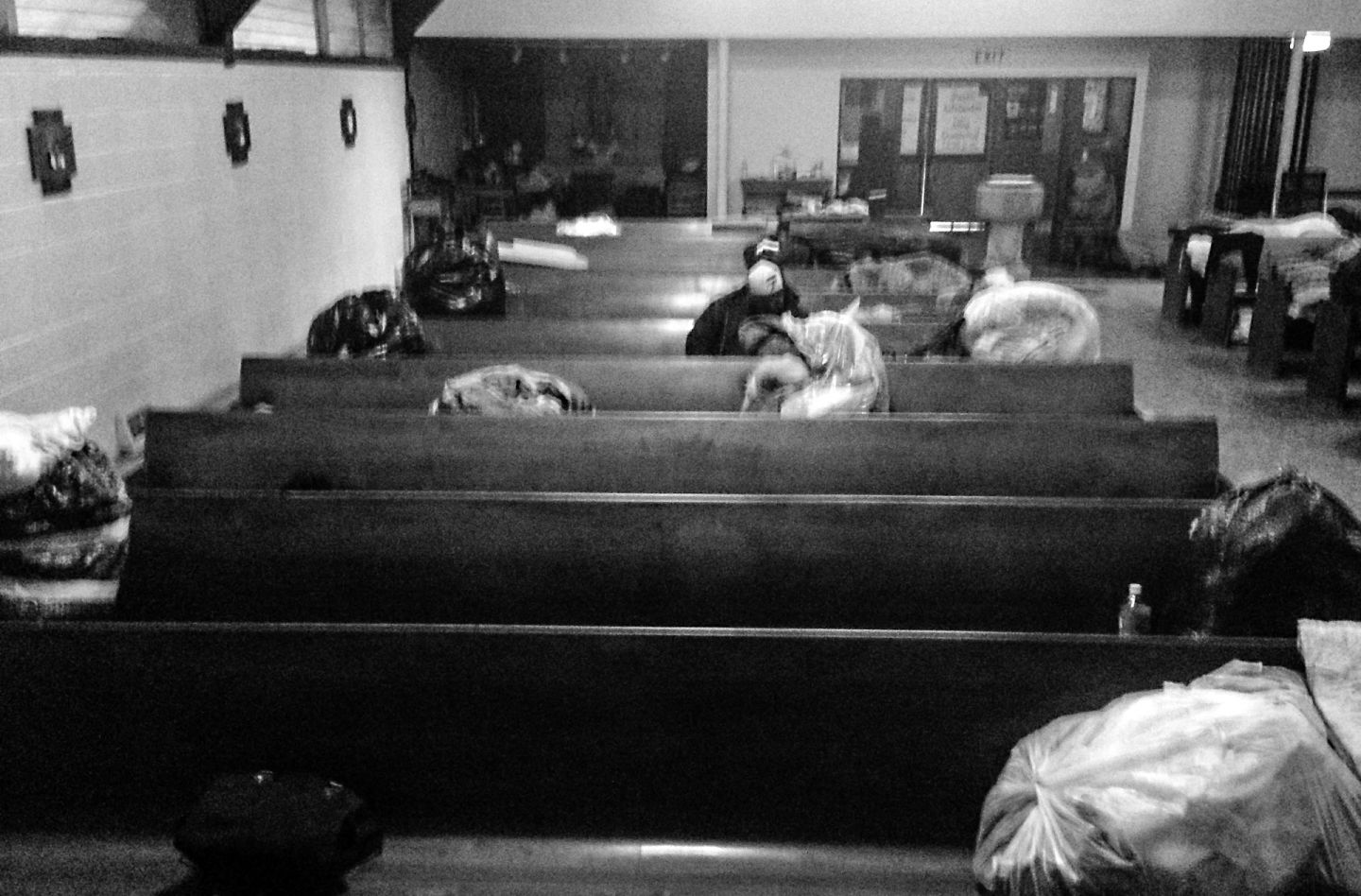
As El Niño-Fueled Rains Fall, L.A.'s Homeless Turn to Alternate Shelters
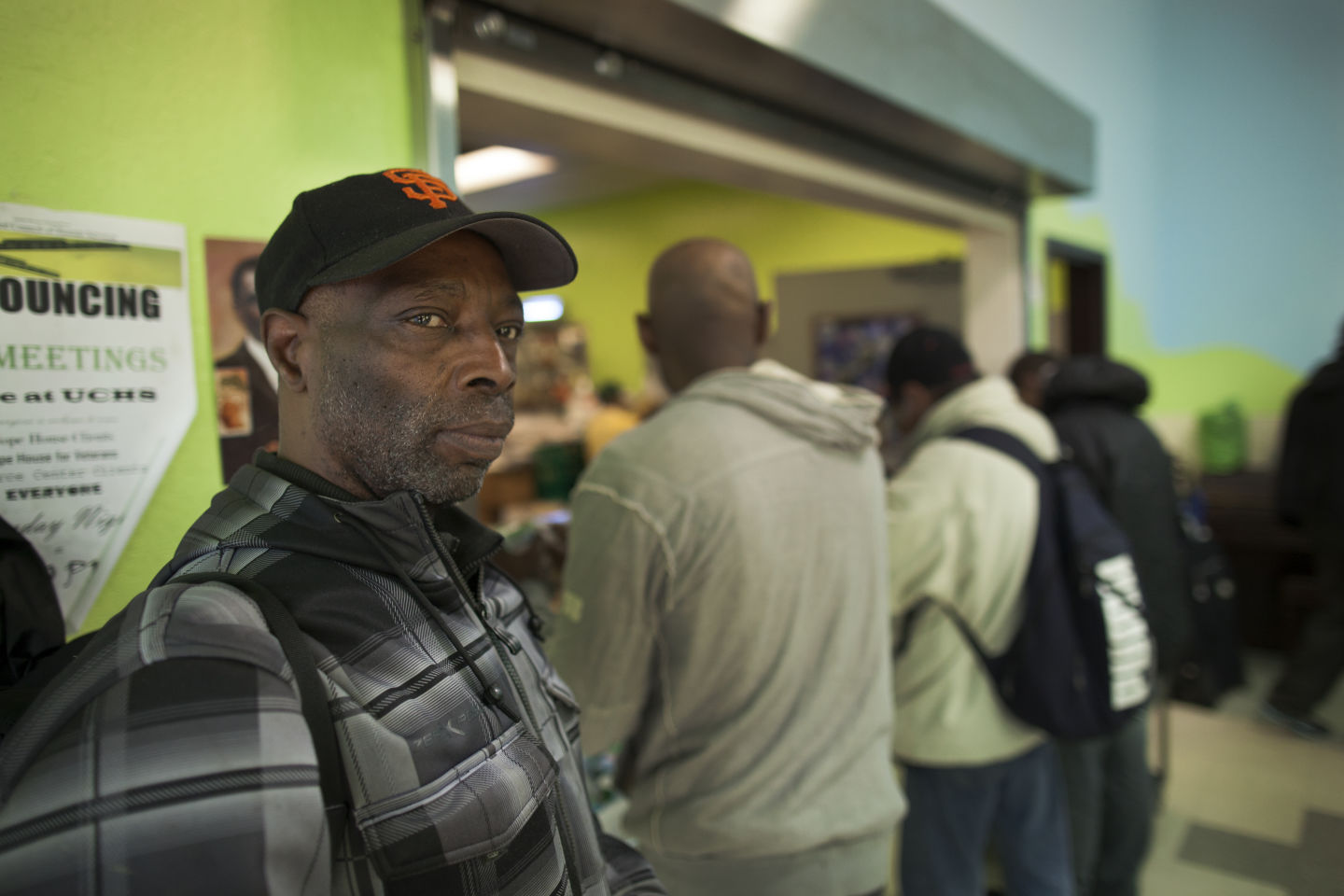
How One Homeless Man in Oakland Found Himself Back Home
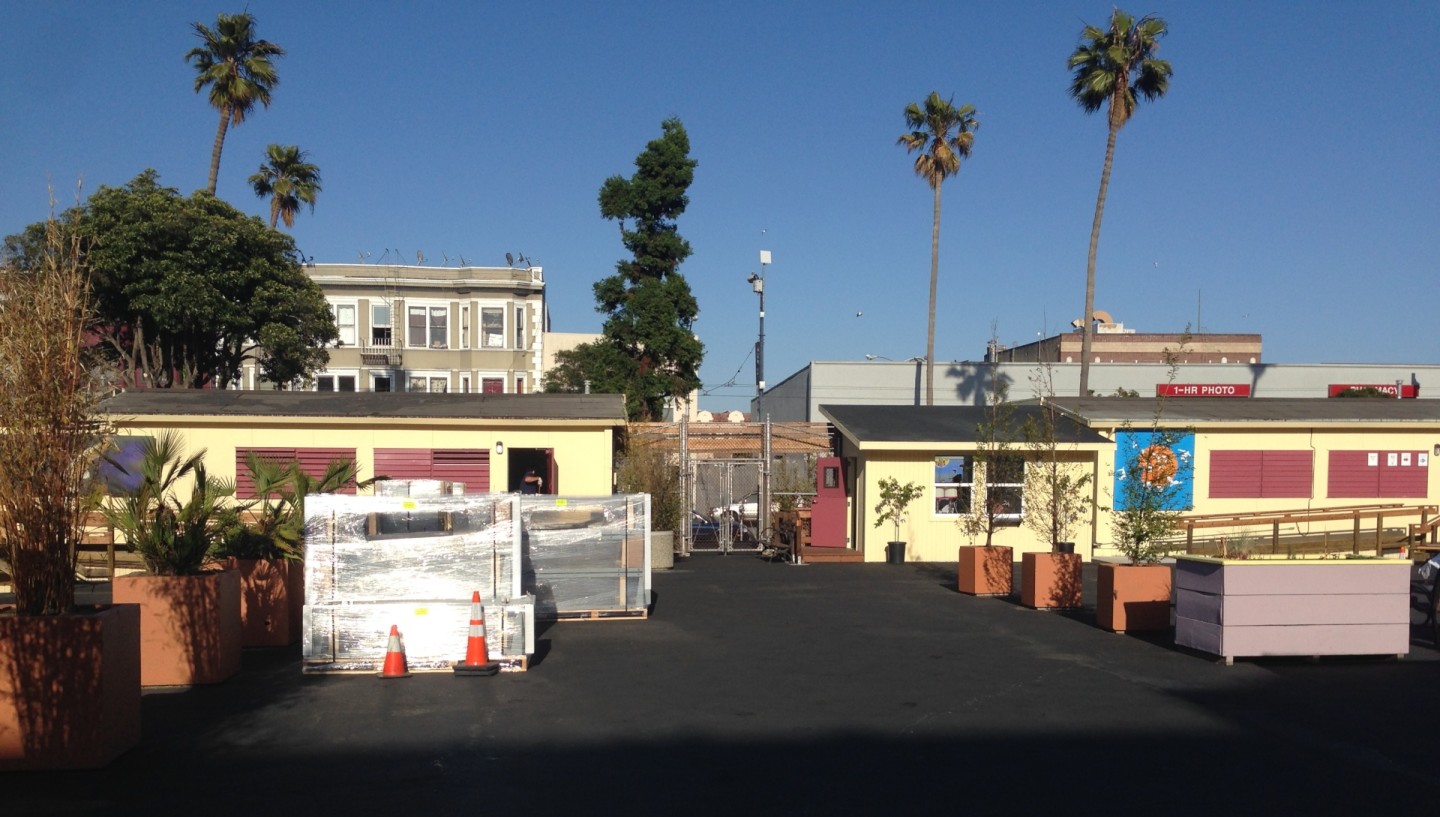
San Francisco's Homeless Navigation Center Draws Interest From Around World
A Year After 'The Jungle,' San Jose's New Approach to Homelessness
S.F. Pulls Plug on Controversial Bayview Homeless Shelter
With Few Places Left to Go, Southland's Homeless Often End Up on L.A.'s Skid Row
Reaching Out to the Homeless Woman Sleeping on Your San Francisco Doorstep
S.F. Startup Hopes Homeless Gift Card Will Spark Conversations and Donations
Homeless Man Helps Shelters Provide a Basic Need: Wi-Fi
Skid Row in Los Angeles: A City Within a City
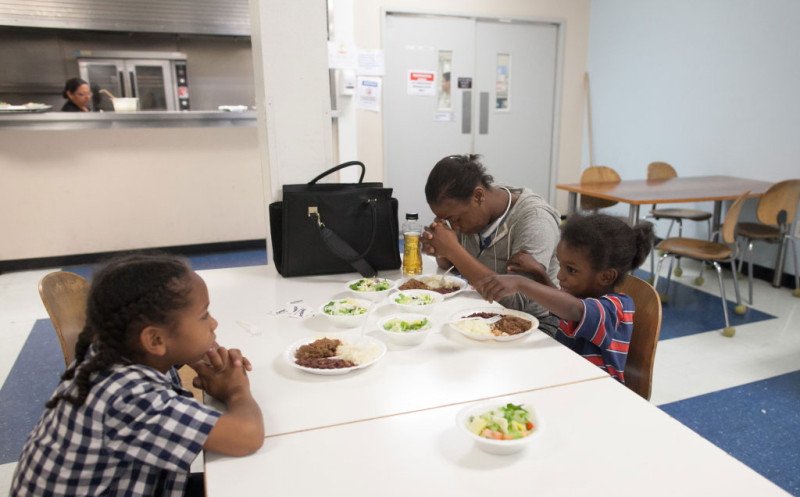
California's Homeless Kids Face Health, Learning Difficulties
Santa Clara County's Homeless Hope for Hotel Rooms After Shelter Closes
window.__IS_SSR__=true
window.__INITIAL_STATE__={
"attachmentsReducer": {
"audio_0": {
"type": "attachments",
"id": "audio_0",
"imgSizes": {
"kqedFullSize": {
"file": "https://ww2.kqed.org/news/wp-content/themes/KQED-unified/img/audio_bgs/background0.jpg"
}
}
},
"audio_1": {
"type": "attachments",
"id": "audio_1",
"imgSizes": {
"kqedFullSize": {
"file": "https://ww2.kqed.org/news/wp-content/themes/KQED-unified/img/audio_bgs/background1.jpg"
}
}
},
"audio_2": {
"type": "attachments",
"id": "audio_2",
"imgSizes": {
"kqedFullSize": {
"file": "https://ww2.kqed.org/news/wp-content/themes/KQED-unified/img/audio_bgs/background2.jpg"
}
}
},
"audio_3": {
"type": "attachments",
"id": "audio_3",
"imgSizes": {
"kqedFullSize": {
"file": "https://ww2.kqed.org/news/wp-content/themes/KQED-unified/img/audio_bgs/background3.jpg"
}
}
},
"audio_4": {
"type": "attachments",
"id": "audio_4",
"imgSizes": {
"kqedFullSize": {
"file": "https://ww2.kqed.org/news/wp-content/themes/KQED-unified/img/audio_bgs/background4.jpg"
}
}
},
"placeholder": {
"type": "attachments",
"id": "placeholder",
"imgSizes": {
"thumbnail": {
"file": "https://cdn.kqed.org/wp-content/uploads/2024/12/KQED-Default-Image-816638274-2000x1333-1-160x107.jpg",
"width": 160,
"height": 107,
"mimeType": "image/jpeg"
},
"medium": {
"file": "https://cdn.kqed.org/wp-content/uploads/2024/12/KQED-Default-Image-816638274-2000x1333-1-800x533.jpg",
"width": 800,
"height": 533,
"mimeType": "image/jpeg"
},
"medium_large": {
"file": "https://cdn.kqed.org/wp-content/uploads/2024/12/KQED-Default-Image-816638274-2000x1333-1-768x512.jpg",
"width": 768,
"height": 512,
"mimeType": "image/jpeg"
},
"large": {
"file": "https://cdn.kqed.org/wp-content/uploads/2024/12/KQED-Default-Image-816638274-2000x1333-1-1020x680.jpg",
"width": 1020,
"height": 680,
"mimeType": "image/jpeg"
},
"1536x1536": {
"file": "https://cdn.kqed.org/wp-content/uploads/2024/12/KQED-Default-Image-816638274-2000x1333-1-1536x1024.jpg",
"width": 1536,
"height": 1024,
"mimeType": "image/jpeg"
},
"fd-lrg": {
"file": "https://cdn.kqed.org/wp-content/uploads/2024/12/KQED-Default-Image-816638274-2000x1333-1-1536x1024.jpg",
"width": 1536,
"height": 1024,
"mimeType": "image/jpeg"
},
"fd-med": {
"file": "https://cdn.kqed.org/wp-content/uploads/2024/12/KQED-Default-Image-816638274-2000x1333-1-1020x680.jpg",
"width": 1020,
"height": 680,
"mimeType": "image/jpeg"
},
"fd-sm": {
"file": "https://cdn.kqed.org/wp-content/uploads/2024/12/KQED-Default-Image-816638274-2000x1333-1-800x533.jpg",
"width": 800,
"height": 533,
"mimeType": "image/jpeg"
},
"post-thumbnail": {
"file": "https://cdn.kqed.org/wp-content/uploads/2024/12/KQED-Default-Image-816638274-2000x1333-1-672x372.jpg",
"width": 672,
"height": 372,
"mimeType": "image/jpeg"
},
"twentyfourteen-full-width": {
"file": "https://cdn.kqed.org/wp-content/uploads/2024/12/KQED-Default-Image-816638274-2000x1333-1-1038x576.jpg",
"width": 1038,
"height": 576,
"mimeType": "image/jpeg"
},
"xxsmall": {
"file": "https://cdn.kqed.org/wp-content/uploads/2024/12/KQED-Default-Image-816638274-2000x1333-1-160x107.jpg",
"width": 160,
"height": 107,
"mimeType": "image/jpeg"
},
"xsmall": {
"file": "https://cdn.kqed.org/wp-content/uploads/2024/12/KQED-Default-Image-816638274-2000x1333-1-672x372.jpg",
"width": 672,
"height": 372,
"mimeType": "image/jpeg"
},
"small": {
"file": "https://cdn.kqed.org/wp-content/uploads/2024/12/KQED-Default-Image-816638274-2000x1333-1-672x372.jpg",
"width": 672,
"height": 372,
"mimeType": "image/jpeg"
},
"xlarge": {
"file": "https://cdn.kqed.org/wp-content/uploads/2024/12/KQED-Default-Image-816638274-2000x1333-1-1020x680.jpg",
"width": 1020,
"height": 680,
"mimeType": "image/jpeg"
},
"full-width": {
"file": "https://cdn.kqed.org/wp-content/uploads/2024/12/KQED-Default-Image-816638274-2000x1333-1-1920x1280.jpg",
"width": 1920,
"height": 1280,
"mimeType": "image/jpeg"
},
"guest-author-32": {
"file": "https://cdn.kqed.org/wp-content/uploads/2025/01/KQED-Default-Image-816638274-1333x1333-1-160x160.jpg",
"width": 32,
"height": 32,
"mimeType": "image/jpeg"
},
"guest-author-50": {
"file": "https://cdn.kqed.org/wp-content/uploads/2025/01/KQED-Default-Image-816638274-1333x1333-1-160x160.jpg",
"width": 50,
"height": 50,
"mimeType": "image/jpeg"
},
"guest-author-64": {
"file": "https://cdn.kqed.org/wp-content/uploads/2025/01/KQED-Default-Image-816638274-1333x1333-1-160x160.jpg",
"width": 64,
"height": 64,
"mimeType": "image/jpeg"
},
"guest-author-96": {
"file": "https://cdn.kqed.org/wp-content/uploads/2025/01/KQED-Default-Image-816638274-1333x1333-1-160x160.jpg",
"width": 96,
"height": 96,
"mimeType": "image/jpeg"
},
"guest-author-128": {
"file": "https://cdn.kqed.org/wp-content/uploads/2025/01/KQED-Default-Image-816638274-1333x1333-1-160x160.jpg",
"width": 128,
"height": 128,
"mimeType": "image/jpeg"
},
"detail": {
"file": "https://cdn.kqed.org/wp-content/uploads/2025/01/KQED-Default-Image-816638274-1333x1333-1-160x160.jpg",
"width": 160,
"height": 160,
"mimeType": "image/jpeg"
},
"kqedFullSize": {
"file": "https://cdn.kqed.org/wp-content/uploads/2024/12/KQED-Default-Image-816638274-2000x1333-1.jpg",
"width": 2000,
"height": 1333
}
}
},
"news_10830239": {
"type": "attachments",
"id": "news_10830239",
"meta": {
"index": "attachments_1716263798",
"site": "news",
"id": "10830239",
"found": true
},
"parent": 10830109,
"imgSizes": {
"twentyfourteen-full-width": {
"file": "https://ww2.kqed.org/app/uploads/sites/10/2016/01/ShelterInChurch-1038x576.jpg",
"width": 1038,
"mimeType": "image/jpeg",
"height": 576
},
"thumbnail": {
"file": "https://ww2.kqed.org/app/uploads/sites/10/2016/01/ShelterInChurch-400x263.jpg",
"width": 400,
"mimeType": "image/jpeg",
"height": 263
},
"fd-sm": {
"file": "https://ww2.kqed.org/app/uploads/sites/10/2016/01/ShelterInChurch-960x632.jpg",
"width": 960,
"mimeType": "image/jpeg",
"height": 632
},
"post-thumbnail": {
"file": "https://ww2.kqed.org/app/uploads/sites/10/2016/01/ShelterInChurch-672x372.jpg",
"width": 672,
"mimeType": "image/jpeg",
"height": 372
},
"kqedFullSize": {
"file": "https://ww2.kqed.org/app/uploads/sites/10/2016/01/ShelterInChurch.jpg",
"width": 1920,
"height": 1264
},
"large": {
"file": "https://ww2.kqed.org/app/uploads/sites/10/2016/01/ShelterInChurch-1440x948.jpg",
"width": 1440,
"mimeType": "image/jpeg",
"height": 948
},
"guest-author-96": {
"file": "https://ww2.kqed.org/app/uploads/sites/10/2016/01/ShelterInChurch-96x96.jpg",
"width": 96,
"mimeType": "image/jpeg",
"height": 96
},
"medium": {
"file": "https://ww2.kqed.org/app/uploads/sites/10/2016/01/ShelterInChurch-800x527.jpg",
"width": 800,
"mimeType": "image/jpeg",
"height": 527
},
"guest-author-64": {
"file": "https://ww2.kqed.org/app/uploads/sites/10/2016/01/ShelterInChurch-64x64.jpg",
"width": 64,
"mimeType": "image/jpeg",
"height": 64
},
"guest-author-32": {
"file": "https://ww2.kqed.org/app/uploads/sites/10/2016/01/ShelterInChurch-32x32.jpg",
"width": 32,
"mimeType": "image/jpeg",
"height": 32
},
"jmtc-small-thumb": {
"file": "https://ww2.kqed.org/app/uploads/sites/10/2016/01/ShelterInChurch-280x150.jpg",
"width": 280,
"mimeType": "image/jpeg",
"height": 150
},
"fd-lrg": {
"file": "https://ww2.kqed.org/app/uploads/sites/10/2016/01/ShelterInChurch-1920x1264.jpg",
"width": 1920,
"mimeType": "image/jpeg",
"height": 1264
},
"fd-med": {
"file": "https://ww2.kqed.org/app/uploads/sites/10/2016/01/ShelterInChurch-1180x777.jpg",
"width": 1180,
"mimeType": "image/jpeg",
"height": 777
},
"detail": {
"file": "https://ww2.kqed.org/app/uploads/sites/10/2016/01/ShelterInChurch-75x75.jpg",
"width": 75,
"mimeType": "image/jpeg",
"height": 75
},
"medium_large": {
"file": "https://ww2.kqed.org/app/uploads/sites/10/2016/01/ShelterInChurch-768x506.jpg",
"width": 768,
"mimeType": "image/jpeg",
"height": 506
},
"guest-author-128": {
"file": "https://ww2.kqed.org/app/uploads/sites/10/2016/01/ShelterInChurch-128x128.jpg",
"width": 128,
"mimeType": "image/jpeg",
"height": 128
}
},
"publishDate": 1452630341,
"modified": 1452630378,
"caption": "About 30 people sought shelter from wet winter storms last week inside the sanctuary at All Souls Episcopal Church in L.A.’s Highland Park neighborhood. ",
"description": "About 30 people sought shelter from wet winter storms last week inside the sanctuary at All Souls Episcopal Church in L.A.’s Highland Park neighborhood. ",
"title": "ShelterInChurch",
"credit": "Steven Cuevas/KQED",
"status": "inherit",
"isLoading": false,
"fetchFailed": false
},
"news_10815325": {
"type": "attachments",
"id": "news_10815325",
"meta": {
"index": "attachments_1716263798",
"site": "news",
"id": "10815325",
"found": true
},
"parent": 10815263,
"imgSizes": {
"twentyfourteen-full-width": {
"file": "https://ww2.kqed.org/app/uploads/sites/10/2015/12/IMG_0736-1038x576.jpg",
"width": 1038,
"mimeType": "image/jpeg",
"height": 576
},
"thumbnail": {
"file": "https://ww2.kqed.org/app/uploads/sites/10/2015/12/IMG_0736-400x300.jpg",
"width": 400,
"mimeType": "image/jpeg",
"height": 300
},
"fd-sm": {
"file": "https://ww2.kqed.org/app/uploads/sites/10/2015/12/IMG_0736-960x720.jpg",
"width": 960,
"mimeType": "image/jpeg",
"height": 720
},
"post-thumbnail": {
"file": "https://ww2.kqed.org/app/uploads/sites/10/2015/12/IMG_0736-672x372.jpg",
"width": 672,
"mimeType": "image/jpeg",
"height": 372
},
"kqedFullSize": {
"file": "https://ww2.kqed.org/app/uploads/sites/10/2015/12/IMG_0736.jpg",
"width": 3264,
"height": 2448
},
"large": {
"file": "https://ww2.kqed.org/app/uploads/sites/10/2015/12/IMG_0736-1440x1080.jpg",
"width": 1440,
"mimeType": "image/jpeg",
"height": 1080
},
"guest-author-96": {
"file": "https://ww2.kqed.org/app/uploads/sites/10/2015/12/IMG_0736-96x96.jpg",
"width": 96,
"mimeType": "image/jpeg",
"height": 96
},
"medium": {
"file": "https://ww2.kqed.org/app/uploads/sites/10/2015/12/IMG_0736-800x600.jpg",
"width": 800,
"mimeType": "image/jpeg",
"height": 600
},
"guest-author-64": {
"file": "https://ww2.kqed.org/app/uploads/sites/10/2015/12/IMG_0736-64x64.jpg",
"width": 64,
"mimeType": "image/jpeg",
"height": 64
},
"guest-author-32": {
"file": "https://ww2.kqed.org/app/uploads/sites/10/2015/12/IMG_0736-32x32.jpg",
"width": 32,
"mimeType": "image/jpeg",
"height": 32
},
"jmtc-small-thumb": {
"file": "https://ww2.kqed.org/app/uploads/sites/10/2015/12/IMG_0736-280x150.jpg",
"width": 280,
"mimeType": "image/jpeg",
"height": 150
},
"fd-lrg": {
"file": "https://ww2.kqed.org/app/uploads/sites/10/2015/12/IMG_0736-1920x1440.jpg",
"width": 1920,
"mimeType": "image/jpeg",
"height": 1440
},
"fd-med": {
"file": "https://ww2.kqed.org/app/uploads/sites/10/2015/12/IMG_0736-1180x885.jpg",
"width": 1180,
"mimeType": "image/jpeg",
"height": 885
},
"detail": {
"file": "https://ww2.kqed.org/app/uploads/sites/10/2015/12/IMG_0736-75x75.jpg",
"width": 75,
"mimeType": "image/jpeg",
"height": 75
},
"medium_large": {
"file": "https://ww2.kqed.org/app/uploads/sites/10/2015/12/IMG_0736-768x576.jpg",
"width": 768,
"mimeType": "image/jpeg",
"height": 576
},
"guest-author-128": {
"file": "https://ww2.kqed.org/app/uploads/sites/10/2015/12/IMG_0736-128x128.jpg",
"width": 128,
"mimeType": "image/jpeg",
"height": 128
}
},
"publishDate": 1451526563,
"modified": 1451526627,
"caption": "Elvator Barfield spent six months living on the streets and in a car before finding Section 8 housing, right back in the same apartment complex he left.",
"description": null,
"title": "Elvator Barfield",
"credit": "Devin Katayama/KQED",
"status": "inherit",
"isLoading": false,
"fetchFailed": false
},
"news_10614695": {
"type": "attachments",
"id": "news_10614695",
"meta": {
"index": "attachments_1716263798",
"site": "news",
"id": "10614695",
"found": true
},
"parent": 10614640,
"imgSizes": {
"twentyfourteen-full-width": {
"file": "https://ww2.kqed.org/app/uploads/sites/10/2015/07/15480_transform-e1438010969227-1038x576.jpg",
"width": 1038,
"mimeType": "image/jpeg",
"height": 576
},
"thumbnail": {
"file": "https://ww2.kqed.org/app/uploads/sites/10/2015/07/15480_transform-e1438010969227-400x227.jpg",
"width": 400,
"mimeType": "image/jpeg",
"height": 227
},
"fd-sm": {
"file": "https://ww2.kqed.org/app/uploads/sites/10/2015/07/15480_transform-e1438010969227-960x545.jpg",
"width": 960,
"mimeType": "image/jpeg",
"height": 545
},
"post-thumbnail": {
"file": "https://ww2.kqed.org/app/uploads/sites/10/2015/07/15480_transform-e1438010969227-672x372.jpg",
"width": 672,
"mimeType": "image/jpeg",
"height": 372
},
"kqedFullSize": {
"file": "https://ww2.kqed.org/app/uploads/sites/10/2015/07/15480_transform-e1438010969227.jpg",
"width": 1920,
"height": 1089
},
"large": {
"file": "https://ww2.kqed.org/app/uploads/sites/10/2015/07/15480_transform-e1438010969227-1440x817.jpg",
"width": 1440,
"mimeType": "image/jpeg",
"height": 817
},
"guest-author-96": {
"file": "https://ww2.kqed.org/app/uploads/sites/10/2015/07/15480_transform-e1438010969227-96x96.jpg",
"width": 96,
"mimeType": "image/jpeg",
"height": 96
},
"medium": {
"file": "https://ww2.kqed.org/app/uploads/sites/10/2015/07/15480_transform-e1438010969227-800x454.jpg",
"width": 800,
"mimeType": "image/jpeg",
"height": 454
},
"guest-author-64": {
"file": "https://ww2.kqed.org/app/uploads/sites/10/2015/07/15480_transform-e1438010969227-64x64.jpg",
"width": 64,
"mimeType": "image/jpeg",
"height": 64
},
"guest-author-32": {
"file": "https://ww2.kqed.org/app/uploads/sites/10/2015/07/15480_transform-e1438010969227-32x32.jpg",
"width": 32,
"mimeType": "image/jpeg",
"height": 32
},
"jmtc-small-thumb": {
"file": "https://ww2.kqed.org/app/uploads/sites/10/2015/07/15480_transform-e1438010969227-280x150.jpg",
"width": 280,
"mimeType": "image/jpeg",
"height": 150
},
"fd-lrg": {
"file": "https://ww2.kqed.org/app/uploads/sites/10/2015/07/15480_transform-e1438010969227-1400x794.jpg",
"width": 1400,
"mimeType": "image/jpeg",
"height": 794
},
"fd-med": {
"file": "https://ww2.kqed.org/app/uploads/sites/10/2015/07/15480_transform-e1438010969227-1180x669.jpg",
"width": 1180,
"mimeType": "image/jpeg",
"height": 669
},
"detail": {
"file": "https://ww2.kqed.org/app/uploads/sites/10/2015/07/15480_transform-e1438010969227-75x75.jpg",
"width": 75,
"mimeType": "image/jpeg",
"height": 75
},
"guest-author-128": {
"file": "https://ww2.kqed.org/app/uploads/sites/10/2015/07/15480_transform-e1438010969227-128x128.jpg",
"width": 128,
"mimeType": "image/jpeg",
"height": 128
}
},
"publishDate": 1437783513,
"modified": 1438010898,
"caption": "1950 Mission St. is currently serving as the Navigation Center, providing aid and services for San Franciscans without homes.",
"description": null,
"title": "Homeless Navigation Center",
"credit": "Sam Harnett/KQED",
"status": "inherit",
"isLoading": false,
"fetchFailed": false
},
"news_10762231": {
"type": "attachments",
"id": "news_10762231",
"meta": {
"index": "attachments_1716263798",
"site": "news",
"id": "10762231",
"found": true
},
"parent": 10761651,
"imgSizes": {
"twentyfourteen-full-width": {
"file": "https://ww2.kqed.org/app/uploads/sites/10/2015/11/20151111_homeless_jt-7-1038x576.jpg",
"width": 1038,
"mimeType": "image/jpeg",
"height": 576
},
"thumbnail": {
"file": "https://ww2.kqed.org/app/uploads/sites/10/2015/11/20151111_homeless_jt-7-400x287.jpg",
"width": 400,
"mimeType": "image/jpeg",
"height": 287
},
"fd-sm": {
"file": "https://ww2.kqed.org/app/uploads/sites/10/2015/11/20151111_homeless_jt-7-960x689.jpg",
"width": 960,
"mimeType": "image/jpeg",
"height": 689
},
"post-thumbnail": {
"file": "https://ww2.kqed.org/app/uploads/sites/10/2015/11/20151111_homeless_jt-7-672x372.jpg",
"width": 672,
"mimeType": "image/jpeg",
"height": 372
},
"kqedFullSize": {
"file": "https://ww2.kqed.org/app/uploads/sites/10/2015/11/20151111_homeless_jt-7.jpg",
"width": 2800,
"height": 2009
},
"large": {
"file": "https://ww2.kqed.org/app/uploads/sites/10/2015/11/20151111_homeless_jt-7-1440x1033.jpg",
"width": 1440,
"mimeType": "image/jpeg",
"height": 1033
},
"guest-author-96": {
"file": "https://ww2.kqed.org/app/uploads/sites/10/2015/11/20151111_homeless_jt-7-96x96.jpg",
"width": 96,
"mimeType": "image/jpeg",
"height": 96
},
"medium": {
"file": "https://ww2.kqed.org/app/uploads/sites/10/2015/11/20151111_homeless_jt-7-800x574.jpg",
"width": 800,
"mimeType": "image/jpeg",
"height": 574
},
"guest-author-64": {
"file": "https://ww2.kqed.org/app/uploads/sites/10/2015/11/20151111_homeless_jt-7-64x64.jpg",
"width": 64,
"mimeType": "image/jpeg",
"height": 64
},
"guest-author-32": {
"file": "https://ww2.kqed.org/app/uploads/sites/10/2015/11/20151111_homeless_jt-7-32x32.jpg",
"width": 32,
"mimeType": "image/jpeg",
"height": 32
},
"jmtc-small-thumb": {
"file": "https://ww2.kqed.org/app/uploads/sites/10/2015/11/20151111_homeless_jt-7-280x150.jpg",
"width": 280,
"mimeType": "image/jpeg",
"height": 150
},
"fd-lrg": {
"file": "https://ww2.kqed.org/app/uploads/sites/10/2015/11/20151111_homeless_jt-7-1920x1378.jpg",
"width": 1920,
"mimeType": "image/jpeg",
"height": 1378
},
"fd-med": {
"file": "https://ww2.kqed.org/app/uploads/sites/10/2015/11/20151111_homeless_jt-7-1180x847.jpg",
"width": 1180,
"mimeType": "image/jpeg",
"height": 847
},
"detail": {
"file": "https://ww2.kqed.org/app/uploads/sites/10/2015/11/20151111_homeless_jt-7-75x75.jpg",
"width": 75,
"mimeType": "image/jpeg",
"height": 75
},
"guest-author-128": {
"file": "https://ww2.kqed.org/app/uploads/sites/10/2015/11/20151111_homeless_jt-7-128x128.jpg",
"width": 128,
"mimeType": "image/jpeg",
"height": 128
}
},
"publishDate": 1447778919,
"modified": 1447778946,
"caption": "Brian and Andrea Rodriguez have been living on San Jose's streets and creeks for the better part of two years now, keeping each other's spirits up as they fight to get back into paying jobs and permanent housing.",
"description": "Brian and Andrea Rodriguez have been living on San Jose's streets and creeks for the better part of two years now, keeping each other's spirits up as they fight to get back into paying jobs and permanent housing.",
"title": "20151111_homeless_jt-7",
"credit": "James Tensuan/KQED",
"status": "inherit",
"isLoading": false,
"fetchFailed": false
},
"news_10755245": {
"type": "attachments",
"id": "news_10755245",
"meta": {
"index": "attachments_1716263798",
"site": "news",
"id": "10755245",
"found": true
},
"parent": 10755030,
"imgSizes": {
"twentyfourteen-full-width": {
"file": "https://ww2.kqed.org/app/uploads/sites/10/2015/11/Mother-Browns-2-1038x576.jpg",
"width": 1038,
"mimeType": "image/jpeg",
"height": 576
},
"thumbnail": {
"file": "https://ww2.kqed.org/app/uploads/sites/10/2015/11/Mother-Browns-2-400x267.jpg",
"width": 400,
"mimeType": "image/jpeg",
"height": 267
},
"fd-sm": {
"file": "https://ww2.kqed.org/app/uploads/sites/10/2015/11/Mother-Browns-2-960x640.jpg",
"width": 960,
"mimeType": "image/jpeg",
"height": 640
},
"post-thumbnail": {
"file": "https://ww2.kqed.org/app/uploads/sites/10/2015/11/Mother-Browns-2-672x372.jpg",
"width": 672,
"mimeType": "image/jpeg",
"height": 372
},
"kqedFullSize": {
"file": "https://ww2.kqed.org/app/uploads/sites/10/2015/11/Mother-Browns-2.jpg",
"width": 5616,
"height": 3744
},
"large": {
"file": "https://ww2.kqed.org/app/uploads/sites/10/2015/11/Mother-Browns-2-1440x960.jpg",
"width": 1440,
"mimeType": "image/jpeg",
"height": 960
},
"guest-author-96": {
"file": "https://ww2.kqed.org/app/uploads/sites/10/2015/11/Mother-Browns-2-96x96.jpg",
"width": 96,
"mimeType": "image/jpeg",
"height": 96
},
"medium": {
"file": "https://ww2.kqed.org/app/uploads/sites/10/2015/11/Mother-Browns-2-800x533.jpg",
"width": 800,
"mimeType": "image/jpeg",
"height": 533
},
"guest-author-64": {
"file": "https://ww2.kqed.org/app/uploads/sites/10/2015/11/Mother-Browns-2-64x64.jpg",
"width": 64,
"mimeType": "image/jpeg",
"height": 64
},
"guest-author-32": {
"file": "https://ww2.kqed.org/app/uploads/sites/10/2015/11/Mother-Browns-2-32x32.jpg",
"width": 32,
"mimeType": "image/jpeg",
"height": 32
},
"jmtc-small-thumb": {
"file": "https://ww2.kqed.org/app/uploads/sites/10/2015/11/Mother-Browns-2-280x150.jpg",
"width": 280,
"mimeType": "image/jpeg",
"height": 150
},
"fd-lrg": {
"file": "https://ww2.kqed.org/app/uploads/sites/10/2015/11/Mother-Browns-2-1920x1280.jpg",
"width": 1920,
"mimeType": "image/jpeg",
"height": 1280
},
"fd-med": {
"file": "https://ww2.kqed.org/app/uploads/sites/10/2015/11/Mother-Browns-2-1180x787.jpg",
"width": 1180,
"mimeType": "image/jpeg",
"height": 787
},
"detail": {
"file": "https://ww2.kqed.org/app/uploads/sites/10/2015/11/Mother-Browns-2-75x75.jpg",
"width": 75,
"mimeType": "image/jpeg",
"height": 75
},
"guest-author-128": {
"file": "https://ww2.kqed.org/app/uploads/sites/10/2015/11/Mother-Browns-2-128x128.jpg",
"width": 128,
"mimeType": "image/jpeg",
"height": 128
}
},
"publishDate": 1447289395,
"modified": 1447376946,
"caption": "In this file photo from April 2014, Eddie Jefferson Jr. is pictured at Mother Brown's Dining Room. 'If I was building shelters, I'd put it here because it's out of the way,' he said.",
"description": null,
"title": "Mother Browns 2",
"credit": "Mark Andrew Boyer/KQED",
"status": "inherit",
"isLoading": false,
"fetchFailed": false
},
"news_10737197": {
"type": "attachments",
"id": "news_10737197",
"meta": {
"index": "attachments_1716263798",
"site": "news",
"id": "10737197",
"found": true
},
"parent": 10736931,
"imgSizes": {
"twentyfourteen-full-width": {
"file": "https://ww2.kqed.org/app/uploads/sites/10/2015/10/WomanWingsSkidRow-1038x576.jpg",
"width": 1038,
"mimeType": "image/jpeg",
"height": 576
},
"thumbnail": {
"file": "https://ww2.kqed.org/app/uploads/sites/10/2015/10/WomanWingsSkidRow-400x253.jpg",
"width": 400,
"mimeType": "image/jpeg",
"height": 253
},
"fd-sm": {
"file": "https://ww2.kqed.org/app/uploads/sites/10/2015/10/WomanWingsSkidRow-960x608.jpg",
"width": 960,
"mimeType": "image/jpeg",
"height": 608
},
"post-thumbnail": {
"file": "https://ww2.kqed.org/app/uploads/sites/10/2015/10/WomanWingsSkidRow-672x372.jpg",
"width": 672,
"mimeType": "image/jpeg",
"height": 372
},
"kqedFullSize": {
"file": "https://ww2.kqed.org/app/uploads/sites/10/2015/10/WomanWingsSkidRow.jpg",
"width": 1920,
"height": 1216
},
"large": {
"file": "https://ww2.kqed.org/app/uploads/sites/10/2015/10/WomanWingsSkidRow-1440x912.jpg",
"width": 1440,
"mimeType": "image/jpeg",
"height": 912
},
"guest-author-96": {
"file": "https://ww2.kqed.org/app/uploads/sites/10/2015/10/WomanWingsSkidRow-96x96.jpg",
"width": 96,
"mimeType": "image/jpeg",
"height": 96
},
"medium": {
"file": "https://ww2.kqed.org/app/uploads/sites/10/2015/10/WomanWingsSkidRow-800x507.jpg",
"width": 800,
"mimeType": "image/jpeg",
"height": 507
},
"guest-author-64": {
"file": "https://ww2.kqed.org/app/uploads/sites/10/2015/10/WomanWingsSkidRow-64x64.jpg",
"width": 64,
"mimeType": "image/jpeg",
"height": 64
},
"guest-author-32": {
"file": "https://ww2.kqed.org/app/uploads/sites/10/2015/10/WomanWingsSkidRow-32x32.jpg",
"width": 32,
"mimeType": "image/jpeg",
"height": 32
},
"jmtc-small-thumb": {
"file": "https://ww2.kqed.org/app/uploads/sites/10/2015/10/WomanWingsSkidRow-280x150.jpg",
"width": 280,
"mimeType": "image/jpeg",
"height": 150
},
"fd-lrg": {
"file": "https://ww2.kqed.org/app/uploads/sites/10/2015/10/WomanWingsSkidRow-1920x1216.jpg",
"width": 1920,
"mimeType": "image/jpeg",
"height": 1216
},
"fd-med": {
"file": "https://ww2.kqed.org/app/uploads/sites/10/2015/10/WomanWingsSkidRow-1180x747.jpg",
"width": 1180,
"mimeType": "image/jpeg",
"height": 747
},
"detail": {
"file": "https://ww2.kqed.org/app/uploads/sites/10/2015/10/WomanWingsSkidRow-75x75.jpg",
"width": 75,
"mimeType": "image/jpeg",
"height": 75
},
"guest-author-128": {
"file": "https://ww2.kqed.org/app/uploads/sites/10/2015/10/WomanWingsSkidRow-128x128.jpg",
"width": 128,
"mimeType": "image/jpeg",
"height": 128
}
},
"publishDate": 1446066037,
"modified": 1446066117,
"caption": "A woman walks past one of Skid Row's many murals. Many of Skid Row’s denizens come from communities far outside L.A.’s borders.",
"description": "A woman walks past one of Skid Row's many murals. Many of Skid Row’s denizens come from communities far outside L.A.’s borders.",
"title": "WomanWingsSkidRow",
"credit": "Steven Cuevas/KQED",
"status": "inherit",
"isLoading": false,
"fetchFailed": false
},
"news_10736989": {
"type": "attachments",
"id": "news_10736989",
"meta": {
"index": "attachments_1716263798",
"site": "news",
"id": "10736989",
"found": true
},
"parent": 10729141,
"imgSizes": {
"twentyfourteen-full-width": {
"file": "https://ww2.kqed.org/app/uploads/sites/10/2015/10/HomelessCup-1038x576.jpg",
"width": 1038,
"mimeType": "image/jpeg",
"height": 576
},
"thumbnail": {
"file": "https://ww2.kqed.org/app/uploads/sites/10/2015/10/HomelessCup-400x271.jpg",
"width": 400,
"mimeType": "image/jpeg",
"height": 271
},
"fd-sm": {
"file": "https://ww2.kqed.org/app/uploads/sites/10/2015/10/HomelessCup-960x650.jpg",
"width": 960,
"mimeType": "image/jpeg",
"height": 650
},
"post-thumbnail": {
"file": "https://ww2.kqed.org/app/uploads/sites/10/2015/10/HomelessCup-672x372.jpg",
"width": 672,
"mimeType": "image/jpeg",
"height": 372
},
"kqedFullSize": {
"file": "https://ww2.kqed.org/app/uploads/sites/10/2015/10/HomelessCup.jpg",
"width": 1920,
"height": 1300
},
"large": {
"file": "https://ww2.kqed.org/app/uploads/sites/10/2015/10/HomelessCup-1440x975.jpg",
"width": 1440,
"mimeType": "image/jpeg",
"height": 975
},
"guest-author-96": {
"file": "https://ww2.kqed.org/app/uploads/sites/10/2015/10/HomelessCup-96x96.jpg",
"width": 96,
"mimeType": "image/jpeg",
"height": 96
},
"medium": {
"file": "https://ww2.kqed.org/app/uploads/sites/10/2015/10/HomelessCup-800x542.jpg",
"width": 800,
"mimeType": "image/jpeg",
"height": 542
},
"guest-author-64": {
"file": "https://ww2.kqed.org/app/uploads/sites/10/2015/10/HomelessCup-64x64.jpg",
"width": 64,
"mimeType": "image/jpeg",
"height": 64
},
"guest-author-32": {
"file": "https://ww2.kqed.org/app/uploads/sites/10/2015/10/HomelessCup-32x32.jpg",
"width": 32,
"mimeType": "image/jpeg",
"height": 32
},
"jmtc-small-thumb": {
"file": "https://ww2.kqed.org/app/uploads/sites/10/2015/10/HomelessCup-280x150.jpg",
"width": 280,
"mimeType": "image/jpeg",
"height": 150
},
"fd-lrg": {
"file": "https://ww2.kqed.org/app/uploads/sites/10/2015/10/HomelessCup-1920x1300.jpg",
"width": 1920,
"mimeType": "image/jpeg",
"height": 1300
},
"fd-med": {
"file": "https://ww2.kqed.org/app/uploads/sites/10/2015/10/HomelessCup-1180x799.jpg",
"width": 1180,
"mimeType": "image/jpeg",
"height": 799
},
"detail": {
"file": "https://ww2.kqed.org/app/uploads/sites/10/2015/10/HomelessCup-75x75.jpg",
"width": 75,
"mimeType": "image/jpeg",
"height": 75
},
"guest-author-128": {
"file": "https://ww2.kqed.org/app/uploads/sites/10/2015/10/HomelessCup-128x128.jpg",
"width": 128,
"mimeType": "image/jpeg",
"height": 128
}
},
"publishDate": 1446052975,
"modified": 1447270828,
"caption": "A homeless man holds a cup in San Francisco. Sofia declined to have her photo taken for this story.",
"description": "A homeless man holds a cup in San Francisco. Sofia declined to have her photo taken for this story.",
"title": "HomelessCup",
"credit": "Justin Sullivan/Getty Images",
"status": "inherit",
"isLoading": false,
"fetchFailed": false
},
"news_10657660": {
"type": "attachments",
"id": "news_10657660",
"meta": {
"index": "attachments_1716263798",
"site": "news",
"id": "10657660",
"found": true
},
"parent": 10657605,
"imgSizes": {
"twentyfourteen-full-width": {
"file": "https://ww2.kqed.org/app/uploads/sites/10/2015/08/IMG_0074-1038x576.jpg",
"width": 1038,
"mimeType": "image/jpeg",
"height": 576
},
"thumbnail": {
"file": "https://ww2.kqed.org/app/uploads/sites/10/2015/08/IMG_0074-400x267.jpg",
"width": 400,
"mimeType": "image/jpeg",
"height": 267
},
"fd-sm": {
"file": "https://ww2.kqed.org/app/uploads/sites/10/2015/08/IMG_0074-960x640.jpg",
"width": 960,
"mimeType": "image/jpeg",
"height": 640
},
"post-thumbnail": {
"file": "https://ww2.kqed.org/app/uploads/sites/10/2015/08/IMG_0074-672x372.jpg",
"width": 672,
"mimeType": "image/jpeg",
"height": 372
},
"kqedFullSize": {
"file": "https://ww2.kqed.org/app/uploads/sites/10/2015/08/IMG_0074.jpg",
"width": 5760,
"height": 3840
},
"large": {
"file": "https://ww2.kqed.org/app/uploads/sites/10/2015/08/IMG_0074-1440x960.jpg",
"width": 1440,
"mimeType": "image/jpeg",
"height": 960
},
"guest-author-96": {
"file": "https://ww2.kqed.org/app/uploads/sites/10/2015/08/IMG_0074-96x96.jpg",
"width": 96,
"mimeType": "image/jpeg",
"height": 96
},
"medium": {
"file": "https://ww2.kqed.org/app/uploads/sites/10/2015/08/IMG_0074-800x533.jpg",
"width": 800,
"mimeType": "image/jpeg",
"height": 533
},
"guest-author-64": {
"file": "https://ww2.kqed.org/app/uploads/sites/10/2015/08/IMG_0074-64x64.jpg",
"width": 64,
"mimeType": "image/jpeg",
"height": 64
},
"guest-author-32": {
"file": "https://ww2.kqed.org/app/uploads/sites/10/2015/08/IMG_0074-32x32.jpg",
"width": 32,
"mimeType": "image/jpeg",
"height": 32
},
"jmtc-small-thumb": {
"file": "https://ww2.kqed.org/app/uploads/sites/10/2015/08/IMG_0074-280x150.jpg",
"width": 280,
"mimeType": "image/jpeg",
"height": 150
},
"fd-lrg": {
"file": "https://ww2.kqed.org/app/uploads/sites/10/2015/08/IMG_0074-1920x1280.jpg",
"width": 1920,
"mimeType": "image/jpeg",
"height": 1280
},
"fd-med": {
"file": "https://ww2.kqed.org/app/uploads/sites/10/2015/08/IMG_0074-1180x787.jpg",
"width": 1180,
"mimeType": "image/jpeg",
"height": 787
},
"detail": {
"file": "https://ww2.kqed.org/app/uploads/sites/10/2015/08/IMG_0074-75x75.jpg",
"width": 75,
"mimeType": "image/jpeg",
"height": 75
},
"guest-author-128": {
"file": "https://ww2.kqed.org/app/uploads/sites/10/2015/08/IMG_0074-128x128.jpg",
"width": 128,
"mimeType": "image/jpeg",
"height": 128
}
},
"publishDate": 1440628590,
"modified": 1440711182,
"caption": "Marissa Balonon-Rosen of Project Homeless Connect and HandUp has been doing outreach and testing gift cards around Market Street in downtown San Francisco. ",
"description": "Marissa Balonon-Rosen of Project Homeless Connect and HandUp has been doing outreach and testing gift cards around Market Street in downtown San Francisco. ",
"title": "IMG_0074",
"credit": "Photo courtesy of Ken Fisher of the Truth Be Told Creative",
"status": "inherit",
"isLoading": false,
"fetchFailed": false
},
"news_10527408": {
"type": "attachments",
"id": "news_10527408",
"meta": {
"index": "attachments_1716263798",
"site": "news",
"id": "10527408",
"found": true
},
"parent": 10526226,
"imgSizes": {
"twentyfourteen-full-width": {
"file": "https://ww2.kqed.org/app/uploads/sites/10/2015/05/DarcelJ-1038x576.jpg",
"width": 1038,
"mimeType": "image/jpeg",
"height": 576
},
"thumbnail": {
"file": "https://ww2.kqed.org/app/uploads/sites/10/2015/05/DarcelJ-400x353.jpg",
"width": 400,
"mimeType": "image/jpeg",
"height": 353
},
"fd-sm": {
"file": "https://ww2.kqed.org/app/uploads/sites/10/2015/05/DarcelJ-960x848.jpg",
"width": 960,
"mimeType": "image/jpeg",
"height": 848
},
"post-thumbnail": {
"file": "https://ww2.kqed.org/app/uploads/sites/10/2015/05/DarcelJ-672x372.jpg",
"width": 672,
"mimeType": "image/jpeg",
"height": 372
},
"kqedFullSize": {
"file": "https://ww2.kqed.org/app/uploads/sites/10/2015/05/DarcelJ.jpg",
"width": 1920,
"height": 1695
},
"large": {
"file": "https://ww2.kqed.org/app/uploads/sites/10/2015/05/DarcelJ-1440x1271.jpg",
"width": 1440,
"mimeType": "image/jpeg",
"height": 1271
},
"guest-author-96": {
"file": "https://ww2.kqed.org/app/uploads/sites/10/2015/05/DarcelJ-96x96.jpg",
"width": 96,
"mimeType": "image/jpeg",
"height": 96
},
"medium": {
"file": "https://ww2.kqed.org/app/uploads/sites/10/2015/05/DarcelJ-800x706.jpg",
"width": 800,
"mimeType": "image/jpeg",
"height": 706
},
"guest-author-64": {
"file": "https://ww2.kqed.org/app/uploads/sites/10/2015/05/DarcelJ-64x64.jpg",
"width": 64,
"mimeType": "image/jpeg",
"height": 64
},
"guest-author-32": {
"file": "https://ww2.kqed.org/app/uploads/sites/10/2015/05/DarcelJ-32x32.jpg",
"width": 32,
"mimeType": "image/jpeg",
"height": 32
},
"fd-med": {
"file": "https://ww2.kqed.org/app/uploads/sites/10/2015/05/DarcelJ-1180x1042.jpg",
"width": 1180,
"mimeType": "image/jpeg",
"height": 1042
},
"detail": {
"file": "https://ww2.kqed.org/app/uploads/sites/10/2015/05/DarcelJ-75x75.jpg",
"width": 75,
"mimeType": "image/jpeg",
"height": 75
},
"guest-author-128": {
"file": "https://ww2.kqed.org/app/uploads/sites/10/2015/05/DarcelJ-128x128.jpg",
"width": 128,
"mimeType": "image/jpeg",
"height": 128
}
},
"publishDate": 1431735565,
"modified": 1431735591,
"caption": "Darcel Jackson says tech companies can help the homeless by getting them online.",
"description": "Darcel Jackson says tech companies can help the homeless by getting them online.",
"title": "DarcelJ",
"credit": "Sam Harnett/KQED",
"status": "inherit",
"isLoading": false,
"fetchFailed": false
},
"news_10480651": {
"type": "attachments",
"id": "news_10480651",
"meta": {
"index": "attachments_1716263798",
"site": "news",
"id": "10480651",
"found": true
},
"parent": 10479996,
"imgSizes": {
"twentyfourteen-full-width": {
"file": "https://ww2.kqed.org/app/uploads/sites/10/2015/04/SR-lapd-arrest1920-1038x576.jpg",
"width": 1038,
"mimeType": "image/jpeg",
"height": 576
},
"thumbnail": {
"file": "https://ww2.kqed.org/app/uploads/sites/10/2015/04/SR-lapd-arrest1920-400x267.jpg",
"width": 400,
"mimeType": "image/jpeg",
"height": 267
},
"fd-sm": {
"file": "https://ww2.kqed.org/app/uploads/sites/10/2015/04/SR-lapd-arrest1920-320x213.jpg",
"width": 320,
"mimeType": "image/jpeg",
"height": 213
},
"post-thumbnail": {
"file": "https://ww2.kqed.org/app/uploads/sites/10/2015/04/SR-lapd-arrest1920-672x372.jpg",
"width": 672,
"mimeType": "image/jpeg",
"height": 372
},
"kqedFullSize": {
"file": "https://ww2.kqed.org/app/uploads/sites/10/2015/04/SR-lapd-arrest1920.jpg",
"width": 1920,
"height": 1280
},
"large": {
"file": "https://ww2.kqed.org/app/uploads/sites/10/2015/04/SR-lapd-arrest1920-1440x960.jpg",
"width": 1440,
"mimeType": "image/jpeg",
"height": 960
},
"guest-author-96": {
"file": "https://ww2.kqed.org/app/uploads/sites/10/2015/04/SR-lapd-arrest1920-96x96.jpg",
"width": 96,
"mimeType": "image/jpeg",
"height": 96
},
"medium": {
"file": "https://ww2.kqed.org/app/uploads/sites/10/2015/04/SR-lapd-arrest1920-800x533.jpg",
"width": 800,
"mimeType": "image/jpeg",
"height": 533
},
"guest-author-64": {
"file": "https://ww2.kqed.org/app/uploads/sites/10/2015/04/SR-lapd-arrest1920-64x64.jpg",
"width": 64,
"mimeType": "image/jpeg",
"height": 64
},
"guest-author-32": {
"file": "https://ww2.kqed.org/app/uploads/sites/10/2015/04/SR-lapd-arrest1920-32x32.jpg",
"width": 32,
"mimeType": "image/jpeg",
"height": 32
},
"fd-lrg": {
"file": "https://ww2.kqed.org/app/uploads/sites/10/2015/04/SR-lapd-arrest1920-1180x787.jpg",
"width": 1180,
"mimeType": "image/jpeg",
"height": 787
},
"fd-med": {
"file": "https://ww2.kqed.org/app/uploads/sites/10/2015/04/SR-lapd-arrest1920-768x512.jpg",
"width": 768,
"mimeType": "image/jpeg",
"height": 512
},
"detail": {
"file": "https://ww2.kqed.org/app/uploads/sites/10/2015/04/SR-lapd-arrest1920-75x75.jpg",
"width": 75,
"mimeType": "image/jpeg",
"height": 75
},
"guest-author-128": {
"file": "https://ww2.kqed.org/app/uploads/sites/10/2015/04/SR-lapd-arrest1920-128x128.jpg",
"width": 128,
"mimeType": "image/jpeg",
"height": 128
}
},
"publishDate": 1428373757,
"modified": 1428373830,
"caption": "LAPD detain an unidentified man on San Pedro Street in Skid Row. Police and homeless residents generally have a respectful, if tenuous, relationship.",
"description": null,
"title": "SR-lapd-arrest1920",
"credit": "Steven Cuevas/KQED",
"status": "inherit",
"isLoading": false,
"fetchFailed": false
},
"news_10444970": {
"type": "attachments",
"id": "news_10444970",
"meta": {
"index": "attachments_1716263798",
"site": "news",
"id": "10444970",
"found": true
},
"parent": 10444749,
"imgSizes": {
"twentyfourteen-full-width": {
"file": "https://ww2.kqed.org/app/uploads/sites/10/2015/02/pray2-1024x576.jpg",
"width": 1024,
"mimeType": "image/jpeg",
"height": 576
},
"thumbnail": {
"file": "https://ww2.kqed.org/app/uploads/sites/10/2015/02/pray2-400x248.jpg",
"width": 400,
"mimeType": "image/jpeg",
"height": 248
},
"fd-sm": {
"file": "https://ww2.kqed.org/app/uploads/sites/10/2015/02/pray2-320x199.jpg",
"width": 320,
"mimeType": "image/jpeg",
"height": 199
},
"post-thumbnail": {
"file": "https://ww2.kqed.org/app/uploads/sites/10/2015/02/pray2-672x372.jpg",
"width": 672,
"mimeType": "image/jpeg",
"height": 372
},
"kqedFullSize": {
"file": "https://ww2.kqed.org/app/uploads/sites/10/2015/02/pray2.jpg",
"width": 1024,
"height": 636
},
"fd-med": {
"file": "https://ww2.kqed.org/app/uploads/sites/10/2015/02/pray2-768x477.jpg",
"width": 768,
"mimeType": "image/jpeg",
"height": 477
},
"guest-author-96": {
"file": "https://ww2.kqed.org/app/uploads/sites/10/2015/02/pray2-96x96.jpg",
"width": 96,
"mimeType": "image/jpeg",
"height": 96
},
"medium": {
"file": "https://ww2.kqed.org/app/uploads/sites/10/2015/02/pray2-800x497.jpg",
"width": 800,
"mimeType": "image/jpeg",
"height": 497
},
"guest-author-64": {
"file": "https://ww2.kqed.org/app/uploads/sites/10/2015/02/pray2-64x64.jpg",
"width": 64,
"mimeType": "image/jpeg",
"height": 64
},
"detail": {
"file": "https://ww2.kqed.org/app/uploads/sites/10/2015/02/pray2-75x75.jpg",
"width": 75,
"mimeType": "image/jpeg",
"height": 75
},
"guest-author-32": {
"file": "https://ww2.kqed.org/app/uploads/sites/10/2015/02/pray2-32x32.jpg",
"width": 32,
"mimeType": "image/jpeg",
"height": 32
},
"guest-author-128": {
"file": "https://ww2.kqed.org/app/uploads/sites/10/2015/02/pray2-128x128.jpg",
"width": 128,
"mimeType": "image/jpeg",
"height": 128
}
},
"publishDate": 1425082894,
"modified": 1425082941,
"caption": "Mayah McCoy and her family take a moment to pray before dinner on Feb. 2, 2015.\n",
"description": null,
"title": "pray2",
"credit": "Susanica Tam/KPCC",
"status": "inherit",
"isLoading": false,
"fetchFailed": false
},
"news_10387475": {
"type": "attachments",
"id": "news_10387475",
"meta": {
"index": "attachments_1716263798",
"site": "news",
"id": "10387475",
"found": true
},
"parent": 10387444,
"imgSizes": {
"twentyfourteen-full-width": {
"file": "https://ww2.kqed.org/app/uploads/sites/10/2014/12/Patrick-and-Sandra-1024x576.jpg",
"width": 1024,
"mimeType": "image/jpeg",
"height": 576
},
"thumbnail": {
"file": "https://ww2.kqed.org/app/uploads/sites/10/2014/12/Patrick-and-Sandra-400x266.jpg",
"width": 400,
"mimeType": "image/jpeg",
"height": 266
},
"post-thumbnail": {
"file": "https://ww2.kqed.org/app/uploads/sites/10/2014/12/Patrick-and-Sandra-672x372.jpg",
"width": 672,
"mimeType": "image/jpeg",
"height": 372
},
"kqedFullSize": {
"file": "https://ww2.kqed.org/app/uploads/sites/10/2014/12/Patrick-and-Sandra.jpg",
"width": 1024,
"height": 682
},
"guest-author-96": {
"file": "https://ww2.kqed.org/app/uploads/sites/10/2014/12/Patrick-and-Sandra-96x96.jpg",
"width": 96,
"mimeType": "image/jpeg",
"height": 96
},
"medium": {
"file": "https://ww2.kqed.org/app/uploads/sites/10/2014/12/Patrick-and-Sandra-800x532.jpg",
"width": 800,
"mimeType": "image/jpeg",
"height": 532
},
"guest-author-64": {
"file": "https://ww2.kqed.org/app/uploads/sites/10/2014/12/Patrick-and-Sandra-64x64.jpg",
"width": 64,
"mimeType": "image/jpeg",
"height": 64
},
"detail": {
"file": "https://ww2.kqed.org/app/uploads/sites/10/2014/12/Patrick-and-Sandra-75x75.jpg",
"width": 75,
"mimeType": "image/jpeg",
"height": 75
},
"guest-author-32": {
"file": "https://ww2.kqed.org/app/uploads/sites/10/2014/12/Patrick-and-Sandra-32x32.jpg",
"width": 32,
"mimeType": "image/jpeg",
"height": 32
},
"guest-author-128": {
"file": "https://ww2.kqed.org/app/uploads/sites/10/2014/12/Patrick-and-Sandra-128x128.jpg",
"width": 128,
"mimeType": "image/jpeg",
"height": 128
}
},
"publishDate": 1419366005,
"modified": 1419366025,
"caption": "Patrick and Sandra Scott, both 62, play with their dog Pepper in a motel room in Santa Clara, on Dec. 13, 2014. They were placed into a motel after being homeless for almost a year. (Yuqing Pan/Peninsula Press)",
"description": "Patrick and Sandra Scott, both 62, play with their dog Pepper in a motel room in Santa Clara, on Dec. 13, 2014. They were placed into a motel after being homeless for almost a year. (Yuqing Pan/Peninsula Press)",
"title": "Patrick and Sandra",
"credit": null,
"status": "inherit",
"isLoading": false,
"fetchFailed": false
}
},
"audioPlayerReducer": {
"postId": "stream_live",
"isPaused": true,
"isPlaying": false,
"pfsActive": false,
"pledgeModalIsOpen": true,
"playerDrawerIsOpen": false,
"liveAudioPlayStartedAt": 0,
"liveAudioPlayContext": ""
},
"authorsReducer": {
"byline_news_10444749": {
"type": "authors",
"id": "byline_news_10444749",
"meta": {
"override": true
},
"slug": "byline_news_10444749",
"name": "Deepa Fernandes",
"isLoading": false
},
"byline_news_10387444": {
"type": "authors",
"id": "byline_news_10387444",
"meta": {
"override": true
},
"slug": "byline_news_10387444",
"name": " \u003ca href=\"http://peninsulapress.com/author/yuqingpan/\">Yuqing Pan\u003c/a>\u003cbr>Peninsula Press",
"isLoading": false
},
"smartin": {
"type": "authors",
"id": "89",
"meta": {
"index": "authors_1716337520",
"id": "89",
"found": true
},
"name": "Stephanie Martin Taylor",
"firstName": "Stephanie Martin",
"lastName": "Taylor",
"slug": "smartin",
"email": "smartin@kqed.org",
"display_author_email": false,
"staff_mastheads": [],
"title": null,
"bio": "Stephanie Martin is a radio news reporter and anchor, and an occasional host of the \u003cem>KQED Newsroom \u003c/em>television program. While she currently focuses on housing and development issues, she has also reported on topics ranging from state and local politics to religion to arts and culture.\r\n\r\nPrior to joining KQED in 2005, Stephanie was an anchor and reporter for WFDD, the NPR affiliate in Winston-Salem, NC. She also spent several years as a television anchor, reporter and producer at various stations around the country.\r\n\r\nStephanie has received numerous awards for her reporting, including two National Headliner Awards, the Religion Newswriters Association's Best Radio Reporting Award and honors from the Associated Press and the Radio and Television Digital News Association. A series she produced from Iraq in 2005 earned a Best of Radio Award from the Society of Professional Journalists.\r\n\r\nStephanie received a graduate degree in Journalism from Columbia University. As an undergraduate at Colgate University, she worked and studied in Paris and Dijon, France, and spent a summer interning in the White House Press Office.\r\n\r\nStephanie grew up in Dallas, TX, and now lives with her husband in San Francisco.",
"avatar": "https://secure.gravatar.com/avatar/9fd3f8e9af01e14afde39822c19646e0?s=600&d=blank&r=g",
"twitter": "SMartinTaylor",
"facebook": null,
"instagram": null,
"linkedin": null,
"sites": [
{
"site": "arts",
"roles": [
"Contributor",
"subscriber"
]
},
{
"site": "news",
"roles": [
"subscriber"
]
},
{
"site": "stateofhealth",
"roles": [
"subscriber"
]
}
],
"headData": {
"title": "Stephanie Martin Taylor | KQED",
"description": null,
"ogImgSrc": "https://secure.gravatar.com/avatar/9fd3f8e9af01e14afde39822c19646e0?s=600&d=blank&r=g",
"twImgSrc": "https://secure.gravatar.com/avatar/9fd3f8e9af01e14afde39822c19646e0?s=600&d=blank&r=g"
},
"isLoading": false,
"link": "/author/smartin"
},
"bgoebel": {
"type": "authors",
"id": "214",
"meta": {
"index": "authors_1716337520",
"id": "214",
"found": true
},
"name": "Bryan Goebel",
"firstName": "Bryan",
"lastName": "Goebel",
"slug": "bgoebel",
"email": "bgoebel@kqed.org",
"display_author_email": false,
"staff_mastheads": [],
"title": null,
"bio": "Bryan Goebel is a reporter focused on transportation and housing issues. He was previously the editor of Streetsblog San Francisco, and an anchor/editor at KCBS Radio. He's a lifelong Californian and has also worked at radio stations in Barstow, Redding and Sacramento.",
"avatar": "https://secure.gravatar.com/avatar/7fdd6b065bfe9a23a71bcfa80848df88?s=600&d=blank&r=g",
"twitter": "velobry",
"facebook": null,
"instagram": null,
"linkedin": null,
"sites": [
{
"site": "news",
"roles": [
"subscriber"
]
},
{
"site": "stateofhealth",
"roles": [
"subscriber"
]
}
],
"headData": {
"title": "Bryan Goebel | KQED",
"description": null,
"ogImgSrc": "https://secure.gravatar.com/avatar/7fdd6b065bfe9a23a71bcfa80848df88?s=600&d=blank&r=g",
"twImgSrc": "https://secure.gravatar.com/avatar/7fdd6b065bfe9a23a71bcfa80848df88?s=600&d=blank&r=g"
},
"isLoading": false,
"link": "/author/bgoebel"
},
"rachael-myrow": {
"type": "authors",
"id": "251",
"meta": {
"index": "authors_1716337520",
"id": "251",
"found": true
},
"name": "Rachael Myrow",
"firstName": "Rachael",
"lastName": "Myrow",
"slug": "rachael-myrow",
"email": "rmyrow@kqed.org",
"display_author_email": true,
"staff_mastheads": [
"news"
],
"title": "Senior Editor of KQED's Silicon Valley News Desk",
"bio": "• I write and edit stories about how Silicon Valley power and policies shape everyday life in California. I’m also passionate about making Bay Area history and culture more accessible to a broad public. • I’ve been a journalist for most of my life, starting in high school with The Franklin Press in Los Angeles, where I grew up. While earning my first degree in English at UC Berkeley, I got my start in public radio at KALX-FM. After completing a second degree in journalism at Cal, I landed my first professional job at Marketplace, then moved on to KPCC (now LAist), and then KQED, where I hosted The California Report for more than seven years. • My reporting has appeared on NPR, The World, WBUR’s \u003ci>Here & Now\u003c/i>, and the BBC. I also guest host for KQED’s \u003ci>Forum\u003c/i>, as well as the Commonwealth Club in San Francisco. • I speak periodically on media, democracy and technology issues, and do voiceover work for documentaries and educational video projects. • Outside of the studio, you'll find me hiking Bay Area trails and whipping up Insta-ready meals in my kitchen. • I do not accept gifts, money, or favors from anyone connected to my reporting, I don't pay people for information, and I do not support or donate to political causes. • I strive to treat the people I report on with fairness, honesty, and respect. I also recognize there are often multiple sides to a story and work to verify information through multiple sources and documentation. If I get something wrong, I correct it.",
"avatar": "https://secure.gravatar.com/avatar/3ed8a3c5f26025e4a805ba634cda8cd764906b97438a6d9ce216b044e340da4e?s=600&d=blank&r=g",
"twitter": "rachaelmyrow",
"bluesky": null,
"facebook": null,
"instagram": null,
"linkedin": "https://www.linkedin.com/in/rachaelmyrow/",
"sites": [
{
"site": "arts",
"roles": [
"administrator"
]
},
{
"site": "news",
"roles": [
"edit_others_posts",
"editor"
]
},
{
"site": "futureofyou",
"roles": [
"editor"
]
},
{
"site": "bayareabites",
"roles": [
"editor"
]
},
{
"site": "stateofhealth",
"roles": [
"editor"
]
},
{
"site": "science",
"roles": [
"editor"
]
},
{
"site": "food",
"roles": [
"editor"
]
},
{
"site": "forum",
"roles": [
"editor"
]
},
{
"site": "liveblog",
"roles": [
"author"
]
}
],
"headData": {
"title": "Rachael Myrow | KQED",
"description": "Senior Editor of KQED's Silicon Valley News Desk",
"ogImgSrc": "https://secure.gravatar.com/avatar/3ed8a3c5f26025e4a805ba634cda8cd764906b97438a6d9ce216b044e340da4e?s=600&d=blank&r=g",
"twImgSrc": "https://secure.gravatar.com/avatar/3ed8a3c5f26025e4a805ba634cda8cd764906b97438a6d9ce216b044e340da4e?s=600&d=blank&r=g"
},
"isLoading": false,
"link": "/author/rachael-myrow"
},
"samharnett": {
"type": "authors",
"id": "253",
"meta": {
"index": "authors_1716337520",
"id": "253",
"found": true
},
"name": "Sam Harnett",
"firstName": "Sam",
"lastName": "Harnett",
"slug": "samharnett",
"email": "samharnett@gmail.com",
"display_author_email": false,
"staff_mastheads": [],
"title": "KQED Contributor",
"bio": "Sam Harnett covered tech and work at KQED. He is the co-creator of \u003cem>\u003ca href=\"http://www.theworldaccordingtosound.org\">The World According to Sound\u003c/a>,\u003c/em> a 90-second podcast that features different sounds and the stories behind them.\r\n\r\nBefore coming to KQED, Sam worked as an independent reporter who contributed regularly to \u003cem>The California Report, Marketplace,\u003c/em> \u003cem>The World \u003c/em>and NPR.",
"avatar": "https://secure.gravatar.com/avatar/2538b972ac02f2b9546c7a6c59a0f3d0?s=600&d=blank&r=g",
"twitter": "Samwharnett",
"facebook": null,
"instagram": null,
"linkedin": null,
"sites": [
{
"site": "news",
"roles": [
"edit_others_posts",
"subscriber"
]
},
{
"site": "stateofhealth",
"roles": [
"author"
]
},
{
"site": "science",
"roles": [
"editor"
]
},
{
"site": "quest",
"roles": [
"subscriber"
]
}
],
"headData": {
"title": "Sam Harnett | KQED",
"description": "KQED Contributor",
"ogImgSrc": "https://secure.gravatar.com/avatar/2538b972ac02f2b9546c7a6c59a0f3d0?s=600&d=blank&r=g",
"twImgSrc": "https://secure.gravatar.com/avatar/2538b972ac02f2b9546c7a6c59a0f3d0?s=600&d=blank&r=g"
},
"isLoading": false,
"link": "/author/samharnett"
},
"tgoldberg": {
"type": "authors",
"id": "258",
"meta": {
"index": "authors_1716337520",
"id": "258",
"found": true
},
"name": "Ted Goldberg",
"firstName": "Ted",
"lastName": "Goldberg",
"slug": "tgoldberg",
"email": "tgoldberg@kqed.org",
"display_author_email": true,
"staff_mastheads": [
"news"
],
"title": "KQED Managing Editor, News and Newscasts",
"bio": "Ted Goldberg is Managing Editor of News and Newscasts at KQED. His main reporting beat is the Bay Area's oil refining industry.\r\n\r\nPrior to joining KQED in 2014, Ted worked at CBS News and WCBS AM in New York and Bay City News and KCBS Radio in San Francisco. He graduated from Oberlin College in Ohio in 1998.",
"avatar": "https://secure.gravatar.com/avatar/30ce2e4fe89135e104f89be2394d16225b9d36c121b5b3cb7651ce642978b96f?s=600&d=blank&r=g",
"twitter": "TedrickG",
"bluesky": null,
"facebook": null,
"instagram": null,
"linkedin": null,
"sites": [
{
"site": "news",
"roles": [
"editor"
]
},
{
"site": "science",
"roles": [
"editor"
]
}
],
"headData": {
"title": "Ted Goldberg | KQED",
"description": "KQED Managing Editor, News and Newscasts",
"ogImgSrc": "https://secure.gravatar.com/avatar/30ce2e4fe89135e104f89be2394d16225b9d36c121b5b3cb7651ce642978b96f?s=600&d=blank&r=g",
"twImgSrc": "https://secure.gravatar.com/avatar/30ce2e4fe89135e104f89be2394d16225b9d36c121b5b3cb7651ce642978b96f?s=600&d=blank&r=g"
},
"isLoading": false,
"link": "/author/tgoldberg"
},
"scuevas": {
"type": "authors",
"id": "2600",
"meta": {
"index": "authors_1716337520",
"id": "2600",
"found": true
},
"name": "Steven Cuevas",
"firstName": "Steven",
"lastName": "Cuevas",
"slug": "scuevas",
"email": "scuevas@kqed.org",
"display_author_email": false,
"staff_mastheads": [],
"title": "KQED Contributor",
"bio": "Steven is a former Los Angeles bureau chief for The California Report.\r\n\r\nHe reports on an array of issues across the Southland, from immigration and regional politics to religion, the performing arts and pop culture.\r\n\r\nPrior to joining KQED in 2012, Steven covered Inland southern California for KPCC in Pasadena. He also helped establish the first newsroom at \u003ca href=\"http://kut.org/\">KUT\u003c/a> in Austin, Texas where he was a general assignment reporter.\r\n\r\nSteven has received numerous awards for his reporting including an RTNDA Edward R. Murrow Award for investigative reporting in addition to awards from the LA Press Club, the Associated Press and the Society for Professional Journalists.\r\n\r\nSteven grew up in and around San Francisco and now lives in Pasadena just a short jog from the foot of the San Gabriel Mountains.",
"avatar": "https://secure.gravatar.com/avatar/2d253580794f8e026100fae05cfabbbd4889b4fe15146146cacb82a01974c538?s=600&d=blank&r=g",
"twitter": null,
"bluesky": null,
"facebook": null,
"instagram": null,
"linkedin": null,
"sites": [
{
"site": "news",
"roles": [
"subscriber"
]
}
],
"headData": {
"title": "Steven Cuevas | KQED",
"description": "KQED Contributor",
"ogImgSrc": "https://secure.gravatar.com/avatar/2d253580794f8e026100fae05cfabbbd4889b4fe15146146cacb82a01974c538?s=600&d=blank&r=g",
"twImgSrc": "https://secure.gravatar.com/avatar/2d253580794f8e026100fae05cfabbbd4889b4fe15146146cacb82a01974c538?s=600&d=blank&r=g"
},
"isLoading": false,
"link": "/author/scuevas"
},
"dkatayama": {
"type": "authors",
"id": "7240",
"meta": {
"index": "authors_1716337520",
"id": "7240",
"found": true
},
"name": "Devin Katayama",
"firstName": "Devin",
"lastName": "Katayama",
"slug": "dkatayama",
"email": "dkatayama@kqed.org",
"display_author_email": true,
"staff_mastheads": [
"news"
],
"title": "Editor of Talent and Development",
"bio": "Devin Katayama is former Editor of Talent and Development for KQED. He supported our internship program and on-call staff by looking for equitable opportunities to improve the newsroom.\r\n\r\nHe previously hosted The Bay and American Suburb podcasts from KQED News. Prior to returning to the Bay Area in 2015, Devin was the education reporter for WFPL in Louisville and worked as a producer with radio stations in Chicago and Portland, OR. His work has appeared on NPR’s \u003cem>Morning Edition, All Things Considered, The Takeaway\u003c/em> and \u003cem>Here and Now.\u003c/em>\r\n\r\nDevin earned his MA in Journalism from Columbia College Chicago, where he was a Follett Fellow and the recipient of the 2011 Studs Terkel Community Media Workshop Scholarship for his story on Chicago's homeless youth. He won WBUR's 2014 Daniel Schorr award and a regional RTNDA Edward R. Murrow Award for his documentary \"At Risk\" that looked at issues facing some of Louisville's students. Devin has also received numerous local awards from the Associated Press and the Society of Professional Journalists.",
"avatar": "https://secure.gravatar.com/avatar/d0d2978a31002fb2de107921a8e18405?s=600&d=blank&r=g",
"twitter": "RadioDevin",
"facebook": null,
"instagram": null,
"linkedin": null,
"sites": [
{
"site": "arts",
"roles": []
},
{
"site": "news",
"roles": [
"author"
]
},
{
"site": "stateofhealth",
"roles": [
"author"
]
},
{
"site": "forum",
"roles": [
"editor"
]
},
{
"site": "perspectives",
"roles": [
"editor"
]
}
],
"headData": {
"title": "Devin Katayama | KQED",
"description": "Editor of Talent and Development",
"ogImgSrc": "https://secure.gravatar.com/avatar/d0d2978a31002fb2de107921a8e18405?s=600&d=blank&r=g",
"twImgSrc": "https://secure.gravatar.com/avatar/d0d2978a31002fb2de107921a8e18405?s=600&d=blank&r=g"
},
"isLoading": false,
"link": "/author/dkatayama"
}
},
"pagesReducer": {
"news_series_sf-homeless-project": {
"type": "terms",
"id": "news_19491",
"meta": {
"index": "terms_1716263798",
"site": "news",
"id": "19491",
"score": 14.283614
},
"featImg": "https://ww2.kqed.org/app/uploads/sites/10/2016/06/SFHomeless_long_Horizontal-02-e1467163328567.png",
"name": "SF Homeless Project",
"description": "Thousands of people are homeless in San Francisco, and even more throughout the Bay Area. Despite years of concern and millions of dollars of investment, the problem persists.\r\n\r\nWho are the people who live on the streets and on the edge of homelessness? Why have we failed to create lasting change? And are there solutions that offer hope for the future? \u003cstrong>As part of a collaboration with dozens of Bay Area news organizations, KQED is exploring these questions, and more.\u003c/strong>",
"taxonomy": "series",
"headData": {
"twImgId": null,
"twTitle": null,
"ogTitle": null,
"ogImgId": null,
"twDescription": null,
"description": "KQED's SF Homeless Project is an in-depth look at homelessness in SF. We explore the causes, the challenges, and the efforts being made to address this crisis.",
"title": "SF Homeless Project: Diving into Homelessness in SF | KQED",
"ogDescription": null
},
"ttid": 19508,
"slug": "sf-homeless-project",
"isLoading": false,
"title": "SF Homeless Project",
"pageMeta": {
"site": "news",
"WpPageTemplate": "page-topic-editorial",
"currentPage": 9
},
"blocks": [
{
"blockName": "kqed/company-paragraph",
"content": "Thousands of people are homeless in San Francisco, and even more throughout the Bay Area. Despite years of concern and millions of dollars of investment, the problem persists.\r\n\r\nWho are the people who live on the streets and on the edge of homelessness? Why have we failed to create lasting change? And are there solutions that offer hope for the future? \u003cstrong>As part of a collaboration with dozens of Bay Area news organizations, KQED is exploring these questions, and more.\u003c/strong>"
},
{
"blockName": "kqed/post-list",
"attrs": {
"layout": "cardArticle2",
"query": "posts/news?series=sf-homeless-project",
"seeMore": false,
"paginated": true,
"page": 9
}
},
{
"blockName": "kqed/ad"
}
]
}
},
"pfsSessionReducer": {},
"postsReducer": {
"stream_live": {
"type": "live",
"id": "stream_live",
"audioUrl": "https://streams.kqed.org/kqedradio",
"title": "Live Stream",
"excerpt": "Live Stream information currently unavailable.",
"link": "/radio",
"featImg": "",
"label": {
"name": "KQED Live",
"link": "/"
}
},
"stream_kqedNewscast": {
"type": "posts",
"id": "stream_kqedNewscast",
"audioUrl": "https://www.kqed.org/.stream/anon/radio/RDnews/newscast.mp3?_=1",
"title": "KQED Newscast",
"featImg": "",
"label": {
"name": "88.5 FM",
"link": "/"
}
},
"news_10830109": {
"type": "posts",
"id": "news_10830109",
"meta": {
"index": "posts_1716263798",
"site": "news",
"id": "10830109",
"score": null,
"sort": [
1452631737000
]
},
"guestAuthors": [],
"slug": "as-el-nino-fueled-rains-fall-l-a-s-homeless-turn-to-alternate-shelters",
"title": "As El Niño-Fueled Rains Fall, L.A.'s Homeless Turn to Alternate Shelters",
"publishDate": 1452631737,
"format": "standard",
"headTitle": "As El Niño-Fueled Rains Fall, L.A.’s Homeless Turn to Alternate Shelters | KQED",
"labelTerm": {
"term": 72,
"site": "news"
},
"content": "\u003cp>On the same day the skies opened up with the first major winter storms of the season, Los Angeles County officials approved another $2 million to help get people off the streets.\u003c/p>\n\u003cp>Despite the effort, a critical \u003ca href=\"http://www.grandjury.co.la.ca.us/pdf/2015-16%20INTERIM%20REPORT%201.pdf\">civil grand jury report \u003c/a>finds that cities across the L.A. region don’t have nearly enough shelter beds.\u003c/p>\n\u003cp>[soundcloud url=”https://api.soundcloud.com/tracks/241635019″ params=”color=ff5500&auto_play=false&hide_related=false&show_comments=true&show_user=true&show_reposts=false” width=”100%” height=”166″ iframe=”true” /]\u003c/p>\n\u003cp>You wouldn’t know it if you visited one of the county’s temporary emergency winter shelters during last week’s downpour, says Naomi Goldman of the L.A. County Homeless Services Authority.\u003c/p>\n\u003cp>“We still have plenty of capacity,” says Goldman. “We started the pre-storm outreach back in October, and that is continuing on an ongoing basis to make sure we can get people to come in.”\u003c/p>\n\u003cp>[ad fullwidth]\u003c/p>\n\u003cp>But many homeless people and their advocates say that despite the risks, they often prefer whatever shelter they’ve created for themselves on the street — under a freeway overpass or along a riverbank — instead of a city or county-run facility.\u003c/p>\n\u003cp>“The volume of people there (at city shelters) is so great that people are literally crawling over each other to get whatever’s donated,” says Reuben Reina.\u003c/p>\n\u003cfigure id=\"attachment_10830193\" class=\"wp-caption alignright\" style=\"max-width: 640px\">\u003cimg loading=\"lazy\" decoding=\"async\" class=\"size-large wp-image-10830193\" src=\"http://ww2.kqed.org/news/wp-content/uploads/sites/10/2016/01/Sanctuary-1440x1080.jpg\" alt=\"About 30 people sought shelter from wet winter storms last week inside the sanctuary at All Souls Episcopal Church in L.A.’s Highland Park neighborhood.\" width=\"640\" height=\"480\" srcset=\"https://cdn.kqed.org/wp-content/uploads/sites/10/2016/01/Sanctuary-1440x1080.jpg 1440w, https://cdn.kqed.org/wp-content/uploads/sites/10/2016/01/Sanctuary-400x300.jpg 400w, https://cdn.kqed.org/wp-content/uploads/sites/10/2016/01/Sanctuary-800x600.jpg 800w, https://cdn.kqed.org/wp-content/uploads/sites/10/2016/01/Sanctuary-768x576.jpg 768w, https://cdn.kqed.org/wp-content/uploads/sites/10/2016/01/Sanctuary.jpg 1920w, https://cdn.kqed.org/wp-content/uploads/sites/10/2016/01/Sanctuary-1180x885.jpg 1180w, https://cdn.kqed.org/wp-content/uploads/sites/10/2016/01/Sanctuary-960x720.jpg 960w\" sizes=\"auto, (max-width: 640px) 100vw, 640px\">\u003cfigcaption class=\"wp-caption-text\">About 30 people sought shelter from wet winter storms last week inside the sanctuary at All Souls Episcopal Church in L.A.’s Highland Park neighborhood. \u003ccite>(Steven Cuevas/KQED)\u003c/cite>\u003c/figcaption>\u003c/figure>\n\u003cp>He’s been homeless for about five years. That includes stints couch surfing at friends’ homes and most recently living along the Arroyo Seco, a mostly dry streambed that snakes through Pasadena and East Los Angeles.\u003c/p>\n\u003cp>“There are long lines for everything, you got 600 people you gotta feed every night, tempers are flying,” says Reina. “People are using drugs, and it’s filthy.”\u003c/p>\n\u003cp>He avoids the crowded shelters in \u003ca href=\"http://ww2.kqed.org/news/2015/10/29/with-few-places-left-to-turn-southlands-homeless-often-end-up-on-l-a-s-skid-row\" target=\"_blank\">downtown L.A.’s teeming Skid Row\u003c/a>. He’s also leery of the county’s temporary emergency winter shelters.\u003c/p>\n\u003cp>When the rain and cold descended on L.A., he chose to join around 30 other people inside the pyramid-shaped sanctuary of \u003ca href=\"https://www.facebook.com/allsaintsla.org/timeline\">All Souls Episcopal Church in Highland Park\u003c/a>.\u003c/p>\n\u003cp>Reina says unlike many conventional shelters, people at the East L.A. church shelter can usually stay during the day. They can hang on to their pets, too.\u003c/p>\n\u003cp>“This place is awesome. There are two people to a pew. We have a responsibly to keep our area clean,” explains Reina.\u003c/p>\n\u003cp>“If we have animals, we can keep them in a little cage over there.”\u003c/p>\n\u003cp>Reina nods to the church altar where his 9-month old dog, Moses, is wrapped up in a thick blanket, snoozing beneath an enormous crucifix.\u003c/p>\n\u003cfigure id=\"attachment_10830196\" class=\"wp-caption aligncenter\" style=\"max-width: 640px\">\u003cimg loading=\"lazy\" decoding=\"async\" class=\"wp-image-10830196 size-large\" src=\"http://ww2.kqed.org/news/wp-content/uploads/sites/10/2016/01/BlanketPup-1440x1098.jpg\" alt=\"Rueben Reina’s dog Moses snuggles up on the altar of All Souls Episcopal Church in L.A.’s Highland Park neighborhood. The temporary winter shelter allows people to stay with their animals.\" width=\"640\" height=\"488\" srcset=\"https://cdn.kqed.org/wp-content/uploads/sites/10/2016/01/BlanketPup-1440x1098.jpg 1440w, https://cdn.kqed.org/wp-content/uploads/sites/10/2016/01/BlanketPup-400x305.jpg 400w, https://cdn.kqed.org/wp-content/uploads/sites/10/2016/01/BlanketPup-800x610.jpg 800w, https://cdn.kqed.org/wp-content/uploads/sites/10/2016/01/BlanketPup-768x586.jpg 768w, https://cdn.kqed.org/wp-content/uploads/sites/10/2016/01/BlanketPup.jpg 1920w, https://cdn.kqed.org/wp-content/uploads/sites/10/2016/01/BlanketPup-1180x900.jpg 1180w, https://cdn.kqed.org/wp-content/uploads/sites/10/2016/01/BlanketPup-960x732.jpg 960w\" sizes=\"auto, (max-width: 640px) 100vw, 640px\">\u003cfigcaption class=\"wp-caption-text\">Rueben Reina’s dog, Moses, snuggles up on the altar of All Souls Episcopal Church in L.A.’s Highland Park neighborhood. The temporary winter shelter allows people to stay with their animals. \u003ccite>(Steven Cuevas/KQED)\u003c/cite>\u003c/figcaption>\u003c/figure>\n\u003cp>Rebecca Prine, director of the nonprofit \u003ca href=\"http://www.recycledresources.org/\">Recycled Resources for the Homeless\u003c/a>, opened the makeshift shelter with the church’s blessing about a month ago despite opposition from the city and county, who argued the space wasn’t up to code.\u003c/p>\n\u003cp>“The width of the pews wasn’t wide enough,” says Prine. “Because it’s an older church, wheelchairs are not able to fit through the bathroom. We do not have showers on the premises. So those were concerns they presented to us.”\u003c/p>\n\u003cp>But with El Niño anxiety mounting, Prine says officials relented.\u003c/p>\n\u003cp>“I think El Niño was definitely on our side,” says Prine.\u003c/p>\n\u003cp>“It’s better than them sleeping along the Arroyo Seco or the L.A. River, and we were able to demonstrate that because of the lack of shelter in this area, people would continue to stay along the Arroyo, so something had to be done.”\u003c/p>\n\u003cp>[contextly_sidebar id=”TcM0ki8Fs51uxVKCoBax9ncYiaRONUim”]\u003c/p>\n\u003cp>Prine says homeless advocates are calling on other places of worship to open their doors as well.\u003c/p>\n\u003cp>The Los Angeles County civil grand jury report issued last week calls on cities across the region to modify ordinances that would impede the sheltering of people in certain public structures and relax what it calls restrictive health, fire and other safety standards.\u003c/p>\n\u003cp>It also recommends the distribution of protective rain gear to those who refuse to come in from the cold — something that homeless advocates like Marsha Temple of the nonprofit Integrated Recovery Network have been calling for.\u003c/p>\n\u003cp>“To see if the sheriff could help distribute items such as ponchos, socks and blankets to people on the street,” Temple told L.A. County supervisors last week. “To help people be a little bit drier and be a little safer through this crisis.”\u003c/p>\n\u003cp>Law enforcement has traditionally discouraged the distribution of tarps and tents in L.A.’s Skid Row and other locations, arguing they provide cover for criminal activity.\u003c/p>\n\u003cp>\u003c/p>\n\u003cp>But given the predicted severity of this El Niño winter and the \u003ca href=\"http://www.latimes.com/local/california/la-me-el-nino-homeless-20160110-story.html\" target=\"_blank\">death last week of a 60-year-old woman from hypothermia on Skid Row\u003c/a>, those and other concerns may be put on hold.\u003c/p>\n\n",
"blocks": [],
"excerpt": "When rain and cold descended, one homeless man chose to join 30 others in finding dry shelter at a Highland Park church.",
"status": "publish",
"parent": 0,
"modified": 1740521102,
"stats": {
"hasAudio": false,
"hasVideo": false,
"hasChartOrMap": false,
"iframeSrcs": [],
"hasGoogleForm": false,
"hasGallery": false,
"hasHearkenModule": false,
"hasPolis": false,
"paragraphCount": 29,
"wordCount": 926
},
"headData": {
"title": "As El Niño-Fueled Rains Fall, L.A.'s Homeless Turn to Alternate Shelters | KQED",
"description": "When rain and cold descended, one homeless man chose to join 30 others in finding dry shelter at a Highland Park church.",
"ogTitle": "",
"ogDescription": "",
"ogImgId": "",
"twTitle": "",
"twDescription": "",
"twImgId": "",
"schema": {
"@context": "https://schema.org",
"@type": "NewsArticle",
"headline": "As El Niño-Fueled Rains Fall, L.A.'s Homeless Turn to Alternate Shelters",
"datePublished": "2016-01-12T12:48:57-08:00",
"dateModified": "2025-02-25T14:05:02-08:00",
"image": "https://cdn.kqed.org/wp-content/uploads/2020/02/KQED-OG-Image@1x.png",
"isAccessibleForFree": "True",
"publisher": {
"@type": "NewsMediaOrganization",
"@id": "https://www.kqed.org/#organization",
"name": "KQED",
"logo": "https://cdn.kqed.org/wp-content/uploads/2020/02/KQED-OG-Image@1x.png",
"url": "https://www.kqed.org",
"sameAs": [
"https://www.facebook.com/KQED",
"https://twitter.com/KQED",
"https://www.instagram.com/kqed/",
"https://www.tiktok.com/@kqedofficial",
"https://www.linkedin.com/company/kqed",
"https://www.youtube.com/channel/UCeC0IOo7i1P_61zVUWbJ4nw"
]
}
}
},
"sticky": false,
"nprStoryId": "462821671",
"path": "/news/10830109/as-el-nino-fueled-rains-fall-l-a-s-homeless-turn-to-alternate-shelters",
"audioTrackLength": null,
"parsedContent": [
{
"type": "contentString",
"content": "\u003cdiv class=\"post-body\">\u003cp>\u003cp>On the same day the skies opened up with the first major winter storms of the season, Los Angeles County officials approved another $2 million to help get people off the streets.\u003c/p>\n\u003cp>Despite the effort, a critical \u003ca href=\"http://www.grandjury.co.la.ca.us/pdf/2015-16%20INTERIM%20REPORT%201.pdf\">civil grand jury report \u003c/a>finds that cities across the L.A. region don’t have nearly enough shelter beds.\u003c/p>\n\u003cp>\u003c/p>\u003cp>\u003cdiv class='utils-parseShortcode-shortcodes-__shortcodes__shortcodeWrapper'>\n \u003ciframe width='”100%”' height='”166″'\n scrolling='no' frameborder='no'\n src='https://w.soundcloud.com/player/?url=”https://api.soundcloud.com/tracks/241635019″&visual=true&”color=ff5500&auto_play=false&hide_related=false&show_comments=true&show_user=true&show_reposts=false”'\n title='”https://api.soundcloud.com/tracks/241635019″'>\n \u003c/iframe>\n \u003c/div>\u003c/p>\u003cp>\u003c/p>\n\u003cp>You wouldn’t know it if you visited one of the county’s temporary emergency winter shelters during last week’s downpour, says Naomi Goldman of the L.A. County Homeless Services Authority.\u003c/p>\n\u003cp>“We still have plenty of capacity,” says Goldman. “We started the pre-storm outreach back in October, and that is continuing on an ongoing basis to make sure we can get people to come in.”\u003c/p>\n\u003cp>\u003c/p>\u003c/div>",
"attributes": {
"named": {},
"numeric": []
}
},
{
"type": "component",
"content": "",
"name": "ad",
"attributes": {
"named": {
"label": "fullwidth"
},
"numeric": [
"fullwidth"
]
}
},
{
"type": "contentString",
"content": "\u003cdiv class=\"post-body\">\u003cp>\u003c/p>\n\u003cp>But many homeless people and their advocates say that despite the risks, they often prefer whatever shelter they’ve created for themselves on the street — under a freeway overpass or along a riverbank — instead of a city or county-run facility.\u003c/p>\n\u003cp>“The volume of people there (at city shelters) is so great that people are literally crawling over each other to get whatever’s donated,” says Reuben Reina.\u003c/p>\n\u003cfigure id=\"attachment_10830193\" class=\"wp-caption alignright\" style=\"max-width: 640px\">\u003cimg loading=\"lazy\" decoding=\"async\" class=\"size-large wp-image-10830193\" src=\"http://ww2.kqed.org/news/wp-content/uploads/sites/10/2016/01/Sanctuary-1440x1080.jpg\" alt=\"About 30 people sought shelter from wet winter storms last week inside the sanctuary at All Souls Episcopal Church in L.A.’s Highland Park neighborhood.\" width=\"640\" height=\"480\" srcset=\"https://cdn.kqed.org/wp-content/uploads/sites/10/2016/01/Sanctuary-1440x1080.jpg 1440w, https://cdn.kqed.org/wp-content/uploads/sites/10/2016/01/Sanctuary-400x300.jpg 400w, https://cdn.kqed.org/wp-content/uploads/sites/10/2016/01/Sanctuary-800x600.jpg 800w, https://cdn.kqed.org/wp-content/uploads/sites/10/2016/01/Sanctuary-768x576.jpg 768w, https://cdn.kqed.org/wp-content/uploads/sites/10/2016/01/Sanctuary.jpg 1920w, https://cdn.kqed.org/wp-content/uploads/sites/10/2016/01/Sanctuary-1180x885.jpg 1180w, https://cdn.kqed.org/wp-content/uploads/sites/10/2016/01/Sanctuary-960x720.jpg 960w\" sizes=\"auto, (max-width: 640px) 100vw, 640px\">\u003cfigcaption class=\"wp-caption-text\">About 30 people sought shelter from wet winter storms last week inside the sanctuary at All Souls Episcopal Church in L.A.’s Highland Park neighborhood. \u003ccite>(Steven Cuevas/KQED)\u003c/cite>\u003c/figcaption>\u003c/figure>\n\u003cp>He’s been homeless for about five years. That includes stints couch surfing at friends’ homes and most recently living along the Arroyo Seco, a mostly dry streambed that snakes through Pasadena and East Los Angeles.\u003c/p>\n\u003cp>“There are long lines for everything, you got 600 people you gotta feed every night, tempers are flying,” says Reina. “People are using drugs, and it’s filthy.”\u003c/p>\n\u003cp>He avoids the crowded shelters in \u003ca href=\"http://ww2.kqed.org/news/2015/10/29/with-few-places-left-to-turn-southlands-homeless-often-end-up-on-l-a-s-skid-row\" target=\"_blank\">downtown L.A.’s teeming Skid Row\u003c/a>. He’s also leery of the county’s temporary emergency winter shelters.\u003c/p>\n\u003cp>When the rain and cold descended on L.A., he chose to join around 30 other people inside the pyramid-shaped sanctuary of \u003ca href=\"https://www.facebook.com/allsaintsla.org/timeline\">All Souls Episcopal Church in Highland Park\u003c/a>.\u003c/p>\n\u003cp>Reina says unlike many conventional shelters, people at the East L.A. church shelter can usually stay during the day. They can hang on to their pets, too.\u003c/p>\n\u003cp>“This place is awesome. There are two people to a pew. We have a responsibly to keep our area clean,” explains Reina.\u003c/p>\n\u003cp>“If we have animals, we can keep them in a little cage over there.”\u003c/p>\n\u003cp>Reina nods to the church altar where his 9-month old dog, Moses, is wrapped up in a thick blanket, snoozing beneath an enormous crucifix.\u003c/p>\n\u003cfigure id=\"attachment_10830196\" class=\"wp-caption aligncenter\" style=\"max-width: 640px\">\u003cimg loading=\"lazy\" decoding=\"async\" class=\"wp-image-10830196 size-large\" src=\"http://ww2.kqed.org/news/wp-content/uploads/sites/10/2016/01/BlanketPup-1440x1098.jpg\" alt=\"Rueben Reina’s dog Moses snuggles up on the altar of All Souls Episcopal Church in L.A.’s Highland Park neighborhood. The temporary winter shelter allows people to stay with their animals.\" width=\"640\" height=\"488\" srcset=\"https://cdn.kqed.org/wp-content/uploads/sites/10/2016/01/BlanketPup-1440x1098.jpg 1440w, https://cdn.kqed.org/wp-content/uploads/sites/10/2016/01/BlanketPup-400x305.jpg 400w, https://cdn.kqed.org/wp-content/uploads/sites/10/2016/01/BlanketPup-800x610.jpg 800w, https://cdn.kqed.org/wp-content/uploads/sites/10/2016/01/BlanketPup-768x586.jpg 768w, https://cdn.kqed.org/wp-content/uploads/sites/10/2016/01/BlanketPup.jpg 1920w, https://cdn.kqed.org/wp-content/uploads/sites/10/2016/01/BlanketPup-1180x900.jpg 1180w, https://cdn.kqed.org/wp-content/uploads/sites/10/2016/01/BlanketPup-960x732.jpg 960w\" sizes=\"auto, (max-width: 640px) 100vw, 640px\">\u003cfigcaption class=\"wp-caption-text\">Rueben Reina’s dog, Moses, snuggles up on the altar of All Souls Episcopal Church in L.A.’s Highland Park neighborhood. The temporary winter shelter allows people to stay with their animals. \u003ccite>(Steven Cuevas/KQED)\u003c/cite>\u003c/figcaption>\u003c/figure>\n\u003cp>Rebecca Prine, director of the nonprofit \u003ca href=\"http://www.recycledresources.org/\">Recycled Resources for the Homeless\u003c/a>, opened the makeshift shelter with the church’s blessing about a month ago despite opposition from the city and county, who argued the space wasn’t up to code.\u003c/p>\n\u003cp>“The width of the pews wasn’t wide enough,” says Prine. “Because it’s an older church, wheelchairs are not able to fit through the bathroom. We do not have showers on the premises. So those were concerns they presented to us.”\u003c/p>\n\u003cp>But with El Niño anxiety mounting, Prine says officials relented.\u003c/p>\n\u003cp>“I think El Niño was definitely on our side,” says Prine.\u003c/p>\n\u003cp>“It’s better than them sleeping along the Arroyo Seco or the L.A. River, and we were able to demonstrate that because of the lack of shelter in this area, people would continue to stay along the Arroyo, so something had to be done.”\u003c/p>\n\u003cp>\u003c/p>\u003cp>\u003c/p>\u003cp>\u003c/p>\n\u003cp>Prine says homeless advocates are calling on other places of worship to open their doors as well.\u003c/p>\n\u003cp>The Los Angeles County civil grand jury report issued last week calls on cities across the region to modify ordinances that would impede the sheltering of people in certain public structures and relax what it calls restrictive health, fire and other safety standards.\u003c/p>\n\u003cp>It also recommends the distribution of protective rain gear to those who refuse to come in from the cold — something that homeless advocates like Marsha Temple of the nonprofit Integrated Recovery Network have been calling for.\u003c/p>\n\u003cp>“To see if the sheriff could help distribute items such as ponchos, socks and blankets to people on the street,” Temple told L.A. County supervisors last week. “To help people be a little bit drier and be a little safer through this crisis.”\u003c/p>\n\u003cp>Law enforcement has traditionally discouraged the distribution of tarps and tents in L.A.’s Skid Row and other locations, arguing they provide cover for criminal activity.\u003c/p>\n\u003cp>\u003c/p>\n\u003cp>But given the predicted severity of this El Niño winter and the \u003ca href=\"http://www.latimes.com/local/california/la-me-el-nino-homeless-20160110-story.html\" target=\"_blank\">death last week of a 60-year-old woman from hypothermia on Skid Row\u003c/a>, those and other concerns may be put on hold.\u003c/p>\n\n\u003c/div>\u003c/p>",
"attributes": {
"named": {},
"numeric": []
}
}
],
"link": "/news/10830109/as-el-nino-fueled-rains-fall-l-a-s-homeless-turn-to-alternate-shelters",
"authors": [
"2600"
],
"programs": [
"news_72"
],
"series": [
"news_19491"
],
"categories": [
"news_6266",
"news_8",
"news_33520"
],
"tags": [
"news_6217",
"news_4020",
"news_4",
"news_17286",
"news_17041"
],
"featImg": "news_10830239",
"label": "news_72"
},
"news_10815263": {
"type": "posts",
"id": "news_10815263",
"meta": {
"index": "posts_1716263798",
"site": "news",
"id": "10815263",
"score": null,
"sort": [
1451838945000
]
},
"parent": 0,
"labelTerm": {
"site": "news",
"term": 6944
},
"blocks": [],
"publishDate": 1451838945,
"format": "standard",
"disqusTitle": "How One Homeless Man in Oakland Found Himself Back Home",
"title": "How One Homeless Man in Oakland Found Himself Back Home",
"headTitle": "SF Homeless Project | News Fix | KQED News",
"content": "\u003cp>When I first met Elvator Barfield in October, he was sleeping in a tent in Grove Shafter Park in Oakland, underneath a maze of freeways.\u003c/p>\n\u003cp>A few months earlier, the 57-year-old had left his apartment of 11 years after being threatened by someone in the neighborhood, he says. The area was too violent and Barfield thought it would be easy enough to find a new apartment with his Section 8 voucher.\u003c/p>\n\u003cp>He was wrong.\u003c/p>\n\u003cp>[soundcloud url=\"https://api.soundcloud.com/tracks/239913883\" params=\"color=ff5500&auto_play=false&hide_related=false&show_comments=true&show_user=true&show_reposts=false\" width=\"100%\" height=\"166\" iframe=\"true\" /]\u003c/p>\n\u003cp>\u003ca href=\"http://ww2.kqed.org/news/2015/11/17/for-one-man-looking-for-housing-means-putting-fatherhood-on-hold\">Like so many others\u003c/a> who have a housing voucher and are searching for a home, Barfield had a difficult time competing for a place in Oakland. Sometimes he would show up to an apartment viewing and there would be a few dozen applicants who didn't have to convince the landlord to accept a housing voucher, he says.\u003c/p>\n\u003caside class=\"alignright pullquote\">'I learned that my life is not to be spent on the streets. I'm worth a whole lot more.'\u003c/aside>\n\u003cp>Barfield even had a letter of recommendation from his former landlord at the place where he lived for 11 years, but it didn't help.\u003c/p>\n\u003cp>[ad fullwidth]\u003c/p>\n\u003cp>\"I just didn't have any luck,\" he says.\u003c/p>\n\u003cp>Barfield's story is hardly unique. Housing search times have doubled in some instances, and it takes voucher holders in Alameda County an average of 60 to 90 days to find a place, if they can find a place at all, according to a letter sent by East Bay housing agencies to the U.S. Department of Housing and Urban Development in fall 2015.\u003c/p>\n\u003cp>That time period is longer than the three months the vouchers are good for, so many people have to ask for extensions.\u003c/p>\n\u003cp>The problem is that the vouchers -- funded by HUD and administered by local housing authorities -- do not cover a high enough portion of the rent that many landlords are asking for.\u003c/p>\n\u003cp>At his tent, Barfield noted that the park doesn't have lights and it can be scary at night.\u003c/p>\n\u003cp>\"You don't know who you're going to run into. You know you don't know them,\" he says.\u003c/p>\n\u003cp>After about four months living at the park, Barfield moved into a neighbor's car. He also started to do a little handyman work for his former landlord at his old apartment complex right down the street from the park.\u003c/p>\n\u003cp>After a couple months, the landlord offered Barfield a newly vacated apartment in the same building where his old apartment had been.\u003c/p>\n\u003cp>\"He was like, 'I'm tired of seeing you on the streets so move back in,' \" Barfield says.\u003c/p>\n\u003cp>Barfield says that the landlord even lowered the rent as a favor for him, and he calls this a miracle.\u003c/p>\n\u003cp>\"I feel very lucky,\" he says.\u003c/p>\n\u003cp>[instagramOaklandHomeless]\u003c/p>\n\u003cp>Barfield's new apartment, which he moved into on Dec. 22, is one he painted for the landlord a year and a half ago. The place is clean but doesn't have much furniture. A chicken he got for Christmas still sat in the freezer because he didn't have a way to cook it. Barfield also doesn't yet have a lot of the basics, like kitchen utensils.\u003c/p>\n\u003cp>As we talked in his living room, a television sat on the floor with a stack of DVDs. Three chairs were scattered around the room with a coffee table pushed off to the side. I asked him what it was like his first night back, sleeping in his own home without a bed.\u003c/p>\n\u003cp>\"Cold, but very comfortable.\"\u003c/p>\n\u003cp>Barfield says he looks forward to watching movies and feeling safe. Being homeless, he says, taught him something.\u003c/p>\n\u003cp>\u003c/p>\n\u003cp>\"I learned that my life is not to be spent on the streets. I'm worth a whole lot more.\"\u003c/p>\n\n",
"disqusIdentifier": "10815263 http://ww2.kqed.org/news/?p=10815263",
"disqusUrl": "https://ww2.kqed.org/news/2016/01/03/how-one-homeless-man-in-oakland-found-himself-back-home/",
"stats": {
"hasVideo": false,
"hasChartOrMap": false,
"hasAudio": false,
"hasPolis": false,
"wordCount": 654,
"hasGoogleForm": false,
"hasGallery": false,
"hasHearkenModule": false,
"iframeSrcs": [],
"paragraphCount": 25
},
"modified": 1466550810,
"excerpt": "After six months of living on the streets, Elvator Barfield didn't have to go far to find a new home.",
"headData": {
"twImgId": "",
"twTitle": "",
"ogTitle": "",
"ogImgId": "",
"twDescription": "",
"description": "After six months of living on the streets, Elvator Barfield didn't have to go far to find a new home.",
"title": "How One Homeless Man in Oakland Found Himself Back Home | KQED",
"ogDescription": "",
"schema": {
"@context": "https://schema.org",
"@type": "NewsArticle",
"headline": "How One Homeless Man in Oakland Found Himself Back Home",
"datePublished": "2016-01-03T08:35:45-08:00",
"dateModified": "2016-06-21T16:13:30-07:00",
"image": "https://cdn.kqed.org/wp-content/uploads/2020/02/KQED-OG-Image@1x.png",
"isAccessibleForFree": "True",
"publisher": {
"@type": "NewsMediaOrganization",
"@id": "https://www.kqed.org/#organization",
"name": "KQED",
"logo": "https://cdn.kqed.org/wp-content/uploads/2020/02/KQED-OG-Image@1x.png",
"url": "https://www.kqed.org",
"sameAs": [
"https://www.facebook.com/KQED",
"https://twitter.com/KQED",
"https://www.instagram.com/kqed/",
"https://www.tiktok.com/@kqedofficial",
"https://www.linkedin.com/company/kqed",
"https://www.youtube.com/channel/UCeC0IOo7i1P_61zVUWbJ4nw"
]
}
}
},
"guestAuthors": [],
"slug": "how-one-homeless-man-in-oakland-found-himself-back-home",
"status": "publish",
"path": "/news/10815263/how-one-homeless-man-in-oakland-found-himself-back-home",
"audioTrackLength": null,
"parsedContent": [
{
"type": "contentString",
"content": "\u003cdiv class=\"post-body\">\u003cp>\u003cp>When I first met Elvator Barfield in October, he was sleeping in a tent in Grove Shafter Park in Oakland, underneath a maze of freeways.\u003c/p>\n\u003cp>A few months earlier, the 57-year-old had left his apartment of 11 years after being threatened by someone in the neighborhood, he says. The area was too violent and Barfield thought it would be easy enough to find a new apartment with his Section 8 voucher.\u003c/p>\n\u003cp>He was wrong.\u003c/p>\n\u003cp>\u003c/p>\u003cp>\u003cdiv class='utils-parseShortcode-shortcodes-__shortcodes__shortcodeWrapper'>\n \u003ciframe width='100%' height='166'\n scrolling='no' frameborder='no'\n src='https://w.soundcloud.com/player/?url=https://api.soundcloud.com/tracks/239913883&visual=true&color=ff5500&auto_play=false&hide_related=false&show_comments=true&show_user=true&show_reposts=false'\n title='https://api.soundcloud.com/tracks/239913883'>\n \u003c/iframe>\n \u003c/div>\u003c/p>\u003cp>\u003c/p>\n\u003cp>\u003ca href=\"http://ww2.kqed.org/news/2015/11/17/for-one-man-looking-for-housing-means-putting-fatherhood-on-hold\">Like so many others\u003c/a> who have a housing voucher and are searching for a home, Barfield had a difficult time competing for a place in Oakland. Sometimes he would show up to an apartment viewing and there would be a few dozen applicants who didn't have to convince the landlord to accept a housing voucher, he says.\u003c/p>\n\u003caside class=\"alignright pullquote\">'I learned that my life is not to be spent on the streets. I'm worth a whole lot more.'\u003c/aside>\n\u003cp>Barfield even had a letter of recommendation from his former landlord at the place where he lived for 11 years, but it didn't help.\u003c/p>\n\u003cp>\u003c/p>\u003c/div>",
"attributes": {
"named": {},
"numeric": []
}
},
{
"type": "component",
"content": "",
"name": "ad",
"attributes": {
"named": {
"label": "fullwidth"
},
"numeric": [
"fullwidth"
]
}
},
{
"type": "contentString",
"content": "\u003cdiv class=\"post-body\">\u003cp>\u003c/p>\n\u003cp>\"I just didn't have any luck,\" he says.\u003c/p>\n\u003cp>Barfield's story is hardly unique. Housing search times have doubled in some instances, and it takes voucher holders in Alameda County an average of 60 to 90 days to find a place, if they can find a place at all, according to a letter sent by East Bay housing agencies to the U.S. Department of Housing and Urban Development in fall 2015.\u003c/p>\n\u003cp>That time period is longer than the three months the vouchers are good for, so many people have to ask for extensions.\u003c/p>\n\u003cp>The problem is that the vouchers -- funded by HUD and administered by local housing authorities -- do not cover a high enough portion of the rent that many landlords are asking for.\u003c/p>\n\u003cp>At his tent, Barfield noted that the park doesn't have lights and it can be scary at night.\u003c/p>\n\u003cp>\"You don't know who you're going to run into. You know you don't know them,\" he says.\u003c/p>\n\u003cp>After about four months living at the park, Barfield moved into a neighbor's car. He also started to do a little handyman work for his former landlord at his old apartment complex right down the street from the park.\u003c/p>\n\u003cp>After a couple months, the landlord offered Barfield a newly vacated apartment in the same building where his old apartment had been.\u003c/p>\n\u003cp>\"He was like, 'I'm tired of seeing you on the streets so move back in,' \" Barfield says.\u003c/p>\n\u003cp>Barfield says that the landlord even lowered the rent as a favor for him, and he calls this a miracle.\u003c/p>\n\u003cp>\"I feel very lucky,\" he says.\u003c/p>\n\u003cp>[instagramOaklandHomeless]\u003c/p>\n\u003cp>Barfield's new apartment, which he moved into on Dec. 22, is one he painted for the landlord a year and a half ago. The place is clean but doesn't have much furniture. A chicken he got for Christmas still sat in the freezer because he didn't have a way to cook it. Barfield also doesn't yet have a lot of the basics, like kitchen utensils.\u003c/p>\n\u003cp>As we talked in his living room, a television sat on the floor with a stack of DVDs. Three chairs were scattered around the room with a coffee table pushed off to the side. I asked him what it was like his first night back, sleeping in his own home without a bed.\u003c/p>\n\u003cp>\"Cold, but very comfortable.\"\u003c/p>\n\u003cp>Barfield says he looks forward to watching movies and feeling safe. Being homeless, he says, taught him something.\u003c/p>\n\u003cp>\u003c/p>\n\u003cp>\"I learned that my life is not to be spent on the streets. I'm worth a whole lot more.\"\u003c/p>\n\n\u003c/div>\u003c/p>",
"attributes": {
"named": {},
"numeric": []
}
}
],
"link": "/news/10815263/how-one-homeless-man-in-oakland-found-himself-back-home",
"authors": [
"7240"
],
"programs": [
"news_6944"
],
"series": [
"news_19491"
],
"categories": [
"news_6266",
"news_8"
],
"tags": [
"news_18352",
"news_4020",
"news_1775"
],
"featImg": "news_10815325",
"label": "news_6944"
},
"news_10806598": {
"type": "posts",
"id": "news_10806598",
"meta": {
"index": "posts_1716263798",
"site": "news",
"id": "10806598",
"score": null,
"sort": [
1451311204000
]
},
"guestAuthors": [],
"slug": "san-franciscos-homeless-navigation-center-draws-interest-from-around-world",
"title": "San Francisco's Homeless Navigation Center Draws Interest From Around World",
"publishDate": 1451311204,
"format": "standard",
"headTitle": "San Francisco’s Homeless Navigation Center Draws Interest From Around World | KQED",
"labelTerm": {
"term": 6944,
"site": "news"
},
"content": "\u003cp>San Francisco’s Navigation Center is a new kind of homeless shelter, attempting to help people living on the streets find homes, and Mayor Ed Lee believes it could help solve one of San Francisco’s longest and most intractable problems.\u003c/p>\n\u003cp>The center differs from traditional shelters in that it allows active drug users and places no rules on when people can come and go. It also aims to help clients navigate the city’s bureaucracy to get benefits. At the same time, San Francisco’s top official tasked with reducing homelessness actively works to find the center’s clients permanent new homes.\u003c/p>\n\u003cp>And apparently officials from at least 33 other cities think it might serve as a model that could help them get people off the streets.\u003c/p>\n\u003cp>The center has not only hosted tours of officials throughout the Bay Area, Southern California and at least 12 other states, but representatives of cities as far away as Capetown in South Africa and Kyoto in Japan. The Obama administration has also shown interest.\u003c/p>\n\u003cp>Julie Leadbetter, the Navigation Center’s director, said homeless encampments are popping up in communities across the country.\u003c/p>\n\u003cp>[ad fullwidth]\u003c/p>\n\u003cp>“We’ve had a lot of visitors,” she said. “Everyone is interested in how to get people off the streets.”\u003c/p>\n\u003cp>Those visits from out-of-town officials could soon increase, thanks to even more national exposure. In the U.S. Conference of Mayors yearly \u003ca href=\"http://www.usmayors.org/pressreleases/uploads/2015/1221-report-hhreport.pdf\" target=\"_blank\">Hunger and Homeless Survey\u003c/a> released last week, the Navigation Center was praised for helping homeless people get government benefits and find housing, and for assisting clients without placing rules on when they can come and go.\u003c/p>\n\u003cp>From late March to early October, the center served 211 people. Just over half have been placed in permanent homes. According to the U.S. Conference of Mayors report, 38 left without getting permanent housing and 64 are in the process of looking.\u003c/p>\n\u003cp>The facility’s mission is to help homeless people overcome systemic problems that have prevented them from finding homes. Visiting officials continually ask what San Francisco is doing to create new housing for its clients, especially in a city that’s in the midst of an affordability crisis that’s priced out many low- and middle-income residents.\u003c/p>\n\u003cp>San Francisco added more than 500 units of supportive housing in 2015 in four new buildings, according to Sam Dodge, the new director of the mayor’s office of Housing Opportunity, Partnerships & Engagement. “They are all for people exiting homelessness, including from the Navigation Center,” he said in an email.\u003c/p>\n\u003cp>In fact, last week the city learned that the U.S. Department of Housing & Urban Development approved an application to build more structures to house 200 more units next year, Dodge said. He hopes to bring online another building that’s been largely empty for the last few years, which would accommodate an additional 100 units in 2016.\u003c/p>\n\u003cp>Meantime, several city agencies are trying to find new single-room-occupancy units that can be used to house homeless people, said Leadbetter\u003c/p>\n\u003cp>The officials who have visited from outside San Francisco have expressed concern over finding the money to build and run their own, similar centers. (San Francisco’s first facility in the Mission received a $3 million donation.)\u003c/p>\n\u003cp>A group of city officials from Oakland, where the City Council recently declared a homeless shelter emergency, visited the Navigation Center in the fall.\u003c/p>\n\u003cp>“We are learning from it a great deal in terms of what we will establish as a similar model,” said Claudia Cappio, Oakland’s assistant city administrator, in an interview.\u003c/p>\n\u003cp>Cappio points out that in Oakland, when the city moves out unsanctioned encampments, homeless people living in them lose their possessions. In a model Oakland could use, the city would have housing units not only with beds and bathrooms, but for storage as well. If homeless people are allowed to keep their things, they feel free to look for other services, Cappio said.\u003c/p>\n\u003cp>“Shelter is important and is a really big deal to stabilize people to make them feel safe, but unless those wraparound services are concurrently provided, we’re not doing our job,” Cappio said.\u003c/p>\n\u003cp>The visits to the Navigation Center have affected the homeless people who currently live there, Leadbetter said. “They know they’re a part of something that’s new and exciting and different, and I think it’s very healthy for them to see that they’re a part of something that’s working,” she said.\u003c/p>\n\u003cp>\u003c/p>\n\u003cp>Meanwhile, San Francisco itself is considering expanding the number of Navigation Centers throughout the city. In early December Supervisor \u003ca href=\"http://ww2.kqed.org/news/2015/12/01/as-s-f-s-homeless-crisis-grows-one-supervisor-wants-to-expand-new-approach-to-housing\" target=\"_blank\">Mark Farrell called for a hearing\u003c/a> to look into ways of building more of the facilities.\u003c/p>\n\n",
"blocks": [],
"excerpt": "Everyone is interested in how to get people off the streets, said Julie Leadbetter, the center's director",
"status": "publish",
"parent": 0,
"modified": 1740521108,
"stats": {
"hasAudio": false,
"hasVideo": false,
"hasChartOrMap": false,
"iframeSrcs": [],
"hasGoogleForm": false,
"hasGallery": false,
"hasHearkenModule": false,
"hasPolis": false,
"paragraphCount": 21,
"wordCount": 836
},
"headData": {
"title": "San Francisco's Homeless Navigation Center Draws Interest From Around World | KQED",
"description": "Everyone is interested in how to get people off the streets, said Julie Leadbetter, the center's director",
"ogTitle": "",
"ogDescription": "",
"ogImgId": "",
"twTitle": "",
"twDescription": "",
"twImgId": "",
"schema": {
"@context": "https://schema.org",
"@type": "NewsArticle",
"headline": "San Francisco's Homeless Navigation Center Draws Interest From Around World",
"datePublished": "2015-12-28T06:00:04-08:00",
"dateModified": "2025-02-25T14:05:08-08:00",
"image": "https://cdn.kqed.org/wp-content/uploads/2020/02/KQED-OG-Image@1x.png",
"isAccessibleForFree": "True",
"publisher": {
"@type": "NewsMediaOrganization",
"@id": "https://www.kqed.org/#organization",
"name": "KQED",
"logo": "https://cdn.kqed.org/wp-content/uploads/2020/02/KQED-OG-Image@1x.png",
"url": "https://www.kqed.org",
"sameAs": [
"https://www.facebook.com/KQED",
"https://twitter.com/KQED",
"https://www.instagram.com/kqed/",
"https://www.tiktok.com/@kqedofficial",
"https://www.linkedin.com/company/kqed",
"https://www.youtube.com/channel/UCeC0IOo7i1P_61zVUWbJ4nw"
]
}
}
},
"sticky": false,
"path": "/news/10806598/san-franciscos-homeless-navigation-center-draws-interest-from-around-world",
"audioTrackLength": null,
"parsedContent": [
{
"type": "contentString",
"content": "\u003cdiv class=\"post-body\">\u003cp>\u003cp>San Francisco’s Navigation Center is a new kind of homeless shelter, attempting to help people living on the streets find homes, and Mayor Ed Lee believes it could help solve one of San Francisco’s longest and most intractable problems.\u003c/p>\n\u003cp>The center differs from traditional shelters in that it allows active drug users and places no rules on when people can come and go. It also aims to help clients navigate the city’s bureaucracy to get benefits. At the same time, San Francisco’s top official tasked with reducing homelessness actively works to find the center’s clients permanent new homes.\u003c/p>\n\u003cp>And apparently officials from at least 33 other cities think it might serve as a model that could help them get people off the streets.\u003c/p>\n\u003cp>The center has not only hosted tours of officials throughout the Bay Area, Southern California and at least 12 other states, but representatives of cities as far away as Capetown in South Africa and Kyoto in Japan. The Obama administration has also shown interest.\u003c/p>\n\u003cp>Julie Leadbetter, the Navigation Center’s director, said homeless encampments are popping up in communities across the country.\u003c/p>\n\u003cp>\u003c/p>\u003c/div>",
"attributes": {
"named": {},
"numeric": []
}
},
{
"type": "component",
"content": "",
"name": "ad",
"attributes": {
"named": {
"label": "fullwidth"
},
"numeric": [
"fullwidth"
]
}
},
{
"type": "contentString",
"content": "\u003cdiv class=\"post-body\">\u003cp>\u003c/p>\n\u003cp>“We’ve had a lot of visitors,” she said. “Everyone is interested in how to get people off the streets.”\u003c/p>\n\u003cp>Those visits from out-of-town officials could soon increase, thanks to even more national exposure. In the U.S. Conference of Mayors yearly \u003ca href=\"http://www.usmayors.org/pressreleases/uploads/2015/1221-report-hhreport.pdf\" target=\"_blank\">Hunger and Homeless Survey\u003c/a> released last week, the Navigation Center was praised for helping homeless people get government benefits and find housing, and for assisting clients without placing rules on when they can come and go.\u003c/p>\n\u003cp>From late March to early October, the center served 211 people. Just over half have been placed in permanent homes. According to the U.S. Conference of Mayors report, 38 left without getting permanent housing and 64 are in the process of looking.\u003c/p>\n\u003cp>The facility’s mission is to help homeless people overcome systemic problems that have prevented them from finding homes. Visiting officials continually ask what San Francisco is doing to create new housing for its clients, especially in a city that’s in the midst of an affordability crisis that’s priced out many low- and middle-income residents.\u003c/p>\n\u003cp>San Francisco added more than 500 units of supportive housing in 2015 in four new buildings, according to Sam Dodge, the new director of the mayor’s office of Housing Opportunity, Partnerships & Engagement. “They are all for people exiting homelessness, including from the Navigation Center,” he said in an email.\u003c/p>\n\u003cp>In fact, last week the city learned that the U.S. Department of Housing & Urban Development approved an application to build more structures to house 200 more units next year, Dodge said. He hopes to bring online another building that’s been largely empty for the last few years, which would accommodate an additional 100 units in 2016.\u003c/p>\n\u003cp>Meantime, several city agencies are trying to find new single-room-occupancy units that can be used to house homeless people, said Leadbetter\u003c/p>\n\u003cp>The officials who have visited from outside San Francisco have expressed concern over finding the money to build and run their own, similar centers. (San Francisco’s first facility in the Mission received a $3 million donation.)\u003c/p>\n\u003cp>A group of city officials from Oakland, where the City Council recently declared a homeless shelter emergency, visited the Navigation Center in the fall.\u003c/p>\n\u003cp>“We are learning from it a great deal in terms of what we will establish as a similar model,” said Claudia Cappio, Oakland’s assistant city administrator, in an interview.\u003c/p>\n\u003cp>Cappio points out that in Oakland, when the city moves out unsanctioned encampments, homeless people living in them lose their possessions. In a model Oakland could use, the city would have housing units not only with beds and bathrooms, but for storage as well. If homeless people are allowed to keep their things, they feel free to look for other services, Cappio said.\u003c/p>\n\u003cp>“Shelter is important and is a really big deal to stabilize people to make them feel safe, but unless those wraparound services are concurrently provided, we’re not doing our job,” Cappio said.\u003c/p>\n\u003cp>The visits to the Navigation Center have affected the homeless people who currently live there, Leadbetter said. “They know they’re a part of something that’s new and exciting and different, and I think it’s very healthy for them to see that they’re a part of something that’s working,” she said.\u003c/p>\n\u003cp>\u003c/p>\n\u003cp>Meanwhile, San Francisco itself is considering expanding the number of Navigation Centers throughout the city. In early December Supervisor \u003ca href=\"http://ww2.kqed.org/news/2015/12/01/as-s-f-s-homeless-crisis-grows-one-supervisor-wants-to-expand-new-approach-to-housing\" target=\"_blank\">Mark Farrell called for a hearing\u003c/a> to look into ways of building more of the facilities.\u003c/p>\n\n\u003c/div>\u003c/p>",
"attributes": {
"named": {},
"numeric": []
}
}
],
"link": "/news/10806598/san-franciscos-homeless-navigation-center-draws-interest-from-around-world",
"authors": [
"258"
],
"programs": [
"news_6944"
],
"series": [
"news_19491"
],
"categories": [
"news_6266",
"news_8",
"news_13"
],
"tags": [
"news_4020",
"news_18229"
],
"featImg": "news_10614695",
"label": "news_6944"
},
"news_10761651": {
"type": "posts",
"id": "news_10761651",
"meta": {
"index": "posts_1716263798",
"site": "news",
"id": "10761651",
"score": null,
"sort": [
1448035205000
]
},
"guestAuthors": [],
"slug": "a-year-after-the-jungle-san-joses-new-approach-to-homelessness",
"title": "A Year After 'The Jungle,' San Jose's New Approach to Homelessness",
"publishDate": 1448035205,
"format": "standard",
"headTitle": "A Year After ‘The Jungle,’ San Jose’s New Approach to Homelessness | KQED",
"labelTerm": {
"term": 72,
"site": "news"
},
"content": "\u003cp>As the winter turns wet and cold, it’s hard not to notice the people living on the streets. Around this time last year, San Jose shut down “The Jungle,” one of the largest homeless encampments in the nation. The forced exit of more than 300 people living along the banks of Coyote Creek garnered international headlines, as well as local coverage.\u003c/p>\n\u003cp>A year later, The Jungle is fenced off, but thousands of people are still camping out in creekbeds and freeway underpasses all over the city. In the most recent \u003ca href=\"https://www.sccgov.org/sites/opa/nr/Documents/SantaClaraCounty_HomelessReport_2015_FINAL.pdf\" target=\"_blank\" rel=\"noopener noreferrer\">point-in-time survey\u003c/a> conducted for the Department of Housing and Urban Development, Santa Clara County had 6,556 homeless people. That represents a drop of more than 1,000 people from 2014, but it’s still a substantial population. San Jose’s share of that was 4,063.\u003c/p>\n\u003cp>[soundcloud url=”https://api.soundcloud.com/tracks/234020500″ params=”color=ff5500&auto_play=false&hide_related=false&show_comments=true&show_user=true&show_reposts=false” width=”100%” height=”166″ iframe=”true” /]\u003c/p>\n\u003cp>And while Silicon Valley’s explosive economic growth didn’t create the homeless problem, experts say it made it worse for the homeless — and the working poor, who struggle to pay the cost of rising rents. Many of the working poor are just one job loss or health crisis away from becoming homeless themselves.\u003c/p>\n\u003cp>\u003cstrong>The Chronically Homeless\u003cbr>\n\u003c/strong>\u003c/p>\n\u003cp>[ad fullwidth]\u003c/p>\n\u003cp>Brian and Andrea Rodriquez fell into that situation. They used to own a five-bedroom house in San Jose. But a complicated series of job and health setbacks led them from that home to motel rooms, then a car, and then the creeks, including The Jungle.\u003c/p>\n\u003cp>Brian recalls that day they first wandered into The Jungle. “My wife was clinging to me, but we had nowhere to go,” he says.\u003c/p>\n\u003cp>He’s 50, she’s 49, and they’ve been homeless for the better part of two years now. These days, you’ll find them camping on the grounds around \u003ca href=\"http://www.graceinsanjose.org/\" target=\"_blank\" rel=\"noopener noreferrer\">Grace Baptist Church\u003c/a>. Depending on the weather, up to 20 people camp out on this busy streetcorner in return for signing a promise not to drink or take drugs.\u003c/p>\n\u003cfigure id=\"attachment_10763488\" class=\"wp-caption aligncenter\" style=\"max-width: 800px\">\u003ca href=\"http://ww2.kqed.org/news/wp-content/uploads/sites/10/2015/11/HomelessGraceChurch.jpg\">\u003cimg loading=\"lazy\" decoding=\"async\" class=\"size-medium wp-image-10763488\" src=\"http://ww2.kqed.org/news/wp-content/uploads/sites/10/2015/11/HomelessGraceChurch-800x534.jpg\" alt=\"Grace Baptist Church in San Jose set up a shed on the side of the property for the homeless to store their belongings.\" width=\"800\" height=\"534\" srcset=\"https://cdn.kqed.org/wp-content/uploads/sites/10/2015/11/HomelessGraceChurch-800x534.jpg 800w, https://cdn.kqed.org/wp-content/uploads/sites/10/2015/11/HomelessGraceChurch-400x267.jpg 400w, https://cdn.kqed.org/wp-content/uploads/sites/10/2015/11/HomelessGraceChurch-1440x961.jpg 1440w, https://cdn.kqed.org/wp-content/uploads/sites/10/2015/11/HomelessGraceChurch-1920x1282.jpg 1920w, https://cdn.kqed.org/wp-content/uploads/sites/10/2015/11/HomelessGraceChurch-1180x788.jpg 1180w, https://cdn.kqed.org/wp-content/uploads/sites/10/2015/11/HomelessGraceChurch-960x641.jpg 960w\" sizes=\"(max-width: 800px) 100vw, 800px\">\u003c/a>\u003cfigcaption class=\"wp-caption-text\">Grace Baptist Church in San Jose set up a shed on the side of the property for the homeless to store their belongings. \u003ccite>(James Tensuan/KQED)\u003c/cite>\u003c/figcaption>\u003c/figure>\n\u003cp>Andrea has advanced arthritis. She needs to replace her knees, but even though she has Medi-Cal, she has no place to recuperate from the operations. Brian has Medi-Cal, too. He can’t refrigerate the insulin he takes for diabetes. He’s learned the hard way: If insulin cooks in the South Bay heat, it’s no good.\u003c/p>\n\u003cp>“He’s been in the hospital several times,” says Andrea\u003c/p>\n\u003cp>The challenge facing Andrea and Brian is not to become “chronically homeless.” Unlike people who dip in and out of homelessness, the chronically homeless are stuck on the streets, in large part because of serious physical and mental health issues.\u003c/p>\n\u003cp>To address this problem, many California cities with large homeless populations — Los Angeles, San Francisco and San Diego — have committed to a strategy called “housing first.” The idea is that providing a chronically homeless person a place to live is less expensive for the government in the long run, not to mention a more compassionate approach. Housing first is one of the key concepts in the recently adopted \u003ca href=\"https://www.sccgov.org/sites/oah/coc/census/Documents/2015%20Homeless%20Count%20press%20release%206-22-15.pdf\" target=\"_blank\" rel=\"noopener noreferrer\">Community Plan to End Homelessness in Santa Clara County\u003c/a> 2015-2020.\u003c/p>\n\u003cp>“For that population, it costs anywhere from $60,000 or $70,000 a person \u003cem>not\u003c/em> to be housed,” says Geoff Morgan, president of San Jose-based First Community Housing. “They go to the emergency rooms, sometimes 80 or more times in a year. Or there are police calls. There’s a lot of criminalization of the homeless. People are out on a park bench, and they’re cited for being on a park bench.\u003cstrong>“\u003c/strong>\u003c/p>\n\u003cfigure id=\"attachment_10763500\" class=\"wp-caption aligncenter\" style=\"max-width: 800px\">\u003ca href=\"http://ww2.kqed.org/news/wp-content/uploads/sites/10/2015/11/RS17474_FullSizeRender-qut.jpg\">\u003cimg loading=\"lazy\" decoding=\"async\" class=\"wp-image-10763500 size-medium\" src=\"http://ww2.kqed.org/news/wp-content/uploads/sites/10/2015/11/RS17474_FullSizeRender-qut-800x600.jpg\" alt=\"A homeless man’s belongings sit outside the fenced pit where First Community Housing plans to build an apartment complex entirely dedicated to housing the homeless.\" width=\"800\" height=\"600\" srcset=\"https://cdn.kqed.org/wp-content/uploads/sites/10/2015/11/RS17474_FullSizeRender-qut-800x600.jpg 800w, https://cdn.kqed.org/wp-content/uploads/sites/10/2015/11/RS17474_FullSizeRender-qut-400x300.jpg 400w, https://cdn.kqed.org/wp-content/uploads/sites/10/2015/11/RS17474_FullSizeRender-qut-1440x1080.jpg 1440w, https://cdn.kqed.org/wp-content/uploads/sites/10/2015/11/RS17474_FullSizeRender-qut.jpg 1920w, https://cdn.kqed.org/wp-content/uploads/sites/10/2015/11/RS17474_FullSizeRender-qut-1180x885.jpg 1180w, https://cdn.kqed.org/wp-content/uploads/sites/10/2015/11/RS17474_FullSizeRender-qut-960x720.jpg 960w\" sizes=\"(max-width: 800px) 100vw, 800px\">\u003c/a>\u003cfigcaption class=\"wp-caption-text\">A homeless man’s belongings sit outside the fenced pit where First Community Housing plans to build an apartment complex entirely dedicated to housing the homeless. \u003ccite>(Rachael Myrow/KQED)\u003c/cite>\u003c/figcaption>\u003c/figure>\n\u003cp>First Community Housing is one of several nonprofits in California that build and manage housing developments specifically for people who would otherwise be chronically homeless. Two blocks from where Brian and Andrea camp, First Community plans to build Second Street Studios: 134 apartments dedicated to permanent supportive housing for the chronically homeless in Santa Clara County. It would be the city’s first housing project totally dedicated to the homeless.\u003c/p>\n\u003cp>“Permanent” marks a key strategy shift away from emergency shelter beds and transitional housing. “Supportive” also marks a shift. \u003ca href=\"http://www.firsthousing.com/blog/2009/05/08/secondstreet/\" target=\"_blank\" rel=\"noopener noreferrer\">Second Street Studios\u003c/a> will have nearly 9,000 square feet of ground-floor space for a health clinic and office space for case managers, one for every 20 residents.\u003c/p>\n\u003cp>“It’s more efficient, frankly, for service providers to come in and do what they do. They don’t have to travel to individual homes or to people out on the street,” says Morgan.\u003c/p>\n\u003cp>Permanent supportive housing may be relatively new to San Jose — there are roughly 50 such units in the city now — but you can find numerous examples in California’s other big homeless population centers. They include \u003ca href=\"http://www.sdconnections.org/SD/about_2.html\" target=\"_blank\" rel=\"noopener noreferrer\">Connections Housing\u003c/a> in San Diego, \u003ca href=\"http://www.lampcommunity.org/housing.php\" target=\"_blank\" rel=\"noopener noreferrer\">Lamp Lodge\u003c/a> in Los Angeles and the \u003ca href=\"http://www.chcsb.com/about.html\" target=\"_blank\" rel=\"noopener noreferrer\">Faulding Hotel\u003c/a> in Santa Barbara.\u003c/p>\n\u003cfigure id=\"attachment_10763491\" class=\"wp-caption alignnone\" style=\"max-width: 800px\">\u003ca href=\"http://ww2.kqed.org/news/wp-content/uploads/sites/10/2015/11/RS17471_HomelessSanJoseCityHall.JPG-qut.jpg\">\u003cimg loading=\"lazy\" decoding=\"async\" class=\"wp-image-10763491 size-medium\" src=\"http://ww2.kqed.org/news/wp-content/uploads/sites/10/2015/11/RS17471_HomelessSanJoseCityHall.JPG-qut-800x600.jpg\" alt=\"A homeless man's belongings city on the grounds of San Jose City Hall.\" width=\"800\" height=\"600\" srcset=\"https://cdn.kqed.org/wp-content/uploads/sites/10/2015/11/RS17471_HomelessSanJoseCityHall.JPG-qut-800x600.jpg 800w, https://cdn.kqed.org/wp-content/uploads/sites/10/2015/11/RS17471_HomelessSanJoseCityHall.JPG-qut-400x300.jpg 400w, https://cdn.kqed.org/wp-content/uploads/sites/10/2015/11/RS17471_HomelessSanJoseCityHall.JPG-qut-1440x1080.jpg 1440w, https://cdn.kqed.org/wp-content/uploads/sites/10/2015/11/RS17471_HomelessSanJoseCityHall.JPG-qut.jpg 1920w, https://cdn.kqed.org/wp-content/uploads/sites/10/2015/11/RS17471_HomelessSanJoseCityHall.JPG-qut-1180x885.jpg 1180w, https://cdn.kqed.org/wp-content/uploads/sites/10/2015/11/RS17471_HomelessSanJoseCityHall.JPG-qut-960x720.jpg 960w\" sizes=\"(max-width: 800px) 100vw, 800px\">\u003c/a>\u003cfigcaption class=\"wp-caption-text\">A homeless man’s belongings city on the grounds of San Jose City Hall. \u003ccite>(Rachael Myrow/KQED)\u003c/cite>\u003c/figcaption>\u003c/figure>\n\u003cp>Ray Bramson, who heads the \u003ca href=\"https://www.sanjoseca.gov/index.aspx?NID=738\" target=\"_blank\" rel=\"noopener noreferrer\">Homelessness Response Team for San Jose, \u003c/a>says this year San Jose plans to commit more than $40 million to nearly 600 units of interim housing and permanent supportive housing.\u003c/p>\n\u003cp>That’s enough money to get the ball rolling, but not enough money to meet the demand. San Jose is still home to 1,400 chronically homeless people. You’d need 10 Second Street Studios to accommodate that population.\u003c/p>\n\u003cp>\u003cstrong>What the Neighbors Think\u003c/strong>\u003c/p>\n\u003cp>The housing-first approach has support from some in the neighborhood. Aurelia Sanchez, president of the Spartan Keyes Association, says she wants the homeless housed. “You’ll get no argument from me there,” she says.\u003c/p>\n\u003cp>She supports the construction of Second Street Studios, especially since First Community Housing promised to install security cameras and provide 24/7 front-desk service.\u003c/p>\n\u003cfigure id=\"attachment_10763495\" class=\"wp-caption alignnone\" style=\"max-width: 800px\">\u003ca href=\"http://ww2.kqed.org/news/wp-content/uploads/sites/10/2015/11/Aurelia.jpg\">\u003cimg loading=\"lazy\" decoding=\"async\" class=\"wp-image-10763495 size-medium\" src=\"http://ww2.kqed.org/news/wp-content/uploads/sites/10/2015/11/Aurelia-800x600.jpg\" alt=\"Aurelia Sanchez is president of the Spartan Keyes Association, the area once home to the Jungle. “Maybe if people had them in their creek and their neighborhood they would be telling their cities “You know what? Let’s do something about this.”\" width=\"800\" height=\"600\" srcset=\"https://cdn.kqed.org/wp-content/uploads/sites/10/2015/11/Aurelia-800x600.jpg 800w, https://cdn.kqed.org/wp-content/uploads/sites/10/2015/11/Aurelia-400x300.jpg 400w, https://cdn.kqed.org/wp-content/uploads/sites/10/2015/11/Aurelia-1440x1080.jpg 1440w, https://cdn.kqed.org/wp-content/uploads/sites/10/2015/11/Aurelia-1920x1440.jpg 1920w, https://cdn.kqed.org/wp-content/uploads/sites/10/2015/11/Aurelia-1180x885.jpg 1180w, https://cdn.kqed.org/wp-content/uploads/sites/10/2015/11/Aurelia-960x720.jpg 960w, https://cdn.kqed.org/wp-content/uploads/sites/10/2015/11/Aurelia.jpg 2048w\" sizes=\"(max-width: 800px) 100vw, 800px\">\u003c/a>\u003cfigcaption class=\"wp-caption-text\">Aurelia Sanchez is president of the Spartan Keyes Association, the area once home to The Jungle. “Maybe if people had them in their creek and their neighborhood they would be telling their cities, ‘You know what? Let’s do something about this.’ ” \u003ccite>(Rachael Myrow/KQED)\u003c/cite>\u003c/figcaption>\u003c/figure>\n\u003cp>Sanchez is concerned, however, that her neighborhood not be overly burdened with services and homes for the homeless. She says other neighborhoods have to share in the solutions.\u003c/p>\n\u003cp>Jennifer Loving can sympathize with Sanchez. “Frankly, no city in our county is doing their fair share of supportive housing,” says the executive director of \u003ca href=\"http://destinationhomescc.org/\" target=\"_blank\" rel=\"noopener noreferrer\">Destination: Home\u003c/a>. “This is a strategy that’s been employed for only four, five years, so it’s just getting underway. We’ve built a lot of affordable housing and it’s still not enough.”\u003c/p>\n\u003cp>[ad floatright]\u003c/p>\n\u003cp>So what’s to become of Brian and Andrea Rodriguez? Is an apartment at Second Street Studios in their future? They hope not. The development doesn’t expect to open its doors until 2018, and the couple hopes to be off the streets long before then. Brian still has a valid commercial driver’s license, and he’s actively looking for work. Ideally, he’ll find something before the rains of El Niño hit.\u003c/p>\n\u003cfigure id=\"attachment_10762599\" class=\"wp-caption aligncenter\" style=\"max-width: 800px\">\u003ca href=\"http://ww2.kqed.org/news/wp-content/uploads/sites/10/2015/11/RS17469_Cost-study-infographic-4-qut.jpg\">\u003cimg loading=\"lazy\" decoding=\"async\" class=\"size-medium wp-image-10762599\" src=\"http://ww2.kqed.org/news/wp-content/uploads/sites/10/2015/11/RS17469_Cost-study-infographic-4-qut-800x1035.jpg\" alt=\"A recent study by the San Jose-based non-profit Destination: Home tracked more than 104,000 homeless people to examine their cost to Santa Clara County over six years.\" width=\"800\" height=\"1035\" srcset=\"https://cdn.kqed.org/wp-content/uploads/sites/10/2015/11/RS17469_Cost-study-infographic-4-qut-800x1035.jpg 800w, https://cdn.kqed.org/wp-content/uploads/sites/10/2015/11/RS17469_Cost-study-infographic-4-qut-400x518.jpg 400w, https://cdn.kqed.org/wp-content/uploads/sites/10/2015/11/RS17469_Cost-study-infographic-4-qut-1440x1864.jpg 1440w, https://cdn.kqed.org/wp-content/uploads/sites/10/2015/11/RS17469_Cost-study-infographic-4-qut-1180x1527.jpg 1180w, https://cdn.kqed.org/wp-content/uploads/sites/10/2015/11/RS17469_Cost-study-infographic-4-qut-960x1242.jpg 960w, https://cdn.kqed.org/wp-content/uploads/sites/10/2015/11/RS17469_Cost-study-infographic-4-qut.jpg 1700w\" sizes=\"(max-width: 800px) 100vw, 800px\">\u003c/a>\u003cfigcaption class=\"wp-caption-text\">A recent study by the San Jose-based nonprofit Destination: Home tracked more than 104,000 homeless people to examine their cost to Santa Clara County over six years. \u003ccite>(Courtesy of Destination: Home)\u003c/cite>\u003c/figcaption>\u003c/figure>\n\n",
"blocks": [],
"excerpt": "Second Street Studios would be city's first apartment complex totally dedicated to the chronically homeless.",
"status": "publish",
"parent": 0,
"modified": 1729029680,
"stats": {
"hasAudio": false,
"hasVideo": false,
"hasChartOrMap": false,
"iframeSrcs": [],
"hasGoogleForm": false,
"hasGallery": false,
"hasHearkenModule": false,
"hasPolis": false,
"paragraphCount": 27,
"wordCount": 1389
},
"headData": {
"title": "A Year After 'The Jungle,' San Jose's New Approach to Homelessness | KQED",
"description": "Second Street Studios would be city's first apartment complex totally dedicated to the chronically homeless.",
"ogTitle": "",
"ogDescription": "",
"ogImgId": "",
"twTitle": "",
"twDescription": "",
"twImgId": "",
"schema": {
"@context": "https://schema.org",
"@type": "NewsArticle",
"headline": "A Year After 'The Jungle,' San Jose's New Approach to Homelessness",
"datePublished": "2015-11-20T08:00:05-08:00",
"dateModified": "2024-10-15T15:01:20-07:00",
"image": "https://cdn.kqed.org/wp-content/uploads/2020/02/KQED-OG-Image@1x.png",
"isAccessibleForFree": "True",
"publisher": {
"@type": "NewsMediaOrganization",
"@id": "https://www.kqed.org/#organization",
"name": "KQED",
"logo": "https://cdn.kqed.org/wp-content/uploads/2020/02/KQED-OG-Image@1x.png",
"url": "https://www.kqed.org",
"sameAs": [
"https://www.facebook.com/KQED",
"https://twitter.com/KQED",
"https://www.instagram.com/kqed/",
"https://www.tiktok.com/@kqedofficial",
"https://www.linkedin.com/company/kqed",
"https://www.youtube.com/channel/UCeC0IOo7i1P_61zVUWbJ4nw"
]
}
}
},
"sticky": false,
"path": "/news/10761651/a-year-after-the-jungle-san-joses-new-approach-to-homelessness",
"audioTrackLength": null,
"parsedContent": [
{
"type": "contentString",
"content": "\u003cdiv class=\"post-body\">\u003cp>\u003cp>As the winter turns wet and cold, it’s hard not to notice the people living on the streets. Around this time last year, San Jose shut down “The Jungle,” one of the largest homeless encampments in the nation. The forced exit of more than 300 people living along the banks of Coyote Creek garnered international headlines, as well as local coverage.\u003c/p>\n\u003cp>A year later, The Jungle is fenced off, but thousands of people are still camping out in creekbeds and freeway underpasses all over the city. In the most recent \u003ca href=\"https://www.sccgov.org/sites/opa/nr/Documents/SantaClaraCounty_HomelessReport_2015_FINAL.pdf\" target=\"_blank\" rel=\"noopener noreferrer\">point-in-time survey\u003c/a> conducted for the Department of Housing and Urban Development, Santa Clara County had 6,556 homeless people. That represents a drop of more than 1,000 people from 2014, but it’s still a substantial population. San Jose’s share of that was 4,063.\u003c/p>\n\u003cp>\u003c/p>\u003cp>\u003cdiv class='utils-parseShortcode-shortcodes-__shortcodes__shortcodeWrapper'>\n \u003ciframe width='”100%”' height='”166″'\n scrolling='no' frameborder='no'\n src='https://w.soundcloud.com/player/?url=”https://api.soundcloud.com/tracks/234020500″&visual=true&”color=ff5500&auto_play=false&hide_related=false&show_comments=true&show_user=true&show_reposts=false”'\n title='”https://api.soundcloud.com/tracks/234020500″'>\n \u003c/iframe>\n \u003c/div>\u003c/p>\u003cp>\u003c/p>\n\u003cp>And while Silicon Valley’s explosive economic growth didn’t create the homeless problem, experts say it made it worse for the homeless — and the working poor, who struggle to pay the cost of rising rents. Many of the working poor are just one job loss or health crisis away from becoming homeless themselves.\u003c/p>\n\u003cp>\u003cstrong>The Chronically Homeless\u003cbr>\n\u003c/strong>\u003c/p>\n\u003cp>\u003c/p>\u003c/div>",
"attributes": {
"named": {},
"numeric": []
}
},
{
"type": "component",
"content": "",
"name": "ad",
"attributes": {
"named": {
"label": "fullwidth"
},
"numeric": [
"fullwidth"
]
}
},
{
"type": "contentString",
"content": "\u003cdiv class=\"post-body\">\u003cp>\u003c/p>\n\u003cp>Brian and Andrea Rodriquez fell into that situation. They used to own a five-bedroom house in San Jose. But a complicated series of job and health setbacks led them from that home to motel rooms, then a car, and then the creeks, including The Jungle.\u003c/p>\n\u003cp>Brian recalls that day they first wandered into The Jungle. “My wife was clinging to me, but we had nowhere to go,” he says.\u003c/p>\n\u003cp>He’s 50, she’s 49, and they’ve been homeless for the better part of two years now. These days, you’ll find them camping on the grounds around \u003ca href=\"http://www.graceinsanjose.org/\" target=\"_blank\" rel=\"noopener noreferrer\">Grace Baptist Church\u003c/a>. Depending on the weather, up to 20 people camp out on this busy streetcorner in return for signing a promise not to drink or take drugs.\u003c/p>\n\u003cfigure id=\"attachment_10763488\" class=\"wp-caption aligncenter\" style=\"max-width: 800px\">\u003ca href=\"http://ww2.kqed.org/news/wp-content/uploads/sites/10/2015/11/HomelessGraceChurch.jpg\">\u003cimg loading=\"lazy\" decoding=\"async\" class=\"size-medium wp-image-10763488\" src=\"http://ww2.kqed.org/news/wp-content/uploads/sites/10/2015/11/HomelessGraceChurch-800x534.jpg\" alt=\"Grace Baptist Church in San Jose set up a shed on the side of the property for the homeless to store their belongings.\" width=\"800\" height=\"534\" srcset=\"https://cdn.kqed.org/wp-content/uploads/sites/10/2015/11/HomelessGraceChurch-800x534.jpg 800w, https://cdn.kqed.org/wp-content/uploads/sites/10/2015/11/HomelessGraceChurch-400x267.jpg 400w, https://cdn.kqed.org/wp-content/uploads/sites/10/2015/11/HomelessGraceChurch-1440x961.jpg 1440w, https://cdn.kqed.org/wp-content/uploads/sites/10/2015/11/HomelessGraceChurch-1920x1282.jpg 1920w, https://cdn.kqed.org/wp-content/uploads/sites/10/2015/11/HomelessGraceChurch-1180x788.jpg 1180w, https://cdn.kqed.org/wp-content/uploads/sites/10/2015/11/HomelessGraceChurch-960x641.jpg 960w\" sizes=\"(max-width: 800px) 100vw, 800px\">\u003c/a>\u003cfigcaption class=\"wp-caption-text\">Grace Baptist Church in San Jose set up a shed on the side of the property for the homeless to store their belongings. \u003ccite>(James Tensuan/KQED)\u003c/cite>\u003c/figcaption>\u003c/figure>\n\u003cp>Andrea has advanced arthritis. She needs to replace her knees, but even though she has Medi-Cal, she has no place to recuperate from the operations. Brian has Medi-Cal, too. He can’t refrigerate the insulin he takes for diabetes. He’s learned the hard way: If insulin cooks in the South Bay heat, it’s no good.\u003c/p>\n\u003cp>“He’s been in the hospital several times,” says Andrea\u003c/p>\n\u003cp>The challenge facing Andrea and Brian is not to become “chronically homeless.” Unlike people who dip in and out of homelessness, the chronically homeless are stuck on the streets, in large part because of serious physical and mental health issues.\u003c/p>\n\u003cp>To address this problem, many California cities with large homeless populations — Los Angeles, San Francisco and San Diego — have committed to a strategy called “housing first.” The idea is that providing a chronically homeless person a place to live is less expensive for the government in the long run, not to mention a more compassionate approach. Housing first is one of the key concepts in the recently adopted \u003ca href=\"https://www.sccgov.org/sites/oah/coc/census/Documents/2015%20Homeless%20Count%20press%20release%206-22-15.pdf\" target=\"_blank\" rel=\"noopener noreferrer\">Community Plan to End Homelessness in Santa Clara County\u003c/a> 2015-2020.\u003c/p>\n\u003cp>“For that population, it costs anywhere from $60,000 or $70,000 a person \u003cem>not\u003c/em> to be housed,” says Geoff Morgan, president of San Jose-based First Community Housing. “They go to the emergency rooms, sometimes 80 or more times in a year. Or there are police calls. There’s a lot of criminalization of the homeless. People are out on a park bench, and they’re cited for being on a park bench.\u003cstrong>“\u003c/strong>\u003c/p>\n\u003cfigure id=\"attachment_10763500\" class=\"wp-caption aligncenter\" style=\"max-width: 800px\">\u003ca href=\"http://ww2.kqed.org/news/wp-content/uploads/sites/10/2015/11/RS17474_FullSizeRender-qut.jpg\">\u003cimg loading=\"lazy\" decoding=\"async\" class=\"wp-image-10763500 size-medium\" src=\"http://ww2.kqed.org/news/wp-content/uploads/sites/10/2015/11/RS17474_FullSizeRender-qut-800x600.jpg\" alt=\"A homeless man’s belongings sit outside the fenced pit where First Community Housing plans to build an apartment complex entirely dedicated to housing the homeless.\" width=\"800\" height=\"600\" srcset=\"https://cdn.kqed.org/wp-content/uploads/sites/10/2015/11/RS17474_FullSizeRender-qut-800x600.jpg 800w, https://cdn.kqed.org/wp-content/uploads/sites/10/2015/11/RS17474_FullSizeRender-qut-400x300.jpg 400w, https://cdn.kqed.org/wp-content/uploads/sites/10/2015/11/RS17474_FullSizeRender-qut-1440x1080.jpg 1440w, https://cdn.kqed.org/wp-content/uploads/sites/10/2015/11/RS17474_FullSizeRender-qut.jpg 1920w, https://cdn.kqed.org/wp-content/uploads/sites/10/2015/11/RS17474_FullSizeRender-qut-1180x885.jpg 1180w, https://cdn.kqed.org/wp-content/uploads/sites/10/2015/11/RS17474_FullSizeRender-qut-960x720.jpg 960w\" sizes=\"(max-width: 800px) 100vw, 800px\">\u003c/a>\u003cfigcaption class=\"wp-caption-text\">A homeless man’s belongings sit outside the fenced pit where First Community Housing plans to build an apartment complex entirely dedicated to housing the homeless. \u003ccite>(Rachael Myrow/KQED)\u003c/cite>\u003c/figcaption>\u003c/figure>\n\u003cp>First Community Housing is one of several nonprofits in California that build and manage housing developments specifically for people who would otherwise be chronically homeless. Two blocks from where Brian and Andrea camp, First Community plans to build Second Street Studios: 134 apartments dedicated to permanent supportive housing for the chronically homeless in Santa Clara County. It would be the city’s first housing project totally dedicated to the homeless.\u003c/p>\n\u003cp>“Permanent” marks a key strategy shift away from emergency shelter beds and transitional housing. “Supportive” also marks a shift. \u003ca href=\"http://www.firsthousing.com/blog/2009/05/08/secondstreet/\" target=\"_blank\" rel=\"noopener noreferrer\">Second Street Studios\u003c/a> will have nearly 9,000 square feet of ground-floor space for a health clinic and office space for case managers, one for every 20 residents.\u003c/p>\n\u003cp>“It’s more efficient, frankly, for service providers to come in and do what they do. They don’t have to travel to individual homes or to people out on the street,” says Morgan.\u003c/p>\n\u003cp>Permanent supportive housing may be relatively new to San Jose — there are roughly 50 such units in the city now — but you can find numerous examples in California’s other big homeless population centers. They include \u003ca href=\"http://www.sdconnections.org/SD/about_2.html\" target=\"_blank\" rel=\"noopener noreferrer\">Connections Housing\u003c/a> in San Diego, \u003ca href=\"http://www.lampcommunity.org/housing.php\" target=\"_blank\" rel=\"noopener noreferrer\">Lamp Lodge\u003c/a> in Los Angeles and the \u003ca href=\"http://www.chcsb.com/about.html\" target=\"_blank\" rel=\"noopener noreferrer\">Faulding Hotel\u003c/a> in Santa Barbara.\u003c/p>\n\u003cfigure id=\"attachment_10763491\" class=\"wp-caption alignnone\" style=\"max-width: 800px\">\u003ca href=\"http://ww2.kqed.org/news/wp-content/uploads/sites/10/2015/11/RS17471_HomelessSanJoseCityHall.JPG-qut.jpg\">\u003cimg loading=\"lazy\" decoding=\"async\" class=\"wp-image-10763491 size-medium\" src=\"http://ww2.kqed.org/news/wp-content/uploads/sites/10/2015/11/RS17471_HomelessSanJoseCityHall.JPG-qut-800x600.jpg\" alt=\"A homeless man's belongings city on the grounds of San Jose City Hall.\" width=\"800\" height=\"600\" srcset=\"https://cdn.kqed.org/wp-content/uploads/sites/10/2015/11/RS17471_HomelessSanJoseCityHall.JPG-qut-800x600.jpg 800w, https://cdn.kqed.org/wp-content/uploads/sites/10/2015/11/RS17471_HomelessSanJoseCityHall.JPG-qut-400x300.jpg 400w, https://cdn.kqed.org/wp-content/uploads/sites/10/2015/11/RS17471_HomelessSanJoseCityHall.JPG-qut-1440x1080.jpg 1440w, https://cdn.kqed.org/wp-content/uploads/sites/10/2015/11/RS17471_HomelessSanJoseCityHall.JPG-qut.jpg 1920w, https://cdn.kqed.org/wp-content/uploads/sites/10/2015/11/RS17471_HomelessSanJoseCityHall.JPG-qut-1180x885.jpg 1180w, https://cdn.kqed.org/wp-content/uploads/sites/10/2015/11/RS17471_HomelessSanJoseCityHall.JPG-qut-960x720.jpg 960w\" sizes=\"(max-width: 800px) 100vw, 800px\">\u003c/a>\u003cfigcaption class=\"wp-caption-text\">A homeless man’s belongings city on the grounds of San Jose City Hall. \u003ccite>(Rachael Myrow/KQED)\u003c/cite>\u003c/figcaption>\u003c/figure>\n\u003cp>Ray Bramson, who heads the \u003ca href=\"https://www.sanjoseca.gov/index.aspx?NID=738\" target=\"_blank\" rel=\"noopener noreferrer\">Homelessness Response Team for San Jose, \u003c/a>says this year San Jose plans to commit more than $40 million to nearly 600 units of interim housing and permanent supportive housing.\u003c/p>\n\u003cp>That’s enough money to get the ball rolling, but not enough money to meet the demand. San Jose is still home to 1,400 chronically homeless people. You’d need 10 Second Street Studios to accommodate that population.\u003c/p>\n\u003cp>\u003cstrong>What the Neighbors Think\u003c/strong>\u003c/p>\n\u003cp>The housing-first approach has support from some in the neighborhood. Aurelia Sanchez, president of the Spartan Keyes Association, says she wants the homeless housed. “You’ll get no argument from me there,” she says.\u003c/p>\n\u003cp>She supports the construction of Second Street Studios, especially since First Community Housing promised to install security cameras and provide 24/7 front-desk service.\u003c/p>\n\u003cfigure id=\"attachment_10763495\" class=\"wp-caption alignnone\" style=\"max-width: 800px\">\u003ca href=\"http://ww2.kqed.org/news/wp-content/uploads/sites/10/2015/11/Aurelia.jpg\">\u003cimg loading=\"lazy\" decoding=\"async\" class=\"wp-image-10763495 size-medium\" src=\"http://ww2.kqed.org/news/wp-content/uploads/sites/10/2015/11/Aurelia-800x600.jpg\" alt=\"Aurelia Sanchez is president of the Spartan Keyes Association, the area once home to the Jungle. “Maybe if people had them in their creek and their neighborhood they would be telling their cities “You know what? Let’s do something about this.”\" width=\"800\" height=\"600\" srcset=\"https://cdn.kqed.org/wp-content/uploads/sites/10/2015/11/Aurelia-800x600.jpg 800w, https://cdn.kqed.org/wp-content/uploads/sites/10/2015/11/Aurelia-400x300.jpg 400w, https://cdn.kqed.org/wp-content/uploads/sites/10/2015/11/Aurelia-1440x1080.jpg 1440w, https://cdn.kqed.org/wp-content/uploads/sites/10/2015/11/Aurelia-1920x1440.jpg 1920w, https://cdn.kqed.org/wp-content/uploads/sites/10/2015/11/Aurelia-1180x885.jpg 1180w, https://cdn.kqed.org/wp-content/uploads/sites/10/2015/11/Aurelia-960x720.jpg 960w, https://cdn.kqed.org/wp-content/uploads/sites/10/2015/11/Aurelia.jpg 2048w\" sizes=\"(max-width: 800px) 100vw, 800px\">\u003c/a>\u003cfigcaption class=\"wp-caption-text\">Aurelia Sanchez is president of the Spartan Keyes Association, the area once home to The Jungle. “Maybe if people had them in their creek and their neighborhood they would be telling their cities, ‘You know what? Let’s do something about this.’ ” \u003ccite>(Rachael Myrow/KQED)\u003c/cite>\u003c/figcaption>\u003c/figure>\n\u003cp>Sanchez is concerned, however, that her neighborhood not be overly burdened with services and homes for the homeless. She says other neighborhoods have to share in the solutions.\u003c/p>\n\u003cp>Jennifer Loving can sympathize with Sanchez. “Frankly, no city in our county is doing their fair share of supportive housing,” says the executive director of \u003ca href=\"http://destinationhomescc.org/\" target=\"_blank\" rel=\"noopener noreferrer\">Destination: Home\u003c/a>. “This is a strategy that’s been employed for only four, five years, so it’s just getting underway. We’ve built a lot of affordable housing and it’s still not enough.”\u003c/p>\n\u003cp>\u003c/p>\u003c/div>",
"attributes": {
"named": {},
"numeric": []
}
},
{
"type": "component",
"content": "",
"name": "ad",
"attributes": {
"named": {
"label": "floatright"
},
"numeric": [
"floatright"
]
}
},
{
"type": "contentString",
"content": "\u003cdiv class=\"post-body\">\u003cp>\u003c/p>\n\u003cp>So what’s to become of Brian and Andrea Rodriguez? Is an apartment at Second Street Studios in their future? They hope not. The development doesn’t expect to open its doors until 2018, and the couple hopes to be off the streets long before then. Brian still has a valid commercial driver’s license, and he’s actively looking for work. Ideally, he’ll find something before the rains of El Niño hit.\u003c/p>\n\u003cfigure id=\"attachment_10762599\" class=\"wp-caption aligncenter\" style=\"max-width: 800px\">\u003ca href=\"http://ww2.kqed.org/news/wp-content/uploads/sites/10/2015/11/RS17469_Cost-study-infographic-4-qut.jpg\">\u003cimg loading=\"lazy\" decoding=\"async\" class=\"size-medium wp-image-10762599\" src=\"http://ww2.kqed.org/news/wp-content/uploads/sites/10/2015/11/RS17469_Cost-study-infographic-4-qut-800x1035.jpg\" alt=\"A recent study by the San Jose-based non-profit Destination: Home tracked more than 104,000 homeless people to examine their cost to Santa Clara County over six years.\" width=\"800\" height=\"1035\" srcset=\"https://cdn.kqed.org/wp-content/uploads/sites/10/2015/11/RS17469_Cost-study-infographic-4-qut-800x1035.jpg 800w, https://cdn.kqed.org/wp-content/uploads/sites/10/2015/11/RS17469_Cost-study-infographic-4-qut-400x518.jpg 400w, https://cdn.kqed.org/wp-content/uploads/sites/10/2015/11/RS17469_Cost-study-infographic-4-qut-1440x1864.jpg 1440w, https://cdn.kqed.org/wp-content/uploads/sites/10/2015/11/RS17469_Cost-study-infographic-4-qut-1180x1527.jpg 1180w, https://cdn.kqed.org/wp-content/uploads/sites/10/2015/11/RS17469_Cost-study-infographic-4-qut-960x1242.jpg 960w, https://cdn.kqed.org/wp-content/uploads/sites/10/2015/11/RS17469_Cost-study-infographic-4-qut.jpg 1700w\" sizes=\"(max-width: 800px) 100vw, 800px\">\u003c/a>\u003cfigcaption class=\"wp-caption-text\">A recent study by the San Jose-based nonprofit Destination: Home tracked more than 104,000 homeless people to examine their cost to Santa Clara County over six years. \u003ccite>(Courtesy of Destination: Home)\u003c/cite>\u003c/figcaption>\u003c/figure>\n\n\u003c/div>\u003c/p>",
"attributes": {
"named": {},
"numeric": []
}
}
],
"link": "/news/10761651/a-year-after-the-jungle-san-joses-new-approach-to-homelessness",
"authors": [
"251"
],
"programs": [
"news_6944",
"news_72"
],
"series": [
"news_19491"
],
"categories": [
"news_1758",
"news_6266",
"news_8",
"news_33520",
"news_13",
"news_248"
],
"tags": [
"news_3921",
"news_4020",
"news_1775",
"news_2011",
"news_18541",
"news_17286",
"news_1631"
],
"featImg": "news_10762231",
"label": "news_72"
},
"news_10755030": {
"type": "posts",
"id": "news_10755030",
"meta": {
"index": "posts_1716263798",
"site": "news",
"id": "10755030",
"score": null,
"sort": [
1447290075000
]
},
"parent": 0,
"labelTerm": {
"site": "news",
"term": 6944
},
"blocks": [],
"publishDate": 1447290075,
"format": "standard",
"disqusTitle": "S.F. Pulls Plug on Controversial Bayview Homeless Shelter",
"title": "S.F. Pulls Plug on Controversial Bayview Homeless Shelter",
"headTitle": "SF Homeless Project | News Fix | KQED News",
"content": "\u003cp>San Francisco has dropped a divisive plan to build a shelter in a neighborhood that has the second-highest homeless population in the city.\u003c/p>\n\u003cp>City officials have withdrawn an application for state funding to help construct a 100-bed shelter in the Bayview-Hunters Point district.\u003c/p>\n\u003cp>Trent Rhorer, executive director of the city's Human Services Agency, wrote a \u003ca href=\"https://drive.google.com/a/kqed.org/file/d/0BzbsC36--LzqQldNcUVxeTRtTFE/view?pli=1\" target=\"_blank\">letter \u003c/a>to the state Department of Housing and Community Development on Tuesday, acknowledging that the city would not move forward on the project because it would cost too much.\u003c/p>\n\u003cp>Several years ago the city estimated that it would take about $1 million to convert a warehouse next to Mother Brown's Dining Room on Jennings Avenue into a shelter.\u003c/p>\n\u003cp>The Department of Public Works, however, estimated construction would cost $4 million.\u003c/p>\n\u003cp>[ad fullwidth]\u003c/p>\n\u003cp>That would have required $3 million from the city's general fund.\u003c/p>\n\u003cp>\"We made the decision that for $3 million we would rather pursue other alternatives to helping the homeless rather than a shelter,\" Rhorer said in an interview.\u003c/p>\n\u003cp>\"It's basically a public policy decision,\" Rhorer added, saying he'd rather see the funding put toward supportive housing.\u003c/p>\n\u003cp>Around 19 percent of San Francisco's homeless residents live in District 10, which encompasses the Bayview, according to the city's latest \u003ca href=\"http://sfgov.org/lhcb/sites/sfgov.org.lhcb/files/2015%20San%20Francisco%20Homeless%20Count%20%20Report_0.pdf\" target=\"_blank\">homeless count\u003c/a>. That report found that 1,272 people were living on the streets in the district last January.\u003c/p>\n\u003cp>The neighborhood has only one other shelter. The Providence Baptist Church on McKinnon Avenue is open for homeless people overnight but not during the day.\u003c/p>\n\u003cp>Many of the neighborhood's homeless people are served by the United Council of Human Services, which runs Mother Brown's.\u003c/p>\n\u003cfigure id=\"attachment_10755243\" class=\"wp-caption aligncenter\" style=\"max-width: 800px\">\u003ca href=\"http://ww2.kqed.org/news/wp-content/uploads/sites/10/2015/11/Mother-Browns-1.jpg\">\u003cimg class=\"wp-image-10755243 size-medium\" src=\"http://ww2.kqed.org/news/wp-content/uploads/sites/10/2015/11/Mother-Browns-1-800x533.jpg\" alt=\"In this file photo from April 2014, Calvin Henderson attended breakfast service at Mother Brown’s Dining Room. "I've been up all night," he said.\" width=\"800\" height=\"533\" srcset=\"https://ww2.kqed.org/app/uploads/sites/10/2015/11/Mother-Browns-1-800x533.jpg 800w, https://ww2.kqed.org/app/uploads/sites/10/2015/11/Mother-Browns-1-400x267.jpg 400w, https://ww2.kqed.org/app/uploads/sites/10/2015/11/Mother-Browns-1-1440x960.jpg 1440w, https://ww2.kqed.org/app/uploads/sites/10/2015/11/Mother-Browns-1-1920x1280.jpg 1920w, https://ww2.kqed.org/app/uploads/sites/10/2015/11/Mother-Browns-1-1180x787.jpg 1180w, https://ww2.kqed.org/app/uploads/sites/10/2015/11/Mother-Browns-1-960x640.jpg 960w\" sizes=\"(max-width: 800px) 100vw, 800px\">\u003c/a>\u003cfigcaption class=\"wp-caption-text\">In this file photo from April 2014, Calvin Henderson attended breakfast service at Mother Brown’s Dining Room. 'I've been up all night,' he said. \u003ccite>(Mark Andrew Boyer / KQED)\u003c/cite>\u003c/figcaption>\u003c/figure>\n\u003cp>Gwendolyn Westbrook, the council's CEO, was outraged by the city's decision not to move forward on the shelter.\u003c/p>\n\u003cp>\"I think it's despicable,\" Westbrook said in an interview. \"The city has money for everything else. They'd rather have people living and dying on the streets out here than give them a bed.\"\u003c/p>\n\u003cp>She added, \"I have seniors here who come every single night to get a hot meal and then they're back out on the street, sleeping in a car, sleeping on the sidewalk. It's ridiculous. All we wanted to do was get some people off the street until we could get them in housing. Since there's no housing in San Francisco, they'll just sleep on the sidewalk.\"\u003c/p>\n\u003cp>The proposal for the shelter was a source of controversy for the last few years, chronicled in this \u003ca href=\"http://ww2.kqed.org/news/2014/04/20/controversy-over-bayview-homeless-shelter-highlights-fears-of-displacement/\" target=\"_blank\">article \u003c/a>by KQED's Katrina Schwartz.\u003c/p>\n\u003cp>Some residents and business owners said it would have hurt efforts to revitalize the Bayview, an area that has struggled with violence and poverty.\u003c/p>\n\u003cp>District 10 Supervisor Malia Cohen echoed those concerns, and applauded the city's decision.\u003c/p>\n\u003cp>\"While there are undoubtedly a significant number of individuals that are in desperate need of emergency shelter and long term housing, the plan for 2115 Jennings Avenue was flawed from its inception,\" Cohen said in a statement.\u003c/p>\n\u003cp>\"For years, the Bayview community has been forced to carry a bulk of many of San Francisco's supportive services. The idea to build a 100 bed shelter was another example of a unilateral decision by the city that completely lacked any real community process or input,\" Cohen said.\u003c/p>\n\u003cp>\u003c/p>\n\u003cp>Rhorer said his agency is working with the city's real estate division and Mayor Ed Lee's Office of Housing Opportunity, Partnerships & Engagement (HOPE) to find other locations to possibly set up a new Navigation Center, like the new homeless facility in the city's Mission District, or some other type of supportive housing.\u003c/p>\n\n",
"disqusIdentifier": "10755030 http://ww2.kqed.org/news/?p=10755030",
"disqusUrl": "https://ww2.kqed.org/news/2015/11/11/s-f-pulls-plug-on-controversial-bayview-homeless-shelter/",
"stats": {
"hasVideo": false,
"hasChartOrMap": false,
"hasAudio": false,
"hasPolis": false,
"wordCount": 640,
"hasGoogleForm": false,
"hasGallery": false,
"hasHearkenModule": false,
"iframeSrcs": [],
"paragraphCount": 22
},
"modified": 1466560459,
"excerpt": "'They'd rather have people dying on the streets than give them a bed,' said advocate Gwendolyn Westbrook.",
"headData": {
"twImgId": "",
"twTitle": "",
"ogTitle": "",
"ogImgId": "",
"twDescription": "",
"description": "'They'd rather have people dying on the streets than give them a bed,' said advocate Gwendolyn Westbrook.",
"title": "S.F. Pulls Plug on Controversial Bayview Homeless Shelter | KQED",
"ogDescription": "",
"schema": {
"@context": "https://schema.org",
"@type": "NewsArticle",
"headline": "S.F. Pulls Plug on Controversial Bayview Homeless Shelter",
"datePublished": "2015-11-11T17:01:15-08:00",
"dateModified": "2016-06-21T18:54:19-07:00",
"image": "https://cdn.kqed.org/wp-content/uploads/2020/02/KQED-OG-Image@1x.png",
"isAccessibleForFree": "True",
"publisher": {
"@type": "NewsMediaOrganization",
"@id": "https://www.kqed.org/#organization",
"name": "KQED",
"logo": "https://cdn.kqed.org/wp-content/uploads/2020/02/KQED-OG-Image@1x.png",
"url": "https://www.kqed.org",
"sameAs": [
"https://www.facebook.com/KQED",
"https://twitter.com/KQED",
"https://www.instagram.com/kqed/",
"https://www.tiktok.com/@kqedofficial",
"https://www.linkedin.com/company/kqed",
"https://www.youtube.com/channel/UCeC0IOo7i1P_61zVUWbJ4nw"
]
}
}
},
"guestAuthors": [],
"slug": "s-f-pulls-plug-on-controversial-bayview-homeless-shelter",
"status": "publish",
"path": "/news/10755030/s-f-pulls-plug-on-controversial-bayview-homeless-shelter",
"audioTrackLength": null,
"parsedContent": [
{
"type": "contentString",
"content": "\u003cdiv class=\"post-body\">\u003cp>\u003cp>San Francisco has dropped a divisive plan to build a shelter in a neighborhood that has the second-highest homeless population in the city.\u003c/p>\n\u003cp>City officials have withdrawn an application for state funding to help construct a 100-bed shelter in the Bayview-Hunters Point district.\u003c/p>\n\u003cp>Trent Rhorer, executive director of the city's Human Services Agency, wrote a \u003ca href=\"https://drive.google.com/a/kqed.org/file/d/0BzbsC36--LzqQldNcUVxeTRtTFE/view?pli=1\" target=\"_blank\">letter \u003c/a>to the state Department of Housing and Community Development on Tuesday, acknowledging that the city would not move forward on the project because it would cost too much.\u003c/p>\n\u003cp>Several years ago the city estimated that it would take about $1 million to convert a warehouse next to Mother Brown's Dining Room on Jennings Avenue into a shelter.\u003c/p>\n\u003cp>The Department of Public Works, however, estimated construction would cost $4 million.\u003c/p>\n\u003cp>\u003c/p>\u003c/div>",
"attributes": {
"named": {},
"numeric": []
}
},
{
"type": "component",
"content": "",
"name": "ad",
"attributes": {
"named": {
"label": "fullwidth"
},
"numeric": [
"fullwidth"
]
}
},
{
"type": "contentString",
"content": "\u003cdiv class=\"post-body\">\u003cp>\u003c/p>\n\u003cp>That would have required $3 million from the city's general fund.\u003c/p>\n\u003cp>\"We made the decision that for $3 million we would rather pursue other alternatives to helping the homeless rather than a shelter,\" Rhorer said in an interview.\u003c/p>\n\u003cp>\"It's basically a public policy decision,\" Rhorer added, saying he'd rather see the funding put toward supportive housing.\u003c/p>\n\u003cp>Around 19 percent of San Francisco's homeless residents live in District 10, which encompasses the Bayview, according to the city's latest \u003ca href=\"http://sfgov.org/lhcb/sites/sfgov.org.lhcb/files/2015%20San%20Francisco%20Homeless%20Count%20%20Report_0.pdf\" target=\"_blank\">homeless count\u003c/a>. That report found that 1,272 people were living on the streets in the district last January.\u003c/p>\n\u003cp>The neighborhood has only one other shelter. The Providence Baptist Church on McKinnon Avenue is open for homeless people overnight but not during the day.\u003c/p>\n\u003cp>Many of the neighborhood's homeless people are served by the United Council of Human Services, which runs Mother Brown's.\u003c/p>\n\u003cfigure id=\"attachment_10755243\" class=\"wp-caption aligncenter\" style=\"max-width: 800px\">\u003ca href=\"http://ww2.kqed.org/news/wp-content/uploads/sites/10/2015/11/Mother-Browns-1.jpg\">\u003cimg class=\"wp-image-10755243 size-medium\" src=\"http://ww2.kqed.org/news/wp-content/uploads/sites/10/2015/11/Mother-Browns-1-800x533.jpg\" alt=\"In this file photo from April 2014, Calvin Henderson attended breakfast service at Mother Brown’s Dining Room. "I've been up all night," he said.\" width=\"800\" height=\"533\" srcset=\"https://ww2.kqed.org/app/uploads/sites/10/2015/11/Mother-Browns-1-800x533.jpg 800w, https://ww2.kqed.org/app/uploads/sites/10/2015/11/Mother-Browns-1-400x267.jpg 400w, https://ww2.kqed.org/app/uploads/sites/10/2015/11/Mother-Browns-1-1440x960.jpg 1440w, https://ww2.kqed.org/app/uploads/sites/10/2015/11/Mother-Browns-1-1920x1280.jpg 1920w, https://ww2.kqed.org/app/uploads/sites/10/2015/11/Mother-Browns-1-1180x787.jpg 1180w, https://ww2.kqed.org/app/uploads/sites/10/2015/11/Mother-Browns-1-960x640.jpg 960w\" sizes=\"(max-width: 800px) 100vw, 800px\">\u003c/a>\u003cfigcaption class=\"wp-caption-text\">In this file photo from April 2014, Calvin Henderson attended breakfast service at Mother Brown’s Dining Room. 'I've been up all night,' he said. \u003ccite>(Mark Andrew Boyer / KQED)\u003c/cite>\u003c/figcaption>\u003c/figure>\n\u003cp>Gwendolyn Westbrook, the council's CEO, was outraged by the city's decision not to move forward on the shelter.\u003c/p>\n\u003cp>\"I think it's despicable,\" Westbrook said in an interview. \"The city has money for everything else. They'd rather have people living and dying on the streets out here than give them a bed.\"\u003c/p>\n\u003cp>She added, \"I have seniors here who come every single night to get a hot meal and then they're back out on the street, sleeping in a car, sleeping on the sidewalk. It's ridiculous. All we wanted to do was get some people off the street until we could get them in housing. Since there's no housing in San Francisco, they'll just sleep on the sidewalk.\"\u003c/p>\n\u003cp>The proposal for the shelter was a source of controversy for the last few years, chronicled in this \u003ca href=\"http://ww2.kqed.org/news/2014/04/20/controversy-over-bayview-homeless-shelter-highlights-fears-of-displacement/\" target=\"_blank\">article \u003c/a>by KQED's Katrina Schwartz.\u003c/p>\n\u003cp>Some residents and business owners said it would have hurt efforts to revitalize the Bayview, an area that has struggled with violence and poverty.\u003c/p>\n\u003cp>District 10 Supervisor Malia Cohen echoed those concerns, and applauded the city's decision.\u003c/p>\n\u003cp>\"While there are undoubtedly a significant number of individuals that are in desperate need of emergency shelter and long term housing, the plan for 2115 Jennings Avenue was flawed from its inception,\" Cohen said in a statement.\u003c/p>\n\u003cp>\"For years, the Bayview community has been forced to carry a bulk of many of San Francisco's supportive services. The idea to build a 100 bed shelter was another example of a unilateral decision by the city that completely lacked any real community process or input,\" Cohen said.\u003c/p>\n\u003cp>\u003c/p>\n\u003cp>Rhorer said his agency is working with the city's real estate division and Mayor Ed Lee's Office of Housing Opportunity, Partnerships & Engagement (HOPE) to find other locations to possibly set up a new Navigation Center, like the new homeless facility in the city's Mission District, or some other type of supportive housing.\u003c/p>\n\n\u003c/div>\u003c/p>",
"attributes": {
"named": {},
"numeric": []
}
}
],
"link": "/news/10755030/s-f-pulls-plug-on-controversial-bayview-homeless-shelter",
"authors": [
"258"
],
"programs": [
"news_6944"
],
"series": [
"news_19491"
],
"categories": [
"news_6266",
"news_8",
"news_13"
],
"tags": [
"news_5706",
"news_4020"
],
"featImg": "news_10755245",
"label": "news_6944"
},
"news_10736931": {
"type": "posts",
"id": "news_10736931",
"meta": {
"index": "posts_1716263798",
"site": "news",
"id": "10736931",
"score": null,
"sort": [
1446102304000
]
},
"parent": 0,
"labelTerm": {
"site": "news",
"term": 72
},
"blocks": [],
"publishDate": 1446102304,
"format": "standard",
"disqusTitle": "With Few Places Left to Go, Southland's Homeless Often End Up on L.A.'s Skid Row",
"title": "With Few Places Left to Go, Southland's Homeless Often End Up on L.A.'s Skid Row",
"headTitle": "SF Homeless Project | The California Report | KQED News",
"content": "\u003cp>Joe Parra is like a lot of guys you meet on Skid Row. He’s not from Los Angeles.\u003c/p>\n\u003cp>“I was (on the streets) in the South Bay, like in the Torrance and Carson area,” says Parra. “And then it got harder and I had to stay in Bellflower.”\u003c/p>\n\u003cp>All of those cities are a good 20 miles from Skid Row. They’re also woefully thin on homeless services.\u003c/p>\n\u003cp>[soundcloud url=\"https://api.soundcloud.com/tracks/230522157\" params=\"color=ff5500&auto_play=false&hide_related=false&show_comments=true&show_user=true&show_reposts=false\" width=\"100%\" height=\"166\" iframe=\"true\" /]\u003c/p>\n\u003cp>People like Parra might be able to get a hotel voucher for a couple nights or directions to a local food bank. But often they’ll get steered to Skid Row. And if they’re lucky, like Parra, they will eventually qualify for a space in one of its tightly packed \u003ca href=\"http://skidrow.org\">supportive housing apartments\u003c/a>.\u003c/p>\n\u003cp>[ad fullwidth]\u003c/p>\n\u003cp>“The services and that supportive network behind it just wasn’t happening in other areas outside Skid Row,” says Ryan Navales, an outreach coordinator at the \u003ca href=\"http://www.midnightmission.org/\">Midnight Mission\u003c/a>.\u003c/p>\n\u003cp>The mission dishes out around 3,000 meals a day on Skid Row, and runs a temporary shelter and a host of drug and alcohol rehab programs.\u003c/p>\n\u003cp>“Homelessness doesn’t have any city barriers,” says Navales. “And there’s 88 different mayors, I think, in L.A. County, and so there’s a real need for the services to be regionalized.”\u003c/p>\n\u003cp>But the critical mass of homeless services remains concentrated in Skid Row.\u003c/p>\n\u003cfigure id=\"attachment_10737200\" class=\"wp-caption aligncenter\" style=\"max-width: 800px\">\u003cimg class=\"size-medium wp-image-10737200\" src=\"http://ww2.kqed.org/news/wp-content/uploads/sites/10/2015/10/SkidRowCartsGuys-800x521.jpg\" alt=\"Many homeless people come to Skid Row because they could not find housing and services in their own communities.\" width=\"800\" height=\"521\" srcset=\"https://ww2.kqed.org/app/uploads/sites/10/2015/10/SkidRowCartsGuys-800x521.jpg 800w, https://ww2.kqed.org/app/uploads/sites/10/2015/10/SkidRowCartsGuys-400x260.jpg 400w, https://ww2.kqed.org/app/uploads/sites/10/2015/10/SkidRowCartsGuys-1440x938.jpg 1440w, https://ww2.kqed.org/app/uploads/sites/10/2015/10/SkidRowCartsGuys.jpg 1920w, https://ww2.kqed.org/app/uploads/sites/10/2015/10/SkidRowCartsGuys-1180x768.jpg 1180w, https://ww2.kqed.org/app/uploads/sites/10/2015/10/SkidRowCartsGuys-960x625.jpg 960w\" sizes=\"(max-width: 800px) 100vw, 800px\">\u003cfigcaption class=\"wp-caption-text\">Many homeless people come to Skid Row because they could not find housing and services in their own communities. \u003ccite>(Steven Cuevas/KQED)\u003c/cite>\u003c/figcaption>\u003c/figure>\n\u003cp>That’s left a lot of communities ill-prepared to deal with sudden spikes of homelessness. And when there are services, there can be resistance to expanding them for fear of becoming a magnet for more people.\u003c/p>\n\u003cp>“We’re throwing bait out right now for people to come here, and we’re attracting people,” says Redondo Beach Mayor Steve Aspel at a recent City Council meeting.\u003c/p>\n\u003caside class=\"pullquote alignright\">'We’re not trying to boot the homeless out...But it’s not the city of Redondo Beach’s responsibility to take care of the entire South Bay'\u003c/aside>\n\u003cp>The city just formed a homelessness task force after this year’s L.A. County homeless count recorded a surge in Redondo Beach’s homeless population. Redondo Beach police say 911 calls involving homeless individuals are up some 400 percent since 2011.\u003c/p>\n\u003cp>The city is mulling a number of actions, from expanding existing services to cracking down on nuisance laws.\u003c/p>\n\u003cp>Aspel echoes a sentiment you hear a lot and not just in Redondo Beach: Homelessness is a problem exported from outside the city limits.\u003c/p>\n\u003cp>“We’re not like trying to boot the homeless out of town,” says Aspel. “But it’s not the city of Redondo Beach’s responsibility to take care of the entire South Bay.”\u003c/p>\n\u003cp>When a person does end up on the street, it’s usually in the streets of where they live, in an area where they have ties to friends and family.\u003c/p>\n\u003cp>“Most homeless have three or four reasons to connect them to a community. They used to live there, they got family there, they work there, something that draws them to that community,\" says Todd Palmquist of the San Gabriel Valley Consortium on Homelessness.\u003c/p>\n\u003cfigure id=\"attachment_10737204\" class=\"wp-caption aligncenter\" style=\"max-width: 800px\">\u003cimg class=\"size-medium wp-image-10737204\" src=\"http://ww2.kqed.org/news/wp-content/uploads/sites/10/2015/10/SkEncampment-800x487.jpg\" alt=\"One of Skid Row's dozens of sidewalk encampments.\" width=\"800\" height=\"487\" srcset=\"https://ww2.kqed.org/app/uploads/sites/10/2015/10/SkEncampment-800x487.jpg 800w, https://ww2.kqed.org/app/uploads/sites/10/2015/10/SkEncampment-400x244.jpg 400w, https://ww2.kqed.org/app/uploads/sites/10/2015/10/SkEncampment-1440x877.jpg 1440w, https://ww2.kqed.org/app/uploads/sites/10/2015/10/SkEncampment.jpg 1920w, https://ww2.kqed.org/app/uploads/sites/10/2015/10/SkEncampment-1180x718.jpg 1180w, https://ww2.kqed.org/app/uploads/sites/10/2015/10/SkEncampment-960x585.jpg 960w\" sizes=\"(max-width: 800px) 100vw, 800px\">\u003cfigcaption class=\"wp-caption-text\">One of Skid Row's dozens of sidewalk encampments. \u003ccite>(Steven Cuevas/KQED)\u003c/cite>\u003c/figcaption>\u003c/figure>\n\u003cp>“Nobody likes to see the guy with the shopping cart sitting in front of McDonald's, but there's a reason why he or she is there. And there's a reason that maybe we can help get them to the next step rather than saying we just want to get rid of them,” says Palmquist.\u003c/p>\n\u003cp>Worlds away from the fetid streets of Skid Row are the leafy, well-manicured avenues of Claremont, an affluent suburb about 45 minutes east of Los Angeles.\u003c/p>\n\u003cp>It’s also home to a new public-private partnership that aims to house the chronically homeless in rental homes. Four men just moved into the pilot house about four months ago.\u003c/p>\n\u003cp>“I looked into other homeless programs for indigent men all around Southern California,” says Marty, who asked that we not publish his last name.\u003c/p>\n\u003cp>[contextly_sidebar id=\"B98yAyTKAW5IazGbQOnG1lp4MzSaH2xW\"]\u003c/p>\n\u003cp>Marty shares the cozy three-bedroom house with three other men who, like him, were all living on the streets of the Claremont area. He says women and kids usually have priority when it comes to shelter and supportive housing like this. If you’re a single male, you can fall through the cracks.\u003c/p>\n\u003cp>“Basically, you can get food here and there,” says Marty. “The resources are gone by the time you try to get something, and that's what makes CHAP different. CHAP is geared toward helping the indigent person alone.”\u003c/p>\n\u003cp>CHAP is the \u003ca href=\"http://www.chapclaremont.org/about.html\">Claremont Homeless Advocacy Program, \u003c/a>a volunteer group that aims to get homeless people into stable housing, get them job training, get them help staying sober and so on.\u003c/p>\n\u003cp>“The idea of transitional housing, wraparound services is really a regional issue,” says \u003ca href=\"http://www.ci.claremont.ca.us/government/departments-divisions/human-services\">Claremont Director of Human Services Ann Turner\u003c/a>, who works closely with CHAP. “Financially it's a bigger obligation than any one single municipality can commit on their own. So how do we collectively work together?”\u003c/p>\n\u003cp>Cities like Claremont rely on county funding to sustain whatever services they have available.\u003c/p>\n\u003cp>Earlier this month, Los Angeles County supervisors pledged an additional $100 million for long-term housing and other aid across the region. The city of L.A., meanwhile, declared a homelessness “state of emergency,” an action that enables it to tap into alternative resources.\u003c/p>\n\u003cp>“Up until that, there really has not been a unified statement saying here's what we want to do,” says Palmquist. “And I think as a result, other communities in the area would say, 'Well, it’s not a priority for them, why should we take it as a priority?' \"\u003c/p>\n\u003cp>Redondo Beach police lieutenant and homeless task force member Wayne Windman says it’s an attitude that is changing -- at least in his city.\u003c/p>\n\u003cp>“Please don’t for a second think this committee was thinking (that) we have to get rid of these people,” Windman says. “We have to deal with the issue. You have to get people into housing to get long-term services to get them out of these environments.”\u003c/p>\n\u003cp>[ad floatright]\u003c/p>\n\u003cp>The challenge facing Redondo Beach and a host of other cities across the L.A. region is to provide enough of those services so that homeless individuals can get back on track and stay in their own hometowns.\u003c/p>\n\n",
"disqusIdentifier": "10736931 http://ww2.kqed.org/news/?p=10736931",
"disqusUrl": "https://ww2.kqed.org/news/2015/10/29/with-few-places-left-to-turn-southlands-homeless-often-end-up-on-l-a-s-skid-row/",
"stats": {
"hasVideo": false,
"hasChartOrMap": false,
"hasAudio": false,
"hasPolis": false,
"wordCount": 1184,
"hasGoogleForm": false,
"hasGallery": false,
"hasHearkenModule": false,
"iframeSrcs": [],
"paragraphCount": 34
},
"modified": 1466550860,
"excerpt": "Many of its denizens come from areas far beyond its borders, where services for the down and out are lacking.",
"headData": {
"twImgId": "",
"twTitle": "",
"ogTitle": "",
"ogImgId": "",
"twDescription": "",
"description": "Many of its denizens come from areas far beyond its borders, where services for the down and out are lacking.",
"title": "With Few Places Left to Go, Southland's Homeless Often End Up on L.A.'s Skid Row | KQED",
"ogDescription": "",
"schema": {
"@context": "https://schema.org",
"@type": "NewsArticle",
"headline": "With Few Places Left to Go, Southland's Homeless Often End Up on L.A.'s Skid Row",
"datePublished": "2015-10-29T00:05:04-07:00",
"dateModified": "2016-06-21T16:14:20-07:00",
"image": "https://cdn.kqed.org/wp-content/uploads/2020/02/KQED-OG-Image@1x.png",
"isAccessibleForFree": "True",
"publisher": {
"@type": "NewsMediaOrganization",
"@id": "https://www.kqed.org/#organization",
"name": "KQED",
"logo": "https://cdn.kqed.org/wp-content/uploads/2020/02/KQED-OG-Image@1x.png",
"url": "https://www.kqed.org",
"sameAs": [
"https://www.facebook.com/KQED",
"https://twitter.com/KQED",
"https://www.instagram.com/kqed/",
"https://www.tiktok.com/@kqedofficial",
"https://www.linkedin.com/company/kqed",
"https://www.youtube.com/channel/UCeC0IOo7i1P_61zVUWbJ4nw"
]
}
}
},
"guestAuthors": [],
"slug": "with-few-places-left-to-turn-southlands-homeless-often-end-up-on-l-a-s-skid-row",
"status": "publish",
"path": "/news/10736931/with-few-places-left-to-turn-southlands-homeless-often-end-up-on-l-a-s-skid-row",
"audioTrackLength": null,
"parsedContent": [
{
"type": "contentString",
"content": "\u003cdiv class=\"post-body\">\u003cp>\u003cp>Joe Parra is like a lot of guys you meet on Skid Row. He’s not from Los Angeles.\u003c/p>\n\u003cp>“I was (on the streets) in the South Bay, like in the Torrance and Carson area,” says Parra. “And then it got harder and I had to stay in Bellflower.”\u003c/p>\n\u003cp>All of those cities are a good 20 miles from Skid Row. They’re also woefully thin on homeless services.\u003c/p>\n\u003cp>\u003c/p>\u003cp>\u003cdiv class='utils-parseShortcode-shortcodes-__shortcodes__shortcodeWrapper'>\n \u003ciframe width='100%' height='166'\n scrolling='no' frameborder='no'\n src='https://w.soundcloud.com/player/?url=https://api.soundcloud.com/tracks/230522157&visual=true&color=ff5500&auto_play=false&hide_related=false&show_comments=true&show_user=true&show_reposts=false'\n title='https://api.soundcloud.com/tracks/230522157'>\n \u003c/iframe>\n \u003c/div>\u003c/p>\u003cp>\u003c/p>\n\u003cp>People like Parra might be able to get a hotel voucher for a couple nights or directions to a local food bank. But often they’ll get steered to Skid Row. And if they’re lucky, like Parra, they will eventually qualify for a space in one of its tightly packed \u003ca href=\"http://skidrow.org\">supportive housing apartments\u003c/a>.\u003c/p>\n\u003cp>\u003c/p>\u003c/div>",
"attributes": {
"named": {},
"numeric": []
}
},
{
"type": "component",
"content": "",
"name": "ad",
"attributes": {
"named": {
"label": "fullwidth"
},
"numeric": [
"fullwidth"
]
}
},
{
"type": "contentString",
"content": "\u003cdiv class=\"post-body\">\u003cp>\u003c/p>\n\u003cp>“The services and that supportive network behind it just wasn’t happening in other areas outside Skid Row,” says Ryan Navales, an outreach coordinator at the \u003ca href=\"http://www.midnightmission.org/\">Midnight Mission\u003c/a>.\u003c/p>\n\u003cp>The mission dishes out around 3,000 meals a day on Skid Row, and runs a temporary shelter and a host of drug and alcohol rehab programs.\u003c/p>\n\u003cp>“Homelessness doesn’t have any city barriers,” says Navales. “And there’s 88 different mayors, I think, in L.A. County, and so there’s a real need for the services to be regionalized.”\u003c/p>\n\u003cp>But the critical mass of homeless services remains concentrated in Skid Row.\u003c/p>\n\u003cfigure id=\"attachment_10737200\" class=\"wp-caption aligncenter\" style=\"max-width: 800px\">\u003cimg class=\"size-medium wp-image-10737200\" src=\"http://ww2.kqed.org/news/wp-content/uploads/sites/10/2015/10/SkidRowCartsGuys-800x521.jpg\" alt=\"Many homeless people come to Skid Row because they could not find housing and services in their own communities.\" width=\"800\" height=\"521\" srcset=\"https://ww2.kqed.org/app/uploads/sites/10/2015/10/SkidRowCartsGuys-800x521.jpg 800w, https://ww2.kqed.org/app/uploads/sites/10/2015/10/SkidRowCartsGuys-400x260.jpg 400w, https://ww2.kqed.org/app/uploads/sites/10/2015/10/SkidRowCartsGuys-1440x938.jpg 1440w, https://ww2.kqed.org/app/uploads/sites/10/2015/10/SkidRowCartsGuys.jpg 1920w, https://ww2.kqed.org/app/uploads/sites/10/2015/10/SkidRowCartsGuys-1180x768.jpg 1180w, https://ww2.kqed.org/app/uploads/sites/10/2015/10/SkidRowCartsGuys-960x625.jpg 960w\" sizes=\"(max-width: 800px) 100vw, 800px\">\u003cfigcaption class=\"wp-caption-text\">Many homeless people come to Skid Row because they could not find housing and services in their own communities. \u003ccite>(Steven Cuevas/KQED)\u003c/cite>\u003c/figcaption>\u003c/figure>\n\u003cp>That’s left a lot of communities ill-prepared to deal with sudden spikes of homelessness. And when there are services, there can be resistance to expanding them for fear of becoming a magnet for more people.\u003c/p>\n\u003cp>“We’re throwing bait out right now for people to come here, and we’re attracting people,” says Redondo Beach Mayor Steve Aspel at a recent City Council meeting.\u003c/p>\n\u003caside class=\"pullquote alignright\">'We’re not trying to boot the homeless out...But it’s not the city of Redondo Beach’s responsibility to take care of the entire South Bay'\u003c/aside>\n\u003cp>The city just formed a homelessness task force after this year’s L.A. County homeless count recorded a surge in Redondo Beach’s homeless population. Redondo Beach police say 911 calls involving homeless individuals are up some 400 percent since 2011.\u003c/p>\n\u003cp>The city is mulling a number of actions, from expanding existing services to cracking down on nuisance laws.\u003c/p>\n\u003cp>Aspel echoes a sentiment you hear a lot and not just in Redondo Beach: Homelessness is a problem exported from outside the city limits.\u003c/p>\n\u003cp>“We’re not like trying to boot the homeless out of town,” says Aspel. “But it’s not the city of Redondo Beach’s responsibility to take care of the entire South Bay.”\u003c/p>\n\u003cp>When a person does end up on the street, it’s usually in the streets of where they live, in an area where they have ties to friends and family.\u003c/p>\n\u003cp>“Most homeless have three or four reasons to connect them to a community. They used to live there, they got family there, they work there, something that draws them to that community,\" says Todd Palmquist of the San Gabriel Valley Consortium on Homelessness.\u003c/p>\n\u003cfigure id=\"attachment_10737204\" class=\"wp-caption aligncenter\" style=\"max-width: 800px\">\u003cimg class=\"size-medium wp-image-10737204\" src=\"http://ww2.kqed.org/news/wp-content/uploads/sites/10/2015/10/SkEncampment-800x487.jpg\" alt=\"One of Skid Row's dozens of sidewalk encampments.\" width=\"800\" height=\"487\" srcset=\"https://ww2.kqed.org/app/uploads/sites/10/2015/10/SkEncampment-800x487.jpg 800w, https://ww2.kqed.org/app/uploads/sites/10/2015/10/SkEncampment-400x244.jpg 400w, https://ww2.kqed.org/app/uploads/sites/10/2015/10/SkEncampment-1440x877.jpg 1440w, https://ww2.kqed.org/app/uploads/sites/10/2015/10/SkEncampment.jpg 1920w, https://ww2.kqed.org/app/uploads/sites/10/2015/10/SkEncampment-1180x718.jpg 1180w, https://ww2.kqed.org/app/uploads/sites/10/2015/10/SkEncampment-960x585.jpg 960w\" sizes=\"(max-width: 800px) 100vw, 800px\">\u003cfigcaption class=\"wp-caption-text\">One of Skid Row's dozens of sidewalk encampments. \u003ccite>(Steven Cuevas/KQED)\u003c/cite>\u003c/figcaption>\u003c/figure>\n\u003cp>“Nobody likes to see the guy with the shopping cart sitting in front of McDonald's, but there's a reason why he or she is there. And there's a reason that maybe we can help get them to the next step rather than saying we just want to get rid of them,” says Palmquist.\u003c/p>\n\u003cp>Worlds away from the fetid streets of Skid Row are the leafy, well-manicured avenues of Claremont, an affluent suburb about 45 minutes east of Los Angeles.\u003c/p>\n\u003cp>It’s also home to a new public-private partnership that aims to house the chronically homeless in rental homes. Four men just moved into the pilot house about four months ago.\u003c/p>\n\u003cp>“I looked into other homeless programs for indigent men all around Southern California,” says Marty, who asked that we not publish his last name.\u003c/p>\n\u003cp>\u003c/p>\u003cp>\u003c/p>\u003cp>\u003c/p>\n\u003cp>Marty shares the cozy three-bedroom house with three other men who, like him, were all living on the streets of the Claremont area. He says women and kids usually have priority when it comes to shelter and supportive housing like this. If you’re a single male, you can fall through the cracks.\u003c/p>\n\u003cp>“Basically, you can get food here and there,” says Marty. “The resources are gone by the time you try to get something, and that's what makes CHAP different. CHAP is geared toward helping the indigent person alone.”\u003c/p>\n\u003cp>CHAP is the \u003ca href=\"http://www.chapclaremont.org/about.html\">Claremont Homeless Advocacy Program, \u003c/a>a volunteer group that aims to get homeless people into stable housing, get them job training, get them help staying sober and so on.\u003c/p>\n\u003cp>“The idea of transitional housing, wraparound services is really a regional issue,” says \u003ca href=\"http://www.ci.claremont.ca.us/government/departments-divisions/human-services\">Claremont Director of Human Services Ann Turner\u003c/a>, who works closely with CHAP. “Financially it's a bigger obligation than any one single municipality can commit on their own. So how do we collectively work together?”\u003c/p>\n\u003cp>Cities like Claremont rely on county funding to sustain whatever services they have available.\u003c/p>\n\u003cp>Earlier this month, Los Angeles County supervisors pledged an additional $100 million for long-term housing and other aid across the region. The city of L.A., meanwhile, declared a homelessness “state of emergency,” an action that enables it to tap into alternative resources.\u003c/p>\n\u003cp>“Up until that, there really has not been a unified statement saying here's what we want to do,” says Palmquist. “And I think as a result, other communities in the area would say, 'Well, it’s not a priority for them, why should we take it as a priority?' \"\u003c/p>\n\u003cp>Redondo Beach police lieutenant and homeless task force member Wayne Windman says it’s an attitude that is changing -- at least in his city.\u003c/p>\n\u003cp>“Please don’t for a second think this committee was thinking (that) we have to get rid of these people,” Windman says. “We have to deal with the issue. You have to get people into housing to get long-term services to get them out of these environments.”\u003c/p>\n\u003cp>\u003c/p>\u003c/div>",
"attributes": {
"named": {},
"numeric": []
}
},
{
"type": "component",
"content": "",
"name": "ad",
"attributes": {
"named": {
"label": "floatright"
},
"numeric": [
"floatright"
]
}
},
{
"type": "contentString",
"content": "\u003cdiv class=\"post-body\">\u003cp>\u003c/p>\n\u003cp>The challenge facing Redondo Beach and a host of other cities across the L.A. region is to provide enough of those services so that homeless individuals can get back on track and stay in their own hometowns.\u003c/p>\n\n\u003c/div>\u003c/p>",
"attributes": {
"named": {},
"numeric": []
}
}
],
"link": "/news/10736931/with-few-places-left-to-turn-southlands-homeless-often-end-up-on-l-a-s-skid-row",
"authors": [
"2600"
],
"programs": [
"news_72"
],
"series": [
"news_19491"
],
"categories": [
"news_6266",
"news_8"
],
"tags": [
"news_4020",
"news_4",
"news_17954",
"news_17286",
"news_17041"
],
"featImg": "news_10737197",
"label": "news_72"
},
"news_10729141": {
"type": "posts",
"id": "news_10729141",
"meta": {
"index": "posts_1716263798",
"site": "news",
"id": "10729141",
"score": null,
"sort": [
1446064634000
]
},
"parent": 0,
"labelTerm": {
"site": "news",
"term": 72
},
"blocks": [],
"publishDate": 1446064634,
"format": "standard",
"disqusTitle": "Reaching Out to the Homeless Woman Sleeping on Your San Francisco Doorstep",
"title": "Reaching Out to the Homeless Woman Sleeping on Your San Francisco Doorstep",
"headTitle": "SF Homeless Project | The California Report | KQED News",
"content": "\u003cp>\"It is an iconic neighborhood in San Francisco,\" says my husband, David, describing our street on Russian Hill.\u003c/p>\n\u003cp>\"You've got the Golden Gate Bridge just to your left, Fisherman's Wharf down the hill, the cable car just around the corner,\" he adds.\u003c/p>\n\u003cp>And together we face an iconic San Francisco dilemma: how to help a woman who often sleeps -- sitting up -- on our front doorstep, a blanket over her head.\u003c/p>\n\u003cp>Her name is Sofia. She won't tell us her last name. She says she's 73 years old. Over the past seven months, we've made at least a dozen phone calls to the city.\u003c/p>\n\u003cp>[soundcloud url=\"https://api.soundcloud.com/tracks/230312356\" params=\"color=ff5500&auto_play=false&hide_related=false&show_comments=true&show_user=true&show_reposts=false\" width=\"100%\" height=\"166\" iframe=\"true\" /]\u003c/p>\n\u003cp>Each time, I tell outreach workers about Sofia's silver-gray hair, her long pink skirt, the white socks that peek out from under her blanket.\u003c/p>\n\u003cp>[ad fullwidth]\u003c/p>\n\u003cp>\"She's usually there sometime between 2 and 2:30 a.m.,\" I say in a call I made from work last month. \"She tends to leave around 6:30. And if she's not on my door, she's usually on one of the doorsteps around that block.\"\u003c/p>\n\u003cp>If the city has made contact with Sofia, privacy laws prevent employees from telling me. So, when I didn't see her for a couple of weeks, I thought, \"Maybe -- finally -- she's gotten some help.\"\u003c/p>\n\u003cp>[contextly_sidebar id=\"YPsvtQndCs4B2muFmRUeR41elVWaFQLd\"]\u003c/p>\n\u003cp>But a few days ago, around 1:30 a.m., we found her in the doorway.\u003c/p>\n\u003cp>\"Sofia, I’ve been trying to call people to come out and help,\" I say, as she wearily pulls the blanket off her head. \"Has anyone come out and helped you?\"\u003c/p>\n\u003cp>\"No,\" she answers.\u003c/p>\n\u003cp>\"No one has come out to talk to you?\"\u003c/p>\n\u003cp>Again, the answer is no.\u003c/p>\n\u003cp>\u003cstrong>From New Hampshire to San Francisco in the '60s\u003c/strong>\u003c/p>\n\u003cp>Sofia is smart, and enjoys reading at the library. She seems suspicious of people, though, explaining that most who offer her help just want to take her money.\u003c/p>\n\u003caside class=\"pullquote alignright\">Sofia was evicted from her apartment about six years ago and has been on the streets ever since\u003c/aside>\n\u003cp>Still, after a few minutes, she agrees to tell us a bit of her story. And, like our neighborhood, it's also classic San Francisco.\u003c/p>\n\u003cp>Sofia says she grew up in New Hampshire and came here in the late 1960s. \"I came for the music,\" she says, smiling. \"I liked all of it. The Mamas and Papas, the Beach Boys.\"\u003c/p>\n\u003cp>Sofia says she lived at the center of hippie culture -- in the Haight-Ashbury -- and worked as a nurse at the neighborhood's famous free clinic.\u003c/p>\n\u003cp>\"What kind of people did you help?\" I ask.\u003c/p>\n\u003cp>\"Mostly it was people on drugs,\" she says, laughing. \"We had a living room where everybody would come in that was on drugs, and we'd have to feed 'em all because they were all so hungry, you know.\"\u003c/p>\n\u003cp>\u003cstrong>After an Eviction, Trouble at Shelters\u003c/strong>\u003c/p>\n\u003cp>Sofia tells us she never married, doesn't have kids and her friends are dead or have moved away. She says she was evicted from her apartment about six years ago and has been on the streets ever since. She has been to shelters, though.\u003c/p>\n\u003cp>\"But it's really horrible,\" she says.\u003c/p>\n\u003cp>\"Why?\" David asks.\u003c/p>\n\u003cp>\"Well, people don't sleep at night. You know, they're swearing at each other. You're in a room, like, with a hundred other people, maybe. And people steal things,\" she says.\u003c/p>\n\u003cp>Complaints like these keep many of the homeless on the streets. And they're why, earlier this year, the city opened a new shelter called the \u003ca href=\"http://ww2.kqed.org/news/2015/06/22/san-francisco-hopes-new-homeless-shelter-impresses-tech-sector\">Navigation Center.\u003c/a> Unlike traditional shelters, it's open 24/7 and staffed with counselors who try to steer homeless people into permanent housing.\u003c/p>\n\u003cfigure id=\"attachment_10737126\" class=\"wp-caption alignright\" style=\"max-width: 800px\">\u003cimg src=\"http://ww2.kqed.org/news/wp-content/uploads/sites/10/2015/10/NavigationCenterBeds-800x428.jpg\" alt=\"Beds at San Francisco's new Navigation Center homeless shelter.\" width=\"800\" height=\"428\" class=\"size-medium wp-image-10737126\" srcset=\"https://ww2.kqed.org/app/uploads/sites/10/2015/10/NavigationCenterBeds-800x428.jpg 800w, https://ww2.kqed.org/app/uploads/sites/10/2015/10/NavigationCenterBeds-400x214.jpg 400w, https://ww2.kqed.org/app/uploads/sites/10/2015/10/NavigationCenterBeds-1440x771.jpg 1440w, https://ww2.kqed.org/app/uploads/sites/10/2015/10/NavigationCenterBeds.jpg 1920w, https://ww2.kqed.org/app/uploads/sites/10/2015/10/NavigationCenterBeds-1180x632.jpg 1180w, https://ww2.kqed.org/app/uploads/sites/10/2015/10/NavigationCenterBeds-960x514.jpg 960w, https://ww2.kqed.org/app/uploads/sites/10/2015/10/NavigationCenterBeds-280x150.jpg 280w\" sizes=\"(max-width: 800px) 100vw, 800px\">\u003cfigcaption class=\"wp-caption-text\">Beds at San Francisco's new Navigation Center homeless shelter. \u003ccite>(NavigationCenter.org)\u003c/cite>\u003c/figcaption>\u003c/figure>\n\u003cp>A number of homeless advocates I've spoken with tell me Sofia would be a good candidate. But she says she's never heard of it and doesn't trust the city anyway.\u003c/p>\n\u003cp>\"I told you, I don't get involved in these things,\" Sofia says.\u003c/p>\n\u003cp>\"I think some people have good intentions,\" David says.\u003c/p>\n\u003cp>\"Very few,\" she sighs.\u003c/p>\n\u003cp>A few days later, I went to City Hall to speak with San Francisco's interim homeless czar, Sam Dodge. The mayor appointed him to replace \u003ca href=\"http://www.sfgate.com/bayarea/article/Dufty-out-as-homeless-czar-deputy-to-take-6567096.php\">Bevan Dufty\u003c/a>, who announced his retirement earlier this month. I told Dodge that I'm not convinced the outreach team is looking for Sofia or keeping track of her case.\u003c/p>\n\u003cp>Dodge said his office may have a file on her and may have spoken with her. But, again, because of privacy laws, he can't say. And if she doesn't want help, the city can't make her get it.\u003c/p>\n\u003cp>\"We're not a kind of system where you can simply abduct people against their will,\" he says.\u003c/p>\n\u003cp>I also spoke about Sofia with San Francisco Chronicle columnist \u003ca href=\"http://www.sfchronicle.com/author/c-w-nevius/\">Chuck Nevius\u003c/a>. He's spent the last decade taking the city to task on homelessness. My frustration did not surprise him.\u003c/p>\n\u003cp>\"Many of us in San Francisco have had the same experience you had. Which is, you go to this homeless person, and you talk to them, and you say, 'Wait a minute -- he or she is making perfect sense. They're actually very bright. This is not someone who should be out on the street.' And these are people we can have an immediate impact with.\"\u003c/p>\n\u003cp>Nevius says the city's outreach team needs to be more persistent with people like Sofia.\u003c/p>\n\u003cp>\"You can't walk up to them and say, 'Would you like to go to a shelter?' and they say, 'No.\" And you say, 'OK, fine.' \"\u003c/p>\n\u003cp>Sofia says she's fine sleeping outside. But David and I don't believe it. We've heard her whimper in fear and seen her run across the street to hide, leaving her bags strewn on our steps.\u003c/p>\n\u003cp>[ad floatright]\u003c/p>\n\u003cp>We'll keep calling the city but we're now looking at other options -- church leaders, mental health counselors -- anyone willing to talk to Sofia in the middle of the night and help her get off the streets.\u003c/p>\n\n",
"disqusIdentifier": "10729141 http://ww2.kqed.org/news/?p=10729141",
"disqusUrl": "https://ww2.kqed.org/news/2015/10/28/reaching-out-to-the-homeless-woman-sleeping-on-your-san-francisco-doorstep/",
"stats": {
"hasVideo": false,
"hasChartOrMap": false,
"hasAudio": false,
"hasPolis": false,
"wordCount": 1063,
"hasGoogleForm": false,
"hasGallery": false,
"hasHearkenModule": false,
"iframeSrcs": [],
"paragraphCount": 42
},
"modified": 1466458642,
"excerpt": "Housing reporter Stephanie Martin Taylor tells her personal story of trying to help a 73-year-old woman who sleeps on her Russian Hill doorstep.",
"headData": {
"twImgId": "",
"twTitle": "",
"ogTitle": "",
"ogImgId": "",
"twDescription": "",
"description": "Housing reporter Stephanie Martin Taylor tells her personal story of trying to help a 73-year-old woman who sleeps on her Russian Hill doorstep.",
"title": "Reaching Out to the Homeless Woman Sleeping on Your San Francisco Doorstep | KQED",
"ogDescription": "",
"schema": {
"@context": "https://schema.org",
"@type": "NewsArticle",
"headline": "Reaching Out to the Homeless Woman Sleeping on Your San Francisco Doorstep",
"datePublished": "2015-10-28T13:37:14-07:00",
"dateModified": "2016-06-20T14:37:22-07:00",
"image": "https://cdn.kqed.org/wp-content/uploads/2020/02/KQED-OG-Image@1x.png",
"isAccessibleForFree": "True",
"publisher": {
"@type": "NewsMediaOrganization",
"@id": "https://www.kqed.org/#organization",
"name": "KQED",
"logo": "https://cdn.kqed.org/wp-content/uploads/2020/02/KQED-OG-Image@1x.png",
"url": "https://www.kqed.org",
"sameAs": [
"https://www.facebook.com/KQED",
"https://twitter.com/KQED",
"https://www.instagram.com/kqed/",
"https://www.tiktok.com/@kqedofficial",
"https://www.linkedin.com/company/kqed",
"https://www.youtube.com/channel/UCeC0IOo7i1P_61zVUWbJ4nw"
]
}
}
},
"guestAuthors": [],
"slug": "reaching-out-to-the-homeless-woman-sleeping-on-your-san-francisco-doorstep",
"status": "publish",
"path": "/news/10729141/reaching-out-to-the-homeless-woman-sleeping-on-your-san-francisco-doorstep",
"audioTrackLength": null,
"parsedContent": [
{
"type": "contentString",
"content": "\u003cdiv class=\"post-body\">\u003cp>\u003cp>\"It is an iconic neighborhood in San Francisco,\" says my husband, David, describing our street on Russian Hill.\u003c/p>\n\u003cp>\"You've got the Golden Gate Bridge just to your left, Fisherman's Wharf down the hill, the cable car just around the corner,\" he adds.\u003c/p>\n\u003cp>And together we face an iconic San Francisco dilemma: how to help a woman who often sleeps -- sitting up -- on our front doorstep, a blanket over her head.\u003c/p>\n\u003cp>Her name is Sofia. She won't tell us her last name. She says she's 73 years old. Over the past seven months, we've made at least a dozen phone calls to the city.\u003c/p>\n\u003cp>\u003c/p>\u003cp>\u003cdiv class='utils-parseShortcode-shortcodes-__shortcodes__shortcodeWrapper'>\n \u003ciframe width='100%' height='166'\n scrolling='no' frameborder='no'\n src='https://w.soundcloud.com/player/?url=https://api.soundcloud.com/tracks/230312356&visual=true&color=ff5500&auto_play=false&hide_related=false&show_comments=true&show_user=true&show_reposts=false'\n title='https://api.soundcloud.com/tracks/230312356'>\n \u003c/iframe>\n \u003c/div>\u003c/p>\u003cp>\u003c/p>\n\u003cp>Each time, I tell outreach workers about Sofia's silver-gray hair, her long pink skirt, the white socks that peek out from under her blanket.\u003c/p>\n\u003cp>\u003c/p>\u003c/div>",
"attributes": {
"named": {},
"numeric": []
}
},
{
"type": "component",
"content": "",
"name": "ad",
"attributes": {
"named": {
"label": "fullwidth"
},
"numeric": [
"fullwidth"
]
}
},
{
"type": "contentString",
"content": "\u003cdiv class=\"post-body\">\u003cp>\u003c/p>\n\u003cp>\"She's usually there sometime between 2 and 2:30 a.m.,\" I say in a call I made from work last month. \"She tends to leave around 6:30. And if she's not on my door, she's usually on one of the doorsteps around that block.\"\u003c/p>\n\u003cp>If the city has made contact with Sofia, privacy laws prevent employees from telling me. So, when I didn't see her for a couple of weeks, I thought, \"Maybe -- finally -- she's gotten some help.\"\u003c/p>\n\u003cp>\u003c/p>\u003cp>\u003c/p>\u003cp>\u003c/p>\n\u003cp>But a few days ago, around 1:30 a.m., we found her in the doorway.\u003c/p>\n\u003cp>\"Sofia, I’ve been trying to call people to come out and help,\" I say, as she wearily pulls the blanket off her head. \"Has anyone come out and helped you?\"\u003c/p>\n\u003cp>\"No,\" she answers.\u003c/p>\n\u003cp>\"No one has come out to talk to you?\"\u003c/p>\n\u003cp>Again, the answer is no.\u003c/p>\n\u003cp>\u003cstrong>From New Hampshire to San Francisco in the '60s\u003c/strong>\u003c/p>\n\u003cp>Sofia is smart, and enjoys reading at the library. She seems suspicious of people, though, explaining that most who offer her help just want to take her money.\u003c/p>\n\u003caside class=\"pullquote alignright\">Sofia was evicted from her apartment about six years ago and has been on the streets ever since\u003c/aside>\n\u003cp>Still, after a few minutes, she agrees to tell us a bit of her story. And, like our neighborhood, it's also classic San Francisco.\u003c/p>\n\u003cp>Sofia says she grew up in New Hampshire and came here in the late 1960s. \"I came for the music,\" she says, smiling. \"I liked all of it. The Mamas and Papas, the Beach Boys.\"\u003c/p>\n\u003cp>Sofia says she lived at the center of hippie culture -- in the Haight-Ashbury -- and worked as a nurse at the neighborhood's famous free clinic.\u003c/p>\n\u003cp>\"What kind of people did you help?\" I ask.\u003c/p>\n\u003cp>\"Mostly it was people on drugs,\" she says, laughing. \"We had a living room where everybody would come in that was on drugs, and we'd have to feed 'em all because they were all so hungry, you know.\"\u003c/p>\n\u003cp>\u003cstrong>After an Eviction, Trouble at Shelters\u003c/strong>\u003c/p>\n\u003cp>Sofia tells us she never married, doesn't have kids and her friends are dead or have moved away. She says she was evicted from her apartment about six years ago and has been on the streets ever since. She has been to shelters, though.\u003c/p>\n\u003cp>\"But it's really horrible,\" she says.\u003c/p>\n\u003cp>\"Why?\" David asks.\u003c/p>\n\u003cp>\"Well, people don't sleep at night. You know, they're swearing at each other. You're in a room, like, with a hundred other people, maybe. And people steal things,\" she says.\u003c/p>\n\u003cp>Complaints like these keep many of the homeless on the streets. And they're why, earlier this year, the city opened a new shelter called the \u003ca href=\"http://ww2.kqed.org/news/2015/06/22/san-francisco-hopes-new-homeless-shelter-impresses-tech-sector\">Navigation Center.\u003c/a> Unlike traditional shelters, it's open 24/7 and staffed with counselors who try to steer homeless people into permanent housing.\u003c/p>\n\u003cfigure id=\"attachment_10737126\" class=\"wp-caption alignright\" style=\"max-width: 800px\">\u003cimg src=\"http://ww2.kqed.org/news/wp-content/uploads/sites/10/2015/10/NavigationCenterBeds-800x428.jpg\" alt=\"Beds at San Francisco's new Navigation Center homeless shelter.\" width=\"800\" height=\"428\" class=\"size-medium wp-image-10737126\" srcset=\"https://ww2.kqed.org/app/uploads/sites/10/2015/10/NavigationCenterBeds-800x428.jpg 800w, https://ww2.kqed.org/app/uploads/sites/10/2015/10/NavigationCenterBeds-400x214.jpg 400w, https://ww2.kqed.org/app/uploads/sites/10/2015/10/NavigationCenterBeds-1440x771.jpg 1440w, https://ww2.kqed.org/app/uploads/sites/10/2015/10/NavigationCenterBeds.jpg 1920w, https://ww2.kqed.org/app/uploads/sites/10/2015/10/NavigationCenterBeds-1180x632.jpg 1180w, https://ww2.kqed.org/app/uploads/sites/10/2015/10/NavigationCenterBeds-960x514.jpg 960w, https://ww2.kqed.org/app/uploads/sites/10/2015/10/NavigationCenterBeds-280x150.jpg 280w\" sizes=\"(max-width: 800px) 100vw, 800px\">\u003cfigcaption class=\"wp-caption-text\">Beds at San Francisco's new Navigation Center homeless shelter. \u003ccite>(NavigationCenter.org)\u003c/cite>\u003c/figcaption>\u003c/figure>\n\u003cp>A number of homeless advocates I've spoken with tell me Sofia would be a good candidate. But she says she's never heard of it and doesn't trust the city anyway.\u003c/p>\n\u003cp>\"I told you, I don't get involved in these things,\" Sofia says.\u003c/p>\n\u003cp>\"I think some people have good intentions,\" David says.\u003c/p>\n\u003cp>\"Very few,\" she sighs.\u003c/p>\n\u003cp>A few days later, I went to City Hall to speak with San Francisco's interim homeless czar, Sam Dodge. The mayor appointed him to replace \u003ca href=\"http://www.sfgate.com/bayarea/article/Dufty-out-as-homeless-czar-deputy-to-take-6567096.php\">Bevan Dufty\u003c/a>, who announced his retirement earlier this month. I told Dodge that I'm not convinced the outreach team is looking for Sofia or keeping track of her case.\u003c/p>\n\u003cp>Dodge said his office may have a file on her and may have spoken with her. But, again, because of privacy laws, he can't say. And if she doesn't want help, the city can't make her get it.\u003c/p>\n\u003cp>\"We're not a kind of system where you can simply abduct people against their will,\" he says.\u003c/p>\n\u003cp>I also spoke about Sofia with San Francisco Chronicle columnist \u003ca href=\"http://www.sfchronicle.com/author/c-w-nevius/\">Chuck Nevius\u003c/a>. He's spent the last decade taking the city to task on homelessness. My frustration did not surprise him.\u003c/p>\n\u003cp>\"Many of us in San Francisco have had the same experience you had. Which is, you go to this homeless person, and you talk to them, and you say, 'Wait a minute -- he or she is making perfect sense. They're actually very bright. This is not someone who should be out on the street.' And these are people we can have an immediate impact with.\"\u003c/p>\n\u003cp>Nevius says the city's outreach team needs to be more persistent with people like Sofia.\u003c/p>\n\u003cp>\"You can't walk up to them and say, 'Would you like to go to a shelter?' and they say, 'No.\" And you say, 'OK, fine.' \"\u003c/p>\n\u003cp>Sofia says she's fine sleeping outside. But David and I don't believe it. We've heard her whimper in fear and seen her run across the street to hide, leaving her bags strewn on our steps.\u003c/p>\n\u003cp>\u003c/p>\u003c/div>",
"attributes": {
"named": {},
"numeric": []
}
},
{
"type": "component",
"content": "",
"name": "ad",
"attributes": {
"named": {
"label": "floatright"
},
"numeric": [
"floatright"
]
}
},
{
"type": "contentString",
"content": "\u003cdiv class=\"post-body\">\u003cp>\u003c/p>\n\u003cp>We'll keep calling the city but we're now looking at other options -- church leaders, mental health counselors -- anyone willing to talk to Sofia in the middle of the night and help her get off the streets.\u003c/p>\n\n\u003c/div>\u003c/p>",
"attributes": {
"named": {},
"numeric": []
}
}
],
"link": "/news/10729141/reaching-out-to-the-homeless-woman-sleeping-on-your-san-francisco-doorstep",
"authors": [
"89"
],
"programs": [
"news_6944",
"news_72"
],
"series": [
"news_19491"
],
"categories": [
"news_6266",
"news_8"
],
"tags": [
"news_4020",
"news_17286",
"news_17041"
],
"featImg": "news_10736989",
"label": "news_72"
},
"news_10657605": {
"type": "posts",
"id": "news_10657605",
"meta": {
"index": "posts_1716263798",
"site": "news",
"id": "10657605",
"score": null,
"sort": [
1440712012000
]
},
"parent": 0,
"labelTerm": {
"site": "news",
"term": 6944
},
"blocks": [],
"publishDate": 1440712012,
"format": "standard",
"disqusTitle": "S.F. Startup Hopes Homeless Gift Card Will Spark Conversations and Donations",
"title": "S.F. Startup Hopes Homeless Gift Card Will Spark Conversations and Donations",
"headTitle": "SF Homeless Project | News Fix | KQED News",
"content": "\u003cp>How many times have you walked past somebody living on the streets in your neighborhood and felt conflicted, guilty, afraid or just not sure how to help?\u003c/p>\n\u003cp>Sometimes people are also \"worried they might inadvertently hurt somebody by giving them money,\" says Rose Broome, co-founder of a crowdfunding site for \"homeless people and neighbors in need\" called \u003ca href=\"https://handup.org/\">HandUp\u003c/a>.\u003c/p>\n\u003cp>This week HandUp launched a program in San Francisco it hopes will empower people to do something about homelessness -- and start a conversation with someone in need -- by giving them \u003ca href=\"https://handup.org/giftcards\">a $25 gift card\u003c/a>.\u003c/p>\n\u003cp>Now, $25 is obviously not going to end someone's homelessness, explains Emily Cohen of \u003ca href=\"http://www.projecthomelessconnect.org/\">Project Homeless Connect\u003c/a>. However, because it can be redeemed only through HandUp's partners, what it's going to do is begin a relationship with a social service provider.\u003c/p>\n\u003cp>\"They're going to trust us for some of those harder conversations: housing, mental health, addiction recovery,\" says Cohen. \"We really see the gift card as the engagement tool to start those other conversations.\"\u003c/p>\n\u003cp>[ad fullwidth]\u003c/p>\n\u003cp>Cohen says people who are homeless sometimes hesitate to seek services for a number of reasons. They may not know what's out there or don't think an organization can meet their needs.\u003c/p>\n\u003cp>But with a gift card that can be exchanged for basic needs, like food or clothing, or put into a savings account for dental or pet care, Cohen says donors are giving that person something of real value.\u003c/p>\n\u003cp>The card, which can be purchased online and is then sent in the mail to the buyer, includes instructions and a map to Project Homeless Connect's office. It says: \"Your neighbor gave you this gift card because they care about you.\"\u003c/p>\n\u003cp>HandUp has been testing the cards for several weeks. Cohen described how a young woman who was given a card came into the project's daily drop-in center on Van Ness Avenue near Market Street last week confused about what it meant.\u003c/p>\n\u003cp>\"There's a little bit of disbelief,\" says Cohen. But they had a conversation about the wide variety of services Project Homeless Connect provides, and the woman wound up being excited not just about the gift card, but about the possibility of getting prescription glasses.\u003c/p>\n\u003cp>\"HandUp offers us the ability to say yes, when there's often so many no's in our social safety net,\" says Cohen.\u003c/p>\n\u003cp>So far, Project Homeless Connect is the only partner through which the gift cards can be redeemed. Ideally, though, HandUp would like to make the card redeemable at agencies throughout the city, and potentially at single-room-occupancy hotels.\u003c/p>\n\u003cp>\"Here in San Francisco, homelessness is becoming more and more visible and the community is asking why, what's happening and what can we do?\" says Broome. \"We have a responsibility to help our fellow citizens.\"\u003c/p>\n\u003cp>The city's \u003ca href=\"http://sfgov.org/lhcb/sites/sfgov.org.lhcb/files/2015%20San%20Francisco%20Homeless%20Count%20%20Report_0.pdf\" target=\"_blank\">latest homeless count\u003c/a> found more than 3,500 people living unsheltered, meaning they are living on the streets, in vehicles, encampments or other uninhabitable places. More than 7,500 people reported being homeless, including families and children, and a majority said they were living in San Francisco when they lost their homes.\u003c/p>\n\u003cp>HandUp, which \u003ca href=\"http://ww2.kqed.org/news/2013/11/26/draft-website-lets-homeless-needy-san-franciscans-solicit-donations-throug/\" target=\"_blank\">launched nearly two years ago\u003c/a>, allows donors to give money directly to individuals, who earn points that are redeemed through one of the company's social service providers. Donors can read people's stories and help them reach their goals.\u003c/p>\n\u003cp>So far, the public benefits corporation has helped nearly 1,000 members meet 3,600 goals, mostly in the Bay Area, with more than $850,000 in donations, says Meghan Murphy, the company's marketing director. HandUp has 11 partners in the Bay Area.\u003c/p>\n\u003cp>Broome sees the gift card going national. The company has a partner in Detroit, and the card is currently being tested in Oregon and Washington.\u003c/p>\n\u003cp>Bevan Dufty, Mayor Ed Lee's point person on homelessness, says he's donated to HandUp members and called it a great resource.\u003c/p>\n\u003cp>\u003c/p>\n\u003cp>\"I think it really humanizes and connects people. Sometimes just a little bit of money can be a big change,\" he says.\u003c/p>\n\n",
"disqusIdentifier": "10657605 http://ww2.kqed.org/news/?p=10657605",
"disqusUrl": "https://ww2.kqed.org/news/2015/08/27/s-f-startup-hopes-homeless-gift-card-will-spark-conversations-and-donations/",
"stats": {
"hasVideo": false,
"hasChartOrMap": false,
"hasAudio": false,
"hasPolis": false,
"wordCount": 685,
"hasGoogleForm": false,
"hasGallery": false,
"hasHearkenModule": false,
"iframeSrcs": [],
"paragraphCount": 21
},
"modified": 1466558018,
"excerpt": "Card directs individuals to Project Homeless Connect, where it can be redeemed for goods and services.",
"headData": {
"twImgId": "",
"twTitle": "",
"ogTitle": "",
"ogImgId": "",
"twDescription": "",
"description": "Card directs individuals to Project Homeless Connect, where it can be redeemed for goods and services.",
"title": "S.F. Startup Hopes Homeless Gift Card Will Spark Conversations and Donations | KQED",
"ogDescription": "",
"schema": {
"@context": "https://schema.org",
"@type": "NewsArticle",
"headline": "S.F. Startup Hopes Homeless Gift Card Will Spark Conversations and Donations",
"datePublished": "2015-08-27T14:46:52-07:00",
"dateModified": "2016-06-21T18:13:38-07:00",
"image": "https://cdn.kqed.org/wp-content/uploads/2020/02/KQED-OG-Image@1x.png",
"isAccessibleForFree": "True",
"publisher": {
"@type": "NewsMediaOrganization",
"@id": "https://www.kqed.org/#organization",
"name": "KQED",
"logo": "https://cdn.kqed.org/wp-content/uploads/2020/02/KQED-OG-Image@1x.png",
"url": "https://www.kqed.org",
"sameAs": [
"https://www.facebook.com/KQED",
"https://twitter.com/KQED",
"https://www.instagram.com/kqed/",
"https://www.tiktok.com/@kqedofficial",
"https://www.linkedin.com/company/kqed",
"https://www.youtube.com/channel/UCeC0IOo7i1P_61zVUWbJ4nw"
]
}
}
},
"guestAuthors": [],
"slug": "s-f-startup-hopes-homeless-gift-card-will-spark-conversations-and-donations",
"status": "publish",
"path": "/news/10657605/s-f-startup-hopes-homeless-gift-card-will-spark-conversations-and-donations",
"audioTrackLength": null,
"parsedContent": [
{
"type": "contentString",
"content": "\u003cdiv class=\"post-body\">\u003cp>\u003cp>How many times have you walked past somebody living on the streets in your neighborhood and felt conflicted, guilty, afraid or just not sure how to help?\u003c/p>\n\u003cp>Sometimes people are also \"worried they might inadvertently hurt somebody by giving them money,\" says Rose Broome, co-founder of a crowdfunding site for \"homeless people and neighbors in need\" called \u003ca href=\"https://handup.org/\">HandUp\u003c/a>.\u003c/p>\n\u003cp>This week HandUp launched a program in San Francisco it hopes will empower people to do something about homelessness -- and start a conversation with someone in need -- by giving them \u003ca href=\"https://handup.org/giftcards\">a $25 gift card\u003c/a>.\u003c/p>\n\u003cp>Now, $25 is obviously not going to end someone's homelessness, explains Emily Cohen of \u003ca href=\"http://www.projecthomelessconnect.org/\">Project Homeless Connect\u003c/a>. However, because it can be redeemed only through HandUp's partners, what it's going to do is begin a relationship with a social service provider.\u003c/p>\n\u003cp>\"They're going to trust us for some of those harder conversations: housing, mental health, addiction recovery,\" says Cohen. \"We really see the gift card as the engagement tool to start those other conversations.\"\u003c/p>\n\u003cp>\u003c/p>\u003c/div>",
"attributes": {
"named": {},
"numeric": []
}
},
{
"type": "component",
"content": "",
"name": "ad",
"attributes": {
"named": {
"label": "fullwidth"
},
"numeric": [
"fullwidth"
]
}
},
{
"type": "contentString",
"content": "\u003cdiv class=\"post-body\">\u003cp>\u003c/p>\n\u003cp>Cohen says people who are homeless sometimes hesitate to seek services for a number of reasons. They may not know what's out there or don't think an organization can meet their needs.\u003c/p>\n\u003cp>But with a gift card that can be exchanged for basic needs, like food or clothing, or put into a savings account for dental or pet care, Cohen says donors are giving that person something of real value.\u003c/p>\n\u003cp>The card, which can be purchased online and is then sent in the mail to the buyer, includes instructions and a map to Project Homeless Connect's office. It says: \"Your neighbor gave you this gift card because they care about you.\"\u003c/p>\n\u003cp>HandUp has been testing the cards for several weeks. Cohen described how a young woman who was given a card came into the project's daily drop-in center on Van Ness Avenue near Market Street last week confused about what it meant.\u003c/p>\n\u003cp>\"There's a little bit of disbelief,\" says Cohen. But they had a conversation about the wide variety of services Project Homeless Connect provides, and the woman wound up being excited not just about the gift card, but about the possibility of getting prescription glasses.\u003c/p>\n\u003cp>\"HandUp offers us the ability to say yes, when there's often so many no's in our social safety net,\" says Cohen.\u003c/p>\n\u003cp>So far, Project Homeless Connect is the only partner through which the gift cards can be redeemed. Ideally, though, HandUp would like to make the card redeemable at agencies throughout the city, and potentially at single-room-occupancy hotels.\u003c/p>\n\u003cp>\"Here in San Francisco, homelessness is becoming more and more visible and the community is asking why, what's happening and what can we do?\" says Broome. \"We have a responsibility to help our fellow citizens.\"\u003c/p>\n\u003cp>The city's \u003ca href=\"http://sfgov.org/lhcb/sites/sfgov.org.lhcb/files/2015%20San%20Francisco%20Homeless%20Count%20%20Report_0.pdf\" target=\"_blank\">latest homeless count\u003c/a> found more than 3,500 people living unsheltered, meaning they are living on the streets, in vehicles, encampments or other uninhabitable places. More than 7,500 people reported being homeless, including families and children, and a majority said they were living in San Francisco when they lost their homes.\u003c/p>\n\u003cp>HandUp, which \u003ca href=\"http://ww2.kqed.org/news/2013/11/26/draft-website-lets-homeless-needy-san-franciscans-solicit-donations-throug/\" target=\"_blank\">launched nearly two years ago\u003c/a>, allows donors to give money directly to individuals, who earn points that are redeemed through one of the company's social service providers. Donors can read people's stories and help them reach their goals.\u003c/p>\n\u003cp>So far, the public benefits corporation has helped nearly 1,000 members meet 3,600 goals, mostly in the Bay Area, with more than $850,000 in donations, says Meghan Murphy, the company's marketing director. HandUp has 11 partners in the Bay Area.\u003c/p>\n\u003cp>Broome sees the gift card going national. The company has a partner in Detroit, and the card is currently being tested in Oregon and Washington.\u003c/p>\n\u003cp>Bevan Dufty, Mayor Ed Lee's point person on homelessness, says he's donated to HandUp members and called it a great resource.\u003c/p>\n\u003cp>\u003c/p>\n\u003cp>\"I think it really humanizes and connects people. Sometimes just a little bit of money can be a big change,\" he says.\u003c/p>\n\n\u003c/div>\u003c/p>",
"attributes": {
"named": {},
"numeric": []
}
}
],
"link": "/news/10657605/s-f-startup-hopes-homeless-gift-card-will-spark-conversations-and-donations",
"authors": [
"214"
],
"programs": [
"news_6944"
],
"series": [
"news_19491"
],
"categories": [
"news_6266",
"news_8"
],
"tags": [
"news_4020"
],
"featImg": "news_10657660",
"label": "news_6944"
},
"news_10526226": {
"type": "posts",
"id": "news_10526226",
"meta": {
"index": "posts_1716263798",
"site": "news",
"id": "10526226",
"score": null,
"sort": [
1431954032000
]
},
"guestAuthors": [],
"slug": "a-homeless-man-brings-wi-fi-to-san-francisco-shelters",
"title": "Homeless Man Helps Shelters Provide a Basic Need: Wi-Fi",
"publishDate": 1431954032,
"format": "standard",
"headTitle": "Homeless Man Helps Shelters Provide a Basic Need: Wi-Fi | KQED",
"labelTerm": {
"term": 72,
"site": "news"
},
"content": "\u003cp>One night Darcel Jackson was lying in bed at a homeless shelter, wondering what local tech companies could do for the poor. How could they help people like him get jobs and find housing? Then it hit him — an idea so simple and cheap you probably assumed someone had already done it years ago. Darcel thought tech companies could get Wi-Fi for people in homeless shelters.\u003c/p>\n\u003cp>Jackson was staying at\u003ca href=\"http://www.ecs-sf.org/programs/nextdoor.html\"> Next Door\u003c/a>, a shelter in the middle of San Francisco. Not only was there no Wi-Fi, there weren’t even computers. Like many homeless shelters in the state and country, it was a total Internet dead-zone.\u003c/p>\n\u003cp>[soundcloud url=”https://api.soundcloud.com/tracks/205679706″ params=”color=ff5500&auto_play=false&hide_related=false&show_comments=true&show_user=true&show_reposts=false” width=”100%” height=”166″ iframe=”true” /]\u003c/p>\n\u003cp>It’s hard to do anything these days without the Internet, and it’s no different for the homeless. Imagine having to go all the way down to a city library and wait in line just to check your email. An Internet connection makes it easier to sign up for government services and support. Many job postings and housing opportunities are listed online.\u003c/p>\n\u003cp>But being connected means more than all that, says Wayne Samuelson, another resident of the shelter. Samuelson is a Marine veteran. He’s been homeless on and off since the early ’90s. Without the Internet, he says you are left behind. It’s like you live in another era.\u003c/p>\n\u003caside class=\"pullquote alignleft\">‘We’re behind the times, like primitive.’\u003ccite>Shelter resident Wayne Samuelson\u003c/cite>\u003c/aside>\n\u003cp>“Everybody is wired up,” Samuelson says, “People are like, ‘Are you connected?’ I’m like, ‘What do you mean? Am I a gangster?’ Oh, Internet.”\u003c/p>\n\u003cp>[ad fullwidth]\u003c/p>\n\u003cp>Samuelson says many modern tech trends have passed him by. “About a month ago, I finally figured out what a selfie stick was,” he says. “I saw these people walking around with these sticks. Are they backscratchers? What the heck are people doing with the sticks?”\u003c/p>\n\u003cp>Then he saw someone put a camera on the end of the stick and take a picture, a selfie.\u003c/p>\n\u003cp>The digital divide usually isn’t comical. Samuelson became homeless after losing his job as a museum security guard, and he has been at the Next Door shelter for a few weeks. Since there’s no Internet, he can’t go on Craigslist to look for jobs. Instead, he’s been going door to door and scouring help-wanted ads in newspapers.\u003c/p>\n\u003cp>“We’re behind the times,” Samuelson says, “like primitive.”\u003c/p>\n\u003cp>There are 334 beds at Next Door. Shelter director Kathy Treggiari shows me the living quarters. They are bare bones. People are sleeping, reading, lying on the beds with their eyes open. One man has emptied out two plastic bags on a bunk. He’s reorganizing all his worldly possessions.\u003c/p>\n\u003caside class=\"pullquote alignright\">‘You don’t get away here.’\u003ccite>Shelter director Kathy Treggiari\u003c/cite>\u003c/aside>\n\u003cp>At night, the place is packed. Usually, every single bed is filled. “You don’t get away here,” Treggiari whispers, “You’re sleeping besides someone who can talk to themselves, smell. It’s scary. You know them, or you don’t know them.”\u003c/p>\n\u003cp>Treggiari says the shelter lost tons of city funding after the 2008 financial crisis. She says she had to scrounge for bedding and cleaning supplies. Eventually, she was forced to closed the computer lab, and the Internet disappeared right here in the heart of San Francisco.\u003c/p>\n\u003cp>Treggiari says the shelter “is a world unto itself.”\u003c/p>\n\u003cp>Shelter resident Scott Nelson tells me how people crowded windows on one side of the room, hoping to pick up some shred of Wi-Fi signal from nearby businesses. “We were trying to use the Monarch Hotel across the street,” he says, “It was real sketchy.”\u003c/p>\n\u003cfigure id=\"attachment_10527355\" class=\"wp-caption alignright\" style=\"max-width: 800px\">\u003cimg loading=\"lazy\" decoding=\"async\" class=\"size-medium wp-image-10527355\" src=\"http://ww2.kqed.org/news/wp-content/uploads/sites/10/2015/05/ScottNelson-800x919.jpg\" alt=\"Scott Nelson says Wi-Fi should be available to everyone, like a public utility.\" width=\"800\" height=\"919\" srcset=\"https://cdn.kqed.org/wp-content/uploads/sites/10/2015/05/ScottNelson-800x919.jpg 800w, https://cdn.kqed.org/wp-content/uploads/sites/10/2015/05/ScottNelson-400x459.jpg 400w, https://cdn.kqed.org/wp-content/uploads/sites/10/2015/05/ScottNelson-1440x1654.jpg 1440w, https://cdn.kqed.org/wp-content/uploads/sites/10/2015/05/ScottNelson-1180x1355.jpg 1180w, https://cdn.kqed.org/wp-content/uploads/sites/10/2015/05/ScottNelson-960x1103.jpg 960w, https://cdn.kqed.org/wp-content/uploads/sites/10/2015/05/ScottNelson.jpg 1920w\" sizes=\"auto, (max-width: 800px) 100vw, 800px\">\u003cfigcaption class=\"wp-caption-text\">Scott Nelson says Wi-Fi should be available to everyone, like a public utility. \u003ccite>(Sam Harnett/KQED)\u003c/cite>\u003c/figcaption>\u003c/figure>\n\u003cp>Scott Nelson has been at the shelter for almost 120 days. He says the Internet should be available for everyone. “It’s a required thing,” Nelson says, “and cities should provide it as a vital utility, sort of like water.”\u003c/p>\n\u003cp>Even though the economy has improved since 2008, Internet is still scarce for the homeless. Some shelters in California have computers, but most don’t have Wi-Fi. Many have no Internet at all. That was the case at Next Door until just a few weeks ago. That was when Darcel Jackson found a way to actualize his idea to have tech companies help get Wi-Fi.\u003c/p>\n\u003cp>What got Jackson thinking about how tech companies could help the homeless was an article he’d read about Greg Gopman. The former tech CEO had \u003ca href=\"http://greggopman.com/the-stupidest-thing-i-ever-did/\">written a screed\u003c/a> against the poor and homeless on Facebook. He called them hyenas — lower parts of society who should keep to themselves. Gopman wrote, “It’s a burden having them so close to us.”\u003c/p>\n\u003cp>More than a year later, Gopman had decided to\u003ca href=\"http://www.sfgate.com/bayarea/article/Ex-tech-CEO-who-blasted-degenerates-hosts-6129315.php\"> hold a town hall meeting\u003c/a> on homelessness, looking for solutions, seeking redemption. Jackson decided to go.\u003c/p>\n\u003cp>The meeting wasn’t very accommodating for the poor, Jackson says. For one, you had to submit questions using a smartphone.\u003c/p>\n\u003cp>“It really wasn’t geared for homeless people,” Jackson says. “It was for people to pat themselves on the back about what they’d already been doing.”\u003c/p>\n\u003cp>That didn’t stop Jackson.\u003c/p>\n\u003cp>After the meeting, Jackson approached Gopman and told him about his idea to put Wi-Fi in shelters. Gopman liked it, and together they contacted a local Internet provider, MonkeyBrains, which donated time and equipment. How much did it all cost? About $6,000.\u003c/p>\n\u003cfigure id=\"attachment_10527359\" class=\"wp-caption alignleft\" style=\"max-width: 423px\">\u003cimg loading=\"lazy\" decoding=\"async\" class=\" wp-image-10527359\" src=\"http://ww2.kqed.org/news/wp-content/uploads/sites/10/2015/05/WayneSamuelson-800x473.jpg\" alt=\"Wayne Samuelson says he got a job because he could check Craigslist at the homeless shelter.\" width=\"423\" height=\"250\" srcset=\"https://cdn.kqed.org/wp-content/uploads/sites/10/2015/05/WayneSamuelson-800x473.jpg 800w, https://cdn.kqed.org/wp-content/uploads/sites/10/2015/05/WayneSamuelson-400x236.jpg 400w, https://cdn.kqed.org/wp-content/uploads/sites/10/2015/05/WayneSamuelson-1440x851.jpg 1440w, https://cdn.kqed.org/wp-content/uploads/sites/10/2015/05/WayneSamuelson-1180x698.jpg 1180w, https://cdn.kqed.org/wp-content/uploads/sites/10/2015/05/WayneSamuelson-960x568.jpg 960w, https://cdn.kqed.org/wp-content/uploads/sites/10/2015/05/WayneSamuelson.jpg 1920w\" sizes=\"auto, (max-width: 423px) 100vw, 423px\">\u003cfigcaption class=\"wp-caption-text\">Wayne Samuelson says he got a job because he could check Craigslist at the homeless shelter. \u003ccite>(Sam Harnett/KQED)\u003c/cite>\u003c/figcaption>\u003c/figure>\n\u003cp>So for six grand the whole shelter, 334 beds, was connected. People with their own smartphones, tablets or some other device could look for work, get services, talk to friends and family. Suddenly, Jackson could message his kids.\u003c/p>\n\u003cp>“I’ve got an 8-year-old son,” Jackson says. “Facebook is the way we communicate.”\u003c/p>\n\u003cp>Now Jackson has big plans. He’s working with Gopman to create a nonprofit, Shelter Tech. He had some smartphones donated and is trying to get Wi-Fi in public housing projects and other shelters around the city.\u003c/p>\n\u003cp>So far, Internet has made a big difference at Next Door, says Wayne Samuelson. People are more connected, empowered, happier. According to MonkeyBrains, about 100 to 150 people are on the Internet at any given time.\u003c/p>\n\u003cp>Samuelson says, “I hear them talking. ‘Do you have any movies on your phone? Well, show me because I want to watch some movies.’ It brings joy into a very dull and mundane life.”\u003c/p>\n\u003cp>[ad floatright]\u003c/p>\n\u003cp>Samuelson now has something to be very happy about. Two days ago he finally got a job, a security guard position. He found it on Craigslist. Samuelson says his new employers are taking a chance on him. Without access to the Internet, they wouldn’t even know he existed.\u003c/p>\n\n",
"blocks": [],
"excerpt": "Darcel Jackson plans to partner with tech companies to connect San Francisco shelters to the Internet.",
"status": "publish",
"parent": 0,
"modified": 1740521121,
"stats": {
"hasAudio": false,
"hasVideo": false,
"hasChartOrMap": false,
"iframeSrcs": [],
"hasGoogleForm": false,
"hasGallery": false,
"hasHearkenModule": false,
"hasPolis": false,
"paragraphCount": 31,
"wordCount": 1260
},
"headData": {
"title": "Homeless Man Helps Shelters Provide a Basic Need: Wi-Fi | KQED",
"description": "Darcel Jackson plans to partner with tech companies to connect San Francisco shelters to the Internet.",
"ogTitle": "",
"ogDescription": "",
"ogImgId": "",
"twTitle": "",
"twDescription": "",
"twImgId": "",
"schema": {
"@context": "https://schema.org",
"@type": "NewsArticle",
"headline": "Homeless Man Helps Shelters Provide a Basic Need: Wi-Fi",
"datePublished": "2015-05-18T06:00:32-07:00",
"dateModified": "2025-02-25T14:05:21-08:00",
"image": "https://cdn.kqed.org/wp-content/uploads/2020/02/KQED-OG-Image@1x.png",
"isAccessibleForFree": "True",
"publisher": {
"@type": "NewsMediaOrganization",
"@id": "https://www.kqed.org/#organization",
"name": "KQED",
"logo": "https://cdn.kqed.org/wp-content/uploads/2020/02/KQED-OG-Image@1x.png",
"url": "https://www.kqed.org",
"sameAs": [
"https://www.facebook.com/KQED",
"https://twitter.com/KQED",
"https://www.instagram.com/kqed/",
"https://www.tiktok.com/@kqedofficial",
"https://www.linkedin.com/company/kqed",
"https://www.youtube.com/channel/UCeC0IOo7i1P_61zVUWbJ4nw"
]
}
}
},
"sticky": false,
"path": "/news/10526226/a-homeless-man-brings-wi-fi-to-san-francisco-shelters",
"audioTrackLength": null,
"parsedContent": [
{
"type": "contentString",
"content": "\u003cdiv class=\"post-body\">\u003cp>\u003cp>One night Darcel Jackson was lying in bed at a homeless shelter, wondering what local tech companies could do for the poor. How could they help people like him get jobs and find housing? Then it hit him — an idea so simple and cheap you probably assumed someone had already done it years ago. Darcel thought tech companies could get Wi-Fi for people in homeless shelters.\u003c/p>\n\u003cp>Jackson was staying at\u003ca href=\"http://www.ecs-sf.org/programs/nextdoor.html\"> Next Door\u003c/a>, a shelter in the middle of San Francisco. Not only was there no Wi-Fi, there weren’t even computers. Like many homeless shelters in the state and country, it was a total Internet dead-zone.\u003c/p>\n\u003cp>\u003c/p>\u003cp>\u003cdiv class='utils-parseShortcode-shortcodes-__shortcodes__shortcodeWrapper'>\n \u003ciframe width='”100%”' height='”166″'\n scrolling='no' frameborder='no'\n src='https://w.soundcloud.com/player/?url=”https://api.soundcloud.com/tracks/205679706″&visual=true&”color=ff5500&auto_play=false&hide_related=false&show_comments=true&show_user=true&show_reposts=false”'\n title='”https://api.soundcloud.com/tracks/205679706″'>\n \u003c/iframe>\n \u003c/div>\u003c/p>\u003cp>\u003c/p>\n\u003cp>It’s hard to do anything these days without the Internet, and it’s no different for the homeless. Imagine having to go all the way down to a city library and wait in line just to check your email. An Internet connection makes it easier to sign up for government services and support. Many job postings and housing opportunities are listed online.\u003c/p>\n\u003cp>But being connected means more than all that, says Wayne Samuelson, another resident of the shelter. Samuelson is a Marine veteran. He’s been homeless on and off since the early ’90s. Without the Internet, he says you are left behind. It’s like you live in another era.\u003c/p>\n\u003caside class=\"pullquote alignleft\">‘We’re behind the times, like primitive.’\u003ccite>Shelter resident Wayne Samuelson\u003c/cite>\u003c/aside>\n\u003cp>“Everybody is wired up,” Samuelson says, “People are like, ‘Are you connected?’ I’m like, ‘What do you mean? Am I a gangster?’ Oh, Internet.”\u003c/p>\n\u003cp>\u003c/p>\u003c/div>",
"attributes": {
"named": {},
"numeric": []
}
},
{
"type": "component",
"content": "",
"name": "ad",
"attributes": {
"named": {
"label": "fullwidth"
},
"numeric": [
"fullwidth"
]
}
},
{
"type": "contentString",
"content": "\u003cdiv class=\"post-body\">\u003cp>\u003c/p>\n\u003cp>Samuelson says many modern tech trends have passed him by. “About a month ago, I finally figured out what a selfie stick was,” he says. “I saw these people walking around with these sticks. Are they backscratchers? What the heck are people doing with the sticks?”\u003c/p>\n\u003cp>Then he saw someone put a camera on the end of the stick and take a picture, a selfie.\u003c/p>\n\u003cp>The digital divide usually isn’t comical. Samuelson became homeless after losing his job as a museum security guard, and he has been at the Next Door shelter for a few weeks. Since there’s no Internet, he can’t go on Craigslist to look for jobs. Instead, he’s been going door to door and scouring help-wanted ads in newspapers.\u003c/p>\n\u003cp>“We’re behind the times,” Samuelson says, “like primitive.”\u003c/p>\n\u003cp>There are 334 beds at Next Door. Shelter director Kathy Treggiari shows me the living quarters. They are bare bones. People are sleeping, reading, lying on the beds with their eyes open. One man has emptied out two plastic bags on a bunk. He’s reorganizing all his worldly possessions.\u003c/p>\n\u003caside class=\"pullquote alignright\">‘You don’t get away here.’\u003ccite>Shelter director Kathy Treggiari\u003c/cite>\u003c/aside>\n\u003cp>At night, the place is packed. Usually, every single bed is filled. “You don’t get away here,” Treggiari whispers, “You’re sleeping besides someone who can talk to themselves, smell. It’s scary. You know them, or you don’t know them.”\u003c/p>\n\u003cp>Treggiari says the shelter lost tons of city funding after the 2008 financial crisis. She says she had to scrounge for bedding and cleaning supplies. Eventually, she was forced to closed the computer lab, and the Internet disappeared right here in the heart of San Francisco.\u003c/p>\n\u003cp>Treggiari says the shelter “is a world unto itself.”\u003c/p>\n\u003cp>Shelter resident Scott Nelson tells me how people crowded windows on one side of the room, hoping to pick up some shred of Wi-Fi signal from nearby businesses. “We were trying to use the Monarch Hotel across the street,” he says, “It was real sketchy.”\u003c/p>\n\u003cfigure id=\"attachment_10527355\" class=\"wp-caption alignright\" style=\"max-width: 800px\">\u003cimg loading=\"lazy\" decoding=\"async\" class=\"size-medium wp-image-10527355\" src=\"http://ww2.kqed.org/news/wp-content/uploads/sites/10/2015/05/ScottNelson-800x919.jpg\" alt=\"Scott Nelson says Wi-Fi should be available to everyone, like a public utility.\" width=\"800\" height=\"919\" srcset=\"https://cdn.kqed.org/wp-content/uploads/sites/10/2015/05/ScottNelson-800x919.jpg 800w, https://cdn.kqed.org/wp-content/uploads/sites/10/2015/05/ScottNelson-400x459.jpg 400w, https://cdn.kqed.org/wp-content/uploads/sites/10/2015/05/ScottNelson-1440x1654.jpg 1440w, https://cdn.kqed.org/wp-content/uploads/sites/10/2015/05/ScottNelson-1180x1355.jpg 1180w, https://cdn.kqed.org/wp-content/uploads/sites/10/2015/05/ScottNelson-960x1103.jpg 960w, https://cdn.kqed.org/wp-content/uploads/sites/10/2015/05/ScottNelson.jpg 1920w\" sizes=\"auto, (max-width: 800px) 100vw, 800px\">\u003cfigcaption class=\"wp-caption-text\">Scott Nelson says Wi-Fi should be available to everyone, like a public utility. \u003ccite>(Sam Harnett/KQED)\u003c/cite>\u003c/figcaption>\u003c/figure>\n\u003cp>Scott Nelson has been at the shelter for almost 120 days. He says the Internet should be available for everyone. “It’s a required thing,” Nelson says, “and cities should provide it as a vital utility, sort of like water.”\u003c/p>\n\u003cp>Even though the economy has improved since 2008, Internet is still scarce for the homeless. Some shelters in California have computers, but most don’t have Wi-Fi. Many have no Internet at all. That was the case at Next Door until just a few weeks ago. That was when Darcel Jackson found a way to actualize his idea to have tech companies help get Wi-Fi.\u003c/p>\n\u003cp>What got Jackson thinking about how tech companies could help the homeless was an article he’d read about Greg Gopman. The former tech CEO had \u003ca href=\"http://greggopman.com/the-stupidest-thing-i-ever-did/\">written a screed\u003c/a> against the poor and homeless on Facebook. He called them hyenas — lower parts of society who should keep to themselves. Gopman wrote, “It’s a burden having them so close to us.”\u003c/p>\n\u003cp>More than a year later, Gopman had decided to\u003ca href=\"http://www.sfgate.com/bayarea/article/Ex-tech-CEO-who-blasted-degenerates-hosts-6129315.php\"> hold a town hall meeting\u003c/a> on homelessness, looking for solutions, seeking redemption. Jackson decided to go.\u003c/p>\n\u003cp>The meeting wasn’t very accommodating for the poor, Jackson says. For one, you had to submit questions using a smartphone.\u003c/p>\n\u003cp>“It really wasn’t geared for homeless people,” Jackson says. “It was for people to pat themselves on the back about what they’d already been doing.”\u003c/p>\n\u003cp>That didn’t stop Jackson.\u003c/p>\n\u003cp>After the meeting, Jackson approached Gopman and told him about his idea to put Wi-Fi in shelters. Gopman liked it, and together they contacted a local Internet provider, MonkeyBrains, which donated time and equipment. How much did it all cost? About $6,000.\u003c/p>\n\u003cfigure id=\"attachment_10527359\" class=\"wp-caption alignleft\" style=\"max-width: 423px\">\u003cimg loading=\"lazy\" decoding=\"async\" class=\" wp-image-10527359\" src=\"http://ww2.kqed.org/news/wp-content/uploads/sites/10/2015/05/WayneSamuelson-800x473.jpg\" alt=\"Wayne Samuelson says he got a job because he could check Craigslist at the homeless shelter.\" width=\"423\" height=\"250\" srcset=\"https://cdn.kqed.org/wp-content/uploads/sites/10/2015/05/WayneSamuelson-800x473.jpg 800w, https://cdn.kqed.org/wp-content/uploads/sites/10/2015/05/WayneSamuelson-400x236.jpg 400w, https://cdn.kqed.org/wp-content/uploads/sites/10/2015/05/WayneSamuelson-1440x851.jpg 1440w, https://cdn.kqed.org/wp-content/uploads/sites/10/2015/05/WayneSamuelson-1180x698.jpg 1180w, https://cdn.kqed.org/wp-content/uploads/sites/10/2015/05/WayneSamuelson-960x568.jpg 960w, https://cdn.kqed.org/wp-content/uploads/sites/10/2015/05/WayneSamuelson.jpg 1920w\" sizes=\"auto, (max-width: 423px) 100vw, 423px\">\u003cfigcaption class=\"wp-caption-text\">Wayne Samuelson says he got a job because he could check Craigslist at the homeless shelter. \u003ccite>(Sam Harnett/KQED)\u003c/cite>\u003c/figcaption>\u003c/figure>\n\u003cp>So for six grand the whole shelter, 334 beds, was connected. People with their own smartphones, tablets or some other device could look for work, get services, talk to friends and family. Suddenly, Jackson could message his kids.\u003c/p>\n\u003cp>“I’ve got an 8-year-old son,” Jackson says. “Facebook is the way we communicate.”\u003c/p>\n\u003cp>Now Jackson has big plans. He’s working with Gopman to create a nonprofit, Shelter Tech. He had some smartphones donated and is trying to get Wi-Fi in public housing projects and other shelters around the city.\u003c/p>\n\u003cp>So far, Internet has made a big difference at Next Door, says Wayne Samuelson. People are more connected, empowered, happier. According to MonkeyBrains, about 100 to 150 people are on the Internet at any given time.\u003c/p>\n\u003cp>Samuelson says, “I hear them talking. ‘Do you have any movies on your phone? Well, show me because I want to watch some movies.’ It brings joy into a very dull and mundane life.”\u003c/p>\n\u003cp>\u003c/p>\u003c/div>",
"attributes": {
"named": {},
"numeric": []
}
},
{
"type": "component",
"content": "",
"name": "ad",
"attributes": {
"named": {
"label": "floatright"
},
"numeric": [
"floatright"
]
}
},
{
"type": "contentString",
"content": "\u003cdiv class=\"post-body\">\u003cp>\u003c/p>\n\u003cp>Samuelson now has something to be very happy about. Two days ago he finally got a job, a security guard position. He found it on Craigslist. Samuelson says his new employers are taking a chance on him. Without access to the Internet, they wouldn’t even know he existed.\u003c/p>\n\n\u003c/div>\u003c/p>",
"attributes": {
"named": {},
"numeric": []
}
}
],
"link": "/news/10526226/a-homeless-man-brings-wi-fi-to-san-francisco-shelters",
"authors": [
"253"
],
"programs": [
"news_6944",
"news_72"
],
"series": [
"news_19491"
],
"categories": [
"news_6266",
"news_8",
"news_33520"
],
"tags": [
"news_4020",
"news_17286",
"news_17041"
],
"featImg": "news_10527408",
"label": "news_72"
},
"news_10479996": {
"type": "posts",
"id": "news_10479996",
"meta": {
"index": "posts_1716263798",
"site": "news",
"id": "10479996",
"score": null,
"sort": [
1428422408000
]
},
"parent": 0,
"labelTerm": {
"site": "news",
"term": 72
},
"blocks": [],
"publishDate": 1428422408,
"format": "standard",
"disqusTitle": "Skid Row in Los Angeles: A City Within a City",
"title": "Skid Row in Los Angeles: A City Within a City",
"headTitle": "SF Homeless Project | The California Report | KQED News",
"content": "\u003cp>Skid Row can feel like a chaotic airport terminal -- people carting their possessions down the street and jaywalking in front of speeding cars.\u003c/p>\n\u003cp>There’s always someone yelling or screaming, and there's often the howl of sirens.\u003c/p>\n\u003cp>About 60,000 homeless people live in the city of Los Angeles. But you might never know it until you start motoring south, past Disney Concert Hall, past City Hall, Pershing Square and newly renovated million-dollar condos.\u003c/p>\n\u003cp>That’s when you’ll begin the slow descent into Skid Row, arguably the largest concentration of homeless people in the U.S.\u003c/p>\n\u003cp>[soundcloud url=\"https://api.soundcloud.com/tracks/199499800\" params=\"color=ff5500&auto_play=false&hide_related=false&show_comments=true&show_user=true&show_reposts=false\" width=\"100%\" height=\"166\" iframe=\"true\" /]\u003c/p>\n\u003cp>By some estimates, there are several thousand people living on the streets of Skid Row on any given night. Many are camped out in tents and other makeshift shelters on the sidewalk.\u003c/p>\n\u003cp>[ad fullwidth]\u003c/p>\n\u003cp>The sidewalk at the intersection of San Pedro and Sixth, right outside the Midnight Mission, is jammed with tents, blue tarps and shopping carts.\u003c/p>\n\u003cp>“If you look at it, that sidewalk is completely impassable to regular foot traffic. Every one of these tents really is a violation of the law,” says Ryan Navales, standing outside the entrance of the mission.\u003c/p>\n\u003cp>Navales landed on Skid Row several years ago.\u003c/p>\n\u003cp>He was a strung-out, homeless heroin addict with few options left but determined to get clean. He signed up for a rehab program at the Midnight Mission. He got sober. And he got work doing public relations for the 100-year-old shelter, rehab center and soup kitchen.\u003c/p>\n\u003cfigure id=\"attachment_10480650\" class=\"wp-caption alignright\" style=\"max-width: 800px\">\u003ca href=\"http://ww2.kqed.org/news/wp-content/uploads/sites/10/2015/04/SR-bw-tent-cluster1920.jpg\">\u003cimg class=\"size-medium wp-image-10480650\" src=\"http://ww2.kqed.org/news/wp-content/uploads/sites/10/2015/04/SR-bw-tent-cluster1920-800x466.jpg\" alt=\"A Skid Row sidewalk encampment at the southern edge of Skid Row, home to the city’s warehouse and art district. \" width=\"800\" height=\"466\" srcset=\"https://ww2.kqed.org/app/uploads/sites/10/2015/04/SR-bw-tent-cluster1920-800x466.jpg 800w, https://ww2.kqed.org/app/uploads/sites/10/2015/04/SR-bw-tent-cluster1920-400x233.jpg 400w, https://ww2.kqed.org/app/uploads/sites/10/2015/04/SR-bw-tent-cluster1920-1440x839.jpg 1440w, https://ww2.kqed.org/app/uploads/sites/10/2015/04/SR-bw-tent-cluster1920-1180x688.jpg 1180w, https://ww2.kqed.org/app/uploads/sites/10/2015/04/SR-bw-tent-cluster1920-768x448.jpg 768w, https://ww2.kqed.org/app/uploads/sites/10/2015/04/SR-bw-tent-cluster1920-320x187.jpg 320w, https://ww2.kqed.org/app/uploads/sites/10/2015/04/SR-bw-tent-cluster1920.jpg 1920w\" sizes=\"(max-width: 800px) 100vw, 800px\">\u003c/a>\u003cfigcaption class=\"wp-caption-text\">A Skid Row sidewalk encampment at the southern edge of Skid Row, home to the city’s warehouse and art district. \u003ccite>(Steven Cuevas/KQED)\u003c/cite>\u003c/figcaption>\u003c/figure>\n\u003cp>“We serve sometimes approaching 3,000 meals a day. So everybody comes down here. It used to be just a bunch of old drunken white guys,” Navales says.\u003c/p>\n\u003cp>“In the 1970s after the Vietnam War, it really changed demographically to different races and lots more drugs. But it’s still all the same services.\u003c/p>\n\u003cp>“This is where it’s all centered,” he adds.\u003c/p>\n\u003cp>And it’s no accident.\u003c/p>\n\u003cp>L.A. developed a policy decades ago to purposely funnel the homeless away from downtown and other parts of the city and into a roughly 70-square block semi-industrial strip filled with residential hotels, fruit-packing warehouses and garment factories.\u003c/p>\n\u003cp>As the homeless population swelled, so did the number of places to help them out. These days Skid Row is a constellation of shelters, food pantries and drug clinics, all in the midst of what can often feel like a combination open-air asylum and drug market.\u003c/p>\n\u003cfigure id=\"attachment_10480657\" class=\"wp-caption alignleft\" style=\"max-width: 800px\">\u003ca href=\"http://ww2.kqed.org/news/wp-content/uploads/sites/10/2015/04/SR-bw-passed-out1920.jpg\">\u003cimg class=\"size-medium wp-image-10480657\" src=\"http://ww2.kqed.org/news/wp-content/uploads/sites/10/2015/04/SR-bw-passed-out1920-800x515.jpg\" alt=\"An unidentified passed out on the sidewalk of a Skid Row back street.\" width=\"800\" height=\"515\" srcset=\"https://ww2.kqed.org/app/uploads/sites/10/2015/04/SR-bw-passed-out1920-800x515.jpg 800w, https://ww2.kqed.org/app/uploads/sites/10/2015/04/SR-bw-passed-out1920-400x258.jpg 400w, https://ww2.kqed.org/app/uploads/sites/10/2015/04/SR-bw-passed-out1920-1440x928.jpg 1440w, https://ww2.kqed.org/app/uploads/sites/10/2015/04/SR-bw-passed-out1920-1180x760.jpg 1180w, https://ww2.kqed.org/app/uploads/sites/10/2015/04/SR-bw-passed-out1920-768x495.jpg 768w, https://ww2.kqed.org/app/uploads/sites/10/2015/04/SR-bw-passed-out1920-320x206.jpg 320w, https://ww2.kqed.org/app/uploads/sites/10/2015/04/SR-bw-passed-out1920.jpg 1920w\" sizes=\"(max-width: 800px) 100vw, 800px\">\u003c/a>\u003cfigcaption class=\"wp-caption-text\">An unidentified passed out on the sidewalk of a Skid Row back street. \u003ccite>(Steven Cuevas/KQED)\u003c/cite>\u003c/figcaption>\u003c/figure>\n\u003cp>“I mean, it’s hard to come down here and save people and get them into recovery when we can go right across to that tent and somebody is shooting dope because that’s what I would do,” Navales says.\u003c/p>\n\u003cp>At a shelter around the corner, Carol Oakman says she was nearly blinded after being assaulted on the street.\u003c/p>\n\u003cp>“I was beaten by two women,\" Oakman says. \"The thieving, the racketeering, narcotics distribution, you name it, all of it. All of it happens right down here.”\u003c/p>\n\u003cp>There have been plenty of efforts to “clean up” Skid Row. One of the latest under former Los Angeles Police Chief Bill Bratton gave cops the authority to break up encampments and confiscate belongings.\u003c/p>\n\u003cp>The cluttered sidewalks, they argued, made it tougher to police.\u003c/p>\n\u003cp>A federal court judge blocked the policy. The sidewalk encampments came back and so did the tension between police and residents.\u003c/p>\n\u003cp>“Every day they hassle someone in their tent, every day,” Kelly Kunta says.\u003c/p>\n\u003cp>The Skid Row resident is among those still boiling over last month’s police-involved shooting death of an unarmed Cameroonian immigrant.\u003c/p>\n\u003cfigure id=\"attachment_10480659\" class=\"wp-caption alignright\" style=\"max-width: 800px\">\u003ca href=\"http://ww2.kqed.org/news/wp-content/uploads/sites/10/2015/04/SR-Africa-memorial1920.jpg\">\u003cimg class=\"size-medium wp-image-10480659\" src=\"http://ww2.kqed.org/news/wp-content/uploads/sites/10/2015/04/SR-Africa-memorial1920-800x600.jpg\" alt=\"A street memorial still stands outside the Union Rescue for the 43-year-old homeless Cameroonian immigrant shot and killed by LAPD officers during a scuffle on March 1, 2015. \" width=\"800\" height=\"600\" srcset=\"https://ww2.kqed.org/app/uploads/sites/10/2015/04/SR-Africa-memorial1920-800x600.jpg 800w, https://ww2.kqed.org/app/uploads/sites/10/2015/04/SR-Africa-memorial1920-400x300.jpg 400w, https://ww2.kqed.org/app/uploads/sites/10/2015/04/SR-Africa-memorial1920-1440x1080.jpg 1440w, https://ww2.kqed.org/app/uploads/sites/10/2015/04/SR-Africa-memorial1920-1180x885.jpg 1180w, https://ww2.kqed.org/app/uploads/sites/10/2015/04/SR-Africa-memorial1920-768x576.jpg 768w, https://ww2.kqed.org/app/uploads/sites/10/2015/04/SR-Africa-memorial1920-320x240.jpg 320w, https://ww2.kqed.org/app/uploads/sites/10/2015/04/SR-Africa-memorial1920.jpg 1920w\" sizes=\"(max-width: 800px) 100vw, 800px\">\u003c/a>\u003cfigcaption class=\"wp-caption-text\">A street memorial still stands outside the Union Rescue for the 43-year-old homeless Cameroonian immigrant shot and killed by LAPD officers during a scuffle on March 1, 2015. \u003ccite>(Steven Cuevas/KQED)\u003c/cite>\u003c/figcaption>\u003c/figure>\n\u003cp>The 43-year-old homeless man was shot after fighting with LAPD cops outside a tent. He allegedly grabbed an officer’s revolver.\u003c/p>\n\u003cp>“The police got nothing better to do. There all kinds of crimes going on in this country and they hassle a man and many of these nationalities down here (living in) a tent,” said Kunta during a recent protest at the site of the shooting.\u003c/p>\n\u003cp>Gary Montez heard the gunshots that morning, too. He stays in a shelter just down the block. Montez sides with the cops on this one.\u003c/p>\n\u003cp>He hands over a creased, homemade business card; \"Minister Gary Montez, Law Enforcement.\"\u003c/p>\n\u003cp>Montez earns a little cash as an on-call security guard.\u003c/p>\n\u003cp>“Law enforcement is always going to be wrong when people don’t want to respect commands, and when they’re hyped up on drugs,” Montez says.\u003c/p>\n\u003cp>The outdoor encampments presents one of Skid Row’s biggest conundrums: bring down the tents or, says Navales, essentially endorse the seedy sprawl of sidewalk camping.\u003c/p>\n\u003cp>“Look, there will always be people who live on the fringes of society and need assistance. That’s just the way it is,” Navales says. “But should we help enable that by legislating opportunities for people to live on the sidewalks as if that’s the ultimate goal?”\u003c/p>\n\u003cp>It’s definitely \u003cem>not\u003c/em> a solution, says Joe Parra.\u003c/p>\n\u003cp>After falling on hard times, he lived out of a tent for a while.\u003c/p>\n\u003cp>He’s from the Torrance area just south of L.A. He’d never set foot on Skid Row until a couple years ago after falling on hard times. A friend let him pitch a tent in his backyard at first.\u003c/p>\n\u003cp>“He saw what I was going through and he goes, 'Hey, let me talk to my wife. That way you’re not exposed to ruffians and such.' And I said, 'Man, that’d be great,' ” Parra says.\u003c/p>\n\u003cp>His voice trails off.\u003c/p>\n\u003cp>“Sorry, sorry,” he says, choking back emotion.\u003c/p>\n\u003cfigure id=\"attachment_10480661\" class=\"wp-caption alignleft\" style=\"max-width: 800px\">\u003ca href=\"http://ww2.kqed.org/news/wp-content/uploads/sites/10/2015/04/SR-bw-wall-sitting1920.jpg\">\u003cimg class=\"size-medium wp-image-10480661\" src=\"http://ww2.kqed.org/news/wp-content/uploads/sites/10/2015/04/SR-bw-wall-sitting1920-800x565.jpg\" alt=\"There are thousands of people living in Skid Row shelters and on the street on any given day\" width=\"800\" height=\"565\" srcset=\"https://ww2.kqed.org/app/uploads/sites/10/2015/04/SR-bw-wall-sitting1920-800x565.jpg 800w, https://ww2.kqed.org/app/uploads/sites/10/2015/04/SR-bw-wall-sitting1920-400x282.jpg 400w, https://ww2.kqed.org/app/uploads/sites/10/2015/04/SR-bw-wall-sitting1920-1440x1016.jpg 1440w, https://ww2.kqed.org/app/uploads/sites/10/2015/04/SR-bw-wall-sitting1920-1180x833.jpg 1180w, https://ww2.kqed.org/app/uploads/sites/10/2015/04/SR-bw-wall-sitting1920-768x542.jpg 768w, https://ww2.kqed.org/app/uploads/sites/10/2015/04/SR-bw-wall-sitting1920-320x226.jpg 320w, https://ww2.kqed.org/app/uploads/sites/10/2015/04/SR-bw-wall-sitting1920.jpg 1920w\" sizes=\"(max-width: 800px) 100vw, 800px\">\u003c/a>\u003cfigcaption class=\"wp-caption-text\">There are thousands of people living in Skid Row shelters and on the street on any given day \u003ccite>(Steven Cuevas/KQED)\u003c/cite>\u003c/figcaption>\u003c/figure>\n\u003cp>Parra wants to forget those days. Now he lives in a small but modern studio flat at the Star Apartments, a newly built supportive housing complex on Skid Row.\u003c/p>\n\u003cp>When we speak, Parra had just gotten back from a yoga session downstairs in the courtyard. He pauses to put an old acoustic guitar and a backpack in his apartment. He walks back out into the sunlight.\u003c/p>\n\u003cp>Parra was among the first residents at the Star Apartments..\u003c/p>\n\u003cp>To get here took patience and perseverance.\u003c/p>\n\u003cp>“The only hope is for those who have enough self-confidence and care for themselves enough to lift themselves up,” Parra says.\u003c/p>\n\u003cp>“Instead of just setting a tent down on the sidewalk saying, ‘This is my home from now on,' they should only look at it as temporary until you get another rung higher on the ladder.”\u003c/p>\n\u003cp>With its sunny courtyards, community garden and yoga classes, the Star is pretty high up on that ladder.\u003c/p>\n\u003cp>Many homeless advocates say more housing like the Star is the best hope for Skid Row. But the quest to build more is running right up against a new wave of upscale downtown development.\u003c/p>\n\u003cp>“They have a marketing scheme to have people to buy into this newer and shinier up-and-coming downtown Los Angeles,” says Skid Row activist and resident-general Jeff Page.\u003c/p>\n\u003cp>[ad floatright]\u003c/p>\n\u003cp>“Well, we want new and shiny in Skid Row, too!”\u003c/p>\n\n",
"disqusIdentifier": "10479996 http://ww2.kqed.org/news/?p=10479996",
"disqusUrl": "https://ww2.kqed.org/news/2015/04/07/skid-row-in-los-angeles-a-city-within-a-city/",
"stats": {
"hasVideo": false,
"hasChartOrMap": false,
"hasAudio": false,
"hasPolis": false,
"wordCount": 1340,
"hasGoogleForm": false,
"hasGallery": false,
"hasHearkenModule": false,
"iframeSrcs": [],
"paragraphCount": 50
},
"modified": 1466558060,
"excerpt": "By some estimates, several thousand people are living on the streets of Skid Row on any given night.",
"headData": {
"twImgId": "",
"twTitle": "",
"ogTitle": "",
"ogImgId": "",
"twDescription": "",
"description": "By some estimates, several thousand people are living on the streets of Skid Row on any given night.",
"title": "Skid Row in Los Angeles: A City Within a City | KQED",
"ogDescription": "",
"schema": {
"@context": "https://schema.org",
"@type": "NewsArticle",
"headline": "Skid Row in Los Angeles: A City Within a City",
"datePublished": "2015-04-07T09:00:08-07:00",
"dateModified": "2016-06-21T18:14:20-07:00",
"image": "https://cdn.kqed.org/wp-content/uploads/2020/02/KQED-OG-Image@1x.png",
"isAccessibleForFree": "True",
"publisher": {
"@type": "NewsMediaOrganization",
"@id": "https://www.kqed.org/#organization",
"name": "KQED",
"logo": "https://cdn.kqed.org/wp-content/uploads/2020/02/KQED-OG-Image@1x.png",
"url": "https://www.kqed.org",
"sameAs": [
"https://www.facebook.com/KQED",
"https://twitter.com/KQED",
"https://www.instagram.com/kqed/",
"https://www.tiktok.com/@kqedofficial",
"https://www.linkedin.com/company/kqed",
"https://www.youtube.com/channel/UCeC0IOo7i1P_61zVUWbJ4nw"
]
}
}
},
"guestAuthors": [],
"slug": "skid-row-in-los-angeles-a-city-within-a-city",
"status": "publish",
"path": "/news/10479996/skid-row-in-los-angeles-a-city-within-a-city",
"audioTrackLength": null,
"parsedContent": [
{
"type": "contentString",
"content": "\u003cdiv class=\"post-body\">\u003cp>\u003cp>Skid Row can feel like a chaotic airport terminal -- people carting their possessions down the street and jaywalking in front of speeding cars.\u003c/p>\n\u003cp>There’s always someone yelling or screaming, and there's often the howl of sirens.\u003c/p>\n\u003cp>About 60,000 homeless people live in the city of Los Angeles. But you might never know it until you start motoring south, past Disney Concert Hall, past City Hall, Pershing Square and newly renovated million-dollar condos.\u003c/p>\n\u003cp>That’s when you’ll begin the slow descent into Skid Row, arguably the largest concentration of homeless people in the U.S.\u003c/p>\n\u003cp>\u003c/p>\u003cp>\u003cdiv class='utils-parseShortcode-shortcodes-__shortcodes__shortcodeWrapper'>\n \u003ciframe width='100%' height='166'\n scrolling='no' frameborder='no'\n src='https://w.soundcloud.com/player/?url=https://api.soundcloud.com/tracks/199499800&visual=true&color=ff5500&auto_play=false&hide_related=false&show_comments=true&show_user=true&show_reposts=false'\n title='https://api.soundcloud.com/tracks/199499800'>\n \u003c/iframe>\n \u003c/div>\u003c/p>\u003cp>\u003c/p>\n\u003cp>By some estimates, there are several thousand people living on the streets of Skid Row on any given night. Many are camped out in tents and other makeshift shelters on the sidewalk.\u003c/p>\n\u003cp>\u003c/p>\u003c/div>",
"attributes": {
"named": {},
"numeric": []
}
},
{
"type": "component",
"content": "",
"name": "ad",
"attributes": {
"named": {
"label": "fullwidth"
},
"numeric": [
"fullwidth"
]
}
},
{
"type": "contentString",
"content": "\u003cdiv class=\"post-body\">\u003cp>\u003c/p>\n\u003cp>The sidewalk at the intersection of San Pedro and Sixth, right outside the Midnight Mission, is jammed with tents, blue tarps and shopping carts.\u003c/p>\n\u003cp>“If you look at it, that sidewalk is completely impassable to regular foot traffic. Every one of these tents really is a violation of the law,” says Ryan Navales, standing outside the entrance of the mission.\u003c/p>\n\u003cp>Navales landed on Skid Row several years ago.\u003c/p>\n\u003cp>He was a strung-out, homeless heroin addict with few options left but determined to get clean. He signed up for a rehab program at the Midnight Mission. He got sober. And he got work doing public relations for the 100-year-old shelter, rehab center and soup kitchen.\u003c/p>\n\u003cfigure id=\"attachment_10480650\" class=\"wp-caption alignright\" style=\"max-width: 800px\">\u003ca href=\"http://ww2.kqed.org/news/wp-content/uploads/sites/10/2015/04/SR-bw-tent-cluster1920.jpg\">\u003cimg class=\"size-medium wp-image-10480650\" src=\"http://ww2.kqed.org/news/wp-content/uploads/sites/10/2015/04/SR-bw-tent-cluster1920-800x466.jpg\" alt=\"A Skid Row sidewalk encampment at the southern edge of Skid Row, home to the city’s warehouse and art district. \" width=\"800\" height=\"466\" srcset=\"https://ww2.kqed.org/app/uploads/sites/10/2015/04/SR-bw-tent-cluster1920-800x466.jpg 800w, https://ww2.kqed.org/app/uploads/sites/10/2015/04/SR-bw-tent-cluster1920-400x233.jpg 400w, https://ww2.kqed.org/app/uploads/sites/10/2015/04/SR-bw-tent-cluster1920-1440x839.jpg 1440w, https://ww2.kqed.org/app/uploads/sites/10/2015/04/SR-bw-tent-cluster1920-1180x688.jpg 1180w, https://ww2.kqed.org/app/uploads/sites/10/2015/04/SR-bw-tent-cluster1920-768x448.jpg 768w, https://ww2.kqed.org/app/uploads/sites/10/2015/04/SR-bw-tent-cluster1920-320x187.jpg 320w, https://ww2.kqed.org/app/uploads/sites/10/2015/04/SR-bw-tent-cluster1920.jpg 1920w\" sizes=\"(max-width: 800px) 100vw, 800px\">\u003c/a>\u003cfigcaption class=\"wp-caption-text\">A Skid Row sidewalk encampment at the southern edge of Skid Row, home to the city’s warehouse and art district. \u003ccite>(Steven Cuevas/KQED)\u003c/cite>\u003c/figcaption>\u003c/figure>\n\u003cp>“We serve sometimes approaching 3,000 meals a day. So everybody comes down here. It used to be just a bunch of old drunken white guys,” Navales says.\u003c/p>\n\u003cp>“In the 1970s after the Vietnam War, it really changed demographically to different races and lots more drugs. But it’s still all the same services.\u003c/p>\n\u003cp>“This is where it’s all centered,” he adds.\u003c/p>\n\u003cp>And it’s no accident.\u003c/p>\n\u003cp>L.A. developed a policy decades ago to purposely funnel the homeless away from downtown and other parts of the city and into a roughly 70-square block semi-industrial strip filled with residential hotels, fruit-packing warehouses and garment factories.\u003c/p>\n\u003cp>As the homeless population swelled, so did the number of places to help them out. These days Skid Row is a constellation of shelters, food pantries and drug clinics, all in the midst of what can often feel like a combination open-air asylum and drug market.\u003c/p>\n\u003cfigure id=\"attachment_10480657\" class=\"wp-caption alignleft\" style=\"max-width: 800px\">\u003ca href=\"http://ww2.kqed.org/news/wp-content/uploads/sites/10/2015/04/SR-bw-passed-out1920.jpg\">\u003cimg class=\"size-medium wp-image-10480657\" src=\"http://ww2.kqed.org/news/wp-content/uploads/sites/10/2015/04/SR-bw-passed-out1920-800x515.jpg\" alt=\"An unidentified passed out on the sidewalk of a Skid Row back street.\" width=\"800\" height=\"515\" srcset=\"https://ww2.kqed.org/app/uploads/sites/10/2015/04/SR-bw-passed-out1920-800x515.jpg 800w, https://ww2.kqed.org/app/uploads/sites/10/2015/04/SR-bw-passed-out1920-400x258.jpg 400w, https://ww2.kqed.org/app/uploads/sites/10/2015/04/SR-bw-passed-out1920-1440x928.jpg 1440w, https://ww2.kqed.org/app/uploads/sites/10/2015/04/SR-bw-passed-out1920-1180x760.jpg 1180w, https://ww2.kqed.org/app/uploads/sites/10/2015/04/SR-bw-passed-out1920-768x495.jpg 768w, https://ww2.kqed.org/app/uploads/sites/10/2015/04/SR-bw-passed-out1920-320x206.jpg 320w, https://ww2.kqed.org/app/uploads/sites/10/2015/04/SR-bw-passed-out1920.jpg 1920w\" sizes=\"(max-width: 800px) 100vw, 800px\">\u003c/a>\u003cfigcaption class=\"wp-caption-text\">An unidentified passed out on the sidewalk of a Skid Row back street. \u003ccite>(Steven Cuevas/KQED)\u003c/cite>\u003c/figcaption>\u003c/figure>\n\u003cp>“I mean, it’s hard to come down here and save people and get them into recovery when we can go right across to that tent and somebody is shooting dope because that’s what I would do,” Navales says.\u003c/p>\n\u003cp>At a shelter around the corner, Carol Oakman says she was nearly blinded after being assaulted on the street.\u003c/p>\n\u003cp>“I was beaten by two women,\" Oakman says. \"The thieving, the racketeering, narcotics distribution, you name it, all of it. All of it happens right down here.”\u003c/p>\n\u003cp>There have been plenty of efforts to “clean up” Skid Row. One of the latest under former Los Angeles Police Chief Bill Bratton gave cops the authority to break up encampments and confiscate belongings.\u003c/p>\n\u003cp>The cluttered sidewalks, they argued, made it tougher to police.\u003c/p>\n\u003cp>A federal court judge blocked the policy. The sidewalk encampments came back and so did the tension between police and residents.\u003c/p>\n\u003cp>“Every day they hassle someone in their tent, every day,” Kelly Kunta says.\u003c/p>\n\u003cp>The Skid Row resident is among those still boiling over last month’s police-involved shooting death of an unarmed Cameroonian immigrant.\u003c/p>\n\u003cfigure id=\"attachment_10480659\" class=\"wp-caption alignright\" style=\"max-width: 800px\">\u003ca href=\"http://ww2.kqed.org/news/wp-content/uploads/sites/10/2015/04/SR-Africa-memorial1920.jpg\">\u003cimg class=\"size-medium wp-image-10480659\" src=\"http://ww2.kqed.org/news/wp-content/uploads/sites/10/2015/04/SR-Africa-memorial1920-800x600.jpg\" alt=\"A street memorial still stands outside the Union Rescue for the 43-year-old homeless Cameroonian immigrant shot and killed by LAPD officers during a scuffle on March 1, 2015. \" width=\"800\" height=\"600\" srcset=\"https://ww2.kqed.org/app/uploads/sites/10/2015/04/SR-Africa-memorial1920-800x600.jpg 800w, https://ww2.kqed.org/app/uploads/sites/10/2015/04/SR-Africa-memorial1920-400x300.jpg 400w, https://ww2.kqed.org/app/uploads/sites/10/2015/04/SR-Africa-memorial1920-1440x1080.jpg 1440w, https://ww2.kqed.org/app/uploads/sites/10/2015/04/SR-Africa-memorial1920-1180x885.jpg 1180w, https://ww2.kqed.org/app/uploads/sites/10/2015/04/SR-Africa-memorial1920-768x576.jpg 768w, https://ww2.kqed.org/app/uploads/sites/10/2015/04/SR-Africa-memorial1920-320x240.jpg 320w, https://ww2.kqed.org/app/uploads/sites/10/2015/04/SR-Africa-memorial1920.jpg 1920w\" sizes=\"(max-width: 800px) 100vw, 800px\">\u003c/a>\u003cfigcaption class=\"wp-caption-text\">A street memorial still stands outside the Union Rescue for the 43-year-old homeless Cameroonian immigrant shot and killed by LAPD officers during a scuffle on March 1, 2015. \u003ccite>(Steven Cuevas/KQED)\u003c/cite>\u003c/figcaption>\u003c/figure>\n\u003cp>The 43-year-old homeless man was shot after fighting with LAPD cops outside a tent. He allegedly grabbed an officer’s revolver.\u003c/p>\n\u003cp>“The police got nothing better to do. There all kinds of crimes going on in this country and they hassle a man and many of these nationalities down here (living in) a tent,” said Kunta during a recent protest at the site of the shooting.\u003c/p>\n\u003cp>Gary Montez heard the gunshots that morning, too. He stays in a shelter just down the block. Montez sides with the cops on this one.\u003c/p>\n\u003cp>He hands over a creased, homemade business card; \"Minister Gary Montez, Law Enforcement.\"\u003c/p>\n\u003cp>Montez earns a little cash as an on-call security guard.\u003c/p>\n\u003cp>“Law enforcement is always going to be wrong when people don’t want to respect commands, and when they’re hyped up on drugs,” Montez says.\u003c/p>\n\u003cp>The outdoor encampments presents one of Skid Row’s biggest conundrums: bring down the tents or, says Navales, essentially endorse the seedy sprawl of sidewalk camping.\u003c/p>\n\u003cp>“Look, there will always be people who live on the fringes of society and need assistance. That’s just the way it is,” Navales says. “But should we help enable that by legislating opportunities for people to live on the sidewalks as if that’s the ultimate goal?”\u003c/p>\n\u003cp>It’s definitely \u003cem>not\u003c/em> a solution, says Joe Parra.\u003c/p>\n\u003cp>After falling on hard times, he lived out of a tent for a while.\u003c/p>\n\u003cp>He’s from the Torrance area just south of L.A. He’d never set foot on Skid Row until a couple years ago after falling on hard times. A friend let him pitch a tent in his backyard at first.\u003c/p>\n\u003cp>“He saw what I was going through and he goes, 'Hey, let me talk to my wife. That way you’re not exposed to ruffians and such.' And I said, 'Man, that’d be great,' ” Parra says.\u003c/p>\n\u003cp>His voice trails off.\u003c/p>\n\u003cp>“Sorry, sorry,” he says, choking back emotion.\u003c/p>\n\u003cfigure id=\"attachment_10480661\" class=\"wp-caption alignleft\" style=\"max-width: 800px\">\u003ca href=\"http://ww2.kqed.org/news/wp-content/uploads/sites/10/2015/04/SR-bw-wall-sitting1920.jpg\">\u003cimg class=\"size-medium wp-image-10480661\" src=\"http://ww2.kqed.org/news/wp-content/uploads/sites/10/2015/04/SR-bw-wall-sitting1920-800x565.jpg\" alt=\"There are thousands of people living in Skid Row shelters and on the street on any given day\" width=\"800\" height=\"565\" srcset=\"https://ww2.kqed.org/app/uploads/sites/10/2015/04/SR-bw-wall-sitting1920-800x565.jpg 800w, https://ww2.kqed.org/app/uploads/sites/10/2015/04/SR-bw-wall-sitting1920-400x282.jpg 400w, https://ww2.kqed.org/app/uploads/sites/10/2015/04/SR-bw-wall-sitting1920-1440x1016.jpg 1440w, https://ww2.kqed.org/app/uploads/sites/10/2015/04/SR-bw-wall-sitting1920-1180x833.jpg 1180w, https://ww2.kqed.org/app/uploads/sites/10/2015/04/SR-bw-wall-sitting1920-768x542.jpg 768w, https://ww2.kqed.org/app/uploads/sites/10/2015/04/SR-bw-wall-sitting1920-320x226.jpg 320w, https://ww2.kqed.org/app/uploads/sites/10/2015/04/SR-bw-wall-sitting1920.jpg 1920w\" sizes=\"(max-width: 800px) 100vw, 800px\">\u003c/a>\u003cfigcaption class=\"wp-caption-text\">There are thousands of people living in Skid Row shelters and on the street on any given day \u003ccite>(Steven Cuevas/KQED)\u003c/cite>\u003c/figcaption>\u003c/figure>\n\u003cp>Parra wants to forget those days. Now he lives in a small but modern studio flat at the Star Apartments, a newly built supportive housing complex on Skid Row.\u003c/p>\n\u003cp>When we speak, Parra had just gotten back from a yoga session downstairs in the courtyard. He pauses to put an old acoustic guitar and a backpack in his apartment. He walks back out into the sunlight.\u003c/p>\n\u003cp>Parra was among the first residents at the Star Apartments..\u003c/p>\n\u003cp>To get here took patience and perseverance.\u003c/p>\n\u003cp>“The only hope is for those who have enough self-confidence and care for themselves enough to lift themselves up,” Parra says.\u003c/p>\n\u003cp>“Instead of just setting a tent down on the sidewalk saying, ‘This is my home from now on,' they should only look at it as temporary until you get another rung higher on the ladder.”\u003c/p>\n\u003cp>With its sunny courtyards, community garden and yoga classes, the Star is pretty high up on that ladder.\u003c/p>\n\u003cp>Many homeless advocates say more housing like the Star is the best hope for Skid Row. But the quest to build more is running right up against a new wave of upscale downtown development.\u003c/p>\n\u003cp>“They have a marketing scheme to have people to buy into this newer and shinier up-and-coming downtown Los Angeles,” says Skid Row activist and resident-general Jeff Page.\u003c/p>\n\u003cp>\u003c/p>\u003c/div>",
"attributes": {
"named": {},
"numeric": []
}
},
{
"type": "component",
"content": "",
"name": "ad",
"attributes": {
"named": {
"label": "floatright"
},
"numeric": [
"floatright"
]
}
},
{
"type": "contentString",
"content": "\u003cdiv class=\"post-body\">\u003cp>\u003c/p>\n\u003cp>“Well, we want new and shiny in Skid Row, too!”\u003c/p>\n\n\u003c/div>\u003c/p>",
"attributes": {
"named": {},
"numeric": []
}
}
],
"link": "/news/10479996/skid-row-in-los-angeles-a-city-within-a-city",
"authors": [
"2600"
],
"programs": [
"news_72"
],
"series": [
"news_19491"
],
"categories": [
"news_6266",
"news_8"
],
"tags": [
"news_4020",
"news_4",
"news_17954",
"news_17286"
],
"featImg": "news_10480651",
"label": "news_72"
},
"news_10444749": {
"type": "posts",
"id": "news_10444749",
"meta": {
"index": "posts_1716263798",
"site": "news",
"id": "10444749",
"score": null,
"sort": [
1425312015000
]
},
"guestAuthors": [],
"slug": "homeless-kids-face-health-and-learning-difficulties",
"title": "California's Homeless Kids Face Health, Learning Difficulties",
"publishDate": 1425312015,
"format": "standard",
"headTitle": "California’s Homeless Kids Face Health, Learning Difficulties | KQED",
"labelTerm": {},
"content": "\u003cp>Young kids are not often the face of homelessness. Yet, in California more than half a million children don’t have a stable home. Instead of using the shelter system, parents with kids often shuttle between the homes of friends and relatives.\u003c/p>\n\u003cp>That’s called “doubling up,” says Melissa Schoonmaker, homeless education consultant at the Los Angeles County Office of Education. And she says it has a big impact on the development and health of small children. They face poor nutrition, lack of health care and immunizations.\u003c/p>\n\u003cp>[soundcloud url=”https://api.soundcloud.com/tracks/193883257″ params=”color=ff5500&auto_play=false&hide_related=false&show_comments=true&show_user=true&show_reposts=false” width=”100%” height=”166″ iframe=”true” /]\u003c/p>\n\u003cp>It’s the lack of stability that really affects the kids, says Yanira Rodriguez, a preschool teacher in the Pomona Unified School District who has taught many homeless children.\u003c/p>\n\u003cp>“Anytime a child is moved, it can feel to that child like a death because it’s so traumatic,” says Rodriguez.\u003c/p>\n\u003cp>[ad fullwidth]\u003c/p>\n\u003cp>She says young children can’t articulate how they’re feeling, so they either withdraw or act out. “It makes it hard for those children to make connections with other children, because we’re not worried about, ‘Are you going to play with me?’ They’re worried about, ‘Where am I going to sleep?’ ” Rodriguez says.\u003c/p>\n\u003cp>\u003c/p>\n\u003cp>\u003ca href=\"http://www.scpr.org/blogs/education/2015/02/04/17865/how-homelessness-impacts-very-youngest-in-shelters/\">\u003cstrong>\u003cem>Read the full story via KPCC\u003c/em>\u003c/strong>\u003c/a>\u003c/p>\n\n",
"blocks": [],
"excerpt": "Instability follows kids without shelter as parents shuttle between the family and friends' homes.",
"status": "publish",
"parent": 0,
"modified": 1725926805,
"stats": {
"hasAudio": false,
"hasVideo": false,
"hasChartOrMap": false,
"iframeSrcs": [],
"hasGoogleForm": false,
"hasGallery": false,
"hasHearkenModule": false,
"hasPolis": false,
"paragraphCount": 9,
"wordCount": 261
},
"headData": {
"title": "California's Homeless Kids Face Health, Learning Difficulties | KQED",
"description": "Instability follows kids without shelter as parents shuttle between the family and friends' homes.",
"ogTitle": "",
"ogDescription": "",
"ogImgId": "",
"twTitle": "",
"twDescription": "",
"twImgId": "",
"schema": {
"@context": "https://schema.org",
"@type": "NewsArticle",
"headline": "California's Homeless Kids Face Health, Learning Difficulties",
"datePublished": "2015-03-02T08:00:15-08:00",
"dateModified": "2024-09-09T17:06:45-07:00",
"image": "https://cdn.kqed.org/wp-content/uploads/2020/02/KQED-OG-Image@1x.png",
"isAccessibleForFree": "True",
"publisher": {
"@type": "NewsMediaOrganization",
"@id": "https://www.kqed.org/#organization",
"name": "KQED",
"logo": "https://cdn.kqed.org/wp-content/uploads/2020/02/KQED-OG-Image@1x.png",
"url": "https://www.kqed.org",
"sameAs": [
"https://www.facebook.com/KQED",
"https://twitter.com/KQED",
"https://www.instagram.com/kqed/",
"https://www.tiktok.com/@kqedofficial",
"https://www.linkedin.com/company/kqed",
"https://www.youtube.com/channel/UCeC0IOo7i1P_61zVUWbJ4nw"
]
}
}
},
"source": "KPCC",
"sourceUrl": "http://www.scpr.org/blogs/education/2015/02/04/17865/how-homelessness-impacts-very-youngest-in-shelters/",
"sticky": false,
"nprByline": "Deepa Fernandes",
"path": "/news/10444749/homeless-kids-face-health-and-learning-difficulties",
"audioTrackLength": null,
"parsedContent": [
{
"type": "contentString",
"content": "\u003cdiv class=\"post-body\">\u003cp>\u003cp>Young kids are not often the face of homelessness. Yet, in California more than half a million children don’t have a stable home. Instead of using the shelter system, parents with kids often shuttle between the homes of friends and relatives.\u003c/p>\n\u003cp>That’s called “doubling up,” says Melissa Schoonmaker, homeless education consultant at the Los Angeles County Office of Education. And she says it has a big impact on the development and health of small children. They face poor nutrition, lack of health care and immunizations.\u003c/p>\n\u003cp>\u003c/p>\u003cp>\u003cdiv class='utils-parseShortcode-shortcodes-__shortcodes__shortcodeWrapper'>\n \u003ciframe width='”100%”' height='”166″'\n scrolling='no' frameborder='no'\n src='https://w.soundcloud.com/player/?url=”https://api.soundcloud.com/tracks/193883257″&visual=true&”color=ff5500&auto_play=false&hide_related=false&show_comments=true&show_user=true&show_reposts=false”'\n title='”https://api.soundcloud.com/tracks/193883257″'>\n \u003c/iframe>\n \u003c/div>\u003c/p>\u003cp>\u003c/p>\n\u003cp>It’s the lack of stability that really affects the kids, says Yanira Rodriguez, a preschool teacher in the Pomona Unified School District who has taught many homeless children.\u003c/p>\n\u003cp>“Anytime a child is moved, it can feel to that child like a death because it’s so traumatic,” says Rodriguez.\u003c/p>\n\u003cp>\u003c/p>\u003c/div>",
"attributes": {
"named": {},
"numeric": []
}
},
{
"type": "component",
"content": "",
"name": "ad",
"attributes": {
"named": {
"label": "fullwidth"
},
"numeric": [
"fullwidth"
]
}
},
{
"type": "contentString",
"content": "\u003cdiv class=\"post-body\">\u003cp>\u003c/p>\n\u003cp>She says young children can’t articulate how they’re feeling, so they either withdraw or act out. “It makes it hard for those children to make connections with other children, because we’re not worried about, ‘Are you going to play with me?’ They’re worried about, ‘Where am I going to sleep?’ ” Rodriguez says.\u003c/p>\n\u003cp>\u003c/p>\n\u003cp>\u003ca href=\"http://www.scpr.org/blogs/education/2015/02/04/17865/how-homelessness-impacts-very-youngest-in-shelters/\">\u003cstrong>\u003cem>Read the full story via KPCC\u003c/em>\u003c/strong>\u003c/a>\u003c/p>\n\n\u003c/div>\u003c/p>",
"attributes": {
"named": {},
"numeric": []
}
}
],
"link": "/news/10444749/homeless-kids-face-health-and-learning-difficulties",
"authors": [
"byline_news_10444749"
],
"programs": [
"news_72"
],
"series": [
"news_19491"
],
"categories": [
"news_18540",
"news_6266",
"news_8"
],
"tags": [
"news_4020",
"news_4",
"news_17763",
"news_17286",
"news_17041"
],
"affiliates": [
"news_7055"
],
"featImg": "news_10444970",
"label": "source_news_10444749"
},
"news_10387444": {
"type": "posts",
"id": "news_10387444",
"meta": {
"index": "posts_1716263798",
"site": "news",
"id": "10387444",
"score": null,
"sort": [
1419696006000
]
},
"parent": 0,
"labelTerm": {
"site": "news",
"term": 6944
},
"blocks": [],
"publishDate": 1419696006,
"format": "video",
"disqusTitle": "Santa Clara County's Homeless Hope for Hotel Rooms After Shelter Closes",
"title": "Santa Clara County's Homeless Hope for Hotel Rooms After Shelter Closes",
"headTitle": "SF Homeless Project | News Fix | KQED News",
"content": "\u003cp>Patrick and Sandra Scott spent their 41st anniversary on Dec. 14 in a place they can finally call home — even temporarily. After being homeless for a year, the couple moved into a motel room paid for by the county.\u003c/p>\n\u003cp>After living under the bleachers, in the flowerbeds and beneath different trees in Sunnyvale’s Fair Oaks Park for most of the year, Patrick Scott said he was looking forward to sitting in a bath for a whole day, just letting the water run, fully aware that there’s a drought in California.\u003c/p>\n\u003cp>“It’s the little things that you miss the most,” Patrick said.\u003c/p>\n\u003cp>Patrick and Sandra, both 62 years old, became homeless last December because Patrick retired as a cook one year before he was eligible for Social Security benefits. Sandra was unemployed after being injured at work in 2005, and expensive hospital stays exhausted most of their savings.\u003c/p>\n\u003cfigure id=\"attachment_10387476\" class=\"wp-caption alignright\" style=\"max-width: 2550px\">\u003ca href=\"http://ww2.kqed.org/news/wp-content/uploads/sites/10/2014/12/Graphic_survey.jpg\">\u003cimg class=\"size-full wp-image-10387476\" src=\"http://ww2.kqed.org/news/wp-content/uploads/sites/10/2014/12/Graphic_survey.jpg\" alt=\"Facts on the homeless in Santa Clara County. (Yuqing Pan/Peninsula Press)\" width=\"2550\" height=\"3300\" srcset=\"https://ww2.kqed.org/app/uploads/sites/10/2014/12/Graphic_survey.jpg 2550w, https://ww2.kqed.org/app/uploads/sites/10/2014/12/Graphic_survey-400x517.jpg 400w, https://ww2.kqed.org/app/uploads/sites/10/2014/12/Graphic_survey-800x1035.jpg 800w, https://ww2.kqed.org/app/uploads/sites/10/2014/12/Graphic_survey-1440x1863.jpg 1440w\" sizes=\"(max-width: 2550px) 100vw, 2550px\">\u003c/a>\u003cfigcaption class=\"wp-caption-text\">Facts on the homeless in Santa Clara County. (Yuqing Pan/Peninsula Press)\u003c/figcaption>\u003c/figure>\n\u003cp>When they were forced to leave their apartment in Sunnyvale, a relative offered to help, but they said they wanted to work out their money problems on their own.\u003c/p>\n\u003cp>[ad fullwidth]\u003c/p>\n\u003cp>Santa Clara County, even with its enormous wealth per capita because of Silicon Valley’s boom, had the largest percentage of unsheltered homeless in the country this year, according to the 2014 Annual Homeless Assessment Report to Congress. Of the 7,567 homeless, 75 percent lived on the streets or in their cars. Of New York City’s 67,810 homeless, only 5 percent were unsheltered this year.\u003c/p>\n\u003cp>For the past decade, Santa Clara County has opened three shelters from Dec. 1 to March 31 to provide overnight lodging for homeless during the winter months. But the closing of one of them — the Sunnyvale Armory — this past spring has left homeless in the northern part of the county searching for alternatives as the cold winter temperatures set in. The old Sunnyvale Armory site is being converted to low-income housing.\u003c/p>\n\u003cp>When a countywide search for a replacement shelter bore no fruit, the county’s Board of Supervisors approved a new comprehensive winter plan to deal with the homeless.\u003c/p>\n\u003cp>To make up for the loss of 125 beds in the Sunnyvale Armory, 56 beds are being added to other shelters, including the Boccardo Reception Center, the Commercial Street Inn in San Jose, Hotel de Zink in Palo Alto and Project WeHOPE in East Palo Alto. In addition, the county is offering 90 motel beds — like the ones the Scotts obtained — the largest number the county has ever offered.\u003c/p>\n\u003cp>[contextly_sidebar id=\"Nsn2V61GQGJ3Rgo0xcCXCwwiyHd0nl0y\"]\u003c/p>\n\u003cp>In October, the county approved $1 million to assist the homeless, an increase of close to $400,000 compared with last year.\u003c/p>\n\u003cp>Part of the increase is to pay for the motel beds, which cost an average of $850 per week for one person — nearly twice as much as a shelter bed — according to Bob Dolci, the county’s homeless concerns coordinator.\u003c/p>\n\u003cp>Out of the 90 motel beds, 54 are dedicated to homeless families. InnVision Shelter Network, a provider of shelter and supportive services for the homeless, referred families on a first-come, first-serve basis.\u003c/p>\n\u003cp>The remaining 36 motel beds are reserved for homeless individuals and are overseen by Downtown Streets Team, an organization that helps the homeless find jobs and housing. Members on the Downtown Streets Team “volunteer” up to 20 hours per week on cleaning jobs, and instead of payment, receive grocery gift cards and case management services.\u003c/p>\n\u003cp>Only team members, or those on the wait list to get on the team, are eligible for motel beds.\u003c/p>\n\u003cp>That’s how the Scotts — both team members — were able to move into a motel.\u003c/p>\n\u003cp>The idea is for “people to see those on the team getting into a motel, getting housing and building better lives, and say, ‘I can do that too,' ” said Chris Richardson, Downtown Streets Team’s program director.\u003c/p>\n\u003cp>In the past, those who wanted to stay in the Sunnyvale Armory had to line up each afternoon and join a lottery for a bed every day. Under the new program, the lucky ones are placed into a motel or a shelter for 90 to 120 days. Demand still far exceeds supply.\u003c/p>\n\u003cfigure id=\"attachment_10387477\" class=\"wp-caption alignright\" style=\"max-width: 2667px\">\u003ca href=\"http://ww2.kqed.org/news/wp-content/uploads/sites/10/2014/12/jungle_new1.jpg\">\u003cimg class=\"size-full wp-image-10387477\" src=\"http://ww2.kqed.org/news/wp-content/uploads/sites/10/2014/12/jungle_new1.jpg\" alt=\"In the vicinity of giant tech companies in Silicon Valley, San Jose’s “Jungle” was one of the country’s largest homeless encampments. This site, where about 300 people lived, was shut down on Dec. 4, 2014. (Graphic by Yuqing Pan/Peninsula Press)\" width=\"2667\" height=\"2000\" srcset=\"https://ww2.kqed.org/app/uploads/sites/10/2014/12/jungle_new1.jpg 2667w, https://ww2.kqed.org/app/uploads/sites/10/2014/12/jungle_new1-400x299.jpg 400w, https://ww2.kqed.org/app/uploads/sites/10/2014/12/jungle_new1-800x599.jpg 800w, https://ww2.kqed.org/app/uploads/sites/10/2014/12/jungle_new1-1440x1079.jpg 1440w\" sizes=\"(max-width: 2667px) 100vw, 2667px\">\u003c/a>\u003cfigcaption class=\"wp-caption-text\">In the vicinity of giant tech companies in Silicon Valley, San Jose’s 'Jungle' was one of the country’s largest homeless encampments. This site, where about 300 people lived, was shut down on Dec. 4, 2014. (Graphic by Yuqing Pan/Peninsula Press)\u003c/figcaption>\u003c/figure>\n\u003cp>“I sure can use a motel room where I can come back anytime I want,” said Clint, a 62-year-old homeless veteran who wouldn’t give his last name, while he was eating a free breakfast at a church in Mountain View.\u003c/p>\n\u003cp>Clint was given a bed at a church in San Jose after he underwent heart surgery in September. He unzipped the top of his sweater and revealed a 4-inch-long scar on his chest that was still fresh. But he has to leave by 5:30 in the morning and come back after 8:00 at night, under church rules. He spends most of his days reading in the library or wandering aimlessly.\u003c/p>\n\u003cp>Joseph Rosado, 40, was ecstatic when he was told by the Downtown Streets Team to move into a motel last week. For the past month, he had been sleeping in his brother’s truck after getting off work at a Mountain View Safeway at 11:30 p.m. When it got really cold, he stayed at work for extra hours or took a bus ride to keep warm.\u003c/p>\n\u003cp>Rosado almost lost his chance at a motel bed after being kicked off the Downtown Streets Team in early November for not showing up for his shifts. Rosado said the schedule conflicted with his two other jobs — one at Safeway and another part-time job.\u003c/p>\n\u003cp>Eventually, the team took Rosado back and put him on the wait list for a motel bed.\u003c/p>\n\u003cp>Being homeless in Silicon Valley means constantly having to figure out where to get a night’s sleep. While some sleep in their cars, some sleep on “Motel 22″ — the only bus that runs 24 hours a day in Silicon Valley. Others scatter to wherever they can get a few hours of undisturbed sleep. One of those places — the San Jose “Jungle” along Coyote Creek — was \u003ca href=\"http://peninsulapress.com/2014/12/09/san-jose-homeless-encampment-shut-down/\" target=\"_blank\">dismantled on Dec. 4\u003c/a>.\u003c/p>\n\u003cp>Dolci acknowledged that the new homeless program helped fewer people, but said those who received hotel rooms were more likely to get off the streets permanently. They won’t have to constantly look for a place to sleep and will have time, with the help of case managers, to look for employment and permanent housing.\u003c/p>\n\u003cp>“This is geared to hopefully solve some homelessness problems and end it,” Dolci said.\u003c/p>\n\u003cp>If the new program proves effective, the county will continue it next year while still looking for a replacement for the Sunnyvale Armory, he added.\u003c/p>\n\u003cp>Lori Collins, shelter director at InnVision Shelter Network, described this year as a “trial period.”\u003c/p>\n\u003cp>“We are all learning this together,” Collins said. “We are all optimistic.”\u003c/p>\n\u003cp>The Scotts, with their retirement benefits kicking in early next year, hope the motel will be the last stop in their homeless journey. They have been accepted to the low-income apartment complex currently being built at the old Sunnyvale Armory site.\u003c/p>\n\u003cp>“Being homeless, it hurts,” Patrick said. “But in the morning, you get up, tie your shoes and get life going.”\u003c/p>\n\u003cp>[ad floatright]\u003c/p>\n\u003cp>\u003cem>This story originally appeared on KQED News Associate site \u003ca href=\"http://peninsulapress.com/\" target=\"_blank\">Peninsula Press\u003c/a>. It's part of a special reporting series on \u003ca href=\"http://peninsulapress.com/2014/12/15/special-report-living-in-silicon-valley-profiles-of-communities-in-transition/\" target=\"_blank\">South Bay communities in transition\u003c/a>.\u003c/em>\u003c/p>\n\n",
"disqusIdentifier": "10387444 http://ww2.kqed.org/news/?p=10387444",
"disqusUrl": "https://ww2.kqed.org/news/2014/12/27/santa-clara-countys-homeless-hope-for-hotel-rooms-after-shelter-closes/",
"stats": {
"hasVideo": false,
"hasChartOrMap": false,
"hasAudio": false,
"hasPolis": false,
"wordCount": 1330,
"hasGoogleForm": false,
"hasGallery": false,
"hasHearkenModule": false,
"iframeSrcs": [],
"paragraphCount": 34
},
"modified": 1466559239,
"excerpt": "Santa Clara County had the largest percentage of unsheltered homeless in the country this year.",
"headData": {
"twImgId": "",
"twTitle": "",
"ogTitle": "",
"ogImgId": "",
"twDescription": "",
"description": "Santa Clara County had the largest percentage of unsheltered homeless in the country this year.",
"title": "Santa Clara County's Homeless Hope for Hotel Rooms After Shelter Closes | KQED",
"ogDescription": "",
"schema": {
"@context": "https://schema.org",
"@type": "NewsArticle",
"headline": "Santa Clara County's Homeless Hope for Hotel Rooms After Shelter Closes",
"datePublished": "2014-12-27T08:00:06-08:00",
"dateModified": "2016-06-21T18:33:59-07:00",
"image": "https://cdn.kqed.org/wp-content/uploads/2020/02/KQED-OG-Image@1x.png",
"isAccessibleForFree": "True",
"publisher": {
"@type": "NewsMediaOrganization",
"@id": "https://www.kqed.org/#organization",
"name": "KQED",
"logo": "https://cdn.kqed.org/wp-content/uploads/2020/02/KQED-OG-Image@1x.png",
"url": "https://www.kqed.org",
"sameAs": [
"https://www.facebook.com/KQED",
"https://twitter.com/KQED",
"https://www.instagram.com/kqed/",
"https://www.tiktok.com/@kqedofficial",
"https://www.linkedin.com/company/kqed",
"https://www.youtube.com/channel/UCeC0IOo7i1P_61zVUWbJ4nw"
]
}
}
},
"guestAuthors": [],
"slug": "santa-clara-countys-homeless-hope-for-hotel-rooms-after-shelter-closes",
"status": "publish",
"customPermalink": "2014/12/27/santa-clara-county-homelessness-jungle-shelters/",
"videoEmbed": "https://www.youtube.com/watch?v=8TZOb7zsKqw",
"nprByline": " \u003ca href=\"http://peninsulapress.com/author/yuqingpan/\">Yuqing Pan\u003c/a>\u003cbr>Peninsula Press",
"path": "/news/10387444/santa-clara-countys-homeless-hope-for-hotel-rooms-after-shelter-closes",
"audioTrackLength": null,
"parsedContent": [
{
"type": "contentString",
"content": "\u003cdiv class=\"post-body\">\u003cp>\u003cp>Patrick and Sandra Scott spent their 41st anniversary on Dec. 14 in a place they can finally call home — even temporarily. After being homeless for a year, the couple moved into a motel room paid for by the county.\u003c/p>\n\u003cp>After living under the bleachers, in the flowerbeds and beneath different trees in Sunnyvale’s Fair Oaks Park for most of the year, Patrick Scott said he was looking forward to sitting in a bath for a whole day, just letting the water run, fully aware that there’s a drought in California.\u003c/p>\n\u003cp>“It’s the little things that you miss the most,” Patrick said.\u003c/p>\n\u003cp>Patrick and Sandra, both 62 years old, became homeless last December because Patrick retired as a cook one year before he was eligible for Social Security benefits. Sandra was unemployed after being injured at work in 2005, and expensive hospital stays exhausted most of their savings.\u003c/p>\n\u003cfigure id=\"attachment_10387476\" class=\"wp-caption alignright\" style=\"max-width: 2550px\">\u003ca href=\"http://ww2.kqed.org/news/wp-content/uploads/sites/10/2014/12/Graphic_survey.jpg\">\u003cimg class=\"size-full wp-image-10387476\" src=\"http://ww2.kqed.org/news/wp-content/uploads/sites/10/2014/12/Graphic_survey.jpg\" alt=\"Facts on the homeless in Santa Clara County. (Yuqing Pan/Peninsula Press)\" width=\"2550\" height=\"3300\" srcset=\"https://ww2.kqed.org/app/uploads/sites/10/2014/12/Graphic_survey.jpg 2550w, https://ww2.kqed.org/app/uploads/sites/10/2014/12/Graphic_survey-400x517.jpg 400w, https://ww2.kqed.org/app/uploads/sites/10/2014/12/Graphic_survey-800x1035.jpg 800w, https://ww2.kqed.org/app/uploads/sites/10/2014/12/Graphic_survey-1440x1863.jpg 1440w\" sizes=\"(max-width: 2550px) 100vw, 2550px\">\u003c/a>\u003cfigcaption class=\"wp-caption-text\">Facts on the homeless in Santa Clara County. (Yuqing Pan/Peninsula Press)\u003c/figcaption>\u003c/figure>\n\u003cp>When they were forced to leave their apartment in Sunnyvale, a relative offered to help, but they said they wanted to work out their money problems on their own.\u003c/p>\n\u003cp>\u003c/p>\u003c/div>",
"attributes": {
"named": {},
"numeric": []
}
},
{
"type": "component",
"content": "",
"name": "ad",
"attributes": {
"named": {
"label": "fullwidth"
},
"numeric": [
"fullwidth"
]
}
},
{
"type": "contentString",
"content": "\u003cdiv class=\"post-body\">\u003cp>\u003c/p>\n\u003cp>Santa Clara County, even with its enormous wealth per capita because of Silicon Valley’s boom, had the largest percentage of unsheltered homeless in the country this year, according to the 2014 Annual Homeless Assessment Report to Congress. Of the 7,567 homeless, 75 percent lived on the streets or in their cars. Of New York City’s 67,810 homeless, only 5 percent were unsheltered this year.\u003c/p>\n\u003cp>For the past decade, Santa Clara County has opened three shelters from Dec. 1 to March 31 to provide overnight lodging for homeless during the winter months. But the closing of one of them — the Sunnyvale Armory — this past spring has left homeless in the northern part of the county searching for alternatives as the cold winter temperatures set in. The old Sunnyvale Armory site is being converted to low-income housing.\u003c/p>\n\u003cp>When a countywide search for a replacement shelter bore no fruit, the county’s Board of Supervisors approved a new comprehensive winter plan to deal with the homeless.\u003c/p>\n\u003cp>To make up for the loss of 125 beds in the Sunnyvale Armory, 56 beds are being added to other shelters, including the Boccardo Reception Center, the Commercial Street Inn in San Jose, Hotel de Zink in Palo Alto and Project WeHOPE in East Palo Alto. In addition, the county is offering 90 motel beds — like the ones the Scotts obtained — the largest number the county has ever offered.\u003c/p>\n\u003cp>\u003c/p>\u003cp>\u003c/p>\u003cp>\u003c/p>\n\u003cp>In October, the county approved $1 million to assist the homeless, an increase of close to $400,000 compared with last year.\u003c/p>\n\u003cp>Part of the increase is to pay for the motel beds, which cost an average of $850 per week for one person — nearly twice as much as a shelter bed — according to Bob Dolci, the county’s homeless concerns coordinator.\u003c/p>\n\u003cp>Out of the 90 motel beds, 54 are dedicated to homeless families. InnVision Shelter Network, a provider of shelter and supportive services for the homeless, referred families on a first-come, first-serve basis.\u003c/p>\n\u003cp>The remaining 36 motel beds are reserved for homeless individuals and are overseen by Downtown Streets Team, an organization that helps the homeless find jobs and housing. Members on the Downtown Streets Team “volunteer” up to 20 hours per week on cleaning jobs, and instead of payment, receive grocery gift cards and case management services.\u003c/p>\n\u003cp>Only team members, or those on the wait list to get on the team, are eligible for motel beds.\u003c/p>\n\u003cp>That’s how the Scotts — both team members — were able to move into a motel.\u003c/p>\n\u003cp>The idea is for “people to see those on the team getting into a motel, getting housing and building better lives, and say, ‘I can do that too,' ” said Chris Richardson, Downtown Streets Team’s program director.\u003c/p>\n\u003cp>In the past, those who wanted to stay in the Sunnyvale Armory had to line up each afternoon and join a lottery for a bed every day. Under the new program, the lucky ones are placed into a motel or a shelter for 90 to 120 days. Demand still far exceeds supply.\u003c/p>\n\u003cfigure id=\"attachment_10387477\" class=\"wp-caption alignright\" style=\"max-width: 2667px\">\u003ca href=\"http://ww2.kqed.org/news/wp-content/uploads/sites/10/2014/12/jungle_new1.jpg\">\u003cimg class=\"size-full wp-image-10387477\" src=\"http://ww2.kqed.org/news/wp-content/uploads/sites/10/2014/12/jungle_new1.jpg\" alt=\"In the vicinity of giant tech companies in Silicon Valley, San Jose’s “Jungle” was one of the country’s largest homeless encampments. This site, where about 300 people lived, was shut down on Dec. 4, 2014. (Graphic by Yuqing Pan/Peninsula Press)\" width=\"2667\" height=\"2000\" srcset=\"https://ww2.kqed.org/app/uploads/sites/10/2014/12/jungle_new1.jpg 2667w, https://ww2.kqed.org/app/uploads/sites/10/2014/12/jungle_new1-400x299.jpg 400w, https://ww2.kqed.org/app/uploads/sites/10/2014/12/jungle_new1-800x599.jpg 800w, https://ww2.kqed.org/app/uploads/sites/10/2014/12/jungle_new1-1440x1079.jpg 1440w\" sizes=\"(max-width: 2667px) 100vw, 2667px\">\u003c/a>\u003cfigcaption class=\"wp-caption-text\">In the vicinity of giant tech companies in Silicon Valley, San Jose’s 'Jungle' was one of the country’s largest homeless encampments. This site, where about 300 people lived, was shut down on Dec. 4, 2014. (Graphic by Yuqing Pan/Peninsula Press)\u003c/figcaption>\u003c/figure>\n\u003cp>“I sure can use a motel room where I can come back anytime I want,” said Clint, a 62-year-old homeless veteran who wouldn’t give his last name, while he was eating a free breakfast at a church in Mountain View.\u003c/p>\n\u003cp>Clint was given a bed at a church in San Jose after he underwent heart surgery in September. He unzipped the top of his sweater and revealed a 4-inch-long scar on his chest that was still fresh. But he has to leave by 5:30 in the morning and come back after 8:00 at night, under church rules. He spends most of his days reading in the library or wandering aimlessly.\u003c/p>\n\u003cp>Joseph Rosado, 40, was ecstatic when he was told by the Downtown Streets Team to move into a motel last week. For the past month, he had been sleeping in his brother’s truck after getting off work at a Mountain View Safeway at 11:30 p.m. When it got really cold, he stayed at work for extra hours or took a bus ride to keep warm.\u003c/p>\n\u003cp>Rosado almost lost his chance at a motel bed after being kicked off the Downtown Streets Team in early November for not showing up for his shifts. Rosado said the schedule conflicted with his two other jobs — one at Safeway and another part-time job.\u003c/p>\n\u003cp>Eventually, the team took Rosado back and put him on the wait list for a motel bed.\u003c/p>\n\u003cp>Being homeless in Silicon Valley means constantly having to figure out where to get a night’s sleep. While some sleep in their cars, some sleep on “Motel 22″ — the only bus that runs 24 hours a day in Silicon Valley. Others scatter to wherever they can get a few hours of undisturbed sleep. One of those places — the San Jose “Jungle” along Coyote Creek — was \u003ca href=\"http://peninsulapress.com/2014/12/09/san-jose-homeless-encampment-shut-down/\" target=\"_blank\">dismantled on Dec. 4\u003c/a>.\u003c/p>\n\u003cp>Dolci acknowledged that the new homeless program helped fewer people, but said those who received hotel rooms were more likely to get off the streets permanently. They won’t have to constantly look for a place to sleep and will have time, with the help of case managers, to look for employment and permanent housing.\u003c/p>\n\u003cp>“This is geared to hopefully solve some homelessness problems and end it,” Dolci said.\u003c/p>\n\u003cp>If the new program proves effective, the county will continue it next year while still looking for a replacement for the Sunnyvale Armory, he added.\u003c/p>\n\u003cp>Lori Collins, shelter director at InnVision Shelter Network, described this year as a “trial period.”\u003c/p>\n\u003cp>“We are all learning this together,” Collins said. “We are all optimistic.”\u003c/p>\n\u003cp>The Scotts, with their retirement benefits kicking in early next year, hope the motel will be the last stop in their homeless journey. They have been accepted to the low-income apartment complex currently being built at the old Sunnyvale Armory site.\u003c/p>\n\u003cp>“Being homeless, it hurts,” Patrick said. “But in the morning, you get up, tie your shoes and get life going.”\u003c/p>\n\u003cp>\u003c/p>\u003c/div>",
"attributes": {
"named": {},
"numeric": []
}
},
{
"type": "component",
"content": "",
"name": "ad",
"attributes": {
"named": {
"label": "floatright"
},
"numeric": [
"floatright"
]
}
},
{
"type": "contentString",
"content": "\u003cdiv class=\"post-body\">\u003cp>\u003c/p>\n\u003cp>\u003cem>This story originally appeared on KQED News Associate site \u003ca href=\"http://peninsulapress.com/\" target=\"_blank\">Peninsula Press\u003c/a>. It's part of a special reporting series on \u003ca href=\"http://peninsulapress.com/2014/12/15/special-report-living-in-silicon-valley-profiles-of-communities-in-transition/\" target=\"_blank\">South Bay communities in transition\u003c/a>.\u003c/em>\u003c/p>\n\n\u003c/div>\u003c/p>",
"attributes": {
"named": {},
"numeric": []
}
}
],
"link": "/news/10387444/santa-clara-countys-homeless-hope-for-hotel-rooms-after-shelter-closes",
"authors": [
"byline_news_10387444"
],
"programs": [
"news_6944"
],
"series": [
"news_18549",
"news_19491"
],
"categories": [
"news_6266"
],
"tags": [
"news_4020"
],
"affiliates": [
"news_5933"
],
"featImg": "news_10387475",
"label": "news_6944"
}
},
"podcastsReducer": {
"isFetching": false,
"fetchFailed": false,
"hasFetched": false,
"podcasts": {}
},
"radioProgramsReducer": {
"isFetching": false,
"fetchFailed": false,
"hasFetched": false,
"radioPrograms": {}
},
"radioSearchSegmentsReducer": {},
"programsReducer": {
"all-things-considered": {
"id": "all-things-considered",
"title": "All Things Considered",
"info": "Every weekday, \u003cem>All Things Considered\u003c/em> hosts Robert Siegel, Audie Cornish, Ari Shapiro, and Kelly McEvers present the program's trademark mix of news, interviews, commentaries, reviews, and offbeat features. Michel Martin hosts on the weekends.",
"airtime": "MON-FRI 1pm-2pm, 4:30pm-6:30pm\u003cbr />SAT-SUN 5pm-6pm",
"imageSrc": "https://cdn.kqed.org/wp-content/uploads/2024/04/All-Things-Considered-Podcast-Tile-360x360-1.jpg",
"officialWebsiteLink": "https://www.npr.org/programs/all-things-considered/",
"meta": {
"site": "news",
"source": "npr"
},
"link": "/radio/program/all-things-considered"
},
"american-suburb-podcast": {
"id": "american-suburb-podcast",
"title": "American Suburb: The Podcast",
"tagline": "The flip side of gentrification, told through one town",
"info": "Gentrification is changing cities across America, forcing people from neighborhoods they have long called home. Call them the displaced. Now those priced out of the Bay Area are looking for a better life in an unlikely place. American Suburb follows this migration to one California town along the Delta, 45 miles from San Francisco. But is this once sleepy suburb ready for them?",
"imageSrc": "https://cdn.kqed.org/wp-content/uploads/2024/04/American-Suburb-Podcast-Tile-703x703-1.jpg",
"officialWebsiteLink": "/news/series/american-suburb-podcast",
"meta": {
"site": "news",
"source": "kqed",
"order": 19
},
"link": "/news/series/american-suburb-podcast/",
"subscribe": {
"npr": "https://rpb3r.app.goo.gl/RBrW",
"apple": "https://itunes.apple.com/WebObjects/MZStore.woa/wa/viewPodcast?mt=2&id=1287748328",
"tuneIn": "https://tunein.com/radio/American-Suburb-p1086805/",
"rss": "https://ww2.kqed.org/news/series/american-suburb-podcast/feed/podcast",
"google": "https://podcasts.google.com/feed/aHR0cHM6Ly9mZWVkcy5tZWdhcGhvbmUuZm0vS1FJTkMzMDExODgxNjA5"
}
},
"baycurious": {
"id": "baycurious",
"title": "Bay Curious",
"tagline": "Exploring the Bay Area, one question at a time",
"info": "KQED’s new podcast, Bay Curious, gets to the bottom of the mysteries — both profound and peculiar — that give the Bay Area its unique identity. And we’ll do it with your help! You ask the questions. You decide what Bay Curious investigates. And you join us on the journey to find the answers.",
"imageSrc": "https://cdn.kqed.org/wp-content/uploads/2024/04/Bay-Curious-Podcast-Tile-703x703-1.jpg",
"imageAlt": "KQED Bay Curious",
"officialWebsiteLink": "/news/series/baycurious",
"meta": {
"site": "news",
"source": "kqed",
"order": 3
},
"link": "/podcasts/baycurious",
"subscribe": {
"apple": "https://podcasts.apple.com/us/podcast/bay-curious/id1172473406",
"npr": "https://www.npr.org/podcasts/500557090/bay-curious",
"rss": "https://ww2.kqed.org/news/category/bay-curious-podcast/feed/podcast",
"amazon": "https://music.amazon.com/podcasts/9a90d476-aa04-455d-9a4c-0871ed6216d4/bay-curious",
"stitcher": "https://www.stitcher.com/podcast/kqed/bay-curious",
"spotify": "https://open.spotify.com/show/6O76IdmhixfijmhTZLIJ8k"
}
},
"bbc-world-service": {
"id": "bbc-world-service",
"title": "BBC World Service",
"info": "The day's top stories from BBC News compiled twice daily in the week, once at weekends.",
"airtime": "MON-FRI 9pm-10pm, TUE-FRI 1am-2am",
"imageSrc": "https://cdn.kqed.org/wp-content/uploads/2024/04/BBC-World-Service-Podcast-Tile-360x360-1.jpg",
"officialWebsiteLink": "https://www.bbc.co.uk/sounds/play/live:bbc_world_service",
"meta": {
"site": "news",
"source": "BBC World Service"
},
"link": "/radio/program/bbc-world-service",
"subscribe": {
"apple": "https://itunes.apple.com/us/podcast/global-news-podcast/id135067274?mt=2",
"tuneIn": "https://tunein.com/radio/BBC-World-Service-p455581/",
"rss": "https://podcasts.files.bbci.co.uk/p02nq0gn.rss"
}
},
"californiareport": {
"id": "californiareport",
"title": "The California Report",
"tagline": "California, day by day",
"info": "KQED’s statewide radio news program providing daily coverage of issues, trends and public policy decisions.",
"imageSrc": "https://cdn.kqed.org/wp-content/uploads/2024/04/The-California-Report-Podcast-Tile-703x703-1.jpg",
"imageAlt": "KQED The California Report",
"officialWebsiteLink": "/californiareport",
"meta": {
"site": "news",
"source": "kqed",
"order": 8
},
"link": "/californiareport",
"subscribe": {
"apple": "https://podcasts.apple.com/us/podcast/kqeds-the-california-report/id79681292",
"amazon": "https://music.amazon.com/podcasts/26099305-72af-4542-9dde-ac1807fe36d5/kqed-s-the-california-report",
"npr": "https://www.npr.org/podcasts/432285393/the-california-report",
"stitcher": "https://www.stitcher.com/podcast/kqedfm-kqeds-the-california-report-podcast-8838",
"rss": "https://ww2.kqed.org/news/tag/tcram/feed/podcast"
}
},
"californiareportmagazine": {
"id": "californiareportmagazine",
"title": "The California Report Magazine",
"tagline": "Your state, your stories",
"info": "Every week, The California Report Magazine takes you on a road trip for the ears: to visit the places and meet the people who make California unique. The in-depth storytelling podcast from the California Report.",
"airtime": "FRI 4:30pm-5pm, 6:30pm-7pm, 11pm-11:30pm",
"imageSrc": "https://cdn.kqed.org/wp-content/uploads/2024/04/The-California-Report-Magazine-Podcast-Tile-703x703-1.jpg",
"imageAlt": "KQED The California Report Magazine",
"officialWebsiteLink": "/californiareportmagazine",
"meta": {
"site": "news",
"source": "kqed",
"order": 10
},
"link": "/californiareportmagazine",
"subscribe": {
"apple": "https://podcasts.apple.com/us/podcast/the-california-report-magazine/id1314750545",
"google": "https://podcasts.google.com/feed/aHR0cHM6Ly9mZWVkcy5tZWdhcGhvbmUuZm0vS1FJTkM3NjkwNjk1OTAz",
"npr": "https://www.npr.org/podcasts/564733126/the-california-report-magazine",
"stitcher": "https://www.stitcher.com/podcast/kqed/the-california-report-magazine",
"rss": "https://ww2.kqed.org/news/tag/tcrmag/feed/podcast"
}
},
"city-arts": {
"id": "city-arts",
"title": "City Arts & Lectures",
"info": "A one-hour radio program to hear celebrated writers, artists and thinkers address contemporary ideas and values, often discussing the creative process. Please note: tapes or transcripts are not available",
"imageSrc": "https://ww2.kqed.org/radio/wp-content/uploads/sites/50/2018/05/cityartsandlecture-300x300.jpg",
"officialWebsiteLink": "https://www.cityarts.net/",
"airtime": "SUN 1pm-2pm, TUE 10pm, WED 1am",
"meta": {
"site": "news",
"source": "City Arts & Lectures"
},
"link": "https://www.cityarts.net",
"subscribe": {
"tuneIn": "https://tunein.com/radio/City-Arts-and-Lectures-p692/",
"rss": "https://www.cityarts.net/feed/"
}
},
"closealltabs": {
"id": "closealltabs",
"title": "Close All Tabs",
"tagline": "Your irreverent guide to the trends redefining our world",
"info": "Close All Tabs breaks down how digital culture shapes our world through thoughtful insights and irreverent humor.",
"imageSrc": "https://cdn.kqed.org/wp-content/uploads/2025/02/CAT_2_Tile-scaled.jpg",
"imageAlt": "KQED Close All Tabs",
"officialWebsiteLink": "/podcasts/closealltabs",
"meta": {
"site": "news",
"source": "kqed",
"order": 1
},
"link": "/podcasts/closealltabs",
"subscribe": {
"apple": "https://podcasts.apple.com/us/podcast/close-all-tabs/id214663465",
"rss": "https://feeds.megaphone.fm/KQINC6993880386",
"amazon": "https://music.amazon.com/podcasts/92d9d4ac-67a3-4eed-b10a-fb45d45b1ef2/close-all-tabs",
"spotify": "https://open.spotify.com/show/6LAJFHnGK1pYXYzv6SIol6?si=deb0cae19813417c"
}
},
"code-switch-life-kit": {
"id": "code-switch-life-kit",
"title": "Code Switch / Life Kit",
"info": "\u003cem>Code Switch\u003c/em>, which listeners will hear in the first part of the hour, has fearless and much-needed conversations about race. Hosted by journalists of color, the show tackles the subject of race head-on, exploring how it impacts every part of society — from politics and pop culture to history, sports and more.\u003cbr />\u003cbr />\u003cem>Life Kit\u003c/em>, which will be in the second part of the hour, guides you through spaces and feelings no one prepares you for — from finances to mental health, from workplace microaggressions to imposter syndrome, from relationships to parenting. The show features experts with real world experience and shares their knowledge. Because everyone needs a little help being human.\u003cbr />\u003cbr />\u003ca href=\"https://www.npr.org/podcasts/510312/codeswitch\">\u003cem>Code Switch\u003c/em> offical site and podcast\u003c/a>\u003cbr />\u003ca href=\"https://www.npr.org/lifekit\">\u003cem>Life Kit\u003c/em> offical site and podcast\u003c/a>\u003cbr />",
"airtime": "SUN 9pm-10pm",
"imageSrc": "https://cdn.kqed.org/wp-content/uploads/2024/04/Code-Switch-Life-Kit-Podcast-Tile-360x360-1.jpg",
"meta": {
"site": "radio",
"source": "npr"
},
"link": "/radio/program/code-switch-life-kit",
"subscribe": {
"apple": "https://podcasts.apple.com/podcast/1112190608?mt=2&at=11l79Y&ct=nprdirectory",
"google": "https://podcasts.google.com/feed/aHR0cHM6Ly93d3cubnByLm9yZy9yc3MvcG9kY2FzdC5waHA_aWQ9NTEwMzEy",
"spotify": "https://open.spotify.com/show/3bExJ9JQpkwNhoHvaIIuyV",
"rss": "https://feeds.npr.org/510312/podcast.xml"
}
},
"commonwealth-club": {
"id": "commonwealth-club",
"title": "Commonwealth Club of California Podcast",
"info": "The Commonwealth Club of California is the nation's oldest and largest public affairs forum. As a non-partisan forum, The Club brings to the public airwaves diverse viewpoints on important topics. The Club's weekly radio broadcast - the oldest in the U.S., dating back to 1924 - is carried across the nation on public radio stations and is now podcasting. Our website archive features audio of our recent programs, as well as selected speeches from our long and distinguished history. This podcast feed is usually updated twice a week and is always un-edited.",
"airtime": "THU 10pm, FRI 1am",
"imageSrc": "https://cdn.kqed.org/wp-content/uploads/2024/04/Commonwealth-Club-Podcast-Tile-360x360-1.jpg",
"officialWebsiteLink": "https://www.commonwealthclub.org/podcasts",
"meta": {
"site": "news",
"source": "Commonwealth Club of California"
},
"link": "/radio/program/commonwealth-club",
"subscribe": {
"apple": "https://itunes.apple.com/us/podcast/commonwealth-club-of-california-podcast/id976334034?mt=2",
"google": "https://podcasts.google.com/feed/aHR0cDovL3d3dy5jb21tb253ZWFsdGhjbHViLm9yZy9hdWRpby9wb2RjYXN0L3dlZWtseS54bWw",
"tuneIn": "https://tunein.com/radio/Commonwealth-Club-of-California-p1060/"
}
},
"forum": {
"id": "forum",
"title": "Forum",
"tagline": "The conversation starts here",
"info": "KQED’s live call-in program discussing local, state, national and international issues, as well as in-depth interviews.",
"airtime": "MON-FRI 9am-11am, 10pm-11pm",
"imageSrc": "https://cdn.kqed.org/wp-content/uploads/2024/04/Forum-Podcast-Tile-703x703-1.jpg",
"imageAlt": "KQED Forum with Mina Kim and Alexis Madrigal",
"officialWebsiteLink": "/forum",
"meta": {
"site": "news",
"source": "kqed",
"order": 9
},
"link": "/forum",
"subscribe": {
"apple": "https://podcasts.apple.com/us/podcast/kqeds-forum/id73329719",
"google": "https://podcasts.google.com/feed/aHR0cHM6Ly9mZWVkcy5tZWdhcGhvbmUuZm0vS1FJTkM5NTU3MzgxNjMz",
"npr": "https://www.npr.org/podcasts/432307980/forum",
"stitcher": "https://www.stitcher.com/podcast/kqedfm-kqeds-forum-podcast",
"rss": "https://feeds.megaphone.fm/KQINC9557381633"
}
},
"freakonomics-radio": {
"id": "freakonomics-radio",
"title": "Freakonomics Radio",
"info": "Freakonomics Radio is a one-hour award-winning podcast and public-radio project hosted by Stephen Dubner, with co-author Steve Levitt as a regular guest. It is produced in partnership with WNYC.",
"imageSrc": "https://ww2.kqed.org/news/wp-content/uploads/sites/10/2018/05/freakonomicsRadio.png",
"officialWebsiteLink": "http://freakonomics.com/",
"airtime": "SUN 1am-2am, SAT 3pm-4pm",
"meta": {
"site": "radio",
"source": "WNYC"
},
"link": "/radio/program/freakonomics-radio",
"subscribe": {
"npr": "https://rpb3r.app.goo.gl/4s8b",
"apple": "https://itunes.apple.com/us/podcast/freakonomics-radio/id354668519",
"tuneIn": "https://tunein.com/podcasts/WNYC-Podcasts/Freakonomics-Radio-p272293/",
"rss": "https://feeds.feedburner.com/freakonomicsradio"
}
},
"fresh-air": {
"id": "fresh-air",
"title": "Fresh Air",
"info": "Hosted by Terry Gross, \u003cem>Fresh Air from WHYY\u003c/em> is the Peabody Award-winning weekday magazine of contemporary arts and issues. One of public radio's most popular programs, Fresh Air features intimate conversations with today's biggest luminaries.",
"airtime": "MON-FRI 7pm-8pm",
"imageSrc": "https://cdn.kqed.org/wp-content/uploads/2024/04/Fresh-Air-Podcast-Tile-360x360-1.jpg",
"officialWebsiteLink": "https://www.npr.org/programs/fresh-air/",
"meta": {
"site": "radio",
"source": "npr"
},
"link": "/radio/program/fresh-air",
"subscribe": {
"npr": "https://rpb3r.app.goo.gl/4s8b",
"apple": "https://itunes.apple.com/WebObjects/MZStore.woa/wa/viewPodcast?s=143441&mt=2&id=214089682&at=11l79Y&ct=nprdirectory",
"tuneIn": "https://tunein.com/radio/Fresh-Air-p17/",
"rss": "https://feeds.npr.org/381444908/podcast.xml"
}
},
"here-and-now": {
"id": "here-and-now",
"title": "Here & Now",
"info": "A live production of NPR and WBUR Boston, in collaboration with stations across the country, Here & Now reflects the fluid world of news as it's happening in the middle of the day, with timely, in-depth news, interviews and conversation. Hosted by Robin Young, Jeremy Hobson and Tonya Mosley.",
"airtime": "MON-THU 11am-12pm",
"imageSrc": "https://cdn.kqed.org/wp-content/uploads/2024/04/Here-And-Now-Podcast-Tile-360x360-1.jpg",
"officialWebsiteLink": "http://www.wbur.org/hereandnow",
"meta": {
"site": "news",
"source": "npr"
},
"link": "/radio/program/here-and-now",
"subsdcribe": {
"apple": "https://itunes.apple.com/WebObjects/MZStore.woa/wa/viewPodcast?mt=2&id=426698661",
"tuneIn": "https://tunein.com/radio/Here--Now-p211/",
"rss": "https://feeds.npr.org/510051/podcast.xml"
}
},
"hidden-brain": {
"id": "hidden-brain",
"title": "Hidden Brain",
"info": "Shankar Vedantam uses science and storytelling to reveal the unconscious patterns that drive human behavior, shape our choices and direct our relationships.",
"imageSrc": "https://ww2.kqed.org/radio/wp-content/uploads/sites/50/2018/05/hiddenbrain.jpg",
"officialWebsiteLink": "https://www.npr.org/series/423302056/hidden-brain",
"airtime": "SUN 7pm-8pm",
"meta": {
"site": "news",
"source": "NPR"
},
"link": "/radio/program/hidden-brain",
"subscribe": {
"apple": "https://itunes.apple.com/us/podcast/hidden-brain/id1028908750?mt=2",
"tuneIn": "https://tunein.com/podcasts/Science-Podcasts/Hidden-Brain-p787503/",
"rss": "https://feeds.npr.org/510308/podcast.xml"
}
},
"how-i-built-this": {
"id": "how-i-built-this",
"title": "How I Built This with Guy Raz",
"info": "Guy Raz dives into the stories behind some of the world's best known companies. How I Built This weaves a narrative journey about innovators, entrepreneurs and idealists—and the movements they built.",
"imageSrc": "https://ww2.kqed.org/news/wp-content/uploads/sites/10/2018/05/howIBuiltThis.png",
"officialWebsiteLink": "https://www.npr.org/podcasts/510313/how-i-built-this",
"airtime": "SUN 7:30pm-8pm",
"meta": {
"site": "news",
"source": "npr"
},
"link": "/radio/program/how-i-built-this",
"subscribe": {
"npr": "https://rpb3r.app.goo.gl/3zxy",
"apple": "https://itunes.apple.com/us/podcast/how-i-built-this-with-guy-raz/id1150510297?mt=2",
"tuneIn": "https://tunein.com/podcasts/Arts--Culture-Podcasts/How-I-Built-This-p910896/",
"rss": "https://feeds.npr.org/510313/podcast.xml"
}
},
"hyphenacion": {
"id": "hyphenacion",
"title": "Hyphenación",
"tagline": "Where conversation and cultura meet",
"info": "What kind of no sabo word is Hyphenación? For us, it’s about living within a hyphenation. Like being a third-gen Mexican-American from the Texas border now living that Bay Area Chicano life. Like Xorje! Each week we bring together a couple of hyphenated Latinos to talk all about personal life choices: family, careers, relationships, belonging … everything is on the table. ",
"imageSrc": "https://cdn.kqed.org/wp-content/uploads/2025/03/Hyphenacion_FinalAssets_PodcastTile.png",
"imageAlt": "KQED Hyphenación",
"officialWebsiteLink": "/podcasts/hyphenacion",
"meta": {
"site": "news",
"source": "kqed",
"order": 15
},
"link": "/podcasts/hyphenacion",
"subscribe": {
"apple": "https://podcasts.apple.com/us/podcast/hyphenaci%C3%B3n/id1191591838",
"spotify": "https://open.spotify.com/show/2p3Fifq96nw9BPcmFdIq0o?si=39209f7b25774f38",
"youtube": "https://www.youtube.com/c/kqedarts",
"amazon": "https://music.amazon.com/podcasts/6c3dd23c-93fb-4aab-97ba-1725fa6315f1/hyphenaci%C3%B3n",
"rss": "https://feeds.megaphone.fm/KQINC2275451163"
}
},
"jerrybrown": {
"id": "jerrybrown",
"title": "The Political Mind of Jerry Brown",
"tagline": "Lessons from a lifetime in politics",
"info": "The Political Mind of Jerry Brown brings listeners the wisdom of the former Governor, Mayor, and presidential candidate. Scott Shafer interviewed Brown for more than 40 hours, covering the former governor's life and half-century in the political game – and Brown has some lessons he'd like to share. ",
"imageSrc": "https://cdn.kqed.org/wp-content/uploads/2024/04/The-Political-Mind-of-Jerry-Brown-Podcast-Tile-703x703-1.jpg",
"imageAlt": "KQED The Political Mind of Jerry Brown",
"officialWebsiteLink": "/podcasts/jerrybrown",
"meta": {
"site": "news",
"source": "kqed",
"order": 18
},
"link": "/podcasts/jerrybrown",
"subscribe": {
"npr": "https://www.npr.org/podcasts/790253322/the-political-mind-of-jerry-brown",
"apple": "https://itunes.apple.com/us/podcast/id1492194549",
"rss": "https://ww2.kqed.org/news/series/jerrybrown/feed/podcast/",
"tuneIn": "http://tun.in/pjGcK",
"stitcher": "https://www.stitcher.com/podcast/kqed/the-political-mind-of-jerry-brown",
"spotify": "https://open.spotify.com/show/54C1dmuyFyKMFttY6X2j6r?si=K8SgRCoISNK6ZbjpXrX5-w",
"amazon": "https://music.amazon.com/podcasts/44420f75-3b0e-4301-ab3b-16da6b09e543/the-political-mind-of-jerry-brown"
}
},
"latino-usa": {
"id": "latino-usa",
"title": "Latino USA",
"airtime": "MON 1am-2am, SUN 6pm-7pm",
"info": "Latino USA, the radio journal of news and culture, is the only national, English-language radio program produced from a Latino perspective.",
"imageSrc": "https://ww2.kqed.org/radio/wp-content/uploads/sites/50/2018/04/latinoUsa.jpg",
"officialWebsiteLink": "http://latinousa.org/",
"meta": {
"site": "news",
"source": "npr"
},
"link": "/radio/program/latino-usa",
"subscribe": {
"npr": "https://rpb3r.app.goo.gl/xtTd",
"apple": "https://itunes.apple.com/WebObjects/MZStore.woa/wa/viewPodcast?s=143441&mt=2&id=79681317&at=11l79Y&ct=nprdirectory",
"tuneIn": "https://tunein.com/radio/Latino-USA-p621/",
"rss": "https://feeds.npr.org/510016/podcast.xml"
}
},
"marketplace": {
"id": "marketplace",
"title": "Marketplace",
"info": "Our flagship program, helmed by Kai Ryssdal, examines what the day in money delivered, through stories, conversations, newsworthy numbers and more. Updated Monday through Friday at about 3:30 p.m. PT.",
"airtime": "MON-FRI 4pm-4:30pm, MON-WED 6:30pm-7pm",
"imageSrc": "https://cdn.kqed.org/wp-content/uploads/2024/04/Marketplace-Podcast-Tile-360x360-1.jpg",
"officialWebsiteLink": "https://www.marketplace.org/",
"meta": {
"site": "news",
"source": "American Public Media"
},
"link": "/radio/program/marketplace",
"subscribe": {
"apple": "https://itunes.apple.com/WebObjects/MZStore.woa/wa/viewPodcast?s=143441&mt=2&id=201853034&at=11l79Y&ct=nprdirectory",
"tuneIn": "https://tunein.com/radio/APM-Marketplace-p88/",
"rss": "https://feeds.publicradio.org/public_feeds/marketplace-pm/rss/rss"
}
},
"masters-of-scale": {
"id": "masters-of-scale",
"title": "Masters of Scale",
"info": "Masters of Scale is an original podcast in which LinkedIn co-founder and Greylock Partner Reid Hoffman sets out to describe and prove theories that explain how great entrepreneurs take their companies from zero to a gazillion in ingenious fashion.",
"airtime": "Every other Wednesday June 12 through October 16 at 8pm (repeats Thursdays at 2am)",
"imageSrc": "https://cdn.kqed.org/wp-content/uploads/2024/04/Masters-of-Scale-Podcast-Tile-360x360-1.jpg",
"officialWebsiteLink": "https://mastersofscale.com/",
"meta": {
"site": "radio",
"source": "WaitWhat"
},
"link": "/radio/program/masters-of-scale",
"subscribe": {
"apple": "http://mastersofscale.app.link/",
"rss": "https://rss.art19.com/masters-of-scale"
}
},
"mindshift": {
"id": "mindshift",
"title": "MindShift",
"tagline": "A podcast about the future of learning and how we raise our kids",
"info": "The MindShift podcast explores the innovations in education that are shaping how kids learn. Hosts Ki Sung and Katrina Schwartz introduce listeners to educators, researchers, parents and students who are developing effective ways to improve how kids learn. We cover topics like how fed-up administrators are developing surprising tactics to deal with classroom disruptions; how listening to podcasts are helping kids develop reading skills; the consequences of overparenting; and why interdisciplinary learning can engage students on all ends of the traditional achievement spectrum. This podcast is part of the MindShift education site, a division of KQED News. KQED is an NPR/PBS member station based in San Francisco. You can also visit the MindShift website for episodes and supplemental blog posts or tweet us \u003ca href=\"https://twitter.com/MindShiftKQED\">@MindShiftKQED\u003c/a> or visit us at \u003ca href=\"/mindshift\">MindShift.KQED.org\u003c/a>",
"imageSrc": "https://cdn.kqed.org/wp-content/uploads/2024/04/Mindshift-Podcast-Tile-703x703-1.jpg",
"imageAlt": "KQED MindShift: How We Will Learn",
"officialWebsiteLink": "/mindshift/",
"meta": {
"site": "news",
"source": "kqed",
"order": 12
},
"link": "/podcasts/mindshift",
"subscribe": {
"apple": "https://podcasts.apple.com/us/podcast/mindshift-podcast/id1078765985",
"google": "https://podcasts.google.com/feed/aHR0cHM6Ly9mZWVkcy5tZWdhcGhvbmUuZm0vS1FJTkM1NzY0NjAwNDI5",
"npr": "https://www.npr.org/podcasts/464615685/mind-shift-podcast",
"stitcher": "https://www.stitcher.com/podcast/kqed/stories-teachers-share",
"spotify": "https://open.spotify.com/show/0MxSpNYZKNprFLCl7eEtyx"
}
},
"morning-edition": {
"id": "morning-edition",
"title": "Morning Edition",
"info": "\u003cem>Morning Edition\u003c/em> takes listeners around the country and the world with multi-faceted stories and commentaries every weekday. Hosts Steve Inskeep, David Greene and Rachel Martin bring you the latest breaking news and features to prepare you for the day.",
"airtime": "MON-FRI 3am-9am",
"imageSrc": "https://cdn.kqed.org/wp-content/uploads/2024/04/Morning-Edition-Podcast-Tile-360x360-1.jpg",
"officialWebsiteLink": "https://www.npr.org/programs/morning-edition/",
"meta": {
"site": "news",
"source": "npr"
},
"link": "/radio/program/morning-edition"
},
"onourwatch": {
"id": "onourwatch",
"title": "On Our Watch",
"tagline": "Deeply-reported investigative journalism",
"info": "For decades, the process for how police police themselves has been inconsistent – if not opaque. In some states, like California, these proceedings were completely hidden. After a new police transparency law unsealed scores of internal affairs files, our reporters set out to examine these cases and the shadow world of police discipline. On Our Watch brings listeners into the rooms where officers are questioned and witnesses are interrogated to find out who this system is really protecting. Is it the officers, or the public they've sworn to serve?",
"imageSrc": "https://cdn.kqed.org/wp-content/uploads/2024/04/On-Our-Watch-Podcast-Tile-703x703-1.jpg",
"imageAlt": "On Our Watch from NPR and KQED",
"officialWebsiteLink": "/podcasts/onourwatch",
"meta": {
"site": "news",
"source": "kqed",
"order": 11
},
"link": "/podcasts/onourwatch",
"subscribe": {
"apple": "https://podcasts.apple.com/podcast/id1567098962",
"google": "https://podcasts.google.com/feed/aHR0cHM6Ly9mZWVkcy5ucHIub3JnLzUxMDM2MC9wb2RjYXN0LnhtbD9zYz1nb29nbGVwb2RjYXN0cw",
"npr": "https://rpb3r.app.goo.gl/onourwatch",
"spotify": "https://open.spotify.com/show/0OLWoyizopu6tY1XiuX70x",
"tuneIn": "https://tunein.com/radio/On-Our-Watch-p1436229/",
"stitcher": "https://www.stitcher.com/show/on-our-watch",
"rss": "https://feeds.npr.org/510360/podcast.xml"
}
},
"on-the-media": {
"id": "on-the-media",
"title": "On The Media",
"info": "Our weekly podcast explores how the media 'sausage' is made, casts an incisive eye on fluctuations in the marketplace of ideas, and examines threats to the freedom of information and expression in America and abroad. For one hour a week, the show tries to lift the veil from the process of \"making media,\" especially news media, because it's through that lens that we see the world and the world sees us",
"airtime": "SUN 2pm-3pm, MON 12am-1am",
"imageSrc": "https://ww2.kqed.org/radio/wp-content/uploads/sites/50/2018/04/onTheMedia.png",
"officialWebsiteLink": "https://www.wnycstudios.org/shows/otm",
"meta": {
"site": "news",
"source": "wnyc"
},
"link": "/radio/program/on-the-media",
"subscribe": {
"apple": "https://itunes.apple.com/us/podcast/on-the-media/id73330715?mt=2",
"tuneIn": "https://tunein.com/radio/On-the-Media-p69/",
"rss": "http://feeds.wnyc.org/onthemedia"
}
},
"pbs-newshour": {
"id": "pbs-newshour",
"title": "PBS NewsHour",
"info": "Analysis, background reports and updates from the PBS NewsHour putting today's news in context.",
"airtime": "MON-FRI 3pm-4pm",
"imageSrc": "https://cdn.kqed.org/wp-content/uploads/2024/04/PBS-News-Hour-Podcast-Tile-360x360-1.jpg",
"officialWebsiteLink": "https://www.pbs.org/newshour/",
"meta": {
"site": "news",
"source": "pbs"
},
"link": "/radio/program/pbs-newshour",
"subscribe": {
"apple": "https://itunes.apple.com/us/podcast/pbs-newshour-full-show/id394432287?mt=2",
"tuneIn": "https://tunein.com/radio/PBS-NewsHour---Full-Show-p425698/",
"rss": "https://www.pbs.org/newshour/feeds/rss/podcasts/show"
}
},
"perspectives": {
"id": "perspectives",
"title": "Perspectives",
"tagline": "KQED's series of daily listener commentaries since 1991",
"info": "KQED's series of daily listener commentaries since 1991.",
"imageSrc": "https://cdn.kqed.org/wp-content/uploads/2025/01/Perspectives_Tile_Final.jpg",
"imageAlt": "KQED Perspectives",
"officialWebsiteLink": "/perspectives/",
"meta": {
"site": "radio",
"source": "kqed",
"order": 14
},
"link": "/perspectives",
"subscribe": {
"apple": "https://podcasts.apple.com/us/podcast/id73801135",
"npr": "https://www.npr.org/podcasts/432309616/perspectives",
"rss": "https://ww2.kqed.org/perspectives/category/perspectives/feed/",
"google": "https://podcasts.google.com/feed/aHR0cHM6Ly93dzIua3FlZC5vcmcvcGVyc3BlY3RpdmVzL2NhdGVnb3J5L3BlcnNwZWN0aXZlcy9mZWVkLw"
}
},
"planet-money": {
"id": "planet-money",
"title": "Planet Money",
"info": "The economy explained. Imagine you could call up a friend and say, Meet me at the bar and tell me what's going on with the economy. Now imagine that's actually a fun evening.",
"airtime": "SUN 3pm-4pm",
"imageSrc": "https://ww2.kqed.org/radio/wp-content/uploads/sites/50/2018/04/planetmoney.jpg",
"officialWebsiteLink": "https://www.npr.org/sections/money/",
"meta": {
"site": "news",
"source": "npr"
},
"link": "/radio/program/planet-money",
"subscribe": {
"npr": "https://rpb3r.app.goo.gl/M4f5",
"apple": "https://itunes.apple.com/us/podcast/planet-money/id290783428?mt=2",
"tuneIn": "https://tunein.com/podcasts/Business--Economics-Podcasts/Planet-Money-p164680/",
"rss": "https://feeds.npr.org/510289/podcast.xml"
}
},
"politicalbreakdown": {
"id": "politicalbreakdown",
"title": "Political Breakdown",
"tagline": "Politics from a personal perspective",
"info": "Political Breakdown is a new series that explores the political intersection of California and the nation. Each week hosts Scott Shafer and Marisa Lagos are joined with a new special guest to unpack politics -- with personality — and offer an insider’s glimpse at how politics happens.",
"airtime": "THU 6:30pm-7pm",
"imageSrc": "https://cdn.kqed.org/wp-content/uploads/2024/04/Political-Breakdown-2024-Podcast-Tile-703x703-1.jpg",
"imageAlt": "KQED Political Breakdown",
"officialWebsiteLink": "/podcasts/politicalbreakdown",
"meta": {
"site": "radio",
"source": "kqed",
"order": 5
},
"link": "/podcasts/politicalbreakdown",
"subscribe": {
"apple": "https://podcasts.apple.com/us/podcast/political-breakdown/id1327641087",
"amazon": "https://music.amazon.com/podcasts/e0c2d153-ad36-4c8d-901d-f1da6a724824/political-breakdown",
"npr": "https://www.npr.org/podcasts/572155894/political-breakdown",
"stitcher": "https://www.stitcher.com/podcast/kqed/political-breakdown",
"spotify": "https://open.spotify.com/show/07RVyIjIdk2WDuVehvBMoN",
"rss": "https://ww2.kqed.org/news/tag/political-breakdown/feed/podcast"
}
},
"possible": {
"id": "possible",
"title": "Possible",
"info": "Possible is hosted by entrepreneur Reid Hoffman and writer Aria Finger. Together in Possible, Hoffman and Finger lead enlightening discussions about building a brighter collective future. The show features interviews with visionary guests like Trevor Noah, Sam Altman and Janette Sadik-Khan. Possible paints an optimistic portrait of the world we can create through science, policy, business, art and our shared humanity. It asks: What if everything goes right for once? How can we get there? Each episode also includes a short fiction story generated by advanced AI GPT-4, serving as a thought-provoking springboard to speculate how humanity could leverage technology for good.",
"airtime": "SUN 2pm",
"imageSrc": "https://cdn.kqed.org/wp-content/uploads/2024/04/Possible-Podcast-Tile-360x360-1.jpg",
"officialWebsiteLink": "https://www.possible.fm/",
"meta": {
"site": "news",
"source": "Possible"
},
"link": "/radio/program/possible",
"subscribe": {
"apple": "https://podcasts.apple.com/us/podcast/possible/id1677184070",
"spotify": "https://open.spotify.com/show/730YpdUSNlMyPQwNnyjp4k"
}
},
"pri-the-world": {
"id": "pri-the-world",
"title": "PRI's The World: Latest Edition",
"info": "Each weekday, host Marco Werman and his team of producers bring you the world's most interesting stories in an hour of radio that reminds us just how small our planet really is.",
"airtime": "MON-FRI 2pm-3pm",
"imageSrc": "https://cdn.kqed.org/wp-content/uploads/2024/04/The-World-Podcast-Tile-360x360-1.jpg",
"officialWebsiteLink": "https://www.pri.org/programs/the-world",
"meta": {
"site": "news",
"source": "PRI"
},
"link": "/radio/program/pri-the-world",
"subscribe": {
"apple": "https://itunes.apple.com/us/podcast/pris-the-world-latest-edition/id278196007?mt=2",
"tuneIn": "https://tunein.com/podcasts/News--Politics-Podcasts/PRIs-The-World-p24/",
"rss": "http://feeds.feedburner.com/pri/theworld"
}
},
"radiolab": {
"id": "radiolab",
"title": "Radiolab",
"info": "A two-time Peabody Award-winner, Radiolab is an investigation told through sounds and stories, and centered around one big idea. In the Radiolab world, information sounds like music and science and culture collide. Hosted by Jad Abumrad and Robert Krulwich, the show is designed for listeners who demand skepticism, but appreciate wonder. WNYC Studios is the producer of other leading podcasts including Freakonomics Radio, Death, Sex & Money, On the Media and many more.",
"airtime": "SUN 12am-1am, SAT 2pm-3pm",
"imageSrc": "https://ww2.kqed.org/radio/wp-content/uploads/sites/50/2018/04/radiolab1400.png",
"officialWebsiteLink": "https://www.wnycstudios.org/shows/radiolab/",
"meta": {
"site": "science",
"source": "WNYC"
},
"link": "/radio/program/radiolab",
"subscribe": {
"apple": "https://itunes.apple.com/us/podcast/radiolab/id152249110?mt=2",
"tuneIn": "https://tunein.com/radio/RadioLab-p68032/",
"rss": "https://feeds.wnyc.org/radiolab"
}
},
"reveal": {
"id": "reveal",
"title": "Reveal",
"info": "Created by The Center for Investigative Reporting and PRX, Reveal is public radios first one-hour weekly radio show and podcast dedicated to investigative reporting. Credible, fact based and without a partisan agenda, Reveal combines the power and artistry of driveway moment storytelling with data-rich reporting on critically important issues. The result is stories that inform and inspire, arming our listeners with information to right injustices, hold the powerful accountable and improve lives.Reveal is hosted by Al Letson and showcases the award-winning work of CIR and newsrooms large and small across the nation. In a radio and podcast market crowded with choices, Reveal focuses on important and often surprising stories that illuminate the world for our listeners.",
"airtime": "SAT 4pm-5pm",
"imageSrc": "https://ww2.kqed.org/radio/wp-content/uploads/sites/50/2018/04/reveal300px.png",
"officialWebsiteLink": "https://www.revealnews.org/episodes/",
"meta": {
"site": "news",
"source": "npr"
},
"link": "/radio/program/reveal",
"subscribe": {
"apple": "https://itunes.apple.com/us/podcast/reveal/id886009669",
"tuneIn": "https://tunein.com/radio/Reveal-p679597/",
"rss": "http://feeds.revealradio.org/revealpodcast"
}
},
"rightnowish": {
"id": "rightnowish",
"title": "Rightnowish",
"tagline": "Art is where you find it",
"info": "Rightnowish digs into life in the Bay Area right now… ish. Journalist Pendarvis Harshaw takes us to galleries painted on the sides of liquor stores in West Oakland. We'll dance in warehouses in the Bayview, make smoothies with kids in South Berkeley, and listen to classical music in a 1984 Cutlass Supreme in Richmond. Every week, Pen talks to movers and shakers about how the Bay Area shapes what they create, and how they shape the place we call home.",
"imageSrc": "https://cdn.kqed.org/wp-content/uploads/2024/04/Rightnowish-Podcast-Tile-500x500-1.jpg",
"imageAlt": "KQED Rightnowish with Pendarvis Harshaw",
"officialWebsiteLink": "/podcasts/rightnowish",
"meta": {
"site": "arts",
"source": "kqed",
"order": 16
},
"link": "/podcasts/rightnowish",
"subscribe": {
"npr": "https://www.npr.org/podcasts/721590300/rightnowish",
"rss": "https://ww2.kqed.org/arts/programs/rightnowish/feed/podcast",
"apple": "https://podcasts.apple.com/us/podcast/rightnowish/id1482187648",
"stitcher": "https://www.stitcher.com/podcast/kqed/rightnowish",
"google": "https://podcasts.google.com/feed/aHR0cHM6Ly9mZWVkcy5tZWdhcGhvbmUuZm0vS1FJTkMxMjU5MTY3NDc4",
"spotify": "https://open.spotify.com/show/7kEJuafTzTVan7B78ttz1I"
}
},
"science-friday": {
"id": "science-friday",
"title": "Science Friday",
"info": "Science Friday is a weekly science talk show, broadcast live over public radio stations nationwide. Each week, the show focuses on science topics that are in the news and tries to bring an educated, balanced discussion to bear on the scientific issues at hand. Panels of expert guests join host Ira Flatow, a veteran science journalist, to discuss science and to take questions from listeners during the call-in portion of the program.",
"airtime": "FRI 11am-1pm",
"imageSrc": "https://cdn.kqed.org/wp-content/uploads/2024/04/Science-Friday-Podcast-Tile-360x360-1.jpg",
"officialWebsiteLink": "https://www.wnycstudios.org/shows/science-friday",
"meta": {
"site": "news",
"source": "npr"
},
"link": "/radio/program/science-friday",
"subscribe": {
"apple": "https://itunes.apple.com/WebObjects/MZStore.woa/wa/viewPodcast?s=143441&mt=2&id=73329284&at=11l79Y&ct=nprdirectory",
"tuneIn": "https://tunein.com/radio/Science-Friday-p394/",
"rss": "http://feeds.wnyc.org/science-friday"
}
},
"snap-judgment": {
"id": "snap-judgment",
"title": "Snap Judgment",
"tagline": "Real stories with killer beats",
"info": "The Snap Judgment radio show and podcast mixes real stories with killer beats to produce cinematic, dramatic radio. Snap's musical brand of storytelling dares listeners to see the world through the eyes of another. This is storytelling... with a BEAT!! Snap first aired on public radio stations nationwide in July 2010. Today, Snap Judgment airs on over 450 public radio stations and is brought to the airwaves by KQED & PRX.",
"airtime": "SAT 1pm-2pm, 9pm-10pm",
"imageSrc": "https://cdn.kqed.org/wp-content/uploads/2024/05/Snap-Judgment-Podcast-Tile-703x703-1.jpg",
"imageAlt": "KQED Snap Judgment",
"officialWebsiteLink": "https://snapjudgment.org",
"meta": {
"site": "arts",
"source": "kqed",
"order": 4
},
"link": "https://snapjudgment.org",
"subscribe": {
"apple": "https://podcasts.apple.com/us/podcast/snap-judgment/id283657561",
"npr": "https://www.npr.org/podcasts/449018144/snap-judgment",
"stitcher": "https://www.pandora.com/podcast/snap-judgment/PC:241?source=stitcher-sunset",
"spotify": "https://open.spotify.com/show/3Cct7ZWmxHNAtLgBTqjC5v",
"rss": "https://snap.feed.snapjudgment.org/"
}
},
"soldout": {
"id": "soldout",
"title": "SOLD OUT: Rethinking Housing in America",
"tagline": "A new future for housing",
"info": "Sold Out: Rethinking Housing in America",
"imageSrc": "https://cdn.kqed.org/wp-content/uploads/2024/04/Sold-Out-Podcast-Tile-703x703-1.jpg",
"imageAlt": "KQED Sold Out: Rethinking Housing in America",
"officialWebsiteLink": "/podcasts/soldout",
"meta": {
"site": "news",
"source": "kqed",
"order": 13
},
"link": "/podcasts/soldout",
"subscribe": {
"npr": "https://www.npr.org/podcasts/911586047/s-o-l-d-o-u-t-a-new-future-for-housing",
"apple": "https://podcasts.apple.com/us/podcast/introducing-sold-out-rethinking-housing-in-america/id1531354937",
"rss": "https://feeds.megaphone.fm/soldout",
"spotify": "https://open.spotify.com/show/38dTBSk2ISFoPiyYNoKn1X",
"stitcher": "https://www.stitcher.com/podcast/kqed/sold-out-rethinking-housing-in-america",
"tunein": "https://tunein.com/radio/SOLD-OUT-Rethinking-Housing-in-America-p1365871/"
}
},
"spooked": {
"id": "spooked",
"title": "Spooked",
"tagline": "True-life supernatural stories",
"info": "",
"imageSrc": "https://cdn.kqed.org/wp-content/uploads/2024/10/Spooked-Podcast-Tile-703x703-1.jpg",
"imageAlt": "KQED Spooked",
"officialWebsiteLink": "https://spookedpodcast.org/",
"meta": {
"site": "news",
"source": "kqed",
"order": 7
},
"link": "https://spookedpodcast.org/",
"subscribe": {
"apple": "https://podcasts.apple.com/us/podcast/spooked/id1279361017",
"npr": "https://www.npr.org/podcasts/549547848/snap-judgment-presents-spooked",
"spotify": "https://open.spotify.com/show/76571Rfl3m7PLJQZKQIGCT",
"rss": "https://feeds.simplecast.com/TBotaapn"
}
},
"tech-nation": {
"id": "tech-nation",
"title": "Tech Nation Radio Podcast",
"info": "Tech Nation is a weekly public radio program, hosted by Dr. Moira Gunn. Founded in 1993, it has grown from a simple interview show to a multi-faceted production, featuring conversations with noted technology and science leaders, and a weekly science and technology-related commentary.",
"airtime": "FRI 10pm",
"imageSrc": "https://cdn.kqed.org/wp-content/uploads/2024/04/Tech-Nation-Radio-Podcast-Tile-360x360-1.jpg",
"officialWebsiteLink": "http://technation.podomatic.com/",
"meta": {
"site": "science",
"source": "Tech Nation Media"
},
"link": "/radio/program/tech-nation",
"subscribe": {
"rss": "https://technation.podomatic.com/rss2.xml"
}
},
"ted-radio-hour": {
"id": "ted-radio-hour",
"title": "TED Radio Hour",
"info": "The TED Radio Hour is a journey through fascinating ideas, astonishing inventions, fresh approaches to old problems, and new ways to think and create.",
"airtime": "SUN 3pm-4pm, SAT 10pm-11pm",
"imageSrc": "https://ww2.kqed.org/radio/wp-content/uploads/sites/50/2018/04/tedRadioHour.jpg",
"officialWebsiteLink": "https://www.npr.org/programs/ted-radio-hour/?showDate=2018-06-22",
"meta": {
"site": "news",
"source": "npr"
},
"link": "/radio/program/ted-radio-hour",
"subscribe": {
"npr": "https://rpb3r.app.goo.gl/8vsS",
"apple": "https://itunes.apple.com/WebObjects/MZStore.woa/wa/viewPodcast?s=143441&mt=2&id=523121474&at=11l79Y&ct=nprdirectory",
"tuneIn": "https://tunein.com/radio/TED-Radio-Hour-p418021/",
"rss": "https://feeds.npr.org/510298/podcast.xml"
}
},
"thebay": {
"id": "thebay",
"title": "The Bay",
"tagline": "Local news to keep you rooted",
"info": "Host Devin Katayama walks you through the biggest story of the day with reporters and newsmakers.",
"imageSrc": "https://cdn.kqed.org/wp-content/uploads/2024/04/The-Bay-Podcast-Tile-703x703-1.jpg",
"imageAlt": "KQED The Bay",
"officialWebsiteLink": "/podcasts/thebay",
"meta": {
"site": "radio",
"source": "kqed",
"order": 2
},
"link": "/podcasts/thebay",
"subscribe": {
"apple": "https://podcasts.apple.com/us/podcast/the-bay/id1350043452",
"amazon": "https://music.amazon.com/podcasts/d800ea4c-7a2c-42f2-b861-edaf78a5db0b/the-bay",
"npr": "https://www.npr.org/podcasts/586725995/the-bay",
"stitcher": "https://www.stitcher.com/podcast/kqed/the-bay",
"spotify": "https://open.spotify.com/show/4BIKBKIujizLHlIlBNaAqQ",
"rss": "https://feeds.megaphone.fm/KQINC8259786327"
}
},
"thelatest": {
"id": "thelatest",
"title": "The Latest",
"tagline": "Trusted local news in real time",
"info": "",
"imageSrc": "https://cdn.kqed.org/wp-content/uploads/2025/05/The-Latest-2025-Podcast-Tile-703x703-1.jpg",
"imageAlt": "KQED The Latest",
"officialWebsiteLink": "/thelatest",
"meta": {
"site": "news",
"source": "kqed",
"order": 6
},
"link": "/thelatest",
"subscribe": {
"apple": "https://podcasts.apple.com/us/podcast/the-latest-from-kqed/id1197721799",
"npr": "https://www.npr.org/podcasts/1257949365/the-latest-from-k-q-e-d",
"spotify": "https://open.spotify.com/show/5KIIXMgM9GTi5AepwOYvIZ?si=bd3053fec7244dba",
"rss": "https://feeds.megaphone.fm/KQINC9137121918"
}
},
"theleap": {
"id": "theleap",
"title": "The Leap",
"tagline": "What if you closed your eyes, and jumped?",
"info": "Stories about people making dramatic, risky changes, told by award-winning public radio reporter Judy Campbell.",
"imageSrc": "https://cdn.kqed.org/wp-content/uploads/2024/04/The-Leap-Podcast-Tile-703x703-1.jpg",
"imageAlt": "KQED The Leap",
"officialWebsiteLink": "/podcasts/theleap",
"meta": {
"site": "news",
"source": "kqed",
"order": 17
},
"link": "/podcasts/theleap",
"subscribe": {
"apple": "https://podcasts.apple.com/us/podcast/the-leap/id1046668171",
"npr": "https://www.npr.org/podcasts/447248267/the-leap",
"stitcher": "https://www.stitcher.com/podcast/kqed/the-leap",
"spotify": "https://open.spotify.com/show/3sSlVHHzU0ytLwuGs1SD1U",
"rss": "https://ww2.kqed.org/news/programs/the-leap/feed/podcast"
}
},
"the-moth-radio-hour": {
"id": "the-moth-radio-hour",
"title": "The Moth Radio Hour",
"info": "Since its launch in 1997, The Moth has presented thousands of true stories, told live and without notes, to standing-room-only crowds worldwide. Moth storytellers stand alone, under a spotlight, with only a microphone and a roomful of strangers. The storyteller and the audience embark on a high-wire act of shared experience which is both terrifying and exhilarating. Since 2008, The Moth podcast has featured many of our favorite stories told live on Moth stages around the country. For information on all of our programs and live events, visit themoth.org.",
"airtime": "SAT 8pm-9pm and SUN 11am-12pm",
"imageSrc": "https://ww2.kqed.org/radio/wp-content/uploads/sites/50/2018/04/theMoth.jpg",
"officialWebsiteLink": "https://themoth.org/",
"meta": {
"site": "arts",
"source": "prx"
},
"link": "/radio/program/the-moth-radio-hour",
"subscribe": {
"apple": "https://itunes.apple.com/us/podcast/the-moth-podcast/id275699983?mt=2",
"tuneIn": "https://tunein.com/radio/The-Moth-p273888/",
"rss": "http://feeds.themoth.org/themothpodcast"
}
},
"the-new-yorker-radio-hour": {
"id": "the-new-yorker-radio-hour",
"title": "The New Yorker Radio Hour",
"info": "The New Yorker Radio Hour is a weekly program presented by the magazine's editor, David Remnick, and produced by WNYC Studios and The New Yorker. Each episode features a diverse mix of interviews, profiles, storytelling, and an occasional burst of humor inspired by the magazine, and shaped by its writers, artists, and editors. This isn't a radio version of a magazine, but something all its own, reflecting the rich possibilities of audio storytelling and conversation. Theme music for the show was composed and performed by Merrill Garbus of tUnE-YArDs.",
"airtime": "SAT 10am-11am",
"imageSrc": "https://cdn.kqed.org/wp-content/uploads/2024/04/The-New-Yorker-Podcast-Tile-360x360-1.jpg",
"officialWebsiteLink": "https://www.wnycstudios.org/shows/tnyradiohour",
"meta": {
"site": "arts",
"source": "WNYC"
},
"link": "/radio/program/the-new-yorker-radio-hour",
"subscribe": {
"apple": "https://itunes.apple.com/us/podcast/id1050430296",
"tuneIn": "https://tunein.com/podcasts/WNYC-Podcasts/New-Yorker-Radio-Hour-p803804/",
"rss": "https://feeds.feedburner.com/newyorkerradiohour"
}
},
"the-sam-sanders-show": {
"id": "the-sam-sanders-show",
"title": "The Sam Sanders Show",
"info": "One of public radio's most dynamic voices, Sam Sanders helped launch The NPR Politics Podcast and hosted NPR's hit show It's Been A Minute. Now, the award-winning host returns with something brand new, The Sam Sanders Show. Every week, Sam Sanders and friends dig into the culture that shapes our lives: what's driving the biggest trends, how artists really think, and even the memes you can't stop scrolling past. Sam is beloved for his way of unpacking the world and bringing you up close to fresh currents and engaging conversations. The Sam Sanders Show is smart, funny and always a good time.",
"airtime": "FRI 12-1pm AND SAT 11am-12pm",
"imageSrc": "https://cdn.kqed.org/wp-content/uploads/2025/11/The-Sam-Sanders-Show-Podcast-Tile-400x400-1.jpg",
"officialWebsiteLink": "https://www.kcrw.com/shows/the-sam-sanders-show/latest",
"meta": {
"site": "arts",
"source": "KCRW"
},
"link": "https://www.kcrw.com/shows/the-sam-sanders-show/latest",
"subscribe": {
"rss": "https://feed.cdnstream1.com/zjb/feed/download/ac/28/59/ac28594c-e1d0-4231-8728-61865cdc80e8.xml"
}
},
"the-splendid-table": {
"id": "the-splendid-table",
"title": "The Splendid Table",
"info": "\u003cem>The Splendid Table\u003c/em> hosts our nation's conversations about cooking, sustainability and food culture.",
"imageSrc": "https://cdn.kqed.org/wp-content/uploads/2024/04/The-Splendid-Table-Podcast-Tile-360x360-1.jpg",
"officialWebsiteLink": "https://www.splendidtable.org/",
"airtime": "SUN 10-11 pm",
"meta": {
"site": "radio",
"source": "npr"
},
"link": "/radio/program/the-splendid-table"
},
"this-american-life": {
"id": "this-american-life",
"title": "This American Life",
"info": "This American Life is a weekly public radio show, heard by 2.2 million people on more than 500 stations. Another 2.5 million people download the weekly podcast. It is hosted by Ira Glass, produced in collaboration with Chicago Public Media, delivered to stations by PRX The Public Radio Exchange, and has won all of the major broadcasting awards.",
"airtime": "SAT 12pm-1pm, 7pm-8pm",
"imageSrc": "https://ww2.kqed.org/radio/wp-content/uploads/sites/50/2018/04/thisAmericanLife.png",
"officialWebsiteLink": "https://www.thisamericanlife.org/",
"meta": {
"site": "news",
"source": "wbez"
},
"link": "/radio/program/this-american-life",
"subscribe": {
"apple": "https://itunes.apple.com/WebObjects/MZStore.woa/wa/viewPodcast?s=143441&mt=2&id=201671138&at=11l79Y&ct=nprdirectory",
"rss": "https://www.thisamericanlife.org/podcast/rss.xml"
}
},
"tinydeskradio": {
"id": "tinydeskradio",
"title": "Tiny Desk Radio",
"info": "We're bringing the best of Tiny Desk to the airwaves, only on public radio.",
"airtime": "SUN 8pm and SAT 9pm",
"imageSrc": "https://cdn.kqed.org/wp-content/uploads/2025/04/300x300-For-Member-Station-Logo-Tiny-Desk-Radio-@2x.png",
"officialWebsiteLink": "https://www.npr.org/series/g-s1-52030/tiny-desk-radio",
"meta": {
"site": "news",
"source": "npr"
},
"link": "/radio/program/tinydeskradio",
"subscribe": {
"rss": "https://feeds.npr.org/g-s1-52030/rss.xml"
}
},
"wait-wait-dont-tell-me": {
"id": "wait-wait-dont-tell-me",
"title": "Wait Wait... Don't Tell Me!",
"info": "Peter Sagal and Bill Kurtis host the weekly NPR News quiz show alongside some of the best and brightest news and entertainment personalities.",
"airtime": "SUN 10am-11am, SAT 11am-12pm, SAT 6pm-7pm",
"imageSrc": "https://cdn.kqed.org/wp-content/uploads/2024/04/Wait-Wait-Podcast-Tile-300x300-1.jpg",
"officialWebsiteLink": "https://www.npr.org/programs/wait-wait-dont-tell-me/",
"meta": {
"site": "news",
"source": "npr"
},
"link": "/radio/program/wait-wait-dont-tell-me",
"subscribe": {
"npr": "https://rpb3r.app.goo.gl/Xogv",
"apple": "https://itunes.apple.com/WebObjects/MZStore.woa/wa/viewPodcast?s=143441&mt=2&id=121493804&at=11l79Y&ct=nprdirectory",
"tuneIn": "https://tunein.com/radio/Wait-Wait-Dont-Tell-Me-p46/",
"rss": "https://feeds.npr.org/344098539/podcast.xml"
}
},
"weekend-edition-saturday": {
"id": "weekend-edition-saturday",
"title": "Weekend Edition Saturday",
"info": "Weekend Edition Saturday wraps up the week's news and offers a mix of analysis and features on a wide range of topics, including arts, sports, entertainment, and human interest stories. The two-hour program is hosted by NPR's Peabody Award-winning Scott Simon.",
"airtime": "SAT 5am-10am",
"imageSrc": "https://cdn.kqed.org/wp-content/uploads/2024/04/Weekend-Edition-Podcast-Tile-360x360-1.jpg",
"officialWebsiteLink": "https://www.npr.org/programs/weekend-edition-saturday/",
"meta": {
"site": "news",
"source": "npr"
},
"link": "/radio/program/weekend-edition-saturday"
},
"weekend-edition-sunday": {
"id": "weekend-edition-sunday",
"title": "Weekend Edition Sunday",
"info": "Weekend Edition Sunday features interviews with newsmakers, artists, scientists, politicians, musicians, writers, theologians and historians. The program has covered news events from Nelson Mandela's 1990 release from a South African prison to the capture of Saddam Hussein.",
"airtime": "SUN 5am-10am",
"imageSrc": "https://cdn.kqed.org/wp-content/uploads/2024/04/Weekend-Edition-Podcast-Tile-360x360-1.jpg",
"officialWebsiteLink": "https://www.npr.org/programs/weekend-edition-sunday/",
"meta": {
"site": "news",
"source": "npr"
},
"link": "/radio/program/weekend-edition-sunday"
}
},
"racesReducer": {},
"racesGenElectionReducer": {},
"racesGenElection2026Reducer": {},
"racesGenElection2026PresidentialReducer": {},
"radioSchedulesReducer": {},
"listsReducer": {
"posts/news?series=sf-homeless-project": {
"isFetching": false,
"latestQuery": {
"from": 96,
"size": 12
},
"vitalsOnly": false,
"totalRequested": 12,
"isLoading": false,
"isLoadingMore": true,
"total": {
"value": 115,
"relation": "eq"
},
"items": [
"news_10830109",
"news_10815263",
"news_10806598",
"news_10761651",
"news_10755030",
"news_10736931",
"news_10729141",
"news_10657605",
"news_10526226",
"news_10479996",
"news_10444749",
"news_10387444"
],
"complete": true
}
},
"recallGuideReducer": {
"intros": {},
"policy": {},
"candidates": {}
},
"savedArticleReducer": {
"articles": [],
"status": {}
},
"newslettersReducer": {
"isFetching": false,
"fetchFailed": false,
"hasFetched": false,
"newsletters": {},
"isSubscribing": false,
"isUnsubscribing": false,
"subscribedNewsletters": {}
},
"termsReducer": {
"about": {
"name": "About",
"type": "terms",
"id": "about",
"slug": "about",
"link": "/about",
"taxonomy": "site"
},
"arts": {
"name": "Arts & Culture",
"grouping": [
"arts",
"pop",
"trulyca"
],
"description": "KQED Arts provides daily in-depth coverage of the Bay Area's music, art, film, performing arts, literature and arts news, as well as cultural commentary and criticism.",
"type": "terms",
"id": "arts",
"slug": "arts",
"link": "/arts",
"taxonomy": "site"
},
"artschool": {
"name": "Art School",
"parent": "arts",
"type": "terms",
"id": "artschool",
"slug": "artschool",
"link": "/artschool",
"taxonomy": "site"
},
"bayareabites": {
"name": "KQED food",
"grouping": [
"food",
"bayareabites",
"checkplease"
],
"parent": "food",
"type": "terms",
"id": "bayareabites",
"slug": "bayareabites",
"link": "/food",
"taxonomy": "site"
},
"bayareahiphop": {
"name": "Bay Area Hiphop",
"type": "terms",
"id": "bayareahiphop",
"slug": "bayareahiphop",
"link": "/bayareahiphop",
"taxonomy": "site"
},
"campaign21": {
"name": "Campaign 21",
"type": "terms",
"id": "campaign21",
"slug": "campaign21",
"link": "/campaign21",
"taxonomy": "site"
},
"careers": {
"name": "Careers",
"type": "terms",
"id": "careers",
"slug": "careers",
"link": "/careers",
"taxonomy": "site"
},
"checkplease": {
"name": "KQED food",
"grouping": [
"food",
"bayareabites",
"checkplease"
],
"parent": "food",
"type": "terms",
"id": "checkplease",
"slug": "checkplease",
"link": "/food",
"taxonomy": "site"
},
"education": {
"name": "Education",
"grouping": [
"education"
],
"type": "terms",
"id": "education",
"slug": "education",
"link": "/education",
"taxonomy": "site"
},
"elections": {
"name": "Elections",
"type": "terms",
"id": "elections",
"slug": "elections",
"link": "/elections",
"taxonomy": "site"
},
"events": {
"name": "Events",
"type": "terms",
"id": "events",
"slug": "events",
"link": "/events",
"taxonomy": "site"
},
"event": {
"name": "Event",
"alias": "events",
"type": "terms",
"id": "event",
"slug": "event",
"link": "/event",
"taxonomy": "site"
},
"filmschoolshorts": {
"name": "Film School Shorts",
"type": "terms",
"id": "filmschoolshorts",
"slug": "filmschoolshorts",
"link": "/filmschoolshorts",
"taxonomy": "site"
},
"food": {
"name": "KQED food",
"grouping": [
"food",
"bayareabites",
"checkplease"
],
"type": "terms",
"id": "food",
"slug": "food",
"link": "/food",
"taxonomy": "site"
},
"forum": {
"name": "Forum",
"relatedContentQuery": "posts/forum?",
"parent": "news",
"type": "terms",
"id": "forum",
"slug": "forum",
"link": "/forum",
"taxonomy": "site"
},
"futureofyou": {
"name": "Future of You",
"grouping": [
"science",
"futureofyou"
],
"parent": "science",
"type": "terms",
"id": "futureofyou",
"slug": "futureofyou",
"link": "/futureofyou",
"taxonomy": "site"
},
"jpepinheart": {
"name": "KQED food",
"relatedContentQuery": "posts/food,bayareabites,checkplease",
"parent": "food",
"type": "terms",
"id": "jpepinheart",
"slug": "jpepinheart",
"link": "/food",
"taxonomy": "site"
},
"liveblog": {
"name": "Live Blog",
"type": "terms",
"id": "liveblog",
"slug": "liveblog",
"link": "/liveblog",
"taxonomy": "site"
},
"livetv": {
"name": "Live TV",
"parent": "tv",
"type": "terms",
"id": "livetv",
"slug": "livetv",
"link": "/livetv",
"taxonomy": "site"
},
"lowdown": {
"name": "The Lowdown",
"relatedContentQuery": "posts/lowdown?",
"parent": "news",
"type": "terms",
"id": "lowdown",
"slug": "lowdown",
"link": "/lowdown",
"taxonomy": "site"
},
"mindshift": {
"name": "Mindshift",
"parent": "news",
"description": "MindShift explores the future of education by highlighting the innovative – and sometimes counterintuitive – ways educators and parents are helping all children succeed.",
"type": "terms",
"id": "mindshift",
"slug": "mindshift",
"link": "/mindshift",
"taxonomy": "site"
},
"news": {
"name": "News",
"grouping": [
"news",
"forum"
],
"type": "terms",
"id": "news",
"slug": "news",
"link": "/news",
"taxonomy": "site"
},
"newsletters": {
"name": "newsletters",
"type": "terms",
"id": "newsletters",
"slug": "newsletters",
"link": "/newsletters",
"taxonomy": "site"
},
"perspectives": {
"name": "Perspectives",
"parent": "radio",
"type": "terms",
"id": "perspectives",
"slug": "perspectives",
"link": "/perspectives",
"taxonomy": "site"
},
"podcasts": {
"name": "Podcasts",
"type": "terms",
"id": "podcasts",
"slug": "podcasts",
"link": "/podcasts",
"taxonomy": "site"
},
"pop": {
"name": "Pop",
"parent": "arts",
"type": "terms",
"id": "pop",
"slug": "pop",
"link": "/pop",
"taxonomy": "site"
},
"pressroom": {
"name": "Pressroom",
"type": "terms",
"id": "pressroom",
"slug": "pressroom",
"link": "/pressroom",
"taxonomy": "site"
},
"quest": {
"name": "Quest",
"parent": "science",
"type": "terms",
"id": "quest",
"slug": "quest",
"link": "/quest",
"taxonomy": "site"
},
"radio": {
"name": "Radio",
"grouping": [
"forum",
"perspectives"
],
"description": "Listen to KQED Public Radio – home of Forum and The California Report – on 88.5 FM in San Francisco, 89.3 FM in Sacramento, 88.3 FM in Santa Rosa and 88.1 FM in Martinez.",
"type": "terms",
"id": "radio",
"slug": "radio",
"link": "/radio",
"taxonomy": "site"
},
"root": {
"name": "KQED",
"image": "https://ww2.kqed.org/app/uploads/2020/02/KQED-OG-Image@1x.png",
"imageWidth": 1200,
"imageHeight": 630,
"headData": {
"title": "KQED | News, Radio, Podcasts, TV | Public Media for Northern California",
"description": "KQED provides public radio, television, and independent reporting on issues that matter to the Bay Area. We’re the NPR and PBS member station for Northern California."
},
"type": "terms",
"id": "root",
"slug": "root",
"link": "/root",
"taxonomy": "site"
},
"science": {
"name": "Science",
"grouping": [
"science",
"futureofyou"
],
"description": "KQED Science brings you award-winning science and environment coverage from the Bay Area and beyond.",
"type": "terms",
"id": "science",
"slug": "science",
"link": "/science",
"taxonomy": "site"
},
"stateofhealth": {
"name": "State of Health",
"parent": "science",
"type": "terms",
"id": "stateofhealth",
"slug": "stateofhealth",
"link": "/stateofhealth",
"taxonomy": "site"
},
"support": {
"name": "Support",
"type": "terms",
"id": "support",
"slug": "support",
"link": "/support",
"taxonomy": "site"
},
"thedolist": {
"name": "The Do List",
"parent": "arts",
"type": "terms",
"id": "thedolist",
"slug": "thedolist",
"link": "/thedolist",
"taxonomy": "site"
},
"trulyca": {
"name": "Truly CA",
"grouping": [
"arts",
"pop",
"trulyca"
],
"parent": "arts",
"type": "terms",
"id": "trulyca",
"slug": "trulyca",
"link": "/trulyca",
"taxonomy": "site"
},
"tv": {
"name": "TV",
"type": "terms",
"id": "tv",
"slug": "tv",
"link": "/tv",
"taxonomy": "site"
},
"voterguide": {
"name": "Voter Guide",
"parent": "elections",
"alias": "elections",
"type": "terms",
"id": "voterguide",
"slug": "voterguide",
"link": "/voterguide",
"taxonomy": "site"
},
"guiaelectoral": {
"name": "Guia Electoral",
"parent": "elections",
"alias": "elections",
"type": "terms",
"id": "guiaelectoral",
"slug": "guiaelectoral",
"link": "/guiaelectoral",
"taxonomy": "site"
},
"news_series_sf-homeless-project": {
"isLoading": true
},
"news_19491": {
"type": "terms",
"id": "news_19491",
"meta": {
"index": "terms_1716263798",
"site": "news",
"id": "19491",
"found": true
},
"relationships": {},
"featImg": "https://ww2.kqed.org/app/uploads/sites/10/2016/06/SFHomeless_long_Horizontal-02-e1467163328567.png",
"name": "SF Homeless Project",
"description": "Thousands of people are homeless in San Francisco, and even more throughout the Bay Area. Despite years of concern and millions of dollars of investment, the problem persists.\r\n\r\nWho are the people who live on the streets and on the edge of homelessness? Why have we failed to create lasting change? And are there solutions that offer hope for the future? \u003cstrong>As part of a collaboration with dozens of Bay Area news organizations, KQED is exploring these questions, and more.\u003c/strong>",
"taxonomy": "series",
"headData": {
"twImgId": null,
"twTitle": null,
"ogTitle": null,
"ogImgId": null,
"twDescription": null,
"description": "KQED's SF Homeless Project is an in-depth look at homelessness in SF. We explore the causes, the challenges, and the efforts being made to address this crisis.",
"title": "SF Homeless Project: Diving into Homelessness in SF | KQED",
"ogDescription": null
},
"ttid": 19508,
"slug": "sf-homeless-project",
"isLoading": false,
"link": "/news/series/sf-homeless-project"
},
"source_news_10444749": {
"type": "terms",
"id": "source_news_10444749",
"meta": {
"override": true
},
"name": "KPCC",
"link": "http://www.scpr.org/blogs/education/2015/02/04/17865/how-homelessness-impacts-very-youngest-in-shelters/",
"isLoading": false
},
"news_72": {
"type": "terms",
"id": "news_72",
"meta": {
"index": "terms_1716263798",
"site": "news",
"id": "72",
"found": true
},
"relationships": {},
"featImg": "https://ww2.kqed.org/app/uploads/sites/10/2014/10/TCR-2-Logo-Web-Banners-03.png",
"name": "The California Report",
"description": null,
"taxonomy": "program",
"headData": {
"twImgId": null,
"twTitle": null,
"ogTitle": null,
"ogImgId": null,
"twDescription": null,
"description": null,
"title": "The California Report Archives | KQED News",
"ogDescription": null
},
"ttid": 6969,
"slug": "the-california-report",
"isLoading": false,
"link": "/news/program/the-california-report"
},
"news_6266": {
"type": "terms",
"id": "news_6266",
"meta": {
"index": "terms_1716263798",
"site": "news",
"id": "6266",
"found": true
},
"relationships": {},
"featImg": null,
"name": "Housing",
"description": null,
"taxonomy": "category",
"headData": {
"twImgId": null,
"twTitle": null,
"ogTitle": null,
"ogImgId": null,
"twDescription": null,
"description": null,
"title": "Housing Archives | KQED News",
"ogDescription": null
},
"ttid": 6290,
"slug": "housing",
"isLoading": false,
"link": "/news/category/housing"
},
"news_8": {
"type": "terms",
"id": "news_8",
"meta": {
"index": "terms_1716263798",
"site": "news",
"id": "8",
"found": true
},
"relationships": {},
"featImg": null,
"name": "News",
"description": null,
"taxonomy": "category",
"headData": {
"twImgId": null,
"twTitle": null,
"ogTitle": null,
"ogImgId": null,
"twDescription": null,
"description": null,
"title": "News Archives | KQED News",
"ogDescription": null
},
"ttid": 8,
"slug": "news",
"isLoading": false,
"link": "/news/category/news"
},
"news_33520": {
"type": "terms",
"id": "news_33520",
"meta": {
"index": "terms_1716263798",
"site": "news",
"id": "33520",
"found": true
},
"relationships": {},
"featImg": null,
"name": "Podcast",
"description": null,
"taxonomy": "category",
"headData": {
"twImgId": null,
"twTitle": null,
"ogTitle": null,
"ogImgId": null,
"twDescription": null,
"description": null,
"title": "Podcast Archives | KQED News",
"ogDescription": null
},
"ttid": 33537,
"slug": "podcast",
"isLoading": false,
"link": "/news/category/podcast"
},
"news_6217": {
"type": "terms",
"id": "news_6217",
"meta": {
"index": "terms_1716263798",
"site": "news",
"id": "6217",
"found": true
},
"relationships": {},
"featImg": null,
"name": "El Niño",
"description": null,
"taxonomy": "tag",
"headData": {
"twImgId": null,
"twTitle": null,
"ogTitle": null,
"ogImgId": null,
"twDescription": null,
"description": null,
"title": "El Niño Archives | KQED News",
"ogDescription": null
},
"ttid": 6241,
"slug": "el-nino",
"isLoading": false,
"link": "/news/tag/el-nino"
},
"news_4020": {
"type": "terms",
"id": "news_4020",
"meta": {
"index": "terms_1716263798",
"site": "news",
"id": "4020",
"found": true
},
"relationships": {},
"name": "Homelessness",
"slug": "homelessness",
"taxonomy": "tag",
"description": null,
"featImg": null,
"headData": {
"title": "Homelessness | KQED News",
"description": null,
"ogTitle": null,
"ogDescription": null,
"ogImgId": null,
"twTitle": null,
"twDescription": null,
"twImgId": null,
"metaRobotsNoIndex": "index"
},
"ttid": 4039,
"isLoading": false,
"link": "/news/tag/homelessness"
},
"news_4": {
"type": "terms",
"id": "news_4",
"meta": {
"index": "terms_1716263798",
"site": "news",
"id": "4",
"found": true
},
"relationships": {},
"featImg": null,
"name": "los angeles",
"description": null,
"taxonomy": "tag",
"headData": {
"twImgId": null,
"twTitle": null,
"ogTitle": null,
"ogImgId": null,
"twDescription": null,
"description": null,
"title": "los angeles Archives | KQED News",
"ogDescription": null
},
"ttid": 4,
"slug": "los-angeles",
"isLoading": false,
"link": "/news/tag/los-angeles"
},
"news_17286": {
"type": "terms",
"id": "news_17286",
"meta": {
"index": "terms_1716263798",
"site": "news",
"id": "17286",
"found": true
},
"relationships": {},
"featImg": null,
"name": "tcr",
"description": null,
"taxonomy": "tag",
"headData": {
"twImgId": null,
"twTitle": null,
"ogTitle": null,
"ogImgId": null,
"twDescription": null,
"description": null,
"title": "tcr Archives | KQED News",
"ogDescription": null
},
"ttid": 17318,
"slug": "tcr",
"isLoading": false,
"link": "/news/tag/tcr"
},
"news_17041": {
"type": "terms",
"id": "news_17041",
"meta": {
"index": "terms_1716263798",
"site": "news",
"id": "17041",
"found": true
},
"relationships": {},
"featImg": null,
"name": "the-california-report-featured",
"description": null,
"taxonomy": "tag",
"headData": {
"twImgId": null,
"twTitle": null,
"ogTitle": null,
"ogImgId": null,
"twDescription": null,
"description": null,
"title": "the-california-report-featured Archives | KQED News",
"ogDescription": null
},
"ttid": 17067,
"slug": "the-california-report-featured",
"isLoading": false,
"link": "/news/tag/the-california-report-featured"
},
"news_6944": {
"type": "terms",
"id": "news_6944",
"meta": {
"index": "terms_1716263798",
"site": "news",
"id": "6944",
"found": true
},
"relationships": {},
"featImg": "https://ww2.kqed.org/app/uploads/sites/10/2014/10/News-Fix-Logo-Web-Banners-04.png",
"name": "News Fix",
"description": null,
"taxonomy": "program",
"headData": {
"twImgId": null,
"twTitle": null,
"ogTitle": null,
"ogImgId": null,
"twDescription": null,
"description": "The News Fix is a daily news podcast from KQED that breaks down the latest headlines and provides in-depth analysis of the stories that matter to the Bay Area.",
"title": "News Fix - Daily Dose of Bay Area News | KQED",
"ogDescription": null
},
"ttid": 6968,
"slug": "news-fix",
"isLoading": false,
"link": "/news/program/news-fix"
},
"news_18352": {
"type": "terms",
"id": "news_18352",
"meta": {
"index": "terms_1716263798",
"site": "news",
"id": "18352",
"found": true
},
"relationships": {},
"featImg": null,
"name": "East Bay",
"description": null,
"taxonomy": "tag",
"headData": {
"twImgId": null,
"twTitle": null,
"ogTitle": null,
"ogImgId": null,
"twDescription": null,
"description": null,
"title": "East Bay Archives | KQED News",
"ogDescription": null
},
"ttid": 18386,
"slug": "east-bay",
"isLoading": false,
"link": "/news/tag/east-bay"
},
"news_1775": {
"type": "terms",
"id": "news_1775",
"meta": {
"index": "terms_1716263798",
"site": "news",
"id": "1775",
"found": true
},
"relationships": {},
"featImg": null,
"name": "housing",
"description": null,
"taxonomy": "tag",
"headData": {
"twImgId": null,
"twTitle": null,
"ogTitle": null,
"ogImgId": null,
"twDescription": null,
"description": null,
"title": "housing Archives | KQED News",
"ogDescription": null
},
"ttid": 1790,
"slug": "housing",
"isLoading": false,
"link": "/news/tag/housing"
},
"news_13": {
"type": "terms",
"id": "news_13",
"meta": {
"index": "terms_1716263798",
"site": "news",
"id": "13",
"found": true
},
"relationships": {},
"name": "Politics",
"slug": "politics",
"taxonomy": "category",
"description": null,
"featImg": null,
"headData": {
"title": "Politics | KQED News",
"description": null,
"ogTitle": null,
"ogDescription": null,
"ogImgId": null,
"twTitle": null,
"twDescription": null,
"twImgId": null
},
"ttid": 13,
"isLoading": false,
"link": "/news/category/politics"
},
"news_18229": {
"type": "terms",
"id": "news_18229",
"meta": {
"index": "terms_1716263798",
"site": "news",
"id": "18229",
"found": true
},
"relationships": {},
"featImg": null,
"name": "Navigation Center",
"description": null,
"taxonomy": "tag",
"headData": {
"twImgId": null,
"twTitle": null,
"ogTitle": null,
"ogImgId": null,
"twDescription": null,
"description": null,
"title": "Navigation Center Archives | KQED News",
"ogDescription": null
},
"ttid": 18263,
"slug": "navigation-center",
"isLoading": false,
"link": "/news/tag/navigation-center"
},
"news_1758": {
"type": "terms",
"id": "news_1758",
"meta": {
"index": "terms_1716263798",
"site": "news",
"id": "1758",
"found": true
},
"relationships": {},
"featImg": null,
"name": "Economy",
"description": null,
"taxonomy": "category",
"headData": {
"twImgId": null,
"twTitle": null,
"ogTitle": null,
"ogImgId": null,
"twDescription": null,
"description": "Full coverage of the economy",
"title": "Economy Archives | KQED News",
"ogDescription": null
},
"ttid": 2648,
"slug": "economy",
"isLoading": false,
"link": "/news/category/economy"
},
"news_248": {
"type": "terms",
"id": "news_248",
"meta": {
"index": "terms_1716263798",
"site": "news",
"id": "248",
"found": true
},
"relationships": {},
"featImg": null,
"name": "Technology",
"description": null,
"taxonomy": "category",
"headData": {
"twImgId": null,
"twTitle": null,
"ogTitle": null,
"ogImgId": null,
"twDescription": null,
"description": null,
"title": "Technology Archives | KQED News",
"ogDescription": null
},
"ttid": 256,
"slug": "technology",
"isLoading": false,
"link": "/news/category/technology"
},
"news_3921": {
"type": "terms",
"id": "news_3921",
"meta": {
"index": "terms_1716263798",
"site": "news",
"id": "3921",
"found": true
},
"relationships": {},
"featImg": null,
"name": "affordable housing",
"description": null,
"taxonomy": "tag",
"headData": {
"twImgId": null,
"twTitle": null,
"ogTitle": null,
"ogImgId": null,
"twDescription": null,
"description": null,
"title": "affordable housing Archives | KQED News",
"ogDescription": null
},
"ttid": 3940,
"slug": "affordable-housing",
"isLoading": false,
"link": "/news/tag/affordable-housing"
},
"news_2011": {
"type": "terms",
"id": "news_2011",
"meta": {
"index": "terms_1716263798",
"site": "news",
"id": "2011",
"found": true
},
"relationships": {},
"featImg": null,
"name": "Rachael Myrow",
"description": null,
"taxonomy": "tag",
"headData": {
"twImgId": null,
"twTitle": null,
"ogTitle": null,
"ogImgId": null,
"twDescription": null,
"description": null,
"title": "Rachael Myrow Archives | KQED News",
"ogDescription": null
},
"ttid": 2026,
"slug": "rachael-myrow-2",
"isLoading": false,
"link": "/news/tag/rachael-myrow-2"
},
"news_18541": {
"type": "terms",
"id": "news_18541",
"meta": {
"index": "terms_1716263798",
"site": "news",
"id": "18541",
"found": true
},
"relationships": {},
"featImg": null,
"name": "San Jose",
"description": null,
"taxonomy": "tag",
"headData": {
"twImgId": null,
"twTitle": null,
"ogTitle": null,
"ogImgId": null,
"twDescription": null,
"description": null,
"title": "San Jose Archives | KQED News",
"ogDescription": null
},
"ttid": 91,
"slug": "san-jose",
"isLoading": false,
"link": "/news/tag/san-jose"
},
"news_1631": {
"type": "terms",
"id": "news_1631",
"meta": {
"index": "terms_1716263798",
"site": "news",
"id": "1631",
"found": true
},
"relationships": {},
"name": "Technology",
"slug": "technology",
"taxonomy": "tag",
"description": null,
"featImg": null,
"headData": {
"title": "Technology | KQED News",
"description": null,
"ogTitle": null,
"ogDescription": null,
"ogImgId": null,
"twTitle": null,
"twDescription": null,
"twImgId": null
},
"ttid": 1643,
"isLoading": false,
"link": "/news/tag/technology"
},
"news_5706": {
"type": "terms",
"id": "news_5706",
"meta": {
"index": "terms_1716263798",
"site": "news",
"id": "5706",
"found": true
},
"relationships": {},
"featImg": null,
"name": "Bayview",
"description": null,
"taxonomy": "tag",
"headData": {
"twImgId": null,
"twTitle": null,
"ogTitle": null,
"ogImgId": null,
"twDescription": null,
"description": null,
"title": "Bayview Archives | KQED News",
"ogDescription": null
},
"ttid": 5730,
"slug": "bayview",
"isLoading": false,
"link": "/news/tag/bayview"
},
"news_17954": {
"type": "terms",
"id": "news_17954",
"meta": {
"index": "terms_1716263798",
"site": "news",
"id": "17954",
"found": true
},
"relationships": {},
"featImg": null,
"name": "Skid Row",
"description": null,
"taxonomy": "tag",
"headData": {
"twImgId": null,
"twTitle": null,
"ogTitle": null,
"ogImgId": null,
"twDescription": null,
"description": null,
"title": "Skid Row Archives | KQED News",
"ogDescription": null
},
"ttid": 17988,
"slug": "skid-row",
"isLoading": false,
"link": "/news/tag/skid-row"
},
"news_18540": {
"type": "terms",
"id": "news_18540",
"meta": {
"index": "terms_1716263798",
"site": "news",
"id": "18540",
"found": true
},
"relationships": {},
"featImg": null,
"name": "Education",
"description": null,
"taxonomy": "category",
"headData": {
"twImgId": null,
"twTitle": null,
"ogTitle": null,
"ogImgId": null,
"twDescription": null,
"description": null,
"title": "Education Archives | KQED News",
"ogDescription": null
},
"ttid": 2595,
"slug": "education",
"isLoading": false,
"link": "/news/category/education"
},
"news_17763": {
"type": "terms",
"id": "news_17763",
"meta": {
"index": "terms_1716263798",
"site": "news",
"id": "17763",
"found": true
},
"relationships": {},
"featImg": null,
"name": "preschool",
"description": null,
"taxonomy": "tag",
"headData": {
"twImgId": null,
"twTitle": null,
"ogTitle": null,
"ogImgId": null,
"twDescription": null,
"description": null,
"title": "preschool Archives | KQED News",
"ogDescription": null
},
"ttid": 17797,
"slug": "preschool",
"isLoading": false,
"link": "/news/tag/preschool"
},
"news_7055": {
"type": "terms",
"id": "news_7055",
"meta": {
"index": "terms_1716263798",
"site": "news",
"id": "7055",
"found": true
},
"relationships": {},
"featImg": null,
"name": "KPCC",
"description": null,
"taxonomy": "affiliate",
"headData": {
"twImgId": null,
"twTitle": null,
"ogTitle": null,
"ogImgId": null,
"twDescription": null,
"description": null,
"title": "KPCC Archives | KQED Arts",
"ogDescription": null
},
"ttid": 7082,
"slug": "kpcc",
"isLoading": false,
"link": "/news/affiliate/kpcc"
},
"news_18549": {
"type": "terms",
"id": "news_18549",
"meta": {
"index": "terms_1716263798",
"site": "news",
"id": "18549",
"found": true
},
"relationships": {},
"featImg": null,
"name": "Priced Out",
"description": "It seems that almost everyone in the Bay Area has a housing horror story to tell. Anecdotes abound of renters spending months looking for a new place, and the pound of flesh extracted when they do find one. Equally scary are the stories from aspiring, seemingly qualified homeowners who are turned away by banks. \r\n \r\nThroughout 2014, KQED brought out the facts and stories behind the Bay Area housing crisis as part of our series called ‘Priced Out.’ We told the stories of people struggling and surviving amidst the increasing cost of living. We examined the changing neighborhoods and cities in the Bay Area, looked at who is getting evicted and why, as well as the potential solutions that have emerged.",
"taxonomy": "series",
"headData": {
"twImgId": null,
"twTitle": null,
"ogTitle": null,
"ogImgId": null,
"twDescription": null,
"description": "It seems that almost everyone in the Bay Area has a housing horror story to tell. Anecdotes abound of renters spending months looking for a new place, and the pound of flesh extracted when they do find one. Equally scary are the stories from aspiring, seemingly qualified homeowners who are turned away by banks. Throughout 2014, KQED brought out the facts and stories behind the Bay Area housing crisis as part of our series called ‘Priced Out.’ We told the stories of people struggling and surviving amidst the increasing cost of living. We examined the changing neighborhoods and cities in the Bay Area, looked at who is getting evicted and why, as well as the potential solutions that have emerged.",
"title": "Priced Out Archives | KQED News",
"ogDescription": null
},
"ttid": 5066,
"slug": "priced-out",
"isLoading": false,
"link": "/news/series/priced-out"
},
"news_5933": {
"type": "terms",
"id": "news_5933",
"meta": {
"index": "terms_1716263798",
"site": "news",
"id": "5933",
"found": true
},
"relationships": {},
"featImg": null,
"name": "Peninsula Press",
"description": null,
"taxonomy": "affiliate",
"headData": {
"twImgId": null,
"twTitle": null,
"ogTitle": null,
"ogImgId": null,
"twDescription": null,
"description": null,
"title": "Peninsula Press Archives | KQED Arts",
"ogDescription": null
},
"ttid": 7088,
"slug": "peninsula-press",
"isLoading": false,
"link": "/news/affiliate/peninsula-press"
}
},
"userPermissionsReducer": {
"wpLoggedIn": false
},
"eventsReducer": {},
"fssReducer": {},
"tvDailyScheduleReducer": {},
"tvWeeklyScheduleReducer": {},
"tvPrimetimeScheduleReducer": {},
"tvMonthlyScheduleReducer": {},
"userAccountReducer": {
"user": {
"email": null,
"emailStatus": "EMAIL_UNVALIDATED",
"loggedStatus": "LOGGED_OUT",
"loggingChecked": false,
"articles": [],
"firstName": null,
"lastName": null,
"phoneNumber": null,
"fetchingMembership": false,
"membershipError": false,
"memberships": [
{
"id": null,
"startDate": null,
"firstName": null,
"lastName": null,
"familyNumber": null,
"memberNumber": null,
"memberSince": null,
"expirationDate": null,
"pfsEligible": false,
"isSustaining": false,
"membershipLevel": "Prospect",
"membershipStatus": "Non Member",
"lastGiftDate": null,
"renewalDate": null,
"lastDonationAmount": null
}
]
},
"authModal": {
"isOpen": false,
"view": "LANDING_VIEW"
},
"error": null
},
"youthMediaReducer": {},
"checkPleaseReducer": {
"filterData": {
"region": {
"key": "Restaurant Region",
"filters": [
"Any Region"
]
},
"cuisine": {
"key": "Restaurant Cuisine",
"filters": [
"Any Cuisine"
]
}
},
"restaurantDataById": {},
"restaurantIdsSorted": [],
"error": null
},
"userAgentReducer": {
"userAgent": "Mozilla/5.0 AppleWebKit/537.36 (KHTML, like Gecko; compatible; ClaudeBot/1.0; +claudebot@anthropic.com)",
"isBot": true
},
"requestOutcomesReducer": {
"notFound": []
}
}