window.__IS_SSR__=true
window.__INITIAL_STATE__={
"attachmentsReducer": {
"audio_0": {
"type": "attachments",
"id": "audio_0",
"imgSizes": {
"kqedFullSize": {
"file": "https://ww2.kqed.org/news/wp-content/themes/KQED-unified/img/audio_bgs/background0.jpg"
}
}
},
"audio_1": {
"type": "attachments",
"id": "audio_1",
"imgSizes": {
"kqedFullSize": {
"file": "https://ww2.kqed.org/news/wp-content/themes/KQED-unified/img/audio_bgs/background1.jpg"
}
}
},
"audio_2": {
"type": "attachments",
"id": "audio_2",
"imgSizes": {
"kqedFullSize": {
"file": "https://ww2.kqed.org/news/wp-content/themes/KQED-unified/img/audio_bgs/background2.jpg"
}
}
},
"audio_3": {
"type": "attachments",
"id": "audio_3",
"imgSizes": {
"kqedFullSize": {
"file": "https://ww2.kqed.org/news/wp-content/themes/KQED-unified/img/audio_bgs/background3.jpg"
}
}
},
"audio_4": {
"type": "attachments",
"id": "audio_4",
"imgSizes": {
"kqedFullSize": {
"file": "https://ww2.kqed.org/news/wp-content/themes/KQED-unified/img/audio_bgs/background4.jpg"
}
}
},
"placeholder": {
"type": "attachments",
"id": "placeholder",
"imgSizes": {
"thumbnail": {
"file": "https://cdn.kqed.org/wp-content/uploads/2024/12/KQED-Default-Image-816638274-2000x1333-1-160x107.jpg",
"width": 160,
"height": 107,
"mimeType": "image/jpeg"
},
"medium": {
"file": "https://cdn.kqed.org/wp-content/uploads/2024/12/KQED-Default-Image-816638274-2000x1333-1-800x533.jpg",
"width": 800,
"height": 533,
"mimeType": "image/jpeg"
},
"medium_large": {
"file": "https://cdn.kqed.org/wp-content/uploads/2024/12/KQED-Default-Image-816638274-2000x1333-1-768x512.jpg",
"width": 768,
"height": 512,
"mimeType": "image/jpeg"
},
"large": {
"file": "https://cdn.kqed.org/wp-content/uploads/2024/12/KQED-Default-Image-816638274-2000x1333-1-1020x680.jpg",
"width": 1020,
"height": 680,
"mimeType": "image/jpeg"
},
"1536x1536": {
"file": "https://cdn.kqed.org/wp-content/uploads/2024/12/KQED-Default-Image-816638274-2000x1333-1-1536x1024.jpg",
"width": 1536,
"height": 1024,
"mimeType": "image/jpeg"
},
"fd-lrg": {
"file": "https://cdn.kqed.org/wp-content/uploads/2024/12/KQED-Default-Image-816638274-2000x1333-1-1536x1024.jpg",
"width": 1536,
"height": 1024,
"mimeType": "image/jpeg"
},
"fd-med": {
"file": "https://cdn.kqed.org/wp-content/uploads/2024/12/KQED-Default-Image-816638274-2000x1333-1-1020x680.jpg",
"width": 1020,
"height": 680,
"mimeType": "image/jpeg"
},
"fd-sm": {
"file": "https://cdn.kqed.org/wp-content/uploads/2024/12/KQED-Default-Image-816638274-2000x1333-1-800x533.jpg",
"width": 800,
"height": 533,
"mimeType": "image/jpeg"
},
"post-thumbnail": {
"file": "https://cdn.kqed.org/wp-content/uploads/2024/12/KQED-Default-Image-816638274-2000x1333-1-672x372.jpg",
"width": 672,
"height": 372,
"mimeType": "image/jpeg"
},
"twentyfourteen-full-width": {
"file": "https://cdn.kqed.org/wp-content/uploads/2024/12/KQED-Default-Image-816638274-2000x1333-1-1038x576.jpg",
"width": 1038,
"height": 576,
"mimeType": "image/jpeg"
},
"xxsmall": {
"file": "https://cdn.kqed.org/wp-content/uploads/2024/12/KQED-Default-Image-816638274-2000x1333-1-160x107.jpg",
"width": 160,
"height": 107,
"mimeType": "image/jpeg"
},
"xsmall": {
"file": "https://cdn.kqed.org/wp-content/uploads/2024/12/KQED-Default-Image-816638274-2000x1333-1-672x372.jpg",
"width": 672,
"height": 372,
"mimeType": "image/jpeg"
},
"small": {
"file": "https://cdn.kqed.org/wp-content/uploads/2024/12/KQED-Default-Image-816638274-2000x1333-1-672x372.jpg",
"width": 672,
"height": 372,
"mimeType": "image/jpeg"
},
"xlarge": {
"file": "https://cdn.kqed.org/wp-content/uploads/2024/12/KQED-Default-Image-816638274-2000x1333-1-1020x680.jpg",
"width": 1020,
"height": 680,
"mimeType": "image/jpeg"
},
"full-width": {
"file": "https://cdn.kqed.org/wp-content/uploads/2024/12/KQED-Default-Image-816638274-2000x1333-1-1920x1280.jpg",
"width": 1920,
"height": 1280,
"mimeType": "image/jpeg"
},
"guest-author-32": {
"file": "https://cdn.kqed.org/wp-content/uploads/2025/01/KQED-Default-Image-816638274-1333x1333-1-160x160.jpg",
"width": 32,
"height": 32,
"mimeType": "image/jpeg"
},
"guest-author-50": {
"file": "https://cdn.kqed.org/wp-content/uploads/2025/01/KQED-Default-Image-816638274-1333x1333-1-160x160.jpg",
"width": 50,
"height": 50,
"mimeType": "image/jpeg"
},
"guest-author-64": {
"file": "https://cdn.kqed.org/wp-content/uploads/2025/01/KQED-Default-Image-816638274-1333x1333-1-160x160.jpg",
"width": 64,
"height": 64,
"mimeType": "image/jpeg"
},
"guest-author-96": {
"file": "https://cdn.kqed.org/wp-content/uploads/2025/01/KQED-Default-Image-816638274-1333x1333-1-160x160.jpg",
"width": 96,
"height": 96,
"mimeType": "image/jpeg"
},
"guest-author-128": {
"file": "https://cdn.kqed.org/wp-content/uploads/2025/01/KQED-Default-Image-816638274-1333x1333-1-160x160.jpg",
"width": 128,
"height": 128,
"mimeType": "image/jpeg"
},
"detail": {
"file": "https://cdn.kqed.org/wp-content/uploads/2025/01/KQED-Default-Image-816638274-1333x1333-1-160x160.jpg",
"width": 160,
"height": 160,
"mimeType": "image/jpeg"
},
"kqedFullSize": {
"file": "https://cdn.kqed.org/wp-content/uploads/2024/12/KQED-Default-Image-816638274-2000x1333-1.jpg",
"width": 2000,
"height": 1333
}
}
},
"news_10345235": {
"type": "attachments",
"id": "news_10345235",
"meta": {
"index": "attachments_1716263798",
"site": "news",
"id": "10345235",
"found": true
},
"parent": 10345148,
"imgSizes": {
"twentyfourteen-full-width": {
"file": "https://ww2.kqed.org/app/uploads/sites/10/2014/10/15361902012_0d9c4db5bf_o-1038x576.jpg",
"width": 1038,
"mimeType": "image/jpeg",
"height": 576
},
"thumbnail": {
"file": "https://ww2.kqed.org/app/uploads/sites/10/2014/10/15361902012_0d9c4db5bf_o-400x267.jpg",
"width": 400,
"mimeType": "image/jpeg",
"height": 267
},
"post-thumbnail": {
"file": "https://ww2.kqed.org/app/uploads/sites/10/2014/10/15361902012_0d9c4db5bf_o-672x372.jpg",
"width": 672,
"mimeType": "image/jpeg",
"height": 372
},
"kqedFullSize": {
"file": "https://ww2.kqed.org/app/uploads/sites/10/2014/10/15361902012_0d9c4db5bf_o-e1414197723559.jpg",
"width": 1440,
"height": 961
},
"large": {
"file": "https://ww2.kqed.org/app/uploads/sites/10/2014/10/15361902012_0d9c4db5bf_o-1440x961.jpg",
"width": 1440,
"mimeType": "image/jpeg",
"height": 961
},
"guest-author-96": {
"file": "https://ww2.kqed.org/app/uploads/sites/10/2014/10/15361902012_0d9c4db5bf_o-96x96.jpg",
"width": 96,
"mimeType": "image/jpeg",
"height": 96
},
"medium": {
"file": "https://ww2.kqed.org/app/uploads/sites/10/2014/10/15361902012_0d9c4db5bf_o-800x534.jpg",
"width": 800,
"mimeType": "image/jpeg",
"height": 534
},
"guest-author-64": {
"file": "https://ww2.kqed.org/app/uploads/sites/10/2014/10/15361902012_0d9c4db5bf_o-64x64.jpg",
"width": 64,
"mimeType": "image/jpeg",
"height": 64
},
"detail": {
"file": "https://ww2.kqed.org/app/uploads/sites/10/2014/10/15361902012_0d9c4db5bf_o-75x75.jpg",
"width": 75,
"mimeType": "image/jpeg",
"height": 75
},
"guest-author-32": {
"file": "https://ww2.kqed.org/app/uploads/sites/10/2014/10/15361902012_0d9c4db5bf_o-32x32.jpg",
"width": 32,
"mimeType": "image/jpeg",
"height": 32
},
"guest-author-128": {
"file": "https://ww2.kqed.org/app/uploads/sites/10/2014/10/15361902012_0d9c4db5bf_o-128x128.jpg",
"width": 128,
"mimeType": "image/jpeg",
"height": 128
}
},
"publishDate": 1414193535,
"modified": 1414193535,
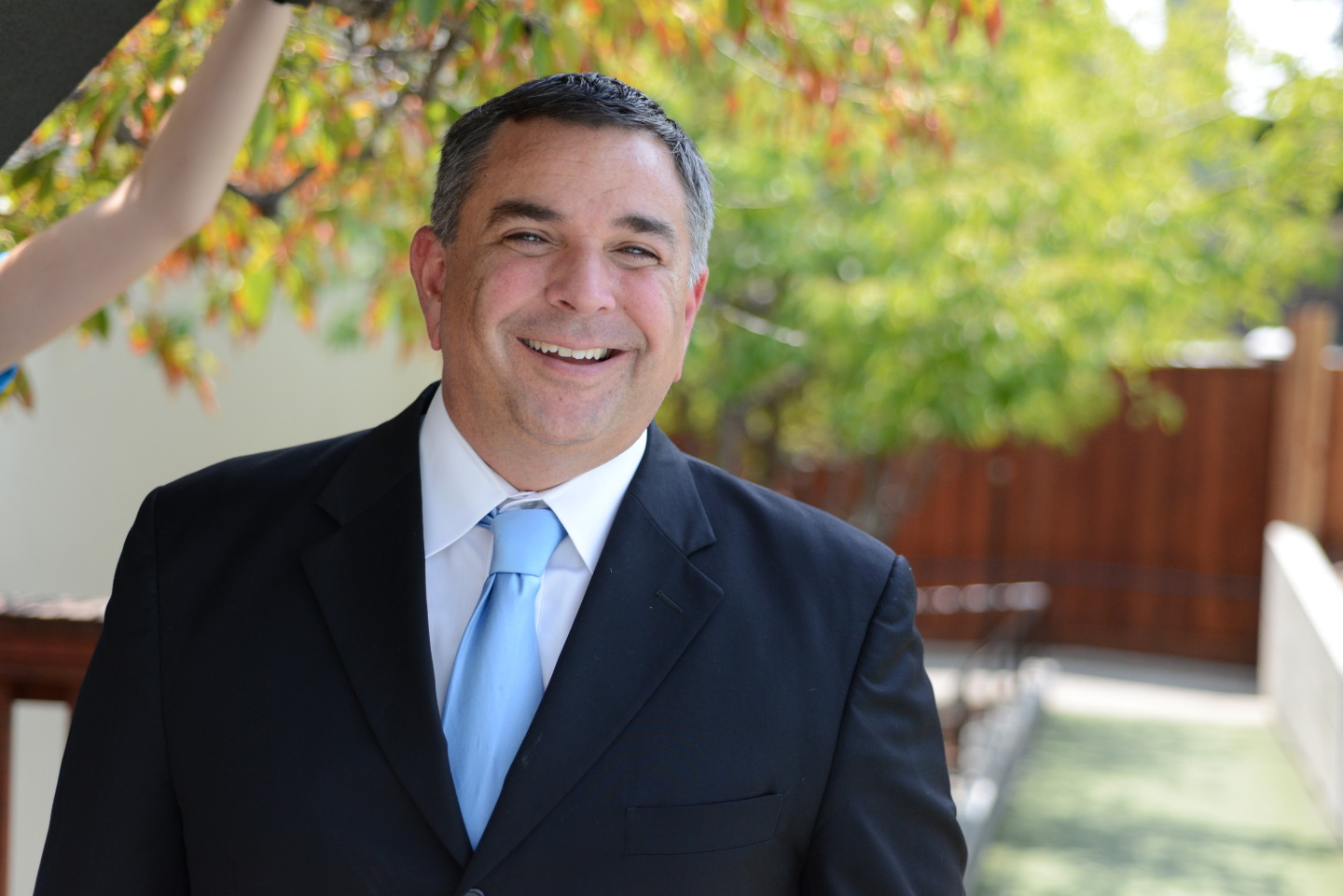
"caption": "Tim Sbranti, mayor of Dublin and Democratic candidate for state Assembly. (Sbranti campaign photo)",
"description": "Tim Sbranti, mayor of Dublin and Democratic candidate for state Assembly. (Sbranti campaign photo)",
"title": "Tim Sbranti-State Assembly",
"credit": null,
"status": "inherit",
"isLoading": false,
"fetchFailed": false
},
"news_10344904": {
"type": "attachments",
"id": "news_10344904",
"meta": {
"index": "attachments_1716263798",
"site": "news",
"id": "10344904",
"found": true
},
"parent": 10344903,
"imgSizes": {
"thumbnail": {
"file": "https://ww2.kqed.org/app/uploads/sites/10/2014/10/10344903-thumb-400x225.jpg",
"width": 400,
"mimeType": "image/jpeg",
"height": 225
},
"post-thumbnail": {
"file": "https://ww2.kqed.org/app/uploads/sites/10/2014/10/10344903-thumb-672x372.jpg",
"width": 672,
"mimeType": "image/jpeg",
"height": 372
},
"kqedFullSize": {
"file": "https://ww2.kqed.org/app/uploads/sites/10/2014/10/10344903-thumb.jpg",
"width": 800,
"height": 450
},
"guest-author-96": {
"file": "https://ww2.kqed.org/app/uploads/sites/10/2014/10/10344903-thumb-96x96.jpg",
"width": 96,
"mimeType": "image/jpeg",
"height": 96
},
"guest-author-64": {
"file": "https://ww2.kqed.org/app/uploads/sites/10/2014/10/10344903-thumb-64x64.jpg",
"width": 64,
"mimeType": "image/jpeg",
"height": 64
},
"detail": {
"file": "https://ww2.kqed.org/app/uploads/sites/10/2014/10/10344903-thumb-75x75.jpg",
"width": 75,
"mimeType": "image/jpeg",
"height": 75
},
"guest-author-32": {
"file": "https://ww2.kqed.org/app/uploads/sites/10/2014/10/10344903-thumb-32x32.jpg",
"width": 32,
"mimeType": "image/jpeg",
"height": 32
},
"guest-author-128": {
"file": "https://ww2.kqed.org/app/uploads/sites/10/2014/10/10344903-thumb-128x128.jpg",
"width": 128,
"mimeType": "image/jpeg",
"height": 128
}
},
"publishDate": 1414048157,
"modified": 1414048157,
"caption": null,
"description": null,
"title": "Thumbnail for 10344903",
"credit": null,
"status": "inherit",
"isLoading": false,
"fetchFailed": false
},
"news_10344796": {
"type": "attachments",
"id": "news_10344796",
"meta": {
"index": "attachments_1716263798",
"site": "news",
"id": "10344796",
"found": true
},
"parent": 10344778,
"imgSizes": {
"twentyfourteen-full-width": {
"file": "https://ww2.kqed.org/app/uploads/sites/10/2014/10/Photo-Jun-05-11-15-06-AM-e1414015168600-1038x576.jpg",
"width": 1038,
"mimeType": "image/jpeg",
"height": 576
},
"thumbnail": {
"file": "https://ww2.kqed.org/app/uploads/sites/10/2014/10/Photo-Jun-05-11-15-06-AM-e1414015168600-400x342.jpg",
"width": 400,
"mimeType": "image/jpeg",
"height": 342
},
"post-thumbnail": {
"file": "https://ww2.kqed.org/app/uploads/sites/10/2014/10/Photo-Jun-05-11-15-06-AM-e1414015168600-672x372.jpg",
"width": 672,
"mimeType": "image/jpeg",
"height": 372
},
"kqedFullSize": {
"file": "https://ww2.kqed.org/app/uploads/sites/10/2014/10/Photo-Jun-05-11-15-06-AM-e1414015168600.jpg",
"width": 1898,
"height": 1626
},
"large": {
"file": "https://ww2.kqed.org/app/uploads/sites/10/2014/10/Photo-Jun-05-11-15-06-AM-e1414015168600-1440x1233.jpg",
"width": 1440,
"mimeType": "image/jpeg",
"height": 1233
},
"guest-author-96": {
"file": "https://ww2.kqed.org/app/uploads/sites/10/2014/10/Photo-Jun-05-11-15-06-AM-e1414015168600-96x96.jpg",
"width": 96,
"mimeType": "image/jpeg",
"height": 96
},
"medium": {
"file": "https://ww2.kqed.org/app/uploads/sites/10/2014/10/Photo-Jun-05-11-15-06-AM-e1414015168600-800x685.jpg",
"width": 800,
"mimeType": "image/jpeg",
"height": 685
},
"guest-author-64": {
"file": "https://ww2.kqed.org/app/uploads/sites/10/2014/10/Photo-Jun-05-11-15-06-AM-e1414015168600-64x64.jpg",
"width": 64,
"mimeType": "image/jpeg",
"height": 64
},
"detail": {
"file": "https://ww2.kqed.org/app/uploads/sites/10/2014/10/Photo-Jun-05-11-15-06-AM-e1414015168600-75x75.jpg",
"width": 75,
"mimeType": "image/jpeg",
"height": 75
},
"guest-author-32": {
"file": "https://ww2.kqed.org/app/uploads/sites/10/2014/10/Photo-Jun-05-11-15-06-AM-e1414015168600-32x32.jpg",
"width": 32,
"mimeType": "image/jpeg",
"height": 32
},
"guest-author-128": {
"file": "https://ww2.kqed.org/app/uploads/sites/10/2014/10/Photo-Jun-05-11-15-06-AM-e1414015168600-128x128.jpg",
"width": 128,
"mimeType": "image/jpeg",
"height": 128
}
},
"publishDate": 1414015139,
"modified": 1414547283,
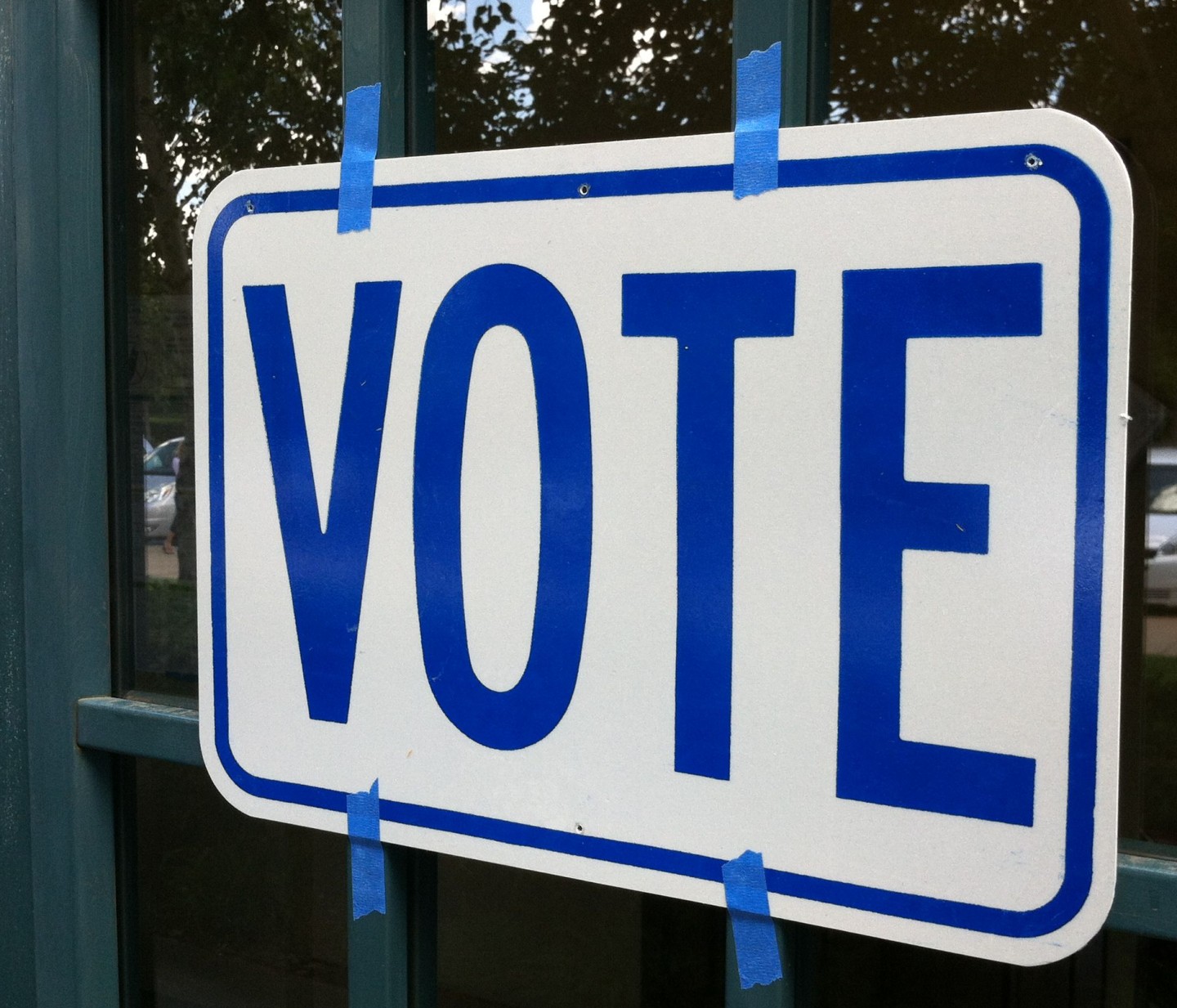
"caption": "Voting sign. (John Myers/KQED)",
"description": "Voting sign. (John Myers/KQED)",
"title": "Voting sign. (John Myers/KQED)",
"credit": null,
"status": "inherit",
"isLoading": false,
"fetchFailed": false
},
"news_10344732": {
"type": "attachments",
"id": "news_10344732",
"meta": {
"index": "attachments_1716263798",
"site": "news",
"id": "10344732",
"found": true
},
"parent": 10344658,
"imgSizes": {
"twentyfourteen-full-width": {
"file": "https://ww2.kqed.org/app/uploads/sites/10/2014/10/IMG_1479-1038x576.jpg",
"width": 1038,
"mimeType": "image/jpeg",
"height": 576
},
"thumbnail": {
"file": "https://ww2.kqed.org/app/uploads/sites/10/2014/10/IMG_1479-400x300.jpg",
"width": 400,
"mimeType": "image/jpeg",
"height": 300
},
"post-thumbnail": {
"file": "https://ww2.kqed.org/app/uploads/sites/10/2014/10/IMG_1479-672x372.jpg",
"width": 672,
"mimeType": "image/jpeg",
"height": 372
},
"kqedFullSize": {
"file": "https://ww2.kqed.org/app/uploads/sites/10/2014/10/IMG_1479-e1414789634239.jpg",
"width": 1440,
"height": 1080
},
"large": {
"file": "https://ww2.kqed.org/app/uploads/sites/10/2014/10/IMG_1479-1440x1080.jpg",
"width": 1440,
"mimeType": "image/jpeg",
"height": 1080
},
"guest-author-96": {
"file": "https://ww2.kqed.org/app/uploads/sites/10/2014/10/IMG_1479-96x96.jpg",
"width": 96,
"mimeType": "image/jpeg",
"height": 96
},
"medium": {
"file": "https://ww2.kqed.org/app/uploads/sites/10/2014/10/IMG_1479-800x600.jpg",
"width": 800,
"mimeType": "image/jpeg",
"height": 600
},
"guest-author-64": {
"file": "https://ww2.kqed.org/app/uploads/sites/10/2014/10/IMG_1479-64x64.jpg",
"width": 64,
"mimeType": "image/jpeg",
"height": 64
},
"detail": {
"file": "https://ww2.kqed.org/app/uploads/sites/10/2014/10/IMG_1479-75x75.jpg",
"width": 75,
"mimeType": "image/jpeg",
"height": 75
},
"guest-author-32": {
"file": "https://ww2.kqed.org/app/uploads/sites/10/2014/10/IMG_1479-32x32.jpg",
"width": 32,
"mimeType": "image/jpeg",
"height": 32
},
"guest-author-128": {
"file": "https://ww2.kqed.org/app/uploads/sites/10/2014/10/IMG_1479-128x128.jpg",
"width": 128,
"mimeType": "image/jpeg",
"height": 128
}
},
"publishDate": 1413999921,
"modified": 1413999921,
"caption": "A running tally of absentee ballots at the campaign headquarters of Assemblywoman Sharon Quirk Silva. ",
"description": "A running tally of absentee ballots at the campaign headquarters of Assemblywoman Sharon Quirk Silva. ",
"title": "2014 ballot tally",
"credit": "John Myers, KQED",
"status": "inherit",
"isLoading": false,
"fetchFailed": false
},
"news_10344704": {
"type": "attachments",
"id": "news_10344704",
"meta": {
"index": "attachments_1716263798",
"site": "news",
"id": "10344704",
"found": true
},
"parent": 10344703,
"imgSizes": {
"twentyfourteen-full-width": {
"file": "https://ww2.kqed.org/app/uploads/sites/10/2014/10/10344703-thumb-1038x576.jpg",
"width": 1038,
"mimeType": "image/jpeg",
"height": 576
},
"thumbnail": {
"file": "https://ww2.kqed.org/app/uploads/sites/10/2014/10/10344703-thumb-400x225.jpg",
"width": 400,
"mimeType": "image/jpeg",
"height": 225
},
"post-thumbnail": {
"file": "https://ww2.kqed.org/app/uploads/sites/10/2014/10/10344703-thumb-672x372.jpg",
"width": 672,
"mimeType": "image/jpeg",
"height": 372
},
"kqedFullSize": {
"file": "https://ww2.kqed.org/app/uploads/sites/10/2014/10/10344703-thumb.jpg",
"width": 1440,
"height": 810
},
"guest-author-96": {
"file": "https://ww2.kqed.org/app/uploads/sites/10/2014/10/10344703-thumb-96x96.jpg",
"width": 96,
"mimeType": "image/jpeg",
"height": 96
},
"medium": {
"file": "https://ww2.kqed.org/app/uploads/sites/10/2014/10/10344703-thumb-800x450.jpg",
"width": 800,
"mimeType": "image/jpeg",
"height": 450
},
"guest-author-64": {
"file": "https://ww2.kqed.org/app/uploads/sites/10/2014/10/10344703-thumb-64x64.jpg",
"width": 64,
"mimeType": "image/jpeg",
"height": 64
},
"detail": {
"file": "https://ww2.kqed.org/app/uploads/sites/10/2014/10/10344703-thumb-75x75.jpg",
"width": 75,
"mimeType": "image/jpeg",
"height": 75
},
"guest-author-32": {
"file": "https://ww2.kqed.org/app/uploads/sites/10/2014/10/10344703-thumb-32x32.jpg",
"width": 32,
"mimeType": "image/jpeg",
"height": 32
},
"guest-author-128": {
"file": "https://ww2.kqed.org/app/uploads/sites/10/2014/10/10344703-thumb-128x128.jpg",
"width": 128,
"mimeType": "image/jpeg",
"height": 128
}
},
"publishDate": 1413961761,
"modified": 1413961761,
"caption": null,
"description": null,
"title": "Thumbnail for 10344703",
"credit": null,
"status": "inherit",
"isLoading": false,
"fetchFailed": false
},
"news_10342650": {
"type": "attachments",
"id": "news_10342650",
"meta": {
"index": "attachments_1716263798",
"site": "news",
"id": "10342650",
"found": true
},
"parent": 10342411,
"imgSizes": {
"twentyfourteen-full-width": {
"file": "https://ww2.kqed.org/app/uploads/sites/10/2014/10/JerryBrown-1038x576.jpg",
"width": 1038,
"mimeType": "image/jpeg",
"height": 576
},
"thumbnail": {
"file": "https://ww2.kqed.org/app/uploads/sites/10/2014/10/JerryBrown-400x286.jpg",
"width": 400,
"mimeType": "image/jpeg",
"height": 286
},
"post-thumbnail": {
"file": "https://ww2.kqed.org/app/uploads/sites/10/2014/10/JerryBrown-672x372.jpg",
"width": 672,
"mimeType": "image/jpeg",
"height": 372
},
"kqedFullSize": {
"file": "https://ww2.kqed.org/app/uploads/sites/10/2014/10/JerryBrown.jpg",
"width": 1440,
"height": 1030
},
"guest-author-96": {
"file": "https://ww2.kqed.org/app/uploads/sites/10/2014/10/JerryBrown-96x96.jpg",
"width": 96,
"mimeType": "image/jpeg",
"height": 96
},
"medium": {
"file": "https://ww2.kqed.org/app/uploads/sites/10/2014/10/JerryBrown-800x572.jpg",
"width": 800,
"mimeType": "image/jpeg",
"height": 572
},
"guest-author-64": {
"file": "https://ww2.kqed.org/app/uploads/sites/10/2014/10/JerryBrown-64x64.jpg",
"width": 64,
"mimeType": "image/jpeg",
"height": 64
},
"detail": {
"file": "https://ww2.kqed.org/app/uploads/sites/10/2014/10/JerryBrown-75x75.jpg",
"width": 75,
"mimeType": "image/jpeg",
"height": 75
},
"guest-author-32": {
"file": "https://ww2.kqed.org/app/uploads/sites/10/2014/10/JerryBrown-32x32.jpg",
"width": 32,
"mimeType": "image/jpeg",
"height": 32
},
"guest-author-128": {
"file": "https://ww2.kqed.org/app/uploads/sites/10/2014/10/JerryBrown-128x128.jpg",
"width": 128,
"mimeType": "image/jpeg",
"height": 128
}
},
"publishDate": 1412627319,
"modified": 1412627319,
"caption": "Gov. Jerry Brown. (Justin Sullivan/Getty Images)",
"description": "Gov. Jerry Brown. (Justin Sullivan/Getty Images)",
"title": "Gov. Jerry Brown",
"credit": null,
"status": "inherit",
"isLoading": false,
"fetchFailed": false
},
"news_10344615": {
"type": "attachments",
"id": "news_10344615",
"meta": {
"index": "attachments_1716263798",
"site": "news",
"id": "10344615",
"found": true
},
"parent": 10344614,
"imgSizes": {
"twentyfourteen-full-width": {
"file": "https://ww2.kqed.org/app/uploads/sites/10/2014/10/RS12686_ballot141020a-1038x576.jpg",
"width": 1038,
"mimeType": "image/jpeg",
"height": 576
},
"thumbnail": {
"file": "https://ww2.kqed.org/app/uploads/sites/10/2014/10/RS12686_ballot141020a-400x209.jpg",
"width": 400,
"mimeType": "image/jpeg",
"height": 209
},
"post-thumbnail": {
"file": "https://ww2.kqed.org/app/uploads/sites/10/2014/10/RS12686_ballot141020a-672x372.jpg",
"width": 672,
"mimeType": "image/jpeg",
"height": 372
},
"kqedFullSize": {
"file": "https://ww2.kqed.org/app/uploads/sites/10/2014/10/RS12686_ballot141020a.jpg",
"width": 1280,
"height": 669
},
"guest-author-96": {
"file": "https://ww2.kqed.org/app/uploads/sites/10/2014/10/RS12686_ballot141020a-96x96.jpg",
"width": 96,
"mimeType": "image/jpeg",
"height": 96
},
"medium": {
"file": "https://ww2.kqed.org/app/uploads/sites/10/2014/10/RS12686_ballot141020a-800x418.jpg",
"width": 800,
"mimeType": "image/jpeg",
"height": 418
},
"guest-author-64": {
"file": "https://ww2.kqed.org/app/uploads/sites/10/2014/10/RS12686_ballot141020a-64x64.jpg",
"width": 64,
"mimeType": "image/jpeg",
"height": 64
},
"detail": {
"file": "https://ww2.kqed.org/app/uploads/sites/10/2014/10/RS12686_ballot141020a-75x75.jpg",
"width": 75,
"mimeType": "image/jpeg",
"height": 75
},
"guest-author-32": {
"file": "https://ww2.kqed.org/app/uploads/sites/10/2014/10/RS12686_ballot141020a-32x32.jpg",
"width": 32,
"mimeType": "image/jpeg",
"height": 32
},
"guest-author-128": {
"file": "https://ww2.kqed.org/app/uploads/sites/10/2014/10/RS12686_ballot141020a-128x128.jpg",
"width": 128,
"mimeType": "image/jpeg",
"height": 128
}
},
"publishDate": 1413933490,
"modified": 1413933490,
"caption": "An Alameda County mail-in ballot, with incorrect date of 2014 general election showing in address window at lower right.",
"description": "An Alameda County mail-in ballot, with incorrect date of 2014 general election showing in address window at lower right.",
"title": "Alameda County Ballots",
"credit": null,
"status": "inherit",
"isLoading": false,
"fetchFailed": false
},
"news_10344526": {
"type": "attachments",
"id": "news_10344526",
"meta": {
"index": "attachments_1716263798",
"site": "news",
"id": "10344526",
"found": true
},
"parent": 10344465,
"imgSizes": {
"twentyfourteen-full-width": {
"file": "https://ww2.kqed.org/app/uploads/sites/10/2014/10/Kashkari-Treasury-1038x576.jpg",
"width": 1038,
"mimeType": "image/jpeg",
"height": 576
},
"thumbnail": {
"file": "https://ww2.kqed.org/app/uploads/sites/10/2014/10/Kashkari-Treasury-400x266.jpg",
"width": 400,
"mimeType": "image/jpeg",
"height": 266
},
"post-thumbnail": {
"file": "https://ww2.kqed.org/app/uploads/sites/10/2014/10/Kashkari-Treasury-672x372.jpg",
"width": 672,
"mimeType": "image/jpeg",
"height": 372
},
"kqedFullSize": {
"file": "https://ww2.kqed.org/app/uploads/sites/10/2014/10/Kashkari-Treasury.jpg",
"width": 1440,
"height": 960
},
"guest-author-96": {
"file": "https://ww2.kqed.org/app/uploads/sites/10/2014/10/Kashkari-Treasury-96x96.jpg",
"width": 96,
"mimeType": "image/jpeg",
"height": 96
},
"medium": {
"file": "https://ww2.kqed.org/app/uploads/sites/10/2014/10/Kashkari-Treasury-800x533.jpg",
"width": 800,
"mimeType": "image/jpeg",
"height": 533
},
"guest-author-64": {
"file": "https://ww2.kqed.org/app/uploads/sites/10/2014/10/Kashkari-Treasury-64x64.jpg",
"width": 64,
"mimeType": "image/jpeg",
"height": 64
},
"detail": {
"file": "https://ww2.kqed.org/app/uploads/sites/10/2014/10/Kashkari-Treasury-75x75.jpg",
"width": 75,
"mimeType": "image/jpeg",
"height": 75
},
"guest-author-32": {
"file": "https://ww2.kqed.org/app/uploads/sites/10/2014/10/Kashkari-Treasury-32x32.jpg",
"width": 32,
"mimeType": "image/jpeg",
"height": 32
},
"guest-author-128": {
"file": "https://ww2.kqed.org/app/uploads/sites/10/2014/10/Kashkari-Treasury-128x128.jpg",
"width": 128,
"mimeType": "image/jpeg",
"height": 128
}
},
"publishDate": 1413853672,
"modified": 1413853672,
"caption": "Neel Kashkari testifies before the House Domestic Policy Subcommittee during a 2009 hearing on Capitol Hill. Kashkari, the Treasury's acting interim assistant secretary for financial stabilization at the time, answered questions about the TARP, or Troubled Asset Relief Program, and heard complaints from both Republicans and Democrats that few people know where exactly the money is being spent. (Chip Somodevilla/Getty Images)",
"description": "Neel Kashkari testifies before the House Domestic Policy Subcommittee during a 2009 hearing on Capitol Hill. Kashkari, the Treasury's acting interim assistant secretary for financial stabilization at the time, answered questions about the TARP, or Troubled Asset Relief Program, and heard complaints from both Republicans and Democrats that few people know where exactly the money is being spent. (Chip Somodevilla/Getty Images)",
"title": "Kashkari Testifies Before House On TARP Oversight",
"credit": null,
"status": "inherit",
"isLoading": false,
"fetchFailed": false
},
"news_10344459": {
"type": "attachments",
"id": "news_10344459",
"meta": {
"index": "attachments_1716263798",
"site": "news",
"id": "10344459",
"found": true
},
"parent": 10344454,
"imgSizes": {
"thumbnail": {
"file": "https://ww2.kqed.org/app/uploads/sites/10/2014/10/Billboard1-620x446-400x287.jpg",
"width": 400,
"mimeType": "image/jpeg",
"height": 287
},
"post-thumbnail": {
"file": "https://ww2.kqed.org/app/uploads/sites/10/2014/10/Billboard1-620x446-620x372.jpg",
"width": 620,
"mimeType": "image/jpeg",
"height": 372
},
"kqedFullSize": {
"file": "https://ww2.kqed.org/app/uploads/sites/10/2014/10/Billboard1-620x446.jpg",
"width": 620,
"height": 446
},
"guest-author-96": {
"file": "https://ww2.kqed.org/app/uploads/sites/10/2014/10/Billboard1-620x446-96x96.jpg",
"width": 96,
"mimeType": "image/jpeg",
"height": 96
},
"guest-author-64": {
"file": "https://ww2.kqed.org/app/uploads/sites/10/2014/10/Billboard1-620x446-64x64.jpg",
"width": 64,
"mimeType": "image/jpeg",
"height": 64
},
"detail": {
"file": "https://ww2.kqed.org/app/uploads/sites/10/2014/10/Billboard1-620x446-75x75.jpg",
"width": 75,
"mimeType": "image/jpeg",
"height": 75
},
"guest-author-32": {
"file": "https://ww2.kqed.org/app/uploads/sites/10/2014/10/Billboard1-620x446-32x32.jpg",
"width": 32,
"mimeType": "image/jpeg",
"height": 32
},
"guest-author-128": {
"file": "https://ww2.kqed.org/app/uploads/sites/10/2014/10/Billboard1-620x446-128x128.jpg",
"width": 128,
"mimeType": "image/jpeg",
"height": 128
}
},
"publishDate": 1413835328,
"modified": 1413835328,
"caption": "An anti-McLaughlin billboard, funded by Chevron, looms over San Pablo Avenue, criticizing her travel history. (Brett Murphy/Richmond Confidential)",
"description": null,
"title": "Billboard1-620x446",
"credit": null,
"status": "inherit",
"isLoading": false,
"fetchFailed": false
},
"stateofhealth_22123": {
"type": "attachments",
"id": "stateofhealth_22123",
"meta": {
"index": "attachments_1716263798",
"site": "stateofhealth",
"id": "22123",
"found": true
},
"parent": 22116,
"imgSizes": {
"thumbnail": {
"file": "https://ww2.kqed.org/app/uploads/sites/27/2014/10/Screen-Shot-2014-10-20-at-10.36.01-AM-e1413826601647-400x261.png",
"width": 400,
"mimeType": "image/png",
"height": 261
},
"fd-sm": {
"file": "https://ww2.kqed.org/app/uploads/sites/27/2014/10/Screen-Shot-2014-10-20-at-10.36.01-AM-e1413826601647-320x209.png",
"width": 320,
"mimeType": "image/png",
"height": 209
},
"post-thumbnail": {
"file": "https://ww2.kqed.org/app/uploads/sites/27/2014/10/Screen-Shot-2014-10-20-at-10.36.01-AM-e1413826601647-640x372.png",
"width": 640,
"mimeType": "image/png",
"height": 372
},
"kqedFullSize": {
"file": "https://ww2.kqed.org/app/uploads/sites/27/2014/10/Screen-Shot-2014-10-20-at-10.36.01-AM-e1413826601647.png",
"width": 640,
"height": 418
},
"guest-author-96": {
"file": "https://ww2.kqed.org/app/uploads/sites/27/2014/10/Screen-Shot-2014-10-20-at-10.36.01-AM-e1413826601647-96x96.png",
"width": 96,
"mimeType": "image/png",
"height": 96
},
"guest-author-64": {
"file": "https://ww2.kqed.org/app/uploads/sites/27/2014/10/Screen-Shot-2014-10-20-at-10.36.01-AM-e1413826601647-64x64.png",
"width": 64,
"mimeType": "image/png",
"height": 64
},
"detail": {
"file": "https://ww2.kqed.org/app/uploads/sites/27/2014/10/Screen-Shot-2014-10-20-at-10.36.01-AM-e1413826601647-75x75.png",
"width": 75,
"mimeType": "image/png",
"height": 75
},
"guest-author-32": {
"file": "https://ww2.kqed.org/app/uploads/sites/27/2014/10/Screen-Shot-2014-10-20-at-10.36.01-AM-e1413826601647-32x32.png",
"width": 32,
"mimeType": "image/png",
"height": 32
},
"guest-author-128": {
"file": "https://ww2.kqed.org/app/uploads/sites/27/2014/10/Screen-Shot-2014-10-20-at-10.36.01-AM-e1413826601647-128x128.png",
"width": 128,
"mimeType": "image/png",
"height": 128
}
},
"publishDate": 1413826589,
"modified": 1413826589,
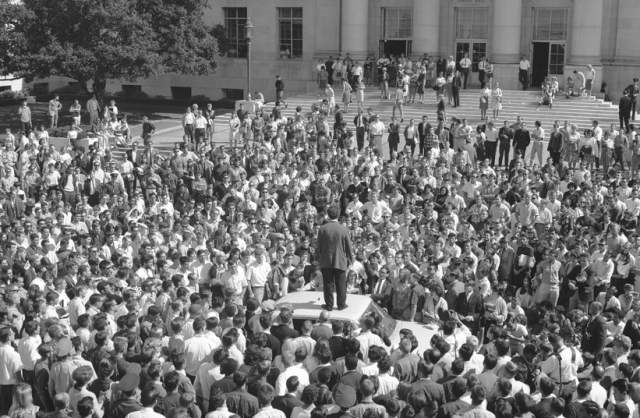
"caption": "Mario Savio stands on top of police car in front of Sproul Hall on Oct 1. 1964. (Courtesy of UC Berkeley, The Bancroft Library).",
"description": "Mario Savio stands on top of police car in front of Sproul Hall on Oct 1. 1964. (Courtesy of UC Berkeley, The Bancroft Library).",
"title": "Screen Shot 2014-10-20 at 10.36.01 AM",
"credit": null,
"status": "inherit",
"isLoading": false,
"fetchFailed": false
},
"news_10344569": {
"type": "attachments",
"id": "news_10344569",
"meta": {
"index": "attachments_1716263798",
"site": "news",
"id": "10344569",
"found": true
},
"parent": 10344232,
"imgSizes": {
"twentyfourteen-full-width": {
"file": "https://ww2.kqed.org/app/uploads/sites/10/2014/10/KhannaHonda1-1038x576.jpg",
"width": 1038,
"mimeType": "image/jpeg",
"height": 576
},
"thumbnail": {
"file": "https://ww2.kqed.org/app/uploads/sites/10/2014/10/KhannaHonda1-400x259.jpg",
"width": 400,
"mimeType": "image/jpeg",
"height": 259
},
"post-thumbnail": {
"file": "https://ww2.kqed.org/app/uploads/sites/10/2014/10/KhannaHonda1-672x372.jpg",
"width": 672,
"mimeType": "image/jpeg",
"height": 372
},
"kqedFullSize": {
"file": "https://ww2.kqed.org/app/uploads/sites/10/2014/10/KhannaHonda1.jpg",
"width": 1440,
"height": 935
},
"guest-author-96": {
"file": "https://ww2.kqed.org/app/uploads/sites/10/2014/10/KhannaHonda1-96x96.jpg",
"width": 96,
"mimeType": "image/jpeg",
"height": 96
},
"medium": {
"file": "https://ww2.kqed.org/app/uploads/sites/10/2014/10/KhannaHonda1-800x519.jpg",
"width": 800,
"mimeType": "image/jpeg",
"height": 519
},
"guest-author-64": {
"file": "https://ww2.kqed.org/app/uploads/sites/10/2014/10/KhannaHonda1-64x64.jpg",
"width": 64,
"mimeType": "image/jpeg",
"height": 64
},
"detail": {
"file": "https://ww2.kqed.org/app/uploads/sites/10/2014/10/KhannaHonda1-75x75.jpg",
"width": 75,
"mimeType": "image/jpeg",
"height": 75
},
"guest-author-32": {
"file": "https://ww2.kqed.org/app/uploads/sites/10/2014/10/KhannaHonda1-32x32.jpg",
"width": 32,
"mimeType": "image/jpeg",
"height": 32
},
"guest-author-128": {
"file": "https://ww2.kqed.org/app/uploads/sites/10/2014/10/KhannaHonda1-128x128.jpg",
"width": 128,
"mimeType": "image/jpeg",
"height": 128
}
},
"publishDate": 1413915044,
"modified": 1413915044,
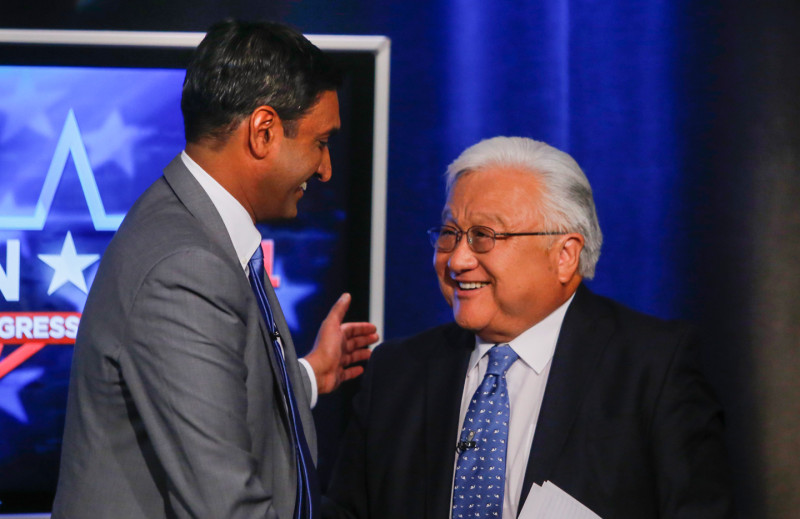
"caption": "Democratic challenger Ro Khanna, left, and Rep. Mike Honda, D-San Jose, shake hands after their first and probably only general-election debate at KNTV NBC 11, in San Jose, Calif., on Monday, Oct. 6, 2014. (John Green/ Bay Area News Group)",
"description": "Democratic challenger Ro Khanna, left, and Rep. Mike Honda, D-San Jose, shake hands after their first and probably only general-election debate at KNTV NBC 11, in San Jose, Calif., on Monday, Oct. 6, 2014. (John Green/ Bay Area News Group)",
"title": "KhannaHonda",
"credit": null,
"status": "inherit",
"isLoading": false,
"fetchFailed": false
}
},
"audioPlayerReducer": {
"postId": "stream_live",
"isPaused": true,
"isPlaying": false,
"pfsActive": false,
"pledgeModalIsOpen": true,
"playerDrawerIsOpen": false,
"liveAudioPlayStartedAt": 0,
"liveAudioPlayContext": ""
},
"authorsReducer": {
"byline_news_10344454": {
"type": "authors",
"id": "byline_news_10344454",
"meta": {
"override": true
},
"slug": "byline_news_10344454",
"name": "\u003ca href=\"http://richmondconfidential.org/author/brett_murphy/\">Brett Murphy\u003c/a> and \u003ca href=\"http://richmondconfidential.org/author/elicia_schmidt-hopper/\">Elly Schmidt-Hopper\u003c/a>\u003cbr />\u003ca href=\"http://richmondconfidential.org/2014/10/19/chevrons-campaign-criticizes-progressive-mayors-travel-but-its-favored-candidate-traveled-much-more/\">Richmond Confidential\u003c/a>",
"isLoading": false
},
"cmiller": {
"type": "authors",
"id": "221",
"meta": {
"index": "authors_1716337520",
"id": "221",
"found": true
},
"name": "Craig Miller",
"firstName": "Craig",
"lastName": "Miller",
"slug": "cmiller",
"email": "craig@voxterra.net",
"display_author_email": false,
"staff_mastheads": [
"science"
],
"title": "Editor Emeritus, Science",
"bio": "Craig is a former KQED Science editor, specializing in weather, climate, water & energy issues, with a little seismology thrown in just to shake things up. Prior to that, he launched and led the station's award-winning multimedia project, Climate Watch. Craig is also an accomplished writer/producer of television documentaries, with a focus on natural resource issues.",
"avatar": "https://secure.gravatar.com/avatar/b91661df645e001a9cafe0861fa685f9?s=600&d=blank&r=g",
"twitter": "voxterra",
"facebook": null,
"instagram": null,
"linkedin": null,
"sites": [
{
"site": "news",
"roles": [
"author"
]
},
{
"site": "futureofyou",
"roles": [
"editor"
]
},
{
"site": "stateofhealth",
"roles": [
"author"
]
},
{
"site": "science",
"roles": [
"editor"
]
},
{
"site": "quest",
"roles": [
"editor"
]
}
],
"headData": {
"title": "Craig Miller | KQED",
"description": "Editor Emeritus, Science",
"ogImgSrc": "https://secure.gravatar.com/avatar/b91661df645e001a9cafe0861fa685f9?s=600&d=blank&r=g",
"twImgSrc": "https://secure.gravatar.com/avatar/b91661df645e001a9cafe0861fa685f9?s=600&d=blank&r=g"
},
"isLoading": false,
"link": "/author/cmiller"
},
"danbrekke": {
"type": "authors",
"id": "222",
"meta": {
"index": "authors_1716337520",
"id": "222",
"found": true
},
"name": "Dan Brekke",
"firstName": "Dan",
"lastName": "Brekke",
"slug": "danbrekke",
"email": "dbrekke@kqed.org",
"display_author_email": true,
"staff_mastheads": [
"news",
"science"
],
"title": "KQED Editor and Reporter",
"bio": "Dan Brekke is a reporter and editor for KQED News, responsible for coverage of topics ranging from California water issues to the Bay Area's transportation challenges. In a newsroom career that began in Chicago in 1972, Dan has worked for \u003cem>The San Francisco Examiner,\u003c/em> Wired and TechTV and has been published in The New York Times, The New York Times Magazine, Business 2.0, Salon and elsewhere.\r\n\r\nSince joining KQED in 2007, Dan has reported, edited and produced both radio and online features and breaking news pieces. He has shared as both editor and reporter in four Society of Professional Journalists Norcal Excellence in Journalism awards and one Edward R. Murrow regional award. He was chosen for a spring 2017 residency at the Mesa Refuge to advance his research on California salmon.\r\n\r\nEmail Dan at: \u003ca href=\"mailto:dbrekke@kqed.org\">dbrekke@kqed.org\u003c/a>\r\n\r\n\u003cstrong>Twitter:\u003c/strong> \u003ca href=\"https://twitter.com/danbrekke\" rel=\"noopener noreferrer\">twitter.com/danbrekke\u003c/a>\r\n\u003cstrong>Facebook:\u003c/strong> \u003ca href=\"https://www.facebook.com/danbrekke\" rel=\"noopener noreferrer\">www.facebook.com/danbrekke\u003c/a>\r\n\u003cstrong>LinkedIn:\u003c/strong> \u003ca href=\"https://www.linkedin.com/in/danbrekke\" rel=\"noopener noreferrer\">www.linkedin.com/in/danbrekke\u003c/a>",
"avatar": "https://secure.gravatar.com/avatar/8f1f0d2a978fb3b23426c922c7e2af558fa36905b49c4ce76a97dc3c72d27226?s=600&d=mm&r=g",
"twitter": "danbrekke",
"bluesky": null,
"facebook": null,
"instagram": "https://www.instagram.com/dan.brekke/",
"linkedin": "https://www.linkedin.com/in/danbrekke/",
"sites": [
{
"site": "news",
"roles": [
"administrator",
"create_posts"
]
},
{
"site": "stateofhealth",
"roles": [
"editor"
]
},
{
"site": "science",
"roles": [
"editor"
]
},
{
"site": "quest",
"roles": [
"contributor"
]
},
{
"site": "food",
"roles": [
"contributor"
]
},
{
"site": "forum",
"roles": [
"contributor"
]
},
{
"site": "elections",
"roles": [
"editor"
]
},
{
"site": "liveblog",
"roles": [
"editor"
]
}
],
"headData": {
"title": "Dan Brekke | KQED",
"description": "KQED Editor and Reporter",
"ogImgSrc": "https://secure.gravatar.com/avatar/8f1f0d2a978fb3b23426c922c7e2af558fa36905b49c4ce76a97dc3c72d27226?s=600&d=mm&r=g",
"twImgSrc": "https://secure.gravatar.com/avatar/8f1f0d2a978fb3b23426c922c7e2af558fa36905b49c4ce76a97dc3c72d27226?s=600&d=mm&r=g"
},
"isLoading": false,
"link": "/author/danbrekke"
},
"gmarzorati": {
"type": "authors",
"id": "227",
"meta": {
"index": "authors_1716337520",
"id": "227",
"found": true
},
"name": "Guy Marzorati",
"firstName": "Guy",
"lastName": "Marzorati",
"slug": "gmarzorati",
"email": "gmarzorati@KQED.org",
"display_author_email": true,
"staff_mastheads": [
"news"
],
"title": "Correspondent",
"bio": "Guy Marzorati is a correspondent on KQED's California Politics and Government Desk, based in San Jose. A graduate of Santa Clara University, Guy joined KQED in 2013. He reports on state and local politics and produces KQED's digital voter guide.",
"avatar": "https://secure.gravatar.com/avatar/e7038b8dbfd55b104369b76b1cd0b9de?s=600&d=blank&r=g",
"twitter": "guymarzorati",
"facebook": null,
"instagram": null,
"linkedin": null,
"sites": [
{
"site": "",
"roles": [
"editor"
]
},
{
"site": "news",
"roles": [
"editor"
]
},
{
"site": "science",
"roles": [
"editor"
]
},
{
"site": "forum",
"roles": [
"editor"
]
},
{
"site": "elections",
"roles": [
"editor"
]
},
{
"site": "liveblog",
"roles": [
"editor"
]
}
],
"headData": {
"title": "Guy Marzorati | KQED",
"description": "Correspondent",
"ogImgSrc": "https://secure.gravatar.com/avatar/e7038b8dbfd55b104369b76b1cd0b9de?s=600&d=blank&r=g",
"twImgSrc": "https://secure.gravatar.com/avatar/e7038b8dbfd55b104369b76b1cd0b9de?s=600&d=blank&r=g"
},
"isLoading": false,
"link": "/author/gmarzorati"
},
"jmyers": {
"type": "authors",
"id": "232",
"meta": {
"index": "authors_1716337520",
"id": "232",
"found": true
},
"name": "John Myers",
"firstName": "John",
"lastName": "Myers",
"slug": "jmyers",
"email": "jmyers@kqed.org",
"display_author_email": false,
"staff_mastheads": [],
"title": null,
"bio": "John Myers is Senior Editor of KQED's new California Politics and Government Desk. A veteran of almost two decades of political coverage, he was KQED's longest serving statehouse bureau chief and recently was political editor for Sacramento's ABC affiliate, News10 (KXTV). John was moderator of the only 2014 gubernatorial debate, and was named by \u003cem>The Washington Post\u003c/em> to two \"Best Of\" lists: the 2015 list of top state politics reporters and 2014's list of America's most influential statehouse reporters.",
"avatar": "https://secure.gravatar.com/avatar/c0ac98482caf0b8229a792662b38722a?s=600&d=blank&r=g",
"twitter": "johnmyers",
"facebook": null,
"instagram": null,
"linkedin": null,
"sites": [
{
"site": "news",
"roles": [
"subscriber"
]
}
],
"headData": {
"title": "John Myers | KQED",
"description": null,
"ogImgSrc": "https://secure.gravatar.com/avatar/c0ac98482caf0b8229a792662b38722a?s=600&d=blank&r=g",
"twImgSrc": "https://secure.gravatar.com/avatar/c0ac98482caf0b8229a792662b38722a?s=600&d=blank&r=g"
},
"isLoading": false,
"link": "/author/jmyers"
},
"kqed": {
"type": "authors",
"id": "236",
"meta": {
"index": "authors_1716337520",
"id": "236",
"found": true
},
"name": "KQED News Staff",
"firstName": "KQED News Staff",
"lastName": null,
"slug": "kqed",
"email": "faq@kqed.org",
"display_author_email": false,
"staff_mastheads": [],
"title": null,
"bio": null,
"avatar": "https://secure.gravatar.com/avatar/ef0e801a68c4c54afa9180db14084167?s=600&d=blank&r=g",
"twitter": null,
"facebook": null,
"instagram": null,
"linkedin": null,
"sites": [
{
"site": "arts",
"roles": [
"contributor"
]
},
{
"site": "news",
"roles": [
"editor"
]
},
{
"site": "futureofyou",
"roles": [
"author"
]
}
],
"headData": {
"title": "KQED News Staff | KQED",
"description": null,
"ogImgSrc": "https://secure.gravatar.com/avatar/ef0e801a68c4c54afa9180db14084167?s=600&d=blank&r=g",
"twImgSrc": "https://secure.gravatar.com/avatar/ef0e801a68c4c54afa9180db14084167?s=600&d=blank&r=g"
},
"isLoading": false,
"link": "/author/kqed"
},
"rachael-myrow": {
"type": "authors",
"id": "251",
"meta": {
"index": "authors_1716337520",
"id": "251",
"found": true
},
"name": "Rachael Myrow",
"firstName": "Rachael",
"lastName": "Myrow",
"slug": "rachael-myrow",
"email": "rmyrow@kqed.org",
"display_author_email": true,
"staff_mastheads": [
"news"
],
"title": "Senior Editor of KQED's Silicon Valley News Desk",
"bio": "• I write and edit stories about how Silicon Valley power and policies shape everyday life in California. I’m also passionate about making Bay Area history and culture more accessible to a broad public. • I’ve been a journalist for most of my life, starting in high school with The Franklin Press in Los Angeles, where I grew up. While earning my first degree in English at UC Berkeley, I got my start in public radio at KALX-FM. After completing a second degree in journalism at Cal, I landed my first professional job at Marketplace, then moved on to KPCC (now LAist), and then KQED, where I hosted The California Report for more than seven years. • My reporting has appeared on NPR, The World, WBUR’s \u003ci>Here & Now\u003c/i>, and the BBC. I also guest host for KQED’s \u003ci>Forum\u003c/i>, as well as the Commonwealth Club in San Francisco. • I speak periodically on media, democracy and technology issues, and do voiceover work for documentaries and educational video projects. • Outside of the studio, you'll find me hiking Bay Area trails and whipping up Insta-ready meals in my kitchen. • I do not accept gifts, money, or favors from anyone connected to my reporting, I don't pay people for information, and I do not support or donate to political causes. • I strive to treat the people I report on with fairness, honesty, and respect. I also recognize there are often multiple sides to a story and work to verify information through multiple sources and documentation. If I get something wrong, I correct it.",
"avatar": "https://secure.gravatar.com/avatar/3ed8a3c5f26025e4a805ba634cda8cd764906b97438a6d9ce216b044e340da4e?s=600&d=blank&r=g",
"twitter": "rachaelmyrow",
"bluesky": null,
"facebook": null,
"instagram": null,
"linkedin": "https://www.linkedin.com/in/rachaelmyrow/",
"sites": [
{
"site": "arts",
"roles": [
"administrator"
]
},
{
"site": "news",
"roles": [
"edit_others_posts",
"editor"
]
},
{
"site": "futureofyou",
"roles": [
"editor"
]
},
{
"site": "bayareabites",
"roles": [
"editor"
]
},
{
"site": "stateofhealth",
"roles": [
"editor"
]
},
{
"site": "science",
"roles": [
"editor"
]
},
{
"site": "food",
"roles": [
"editor"
]
},
{
"site": "forum",
"roles": [
"editor"
]
},
{
"site": "liveblog",
"roles": [
"author"
]
}
],
"headData": {
"title": "Rachael Myrow | KQED",
"description": "Senior Editor of KQED's Silicon Valley News Desk",
"ogImgSrc": "https://secure.gravatar.com/avatar/3ed8a3c5f26025e4a805ba634cda8cd764906b97438a6d9ce216b044e340da4e?s=600&d=blank&r=g",
"twImgSrc": "https://secure.gravatar.com/avatar/3ed8a3c5f26025e4a805ba634cda8cd764906b97438a6d9ce216b044e340da4e?s=600&d=blank&r=g"
},
"isLoading": false,
"link": "/author/rachael-myrow"
},
"sdetrow": {
"type": "authors",
"id": "256",
"meta": {
"index": "authors_1716337520",
"id": "256",
"found": true
},
"name": "Scott Detrow",
"firstName": "Scott",
"lastName": "Detrow",
"slug": "sdetrow",
"email": "sdetrow@kqed.org",
"display_author_email": false,
"staff_mastheads": [],
"title": null,
"bio": "Sacramento bureau chief Scott Detrow covers state government, politics and policy for KQED News and its statewide news program, The California Report.",
"avatar": "https://secure.gravatar.com/avatar/3271d0c151ba26452e3417f5ac251c30?s=600&d=blank&r=g",
"twitter": null,
"facebook": null,
"instagram": null,
"linkedin": null,
"sites": [
{
"site": "news",
"roles": [
"subscriber"
]
},
{
"site": "science",
"roles": [
"subscriber"
]
}
],
"headData": {
"title": "Scott Detrow | KQED",
"description": null,
"ogImgSrc": "https://secure.gravatar.com/avatar/3271d0c151ba26452e3417f5ac251c30?s=600&d=blank&r=g",
"twImgSrc": "https://secure.gravatar.com/avatar/3271d0c151ba26452e3417f5ac251c30?s=600&d=blank&r=g"
},
"isLoading": false,
"link": "/author/sdetrow"
},
"state-of-health": {
"type": "authors",
"id": "8344",
"meta": {
"index": "authors_1716337520",
"id": "8344",
"found": true
},
"name": "State of Health",
"firstName": "State of Health",
"lastName": null,
"slug": "state-of-health",
"email": "stateofhealth@kqed.org",
"display_author_email": false,
"staff_mastheads": [],
"title": null,
"bio": null,
"avatar": "https://secure.gravatar.com/avatar/66de4bf6d331fa7402bba1ffe8135e17?s=600&d=blank&r=g",
"twitter": null,
"facebook": null,
"instagram": null,
"linkedin": null,
"sites": [
{
"site": "arts",
"roles": [
"author"
]
},
{
"site": "stateofhealth",
"roles": [
"editor"
]
}
],
"headData": {
"title": "State of Health | KQED",
"description": null,
"ogImgSrc": "https://secure.gravatar.com/avatar/66de4bf6d331fa7402bba1ffe8135e17?s=600&d=blank&r=g",
"twImgSrc": "https://secure.gravatar.com/avatar/66de4bf6d331fa7402bba1ffe8135e17?s=600&d=blank&r=g"
},
"isLoading": false,
"link": "/author/state-of-health"
}
},
"pagesReducer": {
"news_series_election-watch-2014": {
"type": "terms",
"id": "news_6304",
"meta": {
"index": "terms_1716263798",
"site": "news",
"id": "6304",
"score": 15.238155
},
"featImg": null,
"name": "California Election Watch 2014",
"description": "\u003cstyle>\r\n.column-left{ float: left; width: 33%; }\r\n.column-right{ float: right; width: 33%; }\r\n.column-center{ display: inline-block; width: 33%; }\r\n.archive-title{display:none;}\r\n@media screen and (max-width: 680px) {\r\n.column-left, .column-right, .column-center { float: none; width: auto; }\r\n}\r\n\u003c/style>\r\n\u003cimg class=\"aligncenter size-medium wp-image-10343791\" src=\"http://u.s.kqed.net/2014/10/14/cewseries.png\" alt=\"\" width=\"500px\" />\r\n\u003cdiv class=\"column-left\">\r\n\u003ch3>Get The Latest\u003c/h3>\r\n\u003cul>\r\n\u003cli>\u003ca href=\"https://twitter.com/kqednews\" target=\"_blank\">Follow @KQEDNews\u003c/a>\u003c/li>\r\n\u003c/ul>\r\n\u003ch3>Propositions\u003c/h3>\r\n\u003cul>\r\n\u003cli>\u003ca href=\"http://ww2.kqed.org/news/tag/proposition-1/\" target=\"_blank\">Prop 1\u003c/a>\u003c/li>\r\n\u003cli>\u003ca href=\"http://ww2.kqed.org/news/tag/proposition-2/\" target=\"_blank\">Prop 2\u003c/a>\u003c/li>\r\n\u003cli>\u003ca href=\"http://ww2.kqed.org/news/tag/proposition-45/\" target=\"_blank\">Prop 45\u003c/a>\u003c/li>\r\n\u003cli>\u003ca href=\"http://ww2.kqed.org/news/tag/proposition-46/\" target=\"_blank\">Prop 46\u003c/a>\u003c/li>\r\n\u003cli>\u003ca href=\"http://ww2.kqed.org/news/tag/proposition-47/\" target=\"_blank\">Prop 47\u003c/a>\u003c/li>\r\n\u003cli>\u003ca href=\"http://ww2.kqed.org/news/tag/proposition-48/\" target=\"_blank\">Prop 48\u003c/a>\u003c/li>\r\n\u003c/ul>\r\n\u003c/div>\r\n\u003cdiv class=\"column-center\">\r\n\u003ch3>Statewide Races\u003c/h3>\r\n\u003cul>\r\n\u003cli>\u003ca href=\"http://ww2.kqed.org/news/tag/governor/\" target=\"_blank\">Governor\u003c/a>\u003c/li>\r\n\u003cli>\u003ca href=\"http://ww2.kqed.org/news/tag/lieutenant-governor/\" target=\"_blank\">Lieutenant Governor\u003c/a>\u003c/li>\r\n\u003cli>\u003ca href=\"http://ww2.kqed.org/news/tag/attorney-general/\" target=\"_blank\">Attorney General\u003c/a>\u003c/li>\r\n\u003cli>\u003ca href=\"http://ww2.kqed.org/news/tag/secretary-of-state\" target=\"_blank\">Secretary of State\u003c/a>\u003c/li>\r\n\u003cli>\u003ca href=\"http://ww2.kqed.org/news/tag/controller\" target=\"_blank\">Controller\u003c/a>\u003c/li>\r\n\u003cli>\u003ca href=\"http://ww2.kqed.org/news/tag/treasurer\" target=\"_blank\">Treasurer\u003c/a>\u003c/li>\r\n\u003cli>\u003ca href=\"http://ww2.kqed.org/news/tag/insurance-commissioner\" target=\"_blank\">Insurance Commissioner\u003c/a>\u003c/li>\r\n\u003cli>\u003ca href=\"http://ww2.kqed.org/news/tag/Superintendent-of-Public-Instruction\" target=\"_blank\">Superintendent of Public Instruction\u003c/a>\u003c/li>\r\n\u003c/ul>\r\n\u003c/div>\r\n\u003cdiv class=\"column-right\">\r\n\u003ch3>Local Measures & Races\u003c/h3>\r\n\u003cul>\r\n\u003cli>\u003ca href=\"http://ww2.kqed.org/news/tag/soda-tax\" target=\"_blank\">Soda Tax\u003c/a>\u003c/li>\r\n\u003cli>\u003ca href=\"http://ww2.kqed.org/news/tag/17th-congressional-district\" target=\"_blank\">Congressional District 17\u003c/a>\u003c/li>\r\n\u003cli>\u003ca href=\"http://ww2.kqed.org/news/tag/district-17\" target=\"_blank\">Assembly District 17\u003c/a>\u003c/li>\r\n\u003cli>\u003ca href=\"http://ww2.kqed.org/news/tag/oakland-mayor\" target=\"_blank\">Oakland Mayoral\u003c/a>\u003c/li>\r\n\u003cli>\u003ca href=\"http://ww2.kqed.org/news/tag/san-jose-mayor\" target=\"_blank\">San Jose Mayoral\u003c/a>\u003c/li>\r\n\u003c/ul>\r\n\u003ch3>Guides\u003c/h3>\r\n\u003cul>\r\n\u003cli>\u003ca href=\"http://ww2.kqed.org/news/2014/10/03/california-watch-2014-election-guide\" target=\"_blank\">KQED Election Guide\u003c/a>\u003c/li>\r\n\u003cbr />\r\n\u003c/ul>\r\n\u003c/div>\r\n\u003ch2>Latest Coverage\u003c/h2>",
"taxonomy": "series",
"headData": {
"twImgId": null,
"twTitle": null,
"ogTitle": null,
"ogImgId": null,
"twDescription": null,
"description": "Get The Latest Follow @KQEDNews Propositions Prop 1 Prop 2 Prop 45 Prop 46 Prop 47 Prop 48 Statewide Races Governor Lieutenant Governor Attorney General Secretary of State Controller Treasurer Insurance Commissioner Superintendent of Public Instruction Local Measures & Races Soda Tax Congressional District 17 Assembly District 17 Oakland Mayoral San Jose Mayoral Guides KQED Election Guide Latest Coverage",
"title": "California Election Watch 2014 Archives | KQED News",
"ogDescription": null
},
"ttid": 6328,
"slug": "election-watch-2014",
"isLoading": false,
"title": "California Election Watch 2014",
"pageMeta": {
"site": "news",
"WpPageTemplate": "page-topic-editorial",
"currentPage": 6
},
"blocks": [
{
"blockName": "kqed/company-paragraph",
"content": "\u003cstyle>\r\n.column-left{ float: left; width: 33%; }\r\n.column-right{ float: right; width: 33%; }\r\n.column-center{ display: inline-block; width: 33%; }\r\n.archive-title{display:none;}\r\n@media screen and (max-width: 680px) {\r\n.column-left, .column-right, .column-center { float: none; width: auto; }\r\n}\r\n\u003c/style>\r\n\u003cimg class=\"aligncenter size-medium wp-image-10343791\" src=\"http://u.s.kqed.net/2014/10/14/cewseries.png\" alt=\"\" width=\"500px\" />\r\n\u003cdiv class=\"column-left\">\r\n\u003ch3>Get The Latest\u003c/h3>\r\n\u003cul>\r\n\u003cli>\u003ca href=\"https://twitter.com/kqednews\" target=\"_blank\">Follow @KQEDNews\u003c/a>\u003c/li>\r\n\u003c/ul>\r\n\u003ch3>Propositions\u003c/h3>\r\n\u003cul>\r\n\u003cli>\u003ca href=\"http://ww2.kqed.org/news/tag/proposition-1/\" target=\"_blank\">Prop 1\u003c/a>\u003c/li>\r\n\u003cli>\u003ca href=\"http://ww2.kqed.org/news/tag/proposition-2/\" target=\"_blank\">Prop 2\u003c/a>\u003c/li>\r\n\u003cli>\u003ca href=\"http://ww2.kqed.org/news/tag/proposition-45/\" target=\"_blank\">Prop 45\u003c/a>\u003c/li>\r\n\u003cli>\u003ca href=\"http://ww2.kqed.org/news/tag/proposition-46/\" target=\"_blank\">Prop 46\u003c/a>\u003c/li>\r\n\u003cli>\u003ca href=\"http://ww2.kqed.org/news/tag/proposition-47/\" target=\"_blank\">Prop 47\u003c/a>\u003c/li>\r\n\u003cli>\u003ca href=\"http://ww2.kqed.org/news/tag/proposition-48/\" target=\"_blank\">Prop 48\u003c/a>\u003c/li>\r\n\u003c/ul>\r\n\u003c/div>\r\n\u003cdiv class=\"column-center\">\r\n\u003ch3>Statewide Races\u003c/h3>\r\n\u003cul>\r\n\u003cli>\u003ca href=\"http://ww2.kqed.org/news/tag/governor/\" target=\"_blank\">Governor\u003c/a>\u003c/li>\r\n\u003cli>\u003ca href=\"http://ww2.kqed.org/news/tag/lieutenant-governor/\" target=\"_blank\">Lieutenant Governor\u003c/a>\u003c/li>\r\n\u003cli>\u003ca href=\"http://ww2.kqed.org/news/tag/attorney-general/\" target=\"_blank\">Attorney General\u003c/a>\u003c/li>\r\n\u003cli>\u003ca href=\"http://ww2.kqed.org/news/tag/secretary-of-state\" target=\"_blank\">Secretary of State\u003c/a>\u003c/li>\r\n\u003cli>\u003ca href=\"http://ww2.kqed.org/news/tag/controller\" target=\"_blank\">Controller\u003c/a>\u003c/li>\r\n\u003cli>\u003ca href=\"http://ww2.kqed.org/news/tag/treasurer\" target=\"_blank\">Treasurer\u003c/a>\u003c/li>\r\n\u003cli>\u003ca href=\"http://ww2.kqed.org/news/tag/insurance-commissioner\" target=\"_blank\">Insurance Commissioner\u003c/a>\u003c/li>\r\n\u003cli>\u003ca href=\"http://ww2.kqed.org/news/tag/Superintendent-of-Public-Instruction\" target=\"_blank\">Superintendent of Public Instruction\u003c/a>\u003c/li>\r\n\u003c/ul>\r\n\u003c/div>\r\n\u003cdiv class=\"column-right\">\r\n\u003ch3>Local Measures & Races\u003c/h3>\r\n\u003cul>\r\n\u003cli>\u003ca href=\"http://ww2.kqed.org/news/tag/soda-tax\" target=\"_blank\">Soda Tax\u003c/a>\u003c/li>\r\n\u003cli>\u003ca href=\"http://ww2.kqed.org/news/tag/17th-congressional-district\" target=\"_blank\">Congressional District 17\u003c/a>\u003c/li>\r\n\u003cli>\u003ca href=\"http://ww2.kqed.org/news/tag/district-17\" target=\"_blank\">Assembly District 17\u003c/a>\u003c/li>\r\n\u003cli>\u003ca href=\"http://ww2.kqed.org/news/tag/oakland-mayor\" target=\"_blank\">Oakland Mayoral\u003c/a>\u003c/li>\r\n\u003cli>\u003ca href=\"http://ww2.kqed.org/news/tag/san-jose-mayor\" target=\"_blank\">San Jose Mayoral\u003c/a>\u003c/li>\r\n\u003c/ul>\r\n\u003ch3>Guides\u003c/h3>\r\n\u003cul>\r\n\u003cli>\u003ca href=\"http://ww2.kqed.org/news/2014/10/03/california-watch-2014-election-guide\" target=\"_blank\">KQED Election Guide\u003c/a>\u003c/li>\r\n\u003cbr />\r\n\u003c/ul>\r\n\u003c/div>\r\n\u003ch2>Latest Coverage\u003c/h2>"
},
{
"blockName": "kqed/post-list",
"attrs": {
"layout": "cardArticle2",
"query": "posts/news?series=election-watch-2014",
"seeMore": false,
"paginated": true,
"page": 6
}
},
{
"blockName": "kqed/ad"
}
]
}
},
"pfsSessionReducer": {},
"postsReducer": {
"stream_live": {
"type": "live",
"id": "stream_live",
"audioUrl": "https://streams.kqed.org/kqedradio",
"title": "Live Stream",
"excerpt": "Live Stream information currently unavailable.",
"link": "/radio",
"featImg": "",
"label": {
"name": "KQED Live",
"link": "/"
}
},
"stream_kqedNewscast": {
"type": "posts",
"id": "stream_kqedNewscast",
"audioUrl": "https://www.kqed.org/.stream/anon/radio/RDnews/newscast.mp3?_=1",
"title": "KQED Newscast",
"featImg": "",
"label": {
"name": "88.5 FM",
"link": "/"
}
},
"news_10345148": {
"type": "posts",
"id": "news_10345148",
"meta": {
"index": "posts_1716263798",
"site": "news",
"id": "10345148",
"score": null,
"sort": [
1414197751000
]
},
"parent": 0,
"labelTerm": {
"site": "news",
"term": 6944
},
"blocks": [],
"publishDate": 1414197751,
"format": "standard",
"disqusTitle": "Explaining Tim Sbranti's Giant-Sized World Series Ad Buy",
"title": "Explaining Tim Sbranti's Giant-Sized World Series Ad Buy",
"headTitle": "California Election Watch 2014 | News Fix | KQED News",
"content": "\u003cp>During Wednesday night's broadcast of Game Two of the World Series on KTVU, after the Giants finally got out of that awful \u003ca href=\"http://m.mlb.com/video/topic/63106348/v36845831/offense-for-royals-comes-alive-with-a-fiverun-6th\">bottom of the sixth inning\u003c/a>, viewers around the Bay Area saw this:\u003c/p>\n\u003cp>[youtube http://www.youtube.com/watch?v=D4n11e1Ilvk]\u003c/p>\n\u003cp>With election day less than two weeks away, it's no surprise to see campaigns making a final on-air push. But most World Series viewers throughout the Bay Area won't see Dublin Mayor Tim Sbranti on their ballot on Nov. 4.\u003c/p>\n\u003cp>Sbranti, a Democrat, is running for the state Assembly against Republican \u003ca href=\"http://bakerforassembly.com/\" target=\"_blank\">Catharine Baker\u003c/a> in the 16th District, which encompasses much of central Contra Costa County and southern Alameda County and runs from Orinda southeast through Livermore. Current Assemblywoman Joan Buchanan is termed out after six years in office.\u003c/p>\n\u003cp>The race is expected to be a close one, and Democrats see the district as key to holding on to their two-thirds majority in the Assembly. That explains why, after surviving an expensive intraparty \u003ca href=\"http://ww2.kqed.org/news/2014/06/04/live-updates-key-legislative-races\" target=\"_blank\">primary fight\u003c/a>, Sbranti has received support from the state Democratic Party and \u003ca href=\"http://cal-access.sos.ca.gov/Campaign/Candidates/Detail.aspx?id=1356108&view=lateexpn\" target=\"_blank\">independent expenditure committees\u003c/a>.\u003c/p>\n\u003cp>[ad fullwidth]\u003c/p>\n\u003cp>Still, TV ads, especially during World Series game, are expensive. For 30-second spots in \u003ca href=\"https://stations.fcc.gov/collect/files/35703/Political%20File/2014/State/Sbranti%20for%20AD%2016/Sbranti%20World%20Series%20Contract%2010-21%20to%2010-25%20%2814139965329662%29.pdf\" target=\"_blank\">each of the first five games\u003c/a> of the World Series, the Sbranti campaign \u003ca href=\"https://stations.fcc.gov/collect/files/35703/Political%20File/2014/State/Sbranti%20for%20AD%2016/Sbranti%20World%20Series%20Contract%2010-25%20%2814141730161009%29.pdf\" target=\"_blank\">paid a total \u003c/a>of $346,500. As a comparison, four nightly news ads on the same channel purchased by Neel Kashkari's campaign for governor cost just $1,680.\u003c/p>\n\u003cp>So why would a campaign pay that premium, especially if so many viewers can't vote for the candidate they see on the screen?\u003c/p>\n\u003cp>\"It's a sure bet,\" says \u003ca href=\"http://www.swansoncomm.net/aboutus.html\">Robin Swanson\u003c/a>, a Democratic political strategist and former communications director for Assembly Speaker John Perez. \"You're going to buy it because you know people are watching.\"\u003c/p>\n\u003cp>In the age of sitcom-streaming and DVR, the unique draw of live sports is not lost on campaign consultants.\u003c/p>\n\u003cp>\"This is not a program that people typically tape,\" adds Sbranti spokeswoman Michelle Henry. \"They're watching it live so you have a much larger audience.\"\u003c/p>\n\u003cp>Henry knows the effectiveness of World Series advertising firsthand. She worked for Buchanan when the assemblywoman won re-election in 2010, behind a similar ad purchase during the Giants' World Series against the Texas Rangers.\u003c/p>\n\u003cp>With term limits on a state legislator's stay in office, regional ads can also be effective in making a quick introduction to viewers who may later become a voting base.\u003c/p>\n\u003cp>\"[Sbranti] will be voting on issues that effect the state,\" says Henry. \"There are also people who have relatives who live in the 16th. They might be living in the city but might have a cousin living in Pleasanton or Walnut Creek, and they can strike up a conversation that they know about this race and hopefully influence their friends and neighbors, and co-workers.\"\u003c/p>\n\u003cp>Ultimately, airing these ads \u003ca href=\"http://ww2.kqed.org/news/2014/10/14/mail-may-not-be-flashy-but-helps-win-campaigns/\">is a luxury\u003c/a>. It's a big reason why no other Assembly or state Senate candidate in the Bay Area has purchased ad time on network channels so far this fall.\u003c/p>\n\u003cp>Catharine Baker's campaign is simply not in a financial position to match Sbranti's on-air presence. In a statement, campaign spokesman Justin Matheson said, \"Catharine is proud to stand with the voters on the issues, not special interest bosses, and that resonates more than any expensive ad.\"\u003c/p>\n\u003cp>The ads may be expensive, but when viewers turn on the World Series over the next two nights, Swanson says Sbranti has them right where he wants them.\u003c/p>\n\u003cp>\u003c/p>\n\u003cp>\"It is more and more difficult as people start to watch things on the internet, on their laptops, on their phones, to really track down where the voters are. So it's actually rare that you know people are going to be watching something. You know people in the Bay Area are going to be watching with the Giants in the World Series.\"\u003c/p>\n\n",
"disqusIdentifier": "10345148 http://ww2.kqed.org/news/?p=10345148",
"disqusUrl": "https://ww2.kqed.org/news/2014/10/24/explaining-tim-sbrantis-giant-sized-world-series-ad-buy/",
"stats": {
"hasVideo": true,
"hasChartOrMap": false,
"hasAudio": false,
"hasPolis": false,
"wordCount": 661,
"hasGoogleForm": false,
"hasGallery": false,
"hasHearkenModule": false,
"iframeSrcs": [],
"paragraphCount": 19
},
"modified": 1415132091,
"excerpt": "Candidate for East Bay seat in Assembly hits airwaves with TV spot that will be seen throughout region.",
"headData": {
"twImgId": "",
"twTitle": "",
"ogTitle": "",
"ogImgId": "",
"twDescription": "",
"description": "Candidate for East Bay seat in Assembly hits airwaves with TV spot that will be seen throughout region.",
"title": "Explaining Tim Sbranti's Giant-Sized World Series Ad Buy | KQED",
"ogDescription": "",
"schema": {
"@context": "https://schema.org",
"@type": "NewsArticle",
"headline": "Explaining Tim Sbranti's Giant-Sized World Series Ad Buy",
"datePublished": "2014-10-24T17:42:31-07:00",
"dateModified": "2014-11-04T12:14:51-08:00",
"image": "https://cdn.kqed.org/wp-content/uploads/2020/02/KQED-OG-Image@1x.png",
"isAccessibleForFree": "True",
"publisher": {
"@type": "NewsMediaOrganization",
"@id": "https://www.kqed.org/#organization",
"name": "KQED",
"logo": "https://cdn.kqed.org/wp-content/uploads/2020/02/KQED-OG-Image@1x.png",
"url": "https://www.kqed.org",
"sameAs": [
"https://www.facebook.com/KQED",
"https://twitter.com/KQED",
"https://www.instagram.com/kqed/",
"https://www.tiktok.com/@kqedofficial",
"https://www.linkedin.com/company/kqed",
"https://www.youtube.com/channel/UCeC0IOo7i1P_61zVUWbJ4nw"
]
}
}
},
"guestAuthors": [],
"slug": "explaining-tim-sbrantis-giant-sized-world-series-ad-buy",
"status": "publish",
"customPermalink": "2014/10/24/explaining-tim-sbranti-giant-sized-ad-buy/",
"path": "/news/10345148/explaining-tim-sbrantis-giant-sized-world-series-ad-buy",
"audioTrackLength": null,
"parsedContent": [
{
"type": "contentString",
"content": "\u003cdiv class=\"post-body\">\u003cp>\u003cp>During Wednesday night's broadcast of Game Two of the World Series on KTVU, after the Giants finally got out of that awful \u003ca href=\"http://m.mlb.com/video/topic/63106348/v36845831/offense-for-royals-comes-alive-with-a-fiverun-6th\">bottom of the sixth inning\u003c/a>, viewers around the Bay Area saw this:\u003c/p>\n\u003cp>\u003c/p>\u003cp>\u003cspan class='utils-parseShortcode-shortcodes-__youtubeShortcode__embedYoutube'>\n \u003cspan class='utils-parseShortcode-shortcodes-__youtubeShortcode__embedYoutubeInside'>\n \u003ciframe\n loading='lazy'\n class='utils-parseShortcode-shortcodes-__youtubeShortcode__youtubePlayer'\n type='text/html'\n src='//www.youtube.com/embed/D4n11e1Ilvk'\n title='//www.youtube.com/embed/D4n11e1Ilvk'\n allowfullscreen='true'\n style='border:0;'>\u003c/iframe>\n \u003c/span>\n \u003c/span>\u003c/p>\u003cp>\u003c/p>\n\u003cp>With election day less than two weeks away, it's no surprise to see campaigns making a final on-air push. But most World Series viewers throughout the Bay Area won't see Dublin Mayor Tim Sbranti on their ballot on Nov. 4.\u003c/p>\n\u003cp>Sbranti, a Democrat, is running for the state Assembly against Republican \u003ca href=\"http://bakerforassembly.com/\" target=\"_blank\">Catharine Baker\u003c/a> in the 16th District, which encompasses much of central Contra Costa County and southern Alameda County and runs from Orinda southeast through Livermore. Current Assemblywoman Joan Buchanan is termed out after six years in office.\u003c/p>\n\u003cp>The race is expected to be a close one, and Democrats see the district as key to holding on to their two-thirds majority in the Assembly. That explains why, after surviving an expensive intraparty \u003ca href=\"http://ww2.kqed.org/news/2014/06/04/live-updates-key-legislative-races\" target=\"_blank\">primary fight\u003c/a>, Sbranti has received support from the state Democratic Party and \u003ca href=\"http://cal-access.sos.ca.gov/Campaign/Candidates/Detail.aspx?id=1356108&view=lateexpn\" target=\"_blank\">independent expenditure committees\u003c/a>.\u003c/p>\n\u003cp>\u003c/p>\u003c/div>",
"attributes": {
"named": {},
"numeric": []
}
},
{
"type": "component",
"content": "",
"name": "ad",
"attributes": {
"named": {
"label": "fullwidth"
},
"numeric": [
"fullwidth"
]
}
},
{
"type": "contentString",
"content": "\u003cdiv class=\"post-body\">\u003cp>\u003c/p>\n\u003cp>Still, TV ads, especially during World Series game, are expensive. For 30-second spots in \u003ca href=\"https://stations.fcc.gov/collect/files/35703/Political%20File/2014/State/Sbranti%20for%20AD%2016/Sbranti%20World%20Series%20Contract%2010-21%20to%2010-25%20%2814139965329662%29.pdf\" target=\"_blank\">each of the first five games\u003c/a> of the World Series, the Sbranti campaign \u003ca href=\"https://stations.fcc.gov/collect/files/35703/Political%20File/2014/State/Sbranti%20for%20AD%2016/Sbranti%20World%20Series%20Contract%2010-25%20%2814141730161009%29.pdf\" target=\"_blank\">paid a total \u003c/a>of $346,500. As a comparison, four nightly news ads on the same channel purchased by Neel Kashkari's campaign for governor cost just $1,680.\u003c/p>\n\u003cp>So why would a campaign pay that premium, especially if so many viewers can't vote for the candidate they see on the screen?\u003c/p>\n\u003cp>\"It's a sure bet,\" says \u003ca href=\"http://www.swansoncomm.net/aboutus.html\">Robin Swanson\u003c/a>, a Democratic political strategist and former communications director for Assembly Speaker John Perez. \"You're going to buy it because you know people are watching.\"\u003c/p>\n\u003cp>In the age of sitcom-streaming and DVR, the unique draw of live sports is not lost on campaign consultants.\u003c/p>\n\u003cp>\"This is not a program that people typically tape,\" adds Sbranti spokeswoman Michelle Henry. \"They're watching it live so you have a much larger audience.\"\u003c/p>\n\u003cp>Henry knows the effectiveness of World Series advertising firsthand. She worked for Buchanan when the assemblywoman won re-election in 2010, behind a similar ad purchase during the Giants' World Series against the Texas Rangers.\u003c/p>\n\u003cp>With term limits on a state legislator's stay in office, regional ads can also be effective in making a quick introduction to viewers who may later become a voting base.\u003c/p>\n\u003cp>\"[Sbranti] will be voting on issues that effect the state,\" says Henry. \"There are also people who have relatives who live in the 16th. They might be living in the city but might have a cousin living in Pleasanton or Walnut Creek, and they can strike up a conversation that they know about this race and hopefully influence their friends and neighbors, and co-workers.\"\u003c/p>\n\u003cp>Ultimately, airing these ads \u003ca href=\"http://ww2.kqed.org/news/2014/10/14/mail-may-not-be-flashy-but-helps-win-campaigns/\">is a luxury\u003c/a>. It's a big reason why no other Assembly or state Senate candidate in the Bay Area has purchased ad time on network channels so far this fall.\u003c/p>\n\u003cp>Catharine Baker's campaign is simply not in a financial position to match Sbranti's on-air presence. In a statement, campaign spokesman Justin Matheson said, \"Catharine is proud to stand with the voters on the issues, not special interest bosses, and that resonates more than any expensive ad.\"\u003c/p>\n\u003cp>The ads may be expensive, but when viewers turn on the World Series over the next two nights, Swanson says Sbranti has them right where he wants them.\u003c/p>\n\u003cp>\u003c/p>\n\u003cp>\"It is more and more difficult as people start to watch things on the internet, on their laptops, on their phones, to really track down where the voters are. So it's actually rare that you know people are going to be watching something. You know people in the Bay Area are going to be watching with the Giants in the World Series.\"\u003c/p>\n\n\u003c/div>\u003c/p>",
"attributes": {
"named": {},
"numeric": []
}
}
],
"link": "/news/10345148/explaining-tim-sbrantis-giant-sized-world-series-ad-buy",
"authors": [
"227"
],
"programs": [
"news_6944"
],
"series": [
"news_6304"
],
"categories": [
"news_13"
],
"tags": [
"news_6391",
"news_144"
],
"featImg": "news_10345235",
"label": "news_6944"
},
"science_22874": {
"type": "posts",
"id": "science_22874",
"meta": {
"index": "posts_1716263798",
"site": "science",
"id": "22874",
"score": null,
"sort": [
1414036847000
]
},
"parent": 0,
"labelTerm": {
"site": "science",
"term": 1151
},
"blocks": [],
"publishDate": 1414036847,
"format": "aside",
"title": "A First: Drought Tops List of Californians' Worries",
"headTitle": "A First: Drought Tops List of Californians’ Worries | KQED",
"content": "\u003cfigure id=\"attachment_22926\" class=\"wp-caption aligncenter\" style=\"max-width: 1698px\">\u003ca href=\"http://ww2.kqed.org/science/wp-content/uploads/sites/35/2014/10/iStock_000006541724_Medium.jpg\">\u003cimg loading=\"lazy\" decoding=\"async\" class=\"size-full wp-image-22926\" src=\"http://ww2.kqed.org/science/wp-content/uploads/sites/35/2014/10/iStock_000006541724_Medium.jpg\" alt=\"(iStock/Getty Images)\" width=\"1698\" height=\"1131\">\u003c/a>\u003cfigcaption class=\"wp-caption-text\">(iStock/Getty Images)\u003c/figcaption>\u003c/figure>\n\u003cp>The drought has moved to the top of Californians’ worry list. And that’s a first.\u003c/p>\n\u003cp>Asked to name the “most important issue” facing the state, 26 percent of respondents to a statewide survey earlier this month said “water” and “drought.” That’s a statistical tie with those who said “jobs” and “the economy” (29 percent), the first time that’s happened since 1998, when the \u003ca title=\"PPIC - main\" href=\"http://www.ppic.org/main/home.asp\">Public Policy Institute of California\u003c/a> started asking the question.\u003c/p>\n\u003cp>“That’s an incredible number,” says Mark Baldassare, who directs the poll. And he says he thinks it’s more than a fleeting response to the crisis of the moment.\u003c/p>\n\u003caside class=\"pullquote alignleft\">‘I think there’s a fundamental shift going on.”\u003ccite>— Mark Baldassare, PPIC\u003c/cite>\u003c/aside>\n\u003cp>“It’s been the duration of this [three-year] drought and the fact that it’s affected every corner of the state, that’s made people realize that it’s not a short-term issue; it’s a long-term issue,” he says. “I think there’s a fundamental shift going on.”\u003c/p>\n\u003cp>Baldassare says the water issue had been “nowhere” on residents’ radar in most previous polls. Just 7 percent of respondents mentioned it as recently as January of this year, before creeping up to 24 percent in September.\u003c/p>\n\u003cp>[ad fullwidth]\u003c/p>\n\u003cp>One reason the spike surprised Baldassare was that optimism about the economy hasn’t improved that much.\u003c/p>\n\u003cp>“It’s not as if people feel that one problem has been resolved and they’ve replaced it with something else,” he observed.\u003c/p>\n\u003cp>Another bit of perspective: fully half of those polled say they’re following news of the drought “very closely.” Baldassare says that’s far more than are closely tracking the upcoming election.\u003c/p>\n\u003cp>The heightened angst over the drought and water supplies is also likely driving support for \u003ca title=\"Ballotpedia - Prop 1\" href=\"http://ballotpedia.org/California_Proposition_1,_Water_Bond_%282014%29\">Proposition 1\u003c/a>, the $7 billion bond measure \u003ca title=\"CWF - water bond\" href=\"http://waterforthelonghaul.com/local-impact-interest/\">to fund water projects\u003c/a> around the state. In the latest PPIC poll, 56 percent of likely voters said they were inclined to vote “yes” on the measure. Perhaps more significantly, only 32 percent said they would vote “no.”\u003c/p>\n\u003cp>An “overwhelming majority” of 72 percent saw the state’s water supply as a “big problem.” Both coastal and inland residents were equally concerned.\u003c/p>\n\u003cp>“It’s a state issue, it’s a regional issue, it’s a local issue,” says Baldasare.” It’s an in-your-house and in-your backyard issue for Californians, too.”\u003c/p>\n\u003cp>The PPIC poll has a margin of error of plus-or-minus 3.5 percentage points, which makes it a statistical tie between “drought, water” and “jobs, economy” in the survey. Here’s how the main question was posed and how the answers have changed in less than a year’s time:\u003c/p>\n\u003cp>\u003cem>First, thinking about the state as a whole, what do you think is the most important issue facing people in California today?\u003c/em>\u003c/p>\n\u003cp>\u003cspan style=\"text-decoration: underline\">October 2014\u003c/span>\u003cbr>\n29% jobs, economy\u003cbr>\n\u003cstrong>26% water, drought\u003c/strong>\u003cbr>\n6% education, schools, teachers\u003cbr>\n4% crime, gangs, drugs\u003cbr>\n4% health care, health reform, Obamacare\u003cbr>\n4% immigration, illegal immigration\u003cbr>\n4% state budget, deficit, taxes\u003c/p>\n\u003cp>\u003c/p>\n\u003cp>\u003cspan style=\"text-decoration: underline\">January 2014\u003c/span>\u003cbr>\n26% jobs, economy\u003cbr>\n13% education, schools, teachers\u003cbr>\n10% state budget, deficit, taxes\u003cbr>\n9% immigration, illegal immigration\u003cbr>\n\u003cstrong> 7% water, drought\u003c/strong>\u003c/p>\n\n",
"stats": {
"hasVideo": false,
"hasChartOrMap": false,
"hasAudio": false,
"hasPolis": false,
"wordCount": 593,
"hasGoogleForm": false,
"hasGallery": false,
"hasHearkenModule": false,
"iframeSrcs": [],
"paragraphCount": 17
},
"modified": 1704932730,
"excerpt": "A new statewide poll reveals a virtual tie between water and jobs atop the most-pressing-issues list.",
"headData": {
"twImgId": "",
"twTitle": "",
"ogTitle": "",
"ogImgId": "",
"twDescription": "",
"description": "A new statewide poll reveals a virtual tie between water and jobs atop the most-pressing-issues list.",
"title": "A First: Drought Tops List of Californians' Worries | KQED",
"ogDescription": "",
"schema": {
"@context": "https://schema.org",
"@type": "Article",
"headline": "A First: Drought Tops List of Californians' Worries",
"datePublished": "2014-10-22T21:00:47-07:00",
"dateModified": "2024-01-10T16:25:30-08:00",
"image": "https://cdn.kqed.org/wp-content/uploads/2020/02/KQED-OG-Image@1x.png"
}
},
"guestAuthors": [],
"slug": "a-first-drought-tops-list-of-californians-worries",
"status": "publish",
"sticky": false,
"path": "/science/22874/a-first-drought-tops-list-of-californians-worries",
"audioTrackLength": null,
"parsedContent": [
{
"type": "contentString",
"content": "\u003cdiv class=\"post-body\">\u003cp>\u003cfigure id=\"attachment_22926\" class=\"wp-caption aligncenter\" style=\"max-width: 1698px\">\u003ca href=\"http://ww2.kqed.org/science/wp-content/uploads/sites/35/2014/10/iStock_000006541724_Medium.jpg\">\u003cimg loading=\"lazy\" decoding=\"async\" class=\"size-full wp-image-22926\" src=\"http://ww2.kqed.org/science/wp-content/uploads/sites/35/2014/10/iStock_000006541724_Medium.jpg\" alt=\"(iStock/Getty Images)\" width=\"1698\" height=\"1131\">\u003c/a>\u003cfigcaption class=\"wp-caption-text\">(iStock/Getty Images)\u003c/figcaption>\u003c/figure>\n\u003cp>The drought has moved to the top of Californians’ worry list. And that’s a first.\u003c/p>\n\u003cp>Asked to name the “most important issue” facing the state, 26 percent of respondents to a statewide survey earlier this month said “water” and “drought.” That’s a statistical tie with those who said “jobs” and “the economy” (29 percent), the first time that’s happened since 1998, when the \u003ca title=\"PPIC - main\" href=\"http://www.ppic.org/main/home.asp\">Public Policy Institute of California\u003c/a> started asking the question.\u003c/p>\n\u003cp>“That’s an incredible number,” says Mark Baldassare, who directs the poll. And he says he thinks it’s more than a fleeting response to the crisis of the moment.\u003c/p>\n\u003caside class=\"pullquote alignleft\">‘I think there’s a fundamental shift going on.”\u003ccite>— Mark Baldassare, PPIC\u003c/cite>\u003c/aside>\n\u003cp>“It’s been the duration of this [three-year] drought and the fact that it’s affected every corner of the state, that’s made people realize that it’s not a short-term issue; it’s a long-term issue,” he says. “I think there’s a fundamental shift going on.”\u003c/p>\n\u003cp>Baldassare says the water issue had been “nowhere” on residents’ radar in most previous polls. Just 7 percent of respondents mentioned it as recently as January of this year, before creeping up to 24 percent in September.\u003c/p>\n\u003cp>\u003c/p>\u003c/div>",
"attributes": {
"named": {},
"numeric": []
}
},
{
"type": "component",
"content": "",
"name": "ad",
"attributes": {
"named": {
"label": "fullwidth"
},
"numeric": [
"fullwidth"
]
}
},
{
"type": "contentString",
"content": "\u003cdiv class=\"post-body\">\u003cp>\u003c/p>\n\u003cp>One reason the spike surprised Baldassare was that optimism about the economy hasn’t improved that much.\u003c/p>\n\u003cp>“It’s not as if people feel that one problem has been resolved and they’ve replaced it with something else,” he observed.\u003c/p>\n\u003cp>Another bit of perspective: fully half of those polled say they’re following news of the drought “very closely.” Baldassare says that’s far more than are closely tracking the upcoming election.\u003c/p>\n\u003cp>The heightened angst over the drought and water supplies is also likely driving support for \u003ca title=\"Ballotpedia - Prop 1\" href=\"http://ballotpedia.org/California_Proposition_1,_Water_Bond_%282014%29\">Proposition 1\u003c/a>, the $7 billion bond measure \u003ca title=\"CWF - water bond\" href=\"http://waterforthelonghaul.com/local-impact-interest/\">to fund water projects\u003c/a> around the state. In the latest PPIC poll, 56 percent of likely voters said they were inclined to vote “yes” on the measure. Perhaps more significantly, only 32 percent said they would vote “no.”\u003c/p>\n\u003cp>An “overwhelming majority” of 72 percent saw the state’s water supply as a “big problem.” Both coastal and inland residents were equally concerned.\u003c/p>\n\u003cp>“It’s a state issue, it’s a regional issue, it’s a local issue,” says Baldasare.” It’s an in-your-house and in-your backyard issue for Californians, too.”\u003c/p>\n\u003cp>The PPIC poll has a margin of error of plus-or-minus 3.5 percentage points, which makes it a statistical tie between “drought, water” and “jobs, economy” in the survey. Here’s how the main question was posed and how the answers have changed in less than a year’s time:\u003c/p>\n\u003cp>\u003cem>First, thinking about the state as a whole, what do you think is the most important issue facing people in California today?\u003c/em>\u003c/p>\n\u003cp>\u003cspan style=\"text-decoration: underline\">October 2014\u003c/span>\u003cbr>\n29% jobs, economy\u003cbr>\n\u003cstrong>26% water, drought\u003c/strong>\u003cbr>\n6% education, schools, teachers\u003cbr>\n4% crime, gangs, drugs\u003cbr>\n4% health care, health reform, Obamacare\u003cbr>\n4% immigration, illegal immigration\u003cbr>\n4% state budget, deficit, taxes\u003c/p>\n\u003cp>\u003c/p>\n\u003cp>\u003cspan style=\"text-decoration: underline\">January 2014\u003c/span>\u003cbr>\n26% jobs, economy\u003cbr>\n13% education, schools, teachers\u003cbr>\n10% state budget, deficit, taxes\u003cbr>\n9% immigration, illegal immigration\u003cbr>\n\u003cstrong> 7% water, drought\u003c/strong>\u003c/p>\n\n\u003c/div>\u003c/p>",
"attributes": {
"named": {},
"numeric": []
}
}
],
"link": "/science/22874/a-first-drought-tops-list-of-californians-worries",
"authors": [
"221"
],
"series": [
"science_1151"
],
"categories": [
"science_31",
"science_40",
"science_98"
],
"tags": [
"science_1622",
"science_813"
],
"label": "science_1151"
},
"news_10344903": {
"type": "posts",
"id": "news_10344903",
"meta": {
"index": "posts_1716263798",
"site": "news",
"id": "10344903",
"score": null,
"sort": [
1414089940000
]
},
"parent": 0,
"labelTerm": {
"site": "forum"
},
"blocks": [],
"publishDate": 1414089940,
"format": "standard",
"disqusTitle": "Betty Yee Sets Sights on Tax Reform as State Controller",
"title": "Betty Yee Sets Sights on Tax Reform as State Controller",
"headTitle": "California Election Watch 2014 | Forum | KQED News",
"content": "\u003cp>Betty Yee has served on California's Board of Equalization since 2006 -- and now she's seeking to manage the state's $100 billion budget as the next controller. We'll talk to Yee about some of the issues she's raised during her campaign, including inequality, pension security and what she calls California's \u003ca class=\"rssmi_more\" href=\"http://www.kqed.org/epArchive/R201410230930?pid=RD19\" target=\"_blank\" rel=\"nofollow\">Read More ...\u003c/a>\u003c/p>\n\u003cp>Source: \u003ca title=\"Betty Yee Sets Sights on Tax Reform as State Controller\" href=\"http://www.kqed.org/epArchive/R201410230930?pid=RD19\" target=\"_blank\" rel=\"nofollow\">Forum Election Coverage\u003c/a>\u003c/p>\n\u003cp>[ad fullwidth]\u003c/p>\u003cp>\u003c/p>\n",
"disqusIdentifier": "10344903 http://ww2.kqed.org/news/?p=10344903",
"disqusUrl": "https://ww2.kqed.org/news/2014/10/23/betty-yee-sets-sights-on-tax-reform-as-state-controller/",
"stats": {
"hasVideo": false,
"hasChartOrMap": false,
"hasAudio": false,
"hasPolis": false,
"wordCount": 63,
"hasGoogleForm": false,
"hasGallery": false,
"hasHearkenModule": false,
"iframeSrcs": [],
"paragraphCount": 4
},
"modified": 1415035961,
"excerpt": null,
"headData": {
"twImgId": "",
"twTitle": "",
"ogTitle": "",
"ogImgId": "",
"twDescription": "",
"description": "Betty Yee has served on California's Board of Equalization since 2006 -- and now she's seeking to manage the state's $100 billion budget as the next controller. We'll talk to Yee about some of the issues she's raised during her campaign, including inequality, pension security and what she calls California's Read More ... Source: Forum",
"title": "Betty Yee Sets Sights on Tax Reform as State Controller | KQED",
"ogDescription": "",
"schema": {
"@context": "https://schema.org",
"@type": "NewsArticle",
"headline": "Betty Yee Sets Sights on Tax Reform as State Controller",
"datePublished": "2014-10-23T11:45:40-07:00",
"dateModified": "2014-11-03T09:32:41-08:00",
"image": "https://cdn.kqed.org/wp-content/uploads/2020/02/KQED-OG-Image@1x.png",
"isAccessibleForFree": "True",
"publisher": {
"@type": "NewsMediaOrganization",
"@id": "https://www.kqed.org/#organization",
"name": "KQED",
"logo": "https://cdn.kqed.org/wp-content/uploads/2020/02/KQED-OG-Image@1x.png",
"url": "https://www.kqed.org",
"sameAs": [
"https://www.facebook.com/KQED",
"https://twitter.com/KQED",
"https://www.instagram.com/kqed/",
"https://www.tiktok.com/@kqedofficial",
"https://www.linkedin.com/company/kqed",
"https://www.youtube.com/channel/UCeC0IOo7i1P_61zVUWbJ4nw"
]
}
}
},
"guestAuthors": [],
"slug": "betty-yee-sets-sights-on-tax-reform-as-state-controller",
"status": "publish",
"redirect": {
"type": "external",
"url": "http://www.kqed.org/epArchive/R201410230930?pid=RD19"
},
"rssmiSourceLink": "http://www.kqed.org/epArchive/R201410230930?pid=RD19",
"path": "/news/10344903/betty-yee-sets-sights-on-tax-reform-as-state-controller",
"audioTrackLength": null,
"parsedContent": [
{
"type": "contentString",
"content": "\u003cdiv class=\"post-body\">\u003cp>\u003cp>Betty Yee has served on California's Board of Equalization since 2006 -- and now she's seeking to manage the state's $100 billion budget as the next controller. We'll talk to Yee about some of the issues she's raised during her campaign, including inequality, pension security and what she calls California's \u003ca class=\"rssmi_more\" href=\"http://www.kqed.org/epArchive/R201410230930?pid=RD19\" target=\"_blank\" rel=\"nofollow\">Read More ...\u003c/a>\u003c/p>\n\u003cp>Source: \u003ca title=\"Betty Yee Sets Sights on Tax Reform as State Controller\" href=\"http://www.kqed.org/epArchive/R201410230930?pid=RD19\" target=\"_blank\" rel=\"nofollow\">Forum Election Coverage\u003c/a>\u003c/p>\n\u003cp>\u003c/p>\u003c/div>",
"attributes": {
"named": {},
"numeric": []
}
},
{
"type": "component",
"content": "",
"name": "ad",
"attributes": {
"named": {
"label": "fullwidth"
},
"numeric": [
"fullwidth"
]
}
},
{
"type": "contentString",
"content": "\u003cdiv class=\"post-body\">\u003cp>\u003c/p>\u003cp>\u003c/p>\n\u003c/div>\u003c/p>",
"attributes": {
"named": {},
"numeric": []
}
}
],
"link": "http://www.kqed.org/epArchive/R201410230930?pid=RD19",
"authors": [
"236"
],
"programs": [
"news_18537"
],
"series": [
"news_6304"
],
"categories": [
"news_8"
],
"featImg": "news_10344904",
"label": "news"
},
"news_10344778": {
"type": "posts",
"id": "news_10344778",
"meta": {
"index": "posts_1716263798",
"site": "news",
"id": "10344778",
"score": null,
"sort": [
1414036849000
]
},
"parent": 0,
"labelTerm": {
"site": "news",
"term": 7051
},
"blocks": [],
"publishDate": 1414036849,
"format": "standard",
"disqusTitle": "Proposition 2 Struggles; Can Brown Get It Over Finish Line?",
"title": "Proposition 2 Struggles; Can Brown Get It Over Finish Line?",
"headTitle": "California Election Watch 2014 | FaultLines | KQED News",
"content": "\u003cp>This certainly isn't the way political players in Sacramento thought things were going to go in this fall's election.\u003c/p>\n\u003cp>Through most of the early part of 2014, it was assumed that of this year's two legislative ballot measures -- a multibillion-dollar water bond and a constitutional amendment \u003ca href=\"http://ww2.kqed.org/news/jerry-brown-makes-pitch-for-rainy-day-fund\" target=\"_blank\">to boost the size of state government's stash of cash\u003c/a> -- the budget reserve proposal would be the easier sell. Asking voters to borrow money, went the thinking, is tough.\u003c/p>\n\u003cp>So much for conventional wisdom in California politics.\u003c/p>\n\u003cp>The \u003ca href=\"http://www.ppic.org/main/publication.asp?i=1118\" target=\"_blank\">latest statewide poll\u003c/a> from the nonpartisan Public Policy Institute of California finds just the opposite: continued strong support for the water bond, Proposition 1, and a weak position for the budget measure, Proposition 2, as Election Day draws ever more near.\u003c/p>\n\u003cp>PPIC's poll finds Prop. 2 with the support of 49 percent of those surveyed -- 6 points better than last month, but still below the majority threshold it will need to win on Nov. 4.\u003c/p>\n\u003cp>[ad fullwidth]\u003c/p>\n\u003cp>And if that’s going to change, it may all come down to one guy.\u003c/p>\n\u003cp>\"The burden is now on the governor,\" said Mark Baldassare, PPIC's pollster and president.\u003c/p>\n\u003cp>Gov. Jerry Brown, \u003ca href=\"http://ww2.kqed.org/news/2014/10/04/jerry-brown-re-election-bid-quiet-just-like-he-wants-it\" target=\"_blank\">as we've mentioned before\u003c/a>, is running what amounts to a non-campaign for another four years, choosing instead to run a campaign for passage of Prop. 1 and Prop. 2 -- a proxy, of sorts, for his own re-election efforts. His only television ads in this election season have been for the two propositions.\u003c/p>\n\u003cp>[youtube http://www.youtube.com/watch?v=PL8lhH2qNUE?rel=0&w=640&h=360]\u003c/p>\n\u003cp>\"Save water, save money,\" says Brown in the ads. Yes, but the visuals of those ads -- and the message that really resonates -- is the one about the state's drought.\u003c/p>\n\u003cp>Even if the ads connect with voters, the new statewide poll suggests there could be a different problem: Brown may not be the best person to reach some parts of the electorate.\u003c/p>\n\u003cp>Dig down deep into the survey and you’ll find what at best is skepticism from a number of voter subgroups. Conservative voters? Only 41 percent support Prop. 2. Voters who think the state is headed in the wrong direction? Only 42 percent support for the budget reserve measure. Latino voters? Only 44 percent are backing Prop. 2.\u003c/p>\n\u003cp>It may not be all the governor's fault, of course. And lest we forget to mention it, the new poll continues to show him poised to win an unprecedented fourth term on Nov. 4, besting GOP challenger Neel Kashkari in this latest poll by 16 percentage points. Still, those aren't all necessarily voters who are fans of Brown.\u003c/p>\n\u003cp>Take Republicans, for example. The new poll finds Prop. 2 support among GOP voters at 49 percent (and, as said earlier, self-described conservatives are even less enamored). But these should be the natural base for a proposal that automatically transfers more tax revenues to a reserve fund while also paying off billions in government debt over the next several years.\u003c/p>\n\u003cp>\"We're seeing Republican support lagging\" for the proposition, said PPIC's Baldassare. \"They are only hearing about Proposition 2 from the Democratic governor.\"\u003c/p>\n\u003cp>The lack of a more visible bipartisan team hasn't gone unnoticed by the official Yes on Prop. 2 campaign.\u003c/p>\n\u003cp>\"We would be benefiting if there were a more high-profile Republican spokesperson,\" said campaign manager Phillip Ung. \"We haven't been able to identify that person.\"\u003c/p>\n\u003cp>But again, it's not just Republicans. Even more striking are the Latino voter numbers. PPIC's new poll shows Brown's re-election bid supported by an overwhelming 73 percent of Latinos surveyed -- 29 points higher than their support for the state budget measure on which Brown is starring in TV ads.\u003c/p>\n\u003cp>Prop. 2 is also struggling in the Bay Area, with only 44 percent support in the new poll. Pollster Baldassare suggests that some of the weakness among Democrats or liberals could be with those who believe the state needs to restore public services cut during the recession more than it needs to sock money away.\u003c/p>\n\u003cp>None of these numbers are a sign that the complex budget reserve proposition is a sure-fire loser, with a little less than two weeks to go before Election Day. But there are three reasons that Prop. 2 backers would be right to worry about the trend lines.\u003c/p>\n\u003cp>First, the historic tendency of California voters who sit on the fence up until the last minute when it comes to a ballot measure is to ultimately vote against it (or leave it blank, which is really the same thing). As political consultants know, it's much harder to get a \"yes\" than a \"no.\"\u003c/p>\n\u003cp>Second, with more voters casting ballots by mail, and more of those ballots coming in every day, there's precious little time to change minds. The days of a last-minute campaign turnaround are dwindling in California.\u003c/p>\n\u003cp>And third -- perhaps most importantly -- Brown is unlikely to do much more PR to sway voters in the final days. His campaign in support of Prop. 2 has slowly started to include others, but it's still a pretty quiet effort. And even then, these are ads that are really geared toward the water bond. Check out the latest ad, featuring a woman called \"Farmer Jenny.\"\u003c/p>\n\u003cp>[youtube http://www.youtube.com/watch?v=ytVk8uxOdDA?rel=0&w=640&h=360]\u003c/p>\n\u003cp>\u003c/p>\n\u003cp>The official Prop. 2 campaign, which is not affiliated with Brown's re-election, believes there is some momentum. But this measure, long championed by the governor, in so many ways is really his to carry over the goal line. It may be in scoring position, but there's not a lot of time left on the clock.\u003c/p>\n\n",
"disqusIdentifier": "10344778 http://ww2.kqed.org/news/?p=10344778",
"disqusUrl": "https://ww2.kqed.org/news/2014/10/22/prop-2-struggles-can-brown-get-it-over-finish-line/",
"stats": {
"hasVideo": true,
"hasChartOrMap": false,
"hasAudio": false,
"hasPolis": false,
"wordCount": 971,
"hasGoogleForm": false,
"hasGallery": false,
"hasHearkenModule": false,
"iframeSrcs": [],
"paragraphCount": 27
},
"modified": 1432324839,
"excerpt": "Poll shows proposed rainy day fund, designed to stabilize state finances, has only tepid support. ",
"headData": {
"twImgId": "",
"twTitle": "",
"ogTitle": "",
"ogImgId": "",
"twDescription": "",
"description": "The plan to strengthen the state budget rainy day fund struggles in a new poll.",
"title": "Proposition 2 Struggles; Can Brown Get It Over Finish Line? | KQED",
"ogDescription": "",
"schema": {
"@context": "https://schema.org",
"@type": "NewsArticle",
"headline": "Proposition 2 Struggles; Can Brown Get It Over Finish Line?",
"datePublished": "2014-10-22T21:00:49-07:00",
"dateModified": "2015-05-22T13:00:39-07:00",
"image": "https://cdn.kqed.org/wp-content/uploads/2020/02/KQED-OG-Image@1x.png",
"isAccessibleForFree": "True",
"publisher": {
"@type": "NewsMediaOrganization",
"@id": "https://www.kqed.org/#organization",
"name": "KQED",
"logo": "https://cdn.kqed.org/wp-content/uploads/2020/02/KQED-OG-Image@1x.png",
"url": "https://www.kqed.org",
"sameAs": [
"https://www.facebook.com/KQED",
"https://twitter.com/KQED",
"https://www.instagram.com/kqed/",
"https://www.tiktok.com/@kqedofficial",
"https://www.linkedin.com/company/kqed",
"https://www.youtube.com/channel/UCeC0IOo7i1P_61zVUWbJ4nw"
]
}
}
},
"guestAuthors": [],
"slug": "prop-2-struggles-can-brown-get-it-over-finish-line",
"status": "publish",
"customPermalink": "2014/10/22/prop-2-struggles-can-jerry-brown-help-it-win/",
"path": "/news/10344778/prop-2-struggles-can-brown-get-it-over-finish-line",
"audioTrackLength": null,
"parsedContent": [
{
"type": "contentString",
"content": "\u003cdiv class=\"post-body\">\u003cp>\u003cp>This certainly isn't the way political players in Sacramento thought things were going to go in this fall's election.\u003c/p>\n\u003cp>Through most of the early part of 2014, it was assumed that of this year's two legislative ballot measures -- a multibillion-dollar water bond and a constitutional amendment \u003ca href=\"http://ww2.kqed.org/news/jerry-brown-makes-pitch-for-rainy-day-fund\" target=\"_blank\">to boost the size of state government's stash of cash\u003c/a> -- the budget reserve proposal would be the easier sell. Asking voters to borrow money, went the thinking, is tough.\u003c/p>\n\u003cp>So much for conventional wisdom in California politics.\u003c/p>\n\u003cp>The \u003ca href=\"http://www.ppic.org/main/publication.asp?i=1118\" target=\"_blank\">latest statewide poll\u003c/a> from the nonpartisan Public Policy Institute of California finds just the opposite: continued strong support for the water bond, Proposition 1, and a weak position for the budget measure, Proposition 2, as Election Day draws ever more near.\u003c/p>\n\u003cp>PPIC's poll finds Prop. 2 with the support of 49 percent of those surveyed -- 6 points better than last month, but still below the majority threshold it will need to win on Nov. 4.\u003c/p>\n\u003cp>\u003c/p>\u003c/div>",
"attributes": {
"named": {},
"numeric": []
}
},
{
"type": "component",
"content": "",
"name": "ad",
"attributes": {
"named": {
"label": "fullwidth"
},
"numeric": [
"fullwidth"
]
}
},
{
"type": "contentString",
"content": "\u003cdiv class=\"post-body\">\u003cp>\u003c/p>\n\u003cp>And if that’s going to change, it may all come down to one guy.\u003c/p>\n\u003cp>\"The burden is now on the governor,\" said Mark Baldassare, PPIC's pollster and president.\u003c/p>\n\u003cp>Gov. Jerry Brown, \u003ca href=\"http://ww2.kqed.org/news/2014/10/04/jerry-brown-re-election-bid-quiet-just-like-he-wants-it\" target=\"_blank\">as we've mentioned before\u003c/a>, is running what amounts to a non-campaign for another four years, choosing instead to run a campaign for passage of Prop. 1 and Prop. 2 -- a proxy, of sorts, for his own re-election efforts. His only television ads in this election season have been for the two propositions.\u003c/p>\n\u003cp>\u003c/p>\u003cp>\u003cspan class='utils-parseShortcode-shortcodes-__youtubeShortcode__embedYoutube'>\n \u003cspan class='utils-parseShortcode-shortcodes-__youtubeShortcode__embedYoutubeInside'>\n \u003ciframe\n loading='lazy'\n class='utils-parseShortcode-shortcodes-__youtubeShortcode__youtubePlayer'\n type='text/html'\n src='//www.youtube.com/embed/PL8lhH2qNUE?rel=0'\n title='//www.youtube.com/embed/PL8lhH2qNUE?rel=0'\n allowfullscreen='true'\n style='border:0;'>\u003c/iframe>\n \u003c/span>\n \u003c/span>\u003c/p>\u003cp>\u003c/p>\n\u003cp>\"Save water, save money,\" says Brown in the ads. Yes, but the visuals of those ads -- and the message that really resonates -- is the one about the state's drought.\u003c/p>\n\u003cp>Even if the ads connect with voters, the new statewide poll suggests there could be a different problem: Brown may not be the best person to reach some parts of the electorate.\u003c/p>\n\u003cp>Dig down deep into the survey and you’ll find what at best is skepticism from a number of voter subgroups. Conservative voters? Only 41 percent support Prop. 2. Voters who think the state is headed in the wrong direction? Only 42 percent support for the budget reserve measure. Latino voters? Only 44 percent are backing Prop. 2.\u003c/p>\n\u003cp>It may not be all the governor's fault, of course. And lest we forget to mention it, the new poll continues to show him poised to win an unprecedented fourth term on Nov. 4, besting GOP challenger Neel Kashkari in this latest poll by 16 percentage points. Still, those aren't all necessarily voters who are fans of Brown.\u003c/p>\n\u003cp>Take Republicans, for example. The new poll finds Prop. 2 support among GOP voters at 49 percent (and, as said earlier, self-described conservatives are even less enamored). But these should be the natural base for a proposal that automatically transfers more tax revenues to a reserve fund while also paying off billions in government debt over the next several years.\u003c/p>\n\u003cp>\"We're seeing Republican support lagging\" for the proposition, said PPIC's Baldassare. \"They are only hearing about Proposition 2 from the Democratic governor.\"\u003c/p>\n\u003cp>The lack of a more visible bipartisan team hasn't gone unnoticed by the official Yes on Prop. 2 campaign.\u003c/p>\n\u003cp>\"We would be benefiting if there were a more high-profile Republican spokesperson,\" said campaign manager Phillip Ung. \"We haven't been able to identify that person.\"\u003c/p>\n\u003cp>But again, it's not just Republicans. Even more striking are the Latino voter numbers. PPIC's new poll shows Brown's re-election bid supported by an overwhelming 73 percent of Latinos surveyed -- 29 points higher than their support for the state budget measure on which Brown is starring in TV ads.\u003c/p>\n\u003cp>Prop. 2 is also struggling in the Bay Area, with only 44 percent support in the new poll. Pollster Baldassare suggests that some of the weakness among Democrats or liberals could be with those who believe the state needs to restore public services cut during the recession more than it needs to sock money away.\u003c/p>\n\u003cp>None of these numbers are a sign that the complex budget reserve proposition is a sure-fire loser, with a little less than two weeks to go before Election Day. But there are three reasons that Prop. 2 backers would be right to worry about the trend lines.\u003c/p>\n\u003cp>First, the historic tendency of California voters who sit on the fence up until the last minute when it comes to a ballot measure is to ultimately vote against it (or leave it blank, which is really the same thing). As political consultants know, it's much harder to get a \"yes\" than a \"no.\"\u003c/p>\n\u003cp>Second, with more voters casting ballots by mail, and more of those ballots coming in every day, there's precious little time to change minds. The days of a last-minute campaign turnaround are dwindling in California.\u003c/p>\n\u003cp>And third -- perhaps most importantly -- Brown is unlikely to do much more PR to sway voters in the final days. His campaign in support of Prop. 2 has slowly started to include others, but it's still a pretty quiet effort. And even then, these are ads that are really geared toward the water bond. Check out the latest ad, featuring a woman called \"Farmer Jenny.\"\u003c/p>\n\u003cp>\u003c/p>\u003cp>\u003cspan class='utils-parseShortcode-shortcodes-__youtubeShortcode__embedYoutube'>\n \u003cspan class='utils-parseShortcode-shortcodes-__youtubeShortcode__embedYoutubeInside'>\n \u003ciframe\n loading='lazy'\n class='utils-parseShortcode-shortcodes-__youtubeShortcode__youtubePlayer'\n type='text/html'\n src='//www.youtube.com/embed/ytVk8uxOdDA?rel=0'\n title='//www.youtube.com/embed/ytVk8uxOdDA?rel=0'\n allowfullscreen='true'\n style='border:0;'>\u003c/iframe>\n \u003c/span>\n \u003c/span>\u003c/p>\u003cp>\u003c/p>\n\u003cp>\u003c/p>\n\u003cp>The official Prop. 2 campaign, which is not affiliated with Brown's re-election, believes there is some momentum. But this measure, long championed by the governor, in so many ways is really his to carry over the goal line. It may be in scoring position, but there's not a lot of time left on the clock.\u003c/p>\n\n\u003c/div>\u003c/p>",
"attributes": {
"named": {},
"numeric": []
}
}
],
"link": "/news/10344778/prop-2-struggles-can-brown-get-it-over-finish-line",
"authors": [
"232"
],
"programs": [
"news_7051"
],
"series": [
"news_6304"
],
"categories": [
"news_13"
],
"tags": [
"news_30",
"news_17102"
],
"featImg": "news_10344796",
"label": "news_7051"
},
"news_10344658": {
"type": "posts",
"id": "news_10344658",
"meta": {
"index": "posts_1716263798",
"site": "news",
"id": "10344658",
"score": null,
"sort": [
1414001980000
]
},
"parent": 0,
"labelTerm": {
"site": "news",
"term": 7051
},
"blocks": [],
"publishDate": 1414001980,
"format": "standard",
"disqusTitle": "Two Races, One Theme in Orange County",
"title": "Two Races, One Theme in Orange County",
"headTitle": "California Election Watch 2014 | FaultLines | KQED News",
"content": "\u003cp>FULLERTON — Steven Logwood seems to have a pretty good BS detector when it comes to politicians.\u003c/p>\n\u003cp>Standing on the front door step of his modest Fullerton home, the father of two knows who that knock on the door is coming from this time of year, with candidates in this battleground community of Orange County vying for his vote.\u003c/p>\n\u003cp>And he's very clear about what won’t work to win his vote.\u003c/p>\n\u003cfigure id=\"attachment_10344736\" class=\"wp-caption alignright\" style=\"max-width: 412px\">\u003ca href=\"http://ww2.kqed.org/news/wp-content/uploads/sites/10/2014/10/IMG_1468.jpg\">\u003cimg class=\" wp-image-10344736\" src=\"http://ww2.kqed.org/news/wp-content/uploads/sites/10/2014/10/IMG_1468-400x300.jpg\" alt=\"Assemblymember Sharon Quirk Silva responds to questions from voter Steven Logwood at his Fullerton home.\" width=\"412\" height=\"309\">\u003c/a>\u003cfigcaption class=\"wp-caption-text\">Assemblywoman Sharon Quirk Silva responds to questions from voter Steven Logwood at his Fullerton home. (John Myers/KQED) \u003ccite>(John Myers, KQED)\u003c/cite>\u003c/figcaption>\u003c/figure>\n\u003cp>\"A lot of time with politicians, it's this 'political speak',\" said Logwood. \"'I'm for education, I'm for low crime.' Well, who's not? 'I'm for more jobs.' Well, who's not?\"\u003c/p>\n\u003cp>So what does he want instead?\u003c/p>\n\u003cp>[ad fullwidth]\u003c/p>\n\u003cp>\"It's really important to enumerate your ideas,\" said Logwood. \"Specific things.\"\u003c/p>\n\u003cp>The focus of his quizzing on this particular day was Assemblywoman Sharon Quirk Silva (D-Fullerton), a freshman legislator in a heated contest in one of California’s most closely watched legislative races this fall.\u003c/p>\n\u003cp>Orange County is, in fact, home to two of the season's biggest battles: the 65th Assembly district contest between \u003ca href=\"http://www.sharonquirksilva.com/\" target=\"_blank\">Quirk Silva\u003c/a> and GOP challenger \u003ca href=\"http://www.youngkim2014.com/\" target=\"_blank\">Young Kim\u003c/a>, as well as the race for the 34th state Senate district between Republican \u003ca href=\"http://www.janet2014.com/\" target=\"_blank\">Janet Nguyen\u003c/a> and Democrat \u003ca href=\"http://www.solorioforsenate.com/\" target=\"_blank\">Jose Solorio\u003c/a>.\u003c/p>\n\u003cp>[soundcloud url=\"https://api.soundcloud.com/tracks/173360962\" params=\"color=ff5500&auto_play=false&hide_related=false&show_comments=true&show_user=true&show_reposts=false\" width=\"100%\" height=\"166\" iframe=\"true\" /]\u003c/p>\n\u003cp>On paper, the two districts share only a fraction of voters and geography in Orange County's bustling cities. But in practice, the races feature much of the same messaging; the same swirling mix of partisan and ethnic appeals; and the same focus by Republicans to block -- or even break -- the supermajority power of Democrats in the statehouse.\u003c/p>\n\u003cp>\"These are very fascinating races,\" said Scott Lay, whose \u003ca href=\"http://www.aroundthecapitol.com/nooner/\" target=\"_blank\">daily state politics email, The Nooner\u003c/a>, has closely covered the electoral fight in his native Orange County.\u003c/p>\n\u003cp>This is, after all, what used to be the beating heart of California Republican politics. And although Republican registration still prevails in Orange County, the numbers are ever so shifting toward future elections decided by razor-thin margins.\u003c/p>\n\u003cp>In the state Senate race, an open seat due to term limits, Democrats held an almost 5 percentage point lead in voter registration in the most recent report (new numbers are coming before Nov. 4). Still, elections are won by those who show up. The historic low turnout in the June primary, resulting in perhaps a more GOP-friendly electorate, helped Republican Nguyen best Democrat Solorio by almost 17,000 votes.\u003c/p>\n\u003cfigure id=\"attachment_10344750\" class=\"wp-caption alignleft\" style=\"max-width: 376px\">\u003ca href=\"http://ww2.kqed.org/news/wp-content/uploads/sites/10/2014/10/YoungKim.jpg\">\u003cimg class=\" wp-image-10344750\" src=\"http://ww2.kqed.org/news/wp-content/uploads/sites/10/2014/10/YoungKim-400x313.jpg\" alt=\"Young Kim, GOP challenger in the 65th Assembly district race. (Young Kim Campaign)\" width=\"376\" height=\"294\" srcset=\"https://ww2.kqed.org/app/uploads/sites/10/2014/10/YoungKim-400x313.jpg 400w, https://ww2.kqed.org/app/uploads/sites/10/2014/10/YoungKim-800x627.jpg 800w, https://ww2.kqed.org/app/uploads/sites/10/2014/10/YoungKim.jpg 1440w\" sizes=\"(max-width: 376px) 100vw, 376px\">\u003c/a>\u003cfigcaption class=\"wp-caption-text\">Young Kim, GOP challenger in the 65th Assembly district race. (Young Kim Campaign)\u003c/figcaption>\u003c/figure>\n\u003cp>Since June, the battle has intensified. Campaign finance records show about a combined $6 million raised by the candidates and independent groups, the most of any state Senate race in California.\u003c/p>\n\u003cp>\"We've invested a lot of dollars into our field program,\" said Solorio, a former assemblyman and current community college trustee.\u003c/p>\n\u003cp>But in a telling comment, Solorio also talked about how door-to-door, get-out-the-vote efforts are a way to \"mitigate\" what's seen as a Democratic base that may not be so motivated to cast a ballot this fall.\u003c/p>\n\u003cp>And that can easily swing the electoral outcome.\u003c/p>\n\u003cp>When Democrats were energized by presidential politics in 2012, Barack Obama beat Mitt Romney by almost 9 percentage points in this Orange County legislative district. But roll back the clock just two years earlier, to the last nonpresidential election, and you'll find that GOP gubernatorial candidate Meg Whitman beat Jerry Brown in the governor's race here by 5 percentage points.\u003c/p>\n\u003cfigure id=\"attachment_10344754\" class=\"wp-caption alignright\" style=\"max-width: 400px\">\u003ca href=\"http://ww2.kqed.org/news/wp-content/uploads/sites/10/2014/10/JoseSolorio.jpg\">\u003cimg class=\"size-thumbnail wp-image-10344754\" src=\"http://ww2.kqed.org/news/wp-content/uploads/sites/10/2014/10/JoseSolorio-400x403.jpg\" alt=\"Jose Solorio\" width=\"400\" height=\"403\" srcset=\"https://ww2.kqed.org/app/uploads/sites/10/2014/10/JoseSolorio-400x403.jpg 400w, https://ww2.kqed.org/app/uploads/sites/10/2014/10/JoseSolorio-800x807.jpg 800w, https://ww2.kqed.org/app/uploads/sites/10/2014/10/JoseSolorio-32x32.jpg 32w, https://ww2.kqed.org/app/uploads/sites/10/2014/10/JoseSolorio-64x64.jpg 64w, https://ww2.kqed.org/app/uploads/sites/10/2014/10/JoseSolorio-96x96.jpg 96w, https://ww2.kqed.org/app/uploads/sites/10/2014/10/JoseSolorio-128x128.jpg 128w, https://ww2.kqed.org/app/uploads/sites/10/2014/10/JoseSolorio-75x75.jpg 75w, https://ww2.kqed.org/app/uploads/sites/10/2014/10/JoseSolorio.jpg 1440w\" sizes=\"(max-width: 400px) 100vw, 400px\">\u003c/a>\u003cfigcaption class=\"wp-caption-text\">Jose Solorio, Democratic candidate for the 34th state Senate district and a former assemblyman. (Jose Solorio Campaign)\u003c/figcaption>\u003c/figure>\n\u003cp>Republicans are also motivated by another factor: If they win in Orange County, they very likely will block Democrats from having a supermajority of seats in the Senate -- a power with which Democrats can block or pass anything they want.\u003c/p>\n\u003cp>\"It comes down to issues,\" said GOP candidate Nguyen, a sitting county supervisor. \"I believe in limited government, but I also believe that the government needs to work for the people.\"\u003c/p>\n\u003cp>Nguyen and her fellow Republican, Assembly candidate Kim, are running campaigns aimed at blocking Democratic power in Sacramento. Both are also warning Orange County voters that Democrats could -- if they retain their two-thirds legislative supermajorities -- tinker with the sacrosanct property tax limits under 1978's Proposition 13.\u003c/p>\n\u003cp>Driving across the two districts, north from Huntington Beach through Westminster and Buena Park, one sees signs plastered everywhere for two GOP women urging voters to \"Protect Prop. 13.\" Some legislative Democrats have indeed suggested possible changes or alterations to the tax-limiting constitutional amendment, but a largely centrist bloc of lawmakers has kept those proposals from gaining steam.\u003c/p>\n\u003cp>Still, the GOP candidates here think that won't last if their Democratic challengers win.\u003c/p>\n\u003cp>\"The time is now,\" said Kim, a former aide to U.S. Rep. Ed Royce (R-Fullerton), of the need to win her Assembly race and block changes to Prop. 13. \"If we don't do it, we may be stuck.\"\u003c/p>\n\u003cp>Kim's battle against incumbent Quirk Silva has also been an expensive one, nearing the $4 million mark in candidate and independent committee cash.\u003c/p>\n\u003cfigure id=\"attachment_10344757\" class=\"wp-caption alignright\" style=\"max-width: 370px\">\u003ca href=\"http://ww2.kqed.org/news/wp-content/uploads/sites/10/2014/10/JanetNguyen.jpg\">\u003cimg class=\" wp-image-10344757\" src=\"http://ww2.kqed.org/news/wp-content/uploads/sites/10/2014/10/JanetNguyen-400x530.jpg\" alt=\"Janet Nguyen\" width=\"370\" height=\"490\" srcset=\"https://ww2.kqed.org/app/uploads/sites/10/2014/10/JanetNguyen-400x530.jpg 400w, https://ww2.kqed.org/app/uploads/sites/10/2014/10/JanetNguyen-800x1060.jpg 800w, https://ww2.kqed.org/app/uploads/sites/10/2014/10/JanetNguyen.jpg 1440w\" sizes=\"(max-width: 370px) 100vw, 370px\">\u003c/a>\u003cfigcaption class=\"wp-caption-text\">Janet Nguyen, Republican candidate for for the 34th state Senate district. (Janet Nguyen Campaign)\u003c/figcaption>\u003c/figure>\n\u003cp>The two races also feature matchups that raise an interesting question -- both in this election and in future elections -- about how the diverse community prioritizes its politics. In both contests, a Latino Democrat faces an Asian-American Republican. Neither community, though, is monolithic -- especially Orange County's Asian community.\u003c/p>\n\u003cp>\"Are voters looking at candidates with party loyalty or ethnic loyalty?\" asks political observer Scott Lay. \"And then is ethnic loyalty, particularly in the Asian-American community, broken down by Koreans, Vietnamese, Chinese, Filipinos?\"\u003c/p>\n\u003cp>This helps explain why all four candidates have turned to what politicians do in uncertain times: try to maximize turnout among their party's base, then try to peel off just enough fence-sitting voters to make it across the finish line first.\u003c/p>\n\u003cp>And none of the candidates seem to offer much hope for voters who may be seeking some political middle ground.\u003c/p>\n\u003cp>[ad floatright]\u003c/p>\n\u003cp>\"There are striking differences,\" Quirk Silva said.\u003c/p>\n\n",
"disqusIdentifier": "10344658 http://ww2.kqed.org/news/?p=10344658",
"disqusUrl": "https://ww2.kqed.org/news/2014/10/22/one-theme-two-races-in-orange-county/",
"stats": {
"hasVideo": false,
"hasChartOrMap": false,
"hasAudio": false,
"hasPolis": false,
"wordCount": 1087,
"hasGoogleForm": false,
"hasGallery": false,
"hasHearkenModule": false,
"iframeSrcs": [],
"paragraphCount": 32
},
"modified": 1432324845,
"excerpt": "In its former stronghold, the GOP is fighting hard to reclaim two seats in the Legislature.",
"headData": {
"twImgId": "",
"twTitle": "",
"ogTitle": "",
"ogImgId": "",
"twDescription": "",
"description": "Two legislative races in this former GOP stronghold could determine the fate of political power in Sacramento.",
"title": "Two Races, One Theme in Orange County | KQED",
"ogDescription": "",
"schema": {
"@context": "https://schema.org",
"@type": "NewsArticle",
"headline": "Two Races, One Theme in Orange County",
"datePublished": "2014-10-22T11:19:40-07:00",
"dateModified": "2015-05-22T13:00:45-07:00",
"image": "https://cdn.kqed.org/wp-content/uploads/2020/02/KQED-OG-Image@1x.png",
"isAccessibleForFree": "True",
"publisher": {
"@type": "NewsMediaOrganization",
"@id": "https://www.kqed.org/#organization",
"name": "KQED",
"logo": "https://cdn.kqed.org/wp-content/uploads/2020/02/KQED-OG-Image@1x.png",
"url": "https://www.kqed.org",
"sameAs": [
"https://www.facebook.com/KQED",
"https://twitter.com/KQED",
"https://www.instagram.com/kqed/",
"https://www.tiktok.com/@kqedofficial",
"https://www.linkedin.com/company/kqed",
"https://www.youtube.com/channel/UCeC0IOo7i1P_61zVUWbJ4nw"
]
}
}
},
"guestAuthors": [],
"slug": "one-theme-two-races-in-orange-county",
"status": "publish",
"customPermalink": "2014/10/21/one-theme-two-races-in-orange-county-for-california-legislature/",
"path": "/news/10344658/one-theme-two-races-in-orange-county",
"audioTrackLength": null,
"parsedContent": [
{
"type": "contentString",
"content": "\u003cdiv class=\"post-body\">\u003cp>\u003cp>FULLERTON — Steven Logwood seems to have a pretty good BS detector when it comes to politicians.\u003c/p>\n\u003cp>Standing on the front door step of his modest Fullerton home, the father of two knows who that knock on the door is coming from this time of year, with candidates in this battleground community of Orange County vying for his vote.\u003c/p>\n\u003cp>And he's very clear about what won’t work to win his vote.\u003c/p>\n\u003cfigure id=\"attachment_10344736\" class=\"wp-caption alignright\" style=\"max-width: 412px\">\u003ca href=\"http://ww2.kqed.org/news/wp-content/uploads/sites/10/2014/10/IMG_1468.jpg\">\u003cimg class=\" wp-image-10344736\" src=\"http://ww2.kqed.org/news/wp-content/uploads/sites/10/2014/10/IMG_1468-400x300.jpg\" alt=\"Assemblymember Sharon Quirk Silva responds to questions from voter Steven Logwood at his Fullerton home.\" width=\"412\" height=\"309\">\u003c/a>\u003cfigcaption class=\"wp-caption-text\">Assemblywoman Sharon Quirk Silva responds to questions from voter Steven Logwood at his Fullerton home. (John Myers/KQED) \u003ccite>(John Myers, KQED)\u003c/cite>\u003c/figcaption>\u003c/figure>\n\u003cp>\"A lot of time with politicians, it's this 'political speak',\" said Logwood. \"'I'm for education, I'm for low crime.' Well, who's not? 'I'm for more jobs.' Well, who's not?\"\u003c/p>\n\u003cp>So what does he want instead?\u003c/p>\n\u003cp>\u003c/p>\u003c/div>",
"attributes": {
"named": {},
"numeric": []
}
},
{
"type": "component",
"content": "",
"name": "ad",
"attributes": {
"named": {
"label": "fullwidth"
},
"numeric": [
"fullwidth"
]
}
},
{
"type": "contentString",
"content": "\u003cdiv class=\"post-body\">\u003cp>\u003c/p>\n\u003cp>\"It's really important to enumerate your ideas,\" said Logwood. \"Specific things.\"\u003c/p>\n\u003cp>The focus of his quizzing on this particular day was Assemblywoman Sharon Quirk Silva (D-Fullerton), a freshman legislator in a heated contest in one of California’s most closely watched legislative races this fall.\u003c/p>\n\u003cp>Orange County is, in fact, home to two of the season's biggest battles: the 65th Assembly district contest between \u003ca href=\"http://www.sharonquirksilva.com/\" target=\"_blank\">Quirk Silva\u003c/a> and GOP challenger \u003ca href=\"http://www.youngkim2014.com/\" target=\"_blank\">Young Kim\u003c/a>, as well as the race for the 34th state Senate district between Republican \u003ca href=\"http://www.janet2014.com/\" target=\"_blank\">Janet Nguyen\u003c/a> and Democrat \u003ca href=\"http://www.solorioforsenate.com/\" target=\"_blank\">Jose Solorio\u003c/a>.\u003c/p>\n\u003cp>\u003c/p>\u003cp>\u003cdiv class='utils-parseShortcode-shortcodes-__shortcodes__shortcodeWrapper'>\n \u003ciframe width='100%' height='166'\n scrolling='no' frameborder='no'\n src='https://w.soundcloud.com/player/?url=https://api.soundcloud.com/tracks/173360962&visual=true&color=ff5500&auto_play=false&hide_related=false&show_comments=true&show_user=true&show_reposts=false'\n title='https://api.soundcloud.com/tracks/173360962'>\n \u003c/iframe>\n \u003c/div>\u003c/p>\u003cp>\u003c/p>\n\u003cp>On paper, the two districts share only a fraction of voters and geography in Orange County's bustling cities. But in practice, the races feature much of the same messaging; the same swirling mix of partisan and ethnic appeals; and the same focus by Republicans to block -- or even break -- the supermajority power of Democrats in the statehouse.\u003c/p>\n\u003cp>\"These are very fascinating races,\" said Scott Lay, whose \u003ca href=\"http://www.aroundthecapitol.com/nooner/\" target=\"_blank\">daily state politics email, The Nooner\u003c/a>, has closely covered the electoral fight in his native Orange County.\u003c/p>\n\u003cp>This is, after all, what used to be the beating heart of California Republican politics. And although Republican registration still prevails in Orange County, the numbers are ever so shifting toward future elections decided by razor-thin margins.\u003c/p>\n\u003cp>In the state Senate race, an open seat due to term limits, Democrats held an almost 5 percentage point lead in voter registration in the most recent report (new numbers are coming before Nov. 4). Still, elections are won by those who show up. The historic low turnout in the June primary, resulting in perhaps a more GOP-friendly electorate, helped Republican Nguyen best Democrat Solorio by almost 17,000 votes.\u003c/p>\n\u003cfigure id=\"attachment_10344750\" class=\"wp-caption alignleft\" style=\"max-width: 376px\">\u003ca href=\"http://ww2.kqed.org/news/wp-content/uploads/sites/10/2014/10/YoungKim.jpg\">\u003cimg class=\" wp-image-10344750\" src=\"http://ww2.kqed.org/news/wp-content/uploads/sites/10/2014/10/YoungKim-400x313.jpg\" alt=\"Young Kim, GOP challenger in the 65th Assembly district race. (Young Kim Campaign)\" width=\"376\" height=\"294\" srcset=\"https://ww2.kqed.org/app/uploads/sites/10/2014/10/YoungKim-400x313.jpg 400w, https://ww2.kqed.org/app/uploads/sites/10/2014/10/YoungKim-800x627.jpg 800w, https://ww2.kqed.org/app/uploads/sites/10/2014/10/YoungKim.jpg 1440w\" sizes=\"(max-width: 376px) 100vw, 376px\">\u003c/a>\u003cfigcaption class=\"wp-caption-text\">Young Kim, GOP challenger in the 65th Assembly district race. (Young Kim Campaign)\u003c/figcaption>\u003c/figure>\n\u003cp>Since June, the battle has intensified. Campaign finance records show about a combined $6 million raised by the candidates and independent groups, the most of any state Senate race in California.\u003c/p>\n\u003cp>\"We've invested a lot of dollars into our field program,\" said Solorio, a former assemblyman and current community college trustee.\u003c/p>\n\u003cp>But in a telling comment, Solorio also talked about how door-to-door, get-out-the-vote efforts are a way to \"mitigate\" what's seen as a Democratic base that may not be so motivated to cast a ballot this fall.\u003c/p>\n\u003cp>And that can easily swing the electoral outcome.\u003c/p>\n\u003cp>When Democrats were energized by presidential politics in 2012, Barack Obama beat Mitt Romney by almost 9 percentage points in this Orange County legislative district. But roll back the clock just two years earlier, to the last nonpresidential election, and you'll find that GOP gubernatorial candidate Meg Whitman beat Jerry Brown in the governor's race here by 5 percentage points.\u003c/p>\n\u003cfigure id=\"attachment_10344754\" class=\"wp-caption alignright\" style=\"max-width: 400px\">\u003ca href=\"http://ww2.kqed.org/news/wp-content/uploads/sites/10/2014/10/JoseSolorio.jpg\">\u003cimg class=\"size-thumbnail wp-image-10344754\" src=\"http://ww2.kqed.org/news/wp-content/uploads/sites/10/2014/10/JoseSolorio-400x403.jpg\" alt=\"Jose Solorio\" width=\"400\" height=\"403\" srcset=\"https://ww2.kqed.org/app/uploads/sites/10/2014/10/JoseSolorio-400x403.jpg 400w, https://ww2.kqed.org/app/uploads/sites/10/2014/10/JoseSolorio-800x807.jpg 800w, https://ww2.kqed.org/app/uploads/sites/10/2014/10/JoseSolorio-32x32.jpg 32w, https://ww2.kqed.org/app/uploads/sites/10/2014/10/JoseSolorio-64x64.jpg 64w, https://ww2.kqed.org/app/uploads/sites/10/2014/10/JoseSolorio-96x96.jpg 96w, https://ww2.kqed.org/app/uploads/sites/10/2014/10/JoseSolorio-128x128.jpg 128w, https://ww2.kqed.org/app/uploads/sites/10/2014/10/JoseSolorio-75x75.jpg 75w, https://ww2.kqed.org/app/uploads/sites/10/2014/10/JoseSolorio.jpg 1440w\" sizes=\"(max-width: 400px) 100vw, 400px\">\u003c/a>\u003cfigcaption class=\"wp-caption-text\">Jose Solorio, Democratic candidate for the 34th state Senate district and a former assemblyman. (Jose Solorio Campaign)\u003c/figcaption>\u003c/figure>\n\u003cp>Republicans are also motivated by another factor: If they win in Orange County, they very likely will block Democrats from having a supermajority of seats in the Senate -- a power with which Democrats can block or pass anything they want.\u003c/p>\n\u003cp>\"It comes down to issues,\" said GOP candidate Nguyen, a sitting county supervisor. \"I believe in limited government, but I also believe that the government needs to work for the people.\"\u003c/p>\n\u003cp>Nguyen and her fellow Republican, Assembly candidate Kim, are running campaigns aimed at blocking Democratic power in Sacramento. Both are also warning Orange County voters that Democrats could -- if they retain their two-thirds legislative supermajorities -- tinker with the sacrosanct property tax limits under 1978's Proposition 13.\u003c/p>\n\u003cp>Driving across the two districts, north from Huntington Beach through Westminster and Buena Park, one sees signs plastered everywhere for two GOP women urging voters to \"Protect Prop. 13.\" Some legislative Democrats have indeed suggested possible changes or alterations to the tax-limiting constitutional amendment, but a largely centrist bloc of lawmakers has kept those proposals from gaining steam.\u003c/p>\n\u003cp>Still, the GOP candidates here think that won't last if their Democratic challengers win.\u003c/p>\n\u003cp>\"The time is now,\" said Kim, a former aide to U.S. Rep. Ed Royce (R-Fullerton), of the need to win her Assembly race and block changes to Prop. 13. \"If we don't do it, we may be stuck.\"\u003c/p>\n\u003cp>Kim's battle against incumbent Quirk Silva has also been an expensive one, nearing the $4 million mark in candidate and independent committee cash.\u003c/p>\n\u003cfigure id=\"attachment_10344757\" class=\"wp-caption alignright\" style=\"max-width: 370px\">\u003ca href=\"http://ww2.kqed.org/news/wp-content/uploads/sites/10/2014/10/JanetNguyen.jpg\">\u003cimg class=\" wp-image-10344757\" src=\"http://ww2.kqed.org/news/wp-content/uploads/sites/10/2014/10/JanetNguyen-400x530.jpg\" alt=\"Janet Nguyen\" width=\"370\" height=\"490\" srcset=\"https://ww2.kqed.org/app/uploads/sites/10/2014/10/JanetNguyen-400x530.jpg 400w, https://ww2.kqed.org/app/uploads/sites/10/2014/10/JanetNguyen-800x1060.jpg 800w, https://ww2.kqed.org/app/uploads/sites/10/2014/10/JanetNguyen.jpg 1440w\" sizes=\"(max-width: 370px) 100vw, 370px\">\u003c/a>\u003cfigcaption class=\"wp-caption-text\">Janet Nguyen, Republican candidate for for the 34th state Senate district. (Janet Nguyen Campaign)\u003c/figcaption>\u003c/figure>\n\u003cp>The two races also feature matchups that raise an interesting question -- both in this election and in future elections -- about how the diverse community prioritizes its politics. In both contests, a Latino Democrat faces an Asian-American Republican. Neither community, though, is monolithic -- especially Orange County's Asian community.\u003c/p>\n\u003cp>\"Are voters looking at candidates with party loyalty or ethnic loyalty?\" asks political observer Scott Lay. \"And then is ethnic loyalty, particularly in the Asian-American community, broken down by Koreans, Vietnamese, Chinese, Filipinos?\"\u003c/p>\n\u003cp>This helps explain why all four candidates have turned to what politicians do in uncertain times: try to maximize turnout among their party's base, then try to peel off just enough fence-sitting voters to make it across the finish line first.\u003c/p>\n\u003cp>And none of the candidates seem to offer much hope for voters who may be seeking some political middle ground.\u003c/p>\n\u003cp>\u003c/p>\u003c/div>",
"attributes": {
"named": {},
"numeric": []
}
},
{
"type": "component",
"content": "",
"name": "ad",
"attributes": {
"named": {
"label": "floatright"
},
"numeric": [
"floatright"
]
}
},
{
"type": "contentString",
"content": "\u003cdiv class=\"post-body\">\u003cp>\u003c/p>\n\u003cp>\"There are striking differences,\" Quirk Silva said.\u003c/p>\n\n\u003c/div>\u003c/p>",
"attributes": {
"named": {},
"numeric": []
}
}
],
"link": "/news/10344658/one-theme-two-races-in-orange-county",
"authors": [
"232"
],
"programs": [
"news_7051"
],
"series": [
"news_6304"
],
"categories": [
"news_8",
"news_13"
],
"tags": [
"news_17041"
],
"featImg": "news_10344732",
"label": "news_7051"
},
"news_10344703": {
"type": "posts",
"id": "news_10344703",
"meta": {
"index": "posts_1716263798",
"site": "news",
"id": "10344703",
"score": null,
"sort": [
1413990872000
]
},
"parent": 0,
"labelTerm": {
"site": "forum"
},
"blocks": [],
"publishDate": 1413990872,
"format": "standard",
"disqusTitle": "Prop. G Seeks to Ease Housing Crisis by Reining in Speculators",
"title": "Prop. G Seeks to Ease Housing Crisis by Reining in Speculators",
"headTitle": "California Election Watch 2014 | Forum | KQED News",
"content": "\u003cp>Proposition G on San Francisco's November ballot aims to curb real estate speculation, which critics say is widespread and is driving up rents and home prices in the city. But opponents of the measure say that it won't solve the housing crisis and offers no protection for seniors or families \u003ca class=\"rssmi_more\" href=\"http://www.kqed.org/epArchive/R201410220900?pid=RD19\" target=\"_blank\" rel=\"nofollow\">Read More ...\u003c/a>\u003c/p>\n\u003cp>Source: \u003ca title=\"Prop. G Seeks to Ease Housing Crisis by Reigning in Speculators\" href=\"http://www.kqed.org/epArchive/R201410220900?pid=RD19\" target=\"_blank\" rel=\"nofollow\">Forum Election Coverage\u003c/a>\u003c/p>\n\u003cp>[ad fullwidth]\u003c/p>\u003cp>\u003c/p>\n",
"disqusIdentifier": "10344703 http://ww2.kqed.org/news/?p=10344703",
"disqusUrl": "https://ww2.kqed.org/news/2014/10/22/prop-g-seeks-to-ease-housing-crisis-by-reigning-in-speculators/",
"stats": {
"hasVideo": false,
"hasChartOrMap": false,
"hasAudio": false,
"hasPolis": false,
"wordCount": 60,
"hasGoogleForm": false,
"hasGallery": false,
"hasHearkenModule": false,
"iframeSrcs": [],
"paragraphCount": 4
},
"modified": 1414014147,
"excerpt": "Supporters say rents and home prices are being driven up, but foes say it won't solve housing crisis.",
"headData": {
"twImgId": "",
"twTitle": "",
"ogTitle": "",
"ogImgId": "",
"twDescription": "",
"description": "Supporters say rents and home prices are being driven up, but foes say it won't solve housing crisis.",
"title": "Prop. G Seeks to Ease Housing Crisis by Reining in Speculators | KQED",
"ogDescription": "",
"schema": {
"@context": "https://schema.org",
"@type": "NewsArticle",
"headline": "Prop. G Seeks to Ease Housing Crisis by Reining in Speculators",
"datePublished": "2014-10-22T08:14:32-07:00",
"dateModified": "2014-10-22T14:42:27-07:00",
"image": "https://cdn.kqed.org/wp-content/uploads/2020/02/KQED-OG-Image@1x.png",
"isAccessibleForFree": "True",
"publisher": {
"@type": "NewsMediaOrganization",
"@id": "https://www.kqed.org/#organization",
"name": "KQED",
"logo": "https://cdn.kqed.org/wp-content/uploads/2020/02/KQED-OG-Image@1x.png",
"url": "https://www.kqed.org",
"sameAs": [
"https://www.facebook.com/KQED",
"https://twitter.com/KQED",
"https://www.instagram.com/kqed/",
"https://www.tiktok.com/@kqedofficial",
"https://www.linkedin.com/company/kqed",
"https://www.youtube.com/channel/UCeC0IOo7i1P_61zVUWbJ4nw"
]
}
}
},
"guestAuthors": [],
"slug": "prop-g-seeks-to-ease-housing-crisis-by-reigning-in-speculators",
"status": "publish",
"redirect": {
"type": "external",
"url": "http://www.kqed.org/epArchive/R201410220900?pid=RD19"
},
"rssmiSourceLink": "http://www.kqed.org/epArchive/R201410220900?pid=RD19",
"path": "/news/10344703/prop-g-seeks-to-ease-housing-crisis-by-reigning-in-speculators",
"audioTrackLength": null,
"parsedContent": [
{
"type": "contentString",
"content": "\u003cdiv class=\"post-body\">\u003cp>\u003cp>Proposition G on San Francisco's November ballot aims to curb real estate speculation, which critics say is widespread and is driving up rents and home prices in the city. But opponents of the measure say that it won't solve the housing crisis and offers no protection for seniors or families \u003ca class=\"rssmi_more\" href=\"http://www.kqed.org/epArchive/R201410220900?pid=RD19\" target=\"_blank\" rel=\"nofollow\">Read More ...\u003c/a>\u003c/p>\n\u003cp>Source: \u003ca title=\"Prop. G Seeks to Ease Housing Crisis by Reigning in Speculators\" href=\"http://www.kqed.org/epArchive/R201410220900?pid=RD19\" target=\"_blank\" rel=\"nofollow\">Forum Election Coverage\u003c/a>\u003c/p>\n\u003cp>\u003c/p>\u003c/div>",
"attributes": {
"named": {},
"numeric": []
}
},
{
"type": "component",
"content": "",
"name": "ad",
"attributes": {
"named": {
"label": "fullwidth"
},
"numeric": [
"fullwidth"
]
}
},
{
"type": "contentString",
"content": "\u003cdiv class=\"post-body\">\u003cp>\u003c/p>\u003cp>\u003c/p>\n\u003c/div>\u003c/p>",
"attributes": {
"named": {},
"numeric": []
}
}
],
"link": "http://www.kqed.org/epArchive/R201410220900?pid=RD19",
"authors": [
"236"
],
"programs": [
"news_18537"
],
"series": [
"news_6304"
],
"categories": [
"news_6266"
],
"tags": [
"news_3921",
"news_38"
],
"featImg": "news_10344704",
"label": "news"
},
"news_10344625": {
"type": "posts",
"id": "news_10344625",
"meta": {
"index": "posts_1716263798",
"site": "news",
"id": "10344625",
"score": null,
"sort": [
1413939089000
]
},
"parent": 0,
"labelTerm": {
"site": "news",
"term": 72
},
"blocks": [],
"publishDate": 1413939089,
"format": "standard",
"disqusTitle": "The Story of California Water, According to Jerry Brown",
"title": "The Story of California Water, According to Jerry Brown",
"headTitle": "California Election Watch 2014 | The California Report | KQED News",
"content": "\u003cp>\u003c!-- iframe plugin v.4.3 wordpress.org/plugins/iframe/ -->\u003cbr>\n\u003ciframe width=\"100%\" height=\"166\" scrolling=\"no\" frameborder=\"no\" src=\"https://w.soundcloud.com/player/?url=https%3A//api.soundcloud.com/tracks/173244964&color=ff5500&auto_play=false&hide_related=false&show_comments=true&show_user=true&show_reposts=false\" class=\"iframe-class\">\u003c/iframe>\u003c/p>\n\u003cp>Gov. Jerry Brown was invited to speak Monday at \u003ca href=\"http://www.hamiltonproject.org/events/new_directions_for_u.s._water_policy/\" target=\"_blank\" rel=\"noopener\">a Stanford symposium\u003c/a> on the future of U.S. water policy. Brown, running for his fourth term as governor, used his appearance at The Hamilton Project conference to give a sort of oral history of California water -- which is, in a sense, a Brown family story -- and to make a pitch for Proposition 1, the $7.5 billion bond measure on the November ballot.\u003c/p>\n\u003cp>The audio is embedded above. Chris Austin at Maven's Notebook has \u003ca href=\"http://mavensnotebook.com/2014/10/21/in-his-own-words-governor-brown-talks-water-at-stanford-conference-this-is-not-something-for-a-flash-in-the-pan-this-is-not-for-a-one-term-governor-this-is-really-the-work-of-a-four-term-gove/\" target=\"_blank\" rel=\"noopener\">a transcript of the talk\u003c/a>.\u003c/p>\n\u003cp>Here's one notable passage:\u003c/p>\n\u003cblockquote>\u003cp>I can promise you the next four years water is a key issue and we’re going to build on the great work of Earl Warren and Pat Brown and Governor Schwarzenegger and I might even say, my first couple of terms. It will be controversial; the issues have not been fully resolved, but like energy and climate change that have been contentious but also led to very productive initiatives, the same will be true of water. It will be something that I’m going to put front and center.\u003c/p>\n\u003cp>Since I haven’t been doing a lot of campaigning, there has been some question in the press – ‘Will there by anything done in the next four years? We don’t know, We haven’t heard.’ Well, you’re hearing today. Water is going to be a major issue that will be addressed in the California legislature, in Congress, and throughout communities everywhere because water doesn’t get solved in one office or in one place. Water issues are handled by a multitude of local agencies, they are handled by state rules and institutions, and also by the federal government, so it’s a complicated interplay of governmental jurisdictions at every level.\u003c/p>\u003c/blockquote>\n\u003cp>Brown also alluded to past and present struggles to improve the water system's plumbing of the Sacramento-San Joaquin Delta.\u003c/p>\n\u003cp>[ad fullwidth]\u003c/p>\n\u003cp>Voters in 1982 rejected his plan to build a Peripheral Canal through the Delta to ease the shipment of water from Northern California to Southern California. Brown now supports an updated version of the canal -- twin tunnels beneath the Delta. He and other tunnel backers say the tunnels would solve some of the challenges in moving water south and do a better job of protecting the Delta ecosystem and imperiled wildlife.\u003c/p>\n\u003cp>Polls have shown strong support for Proposition 1, which does not include funding for tunnel-related projects. But the tunnels themselves, which could carry a price tag of $25 billion or more, have faced strong resistance in the Delta and from a wide spectrum of environmental groups.\u003c/p>\n\u003cp>Brown's Republican opponent for governor, Neel Kashkari, has endorsed Proposition 1 but he has repeatedly said the state needs to invest in more dams and storage.\u003c/p>\n\u003cp>\u003c/p>\n\u003cp>In an email to the Associated Press after Brown's remarks at Stanford, Kashkari said: \"Instead of preparing the state for certain drought, Gov. Brown waited until the state's worst drought in history forced communities to literally run out of water before being nudged into a water bond that only provides $2.7 billion towards water storage.\"\u003c/p>\n\n",
"disqusIdentifier": "10344625 http://ww2.kqed.org/news/?p=10344625",
"disqusUrl": "https://ww2.kqed.org/news/2014/10/21/the-story-of-california-water-according-to-jerry-brown/",
"stats": {
"hasVideo": false,
"hasChartOrMap": false,
"hasAudio": true,
"hasPolis": false,
"wordCount": 534,
"hasGoogleForm": false,
"hasGallery": false,
"hasHearkenModule": false,
"iframeSrcs": [],
"paragraphCount": 13
},
"modified": 1539382652,
"excerpt": "In address part oral history, part pitch for Prop. 1, governor talks about state's water challenges.",
"headData": {
"twImgId": "",
"twTitle": "",
"ogTitle": "",
"ogImgId": "",
"twDescription": "",
"description": "In address part oral history, part pitch for Prop. 1, governor talks about state's water challenges.",
"title": "The Story of California Water, According to Jerry Brown | KQED",
"ogDescription": "",
"schema": {
"@context": "https://schema.org",
"@type": "NewsArticle",
"headline": "The Story of California Water, According to Jerry Brown",
"datePublished": "2014-10-21T17:51:29-07:00",
"dateModified": "2018-10-12T15:17:32-07:00",
"image": "https://cdn.kqed.org/wp-content/uploads/2020/02/KQED-OG-Image@1x.png",
"isAccessibleForFree": "True",
"publisher": {
"@type": "NewsMediaOrganization",
"@id": "https://www.kqed.org/#organization",
"name": "KQED",
"logo": "https://cdn.kqed.org/wp-content/uploads/2020/02/KQED-OG-Image@1x.png",
"url": "https://www.kqed.org",
"sameAs": [
"https://www.facebook.com/KQED",
"https://twitter.com/KQED",
"https://www.instagram.com/kqed/",
"https://www.tiktok.com/@kqedofficial",
"https://www.linkedin.com/company/kqed",
"https://www.youtube.com/channel/UCeC0IOo7i1P_61zVUWbJ4nw"
]
}
}
},
"guestAuthors": [],
"slug": "the-story-of-california-water-according-to-jerry-brown",
"status": "publish",
"path": "/news/10344625/the-story-of-california-water-according-to-jerry-brown",
"audioTrackLength": null,
"parsedContent": [
{
"type": "contentString",
"content": "\u003cdiv class=\"post-body\">\u003cp>\u003cp>\u003c!-- iframe plugin v.4.3 wordpress.org/plugins/iframe/ -->\u003cbr>\n\u003ciframe width=\"100%\" height=\"166\" scrolling=\"no\" frameborder=\"no\" src=\"https://w.soundcloud.com/player/?url=https%3A//api.soundcloud.com/tracks/173244964&color=ff5500&auto_play=false&hide_related=false&show_comments=true&show_user=true&show_reposts=false\" class=\"iframe-class\">\u003c/iframe>\u003c/p>\n\u003cp>Gov. Jerry Brown was invited to speak Monday at \u003ca href=\"http://www.hamiltonproject.org/events/new_directions_for_u.s._water_policy/\" target=\"_blank\" rel=\"noopener\">a Stanford symposium\u003c/a> on the future of U.S. water policy. Brown, running for his fourth term as governor, used his appearance at The Hamilton Project conference to give a sort of oral history of California water -- which is, in a sense, a Brown family story -- and to make a pitch for Proposition 1, the $7.5 billion bond measure on the November ballot.\u003c/p>\n\u003cp>The audio is embedded above. Chris Austin at Maven's Notebook has \u003ca href=\"http://mavensnotebook.com/2014/10/21/in-his-own-words-governor-brown-talks-water-at-stanford-conference-this-is-not-something-for-a-flash-in-the-pan-this-is-not-for-a-one-term-governor-this-is-really-the-work-of-a-four-term-gove/\" target=\"_blank\" rel=\"noopener\">a transcript of the talk\u003c/a>.\u003c/p>\n\u003cp>Here's one notable passage:\u003c/p>\n\u003cblockquote>\u003cp>I can promise you the next four years water is a key issue and we’re going to build on the great work of Earl Warren and Pat Brown and Governor Schwarzenegger and I might even say, my first couple of terms. It will be controversial; the issues have not been fully resolved, but like energy and climate change that have been contentious but also led to very productive initiatives, the same will be true of water. It will be something that I’m going to put front and center.\u003c/p>\n\u003cp>Since I haven’t been doing a lot of campaigning, there has been some question in the press – ‘Will there by anything done in the next four years? We don’t know, We haven’t heard.’ Well, you’re hearing today. Water is going to be a major issue that will be addressed in the California legislature, in Congress, and throughout communities everywhere because water doesn’t get solved in one office or in one place. Water issues are handled by a multitude of local agencies, they are handled by state rules and institutions, and also by the federal government, so it’s a complicated interplay of governmental jurisdictions at every level.\u003c/p>\u003c/blockquote>\n\u003cp>Brown also alluded to past and present struggles to improve the water system's plumbing of the Sacramento-San Joaquin Delta.\u003c/p>\n\u003cp>\u003c/p>\u003c/div>",
"attributes": {
"named": {},
"numeric": []
}
},
{
"type": "component",
"content": "",
"name": "ad",
"attributes": {
"named": {
"label": "fullwidth"
},
"numeric": [
"fullwidth"
]
}
},
{
"type": "contentString",
"content": "\u003cdiv class=\"post-body\">\u003cp>\u003c/p>\n\u003cp>Voters in 1982 rejected his plan to build a Peripheral Canal through the Delta to ease the shipment of water from Northern California to Southern California. Brown now supports an updated version of the canal -- twin tunnels beneath the Delta. He and other tunnel backers say the tunnels would solve some of the challenges in moving water south and do a better job of protecting the Delta ecosystem and imperiled wildlife.\u003c/p>\n\u003cp>Polls have shown strong support for Proposition 1, which does not include funding for tunnel-related projects. But the tunnels themselves, which could carry a price tag of $25 billion or more, have faced strong resistance in the Delta and from a wide spectrum of environmental groups.\u003c/p>\n\u003cp>Brown's Republican opponent for governor, Neel Kashkari, has endorsed Proposition 1 but he has repeatedly said the state needs to invest in more dams and storage.\u003c/p>\n\u003cp>\u003c/p>\n\u003cp>In an email to the Associated Press after Brown's remarks at Stanford, Kashkari said: \"Instead of preparing the state for certain drought, Gov. Brown waited until the state's worst drought in history forced communities to literally run out of water before being nudged into a water bond that only provides $2.7 billion towards water storage.\"\u003c/p>\n\n\u003c/div>\u003c/p>",
"attributes": {
"named": {},
"numeric": []
}
}
],
"link": "/news/10344625/the-story-of-california-water-according-to-jerry-brown",
"authors": [
"222"
],
"programs": [
"news_6944",
"news_72"
],
"series": [
"news_6304"
],
"categories": [
"news_356"
],
"tags": [
"news_30",
"news_6765",
"news_5641",
"news_483"
],
"featImg": "news_10342650",
"label": "news_72"
},
"news_10344614": {
"type": "posts",
"id": "news_10344614",
"meta": {
"index": "posts_1716263798",
"site": "news",
"id": "10344614",
"score": null,
"sort": [
1413934359000
]
},
"parent": 0,
"labelTerm": {
"site": "news",
"term": 6944
},
"blocks": [],
"publishDate": 1413934359,
"format": "standard",
"disqusTitle": "Alameda County Alerts Berkeley Voters to Ballot Snafu ",
"title": "Alameda County Alerts Berkeley Voters to Ballot Snafu ",
"headTitle": "California Election Watch 2014 | News Fix | KQED News",
"content": "\u003cp>Alameda County elections officials are sending out cards to alert 27,000 voters in Berkeley that they've received mail-in ballots imprinted with the incorrect date for next month's election.\u003c/p>\n\u003cfigure id=\"attachment_10344616\" class=\"wp-caption alignright\" style=\"max-width: 400px\">\u003ca href=\"http://ww2.kqed.org/news/wp-content/uploads/sites/10/2014/10/RS12687_ballot141020b.jpg\">\u003cimg class=\"size-thumbnail wp-image-10344616\" src=\"http://ww2.kqed.org/news/wp-content/uploads/sites/10/2014/10/RS12687_ballot141020b-400x206.jpg\" alt=\"The address window in Alameda County mail-in ballots displaying incorrect date for this year's election. \" width=\"400\" height=\"206\" srcset=\"https://ww2.kqed.org/app/uploads/sites/10/2014/10/RS12687_ballot141020b-400x206.jpg 400w, https://ww2.kqed.org/app/uploads/sites/10/2014/10/RS12687_ballot141020b-800x413.jpg 800w, https://ww2.kqed.org/app/uploads/sites/10/2014/10/RS12687_ballot141020b.jpg 1280w\" sizes=\"(max-width: 400px) 100vw, 400px\">\u003c/a>\u003cfigcaption class=\"wp-caption-text\">The address window in Alameda County mail-in ballots displaying incorrect date for this year's election.\u003c/figcaption>\u003c/figure>\n\u003cp>The ballots arrived in voters' mailboxes last month. In addition to the legend \"Official Election Balloting Material,\" the ballots' address window says, \"Election Day November 5, 2014.\"\u003c/p>\n\u003cp>That's a day after the actual election day, Nov. 4, which is also the deadline for the county Registrar of Voters to receive mail-in ballots. Under state law, ballots not turned in by 8 p.m. that night will not be counted.\u003c/p>\n\u003cp>Among closely contested issues that Berkeley voters will decide are Measure D, the city's soda tax proposal, and Measure R, a proposal to rewrite the city's downtown development ordinance.\u003c/p>\n\u003cp>More details of the misdated mail-in ballots, via Bay City News:\u003c/p>\n\u003cblockquote>\u003cp>\"This is an unfortunate error on some vote-by-mail envelopes sent to voters in Berkeley, and we deeply regret any confusion this may be causing,\" Alameda County Registrar of Voters Tim Dupuis said in a statement.\u003c/p>\n\u003cp>Dupuis's office is mailing letters to each voter that received the erroneous return envelopes and is sending emails to each voter that provided an email address to the registrar. The office will also be telling voters of the correct date through social media sites such as Twitter and Facebook.\u003c/p>\n\u003cp>\"We are glad that we discovered the error relatively early in the process,\" Dupuis said. \"This will allow us to take a number of corrective measures in the coming weeks to remind our voters that Election Day is Tuesday, Nov. 4.\"\u003c/p>\n\u003cp>A printer used by the county and other large counties in California has taken responsibility for the error. Dupuis said his office is taking additional safeguards to avoid misprints in the future.\u003c/p>\n\u003cp>More than half of registered voters in Alameda County vote by mail. The 27,000 voters who received the misprinted envelopes represent about 6 percent of the 422,000 voters who are registered to vote by mail in Alameda County.\u003c/p>\u003c/blockquote>\n\u003cp>[ad fullwidth]\u003c/p>\u003cp>\u003c/p>\n",
"disqusIdentifier": "10344614 http://ww2.kqed.org/news/?p=10344614",
"disqusUrl": "https://ww2.kqed.org/news/2014/10/21/alameda-county-alerts-berkeley-voters-to-ballot-snafu/",
"stats": {
"hasVideo": false,
"hasChartOrMap": false,
"hasAudio": false,
"hasPolis": false,
"wordCount": 365,
"hasGoogleForm": false,
"hasGallery": false,
"hasHearkenModule": false,
"iframeSrcs": [],
"paragraphCount": 12
},
"modified": 1413936447,
"excerpt": "Election officials sent out 27,000 mail-in ballots containing incorrect election date. ",
"headData": {
"twImgId": "",
"twTitle": "",
"ogTitle": "",
"ogImgId": "",
"twDescription": "",
"description": "Election officials sent out 27,000 mail-in ballots containing incorrect election date. ",
"title": "Alameda County Alerts Berkeley Voters to Ballot Snafu | KQED",
"ogDescription": "",
"schema": {
"@context": "https://schema.org",
"@type": "NewsArticle",
"headline": "Alameda County Alerts Berkeley Voters to Ballot Snafu ",
"datePublished": "2014-10-21T16:32:39-07:00",
"dateModified": "2014-10-21T17:07:27-07:00",
"image": "https://cdn.kqed.org/wp-content/uploads/2020/02/KQED-OG-Image@1x.png",
"isAccessibleForFree": "True",
"publisher": {
"@type": "NewsMediaOrganization",
"@id": "https://www.kqed.org/#organization",
"name": "KQED",
"logo": "https://cdn.kqed.org/wp-content/uploads/2020/02/KQED-OG-Image@1x.png",
"url": "https://www.kqed.org",
"sameAs": [
"https://www.facebook.com/KQED",
"https://twitter.com/KQED",
"https://www.instagram.com/kqed/",
"https://www.tiktok.com/@kqedofficial",
"https://www.linkedin.com/company/kqed",
"https://www.youtube.com/channel/UCeC0IOo7i1P_61zVUWbJ4nw"
]
}
}
},
"guestAuthors": [],
"slug": "alameda-county-alerts-berkeley-voters-to-ballot-snafu",
"status": "publish",
"path": "/news/10344614/alameda-county-alerts-berkeley-voters-to-ballot-snafu",
"audioTrackLength": null,
"parsedContent": [
{
"type": "contentString",
"content": "\u003cdiv class=\"post-body\">\u003cp>\u003cp>Alameda County elections officials are sending out cards to alert 27,000 voters in Berkeley that they've received mail-in ballots imprinted with the incorrect date for next month's election.\u003c/p>\n\u003cfigure id=\"attachment_10344616\" class=\"wp-caption alignright\" style=\"max-width: 400px\">\u003ca href=\"http://ww2.kqed.org/news/wp-content/uploads/sites/10/2014/10/RS12687_ballot141020b.jpg\">\u003cimg class=\"size-thumbnail wp-image-10344616\" src=\"http://ww2.kqed.org/news/wp-content/uploads/sites/10/2014/10/RS12687_ballot141020b-400x206.jpg\" alt=\"The address window in Alameda County mail-in ballots displaying incorrect date for this year's election. \" width=\"400\" height=\"206\" srcset=\"https://ww2.kqed.org/app/uploads/sites/10/2014/10/RS12687_ballot141020b-400x206.jpg 400w, https://ww2.kqed.org/app/uploads/sites/10/2014/10/RS12687_ballot141020b-800x413.jpg 800w, https://ww2.kqed.org/app/uploads/sites/10/2014/10/RS12687_ballot141020b.jpg 1280w\" sizes=\"(max-width: 400px) 100vw, 400px\">\u003c/a>\u003cfigcaption class=\"wp-caption-text\">The address window in Alameda County mail-in ballots displaying incorrect date for this year's election.\u003c/figcaption>\u003c/figure>\n\u003cp>The ballots arrived in voters' mailboxes last month. In addition to the legend \"Official Election Balloting Material,\" the ballots' address window says, \"Election Day November 5, 2014.\"\u003c/p>\n\u003cp>That's a day after the actual election day, Nov. 4, which is also the deadline for the county Registrar of Voters to receive mail-in ballots. Under state law, ballots not turned in by 8 p.m. that night will not be counted.\u003c/p>\n\u003cp>Among closely contested issues that Berkeley voters will decide are Measure D, the city's soda tax proposal, and Measure R, a proposal to rewrite the city's downtown development ordinance.\u003c/p>\n\u003cp>More details of the misdated mail-in ballots, via Bay City News:\u003c/p>\n\u003cblockquote>\u003cp>\"This is an unfortunate error on some vote-by-mail envelopes sent to voters in Berkeley, and we deeply regret any confusion this may be causing,\" Alameda County Registrar of Voters Tim Dupuis said in a statement.\u003c/p>\n\u003cp>Dupuis's office is mailing letters to each voter that received the erroneous return envelopes and is sending emails to each voter that provided an email address to the registrar. The office will also be telling voters of the correct date through social media sites such as Twitter and Facebook.\u003c/p>\n\u003cp>\"We are glad that we discovered the error relatively early in the process,\" Dupuis said. \"This will allow us to take a number of corrective measures in the coming weeks to remind our voters that Election Day is Tuesday, Nov. 4.\"\u003c/p>\n\u003cp>A printer used by the county and other large counties in California has taken responsibility for the error. Dupuis said his office is taking additional safeguards to avoid misprints in the future.\u003c/p>\n\u003cp>More than half of registered voters in Alameda County vote by mail. The 27,000 voters who received the misprinted envelopes represent about 6 percent of the 422,000 voters who are registered to vote by mail in Alameda County.\u003c/p>\u003c/blockquote>\n\u003cp>\u003c/p>\u003c/div>",
"attributes": {
"named": {},
"numeric": []
}
},
{
"type": "component",
"content": "",
"name": "ad",
"attributes": {
"named": {
"label": "fullwidth"
},
"numeric": [
"fullwidth"
]
}
},
{
"type": "contentString",
"content": "\u003cdiv class=\"post-body\">\u003cp>\u003c/p>\u003cp>\u003c/p>\n\u003c/div>\u003c/p>",
"attributes": {
"named": {},
"numeric": []
}
}
],
"link": "/news/10344614/alameda-county-alerts-berkeley-voters-to-ballot-snafu",
"authors": [
"222"
],
"programs": [
"news_6944"
],
"series": [
"news_6304"
],
"categories": [
"news_8",
"news_13"
],
"tags": [
"news_260",
"news_129"
],
"featImg": "news_10344615",
"label": "news_6944"
},
"news_10344465": {
"type": "posts",
"id": "news_10344465",
"meta": {
"index": "posts_1716263798",
"site": "news",
"id": "10344465",
"score": null,
"sort": [
1413892830000
]
},
"parent": 0,
"labelTerm": {
"site": "news",
"term": 72
},
"blocks": [],
"publishDate": 1413892830,
"format": "standard",
"disqusTitle": "Legacy of a Bailout: Why Kashkari Is Proud of TARP, But Doesn't Trumpet It",
"title": "Legacy of a Bailout: Why Kashkari Is Proud of TARP, But Doesn't Trumpet It",
"headTitle": "California Election Watch 2014 | The California Report | KQED News",
"content": "\u003cp>There’s no question about what the top line is on Republican gubernatorial candidate Neel Kashkari’s resume: He led the federal government’s high-profile response to the 2008 economic meltdown.\u003c/p>\n\u003cp>But on the campaign trail, Kashkari doesn’t spend too much time talking about the Troubled Asset Relief Program, or TARP. And there’s a reason: Even though the bailout plan worked, it was messy, complicated and deeply unpopular.\u003c/p>\n\u003cp>[soundcloud url=\"https://api.soundcloud.com/tracks/173159774\" params=\"color=ff5500&auto_play=false&hide_related=false&show_comments=true&show_user=true&show_reposts=false\" width=\"100%\" height=\"166\" iframe=\"true\" /]\u003c/p>\n\u003cp>It’s not that Kashkari completely ignores TARP. He briefly mentions it during his stump speech and has a stock answer prepared when voters and reporters ask about the program. By and large, Kashkari paints the $450 billion program as a bipartisan success.\u003c/p>\n\u003caside class=\"pullquote alignright\">'Hard choices are easy to make when you really don’t have a choice ... when the consequences of inaction are so grave we have to step in.'\u003ccite>Neel Kashkari, U.S. Treasury Department, 2008\u003c/cite>\u003c/aside>\n\u003cp>“Everyone told us, 'Washington, D.C., is so complicated. You can’t get Republicans and Democrats to work together. You can’t navigate the House and the Senate.' ” Kashkari said during his September debate with Gov. Jerry Brown. “We figured it out. We got them to work together. We got the leaders of both parties to put their country before their political careers.”\u003c/p>\n\u003cp>[ad fullwidth]\u003c/p>\n\u003cp>That’s not the way Kashkari characterized it six years ago, at the depths of the economic crisis.\u003c/p>\n\u003cp>“Hard choices are easy to make when you really don’t have a choice,” he told a group in the fall of 2008, his voice sounding strained and stressed. “When the consequences of inaction are so grave we have to step in.”\u003c/p>\n\u003cp>\u003cstrong>'Your ATM Wouldn't Work'\u003c/strong>\u003c/p>\n\u003cp>Let’s back up a bit. The economy imploded in 2008 for a long list of complicated reasons. The short summary is that too many banks bought up too many bad mortgages, and the global credit market basically dried up. (Need a refresher? \"This American Life’s\" 2008 \u003ca href=\"http://www.thisamericanlife.org/radio-archives/episode/355/the-giant-pool-of-money\" target=\"_blank\">episode on the subprime lending crisis\u003c/a> remains one of the best explanations out there.)\u003c/p>\n\u003cp>As Kashkari likes to put it on the campaign trail, the economy was on the verge of a situation where “literally, your ATM wouldn’t work. You type in your code, no money comes out. You get your paycheck, you can’t cash it.”\u003c/p>\n\u003cp>And because Kashkari had decided to leave a comfortable job at Goldman Sachs when the bank’s CEO, Hank Paulson, became President George W. Bush’s Treasury secretary, this was suddenly Kashkari’s problem. He was all of 35.\u003c/p>\n\u003caside class=\"pullquote alignleft\">'Yeah, let’s bail them out, but don’t give them bonuses on top of all the money the taxpayers have to pay. The people who caused the problem, they got rewarded.'\u003ccite>Gov. Jerry Brown\u003c/cite>\u003c/aside>\n\u003cp>Kashkari was just one staffer in the U.S. Treasury Department, of course, but he played a major role in shaping, and eventually implementing, the federal government’s response to the crisis. A big enough role that he was portrayed in the HBO movie, \"Too Big To Fail.\" (Like the real-life Kashkari, the movie character has a massive Newfoundland dog.)\u003c/p>\n\u003cp>The movie was based on Andrew Ross Sorkin’s book of the same name, which has become the definitive account of the 2008 crisis. According to Sorkin, Kashkari not only came up with the idea that became TARP, he came up with the initial $700 billion price tag, too. The total had more to do with politics than economics. The deliberations, as recounted by Sorkin:\u003c/p>\n\u003cblockquote>\u003cp>\"What about $1 trillion?\" Kashkari said.\u003c/p>\n\u003cp>\"We’ll get killed,” Paulson said grimly.\u003c/p>\n\u003cp>... \"Okay,\" Kashkari said. \"How about $700 billion?\"\u003c/p>\u003c/blockquote>\n\u003cp>The initial plan: The Treasury would buy up these so-called toxic assets of subprime mortgages that had paralyzed all the banks. Kashari eventually justified the $700 billion as about 5 percent of the nation’s total residential and commercial mortgages.\u003c/p>\n\u003cp>\u003cstrong>Shifting Gears\u003c/strong>\u003c/p>\n\u003cp>But shortly after Congress approved the plan, the Treasury Department shifted gears in a major way. Instead of buying up “toxic” mortgages, the government would now basically give the money directly to the nation’s largest banks. The first round of purchases distributed $125 billion to banks like JP Morgan Chase, Citigroup, Goldman Sachs and Bank of America. By this point, Kashkari had been tapped as the head of the program.\u003c/p>\n\u003cp>Congress, to put it mildly, freaked out. San Diego Republican Darrell Issa may be endorsing Kashkari this year, but at the time he ripped into Kashkari:\u003c/p>\n\u003cp>\u003c!-- iframe plugin v.4.3 wordpress.org/plugins/iframe/ -->\u003cbr>\n\u003ciframe frameborder=\"0\" width=\"675\" height=\"450\" scrollable=\"no\" src=\"http://www.c-span.org/video/standalone/?c4511989\" scrolling=\"yes\" class=\"iframe-class\">\u003c/iframe>\u003c/p>\n\u003cp>“I want to know whether Congress was lied to,” Issa demanded of a somewhat flustered Kashkari during a memorable hearing.\u003c/p>\n\u003cp>Kashkari and the rest of the Treasury Department argued that the direct stock purchases were the better way to unfreeze the markets quickly.\u003c/p>\n\u003cp>TARP eventually doled out $250 billion to banks and $450 billion overall.\u003c/p>\n\u003cp>That included more than $60 billion for insurance giant AIG, which would become the most controversial aspect of Kashkari’s tenure. That’s because months after receiving federal assistance, AIG distributed more than $1 billion in bonuses and other payments to its employees.\u003c/p>\n\u003cp>\u003cstrong>'A Failure of Oversight by Treasury'\u003c/strong>\u003c/p>\n\u003cp>Gov. Brown’s campaign strategy has been to ignore Kashkari’s existence. The main critique Brown lobbed at the Republican during their sole debate, however, focused on the AIG bonuses.\u003c/p>\n\u003cp>“Yeah, let’s bail them out,” Brown said. “But don’t give them bonuses on top of all the money the taxpayers have to pay. The people who caused the problem, they got rewarded.”\u003c/p>\n\u003cp>AIG had to be bailed out, Treasury Department officials argued at the time, because the company had been left essentially holding the bag on a large chunk of the insurance policies that banks had purchased to protect themselves against foreclosures.\u003c/p>\n\u003cp>“This action was necessary to maintain stability of our financial system,” Kashkari said the day the department purchased its initial round of preferred stock. “In return, AIG must comply with stringent limitations on executive compensation for its top executives.”\u003c/p>\n\u003cp>What the department didn’t realize was that it wasn’t just executives -- AIG had a massive, companywide bonus program in place. In March 2009, it handed out more than $1.7 billion in bonuses, retention payments and deferred compensation. The move generated a political firestorm, and was one of the first (of many) PR nightmares to confront the Obama administration.\u003c/p>\n\u003cp>The special inspector general overseeing TARP, Neil Barofsky, told Congress that Kashkari’s team dropped the ball.\u003c/p>\n\u003cp>“Treasury didn’t know about [the bonuses] until two weeks beforehand,” he testified after \u003ca href=\"http://www.sigtarp.gov/Audit%20Reports/Extent_of_Federal_Agencies'_Oversight_of_AIG_Compensation_Varied_and_Important_Challenges_Remain_10_14_09.pdf\">releasing an audit focused on the AIG bonuses\u003c/a>. “And they didn’t know the scope of those payments. That they were going to apply not just to essential personnel, but also to nonessential. People who worked in the mail room, in the kitchen, the file room. Our audit concludes this was a failure. A failure of oversight by Treasury.”\u003c/p>\n\u003cp>“I love the luxury of 20/20 hindsight,” Kashkari responded during a recent appearance on KQED’s \u003cem>Forum\u003c/em>. “We were trying to prevent the American, and the global, economy from collapsing.” Still, he didn’t dispute the critique. “With all the luxury of six years to contemplate this, sure, we’d do lots of little things differently.”\u003c/p>\n\u003cp>\u003cstrong>A Thankless Task\u003c/strong>\u003c/p>\n\u003cp>On the campaign trail, Kashkari says TARP got every dollar back, and turned billions in profit.\u003c/p>\n\u003cp>That’s actually a contested point. While repayments, interest and dividends have generated billions more in revenue than what the government paid out, TARP’s special inspector general \u003ca href=\"http://www.sigtarp.gov/Quarterly%20Reports/July_30_2014_Report_to_Congress.pdf\">argues the government is still owed about $40 billion in principal\u003c/a>. Kashkari disputes that figure, pointing to \u003ca href=\"http://www.treasury.gov/initiatives/financial-stability/reports/Pages/TARP-Tracker.aspx\">the Treasury Department’s official accounting\u003c/a>, which backs his claim.\u003c/p>\n\u003cp>But to the larger point, UC Berkeley Law Professor Steven Davidoff Solomon says the answer is pretty clear.\u003c/p>\n\u003cp>“TARP was undoubtedly a success,” said Solomon, who has written several papers on the government’s response to the financial meltdown. “The fact that we’re standing here and the banks are up, and the economy is growing -- maybe not as fast as we want [it] to -- clearly shows that TARP was a success. It stopped the financial crisis.”\u003c/p>\n\u003cp>But it was seen as rewarding the banks that helped create the crisis to begin with. That doesn’t play well in politics, which may explain why candidate Kashkari doesn’t talk about TARP a lot.\u003c/p>\n\u003cp>[ad floatright]\u003c/p>\n\u003cp>Yes, it may have kept the country out of a depression. But elections aren’t won based on things that never happened.\u003c/p>\n\n",
"disqusIdentifier": "10344465 http://ww2.kqed.org/news/?p=10344465",
"disqusUrl": "https://ww2.kqed.org/news/2014/10/21/draft-detrows-kashkari-tarp-piece-draft/",
"stats": {
"hasVideo": false,
"hasChartOrMap": false,
"hasAudio": false,
"hasPolis": false,
"wordCount": 1526,
"hasGoogleForm": false,
"hasGallery": false,
"hasHearkenModule": false,
"iframeSrcs": [],
"paragraphCount": 43
},
"modified": 1413930608,
"excerpt": "The Troubled Asset Relief Program likely saved the U.S. and world economies, but it was deeply unpopular.",
"headData": {
"twImgId": "",
"twTitle": "",
"ogTitle": "",
"ogImgId": "",
"twDescription": "",
"description": "The Troubled Asset Relief Program likely saved the U.S. and world economies, but it was deeply unpopular.",
"title": "Legacy of a Bailout: Why Kashkari Is Proud of TARP, But Doesn't Trumpet It | KQED",
"ogDescription": "",
"schema": {
"@context": "https://schema.org",
"@type": "NewsArticle",
"headline": "Legacy of a Bailout: Why Kashkari Is Proud of TARP, But Doesn't Trumpet It",
"datePublished": "2014-10-21T05:00:30-07:00",
"dateModified": "2014-10-21T15:30:08-07:00",
"image": "https://cdn.kqed.org/wp-content/uploads/2020/02/KQED-OG-Image@1x.png",
"isAccessibleForFree": "True",
"publisher": {
"@type": "NewsMediaOrganization",
"@id": "https://www.kqed.org/#organization",
"name": "KQED",
"logo": "https://cdn.kqed.org/wp-content/uploads/2020/02/KQED-OG-Image@1x.png",
"url": "https://www.kqed.org",
"sameAs": [
"https://www.facebook.com/KQED",
"https://twitter.com/KQED",
"https://www.instagram.com/kqed/",
"https://www.tiktok.com/@kqedofficial",
"https://www.linkedin.com/company/kqed",
"https://www.youtube.com/channel/UCeC0IOo7i1P_61zVUWbJ4nw"
]
}
}
},
"guestAuthors": [],
"slug": "draft-detrows-kashkari-tarp-piece-draft",
"status": "publish",
"customPermalink": "2014/10/21/why-kashkari-is-proud-of-tarp-doesnt-trumpet-it/",
"path": "/news/10344465/draft-detrows-kashkari-tarp-piece-draft",
"audioTrackLength": null,
"parsedContent": [
{
"type": "contentString",
"content": "\u003cdiv class=\"post-body\">\u003cp>\u003cp>There’s no question about what the top line is on Republican gubernatorial candidate Neel Kashkari’s resume: He led the federal government’s high-profile response to the 2008 economic meltdown.\u003c/p>\n\u003cp>But on the campaign trail, Kashkari doesn’t spend too much time talking about the Troubled Asset Relief Program, or TARP. And there’s a reason: Even though the bailout plan worked, it was messy, complicated and deeply unpopular.\u003c/p>\n\u003cp>\u003c/p>\u003cp>\u003cdiv class='utils-parseShortcode-shortcodes-__shortcodes__shortcodeWrapper'>\n \u003ciframe width='100%' height='166'\n scrolling='no' frameborder='no'\n src='https://w.soundcloud.com/player/?url=https://api.soundcloud.com/tracks/173159774&visual=true&color=ff5500&auto_play=false&hide_related=false&show_comments=true&show_user=true&show_reposts=false'\n title='https://api.soundcloud.com/tracks/173159774'>\n \u003c/iframe>\n \u003c/div>\u003c/p>\u003cp>\u003c/p>\n\u003cp>It’s not that Kashkari completely ignores TARP. He briefly mentions it during his stump speech and has a stock answer prepared when voters and reporters ask about the program. By and large, Kashkari paints the $450 billion program as a bipartisan success.\u003c/p>\n\u003caside class=\"pullquote alignright\">'Hard choices are easy to make when you really don’t have a choice ... when the consequences of inaction are so grave we have to step in.'\u003ccite>Neel Kashkari, U.S. Treasury Department, 2008\u003c/cite>\u003c/aside>\n\u003cp>“Everyone told us, 'Washington, D.C., is so complicated. You can’t get Republicans and Democrats to work together. You can’t navigate the House and the Senate.' ” Kashkari said during his September debate with Gov. Jerry Brown. “We figured it out. We got them to work together. We got the leaders of both parties to put their country before their political careers.”\u003c/p>\n\u003cp>\u003c/p>\u003c/div>",
"attributes": {
"named": {},
"numeric": []
}
},
{
"type": "component",
"content": "",
"name": "ad",
"attributes": {
"named": {
"label": "fullwidth"
},
"numeric": [
"fullwidth"
]
}
},
{
"type": "contentString",
"content": "\u003cdiv class=\"post-body\">\u003cp>\u003c/p>\n\u003cp>That’s not the way Kashkari characterized it six years ago, at the depths of the economic crisis.\u003c/p>\n\u003cp>“Hard choices are easy to make when you really don’t have a choice,” he told a group in the fall of 2008, his voice sounding strained and stressed. “When the consequences of inaction are so grave we have to step in.”\u003c/p>\n\u003cp>\u003cstrong>'Your ATM Wouldn't Work'\u003c/strong>\u003c/p>\n\u003cp>Let’s back up a bit. The economy imploded in 2008 for a long list of complicated reasons. The short summary is that too many banks bought up too many bad mortgages, and the global credit market basically dried up. (Need a refresher? \"This American Life’s\" 2008 \u003ca href=\"http://www.thisamericanlife.org/radio-archives/episode/355/the-giant-pool-of-money\" target=\"_blank\">episode on the subprime lending crisis\u003c/a> remains one of the best explanations out there.)\u003c/p>\n\u003cp>As Kashkari likes to put it on the campaign trail, the economy was on the verge of a situation where “literally, your ATM wouldn’t work. You type in your code, no money comes out. You get your paycheck, you can’t cash it.”\u003c/p>\n\u003cp>And because Kashkari had decided to leave a comfortable job at Goldman Sachs when the bank’s CEO, Hank Paulson, became President George W. Bush’s Treasury secretary, this was suddenly Kashkari’s problem. He was all of 35.\u003c/p>\n\u003caside class=\"pullquote alignleft\">'Yeah, let’s bail them out, but don’t give them bonuses on top of all the money the taxpayers have to pay. The people who caused the problem, they got rewarded.'\u003ccite>Gov. Jerry Brown\u003c/cite>\u003c/aside>\n\u003cp>Kashkari was just one staffer in the U.S. Treasury Department, of course, but he played a major role in shaping, and eventually implementing, the federal government’s response to the crisis. A big enough role that he was portrayed in the HBO movie, \"Too Big To Fail.\" (Like the real-life Kashkari, the movie character has a massive Newfoundland dog.)\u003c/p>\n\u003cp>The movie was based on Andrew Ross Sorkin’s book of the same name, which has become the definitive account of the 2008 crisis. According to Sorkin, Kashkari not only came up with the idea that became TARP, he came up with the initial $700 billion price tag, too. The total had more to do with politics than economics. The deliberations, as recounted by Sorkin:\u003c/p>\n\u003cblockquote>\u003cp>\"What about $1 trillion?\" Kashkari said.\u003c/p>\n\u003cp>\"We’ll get killed,” Paulson said grimly.\u003c/p>\n\u003cp>... \"Okay,\" Kashkari said. \"How about $700 billion?\"\u003c/p>\u003c/blockquote>\n\u003cp>The initial plan: The Treasury would buy up these so-called toxic assets of subprime mortgages that had paralyzed all the banks. Kashari eventually justified the $700 billion as about 5 percent of the nation’s total residential and commercial mortgages.\u003c/p>\n\u003cp>\u003cstrong>Shifting Gears\u003c/strong>\u003c/p>\n\u003cp>But shortly after Congress approved the plan, the Treasury Department shifted gears in a major way. Instead of buying up “toxic” mortgages, the government would now basically give the money directly to the nation’s largest banks. The first round of purchases distributed $125 billion to banks like JP Morgan Chase, Citigroup, Goldman Sachs and Bank of America. By this point, Kashkari had been tapped as the head of the program.\u003c/p>\n\u003cp>Congress, to put it mildly, freaked out. San Diego Republican Darrell Issa may be endorsing Kashkari this year, but at the time he ripped into Kashkari:\u003c/p>\n\u003cp>\u003c!-- iframe plugin v.4.3 wordpress.org/plugins/iframe/ -->\u003cbr>\n\u003ciframe frameborder=\"0\" width=\"675\" height=\"450\" scrollable=\"no\" src=\"http://www.c-span.org/video/standalone/?c4511989\" scrolling=\"yes\" class=\"iframe-class\">\u003c/iframe>\u003c/p>\n\u003cp>“I want to know whether Congress was lied to,” Issa demanded of a somewhat flustered Kashkari during a memorable hearing.\u003c/p>\n\u003cp>Kashkari and the rest of the Treasury Department argued that the direct stock purchases were the better way to unfreeze the markets quickly.\u003c/p>\n\u003cp>TARP eventually doled out $250 billion to banks and $450 billion overall.\u003c/p>\n\u003cp>That included more than $60 billion for insurance giant AIG, which would become the most controversial aspect of Kashkari’s tenure. That’s because months after receiving federal assistance, AIG distributed more than $1 billion in bonuses and other payments to its employees.\u003c/p>\n\u003cp>\u003cstrong>'A Failure of Oversight by Treasury'\u003c/strong>\u003c/p>\n\u003cp>Gov. Brown’s campaign strategy has been to ignore Kashkari’s existence. The main critique Brown lobbed at the Republican during their sole debate, however, focused on the AIG bonuses.\u003c/p>\n\u003cp>“Yeah, let’s bail them out,” Brown said. “But don’t give them bonuses on top of all the money the taxpayers have to pay. The people who caused the problem, they got rewarded.”\u003c/p>\n\u003cp>AIG had to be bailed out, Treasury Department officials argued at the time, because the company had been left essentially holding the bag on a large chunk of the insurance policies that banks had purchased to protect themselves against foreclosures.\u003c/p>\n\u003cp>“This action was necessary to maintain stability of our financial system,” Kashkari said the day the department purchased its initial round of preferred stock. “In return, AIG must comply with stringent limitations on executive compensation for its top executives.”\u003c/p>\n\u003cp>What the department didn’t realize was that it wasn’t just executives -- AIG had a massive, companywide bonus program in place. In March 2009, it handed out more than $1.7 billion in bonuses, retention payments and deferred compensation. The move generated a political firestorm, and was one of the first (of many) PR nightmares to confront the Obama administration.\u003c/p>\n\u003cp>The special inspector general overseeing TARP, Neil Barofsky, told Congress that Kashkari’s team dropped the ball.\u003c/p>\n\u003cp>“Treasury didn’t know about [the bonuses] until two weeks beforehand,” he testified after \u003ca href=\"http://www.sigtarp.gov/Audit%20Reports/Extent_of_Federal_Agencies'_Oversight_of_AIG_Compensation_Varied_and_Important_Challenges_Remain_10_14_09.pdf\">releasing an audit focused on the AIG bonuses\u003c/a>. “And they didn’t know the scope of those payments. That they were going to apply not just to essential personnel, but also to nonessential. People who worked in the mail room, in the kitchen, the file room. Our audit concludes this was a failure. A failure of oversight by Treasury.”\u003c/p>\n\u003cp>“I love the luxury of 20/20 hindsight,” Kashkari responded during a recent appearance on KQED’s \u003cem>Forum\u003c/em>. “We were trying to prevent the American, and the global, economy from collapsing.” Still, he didn’t dispute the critique. “With all the luxury of six years to contemplate this, sure, we’d do lots of little things differently.”\u003c/p>\n\u003cp>\u003cstrong>A Thankless Task\u003c/strong>\u003c/p>\n\u003cp>On the campaign trail, Kashkari says TARP got every dollar back, and turned billions in profit.\u003c/p>\n\u003cp>That’s actually a contested point. While repayments, interest and dividends have generated billions more in revenue than what the government paid out, TARP’s special inspector general \u003ca href=\"http://www.sigtarp.gov/Quarterly%20Reports/July_30_2014_Report_to_Congress.pdf\">argues the government is still owed about $40 billion in principal\u003c/a>. Kashkari disputes that figure, pointing to \u003ca href=\"http://www.treasury.gov/initiatives/financial-stability/reports/Pages/TARP-Tracker.aspx\">the Treasury Department’s official accounting\u003c/a>, which backs his claim.\u003c/p>\n\u003cp>But to the larger point, UC Berkeley Law Professor Steven Davidoff Solomon says the answer is pretty clear.\u003c/p>\n\u003cp>“TARP was undoubtedly a success,” said Solomon, who has written several papers on the government’s response to the financial meltdown. “The fact that we’re standing here and the banks are up, and the economy is growing -- maybe not as fast as we want [it] to -- clearly shows that TARP was a success. It stopped the financial crisis.”\u003c/p>\n\u003cp>But it was seen as rewarding the banks that helped create the crisis to begin with. That doesn’t play well in politics, which may explain why candidate Kashkari doesn’t talk about TARP a lot.\u003c/p>\n\u003cp>\u003c/p>\u003c/div>",
"attributes": {
"named": {},
"numeric": []
}
},
{
"type": "component",
"content": "",
"name": "ad",
"attributes": {
"named": {
"label": "floatright"
},
"numeric": [
"floatright"
]
}
},
{
"type": "contentString",
"content": "\u003cdiv class=\"post-body\">\u003cp>\u003c/p>\n\u003cp>Yes, it may have kept the country out of a depression. But elections aren’t won based on things that never happened.\u003c/p>\n\n\u003c/div>\u003c/p>",
"attributes": {
"named": {},
"numeric": []
}
}
],
"link": "/news/10344465/draft-detrows-kashkari-tarp-piece-draft",
"authors": [
"256"
],
"programs": [
"news_6944",
"news_72"
],
"series": [
"news_6304"
],
"categories": [
"news_1758",
"news_8",
"news_13"
],
"tags": [
"news_2601",
"news_5532",
"news_17041"
],
"featImg": "news_10344526",
"label": "news_72"
},
"news_10344454": {
"type": "posts",
"id": "news_10344454",
"meta": {
"index": "posts_1716263798",
"site": "news",
"id": "10344454",
"score": null,
"sort": [
1413837590000
]
},
"parent": 0,
"labelTerm": {
"site": "news",
"term": 6944
},
"blocks": [],
"publishDate": 1413837590,
"format": "standard",
"disqusTitle": "Accusations and Money Fly as Chevron Spends On Richmond City Council Race",
"title": "Accusations and Money Fly as Chevron Spends On Richmond City Council Race",
"headTitle": "California Election Watch 2014 | News Fix | KQED News",
"content": "\u003cp>A Chevron-funded campaign committee has blitzed the streets of Richmond and the airwaves and Internet in an effort to stop Mayor Gayle McLaughlin’s bid for a City Council seat in November.\u003c/p>\n\u003cp>Billboards line boulevards, mailers stuff mailboxes, television commercials play hourly and a web video shows McLaughlin, who is termed out after eight years in office, skipping onto an airplane: “Gayle McLaughlin ran away when we needed her the most,” a narrator says. “Why would we elect her to City Council?”\u003c/p>\n\u003cp>But an analysis of city documents, invoices, travel receipts and bank statements dating to 2010 shows that McLaughlin has traveled less, missed fewer meetings, and spent less money on the trips than City Councilman Nat Bates, a longtime supporter of the oil giant’s mammoth refinery here and the Chevron-backed committee’s favored candidate for mayor.\u003c/p>\n\u003cfigure id=\"attachment_10344455\" class=\"wp-caption alignright\" style=\"max-width: 554px\">\u003ca href=\"http://ww2.kqed.org/news/wp-content/uploads/sites/10/2014/10/travel-chart1.jpg\">\u003cimg class=\"size-full wp-image-10344455\" src=\"http://ww2.kqed.org/news/wp-content/uploads/sites/10/2014/10/travel-chart1.jpg\" alt=\"Chart comparing travel by members of Richmond's city council. (Richmond Confidential)\" width=\"554\" height=\"408\" srcset=\"https://ww2.kqed.org/app/uploads/sites/10/2014/10/travel-chart1.jpg 554w, https://ww2.kqed.org/app/uploads/sites/10/2014/10/travel-chart1-400x294.jpg 400w\" sizes=\"(max-width: 554px) 100vw, 554px\">\u003c/a>\u003cfigcaption class=\"wp-caption-text\">Chart comparing city council meeting absences by members of Richmond's city council. (Richmond Confidential)\u003c/figcaption>\u003c/figure>\n\u003cp>According to City Council meeting minutes obtained from the City Clerk’s office, McLaughlin has only missed one of 152 meetings since 2010.\u003c/p>\n\u003cp>During the same time period, Bates missed 11, the worst attendance record of all current council members.\u003c/p>\n\u003cp>[ad fullwidth]\u003c/p>\n\u003cp>In an interview last week, Bates defended his trips, saying, “You can’t accomplish things staying at home, and not engaging with global community. I don’t apologize for that.”\u003c/p>\n\u003cp>Several large billboards around town mock McLaughlin as an absentee mayor who ignores Richmond’s problems while traveling the world. They are paid for by the same committee, Moving Forward, that has also blanketed the city with other billboards and ads promoting Bates to be the city’s next mayor.\u003c/p>\n\u003cp>According to the city’s expense reports, McLaughlin spent $3,890 in taxpayer money on 13 total days of official city travel since 2010. Her two trips were a “Building Livable Communities” conference in Yosemite and, last year, a delegation to Richmond’s sister city in Regla, Cuba with Councilman Tom Butt and two aides.\u003c/p>\n\u003cp>Bates has been on five city-funded trips since 2010: Two delegations he’s led to Richmond sister cities in China and Japan, two conferences in Southern California, and a “National League of Cities” conference in Washington, D.C.\u003c/p>\n\u003cp>The councilman spent $13,249 in city funds for 43 days of travel, about triple McLaughlin’s travel time and expenses.* Richmond council members receive a $5,000 annual travel allowance. Last December, Bates also went to the White House on invitation (not with city funds), but he said he could not recall other personal trips.\u003c/p>\n\u003cp>McLaughlin took two other trips abroad, to Spain and Ecuador, for 12 days total. Neither was paid for with city funds. The Ecuador trip, which was paid for by the Ecuadorian government, included visits to sites of alleged environmental devastation at the hands of Big Oil.\u003c/p>\n\u003cfigure id=\"attachment_10344458\" class=\"wp-caption alignleft\" style=\"max-width: 461px\">\u003ca href=\"http://ww2.kqed.org/news/wp-content/uploads/sites/10/2014/10/Receipts.jpg\">\u003cimg class=\"size-full wp-image-10344458\" src=\"http://ww2.kqed.org/news/wp-content/uploads/sites/10/2014/10/Receipts.jpg\" alt=\"A comparative analysis of spending by Gayle McGloughlin and Nat Bates. (Richmond Confidential)\" width=\"461\" height=\"783\" srcset=\"https://ww2.kqed.org/app/uploads/sites/10/2014/10/Receipts.jpg 461w, https://ww2.kqed.org/app/uploads/sites/10/2014/10/Receipts-400x679.jpg 400w\" sizes=\"(max-width: 461px) 100vw, 461px\">\u003c/a>\u003cfigcaption class=\"wp-caption-text\">A comparative analysis of spending by Gayle McGloughlin and Nat Bates. (Richmond Confidential)\u003c/figcaption>\u003c/figure>\n\u003cp>“[The accusations] are so ridiculous, with these billboards, that it’s not even hurtful at this point,” McLaughlin said.\u003c/p>\n\u003cp>Councilman Tom Butt, who is running against Bates for mayor, said the Chevron-funded campaign to paint McLaughlin as a frequent traveler who has eschewed her responsibilities is hypocritical.\u003c/p>\n\u003cp>“It’s total bull,” Butt said. “Bottom line is that Bates has missed more meetings and spent more [city] money traveling.”\u003c/p>\n\u003cp>According to campaign expense reports, as of last month, Chevron’s campaign committee, Moving Forward, has spent more than $130,000 specifically targeting McLaughlin, more than triple McLaughlin’s own campaign spending.\u003c/p>\n\u003cp>Moving Forward, which defines itself as a coalition of businesses and organizations, has spent more than $380,000 touting Bates, and has received about \u003ca href=\"http://richmondconfidential.org/2014/10/10/3-million-in-chevrons-moving-forward-war-chest/\" target=\"_blank\">$3 million in funding\u003c/a>, almost all from Chevron.\u003c/p>\n\u003cp>Moving Forward spokesman Alex Doniach defended the committee's approach.\u003c/p>\n\u003cp>“We put out 100 percent accurate information about the candidates running,” Doniach said, “in order to provide voters with the facts.”\u003c/p>\n\u003cp>Bates argued the benefits of his travel, saying developing business deals and possible Chinese investments in Richmond justify his publicly financed trips to Asia.\u003c/p>\n\u003cp>“In addition to the cultural exchange, it’s also generated financial opportunities,” he said. According to Richmond port director Jim Matzorkis, the end of this quarter could see millions of Chinese dollars move into \u003ca href=\"http://richmondconfidential.org/2014/10/07/sister-cities-in-name-if-not-in-deed-edge-closer-to-a-true-financial-kinship/\" target=\"_blank\">development projects\u003c/a> in the city, though contracts and leases are still being finalized.\u003c/p>\n\u003cp>McLaughlin sees Moving Forward’s aggressive campaign as an effort to defeat Richmond Progressive Alliance (RPA) candidates and win support for the oil company on the council. The city’s lawsuit against Chevron for a \u003ca href=\"http://richmondconfidential.org/2013/05/24/richmond-mulls-legal-action-against-chevron-corp-over-refinery-fire_draft/\" target=\"_blank\">2012 refinery fire\u003c/a> could cost the company hundreds of millions in damages, and a new council majority sympathetic to Chevron could squelch the suit or pave the way for a settlement more favorable to the oil giant.\u003c/p>\n\u003cp>Bates downplayed his attendance record at the City Council meetings. His 11 absences were more than twice as many as the next most absent member. Butt has missed five meetings since 2010, according to meeting minutes.\u003c/p>\n\u003cp>“I don’t research how many I do or don’t attend,” Bates said. “And any meetings I haven’t attended were because I was either ill or representing the city in some capacity.”\u003c/p>\n\u003cp>Moving Forward spokesperson Doniach said she’s “not directly familiar” with the data showing that Bates traveled more than McLaughlin, missed more meetings and spent more city money on travel.\u003c/p>\n\u003cp>\u003c/p>\n\u003cp>\u003cem>*The dollar amount of the NLC conference trip (part of the total calculation) was not derived by analyzing finances from expense reports, as were the other calculations, because that data was not made available. This figure was instead derived by cross-referencing receipt dates with bank statements. \u003c/em>\u003c/p>\n\n",
"disqusIdentifier": "10344454 http://ww2.kqed.org/news/?p=10344454",
"disqusUrl": "https://ww2.kqed.org/news/2014/10/20/accusations-and-money-fly-as-chevron-spends-on-richmond-city-council-race/",
"stats": {
"hasVideo": false,
"hasChartOrMap": false,
"hasAudio": false,
"hasPolis": false,
"wordCount": 991,
"hasGoogleForm": false,
"hasGallery": false,
"hasHearkenModule": false,
"iframeSrcs": [],
"paragraphCount": 27
},
"modified": 1413918973,
"excerpt": "The company-backed candidate for mayor has worst attendance record on the City Council, records show.",
"headData": {
"twImgId": "",
"twTitle": "",
"ogTitle": "",
"ogImgId": "",
"twDescription": "",
"description": "The company-backed candidate for mayor has worst attendance record on the City Council, records show.",
"title": "Accusations and Money Fly as Chevron Spends On Richmond City Council Race | KQED",
"ogDescription": "",
"schema": {
"@context": "https://schema.org",
"@type": "NewsArticle",
"headline": "Accusations and Money Fly as Chevron Spends On Richmond City Council Race",
"datePublished": "2014-10-20T13:39:50-07:00",
"dateModified": "2014-10-21T12:16:13-07:00",
"image": "https://cdn.kqed.org/wp-content/uploads/2020/02/KQED-OG-Image@1x.png",
"isAccessibleForFree": "True",
"publisher": {
"@type": "NewsMediaOrganization",
"@id": "https://www.kqed.org/#organization",
"name": "KQED",
"logo": "https://cdn.kqed.org/wp-content/uploads/2020/02/KQED-OG-Image@1x.png",
"url": "https://www.kqed.org",
"sameAs": [
"https://www.facebook.com/KQED",
"https://twitter.com/KQED",
"https://www.instagram.com/kqed/",
"https://www.tiktok.com/@kqedofficial",
"https://www.linkedin.com/company/kqed",
"https://www.youtube.com/channel/UCeC0IOo7i1P_61zVUWbJ4nw"
]
}
}
},
"guestAuthors": [],
"slug": "accusations-and-money-fly-as-chevron-spends-on-richmond-city-council-race",
"status": "publish",
"customPermalink": "2014/10/21/Richmond-election-Chevron-campaign-spending/",
"nprByline": "\u003ca href=\"http://richmondconfidential.org/author/brett_murphy/\">Brett Murphy\u003c/a> and \u003ca href=\"http://richmondconfidential.org/author/elicia_schmidt-hopper/\">Elly Schmidt-Hopper\u003c/a>\u003cbr />\u003ca href=\"http://richmondconfidential.org/2014/10/19/chevrons-campaign-criticizes-progressive-mayors-travel-but-its-favored-candidate-traveled-much-more/\">Richmond Confidential\u003c/a>",
"path": "/news/10344454/accusations-and-money-fly-as-chevron-spends-on-richmond-city-council-race",
"audioTrackLength": null,
"parsedContent": [
{
"type": "contentString",
"content": "\u003cdiv class=\"post-body\">\u003cp>\u003cp>A Chevron-funded campaign committee has blitzed the streets of Richmond and the airwaves and Internet in an effort to stop Mayor Gayle McLaughlin’s bid for a City Council seat in November.\u003c/p>\n\u003cp>Billboards line boulevards, mailers stuff mailboxes, television commercials play hourly and a web video shows McLaughlin, who is termed out after eight years in office, skipping onto an airplane: “Gayle McLaughlin ran away when we needed her the most,” a narrator says. “Why would we elect her to City Council?”\u003c/p>\n\u003cp>But an analysis of city documents, invoices, travel receipts and bank statements dating to 2010 shows that McLaughlin has traveled less, missed fewer meetings, and spent less money on the trips than City Councilman Nat Bates, a longtime supporter of the oil giant’s mammoth refinery here and the Chevron-backed committee’s favored candidate for mayor.\u003c/p>\n\u003cfigure id=\"attachment_10344455\" class=\"wp-caption alignright\" style=\"max-width: 554px\">\u003ca href=\"http://ww2.kqed.org/news/wp-content/uploads/sites/10/2014/10/travel-chart1.jpg\">\u003cimg class=\"size-full wp-image-10344455\" src=\"http://ww2.kqed.org/news/wp-content/uploads/sites/10/2014/10/travel-chart1.jpg\" alt=\"Chart comparing travel by members of Richmond's city council. (Richmond Confidential)\" width=\"554\" height=\"408\" srcset=\"https://ww2.kqed.org/app/uploads/sites/10/2014/10/travel-chart1.jpg 554w, https://ww2.kqed.org/app/uploads/sites/10/2014/10/travel-chart1-400x294.jpg 400w\" sizes=\"(max-width: 554px) 100vw, 554px\">\u003c/a>\u003cfigcaption class=\"wp-caption-text\">Chart comparing city council meeting absences by members of Richmond's city council. (Richmond Confidential)\u003c/figcaption>\u003c/figure>\n\u003cp>According to City Council meeting minutes obtained from the City Clerk’s office, McLaughlin has only missed one of 152 meetings since 2010.\u003c/p>\n\u003cp>During the same time period, Bates missed 11, the worst attendance record of all current council members.\u003c/p>\n\u003cp>\u003c/p>\u003c/div>",
"attributes": {
"named": {},
"numeric": []
}
},
{
"type": "component",
"content": "",
"name": "ad",
"attributes": {
"named": {
"label": "fullwidth"
},
"numeric": [
"fullwidth"
]
}
},
{
"type": "contentString",
"content": "\u003cdiv class=\"post-body\">\u003cp>\u003c/p>\n\u003cp>In an interview last week, Bates defended his trips, saying, “You can’t accomplish things staying at home, and not engaging with global community. I don’t apologize for that.”\u003c/p>\n\u003cp>Several large billboards around town mock McLaughlin as an absentee mayor who ignores Richmond’s problems while traveling the world. They are paid for by the same committee, Moving Forward, that has also blanketed the city with other billboards and ads promoting Bates to be the city’s next mayor.\u003c/p>\n\u003cp>According to the city’s expense reports, McLaughlin spent $3,890 in taxpayer money on 13 total days of official city travel since 2010. Her two trips were a “Building Livable Communities” conference in Yosemite and, last year, a delegation to Richmond’s sister city in Regla, Cuba with Councilman Tom Butt and two aides.\u003c/p>\n\u003cp>Bates has been on five city-funded trips since 2010: Two delegations he’s led to Richmond sister cities in China and Japan, two conferences in Southern California, and a “National League of Cities” conference in Washington, D.C.\u003c/p>\n\u003cp>The councilman spent $13,249 in city funds for 43 days of travel, about triple McLaughlin’s travel time and expenses.* Richmond council members receive a $5,000 annual travel allowance. Last December, Bates also went to the White House on invitation (not with city funds), but he said he could not recall other personal trips.\u003c/p>\n\u003cp>McLaughlin took two other trips abroad, to Spain and Ecuador, for 12 days total. Neither was paid for with city funds. The Ecuador trip, which was paid for by the Ecuadorian government, included visits to sites of alleged environmental devastation at the hands of Big Oil.\u003c/p>\n\u003cfigure id=\"attachment_10344458\" class=\"wp-caption alignleft\" style=\"max-width: 461px\">\u003ca href=\"http://ww2.kqed.org/news/wp-content/uploads/sites/10/2014/10/Receipts.jpg\">\u003cimg class=\"size-full wp-image-10344458\" src=\"http://ww2.kqed.org/news/wp-content/uploads/sites/10/2014/10/Receipts.jpg\" alt=\"A comparative analysis of spending by Gayle McGloughlin and Nat Bates. (Richmond Confidential)\" width=\"461\" height=\"783\" srcset=\"https://ww2.kqed.org/app/uploads/sites/10/2014/10/Receipts.jpg 461w, https://ww2.kqed.org/app/uploads/sites/10/2014/10/Receipts-400x679.jpg 400w\" sizes=\"(max-width: 461px) 100vw, 461px\">\u003c/a>\u003cfigcaption class=\"wp-caption-text\">A comparative analysis of spending by Gayle McGloughlin and Nat Bates. (Richmond Confidential)\u003c/figcaption>\u003c/figure>\n\u003cp>“[The accusations] are so ridiculous, with these billboards, that it’s not even hurtful at this point,” McLaughlin said.\u003c/p>\n\u003cp>Councilman Tom Butt, who is running against Bates for mayor, said the Chevron-funded campaign to paint McLaughlin as a frequent traveler who has eschewed her responsibilities is hypocritical.\u003c/p>\n\u003cp>“It’s total bull,” Butt said. “Bottom line is that Bates has missed more meetings and spent more [city] money traveling.”\u003c/p>\n\u003cp>According to campaign expense reports, as of last month, Chevron’s campaign committee, Moving Forward, has spent more than $130,000 specifically targeting McLaughlin, more than triple McLaughlin’s own campaign spending.\u003c/p>\n\u003cp>Moving Forward, which defines itself as a coalition of businesses and organizations, has spent more than $380,000 touting Bates, and has received about \u003ca href=\"http://richmondconfidential.org/2014/10/10/3-million-in-chevrons-moving-forward-war-chest/\" target=\"_blank\">$3 million in funding\u003c/a>, almost all from Chevron.\u003c/p>\n\u003cp>Moving Forward spokesman Alex Doniach defended the committee's approach.\u003c/p>\n\u003cp>“We put out 100 percent accurate information about the candidates running,” Doniach said, “in order to provide voters with the facts.”\u003c/p>\n\u003cp>Bates argued the benefits of his travel, saying developing business deals and possible Chinese investments in Richmond justify his publicly financed trips to Asia.\u003c/p>\n\u003cp>“In addition to the cultural exchange, it’s also generated financial opportunities,” he said. According to Richmond port director Jim Matzorkis, the end of this quarter could see millions of Chinese dollars move into \u003ca href=\"http://richmondconfidential.org/2014/10/07/sister-cities-in-name-if-not-in-deed-edge-closer-to-a-true-financial-kinship/\" target=\"_blank\">development projects\u003c/a> in the city, though contracts and leases are still being finalized.\u003c/p>\n\u003cp>McLaughlin sees Moving Forward’s aggressive campaign as an effort to defeat Richmond Progressive Alliance (RPA) candidates and win support for the oil company on the council. The city’s lawsuit against Chevron for a \u003ca href=\"http://richmondconfidential.org/2013/05/24/richmond-mulls-legal-action-against-chevron-corp-over-refinery-fire_draft/\" target=\"_blank\">2012 refinery fire\u003c/a> could cost the company hundreds of millions in damages, and a new council majority sympathetic to Chevron could squelch the suit or pave the way for a settlement more favorable to the oil giant.\u003c/p>\n\u003cp>Bates downplayed his attendance record at the City Council meetings. His 11 absences were more than twice as many as the next most absent member. Butt has missed five meetings since 2010, according to meeting minutes.\u003c/p>\n\u003cp>“I don’t research how many I do or don’t attend,” Bates said. “And any meetings I haven’t attended were because I was either ill or representing the city in some capacity.”\u003c/p>\n\u003cp>Moving Forward spokesperson Doniach said she’s “not directly familiar” with the data showing that Bates traveled more than McLaughlin, missed more meetings and spent more city money on travel.\u003c/p>\n\u003cp>\u003c/p>\n\u003cp>\u003cem>*The dollar amount of the NLC conference trip (part of the total calculation) was not derived by analyzing finances from expense reports, as were the other calculations, because that data was not made available. This figure was instead derived by cross-referencing receipt dates with bank statements. \u003c/em>\u003c/p>\n\n\u003c/div>\u003c/p>",
"attributes": {
"named": {},
"numeric": []
}
}
],
"link": "/news/10344454/accusations-and-money-fly-as-chevron-spends-on-richmond-city-council-race",
"authors": [
"byline_news_10344454"
],
"programs": [
"news_6944"
],
"series": [
"news_6304"
],
"categories": [
"news_8",
"news_13"
],
"tags": [
"news_424",
"news_579"
],
"affiliates": [
"news_4912"
],
"featImg": "news_10344459",
"label": "news_6944"
},
"stateofhealth_22116": {
"type": "posts",
"id": "stateofhealth_22116",
"meta": {
"index": "posts_1716263798",
"site": "stateofhealth",
"id": "22116",
"score": null,
"sort": [
1413826764000
]
},
"parent": 0,
"labelTerm": {
"site": "stateofhealth"
},
"blocks": [],
"publishDate": 1413826764,
"format": "aside",
"disqusTitle": "In Berkeley, Soda Tax Measure Is New Front in Social Activism",
"title": "In Berkeley, Soda Tax Measure Is New Front in Social Activism",
"headTitle": "State of Health | KQED News",
"content": "\u003cfigure id=\"attachment_22123\" class=\"wp-caption aligncenter\" style=\"max-width: 640px\">\u003ca href=\"http://ww2.kqed.org/stateofhealth/wp-content/uploads/sites/27/2014/10/Screen-Shot-2014-10-20-at-10.36.01-AM-e1413826601647.png\">\u003cimg class=\"size-large wp-image-22123\" title=\"\" src=\"http://ww2.kqed.org/stateofhealth/wp-content/uploads/sites/27/2014/10/Screen-Shot-2014-10-20-at-10.36.01-AM-640x417.png\" alt=\"Mario Savio stands on top of police car in front of Sproul Hall on Oct 1. 1964. (Courtesy of UC Berkeley, The Bancroft Library).\" width=\"640\" height=\"417\">\u003c/a>\u003cfigcaption class=\"wp-caption-text\">Mario Savio stands on top of police car in front of UC Berkeley's Sproul Hall on Oct 1. 1964. The protest is considered the birth of the Free Speech Movement. (Courtesy of UC Berkeley, The Bancroft Library).\u003c/figcaption>\u003c/figure>\n\u003cp>\u003cstrong>By Erika Kelly\u003c/strong>\u003c/p>\n\u003cp>Berkeley, the originator of movements ranging from Free Speech to Healthy Eating has a new cause: taking on the soft drink industry. On November 4th, the city's voters will decide whether to tax sodas and other sugar-sweetened beverages.\u003c/p>\n\u003caside class=\"pullquote alignleft\">'My entire family has been a part of activism around Berkeley.'\u003cbr> -- Dr. Vicki Alexander\u003c/aside>\n\u003cp>No such tax has ever passed anywhere in the nation.\u003c/p>\n\u003cp>The effort is bringing out progressives in Berkeley who have lobbied for social change for decades. Berkeley city leaders and health advocates have joined a coalition to support the measure, in hopes of igniting a nationwide fight against soda consumption. Meanwhile, the beverage industry is spending big to defeat the measure.\u003c!--more-->\u003c/p>\n\u003cp>\u003cstrong>A History of Activism\u003c/strong>\u003c/p>\n\u003cp>[ad fullwidth]\u003c/p>\n\u003cp>The supporters of Measure D see it as the next chapter in Berkeley’s history of social activism. Dr. Vicki Alexander has been working on public health and other social issues in this community for half a century.\u003c/p>\n\u003cp>“My entire family has been a part of activism around Berkeley,\" says Alexander. \"The Free Speech Movement the Free Mandela Movement -- just one after another after another -- we were involved.\"\u003c/p>\n\u003cp>Alexander was there 50 years ago at UC Berkeley confrontation at Sproul Hall between students and the administration -- a confrontation credited with launching the Free Speech Movement. Berkeley also helped launch an effort toward healthy eating, led by Alice Waters and Berkeley's schoolyard gardens.\u003c/p>\n\u003cp>Two years ago, funding cuts threatened some of those gardens, and the seed was planted for the beverage tax, says Alexander.\u003c/p>\n\u003cp>“The parents of the kids who benefited from the gardens in the schools,\" Alexander says, \"and people in the community who benefited from the gardens started [asking], 'How can we have a source of funding that's ongoing?'”\u003c/p>\n\u003cp>\u003cstrong>Building A Coalition\u003c/strong>\u003c/p>\n\u003cp>They knew they were taking on a tough opponent -- the beverage industry. Beverage taxes have been tried in 30 cities and states. They've all failed.\u003c/p>\n\u003cp>The opposition often successfully argues that this kind of tax would hurt low-income minority communities. So early on Berkeley activists began building a \u003ca title=\"http://www.berkeleyvsbigsoda.com/supporters\" href=\"http://www.berkeleyvsbigsoda.com/supporters\" target=\"_blank\">coalition that included African-Americans and Latinos\u003c/a>.\u003c/p>\n\u003cp>[soundcloud url=\"https://api.soundcloud.com/tracks/173030570\" params=\"color=ff5500&auto_play=false&hide_related=false&show_comments=true&show_user=true&show_reposts=false\" width=\"100%\" height=\"166\" iframe=\"true\" /]\u003c/p>\n\u003cp>Carol McGruder works with the Berkeley chapter of the NAACP. She says she's involved as part of her focus on health in the African-American community. She says she was \"very disappointed\" when New York City's local NAACP sided against the ban on large servings of soda that was proposed there.\u003c/p>\n\u003cp>“And in Richmond I know that big soda hired a lot of people from the community, from minority groups, to do telephone polling against it,“ McGruder says.\u003c/p>\n\u003cp>The Berkeley pro-tax campaign is also tapping into a broad network of\u003ca title=\"http://www.berkeleyvsbigsoda.com/supporters\" href=\"http://www.berkeleyvsbigsoda.com/supporters\" target=\"_blank\"> community groups\u003c/a>. Take the Ecology Center. It's been around for more than 40 years, and is known for pioneering Berkeley's curbside recycling program.\u003c/p>\n\u003cp>The Ecology Center marshaled resources including campaign foot soldiers like 22-year-old Kad Smith, who works on nutrition programs for the center. He’s spending weekends canvassing, and his evenings phone banking.\u003c/p>\n\u003cp>“Our message is that there is an overwhelming and urgent health crisis in our community,” says Smith. \"We see those disparities especially in south and west Berkeley, which is a low-income community, which is also populated by a lot of people of color. It’s an overwhelming health crisis with obesity, diabetes.”\u003c/p>\n\u003cp>The \"yes\" campaign is also drawing support from outside the community. Former New York City Mayor Michael Bloomberg, who tried and failed to put a cap on the size of sodas sold in that city, recently donated $85,000 to the Berkeley effort.\u003c/p>\n\u003cp>\u003cstrong>Big Money From a Big Opponent\u003c/strong>\u003c/p>\n\u003cp>Drive around Berkeley and you will see bright red “Yes on D” signs blooming in yard after yard, suggesting the measure's success is at hand. But the beverage industry is very good at fighting this fight, very good at sowing doubt about the benefits of this kind of tax. So far they've \u003ca title=\"http://ww2.kqed.org/news/2014/10/10/beverage-industry-spends-big-to-defeat-berkeley-measure-d\" href=\"http://ww2.kqed.org/news/2014/10/10/beverage-industry-spends-big-to-defeat-berkeley-measure-d\" target=\"_blank\">spent more than $1.6 million dollars\u003c/a> in Berkeley.\u003c/p>\n\u003cp>At the Ashby BART station, it’s easy to see where some of that money is going. There are signs everywhere that say, “Measure D is not what is seems.” A bunch of them have a big piece of glossy fruit that on the outside looks like an apple and on the inside looks like an orange. The tagline says, “On November 4th, vote no on Measure D.”\u003c/p>\n\u003cp>[contextly_sidebar id=\"UB8RkOYJaiQH1WslpAfI0RKMkE32mdwG\"]\u003c/p>\n\u003cp>Katie Merrill is a democratic political strategist based in Berkeley. She says the beverage industry's tactics work. It’s easier to kill this kind of measure than to pass it.\u003c/p>\n\u003cp>“You're hearing the measure is flawed, it won't do what it says it will; the money won't be spent in the way that the proponents say it will.” says Merrill.\u003c/p>\n\u003cp>The beverage industry argues there's no guarantee the tax income will support school gardens or other health programs. Instead it will end up in Berkeley's general fund, where it could be used to pay for anything.\u003c/p>\n\u003cp>Campaign spokesman Roger Salazar says the anti-tax support is coming from some unions and small businesses.\u003c/p>\n\u003cp>Joshua Kemper owns one of those small businesses, Smokey J’s BBQ on Shattuck Avenue. Campaign fliers for No on D cover the tables in his small restaurant. He says the tax could hurt his business.\u003c/p>\n\u003cp>“It would be passed onto the people that buy stuff here,\" Kemper says. \"That’s increasing the cost of the overall food. They’re spending more money when they come here, but I don’t see any of that.”\u003c/p>\n\u003cp>To get their message out, \u003ca title=\"http://noberkeleybeveragetax.com\" href=\"http://noberkeleybeveragetax.com\" target=\"_blank\">the no campaign\u003c/a> is also paying teams of young people, some from as far away as Hayward, who are going door to door, every day until the election. They're articulate and very persuasive. Salazar says they're relying on that kind of street outreach.\u003c/p>\n\u003cp>“They go out, share the information that we have,” says Salazar. “Encourage them to read the initiative for themselves.”\u003c/p>\n\u003cp>\u003cstrong>Is Big Soda The Next Big Tobacco?\u003c/strong>\u003c/p>\n\u003cp>“Berkeley vs. Big Soda” is the official tag line of the Yes on D campaign. The slogan is featured on their t-shirts, their yard signs, and is even the \u003ca title=\"http://www.berkeleyvsbigsoda.com\" href=\"http://www.berkeleyvsbigsoda.com\" target=\"_blank\">campaign's website URL\u003c/a>. Proponents argue that there are parallels between the soda industry and tobacco companies.\u003c/p>\n\u003cp>The Yes on D campaign even hosted a forum called “Is Soda The New Tobacco,” featuring Stan Glantz, a UCSF professor of medicine who has long fought for public health policies, including tobacco taxes to reduce smoking.\u003c/p>\n\u003cp>Political strategist Katie Merrill says those who think they can take on the soda industry should consider it a long haul.\u003c/p>\n\u003cp>“The soda industry is not the tobacco industry, it's not the oil industry,” says Merrill. “People haven't spent 30 years in high visibility battles against the soda industry”\u003c/p>\n\u003cp>[ad floatright]\u003c/p>\n\u003cp>Still, it's just that kind of battle that Berkeley activists say they're known for.\u003c/p>\n\n",
"disqusIdentifier": "22116 http://blogs.kqed.org/stateofhealth/?p=22116",
"disqusUrl": "https://ww2.kqed.org/stateofhealth/2014/10/20/in-berkeley-soda-tax-measure-is-new-front-in-social-activism/",
"stats": {
"hasVideo": false,
"hasChartOrMap": false,
"hasAudio": false,
"hasPolis": false,
"wordCount": 1275,
"hasGoogleForm": false,
"hasGallery": false,
"hasHearkenModule": false,
"iframeSrcs": [],
"paragraphCount": 40
},
"modified": 1475177716,
"excerpt": "Proponents have built a coalition; the beverage industry is fighting back hard. ",
"headData": {
"twImgId": "",
"twTitle": "",
"ogTitle": "",
"ogImgId": "",
"twDescription": "",
"description": "Proponents have built a coalition; the beverage industry is fighting back hard. ",
"title": "In Berkeley, Soda Tax Measure Is New Front in Social Activism | KQED",
"ogDescription": "",
"schema": {
"@context": "https://schema.org",
"@type": "Article",
"headline": "In Berkeley, Soda Tax Measure Is New Front in Social Activism",
"datePublished": "2014-10-20T10:39:24-07:00",
"dateModified": "2016-09-29T12:35:16-07:00",
"image": "https://cdn.kqed.org/wp-content/uploads/2020/02/KQED-OG-Image@1x.png"
}
},
"guestAuthors": [],
"slug": "in-berkeley-soda-tax-measure-is-new-front-in-social-activism",
"status": "publish",
"path": "/stateofhealth/22116/in-berkeley-soda-tax-measure-is-new-front-in-social-activism",
"audioTrackLength": null,
"parsedContent": [
{
"type": "contentString",
"content": "\u003cdiv class=\"post-body\">\u003cp>\u003cfigure id=\"attachment_22123\" class=\"wp-caption aligncenter\" style=\"max-width: 640px\">\u003ca href=\"http://ww2.kqed.org/stateofhealth/wp-content/uploads/sites/27/2014/10/Screen-Shot-2014-10-20-at-10.36.01-AM-e1413826601647.png\">\u003cimg class=\"size-large wp-image-22123\" title=\"\" src=\"http://ww2.kqed.org/stateofhealth/wp-content/uploads/sites/27/2014/10/Screen-Shot-2014-10-20-at-10.36.01-AM-640x417.png\" alt=\"Mario Savio stands on top of police car in front of Sproul Hall on Oct 1. 1964. (Courtesy of UC Berkeley, The Bancroft Library).\" width=\"640\" height=\"417\">\u003c/a>\u003cfigcaption class=\"wp-caption-text\">Mario Savio stands on top of police car in front of UC Berkeley's Sproul Hall on Oct 1. 1964. The protest is considered the birth of the Free Speech Movement. (Courtesy of UC Berkeley, The Bancroft Library).\u003c/figcaption>\u003c/figure>\n\u003cp>\u003cstrong>By Erika Kelly\u003c/strong>\u003c/p>\n\u003cp>Berkeley, the originator of movements ranging from Free Speech to Healthy Eating has a new cause: taking on the soft drink industry. On November 4th, the city's voters will decide whether to tax sodas and other sugar-sweetened beverages.\u003c/p>\n\u003caside class=\"pullquote alignleft\">'My entire family has been a part of activism around Berkeley.'\u003cbr> -- Dr. Vicki Alexander\u003c/aside>\n\u003cp>No such tax has ever passed anywhere in the nation.\u003c/p>\n\u003cp>The effort is bringing out progressives in Berkeley who have lobbied for social change for decades. Berkeley city leaders and health advocates have joined a coalition to support the measure, in hopes of igniting a nationwide fight against soda consumption. Meanwhile, the beverage industry is spending big to defeat the measure.\u003c!--more-->\u003c/p>\n\u003cp>\u003cstrong>A History of Activism\u003c/strong>\u003c/p>\n\u003cp>\u003c/p>\u003c/div>",
"attributes": {
"named": {},
"numeric": []
}
},
{
"type": "component",
"content": "",
"name": "ad",
"attributes": {
"named": {
"label": "fullwidth"
},
"numeric": [
"fullwidth"
]
}
},
{
"type": "contentString",
"content": "\u003cdiv class=\"post-body\">\u003cp>\u003c/p>\n\u003cp>The supporters of Measure D see it as the next chapter in Berkeley’s history of social activism. Dr. Vicki Alexander has been working on public health and other social issues in this community for half a century.\u003c/p>\n\u003cp>“My entire family has been a part of activism around Berkeley,\" says Alexander. \"The Free Speech Movement the Free Mandela Movement -- just one after another after another -- we were involved.\"\u003c/p>\n\u003cp>Alexander was there 50 years ago at UC Berkeley confrontation at Sproul Hall between students and the administration -- a confrontation credited with launching the Free Speech Movement. Berkeley also helped launch an effort toward healthy eating, led by Alice Waters and Berkeley's schoolyard gardens.\u003c/p>\n\u003cp>Two years ago, funding cuts threatened some of those gardens, and the seed was planted for the beverage tax, says Alexander.\u003c/p>\n\u003cp>“The parents of the kids who benefited from the gardens in the schools,\" Alexander says, \"and people in the community who benefited from the gardens started [asking], 'How can we have a source of funding that's ongoing?'”\u003c/p>\n\u003cp>\u003cstrong>Building A Coalition\u003c/strong>\u003c/p>\n\u003cp>They knew they were taking on a tough opponent -- the beverage industry. Beverage taxes have been tried in 30 cities and states. They've all failed.\u003c/p>\n\u003cp>The opposition often successfully argues that this kind of tax would hurt low-income minority communities. So early on Berkeley activists began building a \u003ca title=\"http://www.berkeleyvsbigsoda.com/supporters\" href=\"http://www.berkeleyvsbigsoda.com/supporters\" target=\"_blank\">coalition that included African-Americans and Latinos\u003c/a>.\u003c/p>\n\u003cp>\u003c/p>\u003cp>\u003cdiv class='utils-parseShortcode-shortcodes-__shortcodes__shortcodeWrapper'>\n \u003ciframe width='100%' height='166'\n scrolling='no' frameborder='no'\n src='https://w.soundcloud.com/player/?url=https://api.soundcloud.com/tracks/173030570&visual=true&color=ff5500&auto_play=false&hide_related=false&show_comments=true&show_user=true&show_reposts=false'\n title='https://api.soundcloud.com/tracks/173030570'>\n \u003c/iframe>\n \u003c/div>\u003c/p>\u003cp>\u003c/p>\n\u003cp>Carol McGruder works with the Berkeley chapter of the NAACP. She says she's involved as part of her focus on health in the African-American community. She says she was \"very disappointed\" when New York City's local NAACP sided against the ban on large servings of soda that was proposed there.\u003c/p>\n\u003cp>“And in Richmond I know that big soda hired a lot of people from the community, from minority groups, to do telephone polling against it,“ McGruder says.\u003c/p>\n\u003cp>The Berkeley pro-tax campaign is also tapping into a broad network of\u003ca title=\"http://www.berkeleyvsbigsoda.com/supporters\" href=\"http://www.berkeleyvsbigsoda.com/supporters\" target=\"_blank\"> community groups\u003c/a>. Take the Ecology Center. It's been around for more than 40 years, and is known for pioneering Berkeley's curbside recycling program.\u003c/p>\n\u003cp>The Ecology Center marshaled resources including campaign foot soldiers like 22-year-old Kad Smith, who works on nutrition programs for the center. He’s spending weekends canvassing, and his evenings phone banking.\u003c/p>\n\u003cp>“Our message is that there is an overwhelming and urgent health crisis in our community,” says Smith. \"We see those disparities especially in south and west Berkeley, which is a low-income community, which is also populated by a lot of people of color. It’s an overwhelming health crisis with obesity, diabetes.”\u003c/p>\n\u003cp>The \"yes\" campaign is also drawing support from outside the community. Former New York City Mayor Michael Bloomberg, who tried and failed to put a cap on the size of sodas sold in that city, recently donated $85,000 to the Berkeley effort.\u003c/p>\n\u003cp>\u003cstrong>Big Money From a Big Opponent\u003c/strong>\u003c/p>\n\u003cp>Drive around Berkeley and you will see bright red “Yes on D” signs blooming in yard after yard, suggesting the measure's success is at hand. But the beverage industry is very good at fighting this fight, very good at sowing doubt about the benefits of this kind of tax. So far they've \u003ca title=\"http://ww2.kqed.org/news/2014/10/10/beverage-industry-spends-big-to-defeat-berkeley-measure-d\" href=\"http://ww2.kqed.org/news/2014/10/10/beverage-industry-spends-big-to-defeat-berkeley-measure-d\" target=\"_blank\">spent more than $1.6 million dollars\u003c/a> in Berkeley.\u003c/p>\n\u003cp>At the Ashby BART station, it’s easy to see where some of that money is going. There are signs everywhere that say, “Measure D is not what is seems.” A bunch of them have a big piece of glossy fruit that on the outside looks like an apple and on the inside looks like an orange. The tagline says, “On November 4th, vote no on Measure D.”\u003c/p>\n\u003cp>\u003c/p>\u003cp>\u003c/p>\u003cp>\u003c/p>\n\u003cp>Katie Merrill is a democratic political strategist based in Berkeley. She says the beverage industry's tactics work. It’s easier to kill this kind of measure than to pass it.\u003c/p>\n\u003cp>“You're hearing the measure is flawed, it won't do what it says it will; the money won't be spent in the way that the proponents say it will.” says Merrill.\u003c/p>\n\u003cp>The beverage industry argues there's no guarantee the tax income will support school gardens or other health programs. Instead it will end up in Berkeley's general fund, where it could be used to pay for anything.\u003c/p>\n\u003cp>Campaign spokesman Roger Salazar says the anti-tax support is coming from some unions and small businesses.\u003c/p>\n\u003cp>Joshua Kemper owns one of those small businesses, Smokey J’s BBQ on Shattuck Avenue. Campaign fliers for No on D cover the tables in his small restaurant. He says the tax could hurt his business.\u003c/p>\n\u003cp>“It would be passed onto the people that buy stuff here,\" Kemper says. \"That’s increasing the cost of the overall food. They’re spending more money when they come here, but I don’t see any of that.”\u003c/p>\n\u003cp>To get their message out, \u003ca title=\"http://noberkeleybeveragetax.com\" href=\"http://noberkeleybeveragetax.com\" target=\"_blank\">the no campaign\u003c/a> is also paying teams of young people, some from as far away as Hayward, who are going door to door, every day until the election. They're articulate and very persuasive. Salazar says they're relying on that kind of street outreach.\u003c/p>\n\u003cp>“They go out, share the information that we have,” says Salazar. “Encourage them to read the initiative for themselves.”\u003c/p>\n\u003cp>\u003cstrong>Is Big Soda The Next Big Tobacco?\u003c/strong>\u003c/p>\n\u003cp>“Berkeley vs. Big Soda” is the official tag line of the Yes on D campaign. The slogan is featured on their t-shirts, their yard signs, and is even the \u003ca title=\"http://www.berkeleyvsbigsoda.com\" href=\"http://www.berkeleyvsbigsoda.com\" target=\"_blank\">campaign's website URL\u003c/a>. Proponents argue that there are parallels between the soda industry and tobacco companies.\u003c/p>\n\u003cp>The Yes on D campaign even hosted a forum called “Is Soda The New Tobacco,” featuring Stan Glantz, a UCSF professor of medicine who has long fought for public health policies, including tobacco taxes to reduce smoking.\u003c/p>\n\u003cp>Political strategist Katie Merrill says those who think they can take on the soda industry should consider it a long haul.\u003c/p>\n\u003cp>“The soda industry is not the tobacco industry, it's not the oil industry,” says Merrill. “People haven't spent 30 years in high visibility battles against the soda industry”\u003c/p>\n\u003cp>\u003c/p>\u003c/div>",
"attributes": {
"named": {},
"numeric": []
}
},
{
"type": "component",
"content": "",
"name": "ad",
"attributes": {
"named": {
"label": "floatright"
},
"numeric": [
"floatright"
]
}
},
{
"type": "contentString",
"content": "\u003cdiv class=\"post-body\">\u003cp>\u003c/p>\n\u003cp>Still, it's just that kind of battle that Berkeley activists say they're known for.\u003c/p>\n\n\u003c/div>\u003c/p>",
"attributes": {
"named": {},
"numeric": []
}
}
],
"link": "/stateofhealth/22116/in-berkeley-soda-tax-measure-is-new-front-in-social-activism",
"authors": [
"8344"
],
"categories": [
"stateofhealth_11",
"stateofhealth_14",
"stateofhealth_2746"
],
"tags": [
"stateofhealth_2925",
"stateofhealth_859",
"stateofhealth_75"
],
"featImg": "stateofhealth_22123",
"label": "stateofhealth"
},
"news_10344232": {
"type": "posts",
"id": "news_10344232",
"meta": {
"index": "posts_1716263798",
"site": "news",
"id": "10344232",
"score": null,
"sort": [
1413817225000
]
},
"guestAuthors": [],
"slug": "honda-khanna-hunt-for-votes-in-fight-for-south-bay-house-seat",
"title": "Honda, Khanna Hustle for Votes in Fight for South Bay House Seat",
"publishDate": 1413817225,
"format": "standard",
"headTitle": "Honda, Khanna Hustle for Votes in Fight for South Bay House Seat | KQED",
"labelTerm": {
"term": 72,
"site": "news"
},
"content": "\u003cp>[soundcloud url=”https://api.soundcloud.com/tracks/173191906″ params=”color=ff5500&inverse=false&auto_play=false&show_user=true” width=”100%” height=”20″ iframe=”true” /]\u003c/p>\n\u003cp>It’s crunch time in the 17th Congressional District. Longtime incumbent Mike Honda is battling to keep his House seat against another Democrat, Ro Khanna.\u003c/p>\n\u003cp>They’re both using an army of volunteers to get the word out as the campaign enters its final two weeks. But as time grows tight, the campaigns appear to be targeting different political demographics.\u003c/p>\n\u003cp>Khanna is attempting to pick off what Democrats he can while trying to get the votes of independents, undecideds and Republicans. Honda is focusing on Democrats with a capital D.\u003c/p>\n\u003cp>Honda’s been in Congress for 14 years. He’s a stalwart supporter of civil rights, Social Security, the Affordable Care Act, public transportation and math and science education.\u003c/p>\n\u003cfigure id=\"attachment_10344290\" class=\"wp-caption alignright\" style=\"max-width: 400px\">\u003ca href=\"http://ww2.kqed.org/news/wp-content/uploads/sites/10/2014/10/RS12663_Courtney-Cooper-lpr.jpg\">\u003cimg loading=\"lazy\" decoding=\"async\" class=\"size-thumbnail wp-image-10344290\" src=\"http://ww2.kqed.org/news/wp-content/uploads/sites/10/2014/10/RS12663_Courtney-Cooper-lpr-400x400.jpg\" alt=\"Courtney Cooper of Los Gatos can't vote for Rep. Mike Honda, but she can volunteer to work the phones. (Rachael Myrow/KQED)\" width=\"400\" height=\"400\" srcset=\"https://cdn.kqed.org/wp-content/uploads/sites/10/2014/10/RS12663_Courtney-Cooper-lpr-400x400.jpg 400w, https://cdn.kqed.org/wp-content/uploads/sites/10/2014/10/RS12663_Courtney-Cooper-lpr-800x800.jpg 800w, https://cdn.kqed.org/wp-content/uploads/sites/10/2014/10/RS12663_Courtney-Cooper-lpr-1440x1440.jpg 1440w, https://cdn.kqed.org/wp-content/uploads/sites/10/2014/10/RS12663_Courtney-Cooper-lpr-32x32.jpg 32w, https://cdn.kqed.org/wp-content/uploads/sites/10/2014/10/RS12663_Courtney-Cooper-lpr-64x64.jpg 64w, https://cdn.kqed.org/wp-content/uploads/sites/10/2014/10/RS12663_Courtney-Cooper-lpr-96x96.jpg 96w, https://cdn.kqed.org/wp-content/uploads/sites/10/2014/10/RS12663_Courtney-Cooper-lpr-128x128.jpg 128w, https://cdn.kqed.org/wp-content/uploads/sites/10/2014/10/RS12663_Courtney-Cooper-lpr-75x75.jpg 75w, https://cdn.kqed.org/wp-content/uploads/sites/10/2014/10/RS12663_Courtney-Cooper-lpr.jpg 2000w\" sizes=\"(max-width: 400px) 100vw, 400px\">\u003c/a>\u003cfigcaption class=\"wp-caption-text\">Courtney Cooper of Los Gatos can’t vote for Rep. Mike Honda, but she can volunteer to work the phones. (Rachael Myrow/KQED)\u003c/figcaption>\u003c/figure>\n\u003cp>As a result he has the support of the Democratic Party structure. That includes endorsements all the way up to President Barack Obama.\u003c/p>\n\u003cp>[ad fullwidth]\u003c/p>\n\u003cp>Courtney Cooper of Los Gatos used to live in Honda’s district, but \u003ca href=\"http://wedrawthelines.ca.gov/maps-final-draft-congressional-districts.html\" target=\"_blank\" rel=\"noopener\">redistricting\u003c/a> carved her out.\u003c/p>\n\u003cp>“When I lived in the district, I used to vote for him,” Cooper says. “Always seemed like an upstanding guy. So I figured, if I can’t give my vote, I can give my time.”\u003c/p>\n\u003cp>As a member of the LGBTQ community, the 29-year-old Foothill College student took it to heart when Honda was one of the first elected officials to join the \u003ca href=\"http://www.noh8campaign.com/article/about\" target=\"_blank\" rel=\"noopener\">NOH8\u003c/a> campaign against Proposition 8, the 2008 California ballot initiative that banned same-sex marriage.\u003c/p>\n\u003cp>“It’s not when it’s popular,” she said. “It’s what’s right.”\u003c/p>\n\u003cp>Using a database called \u003ca href=\"http://www.ngpvan.com/news/vanvotebuilder-wins-most-valuable-technology\" target=\"_blank\" rel=\"noopener\">Vote Builder\u003c/a>, Cooper is calling people with a history of volunteering to help get out the vote. Most of those working the phones on this particular night are taking politics and government classes at local high schools and colleges.\u003c/p>\n\u003cp>Honda tends to mumble in front of a microphone. But put him in front of a group of teenagers working the phone banks and the former science teacher comes alive.\u003c/p>\n\u003cp>In a wide-ranging conversation covering everything from his time in the Peace Corps to his favorite books, the 73-year-old connects with this crowd. One high school student asks for advice on what to say to voters who dislike Honda’s positions. He replies the student can speak to her experience.\u003c/p>\n\u003cp>“It’s how much do you believe in what it is that we’re doing,” Honda said.\u003c/p>\n\u003cp>Later the same evening, Honda headlined a panel discussion at San Jose City College on \u003ca href=\"http://www.sjcc.edu/Events/Pages/Human-Traficking-Arts--.aspx\" target=\"_blank\" rel=\"noopener\">sex trafficking\u003c/a>. Before an audience of mostly Latino and Asian students, Honda drew a long, historical line between sexual slavery perpetrated by the Japanese during World War II and the activities of ISIS in the Middle East today.\u003c/p>\n\u003cp>“Eliminating human trafficking is not a Democratic or Republican issue,” Honda said. “It’s not a women’s issue or an international issue. Human trafficking is the pre-eminent human rights issue of our day.”\u003c/p>\n\u003cp>While Honda can campaign on his congressional record, Khanna cannot.\u003c/p>\n\u003cp>On a recent, balmy evening, Khanna went door to door in West San Jose. The neighborhood has a \u003cem>Leave It to Beaver\u003c/em> quality about it: quiet, leafy streets packed with mid-century ranch homes.\u003c/p>\n\u003cp>Even for Silicon Valley, this region is more than middle class. Homes here regularly sell for more than $1 million, according to \u003ca href=\"http://www.trulia.com/for_sale/95129_zip/SINGLE-FAMILY_HOME_type\" target=\"_blank\" rel=\"noopener\">Trulia\u003c/a>, an online real estate marketplace.\u003c/p>\n\u003caside class=\"pullquote alignleft\">‘There’s more to the district than just Silicon Valley, and there’s more to the district than just high-tech coolness.’\u003ccite>Bill Whalen,\u003cbr>\nHoover Institution\u003c/cite>\u003c/aside>\n\u003cp>Khanna uses \u003ca href=\"https://www.ngpvan.com/voter-contact\" target=\"_blank\" rel=\"noopener\">MiniVan\u003c/a>, a smartphone app for a database built under the guidance of Obama for America. The app tells Khanna voters’ names and party affiliations — or lack thereof.\u003c/p>\n\u003cp>It’s dinner time and Khanna knows he has less than a minute to make his pitch, especially if he’s talking to a harried mom with kids at the table. A number of people don’t even bother to open the door — they talk to Khanna through their kitchen windows.\u003c/p>\n\u003cp>Most people are polite but noncommittal. Khanna likes to mention he teaches economics at Stanford, but few take him up on it. Voters want to talk about schools and traffic, not the federal budget or foreign policy. So he talks about schools, and when the through-the-window conversation ends, drops a mailer on the welcome mat.\u003c/p>\n\u003cp>The 38-year-old intellectual property lawyer from Fremont is Indian-American. He says a year ago it seemed he was only known by the Indian community. But then a handful of high powered tech titans like Marissa Mayer of Yahoo and angel investor Ron Conway started contributing to his campaign. That money helped fund a series of ads giving him higher name recognition. A \u003ca href=\"http://ww2.kqed.org/news/2014/10/07/thrust-and-parry-ro-khanna-and-mike-honda-in-vigorous-debate\">televised debate with Honda\u003c/a> earlier this month helped, too.\u003c/p>\n\u003cp>“We’re living in a global economy,” Khanna said early in the debate. “Changing. Intensely competitive. And yet, Congress seems to have no real leadership or ideas and is stuck in the past. Dysfunctional. Slow moving.”\u003c/p>\n\u003cp>By implication, Khanna is suggesting that Honda lacks vision.\u003c/p>\n\u003cp>But Khanna’s political positions aren’t that different from Honda on everything from Social Security to health care.\u003c/p>\n\u003cp>Democrats make up 44 percent of the electorate in the district, so how does Khanna convince Democratic voters to turn an incumbent like Honda out of office?\u003c/p>\n\u003cp>Khanna’s initial strategy stressed his ties to Silicon Valley, but that had limitations, according to Bill Whalen of Stanford’s Hoover Institution.\u003c/p>\n\u003cp>“There’s more to the district than just Silicon Valley,” Whalen says, “and there’s more to the district than just high-tech coolness. You ask the average voter in that congressional district how are they doing? Are they better off than they were four years ago, and I don’t think Marissa Mayer’s endorsement really matters that much.”\u003c/p>\n\u003cp>Whalen, a former speech writer for Republican Gov. Pete Wilson, says that to win, Khanna needs to win over folks who might not normally vote for a Democrat. That is: independents, undecideds, and Republicans. Like a registered Republican Khanna met in West San Jose while canvassing.\u003c/p>\n\u003cp>When Khanna asks the voter whether he’s heard about the race, the man replies, “You can save it. I’m gonna vote for you.”\u003c/p>\n\u003cp>[ad floatright]\u003c/p>\n\u003cp>That may not sound like a ringing endorsement, but it does sound like a vote. Internal polls from both camps show Khanna gaining ground in recent weeks. Khanna’s poll shows a dead heat, while Honda’s shows the incumbent holding a 15-point lead. We’ll all know for sure in a couple of weeks.\u003c/p>\n\n",
"blocks": [],
"excerpt": "As battle between Democrats enters final weeks, Republican and independent voters may decide outcome. ",
"status": "publish",
"parent": 0,
"modified": 1729029827,
"stats": {
"hasAudio": false,
"hasVideo": false,
"hasChartOrMap": false,
"iframeSrcs": [],
"hasGoogleForm": false,
"hasGallery": false,
"hasHearkenModule": false,
"hasPolis": false,
"paragraphCount": 34,
"wordCount": 1228
},
"headData": {
"title": "Honda, Khanna Hustle for Votes in Fight for South Bay House Seat | KQED",
"description": "As battle between Democrats enters final weeks, Republican and independent voters may decide outcome. ",
"ogTitle": "",
"ogDescription": "",
"ogImgId": "",
"twTitle": "",
"twDescription": "",
"twImgId": "",
"schema": {
"@context": "https://schema.org",
"@type": "NewsArticle",
"headline": "Honda, Khanna Hustle for Votes in Fight for South Bay House Seat",
"datePublished": "2014-10-20T08:00:25-07:00",
"dateModified": "2024-10-15T15:03:47-07:00",
"image": "https://cdn.kqed.org/wp-content/uploads/2020/02/KQED-OG-Image@1x.png",
"isAccessibleForFree": "True",
"publisher": {
"@type": "NewsMediaOrganization",
"@id": "https://www.kqed.org/#organization",
"name": "KQED",
"logo": "https://cdn.kqed.org/wp-content/uploads/2020/02/KQED-OG-Image@1x.png",
"url": "https://www.kqed.org",
"sameAs": [
"https://www.facebook.com/KQED",
"https://twitter.com/KQED",
"https://www.instagram.com/kqed/",
"https://www.tiktok.com/@kqedofficial",
"https://www.linkedin.com/company/kqed",
"https://www.youtube.com/channel/UCeC0IOo7i1P_61zVUWbJ4nw"
]
}
}
},
"sticky": false,
"customPermalink": "2014/10/20/mike-honda-ro-khanna-house-campaign/",
"nprStoryId": "kqed-10344232",
"excludeFromSiteSearch": "Include",
"articleAge": "0",
"path": "/news/10344232/honda-khanna-hunt-for-votes-in-fight-for-south-bay-house-seat",
"audioTrackLength": null,
"parsedContent": [
{
"type": "contentString",
"content": "\u003cdiv class=\"post-body\">\u003cp>\u003cp>\u003c/p>\u003cp>\u003cdiv class='utils-parseShortcode-shortcodes-__shortcodes__shortcodeWrapper'>\n \u003ciframe width='”100%”' height='”20″'\n scrolling='no' frameborder='no'\n src='https://w.soundcloud.com/player/?url=”https://api.soundcloud.com/tracks/173191906″&visual=true&”color=ff5500&inverse=false&auto_play=false&show_user=true”'\n title='”https://api.soundcloud.com/tracks/173191906″'>\n \u003c/iframe>\n \u003c/div>\u003c/p>\u003cp>\u003c/p>\n\u003cp>It’s crunch time in the 17th Congressional District. Longtime incumbent Mike Honda is battling to keep his House seat against another Democrat, Ro Khanna.\u003c/p>\n\u003cp>They’re both using an army of volunteers to get the word out as the campaign enters its final two weeks. But as time grows tight, the campaigns appear to be targeting different political demographics.\u003c/p>\n\u003cp>Khanna is attempting to pick off what Democrats he can while trying to get the votes of independents, undecideds and Republicans. Honda is focusing on Democrats with a capital D.\u003c/p>\n\u003cp>Honda’s been in Congress for 14 years. He’s a stalwart supporter of civil rights, Social Security, the Affordable Care Act, public transportation and math and science education.\u003c/p>\n\u003cfigure id=\"attachment_10344290\" class=\"wp-caption alignright\" style=\"max-width: 400px\">\u003ca href=\"http://ww2.kqed.org/news/wp-content/uploads/sites/10/2014/10/RS12663_Courtney-Cooper-lpr.jpg\">\u003cimg loading=\"lazy\" decoding=\"async\" class=\"size-thumbnail wp-image-10344290\" src=\"http://ww2.kqed.org/news/wp-content/uploads/sites/10/2014/10/RS12663_Courtney-Cooper-lpr-400x400.jpg\" alt=\"Courtney Cooper of Los Gatos can't vote for Rep. Mike Honda, but she can volunteer to work the phones. (Rachael Myrow/KQED)\" width=\"400\" height=\"400\" srcset=\"https://cdn.kqed.org/wp-content/uploads/sites/10/2014/10/RS12663_Courtney-Cooper-lpr-400x400.jpg 400w, https://cdn.kqed.org/wp-content/uploads/sites/10/2014/10/RS12663_Courtney-Cooper-lpr-800x800.jpg 800w, https://cdn.kqed.org/wp-content/uploads/sites/10/2014/10/RS12663_Courtney-Cooper-lpr-1440x1440.jpg 1440w, https://cdn.kqed.org/wp-content/uploads/sites/10/2014/10/RS12663_Courtney-Cooper-lpr-32x32.jpg 32w, https://cdn.kqed.org/wp-content/uploads/sites/10/2014/10/RS12663_Courtney-Cooper-lpr-64x64.jpg 64w, https://cdn.kqed.org/wp-content/uploads/sites/10/2014/10/RS12663_Courtney-Cooper-lpr-96x96.jpg 96w, https://cdn.kqed.org/wp-content/uploads/sites/10/2014/10/RS12663_Courtney-Cooper-lpr-128x128.jpg 128w, https://cdn.kqed.org/wp-content/uploads/sites/10/2014/10/RS12663_Courtney-Cooper-lpr-75x75.jpg 75w, https://cdn.kqed.org/wp-content/uploads/sites/10/2014/10/RS12663_Courtney-Cooper-lpr.jpg 2000w\" sizes=\"(max-width: 400px) 100vw, 400px\">\u003c/a>\u003cfigcaption class=\"wp-caption-text\">Courtney Cooper of Los Gatos can’t vote for Rep. Mike Honda, but she can volunteer to work the phones. (Rachael Myrow/KQED)\u003c/figcaption>\u003c/figure>\n\u003cp>As a result he has the support of the Democratic Party structure. That includes endorsements all the way up to President Barack Obama.\u003c/p>\n\u003cp>\u003c/p>\u003c/div>",
"attributes": {
"named": {},
"numeric": []
}
},
{
"type": "component",
"content": "",
"name": "ad",
"attributes": {
"named": {
"label": "fullwidth"
},
"numeric": [
"fullwidth"
]
}
},
{
"type": "contentString",
"content": "\u003cdiv class=\"post-body\">\u003cp>\u003c/p>\n\u003cp>Courtney Cooper of Los Gatos used to live in Honda’s district, but \u003ca href=\"http://wedrawthelines.ca.gov/maps-final-draft-congressional-districts.html\" target=\"_blank\" rel=\"noopener\">redistricting\u003c/a> carved her out.\u003c/p>\n\u003cp>“When I lived in the district, I used to vote for him,” Cooper says. “Always seemed like an upstanding guy. So I figured, if I can’t give my vote, I can give my time.”\u003c/p>\n\u003cp>As a member of the LGBTQ community, the 29-year-old Foothill College student took it to heart when Honda was one of the first elected officials to join the \u003ca href=\"http://www.noh8campaign.com/article/about\" target=\"_blank\" rel=\"noopener\">NOH8\u003c/a> campaign against Proposition 8, the 2008 California ballot initiative that banned same-sex marriage.\u003c/p>\n\u003cp>“It’s not when it’s popular,” she said. “It’s what’s right.”\u003c/p>\n\u003cp>Using a database called \u003ca href=\"http://www.ngpvan.com/news/vanvotebuilder-wins-most-valuable-technology\" target=\"_blank\" rel=\"noopener\">Vote Builder\u003c/a>, Cooper is calling people with a history of volunteering to help get out the vote. Most of those working the phones on this particular night are taking politics and government classes at local high schools and colleges.\u003c/p>\n\u003cp>Honda tends to mumble in front of a microphone. But put him in front of a group of teenagers working the phone banks and the former science teacher comes alive.\u003c/p>\n\u003cp>In a wide-ranging conversation covering everything from his time in the Peace Corps to his favorite books, the 73-year-old connects with this crowd. One high school student asks for advice on what to say to voters who dislike Honda’s positions. He replies the student can speak to her experience.\u003c/p>\n\u003cp>“It’s how much do you believe in what it is that we’re doing,” Honda said.\u003c/p>\n\u003cp>Later the same evening, Honda headlined a panel discussion at San Jose City College on \u003ca href=\"http://www.sjcc.edu/Events/Pages/Human-Traficking-Arts--.aspx\" target=\"_blank\" rel=\"noopener\">sex trafficking\u003c/a>. Before an audience of mostly Latino and Asian students, Honda drew a long, historical line between sexual slavery perpetrated by the Japanese during World War II and the activities of ISIS in the Middle East today.\u003c/p>\n\u003cp>“Eliminating human trafficking is not a Democratic or Republican issue,” Honda said. “It’s not a women’s issue or an international issue. Human trafficking is the pre-eminent human rights issue of our day.”\u003c/p>\n\u003cp>While Honda can campaign on his congressional record, Khanna cannot.\u003c/p>\n\u003cp>On a recent, balmy evening, Khanna went door to door in West San Jose. The neighborhood has a \u003cem>Leave It to Beaver\u003c/em> quality about it: quiet, leafy streets packed with mid-century ranch homes.\u003c/p>\n\u003cp>Even for Silicon Valley, this region is more than middle class. Homes here regularly sell for more than $1 million, according to \u003ca href=\"http://www.trulia.com/for_sale/95129_zip/SINGLE-FAMILY_HOME_type\" target=\"_blank\" rel=\"noopener\">Trulia\u003c/a>, an online real estate marketplace.\u003c/p>\n\u003caside class=\"pullquote alignleft\">‘There’s more to the district than just Silicon Valley, and there’s more to the district than just high-tech coolness.’\u003ccite>Bill Whalen,\u003cbr>\nHoover Institution\u003c/cite>\u003c/aside>\n\u003cp>Khanna uses \u003ca href=\"https://www.ngpvan.com/voter-contact\" target=\"_blank\" rel=\"noopener\">MiniVan\u003c/a>, a smartphone app for a database built under the guidance of Obama for America. The app tells Khanna voters’ names and party affiliations — or lack thereof.\u003c/p>\n\u003cp>It’s dinner time and Khanna knows he has less than a minute to make his pitch, especially if he’s talking to a harried mom with kids at the table. A number of people don’t even bother to open the door — they talk to Khanna through their kitchen windows.\u003c/p>\n\u003cp>Most people are polite but noncommittal. Khanna likes to mention he teaches economics at Stanford, but few take him up on it. Voters want to talk about schools and traffic, not the federal budget or foreign policy. So he talks about schools, and when the through-the-window conversation ends, drops a mailer on the welcome mat.\u003c/p>\n\u003cp>The 38-year-old intellectual property lawyer from Fremont is Indian-American. He says a year ago it seemed he was only known by the Indian community. But then a handful of high powered tech titans like Marissa Mayer of Yahoo and angel investor Ron Conway started contributing to his campaign. That money helped fund a series of ads giving him higher name recognition. A \u003ca href=\"http://ww2.kqed.org/news/2014/10/07/thrust-and-parry-ro-khanna-and-mike-honda-in-vigorous-debate\">televised debate with Honda\u003c/a> earlier this month helped, too.\u003c/p>\n\u003cp>“We’re living in a global economy,” Khanna said early in the debate. “Changing. Intensely competitive. And yet, Congress seems to have no real leadership or ideas and is stuck in the past. Dysfunctional. Slow moving.”\u003c/p>\n\u003cp>By implication, Khanna is suggesting that Honda lacks vision.\u003c/p>\n\u003cp>But Khanna’s political positions aren’t that different from Honda on everything from Social Security to health care.\u003c/p>\n\u003cp>Democrats make up 44 percent of the electorate in the district, so how does Khanna convince Democratic voters to turn an incumbent like Honda out of office?\u003c/p>\n\u003cp>Khanna’s initial strategy stressed his ties to Silicon Valley, but that had limitations, according to Bill Whalen of Stanford’s Hoover Institution.\u003c/p>\n\u003cp>“There’s more to the district than just Silicon Valley,” Whalen says, “and there’s more to the district than just high-tech coolness. You ask the average voter in that congressional district how are they doing? Are they better off than they were four years ago, and I don’t think Marissa Mayer’s endorsement really matters that much.”\u003c/p>\n\u003cp>Whalen, a former speech writer for Republican Gov. Pete Wilson, says that to win, Khanna needs to win over folks who might not normally vote for a Democrat. That is: independents, undecideds, and Republicans. Like a registered Republican Khanna met in West San Jose while canvassing.\u003c/p>\n\u003cp>When Khanna asks the voter whether he’s heard about the race, the man replies, “You can save it. I’m gonna vote for you.”\u003c/p>\n\u003cp>\u003c/p>\u003c/div>",
"attributes": {
"named": {},
"numeric": []
}
},
{
"type": "component",
"content": "",
"name": "ad",
"attributes": {
"named": {
"label": "floatright"
},
"numeric": [
"floatright"
]
}
},
{
"type": "contentString",
"content": "\u003cdiv class=\"post-body\">\u003cp>\u003c/p>\n\u003cp>That may not sound like a ringing endorsement, but it does sound like a vote. Internal polls from both camps show Khanna gaining ground in recent weeks. Khanna’s poll shows a dead heat, while Honda’s shows the incumbent holding a 15-point lead. We’ll all know for sure in a couple of weeks.\u003c/p>\n\n\u003c/div>\u003c/p>",
"attributes": {
"named": {},
"numeric": []
}
}
],
"link": "/news/10344232/honda-khanna-hunt-for-votes-in-fight-for-south-bay-house-seat",
"authors": [
"251"
],
"programs": [
"news_6944",
"news_72"
],
"series": [
"news_6304"
],
"categories": [
"news_33520",
"news_13",
"news_248"
],
"tags": [
"news_6417",
"news_6238",
"news_1631",
"news_2629"
],
"featImg": "news_10344569",
"label": "news_72"
}
},
"podcastsReducer": {
"isFetching": false,
"fetchFailed": false,
"hasFetched": false,
"podcasts": {}
},
"radioProgramsReducer": {
"isFetching": false,
"fetchFailed": false,
"hasFetched": false,
"radioPrograms": {}
},
"radioSearchSegmentsReducer": {},
"programsReducer": {
"all-things-considered": {
"id": "all-things-considered",
"title": "All Things Considered",
"info": "Every weekday, \u003cem>All Things Considered\u003c/em> hosts Robert Siegel, Audie Cornish, Ari Shapiro, and Kelly McEvers present the program's trademark mix of news, interviews, commentaries, reviews, and offbeat features. Michel Martin hosts on the weekends.",
"airtime": "MON-FRI 1pm-2pm, 4:30pm-6:30pm\u003cbr />SAT-SUN 5pm-6pm",
"imageSrc": "https://cdn.kqed.org/wp-content/uploads/2024/04/All-Things-Considered-Podcast-Tile-360x360-1.jpg",
"officialWebsiteLink": "https://www.npr.org/programs/all-things-considered/",
"meta": {
"site": "news",
"source": "npr"
},
"link": "/radio/program/all-things-considered"
},
"american-suburb-podcast": {
"id": "american-suburb-podcast",
"title": "American Suburb: The Podcast",
"tagline": "The flip side of gentrification, told through one town",
"info": "Gentrification is changing cities across America, forcing people from neighborhoods they have long called home. Call them the displaced. Now those priced out of the Bay Area are looking for a better life in an unlikely place. American Suburb follows this migration to one California town along the Delta, 45 miles from San Francisco. But is this once sleepy suburb ready for them?",
"imageSrc": "https://cdn.kqed.org/wp-content/uploads/2024/04/American-Suburb-Podcast-Tile-703x703-1.jpg",
"officialWebsiteLink": "/news/series/american-suburb-podcast",
"meta": {
"site": "news",
"source": "kqed",
"order": 19
},
"link": "/news/series/american-suburb-podcast/",
"subscribe": {
"npr": "https://rpb3r.app.goo.gl/RBrW",
"apple": "https://itunes.apple.com/WebObjects/MZStore.woa/wa/viewPodcast?mt=2&id=1287748328",
"tuneIn": "https://tunein.com/radio/American-Suburb-p1086805/",
"rss": "https://ww2.kqed.org/news/series/american-suburb-podcast/feed/podcast",
"google": "https://podcasts.google.com/feed/aHR0cHM6Ly9mZWVkcy5tZWdhcGhvbmUuZm0vS1FJTkMzMDExODgxNjA5"
}
},
"baycurious": {
"id": "baycurious",
"title": "Bay Curious",
"tagline": "Exploring the Bay Area, one question at a time",
"info": "KQED’s new podcast, Bay Curious, gets to the bottom of the mysteries — both profound and peculiar — that give the Bay Area its unique identity. And we’ll do it with your help! You ask the questions. You decide what Bay Curious investigates. And you join us on the journey to find the answers.",
"imageSrc": "https://cdn.kqed.org/wp-content/uploads/2024/04/Bay-Curious-Podcast-Tile-703x703-1.jpg",
"imageAlt": "KQED Bay Curious",
"officialWebsiteLink": "/news/series/baycurious",
"meta": {
"site": "news",
"source": "kqed",
"order": 3
},
"link": "/podcasts/baycurious",
"subscribe": {
"apple": "https://podcasts.apple.com/us/podcast/bay-curious/id1172473406",
"npr": "https://www.npr.org/podcasts/500557090/bay-curious",
"rss": "https://ww2.kqed.org/news/category/bay-curious-podcast/feed/podcast",
"amazon": "https://music.amazon.com/podcasts/9a90d476-aa04-455d-9a4c-0871ed6216d4/bay-curious",
"stitcher": "https://www.stitcher.com/podcast/kqed/bay-curious",
"spotify": "https://open.spotify.com/show/6O76IdmhixfijmhTZLIJ8k"
}
},
"bbc-world-service": {
"id": "bbc-world-service",
"title": "BBC World Service",
"info": "The day's top stories from BBC News compiled twice daily in the week, once at weekends.",
"airtime": "MON-FRI 9pm-10pm, TUE-FRI 1am-2am",
"imageSrc": "https://cdn.kqed.org/wp-content/uploads/2024/04/BBC-World-Service-Podcast-Tile-360x360-1.jpg",
"officialWebsiteLink": "https://www.bbc.co.uk/sounds/play/live:bbc_world_service",
"meta": {
"site": "news",
"source": "BBC World Service"
},
"link": "/radio/program/bbc-world-service",
"subscribe": {
"apple": "https://itunes.apple.com/us/podcast/global-news-podcast/id135067274?mt=2",
"tuneIn": "https://tunein.com/radio/BBC-World-Service-p455581/",
"rss": "https://podcasts.files.bbci.co.uk/p02nq0gn.rss"
}
},
"californiareport": {
"id": "californiareport",
"title": "The California Report",
"tagline": "California, day by day",
"info": "KQED’s statewide radio news program providing daily coverage of issues, trends and public policy decisions.",
"imageSrc": "https://cdn.kqed.org/wp-content/uploads/2024/04/The-California-Report-Podcast-Tile-703x703-1.jpg",
"imageAlt": "KQED The California Report",
"officialWebsiteLink": "/californiareport",
"meta": {
"site": "news",
"source": "kqed",
"order": 8
},
"link": "/californiareport",
"subscribe": {
"apple": "https://podcasts.apple.com/us/podcast/kqeds-the-california-report/id79681292",
"amazon": "https://music.amazon.com/podcasts/26099305-72af-4542-9dde-ac1807fe36d5/kqed-s-the-california-report",
"npr": "https://www.npr.org/podcasts/432285393/the-california-report",
"stitcher": "https://www.stitcher.com/podcast/kqedfm-kqeds-the-california-report-podcast-8838",
"rss": "https://ww2.kqed.org/news/tag/tcram/feed/podcast"
}
},
"californiareportmagazine": {
"id": "californiareportmagazine",
"title": "The California Report Magazine",
"tagline": "Your state, your stories",
"info": "Every week, The California Report Magazine takes you on a road trip for the ears: to visit the places and meet the people who make California unique. The in-depth storytelling podcast from the California Report.",
"airtime": "FRI 4:30pm-5pm, 6:30pm-7pm, 11pm-11:30pm",
"imageSrc": "https://cdn.kqed.org/wp-content/uploads/2024/04/The-California-Report-Magazine-Podcast-Tile-703x703-1.jpg",
"imageAlt": "KQED The California Report Magazine",
"officialWebsiteLink": "/californiareportmagazine",
"meta": {
"site": "news",
"source": "kqed",
"order": 10
},
"link": "/californiareportmagazine",
"subscribe": {
"apple": "https://podcasts.apple.com/us/podcast/the-california-report-magazine/id1314750545",
"google": "https://podcasts.google.com/feed/aHR0cHM6Ly9mZWVkcy5tZWdhcGhvbmUuZm0vS1FJTkM3NjkwNjk1OTAz",
"npr": "https://www.npr.org/podcasts/564733126/the-california-report-magazine",
"stitcher": "https://www.stitcher.com/podcast/kqed/the-california-report-magazine",
"rss": "https://ww2.kqed.org/news/tag/tcrmag/feed/podcast"
}
},
"city-arts": {
"id": "city-arts",
"title": "City Arts & Lectures",
"info": "A one-hour radio program to hear celebrated writers, artists and thinkers address contemporary ideas and values, often discussing the creative process. Please note: tapes or transcripts are not available",
"imageSrc": "https://ww2.kqed.org/radio/wp-content/uploads/sites/50/2018/05/cityartsandlecture-300x300.jpg",
"officialWebsiteLink": "https://www.cityarts.net/",
"airtime": "SUN 1pm-2pm, TUE 10pm, WED 1am",
"meta": {
"site": "news",
"source": "City Arts & Lectures"
},
"link": "https://www.cityarts.net",
"subscribe": {
"tuneIn": "https://tunein.com/radio/City-Arts-and-Lectures-p692/",
"rss": "https://www.cityarts.net/feed/"
}
},
"closealltabs": {
"id": "closealltabs",
"title": "Close All Tabs",
"tagline": "Your irreverent guide to the trends redefining our world",
"info": "Close All Tabs breaks down how digital culture shapes our world through thoughtful insights and irreverent humor.",
"imageSrc": "https://cdn.kqed.org/wp-content/uploads/2025/02/CAT_2_Tile-scaled.jpg",
"imageAlt": "KQED Close All Tabs",
"officialWebsiteLink": "/podcasts/closealltabs",
"meta": {
"site": "news",
"source": "kqed",
"order": 1
},
"link": "/podcasts/closealltabs",
"subscribe": {
"apple": "https://podcasts.apple.com/us/podcast/close-all-tabs/id214663465",
"rss": "https://feeds.megaphone.fm/KQINC6993880386",
"amazon": "https://music.amazon.com/podcasts/92d9d4ac-67a3-4eed-b10a-fb45d45b1ef2/close-all-tabs",
"spotify": "https://open.spotify.com/show/6LAJFHnGK1pYXYzv6SIol6?si=deb0cae19813417c"
}
},
"code-switch-life-kit": {
"id": "code-switch-life-kit",
"title": "Code Switch / Life Kit",
"info": "\u003cem>Code Switch\u003c/em>, which listeners will hear in the first part of the hour, has fearless and much-needed conversations about race. Hosted by journalists of color, the show tackles the subject of race head-on, exploring how it impacts every part of society — from politics and pop culture to history, sports and more.\u003cbr />\u003cbr />\u003cem>Life Kit\u003c/em>, which will be in the second part of the hour, guides you through spaces and feelings no one prepares you for — from finances to mental health, from workplace microaggressions to imposter syndrome, from relationships to parenting. The show features experts with real world experience and shares their knowledge. Because everyone needs a little help being human.\u003cbr />\u003cbr />\u003ca href=\"https://www.npr.org/podcasts/510312/codeswitch\">\u003cem>Code Switch\u003c/em> offical site and podcast\u003c/a>\u003cbr />\u003ca href=\"https://www.npr.org/lifekit\">\u003cem>Life Kit\u003c/em> offical site and podcast\u003c/a>\u003cbr />",
"airtime": "SUN 9pm-10pm",
"imageSrc": "https://cdn.kqed.org/wp-content/uploads/2024/04/Code-Switch-Life-Kit-Podcast-Tile-360x360-1.jpg",
"meta": {
"site": "radio",
"source": "npr"
},
"link": "/radio/program/code-switch-life-kit",
"subscribe": {
"apple": "https://podcasts.apple.com/podcast/1112190608?mt=2&at=11l79Y&ct=nprdirectory",
"google": "https://podcasts.google.com/feed/aHR0cHM6Ly93d3cubnByLm9yZy9yc3MvcG9kY2FzdC5waHA_aWQ9NTEwMzEy",
"spotify": "https://open.spotify.com/show/3bExJ9JQpkwNhoHvaIIuyV",
"rss": "https://feeds.npr.org/510312/podcast.xml"
}
},
"commonwealth-club": {
"id": "commonwealth-club",
"title": "Commonwealth Club of California Podcast",
"info": "The Commonwealth Club of California is the nation's oldest and largest public affairs forum. As a non-partisan forum, The Club brings to the public airwaves diverse viewpoints on important topics. The Club's weekly radio broadcast - the oldest in the U.S., dating back to 1924 - is carried across the nation on public radio stations and is now podcasting. Our website archive features audio of our recent programs, as well as selected speeches from our long and distinguished history. This podcast feed is usually updated twice a week and is always un-edited.",
"airtime": "THU 10pm, FRI 1am",
"imageSrc": "https://cdn.kqed.org/wp-content/uploads/2024/04/Commonwealth-Club-Podcast-Tile-360x360-1.jpg",
"officialWebsiteLink": "https://www.commonwealthclub.org/podcasts",
"meta": {
"site": "news",
"source": "Commonwealth Club of California"
},
"link": "/radio/program/commonwealth-club",
"subscribe": {
"apple": "https://itunes.apple.com/us/podcast/commonwealth-club-of-california-podcast/id976334034?mt=2",
"google": "https://podcasts.google.com/feed/aHR0cDovL3d3dy5jb21tb253ZWFsdGhjbHViLm9yZy9hdWRpby9wb2RjYXN0L3dlZWtseS54bWw",
"tuneIn": "https://tunein.com/radio/Commonwealth-Club-of-California-p1060/"
}
},
"forum": {
"id": "forum",
"title": "Forum",
"tagline": "The conversation starts here",
"info": "KQED’s live call-in program discussing local, state, national and international issues, as well as in-depth interviews.",
"airtime": "MON-FRI 9am-11am, 10pm-11pm",
"imageSrc": "https://cdn.kqed.org/wp-content/uploads/2024/04/Forum-Podcast-Tile-703x703-1.jpg",
"imageAlt": "KQED Forum with Mina Kim and Alexis Madrigal",
"officialWebsiteLink": "/forum",
"meta": {
"site": "news",
"source": "kqed",
"order": 9
},
"link": "/forum",
"subscribe": {
"apple": "https://podcasts.apple.com/us/podcast/kqeds-forum/id73329719",
"google": "https://podcasts.google.com/feed/aHR0cHM6Ly9mZWVkcy5tZWdhcGhvbmUuZm0vS1FJTkM5NTU3MzgxNjMz",
"npr": "https://www.npr.org/podcasts/432307980/forum",
"stitcher": "https://www.stitcher.com/podcast/kqedfm-kqeds-forum-podcast",
"rss": "https://feeds.megaphone.fm/KQINC9557381633"
}
},
"freakonomics-radio": {
"id": "freakonomics-radio",
"title": "Freakonomics Radio",
"info": "Freakonomics Radio is a one-hour award-winning podcast and public-radio project hosted by Stephen Dubner, with co-author Steve Levitt as a regular guest. It is produced in partnership with WNYC.",
"imageSrc": "https://ww2.kqed.org/news/wp-content/uploads/sites/10/2018/05/freakonomicsRadio.png",
"officialWebsiteLink": "http://freakonomics.com/",
"airtime": "SUN 1am-2am, SAT 3pm-4pm",
"meta": {
"site": "radio",
"source": "WNYC"
},
"link": "/radio/program/freakonomics-radio",
"subscribe": {
"npr": "https://rpb3r.app.goo.gl/4s8b",
"apple": "https://itunes.apple.com/us/podcast/freakonomics-radio/id354668519",
"tuneIn": "https://tunein.com/podcasts/WNYC-Podcasts/Freakonomics-Radio-p272293/",
"rss": "https://feeds.feedburner.com/freakonomicsradio"
}
},
"fresh-air": {
"id": "fresh-air",
"title": "Fresh Air",
"info": "Hosted by Terry Gross, \u003cem>Fresh Air from WHYY\u003c/em> is the Peabody Award-winning weekday magazine of contemporary arts and issues. One of public radio's most popular programs, Fresh Air features intimate conversations with today's biggest luminaries.",
"airtime": "MON-FRI 7pm-8pm",
"imageSrc": "https://cdn.kqed.org/wp-content/uploads/2024/04/Fresh-Air-Podcast-Tile-360x360-1.jpg",
"officialWebsiteLink": "https://www.npr.org/programs/fresh-air/",
"meta": {
"site": "radio",
"source": "npr"
},
"link": "/radio/program/fresh-air",
"subscribe": {
"npr": "https://rpb3r.app.goo.gl/4s8b",
"apple": "https://itunes.apple.com/WebObjects/MZStore.woa/wa/viewPodcast?s=143441&mt=2&id=214089682&at=11l79Y&ct=nprdirectory",
"tuneIn": "https://tunein.com/radio/Fresh-Air-p17/",
"rss": "https://feeds.npr.org/381444908/podcast.xml"
}
},
"here-and-now": {
"id": "here-and-now",
"title": "Here & Now",
"info": "A live production of NPR and WBUR Boston, in collaboration with stations across the country, Here & Now reflects the fluid world of news as it's happening in the middle of the day, with timely, in-depth news, interviews and conversation. Hosted by Robin Young, Jeremy Hobson and Tonya Mosley.",
"airtime": "MON-THU 11am-12pm",
"imageSrc": "https://cdn.kqed.org/wp-content/uploads/2024/04/Here-And-Now-Podcast-Tile-360x360-1.jpg",
"officialWebsiteLink": "http://www.wbur.org/hereandnow",
"meta": {
"site": "news",
"source": "npr"
},
"link": "/radio/program/here-and-now",
"subsdcribe": {
"apple": "https://itunes.apple.com/WebObjects/MZStore.woa/wa/viewPodcast?mt=2&id=426698661",
"tuneIn": "https://tunein.com/radio/Here--Now-p211/",
"rss": "https://feeds.npr.org/510051/podcast.xml"
}
},
"hidden-brain": {
"id": "hidden-brain",
"title": "Hidden Brain",
"info": "Shankar Vedantam uses science and storytelling to reveal the unconscious patterns that drive human behavior, shape our choices and direct our relationships.",
"imageSrc": "https://ww2.kqed.org/radio/wp-content/uploads/sites/50/2018/05/hiddenbrain.jpg",
"officialWebsiteLink": "https://www.npr.org/series/423302056/hidden-brain",
"airtime": "SUN 7pm-8pm",
"meta": {
"site": "news",
"source": "NPR"
},
"link": "/radio/program/hidden-brain",
"subscribe": {
"apple": "https://itunes.apple.com/us/podcast/hidden-brain/id1028908750?mt=2",
"tuneIn": "https://tunein.com/podcasts/Science-Podcasts/Hidden-Brain-p787503/",
"rss": "https://feeds.npr.org/510308/podcast.xml"
}
},
"how-i-built-this": {
"id": "how-i-built-this",
"title": "How I Built This with Guy Raz",
"info": "Guy Raz dives into the stories behind some of the world's best known companies. How I Built This weaves a narrative journey about innovators, entrepreneurs and idealists—and the movements they built.",
"imageSrc": "https://ww2.kqed.org/news/wp-content/uploads/sites/10/2018/05/howIBuiltThis.png",
"officialWebsiteLink": "https://www.npr.org/podcasts/510313/how-i-built-this",
"airtime": "SUN 7:30pm-8pm",
"meta": {
"site": "news",
"source": "npr"
},
"link": "/radio/program/how-i-built-this",
"subscribe": {
"npr": "https://rpb3r.app.goo.gl/3zxy",
"apple": "https://itunes.apple.com/us/podcast/how-i-built-this-with-guy-raz/id1150510297?mt=2",
"tuneIn": "https://tunein.com/podcasts/Arts--Culture-Podcasts/How-I-Built-This-p910896/",
"rss": "https://feeds.npr.org/510313/podcast.xml"
}
},
"hyphenacion": {
"id": "hyphenacion",
"title": "Hyphenación",
"tagline": "Where conversation and cultura meet",
"info": "What kind of no sabo word is Hyphenación? For us, it’s about living within a hyphenation. Like being a third-gen Mexican-American from the Texas border now living that Bay Area Chicano life. Like Xorje! Each week we bring together a couple of hyphenated Latinos to talk all about personal life choices: family, careers, relationships, belonging … everything is on the table. ",
"imageSrc": "https://cdn.kqed.org/wp-content/uploads/2025/03/Hyphenacion_FinalAssets_PodcastTile.png",
"imageAlt": "KQED Hyphenación",
"officialWebsiteLink": "/podcasts/hyphenacion",
"meta": {
"site": "news",
"source": "kqed",
"order": 15
},
"link": "/podcasts/hyphenacion",
"subscribe": {
"apple": "https://podcasts.apple.com/us/podcast/hyphenaci%C3%B3n/id1191591838",
"spotify": "https://open.spotify.com/show/2p3Fifq96nw9BPcmFdIq0o?si=39209f7b25774f38",
"youtube": "https://www.youtube.com/c/kqedarts",
"amazon": "https://music.amazon.com/podcasts/6c3dd23c-93fb-4aab-97ba-1725fa6315f1/hyphenaci%C3%B3n",
"rss": "https://feeds.megaphone.fm/KQINC2275451163"
}
},
"jerrybrown": {
"id": "jerrybrown",
"title": "The Political Mind of Jerry Brown",
"tagline": "Lessons from a lifetime in politics",
"info": "The Political Mind of Jerry Brown brings listeners the wisdom of the former Governor, Mayor, and presidential candidate. Scott Shafer interviewed Brown for more than 40 hours, covering the former governor's life and half-century in the political game – and Brown has some lessons he'd like to share. ",
"imageSrc": "https://cdn.kqed.org/wp-content/uploads/2024/04/The-Political-Mind-of-Jerry-Brown-Podcast-Tile-703x703-1.jpg",
"imageAlt": "KQED The Political Mind of Jerry Brown",
"officialWebsiteLink": "/podcasts/jerrybrown",
"meta": {
"site": "news",
"source": "kqed",
"order": 18
},
"link": "/podcasts/jerrybrown",
"subscribe": {
"npr": "https://www.npr.org/podcasts/790253322/the-political-mind-of-jerry-brown",
"apple": "https://itunes.apple.com/us/podcast/id1492194549",
"rss": "https://ww2.kqed.org/news/series/jerrybrown/feed/podcast/",
"tuneIn": "http://tun.in/pjGcK",
"stitcher": "https://www.stitcher.com/podcast/kqed/the-political-mind-of-jerry-brown",
"spotify": "https://open.spotify.com/show/54C1dmuyFyKMFttY6X2j6r?si=K8SgRCoISNK6ZbjpXrX5-w",
"amazon": "https://music.amazon.com/podcasts/44420f75-3b0e-4301-ab3b-16da6b09e543/the-political-mind-of-jerry-brown"
}
},
"latino-usa": {
"id": "latino-usa",
"title": "Latino USA",
"airtime": "MON 1am-2am, SUN 6pm-7pm",
"info": "Latino USA, the radio journal of news and culture, is the only national, English-language radio program produced from a Latino perspective.",
"imageSrc": "https://ww2.kqed.org/radio/wp-content/uploads/sites/50/2018/04/latinoUsa.jpg",
"officialWebsiteLink": "http://latinousa.org/",
"meta": {
"site": "news",
"source": "npr"
},
"link": "/radio/program/latino-usa",
"subscribe": {
"npr": "https://rpb3r.app.goo.gl/xtTd",
"apple": "https://itunes.apple.com/WebObjects/MZStore.woa/wa/viewPodcast?s=143441&mt=2&id=79681317&at=11l79Y&ct=nprdirectory",
"tuneIn": "https://tunein.com/radio/Latino-USA-p621/",
"rss": "https://feeds.npr.org/510016/podcast.xml"
}
},
"marketplace": {
"id": "marketplace",
"title": "Marketplace",
"info": "Our flagship program, helmed by Kai Ryssdal, examines what the day in money delivered, through stories, conversations, newsworthy numbers and more. Updated Monday through Friday at about 3:30 p.m. PT.",
"airtime": "MON-FRI 4pm-4:30pm, MON-WED 6:30pm-7pm",
"imageSrc": "https://cdn.kqed.org/wp-content/uploads/2024/04/Marketplace-Podcast-Tile-360x360-1.jpg",
"officialWebsiteLink": "https://www.marketplace.org/",
"meta": {
"site": "news",
"source": "American Public Media"
},
"link": "/radio/program/marketplace",
"subscribe": {
"apple": "https://itunes.apple.com/WebObjects/MZStore.woa/wa/viewPodcast?s=143441&mt=2&id=201853034&at=11l79Y&ct=nprdirectory",
"tuneIn": "https://tunein.com/radio/APM-Marketplace-p88/",
"rss": "https://feeds.publicradio.org/public_feeds/marketplace-pm/rss/rss"
}
},
"masters-of-scale": {
"id": "masters-of-scale",
"title": "Masters of Scale",
"info": "Masters of Scale is an original podcast in which LinkedIn co-founder and Greylock Partner Reid Hoffman sets out to describe and prove theories that explain how great entrepreneurs take their companies from zero to a gazillion in ingenious fashion.",
"airtime": "Every other Wednesday June 12 through October 16 at 8pm (repeats Thursdays at 2am)",
"imageSrc": "https://cdn.kqed.org/wp-content/uploads/2024/04/Masters-of-Scale-Podcast-Tile-360x360-1.jpg",
"officialWebsiteLink": "https://mastersofscale.com/",
"meta": {
"site": "radio",
"source": "WaitWhat"
},
"link": "/radio/program/masters-of-scale",
"subscribe": {
"apple": "http://mastersofscale.app.link/",
"rss": "https://rss.art19.com/masters-of-scale"
}
},
"mindshift": {
"id": "mindshift",
"title": "MindShift",
"tagline": "A podcast about the future of learning and how we raise our kids",
"info": "The MindShift podcast explores the innovations in education that are shaping how kids learn. Hosts Ki Sung and Katrina Schwartz introduce listeners to educators, researchers, parents and students who are developing effective ways to improve how kids learn. We cover topics like how fed-up administrators are developing surprising tactics to deal with classroom disruptions; how listening to podcasts are helping kids develop reading skills; the consequences of overparenting; and why interdisciplinary learning can engage students on all ends of the traditional achievement spectrum. This podcast is part of the MindShift education site, a division of KQED News. KQED is an NPR/PBS member station based in San Francisco. You can also visit the MindShift website for episodes and supplemental blog posts or tweet us \u003ca href=\"https://twitter.com/MindShiftKQED\">@MindShiftKQED\u003c/a> or visit us at \u003ca href=\"/mindshift\">MindShift.KQED.org\u003c/a>",
"imageSrc": "https://cdn.kqed.org/wp-content/uploads/2024/04/Mindshift-Podcast-Tile-703x703-1.jpg",
"imageAlt": "KQED MindShift: How We Will Learn",
"officialWebsiteLink": "/mindshift/",
"meta": {
"site": "news",
"source": "kqed",
"order": 12
},
"link": "/podcasts/mindshift",
"subscribe": {
"apple": "https://podcasts.apple.com/us/podcast/mindshift-podcast/id1078765985",
"google": "https://podcasts.google.com/feed/aHR0cHM6Ly9mZWVkcy5tZWdhcGhvbmUuZm0vS1FJTkM1NzY0NjAwNDI5",
"npr": "https://www.npr.org/podcasts/464615685/mind-shift-podcast",
"stitcher": "https://www.stitcher.com/podcast/kqed/stories-teachers-share",
"spotify": "https://open.spotify.com/show/0MxSpNYZKNprFLCl7eEtyx"
}
},
"morning-edition": {
"id": "morning-edition",
"title": "Morning Edition",
"info": "\u003cem>Morning Edition\u003c/em> takes listeners around the country and the world with multi-faceted stories and commentaries every weekday. Hosts Steve Inskeep, David Greene and Rachel Martin bring you the latest breaking news and features to prepare you for the day.",
"airtime": "MON-FRI 3am-9am",
"imageSrc": "https://cdn.kqed.org/wp-content/uploads/2024/04/Morning-Edition-Podcast-Tile-360x360-1.jpg",
"officialWebsiteLink": "https://www.npr.org/programs/morning-edition/",
"meta": {
"site": "news",
"source": "npr"
},
"link": "/radio/program/morning-edition"
},
"onourwatch": {
"id": "onourwatch",
"title": "On Our Watch",
"tagline": "Deeply-reported investigative journalism",
"info": "For decades, the process for how police police themselves has been inconsistent – if not opaque. In some states, like California, these proceedings were completely hidden. After a new police transparency law unsealed scores of internal affairs files, our reporters set out to examine these cases and the shadow world of police discipline. On Our Watch brings listeners into the rooms where officers are questioned and witnesses are interrogated to find out who this system is really protecting. Is it the officers, or the public they've sworn to serve?",
"imageSrc": "https://cdn.kqed.org/wp-content/uploads/2024/04/On-Our-Watch-Podcast-Tile-703x703-1.jpg",
"imageAlt": "On Our Watch from NPR and KQED",
"officialWebsiteLink": "/podcasts/onourwatch",
"meta": {
"site": "news",
"source": "kqed",
"order": 11
},
"link": "/podcasts/onourwatch",
"subscribe": {
"apple": "https://podcasts.apple.com/podcast/id1567098962",
"google": "https://podcasts.google.com/feed/aHR0cHM6Ly9mZWVkcy5ucHIub3JnLzUxMDM2MC9wb2RjYXN0LnhtbD9zYz1nb29nbGVwb2RjYXN0cw",
"npr": "https://rpb3r.app.goo.gl/onourwatch",
"spotify": "https://open.spotify.com/show/0OLWoyizopu6tY1XiuX70x",
"tuneIn": "https://tunein.com/radio/On-Our-Watch-p1436229/",
"stitcher": "https://www.stitcher.com/show/on-our-watch",
"rss": "https://feeds.npr.org/510360/podcast.xml"
}
},
"on-the-media": {
"id": "on-the-media",
"title": "On The Media",
"info": "Our weekly podcast explores how the media 'sausage' is made, casts an incisive eye on fluctuations in the marketplace of ideas, and examines threats to the freedom of information and expression in America and abroad. For one hour a week, the show tries to lift the veil from the process of \"making media,\" especially news media, because it's through that lens that we see the world and the world sees us",
"airtime": "SUN 2pm-3pm, MON 12am-1am",
"imageSrc": "https://ww2.kqed.org/radio/wp-content/uploads/sites/50/2018/04/onTheMedia.png",
"officialWebsiteLink": "https://www.wnycstudios.org/shows/otm",
"meta": {
"site": "news",
"source": "wnyc"
},
"link": "/radio/program/on-the-media",
"subscribe": {
"apple": "https://itunes.apple.com/us/podcast/on-the-media/id73330715?mt=2",
"tuneIn": "https://tunein.com/radio/On-the-Media-p69/",
"rss": "http://feeds.wnyc.org/onthemedia"
}
},
"pbs-newshour": {
"id": "pbs-newshour",
"title": "PBS NewsHour",
"info": "Analysis, background reports and updates from the PBS NewsHour putting today's news in context.",
"airtime": "MON-FRI 3pm-4pm",
"imageSrc": "https://cdn.kqed.org/wp-content/uploads/2024/04/PBS-News-Hour-Podcast-Tile-360x360-1.jpg",
"officialWebsiteLink": "https://www.pbs.org/newshour/",
"meta": {
"site": "news",
"source": "pbs"
},
"link": "/radio/program/pbs-newshour",
"subscribe": {
"apple": "https://itunes.apple.com/us/podcast/pbs-newshour-full-show/id394432287?mt=2",
"tuneIn": "https://tunein.com/radio/PBS-NewsHour---Full-Show-p425698/",
"rss": "https://www.pbs.org/newshour/feeds/rss/podcasts/show"
}
},
"perspectives": {
"id": "perspectives",
"title": "Perspectives",
"tagline": "KQED's series of daily listener commentaries since 1991",
"info": "KQED's series of daily listener commentaries since 1991.",
"imageSrc": "https://cdn.kqed.org/wp-content/uploads/2025/01/Perspectives_Tile_Final.jpg",
"imageAlt": "KQED Perspectives",
"officialWebsiteLink": "/perspectives/",
"meta": {
"site": "radio",
"source": "kqed",
"order": 14
},
"link": "/perspectives",
"subscribe": {
"apple": "https://podcasts.apple.com/us/podcast/id73801135",
"npr": "https://www.npr.org/podcasts/432309616/perspectives",
"rss": "https://ww2.kqed.org/perspectives/category/perspectives/feed/",
"google": "https://podcasts.google.com/feed/aHR0cHM6Ly93dzIua3FlZC5vcmcvcGVyc3BlY3RpdmVzL2NhdGVnb3J5L3BlcnNwZWN0aXZlcy9mZWVkLw"
}
},
"planet-money": {
"id": "planet-money",
"title": "Planet Money",
"info": "The economy explained. Imagine you could call up a friend and say, Meet me at the bar and tell me what's going on with the economy. Now imagine that's actually a fun evening.",
"airtime": "SUN 3pm-4pm",
"imageSrc": "https://ww2.kqed.org/radio/wp-content/uploads/sites/50/2018/04/planetmoney.jpg",
"officialWebsiteLink": "https://www.npr.org/sections/money/",
"meta": {
"site": "news",
"source": "npr"
},
"link": "/radio/program/planet-money",
"subscribe": {
"npr": "https://rpb3r.app.goo.gl/M4f5",
"apple": "https://itunes.apple.com/us/podcast/planet-money/id290783428?mt=2",
"tuneIn": "https://tunein.com/podcasts/Business--Economics-Podcasts/Planet-Money-p164680/",
"rss": "https://feeds.npr.org/510289/podcast.xml"
}
},
"politicalbreakdown": {
"id": "politicalbreakdown",
"title": "Political Breakdown",
"tagline": "Politics from a personal perspective",
"info": "Political Breakdown is a new series that explores the political intersection of California and the nation. Each week hosts Scott Shafer and Marisa Lagos are joined with a new special guest to unpack politics -- with personality — and offer an insider’s glimpse at how politics happens.",
"airtime": "THU 6:30pm-7pm",
"imageSrc": "https://cdn.kqed.org/wp-content/uploads/2024/04/Political-Breakdown-2024-Podcast-Tile-703x703-1.jpg",
"imageAlt": "KQED Political Breakdown",
"officialWebsiteLink": "/podcasts/politicalbreakdown",
"meta": {
"site": "radio",
"source": "kqed",
"order": 5
},
"link": "/podcasts/politicalbreakdown",
"subscribe": {
"apple": "https://podcasts.apple.com/us/podcast/political-breakdown/id1327641087",
"amazon": "https://music.amazon.com/podcasts/e0c2d153-ad36-4c8d-901d-f1da6a724824/political-breakdown",
"npr": "https://www.npr.org/podcasts/572155894/political-breakdown",
"stitcher": "https://www.stitcher.com/podcast/kqed/political-breakdown",
"spotify": "https://open.spotify.com/show/07RVyIjIdk2WDuVehvBMoN",
"rss": "https://ww2.kqed.org/news/tag/political-breakdown/feed/podcast"
}
},
"possible": {
"id": "possible",
"title": "Possible",
"info": "Possible is hosted by entrepreneur Reid Hoffman and writer Aria Finger. Together in Possible, Hoffman and Finger lead enlightening discussions about building a brighter collective future. The show features interviews with visionary guests like Trevor Noah, Sam Altman and Janette Sadik-Khan. Possible paints an optimistic portrait of the world we can create through science, policy, business, art and our shared humanity. It asks: What if everything goes right for once? How can we get there? Each episode also includes a short fiction story generated by advanced AI GPT-4, serving as a thought-provoking springboard to speculate how humanity could leverage technology for good.",
"airtime": "SUN 2pm",
"imageSrc": "https://cdn.kqed.org/wp-content/uploads/2024/04/Possible-Podcast-Tile-360x360-1.jpg",
"officialWebsiteLink": "https://www.possible.fm/",
"meta": {
"site": "news",
"source": "Possible"
},
"link": "/radio/program/possible",
"subscribe": {
"apple": "https://podcasts.apple.com/us/podcast/possible/id1677184070",
"spotify": "https://open.spotify.com/show/730YpdUSNlMyPQwNnyjp4k"
}
},
"pri-the-world": {
"id": "pri-the-world",
"title": "PRI's The World: Latest Edition",
"info": "Each weekday, host Marco Werman and his team of producers bring you the world's most interesting stories in an hour of radio that reminds us just how small our planet really is.",
"airtime": "MON-FRI 2pm-3pm",
"imageSrc": "https://cdn.kqed.org/wp-content/uploads/2024/04/The-World-Podcast-Tile-360x360-1.jpg",
"officialWebsiteLink": "https://www.pri.org/programs/the-world",
"meta": {
"site": "news",
"source": "PRI"
},
"link": "/radio/program/pri-the-world",
"subscribe": {
"apple": "https://itunes.apple.com/us/podcast/pris-the-world-latest-edition/id278196007?mt=2",
"tuneIn": "https://tunein.com/podcasts/News--Politics-Podcasts/PRIs-The-World-p24/",
"rss": "http://feeds.feedburner.com/pri/theworld"
}
},
"radiolab": {
"id": "radiolab",
"title": "Radiolab",
"info": "A two-time Peabody Award-winner, Radiolab is an investigation told through sounds and stories, and centered around one big idea. In the Radiolab world, information sounds like music and science and culture collide. Hosted by Jad Abumrad and Robert Krulwich, the show is designed for listeners who demand skepticism, but appreciate wonder. WNYC Studios is the producer of other leading podcasts including Freakonomics Radio, Death, Sex & Money, On the Media and many more.",
"airtime": "SUN 12am-1am, SAT 2pm-3pm",
"imageSrc": "https://ww2.kqed.org/radio/wp-content/uploads/sites/50/2018/04/radiolab1400.png",
"officialWebsiteLink": "https://www.wnycstudios.org/shows/radiolab/",
"meta": {
"site": "science",
"source": "WNYC"
},
"link": "/radio/program/radiolab",
"subscribe": {
"apple": "https://itunes.apple.com/us/podcast/radiolab/id152249110?mt=2",
"tuneIn": "https://tunein.com/radio/RadioLab-p68032/",
"rss": "https://feeds.wnyc.org/radiolab"
}
},
"reveal": {
"id": "reveal",
"title": "Reveal",
"info": "Created by The Center for Investigative Reporting and PRX, Reveal is public radios first one-hour weekly radio show and podcast dedicated to investigative reporting. Credible, fact based and without a partisan agenda, Reveal combines the power and artistry of driveway moment storytelling with data-rich reporting on critically important issues. The result is stories that inform and inspire, arming our listeners with information to right injustices, hold the powerful accountable and improve lives.Reveal is hosted by Al Letson and showcases the award-winning work of CIR and newsrooms large and small across the nation. In a radio and podcast market crowded with choices, Reveal focuses on important and often surprising stories that illuminate the world for our listeners.",
"airtime": "SAT 4pm-5pm",
"imageSrc": "https://ww2.kqed.org/radio/wp-content/uploads/sites/50/2018/04/reveal300px.png",
"officialWebsiteLink": "https://www.revealnews.org/episodes/",
"meta": {
"site": "news",
"source": "npr"
},
"link": "/radio/program/reveal",
"subscribe": {
"apple": "https://itunes.apple.com/us/podcast/reveal/id886009669",
"tuneIn": "https://tunein.com/radio/Reveal-p679597/",
"rss": "http://feeds.revealradio.org/revealpodcast"
}
},
"rightnowish": {
"id": "rightnowish",
"title": "Rightnowish",
"tagline": "Art is where you find it",
"info": "Rightnowish digs into life in the Bay Area right now… ish. Journalist Pendarvis Harshaw takes us to galleries painted on the sides of liquor stores in West Oakland. We'll dance in warehouses in the Bayview, make smoothies with kids in South Berkeley, and listen to classical music in a 1984 Cutlass Supreme in Richmond. Every week, Pen talks to movers and shakers about how the Bay Area shapes what they create, and how they shape the place we call home.",
"imageSrc": "https://cdn.kqed.org/wp-content/uploads/2024/04/Rightnowish-Podcast-Tile-500x500-1.jpg",
"imageAlt": "KQED Rightnowish with Pendarvis Harshaw",
"officialWebsiteLink": "/podcasts/rightnowish",
"meta": {
"site": "arts",
"source": "kqed",
"order": 16
},
"link": "/podcasts/rightnowish",
"subscribe": {
"npr": "https://www.npr.org/podcasts/721590300/rightnowish",
"rss": "https://ww2.kqed.org/arts/programs/rightnowish/feed/podcast",
"apple": "https://podcasts.apple.com/us/podcast/rightnowish/id1482187648",
"stitcher": "https://www.stitcher.com/podcast/kqed/rightnowish",
"google": "https://podcasts.google.com/feed/aHR0cHM6Ly9mZWVkcy5tZWdhcGhvbmUuZm0vS1FJTkMxMjU5MTY3NDc4",
"spotify": "https://open.spotify.com/show/7kEJuafTzTVan7B78ttz1I"
}
},
"science-friday": {
"id": "science-friday",
"title": "Science Friday",
"info": "Science Friday is a weekly science talk show, broadcast live over public radio stations nationwide. Each week, the show focuses on science topics that are in the news and tries to bring an educated, balanced discussion to bear on the scientific issues at hand. Panels of expert guests join host Ira Flatow, a veteran science journalist, to discuss science and to take questions from listeners during the call-in portion of the program.",
"airtime": "FRI 11am-1pm",
"imageSrc": "https://cdn.kqed.org/wp-content/uploads/2024/04/Science-Friday-Podcast-Tile-360x360-1.jpg",
"officialWebsiteLink": "https://www.wnycstudios.org/shows/science-friday",
"meta": {
"site": "news",
"source": "npr"
},
"link": "/radio/program/science-friday",
"subscribe": {
"apple": "https://itunes.apple.com/WebObjects/MZStore.woa/wa/viewPodcast?s=143441&mt=2&id=73329284&at=11l79Y&ct=nprdirectory",
"tuneIn": "https://tunein.com/radio/Science-Friday-p394/",
"rss": "http://feeds.wnyc.org/science-friday"
}
},
"snap-judgment": {
"id": "snap-judgment",
"title": "Snap Judgment",
"tagline": "Real stories with killer beats",
"info": "The Snap Judgment radio show and podcast mixes real stories with killer beats to produce cinematic, dramatic radio. Snap's musical brand of storytelling dares listeners to see the world through the eyes of another. This is storytelling... with a BEAT!! Snap first aired on public radio stations nationwide in July 2010. Today, Snap Judgment airs on over 450 public radio stations and is brought to the airwaves by KQED & PRX.",
"airtime": "SAT 1pm-2pm, 9pm-10pm",
"imageSrc": "https://cdn.kqed.org/wp-content/uploads/2024/05/Snap-Judgment-Podcast-Tile-703x703-1.jpg",
"imageAlt": "KQED Snap Judgment",
"officialWebsiteLink": "https://snapjudgment.org",
"meta": {
"site": "arts",
"source": "kqed",
"order": 4
},
"link": "https://snapjudgment.org",
"subscribe": {
"apple": "https://podcasts.apple.com/us/podcast/snap-judgment/id283657561",
"npr": "https://www.npr.org/podcasts/449018144/snap-judgment",
"stitcher": "https://www.pandora.com/podcast/snap-judgment/PC:241?source=stitcher-sunset",
"spotify": "https://open.spotify.com/show/3Cct7ZWmxHNAtLgBTqjC5v",
"rss": "https://snap.feed.snapjudgment.org/"
}
},
"soldout": {
"id": "soldout",
"title": "SOLD OUT: Rethinking Housing in America",
"tagline": "A new future for housing",
"info": "Sold Out: Rethinking Housing in America",
"imageSrc": "https://cdn.kqed.org/wp-content/uploads/2024/04/Sold-Out-Podcast-Tile-703x703-1.jpg",
"imageAlt": "KQED Sold Out: Rethinking Housing in America",
"officialWebsiteLink": "/podcasts/soldout",
"meta": {
"site": "news",
"source": "kqed",
"order": 13
},
"link": "/podcasts/soldout",
"subscribe": {
"npr": "https://www.npr.org/podcasts/911586047/s-o-l-d-o-u-t-a-new-future-for-housing",
"apple": "https://podcasts.apple.com/us/podcast/introducing-sold-out-rethinking-housing-in-america/id1531354937",
"rss": "https://feeds.megaphone.fm/soldout",
"spotify": "https://open.spotify.com/show/38dTBSk2ISFoPiyYNoKn1X",
"stitcher": "https://www.stitcher.com/podcast/kqed/sold-out-rethinking-housing-in-america",
"tunein": "https://tunein.com/radio/SOLD-OUT-Rethinking-Housing-in-America-p1365871/"
}
},
"spooked": {
"id": "spooked",
"title": "Spooked",
"tagline": "True-life supernatural stories",
"info": "",
"imageSrc": "https://cdn.kqed.org/wp-content/uploads/2024/10/Spooked-Podcast-Tile-703x703-1.jpg",
"imageAlt": "KQED Spooked",
"officialWebsiteLink": "https://spookedpodcast.org/",
"meta": {
"site": "news",
"source": "kqed",
"order": 7
},
"link": "https://spookedpodcast.org/",
"subscribe": {
"apple": "https://podcasts.apple.com/us/podcast/spooked/id1279361017",
"npr": "https://www.npr.org/podcasts/549547848/snap-judgment-presents-spooked",
"spotify": "https://open.spotify.com/show/76571Rfl3m7PLJQZKQIGCT",
"rss": "https://feeds.simplecast.com/TBotaapn"
}
},
"tech-nation": {
"id": "tech-nation",
"title": "Tech Nation Radio Podcast",
"info": "Tech Nation is a weekly public radio program, hosted by Dr. Moira Gunn. Founded in 1993, it has grown from a simple interview show to a multi-faceted production, featuring conversations with noted technology and science leaders, and a weekly science and technology-related commentary.",
"airtime": "FRI 10pm",
"imageSrc": "https://cdn.kqed.org/wp-content/uploads/2024/04/Tech-Nation-Radio-Podcast-Tile-360x360-1.jpg",
"officialWebsiteLink": "http://technation.podomatic.com/",
"meta": {
"site": "science",
"source": "Tech Nation Media"
},
"link": "/radio/program/tech-nation",
"subscribe": {
"rss": "https://technation.podomatic.com/rss2.xml"
}
},
"ted-radio-hour": {
"id": "ted-radio-hour",
"title": "TED Radio Hour",
"info": "The TED Radio Hour is a journey through fascinating ideas, astonishing inventions, fresh approaches to old problems, and new ways to think and create.",
"airtime": "SUN 3pm-4pm, SAT 10pm-11pm",
"imageSrc": "https://ww2.kqed.org/radio/wp-content/uploads/sites/50/2018/04/tedRadioHour.jpg",
"officialWebsiteLink": "https://www.npr.org/programs/ted-radio-hour/?showDate=2018-06-22",
"meta": {
"site": "news",
"source": "npr"
},
"link": "/radio/program/ted-radio-hour",
"subscribe": {
"npr": "https://rpb3r.app.goo.gl/8vsS",
"apple": "https://itunes.apple.com/WebObjects/MZStore.woa/wa/viewPodcast?s=143441&mt=2&id=523121474&at=11l79Y&ct=nprdirectory",
"tuneIn": "https://tunein.com/radio/TED-Radio-Hour-p418021/",
"rss": "https://feeds.npr.org/510298/podcast.xml"
}
},
"thebay": {
"id": "thebay",
"title": "The Bay",
"tagline": "Local news to keep you rooted",
"info": "Host Devin Katayama walks you through the biggest story of the day with reporters and newsmakers.",
"imageSrc": "https://cdn.kqed.org/wp-content/uploads/2024/04/The-Bay-Podcast-Tile-703x703-1.jpg",
"imageAlt": "KQED The Bay",
"officialWebsiteLink": "/podcasts/thebay",
"meta": {
"site": "radio",
"source": "kqed",
"order": 2
},
"link": "/podcasts/thebay",
"subscribe": {
"apple": "https://podcasts.apple.com/us/podcast/the-bay/id1350043452",
"amazon": "https://music.amazon.com/podcasts/d800ea4c-7a2c-42f2-b861-edaf78a5db0b/the-bay",
"npr": "https://www.npr.org/podcasts/586725995/the-bay",
"stitcher": "https://www.stitcher.com/podcast/kqed/the-bay",
"spotify": "https://open.spotify.com/show/4BIKBKIujizLHlIlBNaAqQ",
"rss": "https://feeds.megaphone.fm/KQINC8259786327"
}
},
"thelatest": {
"id": "thelatest",
"title": "The Latest",
"tagline": "Trusted local news in real time",
"info": "",
"imageSrc": "https://cdn.kqed.org/wp-content/uploads/2025/05/The-Latest-2025-Podcast-Tile-703x703-1.jpg",
"imageAlt": "KQED The Latest",
"officialWebsiteLink": "/thelatest",
"meta": {
"site": "news",
"source": "kqed",
"order": 6
},
"link": "/thelatest",
"subscribe": {
"apple": "https://podcasts.apple.com/us/podcast/the-latest-from-kqed/id1197721799",
"npr": "https://www.npr.org/podcasts/1257949365/the-latest-from-k-q-e-d",
"spotify": "https://open.spotify.com/show/5KIIXMgM9GTi5AepwOYvIZ?si=bd3053fec7244dba",
"rss": "https://feeds.megaphone.fm/KQINC9137121918"
}
},
"theleap": {
"id": "theleap",
"title": "The Leap",
"tagline": "What if you closed your eyes, and jumped?",
"info": "Stories about people making dramatic, risky changes, told by award-winning public radio reporter Judy Campbell.",
"imageSrc": "https://cdn.kqed.org/wp-content/uploads/2024/04/The-Leap-Podcast-Tile-703x703-1.jpg",
"imageAlt": "KQED The Leap",
"officialWebsiteLink": "/podcasts/theleap",
"meta": {
"site": "news",
"source": "kqed",
"order": 17
},
"link": "/podcasts/theleap",
"subscribe": {
"apple": "https://podcasts.apple.com/us/podcast/the-leap/id1046668171",
"npr": "https://www.npr.org/podcasts/447248267/the-leap",
"stitcher": "https://www.stitcher.com/podcast/kqed/the-leap",
"spotify": "https://open.spotify.com/show/3sSlVHHzU0ytLwuGs1SD1U",
"rss": "https://ww2.kqed.org/news/programs/the-leap/feed/podcast"
}
},
"the-moth-radio-hour": {
"id": "the-moth-radio-hour",
"title": "The Moth Radio Hour",
"info": "Since its launch in 1997, The Moth has presented thousands of true stories, told live and without notes, to standing-room-only crowds worldwide. Moth storytellers stand alone, under a spotlight, with only a microphone and a roomful of strangers. The storyteller and the audience embark on a high-wire act of shared experience which is both terrifying and exhilarating. Since 2008, The Moth podcast has featured many of our favorite stories told live on Moth stages around the country. For information on all of our programs and live events, visit themoth.org.",
"airtime": "SAT 8pm-9pm and SUN 11am-12pm",
"imageSrc": "https://ww2.kqed.org/radio/wp-content/uploads/sites/50/2018/04/theMoth.jpg",
"officialWebsiteLink": "https://themoth.org/",
"meta": {
"site": "arts",
"source": "prx"
},
"link": "/radio/program/the-moth-radio-hour",
"subscribe": {
"apple": "https://itunes.apple.com/us/podcast/the-moth-podcast/id275699983?mt=2",
"tuneIn": "https://tunein.com/radio/The-Moth-p273888/",
"rss": "http://feeds.themoth.org/themothpodcast"
}
},
"the-new-yorker-radio-hour": {
"id": "the-new-yorker-radio-hour",
"title": "The New Yorker Radio Hour",
"info": "The New Yorker Radio Hour is a weekly program presented by the magazine's editor, David Remnick, and produced by WNYC Studios and The New Yorker. Each episode features a diverse mix of interviews, profiles, storytelling, and an occasional burst of humor inspired by the magazine, and shaped by its writers, artists, and editors. This isn't a radio version of a magazine, but something all its own, reflecting the rich possibilities of audio storytelling and conversation. Theme music for the show was composed and performed by Merrill Garbus of tUnE-YArDs.",
"airtime": "SAT 10am-11am",
"imageSrc": "https://cdn.kqed.org/wp-content/uploads/2024/04/The-New-Yorker-Podcast-Tile-360x360-1.jpg",
"officialWebsiteLink": "https://www.wnycstudios.org/shows/tnyradiohour",
"meta": {
"site": "arts",
"source": "WNYC"
},
"link": "/radio/program/the-new-yorker-radio-hour",
"subscribe": {
"apple": "https://itunes.apple.com/us/podcast/id1050430296",
"tuneIn": "https://tunein.com/podcasts/WNYC-Podcasts/New-Yorker-Radio-Hour-p803804/",
"rss": "https://feeds.feedburner.com/newyorkerradiohour"
}
},
"the-sam-sanders-show": {
"id": "the-sam-sanders-show",
"title": "The Sam Sanders Show",
"info": "One of public radio's most dynamic voices, Sam Sanders helped launch The NPR Politics Podcast and hosted NPR's hit show It's Been A Minute. Now, the award-winning host returns with something brand new, The Sam Sanders Show. Every week, Sam Sanders and friends dig into the culture that shapes our lives: what's driving the biggest trends, how artists really think, and even the memes you can't stop scrolling past. Sam is beloved for his way of unpacking the world and bringing you up close to fresh currents and engaging conversations. The Sam Sanders Show is smart, funny and always a good time.",
"airtime": "FRI 12-1pm AND SAT 11am-12pm",
"imageSrc": "https://cdn.kqed.org/wp-content/uploads/2025/11/The-Sam-Sanders-Show-Podcast-Tile-400x400-1.jpg",
"officialWebsiteLink": "https://www.kcrw.com/shows/the-sam-sanders-show/latest",
"meta": {
"site": "arts",
"source": "KCRW"
},
"link": "https://www.kcrw.com/shows/the-sam-sanders-show/latest",
"subscribe": {
"rss": "https://feed.cdnstream1.com/zjb/feed/download/ac/28/59/ac28594c-e1d0-4231-8728-61865cdc80e8.xml"
}
},
"the-splendid-table": {
"id": "the-splendid-table",
"title": "The Splendid Table",
"info": "\u003cem>The Splendid Table\u003c/em> hosts our nation's conversations about cooking, sustainability and food culture.",
"imageSrc": "https://cdn.kqed.org/wp-content/uploads/2024/04/The-Splendid-Table-Podcast-Tile-360x360-1.jpg",
"officialWebsiteLink": "https://www.splendidtable.org/",
"airtime": "SUN 10-11 pm",
"meta": {
"site": "radio",
"source": "npr"
},
"link": "/radio/program/the-splendid-table"
},
"this-american-life": {
"id": "this-american-life",
"title": "This American Life",
"info": "This American Life is a weekly public radio show, heard by 2.2 million people on more than 500 stations. Another 2.5 million people download the weekly podcast. It is hosted by Ira Glass, produced in collaboration with Chicago Public Media, delivered to stations by PRX The Public Radio Exchange, and has won all of the major broadcasting awards.",
"airtime": "SAT 12pm-1pm, 7pm-8pm",
"imageSrc": "https://ww2.kqed.org/radio/wp-content/uploads/sites/50/2018/04/thisAmericanLife.png",
"officialWebsiteLink": "https://www.thisamericanlife.org/",
"meta": {
"site": "news",
"source": "wbez"
},
"link": "/radio/program/this-american-life",
"subscribe": {
"apple": "https://itunes.apple.com/WebObjects/MZStore.woa/wa/viewPodcast?s=143441&mt=2&id=201671138&at=11l79Y&ct=nprdirectory",
"rss": "https://www.thisamericanlife.org/podcast/rss.xml"
}
},
"tinydeskradio": {
"id": "tinydeskradio",
"title": "Tiny Desk Radio",
"info": "We're bringing the best of Tiny Desk to the airwaves, only on public radio.",
"airtime": "SUN 8pm and SAT 9pm",
"imageSrc": "https://cdn.kqed.org/wp-content/uploads/2025/04/300x300-For-Member-Station-Logo-Tiny-Desk-Radio-@2x.png",
"officialWebsiteLink": "https://www.npr.org/series/g-s1-52030/tiny-desk-radio",
"meta": {
"site": "news",
"source": "npr"
},
"link": "/radio/program/tinydeskradio",
"subscribe": {
"rss": "https://feeds.npr.org/g-s1-52030/rss.xml"
}
},
"wait-wait-dont-tell-me": {
"id": "wait-wait-dont-tell-me",
"title": "Wait Wait... Don't Tell Me!",
"info": "Peter Sagal and Bill Kurtis host the weekly NPR News quiz show alongside some of the best and brightest news and entertainment personalities.",
"airtime": "SUN 10am-11am, SAT 11am-12pm, SAT 6pm-7pm",
"imageSrc": "https://cdn.kqed.org/wp-content/uploads/2024/04/Wait-Wait-Podcast-Tile-300x300-1.jpg",
"officialWebsiteLink": "https://www.npr.org/programs/wait-wait-dont-tell-me/",
"meta": {
"site": "news",
"source": "npr"
},
"link": "/radio/program/wait-wait-dont-tell-me",
"subscribe": {
"npr": "https://rpb3r.app.goo.gl/Xogv",
"apple": "https://itunes.apple.com/WebObjects/MZStore.woa/wa/viewPodcast?s=143441&mt=2&id=121493804&at=11l79Y&ct=nprdirectory",
"tuneIn": "https://tunein.com/radio/Wait-Wait-Dont-Tell-Me-p46/",
"rss": "https://feeds.npr.org/344098539/podcast.xml"
}
},
"weekend-edition-saturday": {
"id": "weekend-edition-saturday",
"title": "Weekend Edition Saturday",
"info": "Weekend Edition Saturday wraps up the week's news and offers a mix of analysis and features on a wide range of topics, including arts, sports, entertainment, and human interest stories. The two-hour program is hosted by NPR's Peabody Award-winning Scott Simon.",
"airtime": "SAT 5am-10am",
"imageSrc": "https://cdn.kqed.org/wp-content/uploads/2024/04/Weekend-Edition-Podcast-Tile-360x360-1.jpg",
"officialWebsiteLink": "https://www.npr.org/programs/weekend-edition-saturday/",
"meta": {
"site": "news",
"source": "npr"
},
"link": "/radio/program/weekend-edition-saturday"
},
"weekend-edition-sunday": {
"id": "weekend-edition-sunday",
"title": "Weekend Edition Sunday",
"info": "Weekend Edition Sunday features interviews with newsmakers, artists, scientists, politicians, musicians, writers, theologians and historians. The program has covered news events from Nelson Mandela's 1990 release from a South African prison to the capture of Saddam Hussein.",
"airtime": "SUN 5am-10am",
"imageSrc": "https://cdn.kqed.org/wp-content/uploads/2024/04/Weekend-Edition-Podcast-Tile-360x360-1.jpg",
"officialWebsiteLink": "https://www.npr.org/programs/weekend-edition-sunday/",
"meta": {
"site": "news",
"source": "npr"
},
"link": "/radio/program/weekend-edition-sunday"
}
},
"racesReducer": {},
"racesGenElectionReducer": {},
"racesGenElection2026Reducer": {},
"racesGenElection2026PresidentialReducer": {},
"radioSchedulesReducer": {},
"listsReducer": {
"posts/news?series=election-watch-2014": {
"isFetching": false,
"latestQuery": {
"from": 60,
"size": 12
},
"vitalsOnly": false,
"totalRequested": 12,
"isLoading": false,
"isLoadingMore": true,
"total": {
"value": 171,
"relation": "eq"
},
"items": [
"news_10345148",
"science_22874",
"news_10344903",
"news_10344778",
"news_10344658",
"news_10344703",
"news_10344625",
"news_10344614",
"news_10344465",
"news_10344454",
"stateofhealth_22116",
"news_10344232"
],
"complete": true
}
},
"recallGuideReducer": {
"intros": {},
"policy": {},
"candidates": {}
},
"savedArticleReducer": {
"articles": [],
"status": {}
},
"newslettersReducer": {
"isFetching": false,
"fetchFailed": false,
"hasFetched": false,
"newsletters": {},
"isSubscribing": false,
"isUnsubscribing": false,
"subscribedNewsletters": {}
},
"termsReducer": {
"about": {
"name": "About",
"type": "terms",
"id": "about",
"slug": "about",
"link": "/about",
"taxonomy": "site"
},
"arts": {
"name": "Arts & Culture",
"grouping": [
"arts",
"pop",
"trulyca"
],
"description": "KQED Arts provides daily in-depth coverage of the Bay Area's music, art, film, performing arts, literature and arts news, as well as cultural commentary and criticism.",
"type": "terms",
"id": "arts",
"slug": "arts",
"link": "/arts",
"taxonomy": "site"
},
"artschool": {
"name": "Art School",
"parent": "arts",
"type": "terms",
"id": "artschool",
"slug": "artschool",
"link": "/artschool",
"taxonomy": "site"
},
"bayareabites": {
"name": "KQED food",
"grouping": [
"food",
"bayareabites",
"checkplease"
],
"parent": "food",
"type": "terms",
"id": "bayareabites",
"slug": "bayareabites",
"link": "/food",
"taxonomy": "site"
},
"bayareahiphop": {
"name": "Bay Area Hiphop",
"type": "terms",
"id": "bayareahiphop",
"slug": "bayareahiphop",
"link": "/bayareahiphop",
"taxonomy": "site"
},
"campaign21": {
"name": "Campaign 21",
"type": "terms",
"id": "campaign21",
"slug": "campaign21",
"link": "/campaign21",
"taxonomy": "site"
},
"careers": {
"name": "Careers",
"type": "terms",
"id": "careers",
"slug": "careers",
"link": "/careers",
"taxonomy": "site"
},
"checkplease": {
"name": "KQED food",
"grouping": [
"food",
"bayareabites",
"checkplease"
],
"parent": "food",
"type": "terms",
"id": "checkplease",
"slug": "checkplease",
"link": "/food",
"taxonomy": "site"
},
"education": {
"name": "Education",
"grouping": [
"education"
],
"type": "terms",
"id": "education",
"slug": "education",
"link": "/education",
"taxonomy": "site"
},
"elections": {
"name": "Elections",
"type": "terms",
"id": "elections",
"slug": "elections",
"link": "/elections",
"taxonomy": "site"
},
"events": {
"name": "Events",
"type": "terms",
"id": "events",
"slug": "events",
"link": "/events",
"taxonomy": "site"
},
"event": {
"name": "Event",
"alias": "events",
"type": "terms",
"id": "event",
"slug": "event",
"link": "/event",
"taxonomy": "site"
},
"filmschoolshorts": {
"name": "Film School Shorts",
"type": "terms",
"id": "filmschoolshorts",
"slug": "filmschoolshorts",
"link": "/filmschoolshorts",
"taxonomy": "site"
},
"food": {
"name": "KQED food",
"grouping": [
"food",
"bayareabites",
"checkplease"
],
"type": "terms",
"id": "food",
"slug": "food",
"link": "/food",
"taxonomy": "site"
},
"forum": {
"name": "Forum",
"relatedContentQuery": "posts/forum?",
"parent": "news",
"type": "terms",
"id": "forum",
"slug": "forum",
"link": "/forum",
"taxonomy": "site"
},
"futureofyou": {
"name": "Future of You",
"grouping": [
"science",
"futureofyou"
],
"parent": "science",
"type": "terms",
"id": "futureofyou",
"slug": "futureofyou",
"link": "/futureofyou",
"taxonomy": "site"
},
"jpepinheart": {
"name": "KQED food",
"relatedContentQuery": "posts/food,bayareabites,checkplease",
"parent": "food",
"type": "terms",
"id": "jpepinheart",
"slug": "jpepinheart",
"link": "/food",
"taxonomy": "site"
},
"liveblog": {
"name": "Live Blog",
"type": "terms",
"id": "liveblog",
"slug": "liveblog",
"link": "/liveblog",
"taxonomy": "site"
},
"livetv": {
"name": "Live TV",
"parent": "tv",
"type": "terms",
"id": "livetv",
"slug": "livetv",
"link": "/livetv",
"taxonomy": "site"
},
"lowdown": {
"name": "The Lowdown",
"relatedContentQuery": "posts/lowdown?",
"parent": "news",
"type": "terms",
"id": "lowdown",
"slug": "lowdown",
"link": "/lowdown",
"taxonomy": "site"
},
"mindshift": {
"name": "Mindshift",
"parent": "news",
"description": "MindShift explores the future of education by highlighting the innovative – and sometimes counterintuitive – ways educators and parents are helping all children succeed.",
"type": "terms",
"id": "mindshift",
"slug": "mindshift",
"link": "/mindshift",
"taxonomy": "site"
},
"news": {
"name": "News",
"grouping": [
"news",
"forum"
],
"type": "terms",
"id": "news",
"slug": "news",
"link": "/news",
"taxonomy": "site"
},
"newsletters": {
"name": "newsletters",
"type": "terms",
"id": "newsletters",
"slug": "newsletters",
"link": "/newsletters",
"taxonomy": "site"
},
"perspectives": {
"name": "Perspectives",
"parent": "radio",
"type": "terms",
"id": "perspectives",
"slug": "perspectives",
"link": "/perspectives",
"taxonomy": "site"
},
"podcasts": {
"name": "Podcasts",
"type": "terms",
"id": "podcasts",
"slug": "podcasts",
"link": "/podcasts",
"taxonomy": "site"
},
"pop": {
"name": "Pop",
"parent": "arts",
"type": "terms",
"id": "pop",
"slug": "pop",
"link": "/pop",
"taxonomy": "site"
},
"pressroom": {
"name": "Pressroom",
"type": "terms",
"id": "pressroom",
"slug": "pressroom",
"link": "/pressroom",
"taxonomy": "site"
},
"quest": {
"name": "Quest",
"parent": "science",
"type": "terms",
"id": "quest",
"slug": "quest",
"link": "/quest",
"taxonomy": "site"
},
"radio": {
"name": "Radio",
"grouping": [
"forum",
"perspectives"
],
"description": "Listen to KQED Public Radio – home of Forum and The California Report – on 88.5 FM in San Francisco, 89.3 FM in Sacramento, 88.3 FM in Santa Rosa and 88.1 FM in Martinez.",
"type": "terms",
"id": "radio",
"slug": "radio",
"link": "/radio",
"taxonomy": "site"
},
"root": {
"name": "KQED",
"image": "https://ww2.kqed.org/app/uploads/2020/02/KQED-OG-Image@1x.png",
"imageWidth": 1200,
"imageHeight": 630,
"headData": {
"title": "KQED | News, Radio, Podcasts, TV | Public Media for Northern California",
"description": "KQED provides public radio, television, and independent reporting on issues that matter to the Bay Area. We’re the NPR and PBS member station for Northern California."
},
"type": "terms",
"id": "root",
"slug": "root",
"link": "/root",
"taxonomy": "site"
},
"science": {
"name": "Science",
"grouping": [
"science",
"futureofyou"
],
"description": "KQED Science brings you award-winning science and environment coverage from the Bay Area and beyond.",
"type": "terms",
"id": "science",
"slug": "science",
"link": "/science",
"taxonomy": "site"
},
"stateofhealth": {
"name": "State of Health",
"parent": "science",
"type": "terms",
"id": "stateofhealth",
"slug": "stateofhealth",
"link": "/stateofhealth",
"taxonomy": "site"
},
"support": {
"name": "Support",
"type": "terms",
"id": "support",
"slug": "support",
"link": "/support",
"taxonomy": "site"
},
"thedolist": {
"name": "The Do List",
"parent": "arts",
"type": "terms",
"id": "thedolist",
"slug": "thedolist",
"link": "/thedolist",
"taxonomy": "site"
},
"trulyca": {
"name": "Truly CA",
"grouping": [
"arts",
"pop",
"trulyca"
],
"parent": "arts",
"type": "terms",
"id": "trulyca",
"slug": "trulyca",
"link": "/trulyca",
"taxonomy": "site"
},
"tv": {
"name": "TV",
"type": "terms",
"id": "tv",
"slug": "tv",
"link": "/tv",
"taxonomy": "site"
},
"voterguide": {
"name": "Voter Guide",
"parent": "elections",
"alias": "elections",
"type": "terms",
"id": "voterguide",
"slug": "voterguide",
"link": "/voterguide",
"taxonomy": "site"
},
"guiaelectoral": {
"name": "Guia Electoral",
"parent": "elections",
"alias": "elections",
"type": "terms",
"id": "guiaelectoral",
"slug": "guiaelectoral",
"link": "/guiaelectoral",
"taxonomy": "site"
},
"news_series_election-watch-2014": {
"isLoading": true
},
"news_6304": {
"type": "terms",
"id": "news_6304",
"meta": {
"index": "terms_1716263798",
"site": "news",
"id": "6304",
"found": true
},
"relationships": {},
"featImg": null,
"name": "California Election Watch 2014",
"description": "\u003cstyle>\r\n.column-left{ float: left; width: 33%; }\r\n.column-right{ float: right; width: 33%; }\r\n.column-center{ display: inline-block; width: 33%; }\r\n.archive-title{display:none;}\r\n@media screen and (max-width: 680px) {\r\n.column-left, .column-right, .column-center { float: none; width: auto; }\r\n}\r\n\u003c/style>\r\n\u003cimg class=\"aligncenter size-medium wp-image-10343791\" src=\"http://u.s.kqed.net/2014/10/14/cewseries.png\" alt=\"\" width=\"500px\" />\r\n\u003cdiv class=\"column-left\">\r\n\u003ch3>Get The Latest\u003c/h3>\r\n\u003cul>\r\n\u003cli>\u003ca href=\"https://twitter.com/kqednews\" target=\"_blank\">Follow @KQEDNews\u003c/a>\u003c/li>\r\n\u003c/ul>\r\n\u003ch3>Propositions\u003c/h3>\r\n\u003cul>\r\n\u003cli>\u003ca href=\"http://ww2.kqed.org/news/tag/proposition-1/\" target=\"_blank\">Prop 1\u003c/a>\u003c/li>\r\n\u003cli>\u003ca href=\"http://ww2.kqed.org/news/tag/proposition-2/\" target=\"_blank\">Prop 2\u003c/a>\u003c/li>\r\n\u003cli>\u003ca href=\"http://ww2.kqed.org/news/tag/proposition-45/\" target=\"_blank\">Prop 45\u003c/a>\u003c/li>\r\n\u003cli>\u003ca href=\"http://ww2.kqed.org/news/tag/proposition-46/\" target=\"_blank\">Prop 46\u003c/a>\u003c/li>\r\n\u003cli>\u003ca href=\"http://ww2.kqed.org/news/tag/proposition-47/\" target=\"_blank\">Prop 47\u003c/a>\u003c/li>\r\n\u003cli>\u003ca href=\"http://ww2.kqed.org/news/tag/proposition-48/\" target=\"_blank\">Prop 48\u003c/a>\u003c/li>\r\n\u003c/ul>\r\n\u003c/div>\r\n\u003cdiv class=\"column-center\">\r\n\u003ch3>Statewide Races\u003c/h3>\r\n\u003cul>\r\n\u003cli>\u003ca href=\"http://ww2.kqed.org/news/tag/governor/\" target=\"_blank\">Governor\u003c/a>\u003c/li>\r\n\u003cli>\u003ca href=\"http://ww2.kqed.org/news/tag/lieutenant-governor/\" target=\"_blank\">Lieutenant Governor\u003c/a>\u003c/li>\r\n\u003cli>\u003ca href=\"http://ww2.kqed.org/news/tag/attorney-general/\" target=\"_blank\">Attorney General\u003c/a>\u003c/li>\r\n\u003cli>\u003ca href=\"http://ww2.kqed.org/news/tag/secretary-of-state\" target=\"_blank\">Secretary of State\u003c/a>\u003c/li>\r\n\u003cli>\u003ca href=\"http://ww2.kqed.org/news/tag/controller\" target=\"_blank\">Controller\u003c/a>\u003c/li>\r\n\u003cli>\u003ca href=\"http://ww2.kqed.org/news/tag/treasurer\" target=\"_blank\">Treasurer\u003c/a>\u003c/li>\r\n\u003cli>\u003ca href=\"http://ww2.kqed.org/news/tag/insurance-commissioner\" target=\"_blank\">Insurance Commissioner\u003c/a>\u003c/li>\r\n\u003cli>\u003ca href=\"http://ww2.kqed.org/news/tag/Superintendent-of-Public-Instruction\" target=\"_blank\">Superintendent of Public Instruction\u003c/a>\u003c/li>\r\n\u003c/ul>\r\n\u003c/div>\r\n\u003cdiv class=\"column-right\">\r\n\u003ch3>Local Measures & Races\u003c/h3>\r\n\u003cul>\r\n\u003cli>\u003ca href=\"http://ww2.kqed.org/news/tag/soda-tax\" target=\"_blank\">Soda Tax\u003c/a>\u003c/li>\r\n\u003cli>\u003ca href=\"http://ww2.kqed.org/news/tag/17th-congressional-district\" target=\"_blank\">Congressional District 17\u003c/a>\u003c/li>\r\n\u003cli>\u003ca href=\"http://ww2.kqed.org/news/tag/district-17\" target=\"_blank\">Assembly District 17\u003c/a>\u003c/li>\r\n\u003cli>\u003ca href=\"http://ww2.kqed.org/news/tag/oakland-mayor\" target=\"_blank\">Oakland Mayoral\u003c/a>\u003c/li>\r\n\u003cli>\u003ca href=\"http://ww2.kqed.org/news/tag/san-jose-mayor\" target=\"_blank\">San Jose Mayoral\u003c/a>\u003c/li>\r\n\u003c/ul>\r\n\u003ch3>Guides\u003c/h3>\r\n\u003cul>\r\n\u003cli>\u003ca href=\"http://ww2.kqed.org/news/2014/10/03/california-watch-2014-election-guide\" target=\"_blank\">KQED Election Guide\u003c/a>\u003c/li>\r\n\u003cbr />\r\n\u003c/ul>\r\n\u003c/div>\r\n\u003ch2>Latest Coverage\u003c/h2>",
"taxonomy": "series",
"headData": {
"twImgId": null,
"twTitle": null,
"ogTitle": null,
"ogImgId": null,
"twDescription": null,
"description": "Get The Latest Follow @KQEDNews Propositions Prop 1 Prop 2 Prop 45 Prop 46 Prop 47 Prop 48 Statewide Races Governor Lieutenant Governor Attorney General Secretary of State Controller Treasurer Insurance Commissioner Superintendent of Public Instruction Local Measures & Races Soda Tax Congressional District 17 Assembly District 17 Oakland Mayoral San Jose Mayoral Guides KQED Election Guide Latest Coverage",
"title": "California Election Watch 2014 Archives | KQED News",
"ogDescription": null
},
"ttid": 6328,
"slug": "election-watch-2014",
"isLoading": false,
"link": "/news/series/election-watch-2014"
},
"news_6944": {
"type": "terms",
"id": "news_6944",
"meta": {
"index": "terms_1716263798",
"site": "news",
"id": "6944",
"found": true
},
"relationships": {},
"featImg": "https://ww2.kqed.org/app/uploads/sites/10/2014/10/News-Fix-Logo-Web-Banners-04.png",
"name": "News Fix",
"description": null,
"taxonomy": "program",
"headData": {
"twImgId": null,
"twTitle": null,
"ogTitle": null,
"ogImgId": null,
"twDescription": null,
"description": "The News Fix is a daily news podcast from KQED that breaks down the latest headlines and provides in-depth analysis of the stories that matter to the Bay Area.",
"title": "News Fix - Daily Dose of Bay Area News | KQED",
"ogDescription": null
},
"ttid": 6968,
"slug": "news-fix",
"isLoading": false,
"link": "/news/program/news-fix"
},
"news_13": {
"type": "terms",
"id": "news_13",
"meta": {
"index": "terms_1716263798",
"site": "news",
"id": "13",
"found": true
},
"relationships": {},
"name": "Politics",
"slug": "politics",
"taxonomy": "category",
"description": null,
"featImg": null,
"headData": {
"title": "Politics | KQED News",
"description": null,
"ogTitle": null,
"ogDescription": null,
"ogImgId": null,
"twTitle": null,
"twDescription": null,
"twImgId": null
},
"ttid": 13,
"isLoading": false,
"link": "/news/category/politics"
},
"news_6391": {
"type": "terms",
"id": "news_6391",
"meta": {
"index": "terms_1716263798",
"site": "news",
"id": "6391",
"found": true
},
"relationships": {},
"name": "Tim Sbranti",
"slug": "tim-sbranti",
"taxonomy": "tag",
"description": null,
"featImg": null,
"headData": {
"title": "Tim Sbranti | KQED News",
"description": null,
"ogTitle": null,
"ogDescription": null,
"ogImgId": null,
"twTitle": null,
"twDescription": null,
"twImgId": null,
"metaRobotsNoIndex": "noindex"
},
"ttid": 6415,
"isLoading": false,
"link": "/news/tag/tim-sbranti"
},
"news_144": {
"type": "terms",
"id": "news_144",
"meta": {
"index": "terms_1716263798",
"site": "news",
"id": "144",
"found": true
},
"relationships": {},
"featImg": null,
"name": "World Series",
"description": null,
"taxonomy": "tag",
"headData": {
"twImgId": null,
"twTitle": null,
"ogTitle": null,
"ogImgId": null,
"twDescription": null,
"description": null,
"title": "World Series Archives | KQED News",
"ogDescription": null
},
"ttid": 149,
"slug": "world-series",
"isLoading": false,
"link": "/news/tag/world-series"
},
"science_1151": {
"type": "terms",
"id": "science_1151",
"meta": {
"index": "terms_1716263798",
"site": "science",
"id": "1151",
"found": true
},
"relationships": {},
"featImg": null,
"name": "Drought Watch",
"description": "\u003cem>What California's reservoirs look like right now (From KQED's \u003ca href=\"http://ww2.kqed.org/lowdown/\">The Lowdown\u003c/a>)\u003c/em>\r\n\r\n[iframe src=\"http://kroodsma.com/KQED/water-supply-master/public/map.html\" width=\"640\" height=\"720\" frameborder=\"0\" scrolling=\"no\"]\r\n\r\n\u003cem>We’re collecting all of our California drought coverage here, starting with the current state of the drought, then providing the \u003ca href=\"#background\">background\u003c/a> and rounding up \u003ca href=\"#river\">all the stories\u003c/a> we’ve produced.\u003c/em>\r\n\r\n\u003cstrong>Relief at Last\r\n\u003c/strong>\r\n\r\nIn early April, after more than five years of the most withering drought on record, California Governor Jerry Brown finally lifted the emergency drought order he issued in January of 2014. By that time, the record-setting winter of 2016-17 had removed all doubt that the drought was over, though concerns over depleted groundwater levels still remain. According to the \u003ca href=\"http://droughtmonitor.unl.edu/\" target=\"_blank\">U.S. Drought Monitor\u003c/a>, less than 10 percent of California remains in “moderate drought” — compared to nearly 100 percent of the state a year ago.\r\n\r\n[http_redir]",
"taxonomy": "series",
"headData": {
"twImgId": null,
"twTitle": null,
"ogTitle": null,
"ogImgId": null,
"twDescription": null,
"description": "What California's reservoirs look like right now (From KQED's The Lowdown) [iframe src=\"http://kroodsma.com/KQED/water-supply-master/public/map.html\" width=\"640\" height=\"720\" frameborder=\"0\" scrolling=\"no\"] We’re collecting all of our California drought coverage here, starting with the current state of the drought, then providing the background and rounding up all the stories we’ve produced. Relief at Last In early April, after more than five years of the most withering drought on record, California Governor Jerry Brown finally lifted the emergency drought order he issued in January of 2014. By that time, the record-setting winter of 2016-17 had removed all doubt that the drought was over, though concerns over depleted groundwater levels still remain. According to the U.S. Drought Monitor, less than 10 percent of California remains in “moderate drought” — compared to nearly 100 percent of the state a year ago. [http_redir]",
"title": "Drought Watch Archives | KQED Science",
"ogDescription": null
},
"ttid": 1160,
"slug": "california-drought-watch",
"isLoading": false,
"link": "/science/series/california-drought-watch"
},
"science_31": {
"type": "terms",
"id": "science_31",
"meta": {
"index": "terms_1716263798",
"site": "science",
"id": "31",
"found": true
},
"relationships": {},
"featImg": null,
"name": "Climate",
"description": null,
"taxonomy": "category",
"headData": {
"twImgId": null,
"twTitle": null,
"ogTitle": null,
"ogImgId": null,
"twDescription": null,
"description": null,
"title": "Climate Archives | KQED Science",
"ogDescription": null
},
"ttid": 33,
"slug": "climate",
"isLoading": false,
"link": "/science/category/climate"
},
"science_40": {
"type": "terms",
"id": "science_40",
"meta": {
"index": "terms_1716263798",
"site": "science",
"id": "40",
"found": true
},
"relationships": {},
"featImg": null,
"name": "News",
"description": null,
"taxonomy": "category",
"headData": {
"twImgId": null,
"twTitle": null,
"ogTitle": null,
"ogImgId": null,
"twDescription": null,
"description": null,
"title": "News Archives | KQED Science",
"ogDescription": null
},
"ttid": 42,
"slug": "news",
"isLoading": false,
"link": "/science/category/news"
},
"science_98": {
"type": "terms",
"id": "science_98",
"meta": {
"index": "terms_1716263798",
"site": "science",
"id": "98",
"found": true
},
"relationships": {},
"featImg": null,
"name": "Water",
"description": null,
"taxonomy": "category",
"headData": {
"twImgId": null,
"twTitle": null,
"ogTitle": null,
"ogImgId": null,
"twDescription": null,
"description": null,
"title": "Water Archives | KQED Science",
"ogDescription": null
},
"ttid": 102,
"slug": "water",
"isLoading": false,
"link": "/science/category/water"
},
"science_1622": {
"type": "terms",
"id": "science_1622",
"meta": {
"index": "terms_1716263798",
"site": "science",
"id": "1622",
"found": true
},
"relationships": {},
"featImg": null,
"name": "California drought",
"description": null,
"taxonomy": "tag",
"headData": {
"twImgId": null,
"twTitle": null,
"ogTitle": null,
"ogImgId": null,
"twDescription": null,
"description": null,
"title": "California drought Archives | KQED Science",
"ogDescription": null
},
"ttid": 1631,
"slug": "california-drought",
"isLoading": false,
"link": "/science/tag/california-drought"
},
"science_813": {
"type": "terms",
"id": "science_813",
"meta": {
"index": "terms_1716263798",
"site": "science",
"id": "813",
"found": true
},
"relationships": {},
"featImg": null,
"name": "news",
"description": null,
"taxonomy": "tag",
"headData": {
"twImgId": null,
"twTitle": null,
"ogTitle": null,
"ogImgId": null,
"twDescription": null,
"description": null,
"title": "news Archives | KQED Science",
"ogDescription": null
},
"ttid": 820,
"slug": "news-2",
"isLoading": false,
"link": "/science/tag/news-2"
},
"news_18537": {
"type": "terms",
"id": "news_18537",
"meta": {
"index": "terms_1716263798",
"site": "news",
"id": "18537",
"found": true
},
"relationships": {},
"featImg": "https://ww2.kqed.org/app/uploads/sites/10/2014/10/Forum-Logo-Web-Banners-06.png",
"name": "Forum",
"description": null,
"taxonomy": "program",
"headData": {
"twImgId": null,
"twTitle": null,
"ogTitle": null,
"ogImgId": null,
"twDescription": null,
"description": null,
"title": "Forum Archives | KQED News",
"ogDescription": null
},
"ttid": 7076,
"slug": "forum",
"isLoading": false,
"link": "/news/program/forum"
},
"news_8": {
"type": "terms",
"id": "news_8",
"meta": {
"index": "terms_1716263798",
"site": "news",
"id": "8",
"found": true
},
"relationships": {},
"featImg": null,
"name": "News",
"description": null,
"taxonomy": "category",
"headData": {
"twImgId": null,
"twTitle": null,
"ogTitle": null,
"ogImgId": null,
"twDescription": null,
"description": null,
"title": "News Archives | KQED News",
"ogDescription": null
},
"ttid": 8,
"slug": "news",
"isLoading": false,
"link": "/news/category/news"
},
"news_7051": {
"type": "terms",
"id": "news_7051",
"meta": {
"index": "terms_1716263798",
"site": "news",
"id": "7051",
"found": true
},
"relationships": {},
"featImg": "https://ww2.kqed.org/app/uploads/sites/10/2014/10/Faultlines-2.png",
"name": "FaultLines",
"description": null,
"taxonomy": "program",
"headData": {
"twImgId": null,
"twTitle": null,
"ogTitle": null,
"ogImgId": null,
"twDescription": null,
"description": null,
"title": "FaultLines Archives | KQED News",
"ogDescription": null
},
"ttid": 7077,
"slug": "faultlines",
"isLoading": false,
"link": "/news/program/faultlines"
},
"news_30": {
"type": "terms",
"id": "news_30",
"meta": {
"index": "terms_1716263798",
"site": "news",
"id": "30",
"found": true
},
"relationships": {},
"featImg": null,
"name": "Jerry Brown",
"description": null,
"taxonomy": "tag",
"headData": {
"twImgId": null,
"twTitle": null,
"ogTitle": null,
"ogImgId": null,
"twDescription": null,
"description": null,
"title": "Jerry Brown Archives | KQED News",
"ogDescription": null
},
"ttid": 30,
"slug": "jerry-brown",
"isLoading": false,
"link": "/news/tag/jerry-brown"
},
"news_17102": {
"type": "terms",
"id": "news_17102",
"meta": {
"index": "terms_1716263798",
"site": "news",
"id": "17102",
"found": true
},
"relationships": {},
"featImg": null,
"name": "Proposition 2",
"description": "Proposition 2 has passed, and California will overhaul its rainy day fund to pay down more debt and provide a bigger buffer against future state budget shortfalls. Get \u003ca href=\"http://vote.sos.ca.gov/returns/maps/ballot-measures/prop/2/\" target=\"_blank\">detailed election results\u003c/a> for Proposition 2 from the secretary of state.",
"taxonomy": "tag",
"headData": {
"twImgId": null,
"twTitle": null,
"ogTitle": null,
"ogImgId": null,
"twDescription": null,
"description": "Proposition 2 has passed, and California will overhaul its rainy day fund to pay down more debt and provide a bigger buffer against future state budget shortfalls. Get detailed election results for Proposition 2 from the secretary of state.",
"title": "Proposition 2 Archives | KQED News",
"ogDescription": null
},
"ttid": 17131,
"slug": "proposition-2",
"isLoading": false,
"link": "/news/tag/proposition-2"
},
"news_17041": {
"type": "terms",
"id": "news_17041",
"meta": {
"index": "terms_1716263798",
"site": "news",
"id": "17041",
"found": true
},
"relationships": {},
"featImg": null,
"name": "the-california-report-featured",
"description": null,
"taxonomy": "tag",
"headData": {
"twImgId": null,
"twTitle": null,
"ogTitle": null,
"ogImgId": null,
"twDescription": null,
"description": null,
"title": "the-california-report-featured Archives | KQED News",
"ogDescription": null
},
"ttid": 17067,
"slug": "the-california-report-featured",
"isLoading": false,
"link": "/news/tag/the-california-report-featured"
},
"news_6266": {
"type": "terms",
"id": "news_6266",
"meta": {
"index": "terms_1716263798",
"site": "news",
"id": "6266",
"found": true
},
"relationships": {},
"featImg": null,
"name": "Housing",
"description": null,
"taxonomy": "category",
"headData": {
"twImgId": null,
"twTitle": null,
"ogTitle": null,
"ogImgId": null,
"twDescription": null,
"description": null,
"title": "Housing Archives | KQED News",
"ogDescription": null
},
"ttid": 6290,
"slug": "housing",
"isLoading": false,
"link": "/news/category/housing"
},
"news_3921": {
"type": "terms",
"id": "news_3921",
"meta": {
"index": "terms_1716263798",
"site": "news",
"id": "3921",
"found": true
},
"relationships": {},
"featImg": null,
"name": "affordable housing",
"description": null,
"taxonomy": "tag",
"headData": {
"twImgId": null,
"twTitle": null,
"ogTitle": null,
"ogImgId": null,
"twDescription": null,
"description": null,
"title": "affordable housing Archives | KQED News",
"ogDescription": null
},
"ttid": 3940,
"slug": "affordable-housing",
"isLoading": false,
"link": "/news/tag/affordable-housing"
},
"news_38": {
"type": "terms",
"id": "news_38",
"meta": {
"index": "terms_1716263798",
"site": "news",
"id": "38",
"found": true
},
"relationships": {},
"featImg": null,
"name": "San Francisco",
"description": null,
"taxonomy": "tag",
"headData": {
"twImgId": null,
"twTitle": null,
"ogTitle": null,
"ogImgId": null,
"twDescription": null,
"description": null,
"title": "San Francisco Archives | KQED News",
"ogDescription": null
},
"ttid": 58,
"slug": "san-francisco",
"isLoading": false,
"link": "/news/tag/san-francisco"
},
"news_72": {
"type": "terms",
"id": "news_72",
"meta": {
"index": "terms_1716263798",
"site": "news",
"id": "72",
"found": true
},
"relationships": {},
"featImg": "https://ww2.kqed.org/app/uploads/sites/10/2014/10/TCR-2-Logo-Web-Banners-03.png",
"name": "The California Report",
"description": null,
"taxonomy": "program",
"headData": {
"twImgId": null,
"twTitle": null,
"ogTitle": null,
"ogImgId": null,
"twDescription": null,
"description": null,
"title": "The California Report Archives | KQED News",
"ogDescription": null
},
"ttid": 6969,
"slug": "the-california-report",
"isLoading": false,
"link": "/news/program/the-california-report"
},
"news_356": {
"type": "terms",
"id": "news_356",
"meta": {
"index": "terms_1716263798",
"site": "news",
"id": "356",
"found": true
},
"relationships": {},
"featImg": null,
"name": "Science",
"description": null,
"taxonomy": "category",
"headData": {
"twImgId": null,
"twTitle": null,
"ogTitle": null,
"ogImgId": null,
"twDescription": null,
"description": null,
"title": "Science Archives | KQED News",
"ogDescription": null
},
"ttid": 364,
"slug": "science",
"isLoading": false,
"link": "/news/category/science"
},
"news_5641": {
"type": "terms",
"id": "news_5641",
"meta": {
"index": "terms_1716263798",
"site": "news",
"id": "5641",
"found": true
},
"relationships": {},
"featImg": null,
"name": "State Water Project",
"description": null,
"taxonomy": "tag",
"headData": {
"twImgId": null,
"twTitle": null,
"ogTitle": null,
"ogImgId": null,
"twDescription": null,
"description": null,
"title": "State Water Project Archives | KQED News",
"ogDescription": null
},
"ttid": 5665,
"slug": "state-water-project",
"isLoading": false,
"link": "/news/tag/state-water-project"
},
"news_483": {
"type": "terms",
"id": "news_483",
"meta": {
"index": "terms_1716263798",
"site": "news",
"id": "483",
"found": true
},
"relationships": {},
"featImg": null,
"name": "water",
"description": null,
"taxonomy": "tag",
"headData": {
"twImgId": null,
"twTitle": null,
"ogTitle": null,
"ogImgId": null,
"twDescription": null,
"description": null,
"title": "water Archives | KQED News",
"ogDescription": null
},
"ttid": 492,
"slug": "water-2",
"isLoading": false,
"link": "/news/tag/water-2"
},
"news_260": {
"type": "terms",
"id": "news_260",
"meta": {
"index": "terms_1716263798",
"site": "news",
"id": "260",
"found": true
},
"relationships": {},
"featImg": null,
"name": "Alameda County",
"description": null,
"taxonomy": "tag",
"headData": {
"twImgId": null,
"twTitle": null,
"ogTitle": null,
"ogImgId": null,
"twDescription": null,
"description": null,
"title": "Alameda County Archives | KQED News",
"ogDescription": null
},
"ttid": 268,
"slug": "alameda-county",
"isLoading": false,
"link": "/news/tag/alameda-county"
},
"news_129": {
"type": "terms",
"id": "news_129",
"meta": {
"index": "terms_1716263798",
"site": "news",
"id": "129",
"found": true
},
"relationships": {},
"featImg": null,
"name": "Berkeley",
"description": null,
"taxonomy": "tag",
"headData": {
"twImgId": null,
"twTitle": null,
"ogTitle": null,
"ogImgId": null,
"twDescription": null,
"description": null,
"title": "Berkeley Archives | KQED News",
"ogDescription": null
},
"ttid": 133,
"slug": "berkeley",
"isLoading": false,
"link": "/news/tag/berkeley"
},
"news_1758": {
"type": "terms",
"id": "news_1758",
"meta": {
"index": "terms_1716263798",
"site": "news",
"id": "1758",
"found": true
},
"relationships": {},
"featImg": null,
"name": "Economy",
"description": null,
"taxonomy": "category",
"headData": {
"twImgId": null,
"twTitle": null,
"ogTitle": null,
"ogImgId": null,
"twDescription": null,
"description": "Full coverage of the economy",
"title": "Economy Archives | KQED News",
"ogDescription": null
},
"ttid": 2648,
"slug": "economy",
"isLoading": false,
"link": "/news/category/economy"
},
"news_2601": {
"type": "terms",
"id": "news_2601",
"meta": {
"index": "terms_1716263798",
"site": "news",
"id": "2601",
"found": true
},
"relationships": {},
"name": "Governor",
"slug": "governor",
"taxonomy": "tag",
"description": null,
"featImg": null,
"headData": {
"title": "Governor | KQED News",
"description": null,
"ogTitle": null,
"ogDescription": null,
"ogImgId": null,
"twTitle": null,
"twDescription": null,
"twImgId": null
},
"ttid": 2617,
"isLoading": false,
"link": "/news/tag/governor"
},
"news_5532": {
"type": "terms",
"id": "news_5532",
"meta": {
"index": "terms_1716263798",
"site": "news",
"id": "5532",
"found": true
},
"relationships": {},
"featImg": null,
"name": "Neel Kashkari",
"description": null,
"taxonomy": "tag",
"headData": {
"twImgId": null,
"twTitle": null,
"ogTitle": null,
"ogImgId": null,
"twDescription": null,
"description": null,
"title": "Neel Kashkari Archives | KQED News",
"ogDescription": null
},
"ttid": 5555,
"slug": "neel-kashkari",
"isLoading": false,
"link": "/news/tag/neel-kashkari"
},
"news_424": {
"type": "terms",
"id": "news_424",
"meta": {
"index": "terms_1716263798",
"site": "news",
"id": "424",
"found": true
},
"relationships": {},
"featImg": null,
"name": "Chevron",
"description": null,
"taxonomy": "tag",
"headData": {
"twImgId": null,
"twTitle": null,
"ogTitle": null,
"ogImgId": null,
"twDescription": null,
"description": null,
"title": "Chevron Archives | KQED News",
"ogDescription": null
},
"ttid": 433,
"slug": "chevron",
"isLoading": false,
"link": "/news/tag/chevron"
},
"news_579": {
"type": "terms",
"id": "news_579",
"meta": {
"index": "terms_1716263798",
"site": "news",
"id": "579",
"found": true
},
"relationships": {},
"featImg": null,
"name": "Richmond",
"description": null,
"taxonomy": "tag",
"headData": {
"twImgId": null,
"twTitle": null,
"ogTitle": null,
"ogImgId": null,
"twDescription": null,
"description": null,
"title": "Richmond Archives | KQED News",
"ogDescription": null
},
"ttid": 2717,
"slug": "richmond",
"isLoading": false,
"link": "/news/tag/richmond"
},
"news_4912": {
"type": "terms",
"id": "news_4912",
"meta": {
"index": "terms_1716263798",
"site": "news",
"id": "4912",
"found": true
},
"relationships": {},
"featImg": null,
"name": "Richmond Confidential",
"description": null,
"taxonomy": "affiliate",
"headData": {
"twImgId": null,
"twTitle": null,
"ogTitle": null,
"ogImgId": null,
"twDescription": null,
"description": null,
"title": "Richmond Confidential Archives | KQED Arts",
"ogDescription": null
},
"ttid": 7086,
"slug": "richmond-confidential",
"isLoading": false,
"link": "/news/affiliate/richmond-confidential"
},
"stateofhealth_11": {
"type": "terms",
"id": "stateofhealth_11",
"meta": {
"index": "terms_1716263798",
"site": "stateofhealth",
"id": "11",
"found": true
},
"relationships": {},
"featImg": null,
"name": "Community Health",
"description": "\r\n\r\nFrom rural California to urban neighborhoods, where you live affects your health",
"taxonomy": "category",
"headData": {
"twImgId": null,
"twTitle": null,
"ogTitle": null,
"ogImgId": null,
"twDescription": null,
"description": "From rural California to urban neighborhoods, where you live affects your health",
"title": "Community Health Archives | KQED Arts",
"ogDescription": null
},
"ttid": 11,
"slug": "place-matters",
"isLoading": false,
"link": "/stateofhealth/category/place-matters"
},
"stateofhealth_14": {
"type": "terms",
"id": "stateofhealth_14",
"meta": {
"index": "terms_1716263798",
"site": "stateofhealth",
"id": "14",
"found": true
},
"relationships": {},
"featImg": null,
"name": "Policy",
"description": "Actions by people in power – lawmakers, regulators and the like – can make a difference to your health, for better or for worse. We keep you informed",
"taxonomy": "category",
"headData": {
"twImgId": null,
"twTitle": null,
"ogTitle": null,
"ogImgId": null,
"twDescription": null,
"description": "Actions by people in power – lawmakers, regulators and the like – can make a difference to your health, for better or for worse. We keep you informed",
"title": "Policy Archives | KQED Arts",
"ogDescription": null
},
"ttid": 14,
"slug": "policy",
"isLoading": false,
"link": "/stateofhealth/category/policy"
},
"stateofhealth_2746": {
"type": "terms",
"id": "stateofhealth_2746",
"meta": {
"index": "terms_1716263798",
"site": "stateofhealth",
"id": "2746",
"found": true
},
"relationships": {},
"featImg": null,
"name": "Public Health",
"description": null,
"taxonomy": "category",
"headData": {
"twImgId": null,
"twTitle": null,
"ogTitle": null,
"ogImgId": null,
"twDescription": null,
"description": null,
"title": "Public Health Archives | KQED Arts",
"ogDescription": null
},
"ttid": 2755,
"slug": "public-health",
"isLoading": false,
"link": "/stateofhealth/category/public-health"
},
"stateofhealth_2925": {
"type": "terms",
"id": "stateofhealth_2925",
"meta": {
"index": "terms_1716263798",
"site": "stateofhealth",
"id": "2925",
"found": true
},
"relationships": {},
"featImg": null,
"name": "Election 2016",
"description": null,
"taxonomy": "tag",
"headData": {
"twImgId": null,
"twTitle": null,
"ogTitle": null,
"ogImgId": null,
"twDescription": null,
"description": null,
"title": "Election 2016 Archives | KQED Arts",
"ogDescription": null
},
"ttid": 2934,
"slug": "election-2016",
"isLoading": false,
"link": "/stateofhealth/tag/election-2016"
},
"stateofhealth_859": {
"type": "terms",
"id": "stateofhealth_859",
"meta": {
"index": "terms_1716263798",
"site": "stateofhealth",
"id": "859",
"found": true
},
"relationships": {},
"featImg": null,
"name": "Measure D",
"description": null,
"taxonomy": "tag",
"headData": {
"twImgId": null,
"twTitle": null,
"ogTitle": null,
"ogImgId": null,
"twDescription": null,
"description": null,
"title": "Measure D Archives | KQED Arts",
"ogDescription": null
},
"ttid": 862,
"slug": "measure-d",
"isLoading": false,
"link": "/stateofhealth/tag/measure-d"
},
"stateofhealth_75": {
"type": "terms",
"id": "stateofhealth_75",
"meta": {
"index": "terms_1716263798",
"site": "stateofhealth",
"id": "75",
"found": true
},
"relationships": {},
"featImg": null,
"name": "Soda Tax",
"description": null,
"taxonomy": "tag",
"headData": {
"twImgId": null,
"twTitle": null,
"ogTitle": null,
"ogImgId": null,
"twDescription": null,
"description": null,
"title": "Soda Tax Archives | KQED Arts",
"ogDescription": null
},
"ttid": 75,
"slug": "soda-tax",
"isLoading": false,
"link": "/stateofhealth/tag/soda-tax"
},
"news_33520": {
"type": "terms",
"id": "news_33520",
"meta": {
"index": "terms_1716263798",
"site": "news",
"id": "33520",
"found": true
},
"relationships": {},
"featImg": null,
"name": "Podcast",
"description": null,
"taxonomy": "category",
"headData": {
"twImgId": null,
"twTitle": null,
"ogTitle": null,
"ogImgId": null,
"twDescription": null,
"description": null,
"title": "Podcast Archives | KQED News",
"ogDescription": null
},
"ttid": 33537,
"slug": "podcast",
"isLoading": false,
"link": "/news/category/podcast"
},
"news_248": {
"type": "terms",
"id": "news_248",
"meta": {
"index": "terms_1716263798",
"site": "news",
"id": "248",
"found": true
},
"relationships": {},
"featImg": null,
"name": "Technology",
"description": null,
"taxonomy": "category",
"headData": {
"twImgId": null,
"twTitle": null,
"ogTitle": null,
"ogImgId": null,
"twDescription": null,
"description": null,
"title": "Technology Archives | KQED News",
"ogDescription": null
},
"ttid": 256,
"slug": "technology",
"isLoading": false,
"link": "/news/category/technology"
},
"news_6417": {
"type": "terms",
"id": "news_6417",
"meta": {
"index": "terms_1716263798",
"site": "news",
"id": "6417",
"found": true
},
"relationships": {},
"featImg": null,
"name": "17th Congressional District",
"description": null,
"taxonomy": "tag",
"headData": {
"twImgId": null,
"twTitle": null,
"ogTitle": null,
"ogImgId": null,
"twDescription": null,
"description": null,
"title": "17th Congressional District Archives | KQED News",
"ogDescription": null
},
"ttid": 6441,
"slug": "17th-congressional-district",
"isLoading": false,
"link": "/news/tag/17th-congressional-district"
},
"news_6238": {
"type": "terms",
"id": "news_6238",
"meta": {
"index": "terms_1716263798",
"site": "news",
"id": "6238",
"found": true
},
"relationships": {},
"featImg": null,
"name": "Ro Khanna",
"description": null,
"taxonomy": "tag",
"headData": {
"twImgId": null,
"twTitle": null,
"ogTitle": null,
"ogImgId": null,
"twDescription": null,
"description": null,
"title": "Ro Khanna Archives | KQED News",
"ogDescription": null
},
"ttid": 6262,
"slug": "ro-khanna",
"isLoading": false,
"link": "/news/tag/ro-khanna"
},
"news_1631": {
"type": "terms",
"id": "news_1631",
"meta": {
"index": "terms_1716263798",
"site": "news",
"id": "1631",
"found": true
},
"relationships": {},
"name": "Technology",
"slug": "technology",
"taxonomy": "tag",
"description": null,
"featImg": null,
"headData": {
"title": "Technology | KQED News",
"description": null,
"ogTitle": null,
"ogDescription": null,
"ogImgId": null,
"twTitle": null,
"twDescription": null,
"twImgId": null
},
"ttid": 1643,
"isLoading": false,
"link": "/news/tag/technology"
},
"news_2629": {
"type": "terms",
"id": "news_2629",
"meta": {
"index": "terms_1716263798",
"site": "news",
"id": "2629",
"found": true
},
"relationships": {},
"featImg": null,
"name": "tobacco",
"description": null,
"taxonomy": "tag",
"headData": {
"twImgId": null,
"twTitle": null,
"ogTitle": null,
"ogImgId": null,
"twDescription": null,
"description": null,
"title": "tobacco Archives | KQED News",
"ogDescription": null
},
"ttid": 2645,
"slug": "tobacco",
"isLoading": false,
"link": "/news/tag/tobacco"
}
},
"userPermissionsReducer": {
"wpLoggedIn": false
},
"eventsReducer": {},
"fssReducer": {},
"tvDailyScheduleReducer": {},
"tvWeeklyScheduleReducer": {},
"tvPrimetimeScheduleReducer": {},
"tvMonthlyScheduleReducer": {},
"userAccountReducer": {
"user": {
"email": null,
"emailStatus": "EMAIL_UNVALIDATED",
"loggedStatus": "LOGGED_OUT",
"loggingChecked": false,
"articles": [],
"firstName": null,
"lastName": null,
"phoneNumber": null,
"fetchingMembership": false,
"membershipError": false,
"memberships": [
{
"id": null,
"startDate": null,
"firstName": null,
"lastName": null,
"familyNumber": null,
"memberNumber": null,
"memberSince": null,
"expirationDate": null,
"pfsEligible": false,
"isSustaining": false,
"membershipLevel": "Prospect",
"membershipStatus": "Non Member",
"lastGiftDate": null,
"renewalDate": null,
"lastDonationAmount": null
}
]
},
"authModal": {
"isOpen": false,
"view": "LANDING_VIEW"
},
"error": null
},
"youthMediaReducer": {},
"checkPleaseReducer": {
"filterData": {
"region": {
"key": "Restaurant Region",
"filters": [
"Any Region"
]
},
"cuisine": {
"key": "Restaurant Cuisine",
"filters": [
"Any Cuisine"
]
}
},
"restaurantDataById": {},
"restaurantIdsSorted": [],
"error": null
},
"userAgentReducer": {
"userAgent": "Mozilla/5.0 AppleWebKit/537.36 (KHTML, like Gecko; compatible; ClaudeBot/1.0; +claudebot@anthropic.com)",
"isBot": true
},
"requestOutcomesReducer": {
"notFound": []
}
}