window.__IS_SSR__=true
window.__INITIAL_STATE__={
"attachmentsReducer": {
"audio_0": {
"type": "attachments",
"id": "audio_0",
"imgSizes": {
"kqedFullSize": {
"file": "https://ww2.kqed.org/news/wp-content/themes/KQED-unified/img/audio_bgs/background0.jpg"
}
}
},
"audio_1": {
"type": "attachments",
"id": "audio_1",
"imgSizes": {
"kqedFullSize": {
"file": "https://ww2.kqed.org/news/wp-content/themes/KQED-unified/img/audio_bgs/background1.jpg"
}
}
},
"audio_2": {
"type": "attachments",
"id": "audio_2",
"imgSizes": {
"kqedFullSize": {
"file": "https://ww2.kqed.org/news/wp-content/themes/KQED-unified/img/audio_bgs/background2.jpg"
}
}
},
"audio_3": {
"type": "attachments",
"id": "audio_3",
"imgSizes": {
"kqedFullSize": {
"file": "https://ww2.kqed.org/news/wp-content/themes/KQED-unified/img/audio_bgs/background3.jpg"
}
}
},
"audio_4": {
"type": "attachments",
"id": "audio_4",
"imgSizes": {
"kqedFullSize": {
"file": "https://ww2.kqed.org/news/wp-content/themes/KQED-unified/img/audio_bgs/background4.jpg"
}
}
},
"placeholder": {
"type": "attachments",
"id": "placeholder",
"imgSizes": {
"thumbnail": {
"file": "https://cdn.kqed.org/wp-content/uploads/2024/12/KQED-Default-Image-816638274-2000x1333-1-160x107.jpg",
"width": 160,
"height": 107,
"mimeType": "image/jpeg"
},
"medium": {
"file": "https://cdn.kqed.org/wp-content/uploads/2024/12/KQED-Default-Image-816638274-2000x1333-1-800x533.jpg",
"width": 800,
"height": 533,
"mimeType": "image/jpeg"
},
"medium_large": {
"file": "https://cdn.kqed.org/wp-content/uploads/2024/12/KQED-Default-Image-816638274-2000x1333-1-768x512.jpg",
"width": 768,
"height": 512,
"mimeType": "image/jpeg"
},
"large": {
"file": "https://cdn.kqed.org/wp-content/uploads/2024/12/KQED-Default-Image-816638274-2000x1333-1-1020x680.jpg",
"width": 1020,
"height": 680,
"mimeType": "image/jpeg"
},
"1536x1536": {
"file": "https://cdn.kqed.org/wp-content/uploads/2024/12/KQED-Default-Image-816638274-2000x1333-1-1536x1024.jpg",
"width": 1536,
"height": 1024,
"mimeType": "image/jpeg"
},
"fd-lrg": {
"file": "https://cdn.kqed.org/wp-content/uploads/2024/12/KQED-Default-Image-816638274-2000x1333-1-1536x1024.jpg",
"width": 1536,
"height": 1024,
"mimeType": "image/jpeg"
},
"fd-med": {
"file": "https://cdn.kqed.org/wp-content/uploads/2024/12/KQED-Default-Image-816638274-2000x1333-1-1020x680.jpg",
"width": 1020,
"height": 680,
"mimeType": "image/jpeg"
},
"fd-sm": {
"file": "https://cdn.kqed.org/wp-content/uploads/2024/12/KQED-Default-Image-816638274-2000x1333-1-800x533.jpg",
"width": 800,
"height": 533,
"mimeType": "image/jpeg"
},
"post-thumbnail": {
"file": "https://cdn.kqed.org/wp-content/uploads/2024/12/KQED-Default-Image-816638274-2000x1333-1-672x372.jpg",
"width": 672,
"height": 372,
"mimeType": "image/jpeg"
},
"twentyfourteen-full-width": {
"file": "https://cdn.kqed.org/wp-content/uploads/2024/12/KQED-Default-Image-816638274-2000x1333-1-1038x576.jpg",
"width": 1038,
"height": 576,
"mimeType": "image/jpeg"
},
"xxsmall": {
"file": "https://cdn.kqed.org/wp-content/uploads/2024/12/KQED-Default-Image-816638274-2000x1333-1-160x107.jpg",
"width": 160,
"height": 107,
"mimeType": "image/jpeg"
},
"xsmall": {
"file": "https://cdn.kqed.org/wp-content/uploads/2024/12/KQED-Default-Image-816638274-2000x1333-1-672x372.jpg",
"width": 672,
"height": 372,
"mimeType": "image/jpeg"
},
"small": {
"file": "https://cdn.kqed.org/wp-content/uploads/2024/12/KQED-Default-Image-816638274-2000x1333-1-672x372.jpg",
"width": 672,
"height": 372,
"mimeType": "image/jpeg"
},
"xlarge": {
"file": "https://cdn.kqed.org/wp-content/uploads/2024/12/KQED-Default-Image-816638274-2000x1333-1-1020x680.jpg",
"width": 1020,
"height": 680,
"mimeType": "image/jpeg"
},
"full-width": {
"file": "https://cdn.kqed.org/wp-content/uploads/2024/12/KQED-Default-Image-816638274-2000x1333-1-1920x1280.jpg",
"width": 1920,
"height": 1280,
"mimeType": "image/jpeg"
},
"guest-author-32": {
"file": "https://cdn.kqed.org/wp-content/uploads/2025/01/KQED-Default-Image-816638274-1333x1333-1-160x160.jpg",
"width": 32,
"height": 32,
"mimeType": "image/jpeg"
},
"guest-author-50": {
"file": "https://cdn.kqed.org/wp-content/uploads/2025/01/KQED-Default-Image-816638274-1333x1333-1-160x160.jpg",
"width": 50,
"height": 50,
"mimeType": "image/jpeg"
},
"guest-author-64": {
"file": "https://cdn.kqed.org/wp-content/uploads/2025/01/KQED-Default-Image-816638274-1333x1333-1-160x160.jpg",
"width": 64,
"height": 64,
"mimeType": "image/jpeg"
},
"guest-author-96": {
"file": "https://cdn.kqed.org/wp-content/uploads/2025/01/KQED-Default-Image-816638274-1333x1333-1-160x160.jpg",
"width": 96,
"height": 96,
"mimeType": "image/jpeg"
},
"guest-author-128": {
"file": "https://cdn.kqed.org/wp-content/uploads/2025/01/KQED-Default-Image-816638274-1333x1333-1-160x160.jpg",
"width": 128,
"height": 128,
"mimeType": "image/jpeg"
},
"detail": {
"file": "https://cdn.kqed.org/wp-content/uploads/2025/01/KQED-Default-Image-816638274-1333x1333-1-160x160.jpg",
"width": 160,
"height": 160,
"mimeType": "image/jpeg"
},
"kqedFullSize": {
"file": "https://cdn.kqed.org/wp-content/uploads/2024/12/KQED-Default-Image-816638274-2000x1333-1.jpg",
"width": 2000,
"height": 1333
}
}
},
"news_11626186": {
"type": "attachments",
"id": "news_11626186",
"meta": {
"index": "attachments_1716263798",
"site": "news",
"id": "11626186",
"found": true
},
"parent": 11626169,
"imgSizes": {
"small": {
"file": "https://ww2.kqed.org/app/uploads/sites/10/2017/10/RS27744_thanks_firstresponders_final01-2-qut-520x483.jpg",
"width": 520,
"mimeType": "image/jpeg",
"height": 483
},
"twentyfourteen-full-width": {
"file": "https://ww2.kqed.org/app/uploads/sites/10/2017/10/RS27744_thanks_firstresponders_final01-2-qut-1038x576.jpg",
"width": 1038,
"mimeType": "image/jpeg",
"height": 576
},
"thumbnail": {
"file": "https://ww2.kqed.org/app/uploads/sites/10/2017/10/RS27744_thanks_firstresponders_final01-2-qut-160x149.jpg",
"width": 160,
"mimeType": "image/jpeg",
"height": 149
},
"fd-sm": {
"file": "https://ww2.kqed.org/app/uploads/sites/10/2017/10/RS27744_thanks_firstresponders_final01-2-qut-960x892.jpg",
"width": 960,
"mimeType": "image/jpeg",
"height": 892
},
"post-thumbnail": {
"file": "https://ww2.kqed.org/app/uploads/sites/10/2017/10/RS27744_thanks_firstresponders_final01-2-qut-672x372.jpg",
"width": 672,
"mimeType": "image/jpeg",
"height": 372
},
"xsmall": {
"file": "https://ww2.kqed.org/app/uploads/sites/10/2017/10/RS27744_thanks_firstresponders_final01-2-qut-375x348.jpg",
"width": 375,
"mimeType": "image/jpeg",
"height": 348
},
"kqedFullSize": {
"file": "https://ww2.kqed.org/app/uploads/sites/10/2017/10/RS27744_thanks_firstresponders_final01-2-qut.jpg",
"width": 1920,
"height": 1783
},
"large": {
"file": "https://ww2.kqed.org/app/uploads/sites/10/2017/10/RS27744_thanks_firstresponders_final01-2-qut-1020x947.jpg",
"width": 1020,
"mimeType": "image/jpeg",
"height": 947
},
"xlarge": {
"file": "https://ww2.kqed.org/app/uploads/sites/10/2017/10/RS27744_thanks_firstresponders_final01-2-qut-1180x1096.jpg",
"width": 1180,
"mimeType": "image/jpeg",
"height": 1096
},
"guest-author-50": {
"file": "https://ww2.kqed.org/app/uploads/sites/10/2017/10/RS27744_thanks_firstresponders_final01-2-qut-50x50.jpg",
"width": 50,
"mimeType": "image/jpeg",
"height": 50
},
"guest-author-96": {
"file": "https://ww2.kqed.org/app/uploads/sites/10/2017/10/RS27744_thanks_firstresponders_final01-2-qut-96x96.jpg",
"width": 96,
"mimeType": "image/jpeg",
"height": 96
},
"medium": {
"file": "https://ww2.kqed.org/app/uploads/sites/10/2017/10/RS27744_thanks_firstresponders_final01-2-qut-800x743.jpg",
"width": 800,
"mimeType": "image/jpeg",
"height": 743
},
"guest-author-64": {
"file": "https://ww2.kqed.org/app/uploads/sites/10/2017/10/RS27744_thanks_firstresponders_final01-2-qut-64x64.jpg",
"width": 64,
"mimeType": "image/jpeg",
"height": 64
},
"guest-author-32": {
"file": "https://ww2.kqed.org/app/uploads/sites/10/2017/10/RS27744_thanks_firstresponders_final01-2-qut-32x32.jpg",
"width": 32,
"mimeType": "image/jpeg",
"height": 32
},
"fd-lrg": {
"file": "https://ww2.kqed.org/app/uploads/sites/10/2017/10/RS27744_thanks_firstresponders_final01-2-qut-1920x1783.jpg",
"width": 1920,
"mimeType": "image/jpeg",
"height": 1783
},
"fd-med": {
"file": "https://ww2.kqed.org/app/uploads/sites/10/2017/10/RS27744_thanks_firstresponders_final01-2-qut-1180x1096.jpg",
"width": 1180,
"mimeType": "image/jpeg",
"height": 1096
},
"full-width": {
"file": "https://ww2.kqed.org/app/uploads/sites/10/2017/10/RS27744_thanks_firstresponders_final01-2-qut-1920x1783.jpg",
"width": 1920,
"mimeType": "image/jpeg",
"height": 1783
},
"detail": {
"file": "https://ww2.kqed.org/app/uploads/sites/10/2017/10/RS27744_thanks_firstresponders_final01-2-qut-150x150.jpg",
"width": 150,
"mimeType": "image/jpeg",
"height": 150
},
"guest-author-128": {
"file": "https://ww2.kqed.org/app/uploads/sites/10/2017/10/RS27744_thanks_firstresponders_final01-2-qut-128x128.jpg",
"width": 128,
"mimeType": "image/jpeg",
"height": 128
},
"xxsmall": {
"file": "https://ww2.kqed.org/app/uploads/sites/10/2017/10/RS27744_thanks_firstresponders_final01-2-qut-240x223.jpg",
"width": 240,
"mimeType": "image/jpeg",
"height": 223
}
},
"publishDate": 1509043381,
"modified": 1509044141,
"caption": "Did a firefighter, sheriff's deputy, police officer or another first responder come to your rescue? Heroes of the Northern California fires.",
"description": null,
"title": "RS27744_thanks_firstresponders_final01-2-qut",
"credit": "Mark Fiore/KQED",
"status": "inherit",
"isLoading": false,
"fetchFailed": false
},
"news_11626222": {
"type": "attachments",
"id": "news_11626222",
"meta": {
"index": "attachments_1716263798",
"site": "news",
"id": "11626222",
"found": true
},
"parent": 11626183,
"imgSizes": {
"small": {
"file": "https://ww2.kqed.org/app/uploads/sites/10/2017/10/RS27708_Fran-5-qut-520x347.jpg",
"width": 520,
"mimeType": "image/jpeg",
"height": 347
},
"twentyfourteen-full-width": {
"file": "https://ww2.kqed.org/app/uploads/sites/10/2017/10/RS27708_Fran-5-qut-1038x576.jpg",
"width": 1038,
"mimeType": "image/jpeg",
"height": 576
},
"thumbnail": {
"file": "https://ww2.kqed.org/app/uploads/sites/10/2017/10/RS27708_Fran-5-qut-160x107.jpg",
"width": 160,
"mimeType": "image/jpeg",
"height": 107
},
"fd-sm": {
"file": "https://ww2.kqed.org/app/uploads/sites/10/2017/10/RS27708_Fran-5-qut-960x640.jpg",
"width": 960,
"mimeType": "image/jpeg",
"height": 640
},
"post-thumbnail": {
"file": "https://ww2.kqed.org/app/uploads/sites/10/2017/10/RS27708_Fran-5-qut-672x372.jpg",
"width": 672,
"mimeType": "image/jpeg",
"height": 372
},
"xsmall": {
"file": "https://ww2.kqed.org/app/uploads/sites/10/2017/10/RS27708_Fran-5-qut-375x250.jpg",
"width": 375,
"mimeType": "image/jpeg",
"height": 250
},
"kqedFullSize": {
"file": "https://ww2.kqed.org/app/uploads/sites/10/2017/10/RS27708_Fran-5-qut.jpg",
"width": 1920,
"height": 1280
},
"large": {
"file": "https://ww2.kqed.org/app/uploads/sites/10/2017/10/RS27708_Fran-5-qut-1020x680.jpg",
"width": 1020,
"mimeType": "image/jpeg",
"height": 680
},
"xlarge": {
"file": "https://ww2.kqed.org/app/uploads/sites/10/2017/10/RS27708_Fran-5-qut-1180x787.jpg",
"width": 1180,
"mimeType": "image/jpeg",
"height": 787
},
"guest-author-50": {
"file": "https://ww2.kqed.org/app/uploads/sites/10/2017/10/RS27708_Fran-5-qut-50x50.jpg",
"width": 50,
"mimeType": "image/jpeg",
"height": 50
},
"guest-author-96": {
"file": "https://ww2.kqed.org/app/uploads/sites/10/2017/10/RS27708_Fran-5-qut-96x96.jpg",
"width": 96,
"mimeType": "image/jpeg",
"height": 96
},
"medium": {
"file": "https://ww2.kqed.org/app/uploads/sites/10/2017/10/RS27708_Fran-5-qut-800x533.jpg",
"width": 800,
"mimeType": "image/jpeg",
"height": 533
},
"guest-author-64": {
"file": "https://ww2.kqed.org/app/uploads/sites/10/2017/10/RS27708_Fran-5-qut-64x64.jpg",
"width": 64,
"mimeType": "image/jpeg",
"height": 64
},
"guest-author-32": {
"file": "https://ww2.kqed.org/app/uploads/sites/10/2017/10/RS27708_Fran-5-qut-32x32.jpg",
"width": 32,
"mimeType": "image/jpeg",
"height": 32
},
"fd-lrg": {
"file": "https://ww2.kqed.org/app/uploads/sites/10/2017/10/RS27708_Fran-5-qut-1920x1280.jpg",
"width": 1920,
"mimeType": "image/jpeg",
"height": 1280
},
"fd-med": {
"file": "https://ww2.kqed.org/app/uploads/sites/10/2017/10/RS27708_Fran-5-qut-1180x787.jpg",
"width": 1180,
"mimeType": "image/jpeg",
"height": 787
},
"full-width": {
"file": "https://ww2.kqed.org/app/uploads/sites/10/2017/10/RS27708_Fran-5-qut-1920x1280.jpg",
"width": 1920,
"mimeType": "image/jpeg",
"height": 1280
},
"detail": {
"file": "https://ww2.kqed.org/app/uploads/sites/10/2017/10/RS27708_Fran-5-qut-150x150.jpg",
"width": 150,
"mimeType": "image/jpeg",
"height": 150
},
"guest-author-128": {
"file": "https://ww2.kqed.org/app/uploads/sites/10/2017/10/RS27708_Fran-5-qut-128x128.jpg",
"width": 128,
"mimeType": "image/jpeg",
"height": 128
},
"xxsmall": {
"file": "https://ww2.kqed.org/app/uploads/sites/10/2017/10/RS27708_Fran-5-qut-240x160.jpg",
"width": 240,
"mimeType": "image/jpeg",
"height": 160
}
},
"publishDate": 1509046614,
"modified": 1509061269,
"caption": "Fran Bengtsson says she recovered a few things she holds dear in the wreckage of her house after it burned down from the Tubbs Fire in Santa Rosa. Among the things she found were her grandfather's medals and her grandmother's china and silverware. She also found horseshoes that a friend had given her.",
"description": "Fran Bengtsson says she recovered a few things she holds dear in the wreckage of her house after it burned down from the Tubbs Fire in Santa Rosa. Among the things she found were her grandfather's medals and her grandmother's china and silverware. She also found horseshoes that a friend had given her.",
"title": "RS27708_Fran-5-qut",
"credit": "Sarah Craig/KQED",
"status": "inherit",
"isLoading": false,
"fetchFailed": false
},
"news_11139930": {
"type": "attachments",
"id": "news_11139930",
"meta": {
"index": "attachments_1716263798",
"site": "news",
"id": "11139930",
"found": true
},
"parent": 11139764,
"imgSizes": {
"small": {
"file": "https://ww2.kqed.org/app/uploads/sites/10/2016/10/RS18881_main-jail-sc-520x347.jpg",
"width": 520,
"mimeType": "image/jpeg",
"height": 347
},
"twentyfourteen-full-width": {
"file": "https://ww2.kqed.org/app/uploads/sites/10/2016/10/RS18881_main-jail-sc-1038x576.jpg",
"width": 1038,
"mimeType": "image/jpeg",
"height": 576
},
"thumbnail": {
"file": "https://ww2.kqed.org/app/uploads/sites/10/2016/10/RS18881_main-jail-sc-160x107.jpg",
"width": 160,
"mimeType": "image/jpeg",
"height": 107
},
"fd-sm": {
"file": "https://ww2.kqed.org/app/uploads/sites/10/2016/10/RS18881_main-jail-sc-960x640.jpg",
"width": 960,
"mimeType": "image/jpeg",
"height": 640
},
"post-thumbnail": {
"file": "https://ww2.kqed.org/app/uploads/sites/10/2016/10/RS18881_main-jail-sc-672x372.jpg",
"width": 672,
"mimeType": "image/jpeg",
"height": 372
},
"xsmall": {
"file": "https://ww2.kqed.org/app/uploads/sites/10/2016/10/RS18881_main-jail-sc-375x250.jpg",
"width": 375,
"mimeType": "image/jpeg",
"height": 250
},
"kqedFullSize": {
"file": "https://ww2.kqed.org/app/uploads/sites/10/2016/10/RS18881_main-jail-sc-e1477081451306.jpg",
"width": 1920,
"height": 1280
},
"large": {
"file": "https://ww2.kqed.org/app/uploads/sites/10/2016/10/RS18881_main-jail-sc-1020x680.jpg",
"width": 1020,
"mimeType": "image/jpeg",
"height": 680
},
"xlarge": {
"file": "https://ww2.kqed.org/app/uploads/sites/10/2016/10/RS18881_main-jail-sc-1180x787.jpg",
"width": 1180,
"mimeType": "image/jpeg",
"height": 787
},
"guest-author-50": {
"file": "https://ww2.kqed.org/app/uploads/sites/10/2016/10/RS18881_main-jail-sc-50x50.jpg",
"width": 50,
"mimeType": "image/jpeg",
"height": 50
},
"guest-author-96": {
"file": "https://ww2.kqed.org/app/uploads/sites/10/2016/10/RS18881_main-jail-sc-96x96.jpg",
"width": 96,
"mimeType": "image/jpeg",
"height": 96
},
"medium": {
"file": "https://ww2.kqed.org/app/uploads/sites/10/2016/10/RS18881_main-jail-sc-800x533.jpg",
"width": 800,
"mimeType": "image/jpeg",
"height": 533
},
"guest-author-64": {
"file": "https://ww2.kqed.org/app/uploads/sites/10/2016/10/RS18881_main-jail-sc-64x64.jpg",
"width": 64,
"mimeType": "image/jpeg",
"height": 64
},
"guest-author-32": {
"file": "https://ww2.kqed.org/app/uploads/sites/10/2016/10/RS18881_main-jail-sc-32x32.jpg",
"width": 32,
"mimeType": "image/jpeg",
"height": 32
},
"jmtc-small-thumb": {
"file": "https://ww2.kqed.org/app/uploads/sites/10/2016/10/RS18881_main-jail-sc-280x150.jpg",
"width": 280,
"mimeType": "image/jpeg",
"height": 150
},
"fd-lrg": {
"file": "https://ww2.kqed.org/app/uploads/sites/10/2016/10/RS18881_main-jail-sc-1920x1280.jpg",
"width": 1920,
"mimeType": "image/jpeg",
"height": 1280
},
"fd-med": {
"file": "https://ww2.kqed.org/app/uploads/sites/10/2016/10/RS18881_main-jail-sc-1180x787.jpg",
"width": 1180,
"mimeType": "image/jpeg",
"height": 787
},
"full-width": {
"file": "https://ww2.kqed.org/app/uploads/sites/10/2016/10/RS18881_main-jail-sc-1920x1280.jpg",
"width": 1920,
"mimeType": "image/jpeg",
"height": 1280
},
"detail": {
"file": "https://ww2.kqed.org/app/uploads/sites/10/2016/10/RS18881_main-jail-sc-150x150.jpg",
"width": 150,
"mimeType": "image/jpeg",
"height": 150
},
"guest-author-128": {
"file": "https://ww2.kqed.org/app/uploads/sites/10/2016/10/RS18881_main-jail-sc-128x128.jpg",
"width": 128,
"mimeType": "image/jpeg",
"height": 128
},
"xxsmall": {
"file": "https://ww2.kqed.org/app/uploads/sites/10/2016/10/RS18881_main-jail-sc-240x160.jpg",
"width": 240,
"mimeType": "image/jpeg",
"height": 160
}
},
"publishDate": 1477081400,
"modified": 1477086574,
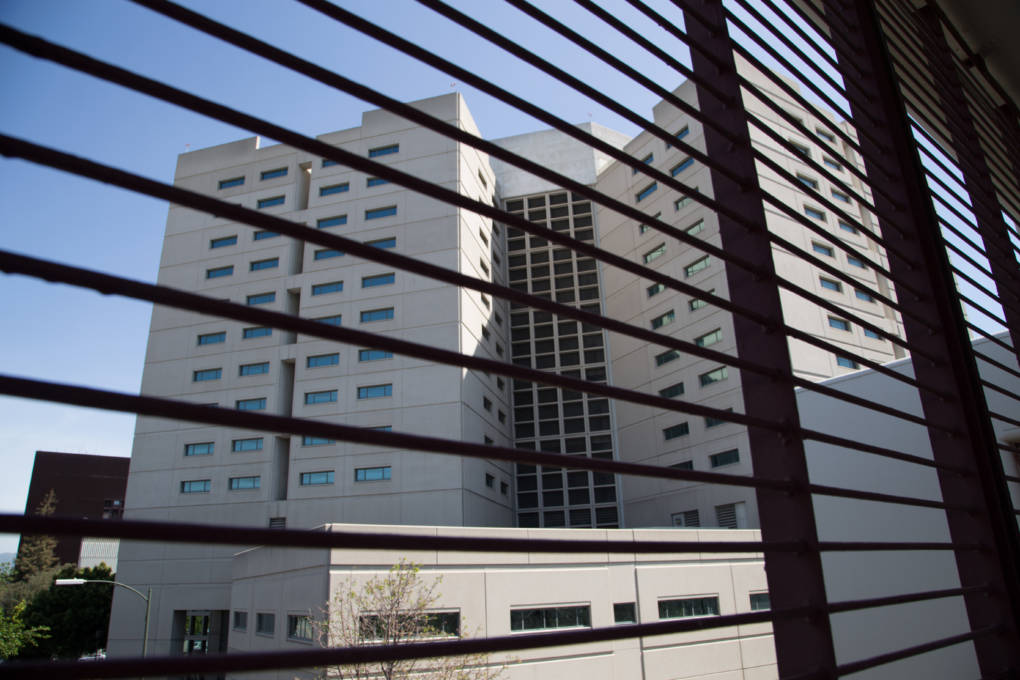
"caption": "Santa Clara's Main Jail.",
"description": null,
"title": "Santa Clara county main jail",
"credit": "Lisa Pickoff-White/KQED",
"status": "inherit",
"isLoading": false,
"fetchFailed": false
},
"news_11624951": {
"type": "attachments",
"id": "news_11624951",
"meta": {
"index": "attachments_1716263798",
"site": "news",
"id": "11624951",
"found": true
},
"parent": 11624516,
"imgSizes": {
"small": {
"file": "https://ww2.kqed.org/app/uploads/sites/10/2017/10/Woychowski-520x378.jpg",
"width": 520,
"mimeType": "image/jpeg",
"height": 378
},
"thumbnail": {
"file": "https://ww2.kqed.org/app/uploads/sites/10/2017/10/Woychowski-160x116.jpg",
"width": 160,
"mimeType": "image/jpeg",
"height": 116
},
"post-thumbnail": {
"file": "https://ww2.kqed.org/app/uploads/sites/10/2017/10/Woychowski-640x372.jpg",
"width": 640,
"mimeType": "image/jpeg",
"height": 372
},
"xsmall": {
"file": "https://ww2.kqed.org/app/uploads/sites/10/2017/10/Woychowski-375x272.jpg",
"width": 375,
"mimeType": "image/jpeg",
"height": 272
},
"kqedFullSize": {
"file": "https://ww2.kqed.org/app/uploads/sites/10/2017/10/Woychowski.jpg",
"width": 640,
"height": 465
},
"guest-author-50": {
"file": "https://ww2.kqed.org/app/uploads/sites/10/2017/10/Woychowski-50x50.jpg",
"width": 50,
"mimeType": "image/jpeg",
"height": 50
},
"guest-author-96": {
"file": "https://ww2.kqed.org/app/uploads/sites/10/2017/10/Woychowski-96x96.jpg",
"width": 96,
"mimeType": "image/jpeg",
"height": 96
},
"guest-author-64": {
"file": "https://ww2.kqed.org/app/uploads/sites/10/2017/10/Woychowski-64x64.jpg",
"width": 64,
"mimeType": "image/jpeg",
"height": 64
},
"detail": {
"file": "https://ww2.kqed.org/app/uploads/sites/10/2017/10/Woychowski-150x150.jpg",
"width": 150,
"mimeType": "image/jpeg",
"height": 150
},
"guest-author-32": {
"file": "https://ww2.kqed.org/app/uploads/sites/10/2017/10/Woychowski-32x32.jpg",
"width": 32,
"mimeType": "image/jpeg",
"height": 32
},
"guest-author-128": {
"file": "https://ww2.kqed.org/app/uploads/sites/10/2017/10/Woychowski-128x128.jpg",
"width": 128,
"mimeType": "image/jpeg",
"height": 128
},
"xxsmall": {
"file": "https://ww2.kqed.org/app/uploads/sites/10/2017/10/Woychowski-240x174.jpg",
"width": 240,
"mimeType": "image/jpeg",
"height": 174
}
},
"publishDate": 1508523752,
"modified": 1508524517,
"caption": "Bureau of Land Management ranger John Woychowski (center) was named El Centro Field Office 'Ranger of the Year' in 2011. Salvador Nieblas (left) went on to become the chief BLM ranger for California. Margaret Gordo (right) was the chief BLM ranger for El Centro in 2011.",
"description": null,
"title": "Woychowski",
"credit": "Bureau of Land Management California via Internet Archive",
"status": "inherit",
"isLoading": false,
"fetchFailed": false
},
"news_11626253": {
"type": "attachments",
"id": "news_11626253",
"meta": {
"index": "attachments_1716263798",
"site": "news",
"id": "11626253",
"found": true
},
"parent": 11626252,
"imgSizes": {
"small": {
"file": "https://ww2.kqed.org/app/uploads/sites/10/2017/10/gettyimages-865878276_wide-9afe83ead389c89c94c45903a68e3779d6778da1-520x292.jpg",
"width": 520,
"mimeType": "image/jpeg",
"height": 292
},
"twentyfourteen-full-width": {
"file": "https://ww2.kqed.org/app/uploads/sites/10/2017/10/gettyimages-865878276_wide-9afe83ead389c89c94c45903a68e3779d6778da1-1038x576.jpg",
"width": 1038,
"mimeType": "image/jpeg",
"height": 576
},
"thumbnail": {
"file": "https://ww2.kqed.org/app/uploads/sites/10/2017/10/gettyimages-865878276_wide-9afe83ead389c89c94c45903a68e3779d6778da1-160x90.jpg",
"width": 160,
"mimeType": "image/jpeg",
"height": 90
},
"fd-sm": {
"file": "https://ww2.kqed.org/app/uploads/sites/10/2017/10/gettyimages-865878276_wide-9afe83ead389c89c94c45903a68e3779d6778da1-960x540.jpg",
"width": 960,
"mimeType": "image/jpeg",
"height": 540
},
"post-thumbnail": {
"file": "https://ww2.kqed.org/app/uploads/sites/10/2017/10/gettyimages-865878276_wide-9afe83ead389c89c94c45903a68e3779d6778da1-672x372.jpg",
"width": 672,
"mimeType": "image/jpeg",
"height": 372
},
"xsmall": {
"file": "https://ww2.kqed.org/app/uploads/sites/10/2017/10/gettyimages-865878276_wide-9afe83ead389c89c94c45903a68e3779d6778da1-375x211.jpg",
"width": 375,
"mimeType": "image/jpeg",
"height": 211
},
"kqedFullSize": {
"file": "https://ww2.kqed.org/app/uploads/sites/10/2017/10/gettyimages-865878276_wide-9afe83ead389c89c94c45903a68e3779d6778da1-e1509049110409.jpg",
"width": 1920,
"height": 1080
},
"large": {
"file": "https://ww2.kqed.org/app/uploads/sites/10/2017/10/gettyimages-865878276_wide-9afe83ead389c89c94c45903a68e3779d6778da1-1020x574.jpg",
"width": 1020,
"mimeType": "image/jpeg",
"height": 574
},
"xlarge": {
"file": "https://ww2.kqed.org/app/uploads/sites/10/2017/10/gettyimages-865878276_wide-9afe83ead389c89c94c45903a68e3779d6778da1-1180x664.jpg",
"width": 1180,
"mimeType": "image/jpeg",
"height": 664
},
"guest-author-50": {
"file": "https://ww2.kqed.org/app/uploads/sites/10/2017/10/gettyimages-865878276_wide-9afe83ead389c89c94c45903a68e3779d6778da1-50x50.jpg",
"width": 50,
"mimeType": "image/jpeg",
"height": 50
},
"guest-author-96": {
"file": "https://ww2.kqed.org/app/uploads/sites/10/2017/10/gettyimages-865878276_wide-9afe83ead389c89c94c45903a68e3779d6778da1-96x96.jpg",
"width": 96,
"mimeType": "image/jpeg",
"height": 96
},
"medium": {
"file": "https://ww2.kqed.org/app/uploads/sites/10/2017/10/gettyimages-865878276_wide-9afe83ead389c89c94c45903a68e3779d6778da1-800x450.jpg",
"width": 800,
"mimeType": "image/jpeg",
"height": 450
},
"guest-author-64": {
"file": "https://ww2.kqed.org/app/uploads/sites/10/2017/10/gettyimages-865878276_wide-9afe83ead389c89c94c45903a68e3779d6778da1-64x64.jpg",
"width": 64,
"mimeType": "image/jpeg",
"height": 64
},
"guest-author-32": {
"file": "https://ww2.kqed.org/app/uploads/sites/10/2017/10/gettyimages-865878276_wide-9afe83ead389c89c94c45903a68e3779d6778da1-32x32.jpg",
"width": 32,
"mimeType": "image/jpeg",
"height": 32
},
"fd-lrg": {
"file": "https://ww2.kqed.org/app/uploads/sites/10/2017/10/gettyimages-865878276_wide-9afe83ead389c89c94c45903a68e3779d6778da1-1920x1080.jpg",
"width": 1920,
"mimeType": "image/jpeg",
"height": 1080
},
"fd-med": {
"file": "https://ww2.kqed.org/app/uploads/sites/10/2017/10/gettyimages-865878276_wide-9afe83ead389c89c94c45903a68e3779d6778da1-1180x664.jpg",
"width": 1180,
"mimeType": "image/jpeg",
"height": 664
},
"full-width": {
"file": "https://ww2.kqed.org/app/uploads/sites/10/2017/10/gettyimages-865878276_wide-9afe83ead389c89c94c45903a68e3779d6778da1-1920x1080.jpg",
"width": 1920,
"mimeType": "image/jpeg",
"height": 1080
},
"detail": {
"file": "https://ww2.kqed.org/app/uploads/sites/10/2017/10/gettyimages-865878276_wide-9afe83ead389c89c94c45903a68e3779d6778da1-150x150.jpg",
"width": 150,
"mimeType": "image/jpeg",
"height": 150
},
"guest-author-128": {
"file": "https://ww2.kqed.org/app/uploads/sites/10/2017/10/gettyimages-865878276_wide-9afe83ead389c89c94c45903a68e3779d6778da1-128x128.jpg",
"width": 128,
"mimeType": "image/jpeg",
"height": 128
},
"xxsmall": {
"file": "https://ww2.kqed.org/app/uploads/sites/10/2017/10/gettyimages-865878276_wide-9afe83ead389c89c94c45903a68e3779d6778da1-240x135.jpg",
"width": 240,
"mimeType": "image/jpeg",
"height": 135
}
},
"publishDate": 1509048950,
"modified": 1509049102,
"caption": "Twitter ended its advertising relationship with Russia Today and Sputnik on Thursday based on \"the U.S. intelligence community's conclusion that both RT and Sputnik attempted to interfere with the election on behalf of the Russian government.\"",
"description": "Twitter ended its advertising relationship with Russia Today and Sputnik on Thursday based on \"the U.S. intelligence community’s conclusion that both RT and Sputnik attempted to interfere with the election on behalf of the Russian governme",
"title": "Twitter ended its advertising relationship with Russia Today and Sputnik on Thursday based on \"the U.S. intelligence community's conclusion that both RT and Sputnik attempted to interfere with the election on behalf of the Russian government.\"",
"credit": "NurPhoto/NurPhoto via Getty Images",
"status": "inherit",
"isLoading": false,
"fetchFailed": false
},
"futureofyou_436440": {
"type": "attachments",
"id": "futureofyou_436440",
"meta": {
"index": "attachments_1716263798",
"site": "futureofyou",
"id": "436440",
"found": true
},
"parent": 436116,
"imgSizes": {
"small": {
"file": "https://ww2.kqed.org/app/uploads/sites/13/2017/10/Lucas-Linder-520x310.jpg",
"width": 520,
"mimeType": "image/jpeg",
"height": 310
},
"twentyfourteen-full-width": {
"file": "https://ww2.kqed.org/app/uploads/sites/13/2017/10/Lucas-Linder-1038x576.jpg",
"width": 1038,
"mimeType": "image/jpeg",
"height": 576
},
"thumbnail": {
"file": "https://ww2.kqed.org/app/uploads/sites/13/2017/10/Lucas-Linder-160x95.jpg",
"width": 160,
"mimeType": "image/jpeg",
"height": 95
},
"fd-sm": {
"file": "https://ww2.kqed.org/app/uploads/sites/13/2017/10/Lucas-Linder-960x571.jpg",
"width": 960,
"mimeType": "image/jpeg",
"height": 571
},
"post-thumbnail": {
"file": "https://ww2.kqed.org/app/uploads/sites/13/2017/10/Lucas-Linder-672x372.jpg",
"width": 672,
"mimeType": "image/jpeg",
"height": 372
},
"xsmall": {
"file": "https://ww2.kqed.org/app/uploads/sites/13/2017/10/Lucas-Linder-375x223.jpg",
"width": 375,
"mimeType": "image/jpeg",
"height": 223
},
"kqedFullSize": {
"file": "https://ww2.kqed.org/app/uploads/sites/13/2017/10/Lucas-Linder.jpg",
"width": 1040,
"height": 619
},
"large": {
"file": "https://ww2.kqed.org/app/uploads/sites/13/2017/10/Lucas-Linder-1020x607.jpg",
"width": 1020,
"mimeType": "image/jpeg",
"height": 607
},
"guest-author-50": {
"file": "https://ww2.kqed.org/app/uploads/sites/13/2017/10/Lucas-Linder-50x50.jpg",
"width": 50,
"mimeType": "image/jpeg",
"height": 50
},
"guest-author-96": {
"file": "https://ww2.kqed.org/app/uploads/sites/13/2017/10/Lucas-Linder-96x96.jpg",
"width": 96,
"mimeType": "image/jpeg",
"height": 96
},
"medium": {
"file": "https://ww2.kqed.org/app/uploads/sites/13/2017/10/Lucas-Linder-800x476.jpg",
"width": 800,
"mimeType": "image/jpeg",
"height": 476
},
"guest-author-64": {
"file": "https://ww2.kqed.org/app/uploads/sites/13/2017/10/Lucas-Linder-64x64.jpg",
"width": 64,
"mimeType": "image/jpeg",
"height": 64
},
"guest-author-32": {
"file": "https://ww2.kqed.org/app/uploads/sites/13/2017/10/Lucas-Linder-32x32.jpg",
"width": 32,
"mimeType": "image/jpeg",
"height": 32
},
"detail": {
"file": "https://ww2.kqed.org/app/uploads/sites/13/2017/10/Lucas-Linder-150x150.jpg",
"width": 150,
"mimeType": "image/jpeg",
"height": 150
},
"medium_large": {
"file": "https://ww2.kqed.org/app/uploads/sites/13/2017/10/Lucas-Linder-768x457.jpg",
"width": 768,
"mimeType": "image/jpeg",
"height": 457
},
"guest-author-128": {
"file": "https://ww2.kqed.org/app/uploads/sites/13/2017/10/Lucas-Linder-128x128.jpg",
"width": 128,
"mimeType": "image/jpeg",
"height": 128
},
"xxsmall": {
"file": "https://ww2.kqed.org/app/uploads/sites/13/2017/10/Lucas-Linder-240x143.jpg",
"width": 240,
"mimeType": "image/jpeg",
"height": 143
}
},
"publishDate": 1508952294,
"modified": 1508952525,
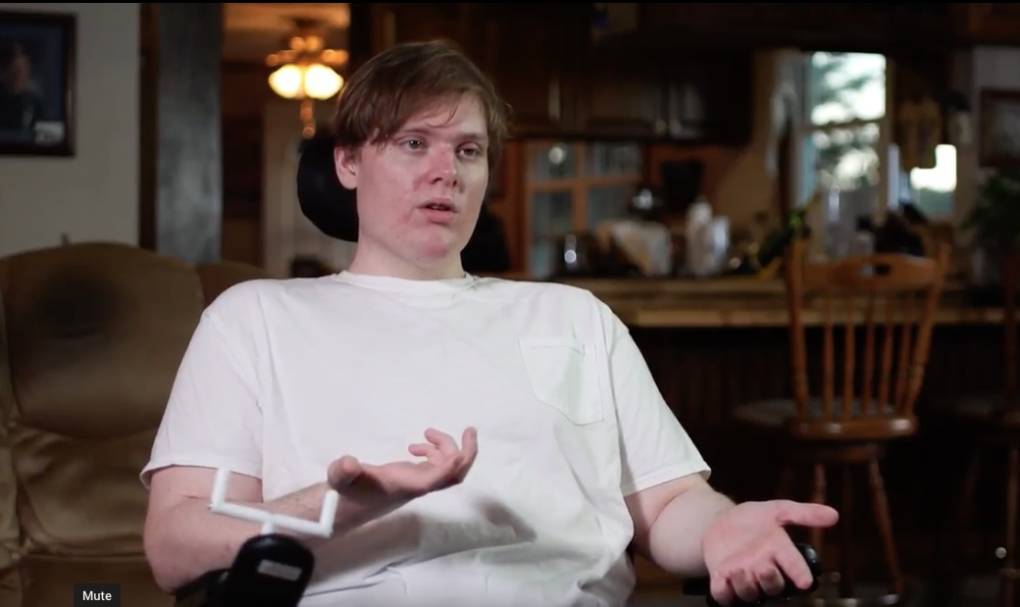
"caption": "Lucas Linder was in a car accident in 2016 that left him without the use of his hands or legs. After receiving 10 million stem cells as part of the SCiStar trial, he can throw a ball, type and use a soldering gun.",
"description": null,
"title": "Lucas Linder",
"credit": "Asterias Biotherapeutics",
"status": "inherit",
"isLoading": false,
"fetchFailed": false
},
"news_11626216": {
"type": "attachments",
"id": "news_11626216",
"meta": {
"index": "attachments_1716263798",
"site": "news",
"id": "11626216",
"found": true
},
"parent": 11626206,
"imgSizes": {
"small": {
"file": "https://ww2.kqed.org/app/uploads/sites/10/2017/10/RS18012_GettyImages-492659230-520x347.jpg",
"width": 520,
"mimeType": "image/jpeg",
"height": 347
},
"twentyfourteen-full-width": {
"file": "https://ww2.kqed.org/app/uploads/sites/10/2017/10/RS18012_GettyImages-492659230-1038x576.jpg",
"width": 1038,
"mimeType": "image/jpeg",
"height": 576
},
"thumbnail": {
"file": "https://ww2.kqed.org/app/uploads/sites/10/2017/10/RS18012_GettyImages-492659230-160x107.jpg",
"width": 160,
"mimeType": "image/jpeg",
"height": 107
},
"fd-sm": {
"file": "https://ww2.kqed.org/app/uploads/sites/10/2017/10/RS18012_GettyImages-492659230-960x640.jpg",
"width": 960,
"mimeType": "image/jpeg",
"height": 640
},
"post-thumbnail": {
"file": "https://ww2.kqed.org/app/uploads/sites/10/2017/10/RS18012_GettyImages-492659230-672x372.jpg",
"width": 672,
"mimeType": "image/jpeg",
"height": 372
},
"xsmall": {
"file": "https://ww2.kqed.org/app/uploads/sites/10/2017/10/RS18012_GettyImages-492659230-375x250.jpg",
"width": 375,
"mimeType": "image/jpeg",
"height": 250
},
"kqedFullSize": {
"file": "https://ww2.kqed.org/app/uploads/sites/10/2017/10/RS18012_GettyImages-492659230-e1509046076403.jpg",
"width": 1920,
"height": 1280
},
"large": {
"file": "https://ww2.kqed.org/app/uploads/sites/10/2017/10/RS18012_GettyImages-492659230-1020x680.jpg",
"width": 1020,
"mimeType": "image/jpeg",
"height": 680
},
"xlarge": {
"file": "https://ww2.kqed.org/app/uploads/sites/10/2017/10/RS18012_GettyImages-492659230-1180x787.jpg",
"width": 1180,
"mimeType": "image/jpeg",
"height": 787
},
"guest-author-50": {
"file": "https://ww2.kqed.org/app/uploads/sites/10/2017/10/RS18012_GettyImages-492659230-50x50.jpg",
"width": 50,
"mimeType": "image/jpeg",
"height": 50
},
"guest-author-96": {
"file": "https://ww2.kqed.org/app/uploads/sites/10/2017/10/RS18012_GettyImages-492659230-96x96.jpg",
"width": 96,
"mimeType": "image/jpeg",
"height": 96
},
"medium": {
"file": "https://ww2.kqed.org/app/uploads/sites/10/2017/10/RS18012_GettyImages-492659230-800x533.jpg",
"width": 800,
"mimeType": "image/jpeg",
"height": 533
},
"guest-author-64": {
"file": "https://ww2.kqed.org/app/uploads/sites/10/2017/10/RS18012_GettyImages-492659230-64x64.jpg",
"width": 64,
"mimeType": "image/jpeg",
"height": 64
},
"guest-author-32": {
"file": "https://ww2.kqed.org/app/uploads/sites/10/2017/10/RS18012_GettyImages-492659230-32x32.jpg",
"width": 32,
"mimeType": "image/jpeg",
"height": 32
},
"fd-lrg": {
"file": "https://ww2.kqed.org/app/uploads/sites/10/2017/10/RS18012_GettyImages-492659230-1920x1280.jpg",
"width": 1920,
"mimeType": "image/jpeg",
"height": 1280
},
"fd-med": {
"file": "https://ww2.kqed.org/app/uploads/sites/10/2017/10/RS18012_GettyImages-492659230-1180x787.jpg",
"width": 1180,
"mimeType": "image/jpeg",
"height": 787
},
"full-width": {
"file": "https://ww2.kqed.org/app/uploads/sites/10/2017/10/RS18012_GettyImages-492659230-1920x1280.jpg",
"width": 1920,
"mimeType": "image/jpeg",
"height": 1280
},
"detail": {
"file": "https://ww2.kqed.org/app/uploads/sites/10/2017/10/RS18012_GettyImages-492659230-150x150.jpg",
"width": 150,
"mimeType": "image/jpeg",
"height": 150
},
"guest-author-128": {
"file": "https://ww2.kqed.org/app/uploads/sites/10/2017/10/RS18012_GettyImages-492659230-128x128.jpg",
"width": 128,
"mimeType": "image/jpeg",
"height": 128
},
"xxsmall": {
"file": "https://ww2.kqed.org/app/uploads/sites/10/2017/10/RS18012_GettyImages-492659230-240x160.jpg",
"width": 240,
"mimeType": "image/jpeg",
"height": 160
}
},
"publishDate": 1509045956,
"modified": 1509046055,
"caption": "A U.S. Immigration and Customs Enforcement (ICE) agent detains an immigrant in Los Angeles in 2015.",
"description": "A U.S. Immigration and Customs Enforcement (ICE) agent detains an immigrant in Los Angeles in 2015.",
"title": "ICE Agents Detain Suspected Undocumented Immigrants In Raids",
"credit": "John Moore/Getty Images",
"status": "inherit",
"isLoading": false,
"fetchFailed": false
},
"news_11626180": {
"type": "attachments",
"id": "news_11626180",
"meta": {
"index": "attachments_1716263798",
"site": "news",
"id": "11626180",
"found": true
},
"parent": 11626179,
"imgSizes": {
"small": {
"file": "https://ww2.kqed.org/app/uploads/sites/10/2017/10/gettyimages-860505716_wide-69e61669b7e3287bf7973701f7f12ddbcc8ae3bc-520x292.jpg",
"width": 520,
"mimeType": "image/jpeg",
"height": 292
},
"twentyfourteen-full-width": {
"file": "https://ww2.kqed.org/app/uploads/sites/10/2017/10/gettyimages-860505716_wide-69e61669b7e3287bf7973701f7f12ddbcc8ae3bc-1038x576.jpg",
"width": 1038,
"mimeType": "image/jpeg",
"height": 576
},
"thumbnail": {
"file": "https://ww2.kqed.org/app/uploads/sites/10/2017/10/gettyimages-860505716_wide-69e61669b7e3287bf7973701f7f12ddbcc8ae3bc-160x90.jpg",
"width": 160,
"mimeType": "image/jpeg",
"height": 90
},
"fd-sm": {
"file": "https://ww2.kqed.org/app/uploads/sites/10/2017/10/gettyimages-860505716_wide-69e61669b7e3287bf7973701f7f12ddbcc8ae3bc-960x540.jpg",
"width": 960,
"mimeType": "image/jpeg",
"height": 540
},
"post-thumbnail": {
"file": "https://ww2.kqed.org/app/uploads/sites/10/2017/10/gettyimages-860505716_wide-69e61669b7e3287bf7973701f7f12ddbcc8ae3bc-672x372.jpg",
"width": 672,
"mimeType": "image/jpeg",
"height": 372
},
"xsmall": {
"file": "https://ww2.kqed.org/app/uploads/sites/10/2017/10/gettyimages-860505716_wide-69e61669b7e3287bf7973701f7f12ddbcc8ae3bc-375x211.jpg",
"width": 375,
"mimeType": "image/jpeg",
"height": 211
},
"kqedFullSize": {
"file": "https://ww2.kqed.org/app/uploads/sites/10/2017/10/gettyimages-860505716_wide-69e61669b7e3287bf7973701f7f12ddbcc8ae3bc-e1509043823423.jpg",
"width": 1920,
"height": 1080
},
"large": {
"file": "https://ww2.kqed.org/app/uploads/sites/10/2017/10/gettyimages-860505716_wide-69e61669b7e3287bf7973701f7f12ddbcc8ae3bc-1020x574.jpg",
"width": 1020,
"mimeType": "image/jpeg",
"height": 574
},
"xlarge": {
"file": "https://ww2.kqed.org/app/uploads/sites/10/2017/10/gettyimages-860505716_wide-69e61669b7e3287bf7973701f7f12ddbcc8ae3bc-1180x664.jpg",
"width": 1180,
"mimeType": "image/jpeg",
"height": 664
},
"guest-author-50": {
"file": "https://ww2.kqed.org/app/uploads/sites/10/2017/10/gettyimages-860505716_wide-69e61669b7e3287bf7973701f7f12ddbcc8ae3bc-50x50.jpg",
"width": 50,
"mimeType": "image/jpeg",
"height": 50
},
"guest-author-96": {
"file": "https://ww2.kqed.org/app/uploads/sites/10/2017/10/gettyimages-860505716_wide-69e61669b7e3287bf7973701f7f12ddbcc8ae3bc-96x96.jpg",
"width": 96,
"mimeType": "image/jpeg",
"height": 96
},
"medium": {
"file": "https://ww2.kqed.org/app/uploads/sites/10/2017/10/gettyimages-860505716_wide-69e61669b7e3287bf7973701f7f12ddbcc8ae3bc-800x450.jpg",
"width": 800,
"mimeType": "image/jpeg",
"height": 450
},
"guest-author-64": {
"file": "https://ww2.kqed.org/app/uploads/sites/10/2017/10/gettyimages-860505716_wide-69e61669b7e3287bf7973701f7f12ddbcc8ae3bc-64x64.jpg",
"width": 64,
"mimeType": "image/jpeg",
"height": 64
},
"guest-author-32": {
"file": "https://ww2.kqed.org/app/uploads/sites/10/2017/10/gettyimages-860505716_wide-69e61669b7e3287bf7973701f7f12ddbcc8ae3bc-32x32.jpg",
"width": 32,
"mimeType": "image/jpeg",
"height": 32
},
"fd-lrg": {
"file": "https://ww2.kqed.org/app/uploads/sites/10/2017/10/gettyimages-860505716_wide-69e61669b7e3287bf7973701f7f12ddbcc8ae3bc-1920x1080.jpg",
"width": 1920,
"mimeType": "image/jpeg",
"height": 1080
},
"fd-med": {
"file": "https://ww2.kqed.org/app/uploads/sites/10/2017/10/gettyimages-860505716_wide-69e61669b7e3287bf7973701f7f12ddbcc8ae3bc-1180x664.jpg",
"width": 1180,
"mimeType": "image/jpeg",
"height": 664
},
"full-width": {
"file": "https://ww2.kqed.org/app/uploads/sites/10/2017/10/gettyimages-860505716_wide-69e61669b7e3287bf7973701f7f12ddbcc8ae3bc-1920x1080.jpg",
"width": 1920,
"mimeType": "image/jpeg",
"height": 1080
},
"detail": {
"file": "https://ww2.kqed.org/app/uploads/sites/10/2017/10/gettyimages-860505716_wide-69e61669b7e3287bf7973701f7f12ddbcc8ae3bc-150x150.jpg",
"width": 150,
"mimeType": "image/jpeg",
"height": 150
},
"guest-author-128": {
"file": "https://ww2.kqed.org/app/uploads/sites/10/2017/10/gettyimages-860505716_wide-69e61669b7e3287bf7973701f7f12ddbcc8ae3bc-128x128.jpg",
"width": 128,
"mimeType": "image/jpeg",
"height": 128
},
"xxsmall": {
"file": "https://ww2.kqed.org/app/uploads/sites/10/2017/10/gettyimages-860505716_wide-69e61669b7e3287bf7973701f7f12ddbcc8ae3bc-240x135.jpg",
"width": 240,
"mimeType": "image/jpeg",
"height": 135
}
},
"publishDate": 1509042521,
"modified": 1509043795,
"caption": "A dog trained to find drugs and banknotes smells luggage at the Mulhouse airport in France on Oct. 10. Dogs trained to detect explosives are expected to be deployed at international airports as part of heightened screening measures for flights to the U.S.",
"description": "A dog trained to find drugs and banknotes smells luggage at the Mulhouse airport in France on Oct. 10. Dogs trained to detect explosives are expected to be deployed at international airports as part of heightened screening measures for flights to the U.S",
"title": "A dog trained to find drugs and banknotes smells luggage at the Mulhouse airport in France on Oct. 10. Dogs trained to detect explosives are expected to be deployed at international airports as part of heightened screening measures for flights to the U.S.",
"credit": "Sebastien Bozon/AFP/Getty Images ",
"status": "inherit",
"isLoading": false,
"fetchFailed": false
},
"news_11626127": {
"type": "attachments",
"id": "news_11626127",
"meta": {
"index": "attachments_1716263798",
"site": "news",
"id": "11626127",
"found": true
},
"parent": 11626020,
"imgSizes": {
"small": {
"file": "https://ww2.kqed.org/app/uploads/sites/10/2017/10/Vuich-520x530.jpg",
"width": 520,
"mimeType": "image/jpeg",
"height": 530
},
"twentyfourteen-full-width": {
"file": "https://ww2.kqed.org/app/uploads/sites/10/2017/10/Vuich-1038x576.jpg",
"width": 1038,
"mimeType": "image/jpeg",
"height": 576
},
"thumbnail": {
"file": "https://ww2.kqed.org/app/uploads/sites/10/2017/10/Vuich-160x163.jpg",
"width": 160,
"mimeType": "image/jpeg",
"height": 163
},
"fd-sm": {
"file": "https://ww2.kqed.org/app/uploads/sites/10/2017/10/Vuich-960x979.jpg",
"width": 960,
"mimeType": "image/jpeg",
"height": 979
},
"post-thumbnail": {
"file": "https://ww2.kqed.org/app/uploads/sites/10/2017/10/Vuich-672x372.jpg",
"width": 672,
"mimeType": "image/jpeg",
"height": 372
},
"xsmall": {
"file": "https://ww2.kqed.org/app/uploads/sites/10/2017/10/Vuich-375x382.jpg",
"width": 375,
"mimeType": "image/jpeg",
"height": 382
},
"kqedFullSize": {
"file": "https://ww2.kqed.org/app/uploads/sites/10/2017/10/Vuich.jpg",
"width": 1920,
"height": 1957
},
"large": {
"file": "https://ww2.kqed.org/app/uploads/sites/10/2017/10/Vuich-1020x1040.jpg",
"width": 1020,
"mimeType": "image/jpeg",
"height": 1040
},
"xlarge": {
"file": "https://ww2.kqed.org/app/uploads/sites/10/2017/10/Vuich-1180x1203.jpg",
"width": 1180,
"mimeType": "image/jpeg",
"height": 1203
},
"guest-author-50": {
"file": "https://ww2.kqed.org/app/uploads/sites/10/2017/10/Vuich-50x50.jpg",
"width": 50,
"mimeType": "image/jpeg",
"height": 50
},
"guest-author-96": {
"file": "https://ww2.kqed.org/app/uploads/sites/10/2017/10/Vuich-96x96.jpg",
"width": 96,
"mimeType": "image/jpeg",
"height": 96
},
"medium": {
"file": "https://ww2.kqed.org/app/uploads/sites/10/2017/10/Vuich-800x815.jpg",
"width": 800,
"mimeType": "image/jpeg",
"height": 815
},
"guest-author-64": {
"file": "https://ww2.kqed.org/app/uploads/sites/10/2017/10/Vuich-64x64.jpg",
"width": 64,
"mimeType": "image/jpeg",
"height": 64
},
"guest-author-32": {
"file": "https://ww2.kqed.org/app/uploads/sites/10/2017/10/Vuich-32x32.jpg",
"width": 32,
"mimeType": "image/jpeg",
"height": 32
},
"fd-lrg": {
"file": "https://ww2.kqed.org/app/uploads/sites/10/2017/10/Vuich-1920x1957.jpg",
"width": 1920,
"mimeType": "image/jpeg",
"height": 1957
},
"fd-med": {
"file": "https://ww2.kqed.org/app/uploads/sites/10/2017/10/Vuich-1180x1203.jpg",
"width": 1180,
"mimeType": "image/jpeg",
"height": 1203
},
"full-width": {
"file": "https://ww2.kqed.org/app/uploads/sites/10/2017/10/Vuich-1920x1957.jpg",
"width": 1920,
"mimeType": "image/jpeg",
"height": 1957
},
"detail": {
"file": "https://ww2.kqed.org/app/uploads/sites/10/2017/10/Vuich-150x150.jpg",
"width": 150,
"mimeType": "image/jpeg",
"height": 150
},
"guest-author-128": {
"file": "https://ww2.kqed.org/app/uploads/sites/10/2017/10/Vuich-128x128.jpg",
"width": 128,
"mimeType": "image/jpeg",
"height": 128
},
"xxsmall": {
"file": "https://ww2.kqed.org/app/uploads/sites/10/2017/10/Vuich-240x245.jpg",
"width": 240,
"mimeType": "image/jpeg",
"height": 245
}
},
"publishDate": 1508981407,
"modified": 1508981456,
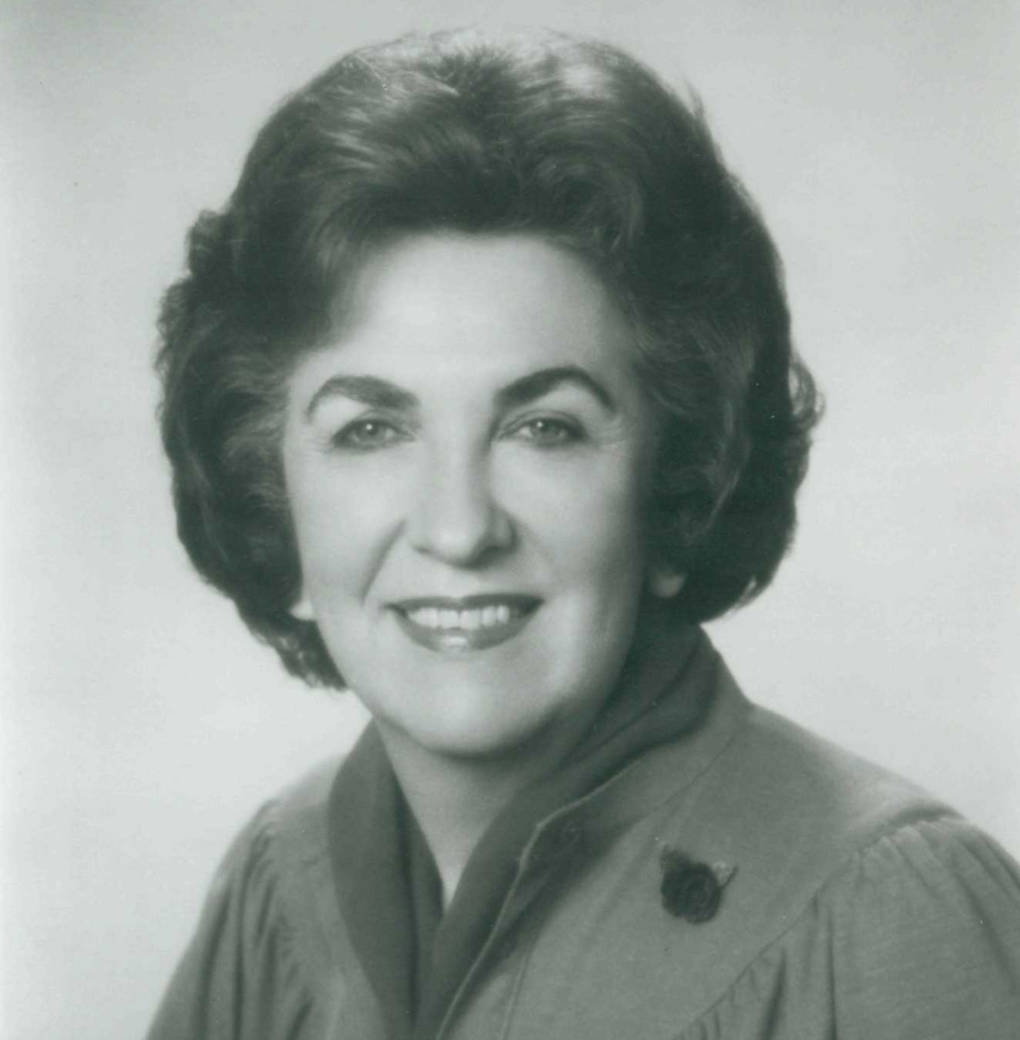
"caption": "Sen. Rose Ann Vuich",
"description": "Sen. Rose Ann Vuich",
"title": "Vuich",
"credit": "California State Library",
"status": "inherit",
"isLoading": false,
"fetchFailed": false
},
"news_11626018": {
"type": "attachments",
"id": "news_11626018",
"meta": {
"index": "attachments_1716263798",
"site": "news",
"id": "11626018",
"found": true
},
"parent": 11625675,
"imgSizes": {
"small": {
"file": "https://ww2.kqed.org/app/uploads/sites/10/2017/10/OilRig-520x336.jpg",
"width": 520,
"mimeType": "image/jpeg",
"height": 336
},
"twentyfourteen-full-width": {
"file": "https://ww2.kqed.org/app/uploads/sites/10/2017/10/OilRig-1038x576.jpg",
"width": 1038,
"mimeType": "image/jpeg",
"height": 576
},
"thumbnail": {
"file": "https://ww2.kqed.org/app/uploads/sites/10/2017/10/OilRig-160x103.jpg",
"width": 160,
"mimeType": "image/jpeg",
"height": 103
},
"fd-sm": {
"file": "https://ww2.kqed.org/app/uploads/sites/10/2017/10/OilRig-960x620.jpg",
"width": 960,
"mimeType": "image/jpeg",
"height": 620
},
"post-thumbnail": {
"file": "https://ww2.kqed.org/app/uploads/sites/10/2017/10/OilRig-672x372.jpg",
"width": 672,
"mimeType": "image/jpeg",
"height": 372
},
"xsmall": {
"file": "https://ww2.kqed.org/app/uploads/sites/10/2017/10/OilRig-375x242.jpg",
"width": 375,
"mimeType": "image/jpeg",
"height": 242
},
"kqedFullSize": {
"file": "https://ww2.kqed.org/app/uploads/sites/10/2017/10/OilRig.jpg",
"width": 1920,
"height": 1239
},
"large": {
"file": "https://ww2.kqed.org/app/uploads/sites/10/2017/10/OilRig-1020x658.jpg",
"width": 1020,
"mimeType": "image/jpeg",
"height": 658
},
"xlarge": {
"file": "https://ww2.kqed.org/app/uploads/sites/10/2017/10/OilRig-1180x761.jpg",
"width": 1180,
"mimeType": "image/jpeg",
"height": 761
},
"guest-author-50": {
"file": "https://ww2.kqed.org/app/uploads/sites/10/2017/10/OilRig-50x50.jpg",
"width": 50,
"mimeType": "image/jpeg",
"height": 50
},
"guest-author-96": {
"file": "https://ww2.kqed.org/app/uploads/sites/10/2017/10/OilRig-96x96.jpg",
"width": 96,
"mimeType": "image/jpeg",
"height": 96
},
"medium": {
"file": "https://ww2.kqed.org/app/uploads/sites/10/2017/10/OilRig-800x516.jpg",
"width": 800,
"mimeType": "image/jpeg",
"height": 516
},
"guest-author-64": {
"file": "https://ww2.kqed.org/app/uploads/sites/10/2017/10/OilRig-64x64.jpg",
"width": 64,
"mimeType": "image/jpeg",
"height": 64
},
"guest-author-32": {
"file": "https://ww2.kqed.org/app/uploads/sites/10/2017/10/OilRig-32x32.jpg",
"width": 32,
"mimeType": "image/jpeg",
"height": 32
},
"fd-lrg": {
"file": "https://ww2.kqed.org/app/uploads/sites/10/2017/10/OilRig-1920x1239.jpg",
"width": 1920,
"mimeType": "image/jpeg",
"height": 1239
},
"fd-med": {
"file": "https://ww2.kqed.org/app/uploads/sites/10/2017/10/OilRig-1180x761.jpg",
"width": 1180,
"mimeType": "image/jpeg",
"height": 761
},
"full-width": {
"file": "https://ww2.kqed.org/app/uploads/sites/10/2017/10/OilRig-1920x1239.jpg",
"width": 1920,
"mimeType": "image/jpeg",
"height": 1239
},
"detail": {
"file": "https://ww2.kqed.org/app/uploads/sites/10/2017/10/OilRig-150x150.jpg",
"width": 150,
"mimeType": "image/jpeg",
"height": 150
},
"guest-author-128": {
"file": "https://ww2.kqed.org/app/uploads/sites/10/2017/10/OilRig-128x128.jpg",
"width": 128,
"mimeType": "image/jpeg",
"height": 128
},
"xxsmall": {
"file": "https://ww2.kqed.org/app/uploads/sites/10/2017/10/OilRig-240x155.jpg",
"width": 240,
"mimeType": "image/jpeg",
"height": 155
}
},
"publishDate": 1508969308,
"modified": 1508969359,
"caption": "An oil rig operates in Culver City.",
"description": "An oil rig operates in Culver City.",
"title": "OilRig",
"credit": "GABRIEL BOUYS/AFP/Getty Images",
"status": "inherit",
"isLoading": false,
"fetchFailed": false
},
"news_11625989": {
"type": "attachments",
"id": "news_11625989",
"meta": {
"index": "attachments_1716263798",
"site": "news",
"id": "11625989",
"found": true
},
"title": "IMG_2943",
"publishDate": 1508967483,
"status": "inherit",
"parent": 11625944,
"modified": 1509056856,
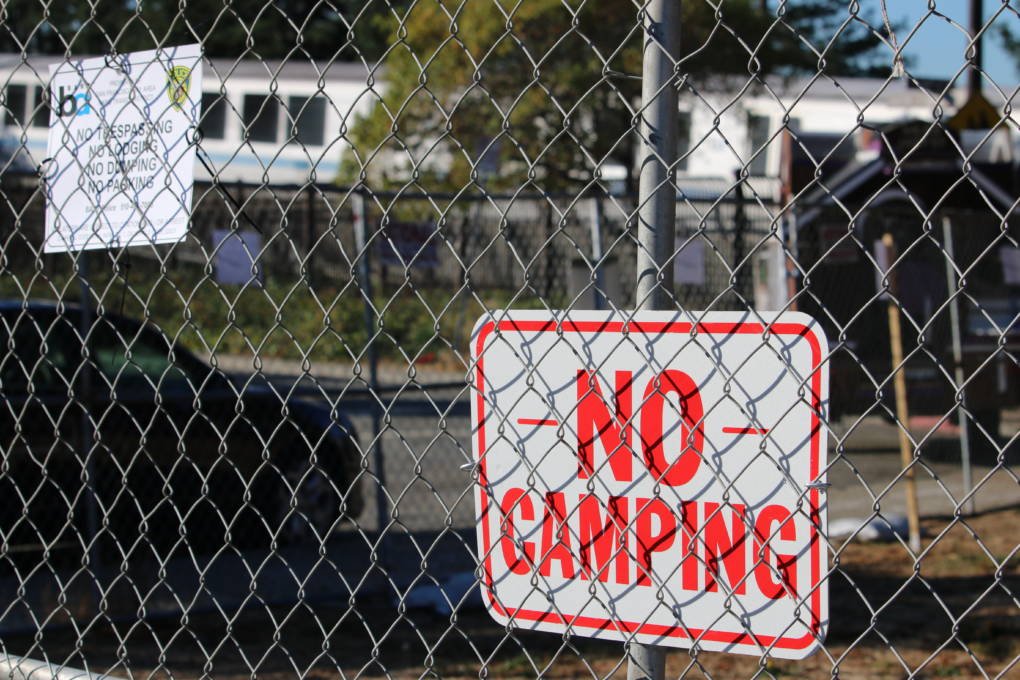
"caption": "BART cleared a homeless encampment and fenced off property in South Berkeley on Oct. 25, 2017.",
"credit": "Devin Katayama/KQED",
"altTag": null,
"description": null,
"imgSizes": {
"thumbnail": {
"file": "https://cdn.kqed.org/wp-content/uploads/sites/10/2017/10/IMG_2943-160x107.jpg",
"width": 160,
"height": 107,
"mimeType": "image/jpeg"
},
"medium": {
"file": "https://cdn.kqed.org/wp-content/uploads/sites/10/2017/10/IMG_2943-800x533.jpg",
"width": 800,
"height": 533,
"mimeType": "image/jpeg"
},
"large": {
"file": "https://cdn.kqed.org/wp-content/uploads/sites/10/2017/10/IMG_2943-1020x680.jpg",
"width": 1020,
"height": 680,
"mimeType": "image/jpeg"
},
"fd-lrg": {
"file": "https://cdn.kqed.org/wp-content/uploads/sites/10/2017/10/IMG_2943-1920x1280.jpg",
"width": 1920,
"height": 1280,
"mimeType": "image/jpeg"
},
"fd-med": {
"file": "https://cdn.kqed.org/wp-content/uploads/sites/10/2017/10/IMG_2943-1180x787.jpg",
"width": 1180,
"height": 787,
"mimeType": "image/jpeg"
},
"fd-sm": {
"file": "https://cdn.kqed.org/wp-content/uploads/sites/10/2017/10/IMG_2943-960x640.jpg",
"width": 960,
"height": 640,
"mimeType": "image/jpeg"
},
"post-thumbnail": {
"file": "https://cdn.kqed.org/wp-content/uploads/sites/10/2017/10/IMG_2943-672x372.jpg",
"width": 672,
"height": 372,
"mimeType": "image/jpeg"
},
"twentyfourteen-full-width": {
"file": "https://cdn.kqed.org/wp-content/uploads/sites/10/2017/10/IMG_2943-1038x576.jpg",
"width": 1038,
"height": 576,
"mimeType": "image/jpeg"
},
"xxsmall": {
"file": "https://cdn.kqed.org/wp-content/uploads/sites/10/2017/10/IMG_2943-240x160.jpg",
"width": 240,
"height": 160,
"mimeType": "image/jpeg"
},
"xsmall": {
"file": "https://cdn.kqed.org/wp-content/uploads/sites/10/2017/10/IMG_2943-375x250.jpg",
"width": 375,
"height": 250,
"mimeType": "image/jpeg"
},
"small": {
"file": "https://cdn.kqed.org/wp-content/uploads/sites/10/2017/10/IMG_2943-520x347.jpg",
"width": 520,
"height": 347,
"mimeType": "image/jpeg"
},
"xlarge": {
"file": "https://cdn.kqed.org/wp-content/uploads/sites/10/2017/10/IMG_2943-1180x787.jpg",
"width": 1180,
"height": 787,
"mimeType": "image/jpeg"
},
"full-width": {
"file": "https://cdn.kqed.org/wp-content/uploads/sites/10/2017/10/IMG_2943-1920x1280.jpg",
"width": 1920,
"height": 1280,
"mimeType": "image/jpeg"
},
"guest-author-32": {
"file": "https://cdn.kqed.org/wp-content/uploads/sites/10/2017/10/IMG_2943-32x32.jpg",
"width": 32,
"height": 32,
"mimeType": "image/jpeg"
},
"guest-author-50": {
"file": "https://cdn.kqed.org/wp-content/uploads/sites/10/2017/10/IMG_2943-50x50.jpg",
"width": 50,
"height": 50,
"mimeType": "image/jpeg"
},
"guest-author-64": {
"file": "https://cdn.kqed.org/wp-content/uploads/sites/10/2017/10/IMG_2943-64x64.jpg",
"width": 64,
"height": 64,
"mimeType": "image/jpeg"
},
"guest-author-96": {
"file": "https://cdn.kqed.org/wp-content/uploads/sites/10/2017/10/IMG_2943-96x96.jpg",
"width": 96,
"height": 96,
"mimeType": "image/jpeg"
},
"guest-author-128": {
"file": "https://cdn.kqed.org/wp-content/uploads/sites/10/2017/10/IMG_2943-128x128.jpg",
"width": 128,
"height": 128,
"mimeType": "image/jpeg"
},
"detail": {
"file": "https://cdn.kqed.org/wp-content/uploads/sites/10/2017/10/IMG_2943-150x150.jpg",
"width": 150,
"height": 150,
"mimeType": "image/jpeg"
},
"kqedFullSize": {
"file": "https://cdn.kqed.org/wp-content/uploads/sites/10/2017/10/IMG_2943-e1731527667984.jpg",
"width": 2000,
"height": 1333
}
},
"isLoading": false,
"fetchFailed": false
},
"news_11626062": {
"type": "attachments",
"id": "news_11626062",
"meta": {
"index": "attachments_1716263798",
"site": "news",
"id": "11626062",
"found": true
},
"parent": 11626061,
"imgSizes": {
"small": {
"file": "https://ww2.kqed.org/app/uploads/sites/10/2017/10/tesla_puerto-rico-1_wide-80b8c58fcb42facd2e1cd4dc34821353aefa2e02-520x292.jpg",
"width": 520,
"mimeType": "image/jpeg",
"height": 292
},
"thumbnail": {
"file": "https://ww2.kqed.org/app/uploads/sites/10/2017/10/tesla_puerto-rico-1_wide-80b8c58fcb42facd2e1cd4dc34821353aefa2e02-160x90.jpg",
"width": 160,
"mimeType": "image/jpeg",
"height": 90
},
"post-thumbnail": {
"file": "https://ww2.kqed.org/app/uploads/sites/10/2017/10/tesla_puerto-rico-1_wide-80b8c58fcb42facd2e1cd4dc34821353aefa2e02-672x372.jpg",
"width": 672,
"mimeType": "image/jpeg",
"height": 372
},
"xsmall": {
"file": "https://ww2.kqed.org/app/uploads/sites/10/2017/10/tesla_puerto-rico-1_wide-80b8c58fcb42facd2e1cd4dc34821353aefa2e02-375x211.jpg",
"width": 375,
"mimeType": "image/jpeg",
"height": 211
},
"kqedFullSize": {
"file": "https://ww2.kqed.org/app/uploads/sites/10/2017/10/tesla_puerto-rico-1_wide-80b8c58fcb42facd2e1cd4dc34821353aefa2e02.jpg",
"width": 936,
"height": 526
},
"guest-author-50": {
"file": "https://ww2.kqed.org/app/uploads/sites/10/2017/10/tesla_puerto-rico-1_wide-80b8c58fcb42facd2e1cd4dc34821353aefa2e02-50x50.jpg",
"width": 50,
"mimeType": "image/jpeg",
"height": 50
},
"guest-author-96": {
"file": "https://ww2.kqed.org/app/uploads/sites/10/2017/10/tesla_puerto-rico-1_wide-80b8c58fcb42facd2e1cd4dc34821353aefa2e02-96x96.jpg",
"width": 96,
"mimeType": "image/jpeg",
"height": 96
},
"medium": {
"file": "https://ww2.kqed.org/app/uploads/sites/10/2017/10/tesla_puerto-rico-1_wide-80b8c58fcb42facd2e1cd4dc34821353aefa2e02-800x450.jpg",
"width": 800,
"mimeType": "image/jpeg",
"height": 450
},
"guest-author-64": {
"file": "https://ww2.kqed.org/app/uploads/sites/10/2017/10/tesla_puerto-rico-1_wide-80b8c58fcb42facd2e1cd4dc34821353aefa2e02-64x64.jpg",
"width": 64,
"mimeType": "image/jpeg",
"height": 64
},
"guest-author-32": {
"file": "https://ww2.kqed.org/app/uploads/sites/10/2017/10/tesla_puerto-rico-1_wide-80b8c58fcb42facd2e1cd4dc34821353aefa2e02-32x32.jpg",
"width": 32,
"mimeType": "image/jpeg",
"height": 32
},
"detail": {
"file": "https://ww2.kqed.org/app/uploads/sites/10/2017/10/tesla_puerto-rico-1_wide-80b8c58fcb42facd2e1cd4dc34821353aefa2e02-150x150.jpg",
"width": 150,
"mimeType": "image/jpeg",
"height": 150
},
"guest-author-128": {
"file": "https://ww2.kqed.org/app/uploads/sites/10/2017/10/tesla_puerto-rico-1_wide-80b8c58fcb42facd2e1cd4dc34821353aefa2e02-128x128.jpg",
"width": 128,
"mimeType": "image/jpeg",
"height": 128
},
"xxsmall": {
"file": "https://ww2.kqed.org/app/uploads/sites/10/2017/10/tesla_puerto-rico-1_wide-80b8c58fcb42facd2e1cd4dc34821353aefa2e02-240x135.jpg",
"width": 240,
"mimeType": "image/jpeg",
"height": 135
}
},
"publishDate": 1508973647,
"modified": 1508973730,
"caption": "Weeks after Tesla founder Elon Musk and Gov. Ricardo Rossello spoke about the tech company aiding Puerto Rico, Tesla says it has restored electricity to a children's hospital, using solar energy and batteries.",
"description": "Weeks after Tesla founder Elon Musk and Gov. Ricardo Rossello spoke about the tech company aiding Puerto Rico, Tesla says it has restored electricity to a children's hospital, using solar energy and batterie",
"title": "Weeks after Tesla founder Elon Musk and Gov. Ricardo Rossello spoke about the tech company aiding Puerto Rico, Tesla says it has restored electricity to a children's hospital, using solar energy and batteries.",
"credit": "Tesla",
"status": "inherit",
"isLoading": false,
"fetchFailed": false
}
},
"audioPlayerReducer": {
"postId": "stream_live",
"isPaused": true,
"isPlaying": false,
"pfsActive": false,
"pledgeModalIsOpen": true,
"playerDrawerIsOpen": false,
"liveAudioPlayStartedAt": 0,
"liveAudioPlayContext": ""
},
"authorsReducer": {
"byline_news_11626252": {
"type": "authors",
"id": "byline_news_11626252",
"meta": {
"override": true
},
"slug": "byline_news_11626252",
"name": "Miles Parks",
"isLoading": false
},
"byline_futureofyou_436116": {
"type": "authors",
"id": "byline_futureofyou_436116",
"meta": {
"override": true
},
"slug": "byline_futureofyou_436116",
"name": "David Gorn\u003cbr />Future of You",
"isLoading": false
},
"byline_news_11626206": {
"type": "authors",
"id": "byline_news_11626206",
"meta": {
"override": true
},
"slug": "byline_news_11626206",
"name": "\u003cstrong>\u003ca href=\"https://www.scpr.org/about/people/staff/leslie-berestein-rojas\">Leslie Berestein Rojas\u003c/a>\u003c/strong>",
"isLoading": false
},
"byline_news_11626179": {
"type": "authors",
"id": "byline_news_11626179",
"meta": {
"override": true
},
"slug": "byline_news_11626179",
"name": "\u003cstrong>Camila Domonoske\u003cbr />NPR\u003c/strong>",
"isLoading": false
},
"byline_news_11625675": {
"type": "authors",
"id": "byline_news_11625675",
"meta": {
"override": true
},
"slug": "byline_news_11625675",
"name": "\u003cstrong>\u003ca href=\"https://calmatters.org/articles/author/laurel-rosenhall/\">Laurel Rosenhall\u003c/a>\u003c/strong>",
"isLoading": false
},
"byline_news_11626061": {
"type": "authors",
"id": "byline_news_11626061",
"meta": {
"override": true
},
"slug": "byline_news_11626061",
"name": "Bill Chappell",
"isLoading": false
},
"aemslie": {
"type": "authors",
"id": "3206",
"meta": {
"index": "authors_1716337520",
"id": "3206",
"found": true
},
"name": "Alex Emslie",
"firstName": "Alex",
"lastName": "Emslie",
"slug": "aemslie",
"email": "aemslie@kqed.org",
"display_author_email": true,
"staff_mastheads": [
"news"
],
"title": "KQED Senior Editor",
"bio": "Alex Emslie is senior editor of talent and development at KQED, where he manages dozens of early career journalists and oversees news department internships.\r\n\r\nHe is a former carpenter and proud graduate of City College of San Francisco and San Francisco State University, where he studied journalism and criminal justice before joining KQED in 2013.\r\n\r\nAlex produced investigative journalism focused on \u003ca href=\"https://www.kqed.org/news/11667594/the-trials-of-marvin-mutch-video\">criminal justice\u003c/a> and policing for most of a decade. He has broken major stories about \u003ca href=\"https://www.kqed.org/news/135682/amid-a-series-of-vallejo-police-shootings-one-officers-name-stands-out\">police use of deadly force\u003c/a>, \u003ca href=\"https://www.kqed.org/news/10454955/racist-texts-prompt-sfpd-internal-investigation\">officer misconduct\u003c/a> and \u003ca href=\"https://www.kqed.org/news/11712239/terrorist-or-troll-judge-to-weigh-whether-oakland-man-really-intended-to-attack-bay-area\">other\u003c/a> \u003ca href=\"https://www.kqed.org/news/11221414/hayward-paid-159000-to-husband-of-retired-police-chief-documents-show\">high\u003c/a>-\u003ca href=\"https://www.kqed.org/news/10622762/the-forgotten-tracking-two-homicides-in-san-francisco-public-housing\">profile\u003c/a> \u003ca href=\"https://www.kqed.org/news/11624516/federal-agency-promoted-ranger-just-months-after-his-gun-was-stolen-and-used-in-steinle-killing\">cases\u003c/a>. He co-founded the \u003ca href=\"https://projects.scpr.org/california-reporting-project/\">California Reporting Project\u003c/a> in 2019 to obtain and report on previously confidential police internal investigations. The effort produced well over 100 original stories and changed the course of multiple criminal cases.\r\n\r\nHis work has been recognized with numerous journalism awards, including a national Edward R. Murrow award for several years of \u003ca href=\"https://www.kqed.org/news/11688481/sfpd-officers-in-mario-woods-case-recount-shooting-in-newly-filed-depositions\">reporting\u003c/a> on the San Francisco Police shooting of Mario Woods. His \u003ca href=\"https://www.kqed.org/news/147854/half-of-those-killed-by-san-francisco-police-are-mentally-ill\">reporting\u003c/a> on police killings of people in psychiatric crisis was cited in amicus briefs before the U.S. Supreme Court.\r\n\r\nAlex now enjoys mentoring the next generation of journalists at KQED.",
"avatar": "https://secure.gravatar.com/avatar/e691e65209f20e9da202bd730ead5663?s=600&d=blank&r=g",
"twitter": "SFNewsReporter",
"facebook": null,
"instagram": null,
"linkedin": null,
"sites": [
{
"site": "arts",
"roles": [
"editor"
]
},
{
"site": "news",
"roles": [
"editor"
]
},
{
"site": "mindshift",
"roles": [
"editor"
]
},
{
"site": "stateofhealth",
"roles": [
"editor"
]
},
{
"site": "science",
"roles": [
"administrator"
]
}
],
"headData": {
"title": "Alex Emslie | KQED",
"description": "KQED Senior Editor",
"ogImgSrc": "https://secure.gravatar.com/avatar/e691e65209f20e9da202bd730ead5663?s=600&d=blank&r=g",
"twImgSrc": "https://secure.gravatar.com/avatar/e691e65209f20e9da202bd730ead5663?s=600&d=blank&r=g"
},
"isLoading": false,
"link": "/author/aemslie"
},
"jsmall": {
"type": "authors",
"id": "6625",
"meta": {
"index": "authors_1716337520",
"id": "6625",
"found": true
},
"name": "Julie Small",
"firstName": "Julie",
"lastName": "Small",
"slug": "jsmall",
"email": "jsmall@kqed.org",
"display_author_email": true,
"staff_mastheads": [
"news"
],
"title": "KQED Contributor",
"bio": "Julie Small reports on criminal justice and immigration.\r\n\r\nShe was part of a team at KQED awarded a regional 2019 Edward R. Murrow award for continuing coverage of the Trump Administration's family separation policy.\r\n\r\nThe Society for Professional Journalists recognized Julie's 2018 \u003ca href=\"https://www.kqed.org/news/11636262/the-officer-tased-him-31-times-the-sheriff-called-his-death-an-accident\">reporting\u003c/a> on the San Joaquin County Sheriff's \u003ca href=\"https://www.kqed.org/news/11634689/autopsy-doctors-sheriff-overrode-death-findings-to-protect-law-enforcement\">interference\u003c/a> in death investigations with an Excellence in Journalism Award for Ongoing Coverage.\r\n\r\nJulie's\u003ca href=\"https://www.kqed.org/news/11039666/two-mentally-ill-inmates-died-one-month-in-santa-clara\"> reporting\u003c/a> with Lisa Pickoff-White on the treatment of mentally ill offenders in California jails earned a 2017 regional Edward R. Murrow Award for news reporting and an investigative reporting award from the SPJ of Northern California.\r\n\r\nBefore joining KQED, Julie covered government and politics in Sacramento for Southern California Public Radio (SCPR). Her 2010 \u003ca href=\"https://www.scpr.org/specials/prisonmedical/\">series\u003c/a> on lapses in California’s prison medical care also won a regional Edward R. Murrow Award for investigative reporting and a Golden Mic Award from the RTNDA of Southern California.\r\n\r\nJulie began her career in journalism in 2000 as the deputy foreign editor for public radio's \u003cem>Marketplace, \u003c/em>while earning her master's degree in journalism from USC’s Annenberg School of Communication.",
"avatar": "https://secure.gravatar.com/avatar/4baedf201468df97be97c2a9dd7585d0?s=600&d=blank&r=g",
"twitter": "@SmallRadio2",
"facebook": null,
"instagram": null,
"linkedin": null,
"sites": [
{
"site": "news",
"roles": [
"editor"
]
},
{
"site": "stateofhealth",
"roles": [
"author"
]
},
{
"site": "science",
"roles": [
"author"
]
}
],
"headData": {
"title": "Julie Small | KQED",
"description": "KQED Contributor",
"ogImgSrc": "https://secure.gravatar.com/avatar/4baedf201468df97be97c2a9dd7585d0?s=600&d=blank&r=g",
"twImgSrc": "https://secure.gravatar.com/avatar/4baedf201468df97be97c2a9dd7585d0?s=600&d=blank&r=g"
},
"isLoading": false,
"link": "/author/jsmall"
},
"dkatayama": {
"type": "authors",
"id": "7240",
"meta": {
"index": "authors_1716337520",
"id": "7240",
"found": true
},
"name": "Devin Katayama",
"firstName": "Devin",
"lastName": "Katayama",
"slug": "dkatayama",
"email": "dkatayama@kqed.org",
"display_author_email": true,
"staff_mastheads": [
"news"
],
"title": "Editor of Talent and Development",
"bio": "Devin Katayama is former Editor of Talent and Development for KQED. He supported our internship program and on-call staff by looking for equitable opportunities to improve the newsroom.\r\n\r\nHe previously hosted The Bay and American Suburb podcasts from KQED News. Prior to returning to the Bay Area in 2015, Devin was the education reporter for WFPL in Louisville and worked as a producer with radio stations in Chicago and Portland, OR. His work has appeared on NPR’s \u003cem>Morning Edition, All Things Considered, The Takeaway\u003c/em> and \u003cem>Here and Now.\u003c/em>\r\n\r\nDevin earned his MA in Journalism from Columbia College Chicago, where he was a Follett Fellow and the recipient of the 2011 Studs Terkel Community Media Workshop Scholarship for his story on Chicago's homeless youth. He won WBUR's 2014 Daniel Schorr award and a regional RTNDA Edward R. Murrow Award for his documentary \"At Risk\" that looked at issues facing some of Louisville's students. Devin has also received numerous local awards from the Associated Press and the Society of Professional Journalists.",
"avatar": "https://secure.gravatar.com/avatar/d0d2978a31002fb2de107921a8e18405?s=600&d=blank&r=g",
"twitter": "RadioDevin",
"facebook": null,
"instagram": null,
"linkedin": null,
"sites": [
{
"site": "arts",
"roles": []
},
{
"site": "news",
"roles": [
"author"
]
},
{
"site": "stateofhealth",
"roles": [
"author"
]
},
{
"site": "forum",
"roles": [
"editor"
]
},
{
"site": "perspectives",
"roles": [
"editor"
]
}
],
"headData": {
"title": "Devin Katayama | KQED",
"description": "Editor of Talent and Development",
"ogImgSrc": "https://secure.gravatar.com/avatar/d0d2978a31002fb2de107921a8e18405?s=600&d=blank&r=g",
"twImgSrc": "https://secure.gravatar.com/avatar/d0d2978a31002fb2de107921a8e18405?s=600&d=blank&r=g"
},
"isLoading": false,
"link": "/author/dkatayama"
},
"korr": {
"type": "authors",
"id": "11200",
"meta": {
"index": "authors_1716337520",
"id": "11200",
"found": true
},
"name": "Katie Orr",
"firstName": "Katie",
"lastName": "Orr",
"slug": "korr",
"email": "korr@kqed.org",
"display_author_email": false,
"staff_mastheads": [],
"title": "KQED Contributor",
"bio": "Katie Orr was a Sacramento-based reporter for KQED's Politics and Government Desk, covering the state Capitol and a variety of issues including women in politics, voting and elections and legislation. Prior to joining KQED in 2016, Katie was state government reporter for Capital Public Radio in Sacramento. She's also worked for KPBS in San Diego, where she covered City Hall.\r\n\r\nKatie received her masters degree in political science from San Diego State University and holds a Bachelors degree in broadcast journalism from Arizona State University.\r\n\r\nIn 2015 Katie won a national Clarion Award for a series of stories she did on women in California politics. She's been honored by the Society for Professional Journalists and, in 2013, was named by \u003cem>The Washington Post\u003c/em> as one of the country's top state Capitol reporters. She's also reported for the award-winning documentary series \u003cem>The View from Here \u003c/em>and was part of the team that won national PRNDI and Gabriel Awards in 2015. She lives in Sacramento with her husband. Twitter: @1KatieOrr",
"avatar": "https://secure.gravatar.com/avatar/41a40b25845adc78f50808670860449e?s=600&d=blank&r=g",
"twitter": "1katieorr",
"facebook": null,
"instagram": null,
"linkedin": null,
"sites": [
{
"site": "news",
"roles": [
"subscriber"
]
},
{
"site": "stateofhealth",
"roles": [
"author"
]
},
{
"site": "forum",
"roles": [
"author"
]
}
],
"headData": {
"title": "Katie Orr | KQED",
"description": "KQED Contributor",
"ogImgSrc": "https://secure.gravatar.com/avatar/41a40b25845adc78f50808670860449e?s=600&d=blank&r=g",
"twImgSrc": "https://secure.gravatar.com/avatar/41a40b25845adc78f50808670860449e?s=600&d=blank&r=g"
},
"isLoading": false,
"link": "/author/korr"
},
"mleitsinger": {
"type": "authors",
"id": "11310",
"meta": {
"index": "authors_1716337520",
"id": "11310",
"found": true
},
"name": "Miranda Leitsinger",
"firstName": "Miranda",
"lastName": "Leitsinger",
"slug": "mleitsinger",
"email": "mleitsinger@KQED.org",
"display_author_email": false,
"staff_mastheads": [
"news"
],
"title": "KQED Contributor",
"bio": "Miranda Leitsinger has worked in journalism as a reporter and editor since 2000, including seven years at The Associated Press in locales such as Cambodia and Puerto Rico, four years at NBC News Digital in New York and 2.5 years at CNN.com International in Hong Kong. Major stories she has covered included sexual abuse in the yoga community, the rise of women in local politics post-2016 election, the struggle over LGBTQ inclusion in the Boy Scouts, aftermath of the 2004 and 2011 tsunamis, the Aurora movie theater attack, the Newtown school shooting, Superstorm Sandy and the Boston Marathon bombing.",
"avatar": "https://secure.gravatar.com/avatar/cdd00de7be92aab3b7fd3d915e02033d?s=600&d=blank&r=g",
"twitter": "mimileitsinger",
"facebook": null,
"instagram": null,
"linkedin": null,
"sites": [
{
"site": "arts",
"roles": [
"author"
]
},
{
"site": "news",
"roles": [
"subscriber"
]
},
{
"site": "futureofyou",
"roles": [
"editor"
]
},
{
"site": "stateofhealth",
"roles": [
"editor"
]
}
],
"headData": {
"title": "Miranda Leitsinger | KQED",
"description": "KQED Contributor",
"ogImgSrc": "https://secure.gravatar.com/avatar/cdd00de7be92aab3b7fd3d915e02033d?s=600&d=blank&r=g",
"twImgSrc": "https://secure.gravatar.com/avatar/cdd00de7be92aab3b7fd3d915e02033d?s=600&d=blank&r=g"
},
"isLoading": false,
"link": "/author/mleitsinger"
},
"scraig": {
"type": "authors",
"id": "11327",
"meta": {
"index": "authors_1716337520",
"id": "11327",
"found": true
},
"name": "Sarah Craig",
"firstName": "Sarah",
"lastName": "Craig",
"slug": "scraig",
"email": "scraig@KQED.org",
"display_author_email": false,
"staff_mastheads": [],
"title": "KQED Contributor",
"bio": "Sarah Craig is a freelance radio reporter and documentary photographer. She is currently working on \u003cem>Dreams of Dust\u003c/em>, @dreamsofdust, a multimedia project that documents stories of climate migration in California’s Central Valley, previously funded by the California Humanities. Her completed projects include \u003cem>\u003ca href=\"http://www.facesoffracking.org/\" target=\"_blank\" rel=\"nofollow noopener noreferrer\">Faces of Fracking\u003c/a>,\u003c/em> an investigation into the impact of fracking on the people and places of California, and \u003cem>\u003ca href=\"http://sarahcraig.visura.co/gulf-disaster-2\" target=\"_blank\" rel=\"nofollow noopener noreferrer\">The Gulf Disaster\u003c/a>,\u003c/em> stories on the lives of fishermen in the aftermath of the BP spill. Her work has been published by Marketplace, KQED's Bay Curious and Q'ed Up podcasts, KQED's California Report Magazine, KALW's Crosscurrents, Grist.org, High Country News, Earth Island Journal, and others. Sarah received a B.A. in Geography at Vassar College and attended the \u003ca href=\"http://www.salt.edu/\" target=\"_blank\" rel=\"nofollow noopener noreferrer\">Salt Institute of Documentary Studies\u003c/a> in Portland, ME. She recently received an Excellence in Journalism Award from the NorCal Society of Professional Journalists for her documentary radio piece, \u003ca href=\"http://kalw.org/post/215-will-water-come#stream/0\">\"Will the Water Come.\"\u003c/a> Email: scraig@kqed.org Twitter: @sarahcraigmedia Website: sarahcraigmedia.com",
"avatar": "https://secure.gravatar.com/avatar/97f17950c828429d3df9f2907412a50b?s=600&d=blank&r=g",
"twitter": null,
"facebook": null,
"instagram": null,
"linkedin": null,
"sites": [
{
"site": "news",
"roles": [
"subscriber"
]
},
{
"site": "science",
"roles": [
"editor"
]
}
],
"headData": {
"title": "Sarah Craig | KQED",
"description": "KQED Contributor",
"ogImgSrc": "https://secure.gravatar.com/avatar/97f17950c828429d3df9f2907412a50b?s=600&d=blank&r=g",
"twImgSrc": "https://secure.gravatar.com/avatar/97f17950c828429d3df9f2907412a50b?s=600&d=blank&r=g"
},
"isLoading": false,
"link": "/author/scraig"
}
},
"pagesReducer": {
"news_program_news-fix": {
"type": "terms",
"id": "news_6944",
"meta": {
"index": "terms_1716263798",
"site": "news",
"id": "6944",
"score": 16.377598
},
"featImg": "https://ww2.kqed.org/app/uploads/sites/10/2014/10/News-Fix-Logo-Web-Banners-04.png",
"name": "News Fix",
"description": null,
"taxonomy": "program",
"headData": {
"twImgId": null,
"twTitle": null,
"ogTitle": null,
"ogImgId": null,
"twDescription": null,
"description": "The News Fix is a daily news podcast from KQED that breaks down the latest headlines and provides in-depth analysis of the stories that matter to the Bay Area.",
"title": "News Fix - Daily Dose of Bay Area News | KQED",
"ogDescription": null
},
"ttid": 6968,
"slug": "news-fix",
"isLoading": false,
"title": "News Fix",
"pageMeta": {
"site": "news",
"WpPageTemplate": "page-topic-editorial",
"currentPage": 79
},
"blocks": [
{
"blockName": "kqed/post-list",
"attrs": {
"layout": "cardArticle2",
"query": "posts/news?program=news-fix",
"seeMore": false,
"paginated": true,
"page": 79
}
},
{
"blockName": "kqed/ad"
}
]
}
},
"pfsSessionReducer": {},
"postsReducer": {
"stream_live": {
"type": "live",
"id": "stream_live",
"audioUrl": "https://streams.kqed.org/kqedradio",
"title": "Live Stream",
"excerpt": "Live Stream information currently unavailable.",
"link": "/radio",
"featImg": "",
"label": {
"name": "KQED Live",
"link": "/"
}
},
"stream_kqedNewscast": {
"type": "posts",
"id": "stream_kqedNewscast",
"audioUrl": "https://www.kqed.org/.stream/anon/radio/RDnews/newscast.mp3?_=1",
"title": "KQED Newscast",
"featImg": "",
"label": {
"name": "88.5 FM",
"link": "/"
}
},
"news_11626169": {
"type": "posts",
"id": "news_11626169",
"meta": {
"index": "posts_1716263798",
"site": "news",
"id": "11626169",
"score": null,
"sort": [
1509073293000
]
},
"guestAuthors": [],
"slug": "gallery-thanking-our-fire-heroes",
"title": "GALLERY: Thanking Our Fire Heroes",
"publishDate": 1509073293,
"format": "image",
"headTitle": "GALLERY: Thanking Our Fire Heroes | KQED",
"labelTerm": {
"term": 72,
"site": "news"
},
"content": "\u003cp>\u003cspan style=\"font-weight: 400\">Did someone come to your aid during the recent wildfires? A neighbor, a volunteer, a first responder? And you’d like to thank them for their help?\u003c/span>\u003c/p>\n\u003cp>Here’s one way to do it: KQED’s in-house cartoonist, Mark Fiore, made a series of virtual thank-you cards for the fire heroes that you can share to thank a specific person, a group (like a fire station, nonprofit, animal rescue group, etc.) or a mystery helper.\u003c/p>\n\u003cp>\u003cspan style=\"font-weight: 400\">Choose the card that fits, copy it and tag the person or the group (and use #fireheroes on social media). We’re collecting hero stories, too, so check out our \u003ca href=\"http://bit.ly/kqedfireheroesform\">form\u003c/a> (at the end here) when you’re done with the cards.\u003c/span>\u003c/p>\n\u003cfigure id=\"attachment_11626186\" class=\"wp-caption aligncenter\" style=\"max-width: 800px\">\u003cimg loading=\"lazy\" decoding=\"async\" class=\"size-medium wp-image-11626186\" src=\"https://ww2.kqed.org/news/wp-content/uploads/sites/10/2017/10/RS27744_thanks_firstresponders_final01-2-qut-800x743.jpg\" alt=\"\" width=\"800\" height=\"743\" srcset=\"https://cdn.kqed.org/wp-content/uploads/sites/10/2017/10/RS27744_thanks_firstresponders_final01-2-qut-800x743.jpg 800w, https://cdn.kqed.org/wp-content/uploads/sites/10/2017/10/RS27744_thanks_firstresponders_final01-2-qut-160x149.jpg 160w, https://cdn.kqed.org/wp-content/uploads/sites/10/2017/10/RS27744_thanks_firstresponders_final01-2-qut-1020x947.jpg 1020w, https://cdn.kqed.org/wp-content/uploads/sites/10/2017/10/RS27744_thanks_firstresponders_final01-2-qut.jpg 1920w, https://cdn.kqed.org/wp-content/uploads/sites/10/2017/10/RS27744_thanks_firstresponders_final01-2-qut-1180x1096.jpg 1180w, https://cdn.kqed.org/wp-content/uploads/sites/10/2017/10/RS27744_thanks_firstresponders_final01-2-qut-960x892.jpg 960w, https://cdn.kqed.org/wp-content/uploads/sites/10/2017/10/RS27744_thanks_firstresponders_final01-2-qut-240x223.jpg 240w, https://cdn.kqed.org/wp-content/uploads/sites/10/2017/10/RS27744_thanks_firstresponders_final01-2-qut-375x348.jpg 375w, https://cdn.kqed.org/wp-content/uploads/sites/10/2017/10/RS27744_thanks_firstresponders_final01-2-qut-520x483.jpg 520w\" sizes=\"(max-width: 800px) 100vw, 800px\">\u003cfigcaption class=\"wp-caption-text\">Did a firefighter, sheriff’s deputy, police officer or another first responder come to your rescue? Heroes of the Northern California fires. \u003ccite>(Mark Fiore/KQED)\u003c/cite>\u003c/figcaption>\u003c/figure>\n\u003cfigure id=\"attachment_11626188\" class=\"wp-caption aligncenter\" style=\"max-width: 800px\">\u003cimg loading=\"lazy\" decoding=\"async\" class=\"size-medium wp-image-11626188\" src=\"https://ww2.kqed.org/news/wp-content/uploads/sites/10/2017/10/RS27745_thanks_checking_final01-qut-800x745.jpg\" alt=\"\" width=\"800\" height=\"745\" srcset=\"https://cdn.kqed.org/wp-content/uploads/sites/10/2017/10/RS27745_thanks_checking_final01-qut-800x745.jpg 800w, https://cdn.kqed.org/wp-content/uploads/sites/10/2017/10/RS27745_thanks_checking_final01-qut-160x149.jpg 160w, https://cdn.kqed.org/wp-content/uploads/sites/10/2017/10/RS27745_thanks_checking_final01-qut-1020x950.jpg 1020w, https://cdn.kqed.org/wp-content/uploads/sites/10/2017/10/RS27745_thanks_checking_final01-qut.jpg 1920w, https://cdn.kqed.org/wp-content/uploads/sites/10/2017/10/RS27745_thanks_checking_final01-qut-1180x1099.jpg 1180w, https://cdn.kqed.org/wp-content/uploads/sites/10/2017/10/RS27745_thanks_checking_final01-qut-960x895.jpg 960w, https://cdn.kqed.org/wp-content/uploads/sites/10/2017/10/RS27745_thanks_checking_final01-qut-240x224.jpg 240w, https://cdn.kqed.org/wp-content/uploads/sites/10/2017/10/RS27745_thanks_checking_final01-qut-375x349.jpg 375w, https://cdn.kqed.org/wp-content/uploads/sites/10/2017/10/RS27745_thanks_checking_final01-qut-520x485.jpg 520w\" sizes=\"(max-width: 800px) 100vw, 800px\">\u003cfigcaption class=\"wp-caption-text\">Did a loved one, friend or neighbor alert you to the approaching fire? Heroes of the Northern California fires. \u003ccite>(Mark Fiore/KQED)\u003c/cite>\u003c/figcaption>\u003c/figure>\n\u003cfigure id=\"attachment_11626189\" class=\"wp-caption aligncenter\" style=\"max-width: 800px\">\u003cimg loading=\"lazy\" decoding=\"async\" class=\"size-medium wp-image-11626189\" src=\"https://ww2.kqed.org/news/wp-content/uploads/sites/10/2017/10/RS27741_thanks_pets_final02-qut-800x815.jpg\" alt=\"\" width=\"800\" height=\"815\" srcset=\"https://cdn.kqed.org/wp-content/uploads/sites/10/2017/10/RS27741_thanks_pets_final02-qut-800x815.jpg 800w, https://cdn.kqed.org/wp-content/uploads/sites/10/2017/10/RS27741_thanks_pets_final02-qut-160x163.jpg 160w, https://cdn.kqed.org/wp-content/uploads/sites/10/2017/10/RS27741_thanks_pets_final02-qut-1020x1040.jpg 1020w, https://cdn.kqed.org/wp-content/uploads/sites/10/2017/10/RS27741_thanks_pets_final02-qut.jpg 1920w, https://cdn.kqed.org/wp-content/uploads/sites/10/2017/10/RS27741_thanks_pets_final02-qut-1180x1203.jpg 1180w, https://cdn.kqed.org/wp-content/uploads/sites/10/2017/10/RS27741_thanks_pets_final02-qut-960x979.jpg 960w, https://cdn.kqed.org/wp-content/uploads/sites/10/2017/10/RS27741_thanks_pets_final02-qut-240x245.jpg 240w, https://cdn.kqed.org/wp-content/uploads/sites/10/2017/10/RS27741_thanks_pets_final02-qut-375x382.jpg 375w, https://cdn.kqed.org/wp-content/uploads/sites/10/2017/10/RS27741_thanks_pets_final02-qut-520x530.jpg 520w, https://cdn.kqed.org/wp-content/uploads/sites/10/2017/10/RS27741_thanks_pets_final02-qut-32x32.jpg 32w, https://cdn.kqed.org/wp-content/uploads/sites/10/2017/10/RS27741_thanks_pets_final02-qut-50x50.jpg 50w, https://cdn.kqed.org/wp-content/uploads/sites/10/2017/10/RS27741_thanks_pets_final02-qut-64x64.jpg 64w\" sizes=\"(max-width: 800px) 100vw, 800px\">\u003cfigcaption class=\"wp-caption-text\">Did someone, or a group, take in your animals? Heroes of the Northern California fires. \u003ccite>(Mark Fiore/KQED)\u003c/cite>\u003c/figcaption>\u003c/figure>\n\u003cfigure id=\"attachment_11626190\" class=\"wp-caption aligncenter\" style=\"max-width: 800px\">\u003cimg loading=\"lazy\" decoding=\"async\" class=\"size-medium wp-image-11626190\" src=\"https://ww2.kqed.org/news/wp-content/uploads/sites/10/2017/10/RS27743_thanks_housing_final01-qut-800x746.jpg\" alt=\"\" width=\"800\" height=\"746\" srcset=\"https://cdn.kqed.org/wp-content/uploads/sites/10/2017/10/RS27743_thanks_housing_final01-qut-800x746.jpg 800w, https://cdn.kqed.org/wp-content/uploads/sites/10/2017/10/RS27743_thanks_housing_final01-qut-160x149.jpg 160w, https://cdn.kqed.org/wp-content/uploads/sites/10/2017/10/RS27743_thanks_housing_final01-qut-1020x951.jpg 1020w, https://cdn.kqed.org/wp-content/uploads/sites/10/2017/10/RS27743_thanks_housing_final01-qut.jpg 1920w, https://cdn.kqed.org/wp-content/uploads/sites/10/2017/10/RS27743_thanks_housing_final01-qut-1180x1101.jpg 1180w, https://cdn.kqed.org/wp-content/uploads/sites/10/2017/10/RS27743_thanks_housing_final01-qut-960x896.jpg 960w, https://cdn.kqed.org/wp-content/uploads/sites/10/2017/10/RS27743_thanks_housing_final01-qut-240x224.jpg 240w, https://cdn.kqed.org/wp-content/uploads/sites/10/2017/10/RS27743_thanks_housing_final01-qut-375x350.jpg 375w, https://cdn.kqed.org/wp-content/uploads/sites/10/2017/10/RS27743_thanks_housing_final01-qut-520x485.jpg 520w\" sizes=\"(max-width: 800px) 100vw, 800px\">\u003cfigcaption class=\"wp-caption-text\">Did someone offer you shelter? Heroes of the Northern California fires. \u003ccite>(Mark Fiore/KQED)\u003c/cite>\u003c/figcaption>\u003c/figure>\n\u003cfigure id=\"attachment_11626192\" class=\"wp-caption aligncenter\" style=\"max-width: 800px\">\u003cimg loading=\"lazy\" decoding=\"async\" class=\"size-medium wp-image-11626192\" src=\"https://ww2.kqed.org/news/wp-content/uploads/sites/10/2017/10/RS27742_thanks_shelter_final01-2-qut-800x755.jpg\" alt=\"\" width=\"800\" height=\"755\" srcset=\"https://cdn.kqed.org/wp-content/uploads/sites/10/2017/10/RS27742_thanks_shelter_final01-2-qut-800x755.jpg 800w, https://cdn.kqed.org/wp-content/uploads/sites/10/2017/10/RS27742_thanks_shelter_final01-2-qut-160x151.jpg 160w, https://cdn.kqed.org/wp-content/uploads/sites/10/2017/10/RS27742_thanks_shelter_final01-2-qut-1020x962.jpg 1020w, https://cdn.kqed.org/wp-content/uploads/sites/10/2017/10/RS27742_thanks_shelter_final01-2-qut.jpg 1920w, https://cdn.kqed.org/wp-content/uploads/sites/10/2017/10/RS27742_thanks_shelter_final01-2-qut-1180x1113.jpg 1180w, https://cdn.kqed.org/wp-content/uploads/sites/10/2017/10/RS27742_thanks_shelter_final01-2-qut-960x906.jpg 960w, https://cdn.kqed.org/wp-content/uploads/sites/10/2017/10/RS27742_thanks_shelter_final01-2-qut-240x226.jpg 240w, https://cdn.kqed.org/wp-content/uploads/sites/10/2017/10/RS27742_thanks_shelter_final01-2-qut-375x354.jpg 375w, https://cdn.kqed.org/wp-content/uploads/sites/10/2017/10/RS27742_thanks_shelter_final01-2-qut-520x490.jpg 520w\" sizes=\"(max-width: 800px) 100vw, 800px\">\u003cfigcaption class=\"wp-caption-text\">Did someone offer you food, a blanket or comfort? Heroes of the Northern California fires. \u003ccite>(Mark Fiore/KQED)\u003c/cite>\u003c/figcaption>\u003c/figure>\n\u003cp>And … if you have a moment, fill out our form. \u003cspan style=\"font-weight: 400\">Even if you don’t know the name of your hero — let’s say it’s a mystery helper — that’s not a problem. We’ll do our best to connect you. Share your story and a KQED reporter may be in touch.\u003c/span>\u003c/p>\n\u003cp>http://bit.ly/kqedfireheroes\u003c/p>\n\u003cp>[ad fullwidth]\u003c/p>\u003cp>\u003c/p>\n",
"blocks": [],
"excerpt": "Here's one way to thank fire heroes: KQED's in-house cartoonist has made a series of virtual thank-you cards that you can share on social media.",
"status": "publish",
"parent": 0,
"modified": 1722635693,
"stats": {
"hasAudio": false,
"hasVideo": false,
"hasChartOrMap": false,
"iframeSrcs": [],
"hasGoogleForm": false,
"hasGallery": false,
"hasHearkenModule": false,
"hasPolis": false,
"paragraphCount": 6,
"wordCount": 291
},
"headData": {
"title": "GALLERY: Thanking Our Fire Heroes | KQED",
"description": "Here's one way to thank fire heroes: KQED's in-house cartoonist has made a series of virtual thank-you cards that you can share on social media.",
"ogTitle": "",
"ogDescription": "",
"ogImgId": "",
"twTitle": "",
"twDescription": "",
"twImgId": "",
"schema": {
"@context": "https://schema.org",
"@type": "NewsArticle",
"headline": "GALLERY: Thanking Our Fire Heroes",
"datePublished": "2017-10-26T20:01:33-07:00",
"dateModified": "2024-08-02T14:54:53-07:00",
"image": "https://cdn.kqed.org/wp-content/uploads/2020/02/KQED-OG-Image@1x.png",
"isAccessibleForFree": "True",
"publisher": {
"@type": "NewsMediaOrganization",
"@id": "https://www.kqed.org/#organization",
"name": "KQED",
"logo": "https://cdn.kqed.org/wp-content/uploads/2020/02/KQED-OG-Image@1x.png",
"url": "https://www.kqed.org",
"sameAs": [
"https://www.facebook.com/KQED",
"https://twitter.com/KQED",
"https://www.instagram.com/kqed/",
"https://www.tiktok.com/@kqedofficial",
"https://www.linkedin.com/company/kqed",
"https://www.youtube.com/channel/UCeC0IOo7i1P_61zVUWbJ4nw"
]
}
}
},
"sticky": false,
"path": "/news/11626169/gallery-thanking-our-fire-heroes",
"audioTrackLength": null,
"parsedContent": [
{
"type": "contentString",
"content": "\u003cdiv class=\"post-body\">\u003cp>\u003cp>\u003cspan style=\"font-weight: 400\">Did someone come to your aid during the recent wildfires? A neighbor, a volunteer, a first responder? And you’d like to thank them for their help?\u003c/span>\u003c/p>\n\u003cp>Here’s one way to do it: KQED’s in-house cartoonist, Mark Fiore, made a series of virtual thank-you cards for the fire heroes that you can share to thank a specific person, a group (like a fire station, nonprofit, animal rescue group, etc.) or a mystery helper.\u003c/p>\n\u003cp>\u003cspan style=\"font-weight: 400\">Choose the card that fits, copy it and tag the person or the group (and use #fireheroes on social media). We’re collecting hero stories, too, so check out our \u003ca href=\"http://bit.ly/kqedfireheroesform\">form\u003c/a> (at the end here) when you’re done with the cards.\u003c/span>\u003c/p>\n\u003cfigure id=\"attachment_11626186\" class=\"wp-caption aligncenter\" style=\"max-width: 800px\">\u003cimg loading=\"lazy\" decoding=\"async\" class=\"size-medium wp-image-11626186\" src=\"https://ww2.kqed.org/news/wp-content/uploads/sites/10/2017/10/RS27744_thanks_firstresponders_final01-2-qut-800x743.jpg\" alt=\"\" width=\"800\" height=\"743\" srcset=\"https://cdn.kqed.org/wp-content/uploads/sites/10/2017/10/RS27744_thanks_firstresponders_final01-2-qut-800x743.jpg 800w, https://cdn.kqed.org/wp-content/uploads/sites/10/2017/10/RS27744_thanks_firstresponders_final01-2-qut-160x149.jpg 160w, https://cdn.kqed.org/wp-content/uploads/sites/10/2017/10/RS27744_thanks_firstresponders_final01-2-qut-1020x947.jpg 1020w, https://cdn.kqed.org/wp-content/uploads/sites/10/2017/10/RS27744_thanks_firstresponders_final01-2-qut.jpg 1920w, https://cdn.kqed.org/wp-content/uploads/sites/10/2017/10/RS27744_thanks_firstresponders_final01-2-qut-1180x1096.jpg 1180w, https://cdn.kqed.org/wp-content/uploads/sites/10/2017/10/RS27744_thanks_firstresponders_final01-2-qut-960x892.jpg 960w, https://cdn.kqed.org/wp-content/uploads/sites/10/2017/10/RS27744_thanks_firstresponders_final01-2-qut-240x223.jpg 240w, https://cdn.kqed.org/wp-content/uploads/sites/10/2017/10/RS27744_thanks_firstresponders_final01-2-qut-375x348.jpg 375w, https://cdn.kqed.org/wp-content/uploads/sites/10/2017/10/RS27744_thanks_firstresponders_final01-2-qut-520x483.jpg 520w\" sizes=\"(max-width: 800px) 100vw, 800px\">\u003cfigcaption class=\"wp-caption-text\">Did a firefighter, sheriff’s deputy, police officer or another first responder come to your rescue? Heroes of the Northern California fires. \u003ccite>(Mark Fiore/KQED)\u003c/cite>\u003c/figcaption>\u003c/figure>\n\u003cfigure id=\"attachment_11626188\" class=\"wp-caption aligncenter\" style=\"max-width: 800px\">\u003cimg loading=\"lazy\" decoding=\"async\" class=\"size-medium wp-image-11626188\" src=\"https://ww2.kqed.org/news/wp-content/uploads/sites/10/2017/10/RS27745_thanks_checking_final01-qut-800x745.jpg\" alt=\"\" width=\"800\" height=\"745\" srcset=\"https://cdn.kqed.org/wp-content/uploads/sites/10/2017/10/RS27745_thanks_checking_final01-qut-800x745.jpg 800w, https://cdn.kqed.org/wp-content/uploads/sites/10/2017/10/RS27745_thanks_checking_final01-qut-160x149.jpg 160w, https://cdn.kqed.org/wp-content/uploads/sites/10/2017/10/RS27745_thanks_checking_final01-qut-1020x950.jpg 1020w, https://cdn.kqed.org/wp-content/uploads/sites/10/2017/10/RS27745_thanks_checking_final01-qut.jpg 1920w, https://cdn.kqed.org/wp-content/uploads/sites/10/2017/10/RS27745_thanks_checking_final01-qut-1180x1099.jpg 1180w, https://cdn.kqed.org/wp-content/uploads/sites/10/2017/10/RS27745_thanks_checking_final01-qut-960x895.jpg 960w, https://cdn.kqed.org/wp-content/uploads/sites/10/2017/10/RS27745_thanks_checking_final01-qut-240x224.jpg 240w, https://cdn.kqed.org/wp-content/uploads/sites/10/2017/10/RS27745_thanks_checking_final01-qut-375x349.jpg 375w, https://cdn.kqed.org/wp-content/uploads/sites/10/2017/10/RS27745_thanks_checking_final01-qut-520x485.jpg 520w\" sizes=\"(max-width: 800px) 100vw, 800px\">\u003cfigcaption class=\"wp-caption-text\">Did a loved one, friend or neighbor alert you to the approaching fire? Heroes of the Northern California fires. \u003ccite>(Mark Fiore/KQED)\u003c/cite>\u003c/figcaption>\u003c/figure>\n\u003cfigure id=\"attachment_11626189\" class=\"wp-caption aligncenter\" style=\"max-width: 800px\">\u003cimg loading=\"lazy\" decoding=\"async\" class=\"size-medium wp-image-11626189\" src=\"https://ww2.kqed.org/news/wp-content/uploads/sites/10/2017/10/RS27741_thanks_pets_final02-qut-800x815.jpg\" alt=\"\" width=\"800\" height=\"815\" srcset=\"https://cdn.kqed.org/wp-content/uploads/sites/10/2017/10/RS27741_thanks_pets_final02-qut-800x815.jpg 800w, https://cdn.kqed.org/wp-content/uploads/sites/10/2017/10/RS27741_thanks_pets_final02-qut-160x163.jpg 160w, https://cdn.kqed.org/wp-content/uploads/sites/10/2017/10/RS27741_thanks_pets_final02-qut-1020x1040.jpg 1020w, https://cdn.kqed.org/wp-content/uploads/sites/10/2017/10/RS27741_thanks_pets_final02-qut.jpg 1920w, https://cdn.kqed.org/wp-content/uploads/sites/10/2017/10/RS27741_thanks_pets_final02-qut-1180x1203.jpg 1180w, https://cdn.kqed.org/wp-content/uploads/sites/10/2017/10/RS27741_thanks_pets_final02-qut-960x979.jpg 960w, https://cdn.kqed.org/wp-content/uploads/sites/10/2017/10/RS27741_thanks_pets_final02-qut-240x245.jpg 240w, https://cdn.kqed.org/wp-content/uploads/sites/10/2017/10/RS27741_thanks_pets_final02-qut-375x382.jpg 375w, https://cdn.kqed.org/wp-content/uploads/sites/10/2017/10/RS27741_thanks_pets_final02-qut-520x530.jpg 520w, https://cdn.kqed.org/wp-content/uploads/sites/10/2017/10/RS27741_thanks_pets_final02-qut-32x32.jpg 32w, https://cdn.kqed.org/wp-content/uploads/sites/10/2017/10/RS27741_thanks_pets_final02-qut-50x50.jpg 50w, https://cdn.kqed.org/wp-content/uploads/sites/10/2017/10/RS27741_thanks_pets_final02-qut-64x64.jpg 64w\" sizes=\"(max-width: 800px) 100vw, 800px\">\u003cfigcaption class=\"wp-caption-text\">Did someone, or a group, take in your animals? Heroes of the Northern California fires. \u003ccite>(Mark Fiore/KQED)\u003c/cite>\u003c/figcaption>\u003c/figure>\n\u003cfigure id=\"attachment_11626190\" class=\"wp-caption aligncenter\" style=\"max-width: 800px\">\u003cimg loading=\"lazy\" decoding=\"async\" class=\"size-medium wp-image-11626190\" src=\"https://ww2.kqed.org/news/wp-content/uploads/sites/10/2017/10/RS27743_thanks_housing_final01-qut-800x746.jpg\" alt=\"\" width=\"800\" height=\"746\" srcset=\"https://cdn.kqed.org/wp-content/uploads/sites/10/2017/10/RS27743_thanks_housing_final01-qut-800x746.jpg 800w, https://cdn.kqed.org/wp-content/uploads/sites/10/2017/10/RS27743_thanks_housing_final01-qut-160x149.jpg 160w, https://cdn.kqed.org/wp-content/uploads/sites/10/2017/10/RS27743_thanks_housing_final01-qut-1020x951.jpg 1020w, https://cdn.kqed.org/wp-content/uploads/sites/10/2017/10/RS27743_thanks_housing_final01-qut.jpg 1920w, https://cdn.kqed.org/wp-content/uploads/sites/10/2017/10/RS27743_thanks_housing_final01-qut-1180x1101.jpg 1180w, https://cdn.kqed.org/wp-content/uploads/sites/10/2017/10/RS27743_thanks_housing_final01-qut-960x896.jpg 960w, https://cdn.kqed.org/wp-content/uploads/sites/10/2017/10/RS27743_thanks_housing_final01-qut-240x224.jpg 240w, https://cdn.kqed.org/wp-content/uploads/sites/10/2017/10/RS27743_thanks_housing_final01-qut-375x350.jpg 375w, https://cdn.kqed.org/wp-content/uploads/sites/10/2017/10/RS27743_thanks_housing_final01-qut-520x485.jpg 520w\" sizes=\"(max-width: 800px) 100vw, 800px\">\u003cfigcaption class=\"wp-caption-text\">Did someone offer you shelter? Heroes of the Northern California fires. \u003ccite>(Mark Fiore/KQED)\u003c/cite>\u003c/figcaption>\u003c/figure>\n\u003cfigure id=\"attachment_11626192\" class=\"wp-caption aligncenter\" style=\"max-width: 800px\">\u003cimg loading=\"lazy\" decoding=\"async\" class=\"size-medium wp-image-11626192\" src=\"https://ww2.kqed.org/news/wp-content/uploads/sites/10/2017/10/RS27742_thanks_shelter_final01-2-qut-800x755.jpg\" alt=\"\" width=\"800\" height=\"755\" srcset=\"https://cdn.kqed.org/wp-content/uploads/sites/10/2017/10/RS27742_thanks_shelter_final01-2-qut-800x755.jpg 800w, https://cdn.kqed.org/wp-content/uploads/sites/10/2017/10/RS27742_thanks_shelter_final01-2-qut-160x151.jpg 160w, https://cdn.kqed.org/wp-content/uploads/sites/10/2017/10/RS27742_thanks_shelter_final01-2-qut-1020x962.jpg 1020w, https://cdn.kqed.org/wp-content/uploads/sites/10/2017/10/RS27742_thanks_shelter_final01-2-qut.jpg 1920w, https://cdn.kqed.org/wp-content/uploads/sites/10/2017/10/RS27742_thanks_shelter_final01-2-qut-1180x1113.jpg 1180w, https://cdn.kqed.org/wp-content/uploads/sites/10/2017/10/RS27742_thanks_shelter_final01-2-qut-960x906.jpg 960w, https://cdn.kqed.org/wp-content/uploads/sites/10/2017/10/RS27742_thanks_shelter_final01-2-qut-240x226.jpg 240w, https://cdn.kqed.org/wp-content/uploads/sites/10/2017/10/RS27742_thanks_shelter_final01-2-qut-375x354.jpg 375w, https://cdn.kqed.org/wp-content/uploads/sites/10/2017/10/RS27742_thanks_shelter_final01-2-qut-520x490.jpg 520w\" sizes=\"(max-width: 800px) 100vw, 800px\">\u003cfigcaption class=\"wp-caption-text\">Did someone offer you food, a blanket or comfort? Heroes of the Northern California fires. \u003ccite>(Mark Fiore/KQED)\u003c/cite>\u003c/figcaption>\u003c/figure>\n\u003cp>And … if you have a moment, fill out our form. \u003cspan style=\"font-weight: 400\">Even if you don’t know the name of your hero — let’s say it’s a mystery helper — that’s not a problem. We’ll do our best to connect you. Share your story and a KQED reporter may be in touch.\u003c/span>\u003c/p>\n\u003cp>http://bit.ly/kqedfireheroes\u003c/p>\n\u003cp>\u003c/p>\u003c/div>",
"attributes": {
"named": {},
"numeric": []
}
},
{
"type": "component",
"content": "",
"name": "ad",
"attributes": {
"named": {
"label": "fullwidth"
},
"numeric": [
"fullwidth"
]
}
},
{
"type": "contentString",
"content": "\u003cdiv class=\"post-body\">\u003cp>\u003c/p>\u003cp>\u003c/p>\n\u003c/div>\u003c/p>",
"attributes": {
"named": {},
"numeric": []
}
}
],
"link": "/news/11626169/gallery-thanking-our-fire-heroes",
"authors": [
"11310"
],
"programs": [
"news_6944",
"news_72"
],
"categories": [
"news_8"
],
"tags": [
"news_21774",
"news_4463"
],
"featImg": "news_11626186",
"label": "news_72"
},
"news_11626183": {
"type": "posts",
"id": "news_11626183",
"meta": {
"index": "posts_1716263798",
"site": "news",
"id": "11626183",
"score": null,
"sort": [
1509054624000
]
},
"guestAuthors": [],
"slug": "mementos-found-in-remains-of-north-bay-fires-offer-a-sense-of-hope",
"title": "Mementos Found in Remains of North Bay Fires Offer a Sense of Hope",
"publishDate": 1509054624,
"format": "audio",
"headTitle": "Mementos Found in Remains of North Bay Fires Offer a Sense of Hope | KQED",
"labelTerm": {
"term": 72,
"site": "news"
},
"content": "\u003cp>Precious mementos found in the ashes are providing some hope for survivors of the wildfires — some who lost nearly everything.\u003c/p>\n\u003cp>One of the survivors is Don Pagal. He found his ruby ring covered in ashes, but intact.\u003c/p>\n\u003cp>“For it to make it … just shows that we will make it, too,” Pagal said. He’s a veteran and he was given the ring when he joined the Marine Corps. “It’s been to Vietnam, Saigon. It’s been everywhere.”\u003c/p>\n\u003cfigure id=\"attachment_11626226\" class=\"wp-caption alignnone\" style=\"max-width: 800px\">\u003cimg loading=\"lazy\" decoding=\"async\" class=\"size-medium wp-image-11626226\" src=\"https://ww2.kqed.org/news/wp-content/uploads/sites/10/2017/10/RS27749_IMG_8919-qut-800x600.jpg\" alt=\"\" width=\"800\" height=\"600\" srcset=\"https://cdn.kqed.org/wp-content/uploads/sites/10/2017/10/RS27749_IMG_8919-qut-800x600.jpg 800w, https://cdn.kqed.org/wp-content/uploads/sites/10/2017/10/RS27749_IMG_8919-qut-160x120.jpg 160w, https://cdn.kqed.org/wp-content/uploads/sites/10/2017/10/RS27749_IMG_8919-qut-1020x765.jpg 1020w, https://cdn.kqed.org/wp-content/uploads/sites/10/2017/10/RS27749_IMG_8919-qut.jpg 1920w, https://cdn.kqed.org/wp-content/uploads/sites/10/2017/10/RS27749_IMG_8919-qut-1180x885.jpg 1180w, https://cdn.kqed.org/wp-content/uploads/sites/10/2017/10/RS27749_IMG_8919-qut-960x720.jpg 960w, https://cdn.kqed.org/wp-content/uploads/sites/10/2017/10/RS27749_IMG_8919-qut-240x180.jpg 240w, https://cdn.kqed.org/wp-content/uploads/sites/10/2017/10/RS27749_IMG_8919-qut-375x281.jpg 375w, https://cdn.kqed.org/wp-content/uploads/sites/10/2017/10/RS27749_IMG_8919-qut-520x390.jpg 520w\" sizes=\"(max-width: 800px) 100vw, 800px\">\u003cfigcaption class=\"wp-caption-text\">Don Pagal’s home in Coffey Park in Santa Rosa burned to the ground in the Tubbs Fire. He found his Marine Corps ring in the ashes. \u003ccite>(Sukey Lewis/KQED)\u003c/cite>\u003c/figcaption>\u003c/figure>\n\u003cfigure id=\"attachment_11626228\" class=\"wp-caption alignnone\" style=\"max-width: 800px\">\u003cimg loading=\"lazy\" decoding=\"async\" class=\"size-medium wp-image-11626228\" src=\"https://ww2.kqed.org/news/wp-content/uploads/sites/10/2017/10/RS27747_IMG_8917-qut-800x600.jpg\" alt=\"\" width=\"800\" height=\"600\" srcset=\"https://cdn.kqed.org/wp-content/uploads/sites/10/2017/10/RS27747_IMG_8917-qut-800x600.jpg 800w, https://cdn.kqed.org/wp-content/uploads/sites/10/2017/10/RS27747_IMG_8917-qut-160x120.jpg 160w, https://cdn.kqed.org/wp-content/uploads/sites/10/2017/10/RS27747_IMG_8917-qut-1020x765.jpg 1020w, https://cdn.kqed.org/wp-content/uploads/sites/10/2017/10/RS27747_IMG_8917-qut.jpg 1920w, https://cdn.kqed.org/wp-content/uploads/sites/10/2017/10/RS27747_IMG_8917-qut-1180x885.jpg 1180w, https://cdn.kqed.org/wp-content/uploads/sites/10/2017/10/RS27747_IMG_8917-qut-960x720.jpg 960w, https://cdn.kqed.org/wp-content/uploads/sites/10/2017/10/RS27747_IMG_8917-qut-240x180.jpg 240w, https://cdn.kqed.org/wp-content/uploads/sites/10/2017/10/RS27747_IMG_8917-qut-375x281.jpg 375w, https://cdn.kqed.org/wp-content/uploads/sites/10/2017/10/RS27747_IMG_8917-qut-520x390.jpg 520w\" sizes=\"(max-width: 800px) 100vw, 800px\">\u003cfigcaption class=\"wp-caption-text\">Don Pagal holds his Marine Corps ring he found in the remains of his home in Coffey Park in Santa Rosa. It burned to the ground in the Tubbs Fire. \u003ccite>(Sukey Lewis/KQED)\u003c/cite>\u003c/figcaption>\u003c/figure>\n\u003cp>Another survivor is Julie Birdsall. She loves vintage objects and found some small vintage vases made of porcelain doll heads that were popular in the ’30s and ’40s.\u003c/p>\n\u003cp>“This particular one I always liked because her eyes are closed and her eyelashes are really long and her hair is bouffant-like.”\u003c/p>\n\u003cp>[ad fullwidth]\u003c/p>\n\u003cp>And then there’s Fran Bengtsson. She found her grandfather’s precious military medals and her grandmother’s porcelain china and silverware. And she said she wants to polish a pair of recovered horseshoes that a friend gave her.\u003c/p>\n\u003cfigure id=\"attachment_11626238\" class=\"wp-caption alignnone\" style=\"max-width: 800px\">\u003cimg loading=\"lazy\" decoding=\"async\" class=\"size-medium wp-image-11626238\" src=\"https://ww2.kqed.org/news/wp-content/uploads/sites/10/2017/10/RS27711_Fran-2-qut-800x533.jpg\" alt=\"\" width=\"800\" height=\"533\" srcset=\"https://cdn.kqed.org/wp-content/uploads/sites/10/2017/10/RS27711_Fran-2-qut-800x533.jpg 800w, https://cdn.kqed.org/wp-content/uploads/sites/10/2017/10/RS27711_Fran-2-qut-160x107.jpg 160w, https://cdn.kqed.org/wp-content/uploads/sites/10/2017/10/RS27711_Fran-2-qut-1020x680.jpg 1020w, https://cdn.kqed.org/wp-content/uploads/sites/10/2017/10/RS27711_Fran-2-qut.jpg 1920w, https://cdn.kqed.org/wp-content/uploads/sites/10/2017/10/RS27711_Fran-2-qut-1180x787.jpg 1180w, https://cdn.kqed.org/wp-content/uploads/sites/10/2017/10/RS27711_Fran-2-qut-960x640.jpg 960w, https://cdn.kqed.org/wp-content/uploads/sites/10/2017/10/RS27711_Fran-2-qut-240x160.jpg 240w, https://cdn.kqed.org/wp-content/uploads/sites/10/2017/10/RS27711_Fran-2-qut-375x250.jpg 375w, https://cdn.kqed.org/wp-content/uploads/sites/10/2017/10/RS27711_Fran-2-qut-520x347.jpg 520w\" sizes=\"(max-width: 800px) 100vw, 800px\">\u003cfigcaption class=\"wp-caption-text\">Fran Bengtsson said she recovered a few things she holds dear in the wreakage of her house after it burned down from the Tubbs Fire in Santa Rosa. Among the things she found were her grandfather’s medals and her grandmother’s china and silverware. She also found horseshoes that were gifted to her by a friend. \u003ccite>(Sarah Craig/KQED)\u003c/cite>\u003c/figcaption>\u003c/figure>\n\u003cfigure id=\"attachment_11626224\" class=\"wp-caption alignnone\" style=\"max-width: 800px\">\u003cimg loading=\"lazy\" decoding=\"async\" class=\"size-medium wp-image-11626224\" src=\"https://ww2.kqed.org/news/wp-content/uploads/sites/10/2017/10/RS27710_Fran-3-qut-800x533.jpg\" alt=\"\" width=\"800\" height=\"533\" srcset=\"https://cdn.kqed.org/wp-content/uploads/sites/10/2017/10/RS27710_Fran-3-qut-800x533.jpg 800w, https://cdn.kqed.org/wp-content/uploads/sites/10/2017/10/RS27710_Fran-3-qut-160x107.jpg 160w, https://cdn.kqed.org/wp-content/uploads/sites/10/2017/10/RS27710_Fran-3-qut-1020x680.jpg 1020w, https://cdn.kqed.org/wp-content/uploads/sites/10/2017/10/RS27710_Fran-3-qut.jpg 1920w, https://cdn.kqed.org/wp-content/uploads/sites/10/2017/10/RS27710_Fran-3-qut-1180x787.jpg 1180w, https://cdn.kqed.org/wp-content/uploads/sites/10/2017/10/RS27710_Fran-3-qut-960x640.jpg 960w, https://cdn.kqed.org/wp-content/uploads/sites/10/2017/10/RS27710_Fran-3-qut-240x160.jpg 240w, https://cdn.kqed.org/wp-content/uploads/sites/10/2017/10/RS27710_Fran-3-qut-375x250.jpg 375w, https://cdn.kqed.org/wp-content/uploads/sites/10/2017/10/RS27710_Fran-3-qut-520x347.jpg 520w\" sizes=\"(max-width: 800px) 100vw, 800px\">\u003cfigcaption class=\"wp-caption-text\">Fran Bengtsson said she recovered a few things she holds dear in the wreakage of her house after it burned down from the Tubbs Fire in Santa Rosa. Among the things she found were her grandfather’s medals and her grandmother’s china and silverware. She also found horseshoes that were gifted to her by a friend. \u003ccite>(Sarah Craig/KQED)\u003c/cite>\u003c/figcaption>\u003c/figure>\n\u003cp>The fire claimed at least 8,400 structures and many memories. Family photos, high school yearbooks, even a beloved vintage car owned by Birdsall.\u003c/p>\n\u003cp>“Her name was Shirley,” she said. “Because slowly but surely we’d get it finished. And you know, when I drove that car, time seemed to stand still. I was never in a hurry. I didn’t care where I was going.”\u003c/p>\n\u003cfigure id=\"attachment_11626225\" class=\"wp-caption alignnone\" style=\"max-width: 800px\">\u003cimg loading=\"lazy\" decoding=\"async\" class=\"size-medium wp-image-11626225\" src=\"https://ww2.kqed.org/news/wp-content/uploads/sites/10/2017/10/RS27750_IMG_8923-qut-800x600.jpg\" alt=\"\" width=\"800\" height=\"600\" srcset=\"https://cdn.kqed.org/wp-content/uploads/sites/10/2017/10/RS27750_IMG_8923-qut-800x600.jpg 800w, https://cdn.kqed.org/wp-content/uploads/sites/10/2017/10/RS27750_IMG_8923-qut-160x120.jpg 160w, https://cdn.kqed.org/wp-content/uploads/sites/10/2017/10/RS27750_IMG_8923-qut-1020x765.jpg 1020w, https://cdn.kqed.org/wp-content/uploads/sites/10/2017/10/RS27750_IMG_8923-qut.jpg 1920w, https://cdn.kqed.org/wp-content/uploads/sites/10/2017/10/RS27750_IMG_8923-qut-1180x885.jpg 1180w, https://cdn.kqed.org/wp-content/uploads/sites/10/2017/10/RS27750_IMG_8923-qut-960x720.jpg 960w, https://cdn.kqed.org/wp-content/uploads/sites/10/2017/10/RS27750_IMG_8923-qut-240x180.jpg 240w, https://cdn.kqed.org/wp-content/uploads/sites/10/2017/10/RS27750_IMG_8923-qut-375x281.jpg 375w, https://cdn.kqed.org/wp-content/uploads/sites/10/2017/10/RS27750_IMG_8923-qut-520x390.jpg 520w\" sizes=\"(max-width: 800px) 100vw, 800px\">\u003cfigcaption class=\"wp-caption-text\">The Tubbs Fire in Santa Rosa leveled the Coffey Park neighborhood and burned Don Pagal’s house to the ground. \u003ccite>(Sukey Lewis/KQED)\u003c/cite>\u003c/figcaption>\u003c/figure>\n\u003cp>But many survivors are holding onto the little treasures found in the ash as a way to help them move forward.\u003c/p>\n\u003cp>For Pagal, his ring is a symbol of the fight ahead of him and his neighbors. But it’s also a symbol of surviving.\u003c/p>\n\u003cp>\u003c/p>\n\u003cp>“I’m glad I made it,” he said. And his ring? “It’s going to have more memories to go with it.”\u003c/p>\n\n",
"blocks": [],
"excerpt": "Santa Rosa residents sort through the ashes of their burnt homes -- finding little treasures that help them cope with their losses. ",
"status": "publish",
"parent": 0,
"modified": 1722635695,
"stats": {
"hasAudio": false,
"hasVideo": false,
"hasChartOrMap": false,
"iframeSrcs": [],
"hasGoogleForm": false,
"hasGallery": false,
"hasHearkenModule": false,
"hasPolis": false,
"paragraphCount": 13,
"wordCount": 549
},
"headData": {
"title": "Mementos Found in Remains of North Bay Fires Offer a Sense of Hope | KQED",
"description": "Santa Rosa residents sort through the ashes of their burnt homes -- finding little treasures that help them cope with their losses. ",
"ogTitle": "",
"ogDescription": "",
"ogImgId": "",
"twTitle": "",
"twDescription": "",
"twImgId": "",
"schema": {
"@context": "https://schema.org",
"@type": "NewsArticle",
"headline": "Mementos Found in Remains of North Bay Fires Offer a Sense of Hope",
"datePublished": "2017-10-26T14:50:24-07:00",
"dateModified": "2024-08-02T14:54:55-07:00",
"image": "https://cdn.kqed.org/wp-content/uploads/2020/02/KQED-OG-Image@1x.png",
"isAccessibleForFree": "True",
"publisher": {
"@type": "NewsMediaOrganization",
"@id": "https://www.kqed.org/#organization",
"name": "KQED",
"logo": "https://cdn.kqed.org/wp-content/uploads/2020/02/KQED-OG-Image@1x.png",
"url": "https://www.kqed.org",
"sameAs": [
"https://www.facebook.com/KQED",
"https://twitter.com/KQED",
"https://www.instagram.com/kqed/",
"https://www.tiktok.com/@kqedofficial",
"https://www.linkedin.com/company/kqed",
"https://www.youtube.com/channel/UCeC0IOo7i1P_61zVUWbJ4nw"
]
}
}
},
"audioUrl": "https://www.kqed.org/.stream/anon/radio/RDnews/2017/10/26LewisFireMementos.mp3",
"sticky": false,
"path": "/news/11626183/mementos-found-in-remains-of-north-bay-fires-offer-a-sense-of-hope",
"audioDuration": 196000,
"audioTrackLength": null,
"parsedContent": [
{
"type": "contentString",
"content": "\u003cdiv class=\"post-body\">\u003cp>\u003cp>Precious mementos found in the ashes are providing some hope for survivors of the wildfires — some who lost nearly everything.\u003c/p>\n\u003cp>One of the survivors is Don Pagal. He found his ruby ring covered in ashes, but intact.\u003c/p>\n\u003cp>“For it to make it … just shows that we will make it, too,” Pagal said. He’s a veteran and he was given the ring when he joined the Marine Corps. “It’s been to Vietnam, Saigon. It’s been everywhere.”\u003c/p>\n\u003cfigure id=\"attachment_11626226\" class=\"wp-caption alignnone\" style=\"max-width: 800px\">\u003cimg loading=\"lazy\" decoding=\"async\" class=\"size-medium wp-image-11626226\" src=\"https://ww2.kqed.org/news/wp-content/uploads/sites/10/2017/10/RS27749_IMG_8919-qut-800x600.jpg\" alt=\"\" width=\"800\" height=\"600\" srcset=\"https://cdn.kqed.org/wp-content/uploads/sites/10/2017/10/RS27749_IMG_8919-qut-800x600.jpg 800w, https://cdn.kqed.org/wp-content/uploads/sites/10/2017/10/RS27749_IMG_8919-qut-160x120.jpg 160w, https://cdn.kqed.org/wp-content/uploads/sites/10/2017/10/RS27749_IMG_8919-qut-1020x765.jpg 1020w, https://cdn.kqed.org/wp-content/uploads/sites/10/2017/10/RS27749_IMG_8919-qut.jpg 1920w, https://cdn.kqed.org/wp-content/uploads/sites/10/2017/10/RS27749_IMG_8919-qut-1180x885.jpg 1180w, https://cdn.kqed.org/wp-content/uploads/sites/10/2017/10/RS27749_IMG_8919-qut-960x720.jpg 960w, https://cdn.kqed.org/wp-content/uploads/sites/10/2017/10/RS27749_IMG_8919-qut-240x180.jpg 240w, https://cdn.kqed.org/wp-content/uploads/sites/10/2017/10/RS27749_IMG_8919-qut-375x281.jpg 375w, https://cdn.kqed.org/wp-content/uploads/sites/10/2017/10/RS27749_IMG_8919-qut-520x390.jpg 520w\" sizes=\"(max-width: 800px) 100vw, 800px\">\u003cfigcaption class=\"wp-caption-text\">Don Pagal’s home in Coffey Park in Santa Rosa burned to the ground in the Tubbs Fire. He found his Marine Corps ring in the ashes. \u003ccite>(Sukey Lewis/KQED)\u003c/cite>\u003c/figcaption>\u003c/figure>\n\u003cfigure id=\"attachment_11626228\" class=\"wp-caption alignnone\" style=\"max-width: 800px\">\u003cimg loading=\"lazy\" decoding=\"async\" class=\"size-medium wp-image-11626228\" src=\"https://ww2.kqed.org/news/wp-content/uploads/sites/10/2017/10/RS27747_IMG_8917-qut-800x600.jpg\" alt=\"\" width=\"800\" height=\"600\" srcset=\"https://cdn.kqed.org/wp-content/uploads/sites/10/2017/10/RS27747_IMG_8917-qut-800x600.jpg 800w, https://cdn.kqed.org/wp-content/uploads/sites/10/2017/10/RS27747_IMG_8917-qut-160x120.jpg 160w, https://cdn.kqed.org/wp-content/uploads/sites/10/2017/10/RS27747_IMG_8917-qut-1020x765.jpg 1020w, https://cdn.kqed.org/wp-content/uploads/sites/10/2017/10/RS27747_IMG_8917-qut.jpg 1920w, https://cdn.kqed.org/wp-content/uploads/sites/10/2017/10/RS27747_IMG_8917-qut-1180x885.jpg 1180w, https://cdn.kqed.org/wp-content/uploads/sites/10/2017/10/RS27747_IMG_8917-qut-960x720.jpg 960w, https://cdn.kqed.org/wp-content/uploads/sites/10/2017/10/RS27747_IMG_8917-qut-240x180.jpg 240w, https://cdn.kqed.org/wp-content/uploads/sites/10/2017/10/RS27747_IMG_8917-qut-375x281.jpg 375w, https://cdn.kqed.org/wp-content/uploads/sites/10/2017/10/RS27747_IMG_8917-qut-520x390.jpg 520w\" sizes=\"(max-width: 800px) 100vw, 800px\">\u003cfigcaption class=\"wp-caption-text\">Don Pagal holds his Marine Corps ring he found in the remains of his home in Coffey Park in Santa Rosa. It burned to the ground in the Tubbs Fire. \u003ccite>(Sukey Lewis/KQED)\u003c/cite>\u003c/figcaption>\u003c/figure>\n\u003cp>Another survivor is Julie Birdsall. She loves vintage objects and found some small vintage vases made of porcelain doll heads that were popular in the ’30s and ’40s.\u003c/p>\n\u003cp>“This particular one I always liked because her eyes are closed and her eyelashes are really long and her hair is bouffant-like.”\u003c/p>\n\u003cp>\u003c/p>\u003c/div>",
"attributes": {
"named": {},
"numeric": []
}
},
{
"type": "component",
"content": "",
"name": "ad",
"attributes": {
"named": {
"label": "fullwidth"
},
"numeric": [
"fullwidth"
]
}
},
{
"type": "contentString",
"content": "\u003cdiv class=\"post-body\">\u003cp>\u003c/p>\n\u003cp>And then there’s Fran Bengtsson. She found her grandfather’s precious military medals and her grandmother’s porcelain china and silverware. And she said she wants to polish a pair of recovered horseshoes that a friend gave her.\u003c/p>\n\u003cfigure id=\"attachment_11626238\" class=\"wp-caption alignnone\" style=\"max-width: 800px\">\u003cimg loading=\"lazy\" decoding=\"async\" class=\"size-medium wp-image-11626238\" src=\"https://ww2.kqed.org/news/wp-content/uploads/sites/10/2017/10/RS27711_Fran-2-qut-800x533.jpg\" alt=\"\" width=\"800\" height=\"533\" srcset=\"https://cdn.kqed.org/wp-content/uploads/sites/10/2017/10/RS27711_Fran-2-qut-800x533.jpg 800w, https://cdn.kqed.org/wp-content/uploads/sites/10/2017/10/RS27711_Fran-2-qut-160x107.jpg 160w, https://cdn.kqed.org/wp-content/uploads/sites/10/2017/10/RS27711_Fran-2-qut-1020x680.jpg 1020w, https://cdn.kqed.org/wp-content/uploads/sites/10/2017/10/RS27711_Fran-2-qut.jpg 1920w, https://cdn.kqed.org/wp-content/uploads/sites/10/2017/10/RS27711_Fran-2-qut-1180x787.jpg 1180w, https://cdn.kqed.org/wp-content/uploads/sites/10/2017/10/RS27711_Fran-2-qut-960x640.jpg 960w, https://cdn.kqed.org/wp-content/uploads/sites/10/2017/10/RS27711_Fran-2-qut-240x160.jpg 240w, https://cdn.kqed.org/wp-content/uploads/sites/10/2017/10/RS27711_Fran-2-qut-375x250.jpg 375w, https://cdn.kqed.org/wp-content/uploads/sites/10/2017/10/RS27711_Fran-2-qut-520x347.jpg 520w\" sizes=\"(max-width: 800px) 100vw, 800px\">\u003cfigcaption class=\"wp-caption-text\">Fran Bengtsson said she recovered a few things she holds dear in the wreakage of her house after it burned down from the Tubbs Fire in Santa Rosa. Among the things she found were her grandfather’s medals and her grandmother’s china and silverware. She also found horseshoes that were gifted to her by a friend. \u003ccite>(Sarah Craig/KQED)\u003c/cite>\u003c/figcaption>\u003c/figure>\n\u003cfigure id=\"attachment_11626224\" class=\"wp-caption alignnone\" style=\"max-width: 800px\">\u003cimg loading=\"lazy\" decoding=\"async\" class=\"size-medium wp-image-11626224\" src=\"https://ww2.kqed.org/news/wp-content/uploads/sites/10/2017/10/RS27710_Fran-3-qut-800x533.jpg\" alt=\"\" width=\"800\" height=\"533\" srcset=\"https://cdn.kqed.org/wp-content/uploads/sites/10/2017/10/RS27710_Fran-3-qut-800x533.jpg 800w, https://cdn.kqed.org/wp-content/uploads/sites/10/2017/10/RS27710_Fran-3-qut-160x107.jpg 160w, https://cdn.kqed.org/wp-content/uploads/sites/10/2017/10/RS27710_Fran-3-qut-1020x680.jpg 1020w, https://cdn.kqed.org/wp-content/uploads/sites/10/2017/10/RS27710_Fran-3-qut.jpg 1920w, https://cdn.kqed.org/wp-content/uploads/sites/10/2017/10/RS27710_Fran-3-qut-1180x787.jpg 1180w, https://cdn.kqed.org/wp-content/uploads/sites/10/2017/10/RS27710_Fran-3-qut-960x640.jpg 960w, https://cdn.kqed.org/wp-content/uploads/sites/10/2017/10/RS27710_Fran-3-qut-240x160.jpg 240w, https://cdn.kqed.org/wp-content/uploads/sites/10/2017/10/RS27710_Fran-3-qut-375x250.jpg 375w, https://cdn.kqed.org/wp-content/uploads/sites/10/2017/10/RS27710_Fran-3-qut-520x347.jpg 520w\" sizes=\"(max-width: 800px) 100vw, 800px\">\u003cfigcaption class=\"wp-caption-text\">Fran Bengtsson said she recovered a few things she holds dear in the wreakage of her house after it burned down from the Tubbs Fire in Santa Rosa. Among the things she found were her grandfather’s medals and her grandmother’s china and silverware. She also found horseshoes that were gifted to her by a friend. \u003ccite>(Sarah Craig/KQED)\u003c/cite>\u003c/figcaption>\u003c/figure>\n\u003cp>The fire claimed at least 8,400 structures and many memories. Family photos, high school yearbooks, even a beloved vintage car owned by Birdsall.\u003c/p>\n\u003cp>“Her name was Shirley,” she said. “Because slowly but surely we’d get it finished. And you know, when I drove that car, time seemed to stand still. I was never in a hurry. I didn’t care where I was going.”\u003c/p>\n\u003cfigure id=\"attachment_11626225\" class=\"wp-caption alignnone\" style=\"max-width: 800px\">\u003cimg loading=\"lazy\" decoding=\"async\" class=\"size-medium wp-image-11626225\" src=\"https://ww2.kqed.org/news/wp-content/uploads/sites/10/2017/10/RS27750_IMG_8923-qut-800x600.jpg\" alt=\"\" width=\"800\" height=\"600\" srcset=\"https://cdn.kqed.org/wp-content/uploads/sites/10/2017/10/RS27750_IMG_8923-qut-800x600.jpg 800w, https://cdn.kqed.org/wp-content/uploads/sites/10/2017/10/RS27750_IMG_8923-qut-160x120.jpg 160w, https://cdn.kqed.org/wp-content/uploads/sites/10/2017/10/RS27750_IMG_8923-qut-1020x765.jpg 1020w, https://cdn.kqed.org/wp-content/uploads/sites/10/2017/10/RS27750_IMG_8923-qut.jpg 1920w, https://cdn.kqed.org/wp-content/uploads/sites/10/2017/10/RS27750_IMG_8923-qut-1180x885.jpg 1180w, https://cdn.kqed.org/wp-content/uploads/sites/10/2017/10/RS27750_IMG_8923-qut-960x720.jpg 960w, https://cdn.kqed.org/wp-content/uploads/sites/10/2017/10/RS27750_IMG_8923-qut-240x180.jpg 240w, https://cdn.kqed.org/wp-content/uploads/sites/10/2017/10/RS27750_IMG_8923-qut-375x281.jpg 375w, https://cdn.kqed.org/wp-content/uploads/sites/10/2017/10/RS27750_IMG_8923-qut-520x390.jpg 520w\" sizes=\"(max-width: 800px) 100vw, 800px\">\u003cfigcaption class=\"wp-caption-text\">The Tubbs Fire in Santa Rosa leveled the Coffey Park neighborhood and burned Don Pagal’s house to the ground. \u003ccite>(Sukey Lewis/KQED)\u003c/cite>\u003c/figcaption>\u003c/figure>\n\u003cp>But many survivors are holding onto the little treasures found in the ash as a way to help them move forward.\u003c/p>\n\u003cp>For Pagal, his ring is a symbol of the fight ahead of him and his neighbors. But it’s also a symbol of surviving.\u003c/p>\n\u003cp>\u003c/p>\n\u003cp>“I’m glad I made it,” he said. And his ring? “It’s going to have more memories to go with it.”\u003c/p>\n\n\u003c/div>\u003c/p>",
"attributes": {
"named": {},
"numeric": []
}
}
],
"link": "/news/11626183/mementos-found-in-remains-of-north-bay-fires-offer-a-sense-of-hope",
"authors": [
"11327"
],
"programs": [
"news_6944",
"news_72"
],
"categories": [
"news_19906",
"news_6266",
"news_8"
],
"tags": [
"news_474",
"news_4463"
],
"featImg": "news_11626222",
"label": "news_72"
},
"news_11626131": {
"type": "posts",
"id": "news_11626131",
"meta": {
"index": "posts_1716263798",
"site": "news",
"id": "11626131",
"score": null,
"sort": [
1509053002000
]
},
"parent": 0,
"labelTerm": {
"site": "news",
"term": 6944
},
"blocks": [],
"publishDate": 1509053002,
"format": "standard",
"disqusTitle": "Lawsuit Alleges Inmate Died From Neglect, Excessive Force at Santa Clara County Jail",
"title": "Lawsuit Alleges Inmate Died From Neglect, Excessive Force at Santa Clara County Jail",
"headTitle": "News Fix | KQED News",
"content": "\u003cp>The mother of an inmate who died at the Santa Clara County Main Jail in September 2015 blames jail staff for failing to provide medical treatment and for inflicting excessive force on her son.\u003c/p>\n\u003cp>A civil rights lawsuit filed Tuesday in U.S. District Court of Northern California stated, \"After a week of pain and unconscionable misery, Walter had died alone in his urine-covered cell, forsaken by the people who had care, custody and control of him.\"\u003c/p>\n\u003cp>Walter Roches, 32, died of sepsis from an untreated urinary tract infection and acute mania from an untreated mental illness, according to an autopsy report.\u003c/p>\n\u003cp>A 2016 KQED \u003ca href=\"https://ww2.kqed.org/news/2016/03/29/two-mentally-ill-inmates-died-in-one-month-what-can-we-learn/\" target=\"_blank\" rel=\"noopener\">investigation\u003c/a> found that an altercation with deputies likely exacerbated Roches' mania and accelerated his death.\u003c/p>\n\u003cp>Medical Examiner Michelle Jorden found that Roches was catatonic when guards tried to move him to the psychiatric ward the week before his death.\u003c/p>\n\u003cp>[ad fullwidth]\u003c/p>\n\u003cp>After he failed to follow their commands, guards shot the man with pepper spray and plastic bullets.\u003c/p>\n\u003cp>Responding to the allegations in an email, Sgt. Rich Glennon wrote, “Due to the pending litigation against the County of Santa Clara, the Sheriff’s Office is unable to provide comment on this matter.”\u003c/p>\n\u003cp>After Roches died, Sheriff Laurie Smith banned deputies from using plastic bullets on inmates and restricted how and when they can pepper spray mentally ill inmates.\u003c/p>\n\u003cp>\u003c/p>\n\u003cp>Roches died just a month after Michael Tyree, a mentally ill inmate at the same jail, was found beaten to death in his cell. Three sheriff's deputies were convicted of his murder and are scheduled to be sentenced Nov. 3.\u003c/p>\n\n",
"disqusIdentifier": "11626131 https://ww2.kqed.org/news/?p=11626131",
"disqusUrl": "https://ww2.kqed.org/news/2017/10/26/lawsuit-alleges-inmate-died-from-neglect-excessive-force-at-santa-clara-county-jail/",
"stats": {
"hasVideo": false,
"hasChartOrMap": false,
"hasAudio": false,
"hasPolis": false,
"wordCount": 270,
"hasGoogleForm": false,
"hasGallery": false,
"hasHearkenModule": false,
"iframeSrcs": [],
"paragraphCount": 11
},
"modified": 1509053002,
"excerpt": "Walter Roches died in 2015 from acute infection and mental illness, both untreated. His mother's suit says he was \"forsaken\" by those in charge of his care.",
"headData": {
"twImgId": "",
"twTitle": "",
"ogTitle": "",
"ogImgId": "",
"twDescription": "",
"description": "Walter Roches died in 2015 from acute infection and mental illness, both untreated. His mother's suit says he was "forsaken" by those in charge of his care.",
"title": "Lawsuit Alleges Inmate Died From Neglect, Excessive Force at Santa Clara County Jail | KQED",
"ogDescription": "",
"schema": {
"@context": "https://schema.org",
"@type": "NewsArticle",
"headline": "Lawsuit Alleges Inmate Died From Neglect, Excessive Force at Santa Clara County Jail",
"datePublished": "2017-10-26T14:23:22-07:00",
"dateModified": "2017-10-26T14:23:22-07:00",
"image": "https://cdn.kqed.org/wp-content/uploads/2020/02/KQED-OG-Image@1x.png",
"isAccessibleForFree": "True",
"publisher": {
"@type": "NewsMediaOrganization",
"@id": "https://www.kqed.org/#organization",
"name": "KQED",
"logo": "https://cdn.kqed.org/wp-content/uploads/2020/02/KQED-OG-Image@1x.png",
"url": "https://www.kqed.org",
"sameAs": [
"https://www.facebook.com/KQED",
"https://twitter.com/KQED",
"https://www.instagram.com/kqed/",
"https://www.tiktok.com/@kqedofficial",
"https://www.linkedin.com/company/kqed",
"https://www.youtube.com/channel/UCeC0IOo7i1P_61zVUWbJ4nw"
]
}
}
},
"guestAuthors": [],
"slug": "lawsuit-alleges-inmate-died-from-neglect-excessive-force-at-santa-clara-county-jail",
"status": "publish",
"path": "/news/11626131/lawsuit-alleges-inmate-died-from-neglect-excessive-force-at-santa-clara-county-jail",
"audioTrackLength": null,
"parsedContent": [
{
"type": "contentString",
"content": "\u003cdiv class=\"post-body\">\u003cp>\u003cp>The mother of an inmate who died at the Santa Clara County Main Jail in September 2015 blames jail staff for failing to provide medical treatment and for inflicting excessive force on her son.\u003c/p>\n\u003cp>A civil rights lawsuit filed Tuesday in U.S. District Court of Northern California stated, \"After a week of pain and unconscionable misery, Walter had died alone in his urine-covered cell, forsaken by the people who had care, custody and control of him.\"\u003c/p>\n\u003cp>Walter Roches, 32, died of sepsis from an untreated urinary tract infection and acute mania from an untreated mental illness, according to an autopsy report.\u003c/p>\n\u003cp>A 2016 KQED \u003ca href=\"https://ww2.kqed.org/news/2016/03/29/two-mentally-ill-inmates-died-in-one-month-what-can-we-learn/\" target=\"_blank\" rel=\"noopener\">investigation\u003c/a> found that an altercation with deputies likely exacerbated Roches' mania and accelerated his death.\u003c/p>\n\u003cp>Medical Examiner Michelle Jorden found that Roches was catatonic when guards tried to move him to the psychiatric ward the week before his death.\u003c/p>\n\u003cp>\u003c/p>\u003c/div>",
"attributes": {
"named": {},
"numeric": []
}
},
{
"type": "component",
"content": "",
"name": "ad",
"attributes": {
"named": {
"label": "fullwidth"
},
"numeric": [
"fullwidth"
]
}
},
{
"type": "contentString",
"content": "\u003cdiv class=\"post-body\">\u003cp>\u003c/p>\n\u003cp>After he failed to follow their commands, guards shot the man with pepper spray and plastic bullets.\u003c/p>\n\u003cp>Responding to the allegations in an email, Sgt. Rich Glennon wrote, “Due to the pending litigation against the County of Santa Clara, the Sheriff’s Office is unable to provide comment on this matter.”\u003c/p>\n\u003cp>After Roches died, Sheriff Laurie Smith banned deputies from using plastic bullets on inmates and restricted how and when they can pepper spray mentally ill inmates.\u003c/p>\n\u003cp>\u003c/p>\n\u003cp>Roches died just a month after Michael Tyree, a mentally ill inmate at the same jail, was found beaten to death in his cell. Three sheriff's deputies were convicted of his murder and are scheduled to be sentenced Nov. 3.\u003c/p>\n\n\u003c/div>\u003c/p>",
"attributes": {
"named": {},
"numeric": []
}
}
],
"link": "/news/11626131/lawsuit-alleges-inmate-died-from-neglect-excessive-force-at-santa-clara-county-jail",
"authors": [
"6625"
],
"programs": [
"news_6944"
],
"categories": [
"news_6188",
"news_8"
],
"tags": [
"news_18188"
],
"featImg": "news_11139930",
"label": "news_6944"
},
"news_11626265": {
"type": "posts",
"id": "news_11626265",
"meta": {
"index": "posts_1716263798",
"site": "news",
"id": "11626265",
"score": null,
"sort": [
1509052395000
]
},
"parent": 0,
"labelTerm": {
"site": "news",
"term": 72
},
"blocks": [],
"publishDate": 1509052395,
"format": "standard",
"disqusTitle": "BLM Ranger Tells Jury How His Gun Was Stolen Before Steinle Killing",
"title": "BLM Ranger Tells Jury How His Gun Was Stolen Before Steinle Killing",
"headTitle": "The California Report | KQED News",
"content": "\u003cp>\u003cem>Updated Thursday, 8:10 p.m.\u003c/em>\u003c/p>\n\u003cp>The federal ranger whose stolen gun was used to kill Kathryn Steinle on San Francisco's waterfront in 2015 testified Thursday that he was \"confident\" his gun was secure when he left it in a backpack in his locked car.\u003c/p>\n\u003cp>Appearing at the murder trial of Steinle's accused killer, Jose Ines Garcia Zarate, Bureau of Land Management Ranger John Woychowski confirmed details of a trip on June 27, 2015, that brought him over 600 miles north from his station at the BLM's El Centro office to a parking space several blocks from the site of Steinle's shooting four days later.\u003cbr>\n[contextly_sidebar id=\"Hbn3XxDlk3znibaLcqdKxsANvfQpSbWq\"]\u003cbr>\nWoychowski said he was driving his personal vehicle and traveling with his family -- his then-fiancee and three children, ages 5, 10 and 14. He said he was on his way to a two-week assignment in Helena, Montana, but started the trip on a day off and drove up the California coast on U.S. 101.\u003c/p>\n\u003cp>He said he decided to stop in San Francisco for dinner around 9:30 p.m. and parked on the west side of the Embarcadero across the street from Pier 5.\u003c/p>\n\u003cp>\"It was well-lit, metered parking with other pedestrians in the area,\" Woychowski testified. \"I thought it would be pretty safe.\"\u003c/p>\n\u003cp>[ad fullwidth]\u003c/p>\n\u003cp>He said he placed his Eddie Bauer backpack containing the gun and his law enforcement credentials behind the driver's seat of his SUV, which automatically reclines when the vehicle is parked. Then he locked the SUV and headed to dinner.\u003c/p>\n\u003cp>When the group returned just before 11 p.m., Woychowski's fiancee was the first to notice the break-in, he testified.\u003cbr>\n[contextly_sidebar id=\"rxb511BcCPZOnYNvmOLZuVk9iZTzWpgN\"]\u003c/p>\n\u003cp>\"My fiancee yells out, 'Oh my God, I can't believe this,' \" Woychowski testified. \"The back-seat passenger side window was smashed out.\"\u003c/p>\n\u003cp>He said he called 911 and also reported the theft to his own agency. A BLM investigation found the way he transported and stored the gun did not violate the agency's policy at the time, and he was not disciplined.\u003c/p>\n\u003cp>Woychowski \u003ca href=\"https://ww2.kqed.org/news/2017/10/20/federal-agency-promoted-ranger-just-months-after-his-gun-was-stolen-and-used-in-steinle-killing/\" target=\"_blank\" rel=\"noopener\">was promoted\u003c/a> to a supervisory position in December 2015, five months after Steinle's death. The agency updated its rules in 2016 to require two-level locking of firearms in personal vehicles, according to internal polices provided to KQED by the San Francisco Public Defender's Office.\u003c/p>\n\u003cp>The public defender's chief attorney, Matt Gonzalez, represents Garcia Zarate, a Mexican citizen. Gonzalez is arguing that Garcia Zarate unintentionally fired Woychowski's gun within seconds of finding it wrapped in cloth on Pier 14.\u003c/p>\n\u003cp>Gonzalez's cross-examination of Woychowski was interrupted by repeated objections from the prosecution on the relevance of the questions. Most of the objections were sustained, meaning Woychowski did not answer.\u003cbr>\n[contextly_sidebar id=\"rrX1HsMncGXUcnSzYg4PIpn5NywK69ij\"]\u003c/p>\n\u003cp>Gonzalez referenced a BLM internal investigation memo written by a bureau special agent probing the loss of Woychowski's gun. It appeared to find the ranger violated general rules for law enforcement rangers.\u003c/p>\n\u003cp>\"'A law enforcement officer is responsible for ensuring all authorized weapons are secure at all times,'\" Gonzalez quoted from the memo. \"Do you concede you should not have left this firearm in your vehicle in the way that you did?\"\u003c/p>\n\u003cp>The prosecution successfully objected to the question and Woychowski was prohibited from answering.\u003c/p>\n\u003cp>Woychowski was directed to answer whether he told the BLM investigator that he typically kept the gun in the backpack with him for his family's safety.\u003c/p>\n\u003cp>\"Yes, typically, yes,\" he said.\u003c/p>\n\u003cp>Gonzalez asked Woychowski about his familiarity with the safety manual issued with his semi-automatic Sig Sauer P239 handgun, and specifically its warning to keep the gun unloaded when transporting it.\u003cbr>\n[contextly_sidebar id=\"vYioWAEh0Q9lUhjavPzOy7MfObWxWaSP\"]\u003cbr>\nProsecutor Diana Garcia objected.\u003c/p>\n\u003cp>\"He's a law enforcement officer,\" she said. \"That doesn't apply to him.\"\u003c/p>\n\u003cp>Judge Samuel Feng overrulled the objection, and Woychowski said he didn't remember reading that warning.\u003c/p>\n\u003cp>\u003c/p>\n\u003cp>The ranger testified during Garcia's questioning that he was required to keep the gun fully loaded with a round in the chamber. Gonzalez argued that rule shouldn't apply when the ranger was off duty.\u003c/p>\n\n",
"disqusIdentifier": "11626265 https://ww2.kqed.org/news/?p=11626265",
"disqusUrl": "https://ww2.kqed.org/news/2017/10/26/blm-ranger-tells-jury-how-his-gun-was-stolen-before-steinle-killing/",
"stats": {
"hasVideo": false,
"hasChartOrMap": false,
"hasAudio": false,
"hasPolis": false,
"wordCount": 693,
"hasGoogleForm": false,
"hasGallery": false,
"hasHearkenModule": false,
"iframeSrcs": [],
"paragraphCount": 23
},
"modified": 1509074437,
"excerpt": "Bureau of Land Management Ranger John Woychowski says he often kept his handgun in backpack when traveling with his family.",
"headData": {
"twImgId": "",
"twTitle": "",
"ogTitle": "",
"ogImgId": "",
"twDescription": "",
"description": "Bureau of Land Management Ranger John Woychowski says he often kept his handgun in backpack when traveling with his family.",
"title": "BLM Ranger Tells Jury How His Gun Was Stolen Before Steinle Killing | KQED",
"ogDescription": "",
"schema": {
"@context": "https://schema.org",
"@type": "NewsArticle",
"headline": "BLM Ranger Tells Jury How His Gun Was Stolen Before Steinle Killing",
"datePublished": "2017-10-26T14:13:15-07:00",
"dateModified": "2017-10-26T20:20:37-07:00",
"image": "https://cdn.kqed.org/wp-content/uploads/2020/02/KQED-OG-Image@1x.png",
"isAccessibleForFree": "True",
"publisher": {
"@type": "NewsMediaOrganization",
"@id": "https://www.kqed.org/#organization",
"name": "KQED",
"logo": "https://cdn.kqed.org/wp-content/uploads/2020/02/KQED-OG-Image@1x.png",
"url": "https://www.kqed.org",
"sameAs": [
"https://www.facebook.com/KQED",
"https://twitter.com/KQED",
"https://www.instagram.com/kqed/",
"https://www.tiktok.com/@kqedofficial",
"https://www.linkedin.com/company/kqed",
"https://www.youtube.com/channel/UCeC0IOo7i1P_61zVUWbJ4nw"
]
}
}
},
"guestAuthors": [],
"slug": "blm-ranger-tells-jury-how-his-gun-was-stolen-before-steinle-killing",
"status": "publish",
"path": "/news/11626265/blm-ranger-tells-jury-how-his-gun-was-stolen-before-steinle-killing",
"audioTrackLength": null,
"parsedContent": [
{
"type": "contentString",
"content": "\u003cdiv class=\"post-body\">\u003cp>\u003cp>\u003cem>Updated Thursday, 8:10 p.m.\u003c/em>\u003c/p>\n\u003cp>The federal ranger whose stolen gun was used to kill Kathryn Steinle on San Francisco's waterfront in 2015 testified Thursday that he was \"confident\" his gun was secure when he left it in a backpack in his locked car.\u003c/p>\n\u003cp>Appearing at the murder trial of Steinle's accused killer, Jose Ines Garcia Zarate, Bureau of Land Management Ranger John Woychowski confirmed details of a trip on June 27, 2015, that brought him over 600 miles north from his station at the BLM's El Centro office to a parking space several blocks from the site of Steinle's shooting four days later.\u003cbr>\n\u003c/p>\u003cp>\u003c/p>\u003cp>\u003cbr>\nWoychowski said he was driving his personal vehicle and traveling with his family -- his then-fiancee and three children, ages 5, 10 and 14. He said he was on his way to a two-week assignment in Helena, Montana, but started the trip on a day off and drove up the California coast on U.S. 101.\u003c/p>\n\u003cp>He said he decided to stop in San Francisco for dinner around 9:30 p.m. and parked on the west side of the Embarcadero across the street from Pier 5.\u003c/p>\n\u003cp>\"It was well-lit, metered parking with other pedestrians in the area,\" Woychowski testified. \"I thought it would be pretty safe.\"\u003c/p>\n\u003cp>\u003c/p>\u003c/div>",
"attributes": {
"named": {},
"numeric": []
}
},
{
"type": "component",
"content": "",
"name": "ad",
"attributes": {
"named": {
"label": "fullwidth"
},
"numeric": [
"fullwidth"
]
}
},
{
"type": "contentString",
"content": "\u003cdiv class=\"post-body\">\u003cp>\u003c/p>\n\u003cp>He said he placed his Eddie Bauer backpack containing the gun and his law enforcement credentials behind the driver's seat of his SUV, which automatically reclines when the vehicle is parked. Then he locked the SUV and headed to dinner.\u003c/p>\n\u003cp>When the group returned just before 11 p.m., Woychowski's fiancee was the first to notice the break-in, he testified.\u003cbr>\n\u003c/p>\u003cp>\u003c/p>\u003cp>\u003c/p>\n\u003cp>\"My fiancee yells out, 'Oh my God, I can't believe this,' \" Woychowski testified. \"The back-seat passenger side window was smashed out.\"\u003c/p>\n\u003cp>He said he called 911 and also reported the theft to his own agency. A BLM investigation found the way he transported and stored the gun did not violate the agency's policy at the time, and he was not disciplined.\u003c/p>\n\u003cp>Woychowski \u003ca href=\"https://ww2.kqed.org/news/2017/10/20/federal-agency-promoted-ranger-just-months-after-his-gun-was-stolen-and-used-in-steinle-killing/\" target=\"_blank\" rel=\"noopener\">was promoted\u003c/a> to a supervisory position in December 2015, five months after Steinle's death. The agency updated its rules in 2016 to require two-level locking of firearms in personal vehicles, according to internal polices provided to KQED by the San Francisco Public Defender's Office.\u003c/p>\n\u003cp>The public defender's chief attorney, Matt Gonzalez, represents Garcia Zarate, a Mexican citizen. Gonzalez is arguing that Garcia Zarate unintentionally fired Woychowski's gun within seconds of finding it wrapped in cloth on Pier 14.\u003c/p>\n\u003cp>Gonzalez's cross-examination of Woychowski was interrupted by repeated objections from the prosecution on the relevance of the questions. Most of the objections were sustained, meaning Woychowski did not answer.\u003cbr>\n\u003c/p>\u003cp>\u003c/p>\u003cp>\u003c/p>\n\u003cp>Gonzalez referenced a BLM internal investigation memo written by a bureau special agent probing the loss of Woychowski's gun. It appeared to find the ranger violated general rules for law enforcement rangers.\u003c/p>\n\u003cp>\"'A law enforcement officer is responsible for ensuring all authorized weapons are secure at all times,'\" Gonzalez quoted from the memo. \"Do you concede you should not have left this firearm in your vehicle in the way that you did?\"\u003c/p>\n\u003cp>The prosecution successfully objected to the question and Woychowski was prohibited from answering.\u003c/p>\n\u003cp>Woychowski was directed to answer whether he told the BLM investigator that he typically kept the gun in the backpack with him for his family's safety.\u003c/p>\n\u003cp>\"Yes, typically, yes,\" he said.\u003c/p>\n\u003cp>Gonzalez asked Woychowski about his familiarity with the safety manual issued with his semi-automatic Sig Sauer P239 handgun, and specifically its warning to keep the gun unloaded when transporting it.\u003cbr>\n\u003c/p>\u003cp>\u003c/p>\u003cp>\u003cbr>\nProsecutor Diana Garcia objected.\u003c/p>\n\u003cp>\"He's a law enforcement officer,\" she said. \"That doesn't apply to him.\"\u003c/p>\n\u003cp>Judge Samuel Feng overrulled the objection, and Woychowski said he didn't remember reading that warning.\u003c/p>\n\u003cp>\u003c/p>\n\u003cp>The ranger testified during Garcia's questioning that he was required to keep the gun fully loaded with a round in the chamber. Gonzalez argued that rule shouldn't apply when the ranger was off duty.\u003c/p>\n\n\u003c/div>\u003c/p>",
"attributes": {
"named": {},
"numeric": []
}
}
],
"link": "/news/11626265/blm-ranger-tells-jury-how-his-gun-was-stolen-before-steinle-killing",
"authors": [
"3206"
],
"programs": [
"news_6944",
"news_72"
],
"categories": [
"news_6188",
"news_13"
],
"tags": [
"news_19542",
"news_18308"
],
"featImg": "news_11624951",
"label": "news_72"
},
"news_11626252": {
"type": "posts",
"id": "news_11626252",
"meta": {
"index": "posts_1716263798",
"site": "news",
"id": "11626252",
"score": null,
"sort": [
1509049470000
]
},
"parent": 0,
"labelTerm": {},
"blocks": [],
"publishDate": 1509049470,
"format": "standard",
"disqusTitle": "Twitter Bans Ads From Russian State Media, Citing Election Interference Efforts",
"title": "Twitter Bans Ads From Russian State Media, Citing Election Interference Efforts",
"headTitle": "The California Report | KQED News",
"content": "\u003cp>A pair of Russian state media organizations will no longer be able to advertise on Twitter, the company said Thursday -- a direct result of their role in Russian interference in the 2016 election.\u003c/p>\n\u003cp>The announcement took place less than a week before much-anticipated hearings on Capitol Hill at which representatives from Facebook, Twitter, and Google are expected to be grilled by lawmakers about how Russia used their platforms as part of its influence campaign in the U.S.\u003c/p>\n\u003cp>Twitter's decision to suspend advertising by Russia Today, or RT, and the news agency Sputnik is \"effective immediately,\" the company \u003ca href=\"https://blog.twitter.com/official/en_us/topics/company/2017/Announcement-RT-and-Sputnik-Advertising.html\">announced in a statement\u003c/a>.\u003c/p>\n\u003cp>[contextly_sidebar id=\"DI7eisalYecqtzigbnSaby5seMdchGh3\"]\u003c/p>\n\u003cp>\"Early this year, the U.S. intelligence community named RT and Sputnik as implementing state-sponsored Russian efforts to interfere with and disrupt the 2016 presidential election, which is not something we want on Twitter,\" the company said.\u003c/p>\n\u003cp>[ad fullwidth]\u003c/p>\n\u003cp>The Office of the Director of National Intelligence referred to RT and Sputnik specifically in a \u003ca href=\"https://www.dni.gov/files/documents/ICA_2017_01.pdf\">report in January\u003c/a> as organizations that \"contributed to the influence campaign by serving as a platform for Kremlin messaging to Russian and international audiences.\"\u003c/p>\n\u003cp>Twitter pointed to that report in announcing the decision, as did California Rep. Adam Schiff, the top Democrat on the House Intelligence Committee, in praising it.\u003c/p>\n\u003cp>\"Twitter's decision should prevent these entities from pushing Russian propaganda in front of users who may not realize the manner in which Russia employs both RT and Sputnik to spread disinformation and undermine democracies around the world,\" Schiff said in a statement.\u003c/p>\n\u003cp>The Russian government, as well as RT, responded immediately.\u003c/p>\n\u003cp>Russian foreign ministry spokeswoman Maria Zakharova told state media that the move was a violation of international laws that \"guarantee the freedom of speech.\"\u003c/p>\n\u003cp>She added that \"retaliatory measures will naturally follow,\" a message echoed by RT's editor-in-chief, Margarita Simonyan.\u003c/p>\n\u003cp>\"I never thought that Twitter is under the control of the U.S. security services — it seemed like a conspiracy theory. But now Twitter appears to have admitted it,\" Simonyan said, \u003ca href=\"https://www.rt.com/news/407861-twitter-policy-rt-accounts/\">to another state media agency\u003c/a>. \"This is highly regrettable. It is particularly regrettable that now U.S. media operating in Russia will feel the tender response of the Russian authorities.\"\u003c/p>\n\u003cp>[contextly_sidebar id=\"Rz4QdI6uAcvXT9YRlm9ejA5N9N63x4TW\"]\u003c/p>\n\u003cp>RT has also been involved in a back-and-forth with the Justice Department, over whether it should register its American arm under the \u003ca href=\"https://www.fara.gov/quick-search.html\">Foreign Agents Registration Act. \u003c/a>\u003c/p>\n\u003cp>Doing so would require the company to disclose funding information and be more outwardly transparent about its relationship with the Russian government, but \u003ca href=\"http://money.cnn.com/2017/10/19/media/rt-fara-registration/index.html\">as CNN reports\u003c/a>, despite a mid-October deadline request by the DOJ, there's no sign RT is planning on registering.\u003c/p>\n\u003cp>RT and Sputnik will be allowed to remain regular users of Twitter -- in other words, to post with normal accounts -- but they won't be allowed to pay to promote them.\u003c/p>\n\u003cp>Twitter added in its statement that the company would be donating the $1.9 million it is projected to have received from RT since 2011 to fund external research into the impact of Twitter on elections, with a focus on \"malicious\" automated bots.\u003c/p>\n\u003cp>\u003c/p>\n\u003cp>The company also vowed this week that it would launch an \"industry-leading\" \u003ca href=\"http://www.npr.org/2017/10/25/559905735/under-congressional-microscope-twitter-vows-new-transparency-on-ads\">transparency site\u003c/a> about who buys ads on its service and what messages are involved.\u003c/p>\n\u003cdiv class=\"fullattribution\">Copyright 2017 NPR. To see more, visit http://www.npr.org/.\u003cimg src=\"https://www.google-analytics.com/__utm.gif?utmac=UA-5828686-4&utmdt=Twitter+Bans+Ads+From+Russian+State+Media%2C+Citing+Election+Interference+Efforts&utme=8(APIKey)9(MDAxOTAwOTE4MDEyMTkxMDAzNjczZDljZA004)\">\u003c/div>\n\n",
"disqusIdentifier": "11626252 https://ww2.kqed.org/news/?p=11626252",
"disqusUrl": "https://ww2.kqed.org/news/2017/10/26/twitter-bans-ads-from-russian-state-media-citing-election-interference-efforts/",
"stats": {
"hasVideo": false,
"hasChartOrMap": false,
"hasAudio": false,
"hasPolis": false,
"wordCount": 557,
"hasGoogleForm": false,
"hasGallery": false,
"hasHearkenModule": false,
"iframeSrcs": [],
"paragraphCount": 20
},
"modified": 1509061190,
"excerpt": "The San Francisco-based microblog service announced the move 'effective immediately' ahead of a congressional hearing about Russia's use of social media in its influence campaign.",
"headData": {
"twImgId": "",
"twTitle": "",
"ogTitle": "",
"ogImgId": "",
"twDescription": "",
"description": "The San Francisco-based microblog service announced the move 'effective immediately' ahead of a congressional hearing about Russia's use of social media in its influence campaign.",
"title": "Twitter Bans Ads From Russian State Media, Citing Election Interference Efforts | KQED",
"ogDescription": "",
"schema": {
"@context": "https://schema.org",
"@type": "NewsArticle",
"headline": "Twitter Bans Ads From Russian State Media, Citing Election Interference Efforts",
"datePublished": "2017-10-26T13:24:30-07:00",
"dateModified": "2017-10-26T16:39:50-07:00",
"image": "https://cdn.kqed.org/wp-content/uploads/2020/02/KQED-OG-Image@1x.png",
"isAccessibleForFree": "True",
"publisher": {
"@type": "NewsMediaOrganization",
"@id": "https://www.kqed.org/#organization",
"name": "KQED",
"logo": "https://cdn.kqed.org/wp-content/uploads/2020/02/KQED-OG-Image@1x.png",
"url": "https://www.kqed.org",
"sameAs": [
"https://www.facebook.com/KQED",
"https://twitter.com/KQED",
"https://www.instagram.com/kqed/",
"https://www.tiktok.com/@kqedofficial",
"https://www.linkedin.com/company/kqed",
"https://www.youtube.com/channel/UCeC0IOo7i1P_61zVUWbJ4nw"
]
}
}
},
"guestAuthors": [],
"slug": "twitter-bans-ads-from-russian-state-media-citing-election-interference-efforts",
"status": "publish",
"sourceUrl": "http://www.npr.org/",
"nprApiLink": "http://api.npr.org/query?id=560199026&apiKey=MDAxOTAwOTE4MDEyMTkxMDAzNjczZDljZA004",
"nprByline": "Miles Parks",
"nprStoryDate": "Thu, 26 Oct 2017 11:50:00 -0400",
"nprLastModifiedDate": "Thu, 26 Oct 2017 14:25:47 -0400",
"nprHtmlLink": "http://www.npr.org/2017/10/26/560199026/twitter-ends-russian-state-media-advertisements-citing-2016-interference-efforts?ft=nprml&f=560199026",
"nprImageAgency": "NurPhoto via Getty Images",
"nprImageCredit": "NurPhoto",
"source": "NPR",
"nprStoryId": "560199026",
"nprRetrievedStory": "1",
"nprPubDate": "Thu, 26 Oct 2017 14:25:00 -0400",
"path": "/news/11626252/twitter-bans-ads-from-russian-state-media-citing-election-interference-efforts",
"audioTrackLength": null,
"parsedContent": [
{
"type": "contentString",
"content": "\u003cdiv class=\"post-body\">\u003cp>\u003cp>A pair of Russian state media organizations will no longer be able to advertise on Twitter, the company said Thursday -- a direct result of their role in Russian interference in the 2016 election.\u003c/p>\n\u003cp>The announcement took place less than a week before much-anticipated hearings on Capitol Hill at which representatives from Facebook, Twitter, and Google are expected to be grilled by lawmakers about how Russia used their platforms as part of its influence campaign in the U.S.\u003c/p>\n\u003cp>Twitter's decision to suspend advertising by Russia Today, or RT, and the news agency Sputnik is \"effective immediately,\" the company \u003ca href=\"https://blog.twitter.com/official/en_us/topics/company/2017/Announcement-RT-and-Sputnik-Advertising.html\">announced in a statement\u003c/a>.\u003c/p>\n\u003cp>\u003c/p>\u003cp>\u003c/p>\u003cp>\u003c/p>\n\u003cp>\"Early this year, the U.S. intelligence community named RT and Sputnik as implementing state-sponsored Russian efforts to interfere with and disrupt the 2016 presidential election, which is not something we want on Twitter,\" the company said.\u003c/p>\n\u003cp>\u003c/p>\u003c/div>",
"attributes": {
"named": {},
"numeric": []
}
},
{
"type": "component",
"content": "",
"name": "ad",
"attributes": {
"named": {
"label": "fullwidth"
},
"numeric": [
"fullwidth"
]
}
},
{
"type": "contentString",
"content": "\u003cdiv class=\"post-body\">\u003cp>\u003c/p>\n\u003cp>The Office of the Director of National Intelligence referred to RT and Sputnik specifically in a \u003ca href=\"https://www.dni.gov/files/documents/ICA_2017_01.pdf\">report in January\u003c/a> as organizations that \"contributed to the influence campaign by serving as a platform for Kremlin messaging to Russian and international audiences.\"\u003c/p>\n\u003cp>Twitter pointed to that report in announcing the decision, as did California Rep. Adam Schiff, the top Democrat on the House Intelligence Committee, in praising it.\u003c/p>\n\u003cp>\"Twitter's decision should prevent these entities from pushing Russian propaganda in front of users who may not realize the manner in which Russia employs both RT and Sputnik to spread disinformation and undermine democracies around the world,\" Schiff said in a statement.\u003c/p>\n\u003cp>The Russian government, as well as RT, responded immediately.\u003c/p>\n\u003cp>Russian foreign ministry spokeswoman Maria Zakharova told state media that the move was a violation of international laws that \"guarantee the freedom of speech.\"\u003c/p>\n\u003cp>She added that \"retaliatory measures will naturally follow,\" a message echoed by RT's editor-in-chief, Margarita Simonyan.\u003c/p>\n\u003cp>\"I never thought that Twitter is under the control of the U.S. security services — it seemed like a conspiracy theory. But now Twitter appears to have admitted it,\" Simonyan said, \u003ca href=\"https://www.rt.com/news/407861-twitter-policy-rt-accounts/\">to another state media agency\u003c/a>. \"This is highly regrettable. It is particularly regrettable that now U.S. media operating in Russia will feel the tender response of the Russian authorities.\"\u003c/p>\n\u003cp>\u003c/p>\u003cp>\u003c/p>\u003cp>\u003c/p>\n\u003cp>RT has also been involved in a back-and-forth with the Justice Department, over whether it should register its American arm under the \u003ca href=\"https://www.fara.gov/quick-search.html\">Foreign Agents Registration Act. \u003c/a>\u003c/p>\n\u003cp>Doing so would require the company to disclose funding information and be more outwardly transparent about its relationship with the Russian government, but \u003ca href=\"http://money.cnn.com/2017/10/19/media/rt-fara-registration/index.html\">as CNN reports\u003c/a>, despite a mid-October deadline request by the DOJ, there's no sign RT is planning on registering.\u003c/p>\n\u003cp>RT and Sputnik will be allowed to remain regular users of Twitter -- in other words, to post with normal accounts -- but they won't be allowed to pay to promote them.\u003c/p>\n\u003cp>Twitter added in its statement that the company would be donating the $1.9 million it is projected to have received from RT since 2011 to fund external research into the impact of Twitter on elections, with a focus on \"malicious\" automated bots.\u003c/p>\n\u003cp>\u003c/p>\n\u003cp>The company also vowed this week that it would launch an \"industry-leading\" \u003ca href=\"http://www.npr.org/2017/10/25/559905735/under-congressional-microscope-twitter-vows-new-transparency-on-ads\">transparency site\u003c/a> about who buys ads on its service and what messages are involved.\u003c/p>\n\u003cdiv class=\"fullattribution\">Copyright 2017 NPR. To see more, visit http://www.npr.org/.\u003cimg src=\"https://www.google-analytics.com/__utm.gif?utmac=UA-5828686-4&utmdt=Twitter+Bans+Ads+From+Russian+State+Media%2C+Citing+Election+Interference+Efforts&utme=8(APIKey)9(MDAxOTAwOTE4MDEyMTkxMDAzNjczZDljZA004)\">\u003c/div>\n\n\u003c/div>\u003c/p>",
"attributes": {
"named": {},
"numeric": []
}
}
],
"link": "/news/11626252/twitter-bans-ads-from-russian-state-media-citing-election-interference-efforts",
"authors": [
"byline_news_11626252"
],
"programs": [
"news_6944",
"news_72"
],
"categories": [
"news_8",
"news_13",
"news_248"
],
"tags": [
"news_19542",
"news_20279",
"news_21254",
"news_17286",
"news_346"
],
"affiliates": [
"news_253"
],
"featImg": "news_11626253",
"label": "source_news_11626252"
},
"futureofyou_436116": {
"type": "posts",
"id": "futureofyou_436116",
"meta": {
"index": "posts_1716263798",
"site": "futureofyou",
"id": "436116",
"score": null,
"sort": [
1509032630000
]
},
"parent": 0,
"labelTerm": {},
"blocks": [],
"publishDate": 1509032630,
"format": "standard",
"disqusTitle": "Paralyzed Patients Regain Movement in Stem Cell Trial: Is It Too Early to Celebrate?",
"title": "Paralyzed Patients Regain Movement in Stem Cell Trial: Is It Too Early to Celebrate?",
"headTitle": "KQED Future of You | KQED Science",
"content": "\u003cp>If you've been reading about the\u003ca href=\"https://www.scistar-study.com/\" target=\"_blank\" rel=\"noopener\"> SCiStar\u003c/a> stem cell trial, you know the company's \u003ca href=\"http://asteriasbiotherapeutics.com/inv_news_releases_text.php?releaseid=2303887&date=October+02%2C+2017&title=Asterias+Announces+Two+Significant+Developments+for+Spinal+Cord+Injury+Program%3Chttp://asteriasbiotherapeutics.com/inv_news_releases_text.php?releaseid=2303887&date=October+02%2C+2017&title=Asterias+Announces+Two+Significant+Developments+for+Spinal+Cord+Injury+Program%3E\" target=\"_blank\" rel=\"noopener\">reports\u003c/a> of its initial results sound truly remarkable.\u003c/p>\n\u003caside class=\"alignright\">All six paralyzed patients in Phase II of the SCiStar trial have regained some movement, and 4 out of 6 have made significant gains.\u003c/aside>\n\u003cp>The trial is injecting \u003ca href=\"https://en.wikipedia.org/wiki/Oligodendrocyte_progenitor_cell\" target=\"_blank\" rel=\"noopener\">oligodendrocyte progenitor cells\u003c/a>, produced from human embryonic stem cells, into patients ages 18-69. These trial subjects have suffered recent spinal cord injuries in the neck, resulting in the loss of nearly all sensation and movement below the injury, as well as some paralysis of the arms and legs.\u003c/p>\n\u003cp class=\"p1\">\u003cspan class=\"s1\">The results so far: One year after six people with severe spinal cord injuries received a dose of more than 10 million stem cells, all six patients have progressed at least one motor level on both sides of their bodies, based on a widely used \u003c/span>\u003cspan class=\"s1\">\u003ca href=\"https://www.ncbi.nlm.nih.gov/pmc/articles/PMC3232636/\" target=\"_blank\" rel=\"noopener\">scale \u003c/a>\u003c/span>that measures the range of movement in various muscles.\u003c/p>\n\u003cp class=\"p1\">\u003cspan class=\"s1\">In addition, four of the patients jumped two levels on at least one side, and one patient advanced three. And two patients progressed two motor levels on both sides. \u003c/span>\u003c/p>\n\u003cp class=\"p1\">\u003cspan class=\"s1\">This is all according to Asterias Biotherapeutics, the company conducting the trial. Asterias also says\u003c/span> patients in this cohort showed improvement between the six-month and 12-month marks from the time they received the infusion of stem cells.\u003c/p>\n\u003caside class=\"pullquote alignright\">'The take-home message is that we can only hope to truly demonstrate efficacy in a randomized control trial.'\u003ccite>Dr. Edward Wirth, Asterias Biotherapeutics\u003c/cite>\u003c/aside>\n\u003cp>“Usually what you see is a plateau, and that’s not what we’re seeing here. They continued to improve,” said Dr. Charles Liu, an investigator on the study and director of the USC Neurorestoration Center. “It was a durable effect. And that’s incredibly exciting.”\u003c/p>\n\u003cp>[ad fullwidth]\u003c/p>\n\u003cp>\u003cspan class=\"s1\">The trial is legitimate. It’s partially funded by the\u003ca href=\"https://www.cirm.ca.gov/\" target=\"_blank\" rel=\"noopener\"> California Institute for Regenerative Medicine,\u003c/a> the state's stem cell agency; well-known spinal experts are participating; and the FDA has certified the treatment as one that preliminary clinical evidence indicates has the “potential to address unmet medical needs” related to a “serious or life-threatening disease or condition.” \u003c/span>\u003c/p>\n\u003cp>\u003cspan class=\"s1\">There have also been a steady stream of media reports about the possibility of a breakthrough, including our own \u003ca href=\"https://ww2.kqed.org/futureofyou/tag/spinal-injuries/\" target=\"_blank\" rel=\"noopener\">coverage \u003c/a>and a recent \u003ca href=\"http://discovermagazine.com/2017/oct/what-once--was-lost\" target=\"_blank\" rel=\"noopener\">feature\u003c/a> by Discover magazine and front-page\u003ca href=\"http://www.sfchronicle.com/health/article/Super-exciting-results-in-stem-cell-therapy-12245199.php\" target=\"_blank\" rel=\"noopener\"> story \u003c/a>from the San Francisco Chronicle.\u003c/span>\u003c/p>\n\u003cp>\u003cspan class=\"s1\">\"'Super exciting' results in stem cell therapy trial,\" was the headline, quoting Dr. Edward Wirth, the chief medical officer at Asterias.\u003c/span>\u003c/p>\n\u003cp>\u003cstrong>It's Still Early\u003c/strong>\u003c/p>\n\u003cp>Regaining two motor levels in spinocervical patients is significant. That level of improvement could mean the difference between full paralysis from the neck down, requiring a ventilator to breathe, versus regaining some arm, hand and finger movement, enabling patients to take care of many of life’s daily tasks unassisted.\u003c/p>\n\u003cp>Below is video of Kris Boesen, a patient in the trial who at the age of 20 was paralyzed from the neck down.\u003c/p>\n\u003cp>\"I couldn't drink, I couldn't feed myself, I couldn't text or pretty much do anything,\" he says. \"I was basically just existing.\"\u003c/p>\n\u003cp>But after the stem cell treatment, he says, \"I'm able to live my life.\"\u003c/p>\n\u003cp>https://www.youtube.com/watch?v=N0ZWqBWDoQI&ab_channel=AmericansforCures\u003c/p>\n\u003cp>Another trial patient, Lucas Lindner, was in a car accident that left him a quadriplegic, with no use of his hands or legs. After receiving the stem cells, he recovered to the point of being able to throw a ball, type and use a soldering gun.\u003c/p>\n\u003cp>https://www.youtube.com/watch?v=1DerDpM_FO4&ab_channel=AsteriasBiotherapeutics\u003c/p>\n\u003cp>These are compelling stories. And if the treatment really does work, it could provide hope to traumatic-injury patients who might otherwise show little progress or improvement in their paralysis.\u003c/p>\n\u003cp>But of course, the sample size we've seen so far is small — really small — just six patients. And it's true that some patients have been known to spontaneously recover some movement after spinal injuries without having received a cutting-edge stem cell treatment. Also, in this second phase of the trial, there is no control group. A double-blind, control-group study is planned in Phase III next year.\u003c/p>\n\u003caside class=\"pullquote alignright\">'As a scientist I think it’s very exciting.'\u003ccite>Oswald Steward, UC Irvine School of Medicine\u003c/cite>\u003c/aside>\n\u003cp>So we wondered, how can the people running the trial know, right now, that the level of improvement in their subjects is favorable to patients who haven't received the treatment, prompting such optimistic press releases? And how much excitement should anyone allow themselves over these early results?\u003c/p>\n\u003cp>\u003cstrong>Using Historical Data to Compare\u003c/strong>\u003c/p>\n\u003cp class=\"p1\">The likelihood of all six patients recovering to the degree they have on their own is unlikely, researchers say.\u003c/p>\n\u003cp class=\"p1\">“This is as good as you could hope at this point,” said USC's Liu, in March. “So far all the evidence is pointing in the right direction.\"\u003c/p>\n\u003cp>Asterias, based in Fremont, Calif., has tried to assess these early results by comparing the improvement in its cohort of patients to historical data from an estimated pool of 3,300 spinal injury victims in the \u003ca href=\"https://www.emsci.org/\" target=\"_blank\" rel=\"noopener\">European Multicenter Study about Spinal Cord Injury\u003c/a>. Asterias says the level of progress for its six subjects is about twice the rate of recovery patients saw in the European data, dating back to 2001.\u003c/p>\n\u003cp>\"The 12-month data showed 67% (4/6) of Cohort 2 (subjects) have recovered 2 or more motor levels on at least one side through 12 months, which is more than double the rates of recovery seen in both matched historical controls and published data in a similar population,\" the company wrote in an October \u003ca href=\"http://www.asteriasbiotherapeutics.com/inv_news_releases_text.php?releaseid=2303887&date=October+02%2C+2017&title=Asterias+Announces+Two+Significant+Developments+for+Spinal+Cord+Injury+Program\" target=\"_blank\" rel=\"noopener\">press release\u003c/a>.\u003c/p>\n\u003cp>But according to Oswald Steward, director of the Reeve-Irvine spinal cord research center at the UC Irvine School of Medicine, there are so many variables to be considered when you look at historical data, you really have to take any conclusions with a few grains of salt.\u003c/p>\n\u003cp>“It sounds good, but it’s not a control group, there’s no real data here,\" Steward says. \"It’s nice to give some background, to give you a sense of [comparative recovery rates], but that’s definitely the way I would put it.\"\u003c/p>\n\u003cp>Getting background information to give a rough framework of comparison is exactly what the company wanted to accomplish, according to \u003cspan class=\"s1\">Wirth, Asterias' chief medical officer.\u003c/span>\u003c/p>\n\u003cp>\u003cspan class=\"s1\">\"The take-home message is that we can only hope to truly demonstrate efficacy in a randomized control trial,\" he says. \u003c/span>\u003c/p>\n\u003cp>\u003cspan class=\"s1\">That's the plan in Phase\u003cstrong> \u003c/strong>III of the trial. \u003c/span>\u003cspan class=\"s1\">\"The historical controls are merely a temporary comparator to help us determine whether the ... program should move forward.\"\u003c/span>\u003c/p>\n\u003cp class=\"p1\">\u003cspan class=\"s1\">\u003cstrong>An Unusual Step\u003c/strong>\u003c/span>\u003c/p>\n\u003cp>Historical data is often used in cancer studies because of the fixed nature of outcomes in some cancer types, but it's unusual to see early-stage clinical trials in other areas use it as a comparison, says Karen Messer, chief of the Biostatistics and Bioinformatics division at the Moores Cancer Center at UC San Diego Health.\u003c/p>\n\u003cp>“Use of historical controls is common in early-phase cancer studies because they usually have small sample sizes and the end points are really well-defined,\" she says.\u003c/p>\n\u003cp>But spinal cord injury outcomes may be more varied, Messer says, so the results of an intervention wouldn't be as reliable.\u003c/p>\n\u003cp>“(T)here are a few things to watch for: Are the patients comparable? Has treatment changed? You want to make sure the response assessment is not subject to any judgment calls.”\u003c/p>\n\u003cp>Asterias mined the European historical data because it was the only large spinal-injury database with current information that could be licensed, Wirth said in an internal memo on the rationale and methods for compiling historical data.\u003c/p>\n\u003cp>In that memo, Wirth wrote that some variables are not included in the European database. These include MRI data on spinal cord lesions and the timing or quality of decompression, a bone-trimming surgery that makes more room for nerves. These differences in the data make direct comparisons harder.\u003c/p>\n\u003cp>Diana Miglioretti is a biostatistics professor at UC Davis. She says historical data is an interesting approach to frame a comparison.\u003c/p>\n\u003cp>“Obviously it isn’t as strong as a control group,” she says, “but if there aren’t major time trends, it can be a reasonable alternative.”\u003c/p>\n\u003cp>In other words, Miglioretti says, if outcomes haven't changed over time — due to improvements in treatment, for example — it's not out of the question that historical data can serve as a control.\u003c/p>\n\u003cp>But according to spinal cord researcher Steward, that’s the main concern about taking historical data on spinal injuries at face value .\u003c/p>\n\u003cp>“In the past we treated spinal injury differently,” Steward says. “For instance the amount of time people spend in rehab is a lot less than it was 10 years ago.”\u003c/p>\n\u003cp>\u003cstrong>Strong Anecdotal Statements\u003c/strong>\u003c/p>\n\u003cp>From Steward’s point of view, the real reason to get excited about the phenomenal initial results of this stem cell therapy is not the supporting historical data, but rather the anecdotal statements by the clinical researchers.\u003c/p>\n\u003cp>For instance, he points to the statements by Richard Fessler, the lead investigator of the Asterias trial and a professor of neurosurgery at Rush University Medical Center in Chicago. “I’ve been treating these kinds of patients for 30 years,” Fessler said in the San Francisco Chronicle story, “and I’ve never seen anything like this before.” (Fessler has no financial stake in Asterias, company officials say.)\u003c/p>\n\u003cp>“When someone like Fessler says 'I’ve never seen anything like that,' ” Steward says, “I spend more time listening to that than to historical data.”\u003c/p>\n\u003cp>Steward also points out that this stem cell therapy won’t help those with chronic spinal injuries, but says it could be a game-changer for newly injured patients.\u003c/p>\n\u003cp>“Still, this is huge,” he says. “Things are progressing in a positive way. No bad outcomes, and people seem to be improving in a way that may be unprecedented. As a scientist I think it’s very exciting.”\u003c/p>\n\u003cp>[ad floatright]\u003c/p>\n\u003cp>\u003cem>Jon Brooks contributed to this report.\u003c/em>\u003c/p>\n\n",
"disqusIdentifier": "436116 https://ww2.kqed.org/futureofyou/?p=436116",
"disqusUrl": "https://ww2.kqed.org/futureofyou/2017/10/26/paralyzed-patients-regain-movement-in-stem-cell-trial-is-it-too-early-to-celebrate/",
"stats": {
"hasVideo": true,
"hasChartOrMap": false,
"hasAudio": false,
"hasPolis": false,
"wordCount": 1744,
"hasGoogleForm": false,
"hasGallery": false,
"hasHearkenModule": false,
"iframeSrcs": [],
"paragraphCount": 43
},
"modified": 1509400539,
"excerpt": "A year after six patients with severe spinal cord injuries received a dose of 10 million stem cells, all six have progressed at least one motor level on both sides of their bodies. A closer look at the evidence ...",
"headData": {
"twImgId": "",
"twTitle": "",
"ogTitle": "",
"ogImgId": "",
"twDescription": "",
"description": "A year after six patients with severe spinal cord injuries received a dose of 10 million stem cells, all six have progressed at least one motor level on both sides of their bodies. A closer look at the evidence ...",
"title": "Paralyzed Patients Regain Movement in Stem Cell Trial: Is It Too Early to Celebrate? | KQED",
"ogDescription": "",
"schema": {
"@context": "https://schema.org",
"@type": "Article",
"headline": "Paralyzed Patients Regain Movement in Stem Cell Trial: Is It Too Early to Celebrate?",
"datePublished": "2017-10-26T08:43:50-07:00",
"dateModified": "2017-10-30T14:55:39-07:00",
"image": "https://cdn.kqed.org/wp-content/uploads/2020/02/KQED-OG-Image@1x.png"
}
},
"guestAuthors": [],
"slug": "paralyzed-patients-regain-movement-in-stem-cell-trial-is-it-too-early-to-celebrate",
"status": "publish",
"nprByline": "David Gorn\u003cbr />Future of You",
"source": "Future of You",
"path": "/futureofyou/436116/paralyzed-patients-regain-movement-in-stem-cell-trial-is-it-too-early-to-celebrate",
"audioTrackLength": null,
"parsedContent": [
{
"type": "contentString",
"content": "\u003cdiv class=\"post-body\">\u003cp>\u003cp>If you've been reading about the\u003ca href=\"https://www.scistar-study.com/\" target=\"_blank\" rel=\"noopener\"> SCiStar\u003c/a> stem cell trial, you know the company's \u003ca href=\"http://asteriasbiotherapeutics.com/inv_news_releases_text.php?releaseid=2303887&date=October+02%2C+2017&title=Asterias+Announces+Two+Significant+Developments+for+Spinal+Cord+Injury+Program%3Chttp://asteriasbiotherapeutics.com/inv_news_releases_text.php?releaseid=2303887&date=October+02%2C+2017&title=Asterias+Announces+Two+Significant+Developments+for+Spinal+Cord+Injury+Program%3E\" target=\"_blank\" rel=\"noopener\">reports\u003c/a> of its initial results sound truly remarkable.\u003c/p>\n\u003caside class=\"alignright\">All six paralyzed patients in Phase II of the SCiStar trial have regained some movement, and 4 out of 6 have made significant gains.\u003c/aside>\n\u003cp>The trial is injecting \u003ca href=\"https://en.wikipedia.org/wiki/Oligodendrocyte_progenitor_cell\" target=\"_blank\" rel=\"noopener\">oligodendrocyte progenitor cells\u003c/a>, produced from human embryonic stem cells, into patients ages 18-69. These trial subjects have suffered recent spinal cord injuries in the neck, resulting in the loss of nearly all sensation and movement below the injury, as well as some paralysis of the arms and legs.\u003c/p>\n\u003cp class=\"p1\">\u003cspan class=\"s1\">The results so far: One year after six people with severe spinal cord injuries received a dose of more than 10 million stem cells, all six patients have progressed at least one motor level on both sides of their bodies, based on a widely used \u003c/span>\u003cspan class=\"s1\">\u003ca href=\"https://www.ncbi.nlm.nih.gov/pmc/articles/PMC3232636/\" target=\"_blank\" rel=\"noopener\">scale \u003c/a>\u003c/span>that measures the range of movement in various muscles.\u003c/p>\n\u003cp class=\"p1\">\u003cspan class=\"s1\">In addition, four of the patients jumped two levels on at least one side, and one patient advanced three. And two patients progressed two motor levels on both sides. \u003c/span>\u003c/p>\n\u003cp class=\"p1\">\u003cspan class=\"s1\">This is all according to Asterias Biotherapeutics, the company conducting the trial. Asterias also says\u003c/span> patients in this cohort showed improvement between the six-month and 12-month marks from the time they received the infusion of stem cells.\u003c/p>\n\u003caside class=\"pullquote alignright\">'The take-home message is that we can only hope to truly demonstrate efficacy in a randomized control trial.'\u003ccite>Dr. Edward Wirth, Asterias Biotherapeutics\u003c/cite>\u003c/aside>\n\u003cp>“Usually what you see is a plateau, and that’s not what we’re seeing here. They continued to improve,” said Dr. Charles Liu, an investigator on the study and director of the USC Neurorestoration Center. “It was a durable effect. And that’s incredibly exciting.”\u003c/p>\n\u003cp>\u003c/p>\u003c/div>",
"attributes": {
"named": {},
"numeric": []
}
},
{
"type": "component",
"content": "",
"name": "ad",
"attributes": {
"named": {
"label": "fullwidth"
},
"numeric": [
"fullwidth"
]
}
},
{
"type": "contentString",
"content": "\u003cdiv class=\"post-body\">\u003cp>\u003c/p>\n\u003cp>\u003cspan class=\"s1\">The trial is legitimate. It’s partially funded by the\u003ca href=\"https://www.cirm.ca.gov/\" target=\"_blank\" rel=\"noopener\"> California Institute for Regenerative Medicine,\u003c/a> the state's stem cell agency; well-known spinal experts are participating; and the FDA has certified the treatment as one that preliminary clinical evidence indicates has the “potential to address unmet medical needs” related to a “serious or life-threatening disease or condition.” \u003c/span>\u003c/p>\n\u003cp>\u003cspan class=\"s1\">There have also been a steady stream of media reports about the possibility of a breakthrough, including our own \u003ca href=\"https://ww2.kqed.org/futureofyou/tag/spinal-injuries/\" target=\"_blank\" rel=\"noopener\">coverage \u003c/a>and a recent \u003ca href=\"http://discovermagazine.com/2017/oct/what-once--was-lost\" target=\"_blank\" rel=\"noopener\">feature\u003c/a> by Discover magazine and front-page\u003ca href=\"http://www.sfchronicle.com/health/article/Super-exciting-results-in-stem-cell-therapy-12245199.php\" target=\"_blank\" rel=\"noopener\"> story \u003c/a>from the San Francisco Chronicle.\u003c/span>\u003c/p>\n\u003cp>\u003cspan class=\"s1\">\"'Super exciting' results in stem cell therapy trial,\" was the headline, quoting Dr. Edward Wirth, the chief medical officer at Asterias.\u003c/span>\u003c/p>\n\u003cp>\u003cstrong>It's Still Early\u003c/strong>\u003c/p>\n\u003cp>Regaining two motor levels in spinocervical patients is significant. That level of improvement could mean the difference between full paralysis from the neck down, requiring a ventilator to breathe, versus regaining some arm, hand and finger movement, enabling patients to take care of many of life’s daily tasks unassisted.\u003c/p>\n\u003cp>Below is video of Kris Boesen, a patient in the trial who at the age of 20 was paralyzed from the neck down.\u003c/p>\n\u003cp>\"I couldn't drink, I couldn't feed myself, I couldn't text or pretty much do anything,\" he says. \"I was basically just existing.\"\u003c/p>\n\u003cp>But after the stem cell treatment, he says, \"I'm able to live my life.\"\u003c/p>\u003c/p>\u003cp>\u003cspan class='utils-parseShortcode-shortcodes-__youtubeShortcode__embedYoutube'>\n \u003cspan class='utils-parseShortcode-shortcodes-__youtubeShortcode__embedYoutubeInside'>\n \u003ciframe\n loading='lazy'\n class='utils-parseShortcode-shortcodes-__youtubeShortcode__youtubePlayer'\n type='text/html'\n src='//www.youtube.com/embed/N0ZWqBWDoQI'\n title='//www.youtube.com/embed/N0ZWqBWDoQI'\n allowfullscreen='true'\n style='border:0;'>\u003c/iframe>\n \u003c/span>\n \u003c/span>\u003c/p>\u003cp>\u003cp>Another trial patient, Lucas Lindner, was in a car accident that left him a quadriplegic, with no use of his hands or legs. After receiving the stem cells, he recovered to the point of being able to throw a ball, type and use a soldering gun.\u003c/p>\u003c/p>\u003cp>\u003cspan class='utils-parseShortcode-shortcodes-__youtubeShortcode__embedYoutube'>\n \u003cspan class='utils-parseShortcode-shortcodes-__youtubeShortcode__embedYoutubeInside'>\n \u003ciframe\n loading='lazy'\n class='utils-parseShortcode-shortcodes-__youtubeShortcode__youtubePlayer'\n type='text/html'\n src='//www.youtube.com/embed/1DerDpM_FO4'\n title='//www.youtube.com/embed/1DerDpM_FO4'\n allowfullscreen='true'\n style='border:0;'>\u003c/iframe>\n \u003c/span>\n \u003c/span>\u003c/p>\u003cp>\u003cp>These are compelling stories. And if the treatment really does work, it could provide hope to traumatic-injury patients who might otherwise show little progress or improvement in their paralysis.\u003c/p>\n\u003cp>But of course, the sample size we've seen so far is small — really small — just six patients. And it's true that some patients have been known to spontaneously recover some movement after spinal injuries without having received a cutting-edge stem cell treatment. Also, in this second phase of the trial, there is no control group. A double-blind, control-group study is planned in Phase III next year.\u003c/p>\n\u003caside class=\"pullquote alignright\">'As a scientist I think it’s very exciting.'\u003ccite>Oswald Steward, UC Irvine School of Medicine\u003c/cite>\u003c/aside>\n\u003cp>So we wondered, how can the people running the trial know, right now, that the level of improvement in their subjects is favorable to patients who haven't received the treatment, prompting such optimistic press releases? And how much excitement should anyone allow themselves over these early results?\u003c/p>\n\u003cp>\u003cstrong>Using Historical Data to Compare\u003c/strong>\u003c/p>\n\u003cp class=\"p1\">The likelihood of all six patients recovering to the degree they have on their own is unlikely, researchers say.\u003c/p>\n\u003cp class=\"p1\">“This is as good as you could hope at this point,” said USC's Liu, in March. “So far all the evidence is pointing in the right direction.\"\u003c/p>\n\u003cp>Asterias, based in Fremont, Calif., has tried to assess these early results by comparing the improvement in its cohort of patients to historical data from an estimated pool of 3,300 spinal injury victims in the \u003ca href=\"https://www.emsci.org/\" target=\"_blank\" rel=\"noopener\">European Multicenter Study about Spinal Cord Injury\u003c/a>. Asterias says the level of progress for its six subjects is about twice the rate of recovery patients saw in the European data, dating back to 2001.\u003c/p>\n\u003cp>\"The 12-month data showed 67% (4/6) of Cohort 2 (subjects) have recovered 2 or more motor levels on at least one side through 12 months, which is more than double the rates of recovery seen in both matched historical controls and published data in a similar population,\" the company wrote in an October \u003ca href=\"http://www.asteriasbiotherapeutics.com/inv_news_releases_text.php?releaseid=2303887&date=October+02%2C+2017&title=Asterias+Announces+Two+Significant+Developments+for+Spinal+Cord+Injury+Program\" target=\"_blank\" rel=\"noopener\">press release\u003c/a>.\u003c/p>\n\u003cp>But according to Oswald Steward, director of the Reeve-Irvine spinal cord research center at the UC Irvine School of Medicine, there are so many variables to be considered when you look at historical data, you really have to take any conclusions with a few grains of salt.\u003c/p>\n\u003cp>“It sounds good, but it’s not a control group, there’s no real data here,\" Steward says. \"It’s nice to give some background, to give you a sense of [comparative recovery rates], but that’s definitely the way I would put it.\"\u003c/p>\n\u003cp>Getting background information to give a rough framework of comparison is exactly what the company wanted to accomplish, according to \u003cspan class=\"s1\">Wirth, Asterias' chief medical officer.\u003c/span>\u003c/p>\n\u003cp>\u003cspan class=\"s1\">\"The take-home message is that we can only hope to truly demonstrate efficacy in a randomized control trial,\" he says. \u003c/span>\u003c/p>\n\u003cp>\u003cspan class=\"s1\">That's the plan in Phase\u003cstrong> \u003c/strong>III of the trial. \u003c/span>\u003cspan class=\"s1\">\"The historical controls are merely a temporary comparator to help us determine whether the ... program should move forward.\"\u003c/span>\u003c/p>\n\u003cp class=\"p1\">\u003cspan class=\"s1\">\u003cstrong>An Unusual Step\u003c/strong>\u003c/span>\u003c/p>\n\u003cp>Historical data is often used in cancer studies because of the fixed nature of outcomes in some cancer types, but it's unusual to see early-stage clinical trials in other areas use it as a comparison, says Karen Messer, chief of the Biostatistics and Bioinformatics division at the Moores Cancer Center at UC San Diego Health.\u003c/p>\n\u003cp>“Use of historical controls is common in early-phase cancer studies because they usually have small sample sizes and the end points are really well-defined,\" she says.\u003c/p>\n\u003cp>But spinal cord injury outcomes may be more varied, Messer says, so the results of an intervention wouldn't be as reliable.\u003c/p>\n\u003cp>“(T)here are a few things to watch for: Are the patients comparable? Has treatment changed? You want to make sure the response assessment is not subject to any judgment calls.”\u003c/p>\n\u003cp>Asterias mined the European historical data because it was the only large spinal-injury database with current information that could be licensed, Wirth said in an internal memo on the rationale and methods for compiling historical data.\u003c/p>\n\u003cp>In that memo, Wirth wrote that some variables are not included in the European database. These include MRI data on spinal cord lesions and the timing or quality of decompression, a bone-trimming surgery that makes more room for nerves. These differences in the data make direct comparisons harder.\u003c/p>\n\u003cp>Diana Miglioretti is a biostatistics professor at UC Davis. She says historical data is an interesting approach to frame a comparison.\u003c/p>\n\u003cp>“Obviously it isn’t as strong as a control group,” she says, “but if there aren’t major time trends, it can be a reasonable alternative.”\u003c/p>\n\u003cp>In other words, Miglioretti says, if outcomes haven't changed over time — due to improvements in treatment, for example — it's not out of the question that historical data can serve as a control.\u003c/p>\n\u003cp>But according to spinal cord researcher Steward, that’s the main concern about taking historical data on spinal injuries at face value .\u003c/p>\n\u003cp>“In the past we treated spinal injury differently,” Steward says. “For instance the amount of time people spend in rehab is a lot less than it was 10 years ago.”\u003c/p>\n\u003cp>\u003cstrong>Strong Anecdotal Statements\u003c/strong>\u003c/p>\n\u003cp>From Steward’s point of view, the real reason to get excited about the phenomenal initial results of this stem cell therapy is not the supporting historical data, but rather the anecdotal statements by the clinical researchers.\u003c/p>\n\u003cp>For instance, he points to the statements by Richard Fessler, the lead investigator of the Asterias trial and a professor of neurosurgery at Rush University Medical Center in Chicago. “I’ve been treating these kinds of patients for 30 years,” Fessler said in the San Francisco Chronicle story, “and I’ve never seen anything like this before.” (Fessler has no financial stake in Asterias, company officials say.)\u003c/p>\n\u003cp>“When someone like Fessler says 'I’ve never seen anything like that,' ” Steward says, “I spend more time listening to that than to historical data.”\u003c/p>\n\u003cp>Steward also points out that this stem cell therapy won’t help those with chronic spinal injuries, but says it could be a game-changer for newly injured patients.\u003c/p>\n\u003cp>“Still, this is huge,” he says. “Things are progressing in a positive way. No bad outcomes, and people seem to be improving in a way that may be unprecedented. As a scientist I think it’s very exciting.”\u003c/p>\n\u003cp>\u003c/p>\u003c/div>",
"attributes": {
"named": {},
"numeric": []
}
},
{
"type": "component",
"content": "",
"name": "ad",
"attributes": {
"named": {
"label": "floatright"
},
"numeric": [
"floatright"
]
}
},
{
"type": "contentString",
"content": "\u003cdiv class=\"post-body\">\u003cp>\u003c/p>\n\u003cp>\u003cem>Jon Brooks contributed to this report.\u003c/em>\u003c/p>\n\n\u003c/div>\u003c/p>",
"attributes": {
"named": {},
"numeric": []
}
}
],
"link": "/futureofyou/436116/paralyzed-patients-regain-movement-in-stem-cell-trial-is-it-too-early-to-celebrate",
"authors": [
"byline_futureofyou_436116"
],
"categories": [
"futureofyou_452",
"futureofyou_1062",
"futureofyou_1",
"futureofyou_73"
],
"tags": [
"futureofyou_1367",
"futureofyou_1222",
"futureofyou_1010",
"futureofyou_680"
],
"featImg": "futureofyou_436440",
"label": "source_futureofyou_436116"
},
"news_11626206": {
"type": "posts",
"id": "news_11626206",
"meta": {
"index": "posts_1716263798",
"site": "news",
"id": "11626206",
"score": null,
"sort": [
1509046671000
]
},
"parent": 0,
"labelTerm": {},
"blocks": [],
"publishDate": 1509046671,
"format": "audio",
"disqusTitle": "ICE Arrests Cambodians Who Have Deportation Orders",
"title": "ICE Arrests Cambodians Who Have Deportation Orders",
"headTitle": "The California Report | KQED News",
"content": "\u003cp>Immigration officials have been arresting Cambodian nationals in California in recent weeks as the Trump administration moves to send back those with deportation orders.\u003c/p>\n\u003cp>As many as 100 Cambodians nationwide may have been detained, according to community advocates, some in the Long Beach area where the immigrants have settled as part of a tight community and busy business district.\u003c/p>\n\u003cp>Last Friday, Posda Tuot said he took his cousin, Nak Kim Chhouen, to his scheduled check-in with immigration officials. Chhouen, known by friends and family as Rickie, had been attending the appointments for years but this time, things were different.\u003c/p>\n\u003cp>\"I dropped him off at the federal building Friday morning, and he just never walked out,” Tuot said.\u003c/p>\n\u003cp>Chhouen, a 42-year-old refugee who lives in Long Beach, was detained by immigration officials. Now he's in a local detention center awaiting deportation. \u003c/p>\n\u003cp>[ad fullwidth]\u003c/p>\n\u003cp>[contextly_sidebar id=\"6b0BYBPlQN1uRw4fZUPK5x78zEeBBpgq\"]\u003c/p>\n\u003cp>Immigration officials said Chhouen was ordered deported in 2001 after a criminal conviction, which officials only described as an \"aggravated felony, among other convictions, in 1999.\" He remained in the U.S. on supervised release, which allowed him to live and work here legally so long as he checked in.\u003c/p>\n\u003cp>Officials said Chhouen's arrest is part of an ongoing effort to repatriate Cambodian nationals with deportation orders. Last month, the Trump administration \u003ca href=\"https://www.dhs.gov/news/2017/09/13/dhs-announces-implementation-visa-sanctions-four-countries\" rel=\"noopener\" target=\"_blank\">imposed visa sanctions\u003c/a> on Cambodia and three other countries for not accepting deportees.\u003c/p>\n\u003cp>“The United States continues to work with the Government of Cambodia to establish a reliable processes for the issuance of travel documents and their acceptance of the prompt, lawful return of Cambodian nationals who are subject to removal from the United States,\" ICE spokeswoman Lauren Mack said in an email.\u003c/p>\n\u003cp>According to his family, Chhouen arrived in the United States when he was a child, and is unfamiliar with Cambodia.\u003c/p>\n\u003cp>ICE would not confirm how many Cambodians have been arrested in recent weeks, but community groups say there are many.\u003c/p>\n\u003cp>“There has been a lot of fear in the community because there have been so many people rounded up, over a hundred,\" said Katrina Dizon, immigration policy manager with the Southeast Asia Resource Action Center, an advocacy group with offices in Sacramento and Washington, D.C.\u003c/p>\n\u003cp>Dizon said her group has fielded calls over a couple of weeks about Cambodian immigrants arrested nationwide, mostly in California. \u003c/p>\n\u003cp>\"I have folks from Fresno, Monterey Park, Anaheim, Stockton, Orange, Long Beach, Oakland,\" Dizon said.\u003c/p>\n\u003cp>[contextly_sidebar id=\"A7tF1jOimRgHQZpJoTOoOqlQiHIJKvgu\"]\u003c/p>\n\u003cp>Davisna Oum with United Cambodian Community of Long Beach, a community group in the city's Cambodia Town neighborhood, said his group has also received calls from family members about arrests of relatives over the past two weeks.\u003c/p>\n\u003cp>In a letter this week, Los Angeles County Supervisor Janice Hahn urged U.S. Department of Homeland Security officials to not use the arrested immigrants as \"bargaining chips\" in negotiations with the Cambodian government.\u003c/p>\n\u003cp>Cambodia has long been considered among so-called \u003ca href=\"https://oversight.house.gov/hearing/recalcitrant-countries-denying-visas-to-countries-that-refuse-to-take-back-their-deported-nationals/\" rel=\"noopener\" target=\"_blank\">\"recalcitrant\" nations\u003c/a> that do not fully cooperate with U.S. officials in accepting back deported nationals. While Cambodians have been deported over the years, U.S. officials have had problems getting that country's officials to issue travel documents, which are needed to repatriate deportees.\u003c/p>\n\u003cp>In September, the Trump administration announced visa sanctions against Cambodia, Eritra, Guinea, and Sierra Leone \"due to lack of cooperation in accepting their nationals ordered removed from the United States.\" Temporary visitor visas for traveling Cambodians were discontinued as a result. \u003c/p>\n\u003cp>ICE spokeswoman Mack said the U.S. has more than 500 travel document requests pending with the Cambodian government, some dating back nearly a decade. She said there are more than 1,900 Cambodian nationals in the U.S. who have final deportation orders, and that the majority of these have criminal convictions.\u003c/p>\n\u003cp>Tuot said that his cousin, Chhouen, served his time many years ago but has led a stable life since then, working for a telephone company and staying out of trouble.\u003c/p>\n\u003cp>\"He's been a changed man since he came out, trying to stay positive, trying to keep his life on track,\" according to Tuot.\u003c/p>\n\u003cp>\u003c/p>\n\u003cp>Tuot, who lives in Philadelphia, was visiting his cousin in Long Beach last week when Chhouen was detained. He said the family has hired an attorney in hopes of keeping Chhouen in the country.\u003c/p>\n\n",
"disqusIdentifier": "11626206 https://ww2.kqed.org/news/?p=11626206",
"disqusUrl": "https://ww2.kqed.org/news/2017/10/26/ice-arrests-cambodians-who-have-deportation-orders/",
"stats": {
"hasVideo": false,
"hasChartOrMap": false,
"hasAudio": false,
"hasPolis": false,
"wordCount": 719,
"hasGoogleForm": false,
"hasGallery": false,
"hasHearkenModule": false,
"iframeSrcs": [],
"paragraphCount": 25
},
"modified": 1509047351,
"excerpt": "As many as 100 Cambodians nationwide may have been detained, most of them in California, according to community advocates.",
"headData": {
"twImgId": "",
"twTitle": "",
"ogTitle": "",
"ogImgId": "",
"twDescription": "",
"description": "As many as 100 Cambodians nationwide may have been detained, most of them in California, according to community advocates.",
"title": "ICE Arrests Cambodians Who Have Deportation Orders | KQED",
"ogDescription": "",
"schema": {
"@context": "https://schema.org",
"@type": "NewsArticle",
"headline": "ICE Arrests Cambodians Who Have Deportation Orders",
"datePublished": "2017-10-26T12:37:51-07:00",
"dateModified": "2017-10-26T12:49:11-07:00",
"image": "https://cdn.kqed.org/wp-content/uploads/2020/02/KQED-OG-Image@1x.png",
"isAccessibleForFree": "True",
"publisher": {
"@type": "NewsMediaOrganization",
"@id": "https://www.kqed.org/#organization",
"name": "KQED",
"logo": "https://cdn.kqed.org/wp-content/uploads/2020/02/KQED-OG-Image@1x.png",
"url": "https://www.kqed.org",
"sameAs": [
"https://www.facebook.com/KQED",
"https://twitter.com/KQED",
"https://www.instagram.com/kqed/",
"https://www.tiktok.com/@kqedofficial",
"https://www.linkedin.com/company/kqed",
"https://www.youtube.com/channel/UCeC0IOo7i1P_61zVUWbJ4nw"
]
}
}
},
"guestAuthors": [],
"slug": "ice-arrests-cambodians-who-have-deportation-orders",
"status": "publish",
"sourceUrl": "https://www.scpr.org/",
"audioUrl": "https://www.kqed.org/.stream/anon/radio/tcr/2017/10/CambodiaICEBeresteinRojasREV171026.mp3",
"nprByline": "\u003cstrong>\u003ca href=\"https://www.scpr.org/about/people/staff/leslie-berestein-rojas\">Leslie Berestein Rojas\u003c/a>\u003c/strong>",
"source": "KPCC",
"path": "/news/11626206/ice-arrests-cambodians-who-have-deportation-orders",
"audioDuration": 97000,
"audioTrackLength": null,
"parsedContent": [
{
"type": "contentString",
"content": "\u003cdiv class=\"post-body\">\u003cp>\u003cp>Immigration officials have been arresting Cambodian nationals in California in recent weeks as the Trump administration moves to send back those with deportation orders.\u003c/p>\n\u003cp>As many as 100 Cambodians nationwide may have been detained, according to community advocates, some in the Long Beach area where the immigrants have settled as part of a tight community and busy business district.\u003c/p>\n\u003cp>Last Friday, Posda Tuot said he took his cousin, Nak Kim Chhouen, to his scheduled check-in with immigration officials. Chhouen, known by friends and family as Rickie, had been attending the appointments for years but this time, things were different.\u003c/p>\n\u003cp>\"I dropped him off at the federal building Friday morning, and he just never walked out,” Tuot said.\u003c/p>\n\u003cp>Chhouen, a 42-year-old refugee who lives in Long Beach, was detained by immigration officials. Now he's in a local detention center awaiting deportation. \u003c/p>\n\u003cp>\u003c/p>\u003c/div>",
"attributes": {
"named": {},
"numeric": []
}
},
{
"type": "component",
"content": "",
"name": "ad",
"attributes": {
"named": {
"label": "fullwidth"
},
"numeric": [
"fullwidth"
]
}
},
{
"type": "contentString",
"content": "\u003cdiv class=\"post-body\">\u003cp>\u003c/p>\n\u003cp>\u003c/p>\u003cp>\u003c/p>\u003cp>\u003c/p>\n\u003cp>Immigration officials said Chhouen was ordered deported in 2001 after a criminal conviction, which officials only described as an \"aggravated felony, among other convictions, in 1999.\" He remained in the U.S. on supervised release, which allowed him to live and work here legally so long as he checked in.\u003c/p>\n\u003cp>Officials said Chhouen's arrest is part of an ongoing effort to repatriate Cambodian nationals with deportation orders. Last month, the Trump administration \u003ca href=\"https://www.dhs.gov/news/2017/09/13/dhs-announces-implementation-visa-sanctions-four-countries\" rel=\"noopener\" target=\"_blank\">imposed visa sanctions\u003c/a> on Cambodia and three other countries for not accepting deportees.\u003c/p>\n\u003cp>“The United States continues to work with the Government of Cambodia to establish a reliable processes for the issuance of travel documents and their acceptance of the prompt, lawful return of Cambodian nationals who are subject to removal from the United States,\" ICE spokeswoman Lauren Mack said in an email.\u003c/p>\n\u003cp>According to his family, Chhouen arrived in the United States when he was a child, and is unfamiliar with Cambodia.\u003c/p>\n\u003cp>ICE would not confirm how many Cambodians have been arrested in recent weeks, but community groups say there are many.\u003c/p>\n\u003cp>“There has been a lot of fear in the community because there have been so many people rounded up, over a hundred,\" said Katrina Dizon, immigration policy manager with the Southeast Asia Resource Action Center, an advocacy group with offices in Sacramento and Washington, D.C.\u003c/p>\n\u003cp>Dizon said her group has fielded calls over a couple of weeks about Cambodian immigrants arrested nationwide, mostly in California. \u003c/p>\n\u003cp>\"I have folks from Fresno, Monterey Park, Anaheim, Stockton, Orange, Long Beach, Oakland,\" Dizon said.\u003c/p>\n\u003cp>\u003c/p>\u003cp>\u003c/p>\u003cp>\u003c/p>\n\u003cp>Davisna Oum with United Cambodian Community of Long Beach, a community group in the city's Cambodia Town neighborhood, said his group has also received calls from family members about arrests of relatives over the past two weeks.\u003c/p>\n\u003cp>In a letter this week, Los Angeles County Supervisor Janice Hahn urged U.S. Department of Homeland Security officials to not use the arrested immigrants as \"bargaining chips\" in negotiations with the Cambodian government.\u003c/p>\n\u003cp>Cambodia has long been considered among so-called \u003ca href=\"https://oversight.house.gov/hearing/recalcitrant-countries-denying-visas-to-countries-that-refuse-to-take-back-their-deported-nationals/\" rel=\"noopener\" target=\"_blank\">\"recalcitrant\" nations\u003c/a> that do not fully cooperate with U.S. officials in accepting back deported nationals. While Cambodians have been deported over the years, U.S. officials have had problems getting that country's officials to issue travel documents, which are needed to repatriate deportees.\u003c/p>\n\u003cp>In September, the Trump administration announced visa sanctions against Cambodia, Eritra, Guinea, and Sierra Leone \"due to lack of cooperation in accepting their nationals ordered removed from the United States.\" Temporary visitor visas for traveling Cambodians were discontinued as a result. \u003c/p>\n\u003cp>ICE spokeswoman Mack said the U.S. has more than 500 travel document requests pending with the Cambodian government, some dating back nearly a decade. She said there are more than 1,900 Cambodian nationals in the U.S. who have final deportation orders, and that the majority of these have criminal convictions.\u003c/p>\n\u003cp>Tuot said that his cousin, Chhouen, served his time many years ago but has led a stable life since then, working for a telephone company and staying out of trouble.\u003c/p>\n\u003cp>\"He's been a changed man since he came out, trying to stay positive, trying to keep his life on track,\" according to Tuot.\u003c/p>\n\u003cp>\u003c/p>\n\u003cp>Tuot, who lives in Philadelphia, was visiting his cousin in Long Beach last week when Chhouen was detained. He said the family has hired an attorney in hopes of keeping Chhouen in the country.\u003c/p>\n\n\u003c/div>\u003c/p>",
"attributes": {
"named": {},
"numeric": []
}
}
],
"link": "/news/11626206/ice-arrests-cambodians-who-have-deportation-orders",
"authors": [
"byline_news_11626206"
],
"programs": [
"news_6944",
"news_72"
],
"categories": [
"news_1169",
"news_6188",
"news_8",
"news_13"
],
"tags": [
"news_4",
"news_17286",
"news_20529"
],
"affiliates": [
"news_7055"
],
"featImg": "news_11626216",
"label": "source_news_11626206"
},
"news_11626179": {
"type": "posts",
"id": "news_11626179",
"meta": {
"index": "posts_1716263798",
"site": "news",
"id": "11626179",
"score": null,
"sort": [
1509044073000
]
},
"parent": 0,
"labelTerm": {},
"blocks": [],
"publishDate": 1509044073,
"format": "standard",
"disqusTitle": "Passengers Flying to U.S. Face Heightened Screenings, New Questions",
"title": "Passengers Flying to U.S. Face Heightened Screenings, New Questions",
"headTitle": "The California Report | KQED News",
"content": "\u003cp>Starting Thursday, passengers on international flights to the U.S. will face heightened security checks of their luggage and new screening interviews or questionnaires.\u003c/p>\n\u003cp>The Trump administration is imposing the stricter security measures on travelers -- including Americans -- from all countries, on all U.S.-bound flights. But the exact set of procedures varies by airline -- and some airlines have received permission to temporarily delay implementation of the new rules, The Associated Press reports.\u003c/p>\n\u003cp>As a result, \"confusion still remains about the new regulations,\" the AP writes.\u003c/p>\n\u003cp>NPR's David Schaper says the increased scrutiny will affect about 325,000 airline passengers on more than 2,000 flights each day.\u003c/p>\n\u003cp>Schaper has more on what international travelers can expect:\u003c/p>\n\u003cblockquote>\n\u003cp>\"Airlines have some flexibility for implementing the new procedures. For example, some will conduct brief security interviews with passengers at check-in counters; others may do so at the gate, while still others will just have travelers fill out a questionnaire.\"\u003c/p>\n\u003cp>\"But many airlines and travelers' groups are concerned the new procedures will lead to a lot of confusion and lengthy flight delays.\u003c/p>\n\u003cp>\"Some airlines are telling travelers to plan on getting to the airport at least three hours before their departure time for international flights heading into the U.S.\"\u003c/p>\n\u003c/blockquote>\n\u003cp>The Wall Street Journal \u003ca href=\"https://www.wsj.com/articles/airlines-warn-u-s-bound-passengers-about-additional-screening-1508948582\" target=\"_blank\">reports\u003c/a> that the enhanced security measures could include closer scrutiny of electronics, security sweeps of planes on the ground and the use of bomb-sniffing dogs. As for the interviews and questionnaires, the Journal, citing an anonymous source, reports that \"flyers, who previously might be asked about whether they packed their own bag, now could also face questions about why they were traveling or whom they had met.\" \u003c/p>\n\u003cp>[ad fullwidth]\u003c/p>\n\u003cp>\u003c/p>\n\u003cp>Copyright 2017 NPR. To see more, visit http://www.npr.org/.\u003c/p>\n\n",
"disqusIdentifier": "11626179 https://ww2.kqed.org/news/?p=11626179",
"disqusUrl": "https://ww2.kqed.org/news/2017/10/26/passengers-flying-to-u-s-face-heightened-screenings-new-questions/",
"stats": {
"hasVideo": false,
"hasChartOrMap": false,
"hasAudio": false,
"hasPolis": false,
"wordCount": 294,
"hasGoogleForm": false,
"hasGallery": false,
"hasHearkenModule": false,
"iframeSrcs": [],
"paragraphCount": 12
},
"modified": 1509044073,
"excerpt": "Starting Thursday, travelers on international flights to the U.S. will face interviews and increased scrutiny of luggage. The rules apply to people from all countries, but procedures vary by airline.",
"headData": {
"twImgId": "",
"twTitle": "",
"ogTitle": "",
"ogImgId": "",
"twDescription": "",
"description": "Starting Thursday, travelers on international flights to the U.S. will face interviews and increased scrutiny of luggage. The rules apply to people from all countries, but procedures vary by airline.",
"title": "Passengers Flying to U.S. Face Heightened Screenings, New Questions | KQED",
"ogDescription": "",
"schema": {
"@context": "https://schema.org",
"@type": "NewsArticle",
"headline": "Passengers Flying to U.S. Face Heightened Screenings, New Questions",
"datePublished": "2017-10-26T11:54:33-07:00",
"dateModified": "2017-10-26T11:54:33-07:00",
"image": "https://cdn.kqed.org/wp-content/uploads/2020/02/KQED-OG-Image@1x.png",
"isAccessibleForFree": "True",
"publisher": {
"@type": "NewsMediaOrganization",
"@id": "https://www.kqed.org/#organization",
"name": "KQED",
"logo": "https://cdn.kqed.org/wp-content/uploads/2020/02/KQED-OG-Image@1x.png",
"url": "https://www.kqed.org",
"sameAs": [
"https://www.facebook.com/KQED",
"https://twitter.com/KQED",
"https://www.instagram.com/kqed/",
"https://www.tiktok.com/@kqedofficial",
"https://www.linkedin.com/company/kqed",
"https://www.youtube.com/channel/UCeC0IOo7i1P_61zVUWbJ4nw"
]
}
}
},
"guestAuthors": [],
"slug": "passengers-flying-to-u-s-face-heightened-screenings-new-questions",
"status": "publish",
"sourceUrl": "http://www.npr.org/",
"nprApiLink": "http://api.npr.org/query?id=560185731&apiKey=MDAxOTAwOTE4MDEyMTkxMDAzNjczZDljZA004",
"nprByline": "\u003cstrong>Camila Domonoske\u003cbr />NPR\u003c/strong>",
"nprStoryDate": "Thu, 26 Oct 2017 11:21:00 -0400",
"nprLastModifiedDate": "Thu, 26 Oct 2017 11:44:13 -0400",
"nprHtmlLink": "http://www.npr.org/sections/thetwo-way/2017/10/26/560185731/passengers-flying-to-u-s-face-heightened-screenings-new-questions?ft=nprml&f=560185731",
"nprImageAgency": "AFP/Getty Images",
"nprImageCredit": "Sebastien Bozon",
"source": "NPR",
"nprStoryId": "560185731",
"nprRetrievedStory": "1",
"nprPubDate": "Thu, 26 Oct 2017 11:44:00 -0400",
"path": "/news/11626179/passengers-flying-to-u-s-face-heightened-screenings-new-questions",
"audioTrackLength": null,
"parsedContent": [
{
"type": "contentString",
"content": "\u003cdiv class=\"post-body\">\u003cp>\u003cp>Starting Thursday, passengers on international flights to the U.S. will face heightened security checks of their luggage and new screening interviews or questionnaires.\u003c/p>\n\u003cp>The Trump administration is imposing the stricter security measures on travelers -- including Americans -- from all countries, on all U.S.-bound flights. But the exact set of procedures varies by airline -- and some airlines have received permission to temporarily delay implementation of the new rules, The Associated Press reports.\u003c/p>\n\u003cp>As a result, \"confusion still remains about the new regulations,\" the AP writes.\u003c/p>\n\u003cp>NPR's David Schaper says the increased scrutiny will affect about 325,000 airline passengers on more than 2,000 flights each day.\u003c/p>\n\u003cp>Schaper has more on what international travelers can expect:\u003c/p>\n\u003cblockquote>\n\u003cp>\"Airlines have some flexibility for implementing the new procedures. For example, some will conduct brief security interviews with passengers at check-in counters; others may do so at the gate, while still others will just have travelers fill out a questionnaire.\"\u003c/p>\n\u003cp>\"But many airlines and travelers' groups are concerned the new procedures will lead to a lot of confusion and lengthy flight delays.\u003c/p>\n\u003cp>\"Some airlines are telling travelers to plan on getting to the airport at least three hours before their departure time for international flights heading into the U.S.\"\u003c/p>\n\u003c/blockquote>\n\u003cp>The Wall Street Journal \u003ca href=\"https://www.wsj.com/articles/airlines-warn-u-s-bound-passengers-about-additional-screening-1508948582\" target=\"_blank\">reports\u003c/a> that the enhanced security measures could include closer scrutiny of electronics, security sweeps of planes on the ground and the use of bomb-sniffing dogs. As for the interviews and questionnaires, the Journal, citing an anonymous source, reports that \"flyers, who previously might be asked about whether they packed their own bag, now could also face questions about why they were traveling or whom they had met.\" \u003c/p>\n\u003cp>\u003c/p>\u003c/div>",
"attributes": {
"named": {},
"numeric": []
}
},
{
"type": "component",
"content": "",
"name": "ad",
"attributes": {
"named": {
"label": "fullwidth"
},
"numeric": [
"fullwidth"
]
}
},
{
"type": "contentString",
"content": "\u003cdiv class=\"post-body\">\u003cp>\u003c/p>\n\u003cp>\u003c/p>\n\u003cp>Copyright 2017 NPR. To see more, visit http://www.npr.org/.\u003c/p>\n\n\u003c/div>\u003c/p>",
"attributes": {
"named": {},
"numeric": []
}
}
],
"link": "/news/11626179/passengers-flying-to-u-s-face-heightened-screenings-new-questions",
"authors": [
"byline_news_11626179"
],
"programs": [
"news_6944",
"news_72"
],
"categories": [
"news_6188",
"news_8"
],
"tags": [
"news_1855"
],
"affiliates": [
"news_253"
],
"featImg": "news_11626180",
"label": "source_news_11626179"
},
"news_11626020": {
"type": "posts",
"id": "news_11626020",
"meta": {
"index": "posts_1716263798",
"site": "news",
"id": "11626020",
"score": null,
"sort": [
1509024649000
]
},
"guestAuthors": [],
"slug": "californias-first-female-state-senator-refused-to-be-ignored",
"title": "California's First Female State Senator Refused to Be Ignored",
"publishDate": 1509024649,
"format": "audio",
"headTitle": "California’s First Female State Senator Refused to Be Ignored | KQED",
"labelTerm": {
"term": 72,
"site": "news"
},
"content": "\u003cp>Women in the California Capitol have been \u003ca href=\"https://ww2.kqed.org/news/2017/10/17/enough-californias-women-in-politics-call-out-sexual-harassment/\" target=\"_blank\" rel=\"noopener\">speaking up\u003c/a> recently, calling out an \u003ca href=\"https://ww2.kqed.org/news/2017/10/23/state-senate-hires-outside-firms-to-investigate-sexual-harassment/\" target=\"_blank\" rel=\"noopener\">atmosphere\u003c/a> of \u003ca href=\"https://ww2.kqed.org/news/2017/10/24/state-assembly-hearings-will-address-sexual-harassment/\">sexual harassment\u003c/a>.\u003c/p>\n\u003cp>They’re part of a long line of women in Sacramento who refuse to be ignored, including \u003ca href=\"http://articles.latimes.com/2001/sep/01/local/me-41007\" target=\"_blank\" rel=\"noopener\">Rose Ann Vuich\u003c/a>, California’s first female state senator.\u003c/p>\n\u003cp>[contextly_sidebar id=”WR0pVGF0omhfDs7qjUZTwR1SJ8hHkoIx”]\u003c/p>\n\u003cp>The Central Valley Democrat was elected in 1976 and was known for ringing a bell whenever the presiding officer referred to the “gentlemen” of the Senate. Congressman John Garamendi served with Vuich in the Legislature and remained friends with her for years.\u003c/p>\n\u003cp>“She would ring her bell, reminding all of us that there was a woman senator seated in the California State Senate,” he said.\u003c/p>\n\u003cp>[ad fullwidth]\u003c/p>\n\u003cp>There were fast learners and slow learners, Garamendi said. And sometimes, Vuich took extra measures to make sure she was acknowledged.\u003c/p>\n\u003cp>“Occasionally, getting out of her chair, walking over and saying, ‘Do you know who I am? I am Senator Vuich. Rose Ann Vuich,’ ” Garamendi recalled.\u003c/p>\n\u003cfigure id=\"attachment_11626037\" class=\"wp-caption aligncenter\" style=\"max-width: 800px\">\u003cimg loading=\"lazy\" decoding=\"async\" class=\"size-medium wp-image-11626037\" src=\"https://ww2.kqed.org/news/wp-content/uploads/sites/10/2017/10/RS27714_Vuitch-hutch-qut-800x600.jpg\" alt=\"A display in the California State Senate honors the first female state senator, Rose Ann Vuich. The display includes the rose-shaped bell Sen. Vuich used to ring on the Senate floor.\" width=\"800\" height=\"600\" srcset=\"https://cdn.kqed.org/wp-content/uploads/sites/10/2017/10/RS27714_Vuitch-hutch-qut-800x600.jpg 800w, https://cdn.kqed.org/wp-content/uploads/sites/10/2017/10/RS27714_Vuitch-hutch-qut-160x120.jpg 160w, https://cdn.kqed.org/wp-content/uploads/sites/10/2017/10/RS27714_Vuitch-hutch-qut-1020x765.jpg 1020w, https://cdn.kqed.org/wp-content/uploads/sites/10/2017/10/RS27714_Vuitch-hutch-qut-960x720.jpg 960w, https://cdn.kqed.org/wp-content/uploads/sites/10/2017/10/RS27714_Vuitch-hutch-qut-240x180.jpg 240w, https://cdn.kqed.org/wp-content/uploads/sites/10/2017/10/RS27714_Vuitch-hutch-qut-375x281.jpg 375w, https://cdn.kqed.org/wp-content/uploads/sites/10/2017/10/RS27714_Vuitch-hutch-qut-520x390.jpg 520w, https://cdn.kqed.org/wp-content/uploads/sites/10/2017/10/RS27714_Vuitch-hutch-qut.jpg 1024w\" sizes=\"(max-width: 800px) 100vw, 800px\">\u003cfigcaption class=\"wp-caption-text\">A display in the California State Senate honors the first female state senator, Rose Ann Vuich. The display includes the rose-topped bell Sen. Vuich used to ring on the Senate floor. \u003ccite>(Katie Orr/KQED)\u003c/cite>\u003c/figcaption>\u003c/figure>\n\u003cp>Several women had served in the state Assembly before Vuich, but she was the first to serve in the Senate. She was a conservative Democrat and won her first race in an upset against a better-known Republican assemblyman. Her father was an immigrant from Serbia who settled in Tulare County to farm. Garamendi said she was a champion for agriculture.\u003c/p>\n\u003cp>“She was a very, very strong advocate for the family farmers,” he said, “and carried a series of bills over the years to really make it possible for the farmers, particularly in the southern valley, to prosper.”\u003c/p>\n\u003cp>\u003c/p>\n\u003cp>Vuich served in the Senate for 16 years. She died in 2001, but her presence lives on in the Capitol. There is a rose on the door of the female senators’ restroom, which was first built to accommodate Vuich. Her portrait hangs in a hearing room that bears her name. And every chairwoman of the Legislative Women’s Caucus is given a bell at the end of her tenure to commemorate her time as caucus leader.\u003c/p>\n\n",
"blocks": [],
"excerpt": "Central Valley Sen. Rose Ann Vuich used to ring a bell to make sure male colleagues acknowledged her.",
"status": "publish",
"parent": 0,
"modified": 1721152637,
"stats": {
"hasAudio": false,
"hasVideo": false,
"hasChartOrMap": false,
"iframeSrcs": [],
"hasGoogleForm": false,
"hasGallery": false,
"hasHearkenModule": false,
"hasPolis": false,
"paragraphCount": 12,
"wordCount": 387
},
"headData": {
"title": "California's First Female State Senator Refused to Be Ignored | KQED",
"description": "Central Valley Sen. Rose Ann Vuich used to ring a bell to make sure male colleagues acknowledged her.",
"ogTitle": "",
"ogDescription": "",
"ogImgId": "",
"twTitle": "",
"twDescription": "",
"twImgId": "",
"schema": {
"@context": "https://schema.org",
"@type": "NewsArticle",
"headline": "California's First Female State Senator Refused to Be Ignored",
"datePublished": "2017-10-26T06:30:49-07:00",
"dateModified": "2024-07-16T10:57:17-07:00",
"image": "https://cdn.kqed.org/wp-content/uploads/2020/02/KQED-OG-Image@1x.png",
"isAccessibleForFree": "True",
"publisher": {
"@type": "NewsMediaOrganization",
"@id": "https://www.kqed.org/#organization",
"name": "KQED",
"logo": "https://cdn.kqed.org/wp-content/uploads/2020/02/KQED-OG-Image@1x.png",
"url": "https://www.kqed.org",
"sameAs": [
"https://www.facebook.com/KQED",
"https://twitter.com/KQED",
"https://www.instagram.com/kqed/",
"https://www.tiktok.com/@kqedofficial",
"https://www.linkedin.com/company/kqed",
"https://www.youtube.com/channel/UCeC0IOo7i1P_61zVUWbJ4nw"
]
}
}
},
"audioUrl": "https://www.kqed.org/.stream/anon/radio/tcr/2017/10/RoseAnnOrr171026.mp3",
"sticky": false,
"path": "/news/11626020/californias-first-female-state-senator-refused-to-be-ignored",
"audioDuration": 147000,
"audioTrackLength": null,
"parsedContent": [
{
"type": "contentString",
"content": "\u003cdiv class=\"post-body\">\u003cp>\u003cp>Women in the California Capitol have been \u003ca href=\"https://ww2.kqed.org/news/2017/10/17/enough-californias-women-in-politics-call-out-sexual-harassment/\" target=\"_blank\" rel=\"noopener\">speaking up\u003c/a> recently, calling out an \u003ca href=\"https://ww2.kqed.org/news/2017/10/23/state-senate-hires-outside-firms-to-investigate-sexual-harassment/\" target=\"_blank\" rel=\"noopener\">atmosphere\u003c/a> of \u003ca href=\"https://ww2.kqed.org/news/2017/10/24/state-assembly-hearings-will-address-sexual-harassment/\">sexual harassment\u003c/a>.\u003c/p>\n\u003cp>They’re part of a long line of women in Sacramento who refuse to be ignored, including \u003ca href=\"http://articles.latimes.com/2001/sep/01/local/me-41007\" target=\"_blank\" rel=\"noopener\">Rose Ann Vuich\u003c/a>, California’s first female state senator.\u003c/p>\n\u003cp>\u003c/p>\u003cp>\u003c/p>\u003cp>\u003c/p>\n\u003cp>The Central Valley Democrat was elected in 1976 and was known for ringing a bell whenever the presiding officer referred to the “gentlemen” of the Senate. Congressman John Garamendi served with Vuich in the Legislature and remained friends with her for years.\u003c/p>\n\u003cp>“She would ring her bell, reminding all of us that there was a woman senator seated in the California State Senate,” he said.\u003c/p>\n\u003cp>\u003c/p>\u003c/div>",
"attributes": {
"named": {},
"numeric": []
}
},
{
"type": "component",
"content": "",
"name": "ad",
"attributes": {
"named": {
"label": "fullwidth"
},
"numeric": [
"fullwidth"
]
}
},
{
"type": "contentString",
"content": "\u003cdiv class=\"post-body\">\u003cp>\u003c/p>\n\u003cp>There were fast learners and slow learners, Garamendi said. And sometimes, Vuich took extra measures to make sure she was acknowledged.\u003c/p>\n\u003cp>“Occasionally, getting out of her chair, walking over and saying, ‘Do you know who I am? I am Senator Vuich. Rose Ann Vuich,’ ” Garamendi recalled.\u003c/p>\n\u003cfigure id=\"attachment_11626037\" class=\"wp-caption aligncenter\" style=\"max-width: 800px\">\u003cimg loading=\"lazy\" decoding=\"async\" class=\"size-medium wp-image-11626037\" src=\"https://ww2.kqed.org/news/wp-content/uploads/sites/10/2017/10/RS27714_Vuitch-hutch-qut-800x600.jpg\" alt=\"A display in the California State Senate honors the first female state senator, Rose Ann Vuich. The display includes the rose-shaped bell Sen. Vuich used to ring on the Senate floor.\" width=\"800\" height=\"600\" srcset=\"https://cdn.kqed.org/wp-content/uploads/sites/10/2017/10/RS27714_Vuitch-hutch-qut-800x600.jpg 800w, https://cdn.kqed.org/wp-content/uploads/sites/10/2017/10/RS27714_Vuitch-hutch-qut-160x120.jpg 160w, https://cdn.kqed.org/wp-content/uploads/sites/10/2017/10/RS27714_Vuitch-hutch-qut-1020x765.jpg 1020w, https://cdn.kqed.org/wp-content/uploads/sites/10/2017/10/RS27714_Vuitch-hutch-qut-960x720.jpg 960w, https://cdn.kqed.org/wp-content/uploads/sites/10/2017/10/RS27714_Vuitch-hutch-qut-240x180.jpg 240w, https://cdn.kqed.org/wp-content/uploads/sites/10/2017/10/RS27714_Vuitch-hutch-qut-375x281.jpg 375w, https://cdn.kqed.org/wp-content/uploads/sites/10/2017/10/RS27714_Vuitch-hutch-qut-520x390.jpg 520w, https://cdn.kqed.org/wp-content/uploads/sites/10/2017/10/RS27714_Vuitch-hutch-qut.jpg 1024w\" sizes=\"(max-width: 800px) 100vw, 800px\">\u003cfigcaption class=\"wp-caption-text\">A display in the California State Senate honors the first female state senator, Rose Ann Vuich. The display includes the rose-topped bell Sen. Vuich used to ring on the Senate floor. \u003ccite>(Katie Orr/KQED)\u003c/cite>\u003c/figcaption>\u003c/figure>\n\u003cp>Several women had served in the state Assembly before Vuich, but she was the first to serve in the Senate. She was a conservative Democrat and won her first race in an upset against a better-known Republican assemblyman. Her father was an immigrant from Serbia who settled in Tulare County to farm. Garamendi said she was a champion for agriculture.\u003c/p>\n\u003cp>“She was a very, very strong advocate for the family farmers,” he said, “and carried a series of bills over the years to really make it possible for the farmers, particularly in the southern valley, to prosper.”\u003c/p>\n\u003cp>\u003c/p>\n\u003cp>Vuich served in the Senate for 16 years. She died in 2001, but her presence lives on in the Capitol. There is a rose on the door of the female senators’ restroom, which was first built to accommodate Vuich. Her portrait hangs in a hearing room that bears her name. And every chairwoman of the Legislative Women’s Caucus is given a bell at the end of her tenure to commemorate her time as caucus leader.\u003c/p>\n\n\u003c/div>\u003c/p>",
"attributes": {
"named": {},
"numeric": []
}
}
],
"link": "/news/11626020/californias-first-female-state-senator-refused-to-be-ignored",
"authors": [
"11200"
],
"programs": [
"news_6944",
"news_72"
],
"categories": [
"news_8",
"news_13"
],
"tags": [
"news_4092",
"news_914",
"news_311",
"news_1537",
"news_95",
"news_2838",
"news_17286",
"news_1932"
],
"featImg": "news_11626127",
"label": "news_72"
},
"news_11625675": {
"type": "posts",
"id": "news_11625675",
"meta": {
"index": "posts_1716263798",
"site": "news",
"id": "11625675",
"score": null,
"sort": [
1509022804000
]
},
"parent": 0,
"labelTerm": {},
"blocks": [],
"publishDate": 1509022804,
"format": "image",
"disqusTitle": "Big Oil Pulls Democratic Lawmakers Through the Revolving Door",
"title": "Big Oil Pulls Democratic Lawmakers Through the Revolving Door",
"headTitle": "The California Report | KQED News",
"content": "\u003cp>Inside the California Assembly chamber on the night of June 1, the presiding officer urged lawmakers to recognize former members in their midst, “the honorable Henry Perea and Felipe Fuentes.” In a familiar Capitol ritual, the former assemblymen waved from the balcony as applause rang out from their onetime colleagues.\u003c/p>\n\u003cp>But the two weren’t just retired lawmakers—they were now lobbyists being paid by oil companies to kill a \u003ca href=\"http://leginfo.legislature.ca.gov/faces/billVotesClient.xhtml?bill_id=201720180AB378\" target=\"_blank\" rel=\"noopener\">bill\u003c/a> that would soon meet its fate on the Assembly floor below.\u003c/p>\n\u003cp>That bill, by Democratic Assemblywoman Cristina Garcia, aimed to force industry to reduce air pollution that comes from their plants. Garcia knew the lobbyists in the balcony were pals with many of her Assembly colleagues, she knew oil and other industries were working hard to defeat her, and she knew her bill was in danger.\u003c/p>\n\u003cp>A million people in her industrial Los Angeles neighborhood “have been treated like a wasteland,” Garcia said in frustration, wiping tears from her eyes. Then she cast a glance toward the balcony. “Clean air is a big deal for a lot of Californians,” she said. “You have a choice: Do we all matter?”\u003c/p>\n\u003cp>Her bill fell six votes short, as moderate Democrats joined Republicans to quash it. The moment marked a win for oil—and revolving-door politics.\u003c/p>\n\u003cp>[ad fullwidth]\u003c/p>\n\u003cp>Today Garcia cites the lobbyists’ special relationships with current legislators as among the \u003ca href=\"http://www.latimes.com/politics/la-pol-ca-california-climate-change-unions-20170920-story.html\" target=\"_blank\" rel=\"noopener\">factors\u003c/a> to blame for her bill’s demise.\u003c/p>\n\u003cp>“When you have a former member on the floor at the same time they are working for or against the bill,” she said, “you open the opportunity to have access in a way lobbyists normally would not have.”\u003c/p>\n\u003cfigure id=\"attachment_11626010\" class=\"wp-caption alignright\" style=\"max-width: 800px\">\u003cimg class=\"size-medium wp-image-11626010\" src=\"https://ww2.kqed.org/news/wp-content/uploads/sites/10/2017/10/HenryAtWork-800x890.jpg\" alt=\"Henry Perea (L), former assemblymember and current oil lobbyist, at work in the Capitol.\" width=\"800\" height=\"890\" srcset=\"https://ww2.kqed.org/app/uploads/sites/10/2017/10/HenryAtWork-800x890.jpg 800w, https://ww2.kqed.org/app/uploads/sites/10/2017/10/HenryAtWork-160x178.jpg 160w, https://ww2.kqed.org/app/uploads/sites/10/2017/10/HenryAtWork-1020x1135.jpg 1020w, https://ww2.kqed.org/app/uploads/sites/10/2017/10/HenryAtWork.jpg 1920w, https://ww2.kqed.org/app/uploads/sites/10/2017/10/HenryAtWork-1180x1313.jpg 1180w, https://ww2.kqed.org/app/uploads/sites/10/2017/10/HenryAtWork-960x1069.jpg 960w, https://ww2.kqed.org/app/uploads/sites/10/2017/10/HenryAtWork-240x267.jpg 240w, https://ww2.kqed.org/app/uploads/sites/10/2017/10/HenryAtWork-375x417.jpg 375w, https://ww2.kqed.org/app/uploads/sites/10/2017/10/HenryAtWork-520x579.jpg 520w\" sizes=\"(max-width: 800px) 100vw, 800px\">\u003cfigcaption class=\"wp-caption-text\">Henry Perea (L), former Assembly member and current oil lobbyist, at work in the Capitol. \u003ccite>(Laurel Rosenhall/CALmatters)\u003c/cite>\u003c/figcaption>\u003c/figure>\n\u003cp>Sacramento is full of termed-out or retired lawmakers who make second careers as lobbyists, strolling through a “revolving door” between government and the private sector. Current law prohibits ex-legislators from directly lobbying their former colleagues for one year after they leave the Legislature, and a \u003ca href=\"http://leginfo.legislature.ca.gov/faces/billTextClient.xhtml?bill_id=201720180AB1620\" target=\"_blank\" rel=\"noopener\">measure\u003c/a> on Gov. Jerry Brown’s desk would slightly strengthen that by barring legislators who quit mid-term from lobbying during the remainder of that two-year-session, plus another year.\u003c/p>\n\u003cp>Still, the oil industry’s strategy this year was striking. After failing last year to \u003ca href=\"http://www.latimes.com/politics/la-pol-ca-jerry-brown-signs-climate-laws-20160908-snap-story.html\" target=\"_blank\" rel=\"noopener\">prevent\u003c/a> a new law requiring massive cuts to greenhouse gas emissions, oil came back this year lobbying hard. Now Democrats held a supermajority in the Legislature but were divided over how to redesign the state’s landmark cap-and-trade program, which forces businesses to reduce emissions or pay for permits to pollute.\u003c/p>\n\u003cp>The oil industry’s goal: to shape the next phase of cap and trade through 2030. And it had hired four former lawmakers—all Democrats—to advocate on its behalf.\u003c/p>\n\u003cp>Each hailed from predominantly working-class Latino districts and joined an influential “mod squad” of moderates during their legislative tenures, which covered various periods between 2002 and 2015. Two are from Kern County, the biggest oil producer in California. And three quit their elective office mid-term to work for industry.\u003c/p>\n\u003cp>All four declined interviews for this article, as did their employers. Three were registered lobbyists during the peak of cap-and-trade negotiations this year:\u003c/p>\n\u003cul>\n\u003cli>\u003ca href=\"http://cal-access.sos.ca.gov/Lobbying/Lobbyists/Detail.aspx?id=1396800&session=2017\" target=\"_blank\" rel=\"noopener\">Henry Perea\u003c/a>, the son of a Fresno city councilman and grandson of Mexican immigrants, made his mark in the Assembly as the former leader of its mod caucus before quitting mid-term, initially to work for a pharmaceutical trade association. Now he lobbies for the Western States Petroleum Association.\u003c/li>\n\u003cli>\u003ca href=\"http://cal-access.sos.ca.gov/Lobbying/Lobbyists/Detail.aspx?id=1391011&session=2017\" target=\"_blank\" rel=\"noopener\">Felipe Fuentes\u003c/a>, raised in the San Fernando Valley, worked as a legislator to secure tax credits to keep filmmakers in the state, then was named to the Los Angeles Times \u003ca href=\"http://www.latimes.com/opinion/editorials/la-ed-christmas-naughty-nice-20161225-story.html\" target=\"_blank\" rel=\"noopener\">2016 “naughty” list\u003c/a> for bailing on his LA City Council seat to become a lobbyist. His firm’s clients include an oil production company.\u003c/li>\n\u003cli>\u003ca href=\"http://cal-access.sos.ca.gov/Lobbying/Lobbyists/Detail.aspx?id=1397077&session=2017\" target=\"_blank\" rel=\"noopener\">Michael Rubio\u003c/a>, who worked his way up in Kern County politics, abruptly quit the state Senate in 2013 to work for Chevron, saying he wanted to spend more time with his family.\u003c/li>\n\u003c/ul>\n\u003cp>A fourth is not a registered lobbyist, but manages government affairs for a refinery company:\u003c/p>\n\u003cul>\n\u003cli>\u003ca href=\"https://capitolmr.com/ku-parra/\" target=\"_blank\" rel=\"noopener\">Nicole Parra\u003c/a>, whose father was a Kern County supervisor, won election to the Assembly at age 32 and also became a mod caucus leader, known for sometimes endorsing Republicans.\u003c/li>\n\u003c/ul>\n\u003cp>“The industry showed incredible smarts by going out and hiring these people. Nationally, the oil industry is very Republican,” said David Townsend, a Democratic political consultant who knows all four through his work running a fundraising committee that \u003ca href=\"http://www.sacbee.com/news/investigations/the-public-eye/article2597114.html\" target=\"_blank\" rel=\"noopener\">helps elect\u003c/a> business-friendly Democrats.\u003c/p>\n\u003cp>\u003cimg class=\"aligncenter size-medium wp-image-11625979\" src=\"https://ww2.kqed.org/news/wp-content/uploads/sites/10/2017/10/RevoDoor-800x800.jpg\" alt=\"\" width=\"800\" height=\"800\" srcset=\"https://ww2.kqed.org/app/uploads/sites/10/2017/10/RevoDoor-800x800.jpg 800w, https://ww2.kqed.org/app/uploads/sites/10/2017/10/RevoDoor-160x160.jpg 160w, https://ww2.kqed.org/app/uploads/sites/10/2017/10/RevoDoor-1020x1020.jpg 1020w, https://ww2.kqed.org/app/uploads/sites/10/2017/10/RevoDoor-1180x1180.jpg 1180w, https://ww2.kqed.org/app/uploads/sites/10/2017/10/RevoDoor-960x960.jpg 960w, https://ww2.kqed.org/app/uploads/sites/10/2017/10/RevoDoor-240x240.jpg 240w, https://ww2.kqed.org/app/uploads/sites/10/2017/10/RevoDoor-375x375.jpg 375w, https://ww2.kqed.org/app/uploads/sites/10/2017/10/RevoDoor-520x520.jpg 520w, https://ww2.kqed.org/app/uploads/sites/10/2017/10/RevoDoor-32x32.jpg 32w, https://ww2.kqed.org/app/uploads/sites/10/2017/10/RevoDoor-50x50.jpg 50w, https://ww2.kqed.org/app/uploads/sites/10/2017/10/RevoDoor-64x64.jpg 64w, https://ww2.kqed.org/app/uploads/sites/10/2017/10/RevoDoor-96x96.jpg 96w, https://ww2.kqed.org/app/uploads/sites/10/2017/10/RevoDoor-128x128.jpg 128w, https://ww2.kqed.org/app/uploads/sites/10/2017/10/RevoDoor-150x150.jpg 150w, https://ww2.kqed.org/app/uploads/sites/10/2017/10/RevoDoor.jpg 1500w\" sizes=\"(max-width: 800px) 100vw, 800px\">\u003c/p>\n\u003cp>“Their knowledge base is enormous. Their relationships are broad-based and deep. If I were in trouble, they are some of the ones I’d hire,” Townsend said.\u003c/p>\n\u003cp>Oil companies have a long history of fighting against the aggressive climate policies backed by many California Democrats. This year, though, instead of fighting against cap and trade, oil teamed with other business interests to lobby to make cap and trade more industry-friendly. In the final deal that lawmakers approved on a bipartisan vote in July, oil won a new law forbidding local air quality districts from enacting emissions restrictions tighter than the state’s—as well as a \u003ca href=\"https://calmatters.org/articles/california-climate-deal-net-big-bucks-polluters/\" target=\"_blank\" rel=\"noopener\">potential perk\u003c/a> worth hundreds of millions of dollars. Leading environmental groups supported the bill to extend cap and trade for another decade, but other environmentalists wound up opposing it for being too easy on polluters.\u003c/p>\n\u003cp>“This easy crossing from legislator to advocate for the industry has happened before, but it seems to have been happening recently in greater bulk. So that, to me, is kind of distressing,” said Kathryn Phillips, a lobbyist for the Sierra Club, which opposed the cap-and-trade plan.\u003c/p>\n\u003cp>“These are people who have been friends with the people they are going to lobby.”\u003c/p>\n\u003cp>https://www.youtube.com/watch?v=gMaWTxBDRSA\u003c/p>\n\u003cp>Many aspects of those relationships play out in ways the public never sees—through text messages, phone calls or at private get-togethers. Weeks before lawmakers voted on the final cap-and-trade bills, Senate leader Kevin de León dined with Perea and Rubio at an intimate Sacramento restaurant known for \u003ca href=\"http://www.sacbee.com/food-drink/restaurants/carla-meyer/article78723247.html\" target=\"_blank\" rel=\"noopener\">$44 steaks\u003c/a>.\u003c/p>\n\u003cp>\u003ca href=\"https://calmatters.org/articles/climate-soulmates/\" target=\"_blank\" rel=\"noopener\">De León\u003c/a>, a Los Angeles Democrat who has carried many clean energy bills, said former lawmakers didn’t get any special treatment from him.\u003c/p>\n\u003cp>“I sit down with everybody across the spectrum. That’s my job as the leader of the Senate,” he said. “I have to sit down with all perspectives, whether it’s oil, whether it’s clean energy, whether it is labor unions, whether it’s businesses.”\u003c/p>\n\u003cp>After Perea became a lobbyist, he met with Assembly Speaker \u003ca href=\"https://calmatters.org/articles/gripping-power-for-the-long-term/\" target=\"_blank\" rel=\"noopener\">Anthony Rendon\u003c/a> to talk about cap and trade, and held additional meetings with the speaker’s staff, Rendon acknowleged. But the speaker rejected the idea that former lawmakers were especially influential in negotiating the next phase of California’s landmark climate policy.\u003c/p>\n\u003cp>“On an issue like cap and trade, where members arrive with a certain set of values and with information already, I am inclined to think that this is less impactful,” Rendon said.\u003c/p>\n\u003cp>On the other hand, former lawmakers—especially those who served most recently—can bring unique insider know-how to any lobbying effort. They understand caucus dynamics, know how to tailor persuasive messages to particular legislators, and enjoy unusual access to public officials.\u003c/p>\n\u003cfigure id=\"attachment_11625982\" class=\"wp-caption aligncenter\" style=\"max-width: 800px\">\u003cimg class=\"size-medium wp-image-11625982\" src=\"https://ww2.kqed.org/news/wp-content/uploads/sites/10/2017/10/MembersOnly-800x613.jpg\" alt=\"Oil lobbyist Henry Perea walked right past this sign outside California’s Assembly chambers.\" width=\"800\" height=\"613\" srcset=\"https://ww2.kqed.org/app/uploads/sites/10/2017/10/MembersOnly-800x613.jpg 800w, https://ww2.kqed.org/app/uploads/sites/10/2017/10/MembersOnly-160x123.jpg 160w, https://ww2.kqed.org/app/uploads/sites/10/2017/10/MembersOnly-1020x781.jpg 1020w, https://ww2.kqed.org/app/uploads/sites/10/2017/10/MembersOnly.jpg 1920w, https://ww2.kqed.org/app/uploads/sites/10/2017/10/MembersOnly-1180x903.jpg 1180w, https://ww2.kqed.org/app/uploads/sites/10/2017/10/MembersOnly-960x735.jpg 960w, https://ww2.kqed.org/app/uploads/sites/10/2017/10/MembersOnly-240x184.jpg 240w, https://ww2.kqed.org/app/uploads/sites/10/2017/10/MembersOnly-375x287.jpg 375w, https://ww2.kqed.org/app/uploads/sites/10/2017/10/MembersOnly-520x398.jpg 520w\" sizes=\"(max-width: 800px) 100vw, 800px\">\u003cfigcaption class=\"wp-caption-text\">Oil lobbyist Henry Perea walked right past this sign outside California’s Assembly chambers. \u003ccite>(Laurel Rosenhall/CALmatters)\u003c/cite>\u003c/figcaption>\u003c/figure>\n\u003cp>Signs of that were on display throughout the year in the bustling Capitol. In April, Parra \u003ca href=\"https://twitter.com/LaurelRosenhall/status/855142545612918784\" target=\"_blank\" rel=\"noopener\">participated\u003c/a> in a lunchtime discussion with legislative staffers about professional advancement for women of color, joined by a legislator, a lawmaker’s chief of staff and an aide to the governor who works on environmental issues.\u003c/p>\n\u003cp>And in September, as lawmakers began a long night voting on dozens of bills, Perea strolled down a Capitol hallway packed with lobbyists and slipped into the back door of the Assembly chamber—right past a sign labeling the room restricted to “members and staff only.”\u003c/p>\n\u003cp>Well-connected environmental advocates also roam the halls. Last year, for example, the Assembly honored former legislator Christine Kehoe, a San Diego Democrat who now runs a \u003ca href=\"http://www.pevcollaborative.org/christine-kehoe\" target=\"_blank\" rel=\"noopener\">group\u003c/a> that works to expand use of electric vehicles.\u003c/p>\n\u003cp>Frequently when politicians leave office, they take a job developing a lobbying strategy—but not directly lobbying. Rubio did that when he \u003ca href=\"http://www.sacbee.com/opinion/opn-columns-blogs/dan-morain/article2576725.html\" target=\"_blank\" rel=\"noopener\">quit\u003c/a> the Legislature in 2013 to work for Chevron, as did Perea when he \u003ca href=\"https://calmatters.org/articles/what-happens-when-a-legislator-quits/\" target=\"_blank\" rel=\"noopener\">resigned\u003c/a> in 2015 to work for a pharmaceutical trade association. But as the cap-and-trade negotiations heated up this year, both officially registered as lobbyists—a sign that they anticipated having a lot more direct contact with lawmakers. Perea left the pharmaceutical group to \u003ca href=\"https://www.wspa.org/staff/henry-perea/\" target=\"_blank\" rel=\"noopener\">join\u003c/a> the Western States Petroleum Association as a registered lobbyist in May. The next month, Rubio registered as a lobbyist for Chevron. In September, he filed paperwork with the Secretary of State ending his registration as a lobbyist. (Both men scored spots this year on a popular \u003ca href=\"http://capitolweekly.net/capitol-weeklys-top-100-list-3/\" target=\"_blank\" rel=\"noopener\">list\u003c/a> of the 100 most influential players around the Capitol.)\u003c/p>\n\u003cp>Fuentes was elected to the Los Angeles City Council after he was termed out of the Assembly in 2012. He \u003ca href=\"http://www.latimes.com/local/lanow/la-me-ln-felipe-fuentes-resignation-20160814-snap-story.html\" target=\"_blank\" rel=\"noopener\">quit\u003c/a> the City Council last year to become a lobbyist with a firm called the Apex Group, whose many \u003ca href=\"http://cal-access.sos.ca.gov/Lobbying/Firms/Detail.aspx?id=1147436&session=2017\" target=\"_blank\" rel=\"noopener\">clients\u003c/a> include Aera Energy—a firm that drills for \u003ca href=\"http://www.aeraenergy.com/who-we-are.asp\" target=\"_blank\" rel=\"noopener\">oil\u003c/a> in the San Joaquin Valley.\u003c/p>\n\u003cp>Parra, after being out of elected office for eight years, was hired by Tesoro (now Andeavor) in November as a manager of state government affairs.\u003c/p>\n\u003cp>No one has complained to California's political watchdog that the former lawmakers broke any ethics rules in their advocacy work this year. The assemblyman carrying the bill to lengthen the time lawmakers are banned from lobbying said it’s not inspired by any of the Legislature’s recent departures.\u003c/p>\n\u003cp>Still, even if legal, the idea that personal relationships may influence statewide policy can be disconcerting, said Jessica Levinson, a professor at Loyola Law School and president of the Los Angeles Ethics Commission. “If we think about what we’re worried about when it comes to any lobbyist, it’s the idea that our lawmakers are making decisions based on what hired guns are asking them to do as opposed to what’s good public policy,” Levinson said.\u003c/p>\n\u003cp>“Lobbyists have an outsized influence on lawmakers, and that is exponentially increased when that lobbyist is a former lawmaker.”\u003c/p>\n\u003cp>\u003cimg class=\"aligncenter size-medium wp-image-11626029\" src=\"https://ww2.kqed.org/news/wp-content/uploads/sites/10/2017/10/BigOilGraphic-800x1178.jpg\" alt=\"\" width=\"800\" height=\"1178\" srcset=\"https://ww2.kqed.org/app/uploads/sites/10/2017/10/BigOilGraphic-800x1178.jpg 800w, https://ww2.kqed.org/app/uploads/sites/10/2017/10/BigOilGraphic-160x236.jpg 160w, https://ww2.kqed.org/app/uploads/sites/10/2017/10/BigOilGraphic-1020x1501.jpg 1020w, https://ww2.kqed.org/app/uploads/sites/10/2017/10/BigOilGraphic.jpg 1920w, https://ww2.kqed.org/app/uploads/sites/10/2017/10/BigOilGraphic-1180x1737.jpg 1180w, https://ww2.kqed.org/app/uploads/sites/10/2017/10/BigOilGraphic-960x1413.jpg 960w, https://ww2.kqed.org/app/uploads/sites/10/2017/10/BigOilGraphic-240x353.jpg 240w, https://ww2.kqed.org/app/uploads/sites/10/2017/10/BigOilGraphic-375x552.jpg 375w, https://ww2.kqed.org/app/uploads/sites/10/2017/10/BigOilGraphic-520x765.jpg 520w\" sizes=\"(max-width: 800px) 100vw, 800px\">\u003c/p>\n\u003cp>Even if former lawmakers held office at different times from today’s legislators, they may be connected through other political circles. That was the case for Assemblywoman Lorena Gonzalez Fletcher, whose time in the lower house coincided with Perea but not the other three. She knew them, though, through California’s larger network of Latino Democrats.\u003c/p>\n\u003cp>Gonzalez Fletcher said she never felt she was being pressured by the former legislators as the cap-and-trade negotiations advanced—perhaps because she declared her support for the bill early. Still, she saw them around the Capitol or ran into them while out for after-work drinks.\u003c/p>\n\u003cp>“There was a lot of checking in: ‘Where are people? Where do you think things will land?’ It felt more like information-gathering in my brief discussions with former members,” Gonzalez Fletcher said. “I didn’t feel a lot of hard lobbying going on.”\u003c/p>\n\u003cp>At a time when many lawmakers \u003ca href=\"http://www.sacbee.com/news/politics-government/capitol-alert/article160220334.html\" target=\"_blank\" rel=\"noopener\">worry\u003c/a> that Sacramento’s lobbying corps isn’t as diverse as either the state or the Legislature (Latinos make up 39 percent of \u003ca href=\"https://www.census.gov/quickfacts/CA\" target=\"_blank\" rel=\"noopener\">Californians\u003c/a> and 23 percent of \u003ca href=\"https://www.library.ca.gov/crb/16/LegDemographicsNov16.pdf\" target=\"_blank\" rel=\"noopener\">state legislators\u003c/a>), the oil industry has been represented by black and Latino lobbyists in the Capitol for several years. Its move to bring on the four Latino former lawmakers reflects a larger economic shift in California.\u003c/p>\n\u003cp>“It’s not because they are Latino,” said Mike Madrid, a Republican political consultant with expertise in Latino politics. “It’s because they represented districts that are poor and working class. There just happens to be a very strong relationship between race and class in California.”\u003c/p>\n\u003cp>Madrid said working-class communities respond to industry arguments about the cost of environmental regulation—either as consumers who will see the cost of gas increase, or as workers who want to keep blue-collar jobs in their regions. With Republicans \u003ca href=\"https://calmatters.org/articles/ousted-leaders-advice-fellow-republicans-stop-repelling-californians/\" target=\"_blank\" rel=\"noopener\">divided\u003c/a> over cap and trade, and lacking much clout in the Capitol, it was logical for oil to bring on some prominent Democrats.\u003c/p>\n\u003cp>“You’re starting to see a transformation of what has traditionally been a right-left red-blue Republican-Democrat divide,” he said. “There is a realignment occurring.”\u003c/p>\n\u003cp>Another indication emerged five days before lawmakers voted on the cap-and-trade extension: The California Business Roundtable, a group of 30 companies including Chevron and Valero, enlisted a new lobbyist: Richie Ross, former bare-knuckles chief of staff to one of the most powerful Democratic Assembly speakers in state history, Willie Brown.\u003c/p>\n\u003cp>Today, \u003ca href=\"http://www.sacbee.com/news/politics-government/article3958362.html\" target=\"_blank\" rel=\"noopener\">Ross is unusual\u003c/a> among Sacramento lobbyists because he is also a political consultant whose clients include 10 Democratic legislators—giving him financial connections both to the groups that pay him to lobby and the politicians who pay him for campaign advice.\u003c/p>\n\u003cp>He said he provided advice to the Roundtable and did not lobby his political clients in the Legislature: “They had me register (as a lobbyist) because at that point everyone was uncertain as to whether they would need me to lobby.”\u003c/p>\n\u003cp>The Roundtable’s president, Rob Lapsley, is a longtime Republican. But he said business groups knew that when it came to cap and trade, they needed Democrats involved to get the plan they wanted from a Democratic-controlled Legislature.\u003c/p>\n\u003cp>“Richie is a smart, strategic adviser with long-term relationships. We found that of great value,” Lapsley said. “He goes back a long way. And he was very helpful in getting additional insights.”\u003c/p>\n\u003cp>[ad floatright]\u003c/p>\n\u003cp>\u003cem>\u003ca href=\"https://calmatters.org/\" target=\"_blank\" rel=\"noopener\">CALmatters.org\u003c/a> is a nonprofit, nonpartisan media venture explaining California policies and politics.\u003c/em>\u003c/p>\n\n",
"disqusIdentifier": "11625675 https://ww2.kqed.org/news/?p=11625675",
"disqusUrl": "https://ww2.kqed.org/news/2017/10/26/big-oil-pulls-democratic-lawmakers-through-the-revolving-door/",
"stats": {
"hasVideo": true,
"hasChartOrMap": false,
"hasAudio": false,
"hasPolis": false,
"wordCount": 2435,
"hasGoogleForm": false,
"hasGallery": false,
"hasHearkenModule": false,
"iframeSrcs": [],
"paragraphCount": 50
},
"modified": 1509041857,
"excerpt": "The oil industry’s goal? To shape the next phase of cap and trade through 2030. And it hired four former lawmakers -- all Democrats -- to advocate on its behalf.",
"headData": {
"twImgId": "",
"twTitle": "",
"ogTitle": "",
"ogImgId": "",
"twDescription": "",
"description": "The oil industry’s goal? To shape the next phase of cap and trade through 2030. And it hired four former lawmakers -- all Democrats -- to advocate on its behalf.",
"title": "Big Oil Pulls Democratic Lawmakers Through the Revolving Door | KQED",
"ogDescription": "",
"schema": {
"@context": "https://schema.org",
"@type": "NewsArticle",
"headline": "Big Oil Pulls Democratic Lawmakers Through the Revolving Door",
"datePublished": "2017-10-26T06:00:04-07:00",
"dateModified": "2017-10-26T11:17:37-07:00",
"image": "https://cdn.kqed.org/wp-content/uploads/2020/02/KQED-OG-Image@1x.png",
"isAccessibleForFree": "True",
"publisher": {
"@type": "NewsMediaOrganization",
"@id": "https://www.kqed.org/#organization",
"name": "KQED",
"logo": "https://cdn.kqed.org/wp-content/uploads/2020/02/KQED-OG-Image@1x.png",
"url": "https://www.kqed.org",
"sameAs": [
"https://www.facebook.com/KQED",
"https://twitter.com/KQED",
"https://www.instagram.com/kqed/",
"https://www.tiktok.com/@kqedofficial",
"https://www.linkedin.com/company/kqed",
"https://www.youtube.com/channel/UCeC0IOo7i1P_61zVUWbJ4nw"
]
}
}
},
"guestAuthors": [],
"slug": "big-oil-pulls-democratic-lawmakers-through-the-revolving-door",
"status": "publish",
"sourceUrl": "https://calmatters.org/",
"nprByline": "\u003cstrong>\u003ca href=\"https://calmatters.org/articles/author/laurel-rosenhall/\">Laurel Rosenhall\u003c/a>\u003c/strong>",
"source": "CALmatters",
"path": "/news/11625675/big-oil-pulls-democratic-lawmakers-through-the-revolving-door",
"audioTrackLength": null,
"parsedContent": [
{
"type": "contentString",
"content": "\u003cdiv class=\"post-body\">\u003cp>\u003cp>Inside the California Assembly chamber on the night of June 1, the presiding officer urged lawmakers to recognize former members in their midst, “the honorable Henry Perea and Felipe Fuentes.” In a familiar Capitol ritual, the former assemblymen waved from the balcony as applause rang out from their onetime colleagues.\u003c/p>\n\u003cp>But the two weren’t just retired lawmakers—they were now lobbyists being paid by oil companies to kill a \u003ca href=\"http://leginfo.legislature.ca.gov/faces/billVotesClient.xhtml?bill_id=201720180AB378\" target=\"_blank\" rel=\"noopener\">bill\u003c/a> that would soon meet its fate on the Assembly floor below.\u003c/p>\n\u003cp>That bill, by Democratic Assemblywoman Cristina Garcia, aimed to force industry to reduce air pollution that comes from their plants. Garcia knew the lobbyists in the balcony were pals with many of her Assembly colleagues, she knew oil and other industries were working hard to defeat her, and she knew her bill was in danger.\u003c/p>\n\u003cp>A million people in her industrial Los Angeles neighborhood “have been treated like a wasteland,” Garcia said in frustration, wiping tears from her eyes. Then she cast a glance toward the balcony. “Clean air is a big deal for a lot of Californians,” she said. “You have a choice: Do we all matter?”\u003c/p>\n\u003cp>Her bill fell six votes short, as moderate Democrats joined Republicans to quash it. The moment marked a win for oil—and revolving-door politics.\u003c/p>\n\u003cp>\u003c/p>\u003c/div>",
"attributes": {
"named": {},
"numeric": []
}
},
{
"type": "component",
"content": "",
"name": "ad",
"attributes": {
"named": {
"label": "fullwidth"
},
"numeric": [
"fullwidth"
]
}
},
{
"type": "contentString",
"content": "\u003cdiv class=\"post-body\">\u003cp>\u003c/p>\n\u003cp>Today Garcia cites the lobbyists’ special relationships with current legislators as among the \u003ca href=\"http://www.latimes.com/politics/la-pol-ca-california-climate-change-unions-20170920-story.html\" target=\"_blank\" rel=\"noopener\">factors\u003c/a> to blame for her bill’s demise.\u003c/p>\n\u003cp>“When you have a former member on the floor at the same time they are working for or against the bill,” she said, “you open the opportunity to have access in a way lobbyists normally would not have.”\u003c/p>\n\u003cfigure id=\"attachment_11626010\" class=\"wp-caption alignright\" style=\"max-width: 800px\">\u003cimg class=\"size-medium wp-image-11626010\" src=\"https://ww2.kqed.org/news/wp-content/uploads/sites/10/2017/10/HenryAtWork-800x890.jpg\" alt=\"Henry Perea (L), former assemblymember and current oil lobbyist, at work in the Capitol.\" width=\"800\" height=\"890\" srcset=\"https://ww2.kqed.org/app/uploads/sites/10/2017/10/HenryAtWork-800x890.jpg 800w, https://ww2.kqed.org/app/uploads/sites/10/2017/10/HenryAtWork-160x178.jpg 160w, https://ww2.kqed.org/app/uploads/sites/10/2017/10/HenryAtWork-1020x1135.jpg 1020w, https://ww2.kqed.org/app/uploads/sites/10/2017/10/HenryAtWork.jpg 1920w, https://ww2.kqed.org/app/uploads/sites/10/2017/10/HenryAtWork-1180x1313.jpg 1180w, https://ww2.kqed.org/app/uploads/sites/10/2017/10/HenryAtWork-960x1069.jpg 960w, https://ww2.kqed.org/app/uploads/sites/10/2017/10/HenryAtWork-240x267.jpg 240w, https://ww2.kqed.org/app/uploads/sites/10/2017/10/HenryAtWork-375x417.jpg 375w, https://ww2.kqed.org/app/uploads/sites/10/2017/10/HenryAtWork-520x579.jpg 520w\" sizes=\"(max-width: 800px) 100vw, 800px\">\u003cfigcaption class=\"wp-caption-text\">Henry Perea (L), former Assembly member and current oil lobbyist, at work in the Capitol. \u003ccite>(Laurel Rosenhall/CALmatters)\u003c/cite>\u003c/figcaption>\u003c/figure>\n\u003cp>Sacramento is full of termed-out or retired lawmakers who make second careers as lobbyists, strolling through a “revolving door” between government and the private sector. Current law prohibits ex-legislators from directly lobbying their former colleagues for one year after they leave the Legislature, and a \u003ca href=\"http://leginfo.legislature.ca.gov/faces/billTextClient.xhtml?bill_id=201720180AB1620\" target=\"_blank\" rel=\"noopener\">measure\u003c/a> on Gov. Jerry Brown’s desk would slightly strengthen that by barring legislators who quit mid-term from lobbying during the remainder of that two-year-session, plus another year.\u003c/p>\n\u003cp>Still, the oil industry’s strategy this year was striking. After failing last year to \u003ca href=\"http://www.latimes.com/politics/la-pol-ca-jerry-brown-signs-climate-laws-20160908-snap-story.html\" target=\"_blank\" rel=\"noopener\">prevent\u003c/a> a new law requiring massive cuts to greenhouse gas emissions, oil came back this year lobbying hard. Now Democrats held a supermajority in the Legislature but were divided over how to redesign the state’s landmark cap-and-trade program, which forces businesses to reduce emissions or pay for permits to pollute.\u003c/p>\n\u003cp>The oil industry’s goal: to shape the next phase of cap and trade through 2030. And it had hired four former lawmakers—all Democrats—to advocate on its behalf.\u003c/p>\n\u003cp>Each hailed from predominantly working-class Latino districts and joined an influential “mod squad” of moderates during their legislative tenures, which covered various periods between 2002 and 2015. Two are from Kern County, the biggest oil producer in California. And three quit their elective office mid-term to work for industry.\u003c/p>\n\u003cp>All four declined interviews for this article, as did their employers. Three were registered lobbyists during the peak of cap-and-trade negotiations this year:\u003c/p>\n\u003cul>\n\u003cli>\u003ca href=\"http://cal-access.sos.ca.gov/Lobbying/Lobbyists/Detail.aspx?id=1396800&session=2017\" target=\"_blank\" rel=\"noopener\">Henry Perea\u003c/a>, the son of a Fresno city councilman and grandson of Mexican immigrants, made his mark in the Assembly as the former leader of its mod caucus before quitting mid-term, initially to work for a pharmaceutical trade association. Now he lobbies for the Western States Petroleum Association.\u003c/li>\n\u003cli>\u003ca href=\"http://cal-access.sos.ca.gov/Lobbying/Lobbyists/Detail.aspx?id=1391011&session=2017\" target=\"_blank\" rel=\"noopener\">Felipe Fuentes\u003c/a>, raised in the San Fernando Valley, worked as a legislator to secure tax credits to keep filmmakers in the state, then was named to the Los Angeles Times \u003ca href=\"http://www.latimes.com/opinion/editorials/la-ed-christmas-naughty-nice-20161225-story.html\" target=\"_blank\" rel=\"noopener\">2016 “naughty” list\u003c/a> for bailing on his LA City Council seat to become a lobbyist. His firm’s clients include an oil production company.\u003c/li>\n\u003cli>\u003ca href=\"http://cal-access.sos.ca.gov/Lobbying/Lobbyists/Detail.aspx?id=1397077&session=2017\" target=\"_blank\" rel=\"noopener\">Michael Rubio\u003c/a>, who worked his way up in Kern County politics, abruptly quit the state Senate in 2013 to work for Chevron, saying he wanted to spend more time with his family.\u003c/li>\n\u003c/ul>\n\u003cp>A fourth is not a registered lobbyist, but manages government affairs for a refinery company:\u003c/p>\n\u003cul>\n\u003cli>\u003ca href=\"https://capitolmr.com/ku-parra/\" target=\"_blank\" rel=\"noopener\">Nicole Parra\u003c/a>, whose father was a Kern County supervisor, won election to the Assembly at age 32 and also became a mod caucus leader, known for sometimes endorsing Republicans.\u003c/li>\n\u003c/ul>\n\u003cp>“The industry showed incredible smarts by going out and hiring these people. Nationally, the oil industry is very Republican,” said David Townsend, a Democratic political consultant who knows all four through his work running a fundraising committee that \u003ca href=\"http://www.sacbee.com/news/investigations/the-public-eye/article2597114.html\" target=\"_blank\" rel=\"noopener\">helps elect\u003c/a> business-friendly Democrats.\u003c/p>\n\u003cp>\u003cimg class=\"aligncenter size-medium wp-image-11625979\" src=\"https://ww2.kqed.org/news/wp-content/uploads/sites/10/2017/10/RevoDoor-800x800.jpg\" alt=\"\" width=\"800\" height=\"800\" srcset=\"https://ww2.kqed.org/app/uploads/sites/10/2017/10/RevoDoor-800x800.jpg 800w, https://ww2.kqed.org/app/uploads/sites/10/2017/10/RevoDoor-160x160.jpg 160w, https://ww2.kqed.org/app/uploads/sites/10/2017/10/RevoDoor-1020x1020.jpg 1020w, https://ww2.kqed.org/app/uploads/sites/10/2017/10/RevoDoor-1180x1180.jpg 1180w, https://ww2.kqed.org/app/uploads/sites/10/2017/10/RevoDoor-960x960.jpg 960w, https://ww2.kqed.org/app/uploads/sites/10/2017/10/RevoDoor-240x240.jpg 240w, https://ww2.kqed.org/app/uploads/sites/10/2017/10/RevoDoor-375x375.jpg 375w, https://ww2.kqed.org/app/uploads/sites/10/2017/10/RevoDoor-520x520.jpg 520w, https://ww2.kqed.org/app/uploads/sites/10/2017/10/RevoDoor-32x32.jpg 32w, https://ww2.kqed.org/app/uploads/sites/10/2017/10/RevoDoor-50x50.jpg 50w, https://ww2.kqed.org/app/uploads/sites/10/2017/10/RevoDoor-64x64.jpg 64w, https://ww2.kqed.org/app/uploads/sites/10/2017/10/RevoDoor-96x96.jpg 96w, https://ww2.kqed.org/app/uploads/sites/10/2017/10/RevoDoor-128x128.jpg 128w, https://ww2.kqed.org/app/uploads/sites/10/2017/10/RevoDoor-150x150.jpg 150w, https://ww2.kqed.org/app/uploads/sites/10/2017/10/RevoDoor.jpg 1500w\" sizes=\"(max-width: 800px) 100vw, 800px\">\u003c/p>\n\u003cp>“Their knowledge base is enormous. Their relationships are broad-based and deep. If I were in trouble, they are some of the ones I’d hire,” Townsend said.\u003c/p>\n\u003cp>Oil companies have a long history of fighting against the aggressive climate policies backed by many California Democrats. This year, though, instead of fighting against cap and trade, oil teamed with other business interests to lobby to make cap and trade more industry-friendly. In the final deal that lawmakers approved on a bipartisan vote in July, oil won a new law forbidding local air quality districts from enacting emissions restrictions tighter than the state’s—as well as a \u003ca href=\"https://calmatters.org/articles/california-climate-deal-net-big-bucks-polluters/\" target=\"_blank\" rel=\"noopener\">potential perk\u003c/a> worth hundreds of millions of dollars. Leading environmental groups supported the bill to extend cap and trade for another decade, but other environmentalists wound up opposing it for being too easy on polluters.\u003c/p>\n\u003cp>“This easy crossing from legislator to advocate for the industry has happened before, but it seems to have been happening recently in greater bulk. So that, to me, is kind of distressing,” said Kathryn Phillips, a lobbyist for the Sierra Club, which opposed the cap-and-trade plan.\u003c/p>\n\u003cp>“These are people who have been friends with the people they are going to lobby.”\u003c/p>\u003c/p>\u003cp>\u003cspan class='utils-parseShortcode-shortcodes-__youtubeShortcode__embedYoutube'>\n \u003cspan class='utils-parseShortcode-shortcodes-__youtubeShortcode__embedYoutubeInside'>\n \u003ciframe\n loading='lazy'\n class='utils-parseShortcode-shortcodes-__youtubeShortcode__youtubePlayer'\n type='text/html'\n src='//www.youtube.com/embed/gMaWTxBDRSA'\n title='//www.youtube.com/embed/gMaWTxBDRSA'\n allowfullscreen='true'\n style='border:0;'>\u003c/iframe>\n \u003c/span>\n \u003c/span>\u003c/p>\u003cp>\u003cp>Many aspects of those relationships play out in ways the public never sees—through text messages, phone calls or at private get-togethers. Weeks before lawmakers voted on the final cap-and-trade bills, Senate leader Kevin de León dined with Perea and Rubio at an intimate Sacramento restaurant known for \u003ca href=\"http://www.sacbee.com/food-drink/restaurants/carla-meyer/article78723247.html\" target=\"_blank\" rel=\"noopener\">$44 steaks\u003c/a>.\u003c/p>\n\u003cp>\u003ca href=\"https://calmatters.org/articles/climate-soulmates/\" target=\"_blank\" rel=\"noopener\">De León\u003c/a>, a Los Angeles Democrat who has carried many clean energy bills, said former lawmakers didn’t get any special treatment from him.\u003c/p>\n\u003cp>“I sit down with everybody across the spectrum. That’s my job as the leader of the Senate,” he said. “I have to sit down with all perspectives, whether it’s oil, whether it’s clean energy, whether it is labor unions, whether it’s businesses.”\u003c/p>\n\u003cp>After Perea became a lobbyist, he met with Assembly Speaker \u003ca href=\"https://calmatters.org/articles/gripping-power-for-the-long-term/\" target=\"_blank\" rel=\"noopener\">Anthony Rendon\u003c/a> to talk about cap and trade, and held additional meetings with the speaker’s staff, Rendon acknowleged. But the speaker rejected the idea that former lawmakers were especially influential in negotiating the next phase of California’s landmark climate policy.\u003c/p>\n\u003cp>“On an issue like cap and trade, where members arrive with a certain set of values and with information already, I am inclined to think that this is less impactful,” Rendon said.\u003c/p>\n\u003cp>On the other hand, former lawmakers—especially those who served most recently—can bring unique insider know-how to any lobbying effort. They understand caucus dynamics, know how to tailor persuasive messages to particular legislators, and enjoy unusual access to public officials.\u003c/p>\n\u003cfigure id=\"attachment_11625982\" class=\"wp-caption aligncenter\" style=\"max-width: 800px\">\u003cimg class=\"size-medium wp-image-11625982\" src=\"https://ww2.kqed.org/news/wp-content/uploads/sites/10/2017/10/MembersOnly-800x613.jpg\" alt=\"Oil lobbyist Henry Perea walked right past this sign outside California’s Assembly chambers.\" width=\"800\" height=\"613\" srcset=\"https://ww2.kqed.org/app/uploads/sites/10/2017/10/MembersOnly-800x613.jpg 800w, https://ww2.kqed.org/app/uploads/sites/10/2017/10/MembersOnly-160x123.jpg 160w, https://ww2.kqed.org/app/uploads/sites/10/2017/10/MembersOnly-1020x781.jpg 1020w, https://ww2.kqed.org/app/uploads/sites/10/2017/10/MembersOnly.jpg 1920w, https://ww2.kqed.org/app/uploads/sites/10/2017/10/MembersOnly-1180x903.jpg 1180w, https://ww2.kqed.org/app/uploads/sites/10/2017/10/MembersOnly-960x735.jpg 960w, https://ww2.kqed.org/app/uploads/sites/10/2017/10/MembersOnly-240x184.jpg 240w, https://ww2.kqed.org/app/uploads/sites/10/2017/10/MembersOnly-375x287.jpg 375w, https://ww2.kqed.org/app/uploads/sites/10/2017/10/MembersOnly-520x398.jpg 520w\" sizes=\"(max-width: 800px) 100vw, 800px\">\u003cfigcaption class=\"wp-caption-text\">Oil lobbyist Henry Perea walked right past this sign outside California’s Assembly chambers. \u003ccite>(Laurel Rosenhall/CALmatters)\u003c/cite>\u003c/figcaption>\u003c/figure>\n\u003cp>Signs of that were on display throughout the year in the bustling Capitol. In April, Parra \u003ca href=\"https://twitter.com/LaurelRosenhall/status/855142545612918784\" target=\"_blank\" rel=\"noopener\">participated\u003c/a> in a lunchtime discussion with legislative staffers about professional advancement for women of color, joined by a legislator, a lawmaker’s chief of staff and an aide to the governor who works on environmental issues.\u003c/p>\n\u003cp>And in September, as lawmakers began a long night voting on dozens of bills, Perea strolled down a Capitol hallway packed with lobbyists and slipped into the back door of the Assembly chamber—right past a sign labeling the room restricted to “members and staff only.”\u003c/p>\n\u003cp>Well-connected environmental advocates also roam the halls. Last year, for example, the Assembly honored former legislator Christine Kehoe, a San Diego Democrat who now runs a \u003ca href=\"http://www.pevcollaborative.org/christine-kehoe\" target=\"_blank\" rel=\"noopener\">group\u003c/a> that works to expand use of electric vehicles.\u003c/p>\n\u003cp>Frequently when politicians leave office, they take a job developing a lobbying strategy—but not directly lobbying. Rubio did that when he \u003ca href=\"http://www.sacbee.com/opinion/opn-columns-blogs/dan-morain/article2576725.html\" target=\"_blank\" rel=\"noopener\">quit\u003c/a> the Legislature in 2013 to work for Chevron, as did Perea when he \u003ca href=\"https://calmatters.org/articles/what-happens-when-a-legislator-quits/\" target=\"_blank\" rel=\"noopener\">resigned\u003c/a> in 2015 to work for a pharmaceutical trade association. But as the cap-and-trade negotiations heated up this year, both officially registered as lobbyists—a sign that they anticipated having a lot more direct contact with lawmakers. Perea left the pharmaceutical group to \u003ca href=\"https://www.wspa.org/staff/henry-perea/\" target=\"_blank\" rel=\"noopener\">join\u003c/a> the Western States Petroleum Association as a registered lobbyist in May. The next month, Rubio registered as a lobbyist for Chevron. In September, he filed paperwork with the Secretary of State ending his registration as a lobbyist. (Both men scored spots this year on a popular \u003ca href=\"http://capitolweekly.net/capitol-weeklys-top-100-list-3/\" target=\"_blank\" rel=\"noopener\">list\u003c/a> of the 100 most influential players around the Capitol.)\u003c/p>\n\u003cp>Fuentes was elected to the Los Angeles City Council after he was termed out of the Assembly in 2012. He \u003ca href=\"http://www.latimes.com/local/lanow/la-me-ln-felipe-fuentes-resignation-20160814-snap-story.html\" target=\"_blank\" rel=\"noopener\">quit\u003c/a> the City Council last year to become a lobbyist with a firm called the Apex Group, whose many \u003ca href=\"http://cal-access.sos.ca.gov/Lobbying/Firms/Detail.aspx?id=1147436&session=2017\" target=\"_blank\" rel=\"noopener\">clients\u003c/a> include Aera Energy—a firm that drills for \u003ca href=\"http://www.aeraenergy.com/who-we-are.asp\" target=\"_blank\" rel=\"noopener\">oil\u003c/a> in the San Joaquin Valley.\u003c/p>\n\u003cp>Parra, after being out of elected office for eight years, was hired by Tesoro (now Andeavor) in November as a manager of state government affairs.\u003c/p>\n\u003cp>No one has complained to California's political watchdog that the former lawmakers broke any ethics rules in their advocacy work this year. The assemblyman carrying the bill to lengthen the time lawmakers are banned from lobbying said it’s not inspired by any of the Legislature’s recent departures.\u003c/p>\n\u003cp>Still, even if legal, the idea that personal relationships may influence statewide policy can be disconcerting, said Jessica Levinson, a professor at Loyola Law School and president of the Los Angeles Ethics Commission. “If we think about what we’re worried about when it comes to any lobbyist, it’s the idea that our lawmakers are making decisions based on what hired guns are asking them to do as opposed to what’s good public policy,” Levinson said.\u003c/p>\n\u003cp>“Lobbyists have an outsized influence on lawmakers, and that is exponentially increased when that lobbyist is a former lawmaker.”\u003c/p>\n\u003cp>\u003cimg class=\"aligncenter size-medium wp-image-11626029\" src=\"https://ww2.kqed.org/news/wp-content/uploads/sites/10/2017/10/BigOilGraphic-800x1178.jpg\" alt=\"\" width=\"800\" height=\"1178\" srcset=\"https://ww2.kqed.org/app/uploads/sites/10/2017/10/BigOilGraphic-800x1178.jpg 800w, https://ww2.kqed.org/app/uploads/sites/10/2017/10/BigOilGraphic-160x236.jpg 160w, https://ww2.kqed.org/app/uploads/sites/10/2017/10/BigOilGraphic-1020x1501.jpg 1020w, https://ww2.kqed.org/app/uploads/sites/10/2017/10/BigOilGraphic.jpg 1920w, https://ww2.kqed.org/app/uploads/sites/10/2017/10/BigOilGraphic-1180x1737.jpg 1180w, https://ww2.kqed.org/app/uploads/sites/10/2017/10/BigOilGraphic-960x1413.jpg 960w, https://ww2.kqed.org/app/uploads/sites/10/2017/10/BigOilGraphic-240x353.jpg 240w, https://ww2.kqed.org/app/uploads/sites/10/2017/10/BigOilGraphic-375x552.jpg 375w, https://ww2.kqed.org/app/uploads/sites/10/2017/10/BigOilGraphic-520x765.jpg 520w\" sizes=\"(max-width: 800px) 100vw, 800px\">\u003c/p>\n\u003cp>Even if former lawmakers held office at different times from today’s legislators, they may be connected through other political circles. That was the case for Assemblywoman Lorena Gonzalez Fletcher, whose time in the lower house coincided with Perea but not the other three. She knew them, though, through California’s larger network of Latino Democrats.\u003c/p>\n\u003cp>Gonzalez Fletcher said she never felt she was being pressured by the former legislators as the cap-and-trade negotiations advanced—perhaps because she declared her support for the bill early. Still, she saw them around the Capitol or ran into them while out for after-work drinks.\u003c/p>\n\u003cp>“There was a lot of checking in: ‘Where are people? Where do you think things will land?’ It felt more like information-gathering in my brief discussions with former members,” Gonzalez Fletcher said. “I didn’t feel a lot of hard lobbying going on.”\u003c/p>\n\u003cp>At a time when many lawmakers \u003ca href=\"http://www.sacbee.com/news/politics-government/capitol-alert/article160220334.html\" target=\"_blank\" rel=\"noopener\">worry\u003c/a> that Sacramento’s lobbying corps isn’t as diverse as either the state or the Legislature (Latinos make up 39 percent of \u003ca href=\"https://www.census.gov/quickfacts/CA\" target=\"_blank\" rel=\"noopener\">Californians\u003c/a> and 23 percent of \u003ca href=\"https://www.library.ca.gov/crb/16/LegDemographicsNov16.pdf\" target=\"_blank\" rel=\"noopener\">state legislators\u003c/a>), the oil industry has been represented by black and Latino lobbyists in the Capitol for several years. Its move to bring on the four Latino former lawmakers reflects a larger economic shift in California.\u003c/p>\n\u003cp>“It’s not because they are Latino,” said Mike Madrid, a Republican political consultant with expertise in Latino politics. “It’s because they represented districts that are poor and working class. There just happens to be a very strong relationship between race and class in California.”\u003c/p>\n\u003cp>Madrid said working-class communities respond to industry arguments about the cost of environmental regulation—either as consumers who will see the cost of gas increase, or as workers who want to keep blue-collar jobs in their regions. With Republicans \u003ca href=\"https://calmatters.org/articles/ousted-leaders-advice-fellow-republicans-stop-repelling-californians/\" target=\"_blank\" rel=\"noopener\">divided\u003c/a> over cap and trade, and lacking much clout in the Capitol, it was logical for oil to bring on some prominent Democrats.\u003c/p>\n\u003cp>“You’re starting to see a transformation of what has traditionally been a right-left red-blue Republican-Democrat divide,” he said. “There is a realignment occurring.”\u003c/p>\n\u003cp>Another indication emerged five days before lawmakers voted on the cap-and-trade extension: The California Business Roundtable, a group of 30 companies including Chevron and Valero, enlisted a new lobbyist: Richie Ross, former bare-knuckles chief of staff to one of the most powerful Democratic Assembly speakers in state history, Willie Brown.\u003c/p>\n\u003cp>Today, \u003ca href=\"http://www.sacbee.com/news/politics-government/article3958362.html\" target=\"_blank\" rel=\"noopener\">Ross is unusual\u003c/a> among Sacramento lobbyists because he is also a political consultant whose clients include 10 Democratic legislators—giving him financial connections both to the groups that pay him to lobby and the politicians who pay him for campaign advice.\u003c/p>\n\u003cp>He said he provided advice to the Roundtable and did not lobby his political clients in the Legislature: “They had me register (as a lobbyist) because at that point everyone was uncertain as to whether they would need me to lobby.”\u003c/p>\n\u003cp>The Roundtable’s president, Rob Lapsley, is a longtime Republican. But he said business groups knew that when it came to cap and trade, they needed Democrats involved to get the plan they wanted from a Democratic-controlled Legislature.\u003c/p>\n\u003cp>“Richie is a smart, strategic adviser with long-term relationships. We found that of great value,” Lapsley said. “He goes back a long way. And he was very helpful in getting additional insights.”\u003c/p>\n\u003cp>\u003c/p>\u003c/div>",
"attributes": {
"named": {},
"numeric": []
}
},
{
"type": "component",
"content": "",
"name": "ad",
"attributes": {
"named": {
"label": "floatright"
},
"numeric": [
"floatright"
]
}
},
{
"type": "contentString",
"content": "\u003cdiv class=\"post-body\">\u003cp>\u003c/p>\n\u003cp>\u003cem>\u003ca href=\"https://calmatters.org/\" target=\"_blank\" rel=\"noopener\">CALmatters.org\u003c/a> is a nonprofit, nonpartisan media venture explaining California policies and politics.\u003c/em>\u003c/p>\n\n\u003c/div>\u003c/p>",
"attributes": {
"named": {},
"numeric": []
}
}
],
"link": "/news/11625675/big-oil-pulls-democratic-lawmakers-through-the-revolving-door",
"authors": [
"byline_news_11625675"
],
"programs": [
"news_6944",
"news_72"
],
"categories": [
"news_19906",
"news_8",
"news_13"
],
"tags": [
"news_2704",
"news_19542",
"news_3172",
"news_3111",
"news_21390",
"news_17286",
"news_17041"
],
"affiliates": [
"news_18481"
],
"featImg": "news_11626018",
"label": "source_news_11625675"
},
"news_11625944": {
"type": "posts",
"id": "news_11625944",
"meta": {
"index": "posts_1716263798",
"site": "news",
"id": "11625944",
"score": null,
"sort": [
1508980110000
]
},
"guestAuthors": [],
"slug": "bart-removes-a-homeless-camp-in-berkeley-another-fights-to-stay",
"title": "BART Removes a Homeless Camp in Berkeley; Another Fights to Stay",
"publishDate": 1508980110,
"format": "standard",
"headTitle": "BART Removes a Homeless Camp in Berkeley; Another Fights to Stay | KQED",
"labelTerm": {
"term": 6944,
"site": "news"
},
"content": "\u003cp>A plot of dry grass is now fenced on one side of the BART tracks between Alcatraz Avenue and 63rd Street in South Berkeley. “No Camping” signs have been posted around the fence by transit agency police.\u003c/p>\n\u003cp>On the other side of the tracks, alongside Adeline Street, a separate encampment featuring a couple of dozen tents is still bustling. People sit in chairs around a communal table where watermelons and other food is available. Residents will tell you the encampment is safe and drug-free and that decisions are communal. It’s a model encampment, they say.\u003c/p>\n\u003cp>“It’s very forward-thinking, very structured,” said Trevor “T-Rex” Sullivan, who has lived at the encampment for about a month. “We show love and support to everyone.”\u003c/p>\n\u003cp>After posting notices to vacate both camps over the weekend, BART cleared the one east of the tracks Wednesday morning. But a federal judge \u003ca href=\"http://www.berkeleyside.com/2017/10/24/south-berkeley-homeless-camp-earns-temporary-reprieve-bart-eviction/\" target=\"_blank\" rel=\"noopener\">granted a temporary restraining order\u003c/a> on Tuesday blocking the transit agency from removing the encampment on the west side, named “Here There” after an art installation at the site. The camp’s residents will get a chance to argue their case next week.\u003c/p>\n\u003cfigure id=\"attachment_11626056\" class=\"wp-caption aligncenter\" style=\"max-width: 800px\">\u003cimg loading=\"lazy\" decoding=\"async\" class=\"size-medium wp-image-11626056\" src=\"https://ww2.kqed.org/news/wp-content/uploads/sites/10/2017/10/IMG_2948-800x533.jpg\" alt=\"\" width=\"800\" height=\"533\" srcset=\"https://cdn.kqed.org/wp-content/uploads/sites/10/2017/10/IMG_2948-800x533.jpg 800w, https://cdn.kqed.org/wp-content/uploads/sites/10/2017/10/IMG_2948-160x107.jpg 160w, https://cdn.kqed.org/wp-content/uploads/sites/10/2017/10/IMG_2948-1020x680.jpg 1020w, https://cdn.kqed.org/wp-content/uploads/sites/10/2017/10/IMG_2948-1920x1280.jpg 1920w, https://cdn.kqed.org/wp-content/uploads/sites/10/2017/10/IMG_2948-1180x787.jpg 1180w, https://cdn.kqed.org/wp-content/uploads/sites/10/2017/10/IMG_2948-960x640.jpg 960w, https://cdn.kqed.org/wp-content/uploads/sites/10/2017/10/IMG_2948-240x160.jpg 240w, https://cdn.kqed.org/wp-content/uploads/sites/10/2017/10/IMG_2948-375x250.jpg 375w, https://cdn.kqed.org/wp-content/uploads/sites/10/2017/10/IMG_2948-520x347.jpg 520w\" sizes=\"auto, (max-width: 800px) 100vw, 800px\">\u003cfigcaption class=\"wp-caption-text\">The “Here There” encampment has been established in South Berkeley since early 2017. \u003ccite>(Devin Katayama/KQED)\u003c/cite>\u003c/figcaption>\u003c/figure>\n\u003cp>Residents are part of a group called \u003ca href=\"https://www.facebook.com/firsttheycameforthehomeless/\">First They Came For The Homeless\u003c/a>, which has protested against criminalizing homelessness in Berkeley the last couple of years. The “Here There” camp was established in December, according to a complaint that was filed.\u003c/p>\n\u003cp>[ad fullwidth]\u003c/p>\n\u003cp>Camp residents are asked to attend a meeting and go through a two-week probation period, said Sullivan. The site has solar panels for electricity and a neighborhood group has helped get a portable bathroom installed.\u003c/p>\n\u003cp>A city spokesman told \u003ca href=\"http://www.berkeleyside.com/2017/06/28/berkeleys-homeless-protest-camp-puts-roots/\">Berkeleyside\u003c/a> in June the encampment was allowed to stay because there hadn’t been complaints.\u003c/p>\n\u003cp>It was a different story with the camp on the other side of the tracks, which adjoined a residential neighborhood. Among the reported problems was a fatal drug overdose and an assault with a deadly weapon, BART says.\u003c/p>\n\u003cp>This week, Berkeley Mayor Jesse Arreguin said in a \u003ca href=\"https://www.jessearreguin.com/blog-1/2017/10/23/no-easy-answers-when-it-comes-to-solving-homeless-crisis\">statement on his website\u003c/a>:\u003c/p>\n\u003cp>“For most of the year, it has been my position that the encampment at HERE THERE, should be allowed to remain. For most of its existence, it was a well-run intentional community, supported by local residents and businesses. But there have also been problems and complaints.”\u003c/p>\n\u003cp>BART says there have been “over 50 complaints about unsafe and dangerous activity from nearby neighbors and school parents,” but it’s unclear how many of those incidents are attributed to the “Here There” site.\u003c/p>\n\u003cp>“Here There” residents are quick to say their encampment is different from others nearby.\u003c/p>\n\u003cp>“When I first showed up here, it was a savior,” said Sam Clune, who says he was staying in a Shattuck Avenue doorway. He said the first night he stayed at “Here There,” he cried.\u003c/p>\n\u003cp>“It was such a relief,” said Clune.\u003c/p>\n\u003cfigure id=\"attachment_11626050\" class=\"wp-caption aligncenter\" style=\"max-width: 800px\">\u003cimg loading=\"lazy\" decoding=\"async\" class=\"size-medium wp-image-11626050\" src=\"https://ww2.kqed.org/news/wp-content/uploads/sites/10/2017/10/IMG_2963-800x533.jpg\" alt=\"\" width=\"800\" height=\"533\" srcset=\"https://cdn.kqed.org/wp-content/uploads/sites/10/2017/10/IMG_2963-800x533.jpg 800w, https://cdn.kqed.org/wp-content/uploads/sites/10/2017/10/IMG_2963-160x107.jpg 160w, https://cdn.kqed.org/wp-content/uploads/sites/10/2017/10/IMG_2963-1020x680.jpg 1020w, https://cdn.kqed.org/wp-content/uploads/sites/10/2017/10/IMG_2963-1920x1280.jpg 1920w, https://cdn.kqed.org/wp-content/uploads/sites/10/2017/10/IMG_2963-1180x787.jpg 1180w, https://cdn.kqed.org/wp-content/uploads/sites/10/2017/10/IMG_2963-960x640.jpg 960w, https://cdn.kqed.org/wp-content/uploads/sites/10/2017/10/IMG_2963-240x160.jpg 240w, https://cdn.kqed.org/wp-content/uploads/sites/10/2017/10/IMG_2963-375x250.jpg 375w, https://cdn.kqed.org/wp-content/uploads/sites/10/2017/10/IMG_2963-520x347.jpg 520w\" sizes=\"auto, (max-width: 800px) 100vw, 800px\">\u003cfigcaption class=\"wp-caption-text\">Sam Clune lives at the Here There encampment with his dog Trouble. \u003ccite>(Devin Katayama/KQED)\u003c/cite>\u003c/figcaption>\u003c/figure>\n\u003cp>The residents’ case, which argues that evicting them will violate their civil rights, will be heard next Tuesday. The law firm Siegel, Yee & Brunner, which represents encampment residents, will file an amended complaint on Thursday to flesh out some of the resident’s basic arguments, said attorney EmilyRose Johns.\u003c/p>\n\u003cp>Knowing the encampment will be arguing for its right to stay in the next week makes some residents, like Adam Bredenberg, anxious.\u003c/p>\n\u003cp>\u003c/p>\n\u003cp>“We’re still under a lot of stress and fear,” said Bredenberg. “The case is very much up in the air. We don’t know how it will turn out.”\u003c/p>\n\n",
"blocks": [],
"excerpt": "Residents in a Berkeley encampment will argue in federal court that they should be allowed to continue living on BART property.",
"status": "publish",
"parent": 0,
"modified": 1740517739,
"stats": {
"hasAudio": false,
"hasVideo": false,
"hasChartOrMap": false,
"iframeSrcs": [],
"hasGoogleForm": false,
"hasGallery": false,
"hasHearkenModule": false,
"hasPolis": false,
"paragraphCount": 19,
"wordCount": 664
},
"headData": {
"title": "BART Removes a Homeless Camp in Berkeley; Another Fights to Stay | KQED",
"description": "Residents in a Berkeley encampment will argue in federal court that they should be allowed to continue living on BART property.",
"ogTitle": "",
"ogDescription": "",
"ogImgId": "",
"twTitle": "",
"twDescription": "",
"twImgId": "",
"schema": {
"@context": "https://schema.org",
"@type": "NewsArticle",
"headline": "BART Removes a Homeless Camp in Berkeley; Another Fights to Stay",
"datePublished": "2017-10-25T18:08:30-07:00",
"dateModified": "2025-02-25T13:08:59-08:00",
"image": "https://cdn.kqed.org/wp-content/uploads/2020/02/KQED-OG-Image@1x.png",
"isAccessibleForFree": "True",
"publisher": {
"@type": "NewsMediaOrganization",
"@id": "https://www.kqed.org/#organization",
"name": "KQED",
"logo": "https://cdn.kqed.org/wp-content/uploads/2020/02/KQED-OG-Image@1x.png",
"url": "https://www.kqed.org",
"sameAs": [
"https://www.facebook.com/KQED",
"https://twitter.com/KQED",
"https://www.instagram.com/kqed/",
"https://www.tiktok.com/@kqedofficial",
"https://www.linkedin.com/company/kqed",
"https://www.youtube.com/channel/UCeC0IOo7i1P_61zVUWbJ4nw"
]
}
}
},
"sticky": false,
"path": "/news/11625944/bart-removes-a-homeless-camp-in-berkeley-another-fights-to-stay",
"audioTrackLength": null,
"parsedContent": [
{
"type": "contentString",
"content": "\u003cdiv class=\"post-body\">\u003cp>\u003cp>A plot of dry grass is now fenced on one side of the BART tracks between Alcatraz Avenue and 63rd Street in South Berkeley. “No Camping” signs have been posted around the fence by transit agency police.\u003c/p>\n\u003cp>On the other side of the tracks, alongside Adeline Street, a separate encampment featuring a couple of dozen tents is still bustling. People sit in chairs around a communal table where watermelons and other food is available. Residents will tell you the encampment is safe and drug-free and that decisions are communal. It’s a model encampment, they say.\u003c/p>\n\u003cp>“It’s very forward-thinking, very structured,” said Trevor “T-Rex” Sullivan, who has lived at the encampment for about a month. “We show love and support to everyone.”\u003c/p>\n\u003cp>After posting notices to vacate both camps over the weekend, BART cleared the one east of the tracks Wednesday morning. But a federal judge \u003ca href=\"http://www.berkeleyside.com/2017/10/24/south-berkeley-homeless-camp-earns-temporary-reprieve-bart-eviction/\" target=\"_blank\" rel=\"noopener\">granted a temporary restraining order\u003c/a> on Tuesday blocking the transit agency from removing the encampment on the west side, named “Here There” after an art installation at the site. The camp’s residents will get a chance to argue their case next week.\u003c/p>\n\u003cfigure id=\"attachment_11626056\" class=\"wp-caption aligncenter\" style=\"max-width: 800px\">\u003cimg loading=\"lazy\" decoding=\"async\" class=\"size-medium wp-image-11626056\" src=\"https://ww2.kqed.org/news/wp-content/uploads/sites/10/2017/10/IMG_2948-800x533.jpg\" alt=\"\" width=\"800\" height=\"533\" srcset=\"https://cdn.kqed.org/wp-content/uploads/sites/10/2017/10/IMG_2948-800x533.jpg 800w, https://cdn.kqed.org/wp-content/uploads/sites/10/2017/10/IMG_2948-160x107.jpg 160w, https://cdn.kqed.org/wp-content/uploads/sites/10/2017/10/IMG_2948-1020x680.jpg 1020w, https://cdn.kqed.org/wp-content/uploads/sites/10/2017/10/IMG_2948-1920x1280.jpg 1920w, https://cdn.kqed.org/wp-content/uploads/sites/10/2017/10/IMG_2948-1180x787.jpg 1180w, https://cdn.kqed.org/wp-content/uploads/sites/10/2017/10/IMG_2948-960x640.jpg 960w, https://cdn.kqed.org/wp-content/uploads/sites/10/2017/10/IMG_2948-240x160.jpg 240w, https://cdn.kqed.org/wp-content/uploads/sites/10/2017/10/IMG_2948-375x250.jpg 375w, https://cdn.kqed.org/wp-content/uploads/sites/10/2017/10/IMG_2948-520x347.jpg 520w\" sizes=\"auto, (max-width: 800px) 100vw, 800px\">\u003cfigcaption class=\"wp-caption-text\">The “Here There” encampment has been established in South Berkeley since early 2017. \u003ccite>(Devin Katayama/KQED)\u003c/cite>\u003c/figcaption>\u003c/figure>\n\u003cp>Residents are part of a group called \u003ca href=\"https://www.facebook.com/firsttheycameforthehomeless/\">First They Came For The Homeless\u003c/a>, which has protested against criminalizing homelessness in Berkeley the last couple of years. The “Here There” camp was established in December, according to a complaint that was filed.\u003c/p>\n\u003cp>\u003c/p>\u003c/div>",
"attributes": {
"named": {},
"numeric": []
}
},
{
"type": "component",
"content": "",
"name": "ad",
"attributes": {
"named": {
"label": "fullwidth"
},
"numeric": [
"fullwidth"
]
}
},
{
"type": "contentString",
"content": "\u003cdiv class=\"post-body\">\u003cp>\u003c/p>\n\u003cp>Camp residents are asked to attend a meeting and go through a two-week probation period, said Sullivan. The site has solar panels for electricity and a neighborhood group has helped get a portable bathroom installed.\u003c/p>\n\u003cp>A city spokesman told \u003ca href=\"http://www.berkeleyside.com/2017/06/28/berkeleys-homeless-protest-camp-puts-roots/\">Berkeleyside\u003c/a> in June the encampment was allowed to stay because there hadn’t been complaints.\u003c/p>\n\u003cp>It was a different story with the camp on the other side of the tracks, which adjoined a residential neighborhood. Among the reported problems was a fatal drug overdose and an assault with a deadly weapon, BART says.\u003c/p>\n\u003cp>This week, Berkeley Mayor Jesse Arreguin said in a \u003ca href=\"https://www.jessearreguin.com/blog-1/2017/10/23/no-easy-answers-when-it-comes-to-solving-homeless-crisis\">statement on his website\u003c/a>:\u003c/p>\n\u003cp>“For most of the year, it has been my position that the encampment at HERE THERE, should be allowed to remain. For most of its existence, it was a well-run intentional community, supported by local residents and businesses. But there have also been problems and complaints.”\u003c/p>\n\u003cp>BART says there have been “over 50 complaints about unsafe and dangerous activity from nearby neighbors and school parents,” but it’s unclear how many of those incidents are attributed to the “Here There” site.\u003c/p>\n\u003cp>“Here There” residents are quick to say their encampment is different from others nearby.\u003c/p>\n\u003cp>“When I first showed up here, it was a savior,” said Sam Clune, who says he was staying in a Shattuck Avenue doorway. He said the first night he stayed at “Here There,” he cried.\u003c/p>\n\u003cp>“It was such a relief,” said Clune.\u003c/p>\n\u003cfigure id=\"attachment_11626050\" class=\"wp-caption aligncenter\" style=\"max-width: 800px\">\u003cimg loading=\"lazy\" decoding=\"async\" class=\"size-medium wp-image-11626050\" src=\"https://ww2.kqed.org/news/wp-content/uploads/sites/10/2017/10/IMG_2963-800x533.jpg\" alt=\"\" width=\"800\" height=\"533\" srcset=\"https://cdn.kqed.org/wp-content/uploads/sites/10/2017/10/IMG_2963-800x533.jpg 800w, https://cdn.kqed.org/wp-content/uploads/sites/10/2017/10/IMG_2963-160x107.jpg 160w, https://cdn.kqed.org/wp-content/uploads/sites/10/2017/10/IMG_2963-1020x680.jpg 1020w, https://cdn.kqed.org/wp-content/uploads/sites/10/2017/10/IMG_2963-1920x1280.jpg 1920w, https://cdn.kqed.org/wp-content/uploads/sites/10/2017/10/IMG_2963-1180x787.jpg 1180w, https://cdn.kqed.org/wp-content/uploads/sites/10/2017/10/IMG_2963-960x640.jpg 960w, https://cdn.kqed.org/wp-content/uploads/sites/10/2017/10/IMG_2963-240x160.jpg 240w, https://cdn.kqed.org/wp-content/uploads/sites/10/2017/10/IMG_2963-375x250.jpg 375w, https://cdn.kqed.org/wp-content/uploads/sites/10/2017/10/IMG_2963-520x347.jpg 520w\" sizes=\"auto, (max-width: 800px) 100vw, 800px\">\u003cfigcaption class=\"wp-caption-text\">Sam Clune lives at the Here There encampment with his dog Trouble. \u003ccite>(Devin Katayama/KQED)\u003c/cite>\u003c/figcaption>\u003c/figure>\n\u003cp>The residents’ case, which argues that evicting them will violate their civil rights, will be heard next Tuesday. The law firm Siegel, Yee & Brunner, which represents encampment residents, will file an amended complaint on Thursday to flesh out some of the resident’s basic arguments, said attorney EmilyRose Johns.\u003c/p>\n\u003cp>Knowing the encampment will be arguing for its right to stay in the next week makes some residents, like Adam Bredenberg, anxious.\u003c/p>\n\u003cp>\u003c/p>\n\u003cp>“We’re still under a lot of stress and fear,” said Bredenberg. “The case is very much up in the air. We don’t know how it will turn out.”\u003c/p>\n\n\u003c/div>\u003c/p>",
"attributes": {
"named": {},
"numeric": []
}
}
],
"link": "/news/11625944/bart-removes-a-homeless-camp-in-berkeley-another-fights-to-stay",
"authors": [
"7240"
],
"programs": [
"news_6944"
],
"categories": [
"news_8"
],
"tags": [
"news_269",
"news_129",
"news_4020"
],
"featImg": "news_11625989",
"label": "news_6944"
},
"news_11626061": {
"type": "posts",
"id": "news_11626061",
"meta": {
"index": "posts_1716263798",
"site": "news",
"id": "11626061",
"score": null,
"sort": [
1508973872000
]
},
"guestAuthors": [],
"slug": "tesla-turns-power-back-on-at-childrens-hospital-in-puerto-rico",
"title": "Tesla Turns Power Back on at Children's Hospital in Puerto Rico",
"publishDate": 1508973872,
"format": "standard",
"headTitle": "Tesla Turns Power Back on at Children’s Hospital in Puerto Rico | KQED",
"labelTerm": {},
"content": "\u003cp>Tesla has used its solar panels and batteries to restore reliable electricity at San Juan’s Hospital del Niño (Children’s Hospital), in what company founder \u003ca href=\"https://www.instagram.com/p/Bap6TqcjowK\">Elon Musk calls\u003c/a> “the first of many solar+battery Tesla projects going live in Puerto Rico.”\u003c/p>\n\u003cp>The project came about after Puerto Rico was hit by two devastating and powerful hurricanes in September, and Musk reached out about Tesla helping.\u003c/p>\n\u003cp>Musk’s company announced its success in getting the hospital’s power working again less than three weeks after Puerto Rico Gov. Ricardo Rossello tweeted on Oct. 6, “Great initial conversation with @elonmusk tonight. Teams are now talking; exploring opportunities.”\u003c/p>\n\u003cp>Tesla’s image of the project’s solar array, in a parking lot next to the hospital, has been liked more than 84,000 times since it was \u003ca href=\"https://www.instagram.com/p/Bapz5hrB5KH/\">posted to Instagram\u003c/a> Tuesday.\u003c/p>\n\u003cp>https://twitter.com/Tesla/status/922840234143952899\u003c/p>\n\u003cp>[ad fullwidth]\u003c/p>\n\u003cp>Earlier this month, \u003ca href=\"https://twitter.com/elonmusk/status/916395155120205825\">Musk tweeted\u003c/a> that some of his company’s work is being rerouted so it could “increase battery production for Puerto Rico & other affected areas.”\u003c/p>\n\u003cp>The hospital’s new system allows it to generate all the energy it needs, according to \u003ca href=\"https://www.elnuevodia.com/negocios/empresas/nota/teslasolarfacilitasistemaparaenergizarelhospitaldelnino-2368514/\">El Nuevo Dia\u003c/a>. The facility has 35 permanent residents with chronic conditions; it also offers services to some 3,000 young patients, the newspaper says. As for who is paying for the power system, the head of the hospital tells \u003cem>Nuevo Dia\u003c/em> that for now, it’s a donation — and that after the energy crisis is over, a deal could make it permanent.\u003c/p>\n\u003cp>Both Rossello and the tech company tweeted about the project this week, with Tesla saying in a post, “Grateful to support the recovery of Puerto Rico with @ricardorossello” — and \u003ca href=\"https://twitter.com/ricardorossello/status/923168271364435968\">Rossello stating\u003c/a>, “A major contribution of @Tesla to the Hospital del Niño.”\u003c/p>\n\u003cp>https://twitter.com/ricardorossello/status/923168271364435968\u003c/p>\n\u003cp>The news of restoring permanent power at the hospital comes as millions of people in Puerto Rico continue to rely on generators for electricity. As of Wednesday morning, the Electric Power Authority reported that \u003ca href=\"http://www.status.pr/\">its power service was at 25 percent\u003c/a>.\u003c/p>\n\u003cp>The task of rebuilding Puerto Rico’s power grid is expected to take months and to cost \u003ca href=\"http://www.npr.org/2017/10/11/557051712/repairing-puerto-ricos-power-grid-could-top-5-billion\">as much as $5 billion\u003c/a>.\u003c/p>\n\u003cp>Last week, the territory’s electric and power authority signed \u003ca href=\"http://www.npr.org/sections/thetwo-way/2017/10/24/559864118/tiny-montana-firm-gets-300-million-contract-to-help-restore-power-in-puerto-rico\">a $300 million contract with Whitefish\u003c/a>, a small and relatively young Montana company, to restore the power grid. The deal has sparked scrutiny and skepticism, as NPR’s Laurel Wamsley and Nicky Ouellet of Montana Public Radio reported.\u003c/p>\n\u003cp>\u003c/p>\n\u003cp>Tesla isn’t the only tech company trying to help Puerto Rico; Google’s parent company, Alphabet, \u003ca href=\"https://www.theverge.com/2017/10/20/16512178/alphabet-project-loon-puerto-rico-lte-balloons-disaster-relief-connectivity\">has deployed balloons\u003c/a> from its Project Loon to the territory, to help parts of the island reconnect after much of its phone system went down. The portable network can help phone users with both messaging and some web browsing.\u003c/p>\n\u003cdiv class=\"fullattribution\">Copyright 2017 NPR. To see more, visit http://www.npr.org/.\u003cimg decoding=\"async\" src=\"https://www.google-analytics.com/__utm.gif?utmac=UA-5828686-4&utmdt=Tesla+Turns+Power+Back+On+At+Children%27s+Hospital+In+Puerto+Rico&utme=8(APIKey)9(MDAxOTAwOTE4MDEyMTkxMDAzNjczZDljZA004)\">\u003c/div>\n\n",
"blocks": [],
"excerpt": "The hospital offers services to some 3,000 young patients. Tesla's solar system is reportedly providing the hospital with all the electricity it needs.",
"status": "publish",
"parent": 0,
"modified": 1721153264,
"stats": {
"hasAudio": false,
"hasVideo": false,
"hasChartOrMap": false,
"iframeSrcs": [],
"hasGoogleForm": false,
"hasGallery": false,
"hasHearkenModule": false,
"hasPolis": false,
"paragraphCount": 13,
"wordCount": 508
},
"headData": {
"title": "Tesla Turns Power Back on at Children's Hospital in Puerto Rico | KQED",
"description": "The hospital offers services to some 3,000 young patients. Tesla's solar system is reportedly providing the hospital with all the electricity it needs.",
"ogTitle": "",
"ogDescription": "",
"ogImgId": "",
"twTitle": "",
"twDescription": "",
"twImgId": "",
"schema": {
"@context": "https://schema.org",
"@type": "NewsArticle",
"headline": "Tesla Turns Power Back on at Children's Hospital in Puerto Rico",
"datePublished": "2017-10-25T16:24:32-07:00",
"dateModified": "2024-07-16T11:07:44-07:00",
"image": "https://cdn.kqed.org/wp-content/uploads/2020/02/KQED-OG-Image@1x.png",
"isAccessibleForFree": "True",
"publisher": {
"@type": "NewsMediaOrganization",
"@id": "https://www.kqed.org/#organization",
"name": "KQED",
"logo": "https://cdn.kqed.org/wp-content/uploads/2020/02/KQED-OG-Image@1x.png",
"url": "https://www.kqed.org",
"sameAs": [
"https://www.facebook.com/KQED",
"https://twitter.com/KQED",
"https://www.instagram.com/kqed/",
"https://www.tiktok.com/@kqedofficial",
"https://www.linkedin.com/company/kqed",
"https://www.youtube.com/channel/UCeC0IOo7i1P_61zVUWbJ4nw"
]
}
}
},
"source": "NPR",
"sourceUrl": "http://www.npr.org/",
"sticky": false,
"nprByline": "Bill Chappell",
"nprImageAgency": "Tesla",
"nprStoryId": "560045944",
"nprApiLink": "http://api.npr.org/query?id=560045944&apiKey=MDAxOTAwOTE4MDEyMTkxMDAzNjczZDljZA004",
"nprHtmlLink": "http://www.npr.org/sections/thetwo-way/2017/10/25/560045944/tesla-turns-power-back-on-at-childrens-hospital-in-puerto-rico?ft=nprml&f=560045944",
"nprRetrievedStory": "1",
"nprPubDate": "Wed, 25 Oct 2017 17:11:00 -0400",
"nprStoryDate": "Wed, 25 Oct 2017 14:29:00 -0400",
"nprLastModifiedDate": "Wed, 25 Oct 2017 17:11:38 -0400",
"path": "/news/11626061/tesla-turns-power-back-on-at-childrens-hospital-in-puerto-rico",
"audioTrackLength": null,
"parsedContent": [
{
"type": "contentString",
"content": "\u003cdiv class=\"post-body\">\u003cp>\u003cp>Tesla has used its solar panels and batteries to restore reliable electricity at San Juan’s Hospital del Niño (Children’s Hospital), in what company founder \u003ca href=\"https://www.instagram.com/p/Bap6TqcjowK\">Elon Musk calls\u003c/a> “the first of many solar+battery Tesla projects going live in Puerto Rico.”\u003c/p>\n\u003cp>The project came about after Puerto Rico was hit by two devastating and powerful hurricanes in September, and Musk reached out about Tesla helping.\u003c/p>\n\u003cp>Musk’s company announced its success in getting the hospital’s power working again less than three weeks after Puerto Rico Gov. Ricardo Rossello tweeted on Oct. 6, “Great initial conversation with @elonmusk tonight. Teams are now talking; exploring opportunities.”\u003c/p>\n\u003cp>Tesla’s image of the project’s solar array, in a parking lot next to the hospital, has been liked more than 84,000 times since it was \u003ca href=\"https://www.instagram.com/p/Bapz5hrB5KH/\">posted to Instagram\u003c/a> Tuesday.\u003c/p>\u003c/p>\u003c/div>",
"attributes": {
"named": {},
"numeric": []
}
},
{
"type": "component",
"content": "",
"name": "singleTwitterStatus",
"attributes": {
"named": {
"id": "922840234143952899"
},
"numeric": []
}
},
{
"type": "contentString",
"content": "\u003cdiv class=\"post-body\">\u003cp>\n\u003cp>\u003c/p>\u003c/div>",
"attributes": {
"named": {},
"numeric": []
}
},
{
"type": "component",
"content": "",
"name": "ad",
"attributes": {
"named": {
"label": "fullwidth"
},
"numeric": [
"fullwidth"
]
}
},
{
"type": "contentString",
"content": "\u003cdiv class=\"post-body\">\u003cp>\u003c/p>\n\u003cp>Earlier this month, \u003ca href=\"https://twitter.com/elonmusk/status/916395155120205825\">Musk tweeted\u003c/a> that some of his company’s work is being rerouted so it could “increase battery production for Puerto Rico & other affected areas.”\u003c/p>\n\u003cp>The hospital’s new system allows it to generate all the energy it needs, according to \u003ca href=\"https://www.elnuevodia.com/negocios/empresas/nota/teslasolarfacilitasistemaparaenergizarelhospitaldelnino-2368514/\">El Nuevo Dia\u003c/a>. The facility has 35 permanent residents with chronic conditions; it also offers services to some 3,000 young patients, the newspaper says. As for who is paying for the power system, the head of the hospital tells \u003cem>Nuevo Dia\u003c/em> that for now, it’s a donation — and that after the energy crisis is over, a deal could make it permanent.\u003c/p>\n\u003cp>Both Rossello and the tech company tweeted about the project this week, with Tesla saying in a post, “Grateful to support the recovery of Puerto Rico with @ricardorossello” — and \u003ca href=\"https://twitter.com/ricardorossello/status/923168271364435968\">Rossello stating\u003c/a>, “A major contribution of @Tesla to the Hospital del Niño.”\u003c/p>\u003c/p>\u003c/div>",
"attributes": {
"named": {},
"numeric": []
}
},
{
"type": "component",
"content": "",
"name": "singleTwitterStatus",
"attributes": {
"named": {
"id": "923168271364435968"
},
"numeric": []
}
},
{
"type": "contentString",
"content": "\u003cdiv class=\"post-body\">\u003cp>\n\u003cp>The news of restoring permanent power at the hospital comes as millions of people in Puerto Rico continue to rely on generators for electricity. As of Wednesday morning, the Electric Power Authority reported that \u003ca href=\"http://www.status.pr/\">its power service was at 25 percent\u003c/a>.\u003c/p>\n\u003cp>The task of rebuilding Puerto Rico’s power grid is expected to take months and to cost \u003ca href=\"http://www.npr.org/2017/10/11/557051712/repairing-puerto-ricos-power-grid-could-top-5-billion\">as much as $5 billion\u003c/a>.\u003c/p>\n\u003cp>Last week, the territory’s electric and power authority signed \u003ca href=\"http://www.npr.org/sections/thetwo-way/2017/10/24/559864118/tiny-montana-firm-gets-300-million-contract-to-help-restore-power-in-puerto-rico\">a $300 million contract with Whitefish\u003c/a>, a small and relatively young Montana company, to restore the power grid. The deal has sparked scrutiny and skepticism, as NPR’s Laurel Wamsley and Nicky Ouellet of Montana Public Radio reported.\u003c/p>\n\u003cp>\u003c/p>\n\u003cp>Tesla isn’t the only tech company trying to help Puerto Rico; Google’s parent company, Alphabet, \u003ca href=\"https://www.theverge.com/2017/10/20/16512178/alphabet-project-loon-puerto-rico-lte-balloons-disaster-relief-connectivity\">has deployed balloons\u003c/a> from its Project Loon to the territory, to help parts of the island reconnect after much of its phone system went down. The portable network can help phone users with both messaging and some web browsing.\u003c/p>\n\u003cdiv class=\"fullattribution\">Copyright 2017 NPR. To see more, visit http://www.npr.org/.\u003cimg decoding=\"async\" src=\"https://www.google-analytics.com/__utm.gif?utmac=UA-5828686-4&utmdt=Tesla+Turns+Power+Back+On+At+Children%27s+Hospital+In+Puerto+Rico&utme=8(APIKey)9(MDAxOTAwOTE4MDEyMTkxMDAzNjczZDljZA004)\">\u003c/div>\n\n\u003c/div>\u003c/p>",
"attributes": {
"named": {},
"numeric": []
}
}
],
"link": "/news/11626061/tesla-turns-power-back-on-at-childrens-hospital-in-puerto-rico",
"authors": [
"byline_news_11626061"
],
"programs": [
"news_6944",
"news_72"
],
"categories": [
"news_457",
"news_8",
"news_248"
],
"tags": [
"news_3897",
"news_17286",
"news_57"
],
"affiliates": [
"news_253"
],
"featImg": "news_11626062",
"label": "source_news_11626061"
}
},
"podcastsReducer": {
"isFetching": false,
"fetchFailed": false,
"hasFetched": false,
"podcasts": {}
},
"radioProgramsReducer": {
"isFetching": false,
"fetchFailed": false,
"hasFetched": false,
"radioPrograms": {}
},
"radioSearchSegmentsReducer": {},
"programsReducer": {
"all-things-considered": {
"id": "all-things-considered",
"title": "All Things Considered",
"info": "Every weekday, \u003cem>All Things Considered\u003c/em> hosts Robert Siegel, Audie Cornish, Ari Shapiro, and Kelly McEvers present the program's trademark mix of news, interviews, commentaries, reviews, and offbeat features. Michel Martin hosts on the weekends.",
"airtime": "MON-FRI 1pm-2pm, 4:30pm-6:30pm\u003cbr />SAT-SUN 5pm-6pm",
"imageSrc": "https://cdn.kqed.org/wp-content/uploads/2024/04/All-Things-Considered-Podcast-Tile-360x360-1.jpg",
"officialWebsiteLink": "https://www.npr.org/programs/all-things-considered/",
"meta": {
"site": "news",
"source": "npr"
},
"link": "/radio/program/all-things-considered"
},
"american-suburb-podcast": {
"id": "american-suburb-podcast",
"title": "American Suburb: The Podcast",
"tagline": "The flip side of gentrification, told through one town",
"info": "Gentrification is changing cities across America, forcing people from neighborhoods they have long called home. Call them the displaced. Now those priced out of the Bay Area are looking for a better life in an unlikely place. American Suburb follows this migration to one California town along the Delta, 45 miles from San Francisco. But is this once sleepy suburb ready for them?",
"imageSrc": "https://cdn.kqed.org/wp-content/uploads/2024/04/American-Suburb-Podcast-Tile-703x703-1.jpg",
"officialWebsiteLink": "/news/series/american-suburb-podcast",
"meta": {
"site": "news",
"source": "kqed",
"order": 19
},
"link": "/news/series/american-suburb-podcast/",
"subscribe": {
"npr": "https://rpb3r.app.goo.gl/RBrW",
"apple": "https://itunes.apple.com/WebObjects/MZStore.woa/wa/viewPodcast?mt=2&id=1287748328",
"tuneIn": "https://tunein.com/radio/American-Suburb-p1086805/",
"rss": "https://ww2.kqed.org/news/series/american-suburb-podcast/feed/podcast",
"google": "https://podcasts.google.com/feed/aHR0cHM6Ly9mZWVkcy5tZWdhcGhvbmUuZm0vS1FJTkMzMDExODgxNjA5"
}
},
"baycurious": {
"id": "baycurious",
"title": "Bay Curious",
"tagline": "Exploring the Bay Area, one question at a time",
"info": "KQED’s new podcast, Bay Curious, gets to the bottom of the mysteries — both profound and peculiar — that give the Bay Area its unique identity. And we’ll do it with your help! You ask the questions. You decide what Bay Curious investigates. And you join us on the journey to find the answers.",
"imageSrc": "https://cdn.kqed.org/wp-content/uploads/2024/04/Bay-Curious-Podcast-Tile-703x703-1.jpg",
"imageAlt": "KQED Bay Curious",
"officialWebsiteLink": "/news/series/baycurious",
"meta": {
"site": "news",
"source": "kqed",
"order": 3
},
"link": "/podcasts/baycurious",
"subscribe": {
"apple": "https://podcasts.apple.com/us/podcast/bay-curious/id1172473406",
"npr": "https://www.npr.org/podcasts/500557090/bay-curious",
"rss": "https://ww2.kqed.org/news/category/bay-curious-podcast/feed/podcast",
"amazon": "https://music.amazon.com/podcasts/9a90d476-aa04-455d-9a4c-0871ed6216d4/bay-curious",
"stitcher": "https://www.stitcher.com/podcast/kqed/bay-curious",
"spotify": "https://open.spotify.com/show/6O76IdmhixfijmhTZLIJ8k"
}
},
"bbc-world-service": {
"id": "bbc-world-service",
"title": "BBC World Service",
"info": "The day's top stories from BBC News compiled twice daily in the week, once at weekends.",
"airtime": "MON-FRI 9pm-10pm, TUE-FRI 1am-2am",
"imageSrc": "https://cdn.kqed.org/wp-content/uploads/2024/04/BBC-World-Service-Podcast-Tile-360x360-1.jpg",
"officialWebsiteLink": "https://www.bbc.co.uk/sounds/play/live:bbc_world_service",
"meta": {
"site": "news",
"source": "BBC World Service"
},
"link": "/radio/program/bbc-world-service",
"subscribe": {
"apple": "https://itunes.apple.com/us/podcast/global-news-podcast/id135067274?mt=2",
"tuneIn": "https://tunein.com/radio/BBC-World-Service-p455581/",
"rss": "https://podcasts.files.bbci.co.uk/p02nq0gn.rss"
}
},
"californiareport": {
"id": "californiareport",
"title": "The California Report",
"tagline": "California, day by day",
"info": "KQED’s statewide radio news program providing daily coverage of issues, trends and public policy decisions.",
"imageSrc": "https://cdn.kqed.org/wp-content/uploads/2024/04/The-California-Report-Podcast-Tile-703x703-1.jpg",
"imageAlt": "KQED The California Report",
"officialWebsiteLink": "/californiareport",
"meta": {
"site": "news",
"source": "kqed",
"order": 8
},
"link": "/californiareport",
"subscribe": {
"apple": "https://podcasts.apple.com/us/podcast/kqeds-the-california-report/id79681292",
"amazon": "https://music.amazon.com/podcasts/26099305-72af-4542-9dde-ac1807fe36d5/kqed-s-the-california-report",
"npr": "https://www.npr.org/podcasts/432285393/the-california-report",
"stitcher": "https://www.stitcher.com/podcast/kqedfm-kqeds-the-california-report-podcast-8838",
"rss": "https://ww2.kqed.org/news/tag/tcram/feed/podcast"
}
},
"californiareportmagazine": {
"id": "californiareportmagazine",
"title": "The California Report Magazine",
"tagline": "Your state, your stories",
"info": "Every week, The California Report Magazine takes you on a road trip for the ears: to visit the places and meet the people who make California unique. The in-depth storytelling podcast from the California Report.",
"airtime": "FRI 4:30pm-5pm, 6:30pm-7pm, 11pm-11:30pm",
"imageSrc": "https://cdn.kqed.org/wp-content/uploads/2024/04/The-California-Report-Magazine-Podcast-Tile-703x703-1.jpg",
"imageAlt": "KQED The California Report Magazine",
"officialWebsiteLink": "/californiareportmagazine",
"meta": {
"site": "news",
"source": "kqed",
"order": 10
},
"link": "/californiareportmagazine",
"subscribe": {
"apple": "https://podcasts.apple.com/us/podcast/the-california-report-magazine/id1314750545",
"google": "https://podcasts.google.com/feed/aHR0cHM6Ly9mZWVkcy5tZWdhcGhvbmUuZm0vS1FJTkM3NjkwNjk1OTAz",
"npr": "https://www.npr.org/podcasts/564733126/the-california-report-magazine",
"stitcher": "https://www.stitcher.com/podcast/kqed/the-california-report-magazine",
"rss": "https://ww2.kqed.org/news/tag/tcrmag/feed/podcast"
}
},
"city-arts": {
"id": "city-arts",
"title": "City Arts & Lectures",
"info": "A one-hour radio program to hear celebrated writers, artists and thinkers address contemporary ideas and values, often discussing the creative process. Please note: tapes or transcripts are not available",
"imageSrc": "https://ww2.kqed.org/radio/wp-content/uploads/sites/50/2018/05/cityartsandlecture-300x300.jpg",
"officialWebsiteLink": "https://www.cityarts.net/",
"airtime": "SUN 1pm-2pm, TUE 10pm, WED 1am",
"meta": {
"site": "news",
"source": "City Arts & Lectures"
},
"link": "https://www.cityarts.net",
"subscribe": {
"tuneIn": "https://tunein.com/radio/City-Arts-and-Lectures-p692/",
"rss": "https://www.cityarts.net/feed/"
}
},
"closealltabs": {
"id": "closealltabs",
"title": "Close All Tabs",
"tagline": "Your irreverent guide to the trends redefining our world",
"info": "Close All Tabs breaks down how digital culture shapes our world through thoughtful insights and irreverent humor.",
"imageSrc": "https://cdn.kqed.org/wp-content/uploads/2025/02/CAT_2_Tile-scaled.jpg",
"imageAlt": "KQED Close All Tabs",
"officialWebsiteLink": "/podcasts/closealltabs",
"meta": {
"site": "news",
"source": "kqed",
"order": 1
},
"link": "/podcasts/closealltabs",
"subscribe": {
"apple": "https://podcasts.apple.com/us/podcast/close-all-tabs/id214663465",
"rss": "https://feeds.megaphone.fm/KQINC6993880386",
"amazon": "https://music.amazon.com/podcasts/92d9d4ac-67a3-4eed-b10a-fb45d45b1ef2/close-all-tabs",
"spotify": "https://open.spotify.com/show/6LAJFHnGK1pYXYzv6SIol6?si=deb0cae19813417c"
}
},
"code-switch-life-kit": {
"id": "code-switch-life-kit",
"title": "Code Switch / Life Kit",
"info": "\u003cem>Code Switch\u003c/em>, which listeners will hear in the first part of the hour, has fearless and much-needed conversations about race. Hosted by journalists of color, the show tackles the subject of race head-on, exploring how it impacts every part of society — from politics and pop culture to history, sports and more.\u003cbr />\u003cbr />\u003cem>Life Kit\u003c/em>, which will be in the second part of the hour, guides you through spaces and feelings no one prepares you for — from finances to mental health, from workplace microaggressions to imposter syndrome, from relationships to parenting. The show features experts with real world experience and shares their knowledge. Because everyone needs a little help being human.\u003cbr />\u003cbr />\u003ca href=\"https://www.npr.org/podcasts/510312/codeswitch\">\u003cem>Code Switch\u003c/em> offical site and podcast\u003c/a>\u003cbr />\u003ca href=\"https://www.npr.org/lifekit\">\u003cem>Life Kit\u003c/em> offical site and podcast\u003c/a>\u003cbr />",
"airtime": "SUN 9pm-10pm",
"imageSrc": "https://cdn.kqed.org/wp-content/uploads/2024/04/Code-Switch-Life-Kit-Podcast-Tile-360x360-1.jpg",
"meta": {
"site": "radio",
"source": "npr"
},
"link": "/radio/program/code-switch-life-kit",
"subscribe": {
"apple": "https://podcasts.apple.com/podcast/1112190608?mt=2&at=11l79Y&ct=nprdirectory",
"google": "https://podcasts.google.com/feed/aHR0cHM6Ly93d3cubnByLm9yZy9yc3MvcG9kY2FzdC5waHA_aWQ9NTEwMzEy",
"spotify": "https://open.spotify.com/show/3bExJ9JQpkwNhoHvaIIuyV",
"rss": "https://feeds.npr.org/510312/podcast.xml"
}
},
"commonwealth-club": {
"id": "commonwealth-club",
"title": "Commonwealth Club of California Podcast",
"info": "The Commonwealth Club of California is the nation's oldest and largest public affairs forum. As a non-partisan forum, The Club brings to the public airwaves diverse viewpoints on important topics. The Club's weekly radio broadcast - the oldest in the U.S., dating back to 1924 - is carried across the nation on public radio stations and is now podcasting. Our website archive features audio of our recent programs, as well as selected speeches from our long and distinguished history. This podcast feed is usually updated twice a week and is always un-edited.",
"airtime": "THU 10pm, FRI 1am",
"imageSrc": "https://cdn.kqed.org/wp-content/uploads/2024/04/Commonwealth-Club-Podcast-Tile-360x360-1.jpg",
"officialWebsiteLink": "https://www.commonwealthclub.org/podcasts",
"meta": {
"site": "news",
"source": "Commonwealth Club of California"
},
"link": "/radio/program/commonwealth-club",
"subscribe": {
"apple": "https://itunes.apple.com/us/podcast/commonwealth-club-of-california-podcast/id976334034?mt=2",
"google": "https://podcasts.google.com/feed/aHR0cDovL3d3dy5jb21tb253ZWFsdGhjbHViLm9yZy9hdWRpby9wb2RjYXN0L3dlZWtseS54bWw",
"tuneIn": "https://tunein.com/radio/Commonwealth-Club-of-California-p1060/"
}
},
"forum": {
"id": "forum",
"title": "Forum",
"tagline": "The conversation starts here",
"info": "KQED’s live call-in program discussing local, state, national and international issues, as well as in-depth interviews.",
"airtime": "MON-FRI 9am-11am, 10pm-11pm",
"imageSrc": "https://cdn.kqed.org/wp-content/uploads/2024/04/Forum-Podcast-Tile-703x703-1.jpg",
"imageAlt": "KQED Forum with Mina Kim and Alexis Madrigal",
"officialWebsiteLink": "/forum",
"meta": {
"site": "news",
"source": "kqed",
"order": 9
},
"link": "/forum",
"subscribe": {
"apple": "https://podcasts.apple.com/us/podcast/kqeds-forum/id73329719",
"google": "https://podcasts.google.com/feed/aHR0cHM6Ly9mZWVkcy5tZWdhcGhvbmUuZm0vS1FJTkM5NTU3MzgxNjMz",
"npr": "https://www.npr.org/podcasts/432307980/forum",
"stitcher": "https://www.stitcher.com/podcast/kqedfm-kqeds-forum-podcast",
"rss": "https://feeds.megaphone.fm/KQINC9557381633"
}
},
"freakonomics-radio": {
"id": "freakonomics-radio",
"title": "Freakonomics Radio",
"info": "Freakonomics Radio is a one-hour award-winning podcast and public-radio project hosted by Stephen Dubner, with co-author Steve Levitt as a regular guest. It is produced in partnership with WNYC.",
"imageSrc": "https://ww2.kqed.org/news/wp-content/uploads/sites/10/2018/05/freakonomicsRadio.png",
"officialWebsiteLink": "http://freakonomics.com/",
"airtime": "SUN 1am-2am, SAT 3pm-4pm",
"meta": {
"site": "radio",
"source": "WNYC"
},
"link": "/radio/program/freakonomics-radio",
"subscribe": {
"npr": "https://rpb3r.app.goo.gl/4s8b",
"apple": "https://itunes.apple.com/us/podcast/freakonomics-radio/id354668519",
"tuneIn": "https://tunein.com/podcasts/WNYC-Podcasts/Freakonomics-Radio-p272293/",
"rss": "https://feeds.feedburner.com/freakonomicsradio"
}
},
"fresh-air": {
"id": "fresh-air",
"title": "Fresh Air",
"info": "Hosted by Terry Gross, \u003cem>Fresh Air from WHYY\u003c/em> is the Peabody Award-winning weekday magazine of contemporary arts and issues. One of public radio's most popular programs, Fresh Air features intimate conversations with today's biggest luminaries.",
"airtime": "MON-FRI 7pm-8pm",
"imageSrc": "https://cdn.kqed.org/wp-content/uploads/2024/04/Fresh-Air-Podcast-Tile-360x360-1.jpg",
"officialWebsiteLink": "https://www.npr.org/programs/fresh-air/",
"meta": {
"site": "radio",
"source": "npr"
},
"link": "/radio/program/fresh-air",
"subscribe": {
"npr": "https://rpb3r.app.goo.gl/4s8b",
"apple": "https://itunes.apple.com/WebObjects/MZStore.woa/wa/viewPodcast?s=143441&mt=2&id=214089682&at=11l79Y&ct=nprdirectory",
"tuneIn": "https://tunein.com/radio/Fresh-Air-p17/",
"rss": "https://feeds.npr.org/381444908/podcast.xml"
}
},
"here-and-now": {
"id": "here-and-now",
"title": "Here & Now",
"info": "A live production of NPR and WBUR Boston, in collaboration with stations across the country, Here & Now reflects the fluid world of news as it's happening in the middle of the day, with timely, in-depth news, interviews and conversation. Hosted by Robin Young, Jeremy Hobson and Tonya Mosley.",
"airtime": "MON-THU 11am-12pm",
"imageSrc": "https://cdn.kqed.org/wp-content/uploads/2024/04/Here-And-Now-Podcast-Tile-360x360-1.jpg",
"officialWebsiteLink": "http://www.wbur.org/hereandnow",
"meta": {
"site": "news",
"source": "npr"
},
"link": "/radio/program/here-and-now",
"subsdcribe": {
"apple": "https://itunes.apple.com/WebObjects/MZStore.woa/wa/viewPodcast?mt=2&id=426698661",
"tuneIn": "https://tunein.com/radio/Here--Now-p211/",
"rss": "https://feeds.npr.org/510051/podcast.xml"
}
},
"hidden-brain": {
"id": "hidden-brain",
"title": "Hidden Brain",
"info": "Shankar Vedantam uses science and storytelling to reveal the unconscious patterns that drive human behavior, shape our choices and direct our relationships.",
"imageSrc": "https://ww2.kqed.org/radio/wp-content/uploads/sites/50/2018/05/hiddenbrain.jpg",
"officialWebsiteLink": "https://www.npr.org/series/423302056/hidden-brain",
"airtime": "SUN 7pm-8pm",
"meta": {
"site": "news",
"source": "NPR"
},
"link": "/radio/program/hidden-brain",
"subscribe": {
"apple": "https://itunes.apple.com/us/podcast/hidden-brain/id1028908750?mt=2",
"tuneIn": "https://tunein.com/podcasts/Science-Podcasts/Hidden-Brain-p787503/",
"rss": "https://feeds.npr.org/510308/podcast.xml"
}
},
"how-i-built-this": {
"id": "how-i-built-this",
"title": "How I Built This with Guy Raz",
"info": "Guy Raz dives into the stories behind some of the world's best known companies. How I Built This weaves a narrative journey about innovators, entrepreneurs and idealists—and the movements they built.",
"imageSrc": "https://ww2.kqed.org/news/wp-content/uploads/sites/10/2018/05/howIBuiltThis.png",
"officialWebsiteLink": "https://www.npr.org/podcasts/510313/how-i-built-this",
"airtime": "SUN 7:30pm-8pm",
"meta": {
"site": "news",
"source": "npr"
},
"link": "/radio/program/how-i-built-this",
"subscribe": {
"npr": "https://rpb3r.app.goo.gl/3zxy",
"apple": "https://itunes.apple.com/us/podcast/how-i-built-this-with-guy-raz/id1150510297?mt=2",
"tuneIn": "https://tunein.com/podcasts/Arts--Culture-Podcasts/How-I-Built-This-p910896/",
"rss": "https://feeds.npr.org/510313/podcast.xml"
}
},
"hyphenacion": {
"id": "hyphenacion",
"title": "Hyphenación",
"tagline": "Where conversation and cultura meet",
"info": "What kind of no sabo word is Hyphenación? For us, it’s about living within a hyphenation. Like being a third-gen Mexican-American from the Texas border now living that Bay Area Chicano life. Like Xorje! Each week we bring together a couple of hyphenated Latinos to talk all about personal life choices: family, careers, relationships, belonging … everything is on the table. ",
"imageSrc": "https://cdn.kqed.org/wp-content/uploads/2025/03/Hyphenacion_FinalAssets_PodcastTile.png",
"imageAlt": "KQED Hyphenación",
"officialWebsiteLink": "/podcasts/hyphenacion",
"meta": {
"site": "news",
"source": "kqed",
"order": 15
},
"link": "/podcasts/hyphenacion",
"subscribe": {
"apple": "https://podcasts.apple.com/us/podcast/hyphenaci%C3%B3n/id1191591838",
"spotify": "https://open.spotify.com/show/2p3Fifq96nw9BPcmFdIq0o?si=39209f7b25774f38",
"youtube": "https://www.youtube.com/c/kqedarts",
"amazon": "https://music.amazon.com/podcasts/6c3dd23c-93fb-4aab-97ba-1725fa6315f1/hyphenaci%C3%B3n",
"rss": "https://feeds.megaphone.fm/KQINC2275451163"
}
},
"jerrybrown": {
"id": "jerrybrown",
"title": "The Political Mind of Jerry Brown",
"tagline": "Lessons from a lifetime in politics",
"info": "The Political Mind of Jerry Brown brings listeners the wisdom of the former Governor, Mayor, and presidential candidate. Scott Shafer interviewed Brown for more than 40 hours, covering the former governor's life and half-century in the political game – and Brown has some lessons he'd like to share. ",
"imageSrc": "https://cdn.kqed.org/wp-content/uploads/2024/04/The-Political-Mind-of-Jerry-Brown-Podcast-Tile-703x703-1.jpg",
"imageAlt": "KQED The Political Mind of Jerry Brown",
"officialWebsiteLink": "/podcasts/jerrybrown",
"meta": {
"site": "news",
"source": "kqed",
"order": 18
},
"link": "/podcasts/jerrybrown",
"subscribe": {
"npr": "https://www.npr.org/podcasts/790253322/the-political-mind-of-jerry-brown",
"apple": "https://itunes.apple.com/us/podcast/id1492194549",
"rss": "https://ww2.kqed.org/news/series/jerrybrown/feed/podcast/",
"tuneIn": "http://tun.in/pjGcK",
"stitcher": "https://www.stitcher.com/podcast/kqed/the-political-mind-of-jerry-brown",
"spotify": "https://open.spotify.com/show/54C1dmuyFyKMFttY6X2j6r?si=K8SgRCoISNK6ZbjpXrX5-w",
"amazon": "https://music.amazon.com/podcasts/44420f75-3b0e-4301-ab3b-16da6b09e543/the-political-mind-of-jerry-brown"
}
},
"latino-usa": {
"id": "latino-usa",
"title": "Latino USA",
"airtime": "MON 1am-2am, SUN 6pm-7pm",
"info": "Latino USA, the radio journal of news and culture, is the only national, English-language radio program produced from a Latino perspective.",
"imageSrc": "https://ww2.kqed.org/radio/wp-content/uploads/sites/50/2018/04/latinoUsa.jpg",
"officialWebsiteLink": "http://latinousa.org/",
"meta": {
"site": "news",
"source": "npr"
},
"link": "/radio/program/latino-usa",
"subscribe": {
"npr": "https://rpb3r.app.goo.gl/xtTd",
"apple": "https://itunes.apple.com/WebObjects/MZStore.woa/wa/viewPodcast?s=143441&mt=2&id=79681317&at=11l79Y&ct=nprdirectory",
"tuneIn": "https://tunein.com/radio/Latino-USA-p621/",
"rss": "https://feeds.npr.org/510016/podcast.xml"
}
},
"marketplace": {
"id": "marketplace",
"title": "Marketplace",
"info": "Our flagship program, helmed by Kai Ryssdal, examines what the day in money delivered, through stories, conversations, newsworthy numbers and more. Updated Monday through Friday at about 3:30 p.m. PT.",
"airtime": "MON-FRI 4pm-4:30pm, MON-WED 6:30pm-7pm",
"imageSrc": "https://cdn.kqed.org/wp-content/uploads/2024/04/Marketplace-Podcast-Tile-360x360-1.jpg",
"officialWebsiteLink": "https://www.marketplace.org/",
"meta": {
"site": "news",
"source": "American Public Media"
},
"link": "/radio/program/marketplace",
"subscribe": {
"apple": "https://itunes.apple.com/WebObjects/MZStore.woa/wa/viewPodcast?s=143441&mt=2&id=201853034&at=11l79Y&ct=nprdirectory",
"tuneIn": "https://tunein.com/radio/APM-Marketplace-p88/",
"rss": "https://feeds.publicradio.org/public_feeds/marketplace-pm/rss/rss"
}
},
"masters-of-scale": {
"id": "masters-of-scale",
"title": "Masters of Scale",
"info": "Masters of Scale is an original podcast in which LinkedIn co-founder and Greylock Partner Reid Hoffman sets out to describe and prove theories that explain how great entrepreneurs take their companies from zero to a gazillion in ingenious fashion.",
"airtime": "Every other Wednesday June 12 through October 16 at 8pm (repeats Thursdays at 2am)",
"imageSrc": "https://cdn.kqed.org/wp-content/uploads/2024/04/Masters-of-Scale-Podcast-Tile-360x360-1.jpg",
"officialWebsiteLink": "https://mastersofscale.com/",
"meta": {
"site": "radio",
"source": "WaitWhat"
},
"link": "/radio/program/masters-of-scale",
"subscribe": {
"apple": "http://mastersofscale.app.link/",
"rss": "https://rss.art19.com/masters-of-scale"
}
},
"mindshift": {
"id": "mindshift",
"title": "MindShift",
"tagline": "A podcast about the future of learning and how we raise our kids",
"info": "The MindShift podcast explores the innovations in education that are shaping how kids learn. Hosts Ki Sung and Katrina Schwartz introduce listeners to educators, researchers, parents and students who are developing effective ways to improve how kids learn. We cover topics like how fed-up administrators are developing surprising tactics to deal with classroom disruptions; how listening to podcasts are helping kids develop reading skills; the consequences of overparenting; and why interdisciplinary learning can engage students on all ends of the traditional achievement spectrum. This podcast is part of the MindShift education site, a division of KQED News. KQED is an NPR/PBS member station based in San Francisco. You can also visit the MindShift website for episodes and supplemental blog posts or tweet us \u003ca href=\"https://twitter.com/MindShiftKQED\">@MindShiftKQED\u003c/a> or visit us at \u003ca href=\"/mindshift\">MindShift.KQED.org\u003c/a>",
"imageSrc": "https://cdn.kqed.org/wp-content/uploads/2024/04/Mindshift-Podcast-Tile-703x703-1.jpg",
"imageAlt": "KQED MindShift: How We Will Learn",
"officialWebsiteLink": "/mindshift/",
"meta": {
"site": "news",
"source": "kqed",
"order": 12
},
"link": "/podcasts/mindshift",
"subscribe": {
"apple": "https://podcasts.apple.com/us/podcast/mindshift-podcast/id1078765985",
"google": "https://podcasts.google.com/feed/aHR0cHM6Ly9mZWVkcy5tZWdhcGhvbmUuZm0vS1FJTkM1NzY0NjAwNDI5",
"npr": "https://www.npr.org/podcasts/464615685/mind-shift-podcast",
"stitcher": "https://www.stitcher.com/podcast/kqed/stories-teachers-share",
"spotify": "https://open.spotify.com/show/0MxSpNYZKNprFLCl7eEtyx"
}
},
"morning-edition": {
"id": "morning-edition",
"title": "Morning Edition",
"info": "\u003cem>Morning Edition\u003c/em> takes listeners around the country and the world with multi-faceted stories and commentaries every weekday. Hosts Steve Inskeep, David Greene and Rachel Martin bring you the latest breaking news and features to prepare you for the day.",
"airtime": "MON-FRI 3am-9am",
"imageSrc": "https://cdn.kqed.org/wp-content/uploads/2024/04/Morning-Edition-Podcast-Tile-360x360-1.jpg",
"officialWebsiteLink": "https://www.npr.org/programs/morning-edition/",
"meta": {
"site": "news",
"source": "npr"
},
"link": "/radio/program/morning-edition"
},
"onourwatch": {
"id": "onourwatch",
"title": "On Our Watch",
"tagline": "Deeply-reported investigative journalism",
"info": "For decades, the process for how police police themselves has been inconsistent – if not opaque. In some states, like California, these proceedings were completely hidden. After a new police transparency law unsealed scores of internal affairs files, our reporters set out to examine these cases and the shadow world of police discipline. On Our Watch brings listeners into the rooms where officers are questioned and witnesses are interrogated to find out who this system is really protecting. Is it the officers, or the public they've sworn to serve?",
"imageSrc": "https://cdn.kqed.org/wp-content/uploads/2024/04/On-Our-Watch-Podcast-Tile-703x703-1.jpg",
"imageAlt": "On Our Watch from NPR and KQED",
"officialWebsiteLink": "/podcasts/onourwatch",
"meta": {
"site": "news",
"source": "kqed",
"order": 11
},
"link": "/podcasts/onourwatch",
"subscribe": {
"apple": "https://podcasts.apple.com/podcast/id1567098962",
"google": "https://podcasts.google.com/feed/aHR0cHM6Ly9mZWVkcy5ucHIub3JnLzUxMDM2MC9wb2RjYXN0LnhtbD9zYz1nb29nbGVwb2RjYXN0cw",
"npr": "https://rpb3r.app.goo.gl/onourwatch",
"spotify": "https://open.spotify.com/show/0OLWoyizopu6tY1XiuX70x",
"tuneIn": "https://tunein.com/radio/On-Our-Watch-p1436229/",
"stitcher": "https://www.stitcher.com/show/on-our-watch",
"rss": "https://feeds.npr.org/510360/podcast.xml"
}
},
"on-the-media": {
"id": "on-the-media",
"title": "On The Media",
"info": "Our weekly podcast explores how the media 'sausage' is made, casts an incisive eye on fluctuations in the marketplace of ideas, and examines threats to the freedom of information and expression in America and abroad. For one hour a week, the show tries to lift the veil from the process of \"making media,\" especially news media, because it's through that lens that we see the world and the world sees us",
"airtime": "SUN 2pm-3pm, MON 12am-1am",
"imageSrc": "https://ww2.kqed.org/radio/wp-content/uploads/sites/50/2018/04/onTheMedia.png",
"officialWebsiteLink": "https://www.wnycstudios.org/shows/otm",
"meta": {
"site": "news",
"source": "wnyc"
},
"link": "/radio/program/on-the-media",
"subscribe": {
"apple": "https://itunes.apple.com/us/podcast/on-the-media/id73330715?mt=2",
"tuneIn": "https://tunein.com/radio/On-the-Media-p69/",
"rss": "http://feeds.wnyc.org/onthemedia"
}
},
"pbs-newshour": {
"id": "pbs-newshour",
"title": "PBS NewsHour",
"info": "Analysis, background reports and updates from the PBS NewsHour putting today's news in context.",
"airtime": "MON-FRI 3pm-4pm",
"imageSrc": "https://cdn.kqed.org/wp-content/uploads/2024/04/PBS-News-Hour-Podcast-Tile-360x360-1.jpg",
"officialWebsiteLink": "https://www.pbs.org/newshour/",
"meta": {
"site": "news",
"source": "pbs"
},
"link": "/radio/program/pbs-newshour",
"subscribe": {
"apple": "https://itunes.apple.com/us/podcast/pbs-newshour-full-show/id394432287?mt=2",
"tuneIn": "https://tunein.com/radio/PBS-NewsHour---Full-Show-p425698/",
"rss": "https://www.pbs.org/newshour/feeds/rss/podcasts/show"
}
},
"perspectives": {
"id": "perspectives",
"title": "Perspectives",
"tagline": "KQED's series of daily listener commentaries since 1991",
"info": "KQED's series of daily listener commentaries since 1991.",
"imageSrc": "https://cdn.kqed.org/wp-content/uploads/2025/01/Perspectives_Tile_Final.jpg",
"imageAlt": "KQED Perspectives",
"officialWebsiteLink": "/perspectives/",
"meta": {
"site": "radio",
"source": "kqed",
"order": 14
},
"link": "/perspectives",
"subscribe": {
"apple": "https://podcasts.apple.com/us/podcast/id73801135",
"npr": "https://www.npr.org/podcasts/432309616/perspectives",
"rss": "https://ww2.kqed.org/perspectives/category/perspectives/feed/",
"google": "https://podcasts.google.com/feed/aHR0cHM6Ly93dzIua3FlZC5vcmcvcGVyc3BlY3RpdmVzL2NhdGVnb3J5L3BlcnNwZWN0aXZlcy9mZWVkLw"
}
},
"planet-money": {
"id": "planet-money",
"title": "Planet Money",
"info": "The economy explained. Imagine you could call up a friend and say, Meet me at the bar and tell me what's going on with the economy. Now imagine that's actually a fun evening.",
"airtime": "SUN 3pm-4pm",
"imageSrc": "https://ww2.kqed.org/radio/wp-content/uploads/sites/50/2018/04/planetmoney.jpg",
"officialWebsiteLink": "https://www.npr.org/sections/money/",
"meta": {
"site": "news",
"source": "npr"
},
"link": "/radio/program/planet-money",
"subscribe": {
"npr": "https://rpb3r.app.goo.gl/M4f5",
"apple": "https://itunes.apple.com/us/podcast/planet-money/id290783428?mt=2",
"tuneIn": "https://tunein.com/podcasts/Business--Economics-Podcasts/Planet-Money-p164680/",
"rss": "https://feeds.npr.org/510289/podcast.xml"
}
},
"politicalbreakdown": {
"id": "politicalbreakdown",
"title": "Political Breakdown",
"tagline": "Politics from a personal perspective",
"info": "Political Breakdown is a new series that explores the political intersection of California and the nation. Each week hosts Scott Shafer and Marisa Lagos are joined with a new special guest to unpack politics -- with personality — and offer an insider’s glimpse at how politics happens.",
"airtime": "THU 6:30pm-7pm",
"imageSrc": "https://cdn.kqed.org/wp-content/uploads/2024/04/Political-Breakdown-2024-Podcast-Tile-703x703-1.jpg",
"imageAlt": "KQED Political Breakdown",
"officialWebsiteLink": "/podcasts/politicalbreakdown",
"meta": {
"site": "radio",
"source": "kqed",
"order": 5
},
"link": "/podcasts/politicalbreakdown",
"subscribe": {
"apple": "https://podcasts.apple.com/us/podcast/political-breakdown/id1327641087",
"amazon": "https://music.amazon.com/podcasts/e0c2d153-ad36-4c8d-901d-f1da6a724824/political-breakdown",
"npr": "https://www.npr.org/podcasts/572155894/political-breakdown",
"stitcher": "https://www.stitcher.com/podcast/kqed/political-breakdown",
"spotify": "https://open.spotify.com/show/07RVyIjIdk2WDuVehvBMoN",
"rss": "https://ww2.kqed.org/news/tag/political-breakdown/feed/podcast"
}
},
"possible": {
"id": "possible",
"title": "Possible",
"info": "Possible is hosted by entrepreneur Reid Hoffman and writer Aria Finger. Together in Possible, Hoffman and Finger lead enlightening discussions about building a brighter collective future. The show features interviews with visionary guests like Trevor Noah, Sam Altman and Janette Sadik-Khan. Possible paints an optimistic portrait of the world we can create through science, policy, business, art and our shared humanity. It asks: What if everything goes right for once? How can we get there? Each episode also includes a short fiction story generated by advanced AI GPT-4, serving as a thought-provoking springboard to speculate how humanity could leverage technology for good.",
"airtime": "SUN 2pm",
"imageSrc": "https://cdn.kqed.org/wp-content/uploads/2024/04/Possible-Podcast-Tile-360x360-1.jpg",
"officialWebsiteLink": "https://www.possible.fm/",
"meta": {
"site": "news",
"source": "Possible"
},
"link": "/radio/program/possible",
"subscribe": {
"apple": "https://podcasts.apple.com/us/podcast/possible/id1677184070",
"spotify": "https://open.spotify.com/show/730YpdUSNlMyPQwNnyjp4k"
}
},
"pri-the-world": {
"id": "pri-the-world",
"title": "PRI's The World: Latest Edition",
"info": "Each weekday, host Marco Werman and his team of producers bring you the world's most interesting stories in an hour of radio that reminds us just how small our planet really is.",
"airtime": "MON-FRI 2pm-3pm",
"imageSrc": "https://cdn.kqed.org/wp-content/uploads/2024/04/The-World-Podcast-Tile-360x360-1.jpg",
"officialWebsiteLink": "https://www.pri.org/programs/the-world",
"meta": {
"site": "news",
"source": "PRI"
},
"link": "/radio/program/pri-the-world",
"subscribe": {
"apple": "https://itunes.apple.com/us/podcast/pris-the-world-latest-edition/id278196007?mt=2",
"tuneIn": "https://tunein.com/podcasts/News--Politics-Podcasts/PRIs-The-World-p24/",
"rss": "http://feeds.feedburner.com/pri/theworld"
}
},
"radiolab": {
"id": "radiolab",
"title": "Radiolab",
"info": "A two-time Peabody Award-winner, Radiolab is an investigation told through sounds and stories, and centered around one big idea. In the Radiolab world, information sounds like music and science and culture collide. Hosted by Jad Abumrad and Robert Krulwich, the show is designed for listeners who demand skepticism, but appreciate wonder. WNYC Studios is the producer of other leading podcasts including Freakonomics Radio, Death, Sex & Money, On the Media and many more.",
"airtime": "SUN 12am-1am, SAT 2pm-3pm",
"imageSrc": "https://ww2.kqed.org/radio/wp-content/uploads/sites/50/2018/04/radiolab1400.png",
"officialWebsiteLink": "https://www.wnycstudios.org/shows/radiolab/",
"meta": {
"site": "science",
"source": "WNYC"
},
"link": "/radio/program/radiolab",
"subscribe": {
"apple": "https://itunes.apple.com/us/podcast/radiolab/id152249110?mt=2",
"tuneIn": "https://tunein.com/radio/RadioLab-p68032/",
"rss": "https://feeds.wnyc.org/radiolab"
}
},
"reveal": {
"id": "reveal",
"title": "Reveal",
"info": "Created by The Center for Investigative Reporting and PRX, Reveal is public radios first one-hour weekly radio show and podcast dedicated to investigative reporting. Credible, fact based and without a partisan agenda, Reveal combines the power and artistry of driveway moment storytelling with data-rich reporting on critically important issues. The result is stories that inform and inspire, arming our listeners with information to right injustices, hold the powerful accountable and improve lives.Reveal is hosted by Al Letson and showcases the award-winning work of CIR and newsrooms large and small across the nation. In a radio and podcast market crowded with choices, Reveal focuses on important and often surprising stories that illuminate the world for our listeners.",
"airtime": "SAT 4pm-5pm",
"imageSrc": "https://ww2.kqed.org/radio/wp-content/uploads/sites/50/2018/04/reveal300px.png",
"officialWebsiteLink": "https://www.revealnews.org/episodes/",
"meta": {
"site": "news",
"source": "npr"
},
"link": "/radio/program/reveal",
"subscribe": {
"apple": "https://itunes.apple.com/us/podcast/reveal/id886009669",
"tuneIn": "https://tunein.com/radio/Reveal-p679597/",
"rss": "http://feeds.revealradio.org/revealpodcast"
}
},
"rightnowish": {
"id": "rightnowish",
"title": "Rightnowish",
"tagline": "Art is where you find it",
"info": "Rightnowish digs into life in the Bay Area right now… ish. Journalist Pendarvis Harshaw takes us to galleries painted on the sides of liquor stores in West Oakland. We'll dance in warehouses in the Bayview, make smoothies with kids in South Berkeley, and listen to classical music in a 1984 Cutlass Supreme in Richmond. Every week, Pen talks to movers and shakers about how the Bay Area shapes what they create, and how they shape the place we call home.",
"imageSrc": "https://cdn.kqed.org/wp-content/uploads/2024/04/Rightnowish-Podcast-Tile-500x500-1.jpg",
"imageAlt": "KQED Rightnowish with Pendarvis Harshaw",
"officialWebsiteLink": "/podcasts/rightnowish",
"meta": {
"site": "arts",
"source": "kqed",
"order": 16
},
"link": "/podcasts/rightnowish",
"subscribe": {
"npr": "https://www.npr.org/podcasts/721590300/rightnowish",
"rss": "https://ww2.kqed.org/arts/programs/rightnowish/feed/podcast",
"apple": "https://podcasts.apple.com/us/podcast/rightnowish/id1482187648",
"stitcher": "https://www.stitcher.com/podcast/kqed/rightnowish",
"google": "https://podcasts.google.com/feed/aHR0cHM6Ly9mZWVkcy5tZWdhcGhvbmUuZm0vS1FJTkMxMjU5MTY3NDc4",
"spotify": "https://open.spotify.com/show/7kEJuafTzTVan7B78ttz1I"
}
},
"science-friday": {
"id": "science-friday",
"title": "Science Friday",
"info": "Science Friday is a weekly science talk show, broadcast live over public radio stations nationwide. Each week, the show focuses on science topics that are in the news and tries to bring an educated, balanced discussion to bear on the scientific issues at hand. Panels of expert guests join host Ira Flatow, a veteran science journalist, to discuss science and to take questions from listeners during the call-in portion of the program.",
"airtime": "FRI 11am-1pm",
"imageSrc": "https://cdn.kqed.org/wp-content/uploads/2024/04/Science-Friday-Podcast-Tile-360x360-1.jpg",
"officialWebsiteLink": "https://www.wnycstudios.org/shows/science-friday",
"meta": {
"site": "news",
"source": "npr"
},
"link": "/radio/program/science-friday",
"subscribe": {
"apple": "https://itunes.apple.com/WebObjects/MZStore.woa/wa/viewPodcast?s=143441&mt=2&id=73329284&at=11l79Y&ct=nprdirectory",
"tuneIn": "https://tunein.com/radio/Science-Friday-p394/",
"rss": "http://feeds.wnyc.org/science-friday"
}
},
"snap-judgment": {
"id": "snap-judgment",
"title": "Snap Judgment",
"tagline": "Real stories with killer beats",
"info": "The Snap Judgment radio show and podcast mixes real stories with killer beats to produce cinematic, dramatic radio. Snap's musical brand of storytelling dares listeners to see the world through the eyes of another. This is storytelling... with a BEAT!! Snap first aired on public radio stations nationwide in July 2010. Today, Snap Judgment airs on over 450 public radio stations and is brought to the airwaves by KQED & PRX.",
"airtime": "SAT 1pm-2pm, 9pm-10pm",
"imageSrc": "https://cdn.kqed.org/wp-content/uploads/2024/05/Snap-Judgment-Podcast-Tile-703x703-1.jpg",
"imageAlt": "KQED Snap Judgment",
"officialWebsiteLink": "https://snapjudgment.org",
"meta": {
"site": "arts",
"source": "kqed",
"order": 4
},
"link": "https://snapjudgment.org",
"subscribe": {
"apple": "https://podcasts.apple.com/us/podcast/snap-judgment/id283657561",
"npr": "https://www.npr.org/podcasts/449018144/snap-judgment",
"stitcher": "https://www.pandora.com/podcast/snap-judgment/PC:241?source=stitcher-sunset",
"spotify": "https://open.spotify.com/show/3Cct7ZWmxHNAtLgBTqjC5v",
"rss": "https://snap.feed.snapjudgment.org/"
}
},
"soldout": {
"id": "soldout",
"title": "SOLD OUT: Rethinking Housing in America",
"tagline": "A new future for housing",
"info": "Sold Out: Rethinking Housing in America",
"imageSrc": "https://cdn.kqed.org/wp-content/uploads/2024/04/Sold-Out-Podcast-Tile-703x703-1.jpg",
"imageAlt": "KQED Sold Out: Rethinking Housing in America",
"officialWebsiteLink": "/podcasts/soldout",
"meta": {
"site": "news",
"source": "kqed",
"order": 13
},
"link": "/podcasts/soldout",
"subscribe": {
"npr": "https://www.npr.org/podcasts/911586047/s-o-l-d-o-u-t-a-new-future-for-housing",
"apple": "https://podcasts.apple.com/us/podcast/introducing-sold-out-rethinking-housing-in-america/id1531354937",
"rss": "https://feeds.megaphone.fm/soldout",
"spotify": "https://open.spotify.com/show/38dTBSk2ISFoPiyYNoKn1X",
"stitcher": "https://www.stitcher.com/podcast/kqed/sold-out-rethinking-housing-in-america",
"tunein": "https://tunein.com/radio/SOLD-OUT-Rethinking-Housing-in-America-p1365871/"
}
},
"spooked": {
"id": "spooked",
"title": "Spooked",
"tagline": "True-life supernatural stories",
"info": "",
"imageSrc": "https://cdn.kqed.org/wp-content/uploads/2024/10/Spooked-Podcast-Tile-703x703-1.jpg",
"imageAlt": "KQED Spooked",
"officialWebsiteLink": "https://spookedpodcast.org/",
"meta": {
"site": "news",
"source": "kqed",
"order": 7
},
"link": "https://spookedpodcast.org/",
"subscribe": {
"apple": "https://podcasts.apple.com/us/podcast/spooked/id1279361017",
"npr": "https://www.npr.org/podcasts/549547848/snap-judgment-presents-spooked",
"spotify": "https://open.spotify.com/show/76571Rfl3m7PLJQZKQIGCT",
"rss": "https://feeds.simplecast.com/TBotaapn"
}
},
"tech-nation": {
"id": "tech-nation",
"title": "Tech Nation Radio Podcast",
"info": "Tech Nation is a weekly public radio program, hosted by Dr. Moira Gunn. Founded in 1993, it has grown from a simple interview show to a multi-faceted production, featuring conversations with noted technology and science leaders, and a weekly science and technology-related commentary.",
"airtime": "FRI 10pm",
"imageSrc": "https://cdn.kqed.org/wp-content/uploads/2024/04/Tech-Nation-Radio-Podcast-Tile-360x360-1.jpg",
"officialWebsiteLink": "http://technation.podomatic.com/",
"meta": {
"site": "science",
"source": "Tech Nation Media"
},
"link": "/radio/program/tech-nation",
"subscribe": {
"rss": "https://technation.podomatic.com/rss2.xml"
}
},
"ted-radio-hour": {
"id": "ted-radio-hour",
"title": "TED Radio Hour",
"info": "The TED Radio Hour is a journey through fascinating ideas, astonishing inventions, fresh approaches to old problems, and new ways to think and create.",
"airtime": "SUN 3pm-4pm, SAT 10pm-11pm",
"imageSrc": "https://ww2.kqed.org/radio/wp-content/uploads/sites/50/2018/04/tedRadioHour.jpg",
"officialWebsiteLink": "https://www.npr.org/programs/ted-radio-hour/?showDate=2018-06-22",
"meta": {
"site": "news",
"source": "npr"
},
"link": "/radio/program/ted-radio-hour",
"subscribe": {
"npr": "https://rpb3r.app.goo.gl/8vsS",
"apple": "https://itunes.apple.com/WebObjects/MZStore.woa/wa/viewPodcast?s=143441&mt=2&id=523121474&at=11l79Y&ct=nprdirectory",
"tuneIn": "https://tunein.com/radio/TED-Radio-Hour-p418021/",
"rss": "https://feeds.npr.org/510298/podcast.xml"
}
},
"thebay": {
"id": "thebay",
"title": "The Bay",
"tagline": "Local news to keep you rooted",
"info": "Host Devin Katayama walks you through the biggest story of the day with reporters and newsmakers.",
"imageSrc": "https://cdn.kqed.org/wp-content/uploads/2024/04/The-Bay-Podcast-Tile-703x703-1.jpg",
"imageAlt": "KQED The Bay",
"officialWebsiteLink": "/podcasts/thebay",
"meta": {
"site": "radio",
"source": "kqed",
"order": 2
},
"link": "/podcasts/thebay",
"subscribe": {
"apple": "https://podcasts.apple.com/us/podcast/the-bay/id1350043452",
"amazon": "https://music.amazon.com/podcasts/d800ea4c-7a2c-42f2-b861-edaf78a5db0b/the-bay",
"npr": "https://www.npr.org/podcasts/586725995/the-bay",
"stitcher": "https://www.stitcher.com/podcast/kqed/the-bay",
"spotify": "https://open.spotify.com/show/4BIKBKIujizLHlIlBNaAqQ",
"rss": "https://feeds.megaphone.fm/KQINC8259786327"
}
},
"thelatest": {
"id": "thelatest",
"title": "The Latest",
"tagline": "Trusted local news in real time",
"info": "",
"imageSrc": "https://cdn.kqed.org/wp-content/uploads/2025/05/The-Latest-2025-Podcast-Tile-703x703-1.jpg",
"imageAlt": "KQED The Latest",
"officialWebsiteLink": "/thelatest",
"meta": {
"site": "news",
"source": "kqed",
"order": 6
},
"link": "/thelatest",
"subscribe": {
"apple": "https://podcasts.apple.com/us/podcast/the-latest-from-kqed/id1197721799",
"npr": "https://www.npr.org/podcasts/1257949365/the-latest-from-k-q-e-d",
"spotify": "https://open.spotify.com/show/5KIIXMgM9GTi5AepwOYvIZ?si=bd3053fec7244dba",
"rss": "https://feeds.megaphone.fm/KQINC9137121918"
}
},
"theleap": {
"id": "theleap",
"title": "The Leap",
"tagline": "What if you closed your eyes, and jumped?",
"info": "Stories about people making dramatic, risky changes, told by award-winning public radio reporter Judy Campbell.",
"imageSrc": "https://cdn.kqed.org/wp-content/uploads/2024/04/The-Leap-Podcast-Tile-703x703-1.jpg",
"imageAlt": "KQED The Leap",
"officialWebsiteLink": "/podcasts/theleap",
"meta": {
"site": "news",
"source": "kqed",
"order": 17
},
"link": "/podcasts/theleap",
"subscribe": {
"apple": "https://podcasts.apple.com/us/podcast/the-leap/id1046668171",
"npr": "https://www.npr.org/podcasts/447248267/the-leap",
"stitcher": "https://www.stitcher.com/podcast/kqed/the-leap",
"spotify": "https://open.spotify.com/show/3sSlVHHzU0ytLwuGs1SD1U",
"rss": "https://ww2.kqed.org/news/programs/the-leap/feed/podcast"
}
},
"the-moth-radio-hour": {
"id": "the-moth-radio-hour",
"title": "The Moth Radio Hour",
"info": "Since its launch in 1997, The Moth has presented thousands of true stories, told live and without notes, to standing-room-only crowds worldwide. Moth storytellers stand alone, under a spotlight, with only a microphone and a roomful of strangers. The storyteller and the audience embark on a high-wire act of shared experience which is both terrifying and exhilarating. Since 2008, The Moth podcast has featured many of our favorite stories told live on Moth stages around the country. For information on all of our programs and live events, visit themoth.org.",
"airtime": "SAT 8pm-9pm and SUN 11am-12pm",
"imageSrc": "https://ww2.kqed.org/radio/wp-content/uploads/sites/50/2018/04/theMoth.jpg",
"officialWebsiteLink": "https://themoth.org/",
"meta": {
"site": "arts",
"source": "prx"
},
"link": "/radio/program/the-moth-radio-hour",
"subscribe": {
"apple": "https://itunes.apple.com/us/podcast/the-moth-podcast/id275699983?mt=2",
"tuneIn": "https://tunein.com/radio/The-Moth-p273888/",
"rss": "http://feeds.themoth.org/themothpodcast"
}
},
"the-new-yorker-radio-hour": {
"id": "the-new-yorker-radio-hour",
"title": "The New Yorker Radio Hour",
"info": "The New Yorker Radio Hour is a weekly program presented by the magazine's editor, David Remnick, and produced by WNYC Studios and The New Yorker. Each episode features a diverse mix of interviews, profiles, storytelling, and an occasional burst of humor inspired by the magazine, and shaped by its writers, artists, and editors. This isn't a radio version of a magazine, but something all its own, reflecting the rich possibilities of audio storytelling and conversation. Theme music for the show was composed and performed by Merrill Garbus of tUnE-YArDs.",
"airtime": "SAT 10am-11am",
"imageSrc": "https://cdn.kqed.org/wp-content/uploads/2024/04/The-New-Yorker-Podcast-Tile-360x360-1.jpg",
"officialWebsiteLink": "https://www.wnycstudios.org/shows/tnyradiohour",
"meta": {
"site": "arts",
"source": "WNYC"
},
"link": "/radio/program/the-new-yorker-radio-hour",
"subscribe": {
"apple": "https://itunes.apple.com/us/podcast/id1050430296",
"tuneIn": "https://tunein.com/podcasts/WNYC-Podcasts/New-Yorker-Radio-Hour-p803804/",
"rss": "https://feeds.feedburner.com/newyorkerradiohour"
}
},
"the-sam-sanders-show": {
"id": "the-sam-sanders-show",
"title": "The Sam Sanders Show",
"info": "One of public radio's most dynamic voices, Sam Sanders helped launch The NPR Politics Podcast and hosted NPR's hit show It's Been A Minute. Now, the award-winning host returns with something brand new, The Sam Sanders Show. Every week, Sam Sanders and friends dig into the culture that shapes our lives: what's driving the biggest trends, how artists really think, and even the memes you can't stop scrolling past. Sam is beloved for his way of unpacking the world and bringing you up close to fresh currents and engaging conversations. The Sam Sanders Show is smart, funny and always a good time.",
"airtime": "FRI 12-1pm AND SAT 11am-12pm",
"imageSrc": "https://cdn.kqed.org/wp-content/uploads/2025/11/The-Sam-Sanders-Show-Podcast-Tile-400x400-1.jpg",
"officialWebsiteLink": "https://www.kcrw.com/shows/the-sam-sanders-show/latest",
"meta": {
"site": "arts",
"source": "KCRW"
},
"link": "https://www.kcrw.com/shows/the-sam-sanders-show/latest",
"subscribe": {
"rss": "https://feed.cdnstream1.com/zjb/feed/download/ac/28/59/ac28594c-e1d0-4231-8728-61865cdc80e8.xml"
}
},
"the-splendid-table": {
"id": "the-splendid-table",
"title": "The Splendid Table",
"info": "\u003cem>The Splendid Table\u003c/em> hosts our nation's conversations about cooking, sustainability and food culture.",
"imageSrc": "https://cdn.kqed.org/wp-content/uploads/2024/04/The-Splendid-Table-Podcast-Tile-360x360-1.jpg",
"officialWebsiteLink": "https://www.splendidtable.org/",
"airtime": "SUN 10-11 pm",
"meta": {
"site": "radio",
"source": "npr"
},
"link": "/radio/program/the-splendid-table"
},
"this-american-life": {
"id": "this-american-life",
"title": "This American Life",
"info": "This American Life is a weekly public radio show, heard by 2.2 million people on more than 500 stations. Another 2.5 million people download the weekly podcast. It is hosted by Ira Glass, produced in collaboration with Chicago Public Media, delivered to stations by PRX The Public Radio Exchange, and has won all of the major broadcasting awards.",
"airtime": "SAT 12pm-1pm, 7pm-8pm",
"imageSrc": "https://ww2.kqed.org/radio/wp-content/uploads/sites/50/2018/04/thisAmericanLife.png",
"officialWebsiteLink": "https://www.thisamericanlife.org/",
"meta": {
"site": "news",
"source": "wbez"
},
"link": "/radio/program/this-american-life",
"subscribe": {
"apple": "https://itunes.apple.com/WebObjects/MZStore.woa/wa/viewPodcast?s=143441&mt=2&id=201671138&at=11l79Y&ct=nprdirectory",
"rss": "https://www.thisamericanlife.org/podcast/rss.xml"
}
},
"tinydeskradio": {
"id": "tinydeskradio",
"title": "Tiny Desk Radio",
"info": "We're bringing the best of Tiny Desk to the airwaves, only on public radio.",
"airtime": "SUN 8pm and SAT 9pm",
"imageSrc": "https://cdn.kqed.org/wp-content/uploads/2025/04/300x300-For-Member-Station-Logo-Tiny-Desk-Radio-@2x.png",
"officialWebsiteLink": "https://www.npr.org/series/g-s1-52030/tiny-desk-radio",
"meta": {
"site": "news",
"source": "npr"
},
"link": "/radio/program/tinydeskradio",
"subscribe": {
"rss": "https://feeds.npr.org/g-s1-52030/rss.xml"
}
},
"wait-wait-dont-tell-me": {
"id": "wait-wait-dont-tell-me",
"title": "Wait Wait... Don't Tell Me!",
"info": "Peter Sagal and Bill Kurtis host the weekly NPR News quiz show alongside some of the best and brightest news and entertainment personalities.",
"airtime": "SUN 10am-11am, SAT 11am-12pm, SAT 6pm-7pm",
"imageSrc": "https://cdn.kqed.org/wp-content/uploads/2024/04/Wait-Wait-Podcast-Tile-300x300-1.jpg",
"officialWebsiteLink": "https://www.npr.org/programs/wait-wait-dont-tell-me/",
"meta": {
"site": "news",
"source": "npr"
},
"link": "/radio/program/wait-wait-dont-tell-me",
"subscribe": {
"npr": "https://rpb3r.app.goo.gl/Xogv",
"apple": "https://itunes.apple.com/WebObjects/MZStore.woa/wa/viewPodcast?s=143441&mt=2&id=121493804&at=11l79Y&ct=nprdirectory",
"tuneIn": "https://tunein.com/radio/Wait-Wait-Dont-Tell-Me-p46/",
"rss": "https://feeds.npr.org/344098539/podcast.xml"
}
},
"weekend-edition-saturday": {
"id": "weekend-edition-saturday",
"title": "Weekend Edition Saturday",
"info": "Weekend Edition Saturday wraps up the week's news and offers a mix of analysis and features on a wide range of topics, including arts, sports, entertainment, and human interest stories. The two-hour program is hosted by NPR's Peabody Award-winning Scott Simon.",
"airtime": "SAT 5am-10am",
"imageSrc": "https://cdn.kqed.org/wp-content/uploads/2024/04/Weekend-Edition-Podcast-Tile-360x360-1.jpg",
"officialWebsiteLink": "https://www.npr.org/programs/weekend-edition-saturday/",
"meta": {
"site": "news",
"source": "npr"
},
"link": "/radio/program/weekend-edition-saturday"
},
"weekend-edition-sunday": {
"id": "weekend-edition-sunday",
"title": "Weekend Edition Sunday",
"info": "Weekend Edition Sunday features interviews with newsmakers, artists, scientists, politicians, musicians, writers, theologians and historians. The program has covered news events from Nelson Mandela's 1990 release from a South African prison to the capture of Saddam Hussein.",
"airtime": "SUN 5am-10am",
"imageSrc": "https://cdn.kqed.org/wp-content/uploads/2024/04/Weekend-Edition-Podcast-Tile-360x360-1.jpg",
"officialWebsiteLink": "https://www.npr.org/programs/weekend-edition-sunday/",
"meta": {
"site": "news",
"source": "npr"
},
"link": "/radio/program/weekend-edition-sunday"
}
},
"racesReducer": {},
"racesGenElectionReducer": {},
"racesGenElection2026Reducer": {},
"racesGenElection2026PresidentialReducer": {},
"radioSchedulesReducer": {},
"listsReducer": {
"posts/news?program=news-fix": {
"isFetching": false,
"latestQuery": {
"from": 936,
"size": 12
},
"vitalsOnly": false,
"totalRequested": 12,
"isLoading": false,
"isLoadingMore": true,
"total": {
"value": 10000,
"relation": "gte"
},
"items": [
"news_11626169",
"news_11626183",
"news_11626131",
"news_11626265",
"news_11626252",
"futureofyou_436116",
"news_11626206",
"news_11626179",
"news_11626020",
"news_11625675",
"news_11625944",
"news_11626061"
],
"complete": true
}
},
"recallGuideReducer": {
"intros": {},
"policy": {},
"candidates": {}
},
"savedArticleReducer": {
"articles": [],
"status": {}
},
"newslettersReducer": {
"isFetching": false,
"fetchFailed": false,
"hasFetched": false,
"newsletters": {},
"isSubscribing": false,
"isUnsubscribing": false,
"subscribedNewsletters": {}
},
"termsReducer": {
"about": {
"name": "About",
"type": "terms",
"id": "about",
"slug": "about",
"link": "/about",
"taxonomy": "site"
},
"arts": {
"name": "Arts & Culture",
"grouping": [
"arts",
"pop",
"trulyca"
],
"description": "KQED Arts provides daily in-depth coverage of the Bay Area's music, art, film, performing arts, literature and arts news, as well as cultural commentary and criticism.",
"type": "terms",
"id": "arts",
"slug": "arts",
"link": "/arts",
"taxonomy": "site"
},
"artschool": {
"name": "Art School",
"parent": "arts",
"type": "terms",
"id": "artschool",
"slug": "artschool",
"link": "/artschool",
"taxonomy": "site"
},
"bayareabites": {
"name": "KQED food",
"grouping": [
"food",
"bayareabites",
"checkplease"
],
"parent": "food",
"type": "terms",
"id": "bayareabites",
"slug": "bayareabites",
"link": "/food",
"taxonomy": "site"
},
"bayareahiphop": {
"name": "Bay Area Hiphop",
"type": "terms",
"id": "bayareahiphop",
"slug": "bayareahiphop",
"link": "/bayareahiphop",
"taxonomy": "site"
},
"campaign21": {
"name": "Campaign 21",
"type": "terms",
"id": "campaign21",
"slug": "campaign21",
"link": "/campaign21",
"taxonomy": "site"
},
"careers": {
"name": "Careers",
"type": "terms",
"id": "careers",
"slug": "careers",
"link": "/careers",
"taxonomy": "site"
},
"checkplease": {
"name": "KQED food",
"grouping": [
"food",
"bayareabites",
"checkplease"
],
"parent": "food",
"type": "terms",
"id": "checkplease",
"slug": "checkplease",
"link": "/food",
"taxonomy": "site"
},
"education": {
"name": "Education",
"grouping": [
"education"
],
"type": "terms",
"id": "education",
"slug": "education",
"link": "/education",
"taxonomy": "site"
},
"elections": {
"name": "Elections",
"type": "terms",
"id": "elections",
"slug": "elections",
"link": "/elections",
"taxonomy": "site"
},
"events": {
"name": "Events",
"type": "terms",
"id": "events",
"slug": "events",
"link": "/events",
"taxonomy": "site"
},
"event": {
"name": "Event",
"alias": "events",
"type": "terms",
"id": "event",
"slug": "event",
"link": "/event",
"taxonomy": "site"
},
"filmschoolshorts": {
"name": "Film School Shorts",
"type": "terms",
"id": "filmschoolshorts",
"slug": "filmschoolshorts",
"link": "/filmschoolshorts",
"taxonomy": "site"
},
"food": {
"name": "KQED food",
"grouping": [
"food",
"bayareabites",
"checkplease"
],
"type": "terms",
"id": "food",
"slug": "food",
"link": "/food",
"taxonomy": "site"
},
"forum": {
"name": "Forum",
"relatedContentQuery": "posts/forum?",
"parent": "news",
"type": "terms",
"id": "forum",
"slug": "forum",
"link": "/forum",
"taxonomy": "site"
},
"futureofyou": {
"name": "Future of You",
"grouping": [
"science",
"futureofyou"
],
"parent": "science",
"type": "terms",
"id": "futureofyou",
"slug": "futureofyou",
"link": "/futureofyou",
"taxonomy": "site"
},
"jpepinheart": {
"name": "KQED food",
"relatedContentQuery": "posts/food,bayareabites,checkplease",
"parent": "food",
"type": "terms",
"id": "jpepinheart",
"slug": "jpepinheart",
"link": "/food",
"taxonomy": "site"
},
"liveblog": {
"name": "Live Blog",
"type": "terms",
"id": "liveblog",
"slug": "liveblog",
"link": "/liveblog",
"taxonomy": "site"
},
"livetv": {
"name": "Live TV",
"parent": "tv",
"type": "terms",
"id": "livetv",
"slug": "livetv",
"link": "/livetv",
"taxonomy": "site"
},
"lowdown": {
"name": "The Lowdown",
"relatedContentQuery": "posts/lowdown?",
"parent": "news",
"type": "terms",
"id": "lowdown",
"slug": "lowdown",
"link": "/lowdown",
"taxonomy": "site"
},
"mindshift": {
"name": "Mindshift",
"parent": "news",
"description": "MindShift explores the future of education by highlighting the innovative – and sometimes counterintuitive – ways educators and parents are helping all children succeed.",
"type": "terms",
"id": "mindshift",
"slug": "mindshift",
"link": "/mindshift",
"taxonomy": "site"
},
"news": {
"name": "News",
"grouping": [
"news",
"forum"
],
"type": "terms",
"id": "news",
"slug": "news",
"link": "/news",
"taxonomy": "site"
},
"newsletters": {
"name": "newsletters",
"type": "terms",
"id": "newsletters",
"slug": "newsletters",
"link": "/newsletters",
"taxonomy": "site"
},
"perspectives": {
"name": "Perspectives",
"parent": "radio",
"type": "terms",
"id": "perspectives",
"slug": "perspectives",
"link": "/perspectives",
"taxonomy": "site"
},
"podcasts": {
"name": "Podcasts",
"type": "terms",
"id": "podcasts",
"slug": "podcasts",
"link": "/podcasts",
"taxonomy": "site"
},
"pop": {
"name": "Pop",
"parent": "arts",
"type": "terms",
"id": "pop",
"slug": "pop",
"link": "/pop",
"taxonomy": "site"
},
"pressroom": {
"name": "Pressroom",
"type": "terms",
"id": "pressroom",
"slug": "pressroom",
"link": "/pressroom",
"taxonomy": "site"
},
"quest": {
"name": "Quest",
"parent": "science",
"type": "terms",
"id": "quest",
"slug": "quest",
"link": "/quest",
"taxonomy": "site"
},
"radio": {
"name": "Radio",
"grouping": [
"forum",
"perspectives"
],
"description": "Listen to KQED Public Radio – home of Forum and The California Report – on 88.5 FM in San Francisco, 89.3 FM in Sacramento, 88.3 FM in Santa Rosa and 88.1 FM in Martinez.",
"type": "terms",
"id": "radio",
"slug": "radio",
"link": "/radio",
"taxonomy": "site"
},
"root": {
"name": "KQED",
"image": "https://ww2.kqed.org/app/uploads/2020/02/KQED-OG-Image@1x.png",
"imageWidth": 1200,
"imageHeight": 630,
"headData": {
"title": "KQED | News, Radio, Podcasts, TV | Public Media for Northern California",
"description": "KQED provides public radio, television, and independent reporting on issues that matter to the Bay Area. We’re the NPR and PBS member station for Northern California."
},
"type": "terms",
"id": "root",
"slug": "root",
"link": "/root",
"taxonomy": "site"
},
"science": {
"name": "Science",
"grouping": [
"science",
"futureofyou"
],
"description": "KQED Science brings you award-winning science and environment coverage from the Bay Area and beyond.",
"type": "terms",
"id": "science",
"slug": "science",
"link": "/science",
"taxonomy": "site"
},
"stateofhealth": {
"name": "State of Health",
"parent": "science",
"type": "terms",
"id": "stateofhealth",
"slug": "stateofhealth",
"link": "/stateofhealth",
"taxonomy": "site"
},
"support": {
"name": "Support",
"type": "terms",
"id": "support",
"slug": "support",
"link": "/support",
"taxonomy": "site"
},
"thedolist": {
"name": "The Do List",
"parent": "arts",
"type": "terms",
"id": "thedolist",
"slug": "thedolist",
"link": "/thedolist",
"taxonomy": "site"
},
"trulyca": {
"name": "Truly CA",
"grouping": [
"arts",
"pop",
"trulyca"
],
"parent": "arts",
"type": "terms",
"id": "trulyca",
"slug": "trulyca",
"link": "/trulyca",
"taxonomy": "site"
},
"tv": {
"name": "TV",
"type": "terms",
"id": "tv",
"slug": "tv",
"link": "/tv",
"taxonomy": "site"
},
"voterguide": {
"name": "Voter Guide",
"parent": "elections",
"alias": "elections",
"type": "terms",
"id": "voterguide",
"slug": "voterguide",
"link": "/voterguide",
"taxonomy": "site"
},
"guiaelectoral": {
"name": "Guia Electoral",
"parent": "elections",
"alias": "elections",
"type": "terms",
"id": "guiaelectoral",
"slug": "guiaelectoral",
"link": "/guiaelectoral",
"taxonomy": "site"
},
"news_program_news-fix": {
"isLoading": true
},
"news_6944": {
"type": "terms",
"id": "news_6944",
"meta": {
"index": "terms_1716263798",
"site": "news",
"id": "6944",
"found": true
},
"relationships": {},
"featImg": "https://ww2.kqed.org/app/uploads/sites/10/2014/10/News-Fix-Logo-Web-Banners-04.png",
"name": "News Fix",
"description": null,
"taxonomy": "program",
"headData": {
"twImgId": null,
"twTitle": null,
"ogTitle": null,
"ogImgId": null,
"twDescription": null,
"description": "The News Fix is a daily news podcast from KQED that breaks down the latest headlines and provides in-depth analysis of the stories that matter to the Bay Area.",
"title": "News Fix - Daily Dose of Bay Area News | KQED",
"ogDescription": null
},
"ttid": 6968,
"slug": "news-fix",
"isLoading": false,
"link": "/news/program/news-fix"
},
"source_news_11626252": {
"type": "terms",
"id": "source_news_11626252",
"meta": {
"override": true
},
"name": "NPR",
"link": "http://www.npr.org/",
"isLoading": false
},
"source_futureofyou_436116": {
"type": "terms",
"id": "source_futureofyou_436116",
"meta": {
"override": true
},
"name": "Future of You",
"isLoading": false
},
"source_news_11626206": {
"type": "terms",
"id": "source_news_11626206",
"meta": {
"override": true
},
"name": "KPCC",
"link": "https://www.scpr.org/",
"isLoading": false
},
"source_news_11626179": {
"type": "terms",
"id": "source_news_11626179",
"meta": {
"override": true
},
"name": "NPR",
"link": "http://www.npr.org/",
"isLoading": false
},
"source_news_11625675": {
"type": "terms",
"id": "source_news_11625675",
"meta": {
"override": true
},
"name": "CALmatters",
"link": "https://calmatters.org/",
"isLoading": false
},
"source_news_11626061": {
"type": "terms",
"id": "source_news_11626061",
"meta": {
"override": true
},
"name": "NPR",
"link": "http://www.npr.org/",
"isLoading": false
},
"news_72": {
"type": "terms",
"id": "news_72",
"meta": {
"index": "terms_1716263798",
"site": "news",
"id": "72",
"found": true
},
"relationships": {},
"featImg": "https://ww2.kqed.org/app/uploads/sites/10/2014/10/TCR-2-Logo-Web-Banners-03.png",
"name": "The California Report",
"description": null,
"taxonomy": "program",
"headData": {
"twImgId": null,
"twTitle": null,
"ogTitle": null,
"ogImgId": null,
"twDescription": null,
"description": null,
"title": "The California Report Archives | KQED News",
"ogDescription": null
},
"ttid": 6969,
"slug": "the-california-report",
"isLoading": false,
"link": "/news/program/the-california-report"
},
"news_8": {
"type": "terms",
"id": "news_8",
"meta": {
"index": "terms_1716263798",
"site": "news",
"id": "8",
"found": true
},
"relationships": {},
"featImg": null,
"name": "News",
"description": null,
"taxonomy": "category",
"headData": {
"twImgId": null,
"twTitle": null,
"ogTitle": null,
"ogImgId": null,
"twDescription": null,
"description": null,
"title": "News Archives | KQED News",
"ogDescription": null
},
"ttid": 8,
"slug": "news",
"isLoading": false,
"link": "/news/category/news"
},
"news_21774": {
"type": "terms",
"id": "news_21774",
"meta": {
"index": "terms_1716263798",
"site": "news",
"id": "21774",
"found": true
},
"relationships": {},
"featImg": null,
"name": "North Bay Fires Information",
"description": "Follow the below articles to find shelters, track the fires, official updates, how to protect your health and how to donate.",
"taxonomy": "tag",
"headData": {
"twImgId": null,
"twTitle": null,
"ogTitle": null,
"ogImgId": null,
"twDescription": null,
"description": "Follow the below articles to find shelters, track the fires, official updates, how to protect your health and how to donate.",
"title": "North Bay Fires Information Archives | KQED News",
"ogDescription": null
},
"ttid": 21791,
"slug": "north-bay-fires-information",
"isLoading": false,
"link": "/news/tag/north-bay-fires-information"
},
"news_4463": {
"type": "terms",
"id": "news_4463",
"meta": {
"index": "terms_1716263798",
"site": "news",
"id": "4463",
"found": true
},
"relationships": {},
"featImg": null,
"name": "wildfires",
"description": null,
"taxonomy": "tag",
"headData": {
"twImgId": null,
"twTitle": null,
"ogTitle": null,
"ogImgId": null,
"twDescription": null,
"description": null,
"title": "wildfires Archives | KQED News",
"ogDescription": null
},
"ttid": 4482,
"slug": "wildfires",
"isLoading": false,
"link": "/news/tag/wildfires"
},
"news_19906": {
"type": "terms",
"id": "news_19906",
"meta": {
"index": "terms_1716263798",
"site": "news",
"id": "19906",
"found": true
},
"relationships": {},
"featImg": null,
"name": "Environment",
"description": null,
"taxonomy": "category",
"headData": {
"twImgId": null,
"twTitle": null,
"ogTitle": null,
"ogImgId": null,
"twDescription": null,
"description": null,
"title": "Environment Archives | KQED News",
"ogDescription": null
},
"ttid": 19923,
"slug": "environment",
"isLoading": false,
"link": "/news/category/environment"
},
"news_6266": {
"type": "terms",
"id": "news_6266",
"meta": {
"index": "terms_1716263798",
"site": "news",
"id": "6266",
"found": true
},
"relationships": {},
"featImg": null,
"name": "Housing",
"description": null,
"taxonomy": "category",
"headData": {
"twImgId": null,
"twTitle": null,
"ogTitle": null,
"ogImgId": null,
"twDescription": null,
"description": null,
"title": "Housing Archives | KQED News",
"ogDescription": null
},
"ttid": 6290,
"slug": "housing",
"isLoading": false,
"link": "/news/category/housing"
},
"news_474": {
"type": "terms",
"id": "news_474",
"meta": {
"index": "terms_1716263798",
"site": "news",
"id": "474",
"found": true
},
"relationships": {},
"featImg": null,
"name": "Santa Rosa",
"description": null,
"taxonomy": "tag",
"headData": {
"twImgId": null,
"twTitle": null,
"ogTitle": null,
"ogImgId": null,
"twDescription": null,
"description": null,
"title": "Santa Rosa Archives | KQED News",
"ogDescription": null
},
"ttid": 483,
"slug": "santa-rosa",
"isLoading": false,
"link": "/news/tag/santa-rosa"
},
"news_6188": {
"type": "terms",
"id": "news_6188",
"meta": {
"index": "terms_1716263798",
"site": "news",
"id": "6188",
"found": true
},
"relationships": {},
"featImg": null,
"name": "Law and Justice",
"description": null,
"taxonomy": "category",
"headData": {
"twImgId": null,
"twTitle": null,
"ogTitle": null,
"ogImgId": null,
"twDescription": null,
"description": null,
"title": "Law and Justice Archives | KQED News",
"ogDescription": null
},
"ttid": 6212,
"slug": "law-and-justice",
"isLoading": false,
"link": "/news/category/law-and-justice"
},
"news_18188": {
"type": "terms",
"id": "news_18188",
"meta": {
"index": "terms_1716263798",
"site": "news",
"id": "18188",
"found": true
},
"relationships": {},
"featImg": null,
"name": "Santa Clara County",
"description": null,
"taxonomy": "tag",
"headData": {
"twImgId": null,
"twTitle": null,
"ogTitle": null,
"ogImgId": null,
"twDescription": null,
"description": null,
"title": "Santa Clara County Archives | KQED News",
"ogDescription": null
},
"ttid": 18222,
"slug": "santa-clara-county",
"isLoading": false,
"link": "/news/tag/santa-clara-county"
},
"news_13": {
"type": "terms",
"id": "news_13",
"meta": {
"index": "terms_1716263798",
"site": "news",
"id": "13",
"found": true
},
"relationships": {},
"name": "Politics",
"slug": "politics",
"taxonomy": "category",
"description": null,
"featImg": null,
"headData": {
"title": "Politics | KQED News",
"description": null,
"ogTitle": null,
"ogDescription": null,
"ogImgId": null,
"twTitle": null,
"twDescription": null,
"twImgId": null
},
"ttid": 13,
"isLoading": false,
"link": "/news/category/politics"
},
"news_19542": {
"type": "terms",
"id": "news_19542",
"meta": {
"index": "terms_1716263798",
"site": "news",
"id": "19542",
"found": true
},
"relationships": {},
"featImg": null,
"name": "featured",
"description": null,
"taxonomy": "tag",
"headData": {
"twImgId": null,
"twTitle": null,
"ogTitle": null,
"ogImgId": null,
"twDescription": null,
"description": null,
"title": "featured Archives | KQED News",
"ogDescription": null
},
"ttid": 19559,
"slug": "featured",
"isLoading": false,
"link": "/news/tag/featured"
},
"news_18308": {
"type": "terms",
"id": "news_18308",
"meta": {
"index": "terms_1716263798",
"site": "news",
"id": "18308",
"found": true
},
"relationships": {},
"featImg": null,
"name": "Kathryn Steinle",
"description": null,
"taxonomy": "tag",
"headData": {
"twImgId": null,
"twTitle": null,
"ogTitle": null,
"ogImgId": null,
"twDescription": null,
"description": null,
"title": "Kathryn Steinle Archives | KQED News",
"ogDescription": null
},
"ttid": 18342,
"slug": "kathryn-steinle",
"isLoading": false,
"link": "/news/tag/kathryn-steinle"
},
"news_248": {
"type": "terms",
"id": "news_248",
"meta": {
"index": "terms_1716263798",
"site": "news",
"id": "248",
"found": true
},
"relationships": {},
"featImg": null,
"name": "Technology",
"description": null,
"taxonomy": "category",
"headData": {
"twImgId": null,
"twTitle": null,
"ogTitle": null,
"ogImgId": null,
"twDescription": null,
"description": null,
"title": "Technology Archives | KQED News",
"ogDescription": null
},
"ttid": 256,
"slug": "technology",
"isLoading": false,
"link": "/news/category/technology"
},
"news_20279": {
"type": "terms",
"id": "news_20279",
"meta": {
"index": "terms_1716263798",
"site": "news",
"id": "20279",
"found": true
},
"relationships": {},
"featImg": null,
"name": "Russia",
"description": null,
"taxonomy": "tag",
"headData": {
"twImgId": null,
"twTitle": null,
"ogTitle": null,
"ogImgId": null,
"twDescription": null,
"description": null,
"title": "Russia Archives | KQED News",
"ogDescription": null
},
"ttid": 20296,
"slug": "russia",
"isLoading": false,
"link": "/news/tag/russia"
},
"news_21254": {
"type": "terms",
"id": "news_21254",
"meta": {
"index": "terms_1716263798",
"site": "news",
"id": "21254",
"found": true
},
"relationships": {},
"featImg": null,
"name": "Russian meddling",
"description": null,
"taxonomy": "tag",
"headData": {
"twImgId": null,
"twTitle": null,
"ogTitle": null,
"ogImgId": null,
"twDescription": null,
"description": null,
"title": "Russian meddling Archives | KQED News",
"ogDescription": null
},
"ttid": 21271,
"slug": "russian-meddling",
"isLoading": false,
"link": "/news/tag/russian-meddling"
},
"news_17286": {
"type": "terms",
"id": "news_17286",
"meta": {
"index": "terms_1716263798",
"site": "news",
"id": "17286",
"found": true
},
"relationships": {},
"featImg": null,
"name": "tcr",
"description": null,
"taxonomy": "tag",
"headData": {
"twImgId": null,
"twTitle": null,
"ogTitle": null,
"ogImgId": null,
"twDescription": null,
"description": null,
"title": "tcr Archives | KQED News",
"ogDescription": null
},
"ttid": 17318,
"slug": "tcr",
"isLoading": false,
"link": "/news/tag/tcr"
},
"news_346": {
"type": "terms",
"id": "news_346",
"meta": {
"index": "terms_1716263798",
"site": "news",
"id": "346",
"found": true
},
"relationships": {},
"featImg": null,
"name": "Twitter",
"description": null,
"taxonomy": "tag",
"headData": {
"twImgId": null,
"twTitle": null,
"ogTitle": null,
"ogImgId": null,
"twDescription": null,
"description": null,
"title": "Twitter Archives | KQED News",
"ogDescription": null
},
"ttid": 354,
"slug": "twitter",
"isLoading": false,
"link": "/news/tag/twitter"
},
"news_253": {
"type": "terms",
"id": "news_253",
"meta": {
"index": "terms_1716263798",
"site": "news",
"id": "253",
"found": true
},
"relationships": {},
"featImg": null,
"name": "NPR",
"description": null,
"taxonomy": "affiliate",
"headData": {
"twImgId": null,
"twTitle": null,
"ogTitle": null,
"ogImgId": null,
"twDescription": null,
"description": "KQED is the NPR station for the Bay Area, providing award-winning news, programming, and community engagement.",
"title": "NPR Archives - Get the Latest News and Reports from California | KQED",
"ogDescription": null
},
"ttid": 7083,
"slug": "npr",
"isLoading": false,
"link": "/news/affiliate/npr"
},
"futureofyou_452": {
"type": "terms",
"id": "futureofyou_452",
"meta": {
"index": "terms_1716263798",
"site": "futureofyou",
"id": "452",
"found": true
},
"relationships": {},
"featImg": null,
"name": "Health Policy",
"description": null,
"taxonomy": "category",
"headData": {
"twImgId": null,
"twTitle": null,
"ogTitle": null,
"ogImgId": null,
"twDescription": null,
"description": null,
"title": "Health Policy Archives | KQED Arts",
"ogDescription": null
},
"ttid": 452,
"slug": "health-policy",
"isLoading": false,
"link": "/futureofyou/category/health-policy"
},
"futureofyou_1062": {
"type": "terms",
"id": "futureofyou_1062",
"meta": {
"index": "terms_1716263798",
"site": "futureofyou",
"id": "1062",
"found": true
},
"relationships": {},
"featImg": null,
"name": "Hope/Hype",
"description": null,
"taxonomy": "category",
"headData": {
"twImgId": null,
"twTitle": null,
"ogTitle": null,
"ogImgId": null,
"twDescription": null,
"description": null,
"title": "Hope/Hype Archives | KQED Arts",
"ogDescription": null
},
"ttid": 1062,
"slug": "hopehype",
"isLoading": false,
"link": "/futureofyou/category/hopehype"
},
"futureofyou_1": {
"type": "terms",
"id": "futureofyou_1",
"meta": {
"index": "terms_1716263798",
"site": "futureofyou",
"id": "1",
"found": true
},
"relationships": {},
"featImg": null,
"name": "KQED Future Of You",
"description": null,
"taxonomy": "category",
"headData": {
"twImgId": null,
"twTitle": null,
"ogTitle": null,
"ogImgId": null,
"twDescription": null,
"description": null,
"title": "KQED Future Of You Archives | KQED Arts",
"ogDescription": null
},
"ttid": 1,
"slug": "future-of-you",
"isLoading": false,
"link": "/futureofyou/category/future-of-you"
},
"futureofyou_73": {
"type": "terms",
"id": "futureofyou_73",
"meta": {
"index": "terms_1716263798",
"site": "futureofyou",
"id": "73",
"found": true
},
"relationships": {},
"featImg": null,
"name": "KQED News",
"description": null,
"taxonomy": "category",
"headData": {
"twImgId": null,
"twTitle": null,
"ogTitle": null,
"ogImgId": null,
"twDescription": null,
"description": null,
"title": "KQED News Archives | KQED Arts",
"ogDescription": null
},
"ttid": 73,
"slug": "kqed-news",
"isLoading": false,
"link": "/futureofyou/category/kqed-news"
},
"futureofyou_1367": {
"type": "terms",
"id": "futureofyou_1367",
"meta": {
"index": "terms_1716263798",
"site": "futureofyou",
"id": "1367",
"found": true
},
"relationships": {},
"featImg": null,
"name": "Asterias",
"description": null,
"taxonomy": "tag",
"headData": {
"twImgId": null,
"twTitle": null,
"ogTitle": null,
"ogImgId": null,
"twDescription": null,
"description": null,
"title": "Asterias Archives | KQED Arts",
"ogDescription": null
},
"ttid": 1367,
"slug": "asterias",
"isLoading": false,
"link": "/futureofyou/tag/asterias"
},
"futureofyou_1222": {
"type": "terms",
"id": "futureofyou_1222",
"meta": {
"index": "terms_1716263798",
"site": "futureofyou",
"id": "1222",
"found": true
},
"relationships": {},
"featImg": null,
"name": "SciSTAR",
"description": null,
"taxonomy": "tag",
"headData": {
"twImgId": null,
"twTitle": null,
"ogTitle": null,
"ogImgId": null,
"twDescription": null,
"description": null,
"title": "SciSTAR Archives | KQED Arts",
"ogDescription": null
},
"ttid": 1222,
"slug": "scistar",
"isLoading": false,
"link": "/futureofyou/tag/scistar"
},
"futureofyou_1010": {
"type": "terms",
"id": "futureofyou_1010",
"meta": {
"index": "terms_1716263798",
"site": "futureofyou",
"id": "1010",
"found": true
},
"relationships": {},
"featImg": null,
"name": "spinal injuries",
"description": null,
"taxonomy": "tag",
"headData": {
"twImgId": null,
"twTitle": null,
"ogTitle": null,
"ogImgId": null,
"twDescription": null,
"description": null,
"title": "spinal injuries Archives | KQED Arts",
"ogDescription": null
},
"ttid": 1010,
"slug": "spinal-injuries",
"isLoading": false,
"link": "/futureofyou/tag/spinal-injuries"
},
"futureofyou_680": {
"type": "terms",
"id": "futureofyou_680",
"meta": {
"index": "terms_1716263798",
"site": "futureofyou",
"id": "680",
"found": true
},
"relationships": {},
"featImg": null,
"name": "stem cells",
"description": null,
"taxonomy": "tag",
"headData": {
"twImgId": null,
"twTitle": null,
"ogTitle": null,
"ogImgId": null,
"twDescription": null,
"description": null,
"title": "stem cells Archives | KQED Arts",
"ogDescription": null
},
"ttid": 680,
"slug": "stem-cells",
"isLoading": false,
"link": "/futureofyou/tag/stem-cells"
},
"news_1169": {
"type": "terms",
"id": "news_1169",
"meta": {
"index": "terms_1716263798",
"site": "news",
"id": "1169",
"found": true
},
"relationships": {},
"featImg": null,
"name": "Immigration",
"description": null,
"taxonomy": "category",
"headData": {
"twImgId": null,
"twTitle": null,
"ogTitle": null,
"ogImgId": null,
"twDescription": null,
"description": null,
"title": "Immigration Archives | KQED News",
"ogDescription": null
},
"ttid": 1180,
"slug": "immigration",
"isLoading": false,
"link": "/news/category/immigration"
},
"news_4": {
"type": "terms",
"id": "news_4",
"meta": {
"index": "terms_1716263798",
"site": "news",
"id": "4",
"found": true
},
"relationships": {},
"featImg": null,
"name": "los angeles",
"description": null,
"taxonomy": "tag",
"headData": {
"twImgId": null,
"twTitle": null,
"ogTitle": null,
"ogImgId": null,
"twDescription": null,
"description": null,
"title": "los angeles Archives | KQED News",
"ogDescription": null
},
"ttid": 4,
"slug": "los-angeles",
"isLoading": false,
"link": "/news/tag/los-angeles"
},
"news_20529": {
"type": "terms",
"id": "news_20529",
"meta": {
"index": "terms_1716263798",
"site": "news",
"id": "20529",
"found": true
},
"relationships": {},
"featImg": null,
"name": "U.S. Immigration and Customs Enforcement",
"description": null,
"taxonomy": "tag",
"headData": {
"twImgId": null,
"twTitle": null,
"ogTitle": null,
"ogImgId": null,
"twDescription": null,
"description": null,
"title": "U.S. Immigration and Customs Enforcement Archives | KQED News",
"ogDescription": null
},
"ttid": 20546,
"slug": "u-s-immigration-and-customs-enforcement",
"isLoading": false,
"link": "/news/tag/u-s-immigration-and-customs-enforcement"
},
"news_7055": {
"type": "terms",
"id": "news_7055",
"meta": {
"index": "terms_1716263798",
"site": "news",
"id": "7055",
"found": true
},
"relationships": {},
"featImg": null,
"name": "KPCC",
"description": null,
"taxonomy": "affiliate",
"headData": {
"twImgId": null,
"twTitle": null,
"ogTitle": null,
"ogImgId": null,
"twDescription": null,
"description": null,
"title": "KPCC Archives | KQED Arts",
"ogDescription": null
},
"ttid": 7082,
"slug": "kpcc",
"isLoading": false,
"link": "/news/affiliate/kpcc"
},
"news_1855": {
"type": "terms",
"id": "news_1855",
"meta": {
"index": "terms_1716263798",
"site": "news",
"id": "1855",
"found": true
},
"relationships": {},
"featImg": null,
"name": "travel",
"description": null,
"taxonomy": "tag",
"headData": {
"twImgId": null,
"twTitle": null,
"ogTitle": null,
"ogImgId": null,
"twDescription": null,
"description": null,
"title": "travel Archives | KQED News",
"ogDescription": null
},
"ttid": 1870,
"slug": "travel",
"isLoading": false,
"link": "/news/tag/travel"
},
"news_4092": {
"type": "terms",
"id": "news_4092",
"meta": {
"index": "terms_1716263798",
"site": "news",
"id": "4092",
"found": true
},
"relationships": {},
"featImg": null,
"name": "agriculture",
"description": null,
"taxonomy": "tag",
"headData": {
"twImgId": null,
"twTitle": null,
"ogTitle": null,
"ogImgId": null,
"twDescription": null,
"description": null,
"title": "agriculture Archives | KQED News",
"ogDescription": null
},
"ttid": 4111,
"slug": "agriculture-2",
"isLoading": false,
"link": "/news/tag/agriculture-2"
},
"news_914": {
"type": "terms",
"id": "news_914",
"meta": {
"index": "terms_1716263798",
"site": "news",
"id": "914",
"found": true
},
"relationships": {},
"featImg": null,
"name": "California Senate",
"description": null,
"taxonomy": "tag",
"headData": {
"twImgId": null,
"twTitle": null,
"ogTitle": null,
"ogImgId": null,
"twDescription": null,
"description": null,
"title": "California Senate Archives | KQED News",
"ogDescription": null
},
"ttid": 924,
"slug": "california-senate",
"isLoading": false,
"link": "/news/tag/california-senate"
},
"news_311": {
"type": "terms",
"id": "news_311",
"meta": {
"index": "terms_1716263798",
"site": "news",
"id": "311",
"found": true
},
"relationships": {},
"featImg": null,
"name": "Central Valley",
"description": null,
"taxonomy": "tag",
"headData": {
"twImgId": null,
"twTitle": null,
"ogTitle": null,
"ogImgId": null,
"twDescription": null,
"description": null,
"title": "Central Valley Archives | KQED News",
"ogDescription": null
},
"ttid": 319,
"slug": "central-valley",
"isLoading": false,
"link": "/news/tag/central-valley"
},
"news_1537": {
"type": "terms",
"id": "news_1537",
"meta": {
"index": "terms_1716263798",
"site": "news",
"id": "1537",
"found": true
},
"relationships": {},
"featImg": null,
"name": "John Garamendi",
"description": null,
"taxonomy": "tag",
"headData": {
"twImgId": null,
"twTitle": null,
"ogTitle": null,
"ogImgId": null,
"twDescription": null,
"description": null,
"title": "John Garamendi Archives | KQED News",
"ogDescription": null
},
"ttid": 1549,
"slug": "john-garamendi",
"isLoading": false,
"link": "/news/tag/john-garamendi"
},
"news_95": {
"type": "terms",
"id": "news_95",
"meta": {
"index": "terms_1716263798",
"site": "news",
"id": "95",
"found": true
},
"relationships": {},
"featImg": null,
"name": "Sacramento",
"description": null,
"taxonomy": "tag",
"headData": {
"twImgId": null,
"twTitle": null,
"ogTitle": null,
"ogImgId": null,
"twDescription": null,
"description": null,
"title": "Sacramento Archives | KQED News",
"ogDescription": null
},
"ttid": 411,
"slug": "sacramento",
"isLoading": false,
"link": "/news/tag/sacramento"
},
"news_2838": {
"type": "terms",
"id": "news_2838",
"meta": {
"index": "terms_1716263798",
"site": "news",
"id": "2838",
"found": true
},
"relationships": {},
"featImg": null,
"name": "sexual harassment",
"description": null,
"taxonomy": "tag",
"headData": {
"twImgId": null,
"twTitle": null,
"ogTitle": null,
"ogImgId": null,
"twDescription": null,
"description": null,
"title": "sexual harassment Archives | KQED News",
"ogDescription": null
},
"ttid": 2856,
"slug": "sexual-harassment",
"isLoading": false,
"link": "/news/tag/sexual-harassment"
},
"news_1932": {
"type": "terms",
"id": "news_1932",
"meta": {
"index": "terms_1716263798",
"site": "news",
"id": "1932",
"found": true
},
"relationships": {},
"featImg": null,
"name": "women in politics",
"description": null,
"taxonomy": "tag",
"headData": {
"twImgId": null,
"twTitle": null,
"ogTitle": null,
"ogImgId": null,
"twDescription": null,
"description": null,
"title": "women in politics Archives | KQED News",
"ogDescription": null
},
"ttid": 1947,
"slug": "women-in-politics",
"isLoading": false,
"link": "/news/tag/women-in-politics"
},
"news_2704": {
"type": "terms",
"id": "news_2704",
"meta": {
"index": "terms_1716263798",
"site": "news",
"id": "2704",
"found": true
},
"relationships": {},
"featImg": null,
"name": "California Legislature",
"description": null,
"taxonomy": "tag",
"headData": {
"twImgId": null,
"twTitle": null,
"ogTitle": null,
"ogImgId": null,
"twDescription": null,
"description": null,
"title": "California Legislature Archives | KQED News",
"ogDescription": null
},
"ttid": 2722,
"slug": "california-legislature",
"isLoading": false,
"link": "/news/tag/california-legislature"
},
"news_3172": {
"type": "terms",
"id": "news_3172",
"meta": {
"index": "terms_1716263798",
"site": "news",
"id": "3172",
"found": true
},
"relationships": {},
"featImg": null,
"name": "lobbying",
"description": null,
"taxonomy": "tag",
"headData": {
"twImgId": null,
"twTitle": null,
"ogTitle": null,
"ogImgId": null,
"twDescription": null,
"description": null,
"title": "lobbying Archives | KQED News",
"ogDescription": null
},
"ttid": 3190,
"slug": "lobbying",
"isLoading": false,
"link": "/news/tag/lobbying"
},
"news_3111": {
"type": "terms",
"id": "news_3111",
"meta": {
"index": "terms_1716263798",
"site": "news",
"id": "3111",
"found": true
},
"relationships": {},
"featImg": null,
"name": "oil",
"description": null,
"taxonomy": "tag",
"headData": {
"twImgId": null,
"twTitle": null,
"ogTitle": null,
"ogImgId": null,
"twDescription": null,
"description": null,
"title": "oil Archives | KQED News",
"ogDescription": null
},
"ttid": 3129,
"slug": "oil",
"isLoading": false,
"link": "/news/tag/oil"
},
"news_21390": {
"type": "terms",
"id": "news_21390",
"meta": {
"index": "terms_1716263798",
"site": "news",
"id": "21390",
"found": true
},
"relationships": {},
"featImg": null,
"name": "oil industry",
"description": null,
"taxonomy": "tag",
"headData": {
"twImgId": null,
"twTitle": null,
"ogTitle": null,
"ogImgId": null,
"twDescription": null,
"description": null,
"title": "oil industry Archives | KQED News",
"ogDescription": null
},
"ttid": 21407,
"slug": "oil-industry",
"isLoading": false,
"link": "/news/tag/oil-industry"
},
"news_17041": {
"type": "terms",
"id": "news_17041",
"meta": {
"index": "terms_1716263798",
"site": "news",
"id": "17041",
"found": true
},
"relationships": {},
"featImg": null,
"name": "the-california-report-featured",
"description": null,
"taxonomy": "tag",
"headData": {
"twImgId": null,
"twTitle": null,
"ogTitle": null,
"ogImgId": null,
"twDescription": null,
"description": null,
"title": "the-california-report-featured Archives | KQED News",
"ogDescription": null
},
"ttid": 17067,
"slug": "the-california-report-featured",
"isLoading": false,
"link": "/news/tag/the-california-report-featured"
},
"news_18481": {
"type": "terms",
"id": "news_18481",
"meta": {
"index": "terms_1716263798",
"site": "news",
"id": "18481",
"found": true
},
"relationships": {},
"featImg": null,
"name": "CALmatters",
"description": null,
"taxonomy": "affiliate",
"headData": {
"twImgId": null,
"twTitle": null,
"ogTitle": null,
"ogImgId": null,
"twDescription": null,
"description": null,
"title": "CALmatters Archives | KQED Arts",
"ogDescription": null
},
"ttid": 18515,
"slug": "calmatters",
"isLoading": false,
"link": "/news/affiliate/calmatters"
},
"news_269": {
"type": "terms",
"id": "news_269",
"meta": {
"index": "terms_1716263798",
"site": "news",
"id": "269",
"found": true
},
"relationships": {},
"featImg": null,
"name": "BART",
"description": null,
"taxonomy": "tag",
"headData": {
"twImgId": null,
"twTitle": null,
"ogTitle": null,
"ogImgId": null,
"twDescription": null,
"description": null,
"title": "BART Archives | KQED News",
"ogDescription": null
},
"ttid": 277,
"slug": "bart",
"isLoading": false,
"link": "/news/tag/bart"
},
"news_129": {
"type": "terms",
"id": "news_129",
"meta": {
"index": "terms_1716263798",
"site": "news",
"id": "129",
"found": true
},
"relationships": {},
"featImg": null,
"name": "Berkeley",
"description": null,
"taxonomy": "tag",
"headData": {
"twImgId": null,
"twTitle": null,
"ogTitle": null,
"ogImgId": null,
"twDescription": null,
"description": null,
"title": "Berkeley Archives | KQED News",
"ogDescription": null
},
"ttid": 133,
"slug": "berkeley",
"isLoading": false,
"link": "/news/tag/berkeley"
},
"news_4020": {
"type": "terms",
"id": "news_4020",
"meta": {
"index": "terms_1716263798",
"site": "news",
"id": "4020",
"found": true
},
"relationships": {},
"name": "Homelessness",
"slug": "homelessness",
"taxonomy": "tag",
"description": null,
"featImg": null,
"headData": {
"title": "Homelessness | KQED News",
"description": null,
"ogTitle": null,
"ogDescription": null,
"ogImgId": null,
"twTitle": null,
"twDescription": null,
"twImgId": null,
"metaRobotsNoIndex": "index"
},
"ttid": 4039,
"isLoading": false,
"link": "/news/tag/homelessness"
},
"news_457": {
"type": "terms",
"id": "news_457",
"meta": {
"index": "terms_1716263798",
"site": "news",
"id": "457",
"found": true
},
"relationships": {},
"featImg": null,
"name": "Health",
"description": null,
"taxonomy": "category",
"headData": {
"twImgId": null,
"twTitle": null,
"ogTitle": null,
"ogImgId": null,
"twDescription": null,
"description": null,
"title": "Health Archives | KQED News",
"ogDescription": null
},
"ttid": 16998,
"slug": "health",
"isLoading": false,
"link": "/news/category/health"
},
"news_3897": {
"type": "terms",
"id": "news_3897",
"meta": {
"index": "terms_1716263798",
"site": "news",
"id": "3897",
"found": true
},
"relationships": {},
"featImg": null,
"name": "Elon Musk",
"description": null,
"taxonomy": "tag",
"headData": {
"twImgId": null,
"twTitle": null,
"ogTitle": null,
"ogImgId": null,
"twDescription": null,
"description": null,
"title": "Elon Musk Archives | KQED News",
"ogDescription": null
},
"ttid": 3916,
"slug": "elon-musk",
"isLoading": false,
"link": "/news/tag/elon-musk"
},
"news_57": {
"type": "terms",
"id": "news_57",
"meta": {
"index": "terms_1716263798",
"site": "news",
"id": "57",
"found": true
},
"relationships": {},
"featImg": null,
"name": "Tesla",
"description": null,
"taxonomy": "tag",
"headData": {
"twImgId": null,
"twTitle": null,
"ogTitle": null,
"ogImgId": null,
"twDescription": null,
"description": null,
"title": "Tesla Archives | KQED News",
"ogDescription": null
},
"ttid": 57,
"slug": "tesla",
"isLoading": false,
"link": "/news/tag/tesla"
}
},
"userPermissionsReducer": {
"wpLoggedIn": false
},
"eventsReducer": {},
"fssReducer": {},
"tvDailyScheduleReducer": {},
"tvWeeklyScheduleReducer": {},
"tvPrimetimeScheduleReducer": {},
"tvMonthlyScheduleReducer": {},
"userAccountReducer": {
"user": {
"email": null,
"emailStatus": "EMAIL_UNVALIDATED",
"loggedStatus": "LOGGED_OUT",
"loggingChecked": false,
"articles": [],
"firstName": null,
"lastName": null,
"phoneNumber": null,
"fetchingMembership": false,
"membershipError": false,
"memberships": [
{
"id": null,
"startDate": null,
"firstName": null,
"lastName": null,
"familyNumber": null,
"memberNumber": null,
"memberSince": null,
"expirationDate": null,
"pfsEligible": false,
"isSustaining": false,
"membershipLevel": "Prospect",
"membershipStatus": "Non Member",
"lastGiftDate": null,
"renewalDate": null,
"lastDonationAmount": null
}
]
},
"authModal": {
"isOpen": false,
"view": "LANDING_VIEW"
},
"error": null
},
"youthMediaReducer": {},
"checkPleaseReducer": {
"filterData": {
"region": {
"key": "Restaurant Region",
"filters": [
"Any Region"
]
},
"cuisine": {
"key": "Restaurant Cuisine",
"filters": [
"Any Cuisine"
]
}
},
"restaurantDataById": {},
"restaurantIdsSorted": [],
"error": null
},
"userAgentReducer": {
"userAgent": "Mozilla/5.0 AppleWebKit/537.36 (KHTML, like Gecko; compatible; ClaudeBot/1.0; +claudebot@anthropic.com)",
"isBot": true
},
"requestOutcomesReducer": {
"notFound": []
}
}