window.__IS_SSR__=true
window.__INITIAL_STATE__={
"attachmentsReducer": {
"audio_0": {
"type": "attachments",
"id": "audio_0",
"imgSizes": {
"kqedFullSize": {
"file": "https://ww2.kqed.org/news/wp-content/themes/KQED-unified/img/audio_bgs/background0.jpg"
}
}
},
"audio_1": {
"type": "attachments",
"id": "audio_1",
"imgSizes": {
"kqedFullSize": {
"file": "https://ww2.kqed.org/news/wp-content/themes/KQED-unified/img/audio_bgs/background1.jpg"
}
}
},
"audio_2": {
"type": "attachments",
"id": "audio_2",
"imgSizes": {
"kqedFullSize": {
"file": "https://ww2.kqed.org/news/wp-content/themes/KQED-unified/img/audio_bgs/background2.jpg"
}
}
},
"audio_3": {
"type": "attachments",
"id": "audio_3",
"imgSizes": {
"kqedFullSize": {
"file": "https://ww2.kqed.org/news/wp-content/themes/KQED-unified/img/audio_bgs/background3.jpg"
}
}
},
"audio_4": {
"type": "attachments",
"id": "audio_4",
"imgSizes": {
"kqedFullSize": {
"file": "https://ww2.kqed.org/news/wp-content/themes/KQED-unified/img/audio_bgs/background4.jpg"
}
}
},
"placeholder": {
"type": "attachments",
"id": "placeholder",
"imgSizes": {
"thumbnail": {
"file": "https://cdn.kqed.org/wp-content/uploads/2024/12/KQED-Default-Image-816638274-2000x1333-1-160x107.jpg",
"width": 160,
"height": 107,
"mimeType": "image/jpeg"
},
"medium": {
"file": "https://cdn.kqed.org/wp-content/uploads/2024/12/KQED-Default-Image-816638274-2000x1333-1-800x533.jpg",
"width": 800,
"height": 533,
"mimeType": "image/jpeg"
},
"medium_large": {
"file": "https://cdn.kqed.org/wp-content/uploads/2024/12/KQED-Default-Image-816638274-2000x1333-1-768x512.jpg",
"width": 768,
"height": 512,
"mimeType": "image/jpeg"
},
"large": {
"file": "https://cdn.kqed.org/wp-content/uploads/2024/12/KQED-Default-Image-816638274-2000x1333-1-1020x680.jpg",
"width": 1020,
"height": 680,
"mimeType": "image/jpeg"
},
"1536x1536": {
"file": "https://cdn.kqed.org/wp-content/uploads/2024/12/KQED-Default-Image-816638274-2000x1333-1-1536x1024.jpg",
"width": 1536,
"height": 1024,
"mimeType": "image/jpeg"
},
"fd-lrg": {
"file": "https://cdn.kqed.org/wp-content/uploads/2024/12/KQED-Default-Image-816638274-2000x1333-1-1536x1024.jpg",
"width": 1536,
"height": 1024,
"mimeType": "image/jpeg"
},
"fd-med": {
"file": "https://cdn.kqed.org/wp-content/uploads/2024/12/KQED-Default-Image-816638274-2000x1333-1-1020x680.jpg",
"width": 1020,
"height": 680,
"mimeType": "image/jpeg"
},
"fd-sm": {
"file": "https://cdn.kqed.org/wp-content/uploads/2024/12/KQED-Default-Image-816638274-2000x1333-1-800x533.jpg",
"width": 800,
"height": 533,
"mimeType": "image/jpeg"
},
"post-thumbnail": {
"file": "https://cdn.kqed.org/wp-content/uploads/2024/12/KQED-Default-Image-816638274-2000x1333-1-672x372.jpg",
"width": 672,
"height": 372,
"mimeType": "image/jpeg"
},
"twentyfourteen-full-width": {
"file": "https://cdn.kqed.org/wp-content/uploads/2024/12/KQED-Default-Image-816638274-2000x1333-1-1038x576.jpg",
"width": 1038,
"height": 576,
"mimeType": "image/jpeg"
},
"xxsmall": {
"file": "https://cdn.kqed.org/wp-content/uploads/2024/12/KQED-Default-Image-816638274-2000x1333-1-160x107.jpg",
"width": 160,
"height": 107,
"mimeType": "image/jpeg"
},
"xsmall": {
"file": "https://cdn.kqed.org/wp-content/uploads/2024/12/KQED-Default-Image-816638274-2000x1333-1-672x372.jpg",
"width": 672,
"height": 372,
"mimeType": "image/jpeg"
},
"small": {
"file": "https://cdn.kqed.org/wp-content/uploads/2024/12/KQED-Default-Image-816638274-2000x1333-1-672x372.jpg",
"width": 672,
"height": 372,
"mimeType": "image/jpeg"
},
"xlarge": {
"file": "https://cdn.kqed.org/wp-content/uploads/2024/12/KQED-Default-Image-816638274-2000x1333-1-1020x680.jpg",
"width": 1020,
"height": 680,
"mimeType": "image/jpeg"
},
"full-width": {
"file": "https://cdn.kqed.org/wp-content/uploads/2024/12/KQED-Default-Image-816638274-2000x1333-1-1920x1280.jpg",
"width": 1920,
"height": 1280,
"mimeType": "image/jpeg"
},
"guest-author-32": {
"file": "https://cdn.kqed.org/wp-content/uploads/2025/01/KQED-Default-Image-816638274-1333x1333-1-160x160.jpg",
"width": 32,
"height": 32,
"mimeType": "image/jpeg"
},
"guest-author-50": {
"file": "https://cdn.kqed.org/wp-content/uploads/2025/01/KQED-Default-Image-816638274-1333x1333-1-160x160.jpg",
"width": 50,
"height": 50,
"mimeType": "image/jpeg"
},
"guest-author-64": {
"file": "https://cdn.kqed.org/wp-content/uploads/2025/01/KQED-Default-Image-816638274-1333x1333-1-160x160.jpg",
"width": 64,
"height": 64,
"mimeType": "image/jpeg"
},
"guest-author-96": {
"file": "https://cdn.kqed.org/wp-content/uploads/2025/01/KQED-Default-Image-816638274-1333x1333-1-160x160.jpg",
"width": 96,
"height": 96,
"mimeType": "image/jpeg"
},
"guest-author-128": {
"file": "https://cdn.kqed.org/wp-content/uploads/2025/01/KQED-Default-Image-816638274-1333x1333-1-160x160.jpg",
"width": 128,
"height": 128,
"mimeType": "image/jpeg"
},
"detail": {
"file": "https://cdn.kqed.org/wp-content/uploads/2025/01/KQED-Default-Image-816638274-1333x1333-1-160x160.jpg",
"width": 160,
"height": 160,
"mimeType": "image/jpeg"
},
"kqedFullSize": {
"file": "https://cdn.kqed.org/wp-content/uploads/2024/12/KQED-Default-Image-816638274-2000x1333-1.jpg",
"width": 2000,
"height": 1333
}
}
},
"news_11623436": {
"type": "attachments",
"id": "news_11623436",
"meta": {
"index": "attachments_1716263798",
"site": "news",
"id": "11623436",
"found": true
},
"parent": 11622627,
"imgSizes": {
"small": {
"file": "https://ww2.kqed.org/app/uploads/sites/10/2017/10/GettyImages-860301328-520x347.jpg",
"width": 520,
"mimeType": "image/jpeg",
"height": 347
},
"twentyfourteen-full-width": {
"file": "https://ww2.kqed.org/app/uploads/sites/10/2017/10/GettyImages-860301328-1038x576.jpg",
"width": 1038,
"mimeType": "image/jpeg",
"height": 576
},
"thumbnail": {
"file": "https://ww2.kqed.org/app/uploads/sites/10/2017/10/GettyImages-860301328-160x107.jpg",
"width": 160,
"mimeType": "image/jpeg",
"height": 107
},
"fd-sm": {
"file": "https://ww2.kqed.org/app/uploads/sites/10/2017/10/GettyImages-860301328-960x640.jpg",
"width": 960,
"mimeType": "image/jpeg",
"height": 640
},
"post-thumbnail": {
"file": "https://ww2.kqed.org/app/uploads/sites/10/2017/10/GettyImages-860301328-672x372.jpg",
"width": 672,
"mimeType": "image/jpeg",
"height": 372
},
"xsmall": {
"file": "https://ww2.kqed.org/app/uploads/sites/10/2017/10/GettyImages-860301328-375x250.jpg",
"width": 375,
"mimeType": "image/jpeg",
"height": 250
},
"kqedFullSize": {
"file": "https://ww2.kqed.org/app/uploads/sites/10/2017/10/GettyImages-860301328-e1507935285823.jpg",
"width": 1920,
"height": 1280
},
"large": {
"file": "https://ww2.kqed.org/app/uploads/sites/10/2017/10/GettyImages-860301328-1020x680.jpg",
"width": 1020,
"mimeType": "image/jpeg",
"height": 680
},
"xlarge": {
"file": "https://ww2.kqed.org/app/uploads/sites/10/2017/10/GettyImages-860301328-1180x787.jpg",
"width": 1180,
"mimeType": "image/jpeg",
"height": 787
},
"guest-author-50": {
"file": "https://ww2.kqed.org/app/uploads/sites/10/2017/10/GettyImages-860301328-50x50.jpg",
"width": 50,
"mimeType": "image/jpeg",
"height": 50
},
"guest-author-96": {
"file": "https://ww2.kqed.org/app/uploads/sites/10/2017/10/GettyImages-860301328-96x96.jpg",
"width": 96,
"mimeType": "image/jpeg",
"height": 96
},
"medium": {
"file": "https://ww2.kqed.org/app/uploads/sites/10/2017/10/GettyImages-860301328-800x533.jpg",
"width": 800,
"mimeType": "image/jpeg",
"height": 533
},
"guest-author-64": {
"file": "https://ww2.kqed.org/app/uploads/sites/10/2017/10/GettyImages-860301328-64x64.jpg",
"width": 64,
"mimeType": "image/jpeg",
"height": 64
},
"guest-author-32": {
"file": "https://ww2.kqed.org/app/uploads/sites/10/2017/10/GettyImages-860301328-32x32.jpg",
"width": 32,
"mimeType": "image/jpeg",
"height": 32
},
"fd-lrg": {
"file": "https://ww2.kqed.org/app/uploads/sites/10/2017/10/GettyImages-860301328-1920x1280.jpg",
"width": 1920,
"mimeType": "image/jpeg",
"height": 1280
},
"fd-med": {
"file": "https://ww2.kqed.org/app/uploads/sites/10/2017/10/GettyImages-860301328-1180x787.jpg",
"width": 1180,
"mimeType": "image/jpeg",
"height": 787
},
"full-width": {
"file": "https://ww2.kqed.org/app/uploads/sites/10/2017/10/GettyImages-860301328-1920x1280.jpg",
"width": 1920,
"mimeType": "image/jpeg",
"height": 1280
},
"detail": {
"file": "https://ww2.kqed.org/app/uploads/sites/10/2017/10/GettyImages-860301328-150x150.jpg",
"width": 150,
"mimeType": "image/jpeg",
"height": 150
},
"guest-author-128": {
"file": "https://ww2.kqed.org/app/uploads/sites/10/2017/10/GettyImages-860301328-128x128.jpg",
"width": 128,
"mimeType": "image/jpeg",
"height": 128
},
"xxsmall": {
"file": "https://ww2.kqed.org/app/uploads/sites/10/2017/10/GettyImages-860301328-240x160.jpg",
"width": 240,
"mimeType": "image/jpeg",
"height": 160
}
},
"publishDate": 1507934989,
"modified": 1507935730,
"caption": "People leave an evacuation zone with some possessions from home after they were escorted in by police on Oct. 11, 2017, in Napa, California.",
"description": null,
"title": "Multiple Wildfires Continue To Ravage Through California Wine Country",
"credit": "David McNew/Getty Images",
"status": "inherit",
"isLoading": false,
"fetchFailed": false
},
"news_11625707": {
"type": "attachments",
"id": "news_11625707",
"meta": {
"index": "attachments_1716263798",
"site": "news",
"id": "11625707",
"found": true
},
"parent": 11624578,
"imgSizes": {
"small": {
"file": "https://ww2.kqed.org/app/uploads/sites/10/2017/10/students-hug2-520x390.jpg",
"width": 520,
"mimeType": "image/jpeg",
"height": 390
},
"twentyfourteen-full-width": {
"file": "https://ww2.kqed.org/app/uploads/sites/10/2017/10/students-hug2-1038x576.jpg",
"width": 1038,
"mimeType": "image/jpeg",
"height": 576
},
"thumbnail": {
"file": "https://ww2.kqed.org/app/uploads/sites/10/2017/10/students-hug2-160x120.jpg",
"width": 160,
"mimeType": "image/jpeg",
"height": 120
},
"fd-sm": {
"file": "https://ww2.kqed.org/app/uploads/sites/10/2017/10/students-hug2-960x720.jpg",
"width": 960,
"mimeType": "image/jpeg",
"height": 720
},
"post-thumbnail": {
"file": "https://ww2.kqed.org/app/uploads/sites/10/2017/10/students-hug2-672x372.jpg",
"width": 672,
"mimeType": "image/jpeg",
"height": 372
},
"xsmall": {
"file": "https://ww2.kqed.org/app/uploads/sites/10/2017/10/students-hug2-375x281.jpg",
"width": 375,
"mimeType": "image/jpeg",
"height": 281
},
"kqedFullSize": {
"file": "https://ww2.kqed.org/app/uploads/sites/10/2017/10/students-hug2-e1508952004235.jpg",
"width": 1920,
"height": 1440
},
"large": {
"file": "https://ww2.kqed.org/app/uploads/sites/10/2017/10/students-hug2-1020x765.jpg",
"width": 1020,
"mimeType": "image/jpeg",
"height": 765
},
"xlarge": {
"file": "https://ww2.kqed.org/app/uploads/sites/10/2017/10/students-hug2-1180x885.jpg",
"width": 1180,
"mimeType": "image/jpeg",
"height": 885
},
"guest-author-50": {
"file": "https://ww2.kqed.org/app/uploads/sites/10/2017/10/students-hug2-50x50.jpg",
"width": 50,
"mimeType": "image/jpeg",
"height": 50
},
"guest-author-96": {
"file": "https://ww2.kqed.org/app/uploads/sites/10/2017/10/students-hug2-96x96.jpg",
"width": 96,
"mimeType": "image/jpeg",
"height": 96
},
"medium": {
"file": "https://ww2.kqed.org/app/uploads/sites/10/2017/10/students-hug2-800x600.jpg",
"width": 800,
"mimeType": "image/jpeg",
"height": 600
},
"guest-author-64": {
"file": "https://ww2.kqed.org/app/uploads/sites/10/2017/10/students-hug2-64x64.jpg",
"width": 64,
"mimeType": "image/jpeg",
"height": 64
},
"guest-author-32": {
"file": "https://ww2.kqed.org/app/uploads/sites/10/2017/10/students-hug2-32x32.jpg",
"width": 32,
"mimeType": "image/jpeg",
"height": 32
},
"fd-lrg": {
"file": "https://ww2.kqed.org/app/uploads/sites/10/2017/10/students-hug2-1920x1440.jpg",
"width": 1920,
"mimeType": "image/jpeg",
"height": 1440
},
"fd-med": {
"file": "https://ww2.kqed.org/app/uploads/sites/10/2017/10/students-hug2-1180x885.jpg",
"width": 1180,
"mimeType": "image/jpeg",
"height": 885
},
"full-width": {
"file": "https://ww2.kqed.org/app/uploads/sites/10/2017/10/students-hug2-1920x1440.jpg",
"width": 1920,
"mimeType": "image/jpeg",
"height": 1440
},
"detail": {
"file": "https://ww2.kqed.org/app/uploads/sites/10/2017/10/students-hug2-150x150.jpg",
"width": 150,
"mimeType": "image/jpeg",
"height": 150
},
"guest-author-128": {
"file": "https://ww2.kqed.org/app/uploads/sites/10/2017/10/students-hug2-128x128.jpg",
"width": 128,
"mimeType": "image/jpeg",
"height": 128
},
"xxsmall": {
"file": "https://ww2.kqed.org/app/uploads/sites/10/2017/10/students-hug2-240x180.jpg",
"width": 240,
"mimeType": "image/jpeg",
"height": 180
}
},
"publishDate": 1508880180,
"modified": 1508951993,
"caption": "Roseland Middle School students find out where to go in their new school. They are sharing space with the district's elementary school.",
"description": null,
"title": "students hug2",
"credit": "Julia McEvoy/KQED",
"status": "inherit",
"isLoading": false,
"fetchFailed": false
},
"news_11625918": {
"type": "attachments",
"id": "news_11625918",
"meta": {
"index": "attachments_1716263798",
"site": "news",
"id": "11625918",
"found": true
},
"parent": 11625887,
"imgSizes": {
"small": {
"file": "https://ww2.kqed.org/app/uploads/sites/10/2017/10/Screen-Shot-2017-10-25-at-11.56.27-AM-520x286.png",
"width": 520,
"mimeType": "image/png",
"height": 286
},
"twentyfourteen-full-width": {
"file": "https://ww2.kqed.org/app/uploads/sites/10/2017/10/Screen-Shot-2017-10-25-at-11.56.27-AM-1038x576.png",
"width": 1038,
"mimeType": "image/png",
"height": 576
},
"thumbnail": {
"file": "https://ww2.kqed.org/app/uploads/sites/10/2017/10/Screen-Shot-2017-10-25-at-11.56.27-AM-160x88.png",
"width": 160,
"mimeType": "image/png",
"height": 88
},
"fd-sm": {
"file": "https://ww2.kqed.org/app/uploads/sites/10/2017/10/Screen-Shot-2017-10-25-at-11.56.27-AM-960x527.png",
"width": 960,
"mimeType": "image/png",
"height": 527
},
"post-thumbnail": {
"file": "https://ww2.kqed.org/app/uploads/sites/10/2017/10/Screen-Shot-2017-10-25-at-11.56.27-AM-672x372.png",
"width": 672,
"mimeType": "image/png",
"height": 372
},
"xsmall": {
"file": "https://ww2.kqed.org/app/uploads/sites/10/2017/10/Screen-Shot-2017-10-25-at-11.56.27-AM-375x206.png",
"width": 375,
"mimeType": "image/png",
"height": 206
},
"kqedFullSize": {
"file": "https://ww2.kqed.org/app/uploads/sites/10/2017/10/Screen-Shot-2017-10-25-at-11.56.27-AM.png",
"width": 3810,
"height": 2092
},
"large": {
"file": "https://ww2.kqed.org/app/uploads/sites/10/2017/10/Screen-Shot-2017-10-25-at-11.56.27-AM-1020x560.png",
"width": 1020,
"mimeType": "image/png",
"height": 560
},
"xlarge": {
"file": "https://ww2.kqed.org/app/uploads/sites/10/2017/10/Screen-Shot-2017-10-25-at-11.56.27-AM-1180x648.png",
"width": 1180,
"mimeType": "image/png",
"height": 648
},
"guest-author-50": {
"file": "https://ww2.kqed.org/app/uploads/sites/10/2017/10/Screen-Shot-2017-10-25-at-11.56.27-AM-50x50.png",
"width": 50,
"mimeType": "image/png",
"height": 50
},
"guest-author-96": {
"file": "https://ww2.kqed.org/app/uploads/sites/10/2017/10/Screen-Shot-2017-10-25-at-11.56.27-AM-96x96.png",
"width": 96,
"mimeType": "image/png",
"height": 96
},
"medium": {
"file": "https://ww2.kqed.org/app/uploads/sites/10/2017/10/Screen-Shot-2017-10-25-at-11.56.27-AM-800x439.png",
"width": 800,
"mimeType": "image/png",
"height": 439
},
"guest-author-64": {
"file": "https://ww2.kqed.org/app/uploads/sites/10/2017/10/Screen-Shot-2017-10-25-at-11.56.27-AM-64x64.png",
"width": 64,
"mimeType": "image/png",
"height": 64
},
"guest-author-32": {
"file": "https://ww2.kqed.org/app/uploads/sites/10/2017/10/Screen-Shot-2017-10-25-at-11.56.27-AM-32x32.png",
"width": 32,
"mimeType": "image/png",
"height": 32
},
"fd-lrg": {
"file": "https://ww2.kqed.org/app/uploads/sites/10/2017/10/Screen-Shot-2017-10-25-at-11.56.27-AM-1920x1054.png",
"width": 1920,
"mimeType": "image/png",
"height": 1054
},
"fd-med": {
"file": "https://ww2.kqed.org/app/uploads/sites/10/2017/10/Screen-Shot-2017-10-25-at-11.56.27-AM-1180x648.png",
"width": 1180,
"mimeType": "image/png",
"height": 648
},
"full-width": {
"file": "https://ww2.kqed.org/app/uploads/sites/10/2017/10/Screen-Shot-2017-10-25-at-11.56.27-AM-1920x1054.png",
"width": 1920,
"mimeType": "image/png",
"height": 1054
},
"detail": {
"file": "https://ww2.kqed.org/app/uploads/sites/10/2017/10/Screen-Shot-2017-10-25-at-11.56.27-AM-150x150.png",
"width": 150,
"mimeType": "image/png",
"height": 150
},
"guest-author-128": {
"file": "https://ww2.kqed.org/app/uploads/sites/10/2017/10/Screen-Shot-2017-10-25-at-11.56.27-AM-128x128.png",
"width": 128,
"mimeType": "image/png",
"height": 128
},
"xxsmall": {
"file": "https://ww2.kqed.org/app/uploads/sites/10/2017/10/Screen-Shot-2017-10-25-at-11.56.27-AM-240x132.png",
"width": 240,
"mimeType": "image/png",
"height": 132
}
},
"publishDate": 1508957832,
"modified": 1633997047,
"caption": "A participant of the Indigenous Peoples Day sunrise ceremony on Alcatraz Island prepares for a sacred dance, Oct. 9, 2017. ",
"description": "A participant of the Indigenous Peoples Day sunrise ceremony on Alcatraz Island in the San Francisco Bay prepares for a sacred dance.",
"title": "Alcatraz Indigenous Peoples Day",
"credit": "Arash Malekzadeh/KQED",
"status": "inherit",
"altTag": "A person wearing an elaborate feathered headdress, plumage sprouting from a headband, also wearing blue face paint and a brightly colored top.",
"isLoading": false,
"fetchFailed": false
},
"news_11625957": {
"type": "attachments",
"id": "news_11625957",
"meta": {
"index": "attachments_1716263798",
"site": "news",
"id": "11625957",
"found": true
},
"parent": 11625952,
"imgSizes": {
"small": {
"file": "https://ww2.kqed.org/app/uploads/sites/10/2017/10/TwitterBldg-520x323.jpg",
"width": 520,
"mimeType": "image/jpeg",
"height": 323
},
"twentyfourteen-full-width": {
"file": "https://ww2.kqed.org/app/uploads/sites/10/2017/10/TwitterBldg-1038x576.jpg",
"width": 1038,
"mimeType": "image/jpeg",
"height": 576
},
"thumbnail": {
"file": "https://ww2.kqed.org/app/uploads/sites/10/2017/10/TwitterBldg-160x99.jpg",
"width": 160,
"mimeType": "image/jpeg",
"height": 99
},
"fd-sm": {
"file": "https://ww2.kqed.org/app/uploads/sites/10/2017/10/TwitterBldg-960x596.jpg",
"width": 960,
"mimeType": "image/jpeg",
"height": 596
},
"post-thumbnail": {
"file": "https://ww2.kqed.org/app/uploads/sites/10/2017/10/TwitterBldg-672x372.jpg",
"width": 672,
"mimeType": "image/jpeg",
"height": 372
},
"xsmall": {
"file": "https://ww2.kqed.org/app/uploads/sites/10/2017/10/TwitterBldg-375x233.jpg",
"width": 375,
"mimeType": "image/jpeg",
"height": 233
},
"kqedFullSize": {
"file": "https://ww2.kqed.org/app/uploads/sites/10/2017/10/TwitterBldg.jpg",
"width": 1920,
"height": 1192
},
"large": {
"file": "https://ww2.kqed.org/app/uploads/sites/10/2017/10/TwitterBldg-1020x633.jpg",
"width": 1020,
"mimeType": "image/jpeg",
"height": 633
},
"xlarge": {
"file": "https://ww2.kqed.org/app/uploads/sites/10/2017/10/TwitterBldg-1180x733.jpg",
"width": 1180,
"mimeType": "image/jpeg",
"height": 733
},
"guest-author-50": {
"file": "https://ww2.kqed.org/app/uploads/sites/10/2017/10/TwitterBldg-50x50.jpg",
"width": 50,
"mimeType": "image/jpeg",
"height": 50
},
"guest-author-96": {
"file": "https://ww2.kqed.org/app/uploads/sites/10/2017/10/TwitterBldg-96x96.jpg",
"width": 96,
"mimeType": "image/jpeg",
"height": 96
},
"medium": {
"file": "https://ww2.kqed.org/app/uploads/sites/10/2017/10/TwitterBldg-800x497.jpg",
"width": 800,
"mimeType": "image/jpeg",
"height": 497
},
"guest-author-64": {
"file": "https://ww2.kqed.org/app/uploads/sites/10/2017/10/TwitterBldg-64x64.jpg",
"width": 64,
"mimeType": "image/jpeg",
"height": 64
},
"guest-author-32": {
"file": "https://ww2.kqed.org/app/uploads/sites/10/2017/10/TwitterBldg-32x32.jpg",
"width": 32,
"mimeType": "image/jpeg",
"height": 32
},
"fd-lrg": {
"file": "https://ww2.kqed.org/app/uploads/sites/10/2017/10/TwitterBldg-1920x1192.jpg",
"width": 1920,
"mimeType": "image/jpeg",
"height": 1192
},
"fd-med": {
"file": "https://ww2.kqed.org/app/uploads/sites/10/2017/10/TwitterBldg-1180x733.jpg",
"width": 1180,
"mimeType": "image/jpeg",
"height": 733
},
"full-width": {
"file": "https://ww2.kqed.org/app/uploads/sites/10/2017/10/TwitterBldg-1920x1192.jpg",
"width": 1920,
"mimeType": "image/jpeg",
"height": 1192
},
"detail": {
"file": "https://ww2.kqed.org/app/uploads/sites/10/2017/10/TwitterBldg-150x150.jpg",
"width": 150,
"mimeType": "image/jpeg",
"height": 150
},
"guest-author-128": {
"file": "https://ww2.kqed.org/app/uploads/sites/10/2017/10/TwitterBldg-128x128.jpg",
"width": 128,
"mimeType": "image/jpeg",
"height": 128
},
"xxsmall": {
"file": "https://ww2.kqed.org/app/uploads/sites/10/2017/10/TwitterBldg-240x149.jpg",
"width": 240,
"mimeType": "image/jpeg",
"height": 149
}
},
"publishDate": 1508964422,
"modified": 1508964462,
"caption": "Twitter headquarters in San Francisco.",
"description": "Twitter headquarters in San Francisco.",
"title": "TwitterBldg",
"credit": "JOSH EDELSON/AFP/Getty Images",
"status": "inherit",
"isLoading": false,
"fetchFailed": false
},
"news_11625923": {
"type": "attachments",
"id": "news_11625923",
"meta": {
"index": "attachments_1716263798",
"site": "news",
"id": "11625923",
"found": true
},
"parent": 11625912,
"imgSizes": {
"small": {
"file": "https://ww2.kqed.org/app/uploads/sites/10/2017/10/RefugeeArrives-520x347.jpg",
"width": 520,
"mimeType": "image/jpeg",
"height": 347
},
"twentyfourteen-full-width": {
"file": "https://ww2.kqed.org/app/uploads/sites/10/2017/10/RefugeeArrives-1038x576.jpg",
"width": 1038,
"mimeType": "image/jpeg",
"height": 576
},
"thumbnail": {
"file": "https://ww2.kqed.org/app/uploads/sites/10/2017/10/RefugeeArrives-160x107.jpg",
"width": 160,
"mimeType": "image/jpeg",
"height": 107
},
"fd-sm": {
"file": "https://ww2.kqed.org/app/uploads/sites/10/2017/10/RefugeeArrives-960x640.jpg",
"width": 960,
"mimeType": "image/jpeg",
"height": 640
},
"post-thumbnail": {
"file": "https://ww2.kqed.org/app/uploads/sites/10/2017/10/RefugeeArrives-672x372.jpg",
"width": 672,
"mimeType": "image/jpeg",
"height": 372
},
"xsmall": {
"file": "https://ww2.kqed.org/app/uploads/sites/10/2017/10/RefugeeArrives-375x250.jpg",
"width": 375,
"mimeType": "image/jpeg",
"height": 250
},
"kqedFullSize": {
"file": "https://ww2.kqed.org/app/uploads/sites/10/2017/10/RefugeeArrives.jpg",
"width": 1920,
"height": 1280
},
"large": {
"file": "https://ww2.kqed.org/app/uploads/sites/10/2017/10/RefugeeArrives-1020x680.jpg",
"width": 1020,
"mimeType": "image/jpeg",
"height": 680
},
"xlarge": {
"file": "https://ww2.kqed.org/app/uploads/sites/10/2017/10/RefugeeArrives-1180x787.jpg",
"width": 1180,
"mimeType": "image/jpeg",
"height": 787
},
"guest-author-50": {
"file": "https://ww2.kqed.org/app/uploads/sites/10/2017/10/RefugeeArrives-50x50.jpg",
"width": 50,
"mimeType": "image/jpeg",
"height": 50
},
"guest-author-96": {
"file": "https://ww2.kqed.org/app/uploads/sites/10/2017/10/RefugeeArrives-96x96.jpg",
"width": 96,
"mimeType": "image/jpeg",
"height": 96
},
"medium": {
"file": "https://ww2.kqed.org/app/uploads/sites/10/2017/10/RefugeeArrives-800x533.jpg",
"width": 800,
"mimeType": "image/jpeg",
"height": 533
},
"guest-author-64": {
"file": "https://ww2.kqed.org/app/uploads/sites/10/2017/10/RefugeeArrives-64x64.jpg",
"width": 64,
"mimeType": "image/jpeg",
"height": 64
},
"guest-author-32": {
"file": "https://ww2.kqed.org/app/uploads/sites/10/2017/10/RefugeeArrives-32x32.jpg",
"width": 32,
"mimeType": "image/jpeg",
"height": 32
},
"fd-lrg": {
"file": "https://ww2.kqed.org/app/uploads/sites/10/2017/10/RefugeeArrives-1920x1280.jpg",
"width": 1920,
"mimeType": "image/jpeg",
"height": 1280
},
"fd-med": {
"file": "https://ww2.kqed.org/app/uploads/sites/10/2017/10/RefugeeArrives-1180x787.jpg",
"width": 1180,
"mimeType": "image/jpeg",
"height": 787
},
"full-width": {
"file": "https://ww2.kqed.org/app/uploads/sites/10/2017/10/RefugeeArrives-1920x1280.jpg",
"width": 1920,
"mimeType": "image/jpeg",
"height": 1280
},
"detail": {
"file": "https://ww2.kqed.org/app/uploads/sites/10/2017/10/RefugeeArrives-150x150.jpg",
"width": 150,
"mimeType": "image/jpeg",
"height": 150
},
"guest-author-128": {
"file": "https://ww2.kqed.org/app/uploads/sites/10/2017/10/RefugeeArrives-128x128.jpg",
"width": 128,
"mimeType": "image/jpeg",
"height": 128
},
"xxsmall": {
"file": "https://ww2.kqed.org/app/uploads/sites/10/2017/10/RefugeeArrives-240x160.jpg",
"width": 240,
"mimeType": "image/jpeg",
"height": 160
}
},
"publishDate": 1508958265,
"modified": 1508972956,
"caption": "Syrian refugee Baraa Haj Khalaf (L) receives a kiss from her mother. Fattoum Haj Khalaf as she arrives in the United States on Feb. 7, 2017.",
"description": "Syrian refugee Baraa Haj Khalaf (L), receives a kiss from her mother Fattoum Haj Khalaf as she arrives in the United States on February 7, 2017.",
"title": "RefugeeArrives",
"credit": "JOSHUA LOTT/AFP/Getty Images",
"status": "inherit",
"isLoading": false,
"fetchFailed": false
},
"stateofhealth_361764": {
"type": "attachments",
"id": "stateofhealth_361764",
"meta": {
"index": "attachments_1716263798",
"site": "stateofhealth",
"id": "361764",
"found": true
},
"parent": 361724,
"imgSizes": {
"small": {
"file": "https://ww2.kqed.org/app/uploads/sites/27/2017/10/RS27758_hospice_fire_final01-qut-520x278.jpg",
"width": 520,
"mimeType": "image/jpeg",
"height": 278
},
"twentyfourteen-full-width": {
"file": "https://ww2.kqed.org/app/uploads/sites/27/2017/10/RS27758_hospice_fire_final01-qut-1038x576.jpg",
"width": 1038,
"mimeType": "image/jpeg",
"height": 576
},
"thumbnail": {
"file": "https://ww2.kqed.org/app/uploads/sites/27/2017/10/RS27758_hospice_fire_final01-qut-160x86.jpg",
"width": 160,
"mimeType": "image/jpeg",
"height": 86
},
"fd-sm": {
"file": "https://ww2.kqed.org/app/uploads/sites/27/2017/10/RS27758_hospice_fire_final01-qut-960x514.jpg",
"width": 960,
"mimeType": "image/jpeg",
"height": 514
},
"post-thumbnail": {
"file": "https://ww2.kqed.org/app/uploads/sites/27/2017/10/RS27758_hospice_fire_final01-qut-672x372.jpg",
"width": 672,
"mimeType": "image/jpeg",
"height": 372
},
"xsmall": {
"file": "https://ww2.kqed.org/app/uploads/sites/27/2017/10/RS27758_hospice_fire_final01-qut-375x201.jpg",
"width": 375,
"mimeType": "image/jpeg",
"height": 201
},
"kqedFullSize": {
"file": "https://ww2.kqed.org/app/uploads/sites/27/2017/10/RS27758_hospice_fire_final01-qut.jpg",
"width": 1920,
"height": 1028
},
"large": {
"file": "https://ww2.kqed.org/app/uploads/sites/27/2017/10/RS27758_hospice_fire_final01-qut-1020x546.jpg",
"width": 1020,
"mimeType": "image/jpeg",
"height": 546
},
"xlarge": {
"file": "https://ww2.kqed.org/app/uploads/sites/27/2017/10/RS27758_hospice_fire_final01-qut-1180x632.jpg",
"width": 1180,
"mimeType": "image/jpeg",
"height": 632
},
"guest-author-50": {
"file": "https://ww2.kqed.org/app/uploads/sites/27/2017/10/RS27758_hospice_fire_final01-qut-50x50.jpg",
"width": 50,
"mimeType": "image/jpeg",
"height": 50
},
"guest-author-96": {
"file": "https://ww2.kqed.org/app/uploads/sites/27/2017/10/RS27758_hospice_fire_final01-qut-96x96.jpg",
"width": 96,
"mimeType": "image/jpeg",
"height": 96
},
"medium": {
"file": "https://ww2.kqed.org/app/uploads/sites/27/2017/10/RS27758_hospice_fire_final01-qut-800x428.jpg",
"width": 800,
"mimeType": "image/jpeg",
"height": 428
},
"guest-author-64": {
"file": "https://ww2.kqed.org/app/uploads/sites/27/2017/10/RS27758_hospice_fire_final01-qut-64x64.jpg",
"width": 64,
"mimeType": "image/jpeg",
"height": 64
},
"guest-author-32": {
"file": "https://ww2.kqed.org/app/uploads/sites/27/2017/10/RS27758_hospice_fire_final01-qut-32x32.jpg",
"width": 32,
"mimeType": "image/jpeg",
"height": 32
},
"fd-lrg": {
"file": "https://ww2.kqed.org/app/uploads/sites/27/2017/10/RS27758_hospice_fire_final01-qut-1920x1028.jpg",
"width": 1920,
"mimeType": "image/jpeg",
"height": 1028
},
"fd-med": {
"file": "https://ww2.kqed.org/app/uploads/sites/27/2017/10/RS27758_hospice_fire_final01-qut-1180x632.jpg",
"width": 1180,
"mimeType": "image/jpeg",
"height": 632
},
"full-width": {
"file": "https://ww2.kqed.org/app/uploads/sites/27/2017/10/RS27758_hospice_fire_final01-qut-1920x1028.jpg",
"width": 1920,
"mimeType": "image/jpeg",
"height": 1028
},
"detail": {
"file": "https://ww2.kqed.org/app/uploads/sites/27/2017/10/RS27758_hospice_fire_final01-qut-150x150.jpg",
"width": 150,
"mimeType": "image/jpeg",
"height": 150
},
"medium_large": {
"file": "https://ww2.kqed.org/app/uploads/sites/27/2017/10/RS27758_hospice_fire_final01-qut-768x411.jpg",
"width": 768,
"mimeType": "image/jpeg",
"height": 411
},
"guest-author-128": {
"file": "https://ww2.kqed.org/app/uploads/sites/27/2017/10/RS27758_hospice_fire_final01-qut-128x128.jpg",
"width": 128,
"mimeType": "image/jpeg",
"height": 128
},
"xxsmall": {
"file": "https://ww2.kqed.org/app/uploads/sites/27/2017/10/RS27758_hospice_fire_final01-qut-240x129.jpg",
"width": 240,
"mimeType": "image/jpeg",
"height": 129
}
},
"publishDate": 1509068249,
"modified": 1509068284,
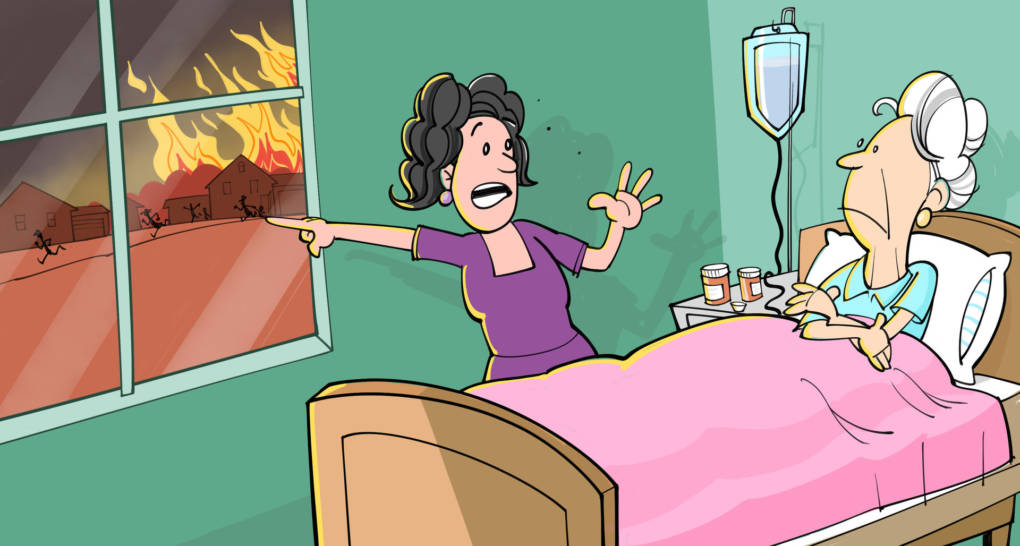
"caption": "When the fires broke out Oct. 8, nurses and staff with Hospice by the Bay were providing home care, pain management, and spiritual counseling to 108 patients in Napa and Sonoma counties. Half of those patients had to be evacuated.",
"description": null,
"title": "RS27758_hospice_fire_final01-qut",
"credit": "Mark Fiore/KQED",
"status": "inherit",
"isLoading": false,
"fetchFailed": false
},
"news_11625814": {
"type": "attachments",
"id": "news_11625814",
"meta": {
"index": "attachments_1716263798",
"site": "news",
"id": "11625814",
"found": true
},
"parent": 11625813,
"imgSizes": {
"small": {
"file": "https://ww2.kqed.org/app/uploads/sites/10/2017/10/ramonregalado171020-520x470.jpg",
"width": 520,
"mimeType": "image/jpeg",
"height": 470
},
"twentyfourteen-full-width": {
"file": "https://ww2.kqed.org/app/uploads/sites/10/2017/10/ramonregalado171020-1038x576.jpg",
"width": 1038,
"mimeType": "image/jpeg",
"height": 576
},
"thumbnail": {
"file": "https://ww2.kqed.org/app/uploads/sites/10/2017/10/ramonregalado171020-160x145.jpg",
"width": 160,
"mimeType": "image/jpeg",
"height": 145
},
"fd-sm": {
"file": "https://ww2.kqed.org/app/uploads/sites/10/2017/10/ramonregalado171020-960x868.jpg",
"width": 960,
"mimeType": "image/jpeg",
"height": 868
},
"post-thumbnail": {
"file": "https://ww2.kqed.org/app/uploads/sites/10/2017/10/ramonregalado171020-672x372.jpg",
"width": 672,
"mimeType": "image/jpeg",
"height": 372
},
"xsmall": {
"file": "https://ww2.kqed.org/app/uploads/sites/10/2017/10/ramonregalado171020-375x339.jpg",
"width": 375,
"mimeType": "image/jpeg",
"height": 339
},
"kqedFullSize": {
"file": "https://ww2.kqed.org/app/uploads/sites/10/2017/10/ramonregalado171020-e1508904915325.jpg",
"width": 1920,
"height": 1737
},
"large": {
"file": "https://ww2.kqed.org/app/uploads/sites/10/2017/10/ramonregalado171020-1020x923.jpg",
"width": 1020,
"mimeType": "image/jpeg",
"height": 923
},
"xlarge": {
"file": "https://ww2.kqed.org/app/uploads/sites/10/2017/10/ramonregalado171020-1180x1067.jpg",
"width": 1180,
"mimeType": "image/jpeg",
"height": 1067
},
"guest-author-50": {
"file": "https://ww2.kqed.org/app/uploads/sites/10/2017/10/ramonregalado171020-50x50.jpg",
"width": 50,
"mimeType": "image/jpeg",
"height": 50
},
"guest-author-96": {
"file": "https://ww2.kqed.org/app/uploads/sites/10/2017/10/ramonregalado171020-96x96.jpg",
"width": 96,
"mimeType": "image/jpeg",
"height": 96
},
"medium": {
"file": "https://ww2.kqed.org/app/uploads/sites/10/2017/10/ramonregalado171020-800x724.jpg",
"width": 800,
"mimeType": "image/jpeg",
"height": 724
},
"guest-author-64": {
"file": "https://ww2.kqed.org/app/uploads/sites/10/2017/10/ramonregalado171020-64x64.jpg",
"width": 64,
"mimeType": "image/jpeg",
"height": 64
},
"guest-author-32": {
"file": "https://ww2.kqed.org/app/uploads/sites/10/2017/10/ramonregalado171020-32x32.jpg",
"width": 32,
"mimeType": "image/jpeg",
"height": 32
},
"fd-lrg": {
"file": "https://ww2.kqed.org/app/uploads/sites/10/2017/10/ramonregalado171020-1920x1737.jpg",
"width": 1920,
"mimeType": "image/jpeg",
"height": 1737
},
"fd-med": {
"file": "https://ww2.kqed.org/app/uploads/sites/10/2017/10/ramonregalado171020-1180x1067.jpg",
"width": 1180,
"mimeType": "image/jpeg",
"height": 1067
},
"full-width": {
"file": "https://ww2.kqed.org/app/uploads/sites/10/2017/10/ramonregalado171020-1920x1737.jpg",
"width": 1920,
"mimeType": "image/jpeg",
"height": 1737
},
"detail": {
"file": "https://ww2.kqed.org/app/uploads/sites/10/2017/10/ramonregalado171020-150x150.jpg",
"width": 150,
"mimeType": "image/jpeg",
"height": 150
},
"guest-author-128": {
"file": "https://ww2.kqed.org/app/uploads/sites/10/2017/10/ramonregalado171020-128x128.jpg",
"width": 128,
"mimeType": "image/jpeg",
"height": 128
},
"xxsmall": {
"file": "https://ww2.kqed.org/app/uploads/sites/10/2017/10/ramonregalado171020-240x217.jpg",
"width": 240,
"mimeType": "image/jpeg",
"height": 217
}
},
"publishDate": 1508904661,
"modified": 1508904825,
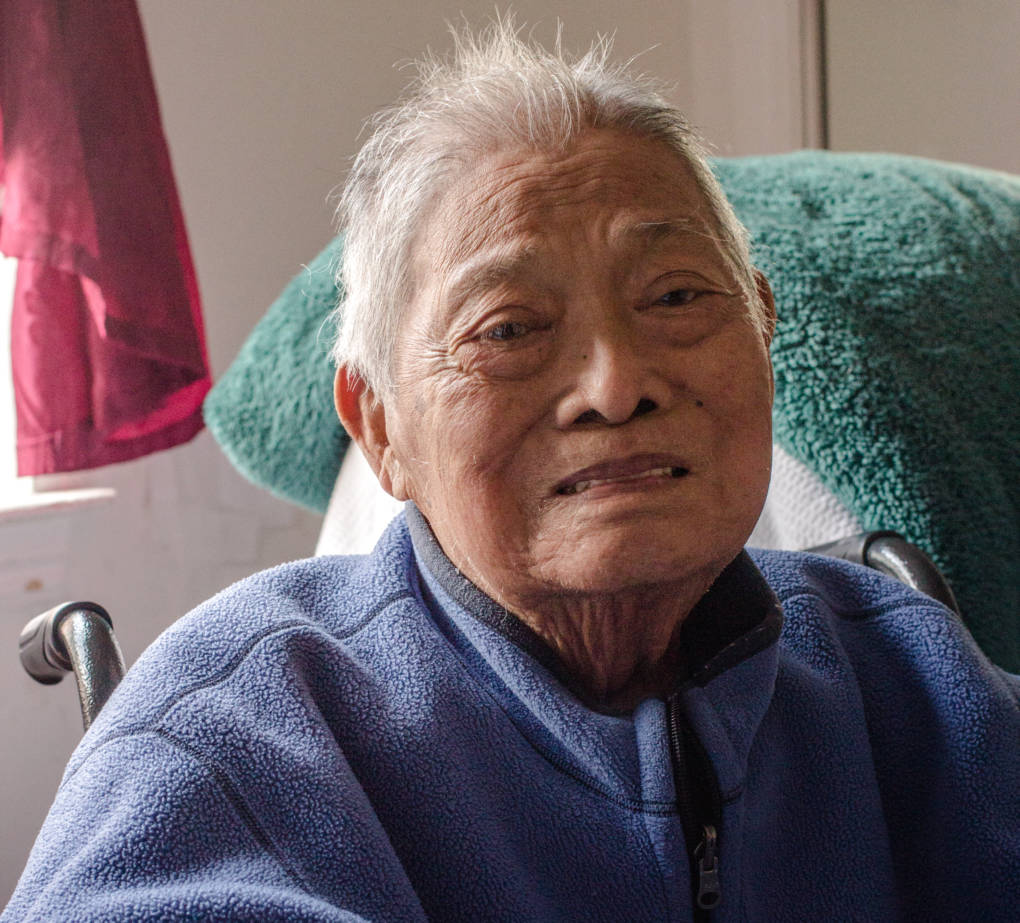
"caption": "Ramon Regalado, 100, of Berkeley, served in the U.S. Army during the defense of Bataan in 1941-42, escaped his Japanese captors after the allied surrender and joined Filipino guerrillas who resisted Japan's occupation of their homeland. Regalado is one among thousands of surviving Filipino veterans who are being awarded the Congressional Gold Star in recognition of their wartime service. ",
"description": null,
"title": "Ramon Regalado, Filipino Veteran",
"credit": "Dan Brekke/KQED",
"status": "inherit",
"isLoading": false,
"fetchFailed": false
},
"news_10885282": {
"type": "attachments",
"id": "news_10885282",
"meta": {
"index": "attachments_1716263798",
"site": "news",
"id": "10885282",
"found": true
},
"parent": 10885279,
"imgSizes": {
"twentyfourteen-full-width": {
"file": "https://ww2.kqed.org/app/uploads/sites/10/2016/03/Rendon_Speaker-Vote-003-01-11-16-1038x576.jpg",
"width": 1038,
"mimeType": "image/jpeg",
"height": 576
},
"thumbnail": {
"file": "https://ww2.kqed.org/app/uploads/sites/10/2016/03/Rendon_Speaker-Vote-003-01-11-16-400x286.jpg",
"width": 400,
"mimeType": "image/jpeg",
"height": 286
},
"fd-sm": {
"file": "https://ww2.kqed.org/app/uploads/sites/10/2016/03/Rendon_Speaker-Vote-003-01-11-16-960x686.jpg",
"width": 960,
"mimeType": "image/jpeg",
"height": 686
},
"post-thumbnail": {
"file": "https://ww2.kqed.org/app/uploads/sites/10/2016/03/Rendon_Speaker-Vote-003-01-11-16-672x372.jpg",
"width": 672,
"mimeType": "image/jpeg",
"height": 372
},
"kqedFullSize": {
"file": "https://ww2.kqed.org/app/uploads/sites/10/2016/03/Rendon_Speaker-Vote-003-01-11-16-e1457045101926.jpg",
"width": 1920,
"height": 1371
},
"large": {
"file": "https://ww2.kqed.org/app/uploads/sites/10/2016/03/Rendon_Speaker-Vote-003-01-11-16-1920x1371.jpg",
"width": 1920,
"mimeType": "image/jpeg",
"height": 1371
},
"guest-author-96": {
"file": "https://ww2.kqed.org/app/uploads/sites/10/2016/03/Rendon_Speaker-Vote-003-01-11-16-96x96.jpg",
"width": 96,
"mimeType": "image/jpeg",
"height": 96
},
"medium": {
"file": "https://ww2.kqed.org/app/uploads/sites/10/2016/03/Rendon_Speaker-Vote-003-01-11-16-800x571.jpg",
"width": 800,
"mimeType": "image/jpeg",
"height": 571
},
"guest-author-64": {
"file": "https://ww2.kqed.org/app/uploads/sites/10/2016/03/Rendon_Speaker-Vote-003-01-11-16-64x64.jpg",
"width": 64,
"mimeType": "image/jpeg",
"height": 64
},
"guest-author-32": {
"file": "https://ww2.kqed.org/app/uploads/sites/10/2016/03/Rendon_Speaker-Vote-003-01-11-16-32x32.jpg",
"width": 32,
"mimeType": "image/jpeg",
"height": 32
},
"jmtc-small-thumb": {
"file": "https://ww2.kqed.org/app/uploads/sites/10/2016/03/Rendon_Speaker-Vote-003-01-11-16-280x150.jpg",
"width": 280,
"mimeType": "image/jpeg",
"height": 150
},
"fd-lrg": {
"file": "https://ww2.kqed.org/app/uploads/sites/10/2016/03/Rendon_Speaker-Vote-003-01-11-16-1920x1371.jpg",
"width": 1920,
"mimeType": "image/jpeg",
"height": 1371
},
"fd-med": {
"file": "https://ww2.kqed.org/app/uploads/sites/10/2016/03/Rendon_Speaker-Vote-003-01-11-16-1180x843.jpg",
"width": 1180,
"mimeType": "image/jpeg",
"height": 843
},
"detail": {
"file": "https://ww2.kqed.org/app/uploads/sites/10/2016/03/Rendon_Speaker-Vote-003-01-11-16-75x75.jpg",
"width": 75,
"mimeType": "image/jpeg",
"height": 75
},
"guest-author-128": {
"file": "https://ww2.kqed.org/app/uploads/sites/10/2016/03/Rendon_Speaker-Vote-003-01-11-16-128x128.jpg",
"width": 128,
"mimeType": "image/jpeg",
"height": 128
}
},
"publishDate": 1457045088,
"modified": 1508892001,
"caption": "Anthony Rendon speaks after being elected speaker of the Assembly on Jan. 11, 2016.",
"description": "Assembly member Anthony Rendon speaks after being elected Speaker of the Assembly on Jan. 11, 2016.",
"title": "Rendon_Speaker Vote 003 01-11-16",
"credit": "Jeff Walters/Assembly Democratic Caucus",
"status": "inherit",
"isLoading": false,
"fetchFailed": false
},
"news_11625617": {
"type": "attachments",
"id": "news_11625617",
"meta": {
"index": "attachments_1716263798",
"site": "news",
"id": "11625617",
"found": true
},
"parent": 11625440,
"imgSizes": {
"small": {
"file": "https://ww2.kqed.org/app/uploads/sites/10/2017/10/consulate-800a-520x390.jpg",
"width": 520,
"mimeType": "image/jpeg",
"height": 390
},
"twentyfourteen-full-width": {
"file": "https://ww2.kqed.org/app/uploads/sites/10/2017/10/consulate-800a-800x576.jpg",
"width": 800,
"mimeType": "image/jpeg",
"height": 576
},
"thumbnail": {
"file": "https://ww2.kqed.org/app/uploads/sites/10/2017/10/consulate-800a-160x120.jpg",
"width": 160,
"mimeType": "image/jpeg",
"height": 120
},
"post-thumbnail": {
"file": "https://ww2.kqed.org/app/uploads/sites/10/2017/10/consulate-800a-672x372.jpg",
"width": 672,
"mimeType": "image/jpeg",
"height": 372
},
"xsmall": {
"file": "https://ww2.kqed.org/app/uploads/sites/10/2017/10/consulate-800a-375x281.jpg",
"width": 375,
"mimeType": "image/jpeg",
"height": 281
},
"kqedFullSize": {
"file": "https://ww2.kqed.org/app/uploads/sites/10/2017/10/consulate-800a.jpg",
"width": 800,
"height": 600
},
"guest-author-50": {
"file": "https://ww2.kqed.org/app/uploads/sites/10/2017/10/consulate-800a-50x50.jpg",
"width": 50,
"mimeType": "image/jpeg",
"height": 50
},
"guest-author-96": {
"file": "https://ww2.kqed.org/app/uploads/sites/10/2017/10/consulate-800a-96x96.jpg",
"width": 96,
"mimeType": "image/jpeg",
"height": 96
},
"medium": {
"file": "https://ww2.kqed.org/app/uploads/sites/10/2017/10/consulate-800a-800x600.jpg",
"width": 800,
"mimeType": "image/jpeg",
"height": 600
},
"guest-author-64": {
"file": "https://ww2.kqed.org/app/uploads/sites/10/2017/10/consulate-800a-64x64.jpg",
"width": 64,
"mimeType": "image/jpeg",
"height": 64
},
"guest-author-32": {
"file": "https://ww2.kqed.org/app/uploads/sites/10/2017/10/consulate-800a-32x32.jpg",
"width": 32,
"mimeType": "image/jpeg",
"height": 32
},
"detail": {
"file": "https://ww2.kqed.org/app/uploads/sites/10/2017/10/consulate-800a-150x150.jpg",
"width": 150,
"mimeType": "image/jpeg",
"height": 150
},
"guest-author-128": {
"file": "https://ww2.kqed.org/app/uploads/sites/10/2017/10/consulate-800a-128x128.jpg",
"width": 128,
"mimeType": "image/jpeg",
"height": 128
},
"xxsmall": {
"file": "https://ww2.kqed.org/app/uploads/sites/10/2017/10/consulate-800a-240x180.jpg",
"width": 240,
"mimeType": "image/jpeg",
"height": 180
}
},
"publishDate": 1508860822,
"modified": 1508861089,
"caption": "The Mexican Consulate of San Francisco meets Mexican nationals who are affected by the fires at the Roseland Village Neighorhood Center in Santa Rosa.",
"description": null,
"title": "consulate-800a",
"credit": "Alyssa Jeong Perry/KQED",
"status": "inherit",
"isLoading": false,
"fetchFailed": false
},
"news_11625735": {
"type": "attachments",
"id": "news_11625735",
"meta": {
"index": "attachments_1716263798",
"site": "news",
"id": "11625735",
"found": true
},
"parent": 11625643,
"imgSizes": {
"small": {
"file": "https://ww2.kqed.org/app/uploads/sites/10/2017/10/RS89_kqed6-520x369.jpg",
"width": 520,
"mimeType": "image/jpeg",
"height": 369
},
"twentyfourteen-full-width": {
"file": "https://ww2.kqed.org/app/uploads/sites/10/2017/10/RS89_kqed6-1015x576.jpg",
"width": 1015,
"mimeType": "image/jpeg",
"height": 576
},
"thumbnail": {
"file": "https://ww2.kqed.org/app/uploads/sites/10/2017/10/RS89_kqed6-160x114.jpg",
"width": 160,
"mimeType": "image/jpeg",
"height": 114
},
"fd-sm": {
"file": "https://ww2.kqed.org/app/uploads/sites/10/2017/10/RS89_kqed6-960x682.jpg",
"width": 960,
"mimeType": "image/jpeg",
"height": 682
},
"post-thumbnail": {
"file": "https://ww2.kqed.org/app/uploads/sites/10/2017/10/RS89_kqed6-672x372.jpg",
"width": 672,
"mimeType": "image/jpeg",
"height": 372
},
"xsmall": {
"file": "https://ww2.kqed.org/app/uploads/sites/10/2017/10/RS89_kqed6-375x266.jpg",
"width": 375,
"mimeType": "image/jpeg",
"height": 266
},
"kqedFullSize": {
"file": "https://ww2.kqed.org/app/uploads/sites/10/2017/10/RS89_kqed6.jpg",
"width": 1015,
"height": 721
},
"guest-author-50": {
"file": "https://ww2.kqed.org/app/uploads/sites/10/2017/10/RS89_kqed6-50x50.jpg",
"width": 50,
"mimeType": "image/jpeg",
"height": 50
},
"guest-author-96": {
"file": "https://ww2.kqed.org/app/uploads/sites/10/2017/10/RS89_kqed6-96x96.jpg",
"width": 96,
"mimeType": "image/jpeg",
"height": 96
},
"medium": {
"file": "https://ww2.kqed.org/app/uploads/sites/10/2017/10/RS89_kqed6-800x568.jpg",
"width": 800,
"mimeType": "image/jpeg",
"height": 568
},
"guest-author-64": {
"file": "https://ww2.kqed.org/app/uploads/sites/10/2017/10/RS89_kqed6-64x64.jpg",
"width": 64,
"mimeType": "image/jpeg",
"height": 64
},
"guest-author-32": {
"file": "https://ww2.kqed.org/app/uploads/sites/10/2017/10/RS89_kqed6-32x32.jpg",
"width": 32,
"mimeType": "image/jpeg",
"height": 32
},
"detail": {
"file": "https://ww2.kqed.org/app/uploads/sites/10/2017/10/RS89_kqed6-150x150.jpg",
"width": 150,
"mimeType": "image/jpeg",
"height": 150
},
"guest-author-128": {
"file": "https://ww2.kqed.org/app/uploads/sites/10/2017/10/RS89_kqed6-128x128.jpg",
"width": 128,
"mimeType": "image/jpeg",
"height": 128
},
"xxsmall": {
"file": "https://ww2.kqed.org/app/uploads/sites/10/2017/10/RS89_kqed6-240x170.jpg",
"width": 240,
"mimeType": "image/jpeg",
"height": 170
}
},
"publishDate": 1508883055,
"modified": 1508883160,
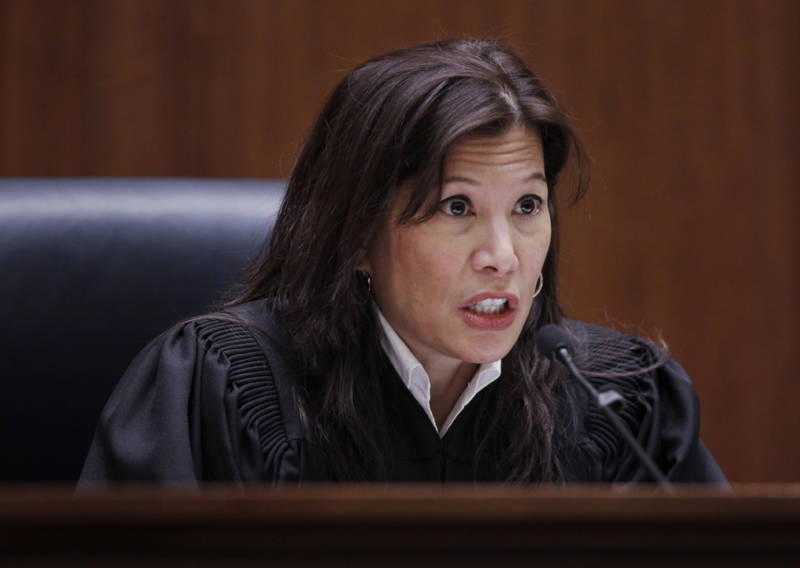
"caption": "California Supreme Court Chief Justice Tani Cantil-Sakauye.",
"description": "California Supreme Court Chief Justice Tani Cantil-Sakauye.",
"title": "Tani Cantil-Sakauye",
"credit": "Paul Sakuma - Pool/AP",
"status": "inherit",
"isLoading": false,
"fetchFailed": false
},
"news_11625587": {
"type": "attachments",
"id": "news_11625587",
"meta": {
"index": "attachments_1716263798",
"site": "news",
"id": "11625587",
"found": true
},
"parent": 11625572,
"imgSizes": {
"small": {
"file": "https://ww2.kqed.org/app/uploads/sites/10/2017/10/RS27696_alt_647-520x356.jpg",
"width": 520,
"mimeType": "image/jpeg",
"height": 356
},
"twentyfourteen-full-width": {
"file": "https://ww2.kqed.org/app/uploads/sites/10/2017/10/RS27696_alt_647-1038x576.jpg",
"width": 1038,
"mimeType": "image/jpeg",
"height": 576
},
"thumbnail": {
"file": "https://ww2.kqed.org/app/uploads/sites/10/2017/10/RS27696_alt_647-160x110.jpg",
"width": 160,
"mimeType": "image/jpeg",
"height": 110
},
"fd-sm": {
"file": "https://ww2.kqed.org/app/uploads/sites/10/2017/10/RS27696_alt_647-960x657.jpg",
"width": 960,
"mimeType": "image/jpeg",
"height": 657
},
"post-thumbnail": {
"file": "https://ww2.kqed.org/app/uploads/sites/10/2017/10/RS27696_alt_647-672x372.jpg",
"width": 672,
"mimeType": "image/jpeg",
"height": 372
},
"xsmall": {
"file": "https://ww2.kqed.org/app/uploads/sites/10/2017/10/RS27696_alt_647-375x257.jpg",
"width": 375,
"mimeType": "image/jpeg",
"height": 257
},
"kqedFullSize": {
"file": "https://ww2.kqed.org/app/uploads/sites/10/2017/10/RS27696_alt_647.jpg",
"width": 1920,
"height": 1314
},
"large": {
"file": "https://ww2.kqed.org/app/uploads/sites/10/2017/10/RS27696_alt_647-1020x698.jpg",
"width": 1020,
"mimeType": "image/jpeg",
"height": 698
},
"xlarge": {
"file": "https://ww2.kqed.org/app/uploads/sites/10/2017/10/RS27696_alt_647-1180x808.jpg",
"width": 1180,
"mimeType": "image/jpeg",
"height": 808
},
"guest-author-50": {
"file": "https://ww2.kqed.org/app/uploads/sites/10/2017/10/RS27696_alt_647-50x50.jpg",
"width": 50,
"mimeType": "image/jpeg",
"height": 50
},
"guest-author-96": {
"file": "https://ww2.kqed.org/app/uploads/sites/10/2017/10/RS27696_alt_647-96x96.jpg",
"width": 96,
"mimeType": "image/jpeg",
"height": 96
},
"medium": {
"file": "https://ww2.kqed.org/app/uploads/sites/10/2017/10/RS27696_alt_647-800x548.jpg",
"width": 800,
"mimeType": "image/jpeg",
"height": 548
},
"guest-author-64": {
"file": "https://ww2.kqed.org/app/uploads/sites/10/2017/10/RS27696_alt_647-64x64.jpg",
"width": 64,
"mimeType": "image/jpeg",
"height": 64
},
"guest-author-32": {
"file": "https://ww2.kqed.org/app/uploads/sites/10/2017/10/RS27696_alt_647-32x32.jpg",
"width": 32,
"mimeType": "image/jpeg",
"height": 32
},
"fd-lrg": {
"file": "https://ww2.kqed.org/app/uploads/sites/10/2017/10/RS27696_alt_647-1920x1314.jpg",
"width": 1920,
"mimeType": "image/jpeg",
"height": 1314
},
"fd-med": {
"file": "https://ww2.kqed.org/app/uploads/sites/10/2017/10/RS27696_alt_647-1180x808.jpg",
"width": 1180,
"mimeType": "image/jpeg",
"height": 808
},
"full-width": {
"file": "https://ww2.kqed.org/app/uploads/sites/10/2017/10/RS27696_alt_647-1920x1314.jpg",
"width": 1920,
"mimeType": "image/jpeg",
"height": 1314
},
"detail": {
"file": "https://ww2.kqed.org/app/uploads/sites/10/2017/10/RS27696_alt_647-150x150.jpg",
"width": 150,
"mimeType": "image/jpeg",
"height": 150
},
"guest-author-128": {
"file": "https://ww2.kqed.org/app/uploads/sites/10/2017/10/RS27696_alt_647-128x128.jpg",
"width": 128,
"mimeType": "image/jpeg",
"height": 128
},
"xxsmall": {
"file": "https://ww2.kqed.org/app/uploads/sites/10/2017/10/RS27696_alt_647-240x164.jpg",
"width": 240,
"mimeType": "image/jpeg",
"height": 164
}
},
"publishDate": 1508830070,
"modified": 1508858038,
"caption": "An artist's rendering of prosecutor Diana Garcia's opening statement in the Kathryn Steinle murder trial at the San Francisco Hall of Justice on Oct. 23, 2017.",
"description": "A courtroom painting of prosecutor Diana Garcia's opening statement in the Kathryn Steinle murder trial at the San Francisco Hall of Justice on Oct. 23, 2017.",
"title": "RS27696_alt_647",
"credit": "Vicki Ellen Behringer/Courtroom Artist",
"status": "inherit",
"isLoading": false,
"fetchFailed": false
},
"news_11625487": {
"type": "attachments",
"id": "news_11625487",
"meta": {
"index": "attachments_1716263798",
"site": "news",
"id": "11625487",
"found": true
},
"parent": 11625451,
"imgSizes": {
"small": {
"file": "https://ww2.kqed.org/app/uploads/sites/10/2017/10/RS27692_Charlies20Acres-62028129-2-qut-520x292.jpg",
"width": 520,
"mimeType": "image/jpeg",
"height": 292
},
"twentyfourteen-full-width": {
"file": "https://ww2.kqed.org/app/uploads/sites/10/2017/10/RS27692_Charlies20Acres-62028129-2-qut-1038x576.jpg",
"width": 1038,
"mimeType": "image/jpeg",
"height": 576
},
"thumbnail": {
"file": "https://ww2.kqed.org/app/uploads/sites/10/2017/10/RS27692_Charlies20Acres-62028129-2-qut-160x90.jpg",
"width": 160,
"mimeType": "image/jpeg",
"height": 90
},
"fd-sm": {
"file": "https://ww2.kqed.org/app/uploads/sites/10/2017/10/RS27692_Charlies20Acres-62028129-2-qut-960x540.jpg",
"width": 960,
"mimeType": "image/jpeg",
"height": 540
},
"post-thumbnail": {
"file": "https://ww2.kqed.org/app/uploads/sites/10/2017/10/RS27692_Charlies20Acres-62028129-2-qut-672x372.jpg",
"width": 672,
"mimeType": "image/jpeg",
"height": 372
},
"xsmall": {
"file": "https://ww2.kqed.org/app/uploads/sites/10/2017/10/RS27692_Charlies20Acres-62028129-2-qut-375x211.jpg",
"width": 375,
"mimeType": "image/jpeg",
"height": 211
},
"kqedFullSize": {
"file": "https://ww2.kqed.org/app/uploads/sites/10/2017/10/RS27692_Charlies20Acres-62028129-2-qut.jpg",
"width": 1920,
"height": 1079
},
"large": {
"file": "https://ww2.kqed.org/app/uploads/sites/10/2017/10/RS27692_Charlies20Acres-62028129-2-qut-1020x573.jpg",
"width": 1020,
"mimeType": "image/jpeg",
"height": 573
},
"xlarge": {
"file": "https://ww2.kqed.org/app/uploads/sites/10/2017/10/RS27692_Charlies20Acres-62028129-2-qut-1180x663.jpg",
"width": 1180,
"mimeType": "image/jpeg",
"height": 663
},
"guest-author-50": {
"file": "https://ww2.kqed.org/app/uploads/sites/10/2017/10/RS27692_Charlies20Acres-62028129-2-qut-50x50.jpg",
"width": 50,
"mimeType": "image/jpeg",
"height": 50
},
"guest-author-96": {
"file": "https://ww2.kqed.org/app/uploads/sites/10/2017/10/RS27692_Charlies20Acres-62028129-2-qut-96x96.jpg",
"width": 96,
"mimeType": "image/jpeg",
"height": 96
},
"medium": {
"file": "https://ww2.kqed.org/app/uploads/sites/10/2017/10/RS27692_Charlies20Acres-62028129-2-qut-800x450.jpg",
"width": 800,
"mimeType": "image/jpeg",
"height": 450
},
"guest-author-64": {
"file": "https://ww2.kqed.org/app/uploads/sites/10/2017/10/RS27692_Charlies20Acres-62028129-2-qut-64x64.jpg",
"width": 64,
"mimeType": "image/jpeg",
"height": 64
},
"guest-author-32": {
"file": "https://ww2.kqed.org/app/uploads/sites/10/2017/10/RS27692_Charlies20Acres-62028129-2-qut-32x32.jpg",
"width": 32,
"mimeType": "image/jpeg",
"height": 32
},
"fd-lrg": {
"file": "https://ww2.kqed.org/app/uploads/sites/10/2017/10/RS27692_Charlies20Acres-62028129-2-qut-1920x1079.jpg",
"width": 1920,
"mimeType": "image/jpeg",
"height": 1079
},
"fd-med": {
"file": "https://ww2.kqed.org/app/uploads/sites/10/2017/10/RS27692_Charlies20Acres-62028129-2-qut-1180x663.jpg",
"width": 1180,
"mimeType": "image/jpeg",
"height": 663
},
"full-width": {
"file": "https://ww2.kqed.org/app/uploads/sites/10/2017/10/RS27692_Charlies20Acres-62028129-2-qut-1920x1079.jpg",
"width": 1920,
"mimeType": "image/jpeg",
"height": 1079
},
"detail": {
"file": "https://ww2.kqed.org/app/uploads/sites/10/2017/10/RS27692_Charlies20Acres-62028129-2-qut-150x150.jpg",
"width": 150,
"mimeType": "image/jpeg",
"height": 150
},
"guest-author-128": {
"file": "https://ww2.kqed.org/app/uploads/sites/10/2017/10/RS27692_Charlies20Acres-62028129-2-qut-128x128.jpg",
"width": 128,
"mimeType": "image/jpeg",
"height": 128
},
"xxsmall": {
"file": "https://ww2.kqed.org/app/uploads/sites/10/2017/10/RS27692_Charlies20Acres-62028129-2-qut-240x135.jpg",
"width": 240,
"mimeType": "image/jpeg",
"height": 135
}
},
"publishDate": 1508795575,
"modified": 1508800027,
"caption": "Gertrude has survived two wildfires in the last two years, but in the hands of Charlie's Acres, she's expected to live a long and happy life.",
"description": "Gertrude has survived two wildfires in the last two years, but in the hands of Charlie's Acres, she's expected to live a long and happy life.",
"title": "RS27692_CharliesAcres-61 2-qut",
"credit": "Courtesy of Chris McCann",
"status": "inherit",
"isLoading": false,
"fetchFailed": false
}
},
"audioPlayerReducer": {
"postId": "stream_live",
"isPaused": true,
"isPlaying": false,
"pfsActive": false,
"pledgeModalIsOpen": true,
"playerDrawerIsOpen": false,
"liveAudioPlayStartedAt": 0,
"liveAudioPlayContext": ""
},
"authorsReducer": {
"byline_news_11625952": {
"type": "authors",
"id": "byline_news_11625952",
"meta": {
"override": true
},
"slug": "byline_news_11625952",
"name": "Philip Ewing",
"isLoading": false
},
"byline_news_11625912": {
"type": "authors",
"id": "byline_news_11625912",
"meta": {
"override": true
},
"slug": "byline_news_11625912",
"name": "\u003cstrong>\u003ca href=\"http://www.scpr.org/about/people/staff/leslie-berestein-rojas\">Leslie Berestein Rojas\u003c/a>\u003c/strong>",
"isLoading": false
},
"danbrekke": {
"type": "authors",
"id": "222",
"meta": {
"index": "authors_1716337520",
"id": "222",
"found": true
},
"name": "Dan Brekke",
"firstName": "Dan",
"lastName": "Brekke",
"slug": "danbrekke",
"email": "dbrekke@kqed.org",
"display_author_email": true,
"staff_mastheads": [
"news",
"science"
],
"title": "KQED Editor and Reporter",
"bio": "Dan Brekke is a reporter and editor for KQED News, responsible for coverage of topics ranging from California water issues to the Bay Area's transportation challenges. In a newsroom career that began in Chicago in 1972, Dan has worked for \u003cem>The San Francisco Examiner,\u003c/em> Wired and TechTV and has been published in The New York Times, The New York Times Magazine, Business 2.0, Salon and elsewhere.\r\n\r\nSince joining KQED in 2007, Dan has reported, edited and produced both radio and online features and breaking news pieces. He has shared as both editor and reporter in four Society of Professional Journalists Norcal Excellence in Journalism awards and one Edward R. Murrow regional award. He was chosen for a spring 2017 residency at the Mesa Refuge to advance his research on California salmon.\r\n\r\nEmail Dan at: \u003ca href=\"mailto:dbrekke@kqed.org\">dbrekke@kqed.org\u003c/a>\r\n\r\n\u003cstrong>Twitter:\u003c/strong> \u003ca href=\"https://twitter.com/danbrekke\" rel=\"noopener noreferrer\">twitter.com/danbrekke\u003c/a>\r\n\u003cstrong>Facebook:\u003c/strong> \u003ca href=\"https://www.facebook.com/danbrekke\" rel=\"noopener noreferrer\">www.facebook.com/danbrekke\u003c/a>\r\n\u003cstrong>LinkedIn:\u003c/strong> \u003ca href=\"https://www.linkedin.com/in/danbrekke\" rel=\"noopener noreferrer\">www.linkedin.com/in/danbrekke\u003c/a>",
"avatar": "https://secure.gravatar.com/avatar/8f1f0d2a978fb3b23426c922c7e2af558fa36905b49c4ce76a97dc3c72d27226?s=600&d=mm&r=g",
"twitter": "danbrekke",
"bluesky": null,
"facebook": null,
"instagram": "https://www.instagram.com/dan.brekke/",
"linkedin": "https://www.linkedin.com/in/danbrekke/",
"sites": [
{
"site": "news",
"roles": [
"administrator",
"create_posts"
]
},
{
"site": "stateofhealth",
"roles": [
"editor"
]
},
{
"site": "science",
"roles": [
"editor"
]
},
{
"site": "quest",
"roles": [
"contributor"
]
},
{
"site": "food",
"roles": [
"contributor"
]
},
{
"site": "forum",
"roles": [
"contributor"
]
},
{
"site": "elections",
"roles": [
"editor"
]
},
{
"site": "liveblog",
"roles": [
"editor"
]
}
],
"headData": {
"title": "Dan Brekke | KQED",
"description": "KQED Editor and Reporter",
"ogImgSrc": "https://secure.gravatar.com/avatar/8f1f0d2a978fb3b23426c922c7e2af558fa36905b49c4ce76a97dc3c72d27226?s=600&d=mm&r=g",
"twImgSrc": "https://secure.gravatar.com/avatar/8f1f0d2a978fb3b23426c922c7e2af558fa36905b49c4ce76a97dc3c72d27226?s=600&d=mm&r=g"
},
"isLoading": false,
"link": "/author/danbrekke"
},
"jmcevoy": {
"type": "authors",
"id": "231",
"meta": {
"index": "authors_1716337520",
"id": "231",
"found": true
},
"name": "Julia McEvoy",
"firstName": "Julia",
"lastName": "McEvoy",
"slug": "jmcevoy",
"email": "jmcevoy@KQED.org",
"display_author_email": true,
"staff_mastheads": [
"news"
],
"title": "KQED Senior Editor",
"bio": "Julia McEvoy is KQED's Senior Editor, Education Equity.\r\n\r\nJulia heads KQED’s education coverage examining inequities students face in Bay Area and California schools, and reports on what it will take to educate the next generation.\r\n\r\nJulia's editorial work has received a Peabody Award, a Casey Medal for Coverage of Children and Families, several Edward R. Murrow awards, as well as awards from the Public Radio News Directors Inc. and the Society for Professional Journalists.",
"avatar": "https://secure.gravatar.com/avatar/aec3ce21abe02b302fd33638abd56a22?s=600&d=blank&r=g",
"twitter": "juliamcevoy1",
"facebook": null,
"instagram": null,
"linkedin": null,
"sites": [
{
"site": "news",
"roles": []
},
{
"site": "stateofhealth",
"roles": [
"author"
]
}
],
"headData": {
"title": "Julia McEvoy | KQED",
"description": "KQED Senior Editor",
"ogImgSrc": "https://secure.gravatar.com/avatar/aec3ce21abe02b302fd33638abd56a22?s=600&d=blank&r=g",
"twImgSrc": "https://secure.gravatar.com/avatar/aec3ce21abe02b302fd33638abd56a22?s=600&d=blank&r=g"
},
"isLoading": false,
"link": "/author/jmcevoy"
},
"rachael-myrow": {
"type": "authors",
"id": "251",
"meta": {
"index": "authors_1716337520",
"id": "251",
"found": true
},
"name": "Rachael Myrow",
"firstName": "Rachael",
"lastName": "Myrow",
"slug": "rachael-myrow",
"email": "rmyrow@kqed.org",
"display_author_email": true,
"staff_mastheads": [
"news"
],
"title": "Senior Editor of KQED's Silicon Valley News Desk",
"bio": "• I write and edit stories about how Silicon Valley power and policies shape everyday life in California. I’m also passionate about making Bay Area history and culture more accessible to a broad public. • I’ve been a journalist for most of my life, starting in high school with The Franklin Press in Los Angeles, where I grew up. While earning my first degree in English at UC Berkeley, I got my start in public radio at KALX-FM. After completing a second degree in journalism at Cal, I landed my first professional job at Marketplace, then moved on to KPCC (now LAist), and then KQED, where I hosted The California Report for more than seven years. • My reporting has appeared on NPR, The World, WBUR’s \u003ci>Here & Now\u003c/i>, and the BBC. I also guest host for KQED’s \u003ci>Forum\u003c/i>, as well as the Commonwealth Club in San Francisco. • I speak periodically on media, democracy and technology issues, and do voiceover work for documentaries and educational video projects. • Outside of the studio, you'll find me hiking Bay Area trails and whipping up Insta-ready meals in my kitchen. • I do not accept gifts, money, or favors from anyone connected to my reporting, I don't pay people for information, and I do not support or donate to political causes. • I strive to treat the people I report on with fairness, honesty, and respect. I also recognize there are often multiple sides to a story and work to verify information through multiple sources and documentation. If I get something wrong, I correct it.",
"avatar": "https://secure.gravatar.com/avatar/3ed8a3c5f26025e4a805ba634cda8cd764906b97438a6d9ce216b044e340da4e?s=600&d=blank&r=g",
"twitter": "rachaelmyrow",
"bluesky": null,
"facebook": null,
"instagram": null,
"linkedin": "https://www.linkedin.com/in/rachaelmyrow/",
"sites": [
{
"site": "arts",
"roles": [
"administrator"
]
},
{
"site": "news",
"roles": [
"edit_others_posts",
"editor"
]
},
{
"site": "futureofyou",
"roles": [
"editor"
]
},
{
"site": "bayareabites",
"roles": [
"editor"
]
},
{
"site": "stateofhealth",
"roles": [
"editor"
]
},
{
"site": "science",
"roles": [
"editor"
]
},
{
"site": "food",
"roles": [
"editor"
]
},
{
"site": "forum",
"roles": [
"editor"
]
},
{
"site": "liveblog",
"roles": [
"author"
]
}
],
"headData": {
"title": "Rachael Myrow | KQED",
"description": "Senior Editor of KQED's Silicon Valley News Desk",
"ogImgSrc": "https://secure.gravatar.com/avatar/3ed8a3c5f26025e4a805ba634cda8cd764906b97438a6d9ce216b044e340da4e?s=600&d=blank&r=g",
"twImgSrc": "https://secure.gravatar.com/avatar/3ed8a3c5f26025e4a805ba634cda8cd764906b97438a6d9ce216b044e340da4e?s=600&d=blank&r=g"
},
"isLoading": false,
"link": "/author/rachael-myrow"
},
"adembosky": {
"type": "authors",
"id": "3205",
"meta": {
"index": "authors_1716337520",
"id": "3205",
"found": true
},
"name": "April Dembosky",
"firstName": "April",
"lastName": "Dembosky",
"slug": "adembosky",
"email": "adembosky@kqed.org",
"display_author_email": false,
"staff_mastheads": [
"news",
"science"
],
"title": "KQED Health Correspondent",
"bio": "April Dembosky is the health correspondent for KQED News and a regular contributor to NPR. She specializes in covering altered states of mind, from postpartum depression to methamphetamine-induced psychosis to the insanity defense. Her investigative series on insurance companies sidestepping mental health laws won multiple awards, including first place in beat reporting from the national Association of Health Care Journalists. She is the recipient of numerous other prizes and fellowships, including a national Edward R. Murrow award for investigative reporting, a Society of Professional Journalists award for long-form storytelling, and a Carter Center Fellowship for Mental Health Journalism.\r\n\r\nDembosky reported and produced \u003cem>Soundtrack of Silence\u003c/em>, an audio documentary about music and memory that is currently being made into a feature film by Paramount Pictures.\r\n\r\nBefore joining KQED in 2013, Dembosky covered technology and Silicon Valley for \u003cem>The Financial Times of London,\u003c/em> and contributed business and arts stories to \u003cem>Marketplace \u003c/em>and \u003cem>The New York Times.\u003c/em> She got her undergraduate degree in philosophy from Smith College and her master's in journalism from the University of California, Berkeley. She is a classically trained violinist and proud alum of the first symphony orchestra at Burning Man.",
"avatar": "https://secure.gravatar.com/avatar/d6593cd737b732102fe0b6250b5351c2d3bc9b2987566514aa3c9a106494d684?s=600&d=blank&r=g",
"twitter": "adembosky",
"bluesky": null,
"facebook": null,
"instagram": null,
"linkedin": null,
"sites": [
{
"site": "arts",
"roles": [
"author"
]
},
{
"site": "news",
"roles": [
"editor"
]
},
{
"site": "futureofyou",
"roles": [
"author"
]
},
{
"site": "stateofhealth",
"roles": [
"editor"
]
},
{
"site": "science",
"roles": [
"editor"
]
},
{
"site": "forum",
"roles": [
"editor"
]
}
],
"headData": {
"title": "April Dembosky | KQED",
"description": "KQED Health Correspondent",
"ogImgSrc": "https://secure.gravatar.com/avatar/d6593cd737b732102fe0b6250b5351c2d3bc9b2987566514aa3c9a106494d684?s=600&d=blank&r=g",
"twImgSrc": "https://secure.gravatar.com/avatar/d6593cd737b732102fe0b6250b5351c2d3bc9b2987566514aa3c9a106494d684?s=600&d=blank&r=g"
},
"isLoading": false,
"link": "/author/adembosky"
},
"aemslie": {
"type": "authors",
"id": "3206",
"meta": {
"index": "authors_1716337520",
"id": "3206",
"found": true
},
"name": "Alex Emslie",
"firstName": "Alex",
"lastName": "Emslie",
"slug": "aemslie",
"email": "aemslie@kqed.org",
"display_author_email": true,
"staff_mastheads": [
"news"
],
"title": "KQED Senior Editor",
"bio": "Alex Emslie is senior editor of talent and development at KQED, where he manages dozens of early career journalists and oversees news department internships.\r\n\r\nHe is a former carpenter and proud graduate of City College of San Francisco and San Francisco State University, where he studied journalism and criminal justice before joining KQED in 2013.\r\n\r\nAlex produced investigative journalism focused on \u003ca href=\"https://www.kqed.org/news/11667594/the-trials-of-marvin-mutch-video\">criminal justice\u003c/a> and policing for most of a decade. He has broken major stories about \u003ca href=\"https://www.kqed.org/news/135682/amid-a-series-of-vallejo-police-shootings-one-officers-name-stands-out\">police use of deadly force\u003c/a>, \u003ca href=\"https://www.kqed.org/news/10454955/racist-texts-prompt-sfpd-internal-investigation\">officer misconduct\u003c/a> and \u003ca href=\"https://www.kqed.org/news/11712239/terrorist-or-troll-judge-to-weigh-whether-oakland-man-really-intended-to-attack-bay-area\">other\u003c/a> \u003ca href=\"https://www.kqed.org/news/11221414/hayward-paid-159000-to-husband-of-retired-police-chief-documents-show\">high\u003c/a>-\u003ca href=\"https://www.kqed.org/news/10622762/the-forgotten-tracking-two-homicides-in-san-francisco-public-housing\">profile\u003c/a> \u003ca href=\"https://www.kqed.org/news/11624516/federal-agency-promoted-ranger-just-months-after-his-gun-was-stolen-and-used-in-steinle-killing\">cases\u003c/a>. He co-founded the \u003ca href=\"https://projects.scpr.org/california-reporting-project/\">California Reporting Project\u003c/a> in 2019 to obtain and report on previously confidential police internal investigations. The effort produced well over 100 original stories and changed the course of multiple criminal cases.\r\n\r\nHis work has been recognized with numerous journalism awards, including a national Edward R. Murrow award for several years of \u003ca href=\"https://www.kqed.org/news/11688481/sfpd-officers-in-mario-woods-case-recount-shooting-in-newly-filed-depositions\">reporting\u003c/a> on the San Francisco Police shooting of Mario Woods. His \u003ca href=\"https://www.kqed.org/news/147854/half-of-those-killed-by-san-francisco-police-are-mentally-ill\">reporting\u003c/a> on police killings of people in psychiatric crisis was cited in amicus briefs before the U.S. Supreme Court.\r\n\r\nAlex now enjoys mentoring the next generation of journalists at KQED.",
"avatar": "https://secure.gravatar.com/avatar/e691e65209f20e9da202bd730ead5663?s=600&d=blank&r=g",
"twitter": "SFNewsReporter",
"facebook": null,
"instagram": null,
"linkedin": null,
"sites": [
{
"site": "arts",
"roles": [
"editor"
]
},
{
"site": "news",
"roles": [
"editor"
]
},
{
"site": "mindshift",
"roles": [
"editor"
]
},
{
"site": "stateofhealth",
"roles": [
"editor"
]
},
{
"site": "science",
"roles": [
"administrator"
]
}
],
"headData": {
"title": "Alex Emslie | KQED",
"description": "KQED Senior Editor",
"ogImgSrc": "https://secure.gravatar.com/avatar/e691e65209f20e9da202bd730ead5663?s=600&d=blank&r=g",
"twImgSrc": "https://secure.gravatar.com/avatar/e691e65209f20e9da202bd730ead5663?s=600&d=blank&r=g"
},
"isLoading": false,
"link": "/author/aemslie"
},
"mlagos": {
"type": "authors",
"id": "3239",
"meta": {
"index": "authors_1716337520",
"id": "3239",
"found": true
},
"name": "Marisa Lagos",
"firstName": "Marisa",
"lastName": "Lagos",
"slug": "mlagos",
"email": "mlagos@kqed.org",
"display_author_email": false,
"staff_mastheads": [
"news"
],
"title": "KQED Contributor",
"bio": "Marisa Lagos is a correspondent for KQED’s California Politics and Government Desk and co-hosts the award-winning show and podcast, Political Breakdown. At KQED, Lagos also conducts reporting, analysis and investigations into state, local and national politics for radio, TV, online and onstage. In 2022, she and co-host, Scott Shafer, moderated the only gubernatorial debate in California. In 2020, the \u003ci>Washington Post\u003c/i> named her one of the top political journalists in California; she was nominated for a Peabody and won several other awards for her work investigating the 2017 California wildfires. She has worked at the \u003ci>San Francisco Chronicle\u003c/i>, \u003ci>San Francisco Examiner\u003c/i> and \u003ci>Los Angeles Times\u003c/i>. A UC Santa Barbara graduate, she lives in San Francisco with her two sons and husband.",
"avatar": "https://secure.gravatar.com/avatar/a261a0d3696fc066871ef96b85b5e7d2?s=600&d=blank&r=g",
"twitter": "@mlagos",
"facebook": null,
"instagram": null,
"linkedin": null,
"sites": [
{
"site": "arts",
"roles": [
"author"
]
},
{
"site": "news",
"roles": [
"editor"
]
},
{
"site": "science",
"roles": [
"editor"
]
},
{
"site": "forum",
"roles": [
"author"
]
},
{
"site": "liveblog",
"roles": [
"author"
]
}
],
"headData": {
"title": "Marisa Lagos | KQED",
"description": "KQED Contributor",
"ogImgSrc": "https://secure.gravatar.com/avatar/a261a0d3696fc066871ef96b85b5e7d2?s=600&d=blank&r=g",
"twImgSrc": "https://secure.gravatar.com/avatar/a261a0d3696fc066871ef96b85b5e7d2?s=600&d=blank&r=g"
},
"isLoading": false,
"link": "/author/mlagos"
},
"korr": {
"type": "authors",
"id": "11200",
"meta": {
"index": "authors_1716337520",
"id": "11200",
"found": true
},
"name": "Katie Orr",
"firstName": "Katie",
"lastName": "Orr",
"slug": "korr",
"email": "korr@kqed.org",
"display_author_email": false,
"staff_mastheads": [],
"title": "KQED Contributor",
"bio": "Katie Orr was a Sacramento-based reporter for KQED's Politics and Government Desk, covering the state Capitol and a variety of issues including women in politics, voting and elections and legislation. Prior to joining KQED in 2016, Katie was state government reporter for Capital Public Radio in Sacramento. She's also worked for KPBS in San Diego, where she covered City Hall.\r\n\r\nKatie received her masters degree in political science from San Diego State University and holds a Bachelors degree in broadcast journalism from Arizona State University.\r\n\r\nIn 2015 Katie won a national Clarion Award for a series of stories she did on women in California politics. She's been honored by the Society for Professional Journalists and, in 2013, was named by \u003cem>The Washington Post\u003c/em> as one of the country's top state Capitol reporters. She's also reported for the award-winning documentary series \u003cem>The View from Here \u003c/em>and was part of the team that won national PRNDI and Gabriel Awards in 2015. She lives in Sacramento with her husband. Twitter: @1KatieOrr",
"avatar": "https://secure.gravatar.com/avatar/41a40b25845adc78f50808670860449e?s=600&d=blank&r=g",
"twitter": "1katieorr",
"facebook": null,
"instagram": null,
"linkedin": null,
"sites": [
{
"site": "news",
"roles": [
"subscriber"
]
},
{
"site": "stateofhealth",
"roles": [
"author"
]
},
{
"site": "forum",
"roles": [
"author"
]
}
],
"headData": {
"title": "Katie Orr | KQED",
"description": "KQED Contributor",
"ogImgSrc": "https://secure.gravatar.com/avatar/41a40b25845adc78f50808670860449e?s=600&d=blank&r=g",
"twImgSrc": "https://secure.gravatar.com/avatar/41a40b25845adc78f50808670860449e?s=600&d=blank&r=g"
},
"isLoading": false,
"link": "/author/korr"
},
"ajperry": {
"type": "authors",
"id": "11334",
"meta": {
"index": "authors_1716337520",
"id": "11334",
"found": true
},
"name": "Alyssa Jeong Perry",
"firstName": "Alyssa",
"lastName": "Perry",
"slug": "ajperry",
"email": "AlyssaPerry@KQED.org",
"display_author_email": false,
"staff_mastheads": [],
"title": "KQED Contributor",
"bio": "Alyssa Jeong Perry is a on-call reporter at KQED. She's had stories air on NPR and WBUR's \u003cem>Here & Now,\u003c/em> PRI's The World and WNYC's \u003cem>The Takeaway.\u003c/em> And her written stories have been published in \u003cem>The Guardian \u003c/em>and \u003cem>The Nation. \u003c/em> For her reporting on immigration, Alyssa was honored as a 2015 Ford Foundation fellow through International Center for Journalists and a 2016 Mark Felt fellow with the UC Berkeley's Investigative Reporting Program. She's also interned at \u003cem>Oregon Public Broadcasting \u003c/em>and has her masters in journalism from the UC Berkeley. Before diving deep into journalism, she lived in Korea for almost four years and traveled extensively through Central America and Asia.",
"avatar": "https://secure.gravatar.com/avatar/8601b3e2995177110a6b5beb3aaea2f3?s=600&d=blank&r=g",
"twitter": "alyssajperry",
"facebook": null,
"instagram": null,
"linkedin": null,
"sites": [
{
"site": "news",
"roles": [
"author"
]
}
],
"headData": {
"title": "Alyssa Jeong Perry | KQED",
"description": "KQED Contributor",
"ogImgSrc": "https://secure.gravatar.com/avatar/8601b3e2995177110a6b5beb3aaea2f3?s=600&d=blank&r=g",
"twImgSrc": "https://secure.gravatar.com/avatar/8601b3e2995177110a6b5beb3aaea2f3?s=600&d=blank&r=g"
},
"isLoading": false,
"link": "/author/ajperry"
},
"amalekzadeh": {
"type": "authors",
"id": "11366",
"meta": {
"index": "authors_1716337520",
"id": "11366",
"found": true
},
"name": "Arash Malekzadeh",
"firstName": "Arash",
"lastName": "Malekzadeh",
"slug": "amalekzadeh",
"email": "amalekzadeh@KQED.org",
"display_author_email": false,
"staff_mastheads": [],
"title": "KQED Contributor",
"bio": "Arash Malekzadeh is a former KQED News visual journalism intern. He majored in journalism at San Francisco State University with a minor in Race and Resistance Studies.",
"avatar": "https://secure.gravatar.com/avatar/2fc11096822ff9c12d035256a8ff0536?s=600&d=blank&r=g",
"twitter": null,
"facebook": null,
"instagram": null,
"linkedin": null,
"sites": [
{
"site": "news",
"roles": [
"edit_others_posts",
"subscriber"
]
}
],
"headData": {
"title": "Arash Malekzadeh | KQED",
"description": "KQED Contributor",
"ogImgSrc": "https://secure.gravatar.com/avatar/2fc11096822ff9c12d035256a8ff0536?s=600&d=blank&r=g",
"twImgSrc": "https://secure.gravatar.com/avatar/2fc11096822ff9c12d035256a8ff0536?s=600&d=blank&r=g"
},
"isLoading": false,
"link": "/author/amalekzadeh"
},
"eaguilar": {
"type": "authors",
"id": "11382",
"meta": {
"index": "authors_1716337520",
"id": "11382",
"found": true
},
"name": "Erika Aguilar",
"firstName": "Erika",
"lastName": "Aguilar",
"slug": "eaguilar",
"email": "eaa712@gmail.com",
"display_author_email": false,
"staff_mastheads": [],
"title": "KQED Contributor",
"bio": "Erika Aguilar was the director of podcasts at KQED. She was in charge of KQED's portfolio of original podcasts and teams, and sets strategic plans for production and engagement.\r\n\r\nErika helped establish KQED's new housing affordability desk as senior editor. She was also a producer and editor for KQED's local news podcast called \u003cem>The Bay, \u003c/em>and wrote stories about housing in the Bay Area as a reporter for KQED News.\r\n\r\nErika joined KQED in 2017 after producing independent audio projects and podcasts in Southern California. She spent more than a dozen years reporting stories about law enforcement, breaking news, homelessness, government and the environment for KPCC in Los Angeles and KUT in Austin. She also volunteers as an editor and mentor for various journalism training programs.\r\n\r\nErika Aguilar is a proud Tejana from San Antonio. She believes in compromise, optimism and Selena.",
"avatar": "https://secure.gravatar.com/avatar/85bf7bb8dd9af4136525d94cef00f026?s=600&d=blank&r=g",
"twitter": "erikaaaguilar",
"facebook": null,
"instagram": null,
"linkedin": null,
"sites": [
{
"site": "",
"roles": [
"editor"
]
},
{
"site": "news",
"roles": [
"subscriber"
]
},
{
"site": "podcasts",
"roles": [
"editor"
]
}
],
"headData": {
"title": "Erika Aguilar | KQED",
"description": "KQED Contributor",
"ogImgSrc": "https://secure.gravatar.com/avatar/85bf7bb8dd9af4136525d94cef00f026?s=600&d=blank&r=g",
"twImgSrc": "https://secure.gravatar.com/avatar/85bf7bb8dd9af4136525d94cef00f026?s=600&d=blank&r=g"
},
"isLoading": false,
"link": "/author/eaguilar"
}
},
"pagesReducer": {
"news_program_news-fix": {
"type": "terms",
"id": "news_6944",
"meta": {
"index": "terms_1716263798",
"site": "news",
"id": "6944",
"score": 16.377598
},
"featImg": "https://ww2.kqed.org/app/uploads/sites/10/2014/10/News-Fix-Logo-Web-Banners-04.png",
"name": "News Fix",
"description": null,
"taxonomy": "program",
"headData": {
"twImgId": null,
"twTitle": null,
"ogTitle": null,
"ogImgId": null,
"twDescription": null,
"description": "The News Fix is a daily news podcast from KQED that breaks down the latest headlines and provides in-depth analysis of the stories that matter to the Bay Area.",
"title": "News Fix - Daily Dose of Bay Area News | KQED",
"ogDescription": null
},
"ttid": 6968,
"slug": "news-fix",
"isLoading": false,
"title": "News Fix",
"pageMeta": {
"site": "news",
"WpPageTemplate": "page-topic-editorial",
"currentPage": 80
},
"blocks": [
{
"blockName": "kqed/post-list",
"attrs": {
"layout": "cardArticle2",
"query": "posts/news?program=news-fix",
"seeMore": false,
"paginated": true,
"page": 80
}
},
{
"blockName": "kqed/ad"
}
]
}
},
"pfsSessionReducer": {},
"postsReducer": {
"stream_live": {
"type": "live",
"id": "stream_live",
"audioUrl": "https://streams.kqed.org/kqedradio",
"title": "Live Stream",
"excerpt": "Live Stream information currently unavailable.",
"link": "/radio",
"featImg": "",
"label": {
"name": "KQED Live",
"link": "/"
}
},
"stream_kqedNewscast": {
"type": "posts",
"id": "stream_kqedNewscast",
"audioUrl": "https://www.kqed.org/.stream/anon/radio/RDnews/newscast.mp3?_=1",
"title": "KQED Newscast",
"featImg": "",
"label": {
"name": "88.5 FM",
"link": "/"
}
},
"news_11625884": {
"type": "posts",
"id": "news_11625884",
"meta": {
"index": "posts_1716263798",
"site": "news",
"id": "11625884",
"score": null,
"sort": [
1508971914000
]
},
"guestAuthors": [],
"slug": "outdoor-emergency-sirens-werent-used-in-north-bay-fires",
"title": "Outdoor Emergency Sirens Weren't Used in North Bay Fires",
"publishDate": 1508971914,
"format": "audio",
"headTitle": "Outdoor Emergency Sirens Weren’t Used in North Bay Fires | KQED",
"labelTerm": {
"term": 6944,
"site": "news"
},
"content": "\u003cp>Outdoor emergency sirens were not used to warn or evacuate Northern California residents from their homes in the path of deadly wildfires that sparked the night of Oct. 8 because there weren’t any installed in the affected neighborhoods, according to officials in Napa, Sonoma and Mendocino counties.\u003c/p>\n\u003cp>Many fire victims have said they had no warning of the wildfires approaching their neighborhoods, which left them little time to collect important items before evacuating. The fires killed at least 42 people, many of whom were elderly residents.\u003c/p>\n\u003cp>Mass outdoor alert systems use loud speakers positioned on poles and buildings that broadcast a wailing siren to warn people of a serious or dangerous situation. Some sirens can provide safety information in pre-recorded or live announcements.\u003c/p>\n\u003cp>But Napa, Sonoma and Mendocino counties don’t have an outdoor emergency siren system like that.\u003c/p>\n\u003cp>“We don’t have emergency alert sirens in Sonoma County,” said county spokeswoman Jennifer Larocque. “Those are typically for more coastal, populated areas.”\u003c/p>\n\u003cfigure id=\"attachment_11625902\" class=\"wp-caption alignnone\" style=\"max-width: 800px\">\u003cimg loading=\"lazy\" decoding=\"async\" class=\"size-medium wp-image-11625902\" src=\"https://ww2.kqed.org/news/wp-content/uploads/sites/10/2017/10/0A9C64CC-B887-4AA0-8DDD-644705056E28-800x600.jpeg\" alt=\"\" width=\"800\" height=\"600\" srcset=\"https://cdn.kqed.org/wp-content/uploads/sites/10/2017/10/0A9C64CC-B887-4AA0-8DDD-644705056E28-800x600.jpeg 800w, https://cdn.kqed.org/wp-content/uploads/sites/10/2017/10/0A9C64CC-B887-4AA0-8DDD-644705056E28-160x120.jpeg 160w, https://cdn.kqed.org/wp-content/uploads/sites/10/2017/10/0A9C64CC-B887-4AA0-8DDD-644705056E28-1020x765.jpeg 1020w, https://cdn.kqed.org/wp-content/uploads/sites/10/2017/10/0A9C64CC-B887-4AA0-8DDD-644705056E28-1920x1440.jpeg 1920w, https://cdn.kqed.org/wp-content/uploads/sites/10/2017/10/0A9C64CC-B887-4AA0-8DDD-644705056E28-1180x885.jpeg 1180w, https://cdn.kqed.org/wp-content/uploads/sites/10/2017/10/0A9C64CC-B887-4AA0-8DDD-644705056E28-960x720.jpeg 960w, https://cdn.kqed.org/wp-content/uploads/sites/10/2017/10/0A9C64CC-B887-4AA0-8DDD-644705056E28-240x180.jpeg 240w, https://cdn.kqed.org/wp-content/uploads/sites/10/2017/10/0A9C64CC-B887-4AA0-8DDD-644705056E28-375x281.jpeg 375w, https://cdn.kqed.org/wp-content/uploads/sites/10/2017/10/0A9C64CC-B887-4AA0-8DDD-644705056E28-520x390.jpeg 520w\" sizes=\"(max-width: 800px) 100vw, 800px\">\u003cfigcaption class=\"wp-caption-text\">This is an outdoor warning siren at Union Square in San Francisco. \u003ccite>(Erika Aguilar/KQED News)\u003c/cite>\u003c/figcaption>\u003c/figure>\n\u003cp>Outdoor emergency sirens in California are typically used to warn of tsunamis. \u003ca href=\"https://www.facebook.com/MendocinoSheriff/posts/10151320580502967\" target=\"_blank\" rel=\"noopener\">There are four in Mendocino County\u003c/a>.\u003c/p>\n\u003cp>[ad fullwidth]\u003c/p>\n\u003cp>Mendocino County Sheriff Tom Allman said there are a few more along the coast of Humboldt County, but there aren’t any emergency sirens inland to warn of other disasters.\u003c/p>\n\u003cp>“There certainly is a need for loud sirens outside,” Allman said. “They shouldn’t be used for everything. People get tired of hearing them so they just don’t listen to them, but there is certainly a need.”\u003c/p>\n\u003cp>In Napa County, there is one outdoor siren at a fire station in St. Helena and another at Napa State Hospital, according to county spokeswoman Kristi Jourdan. Both locations were outside evacuation perimeters and therefore not used, she said.\u003c/p>\n\u003cp>Outdoor emergency sirens are sometimes thought of as outdated technology. Long ago, fire stations used them to call in firefighters to work in an emergency.\u003c/p>\n\u003cp>In San Francisco, \u003ca href=\"http://sfdem.org/outdoor-public-warning-system-fact-sheet\" target=\"_blank\" rel=\"noopener\">50 sirens were installed in 1942 to warn people of potential air raids\u003c/a> or bombs during World War II. The sirens eventually got old and defunct until the city received $2.1 million in federal funding in 2005 to fix them and add new ones.\u003c/p>\n\u003cp>Today, San Francisco has 114 outdoor wailing sirens capable of broadcasting pre-recorded messages in Spanish, Cantonese and English, and also live announcements.\u003c/p>\n\u003cp>The city tests the siren system every Tuesday at noon. Its main purpose is to warn residents of an incoming tsunami and supplement the city’s public emergency alert strategy, said Francis Zamora, director of external affairs at the city’s Department of Emergency Management.\u003c/p>\n\u003cp>“You want to have a healthy redundancy,” he said. “My mother is not on Twitter, but she will hear the sirens.”\u003c/p>\n\u003cp>Zamora said the last time the outdoor sirens were sounded was in 2011, only on Treasure Island, to warn residents that potable drinking water was suspected of being polluted after a major water main break. The sirens were followed up with door-to-door visits.\u003c/p>\n\u003cp>On the night of the fires, Northern California emergency officials sent text messages, emails and robocalls to landlines, but many residents said they had little to no warning of the approaching fires and evacuated only after \u003ca href=\"https://ww2.kqed.org/news/2017/10/22/in-time-of-darkness-a-real-life-hero/\" target=\"_blank\" rel=\"noopener\">hearing neighbors or law enforcement officers banging on doors urging people to get out\u003c/a>.\u003c/p>\n\u003cp>Part of the problem is that the digital alert system counties used during the wildfires, which is called Nixle, is an opt-in program that sends alerts only to people who have signed up for the free messaging service. In addition, \u003ca href=\"https://ww2.kqed.org/news/2017/10/17/feinstein-harris-press-fcc-on-wireless-alert-failures-during-wildfires/\" target=\"_blank\" rel=\"noopener\">Wireless Emergency Alerts, a screeching alarm sent to cellphones much like Amber Alerts, were not deployed.\u003c/a> And nearly 80 cell towers were damaged or destroyed by the fires that also knocked out power lines, \u003ca href=\"https://ww2.kqed.org/news/2017/10/10/fire-victims-frustrated-by-lack-of-wireless-connectivity/\" target=\"_blank\" rel=\"noopener\">making it difficult to communicate, including for emergency responders.\u003c/a>\u003c/p>\n\u003cp>Outdoor sirens aren’t traditionally used to warn of wildfires. They are commonly known as tornado warnings but \u003ca href=\"http://www.wbtv.com/story/23222373/flash-flood-sirens-added-to-dangerous-swim-area\" target=\"_blank\" rel=\"noopener\">some cities use them for flash floods\u003c/a> and other disasters, especially as many emergency warning systems rely on wireless or digital power capabilities, said Aaron Wolking, national sales manager at the Colorado-based manufacturer Sentry Sirens.\u003c/p>\n\u003cp>“You still need something out there that tells people, ‘Seriously this is a big problem. You need to seek shelter. You need to seek safety,’ ” Wolking said.\u003c/p>\n\u003cp>A \u003ca href=\"https://www.midstatecomm.com/PDF/FEMA_guide.pdf\" target=\"_blank\" rel=\"noopener\">technical bulletin issued by the Federal Emergency Management Agency in 2006\u003c/a> advised that all new outdoor warning systems, including outdoor sirens, should have alternative power supplies.\u003c/p>\n\u003cp>“There is no single method of alert and notification that meets the needs of every portion of every community in every situation,” the bulletin states.\u003c/p>\n\u003cp>\u003c/p>\n\u003cp>[documentcloud url=\"http://www.documentcloud.org/documents/4117213-Map-of-Emergency-Sirens-in-San-Francisco.html\" responsive=true]\u003c/p>\n\n",
"blocks": [],
"excerpt": "Outdoor emergency sirens, like the ones in San Francisco, aren't typically used to warn of fires, but should they be?",
"status": "publish",
"parent": 0,
"modified": 1722634978,
"stats": {
"hasAudio": false,
"hasVideo": false,
"hasChartOrMap": false,
"iframeSrcs": [],
"hasGoogleForm": false,
"hasGallery": false,
"hasHearkenModule": false,
"hasPolis": false,
"paragraphCount": 24,
"wordCount": 827
},
"headData": {
"title": "Outdoor Emergency Sirens Weren't Used in North Bay Fires | KQED",
"description": "Outdoor emergency sirens, like the ones in San Francisco, aren't typically used to warn of fires, but should they be?",
"ogTitle": "",
"ogDescription": "",
"ogImgId": "",
"twTitle": "",
"twDescription": "",
"twImgId": "",
"schema": {
"@context": "https://schema.org",
"@type": "NewsArticle",
"headline": "Outdoor Emergency Sirens Weren't Used in North Bay Fires",
"datePublished": "2017-10-25T15:51:54-07:00",
"dateModified": "2024-08-02T14:42:58-07:00",
"image": "https://cdn.kqed.org/wp-content/uploads/2020/02/KQED-OG-Image@1x.png",
"isAccessibleForFree": "True",
"publisher": {
"@type": "NewsMediaOrganization",
"@id": "https://www.kqed.org/#organization",
"name": "KQED",
"logo": "https://cdn.kqed.org/wp-content/uploads/2020/02/KQED-OG-Image@1x.png",
"url": "https://www.kqed.org",
"sameAs": [
"https://www.facebook.com/KQED",
"https://twitter.com/KQED",
"https://www.instagram.com/kqed/",
"https://www.tiktok.com/@kqedofficial",
"https://www.linkedin.com/company/kqed",
"https://www.youtube.com/channel/UCeC0IOo7i1P_61zVUWbJ4nw"
]
}
}
},
"audioUrl": "https://www.kqed.org/.stream/anon/radio/RDnews/2017/10/25AguilarFireAlerts.mp3",
"sticky": false,
"path": "/news/11625884/outdoor-emergency-sirens-werent-used-in-north-bay-fires",
"audioDuration": 165000,
"audioTrackLength": null,
"parsedContent": [
{
"type": "contentString",
"content": "\u003cdiv class=\"post-body\">\u003cp>\u003cp>Outdoor emergency sirens were not used to warn or evacuate Northern California residents from their homes in the path of deadly wildfires that sparked the night of Oct. 8 because there weren’t any installed in the affected neighborhoods, according to officials in Napa, Sonoma and Mendocino counties.\u003c/p>\n\u003cp>Many fire victims have said they had no warning of the wildfires approaching their neighborhoods, which left them little time to collect important items before evacuating. The fires killed at least 42 people, many of whom were elderly residents.\u003c/p>\n\u003cp>Mass outdoor alert systems use loud speakers positioned on poles and buildings that broadcast a wailing siren to warn people of a serious or dangerous situation. Some sirens can provide safety information in pre-recorded or live announcements.\u003c/p>\n\u003cp>But Napa, Sonoma and Mendocino counties don’t have an outdoor emergency siren system like that.\u003c/p>\n\u003cp>“We don’t have emergency alert sirens in Sonoma County,” said county spokeswoman Jennifer Larocque. “Those are typically for more coastal, populated areas.”\u003c/p>\n\u003cfigure id=\"attachment_11625902\" class=\"wp-caption alignnone\" style=\"max-width: 800px\">\u003cimg loading=\"lazy\" decoding=\"async\" class=\"size-medium wp-image-11625902\" src=\"https://ww2.kqed.org/news/wp-content/uploads/sites/10/2017/10/0A9C64CC-B887-4AA0-8DDD-644705056E28-800x600.jpeg\" alt=\"\" width=\"800\" height=\"600\" srcset=\"https://cdn.kqed.org/wp-content/uploads/sites/10/2017/10/0A9C64CC-B887-4AA0-8DDD-644705056E28-800x600.jpeg 800w, https://cdn.kqed.org/wp-content/uploads/sites/10/2017/10/0A9C64CC-B887-4AA0-8DDD-644705056E28-160x120.jpeg 160w, https://cdn.kqed.org/wp-content/uploads/sites/10/2017/10/0A9C64CC-B887-4AA0-8DDD-644705056E28-1020x765.jpeg 1020w, https://cdn.kqed.org/wp-content/uploads/sites/10/2017/10/0A9C64CC-B887-4AA0-8DDD-644705056E28-1920x1440.jpeg 1920w, https://cdn.kqed.org/wp-content/uploads/sites/10/2017/10/0A9C64CC-B887-4AA0-8DDD-644705056E28-1180x885.jpeg 1180w, https://cdn.kqed.org/wp-content/uploads/sites/10/2017/10/0A9C64CC-B887-4AA0-8DDD-644705056E28-960x720.jpeg 960w, https://cdn.kqed.org/wp-content/uploads/sites/10/2017/10/0A9C64CC-B887-4AA0-8DDD-644705056E28-240x180.jpeg 240w, https://cdn.kqed.org/wp-content/uploads/sites/10/2017/10/0A9C64CC-B887-4AA0-8DDD-644705056E28-375x281.jpeg 375w, https://cdn.kqed.org/wp-content/uploads/sites/10/2017/10/0A9C64CC-B887-4AA0-8DDD-644705056E28-520x390.jpeg 520w\" sizes=\"(max-width: 800px) 100vw, 800px\">\u003cfigcaption class=\"wp-caption-text\">This is an outdoor warning siren at Union Square in San Francisco. \u003ccite>(Erika Aguilar/KQED News)\u003c/cite>\u003c/figcaption>\u003c/figure>\n\u003cp>Outdoor emergency sirens in California are typically used to warn of tsunamis. \u003ca href=\"https://www.facebook.com/MendocinoSheriff/posts/10151320580502967\" target=\"_blank\" rel=\"noopener\">There are four in Mendocino County\u003c/a>.\u003c/p>\n\u003cp>\u003c/p>\u003c/div>",
"attributes": {
"named": {},
"numeric": []
}
},
{
"type": "component",
"content": "",
"name": "ad",
"attributes": {
"named": {
"label": "fullwidth"
},
"numeric": [
"fullwidth"
]
}
},
{
"type": "contentString",
"content": "\u003cdiv class=\"post-body\">\u003cp>\u003c/p>\n\u003cp>Mendocino County Sheriff Tom Allman said there are a few more along the coast of Humboldt County, but there aren’t any emergency sirens inland to warn of other disasters.\u003c/p>\n\u003cp>“There certainly is a need for loud sirens outside,” Allman said. “They shouldn’t be used for everything. People get tired of hearing them so they just don’t listen to them, but there is certainly a need.”\u003c/p>\n\u003cp>In Napa County, there is one outdoor siren at a fire station in St. Helena and another at Napa State Hospital, according to county spokeswoman Kristi Jourdan. Both locations were outside evacuation perimeters and therefore not used, she said.\u003c/p>\n\u003cp>Outdoor emergency sirens are sometimes thought of as outdated technology. Long ago, fire stations used them to call in firefighters to work in an emergency.\u003c/p>\n\u003cp>In San Francisco, \u003ca href=\"http://sfdem.org/outdoor-public-warning-system-fact-sheet\" target=\"_blank\" rel=\"noopener\">50 sirens were installed in 1942 to warn people of potential air raids\u003c/a> or bombs during World War II. The sirens eventually got old and defunct until the city received $2.1 million in federal funding in 2005 to fix them and add new ones.\u003c/p>\n\u003cp>Today, San Francisco has 114 outdoor wailing sirens capable of broadcasting pre-recorded messages in Spanish, Cantonese and English, and also live announcements.\u003c/p>\n\u003cp>The city tests the siren system every Tuesday at noon. Its main purpose is to warn residents of an incoming tsunami and supplement the city’s public emergency alert strategy, said Francis Zamora, director of external affairs at the city’s Department of Emergency Management.\u003c/p>\n\u003cp>“You want to have a healthy redundancy,” he said. “My mother is not on Twitter, but she will hear the sirens.”\u003c/p>\n\u003cp>Zamora said the last time the outdoor sirens were sounded was in 2011, only on Treasure Island, to warn residents that potable drinking water was suspected of being polluted after a major water main break. The sirens were followed up with door-to-door visits.\u003c/p>\n\u003cp>On the night of the fires, Northern California emergency officials sent text messages, emails and robocalls to landlines, but many residents said they had little to no warning of the approaching fires and evacuated only after \u003ca href=\"https://ww2.kqed.org/news/2017/10/22/in-time-of-darkness-a-real-life-hero/\" target=\"_blank\" rel=\"noopener\">hearing neighbors or law enforcement officers banging on doors urging people to get out\u003c/a>.\u003c/p>\n\u003cp>Part of the problem is that the digital alert system counties used during the wildfires, which is called Nixle, is an opt-in program that sends alerts only to people who have signed up for the free messaging service. In addition, \u003ca href=\"https://ww2.kqed.org/news/2017/10/17/feinstein-harris-press-fcc-on-wireless-alert-failures-during-wildfires/\" target=\"_blank\" rel=\"noopener\">Wireless Emergency Alerts, a screeching alarm sent to cellphones much like Amber Alerts, were not deployed.\u003c/a> And nearly 80 cell towers were damaged or destroyed by the fires that also knocked out power lines, \u003ca href=\"https://ww2.kqed.org/news/2017/10/10/fire-victims-frustrated-by-lack-of-wireless-connectivity/\" target=\"_blank\" rel=\"noopener\">making it difficult to communicate, including for emergency responders.\u003c/a>\u003c/p>\n\u003cp>Outdoor sirens aren’t traditionally used to warn of wildfires. They are commonly known as tornado warnings but \u003ca href=\"http://www.wbtv.com/story/23222373/flash-flood-sirens-added-to-dangerous-swim-area\" target=\"_blank\" rel=\"noopener\">some cities use them for flash floods\u003c/a> and other disasters, especially as many emergency warning systems rely on wireless or digital power capabilities, said Aaron Wolking, national sales manager at the Colorado-based manufacturer Sentry Sirens.\u003c/p>\n\u003cp>“You still need something out there that tells people, ‘Seriously this is a big problem. You need to seek shelter. You need to seek safety,’ ” Wolking said.\u003c/p>\n\u003cp>A \u003ca href=\"https://www.midstatecomm.com/PDF/FEMA_guide.pdf\" target=\"_blank\" rel=\"noopener\">technical bulletin issued by the Federal Emergency Management Agency in 2006\u003c/a> advised that all new outdoor warning systems, including outdoor sirens, should have alternative power supplies.\u003c/p>\n\u003cp>“There is no single method of alert and notification that meets the needs of every portion of every community in every situation,” the bulletin states.\u003c/p>\n\u003cp>\u003c/p>\n\u003cp>\u003c/p>\u003c/div>",
"attributes": {
"named": {},
"numeric": []
}
},
{
"type": "component",
"content": "",
"name": "documentcloud",
"attributes": {
"named": {
"url": "http://www.documentcloud.org/documents/4117213-Map-of-Emergency-Sirens-in-San-Francisco.html",
"responsive": "true",
"label": ""
},
"numeric": []
}
},
{
"type": "contentString",
"content": "\u003cdiv class=\"post-body\">\u003cp>\u003c/p>\n\n\u003c/div>\u003c/p>",
"attributes": {
"named": {},
"numeric": []
}
}
],
"link": "/news/11625884/outdoor-emergency-sirens-werent-used-in-north-bay-fires",
"authors": [
"11382"
],
"programs": [
"news_6944"
],
"categories": [
"news_8"
],
"tags": [
"news_1982",
"news_6565",
"news_21774",
"news_4981",
"news_4463"
],
"featImg": "news_11623436",
"label": "news_6944"
},
"news_11624578": {
"type": "posts",
"id": "news_11624578",
"meta": {
"index": "posts_1716263798",
"site": "news",
"id": "11624578",
"score": null,
"sort": [
1508968561000
]
},
"guestAuthors": [],
"slug": "after-wildfires-teachers-juggling-own-emotions-and-students-needs",
"title": "After Wildfires, Teachers Juggling Own Emotions and Students' Needs",
"publishDate": 1508968561,
"format": "standard",
"headTitle": "After Wildfires, Teachers Juggling Own Emotions and Students’ Needs | KQED",
"labelTerm": {
"term": 72,
"site": "news"
},
"content": "\u003cp>Inside the Roseland School District this week, staff are creating space for storytelling and healing with their students.\u003c/p>\n\u003cp>There is simply a lot of relief in being back in school. Seventh-grader Angel Duarte was beaming, even though he’s now sharing a campus with elementary school kids because his school campus, Roseland Collegiate Prep (RCP), suffered extensive fire damage. More than 400 students have been relocated throughout the mostly Latino district.\u003c/p>\n\u003cp>“I’m OK, I guess,” Angel said. “It was really sad watching the fire and what it did. We live near Mark West, near those apartments.”\u003c/p>\n\u003cp>Angel and his family evacuated that night and were out of their home for several days.\u003c/p>\n\u003cp>“We went back to our house but it was really smoky, and there was no gas or power,” he said. The family has now returned home and Angel says things are getting back to normal, though he said it’s still pretty smoky. “I’m just glad it’s intact,” he said.\u003c/p>\n\u003cp>[ad fullwidth]\u003c/p>\n\u003cp>His biggest worry now is getting to school. He used to take the city bus to RCP. Today, his mom had to drive him. He said he needs to sort this out. “Hopefully, I just take the school bus or the city bus because my mom has to work.”\u003c/p>\n\u003cfigure id=\"attachment_11625706\" class=\"wp-caption alignright\" style=\"max-width: 800px\">\u003cimg loading=\"lazy\" decoding=\"async\" class=\"size-medium wp-image-11625706\" src=\"https://ww2.kqed.org/news/wp-content/uploads/sites/10/2017/10/signs-spanish-800x600.jpg\" alt=\"\" width=\"800\" height=\"600\">\u003cfigcaption class=\"wp-caption-text\">Roseland Elementary teachers are trying to support each other, and stay strong for students. \u003ccite>(Julia McEvoy/KQED)\u003c/cite>\u003c/figcaption>\u003c/figure>\n\u003cp>Angel was part of a happily buzzing throng of teachers and students gathered outside Roseland Elementary. There were welcome-back signs and a lot of hugs — and enthusiastic greetings for the 195 middle schoolers who are now sharing this campus with about 600 elementary students. There were also cautions for those middle schoolers at a before-school assembly.\u003c/p>\n\u003cp>“Same rules as RCP, y’all,” Brandy Raymond, RCP’s assistant principal, reminded her students in a before-school assembly. “No gum, no cellphones. And I’d like the language that we use to be respectful and make sure that we are setting good examples for those around us. So make sure you check it in your head before you speak it with your mouth.”\u003c/p>\n\u003cp>There are about 3,000 students in the district, 92 percent of them Latino and 96 percent on free and reduced lunch. The district prioritizes building relationships with their families. When students found out the home of their high school math teacher, Anna Solano, burned in Coffey Park, she was overwhelmed by their response.\u003c/p>\n\u003cp>“The kids have offered me apartments. They have offered me money, food, they send me their address,” Solano said. She worries about two students from her school who lost homes. “They were renters, no insurance.”\u003c/p>\n\u003cp>Wendy Momsen is an eighth-grade teacher at the middle school who has moved into a makeshift classroom with her 30 students.\u003c/p>\n\u003cp>“I talked with some of my kids already and they said, ‘I’m so happy to be back at school!’ And I said, ‘Me too,'” Momsen said.\u003c/p>\n\u003cp>Momsen’s home burned in the Fountaingrove neighborhood. She’s one of 200 teachers in the Sonoma County district who lost their homes and who must juggle putting their own lives back together with school duties.\u003c/p>\n\u003cp>[audio src=\" https://www.kqed.org/.stream/anon/radio/RDnews/2017/10/McEvoyFireSchools.mp3\" title=\"After Wildfires, Teachers Juggling Own Emotions and Students’ Needs\" program=\"KQED News\" image=\"https://ww2.kqed.org/news/wp-content/uploads/sites/10/2017/10/IMG_0062.jpg\"]\u003c/p>\n\u003cp>“I’m so tired of shopping for things, I can’t even tell you,” Momsen said. “Towels and sheets … and we’re kind of doing it military fashion — ‘This mattress looks good, we’ll take three!’ Luckily, my fiancé is good with that. With his military background, he used to move every couple years, so he knows how to get it done.”\u003c/p>\n\u003cp>Momsen and fellow teachers met last week to try to gather their emotions before returning to school this week. There were tears and hugs and people offering each other support. Momsen thinks there is going to be some improvising going on at first.\u003c/p>\n\u003cp>“We all need to give each other a little grace because there’s going to be times when we need it,” she said.\u003c/p>\n\u003cp>Momsen hasn’t been back to her home yet to see if anything is left.\u003c/p>\n\u003cp>“I can’t even wrap my mind around … like where was I? Like what were we doing in social studies? I don’t exactly remember. I don’t think there’s going to be ton of formal learning. It’s going to be a lot of life lessons. Learning to appreciate what we have,” Momsen said.\u003c/p>\n\u003cfigure id=\"attachment_11625719\" class=\"wp-caption alignright\" style=\"max-width: 800px\">\u003cimg loading=\"lazy\" decoding=\"async\" class=\"size-medium wp-image-11625719\" src=\"https://ww2.kqed.org/news/wp-content/uploads/sites/10/2017/10/cute-sign-e1508893467844-800x1067.jpg\" alt=\"\" width=\"800\" height=\"1067\">\u003cfigcaption class=\"wp-caption-text\">Staff is doubling up to create space for middle schoolers. \u003ccite>(Julia McEvoy/KQED)\u003c/cite>\u003c/figcaption>\u003c/figure>\n\u003cp>Roseland Elementary School Principal Michelle Leisen is dealing with survivor’s guilt. Leisen escaped with her family from her Wikiup neighborhood.\u003c/p>\n\u003cp>“It was scary. I ran down to my parents’ home. The hill was on fire above their house,” Leisen said. “Up till then, I had been evacuating and at that point I said, ‘OK, I think I’m fleeing.’ ”\u003c/p>\n\u003cp>Leisen’s family made it out. But she quickly learned one of her neighbors, 27-year-old Christina Hansen, did not. Hansen died in the fire.\u003c/p>\n\u003cp>“We called everyone, but there are always things like, I should have done this or I could have done more,” said Leisen, in tears. “And because you’re safe, you don’t know how to process the guilt involved for people who are not safe.”\u003c/p>\n\u003cp>The joy of this week has simply been bringing this family of educators and students back together. Even if there is a little chaos. When asked what school will be like in this new school for the next few months, seventh-grader Sophia Martinelli shrugged.\u003c/p>\n\u003cp>\u003c/p>\n\u003cp>“I don’t really know. We’re just coming back to school after two weeks from the fire. It feels good to be back at school because it was really boring sitting at home,” she said.\u003c/p>\n\n",
"blocks": [],
"excerpt": "Teachers are trying to support each other and stay strong for their students as they return to class.",
"status": "publish",
"parent": 0,
"modified": 1722634985,
"stats": {
"hasAudio": true,
"hasVideo": false,
"hasChartOrMap": false,
"iframeSrcs": [],
"hasGoogleForm": false,
"hasGallery": false,
"hasHearkenModule": false,
"hasPolis": false,
"paragraphCount": 26,
"wordCount": 1087
},
"headData": {
"title": "After Wildfires, Teachers Juggling Own Emotions and Students' Needs | KQED",
"description": "Teachers are trying to support each other and stay strong for their students as they return to class.",
"ogTitle": "",
"ogDescription": "",
"ogImgId": "",
"twTitle": "",
"twDescription": "",
"twImgId": "",
"schema": {
"@context": "https://schema.org",
"@type": "NewsArticle",
"headline": "After Wildfires, Teachers Juggling Own Emotions and Students' Needs",
"datePublished": "2017-10-25T14:56:01-07:00",
"dateModified": "2024-08-02T14:43:05-07:00",
"image": "https://cdn.kqed.org/wp-content/uploads/2020/02/KQED-OG-Image@1x.png",
"isAccessibleForFree": "True",
"publisher": {
"@type": "NewsMediaOrganization",
"@id": "https://www.kqed.org/#organization",
"name": "KQED",
"logo": "https://cdn.kqed.org/wp-content/uploads/2020/02/KQED-OG-Image@1x.png",
"url": "https://www.kqed.org",
"sameAs": [
"https://www.facebook.com/KQED",
"https://twitter.com/KQED",
"https://www.instagram.com/kqed/",
"https://www.tiktok.com/@kqedofficial",
"https://www.linkedin.com/company/kqed",
"https://www.youtube.com/channel/UCeC0IOo7i1P_61zVUWbJ4nw"
]
}
}
},
"audioUrl": "https://www.kqed.org/.stream/anon/radio/RDnews/2017/10/McEvoyFireSchools.mp3",
"sticky": false,
"path": "/news/11624578/after-wildfires-teachers-juggling-own-emotions-and-students-needs",
"audioDuration": 197000,
"audioTrackLength": null,
"parsedContent": [
{
"type": "contentString",
"content": "\u003cdiv class=\"post-body\">\u003cp>\u003cp>Inside the Roseland School District this week, staff are creating space for storytelling and healing with their students.\u003c/p>\n\u003cp>There is simply a lot of relief in being back in school. Seventh-grader Angel Duarte was beaming, even though he’s now sharing a campus with elementary school kids because his school campus, Roseland Collegiate Prep (RCP), suffered extensive fire damage. More than 400 students have been relocated throughout the mostly Latino district.\u003c/p>\n\u003cp>“I’m OK, I guess,” Angel said. “It was really sad watching the fire and what it did. We live near Mark West, near those apartments.”\u003c/p>\n\u003cp>Angel and his family evacuated that night and were out of their home for several days.\u003c/p>\n\u003cp>“We went back to our house but it was really smoky, and there was no gas or power,” he said. The family has now returned home and Angel says things are getting back to normal, though he said it’s still pretty smoky. “I’m just glad it’s intact,” he said.\u003c/p>\n\u003cp>\u003c/p>\u003c/div>",
"attributes": {
"named": {},
"numeric": []
}
},
{
"type": "component",
"content": "",
"name": "ad",
"attributes": {
"named": {
"label": "fullwidth"
},
"numeric": [
"fullwidth"
]
}
},
{
"type": "contentString",
"content": "\u003cdiv class=\"post-body\">\u003cp>\u003c/p>\n\u003cp>His biggest worry now is getting to school. He used to take the city bus to RCP. Today, his mom had to drive him. He said he needs to sort this out. “Hopefully, I just take the school bus or the city bus because my mom has to work.”\u003c/p>\n\u003cfigure id=\"attachment_11625706\" class=\"wp-caption alignright\" style=\"max-width: 800px\">\u003cimg loading=\"lazy\" decoding=\"async\" class=\"size-medium wp-image-11625706\" src=\"https://ww2.kqed.org/news/wp-content/uploads/sites/10/2017/10/signs-spanish-800x600.jpg\" alt=\"\" width=\"800\" height=\"600\">\u003cfigcaption class=\"wp-caption-text\">Roseland Elementary teachers are trying to support each other, and stay strong for students. \u003ccite>(Julia McEvoy/KQED)\u003c/cite>\u003c/figcaption>\u003c/figure>\n\u003cp>Angel was part of a happily buzzing throng of teachers and students gathered outside Roseland Elementary. There were welcome-back signs and a lot of hugs — and enthusiastic greetings for the 195 middle schoolers who are now sharing this campus with about 600 elementary students. There were also cautions for those middle schoolers at a before-school assembly.\u003c/p>\n\u003cp>“Same rules as RCP, y’all,” Brandy Raymond, RCP’s assistant principal, reminded her students in a before-school assembly. “No gum, no cellphones. And I’d like the language that we use to be respectful and make sure that we are setting good examples for those around us. So make sure you check it in your head before you speak it with your mouth.”\u003c/p>\n\u003cp>There are about 3,000 students in the district, 92 percent of them Latino and 96 percent on free and reduced lunch. The district prioritizes building relationships with their families. When students found out the home of their high school math teacher, Anna Solano, burned in Coffey Park, she was overwhelmed by their response.\u003c/p>\n\u003cp>“The kids have offered me apartments. They have offered me money, food, they send me their address,” Solano said. She worries about two students from her school who lost homes. “They were renters, no insurance.”\u003c/p>\n\u003cp>Wendy Momsen is an eighth-grade teacher at the middle school who has moved into a makeshift classroom with her 30 students.\u003c/p>\n\u003cp>“I talked with some of my kids already and they said, ‘I’m so happy to be back at school!’ And I said, ‘Me too,'” Momsen said.\u003c/p>\n\u003cp>Momsen’s home burned in the Fountaingrove neighborhood. She’s one of 200 teachers in the Sonoma County district who lost their homes and who must juggle putting their own lives back together with school duties.\u003c/p>\n\u003cp>\u003c/p>\u003c/div>",
"attributes": {
"named": {},
"numeric": []
}
},
{
"type": "component",
"content": "",
"name": "audio",
"attributes": {
"named": {
"src": " https://www.kqed.org/.stream/anon/radio/RDnews/2017/10/McEvoyFireSchools.mp3",
"title": "After Wildfires, Teachers Juggling Own Emotions and Students’ Needs",
"program": "KQED News",
"image": "https://ww2.kqed.org/news/wp-content/uploads/sites/10/2017/10/IMG_0062.jpg",
"label": ""
},
"numeric": []
}
},
{
"type": "contentString",
"content": "\u003cdiv class=\"post-body\">\u003cp>\u003c/p>\n\u003cp>“I’m so tired of shopping for things, I can’t even tell you,” Momsen said. “Towels and sheets … and we’re kind of doing it military fashion — ‘This mattress looks good, we’ll take three!’ Luckily, my fiancé is good with that. With his military background, he used to move every couple years, so he knows how to get it done.”\u003c/p>\n\u003cp>Momsen and fellow teachers met last week to try to gather their emotions before returning to school this week. There were tears and hugs and people offering each other support. Momsen thinks there is going to be some improvising going on at first.\u003c/p>\n\u003cp>“We all need to give each other a little grace because there’s going to be times when we need it,” she said.\u003c/p>\n\u003cp>Momsen hasn’t been back to her home yet to see if anything is left.\u003c/p>\n\u003cp>“I can’t even wrap my mind around … like where was I? Like what were we doing in social studies? I don’t exactly remember. I don’t think there’s going to be ton of formal learning. It’s going to be a lot of life lessons. Learning to appreciate what we have,” Momsen said.\u003c/p>\n\u003cfigure id=\"attachment_11625719\" class=\"wp-caption alignright\" style=\"max-width: 800px\">\u003cimg loading=\"lazy\" decoding=\"async\" class=\"size-medium wp-image-11625719\" src=\"https://ww2.kqed.org/news/wp-content/uploads/sites/10/2017/10/cute-sign-e1508893467844-800x1067.jpg\" alt=\"\" width=\"800\" height=\"1067\">\u003cfigcaption class=\"wp-caption-text\">Staff is doubling up to create space for middle schoolers. \u003ccite>(Julia McEvoy/KQED)\u003c/cite>\u003c/figcaption>\u003c/figure>\n\u003cp>Roseland Elementary School Principal Michelle Leisen is dealing with survivor’s guilt. Leisen escaped with her family from her Wikiup neighborhood.\u003c/p>\n\u003cp>“It was scary. I ran down to my parents’ home. The hill was on fire above their house,” Leisen said. “Up till then, I had been evacuating and at that point I said, ‘OK, I think I’m fleeing.’ ”\u003c/p>\n\u003cp>Leisen’s family made it out. But she quickly learned one of her neighbors, 27-year-old Christina Hansen, did not. Hansen died in the fire.\u003c/p>\n\u003cp>“We called everyone, but there are always things like, I should have done this or I could have done more,” said Leisen, in tears. “And because you’re safe, you don’t know how to process the guilt involved for people who are not safe.”\u003c/p>\n\u003cp>The joy of this week has simply been bringing this family of educators and students back together. Even if there is a little chaos. When asked what school will be like in this new school for the next few months, seventh-grader Sophia Martinelli shrugged.\u003c/p>\n\u003cp>\u003c/p>\n\u003cp>“I don’t really know. We’re just coming back to school after two weeks from the fire. It feels good to be back at school because it was really boring sitting at home,” she said.\u003c/p>\n\n\u003c/div>\u003c/p>",
"attributes": {
"named": {},
"numeric": []
}
}
],
"link": "/news/11624578/after-wildfires-teachers-juggling-own-emotions-and-students-needs",
"authors": [
"231"
],
"programs": [
"news_6944",
"news_72"
],
"categories": [
"news_18540",
"news_8"
],
"tags": [
"news_4463"
],
"featImg": "news_11625707",
"label": "news_72"
},
"news_11625887": {
"type": "posts",
"id": "news_11625887",
"meta": {
"index": "posts_1716263798",
"site": "news",
"id": "11625887",
"score": null,
"sort": [
1508967503000
]
},
"parent": 0,
"labelTerm": {
"site": "news",
"term": 6944
},
"blocks": [],
"publishDate": 1508967503,
"format": "video",
"disqusTitle": "Video: Commemorating Indigenous History on Alcatraz Island",
"title": "Video: Commemorating Indigenous History on Alcatraz Island",
"headTitle": "News Fix | KQED News",
"content": "\u003cp>On an average day, Alcatraz Island bustles with visitors taking tours of the former federal prison. Twice a year, however, people adorned with colorful feathered headdresses and instruments in hand board the ferry hours before dawn and travel to the historic site in the middle of San Francisco Bay.\u003c/p>\n\u003cp>On Oct. 9, a crowd of early risers visited Alcatraz on Indigenous Peoples Day to celebrate the history and culture of native peoples.\u003c/p>\n\u003cp>Before the sunrise broke through the fog, people quietly circled around a fire to honor their ancestors with a sunrise ceremony, commemorating \u003ca href=\"https://ww2.kqed.org/arts/2017/05/22/richard-oakes-who-occupied-alcatraz-for-native-rights-gets-a-birthday-honor/\">the occupation of Alcatraz Island \u003c/a>from November 1969 to June 1971 by \"Indians of All Tribes,\" a pan-tribal group of Native American leaders and activists.\u003c/p>\n\u003cp>On that day, 46 years after the original occupation, Alcatraz pulsed with energy once again. The sound of a conch shell initiating the ceremony interrupted the silent morning. As the drumming intensified, indigenous people from across the country danced to sacred songs, moving around their elders who tended to the flames in the center of the crowd.\u003c/p>\n\u003cp>\"I come out here because it's who I am,\" said Desiree Adams, an indigenous woman of Navajo descent. \"It's in my blood to be here and stand for my ancestors and to keep our tradition and culture alive.\"\u003c/p>\n\u003cp>[ad fullwidth]\u003c/p>\n\u003cp>\u003c/p>\n\u003cp>On Nov. 23, another sunrise ceremony will be held for the annual \"Unthanksgiving Day\" celebration.\u003c/p>\n\n",
"disqusIdentifier": "11625887 https://ww2.kqed.org/news/?p=11625887",
"disqusUrl": "https://ww2.kqed.org/news/2017/10/25/video-commemorating-indigenous-history-on-alcatraz-island/",
"stats": {
"hasVideo": false,
"hasChartOrMap": false,
"hasAudio": false,
"hasPolis": false,
"wordCount": 234,
"hasGoogleForm": false,
"hasGallery": false,
"hasHearkenModule": false,
"iframeSrcs": [],
"paragraphCount": 8
},
"modified": 1508967503,
"excerpt": "See the sights and sounds of the Indigenous Peoples Day sunrise celebration.",
"headData": {
"twImgId": "",
"twTitle": "",
"ogTitle": "",
"ogImgId": "",
"twDescription": "",
"description": "See the sights and sounds of the Indigenous Peoples Day sunrise celebration.",
"title": "Video: Commemorating Indigenous History on Alcatraz Island | KQED",
"ogDescription": "",
"schema": {
"@context": "https://schema.org",
"@type": "NewsArticle",
"headline": "Video: Commemorating Indigenous History on Alcatraz Island",
"datePublished": "2017-10-25T14:38:23-07:00",
"dateModified": "2017-10-25T14:38:23-07:00",
"image": "https://cdn.kqed.org/wp-content/uploads/2020/02/KQED-OG-Image@1x.png",
"isAccessibleForFree": "True",
"publisher": {
"@type": "NewsMediaOrganization",
"@id": "https://www.kqed.org/#organization",
"name": "KQED",
"logo": "https://cdn.kqed.org/wp-content/uploads/2020/02/KQED-OG-Image@1x.png",
"url": "https://www.kqed.org",
"sameAs": [
"https://www.facebook.com/KQED",
"https://twitter.com/KQED",
"https://www.instagram.com/kqed/",
"https://www.tiktok.com/@kqedofficial",
"https://www.linkedin.com/company/kqed",
"https://www.youtube.com/channel/UCeC0IOo7i1P_61zVUWbJ4nw"
]
}
}
},
"guestAuthors": [],
"slug": "video-commemorating-indigenous-history-on-alcatraz-island",
"status": "publish",
"videoEmbed": "https://youtu.be/5JYZu9oCVjw",
"path": "/news/11625887/video-commemorating-indigenous-history-on-alcatraz-island",
"audioTrackLength": null,
"parsedContent": [
{
"type": "contentString",
"content": "\u003cdiv class=\"post-body\">\u003cp>\u003cp>On an average day, Alcatraz Island bustles with visitors taking tours of the former federal prison. Twice a year, however, people adorned with colorful feathered headdresses and instruments in hand board the ferry hours before dawn and travel to the historic site in the middle of San Francisco Bay.\u003c/p>\n\u003cp>On Oct. 9, a crowd of early risers visited Alcatraz on Indigenous Peoples Day to celebrate the history and culture of native peoples.\u003c/p>\n\u003cp>Before the sunrise broke through the fog, people quietly circled around a fire to honor their ancestors with a sunrise ceremony, commemorating \u003ca href=\"https://ww2.kqed.org/arts/2017/05/22/richard-oakes-who-occupied-alcatraz-for-native-rights-gets-a-birthday-honor/\">the occupation of Alcatraz Island \u003c/a>from November 1969 to June 1971 by \"Indians of All Tribes,\" a pan-tribal group of Native American leaders and activists.\u003c/p>\n\u003cp>On that day, 46 years after the original occupation, Alcatraz pulsed with energy once again. The sound of a conch shell initiating the ceremony interrupted the silent morning. As the drumming intensified, indigenous people from across the country danced to sacred songs, moving around their elders who tended to the flames in the center of the crowd.\u003c/p>\n\u003cp>\"I come out here because it's who I am,\" said Desiree Adams, an indigenous woman of Navajo descent. \"It's in my blood to be here and stand for my ancestors and to keep our tradition and culture alive.\"\u003c/p>\n\u003cp>\u003c/p>\u003c/div>",
"attributes": {
"named": {},
"numeric": []
}
},
{
"type": "component",
"content": "",
"name": "ad",
"attributes": {
"named": {
"label": "fullwidth"
},
"numeric": [
"fullwidth"
]
}
},
{
"type": "contentString",
"content": "\u003cdiv class=\"post-body\">\u003cp>\u003c/p>\n\u003cp>\u003c/p>\n\u003cp>On Nov. 23, another sunrise ceremony will be held for the annual \"Unthanksgiving Day\" celebration.\u003c/p>\n\n\u003c/div>\u003c/p>",
"attributes": {
"named": {},
"numeric": []
}
}
],
"link": "/news/11625887/video-commemorating-indigenous-history-on-alcatraz-island",
"authors": [
"11366"
],
"programs": [
"news_6944"
],
"categories": [
"news_8"
],
"tags": [
"news_165",
"news_150"
],
"featImg": "news_11625918",
"label": "news_6944"
},
"news_11625952": {
"type": "posts",
"id": "news_11625952",
"meta": {
"index": "posts_1716263798",
"site": "news",
"id": "11625952",
"score": null,
"sort": [
1508964708000
]
},
"parent": 0,
"labelTerm": {},
"blocks": [],
"publishDate": 1508964708,
"format": "standard",
"disqusTitle": "Under Congressional Microscope, Twitter Vows New 'Transparency' on Ads",
"title": "Under Congressional Microscope, Twitter Vows New 'Transparency' on Ads",
"headTitle": "The California Report | KQED News",
"content": "\u003cp>Twitter has promised more disclosure about its advertisements as members of Congress put the big social networks under a microscope in investigating Russian interference in U.S. politics.\u003c/p>\n\u003cp>The San Francisco-based microblogging service said Tuesday that it plans to unveil an \"industry-leading transparency center\" through which it will \"offer everyone visibility into who is advertising on Twitter, details behind those ads\" and tools through which users can respond.\u003c/p>\n\u003cp>\"We are committed to stricter policies and transparency around issues-based ads,\" \u003ca href=\"https://blog.twitter.com/official/en_us/topics/product/2017/New-Transparency-For-Ads-on-Twitter.html\">wrote Bruce Falck\u003c/a>, Twitter's general manager for revenue product and engineering.\u003c/p>\n\u003cp>[contextly_sidebar id=\"SJgFgnl7O1SdwydIjfrk1q82GNJaBymD\"]\u003c/p>\n\u003cp>Twitter and its larger peers, Facebook and Google, are under scrutiny from Capitol Hill over the role they played in Russia's influence campaign targeting the 2016 presidential election. Together, the three platforms command a global reach and touch billions of users, and members of Congress want to try to prevent them from being exploited in the same way again.\u003c/p>\n\u003cp>[ad fullwidth]\u003c/p>\n\u003cp>Russian influence-mongers used a combination of clandestine spy techniques -- including cyberattacks and snooping -- and overt public relations tools, including online ads and human agents, to interfere in the presidential race.\u003c/p>\n\u003cp>In the case of Twitter specifically, the company has acknowledged selling just under $275,000 worth of ads to Russia's state-backed RT news agency. It also was and is used to amplify controversy, both by automated bots that promote both sides of divisive issues and by human agents who stir the pot as trolls.\u003c/p>\n\u003cp>Twitter has vowed to quash as much of that as it can by refining the technical workings of its service, but company leaders also have acknowledged there are limits to what they'll prevent or police.\u003c/p>\n\u003cp>[contextly_sidebar id=\"69jUX5IHKj8ose9CiqnC6BpdR2WF0kib\"]\u003c/p>\n\u003cp>That's one reason why Falck's post focused on advertising, over which Twitter has stronger control. He said the company will disclose all ads running on the service, the amounts of money spent, the identities of buyers and details about whom the ads target.\u003c/p>\n\u003cp>Another reason is that Twitter, Facebook and Google are trying to mollify members of Congress who have proposed legislation that would require similar commitments about disclosures and other changes to the way they do business.\u003c/p>\n\u003cp>Twitter said it looks \"forward to engaging with members of Congress and other key stakeholders on these issues as the legislative process continues,\" but the companies and other technology advocates have said that a new law might not be necessary. Big Tech wants to regulate itself without new obligations or restrictions from D.C.\u003c/p>\n\u003cp>\u003c!-- iframe plugin v.4.3 wordpress.org/plugins/iframe/ -->\u003cbr>\n\u003ciframe src=\"https://www.npr.org/player/embed/558847414/558847415\" width=\"100%\" height=\"290\" frameborder=\"0\" scrolling=\"no\" title=\"NPR embedded audio player\" class=\"iframe-class\">\u003c/iframe>\u003c/p>\n\u003cp>Virginia Sen. Mark Warner — the top Democrat on the Senate Intelligence Committee and one of the sponsors of legislation that would mandate disclosure — welcomed Twitter's announcement.\u003c/p>\n\u003cp>\"A good first step,\" Warner said in a \u003ca href=\"https://twitter.com/MarkWarner/status/922916719932219392\">tweet\u003c/a> circulated by his office, \"particularly public disclosure of ads info. Online political ads need more transparency & disclosure.\"\u003c/p>\n\u003cp>\u003c/p>\n\u003cp>Warner and his co-sponsors, Sen. John McCain, R-Ariz., and Sen. Amy Klobuchar, D-Minn., announced their legislation last week. On Tuesday, Warner's office also circulated the text of an editorial in \u003ca href=\"https://www.bloomberg.com/view/articles/2017-10-23/defend-u-s-democracy-with-digital-transparency\">Bloomberg View\u003c/a>, which said the bill was \"entirely necessary.\"\u003c/p>\n\u003cdiv class=\"fullattribution\">Copyright 2017 NPR. To see more, visit http://www.npr.org/.\u003cimg src=\"https://www.google-analytics.com/__utm.gif?utmac=UA-5828686-4&utmdt=Under+Congressional+Microscope%2C+Twitter+Vows+New+%27Transparency%27+On+Ads&utme=8(APIKey)9(MDAxOTAwOTE4MDEyMTkxMDAzNjczZDljZA004)\">\u003c/div>\n\n",
"disqusIdentifier": "11625952 https://ww2.kqed.org/news/?p=11625952",
"disqusUrl": "https://ww2.kqed.org/news/2017/10/25/under-congressional-microscope-twitter-vows-new-transparency-on-ads/",
"stats": {
"hasVideo": false,
"hasChartOrMap": false,
"hasAudio": false,
"hasPolis": false,
"wordCount": 529,
"hasGoogleForm": false,
"hasGallery": false,
"hasHearkenModule": false,
"iframeSrcs": [],
"paragraphCount": 18
},
"modified": 1508975084,
"excerpt": "The microblogging service has promised a new wave of disclosure about who uses it to advertise as the Hill continues probing the Russia imbroglio.",
"headData": {
"twImgId": "",
"twTitle": "",
"ogTitle": "",
"ogImgId": "",
"twDescription": "",
"description": "The microblogging service has promised a new wave of disclosure about who uses it to advertise as the Hill continues probing the Russia imbroglio.",
"title": "Under Congressional Microscope, Twitter Vows New 'Transparency' on Ads | KQED",
"ogDescription": "",
"schema": {
"@context": "https://schema.org",
"@type": "NewsArticle",
"headline": "Under Congressional Microscope, Twitter Vows New 'Transparency' on Ads",
"datePublished": "2017-10-25T13:51:48-07:00",
"dateModified": "2017-10-25T16:44:44-07:00",
"image": "https://cdn.kqed.org/wp-content/uploads/2020/02/KQED-OG-Image@1x.png",
"isAccessibleForFree": "True",
"publisher": {
"@type": "NewsMediaOrganization",
"@id": "https://www.kqed.org/#organization",
"name": "KQED",
"logo": "https://cdn.kqed.org/wp-content/uploads/2020/02/KQED-OG-Image@1x.png",
"url": "https://www.kqed.org",
"sameAs": [
"https://www.facebook.com/KQED",
"https://twitter.com/KQED",
"https://www.instagram.com/kqed/",
"https://www.tiktok.com/@kqedofficial",
"https://www.linkedin.com/company/kqed",
"https://www.youtube.com/channel/UCeC0IOo7i1P_61zVUWbJ4nw"
]
}
}
},
"guestAuthors": [],
"slug": "under-congressional-microscope-twitter-vows-new-transparency-on-ads",
"status": "publish",
"sourceUrl": "http://www.npr.org/",
"nprApiLink": "http://api.npr.org/query?id=559905735&apiKey=MDAxOTAwOTE4MDEyMTkxMDAzNjczZDljZA004",
"nprByline": "Philip Ewing",
"nprStoryDate": "Wed, 25 Oct 2017 05:00:00 -0400",
"nprLastModifiedDate": "Wed, 25 Oct 2017 13:42:18 -0400",
"nprHtmlLink": "http://www.npr.org/2017/10/25/559905735/under-congressional-microscope-twitter-vows-new-transparency-on-ads?ft=nprml&f=559905735",
"nprImageAgency": "AP",
"nprImageCredit": "Matt Rourke",
"source": "NPR",
"nprStoryId": "559905735",
"nprRetrievedStory": "1",
"nprPubDate": "Wed, 25 Oct 2017 13:42:00 -0400",
"path": "/news/11625952/under-congressional-microscope-twitter-vows-new-transparency-on-ads",
"audioTrackLength": null,
"parsedContent": [
{
"type": "contentString",
"content": "\u003cdiv class=\"post-body\">\u003cp>\u003cp>Twitter has promised more disclosure about its advertisements as members of Congress put the big social networks under a microscope in investigating Russian interference in U.S. politics.\u003c/p>\n\u003cp>The San Francisco-based microblogging service said Tuesday that it plans to unveil an \"industry-leading transparency center\" through which it will \"offer everyone visibility into who is advertising on Twitter, details behind those ads\" and tools through which users can respond.\u003c/p>\n\u003cp>\"We are committed to stricter policies and transparency around issues-based ads,\" \u003ca href=\"https://blog.twitter.com/official/en_us/topics/product/2017/New-Transparency-For-Ads-on-Twitter.html\">wrote Bruce Falck\u003c/a>, Twitter's general manager for revenue product and engineering.\u003c/p>\n\u003cp>\u003c/p>\u003cp>\u003c/p>\u003cp>\u003c/p>\n\u003cp>Twitter and its larger peers, Facebook and Google, are under scrutiny from Capitol Hill over the role they played in Russia's influence campaign targeting the 2016 presidential election. Together, the three platforms command a global reach and touch billions of users, and members of Congress want to try to prevent them from being exploited in the same way again.\u003c/p>\n\u003cp>\u003c/p>\u003c/div>",
"attributes": {
"named": {},
"numeric": []
}
},
{
"type": "component",
"content": "",
"name": "ad",
"attributes": {
"named": {
"label": "fullwidth"
},
"numeric": [
"fullwidth"
]
}
},
{
"type": "contentString",
"content": "\u003cdiv class=\"post-body\">\u003cp>\u003c/p>\n\u003cp>Russian influence-mongers used a combination of clandestine spy techniques -- including cyberattacks and snooping -- and overt public relations tools, including online ads and human agents, to interfere in the presidential race.\u003c/p>\n\u003cp>In the case of Twitter specifically, the company has acknowledged selling just under $275,000 worth of ads to Russia's state-backed RT news agency. It also was and is used to amplify controversy, both by automated bots that promote both sides of divisive issues and by human agents who stir the pot as trolls.\u003c/p>\n\u003cp>Twitter has vowed to quash as much of that as it can by refining the technical workings of its service, but company leaders also have acknowledged there are limits to what they'll prevent or police.\u003c/p>\n\u003cp>\u003c/p>\u003cp>\u003c/p>\u003cp>\u003c/p>\n\u003cp>That's one reason why Falck's post focused on advertising, over which Twitter has stronger control. He said the company will disclose all ads running on the service, the amounts of money spent, the identities of buyers and details about whom the ads target.\u003c/p>\n\u003cp>Another reason is that Twitter, Facebook and Google are trying to mollify members of Congress who have proposed legislation that would require similar commitments about disclosures and other changes to the way they do business.\u003c/p>\n\u003cp>Twitter said it looks \"forward to engaging with members of Congress and other key stakeholders on these issues as the legislative process continues,\" but the companies and other technology advocates have said that a new law might not be necessary. Big Tech wants to regulate itself without new obligations or restrictions from D.C.\u003c/p>\n\u003cp>\u003c!-- iframe plugin v.4.3 wordpress.org/plugins/iframe/ -->\u003cbr>\n\u003ciframe src=\"https://www.npr.org/player/embed/558847414/558847415\" width=\"100%\" height=\"290\" frameborder=\"0\" scrolling=\"no\" title=\"NPR embedded audio player\" class=\"iframe-class\">\u003c/iframe>\u003c/p>\n\u003cp>Virginia Sen. Mark Warner — the top Democrat on the Senate Intelligence Committee and one of the sponsors of legislation that would mandate disclosure — welcomed Twitter's announcement.\u003c/p>\n\u003cp>\"A good first step,\" Warner said in a \u003ca href=\"https://twitter.com/MarkWarner/status/922916719932219392\">tweet\u003c/a> circulated by his office, \"particularly public disclosure of ads info. Online political ads need more transparency & disclosure.\"\u003c/p>\n\u003cp>\u003c/p>\n\u003cp>Warner and his co-sponsors, Sen. John McCain, R-Ariz., and Sen. Amy Klobuchar, D-Minn., announced their legislation last week. On Tuesday, Warner's office also circulated the text of an editorial in \u003ca href=\"https://www.bloomberg.com/view/articles/2017-10-23/defend-u-s-democracy-with-digital-transparency\">Bloomberg View\u003c/a>, which said the bill was \"entirely necessary.\"\u003c/p>\n\u003cdiv class=\"fullattribution\">Copyright 2017 NPR. To see more, visit http://www.npr.org/.\u003cimg src=\"https://www.google-analytics.com/__utm.gif?utmac=UA-5828686-4&utmdt=Under+Congressional+Microscope%2C+Twitter+Vows+New+%27Transparency%27+On+Ads&utme=8(APIKey)9(MDAxOTAwOTE4MDEyMTkxMDAzNjczZDljZA004)\">\u003c/div>\n\n\u003c/div>\u003c/p>",
"attributes": {
"named": {},
"numeric": []
}
}
],
"link": "/news/11625952/under-congressional-microscope-twitter-vows-new-transparency-on-ads",
"authors": [
"byline_news_11625952"
],
"programs": [
"news_6944",
"news_72"
],
"categories": [
"news_8",
"news_13",
"news_248"
],
"tags": [
"news_1323",
"news_20279",
"news_21254",
"news_17286",
"news_346"
],
"affiliates": [
"news_253"
],
"featImg": "news_11625957",
"label": "source_news_11625952"
},
"news_11625912": {
"type": "posts",
"id": "news_11625912",
"meta": {
"index": "posts_1716263798",
"site": "news",
"id": "11625912",
"score": null,
"sort": [
1508959098000
]
},
"parent": 0,
"labelTerm": {},
"blocks": [],
"publishDate": 1508959098,
"format": "audio",
"disqusTitle": "Trump Administration Imposes New Restrictions on Refugee Entries",
"title": "Trump Administration Imposes New Restrictions on Refugee Entries",
"headTitle": "The California Report | KQED News",
"content": "\u003cp>The Trump administration put into place new restrictions on refugee admissions Tuesday after a 120-day suspension of entries came to an end.\u003c/p>\n\u003cp>President Trump's \u003ca href=\"https://www.whitehouse.gov/the-press-office/2017/10/24/presidential-executive-order-resuming-united-states-refugee-admissions\">new executive order\u003c/a> resumes the refugee resettlements but with additional vetting procedures for applicants.\u003c/p>\n\u003cp>Officials from the Department of Homeland Security and other federal agencies said during a press call that the extra review will include officers assigned to help detect fraud and an expansion of the classes of refugees who are subject to higher levels of scrutiny.\u003c/p>\n\u003cp>In addition, nationals of 11 countries -- which the officials declined to name -- will be subject to additional restrictions during a 90-day review period and will have their cases reviewed on a \"case-by-case basis.\"\u003c/p>\n\u003cp>\"The security of the American people is our highest priority,\" one official said.\u003c/p>\n\u003cp>[ad fullwidth]\u003c/p>\n\u003cp>[contextly_sidebar id=\"b8vGaN36lqZYFVgV1QHltcU8C6sg7B2G\"]\u003c/p>\n\u003cp>Trump's executive order does not list the 11 countries.\u003c/p>\n\u003cp>U.S. State Department officials said in an emailed statement earlier Tuesday that federal agencies had “conducted a review to further intensify the screening process of individuals seeking admission as refugees to uphold the safety of the American people.”\u003c/p>\n\u003cp>Trump's order reiterated this theme, stating it is the policy of the United States to protect its people from terrorism and other public safety threats and that screening and vetting of foreigners entering the country \"play a critical role in implementing that policy.\"\u003c/p>\n\u003cp>The suspension of refugee entries was originally part of Trump’s travel ban first announced in January, and revised in March following legal challenges. The revised ban, which targeted travelers from six Muslim-majority countries along with refugees, was also challenged.\u003c/p>\n\u003cp>In June, the U.S. Supreme Court allowed the travel ban \u003ca href=\"http://www.scpr.org/news/2017/06/29/73355/trump-travel-ban-could-be-implemented-thursday/\">to move forward\u003c/a> but said that it could not be applied to people who had “a credible claim of bona fide relationship\" with a person or entity in the United States, like immediate family or a job. An appeals court \u003ca href=\"https://www.scpr.org/news/2017/09/07/75398/appeals-court-grandparents-not-part-of-trump-s-tra/\">ruled in September\u003c/a> that ties to family members like grandparents or cousins would also count as qualifying relationships.\u003c/p>\n\u003cp>[contextly_sidebar id=\"JX6OUIvr68JrTjNniCXUyDfyOypLlgeF\"]\u003c/p>\n\u003cp>The rules \u003ca href=\"http://www.scpr.org/news/2017/07/11/73656/trump-travel-ban-to-hit-refugees-seeking-entry-thi/\">were applied this summer to refugees\u003c/a>, who were not allowed to use their relationship with a U.S. resettlement agency as a qualifying U.S. tie.\u003c/p>\n\u003cp>Under the travel ban, those from the six Muslim-majority countries -- Iran, Libya, Somalia, Sudan, Syria and Yemen -- were also required to prove close family or other U.S. ties. Those rules expired late last month, when the Trump administration announced a similar set of country-specific restrictions. These were set to take effect last week, but were blocked by two federal courts and are now on hold.\u003c/p>\n\u003cp>One part of the latest travel ban affecting North Korea and Venezuela remains in effect.\u003c/p>\n\u003cp>On Tuesday, refugee resettlement agencies said the vetting process for refugees is already stringent, and can take from a year and a half to several years, depending on the case.\u003c/p>\n\u003cp>[contextly_sidebar id=\"MBvEdOae5EQpyZ6SYvVzgh8jgiRGirz7\"]\u003c/p>\n\u003cp>\"The vetting process for refugee resettlement involves up to, like, six different agencies,\" said Jose Serrano with World Relief, a refugee resettlement agency with offices in Garden Grove. \"Counter-terrorism organizations, Department of Homeland Security, CBP, FBI, Department of Justice. And even Syrians go through a sixth one. So the truth is refugees already go through a very in-depth screening.\"\u003c/p>\n\u003cp>But those who don't want more refugees in the United States support the idea of longer wait times and more background checks for applicants.\u003c/p>\n\u003cp>\"The waits are long, but if they turn out to be slightly longer, well then, that's just something that will have to happen in exchange for the more secure processing of refugees,\" said Joe Guzzardi with Californians for Population Stabilization, an immigration restriction group.\u003c/p>\n\u003cp>\u003c/p>\n\u003cp>The Trump administration recently announced that the fiscal year 2018 ceiling for refugee admissions to the U.S. has been set at 45,000, the lowest number in years. The Obama administration set a cap of 110,000 last year, a number that was halved after Trump took office.\u003c/p>\n\n",
"disqusIdentifier": "11625912 https://ww2.kqed.org/news/?p=11625912",
"disqusUrl": "https://ww2.kqed.org/news/2017/10/25/trump-administration-imposes-new-restrictions-on-refugee-entries/",
"stats": {
"hasVideo": false,
"hasChartOrMap": false,
"hasAudio": false,
"hasPolis": false,
"wordCount": 682,
"hasGoogleForm": false,
"hasGallery": false,
"hasHearkenModule": false,
"iframeSrcs": [],
"paragraphCount": 23
},
"modified": 1508972981,
"excerpt": "After a 120-day suspension of refugee entries came to an end, a new order resumes resettlements but with additional vetting procedures for applicants.",
"headData": {
"twImgId": "",
"twTitle": "",
"ogTitle": "",
"ogImgId": "",
"twDescription": "",
"description": "After a 120-day suspension of refugee entries came to an end, a new order resumes resettlements but with additional vetting procedures for applicants.",
"title": "Trump Administration Imposes New Restrictions on Refugee Entries | KQED",
"ogDescription": "",
"schema": {
"@context": "https://schema.org",
"@type": "NewsArticle",
"headline": "Trump Administration Imposes New Restrictions on Refugee Entries",
"datePublished": "2017-10-25T12:18:18-07:00",
"dateModified": "2017-10-25T16:09:41-07:00",
"image": "https://cdn.kqed.org/wp-content/uploads/2020/02/KQED-OG-Image@1x.png",
"isAccessibleForFree": "True",
"publisher": {
"@type": "NewsMediaOrganization",
"@id": "https://www.kqed.org/#organization",
"name": "KQED",
"logo": "https://cdn.kqed.org/wp-content/uploads/2020/02/KQED-OG-Image@1x.png",
"url": "https://www.kqed.org",
"sameAs": [
"https://www.facebook.com/KQED",
"https://twitter.com/KQED",
"https://www.instagram.com/kqed/",
"https://www.tiktok.com/@kqedofficial",
"https://www.linkedin.com/company/kqed",
"https://www.youtube.com/channel/UCeC0IOo7i1P_61zVUWbJ4nw"
]
}
}
},
"guestAuthors": [],
"slug": "trump-administration-imposes-new-restrictions-on-refugee-entries",
"status": "publish",
"sourceUrl": "http://www.scpr.org/",
"audioUrl": "https://www.kqed.org/.stream/anon/radio/tcr/2017/10/NewRefugeeRestrictionsBeresteinRojas.mp3",
"nprByline": "\u003cstrong>\u003ca href=\"http://www.scpr.org/about/people/staff/leslie-berestein-rojas\">Leslie Berestein Rojas\u003c/a>\u003c/strong>",
"source": "KPCC",
"path": "/news/11625912/trump-administration-imposes-new-restrictions-on-refugee-entries",
"audioDuration": 92000,
"audioTrackLength": null,
"parsedContent": [
{
"type": "contentString",
"content": "\u003cdiv class=\"post-body\">\u003cp>\u003cp>The Trump administration put into place new restrictions on refugee admissions Tuesday after a 120-day suspension of entries came to an end.\u003c/p>\n\u003cp>President Trump's \u003ca href=\"https://www.whitehouse.gov/the-press-office/2017/10/24/presidential-executive-order-resuming-united-states-refugee-admissions\">new executive order\u003c/a> resumes the refugee resettlements but with additional vetting procedures for applicants.\u003c/p>\n\u003cp>Officials from the Department of Homeland Security and other federal agencies said during a press call that the extra review will include officers assigned to help detect fraud and an expansion of the classes of refugees who are subject to higher levels of scrutiny.\u003c/p>\n\u003cp>In addition, nationals of 11 countries -- which the officials declined to name -- will be subject to additional restrictions during a 90-day review period and will have their cases reviewed on a \"case-by-case basis.\"\u003c/p>\n\u003cp>\"The security of the American people is our highest priority,\" one official said.\u003c/p>\n\u003cp>\u003c/p>\u003c/div>",
"attributes": {
"named": {},
"numeric": []
}
},
{
"type": "component",
"content": "",
"name": "ad",
"attributes": {
"named": {
"label": "fullwidth"
},
"numeric": [
"fullwidth"
]
}
},
{
"type": "contentString",
"content": "\u003cdiv class=\"post-body\">\u003cp>\u003c/p>\n\u003cp>\u003c/p>\u003cp>\u003c/p>\u003cp>\u003c/p>\n\u003cp>Trump's executive order does not list the 11 countries.\u003c/p>\n\u003cp>U.S. State Department officials said in an emailed statement earlier Tuesday that federal agencies had “conducted a review to further intensify the screening process of individuals seeking admission as refugees to uphold the safety of the American people.”\u003c/p>\n\u003cp>Trump's order reiterated this theme, stating it is the policy of the United States to protect its people from terrorism and other public safety threats and that screening and vetting of foreigners entering the country \"play a critical role in implementing that policy.\"\u003c/p>\n\u003cp>The suspension of refugee entries was originally part of Trump’s travel ban first announced in January, and revised in March following legal challenges. The revised ban, which targeted travelers from six Muslim-majority countries along with refugees, was also challenged.\u003c/p>\n\u003cp>In June, the U.S. Supreme Court allowed the travel ban \u003ca href=\"http://www.scpr.org/news/2017/06/29/73355/trump-travel-ban-could-be-implemented-thursday/\">to move forward\u003c/a> but said that it could not be applied to people who had “a credible claim of bona fide relationship\" with a person or entity in the United States, like immediate family or a job. An appeals court \u003ca href=\"https://www.scpr.org/news/2017/09/07/75398/appeals-court-grandparents-not-part-of-trump-s-tra/\">ruled in September\u003c/a> that ties to family members like grandparents or cousins would also count as qualifying relationships.\u003c/p>\n\u003cp>\u003c/p>\u003cp>\u003c/p>\u003cp>\u003c/p>\n\u003cp>The rules \u003ca href=\"http://www.scpr.org/news/2017/07/11/73656/trump-travel-ban-to-hit-refugees-seeking-entry-thi/\">were applied this summer to refugees\u003c/a>, who were not allowed to use their relationship with a U.S. resettlement agency as a qualifying U.S. tie.\u003c/p>\n\u003cp>Under the travel ban, those from the six Muslim-majority countries -- Iran, Libya, Somalia, Sudan, Syria and Yemen -- were also required to prove close family or other U.S. ties. Those rules expired late last month, when the Trump administration announced a similar set of country-specific restrictions. These were set to take effect last week, but were blocked by two federal courts and are now on hold.\u003c/p>\n\u003cp>One part of the latest travel ban affecting North Korea and Venezuela remains in effect.\u003c/p>\n\u003cp>On Tuesday, refugee resettlement agencies said the vetting process for refugees is already stringent, and can take from a year and a half to several years, depending on the case.\u003c/p>\n\u003cp>\u003c/p>\u003cp>\u003c/p>\u003cp>\u003c/p>\n\u003cp>\"The vetting process for refugee resettlement involves up to, like, six different agencies,\" said Jose Serrano with World Relief, a refugee resettlement agency with offices in Garden Grove. \"Counter-terrorism organizations, Department of Homeland Security, CBP, FBI, Department of Justice. And even Syrians go through a sixth one. So the truth is refugees already go through a very in-depth screening.\"\u003c/p>\n\u003cp>But those who don't want more refugees in the United States support the idea of longer wait times and more background checks for applicants.\u003c/p>\n\u003cp>\"The waits are long, but if they turn out to be slightly longer, well then, that's just something that will have to happen in exchange for the more secure processing of refugees,\" said Joe Guzzardi with Californians for Population Stabilization, an immigration restriction group.\u003c/p>\n\u003cp>\u003c/p>\n\u003cp>The Trump administration recently announced that the fiscal year 2018 ceiling for refugee admissions to the U.S. has been set at 45,000, the lowest number in years. The Obama administration set a cap of 110,000 last year, a number that was halved after Trump took office.\u003c/p>\n\n\u003c/div>\u003c/p>",
"attributes": {
"named": {},
"numeric": []
}
}
],
"link": "/news/11625912/trump-administration-imposes-new-restrictions-on-refugee-entries",
"authors": [
"byline_news_11625912"
],
"programs": [
"news_6944",
"news_72"
],
"categories": [
"news_1169",
"news_8",
"news_13"
],
"tags": [
"news_1323",
"news_19006",
"news_17286",
"news_20467"
],
"affiliates": [
"news_7055"
],
"featImg": "news_11625923",
"label": "source_news_11625912"
},
"stateofhealth_361724": {
"type": "posts",
"id": "stateofhealth_361724",
"meta": {
"index": "posts_1716263798",
"site": "stateofhealth",
"id": "361724",
"score": null,
"sort": [
1508953469000
]
},
"parent": 0,
"labelTerm": {
"site": "stateofhealth"
},
"blocks": [],
"publishDate": 1508953469,
"format": "standard",
"disqusTitle": "Hospice Scrambled During Wildfires to Evacuate Patients Determined to Die at Home",
"title": "Hospice Scrambled During Wildfires to Evacuate Patients Determined to Die at Home",
"headTitle": "State of Health | KQED News",
"content": "\u003cp>Even when the fires threatened her home in downtown Sonoma, the elderly woman inside refused to leave. Smoke was everywhere. Her caretaker begged her to heed the mandatory evacuation order.\u003c/p>\n\u003cp>Another woman on the outskirts of town said all the young people telling her to get out were just “making hay” over nothing.\u003c/p>\n\u003cp>“They didn't want to leave because they wanted to die in their home,” said Karna Dawson, a social worker with \u003ca href=\"http://hospicebythebay.org/\" target=\"_blank\" rel=\"noopener\">Hospice by the Bay\u003c/a>. \"They didn't want to leave because they didn't realize the severity of the problem. They didn't want to leave because they were stubborn.”\u003c/p>\n\u003cp>At critical moments, when the worst wildfires in state history were ravaging Wine Country, Dawson and other members of the hospice team had to intervene in several such standoffs with terminally ill clients.\u003c/p>\n\u003cp>“Some people were feeling like if they were going to die they wanted to die in their house, and [were] not really thinking that through very clearly,” she said. “We're not talking about dying of your cancer. We're talking about dying in a fire. And those are two very different deaths.”\u003c/p>\n\u003cp>[ad fullwidth]\u003c/p>\n\u003cp>When the fires broke out Oct. 8, nurses and staff with Hospice by the Bay were providing home care, pain management, and spiritual counseling to 108 patients in Napa and Sonoma counties. Half of those patients had to be evacuated.\u003c/p>\n\u003cp>Under federal rules, hospice agencies that receive payment from the Medicare program are required to have a disaster plan in place for their patients, including how to get bed-bound patients out of their homes.\u003c/p>\n\u003cp>Dawson was at work, enacting the plan, by 4 a.m. on Oct. 9, as the fires exploded across the area. She sat huddled over her laptop at home in Petaluma, wearing her grey pajamas and tattered pink bathrobe. She was talking on two phones at once, trying to find all their patients and ordering ambulances. In some cases, once the ambulances picked up the patients, they just drove away from the fires, to get to safety. The hospice staff had to figure out where exactly they had gone .\u003c/p>\n\u003cp>“It was just a moving target of where people were going and where they were landing,” said Wendy Ranzau, the hospice’s chief operating officer.\u003c/p>\n\u003cp>For many patients, the first stop was a Red Cross evacuation shelter. This required hospice leaders to adjust their goals, while still trying to fulfill the mission of providing patients an opportunity to die with dignity.\u003c/p>\n\u003cp>“Our priority was to make sure that we did not have a patient die in an evacuation center,” Ranzau said. “So even if they can’t die at home, they’re going to die someplace other than a cot in an auditorium.”\u003c/p>\n\u003cfigure id=\"attachment_361727\" class=\"wp-caption aligncenter\" style=\"max-width: 800px\">\u003cimg class=\"size-medium wp-image-361727\" src=\"https://ww2.kqed.org/stateofhealth/wp-content/uploads/sites/27/2017/10/Karna-Dawson-800x600.jpg\" alt=\"\" width=\"800\" height=\"600\">\u003cfigcaption class=\"wp-caption-text\">Karna Dawson helped lead the effort to make sure patients getting care from Hospice by the Bay were safely evacuated during the North Bay wildfires. \u003ccite>(April Dembosky)\u003c/cite>\u003c/figcaption>\u003c/figure>\n\u003cp>Within two days, the hospice had safely relocated all of the patients, even ones who had temporarily ended up in shelters. Some patients went to live with relatives all over the state, from Citrus Heights in the north, to Santa Barbara down south. Some were resettled in assisted living or skilled nursing facilities, with Hospice by the Bay dipping into its reserves to pay the fees, something the Medicare program does not require.\u003c/p>\n\u003cp>But there were a couple of hold-outs who found the shelters surprisingly hospitable.\u003c/p>\n\u003cp>“There was one gentleman who didn't want to leave the shelter. He had lived alone and he was loving the attention. He thought it was great,” Dawson said. “It took us 24 hours and the medics saying 'You can't really stay here.'”\u003c/p>\n\u003cp>Many patients were eventually able to return to their homes. But Ranzau predicts some never will. Either their homes burned down, or there’s no power, or because the are too medically fragile tosurvive another move. One patient lost five pounds in the week after the fire started.\u003c/p>\n\u003cp>“When you think about hospice, our median length of stay is about three weeks,” Ranzau said. “A week in the life of a hospice patient, unfortunately, is a third of their time on hospice. So it just doesn't make sense. You know, is a trauma of transferring again, too much for them?”\u003c/p>\n\u003cp>That means some patients will not have the death they planned, making them a tragic piece of the overall hospice trend: 70 percent of Californians say they want to die at home, but only 32 percent do. Now the Sonoma woman with cancer, whose dying wish was to spend her final days in her own house, will die in a nursing home.\u003c/p>\n\u003cp>“She’s okay. She’s okay,” Dawson said uncertainly, when asked about her status a week after the fires began. “She’s adjusting.”\u003c/p>\n\u003cp>For most of their patients, there just isn’t enough time to adapt to all the changes.\u003c/p>\n\u003cp>\u003c/p>\n\u003cp>“I, or you, can have six months or a year to process this and think it through,” she said. “We can have another fall that's pretty and recover. Where they might not, and likely won’t.”\u003c/p>\n\n",
"disqusIdentifier": "361724 https://ww2.kqed.org/stateofhealth/?p=361724",
"disqusUrl": "https://ww2.kqed.org/stateofhealth/2017/10/25/hospice-scrambled-during-california-wildfires-to-evacuate-patients-determined-to-die-at-home/",
"stats": {
"hasVideo": false,
"hasChartOrMap": false,
"hasAudio": false,
"hasPolis": false,
"wordCount": 901,
"hasGoogleForm": false,
"hasGallery": false,
"hasHearkenModule": false,
"iframeSrcs": [],
"paragraphCount": 22
},
"modified": 1509068338,
"excerpt": "The fires took away the last wish of scores of terminally ill people: to die peacefully, in their own beds. ",
"headData": {
"twImgId": "",
"twTitle": "",
"ogTitle": "",
"ogImgId": "",
"twDescription": "",
"description": "The fires took away the last wish of scores of terminally ill people: to die peacefully, in their own beds. ",
"title": "Hospice Scrambled During Wildfires to Evacuate Patients Determined to Die at Home | KQED",
"ogDescription": "",
"schema": {
"@context": "https://schema.org",
"@type": "Article",
"headline": "Hospice Scrambled During Wildfires to Evacuate Patients Determined to Die at Home",
"datePublished": "2017-10-25T10:44:29-07:00",
"dateModified": "2017-10-26T18:38:58-07:00",
"image": "https://cdn.kqed.org/wp-content/uploads/2020/02/KQED-OG-Image@1x.png"
}
},
"guestAuthors": [],
"slug": "hospice-scrambled-during-california-wildfires-to-evacuate-patients-determined-to-die-at-home",
"status": "publish",
"audioUrl": "https://www.kqed.org/.stream/anon/radio/tcr/2017/10/HospiceFireDembosky.mp3",
"path": "/stateofhealth/361724/hospice-scrambled-during-california-wildfires-to-evacuate-patients-determined-to-die-at-home",
"audioDuration": null,
"audioTrackLength": null,
"parsedContent": [
{
"type": "contentString",
"content": "\u003cdiv class=\"post-body\">\u003cp>\u003cp>Even when the fires threatened her home in downtown Sonoma, the elderly woman inside refused to leave. Smoke was everywhere. Her caretaker begged her to heed the mandatory evacuation order.\u003c/p>\n\u003cp>Another woman on the outskirts of town said all the young people telling her to get out were just “making hay” over nothing.\u003c/p>\n\u003cp>“They didn't want to leave because they wanted to die in their home,” said Karna Dawson, a social worker with \u003ca href=\"http://hospicebythebay.org/\" target=\"_blank\" rel=\"noopener\">Hospice by the Bay\u003c/a>. \"They didn't want to leave because they didn't realize the severity of the problem. They didn't want to leave because they were stubborn.”\u003c/p>\n\u003cp>At critical moments, when the worst wildfires in state history were ravaging Wine Country, Dawson and other members of the hospice team had to intervene in several such standoffs with terminally ill clients.\u003c/p>\n\u003cp>“Some people were feeling like if they were going to die they wanted to die in their house, and [were] not really thinking that through very clearly,” she said. “We're not talking about dying of your cancer. We're talking about dying in a fire. And those are two very different deaths.”\u003c/p>\n\u003cp>\u003c/p>\u003c/div>",
"attributes": {
"named": {},
"numeric": []
}
},
{
"type": "component",
"content": "",
"name": "ad",
"attributes": {
"named": {
"label": "fullwidth"
},
"numeric": [
"fullwidth"
]
}
},
{
"type": "contentString",
"content": "\u003cdiv class=\"post-body\">\u003cp>\u003c/p>\n\u003cp>When the fires broke out Oct. 8, nurses and staff with Hospice by the Bay were providing home care, pain management, and spiritual counseling to 108 patients in Napa and Sonoma counties. Half of those patients had to be evacuated.\u003c/p>\n\u003cp>Under federal rules, hospice agencies that receive payment from the Medicare program are required to have a disaster plan in place for their patients, including how to get bed-bound patients out of their homes.\u003c/p>\n\u003cp>Dawson was at work, enacting the plan, by 4 a.m. on Oct. 9, as the fires exploded across the area. She sat huddled over her laptop at home in Petaluma, wearing her grey pajamas and tattered pink bathrobe. She was talking on two phones at once, trying to find all their patients and ordering ambulances. In some cases, once the ambulances picked up the patients, they just drove away from the fires, to get to safety. The hospice staff had to figure out where exactly they had gone .\u003c/p>\n\u003cp>“It was just a moving target of where people were going and where they were landing,” said Wendy Ranzau, the hospice’s chief operating officer.\u003c/p>\n\u003cp>For many patients, the first stop was a Red Cross evacuation shelter. This required hospice leaders to adjust their goals, while still trying to fulfill the mission of providing patients an opportunity to die with dignity.\u003c/p>\n\u003cp>“Our priority was to make sure that we did not have a patient die in an evacuation center,” Ranzau said. “So even if they can’t die at home, they’re going to die someplace other than a cot in an auditorium.”\u003c/p>\n\u003cfigure id=\"attachment_361727\" class=\"wp-caption aligncenter\" style=\"max-width: 800px\">\u003cimg class=\"size-medium wp-image-361727\" src=\"https://ww2.kqed.org/stateofhealth/wp-content/uploads/sites/27/2017/10/Karna-Dawson-800x600.jpg\" alt=\"\" width=\"800\" height=\"600\">\u003cfigcaption class=\"wp-caption-text\">Karna Dawson helped lead the effort to make sure patients getting care from Hospice by the Bay were safely evacuated during the North Bay wildfires. \u003ccite>(April Dembosky)\u003c/cite>\u003c/figcaption>\u003c/figure>\n\u003cp>Within two days, the hospice had safely relocated all of the patients, even ones who had temporarily ended up in shelters. Some patients went to live with relatives all over the state, from Citrus Heights in the north, to Santa Barbara down south. Some were resettled in assisted living or skilled nursing facilities, with Hospice by the Bay dipping into its reserves to pay the fees, something the Medicare program does not require.\u003c/p>\n\u003cp>But there were a couple of hold-outs who found the shelters surprisingly hospitable.\u003c/p>\n\u003cp>“There was one gentleman who didn't want to leave the shelter. He had lived alone and he was loving the attention. He thought it was great,” Dawson said. “It took us 24 hours and the medics saying 'You can't really stay here.'”\u003c/p>\n\u003cp>Many patients were eventually able to return to their homes. But Ranzau predicts some never will. Either their homes burned down, or there’s no power, or because the are too medically fragile tosurvive another move. One patient lost five pounds in the week after the fire started.\u003c/p>\n\u003cp>“When you think about hospice, our median length of stay is about three weeks,” Ranzau said. “A week in the life of a hospice patient, unfortunately, is a third of their time on hospice. So it just doesn't make sense. You know, is a trauma of transferring again, too much for them?”\u003c/p>\n\u003cp>That means some patients will not have the death they planned, making them a tragic piece of the overall hospice trend: 70 percent of Californians say they want to die at home, but only 32 percent do. Now the Sonoma woman with cancer, whose dying wish was to spend her final days in her own house, will die in a nursing home.\u003c/p>\n\u003cp>“She’s okay. She’s okay,” Dawson said uncertainly, when asked about her status a week after the fires began. “She’s adjusting.”\u003c/p>\n\u003cp>For most of their patients, there just isn’t enough time to adapt to all the changes.\u003c/p>\n\u003cp>\u003c/p>\n\u003cp>“I, or you, can have six months or a year to process this and think it through,” she said. “We can have another fall that's pretty and recover. Where they might not, and likely won’t.”\u003c/p>\n\n\u003c/div>\u003c/p>",
"attributes": {
"named": {},
"numeric": []
}
}
],
"link": "/stateofhealth/361724/hospice-scrambled-during-california-wildfires-to-evacuate-patients-determined-to-die-at-home",
"authors": [
"3205"
],
"categories": [
"stateofhealth_11",
"stateofhealth_12",
"stateofhealth_3012"
],
"tags": [
"stateofhealth_3184",
"stateofhealth_2808",
"stateofhealth_3023",
"stateofhealth_2519",
"stateofhealth_3183"
],
"featImg": "stateofhealth_361764",
"label": "stateofhealth"
},
"news_11625813": {
"type": "posts",
"id": "news_11625813",
"meta": {
"index": "posts_1716263798",
"site": "news",
"id": "11625813",
"score": null,
"sort": [
1508928275000
]
},
"parent": 0,
"labelTerm": {
"site": "news",
"term": 72
},
"blocks": [],
"publishDate": 1508928275,
"format": "audio",
"disqusTitle": "To Help Heal an Unhappy History, Congress Awards Medal to Filipino World War II Vets",
"title": "To Help Heal an Unhappy History, Congress Awards Medal to Filipino World War II Vets",
"headTitle": "The California Report | KQED News",
"content": "\u003cp>The words don’t come easy for Ramon Regalado.\u003c/p>\n\u003cp>He’s 100, and frail, and for now the longtime Berkeley resident is living at an El Cerrito convalescent home.\u003c/p>\n\u003cp>But he says, “I am so happy.”\u003c/p>\n\u003cp>What he's joyful about is a ceremony Wednesday in Washington, D.C., to honor Filipinos who served in the U.S. armed forces during World War II.\u003c/p>\n\u003cp>Leaders of the House and Senate will award \u003ca href=\"https://www.congress.gov/bill/114th-congress/senate-bill/1555/text\" target=\"_blank\" rel=\"noopener\">a Congressional Gold Medal\u003c/a> -- the highest civilian honor Congress can bestow -- in long-delayed recognition of the Filipinos' role in resisting the Japanese invasion of their islands in 1941 and in helping the United States defeat Japan. The text of the bill approving the medal cites the veterans' \"bravery, valor and dedication.\"\u003c/p>\n\u003cp>[ad fullwidth]\u003c/p>\n\u003cp>Regalado is one of those vets, having been part of the Philippines armed forces that merged with the U.S. Army just months before Japan attacked.\u003c/p>\n\u003cp>\"They train us to fight hard and be ferocious when the Japanese come,\" Regalado says.\u003c/p>\n\u003cp>A machine-gunner and mortarman, he put that training to use in one of the most harrowing of all World War II campaigns, the defense of the Bataan Peninsula west of Manila.\u003c/p>\n\u003cp>About 66,000 Filipino troops alongside a 12,000-strong U.S. force fought Japanese troops to a standstill in a long series of bloody engagements at the end of 1941 and start of 1942. Beyond help -- the U.S. didn't have the capacity to send reinforcements or supplies -- Regalado and his comrades endured half-rations, then quarter-rations, as they resisted the invaders for four full months.\u003c/p>\n\u003cp>When American commanders surrendered in April 1942, the Japanese forced survivors of the campaign on a long trek into captivity that immediately became notorious as the Bataan Death March. Several hundred Americans and as many as 10,000 Filipinos died along the way -- and many more perished later as prisoners of war.\u003c/p>\n\u003cp>Regalado, starving and suffering from malaria, beriberi and dysentery “all mixed up,\" escaped the march. Saved by a fisherman, he joined guerrilla forces until Gen. Douglas MacArthur -- the U.S. commander who had evacuated during the fighting -- came back to reconquer the islands.\u003c/p>\n\u003cp>“I did not go home until General MacArthur came back to the Philippines, to liberate the Philippines,” Regalado says. “I fought hard.”\u003c/p>\n\u003cfigure id=\"attachment_11625816\" class=\"wp-caption aligncenter\" style=\"max-width: 800px\">\u003ca href=\"https://ww2.kqed.org/news/wp-content/uploads/sites/10/2017/10/hands171020a-e1508905663390.jpg\">\u003cimg class=\"size-medium wp-image-11625816\" src=\"https://ww2.kqed.org/news/wp-content/uploads/sites/10/2017/10/hands171020a-800x546.jpg\" alt=\"\" width=\"800\" height=\"546\">\u003c/a>\u003cfigcaption class=\"wp-caption-text\">Ramon Regalado served as a machine-gunner and mortarman during the defense of the Bataan Peninsula from Japanese invaders in 1941-42. He said air-cooled .50-caliber machine guns were an improvement over earlier models, though he still burned his hands after firing. Another firearm was his favorite. \"The best weapon I like was the Browning automatic rifle. I could wipe out a platoon of Japanese if I hold that, easy.\" \u003ccite>(Dan Brekke/KQED)\u003c/cite>\u003c/figcaption>\u003c/figure>\n\u003ch2>An Uneasy History\u003c/h2>\n\u003cp>The Congressional Gold Medal being awarded Wednesday is the latest gesture from a federal government that has long had an uneasy relationship with the Filipino veterans and their service.\u003c/p>\n\u003cp>In 1946, less than a year after the end of World War II and just as the Philippines were about to gain their independence from the United States, President Harry Truman had occasion to recall the service of the roughly 250,000 Filipinos who had served with U.S. forces.\u003c/p>\n\u003cp>\"The record of the Philippine soldiers for bravery and loyalty is second to none,\" Truman wrote in \u003ca href=\"https://www.trumanlibrary.org/publicpapers/index.php?pid=1564&st=philippine&st1=veterans\" target=\"_blank\" rel=\"noopener\">a message to Congress\u003c/a>. \"Their assignment was as bloody and difficult as any in which our American soldiers engaged. Under desperate circumstances they acquitted themselves nobly.\"\u003c/p>\n\u003cp>The context for Truman's words was ironic: He was helping finalize a policy that stripped Filipino service members -- who, as citizens of a U.S. commonwealth were American nationals -- of most of the veterans benefits his predecessor, Franklin D. Roosevelt, had promised them.\u003c/p>\n\u003cp>Truman conceded that the minimal benefits that remained -- mainly medical treatment and pensions for vets disabled during the war -- was not enough to cure “the current discrimination against the Philippines veterans.” But he insisted that even the reduced level of aid “will clearly indicate to the Filipinos that it is the purpose of the United States Government to do justice to their veterans.”\u003c/p>\n\u003cp>It wasn’t until 2009, though, that Congress and the Obama administration approved “equity pay” for surviving Filipino veterans. Under the program, veterans living who can prove their service can get $15,000 lump-sum payments (for vets living in the Philippines, the amount is $9,000).\u003c/p>\n\u003cp>The program has been the subject of widespread complaints, though, since many of the former Filipino service members \u003ca href=\"http://usa.inquirer.net/7520/centenarian-vet-wins-appeal-wwii-filvets-get-congressional-gold-medal\" target=\"_blank\" rel=\"noopener\">lack the paperwork\u003c/a> to secure the one-time payments.\u003c/p>\n\u003cp>Cecilia Gaerlan heads the Berkeley-based \u003ca href=\"http://bataanlegacy.org/index.html\" target=\"_blank\" rel=\"noopener\">Bataan Legacy Historical Society\u003c/a>. Visiting Ramon Regalado, she says her father was a Bataan Death March survivor and that she had no idea of what he had endured until long after the war.\u003c/p>\n\u003cp>\"My father, he was a comedian, so the way he related the stories was actually funny,\" Gaerlan said. \"... I think that's the typical reaction. Most of these soldiers, they never told their families the pain and the sacrifice they went through.\"\u003c/p>\n\u003cp>Gaerlan says the Congressional Gold Medal ceremony today is just a small step in shedding light on this past.\u003c/p>\n\u003cp>She says education is the key to gaining wider public awareness of Filipinos' sacrifices during the war. To promote that, the Bataan Legacy Historical Society has developed a curriculum on the war in the Philippines that was recently approved for use in California high school history courses.\u003c/p>\n\u003cp>Because of California's influence in the textbook market, Gaerlan says, it's likely that material will wind up in high schools nationwide.\u003c/p>\n\u003cp>\u003c/p>\n\u003cp>\"So it's just a matter of time before the rest of the country will learn about World War II in the Philippines,\" she says.\u003c/p>\n\u003cfigure id=\"attachment_11625815\" class=\"wp-caption aligncenter\" style=\"max-width: 800px\">\u003ca href=\"https://ww2.kqed.org/news/wp-content/uploads/sites/10/2017/10/ceciliagaerlan171020-e1508904936856.jpg\">\u003cimg class=\"size-medium wp-image-11625815\" src=\"https://ww2.kqed.org/news/wp-content/uploads/sites/10/2017/10/ceciliagaerlan171020-800x568.jpg\" alt=\"\" width=\"800\" height=\"568\">\u003c/a>\u003cfigcaption class=\"wp-caption-text\">Cecilia Gaerlan of Berkeley heads the Bataan Legacy Historical Society, a group that is working for wider public awareness of the sacrifices the Filipino fighting men and civilians made during Japan's occupation of their homeland during World War II. Here, she's talking with Ramon Regalado, also of Berkeley, a 100-year-old veteran who was among the defenders of Bataan. \u003ccite>(Dan Brekke/KQED)\u003c/cite>\u003c/figcaption>\u003c/figure>\n\n",
"disqusIdentifier": "11625813 https://ww2.kqed.org/news/?p=11625813",
"disqusUrl": "https://ww2.kqed.org/news/2017/10/25/world-war-two-filipino-veterans-congressional-gold-medal/",
"stats": {
"hasVideo": false,
"hasChartOrMap": false,
"hasAudio": false,
"hasPolis": false,
"wordCount": 1042,
"hasGoogleForm": false,
"hasGallery": false,
"hasHearkenModule": false,
"iframeSrcs": [],
"paragraphCount": 27
},
"modified": 1508977816,
"excerpt": "Some 75 years after Filipinos suffered through some of war's most harrowing episodes, a recognition of 'bravery, valor and dedication.'",
"headData": {
"twImgId": "",
"twTitle": "",
"ogTitle": "",
"ogImgId": "",
"twDescription": "",
"description": "Some 75 years after Filipinos suffered through some of war's most harrowing episodes, a recognition of 'bravery, valor and dedication.'",
"title": "To Help Heal an Unhappy History, Congress Awards Medal to Filipino World War II Vets | KQED",
"ogDescription": "",
"schema": {
"@context": "https://schema.org",
"@type": "NewsArticle",
"headline": "To Help Heal an Unhappy History, Congress Awards Medal to Filipino World War II Vets",
"datePublished": "2017-10-25T03:44:35-07:00",
"dateModified": "2017-10-25T17:30:16-07:00",
"image": "https://cdn.kqed.org/wp-content/uploads/2020/02/KQED-OG-Image@1x.png",
"isAccessibleForFree": "True",
"publisher": {
"@type": "NewsMediaOrganization",
"@id": "https://www.kqed.org/#organization",
"name": "KQED",
"logo": "https://cdn.kqed.org/wp-content/uploads/2020/02/KQED-OG-Image@1x.png",
"url": "https://www.kqed.org",
"sameAs": [
"https://www.facebook.com/KQED",
"https://twitter.com/KQED",
"https://www.instagram.com/kqed/",
"https://www.tiktok.com/@kqedofficial",
"https://www.linkedin.com/company/kqed",
"https://www.youtube.com/channel/UCeC0IOo7i1P_61zVUWbJ4nw"
]
}
}
},
"guestAuthors": [],
"slug": "world-war-two-filipino-veterans-congressional-gold-medal",
"status": "publish",
"audioUrl": "https://www.kqed.org/.stream/anon/radio/tcr/2017/10/FilipinoVeteranBrekke.mp3",
"path": "/news/11625813/world-war-two-filipino-veterans-congressional-gold-medal",
"audioDuration": 127000,
"audioTrackLength": null,
"parsedContent": [
{
"type": "contentString",
"content": "\u003cdiv class=\"post-body\">\u003cp>\u003cp>The words don’t come easy for Ramon Regalado.\u003c/p>\n\u003cp>He’s 100, and frail, and for now the longtime Berkeley resident is living at an El Cerrito convalescent home.\u003c/p>\n\u003cp>But he says, “I am so happy.”\u003c/p>\n\u003cp>What he's joyful about is a ceremony Wednesday in Washington, D.C., to honor Filipinos who served in the U.S. armed forces during World War II.\u003c/p>\n\u003cp>Leaders of the House and Senate will award \u003ca href=\"https://www.congress.gov/bill/114th-congress/senate-bill/1555/text\" target=\"_blank\" rel=\"noopener\">a Congressional Gold Medal\u003c/a> -- the highest civilian honor Congress can bestow -- in long-delayed recognition of the Filipinos' role in resisting the Japanese invasion of their islands in 1941 and in helping the United States defeat Japan. The text of the bill approving the medal cites the veterans' \"bravery, valor and dedication.\"\u003c/p>\n\u003cp>\u003c/p>\u003c/div>",
"attributes": {
"named": {},
"numeric": []
}
},
{
"type": "component",
"content": "",
"name": "ad",
"attributes": {
"named": {
"label": "fullwidth"
},
"numeric": [
"fullwidth"
]
}
},
{
"type": "contentString",
"content": "\u003cdiv class=\"post-body\">\u003cp>\u003c/p>\n\u003cp>Regalado is one of those vets, having been part of the Philippines armed forces that merged with the U.S. Army just months before Japan attacked.\u003c/p>\n\u003cp>\"They train us to fight hard and be ferocious when the Japanese come,\" Regalado says.\u003c/p>\n\u003cp>A machine-gunner and mortarman, he put that training to use in one of the most harrowing of all World War II campaigns, the defense of the Bataan Peninsula west of Manila.\u003c/p>\n\u003cp>About 66,000 Filipino troops alongside a 12,000-strong U.S. force fought Japanese troops to a standstill in a long series of bloody engagements at the end of 1941 and start of 1942. Beyond help -- the U.S. didn't have the capacity to send reinforcements or supplies -- Regalado and his comrades endured half-rations, then quarter-rations, as they resisted the invaders for four full months.\u003c/p>\n\u003cp>When American commanders surrendered in April 1942, the Japanese forced survivors of the campaign on a long trek into captivity that immediately became notorious as the Bataan Death March. Several hundred Americans and as many as 10,000 Filipinos died along the way -- and many more perished later as prisoners of war.\u003c/p>\n\u003cp>Regalado, starving and suffering from malaria, beriberi and dysentery “all mixed up,\" escaped the march. Saved by a fisherman, he joined guerrilla forces until Gen. Douglas MacArthur -- the U.S. commander who had evacuated during the fighting -- came back to reconquer the islands.\u003c/p>\n\u003cp>“I did not go home until General MacArthur came back to the Philippines, to liberate the Philippines,” Regalado says. “I fought hard.”\u003c/p>\n\u003cfigure id=\"attachment_11625816\" class=\"wp-caption aligncenter\" style=\"max-width: 800px\">\u003ca href=\"https://ww2.kqed.org/news/wp-content/uploads/sites/10/2017/10/hands171020a-e1508905663390.jpg\">\u003cimg class=\"size-medium wp-image-11625816\" src=\"https://ww2.kqed.org/news/wp-content/uploads/sites/10/2017/10/hands171020a-800x546.jpg\" alt=\"\" width=\"800\" height=\"546\">\u003c/a>\u003cfigcaption class=\"wp-caption-text\">Ramon Regalado served as a machine-gunner and mortarman during the defense of the Bataan Peninsula from Japanese invaders in 1941-42. He said air-cooled .50-caliber machine guns were an improvement over earlier models, though he still burned his hands after firing. Another firearm was his favorite. \"The best weapon I like was the Browning automatic rifle. I could wipe out a platoon of Japanese if I hold that, easy.\" \u003ccite>(Dan Brekke/KQED)\u003c/cite>\u003c/figcaption>\u003c/figure>\n\u003ch2>An Uneasy History\u003c/h2>\n\u003cp>The Congressional Gold Medal being awarded Wednesday is the latest gesture from a federal government that has long had an uneasy relationship with the Filipino veterans and their service.\u003c/p>\n\u003cp>In 1946, less than a year after the end of World War II and just as the Philippines were about to gain their independence from the United States, President Harry Truman had occasion to recall the service of the roughly 250,000 Filipinos who had served with U.S. forces.\u003c/p>\n\u003cp>\"The record of the Philippine soldiers for bravery and loyalty is second to none,\" Truman wrote in \u003ca href=\"https://www.trumanlibrary.org/publicpapers/index.php?pid=1564&st=philippine&st1=veterans\" target=\"_blank\" rel=\"noopener\">a message to Congress\u003c/a>. \"Their assignment was as bloody and difficult as any in which our American soldiers engaged. Under desperate circumstances they acquitted themselves nobly.\"\u003c/p>\n\u003cp>The context for Truman's words was ironic: He was helping finalize a policy that stripped Filipino service members -- who, as citizens of a U.S. commonwealth were American nationals -- of most of the veterans benefits his predecessor, Franklin D. Roosevelt, had promised them.\u003c/p>\n\u003cp>Truman conceded that the minimal benefits that remained -- mainly medical treatment and pensions for vets disabled during the war -- was not enough to cure “the current discrimination against the Philippines veterans.” But he insisted that even the reduced level of aid “will clearly indicate to the Filipinos that it is the purpose of the United States Government to do justice to their veterans.”\u003c/p>\n\u003cp>It wasn’t until 2009, though, that Congress and the Obama administration approved “equity pay” for surviving Filipino veterans. Under the program, veterans living who can prove their service can get $15,000 lump-sum payments (for vets living in the Philippines, the amount is $9,000).\u003c/p>\n\u003cp>The program has been the subject of widespread complaints, though, since many of the former Filipino service members \u003ca href=\"http://usa.inquirer.net/7520/centenarian-vet-wins-appeal-wwii-filvets-get-congressional-gold-medal\" target=\"_blank\" rel=\"noopener\">lack the paperwork\u003c/a> to secure the one-time payments.\u003c/p>\n\u003cp>Cecilia Gaerlan heads the Berkeley-based \u003ca href=\"http://bataanlegacy.org/index.html\" target=\"_blank\" rel=\"noopener\">Bataan Legacy Historical Society\u003c/a>. Visiting Ramon Regalado, she says her father was a Bataan Death March survivor and that she had no idea of what he had endured until long after the war.\u003c/p>\n\u003cp>\"My father, he was a comedian, so the way he related the stories was actually funny,\" Gaerlan said. \"... I think that's the typical reaction. Most of these soldiers, they never told their families the pain and the sacrifice they went through.\"\u003c/p>\n\u003cp>Gaerlan says the Congressional Gold Medal ceremony today is just a small step in shedding light on this past.\u003c/p>\n\u003cp>She says education is the key to gaining wider public awareness of Filipinos' sacrifices during the war. To promote that, the Bataan Legacy Historical Society has developed a curriculum on the war in the Philippines that was recently approved for use in California high school history courses.\u003c/p>\n\u003cp>Because of California's influence in the textbook market, Gaerlan says, it's likely that material will wind up in high schools nationwide.\u003c/p>\n\u003cp>\u003c/p>\n\u003cp>\"So it's just a matter of time before the rest of the country will learn about World War II in the Philippines,\" she says.\u003c/p>\n\u003cfigure id=\"attachment_11625815\" class=\"wp-caption aligncenter\" style=\"max-width: 800px\">\u003ca href=\"https://ww2.kqed.org/news/wp-content/uploads/sites/10/2017/10/ceciliagaerlan171020-e1508904936856.jpg\">\u003cimg class=\"size-medium wp-image-11625815\" src=\"https://ww2.kqed.org/news/wp-content/uploads/sites/10/2017/10/ceciliagaerlan171020-800x568.jpg\" alt=\"\" width=\"800\" height=\"568\">\u003c/a>\u003cfigcaption class=\"wp-caption-text\">Cecilia Gaerlan of Berkeley heads the Bataan Legacy Historical Society, a group that is working for wider public awareness of the sacrifices the Filipino fighting men and civilians made during Japan's occupation of their homeland during World War II. Here, she's talking with Ramon Regalado, also of Berkeley, a 100-year-old veteran who was among the defenders of Bataan. \u003ccite>(Dan Brekke/KQED)\u003c/cite>\u003c/figcaption>\u003c/figure>\n\n\u003c/div>\u003c/p>",
"attributes": {
"named": {},
"numeric": []
}
}
],
"link": "/news/11625813/world-war-two-filipino-veterans-congressional-gold-medal",
"authors": [
"222"
],
"programs": [
"news_6944",
"news_72"
],
"categories": [
"news_8"
],
"tags": [
"news_20855",
"news_5055",
"news_17286",
"news_17041",
"news_236"
],
"featImg": "news_11625814",
"label": "news_72"
},
"news_11625771": {
"type": "posts",
"id": "news_11625771",
"meta": {
"index": "posts_1716263798",
"site": "news",
"id": "11625771",
"score": null,
"sort": [
1508892041000
]
},
"guestAuthors": [],
"slug": "state-assembly-hearings-will-address-sexual-harassment",
"title": "State Assembly Hearings Will Address Sexual Harassment",
"publishDate": 1508892041,
"format": "audio",
"headTitle": "State Assembly Hearings Will Address Sexual Harassment | KQED",
"labelTerm": {
"term": 72,
"site": "news"
},
"content": "\u003cp>A week after hundreds of women signed an \u003ca href=\"https://www.wesaidenough.com/\" target=\"_blank\" rel=\"noopener\">open letter\u003c/a> condemning an atmosphere of sexual harassment and worse in and around the state Capitol, Assembly Speaker Anthony Rendon (D-Lakewood) announced Tuesday that the California Assembly will begin holding hearings on the issue next month.\u003c/p>\n\u003cp>Rendon issued a joint statement with Assemblyman Ken Cooley (D-Rancho Cordova), chair of the Assembly Rules Committee, and Assemblywoman Laura Friedman (D-Glendale), chair of the Assembly Rules Subcommittee on Harassment, Discrimination and Retaliation Prevention & Response. Friedman’s committee will hold public hearings in November.\u003c/p>\n\u003cp>In the statement, the lawmakers say sexual harassment must be addressed in three ways.\u003c/p>\n\u003cp>“First, we must change the climate that has allowed sexual harassment to fester,” the statement read. “Second, we must ensure victims have a safe and dependable environment to come forward and discuss complaints no matter who the perpetrator is and without detriment to their career or environment. Third, we must ensure that sexual harassment is dealt with expeditiously and that the seriousness of consequences match the violations committed.”\u003c/p>\n\u003cp>Yesterday the leader of the state Senate announced \u003ca href=\"https://ww2.kqed.org/news/2017/10/23/state-senate-hires-outside-firms-to-investigate-sexual-harassment/\">two outside firms\u003c/a> have been hired to address harassment in that legislative branch. An independent law firm will look into allegations of sexual harassment and assault. An outside human resources firm will review the Senate’s policies on harassment, discrimination and retaliation.\u003c/p>\n\u003cp>[ad fullwidth]\u003c/p>\n\u003cp>\u003c/p>\n\u003cp>Organizers behind the sexual harassment letter criticized the Senate’s actions as inadequate. They said the process lacked transparency and that women who have experienced harassment in the Senate have no incentive to cooperate with an investigation sponsored by the Senate.\u003c/p>\n\n",
"blocks": [],
"excerpt": "The California Assembly today announced it would take action following claims of sexual harassment in the Capitol community.",
"status": "publish",
"parent": 0,
"modified": 1721152642,
"stats": {
"hasAudio": false,
"hasVideo": false,
"hasChartOrMap": false,
"iframeSrcs": [],
"hasGoogleForm": false,
"hasGallery": false,
"hasHearkenModule": false,
"hasPolis": false,
"paragraphCount": 8,
"wordCount": 278
},
"headData": {
"title": "State Assembly Hearings Will Address Sexual Harassment | KQED",
"description": "The California Assembly today announced it would take action following claims of sexual harassment in the Capitol community.",
"ogTitle": "",
"ogDescription": "",
"ogImgId": "",
"twTitle": "",
"twDescription": "",
"twImgId": "",
"schema": {
"@context": "https://schema.org",
"@type": "NewsArticle",
"headline": "State Assembly Hearings Will Address Sexual Harassment",
"datePublished": "2017-10-24T17:40:41-07:00",
"dateModified": "2024-07-16T10:57:22-07:00",
"image": "https://cdn.kqed.org/wp-content/uploads/2020/02/KQED-OG-Image@1x.png",
"isAccessibleForFree": "True",
"publisher": {
"@type": "NewsMediaOrganization",
"@id": "https://www.kqed.org/#organization",
"name": "KQED",
"logo": "https://cdn.kqed.org/wp-content/uploads/2020/02/KQED-OG-Image@1x.png",
"url": "https://www.kqed.org",
"sameAs": [
"https://www.facebook.com/KQED",
"https://twitter.com/KQED",
"https://www.instagram.com/kqed/",
"https://www.tiktok.com/@kqedofficial",
"https://www.linkedin.com/company/kqed",
"https://www.youtube.com/channel/UCeC0IOo7i1P_61zVUWbJ4nw"
]
}
}
},
"audioUrl": "https://www.kqed.org/.stream/anon/radio/tcr/2017/10/SacramentoHarassmentOrr.mp3",
"sticky": false,
"path": "/news/11625771/state-assembly-hearings-will-address-sexual-harassment",
"audioTrackLength": null,
"parsedContent": [
{
"type": "contentString",
"content": "\u003cdiv class=\"post-body\">\u003cp>\u003cp>A week after hundreds of women signed an \u003ca href=\"https://www.wesaidenough.com/\" target=\"_blank\" rel=\"noopener\">open letter\u003c/a> condemning an atmosphere of sexual harassment and worse in and around the state Capitol, Assembly Speaker Anthony Rendon (D-Lakewood) announced Tuesday that the California Assembly will begin holding hearings on the issue next month.\u003c/p>\n\u003cp>Rendon issued a joint statement with Assemblyman Ken Cooley (D-Rancho Cordova), chair of the Assembly Rules Committee, and Assemblywoman Laura Friedman (D-Glendale), chair of the Assembly Rules Subcommittee on Harassment, Discrimination and Retaliation Prevention & Response. Friedman’s committee will hold public hearings in November.\u003c/p>\n\u003cp>In the statement, the lawmakers say sexual harassment must be addressed in three ways.\u003c/p>\n\u003cp>“First, we must change the climate that has allowed sexual harassment to fester,” the statement read. “Second, we must ensure victims have a safe and dependable environment to come forward and discuss complaints no matter who the perpetrator is and without detriment to their career or environment. Third, we must ensure that sexual harassment is dealt with expeditiously and that the seriousness of consequences match the violations committed.”\u003c/p>\n\u003cp>Yesterday the leader of the state Senate announced \u003ca href=\"https://ww2.kqed.org/news/2017/10/23/state-senate-hires-outside-firms-to-investigate-sexual-harassment/\">two outside firms\u003c/a> have been hired to address harassment in that legislative branch. An independent law firm will look into allegations of sexual harassment and assault. An outside human resources firm will review the Senate’s policies on harassment, discrimination and retaliation.\u003c/p>\n\u003cp>\u003c/p>\u003c/div>",
"attributes": {
"named": {},
"numeric": []
}
},
{
"type": "component",
"content": "",
"name": "ad",
"attributes": {
"named": {
"label": "fullwidth"
},
"numeric": [
"fullwidth"
]
}
},
{
"type": "contentString",
"content": "\u003cdiv class=\"post-body\">\u003cp>\u003c/p>\n\u003cp>\u003c/p>\n\u003cp>Organizers behind the sexual harassment letter criticized the Senate’s actions as inadequate. They said the process lacked transparency and that women who have experienced harassment in the Senate have no incentive to cooperate with an investigation sponsored by the Senate.\u003c/p>\n\n\u003c/div>\u003c/p>",
"attributes": {
"named": {},
"numeric": []
}
}
],
"link": "/news/11625771/state-assembly-hearings-will-address-sexual-harassment",
"authors": [
"11200"
],
"programs": [
"news_6944",
"news_72"
],
"categories": [
"news_6188",
"news_13"
],
"tags": [
"news_19113",
"news_17968",
"news_95",
"news_2838",
"news_17286",
"news_2833"
],
"featImg": "news_10885282",
"label": "news_72"
},
"news_11625440": {
"type": "posts",
"id": "news_11625440",
"meta": {
"index": "posts_1716263798",
"site": "news",
"id": "11625440",
"score": null,
"sort": [
1508891194000
]
},
"guestAuthors": [],
"slug": "mexican-government-steps-in-to-help-wildfire-victims",
"title": "Mexican Government Steps in to Help Wildfire Victims",
"publishDate": 1508891194,
"format": "audio",
"headTitle": "Mexican Government Steps in to Help Wildfire Victims | KQED",
"labelTerm": {
"term": 72,
"site": "news"
},
"content": "\u003cp>A mother wipes her baby’s nose and a man wraps his arm around a loved one as they all huddle in the crisp fall morning to wait in line outside the \u003ca href=\"http://sonomacounty.ca.gov/CDC/Roseland-Village-Neighborhood-Center-Project/\" target=\"_blank\" rel=\"noopener\">Roseland Village Neighborhood Center\u003c/a> in Santa Rosa.\u003c/p>\n\u003cp>Some arrived there the night before, and all because of a Facebook post that said the Mexican Consulate of San Francisco would meet on Oct. 19 and 20 with Mexican citizens affected by the fire.\u003c/p>\n\u003cp>“When I arrived here at 7 a.m. this morning, there were already about 100 people outside,” says Chalene Lopez, who teaches Zumba at the Sonoma County community center that caters to the low-income Latino neighborhood. “Some of the families that have been evacuated for at least over 11 days were here at 11 p.m. last night.”\u003c/p>\n\u003cp>But once those in line finally get inside Roseland, the wait is far from over. People fill folding chairs that snake around the perimeter of the large open space. Maricela Rico-Casero is one of a couple hundred Mexican nationals who is sitting patiently. She says she’s a U.S. permanent resident who has been in the States for 29 years, but she is also a Mexican citizen. She and the other six members of her family lost their home in the fires.\u003c/p>\n\u003cp>“Well, I’m here because I’m trying to get the Mexican Consulate to help us a little bit financially,” Rico-Casero says in Spanish. “A little bit of money will help us out a lot right now.”\u003c/p>\n\u003cp>[ad fullwidth]\u003c/p>\n\u003cp>According to a 2017 report on Hispanic demographics released by Sonoma County, 86 percent of Latinos living in the region are of Mexican descent. And those who are undocumented do not qualify for U.S. federal assistance to rebuild their homes or to pay for temporary housing. So that’s where the Mexican government steps in.\u003c/p>\n\u003cp>Liliana Ferrer is Mexico’s consul general in Sacramento. She, along with four other consular officers, came from the state capital to provide help at the community center because San Francisco’s consulate was inundated with requests from the Mexican community in the area.\u003c/p>\n\u003cp>“In coordination with the Consulate of San Francisco, we are assessing to see how best we can provide aid and support to the community that is most in need or lost their homes,” Ferrer says.\u003c/p>\n\u003cp>Mexico’s Ministry of Foreign Affairs set up a small emergency fund late last week, according to Wilma Gandoy, consul for protection and legal affairs at the Mexican Consulate in San Francisco. She says financial aid was depleted after it was distributed to 138 people by the middle of the week.\u003c/p>\n\u003cp>So the consular officers are at Roseland evaluating how much more money is needed to help their citizens. They set up a long table with laptops in one area of Roseland. People like Rico-Casero show their Mexican identification and relive the trauma of the fires by telling officers what they have lost.\u003c/p>\n\u003cp>“Most of the persons [here] have lost their homes and their jobs, so housing and work are the primary needs of these families,” says Gandoy.\u003c/p>\n\u003cp>After these assessments, the Mexican Consulate of San Francisco and Sacramento will go back to the Mexican government to request more aid.\u003c/p>\n\u003cp>“Then we can provide a check per household and it’s up to the family to see how to use it best,” Ferrer adds.\u003c/p>\n\u003cp>And for Rico-Casero and her family, losing their home of five years and their life’s dreams has been extremely difficult.\u003c/p>\n\u003cp>\u003c/p>\n\u003cp>“We haven’t had much peace, but we’re moving forward — little by little,” she says.\u003c/p>\n\n",
"blocks": [],
"excerpt": "Those who are undocumented do not qualify for U.S. federal assistance to rebuild their homes or to pay for temporary housing.",
"status": "publish",
"parent": 0,
"modified": 1722634998,
"stats": {
"hasAudio": false,
"hasVideo": false,
"hasChartOrMap": false,
"iframeSrcs": [],
"hasGoogleForm": false,
"hasGallery": false,
"hasHearkenModule": false,
"hasPolis": false,
"paragraphCount": 17,
"wordCount": 634
},
"headData": {
"title": "Mexican Government Steps in to Help Wildfire Victims | KQED",
"description": "Those who are undocumented do not qualify for U.S. federal assistance to rebuild their homes or to pay for temporary housing.",
"ogTitle": "",
"ogDescription": "",
"ogImgId": "",
"twTitle": "",
"twDescription": "",
"twImgId": "",
"schema": {
"@context": "https://schema.org",
"@type": "NewsArticle",
"headline": "Mexican Government Steps in to Help Wildfire Victims",
"datePublished": "2017-10-24T17:26:34-07:00",
"dateModified": "2024-08-02T14:43:18-07:00",
"image": "https://cdn.kqed.org/wp-content/uploads/2020/02/KQED-OG-Image@1x.png",
"isAccessibleForFree": "True",
"publisher": {
"@type": "NewsMediaOrganization",
"@id": "https://www.kqed.org/#organization",
"name": "KQED",
"logo": "https://cdn.kqed.org/wp-content/uploads/2020/02/KQED-OG-Image@1x.png",
"url": "https://www.kqed.org",
"sameAs": [
"https://www.facebook.com/KQED",
"https://twitter.com/KQED",
"https://www.instagram.com/kqed/",
"https://www.tiktok.com/@kqedofficial",
"https://www.linkedin.com/company/kqed",
"https://www.youtube.com/channel/UCeC0IOo7i1P_61zVUWbJ4nw"
]
}
}
},
"audioUrl": "https://www.kqed.org/.stream/anon/radio/tcr/2017/10/MexicanConsulatePerry171020.mp3",
"sticky": false,
"path": "/news/11625440/mexican-government-steps-in-to-help-wildfire-victims",
"audioTrackLength": null,
"parsedContent": [
{
"type": "contentString",
"content": "\u003cdiv class=\"post-body\">\u003cp>\u003cp>A mother wipes her baby’s nose and a man wraps his arm around a loved one as they all huddle in the crisp fall morning to wait in line outside the \u003ca href=\"http://sonomacounty.ca.gov/CDC/Roseland-Village-Neighborhood-Center-Project/\" target=\"_blank\" rel=\"noopener\">Roseland Village Neighborhood Center\u003c/a> in Santa Rosa.\u003c/p>\n\u003cp>Some arrived there the night before, and all because of a Facebook post that said the Mexican Consulate of San Francisco would meet on Oct. 19 and 20 with Mexican citizens affected by the fire.\u003c/p>\n\u003cp>“When I arrived here at 7 a.m. this morning, there were already about 100 people outside,” says Chalene Lopez, who teaches Zumba at the Sonoma County community center that caters to the low-income Latino neighborhood. “Some of the families that have been evacuated for at least over 11 days were here at 11 p.m. last night.”\u003c/p>\n\u003cp>But once those in line finally get inside Roseland, the wait is far from over. People fill folding chairs that snake around the perimeter of the large open space. Maricela Rico-Casero is one of a couple hundred Mexican nationals who is sitting patiently. She says she’s a U.S. permanent resident who has been in the States for 29 years, but she is also a Mexican citizen. She and the other six members of her family lost their home in the fires.\u003c/p>\n\u003cp>“Well, I’m here because I’m trying to get the Mexican Consulate to help us a little bit financially,” Rico-Casero says in Spanish. “A little bit of money will help us out a lot right now.”\u003c/p>\n\u003cp>\u003c/p>\u003c/div>",
"attributes": {
"named": {},
"numeric": []
}
},
{
"type": "component",
"content": "",
"name": "ad",
"attributes": {
"named": {
"label": "fullwidth"
},
"numeric": [
"fullwidth"
]
}
},
{
"type": "contentString",
"content": "\u003cdiv class=\"post-body\">\u003cp>\u003c/p>\n\u003cp>According to a 2017 report on Hispanic demographics released by Sonoma County, 86 percent of Latinos living in the region are of Mexican descent. And those who are undocumented do not qualify for U.S. federal assistance to rebuild their homes or to pay for temporary housing. So that’s where the Mexican government steps in.\u003c/p>\n\u003cp>Liliana Ferrer is Mexico’s consul general in Sacramento. She, along with four other consular officers, came from the state capital to provide help at the community center because San Francisco’s consulate was inundated with requests from the Mexican community in the area.\u003c/p>\n\u003cp>“In coordination with the Consulate of San Francisco, we are assessing to see how best we can provide aid and support to the community that is most in need or lost their homes,” Ferrer says.\u003c/p>\n\u003cp>Mexico’s Ministry of Foreign Affairs set up a small emergency fund late last week, according to Wilma Gandoy, consul for protection and legal affairs at the Mexican Consulate in San Francisco. She says financial aid was depleted after it was distributed to 138 people by the middle of the week.\u003c/p>\n\u003cp>So the consular officers are at Roseland evaluating how much more money is needed to help their citizens. They set up a long table with laptops in one area of Roseland. People like Rico-Casero show their Mexican identification and relive the trauma of the fires by telling officers what they have lost.\u003c/p>\n\u003cp>“Most of the persons [here] have lost their homes and their jobs, so housing and work are the primary needs of these families,” says Gandoy.\u003c/p>\n\u003cp>After these assessments, the Mexican Consulate of San Francisco and Sacramento will go back to the Mexican government to request more aid.\u003c/p>\n\u003cp>“Then we can provide a check per household and it’s up to the family to see how to use it best,” Ferrer adds.\u003c/p>\n\u003cp>And for Rico-Casero and her family, losing their home of five years and their life’s dreams has been extremely difficult.\u003c/p>\n\u003cp>\u003c/p>\n\u003cp>“We haven’t had much peace, but we’re moving forward — little by little,” she says.\u003c/p>\n\n\u003c/div>\u003c/p>",
"attributes": {
"named": {},
"numeric": []
}
}
],
"link": "/news/11625440/mexican-government-steps-in-to-help-wildfire-victims",
"authors": [
"11334"
],
"programs": [
"news_6944",
"news_72"
],
"categories": [
"news_8"
],
"tags": [
"news_2403",
"news_474",
"news_4463"
],
"featImg": "news_11625617",
"label": "news_72"
},
"news_11625643": {
"type": "posts",
"id": "news_11625643",
"meta": {
"index": "posts_1716263798",
"site": "news",
"id": "11625643",
"score": null,
"sort": [
1508884256000
]
},
"parent": 0,
"labelTerm": {
"site": "news",
"term": 72
},
"blocks": [],
"publishDate": 1508884256,
"format": "audio",
"disqusTitle": "Chief Justice Says California Should End Money Bail",
"title": "Chief Justice Says California Should End Money Bail",
"headTitle": "The California Report | KQED News",
"content": "\u003cp>California's top judge is endorsing recommendations that the state scrap its money bail system, which currently lets people accused of a crime pay to be released from jail as they await trial.\u003c/p>\n\u003cp>Instead, Chief Justice Tani Cantil-Sakauye wants to give judges more information about a suspect's history and likelihood to re-offend, and let them decide whether someone is safe to be released or a risk to public safety.\u003c/p>\n\u003cp>Cantil-Sakauye's position bolsters a \u003ca href=\"https://ww2.kqed.org/news/2017/09/25/lawmakers-pushing-bail-reform-want-more-info-on-bail-bond-insurers/\" target=\"_blank\" rel=\"noopener\">push by two Democratic lawmakers\u003c/a> to rethink the way California handles pretrial defendants. The \u003ca href=\"https://newsroom.courts.ca.gov/internal_redirect/cms.ipressroom.com.s3.amazonaws.com/262/files/20179/PDRReport-FINAL%2010-23-17.pdf\">recommendation by the chief justice is the result of a yearlong effort \u003c/a>by 11 judges and one county executive officer appointed by Cantil-Sakauye to examine the issue.\u003c/p>\n\u003cp>[contextly_sidebar id=\"AKaDza6WgDUtVnMVcCRh133fNfJYCZDm\"]\u003c/p>\n\u003cp>\"California’s current pretrial system unnecessarily compromises victim and public safety,\" Cantil-Sakauye said in a written statement. \"This report should serve as a framework as we work with the governor and the Legislature to address these issues that are central to our values and responsibilities of providing fair and equal access to justice for all Californians.”\u003c/p>\n\u003cp>[ad fullwidth]\u003c/p>\n\u003cp>The report states that there's a risk in releasing anybody before trial, but that California should move away from requiring defendants to put up money to secure their freedom and instead create pretrial service agencies in all of the state's 58 counties. Those agencies -- which already exist in many counties -- should use scientifically validated risk assessment tools, which consider a person's history and current charges, to help guide judges' decisions, the report states.\u003c/p>\n\u003cp>In some cases, a person could be released with no conditions. But in others, a judge could impose terms of a release that the pretrial service agency would help impose.\u003c/p>\n\u003cp>And when necessary, the report argues, judges should expand the use of preventative detention -- that is, keeping someone behind bars before they face trial -- if public safety cannot be addressed through release conditions.\u003c/p>\n\u003cp>[contextly_sidebar id=\"WYyyHVpmu9ebQeKXlRVXJjcF6WXhFzh7\"]\u003c/p>\n\u003cp>Supporters of changes to bail plan to use the report to help shape their proposals.\u003c/p>\n\u003cp>Assemblyman Rob Bonta and state Sen. Bob Hertzberg \u003ca href=\"https://ww2.kqed.org/news/2017/03/27/lawmakers-aim-to-limit-cash-bail-say-it-punishes-poor-for-being-poor/\" target=\"_blank\" rel=\"noopener\">authored two identical bills last year\u003c/a> that aimed to do much of what the chief justice is recommending.\u003c/p>\n\u003cp>Hertzberg said the report refutes all the arguments made against that legislation.\u003c/p>\n\u003cp>\"My heart is singing ... to see every one of the arguments that was thrown up at us has been torn apart methodically by this pretrial reform detention report to the chief justice -- it’s just extraordinary,\" he said. \"The argument over and over again was, 'Wait for the report.' Great, we've waited for the report, and what did the report say? It says exactly what we've been saying all along, that the current money bail system is unsafe and unfair.\"\u003c/p>\n\u003cp>The lawmakers plan to revisit the issue in January after mixed results this year.\u003c/p>\n\u003cp>One piece of legislation stalled this year in the state Assembly and the other was put on hold after Gov. Jerry Brown \u003ca href=\"https://ww2.kqed.org/news/2017/08/29/bail-reform-gets-backing-of-governor-chief-justice-but-put-off-to-2018/\" target=\"_blank\" rel=\"noopener\">asked Hertzberg and Bonta to wait\u003c/a> until the chief justice's group finished its research to move forward with any legislation.\u003c/p>\n\u003cp>[contextly_sidebar id=\"SkX4C0gbBVulDwK0I9MfoePSgFjJHHBT\"]\u003c/p>\n\u003cp>Ventura County Judge Brian Back, who co-chaired the judicial panel, said the broader conversation around bail so far has been about the injustice of people being forced to stay in jail who are not a public safety risk because they can't afford to post bail. That was of grave concern to the working group, Back said.\u003c/p>\n\u003cp>But he argued that under the status quo, the opposite is also true and just as troubling: Wealthy people who do pose a risk to the public are allowed to buy their freedom.\u003c/p>\n\u003cp>\"That’s why some folks are released?\" he asked. \"Is that justice, is that fair? And equally importantly, is that really addressing the public safety?\"\u003c/p>\n\u003cp>He said while critics of reforms argue that pretrial service agencies take away discretion from judges, bail actually does that now. That's because bail amounts are set by a uniform schedule, unique to each county, that takes into consideration only the current arrest charges. In some cases, people can post bail before they even see a judge.\u003c/p>\n\u003cp>The report also focuses on the rights of victims, noting that crime victims in California have a constitutional right to be heard regarding a pretrial release decision.\u003c/p>\n\u003cp>\"Despite these protections, under the current system, if the accused has the financial resources to secure his or her liberty, it is often without any conditions placed on release,\" the report states. \"In the development of the pretrial system, care must be taken to assure that all victims are offered the opportunity to be heard and for their input to be taken into account.\"\u003c/p>\n\u003cp>Back said that while some judges may be concerned that \"somebody they release will go out and do something horrendous,\" there's no way to predict human behavior -- but you have a better shot when using information provided by a pretrial service program.\u003c/p>\n\u003cp>\u003c/p>\n\u003cp>\"There's no guarantee,\" he said. \"But I want to be provided with as much information as possible with regard to their risk, as opposed to simply if they can afford bail.\"\u003c/p>\n\n",
"disqusIdentifier": "11625643 https://ww2.kqed.org/news/?p=11625643",
"disqusUrl": "https://ww2.kqed.org/news/2017/10/24/chief-justice-says-california-should-end-money-bail/",
"stats": {
"hasVideo": false,
"hasChartOrMap": false,
"hasAudio": false,
"hasPolis": false,
"wordCount": 874,
"hasGoogleForm": false,
"hasGallery": false,
"hasHearkenModule": false,
"iframeSrcs": [],
"paragraphCount": 26
},
"modified": 1508947732,
"excerpt": "California's chief justice is backing a recommendation by a working group of judges to end money bail in California. ",
"headData": {
"twImgId": "",
"twTitle": "",
"ogTitle": "",
"ogImgId": "",
"twDescription": "",
"description": "California's chief justice is backing a recommendation by a working group of judges to end money bail in California. ",
"title": "Chief Justice Says California Should End Money Bail | KQED",
"ogDescription": "",
"schema": {
"@context": "https://schema.org",
"@type": "NewsArticle",
"headline": "Chief Justice Says California Should End Money Bail",
"datePublished": "2017-10-24T15:30:56-07:00",
"dateModified": "2017-10-25T09:08:52-07:00",
"image": "https://cdn.kqed.org/wp-content/uploads/2020/02/KQED-OG-Image@1x.png",
"isAccessibleForFree": "True",
"publisher": {
"@type": "NewsMediaOrganization",
"@id": "https://www.kqed.org/#organization",
"name": "KQED",
"logo": "https://cdn.kqed.org/wp-content/uploads/2020/02/KQED-OG-Image@1x.png",
"url": "https://www.kqed.org",
"sameAs": [
"https://www.facebook.com/KQED",
"https://twitter.com/KQED",
"https://www.instagram.com/kqed/",
"https://www.tiktok.com/@kqedofficial",
"https://www.linkedin.com/company/kqed",
"https://www.youtube.com/channel/UCeC0IOo7i1P_61zVUWbJ4nw"
]
}
}
},
"guestAuthors": [],
"slug": "chief-justice-says-california-should-end-money-bail",
"status": "publish",
"audioUrl": "https://www.kqed.org/.stream/anon/radio/tcr/2017/10/BailReportLagos.mp3",
"path": "/news/11625643/chief-justice-says-california-should-end-money-bail",
"audioDuration": 97000,
"audioTrackLength": null,
"parsedContent": [
{
"type": "contentString",
"content": "\u003cdiv class=\"post-body\">\u003cp>\u003cp>California's top judge is endorsing recommendations that the state scrap its money bail system, which currently lets people accused of a crime pay to be released from jail as they await trial.\u003c/p>\n\u003cp>Instead, Chief Justice Tani Cantil-Sakauye wants to give judges more information about a suspect's history and likelihood to re-offend, and let them decide whether someone is safe to be released or a risk to public safety.\u003c/p>\n\u003cp>Cantil-Sakauye's position bolsters a \u003ca href=\"https://ww2.kqed.org/news/2017/09/25/lawmakers-pushing-bail-reform-want-more-info-on-bail-bond-insurers/\" target=\"_blank\" rel=\"noopener\">push by two Democratic lawmakers\u003c/a> to rethink the way California handles pretrial defendants. The \u003ca href=\"https://newsroom.courts.ca.gov/internal_redirect/cms.ipressroom.com.s3.amazonaws.com/262/files/20179/PDRReport-FINAL%2010-23-17.pdf\">recommendation by the chief justice is the result of a yearlong effort \u003c/a>by 11 judges and one county executive officer appointed by Cantil-Sakauye to examine the issue.\u003c/p>\n\u003cp>\u003c/p>\u003cp>\u003c/p>\u003cp>\u003c/p>\n\u003cp>\"California’s current pretrial system unnecessarily compromises victim and public safety,\" Cantil-Sakauye said in a written statement. \"This report should serve as a framework as we work with the governor and the Legislature to address these issues that are central to our values and responsibilities of providing fair and equal access to justice for all Californians.”\u003c/p>\n\u003cp>\u003c/p>\u003c/div>",
"attributes": {
"named": {},
"numeric": []
}
},
{
"type": "component",
"content": "",
"name": "ad",
"attributes": {
"named": {
"label": "fullwidth"
},
"numeric": [
"fullwidth"
]
}
},
{
"type": "contentString",
"content": "\u003cdiv class=\"post-body\">\u003cp>\u003c/p>\n\u003cp>The report states that there's a risk in releasing anybody before trial, but that California should move away from requiring defendants to put up money to secure their freedom and instead create pretrial service agencies in all of the state's 58 counties. Those agencies -- which already exist in many counties -- should use scientifically validated risk assessment tools, which consider a person's history and current charges, to help guide judges' decisions, the report states.\u003c/p>\n\u003cp>In some cases, a person could be released with no conditions. But in others, a judge could impose terms of a release that the pretrial service agency would help impose.\u003c/p>\n\u003cp>And when necessary, the report argues, judges should expand the use of preventative detention -- that is, keeping someone behind bars before they face trial -- if public safety cannot be addressed through release conditions.\u003c/p>\n\u003cp>\u003c/p>\u003cp>\u003c/p>\u003cp>\u003c/p>\n\u003cp>Supporters of changes to bail plan to use the report to help shape their proposals.\u003c/p>\n\u003cp>Assemblyman Rob Bonta and state Sen. Bob Hertzberg \u003ca href=\"https://ww2.kqed.org/news/2017/03/27/lawmakers-aim-to-limit-cash-bail-say-it-punishes-poor-for-being-poor/\" target=\"_blank\" rel=\"noopener\">authored two identical bills last year\u003c/a> that aimed to do much of what the chief justice is recommending.\u003c/p>\n\u003cp>Hertzberg said the report refutes all the arguments made against that legislation.\u003c/p>\n\u003cp>\"My heart is singing ... to see every one of the arguments that was thrown up at us has been torn apart methodically by this pretrial reform detention report to the chief justice -- it’s just extraordinary,\" he said. \"The argument over and over again was, 'Wait for the report.' Great, we've waited for the report, and what did the report say? It says exactly what we've been saying all along, that the current money bail system is unsafe and unfair.\"\u003c/p>\n\u003cp>The lawmakers plan to revisit the issue in January after mixed results this year.\u003c/p>\n\u003cp>One piece of legislation stalled this year in the state Assembly and the other was put on hold after Gov. Jerry Brown \u003ca href=\"https://ww2.kqed.org/news/2017/08/29/bail-reform-gets-backing-of-governor-chief-justice-but-put-off-to-2018/\" target=\"_blank\" rel=\"noopener\">asked Hertzberg and Bonta to wait\u003c/a> until the chief justice's group finished its research to move forward with any legislation.\u003c/p>\n\u003cp>\u003c/p>\u003cp>\u003c/p>\u003cp>\u003c/p>\n\u003cp>Ventura County Judge Brian Back, who co-chaired the judicial panel, said the broader conversation around bail so far has been about the injustice of people being forced to stay in jail who are not a public safety risk because they can't afford to post bail. That was of grave concern to the working group, Back said.\u003c/p>\n\u003cp>But he argued that under the status quo, the opposite is also true and just as troubling: Wealthy people who do pose a risk to the public are allowed to buy their freedom.\u003c/p>\n\u003cp>\"That’s why some folks are released?\" he asked. \"Is that justice, is that fair? And equally importantly, is that really addressing the public safety?\"\u003c/p>\n\u003cp>He said while critics of reforms argue that pretrial service agencies take away discretion from judges, bail actually does that now. That's because bail amounts are set by a uniform schedule, unique to each county, that takes into consideration only the current arrest charges. In some cases, people can post bail before they even see a judge.\u003c/p>\n\u003cp>The report also focuses on the rights of victims, noting that crime victims in California have a constitutional right to be heard regarding a pretrial release decision.\u003c/p>\n\u003cp>\"Despite these protections, under the current system, if the accused has the financial resources to secure his or her liberty, it is often without any conditions placed on release,\" the report states. \"In the development of the pretrial system, care must be taken to assure that all victims are offered the opportunity to be heard and for their input to be taken into account.\"\u003c/p>\n\u003cp>Back said that while some judges may be concerned that \"somebody they release will go out and do something horrendous,\" there's no way to predict human behavior -- but you have a better shot when using information provided by a pretrial service program.\u003c/p>\n\u003cp>\u003c/p>\n\u003cp>\"There's no guarantee,\" he said. \"But I want to be provided with as much information as possible with regard to their risk, as opposed to simply if they can afford bail.\"\u003c/p>\n\n\u003c/div>\u003c/p>",
"attributes": {
"named": {},
"numeric": []
}
}
],
"link": "/news/11625643/chief-justice-says-california-should-end-money-bail",
"authors": [
"3239"
],
"programs": [
"news_6944",
"news_72"
],
"categories": [
"news_6188",
"news_8",
"news_13"
],
"tags": [
"news_18821",
"news_2960",
"news_1135",
"news_17286",
"news_17041"
],
"featImg": "news_11625735",
"label": "news_72"
},
"news_11625572": {
"type": "posts",
"id": "news_11625572",
"meta": {
"index": "posts_1716263798",
"site": "news",
"id": "11625572",
"score": null,
"sort": [
1508858802000
]
},
"parent": 0,
"labelTerm": {
"site": "news",
"term": 72
},
"blocks": [],
"publishDate": 1508858802,
"format": "standard",
"disqusTitle": "Steinle Trial Opens: Intent, the Gun and Grief Take Center Stage",
"title": "Steinle Trial Opens: Intent, the Gun and Grief Take Center Stage",
"headTitle": "The California Report | KQED News",
"content": "\u003cp>James Steinle recounted the last moments he spent with his daughter from the witness stand Monday, the opening day of the murder trial over the July 1, 2015, slaying of Kathryn Steinle.\u003c/p>\n\u003cp>He'd taken BART from Pleasanton with a family friend to meet his 32-year-old daughter, whom friends and family called Kate, for a meandering evening stroll along San Francisco's waterfront.\u003c/p>\n\u003cp>A few minutes after 6 p.m., the trio ended up walking toward the end of Pier 14, adjacent to the Ferry Building, to \"watch the birds and the boats,\" Steinle testified. His daughter took a few selfies.\u003c/p>\n\u003cp>[contextly_sidebar id=\"j0tb8K2vLBvPkYbPwN5WtpWhtIyyOG3J\"]\u003c/p>\n\u003cp>Then, Steinle testified, a loud noise startled him.\u003c/p>\n\u003cp>[ad fullwidth]\u003c/p>\n\u003cp>\"I instinctively looked at Kate,\" he said, his voice quivering. \"She put up her arms and said, 'Help me, Dad.' I grabbed her and held her, gave her mouth-to-mouth.\"\u003c/p>\n\u003cp>Time seemed to blur at that point, Steinle said.\u003c/p>\n\u003cp>\"Kate couldn't talk,\" he said. \"Her eyes were closed. She was having trouble breathing.\"\u003c/p>\n\u003cp>At some point, a stranger helped him roll his daughter over to discover a bullet hole in her back. She died later at the hospital.\u003c/p>\n\u003cp>Within about an hour, police arrested the man now accused of murder in Kathryn Steinle's death, a Mexican citizen named Jose Ines Garcia Zarate, also known as Juan Francisco Lopez Sanchez. The prosecution and defense agree the bullet that killed Steinle was fired from a semi-automatic handgun in Garcia Zarate's hands. But the case that \u003ca href=\"https://ww2.kqed.org/news/2017/10/19/how-a-san-francisco-killing-became-part-of-the-u-s-immigration-debate/\" target=\"_blank\" rel=\"noopener\">ignited a political firestorm\u003c/a> over immigration policy and so-called sanctuary cities is anything but simple.\u003c/p>\n\u003cp>\u003cstrong>The Prosecution\u003c/strong>\u003c/p>\n\u003cp>Assistant District Attorney Diana Garcia began her opening statement by pulling a black \u003ca href=\"https://www.sigsauer.com/products/firearms/pistols/p239/\" target=\"_blank\" rel=\"noopener\">Sig Sauer P239 handgun\u003c/a> from a manila envelope and holding it up in front of the jury.\u003c/p>\n\u003cp>\"This is the gun,\" she said. \"[Steinle] is dead because this man pointed this gun in her direction and pulled the trigger.\"\u003c/p>\n\u003cp>Her statement didn't address a motive for the seemingly random shooting, because it's unknown. But she emphasized that not only did Garcia Zarate fire the fatal gunshot, he also meant to do so.\u003c/p>\n\u003caside class=\"pullquote alignright\">'He knew he had a gun. He meant to conceal it. He meant to fire it on that pier. He meant to kill Kathryn Steinle.'\u003ccite>Diana Garcia,\u003cbr>\nSan Francisco assistant district attorney\u003c/cite>\u003c/aside>\n\u003cp>\"I will prove to you that this defendant intentionally fired this gun at people on that pier,\" prosecutor Garcia said.\u003c/p>\n\u003cp>While Garcia acknowledged there are no witnesses who actually saw the shooting, she touched on a handful of civilians likely to be called in the case: A woman who took a photo that captured Garcia Zarate sitting in a spinning metal chair along the south side of the pier sometime before the shooting, and two other women who say they saw Garcia Zarate hurriedly leaving just after Steinle collapsed.\u003c/p>\n\u003cp>Garcia also addressed some of the evidence in the case: Where the gun came from, how it got to the pier, and gunshot residue found on Garcia Zarate's right hand.\u003c/p>\n\u003cp>Most important to Garcia Zarate's guilt or innocence, Garcia argued his intentions as he handled the gun are clear.\u003c/p>\n\u003cp>\"He knew he had a gun,\" she told the jury. \"He meant to conceal it. He meant to fire it on that pier. He meant to kill Kathryn Steinle.\"\u003c/p>\n\u003cp>\u003cstrong>The Defense\u003c/strong>\u003c/p>\n\u003cp>Lead defense attorney Matt Gonzalez also started his opening statement with the murder weapon.\u003c/p>\n\u003cp>\"The gun was pointed at the ground,\" he said, referencing the ricochet in the bullet's path between Garcia Zarate and Steinle. \"It missed Kathryn Steinle by 78 feet initially.\"\u003c/p>\n\u003cp>\"There has never been a ricochet charged as a murder in the history of San Francisco,\" Gonzalez said.\u003c/p>\n\u003caside class=\"pullquote alignright\">'When he was arrested, he had some cracker crumbs in his pockets, some cigarette butts. ... He is exactly the type of person who might investigate an object on the ground that you or I might walk by.'\u003ccite>Matt Gonzalez,\u003cbr>\nSan Francisco Public Defender's chief attorney\u003c/cite>\u003c/aside>\n\u003cp>A projector displayed the crux of the defense's case on a screen across the courtroom: \"This was a tragedy and this was an accident,\" it said in large black letters.\u003c/p>\n\u003cp>Gonzalez argued that Garcia Zarate, starving and destitute after living on the streets of San Francisco for 2½ months, reached beneath the spinning metal chair to find a heavy bundle of cloth.\u003c/p>\n\u003cp>\"When he was arrested, he had some cracker crumbs in his pockets, some cigarette butts,\" Gonzalez said. \"He is exactly the type of person who might investigate an object on the ground that you or I might walk by.\"\u003c/p>\n\u003cp>The argument draws on a stipulation, or agreement, between the prosecution and the defense in the case: Police were unable to find any evidence tying Garcia Zarate to an auto burglary four days before Steinle was shot that put a federal land management ranger's .40-caliber handgun on San Francisco's streets. The jury must presume Garcia Zarate didn't steal it.\u003c/p>\n\u003cp>\"We don’t know where that gun was in that four-day period -- it was in a state of flux,\" Gonzalez said. \"He was never seen with the gun. He never showed the gun to anyone because he didn't have it.\"\u003c/p>\n\u003cp>Gonzalez displayed frames from grainy video of the pier that day taken from a great distance, video that the prosecution is also referencing in its case. He said a sequence of frames just before the shooting show Garcia Zarate appearing to bend down -- implying he'd just discovered the gun.\u003c/p>\n\u003cp>\"At that moment right before the shooting … you can see some degree of crouching over,\" Gonzalez said, though the frames projected on the screen from those moments of the video were not clear.\u003c/p>\n\u003cp>Frames showing silhouettes of several people gathering around the chair that Garcia Zarate sat in, about a half an hour before the defendant got there, were more distinct, however. Gonzalez said outside court that the portion of the video showed \"very peculiar behavior\" and a strange \"coincidence that it's at the exact location.\"\u003c/p>\n\u003cp>As for the gunshot residue, Gonzalez said it actually strengthens the defense's case. Two tests discovered just one particle on Garcia Zarate's hands, when you'd expect \"hundreds of thousands of particles\" on someone's hand who had recently fired a gun, Gonzalez said.\u003c/p>\n\u003cp>\"One of the reasons why he doesn't have a lot of gunshot residue on his hand is because the object was indeed wrapped in cloth,\" Gonzalez said.\u003c/p>\n\u003cp>\u003cstrong>The Ranger\u003c/strong>\u003c/p>\n\u003cp>Both prosecution and defense plan to call U.S. Bureau of Land Management Ranger John Woychowski as a witness, a recent development on the DA's part after the prosecution and federal government's \u003ca href=\"https://ww2.kqed.org/news/2017/07/14/feds-balk-at-subpoena-for-rangers-testimony-in-kathryn-steinle-murder-case/\" target=\"_blank\" rel=\"noopener\">attempt\u003c/a> to prevent him from testifying were unsuccessful.\u003c/p>\n\u003cp>Assistant DA Garcia described Woychowski's June 27, 2015, trip from the Imperial County town of El Centro to San Francisco late in the evening. He and his then-fiance, plus three children, stopped near the Embarcadero for dinner around 10 p.m. and returned to their car to find a window broken and a backpack containing Woychowski's Sig Sauer pistol missing.\u003c/p>\n\u003cp>[contextly_sidebar id=\"ICmAsTVOWKKaPP4qJUuNy0oKTA1D3BJy\"]\u003c/p>\n\u003cp>Those details were first disclosed by KQED on Friday in a \u003ca href=\"https://ww2.kqed.org/news/2017/10/20/federal-agency-promoted-ranger-just-months-after-his-gun-was-stolen-and-used-in-steinle-killing/\" target=\"_blank\" rel=\"noopener\">report about Woychowski's promotion\u003c/a> five months after Steinle was killed with his stolen weapon.\u003c/p>\n\u003cp>Garcia didn't criticize Woychowski in front of the jury, but defense attorney Gonzalez did.\u003c/p>\n\u003cp>\"The BLM ranger, he is not on trial,\" Gonzalez said in court. \"I'm sure he feels badly about what happened. But for his negligence, we would not be here.\"\u003c/p>\n\u003cp>In a pretrial victory for the defense, Judge Samuel Feng ruled BLM law enforcement policies could come into evidence. Woychowski's storage of his weapon without locking it would have violated the rules if he were on duty and in an official vehicle. But the rules appear not to have addressed his travel in a personal car, on his way to an assignment but not actively on duty.\u003c/p>\n\u003cp>[ad floatright]\u003c/p>\n\u003cp>He committed no misconduct, according to a review the federal government described in court filings. He was not disciplined and was promoted in December 2015 to a supervisory position.\u003c/p>\n\n",
"disqusIdentifier": "11625572 https://ww2.kqed.org/news/?p=11625572",
"disqusUrl": "https://ww2.kqed.org/news/2017/10/24/steinle-trial-opens-intent-the-gun-and-grief-take-center-stage/",
"stats": {
"hasVideo": false,
"hasChartOrMap": false,
"hasAudio": false,
"hasPolis": false,
"wordCount": 1371,
"hasGoogleForm": false,
"hasGallery": false,
"hasHearkenModule": false,
"iframeSrcs": [],
"paragraphCount": 44
},
"modified": 1508947820,
"excerpt": "Jury hears opening statements on defendant's intentions -- or lack thereof -- in fatal shooting that added new fuel to national debate on immigration.",
"headData": {
"twImgId": "",
"twTitle": "",
"ogTitle": "",
"ogImgId": "",
"twDescription": "",
"description": "Jury hears opening statements on defendant's intentions -- or lack thereof -- in fatal shooting that added new fuel to national debate on immigration.",
"title": "Steinle Trial Opens: Intent, the Gun and Grief Take Center Stage | KQED",
"ogDescription": "",
"schema": {
"@context": "https://schema.org",
"@type": "NewsArticle",
"headline": "Steinle Trial Opens: Intent, the Gun and Grief Take Center Stage",
"datePublished": "2017-10-24T08:26:42-07:00",
"dateModified": "2017-10-25T09:10:20-07:00",
"image": "https://cdn.kqed.org/wp-content/uploads/2020/02/KQED-OG-Image@1x.png",
"isAccessibleForFree": "True",
"publisher": {
"@type": "NewsMediaOrganization",
"@id": "https://www.kqed.org/#organization",
"name": "KQED",
"logo": "https://cdn.kqed.org/wp-content/uploads/2020/02/KQED-OG-Image@1x.png",
"url": "https://www.kqed.org",
"sameAs": [
"https://www.facebook.com/KQED",
"https://twitter.com/KQED",
"https://www.instagram.com/kqed/",
"https://www.tiktok.com/@kqedofficial",
"https://www.linkedin.com/company/kqed",
"https://www.youtube.com/channel/UCeC0IOo7i1P_61zVUWbJ4nw"
]
}
}
},
"guestAuthors": [],
"slug": "steinle-trial-opens-intent-the-gun-and-grief-take-center-stage",
"status": "publish",
"path": "/news/11625572/steinle-trial-opens-intent-the-gun-and-grief-take-center-stage",
"audioUrl": "https://www.kqed.org/.stream/anon/radio/RDnews/2017/10/SteinleTrialEmslieLagos.mp3",
"audioDuration": 427000,
"audioTrackLength": null,
"parsedContent": [
{
"type": "contentString",
"content": "\u003cdiv class=\"post-body\">\u003cp>\u003cp>James Steinle recounted the last moments he spent with his daughter from the witness stand Monday, the opening day of the murder trial over the July 1, 2015, slaying of Kathryn Steinle.\u003c/p>\n\u003cp>He'd taken BART from Pleasanton with a family friend to meet his 32-year-old daughter, whom friends and family called Kate, for a meandering evening stroll along San Francisco's waterfront.\u003c/p>\n\u003cp>A few minutes after 6 p.m., the trio ended up walking toward the end of Pier 14, adjacent to the Ferry Building, to \"watch the birds and the boats,\" Steinle testified. His daughter took a few selfies.\u003c/p>\n\u003cp>\u003c/p>\u003cp>\u003c/p>\u003cp>\u003c/p>\n\u003cp>Then, Steinle testified, a loud noise startled him.\u003c/p>\n\u003cp>\u003c/p>\u003c/div>",
"attributes": {
"named": {},
"numeric": []
}
},
{
"type": "component",
"content": "",
"name": "ad",
"attributes": {
"named": {
"label": "fullwidth"
},
"numeric": [
"fullwidth"
]
}
},
{
"type": "contentString",
"content": "\u003cdiv class=\"post-body\">\u003cp>\u003c/p>\n\u003cp>\"I instinctively looked at Kate,\" he said, his voice quivering. \"She put up her arms and said, 'Help me, Dad.' I grabbed her and held her, gave her mouth-to-mouth.\"\u003c/p>\n\u003cp>Time seemed to blur at that point, Steinle said.\u003c/p>\n\u003cp>\"Kate couldn't talk,\" he said. \"Her eyes were closed. She was having trouble breathing.\"\u003c/p>\n\u003cp>At some point, a stranger helped him roll his daughter over to discover a bullet hole in her back. She died later at the hospital.\u003c/p>\n\u003cp>Within about an hour, police arrested the man now accused of murder in Kathryn Steinle's death, a Mexican citizen named Jose Ines Garcia Zarate, also known as Juan Francisco Lopez Sanchez. The prosecution and defense agree the bullet that killed Steinle was fired from a semi-automatic handgun in Garcia Zarate's hands. But the case that \u003ca href=\"https://ww2.kqed.org/news/2017/10/19/how-a-san-francisco-killing-became-part-of-the-u-s-immigration-debate/\" target=\"_blank\" rel=\"noopener\">ignited a political firestorm\u003c/a> over immigration policy and so-called sanctuary cities is anything but simple.\u003c/p>\n\u003cp>\u003cstrong>The Prosecution\u003c/strong>\u003c/p>\n\u003cp>Assistant District Attorney Diana Garcia began her opening statement by pulling a black \u003ca href=\"https://www.sigsauer.com/products/firearms/pistols/p239/\" target=\"_blank\" rel=\"noopener\">Sig Sauer P239 handgun\u003c/a> from a manila envelope and holding it up in front of the jury.\u003c/p>\n\u003cp>\"This is the gun,\" she said. \"[Steinle] is dead because this man pointed this gun in her direction and pulled the trigger.\"\u003c/p>\n\u003cp>Her statement didn't address a motive for the seemingly random shooting, because it's unknown. But she emphasized that not only did Garcia Zarate fire the fatal gunshot, he also meant to do so.\u003c/p>\n\u003caside class=\"pullquote alignright\">'He knew he had a gun. He meant to conceal it. He meant to fire it on that pier. He meant to kill Kathryn Steinle.'\u003ccite>Diana Garcia,\u003cbr>\nSan Francisco assistant district attorney\u003c/cite>\u003c/aside>\n\u003cp>\"I will prove to you that this defendant intentionally fired this gun at people on that pier,\" prosecutor Garcia said.\u003c/p>\n\u003cp>While Garcia acknowledged there are no witnesses who actually saw the shooting, she touched on a handful of civilians likely to be called in the case: A woman who took a photo that captured Garcia Zarate sitting in a spinning metal chair along the south side of the pier sometime before the shooting, and two other women who say they saw Garcia Zarate hurriedly leaving just after Steinle collapsed.\u003c/p>\n\u003cp>Garcia also addressed some of the evidence in the case: Where the gun came from, how it got to the pier, and gunshot residue found on Garcia Zarate's right hand.\u003c/p>\n\u003cp>Most important to Garcia Zarate's guilt or innocence, Garcia argued his intentions as he handled the gun are clear.\u003c/p>\n\u003cp>\"He knew he had a gun,\" she told the jury. \"He meant to conceal it. He meant to fire it on that pier. He meant to kill Kathryn Steinle.\"\u003c/p>\n\u003cp>\u003cstrong>The Defense\u003c/strong>\u003c/p>\n\u003cp>Lead defense attorney Matt Gonzalez also started his opening statement with the murder weapon.\u003c/p>\n\u003cp>\"The gun was pointed at the ground,\" he said, referencing the ricochet in the bullet's path between Garcia Zarate and Steinle. \"It missed Kathryn Steinle by 78 feet initially.\"\u003c/p>\n\u003cp>\"There has never been a ricochet charged as a murder in the history of San Francisco,\" Gonzalez said.\u003c/p>\n\u003caside class=\"pullquote alignright\">'When he was arrested, he had some cracker crumbs in his pockets, some cigarette butts. ... He is exactly the type of person who might investigate an object on the ground that you or I might walk by.'\u003ccite>Matt Gonzalez,\u003cbr>\nSan Francisco Public Defender's chief attorney\u003c/cite>\u003c/aside>\n\u003cp>A projector displayed the crux of the defense's case on a screen across the courtroom: \"This was a tragedy and this was an accident,\" it said in large black letters.\u003c/p>\n\u003cp>Gonzalez argued that Garcia Zarate, starving and destitute after living on the streets of San Francisco for 2½ months, reached beneath the spinning metal chair to find a heavy bundle of cloth.\u003c/p>\n\u003cp>\"When he was arrested, he had some cracker crumbs in his pockets, some cigarette butts,\" Gonzalez said. \"He is exactly the type of person who might investigate an object on the ground that you or I might walk by.\"\u003c/p>\n\u003cp>The argument draws on a stipulation, or agreement, between the prosecution and the defense in the case: Police were unable to find any evidence tying Garcia Zarate to an auto burglary four days before Steinle was shot that put a federal land management ranger's .40-caliber handgun on San Francisco's streets. The jury must presume Garcia Zarate didn't steal it.\u003c/p>\n\u003cp>\"We don’t know where that gun was in that four-day period -- it was in a state of flux,\" Gonzalez said. \"He was never seen with the gun. He never showed the gun to anyone because he didn't have it.\"\u003c/p>\n\u003cp>Gonzalez displayed frames from grainy video of the pier that day taken from a great distance, video that the prosecution is also referencing in its case. He said a sequence of frames just before the shooting show Garcia Zarate appearing to bend down -- implying he'd just discovered the gun.\u003c/p>\n\u003cp>\"At that moment right before the shooting … you can see some degree of crouching over,\" Gonzalez said, though the frames projected on the screen from those moments of the video were not clear.\u003c/p>\n\u003cp>Frames showing silhouettes of several people gathering around the chair that Garcia Zarate sat in, about a half an hour before the defendant got there, were more distinct, however. Gonzalez said outside court that the portion of the video showed \"very peculiar behavior\" and a strange \"coincidence that it's at the exact location.\"\u003c/p>\n\u003cp>As for the gunshot residue, Gonzalez said it actually strengthens the defense's case. Two tests discovered just one particle on Garcia Zarate's hands, when you'd expect \"hundreds of thousands of particles\" on someone's hand who had recently fired a gun, Gonzalez said.\u003c/p>\n\u003cp>\"One of the reasons why he doesn't have a lot of gunshot residue on his hand is because the object was indeed wrapped in cloth,\" Gonzalez said.\u003c/p>\n\u003cp>\u003cstrong>The Ranger\u003c/strong>\u003c/p>\n\u003cp>Both prosecution and defense plan to call U.S. Bureau of Land Management Ranger John Woychowski as a witness, a recent development on the DA's part after the prosecution and federal government's \u003ca href=\"https://ww2.kqed.org/news/2017/07/14/feds-balk-at-subpoena-for-rangers-testimony-in-kathryn-steinle-murder-case/\" target=\"_blank\" rel=\"noopener\">attempt\u003c/a> to prevent him from testifying were unsuccessful.\u003c/p>\n\u003cp>Assistant DA Garcia described Woychowski's June 27, 2015, trip from the Imperial County town of El Centro to San Francisco late in the evening. He and his then-fiance, plus three children, stopped near the Embarcadero for dinner around 10 p.m. and returned to their car to find a window broken and a backpack containing Woychowski's Sig Sauer pistol missing.\u003c/p>\n\u003cp>\u003c/p>\u003cp>\u003c/p>\u003cp>\u003c/p>\n\u003cp>Those details were first disclosed by KQED on Friday in a \u003ca href=\"https://ww2.kqed.org/news/2017/10/20/federal-agency-promoted-ranger-just-months-after-his-gun-was-stolen-and-used-in-steinle-killing/\" target=\"_blank\" rel=\"noopener\">report about Woychowski's promotion\u003c/a> five months after Steinle was killed with his stolen weapon.\u003c/p>\n\u003cp>Garcia didn't criticize Woychowski in front of the jury, but defense attorney Gonzalez did.\u003c/p>\n\u003cp>\"The BLM ranger, he is not on trial,\" Gonzalez said in court. \"I'm sure he feels badly about what happened. But for his negligence, we would not be here.\"\u003c/p>\n\u003cp>In a pretrial victory for the defense, Judge Samuel Feng ruled BLM law enforcement policies could come into evidence. Woychowski's storage of his weapon without locking it would have violated the rules if he were on duty and in an official vehicle. But the rules appear not to have addressed his travel in a personal car, on his way to an assignment but not actively on duty.\u003c/p>\n\u003cp>\u003c/p>\u003c/div>",
"attributes": {
"named": {},
"numeric": []
}
},
{
"type": "component",
"content": "",
"name": "ad",
"attributes": {
"named": {
"label": "floatright"
},
"numeric": [
"floatright"
]
}
},
{
"type": "contentString",
"content": "\u003cdiv class=\"post-body\">\u003cp>\u003c/p>\n\u003cp>He committed no misconduct, according to a review the federal government described in court filings. He was not disciplined and was promoted in December 2015 to a supervisory position.\u003c/p>\n\n\u003c/div>\u003c/p>",
"attributes": {
"named": {},
"numeric": []
}
}
],
"link": "/news/11625572/steinle-trial-opens-intent-the-gun-and-grief-take-center-stage",
"authors": [
"3206"
],
"programs": [
"news_6944",
"news_72"
],
"categories": [
"news_6188",
"news_8",
"news_13"
],
"tags": [
"news_21256",
"news_19542",
"news_18325",
"news_18308",
"news_17041"
],
"featImg": "news_11625587",
"label": "news_72"
},
"news_11625451": {
"type": "posts",
"id": "news_11625451",
"meta": {
"index": "posts_1716263798",
"site": "news",
"id": "11625451",
"score": null,
"sort": [
1508850015000
]
},
"guestAuthors": [],
"slug": "pigs-fleeing-north-bay-fires-find-refuge-in-half-moon-bay",
"title": "Pigs Fleeing North Bay Fires Find Refuge in Half Moon Bay",
"publishDate": 1508850015,
"format": "audio",
"headTitle": "Pigs Fleeing North Bay Fires Find Refuge in Half Moon Bay | KQED",
"labelTerm": {
"term": 72,
"site": "news"
},
"content": "\u003cp>\u003cspan style=\"font-weight: 400\">When Anna Sweet of \u003ca href=\"http://www.sweetfarm.org\" target=\"_blank\" rel=\"noopener noreferrer\">Sweet Farm\u003c/a> got the call in the middle of the night, she said she’d be happy to take in emergency guests fleeing the fires in Sonoma County. And then realized she needed to get up and get busy.\u003c/span>\u003c/p>\n\u003cp>“We were not set up yet for pigs at all,” Sweet recalls. “We didn’t have a shelter for them. We weren’t quite sure our fences were going to work.”\u003c/p>\n\u003cp>They did need to build new fencing. Not to embarrass these fine ladies, but Gertrude weighs about 600 pounds and Punky’s just a wee bit smaller than that.\u003c/p>\n\u003cfigure id=\"attachment_11625489\" class=\"wp-caption aligncenter\" style=\"max-width: 800px\">\u003cimg loading=\"lazy\" decoding=\"async\" class=\"wp-image-11625489 size-medium\" src=\"https://ww2.kqed.org/news/wp-content/uploads/sites/10/2017/10/RS27691_Charlies20Acres-12028129-2-qut-800x450.jpg\" alt=\"Punky and her buddy Gertrude have found refuge from the North Bay Fires in Half Moon Bay at Sweet Ranch, a non-profit farm animal sanctuary.\" width=\"800\" height=\"450\" srcset=\"https://cdn.kqed.org/wp-content/uploads/sites/10/2017/10/RS27691_Charlies20Acres-12028129-2-qut-800x450.jpg 800w, https://cdn.kqed.org/wp-content/uploads/sites/10/2017/10/RS27691_Charlies20Acres-12028129-2-qut-160x90.jpg 160w, https://cdn.kqed.org/wp-content/uploads/sites/10/2017/10/RS27691_Charlies20Acres-12028129-2-qut-1020x574.jpg 1020w, https://cdn.kqed.org/wp-content/uploads/sites/10/2017/10/RS27691_Charlies20Acres-12028129-2-qut.jpg 1920w, https://cdn.kqed.org/wp-content/uploads/sites/10/2017/10/RS27691_Charlies20Acres-12028129-2-qut-1180x664.jpg 1180w, https://cdn.kqed.org/wp-content/uploads/sites/10/2017/10/RS27691_Charlies20Acres-12028129-2-qut-960x540.jpg 960w, https://cdn.kqed.org/wp-content/uploads/sites/10/2017/10/RS27691_Charlies20Acres-12028129-2-qut-240x135.jpg 240w, https://cdn.kqed.org/wp-content/uploads/sites/10/2017/10/RS27691_Charlies20Acres-12028129-2-qut-375x211.jpg 375w, https://cdn.kqed.org/wp-content/uploads/sites/10/2017/10/RS27691_Charlies20Acres-12028129-2-qut-520x293.jpg 520w\" sizes=\"(max-width: 800px) 100vw, 800px\">\u003cfigcaption class=\"wp-caption-text\">Punky and her buddy, Gertrude, have found refuge from the North Bay Fires in Half Moon Bay at Sweet Ranch, a nonprofit farm animal sanctuary. \u003ccite>(Courtesy of Chris McCann)\u003c/cite>\u003c/figcaption>\u003c/figure>\n\u003cp>These porcine refugees came from \u003ca href=\"https://www.charliesacres.org\" target=\"_blank\" rel=\"noopener noreferrer\">Charlie’s Acres\u003c/a>, escaping the Partrick Fire. Charlie’s Acres, like Sweet Farm, is a nonprofit farm animal sanctuary. They provide a “forever” home for all kinds of animals that would otherwise be headed for slaughter, including chickens, llamas and horses.\u003c/p>\n\u003cp>“Sheep and goats and a few, probably more, cows, and then definitely on the pig side, we’re ready,” Sweet adds.\u003c/p>\n\u003cp>[ad fullwidth]\u003c/p>\n\u003cp>Some animals are “liberated” — or stolen, depending on your perspective — from industrial farms. A lot of bulls and roosters are rescued in this fashion. Other animals are given up for adoption or abandoned, often when families are surprised to discover an animal they procured when small has grown quite large.\u003c/p>\n\u003cfigure id=\"attachment_11625490\" class=\"wp-caption aligncenter\" style=\"max-width: 800px\">\u003cimg loading=\"lazy\" decoding=\"async\" class=\"wp-image-11625490 size-medium\" src=\"https://ww2.kqed.org/news/wp-content/uploads/sites/10/2017/10/RS27695_IMG_3487-2-qut-800x450.jpg\" alt=\"You can't ask just anyone to babysit two 600 lb pigs. Tracy Vogt (left) of Charlie's Acres in Sonoma County knew she could count on Anna Sweet and Nate Salpeter of Sweet Farm to help out in a pinch. \" width=\"800\" height=\"450\" srcset=\"https://cdn.kqed.org/wp-content/uploads/sites/10/2017/10/RS27695_IMG_3487-2-qut-800x450.jpg 800w, https://cdn.kqed.org/wp-content/uploads/sites/10/2017/10/RS27695_IMG_3487-2-qut-160x90.jpg 160w, https://cdn.kqed.org/wp-content/uploads/sites/10/2017/10/RS27695_IMG_3487-2-qut-1020x574.jpg 1020w, https://cdn.kqed.org/wp-content/uploads/sites/10/2017/10/RS27695_IMG_3487-2-qut.jpg 1920w, https://cdn.kqed.org/wp-content/uploads/sites/10/2017/10/RS27695_IMG_3487-2-qut-1180x664.jpg 1180w, https://cdn.kqed.org/wp-content/uploads/sites/10/2017/10/RS27695_IMG_3487-2-qut-960x540.jpg 960w, https://cdn.kqed.org/wp-content/uploads/sites/10/2017/10/RS27695_IMG_3487-2-qut-240x135.jpg 240w, https://cdn.kqed.org/wp-content/uploads/sites/10/2017/10/RS27695_IMG_3487-2-qut-375x211.jpg 375w, https://cdn.kqed.org/wp-content/uploads/sites/10/2017/10/RS27695_IMG_3487-2-qut-520x293.jpg 520w\" sizes=\"(max-width: 800px) 100vw, 800px\">\u003cfigcaption class=\"wp-caption-text\">You can’t ask just anyone to baby-sit two 600-lb pigs. Tracy Vogt (left) of Charlie’s Acres in Sonoma County knew she could count on Anna Sweet and Nate Salpeter of Sweet Farm to help out in a pinch. \u003ccite>(Rachael Myrow/KQED)\u003c/cite>\u003c/figcaption>\u003c/figure>\n\u003cp>Gertrude was found wandering around during a wildfire: the 2016 Blue Cut Fire in San Bernardino County. Tracy Vogt of Charlie’s Acres explains, “Somebody had just left her there when they were evacuating. She had a burned back hoof. She had smoke inhalation issues, and hadn’t eaten or drank anything for three days.”\u003c/p>\n\u003cp>Now Gertrude is a fire survivor twice over. For Vogt, the help from Sweet Farm is sweet in more ways than one. The fire was on her property when the animals were shuttled away in trucks and trailers. Her barn and fences burned, and it’s going to take some time to get the electricity up and running again.\u003c/p>\n\u003cp>“I feel very lucky. I feel very blessed that we were able to get the animals to a really nice spot. And it was really cool to see that the community stepped in and helped each other out,” Vogt says.\u003c/p>\n\u003cfigure id=\"attachment_11625494\" class=\"wp-caption aligncenter\" style=\"max-width: 800px\">\u003cimg loading=\"lazy\" decoding=\"async\" class=\"size-medium wp-image-11625494\" src=\"https://ww2.kqed.org/news/wp-content/uploads/sites/10/2017/10/RS27694_IMG_3476-2-qut-800x450.jpg\" alt=\"Paco the llama is almost 10 years old and good friends with the steers and horse at Sweet Farm. The reasons why animals end up at a sanctuary are as varied as the animals themselves. Paco came from a horse farm where he was getting attacked by neighborhood dogs.\" width=\"800\" height=\"450\" srcset=\"https://cdn.kqed.org/wp-content/uploads/sites/10/2017/10/RS27694_IMG_3476-2-qut-800x450.jpg 800w, https://cdn.kqed.org/wp-content/uploads/sites/10/2017/10/RS27694_IMG_3476-2-qut-160x90.jpg 160w, https://cdn.kqed.org/wp-content/uploads/sites/10/2017/10/RS27694_IMG_3476-2-qut-1020x574.jpg 1020w, https://cdn.kqed.org/wp-content/uploads/sites/10/2017/10/RS27694_IMG_3476-2-qut.jpg 1920w, https://cdn.kqed.org/wp-content/uploads/sites/10/2017/10/RS27694_IMG_3476-2-qut-1180x664.jpg 1180w, https://cdn.kqed.org/wp-content/uploads/sites/10/2017/10/RS27694_IMG_3476-2-qut-960x540.jpg 960w, https://cdn.kqed.org/wp-content/uploads/sites/10/2017/10/RS27694_IMG_3476-2-qut-240x135.jpg 240w, https://cdn.kqed.org/wp-content/uploads/sites/10/2017/10/RS27694_IMG_3476-2-qut-375x211.jpg 375w, https://cdn.kqed.org/wp-content/uploads/sites/10/2017/10/RS27694_IMG_3476-2-qut-520x293.jpg 520w\" sizes=\"(max-width: 800px) 100vw, 800px\">\u003cfigcaption class=\"wp-caption-text\">Paco the llama is almost 10 years old and good friends with the steers and horse at Sweet Farm. The reasons why animals end up at a sanctuary are as varied as the animals themselves. Paco came from a horse farm where he was getting attacked by neighborhood dogs. \u003ccite>(Rachael Myrow/KQED)\u003c/cite>\u003c/figcaption>\u003c/figure>\n\u003cp>For Sweet, who like her husband, Nate Salpeter, has a day job in tech, this nonprofit work is what feeds the soul.\u003c/p>\n\u003cp>“I like coming home and turning everything off and focusing on the animals and the land. It’s a good balance,” Sweet says. The couple gets help paying for this passion project from fans and members who come out for tours and classes. Their \u003ca href=\"https://www.facebook.com/SweetFarmCA/\" target=\"_blank\" rel=\"noopener noreferrer\">Facebook page\u003c/a> boasts more than 86,000 followers.\u003c/p>\n\u003cp>\u003c/p>\n\u003cp>Another sanctuary near Sweet Farm is housing Vogt’s chickens and ducks. Now that Vogt’s brood is safely settled, she and Sweet are turning their attention to anyone else who needs help with housing and supplies for farm animals in the wake of the North Bay wildfires. Vogt has set up a \u003ca href=\"https://www.gofundme.com/z2brs-sonoma-fire-victims\" target=\"_blank\" rel=\"noopener noreferrer\">GoFundMe campaign\u003c/a> to further that mission.\u003c/p>\n\n",
"blocks": [],
"excerpt": "The farm animal sanctuary community has rallied to help animals left homeless by the deadly North Bay fires.",
"status": "publish",
"parent": 0,
"modified": 1726009305,
"stats": {
"hasAudio": false,
"hasVideo": false,
"hasChartOrMap": false,
"iframeSrcs": [],
"hasGoogleForm": false,
"hasGallery": false,
"hasHearkenModule": false,
"hasPolis": false,
"paragraphCount": 14,
"wordCount": 670
},
"headData": {
"title": "Pigs Fleeing North Bay Fires Find Refuge in Half Moon Bay | KQED",
"description": "The farm animal sanctuary community has rallied to help animals left homeless by the deadly North Bay fires.",
"ogTitle": "",
"ogDescription": "",
"ogImgId": "",
"twTitle": "",
"twDescription": "",
"twImgId": "",
"schema": {
"@context": "https://schema.org",
"@type": "NewsArticle",
"headline": "Pigs Fleeing North Bay Fires Find Refuge in Half Moon Bay",
"datePublished": "2017-10-24T06:00:15-07:00",
"dateModified": "2024-09-10T16:01:45-07:00",
"image": "https://cdn.kqed.org/wp-content/uploads/2020/02/KQED-OG-Image@1x.png",
"isAccessibleForFree": "True",
"publisher": {
"@type": "NewsMediaOrganization",
"@id": "https://www.kqed.org/#organization",
"name": "KQED",
"logo": "https://cdn.kqed.org/wp-content/uploads/2020/02/KQED-OG-Image@1x.png",
"url": "https://www.kqed.org",
"sameAs": [
"https://www.facebook.com/KQED",
"https://twitter.com/KQED",
"https://www.instagram.com/kqed/",
"https://www.tiktok.com/@kqedofficial",
"https://www.linkedin.com/company/kqed",
"https://www.youtube.com/channel/UCeC0IOo7i1P_61zVUWbJ4nw"
]
}
}
},
"audioUrl": "https://www.kqed.org/.stream/anon/radio/tcr/2017/10/FireAnimalRescureMyrow.mp3",
"sticky": false,
"path": "/news/11625451/pigs-fleeing-north-bay-fires-find-refuge-in-half-moon-bay",
"audioTrackLength": null,
"parsedContent": [
{
"type": "contentString",
"content": "\u003cdiv class=\"post-body\">\u003cp>\u003cp>\u003cspan style=\"font-weight: 400\">When Anna Sweet of \u003ca href=\"http://www.sweetfarm.org\" target=\"_blank\" rel=\"noopener noreferrer\">Sweet Farm\u003c/a> got the call in the middle of the night, she said she’d be happy to take in emergency guests fleeing the fires in Sonoma County. And then realized she needed to get up and get busy.\u003c/span>\u003c/p>\n\u003cp>“We were not set up yet for pigs at all,” Sweet recalls. “We didn’t have a shelter for them. We weren’t quite sure our fences were going to work.”\u003c/p>\n\u003cp>They did need to build new fencing. Not to embarrass these fine ladies, but Gertrude weighs about 600 pounds and Punky’s just a wee bit smaller than that.\u003c/p>\n\u003cfigure id=\"attachment_11625489\" class=\"wp-caption aligncenter\" style=\"max-width: 800px\">\u003cimg loading=\"lazy\" decoding=\"async\" class=\"wp-image-11625489 size-medium\" src=\"https://ww2.kqed.org/news/wp-content/uploads/sites/10/2017/10/RS27691_Charlies20Acres-12028129-2-qut-800x450.jpg\" alt=\"Punky and her buddy Gertrude have found refuge from the North Bay Fires in Half Moon Bay at Sweet Ranch, a non-profit farm animal sanctuary.\" width=\"800\" height=\"450\" srcset=\"https://cdn.kqed.org/wp-content/uploads/sites/10/2017/10/RS27691_Charlies20Acres-12028129-2-qut-800x450.jpg 800w, https://cdn.kqed.org/wp-content/uploads/sites/10/2017/10/RS27691_Charlies20Acres-12028129-2-qut-160x90.jpg 160w, https://cdn.kqed.org/wp-content/uploads/sites/10/2017/10/RS27691_Charlies20Acres-12028129-2-qut-1020x574.jpg 1020w, https://cdn.kqed.org/wp-content/uploads/sites/10/2017/10/RS27691_Charlies20Acres-12028129-2-qut.jpg 1920w, https://cdn.kqed.org/wp-content/uploads/sites/10/2017/10/RS27691_Charlies20Acres-12028129-2-qut-1180x664.jpg 1180w, https://cdn.kqed.org/wp-content/uploads/sites/10/2017/10/RS27691_Charlies20Acres-12028129-2-qut-960x540.jpg 960w, https://cdn.kqed.org/wp-content/uploads/sites/10/2017/10/RS27691_Charlies20Acres-12028129-2-qut-240x135.jpg 240w, https://cdn.kqed.org/wp-content/uploads/sites/10/2017/10/RS27691_Charlies20Acres-12028129-2-qut-375x211.jpg 375w, https://cdn.kqed.org/wp-content/uploads/sites/10/2017/10/RS27691_Charlies20Acres-12028129-2-qut-520x293.jpg 520w\" sizes=\"(max-width: 800px) 100vw, 800px\">\u003cfigcaption class=\"wp-caption-text\">Punky and her buddy, Gertrude, have found refuge from the North Bay Fires in Half Moon Bay at Sweet Ranch, a nonprofit farm animal sanctuary. \u003ccite>(Courtesy of Chris McCann)\u003c/cite>\u003c/figcaption>\u003c/figure>\n\u003cp>These porcine refugees came from \u003ca href=\"https://www.charliesacres.org\" target=\"_blank\" rel=\"noopener noreferrer\">Charlie’s Acres\u003c/a>, escaping the Partrick Fire. Charlie’s Acres, like Sweet Farm, is a nonprofit farm animal sanctuary. They provide a “forever” home for all kinds of animals that would otherwise be headed for slaughter, including chickens, llamas and horses.\u003c/p>\n\u003cp>“Sheep and goats and a few, probably more, cows, and then definitely on the pig side, we’re ready,” Sweet adds.\u003c/p>\n\u003cp>\u003c/p>\u003c/div>",
"attributes": {
"named": {},
"numeric": []
}
},
{
"type": "component",
"content": "",
"name": "ad",
"attributes": {
"named": {
"label": "fullwidth"
},
"numeric": [
"fullwidth"
]
}
},
{
"type": "contentString",
"content": "\u003cdiv class=\"post-body\">\u003cp>\u003c/p>\n\u003cp>Some animals are “liberated” — or stolen, depending on your perspective — from industrial farms. A lot of bulls and roosters are rescued in this fashion. Other animals are given up for adoption or abandoned, often when families are surprised to discover an animal they procured when small has grown quite large.\u003c/p>\n\u003cfigure id=\"attachment_11625490\" class=\"wp-caption aligncenter\" style=\"max-width: 800px\">\u003cimg loading=\"lazy\" decoding=\"async\" class=\"wp-image-11625490 size-medium\" src=\"https://ww2.kqed.org/news/wp-content/uploads/sites/10/2017/10/RS27695_IMG_3487-2-qut-800x450.jpg\" alt=\"You can't ask just anyone to babysit two 600 lb pigs. Tracy Vogt (left) of Charlie's Acres in Sonoma County knew she could count on Anna Sweet and Nate Salpeter of Sweet Farm to help out in a pinch. \" width=\"800\" height=\"450\" srcset=\"https://cdn.kqed.org/wp-content/uploads/sites/10/2017/10/RS27695_IMG_3487-2-qut-800x450.jpg 800w, https://cdn.kqed.org/wp-content/uploads/sites/10/2017/10/RS27695_IMG_3487-2-qut-160x90.jpg 160w, https://cdn.kqed.org/wp-content/uploads/sites/10/2017/10/RS27695_IMG_3487-2-qut-1020x574.jpg 1020w, https://cdn.kqed.org/wp-content/uploads/sites/10/2017/10/RS27695_IMG_3487-2-qut.jpg 1920w, https://cdn.kqed.org/wp-content/uploads/sites/10/2017/10/RS27695_IMG_3487-2-qut-1180x664.jpg 1180w, https://cdn.kqed.org/wp-content/uploads/sites/10/2017/10/RS27695_IMG_3487-2-qut-960x540.jpg 960w, https://cdn.kqed.org/wp-content/uploads/sites/10/2017/10/RS27695_IMG_3487-2-qut-240x135.jpg 240w, https://cdn.kqed.org/wp-content/uploads/sites/10/2017/10/RS27695_IMG_3487-2-qut-375x211.jpg 375w, https://cdn.kqed.org/wp-content/uploads/sites/10/2017/10/RS27695_IMG_3487-2-qut-520x293.jpg 520w\" sizes=\"(max-width: 800px) 100vw, 800px\">\u003cfigcaption class=\"wp-caption-text\">You can’t ask just anyone to baby-sit two 600-lb pigs. Tracy Vogt (left) of Charlie’s Acres in Sonoma County knew she could count on Anna Sweet and Nate Salpeter of Sweet Farm to help out in a pinch. \u003ccite>(Rachael Myrow/KQED)\u003c/cite>\u003c/figcaption>\u003c/figure>\n\u003cp>Gertrude was found wandering around during a wildfire: the 2016 Blue Cut Fire in San Bernardino County. Tracy Vogt of Charlie’s Acres explains, “Somebody had just left her there when they were evacuating. She had a burned back hoof. She had smoke inhalation issues, and hadn’t eaten or drank anything for three days.”\u003c/p>\n\u003cp>Now Gertrude is a fire survivor twice over. For Vogt, the help from Sweet Farm is sweet in more ways than one. The fire was on her property when the animals were shuttled away in trucks and trailers. Her barn and fences burned, and it’s going to take some time to get the electricity up and running again.\u003c/p>\n\u003cp>“I feel very lucky. I feel very blessed that we were able to get the animals to a really nice spot. And it was really cool to see that the community stepped in and helped each other out,” Vogt says.\u003c/p>\n\u003cfigure id=\"attachment_11625494\" class=\"wp-caption aligncenter\" style=\"max-width: 800px\">\u003cimg loading=\"lazy\" decoding=\"async\" class=\"size-medium wp-image-11625494\" src=\"https://ww2.kqed.org/news/wp-content/uploads/sites/10/2017/10/RS27694_IMG_3476-2-qut-800x450.jpg\" alt=\"Paco the llama is almost 10 years old and good friends with the steers and horse at Sweet Farm. The reasons why animals end up at a sanctuary are as varied as the animals themselves. Paco came from a horse farm where he was getting attacked by neighborhood dogs.\" width=\"800\" height=\"450\" srcset=\"https://cdn.kqed.org/wp-content/uploads/sites/10/2017/10/RS27694_IMG_3476-2-qut-800x450.jpg 800w, https://cdn.kqed.org/wp-content/uploads/sites/10/2017/10/RS27694_IMG_3476-2-qut-160x90.jpg 160w, https://cdn.kqed.org/wp-content/uploads/sites/10/2017/10/RS27694_IMG_3476-2-qut-1020x574.jpg 1020w, https://cdn.kqed.org/wp-content/uploads/sites/10/2017/10/RS27694_IMG_3476-2-qut.jpg 1920w, https://cdn.kqed.org/wp-content/uploads/sites/10/2017/10/RS27694_IMG_3476-2-qut-1180x664.jpg 1180w, https://cdn.kqed.org/wp-content/uploads/sites/10/2017/10/RS27694_IMG_3476-2-qut-960x540.jpg 960w, https://cdn.kqed.org/wp-content/uploads/sites/10/2017/10/RS27694_IMG_3476-2-qut-240x135.jpg 240w, https://cdn.kqed.org/wp-content/uploads/sites/10/2017/10/RS27694_IMG_3476-2-qut-375x211.jpg 375w, https://cdn.kqed.org/wp-content/uploads/sites/10/2017/10/RS27694_IMG_3476-2-qut-520x293.jpg 520w\" sizes=\"(max-width: 800px) 100vw, 800px\">\u003cfigcaption class=\"wp-caption-text\">Paco the llama is almost 10 years old and good friends with the steers and horse at Sweet Farm. The reasons why animals end up at a sanctuary are as varied as the animals themselves. Paco came from a horse farm where he was getting attacked by neighborhood dogs. \u003ccite>(Rachael Myrow/KQED)\u003c/cite>\u003c/figcaption>\u003c/figure>\n\u003cp>For Sweet, who like her husband, Nate Salpeter, has a day job in tech, this nonprofit work is what feeds the soul.\u003c/p>\n\u003cp>“I like coming home and turning everything off and focusing on the animals and the land. It’s a good balance,” Sweet says. The couple gets help paying for this passion project from fans and members who come out for tours and classes. Their \u003ca href=\"https://www.facebook.com/SweetFarmCA/\" target=\"_blank\" rel=\"noopener noreferrer\">Facebook page\u003c/a> boasts more than 86,000 followers.\u003c/p>\n\u003cp>\u003c/p>\n\u003cp>Another sanctuary near Sweet Farm is housing Vogt’s chickens and ducks. Now that Vogt’s brood is safely settled, she and Sweet are turning their attention to anyone else who needs help with housing and supplies for farm animals in the wake of the North Bay wildfires. Vogt has set up a \u003ca href=\"https://www.gofundme.com/z2brs-sonoma-fire-victims\" target=\"_blank\" rel=\"noopener noreferrer\">GoFundMe campaign\u003c/a> to further that mission.\u003c/p>\n\n\u003c/div>\u003c/p>",
"attributes": {
"named": {},
"numeric": []
}
}
],
"link": "/news/11625451/pigs-fleeing-north-bay-fires-find-refuge-in-half-moon-bay",
"authors": [
"251"
],
"programs": [
"news_6944",
"news_72"
],
"categories": [
"news_223",
"news_457",
"news_8"
],
"tags": [
"news_4092",
"news_18132",
"news_1164",
"news_18543",
"news_2011",
"news_4981",
"news_17286",
"news_4463"
],
"featImg": "news_11625487",
"label": "news_72"
}
},
"podcastsReducer": {
"isFetching": false,
"fetchFailed": false,
"hasFetched": false,
"podcasts": {}
},
"radioProgramsReducer": {
"isFetching": false,
"fetchFailed": false,
"hasFetched": false,
"radioPrograms": {}
},
"radioSearchSegmentsReducer": {},
"programsReducer": {
"all-things-considered": {
"id": "all-things-considered",
"title": "All Things Considered",
"info": "Every weekday, \u003cem>All Things Considered\u003c/em> hosts Robert Siegel, Audie Cornish, Ari Shapiro, and Kelly McEvers present the program's trademark mix of news, interviews, commentaries, reviews, and offbeat features. Michel Martin hosts on the weekends.",
"airtime": "MON-FRI 1pm-2pm, 4:30pm-6:30pm\u003cbr />SAT-SUN 5pm-6pm",
"imageSrc": "https://cdn.kqed.org/wp-content/uploads/2024/04/All-Things-Considered-Podcast-Tile-360x360-1.jpg",
"officialWebsiteLink": "https://www.npr.org/programs/all-things-considered/",
"meta": {
"site": "news",
"source": "npr"
},
"link": "/radio/program/all-things-considered"
},
"american-suburb-podcast": {
"id": "american-suburb-podcast",
"title": "American Suburb: The Podcast",
"tagline": "The flip side of gentrification, told through one town",
"info": "Gentrification is changing cities across America, forcing people from neighborhoods they have long called home. Call them the displaced. Now those priced out of the Bay Area are looking for a better life in an unlikely place. American Suburb follows this migration to one California town along the Delta, 45 miles from San Francisco. But is this once sleepy suburb ready for them?",
"imageSrc": "https://cdn.kqed.org/wp-content/uploads/2024/04/American-Suburb-Podcast-Tile-703x703-1.jpg",
"officialWebsiteLink": "/news/series/american-suburb-podcast",
"meta": {
"site": "news",
"source": "kqed",
"order": 19
},
"link": "/news/series/american-suburb-podcast/",
"subscribe": {
"npr": "https://rpb3r.app.goo.gl/RBrW",
"apple": "https://itunes.apple.com/WebObjects/MZStore.woa/wa/viewPodcast?mt=2&id=1287748328",
"tuneIn": "https://tunein.com/radio/American-Suburb-p1086805/",
"rss": "https://ww2.kqed.org/news/series/american-suburb-podcast/feed/podcast",
"google": "https://podcasts.google.com/feed/aHR0cHM6Ly9mZWVkcy5tZWdhcGhvbmUuZm0vS1FJTkMzMDExODgxNjA5"
}
},
"baycurious": {
"id": "baycurious",
"title": "Bay Curious",
"tagline": "Exploring the Bay Area, one question at a time",
"info": "KQED’s new podcast, Bay Curious, gets to the bottom of the mysteries — both profound and peculiar — that give the Bay Area its unique identity. And we’ll do it with your help! You ask the questions. You decide what Bay Curious investigates. And you join us on the journey to find the answers.",
"imageSrc": "https://cdn.kqed.org/wp-content/uploads/2024/04/Bay-Curious-Podcast-Tile-703x703-1.jpg",
"imageAlt": "KQED Bay Curious",
"officialWebsiteLink": "/news/series/baycurious",
"meta": {
"site": "news",
"source": "kqed",
"order": 3
},
"link": "/podcasts/baycurious",
"subscribe": {
"apple": "https://podcasts.apple.com/us/podcast/bay-curious/id1172473406",
"npr": "https://www.npr.org/podcasts/500557090/bay-curious",
"rss": "https://ww2.kqed.org/news/category/bay-curious-podcast/feed/podcast",
"amazon": "https://music.amazon.com/podcasts/9a90d476-aa04-455d-9a4c-0871ed6216d4/bay-curious",
"stitcher": "https://www.stitcher.com/podcast/kqed/bay-curious",
"spotify": "https://open.spotify.com/show/6O76IdmhixfijmhTZLIJ8k"
}
},
"bbc-world-service": {
"id": "bbc-world-service",
"title": "BBC World Service",
"info": "The day's top stories from BBC News compiled twice daily in the week, once at weekends.",
"airtime": "MON-FRI 9pm-10pm, TUE-FRI 1am-2am",
"imageSrc": "https://cdn.kqed.org/wp-content/uploads/2024/04/BBC-World-Service-Podcast-Tile-360x360-1.jpg",
"officialWebsiteLink": "https://www.bbc.co.uk/sounds/play/live:bbc_world_service",
"meta": {
"site": "news",
"source": "BBC World Service"
},
"link": "/radio/program/bbc-world-service",
"subscribe": {
"apple": "https://itunes.apple.com/us/podcast/global-news-podcast/id135067274?mt=2",
"tuneIn": "https://tunein.com/radio/BBC-World-Service-p455581/",
"rss": "https://podcasts.files.bbci.co.uk/p02nq0gn.rss"
}
},
"californiareport": {
"id": "californiareport",
"title": "The California Report",
"tagline": "California, day by day",
"info": "KQED’s statewide radio news program providing daily coverage of issues, trends and public policy decisions.",
"imageSrc": "https://cdn.kqed.org/wp-content/uploads/2024/04/The-California-Report-Podcast-Tile-703x703-1.jpg",
"imageAlt": "KQED The California Report",
"officialWebsiteLink": "/californiareport",
"meta": {
"site": "news",
"source": "kqed",
"order": 8
},
"link": "/californiareport",
"subscribe": {
"apple": "https://podcasts.apple.com/us/podcast/kqeds-the-california-report/id79681292",
"amazon": "https://music.amazon.com/podcasts/26099305-72af-4542-9dde-ac1807fe36d5/kqed-s-the-california-report",
"npr": "https://www.npr.org/podcasts/432285393/the-california-report",
"stitcher": "https://www.stitcher.com/podcast/kqedfm-kqeds-the-california-report-podcast-8838",
"rss": "https://ww2.kqed.org/news/tag/tcram/feed/podcast"
}
},
"californiareportmagazine": {
"id": "californiareportmagazine",
"title": "The California Report Magazine",
"tagline": "Your state, your stories",
"info": "Every week, The California Report Magazine takes you on a road trip for the ears: to visit the places and meet the people who make California unique. The in-depth storytelling podcast from the California Report.",
"airtime": "FRI 4:30pm-5pm, 6:30pm-7pm, 11pm-11:30pm",
"imageSrc": "https://cdn.kqed.org/wp-content/uploads/2024/04/The-California-Report-Magazine-Podcast-Tile-703x703-1.jpg",
"imageAlt": "KQED The California Report Magazine",
"officialWebsiteLink": "/californiareportmagazine",
"meta": {
"site": "news",
"source": "kqed",
"order": 10
},
"link": "/californiareportmagazine",
"subscribe": {
"apple": "https://podcasts.apple.com/us/podcast/the-california-report-magazine/id1314750545",
"google": "https://podcasts.google.com/feed/aHR0cHM6Ly9mZWVkcy5tZWdhcGhvbmUuZm0vS1FJTkM3NjkwNjk1OTAz",
"npr": "https://www.npr.org/podcasts/564733126/the-california-report-magazine",
"stitcher": "https://www.stitcher.com/podcast/kqed/the-california-report-magazine",
"rss": "https://ww2.kqed.org/news/tag/tcrmag/feed/podcast"
}
},
"city-arts": {
"id": "city-arts",
"title": "City Arts & Lectures",
"info": "A one-hour radio program to hear celebrated writers, artists and thinkers address contemporary ideas and values, often discussing the creative process. Please note: tapes or transcripts are not available",
"imageSrc": "https://ww2.kqed.org/radio/wp-content/uploads/sites/50/2018/05/cityartsandlecture-300x300.jpg",
"officialWebsiteLink": "https://www.cityarts.net/",
"airtime": "SUN 1pm-2pm, TUE 10pm, WED 1am",
"meta": {
"site": "news",
"source": "City Arts & Lectures"
},
"link": "https://www.cityarts.net",
"subscribe": {
"tuneIn": "https://tunein.com/radio/City-Arts-and-Lectures-p692/",
"rss": "https://www.cityarts.net/feed/"
}
},
"closealltabs": {
"id": "closealltabs",
"title": "Close All Tabs",
"tagline": "Your irreverent guide to the trends redefining our world",
"info": "Close All Tabs breaks down how digital culture shapes our world through thoughtful insights and irreverent humor.",
"imageSrc": "https://cdn.kqed.org/wp-content/uploads/2025/02/CAT_2_Tile-scaled.jpg",
"imageAlt": "KQED Close All Tabs",
"officialWebsiteLink": "/podcasts/closealltabs",
"meta": {
"site": "news",
"source": "kqed",
"order": 1
},
"link": "/podcasts/closealltabs",
"subscribe": {
"apple": "https://podcasts.apple.com/us/podcast/close-all-tabs/id214663465",
"rss": "https://feeds.megaphone.fm/KQINC6993880386",
"amazon": "https://music.amazon.com/podcasts/92d9d4ac-67a3-4eed-b10a-fb45d45b1ef2/close-all-tabs",
"spotify": "https://open.spotify.com/show/6LAJFHnGK1pYXYzv6SIol6?si=deb0cae19813417c"
}
},
"code-switch-life-kit": {
"id": "code-switch-life-kit",
"title": "Code Switch / Life Kit",
"info": "\u003cem>Code Switch\u003c/em>, which listeners will hear in the first part of the hour, has fearless and much-needed conversations about race. Hosted by journalists of color, the show tackles the subject of race head-on, exploring how it impacts every part of society — from politics and pop culture to history, sports and more.\u003cbr />\u003cbr />\u003cem>Life Kit\u003c/em>, which will be in the second part of the hour, guides you through spaces and feelings no one prepares you for — from finances to mental health, from workplace microaggressions to imposter syndrome, from relationships to parenting. The show features experts with real world experience and shares their knowledge. Because everyone needs a little help being human.\u003cbr />\u003cbr />\u003ca href=\"https://www.npr.org/podcasts/510312/codeswitch\">\u003cem>Code Switch\u003c/em> offical site and podcast\u003c/a>\u003cbr />\u003ca href=\"https://www.npr.org/lifekit\">\u003cem>Life Kit\u003c/em> offical site and podcast\u003c/a>\u003cbr />",
"airtime": "SUN 9pm-10pm",
"imageSrc": "https://cdn.kqed.org/wp-content/uploads/2024/04/Code-Switch-Life-Kit-Podcast-Tile-360x360-1.jpg",
"meta": {
"site": "radio",
"source": "npr"
},
"link": "/radio/program/code-switch-life-kit",
"subscribe": {
"apple": "https://podcasts.apple.com/podcast/1112190608?mt=2&at=11l79Y&ct=nprdirectory",
"google": "https://podcasts.google.com/feed/aHR0cHM6Ly93d3cubnByLm9yZy9yc3MvcG9kY2FzdC5waHA_aWQ9NTEwMzEy",
"spotify": "https://open.spotify.com/show/3bExJ9JQpkwNhoHvaIIuyV",
"rss": "https://feeds.npr.org/510312/podcast.xml"
}
},
"commonwealth-club": {
"id": "commonwealth-club",
"title": "Commonwealth Club of California Podcast",
"info": "The Commonwealth Club of California is the nation's oldest and largest public affairs forum. As a non-partisan forum, The Club brings to the public airwaves diverse viewpoints on important topics. The Club's weekly radio broadcast - the oldest in the U.S., dating back to 1924 - is carried across the nation on public radio stations and is now podcasting. Our website archive features audio of our recent programs, as well as selected speeches from our long and distinguished history. This podcast feed is usually updated twice a week and is always un-edited.",
"airtime": "THU 10pm, FRI 1am",
"imageSrc": "https://cdn.kqed.org/wp-content/uploads/2024/04/Commonwealth-Club-Podcast-Tile-360x360-1.jpg",
"officialWebsiteLink": "https://www.commonwealthclub.org/podcasts",
"meta": {
"site": "news",
"source": "Commonwealth Club of California"
},
"link": "/radio/program/commonwealth-club",
"subscribe": {
"apple": "https://itunes.apple.com/us/podcast/commonwealth-club-of-california-podcast/id976334034?mt=2",
"google": "https://podcasts.google.com/feed/aHR0cDovL3d3dy5jb21tb253ZWFsdGhjbHViLm9yZy9hdWRpby9wb2RjYXN0L3dlZWtseS54bWw",
"tuneIn": "https://tunein.com/radio/Commonwealth-Club-of-California-p1060/"
}
},
"forum": {
"id": "forum",
"title": "Forum",
"tagline": "The conversation starts here",
"info": "KQED’s live call-in program discussing local, state, national and international issues, as well as in-depth interviews.",
"airtime": "MON-FRI 9am-11am, 10pm-11pm",
"imageSrc": "https://cdn.kqed.org/wp-content/uploads/2024/04/Forum-Podcast-Tile-703x703-1.jpg",
"imageAlt": "KQED Forum with Mina Kim and Alexis Madrigal",
"officialWebsiteLink": "/forum",
"meta": {
"site": "news",
"source": "kqed",
"order": 9
},
"link": "/forum",
"subscribe": {
"apple": "https://podcasts.apple.com/us/podcast/kqeds-forum/id73329719",
"google": "https://podcasts.google.com/feed/aHR0cHM6Ly9mZWVkcy5tZWdhcGhvbmUuZm0vS1FJTkM5NTU3MzgxNjMz",
"npr": "https://www.npr.org/podcasts/432307980/forum",
"stitcher": "https://www.stitcher.com/podcast/kqedfm-kqeds-forum-podcast",
"rss": "https://feeds.megaphone.fm/KQINC9557381633"
}
},
"freakonomics-radio": {
"id": "freakonomics-radio",
"title": "Freakonomics Radio",
"info": "Freakonomics Radio is a one-hour award-winning podcast and public-radio project hosted by Stephen Dubner, with co-author Steve Levitt as a regular guest. It is produced in partnership with WNYC.",
"imageSrc": "https://ww2.kqed.org/news/wp-content/uploads/sites/10/2018/05/freakonomicsRadio.png",
"officialWebsiteLink": "http://freakonomics.com/",
"airtime": "SUN 1am-2am, SAT 3pm-4pm",
"meta": {
"site": "radio",
"source": "WNYC"
},
"link": "/radio/program/freakonomics-radio",
"subscribe": {
"npr": "https://rpb3r.app.goo.gl/4s8b",
"apple": "https://itunes.apple.com/us/podcast/freakonomics-radio/id354668519",
"tuneIn": "https://tunein.com/podcasts/WNYC-Podcasts/Freakonomics-Radio-p272293/",
"rss": "https://feeds.feedburner.com/freakonomicsradio"
}
},
"fresh-air": {
"id": "fresh-air",
"title": "Fresh Air",
"info": "Hosted by Terry Gross, \u003cem>Fresh Air from WHYY\u003c/em> is the Peabody Award-winning weekday magazine of contemporary arts and issues. One of public radio's most popular programs, Fresh Air features intimate conversations with today's biggest luminaries.",
"airtime": "MON-FRI 7pm-8pm",
"imageSrc": "https://cdn.kqed.org/wp-content/uploads/2024/04/Fresh-Air-Podcast-Tile-360x360-1.jpg",
"officialWebsiteLink": "https://www.npr.org/programs/fresh-air/",
"meta": {
"site": "radio",
"source": "npr"
},
"link": "/radio/program/fresh-air",
"subscribe": {
"npr": "https://rpb3r.app.goo.gl/4s8b",
"apple": "https://itunes.apple.com/WebObjects/MZStore.woa/wa/viewPodcast?s=143441&mt=2&id=214089682&at=11l79Y&ct=nprdirectory",
"tuneIn": "https://tunein.com/radio/Fresh-Air-p17/",
"rss": "https://feeds.npr.org/381444908/podcast.xml"
}
},
"here-and-now": {
"id": "here-and-now",
"title": "Here & Now",
"info": "A live production of NPR and WBUR Boston, in collaboration with stations across the country, Here & Now reflects the fluid world of news as it's happening in the middle of the day, with timely, in-depth news, interviews and conversation. Hosted by Robin Young, Jeremy Hobson and Tonya Mosley.",
"airtime": "MON-THU 11am-12pm",
"imageSrc": "https://cdn.kqed.org/wp-content/uploads/2024/04/Here-And-Now-Podcast-Tile-360x360-1.jpg",
"officialWebsiteLink": "http://www.wbur.org/hereandnow",
"meta": {
"site": "news",
"source": "npr"
},
"link": "/radio/program/here-and-now",
"subsdcribe": {
"apple": "https://itunes.apple.com/WebObjects/MZStore.woa/wa/viewPodcast?mt=2&id=426698661",
"tuneIn": "https://tunein.com/radio/Here--Now-p211/",
"rss": "https://feeds.npr.org/510051/podcast.xml"
}
},
"hidden-brain": {
"id": "hidden-brain",
"title": "Hidden Brain",
"info": "Shankar Vedantam uses science and storytelling to reveal the unconscious patterns that drive human behavior, shape our choices and direct our relationships.",
"imageSrc": "https://ww2.kqed.org/radio/wp-content/uploads/sites/50/2018/05/hiddenbrain.jpg",
"officialWebsiteLink": "https://www.npr.org/series/423302056/hidden-brain",
"airtime": "SUN 7pm-8pm",
"meta": {
"site": "news",
"source": "NPR"
},
"link": "/radio/program/hidden-brain",
"subscribe": {
"apple": "https://itunes.apple.com/us/podcast/hidden-brain/id1028908750?mt=2",
"tuneIn": "https://tunein.com/podcasts/Science-Podcasts/Hidden-Brain-p787503/",
"rss": "https://feeds.npr.org/510308/podcast.xml"
}
},
"how-i-built-this": {
"id": "how-i-built-this",
"title": "How I Built This with Guy Raz",
"info": "Guy Raz dives into the stories behind some of the world's best known companies. How I Built This weaves a narrative journey about innovators, entrepreneurs and idealists—and the movements they built.",
"imageSrc": "https://ww2.kqed.org/news/wp-content/uploads/sites/10/2018/05/howIBuiltThis.png",
"officialWebsiteLink": "https://www.npr.org/podcasts/510313/how-i-built-this",
"airtime": "SUN 7:30pm-8pm",
"meta": {
"site": "news",
"source": "npr"
},
"link": "/radio/program/how-i-built-this",
"subscribe": {
"npr": "https://rpb3r.app.goo.gl/3zxy",
"apple": "https://itunes.apple.com/us/podcast/how-i-built-this-with-guy-raz/id1150510297?mt=2",
"tuneIn": "https://tunein.com/podcasts/Arts--Culture-Podcasts/How-I-Built-This-p910896/",
"rss": "https://feeds.npr.org/510313/podcast.xml"
}
},
"hyphenacion": {
"id": "hyphenacion",
"title": "Hyphenación",
"tagline": "Where conversation and cultura meet",
"info": "What kind of no sabo word is Hyphenación? For us, it’s about living within a hyphenation. Like being a third-gen Mexican-American from the Texas border now living that Bay Area Chicano life. Like Xorje! Each week we bring together a couple of hyphenated Latinos to talk all about personal life choices: family, careers, relationships, belonging … everything is on the table. ",
"imageSrc": "https://cdn.kqed.org/wp-content/uploads/2025/03/Hyphenacion_FinalAssets_PodcastTile.png",
"imageAlt": "KQED Hyphenación",
"officialWebsiteLink": "/podcasts/hyphenacion",
"meta": {
"site": "news",
"source": "kqed",
"order": 15
},
"link": "/podcasts/hyphenacion",
"subscribe": {
"apple": "https://podcasts.apple.com/us/podcast/hyphenaci%C3%B3n/id1191591838",
"spotify": "https://open.spotify.com/show/2p3Fifq96nw9BPcmFdIq0o?si=39209f7b25774f38",
"youtube": "https://www.youtube.com/c/kqedarts",
"amazon": "https://music.amazon.com/podcasts/6c3dd23c-93fb-4aab-97ba-1725fa6315f1/hyphenaci%C3%B3n",
"rss": "https://feeds.megaphone.fm/KQINC2275451163"
}
},
"jerrybrown": {
"id": "jerrybrown",
"title": "The Political Mind of Jerry Brown",
"tagline": "Lessons from a lifetime in politics",
"info": "The Political Mind of Jerry Brown brings listeners the wisdom of the former Governor, Mayor, and presidential candidate. Scott Shafer interviewed Brown for more than 40 hours, covering the former governor's life and half-century in the political game – and Brown has some lessons he'd like to share. ",
"imageSrc": "https://cdn.kqed.org/wp-content/uploads/2024/04/The-Political-Mind-of-Jerry-Brown-Podcast-Tile-703x703-1.jpg",
"imageAlt": "KQED The Political Mind of Jerry Brown",
"officialWebsiteLink": "/podcasts/jerrybrown",
"meta": {
"site": "news",
"source": "kqed",
"order": 18
},
"link": "/podcasts/jerrybrown",
"subscribe": {
"npr": "https://www.npr.org/podcasts/790253322/the-political-mind-of-jerry-brown",
"apple": "https://itunes.apple.com/us/podcast/id1492194549",
"rss": "https://ww2.kqed.org/news/series/jerrybrown/feed/podcast/",
"tuneIn": "http://tun.in/pjGcK",
"stitcher": "https://www.stitcher.com/podcast/kqed/the-political-mind-of-jerry-brown",
"spotify": "https://open.spotify.com/show/54C1dmuyFyKMFttY6X2j6r?si=K8SgRCoISNK6ZbjpXrX5-w",
"amazon": "https://music.amazon.com/podcasts/44420f75-3b0e-4301-ab3b-16da6b09e543/the-political-mind-of-jerry-brown"
}
},
"latino-usa": {
"id": "latino-usa",
"title": "Latino USA",
"airtime": "MON 1am-2am, SUN 6pm-7pm",
"info": "Latino USA, the radio journal of news and culture, is the only national, English-language radio program produced from a Latino perspective.",
"imageSrc": "https://ww2.kqed.org/radio/wp-content/uploads/sites/50/2018/04/latinoUsa.jpg",
"officialWebsiteLink": "http://latinousa.org/",
"meta": {
"site": "news",
"source": "npr"
},
"link": "/radio/program/latino-usa",
"subscribe": {
"npr": "https://rpb3r.app.goo.gl/xtTd",
"apple": "https://itunes.apple.com/WebObjects/MZStore.woa/wa/viewPodcast?s=143441&mt=2&id=79681317&at=11l79Y&ct=nprdirectory",
"tuneIn": "https://tunein.com/radio/Latino-USA-p621/",
"rss": "https://feeds.npr.org/510016/podcast.xml"
}
},
"marketplace": {
"id": "marketplace",
"title": "Marketplace",
"info": "Our flagship program, helmed by Kai Ryssdal, examines what the day in money delivered, through stories, conversations, newsworthy numbers and more. Updated Monday through Friday at about 3:30 p.m. PT.",
"airtime": "MON-FRI 4pm-4:30pm, MON-WED 6:30pm-7pm",
"imageSrc": "https://cdn.kqed.org/wp-content/uploads/2024/04/Marketplace-Podcast-Tile-360x360-1.jpg",
"officialWebsiteLink": "https://www.marketplace.org/",
"meta": {
"site": "news",
"source": "American Public Media"
},
"link": "/radio/program/marketplace",
"subscribe": {
"apple": "https://itunes.apple.com/WebObjects/MZStore.woa/wa/viewPodcast?s=143441&mt=2&id=201853034&at=11l79Y&ct=nprdirectory",
"tuneIn": "https://tunein.com/radio/APM-Marketplace-p88/",
"rss": "https://feeds.publicradio.org/public_feeds/marketplace-pm/rss/rss"
}
},
"masters-of-scale": {
"id": "masters-of-scale",
"title": "Masters of Scale",
"info": "Masters of Scale is an original podcast in which LinkedIn co-founder and Greylock Partner Reid Hoffman sets out to describe and prove theories that explain how great entrepreneurs take their companies from zero to a gazillion in ingenious fashion.",
"airtime": "Every other Wednesday June 12 through October 16 at 8pm (repeats Thursdays at 2am)",
"imageSrc": "https://cdn.kqed.org/wp-content/uploads/2024/04/Masters-of-Scale-Podcast-Tile-360x360-1.jpg",
"officialWebsiteLink": "https://mastersofscale.com/",
"meta": {
"site": "radio",
"source": "WaitWhat"
},
"link": "/radio/program/masters-of-scale",
"subscribe": {
"apple": "http://mastersofscale.app.link/",
"rss": "https://rss.art19.com/masters-of-scale"
}
},
"mindshift": {
"id": "mindshift",
"title": "MindShift",
"tagline": "A podcast about the future of learning and how we raise our kids",
"info": "The MindShift podcast explores the innovations in education that are shaping how kids learn. Hosts Ki Sung and Katrina Schwartz introduce listeners to educators, researchers, parents and students who are developing effective ways to improve how kids learn. We cover topics like how fed-up administrators are developing surprising tactics to deal with classroom disruptions; how listening to podcasts are helping kids develop reading skills; the consequences of overparenting; and why interdisciplinary learning can engage students on all ends of the traditional achievement spectrum. This podcast is part of the MindShift education site, a division of KQED News. KQED is an NPR/PBS member station based in San Francisco. You can also visit the MindShift website for episodes and supplemental blog posts or tweet us \u003ca href=\"https://twitter.com/MindShiftKQED\">@MindShiftKQED\u003c/a> or visit us at \u003ca href=\"/mindshift\">MindShift.KQED.org\u003c/a>",
"imageSrc": "https://cdn.kqed.org/wp-content/uploads/2024/04/Mindshift-Podcast-Tile-703x703-1.jpg",
"imageAlt": "KQED MindShift: How We Will Learn",
"officialWebsiteLink": "/mindshift/",
"meta": {
"site": "news",
"source": "kqed",
"order": 12
},
"link": "/podcasts/mindshift",
"subscribe": {
"apple": "https://podcasts.apple.com/us/podcast/mindshift-podcast/id1078765985",
"google": "https://podcasts.google.com/feed/aHR0cHM6Ly9mZWVkcy5tZWdhcGhvbmUuZm0vS1FJTkM1NzY0NjAwNDI5",
"npr": "https://www.npr.org/podcasts/464615685/mind-shift-podcast",
"stitcher": "https://www.stitcher.com/podcast/kqed/stories-teachers-share",
"spotify": "https://open.spotify.com/show/0MxSpNYZKNprFLCl7eEtyx"
}
},
"morning-edition": {
"id": "morning-edition",
"title": "Morning Edition",
"info": "\u003cem>Morning Edition\u003c/em> takes listeners around the country and the world with multi-faceted stories and commentaries every weekday. Hosts Steve Inskeep, David Greene and Rachel Martin bring you the latest breaking news and features to prepare you for the day.",
"airtime": "MON-FRI 3am-9am",
"imageSrc": "https://cdn.kqed.org/wp-content/uploads/2024/04/Morning-Edition-Podcast-Tile-360x360-1.jpg",
"officialWebsiteLink": "https://www.npr.org/programs/morning-edition/",
"meta": {
"site": "news",
"source": "npr"
},
"link": "/radio/program/morning-edition"
},
"onourwatch": {
"id": "onourwatch",
"title": "On Our Watch",
"tagline": "Deeply-reported investigative journalism",
"info": "For decades, the process for how police police themselves has been inconsistent – if not opaque. In some states, like California, these proceedings were completely hidden. After a new police transparency law unsealed scores of internal affairs files, our reporters set out to examine these cases and the shadow world of police discipline. On Our Watch brings listeners into the rooms where officers are questioned and witnesses are interrogated to find out who this system is really protecting. Is it the officers, or the public they've sworn to serve?",
"imageSrc": "https://cdn.kqed.org/wp-content/uploads/2024/04/On-Our-Watch-Podcast-Tile-703x703-1.jpg",
"imageAlt": "On Our Watch from NPR and KQED",
"officialWebsiteLink": "/podcasts/onourwatch",
"meta": {
"site": "news",
"source": "kqed",
"order": 11
},
"link": "/podcasts/onourwatch",
"subscribe": {
"apple": "https://podcasts.apple.com/podcast/id1567098962",
"google": "https://podcasts.google.com/feed/aHR0cHM6Ly9mZWVkcy5ucHIub3JnLzUxMDM2MC9wb2RjYXN0LnhtbD9zYz1nb29nbGVwb2RjYXN0cw",
"npr": "https://rpb3r.app.goo.gl/onourwatch",
"spotify": "https://open.spotify.com/show/0OLWoyizopu6tY1XiuX70x",
"tuneIn": "https://tunein.com/radio/On-Our-Watch-p1436229/",
"stitcher": "https://www.stitcher.com/show/on-our-watch",
"rss": "https://feeds.npr.org/510360/podcast.xml"
}
},
"on-the-media": {
"id": "on-the-media",
"title": "On The Media",
"info": "Our weekly podcast explores how the media 'sausage' is made, casts an incisive eye on fluctuations in the marketplace of ideas, and examines threats to the freedom of information and expression in America and abroad. For one hour a week, the show tries to lift the veil from the process of \"making media,\" especially news media, because it's through that lens that we see the world and the world sees us",
"airtime": "SUN 2pm-3pm, MON 12am-1am",
"imageSrc": "https://ww2.kqed.org/radio/wp-content/uploads/sites/50/2018/04/onTheMedia.png",
"officialWebsiteLink": "https://www.wnycstudios.org/shows/otm",
"meta": {
"site": "news",
"source": "wnyc"
},
"link": "/radio/program/on-the-media",
"subscribe": {
"apple": "https://itunes.apple.com/us/podcast/on-the-media/id73330715?mt=2",
"tuneIn": "https://tunein.com/radio/On-the-Media-p69/",
"rss": "http://feeds.wnyc.org/onthemedia"
}
},
"pbs-newshour": {
"id": "pbs-newshour",
"title": "PBS NewsHour",
"info": "Analysis, background reports and updates from the PBS NewsHour putting today's news in context.",
"airtime": "MON-FRI 3pm-4pm",
"imageSrc": "https://cdn.kqed.org/wp-content/uploads/2024/04/PBS-News-Hour-Podcast-Tile-360x360-1.jpg",
"officialWebsiteLink": "https://www.pbs.org/newshour/",
"meta": {
"site": "news",
"source": "pbs"
},
"link": "/radio/program/pbs-newshour",
"subscribe": {
"apple": "https://itunes.apple.com/us/podcast/pbs-newshour-full-show/id394432287?mt=2",
"tuneIn": "https://tunein.com/radio/PBS-NewsHour---Full-Show-p425698/",
"rss": "https://www.pbs.org/newshour/feeds/rss/podcasts/show"
}
},
"perspectives": {
"id": "perspectives",
"title": "Perspectives",
"tagline": "KQED's series of daily listener commentaries since 1991",
"info": "KQED's series of daily listener commentaries since 1991.",
"imageSrc": "https://cdn.kqed.org/wp-content/uploads/2025/01/Perspectives_Tile_Final.jpg",
"imageAlt": "KQED Perspectives",
"officialWebsiteLink": "/perspectives/",
"meta": {
"site": "radio",
"source": "kqed",
"order": 14
},
"link": "/perspectives",
"subscribe": {
"apple": "https://podcasts.apple.com/us/podcast/id73801135",
"npr": "https://www.npr.org/podcasts/432309616/perspectives",
"rss": "https://ww2.kqed.org/perspectives/category/perspectives/feed/",
"google": "https://podcasts.google.com/feed/aHR0cHM6Ly93dzIua3FlZC5vcmcvcGVyc3BlY3RpdmVzL2NhdGVnb3J5L3BlcnNwZWN0aXZlcy9mZWVkLw"
}
},
"planet-money": {
"id": "planet-money",
"title": "Planet Money",
"info": "The economy explained. Imagine you could call up a friend and say, Meet me at the bar and tell me what's going on with the economy. Now imagine that's actually a fun evening.",
"airtime": "SUN 3pm-4pm",
"imageSrc": "https://ww2.kqed.org/radio/wp-content/uploads/sites/50/2018/04/planetmoney.jpg",
"officialWebsiteLink": "https://www.npr.org/sections/money/",
"meta": {
"site": "news",
"source": "npr"
},
"link": "/radio/program/planet-money",
"subscribe": {
"npr": "https://rpb3r.app.goo.gl/M4f5",
"apple": "https://itunes.apple.com/us/podcast/planet-money/id290783428?mt=2",
"tuneIn": "https://tunein.com/podcasts/Business--Economics-Podcasts/Planet-Money-p164680/",
"rss": "https://feeds.npr.org/510289/podcast.xml"
}
},
"politicalbreakdown": {
"id": "politicalbreakdown",
"title": "Political Breakdown",
"tagline": "Politics from a personal perspective",
"info": "Political Breakdown is a new series that explores the political intersection of California and the nation. Each week hosts Scott Shafer and Marisa Lagos are joined with a new special guest to unpack politics -- with personality — and offer an insider’s glimpse at how politics happens.",
"airtime": "THU 6:30pm-7pm",
"imageSrc": "https://cdn.kqed.org/wp-content/uploads/2024/04/Political-Breakdown-2024-Podcast-Tile-703x703-1.jpg",
"imageAlt": "KQED Political Breakdown",
"officialWebsiteLink": "/podcasts/politicalbreakdown",
"meta": {
"site": "radio",
"source": "kqed",
"order": 5
},
"link": "/podcasts/politicalbreakdown",
"subscribe": {
"apple": "https://podcasts.apple.com/us/podcast/political-breakdown/id1327641087",
"amazon": "https://music.amazon.com/podcasts/e0c2d153-ad36-4c8d-901d-f1da6a724824/political-breakdown",
"npr": "https://www.npr.org/podcasts/572155894/political-breakdown",
"stitcher": "https://www.stitcher.com/podcast/kqed/political-breakdown",
"spotify": "https://open.spotify.com/show/07RVyIjIdk2WDuVehvBMoN",
"rss": "https://ww2.kqed.org/news/tag/political-breakdown/feed/podcast"
}
},
"possible": {
"id": "possible",
"title": "Possible",
"info": "Possible is hosted by entrepreneur Reid Hoffman and writer Aria Finger. Together in Possible, Hoffman and Finger lead enlightening discussions about building a brighter collective future. The show features interviews with visionary guests like Trevor Noah, Sam Altman and Janette Sadik-Khan. Possible paints an optimistic portrait of the world we can create through science, policy, business, art and our shared humanity. It asks: What if everything goes right for once? How can we get there? Each episode also includes a short fiction story generated by advanced AI GPT-4, serving as a thought-provoking springboard to speculate how humanity could leverage technology for good.",
"airtime": "SUN 2pm",
"imageSrc": "https://cdn.kqed.org/wp-content/uploads/2024/04/Possible-Podcast-Tile-360x360-1.jpg",
"officialWebsiteLink": "https://www.possible.fm/",
"meta": {
"site": "news",
"source": "Possible"
},
"link": "/radio/program/possible",
"subscribe": {
"apple": "https://podcasts.apple.com/us/podcast/possible/id1677184070",
"spotify": "https://open.spotify.com/show/730YpdUSNlMyPQwNnyjp4k"
}
},
"pri-the-world": {
"id": "pri-the-world",
"title": "PRI's The World: Latest Edition",
"info": "Each weekday, host Marco Werman and his team of producers bring you the world's most interesting stories in an hour of radio that reminds us just how small our planet really is.",
"airtime": "MON-FRI 2pm-3pm",
"imageSrc": "https://cdn.kqed.org/wp-content/uploads/2024/04/The-World-Podcast-Tile-360x360-1.jpg",
"officialWebsiteLink": "https://www.pri.org/programs/the-world",
"meta": {
"site": "news",
"source": "PRI"
},
"link": "/radio/program/pri-the-world",
"subscribe": {
"apple": "https://itunes.apple.com/us/podcast/pris-the-world-latest-edition/id278196007?mt=2",
"tuneIn": "https://tunein.com/podcasts/News--Politics-Podcasts/PRIs-The-World-p24/",
"rss": "http://feeds.feedburner.com/pri/theworld"
}
},
"radiolab": {
"id": "radiolab",
"title": "Radiolab",
"info": "A two-time Peabody Award-winner, Radiolab is an investigation told through sounds and stories, and centered around one big idea. In the Radiolab world, information sounds like music and science and culture collide. Hosted by Jad Abumrad and Robert Krulwich, the show is designed for listeners who demand skepticism, but appreciate wonder. WNYC Studios is the producer of other leading podcasts including Freakonomics Radio, Death, Sex & Money, On the Media and many more.",
"airtime": "SUN 12am-1am, SAT 2pm-3pm",
"imageSrc": "https://ww2.kqed.org/radio/wp-content/uploads/sites/50/2018/04/radiolab1400.png",
"officialWebsiteLink": "https://www.wnycstudios.org/shows/radiolab/",
"meta": {
"site": "science",
"source": "WNYC"
},
"link": "/radio/program/radiolab",
"subscribe": {
"apple": "https://itunes.apple.com/us/podcast/radiolab/id152249110?mt=2",
"tuneIn": "https://tunein.com/radio/RadioLab-p68032/",
"rss": "https://feeds.wnyc.org/radiolab"
}
},
"reveal": {
"id": "reveal",
"title": "Reveal",
"info": "Created by The Center for Investigative Reporting and PRX, Reveal is public radios first one-hour weekly radio show and podcast dedicated to investigative reporting. Credible, fact based and without a partisan agenda, Reveal combines the power and artistry of driveway moment storytelling with data-rich reporting on critically important issues. The result is stories that inform and inspire, arming our listeners with information to right injustices, hold the powerful accountable and improve lives.Reveal is hosted by Al Letson and showcases the award-winning work of CIR and newsrooms large and small across the nation. In a radio and podcast market crowded with choices, Reveal focuses on important and often surprising stories that illuminate the world for our listeners.",
"airtime": "SAT 4pm-5pm",
"imageSrc": "https://ww2.kqed.org/radio/wp-content/uploads/sites/50/2018/04/reveal300px.png",
"officialWebsiteLink": "https://www.revealnews.org/episodes/",
"meta": {
"site": "news",
"source": "npr"
},
"link": "/radio/program/reveal",
"subscribe": {
"apple": "https://itunes.apple.com/us/podcast/reveal/id886009669",
"tuneIn": "https://tunein.com/radio/Reveal-p679597/",
"rss": "http://feeds.revealradio.org/revealpodcast"
}
},
"rightnowish": {
"id": "rightnowish",
"title": "Rightnowish",
"tagline": "Art is where you find it",
"info": "Rightnowish digs into life in the Bay Area right now… ish. Journalist Pendarvis Harshaw takes us to galleries painted on the sides of liquor stores in West Oakland. We'll dance in warehouses in the Bayview, make smoothies with kids in South Berkeley, and listen to classical music in a 1984 Cutlass Supreme in Richmond. Every week, Pen talks to movers and shakers about how the Bay Area shapes what they create, and how they shape the place we call home.",
"imageSrc": "https://cdn.kqed.org/wp-content/uploads/2024/04/Rightnowish-Podcast-Tile-500x500-1.jpg",
"imageAlt": "KQED Rightnowish with Pendarvis Harshaw",
"officialWebsiteLink": "/podcasts/rightnowish",
"meta": {
"site": "arts",
"source": "kqed",
"order": 16
},
"link": "/podcasts/rightnowish",
"subscribe": {
"npr": "https://www.npr.org/podcasts/721590300/rightnowish",
"rss": "https://ww2.kqed.org/arts/programs/rightnowish/feed/podcast",
"apple": "https://podcasts.apple.com/us/podcast/rightnowish/id1482187648",
"stitcher": "https://www.stitcher.com/podcast/kqed/rightnowish",
"google": "https://podcasts.google.com/feed/aHR0cHM6Ly9mZWVkcy5tZWdhcGhvbmUuZm0vS1FJTkMxMjU5MTY3NDc4",
"spotify": "https://open.spotify.com/show/7kEJuafTzTVan7B78ttz1I"
}
},
"science-friday": {
"id": "science-friday",
"title": "Science Friday",
"info": "Science Friday is a weekly science talk show, broadcast live over public radio stations nationwide. Each week, the show focuses on science topics that are in the news and tries to bring an educated, balanced discussion to bear on the scientific issues at hand. Panels of expert guests join host Ira Flatow, a veteran science journalist, to discuss science and to take questions from listeners during the call-in portion of the program.",
"airtime": "FRI 11am-1pm",
"imageSrc": "https://cdn.kqed.org/wp-content/uploads/2024/04/Science-Friday-Podcast-Tile-360x360-1.jpg",
"officialWebsiteLink": "https://www.wnycstudios.org/shows/science-friday",
"meta": {
"site": "news",
"source": "npr"
},
"link": "/radio/program/science-friday",
"subscribe": {
"apple": "https://itunes.apple.com/WebObjects/MZStore.woa/wa/viewPodcast?s=143441&mt=2&id=73329284&at=11l79Y&ct=nprdirectory",
"tuneIn": "https://tunein.com/radio/Science-Friday-p394/",
"rss": "http://feeds.wnyc.org/science-friday"
}
},
"snap-judgment": {
"id": "snap-judgment",
"title": "Snap Judgment",
"tagline": "Real stories with killer beats",
"info": "The Snap Judgment radio show and podcast mixes real stories with killer beats to produce cinematic, dramatic radio. Snap's musical brand of storytelling dares listeners to see the world through the eyes of another. This is storytelling... with a BEAT!! Snap first aired on public radio stations nationwide in July 2010. Today, Snap Judgment airs on over 450 public radio stations and is brought to the airwaves by KQED & PRX.",
"airtime": "SAT 1pm-2pm, 9pm-10pm",
"imageSrc": "https://cdn.kqed.org/wp-content/uploads/2024/05/Snap-Judgment-Podcast-Tile-703x703-1.jpg",
"imageAlt": "KQED Snap Judgment",
"officialWebsiteLink": "https://snapjudgment.org",
"meta": {
"site": "arts",
"source": "kqed",
"order": 4
},
"link": "https://snapjudgment.org",
"subscribe": {
"apple": "https://podcasts.apple.com/us/podcast/snap-judgment/id283657561",
"npr": "https://www.npr.org/podcasts/449018144/snap-judgment",
"stitcher": "https://www.pandora.com/podcast/snap-judgment/PC:241?source=stitcher-sunset",
"spotify": "https://open.spotify.com/show/3Cct7ZWmxHNAtLgBTqjC5v",
"rss": "https://snap.feed.snapjudgment.org/"
}
},
"soldout": {
"id": "soldout",
"title": "SOLD OUT: Rethinking Housing in America",
"tagline": "A new future for housing",
"info": "Sold Out: Rethinking Housing in America",
"imageSrc": "https://cdn.kqed.org/wp-content/uploads/2024/04/Sold-Out-Podcast-Tile-703x703-1.jpg",
"imageAlt": "KQED Sold Out: Rethinking Housing in America",
"officialWebsiteLink": "/podcasts/soldout",
"meta": {
"site": "news",
"source": "kqed",
"order": 13
},
"link": "/podcasts/soldout",
"subscribe": {
"npr": "https://www.npr.org/podcasts/911586047/s-o-l-d-o-u-t-a-new-future-for-housing",
"apple": "https://podcasts.apple.com/us/podcast/introducing-sold-out-rethinking-housing-in-america/id1531354937",
"rss": "https://feeds.megaphone.fm/soldout",
"spotify": "https://open.spotify.com/show/38dTBSk2ISFoPiyYNoKn1X",
"stitcher": "https://www.stitcher.com/podcast/kqed/sold-out-rethinking-housing-in-america",
"tunein": "https://tunein.com/radio/SOLD-OUT-Rethinking-Housing-in-America-p1365871/"
}
},
"spooked": {
"id": "spooked",
"title": "Spooked",
"tagline": "True-life supernatural stories",
"info": "",
"imageSrc": "https://cdn.kqed.org/wp-content/uploads/2024/10/Spooked-Podcast-Tile-703x703-1.jpg",
"imageAlt": "KQED Spooked",
"officialWebsiteLink": "https://spookedpodcast.org/",
"meta": {
"site": "news",
"source": "kqed",
"order": 7
},
"link": "https://spookedpodcast.org/",
"subscribe": {
"apple": "https://podcasts.apple.com/us/podcast/spooked/id1279361017",
"npr": "https://www.npr.org/podcasts/549547848/snap-judgment-presents-spooked",
"spotify": "https://open.spotify.com/show/76571Rfl3m7PLJQZKQIGCT",
"rss": "https://feeds.simplecast.com/TBotaapn"
}
},
"tech-nation": {
"id": "tech-nation",
"title": "Tech Nation Radio Podcast",
"info": "Tech Nation is a weekly public radio program, hosted by Dr. Moira Gunn. Founded in 1993, it has grown from a simple interview show to a multi-faceted production, featuring conversations with noted technology and science leaders, and a weekly science and technology-related commentary.",
"airtime": "FRI 10pm",
"imageSrc": "https://cdn.kqed.org/wp-content/uploads/2024/04/Tech-Nation-Radio-Podcast-Tile-360x360-1.jpg",
"officialWebsiteLink": "http://technation.podomatic.com/",
"meta": {
"site": "science",
"source": "Tech Nation Media"
},
"link": "/radio/program/tech-nation",
"subscribe": {
"rss": "https://technation.podomatic.com/rss2.xml"
}
},
"ted-radio-hour": {
"id": "ted-radio-hour",
"title": "TED Radio Hour",
"info": "The TED Radio Hour is a journey through fascinating ideas, astonishing inventions, fresh approaches to old problems, and new ways to think and create.",
"airtime": "SUN 3pm-4pm, SAT 10pm-11pm",
"imageSrc": "https://ww2.kqed.org/radio/wp-content/uploads/sites/50/2018/04/tedRadioHour.jpg",
"officialWebsiteLink": "https://www.npr.org/programs/ted-radio-hour/?showDate=2018-06-22",
"meta": {
"site": "news",
"source": "npr"
},
"link": "/radio/program/ted-radio-hour",
"subscribe": {
"npr": "https://rpb3r.app.goo.gl/8vsS",
"apple": "https://itunes.apple.com/WebObjects/MZStore.woa/wa/viewPodcast?s=143441&mt=2&id=523121474&at=11l79Y&ct=nprdirectory",
"tuneIn": "https://tunein.com/radio/TED-Radio-Hour-p418021/",
"rss": "https://feeds.npr.org/510298/podcast.xml"
}
},
"thebay": {
"id": "thebay",
"title": "The Bay",
"tagline": "Local news to keep you rooted",
"info": "Host Devin Katayama walks you through the biggest story of the day with reporters and newsmakers.",
"imageSrc": "https://cdn.kqed.org/wp-content/uploads/2024/04/The-Bay-Podcast-Tile-703x703-1.jpg",
"imageAlt": "KQED The Bay",
"officialWebsiteLink": "/podcasts/thebay",
"meta": {
"site": "radio",
"source": "kqed",
"order": 2
},
"link": "/podcasts/thebay",
"subscribe": {
"apple": "https://podcasts.apple.com/us/podcast/the-bay/id1350043452",
"amazon": "https://music.amazon.com/podcasts/d800ea4c-7a2c-42f2-b861-edaf78a5db0b/the-bay",
"npr": "https://www.npr.org/podcasts/586725995/the-bay",
"stitcher": "https://www.stitcher.com/podcast/kqed/the-bay",
"spotify": "https://open.spotify.com/show/4BIKBKIujizLHlIlBNaAqQ",
"rss": "https://feeds.megaphone.fm/KQINC8259786327"
}
},
"thelatest": {
"id": "thelatest",
"title": "The Latest",
"tagline": "Trusted local news in real time",
"info": "",
"imageSrc": "https://cdn.kqed.org/wp-content/uploads/2025/05/The-Latest-2025-Podcast-Tile-703x703-1.jpg",
"imageAlt": "KQED The Latest",
"officialWebsiteLink": "/thelatest",
"meta": {
"site": "news",
"source": "kqed",
"order": 6
},
"link": "/thelatest",
"subscribe": {
"apple": "https://podcasts.apple.com/us/podcast/the-latest-from-kqed/id1197721799",
"npr": "https://www.npr.org/podcasts/1257949365/the-latest-from-k-q-e-d",
"spotify": "https://open.spotify.com/show/5KIIXMgM9GTi5AepwOYvIZ?si=bd3053fec7244dba",
"rss": "https://feeds.megaphone.fm/KQINC9137121918"
}
},
"theleap": {
"id": "theleap",
"title": "The Leap",
"tagline": "What if you closed your eyes, and jumped?",
"info": "Stories about people making dramatic, risky changes, told by award-winning public radio reporter Judy Campbell.",
"imageSrc": "https://cdn.kqed.org/wp-content/uploads/2024/04/The-Leap-Podcast-Tile-703x703-1.jpg",
"imageAlt": "KQED The Leap",
"officialWebsiteLink": "/podcasts/theleap",
"meta": {
"site": "news",
"source": "kqed",
"order": 17
},
"link": "/podcasts/theleap",
"subscribe": {
"apple": "https://podcasts.apple.com/us/podcast/the-leap/id1046668171",
"npr": "https://www.npr.org/podcasts/447248267/the-leap",
"stitcher": "https://www.stitcher.com/podcast/kqed/the-leap",
"spotify": "https://open.spotify.com/show/3sSlVHHzU0ytLwuGs1SD1U",
"rss": "https://ww2.kqed.org/news/programs/the-leap/feed/podcast"
}
},
"the-moth-radio-hour": {
"id": "the-moth-radio-hour",
"title": "The Moth Radio Hour",
"info": "Since its launch in 1997, The Moth has presented thousands of true stories, told live and without notes, to standing-room-only crowds worldwide. Moth storytellers stand alone, under a spotlight, with only a microphone and a roomful of strangers. The storyteller and the audience embark on a high-wire act of shared experience which is both terrifying and exhilarating. Since 2008, The Moth podcast has featured many of our favorite stories told live on Moth stages around the country. For information on all of our programs and live events, visit themoth.org.",
"airtime": "SAT 8pm-9pm and SUN 11am-12pm",
"imageSrc": "https://ww2.kqed.org/radio/wp-content/uploads/sites/50/2018/04/theMoth.jpg",
"officialWebsiteLink": "https://themoth.org/",
"meta": {
"site": "arts",
"source": "prx"
},
"link": "/radio/program/the-moth-radio-hour",
"subscribe": {
"apple": "https://itunes.apple.com/us/podcast/the-moth-podcast/id275699983?mt=2",
"tuneIn": "https://tunein.com/radio/The-Moth-p273888/",
"rss": "http://feeds.themoth.org/themothpodcast"
}
},
"the-new-yorker-radio-hour": {
"id": "the-new-yorker-radio-hour",
"title": "The New Yorker Radio Hour",
"info": "The New Yorker Radio Hour is a weekly program presented by the magazine's editor, David Remnick, and produced by WNYC Studios and The New Yorker. Each episode features a diverse mix of interviews, profiles, storytelling, and an occasional burst of humor inspired by the magazine, and shaped by its writers, artists, and editors. This isn't a radio version of a magazine, but something all its own, reflecting the rich possibilities of audio storytelling and conversation. Theme music for the show was composed and performed by Merrill Garbus of tUnE-YArDs.",
"airtime": "SAT 10am-11am",
"imageSrc": "https://cdn.kqed.org/wp-content/uploads/2024/04/The-New-Yorker-Podcast-Tile-360x360-1.jpg",
"officialWebsiteLink": "https://www.wnycstudios.org/shows/tnyradiohour",
"meta": {
"site": "arts",
"source": "WNYC"
},
"link": "/radio/program/the-new-yorker-radio-hour",
"subscribe": {
"apple": "https://itunes.apple.com/us/podcast/id1050430296",
"tuneIn": "https://tunein.com/podcasts/WNYC-Podcasts/New-Yorker-Radio-Hour-p803804/",
"rss": "https://feeds.feedburner.com/newyorkerradiohour"
}
},
"the-sam-sanders-show": {
"id": "the-sam-sanders-show",
"title": "The Sam Sanders Show",
"info": "One of public radio's most dynamic voices, Sam Sanders helped launch The NPR Politics Podcast and hosted NPR's hit show It's Been A Minute. Now, the award-winning host returns with something brand new, The Sam Sanders Show. Every week, Sam Sanders and friends dig into the culture that shapes our lives: what's driving the biggest trends, how artists really think, and even the memes you can't stop scrolling past. Sam is beloved for his way of unpacking the world and bringing you up close to fresh currents and engaging conversations. The Sam Sanders Show is smart, funny and always a good time.",
"airtime": "FRI 12-1pm AND SAT 11am-12pm",
"imageSrc": "https://cdn.kqed.org/wp-content/uploads/2025/11/The-Sam-Sanders-Show-Podcast-Tile-400x400-1.jpg",
"officialWebsiteLink": "https://www.kcrw.com/shows/the-sam-sanders-show/latest",
"meta": {
"site": "arts",
"source": "KCRW"
},
"link": "https://www.kcrw.com/shows/the-sam-sanders-show/latest",
"subscribe": {
"rss": "https://feed.cdnstream1.com/zjb/feed/download/ac/28/59/ac28594c-e1d0-4231-8728-61865cdc80e8.xml"
}
},
"the-splendid-table": {
"id": "the-splendid-table",
"title": "The Splendid Table",
"info": "\u003cem>The Splendid Table\u003c/em> hosts our nation's conversations about cooking, sustainability and food culture.",
"imageSrc": "https://cdn.kqed.org/wp-content/uploads/2024/04/The-Splendid-Table-Podcast-Tile-360x360-1.jpg",
"officialWebsiteLink": "https://www.splendidtable.org/",
"airtime": "SUN 10-11 pm",
"meta": {
"site": "radio",
"source": "npr"
},
"link": "/radio/program/the-splendid-table"
},
"this-american-life": {
"id": "this-american-life",
"title": "This American Life",
"info": "This American Life is a weekly public radio show, heard by 2.2 million people on more than 500 stations. Another 2.5 million people download the weekly podcast. It is hosted by Ira Glass, produced in collaboration with Chicago Public Media, delivered to stations by PRX The Public Radio Exchange, and has won all of the major broadcasting awards.",
"airtime": "SAT 12pm-1pm, 7pm-8pm",
"imageSrc": "https://ww2.kqed.org/radio/wp-content/uploads/sites/50/2018/04/thisAmericanLife.png",
"officialWebsiteLink": "https://www.thisamericanlife.org/",
"meta": {
"site": "news",
"source": "wbez"
},
"link": "/radio/program/this-american-life",
"subscribe": {
"apple": "https://itunes.apple.com/WebObjects/MZStore.woa/wa/viewPodcast?s=143441&mt=2&id=201671138&at=11l79Y&ct=nprdirectory",
"rss": "https://www.thisamericanlife.org/podcast/rss.xml"
}
},
"tinydeskradio": {
"id": "tinydeskradio",
"title": "Tiny Desk Radio",
"info": "We're bringing the best of Tiny Desk to the airwaves, only on public radio.",
"airtime": "SUN 8pm and SAT 9pm",
"imageSrc": "https://cdn.kqed.org/wp-content/uploads/2025/04/300x300-For-Member-Station-Logo-Tiny-Desk-Radio-@2x.png",
"officialWebsiteLink": "https://www.npr.org/series/g-s1-52030/tiny-desk-radio",
"meta": {
"site": "news",
"source": "npr"
},
"link": "/radio/program/tinydeskradio",
"subscribe": {
"rss": "https://feeds.npr.org/g-s1-52030/rss.xml"
}
},
"wait-wait-dont-tell-me": {
"id": "wait-wait-dont-tell-me",
"title": "Wait Wait... Don't Tell Me!",
"info": "Peter Sagal and Bill Kurtis host the weekly NPR News quiz show alongside some of the best and brightest news and entertainment personalities.",
"airtime": "SUN 10am-11am, SAT 11am-12pm, SAT 6pm-7pm",
"imageSrc": "https://cdn.kqed.org/wp-content/uploads/2024/04/Wait-Wait-Podcast-Tile-300x300-1.jpg",
"officialWebsiteLink": "https://www.npr.org/programs/wait-wait-dont-tell-me/",
"meta": {
"site": "news",
"source": "npr"
},
"link": "/radio/program/wait-wait-dont-tell-me",
"subscribe": {
"npr": "https://rpb3r.app.goo.gl/Xogv",
"apple": "https://itunes.apple.com/WebObjects/MZStore.woa/wa/viewPodcast?s=143441&mt=2&id=121493804&at=11l79Y&ct=nprdirectory",
"tuneIn": "https://tunein.com/radio/Wait-Wait-Dont-Tell-Me-p46/",
"rss": "https://feeds.npr.org/344098539/podcast.xml"
}
},
"weekend-edition-saturday": {
"id": "weekend-edition-saturday",
"title": "Weekend Edition Saturday",
"info": "Weekend Edition Saturday wraps up the week's news and offers a mix of analysis and features on a wide range of topics, including arts, sports, entertainment, and human interest stories. The two-hour program is hosted by NPR's Peabody Award-winning Scott Simon.",
"airtime": "SAT 5am-10am",
"imageSrc": "https://cdn.kqed.org/wp-content/uploads/2024/04/Weekend-Edition-Podcast-Tile-360x360-1.jpg",
"officialWebsiteLink": "https://www.npr.org/programs/weekend-edition-saturday/",
"meta": {
"site": "news",
"source": "npr"
},
"link": "/radio/program/weekend-edition-saturday"
},
"weekend-edition-sunday": {
"id": "weekend-edition-sunday",
"title": "Weekend Edition Sunday",
"info": "Weekend Edition Sunday features interviews with newsmakers, artists, scientists, politicians, musicians, writers, theologians and historians. The program has covered news events from Nelson Mandela's 1990 release from a South African prison to the capture of Saddam Hussein.",
"airtime": "SUN 5am-10am",
"imageSrc": "https://cdn.kqed.org/wp-content/uploads/2024/04/Weekend-Edition-Podcast-Tile-360x360-1.jpg",
"officialWebsiteLink": "https://www.npr.org/programs/weekend-edition-sunday/",
"meta": {
"site": "news",
"source": "npr"
},
"link": "/radio/program/weekend-edition-sunday"
}
},
"racesReducer": {},
"racesGenElectionReducer": {},
"racesGenElection2026Reducer": {},
"racesGenElection2026PresidentialReducer": {},
"radioSchedulesReducer": {},
"listsReducer": {
"posts/news?program=news-fix": {
"isFetching": false,
"latestQuery": {
"from": 948,
"size": 12
},
"vitalsOnly": false,
"totalRequested": 12,
"isLoading": false,
"isLoadingMore": true,
"total": {
"value": 10000,
"relation": "gte"
},
"items": [
"news_11625884",
"news_11624578",
"news_11625887",
"news_11625952",
"news_11625912",
"stateofhealth_361724",
"news_11625813",
"news_11625771",
"news_11625440",
"news_11625643",
"news_11625572",
"news_11625451"
],
"complete": true
}
},
"recallGuideReducer": {
"intros": {},
"policy": {},
"candidates": {}
},
"savedArticleReducer": {
"articles": [],
"status": {}
},
"newslettersReducer": {
"isFetching": false,
"fetchFailed": false,
"hasFetched": false,
"newsletters": {},
"isSubscribing": false,
"isUnsubscribing": false,
"subscribedNewsletters": {}
},
"termsReducer": {
"about": {
"name": "About",
"type": "terms",
"id": "about",
"slug": "about",
"link": "/about",
"taxonomy": "site"
},
"arts": {
"name": "Arts & Culture",
"grouping": [
"arts",
"pop",
"trulyca"
],
"description": "KQED Arts provides daily in-depth coverage of the Bay Area's music, art, film, performing arts, literature and arts news, as well as cultural commentary and criticism.",
"type": "terms",
"id": "arts",
"slug": "arts",
"link": "/arts",
"taxonomy": "site"
},
"artschool": {
"name": "Art School",
"parent": "arts",
"type": "terms",
"id": "artschool",
"slug": "artschool",
"link": "/artschool",
"taxonomy": "site"
},
"bayareabites": {
"name": "KQED food",
"grouping": [
"food",
"bayareabites",
"checkplease"
],
"parent": "food",
"type": "terms",
"id": "bayareabites",
"slug": "bayareabites",
"link": "/food",
"taxonomy": "site"
},
"bayareahiphop": {
"name": "Bay Area Hiphop",
"type": "terms",
"id": "bayareahiphop",
"slug": "bayareahiphop",
"link": "/bayareahiphop",
"taxonomy": "site"
},
"campaign21": {
"name": "Campaign 21",
"type": "terms",
"id": "campaign21",
"slug": "campaign21",
"link": "/campaign21",
"taxonomy": "site"
},
"careers": {
"name": "Careers",
"type": "terms",
"id": "careers",
"slug": "careers",
"link": "/careers",
"taxonomy": "site"
},
"checkplease": {
"name": "KQED food",
"grouping": [
"food",
"bayareabites",
"checkplease"
],
"parent": "food",
"type": "terms",
"id": "checkplease",
"slug": "checkplease",
"link": "/food",
"taxonomy": "site"
},
"education": {
"name": "Education",
"grouping": [
"education"
],
"type": "terms",
"id": "education",
"slug": "education",
"link": "/education",
"taxonomy": "site"
},
"elections": {
"name": "Elections",
"type": "terms",
"id": "elections",
"slug": "elections",
"link": "/elections",
"taxonomy": "site"
},
"events": {
"name": "Events",
"type": "terms",
"id": "events",
"slug": "events",
"link": "/events",
"taxonomy": "site"
},
"event": {
"name": "Event",
"alias": "events",
"type": "terms",
"id": "event",
"slug": "event",
"link": "/event",
"taxonomy": "site"
},
"filmschoolshorts": {
"name": "Film School Shorts",
"type": "terms",
"id": "filmschoolshorts",
"slug": "filmschoolshorts",
"link": "/filmschoolshorts",
"taxonomy": "site"
},
"food": {
"name": "KQED food",
"grouping": [
"food",
"bayareabites",
"checkplease"
],
"type": "terms",
"id": "food",
"slug": "food",
"link": "/food",
"taxonomy": "site"
},
"forum": {
"name": "Forum",
"relatedContentQuery": "posts/forum?",
"parent": "news",
"type": "terms",
"id": "forum",
"slug": "forum",
"link": "/forum",
"taxonomy": "site"
},
"futureofyou": {
"name": "Future of You",
"grouping": [
"science",
"futureofyou"
],
"parent": "science",
"type": "terms",
"id": "futureofyou",
"slug": "futureofyou",
"link": "/futureofyou",
"taxonomy": "site"
},
"jpepinheart": {
"name": "KQED food",
"relatedContentQuery": "posts/food,bayareabites,checkplease",
"parent": "food",
"type": "terms",
"id": "jpepinheart",
"slug": "jpepinheart",
"link": "/food",
"taxonomy": "site"
},
"liveblog": {
"name": "Live Blog",
"type": "terms",
"id": "liveblog",
"slug": "liveblog",
"link": "/liveblog",
"taxonomy": "site"
},
"livetv": {
"name": "Live TV",
"parent": "tv",
"type": "terms",
"id": "livetv",
"slug": "livetv",
"link": "/livetv",
"taxonomy": "site"
},
"lowdown": {
"name": "The Lowdown",
"relatedContentQuery": "posts/lowdown?",
"parent": "news",
"type": "terms",
"id": "lowdown",
"slug": "lowdown",
"link": "/lowdown",
"taxonomy": "site"
},
"mindshift": {
"name": "Mindshift",
"parent": "news",
"description": "MindShift explores the future of education by highlighting the innovative – and sometimes counterintuitive – ways educators and parents are helping all children succeed.",
"type": "terms",
"id": "mindshift",
"slug": "mindshift",
"link": "/mindshift",
"taxonomy": "site"
},
"news": {
"name": "News",
"grouping": [
"news",
"forum"
],
"type": "terms",
"id": "news",
"slug": "news",
"link": "/news",
"taxonomy": "site"
},
"newsletters": {
"name": "newsletters",
"type": "terms",
"id": "newsletters",
"slug": "newsletters",
"link": "/newsletters",
"taxonomy": "site"
},
"perspectives": {
"name": "Perspectives",
"parent": "radio",
"type": "terms",
"id": "perspectives",
"slug": "perspectives",
"link": "/perspectives",
"taxonomy": "site"
},
"podcasts": {
"name": "Podcasts",
"type": "terms",
"id": "podcasts",
"slug": "podcasts",
"link": "/podcasts",
"taxonomy": "site"
},
"pop": {
"name": "Pop",
"parent": "arts",
"type": "terms",
"id": "pop",
"slug": "pop",
"link": "/pop",
"taxonomy": "site"
},
"pressroom": {
"name": "Pressroom",
"type": "terms",
"id": "pressroom",
"slug": "pressroom",
"link": "/pressroom",
"taxonomy": "site"
},
"quest": {
"name": "Quest",
"parent": "science",
"type": "terms",
"id": "quest",
"slug": "quest",
"link": "/quest",
"taxonomy": "site"
},
"radio": {
"name": "Radio",
"grouping": [
"forum",
"perspectives"
],
"description": "Listen to KQED Public Radio – home of Forum and The California Report – on 88.5 FM in San Francisco, 89.3 FM in Sacramento, 88.3 FM in Santa Rosa and 88.1 FM in Martinez.",
"type": "terms",
"id": "radio",
"slug": "radio",
"link": "/radio",
"taxonomy": "site"
},
"root": {
"name": "KQED",
"image": "https://ww2.kqed.org/app/uploads/2020/02/KQED-OG-Image@1x.png",
"imageWidth": 1200,
"imageHeight": 630,
"headData": {
"title": "KQED | News, Radio, Podcasts, TV | Public Media for Northern California",
"description": "KQED provides public radio, television, and independent reporting on issues that matter to the Bay Area. We’re the NPR and PBS member station for Northern California."
},
"type": "terms",
"id": "root",
"slug": "root",
"link": "/root",
"taxonomy": "site"
},
"science": {
"name": "Science",
"grouping": [
"science",
"futureofyou"
],
"description": "KQED Science brings you award-winning science and environment coverage from the Bay Area and beyond.",
"type": "terms",
"id": "science",
"slug": "science",
"link": "/science",
"taxonomy": "site"
},
"stateofhealth": {
"name": "State of Health",
"parent": "science",
"type": "terms",
"id": "stateofhealth",
"slug": "stateofhealth",
"link": "/stateofhealth",
"taxonomy": "site"
},
"support": {
"name": "Support",
"type": "terms",
"id": "support",
"slug": "support",
"link": "/support",
"taxonomy": "site"
},
"thedolist": {
"name": "The Do List",
"parent": "arts",
"type": "terms",
"id": "thedolist",
"slug": "thedolist",
"link": "/thedolist",
"taxonomy": "site"
},
"trulyca": {
"name": "Truly CA",
"grouping": [
"arts",
"pop",
"trulyca"
],
"parent": "arts",
"type": "terms",
"id": "trulyca",
"slug": "trulyca",
"link": "/trulyca",
"taxonomy": "site"
},
"tv": {
"name": "TV",
"type": "terms",
"id": "tv",
"slug": "tv",
"link": "/tv",
"taxonomy": "site"
},
"voterguide": {
"name": "Voter Guide",
"parent": "elections",
"alias": "elections",
"type": "terms",
"id": "voterguide",
"slug": "voterguide",
"link": "/voterguide",
"taxonomy": "site"
},
"guiaelectoral": {
"name": "Guia Electoral",
"parent": "elections",
"alias": "elections",
"type": "terms",
"id": "guiaelectoral",
"slug": "guiaelectoral",
"link": "/guiaelectoral",
"taxonomy": "site"
},
"news_program_news-fix": {
"isLoading": true
},
"news_6944": {
"type": "terms",
"id": "news_6944",
"meta": {
"index": "terms_1716263798",
"site": "news",
"id": "6944",
"found": true
},
"relationships": {},
"featImg": "https://ww2.kqed.org/app/uploads/sites/10/2014/10/News-Fix-Logo-Web-Banners-04.png",
"name": "News Fix",
"description": null,
"taxonomy": "program",
"headData": {
"twImgId": null,
"twTitle": null,
"ogTitle": null,
"ogImgId": null,
"twDescription": null,
"description": "The News Fix is a daily news podcast from KQED that breaks down the latest headlines and provides in-depth analysis of the stories that matter to the Bay Area.",
"title": "News Fix - Daily Dose of Bay Area News | KQED",
"ogDescription": null
},
"ttid": 6968,
"slug": "news-fix",
"isLoading": false,
"link": "/news/program/news-fix"
},
"source_news_11625952": {
"type": "terms",
"id": "source_news_11625952",
"meta": {
"override": true
},
"name": "NPR",
"link": "http://www.npr.org/",
"isLoading": false
},
"source_news_11625912": {
"type": "terms",
"id": "source_news_11625912",
"meta": {
"override": true
},
"name": "KPCC",
"link": "http://www.scpr.org/",
"isLoading": false
},
"news_8": {
"type": "terms",
"id": "news_8",
"meta": {
"index": "terms_1716263798",
"site": "news",
"id": "8",
"found": true
},
"relationships": {},
"featImg": null,
"name": "News",
"description": null,
"taxonomy": "category",
"headData": {
"twImgId": null,
"twTitle": null,
"ogTitle": null,
"ogImgId": null,
"twDescription": null,
"description": null,
"title": "News Archives | KQED News",
"ogDescription": null
},
"ttid": 8,
"slug": "news",
"isLoading": false,
"link": "/news/category/news"
},
"news_1982": {
"type": "terms",
"id": "news_1982",
"meta": {
"index": "terms_1716263798",
"site": "news",
"id": "1982",
"found": true
},
"relationships": {},
"featImg": null,
"name": "Mendocino County",
"description": null,
"taxonomy": "tag",
"headData": {
"twImgId": null,
"twTitle": null,
"ogTitle": null,
"ogImgId": null,
"twDescription": null,
"description": null,
"title": "Mendocino County Archives | KQED News",
"ogDescription": null
},
"ttid": 1997,
"slug": "mendocino-county",
"isLoading": false,
"link": "/news/tag/mendocino-county"
},
"news_6565": {
"type": "terms",
"id": "news_6565",
"meta": {
"index": "terms_1716263798",
"site": "news",
"id": "6565",
"found": true
},
"relationships": {},
"featImg": null,
"name": "Napa County",
"description": null,
"taxonomy": "tag",
"headData": {
"twImgId": null,
"twTitle": null,
"ogTitle": null,
"ogImgId": null,
"twDescription": null,
"description": null,
"title": "Napa County Archives | KQED News",
"ogDescription": null
},
"ttid": 6589,
"slug": "napa-county",
"isLoading": false,
"link": "/news/tag/napa-county"
},
"news_21774": {
"type": "terms",
"id": "news_21774",
"meta": {
"index": "terms_1716263798",
"site": "news",
"id": "21774",
"found": true
},
"relationships": {},
"featImg": null,
"name": "North Bay Fires Information",
"description": "Follow the below articles to find shelters, track the fires, official updates, how to protect your health and how to donate.",
"taxonomy": "tag",
"headData": {
"twImgId": null,
"twTitle": null,
"ogTitle": null,
"ogImgId": null,
"twDescription": null,
"description": "Follow the below articles to find shelters, track the fires, official updates, how to protect your health and how to donate.",
"title": "North Bay Fires Information Archives | KQED News",
"ogDescription": null
},
"ttid": 21791,
"slug": "north-bay-fires-information",
"isLoading": false,
"link": "/news/tag/north-bay-fires-information"
},
"news_4981": {
"type": "terms",
"id": "news_4981",
"meta": {
"index": "terms_1716263798",
"site": "news",
"id": "4981",
"found": true
},
"relationships": {},
"featImg": null,
"name": "Sonoma County",
"description": null,
"taxonomy": "tag",
"headData": {
"twImgId": null,
"twTitle": null,
"ogTitle": null,
"ogImgId": null,
"twDescription": null,
"description": null,
"title": "Sonoma County Archives | KQED News",
"ogDescription": null
},
"ttid": 5000,
"slug": "sonoma-county",
"isLoading": false,
"link": "/news/tag/sonoma-county"
},
"news_4463": {
"type": "terms",
"id": "news_4463",
"meta": {
"index": "terms_1716263798",
"site": "news",
"id": "4463",
"found": true
},
"relationships": {},
"featImg": null,
"name": "wildfires",
"description": null,
"taxonomy": "tag",
"headData": {
"twImgId": null,
"twTitle": null,
"ogTitle": null,
"ogImgId": null,
"twDescription": null,
"description": null,
"title": "wildfires Archives | KQED News",
"ogDescription": null
},
"ttid": 4482,
"slug": "wildfires",
"isLoading": false,
"link": "/news/tag/wildfires"
},
"news_72": {
"type": "terms",
"id": "news_72",
"meta": {
"index": "terms_1716263798",
"site": "news",
"id": "72",
"found": true
},
"relationships": {},
"featImg": "https://ww2.kqed.org/app/uploads/sites/10/2014/10/TCR-2-Logo-Web-Banners-03.png",
"name": "The California Report",
"description": null,
"taxonomy": "program",
"headData": {
"twImgId": null,
"twTitle": null,
"ogTitle": null,
"ogImgId": null,
"twDescription": null,
"description": null,
"title": "The California Report Archives | KQED News",
"ogDescription": null
},
"ttid": 6969,
"slug": "the-california-report",
"isLoading": false,
"link": "/news/program/the-california-report"
},
"news_18540": {
"type": "terms",
"id": "news_18540",
"meta": {
"index": "terms_1716263798",
"site": "news",
"id": "18540",
"found": true
},
"relationships": {},
"featImg": null,
"name": "Education",
"description": null,
"taxonomy": "category",
"headData": {
"twImgId": null,
"twTitle": null,
"ogTitle": null,
"ogImgId": null,
"twDescription": null,
"description": null,
"title": "Education Archives | KQED News",
"ogDescription": null
},
"ttid": 2595,
"slug": "education",
"isLoading": false,
"link": "/news/category/education"
},
"news_165": {
"type": "terms",
"id": "news_165",
"meta": {
"index": "terms_1716263798",
"site": "news",
"id": "165",
"found": true
},
"relationships": {},
"name": "Alcatraz",
"slug": "alcatraz",
"taxonomy": "tag",
"description": null,
"featImg": null,
"headData": {
"title": "Alcatraz | KQED News",
"description": null,
"ogTitle": null,
"ogDescription": null,
"ogImgId": null,
"twTitle": null,
"twDescription": null,
"twImgId": null,
"metaRobotsNoIndex": "noindex"
},
"ttid": 172,
"isLoading": false,
"link": "/news/tag/alcatraz"
},
"news_150": {
"type": "terms",
"id": "news_150",
"meta": {
"index": "terms_1716263798",
"site": "news",
"id": "150",
"found": true
},
"relationships": {},
"featImg": null,
"name": "video",
"description": null,
"taxonomy": "tag",
"headData": {
"twImgId": null,
"twTitle": null,
"ogTitle": null,
"ogImgId": null,
"twDescription": null,
"description": null,
"title": "video Archives | KQED News",
"ogDescription": null
},
"ttid": 157,
"slug": "video",
"isLoading": false,
"link": "/news/tag/video"
},
"news_13": {
"type": "terms",
"id": "news_13",
"meta": {
"index": "terms_1716263798",
"site": "news",
"id": "13",
"found": true
},
"relationships": {},
"name": "Politics",
"slug": "politics",
"taxonomy": "category",
"description": null,
"featImg": null,
"headData": {
"title": "Politics | KQED News",
"description": null,
"ogTitle": null,
"ogDescription": null,
"ogImgId": null,
"twTitle": null,
"twDescription": null,
"twImgId": null
},
"ttid": 13,
"isLoading": false,
"link": "/news/category/politics"
},
"news_248": {
"type": "terms",
"id": "news_248",
"meta": {
"index": "terms_1716263798",
"site": "news",
"id": "248",
"found": true
},
"relationships": {},
"featImg": null,
"name": "Technology",
"description": null,
"taxonomy": "category",
"headData": {
"twImgId": null,
"twTitle": null,
"ogTitle": null,
"ogImgId": null,
"twDescription": null,
"description": null,
"title": "Technology Archives | KQED News",
"ogDescription": null
},
"ttid": 256,
"slug": "technology",
"isLoading": false,
"link": "/news/category/technology"
},
"news_1323": {
"type": "terms",
"id": "news_1323",
"meta": {
"index": "terms_1716263798",
"site": "news",
"id": "1323",
"found": true
},
"relationships": {},
"featImg": null,
"name": "Donald Trump",
"description": null,
"taxonomy": "tag",
"headData": {
"twImgId": null,
"twTitle": null,
"ogTitle": null,
"ogImgId": null,
"twDescription": null,
"description": null,
"title": "Donald Trump Archives | KQED News",
"ogDescription": null
},
"ttid": 1335,
"slug": "donald-trump",
"isLoading": false,
"link": "/news/tag/donald-trump"
},
"news_20279": {
"type": "terms",
"id": "news_20279",
"meta": {
"index": "terms_1716263798",
"site": "news",
"id": "20279",
"found": true
},
"relationships": {},
"featImg": null,
"name": "Russia",
"description": null,
"taxonomy": "tag",
"headData": {
"twImgId": null,
"twTitle": null,
"ogTitle": null,
"ogImgId": null,
"twDescription": null,
"description": null,
"title": "Russia Archives | KQED News",
"ogDescription": null
},
"ttid": 20296,
"slug": "russia",
"isLoading": false,
"link": "/news/tag/russia"
},
"news_21254": {
"type": "terms",
"id": "news_21254",
"meta": {
"index": "terms_1716263798",
"site": "news",
"id": "21254",
"found": true
},
"relationships": {},
"featImg": null,
"name": "Russian meddling",
"description": null,
"taxonomy": "tag",
"headData": {
"twImgId": null,
"twTitle": null,
"ogTitle": null,
"ogImgId": null,
"twDescription": null,
"description": null,
"title": "Russian meddling Archives | KQED News",
"ogDescription": null
},
"ttid": 21271,
"slug": "russian-meddling",
"isLoading": false,
"link": "/news/tag/russian-meddling"
},
"news_17286": {
"type": "terms",
"id": "news_17286",
"meta": {
"index": "terms_1716263798",
"site": "news",
"id": "17286",
"found": true
},
"relationships": {},
"featImg": null,
"name": "tcr",
"description": null,
"taxonomy": "tag",
"headData": {
"twImgId": null,
"twTitle": null,
"ogTitle": null,
"ogImgId": null,
"twDescription": null,
"description": null,
"title": "tcr Archives | KQED News",
"ogDescription": null
},
"ttid": 17318,
"slug": "tcr",
"isLoading": false,
"link": "/news/tag/tcr"
},
"news_346": {
"type": "terms",
"id": "news_346",
"meta": {
"index": "terms_1716263798",
"site": "news",
"id": "346",
"found": true
},
"relationships": {},
"featImg": null,
"name": "Twitter",
"description": null,
"taxonomy": "tag",
"headData": {
"twImgId": null,
"twTitle": null,
"ogTitle": null,
"ogImgId": null,
"twDescription": null,
"description": null,
"title": "Twitter Archives | KQED News",
"ogDescription": null
},
"ttid": 354,
"slug": "twitter",
"isLoading": false,
"link": "/news/tag/twitter"
},
"news_253": {
"type": "terms",
"id": "news_253",
"meta": {
"index": "terms_1716263798",
"site": "news",
"id": "253",
"found": true
},
"relationships": {},
"featImg": null,
"name": "NPR",
"description": null,
"taxonomy": "affiliate",
"headData": {
"twImgId": null,
"twTitle": null,
"ogTitle": null,
"ogImgId": null,
"twDescription": null,
"description": "KQED is the NPR station for the Bay Area, providing award-winning news, programming, and community engagement.",
"title": "NPR Archives - Get the Latest News and Reports from California | KQED",
"ogDescription": null
},
"ttid": 7083,
"slug": "npr",
"isLoading": false,
"link": "/news/affiliate/npr"
},
"news_1169": {
"type": "terms",
"id": "news_1169",
"meta": {
"index": "terms_1716263798",
"site": "news",
"id": "1169",
"found": true
},
"relationships": {},
"featImg": null,
"name": "Immigration",
"description": null,
"taxonomy": "category",
"headData": {
"twImgId": null,
"twTitle": null,
"ogTitle": null,
"ogImgId": null,
"twDescription": null,
"description": null,
"title": "Immigration Archives | KQED News",
"ogDescription": null
},
"ttid": 1180,
"slug": "immigration",
"isLoading": false,
"link": "/news/category/immigration"
},
"news_19006": {
"type": "terms",
"id": "news_19006",
"meta": {
"index": "terms_1716263798",
"site": "news",
"id": "19006",
"found": true
},
"relationships": {},
"featImg": null,
"name": "refugees",
"description": null,
"taxonomy": "tag",
"headData": {
"twImgId": null,
"twTitle": null,
"ogTitle": null,
"ogImgId": null,
"twDescription": null,
"description": null,
"title": "refugees Archives | KQED News",
"ogDescription": null
},
"ttid": 19023,
"slug": "refugees",
"isLoading": false,
"link": "/news/tag/refugees"
},
"news_20467": {
"type": "terms",
"id": "news_20467",
"meta": {
"index": "terms_1716263798",
"site": "news",
"id": "20467",
"found": true
},
"relationships": {},
"featImg": null,
"name": "Travel Ban",
"description": null,
"taxonomy": "tag",
"headData": {
"twImgId": null,
"twTitle": null,
"ogTitle": null,
"ogImgId": null,
"twDescription": null,
"description": null,
"title": "Travel Ban Archives | KQED News",
"ogDescription": null
},
"ttid": 20484,
"slug": "travel-ban",
"isLoading": false,
"link": "/news/tag/travel-ban"
},
"news_7055": {
"type": "terms",
"id": "news_7055",
"meta": {
"index": "terms_1716263798",
"site": "news",
"id": "7055",
"found": true
},
"relationships": {},
"featImg": null,
"name": "KPCC",
"description": null,
"taxonomy": "affiliate",
"headData": {
"twImgId": null,
"twTitle": null,
"ogTitle": null,
"ogImgId": null,
"twDescription": null,
"description": null,
"title": "KPCC Archives | KQED Arts",
"ogDescription": null
},
"ttid": 7082,
"slug": "kpcc",
"isLoading": false,
"link": "/news/affiliate/kpcc"
},
"stateofhealth_11": {
"type": "terms",
"id": "stateofhealth_11",
"meta": {
"index": "terms_1716263798",
"site": "stateofhealth",
"id": "11",
"found": true
},
"relationships": {},
"featImg": null,
"name": "Community Health",
"description": "\r\n\r\nFrom rural California to urban neighborhoods, where you live affects your health",
"taxonomy": "category",
"headData": {
"twImgId": null,
"twTitle": null,
"ogTitle": null,
"ogImgId": null,
"twDescription": null,
"description": "From rural California to urban neighborhoods, where you live affects your health",
"title": "Community Health Archives | KQED Arts",
"ogDescription": null
},
"ttid": 11,
"slug": "place-matters",
"isLoading": false,
"link": "/stateofhealth/category/place-matters"
},
"stateofhealth_12": {
"type": "terms",
"id": "stateofhealth_12",
"meta": {
"index": "terms_1716263798",
"site": "stateofhealth",
"id": "12",
"found": true
},
"relationships": {},
"featImg": null,
"name": "Living Healthy",
"description": "Health is about much more than medicine. We show you what's new to help you attain and maintain a healthy life",
"taxonomy": "category",
"headData": {
"twImgId": null,
"twTitle": null,
"ogTitle": null,
"ogImgId": null,
"twDescription": null,
"description": "Health is about much more than medicine. We show you what's new to help you attain and maintain a healthy life",
"title": "Living Healthy Archives | KQED Arts",
"ogDescription": null
},
"ttid": 12,
"slug": "living-healthy",
"isLoading": false,
"link": "/stateofhealth/category/living-healthy"
},
"stateofhealth_3012": {
"type": "terms",
"id": "stateofhealth_3012",
"meta": {
"index": "terms_1716263798",
"site": "stateofhealth",
"id": "3012",
"found": true
},
"relationships": {},
"featImg": null,
"name": "Mental Health",
"description": null,
"taxonomy": "category",
"headData": {
"twImgId": null,
"twTitle": null,
"ogTitle": null,
"ogImgId": null,
"twDescription": null,
"description": null,
"title": "Mental Health Archives | KQED Arts",
"ogDescription": null
},
"ttid": 3021,
"slug": "mental-health",
"isLoading": false,
"link": "/stateofhealth/category/mental-health"
},
"stateofhealth_3184": {
"type": "terms",
"id": "stateofhealth_3184",
"meta": {
"index": "terms_1716263798",
"site": "stateofhealth",
"id": "3184",
"found": true
},
"relationships": {},
"featImg": null,
"name": "dying at home",
"description": null,
"taxonomy": "tag",
"headData": {
"twImgId": null,
"twTitle": null,
"ogTitle": null,
"ogImgId": null,
"twDescription": null,
"description": null,
"title": "dying at home Archives | KQED Arts",
"ogDescription": null
},
"ttid": 3193,
"slug": "dying-at-home",
"isLoading": false,
"link": "/stateofhealth/tag/dying-at-home"
},
"stateofhealth_2808": {
"type": "terms",
"id": "stateofhealth_2808",
"meta": {
"index": "terms_1716263798",
"site": "stateofhealth",
"id": "2808",
"found": true
},
"relationships": {},
"featImg": null,
"name": "featured",
"description": null,
"taxonomy": "tag",
"headData": {
"twImgId": null,
"twTitle": null,
"ogTitle": null,
"ogImgId": null,
"twDescription": null,
"description": null,
"title": "featured Archives | KQED Arts",
"ogDescription": null
},
"ttid": 2817,
"slug": "featured",
"isLoading": false,
"link": "/stateofhealth/tag/featured"
},
"stateofhealth_3023": {
"type": "terms",
"id": "stateofhealth_3023",
"meta": {
"index": "terms_1716263798",
"site": "stateofhealth",
"id": "3023",
"found": true
},
"relationships": {},
"featImg": null,
"name": "hospice",
"description": null,
"taxonomy": "tag",
"headData": {
"twImgId": null,
"twTitle": null,
"ogTitle": null,
"ogImgId": null,
"twDescription": null,
"description": null,
"title": "hospice Archives | KQED Arts",
"ogDescription": null
},
"ttid": 3032,
"slug": "hospice",
"isLoading": false,
"link": "/stateofhealth/tag/hospice"
},
"stateofhealth_2519": {
"type": "terms",
"id": "stateofhealth_2519",
"meta": {
"index": "terms_1716263798",
"site": "stateofhealth",
"id": "2519",
"found": true
},
"relationships": {},
"featImg": null,
"name": "News",
"description": null,
"taxonomy": "tag",
"headData": {
"twImgId": null,
"twTitle": null,
"ogTitle": null,
"ogImgId": null,
"twDescription": null,
"description": null,
"title": "News Archives | KQED Arts",
"ogDescription": null
},
"ttid": 2528,
"slug": "news",
"isLoading": false,
"link": "/stateofhealth/tag/news"
},
"stateofhealth_3183": {
"type": "terms",
"id": "stateofhealth_3183",
"meta": {
"index": "terms_1716263798",
"site": "stateofhealth",
"id": "3183",
"found": true
},
"relationships": {},
"featImg": null,
"name": "wildfires",
"description": null,
"taxonomy": "tag",
"headData": {
"twImgId": null,
"twTitle": null,
"ogTitle": null,
"ogImgId": null,
"twDescription": null,
"description": null,
"title": "wildfires Archives | KQED Arts",
"ogDescription": null
},
"ttid": 3192,
"slug": "wildfires",
"isLoading": false,
"link": "/stateofhealth/tag/wildfires"
},
"news_20855": {
"type": "terms",
"id": "news_20855",
"meta": {
"index": "terms_1716263798",
"site": "news",
"id": "20855",
"found": true
},
"relationships": {},
"featImg": null,
"name": "Filipino",
"description": null,
"taxonomy": "tag",
"headData": {
"twImgId": null,
"twTitle": null,
"ogTitle": null,
"ogImgId": null,
"twDescription": null,
"description": null,
"title": "Filipino Archives | KQED News",
"ogDescription": null
},
"ttid": 20872,
"slug": "filipino",
"isLoading": false,
"link": "/news/tag/filipino"
},
"news_5055": {
"type": "terms",
"id": "news_5055",
"meta": {
"index": "terms_1716263798",
"site": "news",
"id": "5055",
"found": true
},
"relationships": {},
"featImg": null,
"name": "Philippines",
"description": null,
"taxonomy": "tag",
"headData": {
"twImgId": null,
"twTitle": null,
"ogTitle": null,
"ogImgId": null,
"twDescription": null,
"description": null,
"title": "Philippines Archives | KQED News",
"ogDescription": null
},
"ttid": 5076,
"slug": "philippines",
"isLoading": false,
"link": "/news/tag/philippines"
},
"news_17041": {
"type": "terms",
"id": "news_17041",
"meta": {
"index": "terms_1716263798",
"site": "news",
"id": "17041",
"found": true
},
"relationships": {},
"featImg": null,
"name": "the-california-report-featured",
"description": null,
"taxonomy": "tag",
"headData": {
"twImgId": null,
"twTitle": null,
"ogTitle": null,
"ogImgId": null,
"twDescription": null,
"description": null,
"title": "the-california-report-featured Archives | KQED News",
"ogDescription": null
},
"ttid": 17067,
"slug": "the-california-report-featured",
"isLoading": false,
"link": "/news/tag/the-california-report-featured"
},
"news_236": {
"type": "terms",
"id": "news_236",
"meta": {
"index": "terms_1716263798",
"site": "news",
"id": "236",
"found": true
},
"relationships": {},
"featImg": null,
"name": "World War II",
"description": null,
"taxonomy": "tag",
"headData": {
"twImgId": null,
"twTitle": null,
"ogTitle": null,
"ogImgId": null,
"twDescription": null,
"description": null,
"title": "World War II Archives | KQED News",
"ogDescription": null
},
"ttid": 244,
"slug": "world-war-ii",
"isLoading": false,
"link": "/news/tag/world-war-ii"
},
"news_6188": {
"type": "terms",
"id": "news_6188",
"meta": {
"index": "terms_1716263798",
"site": "news",
"id": "6188",
"found": true
},
"relationships": {},
"featImg": null,
"name": "Law and Justice",
"description": null,
"taxonomy": "category",
"headData": {
"twImgId": null,
"twTitle": null,
"ogTitle": null,
"ogImgId": null,
"twDescription": null,
"description": null,
"title": "Law and Justice Archives | KQED News",
"ogDescription": null
},
"ttid": 6212,
"slug": "law-and-justice",
"isLoading": false,
"link": "/news/category/law-and-justice"
},
"news_19113": {
"type": "terms",
"id": "news_19113",
"meta": {
"index": "terms_1716263798",
"site": "news",
"id": "19113",
"found": true
},
"relationships": {},
"featImg": null,
"name": "assembly",
"description": null,
"taxonomy": "tag",
"headData": {
"twImgId": null,
"twTitle": null,
"ogTitle": null,
"ogImgId": null,
"twDescription": null,
"description": null,
"title": "assembly Archives | KQED News",
"ogDescription": null
},
"ttid": 19130,
"slug": "assembly",
"isLoading": false,
"link": "/news/tag/assembly"
},
"news_17968": {
"type": "terms",
"id": "news_17968",
"meta": {
"index": "terms_1716263798",
"site": "news",
"id": "17968",
"found": true
},
"relationships": {},
"name": "Politics",
"slug": "politics",
"taxonomy": "tag",
"description": null,
"featImg": null,
"headData": {
"title": "Politics | KQED News",
"description": null,
"ogTitle": null,
"ogDescription": null,
"ogImgId": null,
"twTitle": null,
"twDescription": null,
"twImgId": null
},
"ttid": 18002,
"isLoading": false,
"link": "/news/tag/politics"
},
"news_95": {
"type": "terms",
"id": "news_95",
"meta": {
"index": "terms_1716263798",
"site": "news",
"id": "95",
"found": true
},
"relationships": {},
"featImg": null,
"name": "Sacramento",
"description": null,
"taxonomy": "tag",
"headData": {
"twImgId": null,
"twTitle": null,
"ogTitle": null,
"ogImgId": null,
"twDescription": null,
"description": null,
"title": "Sacramento Archives | KQED News",
"ogDescription": null
},
"ttid": 411,
"slug": "sacramento",
"isLoading": false,
"link": "/news/tag/sacramento"
},
"news_2838": {
"type": "terms",
"id": "news_2838",
"meta": {
"index": "terms_1716263798",
"site": "news",
"id": "2838",
"found": true
},
"relationships": {},
"featImg": null,
"name": "sexual harassment",
"description": null,
"taxonomy": "tag",
"headData": {
"twImgId": null,
"twTitle": null,
"ogTitle": null,
"ogImgId": null,
"twDescription": null,
"description": null,
"title": "sexual harassment Archives | KQED News",
"ogDescription": null
},
"ttid": 2856,
"slug": "sexual-harassment",
"isLoading": false,
"link": "/news/tag/sexual-harassment"
},
"news_2833": {
"type": "terms",
"id": "news_2833",
"meta": {
"index": "terms_1716263798",
"site": "news",
"id": "2833",
"found": true
},
"relationships": {},
"featImg": null,
"name": "women",
"description": null,
"taxonomy": "tag",
"headData": {
"twImgId": null,
"twTitle": null,
"ogTitle": null,
"ogImgId": null,
"twDescription": null,
"description": null,
"title": "women Archives | KQED News",
"ogDescription": null
},
"ttid": 2851,
"slug": "women",
"isLoading": false,
"link": "/news/tag/women"
},
"news_2403": {
"type": "terms",
"id": "news_2403",
"meta": {
"index": "terms_1716263798",
"site": "news",
"id": "2403",
"found": true
},
"relationships": {},
"featImg": null,
"name": "Mexico",
"description": null,
"taxonomy": "tag",
"headData": {
"twImgId": null,
"twTitle": null,
"ogTitle": null,
"ogImgId": null,
"twDescription": null,
"description": null,
"title": "Mexico Archives | KQED News",
"ogDescription": null
},
"ttid": 2418,
"slug": "mexico",
"isLoading": false,
"link": "/news/tag/mexico"
},
"news_474": {
"type": "terms",
"id": "news_474",
"meta": {
"index": "terms_1716263798",
"site": "news",
"id": "474",
"found": true
},
"relationships": {},
"featImg": null,
"name": "Santa Rosa",
"description": null,
"taxonomy": "tag",
"headData": {
"twImgId": null,
"twTitle": null,
"ogTitle": null,
"ogImgId": null,
"twDescription": null,
"description": null,
"title": "Santa Rosa Archives | KQED News",
"ogDescription": null
},
"ttid": 483,
"slug": "santa-rosa",
"isLoading": false,
"link": "/news/tag/santa-rosa"
},
"news_18821": {
"type": "terms",
"id": "news_18821",
"meta": {
"index": "terms_1716263798",
"site": "news",
"id": "18821",
"found": true
},
"relationships": {},
"featImg": null,
"name": "bail",
"description": null,
"taxonomy": "tag",
"headData": {
"twImgId": null,
"twTitle": null,
"ogTitle": null,
"ogImgId": null,
"twDescription": null,
"description": null,
"title": "bail Archives | KQED News",
"ogDescription": null
},
"ttid": 18838,
"slug": "bail",
"isLoading": false,
"link": "/news/tag/bail"
},
"news_2960": {
"type": "terms",
"id": "news_2960",
"meta": {
"index": "terms_1716263798",
"site": "news",
"id": "2960",
"found": true
},
"relationships": {},
"featImg": null,
"name": "legislation",
"description": null,
"taxonomy": "tag",
"headData": {
"twImgId": null,
"twTitle": null,
"ogTitle": null,
"ogImgId": null,
"twDescription": null,
"description": null,
"title": "legislation Archives | KQED News",
"ogDescription": null
},
"ttid": 2978,
"slug": "legislation",
"isLoading": false,
"link": "/news/tag/legislation"
},
"news_1135": {
"type": "terms",
"id": "news_1135",
"meta": {
"index": "terms_1716263798",
"site": "news",
"id": "1135",
"found": true
},
"relationships": {},
"featImg": null,
"name": "Tani Cantil-Sakauye",
"description": null,
"taxonomy": "tag",
"headData": {
"twImgId": null,
"twTitle": null,
"ogTitle": null,
"ogImgId": null,
"twDescription": null,
"description": null,
"title": "Tani Cantil-Sakauye Archives | KQED News",
"ogDescription": null
},
"ttid": 1146,
"slug": "tani-cantil-sakauye",
"isLoading": false,
"link": "/news/tag/tani-cantil-sakauye"
},
"news_21256": {
"type": "terms",
"id": "news_21256",
"meta": {
"index": "terms_1716263798",
"site": "news",
"id": "21256",
"found": true
},
"relationships": {},
"featImg": null,
"name": "Bureau of Land Management",
"description": null,
"taxonomy": "tag",
"headData": {
"twImgId": null,
"twTitle": null,
"ogTitle": null,
"ogImgId": null,
"twDescription": null,
"description": null,
"title": "Bureau of Land Management Archives | KQED News",
"ogDescription": null
},
"ttid": 21273,
"slug": "bureau-of-land-management",
"isLoading": false,
"link": "/news/tag/bureau-of-land-management"
},
"news_19542": {
"type": "terms",
"id": "news_19542",
"meta": {
"index": "terms_1716263798",
"site": "news",
"id": "19542",
"found": true
},
"relationships": {},
"featImg": null,
"name": "featured",
"description": null,
"taxonomy": "tag",
"headData": {
"twImgId": null,
"twTitle": null,
"ogTitle": null,
"ogImgId": null,
"twDescription": null,
"description": null,
"title": "featured Archives | KQED News",
"ogDescription": null
},
"ttid": 19559,
"slug": "featured",
"isLoading": false,
"link": "/news/tag/featured"
},
"news_18325": {
"type": "terms",
"id": "news_18325",
"meta": {
"index": "terms_1716263798",
"site": "news",
"id": "18325",
"found": true
},
"relationships": {},
"featImg": null,
"name": "Kate Steinle",
"description": null,
"taxonomy": "tag",
"headData": {
"twImgId": null,
"twTitle": null,
"ogTitle": null,
"ogImgId": null,
"twDescription": null,
"description": null,
"title": "Kate Steinle Archives | KQED News",
"ogDescription": null
},
"ttid": 18359,
"slug": "kate-steinle",
"isLoading": false,
"link": "/news/tag/kate-steinle"
},
"news_18308": {
"type": "terms",
"id": "news_18308",
"meta": {
"index": "terms_1716263798",
"site": "news",
"id": "18308",
"found": true
},
"relationships": {},
"featImg": null,
"name": "Kathryn Steinle",
"description": null,
"taxonomy": "tag",
"headData": {
"twImgId": null,
"twTitle": null,
"ogTitle": null,
"ogImgId": null,
"twDescription": null,
"description": null,
"title": "Kathryn Steinle Archives | KQED News",
"ogDescription": null
},
"ttid": 18342,
"slug": "kathryn-steinle",
"isLoading": false,
"link": "/news/tag/kathryn-steinle"
},
"news_223": {
"type": "terms",
"id": "news_223",
"meta": {
"index": "terms_1716263798",
"site": "news",
"id": "223",
"found": true
},
"relationships": {},
"featImg": null,
"name": "Arts and Culture",
"description": null,
"taxonomy": "category",
"headData": {
"twImgId": null,
"twTitle": null,
"ogTitle": null,
"ogImgId": null,
"twDescription": null,
"description": null,
"title": "Arts and Culture Archives | KQED News",
"ogDescription": null
},
"ttid": 231,
"slug": "arts-and-culture",
"isLoading": false,
"link": "/news/category/arts-and-culture"
},
"news_457": {
"type": "terms",
"id": "news_457",
"meta": {
"index": "terms_1716263798",
"site": "news",
"id": "457",
"found": true
},
"relationships": {},
"featImg": null,
"name": "Health",
"description": null,
"taxonomy": "category",
"headData": {
"twImgId": null,
"twTitle": null,
"ogTitle": null,
"ogImgId": null,
"twDescription": null,
"description": null,
"title": "Health Archives | KQED News",
"ogDescription": null
},
"ttid": 16998,
"slug": "health",
"isLoading": false,
"link": "/news/category/health"
},
"news_4092": {
"type": "terms",
"id": "news_4092",
"meta": {
"index": "terms_1716263798",
"site": "news",
"id": "4092",
"found": true
},
"relationships": {},
"featImg": null,
"name": "agriculture",
"description": null,
"taxonomy": "tag",
"headData": {
"twImgId": null,
"twTitle": null,
"ogTitle": null,
"ogImgId": null,
"twDescription": null,
"description": null,
"title": "agriculture Archives | KQED News",
"ogDescription": null
},
"ttid": 4111,
"slug": "agriculture-2",
"isLoading": false,
"link": "/news/tag/agriculture-2"
},
"news_18132": {
"type": "terms",
"id": "news_18132",
"meta": {
"index": "terms_1716263798",
"site": "news",
"id": "18132",
"found": true
},
"relationships": {},
"featImg": null,
"name": "animals",
"description": null,
"taxonomy": "tag",
"headData": {
"twImgId": null,
"twTitle": null,
"ogTitle": null,
"ogImgId": null,
"twDescription": null,
"description": null,
"title": "animals Archives | KQED News",
"ogDescription": null
},
"ttid": 18166,
"slug": "animals",
"isLoading": false,
"link": "/news/tag/animals"
},
"news_1164": {
"type": "terms",
"id": "news_1164",
"meta": {
"index": "terms_1716263798",
"site": "news",
"id": "1164",
"found": true
},
"relationships": {},
"featImg": null,
"name": "Half Moon Bay",
"description": null,
"taxonomy": "tag",
"headData": {
"twImgId": null,
"twTitle": null,
"ogTitle": null,
"ogImgId": null,
"twDescription": null,
"description": null,
"title": "Half Moon Bay Archives | KQED News",
"ogDescription": null
},
"ttid": 1175,
"slug": "half-moon-bay",
"isLoading": false,
"link": "/news/tag/half-moon-bay"
},
"news_18543": {
"type": "terms",
"id": "news_18543",
"meta": {
"index": "terms_1716263798",
"site": "news",
"id": "18543",
"found": true
},
"relationships": {},
"featImg": null,
"name": "Health",
"description": null,
"taxonomy": "tag",
"headData": {
"twImgId": null,
"twTitle": null,
"ogTitle": null,
"ogImgId": null,
"twDescription": null,
"description": null,
"title": "Health Archives | KQED News",
"ogDescription": null
},
"ttid": 466,
"slug": "health",
"isLoading": false,
"link": "/news/tag/health"
},
"news_2011": {
"type": "terms",
"id": "news_2011",
"meta": {
"index": "terms_1716263798",
"site": "news",
"id": "2011",
"found": true
},
"relationships": {},
"featImg": null,
"name": "Rachael Myrow",
"description": null,
"taxonomy": "tag",
"headData": {
"twImgId": null,
"twTitle": null,
"ogTitle": null,
"ogImgId": null,
"twDescription": null,
"description": null,
"title": "Rachael Myrow Archives | KQED News",
"ogDescription": null
},
"ttid": 2026,
"slug": "rachael-myrow-2",
"isLoading": false,
"link": "/news/tag/rachael-myrow-2"
}
},
"userPermissionsReducer": {
"wpLoggedIn": false
},
"eventsReducer": {},
"fssReducer": {},
"tvDailyScheduleReducer": {},
"tvWeeklyScheduleReducer": {},
"tvPrimetimeScheduleReducer": {},
"tvMonthlyScheduleReducer": {},
"userAccountReducer": {
"user": {
"email": null,
"emailStatus": "EMAIL_UNVALIDATED",
"loggedStatus": "LOGGED_OUT",
"loggingChecked": false,
"articles": [],
"firstName": null,
"lastName": null,
"phoneNumber": null,
"fetchingMembership": false,
"membershipError": false,
"memberships": [
{
"id": null,
"startDate": null,
"firstName": null,
"lastName": null,
"familyNumber": null,
"memberNumber": null,
"memberSince": null,
"expirationDate": null,
"pfsEligible": false,
"isSustaining": false,
"membershipLevel": "Prospect",
"membershipStatus": "Non Member",
"lastGiftDate": null,
"renewalDate": null,
"lastDonationAmount": null
}
]
},
"authModal": {
"isOpen": false,
"view": "LANDING_VIEW"
},
"error": null
},
"youthMediaReducer": {},
"checkPleaseReducer": {
"filterData": {
"region": {
"key": "Restaurant Region",
"filters": [
"Any Region"
]
},
"cuisine": {
"key": "Restaurant Cuisine",
"filters": [
"Any Cuisine"
]
}
},
"restaurantDataById": {},
"restaurantIdsSorted": [],
"error": null
},
"userAgentReducer": {
"userAgent": "Mozilla/5.0 AppleWebKit/537.36 (KHTML, like Gecko; compatible; ClaudeBot/1.0; +claudebot@anthropic.com)",
"isBot": true
},
"requestOutcomesReducer": {
"notFound": []
}
}